E-text prepared by MWS, RichardW, and the Online Distributed Proofreading Team ( http://www.pgdp.net ) from page images generously made available by Internet Archive ( https://archive.org ) — THE WRITER’S DESK BOOK
Some characters might not display in this html version.
If so, the reader should consult the
text file 54025-0.txt
(http://www.gutenberg.org/files/54025/54025-0.txt)
or 54025-0.zip
(http://www.gutenberg.org/files/54025/54025-0.zip)
or the original page images noted above. A more detailed discussion of this
problem will be found in the transcriber's note at the end of the book.
Being a reference volume upon questions ofPUNCTUATION · CAPITALIZATION ·
SPELLING · DIVISION OF WORDS · INDENTION · SPACING
ITALICS · ABBREVIATIONS ACCENTS · NUMERALS · FAULTY
DICTION · LETTER WRITING · POSTAL REGULATIONS ·
Etc · Etc
By WILLIAM DANA ORCUTT
for many years Head of The University
Press · Cambridge · Now associated withTHEPLIMPTONPRESS · Norwood Mass.
New York ·
FREDERICK·A·STOKES COMPANY ·
Publishers ·
MCMXIII
Copyright, 1912, by FREDERICK A. STOKES CO. SECOND EDITION
THE · PLIMPTON · PRESS [W · D · O] NORWOOD · MASS · U · S · A
CONTENTS
PAGE
PUNCTUATION
Importance of correct punctuation — punctuation
marks and accents — the comma — the semicolon — the
colon — the period — the dash — the exclamation —
the interrogation — quotation-marks — parentheses —
brackets — the apostrophe — the hyphen
Importance of adopting an authority — basic rules for
numbers and diphthongs — simple rules of orthography
— accented words — participles — variable endings —
list of variable spellings
Various forms used in display — en échelon —
irregular — hanging — reverse — lozenge — blocked —
definition of the paragraph — its value — kinds of
paragraphs — length of paragraph
Of dates — of proper names — of titles — commercial
— of given names — geographical — miscellaneous —
scriptural — monetary signs — mathematical signs —
medical signs
Its importance — business, informal, formal — the
heading — the address — the salutation — the text
— the complimentary close — the signature — the
envelope — postal cards — in general — examples
Classes of mail — parcel post — wrapping of mail
matter — forwarding mail matter — what cannot be
mailed — concealed matter — domestic rates — foreign
rates — exceptions — foreign parcels post — money
order fees — registered mail — special delivery
system — postal distances and time from New York City
The Section-mark is derived from the first letters of the
words signum sectionis, meaning sign of the section, the
old-fashioned ∫ being used. The paragraph mark ¶ is
the roman letter P reversed, with black and white
interchanged.
PUNCTUATION — THE COMMA — The comma is required: — The comma is not required: — THE SEMICOLON — Use the semicolon: — THE COLON — Use the colon: — THE PERIOD — Use the period: — Do not use the period: — THE DASH — Use the dash: — THE EXCLAMATION — The exclamation-point is required: — THE INTERROGATION — QUOTATION-MARKS — Quote: — PARENTHESES — BRACKETS — Use brackets: — THE APOSTROPHE — THE HYPHEN
{3}
IN
early manuscripts the words followed
one another without punctuation points,
thus making it difficult for readers to separate
the ideas into the same parts as originally
intended by the authors. Later they were
separated by dots or other marks, which
method obtained in the earliest printed volumes.
Aldus Manutius (Venice, 1490–1515)
and his family were the pioneers in establishing
a basis for systematic punctuation.
From this chaotic condition definite rules
have gradually been evolved for general guidance,
but judgment and taste must always
be the final guides to correct punctuation.
Assistance may be obtained by observing a
few simple rules which are based upon the
idea that the purpose of every punctuation
mark is to indicate to the eye the construction
of the sentence in which it occurs.
No one of the various punctuation marks
should ever be used exclusively or to excess,
for each one has some specific duty which it
can perform better than any other. It is
always wise to question why, in a given case,
a punctuation mark should be put in rather
than why it should be left out, for of the two
evils an over-punctuated book is the more
objectionable. “Close punctuation,” {4}
characterized by the use of many commas, prevailed
in the English of the eighteenth
century and is today the best French usage,
but “open punctuation,” which avoids the
use of any point not clearly required by the
construction, is now favored by the best English
writers.
Dean Alford once wrote, in disgust, “The
great enemies to understanding anything in
our language are the commas,” and prided
himself that in the course of editing the Greek
text of the New Testament, he destroyed
more than a thousand of these “enemies.”
The chief use of this, the smallest degree of
separation, is to define the particles and minor
clauses of a sentence. It should always be
placed inside the quotation-marks when used
in connection with them.
1. Before a conjunction when the preceding
word is qualified by an expression
which is not intended to qualify the word
following the conjunction: e.g., He suddenly
started, and fell.
2. Between adjectives and adverbs when
not connected by a conjunction: He possessed
a calm, exasperating manner; but the comma
may be omitted between two adjectives when
the idea is close: e.g., A clear cold
day.{5}
3. After adjectives and adverbs where
three or more are used in succession: e.g.,
The man possessed a calm, cynical, exasperating
manner.
4. In a succession of three or more words
where the conjunctive and is used before the
last one: e.g., He was tall, thin, and pale.
5. When the word after the conjunction
is followed by an expression which qualifies
that word alone: e.g.,
’Twas certain he could write, and cipher too.
6. After inverted phrases and clauses: e.g.,
Discouraged by constant opposition, he resigned
his position. Short phrases of similar nature
do not require the comma: e.g., Of his intentions
there could be no doubt.
7. To separate the adverbs however,now,then,too,perhaps, and indeed from the context
when they are used as conjunctions:
e.g., This idea, however, had not occurred to
him. When these words are used as adverbs,
the comma is not required: e.g., It must be
done, however contrary it may be to our present
advantage.
8. To separate parenthetical or intermediate
expressions from the context: e.g.,
His intentions, though at first concealed, became
obvious.
9. After the last word of a series composed
of several words not connected by
conjunctions: e.g., The men, the women, the
children even, were up in arms.{6}
10. Between words or phrases in apposition
with each other: e.g., I refer to Mr.
Taylor, the father of Scientific Management.
But when used as a single phrase or a compound
name, no comma is required: e.g.,
The poet Tennyson was born in 1809.
11. Between the name of a person and his
title or degree: e.g., Charles W. Eliot, President
Emeritus; Woodrow Wilson, LL.D.
12. Between two independent clauses connected
by a conjunction: e.g., The door was
barricaded, but we managed to open it.
13. Between relative clauses which are
explanatory of an antecedent, or which present
an additional thought: e.g., Her voice,
which was charming in her own drawing-room,
was not powerful enough for a public auditorium.
But relative clauses which limit
the meaning of the antecedent (called restrictive)
do not require the comma: e.g., He did
that which he was obliged to do.
14. Between two clauses, one of which depends on the other,
and usually introduced by if,when,unless,though,where,wherever, etc.: e.g., If we stand together,
success is assured. If the clauses are closely connected
both in sense and construction, the comma is not required:
e.g., William was ten years old when his father moved to
Boston.
15. In compound sentences, to separate
the co-ordinate clause when closely related
and simple in construction:
e.g., He was{7}courteous, not cringing, to superiors; affable,
not familiar, to equals; and kind, but not condescending,
to inferiors.
16. To indicate an ellipsis: e.g., Price,
seventy-five cents.
17. To separate vocative words or expressions
from the context: e.g., I leave it, gentlemen,
to your sense of right and wrong.
18. Before not, when introducing an antithetical
clause: e.g., He devoted his attention
to the matter before him, not because he was interested,
but because he could not avoid the issue.
19. To separate similar or identical words,
even though not required by the sense or
grammatical construction: e.g., I tell you,
you are wrong.
20. To separate two numbers: e.g., March
1, 1912; In 1911, 869 cases were reported.
21. To separate a quotation or similar
brief expression from the preceding part of
the sentence: e.g., To quote the proverb, “Look
before you leap.”
22. Before the word of, connecting a proper
name with residence or position: e.g., Senator
Lodge, of Massachusetts.
23. After the salutatory phrase at the
beginning of a letter, when informal: e.g.,
My dear Mother, but, when formal, Gentlemen:
1. Before or after conjunctions such as
and,or,nor,but, and yet
when employed to {8}
connect two words belonging to the same
part of speech and in the same construction:
e.g., Sink or swim, live or die, survive or perish,
I give my hand and my heart to this vote.
When words are not in pairs, the comma
must be used: e.g., Sink, die, or perish, I
give my hand and my heart to this vote.
2. Before or after conjunctions when they
are employed to connect two expressions in
the same construction used as if belonging
to the same part of speech: e.g., The new
system of management guarantees accuracy in
getting orders under way and promptness in
completing them.
3. Before the conjunction too when placed
at the end of a sentence: e.g., I hope that you
will come too.
4. Where there are two or more words or
phrases having a conjunction between each
two: e.g., Lest he should be tempted and yield
and thus be false.
5. After an adjective that describes or
limits another adjective together with the
noun following: e.g., He had on a pair of torn
gray corduroy breeches.
6. When a pronoun is used with a noun
for emphasis: e.g., Lafcadio Hearn himself
could not have described the scene more vividly.
The semicolon is used to indicate a pause
or a degree of separation
next greater than {9}
the comma. Caxton was the first to introduce
into English printing the Roman points
of punctuation as used in Italy. The comma
replaced the unwieldly |, and the colon was
an added refinement, but for some unexplained
reason he steadfastly opposed the introduction
of the semicolon. This mark should
always be placed outside the quotation-marks
unless forming a part of the quotation itself.
1. When the members of a compound
sentence are complex in construction or contain
commas: e.g., He was courteous, not
cringing, to superiors; affable, but not familiar,
to equals; and kind, but not condescending, to
inferiors.
2. To connect successive sentences: e.g.,
His face never showed an emotion other than that
which he wished to have seen there; the mouth was
protected by his heavy mustache; his eyes penetrated
the object on which they fixed themselves.
Shorter sentences should be divided by commas.
3. Between expressions in a series which
have a common dependence upon words at
the beginning or end of a sentence: e.g., The
half-sick man is a nuisance to his entire household:
he is not ill enough to accept restraint;
he is too ill to be reasonable.
4. To separate passages containing chapters
in scriptural references: e.g., Matt.
1 : 4–8,
12, 16; chap. 3;
8 : 16.{10}
The colon is used between clauses of compound
sentences, additional clauses without
a conjunction, formal quotations, and particulars
in apposition with a general term,
to mark the necessity of a pause greater than
that indicated by the semicolon and less
than that indicated by the period. The colon
is much less used today than formerly, as
modern writers employ shorter and less
formal sentences than those of a century ago.
It should always be placed outside the quotation-marks
unless included as a part of the
quotation itself.
1. Before as,viz.,that is,namely, etc.,
when these words introduce a series of simple
particular terms in apposition with a general
term: e.g., There are three genders in Latin:
namely, masculine, feminine, and neuter.
2. Between two members of a sentence
when one or both are made up of two or
more clauses divided by semicolons: e.g.,
Vallie was nervous in his temperment; the Captain
was calm and self-contained: Vallie was the product
of the city; the Captain was the product of
the world.
3. Between a complete sentence and an
additional clause enlarging upon the same
idea without a
conjunction: e.g., Imagination{11}is essential to business success: without imagination,
plans for future development cannot
intelligently be made.
4. Before particulars definitely stated:
e.g., These new duties of the management are
grouped under four heads: first, they develop
a science for each element of a man’s work, etc.
5. Before formal quotations: e.g., In a
recent speech attributed to you by the daily
press, you are reported to have used these words:
“Good principles follow good habits.”
6. After the formal salutatory phrase at
the beginning of a letter: e.g.,
Gentlemen:1
When less formality is desired, the comma
may be used: e.g., My dear Mother,
7. Between the hours and minutes in
indicating time: e.g.,
11 : 30A.M.
8. Between the chapter and verse in
scriptural references: e.g.,
Matt. 1 : 4–8, 12, 16;
chap. 3; 8 : 16.
9. Between the city of publication and
the name of publisher in literary references:
e.g., “The Adventures of Tom Sawyer” (New
York: Harpers).
Always place the period inside the quotation-marks
and inside the parentheses when
parenthetical matter forms an independent
sentence and is not a part of the preceding
sentence. {12}
1. After every abbreviation.
2. To set off decimal numbers from whole
numbers.
3. After every complete sentence unless
the sentence is interrogative or exclamatory.
4. To indicate an ellipsis, repeating the
mark three or more times separated by
spaces: e.g., . . .
1. After running-heads.
2. After cut-in side-notes.
3. After centered head-lines.
4. After box-heads in tables.
5. After legends beneath illustrations.
6. After subheads set in separate lines.
7. After date-lines at the top of letters.
8. After signatures at the end of letters.
9. At end of lines in display composition,
such as titles,2
blocked headings, etc.
10. After roman numerals, even though
they possess the value of ordinals: e.g.,
Vol. VIII; George V is king of England.
2
First adopted by William Pickering, the London
publisher, about 1850.
The dash is more misused and overused
than any of the other punctuation marks.
The following rules define
its proper use: {13}
1. Whenever the construction or the sense
is suddenly changed or suspended: e.g., You
cannot believe — but I will not humiliate myself
by asking the question.
2. To connect extreme dates in specifying
periods of time: e.g., 1912–1918.
3. When the sentence is abruptly terminated:
e.g., “If he is alive, I can make him
one from this time; and if — if —”
4. To secure rhetorical emphasis: e.g.,
We are ready — we are more than ready to meet
the issue.
5. To define verse references in the Bible:
e.g., Matt.
1 : 4–8;
or to indicate page references
in a book: e.g., See pp. 21–42.
6. Between short, snappy sentences to
increase the speed of the discourse: e.g.,
Hullo! ho! the whole world’s asleep! — bring
out the horses, — grease the wheels, — tie on
the mail!
7. Between the subject-matter and its
authority.
8. To indicate the omission of letters:
e.g., Mrs. B——.
9. At the end of a series of phrases which
depend upon a concluding clause: e.g.,
Courtesy and attention, patience and judgment,
accuracy and carefulness — these are
but a few of the elements which constitute
successful business relations.{14}
10. To precede expressions which are
added to an apparently completed sentence,
but which refer to some previous part of the
sentence: e.g., The question of hearing was
seriously troubling the minister — they probably
had heard too much.
¶ Dashes may be substituted for commas
or marks of parenthesis before and after
expressions having closer connection with the
main sentence than could be indicated by
marks of parenthesis: e.g., They might have
been talking for a quarter of an hour or more,
when Monks — by which name the Jew had
designated the strange man — said, etc.
¶ Use the dash preceded by the colon before
a long quotation forming a new paragraph.
The dash is not otherwise used with other
punctuation marks unless demanded by clearness.
¶ In France, printers use the dash as a
frequent substitute for quotation-marks in
dialogue, placing quotation-marks only at the
beginning and the end, even though extended
over several pages.
The proper use of the exclamation-point
lends force and vigor to language in expressing
surprise or emotion, but when overused it
cheapens intended pathos and thus defeats the
writer’s purpose. It should
always be placed {15}
outside the quotation-marks unless it is a part
of the quotation itself. The mark is formed
from the word Io, signifying joy,
written vertically
.
1. At the end of a word or sentence to
express strong emotion: e.g., God forbid !
“Mind that, Fagin !”
2. To indicate sarcasm or doubt on the part
of the writer regarding the authenticity of a
statement: e.g., “For Brutus is an honorable
man !”
3. After exclamatory words. If the same
interjection is repeated use the comma to
separate the words, placing the exclamation-point
only at the end, unless the intention
is to make each of the repeated words emphatic:
e.g., “Oh ! dear, dear, dear !” he exclaimed;
“what an unfortunate memory you have !”
¶ Use great care in distinguishing between
Oh !, an interjection expressing pain or surprise,
and the vocative O, expressing a wish
or an imprecation, which does not call for the
exclamation-point: e.g., “Oh ! what damned
minutes tells he o’er !” and “O that I had
wings like a dove !”
The interrogation-point is formed from the
first and last letters of the Latin word quaestio
(a question) placed one over
the other; as {16}.
It should always be placed outside the
quotation-marks unless it is a part of the
quotation itself.
1. Every sentence containing a direct
question should close with an interrogation-point:
e.g., When can this order be shipped ?
We have received a letter which asks, “What date
can you give us for shipping these goods ?”
2. The interrogation-point is used to express
doubt: e.g., This volume is said to be
bound in real ( ?) morocco.
3. Indirect questions do not take the
interrogation-point: e.g., He inquired when
it would be ready.
1. Enclose every direct quotation in
double quotation-marks: e.g., “I insist upon
it,” he said; “there is no alternative.”
2. When a quotation of a passage from an
author in his own words is run into the text
it should be placed between quotation-marks.
3. Selections from different works by the
same author, or from different authors, following
each other without intervening original
matter, or by reference to their sources,
should be quoted.
4. When setting poetry the quotation-marks
should overhang the beginning of the
line. This should also be done when prose
display matter is “blocked.”
5. Single quotes are
used for quotations {17}
within quotations; double quotes for quotations
within single quotations.
6. Quotations should always include the
phrase etc., and other ellipses whenever necessary
to secure perfect clearness.
7. When a long quotation is made, including
several paragraphs or verses, the
quotation-mark should appear at the beginning
of each paragraph, but at the end of the
last one only.
1. A phrase or a word which is accompanied
by its definition: e.g., “Roman quote”
means to place the matter indicated between
quotations in roman type.
2. Words or phrases in the text which are
intended by the writer to possess an unusual,
technical, or ironical meaning: e.g., Her
literary “salon” will long be remembered;
This so-called “captain of industry.”
3. Titles of poems, books, etc.: e.g.,
Longfellow’s “Belfry of Bruges.”
4. Serial titles: e.g., the “Oriental Series,”“Stories of Nations.”
5. Words to which the writer desires to
attract attention: e.g., The name of “Florence”
immediately causes one to think of humanism.
6. The names of ships, unless directed to
italicize them.
7. The titles of works of art: e.g.,
Raphael’s “Sistine Madonna.”{18}
1. Marks of parenthesis are employed to
separate from the rest of the sentence enclosed
expressions having no essential connection:
e.g., I am unable to take this action (why do
you urge me?) for reasons which I cannot now
give.
2. Figures or letters used to mark divisions
in enumerations should be placed between
parentheses: e.g., There is a double
reason for doing this: (a) it is the simplest
form; (b) it is clearer for the reader.
1. To enclose explanations or notes which
are entirely independent of the balance of the
sentence. Ordinarily these are comments,
queries, directions, corrections, or criticisms
inserted by some person other than the
original writer: e.g., Let them clamor to get
them back again [cheers].
2. Rather than parentheses, to enclose
drop-folios (folios placed at foot of page).
3. For enclosing parenthetical statements
within parentheses.
Use
the apostrophe (or the apostrophe and
the letter s):
1. To form the possessive case of common
and proper nouns:
e.g., The nation’s {19}
hope; For Jesus’ sake; James’s apple; For
appearance’ sake; The boys’ camp.
2. To form the plural of numerals, but
the apostrophe alone for the plural of
polysyllabic proper nouns ending in a sibilant:
e.g., They passed by in two’s and
four’s; She is one of those W.C.T.U.’s;
That came from Perkins’. Add es or s for
monosyllabic proper nouns: e.g., The Fosses.
In general, the pronunciation may be taken
as a guide: if it is necessary to add a syllable
to pronounce the possessive, use the
double s: e.g., Sickles’ corps, not Sickles’s.
3. Use the apostrophe to indicate the
omission of one or more letters in a contracted
word, or the omission of figures in a
number: e.g., That’s ’ow ’twas; The spirit
of ’76; High o’er our heads; I’ll for I will;
Don’t for do not,sha’n’t, etc.
4. The custom of substituting the apostrophe
for the letter e in poetry, at one time
common, is now obsolete: e.g., At ev’ry word
a reputation dies. This rule is disregarded
when the letter is omitted for metrical reasons.
The hyphen is employed to join words
together which have not become single words
through general usage, and where words are
necessarily broken at the end of a line. It is
also used to separate the syllables of words,
in showing the correct pronunciation. (See
Compound Words.)
CAPITALIZATION — RELIGIOUS TERMS — Capitalize: — Do not capitalize: — PROPER NAMES — Capitalize: — Do not capitalize: — TITLES — Capitalize: — Do not capitalize: — INSTITUTIONAL TERMS — Capitalize: — Do not capitalize: — REFERENCES — Capitalize: — Do not capitalize: — ORDINALS — Capitalize: — IN GENERAL — Capitalize: — Do not capitalize: — SMALL CAPITALS
{20}
THE
original use of capitals in early manuscripts
was for the purpose of variety
and ornamentation, and their position was
naturally subject to each writer’s individual
taste. Good form now prescribes certain
definite rules of capitalization as follows:
1. Titles of parables: e.g., the parable of
the Prodigal Son, etc.
2. The books and divisions of the Bible
and of other sacred books: e.g., Old Testament,Book of Job, etc.
3. Versions of the Bible: e.g., King
James Version,Revised Version, etc.
4. The names of monastic orders and
their members: e.g., the Jesuits,the Black
Friars, etc.
5. The word Church when it stands for
the Church universal, or when part of a name:
e.g., the Church,the First Congregational
Church,the Church of Rome; but use lower
case when referring to church history.
6. The word Gospel when it refers to a
book of the Bible, as the Gospel
of John, or {21}
the Gospels; but use lower case when referring
to the gospel message.
7. Pronouns referring to God or Christ
when used in direct address, or whenever the
reference might otherwise be mistaken.
8. General biblical terms: e.g., Priestly
Code,Apostles’ Creed,Lord’s Prayer,Lord’s
Supper,The Prophets, and Major and Minor
Prophets, when the collection of prophetical
books is intended; but use lower case for the
adjectives biblical and scriptural.
9. Names applied to the Evil One, except
when used as an expletive, or as a general
name for any demon: e.g.,
“When the Devil was sick,
the Devil a monk would be;
When the Devil was well,
the devil a monk was he.”
10. The word Holy in the Holy place and
the Holy of holies.
11. The title of a psalm: e.g., the Twenty-fourth
Psalm.
12. Capitalize the following:
Almighty
Authorized Version
Common Version
Creator
Deity
Father
God
Holy Bible
Holy Spirit
Holy Writ
Jehovah
Jesus Christ
King
Logos
Lord
Messiahship
Messiah
Messianic
Passover
Pentecost
Redeemer
Revised Version
Sabbath
Saviour
Scriptures
Son of Man
Son
Spirit
The Trinity
The Virgin Mary
Word
{22}
1. Words like epistle,book (as the book of
Ruth), psalm, or psalms when not used distinctively,
or psalmist when the author of a
single psalm is intended.
2. Words like heaven,heavenly,hell.
3. The words fatherhood and sonship,god
when a pagan deity is referred to, temple.
1. Epithets employed as substitutes for
or affixes to proper names: e.g., Peter the
Great,the Pretender, etc.
2. The words Pilgrim Fathers and Early
Fathers (referring to the Early Church), etc.
3. The word Revolutionary when referring
to the Revolution of 1776: e.g., a Revolutionary
soldier.
4. The words river,creek,brook,mountain,mine,district,county,channel, when used as a
part of a title: e.g., Hudson River,Clear Brook,Rocky Mountains; but use lower case when
preceded by the: e.g., the Hudson river, etc.
5. Nouns designating definite geographical
portions of the country or divisions of the
world: e.g., the North,the South,the West,the Old World; and in the division of the
Jewish Commonwealth, the Northern Kingdom,the Southern Kingdom. Also capitalize
the adjectival nouns derived from them:
e.g., Northerner,Southerner,Oriental,{23}Occidental. Use lower case for adjectives: e.g., He
is now in southern California, etc.
6. Abstract ideas or terms when personified;
e.g., Pride flaunts herself; Nature gives
willingly of her abundance.
7. Names of streets, squares, parks,
buildings, etc.: e.g., Beacon Street,Copley
Square,Franklin Park,Tremont Building, etc.
8. Abbreviations of names of corporations
and firms: e.g., N.Y.C. & H.R.R.R.
9. The abbreviation Co. (Company) in
firm or corporation names.
10. The scientific names of divisions,
orders, families, and genera in all botanical,
geological, or zoölogical copy: e.g., Ichneumon
Fly (Thalessa lunator), Reptilia,Vertebrata, etc.
11. The days of the week and the months
of the year, but use lower case for the seasons,
unless personified or referred to specifically:
e.g., It was a bright spring day; but, Spring,
beautiful Spring; the Spring of 1911, etc.
12. The popular names of the bodies of the
solar system (except sun,moon,stars,earth):
e.g., the Dipper,the Milky Way,Venus, etc.
13. In botanical and zoölogical copy, the
names of species if derived from proper names
or from generic names, but in geological and
medical matter use lower case for the names
of species, even though derived from proper
names: e.g., Clover-root Borer,Hylesinus trifolii,Pterygomatopus schmidti.{24}
14. Capitalize the following:
Articles of Confederation
Bill of Rights
Commonwealth (Cromwell’s)
Commune
Constitution
Crusades
Hundred Years’ War
Inquisition
Magna Charta
Middle Ages
Reformation
Renaissance
Restoration
Revolution of July
Seven Years’ War
Stone Age
1. Words derived from proper names
and their derivatives when such words are
so familiarly used as to lose the significance
and personality of their origin: e.g., fletcherize,macadamize,quixotic,italicize, etc.
2. Nouns and adjectives when they merely
fix a point of the compass: e.g., He came
from the north,western New York,upper
Canada, etc.
3. The words father,mother,mamma, and
all other family appellations, except when
used with the proper name of the person
or without a possessive pronoun: e.g., I
expect to meet my mother, but, I have received
a telegram from Mother; My aunt gave me this,
but, It is a present from Aunt Mary.
1. The word State when it refers to a
political division of the Union:
e.g., the State {25}
of Massachusetts; but use lower case when the
word is employed as an adjective.
2. The words Federal,Government,Constitution,Cabinet,Administration when they
refer to United States Government, and
President when referring to the President of
the United States.
3. All titles of honor, nobility, and respect:
e.g., His Excellency,Her Majesty,Father William,Mother Hubbard,Cousin
John,Deacon Smith.
4. Civil and military titles when they are
used specifically: e.g., President Taft,King
George, the Governor,General Grant, etc.;
but do not capitalize the titles of offices
actually existing when following the name:
e.g., William H. Taft, president of the United
States.
5. The names of societies: e.g., Young
People’s Society of Christian Endeavor,Boston
Congregational Club,Second Church Parish.
6. Names of expositions, conventions,
etc.: e.g., Brockton Fair,Congress of Physiology,
etc.
7. Abbreviations of degrees: e.g., Ph.D.,LL.D.,Litt.D., omitting space between the
letters.
8. Such titles as von, in German, le,la,du,de,
or d’, in French, da,della,di, or de’, etc.,
in Italian, when the forename is not given: e.g., Von
Humboldt,Da Ponte; but when the article or preposition
is preceded by {26} a forename the title should not be
capitalized: e.g., Lorenzo de’ Medici.Van in Dutch is
always capitalized.
9. After Whereas and Resolved, followed by
a comma, begin the first word with a capital;
e.g.,
WHEREAS,It has pleased AlmightyGod . . . ;therefore be it Resolved,
That . . .
10. After a colon, capitalize the first word
only when followed by a complete independent
sentence or passage or where preceded
by such introductory phrases as namely,as
follows,for instance,the point is this,my conclusion
is this, etc.
11. In titles of books or essays all words
except unimportant adjectives, prepositions,
and conjunctions: e.g., The Fall of the House
of Usher.
1. Adjectives compounded with an inseparable
prefix with proper names; e.g.,
transatlantic,unamerican.
2. The words apostle,pope,bishop,canon,rector,chaplain,minister, etc., when separated
from names or used descriptively: e.g.,
the apostle Paul; but in direct address they
should be capitalized: e.g., “O Apostle Paul.”
1. Thanksgiving Day,Lord’s Day,New
Year’s Day,the Fourth
(referring to the {27}
Fourth of July), Children’s Day,Easter,Founder’s Day, etc.
2. The word College or University only
when part of the title: e.g., Amherst College,Harvard University.
3. Political alliances and terms which
have acquired similar significance: e.g., the
Dreibund,the Insurgents.
4. Titles of treaties, laws, and acts: e.g.,
the Treaty of Portsmouth,the Declaration of
Independence,the Edict of Nantes.
5. Names of political parties: e.g., Republican,Democrat, etc.; but use lower case
for republican form of government,a true
democrat, etc., where reference is not made to
members of political parties.
6. Names and epithets of races, tribes,
and peoples: e.g., Hottentots,Celestials, etc.;
but use lower case for negro,colored people,the blacks,the whites,poor whites, etc.
7. Generic parts of names of political
divisions (a) when the term is an organic
part of the name, directly following the
proper name: e.g., the Russian Empire,Norfolk
County, etc.; (b) when it is used with
the preposition of as an integral part of the
name indicating administrative subdivisions
of the United States: e.g., Commonwealth of
Massachusetts; (c) when it is used singly as
designation for a specific division: e.g., the
Dominion (of Canada), the Union; (d) when
it is used as part of an
appellation as though {28}
a real geographical name: e.g., the Pine Tree
State,the Promised Land; but use lower case
for such terms when standing alone or preceding
the specific name: e.g., the empire of
Germany,the county of Norfolk.
8. Numbered political divisions: e.g.,
Ward Eleven,Fifth Precinct,Eleventh Congressional
District, etc.
1. The words legislature,circuit court,district
court,city council,supreme court,senate,
and house of representatives except when
specifically applied: e.g., the legislature of the
State,the circuit court, etc.; but Congress,the
Circuit Court of Suffolk County,the House of
Representatives of the United States.
2. The words high school,grammar school,
except as part of title: e.g., the Dorchester
High School; but the high school of Dorchester.
1. Nouns followed by a capitalized roman
numeral: e.g., Act I,Vol. VIII, etc. In
references the nouns and the roman numerals
are often lower-cased.
1. Minor subdivisions and their abbreviations
of literary references: e.g., line,verse,note,section,chapter,page, etc.
{29}
1. Sessions of Congress, dynasties, names
of regiments, etc.: e.g., the Fifty-fourth Congress,the Sixteenth Dynasty,the Forty-fourth
Massachusetts.
1. The first word of a sentence and the
first word of each line of poetry.
2. The words I and O.
3. The first word after a colon when introducing
a sentence having an independent
meaning: e.g., My explanation is: Competition
forces each manufacturer to study
economies.
4. Words having special meanings: e.g.,
the Referee’s decision,a Bachelor’s degree.
5. The first word of every direct quotation.
6. In side-heads capitalize only the first
word and proper names.
7. In a letter, the first word after the
address. In the address, sir,friend,father,brother,sister, etc.
1. Words used in forming parts of hyphenated
compounds: e.g., The speed of the
Twentieth-century Limited,West Twenty-third
Street, etc.
2. Units of measurement
and their {30}
abbreviations: e.g., second,minute,hour,ounce,pound,foot,yard, etc.
3. The first word of a quotation following
a colon (a) if it is closely connected with
what precedes it; (b) if the phrase is dependent
upon the preceding clause; or (c) if the
words following the colon contain comment:
e.g., These explanations occur to me: either
the manufacturers are unaware of the situation,
or they have become indifferent.
4. The definite article as a part of the
title in mentioning newspapers or magazines:
e.g., the Boston Herald,the Review of Reviews.
¶ When
a date is at the end of a letter or
paper, it is to be placed at the left of page,
using roman caps and lower case if above
signature; caps, small caps, and italic if
below signature.
¶ On title-pages and in headings certain
words may be capitalized which in paragraphed
matter would be made lower case:
e.g., Queen Maria Sophia, a Forgotten Heroine.
¶ In MS., two lines drawn underneath a
word or words indicate
SMALLCAPITALS; three
lines, CAPITALS.
1.
B.C. and
A.D.,A.M. and
P.M. should be
set in small caps, with no spacing between
the letters: e.g.,
B.C.480.
SPELLING — NUMBERS — DIPHTHONGS — SIMPLE RULES OF ORTHOGRAPHY — ACCENTED WORDS — PARTICIPLES — VARIABLE ENDINGS
{31}
THE
difficulties which a writer encounters
who has not firmly anchored himself to some
recognized authority are many, and for
those who have found this refuge to remain
consistent is almost an impossibility. To
the complications occasioned by variations
in spelling certain words given authority by
the different recognized dictionaries, there
has been added more recently the bewilderment
of the “reformed” spelling. To lay
down hard-and-fast rules, therefore, would be
an act of folly, but a safe guide to follow is to
note that when two or more forms exist in any
good usage, including good minority usage,
or recent usage among bibliographers, scientists,
and other systematic writers, the following
rules are observed:
(a) Prefer the form most correct etymologically
(b) Prefer the shortest and simplest
(c) Prefer the more phonetic form
(d) Prefer English spelling rather than foreign.
With this as a basis, the following rules
may be formulated:
1. Percentage should always take figures:
e.g., 1⁄2
of 1 per cent.{32}
2. Spell out references to specific decades:
e.g., Back in the eighties.
3. Spell out years and months in stating
ages: e.g., Edward is five years and four
months old.
4. Spell out numbers of centuries, dynasties,
military bodies, streets and thoroughfares,
sessions of Congress.
5. In statistical or technical matter figures
should be used: e.g., The paper to be used is
33 × 44 inches, and weighs 120 pounds to the
ream.
6. Spell out, in ordinary reading matter,
all numbers of less than three digits: e.g.,
We have twenty-five titles, amounting to 250,000
volumes in all.
7. If, in a group of numbers, some consist
of three digits and others of less, use
figures for all: e.g., The packages contain,
respectively, 50, 85, and 128 sheets, not fifty,
eighty-five, and 128.
8. Spell out round numbers, but use
figures for specific, even though approximate
statements: e.g., The population of the United
States is about one hundred millions; but, The
population of the United States is 92,000,000.
9. Always spell out a figure, whatever its
size, when it begins a sentence. If for any
reason this is impracticable the sentence must
be reconstructed.
10. In ordinary reading matter spell out
the time of day, but
in enumerations, and {33}
always in connection with
A.M. and
P.M.,
use figures, omitting the word o’clock: e.g.,
The doors open at 7:30P.M.
1. Avoid all diphthongs, especially æ and
œ, but retain æ and œ in Latin words and in
nominal English forms like formulæ and other
plurals, arbor vitæ, etc. Established English
words having now or formerly the ligature
æ or œ are generally written with the simple
e.
1. Monosyllablic words which end in f,l, or s, when
preceded by a single vowel, double their final letter:
e.g., muff,still,lass. Exceptions: clef,of,if,bul,nul,sal,sol,as,gas,has,was,yes,gris,is,his,this,pus,us,thus.
2. Monosyllabic words which end in consonants other
than f,l, or s do not double their final letter.
Exceptions: abb,add,ebb,odd,mumm,inn,bunn,err,purr,burr,butt,mitt,fizz,fuzz,buzz.
3. Monosyllabic words ending in a consonant
immediately following a diphthong or
a double vowel do not double their final
letter. Exception: guess.
4. In monosyllables and words accented on the final syllable
ending with a single consonant (excepting h or x)
preceded by a single vowel, or by qu and a vowel, the
final consonant is doubled before an
added {34} termination
beginning with a vowel, irrespective of the addition
of another syllable: e.g., stop, stopped; regret,
regretting. When, however, the place of the accent is
changed by the added termination, the final consonant is not
doubled: e.g., prefer´, pref´erable.
5. In monosyllables and words not accented
on the last syllable, an added termination
does not double the final consonant
when it is preceded by a diphthong or
by two vowels: e.g., profit, profited; cancel,
canceled; benefit, benefited; equal, equality,novel, novelist, and all the derivatives of
parallel.
6. Words which end in any double letters
retain the double with a termination not
beginning with the same letter. This rule
also holds for derivatives formed by means
of prefixes: e.g., agreeing,calling,recall. Exceptions:
instalment,enrolment,skilful,wilful,enthralment,pontific,withal,until, and similar
derivatives.
7. Words ending in -our, the u being unsounded,
are spelled -or, with the exception
of Saviour and glamour. The English custom
is to retain the -our in most words having this
ending.
8. Words derived from words ending in silent
e after a consonant retain the e when the
added termination begins with a consonant:
e.g., state, statement, stately; pale, paleness;
move,
movement. Exceptions: abridgment,{35}acknowledgment,judgment,lodgment,nursling,wholly,wisdom.
When another vowel (except e or i) immediately
precedes the final e, the final e is
usually dropped before a consonant: e.g.,
argue, argument; awe, awful; true, truly, etc.
There are, however, many exceptions to this
rule: e.g., eye,eyesight, etc.
When the termination begins with a vowel,
the final e is omitted: e.g., sale, salable;
bride, bridal; force, forcible. Exceptions: mileage,
etc.
9. When words end in ce or ge the final e
is retained before added terminations beginning
with a or o: e.g., change, changeable;
courage, courageous.
10. In participles the final e is sometimes
retained for the purpose of distinguishing
them from other words pronounced the same
but having a different meaning: e.g., singe,
singeing, to distinguish from singing; dye,
dyeing, to distinguish from dying, etc. The
e is also retained in hoeing,toeing, and
shoeing.3
11. Words ending in ie change their termination
to y upon adding ing: e.g., die,
dying; vie, vying.
12. Words ending in y preceded by a consonant
change the y to i before any added
termination not beginning with i: e.g., {36}merry,merriment; happy,happiness. Exceptions:
adjectives of one syllable: e.g., dry,dryly; sly,slyness. Also except derivatives
formed by adding ship and hood: e.g., suretyship,babyhood; but hardihood.
When the final y is preceded by a vowel,
the y is usually changed to i: e.g., gay,gaiety;
day,daily; pay,paid; lay,laid, etc.
13. The French ending -re in theater,center,meager,sepulcher, etc., is not now generally
considered good usage.
14. The possessive of proper nouns ending
in s or other sibilant is formed by
adding the apostrophe and s if the word
is of one syllable: e.g., James’s apple; but
add the apostrophe alone if the word
is of more than one syllable: e.g., For Jesus’
sake.4
15. Words which in their shortest form
end in -d,-de,-ge,-mit,-rt,-se,-ss take the
ending -sion: e.g., abscind,abscission; seclude,seclusion; emerge,emersion; admit,admission; revert,reversion; confuse,confusion;
impress,impression. Other words
take the ending -tion.5
5
See list of irregular forms, and departures from rule
on page 39.
The following is a partial list of words in
common use in which accented letters occur:
{37}
attaché
chargé d’affaires
confrère
coup d’état
coup de grâce
crèche
débris
en arrière
en échelon
en règle
entrée
entrepôt
exposé
façade
faïence
habitué
lèse majesté
matériel
matinée
mêlée
née
papier-maché
procès verbal
protégé
régime
résumé
rôle
señor
soirée
tête-à-tête
vis-à-vis
visé
These participles should be spelled as
follows:
acknowledging
agreeing
awing
bluing
dyeing
encouraging
gluing
grudging
hieing
hoeing
icing
judging
owing
shoeing
singeing
tingeing
trudging
truing
1. The following words are spelled with
the termination ize:
aggrandize
agonize
analyze
anatomize
anglicize
apologize
apostrophize
apprize (to value)
authorize
baptize
brutalize
canonize
catechize
catholicize
cauterize
centralize
characterize
christianize
civilize
colonize
criticize
crystallize
demoralize
dogmatize
economize
emphasize
epitomize
equalize
eulogize
evangelize
extemporize
familiarize
fertilize
fossilize
fraternize
galvanize
generalize
gormandize
harmonize
immortalize
italicize
jeopardize
legalize
liberalize
localize
magnetize
memorialize
mesmerize
metamorphize
methodize
minimize
modernize
monopolize
moralize
nationalize
naturalize
neutralize
organize
ostracize
paralyze
particularize
pasteurize
patronize
philosophize
plagiarize
pulverize
realize
recognize
reorganize
revolutionize
satirize
scandalize
scrutinize
signalize
solemnize
soliloquize
specialize
spiritualize
standardize
stigmatize
subsidize
summarize
syllogize
symbolize
sympathize
tantalize
temporize
tranquilize
tyrannize
universalize
utilize
vaporize
vitalize
vocalize
vulcanize
vulgarize
2. The following words are spelled with
the termination ise:
advertise
advise
appraise
apprise (to inform)
arise
chastise
circumcise
comprise
compromise
demise
devise
disfranchise
disguise
emprise
enfranchise
enterprise
exercise
exorcise
franchise
improvise
incise
manuprise
merchandise
premise
reprise
revise
rise
supervise
surmise
surprise
3. The following words have the termination
-ible; words not included
in this list {39}
end in -able6, except a few words pronounced
similarly, but spelled differently.
4. These are the irregular forms of the
endings -sion and -tion.
adhesion
assertion
attention
coercion
cohesion
crucifixion
declension
dimension
dissension
distortion
divulsion
expulsion
impulsion
insertion
intention
occasion
propulsion
recursion
repulsion
revulsion
scansion
suspicion
tension
version
5. The following words are pronounced
similarly, but the meaning changes with the
spelling:
Advice
counsel
advise
to counsel
albumen
white of egg
albumin
viscous substance
alegar
ale vinegar
aleger
cheerful, sprightly
ante
preceding
anti
against
apprise
to inform
apprize
to value
auger
tool
augur
to predict by signs
Base
bottom, vile
bass
lowest tone
bask
to lie in warmth
basque
apparel
berth
place to sleep
birth
coming into life
breach
gap
breech
hinder part of a gun
Cannon
gun
canon
law or rule
canyon
gorge
cannot
denial of power
can not
affirmation of power
canvas
cloth
canvass
to solicit
capital
chief, money, stock
capitol
building
caster
vial
castor
rodent
censer
incense-pan
censor
critic
cere
to wax
sear
to burn the surface
seer
prophet
sere
dry, withered
claimant
one who claims
clamant
beseeching
complement
fulness
compliment
praise
conveyer
one who conveys
conveyor
contrivance for conveying objects
coquet
to trifle in love
coquette
flirt
council
deliberative body
counsel
to advise
consular
pertaining to a counsel
councilor
member of a council
counselor
adviser
corespondent
one who answers jointly with another
correspondent
one who corresponds by letter
Depositary
receiver
depository
place of deposit
discreet
prudent
discrete
distinct
dyeing
coloring
dying
expiring
Emigrant
one who moves out of a country
immigrant
one who moves into a country
emigration
moving out
immigration
moving in
empirical
experimentative
empyrical
combustible principle of coal
Faker
cheat, swindler
fakir
Oriental religious ascetic
farther
as applied to distance
further
signifying additional
Galipot
resin or pitch
gallipot
medicine pot
gantlet
“running the gantlet”
gauntlet
glove
grisly
horrible
grizzly
grayish
Hoard
accumulate
horde
troop
Immanent
inherent
imminent
impending
impassible
incapable of emotion
impassable
not passable
incipient
commencing
insipient
stupid, foolish
indict
charge with crime
indite
compose, write
indiscreet
imprudent
indiscrete
compact
intension
stretching
intention
determination
Lessen
to reduce
lesson
something to be studied
Maize
corn
maze
labyrinth
marten
animal
martin
bird
meat
flesh
meet
to join, proper
mete
to measure
miner
digger
minor
under age
mucous
slimy
mucus
viscid fluid
O
wish, imprecation
oh!
an exclamation
Panel
sunken plane with raised margins
pannel
rustic saddle
parol
oral declaration
parole
word of honor
passable
admitting passage
passible
unfeeling
pendant
ornament
pendent
hanging
premices
first-fruits
premises
property
principal
adjective
principle
noun
prophecy
prediction
prophesy
to foretell
Rabbet
groove in edge of boards
rabbit
small animal
resin
semi-liquid exudation of the pine
rosin
solid product of turpentine
rigger
a fitter of ships’ rigging
rigor
muscular rigidity
riot
tumult
ryot
tiller of the soil
Saver
one who saves
savor
flavor
subtle
sly, artful
suttle
net weight
sheath
scabbard
sheathe
to cover
sleight
artful trick
slight
small
Theocracy
government by direction of God
theocrasy
mixture of worship of different gods
ton
measure of weight
tun
large cask
Vertical
perpendicular
verticle
axis, hinge
Wheal
raised mark, a welt
wheel
rotating disk
COMPOUND WORDS — Use the hyphen: — Do not use the hyphen:
{45}
THE
general theory of compounding is
that when two words are used together with
but a single meaning, the hyphen is employed
if the emphasis of pronunciation falls
upon the first word, but omitted if it is the
second word which requires the emphasis.
Practice, however, has shown that this theory
is not sufficiently specific in its expression
to guide the student who is desirous of making
consistent use of the hyphen, and recourse
to the various dictionaries adds to his
confusion because of the many variations.
Good usage, therefore, becomes his only
refuge, and the rules which are formulated
and collated here are based wholly upon
what appears to the present writer to come
within this definition. Many words originally
compounded or written as two words
are now written as one; on the other hand,
modern usage now compounds or breaks into
two words many words which were originally
written as one.
¶ In general, hyphens should always be
omitted when the meaning can be equally
well expressed by using the same words
separately. {46}
1. With the prefix mid, except in cases of
words in common use: e.g., mid-channel, but
midsummer,midday, etc.
2. When two or more words (except
proper names which form a unity in themselves)
are combined, preceding a noun: e.g.,
the well-known financier,up-to-date equipment,go-as-you-please race; but a quaint old English
tea-room.
In applying this rule be careful not to
hyphenate adjectives and participles with
adverbs which end in ly, nor with combinations
such as those referred to when following
a noun or qualifying a predicate: e.g., possessed
of highly developed intelligence,a lawyer
well thought of in his own city.
3. In such words as attorney-general,vice-president,rear-admiral, etc.; but not in viceroy,vicegerent, etc.
4. Compounds of color: e.g., olive-green,silver-gray,lemon-yellow,red-hot, etc. But in
simple cases of adjective and noun, as brownish
yellow or yellowish white the words are not
compounded.
5. In nouns which stand in objective relation to each
other, one of whose components is derived from a transitive
verb: e.g., I am your well-wisher,He is a large
property-holder,hero-worship, but not in bookkeeper,bookmaker,copyholder,dressmaker,lawgiver,proofreader,{47}taxpayer, and similar common short
compounds.8
6. In compounds of fellow: e.g., play-fellow,fellow-creatures, etc.; but bedfellow.
7. In compounds of father,mother,brother,sister,daughter,parent, and foster: e.g.,
father-feeling,mother-country,brother-love,sister-empire,foster-father,great-grandfather,
etc.; but fatherland,fatherhead,grandfather.
8. In compounds of world and life: e.g.,
life-story,world-influence, etc.; but lifetime.
9. In compounds of master: e.g., master-painter,
etc.; but masterpiece.
10. In compounds of god: e.g., sun-god,rain-god, etc.; but godson.
11. When half or quarter, etc., is combined
with a noun: e.g., half-circle,half-title,quarter-mile,
etc.; but quartermaster,headquarters, etc.
12. In compounds of self: e.g., self-esteem,self-respecting, etc., but not in selfhood,selfish,selfsame, or oneself.
13. In connecting ex,vice,general,elect,
etc., constituting parts of titles, with the
chief noun: e.g., ex-Governor Draper,Governor-elect
Wilson, etc.
14. In compounds of by: e.g., by-laws,by-products, etc.
15. In connection with prefixes co,pre,
and re when followed by words beginning
with the same vowel as that in which they
terminate, but not when followed by a {48}
different vowel or a consonant: e.g., co-operation,
but coeducation; pre-empted, but prearranged;
re-elected, but recast. Exceptions: combinations
with proper names, long or unusual
formations, and words where the hyphen
defines the meaning: e.g., re-creation and
recreation,re-form and reform,re-collect and
recollect,pre-Raphaelite.
16. In writing ordinal numbers when compounded
with such words as first-rate,second-hand,
etc.
17. In connection with the word quasi
prefixed to a noun or to an adjective: e.g.,
quasi-corporation,quasi-compliant, etc.
18. In connection with the Latin prepositions
extra,infra,semi,supra, and ultra:
e.g., extra-hazardous but extraordinary; ultra-conservative
but Ultramontane.
19. In spelling out fractional numbers
involving more than two words: e.g., The
supply is three-quarters exhausted; but, This
leaves twenty-five hundredths.
20. In compounding numerals of one syllable
with self-explanatory words of various meanings:
e.g., three-legged,four-footed,one-armed,
etc.
Also in combining numerals with nouns,
to form an adjective: e.g. twelve-inch rule,hundred-yard dash,two-horse team, etc.
21. In compounding a noun in the possessive
case with another noun: e.g., jews’-harp,crow’s-nest, etc. {49}
22. In some compounds with tree: e.g.,
apple-tree; but whippletree,crosstree, etc.
23. In compounding personal epithets:
e.g., hard-headed,bow-legged, etc.
24. Use the hyphen in the following words:
after-years
bas-relief
birth-rate
blood-feud
blood-relations
common-sense
cross-examine
cross-reference
cross-section
death-rate
feast-day
folk-song
food-stuff
fountain-head
guinea-pig
horse-power
page-proof
pay-roll
poor-law
post-office
sea-level
sense-perception
son-in-law
subject-matter
man-of-war
object-lesson
thought-process
title-page
wave-length
well-being
well-nigh
will-power
1. When writing points of the compass:
e.g., northeast,southwest; but north-northeast,
etc.
2. In words ending in like, unless compounded
with nouns containing more than
one syllable (except when ending in l): e.g.,
childlike,lifelike; but business-like,bell-like, etc.
3. In compounds ending with man or
woman: e.g., workman,needlewoman, etc.
4. In phrases such as by and by,by the bye,good morning,attorney at law,coat of arms, etc.
5. In words ending in boat,house,look,room,side,yard,shop,mill,field,work,chair,maker,holder,keeper,skin,store,book,fold,score,penny,pence when
the prefixed noun {50}
contains but a single syllable: e.g., twofold,schoolroom,handbook,windmill,bookkeeper,workshop, etc. Exceptions: Court-house and
State House.
When prefixed noun contains two syllables,
use the hyphen: e.g., bucket-shop,twenty-fold,ante-room,mason-work,paper-mill, etc.9
When prefixed noun contains three or more
syllables write as two separate words: e.g.,
policy shop.
6. In compounds of bi,tri,semi, or demi:
e.g., bimonthly,tricolor,semiannual,demijohn.
Exceptions: long or unusual formations: e.g.,
bi-centennial, etc.
7. In today,10tonight,tomorrow,viewpoint,
or standpoint.
8. In connection with the negative prefixes
un,in, and a: e.g., unrepublican,inanimate, etc., but the prefix non requires
the hyphen except in words which have
become common: e.g., non-conductor, but
nonsense.
9. In connection with the words over and
under employed as prefixes: e.g., overestimate,undersecretary; but over-soul,over-spiritual,under-man.
10. In connection with the Latin prepositions
ante,anti,inter,intra,post,sub, and
super: e.g., antedate,antidote,subtitle, etc.;
but ante-room,anti-imperialistic,intra-atomic.{51}
11. In spelling out a series of fractions:
e.g., I can secure you one, two, or three fifths,
not one-,two-, or three-fifths.
Nor in writing ordinary fractions: e.g., one
half,five eighths, etc.
But another class of fractions require the
hyphen: e.g., twenty-fifth,twenty-two one-hundredths.
12. In compounds ending with holder or
monger: e.g., stockholder,ironmonger.
13. In compounds beginning with eye:
e.g., eyeglass,eyebrow,eyelash,eyewitness, etc.
14. In compounds with the word school:
e.g., schoolmates,schoolmaster, etc. Exceptions:
when made with a participle: e.g., school-teaching;
or in combinations where separate
words are more clear: e.g., school committee,school children, etc.
15. In compounds with deutero,electro,pseudo,sulpho,thermo, etc., unless the compound
is unusual: e.g., electrotype,pseudonym,
etc.
16. In compound adverbs: e.g., meantime,moreover,forever,everywhere, etc. But in
phrases like after a while,in the mean time,for ever and ever, the words should be separated.
17. In words like anybody,anyhow,anything,anyway,anywhere,somebody,somehow,something,sometime,somewhat,somewhere. But any one and
some one are written
as separate words.
DIVISION OF WORDS
{52}
THE
unnecessary division of a word should
always be avoided. The whole word should
be carried over whenever possible.
2. A word should be divided in accordance
with its natural division in correct pronunciation,
rather than according to derivation:
e.g., knowl-edge, not know-ledge; but divide
according to meaning and derivation as far
as is compatible with good spacing and pronunciation:
e.g., dis-pleasure, not displeas-ure.
3. A single consonant between two vowels
should be joined with the first vowel if short,
but with the latter if long: e.g., riv-er,ri-val;
but avoid dividing words as short as these if
possible.
4. When two consonants come together
between two vowels the consonants should
be divided: e.g., mil-lion,struc-ture.
5. When three consonants come together
between two vowels the first of which is
short, all which can be pronounced together go
with the last syllable: e.g., han-dle,chil-dren,frus-trate, etc.
6. Whenever practicable, and always when
the pronunciation of a word is peculiar, the
division should come upon the vowel: e.g.,
pro-duct,colo-nel,sepa-rate,peo-ple,pro-gress.{53}
Exceptions: words ending in -able and -ible,
which should carry the vowel over into the
next line.
7. The letters c and g must never be
separated from the vowels e,i, and y upon
which their soft sound depends: e.g., re-li-gion,ca-pa-ci-ty, etc.
8. X must never begin a syllable, j must
never end one, and q must not be separated
from u, which invariably follows it.
9. When used as terminations, ing,en,ed,er,est, and the plural es are considered as
syllables, except when the preceding consonant
is doubled, or when they follow c or g
soft: e.g., speak-ing,tak-en,long-er; but lat-ter,for-cing,ran-ging.
10. Two-letter divisions should always be
avoided. These words should never be divided:
eleven,heaven,power,faster,finer,houses,given,flower,prayer,soften,liken,verses,listen,often,voyage,nothing,even, etc.
11. When a derivative word ends in t, the
t is carried over when the accent changes:
e.g., instinc-tive (instinct); but not otherwise:
e.g., construct-ive (construct).
12. More than two divisions in successive
lines should be avoided.
13. A division at the end of the last full
line of a paragraph should be avoided.
14. A word of four letters is not divisible.
Dividing words of five or six letters should
be avoided if possible. {54}
15. An amount that is stated in figures
should not be divided.
16. A word in the past tense, pronounced
as one syllable, should not be divided: e.g.,
beamed.
17. The separation of two initials of a
person’s name, or such combination as B.C.,A.M., should be avoided.
18. A divided word that will appear on the
last line of one page and the top line of the
next page is to be avoided.
19. Separating a divisional mark (a) or (b)
from the matter to which it pertains should
be avoided.
20. Adjectives ending in -ical should be
divided upon the i: e.g., musi-cal, not music-al
or mu-sical.
21. Word endings -tion,-sion,-tial,-cial,-tive, etc., are treated as one syllable.
22. In compound words additional hyphens
should be avoided: e.g., music-lesson, not
music-les-son.
Keep prefixes, roots, suffixes, etc., as distinct
as possible.
NOTE.
Division of words in French, Italian, German,
and Spanish, may be found in De Vinne’s “Correct
Composition,” pp. 434–446.
INDENTION AND PARAGRAPHING — PARAGRAPHING
{55}
IN
prose manuscript, each paragraph should
be written with regular indention.
2. When paragraphs are numbered, the
figure should be written where the capital
letter of the first word would otherwise be
placed.
3. In poetry, lines which overrun should
be written with reverse indention.
4. When poetry is quoted in a prose composition,
it should begin on a new line. If
the continuation of the prose writing does
not call for a new paragraph, the next line
of prose text begins without indention.
5. When a prose quotation is introduced,
it should be treated as in Rule 4 if it contains
more than a single sentence; otherwise it is
“run in,” with the proper quotation-marks
and punctuation.
6. There are different forms of indention in
typography which are used for different purposes,
viz.:
Irregular indention.— For
this form of
indention there are no specified rules, and it
is used principally in certain styles of poetry
and in display work. {56}
En échelon indention
is largely used for
display in posters and advertisements. It
consists in the diagonal arrangement of
words, thus:
CARPETS
CHAIRS
TABLES
STOVES
Hanging indention, which makes the first
line of full width and indents all the
following lines one or more ems on the
left, as shown in these four lines.
Lozenge indention
requires an arrangement
of the lines in this manner:
{57}
Indention
and Display are the methods
employed in typography to secure clearness
and to add distinction to the printed page,
but clearness in the body of the text is dependent
upon the skill of the writer in
properly dividing his composition into paragraphs.
Just as correct punctuation assists
the reader in his understanding of a sentence,
so does correct paragraphing add to the
understanding of the composition as a whole.
The following rules may be formulated, based
upon the practice of the most careful writers:
1. A sentence which continues the topic
of the sentence which precedes it rather than
introduces a new topic should never begin
a paragraph.
2. Each paragraph should possess a single
central topic, to which all the statements in
the paragraph should relate. The introduction
of a single statement not so related to
the central topic violates the unity.
3. A sentence or short passage may be
detached from the paragraph to which it
properly belongs if the writer wishes particularly
to emphasize it.
4. For ease in reading, a passage which
exceeds three hundred words in length may
be broken into two paragraphs, even though
no new topic has been developed.
5. Any digression from the central topic,
or any change in the
viewpoint in {58}
considering the central topic, demands a new
paragraph.
6. Coherence in a paragraph requires a
natural and logical order of development.
7. Smoothness of diction in a paragraph
calls for the intelligent use of proper connective
words between closely related sentences.
A common fault, however, is the
incorrect use of such words as and or but
between sentences which are not closely
related.
8. In developing the paragraph, emphasis
is secured by a careful consideration of the
relative values of the ideas expressed, giving
to each idea space proportionate to its importance
to the whole. This secures the
proper climax.
9. The paragraph, like the composition
itself, should possess clearness, unity, coherence,
and emphasis. It is a group of
related sentences, developing a central topic.
Its length depends upon the length of the
composition and upon the number of topics
to be discussed.
SPACING
{59}
EACH
line should be spaced evenly
throughout.
2. The spaces in a line should never vary
more than the difference between a three to
em space and an en quad.11
3. Uniformity in appearance shows excellence
in printing. To have one line thin-spaced
and the next wide-spaced is in bad
taste. Even in narrow measure this inequality
can be avoided with proper care.
4. In fonts of type where ends of hyphens
and dashes touch the adjoining letters, hair-spaces
should be used. Also use hair-spaces
before colons, semicolons, interrogation-points,
exclamation-marks, and inside quotation-marks.
5. No space should be left between superior
letters, or letters indicating powers, and
inferior figures or letters; or between letters
forming products.
6. No space should be left between the
abbreviations A.D. and B.C.,A.M. and P.M.,
between titles, such as LL.D.,Ph.D., etc., or
between the abbreviations
of States, such {60}
as N.Y.,R.I.,N.H., etc., except in a wide-spaced
line.
7. Scripture references should be spaced as
follows: II Sam. 1 : 2–6;2 : 8–12.
8. No space should be left between the
symbols $ and £ and the succeeding figures.
9. An indention of one or more ems should
be allowed at the end of the last line of a
paragraph.
10. The same space should be left on each
side of short words, such as a,an, etc.
11. It is poor typography to thin-space or
wide-space a line in order to avoid a turn-over.
12. Beginning and ending a line with the
same word in wide measure should be
avoided, but not at the expense of good
spacing.
13. The kerned letters f and j require a
hair-space before them when they begin a
line. When kerned letters end a line a hair-space
is necessary after them to prevent
breaking off in printing.
14. Should wide spacing be necessary, it
should occur where it will be least noticed;
viz., between words ending or beginning with
tall letters.
15.This is an en dash: – This is an em dash: — This is a 2 em dash: —— This is a 3 em dash: ———
{61}
16.This line is hair-spaced. This line is spaced with 5-em spaces. This line is spaced with 4-em spaces. This line is spaced with 3-em spaces. This line is spaced with en quads. This line is spaced with em quads.
ITALIC — Italic is used:
{62}
THE
first italic types were designed and
used by Aldus Manutius, the celebrated
Italian printer, of the fifteenth century. It
is said that the style was suggested by the
handwriting of Petrarch. In the first fonts
only the lower case letters were italic, the
capitals being roman; but this irregularity
soon gave way to the more regular style of
italic capitals and lower case.
1. Italic is not used for the text of a book,
but it is permissible for the preface, extracts,
etc.
2. For poetry and other matter of a literary
character italic has a decorative effect.
3. Italic is used for emphasis in roman
composition and vice versa.
4. Italic is used frequently for subheads,
running-heads, and side-heads, as well as for
important paragraphs or extracts.
5. Italic is often used instead of roman-quoted
for the titles of books, magazines,
newspapers, and names of ships.
6. Signatures or credits are often placed
in italic at the end of an article.
7. Foreign words and phrases are often
required to be set in italic, but there are many
which are now so familiar
to English readers {63}
that they are kept in the ordinary text. The
following is a list of the most familiar words:
à propos
ad valorem
addenda
aide-de-camp
alias
alibi
alma mater
anno domini
ante-bellum
beau idéal
billet-doux
bon-ton
bona fide
bravo
café
canto
carte blanche
chapeau
chaperon
chargé d’affaires
chiaroscuro
cicerone
contra
corrigenda
data
débris
début
depot
diarrhœa
diatum
dilettante
dramatis personæ
ennui
entrepôt
erratum
et cetera
facsimile
fête
finis
gratis
hoi polloi
imprimatur
innuendo
literati
mandamus
manœuvre
mignonette
naïve
ollapodrida
onus
paterfamilias
patois
per annum
per capita
per cent.
per centum
per se
post-mortem
pro rata
protégé
quondam
régime
rendezvous
rôle
savant
seraglio
sobriquet
ultimatum
verbatim
vice
vice versa
viva voce
8. The following expressions, which are not
as a rule so well known, should be italicized:
ab ovo
ancien régime
bête noire
comme il faut
de quoi vivre
de trop
en passant
fait accompli
grand monde
hors de combat
inter alia
jeu d’esprit
locum tenens
mise en scène
noblesse oblige
raison d’être
sans cérémonie
tour de force
{64}
9. Italic is used in the following words,
phrases, and abbreviations employed in literary
and legal references: e.g., ibid,idem,loc.
cit.,op. cit.,ad loc.,s.v.,supra,infra,passim,vide,circa (ca.). Exceptions: cf., i.e., e.g., v.
(versus), viz., etc., which are always roman.
10. Punctuation marks which are placed after
italicized words should be italic.
1. For the names of plaintiff and defendant
in the citation of legal causes.
2. In algebraic, geometric, and similar
matter to designate unknown quantities,
lines, etc.
3. For s. and d. (shilling and pence) following
the figures: e.g., 1s. 6d.
4. For specific names in Botany, Zoölogy,
and Geology.
5. In medical matter roman is used instead
of italic for scientific terms.
6. For names of stars or constellations in
astronomical matter.
7. In resolutions for the word Resolved.
In MS. one line drawn beneath a word or
sentence signifies that it is to be
put in italic.
DATES
are not usually abbreviated in writing
or in regular text matter; but when necessary
the following rules may be followed:
1. Do not use st,d,rd, or th after a date given
in figures; e.g., June 3, not June 3d or
3rd. If a date is spelled out, the rule is
as follows: e.g., June the third, not June three.
2. Do not use ult.,inst., or prox., but
always name the month: e.g., Oct. 25, not
25th ult.,Nov. 10, not 10th inst.
3. Use generally accepted abbreviations
for the names of months when the day of the
month is also given, and prefer dates in order
of day, month, and year: e.g., 7 Jan., 1912.
When the name of the month is used alone
or followed only by the year, do not abbreviate:
e.g., February, 1912, not Feb., 1912.
4. For ordinary purposes use these as the
generally accepted abbreviations for the
months and days of the week:
Jan.
Feb.
Mar.
Apr.
May
June
July
Aug.
Sept.
Oct.
Nov.
Dec.
Sun.
Mon.
Tues.
Wed.
Thurs.
Fri.
Sat.
5. In tables and wherever matter must
be greatly condensed use
the Dewey dates, {66}
which are the briefest possible without
ambiguity, in the order of (a) day of week,
(b) day of month, (c) month, (d) year. These
abbreviations are not desirable except in tabular
matter.
Ja.
F.
Mr.
Ap.
My.
Je.
Ju.
Ag.
S.
O.
N.
D.
Sn.
M.
Tu.
W.
Th.
F.
St.
1. Abbreviate company in firm names:
e.g., John Brown & Co.
2. Spell out names of companies, railroads,
etc., using the ampersand (&) only
between proper names: e.g., Brown & Sharpe
Manufacturing Company; Norfolk & Western
Railroad; but American Smelting and
Refining Company. If names of railroads
are abbreviated, use no space between the
letters: e.g., N.Y.,N.H. & H.R.R.
3. Abbreviate United States when immediately
associated with the name of an
officer of the army or navy, as Lieut. John
Doe, U.S.A.; when it is the name of an
organization of the army or navy, as First
Regiment U.S.V.; when preceding the name
of a government vessel, as U.S.S. Brooklyn.
4. In referring to plays, specify act,
scene, and line, also part if necessary: e.g.,
2 Henry IV, I, ii, 1–7.
5. Christian names should be spelled in
full, as John,George,Charles,
except in an {67}
original signature, or when following copy
in a quotation.
6. When necessary to abbreviate Christian
names, use the forms Dan.,Edw.,Sam.,Thos., etc. Alex,Ben,Ed, and Sam are not
always abbreviations, and copy should be
followed as regards period. Use the following
list:
Alex.
Alexander
And.
Andrew
Anth.
Anthony
Ap.
Appius
Arch.
Archibald
Aug.
August, Augustus
Benj.
Benjamin
C.
Caesar
Caes. Aug.
Caesar Augustus
Cath.
Catherine
Chas.
Charles
Dan.
Daniel
Eben.
Ebenezer
Edm.
Edmund
Edw.
Edward
Eliz.
Elizabeth
Esd.
Esdras
Esth.
Esther
Ez.
Ezra
Ezek.
Ezekiel
Ferd.
Ferdinand
Fran.
Francis
Fred.
Frederic, Frederick
Geo.
George
Herbt.
Herbert
Hos.
Hosea
Jas.
James
Jona.
Jonathan
Jos.
Joseph
Josh.
Joshua
Matt.
Matthew
Nath.
Nathaniel
Pet.
Peter
Phil.
Philip, Philander
Philem.
Philemon
Reg.
Reginald
Richd.
Richard
Robt.
Robert
Sam.
Samuel
Theo.
Theodore
Thos.
Thomas
Tim.
Timothy
Wm.
William
1. In ordinary body matter use generally
accepted abbreviations of titles when they
are immediately prefixed to names.
2. Do not abbreviate a title used as part
of a name: e.g., Bishop Lawrence, not Bp.
Lawrence.
3. Such titles as Mr.,Mrs.,Messrs.,Gen.,Dr.,Hon.,Rev., when prefixed to names,
may be abbreviated; but Colonel,Major,Professor,President,ex-President, etc., are
better spelled in full. Compound titles, such
as Major-General,Lieutenant-Colonel,Rear-Admiral,
etc., should also be
spelled and both {69}
words capitalized. Where a person has been
mentioned by name and title, and is afterward
mentioned by title only, the title should
be capitalized. Where initials of a name are
used, abbreviate the title: e.g., Col. T. G.
Benson, of the Second Illinois Regiment, has
returned from Havana. The Colonel’s friends
gave him a warm reception.
4. When the names of sovereigns of a
country are mentioned only occasionally,
such names may be given in full: e.g., George
the Fifth,Charles the First. When such
names occur frequently, they may be printed
with roman numerals without a period: e.g.,
George V,Charles I
5. The following is a full list of the usual
abbreviations:
A.B. or B.A.
(Artium Baccalaureus)
Bachelor of Arts
Abp.
Archbishop
A.C.
Archchancellor
A.D.
Archduke
A.D.C.
Aide-de-camp
Adjt.
Adjutant
Adm.
Admiral
Admr.
Administrator
Admx., Admrx.
Administratrix
Adv.
Advocate
Agt.
Agent
Aldm.
Alderman
A.M. or M.A.
(Artium Magister)
Master of Arts
Amb.
Ambassador
A.P.A.
American Protective
Association
Asst.
Assistant
A.T.
Archtreasurer
Atty.
Attorney
B.A. or A.B.
Bachelor of Arts
Bart.
Baronet
B.C.L.
Bachelor of Civil Law
B.D.
(Baccalaureus
Divinitatis) Bachelor of Divinity
B.LL.
(Baccalaureus Legum)
Bachelor of Laws
B.M.
(Baccalaureus
Medicinae) Bachelor of Medicine
Bp.
Bishop
B.R.
(Banco Regis or Reginae) the King’s or Queen’s Bench
Brig.-Gen.
Brigadier-General
Bro(s).
Brother(s)
B.S.
Bachelor of Science or Bachelor
of Surgery
B.V.
(Beata Virgo) Blessed
Virgin
Cantab.
(Cantabrigia)
Cambridge
Capt.
Captain
Capt.-Gen.
Captain-General
Cash.
Cashier
C.B.
Companion of the Bath
C.C.P.
Court of Common Pleas
C.E.
Civil Engineer
C.J.
Chief Justice
C.M.G.
Companion of the Order of St. Michael and St. George
Col.
Colonel
Com.
Commander, Commodore
Cor. Sec.
Corresponding Secretary
Corp.
Corporal
C.S.
Court of Sessions
C.S.
(Custos Sigilli)
Keeper of the Seal
D.C.L.
Doctor of Civil
Law
D.D.
Doctor of Divinity
D.D.S.
Doctor of Dental Surgery
Dea.
Deacon
Dep.
Deputy
D.F.
Defender of the Faith
D.M.
Doctor of Music
Dr.
Doctor
D.Sc.
Doctor of Science
D.T.
(Doctor Theologiae)
Doctor of Divinity
D.V.M. or M.D.V.
Doctor of Veterinary
Medicine
E.
(after titles)
Edinburgh
Esq.
Esquire
F.D.
(Fidei Defensor) Defender of the Faith
F.G.S.
Fellow of the Geological
Society
Fr.
Father
F.R.G.S.
Fellow of the Royal
Geographical Society
F.R.S.
Fellow of the Royal Society
F.R.S.A.
Fellow of the Royal Society
of Arts
F.S.A.
Fellow of the Society of
Arts
G.C.B.
Knight of the Grand
Cross of the Bath
G.C.H.
Knight of the Grand Cross of
Hanover
G.C.M.G.
Knight of the Grand Cross,
Order of St. Michael and St. George
Gen.
General
Gov.
Governor
Govt.
Government
G.R.
(Georgius Rex) King
George
H.B.M.
His or Her Britannic
Majesty
H.M.
His or Her Majesty
H.M.S.
His or Her Majesty’s Service
Hon.
Honorable
H.R.
House of Representatives
H.R.E.
Holy Roman Emperor
H.R.H.
His or Her Royal Highness
H.S.H.
His or Her Serene Highness
I.N.R.I.
(Jesus Nazarenus
Rex Judaeorum) Jesus of Nazareth, King of the Jews
Insp.
Inspector
Insp. Gen.
Inspector General
I.O.O.F.
Independent Order of Odd Fellows
J.A.
Judge-Advocate
J.P.
Justice of the Peace
J. Prob.
Judge of the Probate
Jr. or Jun.
Junior
K.
King
K.A.
Knight of St. Andrew, in Russia
K.A.N.
Knight of Alexander Newski,
in Russia
K.B.
King’s Bench; Knight of the
Bath
K.B.A.
Knight of St. Bento d’Avis,
in Portugal
K.B.E.
Knight of the Black Eagle,
in Prussia
K.C.
King’s Council; Knight of the
Crescent, in Turkey
K.C.B.
Knight Commander of the Bath
K.C.H.
Knight Commander of Hanover
K.C.M.G.
Knight Commander of Order of
St. Michael and St. George
K.C.S.
Knight of Charles III, in
Spain
K.E.
Knight of the Elephant, in
Denmark
K.F.
Knight of Ferdinand of Spain
K.F.M.
Knight of Ferdinand and Merit, in Sicily
K.G.
Knight of the Garter
K.G.C.
Knight of the Grand
Cross
K.G.C.B.
Knight of the Grand Cross of
the Bath
K.G.F.
Knight of the Golden
Fleece
K.G.H.
Knight of the Guelph of
Hanover
K.G.V.
Knight of Gustavus Vasa of
Sweden
K.H.
Knight of Hanover
K.J.
Knight of St. Joachim
K.L.H.
Knight of the Legion of Honor
K.M.
Knight of Malta
K. Mess.
King’s Messenger
K.M.H.
Knight of Merit, in Holstein
K.M.J.
Knight of Maximilian Joseph
of Bavaria
K.M.T.
Knight of Maria Theresa of
Austria
K.N.S.
Knight of the Royal North Star, in Sweden
K.P.
Knight of St. Patrick
K.R.E.
Knight of the Red Eagle, in
Prussia
K.S.
Knight of the Sword, in
Sweden
K.S.A.
Knight of St. Anne of
Russia
K.S.E.
Knight of St. Esprit, in
France
K.S.F.
Knight of St. Fernando of
Spain
K.S.F.M.
Knight of St. Ferdinand
and Merit, in Naples
K.S.G.
Knight of St. George of
Russia
K.S.H.
Knight of St. Hubert of
Bavaria
K.S.J.
Knight of St. Janarius of
Naples
K.S.L.
Knight of the Sun and Lion,
in Persia
K.S.M. & S.G.
Knight of St. Michael and
St. George of the Ionian Isles
K.S.P.
Knight of St. Stanislaus
of Poland
K.S.S.
Knight of the Southern Star
of the Brazils; Knight of the Sword, in Sweden
K.S.W.
Knight of St. Wladimir of
Russia
Kt.
Knight
K.T.
Knight of the Thistle
K.T.S.
Knight of the Tower and
Sword, in Portugal
K.W.
Knight of William of the
Netherlands
K.W.E.
Knight of the White Eagle, in
Poland
L.
(after titles)
London
L.C.
Lord Chancellor
L.C.J.
Lord Chief Justice
Leg.
Legate
Legis.
Legislature
Lieut.
Lieutenant
Lieut.-Col.
Lieutenant-Colonel
Lieut.-Gen.
Lieutenant-General
Litt.D.
(Litterarum Doctor)
Doctor of Literature
LL.B.
(Legum Baccalaureus)
Bachelor of Laws
LL.D.
(Legum Doctor) Doctor of Laws
M.
Monsieur
M.A.
Master of Arts
Maj.
Major
Maj.-Gen.
Major-General
M.B.
(Medicinae Baccalaureus) Bachelor of Medicine; (Musicae Baccalaureus) Bachelor of Music
13
This is also indicated algebraically by a dot, as,
a · b
āā
(ἀνά) of each
(Recipe) take
, i
Ounce, one ounce
ss
Half an ounce
iss
One ounce and a half
ij
Two ounces
Drachm
Scruple
(Octavius) Pint
Fluid ounce
Fluid drachm
m.
Minim or drop
NUMERALS — NUMERAL LETTERS
{93}
ACCORDING
to Astle, the combination
of Greek numerical characters was not well
known to the Latins before the thirteenth
century, although Greek numerical characters
were frequently used in France and Germany
in episcopal letters, and continued to
the eleventh century. But of all the Greek
ciphers the episemon βαῦ was most in use
with the Latins; it gradually assumed the
form of G with a tail, for so it appears in a
Latin inscription of the year 296. It is found
to have been used in the fifth century in
Latin MSS. It was reckoned for 6, and this
value has been evinced by such a number of
monumental proofs, that there is no room to
give it any other. Some of the learned, with
even Mabillon, have been mistaken in estimating
it as 5, but in a posthumous work he
acknowledges his error.
Those authors were led into this error by
the medals of the Emperor Justinian having
the episemon for 5; but it is a certain fact
that the coiners had been mistaken and confounded
it with the tailed U, for the episemon
was still in use in the fourth century, and
among the Latins was estimated
as 6, but {94}
under a form somewhat different. Whenever
it appears in other monuments of the
western nations of Europe of that very century
and the following, it is rarely used to
express any number except 5.
The Etruscans also used their letters for
indicating numbers by writing them from
right to left, and the ancient Danes copied
the example in the application of their letters.
The Romans, when they borrowed arts
and sciences from the Greeks, learned also
their method of using alphabetical numeration.
This custom, however, was not very
ancient among them. Before writing was
yet current with them, they made use of
nails for reckoning years, and the method of
driving those nails became in process of time
a ceremony of their religion. The first eight
Roman numerals were composed of the I
and the V. The Roman ten was composed
of the V proper and the V inverted (),
which characters served to reckon as far as
forty; but when writing became more general,
I, V, X, L, C, D, and M were the only
characters appropriated to the indication of
numbers. The above seven letters, in their
most extensive combination, produce six
hundred and sixty-six thousand, ranged thus,
DCLXVIM. Some, however, contend that
the Romans were strangers to any higher
number than 100,000. The want of ciphers
obliged them to double,
treble, and multiply {95}
their numerical characters four-fold, according
as they had occasion to make them express
units, tens, hundreds, etc. For the
sake of brevity they had recourse to another
expedient: by drawing a small line over any
of their numeral characters they made them
stand for as many thousands as they contained
units. Thus a small line over Ī made
it 1000, and over
expressed 10,000, etc.
When the Romans wrote several units
together in succession, the first and last were
longer than the rest IIIIII; thus vir after
those six units signified sex-vir. D stood for
500, and the perpendicular line of this letter
was sometimes separated from the body thus
(I,)
without lessening its value. M, whether
capital or uncial, expressed 1000. In the
uncial form it sometimes assumed that of one
of those figures,
CI, CD, ∞,
.
The cumbent X was also used to signify a similar number.
In ancient MSS. 4 is written IIII and not IV,
9 thus VIIII and not IX, etc. Instead of V
five units, IIIII, were sometimes used in the
eighth century. Half was expressed by an S
at the end of the figures, CIIS was put
102 1⁄2.
This S sometimes appeared in the form of our 5.
In some old MSS. those numerical figures
LXL are used to express 90. The Roman
numeral letters were generally used both in
England, France, Italy, and Germany, from
the earliest times to the middle of the fifteenth
century. {96}
The ancient people of Spain made use of
the Roman ciphers. The X with the top of
the right-hand stroke in form of a semi-circle
reckoned for 40; it merits the more particular
notice as it has misled many of the learned.
The Roman ciphers, however, were continued
in use with the Spaniards until the fifteenth
century. The Germans used the Roman
ciphers for a long time, nearly in the same
manner as the French.
The points after the Roman ciphers were
exceedingly various, and never rightly fixed.
It is not known when the ancient custom
was first introduced of placing an O at top
immediately after the Roman characters, as
Aº Mº Lº VIº etc.
Roman
Arabic
Unus, a, um
I
1
Duo, ae, o
II
2
Tres, ia
III
3
Quatuor
IV [IIII]
4
Quinque
V
5
Sex
VI
6
Septem
VII
7
Octo
VIII
8
Novem
IX
9
Decem
X
10
Undecim
XI
11
Duodecim
XII
12
Tredecim
XIII
13
Quatuordecim
XIV
14
Quindecim
XV
15
Se(sex)decim
XVI
16
Septemdecim
XVII
17
Octodecim or
Duodeviginti
XVIII
18
Novemdecim or
Undeviginti
XIX
19
Viginti
XX
20
Triginta
XXX
30
Quadraginta
XL
40
Quinquaginta
L
50
Sexaginta
LX
60
Septuaginta
LXX
70
Octoginta
LXXX
80
Nonaginta
XC
90
Centum
C
100
Ducenti-ae-a
CC
200
Trecenti-ae-a
CCC
300
Quadringenti-ae-a
CCCC
400
Quingenti-ae-a
I or D
500
Sexcenti-ae-a
DC
600
Septingenti-ae-a
DCC
700
Octingenti-ae-a
DCCC
800
Nongenti-ae-a
DCCCC or CM
900
Mille
M or CI
1000
Duo millia or
Bis mille
MM
2000
Tria millia or
Ter mille
MMM
3000
Quatuor millia or
Quater mille
MMMM
4000
Quinque millia or
Quinquies mille
I or
5000
Decem millia or
Decies mille
CCI or
10,000
Quinquaginta millia or
Quinquaquies mille
I or
50,000
Centum millia or
Centies mille
CCCI or
100,000
Quingenta millia or
Quingenties mille
I or
500,000
Decies centena millia
CCCCI or
1,000,000
{98}
If the lesser number is placed before the
greater, the lesser is to be deducted from the
greater; thus IV signifies one less than 5,
i.e., 4; IX, 9; XC, 90.
If the lesser number be placed after the
greater, the lesser is to be added to the
greater; thus VI signifies one more than 5,
i.e., 6; XI, 11; CX, 110.
A horizontal stroke over a numeral denotes
a thousand; thus
signifies five thousand;
,
fifty thousand;
,
a thousand
times a thousand, or a million.
I, signifies one, because it is the smallest
letter.
V, five, because it is sometimes used for U,
the fifth vowel.
X, ten, because it represents two V’S.
L, fifty, from its resemblance to the lower
half of C.
C, a hundred, centum.
I
or D, five hundred, the half of
CI.
M or
CI,a thousand, from mille. The
latter figures joined at the top,
,
formed the ancient M.
CORRECT AND FAULTY DICTION
{99}
CORRECTNESS
is the primary requisite
of spoken or written discourse. Language
must not be only understood, but it must
convey all the meaning which the writer
intends to express. As a guide to those who
are bewildered by the many cases of divided
usage, the following adaptation of certain
canons, framed by Dr. Campbell over a century
ago and used as a basis by every later
writer on Rhetoric, are here given:
Canon I. — When, of two words or phrases
in equally good use, one is susceptible of two
significations and the other of but one, preference
should be given to the latter: e.g.,
admittance is better than admission, as the
latter word also means “confession”; relative
is to be preferred to relation, as the latter
also means the telling of a story.
Canon II. — In doubtful cases regard
should be given to the analogy of the language:
might better should be preferred to had
better, and would rather is better than had
rather.
Canon III. — The simpler and briefer form should be
preferred, other things being equal: {100} e.g., omit the
bracketed words in expressions such as, open [up], meet
[together], follow [after], examine [into], trace
[out], bridge [over], crave [for], etc.
Canon IV. — Between two forms of expression
in equally good use, prefer the one which
is more euphonious: e.g., most beautiful is
better than beautifullest, and more free is to
be preferred to freer.
Canon V. — In cases not covered by the
four preceding canons, prefer that which
conforms to the older usage: e.g., begin is
better than commence.
Familiarity with the writings of those
authors whose style is accepted as conforming
to the standards of good usage is an essential
to all those who seek accuracy in correct
expression, and the following authors may be
studied with this in mind: Addison, Matthew
Arnold, Burke, DeQuincey, George Eliot,
Emerson, Hawthorne, Holmes, Irving, Macaulay,
John Stuart Mill, Newman, Poe, Ruskin,
Stevenson, and Thackeray.
The various standard dictionaries may be
consulted regarding words which are questionable
when measured by good usage. The
function of the dictionary is to record all
words in general use, but a careful record is
made as to the classes to which the various
words belong. Good usage, for instance,
does not recognize the word vim, yet it will
be found in the Century
Dictionary; but at {101}
the end of the definition an entry [Colloq.] is
placed, showing that it is authorized only by
colloquial use.
The following list of words and phrases
which are most commonly misused will be
found useful. The correct words are added
in brackets:
Accept, see
Except
Admire, should not be used to
express delight: e.g., I should admire [be delighted] to
go to California
Admit, see Confess
ADVERBS: should usually be placed next to the words
they modify. (See also Infinitive)
Affable, means “easy to speak to,” and should not be used
for agreeable
Affect, should not be confused with effect: e.g., She
was deeply affected by the news; or The news had a
serious effect upon her; or The effect of the news was
serious
Aggravate, should not be used for annoy or vex. It
means “to make worse”: e.g., His cold was aggravated
by the exposure
Ain’t, is a contraction of am not. It is inelegant though
grammatically correct to say, I ain’t, but it is absolutely
wrong to say, He ain’t, etc.
All right, should never be written alright
Alternative, should not be used in speaking of one of
more than two things
And, should not be placed before a relative pronoun
in such a position as to interfere with the construction:
e.g., I acknowledge the receipt of your letter,
(and) for which I send you my cordial thanks. Omit
the conjunction
Any place, should be written anywhere
Apparently, is used of what seems to be real, but may
not be so; evidently of that which both seems and is
real {102}
Apt, means skilful and should not be used for likely.He is apt to be here soon should be He is likely to be
here soon; He is an apt pupil is correct
ARTICLES: when superfluous, are misleading and should
be omitted; but it is more frequently the case that
necessary articles are omitted: e.g., The army and
navy signifies a single organization. Insert a before
navy
As, should not be used as a causal conjunction: e.g.,
Do not expect me (as) I am too uncertain of my time.
The word as stands here as a contraction of inasmuch as.
Substitute a semicolon: e.g., Do not expect me; I am too
uncertain of my time.
As . . . as, see So . . . as
At, is often incorrectly used for in: e.g., They are living at
[in] Florence
At length, does not mean the same as at last. Say At
length he showed signs of relenting, and At last he relented
Aught, is frequently confused with naught. It means
“anything,” whereas the symbol 0 means “nothing”
Avail, should be used with of only with some form of
be; otherwise to is the proper word: e.g., He called
lustily, but of [to] no avail; or He called lustily, but
[it was] of no avail
Aware, is used in relation to things outside of ourselves;
conscious in relation to sensations or things within
ourselves
Awful, should not be used loosely. It means “inspiring
with awe.” To say I had an awfully good time is
as ridiculous as it is meaningless
Badly, should not be used for very much or a great deal.
The expression, If you don’t care to do a thing very
badly, do it very badly, shows the absurdity. Do not
confuse the adjective with the adverb. He looks
badly means “He makes a bad use of his eyes.” He
looks bad is correct
Bank on, a slang expression not recognized by good
usage. Say rely on or trust in{103}
Beg, should never be used without the word leave, when
asking permission. In correspondence one often
sees the expressions, I beg to state,I beg to differ.
One should say, I beg leave to state,I beg leave to
differ
Bring, see Take
But, is sometimes used as a preposition, and when so
used takes the objective case: e.g., The invitation
included all but him is correct
Can, denotes power, and should not be used for may,
which denotes permission. The following sentence
shows the correct use of both words: He may do it
if he can
Cannot but, should not be used interchangeably with
can but, as the two expressions differ in meaning:
e.g., I can but try means “All I can do is to try”;
I cannot but try means “I cannot help trying”
Can’t seem, should not be used for seem unable: e.g.,
I can’t seem [seem unable] to find it
CASE: the nominative is sometimes wrongly used for
the objective case: e.g., Let He [Him] who made thee
answer that
Childlike, means that belonging to the child; childish,
means the weakness of the child
Come, see Go
Common, see Mutual
Confess, should not be used in the sense of admit, in
cases in which no idea of confession enters
Conscious, see Aware
Continual, meaning “frequently repeated acts,” should
not be confused with continuous meaning “uninterrupted
action”: e.g., Continual nagging spoils the
disposition, and The continuous flowing of a stream
Deadly, which means “that which inflicts death,”
should not be confused with deathly, which means
“that which resembles death”: e.g., A deadly poison,
and A deathly pallor{104}
Decided, means “strong,” decisive means “final.” A
decided opinion does not mean the same as a decisive
opinion
Definite, means “well-defined”; definitive means
“final”
Demean, which signifies “to behave” oneself, should not
be used for degrade or debase
Different, should never be followed by the word than.
Say, Different from
Directly, should not be used for as soon as: e.g.,
Directly [as soon as] he arrived
Discover, is to find something which previously existed;
invent is to produce something for the first time
Don’t, is a contraction of do not. One may say, I don’t,
but not He don’t. Say, He doesn’t
Each other, should not be misused for one another. One
may say, The two cousins were devoted to each other;
or Many suggestions were made, following one another
in rapid succession
Effect, see Affect
Egoists, are those who made the ego the basis of their
philosophy; egotists are those who worship themselves
Either, should not be used to designate more than two
persons or things. To designate one of three or
more, say Any one
Enormity, describes deeds of unusual horror; enormousness
describes things of unusual size
Enthuse (verb), is not recognized by good usage. I
became enthused should be written I became enthusiastic
Every place, should be written everywhere
Excellent, should never be qualified as it is a superlative:
e.g., most excellent,very excellent, and the like
are impossible. (See also Superlatives)
Except (verb), signifies “to exclude”: e.g., Present
company excepted. As a preposition it means “with
the exception.” It should not be confused with
accept, which signifies “to receive” {105}
Exceptional, describes a case outside the operation of a
rule; exceptionable is that which is open to criticism:
e.g., Exceptionable conduct is that to which exception
can be taken
Expect, should not be used as a synonym for think or
suppose
Falseness (of a person) is the opposite of truthfulness;
falsity (of a thing) is the opposite of truth
Fix, should not be used in the sense of repair. It means
“to attach”
Former, should not be used to designate one of more
than two persons or things. If reference is made to
one of three or more, say The first
Gentleman, should be used to designate only a person
of refinement, and never as a mere designation of sex.
The use of the word man is never out of place
Gentleman friend, is an expression which should be
avoided, owing to the use which has been made of
it. Say man friend or man friends, or gentleman of
my acquaintance
Go, should not be confused with come: e.g., I will come
[go] to you when you need me
Got, is said to be the most misused word in the language.
I have got to go should be I am obliged to go.Have
you got time? should be Have you time? etc. The
verb means “to secure,” so it must be used only
with this meaning: e.g., I have got the contract
Gotten, is an obsolete form. Say got
Guess, is loosely used for suppose,expect, or intend,
but is avoided by the best writers
Hanged, see Hung
Hardly, should never be preceded by the negative: e.g.,
That is not hardly enough. Omit not
He, see Him
Healthful, means “health-giving,” as applied to articles
of food; healthy is the condition of the person {106}
Her, is often misused for she: e.g., It is her [she]; Such
a woman as her [she]
Him, is often misused for he: e.g., It is him [he]; Let
He [Him] who made thee answer that; A style that
belongs to no other than he [him]
Hoi polloi, should not be written the hoi polloi.Hoi is
Greek for “the”
Honorable, should always be preceded by the: e.g.,
The Honorable James Brown Smith
How, should not be used for what: e.g., How [what] did
you say?
Hung, should be distinguished from hanged: e.g., The
man was hanged, but The flag was hung across the street
I, see Me
If, should never be used in the sense of whether or that:
e.g., He is not sure if he remembers should be He is
not sure whether [or that] he remembers
In, should not be used for into, when motion is implied:
e.g., He stepped in [into] the boat. See also At
INFINITIVE: the verb should never be separated from
to, the sign of the infinitive word, by an adverb:
e.g., It is not possible for me to absolutely promise
should be to promise absolutely
-ING: when using verbal nouns ending in -ing be careful
to distinguish them from participles having the
same ending. A verbal noun must never be preceded
by an adverb: e.g., That proved of as little
use as his afterward trying to explain his presence
there should be as his trying afterward to explain
Inside of, is a vulgarism when used in the sense of within:
e.g., The snow will be gone inside of [within] a week
Invent, see Discover
Kind, is singular. The common expression those kind
is absolutely wrong. Say this kind or these kinds,that kind or those kinds
Kind of, should not be followed by the article a or an.
Say What kind of man is he? not What kind of a man
is he?{107}
Lady, see Gentleman
Lady friend, see Gentleman friend
Last, should not be used for latest. “Have you read my
last book?” asked the author. “I hope so,” was the
frank reply
Latter, signifies one of two persons or things. In making
reference to one of three or more, say The last
Lay, should not be confused with lie. Hens lay, men lie
Less, is a vulgarism when used for fewer: e.g., There
were less [fewer] accidents in football this season
Liable, should not be used for likely: e.g., It is liable
[likely] to rain today. Its proper sense is shown
in the sentence, He is liable to arrest
Like, is a vulgarism when used for as or as if: e.g., I
wish I could sing like [as] you do. See also Love
Likely, means “any probability”; liable means an
“unpleasant probability”
Loan, is not in accord with good usage when used as a
verb: Say, He lent me a dollar, and The loan was of
real assistance
Locate, is a vulgarism when used for settle. Say, He settled
in Boston, and He located his business in Cambridge
Love, describes that which appeals to our affections; like,
that which appeals to our taste, appetite or fancy
Luxuriant, means “superabundant”; luxurious means
“consequent upon luxury”
Mad, means “insane,” and is not a synonym for angry
Man, see Gentleman
May, see Can
Me, is often wrongly used for I: e.g., Between you and
I [me]; It is me [I]; You know as well as me [I]
Means, may be either singular or plural. Say, No other
means was at hand, or Various means were suggested
Most, should not be used for almost
Must, should not be used for had to or was obliged: e.g.,
The hour arrived when he must [had to] decide. In
its proper use it refers to the present or future: e.g.,
The hour will arrive when he must decide{108}
Mutual, should not be used in the sense of “shared in
common,” as it means “reciprocal.” It can refer
to but two persons or things. Mutual friendship
is that which exists between two friends; common
friendship that which is shared by two friends for a
third
Negligence, implies failure to conform to an established
custom; neglect means “a failure to act”
Neither, signifies one of two. In designating one of
three or more, say No one
News, is singular in construction
Nice, should not be used loosely; as, She was nice to us.
It means keenness in discrimination; as, It was a fine
point, nicely considered. The incorrect use of this word
is an Americanism especially offensive to the English.
Oscar Wilde, when in America, remarked, “I think
nice is a nasty word,” to which his hearer retorted,
“I don’t think nasty is a nice word”
No place, should be written nowhere
Nor, see Or
Not . . . but, forms a double negative: e.g., I have not
asked you but once should be I have asked you but
once
Notorious, is not a synonym for celebrated or famous.
It means “of bad repute”
Nowhere near, is a vulgarism for not nearly
NUMBER: pronouns are often used which differ in
number from their antecedents: e.g., Nobody should
feel that their [his] interests have been neglected; Each
of the ladies, like two excellent actresses, were [was]
perfect in their [her] parts [part]. Singular nouns are
sometimes used with plural verbs, or the reverse:
e.g., None but the brave deserve [deserves] the fair;
There’s [there are] the boys
Of, is sometimes wrongly used for have: e.g., I shouldn’t
of [have] come if I had known
Or, should not be used with neither. Use nor{109}
Ought, should never be combined with had: e.g., You
hadn’t ought to do that should be You ought not to
do that
Out loud, should never be used for aloud
Partake of, should not be used in the sense of eat. It
means “to share with others”
Party, should not be used for person
Per, should not be used with English words. Say One
dollar a year, or One dollar per annum
Perception, means the inlet of all the materials of
knowledge; apperception means the knowledge that
one possesses these materials. A man with perception
knows; a man with apperception knows that he
knows
PLURALS: of foreign words should be carefully ascertained:
e.g., cherubim is the plural of cherub; memoranda,
of memorandum; data, of datum; donne, of
donna; strata, of stratum; addenda, of addendum;
rubaiyat, of rubai. Do not say, A memoranda
Pretty, should not be used in a modifying sense, nor as a
synonym for very: e.g., It is not as good as yours, but
it is pretty [fairly] good; I didn’t hit it, but I came
pretty [very] close
Propose, meaning “to offer,” should not be confused
with purpose, meaning “to intend.” Say, He proposed
an amendment, and I have told you what I
purpose
Quite, should not be used in a modifying sense as if
meaning “rather.” It is not what I expected, but it
is quite good is wrong. The word means “wholly”:
e.g., Not quite = not wholly; quite satisfactory =
wholly satisfactory
Raise, should not be used as a noun
Rarely ever, is a vulgarism for rarely or hardly ever
Reference, should be used with with rather than in.
Say, With reference to rather than
In reference to{110}
Regard, see Reference
Respect, see Reference
Reverend, should always be preceded by the: e.g.,
The Reverend James Brown Smith
Same, should not be used as a pronoun: e.g., Your
letter received, and in reply [to same] would say. Omit
bracketed words
Same as, should not be used for just as or in the same
way: e.g., Treat him the same [just] as you would wish
to be treated
Scarcely, see Hardly
Seldom ever, see Rarely ever
Sensible of, means “having perception”; sensitive to
means “affected by”
Set, should not be confused with sit.To set means “to
cause to sit”: e.g., The bird sits upon the tree, and
The waiter set two chairs for us
Sewage, means the contents of sewers; sewerage means
the system
Shall, signifies simple expectancy in the first person,
and will represents determination. This reverses
with the second and third persons: e.g., EXPECTANCY,
I shall (should), thou wilt (wouldst), he will (would),
we shall (should), you will (would), they will (would).
DETERMINATION, I will (would), thou shalt (shouldst),
he shall (should), we will (would), you shall (should),
they shall (should). This time-honored illustration
of the misuse of these words is easily remembered:
I will drown, nobody shall save me. In interrogative
sentences, the forms of the future are the same as in
a declarative sentence, and their proper use may be
easily remembered by noting that the same auxiliary
is used as is expected in the reply: e.g., Shall
you go? suggests merely future action, anticipating
the reply, I shall or I shall not; Will you go? shows
that the speaker expects a reply of determination,
I will or I will not
She, see Her{111}
Should, ought not to be used for to: e.g., I want you
should [to] do this. (See also Want.) As between
should and would, see Shall. The same usage obtains,
except that sometimes should is used in the
sense of ought: e.g., He should be here now; and
would sometimes signifies habitual action: e.g.,
Whenever the name was mentioned he would speak
slightingly of him
Show, should not be used for play: e.g., I went to a
show last evening; nor in the sense of chance: e.g.,
He has an excellent show of winning
Show up, is a vulgarism when used for expose
Since, should not be used for ago. Say, How long ago
rather than How long since
Size up, is a vulgarism when used for estimate
So, should be used sparingly to modify an adjective:
e.g., I feel so unhappy. It should not be used for so
that: e.g., I wrote him so [that] he understood
So . . . as, is required, rather than the correlatives
as . . . as in negative statements: e.g., James is
not as [so] clever as John
Some, should not be used for somewhat: e.g., The
patient is some[what] better
Some place, should be written somewhere
Sort, see Kind
Sort of, should not be used for rather: e.g., I feel sort of
tired is incorrect. See also Kind of
Splendid, should not be used for fine or skilful. It
implies “splendor”
Start, should not be used for begin: e.g., He started
[began] to speak
Stop, should not be used for stay: e.g., I am stopping
[staying] with my uncle while in San Francisco
Take, is superfluous in connection with other verbs:
e.g., Suppose we [take and] use the drawings we have.
It should not be confused with bring: e.g., I will
bring [take] it home with me; I will take [bring] the
book to you tomorrow{112}
Take stock in, is a slang expression not recognized by
good usage. Say rely on or trust in
TENSE: errors are often made by neglecting the principle
that the time of the recorded action in the subordinate
portion of a sentence is relative to the time
of the principal clause. The tense of the dependent
verb, therefore, is determined by its relation to the
verb on which it depends: e.g., I meant to have done
it should be I meant to do it; He expected to have
told him should be He expected to tell him. A common
mistake is made in replying to formal invitations:
e.g., Mr. Robert Gorham regrets that a previous
engagement will prevent [prevents] him from accepting;
Mr. Gorham will be [is] happy to accept
That, see Which
Them, is often misused for they: e.g., It is them [they]
They, see Them
This, should not be used as an adverb. Say, Thus
much is clear rather than This much is clear, and
Having said thus much [or as much as this] . . . rather
than Having said this much . . .
Through, should not be used for finished. Say, He has
finished speaking rather than He is through speaking
Too, alone should not modify a past participle: e.g.,
He was too [much] excited to reply
Treat, should be followed by of rather than on: e.g.,
This volume treats of conditions in China
Try, should be followed by to rather than and: e.g.,
I will try and [to] get the information you desire
Ugly, should not be used in the sense of vicious or
malicious. It means “repulsive to the eye.” A color
may be ugly, but an ill-tempered dog is vicious
VERBS: should not be omitted: e.g., He could do it if
he wished to [do it]
Very, should be used sparingly. Foreigners say that
America is a country of superlatives, — if anything
is good, it is very good, and if bad, it is
very bad. Too {113}
much emphasis weakens conversation or writing and
defeats its object
Visitor, is a human caller; visitant, a supernatural one
Vocation, means “calling” or “profession”; avocation,
means an interest outside one’s profession
Want, should not be used in the sense of wish: e.g., I
want it really means “I feel the want of it,” or “I
lack it.” An example of the correct use of both
words is, China wishes the coöperation of the United
States, — a coöperation which is at present wanting
Way, should not be used for away
What, is often misused for that: e.g., He has no doubt
but what [that] he will succeed
Whence, means “from where.” Do not say from whence
Which, should not be used with a clause as its antecedent:
e.g., He replied hotly, which was a mistake
should be He replied hotly; this was a mistake. Do
not use which (a neuter pronoun) to represent a masculine
or feminine noun. Say whom. Between which
and that, let euphony decide
Who, is often misused for whom or whose: e.g., Who
[whom] did you wish to see?Washington, than whom
[whose] no greater name is recorded in American
history. Impersonal objects should be referred to
by which rather than who
Whom, see Who and Which
Will, see Shall
Woman, see Gentleman
Womanly, means “belonging to woman as woman”;
womanish means “effeminate”
Would,
see Should
LETTER WRITING — THE HEADING — THE ADDRESS — THE SALUTATION — THE TEXT OF THE LETTER — THE COMPLIMENTARY CLOSE — THE SIGNATURE — THE ENVELOPE — POSTAL CARDS — IN GENERAL — EXAMPLES OF CORRECT LETTER WRITING — 1. B USINESS L ETTER I — 2. B USINESS L ETTER II (reverse indention) — 3. I NFORMAL OR F RIENDLY L ETTER — 4. F ORMAL S OCIAL N OTES — 5. F ORMAL N OTE TO T RADESMAN
{114}
ALTHOUGH
it is quite improbable that
there will ever be a return to the painstaking,
literary art of letter writing, of which we
have so many admirable examples in the
past, the value of the art as a medium of
expressing personality must always be recognized.
The force of business competition
has introduced short-cuts in business correspondence
which are regrettable from a
literary standpoint; the universal use of the
typewriter has altered conditions; the multiplicity
of social demands makes impossible
the leisurely written and carefully considered
letters between friends which used to be a
valued expression of friendship itself. These
changes in conditions have been inevitable,
but they do not explain the carelessness and
the evidences of ignorance of even simple
rules of expression and arrangement which
are too frequently apparent in the letters
even of those whose position in life demands
more, in this respect, than they seem able
or willing to give. For this reason the present
writer does not hesitate to resort to elementary
outlines in making clear the basis upon
which the art of letter writing rests.
{115}
I. Business. — 1.
The stationery of a business house invariably contains in
its printed heading the name of the house and the location
of the business, with a space for filling in the date.
The arrangement, therefore, is arbitrarily and usually
correctly fixed. The name of the city or town, with street
address, if required, comes first, occupying one or two
lines, followed by the date, always at the right, either in
the same line or in a line by itself: e.g.,
BOSTON, 12 March, 1912
or
189 State St., Boston
12 March, 1912
2. If there is no punctuation at the ends
of the printed lines, there should be no point
used after the date.
3. The number of the day should not be
followed by st,nd,rd,d, or th: e.g., 12 March,
not 12th March.
II. Informal. — 1. There is considerable
latitude in the heading in informal or friendly
letters. The address of the writer may be
placed at the beginning or the end of the
letter, or omitted altogether if well-known
to the addressee.
2. The date may be at the beginning or
the end, but should never be omitted.
III. Formal. — 1. In formal letters the place
and date should be written at the end, on
the left. {116}
I. Business. — 1. The name and address of
the addressee should be placed at the beginning
of every business letter, on the left,
immediately preceding the salutation. It
should be in two or three lines, the indention
being either blocked14 or en
échelon14: e.g.,
(blocked)
Messrs. Smith, Robinson & Co.
713 Chestnut Street
Philadelphia, Pa.
or (en échelon)
Messrs. Smith, Robinson & Co.
Philadelphia, Pa.
or (en échelon)
Messrs. Smith, Robinson & Co.
713 Chestnut Street
Philadelphia, Pa.
II. Informal. — 1. The same latitude is
allowed here as in the matter of the date. It
is customary, however, to omit the address in
informal or friendly correspondence.
III. Formal. — 1. The address is always
placed at the end in formal letters, on the
left, below the place and date. Its arrangement
may be blocked15
or en échelon,15
but this should be the same arrangement as that
adopted for the place and the address.
2. In making reply to formal invitations,
the address of the addressee is omitted.
I. Business. — 1. The salutation should be
so written as to line with the first line of the
address, on the left.
{117}
2. Ordinarily it should occupy a line by
itself, but when the address requires three
lines, the salutation may be made a part of
the body of the letter, being followed by a
colon and a dash: e.g., Gentlemen:―
3. When the salutation is in a line by itself
it calls for a comma if the letter is informal,
and for a colon if it is formal.
4. The proper form of the salutation is
Gentlemen,Dear Sir(s),My dear Sir (if the
letter is signed by an individual name), Dear
Madam or My dear Madam (to a married or
single woman), Ladies.
5. The proper capitalization is here shown.
II. Informal. — 1. The salutation Dear Sir
is less formal than My dear Sir, although in
England the opposite opinion prevails.
2. The capitalization is the same as in
business letters; i.e., the first word and the
word which stands in place of the person’s
name are capitalized: e.g., My own dear
Sister,My dear Aunt Mary, or Dear John,My dear Friend.
3. In an informal letter the comma is usually
used after the salutation.
4. Do not use abbreviations in the salutation:
e.g., write Dear Doctor Smith, not Dear
Dr. Smith.
5. Do not omit the salutatory phrase:
Friend James, or Mr. James Smith is too abrupt.
III. Formal. — 1. A letter to the President
of the United States or to King George {118}
should have the salutation Sir; to the Pope,
Your Holiness; to the Vice-President, Mr.
Vice-President, Sir; to a duke, My Lord
Duke; to a baron, My Lord; to a cardinal,
Your Eminence; to an archbishop in England,
My Lord Archbishop, in the United States,
The Most Reverend ——, Sir; to a bishop in
England, My Lord Bishop, in the United
States, Most Reverend Sir; to a dean or to an
archdeacon, Reverend Sir; to a senator, congressman,
mayor, or judge, Sir or Dear Sir; to
an ambassador, To the —— Ambassador, Sir.
2. A colon should follow the salutation
in formal letters.
I. Business.16 — 1. The idea that curtness
and brevity are essential characteristics of a
business letter exists now only in the minds
of the inexperienced, the ignorant, or the
careless. One still finds stock phrases and
omitted articles to a surprising extent, — so
much so that a well-written business letter
carries with it more weight because of the
contrast which it offers. The writers of the
best business letters today lose no time in
getting to the point, but they extend to their
correspondent the courtesy of correct diction.
Arrangement, punctuation, spelling, and
grammar reflect favorably or otherwise upon
the reputation of the house. {119}
2. Avoid such monotonous expressions as
the following: (a) Yours,your favor,your
esteemed favor; write letter. (b) 12th inst.,12th,recent date; write 12 March. (c) I will
say,I would say,I can say; write Allow me
to say, or omit it altogether. (d) In reply
would say; write In reply I would say, or
In reply allow me to say. (e) Same,the same;
write it or they. (f) Please find enclosed;
write I enclose. (g) Hoping to hear soon,thanking you in advance,awaiting your response,
and oblige have all become hackneyed.
Omit them unless bearing specifically upon
the text of the letter.
3. Do not omit I or We in such expressions
as, Beg17 to acknowledge,Have been awaiting
your advice.
4. Do not use the first person singular
when the letter is signed by the firm name.
5. Do not say the writer in one portion of
the letter and I in another.
6. In arrangement, the first line of the text
should begin on the line below the salutation,
indented about one inch, and each paragraph
should be similarly indented.18 Another style,
particularly useful when the letter covers
several distinct subjects, is to use the reverse
indention, with subheads in capitals at the
extreme left.19{120}
II. Informal.20 — 1. However informal or
friendly, a letter should tell what it has to
say in a straightforward, coherent manner.
Apologies for delay in writing, or for anything
else except illness, absence from town, or
other cause which demands explanation, are
wasteful of paper, ink, and the time of two
persons.
2. A general fault in informal letters is the
paragraphing and punctuation. The writer
should remember that he is trying to express
to another mental ideas which have no opportunity
to become crystallized by the sound
of the voice. He should take especial pains
to assist his correspondent in assimilating
the thoughts which he expresses, by not running
different topics together, and by separating
phrases and sentences with their proper
marks.
III. Formal. — 1. The expedient of writing
in the third person is adopted in formal social
correspondence.21 Notes of this kind should
have no heading, address, complimentary
close, or signature. The date alone, omitting
the year, is used, being placed at the end on
the left. No abbreviations other than Mr.,Mrs.,Messrs., and Dr. should be used. The
date should be spelled out in full.
2. Notes written to tradespeople22 conveying {121}
orders or instructions are also frequently
written in the third person. In this case,
however, the address is always given at the
end on the left, and the date, using figures,
is also employed. There is no signature.
I. Business. — 1.
The accepted forms of
complimentary closes of business letters are
Yours truly, and Yours very truly. The
forms Respectfully yours,Your obedient servant,
and Faithfully yours are now regarded as
too obsequious.
2. The complimentary close should begin
in the middle of a line by itself, below the
concluding words of the text.
3. The first word alone should be capitalized.
4. A comma should be placed at end of
the line.
5. Do not abbreviate any of the words in
the complimentary close. Avoid such contractions
as Y’rs for Yours.
6. Expressions used to introduce the complimentary
close, such as With kind regards,I am,Believe me,Good-bye, etc., should be
treated as part of the concluding line of the
text only when closely related to the final
sentence; otherwise they occupy a separate
line.
II. Informal. — 1.
The nature of the complimentary
close of informal or friendly {122}
letters depends upon the degree of intimacy
which exists between the correspondents.
The usual forms are, Yours sincerely, or
Yours very truly, but they may properly be
used as expressions of affection, as Your
devoted husband, or Your loving daughter.
III. Formal. — 1.
There is no complimentary
close to formal notes written in the third
person.
2. The complimentary closes to formal
letters addressed to persons in high positions
are as follows: to the President of the United
States, I have the honor to be, Sir, your most
obedient servant; to King George, I have the
honor to be, Sir, Your Majesty’s most obedient
servant. This form is modified as the rank
of the person addressed becomes less important.
To a congressman, for instance, one
would say no more than, I have the honor to be.
1. The signature should be written on a
line by itself, a little to the right of the complimentary
close.
2. Women should always sign their full
names or indicate in brackets how they
should be addressed. Any one of the following
forms is proper:
a.(Miss) M. L. Brown
b.(Mrs.) Ellen M. Brown
c.Ellen M. Brown
(Mrs. J. H. Brown)
{123}
3. In letters to all except the family or
intimate friends the Christian name and the
surname should be signed in full.
1. The arrangement of the address upon
the envelope is largely a matter of taste.
It usually occupies three or four lines, written
en échelon,23 but some writers prefer the
blocked24
formation.
2. In business letters the word street and
the name of the state may be abbreviated,
but in formal and informal letters it is better
form to spell out in full.
3. Legibility is even more essential in the
address than in the letter itself.
4. It is good form to write the street and
number or the postoffice box in the lower
left-hand corner.
5. The abbreviations No. and # before the
figures in the street address should be omitted.
6. In care of should be written out in full.
7. The stamp should always be placed in
the upper right-hand corner, as a convenience
to the postoffice officials. Care should be
taken to affix the stamp neatly, as carelessness
in this respect reflects upon the sender.
8. Punctuation may be omitted at the
ends of the lines; otherwise use a comma,
except at the end of the last line. {124}
9. The title Esq. is more complimentary
than Mr., and the former should always be
used when addressing men holding a college
degree or of social standing. In formal social
addresses Mr. (or Dr., etc.) is always used.
10. In addressing envelopes to persons in
high positions the following forms should be
used: To the President of the United States,
The President, Executive Mansion, Washington,
D. C.; to King George, His Majesty, the
King, London (omit England, as this is considered
a provincialism); to the Pope, His
Holiness, Pope Pius X., Rome (omit Italy);
to a member of the Cabinet, To the Honorable
the Secretary of State; to a duke, His Grace,
the Duke of ——; to a baron, The Right
Honorable, the Lord ——; to a cardinal, To
His Eminence, William Cardinal O’Connell;
to an archbishop in England, The Most
Reverend —— His Grace the Lord Archbishop
of ——; to a bishop in England, The
Right Reverend the Lord Bishop of ——, in
the United States, The Right Reverend
(Christian and surname), adding honorary
titles; to a dean in England, The Very
Reverend the Dean of ——; to an archdeacon
in England, The Venerable the Archdeacon
(surname); to a senator, congressman, mayor,
or judge, Honorable (Christian and surname);
to a governor, His Excellency, the Governor of
——; to an ambassador, His Excellency
the British Ambassador.{125}
1. Postal cards have become much more
common during the past few years, the pictorial
variety being particularly popular.
The prejudice against their use has largely
disappeared.
2. Postal cards do not require salutation
or complimentary close.
1. Use black ink and never use a pencil, even
in friendly letters, except in an emergency.
2. Do not practise economy of paper by
writing in the margin.
3. Fold the letter so that when taken from
the envelope it will open right-side up.
4. Never omit the date from any note or
letter, however unimportant.
5. In brief letters the first and fourth
or first and third pages may be written upon,
leaving the others blank.
6. Avoid postscripts except in an emergency.
7. Unruled paper should be used for all
correspondence.
8. Typewritten letters are permissible only
in business correspondence, and even in these
the signature should be written by hand.
9. Any evidence of haste is a discourtesy.
Never sign a letter, Yours in haste.
10. Underscoring is permissible only in
informal letters and should
be used sparingly.
{126}
NORWOOD,
MASS.,
12 March, 1912
MESSRS. FREDERICK A. STOKES CO.
443 Fourth Ave.
New York, N.Y.
GENTLEMEN:
Your letter of 11 March is at hand, and we acknowledge
receipt of the MS. of “The Writer’s Desk Book,” together
with your detailed instructions. The MS. shall be put
into type without delay, and galley proofs shall be sent to
the author in accord with your advice. We expect to
complete the typesetting within two weeks’ time.
Thanking you for the order, we are
Yours very
truly,
THEPLIMPTONPRESS
443 FOURTHAVE.,
NEW YORK, N. Y.
25 March, 1912
THE PLIMPTON PRESS
Norwood, Mass.
GENTLEMEN:
We beg leave to take up with you the various details of
manufacture relating to the various books in your
hands, as follows:
WRITER’S DESK BOOK:
In addition to the proofs which
you are now sending to the author, please send two
additional sets of galley and page proof to us.
MEISSONIER: The sample page which you submit is
accepted. We shall require two sets of page-proof only.
MAXIMSOFMETHUSELAH: Please print an edition of
5000 copies, using paper which you have in stock for us.
Yours very truly,
FREDERICK A.
STOKESCO.
{127}
NICE,
August 28, 1857
MYDEARENTHUSIAST,
Again I request your kind offices by the enclosed note,
in giving it or forwarding it to my brother. Charles and I
have been much gratified in reading aloud — he reading
to me while I work — the life of Shakespeare by Thomas
Campbell. It is put together in a most pleasant spirit,
which all the biographies are not. But a poet is sure to
write well on a poet. Everything that Coleridge, for
instance, says of our Idol is in charming taste; and also
Barry Cornwall’s Memoir and Essay on Shakespeare and
his Writings has the same delightful poetic charm. After
reading the heap of inappreciative discussions on the subject,
it is truly refreshing to go through the dissertations
of such authors as these upon our poet of poets. They
can best feel his merits, and can therefore most veneratingly
and modestly treat the theme of his genius and
greatness.
With united kindest regards from Charles and myself
to you and Mrs. Balmanno, believe me to be
Gratefully,
MARY
COWDEN CLARKE
ROBERTBALMANNO,ESQ.
NEWYORK, N. Y.
Mr. and Mrs. Charles Winslow
request the pleasure of Mr. James
Gorham’s company at dinner on
Thursday evening, January the
twelfth, at half after seven o’clock.
Mr. James Gorham regrets that
an engagement previously made
prevents26 him from accepting the
kind invitation of Mr. and Mrs.
Winslow for dinner on Thursday
evening, January the twelfth.
289 Commonwealth Avenue
January the fifth
25
While this form is commonly used, it is not grammatically correct.
One may say George the Fourth, because three Georges have preceded
him. Strictly speaking, one should write The
fourth of January.
Mrs. Gorham desires Messrs. Smith
& Robinson to send for her examination
the electric ironing apparatus
advertised in this morning’s “Herald.”
312Sigourney Street
12 January, 1912
(A note of this kind should always
have the address.)
POSTAL REGULATIONS — CLASSES OF MAIL — WRAPPING OF MAIL MATTER — FORWARDING MAIL MATTER — WHAT CANNOT BE MAILED — CONCEALED MATTER — DOMESTIC RATES — FOREIGN RATES — Exceptions for Cuba, Mexico, Canada, and Republic of Panama — FOREIGN PARCELS POST — MONEY ORDER FEES — Fees for International Money Orders — REGISTERED MAIL — Domestic — Foreign — SPECIAL DELIVERY SYSTEM — POSTAL DISTANCES AND TIME FROM NEW YORK CITY
{129}
DOMESTIC
matter is divided into four
classes, governed as follows:
First Class embraces letters, postal cards,
post cards, all matter wholly or partly in
writing or sealed against inspection. Rate,
2 cents for each ounce and fraction. Limit
of weight, 4 pounds.
Second Class applies to newspapers and
periodicals in their entirety bearing the
printed statement “Entered at the post-office
as second-class matter,” etc., when
they are mailed by the public. Parts of
publications are third-class matter. Additions
may be made on the wrapper or the
matter itself; there may be written or printed
the name and address of the sender, preceded
by the word “from”; the name and address
of the person to whom sent; the words
“sample copy” or “marked copy,” or both,
as the case may be. On the matter itself
the sender may place all that is permitted
on the wrapper; correct typographical errors in
the text; designate by marks,
not by words, {130}
a word or passage in the text to which it is
desired to call attention. Other writing will
subject the package to the first-class rate.
Rate 1 cent for each 4 ounces or fraction.
Full prepayment required. No limit of
weight.
Third Class includes unsealed books, newspapers
and periodicals not admitted to the
second class, circulars, miscellaneous printed
matter on paper not having the nature of
personal correspondence, and proof sheets,
corrected proof sheets, and manuscript copy
accompanying the same, engravings, lithographs,
seeds, scions, cuttings, bulbs, roots,
and plants. Also facsimile copies made by
a mechanical process such as the printing
press, electric pen, mimeograph, hektograph,
copygraph, etc., provided that they are mailed
at the post-office window in the minimum
number of twenty identical copies separately
addressed. If mailed elsewhere or in less
number, first-class postage is required.
A circular may have in writing therein the
name of the addressee or sender or date.
Corrections in proof sheets include the
alteration of the text and insertion of new
matter, as well as the correction of typographical
and other errors. They include also marginal
instructions to the printer necessary
to the correction of the matter or its proper
appearance in print. Part of an article may
be entirely rewritten if that
be necessary for {131}
correction. Corrections must be upon the
margin of or attached to the proof sheets.
Manuscript of one article cannot be inclosed
with proof or corrected proof sheets of
another except at the first-class rate. Written
designation of contents, such as “book,”
“printed matter,” “photo,” is permissible
upon the wrapper of mail matter of the third
class.
A single card bearing the written name and
address of the sender, or an envelope bearing
a written or printed name and address of
the sender, may be inclosed with a circular,
catalogue, or other third-class matter without
affecting the classification thereof. Public
library books, otherwise mailable at the
third-class rate, may bear any printed or
written mark which may reasonably be construed
as a necessary inscription for the purpose
of a permanent library record.
Rate 1 cent each 2 ounces or fraction.
Limit of weight, 4 pounds, except single books.
Postage must be fully prepaid and great care
exercised not to add any written words or
figures except such as are permissible.
Parcel Post includes all (unsealed) matter
not embraced in the three classes already enumerated,
except seeds, cuttings, bulbs, roots,
scions, and plants, on which the rate is one-half
cent per ounce. Important changes are certain
to be made from time to time during the experimental
period, so readers are urged
to secure the {132}
latest information from their own post-office.
The basic regulations at present are as follows:
SPECIAL STAMPS REQUIRED. Denominations 1, 2, 3, 4,
5, 10, 15, 20, 25, 50 and 75c. $1.
WEIGHT LIMIT: Eleven (11) pounds.
SIZE LIMIT: 72 inches, length and girth combined.
PARCELS MAY BE INSURED up to $50.00 by paying a fee
of 10 cents.
RATES PER POUND: Depend on distance parcel is to be
carried. See Table of Rates on page 162.
MARKING: Parcels must bear name and address of sender,
preceded by word “From.”
MAILING: Parcels exceeding 4 ounces in weight must be
mailed at post-office.
All mail matter should be so wrapped as
safely to bear transmission without breaking,
or injuring mail bags or the contents of mail
bags or the persons of those handling them.
Second, third, and fourth-class matter must be
so wrapped or enveloped that the contents may
be examined easily by postal officials. When
not so wrapped, or when bearing or containing
writing not authorized by law, the matter will
be treated as of the first class.
Matter of the first class may be forwarded
until it reaches the addressee. All other classes
require prepayment of the original postage
before forwarding.
All transient second-class matter and all
matter of the third or fourth
class not wholly {133}
prepaid, and letters and other first-class
matter not prepaid are full rate — 2 cents.
All matter weighing over 4 pounds, except
second-class matter, single books, and documents
printed and circulated by authority of
Congress.
Postal, post, or other cards mailed without
wrappers and all matter bearing upon the
outside cover or wrapper any delineations,
epithets, terms, or language of an indecent,
lewd, lascivious, obscene, libelous, scurrilous,
defamatory or threatening character, or calculated
by the terms of manner or style of
display, and obviously intended to reflect
injuriously upon the character or conduct of
another.
Post cards bearing particles of glass, metal,
mica, sand, tinsel, etc., are unmailable.
All matter concerning any lottery, so-called
gift concert, or other enterprise of chance,
or concerning schemes devised for the purpose
of obtaining money or property under
false pretenses.
For knowingly concealing or inclosing any
matter of a higher class in that of a lower
class, and depositing or causing the same to
be deposited for conveyance by mail at a less
rate than would be charged for both such
higher and lower class, the offender will be
liable for every such offense to a
fine of $10. {134}
The domestic rates apply to the United
States, Porto Rico, Guam, Philippine Islands,
Shanghai (China), Tutuila, Cuba, Canada,27
Mexico,27 Hawaii, Republic of Panama and
the Panama Canal Zone.
Mail matter addressed to countries in the
Universal Postal Union is subject to the following
rates: Letters and sealed packages,
5 cents for one ounce or fraction thereof, and
3 cents for each additional ounce or fraction
thereof, if prepaid, and double that rate if not
prepaid, except Great Britain, and Germany
(if sent by steamers sailing for Germany
direct), which is 2 cents per ounce.
Postal and private mail cards, 2 cents
each.
Printed matter of every kind, commercial
papers, samples of merchandise, 1 cent each
2 ounces or fraction thereof, but at least
5 cents must be paid on each packet of commercial
papers and 2 cents on each packet
of samples of merchandise.
Mail schedules showing the name of
steamer, hour of closing of the mail at the
General Post-Office, etc., may be found in the
corridors of the General Post-Office or any
of its stations. {135}
Matter mailed in United States addressed
to MEXICO is subject to the same postage
rates and conditions as that addressed in the
United States, except that articles of miscellaneous
merchandise (fourth-class matter)
in unsealed packages not sent as bona fide
trade samples are required to be sent by
“Parcels Post,” and that the following
articles are absolutely excluded from the
mails:
All sealed packages other than letters in
the usual form; all packages (including
packages of second-class matter which weigh
more than 4 pounds 6 ounces), except such
as are sent by parcels post; publications
which violate any copyright law of Mexico.
Samples of merchandise: Packages not
in excess of 4 ounces, 2 cents. Packages in
excess of 4 ounces, for each 2 ounces or fraction
thereof, 1 cent. Limit of weight, 12
ounces.
Mail matter in United States addressed to
CANADA and CUBA is subject to same postage
rates and conditions as addressed for delivery
in United States, except that the following
articles are absolutely excluded from the
mails:
All packages closed against inspection and
not in usual form of a letter; all packages,
except single volumes
of printed books, {136}
which weigh more than 4 pounds 6 ounces;
publications which violate any copyright
law of Canada, Cuba, or Republic of Panama.
Unsealed packages of “commercial papers”
are admitted to the mails dispatched from this
country to Mexico and Canada at the same
rate and subject to the same conditions as to
weight and dimensions as apply to commercial
papers in mails dispatched to other
countries of Universal Postal Union.
Parcels Post conventions are in effect with the
following countries, the rate of postage being 12 cents
a pound or fraction: Australia,28 Austria,28 Bahamas,
Barbadoes,28
Belgium,28
Bermuda, Bolivia, British Guiana, British Honduras,
Chili, certain places in China; Costa Rica,
Denmark.28 Dutch
Guiana — Parcels cannot be registered.
Ecuador — Parcels must not exceed $50
in value. France — Parcels cannot
be registered and must not weigh over 4 pounds 6
ounces or exceed $50 in value. Germany. Great
Britain and Ireland — Parcels cannot
be registered. Guatemala, Honduras, Hongkong,28 Hungary,28 Jamaica,
Japan.28
Mexico — Limit of size, 2 feet in length,
4 feet in girth. Netherlands28 — Parcels cannot
be registered. Newfoundland, New Zealand, Nicaragua,
Norway,28 Peru,
Salvador, Sweden,28
Trinidad. {137}
Uruguay — Parcels cannot be registered.
Venezuela, Windward Islands.
Parcels Post packages may be mailed only
at the main post-office or at branch carrier
stations after each package has been examined
and is attached to a parcels post declaration.
Fees for money orders payable in the United
States (which includes Hawaii and Porto
Rico) and its possessions comprising the
Canal Zone (Isthmus of Panama), Guam, the
Philippines, and Tutuila, Samoa; also for
orders payable in Bahamas, Bermuda, British
Guiana, British Honduras, Canada, Cuba,
Newfoundland, at the United States postal
agency at Shanghai (China), and in certain
islands in the West Indies:
Not exceeding $2.50
3c
Over $2.50 to $5
5c
Over $5 to $10
8c
Over $10 to $20
10c
Over $20 to $30
12c
Over $30 to $40
15c
Over $40 to $50
18c
Over $50 to $60
20c
Over $60 to $75
25c
Over $75 to $100
30c
When payable in Apia, Austria, Belgium,
Bolivia, Chili, Costa Rica, Denmark, Egypt,
Germany, Hongkong, Japan, Liberia, Luxemburg,
Mexico, Netherlands, New Zealand,
Norway, Orange River Colony, Peru,
Portugal, Sweden,
Switzerland, and Transvaal:
{138}
Not exceeding $10
8c
Over $10 to $20
10c
Over $20 to $30
15c
Over $30 to $40
20c
Over $40 to $50
25c
Over $50 to $60
30c
Over $60 to $70
35c
Over $70 to $80
40c
Over $80 to $90
45c
Over $90 to $100
50c
When payable in Cape Colony, France,
Great Britain, Greece, Republic of Honduras,
Italy, New South Wales, Queensland, Russia,
Salvador, South Australia, Tasmania, and
Victoria:
Not exceeding $10
10c
Over $10 to $20
20c
Over $20 to $30
30c
Over $30 to $40
40c
Over $40 to $50
50c
Over $50 to $60
60c
Over $60 to $70
70c
Over $70 to $80
80c
Over $80 to $90
90c
Over $90 to $100
$1
Any article of the first, second, third, or
fourth class mail matter may be registered
at any post-office in the United States. The
fee on registered matter, domestic or foreign,
is 10 cents for each letter or parcel, to be
affixed in stamps, in addition to the postage.
Full prepayment of postage and fee is
required. Two or more letters or parcels
addressed to, or intended for, the same person
cannot be tied or otherwise fastened
together and registered as one.
A return receipt signed by the recipient
and showing delivery is returned to the sender
of each domestic registered letter or parcel if
requested at the
time of mailing. {139}
If it is desired that registered matter be
delivered to the addressee only, it should be
endorsed “To be delivered to the addressee
only.”
The postal authorities give an indemnity
for domestic first-class registered mail lost in
transit up to $50.
1. Any article of mail matter, except parcels
post packages for France, The Netherlands,
Uruguay, Great Britain, Barbadoes,
Dutch Guiana, may be registered, provided
that when presented for registration the
postage thereon be fully prepaid by postage
stamps affixed, also the registration fee,
which is uniformly 10 cents.
2. Name and address of sender in full must
be indorsed on or written across the end of
the letter or article before it can be registered.
3. The senders of registered articles may
obtain assurance of their receipt by persons
addressed by indorsing them with the words,
“Return receipt requested.”
A special 10 cent stamp, when attached to
a letter or package (in addition to the lawful
postage), will entitle such to immediate delivery
at destination within the carrier limit
of a free delivery office between the hours
of 7 A.M. and 11 P.M., and from
7 A.M. to
{140}
7 P.M. at all other offices, or until after the
arrival of the last mail at night, provided
that be not later than 9 P.M. Special
delivery mail must be delivered on Sunday,
as well as on other days, if post-office is open
on Sundays.
If special delivery matter fails of delivery
because there is no person at the place of
address to receive it, the matter is returned
to the post-office and delivered in the ordinary
mail.
Ten cents worth of ordinary stamps with
“special delivery” written on envelope serves
the same purpose. Short-paid second, third,
and fourth class matter, to which is attached
a special delivery stamp, cannot be forwarded.
SHORTEST ROUTES AND TIME IN TRANSIT BY FASTEST TRAINS
Subject to alterations occasioned by
changes in time tables and connections
Cities in U. S.
Mls.
Hrs.
Albany, N. Y.
142
3 1⁄2
Atlanta, Ga.
882
24 1⁄4
Baltimore, Md.
138
6
Bismarck, N. Dak.
1738
60 1⁄2
Boise, Idaho
2736
92 1⁄2
Boston, Mass.
217
6
Buffalo, N. Y.
410
9 1⁄2
Cape May, N. J.
172
5
Carson City, Nev.
3036
109 1⁄4
Charleston, S. C.
804
21 1⁄4
Chattanooga, Ten.
853
32
Cheyenne, Wyo.
1899
54
Chicago, Ill.
900
23
Cincinnati, O.
744
23
Cleveland, O.
568
19 1⁄2
Columbus, O.
624
20
Concord, N. H.
292
9 1⁄2
Deadwood, S. Dak.
1957
65 1⁄2
Denver, Col.
1930
61 1⁄2
Des Moines, Ia.
1257
37 1⁄2
Detroit, Mich.
743
21
Galveston, Tex.
1789
56 1⁄2
Harrisburg, Pa.
182
6
Hartford, Ct.
112
4
Helena, Mont.
2423
89
Hot Springs, Ark.
1367
55
Indianapolis, Ind.
808
23
Jacksonville, Fla.
1077
30
Kansas City, Mo.
1302
38 1⁄4
Louisville, Ky.
854
30
Memphis, Tenn.
1163
40
Milwaukee, Wis.
985
29 1⁄4
Montgomery, Ala.
1057
26
Montpelier, Vt.
327
10 1⁄4
New Orleans, La.
1344
32
Omaha, Neb.
1383
43
Philadelphia, Pa.
90
3
Pittsburgh, Pa.
431
13
Portland, Me.
325
12
Portland, Ore.
3181
141 1⁄2
Prescott, Ariz.
2724
94
Providence, R. I.
189
5
Richmond, Va.
344
11 1⁄4
St. Louis, Mo.
1048
29
St. Paul, Minn.
1300
37
Salt Lake City, U.
2452
71 1⁄2
San Francisco, Cal.
3250
105
Santa Fe, N. Mex.
2173
82
Savannah, Ga.
905
26 1⁄4
Tacoma, Wash.
3209
102
Topeka, Kan.
1370
48
Trenton, N. J.
57
2
Vicksburgh, Miss.
1288
50
Vinita, Ind. Ter.
1412
42
Washington, D. C.
228
6
Wheeling, W. Va.
496
14 1⁄4
Wilmington, Del.
117
5
Wilmington, N. C.
593
20
FOREIGN CITIES FROM NEW YORK CITY
By Postal Route to
Mls.
D’s
Adelaide, v. Frisco
12845
34
Alexandria, v. Lon.
6150
13
Amsterdam, v. Lon.
3985
9
Antwerp, v. London
4000
9
Athens, v. Lon.
5655
12
Bahia, Brazil
5870
21
Bangkok, S. v. Frisco
12990
43
Batavia, J. v. Lon.
12800
34
Berlin
4385
9
Bombay, v. London
9765
24
Bremen
4235
8
Buenos Ayres
8045
29
Calcutta, v. London
11120
26
Cape Town, v. Lon.
11245
27
Const’ople, v. Lon.
5810
11
Florence, v. London
4800
10
Glasgow
3370
10
Greytown, v. N. O.
2815
7
Halifax, N. S.
645
2
Hamburg, direct
4820
9
Havana
1366
3
Hongkong, v. Fris.
10590
25
Honolulu, v. Frisco
5645
13
Liverpool
3540
8
London
3740
8
Madrid, v. London
4925
9
Melbourne, v. Fris.
12265
26
Mexico City (R.R.)
3750
5
Panama
2355
6
Paris
4020
8
Rio de Janeiro
6204
23
Rome, v. London
5030
9
Rotterdam, v. Lon.
3935
9
St. Ptrsburg, v. Lon.
5370
10
Shanghai, v. Fris.
9920
25
Stockholm, v. Lon.
4975
10
Sydney, v. Frisco
11570
21
Valparaiso, v. Pan.
4808
21
Vienna
4740
10
Yokohama, v. Fris.
7348
20
APPENDIX — STANDARD TIME — FOREIGN COINS — COMPARATIVE THERMOMETERS — WEIGHTS AND MEASURES — T HE M ETRIC S YSTEM — L INEAR M EASURE — S QUARE M EASURE — D RY M EASURE — L IQUID M EASURE — A POTHECARIES ’ W EIGHT — A VOIRDUPOIS W EIGHT — T ROY W EIGHT — P APER M EASURE — T IME M EASURE — C IRCULAR M EASURE — C LOTH M EASURE — M ARINERS ’ M EASURE — M ISCELLANEOUS — S URVEYORS ’ M EASURE — C UBIC M EASURE — M ETRIC E QUIVALENTS — British Weights and Measures — E LECTRICAL M EASURES — M EASURES FOR S PECIAL P URPOSES — TIME AND WATCH ON BOARD SHIP — PARCEL POST — TABLE OF RATES
{142}
BY
Standard Time is meant that the hour
of each 15° of longitude becomes the local
mean time for the zone or belt extending
7 1⁄2°
on each side of the central meridian; though
in practise the zone has to be adapted to local
circumstances, and so cannot conform to the
exact line or meridian, but is arranged to suit
boundaries of States or Provinces as may be
most convenient. By way of illustration, it
may be noted that in the Province of Ontario,
Canada, by Act of the Legislature, the hour
of 75° W. is Standard Time for the Province
as far as 87° W., and that the S.W. point,
83° W., extends westerly beyond the eastern
part of the State of Michigan, where the time
of 90° W. is used; so at Windsor, Ontario, it
is noon while in Michigan — more to the
east — it is 11 A.M. The Standard Time as
used in the chief cities of Canada and the
United States may be noted: at Quebec,
Montreal, and Toronto, at Boston, New York,
and Washington, the time of 75° W., five
hours earlier than Greenwich, is used; at
Winnipeg in Manitoba, and at Detroit,
Chicago, and New Orleans, the
time of 90°, {143}
six hours earlier than Greenwich, is used; at
Regina and Denver it is the time of 105°,
seven hours earlier than Greenwich; and in
British Columbia and at San Francisco the
time of 120° W., eight hours earlier than
Greenwich, is used; and when 180° is reached
another day begins in Eastern Siberia, at the
Fiji Islands, and a little to the east of New
Zealand.
The same rule applies to places east of
Greenwich, where, of course, noon is earlier
than at Greenwich according to the longitude.
Spain adopted Standard — that is, Greenwich — Time
early in the century. When
noon at Greenwich it is 2 P.M. in Egypt
and South Africa; it is 5:30 P.M. in India,
82 1⁄2°
E.; in Japan and Corea, 135° E., it is
9 P.M.; and in Eastern Australia, 150° E., it
is 10 P.M.
The question is often asked, “Where does
a day begin?” — that is, any special day,
New Year’s Day or Easter Day — and the
answer is that for all peoples, nations, and
languages, using maps with longitude East
and West from Greenwich, each day begins
at the meridian of 180°, slightly east of New
Zealand in the South, and intersecting Eastern
Siberia in the North, and so the last day of the
nineteenth century and the first day of the
twentieth were on the Earth together, not
running concurrently or side by side, north
and south of the Equator, as
has been {144}
supposed, erroneously, but the latter following
the former from 180° westerly to Greenwich,
and on again to 180°, where it gave place to
January 2.
Twelve O’clock Noon
Greenwich Mean Time
AS COMPARED WITH THE CLOCK
IN THE FOLLOWING PLACES
H. M.
Adelaide
9 14 P.M.
Auckland (N.Z.)
11 39 P.M.
Berlin
0 54 P.M.
Berne
0 30 P.M.
Bombay
4 51 P.M.
Boston, U.S.
7 16 A.M.
Brisbane, Qnsland
10 12 P.M.
Brussels
0 17 P.M.
Calcutta
5 53 P.M.
Cape of Good Hope
1 14 P.M.
Chicago
6 10 A.M.
Constantinople
1 56 P.M.
Dublin
11 35 A.M.
Edinburgh
11 47 A.M.
Florence
0 45 P.M.
Glasgow
11 43 A.M.
Hobart, Tasmania
9 49 P.M.
Jerusalem
2 21 P.M.
Lisbon
11 23 A.M.
Madras
5 21 P.M.
Madrid
11 45 A.M.
Malta
0 58 P.M.
Melbourne, Aus.
9 40 P.M.
Moscow
2 30 P.M.
Newfndland, S. Jns.
8 29 A.M.
New York
7 4 A.M.
Paris
0 9 P.M.
Pekin
7 46 P.M.
Penzance
11 37 A.M.
Perth, W. Aus.
7 43 P.M.
Philadelphia
6 59 A.M.
Port Moresby
10 4 P.M.
Prague
0 58 P.M.
Quebec
7 15 A.M.
Rome
0 50 P.M.
Rotterdam
0 18 P.M.
San Francisco, Port
3 52 A.M.
St. Petersburg
2 1 P.M.
Stockholm
1 12 P.M.
Suez
2 10 P.M.
Sydney
10 5 P.M.
Toronto
6 42 A.M.
Vancouver
3 38 A.M.
Vienna
1 5 P.M.
{145}
WITH
THEIR VALUE IN UNITED STATES MONEY AS PROCLAIMED BY THE
SECRETARY OF THE TREASURY
1 OCTOBER, 1910
Country
Standard
Monetary Unit
Val. in terms of U.S. gold dollar
Coins
Argentine Republic
Gold
Peso
$0.965
Gold — argentine ($4.824) and 1⁄2 argentine.
Silver — peso and divisions
32
The current coin of the Straits Settlements is
the silver dollar issue on government account and which has
been given a tentative value of
$0.567758 1⁄3.
NOTE. — The coins of silver-standard countries are
valued by their pure silver contents at the average market
price of silver for the three months preceding the date of
this table. (Courtesy The World Almanac.)
{148}
Réaumur
Centi- grade
Fahren- heit
80
100
212
Water boils at sea-level
76
95
203
72
90
194
68
85
185
63.1
78.9
174
Alcohol boils
60
75
167
56
70
158
52
65
149
White of egg coagulates
48
60
140
44
55
131
42.2
52.8
127
40
50
122
36
45
113
Tallow melts
33.8
42.2
108
32
40
104
29.3
36.7
98
Blood heat
28
35
95
25.8
32.2
90
24
30
86
21.3
26.7
80
20
25
77
16
20
68
Temperate
12.4
15.3
60
10.2
12.8
55
8
10
50
5.8
7.2
45
4
5
41
1.3
1.7
35
0
0
32
Water freezes
0.9
- 1.1
30
4
- 9
23
5.3
- 6.7
20
8
-10
14
9.8
-12.2
10
12
-15
5
14.2
-17.8
0
Zero Fahr.
16
-20
- 4
20
-25
-13
24
-30
-22
28
-35
-31
32
-40
-40
Mercury freezes
To change from centigrade to Fahrenheit multiply by 9,
divide by 5, and add 32. To change from Réaumur to Fahrenheit,
multiply by 9, divide by 4, and add 32.
(Courtesy The World Almanac)
Multiples which are used equally
with all the principal units
M (myria = 10000)
K (kilo = 1000)
H (hekto = 100)
D (deka = 10)
(NOTE.
These are Greek numerals)
Divisions which are used equally
with all the principle units
d (deci = .1)
c (centi = .01)
m (milli = .001)
(NOTE.
These are Latin numerals)
Kinds of Quantities Measured
Principal Units
Definitions
Length
m (meter)
Area
sq. m (square meter)
a (Ar)
1 sq. Dm.
Volume
cu m (cubic meter)
s (ster)
1 cu. m.
l (liter)
1 cu. d m
Weight
g (gram)
Weight of 1 cu. cm. of pure water at 4° centigrade
NOTE.
1000 kg. is called t. (a metric ton.)
{150}
12 in. = 1 foot
3 ft. = 1 yd.
5 1⁄2 yds. = 1 rod
320 rds. = 1 mile
5280 ft. = 1 mile
3 miles = 1 league
The hand (4 in.) is used to measure the height of horses.
The nautical mile is 6086.44 ft. 1 knot is 1.1528 statute
miles. 1 degree is 67.168 statute miles.
144 sq. in. = 1 sq. ft.
9 sq. ft. = 1 sq. yd.
30 1⁄4 sq. yds. = 1 sq. rod
160 sq. rods = 1 acre
640 acres = 1 sq. mile
The side of a square having an area of an acre is approximately
208 3⁄4
feet.
2 pints = 1 quart
8 quarts = 1 peck
4 pecks = 1 bushel
4 gills = 1 pt.
2 pts. = 1 qt.
4 qts. = 1 gall.
31 1⁄2 gall. = 1 barrel
2 barrels = 1 hogshead
20 grains = 1 scruple
3 scruples = 1 dram
8 drams = 1 ounce
12 ounces = 1 pound
16 drams = 1 ounce
16 ounces = 1 pound
100 pounds = 1 hundredweight
20 hundredweights = 1 ton
Long ton
= 2240 pounds, used
mostly in Great Britain.
24 grains = 1 pennyweight
20 pennyweights = 1 ounce
12 ounces = 1 pound
1 carat in diamond, measure = 3.2 Troy grains.
{151}
24 sheets = 1 quire
20 quires = 1 ream
2 reams = 1 bundle
5 bundles = 1 bale
60 seconds = 1 minute
60 minutes = 1 hour
24 hours = 1 day
7 days = 1 week
28, 29, 30, or 31 days = 1 calendar month
(30 days = 1 month in computing interest)
365 days = 1 year
366 days = 1 leap year
60 seconds = 1 minute
60 minutes = 1 degree
30 degrees = 1 sign
90 degrees = 1 quadrant
4 quadrants = 12 signs,
or 360 degrees = 1 circle
2 1⁄4 inches = 1 nail
4 nails = 1 quarter
4 quarters = 1 yard
6 feet = 1 fathom
120 fathoms = 1 cab. le’th.
7 1⁄2 cable lengths = 1 mile
5280 feet = 1 stat. mile
6085 feet = 1 naut. mile
3 inches = 1 palm
4 inches = 1 hand
6 inches = 1 span
18 inches = 1 cubit
21.8 in. = 1 Bible cubit
2 1⁄2 ft. = 1 military pace
7.92 inches = 1 link
25 links = 1 rod
4 rods = 1 chain
10 square chains or 160 square rods = 1 acre
640 acres = 1 sq. mile
36 sq. miles (6 miles sq.) = 1 township
{152}
1728 cubic in. = 1 cub. ft.
27 cubic ft. = 1 cubic yd.
128 c. ft. = 1 cord (wood)
40 cub. ft. = 1 ton (shpg.)
2150.42 cubic inches = 1 standard bushel
268.8 cubic inches = 1 standard gallon
1 cubic foot = about four-fifths of a bushel
Linear Measure
1 centimeter = 0.3937 in.
1 in. = 2.54 centimeters
1 decimeter = 3.937 in. = 0.328 feet
1 ft. = 3.048 decimeters
1 meter = 39.37 in. = 1.0936 yards
1 yard = 0.9144 meter
1 dekameter = 1.9884 rods
1 rod= 0.5029 dekameter
1 kilometer = 0.62137 mile
1 mile = 1.6093 kilometers
Square Measure
1 sq. centimeter = 0.1550 sq. in.
1 sq. inch = 6452 square centimeters
1 sq. decimeter = 0.1076 sq. ft.
1 sq. foot = 9.2903 square decimeters
1 sq. meter = 1.196 sq. yd.
1 sq. yd. = 0.8361 sq. m’r.
1 are = 3.954 sq. rd.
1 sq. rd. = 0.2529 are
1 hektar = 2.47 acres
1 acre= 0.4047 hektar
1 sq. kilometer = 0.386 sq. m.
1 sq. m. = 2.59 sq. kilometers
Measure of Volume
1 cu. centimeter = 0.061 cu. in.
1 cu. in. = 16.39 cu. centimeters
1 cu. decimeter= 0.0353 cu. ft.
1 cu. ft. = 28.317 cu. decimeters
1 cu. mr.= 1.308 cu. yd.
1 cu. yd. = 0.7646 cu. mr.
1 cu. mr.= 0.2759 cd.
1 stere= 1.308 cu. yd.
1 cord = 3.624 steres
1 stere= 0.2759 cd.
1 liter= 0.908 qt. dry
1 qt. dry = 1.101 liters
1 liter= 1.0567 qt. liq.
1 qt. liq. = 0.9463 liter
1 dekaliter= 2.6417 gal.
1 gal. = 0.3785 dekaliter
1 dekaliter= .135 pks.
1 peck = 0.881 dekaliter
1 hektoliter= 2.8375 bush.
1 bus. = 0.3524 hektoliter
{153}
Weights
1 gram. = 0.03527 ounce
1 ounce = 28.85 grams.
1 kilogram = 2.2046 lbs.
1 lb. = 0.4536 kilogram
1 metric ton = 1.1023 English ton
1 English ton = 0.9072 metric ton
The British Weights and Measures Act
of 1878, which superseded all previous laws
upon the subject, enacts the measures which
may legally be used in the United Kingdom.
These are based upon the Standard Yard and
the Standard Pound.
Further Acts of Parliament were passed in
1889 and 1904 dealing with the question of
verification of weights and measures, and
regulations were issued by the Board of
Trade in 1907 respecting the inspection and
stamping of weights and measures.
The Yard and the Pound are the only two
independent standards for weights and measures,
as the Gallon, the standard of capacity,
both for dry and liquid measure, is not
independent, but is based upon the Pound.
The Gallon is defined in the Act of 1878 as
the volume of ten Imperial Standard Pounds
weight of distilled water weighed in air
against brass weights, with the water and air
at the temperature of 62° Fahrenheit and the
barometer at 30 inches.
The multiples and subdivisions of the
Standard Yard, Pound, and
Gallon, as laid {154}
down in the Act of 1878, are as follows; the
legal abbreviations are given in brackets:
1. MEASURESOFLENGTH
12 inches (in.) = 1 foot (ft.)
3 feet = 1 YARD (yd.)
5 1⁄2 yards = 1 rod, pole, or perch
4 poles = 1 chain or 100 links
10 chains = 1 furlong
8 furlongs = 1 mile
2. MEASURESOFWEIGHT
7000 grains (gr.) = 1 POUND (lb.)
Also
16 drams (dr.)
= 1 ounce (oz.)
16 ounces =
1 POUND (lb.)
14 pounds =
1 stone
8 stone =
1 hundredweight (cwt.)
20 hundredweights =
1 ton
3. MEASURESOFCAPACITY
4 gills = 1 pint
2 pints = 1 quart
4 quarts = 1 GALLON
2 gallons = 1 peck
4 pecks = 1 bushel
8 bushels = 1 quarter
36 bushels = 1 chaldron
4. MEASURESOFLAND
40 square perches = 1 rood
4 roods = 1 acre
For certain special purposes, the following
are also authorized by the Act of 1878 or by
Order in Council under the Act:
1. For weighing gold and silver and precious
stones: {155}
The Troy ounce, equal in weight to 480 grains. In
dealing with quantities less than an ounce, the ounce is
divided decimally, not into grains. Larger quantities than
an ounce are stated in ounces.
There is no Troy pound.
2. For the use of apothecaries and for
selling drugs retail:
(a) MEASURESOFWEIGHT
20 grains = 1 scruple
()
3 scruples = 1 drachm
()
8 drachms = 1 Apothecaries’ ounce (oz. Apoth.)
(b) MEASURESOFCAPACITY
60 minims (min.) = 1 fluid drachm (fl. dr.)
8 fluid drachms = 1 fluid ounce (fl. oz.)
Of the
Apothecaries’ measure of weight,
the grain is the same as the Imperial grain;
and the Apothecaries’ ounce contains 480
grains, like the Troy ounce. But, of the
measures of capacity, the Apothecaries’
drachm is not the same as the Imperial dram,
and the two words are spelt differently. A
fluid ounce of distilled water at a temperature
of 62° Fahrenheit is equal in weight to
the Imperial ounce (437.5 grains), and the
fluid drachm (54.6875 grains) is equal in
weight to two Imperial drams.
It is customary to express electrical measures
in terms of the centimeter, the gramme,
and the second, and the value
of the units {156}
has been fixed by international agreement.
The principal units, as described in the Order
in Council of January 10, 1910, are as follows:
The OHM, the unit of resistance, is the
resistance offered to an unvarying electric current
by a column of mercury, at the temperature
of melting ice, 14.4521 grammes in mass,
of a constant cross-sectional area, and of a
length of 106.3 centimeters.
The AMPERE, the unit of current, is the unvarying
electric current which, when passed
through a solution of nitrate of silver in
water, deposits silver at the rate of 0.001118
of a gramme per second.
The VOLT, the unit of pressure, is the
pressure which, when steadily applied to a
conductor whose resistance is one ohm, will
produce a current of one ampere.
The WATT, the unit of power, is 1⁄746 of one
horse-power, the horse-power being 33,000 lb.
raised one foot in one minute. The Board of
Trade unit is 1000 Watt-hours.
In carbon lamps of 16-candle power (nominal)
about four watts are required per candle
power to give good economical results for
domestic purposes. One Board of Trade unit
will keep a 16-candle carbon lamp alight for
about 16 hours; metallic filament lamps
require considerably less. {157}
Builders’ Measurements
Stock or kiln bricks
8 3⁄4 inches × 4 1⁄4 × 2 3⁄4
Welsh fire-bricks
9 inches × 4 1⁄2 × 2 3⁄4
Paving bricks
9 inches × 4 1⁄2 × 1 3⁄4
Square tiles
9 3⁄4 inches × 9 3⁄4 × 1
Square tiles
6 inches × 6 × 1
Dutch clinker bricks
9 1⁄4 inches × 3 × 1 1⁄2
A Rod of Brickwork 16 1⁄2 feet × 16 1⁄2 feet ×
1 1⁄2 brick thick = 306 cubic feet, or 11 1⁄3 cubic
yards, and contains about 4500 bricks with
about 75 cubic feet of mortar.
Ordinary bricks weigh about 7 lb. each; a
load of 500 weighs about 1 ton 11 cwt. 1 qr.
A Piece of Wall Paper is 12 yd. long × 21 in.
wide (English), and 9 yd. × 18 in. (French).
Width of Battens, 7 inches; Deals, 9 inches;
Planks are 2 to 4 inches thick, and 10 or 11
inches wide. A Cord of Wood is 2 1⁄2 tons, or
128 cubic feet.
Corn
Wheat and other cereals are commonly sold
by weight, the bushel being thus reckoned:
Wheat,
English, 60 lb.
Foreign, 62 lb.
Barley,
English, 50 lb.
French, 52 1⁄2 lb.
Mediterranean, 50 lb. {158}
Oats,
English, 39 lb.
Foreign, 38 and 40 lb.
Rye and Maize, 60 lb.
Buckwheat, 52 lb.
Hay and Straw
Truss
of Straw, 36 lb.
of Old Hay, 56 lb.
of New Hay (to September 1), 60 lb.
Load, 36 Trusses —
Straw, 11 cwt. 2 qr. 8 lb.;
Old Hay, 18 cwt.;
New Hay, 19 cwt. 1 qr. 4 lb.
Yard Measures
Cotton and Spun Silk Count. — Thread =
1 1⁄2 yards; Lea, or Skein, skn. = 120 yards;
Hank, hk = 7 Skeins, or Leas = 840 yards;
Spindle, spdl. = 18 Hanks; counts = the
number of Hanks in 1 lb.; Bundle Hanks,
either of 5 lb. or 10 lb.; Reels of Cotton vary
from 30 to 1760 yards; they must be marked
correctly. Bundles of Cotton are chiefly made
up for export.
Worsted Count. — Wrap, 80 yards; Hank
= 560 yards = 7 Wraps. Counts or Numbers
are the number of hanks in a lb.
Linen Count. — The Hank or Lea is 300
yards, and the number of these in 1 lb. is the
count of the yarn. A Spindle is 48 hanks;
a Bundle is 200 hanks.
West of England Count. — The Hank is 320
yards, and the number of hanks in 1 lb. is the
count of the yarn. {159}
Size of Barrel
Gals.
Firkin or Quarter Barrel
9
Anker (10 gallons)
10
Kilderkin, Rundlet, or 1⁄2 Barrel
18
Barrel
36
Tierce (42 gallons)
42
Hogshead of Ale (1 1⁄2 barrels)
54
Puncheon
72
Butt of Ale
108
In the British Dependencies
The Imperial weights and measures are the
legal standards in the British Dominions and
in India. In some Colonies the Metric system
may also be used. In certain Colonies
and in India, the old local measures are still
employed to a considerable extent. Among
these are the following:
INDIANWEIGHTS (Bengal)
Tola, unit of postage = 180 grains
Chittak = 5 Tolas;
Seer (16 Chittaks) = 2 9⁄35 lb.
Imperial or Indian Maund = 82 2⁄7 lb. = 40 seer
Madras
Viss = 3.09 lbs.,
Maund = 25 lb.,
Candy = 500 lb.
SOUTHAFRICANLANDMEASURES
Cape Morgen = 2.11654 English Acres
Cape Feet = 1.033 English Feet
Cape Rood = 12.396 English Feet
{160}
European Countries
The metric system of weights and measures
has been adopted in the following countries:
Austria, Belgium, Bulgaria, France, Germany,
Italy, Portugal, Norway, Rumania,
Servia, Spain, Sweden, and Switzerland.
In Russia the standard of length is the
Sachine, which is equal to seven British feet;
the standard of weight is the Pound, equal to
nine-tenths of the British pound. The other
measures are:
1. MEASURESOFLENGTH
16 vershok = 1 archine
3 archine = 1 sachine
500 sachine = 1 verst
2. MEASURESOFWEIGHT
3 zolotnik = 1 loth
32 loth = 1 pound
40 pounds = 1 pood
10 poods = 1 berkovatz
In Turkey the weights and measures differ
considerably in different parts of the Empire,
but the following are those used at Constantinople
and the neighborhood:
1. MEASURESOFLENGTH
2 jeras = 1 rup
8 rups = 1 pek = 26.77 British inches
2. MEASURESOFWEIGHT
16 kirats = 1 dram
400 drams = 1 oke = 2.828 British pounds
44 okes = 1 kantar
{161}
The usual measure of capacity in Turkey
is the Kileh, which is slightly larger than the
British bushel.
Time. — Time is kept by means of “Bells,”
although there is but one bell on the ship; and
to strike the clapper properly against the bell
requires some skill.
First, two strokes of the clapper at the interval
of a second, then an interval of two
seconds; then two more strokes with a second’s
interval apart, then a rest of two seconds,
thus:
Bell, one second; B., two secs.; B. s.; B. ss.;
B. s.; B. ss.; B.
Watch. — For purposes of discipline, and
to divide the work fairly, the crew is mustered
in two divisions: the Starboard (right side,
looking forward) and the Port (left). The
day commences at noon, and is thus divided:
Afternoon Watch
noon to 4 P.M.
First Dog Watch
4 P.M. to 6 P.M.
Second Dog Watch
6 P.M. to 8 P.M.
First Watch
8 P.M. to midnight
Middle Watch
12 A.M. to 4 A.M.
Morning Watch
4 A.M. to 8 A.M.
Forenoon Watch
8 A.M. to noon
This makes seven Watches, which enables
the crew to keep them alternately, as the
Watch which is on duty in
the forenoon one {162}
day has the afternoon the next day, and the
men who have only four hours’ rest one night
have eight hours the next. This is the reason
for having Dog Watches, which are made by
dividing the hours between 4 P.M. and 8 P.M.
into two Watches.
The transcriber produced the
cover image and hereby assigns it to the public domain.
Original
spelling and grammar have been generally
retained, with some exceptions noted below.
Original
printed page numbers are shown in the right like this: {52}.
Footnotes
have been relabeled 1–32.
Large curly brackets ‘}’ used as graphic devices to
combine information over two or more lines of text have
been eliminated, restructuring as necessary to retain the
original meaning.
There
are many uncommon unicode characters in this book;
specialized fonts may be necessary to view them all in the
simple text edition. Images of many of them are substituted
in the html, epub & mobi editions. Examples―
On page 91, the mathematical sign for
“The difference between” is shown in the original
book as a glyph like a tilde, reproduced here in the
html/epub/mobi editions as an image from the printed book.
The text edition of this transcription uses ‘≏’ (U+224F DIFFERENCE BETWEEN).
On page 92, the glyph for “Factorial sign”
is shown in the original book as a right angle, roughly
L shaped, with a “5” nestled into the angle (the printed
example means specifically “factorial of 5”). This form is
evidently obsolete, and the transcriber failed to find a
Unicode method of representation. So in the text edition
the code “[∟5]” is substituted, while in the html/epub/mobi
editions, an image is used.
In the phrase on page 95 "one of those figures,
CI, CD, ∞, ", the original book
showed an uncial m, reproduced here in the html/epub/mobi
editions as an image. The simple text edition of this
transcription substitutes ‘ⅿ’ (U+217F,
SMALL ROMAN NUMERAL ONE THOUSAND) instead. This
glyph recurs on page 98.
Page 60. The
second paragraph was printed so as to look approximately
like the following: “[ . . . ]II
Sam.
1 : 2–6;2 : 8–12.”,
namely, with equal space on either
side of the colon in the first instance and unequal spaces
in the second instance. This transcription makes it equal
spaces, U+200A (hair space).
Pages 65–92. The chapter titled
ABBREVIATIONS contains several
sections: in order, “DATES”, “PROPER
NAMES”, “TITLES”, “6. COMMERCIAL
ABBREVIATIONS”, “7. GEOGRAPHICAL
ABBREVIATIONS”, &c. These are given html
heading level code “<h3>” in this transcription.
Unfortunately, there were no numbered headings
corresponding to numbers 1–5 in the original book, so
these are missing from this transcription as well. (There
were and remain paragraphs numbered 1–5, with no headings,
but those all belong to the section “TITLES”)
Page 149. In
the original table “Weights and Measures”, the first and
fifth columns are not directly related to the other three,
and arguably do not belong in the table. Therefore, these
columns have been stripped out of the table and recast as a
nested list ahead of the table.
Page 152. The
phrase “1 lite” was changed to “1 liter”.
Page 168, Index
entry “Compounds, with:”; a pointer to page 50 was added for subentry
‘ “in” ’.
Read The Writer's Desk Book by William Dana Orcutt — Full Text Online Free | Open Old Books



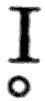 .
 .
It should always be placed outside the
quotation-marks unless it is a part of the
quotation itself.
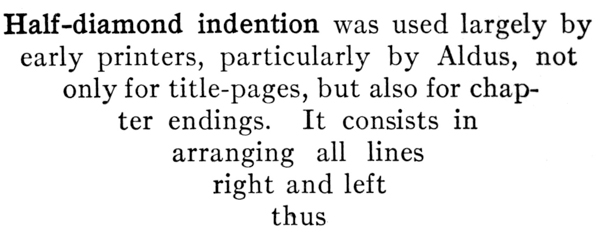
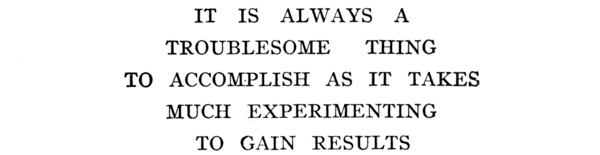
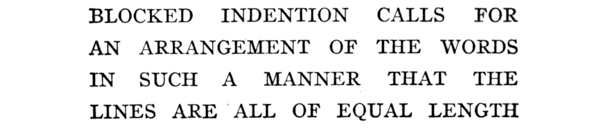




 ,


 ),

 ,)
 .


