Open Old Books

The Works of William Shakespeare [Cambridge Edition] [Vol. 5 of 9]

Whole book · 16 sections

THE WORKS OF WILLIAM SHAKESPEARE.
THE WORKS
OF
WILLIAM SHAKESPEARE
EDITED BY
WILLIAM GEORGE CLARK, M.A.
FELLOW AND TUTOR OF TRINITY COLLEGE, AND PUBLIC ORATOR IN THE UNIVERSITY OF CAMBRIDGE;
AND WILLIAM ALDIS WRIGHT, M.A.
LIBRARIAN OF TRINITY COLLEGE, CAMBRIDGE.
VOLUME V.
Cambridge and London: MACMILLAN AND CO. 1864.
CAMBRIDGE:
PRINTED BY C. J. CLAY, M.A.
AT THE UNIVERSITY PRESS.

CONTENTS.

PREFACE.

The First Part of King Henry the Sixth was printed for the first time, so far as we know, in the Folio of 1623. The same edition contained also for the first time in their present form, ‘The second Part of King Henry the Sixt, with the death of the Good Duke Humfrey,’ and ‘The third Part of King Henry the Sixt, with the death of the Duke of Yorke.’

The play upon which the Second part of Henry the Sixth was founded was first printed in quarto (Q1), in 1594, with the following title:

The | First part of the Con- tention betwixt the two famous houses of Yorke | and Lancaster, with the death of the good | Duke Humphrey: | And the banishment and death of the Duke of | Suffolke, and the Tragicall end of the proud Cardinall | of Winchester, with the notable Rebellion | of Iacke Cade: | And the Duke of Yorkes first claime vnto the | Crowne. | LONDON | Printed by Thomas Creed, for Thomas Millington, | and are to be sold at his shop vnder Saint Peters | Church in Cornwall. | 1594. |

The only copy known of this edition is in the Bodleian Library (Malone, Add. 870), and is probably the same which was once in Malone’s possession, and which he collated with the second Quarto printed in 1600. Mr Halliwell, in the preface to ‘The first sketches of the second and third parts of King Henry the Sixth,’ edited by him for the Shakespeare Society, is inclined to doubt this, on the ground that Malone quotes, from the copy in his possession, a reading which does not exist in that now in the Bodleian. The passage in question is in Scene IX. line 12, p. 370 of the present volume, ‘Honouring him as if he were their king:’ on which Mr Halliwell in his note observes, ‘Malone, who has collated his copy of the edition of 1600, “printed by W. W.,” with a copy of the 1594 edition formerly in his possession, distinctly writes—

Thinking him as if he were their king,”

as the reading of his copy of the first edition. If so, it must have been a different copy from that now in the Bodleian, from which the present text is reprinted, and another instance of the curious variations in different copies of the same editions, which were first discovered by Steevens (Boswell’s Malone, Vol. X. p. 73), and recently applied to good use by Mr Collier.’ Mr Halliwell has here inadvertently fallen into error. Malone’s collation is made in a copy of the edition of 1600, in which the line stands thus:

‘Honouring him as if he were a king.’

At the foot of the page he wrote ‘their king,’ which is the reading of the edition of 1594 for the two last words, but which Mr Halliwell misread ‘thinking’ and regarded as a various reading for ‘Honouring.’ It is still possible, therefore, that Malone’s copy and that at present in the Bodleian may be identical.

The second edition (Q2) of the First Part of the Contention appeared in quarto in 1600, with the following title:

The | First part of the Con-|tention betwixt the two famous hou-|ses of Yorke and Lancaster, with the | death of the good Duke | Humphrey: | And the banishment and death of the Duke of | Suffolke, and the Tragical end of the prowd Cardinall | of Winchester, with the notable Rebellion of | Iacke Cade: | And the Duke of Yorkes first clayme to the | Crowne. | LONDON | Printed by Valentine Simmes for Thomas Millington, and | are to be sold at his shop vnder S. Peters church | in Cornewall. | 1600. |

Copies with this title are in the Library of the Duke of Devonshire, and in the Bodleian (Malone, 867). An imperfect copy, wanting the last seven leaves, is in the Capell collection. Another impression bearing the same date, ‘Printed by W. W. for Thomas Millington,’ is said to exist, but we have been unable to find it. The MS. title quoted by Mr Halliwell from a copy in the Bodleian (Malone, 36) is prefixed to what appears to us unquestionably the same edition as the above. The minute correspondence of misplaced and defective letters between this copy and Capell’s, with which, as well as with the other copy in the Bodleian, we have compared it, proves beyond question that all three must have been printed from the same form, and that the MS. title inserted in Malone’s copy is out of place. So far therefore from Capell’s imperfect copy of this edition being unique, as Mr Halliwell states, there are at least two other perfect copies in existence, besides one which only wants the title-page. In Lowndes’s Bibliographer’s Manual (ed. Bohn, p. 2281), another is said to be in the possession of Mr Tite. The late Mr George Daniel is stated, on the same authority, to have had the editions printed by Valentine Simmes and by W. W. in one volume, but they were not sold at his sale, and we have been unable to trace them.

In 1619, a third edition (Q3) without date, printed by Isaac Jaggard, and including also ‘The True Tragedy of Richard Duke of York,’ appeared with the following title:

The | Whole Contention | betweene the two Famous Houses, LANCASTER and | YORKE. | With the Tragicall ends of the good Duke | Humfrey, Richard Duke of Yorke, | and King Henrie the | sixt. | Diuided into two Parts: And newly corrected and | enlarged. Written by William Shake-|speare, Gent. | Printed at LONDON, for T. P. |

On the title-page of his copy of this edition, Capell has added in MS. the date ‘1619.—at the same time with the Pericles that follows; as appears by the continuation of the signatures.’ The signatures of ‘The whole Contention’ are from A to Q in fours, while in Pericles, ‘Printed for T. P. 1619,’ the first page has signature R, which shows that the two must have formed part of the same volume.

‘The True Tragedy of Richard Duke of York,’ which formed the ground-work of The Third part of King Henry the Sixth, was first printed in small 8vo. in 1595, with the following title:

The | true Tragedie of Richard | Duke of Yorke, and the death of | good King Henrie the Sixt, | With the whole contention betweene | the two Houses Lancaster | and Yorke, as it was sundrie times | acted by the Right Honoura-|ble the Earle of Pem-|brooke his seruants. | Printed at London by P. S. for Thomas Milling-|ton, and are to be sold at his shoppe vnder | Saint Peters Church in | Cornwal, 1595. |

A unique copy of this edition is in the Bodleian Library (Malone, 876). Although printed in 8vo. we have quoted it as Q1, in order to avoid introducing a new notation.

The second edition (Q2) was printed in 1600, with the following title:

The | True Tragedie of | Richarde Duke of | Yorke, and the death of good | King Henrie the sixt: | With the whole contention betweene the two | Houses, Lancaster and Yorke; as it was | sundry times acted by the Right | Honourable the Earle | of Pembrooke his | seruantes. | Printed at London by W. W. for Thomas Millington, | and are to be sold at his shoppe vnder Saint | Peters Church in Cornewall. | 1600. |

Copies of this edition are in the Duke of Devonshire’s Library, the Bodleian (Malone, 36), and the British Museum. In Malone’s Shakespeare (ed. 1790, Vol. I. Pt. I. p. 235), among the ‘Dramatick Pieces on which plays were formed by Shakespeare,’ an edition of The True Tragedy is mentioned, bearing date ‘1600, V. S. for Thomas Millington,’ but in a note to the ‘Third Part of King Henry VI.’ (Vol. VI. p. 261) he confesses, ‘I have never seen the quarto copy of the Second part of The whole Contention, &c. printed by Valentine Simmes for Thomas Millington, 1600;’ and it is extremely doubtful whether such a one exists. A copy of The True Tragedy, and not, as stated in Bohn’s Lowndes, of The First Part of the Contention, printed by W. W. 1600, was sold at Rhodes’s sale in 1825 (No. 2113). The only authority therefore for the existence of an edition of The First Part of the Contention, printed by W. W. in 1600, is the MS. title-page of Malone’s copy in the Bodleian Library. Capell merely quotes it on the authority of Pope, and all that Pope says in the Table at the end of his first edition, after giving the title of The Whole Contention printed in 1619, is, ‘Since Printed under the same Title by W. W. for Tho. Millington, with the true Tragedy of Richard D. of York, and the Death of good King Henry the 6th, acted by the Earl of Pembroke his servants 1600.’ This clearly refers to the second Quarto of The True Tragedy, not to that of The First Part of the Contention, and appears to us to be the origin of the error†.

   † This view is further confirmed by a manuscript note at the back of the title-page of Steevens’s copy of The True Tragedy, ed. 1600, now in the British Museum. It shews that Pope is the only authority for the statement, and is as follows: ‘This is only the third part of K. Henry VI. The second part, according to Pope, was likewise printed in 1600, by W. W. for Thos. Millington. MALONE.’

The third edition (Q3) of The True Tragedy formed the second part of The Whole Contention described above. It has no separate title-page, but merely the heading:

The Second Part. | Containing the Tragedie of | Richard Duke of Yorke, and the | good King Henrie the | Sixt. |

We have reprinted the text of The First Part of the Contention and of The True Tragedy from the first edition of each, giving in notes at the foot of the page the various readings of the second and third editions. For this purpose we collated Mr Halliwell’s reprint for the Shakespeare Society with the originals in the Bodleian Library. The accuracy of Mr Halliwell’s work materially facilitated our labours, and we can only hope that the errors of our own reprint may be as few and as unimportant as those we have discovered in his. For the readings of the second Quartos of The First Part of the Contention and The True Tragedy we collated the copies in the Bodleian and the Duke of Devonshire’s Library, using also for the former the imperfect copy in the Capell collection. The readings of The Whole Contention (Q3) have been given from Capell’s copy verified by reference to that in the Devonshire Library.

With regard to the authorship of The First Part of the Contention and The True Tragedy, while we cannot agree with Malone on the one hand that they contain nothing of Shakespeare’s, nor with Mr Knight on the other that they are entirely his work, there are so many internal proofs of his having had a considerable share in their composition, that, in accordance with our principle, we have reprinted them in a smaller type.

The first edition of KING RICHARD is a Quarto printed in 1597, with the following title-page:

The Tragedy of | King Richard the third. | Containing, | His treacherous Plots against his brother Clarence: | the pittiefull murther of his innocent nephewes: | his tyrannicall vsurpation: with the whole course | of his detested life, and most deserued death. | As it hath beene lately Acted by the | Right honourable the Lord Chamber-|laine his seruants. | AT LONDON | Printed by Valentine Sims, for Andrew Wise, | dwelling in Paules Church-yard, at the | Sign of the Angell. | 1597. |

This edition is referred to, in our notes, as Q1.

We have collated a complete copy belonging to the Duke of Devonshire and also an imperfect copy formerly belonging to Malone and now in the Bodleian. Malone had supplied the missing leaves by the insertion of some from the second Quarto†. There is no copy in the Capell collection.

   † He says in a MS. note: ‘This copy of the original edition of King Richard III. was imperfect, when I purchased it, wanting signat. C 1 and 2, D 4, L 4, and M 1, 2, and 3. These seven leaves I have supplied from a later copy (that of 1598), and have collated with the edition of 1597. The variations are set down in the margin.’ He adds: ‘Mr Penn Ashton Curzon and Mr Kemble are possessed of copies of this original edition of this play: I know of no other, except that in this volume.’ Mr Kemble’s copy is now in the Devonshire Library, and Mr Curzon’s is probably the same which was sold at Mr Daniel’s sale and is now in the possession of Mr Huth. Besides the leaves of Malone’s copy which are missing, signatures C 3 and C 4 are imperfect, the upper half of each being supplied from the edition of 1598.

The second edition, also in Quarto, which we call Q2, was published in the following year, with the name of the author. It is in other respects a reprint of the first. The title-page is as follows:

THE | TRAGEDIE | of King Richard | the third. | Conteining his treacherous Plots against his | brother Clarence: the pitiful murther of his innocent | Nephewes: his tyrannicall vsurpation: with | the whole course of his detested life, and most | deserued death. | As it hath beene lately Acted by the Right honourable| the Lord Chamberlaine his seruants. | By William Shakespeare.| LONDON | Printed by Thomas Creede, for Andrew Wise, | dwelling in Paules Church-yard, at the signe | of the Angell. 1598. |

The third Quarto, our Q3, has the following title-page:

THE | TRAGEDIE | of King Richard | the third. | Conteining his treacherous Plots against his brother | Clarence: the pittifull murther of his innocent Ne-|phewes: his tyrannicall vsurpation: with the | whole course of his detested life, and | most deserued death. | As it hath bene lately Acted by the Right Honourable | the Lord Chamberlaine his seruants. | Newly augmented,| By William Shakespeare. | LONDON | Printed by Thomas Creede, for Andrew Wise, dwelling | in Paules Churchyard, at the signe of the | Angell. 1602.|

Notwithstanding the words ‘newly augmented,’ this edition contains nothing that is not found in the second Quarto, from which it is reprinted, except some additional errors of the press.

The fourth Quarto, our Q4, was printed from the third, by the same printer for a different bookseller, as appears by the title-page:

THE | TRAGEDIE | of King Richard | the third. | Conteining his treacherous Plots against his brother | Clarence: the pittifull murther of his innocent Ne-|phewes: his tyrannicall vsurpation: with the | whole course of his detested life, and | most deserued death. | As it hath bin lately Acted by the Right Honourable | the Lord Chamberlaine his seruants. | Newly augmented, | By William Shake-speare. | LONDON, | Printed by Thomas Creede, and are to be sold by Mathew | Lawe, dwelling in Paules Church-yard, at the Signe | of the Foxe, neare S. Austins gate, 1605. |

There is no copy of Q4 in the Capell collection. We have collated one in the Bodleian which formerly belonged to Malone. It is numbered 880.

The fifth Quarto, Q5, was printed in 1612, not from its immediate predecessor, but from the Quarto of 1602, although it was printed by the same printer and for the same bookseller as that of 1605. The title-page of Q5 is as follows:

THE | TRAGEDIE | of King Richard | the third. | Containing his treacherous Plots against his brother | Clarence: the pittifull murther of his innocent Ne-phewes: his tyrannicall vsurpation: with the | whole course of his detested life, and | most deserued death. | As it hath beene lately Acted by the Kings Maiesties | seruants. | Newly augmented, | By William Shake-speare. | LONDON, | Printed by Thomas Creede, and are to be sold by Mathew | Lawe, dwelling in Pauls Church-yard, at the Signe | of the Foxe, neare S. Austins gate, 1612. |

The edition of 1622 is so rare that its very existence has been called in question†. There is however a copy in the Capell collection, of which the title-page is as follows:

   † ‘An impression of 1622 is mentioned in some lists, but the existence of a copy of that date is more than doubtful.’ Collier, Ed. 2, Vol. iv. p. 217.

THE | TRAGEDIE | OF | KING | RICHARD | THE THIRD. | Contayning his treacherous Plots against | his brother Clarence: The pittifull murder of his innocent | Nephewes: his tyrannicall Vsurpation: with the whole | course of his detested life, and most | deserued death. | As it hath been lately Acted by the Kings Maiesties | Seruants. | Newly augmented. By William Shake-speare. | LONDON, | Printed by Thomas Purfoot, and are to be sold by Mathew Law, dwelling | in Pauls Church-yard, at the Signe of the Foxe, neere | S. Austines gate, 1622.

This edition we call Q6. It is printed from Q5.

Another edition in Quarto was printed in 1629, not from the first Folio, but from the sixth Quarto. It was printed by Iohn Norton for Matthew Law. Except in the name of the printer and the substitution of the word ‘tiranous’ for ‘tyrannicall’ the title-page does not differ from that of Q6. We call it Q7.

The eighth and last Quarto, our Q8, copied from the seventh, was printed by Iohn Norton in 1634. There is no bookseller’s name on the title-page, if we may trust that which Capell has supplied in MS. ‘from a copy in the possession of Messrs Tonsons and Draper.’

In quoting the readings of the Quartos and Folios, we have, in all cases where the spelling is unimportant, given that of the earliest copy.

In 1766 Steevens published a reprint of the Quarto of 1612, ‘collated’—to use his own words—‘with the following editions.’

1598. Thomas Creede, for Andrew Wise.

1602. Ditto.

1624. Thomas Purfoot, Thomas Purfoot, &c.

1629. John Norton, &c.

1634. John Norton, &c. and another imperfect Copy, differing from the rest, but without a Title Page.

The date 1624 is probably a mistake for 1622. At the foot of each page he gives various readings, but without specifying the editions to which they respectively belong. Several of these are not found in any of the Quartos with which we are acquainted. We have therefore recorded them as ‘quoted in Steevens’s reprint.’ So many of the other readings which he gives are found only in the first Quarto that we have no doubt that the imperfect copy which he mentions was of that edition.

We have made, and, as we believe, for the first time, a complete collation of all the extant Quartos. Those of 1597 and 1605 were unknown to Capell when he collated the other six.

The respective origin and authority of the first Quarto and first Folio texts of Richard III. is perhaps the most difficult question which presents itself to an editor of Shakespeare. In the case of most of the plays a brief survey leads him to form a definite judgement; in this, the most attentive examination scarcely enables him to propose with confidence a hypothetical conclusion.

The Quarto, Q1, contains passages not found in the Folio, F1, which are essential to the understanding of the context: the Folio, on the other hand, contains passages equally essential, which are not found in the Quarto.

Again, passages which in the Quarto are complete and consecutive, are amplified in the Folio, the expanded text being quite in the manner of Shakespeare. The Folio, too, contains passages not in the Quartos, which though not necessary to the sense yet harmonize so well, in sense and tone, with the context that we can have no hesitation in attributing them to the author himself.

On the other hand, we find in the Folio some insertions and many alterations which we may with equal certainty affirm not to be due to Shakespeare. Sometimes the alterations seem merely arbitrary, but more frequently they appear to have been made in order to avoid the recurrence of the same word, even where the recurrence adds to the force of the passage, or to correct a supposed defect of metre, although the metre cannot be amended except by spoiling the sense.

Occasionally we seem to find indications that certain turns of phrase, uses of words or metrical licences, familiar enough to Shakespeare and his earlier contemporaries, had become obsolete in the time of the corrector, and the passages modified accordingly. In short, Richard III. seems even before the publication of the Folio to have been tampered with by a nameless transcriber who worked in the spirit, though not with the audacity, of Colley Cibber.

The following scheme will best explain the theory which we submit as a not impossible way of accounting for the phenomena of the text:
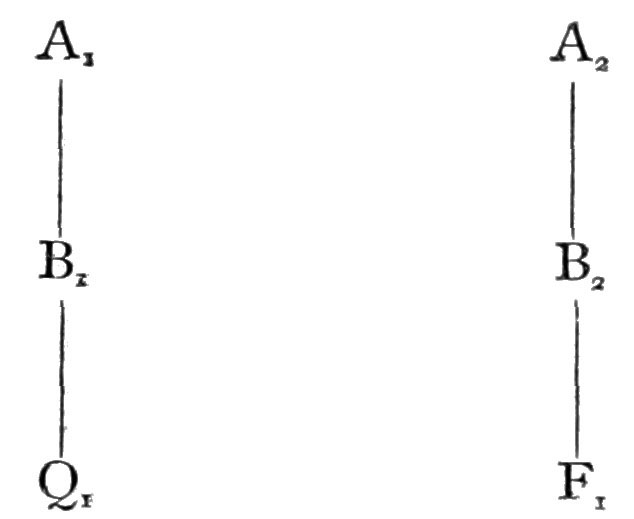
A1 is the Author’s original MS.

B1 is a transcript by another hand with some accidental omissions and, of course, slips of the pen. From this transcript was printed the Quarto of 1597, Q1.

A2 is the Author’s original MS. revised by himself, with corrections and additions, interlinear, marginal, and on inserted leaves.

B2 is a copy of this revised MS., made by another hand, probably after the death of the Author and perhaps a very short time before 1623. As the stage directions of the Folio, which was printed from B2, are more precise and ample as a rule than those of the Quarto, we may infer that the transcript, B2, was made for the library of the theatre, perhaps to take the place of the original which had become worn by use, for Richard III. continued to be a popular acting play. Some curious, though not frequent, coincidences between the text of the Folio and that of the Quarto of 1602, Q3, lead us to suppose that the writer of B2 had occasionally recourse to that Quarto to supplement passages which, by its being frayed or stained, had become illegible in A2.

Assuming the truth of this hypothesis, the object of an Editor must be to give in the text as near an approximation as possible to A, rejecting from F1 all that is due to the unknown writer of B2 and supplying its place from Q1, which, errors of pen and press apart, certainly came from the hand of Shakespeare. In the construction of our text we have steadily borne this principle in mind, only deviating from it in a few instances where we have retained the expanded version of the Folio in preference to the briefer version of the Quarto, even when we incline to think that the earlier form is more terse and therefore not likely to have been altered by its Author. Our reason is this: as the Folio version contains substantially that of the Quarto and as the question does not admit of a positive decision we prefer the risk of putting in something which Shakespeare did not to that of leaving out something which he did write. Cæteris paribus, we have adopted the reading of the Quarto.

In conclusion we commend a study of the text of Richard III. to those, if such there be, who imagine that it is possible by the exercise of critical skill to restore with certainty what Shakespeare actually wrote.

We have great pleasure in repeating our thanks to the curators of the British Museum and of the Bodleian Library and in adding to the number of those who have laid us under obligation the names of the Rev. Joseph Power, Fellow of Clare College, Mr Huth, and Mr Lilly.

It is only right to add that it is the constant kindness of the Duke of Devonshire which enables us to publish this volume without further delay and with such an approach to completeness as it may be found to possess.

W. G. C.
W. A. W.

ADDENDA AND CORRIGENDA.

First Part of Henry VI.

  • I. 1. 43. For Except it to be read Except it be.

Second Part of Henry VI.

  • I. 3. 115. Add note, his] this F4.
  • I. 3. 144. Add note, master] masters Halliwell conj.
  • I. 3. 146. Add note, I will] I’ll Pope.
  • II. 1. 130. Add note, and] om. Hanmer.
  • III. 1. 222. Add to stage direction, Somerset remains apart.
  • IV. 2. 176. For tis read ’tis.

Third Part of Henry VI.

  • V. 4. 36. Dele the.

Richard III.

  • I. 4. 167. Add note, To, to, to—] To, to, to, to— Capell conj.

THE FIRST PART OF KING HENRY THE SIXTH. — DRAMATIS PERSONƆ. — THE FIRST PART OF KING HENRY VI. ACT I. — aaa S CENE I. Westminster Abbey . — aab S CENE II. France. Before Orleans . — aac S CENE III. London. Before the Tower . — aad S CENE IV. Orleans . — aae S CENE V. The same . — aaf S CENE VI. The same . — ACT II. — aba S CENE I. Before Orleans . — abb S CENE II. Orleans. Within the town . — abc S CENE III. Auvergne. The Countess’s castle . — abd S CENE IV. London. The Temple-garden . — abe S CENE V. The Tower of London . — ACT III. — aca S CENE I. London. The Parliament-house . — acb S CENE II. France. Before Rouen . — acc S CENE III. The plains near Rouen . — acd S CENE IV. Paris. The Palace . — ACT IV. — ada S CENE I. Paris. A hall of state . — adb S CENE II. Before Bourdeaux . — adc S CENE III. Plains in Gascony . — add S CENE IV. Other plains in Gascony . — ade S CENE V. The English camp near Bourdeaux . — adf S CENE VI. A field of battle . — adg S CENE VII. Another part of the field . — ACT V. — aea S CENE I. London. The palace . — aeb S CENE II. France. Plains in Anjou . — aec S CENE III. Before Angiers . — aed S CENE IV. Camp of the D UKE OF Y ORK in Anjou . — aee S CENE V. London. The royal palace . — LINENOTES TO I KING HENRY VI.

  • KING HENRY the Sixth.
  • DUKE OF GLOUCESTER, uncle to the King, and Protector.
  • DUKE OF BEDFORD, uncle to the King, and Regent of France.
  • THOMAS BEAUFORT, Duke of Exeter, great-uncle to the King.
  • HENRY BEAUFORT, great-uncle to the King, Bishop of Winchester, and afterwards Cardinal.
  • JOHN BEAUFORT, Earl, afterwards Duke, of Somerset.
  • RICHARD PLANTAGENET, son of Richard late Earl of Cambridge, afterwards Duke of York.
  • EARL OF WARWICK.
  • EARL OF SALISBURY.
  • EARL OF SUFFOLK.
  • LORD TALBOT, afterwards Earl of Shrewsbury.
  • JOHN TALBOT, his son.
  • EDMUND MORTIMER, Earl of March.
  • SIR JOHN FASTOLFE.
  • SIR WILLIAM LUCY.
  • SIR WILLIAM GLANSDALE.
  • SIR THOMAS GARGRAVE.
  • Mayor of London.
  • WOODVILE, Lieutenant of the Tower.
  • VERNON, of the White-rose or York Faction.
  • BASSET, of the Red-Rose or Lancaster faction.
  • A Lawyer. Mortimer’s Keepers.
  • CHARLES, Dauphin, and afterwards King, of France.
  • REIGNIER, Duke of Anjou, and titular King of Naples.
  • DUKE OF BURGUNDY.
  • DUKE OF ALENÇON.
  • BASTARD OF ORLEANS.
  • Governor of Paris.
  • Master-Gunner of Orleans, and his Son.
  • General of the French forces in Bourdeaux.
  • A French Sergeant. A Porter.
  • An old Shepherd, father to Joan la Pucelle.
  • MARGARET, daughter to Reignier, afterwards married to King Henry.
  • COUNTESS OF AUVERGNE.
  • JOAN LA PUCELLE, commonly called Joan of Arc.
Lords, Warders of the Tower, Heralds, Officers, Soldiers, Messengers, and Attendants.
Fiends appearing to La Pucelle.
SCENE: Partly in England, and partly in France.

   † First given, imperfectly, by Rowe. See note (I).

Dead March. Enter the Funeral of KING HENRY the Fifth, attended on by the DUKE of BEDFORD, Regent of France; the DUKE of GLOUCESTER, Protector; the DUKE of EXETER, the EARL of WARWICK, the BISHOP of WINCHESTER, Heralds, &c.
Bed. Hung be the heavens with black, yield day to night!
Comets, importing change of times and states,
Brandish your crystal tresses in the sky,
And with them scourge the bad revolting stars
5 That have consented unto Henry’s death!
King Henry the Fifth, too famous to live long!
England ne’er lost a king of so much worth.
Glou. England ne’er had a king until his time.
Virtue he had, deserving to command:
10 His brandish’d sword did blind men with his beams:
His arms spread wider than a dragon’s wings;
His sparkling eyes, replete with wrathful fire,
More dazzled and drove back his enemies
Than mid-day sun fierce bent against their faces.
15 What should I say? his deeds exceed all speech:
He ne’er lift up his hand but conquered.
Exe. We mourn in black: why mourn we not in blood?
Henry is dead and never shall revive:
Upon a wooden coffin we attend,
20 And death’s dishonourable victory
We with our stately presence glorify,
Like captives bound to a triumphant car.
What! shall we curse the planets of mishap
That plotted thus our glory’s overthrow?
25 Or shall we think the subtle-witted French
Conjurers and sorcerers, that afraid of him
By magic verses have contrived his end?
Win. He was a king bless’d of the King of kings.
Unto the French the dreadful judgement-day
30 So dreadful will not be as was his sight.
The battles of the Lord of hosts he fought:
The church’s prayers made him so prosperous.
Glou. The church! where is it? Had not churchmen pray’d,
His thread of life had not so soon decay’d:
35 None do you like but an effeminate prince,
Whom, like a school-boy, you may over-awe.
Win. Gloucester, whate’er we like, thou art Protector
And lookest to command the prince and realm.
Thy wife is proud; she holdeth thee in awe,
40 More than God or religious churchmen may.
Glou. Name not religion, for thou lovest the flesh,
And ne’er throughout the year to church thou go’st
Except it be to pray against thy foes.
Bed. Cease, cease these jars and rest your minds in peace:
45 Let’s to the altar: heralds, wait on us:
Instead of gold, we’ll offer up our arms;
Since arms avail not now that Henry’s dead.
Posterity, await for wretched years,
When at their mothers’ moist eyes babes shall suck,
50 Our isle be made a nourish of salt tears,
And none but women left to wail the dead.
Henry the Fifth, thy ghost I invocate:
Prosper this realm, keep it from civil broils,
Combat with adverse planets in the heavens!
55 A far more glorious star thy soul will make
Than Julius Cæsar or bright ——
Enter a Messenger.
Mess. My honourable lords, health to you all!
Sad tidings bring I to you out of France,
Of loss, of slaughter and discomfiture:
60Guienne, Champagne, Rheims, Orleans,
Paris, Guysors, Poictiers, are all quite lost.
Bed. What say’st thou, man, before dead Henry’s corse?
Speak softly; or the loss of those great towns
Will make him burst his lead and rise from death.
65 Glou. Is Paris lost? is Rouen yielded up?
If Henry were recall’d to life again,
These news would cause him once more yield the ghost.
Exe. How were they lost? what treachery was used?
Mess. No treachery; but want of men and money.
70Amongst the soldiers this is muttered,
That here you maintain several factions,
And whilst a field should be dispatch’d and fought,
You are disputing of your generals:
One would have lingering wars with little cost;
75Another would fly swift, but wanteth wings;
A third thinks, without expense at all,
By guileful fair words peace may be obtain’d.
Awake, awake, English nobility!
Let not sloth dim your honours new-begot:
80 Cropp’d are the flower-de-luces in your arms;
Of England’s coat one half is cut away.
Exe. Were our tears wanting to this funeral,
These tidings would call forth their flowing tides.
Bed. Me they concern; Regent I am of France.
85 Give me my steeled coat. I’ll fight for France.
Away with these disgraceful wailing robes!
Wounds will I lend the French instead of eyes,
To weep their intermissive miseries.
Enter to them another Messenger.
Mess. Lords, view these letters full of bad mischance.
90France is revolted from the English quite,
Except some petty towns of no import:
The Dauphin Charles is crowned king in Rheims;
The Bastard of Orleans with him is join’d;
Reignier, Duke of Anjou, doth take his part;
95The Duke of Alençon flieth to his side.
Exe.The Dauphin crowned king! all fly to him!
O, whither shall we fly from this reproach?
Glou. We will not fly, but to our enemies’ throats.
Bedford, if thou be slack, I’ll fight it out.
100 Bed. Gloucester, why doubt’st thou of my forwardness?
An army have I muster’d in my thoughts,
Wherewith already France is overrun.
Enter another Messenger.
Mess. My gracious lords, to add to your laments,
Wherewith you now bedew King Henry’s hearse,
105I must inform you of a dismal fight
Betwixt the stout Lord Talbot and the French.
Win. What! wherein Talbot overcame? is’t so?
Mess. O, no; wherein Lord Talbot was o’erthrown:
The circumstance I’ll tell you more at large.
110The tenth of August last this dreadful lord,
Retiring from the siege of Orleans,
Having full scarce six thousand in his troop,
By three and twenty thousand of the French
Was round encompassed and set upon.
115No leisure had he to enrank his men;
He wanted pikes to set before his archers;
Instead whereof sharp stakes pluck’d out of hedges
They pitched in the ground confusedly,
To keep the horsemen off from breaking in.
120More than three hours the fight continued;
Where valiant Talbot above human thought
Enacted wonders with his sword and lance:
Hundreds he sent to hell, and none durst stand him;
Here, there, and every where, enraged he flew:
125The French exclaim’d, the devil was in arms;
All the whole army stood agazed on him:
His soldiers spying his undaunted spirit
A Talbot! a Talbot! cried out amain
And rush’d into the bowels of the battle.
130Here had the conquest fully been seal’d up,
If Sir John Fastolfe had not play’d the coward:
He, being in the vaward, placed behind
With purpose to relieve and follow them,
Cowardly fled, not having struck one stroke.
135Hence grew the general wreck and massacre;
Enclosed were they with their enemies:
A base Walloon, to win the Dauphin’s grace,
Thrust Talbot with a spear into the back,
Whom all France with their chief assembled strength
140Durst not presume to look once in the face.
Bed. Is Talbot slain? then I will slay myself,
For living idly here in pomp and ease,
Whilst such a worthy leader, wanting aid,
Unto his dastard foemen is betray’d.
145 Mess. O no, he lives; but is took prisoner,
And Lord Scales with him and Lord Hungerford:
Most of the rest slaughter’d or took likewise.
Bed. His ransom there is none but I shall pay:
I’ll hale the Dauphin headlong from his throne:
150His crown shall be the ransom of my friend;
Four of their lords I’ll change for one of ours.
Farewell, my masters; to my task will I;
Bonfires in France forthwith I am to make,
To keep our great Saint George’s feast withal:
155Ten thousand soldiers with me I will take,
Whose bloody deeds shall make all Europe quake.
Mess. So you had need; for Orleans is besieged;
The English army is grown weak and faint:
The Earl of Salisbury craveth supply,
160And hardly keeps his men from mutiny,
Since they, so few, watch such a multitude.
Exe. Remember, lords, your oaths to Henry sworn,
Either to quell the Dauphin utterly,
Or bring him in obedience to your yoke.
165 Bed. I do remember it; and here take my leave,
To go about my preparation. [Exit.
Glou. I’ll to the Tower with all the haste I can,
To view the artillery and munition;
And then I will proclaim young Henry king. [Exit.
170 Exe. To Eltham will I, where the young king is,
Being ordain’d his special governor,
And for his safety there I’ll best devise. [Exit.
Win. Each hath his place and function to attend:
I am left out; for me nothing remains.
175 But long I will not be Jack out of office:
The king from Eltham I intend to steal
And sit at chiefest stern of public weal. [Exeunt.
Sound a Flourish. Enter CHARLES, ALENÇON, and REIGNIER, marching with Drum and Soldiers.
Char. Mars his true moving, even as in the heavens
So in the earth, to this day is not known:
Late did he shine upon the English side;
Now we are victors; upon us he smiles.
5 What towns of any moment but we have?
At pleasure here we lie near Orleans;
Otherwhiles the famish’d English, like pale ghosts,
Faintly besiege us one hour in a month.
Alen. They want their porridge and their fat bull-beeves:
10 Either they must be dieted like mules
And have their provender tied to their mouths
Or piteous they will look, like drowned mice.
Reig. Let’s raise the siege: why live we idly here?
Talbot is taken, whom we wont to fear:
15Remaineth none but mad-brain’d Salisbury;
And he may well in fretting spend his gall,
Nor men nor money hath he to make war.
Char. Sound, sound alarum! we will rush on them.
Now for the honour of the forlorn French!
20 Him I forgive my death that killeth me
When he sees me go back one foot or fly. [Exeunt.
Here Alarum; they are beaten back by the English with great loss. Re-enter CHARLES, ALENÇON, and REIGNIER.
Char. Who ever saw the like? what men have I!
Dogs! cowards! dastards! I would ne’er have fled,
But that they left me ’midst my enemies.
25 Reig. Salisbury is a desperate homicide;
He fighteth as one weary of his life.
The other lords, like lions wanting food,
Do rush upon us as their hungry prey.
Alen. Froissart, a countryman of ours, records,
30 England all Olivers and Rowlands bred
During the time Edward the Third did reign.
More truly now may this be verified;
For none but Samsons and Goliases
It sendeth forth to skirmish. One to ten!
35 Lean raw-boned rascals! who would e’er suppose
They had such courage and audacity?
Char. Let’s leave this town; for they are hare-brain’d slaves,
And hunger will enforce them to be more eager:
Of old I know them; rather with their teeth
40 The walls they’ll tear down than forsake the siege.
Reig. I think, by some odd gimmors or device
Their arms are set like clocks, still to strike on;
Else ne’er could they hold out so as they do.
By my consent, we’ll even let them alone.
45 Alen. Be it so.
Enter the BASTARD of Orleans.
Bast. Where’s the Prince Dauphin? I have news for him.
Char. Bastard of Orleans, thrice welcome to us.
Bast. Methinks your looks are sad, your cheer appall’d:
Hath the late overthrow wrought this offence?
50 Be not dismay’d, for succour is at hand:
A holy maid hither with me I bring,
Which by a vision sent to her from heaven
Ordained is to raise this tedious siege
And drive the English forth the bounds of France.
55 The spirit of deep prophecy she hath,
Exceeding the nine sibyls of old Rome:
What’s past and what’s to come she can descry.
Speak, shall I call her in? Believe my words,
For they are certain and unfallible.
60 Char. Go, call her in. [Exit Bastard.] But first, to try her skill,
Reignier, stand thou as Dauphin in my place:
Question her proudly; let thy looks be stern:
By this means shall we sound what skill she hath.
Re-enter the BASTARD of Orleans, with JOAN LA PUCELLE.
Reig. Fair maid, is’t thou wilt do these wondrous feats?
65 Puc. Reignier, is’t thou that thinkest to beguile me?
Where is the Dauphin? Come, come from behind;
I know thee well, though never seen before.
Be not amazed, there’s nothing hid from me:
In private will I talk with thee apart.
70Stand back, you lords, and give us leave awhile.
Reig. She takes upon her bravely at first dash.
Puc. Dauphin, I am by birth a shepherd’s daughter,
My wit untrain’d in any kind of art.
Heaven and our Lady gracious hath it pleased
75To shine on my contemptible estate:
Lo, whilst I waited on my tender lambs,
And to sun’s parching heat display’d my cheeks,
God’s mother deigned to appear to me
And in a vision full of majesty
80Will’d me to leave my base vocation
And free my country from calamity:
Her aid she promised and assured success:
In complete glory she reveal’d herself;
And, whereas I was black and swart before,
85With those clear rays which she infused on me
That beauty am I bless’d with which you see.
Ask me what question thou canst possible,
And I will answer unpremeditated:
My courage try by combat, if thou darest,
90And thou shalt find that I exceed my sex.
Resolve on this, thou shalt be fortunate,
If thou receive me for thy warlike mate.
Char. Thou hast astonish’d me with thy high terms:
Only this proof I’ll of thy valour make,
95In single combat thou shalt buckle with me,
And if thou vanquishest, thy words are true;
Otherwise I renounce all confidence.
Puc. I am prepared: here is my keen-edged sword,
Deck’d with five flower-de-luces on each side;
100The which at Touraine, in Saint Katharine’s churchyard,
Out of a great deal of old iron I chose forth.
Char. Then come, o’ God’s name; I fear no woman.
Puc. And while I live, I’ll ne’er fly from a man. [Here they fight, and Joan La Pucelle overcomes.
Char. Stay, stay thy hands! thou art an Amazon,
105And fightest with the sword of Deborah.
Puc. Christ’s mother helps me, else I were too weak.
Char. Whoe’er helps thee, ’tis thou that must help me:
Impatiently I burn with thy desire;
My heart and hands thou hast at once subdued.
110Excellent Pucelle, if thy name be so,
Let me thy servant and not sovereign be:
’Tis the French Dauphin sueth to thee thus.
Puc. I must not yield to any rites of love,
For my profession’s sacred from above:
115When I have chased all thy foes from hence,
Then will I think upon a recompense.
Char. Meantime look gracious on thy prostrate thrall.
Reig. My lord, methinks, is very long in talk.
Alen. Doubtless he shrives this woman to her smock;
120Else ne’er could he so long protract his speech.
Reig. Shall we disturb him, since he keeps no mean?
Alen. He may mean more than we poor men do know:
These women are shrewd tempters with their tongues.
Reig. My lord, where are you? what devise you on?
125Shall we give over Orleans, or no?
Puc. Why, no, I say, distrustful recreants!
Fight till the last gasp; I will be your guard.
Char. What she says I’ll confirm: we’ll fight it out.
Puc. Assign’d am I to be the English scourge.
130This night the siege assuredly I’ll raise:
Expect Saint Martin’s summer, halcyon days,
Since I have entered into these wars.
Glory is like a circle in the water,
Which never ceaseth to enlarge itself
135Till by broad spreading it disperse to nought.
With Henry’s death the English circle ends;
Dispersed are the glories it included.
Now am I like that proud insulting ship
Which Cæsar and his fortune bare at once.
140 Char. Was Mahomet inspired with a dove?
Thou with an eagle art inspired then.
Helen, the mother of great Constantine,
Nor yet Saint Philip’s daughters, were like thee.
Bright star of Venus, fall’n down on the earth,
145How may I reverently worship thee enough?
Alen. Leave off delays, and let us raise the siege.
Reig. Woman, do what thou canst to save our honours;
Drive them from Orleans and be immortalized.
Char. Presently we’ll try: come, let’s away about it:
150 No prophet will I trust, if she prove false. [Exeunt.
Enter the DUKE of GLOUCESTER, with his Serving-men in blue coats.
Glou. I am come to survey the Tower this day:
Since Henry’s death, I fear, there is conveyance.
Where be these warders, that they wait not here?
Open the gates; ’tis Gloucester that calls.
5 First Warder. [Within] Who’s there that knocks so imperiously?
First Serv. It is the noble Duke of Gloucester.
Second Warder. [Within] Whoe’er he be, you may not be let in.
First Serv. Villains, answer you so the lord protector?
First Warder. [Within] The Lord protect him! so we answer him:
10 We do no otherwise than we are will’d.
Glou. Who willed you? or whose will stands but mine?
There’s none protector of the realm but I.
Break up the gates, I’ll be your warrantize:
Shall I be flouted thus by dunghill grooms? [Gloucester’s men rush at the Tower Gates, and Woodvile the Lieutenant speaks within.
15 Woodv. What noise is this? what traitors have we here?
Glou. Lieutenant, is it you whose voice I hear?
Open the gates; here’s Gloucester that would enter.
Woodv. Have patience, noble duke; I may not open;
The Cardinal of Winchester forbids:
20From him I have express commandment
That thou nor none of thine shall be let in.
Glou. Faint-hearted Woodvile, prizest him ’fore me?
Arrogant Winchester, that haughty prelate,
Whom Henry, our late sovereign, ne’er could brook?
25Thou art no friend to God or to the king:
Open the gates, or I’ll shut thee out shortly.
Serving-men. Open the gates unto the lord protector,
Or we’ll burst them open, if that you come not quickly.
Enter to the Protector at the Tower Gates WINCHESTER and his men in tawny coats.
Win. How now, ambitious Humphry! what means this?
30 Glou. Peel’d priest, dost thou command me to be shut out?
Win. I do, thou most usurping proditor,
And not protector, of the king or realm.
Glou. Stand back, thou manifest conspirator,
Thou that contrivedst to murder our dead lord;
35Thou that givest whores indulgences to sin:
I’ll canvass thee in thy broad cardinal’s hat,
If thou proceed in this thy insolence.
Win. Nay, stand thou back; I will not budge a foot:
This be Damascus, be thou cursed Cain,
40To slay thy brother Abel, if thou wilt.
Glou. I will not slay thee, but I’ll drive thee back:
Thy scarlet robes as a child’s bearing-cloth
I’ll use to carry thee out of this place.
Win. Do what thou darest; I beard thee to thy face.
45 Glou. What! am I dared and bearded to my face?
Draw, men, for all this privileged place;
Blue coats to tawny coats. Priest, beware your beard;
I mean to tug it and to cuff you soundly:
Under my feet I stamp thy cardinal’s hat:
50In spite of pope or dignities of church,
Here by the cheeks I’ll drag thee up and down.
Win. Gloucester, thou wilt answer this before the pope.
Glou. Winchester goose, I cry, a rope! a rope!
Now beat them hence; why do you let them stay?
55Thee I’ll chase hence, thou wolf in sheep’s array.
Out, tawny coats! out, scarlet hypocrite!
Here Gloucester’s men beat out the Cardinal’s men, and enter in the hurly-burly the Mayor of London and his Officers.
May. Fie, lords! that you, being supreme magistrates,
Thus contumeliously should break the peace!
Glou. Peace, mayor! thou know’st little of my wrongs:
60Here’s Beaufort, that regards nor God nor king,
Hath here distrain’d the Tower to his use.
Win. Here’s Gloucester, a foe to citizens,
One that still motions war and never peace,
O’ercharging your free purses with large fines,
65That seeks to overthrow religion,
Because he is protector of the realm,
And would have armour here out of the Tower,
To crown himself king and suppress the prince.
Glou. I will not answer thee with words, but blows. [Here they skirmish again.
70 May. Nought rests for me in this tumultuous strife
But to make open proclamation:
Come, officer; as loud as e’er thou canst:
Cry.
Off. All manner of men assembled here in arms this day against 75 God’s peace and the king’s, we charge and command you, in his highness’ name, to repair to your several dwelling-places; and not to wear, handle, or use any sword, weapon, or dagger, henceforward, upon pain of death.
Glou. Cardinal, I’ll be no breaker of the law:
80But we shall meet, and break our minds at large.
Win. Gloucester, we will meet; to thy cost, be sure:
Thy heart-blood I will have for this day’s work.
May. I’ll call for clubs, if you will not away.
This cardinal’s more haughty than the devil.
85 Glou. Mayor, farewell: thou dost but what thou mayst.
Win. Abominable Gloucester, guard thy head;
For I intend to have it ere long. [Exeunt, severally, Gloucester and Winchester with their Serving-men.
May. See the coast clear’d, and then we will depart.
Good God, these nobles should such stomachs bear!
90 I myself fight not once in forty year. [Exeunt.
Enter, on the walls, a Master Gunner and his Boy.
M. Gun. Sirrah, thou know’st how Orleans is besieged,
And how the English have the suburbs won.
Boy. Father, I know; and oft have shot at them,
Howe’er unfortunate I miss’d my aim.
5 M. Gun. But now thou shalt not. Be thou ruled by me:
Chief master-gunner am I of this town;
Something I must do to procure me grace.
The prince’s espials have informed me
How the English, in the suburbs close intrench’d,
10Wont through a secret grate of iron bars
In yonder tower to overpeer the city
And thence discover how with most advantage
They may vex us with shot or with assault.
To intercept this inconvenience,
15A piece of ordnance ’gainst it I have placed;
And even these three days have I watch’d,
If I could see them.
Now do thou watch, for I can stay no longer.
If thou spy’st any, run and bring me word;
20 And thou shalt find me at the governor’s. [Exit.
Boy. Father, I warrant you; take you no care;
I’ll never trouble you, if I may spy them. [Exit.
Enter, on the turrets, the LORDS SALISBURY and TALBOT, SIR WILLIAM GLANSDALE, SIR THOMAS GARGRAVE, and others.
Sal. Talbot, my life, my joy, again return’d!
How wert thou handled being prisoner?
25Or by what means got’st thou to be released?
Discourse, I prithee, on this turret’s top.
Tal. The Duke of Bedford had a prisoner
Call’d the brave Lord Ponton de Santrailles;
For him was I exchanged and ransomed.
30But with a baser man of arms by far
Once in contempt they would have barter’d me:
Which I disdaining scorn’d and craved death
Rather than I would be so vile-esteem’d.
In fine, redeem’d I was as I desired.
35But, O! the treacherous Fastolfe wounds my heart,
Whom with my bare fists I would execute,
If I now had him brought into my power.
Sal. Yet tell’st thou not how thou wert entertain’d.
Tal. With scoffs and scorns and contumelious taunts.
40In open market-place produced they me,
To be a public spectacle to all:
Here, said they, is the terror of the French,
The scarecrow that affrights our children so.
Then broke I from the officers that led me,
45And with my nails digg’d stones out of the ground,
To hurl at the beholders of my shame:
My grisly countenance made others fly;
None durst come near for fear of sudden death.
In iron walls they deem’d me not secure;
50So great fear of my name ’mongst them was spread
That they supposed I could rend bars of steel
And spurn in pieces posts of adamant:
Wherefore a guard of chosen shot I had
That walked about me every minute while;
55And if I did but stir out of my bed,
Ready they were to shoot me to the heart.
Enter the Boy with a linstock.
Sal. I grieve to hear what torments you endured,
But we will be revenged sufficiently.
Now it is supper-time in Orleans:
60Here, through this grate, I count each one
And view the Frenchmen how they fortify:
Let us look in; the sight will much delight thee.
Sir Thomas Gargrave, and Sir William Glansdale,
Let me have your express opinions
65Where is best place to make our battery next.
Gar. I think, at the north gate; for there stand lords.
Glan. And I, here, at the bulwark of the bridge.
Tal. For aught I see, this city must be famish’d,
Or with light skirmishes enfeebled. [Here they shoot. Salisbury and Gargrave fall.
70 Sal. O Lord, have mercy on us, wretched sinners!
Gar. O Lord, have mercy on me, woful man!
Tal. What chance is this that suddenly hath cross’d us?
Speak, Salisbury; at least, if thou canst speak:
How farest thou, mirror of all martial men?
75One of thy eyes and thy cheek’s side struck off!
Accursed tower! accursed fatal hand
That hath contrived this woful tragedy!
In thirteen battles Salisbury o’ercame;
Henry the Fifth he first train’d to the wars;
80Whilst any trump did sound, or drum struck up,
His sword did ne’er leave striking in the field.
Yet livest thou, Salisbury? though thy speech doth fail,
One eye thou hast, to look to heaven for grace:
The sun with one eye vieweth all the world.
85Heaven, be thou gracious to none alive,
If Salisbury wants mercy at thy hands!
Bear hence his body; I will help to bury it.
Sir Thomas Gargrave, hast thou any life?
Speak unto Talbot; nay, look up to him.
90Salisbury, cheer thy spirit with this comfort;
Thou shalt not die whiles—
He beckons with his hand and smiles on me,
As who should say ‘When I am dead and gone,
Remember to avenge me on the French.’
95Plantagenet, I will; and like thee, Nero,
Play on the lute, beholding the towns burn:
Wretched shall France be only in my name. [Here an alarum, and it thunders and lightens.
What stir is this? what tumult’s in the heavens?
Whence cometh this alarum, and the noise?
Enter a Messenger.
100 Mess. My lord, my lord, the French have gather’d head:
The Dauphin, with one Joan la Pucelle join’d,
A holy prophetess new risen up,
Is come with a great power to raise the siege. [Here Salisbury lifteth himself up and groans.
Tal. Hear, hear how dying Salisbury doth groan!
105It irks his heart he cannot be revenged.
Frenchmen, I’ll be a Salisbury to you:
Pucelle or puzzel, dolphin or dogfish,
Your hearts I’ll stamp out with my horse’s heels,
And make a quagmire of your mingled brains.
110Convey me Salisbury into his tent,
And then we’ll try what these dastard Frenchmen dare. [Alarum. Exeunt.
Here an Alarum again: and TALBOT pursueth the DAUPHIN, and driveth him: then enter JOAN LA PUCELLE, driving Englishmen before her, and exit after them: then re-enter TALBOT.
Tal. Where is my strength, my valour, and my force?
Our English troops retire, I cannot stay them;
A woman clad in armour chaseth them.
Re-enter LA PUCELLE.
Here, here she comes. I’ll have a bout with thee;
5Devil or devil’s dam, I’ll conjure thee:
Blood will I draw on thee, thou art a witch,
And straightway give thy soul to him thou servest.
Puc. Come, come, ’tis only I that must disgrace thee. [Here they fight.
Tal. Heavens, can you suffer hell so to prevail?
10My breast I’ll burst with straining of my courage
And from my shoulders crack my arms asunder,
But I will chastise this high-minded strumpet. [They fight again.
Puc. Talbot, farewell; thy hour is not yet come:
I must go victual Orleans forthwith. [A short alarum: then enter the town with soldiers.
15 O’ertake me, if thou canst; I scorn thy strength.
Go, go, cheer up thy hungry-starved men;
Help Salisbury to make his testament:
This day is ours, as many more shall be. [Exit.
Tal. My thoughts are whirled like a potter’s wheel;
20I know not where I am, nor what I do:
A witch, by fear, not force, like Hannibal,
Drives back our troops and conquers as she lists:
So bees with smoke and doves with noisome stench
Are from their hives and houses driven away.
25They call’d us for our fierceness English dogs;
Now, like to whelps, we crying run away. [A short alarum.
Hark, countrymen! either renew the fight,
Or tear the lions out of England’s coat;
Renounce your soil, give sheep in lions’ stead:
30Sheep run not half so treacherous from the wolf,
Or horse or oxen from the leopard,
As you fly from your oft-subdued slaves. [Alarum. Here another skirmish.
It will not be: retire into your trenches:
You all consented unto Salisbury’s death,
35For none would strike a stroke in his revenge.
Pucelle is enter’d into Orleans,
In spite of us or aught that we could do.
O, would I were to die with Salisbury!
The shame hereof will make me hide my head. [Exit Talbot. Alarum; retreat; flourish.
Enter, on the walls, LA PUCELLE, CHARLES, REIGNIER, ALENÇON, and Soldiers.
Puc. Advance our waving colours on the walls;
Rescued is Orleans from the English:
Thus Joan la Pucelle hath perform’d her word.
Char. Divinest creature, Astræa’s daughter,
5How shall I honour thee for this success?
Thy promises are like Adonis’ gardens
That one day bloom’d and fruitful were the next.
France, triumph in thy glorious prophetess!
Recover’d is the town of Orleans:
10More blessed hap did ne’er befall our state.
Reig. Why ring not out the bells aloud throughout the town?
Dauphin, command the citizens make bonfires
And feast and banquet in the open streets,
To celebrate the joy that God hath given us.
15 Alen. All France will be replete with mirth and joy,
When they shall hear how we have play’d the men.
Char. ’Tis Joan, not we, by whom the day is won;
For which I will divide my crown with her,
And all the priests and friars in my realm
20Shall in procession sing her endless praise.
A statelier pyramis to her I’ll rear
Than Rhodope’s or Memphis’ ever was:
In memory of her when she is dead,
Her ashes, in an urn more precious
25 Than the rich-jewel’d coffer of Darius,
Transported shall be at high festivals
Before the kings and queens of France.
No longer on Saint Denis will we cry,
But Joan la Pucelle shall be France’s saint.
30 Come in, and let us banquet royally,
After this golden day of victory. [Flourish. Exeunt.
Enter a Sergeant of a band, with two Sentinels.
Serg. Sirs, take your places and be vigilant:
If any noise or soldier you perceive
Near to the walls, by some apparent sign
Let us have knowledge at the court of guard.
5 First Sent. Sergeant, you shall. [Exit Sergeant.] Thus are poor servitors,
When others sleep upon their quiet beds,
Constrain’d to watch in darkness, rain and cold.
Enter TALBOT, BEDFORD, BURGUNDY, and forces, with scaling-ladders, their drums beating a dead march.
Tal. Lord Regent, and redoubted Burgundy,
By whose approach the regions of Artois,
10 Wallon and Picardy are friends to us,
This happy night the Frenchmen are secure,
Having all day caroused and banqueted:
Embrace we then this opportunity
As fitting best to quittance their deceit
15 Contrived by art and baleful sorcery.
Bed. Coward of France! how much he wrongs his fame,
Despairing of his own arm’s fortitude,
To join with witches and the help of hell!
Bur. Traitors have never other company.
20 But what’s that Pucelle whom they term so pure?
Tal. A maid, they say.
Bed.   A maid! and be so martial!
Bur. Pray God she prove not masculine ere long,
If underneath the standard of the French
She carry armour as she hath begun.
25 Tal. Well, let them practise and converse with spirits:
God is our fortress, in whose conquering name
Let us resolve to scale their flinty bulwarks.
Bed. Ascend, brave Talbot; we will follow thee.
Tal. Not all together: better far, I guess,
30 That we do make our entrance several ways;
That, if it chance the one of us do fail,
The other yet may rise against their force.
Bed. Agreed: I’ll to yond corner.
Bur.   And I to this.
Tal. And here will Talbot mount, or make his grave.
35 Now, Salisbury, for thee, and for the right
Of English Henry, shall this night appear
How much in duty I am bound to both.
Sent. Arm! arm! the enemy doth make assault! [Cry: ‘St George,’ ‘A Talbot.’
The French leap over the walls in their shirts. Enter, several ways, the BASTARD of Orleans, ALENÇON, and REIGNIER, half ready, and half unready.
Alen. How now, my lords! what, all unready so?
40 Bast. Unready! ay, and glad we ’scaped so well.
Reig. ’Twas time, I trow, to wake and leave our beds,
Hearing alarums at our chamber-doors.
Alen. Of all exploits since first I follow’d arms,
Ne’er heard I of a warlike enterprise
45 More venturous or desperate than this.
Bast. I think this Talbot be a fiend of hell.
Reig. If not of hell, the heavens, sure, favour him.
Alen. Here cometh Charles: I marvel how he sped.
Bast. Tut, holy Joan was his defensive guard.
Enter CHARLES and LA PUCELLE.
50 Char. Is this thy cunning, thou deceitful dame?
Didst thou at first, to flatter us withal,
Make us partakers of a little gain,
That now our loss might be ten times so much?
Puc. Wherefore is Charles impatient with his friend?
55 At all times will you have my power alike?
Sleeping or waking must I still prevail,
Or will you blame and lay the fault on me?
Improvident soldiers! had your watch been good,
This sudden mischief never could have fall’n.
60 Char. Duke of Alençon, this was your default,
That, being captain of the watch to-night,
Did look no better to that weighty charge.
Alen. Had all your quarters been as safely kept
As that whereof I had the government,
65 We had not been thus shamefully surprised.
Bast. Mine was secure.
Reig.   And so was mine, my lord.
Char. And, for myself, most part of all this night,
Within her quarter and mine own precinct
I was employ’d in passing to and fro,
70 About relieving of the sentinels:
Then how or which way should they first break in?
Puc. Question, my lords, no further of the case,
How or which way: ’tis sure they found some place
But weakly guarded, where the breach was made.
75 And now there rests no other shift but this;
To gather our soldiers, scatter’d and dispersed,
And lay new platforms to endamage them.
Alarum. Enter an English Soldier, crying ‘A Talbot! a Talbot!’ They fly, leaving their clothes behind.
Sold. I’ll be so bold to take what they have left.
The cry of Talbot serves me for a sword;
80 For I have loaden me with many spoils,
Using no other weapon but his name. [Exit.
Enter TALBOT, BEDFORD, BURGUNDY, a Captain, and others.
Bed. The day begins to break, and night is fled,
Whose pitchy mantle over-veil’d the earth.
Here sound retreat, and cease our hot pursuit. [Retreat sounded.
Tal. Bring forth the body of old Salisbury,
5 And here advance it in the market-place,
The middle centre of this cursed town.
Now have I paid my vow unto his soul;
For every drop of blood was drawn from him
There hath at least five Frenchmen died to-night.
10 And that hereafter ages may behold
What ruin happen’d in revenge of him,
Within their chiefest temple I’ll erect
A tomb, wherein his corpse shall be interr’d:
Upon the which, that every one may read,
15 Shall be engraved the sack of Orleans,
The treacherous manner of his mournful death
And what a terror he had been to France.
But, lords, in all our bloody massacre,
I muse we met not with the Dauphin’s grace,
20 His new-come champion, virtuous Joan of Arc,
Nor any of his false confederates.
Bed. ’Tis thought, Lord Talbot, when the fight began,
Roused on the sudden from their drowsy beds,
They did amongst the troops of armed men
25 Leap o’er the walls for refuge in the field.
Bur. Myself, as far as I could well discern
For smoke and dusky vapours of the night,
Am sure I scared the Dauphin and his trull,
When arm in arm they both came swiftly running,
30 Like to a pair of loving turtle-doves
That could not live asunder day or night.
After that things are set in order here,
We’ll follow them with all the power we have.
Enter a Messenger.
Mess. All hail, my lords! Which of this princely train
35 Call ye the warlike Talbot, for his acts
So much applauded through the realm of France?
Tal. Here is the Talbot: who would speak with him?
Mess. The virtuous lady, Countess of Auvergne,
With modesty admiring thy renown,
40 By me entreats, great lord, thou wouldst vouchsafe
To visit her poor castle where she lies,
That she may boast she hath beheld the man
Whose glory fills the world with loud report.
Bur. Is it even so? Nay, then, I see our wars
45 Will turn unto a peaceful comic sport,
When ladies crave to be encounter’d with.
You may not, my lord, despise her gentle suit.
Tal. Ne’er trust me then; for when a world of men
Could not prevail with all their oratory,
50 Yet hath a woman’s kindness over-ruled:
And therefore tell her I return great thanks,
And in submission will attend on her.
Will not your honours bear me company?
Bed. No, truly; it is more than manners will:
55 And I have heard it said, unbidden guests
Are often welcomest when they are gone.
Tal. Well then, alone, since there’s no remedy,
I mean to prove this lady’s courtesy.
Come hither, captain. [Whispers.] You perceive my mind?
60 Capt. I do, my lord, and mean accordingly. [Exeunt.
Enter the COUNTESS and her Porter.
Count. Porter, remember what I gave in charge;
And when you have done so, bring the keys to me.
Port. Madam, I will. [Exit.
Count. The plot is laid: if all things fall out right,
5 I shall as famous be by this exploit
As Scythian Tomyris by Cyrus’ death.
Great is the rumour of this dreadful knight,
And his achievements of no less account:
Fain would mine eyes be witness with mine ears,
10 To give their censure of these rare reports.
Enter Messenger and TALBOT.
Mess. Madam,
According as your ladyship desired,
By message craved, so is Lord Talbot come.
Count. And he is welcome. What! is this the man?
Mess. Madam, it is.
15 Count.   Is this the scourge of France?
Is this the Talbot, so much fear’d abroad
That with his name the mothers still their babes?
I see report is fabulous and false:
I thought I should have seen some Hercules,
20 A second Hector, for his grim aspect,
And large proportion of his strong-knit limbs.
Alas, this is a child, a silly dwarf!
It cannot be this weak and writhled shrimp
Should strike such terror to his enemies.
25 Tal. Madam, I have been bold to trouble you;
But since your ladyship is not at leisure,
I’ll sort some other time to visit you.
Count. What means he now? Go ask him whither he goes.
Mess. Stay, my Lord Talbot; for my lady craves
30 To know the cause of your abrupt departure.
Tal. Marry, for that she’s in a wrong belief,
I go to certify her Talbot’s here.
Re-enter Porter with keys.
Count. If thou be he, then art thou prisoner.
Tal. Prisoner! to whom?
Count.   To me, blood-thirsty lord;
35 And for that cause I train’d thee to my house.
Long time thy shadow hath been thrall to me,
For in my gallery thy picture hangs:
But now the substance shall endure the like,
And I will chain these legs and arms of thine,
40 That hast by tyranny these many years
Wasted our country, slain our citizens
And sent our sons and husbands captivate.
Tal. Ha, ha, ha!
Count. Laughest thou, wretch? thy mirth shall turn to moan.
45 Tal. I laugh to see your ladyship so fond
To think that you have aught but Talbot’s shadow
Whereon to practise your severity.
Count. Why, art not thou the man?
Tal.   I am indeed.
Count. Then have I substance too.
50 Tal. No, no, I am but shadow of myself:
You are deceived, my substance is not here;
For what you see is but the smallest part
And least proportion of humanity:
I tell you, madam, were the whole frame here,
55 It is of such a spacious lofty pitch,
Your roof were not sufficient to contain ’t.
Count. This is a riddling merchant for the nonce;
He will be here, and yet he is not here:
How can these contrarieties agree?
60 Tal. That will I show you presently. [Winds his horn. Drums strike up: a peal of ordnance. Enter Soldiers.
How say you, madam? are you now persuaded
That Talbot is but shadow of himself?
These are his substance, sinews, arms and strength,
With which he yoketh your rebellious necks,
65 Razeth your cities and subverts your towns
And in a moment makes them desolate.
Count. Victorious Talbot! pardon my abuse:
I find thou art no less than fame hath bruited
And more than may be gather’d by thy shape.
70 Let my presumption not provoke thy wrath;
For I am sorry that with reverence
I did not entertain thee as thou art.
Tal. Be not dismay’d, fair lady; nor misconstrue
The mind of Talbot, as you did mistake
75 The outward composition of his body.
What you have done hath not offended me;
Nor other satisfaction do I crave,
But only, with your patience, that we may
Taste of your wine and see what cates you have;
80 For soldiers’ stomachs always serve them well.
Count. With all my heart, and think me honoured
To feast so great a warrior in my house. [Exeunt.
Enter the EARLS of SOMERSET, SUFFOLK, and WARWICK; RICHARD PLANTAGENET, VERNON, and another Lawyer.
Plan. Great lords and gentlemen, what means this silence?
Dare no man answer in a case of truth?
Suf. Within the Temple-hall we were too loud;
The garden here is more convenient.
5 Plan. Then say at once if I maintain’d the truth;
Or else was wrangling Somerset in the error?
Suf. Faith, I have been a truant in the law,
And never yet could frame my will to it;
And therefore frame the law unto my will.
10 Som. Judge you, my lord of Warwick, then, between us.
War. Between two hawks, which flies the higher pitch;
Between two dogs, which hath the deeper mouth;
Between two blades, which bears the better temper:
Between two horses, which doth bear him best;
15 Between two girls, which hath the merriest eye;
I have perhaps some shallow spirit of judgement:
But in these nice sharp quillets of the law,
Good faith, I am no wiser than a daw.
Plan. Tut, tut, here is a mannerly forbearance:
20 The truth appears so naked on my side
That any purblind eye may find it out.
Som. And on my side it is so well apparell’d,
So clear, so shining and so evident
That it will glimmer through a blind man’s eye.
25 Plan. Since you are tongue-tied and so loath to speak,
In dumb significants proclaim your thoughts:
Let him that is a true-born gentleman,
And stands upon the honour of his birth,
If he suppose that I have pleaded truth,
30 From off this brier pluck a white rose with me.
Som. Let him that is no coward nor no flatterer,
But dare maintain the party of the truth,
Pluck a red rose from off this thorn with me.
War. I love no colours, and without all colour
35 Of base insinuating flattery
I pluck this white rose with Plantagenet.
Suf. I pluck this red rose with young Somerset
And say withal I think he held the right.
Ver. Stay, lords and gentlemen, and pluck no more,
40 Till you conclude that he upon whose side
The fewest roses are cropp’d from the tree
Shall yield the other in the right opinion.
Som. Good Master Vernon, it is well objected:
If I have fewest, I subscribe in silence.
45 Plan. And I.
Ver. Then for the truth and plainness of the case,
I pluck this pale and maiden blossom here,
Giving my verdict on the white rose side.
Som. Prick not your finger as you pluck it off,
50 Lest bleeding you do paint the white rose red
And fall on my side so, against your will.
Ver. If I, my lord, for my opinion bleed,
Opinion shall be surgeon to my hurt
And keep me on the side where still I am.
55 Som. Well, well, come on: who else?
Law. Unless my study and my books be false,
The argument you held was wrong in you; [To Somerset.
In sign whereof I pluck a white rose too.
Plan. Now, Somerset, where is your argument?
60 Som. Here in my scabbard, meditating that
Shall dye your white rose in a bloody red.
Plan. Meantime your cheeks do counterfeit our roses;
For pale they look with fear, as witnessing
The truth on our side.
Som.   No, Plantagenet,
65 ’Tis not for fear but anger that thy cheeks
Blush for pure shame to counterfeit our roses,
And yet thy tongue will not confess thy error.
Plan. Hath not thy rose a canker, Somerset?
Som. Hath not thy rose a thorn, Plantagenet?
70 Plan. Ay, sharp and piercing, to maintain his truth;
Whiles thy consuming canker eats his falsehood.
Som. Well, I’ll find friends to wear my bleeding roses,
That shall maintain what I have said is true,
Where false Plantagenet dare not be seen.
75 Plan. Now, by this maiden blossom in my hand,
I scorn thee and thy fashion, peevish boy.
Suf. Turn not thy scorns this way, Plantagenet.
Plan. Proud Pole, I will, and scorn both him and thee.
Suf. I’ll turn my part thereof into thy throat.
80 Som. Away, away, good William de la Pole!
We grace the yeoman by conversing with him.
War. Now, by God’s will, thou wrong’st him, Somerset;
His grandfather was Lionel Duke of Clarence,
Third son to the third Edward King of England:
85 Spring crestless yeomen from so deep a root?
Plan. He bears him on the place’s privilege,
Or durst not, for his craven heart, say thus.
Som. By him that made me, I’ll maintain my words
On any plot of ground in Christendom.
90 Was not thy father, Richard Earl of Cambridge,
For treason executed in our late king’s days?
And, by his treason, stand’st not thou attainted,
Corrupted, and exempt from ancient gentry?
His trespass yet lives guilty in thy blood;
95 And, till thou be restored, thou art a yeoman.
Plan. My father was attached, not attainted,
Condemn’d to die for treason, but no traitor;
And that I’ll prove on better men than Somerset,
Were growing time once ripen’d to my will.
100 For your partaker Pole and you yourself,
I’ll note you in my book of memory,
To scourge you for this apprehension:
Look to it well and say you are well warn’d.
Som. Ah, thou shalt find us ready for thee still;
105 And know us by these colours for thy foes,
For these my friends in spite of thee shall wear.
Plan. And, by my soul, this pale and angry rose,
As cognizance of my blood-drinking hate,
Will I for ever and my faction wear,
110 Until it wither with me to my grave
Or flourish to the height of my degree.
Suf. Go forward and be choked with thy ambition!
And so farewell until I meet thee next. [Exit.
Som. Have with thee, Pole. Farewell, ambitious Richard. [Exit.
115 Plan. How I am braved and must perforce endure it!
War. This blot that they object against your house
Shall be wiped out in the next parliament
Call’d for the truce of Winchester and Gloucester;
And if thou be not then created York,
120 I will not live to be accounted Warwick.
Meantime, in signal of my love to thee,
Against proud Somerset and William Pole,
Will I upon thy party wear this rose:
And here I prophesy: this brawl to-day,
125 Grown to this faction in the Temple-garden,
Shall send between the red rose and the white
A thousand souls to death and deadly night.
Plan. Good Master Vernon, I am bound to you,
That you on my behalf would pluck a flower.
130 Ver. In your behalf still will I wear the same.
Law. And so will I.
Plan. Thanks, gentle sir.
Come, let us four to dinner: I dare say
This quarrel will drink blood another day. [Exeunt.
Enter MORTIMER, brought in a chair, and Gaolers.
Mor. Kind keepers of my weak decaying age,
Let dying Mortimer here rest himself.
Even like a man new haled from the rack,
So fare my limbs with long imprisonment;
5 And these grey locks, the pursuivants of death,
Nestor-like aged in an age of care,
Argue the end of Edmund Mortimer.
These eyes, like lamps whose wasting oil is spent,
Wax dim, as drawing to their exigent;
10 Weak shoulders, overborne with burthening grief,
And pithless arms, like to a wither’d vine
That droops his sapless branches to the ground:
Yet are these feet, whose strengthless stay is numb,
Unable to support this lump of clay,
15 Swift-winged with desire to get a grave,
As witting I no other comfort have.
But tell me, keeper, will my nephew come?
First Gaol. Richard Plantagenet, my lord, will come:
We sent unto the Temple, unto his chamber;
20 And answer was return’d that he will come.
Mor. Enough: my soul shall then be satisfied.
Poor gentleman! his wrong doth equal mine.
Since Henry Monmouth first began to reign,
Before whose glory I was great in arms,
25 This loathsome sequestration have I had;
And even since then hath Richard been obscured,
Deprived of honour and inheritance.
But now the arbitrator of despairs,
Just death, kind umpire of men’s miseries,
30 With sweet enlargement doth dismiss me hence:
I would his troubles likewise were expired,
That so he might recover what was lost.
Enter RICHARD PLANTAGENET.
First Gaol. My lord, your loving nephew now is come.
Mor. Richard Plantagenet, my friend, is he come?
35 Plan. Ay, noble uncle, thus ignobly used,
Your nephew, late despised Richard, comes.
Mor. Direct mine arms I may embrace his neck,
And in his bosom spend my latter gasp:
O, tell me when my lips do touch his cheeks,
40 That I may kindly give one fainting kiss.
And now declare, sweet stem from York’s great stock,
Why didst thou say, of late thou wert despised?
Plan. First, lean thine aged back against mine arm;
And, in that ease, I’ll tell thee my disease.
45 This day, in argument upon a case,
Some words there grew ’twixt Somerset and me;
Among which terms he used his lavish tongue
And did upbraid me with my father’s death:
Which obloquy set bars before my tongue,
50 Else with the like I had requited him.
Therefore, good uncle, for my father’s sake,
In honour of a true Plantagenet
And for alliance sake, declare the cause
My father, Earl of Cambridge, lost his head.
55 Mor. That cause, fair nephew, that imprison’d me
And hath detain’d me all my flowering youth
Within a loathsome dungeon, there to pine,
Was cursed instrument of his decease.
Plan. Discover more at large what cause that was,
60 For I am ignorant and cannot guess.
Mor. I will, if that my fading breath permit
And death approach not ere my tale be done.
Henry the Fourth, grandfather to this king,
Deposed his nephew Richard, Edward’s son,
65 The first-begotten and the lawful heir
Of Edward king, the third of that descent:
During whose reign the Percies of the north,
Finding his usurpation most unjust,
Endeavour’d my advancement to the throne:
70 The reason moved these warlike lords to this
Was, for that—young King Richard thus removed,
Leaving no heir begotten of his body—
I was the next by birth and parentage;
For by my mother I derived am
75 From Lionel Duke of Clarence, the third son
To King Edward the Third; whereas he
From John of Gaunt doth bring his pedigree,
Being but fourth of that heroic line.
But mark: as in this haughty great attempt
80 They laboured to plant the rightful heir,
I lost my liberty and they their lives.
Long after this, when Henry the Fifth,
Succeeding his father Bolingbroke, did reign,
Thy father, Earl of Cambridge, then derived
85 From famous Edmund Langley, Duke of York,
Marrying my sister that thy mother was,
Again in pity of my hard distress
Levied an army, weening to redeem
And have install’d me in the diadem:
90 But, as the rest, so fell that noble earl
And was beheaded. Thus the Mortimers,
In whom the title rested, were suppress’d.
Plan. Of which, my lord, your honour is the last.
Mor. True; and them seest that I no issue have
95 And that my fainting words do warrant death:
Thou art my heir; the rest I wish thee gather:
But yet be wary in thy studious care.
Plan. Thy grave admonishments prevail with me:
But yet, methinks, my father’s execution
100 Was nothing less than bloody tyranny.
Mor. With silence, nephew, be thou politic:
Strong-fixed is the house of Lancaster
And like a mountain, not to be removed.
But now thy uncle is removing hence;
105 As princes do their courts, when they are cloy’d
With long continuance in a settled place.
Plan. O, uncle, would some part of my young years
Might but redeem the passage of your age!
Mor. Thou dost then wrong me, as that slaughterer doth
110 Which giveth many wounds when one will kill.
Mourn not, except thou sorrow for my good;
Only give order for my funeral:
And so farewell, and fair be all thy hopes
And prosperous be thy life in peace and war! [Dies.
115 Plan. And peace, no war, befall thy parting soul!
In prison hast thou spent a pilgrimage
And like a hermit overpass’d thy days.
Well, I will lock his counsel in my breast;
And what I do imagine let that rest.
120 Keepers, convey him hence, and I myself
Will see his burial better than his life. [Exeunt Gaolers, bearing out the body of Mortimer.
Here dies the dusky torch of Mortimer,
Choked with ambition of the meaner sort:
And for those wrongs, those bitter injuries,
125 Which Somerset hath offer’d to my house,
I doubt not but with honour to redress;
And therefore haste I to the parliament,
Either to be restored to my blood,
Or make my ill the advantage of my good. [Exit.
Flourish. Enter KING, EXETER, GLOUCESTER, WARWICK, SOMERSET, and SUFFOLK; the BISHOP of WINCHESTER, RICHARD PLANTAGENET, and others. GLOUCESTER offers to put up a bill; WINCHESTER snatches it, tears it.
Win. Comest thou with deep premeditated lines,
With written pamphlets studiously devised,
Humphrey of Gloucester? If thou canst accuse,
Or aught intend’st to lay unto my charge,
5 Do it without invention, suddenly;
As I with sudden and extemporal speech
Purpose to answer what thou canst object.
Glou. Presumptuous priest! this place commands my patience,
Or thou shouldst find thou hast dishonour’d me.
10 Think not, although in writing I preferr’d
The manner of thy vile outrageous crimes,
That therefore I have forged, or am not able
Verbatim to rehearse the method of my pen:
No, prelate; such is thy audacious wickedness,
15 Thy lewd, pestiferous and dissentious pranks,
As very infants prattle of thy pride.
Thou art a most pernicious usurer,
Froward by nature, enemy to peace;
Lascivious, wanton, more than well beseems
20 A man of thy profession and degree;
And for thy treachery, what’s more manifest?
In that thou laid’st a trap to take my life,
As well at London-bridge as at the Tower.
Beside, I fear me, if thy thoughts were sifted,
25 The king, thy sovereign, is not quite exempt
From envious malice of thy swelling heart.
Win. Gloucester, I do defy thee. Lords, vouchsafe
To give me hearing what I shall reply.
If I were covetous, ambitious or perverse,
30 As he will have me, how am I so poor?
Or how haps it I seek not to advance
Or raise myself, but keep my wonted calling?
And for dissension, who preferreth peace
More than I do?—except I be provoked.
35 No, my good lords, it is not that offends;
It is not that that hath incensed the duke:
It is, because no one should sway but he;
No one but he should be about the king;
And that engenders thunder in his breast
40 And makes him roar these accusations forth.
But he shall know I am as good—
Glou.   As good!
Thou bastard of my grandfather!
Win. Ay, lordly sir; for what are you, I pray,
But one imperious in another’s throne?
45 Glou. Am I not protector, saucy priest?
Win. And am not I a prelate of the church?
Glou. Yes, as an outlaw in a castle keeps
And useth it to patronage his theft.
Win. Unreverent Gloster!
Glou.   Thou art reverent
50 Touching thy spiritual function, not thy life.
Win. Rome shall remedy this.
War.   Roam thither, then.
Som. My lord, it were your duty to forbear.
War. Ay, see the bishop be not overborne.
Som. Methinks my lord should be religious
55 And know the office that belongs to such.
War. Methinks his lordship should be humbler;
It fitteth not a prelate so to plead.
Som. Yes, when his holy state is touch’d so near.
War. State holy or unhallow’d, what of that?
60 Is not his grace protector to the king?
Plan. [Aside] Plantagenet, I see, must hold his tongue,
Lest it be said ‘Speak, sirrah, when you should;
Must your bold verdict enter talk with lords?’
Else would I have a fling at Winchester.
65 King. Uncles of Gloucester and of Winchester,
The special watchmen of our English weal,
I would prevail, if prayers might prevail,
To join your hearts in love and amity.
O, what a scandal is it to our crown,
70 That two such noble peers as ye should jar!
Believe me, lords, my tender years can tell
Civil dissension is a viperous worm
That gnaws the bowels of the commonwealth. [A noise within, ‘Down with the tawny-coats!’
What tumult’s this?
War.   An uproar, I dare warrant,
75 Begun through malice of the bishop’s men. [A noise again, ‘Stones! stones!’
Enter Mayor.
May. O, my good lords, and virtuous Henry,
Pity the city of London, pity us!
The bishop and the Duke of Gloucester’s men,
Forbidden late to carry any weapon,
80 Have fill’d their pockets full of pebble stones
And banding themselves in contrary parts
Do pelt so fast at one another’s pate
That many have their giddy brains knock’d out:
Our windows are broke down in every street
85 And we for fear compell’d to shut our shops.
Enter Serving-men, in skirmish, with bloody pates.
King. We charge you, on allegiance to ourself,
To hold your slaughtering hands and keep the peace.
Pray, uncle Gloucester, mitigate this strife.
First Serv. Nay, if we be forbidden stones, we’ll fall
90 to it with our teeth.
Sec. Serv. Do what ye dare, we are as resolute. [Skirmish again.
Glou. You of my household, leave this peevish broil
And set this unaccustom’d fight aside.
Third Serv. My lord, we know your grace to be a man
95 Just and upright; and, for your royal birth,
Inferior to none but to his majesty:
And ere that we will suffer such a prince,
So kind a father of the commonweal,
To be disgraced by an inkhorn mate,
100 We and our wives and children all will fight
And have our bodies slaughter’d by thy foes.
First Serv. Ay, and the very parings of our nails
Shall pitch a field when we are dead. [Begin again.
Glou.   Stay, stay, I say!
And if you love me, as you say you do,
105 Let me persuade you to forbear awhile.
King. O, how this discord doth afflict my soul!
Can you, my Lord of Winchester, behold
My sighs and tears and will not once relent?
Who should be pitiful, if you be not?
110 Or who should study to prefer a peace,
If holy churchmen take delight in broils?
War. Yield, my lord protector; yield, Winchester;
Except you mean with obstinate repulse
To slay your sovereign and destroy the realm.
115 You see what mischief and what murder too
Hath been enacted through your enmity;
Then be at peace, except ye thirst for blood.
Win. He shall submit, or I will never yield.
Glou. Compassion on the king commands me stoop;
120 Or I would see his heart out, ere the priest
Should ever get that privilege of me.
War. Behold, my Lord of Winchester, the duke
Hath banish’d moody discontented fury,
As by his smoothed brows it doth appear:
125 Why look you still so stern and tragical?
Glou. Here, Winchester, I offer thee my hand.
King. Fie, uncle Beaufort! I have heard you preach
That malice was a great and grievous sin;
And will not you maintain the thing you teach,
130 But prove a chief offender in the same?
War. Sweet king! the bishop hath a kindly gird.
For shame, my lord of Winchester, relent!
What, shall a child instruct you what to do?
Win. Well, Duke of Gloucester, I will yield to thee;
135 Love for thy love and hand for hand I give.
Glou. [Aside] Ay, but, I fear me, with a hollow heart.
See here, my friends and loving countrymen;
This token serveth for a flag of truce
Betwixt ourselves and all our followers:
140 So help me God, as I dissemble not!
Win. [Aside] So help me God, as I intend it not!
King. O loving uncle, kind Duke of Gloucester,
How joyful am I made by this contract!
Away, my masters! trouble us no more;
145 But join in friendship, as your lords have done.
First Serv. Content: I’ll to the surgeon’s.
Sec. Serv.   And so will I.
Third Serv. And I will see what physic the tavern
affords. [Exeunt Serving-men, Mayor, &c.
War. Accept this scroll, most gracious sovereign,
150 Which in the right of Richard Plantagenet
We do exhibit to your majesty.
Glou. Well urged, my Lord of Warwick: for, sweet prince,
An if your grace mark every circumstance,
You have great reason to do Richard right;
155 Especially for those occasions
At Eltham Place I told your majesty.
King. And those occasions, uncle, were of force:
Therefore, my loving lords, our pleasure is
That Richard be restored to his blood.
160 War. Let Richard be restored to his blood;
So shall his father’s wrongs be recompensed.
Win. As will the rest, so willeth Winchester.
King. If Richard will be true, not that alone
But all the whole inheritance I give
165 That doth belong unto the house of York,
From whence you spring by lineal descent.
Plan. Thy humble servant vows obedience
And humble service till the point of death.
King. Stoop then and set your knee against my foot;
170 And, in reguerdon of that duty done,
I gird thee with the valiant sword of York:
Rise, Richard, like a true Plantagenet,
And rise created princely Duke of York.
Plan. And so thrive Richard as thy foes may fall!
175 And as my duty springs, so perish they
That grudge one thought against your majesty!
All. Welcome, high prince, the mighty Duke of York!
Som. [Aside] Perish, base prince, ignoble Duke of York!
Glou. Now will it best avail your majesty
180 To cross the seas and to be crown’d in France:
The presence of a king engenders love
Amongst his subjects and his loyal friends,
As it disanimates his enemies.
King. When Gloucester says the word, King Henry goes;
185 For friendly counsel cuts off many foes.
Glou. Your ships already are in readiness. [Sennet. Flourish. Exeunt all but Exeter.
Exe. Ay, we may march in England or in France,
Not seeing what is likely to ensue.
This late dissension grown betwixt the peers
190 Burns under feigned ashes of forged love
And will at last break out into a flame:
As fester’d members rot but by degree,
Till bones and flesh and sinews fall away,
So will this base and envious discord breed.
195 And now I fear that fatal prophecy
Which in the time of Henry named the fifth
Was in the mouth of every sucking babe;
That Henry born at Monmouth should win all
And Henry born at Windsor lose all:
200 Which is so plain that Exeter doth wish
His days may finish ere that hapless time. [Exit.
Enter LA PUCELLE disguised, with four Soldiers with sacks upon their backs.
Puc. These are the city gates, the gates of Rouen,
Through which our policy must make a breach:
Take heed, be wary how you place your words;
Talk like the vulgar sort of market men
5 That come to gather money for their corn.
If we have entrance, as I hope we shall,
And that we find the slothful watch but weak,
I’ll by a sign give notice to our friends,
That Charles the Dauphin may encounter them.
10 First Sol. Our sacks shall be a mean to sack the city,
And we be lords and rulers over Rouen;
[Knocks. Therefore we’ll knock.
Watch. [Within] Qui est là?
Puc. Paysans, pauvres gens de France;
15 Poor market folks that come to sell their corn.
Watch. Enter, go in; the market bell is rung.
Puc. Now, Rouen, I’ll shake thy bulwarks to the ground. [Exeunt.
Enter CHARLES, the BASTARD of Orleans, ALENÇON, REIGNIER, and forces.
Char. Saint Denis bless this happy stratagem!
And once again we’ll sleep secuere in Rouen.
20 Bast. Here enter’d Pucelle und her practisants;
Now she is there, how will she specify
Where is the best and safes passage in?
Reign. By thrusting out a torch from yonder tower;
Which, once discern’d, shows that her meaning is,
25 No way to that, for weakness, which she enter’d.
Enter LA PUCELLE on the top, thrusting out a torch burning.
Puc. Behold, this is the happy wedding torch
That joineth Rouen unto her countrymen,
But burning fatal to the Talbotites! [Exit.
Bast. See, noble Charles, the beacon of our friend;
30 The burning torch in yonder turret stands.
Char. Now shine it like a comet of revenge,
A prophet to the fall of all our foes!
Reign. Defer no time, delays have dangerous ends;
Enter, and cry ‘The Dauphin!’ presently,
35 And then do execution on the watch. [Alarum. Exeunt.
An alarum. Enter TALBOT in an excursion.
Tal. France, thou shalt rue this treason with thy tears,
If Talbot but survive thy treachery.
Pucelle, that witch, that damned sorceress,
Hath wrought this hellish mischief unawares,
40 That hardly we escaped the pride of France. [Exit.
An alarum: excursions. BEDFORD, brought in sick in a chair. Enter TALBOT and BURGUNDY without: within LA PUCELLE, CHARLES, BASTARD, ALENÇON, and REIGNIER, on the walls.
Puc. Good morrow, gallants! want ye corn for bread?
I think the Duke of Burgundy will fast
Before he’ll buy again at such a rate:
’Twas full of darnel; do you like the taste?
45 Bur. Scoff on, vile fiend and shameless courtezan!
I trust ere long to choke thee with thine own
And make thee curse the harvest of that corn.
Char. Your grace may starve perhaps before that time.
Bed. O, let no words, but deeds, revenge this treason!
50 Puc. What will you do, good grey-beard? break a lance,
And run a tilt at death within a chair?
Tal. Foul fiend of France, and hag of all despite,
Encompass’d with thy lustful paramours!
Becomes it thee to taunt his valiant age,
55 And twit with cowardice a man half dead?
Damsel, I’ll have a bout with you again,
Or else let Talbot perish with this shame.
Puc. Are ye so hot, sir? yet, Pucelle, hold thy peace;
If Talbot do but thunder, rain will follow. [The English whisper together in council.
60 God speed the parliament! who shall be the speaker?
Tal. Dare ye come forth and meet us in the field?
Puc. Belike your lordship takes us then for fools,
To try if that our own be ours or no.
Tal. I speak not to that railing Hecate,
65 But unto thee, Alençon, and the rest;
Will ye, like soldiers, come and fight it out?
Alen. Signior, no.
Tal. Signior, hang! base muleters of France!
Like peasant foot-boys do they keep the walls
70 And dare not take up arms like gentlemen.
Puc. Away, captains! let’s get us from the walls;
For Talbot means no goodness by his looks.
God be wi’ you, my lord! we came but to tell you
That we are here. [Exeunt from the walls.
75 Tal. And there will we be too, ere it be long,
Or else reproach be Talbot’s greatest fame!
Vow, Burgundy, by honour of thy house,
Prick’d on by public wrongs sustain’d in France,
Either to get the town again or die:
80 And I, as sure as English Henry lives
And as his father here was conqueror,
As sure as in this late-betrayed town
Great Cœur-de-lion’s heart was buried,
So sure I swear to get the town or die.
85 Bur. My vows are equal partners with thy vows.
Tal. But, ere we go, regard this dying prince,
The valiant Duke of Bedford. Come, my lord,
We will bestow you in some better place,
Fitter for sickness and for crazy age.
90 Bed. Lord Talbot, do not so dishonour me:
Here will I sit before the walls of Rouen
And will be partner of your weal or woe.
Bur. Courageous Bedford, let us now persuade you.
Bed. Not to be gone from hence; for once I read
95 That stout Pendragon in his litter sick
Came to the field and vanquished his foes:
Methinks I should revive the soldiers’ hearts,
Because I ever found them as myself.
Tal. Undaunted spirit in a dying breast!
100 Then be it so: heavens keep old Bedford safe!
And now no more ado, brave Burgundy,
But gather we our forces out of hand
And set upon our boasting enemy. [Exeunt all but Bedford and Attendants.
An alarum: excursions. Enter SIR JOHN FASTOLFE and a Captain.
Cap. Whither away, Sir John Fastolfe, in such haste?
105 Fast. Whither away! to save myself by flight:
We are like to have the overthrow again.
Cap. What! will you fly, and leave Lord Talbot?
Fast.   Ay,
All the Talbots in the world, to save my life. [Exit
Cap. Cowardly knight! ill fortune follow thee! [Exit.
Retreat: excursions. LA PUCELLE, ALENÇON and CHARLES fly.
110 Bed. Now, quiet soul, depart when heaven please,
For I have seen our enemies’ overthrow.
What is the trust or strength of foolish man?
They that of late were daring with their scoffs
Are glad and fain by flight to save themselves. [Bedford dies, and is carried in by two in his chair.
An alarum. Re-enter TALBOT, BURGUNDY, and the rest.
115 Tal. Lost, and recover’d in a day again!
This is a double honour, Burgundy:
Yet heavens have glory for this victory!
Bur. Warlike and martial Talbot, Burgundy
Enshrines thee in his heart and there erects
120 Thy noble deeds as valour’s monuments.
Tal. Thanks, gentle duke. But where is Pucelle now?
I think her old familiar is asleep:
Now where’s the Bastard’s braves, and Charles his gleeks?
What, all amort? Rouen hangs her head for grief
125 That such a valiant company are fled.
Now will we take some order in the town,
Placing therein some expert officers,
And then depart to Paris to the king,
For there young Henry with his nobles lie.
130 Bur. What wills Lord Talbot pleaseth Burgundy.
Tal. But yet, before we go, let’s not forget
The noble Duke of Bedford late deceased,
But see his exequies fulfill’d in Rouen:
A braver soldier never couched lance,
135 A gentler heart did never sway in court;
But kings and mightiest potentates must die,
For that’s the end of human misery. [Exeunt.
Enter CHARLES, the BASTARD of Orleans, ALENÇON, LA PUCELLE, and forces.
Puc. Dismay not, princes, at this accident,
Nor grieve that Rouen is so recovered:
Care is no cure, but rather corrosive,
For things that are not to be remedied.
5 Let frantic Talbot triumph for a while
And like a peacock sweep along his tail;
We’ll pull his plumes and take away his train,
If Dauphin and the rest will be but ruled.
Char. We have been guided by thee hitherto
10 And of thy cunning had no diffidence:
One sudden foil shall never breed distrust.
Bast. Search out thy wit for secret policies,
And we will make thee famous through the world.
Alen. We’ll set thy statue in some holy place,
15 And have thee reverenced like a blessed saint:
Employ thee then, sweet virgin, for our good.
Puc. Then thus it must be; this doth Joan devise:
By fair persuasions mix’d with sugar’d words
We will entice the Duke of Burgundy
20 To leave the Talbot and to follow us.
Char. Ay, marry, sweeting, if we could do that,
France were no place for Henry’s warriors;
Nor should that nation boast it so with us,
But be extirped from our provinces.
25 Alen. For ever should they be expulsed from France
And not have title of an earldom here.
Puc. Your honours shall perceive how I will work
To bring this matter to the wished end. [Drum sounds afar off.
Hark! by the sound of drum you may perceive
30 Their powers are marching unto Paris-ward.
Here sound an English march. Enter, and pass over at a distance, TALBOT and his forces.
There goes the Talbot, with his colours spread,
And all the troops of English after him.
French march. Enter the DUKE OF BURGUNDY and forces.
Now in the rearward comes the duke and his:
Fortune in favour makes him lag behind.
35 Summon a parley; we will talk with him. [Trumpets sound a parley.
Char. A parley with the Duke of Burgundy!
Bur. Who craves a parley with the Burgundy?
Puc. The princely Charles of France, thy countryman.
Bur. What say’st thou, Charles? for I am marching hence.
40 Char. Speak, Pucelle, and enchant him with thy words.
Puc. Brave Burgundy, undoubted hope of France!
Stay, let thy humble handmaid speak to thee.
Bur. Speak on; but be not over-tedious.
Puc. Look on thy country, look on fertile France,
45 And see the cities and the towns defaced
By wasting ruin of the cruel foe.
As looks the mother on her lowly babe
When death doth close his tender dying eyes,
See, see the pining malady of France;
50 Behold the wounds, the most unnatural wounds,
Which thou thyself hast given her woful breast.
O, turn thy edged sword another way;
Strike those that hurt, and hurt not those that help.
One drop of blood drawn from thy country’s bosom
55 Should grieve thee more than streams of foreign gore:
Return thee therefore with a flood of tears,
And wash away thy country’s stained spots.
Bur. Either she hath bewitch’d me with her words,
Or nature makes me suddenly relent.
60 Puc. Besides, all French and France exclaims on thee,
Doubting thy birth and lawful progeny.
Who join’st thou with but with a lordly nation
That will not trust thee but for profit’s sake?
When Talbot hath set footing once in France
65 And fashion’d thee that instrument of ill,
Who then but English Henry will be lord
And thou be thrust out like a fugitive?
Call we to mind, and mark but this for proof,
Was not the Duke of Orleans thy foe?
70 And was he not in England prisoner?
But when they heard he was thine enemy,
They set him free without his ransom paid,
In spite of Burgundy and all his friends.
See, then, thou fight’st against thy countrymen
75 And join’st with them will be thy slaughter-men.
Come, come, return; return, thou wandering lord;
Charles and the rest will take thee in their arms.
Bur. I am vanquished; these haughty words of hers
Have batter’d me like roaring cannon-shot,
80 And made me almost yield upon my knees.
Forgive me, country, and sweet countrymen,
And, lords, accept this hearty kind embrace:
My forces and my power of men are yours:
So farewell, Talbot; I’ll no longer trust thee.
85 Puc. [Aside] Done like a Frenchman: turn, and turn again!
Char. Welcome, brave duke! thy friendship makes us fresh.
Bast. And doth beget new courage in our breasts.
Alen. Pucelle hath bravely play’d her part in this,
And doth deserve a coronet of gold.
90 Char. Now let us on, my lords, and join our powers,
And seek how we may prejudice the foe. [Exeunt.
Enter the KING, GLOUCESTER, BISHOP OF WINCHESTER, YORK, SUFFOLK, SOMERSET, WARWICK, EXETER: VERNON, BASSET, and others. To them with his Soldiers, TALBOT.
Tal. My gracious prince, and honourable peers,
Hearing of your arrival in this realm,
I have awhile given truce unto my wars,
To do my duty to my sovereign:
5 In sign whereof, this arm, that hath reclaim’d
To your obedience fifty fortresses,
Twelve cities and seven walled towns of strength,
Beside five hundred prisoners of esteem,
Lets fall his sword before your highness’ feet,
10 And with submissive loyalty of heart
Ascribes the glory of his conquest got
First to my God and next unto your grace. [Kneels.
King. Is this the Lord Talbot, uncle Gloucester,
That hath so long been resident in France?
15 Glou. Yes, if it please your majesty, my liege.
King. Welcome, brave captain and victorious lord!
When I was young, as yet I am not old,
I do remember how my father said
A stouter champion never handled sword.
20 Long since we were resolved of your truth,
Your faithful service and your toil in war;
Yet never have you tasted our reward,
Or been reguerdon’d with so much as thanks,
Because till now we never saw your face:
25 Therefore, stand up; and, for these good deserts,
We here create you Earl of Shrewsbury;
And in our coronation take your place. [Sennet. Flourish. Exeunt all but Vernon and Basset.
Ver. Now, sir, to you, that were so hot at sea,
Disgracing of these colours that I wear
30 In honour of my noble Lord of York:—
Darest thou maintain the former words thou spakest?
Bas. Yes, sir; as well as you dare patronage
The envious barking of your saucy tongue
Against my lord the Duke of Somerset.
35 Ver. Sirrah, thy lord I honour as he is.
Bas. Why, what is he? as good a man as York.
Ver. Hark ye; not so: in witness, take ye that. [Strikes him.
Bas. Villain, thou know’st the law of arms is such
That whoso draws a sword, ’tis present death,
40 Or else this blow should broach thy dearest blood.
But I’ll unto his majesty, and crave
I may have liberty to venge this wrong;
When thou shalt see I’ll meet thee to thy cost.
Ver. Well, miscreant, I’ll be there as soon as you;
45 And, after, meet you sooner than you would. [Exeunt.
Enter the KING, GLOUCESTER, BISHOP OF WINCHESTER, YORK, SUFFOLK, SOMERSET, WARWICK, TALBOT, EXETER, the Governor of Paris, and others.
Glou. Lord bishop, set the crown upon his head.
Win. God save King Henry, of that name the sixth!
Glou. Now, governor of Paris, take your oath,
That you elect no other king but him;
5 Esteem none friends but such as are his friends,
And none your foes but such as shall pretend
Malicious practices against his state:
This shall ye do, so help you righteous God!
Enter SIR JOHN FASTOLFE.
Fast. My gracious sovereign, as I rode from Calais,
10 To haste unto your coronation,
A letter was deliver’d to my hands,
Writ to your grace from the Duke of Burgundy.
Tal. Shame to the Duke of Burgundy and thee!
I vow’d, base knight, when I did meet thee next,
15 To tear the garter from thy craven’s leg, [Plucking it off.
Which I have done, because unworthily
Thou wast installed in that high degree.
Pardon me, princely Henry, and the rest:
This dastard, at the battle of Patay,
20 When but in all I was six thousand strong
And that the French were almost ten to one,
Before we met or that a stroke was given,
Like to a trusty squire did run away:
In which assault we lost twelve hundred men:
25 Myself and divers gentlemen beside
Were there surprised and taken prisoners.
Then judge, great lords, if I have done amiss;
Or whether that such cowards ought to wear
This ornament of knighthood, yea or no.
30 Glou. To say the truth, this fact was infamous
And ill beseeming any common man,
Much more a knight, a captain and a leader.
Tal. When first this order was ordain’d, my lords,
Knights of the garter were of noble birth,
35 Valiant and virtuous, full of haughty courage,
Such as were grown to credit by the wars;
Not fearing death, nor shrinking for distress,
But always resolute in most extremes.
He then that is not furnish’d in this sort
40 Doth but usurp the sacred name of knight,
Profaning this most honourable order,
And should, if I were worthy to be judge,
Be quite degraded, like a hedge-born swain
That doth presume to boast of gentle blood.
45 King. Stain to thy countrymen, thou hear’st thy doom!
Be packing, therefore, thou that wast a knight:
Henceforth we banish thee, on pain of death. [Exit Fastolfe.
And now, my lord protector, view the letter
Sent from our uncle Duke of Burgundy.
50 Glou. What means his grace, that he hath changed his style?
No more but, plain and bluntly, ‘To the king!’
Hath he forgot he is his sovereign?
Or doth this churlish superscription
Pretend some alteration in good will?
55 What’s here? [Reads] ‘I have, upon especial cause,
Moved with compassion of my country’s wreck,
Together with the pitiful complaints
Of such as your oppression feeds upon,
Forsaken your pernicious faction
60 And join’d with Charles, the rightful King of France.’
O monstrous treachery! can this be so,
That in alliance, amity and oaths,
There should be found such false dissembling guile?
King. What! doth my uncle Burgundy revolt?
65 Glou. He doth, my lord, and is become your foe.
King. Is that the worst this letter doth contain?
Glou. It is the worst, and all, my lord, he writes.
King. Why, then, Lord Talbot there shall talk with him
And give him chastisement for this abuse.
70 How say you, my lord? are you not content?
Tal. Content, my liege! yes, but that I am prevented,
I should have begg’d I might have been employ’d.
King. Then gather strength, and march unto him straight:
Let him perceive how ill we brook his treason
75 And what offence it is to flout his friends.
Tal. I go, my lord, in heart desiring still
You may behold confusion of your foes. [Exit.
Enter VERNON and BASSET.
Ver. Grant me the combat, gracious sovereign.
Bas. And me, my lord, grant me the combat too.
80 York. This is my servant: hear him, noble prince.
Som. And this is mine: sweet Henry, favour him.
K. Hen. Be patient, lords; and give them leave to speak.
Say, gentlemen, what makes you thus exclaim?
And wherefore crave you combat? or with whom?
85 Ver. With him, my lord; for he hath done me wrong.
Bas. And I with him; for he hath done me wrong.
K. Hen. What is that wrong whereof you both complain?
First let me know, and then I’ll answer you.
Bas. Crossing the sea from England into France,
90 This fellow here, with envious carping tongue,
Upbraided me about the rose I wear;
Saying, the sanguine colour of the leaves
Did represent my master’s blushing cheeks,
When stubbornly he did repugn the truth
95 About a certain question in the law
Argued betwixt the Duke of York and him;
With other vile and ignominious terms:
In confutation of which rude reproach
And in defence of my lord’s worthiness,
100 I crave the benefit of law of arms.
Ver. And that is my petition, noble lord:
For though he seem with forged quaint conceit
To set a gloss upon his bold intent,
Yet know, my lord, I was provoked by him;
105 And he first took exceptions at this badge,
Pronouncing that the paleness of this flower
Bewray’d the faintness of my master’s heart.
York. Will not this malice, Somerset, be left?
Som. Your private grudge, my Lord of York, will out,
110 Though ne’er so cunningly you smother it.
K. Hen. Good Lord, what madness rules in brainsick men,
When for so slight and frivolous a cause
Such factious emulations shall arise!
Good cousins both, of York and Somerset,
115 Quiet yourselves, I pray, and be at peace.
York. Let this dissension first be tried by fight,
And then your highness shall command a peace.
Som. The quarrel toucheth none but us alone;
Betwixt ourselves let us decide it then.
120 York. There is my pledge; accept it, Somerset.
Ver. Nay, let it rest where it began at first.
Bas. Confirm it so, mine honourable lord.
Glou. Confirm it so! Confounded be your strife!
And perish ye, with your audacious prate!
125 Presumptuous vassals, are you not ashamed
With this immodest clamorous outrage
To trouble and disturb the king and us?
And you, my lords, methinks you do not well
To bear with their perverse objections;
130 Much less to take occasion from their mouths
To raise a mutiny betwixt yourselves:
Let me persuade you take a better course.
Exe. It grieves his highness: good my lords, be friends.
K. Hen. Come hither, you that would be combatants:
135 Henceforth I charge you, as you love our favour,
Quite to forget this quarrel and the cause.
And you, my lords, remember where we are;
In France, amongst a fickle wavering nation:
If they perceive dissension in our looks
140 And that within ourselves we disagree,
How will their grudging stomachs be provoked
To wilful disobedience, and rebel!
Beside, what infamy will there arise,
When foreign princes shall be certified
145 That for a toy, a thing of no regard,
King Henry’s peers and chief nobility
Destroy’d themselves, and lost the realm of France!
O, think upon the conquest of my father,
My tender years, and let us not forego
150 That for a trifle that was bought with blood!
Let me be umpire in this doubtful strife.
I see no reason, if I wear this rose, [Putting on a red rose.
That any one should therefore be suspicious
I more incline to Somerset than York:
155 Both are my kinsmen, and I love them both:
As well they may upbraid me with my crown,
Because, forsooth, the king of Scots is crown’d.
But your discretions better can persuade
Than I am able to instruct or teach:
160 And therefore, as we hither came in peace,
So let us still continue peace and love.
Cousin of York, we institute your grace
To be our regent in these parts of France:
And, good my Lord of Somerset, unite
165 Your troops of horsemen with his bands of foot;
And, like true subjects, sons of your progenitors,
Go cheerfully together and digest
Your angry choler on your enemies.
Ourself, my lord protector and the rest
170 After some respite will return to Calais;
From thence to England; where I hope ere long
To be presented, by your victories,
With Charles, Alençon and that traitorous rout. [Flourish. Exeunt all but York, Warwick, Exeter and Vernon.
War. My Lord of York, I promise you, the king
175 Prettily, methought, did play the orator.
York. And so he did; but yet I like it not,
In that he wears the badge of Somerset.
War. Tush, that was but his fancy, blame him not;
I dare presume, sweet prince, he thought no harm.
180 York. An if I wist he did,—but let it rest;
Other affairs must now be managed. [Exeunt all but Exeter.
Exe. Well didst thou, Richard, to suppress thy voice;
For, had the passions of thy heart burst out,
I fear we should have seen decipher’d there
185 More rancorous spite, more furious raging broils,
Than yet can be imagined or supposed.
But howsoe’er, no simple man that sees
This jarring discord of nobility,
This shouldering of each other in the court,
190 This factious bandying of their favourites,
But that it doth presage some ill event.
’Tis much when sceptres are in children’s hands;
But more when envy breeds unkind division;
There comes the ruin, there begins confusion. [Exit.
Enter TALBOT, with trump and drum.
Tal. Go to the gates of Bourdeaux, trumpeter;
Summon their general unto the wall.
Trumpet sounds. Enter General and others, aloft.
English John Talbot, captains, calls you forth,
Servant in arms to Harry King of England;
5 And thus he would: Open your city-gates;
Be humble to us; call my sovereign yours,
And do him homage as obedient subjects;
And I’ll withdraw me and my bloody power:
But, if you frown upon this proffer’d peace,
10 You tempt the fury of my three attendants,
Lean famine, quartering steel, and climbing fire;
Who in a moment even with the earth
Shall lay your stately and air-braving towers,
If you forsake the offer of their love.
15 Gen. Thou ominous and fearful owl of death,
Our nation’s terror and their bloody scourge!
The period of thy tyranny approacheth.
On us thou canst not enter but by death;
For, I protest, we are well fortified
20 And strong enough to issue out and fight:
If thou retire, the Dauphin, well appointed,
Stands with the snares of war to tangle thee:
On either hand thee there are squadrons pitch’d,
To wall thee from the liberty of flight;
25 And no way canst thou turn thee for redress,
But death doth front thee with apparent spoil
And pale destruction meets thee in the face.
Ten thousand French have ta’en the sacrament
To rive their dangerous artillery
30 Upon no Christian soul but English Talbot.
Lo, there thou stand’st, a breathing valiant man,
Of an invincible unconquer’d spirit!
This is the latest glory of thy praise
That I, thy enemy, due thee withal;
35 For ere the glass, that now begins to run,
Finish the process of his sandy hour,
These eyes, that see thee now well coloured,
Shall see thee wither’d, bloody, pale and dead. [Drum afar off.
Hark! hark! the Dauphin’s drum, a warning bell,
40 Sings heavy music to thy timorous soul;
And mine shall ring thy dire departure out. [Exeunt General, &c.
Tal. He fables not; I hear the enemy:
Out, some light horsemen, and peruse their wings.
O, negligent and heedless discipline!
45 How are we park’d and bounded in a pale,
A little herd of England’s timorous deer,
Mazed with a yelping kennel of French curs!
If we be English deer, be then in blood;
Not rascal-like, to fall down with a pinch,
50 But rather, moody-mad and desperate stags,
Turn on the bloody hounds with heads of steel
And make the cowards stand aloof at bay:
Sell every man his life as dear as mine,
And they shall find dear deer of us, my friends.
55 God and Saint George, Talbot and England’s right,
Prosper our colours in this dangerous fight! [Exeunt.
Enter a Messenger that meets YORK. Enter YORK with trumpet and many Soldiers.
York. Are not the speedy scouts return’d again,
That dogg’d the mighty army of the Dauphin?
Mess. They are return’d, my lord, and give it out
That he is march’d to Bourdeaux with his power,
5 To fight with Talbot: as he march’d along,
By your espials were discovered
Two mightier troops than that the Dauphin led,
Which join’d with him and made their march for Bourdeaux.
York. A plague upon that villain Somerset,
10 That thus delays my promised supply
Of horsemen, that were levied for this siege!
Renowned Talbot doth expect my aid,
And I am lowted by a traitor villain
And cannot help the noble chevalier:
15 God comfort him in this necessity!
If he miscarry, farewell wars in France.
Enter Sir WILLIAM LUCY.
Lucy. Thou princely leader of our English strength,
Never so needful on the earth of France,
Spur to the rescue of the noble Talbot,
20 Who now is girdled with a waist of iron
And hemm’d about with grim destruction:
To Bourdeaux, warlike duke! to Bourdeaux, York!
Else, farewell Talbot, France, and England’s honour.
York. O God, that Somerset, who in proud heart
25 Doth stop my cornets, were in Talbot’s place!
So should we save a valiant gentleman
By forfeiting a traitor and a coward.
Mad ire and wrathful fury makes me weep,
That thus we die, while remiss traitors sleep.
30 Lucy. O, send some succour to the distress’d lord!
York. He dies, we lose; I break my warlike word;
We mourn, France smiles; we lose, they daily get;
All ’long of this vile traitor Somerset.
Lucy. Then God take mercy on brave Talbot’s soul;
35 And on his son young John, who two hours since
I met in travel toward his warlike father!
This seven years did not Talbot see his son;
And now they meet where both their lives are done.
York. Alas, what joy shall noble Talbot have
40 To bid his young son welcome to his grave?
Away! vexation almost stops my breath,
That sunder’d friends greet in the hour of death.
Lucy, farewell: no more my fortune can,
But curse the cause I cannot aid the man.
45 Maine, Blois, Poictiers, and Tours, are won away,
’Long all of Somerset and his delay. [Exit, with his soldiers.
Lucy. Thus, while the vulture of sedition
Feeds in the bosom of such great commanders,
Sleeping neglection doth betray to loss
50 The conquest of our scarce cold conqueror,
That ever living man of memory,
Henry the Fifth: whiles they each other cross,
Lives, honours, lands and all hurry to loss. [Exit.
Enter SOMERSET, with his army; a Captain of TALBOT’S with him.
Som. It is too late; I cannot send them now:
This expedition was by York and Talbot
Too rashly plotted: all our general force
Might with a sally of the very town
5 Be buckled with: the over-daring Talbot
Hath sullied all his gloss of former honour
By this unheedful, desperate, wild adventure:
York set him on to fight and die in shame,
That, Talbot dead, great York might bear the name.
10 Cap. Here is Sir William Lucy, who with me
Set from our o’er-match’d forces forth for aid.
Enter Sir William Lucy.
Som. How now, Sir William! whither were you sent?
Lucy. Whither, my lord? from bought and sold Lord Talbot;
Who, ring’d about with bold adversity,
15 Cries out for noble York and Somerset,
To beat assailing death from his weak legions:
And whiles the honourable captain there
Drops bloody sweat from his war-wearied limbs,
And, in advantage lingering, looks for rescue,
20 You, his false hopes, the trust of England’s honour,
Keep off aloof with worthless emulation.
Let not your private discord keep away
The levied succours that should lend him aid,
While he, renowned noble gentleman,
25 Yields up his life unto a world of odds:
Orleans the Bastard, Charles, Burgundy,
Alençon, Reignier, compass him about,
And Talbot perisheth by your default.
Som. York set him on; York should have sent him aid.
30 Lucy. And York as fast upon your grace exclaims;
Swearing that you withhold his levied host,
Collected for this expedition.
Som. York lies; he might have sent and had the horse:
I owe him little duty, and less love;
35 And take foul scorn to fawn on him by sending.
Lucy. The fraud of England, not the force of France,
Hath now entrapp’d the noble-minded Talbot:
Never to England shall he bear his life;
But dies, betray’d to fortune by your strife.
40 Som. Come, go; I will dispatch the horsemen straight:
Within six hours they will be at his aid.
Lucy. Too late comes rescue: he is ta’en or slain;
For fly he could not, if he would have fled;
And fly would Talbot never, though he might.
45 Som. If he be dead, brave Talbot, then adieu!
Lucy. His fame lives in the world, his shame in you. [Exeunt.
Enter TALBOT and JOHN his son.
Tal. O young John Talbot! I did send for thee
To tutor thee in stratagems of war,
That Talbot’s name might be in thee revived
When sapless age and weak unable limbs
5 Should bring thy father to his drooping chair.
But, O malignant and ill-boding stars!
Now thou art come unto a feast of death,
A terrible and unavoided danger:
Therefore, dear boy, mount on my swiftest horse;
10 And I’ll direct thee how thou shalt escape
By sudden flight: come, dally not, be gone.
John. Is my name Talbot? and am I your son?
And shall I fly? O, if you love my mother,
Dishonour not her honourable name,
15 To make a bastard and a slave of me!
The world will say, he is not Talbot’s blood,
That basely fled when noble Talbot stood.
Tal. Fly, to revenge my death, if I be slain.
John. He that flies so will ne’er return again.
20 Tal. If we both stay, we both are sure to die.
John. Then let me stay; and, father, do you fly:
Your loss is great, so your regard should be;
My worth unknown, no loss is known in me.
Upon my death the French can little boast;
25 In yours they will, in you all hopes are lost.
Flight cannot stain the honour you have won;
But mine it will, that no exploit have done:
You fled for vantage, every one will swear;
But, if I bow, they’ll say it was for fear.
30 There is no hope that ever I will stay,
If the first hour I shrink and run away.
Here on my knee I beg mortality,
Rather than life preserved with infamy.
Tal. Shall all thy mother’s hopes lie in one tomb?
35 John. Ay, rather than I’ll shame my mother’s womb.
Tal. Upon my blessing, I command thee go.
John. To fight I will, but not to fly the foe.
Tal. Part of thy father may be saved in thee.
John. No part of him but will be shame in me.
40 Tal. Thou never hadst renown, nor canst not lose it.
John. Yes, your renowned name: shall flight abuse it?
Tal. Thy father’s charge shall clear thee from that stain.
John. You cannot witness for me, being slain.
If death be so apparent, then both fly.
45 Tal. And leave my followers here to fight and die?
My age was never tainted with such shame.
John. And shall my youth be guilty of such blame?
No more can I be sever’d from your side,
Than can yourself yourself in twain divide:
50 Stay, go, do what you will, the like do I;
For live I will not, if my father die.
Tal. Then here I take my leave of thee, fair son,
Born to eclipse thy life this afternoon.
Come, side by side together live and die;
55 And soul with soul from France to heaven fly. [Exeunt.
Alarum: excursions, wherein TALBOT’S Son is hemmed about, and TALBOT rescues him.
Tal. Saint George and victory! fight, soldiers, fight:
The regent hath with Talbot broke his word
And left us to the rage of France his sword.
Where is John Talbot? Pause, and take thy breath;
5 I gave thee life and rescued thee from death.
John. O, twice my father, twice am I thy son!
The life thou gavest me first was lost and done,
Till with thy warlike sword, despite of fate,
To my determined time thou gavest new date.
10 Tal. When from the Dauphin’s crest thy sword struck fire,
It warm’d thy father’s heart with proud desire
Of bold-faced victory. Then leaden age,
Quicken’d with youthful spleen and warlike rage,
Beat down Alençon, Orleans, Burgundy,
15 And from the pride of Gallia rescued thee.
The ireful bastard Orleans, that drew blood
From thee, my boy, and had the maidenhood
Of thy first fight, I soon encountered,
And interchanging blows I quickly shed
20 Some of his bastard blood; and in disgrace
Bespoke him thus; ‘Contaminated base
And misbegotten blood I spill of thine,
Mean and right poor, for that pure blood of mine
Which thou didst force from Talbot, my brave boy:’
25 Here, purposing the Bastard to destroy,
Came in strong rescue. Speak, thy father’s care,
Art thou not weary, John? how dost thou fare?
Wilt thou yet leave the battle, boy, and fly,
Now thou art seal’d the son of chivalry?
30 Fly, to revenge my death when I am dead:
The help of one stands me in little stead.
O, too much folly is it, well I wot,
To hazard all our lives in one small boat!
If I to-day die not with Frenchmen’s rage,
35 To-morrow I shall die with mickle age:
By me they nothing gain an if I stay;
’Tis but the shortening of my life one day:
In thee thy mother dies, our household’s name,
My death’s revenge, thy youth, and England’s fame:
40 All these and more we hazard by thy stay;
All these are saved if thou wilt fly away.
John. The sword of Orleans hath not made me smart;
These words of yours draw life-blood from my heart:
On that advantage, bought with such a shame,
45 To save a paltry life and slay bright fame,
Before young Talbot from old Talbot fly,
The coward horse that bears me fall and die!
And like me to the peasant boys of France,
To be shame’s scorn and subject of mischance!
50 Surely, by all the glory you have won,
An if I fly, I am not Talbot’s son:
Then talk no more of flight, it is no boot;
If son to Talbot, die at Talbot’s foot.
Tal. Then follow thou thy desperate sire of Crete,
55 Thou Icarus; thy life to me is sweet:
If thou wilt fight, fight by thy father’s side;
And, commendable proved, let’s die in pride. [Exeunt.
Alarum: excursions. Enter old TALBOT led by a Servant.
Tal. Where is my other life? mine own is gone;
O, where’s young Talbot? where is valiant John?
Triumphant death, smear’d with captivity,
Young Talbot’s valour makes me smile at thee:
5 When he perceived me shrink and on my knee,
His bloody sword he brandish’d over me,
And, like a hungry lion, did commence
Rough deeds of rage and stern impatience;
But when my angry guardant stood alone,
10 Tendering my ruin and assail’d of none,
Dizzy-eyed fury and great rage of heart
Suddenly made him from my side to start
Into the clustering battle of the French;
And in that sea of blood my boy did drench
15 His over-mounting spirit, and there died,
My Icarus, my blossom, in his pride.
Serv. O my dear lord, lo, where your son is borne!
Enter Soldiers, with the body of young TALBOT.
Tal. Thou antic death, which laugh’st us here to scorn,
Anon, from thy insulting tyranny,
20 Coupled in bonds of perpetuity,
Two Talbots, winged through the lither sky,
In thy despite shall ’scape mortality.
O thou, whose wounds become hard-favour’d death,
Speak to thy father ere thou yield thy breath!
25 Brave death by speaking, whether he will or no;
Imagine him a Frenchman and thy foe.
Poor boy! he smiles, methinks, as who should say,
Had death been French, then death had died to-day.
Come, come and lay him in his father’s arms:
30 My spirit can no longer bear these harms.
Soldiers, adieu! I have what I would have,
Now my old arms are young John Talbot’s grave. [Dies.
Enter CHARLES, ALENÇON, BURGUNDY, Bastard, LA PUCELLE, and forces.
Char. Had York and Somerset brought rescue in,
We should have found a bloody day of this.
35 Bast. How the young whelp of Talbot’s, raging-wood,
Did flesh his puny sword in Frenchmen’s blood!
Puc. Once I encounter’d him, and thus I said:
‘Thou maiden youth, be vanquish’d by a maid:’
But, with a proud majestical high scorn,
40 He answer’d thus: ‘Young Talbot was not born
To be the pillage of a giglot wench:’
So, rushing in the bowels of the French,
He left me proudly, as unworthy fight.
Bur. Doubtless he would have made a noble knight:
45 See, where he lies inhearsed in the arms
Of the most bloody nurser of his harms!
Bast. Hew them to pieces, hack their bones asunder,
Whose life was England’s glory, Gallia’s wonder.
Char. O, no, forbear! for that which we have fled
50 During the life, let us not wrong it dead.
Enter Sir WILLIAM LUCY, attended; Herald of the French preceding.
Lucy. Herald, conduct me to the Dauphin’s tent,
To know who hath obtain’d the glory of the day.
Char. On what submissive message art thou sent?
Lucy. Submission, Dauphin! ’tis a mere French word;
55 We English warriors wot not what it means.
I come to know what prisoners thou hast ta’en
And to survey the bodies of the dead.
Char. For prisoners ask’st thou? hell our prison is.
But tell me whom thou seek’st.
60 Lucy. But where’s the great Alcides of the field,
Valiant Lord Talbot, Earl of Shrewsbury,
Created, for his rare success in arms,
Great Earl of Washford, Waterford and Valence;
Lord Talbot of Goodrig and Urchinfield,
65 Lord Strange of Blackmere, Lord Verdun of Alton,
Lord Cromwell of Wingfield, Lord Furnival of Sheffield,
The thrice-victorious Lord of Falconbridge;
Knight of the noble order of Saint George,
Worthy Saint Michael and the Golden Fleece;
70 Great marshal to Henry the Sixth
Of all his wars within the realm of France?
Puc. Here is a silly stately style indeed!
The Turk, that two and fifty kingdoms hath,
Writes not so tedious a style as this.
75 Him that thou magnifiest with all these titles
Stinking and fly-blown lies here at our feet.
Lucy. Is Talbot slain, the Frenchmen’s only scourge,
Your kingdom’s terror and black Nemesis?
O, were mine eye-balls into bullets turn’d,
80 That I in rage might shoot them at your faces!
O, that I could but call these dead to life!
It were enough to fright the realm of France:
Were but his picture left amongst you here,
It would amaze the proudest of you all.
85 Give me their bodies, that I may bear them hence
And give them burial as beseems their worth.
Puc. I think this upstart is old Talbot’s ghost,
He speaks with such a proud commanding spirit.
For God’s sake, let him have ’em; to keep them here,
90 They would but stink, and putrefy the air.
Char. Go, take their bodies hence.
Lucy. I’ll bear them hence; but from their ashes shall be rear’d
A phœnix that shall make all France afeard.
Char. So we be rid of them, do with ’em what thou wilt.
95 And now to Paris, in this conquering vein:
All will be ours, now bloody Talbot’s slain. [Exeunt.
Sennet. Enter KING, GLOUCESTER, and EXETER.
King. Have you perused the letters from the pope,
The emperor and the Earl of Armagnac?
Glou. I have, my lord: and their intent is this:
They humbly sue unto your excellence
5 To have a godly peace concluded of
Between the realms of England and of France.
King. How doth your grace affect their motion?
Glou. Well, my good lord; and as the only means
To stop effusion of our Christian blood
10 And stablish quietness on every side.
King. Ay, marry, uncle; for I always thought
It was both impious and unnatural
That such immanity and bloody strife
Should reign among professors of one faith.
15 Glou. Beside, my lord, the sooner to effect
And surer bind this knot of amity,
The Earl of Armagnac, near knit to Charles,
A man of great authority in France,
Proffers his only daughter to your grace
20 In marriage, with a large and sumptuous dowry.
King. Marriage, uncle! alas, my years are young!
And fitter is my study and my books
Than wanton dalliance with a paramour.
Yet call the ambassadors; and, as you please,
25 So let them have their answers every one:
I shall be well content with any choice
Tends to God’s glory and my country’s weal.
Enter WINCHESTER in Cardinal’s habit, a Legate and two Ambassadors.
Exe. What! is my Lord of Winchester install’d,
And call’d unto a cardinal’s degree?
30 Then I perceive that will be verified
Henry the Fifth did sometime prophesy,
‘If once he come to be a cardinal,
He’ll make his cap co-equal with the crown.’
King. My lords ambassadors, your several suits
35 Have been consider’d and debated on.
Your purpose is both good and reasonable;
And therefore are we certainly resolved
To draw conditions of a friendly peace;
Which by my Lord of Winchester we mean
40 Shall be transported presently to France.
Glou. And for the proffer of my lord your master,
I have inform’d his highness so at large
As liking of the lady’s virtuous gifts,
Her beauty and the value of her dower,
45 He doth intend she shall be England’s queen.
King. In argument and proof of which contract,
Bear her this jewel, pledge of my affection.
And so, my lord protector, see them guarded
And safely brought to Dover; where inshipp’d
50 Commit them to the fortune of the sea. [Exeunt all but Winchester and Legate.
Win. Stay, my lord legate: you shall first receive
The sum of money which I promised
Should be deliver’d to his holiness
For clothing me in these grave ornaments.
55 Leg. I will attend upon your lordship’s leisure.
Win. [Aside] Now Winchester will not submit, I trow,
Or be inferior to the proudest peer.
Humphrey of Gloucester, thou shalt well perceive
That, neither in birth or for authority,
60 The bishop will be overborne by thee:
I’ll either make thee stoop and bend thy knee,
Or sack this country with a mutiny. [Exeunt.
Enter CHARLES, BURGUNDY, ALENÇON, BASTARD, REIGNIER, LA PUCELLE, and Forces.
Char. These news, my lords, may cheer our drooping spirits:
’Tis said the stout Parisians do revolt
And turn again unto the warlike French.
Alen. Then march to Paris, royal Charles of France,
5 And keep not back your powers in dalliance.
Puc. Peace be amongst them, if they turn to us;
Else, ruin combat with their palaces!
Enter Scout.
Scout. Success unto our valiant general,
And happiness to his accomplices!
10 Char. What tidings send our scouts? I prithee, speak.
Scout. The English army, that divided was
Into two parties, is now conjoin’d in one,
And means to give you battle presently.
Char. Somewhat too sudden, sirs, the warning is;
15 But we will presently provide for them.
Bur. I trust the ghost of Talbot is not there:
Now he is gone, my lord, you need not fear.
Puc. Of all base passions, fear is most accursed.
Command the conquest, Charles, it shall be thine,
20 Let Henry fret and all the world repine.
Char. Then on, my lords; and France be fortunate! [Exeunt.
Alarum. Excursions. Enter LA PUCELLE.
Puc. The regent conquers, and the Frenchmen fly.
Now help, ye charming spells and periapts;
And ye choice spirits that admonish me
And give me signs of future accidents. [Thunder.
5 You speedy helpers, that are substitutes
Under the lordly monarch of the north,
Appear and aid me in this enterprise.
Enter Fiends.
This speedy and quick appearance argues proof
Of your accustom’d diligence to me.
10 Now, ye familiar spirits, that are cull’d
Out of the powerful regions under earth,
Help me this once, that France may get the field. [They walk, and speak not.
O, hold me not with silence over-long!
Where I was wont to feed you with my blood,
15 I’ll lop a member off and give it you
In earnest of a further benefit,
So you do condescend to help me now. [They hang their heads.
No hope to have redress? My body shall
Pay recompense, if you will grant my suit. [They shake their heads.
20 Cannot my body nor blood-sacrifice
Entreat you to your wonted furtherance?
Then take my soul, my body, soul and all,
Before that England give the French the foil. [They depart.
See, they forsake me! Now the time is come
25 That France must vail her lofty-plumed crest
And let her head fall into England’s lap.
My ancient incantations are too weak,
And hell too strong for me to buckle with:
Now, France, thy glory droopeth to the dust. [Exit.
Excursions. Re-enter LA PUCELLE fighting hand to hand with YORK: LA PUCELLE is taken. The French fly.
30 York. Damsel of France, I think I have you fast:
Unchain your spirits now with spelling charms
And try if they can gain your liberty.
A goodly prize, fit for the devil’s grace!
See, how the ugly wench doth bend her brows,
35 As if with Circe she would change my shape!
Puc. Changed to a worser shape thou canst not be.
York. O, Charles the Dauphin is a proper man;
No shape but his can please your dainty eye.
Puc. A plaguing mischief light on Charles and thee!
40 And may ye both be suddenly surprised
By bloody hands, in sleeping on your beds!
York. Fell banning hag, enchantress, hold thy tongue!
Puc. I prithee, give me leave to curse awhile.
York. Curse, miscreant, when thou comest to the stake. [Exeunt.
Alarum. Enter SUFFOLK, with MARGARET in his hand.
45 Suf. Be what thou wilt, thou art my prisoner. [Gazes on her.
O fairest beauty, do not fear nor fly!
For I will touch thee but with reverent hands;
I kiss these fingers for eternal peace,
And lay them gently on thy tender side.
50 Who art thou? say, that I may honour thee.
Mar. Margaret my name, and daughter to a king,
The King of Naples, whosoe’er thou art.
Suf. An earl I am, and Suffolk am I call’d.
Be not offended, nature’s miracle,
55 Thou art allotted to be ta’en by me:
So doth the swan her downy cygnets save,
Keeping them prisoner underneath her wings.
Yet, if this servile usage once offend,
Go and be free again as Suffolk’s friend. [She is going.
60 O, stay! I have no power to let her pass;
My hand would free her, but my heart says no.
As plays the sun upon the glassy streams,
Twinkling another counterfeited beam,
So seems this gorgeous beauty to mine eyes.
65 Fain would I woo her, yet I dare not speak:
I’ll call for pen and ink, and write my mind.
Fie, de la Pole! disable not thyself;
Hast not a tongue? is she not here?
Wilt thou be daunted at a woman’s sight?
70 Ay, beauty’s princely majesty is such,
Confounds the tongue and makes the senses rough.
Mar. Say, Earl of Suffolk,—if thy name be so—
What ransom must I pay before I pass?
For I perceive I am thy prisoner.
75 Suf. How canst thou tell she will deny thy suit,
Before thou make a trial of her love?
Mar. Why speak’st thou not? what ransom must I pay?
Suf. She’s beautiful and therefore to be woo’d;
She is a woman, therefore to be won.
Mar. Wilt thou accept of ransom? yea, or no.
80 Suf. Fond man, remember that thou hast a wife;
Then how can Margaret be thy paramour?
Mar. I were best to leave him, for he will not hear.
Suf. There all is marr’d; there lies a cooling card.
Mar. He talks at random; sure, the man is mad.
85 Suf. And yet a dispensation may be had.
Mar. And yet I would that you would answer me.
Suf. I’ll win this Lady Margaret. For whom?
Why, for my king: tush, that’s a wooden thing!
90 Mar. He talks of wood: it is some carpenter.
Suf. Yet so my fancy may be satisfied,
And peace established between these realms.
But there remains a scruple in that too;
For though her father be the King of Naples,
95 Duke of Anjou and Maine, yet is he poor,
And our nobility will scorn the match.
Mar. Hear ye, captain, are you not at leisure?
Suf. It shall be so, disdain they ne’er so much:
Henry is youthful and will quickly yield.
100 Madam, I have a secret to reveal.
Mar. What though I be enthrall’d? he seems a knight,
And will not any way dishonour me.
Suf. Lady, vouchsafe to listen what I say.
Mar. Perhaps I shall be rescued by the French;
105 And then I need not crave his courtesy.
Suf. Sweet madam, give me hearing in a cause—
Mar. Tush, women have been captivate ere now.
Suf. Lady, wherefore talk you so?
Mar. I cry you mercy, ’tis but Quid for Quo.
110 Suf. Say, gentle princess, would you not suppose
Your bondage happy, to be made a queen?
Mar. To be a queen in bondage is more vile
Than is a slave in base servility;
For princes should be free.
Suf.   And so shall you,
115 If happy England’s royal king be free.
Mar. Why, what concerns his freedom unto me?
Suf. I’ll undertake to make thee Henry’s queen,
To put a golden sceptre in thy hand
And set a precious crown upon thy head,
If thou wilt condescend to be my—
120 Mar.   What?
Suf. His love.
Mar. I am unworthy to be Henry’s wife.
Suf. No, gentle madam; I unworthy am
To woo so fair a dame to be his wife
125 And have no portion in the choice myself.
How say you, madam, are ye so content?
Mar. An if my father please, I am content.
Suf. Then call our captains and our colours forth.
And, madam, at your father’s castle walls
130 We’ll crave a parley, to confer with him.
A parley sounded. Enter REIGNIER on the walls.
See, Reignier, see, thy daughter prisoner!
Reig. To whom?
Suf.   To me.
Reig.   Suffolk, what remedy?
I am a soldier and unapt to weep
Or to exclaim on fortune’s fickleness.
135 Suf. Yes, there is remedy enough, my lord:
Consent, and for thy honour give consent,
Thy daughter shall be wedded to my king;
Whom I with pain have woo’d and won thereto;
And this her easy-held imprisonment
140 Hath gain’d thy daughter princely liberty.
Reig. Speaks Suffolk as he thinks?
Suf.  Fair Margaret knows
That Suffolk doth not flatter, face, or feign.
Reig. Upon thy princely warrant, I descend
To give thee answer of thy just demand. [Exit from the walls.
145 Suf. And here I will expect thy coming.
Trumpets sound. Enter REIGNIER, below.
Reig. Welcome, brave earl, into our territories:
Command in Anjou what your honour pleases.
Suf. Thanks, Reignier, happy for so sweet a child,
Fit to be made companion with a king:
150 What answer makes your grace unto my suit?
Reig. Since thou dost deign to woo her little worth
To be the princely bride of such a lord;
Upon condition I may quietly
Enjoy mine own, the country Maine and Anjou,
155 Free from oppression or the stroke of war,
My daughter shall be Henry’s, if he please.
Suf. That is her ransom; I deliver her;
And those two counties I will undertake
Your grace shall well and quietly enjoy.
160 Reig. And I again, in Henry’s royal name,
As deputy unto that gracious king,
Give thee her hand, for sign of plighted faith.
Suf. Reignier of France, I give thee kingly thanks,
Because this is in traffic of a king.
165 [Aside] And yet, methinks, I could be well content
To be mine own attorney in this case.
I’ll over then to England with this news,
And make this marriage to be solemnized.
So farewell, Reignier: set this diamond safe
170 In golden palaces, as it becomes.
Reig. I do embrace thee, as I would embrace
The Christian prince, King Henry, were he here.
Mar. Farewell, my lord: good wishes, praise and prayers
Shall Suffolk ever have of Margaret. [Going.
175 Suf. Farewell, sweet madam: but hark you, Margaret;
No princely commendations to my king?
Mar. Such commendations as becomes a maid,
A virgin and his servant, say to him.
Suf. Words sweetly placed and modestly directed.
180 But, madam, I must trouble you again;
No loving token to his majesty?
Mar. Yes, my good lord, a pure unspotted heart,
Never yet taint with love, I send the king.
Suf. And this withal. [Kisses her.
185 Mar. That for thyself: I will not so presume
To send such peevish tokens to a king. [Exeunt Reignier and Margaret.
Suf. O, wert thou for myself! But, Suffolk, stay;
Thou mayst not wander in that labyrinth;
There Minotaurs and ugly treasons lurk.
190 Solicit Henry with her wondrous praise:
Bethink thee on her virtues that surmount,
And natural graces that extinguish art;
Repeat their semblance often on the seas,
That, when thou comest to kneel at Henry’s feet,
195 Thou mayst bereave him of his wits with wonder. [Exit.
Enter YORK, WARWICK, and others.
York. Bring forth that sorceress condemn’d to burn.
Enter LA PUCELLE, guarded, and a Shepherd.
Shep. Ah, Joan, this kills thy father’s heart outright!
Have I sought every country far and near,
And, now it is my chance to find thee out,
5 Must I behold thy timeless cruel death?
Ah, Joan, sweet daughter Joan, I’ll die with thee!
Puc. Decrepit miser! base ignoble wretch!
I am descended of a gentler blood:
Thou art no father nor no friend of mine.
10 Shep. Out, out! My lords, an please you, ’tis not so;
I did beget her, all the parish knows:
Her mother liveth yet, can testify
She was the first fruit of my bachelorship.
War. Graceless! wilt thou deny thy parentage?
15 York. This argues what her kind of life hath been,
Wicked and vile; and so her death concludes.
Shep. Fie, Joan, that thou wilt be so obstacle!
God knows thou art a collop of my flesh;
And for thy sake have I shed many a tear:
20 Deny me not, I prithee, gentle Joan.
Puc. Peasant, avaunt! You have suborn’d this man,
Of purpose to obscure my noble birth.
Shep. ’Tis true, I gave a noble to the priest
The morn that I was wedded to her mother.
25 Kneel down and take my blessing, good my girl.
Wilt thou not stoop? Now cursed be the time
Of thy nativity! I would the milk
Thy mother gave thee when thou suck’dst her breast,
Had been a little ratsbane for thy sake!
30 Or else, when thou didst keep my lambs a-field,
I wish some ravenous wolf had eaten thee!
Dost thou deny thy father, cursed drab?
O, burn her, burn her! hanging is too good. [Exit.
York. Take her away; for she hath lived too long,
35 To fill the world with vicious qualities.
Puc. First, let me tell you whom you have condemn’d:
Not me begotten of a shepherd swain,
But issued from the progeny of kings;
Virtuous and holy; chosen from above,
40 By inspiration of celestial grace,
To work exceeding miracles on earth.
I never had to do with wicked spirits:
But you, that are polluted with your lusts,
Stain’d with the guiltless blood of innocents,
45 Corrupt and tainted with a thousand vices,
Because you want the grace that others have,
You judge it straight a thing impossible
To compass wonders but by help of devils.
No, misconceived! Joan of Arc hath been
50 A virgin from her tender infancy,
Chaste and immaculate in very thought;
Whose maiden blood, thus rigorously effused,
Will cry for vengeance at the gates of heaven.
York. Ay, ay: away with her to execution!
55 War. And hark ye, sirs; because she is a maid,
Spare for no faggots, let there be enow:
Place barrels of pitch upon the fatal stake,
That so her torture may be shortened.
Puc. Will nothing turn your unrelenting hearts?
60 Then, Joan, discover thine infirmity,
That warranteth by law to be thy privilege.
I am with child, ye bloody homicides:
Murder not then the fruit within my womb,
Although ye hale me to a violent death.
65 York. Now heaven forfend! the holy maid with child!
War. The greatest miracle that e’er ye wrought:
Is all your strict preciseness come to this?
York. She and the Dauphin have been juggling:
I did imagine what would be her refuge.
70 War. Well, go to; we’ll have no bastards live;
Especially since Charles must father it.
Puc. You are deceived; my child is none of his:
It was Alençon that enjoy’d my love.
York. Alençon! that notorious Machiavel!
75 It dies, an if it had a thousand lives.
Puc. O, give me leave, I have deluded you:
’Twas neither Charles nor yet the duke I named,
But Reignier, king of Naples, that prevail’d.
War. A married man! that’s most intolerable.
80 York. Why, here’s a girl! I think she knows not well,
There were so many, whom she may accuse.
War. It’s sign she hath been liberal and free.
York. And yet, forsooth, she is a virgin pure.
Strumpet, thy words condemn thy brat and thee:
85 Use no entreaty, for it is in vain.
Puc. Then lead me hence; with whom I leave my curse:
May never glorious sun reflex his beams
Upon the country where you make abode;
But darkness and the gloomy shade of death
90 Environ you, till mischief and despair
Drive you to break your necks or hang yourselves! [Exit, guarded.
York. Break thou in pieces and consume to ashes,
Thou foul accursed minister of hell!
Enter CARDINAL BEAUFORT, Bishop of Winchester, attended.
Car. Lord regent, I do greet your excellence
95 With letters of commission from the king.
For know, my lords, the states of Christendom,
Moved with remorse of these outrageous broils,
Have earnestly implored a general peace
Betwixt our nation and the aspiring French;
100 And here at hand the Dauphin and his train
Approacheth, to confer about some matter.
York. Is all our travail turn’d to this effect?
After the slaughter of so many peers,
So many captains, gentlemen and soldiers,
105 That in this quarrel have been overthrown
And sold their bodies for their country’s benefit,
Shall we at last conclude effeminate peace?
Have we not lost most part of all the towns,
By treason, falsehood and by treachery,
110 Our great progenitors had conquered?
O, Warwick, Warwick! I foresee with grief
The utter loss of all the realm of France.
War. Be patient, York: if we conclude a peace,
It shall be with such strict and severe covenants
115 As little shall the Frenchmen gain thereby.
Enter CHARLES, ALENÇON, Bastard, REIGNIER, and others.
Char. Since, lords of England, it is thus agreed
That peaceful truce shall be proclaim’d in France,
We come to be informed by yourselves
What the conditions of that league must be.
120 York. Speak, Winchester; for boiling choler chokes
The hollow passage of my poison’d voice,
By sight of these our baleful enemies.
Car. Charles, and the rest, it is enacted thus:
That, in regard King Henry gives consent,
125 Of mere compassion and of lenity,
To ease your country of distressful war,
And suffer you to breathe in fruitful peace,
You shall become true liegemen to his crown:
And, Charles, upon condition thou wilt swear
130 To pay him tribute, and submit thyself,
Thou shalt be placed as viceroy under him,
And still enjoy thy regal dignity.
Alen. Must he be then as shadow of himself?
Adorn his temples with a coronet,
135 And yet, in substance and authority,
Retain but privilege of a private man?
This proffer is absurd and reasonless.
Char. ’Tis known already that I am possess’d
With more than half the Gallian territories,
140 And therein reverenced for their lawful king:
Shall I, for lucre of the rest unvanquish’d,
Detract so much from that prerogative,
As to be call’d but viceroy of the whole?
No, lord ambassador, I’ll rather keep
145 That which I have than, coveting for more,
Be cast from possibility of all.
York. Insulting Charles! hast thou by secret means
Used intercession to obtain a league,
And, now the matter grows to compromise,
150 Stand’st thou aloof upon comparison?
Either accept the title thou usurp’st,
Of benefit proceeding from our king
And not of any challenge of desert,
Or we will plague thee with incessant wars.
155 Reig. My lord, you do not well in obstinacy
To cavil in the course of this contract:
If once it be neglected, ten to one
We shall not find like opportunity.
Alen. To say the truth, it is your policy
160 To save your subjects from such massacre
And ruthless slaughters as are daily seen
By our proceeding in hostility;
And therefore take this compact of a truce,
Although you break it when your pleasure serves.
165 War. How say’st thou, Charles? shall our condition stand?
Char. It shall;
Only reserved, you claim no interest
In any of our towns of garrison.
York. Then swear allegiance to his majesty,
170 As thou art knight, never to disobey
Nor be rebellious to the crown of England,
Thou, nor thy nobles, to the crown of England.
So, now dismiss your army when ye please;
Hang up your ensigns, let your drums be still,
175 For here we entertain a solemn peace. [Exeunt.
Enter SUFFOLK in conference with the KING, GLOUCESTER and EXETER.
King. Your wondrous rare description, noble earl,
Of beauteous Margaret hath astonish’d me:
Her virtues graced with external gifts
Do breed love’s settled passions in my heart:
5 And like as rigour of tempestuous gusts
Provokes the mightiest hulk against the tide,
So am I driven by breath of her renown
Either to suffer shipwreck or arrive
Where I may have fruition of her love.
10 Suf. Tush, my good lord, this superficial tale
Is but a preface of her worthy praise;
The chief perfections of that lovely dame,
Had I sufficient skill to utter them,
Would make a volume of enticing lines,
15 Able to ravish any dull conceit:
And, which is more, she is not so divine,
So full-replete with choice of all delights,
But with as humble lowliness of mind
She is content to be at your command;
20 Command, I mean, of virtuous chaste intents,
To love and honour Henry as her lord.
King. And otherwise will Henry ne’er presume.
Therefore, my lord protector, give consent
That Margaret may be England’s royal queen.
25 Glou. So should I give consent to flatter sin.
You know, my lord, your highness is betroth’d
Unto another lady of esteem:
How shall we then dispense with that contract,
And not deface your honour with reproach?
30 Suf. As doth a ruler with unlawful oaths;
Or one that, at a triumph having vow’d
To try his strength, forsaketh yet the lists
By reason of his adversary’s odds:
A poor earl’s daughter is unequal odds:
35 And therefore may be broke without offence.
Glou. Why, what, I pray, is Margaret more than that?
Her father is no better than an earl,
Although in glorious titles he excel.
Suf. Yes, my lord, her father is a king,
40 The King of Naples and Jerusalem;
And of such great authority in France
As his alliance will confirm our peace
And keep the Frenchmen in allegiance.
Glou. And so the Earl of Armagnac may do,
45 Because he is near kinsman unto Charles.
Exe. Beside, his wealth doth warrant a liberal dower,
Where Reignier sooner will receive than give.
Suf. A dower, my lords! disgrace not so your king,
That he should be so abject, base and poor,
50 To choose for wealth and not for perfect love.
Henry is able to enrich his queen
And not to seek a queen to make him rich:
So worthless peasants bargain for their wives,
As market-men for oxen, sheep, or horse.
55 Marriage is a matter of more worth
Than to be dealt in by attorneyship;
Not whom we will, but whom his grace affects,
Must be companion of his nuptial bed:
And therefore, lords, since he affects her most,
60 It most of all these reasons bindeth us,
In our opinions she should be preferr’d.
For what is wedlock forced but a hell,
An age of discord and continual strife?
Whereas the contrary bringeth bliss,
65 And is a pattern of celestial peace.
Whom should we match with Henry, being a king,
But Margaret, that is daughter to a king?
Her peerless feature, joined with her birth,
Approves her fit for none but for a king:
70 Her valiant courage and undaunted spirit,
More than in women commonly is seen,
Will answer our hope in issue of a king;
For Henry, son unto a conqueror,
Is likely to beget more conquerors,
75 If with a lady of so high resolve
As is fair Margaret he be link’d in love.
Then yield, my lords; and here conclude with me
That Margaret shall be queen, and none but she.
King. Whether it be through force of your report,
80 My noble Lord of Suffolk, or for that
My tender youth was never yet attaint
With any passion of inflaming love,
I cannot tell; but this I am assured,
I feel such sharp dissension in my breast,
85 Such fierce alarums both of hope and fear,
As I am sick with working of my thoughts.
Take, therefore, shipping; post, my lord, to France;
Agree to any covenants, and procure
That Lady Margaret do vouchsafe to come
90 To cross the seas to England and be crown’d
King Henry’s faithful and anointed queen:
For your expenses and sufficient charge,
Among the people gather up a tenth.
Be gone, I say; for, till you do return,
95 I rest perplexed with a thousand cares.
And you, good uncle, banish all offence:
If you do censure me by what you were,
Not what you are, I know it will excuse
This sudden execution of my will.
100 And so, conduct me where, from company,
I may revolve and ruminate my grief. [Exit.
Glou. Ay, grief, I fear me, both at first and last. [Exeunt Gloucester and Exeter.
Suf. Thus Suffolk hath prevail’d; and thus he goes,
As did the youthful Paris once to Greece,
105 With hope to find the like event in love,
But prosper better than the Trojan did.
Margaret shall now be queen, and rule the king;
But I will rule both her, the king and realm. [Exit.
  • aaa001 Westminster Abbey.] Theobald. ¶ the Earl of Warwick,] Warwicke, Ff. ¶ Heralds, &c.] Malone. and the Duke of Somerset. Ff.
  • aaa003 crystal] crisped Hanmer. cristed or crested Warburton conj. ¶ crystal...sky] tristful tresses in the sky or tresses in the crystal sky Roderick conj.
  • aaa005 consented] concented Steevens conj. ¶ Henry’s] Harry’s Johnson.
  • aaa006 King] om. Pope.
  • aaa010 his its Pope.
  • aaa012 wrathful] awful Rowe.
  • aaa016 ne’er lift......conquered] never lifted...conquer’d Pope.
  • aaa027 verses have] F1. verse have F2 F3 F4. verse have thus Pope. verse they have Long MS.
  • aaa032 church’s] Churches Ff.
  • aaa033 The church!......pray’d] So Pope. As two lines in Ff.
  • aaa049 moist] F2 F3 F4. moistned F1.
  • aaa050 nourish] marish Pope. nourice Theobald.
  • aaa056 or bright—] Ff. or bright Francis Drake. Pope conj. Omitted by Hanmer. or bright Cassiopeia. Theobald conj. or bright Berenice. Johnson conj. or bright Alexander. Capell conj. bright. Jackson conj. or bright Cassiopé. Collier (Collier MS.). or bright Orion. Mitford conj. or great Alexander. Bullock conj. or bright Cephéus. Keightley conj. or bright Charlemagne. Anon. conj. ¶ Cæsar or bright—Mess. My honourable] Cæsar’s orb. Mess. Right honourable Anon. apud Fras. Mag. conj.
  • aaa057 SCENE II. Pope.
  • aaa060 Rheims] Rheimes Ff. and Rheims and Pope. Rheims, Roan, Capell. See note (II).
  • aaa062, aaa063: man,...corse? Speak] man!...corse Speak Staunton.
  • aaa065 is Rouen] is Roan F1. and is Roan F2 F3 F4. and Roan Pope. and Orleans Hanmer.
  • aaa076 A third thinks] A third thinkes F1. A third man thinks F2 F3 F4. A third one thinks S. Walker conj. A third thinketh Delius conj. A third thinks that Keightley conj. While a third thinks Anon. conj.
  • aaa078 Awake, awake] F1 F3 F4. Awake, away F2.
  • aaa080, aaa081: arms; Of...coat] arms, Of...coat Pope. arms Of...coat, Ff.
  • aaa083 their] Theobald. her Ff.
  • aaa085 steeled] stealed F2.
  • aaa087 will I] I will Pope.
  • aaa089 SCENE III. Pope.
  • aaa093 of] om. Pope.
  • aaa094 Reignier] Rowe. Reynold Ff. doth take] F1. doth F2 F3 F4. takes Hanmer.
  • aaa095 flieth to] flyeth to F1 F2. flieth on F3 F4. flies to Pope. ¶ side.] Capell. side. Exit. Ff.
  • aaa096 crowned] Rowe. crown’d Ff.
  • aaa103 SCENE IV. Pope.
  • aaa108, aaa145, aaa157: Mess.] 3. Mes. or 3. Mess. Ff.
  • aaa112 full scarce] Ff. scarce full Rowe.
  • aaa124 flew] Rowe (ed. 2). slew Ff.
  • aaa126 the] their Capell conj.
  • aaa128 A Talbot! a Talbot! cried] A Talbot! Talbot! cried Pope. A Talbot! cried, a Talbot Seymour conj.
  • aaa131 Fastolfe] Theobald. Falstaffe F1 F2 F3. Falstaff F4.
  • aaa132 vaward] Vauward Ff. rereward Hanmer (Theobald conj.). ¶ in...behind] in aidance, placed behind the vaward Singer conj.
  • aaa137 Walloon] F3 F4. Wallon F1 F2.
  • aaa139 their chief] their chiefe F1 F2. their F3 F4. her chief Pope (ed. 2).
  • aaa141 slain? then] Johnson. slain then? Ff.
  • aaa156 make] cause Collier MS.
  • aaa157 for Orleans is besieged;] ’fore Orleans besieg’d Hanmer.
  • aaa162 oaths] oath S. Walker conj.
  • aaa165 it] om. Anon. conj. ¶ my] F1. om. F2 F3 F4.
  • aaa166 [Exit.] Exit Bedford. Ff.
  • aaa168 munition] amunition Pope.
  • aaa169 [Exit.] Exit Gloster. Ff.
  • aaa175 Jack] thus Pope.
  • aaa176 steal] Singer (Mason conj.). send Ff.
  • aaa177 [Exeunt] Edd. Exit. Ff. Exit. Scene closes. Capell.
  • aab001 SCENE II.] SCENE V. Pope. ¶ France. Before Orleans.] Before Orleans in France. Theobald. France. Pope. France. The English Posts before Orleans. Capell. ¶ Sound a Flourish.] F1. om. F2 F3 F4.
  • aab007 Otherwhiles] Tho’ still Pope. The whiles Capell.
  • aab011, aab12: And have...mice] Misplaced in F2 F3 F4 after line 13.
  • aab013 Reig. Let’s...here?] Omitted by Rowe, Pope, and Hanmer. ¶ live] sit Capell. lie S. Walker conj.
  • aab019 forlorn] forborne Collier MS.
  • aab021 or fly] to fly Hanmer. or flee Dyce (Collier MS.). ¶ Here...loss.] Ff. ¶ Re-enter...] Enter... Ff. ¶ and Reignier] Reignier and the rest. Capell.
  • aab027 The] F1. To F2 F3 F4. Two Rowe.
  • aab028 hungry] hungred Johnson conj.
  • aab029 Froissart] Froysard Ff.
  • aab030 bred] Rowe. breed Ff.
  • aab033 Goliases] Goliahs now Hanmer.
  • aab037 Let’s...slaves] Pope. As two lines in Ff.
  • aab038 to] om. Pope.
  • aab041 gimmors] F1. gimmalls F2 F3. gimmals F4.
  • aab058 my] her Johnson conj.
  • aab059 unfallible] infallible Rowe.
  • aab060 [Exit Bastard.] Capell. om. Ff.
  • aab063 [Retires. Capell. ¶ Re-enter...Joan La Pucelle.] Re-enter...La Pucelle. Dyce. Enter La Pucelle, usher’d. Capell. Enter Ioane Puzel. Ff.
  • aab064 SCENE VI. Pope. ¶ Fair...feats?] As prose in Ff. ¶ wilt] will Capell conj.
  • aab074 Lady gracious] gracious Lady Collier (Collier MS. and S. Walker conj.).
  • aab086 which you see] F2 F3 F4. which you may see F1. you may see Anon. conj.
  • aab090 my] thy Anon. conj.
  • aab097 Otherwise...confidence] Or...confidence in you Collier MS. ¶ Otherwise I] I otherwise Seymour conj.
  • aab099 five] Steevens (from Holinshed). fine Ff.
  • aab100 churchyard] church Pope.
  • aab101 Out of a great deal of] Out a deal of Steevens conj. Out of ordeal’d Jackson conj. ¶ great] om. Pope. ¶ forth] om. Capell.
  • aab102 come] come on Keightley. ¶ o’] Theobald. a Ff. ¶ I fear] for I fear Pope. I do fear S. Walker conj.
  • aab103 ne’er fly from a man] F1. ne’re flye no man F2 F3 F4 (flie F3 F4). never fly no man Capell. ne’er fly from no man Collier MS. ¶ [Here...Joan La Pucelle...] Here...Ioane de Puzel... Ff.
  • aab112 to thee thus] thus to thee Collier (Collier MS.).
  • aab113 rites] Pope. rights Ff.
  • aab125 over] Rowe. o’re Ff. o’er this Capell.
  • aab127 I will] Capell. Ile F1. for Ile F2 F3 F4.
  • aab129 am I] F1 F2. I am F3 F4.
  • aab131 halcyon] F3 F4. halcyons F1 F2.
  • aab132 entered] entred F1. entred thus F2 F3 F4.
  • aab138 proud insulting] proud-insulting S. Walker conj.
  • aab139 fortune] fortunes Collier MS. ¶ bare] bore Rowe.
  • aab144 fallen] falne F1. faine F2. fal’n F3. faln F4.
  • aab145 reverently] ever Capell. reverence, Steevens conj. reverent Collier MS. ¶ aab145, aab146: thee enough? Alen.] thee? Alen. Pope. thee? Alen. Enough: Anon. conj.
  • aab148 Orleans] Orleance Ff. hence Capell.
  • aab149 we’ll] om. Pope.
  • aab150 prove] proves Rowe (ed. 2).
  • aac001 Scene III: SCENE III.] SCENE VII. Pope. ¶ London...] The Tower-gates in London. Theobald. ¶ in blue coats] in blue. Capell. om. Ff. ¶ I am...day] I am this day come to survey the Tower Pope. I am come here...day Seymour conj.
  • aac004 ’tis Gloucester] Pope, ’tis Gloster Ff. it is Gloster Steevens. Gloster it is Reed (1803). ¶ calls] now calls Collier MS. ¶ [Servants knock at the gates. Capell.]
  • aac005, aac007, aac009: [Within] Malone. ¶ aac005: Who’s] Who is Malone. ¶ knocks] knocketh Theobald. ¶ knocks so imperiously] so imperiously doth knock Seymour conj.
  • aac006, aac017, &c: Gloucester] Pope. Gloster Ff. ¶ aac006: First Serv.] Glost. 1. Man. Ff.
  • aac007 you] he Capell.
  • aac008 First Serv.] 1. Man. Ff. ¶ Villains, answer....protector?] Answer......protector, villains? Reed (1803).
  • aac011 willed you] will’d you so Collier MS.
  • aac013 Break up] Break ope Grey conj.
  • aac020 commandment] F4. commandement F1 F2 F3.
  • aac023 that] the Rowe (ed. 2).
  • aac027 unto] F1 F2. to F3 F4. there to Pope.
  • aac028 Or we’ll...if that] We’ll...if Pope. ¶ [Servants rush at the Gates again. Capell.
  • aac029 Humphry] Theobald. Umpheir F1. Umpire F2 F3 F4.
  • aac030 Peel’d] Piel’d Ff. Pied Grey conj. ¶ to be] be Pope.
  • aac034 dead] F1 F3 F4. dread F2.
  • aac035 indulgences] indulgencies Pope.
  • aac041–aac056: Glou. I will...hypocrite!] Put in the margin by Pope.
  • aac046 privileged] is a privileg’d Collier MS.
  • aac047 tawny coats] tawny Pope.
  • aac049 I] F1. Ile F2 F3 F4. ay, Anon. conj.
  • aac052 thou wilt] thou’lt Pope.
  • aac056 Mayor] F2 F3 F4. Maior F1.
  • aac059 mayor,] Maior, F1. Mayor, for F2 F3 F4. See note (III).
  • aac060 nor God] F1 F2. not God F3 F4.
  • aac062 Gloucester] Gloster F1. Gloster too F2 F3 F4.
  • aac072, aac073: as e’er...canst: Cry.] Edd. as e’re thou canst, cry: Ff. as e’er...canst. Pope. as thou canst cry. Collier (Collier MS.). as ever...cry. Staunton. ¶ aac072–aac074: canst: Cry. Off. All...] canst. Crier. All... Anon. conj.
  • aac074 Off.] Hanmer. om. Ff.
  • aac080 break] tell Pope.
  • aac081 we will] Edd. (S. Walker conj.). wee’le F1. we’ll F2 F3 F4. ¶ cost] F1. deare cost F2 F3 F4.
  • aac084 ’s] F1. is F2 F3 F4.
  • aac085 Mayor] F4. Maior F1. Major F2 F3.
  • aac087 it ere long] F1 F2. it e’re be long F3 F4. it, ere’t be long Capell. it off, ere long Collier (Collier MS.). ’t ere long Staunton. ¶ [Exeunt...] Exeunt either Party, severally. Capell. Exeunt. Ff.
  • aac089 these] that Rowe.
  • aad001 SCENE IV.] SCENE VIII. Pope. ¶ Orleans.] Orleans in France. Pope. Under Orleans. Capell. ¶ Enter...] Enter the Master Gunner of Orleance, and his Boy. Ff. Enter, upon the Walls, above, a Gunner and his Son. Capell.
  • aad008 espials] ’spials Pope.
  • aad009 How the] The Pope.
  • aad010 Wont] Steevens, 1793 (Tyrwhitt conj.). Went Ff. Watch Hanmer. View Roderick conj. Are wont Heath conj.
  • aad016–18: And even...longer.] See note (IV).
  • aad018 longer.] longer on my post. Collier MS.
  • aad022 [Exit.] Ff. om. Rowe.
  • aad023 Enter...] Enter Salisbury and Talbot on the Turrets, with others. Ff. Enter, in an upper chamber of a tower... Malone.
  • aad025 got’st] F4. got’s F1 F2 F3.
  • aad027 Duke] Theobald. Earle Ff.
  • aad028 Call’d] Called Pope. ¶ Lord] Lord of Collier MS. ¶ Santrailles] Santrayle F1. Santraile F2 F3 F4.
  • aad029 ransomed] Pope. ransom’d Ff.
  • aad033 so vile-esteem’d] so vilde esteem’d Pope. so pil’d esteem’d Ff. so pill’d esteem’d Capell. so ill-esteemed Mason conj. so pile-esteem’d Malone conj. so philistin’d Steevens conj. sop-oil’d esteem’d Jackson conj.
  • aad035 Fastolfe] Theobald. Falstaffe or Falstaff Ff.
  • aad043 scarecrow] Scar-crow F1 F2.
  • aad050 So...spread] So great a fear my name amongst them spread Pope. ¶ was] Rowe. were Ff.
  • aad054 That] They Rowe (ed. 2).
  • aad056 Enter...] Ff. Omitted by Pope.
  • aad060 through] Ff. thorough Malone. ¶ grate] secret grate Dyce conj. ¶ count each one] F1. can count every one F2 F3 F4. count each enemy Anon. conj.
  • aad065 next.] Capell. next? Ff.
  • aad066 stand] F2 F3 F4. stands F1.
  • aad069 [Here...fall.] Here they shot, and Salisbury falls downe. Ff. ¶ shoot] Rowe. ¶ Gargrave] Capell. ¶ fall] Capell.
  • aad073 canst speak] Pope. canst, speak Ff.
  • aad075 thy eyes] thine eyes Collier MS.
  • aad078–aad086: In......hands!] Erased in Collier MS.
  • aad084 The sun...world] Put in the margin by Pope.
  • aad090 Salisbury, cheer] O Salisb’ry, cheer Pope. Cheer, Salisbury Seymour conj.
  • aad091 whiles—] Ff. while—Pope.
  • aad095 like thee, Nero,] Malone. like thee, F1. Nero like will, F2. Nero like, will F3 F4. Nero-like, Pope. like the Roman, S. Walker conj.
  • aad097 my name] thy name S. Walker conj.
  • aad099 the noise] this noise Pope.
  • aad101 la Pucelle] de Puzel Ff.
  • aad107 Pucelle or puzzel] Puzel or Pussel Ff. ¶ aad107–aad109: Pucelle...brains.] Put in the margin by Pope.
  • aad110 me] brave Pope.
  • aad111 And then we’ll try] Then we’ll try Long MS. Then try we Steevens conj. And then try S. Walker conj. ¶ these] om. Pope. ¶ [Alarum.] om. Capell. ¶ Exeunt.] F1 F2. Exit. F3 F4. Exeunt, bearing Salisbury and Sir Thomas Gargrave out. Theobald.
  • aae001 SCENE V.] SCENE X. Pope. ¶ The same.] The same. Before one of the Gates. Capell. ¶ Here...Joan La Pucelle...re-enter...] Here...Joane de Puzel...enter... Ff. ¶ and exit after them] Dyce. om. Ff.
  • aae003 Re-enter La Pucelle.] Enter Puzel. Ff. ¶ a bout] about F2.
  • aae009–aae012: Tal. Heavens...strumpet] Put in the margin by Pope.
  • aae014 forthwith] forwith F2. ¶ [A short...enter...] Ff. A short...enters... Johnson. Quitting him to head some troops. Capell.
  • aae016 hungry-starved] F1 F3 F4. hongry-starved F2. hunger-starved Rowe. hungry, starved Boswell conj. hungry staid Jackson conj.
  • aae026 like to] F1. like the F2 F3 F4. like their Pope.
  • aae030 treacherous from the] F3 F4. trecherous from the F1 F2. tim’rous from the Pope. from the treacherous Mitford conj.
  • aaf001 SCENE VI.] Capell. SCENE XI. Pope. om. Ff. Dyce and Staunton continue the scene.
  • aaf002 Rescued] For rescu’d Keightley conj. ¶ English] F1. English wolves F2 F3 F4. English dogs Staunton conj.
  • aaf004 Astræa’s] F1. bright Astræa’s F2 F3 F4.
  • aaf006 gardens] Hanmer. garden Ff.
  • aaf011 Why...town?] As two lines, the first ending aloud, in Ff. ¶ out the] om. Steevens conj. ¶ aloud] om. Pope.
  • aaf021 pyramis] Ff. pyramid Rowe.
  • aaf022 or Memphis’] Hanmer. or Memphis Ff. of Memphis Dyce (Capell conj.).
  • aaf023 when] wen F2.
  • aaf024 precious] gracious Rowe.
  • aaf025 rich-jewel’d coffer] Ff. rich jewel’d coffer Pope. rich jewel-coffer Steevens conj. ¶ aaf025, aaf026: Darius, Transported] Darius Transported, Capell.
  • aaf027 Before] Ever before Hanmer. And borne before Anon. conj. ¶ queens] queens and peers Dyce conj. ¶ France] France up-born Capell. France for ever Keightley conj.
  • aba001 ACT II. SCENE I.] Actus Secundus. Scæna Prima. Ff. ¶ Before Orleans.] Theobald. Continues in Orleans. Pope. ¶ Enter...] Ff. Enter a French Serjeant, and Sentinels, to the Gate. Capell.
  • aba007 and forces] Capell. om. Ff.
  • aba029 all together] Rowe. altogether Ff.
  • aba033 And] om. Pope.
  • aba037 [The English, scaling the Walls, Cry St George! A Talbot! Theobald.
  • aba038 [Cry...] om. Theobald. ¶ over] ore Ff. ¶ the...Orleans,] Bastard, Ff.
  • aba039 SCENE II. Pope.
  • aba040 ay, and glad] I and glad Ff. I am glad Pope.
  • aba046 be] is Pope.
  • aba049 Enter...] Enter...Joane. Ff (after line 48).
  • aba063 your] F1. our F2 F3 F4. ¶ quarters] F1 F2 F3. quarter F4.
  • aba076 our] om. Pope.
  • aba077 [Exeunt. Ff. Omitted first by Capell. ¶ an English Soldier] Capell. a Souldier Ff.
  • aba078 SCENE III. Within the walls of Orleans. Pope.
  • abb001 SCENE II.] Capell. om. Ff. ¶ Orleans...] The same... Theobald (after line 77 of Scene I.). ¶ a Captain, and others.] Capell. om. Ff.
  • abb003 [Retreat sounded.] Capell. Retreat. Ff.
  • abb006 centre] F3 F4. centure F1. center F2.
  • abb020 Arc] Rowe. Acre Ff.
  • abb027 dusky] dusty Rowe.
  • abb034 of this] of his F2.
  • abb038 Auvergne] Rowe. Ouergne F1. Auergne F2 F3 Avergne F4.
  • abb040 great lord] good lord Reed (1803, 1813, 1821).
  • abb045 unto] into Rowe (ed. 2).
  • abb047 may not] can’t Pope. ¶ my] om. Capell.
  • abb048 Ne’er trust me then] Nay, trust me there Hanmer.
  • abb054 it is] Steevens. ’tis Ff. that is Pope.
  • abb059 [Whispers.] So Johnson. After the line, in Ff.
  • abc001 SCENE III.] Capell. SCENE IV. Pope. om. Ff. ¶ Auvergne...] The Countess of Auvergne’s Castle. Pope. Auvergne. Court of the Castle. Capell.
  • abc002 you have] you’ve Pope.
  • abc011, abc012: As in Steevens (1793). As one line in Ff.
  • abc012 desired,] om. Pope, reading Madam...ladyship as one line.
  • abc023 writhled] wrizled Hanmer.
  • abc024 to] in Pope.
  • abc027 [Going. Capell.
  • abc028 What...goes.] As two lines in Ff. As one (omitting him) in Pope.
  • abc032 Re-enter...] Enter... Ff.
  • abc044 Laughest...moan] One line in Pope: two in Ff.
  • abc048 Why,] Why? Ff.
  • abc060 That] That, madam, Steevens conj. Lady, that Keightley conj. ¶ presently] lady, presently Collier (S. Walker conj.). ¶ Enter Soldiers.] The Gates are forced; and enter certain of his Troops. Capell.
  • abc069 gather’d] Pope. gathered Ff.
  • abc073 misconstrue] Rowe. misconster Ff.
  • abc078 your] F1. our F2 F3 F4.
  • abd001 SCENE IV.] Capell. SCENE V. Pope. om. Ff. ¶ London...] Pope. ¶ Enter...] Capell. Enter Richard Plantagenet, Warwick, Somerset, Poole, and others. Ff. ¶ another Lawyer.] a Lawyer. Ritson conj. ¶ Plan.] Rowe. Yorke. Ff (and throughout the scene). ¶ Great......silence?] One line in Pope: two in Ff.
  • abd006 or else was] And was not Hanmer. ¶ in the error] i’ the right Capell (Johnson conj.).
  • abd008 And never] I never Pope.
  • abd013 bears] wears or hath Anon. conj.
  • abd024 blind man’s] F4. blind-mans F1 F2. blind-man’s F3.
  • abd026 significants] significance Pope.
  • abd031 nor no] and no Pope.
  • abd035 base insinuating] base-insinuating S. Walker conj.
  • abd049–abd054: Prick not...I am.] Put in the margin by Pope.
  • abd057 in you] in law Anon. conj. ¶ [To Somerset.] Rowe.
  • abd061 in a] to a Pope.
  • abd062–abd074: Meantime...be seen.] Put in the margin by Pope.
  • abd065 that] but Long MS. and Collier MS. ¶ anger] anger— Capell. ¶ thy] F1 F2. my F3 F4.
  • abd076 fashion] passion Pope. faction Theobald.
  • abd086 bears] braves Collier MS.
  • abd091 executed] headed Pope. execute Steevens conj.
  • abd099 ripen’d] Pope. ripened Ff.
  • abd102 apprehension] reprehension Theobald.
  • abd110 to my grave] in my grave Collier MS.
  • abd117 wiped] wip’t F2 F3 F4. whipt F1.
  • abd127 A thousand] Ten thousand Collier MS.
  • abd128–abd134: Good...day.] Put in the margin by Pope.
  • abd132 Thanks] I thank you Collier conj. ¶ gentle sir.] F2 F3 F4. gentle. F1. gentle sir; thanks, both. Steevens conj. gentlemen. Anon. conj.
  • abe001 SCENE V.] Capell. SCENE VI. Pope. om. Ff. ¶ The......London.] A Prison. Theobald. A Room in the Tower. Capell. ¶ and Gaolers.] and Jaylors. Ff. supported by two of his Keepers. Capell.
  • abe003 man] man’s Capell conj.
  • abe006 an age] a cage Collier MS.
  • abe011 wither’d] Pope. withered Ff.
  • abe016 comfort] comfere F2.
  • abe018, abe033. First Gaol.] 1. K. Capell. Keeper. Ff.
  • abe019 unto his] F1. his F2 F3 F4. to his Rowe.
  • abe021 shall then] F1. then shall F2 F3 F4.
  • abe032 Enter Richard Plantagenet.] Enter Richard. Ff.
  • abe034 my] om. Hanmer.
  • abe035 Plan.] Rich. Ff (and throughout the scene).
  • abe038 latter] later F4. latest Pope.
  • abe044 disease] displeasure Pope.
  • abe047 Among] F1. Amongst F2 F3 F4. ¶ used] loos’d Warburton conj.
  • abe055 That cause] This cause Rowe.
  • abe061 fading] failing S. Walker conj.
  • abe064 nephew] cousin Rowe.
  • abe066 the third] third F2.
  • abe071 that—young] that (young Ff. that young Pope. ¶ King] F2 F3 F4. om. F1.
  • abe075 the third] F2 F3 F4. third F1.
  • abe076 To King...he] To the third Edward; whereas Bolingbroke Pope. ¶ he] he, Bolingbroke Capell.
  • abe078 fourth] F1. the fourth F2 F3 F4.
  • abe079 haughty great] haughty-great S. Walker conj.
  • abe082 the Fifth] nam’d the fifth Seymour conj.
  • abe083 Succeeding] After Pope.
  • abe089 have install’d] re-instal Pope.
  • abe093 Of which] Of whom Capell conj.
  • abe102 Strong-fixed] Theobald. Strong fixed Ff.
  • abe105 do] from Hanmer.
  • abe109 that slaughterer] F3 F4. yt slaughterer F1 F2. that slaughter Rowe (ed. 2). the slaughterer Capell.
  • abe113 be all] befall Theobald.
  • abe121 [Exeunt...Mortimer.] Exeunt Keepers, bearing out Mortimer. Capell. Exit. Ff. om. Rowe.
  • abe122 dies] lies Warburton.
  • abe123 ambition of the] th’ ambition of a Hanmer.
  • abe126 redress] redress ’em Keightley conj.
  • abe129 ill] Theobald. will Ff. ¶ ill the advantage] will the advancer Collier MS.
  • aca001 ACT III. SCENE I.] Actus Tertius. Scena Prima. Ff. ¶ London.] The same. Capell. ¶ The Parliament-house.] Capell. The Parliament. Pope. ¶ the Bishop of Winchester,] Capell. Winchester, Ff. ¶ and others.] and many others attending. Capell. om. Ff. ¶ deep premeditated] deep-premeditated Dyce (S. Walker conj.).
  • aca027 vouchsafe] vouchsake F2.
  • aca029 If I were...perverse] Were I...perverse Steevens conj. Were I ambitious, covetous, or perverse Seymour conj. ¶ ambitious or perverse] perverse, ambitious Pope. ambitious, proud Collier MS.
  • aca031 Or how haps it] How haps it then Pope.
  • aca033 preferreth] preserveth Collier MS.
  • aca036 that that] that which Pope.
  • aca041 good—] F2 F3 F4. good. F1.
  • aca045 Am I not] F1 F2. Am not I F3 F4. Am not I then Pope. And am I not Capell. Am I not the Steevens. Am I not lord S. Walker conj. ¶ saucy] thou saucy Anon. conj.
  • aca049 Unreverent] Unreverend F4. ¶ reverent] reverend F3 F4.
  • aca051 Rome...this] This Rome shall remedy Pope. ¶ Roam] Go Pope. ¶ aca051–aca055: War. Roam...Som. Mylord...War. Ay, see...Som. Methinks my lord...such.] Arranged as by Theobald. Warw. Roame...forbeare. Som. I, see... such. Ff. Glou. Go...then. War. [to Win.] My lord... Som. I’ll see...such. Hanmer. Glo. Roam...Som. [to Glo.] My lord...War. Ay, see...Som. Methinks my lord...such. Capell.
  • aca053 Ay,] Rowe. I, Ff. I’ll Hanmer.
  • aca056 humbler] humbler then Pope.
  • aca061–aca064: First marked as ‘Aside’ by Hanmer.
  • aca065 [Coming from his Throne. Capell.
  • aca076 SCENE II. Pope.
  • aca077 of] om. Pope.
  • aca078 bishop] bishop’s Hanmer.
  • aca080 pebble] peeble F1 F2. peble F3 F4.
  • aca081 banding themselves] themselves banding Capell.
  • aca082 pate] pates Pope.
  • aca085 Serving-men] om. Ff.
  • aca086 ourself] our selfe F1. our selves F2 F3 F4.
  • aca089, aca090: Nay...teeth] As prose in Ff. As two lines in Capell, the first ending be.
  • aca096 Inferior...majesty] To none inferior, but his majesty Steevens conj. ¶ to his] his Hanmer.
  • aca100 children] our children Boswell.
  • aca101 have] leave S. Walker conj.
  • aca103 I say] om. Hanmer.
  • aca104 And if] An if Dyce (S. Walker conj.).
  • aca110 prefer] preserve Collier MS.
  • aca112 Yield, my lord protector; yield] My lord protector yield: yield Pope. Yield, lord protector, and yield Collier MS.
  • aca124 As] And Rowe (ed. 2). ¶ smoothed] smother’d Pope.
  • aca129 not you] you not Capell conj.
  • aca131 king!] Pope. king: Ff.
  • aca136 Marked as ‘Aside’ first by Collier.
  • aca141 Marked as ‘Aside’ first by Pope.
  • aca142 kind] gentle Pope. kind, kind Capell. most kind Steevens conj. and kind Collier (Collier MS.).
  • aca146 And so] So Pope.
  • aca147 I will] I’ll Pope.
  • aca148 [Exeunt Serving-men...] Exeunt Servants... Capell. Exeunt. Ff.
  • aca149 SCENE III. Pope.
  • aca150 the right] right Hanmer.
  • aca153 An if] Theobald. And if Ff.
  • aca163 alone] F2 F3 F4. all alone F1.
  • aca167 humble] honour’d Collier MS.
  • aca168 humble] faithful Pope.
  • aca171 gird] F4. gyrt F1 F2. girt F3.
  • aca175 springs] springs [rising. Capell.
  • aca178 Marked as ‘Aside’ first by Rowe.
  • aca186 [Sennet.] Senet. F1. om. F2 F3 F4. ¶ Exeunt all...] Capell. Exeunt. Manet Exeter. Ff.
  • aca187–aca201: Ay...time] Erased in Collier MS.
  • aca192 degree] Ff. degrees Rowe.
  • aca199 lose] loose F1. should lose F2 F3 F4. ¶ SCENE II.] Scæna Secunda. Ff. SCENE IV. Pope. ¶ France. Before Rouen.] Changes to Roan in France. Pope. ¶ Enter La Pucelle...] Enter Pucell... Ff (and throughout the scene). Enter Pucelle, and Soldiers, disguis’d like Countrymen,... Capell.
  • acb012 [Knocks.] Knock. Ff.
  • acb013 Watch. [Within] Watch. Ff. Gua. [Within. Capell. ¶ Qui est là?] Malone. Che la. Ff. Qui va là? Rowe.
  • acb014 Paysans, pauvres] Rowe. Peasauns la pouure Ff.
  • acb016 is rung] has rung Capell conj.
  • acb017 [Exeunt.] Ff. Guard open; and Pucelle, and her soldiers, enter the city. Capell. ¶ the Bastard of Orleans] Bastard Ff. ¶ Reignier] Edd. om. Ff. See note (V). ¶ and forces] Capell.
  • acb020 practisants] partizans Hanmer.
  • acb021, acb022: specify Where...in?] specifie, Where......in? Rowe. specifie? Here...in. Ff.
  • acb023, acb033: Reign.] Ff. Ale. Capell.
  • acb025 No] Our Nicholson conj. ¶ weakness] waxness F3. ¶ on the top,] Ff. on a battlement, Capell.
  • acb028 Talbotites] Theobald. Talbonites Ff. Talbotines Hanmer. ¶ [Exit.] Edd. om. Ff.
  • acb031 shine] F1 F2. shines F3 F4.
  • acb035 [Alarum. Exeunt.] Edd. Alarum. Ff. They shout; Force open the Gate, and enter. Capell.
  • acb036 Enter Talbot......] Talbot...... Ff. Enter Talbot, and certain English. Capell.
  • acb040 the pride] the prize Theobald. being prize Hanmer. the bride Jackson conj. ¶ [Exit.] Ff. Enters the City again. Capell. ¶ Burgundy] Burgonie Ff. ¶ Alençon, and Reignier...] Collier. and Reigneir... Ff. Alanson... Hanmer.
  • acb041 SCENE V. Pope. ¶ Good] F3 F4. God F1 F2.
  • acb042 Burgundy] Rowe. Burgonie Ff (and passim).
  • acb050, acb051: What...chair?] As in Pope. As three lines in Ff, ending gray-beard...death...chayre?
  • acb052 all] hell’s Collier (Collier MS.).
  • acb057 this] his Rowe.
  • acb058 sir] om. Pope.
  • acb059 [The English...] They... Ff.
  • acb060 the speaker] speaker Collier MS.
  • acb068 hang!] hang then: Hanmer. ¶ muleters] muleteers Rowe.
  • acb071 Away, captains!] Captains away, Rowe.
  • acb073 God be wi’ you] Rowe. God b’uy Ff. ¶ came] F1. came sir F2 F3 F4.
  • acb092 or woe] and woe Pope.
  • acb099 Undaunted] Undaunting F2.
  • acb103 [Exeunt...] Exit. Ff. ¶ Fastolfe] Theobald. Falstaffe Ff.
  • acb104 Fastolfe] Theobald. Falstaffe Ff.
  • acb107, acb108: Ay...life] As in Hanmer. As one line in Ff.
  • acb115 Re-enter...] Enter... Ff. ¶ SCENE VI. Pope. Scene, within the walls of Roan. Theobald. ¶ recover’d] Pope. recovered Ff.
  • acb117 Yet] Let Dyce conj. Ye Anon. conj.
  • acb118 martial] matchless Collier MS.
  • acb123 gleeks] Hanmer. glikes Ff.
  • acb129 lie] lyes Pope.
  • acc001 SCENE III.] Scæna Tertia. Ff. SCENE VII. Pope. ¶ The plains near Rouen.] The same. Plains near the city. Capell. om. Ff. ¶ and forces.] Capell. om. Ff.
  • acc003 corrosive] F1 F4. corrasive F2 F3. a corrosive Boswell conj.
  • acc023 should] shall F4.
  • acc030 Here...march.] Ff. ¶ Enter...] Capell. om. Ff.
  • acc032 French march.] Ff. ¶ Enter...] Capell. om. Ff.
  • acc036 SCENE VIII. Pope. ¶ [Enter the Duke of Burgundy, marching. Rowe.
  • acc045 the...the] her...her Collier MS.
  • acc047 lowly] lovely Warburton.
  • acc048 tender dying] Pope. tender-dying Ff.
  • acc055 foreign] forraine F1 F2. common F3 F4.
  • acc060 exclaims] exclaim Pope.
  • acc062 Who] F1. Whom F2 F3 F4.
  • acc078 I am...hers] As one line in Rowe. As two in Ff. ¶ I am] I’m Pope.
  • acc085 Marked as ‘Aside’ by Capell.
  • acc090 New...powers] One line in Rowe: two in Ff.
  • acd001 SCENE IV.] Scæna Quarta. Ff. SCENE IX. Pope. ¶ Paris.] Pope. ¶ The palace.] A Room in the Palace. Capell. ¶ Bishop of Winchester,] Winchester, Ff. ¶ Vernon, Basset, and others.] Vernon, and Bassett, in the Train. Capell. om. Ff. ¶ with his soldiers, Talbot.] Ff. Talbot, and some of his Officers. Capell.
  • acd008 Beside] Besides Knight.
  • acd012 my God] his God Collier MS. ¶ [Kneels.] Edd.
  • acd013 the] the fam’d Rowe. ¶ the Lord] the Capell. Lord Anon. conj.
  • acd020 were] F1 F2. have F3 F4. ¶ your truth] that truth Collier (Collier MS.).
  • acd022 our] your Warburton. ¶ [Sennet. Flourish.] Senet. Flourish. F1. om. F2 F3 F4. ¶ Exeunt all but...] Exeunt. Manet... F1. Exeunt. Manent... F2 F3 F4.
  • acd034 my lord] F1. om. F2 F3 F4.
  • acd037 ye] F1 F2. you F3 F4.
  • acd038 Villain...such] One line in Rowe: two in Ff. ¶ know’st] Pope. knowest Ff.
  • acd039 whoso draws] Rowe. who so draws Ff. ¶ ’tis present death] in th’ presence, ’tis death Warburton.
  • ada001 ACT IV. SCENE I.] Actus Quartus. Scena Prima. Ff. ¶ Paris.] Pope. ¶ A hall...] Capell. ¶ Exeter, the Governor of Paris and others.] Exeter and Governor of Paris. Pope. and Governor Exeter. Ff.
  • ada003 [Governor kneels. Capell.
  • ada008 [Exeunt Gov. and Train. The King comes from his Throne. Enter... Capell. ¶ Enter...] Enter Fastolfe. Theobald. Enter Falstaffe. Ff.
  • ada014 thee] the Ff.
  • ada015 craven’s] craven Theobald. ¶ [Plucking it off.] Capell. om. Ff.
  • ada018 me, princely] me Princely F1 F2. my Princely F3 F4.
  • ada019 Patay] Malone (Capell conj.). Poictiers Ff.
  • ada038 most] worst Hanmer.
  • ada047 [Exit Fast.] Exit. Ff.
  • ada048 my lord] lord F1.
  • ada051 [Reading. Rowe. Viewing the Superscription. Capell.
  • ada054 Pretend] Portend Rowe (ed. 2).
  • ada055 [Reads.] Rowe. Opens the Letter. Capell.
  • ada056 of] of of F2.
  • ada065 your] F1. my F2 F3 F4. our Pope.
  • ada070 How say you, my lord] My lord, how say you Pope.
  • ada071 yes] om. Capell conj.
  • ada077 [Exit.] Rowe. om. Ff.
  • ada078 SCENE II. Pope.
  • ada087 whereof] wherof F1. whereon F2 F3 F4.
  • ada090 envious] F1. om. F2 F3 F4. sharp and Rowe.
  • ada093 represent] F1. present F2 F3 F4.
  • ada101 noble] royal Collier MS.
  • ada113 factious] factions F2.
  • ada115 I pray, and be] F1 and be F2 F3 F4. and be again Pope.
  • ada133 It...friends] One line in Pope: two in Ff.
  • ada150 that was] which was Pope.
  • ada151 umpire] Umper F1 F2. Umpier F3 F4.
  • ada152 [Putting...rose.] Johnson. om. Ff.
  • ada167 digest] disgest F2.
  • ada173 [Flourish.] Ff (after line 181). ¶ Exeunt all but...] Exeunt. Manet... F1 F2. Exeunt. Manent... F3 F4.
  • ada175 Prettily] Most prettily Pope.
  • ada180 An if I wist he did,—] Capell. And if I wish he did. Ff. And if I wish he did.— Rowe. An if I wis, he did.— Theobald (in text). And if I wis, he did.— Theobald (in note). And if—I wish—he did— or And if he did, I wish— Johnson conj. And, if I wist, he did,— Steevens.
  • ada181 [Exeunt...] Flourish. Exeunt. Manet Exeter. Ff.
  • ada191 But that it] F1 F2. By that it F3 F4. But that he Rowe. But saith it Capell conj. But thinks it Anon. conj.
  • ada193 more when] om. Roderick conj.
  • ada194 There comes] F1. Then comes F2 F3 F4. Thence comes S. Walker conj.
  • adb001 SCENE II.] Capell. SCENE III. Pope. om. Ff. ¶ Before...drum.] Enter Talbot with Trumpe and Drumme, before Burdeaux. Ff. (Trumpet F2 F3. Trumpets F4).
  • adb002 Trumpet sounds.] Sounds. Ff. ¶ and others,] Malone. om. Ff.
  • adb003 calls] call F1.
  • adb006 humble] F1. humbled F2 F3 F4.
  • adb014 their] our Hanmer.
  • adb022 war] death Capell.
  • adb028 Ten...sacrament] This line is placed before line 25, And no way... in F2 F3 F4.
  • adb029 rive] F3 F4. ryue F1 F2. drive Johnson conj.
  • adb034 due] Theobald. dew Ff. ’due Collier.
  • adb038 wither’d] Rowe (ed. 2). withered Ff.
  • adb041 Exeunt...] Malone. Exit. Ff.
  • adb050 moody-mad and] Capell. moodie mad: And F1 F2 F3. moodie mad and F4.
  • adb053, adb054: Sell...friends.] Put in the margin by Pope.
  • adb056 [Exeunt.] om. F1.
  • adc001 SCENE III.] Capell. SCENE IV. Pope. om. Ff. ¶ Plains......] Capell. Another part of France. Theobald.
  • adc005 Talbot: as...along,] F2 F3 F4. Talbot as...along. F1.
  • adc011 this] the F4.
  • adc013 lowted] Ff. flouted Grey conj. loiter’d Nicholson conj. ¶ by a] by at F2.
  • adc016 Enter Sir William Lucy.] Theobald. Enter another Messenger. Ff.
  • adc017 Lucy.] 2. Mes. Ff.
  • adc020 waist] Steevens. waste Ff.
  • adc030 Lucy.] Mes. Ff (and throughout the scene).
  • adc033 ’long] Johnson. long Ff.
  • adc036 toward] F1. towards F2 F3 F4.
  • adc040 grave?] Capell. grave: Ff. grave! Rowe.
  • adc042 sunder’d] sundry Rowe (ed. 1).
  • adc046 ’Long] Johnson. Long Ff. ¶ [Exit...] Exit. Ff.
  • adc049 loss] Pope. losse: F1 F2 F3. loss, F4.
  • adc050 conquest] conquests F4.
  • adc052 whiles] while Pope.
  • adc053 [Exit.] om. F1.
  • add001 SCENE IV.] Capell. SCENE V. Pope. ¶ Other plains...] Capell. Another part of France. Theobald. ¶ a Captain...] an Officer... Capell. om. Ff.
  • add011 Enter...] Theobald. om. Ff.
  • add012 whither] whether F1. ¶ were you] were thou F4. werst thou Rowe (ed. 1).
  • add013 Whither, my lord?] Rowe. Whither my lord, F2 F3 F4. Whether my lord, F1. Hither, my lord; Pope.
  • add016 legions] Rowe. regions Ff.
  • add017 whiles] while Pope.
  • add019 advantage lingering] disadvantage ling’ring Staunton conj.
  • add023 should] F1. shall F2 F3 F4.
  • add025 Yields] Yeeld F1.
  • add026 Burgundy] Burgundie F1. and Burgundie F2 F3 F4.
  • add027 Reignier] Rowe. Reignard Ff.
  • add031 host] F3 F4. hoast F1 F2. horse Hanmer (Theobald conj.).
  • add042 rescue: he is] rescue, he is F1 F2. rescue, if he is F3 F4. rescue, if he’s Rowe (ed. 1). rescue, he’s Id. (ed. 2). rescue now, he’s Pope.
  • add044 though] if Capell.
  • ade001 SCENE V.] Capell. SCENE VI. Pope. ¶ The English camp...] Malone. A Field of Battle near Bourdeaux. Theobald. Camp near Bourdeaux. Capell. ¶ John his son.] his Son. Ff.
  • ade007 thou art] art thou F3 F4.
  • ade009 my] thy Rowe.
  • ade013 mother] F1 F2. mothers F3. mother’s F4.
  • ade029 bow, they’ll] fly, they’ll Collier MS. go, they’ll Long MS. flew, they’d Singer (Anon. conj. MS.).
  • ade037 to fly] flye F3 F4.
  • ade039 shame] sham’d S. Walker conj.
  • ade040 nor] and Pope.
  • ade042 that] yt F1. ye F2. the F3 F4.
  • ade048 sever’d] Pope. severed Ff.
  • ade052 [embracing him. Capell.
  • ade055 heaven fly] heav’n shall fly Pope.
  • adf001 SCENE VI.] Capell. Pope continues the scene. ¶ A field of battle.] Capell.
  • adf003 France his] France’s Rowe.
  • adf006 am I] I am Rowe (ed. 1).
  • adf020 and] then Pope.
  • adf035 mickle] milky Theobald conj.
  • adf036 an if] Capell. and if Ff.
  • adf044, adf045: On that advantage...fame,] Ff. On that bad vantage...fame, Theobald conj. Out on that vantage...fame! Theobald. Oh! what advantage...fame! Hanmer. On that advantage... (To save...fame,) Mason conj.
  • adf048 like] leave Hanmer.
  • adf051 An if] Theobald. And if Ff.
  • adf057 [Exeunt.] Rowe. Exit. Ff.
  • adg001 SCENE VII.] Pope. SCENE VI. Capell (a misprint). ¶ Another...] Malone. Another part of the same. Capell. ¶ Enter...led by a servant.] Enter...led. Ff. Enter...led by the French. Johnson.
  • adg003 death,...captivity,] Ff. death,...captivity! Pope. death!...captivity, Malone conj.
  • adg010 Tendering] Tending Tyrwhitt conj. Fending Becket conj.
  • adg017 Enter...] Capell. Enter with John Talbot, borne. Ff. (born. F3 F4), after line 17.
  • adg021 lither] hither S. Walker conj.
  • adg023 hard-favour’d] Theobald. hard favoured Ff.
  • adg025–adg028: Brave......to-day.] Put in the margin by Pope. ¶ adg025: whether] F3 F4. whither F1 F2.
  • adg032 [Alarums. Exeunt Sol. and Ser. leaving the two Bodies. Drums. Capell. ¶ Enter...and forces.] Enter...and Pucell. Ff. ¶ Alençon] om. Capell.
  • adg033 Actus Quintus. Scæna Prima. F2 F3 F4. om. F1. Capell first continued the scene.
  • adg035 Talbot’s, raging-wood,] Capell. Talbots raging wood, Ff. Talbot’s raging brood, Rowe (ed. 2).
  • adg039 proud] prood F2.
  • adg042 So...French] F1. Omitted in F2 F3 F4. ¶ adg042, adg043: So, rushing...He left] So left Pope.
  • adg046 most bloody] still-bleeding Collier MS. ¶ his] our Staunton conj.
  • adg050 Enter...] Capell. Enter Lucie. Ff.
  • adg051, adg052: Herald...day] Arranged as in Ff. As three lines, ending Herald...know...day by Malone. ¶ Herald] om. Pope, ending the line at know.
  • adg052 To know] om. Hanmer. ¶ obtain’d] om. Capell conj.
  • adg059 whom thou seek’st] briefly whom thou seekest now Collier (Collier MS.).
  • adg060 But where’s] Ff. Where is Rowe.
  • adg061, adg062: Earl...arms] for his rare success In arms, created Earl of Shrewsbury Anon. conj.
  • adg066 Lord Cromwell...Lord Furnival] Cromwell...Furnival Capell conj.
  • adg070 marshal] marishal Capell. Corrected to mareshal in Errata. ¶ Henry] F1. Our king Henry F2 F3 F4.
  • adg072 Here is] Pope. Heere’s F1 F2. Here’s F3 F4. ¶ silly stately] silly-stately Dyce (S. Walker conj.).
  • adg075 Him that] He that Hanmer. He, whom Capell.
  • adg083 amongst] among F4.
  • adg085 may bear them hence] bear them forth Collier MS.
  • adg088 proud commanding] proud-commanding S. Walker conj.
  • adg089 ’em] Theobald. him Ff. them Collier (Theobald conj.).
  • adg092 I’ll...rear’d] As in Ff. Pope, reading ashes Dauphin, ends the first line at hence; Steevens at bear. ¶ ashes] very ashes Collier (Collier MS.). ¶ [Att. take up the Bodies. Capell.
  • adg094 rid...what] Malone. rid of them, do with him what F1. rid of them, do with them what F2 F3 F4. rid of them, do what Pope. rid, do with them what Capell. ¶ [Exeunt Luc. and Att. bearing out the Bodies. Capell.
  • adg096 [Exeunt.] Rowe. Exit. F1 F2 F3. om. F4.
  • aea001 ACT V. SCENE I.] Capell. Scena Secunda. Ff. ¶ London...] Changes to England. Pope. London. A Room in the Palace. Capell. ¶ Sennet.] F1. om. F2 F3 F4.
  • aea002 Armagnac] Arminack Ff.
  • aea007 their] this F4.
  • aea009 our] much Collier MS.
  • aea016 this] his F4.
  • aea017 knit] Ff. kin Pope. See note (VI).
  • aea020 dowry] dower S. Walker conj.
  • aea021 Marriage...young!] Marriage, alas! my years are yet too young: Pope. Marriage, good uncle! alas, my years are young; Capell. ¶ uncle! alas,] alas! uncle, Anon. conj.
  • aea027 my] F1 F3 F4. om. F2. ¶ Enter...] Enter Winchester, and three Ambassadors. Ff. Enter a Legate, and two Embassadors, usher’d; Winchester with them, habited as a Cardinal. Capell.
  • aea039 of] om. F2.
  • aea046 [To the Emb. Capell.
  • aea049 where inshipp’d] F4. wherein ship’d F1 F2. wherein shipp’d F3.
  • aea050 [Exeunt...] Exeunt. Ff.
  • aea053 deliver’d] Pope. delivered Ff.
  • aea054 grave] brave Collier conj.
  • aea055 [Exit. Dyce and Staunton.
  • aea056 Win. [Aside] Edd. Win. Ff.
  • aea059 neither...or for] nor...or for Pope. nor...nor for Hanmer. nor for birth, or for Johnson conj.
  • aea060 be overborne] not be o’erborn Capell.
  • aea062 [Exeunt.] Ff. Exit. Dyce and Staunton.
  • aeb001 SCENE II.] Capell. Scæna Tertia. Ff. ¶ France.] Pope. ¶ Plains in Anjou.] Capell. ¶ Enter...] Enter...and Jone. Ff. ¶ Bastard, Reignier] om. Capell. ¶ and forces] and forces, marching. Capell. om. Ff. ¶ These] F1 F2. This F3 F4.
  • aeb003 turn] turne F1. returne F2. return F3 F4.
  • aeb005 powers] F1. power F2 F3 F4.
  • aeb007 Scout] Ff. a Messenger. Capell.
  • aeb012 parties] parts Pope. ¶ conjon’d] join’d Anon. conj.
  • aec001 SCENE III.] Capell. Ff continue the scene. ¶ Before Angiers.] Under Angiers. Capell.
  • aec004 accidents.] accidents, Dyce.
  • aec007 [Thunder again. Capell.
  • aec008 speedy and quick] speedy quick Pope. speed and quick S. Walker conj.
  • aec010 cull’d] call’d Collier (Collier MS.).
  • aec011 regions] Regions Ff. legions Singer (Warburton conj.).
  • aec025 vail] F3 F4. vale F1 F2. ¶ lofty-plumed] Capell. lofty plumed Ff.
  • aec030 Re-enter La Pucelle...] Burgundie and Yorke fight hand to hand. French flye. Ff.
  • aec032 your] you Anon. conj.
  • aec044 comest] Rowe. comst F1 F2. com’st F3 F4.
  • aec045 SCENE IV. Pope.
  • aec047 reverent] Hanmer. reverend Ff.
  • aec048, aec049: I kiss...side.] As in Ff. Capell transposed the lines, thus: And lay...side. I kiss...[Kissing her Hand.]...peace.
  • aec050 thou? say,] thou? say; Pope. thou, say? Ff.
  • aec053 An] F1 F4. And F2 F3.
  • aec056 cygnets] Hanmer. signets F1. cignets F2 F3 F4.
  • aec057 prisoner] F1 F2. prisoners F3 F4. ¶ her wings] F3 F4. his wings F1. hir wings F2.
  • aec059 [She is going.] Ff. She turns from him, as going. Capell.
  • aec060 pass] go Collier (Collier MS.).
  • aec062 streams] stream Singer (Collier MS.).
  • aec068 tongue?] tongue to speak? Anon. conj. ¶ here?] heere? F1. heere thy prisoner? F2 F3 F4. here alone? Keightley conj.
  • aec070 Ay,] Oh, Pope.
  • aec071 Confounds] ’Confounds F1. ¶ makes the senses rough] Ff. makes the senses crouch Hanmer. make...crouch Capell. makes the senses touch Jackson conj. wakes the sense’s touch Anon. MS. apud Singer. mocks the sense of touch Collier (Collier MS.).
  • aec075 See note (VII).
  • aec077 pay] pray F2.
  • aec083 I were best to leave] Ff. ’Twere best to leave Pope. I were best leave Capell.
  • aec085 random] F4. randon F1 F2. randome F3.
  • aec089, aec090: tush...carpenter.] Put in the margin by Pope.
  • aec095 is he] he is F4.
  • aec097 ye] ye me Pope. ¶ you] ye Pope.
  • aec106 cause—] Capell. cause Ff.
  • aec108, aec109: Suf. Lady...Quo] Put in the margin by Pope. ¶ aec108: Lady] Nay, hear we, lady Capell. Lady, pray tell me Collier (Collier MS.).
  • aec110 suppose] then ween Collier MS.
  • aec112 To be a queen...vile] A queen in bondage is more vile to me Collier MS.
  • aec115 free] true Collier MS.
  • aec120 to be my—] F1 F2 F3. to my— F4. to— Steevens conj.
  • aec125 And...myself] [Aside] And...thyself Delius conj.
  • aec126 are ye] F1 F2. are you F3 F4.
  • aec127 An if] Theobald. And if Ff. ¶ am content] give consent Collier MS.
  • aec128 [To his troops; who come forward. Capell.
  • aec130 A parley sounded.] Trumpet sounds a parley. Capell. Sound Ff. ¶ Enter...] Ff.
  • aec131 SCENE V. Pope.
  • aec139 easy-held] easie-held Rowe (ed. 2). easie held Ff.
  • aec142 or feign] nor feign Capell conj.
  • aec144 [Exit...] Capell. om. Ff.
  • aec145 coming] F4. comming F1 F2 F3. coming, Reignier Capell. coming down Collier (Collier MS.). coming, king Anon conj. communing Anon. conj. ¶ Enter Reignier, below.] Capell. Enter Reignier. Ff.
  • aec148 for] in Pope.
  • aec149 with] of Pope.
  • aec154 country] Ff. counties Theobald conj. countries Capell. county Malone.
  • aec158 counties] countries Rowe (ed. 1).
  • aec165, aec166: Marked ‘Aside’ by Rowe.
  • aec172 [Exit. Anon. conj.
  • aec174 [Going.] Shee is going. Ff.
  • aec175 but] om. Pope. ¶ [calling her back. Capell.
  • aec177 becomes] Ff. become Rowe.
  • aec179 modestly] modestie F1.
  • aec184 [Kisses her.] F4. Kisse her. F1 F2 F3.
  • aec185 Mar.] Wark. F4.
  • aec186 [Exeunt...] Capell. om. Ff. Exit. Anon. conj.
  • aec192 And] Capell. Mad F1. Made F2 F3 F4. Her Pope. ’Mid Collier ed. 2 (Collier conj.). Man: Jackson conj.
  • aec195 [Exit.] Ff. Exeunt. Rowe.
  • aed001 SCENE IV.] Capell. SCENE VI. Pope. om. Ff. ¶ Camp...Anjou.] Capell. ¶ Enter...] Capell. Enter Yorke, Warwicke, Shepheard, Pucell. Ff. ¶ Enter La Pucelle...] Enter Pucelle, guarded; Shepherd, her Father, with her. Capell.
  • aed005 timeless cruel] timeless-cruel S. Walker conj.
  • aed006 Joan, I’ll] Jone, Ile F1. Ile F2. I’le F3 F4. I will Rowe.
  • aed010 an] Pope. and Ff. an’t Anon. conj.
  • aed013 first fruit] first-fruits Capell conj.
  • aed017 obstacle] obstinate S. Walker conj.
  • aed020 prithee] prythee F1 F2. pray thee F3 F4. pray Johnson.
  • aed028 suck’dst] suck’st F1.
  • aed030 my] thy F4. ¶ a-field] F1. a field F2 F3. afield F4.
  • aed037 Not me] Me, not Anon. conj. ¶ me begotten] one begotten Collier (Malone conj.). mean-begotten Anon. conj.
  • aed049 No, misconceived!] Steevens. No misconceyued, F1. No misconceived, F2 F3. No, misconceived F4. No, misconceivers; Capell. ¶ Are] Rowe. Aire Ff.
  • aed054 Ay...execution!] As two lines, S. Walker conj.
  • aed060 discover] F3 F4. discovet F1 F2.
  • aed061 to be] om. Hanmer.
  • aed066 ye] you Rowe.
  • aed070 Well] Well, well Capell. ¶ we’ll] F1. we will F2 F3 F4.
  • aed074 Alençon...Machiavel] Put in the margin by Pope. ¶ Machiavel] Pope. Machevile F1 F2 F3. Matchevile F4.
  • aed075 an if] Theobald. and if Ff.
  • aed082 hath] F1. had F2 F3 F4.
  • aed087 reflex] reflect Warburton.
  • aed091 [Exit, guarded.] Theobald. Exit. Ff.
  • aed093 Enter Cardinal...] Enter Cardinall. Ff (after line 91). Enter Cardinal Beaufort, attended. Capell.
  • aed094 SCENE VII. Pope.
  • aed099 aspiring] respiring Warburton.
  • aed100, aed101: here...Approacheth] see...Approaching Pope.
  • aed101 matter] F1. matters F2 F3 F4.
  • aed102 travail] travell F1 F2 F3. travel F4.
  • aed115...Bastard...] Ff. om. Capell. ¶...and others] Capell. om. Ff.
  • aed118 We] I Capell.
  • aed121 poison’d] prison’d Theobald. See note (VIII).
  • aed133 as] a F4.
  • aed139 With] Of Rowe.
  • aed149 compromise] Rowe. compremize Ff.
  • aed150 comparison] comparisons Collier MS.
  • aed155–aed158: [To the Dauphin aside. Hanmer.
  • aed159–aed164: [Aside to the Dauphin. Pope.
  • aed165 How...stand?] One line in Pope: two in Ff.
  • aed172 [Charles and the rest give tokens of fealty. Johnson.
  • aed173 ye please] you please F4.
  • aed175 entertain] interchange Collier MS.
  • aee001 SCENE V.] Capell. SCENE VIII. Pope. Actus Quintus. F1. om. F2 F3 F4. ¶ London. The royal palace.] Changes to England. Pope. London. A room in the palace. Capell. ¶ Enter...] Ff. Enter King Henry, and Suffolk, conferring; Gloster, and Exeter, after them. Capell.
  • aee011 of her] F1 F2. to her F3 F4.
  • aee028 that contract] the contract Rowe (ed. 2).
  • aee039 Yes, my lord] F1. Yes my good lord F2 F3 F4. Yes, yes, my lord or Why, yes, my lord Anon. conj.
  • aee042 As] That Rowe.
  • aee046 warrant a] F1. warrant F2 F3 F4.
  • aee047 Where] While Pope.
  • aee055 Marriage] F1. But marriage; F2 F3 F4.
  • aee060 It most] Rowe. Most Ff. The most Collier MS.
  • aee064 bringeth] F1. bringeth forth F2 F3 F4.
  • aee071 women] woman Rowe (ed. 2).
  • aee072 Will answer] Ff. Answer Pope. will Answer Capell. ¶ our] om. Steevens conj.
  • aee090 To cross] Across S. Walker conj.
  • aee102 [Exeunt......] Capell. Exit Glocester. Ff.
  • aee106 Trojan] Troian F1.

NOTES to I KING HENRY VI. — N OTE I. — N OTE II. — N OTE III. — N OTE IV. — N OTE V. — N OTE VI. — N OTE VII. — N OTE VIII.

DRAMATIS PERSONÆ. Mr G. R. French writes to us: ‘In 1 Henry VI., it is generally said of the Duke of York: “Richard Plantagenet, eldest son of Richard, late Earl of Cambridge.” But he was an only son. “Eldest” should therefore be left out.’

We have made other changes in the ‘Dramatis Personæ’ of the following plays, in accordance with suggestions from Mr French, to whom we beg to repeat our acknowledgements.

I. 1. 60. The word Rheims, spelt ‘Rheimes’ in the Folios, must be pronounced as a dissyllable, otherwise the metre halts. Capell’s interpolation, the credit of which is claimed as usual by Steevens derives some support from the fact that Roan, i.e. Rouen, is mentioned by Gloucester in line 65. Possibly we should read Rheimes for Roan in the latter passage.

I. 3. 59. The insertion made by the Editor of the second Folio for the sake of the metre shows that a change had already taken place in the pronunciation of the word ‘Mayor,’ which in Shakespeare’s day was sometimes written and pronounced ‘Major.’ See 1 Henry IV. II. 4. 473: ‘I deny your major; if you will deny the Sheriff, so; let him enter.’ In line 84 of the present scene, however, the ‘Maior’ of the first Folio becomes ‘Major’ in the second—probably from inadvertence.

I. 4. 16–18. We leave this corrupt passage as it stands in the first Folio. In the second Folio, which is followed as usual by the third and fourth, it is thus given:

‘And fully even these three dayes have I watcht,
If I could see them. Now Boy doe thou watch,
For I can stay no longer.’

Pope omits the words ‘For...longer.’

Malone has:

‘And even these three days have I watched,
If I could see them.
Now do thou watch, for I can stay no longer.’

Mr Collier:

‘And even these three days have I watch’d, if I
Could see them.
Now, do thou watch, for I can stay no longer.’

III. 2. 17. All editors previous to Capell, except Hanmer, follow the Folios in making Reignier speak without having brought him on the stage, and all subsequent editors follow Capell in giving Reignier’s speeches to Alençon, without noting that he had made any change. Hanmer altered Alençon to Reignier in the stage-direction, line 16, and Reignier to Alençon in the stage-direction, line 40.

V. 1. 17. However plausible the emendation kin may seem, we leave knit, the reading of the Folios, as the conceit suggested by the ‘knot of amity,’ in the preceding line, is not alien from the author’s manner. Mr Collier, in a note to his second edition, says: “Mr Singer is obliged to admit that it has been proposed to read ‘near kin to Charles.’ Where has it been so proposed? In the corrected Folio, 1632, which Mr Singer has always such a wish to ignore. The emendation was never suggested (not even in Mr Singer’s corrected Folio, 1632) until it appeared in our volume of ‘Notes and emendations,’ p. 277.”

In fact, it was first suggested by Pope, and adopted by Theobald, Hanmer, Warburton, and Johnson. Capell restored knit, in which he was followed by Steevens and Malone.

V. III. 75. This and other speeches which follow are marked by Pope and subsequent editors as spoken aside, but this is so obvious that we have not thought it necessary to encumber our pages with marginal directions.

V. 4. 121. Malone, followed by Singer, Mr Collier, and Herr Delius, attributes the emendation ‘prison’d’ for ‘poison’d’ to Pope. Mr Staunton rightly assigns it to Theobald.

THE SECOND PART OF KING HENRY THE SIXTH. — DRAMATIS PERSONƆ. — THE SECOND PART OF KING HENRY VI. ACT I. — baa S CENE I. London. The palace . — bab S CENE II. The D UKE OF G LOUCESTER’S house . — bac S CENE III. The palace . — bad S CENE IV. G LOUCESTER’S garden . — ACT II. — bba S CENE I. Saint Alban’s . — bbb S CENE II. London. The D UKE OF Y ORK’S garden . — bbc S CENE III. A hall of justice . — bbd S CENE IV. A street . — ACT III. — bca S CENE I. The Abbey at Bury St Edmund’s . — bcb S CENE II. Bury St Edmund’s. A room of state . — bcc S CENE III. A bedchamber . — ACT IV. — bda S CENE I. The coast of Kent . — bdb S CENE II. Blackheath . — bdc S CENE III. Another part of Blackheath . — bdd S CENE IV. London. The palace . — bde S CENE V. London. The Tower . — bdf S CENE VI. London. Cannon Street . — bdg S CENE VII. London. Smithfield . — bdh S CENE VIII. Southwark . — bdi S CENE IX. Kenilworth Castle . — bdj S CENE X. Kent. Iden’s garden . — ACT V. — bea S CENE I. Fields between Dartford and Blackheath . — beb S CENE II. Saint Alban’s . — bec S CENE III. Fields near St Alban’s . — LINENOTES to II KING HENRY VI.

  • KING HENRY the Sixth.
  • HUMPHREY, Duke of Gloucester, his uncle.
  • CARDINAL BEAUFORT, Bishop of Winchester, great-uncle to the King.
  • RICHARD PLANTAGENET, Duke of York.
  • EDWARD and RICHARD, his sons.
  • DUKE OF SOMERSET.
  • DUKE OF SUFFOLK.
  • DUKE OF BUCKINGHAM.
  • LORD CLIFFORD.
  • Young CLIFFORD, his son.
  • EARL OF SALISBURY.
  • EARL OF WARWICK.
  • LORD SCALES.
  • LORD SAY.
  • SIR HUMPHREY STAFFORD, and WILLIAM STAFFORD, his brother.
  • SIR JOHN STANLEY.
  • VAUX.
  • MATTHEW GOFFE‡.
  • A Sea-captain, Master, and Master’s-Mate, and WALTER WHITMORE.
  • Two Gentlemen, prisoners with Suffolk.
  • JOHN HUME and JOHN SOUTHWELL, priests.
  • BOLINGBROKE, a conjurer.
  • THOMAS HORNER, an armourer. PETER, his man.
  • Clerk of Chatham. Mayor of Saint Alban’s.
  • SIMPCOX, an impostor.
  • ALEXANDER IDEN, a Kentish gentleman.
  • JACK CADE, a rebel.
  • GEORGE BEVIS, JOHN HOLLAND, DICK the butcher, SMITH the weaver, MICHAEL, &c., followers of Cade.
  • Two Murderers.
  • MARGARET, Queen to King Henry.
  • ELEANOR, Duchess of Gloucester.
  • MARGARET JOURDAIN, a witch.
  • Wife to Simpcox.
Lords, Ladies, and Attendants, Petitioners, Aldermen, a Herald, a Beadle, Sheriff, and Officers, Citizens, ’Prentices, Falconers, Guards, Soldiers, Messengers, &c.
A Spirit.
SCENE: England.

  DRAMATIS PERSONÆ.] First given imperfectly by Rowe.
MATTHEW GOFFE.] Edd. (French conj.). om. Rowe.

Flourish of trumpets: then hautboys. Enter, THE KING, HUMPHREY, Duke of Gloucester, SALISBURY, WARWICK, and CARDINAL BEAUFORT, on the one side; THE QUEEN, SUFFOLK, YORK, SOMERSET, and BUCKINGHAM, on the other.
Suf. As by your high imperial majesty
I had in charge at my depart for France,
As procurator to your excellence,
To marry Princess Margaret for your grace,
5 So, in the famous ancient city Tours,
In presence of the Kings of France and Sicil,
The Dukes of Orleans, Calaber, Bretagne and Alençon,
Seven earls, twelve barons and twenty reverend bishops,
I have perform’d my task and was espoused:
10 And humbly now upon my bended knee,
In sight of England and her lordly peers,
Deliver up my title in the queen
To your most gracious hands, that are the substance
Of that great shadow I did represent;
15 The happiest gift that ever marquess gave,
The fairest queen that ever king received.
King. Suffolk, arise. Welcome, Queen Margaret:
I can express no kinder sign of love
Than this kind kiss. O Lord, that lends me life,
20 Lend me a heart replete with thankfulness!
For thou hast given me in this beauteous face
A world of earthly blessings to my soul,
If sympathy of love unite our thoughts.
Queen. Great King of England and my gracious lord,
25 The mutual conference that my mind hath had,
By day, by night, waking and in my dreams,
In courtly company or at my beads,
With you, mine alder-liefest sovereign,
Makes me the bolder to salute my king
30 With ruder terms, such as my wit affords
And over-joy of heart doth minister.
King. Her sight did ravish; but her grace in speech,
Her words y-clad with wisdom’s majesty,
Makes me from wondering fall to weeping joys;
35 Such is the fulness of my heart’s content.
Lords, with one cheerful voice welcome my love.
All [kneeling]. Long live Queen Margaret, England’s happiness!
Queen. We thank you all. [Flourish.
Suff. My lord protector, so it please your grace,
40 Here are the articles of contracted peace
Between our sovereign and the French king Charles,
For eighteen months concluded by consent.
Glou. [Reads] ‘Imprimis, it is agreed between the French king Charles, and William de la Pole, Marquess of Suffolk, ambassador for 45 Henry King of England, that the said Henry shall espouse the Lady Margaret, daughter unto Reignier King of Naples, Sicilia and Jerusalem, and crown her Oueen of England ere the thirtieth of May next ensuing. Item, that the duchy of Anjou and the county of Maine shall be released and delivered to the king her father’— [Lets the paper fall.
King. Uncle, how now!
50 Glou.   Pardon me, gracious lord;
Some sudden qualm hath struck me at the heart
And dimm’d mine eyes, that I can read no further.
King. Uncle of Winchester, I pray, read on.
Car. [Reads] ‘Item, It is further agreed between them, that the 55 duchies of Anjou and Maine shall be released and delivered over to the king her father, and she sent over of the King of England’s own proper cost and charges, without having any dowry.’
King. They please us well. Lord marquess, kneel down:
We here create thee the first duke of Suffolk,
60 And gird thee with the sword. Cousin of York,
We here discharge your grace from being regent
I’ the parts of France, till term of eighteen months
Be full expired. Thanks, uncle Winchester,
Gloucester, York, Buckingham, Somerset,
65 Salisbury, and Warwick;
We thank you all for this great favour done,
In entertainment to my princely queen.
Come, let us in, and with all speed provide
To see her coronation be perform’d. [Exeunt King, Queen, and Suffolk.
70 Glou. Brave peers of England, pillars of the state,
To you Duke Humphrey must unload his grief,
Your grief, the common grief of all the land.
What! did my brother Henry spend his youth,
His valour, coin and people, in the wars?
75 Did he so often lodge in open field,
In winter’s cold and summer’s parching heat,
To conquer France, his true inheritance?
And did my brother Bedford toil his wits,
To keep by policy what Henry got?
80 Have you yourselves, Somerset, Buckingham,
Brave York, Salisbury, and victorious Warwick,
Received deep scars in France and Normandy?
Or hath mine uncle Beaufort and myself,
With all the learned council of the realm,
85 Studied so long, sat in the council-house
Early and late, debating to and fro
How France and Frenchmen might be kept in awe,
And had his highness in his infancy
Crowned in Paris in despite of foes?
90 And shall these labours and these honours die?
Shall Henry’s conquest, Bedford’s vigilance,
Your deeds of war and all our counsel die?
O peers of England, shameful is this league!
Fatal this marriage, cancelling your fame,
95 Blotting your names from books of memory,
Razing the characters of your renown,
Defacing monuments of conquer’d France,
Undoing all, as all had never been!
Car. Nephew, what means this passionate discourse,
100 This peroration with such circumstance?
For France, ’tis ours; and we will keep it still.
Glou. Ay, uncle, we will keep it, if we can;
But now it is impossible we should:
Suffolk, the new-made duke that rules the roast,
105 Hath given the duchy of Anjou and Maine
Unto the poor King Reignier, whose large style
Agrees not with the leanness of his purse.
Sal. Now, by the death of Him that died for all,
These counties were the keys of Normandy.
110 But wherefore weeps Warwick, my valiant son?
War. For grief that they are past recovery:
For, were there hope to conquer them again,
My sword should shed hot blood, mine eyes no tears.
Anjou and Maine! myself did win them both;
115 Those provinces these arms of mine did conquer:
And are the cities, that I got with wounds,
Deliver’d up again with peaceful words?
Mort Dieu!
York. For Suffolk’s duke, may he be suffocate,
120 That dims the honour of this warlike isle!
France should have torn and rent my very heart,
Before I would have yielded to this league.
I never read but England’s kings have had
Large sums of gold and dowries with their wives;
125 And our King Henry gives away his own,
To match with her that brings no vantages.
Glou. A proper jest, and never heard before,
That Suffolk should demand a whole fifteenth
For costs and charges in transporting her!
130 She should have stayed in France and starved in France,
Before—
Car. My lord of Gloucester, now ye grow too hot:
It was the pleasure of my lord the king.
Glou. My lord of Winchester, I know your mind;
135 ’Tis not my speeches that you do mislike,
But ’tis my presence that doth trouble ye.
Rancour will out: proud prelate, in thy face
I see thy fury: if I longer stay.
We shall begin our ancient bickerings.
140 Lordings, farewell; and say, when I am gone,
I prophesied France will be lost ere long. [Exit.
Car. So, there goes our protector in a rage.
Tis known to you he is mine enemy,
Nay, more, an enemy unto you all,
145 And no great friend, I fear me, to the king.
Consider, lords, he is the next of blood,
And heir apparent to the English crown:
Had Henry got an empire by his marriage,
And all the wealthy kingdoms of the west,
150 There’s reason he should be displeased at it.
Look to it, lords; let not his smoothing words
Bewitch your hearts; be wise and circumspect.
What though the common people favour him,
Calling him ‘Humphrey, the good Duke of Gloucester,’
155 Clapping their hands, and crying with loud voice,
‘Jesu maintain your royal excellence!’
With ‘God preserve the good Duke Humphrey!’
I fear me, lords, for all this flattering gloss,
He will be found a dangerous protector.
160 Buck. Why should he, then, protect our sovereign,
He being of age to govern of himself?
Cousin of Somerset, join you with me,
And all together, with the Duke of Suffolk,
We’ll quickly hoise Duke Humphrey from his seat.
165 Car. This weighty business will not brook delay;
I’ll to the Duke of Suffolk presently. [Exit.
Som. Cousin of Buckingham, though Humphrey’s pride
And greatness of his place be grief to us,
Yet let us watch the haughty cardinal:
170 His insolence is more intolerable
Than all the princes in the land beside:
If Gloucester be displaced, he’ll be protector.
Buck. Or thou or I, Somerset, will be protector,
Despite Duke Humphrey or the cardinal. [Exeunt Buckingham and Somerset.
175 Sal. Pride went before, ambition follows him.
While these do labour for their own preferment,
Behoves it us to labour for the realm.
I never saw but Humphrey Duke of Gloucester
Did bear him like a noble gentleman.
180 Oft have I seen the haughty cardinal,
More like a soldier than a man o’ the church,
As stout and proud as he were lord of all,
Swear like a ruffian and demean himself
Unlike the ruler of a commonweal.
185 Warwick, my son, the comfort of my age,
Thy deeds, thy plainness and thy housekeeping,
Hath won the greatest favour of the commons,
Excepting none but good Duke Humphrey:
And, brother York, thy acts in Ireland,
190 In bringing them to civil discipline,
Thy late exploits done in the heart of France,
When thou wert regent for our sovereign,
Have made thee fear’d and honour’d of the people:
Join we together, for the public good,
195 In what we can, to bridle and suppress
The pride of Suffolk and the cardinal,
With Somerset’s and Buckingham’s ambition;
And, as we may, cherish Duke Humphrey’s deeds,
While they do tend the profit of the land.
200 War. So God help Warwick, as he loves the land,
And common profit of his country!
York. [Aside] And so says York, for he hath greatest cause.
Sal. Then let’s make haste away, and look unto the main.
War. Unto the main! O father, Maine is lost;
205 That Maine which by main force Warwick did win,
And would have kept so long as breath did last!
Main chance, father, you meant; but I meant Maine,
Which I will win from France, or else be slain. [Exeunt Warwick and Salisbury.
York. Anjou and Maine are given to the French;
210 Paris is lost; the state of Normandy
Stands on a tickle point, now they are gone:
Suffolk concluded on the articles,
The peers agreed, and Henry was well pleased
To change two dukedoms for a duke’s fair daughter.
215 I cannot blame them all: what is’t to them?
’Tis thine they give away, and not their own.
Pirates may make cheap pennyworths of their pillage
And purchase friends and give to courtezans,
Still revelling like lords till all be gone;
220 While as the silly owner of the goods
Weeps over them and wrings his hapless hands
And shakes his head and trembling stands aloof.
While all is shared and all is borne away,
Ready to starve and dare not touch his own:
225 So York must sit and fret and bite his tongue,
While his own lands are bargain’d for and sold.
Methinks the realms of England, France and Ireland
Bear that proportion to my flesh and blood
As did the fatal brand Althæa burn’d
230 Unto the prince’s heart of Calydon.
Anjou and Maine both given unto the French!
Cold news for me, for I had hope of France,
Even as I have of fertile England’s soil.
A day will come when York shall claim his own;
235 And therefore I will take the Nevils’ parts
And make a show of love to proud Duke Humphrey,
And, when I spy advantage, claim the crown,
For that’s the golden mark I seek to hit:
Nor shall proud Lancaster usurp my right,
240 Nor hold the sceptre in his childish fist,
Nor wear the diadem upon his head,
Whose church-like humours fits not for a crown.
Then, York, be still awhile, till time do serve:
Watch thou and wake when others be asleep,
245 To pry into the secrets of the state;
Till Henry, surfeiting in joys of love,
With his new bride and England’s dear-bought queen.
And Humphrey with the peers be fall’n at jars:
Then will I raise aloft the milk-white rose,
250 With whose sweet smell the air shall be perfumed;
And in my standard bear the arms of York,
To grapple with the house of Lancaster;
And, force perforce, I’ll make him yield the crown,
Whose bookish rule hath pull’d fair England down. [Exit.
Enter DUKE HUMPHREY and his wife ELEANOR.
Duch. Why droops my lord, like over-ripen’d corn,
Hanging the head at Ceres’ plenteous load?
Why doth the great Duke Humphrey knit his brows,
As frowning at the favours of the world?
5 Why are thine eyes fix’d to the sullen earth,
Gazing on that which seems to dim thy sight?
What seest thou there? King Henry’s diadem,
Enchased with all the honours of the world?
If so, gaze on, and grovel on thy face,
10 Until thy head be circled with the same.
Put forth thy hand, reach at the glorious gold.
What, is’t too short? I’ll lengthen it with mine;
And, having both together heaved it up,
We’ll both together lift our heads to heaven,
15 And never more abase our sight so low
As to vouchsafe one glance unto the ground.
Glou. O Nell, sweet Nell, if thou dost love thy lord,
Banish the canker of ambitious thoughts.
And may that thought, when I imagine ill
20 Against my king and nephew, virtuous Henry,
Be my last breathing in this mortal world!
My troublous dream this night doth make me sad.
Duch. What dream’d my lord? tell me, and I’ll requite it
With sweet rehearsal of my morning’s dream.
25 Glou. Methought this staff, mine office-badge in court,
Was broke in twain; by whom I have forgot,
But, as I think, it was by the cardinal;
And on the pieces of the broken wand
Were placed the heads of Edmund Duke of Somerset,
30 And William de la Pole, first duke of Suffolk.
This was my dream: what it doth bode, God knows.
Duch. Tut, this was nothing but an argument
That he that breaks a stick of Gloucester’s grove
Shall lose his head for his presumption.
35 But list to me, my Humphrey, my sweet duke:
Methought I sat in seat of majesty
In the cathedral church of Westminster,
And in that chair where kings and queens are crown’d;
Where Henry and dame Margaret kneel’d to me
40 And on my head did set the diadem.
Glou. Nay, Eleanor, then must I chide outright:
Presumptuous dame, ill-nurtured Eleanor,
Art thou not second woman in the realm,
And the protector’s wife, beloved of him?
45 Hast thou not worldly pleasure at command,
Above the reach or compass of thy thought?
And wilt thou still be hammering treachery,
To tumble down thy husband and thyself
From top of honour to disgrace’s feet?
50 Away from me, and let me hear no more!
Duch. What, what, my lord! are you so choleric
With Eleanor, for telling but her dream?
Next time I’ll keep my dreams unto myself,
And not be check’d.
55 Glou. Nay, be not angry; I am pleased again.
Enter Messenger.
Mess. My lord protector, ’tis his highness’ pleasure
You do prepare to ride unto Saint Alban’s,
Where as the king and queen do mean to hawk.
Glou. I go. Come, Nell, thou wilt ride with us?
60 Duch. Yes, my good lord, I’ll follow presently. [Exeunt Gloucester and Messenger.
Follow I must; I cannot go before,
While Gloucester bears this base and humble mind.
Were I a man, a duke, and next of blood,
I would remove these tedious stumbling-blocks
65 And smooth my way upon their headless necks;
And, being a woman, I will not be slack
To play my part in Fortune’s pageant.
Where are you there? Sir John! nay, fear not, man,
We are alone; here’s none but thee and I.
Enter HUME.
70 Hume. Jesus preserve your royal majesty!
Duch. What say’st thou? majesty! I am but grace.
Hume. But, by the grace of God, and Hume’s advice,
Your grace’s title shall be multiplied.
Duch. What say’st thou, man? hast thou as yet conferr’d
75 With Margery Jourdain, the cunning witch,
With Roger Bolingbroke, the conjurer?
And will they undertake to do me good?
Hume. This they have promised, to show your highness
A spirit raised from depth of under-ground,
80 That shall make answer to such questions
As by your grace shall be propounded him.
Duch. It is enough; I’ll think upon the questions:
When from Saint Alban’s we do make return,
We’ll see these things effected to the full.
85 Here, Hume, take this reward; make merry, man,
With thy confederates in this weighty cause. [Exit.
Hume. Hume must make merry with the duchess’ gold;
Marry, and shall. But, how now, Sir John Hume!
Seal up your lips, and give no words but mum:
90 The business asketh silent secrecy.
Dame Eleanor gives gold to bring the witch:
Gold cannot come amiss, were she a devil.
Yet have I gold flies from another coast;
I dare not say, from the rich cardinal
95 And from the great and new-made Duke of Suffolk,
Yet I do find it so; for, to be plain,
They, knowing Dame Eleanor’s aspiring humour,
Have hired me to undermine the duchess
And buz these conjurations in her brain.
100 They say ‘A crafty knave does need no broker;’
Yet am I Suffolk and the cardinal’s broker.
Hume, if you take not heed, you shall go near
To call them both a pair of crafty knaves.
Well, so it stands; and thus, I fear, at last
105 Hume’s knavery will be the duchess’ wreck,
And her attainture will be Humphrey’s fall:
Sort how it will, I shall have gold for all. [Exit.
Enter three or four Petitioners, PETER, the Armourer’s man, being one.
First Petit. My masters, let’s stand close: my lord protector will come this way by and by, and then we may deliver our supplications in the quill.
Sec. Petit. Marry, the Lord protect him, for he’s a 5 good man! Jesu bless him!
Enter SUFFOLK and QUEEN.
Peter. Here a’ comes, methinks, and the queen with him. I’ll be the first, sure.
Sec. Petit. Come back, fool; this is the Duke of Suffolk, and not my lord protector.
10 Suf. How now, fellow! wouldst any thing with me?
First Petit. I pray, my lord, pardon me; I took ye for my lord protector.
Queen. [Reading] ‘To my Lord Protector!’ Are your supplications to his lordship? Let me see them: what is 15 thine?
First Petit. Mine is, an’t please your grace, against John Goodman, my lord cardinal’s man, for keeping my house, and lands, and wife and all, from me.
Suf. Thy wife too! that’s some wrong, indeed. 20 What’s yours? What’s here! [Reads] ‘Against the Duke of Suffolk, for enclosing the commons of Melford.’ How now, sir knave!
Sec. Petit. Alas, sir, I am but a poor petitioner of our whole township.
25 Peter [giving his petition]. Against my master, Thomas Horner, for saying that the Duke of York was rightful heir to the crown.
Queen. What say’st thou? did the Duke of York say he was rightful heir to the crown?
30 Peter. That my master was? no, forsooth: my master said that he was, and that the king was an usurper.
Suf. Who is there? [Enter Servant.] Take this fellow in, and send for his master with a pursuivant presently: we’ll hear more of your matter before the king. [Exit Servant with Peter.
35 Queen. And as for you, that love to be protected
Under the wings of our protector’s grace,
Begin your suits anew, and sue to him. [Tears the supplications.
Away, base cullions! Suffolk, let them go.
All. Come, let’s be gone. [Exeunt.
40 Queen. My Lord of Suffolk, say, is this the guise,
Is this the fashion in the court of England?
Is this the government of Britain’s isle,
And this the royalty of Albion’s king?
What, shall King Henry be a pupil still
45 Under the surly Gloucester’s governance?
Am I a queen in title and in style,
And must be made a subject to a duke?
I tell thee, Pole, when in the city Tours
Thou ran’st a tilt in honour of my love
50 And stolest away the ladies’ hearts of France,
I thought King Henry had resembled thee
In courage, courtship and proportion:
But all his mind is bent to holiness,
To number Ave-Maries on his beads;
55 His champions are the prophets and apostles,
His weapons holy saws of sacred writ,
His study is his tilt-yard, and his loves
Are brazen images of canonized saints.
I would the college of the cardinals
60 Would choose him pope and carry him to Rome,
And set the triple crown upon his head:
That were a state fit for his holiness.
Suf. Madam, be patient: as I was cause
Your highness came to England, so will I
65 In England work your grace’s full content.
Queen. Beside the haughty protector, have we Beaufort
The imperious churchman, Somerset, Buckingham,
And grumbling York; and not the least of these
But can do more in England than the king.
70 Suf. And he of these that can do most of all
Cannot do more in England than the Nevils:
Salisbury and Warwick are no simple peers.
Queen. Not all these lords do vex me half so much
As that proud dame, the lord protector’s wife.
75 She sweeps it through the court with troops of ladies,
More like an empress than duke Humphrey’s wife:
Strangers in court do take her for the queen:
She bears a duke’s revenues on her back,
And in her heart she scorns our poverty:
80 Shall I not live to be avenged on her?
Contemptuous base-born callet as she is,
She vaunted ’mongst her minions t’other day,
The very train of her worst wearing gown
Was better worth than all my father’s lands,
85 Till Suffolk gave two dukedoms for his daughter.
Suf. Madam, myself have limed a bush for her,
And placed a quire of such enticing birds,
That she will light to listen to the lays,
And never mount to trouble you again.
90 So, let her rest: and, madam, list to me;
For I am bold to counsel you in this.
Although we fancy not the cardinal,
Yet must we join with him and with the lords,
Till we have brought Duke Humphrey in disgrace.
95 As for the Duke of York, this late complaint
Will make but little for his benefit.
So, one by one, we’ll weed them all at last,
And you yourself shall steer the happy helm.
Sound a Sennet. Enter the KING, DUKE HUMPHREY of Gloucester, CARDINAL BEAUFORT, BUCKINGHAM, YORK,SOMERSET, SALISBURY, WARWICK, and the DUCHESS OF GLOUCESTER.
King. For my part, noble lords, I care not which;
100 Or Somerset or York, all’s one to me.
York. If York have ill demean’d himself in France,
Then let him be denay’d the regentship.
Som. If Somerset be unworthy of the place,
Let York be regent; I will yield to him.
105 War. Whether your grace be worthy, yea or no,
Dispute not that: York is the worthier.
Car. Ambitious Warwick, let thy betters speak.
War. The cardinal’s not my better in the field.
Buck. All in this presence are thy betters, Warwick.
110 War. Warwick may live to be the best of all.
Sal. Peace, son! and show some reason, Buckingham,
Why Somerset should be preferred in this.
Queen. Because the king, forsooth, will have it so.
Glou. Madam, the king is old enough himself
115 To give his censure: these are no women’s matters.
Queen. If he be old enough, what needs your grace
To be protector of his excellence?
Glou. Madam, I am protector of the realm;
And, at his pleasure, will resign my place.
120 Suf. Resign it then and leave thine insolence.
Since thou wert king—as who is king but thou?—
The commonwealth hath daily run to wreck;
The Dauphin hath prevail’d beyond the seas;
And all the peers and nobles of the realm
125 Have been as bondmen to thy sovereignty.
Car. The commons hast thou rack’d; the clergy’s bags
Are lank and lean with thy extortions.
Som. Thy sumptuous buildings and thy wife’s attire
Have cost a mass of public treasury.
130 Buck. Thy cruelty in execution
Upon offenders hath exceeded law
And left thee to the mercy of the law.
Queen. Thy sale of offices and towns in France,
If they were known, as the suspect is great,
135 Would make thee quickly hop without thy head. [Exit Gloucester. The Queen drops her fan.
Give me my fan: what, minion! can ye not? [She gives the Duchess a box on the ear.
I cry you mercy, madam; was it you?
Duch. Was’t I! yea, I it was, proud Frenchwoman:
Could I come near your beauty with my nails,
140 I’ld set my ten commandments in your face.
King. Sweet aunt, be quiet; ’twas against her will.
Duch. Against her will! good king, look to’t in time;
She’ll hamper thee, and dandle thee like a baby:
Though in this place most master wear no breeches,
145 She shall not strike Dame Eleanor unrevenged. [Exit.
Buck. Lord cardinal, I will follow Eleanor,
And listen after Humphrey, how he proceeds:
She’s tickled now; her fume needs no spurs,
She’ll gallop far enough to her destruction. [Exit.
Re-enter GLOUCESTER.
150 Glou. Now, lords, my choler being over-blown
With walking once about the quadrangle,
I come to talk of commonwealth affairs.
As for your spiteful false objections,
Prove them, and I lie open to the law:
155 But God in mercy so deal with my soul,
As I in duty love my king and country!
But, to the matter that we have in hand:
I say, my sovereign, York is meetest man
To be your regent in the realm of France.
160 Suf. Before we make election, give me leave
To show some reason, of no little force,
That York is most unmeet of any man.
York. I’ll tell thee, Suffolk, why I am unmeet:
First, for I cannot flatter thee in pride;
165 Next, if I be appointed for the place,
My Lord of Somerset will keep me here,
Without discharge, money, or furniture,
Till France be won into the Dauphin’s hands:
Last time, I danced attendance on his will
170 Till Paris was besieged, famish’d, and lost.
War. That can I witness; and a fouler fact
Did never traitor in the land commit.
Suf. Peace, headstrong Warwick!
War. Image of pride, why should I hold my peace?
Enter HORNER, the Armourer, and his man PETER, guarded.
175 Suf. Because here is a man accused of treason:
Pray God the Duke of York excuse himself!
York. Doth any one accuse York for a traitor?
King. What mean’st thou, Suffolk; tell me, what are these?
Suf. Please it your majesty, this is the man
180 That doth accuse his master of high treason:
His words were these: that Richard Duke of York
Was rightful heir unto the English crown
And that your majesty was an usurper.
King. Say, man, were these thy words?
185 Hor. An’t shall please your majesty, I never said nor thought any such matter: God is my witness, I am falsely accused by the villain.
Pet. By these ten bones, my lords, he did speak them to me in the garret one night, as we were scouring my 190 Lord of York’s armour.
York. Base dunghill villain and mechanical,
I’ll have thy head for this thy traitor’s speech.
I do beseech your royal majesty,
Let him have all the rigour of the law.
195 Hor. Alas, my lord, hang me, if ever I spake the words. My accuser is my ’prentice; and when I did correct him for his fault the other day, he did vow upon his knees he would be even with me: I have good witness of this; therefore I beseech your majesty, do not cast away an 200 honest man for a villain’s accusation.
King. Uncle, what shall we say to this in law?
Glou. This doom, my lord, if I may judge:
Let Somerset be regent o’er the French,
Because in York this breeds suspicion:
205 And let these have a day appointed them
For single combat in convenient place,
For he hath witness of his servant’s malice:
This is the law, and this Duke Humphrey’s doom.
Som. I humbly thank your royal majesty.
210 Hor. And I accept the combat willingly.
Pet. Alas, my lord, I cannot fight; for God’s sake, pity my case. The spite of man prevaileth against me. O Lord, have mercy upon me! I shall never be able to fight a blow. O Lord, my heart!
215 Glou. Sirrah, or you must fight, or else be hang’d.
King. Away with them to prison; and the day of combat shall be the last of the next month. Come, Somerset, we’ll see thee sent away. [Flourish. Exeunt.
Enter MARGERY JOURDAIN, HUME, SOUTHWELL, and BOLINGBROKE.
Hume. Come, my masters; the duchess, I tell you, expects performance of your promises.
Boling. Master Hume, we are therefore provided: will her ladyship behold and hear our exorcisms?
5 Hume. Ay, what else? fear you not her courage.
Boling. I have heard her reported to be a woman of an invincible spirit: but it shall be convenient, Master Hume, that you be by her aloft, while we be busy below; and so, I pray you, go, in God’s name, and leave us. [Exit Hume.] 10 Mother Jourdain, be you prostrate and grovel on the earth; John Southwell, read you; and let us to our work.
Enter Duchess aloft, HUME following.
Duch. Well said, my masters; and welcome all. To this gear the sooner the better.
Boling. Patience, good lady; wizards know their times:
15 Deep night, dark night, the silent of the night,
The time of night when Troy was set on fire;
The time when screech-owls cry and ban-dogs howl
And spirits walk and ghosts break up their graves,
That time best fits the work we have in hand.
20 Madam, sit you and fear not: whom we raise,
We will make fast within a hallow’d verge. [Here they do the ceremonies belonging, and make the circle; Bolingbroke or Southwell reads, Conjuro te, &c. It thunders and lightens terribly; then the Spirit riseth.
Spir. Adsum.
M. Jourd. Asmath,
By the eternal God, whose name and power
25 Thou tremblest at, answer that I shall ask;
For, till thou speak, thou shalt not pass from hence.
Spir. Ask what thou wilt. That I had said and done!
Boling. ‘First of the king: what shall of him become?’ [Reading out of a paper.
Spir. The duke yet lives that Henry shall depose;
30 But him outlive, and die a violent death. [As the Spirit speaks, Southwell writes the answer.
Boling. ‘What fates await the Duke of Suffolk?’
Spir. By water shall he die, and take his end.
Boling. ‘What shall befall the Duke of Somerset?’
Spir. Let him shun castles;
35 Safer shall he be upon the sandy plains
Than where castles mounted stand.
Have done, for more I hardly can endure.
Boling. Descend to darkness and the burning lake!
False fiend, avoid! [Thunder and lightning. Exit Spirit.
Enter the DUKE OF YORK and the DUKE OF BUCKINGHAM with their Guard and break in.
40 York. Lay hands upon these traitors and their trash.
Beldam, I think we watch’d you at an inch.
What, madam, are you there? the king and commonweal
Are deeply indebted for this piece of pains:
My lord protector will, I doubt it not,
45 See you well guerdon’d for these good deserts.
Duch. Not half so bad as thine to England’s king,
Injurious duke, that threatest where’s no cause.
Buck. True, madam, none at all: what call you this?
Away with them! let them be clapp’d up close,
50 And kept asunder. You, madam, shall with us.
Stafford, take her to thee. [Exeunt above Duchess and Hume, guarded.
We’ll see your trinkets here all forthcoming.
All, away! [Exeunt guard with Jourdain, Southwell, &c.
York. Lord Buckingham, methinks, you watch’d her well:
55 A pretty plot, well chosen to build upon!
Now, pray, my lord, let’s see the devil’s writ.
What have we here? [Reads.
‘The duke yet lives, that Henry shall depose;
But him outlive, and die a violent death.’
60 Why, this is just
‘Aio te, Æacida, Romanos vincere posse.’
Well, to the rest:
‘Tell me what fate awaits the Duke of Suffolk?
By water shall he die, and take his end.
65 What shall betide the Duke of Somerset?
Let him shun castles;
Safer shall he be upon the sandy plains
Than where castles mounted stand.’
Come, come, my lords;
70 These oracles are hardly attain’d,
And hardly understood.
The king is now in progress towards Saint Alban’s,
With him the husband of this lovely lady:
Thither go these news, as fast as horse can carry them:
75 A sorry breakfast for my lord protector.
Buck. Your grace shall give me leave, my Lord of York,
To be the post, in hope of his reward.
York. At your pleasure, my good lord. Who’s within there, ho!
Enter a Servingman.
Invite my Lords of Salisbury and Warwick
80 To sup with me to-morrow night. Away! [Exeunt.
Enter the KING, QUEEN, GLOUCESTER, CARDINAL, and SUFFOLK, with Falconers halloing.
Queen. Believe me, lords, for flying at the brook,
I saw not better sport these seven years’ day:
Yet, by your leave, the wind was very high;
And, ten to one, old Joan had not gone out.
5 King. But what a point, my lord, your falcon made,
And what a pitch she flew above the rest!
To see how God in all his creatures works!
Yea, man and birds are fain of climbing high.
Suf. No marvel, an it like your majesty,
10 My lord protector’s hawks do tower so well;
They know their master loves to be aloft
And bears his thoughts above his falcon’s pitch.
Glou. My lord, ’tis but a base ignoble mind
That mounts no higher than a bird can soar.
15 Car. I thought as much; he would be above the clouds.
Glou. Ay, my lord cardinal? how think you by that?
Were it not good your grace could fly to heaven?
King. The treasury of everlasting joy.
Car. Thy heaven is on earth; thine eyes and thoughts
20 Beat on a crown, the treasure of thy heart;
Pernicious protector, dangerous peer,
That smooth’st it so with king and commonweal!
Glou. What, cardinal, is your priesthood grown peremptory?
Tantæne animis cœlestibus iræ?
25 Churchmen so hot? good uncle, hide such malice;
With such holiness can you do it?
Suf. No malice, sir; no more than well becomes
So good a quarrel and so bad a peer.
Glou. As who, my lord?
Suf.   Why, as you, my lord,
30 An’t like your lordly lord-protectorship.
Glou. Why, Suffolk, England knows thine insolence.
Queen. And thy ambition, Gloucester.
King. I prithee, peace, good queen,
And whet not on these furious peers;
35 For blessed are the peacemakers on earth.
Car. Let me be blessed for the peace I make,
Against this proud protector, with my sword!
Glou. [Aside to Car.] Faith, holy uncle, would ’twere come to that!
Car. [Aside to Glou.] Marry, when thou darest.
40 Glou. [Aside to Car.] Make up no factious numbers for the matter;
In thine own person answer thy abuse.
Car. [Aside to Glou.] Ay, where thou darest not peep: an if thou darest,
This evening, on the east side of the grove.
King. How now, my lords!
Car.   Believe me, cousin Gloucester,
45 Had not your man put up the fowl so suddenly,
We had had more sport. [Aside to Glou.] Come with thy two-hand sword.
Glou. True, uncle.
Car. [Aside to Glou.] Are ye advised? the east side of the grove?
Glou. [Aside to Car.] Cardinal, I am with you.
King.   Why, how now, uncle Gloucester!
50 Glou. Talking of hawking; nothing else, my lord.
[Aside to Car.] Now, by God’s mother, priest, I’ll shave your crown for this.
Or all my fence shall fail.
Car. [Aside to Glou.] Medice, teipsum—
Protector, see to’t well, protect yourself.
55 King. The winds grow high; so do your stomachs, lords.
How irksome is this music to my heart!
When such strings jar, what hope of harmony?
I pray, my lords, let me compound this strife.
Enter a Townsman of Saint Alban’s crying ‘A miracle!’
Glou. What means this noise?
60 Fellow, what miracle dost thou proclaim?
Towns. A miracle! a miracle!
Suf. Come to the king and tell him what miracle.
Towns. Forsooth, a blind man at Saint Alban’s shrine,
Within this half-hour, hath received his sight;
65 A man that ne’er saw in his life before.
King. Now, God be praised, that to believing souls
Gives light in darkness, comfort in despair!
Enter the Mayor of Saint Alban’s and his brethren, bearing SIMPCOX, between two in a chair, SIMPCOX’S Wife following.
Car. Here comes the townsmen on procession,
To present your highness with the man.
70 King. Great is his comfort in this earthly vale,
Although by his sight his sin be multiplied.
Glou. Stand by, my masters: bring him near the king;
His highness’ pleasure is to talk with him.
King. Good fellow, tell us here the circumstance,
75 That we for thee may glorify the Lord.
What, hast thou been long blind and now restored?
Simp. Born blind, an’t please your grace.
Wife. Ay, indeed, was he.
Suf. What woman is this?
80 Wife. His wife, an’t like your worship.
Glou. Hadst thou been his mother, thou couldst have better told.
King. Where wert thou born?
Simp. At Berwick in the north, an’t like your grace.
King. Poor soul, God’s goodness hath been great to thee:
85 Let never day nor night unhallow’d pass,
But still remember what the Lord hath done.
Queen. Tell me, good fellow, camest thou here by chance,
Or of devotion, to this holy shrine?
Simp. God knows, of pure devotion; being call’d
90 A hundred times and oftener, in my sleep,
By good Saint Alban; who said, ‘Simpcox, come,
Come, offer at my shrine, and I will help thee.’
Wife. Most true, forsooth; and many time and oft
Myself have heard a voice to call him so.
Car. What, art thou lame?
95 Simp.   Ay, God Almighty help me!
Suf. How earnest thou so?
Simp.   A fall off of a tree.
Wife. A plum-tree, master.
Glou.   How long hast thou been blind?
Simp. O, born so, master.
Glou.   What, and wouldst climb a tree?
Simp. But that in all my life, when I was a youth.
100 Wife. Too true; and bought his climbing very dear.
Glou. Mass, thou lovedst plums well, that wouldst venture so.
Simp. Alas, good master, my wife desired some damsons,
And made me climb, with danger of my life.
Glou. A subtle knave! but yet it shall not serve.
105 Let me see thine eyes: wink now: now open them:
In my opinion yet thou see’st not well.
Simp. Yes, master, clear as day, I thank God and
Saint Alban.
Glou. Say’st thou me so? What colour is this cloak of?
110 Simp. Red, master; red as blood.
Glou. Why, that’s well said. What colour is my gown of?
Simp. Black, forsooth: coal-black as jet.
King. Why, then, thou know’st what colour jet is of?
Suf. And yet, I think, jet did he never see.
115 Glou. But cloaks and gowns, before this day, a many.
Wife. Never, before this day, in all his life.
Glou. Tell me, sirrah, what’s my name?
Simp. Alas, master, I know not.
Glou. What’s his name?
120 Simp. I know not.
Glou. Nor his?
Simp. No, indeed, master.
Glou. What’s thine own name?
Simp. Saunder Simpcox, an if it please you, master.
125 Glou. Then, Saunder, sit there, the lyingest knave in Christendom. If thou hadst been born blind, thou mightst as well have known all our names as thus to name the several colours we do wear. Sight may distinguish of colours, but suddenly to nominate them all, it is impossible. My 130 lords, Saint Alban here hath done a miracle; and would ye not think his cunning to be great, that could restore this cripple to his legs again?
Simp. O master, that you could!
135 Glou. My masters of Saint Albans, have you not beadles in your town, and things called whips?
May. Yes, my lord, if it please your grace.
Glou. Then send for one presently.
May. Sirrah, go fetch the beadle hither straight. [Exit an Attendant.
Glou. Now fetch me a stool hither by and by. Now, 140 sirrah, if you mean to save yourself from whipping, leap me over this stool and run away.
Simp. Alas, master, I am not able to stand alone: You go about to torture me in vain.
Enter a Beadle with whips.
Glou. Well, sir, we must have you find your legs. 145 Sirrah beadle, whip him till he leap over that same stool.
Bead. I will, my lord. Come on, sirrah; off with your doublet quickly.
Simp. Alas, master, what shall I do? I am not able to stand. [After the Beadle hath hit him once, he leaps over the stool and runs away; and they follow and cry, ‘A miracle!’
150 King. O God, seest Thou this, and bearest so long?
Queen. It made me laugh to see the villain run.
Glou. Follow the knave; and take this drab away.
Wife. Alas, sir, we did it for pure need.
Glou. Let them be whipped through every market-town, 155 till they come to Berwick, from whence they came. [Exeunt Wife, Beadle, Mayor, &c.
Car. Duke Humphrey has done a miracle to-day.
Suf. True; made the lame to leap and fly away.
Glou. But you have done more miracles than I;
You made in a day, my lord, whole towns to fly.
Enter BUCKINGHAM.
160 King. What tidings with our cousin Buckingham?
Buck. Such as my heart doth tremble to unfold.
A sort of naughty persons, lewdly bent,
Under the countenance and confederacy
Of Lady Eleanor, the protector’s wife,
165 The ringleader and head of all this rout,
Have practised dangerously against your state,
Dealing with witches and with conjurers:
Whom we have apprehended in the fact;
Raising up wicked spirits from under ground,
170 Demanding of King Henry’s life and death,
And other of your highness’ privy-council;
As more at large your grace shall understand.
Car. [Aside to Glou.] And so, my lord protector, by this means
Your lady is forthcoming yet at London.
175 This news, I think, hath turn’d your weapon’s edge;
’Tis like, my lord, you will not keep your hour.
Glou. Ambitious churchman, leave to afflict my heart:
Sorrow and grief have vanquish’d all my powers;
And, vanquish’d as I am, I yield to thee,
180 Or to the meanest groom.
King. O God, what mischiefs work the wicked ones,
Heaping confusion on their own heads thereby!
Queen. Gloucester, see here the tainture of thy nest,
And look thyself be faultless, thou wert best.
185 Glou. Madam, for myself, to heaven I do appeal,
How I have loved my king and commonweal:
And, for my wife, I know not how it stands;
Sorry I am to hear what I have heard:
Noble she is, but if she have forgot
190 Honour and virtue and conversed with such
As, like to pitch, defile nobility,
I banish her my bed and company
And give her as a prey to law and shame,
That hath dishonour’d Gloucester’s honest name.
195 King. Well, for this night we will repose us here:
To-morrow toward London back again,
To look into this business thoroughly
And call these foul offenders to their answers
And poise the cause in justice’ equal scales,
200 Whose beam stands sure, whose rightful cause prevails. [Flourish. Exeunt.
Enter YORK, SALISBURY, and WARWICK.
York. Now, my good Lords of Salisbury and Warwick,
Our simple supper ended, give me leave
In this close walk to satisfy myself,
In craving your opinion of my title,
5 Which is infallible, to England’s crown.
Sal. My lord, I long to hear it at full.
War. Sweet York, begin: and if thy claim be good,
The Nevils are thy subjects to command.
York. Then thus:
10 Edward the Third, my lords, had seven sons:
The first, Edward the Black Prince, Prince of Wales;
The second, William of Hatfield, and the third,
Lionel Duke of Clarence; next to whom
Was John of Gaunt, the Duke of Lancaster;
15 The fifth was Edmund Langley, Duke of York;
The sixth was Thomas of Woodstock, Duke of Gloucester;
William of Windsor was the seventh and last.
Edward the Black Prince died before his father
And left behind him Richard, his only son,
20 Who after Edward the Third’s death reign’d as king;
Till Henry Bolingbroke, Duke of Lancaster,
The eldest son and heir of John of Gaunt,
Crown’d by the name of Henry the Fourth,
Seized on the realm, deposed the rightful king,
25 Sent his poor queen to France, from whence she came,
And him to Pomfret; where, as all you know,
Harmless Richard was murder’d traitorously.
War. Father, the duke hath told the truth;
Thus got the house of Lancaster the crown.
30 York. Which now they hold by force and not by right;
For Richard, the first son’s heir, being dead,
The issue of the next son should have reign’d.
Sal. But William of Hatfield died without an heir.
York. The third son, Duke of Clarence, from whose line
35 I claim the crown, had issue, Philippe, a daughter,
Who married Edmund Mortimer, Earl of March:
Edmund had issue, Roger Earl of March;
Roger had issue, Edmund, Anne and Eleanor.
Sal. This Edmund, in the reign of Bolingbroke,
40 As I have read, laid claim unto the crown;
And, but for Owen Glendower, had been king,
Who kept him in captivity till he died.
But to the rest.
York.   His eldest sister, Anne,
My mother, being heir unto the crown,
45 Married Richard Earl of Cambridge; who was son
To Edmund Langley, Edward the Third’s fifth son.
By her I claim the kingdom: she was heir
To Roger Earl of March, who was the son
Of Edmund Mortimer, who married Philippe,
50 Sole daughter unto Lionel Duke of Clarence:
So, if the issue of the elder son
Succeed before the younger, I am king.
War. What plain proceeding is more plain than this?
Henry doth claim the crown from John of Gaunt,
55 The fourth son; York claims it from the third.
Till Lionel’s issue fails, his should not reign:
It fails not yet, but flourishes in thee
And in thy sons, fair slips of such a stock.
Then, father Salisbury, kneel we together;
60 And in this private plot be we the first
That shall salute our rightful sovereign
With honour of his birthright to the crown.
Both. Long live our sovereign Richard, England’s king!
York. We thank you, lords. But I am not your king
65 Till I be crown’d and that my sword be stain’d
With heart-blood of the house of Lancaster;
And that’s not suddenly to be perform’d,
But with advice and silent secrecy.
Do you as I do in these dangerous days:
70 Wink at the Duke of Suffolk’s insolence,
At Beaufort’s pride, at Somerset’s ambition,
At Buckingham and all the crew of them,
Till they have snared the shepherd of the flock,
That virtuous prince, the good Duke Humphrey:
75 ’Tis that they seek, and they in seeking that
Shall find their deaths, if York can prophesy.
Sal. My lord, break we off; we know your mind at full.
War. My heart assures me that the Earl of Warwick
Shall one day make the Duke of York a king.
80 York. And, Nevil, this I do assure myself:
Richard shall live to make the Earl of Warwick
The greatest man in England but the king. [Exeunt.
Sound trumpets. Enter the King, the QUEEN, GLOUCESTER, YORK, SUFFOLK, and SALISBURY; the DUCHESS OF GLOUCESTER, MARGERY JOURDAIN, SOUTHWELL, HUME, and BOLINGBROKE, under guard.
King. Stand forth, Dame Eleanor Cobham, Gloucester’s wife:
In sight of God and us, your guilt is great:
Receive the sentence of the law for sins
Such as by God’s book are adjudged to death.
5 You four, from hence to prison back again;
From thence unto the place of execution:
The witch in Smithfield shall be burn’d to ashes,
And you three shall be strangled on the gallows.
You, madam, for you are more nobly born,
10 Despoiled of your honour in your life,
Shall, after three days’ open penance done,
Live in your country here in banishment,
With Sir John Stanley, in the Isle of Man.
Duch. Welcome is banishment; welcome were my death.
15 Glou. Eleanor, the law, thou see’st, hath judged thee:
I cannot justify whom the law condemns. [Exeunt Duchess and other prisoners, guarded.
Mine eyes are full of tears, my heart of grief.
Ah, Humphrey, this dishonour in thine age
Will bring thy head with sorrow to the ground!
20 I beseech your majesty, give me leave to go;
Sorrow would solace and mine age would ease.
King. Stay, Humphrey Duke of Gloucester: ere thou go,
Give up thy staff: Henry will to himself
Protector be; and God shall be my hope,
25 My stay, my guide and lanthorn to my feet:
And go in peace, Humphrey, no less beloved
Than when thou wert protector to thy king.
Queen. I see no reason why a king of years
Should be to be protected like a child.
30 God and King Henry govern England’s realm.
Give up your staff, sir, and the king his realm.
Glou. My staff? here, noble Henry, is my staff:
As willingly do I the same resign
As e’er thy father Henry made it mine;
35 And even as willingly at thy feet I leave it
As others would ambitiously receive it.
Farewell, good king: when I am dead and gone,
May honourable peace attend thy throne! [Exit.
Queen. Why, now is Henry king, and Margaret queen;
40 And Humphrey Duke of Gloucester scarce himself,
That bears so shrewd a maim; two pulls at once;
His lady banish’d, and a limb lopp’d off.
This staff of honour raught, there let it stand
Where it best fits to be, in Henry’s hand.
Suf.45 Thus droops this lofty pine and hangs his sprays;
Thus Eleanor’s pride dies in her youngest days.
York. Lords, let him go. Please it your majesty,
This is the day appointed for the combat;
And ready are the appellant and defendant,
50 The armourer and his man, to enter the lists,
So please your highness to behold the fight.
Queen. Ay, good my lord; for purposely therefore
Left I the court, to see this quarrel tried.
King. O’ God’s name, see the lists and all things fit:
55 Here let them end it; and God defend the right!
York. I never saw a fellow worse bested,
Or more afraid to fight, than is the appellant,
The servant of this armourer, my lords.
Enter at one door, HORNER, the Armourer, and his Neighbours, drinking to him so much that he is drunk; and he enters with a drum before him and his staff with a sand-bag fastened to it; and at the other door PETER, his man, with a drum and sand-bag, and ’Prentices drinking to him.
First Neigh. Here, neighbour Horner, I drink to you 60 in a cup of sack: and fear not, neighbour, you shall do well enough.
Sec. Neigh. And here, neighbour, here’s a cup of charneco.
Third Neigh. And here’s a pot of good double beer, 65 neighbour: drink, and fear not your man.
Hor. Let it come, i’ faith, and I’ll pledge you all; and a fig for Peter!
First ’Pren. Here, Peter, I drink to thee: and be not afraid.
70 Sec. ’Pren. Be merry, Peter, and fear not thy master: fight for credit of the ’prentices.
Peter. I thank you all: drink, and pray for me, I pray you; for I think I have taken my last draught in this world. Here, Robin, an if I die, I give thee my apron: and, Will, 75 thou shalt have my hammer: and here, Tom, take all the money that I have. O Lord bless me! I pray God! for I am never able to deal with my master, he hath learnt so much fence already.
Sal. Come, leave your drinking, and fall to blows. 80 Sirrah, what’s thy name?
Peter. Peter, forsooth.
Sal. Peter! what more?
Peter. Thump.
Sal. Thump! then see thou thump thy master well.
85 Hor. Masters, I am come hither, as it were, upon my man’s instigation, to prove him a knave and myself an honest man: and touching the Duke of York, I will take my death, I never meant him any ill, nor the king, nor the queen: and therefore, Peter, have at thee with a downright blow!
90 York. Dispatch: this knave’s tongue begins to double. Sound, trumpets, alarum to the combatants! [Alarum. They fight, and Peter strikes him down.
Hor. Hold, Peter, hold! I confess, I confess treason. [Dies.
York. Take away his weapon. Fellow, thank God, and the good wine in thy master’s way.
95 Peter. O God, have I overcome mine enemy in this presence? O Peter, thou hast prevailed in right!
King. Go, take hence that traitor from our sight;
For by his death we do perceive his guilt:
And God in justice hath reveal’d to us
100 The truth and innocence of this poor fellow,
Which he had thought to have murder’d wrongfully.
Come, fellow, follow us for thy reward. [Sound a flourish. Exeunt.
Enter GLOUCESTER and his Serving-men, in mourning cloaks.
Glou. Thus sometimes hath the brightest day a cloud;
And after summer evermore succeeds
Barren winter, with his wrathful nipping cold:
So cares and joys abound, as seasons fleet.
Sirs, what’s o’clock?
5 Serv.   Ten, my lord.
Glou. Ten is the hour that was appointed me
To watch the coming of my punish’d duchess:
Uneath may she endure the flinty streets,
To tread them with her tender-feeling feet.
10 Sweet Nell, ill can thy noble mind abrook
The abject people gazing on thy face,
With envious looks, laughing at thy shame,
That erst did follow thy proud chariot-wheels
When thou didst ride in triumph through the streets.
15 But, soft! I think she comes; and I’ll prepare
My tear-stain’d eyes to see her miseries.
Enter the DUCHESS OF GLOUCESTER in a white sheet, and a taper burning in her hand; with SIR JOHN STANLEY, the Sheriff, and Officers.
Serv. So please your grace, we’ll take her from the sheriff.
Glou. No, stir not, for your lives; let her pass by.
Duch. Come you, my lord, to see my open shame?
20 Now thou dost penance too. Look how they gaze!
See how the giddy multitude do point,
And nod their heads, and throw their eyes on thee!
Ah, Gloucester, hide thee from their hateful looks,
And, in thy closet pent up, rue my shame,
25 And ban thine enemies, both mine and thine!
Glou. Be patient, gentle Nell; forget this grief.
Duch. Ah, Gloucester, teach me to forget myself!
For whilst I think I am thy married wife
And thou a prince, protector of this land,
30 Methinks I should not thus be led along,
Mail’d up in shame, with papers on my back,
And follow’d with a rabble that rejoice
To see my tears and hear my deep-fet groans.
The ruthless flint doth cut my tender feet,
35 And when I start, the envious people laugh
And bid me be advised how I tread.
Ah, Humphrey, can I bear this shameful yoke?
Trow’st thou that e’er I’ll look upon the world,
Or count them happy that enjoy the sun?
40 No; dark shall be my light and night my day;
To think upon my pomp shall be my hell.
Sometime I’ll say, I am Duke Humphrey’s wife,
And he a prince and ruler of the land:
Yet so he ruled and such a prince he was
45 As he stood by whilst I, his forlorn duchess,
Was made a wonder and a pointing-stock
To every idle rascal follower.
But be thou mild and blush not at my shame,
Nor stir at nothing till the axe of death
50 Hang over thee, as, sure, it shortly will;
For Suffolk—he that can do all in all
With her that hateth thee and hates us all—
And York and impious Beaufort, that false priest,
Have all limed bushes to betray thy wings,
55 And, fly thou how thou canst, they’ll tangle thee:
But fear not thou, until thy foot be snared,
Nor never seek prevention of thy foes.
Glou. Ah, Nell, forbear! thou aimest all awry;
I must offend before I be attainted;
60 And had I twenty times so many foes,
And each of them had twenty times their power,
All these could not procure me any scathe,
So long as I am loyal, true and crimeless.
Wouldst have me rescue thee from this reproach?
65 Why, yet thy scandal were not wiped away,
But I in danger for the breach of law.
Thy greatest help is quiet, gentle Nell:
I pray thee, sort thy heart to patience;
These few days’ wonder will be quickly worn.
Enter a Herald.
70 Her. I summon your grace to his majesty’s parliament,
Holden at Bury the first of this next month.
Glou. And my consent ne’er ask’d herein before!
This is close dealing. Well, I will be there. [Exit Herald.
My Nell, I take my leave: and, master sheriff,
75 Let not her penance exceed the king’s commission.
Sher. An’t please your grace, here my commission stays,
And Sir John Stanley is appointed now
To take her with him to the Isle of Man.
Glou. Must you, Sir John, protect my lady here?
80 Stan. So am I given in charge, may’t please your grace.
Glou. Entreat her not the worse in that I pray
You use her well: the world may laugh again;
And I may live to do you kindness if
You do it her: and so, Sir John, farewell!
85 Duch. What, gone, my lord, and bid me not farewell!
Glou. Witness my tears, I cannot stay to speak. [Exeunt Gloucester and Serving-men.
Duch. Art thou gone too? all comfort go with thee!
For none abides with me: my joy is death,—
Death, at whose name I oft have been afear’d,
90 Because I wish’d this world’s eternity.
Stanley, I prithee, go, and take me hence;
I care not whither, for I beg no favour,
Only convey me where thou art commanded.
Stan. Why, madam, that is to the Isle of Man;
95 There to be used according to your state.
Duch. That’s bad enough, for I am but reproach:
And shall I then be used reproachfully?
Stan. Like to a duchess, and Duke Humphrey’s lady;
According to that state you shall be used.
100 Duch. Sheriff, farewell, and better than I fare,
Although thou hast been conduct of my shame.
Sher. It is my office; and, madam, pardon me.
Duch. Ay, ay, farewell; thy office is discharged.
Come, Stanley, shall we go?
105 Stan. Madam, your penance done, throw off this sheet,
And go we to attire you for our journey.
Duch. My shame will not be shifted with my sheet:
No, it will hang upon my richest robes
And show itself, attire me how I can.
110 Go, lead the way; I long to see my prison. [Exeunt.
Sound a Sennet. Enter KING, QUEEN, CARDINAL BEAUFORT, SUFFOLK, YORK, BUCKINGHAM, SALISBURY and WARWICK to the Parliament.
King. I muse my Lord of Gloucester is not come:
’Tis not his wont to be the hindmost man,
Whate’er occasion keeps him from us now:
Queen. Can you not see? or will ye not observe
5 The strangeness of his alter’d countenance?
With what a majesty he bears himself,
How insolent of late he is become,
How proud, how peremptory, and unlike himself?
We know the time since he was mild and affable,
10 And if we did but glance a far-off look,
Immediately he was upon his knee,
That all the court admired him for submission:
But meet him now, and, be it in the morn,
When every one will give the time of day,
15 He knits his brow and shows an angry eye
And passeth by with stiff unbowed knee,
Disdaining duty that to us belongs.
Small curs are not regarded when they grin;
But great men tremble when the lion roars;
20 And Humphrey is no little man in England.
First note that he is near you in descent,
And should you fall, he as the next will mount.
Me seemeth then it is no policy,
Respecting what a rancorous mind he bears
25 And his advantage following your decease,
That he should come about your royal person
Or be admitted to your highness’ council.
By flattery hath he won the commons’ hearts,
And when he please to make commotion,
30 ’Tis to be fear’d they all will follow him.
Now ’tis the spring, and weeds are shallow-rooted;
Suffer them now, and they’ll o’ergrow the garden
And choke the herbs for want of husbandry.
The reverent care I bear unto my lord
35 Made me collect these dangers in the duke.
If it be fond, call it a woman’s fear;
Which fear if better reasons can supplant,
I will subscribe and say I wrong’d the duke.
My lord of Suffolk, Buckingham, and York,
40 Reprove my allegation, if you can;
Or else conclude my words effectual.
Suf. Well hath your highness seen into this duke;
And, had I first been put to speak my mind,
I think I should have told your grace’s tale.
45 The duchess by his subornation,
Upon my life, began her devilish practices:
Or, if he were not privy to those faults,
Yet, by reputing of his high descent,
As next the king he was successive heir,
50 And such high vaunts of his nobility,
Did instigate the bedlam brain-sick duchess
By wicked means to frame our sovereign’s fall.
Smooth runs the water where the brook is deep;
And in his simple show he harbours treason.
55 The fox barks not when he would steal the lamb.
No, no, my sovereign; Gloucester is a man
Unsounded yet and full of deep deceit.
Car. Did he not, contrary to form of law,
Devise strange deaths for small offences done?
60 York. And did he not, in his protectorship,
Levy great sums of money through the realm
For soldiers’ pay in France, and never sent it?
By means whereof the towns each day revolted.
Buck. Tut, these are petty faults to faults unknown,
65 Which time will bring to light in smooth Duke Humphrey.
King. My lords, at once: the care you have of us,
To mow down thorns that would annoy our foot,
Is worthy praise: but, shall I speak my conscience,
Our kinsman Gloucester is as innocent
70 From meaning treason to our royal person
As is the sucking lamb or harmless dove:
The duke is virtuous, mild and too well given
To dream on evil or to work my downfall.
Queen. Ah, what’s more dangerous than this fond affiance!
75 Seems he a dove? his feathers are but borrow’d,
For he’s disposed as the hateful raven:
Is he a lamb? his skin is surely lent him,
For he’s inclined as is the ravenous wolf.
Who cannot steal a shape that means deceit?
80 Take heed, my lord; the welfare of us all
Hangs on the cutting short that fraudful man.
Enter SOMERSET.
Som. All health unto my gracious sovereign!
King. Welcome, Lord Somerset. What news from France?
Som. That all your interest in those territories
85 Is utterly bereft you; all is lost.
King. Cold news, Lord Somerset: but God’s will be done!
York. [Aside] Cold news for me; for I had hope of France
As firmly as I hope for fertile England.
Thus are my blossoms blasted in the bud
90 And caterpillars eat my leaves away;
But I will remedy this gear ere long,
Or sell my title for a glorious grave.
Enter GLOUCESTER.
Glou. All happiness unto my lord the king!
Pardon, my liege, that I have stay’d so long.
95 Suf. Nay, Gloucester, know that thou art come too soon,
Unless thou wert more loyal than thou art:
I do arrest thee of high treason here.
Glou. Well, Suffolk, thou shalt not see me blush
Nor change my countenance for this arrest:
100 A heart unspotted is not easily daunted.
The purest spring is not so free from mud
As I am clear from treason to my sovereign:
Who can accuse me? wherein am I guilty?
York. ’Tis thought, my lord, that you took bribes of France,
105 And, being protector, stayed the soldiers’ pay;
By means whereof his highness hath lost France.
Glou. Is it but thought so? what are they that think it?
I never robb’d the soldiers of their pay,
Nor ever had one penny bribe from France.
110 So help me God, as I have watch’d the night,
Ay, night by night, in studying good for England!
That doit that e’er I wrested from the king,
Or any groat I hoarded to my use,
Be brought against me at my trial-day!
115 No; many a pound of mine own proper store,
Because I would not tax the needy commons,
Have I dispursed to the garrisons,
And never ask’d for restitution.
Car. It serves you well, my lord, to say so much.
120 Glou. I say no more than truth, so help me God!
York. In your protectorship you did devise
Strange tortures for offenders never heard of,
That England was defamed by tyranny.
Glou. Why, ’tis well known that, whiles I was protector,
125 Pity was all the fault that was in me;
For I should melt at an offender’s tears,
And lowly words were ransom for their fault.
Unless it were a bloody murderer,
Or foul felonious thief that fleeced poor passengers,
130 I never gave them condign punishment:
Murder indeed, that bloody sin, I tortured
Above the felon or what trespass else.
Suf. My lord, these faults are easy, quickly answered:
But mightier crimes are laid unto your charge,
135 Whereof you cannot easily purge yourself.
I do arrest you in his highness’ name;
And here commit you to my lord cardinal
To keep, until your further time of trial.
King. My lord of Gloucester, ’tis my special hope
140 That you will clear yourself from all suspect:
My conscience tells me you are innocent.
Glou. Ah, gracious lord, these days are dangerous:
Virtue is choked with foul ambition
And charity chased hence by rancour’s hand;
145 Foul subornation is predominant
And equity exiled your highness’ land.
I know their complot is to have my life,
And if my death might make this island happy
And prove the period of their tyranny,
150 I would expend it with all willingness:
But mine is made the prologue to their play;
For thousands more, that yet suspect no peril,
Will not conclude their plotted tragedy.
Beaufort’s red sparkling eyes blab his heart’s malice,
155 And Suffolk’s cloudy brow his stormy hate;
Sharp Buckingham unburthens with his tongue
The envious load that lies upon his heart;
And dogged York, that reaches at the moon,
Whose overweening arm I have pluck’d back,
160 By false accuse doth level at my life:
And you, my sovereign lady, with the rest,
Causeless have laid disgraces on my head
And with your best endeavour have stirr’d up
My liefest liege to be mine enemy:
165 Ay, all of you have laid your heads together—
Myself had notice of your conventicles—
And all to make away my guiltless life.
I shall not want false witness to condemn me,
Nor store of treasons to augment my guilt;
170 The ancient proverb will be well effected:
‘A staff is quickly found to beat a dog.’
Car. My liege, his railing is intolerable:
If those that care to keep your royal person
From treason’s secret knife and traitors’ rage
175 Be thus upbraided, chid and rated at,
And the offender granted scope of speech,
’Twill make them cool in zeal unto your grace.
Suf. Hath he not twit our sovereign lady here
With ignominious words, though clerkly couch’d,
180 As if she had suborned some to swear
False allegations to o’erthrow his state?
Queen. But I can give the loser leave to chide.
Glou. Far truer spoke than meant: I lose, indeed;
Beshrew the winners, for they play’d me false!
185 And well such losers may have leave to speak.
Buck. He’ll wrest the sense and hold us here all day:
Lord cardinal, he is your prisoner.
Car. Sirs, take away the duke, and guard him sure.
Glou. Ah! thus King Henry throws away his crutch
190 Before his legs be firm to bear his body.
Thus is the shepherd beaten from thy side
And wolves are gnarling who shall gnaw thee first.
Ah, that my fear were false! ah, that it were!
For, good King Henry, thy decay I fear. [Exit, guarded.
195 King. My lords, what to your wisdoms seemeth best,
Do or undo, as if ourself were here.
Queen. What, will your highness leave the parliament?
King. Ay, Margaret; my heart is drown’d with grief,
Whose flood begins to flow within mine eyes,
200 My body round engirt with misery,
For what’s more miserable than discontent?
Ah, uncle Humphrey! in thy face I see
The map of honour, truth and loyalty:
And yet, good Humphrey, is the hour to come
205 That e’er I proved thee false or fear’d thy faith.
What louring star now envies thy estate,
That these great lords and Margaret our queen
Do seek subversion of thy harmless life?
Thou never didst them wrong nor no man wrong;
210 And as the butcher takes away the calf
And binds the wretch and beats it when it strays,
Bearing it to the bloody slaughter-house,
Even so remorseless have they borne him hence;
And as the dam runs lowing up and down,
215 Looking the way her harmless young one went,
And can do nought but wail her darling’s loss,
Even so myself bewails good Gloucester’s case
With sad unhelpful tears, and with dimm’d eyes
Look after him and cannot do him good,
220 So mighty are his vowed enemies.
His fortunes I will weep and ’twixt each groan
Say ‘Who’s a traitor? Gloucester he is none.’ [Exeunt all but Queen, Cardinal Beaufort, Suffolk, and York. Somerset remains apart.
Queen. Free lords, cold snow melts with the sun’s hot beams.
Henry my lord is cold in great affairs,
225 Too full of foolish pity, and Gloucester’s show
Beguiles him as the mournful crocodile
With sorrow snares relenting passengers,
Or as the snake roll’d in a flowering bank,
With shining checker’d slough, doth sting a child
230 That for the beauty thinks it excellent.
Believe me, lords, were none more wise than I—
And yet herein I judge mine own wit good—
This Gloucester should be quickly rid the world,
To rid us from the fear we have of him.
235 Car. That he should die is worthy policy;
But yet we want a colour for his death:
’Tis meet he be condemn’d by course of law.
Suf. But, in my mind, that were no policy:
The king will labour still to save his life,
240 The commons haply rise, to save his life;
And yet we have but trivial argument,
More than mistrust, that shows him worthy death.
York. So that, by this, you would not have him die.
Suf. Ah, York, no man alive so fain as I!
245 York. ’Tis York that hath more reason for his death.
But, my lord cardinal, and you, my lord of Suffolk,
Say as you think, and speak it from your souls,
Were’t not all one, an empty eagle were set
To guard the chicken from a hungry kite,
250 As place Duke Humphrey for the king’s protector?
Queen. So the poor chicken should be sure of death.
Suf. Madam, ’tis true; and were’t not madness, then,
To make the fox surveyor of the fold?
Who being accused a crafty murderer,
255 His guilt should be but idly posted over,
Because his purpose is not executed.
No; let him die, in that he is a fox,
By nature proved an enemy to the flock,
Before his chaps be stain’d with crimson blood,
260 As Humphrey, proved by reasons, to my liege.
And do not stand on quillets how to slay him:
Be it by gins, by snares, by subtlety,
Sleeping or waking, ’tis no matter how,
So he be dead; for that is good deceit
265 Which mates him first that first intends deceit.
Queen. Thrice-noble Suffolk, ’tis resolutely spoke.
Suf. Not resolute, except so much were done;
For things are often spoke and seldom meant:
But that my heart accordeth with my tongue,
270 Seeing the deed is meritorious,
And to preserve my sovereign from his foe,
Say but the word, and I will be his priest.
Car. But I would have him dead, my Lord of Suffolk,
Ere you can take due orders for a priest:
275 Say you consent and censure well the deed,
And I’ll provide his executioner,
I tender so the safety of my liege.
Suf. Here is my hand, the deed is worthy doing.
Queen. And so say I.
280 York. And I: and now we three have spoke it,
It skills not greatly who impugns our doom.
Enter a Post.
Post. Great lords, from Ireland am I come amain,
To signify that rebels there are up
And put the Englishmen unto the sword:
285 Send succours, lords, and stop the rage betime,
Before the wound do grow uncurable;
For, being green, there is great hope of help.
Car. A breach that craves a quick expedient stop!
What counsel give you in this weighty cause?
290 York. That Somerset be sent as regent thither:
’Tis meet that lucky ruler be employ’d;
Witness the fortune he hath had in France.
Som. If York, with all his far-fet policy,
Had been the regent there instead of me,
295 He never would have stay’d in France so long.
York. No, not to lose it all, as thou hast done:
I rather would have lost my life betimes
Than bring a burthen of dishonour home
By staying there so long till all were lost.
300 Show me one scar character’d on thy skin:
Men’s flesh preserved so whole do seldom win.
Queen. Nay, then, this spark will prove a raging fire,
If wind and fuel be brought to feed it with:
No more, good York; sweet Somerset, be still:
305 Thy fortune, York, hadst thou been regent there,
Might happily have proved far worse than his.
York. What, worse than nought? nay, then, a shame take all!
Som. And, in the number, thee that wishest shame!
Car. My Lord of York, try what your fortune is.
310 The uncivil kernes of Ireland are in arms
And temper clay with blood of Englishmen:
To Ireland will you lead a band of men,
Collected choicely, from each county some,
And try your hap against the Irishmen?
315 York. I will, my lord, so please his majesty.
Suf. Why, our authority is his consent,
And what we do establish he confirms:
Then, noble York, take thou this task in hand.
York. I am content: provide me soldiers, lords,
320 Whiles I take order for mine own affairs.
Suf. A charge, Lord York, that I will see perform’d.
But now return we to the false Duke Humphrey.
Car. No more of him; for I will deal with him
That henceforth he shall trouble us no more.
325 And so break off; the day is almost spent:
Lord Suffolk, you and I must talk of that event.
York. My Lord of Suffolk, within fourteen days
At Bristol I expect my soldiers;
For there I’ll ship them all for Ireland.
330 Suf. I’ll see it truly done, my Lord of York. [Exeunt all but York.
York. Now, York, or never, steel thy fearful thoughts,
And change misdoubt to resolution:
Be that thou hopest to be, or what thou art
Resign to death; it is not worth the enjoying:
335 Let pale-faced fear keep with the mean-born man,
And find no harbour in a royal heart.
Faster than spring-time showers comes thought on thought,
And not a thought but thinks on dignity.
My brain more busy than the labouring spider
340 Weaves tedious snares to trap mine enemies.
Well, nobles, well, ’tis politicly done,
To send me packing with an host of men:
I fear me you but warm the starved snake,
Who, cherish’d in your breasts, will sting your hearts.
345 ’Twas men I lack’d and you will give them me:
I take it kindly; yet be well assured
You put sharp weapons in a madman’s hands.
Whiles I in Ireland nourish a mighty band,
I will stir up in England some black storm
350 Shall blow ten thousand souls to heaven or hell;
And this fell tempest shall not cease to rage
Until the golden circuit on my head,
Like to the glorious sun’s transparent beams,
Do calm the fury of this mad-bred flaw.
355 And, for a minister of my intent,
I have seduced a headstrong Kentishman,
John Cade of Ashford,
To make commotion, as full well he can,
Under the title of John Mortimer.
360 In Ireland have I seen this stubborn Cade
Oppose himself against a troop of kernes,
And fought so long, till that his thighs with darts
Were almost like a sharp-quill’d porpentine;
And, in the end being rescued, I have seen
365 Him caper upright like a wild Morisco,
Shaking the bloody darts as he his bells.
Full often, like a shag-hair’d crafty kerne,
Hath he conversed with the enemy,
And undiscover’d come to me again
370 And given me notice of their villanies.
This devil here shall be my substitute;
For that John Mortimer, which now is dead,
In face, in gait, in speech, he doth resemble:
By this I shall perceive the commons’ mind,
375 How they affect the house and claim of York.
Say he be taken, rack’d and tortured,
I know no pain they can inflict upon him
Will make him say I moved him to those arms.
Say that he thrive, as ’tis great like he will,
380 Why, then from Ireland come I with my strength
And reap the harvest which that rascal sow’d;
For Humphrey being dead, as he shall be,
And Henry put apart, the next for me. [Exit.
Enter certain Murderers, hastily.
First Mur. Run to my Lord of Suffolk; let him know
We have dispatch’d the duke, as he commanded.
Sec. Mur. O that it were to do! What have we done?
Didst ever hear a man so penitent?
Enter SUFFOLK.
5 First Mur. Here comes my lord.
Suf. Now, sirs, have you dispatch’d this thing?
First Mur. Ay, my good lord, he’s dead.
Suf. Why, that’s well said. Go, get you to my house;
I will reward you for this venturous deed.
10 The king and all the peers are here at hand.
Have you laid fair the bed? Is all things well,
According as I gave directions?
First Mur. ’Tis, my good lord.
Suf. Away! be gone. [Exeunt Murderers.
Sound trumpets. Enter the KING, the QUEEN, CARDINAL BEAUFORT, SOMERSET, with Attendants.
15 King. Go, call our uncle to our presence straight;
Say we intend to try his grace to-day,
If he be guilty, as ’tis published.
Suf. I’ll call him presently, my noble lord. [Exit.
King. Lords, take your places; and, I pray you all,
20 Proceed no straiter ’gainst our uncle Gloucester
Than from true evidence of good esteem
He be approved in practice culpable.
Queen. God forbid any malice should prevail,
That faultless may condemn a nobleman!
25 Pray God he may acquit him of suspicion!
King. I thank thee, Nell; these words content me much.
Re-enter SUFFOLK.
How now! why look’st thou pale? why tremblest thou?
Where is our uncle? what’s the matter, Suffolk?
Suf. Dead in his bed, my lord; Gloucester is dead.
30 Queen. Marry, God forfend!
Car. God’s secret judgement: I did dream to-night
The duke was dumb and could not speak a word. [The King swoons.
Queen. How fares my lord? Help, lords! the king is dead.
Som. Rear up his body; wring him by the nose.
35 Queen. Run, go, help, help! O Henry, ope thine eyes!
Suf. He doth revive again: madam, be patient.
King. O heavenly God!
Queen.   How fares my gracious lord?
Suf. Comfort, my sovereign! gracious Henry, comfort!
King. What, doth my Lord of Suffolk comfort me?
40 Came he right now to sing a raven’s note,
Whose dismal tune bereft my vital powers;
And thinks he that the chirping of a wren,
By crying comfort from a hollow breast,
Can chase away the first-conceived sound?
45 Hide not thy poison with such sugar’d words;
Lay not thy hands on me; forbear, I say;
Their touch affrights me as a serpent’s sting.
Thou baleful messenger, out of my sight!
Upon thy eye-balls murderous tyranny
50 Sits in grim majesty, to fright the world.
Look not upon me, for thine eyes are wounding:
Yet do not go away: come, basilisk,
And kill the innocent gazer with thy sight;
For in the shade of death I shall find joy;
55 In life but double death, now Gloucester’s dead.
Queen. Why do you rate my Lord of Suffolk thus?
Although the duke was enemy to him,
Yet he most Christian-like laments his death:
And for myself, foe as he was to me,
60 Might liquid tears or heart-offending groans
Or blood-consuming sighs recall his life,
I would be blind with weeping, sick with groans,
Look pale as primrose with blood-drinking sighs,
And all to have the noble duke alive.
65 What know I how the world may deem of me?
For it is known we were but hollow friends:
It may be judged I made the duke away;
So shall my name with slander’s tongue be wounded,
And princes’ courts be fill’d with my reproach.
70 This get I by his death: ay me, unhappy!
To be a queen, and crown’d with infamy!
King. Ah, woe is me for Gloucester, wretched man!
Queen. Be woe for me, more wretched than he is.
What, dost thou turn away and hide thy face?
75 I am no loathsome leper; look on me.
What! art thou, like the adder, waxen deaf?
Be poisonous too and kill thy forlorn queen.
Is all thy comfort shut in Gloucester’s tomb?
Why, then, dame Eleanor was ne’er thy joy.
80 Erect his statua and worship it,
And make my image but an alehouse sign.
Was I for this nigh wreck’d upon the sea
And twice by awkward wind from England’s bank
Drove back again unto my native clime?
85 What boded this, but well forewarning wind
Did seem to say ‘Seek not a scorpion’s nest,
Nor set no footing on this unkind shore?’
What did I then, but cursed the gentle gusts
And he that loosed them forth their brazen caves;
90 And bid them blow towards England’s blessed shore,
Or turn our stern upon a dreadful rock?
Yet Æolus would not be a murderer,
But left that hateful office unto thee:
The pretty-vaulting sea refused to drown me,
95 Knowing that thou wouldst have me drown’d on shore,
With tears as salt as sea, through thy unkindness:
The splitting rocks cower’d in the sinking sands
And would not dash me with their ragged sides,
Because thy flinty heart, more hard than they,
100 Might in thy palace perish Eleanor.
As far as I could ken thy chalky cliffs,
When from thy shore the tempest beat us back,
I stood upon the hatches in the storm,
And when the dusky sky began to rob
105 My earnest-gaping sight of thy land’s view,
I took a costly jewel from my neck—
A heart it was, bound in with diamonds—
And threw it towards thy land: the sea received it,
And so I wish’d thy body might my heart:
110 And even with this I lost fair England’s view
And bid mine eyes be packing with my heart
And call’d them blind and dusky spectacles,
For losing ken of Albion’s wished coast.
How often have I tempted Suffolk’s tongue,
115 The agent of thy foul inconstancy,
To sit and witch me, as Ascanius did
When he to madding Dido would unfold
His father’s acts commenced in burning Troy!
Am I not witch’d like her? or thou not false like him?
120 Ay me, I can no more! die, Eleanor!
For Henry weeps that thou dost live so long.
Noise within. Enter WARWICK, SALISBURY and many Commons.
War. It is reported, mighty sovereign,
That good Duke Humphrey traitorously is murder’d
By Suffolk and the Cardinal Beaufort’s means.
125 The commons, like an angry hive of bees
That want their leader, scatter up and down
And care not who they sting in his revenge.
Myself have calm’d their spleenful mutiny,
Until they hear the order of his death.
130 King. That he is dead, good Warwick, ’tis too true;
But how he died God knows, not Henry:
Enter his chamber, view his breathless corpse,
And comment then upon his sudden death.
War. That shall I do, my liege. Stay, Salisbury,
135 With the rude multitude till I return. [Exit.
King. O Thou that judgest all things, stay my thoughts,
My thoughts, that labour to persuade my soul
Some violent hands were laid on Humphrey’s life!
If my suspect be false, forgive me, God,
140 For judgement only doth belong to thee.
Fain would I go to chafe his paly lips
With twenty thousand kisses and to drain
Upon his face an ocean of salt tears,
To tell my love unto his dumb deaf trunk
145 And with my fingers feel his hand unfeeling:
But all in vain are these mean obsequies;
And to survey his dead and earthy image,
What were it but to make my sorrow greater?
Re-enter WARWICK and others, bearing GLOUCESTER’S body on a bed.
War. Come hither, gracious sovereign, view this body.
150 King. That is to see how deep my grave is made;
For with his soul fled all my worldly solace,
For seeing him I see my life in death.
War. As surely as my soul intends to live
With that dread King that took our state upon him
155 To free us from his father’s wrathful curse,
I do believe that violent hands were laid
Upon the life of this thrice-famed duke.
Suf. A dreadful oath, sworn with a solemn tongue!
What instance gives Lord Warwick for his vow?
160 War. See how the blood is settled in his face.
Oft have I seen a timely-parted ghost,
Of ashy semblance, meagre, pale and bloodless,
Being all descended to the labouring heart;
Who, in the conflict that it holds with death,
165 Attracts the same for aidance ’gainst the enemy;
Which with the heart there cools and ne’er returneth
To blush and beautify the cheek again.
But see, his face is black and full of blood,
His eye-balls further out than when he lived,
170 Staring full ghastly like a strangled man;
His hair uprear’d, his nostrils stretch’d with struggling;
His hands abroad display’d, as one that grasp’d
And tugg’d for life and was by strength subdued:
Look, on the sheets his hair, you see, is sticking;
175 His well-proportion’d beard made rough and rugged,
Like to the summer’s corn by tempest lodged.
It cannot be but he was murder’d here;
The least of all these signs were probable.
Suf. Why, Warwick, who should do the duke to death?
180 Myself and Beaufort had him in protection;
And we, I hope, sir, are no murderers.
War. But both of you were vow’d Duke Humphrey’s foes,
And you, forsooth, had the good duke to keep:
’Tis like you would not feast him like a friend;
185 And ’tis well seen he found an enemy.
Queen. Then you, belike, suspect these noblemen
As guilty of Duke Humphrey’s timeless death.
War. Who finds the heifer dead and bleeding fresh
And sees fast by a butcher with an axe,
190 But will suspect ’twas he that made the slaughter?
Who finds the partridge in the puttock’s nest,
But may imagine how the bird was dead,
Although the kite soar with unbloodied beak?
Even so suspicious is this tragedy.
195 Queen. Are you the butcher, Suffolk? Where’s your knife?
Is Beaufort term’d a kite? Where are his talons?
Suf. I wear no knife to slaughter sleeping men;
But here’s a vengeful sword, rusted with ease,
That shall be scoured in his rancorous heart
200 That slanders me with murder’s crimson badge.
Say, if thou darest, proud Lord of Warwickshire,
That I am faulty in Duke Humphrey’s death. [Exeunt Cardinal, Somerset, and others.
War. What dares not Warwick, if false Suffolk dare him?
Queen. He dares not calm his contumelious spirit
205 Nor cease to be an arrogant controller,
Though Suffolk dare him twenty thousand times.
War. Madam, be still; with reverence may I say;
For every word you speak in his behalf
Is slander to your royal dignity.
210 Suf. Blunt-witted lord, ignoble in demeanour!
If ever lady wrong’d her lord so much,
Thy mother took into her blameful bed
Some stern untutor’d churl, and noble stock
Was graft with crab-tree slip; whose fruit thou art
215 And never of the Nevils’ noble race.
War. But that the guilt of murder bucklers thee
And I should rob the deathsman of his fee,
Quitting thee thereby of ten thousand shames,
And that my sovereign’s presence makes me mild,
220 I would, false murderous coward, on thy knee
Make thee beg pardon for thy passed speech
And say it was thy mother that thou meant’st,
That thou thyself wast born in bastardy;
And after all this fearful homage done,
225 Give thee thy hire and send thy soul to hell,
Pernicious blood-sucker of sleeping men!
Suf. Thou shalt be waking while I shed thy blood,
If from this presence thou darest go with me.
War. Away even now, or I will drag thee hence:
230 Unworthy though thou art, I’ll cope with thee
And do some service to Duke Humphrey’s ghost. [Exeunt Suffolk and Warwick.
King. What stronger breastplate than a heart untainted!
Thrice is he armed that hath his quarrel just,
And he but naked, though lock’d up in steel,
235 Whose conscience with injustice is corrupted. [A noise within.
Queen. What noise is this?
Re-enter SUFFOLK and WARWICK, with their weapons drawn.
King. Why, how now, lords! your wrathful weapons drawn
Here in our presence! dare you be so bold?
Why, what tumultuous clamour have we here?
240 Suf. The traitorous Warwick with the men of Bury
Set all upon me, mighty sovereign.
Sal. [to the Commons, entering] Sirs, stand apart; the king shall know your mind.
Dread Lord, the commons send you word by me,
Unless Lord Suffolk straight be done to death,
245 Or banished fair England’s territories,
They will by violence tear him from your palace
And torture him with grievous lingering death.
They say, by him the good duke Humphrey died;
They say, in him they fear your highness’ death;
250 And mere instinct of love and loyalty,
Free from a stubborn opposite intent,
As being thought to contradict your liking,
Makes them thus forward in his banishment.
They say, in care of your most royal person,
255 That if your highness should intend to sleep
And charge that no man should disturb your rest
In pain of your dislike or pain of death,
Yet, notwithstanding such a strait edict,
Were there a serpent seen, with forked tongue,
260 That slily glided towards your majesty,
It were but necessary you were waked,
Lest, being suffer’d in that harmful slumber,
The mortal worm might make the sleep eternal;
And therefore do they cry, though you forbid,
265 That they will guard you, whether you will or no,
From such fell serpents as false Suffolk is,
With whose envenomed and fatal sting,
Your loving uncle, twenty times his worth,
They say, is shamefully bereft of life.
270 Commons [within]. An answer from the king, my Lord of Salisbury!
Suf. ’Tis like the commons, rude unpolish’d hinds,
Could send such message to their sovereign:
But you, my lord, were glad to be employ’d,
To show how quaint an orator you are:
275 But all the honour Salisbury hath won
Is, that he was the lord ambassador
Sent from a sort of tinkers to the king.
Commons [within]. An answer from the king, or we will all break in!
King. Go, Salisbury, and tell them all from me,
280 I thank them for their tender loving care;
And had I not been cited so by them,
Yet did I purpose as they do entreat;
For, sure, my thoughts do hourly prophesy
Mischance unto my state by Suffolk’s means:
285 And therefore, by His majesty I swear,
Whose far unworthy deputy I am,
He shall not breathe infection in this air
But three days longer, on the pain of death. [Exit Salisbury.
Queen. O Henry, let me plead for gentle Suffolk!
290 King. Ungentle queen, to call him gentle Suffolk!
No more, I say: if thou dost plead for him,
Thou wilt but add increase unto my wrath.
Had I but said, I would have kept my word,
But when I swear, it is irrevocable.
295 If, after three days’ space, thou here be’st found
On any ground that I am ruler of,
The world shall not be ransom for thy life.
Come, Warwick, come, good Warwick, go with me;
I have great matters to impart to thee. [Exeunt all but Queen and Suffolk.
300 Queen. Mischance and sorrow go along with you!
Heart’s discontent and sour affliction
Be playfellows to keep you company!
There’s two of you; the devil make a third!
And threefold vengeance tend upon your steps!
305 Suf. Cease, gentle queen, these execrations
And let thy Suffolk take his heavy leave.
Queen. Fie, coward woman and soft-hearted wretch!
Hast thou not spirit to curse thine enemy?
Suf. A plague upon them! wherefore should I curse them?
310 Would curses kill, as doth the mandrake’s groan,
I would invent as bitter-searching terms,
As curst, as harsh and horrible to hear,
Deliver’d strongly through my fixed teeth,
With full as many signs of deadly hate,
315 As lean-faced Envy in her loathsome cave:
My tongue should stumble in mine earnest words;
Mine eyes should sparkle like the beaten flint;
Mine hair be fix’d on end, as one distract;
Ay, every joint should seem to curse and ban:
320 And even now my burthen’d heart would break,
Should I not curse them. Poison be their drink!
Gall, worse than gall, the daintiest that they taste!
Their sweetest shade a grove of cypress trees!
Their chiefest prospect murdering basilisks!
325 Their softest touch as smart as lizards’ stings!
Their music frightful as the serpent’s hiss,
And boding screech-owls make the concert full!
All the foul terrors in dark-seated hell—
Queen. Enough, sweet Suffolk; thou torment’st thyself;
330 And these dread curses, like the sun ’gainst glass,
Or like an overcharged gun, recoil,
And turn the force of them upon thyself.
Suf. You bade me ban, and will you bid me leave?
Now, by the ground that I am banish’d from,
335 Well could I curse away a winter’s night,
Though standing naked on a mountain top,
Where biting cold would never let grass grow,
And think it but a minute spent in sport.
Queen. O, let me entreat thee cease. Give me thy hand,
340 That I may dew it with my mournful tears;
Nor let the rain of heaven wet this place,
To wash away my woful monuments.
O, could this kiss be printed in thy hand,
That thou mightst think upon these by the seal,
345 Through whom a thousand sighs are breathed for thee!
So, get thee gone, that I may know my grief;
’Tis but surmised whiles thou art standing by,
As one that surfeits thinking on a want.
I will repeal thee, or, be well assured,
350 Adventure to be banished myself:
And banished I am, if but from thee.
Go; speak not to me; even now be gone.
O, go not yet! Even thus two friends condemn’d
Embrace and kiss and take ten thousand leaves,
355 Loather a hundred times to part than die.
Yet now farewell; and farewell life with thee!
Suf. Thus is poor Suffolk ten times banished;
Once by the king, and three times thrice by thee.
’Tis not the land I care for, wert thou thence;
360 A wilderness is populous enough,
So Suffolk had thy heavenly company:
For where thou art, there is the world itself,
With every several pleasure in the world,
And where thou art not, desolation.
365 I can no more: live thou to joy thy life;
Myself no joy in nought but that thou livest.
Enter VAUX.
Queen. Whither goes Vaux so fast? what news, I prithee?
Vaux. To signify unto his majesty
That Cardinal Beaufort is at point of death;
370 For suddenly a grievous sickness took him,
That makes him gasp and stare and catch the air,
Blaspheming God and cursing men on earth.
Sometime he talks as if Duke Humphrey’s ghost
Were by his side; sometime he calls the king
375 And whispers to his pillow as to him
The secrets of his overcharged soul:
And I am sent to tell his majesty
That even now he cries aloud for him.
Queen. Go tell this heavy message to the king. [Exit Vaux.
380 Ay me! what is this world! what news are these!
But wherefore grieve I at an hour’s poor loss,
Omitting Suffolk’s exile, my soul’s treasure?
Why only, Suffolk, mourn I not for thee,
And with the southern clouds contend in tears,
385 Theirs for the earth’s increase, mine for my sorrows?
Now get thee hence: the king, thou know’st, is coming;
If thou be found by me, thou art but dead.
Suf. If I depart from thee, I cannot live;
And in thy sight to die, what were it else
390 But like a pleasant slumber in thy lap?
Here could I breathe my soul into the air,
As mild and gentle as the cradle-babe
Dying with mother’s dug between its lips:
Where, from thy sight, I should be raging mad
395 And cry out for thee to close up mine eyes,
To have thee with thy lips to stop my mouth;
So shouldst thou either turn my flying soul,
Or I should breathe it so into thy body,
And then it lived in sweet Elysium.
400 To die by thee were but to die in jest;
From thee to die were torture more than death:
O, let me stay, befall what may befall!
Queen. Away! though parting be a fretful corrosive,
It is applied to a deathful wound.
405 To France, sweet Suffolk: let me hear from thee;
For wheresoe’er thou art in this world’s globe,
I’ll have an Iris that shall find thee out.
Suf. I go.
Queen.   And take my heart with thee.
Suf. A jewel, lock’d into the wofull’st cask
410 That ever did contain a thing of worth.
Even as a splitted bark, so sunder we:
This way fall I to death.
Queen.   This way for me. [Exeunt severally.
Enter the KING, SALISBURY, WARWICK, to the CARDINAL in bed.
King. How fares my lord? speak, Beaufort, to thy sovereign.
Car. If thou be’st death, I’ll give thee England’s treasure,
Enough to purchase such another island,
So thou wilt let me live, and feel no pain.
5 King. Ah, what a sign it is of evil life,
Where death’s approach is seen so terrible!
War. Beaufort, it is thy sovereign speaks to thee.
Car. Bring me unto my trial when you will.
Died he not in his bed? where should he die?
10 Can I make men live, whether they will or no?
O, torture me no more! I will confess.
Alive again? then show me where he is:
I’ll give a thousand pound to look upon him.
He hath no eyes, the dust hath blinded them.
15 Comb down his hair; look, look! it stands upright,
Like lime-twigs set to catch my winged soul.
Give me some drink; and bid the apothecary
Bring the strong poison that I bought of him.
King. O thou eternal Mover of the heavens,
20 Look with a gentle eye upon this wretch!
O, beat away the busy meddling fiend
That lays strong siege unto this wretch’s soul
And from his bosom purge this black despair!
War. See, how the pangs of death do make him grin!
25 Sal. Disturb him not; let him pass peaceably.
King. Peace to his soul, if God’s good pleasure be!
Lord cardinal, if thou think’st on heaven’s bliss,
Hold up thy hand, make signal of thy hope.
He dies, and makes no sign. O God, forgive him!
30 War. So bad a death argues a monstrous life.
King. Forbear to judge, for we are sinners all.
Close up his eyes and draw the curtain close;
And let us all to meditation. [Exeunt.
Alarum. Fight at Sea. Ordnance goes off. Enter a Captain, a Master, a Master’s-Mate, WALTER WHITMORE, and others; with them SUFFOLK, and others, prisoners.
Cap. The gaudy, blabbing and remorseful day
Is crept into the bosom of the sea;
And now loud-howling wolves arouse the jades
That drag the tragic melancholy night;
5 Who, with their drowsy, slow and flagging wings,
Clip dead men’s graves and from their misty jaws
Breathe foul contagious darkness in the air.
Therefore bring forth the soldiers of our prize;
For, whilst our pinnace anchors in the Downs,
10 Here shall they make their ransom on the sand,
Or with their blood stain this discoloured shore.
Master, this prisoner freely give I thee;
And thou that art his mate, make boot of this;
The other, Walter Whitmore, is thy share.
15 First Gent. What is my ransom, master? let me know.
Mast. A thousand crowns, or else lay down your head.
Mate. And so much shall you give, or off goes yours.
Cap. What, think you much to pay two thousand crowns,
And bear the name and port of gentlemen?
20 Cut both the villains’ throats; for die you shall:
The lives of those which we have lost in fight
Be counterpoised with such a petty sum!
First Gent. I’ll give it, sir; and therefore spare my life.
Sec. Gent. And so will I and write home for it straight.
25 Whit. I lost mine eye in laying the prize aboard
And therefore to revenge it, shalt thou die; [To Suf.
And so should these, if I might have my will.
Cap. Be not so rash; take ransom, let him live.
Suf. Look on my George; I am a gentleman:
30 Rate me at what thou wilt, thou shalt be paid.
Whit. And so am I; my name is Walter Whitmore.
How now! why start’st thou? what, doth death affright?
Suf. Thy name affrights me, in whose sound is death.
A cunning man did calculate my birth
35 And told me that by water I should die:
Yet let not this make thee be bloody-minded;
Thy name is Gaultier, being rightly sounded.
Whit. Gaultier or Walter, which it is, I care not:
Never yet did base dishonour blur our name,
40 But with our sword we wiped away the blot;
Therefore, when merchant-like I sell revenge,
Broke be my sword, my arms torn and defaced,
And I proclaim’d a coward through the world!
Suf. Stay, Whitmore; for thy prisoner is a prince,
45 The Duke of Suffolk, William de la Pole.
Whit. The Duke of Suffolk muffled up in rags!
Suf. Ay, but these rags are no part of the duke:
Jove sometime went disguised, and why not I?
Cap. But Jove was never slain, as thou shalt be.
50 Suf. Obscure and lowly swain, King Henry’s blood,
The honourable blood of Lancaster,
Must not be shed by such a jaded groom.
Hast thou not kiss’d thy hand and held my stirrup?
Bare-headed plodded by my foot-cloth mule
55 And thought thee happy when I shook my head?
How often hast thou waited at my cup,
Fed from my trencher, kneel’d down at the board,
When I have feasted with Queen Margaret?
Remember it and let it make thee crest-fall’n,
60 Ay, and allay this thy abortive pride;
How in our voiding lobby hast thou stood
And duly waited for my coming forth?
This hand of mine hath writ in thy behalf
And therefore shall it charm thy riotous tongue.
65 Whit. Speak, captain, shall I stab the forlorn swain?
Cap. First let my words stab him, as he hath me.
Suf. Base slave, thy words are blunt and so art thou.
Cap. Convey him hence and on our long-boat’s side
Strike off his head.
Suf.   Thou darest not, for thy own.
Cap. Yes, Pole.
Suf.   Pole!
70 Cap.   Pool! Sir Pool! lord!
Ay, kennel, puddle, sink; whose filth and dirt
Troubles the silver spring where England drinks.
Now will I dam up this thy yawning mouth
For swallowing the treasure of the realm:
75 Thy lips that kiss’d the queen shall sweep the ground;
And thou that smiledst at good Duke Humphrey’s death
Against the senseless winds shalt grin in vain,
Who in contempt shall hiss at thee again:
And wedded be thou to the hags of hell,
80 For daring to affy a mighty lord
Unto the daughter of a worthless king,
Having neither subject, wealth, nor diadem.
By devilish policy art thou grown great
And, like ambitious Sylla, overgorged
85 With gobbets of thy mother’s bleeding heart.
By thee Anjou and Maine were sold to France,
The false revolting Normans thorough thee
Disdain to call us lord, and Picardy
Hath slain their governors, surprised our forts
90 And sent the ragged soldiers wounded home.
The princely Warwick, and the Nevils all,
Whose dreadful swords were never drawn in vain,
As hating thee, are rising up in arms:
And now the house of York, thrust from the crown
95 By shameful murder of a guiltless king
And lofty proud encroaching tyranny,
Burns with revenging fire; whose hopeful colours
Advance our half-faced sun, striving to shine,
Under the which is writ ‘Invitis nubibus.’
100 The commons here in Kent are up in arms:
And, to conclude, reproach and beggary
Is crept into the palace of our king,
And all by thee. Away! convey him hence.
Suf. O that I were a god, to shoot forth thunder
105 Upon these paltry, servile, abject drudges!
Small things make base men proud: this villain here,
Being captain of a pinnace, threatens more
Than Bargulus the strong Illyrian pirate.
Drones suck not eagles’ blood but rob bee-hives:
110 It is impossible that I should die
By such a lowly vassal as thyself.
Thy words move rage and not remorse in me:
I go of message from the queen to France;
I charge thee waft me safely cross the Channel.
115 Cap. Walter,—
Whit. Come, Suffolk, I must waft thee to thy death.
Suf. Gelidus timor occupat artus: it is thee I fear.
Whit. Thou shalt have cause to fear before I leave thee.
What, are ye daunted now? now will ye stoop?
120 First Gent. My gracious lord, entreat him, speak him fair.
Suf. Suffolk’s imperial tongue is stern and rough,
Used to command, untaught to plead for favour.
Far be it we should honour such as these
With humble suit: no, rather let my head
125 Stoop to the block than these knees bow to any
Save to the God of heaven and to my king;
And sooner dance upon a bloody pole
Than stand uncover’d to the vulgar groom.
True nobility is exempt from fear:
130 More can I bear than you dare execute.
Cap. Hale him away, and let him talk no more.
Suf. Come, soldiers, show what cruelty ye can,
That this my death may never be forgot!
Great men oft die by vile bezonians:
135 A Roman sworder and banditto slave
Murder’d sweet Tully; Brutus’ bastard hand
Stabb’d Julius Cæsar; savage islanders
Pompey the Great; and Suffolk dies by pirates. [Exeunt Whitmore and others with Suffolk.
Cap. And as for these whose ransom we have set,
140 It is our pleasure one of them depart:
Therefore come you with us and let him go. [Exeunt all but the First Gentleman.
Re-enter WHITMORE with SUFFOLK’S body.
Whit. There let his head and lifeless body lie,
Until the queen his mistress bury it. [Exit.
First Gent. O barbarous and bloody spectacle!
145 His body will I bear unto the king:
If he revenge it not, yet will his friends;
So will the queen, that living held him dear. [Exit with the body.
Enter GEORGE BEVIS and JOHN HOLLAND.
Bevis. Come, and get thee a sword, though made of a lath: they have been up these two days.
Holl. They have the more need to sleep now, then.
Bevis. I tell thee, Jack Cade the clothier means to 5 dress the commonwealth, and turn it, and set a new nap upon it.
Holl. So he had need, for ’tis threadbare. Well, I say it was never merry world in England since gentlemen came up.
Bevis. O miserable age! virtue is not regarded in 10 handicrafts-men.
Holl. The nobility think scorn to go in leather aprons.
Bevis. Nay, more, the king’s council are no good workmen.
Holl. True; and yet it is said, labour in thy vocation; 15 which is as much to say as, let the magistrates be labouring men; and therefore should we be magistrates.
Bevis. Thou hast hit it; for there’s no better sign of a brave mind than a hard hand.
Holl. I see them! I see them! There’s Best’s son, 20 the tanner of Wingham,—
Bevis. He shall have the skin of our enemies, to make dog’s-leather of.
Holl. And Dick the butcher,—
Bevis. Then is sin struck down like an ox, and iniquity’s 25 throat cut like a calf.
Holl. And Smith the weaver,—
Bevis. Argo, their thread of life is spun.
Holl. Come, come, let’s fall in with them.
Drum. Enter CADE, DICK Butcher, SMITH the Weaver, and a Sawyer, with infinite numbers.
30 Cade. We John Cade, so termed of our supposed father,—
Dick. [Aside] Or rather, of stealing a cade of herrings.
Cade. For our enemies shall fall before us, inspired with the spirit of putting down kings and princes,—Command silence.
35 Dick. Silence!
Cade. My father was a Mortimer,—
Dick. [Aside] He was an honest man, and a good bricklayer.
Cade. My mother a Plantagenet,—
40 Dick. [Aside] I knew her well; she was a midwife.
Cade. My wife descended of the Lacies,—
Dick. [Aside] She was, indeed, a pedler’s daughter, and sold many laces.
Smith. [Aside] But now of late, not able to travel with 45 her furred pack, she washes bucks here at home.
Cade. Therefore am I of an honourable house.
Dick. [Aside] Ay, by my faith, the field is honourable; and there was he born, under a hedge, for his father had never a house but the cage.
50 Cade. Valiant I am.
Smith. [Aside] A’ must needs; for beggary is valiant.
Cade. I am able to endure much.
Dick. [Aside] No question of that; for I have seen him whipped three market-days together.
55 Cade. I fear neither sword nor fire.
Smith. [Aside] He need not fear the sword; for his coat is of proof.
Dick. [Aside] But methinks he should stand in fear of fire, being burnt i’ the hand for stealing of sheep.
60 Cade. Be brave, then; for your captain is brave, and vows reformation. There shall be in England seven half-penny loaves sold for a penny: the three-hooped pot shall have ten hoops; and I will make it felony to drink small beer: all the realm shall be in common; and in Cheapside 65 shall my palfry go to grass: and when I am king, as king I will be,—
All. God save your majesty!
Cade. I thank you, good people: there shall be no money; all shall eat and drink on my score; and I will 70 apparel them all in one livery, that they may agree like brothers and worship me their lord.
Dick. The first thing we do, let’s kill all the lawyers.
Cade. Nay, that I mean to do. Is not this a lamentable thing, that of the skin of an innocent lamb should be 75 made parchment? that parchment, being scribbled o’er, should undo a man? Some say the bee stings: but I say, ’tis the bee’s wax; for I did but seal once to a thing, and I was never mine own man since. How now! who’s there?
Enter some, bringing forward the Clerk of Chatham.
Smith. The clerk of Chatham: he can write and read 80 and cast accompt.
Cade. O monstrous!
Smith. We took him setting of boys’ copies.
Cade. Here’s a villain!
Smith. Has a book in his pocket with red letters in’t.
85 Cade. Nay, then, he is a conjuror.
Dick. Nay, he can make obligations, and write court-hand.
Cade. I am sorry for’t: the man is a proper man, of mine honour; unless I find him guilty, he shall not die. 90 Come hither, sirrah, I must examine thee: what is thy name?
Clerk. Emmanuel.
Dick. They use to write it on the top of letters: ’twill go hard with you.
95 Cade. Let me alone. Dost thou use to write thy name? or hast thou a mark to thyself, like an honest plain-dealing man?
Clerk. Sir, I thank God, I have been so well brought up that I can write my name.
100 All. He hath confessed: away with him! he’s a villain and a traitor.
Cade. Away with him, I say! hang him with his pen and ink-horn about his neck. [Exit one with the Clerk.
Enter MICHAEL.
Mich. Where’s our general?
105 Cade. Here I am, thou particular fellow.
Mich. Fly, fly, fly! Sir Humphrey Stafford and his brother are hard by, with the king’s forces.
Cade. Stand, villain, stand, or I’ll fell thee down. He shall be encountered with a man as good as himself: he is 110 but a knight, is a’?
Mich. No.
Cade. To equal him, I will make myself a knight presently. [Kneels] Rise up Sir John Mortimer. [Rises] Now have at him!
Enter SIR HUMPHREY STAFFORD and his Brother, with drum and soldiers.
115 Staf. Rebellious hinds, the filth and scum of Kent,
Mark’d for the gallows, lay your weapons down;
Home to your cottages, forsake this groom:
The king is merciful, if you revolt.
Bro. But angry, wrathful, and inclined to blood,
120 If you go forward; therefore yield, or die.
Cade. As for these silken-coated slaves, I pass not:
It is to you, good people, that I speak,
Over whom, in time to come, I hope to reign;
For I am rightful heir unto the crown.
125 Staf. Villain, thy father was a plasterer;
And thou thyself a shearman, art thou not?
Cade. And Adam was a gardener.
Bro. And what of that?
Cade. Marry, this: Edmund Mortimer, Earl of March,
130 Married the Duke of Clarence’ daughter, did he not?
Staf. Ay, sir.
Cade. By her he had two children at one birth.
Bro. That’s false.
Cade. Ay, there’s the question; but I say, ’tis true:
135 The elder of them, being put to nurse,
Was by a beggar-woman stolen away;
And, ignorant of his birth and parentage,
Became a bricklayer when he came to age:
His son am I; deny it, if you can.
140 Dick. Nay, ’tis too true; therefore he shall be king.
Smith. Sir, he made a chimney in my father’s house, and the bricks are alive at this day to testify it; therefore deny it not.
Staf. And will you credit this base drudge’s words,
145 That speaks he knows not what?
All. Ay, marry, will we; therefore get ye gone.
Bro. Jack Cade, the Duke of York hath taught you this.
Cade. [Aside] He lies, for I invented it myself.
Go to, sirrah, tell the king from me, that, for his father’s 150 sake, Henry the fifth, in whose time boys went to span-counter for French crowns, I am content he shall reign; but I’ll be protector over him.
Dick. And furthermore, we’ll have the Lord Say’s head for selling the dukedom of Maine.
155 Cade. And good reason; for thereby is England mained, and fain to go with a staff, but that my puissance holds it up. Fellow kings, I tell you that that Lord Say hath gelded the commonwealth, and made it an eunuch: and more than that, he can speak French; and therefore 160 he is a traitor.
Staf. O gross and miserable ignorance!
Cade. Nay, answer, if you can: the Frenchmen are our enemies; go to, then, I ask but this: can he that speaks with the tongue of an enemy be a good counsellor, 165 or no?
All. No, no; and therefore we’ll have his head.
Bro. Well, seeing gentle words will not prevail,
Assail them with the army of the king.
Staf. Herald, away; and throughout every town
170 Proclaim them traitors that are up with Cade;
That those which fly before the battle ends
May, even in their wives’ and children’s sight,
Be hang’d up for example at their doors:
And you that be the king’s friends, follow me. [Exeunt the two Staffords, and soldiers.
175 Cade. And you that love the commons, follow me.
Now show yourselves men; ’tis for liberty.
We will not leave one lord, one gentleman:
Spare none but such as go in clouted shoon;
For they are thrifty honest men and such
180 As would, but that they dare not, take our parts.
Dick. They are all in order and march toward us.
Cade. But then are we in order when we are most out of order. Come, march forward. [Exeunt.
Alarums to the fight, wherein both the STAFFORDS are slain. Enter CADE and the rest.
Cade. Where’s Dick, the butcher of Ashford?
Dick. Here, sir.
Cade. They fell before thee like sheep and oxen, and thou behavedst thyself as if thou hadst been in thine own 5 slaughter-house: therefore thus will I reward thee, the Lent shall be as long again as it is; and thou shalt have a license to kill for a hundred lacking one.
Dick. I desire no more.
Cade. And, to speak truth, thou deservest no less. This 10 monument of the victory will I bear; [putting on Sir Humphrey’s brigandine] and the bodies shall be dragged at my horse heels till I do come to London, where we will have the mayor’s sword borne before us.
Dick. If we mean to thrive and do good, break open 15 the gaols and let out the prisoners.
Cade. Fear not that, I warrant thee. Come, let’s march towards London. [Exeunt.
Enter the KING with a supplication, and the QUEEN with Suffolk’s head, the DUKE OF BUCKINGHAM and the LORD SAY.
Queen. Oft have I heard that grief softens the mind
And makes it fearful and degenerate;
Think therefore on revenge and cease to weep.
But who can cease to weep and look on this?
5 Here may his head lie on my throbbing breast:
But where’s the body that I should embrace?
Buck. What answer makes your grace to the rebels’
supplication?
King. I’ll send some holy bishop to entreat;
10 For God forbid so many simple souls
Should perish by the sword! And I myself,
Rather than bloody war shall cut them short,
Will parley with Jack Cade their general:
But stay, I’ll read it over once again.
15 Queen. Ah, barbarous villains! hath this lovely face
Ruled, like a wandering planet, over me,
And could it not enforce them to relent,
That were unworthy to behold the same?
King. Lord Say, Jack Cade hath sworn to have thy head.
20 Say. Ay, but I hope your highness shall have his.
King. How now, madam!
Still lamenting and mourning for Suffolk’s death?
I fear me, love, if that I had been dead,
Thou wouldest not have mourn’d so much for me.
25 Queen. No, my love, I should not mourn, but die for thee.
Enter a Messenger.
King. How now! what news? why comest thou in such haste?
Mess. The rebels are in Southwark; fly, my lord!
Jack Cade proclaims himself Lord Mortimer,
Descended from the Duke of Clarence’ house,
30 And calls your grace usurper openly
And vows to crown himself in Westminster.
His army is a ragged multitude
Of hinds and peasants, rude and merciless:
Sir Humphrey Stafford and his brother’s death
35 Hath given them heart and courage to proceed:
All scholars, lawyers, courtiers, gentlemen,
They call false caterpillars and intend their death.
King. O graceless men! they know not what they do.
Buck. My gracious lord, retire to Killingworth,
40 Until a power be raised to put them down.
Queen. Ah, were the Duke of Suffolk now alive,
These Kentish rebels would be soon appeased!
King. Lord Say, the traitors hate thee;
Therefore away with us to Killingworth.
45 Say. So might your grace’s person be in danger.
The sight of me is odious in their eyes;
And therefore in this city will I stay
And live alone as secret as I may.
Enter another Messenger.
Mess. Jack Cade hath gotten London bridge:
50 The citizens fly and forsake their houses:
The rascal people, thirsting after prey,
Join with the traitor, and they jointly swear
To spoil the city and your royal court.
Buck. Then linger not, my lord; away, take horse.
55 King. Come, Margaret; God, our hope, will succour us.
Queen. My hope is gone, now Suffolk is deceased.
King. Farewell, my lord: trust not the Kentish rebels.
Buck. Trust nobody, for fear you be betray’d.
Say. The trust I have is in mine innocence,
60 And therefore am I bold and resolute. [Exeunt.
Enter LORD SCALES upon the Tower, walking. Then enter two or three Citizens below.
Scales. How now! is Jack Cade slain?
First Cit. No, my lord, nor likely to be slain; for they have won the bridge, killing all those that withstand them: the lord mayor craves aid of your honour from the Tower 5 to defend the city from the rebels.
Scales. Such aid as I can spare you shall command;
But I am troubled here with them myself;
The rebels have assay’d to win the Tower.
But get you to Smithfield and gather head,
10 And thither I will send you Matthew Goffe;
Fight for your king, your country and your lives;
And so, farewell, for I must hence again. [Exeunt.
Enter JACK CADE and the rest, and strikes his staff on London-stone.
Cade. Now is Mortimer lord of this city. And here, sitting upon London-stone, I charge and command that, of the city’s cost, the pissing-conduit run nothing but claret wine this first year of our reign. And now henceforward 5 it shall be treason for any that calls me other than Lord Mortimer.
Enter a Soldier, running.
Sold. Jack Cade! Jack Cade!
Cade. Knock him down there. [They kill him.
Smith. If this fellow be wise, he’ll never call ye Jack 10 Cade more: I think he hath a very fair warning.
Dick. My lord, there’s an army gathered together in Smithfield.
Cade. Come, then, let’s go fight with them: but first, go and set London bridge on fire; and, if you can, burn 15 down the Tower too. Come, let’s away. [Exeunt.
Alarums. MATTHEW GOFFE is slain, and all the rest. Then enter JACK CADE, with his company.
Cade. So, sirs: now go some and pull down the Savoy; others to the inns of court; down with them all.
Dick. I have a suit unto your lordship.
Cade. Be it a lordship, thou shalt have it for that word.
5 Dick. Only that the laws of England may come out of your mouth.
Holl. [Aside] Mass, ’twill be sore law, then; for he was thrust in the mouth with a spear, and ’tis not whole yet.
Smith. [Aside] Nay, John, it will be stinking law; for 10 his breath stinks with eating toasted cheese.
Cade. I have thought upon it, it shall be so. Away, burn all the records of the realm: my mouth shall be the parliament of England.
Holl. [Aside] Then we are like to have biting statutes, 15 unless his teeth be pulled out.
Cade. And henceforward all things shall be in common.
Enter a Messenger.
Mess. My lord, a prize, a prize! here’s the Lord Say, which sold the towns in France; he that made us pay one and twenty fifteens, and one shilling to the pound, the last subsidy.
Enter GEORGE BEVIS, with the LORD SAY.
20 Cade. Well, he shall be beheaded for it ten times. Ah, thou say, thou serge, nay, thou buckram lord! now art thou within point-blank of our jurisdiction regal. What canst thou answer to my majesty for giving up of Normandy unto unto Mounsieur Basimecu, the dauphin of France? Be it known 25 thee by these presence, even the presence of Lord Mortimer, that I am the besom that must sweep the court clean of such filth as thou art. Thou hast most traitorously corrupted the youth of the realm in erecting a grammar school: and whereas, before, our forefathers had no other books but 30 the score and the tally, thou hast caused printing to be used, and, contrary to the king, his crown and dignity, thou hast built a paper-mill. It will be proved to thy face that thou hast men about thee that usually talk of a noun and a verb, and such abominable words as no Christian ear can endure 35 to hear. Thou hast appointed justices of peace, to call poor men before them about matters they were not able to answer. Moreover, thou hast put them in prison; and because they could not read, thou hast hanged them; when, indeed, only for that cause they have been most worthy to live. Thou 40 dost ride in a foot-cloth, dost thou not?
Say. What of that?
Cade. Marry, thou oughtest not to let thy horse wear a cloak, when honester men than thou go in their hose and doublets.
45 Dick. And work in their shirt too; as myself, for example, that am a butcher.
Say. You men of Kent,—
Dick. What say you of Kent?
Say. Nothing but this; ’tis ‘bona terra, mala gens.’
50 Cade. Away with him, away with him! he speaks Latin.
Say. Hear me but speak, and bear me where you will.
Kent, in the Commentaries Cæsar writ,
Is term’d the civil’st place of all this isle:
Sweet is the country, because full of riches;
55 The people liberal, valiant, active, wealthy;
Which makes me hope you are not void of pity.
I sold not Maine, I lost not Normandy,
Yet, to recover them, would lose my life.
Justice with favour have I always done;
60 Prayers and tears have moved me, gifts could never.
When have I aught exacted at your hands,
But to maintain the king, the realm and you?
Large gifts have I bestow’d on learned clerks,
Because my book preferr’d me to the king,
65 And seeing ignorance is the curse of God,
Knowledge the wing wherewith we fly to heaven,
Unless you be possess’d with devilish spirits,
You cannot but forbear to murder me:
This tongue hath parley’d unto foreign kings
70 For your behoof,—
Cade. Tut, when struck’st thou one blow in the field?
Say. Great men have reaching hands: oft have I struck
Those that I never saw and struck them dead.
Geo. O monstrous coward! what, to come behind folks?
75 Say. These cheeks are pale for watching for your good.
Cade. Give him a box o’ the ear and that will make ’em red again.
Say. Long sitting to determine poor men’s causes
Hath made me full of sickness and diseases.
80 Cade. Ye shall have a hempen caudle then and the help of hatchet.
Dick. Why dost thou quiver, man?
Say. The palsy, and not fear, provokes me.
Cade. Nay, he nods at us, as who should say, I’ll be 85 even with you: I’ll see if his head will stand steadier on a pole, or no. Take him away, and behead him.
Say. Tell me wherein have I offended most?
Have I affected wealth or honour? speak.
Are my chests fill’d up with extorted gold?
90 Is my apparel sumptuous to behold?
Whom have I injured, that ye seek my death?
These hands are free from guiltless blood-shedding,
This breast from harbouring foul deceitful thoughts.
O, let me live!
95 Cade. [Aside] I feel remorse in myself with his words; but I’ll bridle it: he shall die, an it be but for pleading so well for his life. Away with him! he has a familiar under his tongue; he speaks not o’ God’s name. Go, take him away, I say, and strike off his head presently; and then break 100 into his son-in-law’s house, Sir James Cromer, and strike off his head, and bring them both upon two poles hither.
All. It shall be done.
Say. Ah, countrymen! if when you make your prayers,
God should be so obdurate as yourselves,
105 How would it fare with your departed souls?
And therefore yet relent, and save my life.
Cade. Away with him! and do as I command ye. [Exeunt some with Lord Say.
The proudest peer in the realm shall not wear a head on his shoulders, unless he pay me tribute; there shall not a 110 maid be married, but she shall pay to me her maidenhead ere they have it: men shall hold of me in capite; and we charge and command that their wives be as free as heart can wish or tongue can tell.
Dick. My lord, when shall we go to Cheapside and 115 take up commodities upon our bills?
Cade. Marry, presently.
All. O, brave!
Re-enter one with the heads.
Cade. But is not this braver? Let them kiss one another, for they loved well when they were alive. Now part 120 them again, lest they consult about the giving up of some more towns in France. Soldiers, defer the spoil of the city until night: for with these borne before us, instead of maces, will we ride through the streets; and at every corner have them kiss. Away! [Exeunt.
Alarum and retreat. Enter CADE and all his rabblement.
Cade. Up Fish Street! down Saint Magnus’ Corner! kill and knock down! throw them into Thames! [Sound a parley.] What noise is this I hear? Dare any be so bold to sound retreat or parley, when I command them kill?
Enter BUCKINGHAM and old CLIFFORD, attended.
5 Buck. Ay, here they be that dare and will disturb thee:
Know, Cade, we come ambassadors from the king
Unto the commons whom thou hast misled;
And here pronounce free pardon to them all
That will forsake thee and go home in peace.
10 Clif. What say ye, countrymen? will ye relent,
And yield to mercy whilst ’tis offer’d you;
Or let a rebel lead you to your deaths?
Who loves the king and will embrace his pardon,
Fling up his cap, and say ‘God save his majesty!’
15 Who hateth him and honours not his father,
Henry the fifth, that made all France to quake,
Shake he his weapon at us and pass by.
All. God save the king! God save the king!
Cade. What, Buckingham and Clifford, are ye so brave? 20 And you, base peasants, do ye believe him? will you needs be hanged with your pardons about your necks? Hath my sword therefore broke through London gates, that you should leave me at the White Hart in Southwark? I thought ye would never have given out these arms till you 25 had recovered your ancient freedom: but you are all recreants and dastards, and delight to live in slavery to the nobility. Let them break your backs with burthens, take your houses over your heads, ravish your wives and daughters before your faces: for me, I will make shift for one; 30 and so, God’s curse light upon you all!
All. We’ll follow Cade, we’ll follow Cade!
Clif. Is Cade the son of Henry the Fifth,
That thus you do exclaim you’ll go with him?
Will he conduct you through the heart of France,
35 And make the meanest of you earls and dukes?
Alas, he hath no home, no place to fly to;
Nor knows he how to live but by the spoil,
Unless by robbing of your friends and us.
Were’t not a shame, that whilst you live at jar,
40 The fearful French, whom you late vanquished,
Should make a start o’er seas and vanquish you?
Methinks already in this civil broil
I see them lording it in London streets,
Crying ‘Villiago!’ unto all they meet.
45 Better ten thousand base-born Cades miscarry
Than you should stoop unto a Frenchman’s mercy.
To France, to France, and get what you have lost;
Spare England, for it is your native coast:
Henry hath money, you are strong and manly;
50 God on our side, doubt not of victory.
All. A Clifford! a Clifford! we’ll follow the king and Clifford.
Cade. Was ever feather so lightly blown to and fro as this multitude? The name of Henry the Fifth hales them to 55 an hundred mischiefs and makes them leave me desolate. I see them lay their heads together to surprise me. My sword make way for me, for here is no staying. In despite of the devils and hell, have through the very middest of you! and heavens and honour be witness that no want of 60 resolution in me, but only my followers’ base and ignominious treasons, makes me betake me to my heels. [Exit.
Buck. What, is he fled? Go some, and follow him;
And he that brings his head unto the king
Shall have a thousand crowns for his reward. [Exeunt some of them.
65 Follow me, soldiers: we’ll devise a mean
To reconcile you all unto the king. [Exeunt.
Sound trumpets. Enter KING, QUEEN, and SOMERSET, on the terrace.
King. Was ever king that joy’d an earthly throne,
And could command no more content than I?
No sooner was I crept out of my cradle
But I was made a king, at nine months old.
5 Was never subject long’d to be a king
As I do long and wish to be a subject.
Enter BUCKINGHAM and old CLIFFORD.
Buck. Health and glad tidings to your majesty!
King. Why, Buckingham, is the traitor Cade surprised?
Or is he but retired to make him strong?
Enter, below, multitudes, with halters about their necks.
10 Clif. He is fled, my lord, and all his powers do yield;
And humbly thus, with halters on their necks,
Expect your highness’ doom, of life or death.
King. Then, heaven, set ope thy everlasting gates,
To entertain my vows of thanks and praise!
15 Soldiers, this day have you redeem’d your lives
And show’d how well you love your prince and country:
Continue still in this so good a mind,
And Henry, though he be infortunate,
Assure yourselves, will never be unkind:
20 And so, with thanks and pardon to you all,
I do dismiss you to your several countries.
All. God save the king! God save the king!
Enter a Messenger.
Mess. Please it your grace to be advertised
The Duke of York is newly come from Ireland,
25 And with a puissant and a mighty power
Of gallowglasses and stout kernes
Is marching hitherward in proud array,
And still proclaimeth, as he comes along,
His arms are only to remove from thee
30 The Duke of Somerset, whom he terms a traitor.
King. Thus stands my state, ’twixt Cade and York distress’d;
Like to a ship that, having ’scaped a tempest
Is straightway calm’d and boarded with a pirate:
But now is Cade driven back, his men dispersed;
35 And now is York in arms to second him.
I pray thee, Buckingham, go and meet him,
And ask him what’s the reason of these arms.
Tell him I’ll send Duke Edmund to the Tower;
And, Somerset, we will commit thee hither,
40 Until his army be dismiss’d from him.
Som. My lord,
I’ll yield myself to prison willingly,
Or unto death, to do my country good.
King. In any case, be not too rough in terms;
45 For he is fierce and cannot brook hard language.
Buck. I will, my lord; and doubt not so to deal
As all things shall redound unto your good.
King. Come, wife, let’s in, and learn to govern better;
For yet may England curse my wretched reign. [Flourish. Exeunt.
Enter CADE.
Cade. Fie on ambition! fie on myself, that have a sword, and yet am ready to famish! These five days have I hid me in these woods and durst not peep out, for all the country is laid for me; but now am I so hungry that if I 5 might have a lease of my life for a thousand years I could stay no longer. Wherefore, on a brick wall have I climbed into this garden, to see if I can eat grass, or pick a sallet another while, which is not amiss to cool a man’s stomach this hot weather. And I think this word ‘sallet’ was born 10 to do me good: for many a time, but for a sallet, my brain-pan had been cleft with a brown bill; and many a time, when I have been dry and bravely marching, it hath served me instead of a quart pot to drink in; and now the word ‘sallet’ must serve me to feed on.
Enter IDEN.
15 Iden. Lord, who would live turmoiled in the court,
And may enjoy such quiet walks as these?
This small inheritance my father left me
Contenteth me, and worth a monarchy.
I seek not to wax great by others’ waning,
20 Or gather wealth, I care not, with what envy:
Sufficeth that I have maintains my state
And sends the poor well pleased from my gate.
Cade. Here’s the lord of the soil come to seize me for a stray, for entering his fee-simple without leave. Ah, 25 villain, thou wilt betray me, and get a thousand crowns of the king by carrying my head to him: but I’ll make thee eat iron like an ostrich, and swallow my sword like a great pin, ere thou and I part.
Iden. Why, rude companion, whatsoe’er thou be,
30 I know thee not; why, then, should I betray thee?
Is’t not enough to break into my garden,
And, like a thief, to come to rob my grounds,
Climbing my walls in spite of me the owner.
But thou wilt brave me with these saucy terms?
35 Cade. Brave thee! ay, by the best blood that ever was broached, and beard thee too. Look on me well: I have eat no meat these five days; yet, come thou and thy five men, and if I do not leave you all as dead as a door-nail, I pray God I may never eat grass more.
40 Iden. Nay, it shall ne’er be said, while England stands,
That Alexander Iden, an esquire of Kent,
Took odds to combat a poor famish’d man.
Oppose thy steadfast-gazing eyes to mine,
See if thou canst outface me with thy looks:
45 Set limb to limb, and thou art far the lesser;
Thy hand is but a finger to my fist,
Thy leg a stick compared with this truncheon;
My foot shall fight with all the strength thou hast;
And if mine arm be heaved in the air,
50 Thy grave is digg’d already in the earth.
As for words, whose greatness answers words,
Let this my sword report what speech forbears.
Cade. By my valour, the most complete champion that ever I heard! Steel, if thou turn the edge, or cut not out 55 the burly-boned clown in chines of beef ere thou sleep in thy sheath, I beseech God on my knees thou mayst be turned to hobnails. [Here they fight. Cade falls.
O, I am slain! famine and no other hath slain me: let ten thousand devils come against me, and give me but the 60 ten meals I have lost, and I’ld defy them all. Wither, garden; and be henceforth a burying-place to all that do dwell in this house, because the unconquered soul of Cade is fled.
Iden. Is’t Cade that I have slain, that monstrous traitor?
65 Sword, I will hallow thee for this thy deed,
And hang thee o’er my tomb when I am dead:
Ne’er shall this blood be wiped from thy point;
But thou shalt wear it as a herald’s coat,
To emblaze the honour that thy master got.
70 Cade. Iden, farewell, and be proud of thy victory. Tell Kent from me, she hath lost her best man, and exhort all the world to be cowards; for I, that never feared any, am vanquished by famine, not by valour. [Dies.
Iden. How much thou wrong’st me, heaven be my judge.
75 Die, damned wretch, the curse of her that bare thee;
And as I thrust thy body in with my sword,
So wish I, I might thrust thy soul to hell.
Hence will I drag thee headlong by the heels
Unto a dunghill which shall be thy grave,
80 And there cut off thy most ungracious head;
Which I will bear in triumph to the king,
Leaving thy trunk for crows to feed upon. [Exit.
Enter YORK, and his army of Irish, with drum and colours.
York. From Ireland thus comes York to claim his right,
And pluck the crown from feeble Henry’s head:
Ring, bells, aloud; burn, bonfires, clear and bright,
To entertain great England’s lawful king.
5 Ah! sancta majestas, who would not buy thee dear?
Let them obey that know not how to rule;
This hand was made to handle nought but gold.
I cannot give due action to my words,
Except a sword or sceptre balance it:
10 A sceptre shall it have, have I a soul,
On which I’ll toss the flower-de-luce of France.
Enter BUCKINGHAM.
Whom have we here? Buckingham, to disturb me?
The king hath sent him, sure: I must dissemble.
Buck. York, if thou meanest well, I greet thee well.
15 York. Humphrey of Buckingham, I accept thy greeting.
Art thou a messenger, or come of pleasure?
Buck. A messenger from Henry, our dread liege,
To know the reason of these arms in peace;
Or why thou, being a subject as I am,
20 Against thy oath and true allegiance sworn,
Should raise so great a power without his leave,
Or dare to bring thy force so near the court.
York. [Aside] Scarce can I speak, my choler is so great:
O, I could hew up rocks and fight with flint,
25 I am so angry at these abject terms;
And now, like Ajax Telamonius,
On sheep or oxen could I spend my fury.
I am far better born than is the king,
More like a king, more kingly in my thoughts:
30 But I must make fair weather yet a while,
Till Henry be more weak and I more strong.—
Buckingham, I prithee, pardon me,
That I have given no answer all this while;
My mind was troubled with deep melancholy.
35 The cause why I have brought this army hither
Is to remove proud Somerset from the king,
Seditious to his grace and to the state.
Buck. That is too much presumption on thy part:
But if thy arms be to no other end,
40 The king hath yielded unto thy demand:
The Duke of Somerset is in the Tower.
York. Upon thine honour, is he prisoner?
Buck. Upon mine honour, he is prisoner.
York. Then, Buckingham, I do dismiss my powers.
45 Soldiers, I thank you all; disperse yourselves;
Meet me to-morrow in Saint George’s field,
You shall have pay and every thing you wish.
And let my sovereign, virtuous Henry,
Command my eldest son, nay, all my sons,
50 As pledges of my fealty and love;
I’ll send them all as willing as I live:
Lands, goods, horse, armour, any thing I have,
Is his to use, so Somerset may die.
Buck. York, I commend this kind submission:
55 We twain will go into his highness’ tent.
Enter KING and Attendants.
King. Buckingham, doth York intend no harm to us,
That thus he marcheth with thee arm in arm?
York. In all submission and humility
York doth present himself unto your highness.
60 King. Then what intends these forces thou dost bring?
York. To heave the traitor Somerset from hence,
And fight against that monstrous rebel Cade,
Who since I heard to be discomfited.
Enter IDEN, with CADE’S head.
Iden. If one so rude and of so mean condition
65 May pass into the presence of a king,
Lo, I present your grace a traitor’s head,
The head of Cade, whom I in combat slew.
King. The head of Cade! Great God, how just art Thou!
O, let me view his visage, being dead,
70 That living wrought me such exceeding trouble.
Tell me, my friend, art thou the man that slew him?
Iden. I was, an’t like your majesty.
King. How art thou call’d? and what is thy degree?
Iden. Alexander Iden, that’s my name;
75 A poor esquire of Kent, that loves his king.
Buck. So please it you, my lord, ’twere not amiss
He were created knight for his good service.
King. Iden, kneel down. [He kneels.] Rise up a knight.
We give thee for reward a thousand marks,
80 And will that thou henceforth attend on us.
Iden. May Iden live to merit such a bounty,
And never live but true unto his liege! [Rises.
Enter QUEEN and SOMERSET.
King. See, Buckingham, Somerset comes with the queen:
Go, bid her hide him quickly from the duke.
85 Queen. For thousand Yorks he shall not hide his head,
But boldly stand and front him to his face.
York. How now! is Somerset at liberty?
Then, York, unloose thy long-imprison’d thoughts,
And let thy tongue be equal with thy heart.
90 Shall I endure the sight of Somerset?
False king! why hast thou broken faith with me,
Knowing how hardly I can brook abuse?
King did I call thee? no, thou art not king,
Not fit to govern and rule multitudes,
95 Which darest not, no, nor canst not rule a traitor.
That head of thine doth not become a crown;
Thy hand is made to grasp a palmer’s staff,
And not to grace an awful princely sceptre.
That gold must round engirt these brows of mine,
100 Whose smile and frown, like to Achilles’ spear,
Is able with the change to kill and cure.
Here is a hand to hold a sceptre up
And with the same to act controlling laws.
Give place: by heaven, thou shalt rule no more
105 O’er him whom heaven created for thy ruler.
Som. O monstrous traitor! I arrest thee, York,
Of capital treason ’gainst the king and crown:
Obey, audacious traitor; kneel for grace.
York. Wouldst have me kneel? first let me ask of these,
110 If they can brook I bow a knee to man.
Sirrah, call in my sons to be my bail: [Exit Attendant.
I know, ere they will have me go to ward,
They’ll pawn their swords for my enfranchisement.
Queen. Call hither Clifford; bid him come amain.
115 To say if that the bastard boys of York
Shall be the surety for their traitor father. [Exit Buckingham.
York. O blood-bespotted Neapolitan,
Outcast of Naples, England’s bloody scourge!
The sons of York, thy betters in their birth,
120 Shall be their father’s bail; and bane to those
That for my surety will refuse the boys!
Enter EDWARD and RICHARD.
See where they come: I’ll warrant they’ll make it good.
Enter old CLIFFORD and his Son.
Queen. And here comes Clifford to deny their bail.
Clif. Health and all happiness to my lord the king! [Kneels.
125 York. I thank thee, Clifford: say, what news with thee?
Nay, do not fright us with an angry look:
We are thy sovereign, Clifford, kneel again;
For thy mistaking so, we pardon thee.
Clif. This is my king, York, I do not mistake;
130 But thou mistakest me much to think I do:
To Bedlam with him! is the man grown mad?
King. Ay, Clifford; a bedlam and ambitious humour
Makes him oppose himself against his king.
Clif. He is a traitor; let him to the Tower,
135 And chop away that factious pate of his.
Queen. He is arrested, but will not obey;
His sons, he says, shall give their words for him.
York. Will you not, sons?
Edw. Ay, noble father, if our words will serve.
140 Rich. And if words will not, then our weapons shall.
Clif. Why, what a brood of traitors have we here!
York. Look in a glass, and call thy image so:
I am thy king, and thou a false-heart traitor.
Call hither to the stake my two brave bears,
145 That with the very shaking of their chains
They may astonish these fell-lurking curs:
Bid Salisbury and Warwick come to me.
Enter the EARLS OF WARWICK and SALISBURY.
Clif. Are these thy bears? we’ll bait thy bears to death,
And manacle the bear-ward in their chains,
150 If thou darest bring them to the baiting place.
Rich. Oft have I seen a hot o’erweening cur
Run back and bite, because he was withheld;
Who, being suffer’d with the bear’s fell paw,
Hath clapp’d his tail between his legs and cried:
155 And such a piece of service will you do,
If you oppose yourselves to match Lord Warwick.
Clif. Hence, heap of wrath, foul indigested lump,
As crooked in thy manners as thy shape!
York. Nay, we shall heat you thoroughly anon.
160 Clif. Take heed, lest by your heat you burn yourselves.
King. Why, Warwick, hath thy knee forgot to bow?
Old Salisbury, shame to thy silver hair,
Thou mad misleader of thy brain-sick son!
What, wilt thou on thy death-bed play the ruffian,
165 And seek for sorrow with thy spectacles?
O, where is faith? O, where is loyalty?
If it be banish’d from the frosty head,
Where shall it find a harbour in the earth?
Wilt thou go dig a grave to find out war,
170 And shame thine honourable age with blood?
Why art thou old, and want’st experience?
Or wherefore dost abuse it, if thou hast it?
For shame! in duty bend thy knee to me
That bows unto the grave with mickle age.
175 Sal. My lord, I have consider’d with myself
The title of this most renowned duke;
And in my conscience do repute his grace
The rightful heir to England’s royal seat.
King. Hast thou not sworn allegiance unto me?
180 Sal. I have.
King. Canst thou dispense with heaven for such an oath?
Sal. It is great sin to swear unto a sin,
But greater sin to keep a sinful oath.
Who can be bound by any solemn vow
185 To do a murderous deed, to rob a man,
To force a spotless virgin’s chastity,
To reave the orphan of his patrimony,
To wring the widow from her custom’d right,
And have no other reason for this wrong
190 But that he was bound by a solemn oath?
Queen. A subtle traitor needs no sophister.
King. Call Buckingham, and bid him arm himself.
York. Call Buckingham, and all the friends thou hast,
I am resolved for death or dignity.
195 Clif. The first I warrant thee, if dreams prove true.
War. You were best to go to bed and dream again,
To keep thee from the tempest of the field.
Clif. I am resolved to bear a greater storm
Than any thou canst conjure up to-day;
200 And that I’ll write upon thy burgonet,
Might I but know thee by thy household badge.
War. Now, by my father’s badge, old Nevil’s crest,
The rampant bear chain’d to the ragged staff,
This day I’ll wear aloft my burgonet,
205 As on a mountain top the cedar shows
That keeps his leaves in spite of any storm,
Even to affright thee with the view thereof.
Clif. And from thy burgonet I’ll rend thy bear
And tread it under foot with all contempt,
210 Despite the bear-ward that protects the bear.
Y. Clif. And so to arms, victorious father,
To quell the rebels and their complices.
Rich. Fie! charity, for shame! speak not in spite,
For you shall sup with Jesu Christ to-night.
215 Y. Clif. Foul stigmatic, that’s more than thou canst tell.
Rich. If not in heaven, you’ll surely sup in hell. [Exeunt severally.
Alarums to the battle. Enter WARWICK.
War. Clifford of Cumberland, ’tis Warwick calls:
And if thou dost not hide thee from the bear,
Now, when the angry trumpet sounds alarum
And dead men’s cries do fill the empty air,
5 Clifford, I say, come forth and fight with me:
Proud northern lord, Clifford of Cumberland,
Warwick is hoarse with calling thee to arms.
Enter YORK.
How now, my noble lord! what, all a-foot?
York. The deadly-handed Clifford slew my steed,
10 But match to match I have encounter’d him
And made a prey for carrion kites and crows
Even of the bonny beast he loved so well.
Enter old CLIFFORD.
War. Of one or both of us the time is come.
York. Hold, Warwick, seek thee out some other chase,
15 For I myself must hunt this deer to death.
War. Then, nobly, York; ’tis for a crown thou fight’st.
As I intend, Clifford, to thrive to-day,
It grieves my soul to leave thee unassail’d. [Exit.
Clif. What seest thou in me, York? why dost thou pause?
20 York. With thy brave bearing should I be in love,
But that thou art so fast mine enemy.
Clif. Nor should thy prowess want praise and esteem,
But that ’tis shown ignobly and in treason.
York. So let it help me now against thy sword
25 As I in justice and true right express it.
Clif. My soul and body on the action both!
York. A dreadful lay! Address thee instantly. [They fight, and Clifford falls.
Clif. La fin couronne les œuvres. [Dies.
York. Thus war hath given thee peace, for thou art still.
30 Peace with his soul, heaven, if it be thy will! [Exit.
Enter young CLIFFORD.
Y. Clif. Shame and confusion! all is on the rout;
Fear frames disorder, and disorder wounds
Where it should guard. O war, thou son of hell,
Whom angry heavens do make their minister,
35 Throw in the frozen bosoms of our part
Hot coals of vengeance! Let no soldier fly.
He that is truly dedicate to war
Hath no self-love, nor he that loves himself
Hath not essentially but by circumstance
40 The name of valour. [Seeing his dead father] O, let the vile world end,
And the premised flames of the last day
Knit earth and heaven together!
Now let the general trumpet blow his blast,
Particularities and petty sounds
45 To cease! Wast thou ordain’d, dear father,
To lose thy youth in peace, and to achieve
The silver livery of advised age,
And, in thy reverence and thy chair-days, thus
To die in ruffian battle? Even at this sight
50 My heart is turn’d to stone: and while ’tis mine,
It shall be stony. York not our old men spares;
No more will I their babes: tears virginal
Shall be to me even as the dew to fire,
And beauty that the tyrant oft reclaims
55 Shall to my flaming wrath be oil and flax.
Henceforth I will not have to do with pity:
Meet I an infant of the house of York,
Into as many gobbets will I cut it
As wild Medea young Absyrtus did:
60 In cruelty will I seek out my fame.
Come, thou new ruin of old Clifford’s house:
As did Æneas old Anchises bear,
So bear I thee upon my manly shoulders;
But then Æneas bare a living load,
65 Nothing so heavy as these woes of mine. [Exit, bearing off his father.
Enter RICHARD and SOMERSET to fight. SOMERSET is killed.
Rich. So, lie thou there;
For underneath an alehouse’ paltry sign,
The Castle in Saint Alban’s, Somerset
Hath made the wizard famous in his death.
70 Sword, hold thy temper; heart, be wrathful still:
Priests pray for enemies, but princes kill. [Exit.
Fight: excursions. Enter KING, QUEEN, and others.
Queen. Away, my lord! you are slow; for shame, away!
King. Can we outrun the heavens? good Margaret, stay.
Queen. What are you made of? you’ll nor fight nor fly:
75 Now is it manhood, wisdom and defence,
To give the enemy way, and to secure us
By what we can, which can no more but fly. [Alarum afar off.
If you be ta’en, we then should see the bottom
Of all our fortunes: but if we haply scape,
80 As well we may, if not through your neglect,
We shall to London get, where you are loved
And where this breach now in our fortunes made
May readily be stopp’d.
Re-enter young CLIFFORD.
Y. Clif. But that my heart’s on future mischief set,
85 I would speak blasphemy ere bid you fly:
But fly you must; uncurable discomfit
Reigns in the hearts of all our present parts.
Away, for your relief! and we will live
To see their day and them our fortune give:
90 Away, my lord, away! [Exeunt.
Alarum. Retreat. Enter YORK, RICHARD, WARWICK, and Soldiers, with drum and colours.
York. Of Salisbury, who can report of him,
That winter lion, who in rage forgets
Aged contusions and all brush of time,
And, like a gallant in the brow of youth,
5 Repairs him with occasion? This happy day
Is not itself, nor have we won one foot,
If Salisbury be lost.
Rich.   My noble father,
Three times to-day I holp him to his horse,
Three times bestrid him; thrice I led him off,
10 Persuaded him from any further act:
But still, where danger was, still there I met him;
And like rich hangings in a homely house,
So was his will in his old feeble body.
But, noble as he is, look where he comes.
Enter SALISBURY.
15 Sal. Now, by my sword, well hast thou fought to-day;
By the mass, so did we all. I thank you, Richard:
God knows how long it is I have to live;
And it hath pleased him that three times to-day
You have defended me from imminent death.
20 Well, lords, we have not got that which we have:
’Tis not enough our foes are this time fled,
Being opposites of such repairing nature.
York. I know our safety is to follow them;
For, as I hear, the king is fled to London,
25 To call a present court of parliament.
Let us pursue him ere the writs go forth.
What says Lord Warwick? shall we after them?
War. After them! nay, before them, if we can.
Now, by my faith, lords, ’twas a glorious day:
30 Saint Alban’s battle won by famous York
Shall be eternized in all age to come.
Sound drums and trumpets, and to London all:
And more such days as these to us befall! [Exeunt.
  • baa001 London.] Capell. ¶ The Palace.] Scene, the Palace. Theobald.
  • baa002 for] F1 F2. from F3 F4.
  • baa007 Calaber, Bretagne and] Bretagne Hanmer. ¶ and] F1. om. F2 F3 F4.
  • baa013 hands] F1. hand F2 F3 F4.
  • baa019 lends] lend’st Rowe (ed. 2).
  • baa028 alder-liefest] Alder liefest (in italics) Ff. aller-liefest Malone conj.
  • baa034 Makes] F1 F2. Make F3 F4. ¶ wondering fall to weeping] Wondring, fall to Weeping F1 F2. wondring, fall to weeping F3 F4.
  • baa037 All [kneeling]. All kneel. Ff.
  • baa047 thirtieth] thirteenth Rowe.
  • baa048 duchy......county of Maine] dutchies of Anjou and Maine Capell, from (Qq).
  • baa049 father—] Malone. father. Ff. fa. (Q1 Q2). fa— (Q3) Capell. ¶ [Lets...fall] Duke Humphrey lets it fall (Qq). om. Ff.
  • baa051 at] to F4.
  • baa054 [Reads] om. Ff. [taking the paper from Glo. and reading. Capell. ¶ It is...them,] Omitted by Pope.
  • baa055 duchies] Dutchesse F1 F2 F3. Dutchess F4.
  • baa057 any] om. Malone.
  • baa058 kneel] kneel you Pope. kneel thee Collier MS.
  • baa060 gird] girt (Qq) Ff.
  • baa062 I’ the] I’ th F1 F2 F3. I’ th’ F4. In the (Qq) Capell. See note (I).
  • baa064 Somerset] F1. and Somerset F2 F3 F4.
  • baa066 all for] for all (Q3) and Warburton.
  • baa069 [Exeunt...] F2 F3 F4. Exit.... F1. Manet the rest. F1. Manent the rest. F2 F3 F4.
  • baa070 SCENE II. Pope.
  • baa083 Beaufort] Beauford Ff. Bedford Rowe.
  • baa088, baa089: And had...Crowned] Grant White. And hath...Crowned F1 F2 F3. And hath...Crown’d F4. And was...Crowned Rowe. Or hath......Been crown’d Capell. And hath...Been crown’d Malone.
  • baa100 peroration] preroration F1.
  • baa104 roast] Pope. rost Ff. roost Grant White.
  • baa105 duchy] dutchies Capell.
  • baa116 wounds] swords Collier conj., from (Qq).
  • baa118 Mort Dieu!] om. Pope.
  • baa119, baa120: For...isle!] Put in the margin by Pope.
  • baa130 starved] sterv’d F1 F2. starv’d F3 F4.
  • baa149 west] east Warburton.
  • baa163 all together] Rowe. altogether Ff.
  • baa164 hoise] hoyse Ff. heave (Qq). hoist Theobald.
  • baa173 Or thou or I, Somerset,] Or Somerset or I Pope. Thou, or I, Somerset, Capell. ¶ protector] F2 F3 F4. protectors F1.
  • baa174 [Exeunt...] Exit... Ff.
  • baa175 went] goes Capell. ¶ follows him] follows after Anon. conj., from (Qq).
  • baa187 Hath] Have Rove.
  • baa189 brother] cousin Anon, conj., from (Qq).
  • baa199 tend the] tend to Capell. ’tend the Steevens conj.
  • baa201 And] The good and Seymour conj.
  • baa202 [Aside] Theobald. ¶ And so...cause.] As two lines in Ff.
  • baa203 Then...main.] As two lines, the first ending away, in Ff. ¶ make haste] om. Seymour conj. ¶ away] om. Pope.
  • baa204 Unto...lost] As two lines, the first ending maine?, in Ff.] ¶ baa204–baa208: Unto...slain] Put in the margin by Pope.
  • baa205 Warwick did] did Warwick Collier MS.
  • baa208 [Exeunt W. and S.] Exit W. and S. Manet Yorke. Ff.
  • baa209 SCENE III. Pope.
  • baa216 thine] mine Grant White.
  • baa217 pennyworths] penn’orths Pope. penn’worth Capell. pennyworth Steevens.
  • baa221 hapless] helpless Collier MS.
  • baa224 starve] F3 F4. sterve F1 F2. ¶ dare] dares Theobald.
  • baa233 England’s soil] England Anon. conj., from (Qq).
  • baa242 humours fits] (Qq) Ff. humour fits Rowe. humours fit Malone.
  • baa246 surfeiting in] surfeit in the Hanmer.
  • baa247 After this Capell conjectures that a line is lost.
  • baa251 in] in in F1.
  • bab001 SCENE II.] Capell. SCENE IV. Pope om. Ff. ¶ The...house.] Theobald.
  • bab002 at] with Pope.
  • bab022 dream...doth] Capell. dreames...doth Ff. dreams...do Rowe.
  • bab025 office-badge] office’ badge S. Walker conj.
  • bab031 my] the F3 F4.
  • bab038 are] (Qq) Hanmer. wer F1 F2. were F3 F4.
  • bab039 Where] There Staunton conj. ¶ dame] om. F4.
  • bab042 ill-nurtured] ill-nurtur’d F3. ill-nurter’d F1 F2. ill-natur’d F4.
  • bab057 Saint] S. F1 F2 F3. St. F4.
  • bab058 Where as] F1 F2. Whereas F3 F4.
  • bab059 thou] thou too Hanmer.
  • bab060 [Exeunt...] Capell. Ex. Hum. F1 (after line 59). Ex. Hu. F2 F3 F4 (after line 59).
  • bab068 there? Sir John!] Hanmer. there? Sir John; Ff.
  • bab069 thee] thou Seymour conj.
  • bab071 What...majesty!] My majesty! why, man, Capell, from (Qq).
  • bab075 Jourdain] Capell (and passim). Jordane F1 F2. Jordan F3 F4.
  • bab089 words but] words, but Rowe.
  • bab097 Dame Eleanor’s aspiring] F1 F2. Dame Elianor’s F3 F4. Eleanor’s aspiring Pope.
  • bab101 Suffolk] F3. Suffolke F1 F2. Suffolk’s F4.
  • bab105 wreck] Hanmer. wracke F1 F2. wrack F3 F4.
  • bac001 SCENE III.] Capell. SCENE V. Pope. SCENE VII. Johnson (a misprint). ¶ The Palace.] Hanmer. An apartment in the palace. Theobald. ¶...Peter...] Theobald. om. Ff.
  • bac003 in the quill] in quill Hanmer. in quiet Jackson conj. in the coil Singer conj. in sequel Collier (Collier MS.). in the quile Jervis conj. in the pend Bullock conj.
  • bac006 Peter.] F1 F2. 1 Peter. F3. 1 Pet. F4.
  • bac013 [Reading] Rowe (ed. 2). om. Ff. ¶ To] For Capell.
  • bac016 an’t] Hanmer. and’t Ff.
  • bac020 [Reads] Rowe. om. Ff.
  • bac021 Melford] Long Melford Theobald, from (Qq).
  • bac025 Peter] F1. Pet. F2 F3 F4. 3 Pet. Rowe. Suff. [reads]. Theobald. ¶ [giving his petition] Capell. om. Ff.
  • bac028 What say’st thou? did] What did Pope. What! did Theobald.
  • bac030 master] Warburton. Mistresse F1 F2 F3. mistress F4.
  • bac032 [Enter Servant.] Ff. om. Pope. Enter Servants. Capell.
  • bac034 [Exit...] Exit. Ff. Exit Peter, guarded. Theobald.
  • bac037 [Tears the supplications.] Rowe. Teare the supplication. Ff.
  • bac039 All.] 1 P. Capell. ¶ [Exeunt.] Exit. Ff.
  • bac041 fashion in] Rowe (ed. 2). fashions in F1 F2 F3. fashion of F4.
  • bac049 a tilt] F3 F4. a-tilt F1 F2.
  • bac058 images] image S. Walker conj.
  • bac059 of the cardinals] of cardinals Reed (1803). now of cardinals Seymour conj.
  • bac063 cause] the cause Rowe.
  • bac066 haughty] haughtie F1. haught F2 F3 F4. proud Pope.
  • bac075 through] though F2.
  • bac079 our] her Reed (1803).
  • bac088 the lays] their lays Rowe.
  • bac092 not] nor F2.
  • bac097 we’ll...last] we will weed all the realm Collier MS.
  • bac098 helm] helme. Exit. Ff. realm Theobald. ¶ Sound a Sennet.] F1. om. F2 F3 F4. ¶ Duke Humphrey of Gloucester,] Duke Humfrey, Ff. ¶ Cardinal Beaufort] Cardinall. Ff. ¶ Somerset] Hanmer. om. Ff. ¶ the Duchess of Gloucester.] the Duchesse. Ff.
  • bac099 SCENE VI. Pope.
  • bac102 denay’d] F1 F2 F3. deny’d F4.
  • bac108 The] A Collier MS.
  • bac115 women’s] womens F1 F2 F3. womans F4. ¶ his] this F4.
  • bac122 wreck] Hanmer. wrack Ff.
  • bac129 treasury] treasurie F1. treasure F2 F3 F4.
  • bac135 [Exit Gloucester]. Exit Humfrey. Ff. ¶ The Queen...] Johnson. om. Ff.
  • bac140 I’ld] I’d Pope, from (Qq). I could Ff.
  • bac144 wear] weare F1. weares F2. wears F3 F4. ¶ master] masters Halliwell conj.
  • bac146 I will] I’ll Pope.
  • bac148 fume] fury Grant White (Dyce and S. Walker conj.). ¶ needs] F1. can neede F2. can need F3 F4. now needs Keightley conj.
  • bac149 far] F3 F4. farre F1 F2. fast Pope. ¶ Re-enter G.] Enter Humfrey. Ff.
  • bac150 SCENE VII. Pope.
  • bac155 so deal] deal so Rowe.
  • bac166 here] there Collier (Collier MS. and Long MS.).
  • bac174 Enter...] Theobald. Enter Armorer and his Man. Ff. Enter Horner the Armour and his Man Peter. Rowe.
  • bac185 An’t] Rowe (ed. 2). And’t Ff.
  • bac202 This...judge] This do, my lord, if I may be the judge Capell. ¶ my lord] my gracious lord Collier (Collier MS.).
  • bac208 See note (II).
  • bac212 spite of man] sight of my master Capell. ¶ man] F1. my man F2 F3. my master F4. this man Collier MS. a man Steevens.
  • bac216–bac218: Away...away.] As in Ff. As three lines in Capell, ending day...month...away.
  • bad001 SCENE IV.] Capell. SCENE VIII. Pope. ¶ Gloucester’s garden.] Capell. The Witch’s cave. Theobald. A room prepared for the pretended inchantments. Hanmer. See note (III). ¶ Enter...] Enter Mother Jordan, Hume, Southwell, and Bullingbrook. Rowe. Enter the Witch, the two Priests, and Bullingbrooke. Ff.
  • bad005 you] om. Pope.
  • bad010 you] om. Rowe.
  • bad011 Enter...] Enter Duchess above; and presently Hume. Dyce. Enter Elianor aloft. Ff.
  • bad012 all] to all F4. ¶ To] Come, to Capell.
  • bad015 silent] silence Collier (Collier MS.), from (Qq).
  • bad018 up] ope Collier MS.
  • bad021...they do...]...doe... Ff.
  • bad022 Adsum] Ad sum F1.
  • bad023–bad026: Asmath...hence] Arranged as by Capell; as four lines in Ff, ending God...at...speake...hence. ¶ Asmath] Asmuth Pope.
  • bad025 answer...ask] F1. answer that I aske F2 F3 F4. tell what I ask Pope, ending the lines name...ask...hence.
  • bad027 Ask...done!] As one line in F4; as prose in F1 F2 F3. ¶ wilt. That......done!] Rowe. wilt; that...done. Ff.
  • bad028First......become?’] Rowe; as prose in Ff. ¶ of him become] become of him Capell. ¶ [Reading...] Capell.
  • bad030 As the Spirit...] Capell. As the spirit speaks, they write the answer. Rowe. om. Ff.
  • bad031 What fates await] Ff. Tell me what fates await Pope. What fate awaits Capell.
  • bad035 be] om. F2. ¶ bad035, bad067: upon the sandy plains] upon sandy plains Rowe (ed. 1). on the sandy plains Pope. on the plains Hanmer. on sand Capell.
  • bad036, 68: castles mounted stand] a castle mounted stands Hanmer.
  • bad039 False] Foul Collier MS. ¶ Exit Spirit.] Ff. Spirit descends. Rowe.
  • bad042 commonweal] realm Pope.
  • bad043 deeply] deep Rowe.
  • bad047 threatest Where’s] F1 F2. threaten’st where’s F3 F4. threat’st where is Pope.
  • bad048 [Showing her the Papers. Capell.
  • bad050 asunder] apart Pope.
  • bad051 Exeunt...] Dyce. Exit Duchess from above. Malone. Exeunt some to the Dut. Capell. om. Ff.
  • bad052 all forthcoming] forth-coming all Rowe. are all forth-coming Collier MS.
  • bad053 All, away!] Knight. All away. Ff. Away. Rowe. om. Pope. All.—Away! Malone. ¶ Exeunt...] Rowe. Exit. Ff.
  • bad054–bad071: Lord...understood.] Put in the margin by Pope, following (Qq).
  • bad055 chosen] chose Pope.
  • bad061 te, Æacida,] Warburton. te Æacida Theobald. Æacida F1 F2. Æacide F3 F4. te Æacidem Rowe.
  • bad065 betide] befal Capell.
  • bad069 Come, come] Come, come away Capell, reading lines 69–71 as two lines of verse, the first ending oracles. ¶ Come,...lords;] Transfer to end line 71. Anon. conj.
  • bad070 hardly] hardily Theobald.
  • bad074 Thither...them] As in Pope; as two lines in Ff. ¶ go] Rowe. goes Ff. ¶ them] ’em S. Walker conj.
  • bad078 At...lord.] My lord, at your good pleasure. Hanmer. ¶ ho!] om. Hanmer.
  • bba001 ACT II. SCENE I.] Pope. om. Ff. ¶ Saint Alban’s] Pope. ¶ Gloucester,] Protector, Ff.
  • bba009 an it] Pope. and it Ff.
  • bba015 he would] Ff (reading as prose). he’d Pope.
  • bba020 Beat] Bent Pope.
  • bba023 What...peremptory] As one line in Pope. As two lines in Ff, the first ending cardinal. As prose in Theobald. ¶ peremptory] so peremptory Rowe.
  • bba024 Tantæne...iræ?] Omitted by Pope. ¶ 24, 25: Tantæne...malice] As in Theobald: the first line ends...hot? in Ff.
  • bba025, bba026: Churchmen......do it?] A churchman, and so hot? good uncle, hide Such malice with such holiness. Can you do it? Becket conj.
  • bba026 With...it?] Omitted by Pope. With such holiness can you not do it? Warburton conj. A churchman, with such holiness can you do it? Johnson conj. What? with...can you not do it? Heath conj. With such holiness, Can you not do it? Capell, ending the lines hot?...holiness...it? And with such holiness you well can do it. Collier, ed. 2 (Collier MS.). With such holiness can you do it. Collier (ed. 1). With such holiness you can do it. Singer conj. With...can you dote? Staunton, Malone conj. from (Q2).
  • bba029 you] yourself Pope.
  • bba030 An’t] Ff. ¶ lord-protectorship] Capell. Lord Protectorship F4. Lords Protectorship F1 F2 F3.
  • bba033, 34: good queen......peers] Arranged as in Ff; as one line by Malone.
  • bba034 furious] F1. too-too furious F2. too-too-furious F3 F4.
  • bba038–bba053: The ‘Asides’ first indicated by Rowe.
  • bba040 the] that Rowe.
  • bba042, 43: Ay...grove] Arranged as by Theobald; as three lines in Ff, ending peepe...evening...grove. ¶ bba042: an if] Capell. And if Ff.
  • bba046 We had had] We’d had had Steevens (1778). We’d have had Mason conj. ¶ Come...sword] As one line in Ff.
  • bba047–bba049: True...you] Given to ‘Glost.’ in Ff; corrected by Theobald.
  • bba048 ye] you Theobald. ¶ advised] avis’d Capell. ¶ of] om. Pope.
  • bba051 Now...this] One line in Pope; two lines, the first ending priest, in Ff.
  • bba053 Medice, teipsum—] Edd. Medice teipsum, Ff. Medice cura teipsum. Rowe. Omitted by Pope.] ¶ bba053, bba054: Medice...yourself] As prose in Ff.
  • bba055 The...lords] As two lines in Ff. ¶ Enter...] Enter one of the Town, crying out a miracle! Capell. Enter one crying a Miracle. Ff.
  • bba059 SCENE II. Pope.
  • bba061, bba063: Towns.] One. Ff.
  • bba062 him] om. Seymour conj.
  • bba067 Enter...] Rowe. Enter the Maior of Saint Albones, and his Brethren, bearing the man betweene two in a Chayre. Ff.
  • bba068 comes] Ff. come Rowe. are Capell.
  • bba069 To present...man] Before your highness to present the man Pope. Come to present...man Capell.
  • bba071 Although] Though Pope. ¶ his sight] sight Lloyd conj.
  • bba077, bba080, bba083: an’t] Hanmer. and’t Ff.
  • bba081 Hadst...told] One line in Capell; as prose in Ff.
  • bba083 Berwick] Rowe. Barwick] F1 F3 F4. Barwicke F2.
  • bba084 Poor...thee] As two lines in Ff. See note (IV).
  • bba085 nor] or F3.
  • bba091 Simpcox] Pope, ed. 2 (Theobald). Symon F1 F2. Simon F3 F4. Saunder Capell.
  • bba092 help] heal S. Walker conj.
  • bba093 time] a time F3 F4.
  • bba096 off of] F1 F2. off F3 F4.
  • bba099 that in all] that in Rowe (ed. 1). once in all Pope.
  • bba102 master] Sir Pope.
  • bba105 Let me] Let’s Pope.
  • bba107 master] om. Hanmer.
  • bba108 Alban] F3 F4. Albon F2. Albones F1.
  • bba114 did he] he did F3 F4.
  • bba124 an if] Pope. and if Ff.
  • bba125–bba132: Then...again] As prose in (Qq) and Knight (Boswell conj.). See note (V). ¶ bba125: Then] om. Pope.
  • bba127 all] om. Steevens. ¶ name] know F4.
  • bba129 it is] ’s Steevens.
  • bba130 and] om. Hanmer.
  • bba131 his] (Qq) Capell. it, Ff. that Rowe.
  • bba132 again] om. Pope.
  • bba136 my lord, if it] my good lord, if’t Capell.
  • bba138 Exit...] Capell. Exit a Messenger. Theobald. Exit. Ff.
  • bba139 Now] New F2. ¶ by and by] om. Pope.
  • bba150 bearest] Ff. bear’st Pope.
  • bba152 this] his Anon. conj.
  • bba153 Alas] Alas, alas Keightley conj.
  • bba154, bba155: As prose in Pope; two lines, the first ending towne, in Ff.
  • bba155 come...from whence] do come...whence Capell. ¶ Exeunt......] Capell. Exit Beadle with the Woman. Theobald. Exit Beadle. Rowe. Exit. Ff.
  • bba156 has] hath Hanmer.
  • bba159 You...fly] You, in a day, my lord, made whole towns fly Capell.
  • bba160 SCENE III. Pope.
  • bba173–bba176: [Aside...] Rowe.
  • bba179 vanquish’d] languish’d S. Walker conj.
  • bba182 thereby] om. Pope.
  • bba186 commonweal] commonwealth Rowe (ed. 1).
  • bba199, bba200: scales...stands...prevails.] scale...stand...prevail! Johnson conj.
  • bba200 Flourish.] F1. om. F2 F3 F4. ¶ SCENE II.] Capell. SCENE IV. Pope. om. Ff. ¶ London...garden.] Capell. The Duke of York’s Palace. Pope.
  • bbb006 at full] thus at full Pope. at the full Capell.
  • bbb007 and if] an if S. Walker conj.
  • bbb015 Edmund] Edmond F1. Edward F2 F3 F4.
  • bbb016 was Thomas of] F1 F2. Thomas of F3 F4. Thomas Rowe (ed. 2). was Thomas Pope.
  • bbb020 as] F1. om. F2 F3 F4.
  • bbb026 all you] you both (Qq) Capell.
  • bbb027 Richard......traitorously] F1. King Richard...traiterously F2 F3 F4. King Richard trait’rously was murther’d Pope.
  • bbb028 told the truth] told the very truth Hanmer. surely told the truth Capell. told the truth in this Keightley conj.
  • bbb034, bbb035: As in Pope; as three lines in Ff.
  • bbb035 Philippe] Hanmer. Phillip F1. Philip F2 F3 F4.
  • bbb043–bbb050: His eldest...Clarence] See note (VI).
  • bbb051 elder] eldest F4.
  • bbb053 proceeding is] F2 F3 F4. proceedings is F1. proceedings are Malone.
  • bbb055 York claims] York here claims Pope. but York claims Capell.
  • bbb056 fails, his] fail, he F4. fail, his Rowe (ed. 2).
  • bbb057 flourishes] flourisheth F4.
  • bbb064, bbb065: As in Pope. As three lines, ending lords:...crown’d...stayn’d, in Ff.
  • bbb077 My lord,...full] As prose in Ff. My Lord, here...full. Rowe (reading as prose). My lord, here break we off; we know your mind. Pope. My lord, break off; we know your mind at full. Capell.
  • bbc001 SCENE III.] Capell. SCENE V. Pope. ¶ A hall...] Capell. A house near Smithfield. Theobald. A room of State. Hanmer. ¶ Enter...] Substantially as Theobald and Capell. Sound Trumpets. Enter the King and State, with Guard, to banish the Duchesse. Ff. ¶ bbc001: Gloucester’s wife:] As a separate line in Ff.
  • bbc003 sins] Theobald. sinne F1 F2. sin F3 F4. ¶ bbc003, bbc004: sins...are] sin...is Collier MS.
  • bbc014 banishment] exile Pope. ¶ welcome were] welcomer Anon. conj.
  • bbc016 the law] law Pope. ¶ Exeunt...guarded.] Theobald. om. Ff.
  • bbc020 I beseech] ’Beseech Hanmer.
  • bbc021 ease] F1 F4. cease F2 F3.
  • bbc022–bbc025: As in Pope. As five lines, ending Gloster,...Staffe,...be,...guide,...feete:, in Ff.
  • bbc029 be to be...child] be protected like a child by peers Collier (Collier MS.).
  • bbc030 God......England’s realm.] Omitted by Capell. ¶ England’s realm] England Anon. conj. ¶ realm] Realme: F1 F2. Realm: F3 F4. helm. Steevens (Johnson conj.). helm!—Dyce and Staunton.
  • bbc031 the] to th’ Hanmer. ¶ his realm] his helm Keightley conj.
  • bbc032 staff:] staff; To think I fain would keep it makes me laugh. Collier (Collier MS.).
  • bbc035 willingly] willing Pope.
  • bbc042, bbc043: off. This...raught,] F1. off This...raught, F2. off, This...raught, F3 F4. off, This...raught:— Capell. off, This...wrench’d:— Capell conj.
  • bbc044 it best] F1 F2. best it F3 F4.
  • bbc046 her] your Jackson conj. ¶ youngest] F1 F2. younger F3 F4. strongest Singer (Anon. conj. MS.). ¶ proudest Collier (Collier MS.). haughtiest Staunton conj. longest Anon. conj.
  • bbc050 the lists] lists Collier MS.
  • bbc054 O’] Capell. A Ff. A’ Theobald.
  • bbc055 defend] guard Pope.
  • bbc058 this] the Rowe (ed. 2). ¶ Horner] om. Ff. ¶ Peter] om. Ff.
  • bbc059 SCENE VI. Pope.
  • bbc071 credit] F1 F2. the credit F3 F4.
  • bbc074 an if] Capell. and if F1 F2 F3. if F4.
  • bbc078 fence] F1 F2. to fence F3 F4.
  • bbc079 drinking] drinking both Collier (Collier MS.), reading as verse.
  • bbc087 I will] will Malone.
  • bbc089 blow!] blow, as Bevis of Southampton fell upon Ascapart. Warburton, from (Qq).
  • bbc091 Sound, trumpets] Collier. Sound trumpets Ff. ¶ alarum] ’larum Capell. ¶ [Alarum.] Capell. om. Ff.
  • bbc092 [Dies.] Theobald. om. Ff.
  • bbc095 enemy] enemies F1.
  • bbc096 right] the right Hanmer.
  • bbc097 Go, take hence] Go, and take hence Hanmer. Go, take away Capell.
  • bbc101 to have murder’d] to murder Pope.
  • bbc102 [Sound a flourish.] F1. Omitted in F2 F3 F4. ¶ SCENE IV.] Capell. SCENE VII. Pope. ¶ A street.] Theobald. ¶ Serving-men,] men, Ff.
  • bbd003 Barren...wrathful nipping] The barren...nipping Pope. Bare...wrathful nipping Capell. The barren...wrathful Mitford conj. ¶ wrathful nipping] wrathful-nipping S. Walker conj.
  • bbd004 abound] go round Capell (Theobald conj.).
  • bbd005 Ten] Tis ten o’clock Steevens conj.
  • bbd011 face,] face Collier.
  • bbd012 laughing] F1. still laughing F2 F3 F4. and laughing Lettsom conj.
  • bbd016 to see] F1 F3 F4. so see F2. ¶ Sir John Stanley] Theobald. om. Ff. Capell partly adopts the stage direction of (Qq).
  • bbd025 thine] their F4. our Rowe.
  • bbd033 deep-fet] deep-fetch’d Pope.
  • bbd039 them...enjoy] Rowe. them...enjoyes Ff. him...enjoys Anon. conj.
  • bbd045 As] That Pope.
  • bbd054 betray] bewray Long MS.
  • bbd069 These few days’ wonder] This few-days-wonder Hanmer.
  • bbd070, bbd071: I...month] as in Ff. As prose in Pope.
  • bbd073 [Exit Herald.] Theobald. om. Ff.
  • bbd075 exceed] pass Capell conj.
  • bbd076 An’t] Hanmer. And’t Ff. ¶ your] you F2.
  • bbd079 here] hence Heath conj. there S. Walker conj.
  • bbd083, bbd084: As in Pope. The lines end her...farewell in Ff.
  • bbd086 [Exeunt...] Exeunt G. and Servants. Capell. Exit Gloster. Ff.
  • bbd087 gone too?] F2 F3 F4. gone to? F1. gone so? Collier (Collier MS.).
  • bbd089 afear’d] afraid Pope.
  • bbd098 Like to] No; like Rowe.
  • bbd105 Madam,...sheet] One line in Pope; two, the first ending done, in Ff.
  • bbd106 our] your S. Walker conj.
  • bca001 ACT III. SCENE I.] Pope. om. Ff. ¶ The Abbey...] At Bury. Theobald. St Edmund’s Bury. Hanmer. Bury. A Room in the Abbey. Capell. ¶ Cardinal Beaufort,] Cardinall, Ff. See note (VII).
  • bca004 will ye] will you Theobald.
  • bca008 How praud, how peremptory] How peremptory Pope. How proud, peremptory Steevens. ¶ himself?] Johnson. himselfe. F1 F2 F3. himselfe F4. himself! Rowe.
  • bca010 And if] An if Delius conj.
  • bca028 commons’] common Pope (ed. 2).
  • bca035 Made] Makes Hanmer.
  • bca039 lord] lords Pope.
  • bca040 allegation] allegations Collier MS.
  • bca046 life, began] Pope. life began Ff. ¶ practices] practise S. Walker conj.
  • bca048 by reputing] by repeating Rowe. the repeating Hanmer.
  • bca053 deep] deepest Capell, from (Qq).
  • bca068 conscience,] Ff. conscience? Pope.
  • bca078 is...wolf] Rowe. is...wolves Ff. are...wolves Malone.
  • bca084 your] our F4.
  • bca087 [Aside] Rowe.
  • bca088 hope] hop’d Rowe (ed. 1).
  • bca093 SCENE II. Pope.
  • bca098 Suffolk, thou] F1. Suffolk, yet thou F2 F3 F4. Suffolk’s duke, thou Malone, from (Qq). Suffolk, well, thou S. Walker conj.
  • bca104 One line in Pope; two, the first ending lord, in Ff.
  • bca107 One line in Pope; two in Ff.
  • bca109 Nor ever] Nor never F4.
  • bca115 mine] my Rowe.
  • bca117 dispursed] disbursed F4.
  • bca124 whiles] Ff. while Johnson. whilst Capell.
  • bca133 easy] easily Collier (Collier MS.). very S. Walker conj.
  • bca134 mightier] weightier S. Walker conj.
  • bca137 you] om. Capell.
  • bca140 suspect] Capell. suspence Ff. suspicion Rowe. suspects Malone.
  • bca163 endeavour] endeavours Rowe (ed. 2).
  • bca166 notice] note Anon. conj.
  • bca167 And...life] Omitted in Reed (1803, 1813, 1821). ¶ make] take Capell conj.
  • bca169 treasons] reasons S. Walker conj.
  • bca170 effected] affected Reed (1803).
  • bca172 his] this Anon. conj.
  • bca174 traitors’ Capell. Traytors F1 F2. Traytor’s F3 F4.
  • bca184 play’d] play Capell.
  • bca188 take] takes F3.
  • bca193 my] may F2.
  • bca194 [Exit, guarded.] Theobald. Exit Gloster. F1. Exit Glocester. F2 F3 F4.
  • bca195 SCENE III. Pope. ¶ wisdoms] wisdom Rowe.
  • bca209 Thou] That Rowe.
  • bca211 strays] strives Theobald (Thirlby conj.).
  • bca217 bewails] bewail Rowe (ed. 2).
  • bca218 dimm’d] dimn’d Ff. ¶ eyes] eyes, Rowe. eyes; Ff.
  • bca222 traitor?] traitor, Malone. ¶ [Exeunt...] Edd. Exit. Ff.
  • bca223 Queen. Free lords,] Manent Queen, three lords. Queen. My lords, Edd. conj. ¶ Free...beams] One line in Pope; two, the first ending lords, in Ff. ¶ Free lords] See, lords Hanmer. Fair lords Collier MS.
  • bca225 and] om. Pope.
  • bca228 in] on Capell. ¶ flowering] flowry Rowe.
  • bca232 mine] F1 F2. my F3 F4.
  • bca241 And yet] As yet Collier MS.
  • bca245 [Aside. S. Walker conj. ¶ more] most Collier MS.
  • bca246 you] om. Hanmer. ¶ my lord of] lord Collier MS.
  • bca249 the] a Anon. conj. ¶ chicken] F1. chicke F2 F3. chick F3 F4.
  • bca260 Humphrey,] Humphry’s Hanmer. ¶ reasons] treasons Heath conj.
  • bca264 good deceit] good conceit Delius conj.
  • bca266 ’tis] om. Hanmer.
  • bca280 spoke] spoken Hanmer.
  • bca282 SCENE IV. Pope.
  • bca286 uncurable] incurable F3 F4.
  • bca288 quick expedient] quick-expedient S. Walker conj.
  • bca290 as regent] F1. a regent F2 F3 F4.
  • bca293 far-fet] far-fetch’d Pope.
  • bca301 do] doth Hanmer.
  • bca306 happily] F1. haply F2 F3 F4.
  • bca307 nought] Pope. naught Ff.
  • bca313 county] country F4.
  • bca326 that event.] this. Capell conj. that intent Anon. conj.
  • bca328 Bristol] Bristow Ff.
  • bca330 [Exeunt...] Exeunt. Manet Yorke. Ff.
  • bca331 SCENE V. Pope.
  • bca333, bca334: art Resign to death] F4. art; Resigne to death F1 F2 F3.
  • bca339 the] a Capell.
  • bca348 Whiles] Whilest F4. Whilst Rowe. ¶ nourish] march Collier MS.
  • bca354 mad-bred] mad-brain’d Rowe.
  • bca357 Ashford,] Ashford, with a headlong crew, Seymour conj.
  • bca362 fought] fight Hanmer.
  • bca363 porpentine] porcupine Rowe.
  • bca364, bca365: seen Him caper......like] seen him Caper...like to Capell. seen him Capering...like Anon. conj.
  • bca378 arms] aims Dyce conj. (withdrawn).
  • bca383 the next] then next Collier MS.
  • bcb001 SCENE II.] Capell. SCENE VI. Pope. ¶ Bury...state.] Edd. An apartment in the Palace. Theobald. The same. Another Room. Capell. ¶ Enter...] Capell. Enter two or three running over the Stage, from the Murther of Duke Humfrey. Ff.
  • bcb004, bcb005: Didst...penitent? First Mur. Here] First Mur. Didst penitent? Here Edd. conj.
  • bcb005–bcb007: As two lines, the first ending you, in Steevens. Hanmer ends the first at dispatch’d.
  • bcb011 Is] F1. are F2 F3. and are F4. See note (VIII).
  • bcb013 ’Tis] Yes Rowe.
  • bcb014 [Exeunt Murderers.] Theobald. Exeunt. Ff. ¶ Cardinal Beaufort,] Cardinall, Suffolke, Ff.
  • bcb026 thee, Nell;] thee Nell, Ff. thee: Well, Theobald. thee, Meg; Capell. thee, Margaret; Malone. See note (IX). ¶ Re-enter S.] Enter S. Ff.
  • bcb032 [The King swoons.] King sounds. Ff.
  • bcb038 comfort] comfore F2.
  • bcb041 tune] tunne F2.
  • bcb063 blood-drinking] blood-draining Anon. conj.
  • bcb069 fill’d with my] F1 F2 F3. fill’d with F4. filled with Rowe.
  • bcb070 ay me, unhappy!] ah me unhappy! Pope.
  • bcb076 the adder] an adder Rowe.
  • bcb078–bcb121: Is all...so long.] Struck out in Collier MS.
  • bcb079, bcb100: Eleanor] Elianor Ff. Margaret Rowe. See note (IX).
  • bcb080 statua and worship it] Dyce. statue, and worship it Ff. statue, and do worship to it Rowe. statue then, and worship it Capell.
  • bcb083 awkward wind] adverse winds Pope.
  • bcb085 wind] F3 F4. winde F1 F2. winds Pope. ¶ bcb085–bcb087: this, but...shore?] Capell. this? but...shore. Ff.
  • bcb087 no] a Rowe. thy Pope.
  • bcb088–bcb091: then, but cursed...rock?] then? But curst...Rocke: Ff. then, but curse...rock? Hanmer. ¶ bcb088: gentle] ungentle Singer (Anon. MS. conj.).
  • bcb089 he] him Hanmer. ¶ forth] F1 F2. from F3 F4.
  • bcb093 But] He Pope.
  • bcb094–bcb096: The...unkindness:] Put in the margin by Pope.] ¶ bcb094: pretty-vaulting] Dyce (S. Walker conj.). pretty vaulting Ff.
  • bcb097 The...sands] The sinking sands, the splitting rocks cow’r’d in Johnson conj.
  • bcb101 thy] the Pope.
  • bcb105 earnest-gaping] earnest-gazing Anon. conj. ¶ thy] F1. the F2 F3 F4.
  • bcb116 witch] Theobald. watch Ff.
  • bcb119 or thou not] art thou not Hanmer. thou Steevens conj.
  • bcb120 Ay] Aye Ff. Ah Rowe. ¶ Eleanor] Elinor Ff. Margaret Rowe. See note (IX).
  • bcb121 dost] didst Rowe. ¶ Enter...] Commons are seen pressing towards the Door, with Salisbury keeping them back: Enter Warwick. Capell. ¶ Salisbury] Theobald. om. Ff.
  • bcb124 Suffolk] Suffolke, F1. Suffolkes, F2. Suffolk, F3 F4.
  • bcb127 who...his] who...their Pope. whom...their Hanmer.
  • bcb134 shall I] I shall Rowe.
  • bcb135 [Exit.] Warwick goes in. Theobald. om. Ff.
  • bcb142 drain] rain Rann (Capell conj.).
  • bcb147 earthy] F1. earthly F2 F3 F4.
  • bcb148 Re-enter...bed.] Edd. Bed put forth. Ff (after line 146). Warwicke drawes the curtaines and showes Duke Humphrey in his bed. (Qq). A door is thrown open, and Gloster discover’d dead upon his Bed: Warwick, and Others by him. Capell.
  • bcb152 For...life in death] For...life is death F4. For...death in life, Johnson conj. And...death in life Capell. And...life in death Rann.
  • bcb159 vow?] vow. F1.
  • bcb161 ghost] coarse Roderick conj.
  • bcb162 bloodless] blood-left Hanmer.
  • bcb171 nostrils] nostris F2.
  • bcb174 Look, on the sheets his] Edd. Look on the sheets, his Ff. Look on the sheets; his Pope.
  • bcb175 rugged] F1. rugg’d F2 F3 F4.
  • bcb177 murderd] murdred F1 F2 F3. murdered F4.
  • bcb179, bcb182: duke] F3 F4. D. F1 F2.
  • bcb181 sir] sirs Rowe.
  • bcb182 were...foes] F1. were...death F2. have...death F3 F4. See note (X).
  • bcb186 Then] Than F1.
  • bcb195 your] Ff. the Rowe.
  • bcb202 [Exeunt......others.] Capell. Exit Cardinall (Qq). om. Ff.
  • bcb204 He dares] He dare F4.
  • bcb207 say] say it Capell, from (Qq).
  • bcb225 send] F1 F4. om. F2 F3.
  • bcb231 [Exeunt...] Exeunt. Ff.
  • bcb232 SCENE VII. Pope.
  • bcb236 Re-enter...] Enter... Ff.
  • bcb237 Why...drawn] One line in Pope: two in Ff.
  • bcb241 [to the Commons, entering] Capell. Enter Salisbury. Ff.
  • bcb244 Lord] false Malone, from (Qq). done] put Rowe.
  • bcb257 In pain] On pain Collier (Capell conj.).
  • bcb258 strait] strange F4.
  • bcb262 harmful] harmefull F1. harmelesse F2. harmless F3 F4.
  • bcb265 whether] where F1 F2 F3. whe’re F4. See King John, note (V).
  • bcb278 Commons [within]. Within. Ff.
  • bcb288 [Exit...] Capell. om. Ff.
  • bcb299 [Exeunt...] Exit. Ff.
  • bcb300 SCENE VIII. Pope.
  • bcb303 make] F1. made F2 F3 F4.
  • bcb307 coward woman] woman-coward Becket conj.
  • bcb308 enemy] Ff. enemies Capell, from (Qq).
  • bcb311 bitter-searching] Steevens. bitter searching Ff.
  • bcb318 on end] (Qq) Pope (ed. 2). an end Ff. ¶ as one] like one Pope.
  • bcb322 daintiest that] dantiest meat Theobald. dainties that Id. conj. daintiest thing Hanmer, from (Qq).
  • bcb325 smart] sharp Collier MS.
  • bcb327 concert] Theobald. consort Ff.
  • bcb328 dark-seated] F3 F4. darke seated F1 F2.
  • bcb331 overcharged] overcharg’d F4.
  • bcb332 turn] Rowe. turnes F1 F2. turns F3 F4.
  • bcb342 [Kissing his hand. Johnson.
  • bcb344 upon these] on these lips Hanmer.
  • bcb345 whom] which Hanmer.
  • bcb347 whiles] whil’st F4.
  • bcb359 thence] F1. hence F2 F3 F4.
  • bcb366 no joy] to joy Singer (Collier MS.). ¶ nought] ought F3 F4.
  • bcb367 SCENE IX. Pope. ¶ Whither] Whether F1.
  • bcb369 is at point] F1 F2. is at the point F3 F4. ’s at the point Pope.
  • bcb373, bcb374: Sometime......sometime] Sometimes...sometimes F4.
  • bcb379 [Exit Vaux.] Exit. Ff.
  • bcb381 an hour’s] another’s Mason conj.
  • bcb393 its] it’s Ff. his (Qq).
  • bcb397 thou] om. F3 F4.
  • bcb399 lived] liv’d F1 F2. lives F3 F4.
  • bcb403 Away!] In a line by itself, S. Walker conj. ¶ fretful] om. Hanmer. fearful S. Walker conj. (a misprint?) ¶ corrosive] cor’sive Boswell (1821).
  • bcb406 wheresoe’er] F1. wheresoever F2 F3 F4.
  • bcb408 with thee] along with thee Hanmer. with thee along Capell.
  • bcb409 cask] casket Rowe.
  • bcb412 [Exeunt severally.] Rowe (ed. 2). Exeunt. Ff.
  • bcc001 SCENE III.] Capell. SCENE X. Pope. ¶ A bedchamber.] The Cardinal’s bedchamber. Theobald. The same. Another Room. Capell. London. Cardinal Beaufort’s bedchamber. Malone. ¶ bcc001: sovereign] king Collier MS.
  • bcc004 and feel no pain] but one whole year Theobald conj., from (Qq).
  • bcc009 bed? where should he] bed, where he should Delius conj.
  • bcc010 whether] where Ff.
  • bcc021 busy meddling] busy-meddling S. Walker conj.
  • bcc022 this wretch’s] his wretched Capell conj.
  • bcc026 if] if’t Collier (Collier MS.).
  • bcc028 make] give Capell conj.
  • bda001 ACT IV. SCENE I.] Pope. om. Ff. ¶ The coast of Kent.] Pope. om. Ff. ¶ Enter......] Enter Lieutenant, Suffolke, and others. Ff. Firing heard at Sea. After that, a Boat appears; and puts ashore a Captain, a Master, a Master’s mate... Capell. ¶ Walter Whitmore,] Whitmore, Rowe. om. Ff. ¶ bda001: Cap.] (Qq) Rowe. Lieu. Ff (and throughout the scene).
  • bda006 Clip] Theobald. Cleape F1 F2. Cleap F3 F4. Clap] Pope (ed. 2).
  • bda011 discoloured] Ff. discolour’d Pope.
  • bda014 [pointing to Suffolk. Johnson.
  • bda018 Cap.] Whit. Malone conj. two thousand] 2000. Ff.
  • bda020 throats] throat F2. shall:] After this Malone supposes a line has been lost.
  • bda021, bda022: The lives...sum!] Grant White. The lives...sum? Knight The lines...summe. Ff. ¶ The lives of those...Be counterpoised...sum!] Nor can those lives...Be counterpoised...sum. Rowe. The lives of those...Cannot be pois’d...sum. Capell. The lives of those...Cannot be counterpois’d...sum. Malone. The lives of those we have lost in fight cannot Be counterpois’d...sum Steevens conj. Can lives of those...Be counterpois’d...sum? Collier (Collier MS.). The lives of those...Can they be counterpois’d...sum? Halliwell.
  • bda026 [To Suf.] Rowe. om. Ff.
  • bda029 George] ring Capell conj., from (Qq).
  • bda032 start’st] F4. startst F3. starts F1 F2. ¶ affright] affright thee Delius conj.
  • bda039 Never] Ne’er Rowe.
  • bda043 [is laying Hands on Suffolk, to bear him off. Capell.
  • bda046 Whit.] Wal. Ff. Cap. Capell, from (Qq).
  • bda048 Jove...I?] Pope, from (Qq). Omitted in Ff.
  • bda050 Suf. Obscure......blood] Pope, from (Qq). Continued to Lieu. in Ff. ¶ lowly] Pope, from (Qq). lowsie Ff.
  • bda051 The honourable] Pope. Suf. The honourable Ff.
  • bda052 jaded] jady Capell, from (Qq). jadis Rann conj.
  • bda054 Bare-headed] And bare-head Capell, from (Qq).
  • bda063 mine] F1. thine F2 F3 F4.
  • bda065 forlorn swain] foul-tongued slave Collier MS. ¶ swain?] swain. F1.
  • bda069 thy] thine Capell, from (Qq).
  • bda070 Cap. Yes, Pole. Suf. Pole!] Added by Capell from (Qq). ¶ Pool! Sir Pool! lord!] Poole, Sir Poole? Lord Ff. Poole? Sir Poole? Lord Poole? Johnson conj. Pole, ay Pole; Capell.
  • bda071 Ay] I Ff. Nay Capell.
  • bda074 swallowing] swallowing up F3 F4.
  • bda077 shalt] F2 F3 F4. shall F1.
  • bda082 neither] nor Rowe.
  • bda084 overgorged] ouergorg’d F1. over-gor’d F2 F3 F4.
  • bda085 mother’s bleeding] Rowe. mother-bleeding Ff.
  • bda093 are] Rowe. and Ff.
  • bda096 proud encroaching] proud-encroaching S. Walker conj.
  • bda098 our] a Rowe (ed. 2). an Keightley conj.
  • bda102 Is] Are Hanmer.
  • bda107 threatens] threats F2.
  • bda108 Bargulus] Bardylis Hanmer.
  • bda110 should] shald F2.
  • bda115 Cap. Walter,—Whit. Come] Rowe (ed. 2). Lieu. Water: W. Come Ff, printing as prose.
  • bda117 Gelidus] F2 F3 F4. Pine gelidus F1. Panæ gelidus Theobald. Pene gelidus Malone. Pone gelidus Mitford conj. ¶ it is] it’s Pope.
  • bda118, bda142: Whit.] Wal. Ff.
  • bda128 the] this S. Walker conj.
  • bda129 True] Know true Hanmer. No, true or All true Anon. conj. ¶ True......fear] Exempt from fear is true nobility Lloyd conj.
  • bda132 Come...can] Given to Suf. by Hanmer. Continued to Lieu. in Ff. ¶ ye] you Hanmer.
  • bda135 banditto] Johnson. bandetto Ff.
  • bda136 bastard] dastard Theobald.
  • bda137 Stabb’d...islanders] Omitted by Rowe (ed. 2) and Pope (ed. 1).
  • bda138 [Exeunt...] Exit Walter with Suffolke. F1 F2 (Water F1). Exit Walter with Suffolk. F3 F4.
  • bda141 [Exeunt...body.] Exit Lieutenant, and the rest. Manet the first Gent. Enter Walter with the body. Ff.
  • bda142 lifeless] Capell. livelesse F1 F2. liveless F3 F4.
  • bda143 [Exit.] Exit Walter. Ff.
  • bda147 [Exit...] Capell. om. Ff.
  • bdb001 SCENE II.] Pope. om. Ff. ¶ Blackheath.] Capell. Southwark. Pope. om. Ff. ¶...George Bevis......] Capell. ...Bevis... Ff. ¶ bdb001, bdb004, &c.: Bevis.] Ff. Geo. Capell.
  • bdb003, bdb007, &c.: Holl.] Ff. Joh. Capell.
  • bdb007 for] F1. om. F2 F3 F4.
  • bdb008 merry] a merry F4.
  • bdb015 to say as,] to say, as F1 F2. as to say F3 F4.
  • bdb026 Smith] Will Capell, from (Qq).
  • bdb028 Drum. Enter...] Ff.
  • bdb030–bdb032: father,—...inspired] father, for our enemies shall fall before us;— Dick. Or rather......herrings. Cade. Inspired Tyrwhitt conj.
  • bdb031, &c.: Dick.] Rowe. But. Ff (and passim). ¶ The ‘Asides’ were first marked by Capell.
  • bdb032 For] Or for S. Walker conj. ¶ bdb032, bdb033: For...princes] Transferred by Capell to the end of Holland’s speech, line 28. ¶ bdb032: fall] F4. faile F1 F2. fail F3.
  • bdb033 princes,—Command] Malone. princes. Command Ff.
  • bdb044 &c. Smith.] Steevens. Weaver. Ff. Wil. Capell.
  • bdb057 [Exit. Malone conj.
  • bdb066 will be,—] Rowe. will be Ff.
  • bdb069 on] upon F4.
  • bdb075, bdb076: parchment?...man?] parchment;...man? Pope. parchment...man. Ff.
  • bdb077 the bee’s] the bees F1 F2. bees F3 F4.
  • bdb078 mine] F1. my F2 F3 F4. ¶ who’s] whose F1. who is Rowe (ed. 2). ¶ Enter some...] Capell. Enter a Clearke. Ff. Re-enter Smith... Malone conj. ¶ Chatham] Rowe (ed. 2). Chartam F1. Chattam F2 F3 F4.
  • bdb079 of] F1. om. F2 F3 F4.
  • bdb084 Has] Dyce. Ha’s Ff. H’as Rowe (ed. 2). He ’as Pope.
  • bdb085 he is] he’s Pope.
  • bdb096 an honest] F2 F3 F4. a honest F1.
  • bdb100 he’s] F1. he is F2 F3 F4.
  • bdb103 [Exit one......] Ff. Exeunt some... Capell. ¶ Enter...] Ff. Enter Michael, hastily. Capell.
  • bdb104 Where’s] F1 F2. Where is F3 F4.
  • bdb112, bdb113: I will...presently] I’ll...here presently Keightley conj.
  • bdb113 [Kneels] Collier (ed. 1). om. Ff. ¶ [Rises] Dyce (Collier MS.).
  • bdb114 him!] him. Is there any more of them that be knights? Mich. Ay, his brother. Cade. Then kneel down, Dick Butcher. Rise up, Sir Dick Butcher. Now sound up the drum. Theobald, from (Qq). ¶ Enter...] Ff. ¶ his Brother,] young Stafford, Rowe. William his brother, Malone.
  • bdb115 SCENE III. Pope.
  • bdb118 revolt] repent Anon. conj.
  • bdb119, &c.: Bro.] Ff. Y. Staf. Rowe. W. Staf. Malone.
  • bdb121 not] them Hanmer.
  • bdb129 Marry, this: Edmund] Marry, this.—Edmund Theobald. Marry, this Edmund Ff.
  • bdb130 Clarence’] Clarence F1 F2 F3. Clarence’s F4.
  • bdb146 ye] F1. you F2 F3 F4.
  • bdb148 [Aside] Capell. om. Ff.
  • bdb156 mained] main’d Ff. maim’d (Qq) Rowe.
  • bdb157 that that] F1 F2. that F3 F4.
  • bdb164 an enemy] the enemy Rowe.
  • bdb174 And] All Collier MS. ¶ [Exeunt...] Exeunt the two Staffords, with the Train. Theobald. Exit. Ff.
  • bdb177 We will] We’ll F4.
  • bdb178 shoon] F3. shooen F1 F2. shoons F4.
  • bdb181 are] are are F2. ¶ toward] F1 F2. towards F3 F4.
  • bdb183 forward.] forward, lads! Capell conj., reading 182, 183 as two lines of verse, the first ending we are. ¶ [Exeunt.] Exeunt Cade and his Party. Theobald. om. Ff.
  • bdc001 SCENE III.] Capell. ¶ Another part of Blackheath.] The same. Another part of it. Capell. om. Ff. ¶ Alarums...] Ff. ¶ Enter......] Ff. Re-enter...... Theobald.
  • bdc005 will I] F1. wil I F2. I will F3 F4.
  • bdc006 again] om. Warburton.
  • bdc007 hundred lacking one] hundred lacking one, a week Malone, from (Qq). hundred years lacking one Collier (Collier MS.).
  • bdc010, bdc011: [putting on...brigandine] Edd., from Holinshed. taking off Stafford’s Armour. Capell. om. Ff.
  • bdc012 horse] F1 F2. horses F3 F4. horse’s Rowe. horse’ Dyce (S. Walker conj.).
  • bdc014 thrive and do good,] thrive, do good; Johnson conj. thrive and do well Delius conj.
  • bdc015 gaols] gaoles F1 F2. goals F3 F4.
  • bdd001 SCENE IV.] Pope. om. Ff. ¶ London. The palace.] London. A Room in the Palace. Capell. Blackheath. Pope. om. Ff. ¶ Enter...] Ff. ¶ and the Queen...head] at a Distance Queen Margaret mourning over a Head. Capell.
  • bdd012 shall] should Rowe.
  • bdd022 Still lamenting] Lamenting still Pope. ¶ for] om. Pope.
  • bdd023 fear me, love,] fear me (Love) Ff. fear, my love, Capell, from (Qq).
  • bdd024 wouldest not] Theobald. would’st not F1. would’st not halfe F2 F3 F4 (half F3 F4).
  • bdd025 No, my] My Pope. No Capell.
  • bdd029 Clarence’] Clarence F1 F2 F3. Clarence’s F4.
  • bdd039, bdd044: Killingworth] Kenelworth Capell.
  • bdd042 would] F1. should F2 F3 F4.
  • bdd043 traitors hate] F2 F3 F4. traitors hateth F1. traitor rebel hateth Capell. traitor hateth Steevens. ¶ thee] thee specially Anon. conj.
  • bdd048 may] can Capell conj.
  • bdd049, bdd050: Malone ends the lines at citizens...houses. ¶ bdd049: London bridge] London-bridge, my lord Capell.
  • bdd050 fly] flye F1. flye him F2 F3 F4 (fly F4). ¶ houses] houses as he comes Keightley, reading Fly...comes as one line.
  • bdd057 the] F1. to F2 F3 F4.
  • bdd058 be] om. F1.
  • bde001 SCENE V.] Pope. ¶ London. The Tower.] London. Pope. The same. The Tower. Capell. ¶ Enter...enter...] F4. Enter...enters... F1 F2 F3.
  • bde002 First Cit.] 1 Cit. Ff. ¶ likely] like F4. ¶ bde002–bde005: No......rebels] As prose by Pope. As five lines in Ff.
  • bde009 to...and gather] F1. into...and gather F2 F3 F4. into...gather Pope.
  • bde010 I will] will I F3 F4. ¶ Goffe] F1 F2 F3. Goff F4. Gough Capell.
  • bde012 for......again] rebellion never thrives Collier (Collier MS.).
  • bdf001 SCENE VI.] Capell. om. Ff. Pope continues the scene. ¶ London. Cannon Street.] Cannon-Street. Theobald. ¶ Enter...] Ff. ¶ staff] sword Capell, from (Qq). ¶ bdf001–bdf006: Now...Mortimer.] As prose by Pope. As seven lines in Ff.
  • bdf004 this] F1. the F2 F3 F4.
  • bdf009 ye] you Rowe.
  • bdf013–bdf015: Come...away.] As prose by Pope. As four lines in Ff.
  • bdf015 [Exeunt.] Exeunt omnes. Ff.
  • bdg001 SCENE VII.] Capell. om. Ff. Pope continues the scene. ¶ London. Smithfield.] Smithfield. Theobald.
  • bdg002 court] courts Rowe (ed. 2).
  • bdg007, bdg014: Holl.] John. Ff. ¶ bdg007, bdg009, bdg014: ‘Aside’ marked first by Capell.
  • bdg010 eating] F1. om. F2 F3 F4.
  • bdg014 we are] are we S. Walker conj.
  • bdg017 SCENE VI. Pope. SCENE VIII. Hanmer.
  • bdg018 towns] town Rowe (ed. 2).
  • bdg019 Enter George Bevis...] Steevens. Enter George... Ff.
  • bdg022 point-blank] point-black Rowe (ed. 2).
  • bdg023 giving] the giving Capell conj.
  • bdg024 Mounsieur] Monsieur F4.
  • bdg025 these presence] these presents F4.
  • bdg035 peace] the peace Rowe (ed. 2).
  • bdg037 they] thy F2.
  • bdg040 in] F1. on F2 F3 F4.
  • bdg048 What] Well, what Hanmer. ¶ Kent?] F3 F4. Kent. F1 F2.
  • bdg049 ’tis] om. Hanmer.
  • bdg051 where] F3 F4. wher’e F1 F2.
  • bdg054 because full] beauteous, full Hanmer.
  • bdg055 wealthy] worthy Hanmer.
  • bdg056 you are] F1. thou art F2 F3 F4.
  • bdg058 Yet] Yea Malone conj.
  • bdg061, bdg062: hands, But to...you?] Rann (Johnson conj.). hands? Kent to...you, Ff. hands, Bent to...you? Steevens conj. hands? ’Cept to...you? Mason conj. hands, Kent to...you? Malone. hands, Kent?—To...you, Jackson conj. hands, Kent, to...you? Collier.
  • bdg064 book] booksAnon. conj.
  • bdg068 You] Ye F4.
  • bdg070 behoof,—] Capell. behoof. Ff.
  • bdg071 Tut] Tut, tut Hanmer. struck’st] struckest Dyce.
  • bdg073 never] neve F2.
  • bdg075 pale for] F1. pale with F2 F3 F4.
  • bdg080 caudle] F4. candle F1 F2 F3. ¶ bdg080, bdg081: the help of hatchet] F1. the help of a hatchet F2 F3 F4. pap with a hatchet Farmer conj. the pap of a hatchet Steevens.
  • bdg083 the palsy] It is the palsy Anon. conj. from (Qq). ¶ provokes] provoketh Hanmer.
  • bdg095–bdg097: I feel...life] Marked as ‘Aside’ first by Capell.
  • bdg096 an] Pope. and Ff.
  • bdg098 speaks] speake F2. ¶ not] not, Capell. ¶ o’] Theobald. a Ff.
  • bdg100 James] William Ritson conj.
  • bdg107 [Exeunt...] Hanmer. om. Ff.
  • bdg108 in the] F1 F2. of the F3 F4.
  • bdg110 to me] F1 F2. me F3 F4.
  • bdg117 Re-enter...] Enter... Ff. Re-enter Rebels, with the Heads. Capell.
  • bdg118–bdg124. But...Away!] As prose by Theobald. As nine lines in Ff. ¶ bdg118: braver] brave F4.
  • bdg119 alive] alive [jowl them together. Collier MS.
  • bdg124 [Exeunt.] Rowe. Exit. Ff.
  • bdh001 SCENE VIII.] Capell. SCENE VII. Pope. SCENE IX. Hanmer. ¶ Southwark.] Theobald. ¶ Enter...] Enter againe... Ff. ¶ bdh001: Magnus’] Warburton. Magnus Theobald. Magnes Ff.
  • bdh002, bdh003. [Sound a parley.] Parley sounded; afterwards, a Retreat. Capell.
  • bdh003, bdh004: What...kill?] As prose first by Hanmer. As three lines, ending heare?...parley...kill? in Ff.
  • bdh004 attended] Theobald. om. Ff.
  • bdh005 Ay, here] Rowe. I heere F1 F2. I here F3 F4.
  • bdh010 relent] repent Collier (Collier MS.).
  • bdh012 rebel] Singer (Collier MS. and Anon. MS.), rabble Ff.
  • bdh020 him] ’em Theobald. them Hanmer.
  • bdh023 White Hart] White-hart F4. White-heart F1. white-heart F2 F3.
  • bdh024 ye] you Rowe (ed. 2). ¶ out] over S. Walker conj.
  • bdh031 As two lines in Ff.
  • bdh044 Villiago] Ff. Villageois Theobald. Viliaco Dyce and Staunton (Capell conj.).
  • bdh049 money] mercy Warburton.
  • bdh053–bdh057: Was ever......staying.] Marked ‘Aside’ by Dyce and Staunton.
  • bdh058 middest] midst F4.
  • bdh061 makes] F1. make F2 F3 F4.
  • bdh066 Exeunt.] Exeunt omnes. Ff.
  • bdi001 SCENE IX.] Capell. SCENE VIII. Pope. SCENE X. Hanmer. ¶ Kenilworth Castle.] The Palace at Killingworth. Theobald. ¶ terrace.] Tarras. Ff.
  • bdi006 old Clifford.] Capell. Clifford. Ff.
  • bdi009 below, multitudes,] Multitudes Ff. below, the Soldiers of Cade’s army, Capell.
  • bdi010 He is] He’s Pope.
  • bdi018 infortunate] F1 F2. unfortunate F3 F4.
  • bdi021 countries] counties Delius conj.
  • bdi022 [Exeunt. Hanmer.
  • bdi025 a mighty] F1 F2. mighty F3 F4. united Collier MS.
  • bdi026 Of] Of desp’rate Hanmer. Of nimble Capell. ¶ stout] stout Irish Collier (Mitford conj.). ¶ kernes] kernes, he Keightley conj.
  • bdi029 arms] Armes F1. Armies F2 F3 F4. aims Singer (Dyce conj. withdrawn).
  • bdi033 calm’d] F4. calme F1. claimd F2. claim’d F3. cramp’d Becket conj. chas’d S. Walker conj.
  • bdi034 dispersed] dispers’d F4. dispierc’d F1 F2 F3.
  • bdi036 I pray...go] Go, I pray thee, Buckingham, Staunton conj. ¶ go and meet him] Ff. go and meet with him, Rowe. to go and meet him Malone. go forth and meet him Steevens. then go and meet him Collier (Collier MS.). go thou and meet him Dyce conj.
  • bdi049 For] Or Seymour conj. ¶ [Flourish.] F1. om. F2 F3 F4.
  • bdj001 SCENE X.] Steevens. SCENE IX. Pope. SCENE XI. Hanmer. ACT V. SCENE I. Capell. ¶ Kent. Iden’s garden.] Capell. A Garden in Kent. Pope. ¶ Cade.] F1 F2. Jack Cade. F3 F4. ¶ bdj001: ambition] F2 F3 F4. ambitions F1.
  • bdj003 these] those Capell conj.
  • bdj004 so] F1. om. F2 F3 F4.
  • bdj006 on] o’er Hanmer.
  • bdj010, bdj011: brain-pan] brain-pain Rowe (ed. 2).
  • bdj012 bravely] toil’d by Lettsom conj.
  • bdj014 Enter Iden.] Ff. Enter Iden, with Servants. Steevens, from (Qq). See note (XI).
  • bdj018 and] and’s Rowe. and is Malone.
  • bdj019 waning] waining Rowe (ed. 2). warning Ff.
  • bdj023, bdj024: Here’s...leave.] Marked ‘Aside’ by Dyce and Staunton.
  • bdj024 Ah,] Ah F3 F4. A F1 F2.
  • bdj025 a thousand] a 1000. Ff.
  • bdj034 [Enter five Servants. Anon. conj.
  • bdj035 ay,] om. Pope.
  • bdj037, bdj038: five men] (Qq) Ff. fine men Collier (Collier MS.).
  • bdj038 all] om. Rowe.
  • bdj041 an esquire] ’squire Capell.
  • bdj043 steadfast-gazing] Capell. stedfast gazing Ff.
  • bdj051 As for words] As for more words Rowe. As for mere words Mason conj. But as for words Anon. conj. ¶ words...words,] wordes—(whose...wordes?) Becket conj. ¶ bdj051, bdj052: As...what] As for more words, let this my sword report (Whose greatness answers words) what Hanmer.
  • bdj054 the edge] thine edge F4.
  • bdj055 chines] chaines F2.
  • bdj056 God] Malone, from (Qq). Jove Ff.
  • bdj057 [Here they fight.] Ff. ¶ Cade falls. Capell. om. Ff.
  • bdj065 thee] thou Jackson conj.
  • bdj069 that] F1. om. F2 F3 F4. which Rowe.
  • bdj076 in] om. Lloyd conj.
  • bdj080 off] of F4.
  • bdj082 [Exit.] Ff. Exit, dragging out the Body. Capell. Exeunt, Iden dragging out the body, and Servants. Dyce.
  • bea001 ACT V. SCENE I.] Pope. ACT V. SCENE II. Capell. ¶ Fields...Blackheath.] Malone. In the Fields near London. Pope. Fields near St Alban’s. Capell. ¶ Enter...] Ff. Two Camps pitch’d, the King’s, and Duke of York’s; on either side, one. Enter York, attended. Capell.
  • bea005 sancta majestas] majesty Pope. santa maestá Capell conj. from (Qq).
  • bea006 them...know] Rowe. them...knowes F1 F2. them...knows F3 F4. him...knows Capell conj.
  • bea008 I cannot] It cannot Delius conj.
  • bea010 soul] F3 F4. soule F1 F2. sword Johnson conj.
  • bea011 flower-de-luce] fleure-de-luce F1 F2. floure-de-luce F3 F4.
  • bea021 Should] Should’st Theobald.
  • bea023–bea031: Scarce...strong.] Marked ‘Aside’ by Rowe.
  • bea027 or oxen] and oxen Capell.
  • bea032 Buckingham] F1. O Buckingham F2 F3 F4.
  • bea039 arms] aims Collier conj.
  • bea043 prisoner.] F1 F4. prisoner? F2 F3.
  • bea055 [Exeunt. Hanmer.
  • bea056 SCENE II.] Pope. Scene changes to the King’s Pavilion. Theobald. ¶ Enter...] Ff. Enter.... Re-enter Buckingham and York, attended. Theobald.
  • bea060 intends] F1 F2 F3. intend F4.
  • bea061 heave] (Qq) F1 F2. have F3 F4.
  • bea063 Who] F1. Whom F2 F3 F4. ¶ heard] hear Capell.
  • bea065 pass] press S. Walker conj.
  • bea071 art thou] wast thou Capell conj.
  • bea072 an’t] Ff.
  • bea074 Alexander Iden] Ev’n Alexander Iden Hanmer. Iden, Alexander Iden Edd. conj. ¶ Alexander...name] My name is Alexander Iden, sir Capell conj. ¶ name;] name, my liege; Keightley conj.
  • bea075 loves his] F1. loves the F2. love the F3 F4.
  • bea076 it] om. F4.
  • bea077 his] this S. Walker conj.
  • bea078 down. [He kneels.] Rise] Johnson. downe, rise Ff. down; and rise thou Hanmer.
  • bea082 [Rises.] Collier (Collier MS.).
  • bea083 SCENE III. Pope. ¶ See...Somerset] See, Buckingham! see who Capell conj.
  • bea093 not king] F1. no king F2 F3 F4.
  • bea094 govern and rule] rule and govern S. Walker conj.
  • bea095 darest] dar’st F1. durst F2 F3 F4.
  • bea099 these] F1. the F2 F3 F4.
  • bea100 smile and frown] frown and smile Delius conj. ¶ like to] F1. like F2 F3 F4.
  • bea103 act] enact Capell conj.
  • bea109–bea111: Theobald (Warburton) reads in this order: Sirrah...bail; Wouldst...man. ¶ bea109: kneel?] kneel? [pointing to his Troops, and Attendants. Capell. ¶ these] Theobald. three Id. conj. thee Ff. them Hanmer.
  • bea111 sons] sonne F1. ¶ bail] F3 F4. bale F1. baile F2. [Exit...] Capell om. Ff.
  • bea113 for] F2 F3 F4. of F1.
  • bea116 [Exit Buckingham.] Capell. om. Ff. Exit an Attendant. Dyce.
  • bea120 bail] F3 F4. baile F1 F2. ¶ bane] bale Theobald.
  • bea121 boys!] Dyce. boyes. F1 F2 F3. boys. F4. ¶ Enter...] Ff.
  • bea122 Enter...son.] Enter Clifford. Ff. Drums. Enter, from one side, the Lords Edward and Richard, Sons to York; and, from the other, Old Clifford and his Son; Forces with them both. Capell, from (Qq).
  • bea124 [Kneels.] Johnson.
  • bea125 I] We (Qq) Capell.
  • bea126 us] F1. me F2 F3 F4.
  • bea130 mistakest] F2 F3 F4. mistakes F1.
  • bea135 chop] F1. crop F2 F3 F4.
  • bea139 Edw.] F1 F2. Edm. F3 F4.
  • bea143 thy] F1 F2. the F3 F4.
  • bea146 fell-lurking] fell-barking Roderick conj. fell-lurching Heath conj. fell-looking Collier (Collier MS.). fell lurking Capell.
  • bea147 Enter...] Drums. Enter W. and S., with Forces. Capell.
  • bea148 SCENE IV. Pope. ¶ bait] F3 F4. bate F1. baite F2.
  • bea149 bear-ward] berard F1 F2. bearard F3 F4.
  • bea150 baiting] F3 F4. bayting F1 F2.
  • bea152 Run] Turn Hanmer.
  • bea153 being] having Collier (Collier MS.). ¶ with] within Keightley conj.
  • bea154 between] betwixt F4.
  • bea156 oppose] F1 F2. suppose F3 F4.
  • bea157 Clif.] Y. C. (i. e. Young Clifford). Capell.
  • bea169 dig...war] find out war to dig a grave Roderick conj.
  • bea170 shame] stain S. Walker conj.
  • bea174 mickle] F1. milckie F2. milky F3 F4.
  • bea175 consider’d] Pope. considered Ff.
  • bea181 an oath] a vow Capell.
  • bea189 this] his F4.
  • bea194 or] Rowe (ed. 2). and Ff.
  • bea195, bea198, bea208: Clif.] Old Clif. Ff.
  • bea196 to go] go Rowe.
  • bea201 household] Malone, from (Qq). housed F1. houses F2 F3 F4.
  • bea202 badge] age Capell, from (Qq).
  • bea203 ragged] rugged Warburton.
  • bea207 to] Rowe (ed. 2). io F1. so F2 F3 F4.
  • bea210 bear-ward] bearard Ff.
  • bea211 to arms] to arms, to arms Anon. conj. ¶ victorious] F1. victorious noble F2 F3 F4.
  • bea212 the rebels] these traitors (Qq) Capell.
  • bea216 [Exeunt severally.] Theobald. Exeunt. Ff. ¶ SCENE II.] Steevens. SCENE V. Pope. SCENE III. Capell. ¶ Saint Alban’s.] Capell. The Battle at St. Albans. Pope. ¶ Alarums to the battle.] (Qq). om. Ff.
  • beb002 And if] An if Capell conj.
  • beb004 dead men’s cries] (Qq) Ff. dy’ng mens cries Rowe. dying cries Roderick conj.
  • beb008 noble] om. Johnson.
  • beb011 Carrion kites] carrion, kytes F4.
  • beb012 Enter old Clifford.] Enter Clifford. Ff.
  • beb019 As two lines, the first ending Yorke? in Ff.
  • beb024 now] F1. om. F2 F3 F4.
  • beb027 lay] F1 F2. day F3 F4. ¶ [They...falls.] Capell. Fight. Pope. Omitted in Ff.
  • beb028 couronne les œuvres] corrone les eumenes F1. corronne les oevres F2 F3 F4. ¶ [Dies.] Ff. They fight and Clifford falls and dies. Collier.
  • beb031 confusion! all] Pope. confusion all Ff.
  • beb036 soldier] souldier F1. souldiers F2 F3 F4.
  • beb038 nor] for Pope.
  • beb040 [Seeing his dead father] Theobald. om. Ff.
  • beb041 premised] promised Delius conj.
  • beb042 earth and heaven] heaven and earth Staunton.
  • beb045 ordain’d] F1. ordained F2 F3 F4. ¶ dear] deere F1. O deere F2. O dear F3 F4.
  • beb059 Absyrtus] Theobald. Absirtis Ff. Absirtus Rowe.
  • beb065 [Exit...father.] Pope. Exit. Rowe. om. Ff. ¶ Somerset is killed.] Rowe. Omitted in Ff.
  • beb066 See note (XII).
  • beb067 For] Fall’n Johnson conj. ¶ an alehouse’ paltry] a paltry alehouse Anon. conj. from (Qq).
  • beb071 [Exit.] Theobald. om. Ff.
  • beb072 SCENE VI. Pope.
  • beb074 nor fight] F1 F2. not fight F3 F4.
  • beb078 should] shall Johnson.
  • beb080 we] me Rowe (ed. 2).
  • beb082 where] were F2.
  • beb083 Re-enter young C.] Dyce. Enter C. Ff. Other Alarums. Enter young C. Capell.
  • beb084 Y. Clif.] Clif. Ff. ¶ heart’s] F2 F3 F4. hearts F1.
  • beb086 uncurable] incurable Pope (ed. 2). ¶ discomfit] discomfite Ff. discomfort Capell conj.
  • beb087 parts] pow’rs Hanmer. party Warburton. friends Collier MS.
  • bec001 SCENE III.] Steevens. SCENE VII. Pope. Scene IV. Capell. Theobald continues the scene. ¶ Fields......] Malone. Fields without the Town. Capell. ¶ bec001: Of] Old Collier (Collier MS.), from (Qq).
  • bec003 brush] bruise Warburton. ¶ of] F1 F2. off F3 F4.
  • bec004 brow] blow Johnson conj. browse Becket conj. bloom Collier (Collier MS.). glow Anon. conj.
  • bec008 holp] holpe F1. hope F2 F3 F4.
  • bec012 a] F1 F2. an F3 F4.
  • bec014 as he is, look] as he is,—Look Delius conj.
  • bec016 By the] By’ th’ F1 F2 F3. By th’ F4.
  • bec019 imminent] F1 F2. eminent F3. Eminent F4.
  • bec027 them?] F2 F3 F4. them: F1.
  • bec029 faith] (Qq) Malone. hand Ff.
  • bec032 drums] (Qq) Hanmer. drumme F1 F2. drum F3 F4.
  • bec033 these] this Hanmer.

NOTES to II KING HENRY VI. — N OTE I. — N OTE II. — N OTE III. — N OTE IV. — N OTE V. — N OTE VI. — N OTE VII. — N OTE VIII. — N OTE IX. — N OTE X. — N OTE XI. — N OTE XII.

I. 1. 62. This passage, which is printed as prose in the Quartos, is arranged and read by Capell thus:

‘And girt thee with the sword.—
Cousin of York, we here discharge your grace
From being regent in the parts of France,
’Till term of eighteen months be full expir’d.—
Thanks, uncle Winchester, Gloster, York, and Buckingham,
Somerset, Salisbury, and Warwick, thanks:
We thank you, &c.’

I. 3. 208. Theobald inserts here two lines from the old play:

‘K. Hen. Then be it so: My Lord of Somerset,
  We make your Grace Regent over the French.’

We have omitted them, agreeing with Capell, Malone, Mr Knight, Mr Collier, and Mr Grant White, that their insertion is not absolutely necessary. Besides Shakespeare would hardly have left so lame a line as the second unaltered. It is possible that some such line as the following may have dropped out:

‘King. Then be it so: this is King Henry’s doom.’

I. 4. At the commencement of this scene Rowe, and Pope in his first edition, inserted the stage direction ‘Flourish’ which belongs to the end of the previous scene. Pope, in his second edition, omitted it altogether, and Theobald restored it to its right place.

II. 1. 84. Having recorded up to this point throughout the scene all the cases in which the arrangement of the lines in the Folios is defective, we have thought it unnecessary to do so any more, except where there is any doubt as to what the true arrangement should be. The restoration of the metre is, in almost all instances, due to Pope.

II. 1. 125–132. In the first Folio this passage stands as follows:

‘Then Saunder, sit there,
The lying’st Knave in Christendome.
If thou hadst beene borne blind,
Thou might’st as well haue knowne all our Names,
As thus to name the seuerall Colours we doe weare.
Sight may distinguish of Colours:
But suddenly to nominate them all,
It is impossible.
My Lords, Saint Albone here hath done a Miracle:
And would ye not thinke it, Cunning to be great,
That could restore this Cripple to his Legges againe.’

Pope alters the first four lines thus:

‘Saunder, sit there, the lying’st knave in christendom.
If thou hadst been born blind,
Thou might’st as well know all our names, as thus
To know the several colours we do wear.’

The following is Hanmer’s reading of the first six lines:

‘Then, Saunder, sit thou there, the lying’st knave
In christendom. If thou hadst been born blind,
Thou might’st as well know all our names, as thus
To know the several colours we do wear.
Sight may distinguish colours: true, but suddenly
To nominate them all, it is impossible.’

In the rest of the scene several arbitrary changes have been made by different editors for the sake of the metre.

II. 2. 45, 46. The first Folio has the whole passage thus:

‘His eldest Sister, Anne,
My Mother being Heire vnto the Crowne,
Marryed Richard, Earle of Cambridge,
Who was to Edmond Langley,
Edward the thirds fift Sonnes Sonne;
By her I clayme the Kingdome:
She was Heire to Roger, Earle of March,
Who was the Sonne of Edmond Mortimer
Who marryed Phillip, sole Daughter
Vnto Lionel, Duke of Clarence.’

The later Folios follow the first, except that in the seventh line they read ‘She then was’ for ‘She was.’

Rowe read, ‘Who was son to Edmond Langley,’ but made no other change; and Pope followed him.

Theobald read:

‘Who was the son to Edmond Langley,
Edward the Third’s fifth son.’—

and arranged the following lines as they are found in our text.

Hanmer:

‘Who was the son of Edmund Langley,
Edward the Third’s fifth son’s son, and by her
I claim the kingdom, for she then was heir
To Roger &c.’

It was Capell who arranged the earlier lines of the speech as we have given them. Steevens, as usual, adopted his arrangement without acknowledging the obligation.

Mr Collier, in his first edition, read:

‘Married Richard Earl of Cambridge; who was
To Edmond Langley Edward the third’s fifth son, son.’

III. 1. We retain here Salisbury and Warwick among the persons who enter to the parliament, because they are found both in the Folios and Quartos. In the latter their ‘exeunt’ is also marked. Capell was the first to omit them because they do not speak throughout the scene.

III. 2. 11. The murderer’s answer ’Tis, which Rowe changed to Yes without authority, shows that we ought to retain the Is of the first Folio notwithstanding the grammatical inaccuracy. In the Quartos the murderer says, ‘All things is hansome now my Lord.’

III. 2. 26. We have left ‘Nell’ in the text as the mistake is, in all probability, Shakespeare’s own. He was thinking of the Duchess of Gloucester. Oddly enough neither Rowe nor Pope discovered the blunder. Shakespeare again wrote ‘Elianor’ or ‘Elinor’ for ‘Margaret’ in the 79th, the 100th, and 120th lines of this scene. In Henry V. V. 1. the author has made a similar mistake and written ‘Doll’ for ‘Nell.’ See also note VII on The Two Gentlemen of Verona.

III. 2. 182. This is a striking example of the way in which corrections were made in the successive Folios; i.e. by mere guess-work, without reference to the first. The true reading escaped the notice of all editors before Capell.

IV. 10. 14. By comparing this scene as it stands in the Quartos with that of the Folios it will appear that Shakespeare, in remodelling it, intended that Iden should be alone when he encountered Cade, as his first speech is evidently a soliloquy; and after he has killed Cade he disposes of the body with his own hands. Shakespeare omitted, however, to strike out the reference to the ‘five men’ in line 36.

Steevens who brought the servants on the stage forgot to send them off it. The mistake remained uncorrected down to Mr Dyce’s first edition.

Another example of Shakespeare’s incomplete alteration of the Quarto has been pointed out by Malone at V. 1. 56.

V. 2. 66. Malone, referring to the corresponding passage of the Quartos, supposes that a line has been omitted, to the following effect:

‘Behold, the prophecy is come to pass;
For, &c.’

THE THIRD PART OF KING HENRY THE SIXTH. — DRAMATIS PERSONƆ. — THE THIRD PART OF KING HENRY VI. ACT I. — caa S CENE I. London. The Parliament-house . — cab S CENE II. Sandal Castle . — cac S CENE III. Field of battle betwixt Sandal Castle and Wakefield . — cad S CENE IV. Another part of the field . — ACT II. — cba S CENE I. A plain near Mortimer’s Cross in Herefordshire . — cbb S CENE II. Before York . — cbc S CENE III. A field of battle between Towton and Saxton, in Yorkshire . — cbd S CENE IV. Another part of the field . — cbe S CENE V. Another part of the field . — cbf S CENE VI. Another part of the field . — ACT III. — cca S CENE I. A forest in the north of England . — ccb S CENE II. London. The palace . — ccc S CENE III. France. The K ING’S palace . — ACT IV. — cda S CENE I. London. The palace . — cdb S CENE II. A plain in Warwickshire . — cdc S CENE III. Edward’s camp, near Warwick . — cdd S CENE IV. London. The palace . — cde S CENE V. A park near Middleham Castle in Yorkshire . — cdf S CENE VI. London. The Tower . — cdg S CENE VII. Before York . — cdh S CENE VIII. London. The palace . — ACT V. — cea S CENE I. Coventry . — ceb S CENE II. A field of battle near Barnet . — cec S CENE III. Another part of the field . — ced S CENE IV. Plains near Tewksbury . — cee S CENE V. Another part of the field . — cef S CENE VI. London. The Tower . — ceg S CENE VII. London. The palace . — LINENOTES TO III KING HENRY VI.

  • KING HENRY the Sixth.
  • EDWARD, PRINCE OF WALES, his son.
  • LEWIS XI. KING OF FRANCE.
  • DUKE OF SOMERSET.
  • DUKE OF EXETER.
  • EARL OF OXFORD.
  • EARL OF NORTHUMBERLAND.
  • EARL OF WESTMORELAND.
  • LORD CLIFFORD.
  • RICHARD PLANTAGENET, Duke of York.
  • his sons:
    • EDWARD, Earl of March, afterwards King Edward IV.,
    • EDMUND, Earl of Rutland,
    • GEORGE, afterwards Duke of Clarence,
    • RICHARD, afterwards Duke of Gloucester,
    • DUKE OF NORFOLK.
  • MARQUESS OF MONTAGUE. EARL OF WARWICK. EARL OF PEMBROKE. LORD HASTINGS. LORD STAFFORD.
  • uncles to the Duke of York.
    • SIR JOHN MORTIMER,
    • SIR HUGH MORTIMER,
    • HENRY, Earl of Richmond, a youth.
  • LORD RIVERS, brother to Lady Grey.
  • SIR WILLIAM STANLEY.
  • SIR JOHN MONTGOMERY.
  • SIR JOHN SOMERVILLE.
  • Tutor to Rutland. Mayor of York.
  • Lieutenant of the Tower. A Nobleman.
  • Two Keepers. A Huntsman.
  • A Son that has killed his father.
  • A Father that has killed his son.
  • QUEEN MARGARET.
  • LADY GREY, afterwards Queen to Edward IV.
  • BONA, sister to the French Queen.
Soldiers, Attendants, Messengers, Watchmen, &c.
SCENE: England and France.

  DRAMATIS PERSONÆ. First given, imperfectly, by Rowe.

Alarum. Enter the DUKE OF YORK, EDWARD, RICHARD, NORFOLK, MONTAGUE, WARWICK, and Soldiers.
War. I wonder how the king escaped our hands.
York. While we pursued the horsemen of the north,
He slily stole away and left his men:
Whereat the great Lord of Northumberland,
5 Whose warlike ears could never brook retreat,
Cheer’d up the drooping army; and himself,
Lord Clifford and Lord Stafford, all a-breast,
Charged our main battle’s front, and breaking in
Were by the swords of common soldiers slain.
10 Edw. Lord Stafford’s father, Duke of Buckingham,
Is either slain or wounded dangerously;
I cleft his beaver with a downright blow:
That this is true, father, behold his blood.
Mont. And, brother, here’s the Earl of Wiltshire’s blood,
15 Whom I encounter’d as the battles join’d.
Rich. Speak thou for me and tell them what I did. [Throwing down the Duke of Somerset’s head.
York. Richard hath best deserved of all my sons.
But is your grace dead, my Lord of Somerset?
Norf. Such hope have all the line of John of Gaunt!
20 Rich. Thus do I hope to shake King Henry’s head.
War. And so do I. Victorious Prince of York,
Before I see thee seated in that throne
Which now the house of Lancaster usurps,
I vow by heaven these eyes shall never close.
25 This is the palace of the fearful king,
And this the regal seat: possess it, York;
For this is thine and not King Henry’s heirs’.
York. Assist me, then, sweet Warwick, and I will;
For hither we have broken in by force.
30 Norf. We’ll all assist you; he that flies shall die.
York. Thanks, gentle Norfolk: stay by me, my lords;
And, soldiers, stay and lodge by me this night. [They go up.
War. And when the king comes, offer him no violence,
Unless he seek to thrust you out perforce.
35 York. The queen this day here holds her parliament,
But little thinks we shall be of her council:
By words or blows here let us win our right.
Rich. Arm’d as we are, let’s stay within this house.
War. The bloody parliament shall this be call’d,
40 Unless Plantagenet, Duke of York, be king,
And bashful Henry deposed, whose cowardice
Hath made us by-words to our enemies.
York. Then leave me not, my lords; be resolute;
I mean to take possession of my right.
45 War. Neither the king, nor he that loves him best,
The proudest he that holds up Lancaster,
Dares stir a wing, if Warwick shake his bells.
I’ll plant Plantagenet, root him up who dares:
Resolve thee, Richard; claim the English crown.
Flourish. Enter KING HENRY, CLIFFORD, NORT­HUMB­ER­LAND, WEST­MORE­LAND, EXETER, and the rest.
50 K. Hen. My lords, look where the sturdy rebel sits,
Even in the chair of state: belike he means,
Back’d by the power of Warwick, that false peer,
To aspire unto the crown and reign as king.
Earl of Northumberland, he slew thy father,
55 And thine, Lord Clifford; and you both have vow’d revenge
On him, his sons, his favourites and his friends.
North. If I be not, heavens be revenged on me!
Clif. The hope thereof makes Clifford mourn in steel.
West. What, shall we suffer this? let’s pluck him down:
60 My heart for anger burns; I cannot brook it.
K. Hen. Be patient, gentle Earl of Westmoreland.
Clif. Patience is for poltroons, such as he:
He durst not sit there, had your father lived.
My gracious lord, here in the parliament
65 Let us assail the family of York.
North. Well hast thou spoken, cousin: be it so.
K. Hen. Ah, know you not the city favours them,
And they have troops of soldiers at their beck?
Exe. But when the duke is slain, they’ll quickly fly.
70 K. Hen. Far be the thought of this from Henry’s heart,
To make a shambles of the parliament-house!
Cousin of Exeter, frowns, words and threats
Shall be the war that Henry means to use.
Thou factious Duke of York, descend my throne,
75 And kneel for grace and mercy at my feet;
I am thy sovereign.
York.   I am thine.
Exe. For shame, come down: he made thee Duke of York.
York. ’Twas my inheritance, as the earldom was.
Exe. Thy father was a traitor to the crown.
80 War. Exeter, thou art a traitor to the crown
In following this usurping Henry.
Clif. Whom should he follow but his natural king?
War. True, Clifford; and that’s Richard Duke of York.
K. Hen. And shall I stand, and thou sit in my throne?
85 York. It must and shall be so: content thyself.
War. Be Duke of Lancaster; let him be king.
West. He is both king and Duke of Lancaster;
And that the Lord of Westmoreland shall maintain.
War. And Warwick shall disprove it. You forget
90 That we are those which chased you from the field
And slew your fathers, and with colours spread
March’d through the city to the palace gates.
North. Yes, Warwick, I remember it to my grief;
And, by his soul, thou and thy house shall rue it.
95 West. Plantagenet, of thee and these thy sons,
Thy kinsmen and thy friends, I’ll have more lives
Than drops of blood were in my father’s veins.
Clif. Urge it no more; lest that, instead of words,
I send thee, Warwick, such a messenger
100 As shall revenge his death before I stir.
War. Poor Clifford! how I scorn his worthless threats!
York. Will you we show our title to the crown?
If not, our swords shall plead it in the field.
K. Hen. What title hast thou, traitor, to the crown?
105 Thy father was, as thou art, Duke of York;
Thy grandfather, Roger Mortimer, Earl of March:
I am the son of Henry the Fifth,
Who made the Dauphin and the French to stoop
And seized upon their towns and provinces.
110 War. Talk not of France, sith thou hast lost it all.
K. Hen. The lord protector lost it, and not I:
When I was crown’d I was but nine months old.
Rich. You are old enough now, and yet, methinks, you lose.
Father, tear the crown from the usurper’s head.
115 Edw. Sweet father, do so; set it on your head.
Mont. Good brother, as thou lovest and honourest arms,
Let’s fight it out and not stand cavilling thus.
Rich. Sound drums and trumpets, and the king will fly.
York. Sons, peace!
120 K. Hen. Peace, thou! and give King Henry leave to speak.
War. Plantagenet shall speak first: hear him, lords;
And be you silent and attentive too,
For he that interrupts him shall not live.
K. Hen. Think’st thou that I will leave my kingly throne,
125 Wherein my grandsire and my father sat?
No: first shall war unpeople this my realm;
Ay, and their colours, often borne in France,
And now in England to our heart’s great sorrow,
Shall be my winding-sheet. Why faint you, lords?
130 My title’s good, and better far than his.
War. Prove it, Henry, and thou shalt be king.
K. Hen. Henry the Fourth by conquest got the crown.
York. ’Twas by rebellion against his king.
K. Hen. [Aside] I know not what to say; my title’s weak.
135 Tell me, may not a king adopt an heir?
York. What then?
K. Hen. An if he may, then am I lawful king;
For Richard, in the view of many lords,
Resign’d the crown to Henry the Fourth,
140 Whose heir my father was, and I am his.
York. He rose against him, being his sovereign,
And made him to resign his crown perforce.
War. Suppose, my lords, he did it unconstrain’d,
Think you ’twere prejudicial to his crown?
145 Exe. No; for he could not so resign his crown
But that the next heir should succeed and reign.
K. Hen. Art thou against us, Duke of Exeter?
Exe. His is the right, and therefore pardon me.
York. Why whisper you, my lords, and answer not?
150 Exe. My conscience tells me he is lawful king.
K. Hen. [Aside] All will revolt from me, and turn to him.
North. Plantagenet, for all the claim thou lay’st,
Think not that Henry shall be so deposed.
War. Deposed he shall be, in despite of all.
155 North. Thou art deceived: ’tis not thy southern power,
Of Essex, Norfolk, Suffolk, nor of Kent,
Which makes thee thus presumptuous and proud,
Can set the duke up in despite of me.
Clif. King Henry, be thy title right or wrong,
160 Lord Clifford vows to fight in thy defence:
May that ground gape and swallow me alive,
Where I shall kneel to him that slew my father!
K. Hen. O Clifford, how thy words revive my heart!
York. Henry of Lancaster, resign thy crown.
165 What mutter you, or what conspire you, lords?
War. Do right unto this princely Duke of York,
Or I will fill the house with armed men,
And over the chair of state, where now he sits,
Write up his title with usurping blood. [He stamps with his foot, and the Soldiers show themselves.
170 K. Hen. My Lord of Warwick, hear me but one word:
Let me for this my life-time reign as king.
York. Confirm the crown to me and to mine heirs,
And thou shalt reign in quiet while thou livest.
King. I am content: Richard Plantagenet,
175 Enjoy the kingdom after my decease.
Clif. What wrong is this unto the prince your son!
War. What good is this to England and himself!
West. Base, fearful and despairing Henry!
Clif. How hast thou injured both thyself and us!
180 West. I cannot stay to hear these articles.
North. Nor I.
Clif. Come, cousin, let us tell the queen these news.
West. Farewell, faint-hearted and degenerate king,
In whose cold blood no spark of honour bides.
185 North. Be thou a prey unto the house of York,
And die in bands for this unmanly deed!
Clif. In dreadful war mayst thou be overcome,
Or live in peace abandon’d and despised! [Exeunt North., Cliff., and West.
War. Turn this way, Henry, and regard them not.
190 Exe. They seek revenge and therefore will not yield.
K. Hen. Ah, Exeter!
War.   Why should you sigh, my lord?
K. Hen. Not for myself, Lord Warwick, but my son,
Whom I unnaturally shall disinherit.
But be it as it may: I here entail
195 The crown to thee and to thine heirs for ever;
Conditionally, that here thou take an oath
To cease this civil war, and, whilst I live,
To honour me as thy king and sovereign,
And neither by treason nor hostility
200 To seek to put me down and reign thyself.
York. This oath I willingly take and will perform.
War. Long live King Henry! Plantagenet, embrace him.
K. Hen. And long live thou and these thy forward sons!
York. Now York and Lancaster are reconciled.
205 Exe. Accursed be he that seeks to make them foes! [Sennet. Here they come down.
York. Farewell, my gracious lord; I’ll to my castle.
War. And I’ll keep London with my soldiers.
Norf. And I to Norfolk with my followers.
Mont. And I unto the sea from whence I came. [Exeunt York and his Sons, Warwick, Norfolk, Montague, their Soldiers, and Attendants.
210 K. Hen. And I, with grief and sorrow, to the court.
Enter QUEEN MARGARET and the PRINCE OF WALES.
Exe. Here comes the queen, whose looks bewray her anger:
I’ll steal away.
K. Hen.   Exeter, so will I.
Q. Mar. Nay, go not from me; I will follow thee.
K. Hen. Be patient, gentle queen, and I will stay.
215 Q. Mar. Who can be patient in such extremes?
Ah, wretched man! would I had died a maid,
And never seen thee, never borne thee son,
Seeing thou hast proved so unnatural a father!
Hath he deserved to lose his birthright thus?
220 Hadst thou but loved him half so well as I,
Or felt that pain which I did for him once,
Or nourish’d him as I did with my blood,
Thou wouldst have left thy dearest heart-blood there,
Rather than have made that savage duke thine heir
225 And disinherited thine only son.
Prince. Father, you cannot disinherit me:
If you be king, why should not I succeed?
K. Hen. Pardon me, Margaret; pardon me, sweet son:
The Earl of Warwick and the duke enforced me.
230 Q. Mar. Enforced thee! art thou king, and wilt be forced?
I shame to hear thee speak. Ah, timorous wretch!
Thou hast undone thyself, thy son and me;
And given unto the house of York such head
As thou shalt reign but by their sufferance.
235 To entail him and his heirs unto the crown,
What is it, but to make thy sepulchre
And creep into it far before thy time?
Warwick is chancellor and the lord of Calais;
Stern Falconbridge commands the narrow seas;
240 The duke is made protector of the realm;
And yet shalt thou be safe? such safety finds
The trembling lamb environed with wolves.
Had I been there, which am a silly woman,
The soldiers should have toss’d me on their pikes
245 Before I would have granted to that act.
But thou preferr’st thy life before thine honour:
And seeing thou dost, I here divorce myself
Both from thy table, Henry, and thy bed,
Until that act of parliament be repeal’d
250 Whereby my son is disinherited.
The northern lords that have forsworn thy colours
Will follow mine, if once they see them spread;
And spread they shall be, to thy foul disgrace
And utter ruin of the house of York.
255 Thus do I leave thee. Come, son, let’s away;
Our army is ready; come, we’ll after them.
K. Hen. Stay, gentle Margaret, and hear me speak.
Q. Mar. Thou hast spoke too much already: get thee gone.
K. Hen. Gentle son Edward, thou wilt stay with me?
260 Q. Mar. Ay, to be murder’d by his enemies.
Prince. When I return with victory from the field
I’ll see your grace: till then I’ll follow her.
Q. Mar. Come, son, away; we may not linger thus. [Exeunt Queen Margaret and the Prince.
K. Hen. Poor queen! how love to me and to her son
265 Hath made her break out into terms of rage!
Revenged may she be on that hateful duke,
Whose haughty spirit, winged with desire,
Will cost my crown, and like an empty eagle
Tire on the flesh of me and of my son!
270 The loss of those three lords torments my heart:
I’ll write unto them and entreat them fair.
Come, cousin, you shall be the messenger.
Exe. And I, I hope, shall reconcile them all. [Exeunt.
Enter RICHARD, EDWARD, and MONTAGUE.
Rich. Brother, though I be youngest, give me leave.
Edw. No, I can better play the orator.
Mont. But I have reasons strong and forcible.
Enter the DUKE OF YORK.
York. Why, how now, sons and brother! at a strife?
5 What is your quarrel? how began it first?
Edw. No quarrel, but a slight contention.
York. About what?
Rich. About that which concerns your grace and us;
The crown of England, father, which is yours.
10 York. Mine, boy? not till King Henry be dead.
Rich. Your right depends not on his life or death.
Edw. Now you are heir, therefore enjoy it now:
By giving the house of Lancaster leave to breathe,
It will outrun you, father, in the end.
15 York. I took an oath that he should quietly reign.
Edw. But for a kingdom any oath may be broken:
I would break a thousand oaths to reign one year.
Rich. No; God forbid your grace should be forsworn.
York. I shall be, if I claim by open war.
20 Rich. I’ll prove the contrary, if you’ll hear me speak.
York. Thou canst not, son; it is impossible.
Rich. An oath is of no moment, being not took
Before a true and lawful magistrate,
That hath authority over him that swears:
25 Henry had none, but did usurp the place;
Then, seeing ’twas he that made you to depose,
Your oath, my lord, is vain and frivolous.
Therefore, to arms! And, father, do but think
How sweet a thing it is to wear a crown;
30 Within whose circuit is Elysium
And all that poets feign of bliss and joy.
Why do we linger thus? I cannot rest
Until the white rose that I wear be dyed
Even in the lukewarm blood of Henry’s heart.
35 York. Richard, enough; I will be king, or die.
Brother, thou shalt to London presently,
And whet on Warwick to this enterprise.
Thou, Richard, shalt to the Duke of Norfolk,
And tell him privily of our intent.
40 You, Edward, shall unto my Lord Cobham,
With whom the Kentishmen will willingly rise:
In them I trust; for they are soldiers,
Witty, courteous, liberal, full of spirit.
While you are thus employ’d, what resteth more,
45 But that I seek occasion how to rise,
And yet the king not privy to my drift,
Nor any of the house of Lancaster?
Enter a Messenger.
But, stay: what news? Why comest thou in such post?
Gabr. The queen with all the northern earls and lords
50 Intend here to besiege you in your castle:
She is hard by with twenty thousand men;
And therefore fortify your hold, my lord.
York. Ay, with my sword. What! think’st thou that we fear them?
Edward and Richard, you shall stay with me;
55 My brother Montague shall post to London:
Let noble Warwick, Cobham, and the rest,
Whom we have left protectors of the king,
With powerful policy strengthen themselves,
And trust not simple Henry nor his oaths.
60 Mont. Brother, I go; I’ll win them, fear it not:
And thus most humbly I do take my leave. [Exit.
Enter SIR JOHN MORTIMER and SIR HUGH MORTIMER.
York. Sir John and Sir Hugh Mortimer, mine uncles,
You are come to Sandal in a happy hour;
The army of the queen mean to besiege us.
65 Sir John. She shall not need; we’ll meet her in the field.
York. What, with five thousand men?
Rich. Ay, with five hundred, father, for a need:
A woman’s general; what should we fear? [A march afar off.
Edw. I hear their drums: let’s set our men in order,
70 And issue forth and bid them battle straight.
York. Five men to twenty! though the odds be great,
I doubt not, uncle, of our victory.
Many a battle have I won in France,
When as the enemy hath been ten to one:
75 Why should I not now have the like success? [Alarum. Exeunt.
Alarums. Enter RUTLAND and his Tutor.
Rut. Ah, whither shall I fly to ’scape their hands?
Ah, tutor, look where bloody Clifford comes!
Enter CLIFFORD and Soldiers.
Clif. Chaplain, away! thy priesthood saves thy life.
As for the brat of this accursed duke,
5 Whose father slew my father, he shall die.
Tut. And I, my lord, will bear him company.
Clif. Soldiers, away with him!
Tut. Ah, Clifford, murder not this innocent child,
Lest thou be hated both of God and man! [Exit, dragged off by Soldiers.
10 Clif. How now! is he dead already? or is it fear
That makes him close his eyes? I’ll open them.
Rut. So looks the pent-up lion o’er the wretch
That trembles under his devouring paws;
And so he walks, insulting o’er his prey,
15 And so he comes, to rend his limbs asunder.
Ah, gentle Clifford, kill me with thy sword,
And not with such a cruel threatening look.
Sweet Clifford, hear me speak before I die.
I am too mean a subject for thy wrath:
20 Be thou revenged on men, and let me live.
Clif. In vain thou speak’st, poor boy; my father’s blood
Hath stopp’d the passage where thy words should enter.
Rut. Then let my father’s blood open it again:
He is a man, and, Clifford, cope with him.
25 Clif. Had I thy brethren here, their lives and thine
Were not revenge sufficient for me;
No, if I digg’d up thy forefathers’ graves
And hung their rotten coffins up in chains,
It could not slake mine ire, nor ease my heart.
30 The sight of any of the house of York
Is as a fury to torment my soul;
And till I root out their accursed line
And leave not one alive, I live in hell.
Therefore— [Lifting his hand.
35 Rut.   O, let me pray before I take my death!
To thee I pray; sweet Clifford, pity me!
Clif. Such pity as my rapier’s point affords.
Rut. I never did thee harm: why wilt thou slay me?
Clif. Thy father hath.
Rut.   But ’twas ere I was born.
40 Thou hast one son; for his sake pity me,
Lest in revenge thereof, sith God is just,
He be as miserably slain as I.
Ah, let me live in prison all my days;
And when I give occasion of offence,
45 Then let me die, for now thou hast no cause.
Clif. No cause!
Thy father slew my father; therefore, die. [Stabs him.
Rut. Di faciant laudis summa sit ista tuæ! [Dies.
Clif. Plantagenet! I come, Plantagenet!
50 And this thy son’s blood cleaving to my blade
Shall rust upon my weapon, till thy blood,
Congeal’d with this, do make me wipe off both. [Exit.
Alarum. Enter RICHARD, Duke of York.
York. The army of the queen hath got the field:
My uncles both are slain in rescuing me;
And all my followers to the eager foe
Turn back and fly, like ships before the wind
5 Or lambs pursued by hunger-starved wolves.
My sons, God knows what hath bechanced them:
But this I know, they have demean’d themselves
Like men born to renown by life or death.
Three times did Richard make a lane to me,
10 And thrice cried ‘Courage, father! fight it out!’
And full as oft came Edward to my side,
With purple falchion, painted to the hilt
In blood of those that had encounter’d him:
And when the hardiest warriors did retire,
15 Richard cried, ‘Charge! and give no foot of ground!’
And cried, ‘A crown, or else a glorious tomb!
A sceptre, or an earthly sepulchre!’
With this, we charged again: but, out, alas!
We bodged again; as I have seen a swan
20 With bootless labour swim against the tide
And spend her strength with over-matching waves. [A short alarum within.
Ah, hark! the fatal followers do pursue;
And I am faint, and cannot fly their fury:
And were I strong, I would not shun their fury:
25 The sands are number’d that make up my life;
Here must I stay, and here my life must end.
Enter QUEEN MARGARET, CLIFFORD, NORTHUMBERLAND, the young Prince, and Soldiers.
Come, bloody Clifford, rough Northumberland,
I dare your quenchless fury to more rage:
I am your butt, and I abide your shot.
30 North. Yield to our mercy, proud Plantagenet.
Clif. Ay, to such mercy as his ruthless arm,
With downright payment, show’d unto my father.
Now Phaëthon hath tumbled from his car,
And made an evening at the noontide prick.
35 York. My ashes, as the phœnix, may bring forth
A bird that will revenge upon you all:
And in that hope I throw mine eyes to heaven,
Scorning whate’er you can afflict me with.
Why come you not? what! multitudes, and fear?
40 Clif. So cowards fight when they can fly no further;
So doves do peck the falcon’s piercing talons;
So desperate thieves, all hopeless of their lives,
Breathe out invectives ’gainst the officers.
York. O Clifford, but bethink thee once again,
45 And in thy thought o’er-run my former time;
And, if thou canst for blushing, view this face,
And bite thy tongue, that slanders him with cowardice
Whose frown hath made thee faint and fly ere this!
Clif. I will not bandy with thee word for word,
50 But buckle with thee blows, twice two for one.
Q. Mar. Hold, valiant Clifford! for a thousand causes
I would prolong awhile the traitor’s life.
Wrath makes him deaf: speak thou, Northumberland.
North. Hold, Clifford! do not honour him so much
55 To prick thy finger, though to wound his heart:
What valour were it, when a cur doth grin,
For one to thrust his hand between his teeth,
When he might spurn him with his foot away?
It is war’s prize to take all vantages;
60 And ten to one is no impeach of valour. [They lay hands on York, who struggles.
Clif. Ay, ay, so strives the woodcock with the gin.
North. So doth the cony struggle in the net.
York. So triumph thieves upon their conquer’d booty;
So true men yield, with robbers so o’er-match’d.
65 North. What would your grace have done unto him now?
Q. Mar. Brave warriors, Clifford and Northumberland,
Come, make him stand upon this molehill here,
That raught at mountains with outstretched arms,
Yet parted but the shadow with his hand.
70 What! was it you that would be England’s king?
Was’t you that revell’d in our parliament,
And made a preachment of your high descent?
Where are your mess of sons to back you now?
The wanton Edward, and the lusty George?
75 And where’s that valiant crook-back prodigy,
Dicky your boy, that with his grumbling voice
Was wont to cheer his dad in mutinies?
Or, with the rest, where is your darling Rutland?
Look, York: I stain’d this napkin with the blood
80 That valiant Clifford, with his rapier’s point,
Made issue from the bosom of the boy;
And if thine eyes can water for his death,
I give thee this to dry thy cheeks withal.
Alas, poor York! but that I hate thee deadly,
85 I should lament thy miserable state.
I prithee, grieve, to make me merry, York.
What, hath thy fiery heart so parch’d thine entrails
That not a tear can fall for Rutland’s death?
Why art thou patient, man? thou shouldst be mad;
90 And I, to make thee mad, do mock thee thus.
Stamp, rave, and fret, that I may sing and dance.
Thou wouldst be fee’d, I see, to make me sport:
York cannot speak, unless he wear a crown.
A crown for York! and, lords, bow low to him:
95 Hold you his hands, whilst I do set it on. [Putting a paper crown on his head.
Ay, marry, sir, now looks he like a king!
Ay, this is he that took King Henry’s chair;
And this is he was his adopted heir.
But how is it that great Plantagenet
100 Is crown’d so soon, and broke his solemn oath?
As I bethink me, you should not be king
Till our King Henry had shook hands with death.
And will you pale your head in Henry’s glory,
And rob his temples of the diadem,
105 Now in his life, against your holy oath?
O, ’tis a fault too too unpardonable!
Off with the crown; and, with the crown, his head;
And, whilst we breathe, take time to do him dead.
Clif. That is my office, for my father’s sake.
110 Q. Mar. Nay, stay; let’s hear the orisons he makes.
York. She-wolf of France, but worse than wolves of France,
Whose tongue more poisons than the adder’s tooth!
How ill-beseeming is it in thy sex
To triumph, like an Amazonian trull,
115 Upon their woes whom fortune captivates!
But that thy face is, visard-like, unchanging,
Made impudent with use of evil deeds,
I would assay, proud queen, to make thee blush.
To tell thee whence thou camest, of whom derived,
120 Were shame enough to shame thee, wert thou not shameless.
Thy father bears the type of King of Naples,
Of both the Sicils and Jerusalem,
Yet not so wealthy as an English yeoman.
Hath that poor monarch taught thee to insult?
125 It needs not, nor it boots thee not, proud queen,
Unless the adage must be verified,
That beggars mounted run their horse to death.
’Tis beauty that doth oft make women proud;
But, God he knows, thy share thereof is small:
130 ’Tis virtue that doth make them most admired;
The contrary doth make thee wonder’d at:
’Tis government that makes them seem divine;
The want thereof makes thee abominable:
Thou art as opposite to every good
135 As the Antipodes are unto us,
Or as the south to the septentrion.
O tiger’s heart wrapp’d in a woman’s hide!
How couldst thou drain the life-blood of the child,
To bid the father wipe his eyes withal,
140 And yet be seen to bear a woman’s face?
Women are soft, mild, pitiful and flexible;
Thou stern, obdurate, flinty, rough, remorseless.
Bid’st thou me rage? why, now thou hast thy wish:
Wouldst have me weep? why, now thou hast thy will:
145 For raging wind blows up incessant showers,
And when the rage allays, the rain begins.
These tears are my sweet Rutland’s obsequies:
And every drop cries vengeance for his death,
’Gainst thee, fell Clifford, and thee, false Frenchwoman.
150 North. Beshrew me, but his passion moves me so
That hardly can I check my eyes from tears.
York. That face of his the hungry cannibals
Would not have touch’d, would not have stain’d with blood:
But you are more inhuman, more inexorable,
155 O, ten times more, than tigers of Hyrcania.
See, ruthless queen, a hapless father’s tears:
This cloth thou dip’dst in blood of my sweet boy,
And I with tears do wash the blood away.
Keep thou the napkin, and go boast of this:
160 And if thou tell’st the heavy story right,
Upon my soul, the hearers will shed tears;
Yea even my foes will shed fast-falling tears,
And say ‘Alas, it was a piteous deed!’
There, take the crown, and, with the crown, my curse;
165 And in thy need such comfort come to thee
As now I reap at thy too cruel hand!
Hard-hearted Clifford, take me from the world:
My soul to heaven, my blood upon your heads!
North. Had he been slaughter-man to all my kin,
170 I should not for my life but weep with him,
To see how inly sorrow gripes his soul.
Q. Mar. What, weeping-ripe, my Lord Northumberland?
Think but upon the wrong he did us all,
And that will quickly dry thy melting tears.
175 Clif. Here’s for my oath, here’s for my father’s death. [Stabbing him.
Q. Mar. And here’s to right our gentle-hearted king. [Stabbing him.
York. Open Thy gate of mercy, gracious God!
My soul flies through these wounds to seek out Thee. [Dies.
Q. Mar. Off with his head, and set it on York gates;
180 So York may overlook the town of York. [Flourish. Exeunt.
A march. Enter EDWARD, RICHARD, and their power.
Edw. I wonder how our princely father ’scaped,
Or whether he be ’scaped away or no
From Clifford’s and Northumberland’s pursuit:
Had he been ta’en, we should have heard the news;
5 Had he been slain, we should have heard the news;
Or had he ’scaped, methinks we should have heard
The happy tidings of his good escape.
How fares my brother? why is he so sad?
Rich. I cannot joy, until I be resolved
10 Where our right valiant father is become.
I saw him in the battle range about;
And watch’d him how he singled Clifford forth.
Methought he bore him in the thickest troop
As doth a lion in a herd of neat;
15 Or as a bear, encompass’d round with dogs,
Who having pinch’d a few and made them cry,
The rest stand all aloof, and bark at him.
So fared our father with his enemies;
So fled his enemies my warlike father:
20 Methinks, ’tis prize enough to be his son.
See how the morning opes her golden gates,
And takes her farewell of the glorious sun!
How well resembles it the prime of youth,
Trimm’d like a younker prancing to his love!
25 Edw. Dazzle mine eyes, or do I see three suns?
Rich. Three glorious suns, each one a perfect sun;
Not separated with the racking clouds,
But sever’d in a pale clear-shining sky.
See, see! they join, embrace, and seem to kiss,
30 As if they vow’d some league inviolable:
Now are they but one lamp, one light, one sun.
In this the heaven figures some event.
Edw. ’Tis wondrous strange, the like yet never heard of.
I think it cites us, brother, to the field,
35 That we, the sons of brave Plantagenet,
Each one already blazing by our meeds,
Should notwithstanding join our lights together
And over-shine the earth as this the world.
Whate’er it bodes, henceforward will I bear
40 Upon my target three fair-shining suns.
Rich. Nay, bear three daughters: by your leave I speak it.
You love the breeder better than the male.
Enter a Messenger.
But what art thou, whose heavy looks foretell
Some dreadful story hanging on thy tongue?
45 Mess. Ah, one that was a woful looker-on
When as the noble Duke of York was slain,
Your princely father and my loving lord!
Edw. O, speak no more, for I have heard too much.
Rich. Say how he died, for I will hear it all.
50 Mess. Environed he was with many foes,
And stood against them, as the hope of Troy
Against the Greeks that would have enter’d Troy.
But Hercules himself must yield to odds;
And many strokes, though with a little axe,
55 Hew down and fell the hardest-timber’d oak.
By many hands your father was subdued;
But only slaughter’d by the ireful arm
Of unrelenting Clifford and the queen,
Who crown’d the gracious duke in high despite,
60 Laugh’d in his face; and when with grief he wept,
The ruthless queen gave him to dry his cheeks
A napkin steeped in the harmless blood
Of sweet young Rutland, by rough Clifford slain:
And after many scorns, many foul taunts,
65 They took his head, and on the gates of York
They set the same; and there it doth remain,
The saddest spectacle that e’er I view’d.
Edw. Sweet Duke of York, our prop to lean upon,
Now thou art gone, we have no staff, no stay.
70 O Clifford, boisterous Clifford! thou hast slain
The flower of Europe for his chivalry;
And treacherously hast thou vanquish’d him,
For hand to hand he would have vanquish’d thee.
Now my soul’s palace is become a prison:
75 Ah, would she break from hence, that this my body
Might in the ground be closed up in rest!
For never henceforth shall I joy again,
Never, O never, shall I see more joy!
Rich. I cannot weep; for all my body’s moisture
80 Scarce serves to quench my furnace-burning heart:
Nor can my tongue unload my heart’s great burthen;
For selfsame wind that I should speak withal
Is kindling coals that fires all my breast,
And burns me up with flames that tears would quench.
85 To weep is to make less the depth of grief:
Tears then for babes; blows and revenge for me!
Richard, I bear thy name; I’ll venge thy death,
Or die renowned by attempting it.
Edw. His name that valiant duke hath left with thee;
90 His dukedom and his chair with me is left.
Rich. Nay, if thou be that princely eagle’s bird,
Show thy descent by gazing ’gainst the sun:
For chair and dukedom, throne and kingdom say;
Either that is thine, or else thou wert not his.
March. Enter WARWICK, MARQUESS OF MONTAGUE, and their army.
95 War. How now, fair lords! What fare? what news abroad?
Rich. Great Lord of Warwick, if we should recount
Our baleful news, and at each word’s deliverance
Stab poniards in our flesh till all were told,
The words would add more anguish than the wounds.
100 O valiant lord, the Duke of York is slain!
Edw. O Warwick, Warwick! that Plantagenet,
Which held thee dearly as his soul’s redemption,
Is by the stern Lord Clifford done to death.
War. Ten days ago I drown’d these news in tears;
105 And now, to add more measure to your woes,
I come to tell you things sith then befall’n.
After the bloody fray at Wakefield fought,
Where your brave father breathed his latest gasp,
Tidings, as swiftly as the posts could run,
110 Were brought me of your loss and his depart.
I, then in London, keeper of the king,
Muster’d my soldiers, gather’d flocks of friends,
And very well appointed, as I thought,
March’d toward Saint Alban’s to intercept the queen,
115 Bearing the king in my behalf along;
For by my scouts I was advertised
That she was coming with a full intent
To dash our late decree in parliament
Touching King Henry’s oath and your succession.
120 Short tale to make, we at Saint Alban’s met,
Our battles join’d, and both sides fiercely fought:
But whether ’twas the coldness of the king,
Who look’d full gently on his warlike queen,
That robb’d my soldiers of their heated spleen;
125 Or whether ’twas report of her success;
Or more than common fear of Clifford’s rigour,
Who thunders to his captives blood and death,
I cannot judge: but, to conclude with truth,
Their weapons like to lightning came and went;
130 Our soldiers’, like the night-owl’s lazy flight,
Or like an idle thresher with a flail,
Fell gently down, as if they struck their friends.
I cheer’d them up with justice of our cause,
With promise of high pay and great rewards:
135 But all in vain; they had no heart to fight,
And we in them no hope to win the day;
So that we fled; the king unto the queen;
Lord George your brother, Norfolk and myself,
In haste, post-haste, are come to join with you;
140 For in the marches here we heard you were,
Making another head to fight again.
Edw. Where is the Duke of Norfolk, gentle Warwick?
And when came George from Burgundy to England?
War. Some six miles off the duke is with the soldiers;
145 And for your brother, he was lately sent
From your kind aunt, Duchess of Burgundy,
With aid of soldiers to this needful war.
Rich. ’Twas odds, belike, when valiant Warwick fled:
Oft have I heard his praises in pursuit,
150 But ne’er till now his scandal of retire.
War. Nor now my scandal, Richard, dost thou hear;
For thou shalt know this strong right hand of mine
Can pluck the diadem from faint Henry’s head,
And wring the awful sceptre from his fist,
155 Were he as famous and as bold in war
As he is famed for mildness, peace, and prayer.
Rich. I know it well, Lord Warwick; blame me not:
’Tis love I bear thy glories makes me speak.
But in this troublous time what’s to be done?
160 Shall we go throw away our coats of steel,
And wrap our bodies in black mourning gowns,
Numbering our Ave-Maries with our beads?
Or shall we on the helmets of our foes
Tell our devotion with revengeful arms?
165 If for the last, say ay, and to it, lords.
War. Why, therefore Warwick came to seek you out;
And therefore comes my brother Montague.
Attend me, lords. The proud insulting queen,
With Clifford and the haught Northumberland,
170 And of their feather many moe proud birds,
Have wrought the easy-melting king like wax.
He swore consent to your succession,
His oath enrolled in the parliament;
And now to London all the crew are gone,
175 To frustrate both his oath and what beside
May make against the house of Lancaster.
Their power, I think, is thirty thousand strong:
Now, if the help of Norfolk and myself,
With all the friends that thou, brave Earl of March,
180 Amongst the loving Welshmen canst procure,
Will but amount to five and twenty thousand,
Why, Via! to London will we march amain,
And once again bestride our foaming steeds,
And once again cry ‘Charge upon our foes!’
185 But never once again turn back and fly.
Rich. Ay, now methinks I hear great Warwick speak:
Ne’er may he live to see a sunshine day,
That cries ‘Retire,’ if Warwick bid him stay.
Edw. Lord Warwick, on thy shoulder will I lean;
190 And when thou fail’st—as God forbid the hour!—
Must Edward fall, which peril heaven forfend!
War. No longer Earl of March, but Duke of York:
The next degree is England’s royal throne;
For King of England shalt thou be proclaim’d
195 In every borough as we pass along;
And he that throws not up his cap for joy
Shall for the fault make forfeit of his head.
King Edward, valiant Richard, Montague,
Stay we no longer, dreaming of renown,
200 But sound the trumpets, and about our task.
Rich. Then, Clifford, were thy heart as hard as steel,
As thou hast shown it flinty by thy deeds,
I come to pierce it, or to give thee mine.
Edw. Then strike up drums: God and Saint George for us!
Enter a Messenger.
205 War. How now! what news?
Mess. The Duke of Norfolk sends you word by me,
The queen is coming with a puissant host;
And craves your company for speedy counsel.
War. Why then it sorts, brave warriors, let’s away. [Exeunt.
Flourish. Enter KING HENRY, QUEEN MARGARET, the PRINCE OF WALES, CLIFFORD, and NORTHUMBERLAND, with drum and trumpets.
Q. Mar. Welcome, my lord, to this brave town of York.
Yonder’s the head of that arch-enemy
That sought to be encompass’d with your crown:
Doth not the object cheer your heart, my lord?
5 K. Hen. Ay, as the rocks cheer them that fear their wreck:
To see this sight, it irks my very soul.
Withhold revenge, dear God! ’tis not my fault,
Nor wittingly have I infringed my vow.
Clif. My gracious liege, this too much lenity
10 And harmful pity must be laid aside.
To whom do lions cast their gentle looks?
Not to the beast that would usurp their den.
Whose hand is that the forest bear doth lick?
Not his that spoils her young before her face.
15 Who ’scapes the lurking serpent’s mortal sting?
Not he that sets his foot upon her back.
The smallest worm will turn being trodden on,
And doves will peck in safeguard of their brood.
Ambitious York did level at thy crown,
20 Thou smiling while he knit his angry brows:
He, but a duke, would have his son a king,
And raise his issue, like a loving sire;
Thou, being a king, blest with a goodly son,
Didst yield consent to disinherit him,
25 Which argued thee a most unloving father.
Unreasonable creatures feed their young;
And though man’s face be fearful to their eyes,
Yet, in protection of their tender ones,
Who hath not seen them, even with those wings
30 Which sometime they have used with fearful flight,
Make war with him that climb’d unto their nest,
Offering their own lives in their young’s defence?
For shame, my liege, make them your precedent!
Were it not pity that this goodly boy
35 Should lose his birthright by his father’s fault,
And long hereafter say unto his child,
‘What my great-grandfather and grandsire got
My careless father fondly gave away’?
Ah, what a shame were this! Look on the boy;
40 And let his manly face, which promiseth
Successful fortune, steel thy melting heart
To hold thine own and leave thine own with him.
K. Hen. Full well hath Clifford play’d the orator,
Inferring arguments of mighty force.
45 But, Clifford, tell me, didst thou never hear
That things ill-got had ever bad success?
And happy always was it for that son
Whose father for his hoarding went to hell?
I’ll leave my son my virtuous deeds behind;
50 And would my father had left me no more!
For all the rest is held at such a rate
As brings a thousand-fold more care to keep
Than in possession any jot of pleasure.
Ah, cousin York! would thy best friends did know
55 How it doth grieve me that thy head is here!
Q. Mar. My lord, cheer up your spirits: our foes are nigh,
And this soft courage makes your followers faint.
You promised knighthood to our forward son:
Unsheathe your sword, and dub him presently.
60 Edward, kneel down.
K. Hen. Edward Plantagenet, arise a knight;
And learn this lesson, draw thy sword in right.
Prince. My gracious father, by your kingly leave,
I’ll draw it as apparent to the crown,
65 And in that quarrel use it to the death.
Clif. Why, that is spoken like a toward prince.
Enter a Messenger.
Mess. Royal commanders, be in readiness:
For with a band of thirty thousand men
Comes Warwick, backing of the Duke of York;
70 And in the towns, as they do march along,
Proclaims him king, and many fly to him:
Darraign your battle, for they are at hand.
Clif. I would your highness would depart the field:
The queen hath best success when you are absent.
75 Q. Mar. Ay, good my lord, and leave us to our fortune.
K. Hen. Why, that’s my fortune too; therefore I’ll stay.
North. Be it with resolution then to fight.
Prince. My royal father, cheer these noble lords
And hearten those that fight in your defence:
80 Unsheathe your sword, good father; cry ‘Saint George!’
March. Enter EDWARD, GEORGE, RICHARD, WARWICK, NORFOLK, MONTAGUE, and Soldiers.
Edw. Now, perjured Henry! wilt thou kneel for grace,
And set thy diadem upon my head;
Or bide the mortal fortune of the field?
Q. Mar. Go, rate thy minions, proud insulting boy!
85 Becomes it thee to be thus bold in terms
Before thy sovereign and thy lawful king?
Edw. I am his king, and he should bow his knee;
I was adopted heir by his consent:
Since when, his oath is broke; for, as I hear,
90 You, that are king, though he do wear the crown,
Have caused him, by new act of parliament,
To blot out me, and put his own son in.
Clif. And reason too:
Who should succeed the father but the son?
95 Rich. Are you there, butcher? O, I cannot speak!
Clif. Ay, crook-back, here I stand to answer thee,
Or any he the proudest of thy sort.
Rich. ’Twas you that kill’d young Rutland, was it not?
Clif. Ay, and old York, and yet not satisfied.
100 Rich. For God’s sake, lords, give signal to the fight.
War. What say’st thou, Henry, wilt thou yield the crown?
Q. Mar. Why, how now, long-tongued Warwick! dare you speak?
When you and I met at Saint Alban’s last,
Your legs did better service than your hands.
105 War. Then ’twas my turn to fly, and now ’tis thine.
Clif. You said so much before, and yet you fled.
War. ’Twas not your valour, Clifford, drove me thence.
North. No, nor your manhood that durst make you stay.
Rich. Northumberland, I hold thee reverently.
110 Break off the parley; for scarce I can refrain
The execution of my big-swoln heart
Upon that Clifford, that cruel child-killer.
Clif. I slew thy father, call’st thou him a child?
Rich. Ay, like a dastard and a treacherous coward,
115 As thou didst kill our tender brother Rutland;
But ere sunset I’ll make thee curse the deed.
K. Hen. Have done with words, my lords, and hear me speak.
Q. Mar. Defy them then, or else hold close thy lips.
K. Hen. I prithee, give no limits to my tongue:
120 I am a king, and privileged to speak.
Clif. My liege, the wound that bred this meeting here
Cannot be cured by words; therefore be still.
Rich. Then, executioner, unsheathe thy sword:
By him that made us all, I am resolved
125 That Clifford’s manhood lies upon his tongue.
Edw. Say, Henry, shall I have my right, or no?
A thousand men have broke their fasts to-day,
That ne’er shall dine unless thou yield the crown.
War. If thou deny, their blood upon thy head;
130 For York in justice puts his armour on.
Prince. If that be right which Warwick says is right,
There is no wrong, but every thing is right.
Rich. Whoever got thee, there thy mother stands;
For, well I wot, thou hast thy mother’s tongue.
135 Q. Mar. But thou art neither like thy sire nor dam;
But like a foul mis-shapen stigmatic,
Mark’d by the destinies to be avoided,
As venom toads, or lizards’ dreadful stings.
Rich. Iron of Naples hid with English gilt,
140 Whose father bears the title of a king,—
As if a channel should be call’d the sea,—
Shamest thou not, knowing whence thou art extraught,
To let thy tongue detect thy base-born heart?
Edw. A wisp of straw were worth a thousand crowns,
145 To make this shameless callet know herself.
Helen of Greece was fairer far than thou,
Although thy husband may be Menelaus;
And ne’er was Agamemnon’s brother wrong’d
By that false woman, as this king by thee.
150 His father revell’d in the heart of France,
And tamed the king, and made the dauphin stoop;
And had he match’d according to his state,
He might have kept that glory to this day;
But when he took a beggar to his bed,
155 And graced thy poor sire with his bridal-day,
Even then that sunshine brew’d a shower for him,
That wash’d his father’s fortunes forth of France,
And heap’d sedition on his crown at home.
For what hath broach’d this tumult but thy pride?
160 Hadst thou been meek, our title still had slept;
And we, in pity of the gentle king,
Had slipp’d our claim until another age.
Geo. But when we saw our sunshine made thy spring,
And that thy summer bred us no increase,
165 We set the axe to thy usurping root;
And though the edge hath something hit ourselves,
Yet, know thou, since we have begun to strike,
We’ll never leave till we have hewn thee down,
Or bathed thy growing with our heated bloods.
170 Edw. And, in this resolution, I defy thee;
Not willing any longer conference,
Since thou deniest the gentle king to speak.
Sound trumpets! let our bloody colours wave!
And either victory, or else a grave.
175 Q. Mar. Stay, Edward.
Edw. No, wrangling woman, we’ll no longer stay:
These words will cost ten thousand lives this day. [Exeunt.
Alarum. Excursions. Enter WARWICK.
War. Forspent with toil, as runners with a race,
I lay me down a little while to breathe;
For strokes received, and many blows repaid,
Have robb’d my strong-knit sinews of their strength,
5 And spite of spite needs must I rest awhile.
Enter EDWARD, running.
Edw. Smile, gentle heaven! or strike, ungentle death!
For this world frowns, and Edward’s sun is clouded.
War. How now, my lord! what hap? what hope of good?
Enter GEORGE.
Geo. Our hap is loss, our hope but sad despair;
10 Our ranks are broke, and ruin follows us:
What counsel give you? whither shall we fly?
Edw. Bootless is flight, they follow us with wings;
And weak we are and cannot shun pursuit.
Enter RICHARD.
Rich. Ah, Warwick, why hast thou withdrawn thyself?
15 Thy brother’s blood the thirsty earth hath drunk,
Broach’d with the steely point of Clifford’s lance;
And in the very pangs of death he cried,
Like to a dismal clangor heard from far,
‘Warwick, revenge! brother, revenge my death!’
20 So, underneath the belly of their steeds,
That stain’d their fetlocks in his smoking blood,
The noble gentleman gave up the ghost.
War. Then let the earth be drunken with our blood:
I’ll kill my horse, because I will not fly.
25 Why stand we like soft-hearted women here,
Wailing our losses, whiles the foe doth rage;
And look upon, as if the tragedy
Were play’d in jest by counterfeiting actors?
Here on my knee I vow to God above,
30 I’ll never pause again, never stand still,
Till either death hath closed these eyes of mine
Or fortune given me measure of revenge.
Edw. O Warwick, I do bend my knee with thine;
And in this vow do chain my soul to thine!
35 And, ere my knee rise from the earth’s cold face,
I throw my hands, mine eyes, my heart to thee,
Thou setter up and plucker down of kings,
Beseeching thee, if with thy will it stands
That to my foes this body must be prey,
40 Yet that thy brazen gates of heaven may ope,
And give sweet passage to my sinful soul!
Now, lords, take leave until we meet again,
Where’er it be, in heaven or in earth.
Rich. Brother, give me thy hand; and, gentle Warwick,
45 Let me embrace thee in my weary arms:
I, that did never weep, now melt with woe
That winter should cut off our spring-time so.
War. Away, away! Once more, sweet lords, farewell.
Geo. Yet let us all together to our troops,
50 And give them leave to fly that will not stay;
And call them pillars that will stand to us;
And, if we thrive, promise them such rewards
As victors wear at the Olympian games:
This may plant courage in their quailing breasts;
55 For yet is hope of life and victory.
Forslow no longer, make we hence amain. [Exeunt.
Excursions. Enter RICHARD and CLIFFORD.
Rich. Now, Clifford, I have singled thee alone:
Suppose this arm is for the Duke of York,
And this for Rutland; both bound to revenge,
Wert thou environ’d with a brazen wall.
5 Clif. Now, Richard, I am with thee here alone:
This is the hand that stabb’d thy father York;
And this the hand that slew thy brother Rutland;
And here’s the heart that triumphs in their death
And cheers these hands that slew thy sire and brother
10 To execute the like upon thyself;
And so, have at thee! [They fight. Warwick comes; Clifford flies.
Rich. Nay, Warwick, single out some other chase;
For I myself will hunt this wolf to death. [Exeunt.
Alarum. Enter KING HENRY alone.
King. This battle fares like to the morning’s war,
When dying clouds contend with growing light,
What time the shepherd, blowing of his nails,
Can neither call it perfect day nor night.
5 Now sways it this way, like a mighty sea
Forced by the tide to combat with the wind;
Now sways it that way, like the selfsame sea
Forced to retire by fury of the wind:
Sometime the flood prevails, and then the wind;
10 Now one the better, then another best;
Both tugging to be victors, breast to breast,
Yet neither conqueror nor conquered:
So is the equal poise of this fell war.
Here on this molehill will I sit me down.
15 To whom God will, there be the victory!
For Margaret my queen, and Clifford too,
Have chid me from the battle; swearing both
They prosper best of all when I am thence.
Would I were dead! if God’s good will were so;
20 For what is in this world but grief and woe?
O God! methinks it were a happy life,
To be no better than a homely swain;
To sit upon a hill, as I do now,
To carve out dials quaintly, point by point,
25 Thereby to see the minutes how they run,
How many make the hour full complete;
How many hours bring about the day;
How many days will finish up the year;
How many years a mortal man may live.
30 When this is known, then to divide the times:
So many hours must I tend my flock;
So many hours must I take my rest;
So many hours must I contemplate;
So many hours must I sport myself;
35 So many days my ewes have been with young;
So many weeks ere the poor fools will ean;
So many years ere I shall shear the fleece:
So minutes, hours, days, months, and years,
Pass’d over to the end they were created,
40 Would bring white hairs unto a quiet grave.
Ah, what a life were this! how sweet! how lovely!
Gives not the hawthorn-bush a sweeter shade
To shepherds looking on their silly sheep,
Than doth a rich embroider’d canopy
45 To kings that fear their subjects’ treachery?
O, yes, it doth; a thousand-fold it doth.
And to conclude, the shepherd’s homely curds,
His cold thin drink out of his leather bottle,
His wonted sleep under a fresh tree’s shade,
50 All which secure and sweetly he enjoys,
Is far beyond a prince’s delicates,
His viands sparkling in a golden cup,
His body couched in a curious bed,
When care, mistrust, and treason waits on him.
Alarum. Enter a Son that has killed his father, dragging in the dead body.
55 Son. Ill blows the wind that profits nobody.
This man, whom hand to hand I slew in fight,
May be possessed with some store of crowns;
And I, that haply take them from him now,
May yet ere night yield both my life and them
60 To some man else, as this dead man doth me.
Who’s this? O God! it is my father’s face,
Whom in this conflict I unwares have kill’d.
O heavy times, begetting such events!
From London by the king was I press’d forth;
65 My father, being the Earl of Warwick’s man,
Came on the part of York, press’d by his master;
And I, who at his hands received my life,
Have by my hands of life bereaved him.
Pardon me, God, I knew not what I did!
70 And pardon, father, for I knew not thee!
My tears shall wipe away these bloody marks;
And no more words till they have flow’d their fill.
K. Hen. O piteous spectacle! O bloody times!
Whiles lions war and battle for their dens,
75 Poor harmless lambs abide their enmity.
Weep, wretched man, I’ll aid thee tear for tear;
And let our hearts and eyes, like civil war,
Be blind with tears, and break o’ercharged with grief.
Enter a Father that has killed his son, bringing in the body.
Fath. Thou that so stoutly hast resisted me,
80 Give me thy gold, if thou hast any gold;
For I have bought it with an hundred blows.
But let me see: is this our foeman’s face?
Ah, no, no, no, it is mine only son!
Ah, boy, if any life be left in thee,
85 Throw up thine eye! see, see what showers arise,
Blown with the windy tempest of my heart,
Upon thy wounds, that kill mine eye and heart!
O, pity, God, this miserable age!
What stratagems, how fell, how butcherly,
90 Erroneous, mutinous and unnatural,
This deadly quarrel daily doth beget!
O boy, thy father gave thee life too soon,
And hath bereft thee of thy life too late!
K. Hen. Woe above woe! grief more than common grief!
95 O that my death would stay these ruthful deeds!
O, pity, pity, gentle heaven, pity!
The red rose and the white are on his face,
The fatal colours of our striving houses:
The one his purple blood right well resembles;
100 The other his pale cheeks, methinks, presenteth:
Wither one rose, and let the other flourish;
If you contend, a thousand lives must wither.
Son. How will my mother for a father’s death
Take on with me and ne’er be satisfied!
105 Fath. How will my wife for slaughter of my son
Shed seas of tears and ne’er be satisfied!
K. Hen. How will the country for these woful chances
Misthink the king and not be satisfied!
Son. Was ever son so rued a father’s death?
110 Fath. Was ever father so bemoan’d his son?
K. Hen. Was ever king so grieved for subjects’ woe?
Much is your sorrow; mine ten times so much.
Son. I’ll bear thee hence, where I may weep my fill. [Exit with the body.
Fath. These arms of mine shall be thy winding-sheet;
115 My heart, sweet boy, shall be thy sepulchre,
For from my heart thine image ne’er shall go;
My sighing breast shall be thy funeral bell;
And so obsequious will thy father be,
Even for the loss of thee, having no more,
120 As Priam was for all his valiant sons.
I’ll bear thee hence; and let them fight that will,
For I have murdered where I should not kill. [Exit with the body.
K. Hen. Sad-hearted men, much overgone with care,
Here sits a king more woful than you are.
Alarums: excursions. Enter QUEEN MARGARET, the PRINCE, and EXETER.
125 Prince. Fly, father, fly! for all your friends are fled,
And Warwick rages like a chafed bull:
Away! for death doth hold us in pursuit.
Q. Mar. Mount you, my lord; towards Berwick post amain:
Edward and Richard, like a brace of greyhounds
130 Having the fearful flying hare in sight,
With fiery eyes sparkling for very wrath,
And bloody steel grasp’d in their ireful hands,
Are at our backs; and therefore hence amain.
Exe. Away! for vengeance comes along with them:
135 Nay, stay not to expostulate, make speed;
Or else come after: I’ll away before.
K. Hen. Nay, take me with thee, good sweet Exeter:
Not that I fear to stay, but love to go
Whither the queen intends. Forward; away! [Exeunt.
A loud alarum. Enter CLIFFORD, wounded.
Clif. Here burns my candle out; ay, here it dies,
Which, whiles it lasted, gave King Henry light.
O Lancaster, I fear thy overthrow
More than my body’s parting with my soul!
5 My love and fear glued many friends to thee;
And, now I fall, thy tough commixture melts.
Impairing Henry, strengthening misproud York,
The common people swarm like summer flies;
And whither fly the gnats but to the sun?
10 And who shines now but Henry’s enemies?
O Phœbus, hadst thou never given consent
That Phaëthon should check thy fiery steeds,
Thy burning car never had scorch’d the earth!
And, Henry, hadst thou sway’d as kings should do,
15 Or as thy father and his father did,
Giving no ground unto the house of York,
They never then had sprung like summer flies;
I and ten thousand in this luckless realm
Had left no mourning widows for our death;
20 And thou this day hadst kept thy chair in peace.
For what doth cherish weeds but gentle air?
And what makes robbers bold but too much lenity?
Bootless are plaints, and cureless are my wounds;
No way to fly, nor strength to hold out flight:
25 The foe is merciless, and will not pity;
For at their hands I have deserved no pity.
The air hath got into my deadly wounds,
And much effuse of blood doth make me faint.
Come, York and Richard, Warwick and the rest;
30 I stabb’d your fathers’ bosoms, split my breast. [He faints.
Alarum and retreat. Enter, EDWARD, GEORGE, RICHARD, MONTAGUE, WARWICK, and SOLDIERS,
Edw. Now breathe we, lords: good fortune bids us pause,
And smooth the frowns of war with peaceful looks.
Some troops pursue the bloody-minded queen,
That led calm Henry, though he were a king,
35 As doth a sail, fill’d with a fretting gust,
Command an argosy to stem the waves.
But think you, lords, that Clifford fled with them?
War. No, ’tis impossible he should escape;
For, though before his face I speak the words,
40 Your brother Richard mark’d him for the grave:
And wheresoe’er he is, he’s surely dead. [Clifford groans, and dies.
Edw. Whose soul is that which takes her heavy leave?
Rich. A deadly groan, like life and death’s departing.
Edw. See who it is: and, now the battle’s ended,
45 If friend or foe, let him be gently used.
Rich. Revoke that doom of mercy, for ’tis Clifford;
Who not contented that he lopp’d the branch
In hewing Rutland when his leaves put forth,
But set his murdering knife unto the root
50 From whence that tender spray did sweetly spring,
I mean our princely father, Duke of York.
War. From off the gates of York fetch down the head,
Your father’s head, which Clifford placed there;
Instead whereof let this supply the room:
55 Measure for measure must be answered.
Edw. Bring forth that fatal screech-owl to our house,
That nothing sung but death to us and ours:
Now death shall stop his dismal threatening sound,
And his ill-boding tongue no more shall speak.
60 War. I think his understanding is bereft.
Speak, Clifford, dost thou know who speaks to thee?
Dark cloudy death o’ershades his beams of life,
And he nor sees nor hears us what we say.
Rich. O, would he did! and so perhaps he doth:
65 ’Tis but his policy to counterfeit,
Because he would avoid such bitter taunts
Which in the time of death he gave our father.
Geo. If so thou think’st, vex him with eager words.
Rich. Clifford, ask mercy and obtain no grace.
70 Edw. Clifford, repent in bootless penitence.
War. Clifford, devise excuses for thy faults.
Geo. While we devise fell tortures for thy faults.
Rich. Thou didst love York, and I am son to York.
Edw. Thou pitied’st Rutland; I will pity thee.
75 Geo. Where’s Captain Margaret, to fence you now?
War. They mock thee, Clifford: swear as thou wast wont.
Rich. What, not an oath? nay, then the world goes hard
When Clifford cannot spare his friends an oath.
I know by that he’s dead; and, by my soul,
80 If this right hand would buy two hours’ life,
That I in all despite might rail at him,
This hand should chop it off, and with the issuing blood
Stifle the villain whose unstanched thirst
York and young Rutland could not satisfy.
85 War. Ay, but he’s dead: off with the traitor’s head,
And rear it in the place your father’s stands.
And now to London with triumphant march,
There to be crowned England’s royal king:
From whence shall Warwick cut the sea to France,
90 And ask the Lady Bona for thy queen:
So shalt thou sinew both these lands together;
And, having France thy friend, thou shalt not dread
The scatter’d foe that hopes to rise again;
For though they cannot greatly sting to hurt,
95 Yet look to have them buzz to offend thine ears.
First will I see the coronation;
And then to Brittany I’ll cross the sea,
To effect this marriage, so it please my lord.
Edw. Even as thou wilt, sweet Warwick, let it be;
100 For in thy shoulder do I build my seat,
And never will I undertake the thing
Wherein thy counsel and consent is wanting.
Richard, I will create thee Duke of Gloucester,
And George, of Clarence: Warwick, as ourself,
105 Shall do and undo as him pleaseth best.
Rich. Let me be Duke of Clarence, George of Gloucester;
For Gloucester’s dukedom is too ominous.
War. Tut, that’s a foolish observation:
Richard, be Duke of Gloucester. Now to London,
110 To see these honours in possession. [Exeunt.
Enter two Keepers, with cross-bows in their hands.
First Keep. Under this thick-grown brake we’ll shroud ourselves;
For through this laund anon the deer will come;
And in this covert will we make our stand,
Culling the principal of all the deer.
5 Sec. Keep. I’ll stay above the hill, so both may shoot.
First Keep. That cannot be; the noise of thy cross-bow
Will scare the herd, and so my shoot is lost.
Here stand we both, and aim we at the best:
And, for the time shall not seem tedious,
10 I’ll tell thee what befel me on a day
In this self-place where now we mean to stand.
Sec. Keep. Here comes a man; let’s stay till he be past.
Enter KING HENRY, disguised, with a prayer-book.
K. Hen. From Scotland am I stol’n, even of pure love,
To greet mine own land with my wishful sight.
15 No, Harry, Harry, ’tis no land of thine;
Thy place is fill’d, thy sceptre wrung from thee,
Thy balm wash’d off wherewith thou wast anointed:
No bending knee will call thee Cæsar now,
No humble suitors press to speak for right,
20 No, not a man comes for redress of thee;
For how can I help them, and not myself?
First Keep. Ay, here’s a deer whose skin ’s a keeper’s fee:
This is the quondam king; let’s seize upon him.
K. Hen. Let me embrace thee, sour adversity,
25 For wise men say it is the wisest course.
Sec. Keep. Why linger we? let us lay hands upon him.
First Keep. Forbear awhile; we’ll hear a little more.
K. Hen. My queen and son are gone to France for aid;
And, as I hear, the great commanding Warwick
30 Is thither gone, to crave the French king’s sister
To wife for Edward: if this news be true,
Poor queen and son, your labour is but lost;
For Warwick is a subtle orator,
And Lewis a prince soon won with moving words.
35 By this account then Margaret may win him;
For she’s a woman to be pitied much:
Her sighs will make a battery in his breast;
Her tears will pierce into a marble heart;
The tiger will be mild whiles she doth mourn;
40 And Nero will be tainted with remorse,
To hear and see her plaints, her brinish tears.
Ay, but she’s come to beg, Warwick, to give;
She, on his left side, craving aid for Henry,
He, on his right, asking a wife for Edward.
45 She weeps, and says her Henry is deposed;
He smiles, and says his Edward is install’d;
That she, poor wretch, for grief can speak no more;
Whiles Warwick tells his title, smooths the wrong,
Inferreth arguments of mighty strength,
50 And in conclusion wins the king from her,
With promise of his sister, and what else,
To strengthen and support King Edward’s place.
O Margaret, thus ’twill be; and thou, poor soul,
Art then forsaken, as thou went’st forlorn!
55 Sec. Keep. Say, what art thou that talk’st of kings and queens?
K. Hen. More than I seem, and less than I was born to:
A man at least, for less I should not be;
And men may talk of kings, and why not I?
Sec. Keep. Ay, but thou talk’st as if thou wert a king.
60 K. Hen. Why, so I am, in mind; and that’s enough.
Sec. Keep. But, if thou be a king, where is thy crown?
K. Hen. My crown is in my heart, not on my head;
Not deck’d with diamonds and Indian stones,
Nor to be seen: my crown is call’d content:
65 A crown it is that seldom kings enjoy.
Sec. Keep. Well, if you be a king crown’d with content,
Your crown content and you must be contented
To go along with us; for, as we think,
You are the king King Edward hath deposed;
70 And we his subjects sworn in all allegiance
Will apprehend you as his enemy.
K. Hen. But did you never swear, and break an oath?
Sec. Keep. No, never such an oath; nor will not now.
K. Hen. Where did you dwell when I was King of England?
75 Sec. Keep. Here in this country, where we now remain.
K. Hen. I was anointed king at nine months old;
My father and my grandfather were kings,
And you were sworn true subjects unto me:
And tell me, then, have you not broke your oaths?
80 First Keep. No;
For we were subjects but while you were king.
K. Hen. Why, am I dead? do I not breathe a man?
Ah, simple men, you know not what you swear!
Look, as I blow this feather from my face,
85 And as the air blows it to me again,
Obeying with my wind when I do blow,
And yielding to another when it blows,
Commanded always by the greater gust;
Such is the lightness of you common men.
90 But do not break your oaths; for of that sin
My mild entreaty shall not make you guilty.
Go where you will, the king shall be commanded;
And be you kings, command, and I’ll obey.
First Keep. We are true subjects to the king, King Edward.
95 K. Hen. So would you be again to Henry,
If he were seated as King Edward is.
First Keep. We charge you, in God’s name, and the king’s,
To go with us unto the officers.
K. Hen. In God’s name, lead; your king’s name be obey’d:
100 And what God will, that let your king perform;
And what he will, I humbly yield unto. [Exeunt.
Enter KING EDWARD, GLOUCESTER, CLARENCE, and LADY GREY.
K. Edw. Brother of Gloucester, at Saint Alban’s field
This lady’s husband, Sir Richard Grey, was slain,
His lands then seized on by the conqueror:
Her suit is now to repossess those lands;
5 Which we in justice cannot well deny,
Because in quarrel of the house of York
The worthy gentleman did lose his life.
Glou. Your highness shall do well to grant her suit;
It were dishonour to deny it her.
10 K. Edw. It were no less; but yet I’ll make a pause.
Glou. [Aside to Clar.] Yea, is it so?
I see the lady hath a thing to grant,
Before the king will grant her humble suit.
Clar. [Aside to Glou.] He knows the game: how true he keeps the wind!
15 Glou. [Aside to Clar.] Silence!
K. Edw. Widow, we will consider of your suit;
And come some other time to know our mind.
L. Grey. Right gracious lord, I cannot brook delay:
May it please your highness to resolve me now;
20 And what your pleasure is, shall satisfy me.
Glou. [Aside to Clar.] Ay, widow? then I’ll warrant you all your lands,
An if what pleases him shall pleasure you.
Fight closer, or, good faith, you’ll catch a blow.
Clar. [Aside to Glou.] I fear her not, unless she chance to fall.
25 Glou. [Aside to Clar.] God forbid that! for he’ll take vantages.
K. Edw. How many children hast thou, widow? tell me.
Clar. [Aside to Glou.] I think he means to beg a child of her.
Glou. [Aside to Clar.] Nay, whip me then: he’ll rather give her two.
L. Grey. Three, my most gracious lord.
30 Glou. [Aside to Clar.] You shall have four, if you’ll be ruled by him.
K. Edw. ’Twere pity they should lose their father’s lands.
L. Grey. Be pitiful, dread lord, and grant it then.
K. Edw. Lords, give us leave: I’ll try this widow’s wit.
Glou. [Aside to Clar.] Ay, good leave have you; for you will have leave,
35 Till youth take leave and leave you to the crutch. [Glou. and Clar. retire.
K. Edw. Now tell me, madam, do you love your children?
L. Grey. Ay, full as dearly as I love myself.
K. Edw. And would you not do much to do them good?
L. Grey. To do them good, I would sustain some harm.
40 K. Edw. Then get your husband’s lands, to do them good.
L. Grey. Therefore I came unto your majesty.
K. Edw. I’ll tell you how these lands are to be got.
L. Grey. So shall you bind me to your highness’ service.
K. Edw. What service wilt thou do me, if I give them?
45 L. Grey. What you command, that rests in me to do.
K. Edw. But you will take exceptions to my boon.
L. Grey. No, gracious lord, except I cannot do it.
K. Edw. Ay, but thou canst do what I mean to ask.
L. Grey. Why, then I will do what your grace commands.
50 Glou. [Aside to Clar.] He plies her hard; and much rain wears the marble.
Clar. [Aside to Glou.] As red as fire! nay, then her wax must melt.
L. Grey. Why stops my lord? shall I not hear my task?
K. Edw. An easy task; ’tis but to love a king.
L. Grey. That’s soon perform’d, because I am a subject.
55 K. Edw. Why, then, thy husband’s lands I freely give thee.
L. Grey. I take my leave with many thousand thanks.
Glou. [Aside to Clar.] The match is made; she seals it with a curt’sy.
K. Edw. But stay thee, ’tis the fruits of love I mean.
L. Grey. The fruits of love I mean, my loving liege.
60 K. Edw. Ay, but, I fear me, in another sense.
What love, think’st thou, I sue so much to get?
L. Grey. My love till death, my humble thanks, my prayers;
That love which virtue begs and virtue grants.
K. Edw. No, by my troth, I did not mean such love.
65 L. Grey. Why, then you mean not as I thought you did.
K. Edw. But now you partly may perceive my mind.
L. Grey. My mind will never grant what I perceive
Your highness aims at, if I aim aright.
K. Edw. To tell thee plain, I aim to lie with thee.
70 L. Grey. To tell you plain, I had rather lie in prison.
K. Edw. Why, then thou shalt not have thy husband’s lands.
L. Grey. Why, then mine honesty shall be my dower;
For by that loss I will not purchase them.
K. Edw. Therein thou wrong’st thy children mightily.
75 L. Grey. Herein your highness wrongs both them and me.
But, mighty lord, this merry inclination
Accords not with the sadness of my suit:
Please you dismiss me, either with ‘ay’ or ‘no.’
K. Edw. Ay, if thou wilt say ‘ay’ to my request;
80 No, if thou dost say ‘no’ to my demand.
L. Grey. Then, no, my lord. My suit is at an end.
Glou. [Aside to Clar.] The widow likes him not, she knits her brows.
Clar. [Aside to Glou.] He is the bluntest wooer in Christendom.
K. Edw. [Aside] Her looks do argue her replete with modesty;
85 Her words do show her wit incomparable;
All her perfections challenge sovereignty:
One way or other, she is for a king;
And she shall be my love, or else my queen.—
Say that King Edward take thee for his queen?
90 L. Grey. ’Tis better said than done, my gracious lord:
I am a subject fit to jest withal,
But far unfit to be a sovereign.
K. Edw. Sweet widow, by my state I swear to thee
I speak no more than what my soul intends;
95 And that is, to enjoy thee for my love.
L. Grey. And that is more than I will yield unto:
I know I am too mean to be your queen,
And yet too good to be your concubine.
K. Edw. You cavil, widow: I did mean, my queen.
100 L. Grey. ’Twill grieve your grace my sons should call you father.
K. Edw. No more than when my daughters call thee mother.
Thou art a widow, and thou hast some children;
And, by God’s mother, I, being but a bachelor,
Have other some: why, ’tis a happy thing
105 To be the father unto many sons.
Answer no more, for thou shalt be my queen.
Glou. [Aside to Clar.] The ghostly father now hath done his shrift.
Clar. [Aside to Glou.] When he was made a shriver, ’twas for shift.
K. Edw. Brothers, you muse what chat we two have had.
110 Glou. The widow likes it not, for she looks very sad.
K. Edw. You’ld think it strange if I should marry her.
Clar. To whom, my lord?
K. Edw.   Why, Clarence, to myself.
Glou. That would be ten days’ wonder at the least.
Clar. That’s a day longer than a wonder lasts.
115 Glou. By so much is the wonder in extremes.
K. Edw. Well, jest on, brothers: I can tell you both
Her suit is granted for her husband’s lands.
Enter a Nobleman.
Nob. My gracious lord, Henry your foe is taken,
And brought your prisoner to your palace gate.
120 K. Edw. See that he be convey’d unto the Tower:
And go we, brothers, to the man that took him,
To question of his apprehension.
Widow, go you along. Lords, use her honourably. [Exeunt all but Gloucester.
Glou. Ay, Edward will use women honourably.
125 Would he were wasted, marrow, bones and all,
That from his loins no hopeful branch may spring,
To cross me from the golden time I look for!
And yet, between my soul’s desire and me—
The lustful Edward’s title buried—
130 Is Clarence, Henry, and his son young Edward,
And all the unlook’d for issue of their bodies,
To take their rooms, ere I can place myself:
A cold premeditation for my purpose!
Why, then, I do but dream on sovereignty;
135 Like one that stands upon a promontory,
And spies a far-off shore where he would tread,
Wishing his foot were equal with his eye,
And chides the sea that sunders him from thence,
Saying, he’ll lade it dry to have his way:
140 So do I wish the crown, being so far off;
And so I chide the means that keeps me from it;
And so I say, I’ll cut the causes off,
Flattering me with impossibilities.
My eye’s too quick, my heart o’erweens too much,
145 Unless my hand and strength could equal them.
Well, say there is no kingdom then for Richard;
What other pleasure can the world afford?
I’ll make my heaven in a lady’s lap,
And deck my body in gay ornaments,
150 And witch sweet ladies with my words and looks.
O miserable thought! and more unlikely
Than to accomplish twenty golden crowns!
Why, love forswore me in my mother’s womb:
And, for I should not deal in her soft laws,
155 She did corrupt frail nature with some bribe,
To shrink mine arm up like a wither’d shrub;
To make an envious mountain on my back,
Where sits deformity to mock my body;
To shape my legs of an unequal size;
160 To disproportion me in every part,
Like to a chaos, or an unlick’d bear-whelp
That carries no impression like the dam.
And am I then a man to be beloved?
O monstrous fault, to harbour such a thought!
165 Then, since this earth affords no joy to me,
But to command, to check, to o’erbear such
As are of better person than myself,
I’ll make my heaven to dream upon the crown,
And, whiles I live, to account this world but hell,
170 Until my mis-shaped trunk that bears this head
Be round impaled with a glorious crown.
And yet I know not how to get the crown,
For many lives stand between me and home:
And I,—like one lost in a thorny wood,
175 That rends the thorns and is rent with the thorns,
Seeking a way and straying from the way;
Not knowing how to find the open air,
But toiling desperately to find it out,—
Torment myself to catch the English crown:
180 And from that torment I will free myself,
Or hew my way out with a bloody axe.
Why, I can smile, and murder whiles I smile,
And cry ‘Content’ to that which grieves my heart,
And wet my cheeks with artificial tears,
185 And frame my face to all occasions.
I’ll drown more sailors than the mermaid shall;
I’ll slay more gazers than the basilisk;
I’ll play the orator as well as Nestor,
Deceive more slily than Ulysses could,
190 And, like a Sinon, take another Troy.
I can add colours to the chameleon,
Change shapes with Proteus for advantages,
And set the murderous Machiavel to school.
Can I do this, and cannot get a crown?
195 Tut, were it farther off, I’ll pluck it down. [Exit.
Flourish. Enter LEWIS the French King, his sister BONA, his Admiral, called BOURBON: PRINCE EDWARD, QUEEN MARGARET, and the EARL OF OXFORD. LEWIS sits, and riseth up again.
K. Lew. Fair Queen of England, worthy Margaret,
Sit down with us: it ill befits thy state
And birth, that thou shouldst stand while Lewis doth sit.
Q. Mar. No, mighty King of France: now Margaret
5 Must strike her sail and learn awhile to serve
Where kings command. I was, I must confess,
Great Albion’s queen in former golden days:
But now mischance hath trod my title down,
And with dishonour laid me on the ground;
10 Where I must take like seat unto my fortune,
And to my humble seat conform myself.
K. Lew. Why, say, fair queen, whence springs this deep despair?
Q. Mar. From such a cause as fills mine eyes with tears
And stops my tongue, while heart is drown’d in cares.
15 K. Lew. Whate’er it be, be thou still like thyself,
And sit thee by our side: [Seats her by him] yield not thy neck
To fortune’s yoke, but let thy dauntless mind
Still ride in triumph over all mischance.
Be plain, Queen Margaret, and tell thy grief;
20 It shall be eased, if France can yield relief.
Q. Mar. Those gracious words revive my drooping thoughts
And give my tongue-tied sorrows leave to speak.
Now, therefore, be it known to noble Lewis,
That Henry, sole possessor of my love,
25 Is of a king become a banish’d man,
And forced to live in Scotland a forlorn;
While proud ambitious Edward Duke of York
Usurps the regal title and the seat
Of England’s true-anointed lawful king.
30 This is the cause that I, poor Margaret,
With this my son, Prince Edward, Henry’s heir,
Am come to crave thy just and lawful aid;
And if thou fail us, all our hope is done:
Scotland hath will to help, but cannot help;
35 Our people and our peers are both misled,
Our treasure seized, our soldiers put to flight,
And, as thou seest, ourselves in heavy plight.
K. Lew. Renowned queen, with patience calm the storm,
While we bethink a means to break it off.
40 Q. Mar. The more we stay, the stronger grows our foe.
K. Lew. The more I stay, the more I’ll succour thee.
Q. Mar. O, but impatience waiteth on true sorrow.
And see where comes the breeder of my sorrow!
Enter WARWICK.
K. Lew. What’s he approacheth boldly to our presence?
45 Q. Mar. Our Earl of Warwick, Edward’s greatest friend.
K. Lew. Welcome, brave Warwick! What brings thee to France? [He descends. She ariseth.
Q. Mar. Ay, now begins a second storm to rise;
For this is he that moves both wind and tide.
War. From worthy Edward, king of Albion,
50 My lord and sovereign, and thy vowed friend,
I come, in kindness and unfeigned love,
First, to do greetings to thy royal person;
And then to crave a league of amity;
And lastly, to confirm that amity
55 With nuptial knot, if thou vouchsafe to grant
That virtuous Lady Bona, thy fair sister,
To England’s king in lawful marriage.
Q. Mar. [Aside] If that go forward, Henry’s hope is done.
War. [To Bona] And, gracious madam, in our king’s behalf,
60 I am commanded, with your leave and favour,
Humbly to kiss your hand and with my tongue
To tell the passion of my sovereign’s heart;
Where fame, late entering at his heedful ears,
Hath placed thy beauty’s image and thy virtue.
65 Q. Mar. King Lewis and Lady Bona, hear me speak,
Before you answer Warwick. His demand
Springs not from Edward’s well-meant honest love,
But from deceit bred by necessity;
For how can tyrants safely govern home,
70 Unless abroad they purchase great alliance?
To prove him tyrant this reason may suffice,
That Henry liveth still; but were he dead,
Yet here Prince Edward stands, King Henry’s son.
Look, therefore, Lewis, that by this league and marriage
75 Thou draw not on thy danger and dishonour;
For though usurpers sway the rule awhile,
Yet heavens are just, and time suppresseth wrongs.
War. Injurious Margaret!
Prince.   And why not queen?
War. Because thy father Henry did usurp;
80 And thou no more art prince than she is queen.
Oxf. Then Warwick disannuls great John of Gaunt,
Which did subdue the greatest part of Spain;
And, after John of Gaunt, Henry the Fourth,
Whose wisdom was a mirror to the wisest;
85 And, after that wise prince, Henry the Fifth,
Who by his prowess conquered all France:
From these our Henry lineally descends.
War. Oxford, how haps it, in this smooth discourse,
You told not how Henry the Sixth hath lost
90 All that which Henry the Fifth had gotten?
Methinks these peers of France should smile at that.
But for the rest, you tell a pedigree
Of threescore and two years; a silly time
To make prescription for a kingdom’s worth.
95 Oxf. Why, Warwick, canst thou speak against thy liege,
Whom thou obeyed’st thirty and six years,
And not bewray thy treason with a blush?
War. Can Oxford, that did ever fence the right,
Now buckler falsehood with a pedigree?
100 For shame! leave Henry, and call Edward king.
Oxf. Call him my king by whose injurious doom
My elder brother, the Lord Aubrey Vere,
Was done to death? and more than so, my father,
Even in the downfall of his mellow’d years,
105 When nature brought him to the door of death?
No, Warwick, no; while life upholds this arm,
This arm upholds the house of Lancaster.
War. And I the house of York.
K. Lew. Queen Margaret, Prince Edward, and Oxford,
110 Vouchsafe, at our request, to stand aside,
While I use further conference with Warwick. [They stand aloof.
Q. Mar. Heavens grant that Warwick’s words bewitch him not!
K. Lew. Now, Warwick, tell me, even upon thy conscience,
Is Edward your true king? for I were loath
115 To link with him that were not lawful chosen.
War. Thereon I pawn my credit and mine honour.
K. Lew. But is he gracious in the people’s eye?
War. The more that Henry was unfortunate.
K. Lew. Then further, all dissembling set aside,
120 Tell me for truth the measure of his love
Unto our sister Bona.
War.   Such it seems
As may beseem a monarch like himself.
Myself have often heard him say and swear
That this his love was an eternal plant,
125 Whereof the root was fix’d in virtue’s ground,
The leaves and fruit maintain’d with beauty’s sun,
Exempt from envy, but not from disdain,
Unless the Lady Bona quit his pain.
K. Lew. Now, sister, let us hear your firm resolve.
130 Bona. Your grant, or your denial, shall be mine:
[To War.] Yet I confess that often ere this day,
When I have heard your king’s desert recounted,
Mine ear hath tempted judgment to desire.
K. Lew. Then, Warwick, thus: our sister shall be Edward’s;
135 And now forthwith shall articles be drawn
Touching the jointure that your king must make,
Which with her dowry shall be counterpoised.
Draw near, Queen Margaret, and be a witness
That Bona shall be wife to the English king.
140 Prince. To Edward, but not to the English king.
Q. Mar. Deceitful Warwick! it was thy device
By this alliance to make void my suit:
Before thy coming Lewis was Henry’s friend.
K. Lew. And still is friend to him and Margaret:
145 But if your title to the crown be weak,
As may appear by Edward’s good success,
Then ’tis but reason that I be released
From giving aid which late I promised.
Yet shall you have all kindness at my hand
150 That your estate requires and mine can yield.
War. Henry now lives in Scotland at his ease,
Where having nothing, nothing can he lose.
And as for you yourself, our quondam queen,
You have a father able to maintain you;
155 And better ’twere you troubled him than France.
Q. Mar. Peace, impudent and shameless Warwick, peace,
Proud setter up and puller down of kings!
I will not hence, till, with my talk and tears,
Both full of truth, I make King Lewis behold
160 Thy sly conveyance and thy lord’s false love;
For both of you are birds of selfsame feather. [Post blows a horn within.
K. Lew. Warwick, this is some post to us or thee.
Enter a Post.
Post. [To War.] My lord ambassador, these letters are for you,
Sent from your brother, Marquess Montague:
165 [To Lewis] These from our king unto your majesty:
[To Margaret] And, madam, these for you; from whom I know not. [They all read their letters.
Oxf. I like it well that our fair queen and mistress
Smiles at her news, while Warwick frowns at his.
Prince. Nay, mark how Lewis stamps, as he were nettled:
170 I hope all’s for the best.
K. Lew. Warwick, what are thy news? and yours, fair queen?
Q. Mar. Mine, such as fill my heart with unhoped joys.
War. Mine, full of sorrow and heart’s discontent.
K. Lew. What! has your king married the Lady Grey?
175 And now, to soothe your forgery and his,
Sends me a paper to persuade me patience?
Is this the alliance that he seeks with France?
Dare he presume to scorn us in this manner?
Q. Mar. I told your majesty as much before:
180 This proveth Edward’s love and Warwick’s honesty.
War. King Lewis, I here protest, in sight of heaven,
And by the hope I have of heavenly bliss,
That I am clear from this misdeed of Edward’s,
No more my king, for he dishonours me,
185 But most himself, if he could see his shame.
Did I forget that by the house of York
My father came untimely to his death?
Did I let pass the abuse done to my niece?
Did I impale him with the regal crown?
190 Did I put Henry from his native right?
And am I guerdon’d at the last with shame?
Shame on himself! for my desert is honour:
And to repair my honour lost for him,
I here renounce him and return to Henry.
195 My noble queen, let former grudges pass,
And henceforth I am thy true servitor:
I will revenge his wrong to Lady Bona
And replant Henry in his former state.
Q. Mar. Warwick, these words have turn’d my hate to love;
200 And I forgive and quite forget old faults,
And joy that thou becomest King Henry’s friend.
War. So much his friend, ay, his unfeigned friend,
That, if King Lewis vouchsafe to furnish us
With some few bands of chosen soldiers,
205 I’ll undertake to land them on our coast
And force the tyrant from his seat by war.
’Tis not his new-made bride shall succour him:
And as for Clarence, as my letters tell me,
He’s very likely now to fall from him,
210 For matching more for wanton lust than honour,
Or than for strength and safety of our country.
Bona. Dear brother, how shall Bona be revenged
But by thy help to this distressed queen?
Q. Mar. Renowned prince, how shall poor Henry live,
215 Unless thou rescue him from foul despair?
Bona. My quarrel and this English queen’s are one.
War. And mine, fair Lady Bona, joins with yours.
K. Lew. And mine with hers, and thine, and Margaret’s.
Therefore at last I firmly am resolved
220 You shall have aid.
Q. Mar. Let me give humble thanks for all at once.
K. Lew. Then, England’s messenger, return in post,
And tell false Edward, thy supposed king,
That Lewis of France is sending over masquers
225 To revel it with him and his new bride:
Thou seest what’s past, go fear thy king withal.
Bona. Tell him, in hope he’ll prove a widower shortly,
I’ll wear the willow garland for his sake.
Q. Mar. Tell him, my mourning weeds are laid aside,
230 And I am ready to put armour on.
War. Tell him from me that he hath done me wrong,
And therefore I’ll uncrown him ere’t be long.
There’s thy reward: be gone. [Exit Post.
K. Lew.   But, Warwick,
Thou and Oxford, with five thousand men,
235 Shall cross the seas, and bid false Edward battle;
And, as occasion serves, this noble queen
And prince shall follow with a fresh supply.
Yet, ere thou go, but answer me one doubt,
What pledge have we of thy firm loyalty?
240 War. This shall assure my constant loyalty,
That if our queen and this young prince agree,
I’ll join mine eldest daughter and my joy
To him forthwith in holy wedlock bands.
Q. Mar. Yes, I agree, and thank you for your motion.
245 Son Edward, she is fair and virtuous,
Therefore delay not, give thy hand to Warwick;
And, with thy hand, thy faith irrevocable,
That only Warwick’s daughter shall be thine.
Prince. Yes, I accept her, for she well deserves it;
250 And here, to pledge my vow, I give my hand. [He gives his hand to Warwick.
K. Lew. Why stay we now? These soldiers shall be levied,
And thou, Lord Bourbon, our high admiral,
Shalt waft them over with our royal fleet.
I long till Edward fall by war’s mischance,
255 For mocking marriage with a dame of France. [Exeunt all but Warwick.
War. I came from Edward as ambassador,
But I return his sworn and mortal foe:
Matter of marriage was the charge he gave me,
But dreadful war shall answer his demand.
260 Had he none else to make a stale but me?
Then none but I shall turn his jest to sorrow.
I was the chief that raised him to the crown,
And I’ll be chief to bring him down again:
Not that I pity Henry’s misery,
265 But seek revenge on Edward’s mockery. [Exit.
Enter GLOUCESTER, CLARENCE, SOMERSET, and MONTAGUE.
Glou. Now tell me, brother Clarence, what think you
Of this new marriage with the Lady Grey?
Hath not our brother made a worthy choice?
Clar. Alas, you know, ’tis far from hence to France;
5 How could he stay till Warwick made return?
Som. My lords, forbear this talk; here comes the king.
Glou. And his well-chosen bride.
Clar. I mind to tell him plainly what I think.
Flourish. Enter KING EDWARD, attended; LADY GREY, as Queen; PEMBROKE, STAFFORD, HASTINGS, and others.
K. Edw. Now, brother of Clarence, how like you our choice,
10 That you stand pensive, as half malcontent?
Clar. As well as Lewis of France, or the Earl of Warwick,
Which are so weak of courage and in judgement
That they’ll take no offence at our abuse.
K. Edw. Suppose they take offence without a cause,
15 They are but Lewis and Warwick: I am Edward,
Your king and Warwick’s, and must have my will.
Glou. And shall have your will, because our king:
Yet hasty marriage seldom proveth well.
K. Edw. Yea, brother Richard, are you offended too?
20 Glou. Not I:
No, God forbid that I should wish them sever’d
Whom God hath join’d together; ay, and ’twere pity
To sunder them that yoke so well together.
K. Edw. Setting your scorns and your mislike aside,
25 Tell me some reason why the Lady Grey
Should not become my wife and England’s queen.
And you too, Somerset and Montague,
Speak freely what you think.
Clar. Then this is mine opinion: that King Lewis
30 Becomes your enemy, for mocking him
About the marriage of the Lady Bona.
Glou. And Warwick, doing what you gave in charge,
Is now dishonoured by this new marriage.
K. Edw. What if both Lewis and Warwick be appeased
35 By such invention as I can devise?
Mont. Yet, to have join’d with France in such alliance
Would more have strengthen’d this our commonwealth
’Gainst foreign storms than any home-bred marriage.
Hast. Why, knows not Montague that of itself
40 England is safe, if true within itself?
Mont. But the safer when ’tis back’d with France.
Hast. ’Tis better using France than trusting France:
Let us be back’d with God and with the seas
Which He hath given for fence impregnable,
45 And with their helps only defend ourselves;
In them and in ourselves our safety lies.
Clar. For this one speech Lord Hastings well deserves
To have the heir of the Lord Hungerford.
K. Edw. Ay, what of that? it was my will and grant;
50 And for this once my will shall stand for law.
Glou. And yet methinks your grace hath not done well,
To give the heir and daughter of Lord Scales
Unto the brother of your loving bride;
She better would have fitted me or Clarence:
55 But in your bride you bury brotherhood.
Clar. Or else you would not have bestow’d the heir
Of the Lord Bonville on your new wife’s son,
And leave your brothers to go speed elsewhere.
K. Edw. Alas, poor Clarence! is it for a wife
60 That thou art malcontent? I will provide thee.
Clar. In choosing for yourself, you show’d your judgement,
Which being shallow, you shall give me leave
To play the broker in mine own behalf;
And to that end I shortly mind to leave you.
65 K. Edw. Leave me, or tarry, Edward will be king,
And not be tied unto his brother’s will.
Q. Eliz. My lords, before it pleased his majesty
To raise my state to title of a queen,
Do me but right, and you must all confess
70 That I was not ignoble of descent;
And meaner than myself have had like fortune.
But as this title honours me and mine,
So your dislike, to whom I would be pleasing,
Doth cloud my joys with danger and with sorrow.
75 K. Edw. My love, forbear to fawn upon their frowns:
What danger or what sorrow can befall thee,
So long as Edward is thy constant friend,
And their true sovereign, whom they must obey?
Nay, whom they shall obey, and love thee too,
80 Unless they seek for hatred at my hands;
Which if they do, yet will I keep thee safe,
And they shall feel the vengeance of my wrath.
Glou. I hear, yet say not much, but think the more. [Aside.
Enter a Post.
K. Edw. Now, messenger, what letters or what news
85 From France?
Post. My sovereign liege, no letters; and few words,
But such as I, without your special pardon,
Dare not relate.
K. Edw. Go to, we pardon thee: therefore, in brief,
90 Tell me their words as near as thou canst guess them.
What answer makes King Lewis unto our letters?
Post. At my depart, these were his very words:
‘Go tell false Edward, thy supposed king,
That Lewis of France is sending over masquers
95 To revel it with him and his new bride.’
K. Edw. Is Lewis so brave? belike he thinks me Henry.
But what said Lady Bona to my marriage?
Post. These were her words, utter’d with mild disdain:
‘Tell him, in hope he’ll prove a widower shortly,
100 I’ll wear the willow garland for his sake.’
K. Edw. I blame not her, she could say little less;
She had the wrong. But what said Henry’s queen?
For I have heard that she was there in place.
Post. ‘Tell him,’ quoth she, ‘my mourning weeds are done,
105 And I am ready to put armour on.’
K. Edw. Belike she minds to play the Amazon.
But what said Warwick to these injuries?
Post. He, more incensed against your majesty
Than all the rest, discharged me with these words:
110 ‘Tell him from me that he hath done me wrong,
And therefore I’ll uncrown him ere’t be long.’
K. Edw. Ha! durst the traitor breathe out so proud words?
Well, I will arm me, being thus forewarn’d:
They shall have wars and pay for their presumption.
115 But say, is Warwick friends with Margaret?
Post. Ay, gracious sovereign; they are so link’d in friendship,
That young Prince Edward marries Warwick’s daughter.
Clar. Belike the elder; Clarence will have the younger.
Now, brother king, farewell, and sit you fast,
120 For I will hence to Warwick’s other daughter;
That, though I want a kingdom, yet in marriage
I may not prove inferior to yourself.
You that love me and Warwick, follow me. [Exit Clarence, and Somerset follows.
Glou. [Aside] Not I:
125 My thoughts aim at a further matter; I
Stay not for the love of Edward, but the crown.
K. Edw. Clarence and Somerset both gone to Warwick!
Yet am I arm’d against the worst can happen;
And haste is needful in this desperate case.
130 Pembroke and Stafford, you in our behalf
Go levy men, and make prepare for war;
They are already, or quickly will be landed:
Myself in person will straight follow you. [Exeunt Pembroke and Stafford.
But, ere I go, Hastings and Montague,
135 Resolve my doubt. You twain, of all the rest,
Are near to Warwick by blood and by alliance:
Tell me if you love Warwick more than me?
If it be so, then both depart to him;
I rather wish you foes than hollow friends:
140 But if you mind to hold your true obedience,
Give me assurance with some friendly vow,
That I may never have you in suspect.
Mont. So God help Montague as he proves true!
Hast. And Hastings as he favours Edward’s cause!
145 K. Edw. Now, brother Richard, will you stand by us?
Glou. Ay, in despite of all that shall withstand you.
K. Edw. Why, so! then am I sure of victory.
Now therefore let us hence; and lose no hour,
Till we meet Warwick with his foreign power. [Exeunt.
Enter WARWICK and OXFORD, with French soldiers.
War. Trust me, my lord, all hitherto goes well;
The common people by numbers swarm to us.
But see where Somerset and Clarence comes!
Speak suddenly, my lords, are we all friends?
Enter CLARENCE and SOMERSET.
5 Clar. Fear not that, my lord.
War. Then, gentle Clarence, welcome unto Warwick;
And welcome, Somerset: I hold it cowardice
To rest mistrustful where a noble heart
Hath pawn’d an open hand in sign of love;
10 Else might I think that Clarence, Edward’s brother,
Were but a feigned friend to our proceedings:
But welcome, sweet Clarence; my daughter shall be thine.
And now what rests but, in night’s coverture,
Thy brother being carelessly encamp’d,
15 His soldiers lurking in the towns about,
And but attended by a simple guard,
We may surprise and take him at our pleasure?
Our scouts have found the adventure very easy:
That as Ulysses and stout Diomede
20 With sleight and manhood stole to Rhesus’ tents,
And brought from thence the Thracian fatal steeds,
So we, well cover’d with the night’s black mantle,
At unawares may beat down Edward’s guard
And seize himself; I say not, slaughter him,
25 For I intend but only to surprise him.
You that will follow me to this attempt,
Applaud the name of Henry with your leader. [They all cry, ‘Henry!’
Why, then, let’s on our way in silent sort:
For Warwick and his friends, God and Saint George! [Exeunt.
Enter three Watchmen, to guard the KING’S tent.
First Watch. Come on, my masters, each man take his stand:
The king by this is set him down to sleep.
Second Watch. What, will he not to bed?
First Watch. Why, no; for he hath made a solemn vow
5 Never to lie and take his natural rest
Till Warwick or himself be quite suppress’d.
Second Watch. To-morrow then belike shall be the day,
If Warwick be so near as men report.
Third Watch. But say, I pray, what nobleman is that
10 That with the king here resteth in his tent?
First Watch. ’Tis the Lord Hastings, the king’s chiefest friend.
Third Watch. O, is it so? But why commands the king
That his chief followers lodge in towns about him,
While he himself keeps in the cold field?
15 Second Watch. ’Tis the more honour, because more dangerous.
Third Watch. Ay, but give me worship and quietness;
I like it better than a dangerous honour.
If Warwick knew in what estate he stands,
’Tis to be doubted he would waken him.
20 First Watch. Unless our halberds did shut up his passage.
Second Watch. Ay, wherefore else guard we his royal tent,
But to defend his person from night-foes?
Enter WARWICK, CLARENCE, OXFORD, SOMERSET, and French soldiers, silent all.
War. This is his tent; and see where stand his guard.
Courage, my masters! honour now or never!
25 But follow me, and Edward shall be ours.
First Watch. Who goes there?
Second Watch. Stay, or thou diest! [Warwick and the rest cry all, ‘Warwick! Warwick!’ and set upon the Guard, who fly, crying, ‘Arm! arm!’ Warwick and the rest following them.
The drum playing and trumpet sounding, re-enter WARWICK, SOMERSET, and the rest, bringing the KING out in his gown, sitting in a chair. RICHARD and HASTINGS fly over the stage.
Som. What are they that fly there?
War. Richard and Hastings: let them go; here is
The duke.
30 K. Edw. The duke! Why, Warwick, when we parted,
Thou call’dst me king.
War.   Ay, but the case is alter’d:
When you disgraced me in my embassade,
Then I degraded you from being king,
And come now to create you Duke of York.
35 Alas! how should you govern any kingdom,
That know not how to use ambassadors,
Nor how to be contented with one wife,
Nor how to use your brothers brotherly,
Nor how to study for the people’s welfare,
40 Nor how to shroud yourself from enemies?
K. Edw. Yea, brother of Clarence, art thou here too?
Nay, then I see that Edward needs must down.
Yet, Warwick, in despite of all mischance,
Of thee thyself and all thy complices,
45 Edward will always bear himself as king:
Though fortune’s malice overthrow my state,
My mind exceeds the compass of her wheel.
War. Then, for his mind, be Edward England’s king: [Takes off his crown.
But Henry now shall wear the English crown,
50 And be true king indeed, thou but the shadow.
My Lord of Somerset, at my request,
See that forthwith Duke Edward be convey’d
Unto my brother, Archbishop of York.
When I have fought with Pembroke and his fellows,
55 I’ll follow you, and tell what answer
Lewis and the Lady Bona send to him.
Now, for a while farewell, good Duke of York. [They lead him out forcibly.
K. Edw. What fates impose, that men must needs abide;
It boots not to resist both wind and tide. [Exit, guarded.
60 Oxf. What now remains, my lords, for us to do
But march to London with our soldiers?
War. Ay, that’s the first thing that we have to do;
To free king Henry from imprisonment
And see him seated in the regal throne. [Exeunt.
Enter QUEEN ELIZABETH and RIVERS.
Riv. Madam, what makes you in this sudden change?
Q. Eliz. Why, brother Rivers, are you yet to learn
What late misfortune is befall’n King Edward?
Riv. What! loss of some pitch’d battle against Warwick?
5 Q. Eliz. No, but the loss of his own royal person.
Riv. Then is my sovereign slain?
Q. Eliz. Ay, almost slain, for he is taken prisoner,
Either betray’d by falsehood of his guard
Or by his foe surprised at unawares:
10 And, as I further have to understand,
Is new committed to the Bishop of York,
Fell Warwick’s brother and by that our foe.
Riv. These news I must confess are full of grief;
Yet, gracious madam, bear it as you may:
15 Warwick may lose, that now hath won the day.
Q. Eliz. Till then fair hope must hinder life’s decay.
And I the rather wean me from despair
For love of Edward’s offspring in my womb:
This is it that makes me bridle passion
20 And bear with mildness my misfortune’s cross;
Ay, ay, for this I draw in many a tear
And stop the rising of blood-sucking sighs,
Lest with my sighs or tears I blast or drown
King Edward’s fruit, true heir to the English crown.
25 Riv. But, madam, where is Warwick then become?
Q. Eliz. I am inform’d that he comes towards London,
To set the crown once more on Henry’s head:
Guess thou the rest; King Edward’s friends must down,
But, to prevent the tyrant’s violence,—
30 For trust not him that hath once broken faith,—
I’ll hence forthwith unto the sanctuary,
To save at least the heir of Edward’s right:
There shall I rest secure from force and fraud.
Come, therefore, let us fly while we may fly:
35 If Warwick take us we are sure to die. [Exeunt.
Enter GLOUCESTER, LORD HASTINGS, and SIR WILLIAM STANLEY.
Glou. Now, my Lord Hastings and Sir William Stanley,
Leave off to wonder why I drew you hither,
Into this chiefest thicket of the park.
Thus stands the case: you know our king, my brother,
5 Is prisoner to the bishop here, at whose hands
He hath good usage and great liberty,
And, often but attended with weak guard,
Comes hunting this way to disport himself.
I have advertised him by secret means
10 That if about this hour he make this way
Under the colour of his usual game,
He shall here find his friends with horse and men
To set him free from his captivity.
Enter KING EDWARD and a Huntsman with him.
Hunt. This way, my lord; for this way lies the game.
15 K. Edw. Nay, this way, man: see where the huntsmen stand.
Now, brother of Gloucester, Lord Hastings, and the rest,
Stand you thus close, to steal the bishop’s deer?
Glou. Brother, the time and case requireth haste:
Your horse stands ready at the park-corner.
K. Edw. But whither shall we then?
20 Hast.   To Lynn, my lord,
And ship from thence to Flanders.
Glou. Well guess’d, believe me; for that was my meaning.
K. Edw. Stanley, I will requite thy forwardness.
Glou. But wherefore stay we? ’tis no time to talk.
25 K. Edw. Huntsman, what say’st thou? wilt thou go along?
Hunt. Better do so than tarry and be hang’d.
Glou. Come then, away; let’s ha’ no more ado.
K. Edw. Bishop, farewell: shield thee from Warwick’s frown;
And pray that I may repossess the crown. [Exeunt.
Flourish. Enter KING HENRY, CLARENCE, WARWICK, SOMERSET, young RICHMOND, OXFORD, MONTAGUE, and Lieutenant of the Tower.
K. Hen. Master lieutenant, now that God and friends
Have shaken Edward from the regal seat,
And turn’d my captive state to liberty,
My fear to hope, my sorrows unto joys,
5 At our enlargement what are thy due fees?
Lieu. Subjects may challenge nothing of their sovereigns;
But if an humble prayer may prevail,
I then crave pardon of your majesty.
K. Hen. For what, lieutenant? for well using me?
10 Nay, be thou sure I’ll well requite thy kindness,
For that it made my imprisonment a pleasure;
Ay, such a pleasure as incaged birds
Conceive when after many moody thoughts
At last by notes of household harmony
15 They quite forget their loss of liberty.
But, Warwick, after God, thou set’st me free,
And chiefly therefore I thank God and thee;
He was the author, thou the instrument.
Therefore, that I may conquer fortune’s spite
20 By living low, where fortune cannot hurt me,
And that the people of this blessed land
May not be punish’d with my thwarting stars,
Warwick, although my head still wear the crown,
I here resign my government to thee,
25 For thou art fortunate in all thy deeds.
War. Your grace hath still been famed for virtuous;
And now may seem as wise as virtuous,
By spying and avoiding fortune’s malice,
For few men rightly temper with the stars:
30 Yet in this one thing let me blame your grace,
For choosing me when Clarence is in place.
Clar. No, Warwick, thou art worthy of the sway,
To whom the heavens in thy nativity
Adjudged an olive branch and laurel crown,
35 As likely to be blest in peace and war;
And therefore I yield thee my free consent.
War. And I choose Clarence only for protector.
K. Hen. Warwick and Clarence, give me both your hands:
Now join your hands, and with your hands your hearts,
40 That no dissension hinder government:
I make you both protectors of this land,
While I myself will lead a private life
And in devotion spend my latter days,
To sin’s rebuke and my Creator’s praise.
45 War. What answers Clarence to his sovereign’s will?
Clar. That he consents, if Warwick yield consent;
For on thy fortune I repose myself.
War. Why, then, though loath, yet must I be content:
We’ll yoke together, like a double shadow
50 To Henry’s body, and supply his place;
I mean, in bearing weight of government,
While he enjoys the honour and his ease.
And, Clarence, now then it is more than needful
Forthwith that Edward be pronounced a traitor,
55 And all his lands and goods be confiscate.
Clar. What else? and that succession be determined.
War. Ay, therein Clarence shall not want his part.
K. Hen. But, with the first of all your chief affairs,
Let me entreat, for I command no more,
60 That Margaret your queen and my son Edward
Be sent for, to return from France with speed;
For, till I see them here, by doubtful fear
My joy of liberty is half eclipsed.
Clar. It shall be done, my sovereign, with all speed.
65 K. Hen. My Lord of Somerset, what youth is that,
Of whom you seem to have so tender care?
Som. My liege, it is young Henry, earl of Richmond.
K. Hen. Come hither, England’s hope. [Lays his hand on his head] If secret powers
Suggest but truth to my divining thoughts,
70 This pretty lad will prove our country’s bliss.
His looks are full of peaceful majesty,
His head by nature framed to wear a crown,
His hand to wield a sceptre, and himself
Likely in time to bless a regal throne.
75 Make much of him, my lords, for this is he
Must help you more than you are hurt by me.
Enter a Post.
War. What news, my friend?
Post. That Edward is escaped from your brother,
And fled, as he hears since, to Burgundy.
80 War. Unsavoury news! but how made he escape?
Post. He was convey’d by Richard duke of Gloucester
And the Lord Hastings, who attended him
In secret ambush on the forest side
And from the bishop’s huntsmen rescued him;
85 For hunting was his daily exercise.
War. My brother was too careless of his charge.
But let us hence, my sovereign, to provide
A salve for any sore that may betide. [Exeunt all but Somerset, Richmond, and Oxford.
Som. My lord, I like not of this flight of Edward’s;
90 For doubtless Burgundy will yield him help,
And we shall have more wars before’t be long.
As Henry’s late presaging prophecy
Did glad my heart with hope of this young Richmond,
So doth my heart misgive me, in these conflicts
95 What may befall him, to his harm and ours:
Therefore, Lord Oxford, to prevent the worst,
Forthwith we’ll send him hence to Brittany,
Till storms be past of civil enmity.
Oxf. Ay, for if Edward repossess the crown,
100 ’Tis like that Richmond with the rest shall down.
Som. It shall be so; he shall to Brittany.
Come, therefore, let’s about it speedily. [Exeunt.
Flourish. Enter KING EDWARD, GLOUCESTER, HASTINGS, and Soldiers.
K. Edw. Now, brother Richard, Lord Hastings, and the rest,
Yet thus far fortune maketh us amends,
And says that once more I shall interchange
My waned state for Henry’s regal crown.
5 Well have we pass’d and now repass’d the seas
And brought desired help from Burgundy:
What then remains, we being thus arrived
From Ravenspurgh haven before the gates of York,
But that we enter, as into our dukedom?
10 Glou. The gates made fast! Brother, I like not this;
For many men that stumble at the threshold
Are well foretold that danger lurks within.
K. Edw. Tush, man, abodements must not now affright us:
By fair or foul means we must enter in,
15 For hither will our friends repair to us.
Hast. My liege, I’ll knock once more to summon them.
Enter, on the walls, the Mayor of York and his Brethren.
May. My lords, we were forewarned of your coming,
And shut the gates for safety of ourselves;
For now we owe allegiance unto Henry.
20 K. Edw. But, master mayor, if Henry be your king,
Yet Edward at the least is Duke of York.
May. True, my good lord; I know you for no less.
K. Edw. Why, and I challenge nothing but my dukedom,
As being well content with that alone.
25 Glou. [Aside] But when the fox hath once got in his nose,
He’ll soon find means to make the body follow.
Hast. Why, master mayor, why stand you in a doubt?
Open the gates; we are King Henry’s friends.
May. Ay, say you so? the gates shall then be open’d. [They descend.
30 Glou. A wise stout captain, and soon persuaded!
Hast. The good old man would fain that all were well,
So ’twere not ’long of him; but being enter’d,
I doubt not, I, but we shall soon persuade
Both him and all his brothers unto reason.
Enter the Mayor and two Aldermen, below.
35 K. Edw. So, master mayor: these gates must not be shut
But in the night or in the time of war.
What! fear not, man, but yield me up the keys; [Takes his keys.
For Edward will defend the town and thee,
And all those friends that deign to follow me.
March. Enter MONTGOMERY, with drum and soldiers.
40 Glou. Brother, this is Sir John Montgomery,
Our trusty friend, unless I be deceived.
K. Edw. Welcome, Sir John! But why come you in arms?
Mont. To help King Edward in his time of storm,
As every loyal subject ought to do.
45 K. Edw. Thanks, good Montgomery; but we now forget
Our title to the crown and only claim
Our dukedom till God please to send the rest.
Mont. Then fare you well, for I will hence again:
I came to serve a king and not a duke.
50 Drummer, strike up, and let us march away. [The drum begins to march.
K. Edw. Nay, stay, Sir John, awhile, and we’ll debate
By what safe means the crown may be recover’d.
Mont. What talk you of debating? in few words,
If you’ll not here proclaim yourself our king,
55 I’ll leave you to your fortune and be gone
To keep them back that come to succour you:
Why shall we fight, if you pretend no title?
Glou. Why, brother, wherefore stand you on nice points?
K. Edw. When we grow stronger, then we’ll make our claim:
60 Till then, ’tis wisdom to conceal our meaning.
Hast. Away with scrupulous wit! now arms must rule.
Glou. And fearless minds climb soonest unto crowns.
Brother, we will proclaim you out of hand;
The bruit thereof will bring you many friends.
65 K. Edw. Then be it as you will; for ’tis my right,
And Henry but usurps the diadem.
Mont. Ay, now my sovereign speaketh like himself;
And now will I be Edward’s champion.
Hast. Sound trumpet; Edward shall be here proclaim’d:
70 Come, fellow-soldier, make thou proclamation. [Flourish.
Sold. Edward the Fourth, by the grace of God, king
of England and France, and lord of Ireland, &c.
Mont. And whosoe’er gainsays King Edward’s right,
By this I challenge him to single fight. [Throws down his gauntlet.
75 All. Long live Edward the Fourth!
K. Edw. Thanks, brave Montgomery; and thanks unto you all:
If fortune serve me, I’ll requite this kindness.
Now, for this night, let’s harbour here in York;
And when the morning sun shall raise his car
80 Above the border of this horizon,
We’ll forward towards Warwick and his mates;
For well I wot that Henry is no soldier.
Ah, froward Clarence! how evil it beseems thee,
To flatter Henry and forsake thy brother!
85 Yet, as we may, we’ll meet both thee and Warwick.
Come on, brave soldiers: doubt not of the day,
And, that once gotten, doubt not of large pay. [Exeunt.
Flourish. Enter KING HENRY, WARWICK, MONTAGUE, CLARENCE, EXETER, and OXFORD.
War. What counsel, lords? Edward from Belgia,
With hasty Germans and blunt Hollanders,
Hath pass’d in safety through the narrow seas,
And with his troops doth march amain to London;
5 And many giddy people flock to him.
K. Hen. Let’s levy men, and beat him back again.
Clar. A little fire is quickly trodden out;
Which, being suffer’d, rivers cannot quench.
War. In Warwickshire I have true-hearted friends,
10 Not mutinous in peace, yet bold in war;
Those will I muster up: and thou, son Clarence,
Shalt stir up in Suffolk, Norfolk and in Kent,
The knights and gentlemen to come with thee:
Thou, brother Montague, in Buckingham,
15 Northampton and in Leicestershire, shalt find
Men well inclined to hear what thou command’st:
And thou, brave Oxford, wondrous well beloved,
In Oxfordshire shalt muster up thy friends.
My sovereign, with the loving citizens,
20 Like to his island girt in with the ocean,
Or modest Dian circled with her nymphs,
Shall rest in London till we come to him.
Fair lords, take leave and stand not to reply.
Farewell, my sovereign.
25 K. Hen. Farewell, my Hector, and my Troy’s true hope.
Clar. In sign of truth, I kiss your highness’ hand.
K. Hen. Well-minded Clarence, be thou fortunate!
Mont. Comfort, my lord; and so I take my leave.
Oxf. And thus I seal my truth, and bid adieu.
30 K. Hen. Sweet Oxford, and my loving Montague,
And all at once, once more a happy farewell.
War. Farewell, sweet lords: let’s meet at Coventry. [Exeunt all but King Henry and Exeter.
K. Hen. Here at the palace will I rest awhile.
Cousin of Exeter, what thinks your lordship?
35 Methinks the power that Edward hath in field
Should not be able to encounter mine.
Exe. The doubt is that he will seduce the rest.
K. Hen. That’s not my fear; my meed hath got me fame:
I have not stopp’d mine ears to their demands,
40 Nor posted off their suits with slow delays;
My pity hath been balm to heal their wounds,
My mildness hath allay’d their swelling griefs,
My mercy dried their water-flowing tears;
I have not been desirous of their wealth,
45 Nor much oppress’d them with great subsidies,
Nor forward of revenge, though they much err’d:
Then why should they love Edward more than me?
No, Exeter, these graces challenge grace:
And when the lion fawns upon the lamb,
50 The lamb will never cease to follow him. [Shout within, ‘A Lancaster! A Lancaster!’
Exe. Hark, hark, my lord! what shouts are these?
Enter KING EDWARD, GLOUCESTER, and Soldiers.
K. Edw. Seize on the shame-faced Henry, bear him hence;
And once again proclaim us king of England.
You are the fount that makes small brooks to flow:
55 Now stops thy spring; my sea shall suck them dry,
And swell so much the higher by their ebb.
Hence with him to the Tower; let him not speak. [Exeunt some with King Henry.
And, lords, towards Coventry bend we our course,
Where peremptory Warwick now remains:
60 The sun shines hot; and, if we use delay,
Cold biting winter mars our hoped-for hay.
Glou. Away betimes, before his forces join,
And take the great-grown traitor unawares:
Brave warriors, march amain towards Coventry. [Exeunt.
Enter WARWICK, the Mayor of Coventry, two Messengers, and others upon the walls.
War. Where is the post that came from valiant Oxford?
How far hence is thy lord, mine honest fellow?
First Mess. By this at Dunsmore, marching hitherward.
War. How far off is our brother Montague?
5 Where is the post that came from Montague?
Second Mess. By this at Daintry, with a puissant troop.
Enter SIR JOHN SOMERVILE.
War. Say, Somervile, what says my loving son?
And, by thy guess, how nigh is Clarence now?
Som. At Southam I did leave him with his forces,
10 And do expect him here some two hours hence. [Drum heard.
War. Then Clarence is at hand; I hear his drum.
Som. It is not his, my lord; here Southam lies:
The drum your honour hears marcheth from Warwick.
War. Who should that be? belike, unlook’d-for friends.
15 Som. They are at hand, and you shall quickly know.
March: flourish. Enter KING EDWARD, GLOUCESTER, and soldiers.
K. Edw. Go, trumpet, to the walls, and sound a parle.
Glou. See how the surly Warwick mans the wall!
War. O unbid spite! is sportful Edward come?
Where slept our scouts, or how are they seduced,
20 That we could hear no news of his repair?
K. Edw. Now, Warwick, wilt thou ope the city gates,
Speak gentle words and humbly bend thy knee,
Call Edward king and at his hands beg mercy?
And he shall pardon thee these outrages.
25 War. Nay, rather, wilt thou draw thy forces hence,
Confess who set thee up and pluck’d thee down,
Call Warwick patron and be penitent?
And thou shalt still remain the Duke of York.
Glou. I thought, at least, he would have said the king;
30 Or did he make the jest against his will?
War. Is not a dukedom, sir, a goodly gift?
Glou. Ay, by my faith, for a poor earl to give:
I’ll do thee service for so good a gift.
War. ’Twas I that gave the kingdom to thy brother.
35 K. Edw. Why then ’tis mine, if but by Warwick’s gift.
War. Thou art no Atlas for so great a weight:
And, weakling, Warwick takes his gift again;
And Henry is my king, Warwick his subject.
K. Edw. But Warwick’s king is Edward’s prisoner:
40 And, gallant Warwick, do but answer this:
What is the body when the head is off?
Glou. Alas, that Warwick had no more forecast,
But, whiles he thought to steal the single ten,
The king was slily finger’d from the deck!
45 You left poor Henry at the Bishop’s palace,
And, ten to one, you’ll meet him in the Tower.
K. Edw. ’Tis even so; yet you are Warwick still.
Glou. Come, Warwick, take the time; kneel down, kneel down:
Nay, when? strike now, or else the iron cools.
50 War. I had rather chop this hand off at a blow,
And with the other fling it at thy face,
Than bear so low a sail, to strike to thee.
K. Edw. Sail how thou canst, have wind and tide thy friend,
This hand, fast wound about thy coal-black hair,
55 Shall, whiles thy head is warm and new cut off,
Write in the dust this sentence with thy blood,
‘Wind-changing Warwick now can change no more.’
Enter OXFORD, with drum and colours.
War. O cheerful colours! see where Oxford comes!
Oxf. Oxford, Oxford, for Lancaster! [He and his forces enter the city.
60 Glou. The gates are open, let us enter too.
K. Edw. So other foes may set upon our backs.
Stand we in good array; for they no doubt
Will issue out again and bid us battle:
If not, the city being but of small defence,
65 We’ll quickly rouse the traitors in the same.
War. O, welcome, Oxford! for we want thy help.
Enter MONTAGUE, with drum and colours.
Mont. Montague, Montague, for Lancaster! [He and his forces enter the city.
Glou. Thou and thy brother both shall buy this treason
Even with the dearest blood your bodies bear.
70 K. Edw. The harder match’d, the greater victory:
My mind presageth happy gain and conquest.
Enter SOMERSET, with drum and colours.
Som. Somerset, Somerset, for Lancaster! [He and his forces enter the city.
Glou. Two of thy name, both Dukes of Somerset,
Have sold their lives unto the house of York;
75 And thou shalt be the third, if this sword hold.
Enter CLARENCE, with drum and colours.
War. And lo, where George of Clarence sweeps along,
Of force enough to bid his brother battle;
With whom an upright zeal to right prevails
More than the nature of a brother’s love!
80 Come, Clarence, come; thou wilt, if Warwick call.
Clar. Father of Warwick, know you what this means? [Taking his red rose out of his hat.
Look here, I throw my infamy at thee:
I will not ruinate my father’s house,
Who gave his blood to lime the stones together,
85 And set up Lancaster. Why, trow’st thou, Warwick,
That Clarence is so harsh, so blunt, unnatural,
To bend the fatal instruments of war
Against his brother and his lawful king?
Perhaps thou wilt object my holy oath:
90 To keep that oath were more impiety
Than Jephthah’s, when he sacrificed his daughter.
I am so sorry for my trespass made
That, to deserve well at my brother’s hands,
I here proclaim myself thy mortal foe,
95 With resolution, wheresoe’er I meet thee—
As I will meet thee, if thou stir abroad—
To plague thee for thy foul misleading me.
And so, proud-hearted Warwick, I defy thee,
And to my brother turn my blushing cheeks.
100 Pardon me, Edward, I will make amends:
And, Richard, do not frown upon my faults,
For I will henceforth be no more unconstant.
K. Edw. Now welcome more, and ten times more beloved,
Than if thou never hadst deserved our hate.
105 Glo. Welcome, good Clarence; this is brother-like.
War. O passing traitor, perjured and unjust!
K. Edw. What, Warwick, wilt thou leave the town, and fight?
Or shall we beat the stones about thine ears?
War. Alas, I am not coop’d here for defence!
110 I will away towards Barnet presently,
And bid thee battle, Edward, if thou darest.
K. Edw. Yes, Warwick, Edward dares, and leads the way.
Lords, to the field; Saint George and victory! [Exeunt King Edward and his company. March. Warwick and his company follow.
Alarum and excursions. Enter KING EDWARD, bringing forth WARWICK wounded.
K. Edw. So, lie thou there: die thou, and die our fear;
For Warwick was a bug that fear’d us all.
Now, Montague, sit fast; I seek for thee,
That Warwick’s bones may keep thine company. [Exit.
5 War. Ah, who is nigh? come to me, friend or foe,
And tell me who is victor, York or Warwick?
Why ask I that? my mangled body shows,
My blood, my want of strength, my sick heart shows,
That I must yield my body to the earth
10 And, by my fall, the conquest to my foe.
Thus yields the cedar to the axe’s edge,
Whose arms gave shelter to the princely eagle,
Under whose shade the ramping lion slept,
Whose top-branch overpeer’d Jove’s spreading tree
15 And kept low shrubs from winter’s powerful wind.
These eyes, that now are dimm’d with death’s black veil,
Have been as piercing as the mid-day sun,
To search the secret treasons of the world:
The wrinkles in my brows, now fill’d with blood,
20 Were liken’d oft to kingly sepulchres;
For who lived king, but I could dig his grave?
And who durst smile when Warwick bent his brow?
Lo, now my glory smear’d in dust and blood!
My parks, my walks, my manors that I had,
25 Even now forsake me, and of all my lands
Is nothing left me but my body’s length.
Why, what is pomp, rule, reign, but earth and dust?
And, live we how we can, yet die we must.
Enter OXFORD and SOMERSET.
Som. Ah, Warwick, Warwick! wert thou as we are,
30 We might recover all our loss again:
The queen from France hath brought a puissant power:
Even now we heard the news: ah, couldst thou fly!
War. Why, then I would not fly. Ah, Montague,
If thou be there, sweet brother, take my hand,
35 And with thy lips keep in my soul awhile!
Thou lovest me not; for, brother, if thou didst,
Thy tears would wash this cold congealed blood
That glues my lips and will not let me speak.
Come quickly, Montague, or I am dead.
40 Som. Ah, Warwick! Montague hath breathed his last;
And to the latest gasp cried out for Warwick
And said ‘Commend me to my valiant brother.’
And more he would have said, and more he spoke,
Which sounded like a clamour in a vault,
45 That mought not be distinguish’d; but at last
I well might hear, deliver’d with a groan,
‘O, farewell, Warwick!’
War. Sweet rest his soul! Fly, lords, and save yourselves;
For Warwick bids you all farewell, to meet in heaven. [Dies.
50 Oxf. Away, away, to meet the queen’s great power! [Here they bear away his body. Exeunt.
Flourish. Enter KING EDWARD in triumph; with GLOUCESTER, CLARENCE, and the rest.
K. Edw. Thus far our fortune keeps an upward course,
And we are graced with wreaths of victory.
But, in the midst of this bright-shining day,
I spy a black, suspicious, threatening cloud,
5 That will encounter with our glorious sun,
Ere he attain his easeful western bed:
I mean, my lords, those powers that the queen
Hath raised in Gallia have arrived our coast
And, as we hear, march on to fight with us.
10 Clar. A little gale will soon disperse that cloud
And blow it to the source from whence it came:
The very beams will dry those vapours up,
For every cloud engenders not a storm.
Glo. The queen is valued thirty thousand strong,
15 And Somerset, with Oxford, fled to her:
If she have time to breathe, be well assured
Her faction will be full as strong as ours.
K. Edw. We are advertised by our loving friends
That they do hold their course toward Tewksbury:
20 We, having now the best at Barnet field,
Will thither straight, for willingness rids way;
And, as we march, our strength will be augmented
In every county as we go along.
Strike up the drum; cry ‘Courage!’ and away. [Exeunt.
March. Enter QUEEN MARGARET, PRINCE EDWARD, SOMERSET, OXFORD, and Soldiers.
Q. Mar. Great lords, wise men ne’er sit and wail their loss,
But cheerly seek how to redress their harms.
What though the mast be now blown overboard,
The cable broke, the holding-anchor lost,
5 And half our sailors swallow’d in the flood?
Yet lives our pilot still. Is’t meet that he
Should leave the helm and like a fearful lad
With tearful eyes add water to the sea
And give more strength to that which hath too much,
10 Whiles, in his moan, the ship splits on the rock,
Which industry and courage might have saved?
Ah, what a shame! ah, what a fault were this!
Say Warwick was our anchor; what of that?
And Montague our topmast; what of him?
15 Our slaughter’d friends the tackles; what of these?
Why, is not Oxford here another anchor?
And Somerset another goodly mast?
The friends of France our shrouds and tacklings?
And, though unskilful, why not Ned and I
20 For once allow’d the skilful pilot’s charge?
We will not from the helm to sit and weep,
But keep our course, though the rough wind say no,
From shelves and rocks that threaten us with wreck.
As good to chide the waves as speak them fair.
25 And what is Edward but a ruthless sea?
What Clarence but a quicksand of deceit?
And Richard but a ragged fatal rock?
All these the enemies to our poor bark.
Say you can swim; alas, ’tis but a while!
30 Tread on the sand; why, there you quickly sink:
Bestride the rock; the tide will wash you off,
Or else you famish; that’s a threefold death.
This speak I, lords, to let you understand,
If case some one of you would fly from us,
35 That there’s no hoped-for mercy with the brothers
More than with ruthless waves, with sands and rocks.
Why, courage then! what cannot be avoided
’Twere childish weakness to lament or fear.
Prince. Methinks a woman of this valiant spirit
40 Should, if a coward heard her speak these words,
Infuse his breast with magnanimity
And make him, naked, foil a man at arms.
I speak not this as doubting any here;
For did I but suspect a fearful man,
45 He should have leave to go away betimes,
Lest in our need he might infect another
And make him of like spirit to himself.
If any such be here—as God forbid!—
Let him depart before we need his help.
50 Oxf. Women and children of so high a courage,
And warriors faint! why, ’twere perpetual shame.
O brave young prince! thy famous grandfather
Doth live again in thee: long mayst thou live
To bear his image and renew his glories!
55 Som. And he that will not fight for such a hope,
Go home to bed, and like the owl by day,
If he arise, be mock’d and wonder’d at.
Q. Mar. Thanks, gentle Somerset; sweet Oxford, thanks.
Prince. And take his thanks that yet hath nothing else.
Enter a Messenger.
60 Mess. Prepare you, lords, for Edward is at hand,
Ready to fight; therefore be resolute.
Oxf. I thought no less: it is his policy
To haste thus fast, to find us unprovided.
Som. But he’s deceived; we are in readiness.
65 Q. Mar. This cheers my heart, to see your forwardness.
Oxf. Here pitch our battle; hence we will not budge.
Flourish and March. Enter KING EDWARD, GLOUCESTER, CLARENCE, and soldiers.
K. Edw. Brave followers, yonder stands the thorny wood,
Which, by the heavens’ assistance and your strength,
Must by the roots be hewn up yet ere night.
70 I need not add more fuel to your fire,
For well I wot ye blaze to burn them out:
Give signal to the fight, and to it, lords!
Q. Mar. Lords, knights, and gentlemen, what I should say
My tears gainsay; for every word I speak,
75 Ye see, I drink the water of mine eyes.
Therefore, no more but this: Henry, your sovereign,
Is prisoner to the foe; his state usurp’d,
His realm a slaughter-house, his subjects slain,
His statutes cancell’d and his treasure spent;
80 And yonder is the wolf that makes this spoil.
You fight in justice: then, in God’s name, lords,
Be valiant, and give signal to the fight. [Alarum: Retreat: Excursions. Exeunt.
Flourish. Enter KING EDWARD, GLOUCESTER, CLARENCE, and soldiers; with QUEEN MARGARET, OXFORD, and SOMERSET, prisoners.
K. Edw. Now here a period of tumultuous broils.
Away with Oxford to Hames Castle straight:
For Somerset, off with his guilty head.
Go, bear them hence; I will not hear them speak.
5 Oxf. For my part, I’ll not trouble thee with words.
Som. Nor I, but stoop with patience to my fortune. [Exeunt Oxford and Somerset, guarded.
Q. Mar. So part we sadly in this troublous world,
To meet with joy in sweet Jerusalem.
K. Edw. Is proclamation made, that who finds Edward
10 Shall have a high reward, and he his life?
Glo. It is: and lo, where youthful Edward comes!
Enter Soldiers, with PRINCE EDWARD.
K. Edw. Bring forth the gallant, let us hear him speak.
What! can so young a thorn begin to prick?
Edward, what satisfaction canst thou make
15 For bearing arms, for stirring up my subjects,
And all the trouble thou hast turn’d me to?
Prince. Speak like a subject, proud ambitious York!
Suppose that I am now my father’s mouth;
Resign thy chair, and where I stand kneel thou,
20 Whilst I propose the selfsame words to thee,
Which, traitor, thou wouldst have me answer to.
Q. Mar. Ah, that thy father had been so resolved!
Glou. That you might still have worn the petticoat,
And ne’er have stol’n the breech from Lancaster.
25 Prince. Let Æsop fable in a winter’s night;
His currish riddles sort not with this place.
Glou. By heaven, brat, I’ll plague ye for that word.
Q. Mar. Ay, thou wast born to be a plague to men.
Glou. For God’s sake, take away this captive scold.
30 Prince. Nay, take away this scolding crook-back rather.
K. Edw. Peace, wilful boy, or I will charm your tongue.
Clar. Untutor’d lad, thou art too malapert.
Prince. I know my duty; you are all undutiful:
Lascivious Edward, and thou perjured George,
35 And thou mis-shapen Dick, I tell ye all
I am your better, traitors as ye are:
And thou usurp’st my father’s right and mine.
K. Edw. Take that, thou likeness of this railer here. [Stabs him.
Glou. Sprawl’st thou? take that, to end thy agony. [Stabs him.
40 Clar. And there’s for twitting me with perjury. [Stabs him.
Q. Mar. O, kill me too!
Glou. Marry, and shall. [Offers to kill her.
K. Edw. Hold, Richard, hold; for we have done too much.
Glou. Why should she live, to fill the world with words?
45 K. Edw. What, doth she swoon? use means for her recovery.
Glou. Clarence, excuse me to the king my brother;
I’ll hence to London on a serious matter:
Ere ye come there, be sure to hear some news.
Clar. What? what?
50 Glou. The Tower, the Tower. [Exit.
Q. Mar. O Ned, sweet Ned! speak to thy mother, boy!
Canst thou not speak? O traitors! murderers!
They that stabb’d Cæsar shed no blood at all,
Did not offend, nor were not worthy blame,
55 If this foul deed were by to equal it:
He was a man; this, in respect, a child:
And men ne’er spend their fury on a child.
What’s worse than murderer, that I may name it?
No, no, my heart will burst, an if I speak:
60 And I will speak, that so my heart may burst.
Butchers and villains! bloody cannibals!
How sweet a plant have you untimely cropp’d!
You have no children, butchers! if you had,
The thought of them would have stirr’d up remorse:
65 But if you ever chance to have a child,
Look in his youth to have him so cut off
As, deathsmen, you have rid this sweet young prince!
K. Edw. Away with her; go, bear her hence perforce.
Q. Mar. Nay, never bear me hence, dispatch me here;
70 Here sheathe thy sword, I’ll pardon thee my death:
What, wilt thou not? then, Clarence, do it thou.
Clar. By heaven, I will not do thee so much ease.
Q. Mar. Good Clarence, do; sweet Clarence, do thou do it.
Clar. Didst thou not hear me swear I would not do it?
75 Q. Mar. Ay, but thou usest to forswear thyself:
’Twas sin before, but now ’tis charity.
What, wilt thou not? Where is that devil’s butcher,
Hard-favour’d Richard? Richard, where art thou?
Thou art not here: murder is thy alms-deed;
80 Petitioners for blood thou ne’er put’st back.
K. Edw. Away, I say; I charge ye, bear her hence.
Q. Mar. So come to you and yours, as to this prince! [Exit, led out forcibly.
K. Edw. Where’s Richard gone?
Clar. To London, all in post; and, as I guess,
85 To make a bloody supper in the Tower.
K. Edw. He’s sudden, if a thing comes in his head.
Now march we hence: discharge the common sort
With pay and thanks, and let’s away to London,
And see our gentle queen how well she fares:
90 By this, I hope, she hath a son for me. [Exeunt.
Enter KING HENRY and GLOUCESTER, with the Lieutenant, on the walls.
Glou. Good day, my lord. What, at your book so hard?
K. Hen. Ay, my good lord:—my lord, I should say rather;
’Tis sin to flatter; ‘good’ was little better:
‘Good Gloucester’ and ‘good devil’ were alike,
5 And both preposterous; therefore, not ‘good lord.’
Glou. Sirrah, leave us to ourselves: we must confer. [Exit Lieutenant.
K. Hen. So flies the reckless shepherd from the wolf;
So first the harmless sheep doth yield his fleece,
And next his throat unto the butcher’s knife.
10 What scene of death hath Roscius now to act?
Glou. Suspicion always haunts the guilty mind;
The thief doth fear each bush an officer.
K. Hen. The bird that hath been limed in a bush,
With trembling wings misdoubteth every bush;
15 And I, the hapless male to one sweet bird,
Have now the fatal object in my eye
Where my poor young was limed, was caught and kill’d.
Glou. Why, what a peevish fool was that of Crete,
That taught his son the office of a fowl!
20 And yet, for all his wings, the fool was drown’d.
K. Hen. I, Dædalus; my poor boy, Icarus;
Thy father, Minos, that denied our course;
The sun that sear’d the wings of my sweet boy
Thy brother Edward, and thyself the sea
25 Whose envious gulf did swallow up his life.
Ah, kill me with thy weapon, not with words!
My breast can better brook thy dagger’s point
Than can my ears that tragic history.
But wherefore dost thou come? is’t for my life?
30 Glou. Think’st thou I am an executioner?
K. Hen. A persecutor, I am sure, thou art:
If murdering innocents be executing,
Why, then thou art an executioner.
Glou. Thy son I kill’d for his presumption.
35 K. Hen. Hadst thou been kill’d when first thou didst presume,
Thou hadst not lived to kill a son of mine.
And thus I prophesy, that many a thousand,
Which now mistrust no parcel of my fear,
And many an old man’s sigh and many a widow’s,
40 And many an orphan’s water-standing eye—
Men for their sons, wives for their husbands,
And orphans for their parents’ timeless death—
Shall rue the hour that ever thou wast born.
The owl shriek’d at thy birth,—an evil sign;
45 The night-crow cried, aboding luckless time;
Dogs howl’d, and hideous tempest shook down trees;
The raven rook’d her on the chimney’s top,
And chattering pies in dismal discords sung.
Thy mother felt more than a mother’s pain,
50 And yet brought forth less than a mother’s hope,
To wit, an indigested and deformed lump,
Not like the fruit of such a goodly tree.
Teeth hadst thou in thy head when thou wast born,
To signify thou camest to bite the world:
55 And, if the rest be true which I have heard,
Thou camest—
Glou. I’ll hear no more: die, prophet, in thy speech: [Stabs him.
For this, amongst the rest, was I ordain’d.
K. Hen. Ay, and for much more slaughter after this.
60 O, God forgive my sins, and pardon thee! [Dies.
Glou. What, will the aspiring blood of Lancaster
Sink in the ground? I thought it would have mounted.
See how my sword weeps for the poor king’s death!
O, may such purple tears be alway shed
65 From those that wish the downfall of our house!
If any spark of life be yet remaining,
Down, down to hell; and say I sent thee thither: [Stabs him again.
I, that have neither pity, love, nor fear.
Indeed, ’tis true that Henry told me of;
70 For I have often heard my mother say
I came into the world with my legs forward:
Had I not reason, think ye, to make haste,
And seek their ruin that usurp’d our right?
The midwife wonder’d and the women cried
75 ‘O, Jesus bless us, he is born with teeth!’
And so I was; which plainly signified
That I should snarl and bite and play the dog.
Then, since the heavens have shaped my body so,
Let hell make crook’d my mind to answer it.
80 I have no brother, I am like no brother;
And this word ‘love,’ which greybeards call divine,
Be resident in men like one another
And not in me: I am myself alone.
Clarence, beware; thou keep’st me from the light:
85 But I will sort a pitchy day for thee;
For I will buz abroad such prophecies
That Edward shall be fearful of his life,
And then, to purge his fear, I’ll be thy death.
King Henry and the prince his son are gone:
90 Clarence, thy turn is next, and then the rest,
Counting myself but bad till I be best.
I’ll throw thy body in another room
And triumph, Henry, in thy day of doom. [Exit, with the body.
Flourish. Enter KING EDWARD, QUEEN ELIZABETH, CLARENCE, GLOUCESTER, HASTINGS, a Nurse with the young Prince, and Attendants.
K. Edw. Once more we sit in England’s royal throne,
Re-purchased with the blood of enemies.
What valiant foemen, like to autumn’s corn,
Have we mow’d down in tops of all their pride!
5 Three Dukes of Somerset, threefold renown’d
For hardy and undoubted champions;
Two Cliffords, as the father and the son,
And two Northumberlands; two braver men
Ne’er spurr’d their coursers at the trumpet’s sound;
10 With them, the two brave bears, Warwick and Montague,
That in their chains fetter’d the kingly lion
And made the forest tremble when they roar’d.
Thus have we swept suspicion from our seat
And made our footstool of security.
15 Come hither, Bess, and let me kiss my boy.
Young Ned, for thee, thine uncles and myself
Have in our armours watch’d the winter’s night,
Went all afoot in summer’s scalding heat,
That thou mightst repossess the crown in peace:
20 And of our labours thou shalt reap the gain.
Glou. [Aside] I’ll blast his harvest, if your head were laid;
For yet I am not look’d on in the world.
This shoulder was ordain’d so thick to heave;
And heave it shall some weight, or break my back:
25 Work thou the way,—and thou shalt execute.
K. Edw. Clarence and Gloucester, love my lovely queen;
And kiss your princely nephew, brothers both.
Clar. The duty that I owe unto your majesty
I seal upon the lips of this sweet babe.
30 Q. Eliz. Thanks, noble Clarence; worthy brother, thanks.
Glou. And, that I love the tree from whence thou sprang’st,
Witness the loving kiss I give the fruit.
[Aside.] To say the truth, so Judas kiss’d his master,
And cried, ‘all hail!’ when as he meant all harm.
35 K. Edw. Now am I seated as my soul delights,
Having my country’s peace and brothers’ loves.
Clar. What will your grace have done with Margaret?
Reignier, her father, to the king of France
Hath pawn’d the Sicils and Jerusalem,
40 And hither have they sent it for her ransom.
K. Edw. Away with her, and waft her hence to France.
And now what rests but that we spend the time
With stately triumphs, mirthful comic shows,
Such as befits the pleasure of the court?
45 Sound drums and trumpets! farewell sour annoy!
For here, I hope, begins our lasting joy. [Exeunt.
  • caa001 ACT I. SCENE I.] Actus Primus. Scæna Prima. Ff. ¶ London.] Theobald. ¶ The Parliament-house.] Capell. Before the Parliament-House. Hanmer. ¶ Alarum. Enter the Duke of York......] Alarum. Enter Plantagenet...... Ff. Drums. Enter Soldiers of York’s Party, as breaking in. Then, Enter the Duke of York...and others, with white roses in their Hats. Capell, partly following (Qq). ¶ hands.] hands! Theobald. hands? Ff.
  • caa011 dangerously] (Qq) Theobald. dangerous Ff.
  • caa013 [Showing his bloody sword. Capell.
  • caa014 [To Warwick, showing his. Capell. To York, showing his. Malone.
  • caa016 [Throwing down......head.] Theobald. Shewing...head. Hanmer.
  • caa018 But is your] Is his Pope. Is your Capell. What, is your Malone, from (Qq). What, ’s your Steevens conj. ¶ caa018, caa019: But is your......Gaunt] Norf. Is his...Gaunt Hanmer.
  • caa019 hope] end Capell. hap Anon. apud Rann conj. ¶ Gaunt!] Theobald. Gaunt Ff.
  • caa020 shake] Ff. shape (Qq).
  • caa021 I. Victorious...York,] Theobald. I, victorious...Yorke. Ff.
  • caa022 that] F1 F2. the F3 F4.
  • caa027 this is] it is Capell. ¶ heirs’] Warburton. Heires F1 F2. Heirs F3 F4. heir’s Hanmer.
  • caa029 we have] are we Capell, from (Qq).
  • caa032 [They go up.] Omitted by Capell.
  • caa034 thrust you out perforce] thrust you out by force Rowe. put us out by force Capell, from (Qq). ¶ [To the Soldiers, who retire. Capell.
  • caa036 council] Pope. counsaile F1 F2. counsell F3. Counsel F4.
  • caa041 Henry] Harry Hanmer. ¶ deposed] be deposde (Qq).
  • caa043 not, my lords; be] not, my lords, be Rowe. not, my lords be Ff.
  • caa048 dares] dare Rowe. ¶ [putting him in the Throne. Capell.
  • caa049 [Warwick leads York to the throne, who seats him. Johnson. ¶ Flourish.] F1. om. F2 F3 F4. ¶ Enter...and the rest.] Ff. Enter...and others, at the further end of the stage. Johnson. Flourish. Enter...and others, with red Roses in their Hats. Capell, partly following (Qq).
  • caa050 SCENE II. Pope.
  • caa055 you both have vow’d] you have both vow’d F4. you vow’d Pope. you have vow’d Collier MS. both have vow’d Collier conj. ¶ caa055, caa056: vow’d revenge On...favourites and his friends.] vow’d Revenge on...his favourers. Capell. vow’d Revenge on him, his favourers, and his friends. Rann.
  • caa057 heavens be] heavens, be Capell.
  • caa062 poltroons, such as he] poultroones, such as he F1. poultroones, and such is he F2 F3. poltroons, and such is he F4. poltroons, and such as he Capell.
  • caa066 spoken, cousin: be] spoken, cousin, be Theobald. spoken, cousin be Ff.
  • caa069 Exe.] Theobald, from (Qq). Westm. Ff.
  • caa070 the thought of this from] it from the thoughts of (Qq) Capell.
  • caa073 [To the Duke. Rowe (ed. 2). They advance to the Duke. Johnson.
  • caa076 thy] my F2. ¶ I am thine] Henry, I am thine Rowe. Thou ’rt deceiv’d, I’m thine Theobald, from (Qq).
  • caa078 ’Twas] (Qq) Pope. It was Ff. ¶ earldom was] kingdom is (Qq) Theobald.
  • caa083 and that’s] F2 F3 F4. that’s F1. and that is (Qq). that is Collier.
  • caa093 Yes] No (Qq) Theobald. ¶ remember it] remember ’t Capell.
  • caa105 Thy] (Qq) Rowe. My Ff. ¶ father] uncle Capell conj.
  • caa113 You...lose.] One line in Pope. Two in Ff. ¶ and yet] yet Hanmer.
  • caa114 Father, tear the crown] Tear the crown, father Hanmer.
  • caa116 Good...arms] One line in Pope. Two in Ff. ¶ [To War. Capell. To York. Malone.
  • caa131 Prove it] F1. But prove it F2 F3 F4. Prove it so Keightley conj.
  • caa134, caa151: [Aside.] First marked by Capell.
  • caa137 An if] Capell. And if Ff.
  • caa142 his] the (Qq) Capell.
  • caa144 his crown] his son Johnson conj. the crown (Qq) Capell.
  • caa150 [to the Lords. Capell.
  • caa154 all] thee (Qq) Theobald.
  • caa155 Thou...power] One line in Pope. Two in Ff.
  • caa164 thy] the Singer (Anon. MS.). my Collier (Collier MS.).
  • caa168 over] F1. ore F2. o’re F3 F4.
  • caa170 hear me] (Qq) F3 F4. heare F1 F2.
  • caa171 for this my life-time] F1. for this time F2 F3 F4. for the time present Hanmer. ¶ for...king] but reign in quiet, while I live (Qq) Theobald.
  • caa188 [Exeunt...] Rowe. om. Ff.
  • caa189 SCENE III.] Pope.
  • caa196 thou] you F3 F4.
  • caa199 And neither] F1. Neither F2 F3 F4.
  • caa201 [coming from the Throne. Capell.
  • caa205 [Sennet......] Senet...... F1. Sonet... F2 F3 F4. Tucket... Hanmer. Flourish; and the Lords come forward. Capell.
  • caa209 [Exeunt...] Capell. om. Ff. Exe. Rowe. Exeunt York, Warwick, Norfolk, and Montague. Theobald.
  • caa210 Enter...] Enter the Queen and the Prince of Wales. Rowe. Enter the Queene. Ff.
  • caa211 Here...anger] One line in Pope. Two in Ff.
  • caa212 Exeter, so will I] Ff. So Exeter will I Pope. ¶ [Going. Rowe.
  • caa220 well] much F4.
  • caa224 have] F1 om. F2 F3 F4.
  • caa235 and his] and’s Pope.
  • caa245 granted] assented Keightley conj.
  • caa256 army is] army’s Pope.
  • caa259 with] F2 F3 F4. om. F1. by S. Walker conj.
  • caa261 from] (Qq) F2 F3 F4. to F1.
  • caa263 [Exeunt...] Exeunt Queen and Prince. Rowe. om. Ff.
  • caa264 Poor...son] One line in Pope. Two in Ff.
  • caa268 cost] truss Hanmer. coast Warburton. cote Steevens conj. court Jackson conj. See note (VIII).
  • caa273 I, I hope] F1. I hope F2 F3 F4. as I hope Pope. ¶ [Exeunt.] Pope. Exit. Ff.
  • cab001 SCENE II.] Capell. SCENE IV. Pope. om. Ff. ¶ Sandal Castle.] Changes to Sandal-Castle, in Yorkshire. Pope. Sandal-Castle near Wakefield, in Yorkshire. Theobald. ¶ Enter...] F2 F3 F4. Flourish. Enter... F1.
  • cab004 brother] F1 F2. brothers F3 F4. cousin Capell.
  • cab006 slight] sweet (Qq) Theobald.
  • cab010 till] F1 F2. untill F3. until F4.
  • cab017 I would] I’d Pope.
  • cab024 over] o’er Pope.
  • cab036 Brother] Cousin Capell, from (Qq).
  • cab038 shalt] shall Rowe (ed. 2). ¶ to the Duke of Norfolk] F1 F2 F3. be Duke of Norfolk F4. go to the Duke of Norfolk Rowe. to th’ Duke of Norfolk go Pope. unto the Duke of Norfolk Steevens (1793).
  • cab040 Lord Cobham] Lord of Cobham Hanmer.
  • cab043 Witty] Wealthy and Theobald. Witty, and Capell.
  • cab046 And yet] As yet Hanmer.
  • cab047 Enter a Messenger.] (Qq) Theobald. Enter Gabriel. Ff.
  • cab049 The queen...lords] One line in Pope. Two in Ff.
  • cab050 Intend] Ff. Intends Pope.
  • cab053 Ay...them] One line in Pope. Two in Ff.
  • cab055 brother] cousin Capell, from (Qq).
  • cab060 Brother] Cousin Capell, from (Qq).
  • cab061 [Exit.] Exit Mountague. Ff. ¶ Enter...] Rowe. Enter Mortimer, and his Brother. Ff.
  • cab062 uncles,] uncles! Capell.
  • cab064 mean] meane F1 F2. means F3 F4.
  • cab069 I hear...order] One line in Pope. Two in Ff.
  • cab075 [Alarum. Exeunt.] Theobald. Alarum. Exit. Ff.
  • cac001 SCENE III.] Capell. SCENE V. Pope. ¶ Field...] Theobald. ¶ Alarums.] Alarmes. (Qq). Alarums, as a Battle join’d. Excursions, and Parties flying. Capell. ¶ Enter...] Ff. ¶ cac001: whither] whether Warburton.
  • cac002 Enter...and Soldiers.] Theobald. Enter Clifford. Ff.
  • cac004 accursed] accused F2.
  • cac005 Whose] His Capell.
  • cac007 away with him] Ff. away, and drag him hence perforce (Qq) Theobald.
  • cac009 [Exit...] Theobald. Exit. Ff.
  • cac010, cac011: How...them] Arranged as by Pope. As three lines in Ff, ending alreadie?...eyes?...them.
  • cac013 devouring] destroying Jackson conj. ¶ paws] jaws Delius conj.
  • cac021, cac022: In vain...enter] As in Pope. As three lines in Ff, ending boy:...passage...enter.
  • cac023 open it] open ’t Pope.
  • cac030 of the] of of the F2.
  • cac034 [Lifting his hand.] Johnson. om. Ff.
  • cac047 [Stabs him.] Rowe. om. Ff.
  • cac048 [Dies.] Theobald. om. Ff.
  • cac052 this] his Anon. conj.
  • cad001 SCENE IV.] Capell. SCENE VI. Pope. om. Ff. Theobald continues the Scene. ¶ Another...] A field of Battle. Hanmer.
  • cad016 And cried...] Ned cried... Collier conj. A line lost before this, referring to Edward. Edd. conj.
  • cad019 bodged] budged Johnson conj. botch’d Collier conj.
  • cad025 make] makes F1.
  • cad026 Enter Queen Margaret...] Enter the Queene... Ff. ¶ the young Prince] om. Capell.
  • cad035 phœnix] phœnix’ Edd. conj.
  • cad050 buckle] (Qq) Theobald. buckler Ff. ¶ [Assailing him. Capell. draws. Johnson. om. Ff.
  • cad059 prize] praise Warburton.
  • cad060 [They lay...] Johnson. om. Ff. joins with Cli. Capell.
  • cad062 cony] F3 F4. connie F1. conny F2. ¶ [In the struggle York is taken prisoner. Theobald.
  • cad064 yield, with robbers] yeeld with Robbers, F1. ¶ [falls his Sword. Capell.
  • cad068 raught] F1 F2. caught F3 F4.
  • cad072 made] mad F2.
  • cad073 back] bail Theobald conj.
  • cad082 And if] An if Delius conj.
  • cad091 Stamp...dance] Malone, after (Qq), makes this line follow merry, York, line 86.
  • cad095 [Putting...] Rowe. om. Ff.
  • cad098 his] is F2.
  • cad100 and broke] hath broke Hanmer.
  • cad105 his...your] this...the F4.
  • cad109 sake] death (Qq) Capell.
  • cad110 hear] here F4.
  • cad111 She-wolf...France] One line in Pope. Two in Ff.
  • cad117 deeds,] deedes. F.
  • cad118 assay] essay Collier (ed. 2).
  • cad120 Were...shameless] One line in Pope. Two in Ff. ¶ thou] om. S. Walker conj.
  • cad121 type] style Lloyd conj.
  • cad137 tiger’s] Tyger’s Rowe. Tygers (Qq). Tygres F1 F2. Tigres F3 F4. tygress’ Capell.
  • cad141 and] om. S. Walker conj.
  • cad148 for] to F4.
  • cad150 passion moves] Edd. passions move F2 F3 F4. passions moves F1.
  • cad151 my] F1 F2. mine F3 F4.
  • cad152, cad153: That...blood] As in Warburton, from (Qq). As three lines in Ff, ending his...toucht...blood.
  • cad153 Would...blood] Would not have touch’d those roses, new in bloom, The mountain beasts would not have stain’d with blood S. Walker conj. ¶ with blood] F1. the roses just with blood F2 F3 F4. the roses juic’d with blood Theobald. the roses just i’ th’ bud Hanmer. the rose’s hues with blood Collier MS.
  • cad159 [He gives back the handkerchief. Johnson.
  • cad164 [Giving back the paper-crown. Dyce.
  • cad169 to all] of all Capell, from (Qq).
  • cad170 should] could Capell, from (Qq).
  • cad172 weeping-ripe] Theobald. weeping ripe Ff.
  • cad175 [Stabbing him.] Pope.
  • cad176 [Stabbing him.] Rowe.
  • cad178 [Dies.] Rowe.
  • cad180 [Flourish. Exeunt.] Flourish. Exit. F1. Exeunt. F2 F3 F4.
  • cba001 ACT II. SCENE I.] Rowe. om. Ff. ¶ A plain......] Malone. Near Mortimer’s Cross in Wales. Theobald. The Marches of Wales. Hanmer. A plain in Herefordshire. Capell. ¶ A march.] Ff. Drums. Capell. ¶ Enter...] Ff.
  • cba003 and] and from F4.
  • cba020 prize] pride (Qq) Warburton. praise S. Walker conj.
  • cba021 See how] Edw. See how Hanmer, from (Qq).
  • cba025 Edw.] om. Hanmer.
  • cba028 clear-shining] clear shining Pope.
  • cba032 heaven figures] heavens doth figure (Qq). heavens figure Collier MS.
  • cba033 ’Tis...of.] One line in Pope. Two in Ff.
  • cba036 meeds] deeds Johnson conj.
  • cba040 fair-shining] faire shining F1 F2. fair shining F3 F4.
  • cba041 Nay...it] One line in Pope. Two in Ff.
  • cba042 Enter a Messenger.] Rowe. Enter one blowing. Ff.
  • cba055 Hew...fell] Pope. Hewes...fells Ff.
  • cba061 cheeks] cheekes F1. cheeke F2. cheeks F3 F4.
  • cba082 selfsame] th’ self-same Hanmer.
  • cba083, cba084: coals...fires...burns] coales...fires...burnes F1 F2. coals...fires up...burns F3 F4. coals...fire up...burn Rowe. coals...fire...burn Capell. coal...fires...burns Edd. conj.
  • cba094 Either that is] Ff. Either that’s Pope. Either they’re Hanmer. ¶ March.] Ff. Drums. Capell. ¶ Marquess of Montague,] Marquesse Mountacute, Ff (Marquess F4).
  • cba095 SCENE II. Warburton. See note (I). ¶ fare] faire F1.
  • cba096 recount] F3 F4. recompt F2. tecompt F1.
  • cba101 O] Ah (Qq) Capell.
  • cba106 sith] since (Qq) Capell.
  • cba113 And...thought] (Qq) Steevens. Omitted in Ff.
  • cba114 toward] towards Rowe.
  • cba124 heated] hated Warburton.
  • cba127 captives blood] Captives, Blood Ff. captives—blood Capell.
  • cba130 soldiers’] Capell. souldiers Ff.
  • cba131 an idle] (Qq) Capell. a lazy Ff.
  • cba133 our cause] Ff. the cause (Qq) Capell.
  • cba134 rewards] F1. reward F2 F3 F4.
  • cba138 brother,] F1 F2. brother F3 F4.
  • cba144 the soldiers] his power (Qq) Theobald.
  • cba158 makes] make F1.
  • cba170 moe] Ff. more Rowe.
  • cba180 Amongst] Ff. Among (Qq) Capell.
  • cba182 to London...march amain] (Qq) Theobald. to London...march Ff. straight to London...march Hanmer.
  • cba184 our foes] the foe (Qq) Capell.
  • cba188 if Warwick bid] when Warwick bids (Qq) Capell.
  • cba189 shoulder] shouldier F4.
  • cba190 fail’st] fall’st Steevens (1793). faints (Qq).
  • cba193 throne] king (Qq) Capell.
  • cba196 throws] casts (Qq) Capell.
  • cba198 Richard, Montague] Rowe. Richard Mountague Ff.
  • cba209 sorts, brave warriors, let’s] F1 F2. sorts, brave warriors let’s F3 F4. sorts; brave warriors, let’s Theobald. sorts, brave warriors: let’s Capell. ¶ [Exeunt.] Exeunt omnes. Ff.
  • cbb001 SCENE II.] Capell. SCENE III. Pope. ¶ Flourish.] F1. om. F2 F3 F4. ¶ Enter...] Enter the King, the Queene, Clifford, Northum—and Yong Prince, with Drumme and Trumpettes. F1. Enter......Northumberland and Yong...Trumpetes. F2. Enter...Northumberland and young...Trumpets. F4. Enter......Northumberland and young...Drum and Trumpets. F4.
  • cbb002 yonder’s] F3 F4. Yonders F1 F2.
  • cbb008 Nor] Not Reed (1803). ¶ wittingly] willingly S. Walker conj.
  • cbb010 harmful] harmless Rowe.
  • cbb020 smiling] smilling F2.
  • cbb030 with] in (Qq) Capell.
  • cbb033 precedent] Johnson, president Ff.
  • cbb037 grandsire] F1 F2. my grandsire F3 F4.
  • cbb039 were] was Rowe.
  • cbb041 steel] steele F1 F2 F3. steal F4.
  • cbb042 with him] to him Hanmer.
  • cbb046 ill-got had ever] ill-gotten have had Hanmer.
  • cbb048 hell?] (Qq) Theobald. hell: Ff.
  • cbb053 Than...pleasure] Than may the present profit countervail (Qq) Rann.
  • cbb057 courage] carriage Collier (Mason conj.).
  • cbb072 for they are] F1. they are F2 F3 F4. they are near Rowe.
  • cbb080 March.] Ff. Drums. Capell. ¶ Enter....George....] Enter....Clarence... Ff.
  • cbb081 SCENE IV. Pope.
  • cbb089 Since when] F2 F3 F4. Cla. Since when F1. George. Since when (Qq). See note (II).
  • cbb095 Are you] Art thou Capell.
  • cbb101 What...crown?] One line in Pope. Two in Ff.
  • cbb110 parley] parle Reed (1803). ¶ for] om. Hanmer.
  • cbb112 Clifford] Clifford there Capell, from (Qq).
  • cbb116 sunset] F1 F2. sun set F3 F4.
  • cbb121 wound] wounds S. Walker conj.
  • cbb123 executioner, unsheathe] execution erunsheath F4. execution, reunsheath Rowe.
  • cbb133 Rich.] (Qq) Pope. War. Ff.
  • cbb138 venom] F4. venome F1 F2 F3. venomous Rowe. venom’d (Q3) Capell.
  • cbb141 channel] kennel Roderick conj.
  • cbb171 longer] further Capell.
  • cbb172 deniest] (Qq) Warburton. denied’st F1 F2. deni’dst F3 F4.
  • cbb174 else a grave] a welcome Collier MS.
  • cbb176 we’ll] I’ll (Qq) Capell.
  • cbb177 These] Thy (Qq) Capell. ¶ this day] to-day (Qq) Capell. ¶ [Exeunt] Exeunt omnes. Ff.
  • cbc001 SCENE III.] Capell. SCENE V. Pope. ¶ A field...] Malone. A field of Battel at Ferri-bridge in Yorkshire. Theobald. ¶ cbc001: Forspent] Fore-spent Ff. Sore spent (Qq) Rann.
  • cbc008 Enter George.] Enter Clarence. Ff.
  • cbc009 Our] Out F2.
  • cbc011 whither] F2. whether F1 F3 F4.
  • cbc020 belly] bellies Collier MS. ¶ their] his Rowe.
  • cbc026 whiles] while Capell.
  • cbc027 look upon] looking on Rann (Capell conj.).
  • cbc028 counterfeiting] F3 F4. counterfetting F1 F2.
  • cbc032 given] give Johnson.
  • cbc034 to thine] with thine Warburton.
  • cbc040 thy] the Long MS.
  • cbc043 in earth] F1 F2. in the earth F3 F4. on earth Pope.
  • cbc044 Brother...Warwick] One line in Pope. Two in Ff.
  • cbc048 Away...farewell] One line in (Qq) Pope. Two in Ff.
  • cbc049 all together] Rowe. altogether Ff.
  • cbc053 wear] wore Collier MS. ware Collier (ed. 2).
  • cbc056 Forslow] Foreslow F1 F2. Fore-slow F3 F4.
  • cbd001 SCENE IV.] Capell. Pope continues the scene. om. Ff. ¶ Another...] Steevens. The same. Another Part of it. Capell. ¶ Excursions. Enter...] Ff.
  • cbd011 [They fight...] Ff. They fight. Enter Warwick, as joining Richard;... Capell.
  • cbe001 SCENE V.] Capell. SCENE VI. Pope. ¶ Another......] Steevens. The same. Another Part. Capell. ¶ Alarum. Enter...] Ff.
  • cbe005 a mighty] Ff. the self-same Rowe (ed. 2).
  • cbe009 then] than F1.
  • cbe015 there] theirs Capell conj.
  • cbe026 make] Hanmer. makes Ff.
  • cbe027 bring] brings F1.
  • cbe030 times] time Theobald.
  • cbe036 ean] F3 F4. eane F1 F2. yean Theobald. After this S. Walker conjectures that a line is lost.
  • cbe037 years] months Rowe.
  • cbe038 months] weeks, months Rowe.
  • cbe044 rich embroider’d] rich-embroider’d S. Walker conj.
  • cbe054 treason waits] F1 F2. treasons waits F3 F4. treasons wait Rowe (ed. 2). ¶ Alarum.] Ff. Alarums. Capell. ¶ Enter...body.] Capell. Enter a Sonne that hath kill’d his Father, at one doore: and a Father that hath kill’d his Sonne at another doore. Ff. (had kill’d F4). Enter...Father. Theobald. Enter a Son, bearing his Father. Hanmer.
  • cbe055 SCENE VII. Pope.
  • cbe060 doth me] to me Hanmer. ¶ [going to rifle him. Capell.
  • cbe062 unwares] unawares F4. un-’wares Hanmer.
  • cbe074 Whiles] Whilst (Qq) Capell.
  • cbe078 Enter...body.] Capell. Enter Father, bearing of his Sonne. Ff.
  • cbe079 hast] F3 F4. hath F1 F2.
  • cbe083 mine] my F4.
  • cbe087 kill] Rowe (ed. 2). killes F1 F2. kills F3 F4.
  • cbe089 stratagems] F3 F4. stragems F1 F2.
  • cbe090 Erroneous] Erreoneous F1.
  • cbe092, cbe093: soon...late] late...soon (Qq) Hamner. See note (III).
  • cbe095 ruthful] ruefull F3. rueful F4.
  • cbe099 his] is F4.
  • cbe100 cheeks] cheek Rowe (ed. 2).
  • cbe110 his son] a son Reed (1803).
  • cbe113 [Exit with the body.] Capell. Exit. Theobald. om. Ff.
  • cbe119 Even] Capell. Men F1 F2 F3. Man, F4. Sad Rowe. Mere Mitford conj. Son Delius (Mitford conj.). ’Fore men or To men Keightley conj. Mang’d Bullock conj. Main Anon. conj.
  • cbe122 murdered] (Q1 Q3). murthered F1 F2 F4. murther’d F3. ¶ [Exit with the body.] Capell. Exit. Ff. ¶ Alarums...Queen Margaret...] Alarums... the Queene... Ff.
  • cbe125 SCENE VIII. Pope.
  • cbe139 Whither] Whether F1.
  • cbf001 SCENE VI.] Capell. SCENE IX. Pope. ¶ Another...] Dyce. The same. Capell. ¶ A loud...] Ff.
  • cbf002 whiles] while Pope.
  • cbf003 O] Ah (Qq) Capell. ¶ thy] thine (Qq) Capell.
  • cbf005 [falling. Rowe.
  • cbf006 fall, thy] Rowe. fall. Thy Ff. ¶ thy] the Johnson conj. that Rann. ¶ commixture melts] (Qq) Steevens. commixtures melts F1. commixtures melt F2 F3 F4. ¶ cbf006, cbf007: melts. Impairing...York,] (Qq). melt. Impairing...York, Capell. melts, Impairing...Yorke; Ff (York; F3 F4). ¶ cbf006: After this S. Walker conjectures that a line is lost.
  • cbf008 The......flies] (Qq) Theobald. Omitted in Ff.
  • cbf009 whither] F2 F4. whether F1 F3.
  • cbf010 enemies] Ff. enemy (Qq) Capell.
  • cbf012 Phaëthon] Phaeton Ff. ¶ steeds] F1 F4. steds F2 F3.
  • cbf013 never had] had never (Qq) Pope.
  • cbf015 Or as] And as (Qq) Capell.
  • cbf017 They...flies] Omitted in (Qq) Capell.
  • cbf019 our] their Long MS. ¶ death] deaths (Qq) Capell.
  • cbf021 weeds] words Pope (ed. 2).
  • cbf024 out flight] our flight Warburton. out fight Johnson conj.
  • cbf026 For...I have] And...I have (Qq) Capell. Nor...have I S. Walker conj.
  • cbf030 bosoms] bosom Rowe (ed. 2). ¶ [He faints.] Rowe. om. Ff. ¶ Alarum and retreat.] Ff. Drums. Capell. ¶ Enter...] Enter Edward, Warwicke, Richard, and Soldiers, Montague and Clarence. Ff.
  • cbf039 words] (Qq) F1. word F2 F3 F4.
  • cbf041 [Clifford groans, and dies.] Steevens, from (Qq). Clifford grones. Ff.
  • cbf042–cbf045: Edw. Whose...leave? Rich. A deadly...departing. Edw. See who it is; and now...used.] Arranged as in (Qq) Capell. Rich. Whose...it is. Ed. And now...used. Ff. ¶ cbf042: her] F3 F4. hir F1 F2.
  • cbf043 life and death’s] life in death Hanmer. life and breath’s Capell conj.
  • cbf049 But set his] Set his fell Hanmer.
  • cbf054 this] his (Qq) F4.
  • cbf059 [Attendants bring the Body forward. Capell.
  • cbf060 his] is F1.
  • cbf067 Which] Ff. As Pope, from (Qq).
  • cbf068 If...words] One line in Pope. Two in Ff.
  • cbf072 for] of Rowe (ed. 2).
  • cbf076 They...wont] One line in (Qq) Pope. Two in Ff.
  • cbf077 then] om. F3 F4.
  • cbf080 If...hours’] Would this right hand buy but an hour’s Capell, from (Qq). ¶ two] F1. but two F2 F3 F4.
  • cbf082 This hand should] I’d Capell, from (Qq).
  • cbf086 stands] F1 F4. stand F2 F3.
  • cbf090 Bona] Boua F2.
  • cbf091 sinew] F4. sinow F1 F2 F3.
  • cbf092 shalt] need’st Capell conj., from (Qq).
  • cbf096 the] thy Capell conj.
  • cbf100 in] F1. on F2 F3 F4.
  • cbf106 [Aside to Warwick. Anon. conj.
  • cca001 ACT III. SCENE I.] Rowe. om. Ff. ¶ A forest...] Hanmer. A Wood in Lancashire. Theobald. ¶ Enter two Keepers...] Malone. Enter two Keepers with bow and arrows. (Qq). Enter Sinklo and Humfrey... Ff. See note (IV). ¶ cca001: First Keep.] Malone. Sink. Ff (and throughout the scene). ¶ thick-grown] Pope. thicke growne Ff.
  • cca002 laund] Ff. lawn Capell.
  • cca003 make] take Capell conj.
  • cca005 Sec. Keep.] Malone. Hum. Ff (and throughout the scene).
  • cca007 scare] F3 F4. scarre F1 F2.
  • cca012 Enter...] Malone. Enter the King with a Prayer booke. Ff. Enter King Henrie disguisde (Qq) Capell. Enter the King as a Churchman,... Collier MS.
  • cca014 To greet...sight.] and thus disguis’d to greet my native land. (Qq) Rann.
  • cca017 wast] F3 F4. was F1 F2.
  • cca019 press] F4. presse F3. prease F1 F2.
  • cca020 of thee] F1 F2 F3. to thee F4.
  • cca024 thee, sour adversity] Singer (Dyce conj.). the sower Adversaries Ff. these sour adversities Pope. these sour adversaries Clarke’s Concordance. the sour adversities Delius.
  • cca029 great commanding] great-commanding S. Walker conj.
  • cca039 whiles] while Pope.
  • cca040 And Nero will] And Nero would Pope. A Nero will Steevens conj.
  • cca048 Whiles] While Pope. ¶ title] tale Grey conj.
  • cca051 what else] aught else Collier MS.
  • cca053 O Margaret] Margaret Malone.
  • cca055 thou that talk’st] Rowe. thou that talkes (Qq). thou talk’st Ff. thou, talkest Collier.
  • cca060 and that’s enough] though not in shew (Qq) Rann.
  • cca063 Indian] India F4.
  • cca064 Nor] Not F4.
  • cca073 nor] and Pope.
  • cca074 King] F4. K. F1 F2 F3.
  • cca080, cca081: No; For we...king.] As in Steevens. As one line in Ff. No, we...king. Pope.
  • cca081 king] a king F4.
  • cca083 swear] sware Delius conj.
  • cca090 oaths] oathes F1. oathe F2. oath F3 F4.
  • cca094 One line in Pope. Two, the first ending the king, in Ff.
  • cca097 you] you now, or you then Anon. conj. ¶ and the king’s] and in the king’s Rowe.
  • cca100 that] then Reed (1803).
  • ccb001 SCENE II.] Pope. ¶ London. The palace.] The Palace. Theobald. The King’s Palace in London. Hanmer. ¶ Lady Grey.] Capell. Lady Gray. (Qq) Ff.
  • ccb002 Richard (Qq) Ff. John Pope (from Hall). ¶ Grey] Ff. Gray (Qq) Rowe.
  • ccb003 lands] (Qq) Capell. land Ff.
  • ccb011, ccb015, ccb025, ccb028: [Aside to Clar.] Capell. Aside. Johnson.
  • ccb014, ccb024, ccb027: [Aside to Glou.] Capell. Aside. Johnson.
  • ccb021, ccb030, ccb034, ccb057: [Aside to Clar.] Edd. Aside. Johnson and Capell.
  • ccb022 An if] Theobald. And if Ff. ¶ pleasure F1. please F2 F3 F4.
  • ccb028 whip me then] (Qq) Pope. then whip me Ff.
  • ccb031 lands] (Qq) Ff. land Capell.
  • ccb032 it then] Ff. it them (Qq). ’em then Hanmer.
  • ccb035 [Glou. and Clar. retire.] G. and C. retire to the other side. Johnson. om. Ff.
  • ccb046 boon.] boon? Theobald.
  • ccb050, ccb082, ccb107: [Aside to Clar.] Dyce. Aside. Capell.
  • ccb051, ccb083, ccb108: [Aside to Glou.] Dyce. Aside. Capell. ¶ ccb051: must] F1 F2. will F3 F4.
  • ccb056 thanks] F3 F4. thankes F1. thanke F2.
  • ccb057 curt’sy] cursie F1. curtsie F2 F3 F4.
  • ccb068 aims] om. F4.
  • ccb070 I had] I’d Pope.
  • ccb074 Therein] Ff. Herein (Qq) Capell.
  • ccb078 either] or Pope.
  • ccb082 she] shes F2.
  • ccb083 the] thee F2.
  • ccb084–ccb088: [Aside] Johnson. ¶ ccb084, ccb085: do] doth F1.
  • ccb100 should] shall F4.
  • ccb101 One line in Pope. Two lines, the first ending daughters, in Ff. ¶ my] thy Reed (1803).
  • ccb108 ’twas for shift] F1 F2. ’twas for a shift F3. it was for a shift F4.
  • ccb110 very] F1. om. F2 F3 F4.
  • ccb112 whom] (Qq) F2 F3 F4. who F1.
  • ccb119 your prisoner] Ff. as prisoner (Qq) Capell. a prisoner Id. conj.
  • ccb123 honourably] (Qq) F2 F3 F4. honourable F1. ¶ [Exeunt...] Exeunt. Manet Richard. Ff.
  • ccb124 SCENE III. Pope.
  • ccb139 lade] lay or ladle Keightley conj.
  • ccb141 keeps] F3 F4. keepes F1 F2. keep Rowe (ed. 2). ¶ me] om. F4.
  • ccb143 Flattering...impossibilities] Flatt’ring my mind with things impossible Pope.
  • ccb144 eye’s] F3 F4. eyes F1 F2.
  • ccb150 witch] Capell. ’witch Ff.
  • ccb156 up like] like F4. like to Rowe.
  • ccb161 an] F1 F2. om. F3 F4.
  • ccb163 be] om. F4.
  • ccb168 make] mak’t Capell conj.
  • ccb169, 182: whiles] while Pope.
  • ccb170 Until my...head] F1 F2. Untill this...head F3 F4. Until the...head Pope. Until the head of this misshapen trunk Thirlby conj. Until my misshap’d trunk bear’st, that this head (sic) Theobald conj. (withdrawn). Until the head this mis-shap’d trunk doth bear Hanmer. Until my head, that this mis-shap’d trunk bears Steevens conj.
  • ccb172 the crown] a crown Johnson (1771).
  • ccb175 rends] Pope. rents Ff.
  • ccb186 mermaid shall] mermaids all Anon. conj.
  • ccb191 to] ev’n to Pope.
  • ccb193 the murderous Machiavel] th’ aspiring Catiline (Qq) Warburton. ¶ Machiavel] Pope. Macheuill F1 F2 F3. Matchevil F4.
  • ccb195 I’ll] Ile F1 F2. I’le F3 F4. I’d Collier MS.
  • ccc001 SCENE III.] Capell. SCENE II. Rowe. SCENE IV. Pope. ¶ France.] Pope. ¶ The King’s palace.] A Room in some Palace. Capell. ¶ Flourish. Enter...] Ff. Flourish. Enter Lewis the French King, and Lady Bona, attended: King takes his State. Then, Enter Queen Margaret, Prince Edward, her Son, and the Earl of Oxford. Capell.
  • ccc003 while...doth sit] whiles...sits Rowe. while...sits Pope.
  • ccc011 seat] state S. Walker conj.
  • ccc014 heart is] my heart’s Rowe (ed. 2).
  • ccc016–ccc018: And...mischance] As in Theobald. Four lines in Ff, ending side...yoake...triumph...mischance: Four in Pope, ending side...neck...mind...mischance.
  • ccc021 Those...thoughts] One line in Rowe. Two in Ff.
  • ccc026 a forlorn] all forlorn Collier MS.
  • ccc029 true-anointed] Theobald. true anoynted Ff.
  • ccc033 And if] An if S. Walker conj.
  • ccc038 Renowned...storm] One line in Rowe. Two in Ff.
  • ccc042 waiteth...sorrow] waiting rues to-morrow Hanmer (Warburton).
  • ccc044 SCENE V. Pope.
  • ccc045 Our] The Collier MS.
  • ccc046 brings] beings F2. ¶ [He descends...] Ff. Coming from his State—Mar. rises. Capell.
  • ccc058 [Aside] Marked first by Capell.
  • ccc059 [To Bona] Speaking to Bona. Ff. ¶ And...behalf] One line in Pope. Two in Ff.
  • ccc061 your] you F2.
  • ccc064 virtue] virtue’s Hanmer.
  • ccc074 that] om. Hanmer.
  • ccc075 thy] thee Johnson.
  • ccc078 Prince.] Edw. Ff.
  • ccc109 Oxford] Lord Oxford Hanmer.
  • ccc111 [They stand aloof.] Ff. Retiring with Oxf. and the Prince. Capell (after line 112).
  • ccc115 were not lawful chosen] is not lawful heir (Qq) Rann.
  • ccc117 eye] F1 F2. eyes F3 F4.
  • ccc124 an eternal] (Qq) Warburton. an externall F1 F2. an external F3 F4. a perennial Hanmer.
  • ccc130 denial] denyall F1. deny F2 F3 F4.
  • ccc131 [To War.] speaks to War. Ff.
  • ccc134 Then...Edward’s] One line in Pope. Two in Ff. ¶ thus] F1. this F2 F3 F4.
  • ccc140 Prince.] Pr. Edw. Ff.
  • ccc155 ’twere] it were Rowe.
  • ccc156 Warwick, peace] F2 F3 F4. Warwick, F1.
  • ccc161 [Post blows...] Post blowing... Ff (after line 160).
  • ccc163 My...you] One line in Pope. Two in Ff. ¶ [To War.] Speaks to Warwick. Ff.
  • ccc164 SCENE VI. Pope.
  • ccc166 And...not] One line in Theobald. Two in Ff.
  • ccc169 Prince.] Prince Ed. F1. Prince Edw. F2. Prin. Edw. F3 F4. ¶ ccc169, ccc170: Nay...best] As verse in Rowe. Prose in Ff.
  • ccc171 Warwick...queen] One line in Pope. Two in Ff.
  • ccc172 fill] fills F4.
  • ccc175 soothe] sooth Ff. smooth Rann (Heath conj.).
  • ccc199 Warwick...love] One line in Pope. Two in Ff.
  • ccc213 thy help to] the help of Capell.
  • ccc228 I’ll] (Qq) Capell. I Ff.
  • ccc233, ccc234: But, Warwick, Thou and...men] But Warwick, Thyself and...men Theobald. But Warwick, thou Thyself and...men Hanmer. But, Warwick, thou And...men Steevens. But, Warwick, thou And......warlike men Collier MS. But, Warwick, Thou and Lord...men Keightley conj. But, Warwick, thou And...men of mine Anon. conj. As an Alexandrine. Anon. conj.
  • ccc242 mine eldest] (Qq) Ff. my younger Theobald (from Holinshed).
  • ccc249 Prince.] Prin. Ed. F1 F3 F4. Pri. Ed. F2.
  • ccc253 Shalt] F2 F3 F4. Shall F1.
  • ccc255 [Exeunt...] Exeunt. Manet Warwicke. Ff.
  • cda001 ACT IV. SCENE I.] Rowe. om. Ff. ¶ London. The palace.] London. A Room in the Palace. Capell. England. Pope. The Palace in England. Theobald. ¶ Enter Gloucester......] Enter Richard... Ff. ¶ and Montague] Mountague and others. Capell.
  • cda008 Flourish. Enter...] Flourish. Enter King Edward, Lady Grey, Penbrooke, Stafford, Hastings: foure stand on one side, and foure on the other. Ff (Pembrooke, F2. Pembrook, F3 F4), after line 6. ¶ attended.] Capell. ¶ as Queen] Rowe. ¶ and others] and divers others Capell.
  • cda009 Now...choice] One line in Pope, omitting of. Two in Ff.
  • cda011 As...Warwick] One line in Pope. Two in Ff.
  • cda013 our] your Capell conj.
  • cda017 And shall] And you shall Rowe. Ay, and shall or Marry, and shall S. Walker conj.
  • cda019 Yea] F1. Yes F2 F3 F4.
  • cda020–cda023: Not...together] Arranged as in Capell. See note (V).
  • cda026 queen] Hanmer. queene? Ff.
  • cda029–cda031: Then...Bona] Arranged as by Pope. As four lines in Ff, ending opinion...enemie...marriage...Bona. ¶ cda029: mine] F1 F2. my F3 F4.
  • cda033 new] om. Anon. conj.
  • cda041 But] F1. Yes, but F2 F3 F4. But then S. Walker conj. Ay, but Keightley conj. But yet Anon. conj. ¶ safer] safter F2.
  • cda045 only] alone Pope.
  • cda061 In...judgement] One line in Pope. Two in Ff.
  • cda063 broker] F1 F2. brother F3 F4.
  • cda073, cda074: dislike...Doth] Edd. dislikes...Doth Ff. dislikes...Do Rowe.
  • cda083 [Aside.] Johnson. om. Ff. ¶ Enter a Post] Ff. Enter Messenger. Capell.
  • cda084 SCENE II. Pope. ¶ cda084, cda085: Now...France] As verse first by Capell. As prose in Ff. ¶ cda084: messenger] post Collier conj.
  • cda086 sovereign] om. Capell, reading From France...words as one line.
  • cda089–cda091: Go to...letters?] Arranged as by Capell. As four lines in Ff, ending thee...words...them...letters? ¶ cda089: to] Pope. too Ff. ¶ cda089, cda090: therefore, in Brief, Tell me] Therefore, in briefe, tell me F1. Therefore, in briefe, tell F2 F3 F4 (brief F3 F4). So tell Pope.
  • cda091 unto] to Pope.
  • cda093 thy] Rowe. the Ff.
  • cda103 For I have] F1. For I F2. For so I F3 F4.
  • cda104 Tell......done] One line in Pope. Two in Ff. ¶ done] doff’d Capell conj.
  • cda116 Ay...friendship] One line in Pope. Two in Ff. ¶ they are] they’re Pope.
  • cda117 That] The Rowe (ed. 2). ¶ Edward] Edwards F2.
  • cda118 Belike...younger] One line in Pope. Two in Ff. ¶ elder......younger] (Qq) Ff. younger...elder Theobald.
  • cda124 [Aside] Rowe. ¶ cda124–cda126: Not I...crown] Arranged as by Capell. In Ff line 125 ends at matter. As two lines, the first ending matter, in Pope.
  • cda126 the love] love Pope.
  • cda132 quickly will] will soon Pope.
  • cdb001 SCENE II.] Capell. SCENE III. Pope. om. Ff. ¶ A plain...] Capell. In Warwickshire. Theobald. om. Ff. ¶ Enter...Oxford...] Enter...Oxford in England... Ff.
  • cdb002 by numbers swarm] swarm by numbers Pope.
  • cdb003 comes] come Rowe.
  • cdb005 Fear] Oh! fear Hanmer.
  • cdb012 sweet Clarence] friend Pope. Clarence Capell.
  • cdb013 coverture] overture Warburton. See note (VI).
  • cdb015 towns] Theobald (Thirlby conj.). towne F1 F2. town F3 F4.
  • cdb020 sleight] slight Rowe.
  • cdb026 to] in Capell.
  • cdc001 SCENE III.] Capell. SCENE IV. Pope. Theobald continues the scene. om. Ff. ¶ Edward’s camp...] Capell. Enter...] Ff. ¶ three] F1 F2. the F3 F4.
  • cdc002 is] has Rowe (ed. 2).
  • cdc014 keeps] F3 F4. keepes F1 F2. keepeth Theobald. keeps here Hanmer. ¶ field] field here Keightley conj.
  • cdc015 more dangerous] F1 F2. the more dangerous F3 F4. dangerous Hanmer.
  • cdc021 we his] we this F3 F4.
  • cdc022 Enter...] Ff.
  • cdc023 stand] F1 F2. stands F3 F4.
  • cdc027 [Warwick...] Ff. ¶ ‘Arm! arm!’] Arms, Arms, F4. The drum...sounding] Ff. ¶ re-enter] Enter Ff. ¶ fly] F4. flyes F1 F2 F3.
  • cdc029, cdc030: Richard...duke.] Arranged as by Pope. As prose in Ff. ¶ cdc029: here is] here’s Capell, reading as one line Richard...duke.
  • cdc030 The duke...parted] As in Pope. Two lines in Ff. ¶ parted] Ff. parted last Capell, from (Qq).
  • cdc031 king.] king? Rowe.
  • cdc032 embassade] Ff. embassage (Qq) Capell.
  • cdc034 now to create] to new create Johnson conj.
  • cdc041 Yea, brother...art...too] As in Steevens. Two lines in Ff. Brother of Clarence, and art thou here too Pope. Yea, brother of Clarence, and art thou here too Capell.
  • cdc042 needs must] must needs Rowe.
  • cdc050 the shadow] a shadow F3 F4.
  • cdc055 what answer] you what reply Pope. his grace what answer Capell. him then what answer Keightley conj. the duke what answer Anon. conj.
  • cdc056 the] om. Pope. ¶ send] sent Rowe (ed. 2).
  • cdc057 a while] F3 F4. a-while F1 F2. ¶ [They lead...] Ff.
  • cdc059 [Exit, guarded.] Exeunt. Ff. Exit, led off forcibly; Somerset with him. Capell.
  • cdc064 [Exeunt.] Exit. Ff.
  • cdd001 SCENE IV.] Capell. SCENE V. Pope. om. Ff. ¶ London.] Capell. ¶ The palace.] Theobald. ¶ Enter...] Malone. Enter Rivers, and Lady Gray. Ff. Enter Rivers and the Queen. Theobald. ¶ cdd001: you in] in you Collier MS.
  • cdd002 Q. Eliz.] Gray. Ff, and throughout the scene.
  • cdd003 is] has Rowe.
  • cdd004 What...Warwick?] One line in Pope. Two in Ff. ¶ What!] What F1. What, F2. What? F3 F4.
  • cdd011 new] now Rowe.
  • cdd016 life’s] Rowe. lives Ff.
  • cdd017 wean] Rowe. waine F1 F2. wain F3 F4.
  • cdd019 is it...passion] F1. is it...my passion F2 F3 F4. is it...in my passion Rowe. is’t...in my passion Pope.
  • cdd020 misfortune’s] Pope. misfortunes F1 F2 F3. misfortune F4.
  • cdd025 But...become?] One line in Pope. Two in Ff.
  • cdd026 inform’d] informed Theobald.
  • cdd028 friends] F1 F4. friend F2 F3.
  • cde001 SCENE V.] Capell. Scene vi. Pope. om. Ff. ¶ A park......] Theobald. In Yorkshire. Pope. ¶ Enter Gloucester...] Enter Richard... Ff. ¶ Stanley.] Stanley, and others. Capell.
  • cde004 stands] stand F1.
  • cde005 here] om. Pope.
  • cde008 Comes] Come F1.
  • cde013 Enter...him] Ff.
  • cde014 This...game] One line in Pope. Two in Ff.
  • cde015 Nay...stand] One line in Pope. Two in Ff.
  • cde016 brother......Hastings] brother Glo’ster, Hastings Pope, brother of Gloster, Hastings Collier MS.
  • cde019 ready] ready here Hanmer. ¶ park-corner] park-corner for you Capell.
  • cde020 whither] whether F1. ¶ cde020, cde021: To...Flanders] One line in Steevens. Two in Ff.
  • cde021 ship] shipt F3. slip so quoted by S. Walker.
  • cde022 Glou.] K. Edw. Lettsom conj.
  • cde025 Huntsman...along] One line in Pope. Two in Ff.
  • cde027 ha’] Rowe. ha Ff.
  • cde028 Bishop...frown] One line in Pope. Two in Ff.
  • cdf001 SCENE VI.] Capell. SCENE VII. Pope. om. Ff. ¶ London.] Pope. ¶ The Tower.] Theobald. Flourish.] F1. om. F2 F3 F4. ¶ Henry] Henry the sixt F1. Henry the Sixth F2 F3 F4. ¶ Richmond] Rowe. Henry Ff. ¶ of the Tower] Rowe. om. Ff. ¶ cdf001: Master] Capell. M. Ff. Mr. Rowe.
  • cdf011 my] om. Pope. ¶ imprisonment] ’prisonment Anon. conj.
  • cdf053 it is] is it F3 F4.
  • cdf055 be confiscate] Malone. confiscate F1. confiscated F2 F3 F4.
  • cdf056 and that...determined] As one line, S. Walker conj.
  • cdf058 your] our F4.
  • cdf068, cdf069: Come...thoughts] As in Pope. As three lines in Ff, ending hope...truth...thoughts.
  • cdf070 This...our] Thou, pretty boy, shalt prove this (Qq) Rann.
  • cdf076 are] art F2. ¶ Enter...] Ff. Enter a Messenger. Capell.
  • cdf077 War.] om. Boswell.
  • cdf088 [Exeunt...] Exeunt. Manet Somerset, Richmond, and Oxford. Ff (Manent F2).
  • cdg001 SCENE VII.] Capell. SCENE VIII. Pope. om. Ff. ¶ Before York.] Capell. Changes to York. Pope. ¶ Flourish.] F1. om. F2 F3 F4. ¶ Enter King Edward, Gloucester...] Enter Edward, Richard... Ff. ¶ cdg001: Lord] om. Pope.
  • cdg004 waned] wained Ff.
  • cdg008 Ravenspurgh] F2 F3 F4. Rauenspurre F1. ¶ haven] om. Pope. ¶ before] ’fore Steevens conj.
  • cdg010 The...this] One line in Pope. Two in Ff.
  • cdg016 his Brethren.] Ff. others. Capell. Aldermen. Dyce.
  • cdg017 My lords...coming] One line in Pope. Two in Ff.
  • cdg025 [Aside] Rowe (ed. 2). om. Ff.
  • cdg029 [They descend.] He descends. Ff.
  • cdg030 captain] captain he Collier (Collier MS.). capitain Delius conj. ¶ soon persuaded] persuaded soon Pope.
  • cdg032 ’long] long Ff.
  • cdg034 Enter...below.] Enter the Maior, and two Aldermen. Ff. Re-enter Mayor, below; Attendants with him. Capell.
  • cdg039 deign] F3 F4. deine F1 F2.
  • cdg045–cdg047: Thanks...rest] As in Pope. As four lines in Ff, ending Mountgomerie...crowne...dukedome...rest.
  • cdg050 [The...to march.] Ff. The...a March. Rowe.
  • cdg057 shall] should (Qq) Capell.
  • cdg059 When...claim] One line in Pope. Two in Ff.
  • cdg061 wit!] Capell. wit, Ff.
  • cdg070 [giving him a Paper. Capell. ¶ [Flourish.] Rowe. Flourish. Sound. Ff.
  • cdg071 Sold.] Sol. [reads. Capell.
  • cdg076 Thanks...all] As in Steevens. Two lines in Ff. ¶ unto you all] to all Pope.
  • cdg078 in] F1 F2 F3. at F4.
  • cdg083 how] om. Pope.
  • cdh001 SCENE VIII.] Capell. SCENE IX. Pope. om. Ff. ¶ London.] Changes again to London. Pope. ¶ The palace.] A Room in the Palace. Capell. ¶ Flourish.] F1. om. F2 F3 F4. ¶ Enter King Henry] Rowe. Enter the King. Ff. ¶ Exeter, and Oxford] Capell. Oxford, and Somerset. Ff. See note (VII). ¶ cdh001–cdh006: War. What...him. K. Hen. Let’s...again] Ff. King. What...him. War. Let’s...again. Johnson conj. War. What...him. Oxf. Let’s...again. Malone.
  • cdh002 hasty] lusty S. Walker conj.
  • cdh012 Shalt] Shall Collier (ed. 2). ¶ up] om. Pope.
  • cdh015, cdh018: shalt] shall Collier (ed. 2).
  • cdh020 in] om. F3 F4.
  • cdh029 [kissing Henry’s hand. Johnson.
  • cdh032 [Exeunt...] Exeunt. Ff. Exeunt War. Cla. Oxf. and Mon. Capell.
  • cdh036 Should] Shall Capell (corrected in the notes).
  • cdh038 meed] deed Warburton. mind Collier MS.
  • cdh040 off] of F3 F4.
  • cdh043 water-flowing tears] water-flowing eyes Rann (Capell conj.). bitter-flowing tears Collier MS.
  • cdh045 much] e’er or have I Keightley conj.
  • cdh050 ‘A Lancaster! A Lancaster!’] A York! A York! Johnson conj.
  • cdh051 Enter...] Enter Edward and his Souldiers. Ff. ¶ Gloucester] Hanmer.
  • cdh054 makes] make F3 F4.
  • cdh057 [Exeunt...] Steevens. Exit with King Henry. Ff.
  • cdh061 hoped-for hay] hop’d-for hay Ff. hope for haie (Qq). hope for aye Malone conj.
  • cea001 ACT V. SCENE I.] Pope. ¶ Coventry.] Before the Town of Coventry. Theobald.
  • cea007 Sir John Somervile.] Capell. Somervile. Ff.
  • cea010 [Drum heard.] Capell. om. Ff.
  • cea012 here] heare F2.
  • cea013 your] you F2.
  • cea016 King E., Gloucester,] Edward, Richard, Ff.
  • cea023, cea024: mercy?...outrages.] Pope. mercy,...outrages? Ff.
  • cea027, cea028: penitent?...York.] Pope. penitent,...York. Ff.
  • cea043, cea055: whiles] while Pope.
  • cea044 deck] pack Warburton conj. withdrawn. See note (VIII).
  • cea048 Come...down.] One line in Pope. Two in Ff.
  • cea050 I had] I’d Pope.
  • cea057, cea066, cea071, cea075: with drum and colours] Ff. with drum and souldiers. (Qq). with forces, drum and colours. Dyce.
  • cea058 SCENE II. Pope.
  • cea059 [He...city.] Capell. Exit. (Qq). om. Ff.
  • cea064 but] om. Pope. ¶ defence] fence S. Walker conj.
  • cea067, cea072: [He...city] Malone. He too enters the city. Capell. Exit. (Qq). om. Ff.
  • cea068 buy] ’by Grant White, from abie (Q1).
  • cea078 whom an] Rowe. whom, an F2 F3 F4. whom, in F1.
  • cea079 [Glou. and Clar. whisper. Collier, from (Qq).
  • cea081 [Taking...hat.] Capell. A Parley is sounded; Richard and Clarence whisper together; and then Clarence takes his red Rose out of his Hat, and throws it at Warwick. Theobald, from (Qq), after line 80.
  • cea085 trow’st] Pope. trowest Ff.
  • cea086 That Clarence is] Clarence Steevens conj. ¶ so harsh, so blunt] Ff. so harsh (Qq). so harsh, so blind Collier conj. so blunt Mitford conj. ¶ blunt, unnatural] blunt-unnatural S. Walker conj. brute-unnatural Anon. conj.
  • cea091 Jephthah’s] Jepthah’s Rowe (ed. 2). Jephah F1 F2. Jepthah F3 F4.
  • cea104 our] my Rowe (ed. 1).
  • ceb001 [Exeunt...] Exeunt. March. Warwicke and his companie followes. Ff. ¶ SCENE II.] Capell. SCENE III. Pope. ¶ A field...] Theobald. Barnet. Pope. ¶ King Edward...] Edward... Ff.
  • ceb002 fear’d] scar’d Rowe (ed. 2).
  • ceb011 yields...edge] to the axe’s edge the cedar yields Steevens conj.
  • ceb022 bent] ben F2.
  • ceb041 for] on Capell.
  • ceb044 Which...vault] (Which...vault) Capell conj. ¶ clamour] (Qq) Warburton. cannon Ff.
  • ceb045 mought] Ff. could (Qq) Capell. might Pope.
  • ceb048 Sweet...yourselves] As in Capell. As two lines, the first ending soule in Ff. See note (IX).
  • cec001 SCENE III.] Capell. SCENE IV. Pope. ¶ Another...] Theobald. ¶ Gloucester,] Richard, Ff.
  • cec019 toward] Ff. towards (Qq) Capell.
  • ced001 SCENE IV.] Capell. SCENE V. Pope. ¶ Plains...] Theobald. Tewksbury. Pope. ¶ Queen Margaret,] Capell. the Queene, Ff. ¶ Prince Edward,] Malone. young Edward, Ff.
  • ced010 Whiles] While Pope.
  • ced016 here] F4. here, F1 F2 F3.
  • ced018 The] Our or These S. Walker conj. ¶ tacklings] tacklings still Pope. tackling still Johnson.
  • ced027 ragged] Rowe. raged Ff.
  • ced034 If case] In case F4.
  • ced035 hoped-for] hop’d-for Ff. hope for Anon. conj.
  • ced066 Flourish and March.] F1. Martch. F2. March. F3 F4. ¶ Enter King Edward, Gloucester...] Enter Edward, Richard... Ff. Enter...soldiers, on the other side of the stage. Johnson. Enter at a distance King Edward and forces, marching. Capell.
  • ced067 SCENE VI. Pope.
  • ced072 [he, and his, draw off. Capell.
  • ced075 mine eyes] (Qq) Capell. my eye Ff.
  • ced082 fight] battle Pope.
  • cee001 SCENE V.] Capell. Pope continues the scene. ¶ Another...] The same. Another part of them (i.e. the plains). Capell. ¶ Flourish.] F1. om. F2 F3 F4. ¶ Enter...prisoners.] Capell. Enter Edward, Richard, Queene, Clarence, Oxford, Somerset. Ff. See note (X). ¶ cee001: Now here] F1. Now here’s F2 F3 F4. Lo, here Capell, from (Qq).
  • cee002 Hames] (Qq) Ff. Hammes Rowe. Holmes Hanmer. Hammes’ Capell. Ham’s Delius.
  • cee006 [Exeunt......guarded.] Capell. Exeunt. Ff.
  • cee011 Enter...] Enter Soldiers, with the Prince. Capell. Enter the Prince. Ff.
  • cee012 [K. Edward sits. Collier (Collier MS.).
  • cee016 the trouble] trouble F2.
  • cee017 ambitious] ambitions F2.
  • cee026 sort] Rowe. sorts (Qq) Ff.
  • cee027 ye] you (Qq) Capell.
  • cee033 all] om. Pope.
  • cee038, cee039: K. Edw. Take that, thou...here. Glou. Sprawl’st thou?...agony.] Edw. Take that, the...here. Rich. Sprawl’st thou...agony. Ff. Glo. Take that, thou...here. K. Edw. And take thou that, to end thy agony. Pope. ¶ cee038: thou] (Q3) Rowe. the (Q1 Q2) Ff. ¶ [Stabs him]. Ff.
  • cee039 [Stabs him.] Rich. stabs him. Ff.
  • cee040 [Stabs him.] Clar. stabs him. Ff.
  • cee044 fill] file Jackson conj.
  • cee045 swoon] F4. swowne F1 F2. swoun F3.
  • cee048 some] more Capell, from (Qq).
  • cee050 The Tower, the Tower.] Capell. Tower, the Tower. Ff. The Tower, man, the Tower!—I’ll root ’em out. Theobald, from (Qq). The Tower, man, Tower! Steevens.
  • cee055 deed] dead Collier (ed. 2), a misprint. ¶ equal] sequel Collier MS.
  • cee059 an if] Hanmer. and if Ff.
  • cee077, cee078: See note (XI).
  • cee080 Petitioners] F1. Petitioner F2 F3 F4. ¶ put’st] F1. pul’st F2 F3. pull’st F4.
  • cee082 [Exit...forcibly.] Capell. Exit Queene. Ff.
  • cef001 SCENE VI.] Capell. SCENE VII. Pope. ¶ London. The Tower.] The Tower of London. Pope. A Room in the Tower. Capell. See note (XII). ¶ Enter...] Enter Henry the sixt, and Richard,... Ff. King Henry is seen sitting at his Book, the Lieutenant attending. Enter Gloster. Capell.
  • cef006 Sirrah] F4. Sirra F1. Sirrha F2 F3.
  • cef007 reckless] Hanmer. wreaklesse F1 F2. wreakless F3 F4.
  • cef008 sheep] flock Rowe. Corrected first by Capell.
  • cef010 Roscius] Pope. Rossius Ff. Richard Hanmer (Warburton). ¶ now] om. F4.
  • cef015 male to] mate of So quoted by Mason.
  • cef017 limed] lim’d F1 F4. limb’d F2 F3.
  • cef021 boy] son (Qq) Capell.
  • cef035 didst] did F2.
  • cef041 Men......husbands] Wives for their husbands, fathers for their sons, Anon. conj. from (Qq). ¶ sons,...husbands,] sonnes,...husbands, F1. sonnes,......husbands fate, F2. sons,...husbands fate, F3 F4. sons,...husbands’ fate, Warburton. sons,...husband’s fate, Johnson (a misprint). sons’,......husbands’, Knight. sons,...husbands mourning; Keightley conj.
  • cef042 And orphans] F2 F3 F4. Orphans F1.
  • cef045 aboding...time] aboding...tune (Qq). a boding...tune Theobald.
  • cef046 and] an Hanmer. ¶ tempest] tempests (Qq) Capell.
  • cef047 rook’d her] croak’d hoarse Warburton. rock’d her Johnson conj. croak’d her Capell. ruck’d her Steevens conj. reek’d her Anon. conj.
  • cef048 discords] discord (Qq) Grant White.
  • cef051 To wit,] om. Capell conj. ¶ To wit, an...lump,] F1. To wit, an indigested deformed lump F2 F3. To wit, an indigested deform’d lump F4. To wit, an undigest deformed lump Capell, from (Qq). To wit, an indigest deformed lump Malone. To wit, An undigested and deformed lump Dyce (in two lines).
  • cef056 Thou camest—] Thou cam’st— Ff. Thou cam’st into the world (Qq). Thou cam’st into the world with thy legs forward. Theobald.
  • cef057 I’ll...speech:] One line in Pope. Two in Ff.
  • cef079 After this line, Theobald inserts from (Qq) I had no father, I am like no father.
  • cef084 keep’st] F3 F4. keept’st F1 F2.
  • cef093 thy] the Pope. ¶ [Exit, with the body.] Capell. Exit. Ff.
  • ceg001 SCENE VII.] Capell. SCENE VIII. Pope. ¶ London...] The Palace in London. Theobald. The same. A Room of State in the Palace. Capell. ¶ Flourish.] F1. om. F2 F3 F4. ¶ a Nurse with the young Prince,] Edd., from (Qq). Nurse, Ff. ¶ King Edward is seen sitting in his Throne; The Queen, with the infant Prince in her Arms, Clarence, and Others, by him: to them, Gloster. Capell. ¶ ceg001: in] on Rowe.
  • ceg004 tops] top Rowe.
  • ceg005 renown’d] Rowe. renowmd (Q1 Q2). renownd (Q3). Renowne F1 F2. Renown F3 F4.
  • ceg006 undoubted] redoubted Capell conj. undaunted Anon. conj.
  • ceg014 [Enter Gloster behind. Collier (Collier MS.).
  • ceg015 kiss] kiffe F2.
  • ceg017 winter’s] winters F1. winter F2 F3 F4.
  • ceg020 gain] grain Collier conj.
  • ceg021–ceg025: [Aside.] Rowe.
  • ceg025 and] See note (XIII). ¶ thou shalt] (Qq) Capell. that shalt F1 F2. that shall F3 F4. this shall Johnson conj. ¶ [Pointing to his head. Hanmer.
  • ceg027 kiss] F4. kis F1 F2. kisse F3. See note (XIII).
  • ceg028 unto] F1. om. F4.
  • ceg030 Q. Eliz.] Queen. (Qq) Theobald. Cla. F1. Clar. F2. King. F3 F4. See note (XIV). ¶ Thanks] F3 F4. Thanke F1. Thankes F2.
  • ceg033, ceg034: [Aside.] Rowe.
  • ceg038 Reignier] Rowe. Reynard (Qq) Ff.
  • ceg042 [rising. Capell.
  • ceg044 befits the pleasure of the] Ff. befits the pleasures of the (Qq). befit the pleasure of the Pope. befit the pleasures of a Capell. befit the pleasures of the Steevens.
  • ceg046 [Exeunt.] Exeunt omnes. Ff.

NOTES TO III KING HENRY VI. — N OTE I. — N OTE II. — N OTE III. — N OTE IV. — N OTE V. — N OTE VI. — N OTE VII. — N OTE VIII. — N OTE IX. — N OTE X. — N OTE XI. — N OTE XII. — N OTE XIII. — N OTE XIV.

II. 1. 95. Pope and Hanmer make no new scene here, although they evidently intended to do so, as the next scene is marked as Scene III. In Theobald, as usual, the scenes are not numbered.

II. 2. 89. In this passage the lines 89–92 are given to ‘Cla.’ in the first Folio, and to ‘George’ in the Quartos; but it is evident that Shakespeare, by altering ‘his brother’ in line 92 to ‘me,’ intended the whole to be spoken by Edward. This is another instance of Shakespeare’s haste in remodelling the older plays.

II. 5. 92, 93. Capell follows Hanmer in adopting the reading of the Quartos. We retain the reading of the Folios, because the alteration merely transfers the difficulty of explanation from one line to another.

III. 1. As Sinklo is certainly the name of an Actor, who is mentioned in the stage directions in the Taming of the Shrew (Ind. I. 86), and in Henry IV. Pt. II. (Act IV. Sc. 4), there is great probability that Humfrey is the name of another Actor, perhaps, as Malone suggests, Humfrey Jeaffes. Neither of these is mentioned in the list of ‘Principal Actors’ prefixed to the first Folio.

IV. 1. 20–23. The following is the arrangement of these lines in the Folios:

‘Not I: no:
God forbid, that I should wish them seuer’d,
Whom God hath ioyn’d together:
I, and ’twere pittie, to sunder them,
That yoake so well together.’

Pope reads:

‘Not I; no: God forbid that I should wish
Them severed whom God hath join’d together.
Pity to sunder them, that yoak so well.’

IV. 2. 13. The reading ‘overture’ first appears in Warburton’s edition, being probably a misprint. Johnson adopts it, but suggests the true reading ‘coverture,’ without giving any indication that this was the reading in all the Folios and in all the editions before Warburton’s. We give this as one of the many instances of the carelessness with which Johnson’s work was done.

IV. 8. In the Folios, Somerset is introduced in the stage direction, though he had gone with young Richmond into Brittany. The mistake arose from the Quartos in which Scene VI. and Scene VIII. form but one.

V. 1. 44. This conjecture of Warburton’s, which as he does not mention it in his edition we have marked ‘withdrawn,’ is found in a series of unpublished letters from Theobald to Warburton recently added to the treasures of the British Museum. The first of these letters is dated Feb. 10, 1729, and the last Sep. 4, 1736. That in which allusion is made to the passage in question is dated March 10, 1732. Theobald rejects Warburton’s suggestion, for, he says, ‘Deck’ is ‘a county dialect,’ meaning the same thing. Among the MSS. recently acquired by the Museum is a series of letters from Hanmer to Warburton beginning Dec. 24, 1735, and ending May 25, 1739. In a letter dated July 27, 1737, Hanmer mentions his conjectural reading ‘truss’ for ‘cost’ which he afterwards inserted in the text of his edition. He defends it thus: ‘when a hawk raiseth a fowl aloft and soaring upwards with it at length seizeth it in the air, she is said to truss the fowl, which I imagine is the word which the poor desponding king was made here to apply to his crown.’

V. 2. 48. The first Folio, which the later Folios copy verbatim but not literatim, reads as follows:

‘Oh farewell Warwicke.
Warw. Sweet rest his Soule:
Flye Lords, and saue your selues,
For Warwicke bids you all farewell, to meet in Heauen.’

Pope reads:

‘O farewel Warwick.
War. Sweetly rest his soul!
Fly lords and save your selves, for Warwick bids
You all farewel, to meet again in heaven.’

Capell:

‘O, farewel, Warwick!
War. Sweet rest his soul!—Fly, lords, and save yourselves;
For Warwick bids farewel, to meet in heaven.’

Rann:

‘O, farewel, Warwick!
War. Sweet rest his soul!—
Fly, lords, and save yourselves; Warwick bids you
All farewel—to meet in heaven.’

In his edition of 1778 Steevens followed Pope’s arrangement; restoring, however, ‘Sweet’ for ‘Sweetly’ and omitting ‘again.’

Steevens in later editions gives:

‘O, farewell, Warwick!
War. Sweet rest to his soul!—
Fly, lords, and save yourselves; for Warwick bids
You all farewell to meet again in heaven.’

The arrangement which we have adopted is exactly that of the Quartos. Mr Collier was the first of modern editors to introduce it in his text.

V. 5. We have adhered in the stage directions as nearly as possible to the Folios, which throughout the play mark no division of the scenes, except at the end of an Act. Rowe first omitted the Exeunt. Theobald, who also continued the scene, gave Alarm. Retreat. Excursions. Both Parties go out. Re-enter King Edward, &c.

Capell first made a new scene here and, altering the relative position of the stage directions, gave Exeunt both the Armies. SC. V. Alarums; Excursions; afterwards a Retreat. Then, Enter, as from Conquest, King Edward, &c.

Capell’s arrangement has, as usual, been followed by subsequent editors.

V. 5. 77, 78.

  ‘Where is that devil’s butcher,
Hard-favour’d Richard? Richard, where art thou?’

The reading we have given in the text is that of Steevens, which appears to be nearest the corresponding passage of the Quartos.

The first Folio has:

  ‘Where is that diuels butcher Richard?
Hard fauor’d Richard? Richard, where art thou?’

The second Folio:

  ‘Where is that divels butcher Richard
Hard favor’d Richard? Richard, where art thou?’

The third and fourth put a comma after the first ‘Richard,’ the third reading ‘devils,’ the fourth ‘devil’s.’ Rowe follows the Folios.

Pope has:

  ‘where is that Devil’s butcher,
Richard? hard-favour’d Richard, where art thou?’

Theobald:

  ‘where is that Devil-butcher,
Richard? hard-favour’d Richard, where art thou?’

Capell:

  ‘Where is that butcher, Richard?
Hard-favour’d Richard? Richard, where art thou?’

V. 6. We have retained the stage direction of the Folios ‘on the walls’ instead of adopting Capell’s alteration ‘a Room in the Tower’, as it seems likely that the mistake lies in the expression ‘another room’ which was retained from the older play, the author forgetting that he had changed the scene to the walls.

V. 7. 25. The copy of the first Folio belonging to Lord Ellesmere has in this place ‘add’ for ‘and.’ In line 27, the same copy reads ‘’tis’ for ‘kis,’ which latter is the word found so far as we know in all other copies.

V. 7. 30. Steevens says: ‘In my copy of the second Folio, which had belonged to King Charles the First, his Majesty has erased Cla. and written King, in its stead. Shakespeare, therefore, in the catalogue of his restorers may boast a Royal name.’

The First Part of the Con­ten­tion of The Two Famovs Houses of Yorke & Lancaster , with the death of the good Duke Humphrey . — S C. I. daa — S C. II. dab — S C. III. dac — S C. IV. dad — S C. V. dae — S C. VI. daf — S C. VII. dag — S C. VIII. dah — S C. IX. dai — S C. X. daj — S C. XI. dak — S C. XII. dal — S C. XIII. dam — S C. XIV dan — S C. XV. dao — S C. XVI. dap — S C. XVII. daq — S C. XVIII. dar — S C. XIX. das — S C. XX. dat — S C. XXI. dau — S C. XXII. dav — S C. XXIII. daw — LINENOTES TO THE FIRST PART OF THE CONTENTION, &c.

Enter at one doore, King HENRY the sixt, and HUMPHREY Duke of GLOSTER, the Duke of SOMMERSET, the Duke of BUCKINGHAM, Cardinall BEWFORD, and others.
Enter at the other doore, the Duke of YORKE, and the Marquesse of SUFFOLKE, and Queene MARGARET, and the Earle of SALISBURY and WARWICKE.
Suffolke. As by your high imperiall Maiesties command,
I had in charge at my depart for France,
As Procurator for your excellence,
To marry Princes Margaret for your grace,
5 So in the auncient famous Citie Towres,
In presence of the Kings of France & Cyssile,
The Dukes of Orleance, Calabar, Brittaine, and Alonson.
Seuen Earles, twelue Barons, and then the reuerend Bishops,
I did performe my taske and was espousde,
10 And now, most humbly on my bended knees,
In sight of England and her royall Peeres,
Deliuer vp my title in the Queene,
Vnto your gratious excellence, that are the substance
Of that great shadow I did represent:
15 The happiest gift that euer Marquesse gaue,
The fairest Queene that euer King possest.
King. Suffolke arise.
Welcome Queene Margaret to English Henries Court,
The greatest shew of kindnesse yet we can bestow,
Is this kinde kisse: Oh gracious God of heauen,
Lend me a heart repleat with thankfulnesse,
For in this beautious face thou hast bestowde
A world of pleasures to my perplexed soule.
Queene. Th’ excessiue loue I beare vnto your grace,
25 Forbids me to be lauish of my tongue,
Least I should speake more then beseemes a woman:
Let this suffice, my blisse is in your liking,
And nothing can make poore Margaret miserable,
Vnlesse the frowne of mightie Englands King.
30 Kin. Her lookes did wound, but now her speech doth pierce,
Louely Queene Margaret sit down by my side:
And vnckle Gloster, and you Lordly Peeres,
With one voice welcome my beloued Queene.
All. Long liue Queene Margaret, Englands happinesse.
35 Queene. We thanke you all. Sound Trumpets.
Suffolke. My Lord Protector, so it please your grace,
Here are the Articles confirmde of peace,
Betweene our Soueraigne and the French King Charles,
Till terme of eighteene months be full expirde.
40 Humphrey. Imprimis, It is agreed betweene the French King Charles, and William de la Poule, Marquesse of Suffolke, Embassador for Henry King of England, that the said Henry shal wed and espouse the Ladie Margaret, daughter to Raynard King of Naples, Cyssels, and Ierusalem, and crowne her Queene of 45 England, ere the 30. of the next month.
Item. It is further agreed betweene them, that the Dutches of Anioy and of Maine, shall be released and deliuered ouer to the King her fa. Duke Humphrey lets it fall.
Kin. How now vnkle, whats the matter that you stay so sodenly.
50 Humph. Pardon my Lord, a sodain qualme came ouer my hart,
Which dimmes mine eyes that I can reade no more.
Vnckle of Winchester, I pray you reade on.
Cardinall. Item, It is further agreed betweene them, that the Duches of Anioy and of Mayne, shall be released and deliuered 55 ouer to the King her father, & she sent ouer of the King of Englands owne proper cost and charges without dowry.
King. They please vs well, Lord Marquesse kneele downe, We here create thee first Duke of Suffolke, & girt thee with the sword. Cosin of Yorke, We here discharge your grace from being 60 Regent in the parts of France, till terme of 18. months be full expirde.
Thankes vnckle Winchester, Gloster, Yorke, and Buckingham, Somerset, Salsbury, and Warwicke.
We thanke you all for this great fauour done,
In entertainment to my Princely Queene,
65 Come let vs in, and with all speed prouide
To see her Coronation be performde. Exet King, Queene, and Suffolke, and Duke Humphrey staies all the rest.
Humphrey. Braue Peeres of England, Pillars of the state,
To you Duke Humphrey must vnfold his griefe,
What did my brother Henry toyle himselfe,
70 And waste his subjects for to conquere France?
And did my brother Bedford spend his time
To keepe in awe that stout vnruly Realme?
And haue not I and mine vnckle Bewford here,
Done all we could to keepe that land in peace?
75 And is all our labours then spent in vaine,
For Suffolke he, the new made Duke that rules the roast,
Hath giuen away for our King Henries Queene,
The Dutches of Anioy and Mayne vnto her father.
Ah Lords, fatall is this marriage canselling our states,
80 Reuersing Monuments of conquered France,
Vndoing all, as none had nere bene done.
Card. Why how now cosin Gloster, what needs this?
As if our King were bound vnto your will,
And might not do his will without your leaue,
85 Proud Protector, enuy in thine eyes I see,
The big swolne venome of thy hatefull heart,
That dares presume gainst that thy Soueraigne likes.
Humphr. Nay my Lord tis not my words that troubles you,
But my presence, proud Prelate as thou art:
90 But ile begone, and giue thee leaue to speake.
Farewell my Lords, and say when I am gone,
I prophesied France would be lost ere long. Exet Duke Humphrey.
Card. There goes our Protector in a rage,
My Lords you know he is my great enemy,
95 And though he be Protector of the land,
And thereby couers his deceitfull thoughts,
For well you see, if he but walke the streets,
The common people swarme about him straight,
Crying Iesus blesse your royall exellence,
100 With God preserue the good Duke Humphrey.
And many things besides that are not knowne,
Which time will bring to light in smooth Duke Humphrey.
But I will after him, and if I can
Ile laie a plot to heaue him from his seate. Exet Cardinall.
105 Buck. But let vs watch this haughtie Cardinall,
Cosen of Somerset be rulde by me,
Weele watch Duke Humphrey and the Cardinall too,
And put them from the marke they faine would hit.
Somerset. Thanks cosin Buckingham, ioyne thou with me,
110 And both of vs with the Duke of Suffolke,
Weele quickly heaue Duke Humphrey from his seate.
Buck. Content, Come then let vs about it straight,
For either thou or I will be Protector. Exet Buckingham and Somerset.
Salsb. Pride went before, Ambition follows after.
115 Whilst these do seeke their owne preferments thus,
My Lords let vs seeke for our Countries good,
Oft haue I seene this haughtie Cardinall
Sweare, and forsweare himselfe, and braue it out,
More like a Ruffin then a man of Church.
120 Cosin Yorke, the victories thou hast wonne,
In Ireland, Normandie, and in France,
Hath wonne thee immortall praise in England.
And thou braue Warwicke, my thrice valiant sonne,
Thy simple plainnesse and thy house-keeping,
125 Hath wonne thee credit amongst the common sort,
The reuerence of mine age, and Neuels name,
Is of no little force if I command,
Then let vs ioyne all three in one for this,
That good Duke Humphrey may his state possesse,
But wherefore weepes Warwicke my noble sonne.
Warw. For griefe that all is lost that Warwick won.
Sonnes. Anioy and Maine, both giuen away at once,
Why Warwick did win them, & must that then which we wonne with our swords, be giuen away with wordes.
135 Yorke. As I haue read, our Kinges of England were woont to haue large dowries with their wiues, but our King Henry giues away his owne.
Sals. Come sonnes away and looke vnto the maine.
War. Vnto the Maine, Oh father Maine is lost,
140 Which Warwicke by maine force did win from France,
Maine chance father you meant, but I meant Maine,
Which I will win from France, or else be slaine. Exet Salsbury and Warwicke.
Yorke. Anioy and Maine, both giuen vnto the French,
Cold newes for me, for I had hope of France,
145 Euen as I haue of fertill England.
A day will come when Yorke shall claime his owne,
And therefore I will take the Neuels parts,
And make a show of loue to proud Duke Humphrey:
And when I spie aduantage, claime the Crowne,
150 For thats the golden marke I seeke to hit:
Nor shall proud Lancaster vsurpe my right,
Nor hold the scepter in his childish fist,
Nor weare the Diademe vpon his head,
Whose church-like humours fits not for a Crowne:
155 Then Yorke be still a while till time do serue,
Watch thou, and wake when others be a sleepe,
To prie into the secrets of the state,
Till Henry surfeiting in ioyes of loue,
With his new bride, and Englands dear bought queene,
160 And Humphrey with the Peeres be falne at iarres,
Then will I raise aloft the milke-white Rose,
With whose sweete smell the aire shall be perfumde,
And in my Standard beare the Armes of Yorke,
To graffle with the House of Lancaster:
165 And force perforce, ile make him yeeld the Crowne,
Whose bookish rule hath puld faire England downe. Exet Yorke.
Enter Duke Humphrey, and Dame Ellanor, Cobham his wife.
Elnor. Why droopes my Lord like ouer ripened corne,
Hanging the head at Cearies plentious loade,
What seest thou Duke Humphrey King Henries Crowne?
Reach at it, and if thine arme be too short,
5 Mine shall lengthen it. Art not thou a Prince,
Vnckle to the King, and his Protector?
Then what shouldst thou lacke that might content thy minde.
Humph. My louely Nell, far be it from my heart,
To thinke of Treasons gainst my soueraigne Lord,
10 But I was troubled with a dreame to night,
And God I pray, it do betide no ill.
Elnor. What drempt my Lord. Good Humphrey tell it me,
And ile interpret it, and when thats done,
Ile tell thee then, what I did dreame to night.
15 Humphrey. This night when I was laid in bed, I dreampt that
This my staffe mine Office badge in Court,
Was broke in two, and on the ends were plac’d,
The heads of the Cardinall of Winchester,
And William de la Poule first Duke of Suffolke.
20 Elnor. Tush my Lord, this signifies nought but this,
That he that breakes a sticke of Glosters groue,
Shall for th’ offence, make forfeit of his head.
But now my Lord, Ile tell you what I dreampt,
Me thought I was in the Cathedrall Church
25 At Westminster, and seated in the chaire
Where Kings and Queenes are crownde, and at my feete
Henry and Margaret with a Crowne of gold
Stood readie to set it on my Princely head.
Humphrey. Fie Nell. Ambitious woman as thou art,
30 Art thou not second woman in this land,
And the Protectors wife belou’d of him,
And wilt thou still be hammering treason thus,
Away I say, and let me heare no more.
Elnor. How now my Lord. What angry with your Nell,
35 For telling but her dreame. The next I haue
Ile keepe to my selfe, and not be rated thus.
Humphrey. Nay Nell, Ile giue no credit to a dreame,
But I would haue thee to thinke on no such things.
Enters a Messenger.
Messenger. And it please your grace, the King and Queene to 40 morrow morning will ride a hawking to Saint Albones, and craues your company along with them.
Humphrey. With all my heart, I will attend his grace:
Come Nell, thou wilt go with vs vs I am sure. Exet Humphrey.
Elnor. Ile come after you, for I cannot go before,
45 But ere it be long, Ile go before them all,
Despight of all that seeke to crosse me thus,
Who is within there?
Enter sir Iohn Hum.
What sir Iohn Hum, what newes with you?
Sir Iohn. Iesus preserue your Maiestie.
50 Elnor. My Maiestie. Why man I am but grace.
Ser Iohn. I, but by the grace of God & Hums aduise,
Your graces state shall be aduanst ere long.
Elnor. What hast thou conferd with Margery Iordaine, the cunning Witch of Ely, with Roger Bullingbrooke and the 55 rest, and will they vndertake to do me good?
Sir Iohn. I haue Madame, and they haue promised me to raise a Spirite from depth of vnder grounde, that shall tell your grace all questions you demaund.
Elnor. Thanks good sir Iohn. Some two daies hence I gesse
60 Will fit our time, then see that they be here:
For now the King is ryding to Saint Albones,
And all the Dukes and Earles along with him,
When they be gone, then safely they may come,
And on the backside of my Orchard heere,
65 There cast their Spelles in silence of the night,
And so resolue vs of the thing we wish,
Till when, drinke that for my sake, And so farwell. Exet Elnor.
Sir Iohn. Now sir Iohn Hum, No words but mum.
Seale vp your lips, for you must silent be,
70 These gifts ere long will make me mightie rich.
The Duches she thinks now that all is well,
But I haue gold comes from another place,
From one that hyred me to set her on,
To plot these Treasons gainst the King and Peeres,
75 And that is the mightie Duke of Suffolke.
For he it is, but I must not say so,
That by my meanes must worke the Duches fall,
Who now by Cuniurations thinkes to rise.
But whist sir Iohn, no more of that I trow,
80 For feare you lose your head before you goe. Exet.
Enter two Petitioners, and Peter the Armourers man.
1. Peti. Come sirs let vs linger here abouts a while,
Vntil my Lord Protector come this way,
That we may show his grace our seuerall causes.
2. Peti. I pray God saue the good Duke Humphries life,
5 For but for him a many were vndone,
That cannot get no succour in the Court,
But see where he comes with the Oueene.
Enter the Duke of Suffolke with the Queene, and they take him for Duke Humphrey, and giues him their writings.
1. Peti. Oh we are vndone, this is the Duke of Suffolke.
Queene. Now good-fellowes, whom would you speak withall?
10 2. Peti. If it please your Maiestie, with my Lord Protectors
Grace.
Queene. Are your sutes to his grace. Let vs see them first,
Looke on them my Lord of Suffolke.
Suffolke. A complaint against the Cardinals man,
15 What hath he done?
2. Peti. Marry my Lord, he hath stole away my wife,
And th’ are gone togither, and I know not where to finde them.
Suffolke. Hath he stole thy wife, thats some iniury indeed.
But what say you?
20 Peter Thump. Marry sir I come to tel you that my maister said, that the Duke of Yorke was true heire vnto the Crowne, and that the King was an vsurer.
Queene. An vsurper thou wouldst say.
Peter. I forsooth an vsurper.
25 Queene. Didst thou say the King was an vsurper?
Peter. No forsooth, I saide my maister saide so, th’ other day, when we were scowring the Duke of Yorks Armour in our garret.
Suffolke. I marry this is something like,
30 Whose within there?
Enter one or two.
Sirra take in this fellow and keepe him close,
And send out a Purseuant for his maister straight,
Weele here more of this before the King. Exet with the Armourers man.
Now sir what yours? Let me see it,
35 Whats here?
A complaint against the Duke of Suffolke for enclosing the commons of long Melford.
How now sir knaue.
1. Peti. I beseech your grace to pardon me, me, I am but a 40 Messenger for the whole town-ship. He teares the papers.
Suffolke. So now show your petitions to Duke Humphrey.
Villaines get you gone and come not neare the Court,
Dare these pesants write against me thus. Exet Petitioners.
Queene. My Lord of Suffolke, you may see by this,
45 The Commons loues vnto that haughtie Duke,
That seekes to him more then to King Henry:
Whose eyes are alwaies poring on his booke,
And nere regards the honour of his name,
But still must be protected like a childe,
50 And gouerned by that ambitious Duke,
That scarse will moue his cap nor speake to vs,
And his proud wife, high minded Elanor,
That ruffles it with such a troupe of Ladies,
As strangers in the Court takes her for the Queene.
55 The other day she vanted to her maides,
That the very traine of her worst gowne,
Was worth more wealth then all my fathers lands,
Can any griefe of minde be like to this.
I tell thee Poull, when thou didst runne at Tilt,
60 And stolst away our Ladaies hearts in France,
I thought King Henry had bene like to thee,
Or else thou hadst not brought me out of France.
Suffolke. Madame content your selfe a litle while,
As I was cause of your comming to England,
65 So will I in England worke your full content:
And as for proud Duke Humphrey and his wife,
I haue set lime-twigs that will intangle them,
As that your grace ere long shall vnderstand.
But staie Madame, here comes the King.
Enter King Henry, and the Duke of Yorke and the Duke of Somerset on both sides of the King, whispering with him, and enter Duke Humphrey, Dame Elnor, the Duke of Buckingham, the Earle of Salsbury, the Earle of Warwicke, and the Cardinall of Winchester.
70 King. My Lords I care not who be Regent in France, or York, or Somerset, alls wonne to me.
Yorke My Lord, if Yorke haue ill demeande himselfe,
Let Somerset enioy his place and go to France.
Somerset. Then whom your grace thinke worthie, let him go,
75 And there be made the Regent ouer the French.
Warwicke. Whom soeuer you account worthie,
Yorke is the worthiest.
Cardinall. Pease Warwicke. Giue thy betters leaue to speake.
War. The Cardinals not my better in the field.
80 Buc. All in this place are thy betters farre.
War. And Warwicke may liue to be the best of all.
Queene. My Lord in mine opinion, it were best that Somerset were Regent ouer France.
Humphrey. Madame onr King is old inough himselfe,
85 To giue his answere without your consent.
Queene. If he be old inough, what needs your grace
To be Protector ouer him so long.
Humphrey. Madame I am but Protector ouer the land,
And when it please his grace, I will resigne my charge.
90 Suffolke. Resigne it then, for since that thou wast King,
As who is King but thee. The common state
Doth as we see, all wholly go to wracke,
And Millions of treasure hath bene spent,
And as for the Regentship of France,
95 I say Somerset is more worthie then Yorke.
Yorke. Ile tell thee Suffolke why I am not worthie,
Because I cannot flatter as thou canst.
War. And yet the worthie deeds that York hath done,
Should make him worthie to be honoured here.
100 Suffolke. Peace headstrong Warwicke.
War. Image of pride, wherefore should I peace?
Suffolke. Because here is a man accusde of Treason,
Pray God the Duke of Yorke do cleare himselfe.
Ho, bring hither the Armourer and his man.
Enter the Armourer and his man.
105 If it please your grace, this fellow here, hath accused his maister of high Treason, And his words were these.
That the Duke of Yorke was lawfull heire vnto the Crowne, and that your grace was an vsurper.
Yorke. I beseech your grace let him haue what punishment the 110 law will afford, for his villany.
King. Come hether fellow, didst thou speake these words?
Armour. Ant shall please your Maiestie, I neuer said any such matter, God is my witnesse, I am falsly accused by this villain (here.
115 Peter. Tis no matter for that, you did say so.
Yorke. I beseech your grace, let him haue the law.
Armour. Alasse my Lord, hang me if euer I spake the words, my accuser is my prentise, & when I did correct him for his fault the other day, he did vow upon his knees that he would 120 be euen with me, I haue good witnesse of this, and therefore I beseech your Maiestie do not cast away an honest man for a villaines accusation.
King. Vnckle Gloster, what do you thinke of this?
Humphrey. The law my Lord is this by case, it rests suspitious,
125 That a day of combat be appointed,
And there to trie each others right or wrong,
Which shall be on the thirtith of this month,
With Eben staues, and Standbags combatting
In Smythfield, before your Royall Maiestie. Exet Humphrey.
130 Armour. And I accept the Combat willingly.
Peter. Alasse my Lord, I am not able to fight.
Suffolke. You must either fight sirra or else be hangde:
Go take them hence againe to prison.   Exet with them. The Queene lets fall her gloue, and hits the Duches of Gloster, a boxe on the eare.
Queene. Giue me my gloue. Why Minion can you not see? She strikes her.
135 I cry you mercy Madame, I did mistake,
I did not thinke it had bene you.
Elnor. Did you not proud French-woman,
Could I come neare your daintie vissage with my nayles,
Ide set my ten commandments in your face.
140 King. Be patient gentle Aunt.
It was against her will.
Elnor. Against her will. Good King sheele dandle thee,
If thou wilt alwaies thus be rulde by her.
But let it rest. As sure as I do liue,
145 She shall not strike dame Elnor vnreuengde. Exet Elnor.
King. Beleeue me my loue, thou wart much to blame,
I would not for a thousand pounds of gold,
My noble vnckle had bene here in place.
Enter Duke Humphrey.
But see where he comes, I am glad he met her not.
150 Vnckle Gloster, what answere makes your grace
Concerning our Regent for the Realme of France,
Whom thinks your grace is meetest for to send.
Humphrey. My gratious Lord, then this is my resolue,
For that these words the Armourer should speake,
155 Doth breed suspition on the part of Yorke,
Let Somerset be Regent ouer the French,
Till trials made, and Yorke may cleare himselfe.
King. Then be it so my Lord of Somerset.
We make your grace Regent ouer the French,
160 And to defend our rights gainst forraine foes,
And so do good vnto the Realme of France.
Make hast my Lord, tis time that you were gone,
The time of Truse I thinke is full expirde.
Somerset. I humbly thanke your royall Maiestie,
And take my leaue to poste with speed to France. 165 Exet Somerset.
King. Come vnckle Gloster, now lets haue our horse,
For we will to Saint Albones presently,
Madame your Hawke they say, is swift of flight,
And we will trie how she will flie to day. Exet omnes.
Enter Elnor, with sir Iohn Hum, Koger Bullenbrooke a Coniurer, and Margery Iourdaine a Witch.
Elnor. Here sir Iohn, take this scrole of paper here,
Wherein is writ the questions you shall aske,
And I will stand vpon this Tower here,
And here the spirit what it saies to you,
And to my questions, write the answeres downe. 5 She goes vp to the Tower.
Sir Iohn. Now sirs begin and cast your spels about,
And charme the fiendes for to obey your wils,
And tell Dame Elnor of the thing she askes.
Witch. Then Roger Bullinbrooke about thy taske,
10 And frame a Cirkle here vpon the earth,
Whilst I thereon all prostrate on my face,
Do talke and whisper with the diuels be low,
And coniure them for to obey my will. She lies downe vpon her face. Bullenbrooke makes a Cirkle.
Bullen. Darke Night, dread Night, the silence of the Night.
15 Wherein the Furies maske in hellish troupes,
Send vp I charge you from Sosetus lake,
The spirit Askalon to come to me,
To pierce the bowels of this Centricke earth,
And hither come in twinkling of an eye,
20 Askalon, Assenda, Assenda. It thunders and lightens, and then the spirit riseth vp.
Spirit. Now Bullenbrooke what wouldst thou haue me do?
Bullen. First of the King, what shall become of him?
Spirit. The Duke yet liues that Henry shall depose,
But him out liue, and dye a violent death.
25 Bullen. What fate awayt the Duke of Suffolke.
Spirit. By water shall he die and take his ende.
Bullen. What shall betide the Duke of Somerset?
Spirit. Let him shun Castles, safer shall he be vpon the sandie plaines, then where Castles mounted stand.
30 Now question me no more, for I must hence againe. He sinkes downe againe.
Bullen. Then downe I say, vnto the damned poule.
Where Pluto in his firie Waggon sits.
Ryding amidst the singde and parched smoakes,
The Rode of Dytas by the Riuer Stykes,
35 There howle and burne for euer in those flames,
Rise Iordaine rise, and staie thy charming Spels.
Sonnes, we are betraide.
Enter the Duke of Yorke, and the Duke of Buckingham, and others.
Yorke. Come sirs, laie hands on them, and bind them sure,
This time was well watcht. What Madame are you there?
40 This will be great credit for your husband,
That your are plotting Treasons thus with Cuniurers,
The King shall haue notice of this thing. Exet Elnor aboue.
Buc. See here my Lord what the diuell hath writ.
Yorke. Giue it me my Lord, Ile show it to the King.
Go sirs, see them fast lockt in prison. 45 Exet with them.
Bucking. My Lord, I pray you let me go post vnto the King,
Vnto S. Albones, to tell this newes.
Yorke. Content. Away then, about it straight.
Buck. Farewell my Lord. Exet Buckingham.
50 Yorke. Whose within there?
Enter one.
One. My Lord.
Yorke. Sirrha, go will the Earles of Salsbury and Warwicke, to sup with me to night. Exet Yorke.
One. I will my Lord. Exet.
Enter the King and Queene with her Hawke on her fist, and Duke Humphrey and Suffolke, and the Cardinall, as if they came from hawking.
Queene. My Lord, how did your grace like this last flight?
But as I cast her off the winde did rise,
And twas ten to one, old Ione had not gone out.
King. How wonderful the Lords workes are on earth,
5 Euen in these silly creatures of his hands,
Vnckle Gloster, how hie your Hawke did sore?
And on a sodaine soust the Partridge downe.
Suffolke. No maruell if it please your Maiestie
My Lord Protectors Hawke done towre so well,
10 He knowes his maister loues to be aloft.
Humphrey. Faith my Lord, it is but a base minde
That can sore no higher than a Falkons pitch.
Card. I thought your grace would be aboue the cloudes.
Humph. I my Lord Cardinall, were it not good
15 Your grace could fllie to heauen.
Card. Thy heauen is on earth, thy words and thoughts beat on a Crowne, proude Protector dangerous Peere, to smooth it thus with King and common-wealth.
Humphrey. How now my Lord, why this is more then needs,
20 Church-men so hote. Good vnckle can you doate.
Suffolke. Why not Hauing so good a quarrell & so bad a cause.
Humphrey. As how, my Lord?
Suffolke. As you, my Lord. And it like your Lordly
Lords Protectorship.
25 Humphrey. Why Suffolke, England knowes thy insolence.
Queene. And thy ambition Gloster.
King. Cease gentle Queene, and whet not on these furious Lordes to wrath, for blessed are the peace-makers on earth.
30 Card. Let me be blessed for the peace I make,
Against this proud Protector with my sword.
Humphrey. Faith holy vnckle, I would it were come to that.
Cardinall. Euen when thou darest.
Humphrey. Dare. I tell rhee Priest, Plantagenets could neuer 35 brooke the dare.
Card. I am Plantaganet as well as thou, and sonne to Iohn of Gaunt.
Humph. In Bastardie.
Cardin. I scorne thy words.
Humph. Make vp no factious numbers, but euen in thine own
person meete me at the East end of the groue.
Card. Heres my hand, I will.
King. Why how now Lords?
Card. Faith Cousin Gloster, had not your man cast off so soone, 45 we had had more sport to day, Come with thy swoord and buckler.
Humphrey. Faith Priest, Ile shaue your Crowne.
Cardinall. Protector, protect thy selfe well.
King. The wind growes high, so doth your chollour Lords.
Enter one crying, A miracle, a miracle.
50 How now, now sirrha, what miracle is it?
One. And it please your grace, there is a man that came blinde to S. Albones, and hath receiued his sight at his shrine.
King. Goe fetch him hither, that wee may glorifie the Lord with him.
Enter the Maior of Saint Albones and his brethren with Musicke, bearing the man that had bene blind, betweene two in a chaire.
55 King. Thou happie man, giue God eternall praise,
For he it is, that thus hath helped thee.
Humphrey. Where wast thou borne?
Poore man. At Barwicke sir, in the North.
Humph. At Barwicke, and come thus far for helpe.
60 Poore man. I sir, it was told me in my sleepe,
That sweet saint Albones, should giue me my sight againe.
Humphrey. What art thou lame too?
Poore man. I indeed sir, God helpe me.
Humphrey. How cam’st thou lame?
65 Poore man. With falling off on a plum-tree.
Humph. Wart thou blind & wold clime plumtrees?
Poore man. Neuer but once sir in all my life,
My wife did long for plums.
Humph. But tell me, wart thou borne blinde?
70 Poore man. I truly sir.
Woman. I indeed sir, he was borne blinde.
Humphrey. What art thou his mother?
Woman. His wife sir.
Humphrey. Hadst thou bene his mother,
75 Thou couldst haue better told.
Why let me see, I thinke thou canst not see yet.
Poore man. Yes truly maister, as cleare as day.
Humphrey. Saist thou so. What colours his cloake?
Poore man. Why red maister, as red as blood.
80 Humphrey. And his cloake?
Poore man. Why thats greene.
Humphrey. And what colours his hose?
Poore man. Yellow maister, yellow as gold.
Humphrey. And what colours my gowne?
85 Poore man. Blacke sir, as blacke as Ieat.
King. Then belike he knowes what colour Ieat is on.
Suffolke. And yet I thinke Ieat did he neuer see.
Humph. But cloakes and gownes ere this day many a (one.
But tell me sirrha, whats my name?
90 Poore man. Alasse maister I know not.
Humphrey. Whats his name?
Poore man. I know not.
Humphrey. Nor his?
Poore man. No truly sir.
95 Humphrey Nor his name?
Poore man No indeed maister.
Humphrey Whats thine owne name?
Poore man. Sander, and it please you maister.
Humphrey. Then Sander sit there, the lyingest knaue in 100 Christendom. If thou hadst bene born blind, thou mightest aswell haue knowne all our names, as thus to name the seuerall colours we doo weare. Sight may distinguish of colours, but sodeinly to nominate them all, it is impossible. My Lords, saint Albones here hath done a Miracle, and would you not thinke his cunning to be great, that 105 could restore this Cripple to his legs againe.
Poore man. Oh maister I would you could.
Humphrey. My Maisters of saint Albones,
Haue you not Beadles in your Towne,
And things called whippes?
110 Mayor. Yes my Lord, if it please your grace.
Humph. Then send for one presently.
Mayor. Sirrha, go fetch the Beadle hither straight. Exet one.
Humph. Now fetch me a stoole hither by and by.
Now sirrha, If you meane to saue your selfe from whipping,
115 Leape me ouer this stoole and runne away.
Enter Beadle.
Poore man. Alasse maister I am not able to stand alone,
You go about to torture me in vaine.
Humph. Well sir, we must haue you finde your legges.
Sirrha Beadle, whip him till he leape ouer that same stoole.
120 Beadle. I will my Lord, come on sirrha, off with your doublet quickly.
Poore man. Alas maister what shall I do, I am not able to stand. After the Beadle hath hit him one girke, he leapes ouer the stoole and runnes away, and they run after him, crying, A miracle, a miracle.
Hump. Amiracle, a miracle, let him be taken againe, & whipt through euery Market Towne til he comes at Barwicke where he 125 was borne.
Mayor. It shall be done my Lord. Exet Mayor.
Suffolke. My Lord Protector hath done wonders to day,
He hath made the blinde to see, and halt to go.
Humph. I but you did greater wonders, when you made whole
130 Dukedomes flie in a day.
Witnesse France.
King. Haue done I say, and let me here no more of that.
Enter the Duke of Buckingham.
What newes brings Duke Humprey of Buckingham?
Buck. Ill newes for some my Lord, and this it is,
135 That proud dame Elnor our Protectors wife,
Hath plotted Treasons gainst the King and Peeres,
By wichcrafts, sorceries, and cuniurings,
Who by such meanes did raise a spirit vp,
To tell her what hap should betide the state,
140 But ere they had finisht their diuellish drift,
By Yorke and my selfe they were all surprisde,
And heres the answere the diuel did make to them.
King. First of the King, what shall become of him?
Reads. The Duke yet liues, that Henry shal depose,
145 Yet him out liue, and die a violent death.
Gods will be done in all.
What fate awaits the Duke of Suffolke?
By water shall he die and take his end.
Suffolke. By water must the Duke of Suffolke die?
150 It must be so, or else the diuel doth lie.
King. Let Somerset shun Castles,
For safer shall he be vpon the sandie plaines,
Then where Castles mounted stand.
Card. Heres good stuffe, how now my Lord Protector
155 This newes I thinke hath turnde your weapons point,
I am in doubt youle scarsly keepe your promise.
Humphrey. Forbeare ambitious Prelate to vrge my griefe,
And pardon me my gratious Soueraigne,
For here I sweare vnto your Maiestie,
160 That I am guiltlesse of these hainous crimes
Which my ambitious wife hath falsly done,
And for she would betraie her soueraigne Lord,
I here renounce her from my bed and boord,
And leaue her open for the law to iudge,
165 Vnlesse she cleare her selfe of this foule deed.
King. Come my Lords this night weele lodge in S. Albones,
And to morrow we will ride to London,
And trie the vtmost of these Treasons forth,
Come vnckle Gloster along with vs,
170 My mind doth tell me thou art innocent. Exet omnes.
Enter the Duke of Yorke, and the Earles of Salsbury and Warwicke.
Yorke. My Lords our simple supper ended, thus,
Let me reueale vnto your honours here,
The right and title of the house of Yorke,
To Englands Crowne by liniall desent.
5 War. Then Yorke begin, and if thy claime be good,
The Neuils are thy subiects to command.
Yorke. Then thus my Lords.
Edward the third had seuen sonnes,
The first was Edward the blacke Prince,
10 Prince of Wales.
The second was Edmund of Langly,
Duke of Yorke.
The third was Lyonell Duke of Clarence.
The fourth was Iohn of Gaunt,
15 The Duke of Lancaster.
The fifth was Roger Mortemor, Earle of March.
The sixt was sir Thomas of Woodstocke,
William of Winsore was the seuenth and last.
Now, Edward the blacke Prince he died before his father, and left 20 the behinde him Richard, that afterwards was King, Crownde by name of Richard the second, and he died without an heire. Edmund of Langly Duke of Yorke died, and left behind him two daughters, Anne and Elinor.
Lyonell Duke of Clarence died, and left behinde Alice, Anne, and 25 Elinor, that was after married to my father, and by her I claime the Crowne, as the true heire to Lyonell Duke of Clarence, the third sonne to Edward the third. Now sir. In the time of Richards raigne, Henry of Bullingbrooke, sonne and heire to Iohn of Gaunt, the Duke of Lancaster fourth sonne to Edward 30 the third, he claimde the Crowne, deposde the Merthfull King, and as both you know, in Pomphret Castle harmlesse Richard was shamefully murthered, and so by Richards death came the house of Lancaster vnto the Crowne.
Sals. Sauing your tale my Lord, as I haue heard, in the raigne 35 of Bullenbrooke, the Duke of Yorke did claime the Crowne, and but for Owin Glendor, had bene King.
Yorke. True. But so it fortuned then, by meanes of that monstrous rebel Glendor, the noble Duke of York was done to death, and so euer since the heires of Iohn of Gaunt haue possessed the 40 Crowne. But if the issue of the elder should sucseed before the issue of the yonger, then am I lawfull heire vnto the kingdome.
Warwicke. What plaine proceedings can be more plaine, hee claimes it from Lyonel Duke of Clarence, the third sonne to Edward the third, and Henry from Iohn of Gaunt the fourth sonne. 45 So that till Lyonels issue failes, his should not raigne. It failes not yet, but florisheth in thee & in thy sons, braue slips of such a stock. Then noble father, kneele we both togither, and in this priuate place, be we the first to honor him with birthright to the Crown.
Both. Long liue Richard Englands royall King.
50 Yorke. I thanke you both. But Lords I am not your King, vntil this sword be sheathed euen in the hart blood of the house of Lancaster.
War. Then Yorke aduise thy selfe and take thy time,
Claime thou the Crowne, and set thy standard vp,
55 And in the same aduance the milke-white Rose,
And then to gard it, will I rouse the Beare,
Inuiron’d with ten thousand Ragged-staues
To aide and helpe thee for to win thy right,
Maugre the proudest Lord of Henries blood,
60 That dares deny the right and claime of Yorke,
For why my minde presageth I shall liue
To see the noble Duke of Yorke to be a King.
Yorke. Thanks noble Warwicke, and Yorke doth hope to see, The Earl of Warwicke liue, to be the greatest man in England, 65 but the King. Come lets goe. Exet omnes.
Enter King Henry, and the Queene, Duke Humphrey, the Duke of Suffolke, and the Duke of Buckingham, the Cardinall, and Dame Elnor Cobham, led with the Officers, and then enter to them the Duke of Yorke, and the Earles of Salsbury and Warwicke.
King. Stand foorth Dame Elnor Cobham Duches of Gloster, and here the sentence pronounced against thee for these Treasons, that thou hast committed gainst vs, our States and Peeres.
First for thy hainous crimes, thou shalt two daies in London do 5 penance barefoote in the streetes, with a white sheete about thy bodie, and a waxe Taper burning in thy hand. That done, thou shalt be banished for euer into the Ile of Man, there to ende thy wretched daies, and this is our sentence erreuocable. Away with her.
10 Elnor. Euen to my death, for I haue liued too long. Exet some with Elnor.
King. Greeue not noble vnckle, but be thou glad,
In that these Treasons thus are come to light,
Least God had pourde his vengeance on thy head,
For her offences that thou heldst so deare.
15 Humph. Oh gratious Henry, giue me leaue awhile,
To leaue your grace, and to depart away,
For sorrowes teares hath gripte my aged heart,
And makes the fountaines of mine eyes to swell,
And therefore good my Lord, let me depart.
20 King. With all my hart good vnkle, when you please,
Yet ere thou goest, Humphrey resigne thy staffe,
For Henry will be no more protected,
The Lord shall be my guide both for my land and me.
Humph. My staffe, I noble Henry, my life and all.
25 My staffe, I yeeld as willing to be thine,
As erst thy noble father made it mine,
And euen as willing at thy feete I leaue it,
As others would ambitiously receiue it,
And long hereafter when I am dead and gone,
30 May honourable peace attend thy throne.
King. Vnkle Gloster, stand vp and go in peace,
No lesse beloued of vs, then when
Thou weart Protector ouer my land. Exet Gloster.
Queene. Take vp the staffe, for here it ought to stand,
35 Where should it be, but in King Henries hand?
Yorke. Please it your Maiestie, this is the day
That was appointed for the combating
Betweene the Armourer and his man, my Lord,
And they are readie when your grace doth please.
40 King. Then call them forth, that they may trie their rightes.
Enter at one doore the Armourer and his neighbours, drinking to him so much that he is drunken, and he enters with a drum before him, and his staffe with a sand-bag fastened to it, and at the other doore, his man with a drum and sand-bagge, and Prentises drinking to him.
1. Neighbor. Here neighbor Hornor, I drink to you in a cup of (Sacke.
And feare not neighbor, you shall do well inough.
2. Neigh. And here neighbor, heres a cup of Charneco.
3. Neigh. Heres a pot of good double beere, neighbor drinke
45 And be merry, and feare not your man.
Armourer. Let it come, yfaith ile pledge you all,
And a figge for Peter.
1. Prentise. Here Peter I drinke to thee, and be not affeard.
2. Pren. Here Peter, heres a pinte of Claret-wine for thee.
50 3. Pren. And heres a quart for me, and be merry Peter,
And feare not thy maister, fight for credit of the Prentises.
Peter. I thanke you all, but ile drinke no more,
Here Robin, and if I die, here I giue thee my hammer,
And Will, thou shalt haue my aperne, and here Tom,
55 Take all the mony that I haue.
O Lord blesse me, I pray God, for I am neuer able to deale with my maister, he hath learnt so much fence alreadie.
Salb. Come leaue your drinking, and fall to blowes.
Sirrha, whats thy name?
60 Pettr. Peter forsooth.
Salbury. Peter, what more?
Peter. Thumpe.
Salsbury. Thumpe, then see that thou thumpe thy maister.
Armour. Heres to thee neighbour, fill all the pots again, for before 65 we fight, looke you, I will tell you my minde, for I am come hither as it were of my mans instigation, to proue my selfe an honest man, and Peter a knaue, and so haue at you Peter with downright blowes, as Beuys of South-hampton fell vpon Askapart.
Peter. Law you now, I told you hees in his fence alreadie.
Alarmes, and Peter hits him on the head and fels him.
70 Armou. Hold Peter, I confesse, Treason, treason. He dies.
Peter. O God I giue thee praise. He kneeles downe.
Pren. Ho well done Peter. God saue the King.
King. Go take hence that Traitor from our sight,
For by his death we do perceiue his guilt,
75 And God in iustice hath reuealde to vs,
The truth and innocence of this poore fellow,
Which he had thought to haue murthered wrongfully.
Come fellow, follow vs for thy reward. Exet omnis.
Enter Duke Humphrey and his men, in mourning cloakes.
Humph. Sirrha, whats a clocke?
Seruing. Almost ten my Lord.
Humph. Then is that wofull houre hard at hand,
That my poore Lady should come by this way,
5 In shamefull penance wandring in the streetes,
Sweete Nell, ill can thy noble minde abrooke,
The abiect people gazing on thy face,
With enuious lookes laughing at thy shame,
That earst did follow thy proud Chariot wheeles,
10 When thou didst ride in tryumph through the streetes.
Enter Dame Elnor Cobham, bare-foote, and a white sheete about her, with a waxe candle in her hand, and verses written on her backe and pind on, and accompanied with the Sheriffes of London, and Sir Iohn Standly, and Officers, with billes and holbards.
Seruing. My gratious Lord, see where my Lady comes,
Please it your grace, weele take her from the Sheriffes?
Humph. I charge you for your liues stir not a foote,
Nor offer once to draw a weapon here,
15 But let them do their office as they should.
Elnor. Come you my Lord to see my open shame?
Ah Gloster, now thou doest penance too,
See how the giddie people looke at thee,
Shaking their heads, and pointing at thee heere,
20 Go get thee gone, and hide thee from their sights,
And in thy pent vp studie rue my shame,
And ban thine enemies. Ah mine and thine.
Hum. Ah Nell, sweet Nell, forget this extreme grief,
And beare it patiently to ease thy heart.
25 Elnor. Ah Gloster teach me to forget my selfe,
For whilst I thinke I am thy wedded wife,
Then thought of this, doth kill my wofull heart.
The ruthlesse flints do cut my tender feete,
And when I start the cruell people laugh,
30 And bids me be aduised how I tread,
And thus with burning Taper in my hand,
Malde vp in shame with papers on my backe,
Ah, Gloster, can I endure this and liue.
Sometime ile say I am Duke Humphreys wife,
35 And he a Prince, Protector of the land,
But so he rulde, and such a Prince he was,
As he stood by, whilst I his forelorne Duches
Was led with shame, and made a laughing stocke,
To euery idle rascald follower.
40 Humphrey. My louely Nell, what wouldst thou haue me do?
Should I attempt to rescue thee from hence,
I should incurre the danger of the law,
And thy disgrace would not be shadowed so.
Elnor. Be thou milde, and stir not at my disgrace,
45 Vntill the axe of death hang ouer thy head,
As shortly sure it will. For Suffolke he,
The new made Duke, that may do all in all
With her that loues him so, and hates vs all,
And impious Yorke and Bewford that false Priest,
50 Haue all lymde bushes to betraie thy wings,
And flie thou how thou can they will intangle thee.
Enter a Herald of Armes.
Herald. I summon your Grace, vnto his highnesse Parlament holden at saint Edmunds-Bury, the first of the next month.
Humphrey. A Parlament and our consent neuer craude
55 Therein before. This is sodeine.
Well, we will be there. Exet. Herald.
  Maister Sheriffe, I pray proceede no further against my Lady, then the course of law extendes.
Sheriffe. Please it your grace, my office here doth end,
60 And I must deliuer her to sir Iohn Standly,
To be conducted into the Ile of Man.
Humphrey. Must you sir Iohn conduct my Lady?
Standly. I my gratious Lord, for so it is decreede,
And I am so commanded by the King.
65 Humph. I pray you sir Iohn, vse her neare the worse,
In that I intreat you to vse her well.
The world may smile againe and I may liue,
To do you fauour if you do it her,
And so sir Iohn farewell.
70 Elnor. What gone my Lord, and bid me not farwell?
Humph. Witnesse my bleeding heart, I cannot stay to speake. Exet Hnmphrey and his men.
Elnor. Then is he gone, is noble Gloster gone,
And doth Duke Humphrey now forsake me too?
Then let me haste from out faire Englands boundes,
75 Come Standly come, and let vs haste away.
Standly. Madam lets go vnto some house hereby,
Where you may shift your selfe before we go.
Elnor. Ah good sir Iohn, my shame cannot be hid,
Nor put away with casting off my sheete:
80 But come let vs go, maister Sheriffe farewell,
Thou hast but done thy office as thou shoulst. Exet omnes.
Enter to the Parlament.
Enter two Heralds before, then the Duke of Buckingham, and the Duke of Suffolke, and then the Duke of Yorke, and the Cardinall of Winchester, and then the King and the Oueene, and then the Earle of Salisbury, and the Earle of Warwicke.
King. I wonder our vnkle Gloster staies so long.
Queene. Can you not see, or will you not perceiue,
How that ambitious Duke doth vse himselfe?
The time hath bene, but now that time is past.
5 That none so humble as Duke Humphrey was.
But now let one meete him euen in the morne,
When euery one will giue the time of day,
And he will neither moue nor speake to vs.
See you not how the Commons follow him
10 In troupes, crying, God saue the good Duke Humphrey,
And with long life, Iesus preserue his grace,
Honouring him as if he were their King.
Gloster is no litle man in England,
And if he list to stir commotions,
15 Tys likely that the people will follow him.
My Lord, if you imagine there is no such thing,
Then let it passe, and call it a womans feare.
My Lord of Suffolke, Buckingham, and Yorke,
Disproue my Alligations if you can,
20 And by your speeches, if you can reproue me,
I will subscribe and say, I wrong’d the Duke.
Suffol. Well hath your grace foreseen into that Duke,
And if I had bene licenst first to speake,
I thinke I should haue told your graces tale.
25 Smooth runs the brooke whereas the streame is deepest
No, no, my soueraigne, Gloster is a man
Vnsounded yet, and full of deepe deceit.
Enter the Duke of Somerset.
King. Welcome Lord Somerset, what newes from France?
Somer. Cold newes my Lord, and this it is,
30 That all your holds and Townes within those Territores
Is ouercome my Lord, all is lost.
King. Cold newes indeed Lord Somerset,
But Gods will be done.
Yorke. Cold newes for me, for I had hope of France,
35 Euen as I haue of fertill England.
Enter Duke Humphrey.
Hum. Pardon my liege, that I haue staid so long.
Suffol. Nay, Gloster know, that thou art come too soone,
Vnlesse thou proue more loyall then thou art,
We do arrest thee on high treason here.
40 Humph. Why Suffolkes Duke thou shalt not see me blush
Nor change my countenance for thine arrest,
Whereof am I guiltie, who are my accusers?
York. Tis thought my lord, your grace tooke bribes from France,
And stopt the soldiers of their paie,
45 By which his Maiestie hath lost all France.
Humph. Is it but thought so, and who are they that thinke so?
So God helpe me, as I haue watcht the night
Euer intending good for England still,
That penie that euer I tooke from France,
50 Be brought against me at the iudgement day.
I neuer robd the soldiers of their paie,
Many a pound of mine owne propper cost
Haue I sent ouer for the soldiers wants,
Because I would not racke the needie Commons.
55 Car. In your Protectorship you did deuise
Strange torments for offendors, by which meanes
England hath bene defamde by tyrannie.
Hum. Why tis wel knowne that whilst I was protector
Pitie was all the fault that was in me,
60 A murtherer or foule felonous theefe,
That robs and murthers silly passengers,
I tortord aboue the rate of common law.
Suffolk. Tush my Lord, these be things of no account,
But greater matters are laid vnto your charge,
65 I do arrest thee on high treason here,
And commit thee to my good Lord Cardinall,
Vntill such time as thou canst cleare thy selfe.
King. Good vnkle obey to his arrest,
I haue no doubt but thou shalt cleare thy selfe,
70 My conscience tels me thou art innocent.
Hump. Ah gratious Henry these daies are dangerous,
And would my death might end these miseries,
And staie their moodes for good King Henries sake,
But I am made the Prologue to their plaie,
75 And thousands more must follow after me,
That dreads not yet their liues destruction.
Suffolkes hatefull tongue blabs his harts malice,
Bewfords firie eyes showes his enuious minde,
Buckinghams proud lookes bewraies his cruel thoughts,
80 And dogged Yorke that leuels at the Moone
Whose ouerweening arme I haue held backe.
All you haue ioynd to betraie me thus:
And you my gratious Lady and soueraigne mistresse,
Causelesse haue laid complaints vpon my head,
85 I shall not want false witnesses inough,
That so amongst you, you may haue my life.
The Prouerbe no doubt will be well performde,
A staffe is quickly found to beate a dog.
Suffolke. Doth he not twit our soueraigne Lady here,
90 As if that she with ignomious wrong,
Had sobornde or hired some to sweare against his life.
Queene. I but I can giue the loser leaue to speake.
Humph. Far truer spoke then ment, I loose indeed,
Beshrow the winners hearts, they plaie me false.
95 Buck. Hele wrest the sence and keep vs here all day,
My Lord of Winchester, see him sent away.
Car. Who’s within there? Take in Duke Humphrey,
And see him garded sure within my house.
Humph. O! thus King Henry casts away his crouch,
100 Before his legs can beare his bodie vp,
And puts his watchfull shepheard from his side,
Whilst wolues stand snarring who shall bite him first.
Farwell my soueraigne, long maist thou enjoy,
Thy fathers happie daies free from annoy. Exet Humphrey, with the Cardinals men.
105 King. My Lords what to your wisdoms shal seem best,
Do and vndo as if our selfe were here.
Queen. What wil your highnesse leaue the Parlament?
King. I Margaret. My heart is kild with griefe,
Where I may sit and sigh in endlesse mone,
110 For who’s a Traitor, Gloster he is none. Exet King, Salsbury, and Warwicke.
Queene. Then sit we downe againe my Lord Cardinall,
Suffolke, Buckingham, Yorke, and Somerset.
Let vs consult of proud Duke Humphries fall.
In mine opinion it were good he dide,
115 For safetie of our King and Common-wealth.
Suffolke. And so thinke I Madame, for as you know,
If our King Henry had shooke hands with death,
Duke Humphrey then would looke to be our King:
And it may be by pollicie he workes,
120 To bring to passe the thing which now we doubt,
The Foxe barkes not when he would steale the Lambe,
But if we take him ere he do the deed,
We should not question if that he should liue.
No. Let him die, in that he is a Foxe,
125 Least that in liuing he offend vs more.
Car. Then let him die before the Commons know,
For feare that they do rise in Armes for him.
Yorke. Then do it sodainly my Lords.
Suffol. Let that be my Lord Cardinals charge & mine.
130 Car. Agreed, for hee’s already kept within my house.
Enter a Messenger.
Queene. How now sirrha, what newes?
Messen. Madame I bring you newes from Ireland,
The wilde Onele my Lords, is vp in Armes,
With troupes of Irish Kernes that vncontrold,
135 Doth plant themselues within the English pale.
Queene. What redresse shal we haue for this my Lords?
Yorke. Twere very good that my Lord of Somerset
That fortunate Champion were sent ouer,
And burnes and spoiles the Country as they goe.
140 To keepe in awe the stubborne Irishmen,
He did so much good when he was in France.
Somer. Had Yorke bene there with all his far fetcht
Pollices, he might haue lost as much as I.
Yorke. I, for Yorke would haue lost his life before
145 That France should haue reuolted from Englands rule.
Somer. I so thou might’st, and yet haue gouernd worse then I.
York. What worse then nought, then a shame take all.
Somer. Shame on thy selfe, that wisheth shame.
Queene. Somerset forbeare, good Yorke be patient,
150 And do thou take in hand to crosse the seas,
With troupes of Armed men to quell the pride
Of those ambitious Irish that rebell.
Yorke. Well Madame sith your grace is so content,
Let me haue some bands of chosen soldiers,
155 And Yorke shall trie his fortune against those kernes.
Queene. Yorke thou shalt. My Lord of Buckingham,
Let it be your charge to muster vp such souldiers
As shall suffise him in these needfull warres.
Buck. Madame I will, and leauie such a band
160 As soone shall ouercome those Irish Rebels,
But Yorke, where shall those soldiers staie for thee?
Yorke. At Bristow, I wil expect them ten daies hence.
Buc. Then thither shall they come, and so farewell. Exet Buckingham.
Yorke. Adieu my Lord of Buckingham.
165 Queene. Suffolke remember what you haue to do.
And you Lord Cardinall concerning Duke Humphrey,
Twere good that you did see to it in time,
Come let vs go, that it may be performde. Exet omnis, Manit Yorke.
York. Now York bethink thy self and rowse thee vp.
170 Take time whilst it is offered thee so faire,
Least when thou wouldst, thou canst it not attaine,
Twas men I lackt, and now they giue them me,
And now whilst I am busie in Ireland,
I haue seduste a headstrong Kentishman,
175 Iohn Cade of Ashford,
Vnder the title of Iohn Mortemer,
To raise commotion, and by that meanes
I shall perceiue how the common people
Do affect the claime and house of Yorke,
180 Then if he haue successe in his affaires,
From Ireland then comes Yorke againe,
To reape the haruest which that coystrill sowed,
Now if he should be taken and condemd,
Heele nere confesse that I did set him on,
185 And therefore ere I go ile send him word,
To put in practise and to gather head.
That so soone as I am gone he may begin
To rise in Armes with troupes of country swaines,
To helpe him to performe this enterprise.
190 And then Duke Humphrey, he well made away,
None then can stop the light to Englands Crowne,
But Yorke can tame and headlong pull them downe. Exet Yorke.
Then the Curtaines being drawne, Duke Humphrey is discouered in his bed, and two men lying on his brest and smothering him in his bed. And then enter the Duke of Suffolke to them.
Suffolk. How now sirs, what haue you dispatcht him?
One. I my Lord, hees dead I warrant you.
Suffolke. Then see the cloathes laid smooth about him still,
That when the King comes, he may perceiue
5 No other, but that he dide of his owne accord.
2. All things is hansome now my Lord.
Suffolke. Then draw the Curtaines againe and get you gone,
And you shall haue your firme rewarde anon. Exet murtherers.
Then enter the King and Queene, the Duke of Buckingham, and the Duke of Somerset, and the Cardinall.
King. My Lord of Suffolke go call our vnkle Gloster,
10 Tell him this day we will that he do cleare himselfe.
Suffolke. I will my Lord. Exet Suffolke.
King. And good my Lords proceed no further against our vnkle (Gloster,
Then by iust proofe you can affirme,
For as the sucking childe or harmlesse lambe,
15 So is he innocent of treason to our state.
Enter Suffolke.
How now Suffolke, where’s our unkle?
Suffolke. Dead in his bed, my Lord Gloster is dead. The King falles in a sound.
Queen. Ay-me, the King is dead: help, help, my Lords.
Suffolke. Comfort my Lord, gratious Henry comfort.
Kin. What doth my Lord of Suffolk bid me comfort?
Came he euen now to sing a Rauens note,
And thinkes he that the cherping of a Wren,
By crying comfort through a hollow voice,
Can satisfie my griefes, or ease my heart:
25 Thou balefull messenger out of my sight,
For euen in thine eye-bals murther sits,
Yet do not goe. Come Basaliske
And kill the silly gazer with thy lookes.
Queene. Why do you rate my Lord of Suffolke thus,
30 As if that he had causde Duke Humphreys death?
The Duke and I too, you know were enemies,
And you had best say that I did murther him.
King. Ah woe is me, for wretched Glosters death.
Queene. Be woe for me more wretched then he was,
35 What doest thou turne away and hide thy face?
I am no loathsome leoper looke on me,
Was I for this nigh wrackt vpon the sea,
And thrise by aukward winds driuen back from Englands bounds,
What might it bode, but that well foretelling
40 Winds, said, seeke not a scorpions neast.
Enter the Earles of Warwicke and Salisbury.
War. My Lord, the Commons like an angrie hiue of bees,
Run vp and downe, caring not whom they sting,
For good Duke Humphreys death, whom they report
To be murthered by Suffolke and the Cardinall here.
45 King. That he is dead good Warwick, is too true,
But how he died God knowes, not Henry.
War. Enter his priuie chamber my Lord and view the bodie.
Good father staie you with the rude multitude, till I returne.
Salb. I will sonne.   Exet Salbury. Warwicke drawes the curtaines and showes Duke Humphrey in his bed.
50 King. Ah vnkle Gloster, heauen receive thy soule.
Farewell poore Henries ioy, now thou art gone.
War. Now by his soule that tooke our shape vpon him,
To free vs from his fathers dreadfull curse,
I am resolu’d that violent hands were laid,
55 Vpon the life of this thrise famous Duke.
Suffolk. A dreadfull oth sworne with a solemne toong,
What instance giues Lord Warwicke for these words?
War. Oft haue I seene a timely parted ghost,
Of ashie semblance, pale and bloodlesse,
60 But loe the blood is setled in his face,
More better coloured then when he liu’d,
His well proportioned beard made rough and sterne,
His fingers spred abroad as one that graspt for life,
Yet was by strength surprisde, the least of these are probable,
65 It cannot chuse but he was murthered.
Queene. Suffolke and the Cardinall had him in charge,
And they I trust sir, are no murtherers.
War. I, but twas well knowne they were not his friends,
And tis well seene he found some enemies.
70 Card. But haue you no greater proofes then these?
War. Who sees a hefer dead and bleeding fresh,
And sees hard-by a butcher with an axe,
But will suspect twas he that made the slaughter?
Who findes the partridge in the puttocks neast,
75 But will imagine how the bird came there,
Although the kyte soare with vnbloodie beake?
Euen so suspitious is this Tragidie.
Queene. Are you the kyte Bewford, where’s your talants?
Is Suffolke the butcher, where’s his knife?
80 Suffolke. I weare no knife to slaughter sleeping men,
But heres a vengefull sword rusted with case,
That shall be scoured in his rankorous heart,
That slanders me with murthers crimson badge,
Say if thou dare, proud Lord of Warwickshire,
85 That I am guiltie in Duke Humphreys death. Exet Cardinall.
War. What dares not Warwicke, if false Suffolke dare him?
Queene. He dares not calme his contumelious spirit,
Nor cease to be an arrogant controwler,
Though Suffolk dare him twentie hundreth times.
90 War. Madame be still, with reuerence may I say it,
That euery word you speake in his defence,
Is slaunder to your royall Maiestie.
Suffolke. Blunt witted Lord, ignoble in thy words,
If euer Lady wrongd her Lord so much,
95 Thy mother tooke vnto her blamefull bed,
Some sterne vntutred churle, and noble stocke
Was graft with crabtree slip, whose frute thou art,
And neuer of the Neuels noble race.
War. But that the guilt of murther bucklers thee,
100 And I should rob the deaths man of his fee,
Quitting thee thereby of ten thousand shames,
And that my soueraignes presence makes me mute,
I would false murtherous coward on thy knees
Make thee craue pardon for thy passed speech,
105 And say it was thy mother that thou meants,
That thou thy selfe was borne in bastardie,
And after all this fearefull homage done,
Giue thee thy hire and send thy soule to hell,
Pernitious blood-sucker of sleeping men.
110 Suffol. Thou shouldst be waking whilst I shead thy blood,
If from this presence thou dare go with me.
War. Away euen now, or I will drag thee hence. Warwicke puls him out.
Exet Warwicke and Suffolke, and then all the Commons within, cries, downe with Suffolke, downe with Suffolk.
And then enter againe, the Duke of Suffolke and Warwicke, with their weapons drawne.
King. Why how now Lords?
Suf. The Traitorous Warwicke with the men of Berry,
115 Set all vpon me mightie soueraigne i
The Commons againe cries, downe with Suffolke, downe with Suffolke. And then enter from them, the Earle of Salbury.
Salb. My Lord, the Commons sends you word by me,
The vnlesse false Suffolke here be done to death,
Or banished faire Englands Territories,
That they will erre from your highnesse person,
120 They say by him the good Duke Humphrey died,
They say by him they feare the ruine of the realme.
And therefore if you loue your subiects weale,
They wish you to banish him from foorth the land.
Suf. Indeed tis like the Commons rude vnpolisht hinds
125 Would send such message to their soueraigne,
But you my Lord were glad to be imployd,
To trie how quaint an Orator you were,
But all the honour Salsbury hath got,
Is, that he was the Lord Embassador
130 Sent from a sort of Tinkers to the King.
The Commons cries, an answere from the King, my Lord of Salsbury.
King. Good Salsbury go backe againe to them,
Tell them we thanke them all for their louing care,
And had I not bene cited thus by their meanes,
My selfe had done it. Therefore here I sweare,
135 If Suffolke be found to breathe in any place,
Where I haue rule, but three daies more, he dies. Exet Salisbury.
Queene. Oh Henry, reuerse the doome of gentle Suffolkes banishment.
King. Vngentle Queene to call him gentle Suffolke,
Speake not for him, for in England he shall not rest,
140 If I say, I may relent, but if I sweare, it is erreuocable.
Come good Warwicke and go thou in with me,
For I haue great matters to impart to thee. Exet King and Warwicke, Manet Queene and Suffolke.
Queene. Hell fire and vengeance go along with you,
Theres two of you, the diuell make the third.
145 Fie womanish man, canst thou not curse thy enemies?
Suffolke. A plague vpon them, wherefore should I curse them?
Could curses kill as do the Mandrakes groanes,
I would inuent as many bitter termes
Deliuered strongly through my fixed teeth,
150 With twise so many signes of deadly hate,
As leaue fast enuy in her loathsome caue,
My toong should stumble in mine earnest words,
Mine eyes should sparkle like the beaten flint,
My haire be fixt on end, as one distraught,
155 And euery ioynt should seeme to curse and ban,
And now me-thinks my burthened hart would breake,
Should I not curse them. Poison be their drinke,
Gall worse then gall, the daintiest thing they taste.
Their sweetest shade a groue of sypris trees,
160 Their softest tuch as smart as lyzards stings.
Their musicke frightfull, like the serpents hys.
And boding scrike-oules make the consort full.
All the foule terrors in darke seated hell.
Queene. Inough sweete Suffolke, thou torments thy (selfe.
165 Suffolke. You bad me ban, and will you bid me sease?
Now by this ground that I am banisht from,
Well could I curse away a winters night,
And standing naked on a mountaine top,
Where byting cold would neuer let grasse grow,
170 And thinke it but a minute spent in sport.
Queene. No more. Sweete Suffolke hie thee hence to France,
Or liue where thou wilt within this worldes globe,
Ile haue an Irish that shall finde thee out,
And long thou shalt not staie, but ile haue thee repelde,
175 Or venture to be banished my selfe.
Oh let this kisse be printed in thy hand,
That when thou seest it, thou maist thinke on me.
Away, I say, that I may feele my griefe,
For it is nothing whilst thou standest here.
180 Suffolke. Thus is poore Suffolke ten times banished,
Once by the King, but three times thrise by thee.
Enter Vawse.
Queene. How now, whither goes Vawse so fast?
Vawse. To signifie vnto his Maiestie,
That Cardinall Bewford is at point of death,
185 Sometimes he raues and cries as he were madde,
Sometimes he cals vpon Duke Humphries Ghost,
And whispers to his pillow as to him,
And sometime he calles to speake vnto the King,
And I am going to certifie vnto his grace,
190 That euen now he cald aloude for him.
Queene. Go then good Vawse and certifie the King Exet Vawse.
Oh what is worldly pompe, all men must die,
And woe am I for Bewfords heauie ende.
But why mourne I for him, whilst thou art here?
195 Sweete Suffolke hie thee hence to France,
For if the King do come, thou sure must die.
Suff. And if I go I cannot liue: but here to die,
What were it else, but like a pleasant slumber
In thy lap?
200 Here could I, could I, breath my soule into the aire,
As milde and gentle as the new borne babe,
That dies with mothers dugge betweene his lips,
Where from thy sight I should be raging madde,
And call for thee to close mine eyes,
205 Or with thy lips to stop my dying soule,
That I might breathe it so into thy bodie,
And then it liu’d in sweete Elyziam,
By thee to die, were but to die in ieast,
From thee to die, were torment more then death,
210 O let me staie, befall, what may befall.
Queen. Oh mightst thou staie with safetie of thy life,
Then shouldst thou staie, but heauens deny it,
And therefore go, but hope ere longe to be repelde.
Suff. I goe.
Queene. And take my heart with thee. 215 She kisseth him.
Suff. A iewell lockt into the wofulst caske,
That euer yet containde a thing of woorth,
Thus like a splitted barke so sunder we.
220 This way fall I to death. Exet Suffolke.
Queene. This way for me. Exet Queene.
Enter King and Salsbury, and then the Curtaines be drawne, and the Cardinall is discouered in his bed, rauing and staring as if he were madde.
Car. Oh death, if thou wilt let me liue but one whole yeare,
Ile giue thee as much gold as will purchase such another Iland.
King. Oh see my Lord of Salsbury how he is troubled,
Lord Cardinall, remember Christ must saue thy soule.
5 Car. Why died he not in his bed?
What would you haue me to do then?
Can I make men liue whether they will or no?
Sirra, go fetch me the strong poison which the Pothicary sent me.
Oh see where Duke Humphreys ghoast doth stand,
10 And stares me in the face. Looke, looke, coame downe his haire,
So now hees gone againe: Oh, oh, oh.
Sal. See how the panges of death doth gripe his heart.
King. Lord Cardinall, if thou diest assured of heauenly blisse,
Hold vp thy hand and make some signe to vs. The Cardinall dies.
15 Oh see he dies, and makes no signe at all.
Oh God forgiue his soule.
Salb. So bad an ende did neuer none behold,
But as his death, so was his life in all.
King. Forbeare to iudge, good Salsbury forbeare,
20 For God will iudge vs all.
Go take him hence, and see his funerals be performde. Exet omnes.
Alarmes within, and the chambers be discharged, like as it were a fight at sea. And then enter the Captaine of the ship and the Maister, and the Maisters Mate, & the Duke of Suffolke disguised, and others with him, and Water Whickmore.
Cap. Bring forward these prisoners that scorn’d to yeeld,
Vnlade their goods with speed and sincke their ship,
Here Maister, this prisoner I giue to you.
This other, the Maisters Mate shall haue,
5 And Water Whickmore thou shalt haue this man,
And let them paie their ransomes ere they passe.
Suffolke. Water!      He starteth.
Water. How now, what doest thou feare me?
Thou shalt haue better cause anon.
Suf. It is thy name affrights me, not thy selfe.
I do remember well, a cunning Wyssard told me,
That by Water I should die:
Yet let not that make thee bloudie minded.
Thy name being rightly sounded,
15 Is Gualter, not Water.
Water. Gualter or Water, als one to me,
I am the man must bring thee to thy death.
Suf. I am a Gentleman looke on my Ring,
Ransome me at what thou wilt, it shalbe paid.
20 Water. I lost mine eye in boording of the ship,
And therefore ere I marchantlike sell blood for gold,
Then cast me headlong downe into the sea.
2. Priso. But what shall our ransomes be?
Mai. A hundreth pounds a piece, either paie that or die.
25 2. Priso. Then saue our liues, it shall be paid.
Water. Come sirrha, thy life shall be the ransome
I will haue.
Suff. Staie villaine, thy prisoner is a Prince,
The Duke of Suffolke, William de la Poull.
30 Cap. The Duke of Suffolke folded vp in rags.
Suf. I sir, but these rags are no part of the Duke,
Ioue sometime went disguisde, and why not I?
Cap. I but Ioue was neuer slaine as thou shalt be.
Suf. Base Iadie groome, King Henries blood
35 The honourable blood of Lancaster,
Cannot be shead by such a lowly swaine,
I am sent Ambassador for the Queene to France,
I charge thee waffe me crosse the channell safe.
Cap. Ile waffe thee to thy death, go Water take him hence,
40 And on our long boates side, chop off his head.
Suf. Thou darste not for thine owne.
Cap. Yes Poull.
Suffolke. Poull.
Cap. I Poull, puddle, kennell, sinke and durt,
45 Ile stop that yawning mouth of thine,
Those lips of thine that so oft haue kist the
Queene, shall sweepe the ground, and thou that
Smildste at good Duke Humphreys death,
Shalt liue no longer to infect the earth.
50 Suffolke. This villain being but Captain of a Pinnais,
Threatens more plagues then mightie Abradas,
The great Masadonian Pyrate,
Thy words addes fury and not remorse in me.
Cap. I but my deeds shall staie thy fury soone.
55 Suffolke. Hast not thou waited at my Trencher,
When we haue feasted with Queene Margret?
Hast not thou kist thy hand and held my stirrope?
And barehead plodded by my footecloth Mule,
And thought thee happie when I smilde on thee?
60 This hand hath writ in thy defence,
Then shall I charme thee, hold thy lauish toong.
Cap. Away with him, Water, I say, and off with his hed.
1. Priso. Good my Lord, intreat him mildly for your life.
Suffolke. First let this necke stoupe to the axes edge,
65 Before this knee do bow to any,
Saue to the God of heauen and to my King:
Suffolkes imperiall toong cannot pleade
To such a Iadie groome.
Water. Come, come, why do we let him speake,
70 I long to haue his head for raunsome of mine eye.
Suffolke. A Swordar and bandeto slaue,
Murthered sweete Tully.
Brutus bastard-hand stabde Iulius Cæsar,
And Suffolke dies by Pyrates on the seas. Exet Suffolke and Water.
75 Cap. Off with his head, and send it to the Queene,
And ransomelesse this prisoner shall go free,
To see it safe deliuered vnto her.
Come lets goe. Exet omnes.
Enter two of the Rebels with long staues.
George. Come away Nick, and put a long staffe in thy pike, and prouide thy selfe, for I Can tell thee, they haue been vp this two daies.
Nicke. Then they had more need to go to bed now,
5 But sirrha George whats the matter?
George. Why sirrha, Iack Cade the Diar of Ashford here,
He meanes to turne this land, and set a new nap on it.
Nick. I marry he had need so, for tis growne threedbare,
Twas neuer merry world with vs, since these gentle men came vp.
10 George. I warrant thee, thou shalt neuer see a Lord weare a leather aperne now a-daies.
Nick. But sirrha, who comes more beside Iacke Cade?
George. Why theres Dicke the Butcher, and Robin the Sadler, and Will that came a wooing to our Nan last Sunday, and Harry and 15 Tom, and Gregory that should haue your Parnill, and a great sort more is come from Rochester, and from Maydstone, and Canterbury, and all the Townes here abouts, and we must all be Lords or squires, assoone as Iack Cade is King.
Nicke. Harke, harke, I here the Drum, they be comming.
Enter Iacke Cade, Dicke Butcher, Robin, Will, Tom, Harry and the rest, with long staues.
20 Cade. Proclaime silence.
All. Silence.
Cade. I Iohn Cade so named for my valiancie.
Dicke. Or rather for stealing of a Cade of Sprats.
Cade. My father was a Mortemer.
25 Nicke. He was an honest man and a good Brick-laier.
Cade. My mother came of the Brases.
Will. She was a Pedlers daughter indeed, and sold many
lases.
Robin. And now being not able to occupie her furd packe,
She washeth buckes vp and down the country.
30 Cade. Therefore I am honourably borne.
Harry. I for the field is honourable, for he was borne
Vnder a hedge, for his father had no house but the Cage.
Cade. I am able to endure much.
George. Thats true, I know he can endure any thing,
35 For I haue seen him whipt two market daies togither.
Cade. I feare neither sword nor fire.
Will. He need not feare the sword, for his coate is of proofe.
Dicke. But mee thinkes he should feare the fire, being so often
burnt in the hand, for stealing of sheepe.
40 Cade. Therefore be braue, for your Captain is braue, and vowes reformation: you shall haue seuen half-penny loaues for a penny, and the three hoopt pot, shall haue ten hoopes, and it shall be felony to drinke small beere, and if I be king, as king I will be.
All. God saue your maiestie.
45 Cade. I thanke you good people, you shall all eate and drinke of my score, and go all in my liuerie, and weele haue no writing, but the score & the Tally, and there shalbe no lawes but such as comes from my mouth.
Dicke. We shall haue sore lawes then, for he was thrust into the 50 mouth the other day.
George. I and stinking law too, for his breath stinks so, that one cannot abide it.
Enter Will with the Clarke of Chattam.
Will. Oh Captaine a pryze.
Cade. Whose that Will?
55 Will. The Clarke of Chattam, he can write and reade and cast account, I tooke him setting of boyes coppies, and hee has a booke in his pocket with red letters.
Cade. Sonnes, hees a coniurer bring him hither.
Now sir, whats your name?
60 Clarke. Emanuell sir, and it shall please you.
Dicke. It will go hard with you, I can tell you,
For they vse to write that oth top of letters.
Cade. And what do you vse to write your name?
Or do you as auncient forefathers haue done,
65 Vse the score and the Tally?
Clarke. Nay, true sir, I praise God I haue been so well brought vp, that I can write mine owne name.
Cade. Oh hes confest, go hang him with his penny-inckhorne about his necke. Exet one with the Clarke.
Enter Tom.
70 Tom. Captaine. Newes, newes, sir Humphrey Stafford and his brother are comming with the kings power, and mean to kill vs all.
Cade. Let them come, hees but a knight is he?
Tom. No, no, hees but a knight.
Cade. Why then to equall him, ile make my selfe knight.
75 Kneele downe Iohn Mortemer,
Rise vp sir Iohn Mortemer.
Is there any more of them that be Knights?
Tom. I his brother. He Knights Dicke Butcher.
Cade. Then kneele downe Dicke Butcher,
80 Rise vp sir Dicke Butcher. Now sound vp the Drumme.
Enter sir Humphrey Stafford and his brother, with Drumme and souldiers.
Cade. As for these silken coated slaues I passe not a pinne,
Tis to you good people that I speake.
Stafford. Why country-men, what meane you thus in troopes,
To follow this rebellious Traitor Cade?
85 Why his father was but a Brick-laier.
Cade. Well, and Adam was a Gardner, what then?
But I come of the Mortemers.
Stafford. I, the Duke of Yorke hath taught you that.
Cade. The Duke of York, nay, I learnt it my selfe,
90 For looke you, Roger Mortemer the Earle of March,
Married the Duke of Clarence daughter.
Stafford. Well, thats true: But what then?
Cade. And by her he had two children at a birth.
Stafford. Thats false.
95 Cade. I, but I say, tis true.
All. Why then tis true.
Cade. And one of them was stolne away by a begger-woman,
And that was my father, and I am his sonne,
Deny it and you can.
100 Nicke. Nay looke you, I know twas true,
For his father built a chimney in my fathers house,
And the brickes are aliue at this day to testifie.
Cade. But doest thou heare Stafford, tell the King, that for his fathers sake, in whose time boyes plaide at spanne-counter with 105 Frenche Crownes, I am content that hee shall be King as long as he liues. Marry alwaies prouided, ile be Protector ouer him.
Stafford. O monstrous simplicitie.
Cade. And tell him, weele haue the Lorde Sayes head, and the Duke of Somersets, for deliuering vp the Dukedomes of Anioy 110 and Mayne, and selling the Townes in France, by which meanes England hath bene maimde euer since, and gone as it were with a crouch, but that my puissance held it vp. And besides, they can speake French, and therefore they are traitors.
Stafford. As how I prethie?
115 Cade. Why the French men are our enemies be they not? And then can hee that speakes with the tongue of an enemy be a good subject?
Answere me to that.
Stafford. Well sirrha, wilt thou yeeld thy selfe vnto the Kings 120 mercy, and he will pardon thee and these, their outrages and rebellious deeds?
Cade. Nay, bid the King come to me and he will, and then ile pardon him, or otherwaies ile haue his Crowne tell him, ere it be long.
125 Stafford. Go Herald, proclaime in all the Kings Townes,
That those that will forsake the Rebell Cade,
Shall haue free pardon from his Maiestie. Exet Stafford and his men.
Cade. Come sirs, saint George for vs and Kent. Exet omnes.
Alarums to the battaile, and sir Humphrey Stafford and his brother is slaine. Then enter Iacke Cade againe and the rest.
Cade. Sir Dicke Butcher, thou hast fought to day most valianly, And knockt them down as if thou hadst bin in thy slaughter house. And thus I will reward thee. The Lent shall be as long againe as it was. Thou shalt haue licence to kil for foure score & one a week. 5 Drumme strike vp, for now weele march to London, for to morrow I meane to sit in the Kings seate at Westminster. Exet omnes.
Enter the King reading of a Letter, and the Queene, with the Duke of Suffolkes head, and the Lord Say, with others.
King. Sir Humphrey Stafford and his brother is slaine,
And the Rebels march amaine to London,
Go back to them, and tell them thus from me,
Ile come and parley with their generall.
5 Reade. Yet staie, ile reade the Letter one againe.
Lord Say, Iacke Cade hath solemnely vowde to haue thy head.
Say. I, but I hope your highnesse shall haue his.
King. How now Madam, still lamenting and mourning for Suffolkes death, I feare my loue, if I had bene dead, thou wouldst not 10 haue mournde so much for me.
Queene. No my loue, I should not mourne, but die for thee.
Enter a Messenger.
Messen. Oh flie my Lord, the Rebels are entered
Southwarke, and haue almost wonne the Bridge,
Calling your grace an vsurper,
15 And that monstrous Rebell Cade, hath sworne
To Crowne himselfe King in Westminster,
Therefore flie my Lord, and poste to Killingworth.
King. Go bid Buckingham and Clifford, gather
An Army vp, and meete with the Rebels.
20 Come Madame, let vs haste to Killingworth.
Come on Lord Say, go thou along with vs,
For feare the Rebell Cade do finde thee out.
Say. My innocence my Lord shall pleade for me.
And therfore with your highnesse leaue, ile staie behind.
25 King. Euen as thou wilt my Lord Say.
Come Madame, let vs go. Exet omnes.
Enter the Lord Skayles vpon the Tower walles walking.
Enter three or foure Citizens below.
Lord Scayles. How now, is Iacke Cade slaine?
1. Citizen. No my Lord, nor likely to be slaine,
For they haue wonne the bridge,
Killing all those that withstand them.
5 The Lord Mayor craueth ayde of your honor from the Tower,
To defend the Citie from the Rebels.
Lord Scayles. Such aide as I can spare, you shall command,
But I am troubled here with them my selfe,
The Rebels haue attempted to win the Tower,
10 But get you to Smythfield and gather head,
And thither I will send you Mathew Goffe,
Fight for your King, your Country, and your liues,
And so farewell, for I must hence againe. Exet omnes.
Enter Iacke Cade and the rest, and strikes his sword vpon London stone.
Cade. Now is Mortemer Lord of this Citie,
And now sitting vpon London stone, We command,
That the first yeare of our raigne,
The pissing Cundit run nothing but red wine.
5 And now hence forward, it shall be treason
For any that calles me any otherwise then
Lord Mortemer.
Enter a souldier.
Sould. Iacke Cade, Iacke Cade.
Cade. Sounes, knocke him downe. (They kill him.
10 Dicke. My Lords, theirs an Army gathered togither
Into Smythfield.
Cade. Come then, lets go fight with them,
But first go on and set London Bridge a fire,
And if you can, burne downe the Tower too.
15 Come lets away. Exet omnes.
Alarmes, and then Mathew Goffe is slaine, and all the rest with him. Then Enter Iacke Cade again, and his company.
Cade. So, sirs now go some and pull down the Sauoy,
Others to the Innes of the Court, downe with them all.
Dicke. I haue a sute vnto your Lordship.
Cade. Be it a Lordship Dicke, and thou shalt haue it
5 For that word.
Dicke. That we may go burne all the Records,
And that all writing may be put downe,
And nothing vsde but the score and the Tally.
Cade. Dicke it shall be so, and henceforward all things shall be 10 in common, and in Cheapeside shall my palphrey go to grasse. Why ist not a miserable thing, that of the skin of an innocent lamb should parchment be made, & then with a litle blotting ouer with inke, a man should vndo himselfe.
Some saies tis the bees that sting, but I say, tis their waxe, for 15 I am sure I neuer seald to any thing but once, and I was neuer mine owne man since.
Nicke. But when shall we take vp those commodities
Which you told vs of.
Cade. Marry he that will lustily stand to it,
20 Shall go with me, and take vp these commodities following:
Item, a gowne, a kirtle, a petticoate, and a smocke.
Enter George.
George. My Lord, a prize, a prize, heres the Lord Say,
Which sold the Townes in France.
Cade. Come hither thou Say, thou George, thou buckrum lord,
25 What answere canst thou make vnto my mightinesse,
For deliuering vp the townes in France to Mounsier bus mine cue, the Dolphin of France?
And more then so, thou hast most traitorously erected a grammer schoole, to infect the youth of the realme, and against the Kings 30 Crowne and dignitie, thou hast built vp a paper-mill, nay it wil be said to thy face, that thou kepst men in thy house that daily reades of bookes with red letters, and talkes of a Nowne and a Verbe, and such abhominable words as no Christian eare is able to endure it. And besides all that, thou hast appointed certaine Iustises of peace 35 in euery shire to hang honest men that steale for their liuing, and because they could not reade, thou hast hung them vp: Onely for which cause they were most worthy to liue. Thou ridest on a foot-cloth doest thou not?
Say. Yes, what of that?
40 Cade. Marry I say, thou oughtest not to let thy horse weare a cloake, when an honester man then thy selfe, goes in his hose and doublet.
Say. You men of Kent.
All. Kent, what of Kent?
45 Say. Nothing but bona, terra.
Cade. Bonum terum, sounds whats that?
Dicke. He speakes French.
Will. No tis Dutch.
Dicke. No tis outtalian, I know it well inough.
50 Say. Kent, in the Commentaries Cæsar wrote,
Termde it the ciuel’st place of all this land,
Then noble Country-men, heare me but speake,
I sold not France, I lost not Normandie.
Cade. But wherefore doest thou shake thy head so?
55 Say. It is the palsie and not feare that makes me.
Cade. Nay thou nodst thy head, as who say, thou wilt be euen with me, if thou getst away, but ile make the sure inough, now I haue thee. Go take him to the standerd in Cheapeside and chop of his head, and then go to milende-greene, to sir Iames Cromer his 60 sonne in law, and cut off his head too, and bring them to me vpon two poles presently. (Away with him. Exet one or two, with the Lord Say.
There shall not a noble man weare a head on his shoulders,
But he shall paie me tribute for it.
Nor there shal not a mayd be married, but he shal fee to me for her.
65 Maydenhead or else, ile haue it my selfe,
Marry I will that married men shall hold of me in capitie,
And that their wiues shalbe as free as hart can thinke, or toong can (tell.
Enter Robin.
Robin. O Captaine, London bridge is a fire.
Cade. Runne to Billingsgate, and fetche pitch and flaxe and 70 squench it.
Enter Dicke and a Sargiant.
Sargiant. Iustice, iustice, I pray you sir, let me haue iustice of this fellow here.
Cade. Why what has he done?
Sarg. Alasse sir he has rauisht my wife.
75 Dicke. Why my Lord he would haue rested me,
And I went and and entred my Action in his wiues paper house.
Cade. Dicke follow thy sute in her common place,
You horson villaine, you are a Sargiant youle,
Take any man by the throate for twelue pence,
80 And rest a man when hees at dinner,
And haue him to prison ere the meate be out of his mouth.
Go Dicke take him hence, cut out his toong for cogging,
Hough him for running, and to conclude,
Braue him with his owne mace. Exet with the Sargiant.
Enter two with the Lord Sayes head, and sir Iames Cromers, vpon two poles.
85 kisse togither. So, come carry them before me, and at euery lanes ende, let them
Enter the Duke of Buckingham, and Lord Clifford the Earle of Comberland.
Clifford. Why country-men and warlike friends of Kent,
What meanes this mutinous rebellions,
That you in troopes do muster thus your selues,
90 Vnder the conduct of this Traitor Cade?
To rise against your soueraigne Lord and King,
Who mildly hath his pardon sent to you,
If you forsake this monstrous Rebell here?
If honour be the marke whereat you aime,
95 Then haste to France that our forefathers wonne,
And winne againe that thing which now is lost,
And leaue to seeke your Countries ouerthrow.
All. A Clifford, a Clifford. They forsake Cade.
Cade. Why how now, will you forsake your generall,
100 And ancient freedome which you haue possest?
To bend your neckes vnder their seruile yokes,
Who if you stir, will straightwaies hang you vp,
But follow me, and you shall pull them downe,
And make them yeeld their liuings to your hands.
105 All. A Cade, a Cade. They runne to Cade againe.
Cliff. Braue warlike friends heare me but speak a word,
Refuse not good whilst it is offered you,
The King is mercifull, then yeeld to him,
And I my selfe will go along with you,
110 To Winsore Castle whereas the King abides,
And on mine honour you shall haue no hurt.
All. A Clifford, a Clifford, God saue the King.
Cade. How like a feather is this rascall company
Blowne euery way,
115 But that they may see there want no valiancy in me,
My staffe shall make way through the midst of you,
And so a poxe take you all. He runs through them with his staffe, and flies away.
Buc. Go some and make after him, and proclaime,
That those that can bring the head of Cade,
120 Shall haue a thousand Crownes for his labour.
Come march away. Exet omnes.
Enter King Henry and the Queene, and Somerset.
King. Lord Somerset, what newes here you of the Rebell Cade?
Som. This, my gratious Lord, that the Lord Say is don to death,
And the Citie is almost sackt.
King. Gods will be done, for as he hath decreede, so must it be:
5 And be it as he please, to stop the pride of those rebellious men.
Queene. Had the noble Duke of Suffolke bene aliue,
The Rebell Cade had bene supprest ere this,
And all the rest that do take part with him.
Enter the Duke of Buckingham and Clifford, with the Rebels, with halters about their necks.
Cliff. Long liue King Henry, Englands lawfull King,
10 Loe here my Lord, these Rebels are subdude,
And offer their liues before your highnesse feete.
King. But tell me Clifford, is there Captaine here.
Clif. No, my gratious Lord, he is fled away, but proclamations are sent forth, that he that can but bring his head, shall haue a thousand 15 crownes. But may it please your Maiestie, to pardon these their faults, that by that traitors meanes were thus misled.
King. Stand vp you simple men, and giue God praise,
For you did take in hand you know not what,
And go in peace obedient to your King,
20 And liue as subiects, and you shall not want,
Whilst Henry liues, and weares the English Crowne.
All. God saue the King, God saue the King.
King. Come let vs hast to London now with speed,
That solemne prosessions may be sung,
25 In laud and honour of the God of heauen,
And triumphs of this happie victorie. (Exet omnes.
Enter Iacke Cade at one doore, and at the other, maister Alexander Eyden and his men, and Iack Cade lies downe picking of hearbes and eating them.
Eyden. Good Lord how pleasant is this country life,
This litle land my father left me here,
With my contented minde serues me as well,
As all the pleasures in the Court can yeeld,
5 Nor would I change this pleasure for the Court.
Cade. Sounes, heres the Lord of the soyle, Stand villaine, thou wilt betraie mee to the King, and get a thousand crownes for my head, but ere thou goest, ile make thee eate yron like an Astridge, and swallow my sword like a great pinne.
10 Eyden. Why sawcy companion, why should I betray thee?
Ist not inough that thou hast broke my hedges,
And enterd into my ground without the leaue of me the owner,
But thou wilt braue me too.
Cade. Braue thee and beard thee too, by the best blood of the 15 Realme, looke on me well, I haue eate no meate this fine dayes, yet and I do not leaue thee and thy fine men as dead as a doore nayle, I pray God I may neuer eate grasse more.
Eyden. Nay, it neuer shall be saide whilst the world doth stand, that Alexander Eyden an Esquire of Kent, tooke oddes to combat 20 with a famisht man, looke on me, my limmes are equall vnto thine, and euery way as big, then hand to hand, ile combat thee. Sirrha fetch me weopons, and stand you all aside.
Cade. Now sword, if thou doest not hew this burly-bond churle into chines of beefe, I beseech God thou maist fal into some smiths 25 hand, and be turnd to hob-nailes.
Eyden. Come on thy way. (They fight, and Cade fals downe.
Cade. Oh villaine, thou hast slaine the floure of Kent for chiualrie, but it is famine & not thee that has done it, for come ten thousand diuels, and giue me but the ten meales that I wanted this fiue daies, and ile fight with you all, and so a poxe rot thee, for Iack Cade must die. (He dies.
Eyden. Iack Cade, & was it that monstrous Rebell which I haue slaine. Oh sword ile honour thee for this, and in my chamber shalt thou hang as a monument to after age, for this great seruice thou 35 hast done to me. He drag him hence, and with my sword cut off his head, and beare it Exet.
Enter the Duke of Yorke with Drum and souldiers.
Yorke. In Armes from Ireland comes Yorke amaine,
Ring belles aloud, bonfires perfume the ayre,
To entertaine faire Englands royall King.
Ah Sancta Maiesta, who would not buy thee deare?
Enter the Duke of Buckingham.
5 But soft, who comes here Buckingham, what newes with him?
Buc. Yorke, if thou meane well, I greete thee so.
Yorke. Humphrey of Buckingham, welcome I sweare:
What comes thou in loue or as a Messenger?
Buc. I come as a Messenger from our dread Lord and soueraign,
10 Henry. To know the reason of these Armes in peace?
Or that thou being a subiect as I am,
Shouldst thus approach so neare with colours spred,
Whereas the person of the King doth keepe?
Yorke. A subiect as he is.
15 Oh how I hate these spitefull abiect termes,
But Yorke dissemble, till thou meete thy sonnes,
Who now in Armes expect their fathers sight,
And not farre hence I know they cannot be.
Humphrey Duke of Buckingham, pardon me,
20 That I answearde not at first, my mind was troubled,
I came to remoue that monstrous Rebell Cade,
And heaue proud Somerset from out the Court,
That basely yeelded vp the Townes in France.
Buc. Why that was presumption on thy behalfe,
25 But if it be no otherwise but so,
The King doth pardon thee, and granst to thy request,
And Somerset is sent vnto the Tower.
Yorke. Vpon thine honour is it so?
Buc. Yorke, he is vpon mine honour.
30 York. Then before thy face, I here dismisse my troopes,
Sirs, meete me to morrow in saint Georges fields,
And there you shall receiue your paie of me. Exet souldiers.
Buc. Come York, thou shalt go speake vnto the King,
But see, his grace is comming to meete with vs.
Enter King Henry.
35 King. How now Buckingham, is Yorke friends with vs,
That thus thou bringst him hand in hand with thee?
Buc. He is my Lord, and hath dischargde his troopes
Which came with him, but as your grace did say,
To heaue the Duke of Somerset from hence,
40 And to subdue the Rebels that were vp.
King. Then welcome cousin Yorke, giue me thy hand,
And thankes for thy great seruice done to vs,
Against those traitorous Irish that rebeld.
Enter maister Eyden with Iacke Cades head.
Eyden. Long liue Henry in triumphant peace,
45 Lo here my Lord vpon my bended knees,
I here present the traitorous head of Cade,
That hand to hand in single fight I slue.
King. First thanks to heauen, & next to thee my friend,
That hast subdude that wicked traitor thus.
50 O let me see that head that in his life,
Did worke me and my land such cruell spight,
A visage sterne, cole blacke his curled locks,
Deepe trenched furrowes in his frowning brow,
Presageth warlike humors in his life.
55 Here take it hence and thou for thy reward,
Shalt be immediatly created Knight.
Kneele downe my friend, and tell me whats thy name?
Eyden. Alexander Eyden, if it please your grace,
A poore Esquire of Kent.
60 King. Then rise vp sir Alexander Eyden knight,
And for thy maintenance, I freely giue
A thousand markes a yeare to maintaine thee,
Beside the firme reward that was proclaimde,
For those that could performe this worthie act,
65 And thou shalt waight vpon the person of the king.
Eyden. I humbly thank your grace, and I no longer liue,
Then I proue iust and loyall to my king. (Exet.
Enter the Queene with the Duke of Somerset.
King. O Buckingham see where Somerset comes,
Bid him go hide himselfe till Yorke be gone.
70 Queene. He shall not hide himselfe for feare of Yorke,
But beard and braue him proudly to his face.
Yorke. Whose that, proud Somerset at libertie?
Base fearefull Henry that thus dishonor’st me,
By heauen, thou shalt not gouerne ouer me:
75 I cannot brooke that Traitors presence here,
Nor will I subiect be to such a King,
That knowes not how to gouerne nor to rule,
Resigne thy Crowne proud Lancaster to me,
That thou vsurped hast so long by force,
80 For now is Yorke resolu’d to claim his owne,
And rise aloft into faire Englands Throane.
Somer. Proud Traitor, I arest thee on high treason,
Against thy soueraigne Lord, yeeld thee false Yorke,
For here I sweare, thou shalt vnto the Tower,
85 For these proud words which thou hast giuen the king.
Yorke. Thou art deceiued, my sonnes shalbe my baile,
And send thee there in dispight of him.
Hoe, where are you boyes?
Queene. Call Clifford hither presently.
Enter the Duke of Yorkes sonnes, Edward the Earle of March, and crook-backe Richard, at the one doore, with Drumme and soldiers, and at the other doore, enter Clifford and his sonne, with Drumme and souldiers, and Clifford kneeles to Henry, and speakes.
Cliff. Long liue my noble Lord, and soueraigne King.
Yorke. We thank thee Clifford.
Nay, do not affright vs with thy lookes,
If thou didst mistake, we pardon thee, kneele againe.
5 Cliff. Why, I did no way mistake, this is my King.
What is he mad? to Bedlam with him.
King. I, a bedlam frantike humor driues him thus
To leauy Armes against his lawfull King.
Clif. Why doth not your grace send him to the Tower?
10 Queene. He is arested, but will not obey,
His sonnes he saith, shall be his baile.
Yorke. How say you boyes, will you not?
Edward. Yes noble father, if our words will serue.
Richard. And if our words will not, our swords shall.
15 Yorke. Call hither to the stake, my two rough beares.
King. Call Buckingham, and bid him Arme himselfe.
Yorke. Call Buckingham and all the friends thou hast,
Both thou and they, shall curse this fatall houre.
Enter at one doore, the Earles of Salsbury and Warwicke, with Drumme and souldiers. And at the other, the Duke of Buckingham, with Drumme and souldiers.
Cliff. Are these thy beares? weele bayte them soone,
Dispight of thee, and all the friends thou hast. ·dav20·
War. You had best go dreame againe,
To keepe you from the tempest of the field.
Clif. I am resolu’d to beare a greater storme,
Then any thou canst coniure vp to day,
25 And that ile write vpon thy Burgonet,
Might I but know thee by thy houshold badge.
War. Now by my fathers age, old Neuels crest,
The Rampant Beare chaind to the ragged staffe,
This day ile weare aloft my burgonet,
30 As on a mountaine top the Cædar showes,
That keepes his leaues in spight of any storme,
Euen to affright the with the view thereof.
Clif. And from thy burgonet will I rend the beare,
And tread him vnderfoote with all contempt,
35 Dispight the Beare-ward that protects him so.
Yoong Clif. And so renowmed soueraigne to Armes,
To quell these Traitors and their compleases.
Richard. Fie, Charitie for shame, speake it not in spight,
For you shall sup with Iesus Christ to night.
40 Yoong Clif. Foule Stigmaticke thou canst not tell.
Rich. No, for if not in heauen, youle surely sup in hell. Exet omnes.
Alarmes to the battaile, and then enter the Duke of Somerset and Richard fighting, and Richard kils him vnder the signe of the Castle in saint Albones.
Rich. So Lie thou there, and breathe thy last.
Whats here, the signe of the Castle?
Then the prophesie is come to passe,
For Somerset was forewarned of Castles,
5 The which he alwaies did obserue.
And now behold, vnder a paltry Ale-house signe,
The Castle in saint Albones,
Somerset hath made the Wissard famous by his death. Exet.
Alarme again, and enter the Earle of Warwicke alone.
War. Clifford of Comberland, tis Warwicke calles,
10 And if thou doest not hide thee from the Beare,
Now whilst the angry Trompets sound Alarmes,
And dead mens cries do fill the emptie aire:
Clifford I say, come forth and fight with me,
Proud Northerne Lord, Clifford of Comberland,
15 Warwicke is hoarse with calling thee to Armes. Clifford speakes within.
Warwicke stand still, and view the way that Clifford hewes with his murthering Curtel-axe, through the fainting troopes to finde thee out.
Warwicke stand still, and stir not till I come.
Enter Yorke.
20 War. How now my Lord, what a foote?
Who kild your horse?
Yorke. The deadly hand of Clifford. Noble Lord,
Fiue horse this day slaine vnder me,
And yet braue Warwicke I remaine aliue,
25 But I did kill his horse he lou’d so well,
The boniest gray that ere was bred in North.
Enter Clifford, and Warwicke offers to fight with him.
Hold Warwicke, and seeke thee out some other chase,
My selfe will hunt this deare to death.
War. Braue Lord, tis for a Crowne thou fights,
30 Clifford farewell, as I entend to prosper well to day,
It grieues my soule to leaue thee vnassaild. Exet Warwicke.
Yorke. Now Clifford, since we are singled here alone,
Be this the day of doome to one of vs,
For now my heart hath sworne immortall hate
35 To thee, and all the house of Lancaster.
Cliffood. And here I stand, and pitch my foot to thine,
Vowing neuer to stir, till thou or I be slaine.
For neuer shall my heart be safe at rest,
Till I haue spoyld the hatefull house of Yorke. Alarmes, and they fight, and Yorke kils Clifford.
40 Yorke. Now Lancaster sit sure, thy sinowes shrinke,
Come fearefull Henry grouelling on thy face,
Yeeld vp thy Crowne vnto the Prince of Yorke. Exet Yorke.
Alarmes, then enter yoong Clifford alone.
Yoong Clifford. Father of Comberland,
Where may I seeke my aged father forth?
45 O! dismall sight, see where he breathlesse lies,
All smeard and weltred in his luke-warme blood,
Ah, aged pillar of all Comberlands true house,
Sweete father, to thy murthred ghoast I sweare,
Immortall hate vnto the house of Yorke,
Nor neuer shall I sleepe secure one night,
Till I haue furiously reuengde thy death,
And left not one of them to breath on earth. He takes him vp on his backe.
And thus as old Ankyses sonne did beare
His aged father on his manly backe,
55 And fought with him against the bloodie Greeks,
Euen so will I. But staie, heres one of them,
To whom my soule hath sworne immortall hate.
Enter Richard, and then Clifford laies downe his father, fights with him, and Richard flies away againe.
Out crooktbacke villaine, get thee from my sight.
But I will after thee, and once againe
60 When I haue borne my father to his Tent,
Ile trie my fortune better with thee yet. Exet yoong Clifford with his father.
Alarmes againe, and then enter three or foure, bearing the Duke of Buckingham wounded to his Tent.
Alarmes still, and then enter the King and Queene.
Queene. Away my Lord, and flie to London straight,
Make hast, for vengeance comes along with them,
Come stand not to expostulate, lets go.
65 King. Come then faire Queene, to London let vs hast,
And sommon a Parlament with speede,
To stop the fury of these dyre euents. Exet King and Queene.
Alarmes, and then a flourish, and enter the Duke of Yorke and Richard.
Yorke. How now boyes, fortunate this fight hath bene,
I hope to vs and ours, for Englands good,
70 And our great honour, that so long we lost,
Whilst faint-heart Henry did vsurpe our rights:
But did you see old Salsbury, since we
With bloodie mindes did buckle with the foe,
I would not for the losse of this right hand,
75 That ought but well betide that good old man.
Rich. My Lord, I saw him in the thickest throng,
Charging his Lance with his old weary armes,
And thrise I saw him beaten from his horse,
And thrise this hand did set him vp againe,
80 And still he fought with courage gainst his foes,
The boldest sprited man that ere mine eyes beheld.
Enter Salsbbury and Warwicke.
Edward. See noble father, where they both do come,
The onely props vnto the house of Yorke.
Sals. Well hast thou fought this day, thou valiant Duke,
85 And thou braue bud of Yorkes encreasing house,
The small remainder of my weary life,
I hold for thee, for with thy warlike arme,
Three times this day thou hast preseru’d my life.
Yorke. What say you Lords, the King is fled to London?
90 There as I here to hold a Parlament.
What saies Lord Warwicke, shall we after them?
War. After them, nay before them if we can.
Now by my faith Lords, twas a glorious day,
Saint Albones battaile wonne by famous Yorke,
95 Shall be eternest in all age to come.
Sound Drummes and Trumpets, and to London all,
And more such daies as these to vs befall. Exet omnes.
FINIS.
London.
Printed by Thomas Creed, for Thomas Millington, and are to be sold at his Shop vnder Saint Peters Church in Cornwall.
1594.
  • daa008 then the] Q1 Q2. twenty Q3.
  • daa030 her speech] Q1 Q3. speech Q2.
  • daa032 Lordly] Lorldly Q3.
  • daa037 confirmde of peace,] Q1. confirm’d of peace, Q2. confirmd, of peace Q3.
  • daa040: Imprimis] Q1. Inprimis Q2 Q3.]
  • daa041 Poule] Q1. Poole Q2. Pole Q3.
  • daa045 daa030.] Q1 Q2. thirty day Q3. ¶ month] moneth Q2.
  • daa046, daa078: Dutches] Q1 Q2. Dutchesse Q3.
  • daa048 fa.] Q1 Q2. fa— Q3. ¶ Humphrey] Q1. Humprey Q2. Humfrey Q3.
  • daa050 ouer] Q1 Q2. ore Q3.
  • daa051 reade] Q1 Q3. see Q2.
  • daa052 Vnckle of Winchester] Q1 Q2. My Lord of Yorke Q3. ¶ you] Q1 Q2. do you Q3.
  • daa053 Cardinall.] Q1. Cardinal. Q2. Yorke. Q3.
  • daa054 Duches] Q1 Dutches Q2. Dutchesse Q3.
  • daa063 all for] Q1 Q2. for all Q3.
  • daa066 Exet] Q1. Exit Q2 Q3. See note (1).
  • daa067 Pillars] Q1. Pillers Q2 Q3.
  • daa075 spent] Q1 Q2. spent quite Q3.
  • daa087 dares] Q1 Q3. dare Q2.
  • daa088 Lord] Q1 Q2. Lords Q3.
  • daa090 begone] Q1. be gone Q2 Q3.
  • daa097 well you] Q1 Q2. you well Q3.
  • daa112 then] Q1 Q3. om. Q2.
  • daa117 seene] Q1 Q3. heard Q2.
  • daa119 Ruffin] Q1 Q2. Ruffian Q3. ¶ Church] Q1 Q2. the church Q3.
  • daa132 Sonnes] Q1 Q2. Sonnes (italic) Q3.
  • daa141 meant] Q1 Q3. meane Q2.
  • daa156 a sleepe] Q1. asleepe Q2 Q3.
  • daa164 graffle] Q1 Q2. grapple Q3.
  • dab002 Cearies] Q1 Q2. Ceres Q3.
  • dab005 not thou] Q1 Q2. thou not Q3.
  • dab007 minde.] Q1. minde? Q2. mind? Q3.
  • dab011 no] Q1 Q2. none Q3.
  • dab012 Lord.] Q1. Lord? Q2 Q3.
  • dab015, dab016: that This] Q1 Q2. That this Q3.
  • dab017 in two, and on] Q1 Q2. in twaine, by whom I cannot gesse: But as I thinke by the Cardinall. What it bodes God knowes; and on Q3.
  • dab018 the...Winchester] Q1 Q2. Edmund Duke of Somerset Q3.
  • dab019 Poule] Q1 Poole Q2. Pole Q3.
  • dab026 Kings] Q1 Q3. the Kings Q2.
  • dab031 wife...him,] Q1. wife,...him, Q2. wife?... him? Q3.
  • dab032 thus,] Q1. thus? Q2 Q3.
  • dab035 dreame.] Q1. dreame? Q2 Q3.
  • dab036 keepe] Q1 Q2. keepe it Q3.
  • dab038 Enters] Q1 Q2. Enter Q3.
  • dab040 Saint] Q1 Q2. S. Q3.
  • dab043 vs vs] Q1. vs Q2 Q3.
  • dab045–dab047: See note (II).
  • dab051 I] Q1 Q3. Yea Q2.
  • dab054 Ely] Q1 Q2. Rye Q3. ¶ Bullingbrooke] Q1. Bullinbrooke Q2. Bullenbrooke Q3.
  • dab055 rest,] Q1 Q2. rest? Q3.
  • dab057 depth] Q1 Q3. the depth Q2.
  • dab059, dab060: Thanks...here] As three lines in Q3, ending John...time...heere.
  • dab063 they may] Q1 Q2. may they Q3.
  • dab066 vs] Q1 Q3. om. Q2.
  • dab078 rise] Q1 Q3. raise Q2.
  • dab079 trow] Q1 Q2. tro Q3.
  • dac001 let vs] Q1 Q2. lets Q3.
  • dac004 Duke] Q1 Q3. om. Q2.
  • dac006 cannot] Q1 Q3. can Q2.
  • dac012 grace.] Q1. grace? Q2 Q3.
  • dac016, dac018: stole] Q1 Q3. stoln Q2.
  • dac018 wife,] Q1 Q2. wife? Q3. ¶ thats] Q1 Q2. that’s Q3.
  • dac021 vnto] Q1 Q2. to Q3.
  • dac024, dac029: I] Q1 Q3. Yea Q2.
  • dac030 Whose] Q1. Who’s Q2 Q3.
  • dac031 in] Q1 Q3. om. Q2.
  • dac033 here] Q1. heare Q2. heere Q3. ¶ this] Q1 Q2. this thing Q3.
  • dac034 what] Q1. whats Q2 what’s Q3.
  • dac035 Whats] Q1 Q2. What’s Q3.
  • dac038 knaue.] Q1 Q3. knaue? Q2.
  • dac039 me, me] Q1. mee Q2 (Capell, Devonshire, and Malone 867). it Q2 (Malone 36). me Q3.
  • dac041 petitions] Q1 Q3. petition Q2.
  • dac042 you] Q1 Q3. ye Q2.
  • dac043 thus.] Q1. thus? Q2 Q3. ¶ Exet] Q1. exeunt. Q2. Exit Q3.
  • dac048 nere] Q1 Q3. ne’re Q2.
  • dac051 nor] Q1 Q2. to Q3.
  • dac054 takes] Q1 Q2. take Q3. ¶ the] Q1 Q2. om. Q3. ¶ Queene] Here Q3 alone inserts She beares a Dukes whole reuennewes on her backe.
  • dac058 this.] Q1. this? Q2 Q3.
  • dac059 Poull] Q1. Poole Q2. Pole Q3.
  • dac060 Ladaies] Q1. ladies Q2 Q3.
  • dac064 to] Q1 Q2. into Q3.
  • dac069 and enter] Q1 Q2. Then entereth Q3.
  • dac071 alls] Q1 Q2. all’s Q3. ¶ wonne] Q1. one Q2 Q3.
  • dac074 thinke] Q1 Q2. thinkes Q3.
  • dac078 Pease] Q1. Peace Q2 Q3.
  • dac079 Cardinals] Q1. Cardinal’s Q2. Cardnal’s Q3.
  • dac081 the best] Q1 Q2. best Q3.
  • dac084 our] Q1. our Q2 Q3.
  • dac086 old] Q1 Q3. bold Q2.
  • dac088 ouer] Q1 Q2. ore Q3.
  • dac090 King] Q1 Q2. a King Q3.
  • dac091 thee.] Q1. thee? Q2. thee: Q3.
  • dac095 then] Q1 Q3. than Q2.
  • dac112 Ant] Q1. An’t Q2 Q3.
  • dac117 my Lord] Q1 Q2. master Q3. ¶ the words] Q1 Q3. these words Q2.
  • dac121 Maiestie] Q1. maiesty Q2. worship Q3.
  • dac127 Which...month] Omitted in Q3.
  • dac128 Standbags] Q1 Q2. Sandbags Q3.
  • dac131 to fight] Q1 Q2. for to fight Q3.
  • dac133 them] Q1 Q3. him Q2.
  • dac137 French-woman,] Q1 Q2. French-woman? Q3.
  • dac142 will.] Q1 Q3. will! Q2.
  • dac146 wart] Q1. wert Q2 Q3. ¶ to blame] Q1. too blame Q2 Q3.
  • dac154 should] Q1 Q3. doth Q2.
  • dac156 ouer] Q1 Q2. ore Q3.
  • dac157 trials] Q1 Q3. trial’s Q2.
  • dac160 rights gainst] Q1 Q2. right ’gainst Q3.
  • dac166 lets] Q1 Q2. let’s Q3.
  • dac169 Exet] Q1. exeunt Q2. Exit Q3.
  • dad001 Elnor] Q1 Q2. Elanor Q3. ¶ Koger] Q1. Roger Q2 Q3.
  • dad004 here] Q1. heare Q2 Q3.
  • dad012 be low] Q1. below Q2 Q3.
  • dad020 Assenda, Assenda] Q1 Q3. Ascenda, Ascenda Q3.
  • dad024 But] Q1 Q3. Yet Q2. ¶ out liue] Q1 Q2. out-liue Q3.
  • dad025 awayt] Q1. awaits Q2. awaites Q3. ¶ Suffolke.] Q1 Q3. Suffolke? Q2.
  • dad026 shall he] Q1 Q3. he shall Q2.
  • dad029 then] Q1 Q3. om. Q2.
  • dad031 poule] Q1. poole Q2 Q3.
  • dad037 Sonnes] Q1 Q2. Zounds Q3.
  • dad041 your] Q1. you Q2 Q3.
  • dad042 notice] Q1 Q3. a notice Q2.
  • dad047 S.] Q1 Q3. Saint Q2.
  • dad050 Whose] Q1 Q3. Who’s Q2.
  • dad052 Earles] Q1 Q3. Earle Q2.
  • dae005 silly] Q1 Q3. seely Q2.
  • dae006 sore?] Q1. soare, Q2. sore, Q3.
  • dae007 soust] Q1. sowst Q2. souc’d Q3.
  • dae009 Hawke] Q1. hawke Q2. hawkes Q3. ¶ done] Q1. doe Q2. do Q3.
  • dae010 He...aloft] Q1 Q2. They know their master sores a Faulcons pitch Q3.
  • dae011 it is] Q1 Q2. it’s Q3.
  • dae012 That...pitch] Q1 Q2 (soare Q2). That sores no higher then a bird can sore Q3.
  • dae014 I] Q1 Q3. Yea Q2.
  • dae015 fllie] Q1. flie Q2 fly Q3.
  • dae018 common-wealth] Gommon-wealth Q3.
  • dae020 hote.] Q1. hote! Q2 hot? Q3. ¶ doate.] Q1. dote? Q2. do’t. Q3.
  • dae021 not Hauing...cause] Q1. not? having...cause. Q2 not, hauing...cause? Q3.
  • dae023 it like] Q1 Q2 t’like Q3.
  • dae033 darest] Q1 Q2. dar’st Q3.
  • dae034 Dare.] Q1. Dare! Q2. Dare: Q3. ¶ rhee] Q1. thee Q2 Q3.
  • dae036 Plantaganet] Q1 Q2. Plantagenet Q3.
  • dae042 Heres] Q1 Q2. Here’s Q3.
  • dae047 Faith] Q1 Q2. Gods mother Q3.
  • dae049 chollour] Q1. color Q2. choller Q3. ¶ A miracle, a miracle.] Q1 Q3. a myracle. Q2.
  • dae050 How now,] Q1. How now! Q2. How now? Q3.
  • dae052 S.] Q1 Q3. Saint Q2. ¶ his] Q1 Q2. the Q3.
  • dae053 hither] Q1 Q2. hether Q3.
  • dae057 Humphrey. Where...borne?] Q1 Q2. Continued to ‘King’ in Q3.
  • dae058 sir] Q1 Q2. please your Maiesty Q3.
  • dae059 helpe.] Q1 Q3. help? Q2.
  • dae060 I sir] Q1 Q3. Yea sir Q2.
  • dae062 art thou] Q1 Q2. are Q3.
  • dae063, dae070, dae071: I] Q1 Q3. Yea Q2.
  • dae065 on] Q1 Q2. om. Q3.
  • dae066 Wart] Q1 Q2. Wert Q3.
  • dae069 wart] Q1 Q2. wert Q3.
  • dae072 thou his] Q1 Q3. thou, his Q2.
  • dae078 so.] Q1. so! Q2. so: Q3. ¶ dae078, dae082: colours] Q1. colour’s Q2 Q3.
  • dae079 Why red] Q1 Q2. Red Q3.
  • dae081 thats] Q1 Q2. that’s Q3.
  • dae084 colours] Q1 Q2. colour’s Q3.
  • dae087 yet] Q1 Q3. om. Q2.
  • dae089 whats] Q1. what’s Q2 Q3.
  • dae091 Whats] Q1 Q2. What’s Q3.
  • dae097 Whats] Q1 Q3. What’s Q2.
  • dae100 mightest] Q1. mightst Q2 Q3.
  • dae103 saint] Q1 Q2. S. Q3.
  • dae105 againe.] Q1 Q3. againe? Q2.
  • dae107 saint] Q1 Q2. S. Q3.
  • dae122 do,] Q1 Q3. do?] Q2. ¶ girke] Q1 Q2. ierke Q3.
  • dae128 halt] Q1 Q3. the halt Q2.
  • dae129 I] Q1 Q3. Yea Q2.
  • dae132 here] Q1. heare Q2 Q3.
  • dae133 Humprey] Q1. Humphrey Q2. Humfrey Q3.
  • dae145 out liue] Q1 Q2. out-liue Q2.
  • dae149 die?] Q1 Q3. die: Q2.
  • dae154 Protector] Q1. protector? Q2. Protector, Q3.
  • dae170 Exet] Q1. exeunt Q2. Exit Q3.
  • daf001 ended, thus,] Q1. ended, thus Q2. ended thus, Q3.
  • daf011–daf027: The second...third] See note (III).
  • daf027 Now sir. In the time] Q1 Q2. Now sir, in time Q3.
  • daf028 Bullingbrooke] Q1 Q3. Bullenbroke Q2.
  • daf031 both you] Q1 Q2. you both Q2.
  • daf036 Owin Glendor] Q1. Owen Glendor Q2. Owen Glendour Q3.
  • daf040 sucseed] Q1. succeed Q2 Q3.
  • daf042 plaine] Q1 Q2. om. Q3. plaine,] Q1. plaine? Q2. plain, Q3.
  • daf056 gard] Q1. guard Q2 Q3. ¶ will I] Q1 Q3. I wil Q2.
  • daf059 Lord] Q1 Q3. lords Q2.
  • daf061 why my] Q1. why, my Q2 Q3.
  • daf065 Exet] Q1. exeunt Q2. Exit Q3.
  • dag001 foorth] Q1. forth Q2 Q3.
  • dag002 here] Q1. heare Q2 Q3.
  • dag003 States] Q1 Q2. State Q3.
  • dag004 crimes] Q1 Q2. crime Q3.
  • dag008 erreuocable] Q1. irreuocable Q2 Q3. ¶ Exet] Q1. exeunt Q2. Exit Q3.
  • dag013 Least] Q1 Q3. Lest Q2.
  • dag015 awhile] Q1 Q2. a while Q3.
  • dag020 hart] Q1 Q3. heart Q2.
  • dag024 I] Q1 Q3. yea Q2.
  • dag025 My staffe......thine] Q1 Q3. Omitted in Q2.
  • dag026 erst] Q1 Q2. ere] Q3.
  • dag033 weart] Q1. wert Q2 Q3. ¶ my] Q1 Q2. this my Q3.
  • dag041 Hornor] Q1. Horner Q2 Q3. ¶ dag041, dag042: Here...inough] As in Q1 Q2. Prose in Q3.
  • dag043 heres] Q1 Q2. here’s Q3.
  • dag044 Heres] Q1 Q2. here’s Q3.
  • dag048 affeard] Q1 Q2. affraid Q3.
  • dag049, dag050: heres] Q1 Q2. here’s Q3.
  • dag055 all the] Q1 Q3. all my Q2.
  • dag057 learnt] Q1. learnd Q2. learn’d Q3.
  • dag059 whats] Q1 Q2. what’s Q3.
  • dag064 Heres] Q1. Here Q2. Here’s Q3.
  • dag066 my mans] Q1 Q3. mans Q2.
  • dag069 hees] Q1 Q2. hee’s Q3. ¶ Alarmes, and] Q1. Alarme: and Q2. Alarmes, Q3.
  • dag078 Exet omnis.] Q3. exeunt omnes. Q2. Exit omnes. Q3.
  • dah001 whats] Q1. what’s Q2 Q3.
  • dah017 doest] Q1 Q2. dost Q3.
  • dah027 Then] Q1 Q2. The Q3.
  • dah033 liue.] Q1. liue? Q2 Q3.
  • dah039 rascald] Q1 Q3. rascall Q2.
  • dah045 ouer] Q1 Q2. ore Q3.
  • dah051 can] Q1 Q2. canst Q3.
  • dah053 saint] Q1 Q2. S. Q3.
  • dah055 This is sodeine.] Q1 Q2. This is— Q3.
  • dah060 Standly] Q1 Q2. Stanly Q3.
  • dah063 I my] Q1 Q3. Yea my Q2.
  • dah065 neare] Q1. nere Q2 Q3.
  • dah070 What gone] Q1 Q3. What? gone Q2. ¶ me not] Q1. not me Q2 Q3. ¶ farwell?] Q1. farewell? Q2. farewel Q3.
  • dah076 lets] Q1 Q2. let’s Q3. ¶ hereby] Q1. here by Q2. heereby Q3.
  • dah081 shoulst] Q1. shouldst Q2 Q3. ¶ Exet] Q1. exeunt Q2. Exit Q3.
  • dai001 Parlament] Q1 Q2. Parliament Q3. ¶ and the Duke] Q1 Q2. the Duke Q3. ¶ the Queene] Q1 Q3. Queene Q2.
  • dai002 see,] Q1 Q2. see? Q3.
  • dai004 that] Q1 Q2. the Q3.
  • dai008 And] Q1 Q2. Yet Q3.
  • dai009 how] Q1 Q3. om. Q2.
  • dai011 And...grace] Q1 Q2. Omitted in Q3.
  • dai012 their] Q1 Q3. a Q2.
  • dai017 call it] Q1 Q2. call’t Q3.
  • dai019 Alligations] Q1. allegations Q2 Q3.
  • dai030 Territores] Q1. Territories Q2 Q3.
  • dai042 am I] Q1 Q2. I am Q3.
  • dai045 By] Q1 Q2. Through Q3.
  • dai046 so,] Q1 Q2. so? Q3.
  • dai047 helpe me] Q1. help me Q2. me helpe Q3.
  • dai056 offendors] Q1 Q2. offenders Q3.
  • dai060 felonous] Q1. felonious Q2 Q3.
  • dai061 silly] Q1 Q3. seely Q2.
  • dai062 tortord] Q1. torturd Q2 Q3.
  • dai077 harts] Q1. hearts Q2 Q3.
  • dai085 inough] Q1. inow Q2. enough Q3.
  • dai087 well] Q1 Q2. om. Q3.
  • dai090 ignomious] Q1. ignominious Q2 Q3.
  • dai091 sobornde] Q1. subornd Q2. suborn’d Q3. ¶ life.] Q1 Q3. life? Q2.
  • dai092 I but] Q1. Yea but Q2. But Q3.
  • dai094 Beshrow] Q1. Beshrew Q2 Q3.
  • dai108 I] Q1 Q3. Yea Q2.
  • dai110 Traitor.] Q1 Q3. traitor? Q2.
  • dai124, dai125: No...more] Given to ‘Yorke’ in Q3.
  • dai125 Least] Q1 Q3. Lest Q2.
  • dai133 Lords] Q1 Q3. lord Q2.
  • dai134 Kernes that vncontrold,] Q1 Q2. Kernes, that vncontrolde Q3.
  • dai135 Doth] Q1 Q3. Do Q2. ¶ After this line, Q2 and Q3 insert line 139.
  • dai137 very] Q1 Q2. om. Q3.
  • dai139 burnes and spoiles] Q1 Q3. burne and spoile Q2. See note to line 135.
  • dai143 Pollices] Q1. Pollicies Q2 Q3.
  • dai144, dai146: I] Q1 Q3. Yea Q2.
  • dai145 France] Q1 Q3. om. Q2.
  • dai147 What worse then nought.] Q1 Q2. What, worse then naught? Q3.
  • dai155 fortune against] Q1. fortune gainst Q2. fortunes ’gainst Q3.
  • dai156 shalt. My] Q1 Q3. shalt, my Q2.
  • dai159 leauie] Q1. leuie Q2 Q3.
  • dai162 I wil] Q1. I will Q2. I’le Q3.
  • dai167 Twere] Q1 Q2. T’were Q3.
  • dai168 Exet...] Q1. exeunt omnes, manet Yorke. Q2. Exit omnes, Manet Yorke. Q3.
  • dai171 Least] Q1 Q3. Lest Q2. ¶ it not] Q1 Q3. not it Q2.
  • dai172 Twas] Q1 Q2. T’was Q3.
  • dai176 Iohn Mortemer,] Q1. Sir John Mortimer, Q2. John Mortimer, (For he is like him euery kinde of way) Q3.
  • daj002 I] Q1 Q3. Yea Q2. ¶ hees] Q1. he is Q2. hee’s Q3.
  • daj006 hansome] Q1 Q2. handsome Q3.
  • daj008 Exet murtherers.] Q1. exeunt murderers. Q2. Exit murtherers. Q3. ¶ Then enter...] Q1 Q2. Enter... Q3.
  • daj012 against] Q1 Q2. ’gainst Q3. ¶ Gloster] Q1 Q2. om. Q3.
  • daj017 Lord Gloster is] Q1. Lord, Gloster is Q2. Lord of Glosters Q3. ¶ sound.] Q1 Q3. swoone. Q2.
  • daj024 heart:] Q1. heart? Q2 Q3.
  • daj025 messenger out] Q1 Q3. messenger, out Q2.
  • daj026 thine] Q1 Q3. thy Q2.
  • daj027 Basaliske] Q1 Q2. Basiliske Q3.
  • daj028 silly] Q1. seely Q2. om. Q3.
  • daj032 you had] Q1 Q2. y’had Q3.
  • daj035 doest] Q1. dost Q2 Q3.
  • daj036 leoper] Q1. leaper Q2 Q3.
  • daj037 nigh] Q1 Q3. nie Q2. ¶ sea,] Q1 Q3. sea? Q2.
  • daj038 bounds,] Q1 Q2. bounds? Q3.
  • daj041 angrie] Q1. angry Q2. hungry Q3.
  • daj043 Duke] Q1 Q3. om. Q2.
  • daj055 thrise] Q1. om. Q2. thrice Q3.
  • daj056 toong] Q1. tongue Q2 Q3 (and passim).
  • daj060 his] Q1 Q3. the Q2.
  • daj062 proportioned] Q1 Q2. proportion’d Q3.
  • daj065 chuse] Q1 Q2. choose Q3.
  • daj068 I] Q1 Q3. Yea Q2. ¶ twas] Q1 Q2. tis Q3.
  • daj070 you Q1 Q2. ye Q3.
  • daj071 hefer] Q1. heifer Q2. heyfer Q3.
  • daj072 hard-by] Q1. hard by Q2 Q3.
  • daj078 your talants] Q1 Q2. his talents Q3.
  • daj081 But heres] Q1 Q2. Yet here’s Q3. ¶ case] Q1. ease Q2 Q3.
  • daj082 rankorous] Q1. rancarous Q2. rancorous Q3.
  • daj089 hundreth] Q1 Q2. hundred Q3.
  • daj090 be] Q1 Q3. be ye Q2.
  • daj096 vntutred] Q1 Q3. vntutor’d Q3.
  • daj100 deaths man] Q1 Q2. deaths-man Q3.
  • daj105 meants] Q1. meantst Q2 Q3.
  • daj108 thy soule] Q1 Q2. thee downe Q3.
  • daj115 soueraigne i] Q1. soueraigne, Q2 Q3. ¶ Salbury.] Q1. Salisbury. Q2. Salisburie. Q3.
  • daj116 Salb.] Q1. Salsb. Q2. Salisb. Q3.
  • daj117 The] Q1. That Q2 Q3.
  • daj123 foorth] Q1. forth Q2 Q3.
  • daj132 all for] Q1 Q3. for all Q2. ¶ louing] Q1 Q2. kinde Q3.
  • daj133 I not] Q1 Q3. not I Q2.
  • daj140 erreuocable] Q1. irreuocable Q2 Q3.
  • daj141 good] Q1 Q3. om. Q2.
  • daj144 Theres] Q1 Q2. There’s Q3.
  • daj151 leaue fast] Q1. leane facde Q2. leane fac’d Q3.
  • daj156 breake,] Q1 Q3. breake Q2.
  • daj159 sypris] Q1 Q2. cypresse Q3.
  • daj162 scrike-oules] Q1. scrike-owles Q2. scritch-owles Q3.
  • daj164 torments] Q1 Q3. tormentst Q2.
  • daj165 sease] Q1. cease Q2 Q3.
  • daj173 shall] Q1 Q2. shalt Q3.
  • daj175 venture] Q1 Q2. venter Q3.
  • daj188 sometime] Q1 Q2 sometimes Q3.
  • daj192 pompe,] Q1 Q3. pomp! Q2.
  • daj198, daj199: What...lap?] As in Q1 Q2. One line in Q3.
  • daj200 could I, could I, breath] Q1 Q2 (breeath Q2). could I breathe Q3.
  • daj203 thy sight] Q1 Q2. my sight Q3.
  • dak004 saue] Q1 Q3. haue Q2.
  • dak008 strong] Q1 Q2. om. Q3.
  • dak010 coame] Q1 Q3. combe Q2.
  • dak011 hees] Q1 Q2. hee’s Q3.
  • dak021 be] Q1 Q2. om. Q3. ¶ Exet] Q1. exeunt Q2. Exit Q3.
  • dal001 Whickmore] Q1 Q3. Whickemore Q2.
  • dal005, dal007, dal012, dal015, dal016, dal039, dal062: Water] Q1 Q3. Walter Q2.
  • dal006 ransomes] Q1 Q2. ransome Q3.
  • dal008 Water] Q1 Q3. Walter Q2. ¶ doest] Q1. doest thou Q3. dost Q3.
  • dal016, dal020: Water] Q1. Walter Q2 Q3. ¶ dal016: als one] Q1. all’s on Q2. al’s one Q3.
  • dal019 shalbe] Q1. shall be Q2 Q3.
  • dal024 hundreth] Q1 Q2. hundred Q3.
  • dal026 Water] Q1 Q3. Walter Q2. ¶ dal026, dal027: Come...haue] As in Q1 Q2. One line in Q3.
  • dal029, dal042, dal043, dal044: Poull] Q1. Poole Q2. Pole Q3.
  • dal030 rags.] Q1 Q3. rags? Q2.
  • dal031, dal033, dal054: I] Q1 Q3. Yea Q2.
  • dal046, dal047: Those...Queene] As in Q1 Q3. One line in Q2.
  • dal050 Pinnais] Q1 Q2. Pinnis Q3.
  • dal052 Masadonian] Q1. Macedonian Q2 Q3.
  • dal056 Margret] Q1. Margaret Q2 Q3.
  • dal057 thy] Q1 Q3. thine Q2.
  • dal062 hed] Q1. head Q2 Q3.
  • dal069 Water] Q1 Q3. Walter Q2. ¶ speake,] Q1. speake? Q2 Q3.
  • dal071 bandeto] Q1. bande to Q2. bandetto Q3.
  • dal073 bastard-hand] Q1 Q2. bastard hand Q3.
  • dal074 Water] Q1 Q3. Walter Q2.
  • dal078 Exet] Q1. exeunt Q2. Exit Q3.
  • dam005 whats] Q1 Q2. what’s Q3.
  • dam007 on it] Q1 Q2. on’t Q3.
  • dam008 I] Q1 Q3. Yea Q2.
  • dam009 gentle men] Q1. gentlemē Q2. Gentlemen Q3.
  • dam012 more] Q1 Q2. else Q3.
  • dam013 theres] Q1 Q2. there’s Q3.
  • dam017 here abouts] Q1 Q2. hereabouts Q3. ¶ all be] Q1. al be Q2. be al Q3.
  • dam019 here] Q1. heare Q2 Q3.
  • dam024 Mortemer] Q1. Mortimer Q2 Q3 (and passim).
  • dam025 Nicke] Q1 Q2. Dicke Q3.
  • dam026 Brases] Q1 Q2. Lacies Q3.
  • dam027 Will.] Q1. Wil. Q2. Nicke. Q3.
  • dam030 honourably] Q1 Q3. honourable Q2.
  • dam031 I for] Q1. Yea, for Q2. I Q3.
  • dam032 for his] Q1 Q2. because his Q3.
  • dam034 Thats] Q1 Q2. That’s Q3.
  • dam042 shall be] Q1. shalbe Q2 Q3.
  • dam043 and if] Q1 Q2. if Q3. ¶ be king] Q1 Q3. be the king Q2.
  • dam046 weele] Q1. weel Q2. wee’ll Q3.
  • dam047 shalbe] Q1. shall be Q2 Q3. ¶ comes] Q1 Q2. come Q3.
  • dam051 I] Q1 Q3. Yea Q2.
  • dam054 Whose] Q1 Q2. Who’s Q3.
  • dam058 Sonnes] Q1. Sounes Q2. Zounds Q3. ¶ hees] Q1 Q2. he’s Q3.
  • dam059 whats] Q1 Q2. what’s Q3.
  • dam060 you] Q1 Q2. ye Q3.
  • dam061 I can tell you] Q1 Q2 (tel Q2). I tell ye Q3.
  • dam062 oth] Q1. o’th Q2. ore the Q3.
  • dam063–dam065: And...Tally?] As in Q1 Q2. Prose in Q3. ¶ dam063: And what] Q1 Q2. What Q3. ¶ you] Q1 Q2. ye Q3.
  • dam066 true] Q1 Q2. truly Q3.
  • dam068 hes] Q1. he has Q2 Q3. ¶ penny-inckhorne] Q1. penny inckhorne Q2. pen and inkehorne Q3.
  • dam071 mean] Q1 Q3. Q2.
  • dam072, dam073: hees] Q1 Q2. he’s Q3.
  • dam078, dam088, dam095: I] Q1 Q3. Yea Q2. ¶ He...Dicke Butcher] Q1 Q2. He...him Q3 (after line 79).
  • dam080 Now...drumme] Q1 Q2. As part of Cade’s speech in Q3.
  • dam085 but] Q1 Q2. om. Q3.
  • dam086 and] Q1 Q3. om. Q2.
  • dam092 thats] Q1 Q2. that’s Q3.
  • dam094 Thats] Q1 Q2. That’s Q3.
  • dam098 that] Q1 Q3. om. Q2
  • dam100 twas] Q1 Q2. was Q3.
  • dam102 testifie] Q1 Q2. testifye it Q3.
  • dam106 liues] Q1. liues: Q2 Q3.
  • dam107 simplicitie. Q1. simplicitie! Q2. simplicity. Q3.
  • dam108 weele] Q1 Q2. wee’ll Q3.
  • dam111 maimde] Q1. maimd Q2. maim’d Q3.
  • dam112 crouch] Q1 Q2. crutch Q3. ¶ my] Q1 Q3. the Q2.
  • dam120 will] Q1. wll Q2. wil Q3.
  • dam128 saint] Q1 Q2. S. Q3. ¶ Exet] Q1. exeunt Q2. Exit Q3.
  • dan001 the battaile] Q1 battaile Q2. the battell Q3. ¶ and sir] Q1 Q2. where sir Q3. ¶ is slaine] Q1 Q2. are both slaine Q3. ¶ enter] Q1. om. Q2. enters Q3. ¶ dan001: valianly] Q1. valiantly Q2 Q3.
  • dan004 Thou] Q1 Q2. and thou Q3.
  • dan005, dan006: for to morrow] Q1 Q2. and to morrow Q3.
  • dan006 Exet] Q1. exeunt Q2. Exit Q3.
  • dao005 Reade] Q1 Q2. om. Q3. ¶ one] Q1. once Q2 Q3.
  • dao007 I] Q1 Q3. Yea Q2.
  • dao009 death,] Q1 Q2. death? Q3.
  • dao011, dao012: Oh...Southwarke] As in Q1 Q2. One line in Q3.
  • dao026 Exet omnes] Q1. exeunt omes Q2. Exit omnes Q3.
  • dap001 Lord Skayles] Q1. Lord Scayles Q2. Sord Skayles Q3. ¶ Enter three...] Q1 Q2. Omitted in Q3.
  • dap011 I will] Q1 Q2. will I Q3.
  • dap013 Exet] Q1. exeunt Q2. Exit Q3.
  • daq005 hence forward] Q1. henceforth Q2. henceforward Q3.
  • daq006 any otherwise] Q1 Q3. otherwise Q2.
  • daq009 Sounes] Q1. Zounes Q2. Zounds Q3.
  • daq010 Lords] Q1 Q2. Lord Q3. ¶ theirs] Q1. theres Q2. Ther’s Q3. ¶ daq010, daq011: theirs...Smythfield] As in Q1 Q2. As one line in Q3.
  • daq012, daq015: lets] Q1 Q2. let’s Q3.
  • daq013 a fire] Q1 Q3. on fire Q2.
  • daq015 Exet] Q1. exeunt Q2. Exit Q3.
  • dar001 some] Q1 Q2. om. Q3.
  • dar002 the Court] Q1 Q2. Court Q3.
  • dar009 all things] Q1 Q3. al thing Q2. ¶ shall be] Q1 Q3. shalbe Q2.
  • dar012 should parchment] Q1 Q2. parchment should Q3.
  • dar019–dar021: Marry...smocke] As in Q1 Q2. As prose in Q3.
  • dar020 go with me, and] Q1 Q2. Omitted in Q3.
  • dar024–dar027: Come...France?] As in Q1 Q2. As prose in Q3.
  • dar031 kepst] Q1. keepst Q2. keep’st Q3.
  • dar033 abhominable] Q1 Q3. abominable Q2.
  • dar034 that] Q1 Q2. this Q3. ¶ peace] Q1 Q2. the peace Q3.
  • dar037, dar038: Thou...not?] See note (IV). ¶ foot-cloth] Q1 Q3. foothcloth Q2.
  • dar045 bona, terra] Q1. terra bona Q2. Bona terra Q3.
  • dar046 sounds] Q1 Q2. zounds Q3. ¶ whats] Q1 Q2. what’s Q3.
  • dar049 outtalian] Q1 Q2. Outalian Q3.
  • dar053 I lost not] Q1 Q2. nor lost I Q3.
  • dar056–dar058: Nay...thee] As in Q1 Q2. As three lines in Q3, ending say...away...thee. ¶ dar056: thy head, as who] Q1 Q2. thy head at vs, as who wouldst Q3.
  • dar057 the] Q1. thee Q2 Q3.
  • dar058 chop of] Q1 Q2. choppe off Q3.
  • dar066 capitie] Q1. capite Q2 Q3.
  • dar070 squench] Q1 Q2. quench Q3.
  • dar076 and and] Q1. and Q2 Q3.
  • dar078 Sargiant youle,] Q1. sergeant, youle Q2. Sergeant, you’l Q3.
  • dar080 hees] he is Q3.
  • dar081 of his] Q1 Q2. on’s Q3.
  • dar082 cut] Q1 Q2. and cut Q3.
  • dar084 Braue] Q1 Q2 Q3. Brain Knight. Brane Halliwell.
  • dar088 this] Q1 Q2. these Q3. ¶ rebellions] Q1 Q3. rebellion Q2.
  • dar101 vnder] Q1 Q3. unto Q2.
  • dar102 straightwaies] straightway Q3.
  • dar106 a word] Q1 Q2. om. Q3.
  • dar114 way,] way? Q3.
  • dar115 want] Q1. wants Q2 Q3.
  • dar117 and flies] Q1 Q2. and then flies Q3.
  • dar121 away] Q1 Q3. way Q2. ¶ Exet omnes] Omitted in Q2. Exit om. Q3.
  • das001 here] heare Q2 Q3.
  • das004 must it] Q1 Q3. it must Q2.
  • das005 be it] Q1 Q2. be Q3.
  • das012 there] their Q2 Q3.
  • das016 by that] Q1 Q2. by these Q3.
  • das024 prosessions] Q1. processions Q2 Q3.
  • das026 Exet] Q1. exeunt Q2. Exit Q3.
  • dat001 life,] Q1 Q3. life! Q2.
  • dat006 Sounes] Q1 Q2. Zounds Q3. ¶ heres] heere’s Q3.
  • dat008 Astridge] Q1. estridge Q2 Q3.
  • dat012 my ground] Q1 Q3. the ground Q2.
  • dat014 too,] Q1 Q3. too? Q2.
  • dat016 and I do] Q1 Q2. if do Q3. if I do Steevens.
  • dat018–dat022: Nay...aside] As seven lines of verse in Q3, ending stands,...Kent,...man...thine...hand...weapons...aside. ¶ dat018: neuer shall] Q1 Q2. shall neuer Q3. ¶ doth stand] Q1 Q2. stands Q3.
  • dat021 thee] Q1 Q2. with thee Q3.
  • dat022 weopons] Q1. weapons Q2 Q3.
  • dat023 doest not hew] Q1. hewst not Q2. dost not hew Q3.
  • dat024 I beseech God thou maist] Q1 Q2. I would thou mightst Q3.
  • dat025 hand] hands Steevens. ¶ turnd to] Q1. turnd into Q2. turn’d to Q3.
  • dat032 it] Q1 Q2. this Q3.
  • dat033 slaine.] Q1 Q2. slaine? Q3. ¶ ile] Q1 Q3. I Q2. ¶ dat033–dat036: Oh sword...beare it.] As five lines of verse in Q3, ending chamber...age,...me....sword...King.
  • dat035, dat036: his head] Q1 Q2 (Devonshire and Malone 36) Q3. head Q2 (Malone 867).
  • dat036 it] Q1. it with me. Q2. it to the King. Q3. See note (V).
  • dau005 here] Q1. here? Q2. heere, Q3.
  • dau008 comes] Q1 Q3. comest Q2.
  • dau014 is.] Q1. is! Q2 Q3.
  • dau018 And not] Q1 Q3. And Q2.
  • dau025 but so] Q1 Q2. then so Q3.
  • dau026 granst] Q1 Q3. grants Q2.
  • dau032 Exet] Q1. exeunt Q2. Exit Q3.
  • dau044 Henry] Q1 Q2. king Henry Q3.
  • dau057 whats] what’s Q3.
  • dau060 sir] om. Q3.
  • dau062 to maintaine] Q1 Q3. for to maintaine Q2.
  • dau065 waight] Q1. waite Q2 Q3.
  • dau067 to my] Q1 Q3. vnto my Q2. to the Halliwell.
  • dau072 Whose that,] Q1. Who’s that? Q2. Who’s that, Q3.
  • dau086 Yorke.] King. Q3.
  • dau087 dispight] Q1. spight Q2. despight Q3.
  • dav007 I, a] Q1 Q3. Yea, a Q2.
  • dav008 leauy] Q1 Q2. leuie Q3.
  • dav009 doth] Q1 Q3. do Q2.
  • dav011 baile] Q1 Q3. suertie Q2.
  • dav018 Earles] Q1 Q3. Earle Q2. ¶ other] other doore Q3.
  • dav032 affright the] affright thee Q2 Q3.
  • dav036 renowmed] Q1. renowned Q2 Q3.
  • dav037 compleases] Q1. complises Q2. complices Q3.
  • dav041 Exet] Q1. exeunt Q2. Exit Q3.
  • daw001 and Richard kils] Q1 Q3. Richard kills Q2. ¶ saint] S. Q3. ¶ daw001: breathe thy last] Q1 Q2. tumble in thy blood Q3.
  • daw002 whats] what’s Q3.
  • daw007 saint] Q1. S. Q2 Q3.
  • daw008 enter] Q1 Q3. then enter Q2.
  • daw029 fights] Q1 Q3. fightst Q2.
  • daw040 sinowes] Q1. sinewes Q2 Q3.
  • daw044 may I] Q1 Q2. I may Q3.
  • daw045 O! dismall sight,] Q1. O dismall sight! Q2. Oh dismall sight, Q3.
  • daw056 heres] heer’s Q3.
  • daw057 with him,] him, Steevens.
  • daw058 crooktbacke] Q1. croorktback Q2. crook’d-backe Q3.
  • daw061 yet] Q1 Q3. om. Q2.
  • daw064 lets] let’s Q3.
  • daw066 sommon] Q1. summon Q2. summon up Q3. ¶ daw066, daw090: Parlament] Parliament Q3.
  • daw067 Exet] Q1. exeunt Q2. Exit Q3. ¶ and Richard.] Q1 Q2. Edward, and Richard. Q3.
  • daw081 sprited] Q1 Q2. spirited Q3.
  • daw090 here] heare Q2. heere Q3.
  • daw093 twas] t’ was Q3.
  • daw095 eternest] Q1. eternizd Q2. eterniz’d Q3.
  • daw097 Exet] Q1. exeunt Q2. Exit Q3.

NOTES TO THE FIRST PART OF THE CONTENTION, &c. — N OTE I. — N OTE II. — N OTE III. — N OTE IV. — N OTE V.

I. 66. The Quarto of 1594 has ‘Exet’ throughout this play, which is corrected in the edition of 1619 to ‘Exit,’ and in that of 1600 to ‘Exit’ or ‘exeunt.’ We have only recorded the corrections of ‘Exet’ to ‘Exeunt.’

II. 45–47. Instead of these lines the Quarto of 1619 has:

‘As long as Gloster beares this base and humble minde:
Were I a man, and Protector as he is,
I’de reach to ’th Crowne, or make some hop headlesse.
And being but a woman, ile not behinde
For playing of my part, in spite of all that seek to crosse me thus:
Who is within there?’

VI. 11–27. In the edition of 1619 this passage is so much altered that it is necessary to give it at full:

‘The second was William of Hatfield,
Who dyed young.
The third was Lyonell, Duke of Clarence.
The fourth was Iohn of Gaunt,
The Duke of Lancaster.
The fift was Edmund of Langley,
Duke of Yorke.
The sixt was William of Windsore,
Who dyed young.
The seauenth and last was Sir Thomas of Woodstocke, Duke of Yorke.

Now Edward the blacke Prince dyed before his Father, leauing behinde him two sonnes, Edward borne at Angolesme, who died young, and Richard that was after crowned King, by the name of Richard the second, who dyed without an heyre.

Lyonell Duke of Clarence dyed, and left him one only daughter, named Phillip, who was married to Edmund Mortimer earle of March and Vlster: and so by her I claime the Crowne, as the true heire to Lyonell Duke of Clarence, third sonne to Edward the third.’

XVIII. 37, 38. On the line ‘Thou ridest on a foot-cloth doest thou not?’ Mr Halliwell remarks, ‘This passage, though completely necessary for the sense, is entirely omitted in the edition of 1619 and by Mr Knight.’ It is indeed omitted by Mr Knight, who follows Steevens, but it is found in Capell’s copy of the edition of 1619, ‘Thou ridest on a foot-cloth, dost thou not?’ We take this opportunity of remarking that, in all cases where the readings given by us from the edition of 1619 differ from those quoted by Mr Halliwell, we have given them as they stand in Capell’s copy. Mr Halliwell appears to quote from Mr Knight’s reprint. Instances of these variations occur in Scene III. line 6, where Steevens and Mr Knight print ‘They’ for ‘That,’ the reading of all the Quartos: in Scene IV. line 41, where they have ‘treason’ for ‘treasons:’ in Scene VII. line 3, where they have ‘against’ for ‘gainst.’ In Scene X. line 76, Mr Halliwell says the edition of 1619 reads ‘with the vnbloody beake’: in Capell’s copy it is ‘With vnbloody beake.’ In XX. 16 he quotes ‘Yet if I do not’ as the reading of the edition of 1619 where Capell’s copy has ‘Yet if do not,’ the former being the reading of Steevens’s reprint. In XX. 28 ‘hand’ is the reading of all the Quartos, while Steevens has ‘hands.’ It is possible that these variations may be found in other copies of the ed. of 1619.

XX. 36. In the edition of 1594 the words which follow ‘beare it’ have dropped out.

The true Tragedie of Richard Duke of Yorke, and the good King Henry the Sixt. — S C. I. eaa — S C. II. eab — S C. III. eac — S C. IV. ead — S C. V. eae — S C. VI eaf — S C. VII. eag — S C. VIII. eah — S C. IX. eai — S C. X. eaj — S C. XI. eak — S C. XII. eal — S C. XIII. eam — S C. XIV. ean — S C. XV. eao — S C. XVI. eap — S C. XVII. eaq — S C. XVIII. ear — S C. XIX. eas — S C. XX. eat — S C. XXI. eau — S C. XXII. eav — S C. XXIII. eaw — LINENOTES TO THE TRUE TRAGEDIE OF RICHARD DUKE OF YORKE.

Enter Richard Duke of Yorke, the Earle of Warwicke, The Duke of Norffolke, Marquis Montague, Edward Earl of March, Crookeback Richard, and the yong Earle of Rutland, with Drumme and Souldiers, with white Roses in their hats.
Warwike. I wonder how the king escapt our hands.
Yorke. Whilst we pursude the horsemen of the North,
He slilie stole awaie and left his men:
Whereat the great Lord of Northumland,
5 Whose warlike eares could neuer brooke retrait,
Chargde our maine battels front, and therewith him
Lord Stafford and Lord Clifford all abrest
Brake in and were by the hands of common Souldiers (slain.
Edw. Lord Staffords father Duke of Buckhingham,
10 Is either slaine or wounded dangerouslie,
I cleft his Beuer with a downe right blow:
Father that this is true behold his bloud.
Mont. And brother heeres the Earle of Wiltshires
Bloud, whom I encountred as the battailes ioind.
15 Rich. Speake thou for me and tell them what I did.
York. What is your grace dead my L. of Summerset?
Norf. Such hope haue all the line of Iohn of Gawnt.
Rich. Thus doe I hope to shape king Henries head.
War. And so do I victorious prince of Yorke,
20 Before I see thee seated in that throne
Which now the house of Lancaster vsurpes,
I vow by heauens these eies shal neuer close.
This is the pallace of that fearefull king,
And that the regall chaire? Possesse it Yorke:
25 For this is thine and not king Henries heires.
York. Assist me then sweet Warwike, and I wil:
For hither are we broken in by force.
Norf. Weele all assist thee, and he that flies shall die.
York. Thanks gentle Norffolke. Staie by me my Lords,
30 and souldiers staie you heere and lodge this night:
War. And when the king comes offer him no
Violence, vnlesse he seek to put vs out by force.
Rich. Armde as we be, lets staie within this house?
War. The bloudie parlement shall this be calde,
35 Vnlesse Plantagenet Duke of Yorke be king
And bashfull Henrie be deposde, whose cowardise
Hath made vs by-words to our enemies.
York. Then leaue me not my Lords: for now I meane
To take possession of my right.
40 War. Neither the king, nor him that loues him best,
The proudest burd that holds vp Lancaster.
Dares stirre a wing if Warwike shake his bels.
Ile plant Plantagenet: and root him out who dares?
Resolue thee Richard: Claime the English crowne.
Enter king Henrie the sixt, with the Duke of Excester, The Earle of Northumberland, the Earle of Westmerland and Clifford, the Earle of Cumberland with red Roses in their hats.
45 King. Looke Lordings where the sturdy rebel sits,
Euen in the chaire of state: belike he meanes
Backt by the power of Warwike that false peere,
To aspire vnto the crowne, and raigne as king.
Earle of Northumberland, he slew thy father.
50 And thine Clifford: and you both haue vow’d reuenge,
On him, his sonnes, his fauorites, and his friends.
Northu. And if I be not, heauens be reuengd on me.
Clif. The hope thereof, makes Clifford mourn in steel.
West. What? shall we suffer this, lets pull him downe.
55 My hart for anger breakes, I cannot speake.
King. Be patient gentle Earle of Westmerland.
Clif. Patience is for pultrouns such as he
He durst not sit there had your father liu’d?
My gratious Lord: here in the Parlement,
60 Let vs assaile the familie of Yorke.
North. Well hast thou spoken cosen, be it so.
King. O know you not the Cittie fauours them,
And they haue troopes of soldiers at their becke?
Exet. But when the D. is slaine, theile quicklie flie.
65 King. Far be it from the thoughtes of Henries hart,
To make a shambles of the parlement house.
Cosen of Exeter, words, frownes, and threats,
Shall be the warres that Henrie meanes to vse.
Thou factious duke of Yorke, descend my throne,
70 I am thy soueraigne.
York. Thou art deceiu’d: I am thine.
Exet. For shame come downe he made thee D. of (York.
York. Twas mine inheritance as the kingdome is.
Exet. Thy father was a traytor to the crowne.
75 War. Exeter thou art a traitor to the crowne.
In following this vsurping Henry.
Clif. Whom should he follow but his naturall king.
War. True Clif. and that is Richard Duke of Yorke.
King. And shall I stande while thou sittest in my
80 throne?
York. Content thy selfe it must and shall be so.
War. Be Duke of Lancaster, let him be king.
West. Why? he is both king & Duke of Lancaster,
And that the Earle of Westmerland shall mainetaine.
85 War. And Warwike shall disproue it. You forget
That we are those that chaste you from the field
And slew your father, and with colours spred,
Marcht through the Cittie to the pallas gates.
Nor. No Warwike I remember it to my griefe,
90 And by his soule thou and thy house shall rew it.
West. Plantagenet of thee and of thy sonnes,
Thy kinsmen and thy friendes, Ile haue more liues,
Then drops of bloud were in my fathers vaines.
Clif. Vrge it no more, least in reuenge thereof,
I send thee Warwike such a messenger,
95 As shall reueng his death before I stirre.
War. Poore Clifford, how I skorn thy worthles threats
York. Wil ye we shew our title to the crowne,
Or else our swords shall plead it in the field?
King. What title haste thou traitor to the Crowne?
100 Thy father was as thou art Duke of Yorke,
Thy grandfather Roger Mortimer earle of March,
I am the sonne of Henrie the Fift who tamde the French,
And made the Dolphin stoope, and seazd vpon their
Townes and prouinces.
105 War. Talke not of France since thou hast lost it all.
King. The Lord protector lost it and not I,
When I was crownd I was but nine months old.
Rich. You are olde enough now and yet me thinkes you lose,
Father teare the Crowne from the Vsurpers head.
110 Edw. Do so sweet father, set it on your head.
Mont. Good brother as thou lou’st & honorst armes,
Lets fight it out and not stand cauilling thus.
Rich. Sound drums and trumpets & the king will fly.
York. Peace sonnes:
115 Northum. Peace thou and giue king Henry leauē to speake.
King. Ah Plantagenet, why seekest thou to depose (me?
Are we not both both Plantagenets by birth,
And from two brothers lineallie discent?
Suppose by right and equitie thou be king,
120 Thinkst thou that I will leaue my kinglie seate
Wherein my father and my grandsire sat?
No, first shall warre vnpeople this my realme,
I and our colours often borne in France,
And now in England to our harts great sorrow
125 Shall be my winding sheete, why faint you Lords?
My titles better farre than his.
War. Proue it Henrie and thou shalt be king?
King. Why Henrie the fourth by conquest got the Crowne.
York. T‛was by rebellion gainst his soueraigne.
King. I know not what to saie my titles weake,
Tell me maie not a king adopt an heire?
War. What then?
King. Then am I lawfull king For Richard
The second in the view of manie Lords
135 Resignde the Crowne to Henrie the fourth,
Whose heire my Father was, and I am his.
York. I tell thee he rose against him being his
Soueraigne, & made him to resigne the crown perforce.
War. Suppose my Lord he did it vnconstrainde,
140 Thinke you that were preiudiciall to the Crowne?
Exet. No, for he could not resigne the Crowne,
But that the next heire must succeed and raigne.
King. Art thou against vs, Duke of Exceter?
Exet. His is the right, and therefore pardon me.
145 King. All will reuolt from me and turne to him.
Northum. Plantagenet for all the claime thou laist,
Thinke not king Henry shall be thus deposde?
War. Deposde he shall be in despight of thee.
North. Tush Warwike, Thou art deceiued? tis not thy
150 Southerne powers of Essex, Suffolk, Norffolke, and of
Kent. that makes thee thus presumptuous and proud,
Can set the Duke vp in despight of me.
Cliff. King Henrie be thy title right or wrong,
Lord Clifford vowes to fight in thy defence.
155 Maie that ground gape and swallow me aliue,
Where I do kneele to him that slew my father.
King. O Clifford, how thy words reuiue my soule.
York. Henry of Lancaster resigne thy crowne.
What mutter you? or what conspire you Lords?
160 War. Doe right vnto this princelie Duke of Yorke,
Or I will fill the house with armed men,
Enter Souldiers.
And ouer the chaire of state where now he sits,
Wright vp his title with thy vsurping bloud.
King. O Warwike, heare me speake.
165 Let me but raigne in quiet whilst I liue.
York. Confirme the crowne to me and to mine heires
And thou shalt raigne in quiet whilst thou liu’st.
King. Conuey the souldiers hence, and then I will.
War. Captaine conduct them into Tuthill fieldes.
170 Clif. What wrong is this vnto the Prince your son?
War. What good is this for England and himselfe?
Northum. Base, fearefull, and despairing Henry.
Clif. How hast thou wronged both thy selfe and vs?
West. I cannot staie to heare these Articles. Exit.
175 Clif. Nor I, Come cosen lets go tell the Queene.
Northum. Be thou a praie vnto the house of Yorke,
And die in bands for this vnkingly deed. Exit.
Clif. In dreadfull warre maist thou be ouercome,
Or liue in peace abandon’d and despisde. Exit.
180 Exet. They seeke reuenge, and therefore will not yeeld my Lord.
King. Ah Exeter?
War. Why should you sigh my Lord?
King. Not for my selfe Lord Warwike, but my sonne,
Whom I vnnaturallie shall disinherit.
185 But be it as it maie: I heere intaile the Crowne
To thee and to thine heires, conditionallie,
That here thou take thine oath, to cease these ciuill
Broiles, and whilst I liue to honour me as thy king and Soueraigne.
York. That oath I willinglie take and will performe.
190 War. Long liue king Henry. Plantagenet embrace him?
King. And long liue thou and all thy forward sonnes.
York. Now Yorke and Lancaster are reconcilde.
Exet. Accurst be he that seekes to make them foes, Sound trumpets.
York. My Lord Ile take my leaue, for Ile to Wakefield,
195 To my castell. Exit Yorke and his sonnes.
War. And Ile keepe London with my souldiers. Exit.
Norf. And Ile to Norffolke with my followers. Exit.
Mont. And I to the sea from whence I came. Exit.
Enter the Queene and the Prince.
Exet. My Lord here comes the Queen, Ile steale away.
200 King. And so will I.
Queene. Naie staie, or else I follow thee.
King. Be patient gentle Queene, and then Ile staie.
Quee. What patience can there? ah timerous man,
Thou hast vndoone thy selfe, thy sonne, and me,
205 And giuen our rights vnto the house of Yorke.
Art thou a king and wilt be forst to yeeld?
Had I beene there, the souldiers should haue tost
Me on their launces points, before I would haue
Granted to their wils. The Duke is made
210 Protector of the land: Sterne Fawconbridge
Commands the narrow seas. And thinkst thou then
To sseepe secure? I heere diuorce me Henry
From thy bed, vntill that Act of Parlement
Be recalde, wherein thou yeeldest to the house of Yorke.
215 The Northen Lords that haue forsworne thy colours,
Will follow mine if once they see them spred,
And spread they shall vnto thy deepe disgrace.
Come sonne, lets awaie and leaue him heere alone.
King. Staie gentle Margaret, and here me speake.
220 Queene. Thou hast spoke too much alreadie, therefore be still.
King. Gentle sonne Edwarde, wilt thou staie with me?
Quee. I, to be murdred by his enemies. Exit.
Prin. When I returne with victorie from the field,
Ile see your Grace, till then Ile follow her. Exit.
225 King. Poore Queene, her loue to me and to the prince Her sonne,
Makes hir in furie thus forget hir selfe.
Reuenged maie shee be on that accursed Duke.
Come cosen of Exeter, staie thou here,
For Clifford and those Northern Lords be gone
230 I feare towards Wakefield, to disturbe the Duke.
Enter Edward, and Richard, and Montague.
Edw. Brother, and cosen Montague, giue mee leaue to speake.
Rich. Nay, I can better plaie the Orator.
Mont. But I haue reasons strong and forceable.
Enter the Duke of Yorke.
York. Howe nowe sonnes what at a iarre amongst your selues?
5 Rich. No father, but a sweete contention, about that which concernes your selfe and vs, The crowne of England father.
York. The crowne boy, why Henries yet aliue,
And I haue sworne that he shall raigne in quiet till
10 His death.
Edw. But I would breake an hundred othes to raigne one yeare.
Rich. And if it please your grace to giue me leaue,
Ile shew your grace the waie to saue your oath,
15 And dispossesse king Henrie from the crowne.
Yorke I prethe Dicke let me heare thy deuise.
Rich. Then thus my Lord. An oath is of no moment
Being not sworne before a lawfull magistrate.
Henry is none but doth vsurpe your right.
20 And yet your grace stands bound to him by oath.
Then noble father resolue your selfe,
And once more claime the crowne.
Yorke I, saist thou so boie? why then it shall be so.
I am resolude to win the crowne, or die.
25 Edward, rhou shalt to Edmund Brooke Lord Cobham,
With whom the Kentishmen will willinglie rise:
Thou cosen Montague, shalt to Norffolke straight,
And bid the Duke to muster vppe his souldiers,
And come to me to Wakefield presentlie.
30 And Richard thou to London strait shalt post,
And bid Richard Neuill Earle of Warwike
To leaue the cittie, and with his men of warre,
To meet me at Saint Albons ten daies hence.
My selfe heere in Sandall castell will prouide
35 Both men and monie to furder our attempts.
Now, what newes?
Enter a Messenger.
Mes. My Lord, the Queene with thirtie thousand men,
Accompanied with the Earles of Cumberland,
Nurthumberland and Westmerland, and others of the
40 House of Lancaster, are marching towards Wakefield,
To besiedge you in your castell heere.
Enter sir Iohn and sir Hugh Mortimer.
Yorke A Gods name, let them come. Cosen Montague post you hence: and boies staie you with me.
Sir Iohn and sir Hugh Mortemers mine vncles,
45 Your welcome to Sandall in an happie houre,
The armie of the Queene meanes to besiedge vs.
Sir Iohn. Shee shall not neede my Lorde, weele meete her in the field.
York What with fiue thousand souldiers vncle?
Rich. I father, with fiue hundred for a need,
50 A womans generall, what should you feare?
York. Indeed, manie braue battels haue I woon
In Normandie, when as the enimie
Hath bin ten to one, and why should I now doubt
Of the like successe? I am resolu’d. Come lets goe.
55 Edw. Lets martch awaie, I heare their drums. Exit.
Alarmes, and then enter the yong Earle of Rutland and his Tutor.
Tutor. Oh flie my Lord, lets leaue the Castell,
And flie to Wakefield straight.
Enter Clifford.
Rut. O Tutor, looke where bloudie Clifford comes.
Clif. Chaplin awaie, thy Priesthood saues thy life,
5 As for the brat of that accursed Duke
Whose father slew my father, he shall die.
Tutor Oh Clifford spare this tender Lord, least
Heauen reuenge it on thy head: Oh saue his life.
Clif. Soldiers awaie and drag him hence perforce:
10 Awaie with the villaine. Exit the Chaplein.
How now, what dead alreadie? or is it feare that
Makes him close his eies? Ile open them.
Rut. So lookes the pent vp Lion on the lambe,
And so he walkes insulting ouer his praie,
15 And so he turnes againe to rend his limmes in sunder,
Oh Clifford, kill me with thy sword, and
Not with such a cruell threatning looke,
I am too meane a subiect for thy wrath,
Be thou reuengde on men, and let me liue.
20 Clif. In vaine thou speakest poore boy: my fathers
Bloud hath stopt the passage where thy words shoulde enter.
Rut. Then let my fathers blood ope it againe? he is a
Man, and Clifford cope with him.
Clif. Had I thy brethren here, their liues and thine
25 Were not reuenge sufficient for me.
Or should I dig vp thy forefathers graues,
And hang their rotten coffins vp in chaines,
It could not slake mine ire, nor ease my hart.
The sight of anie of the house of Yorke,
30 Is as a furie to torment my soule.
Therefore till I root out that curssed line
And leaue not one on earth, Ile liue in hell therefore.
Rut. Oh let me praie, before I take my death.
To thee I praie: Sweet Clifford pittie me.
35 Clif. I, such pitie as my rapiers point affords.
Rut. I neuer did thee hurt, wherefore wilt thou kill mee?
Clif. Thy father hath.
Rut. But twas ere I was borne:
Thou hast one sonne, for his sake pittie me,
40 Least in reuenge thereof, sith God is iust,
He be as miserablie slaine as I.
Oh, let me liue in prison all my daies,
And when I giue occasion for offence,
Then let me die, for now thou hast no cause.
45 Clif. No cause? Thy Father slew my father, therefore Die.
Plantagenet I come Plantagenet,
And this thy sonnes bloud cleauing to my blade,
Shall rust vpon my weapon, till thy bloud
Congeald with his, doe make me wipe off both. Exit.
Alarmes, Enter the Duke of Yorke solus.
50 Yorke Ah Yorke, post to thy castell, saue thy life,
The goale is lost thou house of Lancaster,
Thrise happie chance is it for thee and thine,
That heauen abridgde my daies and cals me hence,
But God knowes what chance hath betide my sonnes:
55 But this I know they haue demeand themselues,
Like men borne to renowne by life or death:
Three times this daie came Richard to my sight,
And cried courage Father: Victorie or death.
And twise so oft came Edward to my view,
60 With purple Faulchen painted to the hilts,
In bloud of those whom he had slaughtered.
Oh harke, I heare the drums? No waie to flie:
No waie to saue my life? And heere I staie:
And heere my life must end.
Enter the Queene, Clifford, Northumberland, and souldiers.
Come bloudie Clifford, rough Northumberland,
I dare your quenchlesse furie to more bloud:
This is the But, and this abides your shot.
Northum. Yeeld to our mercies proud Plantagenet.
Clif. I, to such mercie as his ruthfull arme
70 With downe right paiment lent vnto my father,
Now Phaeton hath tumbled from his carre,
And made an euening at the noone tide pricke.
York. My ashes like the Phœnix maie bring forth
A bird that will reuenge it on you all,
75 And in that hope I cast mine eies to heauen,
Skorning what ere you can afflict me with:
Why staie you Lords? what, multitudes and feare?
Clif. So cowards fight when they can flie no longer:
So Doues doe pecke the Rauens piersing tallents:
80 So desperate theeues all hopelesse of their liues,
Breath out inuectives gainst the officers.
York. Oh Clifford, yet bethinke thee once againe,
And in thy minde orerun my former time:
And bite thy toung that slaunderst him with cowardise,
85 Whose verie looke hath made thee quake ere this.
Clif. I will not bandie with thee word for word,
But buckle with thee blowes twise two for one.
Queene. Hold valiant Clifford for a thousand causes,
I would prolong the traitors life a while.
90 Wrath makes him death, speake thou Northumberland.
Nor. Hold Clifford, doe not honour him so much,
To pricke thy finger though to wound his hart:
What valure were it when a curre doth grin,
For one to thrust his hand betweene his teeth,
95 When he might spurne him with his foote awaie?
Tis warres prise to take all aduantages,
And ten to one, is no impeach in warres. Fight and take him.
Clif. I, I, so striues the Woodcocke with the gin.
North. So doth the cunnie struggle with the net.
100 York. So triumphs theeues vpon their conquered
Bootie: So true men yeeld by robbers ouermatcht.
North. What will your grace haue done with him?
Queen. Braue warriors, Clifford & Northumberland
Come make him stand vpon this molehill here,
105 That aimde at mountaines with outstretched arme,
And parted but the shaddow with his hand.
Was it you that reuelde in our Parlement,
And made a prechment of your high descent?
Where are your messe of sonnes to backe you now?
110 The wanton Edward, and the lustie George?
Or where is that valiant Crookbackt prodegie?
Dickey your boy, that with his grumbling voice,
Was wont to cheare his Dad in mutinies?
Or amongst the rest, where is your darling Rutland?
115 Looke Yorke? I dipt this napkin in the bloud,
That valiant Clifford with his rapiers point,
Made issue from the bosome of thy boy.
And if thine eies can water for his death,
I giue thee this to drie thy cheeks withall.
120 Alas poore Yorke? But that I hate thee much,
I should lament thy miserable state?
I prethee greeue to make me merrie Yorke?
Stamp, raue and fret, that I maie sing and dance.
What? hath thy fierie hart so parcht thine entrailes,
125 That not a teare can fall for Rutlands death?
Thou wouldst be feede I see to make me sport.
Yorke cannot speake, vnlesse he weare a crowne.
A crowne for Yorke? and Lords bow low to him.
So: hold you his hands, whilst I doe set it on.
130 I, now lookes he like a king?
This is he that tooke king Henries chaire,
And this is he was his adopted aire.
But how is it that great Plantagenet,
Is crownd so soone, and broke his holie oath,
135 As I bethinke me you should not be king,
Till our Henry had shooke hands with death,
And will you impale your head with Henries glorie,
And rob his temples of the Diadem
Now in his life against your holie oath?
140 Oh, tis a fault too too vnpardonable.
Off with the crowne, and with the crowne his head,
And whilst we breath, take time to doe him dead.
Clif. Thats my office for my fathers death.
Queen. Yet stay: & lets here the Orisons he makes.
145 York. She wolfe of France, but worse than Wolues of France:
Whose tongue more poison’d than the Adders tooth:
How ill beseeming is it in thy sexe,
To triumph like an Amazonian trull
Vpon his woes, whom Fortune captiuates?
150 But that thy face is visard like, vnchanging,
Made impudent by use of euill deeds:
I would assaie, proud Queene, to make thee blush:
To tell thee of whence thou art, from whom deriu’de,
Twere shame enough to shame thee, wert thou not shamelesse.
155 Thy father beares the type of king of Naples,
Of both the Sissiles and Ierusalem,
Yet not so wealthie as an English Yeoman.
Hath that poore Monarch taught thee to insult?
It needes not, or it bootes thee not proud Queene,
160 Vnlesse the Adage must be verifide:
That beggers mounted, run their horse to death.
Tis beautie, that oft makes women proud,
But God he wots thy share thereof is small.
Tis gouernment, that makes them most admirde,
165 The contrarie doth make thee wondred at.
Tis vertue that makes them seeme deuine,
The want thereof makes thee abhominable.
Thou art as opposite to euerie good,
As the Antipodes are vnto vs,
170 Or as the south to the Septentrion.
Oh Tygers hart wrapt in a womans hide?
How couldst thou draine the life bloud of the childe,
To bid the father wipe his eies withall,
And yet be seene to beare a womans face?
175 Women are milde, pittifull, and flexible,
Thou indurate, sterne, rough, remorcelesse.
Bids thou me rage? why now thou hast thy will.
Wouldst haue me weepe? why so thou hast thy wish,
For raging windes blowes vp a storme of teares,
180 And when the rage alaies the raine begins.
These teares are my sweet Rutlands obsequies,
And euerie drop begs vengeance as it fals,
On thee fell Clifford, and the false French woman.
North. Beshrew me but his passions moue me so,
185 As hardlie can I checke mine eies from teares.
York. That face of his the hungrie Cannibals
Could not haue tucht, would not haue staind with bloud
But you are more inhumaine, more inexorable,
O ten times more then Tygers of Arcadia.
190 See ruthlesse Queene a haplesse fathers teares.
This cloth thou dipts in bloud of my sweet boy,
And loe with teares I wash the bloud awaie.
Keepe thou the napkin and go boast of that,
And if thou tell the heauie storie well,
195 Vpon my soule the hearers will sheed teares,
I, euen my foes will sheed fast falling teares,
And saie, alas, it was a pitteous deed.
Here, take the crowne, and with the crowne my curse,
And in thy need such comfort come to thee,
200 As now I reape at thy two cruell hands.
Hard-harted Clifford, take me from the world,
My soule to heauen, my bloud vpon your heads.
North. Had he bin slaughterman of all my kin,
I could not chuse but weepe with him to see,
205 How inlie anger gripes his hart.
Quee. What weeping ripe, my Lorde Northumberland?
Thinke but vpon the wrong he did vs all,
And that will quicklie drie your melting tears.
Clif. Thears for my oath, thears for my fathers death.
210 Queene. And thears to right our gentle harted kind.
York. Open thy gates of mercie gratious God,
My soule flies foorth to meet with thee.
Queene. Off with his head and set it on Yorke Gates,
So Yorke maie ouerlooke the towne of Yorke. Exeunt omnes.
Enter Edward and Richard, with drum and Souldiers.
Edw. After this dangerous fight and haplesse warre,
How doth my noble brother Richard fare?
Rich. I cannot ioy vntil I be resolu’de,
Where our right valiant father is become.
5 How often did I see him beare himselfe,
As doth a lion midst a heard of neat,
So fled his enemies our valiant father,
Me thinkes tis pride enough to be his sonne. Three sunnes appeare in the aire.
Edw. Loe how the morning opes her golden gates,
10 And takes her farewell of the glorious sun,
Dasell mine eies or doe I see three suns?
Rich. Three glorious suns, not seperated by a racking
Cloud, but seuered in a pale cleere shining skie.
See, see, they ioine, embrace, and seeme to kisse,
15 As if they vowde some league inuiolate:
Now are they but one lampe, one light, one sun,
In this the heauens doth figure some euent.
Edw. I thinke it cites vs brother to the field,
That we the sonnes of braue Plantagenet,
20 Alreadie each one shining by his meed,
May ioine in one and ouerpeere the world,
As this the earth, and therefore hence forward,
Ile beare vpon my Target, three faire shining suns.
But what art thou? that lookest so heauilie?
25 Mes. Oh one that was a wofull looker on,
When as the noble Duke of Yorke was slaine.
Edw. O speake no more, for I can heare no more.
Rich. Tell on thy tale, for I will heare it all.
Mes. When as the noble Duke was put to flight,
30 And then pursu’de by Clifford and the Queene,
And manie souldiers moe, who all at once
Let driue at him and forst the Duke to yeeld:
And then they set him on a molehill there,
And crownd the gratious Duke in high despite,
35 Who then with teares began to waile his fall.
The ruthlesse Queene perceiuing he did weepe,
Gaue him a handkercher to wipe his eies,
Dipt in the bloud of sweet young Rutland
By rough Clifford slaine: who weeping tooke it vp.
40 Then through his brest they thrust their bloudy swordes,
Who like a lambe fell at the butchers feete.
Then on the gates of Yorke they set his head,
And there it doth remaine the piteous spectacle
That ere mine eies beheld.
45 Edw. Sweet Duke of Yorke our prop to leane vpon,
Now thou art gone there is no hope for vs:
Now my soules pallace is become a prison.
Oh would she breake from compasse of my breast,
For neuer shall I haue more ioie.
50 Rich. I cannot weepe, for all my breasts moisture
Scarse serues to quench my furnace burning hart:
I cannot ioie till this white rose be dide,
Euen in the hart bloud of the house of Lancaster.
Richard, I bare thy name, and Ile reuenge thy death,
55 Or die my selfe in seeking of reuenge.
Edw. His name that valiant Duke hath left with thee,
His chaire and Dukedome that remaines for me.
Rich. Nay, if thou be that princely Eagles bird,
Shew thy descent by gazing gainst the sunne.
60 For chaire, and dukedome, Throne and kingdome saie:
For either that is thine, or else thou wert not his?
Enter the Earle of Warwike, Montague, with drum, ancient, and souldiers.
War. How now faire Lords: what fare? what newes abroad?
Rich. Ah Warwike? should we report the balefull
Newes, and at each words deliuerance stab poinyardes
65 In our flesh till all were told, the words would adde
More anguish then the wounds.
Ah valiant Lord the Duke of Yorke is slaine.
Edw. Ah Warwike Warwike, that Plantagenet,
Which held thee deere: I, euen as his soules redemption,
70 Is by the sterne L. Clifford, done to death.
War. Ten daies a go I drownd those newes in teares.
And now to adde more measure to your woes,
I come to tell you things since then befalne.
After the bloudie fraie at Wakefield fought,
75 Where your braue father breath’d his latest gaspe,
Tidings as swiflie as the post could runne,
Was brought me of your losse, and his departure.
I then in London keeper of the King,
Mustred my souldiers, gathered flockes of friends,
80 And verie well appointed as I thought,
Marcht to saint Albons to entercept the Queene,
Bearing the King in my behalfe along,
For by my scoutes I was aduertised,
That she was comming, with a full intent
To dash your late decree in parliament,
Touching king Henries heires and your succession.
Short tale to make, we at Saint Albons met,
Our battles ioinde, and both sides fiercelie fought:
But whether twas the coldnesse of the king,
90 He lookt full gentlie on his warlike Queene,
That robde my souldiers of their heated spleene.
Or whether twas report of his successe,
Or more then common feare of Cliffords rigor,
Who thunders to his captaines bloud and death,
95 I cannot tell. But to conclude with truth,
Their weapons like to lightnings went and came.
Our souldiers like the night Owles lasie flight,
Or like an idle thresher with a flaile,
Fel gentlie downe as if they smote their friends.
100 I cheerd them vp with iustice of the cause,
With promise of hie paie and great rewardes,
But all in vaine, they had no harts to fight,
Nor we in them no hope to win the daie,
So that We fled. The king vnto the Queene,
105 Lord George your brother, Norffolke, and my selfe,
In hast, post hast, are come to ioine with you,
For in the marches here we heard you were,
Making another head to fight againe.
Edw. Thankes gentle Warwike.
110 How farre hence is the Duke with his power?
And when came George from Burgundie to England?
War. Some fiue miles off the Duke is with his power,
But as for your brother he was latelie sent
From your kind Aunt, Duches of Burgundie,
115 With aide of souldiers gainst this needfull warre.
Rich. Twas ods belike, when valiant Warwike fled.
Oft haue I heard thy praises in pursute,
But nere till now thy scandall of retire.
War. Nor now my scandall Richard dost thou heare,
120 For thou shalt know that this right hand of mine,
Can plucke the Diadem from faint Henries head,
And wring the awefull scepter from his fist:
Were he as famous and as bold in warre,
As he is famde for mildnesse, peace and praier.
125 Rich. I know it well Lord Warwike blame me not,
Twas loue I bare thy glories made me speake.
But in this troublous time, whats to be done?
Shall we go throw away our coates of steele,
And clad our bodies in blacke mourning gownes,
130 Numbring our Auemaries with our beades?
Or shall we on the helmets of our foes,
Tell our deuotion with reuengefull armes?
If for the last, saie I, and to it Lords.
War. Why therefore Warwike came to find you out,
135 And therefore comes my brother Montague.
Attend me Lords, the proud insulting Queene,
With Clifford, and the haught Northumberland,
And of their feather manie mo proud birdes,
Haue wrought the easie melting king like waxe.
140 He sware consent to your succession,
His oath inrolled in the Parliament.
But now to London all the crew are gone,
To frustrate his oath or what besides
May make against the house of Lancaster.
145 Their power I gesse them fifty thousand strong.
Now if the helpe of Norffolke and my selfe,
Can but amount to 48. thousand,
With all the friendes that thou braue earle of March,
Among the louing Welshmen canst procure,
150 Why via, To London will we march amaine,
And once againe bestride our foming steedes,
And once againe crie charge vpon the foe,
But neuer once againe turne backe and flie.
Rich. I, now me thinkes I heare great Warwike speake:
155 Nere maie he liue to see a sunshine daie,
That cries retire, when Warwike bids him stay.
Edw. Lord Warwike, on thy shoulder will I leane,
And when thou faints, must Edward fall:
Which perill heauen forefend.
160 War. No longer Earle of March, but Duke of Yorke,
The next degree, is Englands royall king:
And king of England shalt thou be proclaimde,
In euery burrough as we passe along:
And he that casts not vp his cap for ioie,
165 Shall for the offence make forfeit of his head.
King Edward, valiant Richard, Montague,
Stay we no longer dreaming of renowne,
But forward to effect these resolutions.
Enter a Messenger.
Mes. The Duke of Norffolke sends you word by me,
170 The Queene is comming with a puissant power,
And craues your companie for speedie councell.
War. Why then it sorts braue Lordes. Lets march away. Exeunt Omnes.
Enter the King and Queene, Prince Edward, and the Northerne Earles, with drum and Souldiers.
Quee. Welcome my Lord to this braue town of York.
Yonders the head of that ambitious enemie,
That sought to be impaled with your crowne.
Doth not the obiect please your eie my Lord?
5 King. Euen as the rockes please them that feare their wracke.
Withhold reuenge deare God, tis not my fault,
Nor wittinglie haue I infringde my vow.
Clif. My gratious Lord, this too much lenitie,
And harmefull pittie must be laid aside,
10 To whom do Lyons cast their gentle lookes?
Not to the beast that would vsurpe his den.
Whose hand is that the sauage Beare doth licke?
Not his that spoiles his young before his face.
Whose scapes the lurking serpentes mortall sting?
15 Not he that sets his foot vpon her backe.
The smallest worme will turne being troden on,
And Doues will pecke, in rescue of their broode.
Ambitious Yorke did leuell at thy Crowne,
Thou smiling, while he knit his angrie browes.
20 He but a Duke, would haue his sonne a king,
And raise his issue like a louing sire.
Thou being a king blest with a goodlie sonne,
Didst giue consent to disinherit him,
Which argude thee a most vnnaturall father.
25 Vnreasonable creatures feed their yong,
And though mans face be fearefull to their eies,
Yet in protection of their tender ones,
Who hath not seene them euen with those same wings
Which they haue sometime vsde in fearefull flight,
30 Make warre with him, that climes vnto their nest,
Offring their owne liues in their yongs defence?
For shame my Lord, make them your president,
Were it not pittie that this goodlie boy,
should lose his birth right through his fathers fault?
35 And long hereafter saie vnto his child,
What my great grandfather and grandsire got,
My carelesse father fondlie gaue awaie?
Looke on the boy and let his manlie face,
Which promiseth successefull fortune to vs all,
40 Steele thy melting thoughtes,
To keepe thine owne, and leaue thine owne with him.
King. Full wel hath Clifford plaid the Orator,
Inferring arguments of mighty force.
But tell me, didst thou neuer yet heare tell,
45 That things euill got had euer bad successe,
And happie euer was it for that sonne,
Whose father for his hoording went to hell?
I leaue my sonne my vertuous deedes behind,
And would my father had left me no more,
50 For all the rest is held at such a rate,
As askes a thousand times more care to keepe,
Then maie the present profit counteruaile.
Ah cosen Yorke, would thy best friendes did know,
How it doth greeue me that thy head stands there.
55 Quee. My Lord, this harmefull pittie makes your followers faint.
You promisde knighthood to your princelie sonne.
Vnsheath your sword and straight doe dub him knight.
Kneele downe Edward.
King. Edward Plantagenet, arise a knight,
60 And learne this lesson boy, draw thy sword in right
Prince. My gratious father by your kingly leaue,
Ile draw it as apparant to the crowne,
And in that quarrel vse it to the death.
Northum. Why that is spoken like a toward prince.
Enter a Messenger.
65 Mes. Royall commaunders be in readinesse,
For with a band of fiftie thousand men,
Comes Warwike backing of the Duke of Yorke.
And in the townes whereas they passe along,
Proclaimes him king, and manie flies to him,
70 Prepare your battels, for they be at hand.
Clif. I would your highnesse would depart the field,
The Queene hath best successe when you are absent.
Quee. Do good my Lord, and leaue vs to our fortunes.
King. Why thats my fortune, therefore Ile stay still.
75 Clif. Be it with resolution then to fight.
Prince. Good father cheere these noble Lords,
Vnsheath your sword, sweet father crie Saint George.
Clif. Pitch we our battell heere, for hence wee will not moue.
Enter the house of Yorke.
Edward. Now periurde Henrie wilt thou yeelde thy crowne,
80 And kneele for mercie at thy soueraignes feete?
Queen. Go rate thy minions proud insulting boy,
Becomes it thee to be thus malepert,
Before thy king and lawfull soueraigne?
Edw. I am his king, and he should bend his knee,
85 I was adopted heire by his consent.
George. Since when he hath broke his oath.
For as we heare you that are king
Though he doe weare the Crowne,
Haue causde him by new act of Parlement
90 To blot our brother out, and put his owne son in.
Clif. And reason George. Who should succeede the father but the son?
Rich. Are you their butcher?
Clif. I Crookbacke, here I stand to answere thee, or any of your sort.
Rich. Twas you that kild yong Rutland, was it not?
95 Clif. Yes, and old Yorke too, and yet not satisfide.
Rich. For Gods sake Lords giue synald to the fight.
War. What saiest thou Henry? wilt thou yeelde thy crowne?
Queen. What, long tongde War. dare you speake?
When you and I met at saint Albones last,
100 Your legs did better seruice than your hands.
War. I, then twas my turne to flee, but now tis thine.
Clif. You said so much before, and yet you fled.
War. Twas not your valour Clifford, that droue mee thence.
Northum. No, nor your manhood Warwike, that could make you staie.
105 Rich. Northumberland, Northumberland, wee holde
Thee reuerentlie. Breake off the parlie, for scarse
I can refraine the execution of my big swolne
Hart, against that Clifford there, that
Cruell child-killer.
110 Clif. Why I kild thy father, calst thou him a child?
Rich. I like a villaine, and a trecherous coward,
As thou didst kill our tender brother Rutland.
But ere sunne set Ile make thee curse the deed.
King. Haue doone with wordes great Lordes, and
Heare me speake.
115 Queen. Defie them then, or else hold close thy lips.
King. I prethe giue no limits to my tongue,
I am a king and priuiledge to speake.
Clif. My Lord the wound that bred this meeting here
Cannot be cru’d with words, therefore be still.
120 Rich. Then executioner vnsheath thy sword,
By him that made vs all I am resolu’de,
That Cliffords manhood hangs vpon his tongue.
Edw. What saist thou Henry, shall I haue my right or no?
A thousand men haue broke their fast to daie,
125 That nere shall dine, vnlesse thou yeeld the crowne.
War. If thou denie their blouds be on thy head,
For Yorke in iustice puts his armour on.
Prin. If all be right that Warwike saies is right,
There is no wrong but all things must be right.
130 Rich. Whosoeuer got thee, there thy mother stands,
For well I wot thou hast thy mothers tongue.
Queen. But thou art neither like thy sire nor dam.
But like a foule mishapen stygmaticke
Markt by the destinies to be auoided,
135 As venome Todes, or Lizards fainting lookes.
Rich. Iron of Naples, hid with English gilt,
Thy father beares the title of a king,
As if a channell should be calde the Sea;
Shames thou not, knowing from whence thou art de-
140 Riu’de, to parlie thus with Englands lawfull heires?
Edw. A wispe of straw were worth a thousand crowns,
To make that shamelesse callet know her selfe,
Thy husbands father reueld in the hart of France,
And tam’de the French, and made the Dolphin stoope:
145 And had he macht according to his state,
He might haue kept that glorie till this daie.
But when he tooke a begger to his bed,
And gracst thy poore sire with his bridall daie,
Then that sun-shine bred a showre for him
150 Which washt his fathers fortunes out of France,
And heapt seditions on his crowne at home.
For what hath mou’d these tumults but thy pride?
Hadst thou beene meeke, our title yet had slept?
And we in pittie of the gentle king,
155 Had slipt our claime vntill an other age.
George. But when we saw our summer brought the gaine,
And that the haruest brought vs no increase,
We set the axe to thy vsurping root,
And though the edge haue something hit our selues,
160 Yet know thou we will neuer cease to strike,
Till we haue hewne thee downe,
Or bath’d thy growing with our heated blouds.
Edw. And in this resolution, I defie thee,
Not willing anie longer conference,
165 Since thou deniest the gentle king to speake.
Sound trumpets, let our bloudie colours waue,
And either victorie or else a graue.
Quee. Staie Edward staie.
Edw. Hence wrangling woman, Ile no longer staie,
170 Thy words will cost ten thousand liues to daie. Exeunt Omnes. Alarmes.
Enter Warwike.
War. Sore spent with toile as runners with the race,
I laie me downe a little while to breath,
For strokes receiude, and manie blowes repaide,
Hath robd my strong knit sinnews of their strength,
5 And force perforce needes must I rest my selfe.
Enter Edward.
Edw. Smile gentle heauens or strike vngentle death,
That we maie die vnlesse we gaine the daie:
What fatall starre malignant frownes from heauen
Vpon the harmelesse line of Yorkes true house?
Enter George.
10 George. Come brother, come, lets to the field againe,
For yet theres hope inough to win the daie:
Then let vs backe to cheere our fainting Troupes,
Lest they retire now we haue left the field.
War. How now my lords: what hap, what hope of good?
Enter Richard running.
15 Rich. Ah Warwike, why haste thou withdrawne thy selfe?
Thy noble father in the thickest thronges,
Cride still for Warwike his thrise valiant son,
Vntill with thousand swords he was beset,
And manie wounds made in his aged brest,
20 And as he tottring sate vpon his steede,
He waft his hand to me and cride aloud:
Richard, commend me to my valiant sonne,
And still he cride Warwike revenge my death,
And with those words he tumbled off his horse,
25 And so the noble Salsbury gave vp the ghost.
War. Then let the earth be drunken with his bloud,
Ile kill my horse because I will not flie:
And here to God of heauen I make a vow,
Neuer to passe from forth this bloudy field
30 Till I am full reuenged for his death.
Edw. Lord Warwike, I doe bend my knees with thine,
And in that vow now ioine my soule to thee,
Thou setter vp and puller downe of kings,
vouchsafe a gentle victorie to vs,
35 Or let vs die before we loose the daie:
George. Then let vs haste to cheere the souldiers harts,
And call them pillers that will stand to vs,
And hiely promise to remunerate
Their trustie seruice, in these dangerous warres.
40 Rich. Come, come awaie, and stand not to debate,
For yet is hope of fortune good enough.
Brothers, giue me your hands, and let vs part
And take our leaues vntill we meet againe,
Where ere it be in heauen or in earth.
45 Now I that neuer wept, now melt in wo,
To see these dire mishaps continue so.
Warwike farewel.
War. Awaie awaie, once more sweet Lords farewell. Exeunt Omnes.
Alarmes, and then enter Richard at one dore and Clifford at the other.
Rich. A Clifford a Clifford.
Clif. A Richard a Richard.
Rich. Now Clifford, for Yorke & young Rutlands death,
This thirsty sword that longs to drinke thy bloud,
5 Shall lop thy limmes, and slise thy cursed hart,
For to reuenge the murders thou hast made.
Clif. Now Richard, I am with thee here alone,
This is the hand that stabd thy father Yorke,
And this the hand that slew thy brother Rutland,
10 And heres the heart that triumphs in their deathes,
And cheeres these hands that slew thy sire and brother,
To execute the like vpon thy selfe,
And so haue at thee.
Alarmes. They fight, and then enters Warwike and rescues Richard, & then exeunt omnes.
Alarme still, and then enter Henry solus.
Hen. Oh gratious God of heauen looke downe on vs,
And set some endes to these incessant griefes,
How like a mastlesse ship vpon the seas,
This woful battaile doth continue still,
5 Now leaning this way, now to that side driue,
And none doth know to whom the daie will fall.
O would my death might staie these ciuill iars!
Would I had neuer raind, nor nere bin king,
Margret and Clifford, chide me from the fielde,
10 Swearing they had best successe when I was thence.
Would God that I were dead so all were well,
Or would my crowne suffice, I were content
To yeeld it them and liue a priuate life.
Enter a souldier with a dead man in his armes.
Sould Il blowes the wind that profits no bodie,
15 This man that I have slaine in fight to daie,
Maie be possessed of some store of crownes,
And I will search to find them if I can,
But stay. Me thinkes it is my fathers face,
Oh I tis he whom I haue slaine in fight,
20 From London was I prest out by the king,
My father he came on the part of Yorke,
And in this conflict I haue slaine my father:
Oh pardon God, I knew not what I did,
And pardon father, for I knew thee not.
Enter an other souldier with a dead man.
25 2. Soul. Lie there thou that foughtst with me so stoutly,
Now let me see what store of gold thou haste,
But staie, me thinkes this is no famous face:
Oh no it is my sonne that I haue slaine in fight,
O monstrous times begetting such euents,
30 How cruel bloudy, and ironious,
This deadlie quarrell dailie doth beget,
Poore boy thy father gaue thee lif too late,
And hath bereau’de thee of thy life too sone.
King Wo aboue wo, griefe more then common griefe,
35 Whilst Lyons warre and battaile for their dens,
Poore lambs do feele the rigor of their wraths:
The red rose and the white are on his face,
The fatall colours of our striuing houses,
Wither one rose, and let the other flourish,
40 For if you striue, ten thousand liues must perish.
1. Sould. How will my mother for my fathers death,
Take on with me and nere be satisfide?
2. Sol. How will my wife for slaughter of my son,
Take on with me and nere be satisfide?
45 King. How will the people now misdeeme their king,
Oh would my death their mindes could satisfie.
1. Sould. Was euer son so rude his fathers bloud to spil?
2. Soul. Was euer father so vnnaturall his son to kill?
King. Was euer king thus greeud and vexed still?
50 1. Sould. Ile beare thee hence from this accursed place,
For wo is me to see my fathers face. Exit with his father.
2. Soul. Ile beare thee hence & let them fight that wil,
For I haue murdered where I should not kill. Exit with his sonne.
K Hen. Weepe wretched man, Ile lay thee teare for tear,
55 Here sits a king as woe begone as thee.
Alarmes and enter the Queene.
Queene. Awaie my Lord to Barwicke presentlie,
The daie is lost, our friends are murdered,
No hope is left for vs, therefore awaie.
Enter prince Edward.
Prince. Oh father flie, our men haue left the field,
60 Take horse sweet father, let us saue our selues.
Enter Exeter.
Exet. Awaie my Lord for vengeance comes along with him:
Nay stand not to expostulate make hast,
Or else come after, Ile awaie before.
K Hen. Naie staie good Exeter, for Ile along with thee.
Enter Clifford wounded with an arrow in his necke.
65 Clif. Heere burnes my candell out,
That whilst it lasted gaue king Henry light.
Ah Lancaster, I feare thine ouerthrow,
More then my bodies parting from my soule.
My loue and feare glude manie friendes to thee,
70 And now I die, that tough commixture melts.
Impairing Henry strengthened misproud Yorke,
The common people swarme like summer flies,
And whither flies the Gnats but to the sun?
And who shines now but Henries enemie?
75 Oh Phœbus hadst thou neuer giuen consent,
That Phæton should checke thy fierie steedes,
Thy burning carre had neuer scorcht the earth.
And Henry hadst thou liu’d as kings should doe,
And as thy father and his father did,
80 Giuing no foot vnto the house of Yorke,
I and ten thousand in this wofull land,
Had left no mourning Widdowes for our deathes,
And thou this daie hadst kept thy throne in peace.
For what doth cherish weedes but gentle aire?
85 And what makes robbers bold but lenitie?
Bootlesse are plaintes, and curelesse are my woundes,
No waie to flie, no strength to hold our flight,
The foe is mercilesse and will not pittie me,
And at their hands I haue deserude no pittie.
90 The aire is got into my bleeding wounds,
And much effuse of bloud doth make me faint,
Come Yorke, and Richard, Warwike and the rest,
I stabde your fathers, now come split my brest.
Enter Edward, Richard, and Warwike, and Souldiers.
Edw. Thus farre our fortunes keepes an vpward
95 Course, and we are grast with wreathes of victorie.
Some troopes pursue the bloudie minded Queene,
That now towards Barwike doth poste amaine,
But thinke you that Clifford is fled awaie with them?
War. No, tis impossible he should escape,
100 For though before his face I speake the words,
Your brother Richard markt him for the graue.
And where so ere he be I warrant him dead. Clifford grones and then dies.
Edw. Harke, what soule is this that takes his heauy leaue?
Rich. A deadlie grone, like life and deaths departure.
105 Edw. See who it is, and now the battailes ended,
Friend or foe, let him be friendlie vsed.
Rich. Reuerse that doome of mercie, for tis Clifford,
Who kild our tender brother Rutland,
And stabd our princelie father Duke of Yorke.
110 War. From off the gates of Yorke fetch down the
Head, Your fathers head which Clifford placed there.
Insteed of that, let his supplie the roome.
Measure for measure must be answered.
Edw. Bring forth that fatall scrichowle to our house,
115 That nothing sung to vs but bloud and death,
Now his euill boding tongue no more shall speake.
War. I thinke his vnderstanding is bereft.
Say Clifford, doost thou know who speakes to thee?
Darke cloudie death oreshades his beames of life,
120 And he nor sees nor heares vs what we saie.
Rich. Oh would he did, and so perhaps he doth,
And tis his policie that in the time of death,
He might auoid such bitter stormes as he
In his houre of death did give vnto our father.
125 George. Richard if thou thinkest so, vex him with eager words.
Rich. Clifford, aske mercie and obtaine no grace.
Edw. Clifford, repent in bootlesse penitence.
War. Clifford deuise excuses for thy fault.
George. Whilst we deuise fell tortures for thy fault.
130 Rich. Thou pittiedst Yorke, and I am sonne to Yorke.
Edw. Thou pittiedst Rutland, and I will pittie thee.
George. Wheres captaine Margaret to fence you now?
War. They mocke thee Clifford, sweare as thou wast wont.
Rich. What not an oth? Nay, then I know hees dead.
135 Tis hard, when Clifford cannot foord his friend an oath.
By this I know hees dead, and by my soule,
Would this right hand buy but an howres life,
That I in all contempt might raile at him.
Ide cut it off and with the issuing bloud,
140 Stifle the villaine whose instanched thirst,
Yorke and young Rutland could not satisfie.
War. I, but he is dead, off with the traitors head,
And reare it in the place your fathers stands.
And now to London with triumphant march,
145 There to be crowned Englands lawfull king.
From thence shall Warwike crosse the seas to France,
And aske the ladie Bona for thy Queene,
So shalt thou sinew both these landes togither,
And hauing France thy friend thou needst not dread,
150 The scattered foe that hopes to rise againe.
And though they cannot greatly sting to hurt,
Yet looke to haue them busie to offend thine eares.
First He see the coronation done,
And afterward He crosse the seas to France,
155 To effect this marriage if it please my Lord
Edw. Euen as thou wilt good Warwike let it be.
But first before we goe, George kneele downe.
We here create thee Duke of Clarence, and girt thee with the sword.
Our younger brother Richard Duke of Glocester.
160 Warwike as my selfe shal do & vndo as him pleaseth best.
Rich. Let me be Duke of Clarence, George of Gloster,
For Glosters Dukedome is too ominous.
War. Tush thats a childish obseruation.
Richard be Duke of Gloster. Now to London.
165 To see these honors in possession. Exeunt Omnes.
Enter two keepers with bow and arrowes.
Keeper. Come, lets take our stands vpon this hill,
And by and by the deere will come this waie.
But staie, heere comes a man, lets listen him a while.
Enter king Henrie disguisde.
Hen. From Scotland am I stolne euen of pure loue,
5 And thus disguisde to greet my natiue land.
No, Henrie no, It is no land of thine,
No bending knee will call thee Cæsar now,
No humble suters sues to thee for right,
For how canst thou helpe them and not thy selfe?
10 Keeper. I marrie sir, here is a deere, his skin is a
Keepers fee. Sirra stand close, for as I thinke,
This is the king, king Edward hath deposde.
Hen. My Queene and sonne poore soules are gone to
France, and as I heare the great commanding Warwike,
15 To intreat a marriage with the ladie Bona,
If this be true, poore Queene and sonne,
Your labour is but spent in vaine,
For Lewis is a prince soone wun with words,
And Warwike is a subtill Orator.
He laughes and saies, his Edward is instalde,
She weepes, and saies her Henry is deposde,
He on his right hand asking a wife for Edward,
She on his left side crauing aid for Henry.
Keeper. What art thou that talkes of kings and queens?
25 Hen. More then I seeme, for lesse I should not be.
A man at least, and more I cannot be,
And men maie talke of kings, and why not I?
Keeper. I but thou talkest as if thou wert a king thy selfe.
Hen. Why so I am in mind though not in shew.
30 Keeper. And if thou be a king where is thy crowne?
Hen. My crowne is in my hart, not on my head.
My crowne is calde content, a crown that
Kings doe seldome times enioy.
Keeper. And if thou be a king crownd with content,
35 Your crowne content and you, must be content
To go with vs vnto the officer, for as we thinke
You are our quondam king, K. Edward hath deposde,
And therefore we charge you in Gods name & the kings
To go along with vs vnto the officers.
40 Hen. Gods name be fulfild, your kings name be
Obaide, and be you kings, command and Ile obay. Exeunt Omnes.
Enter king Edward, Clarence, and Gloster, Montague, Hastings, and the Lady Gray.
K Edw. Brothers of Clarence, and of Glocester,
This ladies husband heere sir Richard Gray,
At the battaile of saint Albones did lose his life,
His lands then were seazed on by the conqueror.
5 Her sute is now to repossesse those lands,
And sith in quarrell of the house of Yorke,
The noble gentleman did lose his life,
In honor we cannot denie her sute.
Glo. Your highnesse shall doe well to grant it then.
10 K Edw I, so I will, but yet Ile make a pause.
Glo. I, is the winde in that doore?
Clarence, I see the Lady hath some thing to grant,
Before the king will grant her humble sute.
Cla. He knowes the game, how well he keepes the wind.
15 K. Ed. Widow come some other time to know our mind.
La. May it please your grace I cannot brooke delaies,
I beseech your highnesse to dispatch me now.
K Ed. Lords giue vs leaue, wee meane to trie this widowes wit.
Cla. I, good leaue haue you.
20 Glo. For you will haue leaue till youth take leaue,
And leaue you to your crouch.
K Ed. Come hither widdow, howe many children haste thou?
Cla. I thinke he meanes to begge a child on her.
Glo. Nay whip me then, heele rather giue hir two.
25 La. Three my most gratious Lord.
Glo. You shall haue foure and you wil be rulde by him.
K Ed. Were it not pittie they shoulde loose their fathers lands?
La. Be pittifull then dread L. and grant it them.
K Edw. Ile tell thee how these lands are to be got.
30 La. So shall you bind me to your highnesse seruice.
K Ed. What seruice wilt thou doe me if I grant it them?
La. Euen what your highnesse shall command.
Glo. Naie then widow Ile warrant you all your
Husbands lands, if you grant to do what he
35 Commands. Fight close or in good faith
You catch a clap.
Cla. Naie I feare her not vnlesse she fall.
Glo. Marie godsforbot man, for heele take vantage then.
La. Why stops my Lord, shall I not know my taske?
40 K Ed. An easie taske, tis but to loue a king.
La. Thats soone performde, because I am a subiect.
K Ed. Why then thy husbandes landes I freelie giue thee.
La. I take my leaue with manie thousand thankes.
Cla. The match is made, shee seales it with a cursie.
K Ed. Staie widdow staie, what loue dost thou thinke
I sue so much to get?
La. My humble seruice, such as subiects owes and the lawes commands.
K Ed. No by my troth, I meant no such loue,
But to tell thee the troth, I aime to lie with thee.
50 La. To tell you plaine my Lord, I had rather lie in prison,
K Edw. Why then thou canst not get thy husbandes lands.
La. Then mine honestie shall be my dower,
For by that losse I will not purchase them.
K Ed. Herein thou wrongst thy children mightilie.
55 La. Heerein your highnesse wrongs both them and
Me, but mightie Lord this merrie inclination
Agrees not with the sadnesse of my sute.
Please it your highnes to dismisse me either with I or no.
K Ed. I, if thou saie I to my request,
60 No, if thou saie no to my demand.
La. Then no my Lord, my sute is at an end.
Glo. The widdow likes him not, shee bends the brow.
Cla. Why he is the bluntest woer in christendome.
K Ed. Her lookes are all repleat with maiestie,
65 One waie or other she is for a king,
And she shall be my loue or else my Queene.
Saie that king Edward tooke thee for his Queene.
La. Tis better said then done, my gratious Lord,
I am a subiect fit to iest withall,
70 But far vnfit to be a Soueraigne.
K Edw. Sweet widdow, by my state I sweare, I speake
No more then what my hart intends,
And that is to enioie thee for my loue.
La. And that is more then I will yeeld vnto,
75 I know I am too bad to be your Queene,
And yet too good to be your Concubine.
K Edw. You cauill widdow, I did meane my Queene.
La. Your grace would be loath my sonnes should call you father.
K Edw. No more then when my daughters call thee
80 Mother. Thou art a widow and thou hast some children,
And by Gods mother I being but a bacheler
Haue other some. Why tis a happy thing
To be the father of manie children.
Argue no more, for thou shall be my Queene.
85 Glo. The ghostlie father now hath done his shrift.
Cla. When he was made a shriuer twas for shift.
K. Edw. Brothers, you muse what talke the widdow
And I haue had, you would thinke it strange
If I should marrie her.
90 Cla. Marrie her my Lord, to whom?
K Edw. Why Clarence to my selfe.
Glo. That would be ten daies wonder at the least.
Cla. Why thats a daie longer then a wonder lastes.
Glo. And so much more are the wonders in extreames
95 K Edw. Well ieast on brothers, I can tell you, hir
Sute is granted for her husbands lands.
Enter a Messenger.
Mes. And it please your grace, Henry your foe is
Taken, and brought as prisoner to your pallace gates.
K Edw. Awaie with him, and send him to the Tower,
100 And let vs go question with the man about
His apprehension. Lords along, and vse this
Ladie honorablie. Exeunt Omnes.
Manet Gloster and speakes.
Glost. I, Edward will vse women honourablie,
Would he were wasted marrow, bones and all,
105 That from his loines no issue might succeed
To hinder me from the golden time I looke for,
For I am not yet lookt on in the world.
First is there Edward, Clarence, and Henry
And his sonne, and all they lookt for issue
110 Of their loines ere I can plant my selfe,
A cold premeditation for my purpose,
What other pleasure is there in the world beside?
I will go clad my bodie in gaie ornaments,
And lull my selfe within a ladies lap,
115 And witch sweet Ladies with my words and lookes.
Oh monstrous man, to harbour such a thought!
Why loue did scorne me in my mothers wombe.
And for I should not deale in hir affaires,
Shee did corrupt fraile nature in the flesh,
120 And plaste an enuious mountaine on my backe,
Where sits deformity to mocke my bodie,
To drie mine arme vp like a withered shrimpe.
To make my legges of an vnequall size,
And am I then a man to be belou’d?
125 Easier for me to compasse twentie crownes.
Tut I can smile, and murder when I smile,
I crie content, to that that greeues me most.
I can adde colours to the Camelion,
And for a need change shapes with Protheus,
130 And set the aspiring Catalin to schoole.
Can I doe this, and cannot get the crowne?
Tush were it ten times higher, Ile pull it downe. Exit.
Enter king Lewis and the ladie Bona, and Queene Margaret, Prince Edward, and Oxford and others.
Lewis. Welcome Queene Margaret to the Court of France,
It fits not Lewis to sit while thou dost stand,
Sit by my side, and here I vow to thee,
Thou shalt haue aide to repossesse thy right,
5 And beat proud Edward from his vsurped seat.
And place king Henry in his former rule.
Queen. I humblie thanke your royall maiestie.
And pray the God of heauen to blesse thy state,
Great king of France, that thus regards our wrongs.
Enter Warwike.
10 Lew. How now, who is this?
Queen. Our Earle of Warwike Edwardes chiefest friend.
Lew. Welcome braue Warwike, what brings thee to France?
War. From worthy Edward king of England,
My Lord and Soueraigne and thy vowed friend,
15 I come in kindnes and vnfained loue,
First to do greetings to thy royall person,
And then to craue a league of amitie,
And lastlie to confirme that amitie
With nuptiall knot if thou vouchsafe to grant
20 That vertuous ladie Bona thy faire sister,
To Englands king in lawfull marriage.
Queen. And if this go forward all our hope is done.
War. And gratious Madam, in our kings behalfe,
I am commanded with your loue and fauour,
25 Humblie to kisse your hand and with my tongue,
To tell the passions of my soueraines hart,
Where fame late entring at his heedfull eares,
Hath plast thy glorious image and thy vertues.
Queen. King Lewes and Lady Bona heare me speake,
30 Before you answere Warwike or his words,
For hee it is hath done vs all these wrongs.
War. Iniurious Margaret.
Prince Ed. And why not Queene?
War. Because thy father Henry did vsurpe,
35 And thou no more art Prince then shee is Queene.
Ox. Then Warwike disanuls great Iohn of Gaunt,
That did subdue the greatest part of Spaine,
And after Iohn of Gaunt wise Henry the fourth,
Whose wisedome was a mirrour to the world.
40 And after this wise prince Henry the fift,
Who with his prowesse conquered all France,
From these our Henries lineallie discent.
War. Oxford, how haps that in this smooth discourse
You told not how Henry the sixt had lost
45 All that Henry the fift had gotten.
Me thinkes these peeres of France should smile at that,
But for the rest you tell a pettigree
Of threescore and two yeares a sillie time,
To make prescription for a kingdomes worth.
50 Oxf. Why Warwike, canst thou denie thy king,
Whom thou obeyedst thirtie and eight yeeres,
And bewray thy treasons with a blush?
War. Can Oxford that did euer fence the right,
Now buckler falshood with a pettigree?
55 For shame leaue Henry and call Edward king.
Oxf. Call him my king by whom mine elder
Brother the Lord Awbray Vere was done to death,
And more then so, my father euen in the
Downefall of his mellowed yeares,
60 When age did call him to the dore of death?
No Warwike no, whilst life vpholds this arme
This arme vpholds the house of Lancaster.
War. And I the house of Yorke.
K Lewes. Queene Margaret, prince Edward and
65 Oxford, vouchsafe to forbeare a while,
Till I doe talke a word with Warwike.
Now Warwike euen vpon thy honor tell me true;
Is Edward lawfull king or no?
For I were loath to linke with him, that is not lawful heir.
70 War. Thereon I pawne mine honour and my credit.
Lew. What is he gratious in the peoples eies?
War. The more, that Henry is vnfortunate.
Lew. What is his loue to our sister Bona?
War. Such it seemes
75 As maie beseeme a monarke like himselfe.
My selfe haue often heard him saie and sweare,
That this his loue was an eternall plant,
The root whereof was fixt in vertues ground,
The leaues and fruite maintainde with beauties sun,
80 Exempt from enuie, but not from disdaine,
Vnlesse the ladie Bona quite his paine.
Lew. Then sister let vs heare your firme resolue.
Bona. Your grant or your denial shall be mine,
But ere this daie I must confesse, when I
85 Haue heard your kings deserts recounted,
Mine eares haue tempted iudgement to desire.
Lew. Then draw neere Queene Margaret and be a
Witnesse, that Bona shall be wife to the English king.
Prince Edw. To Edward, but not the English king.
90 War. Henry now liues in Scotland at his ease,
Where hauing nothing, nothing can he lose,
And as for you your selfe our quondam Queene,
You haue a father able to mainetaine your state,
And better twere to trouble him then France.
Sound for a post within.
95 Lew. Here comes some post Warwike to thee or vs.
Post. My Lord ambassador this letter is for you,
Sent from your brother Marquis Montague.
This from our king vnto your Maiestie.
And these to you Madam, from whom I know not.
100 Oxf. I like it well that our faire Queene and mistresse,
Smiles at her newes when Warwike frets as his.
P. Ed. And marke how Lewes stamps as he were nettled.
Lew. Now Margaret & Warwike, what are your news?
Queen. Mine such as fils my hart full of ioie.
105 War. Mine full of sorrow and harts discontent.
Lew. What hath your king married the Ladie Gray,
And now to excuse himselfe sends vs a post of papers?
How dares he presume to vse vs thus?
Quee. This proueth Edwards loue, & Warwiks honesty.
110 War. King Lewis, I here protest in sight of heauen,
And by the hope I haue of heauenlie blisse,
That I am cleare from this misdeed of Edwards.
No more my king, for he dishonours me,
And most himselfe, if he could see his shame.
115 Did I forget that by the house of Yorke,
My father came vntimelie to his death?
Did I let passe the abuse done to my neece?
Did I impale him with the regall Crowne,
And thrust king Henry from his natiue home,
120 And most vngratefull doth he vse me thus?
My gratious Queene pardon what is past,
And henceforth I am thy true seruitour,
I will reuenge the wrongs done to ladie Bona,
And replant Henry in his former state.
125 Queen. Yes Warwike I doe quite forget thy former
Faults, if now thou wilt become king Henries friend.
War. So much his friend, I his vnfained friend,
That if king Lewes vouchsafe to furnish vs
With some few bands of chosen souldiers,
130 Ile vndertake to land them on our coast,
And force the Tyrant from his seate by warre,
Tis not his new made bride shall succour him.
Lew. Then at the last I firmelie am resolu’d,
You shall haue aide: and English messenger returne
In post, and tell false Edward thy supposed king,
That Lewis of France is sending ouer Maskers
To reuell it with him and his new bride.
Bona. Tell him in hope heele be a Widower shortlie,
Ile weare the willow garland for his sake.
140 Queen. Tell him my mourning weedes be laide aside,
And I am readie to put armour on.
War. Tell him from me, that he hath done me wrong,
And therefore Ile vncrowne him er’t be long.
Thears thy reward, begone.
145 Lew. But now tell me Warwike, what assurance
I shall haue of thy true loyaltie?
War. This shall assure my constant loyaltie,
If that our Queene and this young prince agree,
Ile ioine mine eldest daughter and my ioie
150 To him forthwith in holie wedlockes bandes.
Queen. Withall my hart, that match I like full wel,
Loue her sonne Edward, shee is faire and yong,
And giue thy hand to Warwike for thy loue.
Lew. It is enough, and now we will prepare,
155 To lcuie souldiers for to go with you.
And you Lord Bourbon our high Admirall,
Shall waft them safelie to the English coast,
And chase proud Edward from his slumbring trance,
For mocking marriage with the name of France.
160 War. I came from Edward as Imbassadour
But I returne his sworne and mortall foe:
Matter of marriage was the charge he gaue me,
But dreadfull warre shall answere his demand.
Had he none else to make a stale but me?
165 Then none but I shall turne his iest to sorrow.
I was the chiefe that raisde him to the crowne,
And Ile be chiefe to bring him downe againe,
Not that I pittie Henries miserie,
But seeke reuenge on Edwards mockerie. Exit.
Enter king Edward, the Queene and Clarence, and Gloster, and Montague, and Hastings, and Penbrooke with souldiers.
Edw. Brothers of Clarence, and of Glocester,
What thinke you of our marriage with the ladie Gray?
Cla. My Lord, we thinke as Warwike and Lewes
That are so slacke in iudgement, that theile take
5 No offence at this suddaine marriage.
Edw. Suppose they doe, they are but Lewes and
Warwike, and I am your king and Warwikes,
And will be obaied.
Glo. And shall, because our king, but yet such
10 Sudden marriages seldome proueth well.
Edw. Yea brother Richard are you against vs too?
Glo. Not I my Lord, no, God forefend that I should
Once gaine saie your highnesse pleasure,
I, & twere a pittie to sunder them that yoake so wel togi- (ther.
15 Edw. Setting your skornes and your dislikes aside,
Shew me some reasons why the Ladie Gray,
Maie not be my loue and Englands Queene?
Speake freelie Clarence, Gloster,
Montague and Hastings.
20 Cla. My Lord then this is my opinion,
That Warwike beeing dishonored in his embassage,
Doth seeke reuenge to quite his iniuries.
Glo. And Lewes in regard of his sisters wrongs,
Doth ioine with Warwike to supplant your state,
25 Edw. Suppose that Lewis and Warwike be appeasd,
By such meanes as I can best deuise.
Mont. But yet to have ioind with France in this
Alliance, would more haue strengthened this our
Common wealth, gainst forraine stormes,
30 Then anie home bred marriage.
Hast. Let England be true within it selfe,
We need not France nor any alliance with them.
Cla. For this one speech the Lord Hastings wel deserues,
To haue the daughter and heire of the Lord Hungerford.
35 Edw. And what then? It was our will it should be so?
Cla. I, and for such a thing too the Lord Scales
Did well deserue at your hands, to haue the
Daughter of the Lord Bonfield, and left your
Brothers to go seeke elsewhere, but in
40 Your madnes, you burie brotherhood.
Edw. Alasse poore Clarence, is it for a wife,
That thou art mal-content,
Why man be of good cheere, Ile prouide thee one.
Cla. Naie you plaide the broker so ill for your selfe,
45 That you shall giue me leaue to make my
Choise as I thinke good, and to that intent,
I shortlie meane to leaue you.
Edw. Leaue me or tarrie I am full resolu’d,
Edward will not be tied to his brothers wils.
50 Queen. My Lords doe me but right, and you must
Confesse, before it pleasd his highnesse to aduance
My state to title of a Queene,
That I was not ignoble in my birth.
Edw. Forbeare my loue to fawne upon their frownes,
55 For thee they must obay, naie shall obaie,
And if they looke for fauour at my hands.
Mont. My Lord, heere is the messenger returned from (France.
Enter a Messenger.
Ed. Now sirra, What letters or what newes?
Mes. No letters my Lord, and such newes, as without 60 your highnesse speciall pardon I dare not relate.
Edw. We pardon thee, and as neere as thou canst
Tell me, What said Lewis to our letters?
Mes. At my departure these were his verie words.
Go tell false Edward thy supposed king,
65 That Lewis of France is sending ouer Maskers,
To reuill it with him and his new bride.
Edw. Is Lewis so braue, belike he thinkes me Henry.
But what said Lady Bona to these wrongs?
Mes. Tel him quoth she, in hope heele prove a widdower 70 shortly, Ile wear the willow garland for his sake.
Edw. She had the wrong, indeed she could saie
Little lesse. But what saide Henries Queene, for as
I heare, she was then in place?
Mes. Tell him quoth shee my mourning weeds be
75 Doone, and I am readie to put armour on.
Edw. Then belike she meanes to plaie the Amazon.
But what said Warwike to these iniuries?
Mes. He more incensed then the rest my Lord,
Tell him quoth he, that he hath done me wrong,
80 And therefore Ile vncrowne him er’t be long.
Ed. Ha, Durst the traytor breath out such proude words?
But I will arme me to preuent the worst.
But what is Warwike friendes with Margaret?
Mes. I my good Lord, theare so linkt in friendship,
85 That young Prince Edward marries Warwikes daughter.
Cla. The elder, belike Clarence shall haue the
Yonger. All you that loue me and Warwike
Follow me. Exit Clarence and Summerset.
Edw. Clarence and Summerset fled to Warwike,
90 What saie you brother Richard, will you stand to vs?
Glo. I my Lord, in despight of all that shall
Withstand you For why hath Nature
Made me halt downe right, but that I
Should be valiant and stand to it, for if
95 I would, I cannot runne awaie.
Edw. Penbrooke, go raise an armie presentlie,
Pitch vp my tent, for in the field this night
I meane to rest, and on the morrow morne,
Ile march to meet proud Warwike ere he land
100 Those stragling troopes which he hath got in France.
But ere I goe Montague and Hastings,
You of all the rest are neerest allied
In bloud to Warwike, therefore tell me, if
You fauour him more then me or not:
105 Speake truelie, for I had rather haue you open
Enemies, then hollow friends.
Monta. So God helpe Montague as he proues true.
Hast. And Hastings as hee fauours Edwards cause.
Edw. It shall suffice, come then lets march awaie. Exeunt Omnes.
Enter Warwike and Oxford, with souldiers.
War. Trust me my Lords all hitherto goes well,
The common people by numbers swarme to vs,
But see where Sommerset and Clarence comes,
Speake suddenlie my Lords, are we all friends?
5 Cla. Feare not that my Lord.
War. Then gentle Clarence welcome vnto Warwike.
And welcome Summerset, I hold it cowardise,
To rest mistrustfull where a noble hart,
Hath pawnde an open hand in signe of loue,
10 Else might I thinke that Clarence, Edwards brother,
Were but a fained friend to our proceedings,
But welcome sweet Clarence my daughter shal be thine.
And now what rests but in nights couerture,
Thy brother being careleslie encampt,
15 His souldiers lurking in the towne about,
And but attended by a simple guarde,
We maie surprise and take him at our pleasure,
Our skouts have found the aduenture very easie,
Then crie king Henry with resolued mindes,
20 And breake we presentlie into his tent.
Cla. Why then lets on our waie in silent sort,
For Warwike and his friends God and saint George.
War. This is his tent, and see where his guard doth
Stand, Courage my souldiers, now or neuer,
25 But follow me now, and Edward shall be ours.
All. A Warwike, a Warwike. Alarmes, and Gloster and Hastings flies.
Oxf. Who goes there?
War. Richard and Hastings let them go, heere is the (Duke
Edw. The Duke, why Warwike when we parted
30 Last, thou caldst me king?
War. I, but the case is altred now.
When you disgraste me in my embassage,
Then I disgraste you from being king,
And now am come to create you Duke of Yorke,
35 Alasse how should you gouerne anie kingdome,
That knowes not how to vse embassadors,
Nor how to vse your brothers brotherlie,
Nor how to shrowd your selfe from enimies.
Edw. Well Warwike, let fortune doe her worst,
40 Edward in minde will beare himselfe a king.
War. Then for his minde be Edward Englands king.
But Henry now shall weare the English crowne.
Go conuaie him to our brother archbishop of Yorke,
And when I haue fought with Penbrooke & his followers,
45 Ile come and tell thee what the ladie Bona saies,
And so for a while farewell good Duke of Yorke. Exeunt some with Edward.
Cla. What followes now, all hithertoo goes well,
But we must dispatch some letters to France,
To tell the Queene of our happy fortune,
50 And bid hir come with speed to ioine with vs.
War. I thats the first thing that we have to doe,
And free king Henry from imprisonment,
And see him seated in his regall throne,
Come let vs haste awaie, and hauing past these cares,
55 Ile post to Yorke, and see how Edward fares. Exeunt Omnes.
Enter Gloster, Hastings, and sir William Stanly.
Glo. Lord Hastings, and sir William Stanly,
Know that the cause I sent for you is this.
I looke my brother with a slender traine,
Should come a hunting in this forrest heere.
5 The Bishop of Yorke befriends him much,
And lets him vse his pleasure in the chase,
Now I haue priuilie sent him word,
How I am come with you to rescue him,
And see where the huntsman and he doth come.
Enter Edward and a Huntsman.
10 Hunts This waie my Lord the deere is gone.
Edw. No this waie huntsman, see where the
Keepers stand. Now brother and the rest,
What, are you prouided to depart?
Glo. I, I, the horse stands at the parke corner,
15 Come, to Linne, and so take shipping into Flanders.
Edw. Come then: Hastings, and Stanlie, I will
Requite your loues. Bishop farewell,
Sheeld thee from Warwikes frowne,
And praie that I maie repossesse the crowne.
20 Now huntsman what will you doe?
Hunts Marrie my Lord, I thinke I had as good
Goe with you, as tarrie heere to be hangde.
Edw. Come then lets awaie with speed. Exeunt Omnes.
Enter the Queene and the Lord Riuers.
Riuers. Tel me good maddam, why is your grace
So passionate of late?
Queen. Why brother Riuers, heare you not the newes,
Of that successe king Edward had of late?
5 Riu. What? losse of some pitcht battaile against Warwike,
Tush, feare not faire Queen, but cast those cares aside.
King Edwards noble mind his honours doth display:
And Warwike maie loose, though then he got the day.
Queen. If that were all, my griefes were at an end:
10 But greater troubles will I feare befall.
Riu. What, is he taken prisoner by the foe,
To the danger of his royall person then?
Queen. I, thears my griefe, king Edward is surprisde,
And led awaie, as prisoner vnto Yorke.
15 Riu. The newes is passing strange, I must confesse:
Yet comfort your selfe, for Edward hath more friends,
Then Lancaster at this time must perceiue,
That some will set him in his throne againe.
Queen. God grant they maie, but gentle brother come,
20 And let me leane vpon thine arme a while,
Vntill I come vnto the sanctuarie,
There to preserue the fruit within my wombe,
K. Edwards seed true heire to Englands crowne. Exit.
Enter Edward and Richard, and Hastings with a troope of Hollanders.
Edw. Thus far from Belgia haue we past the seas,
And marcht from Raunspur hauen vnto Yorke:
But soft the gates are shut, I like not this.
Rich. Sound vp the drum and call them to the wals.
Enter the Lord Maire of Yorke vpon the wals.
5 Mair. My Lords we had notice of your comming,
And thats the cause we stand vpon our garde,
And shut the gates for to preserue the towne.
Henry now is king, and we are sworne to him.
Edw. Why my Lord Maire, if Henry be your king,
10 Edward I am sure at least, is Duke of Yorke.
Mair. Truth my Lord, we know you for no lesse.
Edw. I craue nothing but my Dukedome.
Rich. But when the Fox hath gotten in his head,
Heele quicklie make the bodie follow after.
15 Hast. Why my Lord Maire, what stand you vpon points?
Open the gates, we are king Henries friends.
Mair. Saie you so, then Ile open them presentlie. Exit Maire.
Ri. By my faith, a wise stout captain & soone perswaded. The Maire opens the dore, and brings the keies in his hand.
20 Edw. So my Lord Maire, these gates must not be shut,
But in the time of warre, giue me the keies:
What, feare not man for Edward will defend
the towne and you, despight of all your foes.
Enter sir Iohn Mountgommery with drumme and souldiers.
How now Richard, who is this?
Rich. Brother, this is sir Iohn Mountgommery,
25 A trustie friend, vnlesse I be deceiude.
Edw. Welcome sir Iohn. Wherfore come you in armes?
Sir Iohn. To helpe king Edward in this time of stormes,
As euerie loyall subiect ought to doe.
Edw. Thankes braue Mountgommery,
30 But I onlie claime my Dukedom.
Vntil it please God to send the rest.
Sir Iohn. Then fare you wel? Drum strike vp and let vs
March away, I came to serue a king and not a Duke.
Edw. Nay staie sir Iohn, and let vs first debate,
35 With what security we maie doe this thing.
Sir Iohn. What stand you on debating, to be briefe,
Except you presently proclaime your selfe our king,
Ile hence againe, and keepe them backe that come to
Succour you, why should we fight when
40 You pretend no title?
Rich. Fie brother, fie, stand you vpon tearmes?
Resolue your selfe, and let vs claime the crowne.
Edw. I am resolude once more to claime the crowne,
And win it too, or else to loose my life.
45 Sir Iohn. I now my soueraigne speaketh like himselfe,
And now will I be Edwards Champion,
Sound Trumpets, for Edward shall be proclaimd.
Edward the fourth by the grace of God, king of England and France, and Lord of Ireland, and whosoeuer gainsaies 50 king Edwards right: by this I challenge him to single fight, long liue Edward the fourth.
All. Long liue Edward the fourth.
Edw. We thanke you all. Lord Maire leade on the waie.
For this night weele harbour here in Yorke,
55 And then as earlie as the morning sunne,
Liftes vp his beames aboue this horison
Weele march to London, to meete with Warwike:
And pull false Henry from the Regall throne. Exeunt Omnes.
Enter Warwike and Clarence, with the Crowne, and then king Henry, and Oxford, and Summerset, and the yong Earle of Richmond.
King. Thus from the prison to this princelie seat,
By Gods great mercies am I brought
Againe, Clarence and Warwike doe you
Keepe the crowne, and gouerne and protect
5 My realme in peace, and I will spend the
Remnant of my daies, to sinnes rebuke
And my Creators praise.
War. What answeres Clarence to his soueraignes will?
Cla. Clarence agrees to what king Henry likes.
10 King. My Lord of Summerset, what prettie
Boie is that you seeme to be so carefull of?
Sum. And it please your grace, it is yong Henry,
Earle of Richmond.
King. Henry of Richmond, Come hither pretie Ladde.
15 If heauenlie powers doe aime aright
To my diuining thoughts, thou pretie boy,
Shalt proue this Countries blisse,
Thy head is made to weare a princelie crowne,
Thy lookes are all repleat with Maiestie,
20 Make much of him my Lords,
For this is he shall helpe you more,
Then you are hurt by me.
Enter one with a letter to Warwike.
War. What Counsell Lords, Edward from Belgia,
With hastie Germaines and blunt Hollanders,
25 Is past in safetie through the narrow seas,
And with his troopes doe march amaine towardes (London,
And manie giddie people follow him.
Oxf. Tis best to looke to this betimes,
For if this fire doe kindle any further,
30 It will be hard for vs to quench it out.
War. In Warwikeshire I haue true harted friends,
Not mutinous in peace, yet bold in warre,
Them will I muster vp, and thou sonne Clarence shalt
In Essex, Suffolke, Norfolke, and in Kent,
35 Stir vp the knights and gentlemen to come with thee.
And thou brother Montague, in Leistershire,
Buckingham and Northamptonshire shalt finde,
Men well inclinde to doe what thou commands,
And thou braue Oxford wondrous well belou’d,
40 Shalt in thy countries muster vp thy friends.
My soueraigne with his louing Citizens,
Shall rest in London till we come to him.
Faire Lords take leaue and stand not to replie,
Farewell my soueraigne.
45 King. Farewel my Hector, my Troyes true hope.
War. Farewell sweet Lords, lets meet at Couentrie.
All. Agreed. Exeunt Omnes.
Enter Edward and his traine.
Edw. Sease on the shamefast Henry,
And once againe conuaie him to the Tower,
Awaie with him, I will not heare him speake.
And now towards Couentrie let vs bend our course
5 To meet with Warwike and his confederates. Exeunt Omnes.
Enter Warwike on the walles.
War. Where is the post that came from valiant Oxford?
How farre hence is thy Lord my honest fellow?
Oxf post. By this at Daintrie marching hitherward.
War. Where is our brother Montague?
5 Where is the post that came from Montague?
Post. I left him at Donsmore with his troopes.
War. Say Summerfield where is my louing son?
And by thy gesse, how farre is Clarence hence?
Sommer. At Southam my Lord I left him with
10 His force, and doe expect him two houres hence.
War. Then Oxford is at hand, I heare his drum.
Enter Edward and his power.
Glo. See brother, where the surly Warwike mans the wal.
War. O vnbid spight, is spotfull Edward come!
Where slept our scouts, or how are they seduste,
15 That we could haue no newes of their repaire?
Edw. Now Warwike wilt thou be sorrie for thy faults,
And call Edward king and he will pardon thee.
War. Naie rather wilt thou draw thy forces backe?
Confesse who set thee vp and puld thee downe?
20 Call Warwike patron and be penitent,
And thou shall still remaine the Duke of Yorke.
Glo. I had thought at least he would haue said the king.
Or did he make the iest against his will.
War. Twas Warwike gaue the kingdome to thy brother.
25 Edw. Why then tis mine, if but by Warwikes gift.
War. I but thou art no Atlas for so great a waight,
And weakling, Warwike takes his gift againe,
Henry is my king, Warwike his subiect.
Edw. I prethe gallant Warwike tell me this,
30 What is the bodie when the head is off?
Glo. Alasse that Warwike had no more foresight,
But whilst he sought to steale the single ten,
The king was finelie fingerd from the decke?
You left poore Henry in the Bishops pallace,
35 And ten to one you’le meet him in the Tower.
Edw. Tis euen so, and yet you are olde Warwike still.
War. O cheerefull colours, see where Oxford comes.
Enter Oxford with drum and souldiers & al crie,
Oxf. Oxford, Oxford, for Lancaster. Exit.
Edw. The Gates are open, see they enter in,
40 Lets follow them and bid them battaile in the streetes.
Glo. No, so some other might set vpon our backes,
Weele staie till all be entered, and then follow them.
Enter Summerset with drum and souldiers.
Sum. Summerset, Summerset, for Lancaster. Exit.
Glo. Two of thy name both Dukes of Summerset,
45 Haue solde their liues vnto the house of Yorke,
And thou shalt be the third and my sword hold.
Enter Montague with drum and souldiers.
Mont. Montague, Montague, for Lancaster. Exit.
Edw. Traitorous Montague, thou and thy brother
Shall deerelie abie this rebellious act.
Enter Clarence with drum and souldiers.
50 War. And loe where George of Clarence sweepes
Along, of power enough to bid his brother battell..
Cla. Clarence, Clarence, for Lancaster.
Edw. Et tu Brute, wilt thou stab Cæsar too?
A parlie sirra to George of Clarence.
Sound a Parlie, and Richard and Clarence whispers togither, and then Clarence takes his red Rose out of his hat, and throwes it at Warwike.
55 War. Com Clarence come, thou wilt if Warwike call.
Cla. Father of Warwike, know you what this meanes?
I throw mine infamie at thee,
I will not ruinate my fathers house,
Who gaue his bloud to lime the stones togither,
60 And set vp Lancaster. Thinkest thou
That Clarence is so harsh vnnaturall,
To lift his sword against his brothers life,
And so proud harted Warwike I defie thee,
And to my brothers turne my blushing cheekes?
65 Pardon me Edward, for I haue done amisse,
And Richard doe not frowne vpon me,
For henceforth I will proue no more vnconstant.
Edw. Welcome Clarence, and ten times more welcome,
Then if thou neuer hadst deserud our hate.
70 Glo. Welcome good Clarence, this is brotherlie.
War. Oh passing traytor, periurd and vniust.
Edw. Now Warwike, wilt thou leaue
The towne and fight? or shall we beate the
Stones about thine eares?
75 War. Why I am not coopt vppe heere for defence,
I will awaie to Barnet presently,
And bid thee battaile Edward if thou darest.
Edw. Yes Warwike he dares, and leades the waie,
Lords to the field, saint George and victorie. Exeunt Omnes.
Alarmes, and then enter Warwike wounded.
War. Ah, who is nie? Come to me friend or foe,
And tell me who is victor Yorke or Warwike?
Why aske I that? my mangled bodie shewes,
That I must yeeld my bodie to the earth.
5 And by my fall the conquest to my foes,
Thus yeelds the Cedar to the axes edge,
Whose armes gaue shelter to the princelie Eagle,
Vnder whose shade the ramping Lion slept,
Whose top branch ouerpeerd Ioues spreading tree.
10 The wrinkles in my browes now fild with bloud,
Were likened oft to kinglie sepulchers.
For who liu’d king, but I could dig his graue?
And who durst smile, when Warwike bent his brow?
Lo now my glorie smeerd in dust and bloud,
15 My parkes, my walkes, my mannors that I had,
Euen now forsake me, and of all my lands,
Is nothing left me but my bodies length.
Enter Oxford and Summerset.
Oxf. Ah Warwike, Warwike, cheere vp thy selfe and liue,
For yet thears hope enough to win the daie.
20 Our warlike Queene with troopes is come from France,
And at South-hampton landed all hir traine,
And mightst thou liue, then would we neuer flie.
War. Whie then I would not flie, nor haue I now,
But Hercules himselfe must yeeld to ods,
25 For manie wounds receiu’d, and manie moe repaid,
Hath robd my strong knit sinews of their strength,
And spite of spites needes must I yeeld to death.
Som. Thy brother Montague hath breathd his last,
And at the pangs of death I heard him crie
30 And saie, commend me to my valiant brother,
And more he would haue spoke and more he said,
Which sounded like a clamor in a vault,
That could not be distinguisht for the sound,
And so the valiant Montague gave vp the ghost.
War. What is pompe, rule, raigne, but earth and dust?
And liue we how we can, yet die we must.
Sweet rest his soule, flie Lords and saue your selues,
For Warwike bids you all farewell to meet in Heauen. He dies.
Oxf Come noble Summerset, lets take our horse,
40 And cause retrait be sounded through the campe,
That all our friends that yet remaine aliue,
Maie be awarn’d and saue themselues by flight.
That done, with them weele post vnto the Queene,
And once more trie our fortune in the field. Ex. ambo.
Enter Edward, Clarence, Gloster, with soul­diers.
45 Edw. Thus still our fortune giues vs victorie,
And girts our temples with triumphant ioies,
The bigboond traytor Warwike hath breathde his last,
And heauen this daie hath smilde vpon vs all,
But in this cleere and brightsome daie,
50 I see a blacke suspitious cloud appeare
That will encounter with our glorious sunne
Before he gaine his easefull westerne beames,
I mean those powers which the Queen hath got in Frāce
Are landed, and meane once more to menace vs.
55 Glo. Oxford and Summerset are fled to hir,
And tis likelie if she haue time to breath,
Her faction will be full as strong as ours.
Edw. We are aduertisde by our louing friends,
That they doe hold their course towards Tewxburie.
60 Thither will we, for willingnes rids waie,
And in euerie countie as we passe along,
Our strengthes shall be augmented.
Come lets goe, for if we slacke this faire
Bright Summers daie, sharpe winters
65 Showers will marre our hope for haie. Ex. Omnes.
Enter the Queene, Prince Edward, Oxford, and Summerset, with drum and souldiers.
Quee. Welcome to England, my louing friends of Frāce,
And welcome Summerset, and Oxford too.
Once more haue we spread our sailes abroad,
And though our tackling be almost consumde,
5 And Warwike as our maine mast ouerthrowne,
Yet warlike Lords raise you that sturdie post,
That beares the sailes to bring vs vnto rest,
And Ned and I as willing Pilots should
For once with carefull mindes guide on the sterne,
10 To beare vs through that dangerous gulfe
That heretofore hath swallowed vp our friends.
Prince. And if there be, as God forbid there should,
Amongst vs a timorous or fearefull man,
Let him depart before the battels ioine,
15 Least he in time of need intise another,
And so withdraw the souldiers harts from vs.
I will not stand aloofe and bid you fight,
But with my sword presse in the thickest thronges,
And single Edward from his strongest guard,
20 And hand to hand enforce him for to yeeld,
Or leaue my bodie as witnesse of my thoughts.
Oxf. Women and children of so high resolue,
And Warriors faint, why twere perpetuall
Shame? Oh braue yong Prince, thy
25 Noble grandfather doth liue againe in thee,
Long maiest thou liue to beare his image,
And to renew his glories.
Sum. And he that turnes and flies when such do fight,
Let him to bed, and like the Owle by daie
30 Be hist, and wondered at if he arise.
Enter a Messenger.
Mes. My Lords, Duke Edward with a mighty power,
Is marching hitherwards to fight with you.
Oxf. I thought it was his pollicie, to take vs vnprouided,
But here will we stand and fight it to the death.
Enter king Edward, Cla. Glo. Hast. and Soul­diers.
35 Edw. See brothers, yonder stands the thornie wood,
Which by Gods assistance and your prowesse,
Shall with our swords yer night be cleane cut downe.
Queen. Lords, Knights & gentlemen, what I should say,
My teares gainesaie, for as you see, I drinke
40 The water of mine eies. Then no more
But this. Henry your king is prisoner
In the tower, his land and all our friends
Are quite distrest, and yonder standes
The Wolfe that makes all this,
45 Then on Gods name Lords togither cry saint George.
All. Saint George for Lancaster.
Alarmes to the battell, Yorke flies, then the chambers be discharged. Then enter the king, Cla. & Glo. and the rest, & make a great shout, and crie, for Yorke, for Yorke, and then the Queene is taken, & the prince, & Oxf. & Sum. and then sound and enter all againe.
Edw. Lo here a period of tumultuous broiles,
Awaie with Oxford to Hames castell straight,
For Summerset off with his guiltie head.
50 Awaie I will not heare them speake.
Oxf. For my part Ile not trouble thee with words. Exit Oxford.
Sum. Nor I, but stoope with patience to my death. Exit Sum.
Edw. Now Edward what satisfaction canst thou make,
For stirring vp my subiects to rebellion?
55 Prin. Speake like a subiect proud ambitious Yorke,
Suppose that I am now my fathers mouth,
Resigne thy chaire, and where I stand kneele thou,
Whilst I propose the selfesame words to thee,
Which traytor thou woudst haue me answere to.
60 Queen. Oh that thy father had bin so resolu’d:
Glo. That you might still haue kept your
Peticote, and nere haue stolne the
Breech from Lancaster.
Prince. Let Aesop fable in a winters night,
65 His currish Riddles sorts not with this place.
Glo. By heauen brat Ile plague you for that word.
Queen. I, thou wast borne to be a plague to men.
Glo. For Gods sake take awaie this captiue scold.
Prin Nay take away this skolding Crooktbacke rather.
70 Edw. Peace wilfull boy, or I will tame your tongue.
Cla. Vntuterd lad thou art too malepert.
Prin. I know my dutie, you are all vndutifull.
Lasciuious Edward, and thou periurd George,
And thou mishapen Dicke, I tell you all,
75 I am your better, traytors as you be.
Edw. Take that, the litnes of this railer heere.
Queen. Oh kill me too.
Glo. Marrie and shall.
Edw. Hold Richard hold, for we haue doone too (much alreadie.
80 Glo. Why should she liue to fill the world with words?
Ed. What doth she swound? make meanes for Her recouerie?
Glo. Clarence, excuse me to the king my brother,
I must to London on a serious matter,
Ere you come there, you shall heare more newes.
85 Cla. About what, prethe tell me?
Glo. The Tower man, the Tower, Ile root them out. Exit Gloster.
Queen. Ah Ned, speake to thy mother boy? ah
Thou canst not speake.
Traytors, Tyrants, bloudie Homicides,
90 They that stabd Cæsar shed no bloud at all,
For he was a man, this in respect a childe,
And men nere spend their furie on a child,
Whats worse then tyrant that I maie name,
You haue no children Deuils, if you had,
95 The thought of them would then haue stopt your rage,
But if you euer hope to haue a sonne,
Looke in his youth to haue him so cut off,
As Traitors you haue doone this sweet young prince.
Edw. Awaie, and beare her hence.
100 Queen. Naie nere beare me hence, dispatch
Me heere, heere sheath thy sword,
Ile pardon thee my death. Wilt thou not?
Then Clarence, doe thou doe it?
Cla. By Heauen I would not doe thee so much ease.
105 Queen. Good Clarence doe, sweet Clarence kill me too.
Cla. Didst thou not heare me sweare I would not do it?
Queen. I, but thou vsest to forsweare thy selfe,
Twas sinne before, but now tis charitie.
Whears the Diuels butcher, hardfauored Richard,
110 Richard where art thou? He is not heere,
Murder is his almes deed, petitioners
For bloud he nere put backe.
Edw. Awaie I saie, and take her hence perforce.
Queen. So come to you and yours, as to this prince. Ex.
115 Edw. Clarence, whithers Gloster gone?
Cla Marrie my Lord to London, and as I gesse, to
Make a bloudie supper in the Tower.
Edw. He is sudden if a thing come in his head.
Well, discharge the common souldiers with paie
120 And thankes, and now let vs towards London,
To see our gentle Queene how shee doth fare,
For by this I hope shee hath a sonne for vs. Exeunt Omnes.
Enter Gloster to king Henry in the Tower.
Glo. Good day my Lord. What at your booke so hard?
Hen. I my good Lord. Lord I should saie rather,
Tis sinne to flatter, good was little better,
Good Gloster, and good Diuell, were all alike,
5 What scene of Death hath Rosius now to act?
Glo. Suspition alwaies haunts a guiltie mind.
Hen. The birde once limde doth feare the fatall bush,
And I the haplesse maile to one poore bird,
Haue now the fatall obiect in mine eie,
10 Where my poore young was limde, was caught & kild.
Glo. Why, what a foole was that of Creete?
That taught his sonne the office
Of a birde, and yet for all that the poore
Fowle was drownde.
15 Hen. I Dedalus, my poore sonne Icarus,
Thy father Minos that denide our course,
Thy brother Edward, the sunne that searde his wings,
And thou the enuious gulfe that swallowed him.
Oh better can my brest abide thy daggers point,
20 Then can mine eares that tragike historie.
Glo. Why dost thou thinke I am an executioner?
Hen. A persecutor I am sure thou art,
And if murdering innocents be executions,
Then I know thou art an executioner.
25 Glo. Thy sonne I kild for his presumption.
Hen. Hadst thou bin kild when first thou didst presume,
Thou hadst not liude to kill a sonne of mine,
And thus I prophesie of thee.
That manie a Widdow for her husbands death,
30 And many an infants water standing eie,
Widowes for their husbandes, children for their fathers,
Shall curse the time that euer thou wert borne.
The owle shrikt at thy birth, an euill signe,
The night Crow cride, aboding lucklesse tune,
35 Dogs howld and hideous tempests shooke down trees,
The Rauen rookt her on the Chimnies top,
And chattering Pies in dismall discord sung,
Thy mother felt more then a mothers paine,
And yet brought forth lesse then a mothers hope,
40 To wit: an vndigest created lumpe,
Not like the fruit of such a goodly tree,
Teeth hadst thou in thy head when thou wast borne,
To signifie thou camst to bite the world,
And if the rest be true that I haue heard,
45 Thou camst into the world He stabs him.
Glo. Die prophet in thy speech, Ile heare
No more, for this amongst the rest, was I ordainde.
Hen. I and for much more slaughter after this.
O God forgiue my sinnes, and pardon thee. He dies.
50 Glo. What? will the aspiring bloud of Lancaster
Sinke into the ground, I had thought it would haue mounted,
See how my sword weepes for the poore kings death.
Now maie such purple teares be alwaies shed,
For such as seeke the downefall of our house.
55 If anie sparke of life remaine in thee, Stab him againe.
Downe, downe to hell, and saie I sent thee thither.
I that haue neither pittie, loue nor feare.
Indeed twas true that Henry told me of,
For I haue often heard my mother saie,
60 That I came into the world with my legs forward,
And had I not reason thinke you to make hast,
And seeke their ruines that vsurpt our rights?
The women wept and the midwife cride,
O Iesus blesse vs, he is borne with teeth.
65 And so I was indeed, which plainelie signifide,
That I should snarle and bite, and plaie the dogge.
Then since Heauen hath made by bodie so,
Let hell make crookt my mind to answere it.
I had no father, I am like no father,
70 I haue no brothers, I am like no brothers,
And this word Loue which graybeards tearme diuine,
Be resident in men like one another,
And not in me, I am my selfe alone.
Clarence beware, thou keptst me from the light,
75 But I will sort a pitchie daie for thee.
For I will buz abroad such prophesies,
As Edward shall be fearefull of his life,
And then to purge his feare, Ile be thy death.
Henry and his sonne are gone, thou Clarence next,
80 And by one and one I will dispatch the rest,
Counting my selfe but bad, till I be best.
Ile drag thy bodie in another roome,
And triumph Henry in thy daie of doome. Exit.
Enter king Edward, Queene Elizabeth, and a Nurse with the young prince, and Clarence, and Hastings, and others.
Edw. Once more we sit in England’s royall throne,
Repurchasde with the bloud of enemies,
What valiant foemen like to Autumnes corne,
Haue we mow’d downe in tops of all their pride?
5 Three Dukes of Summerset, threefold renowmd
For hardie and vndoubted champions.
Two Cliffords, as the father and the sonne,
And two Northumberlands, two brauer men
Nere spurd their coursers at the trumpets sound.
10 With them the two rough Beares, Warwike and Montague,
That in their chaines fettered the kinglie Lion,
And made the Forrest tremble when they roard,
Thus haue we swept suspition from our seat,
And made our footstoole of securitie.
15 Come hither Besse, and let me kisse my boie,
Young Ned, for thee, thine Vncles and my selfe,
Haue in our armors watcht the Winters night,
Marcht all a foote in summers skalding heat,
That thou mightst repossesse the crowne in peace,
20 And of our labours thou shalt reape the gaine.
Glo. Ile blast his haruest and your head were laid,
For yet I am not lookt on in the world.
This shoulder was ordained so thicke to heaue,
And heaue it shall some waight or breake my backe,
25 Worke thou the waie, and thou shalt execute.
Edward. Clarence and Gloster, loue my louelie Queene,
And kisse your princelie nephew brothers both.
Cla. The dutie that I owe vnto your, Maiestie,
I seale vpon the rosiate lips of this sweet babe.
30 Queen. Thankes noble Clarence worthie brother thankes.
Gloster. And that I loue the fruit from whence thou
Sprangst, witnesse the louing kisse I giue the child.
To saie the truth so Iudas kist his maister,
And so he cride all haile, and meant all harme.
35 Edward. Nowe am I seated as my soule delights,
Hauing my countries peace, and brothers loues.
Cla. What will your grace haue done with Margaret,
Ranard her father to the king of France,
Hath pawnd the Cyssels and Ierusalem,
40 And hither haue they sent it for her ransome.
Edw. Awaie with her, and wafte hir hence to France,
And now what rests but that we spend the time,
With stately Triumphs and mirthfull comicke shewes,
Such as befits the pleasures of the Court.
45 Sound drums and Trumpets, farewell to sower annoy,
For heere I hope begins our lasting ioie. Exeunt Omnes.
FINIS.
  • eaa001 Crookeback] Q1 Q2. then Crooke backe Q3.
  • eaa006 therewith] Q1 Q2. there with Q3.
  • eaa008 the hands] Q1 Q2. th’ hands Q3.
  • eaa010 dangerouslie] Q1. danderously Q2. dangerously Q3.
  • eaa014 Bloud, whom] Q1. blood, Whom Q2 Q3.
  • eaa016 L.] Q1 Q2. Lord Q3.
  • eaa022 heauens] Q1 Q2. heauen Q3.
  • eaa024 chaire?] Q1. chaire; Q2. chaire: Q3.
  • eaa032 Violence, vnlesse] Q1. violenre, Vnlesse Q2. violence, Vnlesse Q3.
  • eaa033 lets] Q1 Q2. let’s Q3.
  • eaa041 burd] Q1. bird Q2 Q3.
  • eaa042 Dares] Q1 Q2. Dare Q3.
  • eaa054 this,] Q1. this? Q2 Q3. ¶ lets] Q1 Q2. Let’s Q3.
  • eaa063 becke?] Q1 Q2. becke. Q3.
  • eaa064, eaa072: D.] Q1 Q2. Duke Q3.
  • eaa073 mine] Q1 Q2. my Q3.
  • eaa078 that is] Q1 Q2. thats Q3.
  • eaa079 sittest] Q1. sitst Q2 Q3.
  • eaa082 Duke] Q1 Q3. D. Q2.
  • eaa089 remember it] Q1 Q2. remember ’t Q3.
  • eaa103, eaa104: vpon their Townes] Q1 Q2. vpon Their townes Q3.
  • eaa108 You are] Q1 Q2. Y’are Q3.
  • eaa112 Lets] Q1 Q2. Let’s Q3.
  • eaa115 leauē] Q1. leaue Q2 Q3.
  • eaa116 seekest] Q1 Q2. seek’st Q3.
  • eaa117 both both] Q1. both Q2 Q3. ¶ birth,] Q1. birth. Q2. birth? Q3.
  • eaa118 discent] Q1 Q2. descent Q3.
  • eaa126, eaa130: titles] Q1 Q3. title’s Q2.
  • eaa129 T‛was] Q1. Twas Q2 Q3.
  • eaa135 Henrie] Q1. Henerie Q2. Henry Q3.
  • eaa138 Soueraigne, &] Q1. Soneraigue, And Q2. Soueraigne, And Q3.
  • eaa146 laist] Q1 Q3. layest Q2.
  • eaa149–eaa151: Tush...proud] In Q3 the lines end deceiu’d...Norfolke...proud.
  • eaa150, eaa151: and of Kent. that] Q1. and of Kent, That Q2. And Kent, that Q3.
  • eaa159 you?] Q1 Q3. you, Q2.
  • eaa163 Wright] Q1. Write Q2 Q3.
  • eaa165 whilst] Q1 Q2. while Q3.
  • eaa174 Exit.] Q1 Q2. om. Q3.
  • eaa175 Queene.] Q1 Q2. Queene. Exit. Q3.
  • eaa177 vnkingly] Q1 Q2. vnkindly Q3.
  • eaa180 my Lord] Q1 Q3. my L. Q2.
  • eaa187, eaa188: That...Soueraigne] Q1. As two lines in Q2, ending broiles...Soueraigne. As three in Q3, ending oath...line...Soueraigne. ¶ eaa187: thine oath] Q1 Q2. an oath Q3.
  • eaa190 him?] Q1. him. Q2 Q3.
  • eaa194, eaa195: My Lord...castell] As in Q1 Q2. In Q3 the lines end leaue...Castle.
  • eaa195 and his sonnes] Q1 Q2. with his sonnes Q3.
  • eaa201 I follow] Q1 Q2. Ile follow Q3.
  • eaa203 there?] Q1. there be? Q2 Q3.
  • eaa205 our] Q1 Q3. ouer Q2.
  • eaa212 sseepe] Q1. sleepe Q2 Q3.
  • eaa215 Northen] Q1 Q2. Northerne Q3.
  • eaa218 him] Q1 Q3. them Q2.
  • eaa222 murdred] Q1 Q2. murdered Q3.
  • eaa226 hir...hir] Q1. her...her Q2 Q3. ¶ forget] Q1 Q2. to forget Q3.
  • eab005–eab007: No...father] As in Q1. As two lines in Q2 Q3, ending which...father.
  • eab008 boy, why] Q1 Q3. boy? Why Q2.
  • eab009, eab010: And...death] One line in Q2 Q3.
  • eab011, eab012: But...yeare] One line in Q2 Q3.
  • eab017 Then...moment] Two lines in Q3.
  • eab025 rhou] Q1. thou Q2 Q3.
  • eab033 Saint] Q1 Q2. S. Q3.
  • eab039, eab040: Nurthumberland...Wakefield] As in Q1 Q2. As three lines in Q3, ending Westmerland...Lancaster,...Wakefield. ¶ eab039: Nurthumberland] Q1. Northumberland Q2 Q3. ¶ and others] Q1 Q2. with others Q3.
  • eab042, eab043: A Gods...me] As in Q1 Q2. As three lines in Q3, ending come...hence...me.
  • eab044 Mortemers] Q1. Mortimers Q2. Mortimer Q3.
  • eab045 Your] Q1. Y’are Q2 Q3.
  • eab047 Shee...field] Two lines in Q3, ending Lord...field.
  • eab048 souldiers] soludiors Q3.
  • eab050 womans] Q1. woman’s Q2 Q3.
  • eab051 woon] Q1. won Q2. wonne Q3.
  • eab055 Lets] Q1 Q2. Let’s Q3. ¶ Exit.] Q1 Q3. Exeunt. Q2.
  • eac004 Chaplin] Q1 Q2. Chaplaine Q3.
  • eac008 Heauen reuenge] Q1 Q3. heauen Reuenge Q2.
  • eac010 the Chaplein] Q1. the Chaplin. Q2. Chaplaine. Q3.
  • eac014 ouer] Q1 Q2. ore Q3.
  • eac018 too] Q1 Q3. to Q2.
  • eac021 Bloud hath] Q1 Q3. blood, Hath Q2.
  • eac022, eac023: againe? he is a Man] Q1. againe, He is a man Q2. againe, he is a Man Q3.
  • eac038 twas] Q1 Q2. t’was Q3.
  • eac051 lost thou] Q1. lost; thou Q2. lost, thou Q3.
  • eac062 flie:] Q1. flie? Q2 Q3.
  • eac081 gainst] Q1 Q2. ’gainst Q3.
  • eac090 death] Q1. deafe Q2 Q3.
  • eac093 valure] Q1. valour Q2 Q3. ¶ were] Q1 Q2. where Q3.
  • eac100 triumphs] Q1 Q3. triumphes Q2. ¶ eac100, eac101: conquered Bootie] Q1. conquered booty Q2. conquer’d booty Q3.
  • eac101 robbers] robbbers Q3.
  • eac111 where is] Q1 Q2. wher’s Q3. ¶ Crookbackt] Q1. Crookebackt Q2. crookt-backt Q3.
  • eac114 amongst] Q1 Q2. mongst Q3.
  • eac116 rapiers] Q1 Q3. Rapier Q2.
  • eac121 state?] Q1. state: Q2. state. Q3.
  • eac122 Yorke?] Q1. Yorke: Q2 Q3.
  • eac124 What?] Q1 Q2. What, Q3. ¶ parcht] Q1. partcht Q2. parch Q3.
  • eac128 Yorke?] Q1 Q2. Yorke, Q3.
  • eac129 whilst] Q1 Q3. while Q2.
  • eac130 king?] Q1. King. Q2 Q3.
  • eac132 aire] Q1. heire Q2. heyre Q3.
  • eac143 Thats] Q1 Q2. That’s Q3.
  • eac146 tongue] Q1 Q2. tongue’s Q3. ¶ than] Q1 Q2. then Q3.
  • eac150 visard like] Q1 Q2. visard-like Q3.
  • eac154 Twere] Q1 Q2. T’were Q3.
  • eac155 type] Q1 Q3. tipe Q2.
  • eac156 Sissiles] Q1 Q2. Cissiles Q3.
  • eac166 that] Q1 Q3. om. Q2.
  • eac171 hide?] Q1. hide! Q2. hide; Q3.
  • eac179 blowes] Q1 Q2. blow Q3.
  • eac180 alaies] Q1. alayes Q2. alaes Q3.
  • eac183 French woman] Q1 Q2. French-woman Q3.
  • eac185 can I] Q1 Q2. I can Q3.
  • eac194 heauie] Q1 Q2. om. Q3.
  • eac195 sheed] Q1. shead Q2. shed Q3.
  • eac196 sheed] Q1. shed Q2 Q3.
  • eac200 two] Q1 Q2. too Q3.
  • eac201 Hard-harted] Q1 Q2. Hard harted Q3.
  • eac205 inlie] Q1 Q2. inward Q3.
  • eac209 Thears...thears] Q1 Q2. There’s...there’s Q3. ¶ my] Q1 Q3. mine Q2.
  • eac210 thears] Q1 Q2. there’s Q3.
  • ead007 his] Q1 Q2. the Q3. ¶ our] Q1 Q2. from our Q3.
  • ead011 Dasell] Q1 Q2. Dazle Q3. ¶ eies] Q1. eies? Q2. eyes, Q3.
  • ead012 seperated] Q1 Q2. separated Q3. ¶ ead012, ead013: racking Cloud, but] Q1. racking cloude: But Q2. racking cloud But Q3.
  • ead024 thou? that] Q1. thou that Q2 Q3. ¶ lookest] Q1 Q2. look’st Q3. ¶ After this line Q3 inserts Enter a Messenger.
  • ead032 forst] Q1 Q2. fore’st Q3.
  • ead051 hart] Q1. heart Q2. hate Q3.
  • ead054 bare] Q1 Q3. beare Q2.
  • ead059 descent] Q1 Q3. disent Q2.
  • ead061 his?] Q1. his. Q2 Q3.
  • ead063 Ah] Q1 Q3. Ah gentle Q2. ¶ report] Q1 Q3. but reporte, Q2. ¶ ead063–ead066: Ah...wounds] Q1. In Q2 the lines end reporte...deliuerance...tould...woundes. In Q3 they end at newes...flesh...adde...wounds.
  • ead069 I] Q1 Q3. om. Q2.
  • ead070 L.] Q1. Lord Q2 Q3.
  • ead071 a go] Q1. agoe Q2. ago Q3.
  • ead073 things] Q1 Q2. newes Q3.
  • ead076 swiflie] Q1. swiftlie Q2. swiftly Q3.
  • ead081 to entercept] Q1. t’entercept Q2. to intercept Q3.
  • ead089, ead092: twas] Q1 Q2. ’twas Q3.
  • ead090 He lookt] Q1. Who lookt Q2. He look’d Q3.
  • ead097 night Owles] Q1 Q2. Night-Owles Q3.
  • ead108 another] Q1 Q3. an other Q2.
  • ead115 gainst] Q1 Q2. ’gainst Q3.
  • ead127 whats] Q1 Q2. what’s Q3.
  • ead138 mo] Q1 Q2. moe Q3.
  • ead143 frustrate] Q1 Q3. frusterate Q2. ¶ or] Q1 Q3. ot Q2.
  • ead147 48.] Q1 Q2. eight and forty Q3.
  • ead158 faints] Q1 Q3. faint’st Q2.
  • ead161 degree, is] Q1. degree is Q2. degree is, Q3.
  • ead165 the] Q1 Q3. th’ Q2.
  • ead172 Lets] Q1 Q2. Let’s Q3.
  • eae002 Yonders] Q1 Q3. Yonder’s Q2.
  • eae014 Whose scapes] Q1. Who scapes Q2 Q3.
  • eae034 birth right] Q1. birth-right Q2 Q3.
  • eae045 euill] Q1 Q2. ill Q3.
  • eae057 straight doe dub] Q1. straight do bub Q2. straight way dub Q3.
  • eae060 boy] Q1 Q2. om. Q3.
  • eae074 thats] Q1 Q2. that’s Q3.
  • eae079 crowne,] Q1 Q2. Crowne? Q3.
  • eae089 Parlement] Q1. Parliament Q2 Q3.
  • eae091 And...son?] Two lines in Q3, the first ending George.
  • eae092 their] Q1 Q2. there Q3.
  • eae093 I...sort] Two lines in Q3, the first ending thee.
  • eae096 synald] Q1 Q2. signall Q3.
  • eae098 War.] Q1 Q2. Warwicke Q3.
  • eae101 flee] Q1 Q2. flye Q3. ¶ tis] Q1 Q2. t’is Q3.
  • eae102 so] Q1 Q2. as Q3.
  • eae103 that] Q1 Q2. om. Q3.
  • eae104 you] Q1 Q2. yee Q3.
  • eae105–eae109: Northumberland...child-killer] As in Q1. As prose in Q2. As five lines in Q3 ending hold...reuerently...refraine...heart...child-killer.
  • eae113 sunne set] Q1 Q2. sun-set Q3.
  • eae114 Haue...speake] Q1 Q2. Two lines in Q3, ending Lords...speake.
  • eae117 am a king and] Q1 Q2. being a King am Q3. ¶ priuiledge] Q1. previledgde Q2. priviledg’d Q3.
  • eae119 cru’d] Q1. cur’d Q2 Q3.
  • eae135 venome] Q1 Q2. venom’d Q3.
  • eae139 Shames thou] Q1. Sham’st Q2. Sham’st thou Q3. ¶ eae139, eae140: de-Riu’de, to] Q1. de-riu’de, To Q2 Q3.
  • eae145 macht] Q1. matcht Q2 Q3.
  • eae148 gracst] Q1. grac’d Q2. grac’st Q3.
  • eae153 slept?] Q1. slept, Q2 Q3.
  • eae155 an other] Q1 Q2. another Q3.
  • eae156 the gaine] Q1 Q2. thee gaine Q3.
  • eae164 Not] Q1 Q2. Nor Q3.
  • eae169 wrangling woman] Q1 Q3. wrangling. woman Q2.
  • eaf005 perforce] Q1 Q3. per force Q2. ¶ rest] Q1 Q3. yeeld Q2.
  • eaf011 theres] Q1 Q2. there’s Q3.
  • eaf013 Lest] Q1 Q2. Least Q3.
  • eaf014 lords: what hap,] Q1. Lords? what hap, Q2. Lords, what hap? Q3.
  • eaf020 tottring] Q1 Q3. totering Q2.
  • eaf024 off] Q1 Q3. of Q2.
  • eaf035 loose] Q1 Q2. lose Q3.
  • eaf037 pillers] Q1 Q2. pillars Q3.
  • eaf038 promise] gromise Q2.
  • eag005 slise] Q1. slice Q2 Q3.
  • eag010 heres] Q1. heer’s Q2. heere’s Q3. ¶ Alarme still] Q1. Alarmes still Q2 Q3.
  • eah007 ciuill iars!] Q1 Q3. cruell iarres Q2.
  • eah008 raind] Q1. raignde Q2. raign’d Q3.
  • eah024 an other] Q1 Q2. another Q3.
  • eah030 ironious] Q1 Q2. ironous Q3.
  • eah032 thee lif] Q1 Q3. the life Q2. ¶ too late] Q1 Q3. to late Q2.
  • eah037 white] Q1 Q3. Whight Q2.
  • eah043 of my] Q1 Q3. of her Q2.
  • eah053 murdered] Q1 Q3. murdred Q2.
  • eah058 hope] Q1 Q2. helpe Q3.
  • eah061 comes] Q1 Q3. come Q2.
  • eah073 whither] Q1 Q2. whether Q3.
  • eah085 lenitie] Q1. lenetie Q2. lenity Q3.
  • eah093 and Warwike] Q1. and Warwicke Q2. Warwicke Q3.
  • eah094, eah95: Thus...Course] One line in Q2.
  • eah095 grast] Q1 Q2. grac’d Q3.
  • eah109 father] Q1 Q3. om. Q2.
  • eah110, eah111: From...there] As in Q1 Q3. In Q2 the first line ends at head.
  • eah112 Insteed] Q1. In stead Q2. Instead Q3.
  • eah116 euill] Q1 Q3. yll Q2.
  • eah122 that in the] Q1 Q3. in the Q2.
  • eah132 Wheres] Q1. Where’s Q2 Q3.
  • eah134, eah136: hees] Q1. hee’s Q2 Q3.
  • eah149 needst] Q1 Q2. needs Q3.
  • eah155 my Lord] Q1. my Lord? Q2. my Lord. Q3.
  • eah158 We...sword] As in Q1 Q2. Two lines in Q3, the first ending Clarence.
  • eah159 Glocester] Q1 Q2. Gloster Q3.
  • eah160 him] Q1 Q2. himselfe Q3.
  • eah163 thats] Q1 Q2. that’s Q3.
  • eai010–eai012: I marrie...deposde] As in Q1 Q3. In Q2 the lines end fee...King...deposde. ¶ eai010: here is] Q1 Q2. heere’s Q3.
  • eai013, eai014: My...Warwike] As in Q1. In Q2 Q3 the lines end France...Warwicke.
  • eai018 wun] Q1. wonne Q2. won Q3.
  • eai024 Keeper.] Q1 Q3. Heeper. Q2.
  • eai028 talkest] Q1 Q2. talkes Q3.
  • eai029 shew.] shew? Q3.
  • eai032, eai033: My...enioy] As prose in Q3.
  • eai037 K.] Q1 Q2. King Q3.
  • eai040, eai041: Gods...obay] As in Q1 Q3. In Q2 the first line ends obayde.
  • eaj001 Glocester] Q1 Q2. Gloster Q3.
  • eaj003 saint] Q1 Q2. S. Q3.
  • eaj012 Clarence,] Q1 Q2. Clarence. Q3. ¶ some thing] Q1 Q3. somthing Q2.
  • eaj014 Cla.] Q1 Q2. Glo. Q3.
  • eaj024 heele] Q1. hee’l Q2 Q3. ¶ hir] Q1. her Q2 Q3.
  • eaj025 most] Q1 Q3. om. Q2.
  • eaj026 and] Q1 Q2. if Q3.
  • eaj027 Were it] Q1 Q2. Wer’t Q3. ¶ loose] Q1. lose Q2 Q3.
  • eaj028 L.] Q1 Q2. Lord Q3.
  • eaj033–eaj036: Naie...clap] As in Q1 Q3. Three lines in Q2, ending landes...commaundes...clap.
  • eaj038 godsforbot] Q1 Q3. gods-forbot Q2. ¶ heele] Q1 Q2. hee’l Q3.
  • eaj041 Thats] Q1 Q2. That’s Q3.
  • eaj044 cursie] Q1. curtesie Q2. curtsie Q3.
  • eaj048 meant] Q1 Q3. meane Q2.
  • eaj055, eaj056: Heerein...Me] One line in Q2.
  • eaj062 bends] Q1 Q3. bens Q2.
  • eaj071, eaj072: I speake...intends] One line in Q2.
  • eaj075 too bad] Q1 Q3. to bad Q2.
  • eaj076 too good] Q1 Q3. to good Q2.
  • eaj079, eaj080. No more...children] In Q2 Q3 the first line ends at mother.
  • eaj086 twas] Q1 Q2. ’twas Q3.
  • eaj087–eaj089: Brothers...her] As prose in Q2.
  • eaj093 thats] Q1 Q2. that’s Q3.
  • eaj095, eaj096: hir...lands] One line in Q2.
  • eaj096 lands] Q1 Q3 lauds Q2.
  • eaj097, eaj098: And...Taken] One line in Q2.
  • eaj100 let vs] Q1. lets Q2 Q3. ¶ eaj100–eaj102: And...honorablie] Two lines in Q2, the first ending apprehension. Three in Q3, ending about...vse...honourably.
  • eaj102 Exeunt Omnes] Q1 Q3. Exeunt. Q2.
  • eaj109 lookt for] Q1. looke for Q2 Q3.
  • eaj118 hir] Q1. her Q2 Q3.
  • eaj120 plaste] Q1. plast Q2. plac’d Q3.
  • eaj127 that that] Q1. that, that Q2. that which Q3.
  • eaj131 cannot] Q1 Q3. can not Q2.
  • eak001 and others.] Q1 Q2. with others. Q3. ¶ eak001: Queene] Q1 Q3. Q. Q2.
  • eak028 plast] Q1 Q2. plac’d Q3.
  • eak042 Henries Q1 Q2. Henry is Q3. ¶ lineallie] lineasly Q2.
  • eak047, eak054: pettigree] Q1 Q2. pedigree Q3.
  • eak048 yeares a] Q1. yeeres; a Q2. yeares, a Q3.
  • eak056, eak057: Call...Brother] One line in Q2.
  • eak064, eak065: Queene...Oxford] As one line in Q2.
  • eak071, eak073: What is] Q1. What, is Q2 Q3.
  • eak074, eak075: Such...himselfe] One line in Q2.
  • eak083 or your] Q1 Q2. or Q3.
  • eak087, eak088: Then...Witnesse] One line in Q2.
  • eak094 twere] Q1 Q2 ’twere Q3.
  • eak101 as his] Q1. at his Q2 Q3.
  • eak104 Mine such...full of] Q1. Mine, such...full of Q2. Mine is such...with Q3.
  • eak116 vntimlie to his] to an vntimely Q3.
  • eak117 my] Q1 Q2. thy Q3.
  • eak119 home] Q1. home? Q2 Q3.
  • eak125, eak126: Yes...Faults] One line in Q2 Q3. ¶ eak125: I doe] Ile Q3.
  • eak134, eak135: You...king] As three lines in Q2, ending ayde...post...King.
  • eak138 heele] Q1 Q2. hee’l Q3.
  • eak144 Thears] Q1. Ther’s Q2. There’s Q3. ¶ begone] Q1 Q2. be gone. Exit Mes. Q3.
  • eak150 wedlockes] Q1 Q2. wedlocke Q3.
  • eak151 Withall] Q1. With all Q2 Q3.
  • eak155 lcuie] Q1. leuie Q2 Q3.
  • eak160 Imbassadour] Q1. Embassadour Q2. Embassador Q3.
  • eal001 and Clarence] Q1 Q2. Clarence Q3. ¶ and Gloster...and Hastings] Q1 Q2. Gloster, Montague, Hastings, Q3. ¶ eal001: Glocester] Q1 Q2. Gloster Q3.
  • eal004, eal005: That...marriage] As prose in Q2. ¶ eal004: theile] Q1. theyle Q2. they will Q3.
  • eal006, eal007: Suppose...Warwike] One line in Q2 Q3.
  • eal007 am] Q1 Q2. am both Q3.
  • eal009, eal010: And...well] As prose in Q2. ¶ eal009: our king] Q1 Q3. you are our king Q2.
  • eal010 seldome] Q1 Q2. sildome Q3.
  • eal012, eal013: should...pleasure] One line in Q3.
  • eal013 gaine saie] Q1. gainesay Q2. gainsay Q3.
  • eal014 a pittie] Q1 Q2. pitty Q3.
  • eal018 Gloster] Q1 Q2. Glocester Q3.
  • eal020 my] Q1 Q2. mine Q3.
  • eal022 quite] Q1 Q2. quit Q3.
  • eal026 deuise.] Q1 Q3. deuise? Q2.
  • eal029 Common wealth] Q1 Q2. Common-wealth Q3.
  • eal030 home bred] Q1 Q2. home-bred Q3.
  • eal035 so?] Q1 Q2. so, Q3.
  • eal039, eal040: Brothers...madnes] One line in Q3.
  • eal040 brotherhood] Q1 Q2. brother-hood Q3.
  • eal042 mal-content,] Q1. mal-content? Q2. male-content, Q3.
  • eal043 Ile] Q1 Q3. I will Q2.
  • eal045, eal046: That...choise] One line in Q3. ¶ eal045: you] Q1 Q2. ye Q3.
  • eal050–eal052: My Lords...Queene] In Q2 the lines end confesse...aduance...Queene. In Q3 they end right...highnesse...Queene.
  • eal053 in] Q1 Q2. from Q3.
  • eal057 Enter a Messenger.] Q1 Q2. Enter Messenger. Q3.
  • eal058 letters] letters? Q3.
  • eal060 speciall] Q1 Q2. om. Q3.
  • eal061, eal062: We...Tell me] One line in Q2 Q3.
  • eal066 reuill] Q1. reuell Q2 Q3.
  • eal067 braue,] Q1. braue? Q2 Q3.
  • eal069, eal070: Tel...shortly] One line in Q2. ¶ eal069: heele] Q1. hee’l Q2. heel Q3.
  • eal070 the willow] a willow Q3.
  • eal071, eal072: She...lesse] One line in Q2.
  • eal072, eal073: But...place] As prose in Q2. In Q3 the lines end wrong......Queene...place.
  • eal075 Doone] Q1. done Q2 Q3, reading as one line Tell...done.
  • eal083 what is] Q2 Q3. what, is Q2.
  • eal084 theare] Q1. they are Q2 Q3.
  • eal086–eal088: The elder......Follow me] Two lines in Q2 Q3, ending younger...me. ¶ eal086: elder,] Q1 Q3. elder? Q2.
  • eal087 Yonger.] Q1 Q3. younger? Q2.
  • eal091–eal095: I...awaie] In Q2 Q3 the lines end you...right...to it?...away.
  • eal094 to it,] Q1. to it? Q2. to it: Q3.
  • eal102 of] Q1 Q2. aboue Q3. ¶ neerest] Q1 Q2. neere Q3.
  • eal103, eal104: if...or not] One line in Q3.
  • eal105, eal106: Speak...Enemies] One line in Q2 Q3.
  • eal109 lets] Q1 Q2. let’s Q3. ¶ Oxford] Q1 Q3. Oxenford Q2.
  • eam004 friends?] Q1 Q3. friends. Q2.
  • eam008 hart,] Q1. heart: Q2. heart Q3.
  • eam012 shal be] Q1. shalbe Q2. shall be Q3.
  • eam022 saint] Q1 Q2. S. Q3.
  • eam023, eam024: This...Stand] One line in Q2 Q3.
  • eam029, eam030: The Duke...Last] One line in Q2.
  • eam030 caldst] Q1 Q2. calledst Q3.
  • eam032, eam033: disgraste] Q1. disgrast Q2. disgrac’st Q3.
  • eam046 Exeunt...] Q1 Q2. Exit.... Q3.
  • eam047 now,] Q1 Q2. now? Q3.
  • eam048 to] Q1 Q2. into Q3.
  • eam050 hir] Q1. her Q2 Q3.
  • eam051 thats] Q1 Q2. that’s Q3.
  • eam054 let vs] Q1 Q2.
  • ean001 Stanly] Q1 Q2. Stanley Q3.
  • ean011–ean013: No...depart?] In Q2 the lines end stand...rest...depart? In Q3 they end huntsman...rest...depart?
  • ean016, ean017: I will...farewell] One line in Q2 Q3.
  • ean018 frowne] Q1 Q3. frownes Q2.
  • eao001, eao002: Tel...late] One line in Q2. Two in Q3, the first ending madame.
  • eao003 you] Q1 Q2. ye Q3.
  • eao005 Warwike,] Q1. Warwike? Q2. Warwick. Q3.
  • eao011 What,] Q1 Q3. What? Q2.
  • eao013 thears] Q1. ther’s Q2 Q3.
  • eao014 prisoner] Q1 Q3. prison Q2.
  • eao015 passing] pessing Q2.
  • eao020 a while] Q1. awhile Q2 Q3.
  • eap002 Raunspur] Q1. Rounspur Q2.
  • eap004, &c. Maire] Q1. Maior Q2 Q3.
  • eap006 thats] Q1 Q2. that’s Q3.
  • eap009, eap015: Maire] Q1. Maior Q2 Q3.
  • eap011 Truth] Q1 Q3. Trueth Q2.
  • eap014 Heele] Q1 Q2. Hee’l Q3.
  • eap021, eap022: What...towne] One line in Q2. ¶ eap021: man for] Q1. man; for Q2. man, for Q3.
  • eap031 the rest] Q1 Q3. thee rest Q2.
  • eap038–eap040: Ile...title] As prose in Q2. In Q3 the lines end backe...fight...title?
  • eap041 fie] om. Q3.
  • eap044 loose] Q1. lose Q2 Q3.
  • eap045 speaketh like] Q1. speakes like Q2. speaketh Q3.
  • eap048–eap051: In Q2 the lines end Ireland...right...fight.
  • eap054 weele] Q1 Q2. wee’l Q3.
  • eap057 Weele] Q1 Q2. Wee’l Q3.
  • eap058 Exeunt Omnes.] Q1 Q3. om. Q2.
  • eaq001 and Oxford, and Summerset] Q1 Q2. Oxford, Somerset Q3.
  • eaq002–eaq007: By...praise] In Q2 Q3 the lines end againe...crowne...peace...dayes...prayse.
  • eaq010, eaq011: My...of?] In Q2 the lines end that...of? In Q3 they end boy...of? ¶ eaq010: Summerset] Q1. Sommerset Q2. Somerset Q3, and passim.
  • eaq012 And it] Q1 Q2. If it Q3.
  • eaq020–eaq022: Make...by me] As two lines in Q2, the first ending is he.
  • eaq027 giddie] Q1 Q2. giddy headed Q3.
  • eaq033, eaq034: shalt...Kent] One line in Q3.
  • eaq038 commands] Q1 Q3. commaunds Q2.
  • ear001 shamefast] Q1 Q2. shamefac’st Q3.
  • ear004 let vs] Q1 Q3. lets Q2.
  • eas009, eas010: At...force] One line in Q2.
  • eas013 come!] come? Q2 Q3.
  • eas014 seduste] Q1. seduc’d Q2 Q3.
  • eas020 penitent,] Q1 Q2. penitent? Q3.
  • eas023 will.] Q1 Q3. will? Q2.
  • eas024 Twas] Q1 Q2. ’Twas Q3.
  • eas031 foresight] Q1 Q2 (Devonshire) Q3. foesight Q2 (Malone 36).
  • eas032 whilst] Q1 Q3. while Q2.
  • eas033 decke?] Q1. decke: Q2. decke. Q3.
  • eas035 you’le] Q1. youle Q2. you’l Q3.
  • eas037, eas038: Enter......Lancaster] As stage direction in Q2: Enter Oxford with drum and souldiers, and all crie Oxford, Oxford, for Lancaster. ¶ eas037: & al crie] om. Q3.
  • eas038, eas043, eas047: Exit] Q1 Q3. Exeunt. Q2.
  • eas039 see they] Q1. see, they Q2 Q3.
  • eas042 Weele] Q1. Wee’l Q2 Q3.
  • eas046 and] Q1 Q2. if Q3.
  • eas049 abie] Q1 Q2. abide Q3.
  • eas050, eas051: And...along] One line in Q2.
  • eas052 Lancaster.] Q1 Q3. Lancaster. Exeunt. Q2.
  • eas053 Edw. Et] Q1 Q3. Et Q2.
  • eas064 cheekes?] Q1. cheekes: Q2. cheekes, Q3.
  • eas069 deserud] Q1. deserued Q2. deseru’d Q3.
  • eas072–eas074: Now......eares?] As two lines in Q2, ending fight?...eares?
  • eas077 darest] Q1 Q2. dar’st Q3.
  • eat008 ramping] Q1 Q2. rampant Q3.
  • eat015 See note (I).
  • eat019 thears] Q1. theres Q2. there’s Q3.
  • eat021 hir] Q1. her Q2 Q3.
  • eat022 mightest] Q1 Q3. mightst Q2.
  • eat025 moe] Q1 Q2. more Q3.
  • eat031 spoke] Q1 Q3. saide Q2.
  • eat032 clamor] Q1. clamour Q2 Q3.
  • eat039 lets] Q1 Q2. let’s Q3.
  • eat040 retrait] Q1. retraite Q2. retreate Q3.
  • eat042 awarn’d] Q1 Q2. forewarn’d Q3. ¶ themselues] Q1 Q3. them selues Q2.
  • eat044 Ex. ambo.] Q1 Q2. Exit ambo. Q3.
  • eat046 girts] Q1 Q2. girt Q3.
  • eat047 bigboond traytor] Q1. bigboond Q2. big-bon’d traitor Q3.
  • eat048 smilde] Q1 Q2 (Devonshire). smlde Q2 (Malone 36). smil’d Q3.
  • eat053 powers] Q1 Q2. pow’rs Q3. ¶ Frāce] Q1. Fraunce Q2. France Q3.
  • eat055 to hir] Q1. to her Q2 Q3.
  • eat056 tis] Q1 Q2. ’tis Q3.
  • eat061 countie] Q1 Q2. country Q3.
  • eat062–eat065: Our...haie] As three lines in Q2, ending goe...daie...haie. In Q3 the lines end augmented...day...haie.
  • eat063 faire] om. Q3.
  • eat065 Ex. Omnes.] Q1. Exeunt omnes. Q2 Q3.
  • eau001 Frāce] Q1. France Q2 Q3.
  • eau005 maine mast] Q1. maine-Mast Q2. maine Mast Q3.
  • eau014 battels] Q1. Battaile Q2. battailes Q3.
  • eau015 intise] Q1 Q2. entice Q3.
  • eau018 presse] Q1 Q2. prease Q3.
  • eau023–eau027: And......glories] As four lines in Q2, ending shame:...Grandfather...thou liue...glories. As five in Q3, ending shame...grandfather...thee image...glories.
  • eau024 shame?] Q1. shame: Q2. shame. Q3.
  • eau030 wondered] Q1 Q3. wondred Q2.
  • eau034 king Edward] Q1 Q2. K. Edward Q3. ¶ Cla. Glo. Hast.] Q1 Q2. Clarence, Gloster, Hastings, Q3.
  • eau037 yer] Q1. ere Q2 Q3.
  • eau040–eau044: The water...all this] Four lines in Q2 Q3, ending but this...Tower...distrest...all this.
  • eau041 your] Q1 Q2. our Q3.
  • eau046 Cla. Glo.] Q1 Q2. Clarence, Gloster, Q3. ¶ & make] Q1. and make Q2. making Q3. ¶ the Queene...Sum.] Q1. the Queene is taken, the Prince, Oxford, and Sum. Q2. the Queene, Prince, Oxford, and Somerset are taken, Q3.
  • eau051 Exit Oxford.] Q1 Q2. Exit Oxf. Q3.
  • eau052 Exit Sum.] Q1 Q3. Exit Sommerset Q2.
  • eau058 Whilst] Q1 Q3. Whilest Q2.
  • eau059 woudst] Q1. wouldst Q2 Q3.
  • eau060 bin] Q1 Q2. bene Q3.
  • eau061–eau063: That......Lancaster] Two lines in Q2 Q3, the first ending petticoate.
  • eau069 Crooktbacke] Q1 Q2. Crookebacke Q3.
  • eau071 Vntuterd] Q1. Vntutered Q2. Vntutor’d Q3. ¶ too malepert] Q1. to malapert Q2. too malapart Q3.
  • eau076 the litnes] Q1. the lightnes Q2. thou likenesse Q3. ¶ heere.] Q1 Q2. here. Stabs him. Q3.
  • eau079 too much] Q1 Q3. to much Q2.
  • eau081 What...recouerie] Two lines in Q3. ¶ recouerie?] Q1. recouerie. Q2. recouery. Q3.
  • eau087, eau088: Ah...speake] In Q2 Q3 the first line ends at boy. ¶ eau087: boy?] Q1. boy, Q2. boy: Q3.
  • eau093 Whats] Q1 Q2. What’s Q3. ¶ maie name,] Q1. may name? Q2. may not name? Q3.
  • eau100–eau0102: Naie...not?] In Q2 the lines end at me here...death...not?
  • eau103 it?] Q1. it. Q2 Q3.
  • eau109 Whears] Q1. Wheres Q2. Where’s Q3. ¶ butcher,] Q1 Q3. butcher? Q2.
  • eau110–eau0112: He...backe] Two lines in Q2, the first ending deed.
  • eau112 he] Q1 Q2. hee’l Q3.
  • eau114 Ex.] Q1. Exit. Q2 Q3.
  • eau115 whithers] Q1 Q2. whether is Q3. ¶ and as I] Q1 Q3. as I Q2.
  • eau116, eau0117: to Make...Tower] One line in Q2 Q3.
  • eau120 let vs] Q1 Q2. lets Q3.
  • eau121 doth] Q1 Q3. poth Q2.
  • eav012–eav014: That......drownde] Two lines in Q2 Q3, the first ending birde.
  • eav014 drownde] Q1. drowne Q2. drownd Q3.
  • eav018 enuious] Q1 Q2. enuiest Q3.
  • eav034 night Crow] Q1 Q3. night-Crow Q2.
  • eav035 tempests] Q1 Q3. tempestes Q2.
  • eav045 He stabs him.] Q1 Q2. Stabs him. Q3.
  • eav046, eav047: Die...more] One line in Q2 Q3.
  • eav051 ground,] Q1. ground? Q2 Q3.
  • eav053 be alwaies] alwayes be Q3.
  • eav055 If...thee] Omitted in Q3.
  • eav060 That] Q1 Q2. om. Q3.
  • eav063 wept...cride] Q1 Q2. weeping...crying Q3.
  • eav070 haue no brothers] Q1 Q3. haue no brother Q2.
  • eav076 After this line Q3 inserts Vnder pretence of outward seeming ill.
  • eav079, eav080: See note (II).
  • eaw001 Clarence] Q1 Q2. Clarence, Gloster Q3. ¶ eaw001: royall] om. Q3.
  • eaw003 Autumnes] Autumes Q2.
  • eaw005 renowmd] Q1 Q2. renownd Q3.
  • eaw018 a foote] Q1 Q2. afoot Q3.
  • eaw021 and] Q1 Q2. if Q3.
  • eaw026 Clarence...Queene] Q1 Q2. Brothers of Clarence and of Gloster, Pray loue...Queene Q3, reading as two lines.
  • eaw027 brothers] Q1 Q2. om. Q3.
  • eaw028 your, Maiestie] Q1. your Maiestie Q2. your Maiesty Q3.
  • eaw031, eaw032: And...Sprangst] One line in Q2 Q3.
  • eaw036 Hauing...loues] Omitted in Q3.
  • eaw037 Margaret,] Q1. Margaret? Q2 Q3.
  • eaw038 Ranard] Q1 Q2. Reynard Q3.
  • eaw039 Cyssels] Q1 Q2. Cicels Q3.
  • eaw040 her] Q1 Q2. a Q3.

NOTES TO THE TRUE TRAGEDIE OF RICHARD DUKE OF YORKE. — NOTE I. — NOTE II.

XX. 15. Mr Halliwell quotes ‘and walkes’ as the reading of the edition of 1619. Capell’s copy has ‘my walkes.’ In Steevens’s reprint the reading ‘and walkes’ occurs, and Mr Knight has followed him. See note IV to ‘The First part of the Contention,’ &c.

XXII. 79, 80. Instead of these lines Q3 has

‘King Henry, and the Prince his sonne are gone,
And Clarence thou art next must follow them,
So by one and one dispatching all the rest, &c.’

KING RICHARD THE THIRD. — DRAMATIS PERSONÆ*. — THE TRAGEDY OF KING RICHARD III. ACT I. — faa S CENE I. London. A street . — fab S CENE II. The same. Another street . — fac S CENE III. The palace . — fad S CENE IV. London. The Tower . — ACT II. — fba S CENE I. London. The palace . — fbb S CENE II. The palace . — fbc S CENE III. London. A street . — fbd S CENE IV. London. The palace . — ACT III. — fca S CENE I. London. A street . — fcb S CENE II. Before Lord Hastings’ house . — fcc S CENE III. Pomfret Castle . — fcd S CENE IV. The Tower of London . — fce S CENE V. The Tower-walls . — fcf S CENE VI. The same. A street . — fcg S CENE VII. Baynard’s Castle . — ACT IV. — fda S CENE I. Before the Tower . — fdb S CENE II. London. The Palace . — fdc S CENE III. The same . — fdd S CENE IV. Before the palace . — fde S CENE V. Lord D ERBY’S house . — ACT V. — fea S CENE I. Salisbury. An open place . — feb S CENE II. The camp near Tamworth . — fec S CENE III. Bosworth Field . — fed S CENE IV. Another part of the field . — fee S CENE V. Another part of the field . — LINENOTES TO KING RICHARD III.

  • KING EDWARD the Fourth.
  • sons to the King,
    • EDWARD, Prince of Wales, afterwards King Edward V.
    • RICHARD, Duke of York.
  • brothers to the King,
    • GEORGE, Duke of Clarence.
    • RICHARD, Duke of Gloucester, afterwards King Richard III.
  • A young son of Clarence.
  • HENRY, Earl of Richmond, afterwards King Henry VII.
  • CARDINAL BOURCHIER†, Archbishop of Canterbury.
  • THOMAS ROTHERHAM, Archbishop of York.
  • JOHN MORTON, Bishop of Ely.
  • DUKE OF BUCKINGHAM.
  • DUKE OF NORFOLK.
  • EARL OF SURREY, his son.
  • EARL RIVERS, brother to Elizabeth.
  • MARQUIS OF DORSET and LORD GREY, sons to Elizabeth.
  • EARL OF OXFORD.
  • LORD HASTINGS.
  • LORD STANLEY, called also EARL OF DERBY.
  • LORD LOVEL.
  • SIR THOMAS VAUGHAN.
  • SIR RICHARD RATCLIFF.
  • SIR WILLIAM CATESBY.
  • SIR JAMES TYRREL.
  • SIR JAMES BLOUNT.
  • SIR WALTER HERBERT.
  • SIR ROBERT BRAKENBURY, Lieutenant of the Tower.
  • CHRISTOPHER URSWICK, a priest. Another Priest.
  • TRESSEL and BERKELEY, gentlemen attending on the Lady Anne.
  • Lord Mayor of London. Sheriff of Wiltshire.
  • ELIZABETH, queen to King Edward IV.
  • MARGARET, widow of King Henry VI.
  • DUCHESS OF YORK, mother to King Edward IV.
  • LADY ANNE, widow of Edward Prince of Wales, son to King Henry VI.; afterwards married to Richard.
  • A young Daughter of Clarence (MARGARET PLANTAGENET).
Ghosts of those murdered by Richard III., Lords and other Attendants; a Pursuivant, Scrivener, Citizens, Murderers, Messengers, Soldiers, &c.
SCENE: England.

   * DRAMATIS PERSONÆ.] First given, imperfectly, by Rowe.
BOURCHIER,] Capell. BOUCHIER, Knight.
TRESSEL] TRUSSEL, French conj.

Enter RICHARD, DUKE OF GLOUCESTER, solus.
Glou. Now is the winter of our discontent
Made glorious summer by this sun of York;
And all the clouds that lour’d upon our house
In the deep bosom of the ocean buried.
Now are our brows bound with victorious wreaths;
5 Our bruised arms hung up for monuments;
Our stern alarums changed to merry meetings,
Our dreadful marches to delightful measures.
Grim-visaged war hath smooth’d his wrinkled front;
And now, instead of mounting barbed steeds
10 To fright the souls of fearful adversaries,
He capers nimbly in a lady’s chamber
To the lascivious pleasing of a lute.
But I, that am not shaped for sportive tricks,
15 Nor made to court an amorous looking-glass:
I, that am rudely stamp’d, and want love’s majesty
To strut before a wanton ambling nymph;
I, that am curtail’d of this fair proportion,
Cheated of feature by dissembling nature,
20 Deform’d, unfinish’d, sent before my time
Into this breathing world, scarce half made up,
And that so lamely and unfashionable
That dogs bark at me as I halt by them;
Why, I, in this weak piping time of peace,
25 Have no delight to pass away the time,
Unless to spy my shadow in the sun
And descant on mine own deformity:
And therefore, since I cannot prove a lover
To entertain these fair well-spoken days,
30 I am determined to prove a villain
And hate the idle pleasures of these days.
Plots have I laid, inductions dangerous,
By drunken prophecies, libels and dreams,
To set my brother Clarence and the king
35 In deadly hate the one against the other:
And if King Edward be as true and just
As I am subtle, false and treacherous,
This day should Clarence closely be mew’d up,
About a prophecy, which says that G
40 Of Edward’s heirs the murderer shall be.
Dive, thoughts, down to my soul: here Clarence comes.
Enter CLARENCE, guarded, and BRAKENBURY.
Brother, good day: what means this armed guard
That waits upon your grace?
Clar.   His majesty,
Tendering my person’s safety, hath appointed
45 This conduct to convey me to the Tower.
Glou. Upon what cause?
Clar.   Because my name is George.
Glou. Alack, my lord, that fault is none of yours;
He should, for that, commit your godfathers:
O, belike his majesty hath some intent
50 That you shall be new-christen’d in the Tower.
But what’s the matter, Clarence? may I know?
Clar. Yea, Richard, when I know; for I protest
As yet I do not: but, as I can learn,
He hearkens after prophecies and dreams;
55 And from the cross-row plucks the letter G,
And says a wizard told him that by G
His issue disinherited should be;
And, for my name of George begins with G,
It follows in his thought that I am he.
60 These, as I learn, and such like toys as these
Have moved his highness to commit me now.
Glou. Why, this it is, when men are ruled by women:
’Tis not the king that sends you to the Tower;
My Lady Grey his wife, Clarence, ’tis she
65 That tempers him to this extremity.
Was it not she and that good man of worship,
Anthony Woodville, her brother there,
That made him send Lord Hastings to the Tower,
From whence this present day he is deliver’d?
70 We are not safe, Clarence; we are not safe.
Clar. By heaven, I think there’s no man is secure
But the queen’s kindred and night-walking heralds
That trudge betwixt the king and Mistress Shore.
Heard ye not what an humble suppliant
75 Lord Hastings was to her for his delivery?
Glou. Humbly complaining to her deity
Got my lord chamberlain his liberty.
I’ll tell you what; I think it is our way,
If we will keep in favour with the king,
80 To be her men and wear her livery:
The jealous o’erworn widow and herself,
Since that our brother dubb’d them gentlewomen,
Are mighty gossips in this monarchy.
Brak. I beseech your graces both to pardon me;
85 His majesty hath straitly given in charge
That no man shall have private conference,
Of what degree soever, with his brother.
Glou. Even so; an’t please your worship, Brakenbury,
You may partake of any thing we say:
90 We speak no treason, man: we say the king
Is wise and virtuous, and his noble queen
Well struck in years, fair, and not jealous;
We say that Shore’s wife hath a pretty foot,
A cherry lip, a bonny eye, a passing pleasing tongue;
95 And that the queen’s kindred are made gentle-folks:
How say you, sir? can you deny all this?
Brak. With this, my lord, myself have nought to do.
Glou. Naught to do with Mistress Shore! I tell thee, fellow,
He that doth naught with her, excepting one,
100 Were best he do it secretly, alone.
Brak. What one, my lord?
Glou. Her husband, knave: wouldst thou betray me?
Brak. I beseech your grace to pardon me, and withal
Forbear your conference with the noble duke.
105 Clar. We know thy charge, Brakenbury, and will obey.
Glou. We are the queen’s abjects, and must obey.
Brother, farewell: I will unto the king;
And whatsoever you will employ me in,
Were it to call King Edward’s widow sister,
110 I will perform it to enfranchise you.
Meantime, this deep disgrace in brotherhood
Touches me deeper than you can imagine.
Clar. I know it pleaseth neither of us well.
Glou. Well, your imprisonment shall not be long;
115 I will deliver you, or else lie for you:
Meantime, have patience.
Clar.   I must perforce. Farewell. [Exeunt Clarence, Brakenbury, and Guard.
Glou. Go, tread the path that thou shalt ne’er return,
Simple, plain Clarence! I do love thee so,
That I will shortly send thy soul to heaven,
120 If heaven will take the present at our hands.
But who comes here? the new-deliver’d Hastings?
Enter LORD HASTINGS.
Hast. Good time of day unto my gracious lord!
Glou. As much unto my good lord chamberlain!
Well are you welcome to the open air.
125 How hath your lordship brook’d imprisonment?
Hast. With patience, noble lord, as prisoners must:
But I shall live, my lord, to give them thanks
That were the cause of my imprisonment.
Glou. No doubt, no doubt; and so shall Clarence too:
130 For they that were your enemies are his,
And have prevail’d as much on him as you.
Hast. More pity that the eagle should be mew’d,
While kites and buzzards prey at liberty.
Glou. What news abroad?
135 Hast. No news so bad abroad as this at home;
The king is sickly, weak and melancholy,
And his physicians fear him mightily.
Glou. Now, by Saint Paul, this news is bad indeed.
O, he hath kept an evil diet long,
140 And overmuch consumed his royal person:
’Tis very grievous to be thought upon.
What, is he in his bed?
Hast. He is.
Glou. Go you before, and I will follow you. [Exit Hastings
145 He cannot live, I hope; and must not die
Till George be pack’d with post-horse up to heaven.
I’ll in, to urge his hatred more to Clarence,
With lies well steel’d with weighty arguments;
And, if I fail not in my deep intent,
150 Clarence hath not another day to live:
Which done, God take King Edward to his mercy,
And leave the world for me to bustle in!
For then I’ll marry Warwick’s youngest daughter.
What though I kill’d her husband and her father?
155 The readiest way to make the wench amends
Is to become her husband and her father:
The which will I; not all so much for love
As for another secret close intent,
By marrying her which I must reach unto.
160 But yet I run before my horse to market:
Clarence still breathes; Edward still lives and reigns;
When they are gone, then must I count my gains. [Exit.
Enter the corpse of KING HENRY the Sixth, Gentlemen with halberds to guard it; LADY ANNE being the mourner.
Anne. Set down, set down your honourable load—
If honour may be shrouded in a hearse—
Whilst I awhile obsequiously lament
The untimely fall of virtuous Lancaster.
5 Poor key-cold figure of a holy king!
Pale ashes of the house of Lancaster!
Thou bloodless remnant of that royal blood!
Be it lawful that I invocate thy ghost,
To hear the lamentations of poor Anne,
10 Wife to thy Edward, to thy slaughter’d son,
Stabb’d by the selfsame hand that made these wounds!
Lo, in these windows that let forth thy life
I pour the helpless balm of my poor eyes.
Cursed be the hand that made these fatal holes!
15 Cursed be the heart that had the heart to do it!
Cursed the blood that let this blood from hence!
More direful hap betide that hated wretch,
That makes us wretched by the death of thee,
Than I can wish to adders, spiders, toads,
20 Or any creeping venom’d thing that lives!
If ever he have child, abortive be it,
Prodigious, and untimely brought to light,
Whose ugly and unnatural aspect
May fright the hopeful mother at the view;
25 And that be heir to his unhappiness!
If ever he have wife, let her be made
As miserable by the death of him
As I am made by my poor lord and thee!
Come, now towards Chertsey with your holy load,
30 Taken from Paul’s to be interred there;
And still, as you are weary of the weight,
Rest you, whiles I lament King Henry’s corse.
Enter GLOUCESTER.
Glou. Stay, you that bear the corse, and set it down.
Anne. What black magician conjures up this fiend,
35 To stop devoted charitable deeds?
Glou. Villains, set down the corse; or, by Saint Paul,
I’ll make a corse of him that disobeys.
Gent. My lord, stand back, and let the coffin pass.
Glou. Unmanner’d dog! stand thou, when I command:
40 Advance thy halberd higher than my breast,
Or, by Saint Paul, I’ll strike thee to my foot,
And spurn upon thee, beggar, for thy boldness.
Anne. What, do you tremble? are you all afraid?
Alas, I blame you not; for you are mortal,
45 And mortal eyes cannot endure the devil.
Avaunt, thou dreadful minister of hell!
Thou hadst but power over his mortal body,
His soul thou canst not have; therefore, be gone.
Glou. Sweet saint, for charity, be not so curst.
50 Anne. Foul devil, for God’s sake, hence, and trouble us not;
For thou hast made the happy earth thy hell,
Fill’d it with cursing cries and deep exclaims.
If thou delight to view thy heinous deeds,
Behold this pattern of thy butcheries.
55 O, gentlemen, see, see! dead Henry’s wounds
Open their congeal’d mouths and bleed afresh.
Blush, blush, thou lump of foul deformity;
For ’tis thy presence that exhales this blood
From cold and empty veins, where no blood dwells;
60 Thy deed, inhuman and unnatural,
Provokes this deluge most unnatural.
O God, which this blood madest, revenge his death!
O earth, which this blood drink’st, revenge his death!
Either heaven with lightning strike the murderer dead,
65 Or earth, gape open wide and eat him quick,
As thou dost swallow up this good king’s blood,
Which his hell-govern’d arm hath butchered!
Glou. Lady, you know no rules of charity,
Which renders good for bad, blessings for curses.
70 Anne. Villain, thou know’st no law of God nor man:
No beast so fierce but knows some touch of pity.
Glou. But I know none, and therefore am no beast.
Anne. O wonderful, when devils tell the truth!
Glou. More wonderful, when angels are so angry.
75 Vouchsafe, divine perfection of a woman,
Of these supposed evils, to give me leave,
By circumstance, but to acquit myself.
Anne. Vouchsafe, defused infection of a man,
For these known evils, but to give me leave,
80 By circumstance, to curse thy cursed self.
Glou. Fairer than tongue can name thee, let me have
Some patient leisure to excuse myself.
Anne. Fouler than heart can think thee, thou canst make
No excuse current, but to hang thyself.
85 Glou. By such despair, I should accuse myself.
Anne. And, by despairing, shouldst thou stand excused
For doing worthy vengeance on thyself,
Which didst unworthy slaughter upon others.
Glou. Say that I slew them not?
Anne.   Why, then they are not dead:
90 But dead they are, and, devilish slave, by thee.
Glou. I did not kill your husband.
Anne.   Why, then he is alive.
Glou. Nay, he is dead; and slain by Edward’s hand.
Anne. In thy foul throat thou liest: Queen Margaret saw
Thy murderous falchion smoking in his blood;
95 The which thou once didst bend against her breast,
But that thy brothers beat aside the point.
Glou. I was provoked by her slanderous tongue,
Which laid their guilt upon my guiltless shoulders.
Anne. Thou wast provoked by thy bloody mind,
100 Which never dreamt on aught but butcheries:
Didst thou not kill this king?
Glou.   I grant ye.
Anne. Dost grant me, hedgehog? then, God grant me too
Thou mayst be damned for that wicked deed!
O, he was gentle, mild, and virtuous!
105 Glou. The fitter for the King of heaven, that hath him.
Anne. He is in heaven, where thou shalt never come.
Glou. Let him thank me, that holp to send him thither;
For he was fitter for that place than earth.
Anne. And thou unfit for any place but hell.
110 Glou. Yes, one place else, if you will hear me name it.
Anne. Some dungeon.
Glou.   Your bed-chamber.
Anne. Ill rest betide the chamber where thou liest!
Glou. So will it, madam, till I lie with you.
Anne. I hope so.
Glou.   I know so. But, gentle Lady Anne,
115 To leave this keen encounter of our wits,
And fall somewhat into a slower method,
Is not the causer of the timeless deaths
Of these Plantagenets, Henry and Edward,
As blameful as the executioner?
120 Anne. Thou art the cause, and most accursed effect.
Glou. Your beauty was the cause of that effect;
Your beauty, which did haunt me in my sleep
To undertake the death of all the world,
So I might live one hour in your sweet bosom.
125 Anne. If I thought that, I tell thee, homicide,
These nails should rend that beauty from my cheeks.
Glou. These eyes could never endure sweet beauty’s wreck;
You should not blemish it, if I stood by:
As all the world is cheered by the sun,
130 So I by that; it is my day, my life.
Anne. Black night o’ershade thy day, and death thy life!
Glou. Curse not thyself, fair creature; thou art both.
Anne. I would I were, to be revenged on thee.
Glou. It is a quarrel most unnatural,
135 To be revenged on him that loveth you.
Anne. It is a quarrel just and reasonable,
To be revenged on him that slew my husband.
Glou. He that bereft thee, lady, of thy husband,
Did it to help thee to a better husband.
140 Anne. His better doth not breathe upon the earth.
Glou. He lives that loves you better than he could.
Anne. Name him.
Glou.   Plantagenet.
Anne.   Why, that was he.
Glou. The selfsame name, but one of better nature.
Anne. Where is he?
145 Glou.   Here. [She spitteth at him.] Why dost thou spit at me?
Anne. Would it were mortal poison, for thy sake!
Glou. Never came poison from so sweet a place.
Anne. Never hung poison on a fouler toad.
Out of my sight! thou dost infect my eyes.
150 Glou. Thine eyes, sweet lady, have infected mine.
Anne. Would they were basilisks, to strike thee dead!
Glou. I would they were, that I might die at once;
For now they kill me with a living death.
Those eyes of thine from mine have drawn salt tears,
155 Shamed their aspect with store of childish drops:
These eyes, which never shed remorseful tear,
No, when my father York and Edward wept,
To hear the piteous moan that Rutland made
When black-faced Clifford shook his sword at him;
160 Nor when thy warlike father, like a child,
Told the sad story of my father’s death,
And twenty times made pause to sob and weep,
That all the standers-by had wet their cheeks,
Like trees bedash’d with rain: in that sad time
165 My manly eyes did scorn an humble tear;
And what these sorrows could not thence exhale,
Thy beauty hath, and made them blind with weeping.
I never sued to friend nor enemy;
My tongue could never learn sweet smoothing words;
170 But, now thy beauty is proposed my fee,
My proud heart sues, and prompts my tongue to speak. [She looks scornfully at him.
Teach not thy lips such scorn, for they were made
For kissing, lady, not for such contempt.
If thy revengeful heart cannot forgive,
175 Lo, here I lend thee this sharp-pointed sword;
Which if thou please to hide in this true bosom,
And let the soul forth that adoreth thee,
I lay it naked to the deadly stroke,
And humbly beg the death upon my knee. [He lays his breast open: she offers at it with his sword.
180 Nay, do not pause; for I did kill King Henry,
But ’twas thy beauty that provoked me.
Nay, now dispatch; ’twas I that stabb’d young Edward,
But ’twas thy heavenly face that set me on. [Here she lets fall the sword.
Take up the sword again, or take up me.
185 Anne. Arise, dissembler: though I wish thy death,
I will not be the executioner.
Glou. Then bid me kill myself, and I will do it.
Anne. I have already.
Glou.   Tush, that was in thy rage:
Speak it again, and, even with the word,
190 That hand, which, for thy love, did kill thy love,
Shall, for thy love, kill a far truer love;
To both their deaths thou shalt be accessary.
Anne. I would I knew thy heart.
Glou. ’Tis figured in my tongue.
195 Anne. I fear me both are false.
Glou. Then never man was true.
Anne. Well, well, put up your sword.
Glou. Say, then, my peace is made.
Anne. That shall you know hereafter.
200 Glou. But shall I live in hope?
Anne. All men, I hope, live so.
Glou. Vouchsafe to wear this ring.
Anne. To take is not to give.
Glou. Look, how this ring encompasseth thy finger,
205 Even so thy breast encloseth my poor heart;
Wear both of them, for both of them are thine.
And if thy poor devoted suppliant may
But beg one favour at thy gracious hand,
Thou dost confirm his happiness for ever.
210 Anne. What is it?
Glou. That it would please thee leave these sad designs
To him that hath more cause to be a mourner,
And presently repair to Crosby Place;
Where, after I have solemnly interr’d
215 At Chertsey monastery this noble king,
And wet his grave with my repentant tears,
I will with all expedient duty see you:
For divers unknown reasons, I beseech you,
Grant me this boon.
220 Anne. With all my heart; and much it joys me too,
To see you are become so penitent.
Tressel and Berkeley, go along with me.
Glou. Bid me farewell.
Anne.   ’Tis more than you deserve;
But since you teach me how to flatter you,
225 Imagine I have said farewell already. [Exeunt Lady Anne, Tressel, and Berkeley.
Glou. Sirs, take up the corse.
Gent.   Towards Chertsey, noble lord?
Glou. No, to White-Friars; there attend my coming. [Exeunt all but Gloucester.
Was ever woman in this humour woo’d?
Was ever woman in this humour won?
230 I’ll have her; but I will not keep her long.
What! I, that kill’d her husband and his father,
To take her in her heart’s extremest hate,
With curses in her mouth, tears in her eyes,
The bleeding witness of her hatred by;
235 Having God, her conscience, and these bars against me,
And I nothing to back my suit at all,
But the plain devil and dissembling looks,
And yet to win her, all the world to nothing!
Ha!
240 Hath she forgot already that brave prince,
Edward, her lord, whom I, some three months since,
Stabb’d in my angry mood at Tewksbury?
A sweeter and a lovelier gentleman,
Framed in the prodigality of nature,
245 Young, valiant, wise, and, no doubt, right royal,
The spacious world cannot again afford:
And will she yet debase her eyes on me,
That cropp’d the golden prime of this sweet prince,
And made her widow to a woful bed?
250 On me, whose all not equals Edward’s moiety?
On me, that halt and am unshapen thus?
My dukedom to a beggarly denier,
I do mistake my person all this while:
Upon my life, she finds, although I cannot,
255 Myself to be a marvellous proper man.
I’ll be at charges for a looking-glass,
And entertain some score or two of tailors,
To study fashions to adorn my body:
Since I am crept in favour with myself,
260 I will maintain it with some little cost.
But first I’ll turn yon fellow in his grave;
And then return lamenting to my love.
Shine out, fair sun, till I have bought a glass,
That I may see my shadow as I pass. [Exit.
Enter QUEEN ELIZABETH, LORD RIVERS, and LORD GREY.
Riv. Have patience, madam: there’s no doubt his majesty
Will soon recover his accustom’d health.
Grey. In that you brook it ill, it makes him worse:
Therefore, for God’s sake, entertain good comfort,
5 And cheer his grace with quick and merry words.
Q. Eliz. If he were dead, what would betide of me?
Riv. No other harm but loss of such a lord.
Q. Eliz. The loss of such a lord includes all harm.
Grey. The heavens have bless’d you with a goodly son,
10 To be your comforter when he is gone.
Q. Eliz. Oh, he is young, and his minority
Is put unto the trust of Richard Gloucester,
A man that loves not me, nor none of you.
Riv. Is it concluded he shall be protector?
15 Q. Eliz. It is determined, not concluded yet:
But so it must be, if the king miscarry.
Enter BUCKINGHAM and DERBY.
Grey. Here come the lords of Buckingham and Derby.
Buck. Good time of day unto your royal grace!
Der. God make your majesty joyful as you have been!
20 Q. Eliz. The Countess Richmond, good my Lord of Derby,
To your good prayers will scarcely say amen.
Yet, Derby, notwithstanding she’s your wife,
And loves not me, be you, good lord, assured
I hate not you for her proud arrogance.
25 Der. I do beseech you, either not believe
The envious slanders of her false accusers;
Or, if she be accused in true report,
Bear with her weakness, which, I think, proceeds
From wayward sickness, and no grounded malice.
30 Riv. Saw you the king to-day, my Lord of Derby?
Der. But now the Duke of Buckingham and I
Are come from visiting his majesty.
Q. Eliz. What likelihood of his amendment, lords?
Buck. Madam, good hope; his grace speaks cheerfully.
35 Q. Eliz. God grant him health! Did you confer with him?
Buck. Madam, we did: he desires to make atonement
Betwixt the Duke of Gloucester and your brothers,
And betwixt them and my lord chamberlain;
And sent to warn them to his royal presence.
40 Q. Eliz. Would all were well! but that will never be:
I fear our happiness is at the highest.
Enter GLOUCESTER, HASTINGS, and DORSET.
Glou. They do me wrong, and I will not endure it:
Who are they that complain unto the king,
That I, forsooth, am stern and love them not?
45 By holy Paul, they love his grace but lightly
That fill his ears with such dissentious rumours.
Because I cannot flatter and speak fair,
Smile in men’s faces, smooth, deceive and cog,
Duck with French nods and apish courtesy,
50 I must be held a rancorous enemy.
Cannot a plain man live and think no harm,
But thus his simple truth must be abused
By silken, sly, insinuating Jacks?
Riv. To whom in all this presence speaks your grace?
55 Glou. To thee, that hast nor honesty nor grace.
When have I injured thee? when done thee wrong?
Or thee? or thee? or any of your faction?
A plague upon you all! His royal person—
Whom God preserve better than you would wish!—
60 Cannot be quiet scarce a breathing-while,
But you must trouble him with lewd complaints.
Q. Eliz. Brother of Gloucester, you mistake the matter.
The king, of his own royal disposition,
And not provoked by any suitor else;
65 Aiming, belike, at your interior hatred,
Which in your outward actions shows itself
Against my kindred, brothers, and myself,
Makes him to send; that thereby he may gather
The ground of your ill-will, and so remove it.
70 Glou. I cannot tell: the world is grown so bad,
That wrens make prey where eagles dare not perch:
Since every Jack became a gentleman,
There’s many a gentle person made a Jack.
Q. Eliz. Come, come, we know your meaning, brother Gloucester;
75 You envy my advancement and my friends’:
God grant we never may have need of you!
Glou. Meantime, God grants that we have need of you:
Our brother is imprison’d by your means,
Myself disgraced, and the nobility
80 Held in contempt; whilst many fair promotions
Are daily given to ennoble those
That scarce, some two days since, were worth a noble.
Q. Eliz. By Him that raised me to this careful height
From that contented hap which I enjoy’d,
85 I never did incense his majesty
Against the Duke of Clarence, but have been
An earnest advocate to plead for him.
My lord, you do me shameful injury,
Falsely to draw me in these vile suspects.
90 Glou. You may deny that you were not the cause
Of my Lord Hastings’ late imprisonment.
Riv. She may, my lord, for—
Glou. She may, Lord Rivers! why, who knows not so?
She may do more, sir, than denying that:
95 She may help you to many fair preferments;
And then deny her aiding hand therein,
And lay those honours on your high deserts.
What may she not? She may, yea, marry, may she,—
Riv. What, marry, may she?
100 Glou. What, marry, may she! marry with a king,
A bachelor, a handsome stripling too:
I wis your grandam had a worser match.
Q. Eliz. My Lord of Gloucester, I have too long borne
Your blunt upbraidings and your bitter scoffs:
105 By heaven, I will acquaint his majesty
With those gross taunts I often have endured.
I had rather be a country servant-maid
Than a great queen, with this condition,
To be thus taunted, scorn’d, and baited at:
Enter QUEEN MARGARET, behind.
110 Small joy have I in being England’s queen.
Q. Mar. And lessen’d be that small, God, I beseech thee!
Thy honour, state and seat is due to me.
Glou. What! threat you me with telling of the king?
Tell him, and spare not: look, what I have said
115 I will avouch in presence of the king:
I dare adventure to be sent to the Tower.
’Tis time to speak; my pains are quite forgot.
Q. Mar. Out, devil! I remember them too well:
Thou slewest my husband Henry in the Tower,
120 And Edward, my poor son, at Tewksbury.
Glou. Ere you were queen, yea, or your husband king,
I was a pack-horse in his great affairs;
A weeder out of his proud adversaries,
A liberal rewarder of his friends:
125 To royalise his blood I spilt mine own.
Q. Mar. Yea, and much better blood than his or thine.
Glou. In all which time you and your husband Grey
Were factious for the house of Lancaster;
And, Rivers, so were you. Was not your husband
130 In Margaret’s battle at Saint Alban’s slain?
Let me put in your minds, if you forget,
What you have been ere now, and what you are;
Withal, what I have been, and what I am.
Q. Mar. A murderous villain, and so still thou art.
135 Glou. Poor Clarence did forsake his father, Warwick;
Yea, and forswore himself,—which Jesu pardon!—
Q. Mar. Which God revenge!
Glou. To fight on Edward’s party for the crown;
And for his meed, poor lord, he is mew’d up.
140 I would to God my heart were flint, like Edward’s;
Or Edward’s soft and pitiful, like mine:
I am too childish-foolish for this world.
Q. Mar. Hie thee to hell for shame, and leave the world,
Thou cacodemon! there thy kingdom is.
145 Riv. My Lord of Gloucester, in those busy days
Which here you urge to prove us enemies,
We follow’d then our lord, our lawful king:
So should we you, if you should be our king.
Glou. If I should be! I had rather be a pedlar:
150 Far be it from my heart, the thought of it!
Q. Eliz. As little joy, my lord, as you suppose
You should enjoy, were you this country’s king,
As little joy may you suppose in me,
That I enjoy, being the queen thereof.
155 Q. Mar. A little joy enjoys the queen thereof;
For I am she, and altogether joyless.
I can no longer hold me patient. [Advancing.
Hear me, you wrangling pirates, that fall out
In sharing that which you have pill’d from me!
160 Which of you trembles not that looks on me?
If not, that, I being queen, you bow like subjects,
Yet that, by you deposed, you quake like rebels?
O gentle villain, do not turn away!
Glou. Foul wrinkled witch, what makest thou in my sight?
165 Q. Mar. But repetition of what thou hast marr’d;
That will I make before I let thee go.
Glou. Wert thou not banished on pain of death?
Q. Mar. I was; but I do find more pain in banishment
Than death can yield me here by my abode.
170 A husband and a son thou owest to me;
And thou a kingdom; all of you allegiance:
The sorrow that I have, by right is yours,
And all the pleasures you usurp are mine.
Glou. The curse my noble father laid on thee,
175 When thou didst crown his warlike brows with paper
And with thy scorns drew’st rivers from his eyes,
And then, to dry them, gavest the duke a clout
Steep’d in the faultless blood of pretty Rutland,—
His curses, then from bitterness of soul
180 Denounced against thee, are all fall’n upon thee;
And God, not we, hath plagued thy bloody deed.
Q. Eliz. So just is God, to right the innocent.
Hast. O, ’twas the foulest deed to slay that babe,
And the most merciless that e’er was heard of!
185 Riv. Tyrants themselves wept when it was reported.
Dor. No man but prophesied revenge for it.
Buck. Northumberland, then present, wept to see it.
Q. Mar. What! were you snarling all before I came,
Ready to catch each other by the throat,
190 And turn you all your hatred now on me?
Did York’s dread curse prevail so much with heaven
That Henry’s death, my lovely Edward’s death,
Their kingdom’s loss, my woful banishment,
Could all but answer for that peevish brat?
195 Can curses pierce the clouds and enter heaven?
Why, then, give way, dull clouds, to my quick curses!
If not by war, by surfeit die your king,
As ours by murder, to make him a king!
Edward thy son, which now is Prince of Wales,
200 For Edward my son, which was Prince of Wales,
Die in his youth by like untimely violence!
Thyself a queen, for me that was a queen,
Outlive thy glory, like my wretched self!
Long mayst thou live to wail thy children’s loss;
205 And see another, as I see thee now,
Deck’d in thy rights, as thou art stall’d in mine!
Long die thy happy days before thy death;
And, after many lengthen’d hours of grief,
Die neither mother, wife, nor England’s queen!
210 Rivers and Dorset, you were standers by,
And so wast thou, Lord Hastings, when my son
Was stabb’d with bloody daggers: God, I pray him,
That none of you may live your natural age,
But by some unlook’d accident cut off!
215 Glou. Have done thy charm, thou hateful wither’d hag!
Q. Mar. And leave out thee? stay, dog, for thou shalt hear me.
If heaven have any grievous plague in store
Exceeding those that I can wish upon thee,
O, let them keep it till thy sins be ripe,
220 And then hurl down their indignation
On thee, the troubler of the poor world’s peace!
The worm of conscience still begnaw thy soul!
Thy friends suspect for traitors while thou livest,
And take deep traitors for thy dearest friends!
225 No sleep close up that deadly eye of thine,
Unless it be whilst some tormenting dream
Affrights thee with a hell of ugly devils!
Thou elvish-mark’d, abortive, rooting hog!
Thou that wast seal’d in thy nativity
230 The slave of nature and the son of hell!
Thou slander of thy mother’s heavy womb!
Thou loathed issue of thy father’s loins!
Thou rag of honour! thou detested—
Glou. Margaret.
Q. Mar.   Richard!
Glou.   Ha!
Q. Mar.   I call thee not.
235 Glou. I cry thee mercy then, for I had thought
That thou hadst call’d me all these bitter names.
Q. Mar. Why, so I did; but look’d for no reply.
O, let me make the period to my curse!
Glou. ’Tis done by me, and ends in ‘Margaret.’
240 Q. Eliz. Thus have you breathed your curse against yourself.
Q. Mar. Poor painted queen, vain flourish of my fortune!
Why strew’st thou sugar on that bottled spider,
Whose deadly web ensnareth thee about?
Fool, fool! thou whet’st a knife to kill thyself.
245 The time will come that thou shalt wish for me
To help thee curse that poisonous bunch-back’d toad.
Hast. False-boding woman, end thy frantic curse,
Lest to thy harm thou move our patience.
Q. Mar. Foul shame upon you! you have all moved mine.
250 Riv. Were you well served, you would be taught your duty.
Q. Mar. To serve me well, you all should do me duty,
Teach me to be your queen, and you my subjects:
O, serve me well, and teach yourselves that duty!
Dor. Dispute not with her; she is lunatic.
255 Q. Mar. Peace, master marquess, you are malapert:
Your fire-new stamp of honour is scarce current.
O, that your young nobility could judge
What ’twere to lose it, and be miserable!
They that stand high have many blasts to shake them;
260 And if they fall, they dash themselves to pieces.
Glou. Good counsel, marry: learn it, learn it, marquess.
Dor. It toucheth you, my lord, as much as me.
Glou. Yea, and much more: but I was born so high,
Our aery buildeth in the cedar’s top,
265 And dallies with the wind and scorns the sun.
Q. Mar. And turns the sun to shade; alas! alas!
Witness my son, now in the shade of death;
Whose bright out-shining beams thy cloudy wrath
Hath in eternal darkness folded up.
270 Your aery buildeth in our aery’s nest.
O God, that seest it, do not suffer it;
As it was won with blood, lost be it so!
Buck. Have done! for shame, if not for charity.
Q. Mar. Urge neither charity nor shame to me:
275 Uncharitably with me have you dealt,
And shamefully by you my hopes are butcher’d.
My charity is outrage, life my shame;
And in that shame still live my sorrow’s rage!
Buck. Have done, have done.
280 Q. Mar. O princely Buckingham, I’ll kiss thy hand,
In sign of league and amity with thee:
Now fair befal thee and thy noble house!
Thy garments are not spotted with our blood,
Nor thou within the compass of my curse.
285 Buck. Nor no one here; for curses never pass
The lips of those that breathe them in the air.
Q. Mar. I’ll not believe but they ascend the sky,
And there awake God’s gentle-sleeping peace.
O Buckingham, take heed of yonder dog!
290 Look, when he fawns, he bites; and when he bites,
His venom tooth will rankle to the death:
Have not to do with him, beware of him;
Sin, death, and hell have set their marks on him,
And all their ministers attend on him.
295 Glou. What doth she say, my Lord of Buckingham?
Buck. Nothing that I respect, my gracious lord.
Q. Mar. What, dost thou scorn me for my gentle counsel?
And soothe the devil that I warn thee from?
O, but remember this another day,
300 When he shall split thy very heart with sorrow,
And say poor Margaret was a prophetess.
Live each of you the subjects to his hate,
And he to yours, and all of you to God’s! [Exit.
Hast. My hair doth stand on end to hear her curses.
305 Riv. And so doth mine: I muse why she’s at liberty.
Glou. I cannot blame her: by God’s holy mother,
She hath had too much wrong; and I repent
My part thereof that I have done to her.
Q. Eliz. I never did her any, to my knowledge.
310 Glou. But you have all the vantage of her wrong.
I was too hot to do somebody good,
That is too cold in thinking of it now.
Marry, as for Clarence, he is well repaid;
He is frank’d up to fatting for his pains:
315 God pardon them that are the cause of it!
Riv. A virtuous and a Christian-like conclusion,
To pray for them that have done scathe to us.
Glou. So do I ever: [Aside] being well advised:
For had I cursed now, I had cursed myself.
Enter CATESBY.
320 Cates. Madam, his majesty doth call for you;
And for your grace; and you, my noble lords.
Q. Eliz. Catesby, we come. Lords, will you go with us?
Riv. Madam, we will attend your grace. [Exeunt all but Gloucester.
Glou. I do the wrong, and first begin to brawl.
325 The secret mischiefs that I set abroach
I lay unto the grievous charge of others.
Clarence, whom I, indeed, have laid in darkness,
I do beweep to many simple gulls;
Namely, to Hastings, Derby, Buckingham;
330 And say it is the queen and her allies
That stir the king against the duke my brother.
Now, they believe it; and withal whet me
To be revenged on Rivers, Vaughan, Grey:
But then I sigh; and, with a piece of Scripture,
335 Tell them that God bids us do good for evil:
And thus I clothe my naked villany
With old odd ends stolen out of holy writ;
And seem a saint, when most I play the devil.
Enter two Murderers.
But, soft! here come my executioners.
340 How now, my hardy stout resolved mates!
Are you now going to dispatch this deed?
First Murd. We are, my lord; and come to have the warrant,
That we may be admitted where he is.
Glou. Well thought upon; I have it here about me. [Gives the warrant.
345 When you have done, repair to Crosby Place.
But, sirs, be sudden in the execution,
Withal obdurate, do not hear him plead;
For Clarence is well-spoken, and perhaps
May move your hearts to pity, if you mark him.
350 First Murd. Tush!
Fear not, my lord, we will not stand to prate;
Talkers are no good doers: be assured
We come to use our hands and not our tongues.
Glou. Your eyes drop millstones, when fools’ eyes drop tears.
355 I like you, lads: about your business straight.
Go, go, dispatch.
First Murd. We will, my noble lord. [Exeunt.
Enter CLARENCE and BRAKENBURY.
Brak. Why looks your grace so heavily to-day?
Clar. O, I have pass’d a miserable night,
So full of ugly sights, of ghastly dreams,
That, as I am a Christian faithful man,
5 I would not spend another such a night,
Though ’twere to buy a world of happy days,
So full of dismal terror was the time!
Brak. What was your dream? I long to hear you tell it.
Clar. Methoughts that I had broken from the Tower,
10 And was embark’d to cross to Burgundy;
And, in my company, my brother Gloucester;
Who from my cabin tempted me to walk
Upon the hatches: thence we look’d toward England,
And cited up a thousand fearful times,
15 During the wars of York and Lancaster
That had befall’n us. As we paced along
Upon the giddy footing of the hatches,
Methought that Gloucester stumbled; and, in falling,
Struck me, that thought to stay him, overboard,
20 Into the tumbling billows of the main.
Lord, Lord! methought, what pain it was to drown!
What dreadful noise of waters in mine ears!
What ugly sights of death within mine eyes!
Methought I saw a thousand fearful wrecks;
25 Ten thousand men that fishes gnaw’d upon;
Wedges of gold, great anchors, heaps of pearl,
Inestimable stones, unvalued jewels,
All scatter’d in the bottom of the sea:
Some lay in dead men’s skulls; and in those holes
30 Where eyes did once inhabit, there were crept,
As ’twere in scorn of eyes, reflecting gems,
Which woo’d the slimy bottom of the deep,
And mock’d the dead bones that lay scatter’d by.
Brak. Had you such leisure in the time of death
35 To gaze upon the secrets of the deep?
Clar. Methought I had; and often did I strive
To yield the ghost: but still the envious flood
Kept in my soul, and would not let it forth
To seek the empty, vast and wandering air;
40 But smother’d it within my panting bulk,
Which almost burst to belch it in the sea.
Brak. Awaked you not with this sore agony?
Clar. O no, my dream was lengthen’d after life;
O, then began the tempest to my soul,
45 Who pass’d, methought, the melancholy flood,
With that grim ferryman which poets write of,
Unto the kingdom of perpetual night.
The first that there did greet my stranger soul,
Was my great father-in-law, renowned Warwick;
50 Who cried aloud, ‘What scourge for perjury
Can this dark monarchy afford false Clarence?’
And so he vanish’d: then came wandering by
A shadow like an angel, with bright hair
Dabbled in blood; and he squeak’d out aloud,
55 ‘Clarence is come; false, fleeting, perjured Clarence,
That stabb’d me in the field by Tewksbury:
Seize on him, Furies, take him to your torments!’
With that, methoughts, a legion of foul fiends
Environ’d me about, and howled in mine ears
60 Such hideous cries that with the very noise
I trembling waked, and for a season after
Could not believe but that I was in hell,
Such terrible impression made the dream.
Brak. No marvel, my lord, though it affrighted you;
65 I promise you, I am afraid to hear you tell it.
Clar. O Brakenbury, I have done those things,
Which now bear evidence against my soul,
For Edward’s sake; and see how he requites me!
O God! if my deep prayers cannot appease thee,
70 But thou wilt be avenged on my misdeeds,
Yet execute thy wrath in me alone;
O, spare my guiltless wife and my poor children!
I pray thee, gentle keeper, stay by me;
My soul is heavy, and I fain would sleep.
75 Brak. I will, my lord: God give your grace good rest! [Clarence sleeps.
Sorrow breaks seasons and reposing hours,
Makes the night morning and the noon-tide night.
Princes have but their titles for their glories,
An outward honour for an inward toil;
80 And, for unfelt imagination,
They often feel a world of restless cares:
So that, betwixt their titles and low names,
There’s nothing differs but the outward fame.
Enter the two Murderers.
First Murd. Ho! who’s here?
85 Brak. In God’s name what are you, and how came you hither?
First Murd. I would speak with Clarence, and I came hither on my legs.
Brak. Yea, are you so brief?
Sec. Murd. O sir, it is better to be brief than tedious.
90 Show him our commission; talk no more. [Brakenbury reads it.
Brak. I am in this commanded to deliver
The noble Duke of Clarence to your hands:
I will not reason what is meant hereby,
Because I will be guiltless of the meaning.
95 Here are the keys, there sits the duke asleep:
I’ll to the king; and signify to him
That thus I have resign’d my charge to you.
First Murd. Do so, it is a point of wisdom: fare you well. [Exit Brakenbury.
100 Sec. Murd. What, shall we stab him as he sleeps?
First Murd. No; then he will say ’twas done cowardly, when he wakes.
Sec. Murd. When he wakes! why, fool, he shall never wake till the judgement-day.
105 First Murd. Why, then he will say we stabbed him sleeping.
Sec. Murd. The urging of that word ‘judgement’ hath bred a kind of remorse in me.
First Murd. What, art thou afraid?
110 Sec. Murd. Not to kill him, having a warrant for it; but to be damned for killing him, from which no warrant can defend us.
First Murd. I thought thou hadst been resolute.
Sec. Murd. So I am, to let him live.
115 First Murd. Back to the Duke of Gloucester, tell him so.
Sec. Murd. I pray thee, stay a while: I hope my holy humour will change; ’twas wont to hold me but while one would tell twenty.
120 First Murd. How dost thou feel thyself now?
Sec. Murd. Faith, some certain dregs of conscience are yet within me.
First Murd. Remember our reward, when the deed is done.
125 Sec. Murd. ’Zounds, he dies: I had forgot the reward.
First Murd. Where is thy conscience now?
Sec. Murd. In the Duke of Gloucester’s purse.
First Murd. So when he opens his purse to give us our reward, thy conscience flies out.
130 Sec. Murd. Let it go; there’s few or none will entertain it.
First Murd. How if it come to thee again?
Sec. Murd. I’ll not meddle with it: it is a dangerous thing: it makes a man a coward: a man cannot steal, but it accuseth him; he cannot swear, but it checks him; he 135 cannot lie with his neighbour’s wife, but it detects him: it is a blushing shamefast spirit that mutinies in a man’s bosom; it fills one full of obstacles: it made me once restore a purse of gold, that I found; it beggars any man that keeps it: it is turned out of all towns and cities for a dangerous 140 thing; and every man that means to live well endeavours to trust to himself and to live without it.
First Murd. ’Zounds, it is even now at my elbow, persuading me not to kill the duke.
Sec. Murd. Take the devil in thy mind, and believe him 145 not: he would insinuate with thee but to make thee sigh.
First Murd. Tut, I am strong-framed, he cannot prevail with me, I warrant thee.
Sec. Murd. Spoke like a tall fellow that respects his reputation. Come, shall we to this gear?
150 First Murd. Take him over the costard with the hilts of thy sword, and then we will chop him in the malmsey-butt in the next room.
Sec. Murd. O excellent device! make a sop of him.
First Murd. Hark! he stirs: shall I strike?
155 Sec. Murd. No, first let’s reason with him.
Clar. Where art thou, keeper? give me a cup of wine.
Sec. Murd. You shall have wine enough, my lord, anon.
Clar. In God’s name, what art thou?
Sec. Murd. A man, as you are.
160 Clar. But not, as I am, royal.
Sec. Murd. Nor you, as we are, loyal.
Clar. Thy voice is thunder, but thy looks are humble.
Sec. Murd. My voice is now the king’s, my looks mine own.
Clar. How darkly and how deadly dost thou speak!
165 Your eyes do menace me: why look you pale?
Who sent you hither? Wherefore do you come?
Both. To, to, to—
Clar. To murder me?
Both. Ay, ay.
170 Clar. You scarcely have the hearts to tell me so,
And therefore cannot have the hearts to do it.
Wherein, my friends, have I offended you?
First Murd. Offended us you have not, but the king.
Clar. I shall be reconciled to him again.
175 Sec. Murd. Never, my lord; therefore prepare to die.
Clar. Are you call’d forth from out a world of men
To slay the innocent? What is my offence?
Where are the evidence that do accuse me?
What lawful quest have given their verdict up
180 Unto the frowning judge? or who pronounced
The bitter sentence of poor Clarence’ death?
Before I be convict by course of law,
To threaten me with death is most unlawful,
I charge you, as you hope to have redemption
185 By Christ’s dear blood shed for our grievous sins,
That you depart and lay no hands on me:
The deed you undertake is damnable.
First Murd. What we will do, we do upon command.
Sec. Murd. And he that hath commanded is the king.
190 Clar. Erroneous vassal! the great King of kings
Hath in the tables of his law commanded
That thou shalt do no murder: and wilt thou then
Spurn at his edict, and fulfil a man’s?
Take heed; for he holds vengeance in his hands,
195 To hurl upon their heads that break his law.
Sec. Murd. And that same vengeance doth he hurl on thee,
For false forswearing, and for murder too:
Thou didst receive the holy sacrament,
To fight in quarrel of the house of Lancaster.
200 First Murd. And, like a traitor to the name of God,
Didst break that vow; and with thy treacherous blade
Unrip’dst the bowels of thy sovereign’s son.
Sec. Murd. Whom thou wert sworn to cherish and defend.
First Murd. How canst thou urge God’s dreadful law to us,
205 When thou hast broke it in so dear degree?
Clar. Alas! for whose sake did I that ill deed?
For Edward, for my brother, for his sake:
Why, sirs,
He sends ye not to murder me for this;
210 For in this sin he is as deep as I.
If God will be revenged for this deed,
O, know you yet, he doth it publicly:
Take not the quarrel from his powerful arm;
He needs no indirect nor lawless course
215 To cut off those that have offended him.
First Murd. Who made thee then a bloody minister,
When gallant-springing brave Plantagenet,
That princely novice, was struck dead by thee?
Clar. My brother’s love, the devil, and my rage.
220 First Murd. Thy brother’s love, our duty, and thy fault,
Provoke us hither now to slaughter thee.
Clar. Oh, if you love my brother, hate not me;
I am his brother, and I love him well.
If you be hired for meed, go back again,
225 And I will send you to my brother Gloucester,
Who shall reward you better for my life
Than Edward will for tidings of my death.
Sec. Murd. You are deceived, your brother Gloucester hates you.
Clar. O, no, he loves me, and he holds me dear:
Go you to him from me.
230 Both.   Ay, so we will.
Clar. Tell him, when that our princely father York
Bless’d his three sons with his victorious arm,
And charged us from his soul to love each other,
He little thought of this divided friendship:
235 Bid Gloucester think of this, and he will weep.
First Murd. Ay, millstones; as he lesson’d us to weep.
Clar. O, do not slander him, for he is kind.
First Murd. Right,
As snow in harvest. Thou deceivest thyself:
240 ’Tis he that sent us hither now to slaughter thee.
Clar. It cannot be; for when I parted with him,
He hugg’d me in his arms, and swore, with sobs,
That he would labour my delivery.
Sec. Murd. Why, so he doth, now he delivers thee
245 From this world’s thraldom to the joys of heaven.
First Murd. Make peace with God, for you must die, my lord.
Clar. Hast thou that holy feeling in thy soul,
To counsel me to make my peace with God,
And art thou yet to thy own soul so blind,
250 That thou wilt war with God by murdering me?
Ah, sirs, consider, he that set you on
To do this deed will hate you for the deed.
Sec. Murd. What shall we do?
Clar.   Relent, and save your souls.
First Murd. Relent! ’tis cowardly and womanish.
255 Clar. Not to relent is beastly, savage, devilish.
Which of you, if you were a prince’s son,
Being pent from liberty, as I am now,
If two such murderers as yourselves came to you,
Would not entreat for life?
260 My friend, I spy some pity in thy looks;
O, if thine eye be not a flatterer,
Come thou on my side, and entreat for me,
As you would beg, were you in my distress:
A begging prince what beggar pities not?
265 Sec. Murd. Look behind you, my lord.
First Murd. Take that, and that: if all this will not do, [Stabs him.
I’ll drown you in the malmsey-butt within. [Exit, with the body.
Sec. Murd. A bloody deed, and desperately dispatch’d!
How fain, like Pilate, would I wash my hands
270 Of this most grievous guilty murder done!
Re-enter First Murderer.
First Murd. How now! what mean’st thou, that thou help’st me not?
By heavens, the duke shall know how slack thou art!
Sec. Murd. I would he knew that I had saved his brother!
Take thou the fee, and tell him what I say;
275 For I repent me that the duke is slain. [Exit.
First Murd. So do not I: go, coward as thou art.
Now must I hide his body in some hole,
Until the duke take order for his burial:
And when I have my meed, I must away;
280 For this will out, and here I must not stay. [Exit.
Flourish. Enter KING EDWARD sick, QUEEN ELIZABETH, DORSET, RIVERS, HASTINGS, BUCKINGHAM, GREY, and others.
K. Edw. Why, so: now have I done a good day’s work:
You peers, continue this united league:
I every day expect an embassage
From my Redeemer to redeem me hence;
5 And now in peace my soul shall part to heaven,
Since I have set my friends at peace on earth.
Rivers and Hastings, take each other’s hand;
Dissemble not your hatred, swear your love.
Riv. By heaven, my soul is purged from grudging hate;
10 And with my hand I seal my true heart’s love.
Hast. So thrive I, as I truly swear the like!
K. Edw. Take heed you dally not before your king;
Lest he that is the supreme King of kings
Confound your hidden falsehood and award
15 Either of you to be the other’s end.
Hast. So prosper I, as I swear perfect love!
Riv. And I, as I love Hastings with my heart!
K. Edw. Madam, yourself are not exempt in this,
Nor your son Dorset; Buckingham, nor you;
20 You have been factious one against the other.
Wife, love Lord Hastings, let him kiss your hand;
And what you do, do it unfeignedly.
Q. Eliz. Here, Hastings; I will never more remember
Our former hatred, so thrive I and mine!
25 K. Edw. Dorset, embrace him; Hastings, love lord marquess.
Dor. This interchange of love, I here protest,
Upon my part shall be unviolable.
Hast. And so swear I, my lord. [They embrace.
K. Edw. Now, princely Buckingham, seal thou this league
30 With thy embracements to my wife’s allies,
And make me happy in your unity.
Buck. [To the Queen] Whenever Buckingham doth turn his hate
On you or yours but with all duteous love
Doth cherish you and yours, God punish me
35 With hate in those where I expect most love!
When I have most need to employ a friend,
And most assured that he is a friend,
Deep, hollow, treacherous and full of guile,
Be he unto me! this do I beg of God,
40 When I am cold in zeal to you or yours. [They embrace.
K. Edw. A pleasing cordial, princely Buckingham,
Is this thy vow unto my sickly heart.
There wanteth now our brother Gloucester here,
To make the perfect period of this peace.
45 Buck. And, in good time, here comes the noble duke.
Enter GLOUCESTER.
Glou. Good morrow to my sovereign king and queen;
And, princely peers, a happy time of day!
K. Edw. Happy indeed, as we have spent the day.
Brother, we have done deeds of charity;
50 Made peace of enmity, fair love of hate,
Between these swelling wrong-incensed peers.
Glou. A blessed labour, my most sovereign liege:
Amongst this princely heap, if any here,
By false intelligence, or wrong surmise,
55 Hold me a foe;
If I unwittingly, or in my rage,
Have aught committed that is hardly borne
By any in this presence, I desire
To reconcile me to his friendly peace:
60 ’Tis death to me to be at enmity;
I hate it, and desire all good men’s love.
First, madam, I entreat true peace of you,
Which I will purchase with my duteous service;
Of you, my noble cousin Buckingham,
65 If ever any grudge were lodged between us;
Of you, Lord Rivers, and, Lord Grey, of you,
That all without desert have frown’d on me;
Dukes, earls, lords, gentlemen; indeed, of all.
I do not know that Englishman alive
70 With whom my soul is any jot at odds
More than the infant that is born to-night:
I thank my God for my humility.
Q. Eliz. A holy day shall this be kept hereafter:
I would to God all strifes were well compounded.
75 My sovereign liege, I do beseech your majesty
To take our brother Clarence to your grace.
Glou. Why, madam, have I offer’d love for this,
To be so flouted in this royal presence?
Who knows not that the noble duke is dead? [They all start.
80 You do him injury to scorn his corse.
Riv. Who knows not he is dead! who knows he is?
Q. Eliz. All-seeing heaven, what a world is this!
Buck. Look I so pale, Lord Dorset, as the rest?
Dor. Ay, my good lord; and no one in this presence
85 But his red colour hath forsook his cheeks.
K. Edw. Is Clarence dead? the order was reversed.
Glou. But he, poor soul, by your first order died,
And that a winged Mercury did bear;
Some tardy cripple bore the countermand,
90 That came too lag to see him buried.
God grant that some, less noble and less loyal,
Nearer in bloody thoughts, but not in blood,
Deserve not worse than wretched Clarence did,
And yet go current from suspicion!
Enter DERBY.
95 Der. A boon, my sovereign, for my service done!
K. Edw. I pray thee, peace: my soul is full of sorrow.
Der. I will not rise, unless your highness grant.
K. Edw. Then speak at once what is it thou demand’st.
Der. The forfeit, sovereign, of my servant’s life;
100 Who slew to-day a riotous gentleman
Lately attendant on the Duke of Norfolk.
K. Edw. Have I a tongue to doom my brother’s death,
And shall that tongue give pardon to a slave?
My brother slew no man; his fault was thought,
105 And yet his punishment was cruel death.
Who sued to me for him? who, in my rage,
Kneel’d at my feet and bade me be advised?
Who spake of brotherhood? who spake of love?
Who told me how the poor soul did forsake
110 The mighty Warwick, and did fight for me?
Who told me, in the field by Tewksbury,
When Oxford had me down, he rescued me,
And said ‘Dear brother, live, and be a king’?
Who told me, when we both lay in the field
115 Frozen almost to death, how he did lap me
Even in his own garments, and gave himself,
All thin and naked, to the numb cold night?
All this from my remembrance brutish wrath
Sinfully pluck’d, and not a man of you
120 Had so much grace to put it in my mind.
But when your carters or your waiting-vassals
Have done a drunken slaughter and defaced
The precious image of our dear Redeemer,
You straight are on your knees for pardon, pardon;
125 And I, unjustly too, must grant it you:
But for my brother not a man would speak,
Nor I, ungracious, speak unto myself
For him, poor soul. The proudest of you all
Have been beholding to him in his life;
130 Yet none of you would once plead for his life.
O God, I fear thy justice will take hold
On me, and you, and mine, and yours for this!
Come, Hastings, help me to my closet. Oh, poor Clarence! [Exeunt some with King and Queen.
Glou. This is the fruit of rashness. Mark’d you not
135 How that the guilty kindred of the queen
Look’d pale when they did hear of Clarence’ death?
O, they did urge it still unto the king!
God will revenge it. But come, let us in,
To comfort Edward with our company.
140 Buck. We wait upon your grace. [Exeunt.
Enter the DUCHESS OF YORK, with the two children of CLARENCE.
Boy. Tell me, good grandam, is our father dead?
Duch. No, boy.
Boy. Why do you wring your hands, and beat your breast,
And cry ‘O Clarence, my unhappy son’?
5 Girl. Why do you look on us, and shake your head,
And call us wretches, orphans, castaways,
If that our noble father be alive?
Duch. My pretty cousins, you mistake me much.
I do lament the sickness of the king,
10 As loath to lose him; not your father’s death;
It were lost sorrow to wail one that’s lost.
Boy. Then, grandam, you conclude that he is dead.
The king my uncle is to blame for this:
God will revenge it; whom I will importune
15 With daily prayers all to that effect.
Girl. And so will I.
Duch. Peace, children, peace! the king doth love you well:
Incapable and shallow innocents,
You cannot guess who caused your father’s death.
20 Boy. Grandam, we can; for my good uncle Gloucester
Told me, the king, provoked by the queen,
Devised impeachments to imprison him:
And when my uncle told me so, he wept,
And hugg’d me in his arm, and kindly kiss’d my cheek;
25 Bade me rely on him as on my father,
And he would love me dearly as his child.
Duch. Oh, that deceit should steal such gentle shapes,
And with a virtuous vizard hide foul guile!
He is my son; yea, and therein my shame;
30 Yet from my dugs he drew not this deceit.
Boy. Think you my uncle did dissemble, grandam?
Duch. Ay, boy.
Boy. I cannot think it. Hark! what noise is this?
Enter QUEEN ELIZABETH, with her hair about her ears; RIVERS and DORSET after her.
Q. Eliz. Oh, who shall hinder me to wail and weep,
35 To chide my fortune and torment myself?
I’ll join with black despair against my soul,
And to myself become an enemy.
Duch. What means this scene of rude impatience?
Q. Eliz. To make an act of tragic violence:
40 Edward, my lord, your son, our king, is dead.
Why grow the branches now the root is wither’d?
Why wither not the leaves the sap being gone?
If you will live, lament; if die, be brief,
That our swift-winged souls may catch the king’s,
45 Or, like obedient subjects, follow him
To his new kingdom of perpetual rest.
Duch. Ah, so much interest have I in thy sorrow
As I had title in thy noble husband!
I have bewept a worthy husband’s death,
50 And lived by looking on his images:
But now two mirrors of his princely semblance
Are crack’d in pieces by malignant death,
And I for comfort have but one false glass,
Which grieves me when I see my shame in him.
55 Thou art a widow; yet thou art a mother,
And hast the comfort of thy children left thee:
But death hath snatch’d my husband from mine arms,
And pluck’d two crutches from my feeble limbs,
Edward and Clarence. O, what cause have I,
60 Thine being but a moiety of my grief,
To overgo thy plaints and drown thy cries!
Boy. Good aunt, you wept not for our father’s death,
How can we aid you with our kindred tears?
Girl. Our fatherless distress was left unmoan’d;
65 Your widow-dolour likewise be unwept!
Q. Eliz. Give me no help in lamentation;
I am not barren to bring forth complaints:
All springs reduce their currents to mine eyes,
That I, being govern’d by the watery moon,
70 May send forth plenteous tears to drown the world!
Oh for my husband, for my dear lord Edward!
Chil. Oh for our father, for our dear lord Clarence!
Duch. Alas for both, both mine, Edward and Clarence!
Q. Eliz. What stay had I but Edward? and he’s gone.
75 Chil. What stay had we but Clarence? and he’s gone.
Duch. What stays had I but they? and they are gone.
Q. Eliz. Was never widow had so dear a loss.
Chil. Were never orphans had so dear a loss.
Duch. Was never mother had so dear a loss.
80 Alas, I am the mother of these moans!
Their woes are parcell’d, mine are general.
She for an Edward weeps, and so do I;
I for a Clarence weep, so doth not she:
These babes for Clarence weep, and so do I;
85 I for an Edward weep, so do not they:
Alas, you three, on me threefold distress’d
Pour all your tears! I am your sorrow’s nurse,
And I will pamper it with lamentations.
Dor. Comfort, dear mother: God is much displeased
90 That you take with unthankfulness his doing:
In common worldly things, ’tis call’d ungrateful,
With dull unwillingness to repay a debt
Which with a bounteous hand was kindly lent;
Much more to be thus opposite with heaven,
95 For it requires the royal debt it lent you.
Riv. Madam, bethink you, like a careful mother,
Of the young prince your son: send straight for him;
Let him be crown’d; in him your comfort lives:
Drown desperate sorrow in dead Edward’s grave,
100 And plant your joys in living Edward’s throne.
Enter GLOUCESTER, BUCKINGHAM, DERBY, HASTINGS, and RATCLIFF.
Glou. Madam, have comfort: all of us have cause
To wail the dimming of our shining star;
But none can cure their harms by wailing them.
Madam, my mother, I do cry you mercy;
105 I did not see your grace: humbly on my knee
I crave your blessing.
Duch. God bless thee, and put meekness in thy mind,
Love, charity, obedience, and true duty!
Glou. [Aside] Amen; and make me die a good old man!
110 That is the butt-end of a mother’s blessing:
I marvel why her grace did leave it out.
Buck. You cloudy princes and heart-sorrowing peers,
That bear this mutual heavy load of moan,
Now cheer each other in each other’s love:
115 Though we have spent our harvest of this king,
We are to reap the harvest of his son.
The broken rancour of your high-swoln hearts,
But lately splinter’d, knit and join’d together,
Must gently be preserved, cherish’d, and kept:
120 Me seemeth good, that, with some little train,
Forthwith from Ludlow the young prince be fetch’d
Hither to London, to be crown’d our king.
Riv. Why with some little train, my Lord of Buckingham?
Buck. Marry, my lord, lest, by a multitude,
125 The new-heal’d wound of malice should break out;
Which would be so much the more dangerous,
By how much the estate is green and yet ungovern’d:
Where every horse bears his commanding rein,
And may direct his course as please himself,
130 As well the fear of harm as harm apparent,
In my opinion, ought to be prevented.
Glou. I hope the king made peace with all of us;
And the compact is firm and true in me.
Riv. And so in me; and so, I think, in all:
135 Yet, since it is but green, it should be put
To no apparent likelihood of breach,
Which haply by much company might be urged:
Therefore I say with noble Buckingham,
That it is meet so few should fetch the prince.
140 Hast. And so say I.
Glou. Then be it so; and go we to determine
Who they shall be that straight shall post to Ludlow.
Madam, and you, my mother, will you go
To give your censures in this weighty business?
145 Q. Eliz. & Duch. With all our hearts. [Exeunt all but Buckingham and Gloucester.
Buck. My lord, whoever journeys to the prince,
For God’s sake, let not us two be behind;
For, by the way, I’ll sort occasion,
As index to the story we late talk’d of,
150 To part the queen’s proud kindred from the king.
Glou. My other self, my counsel’s consistory,
My oracle, my prophet!—My dear cousin,
I, like a child, will go by thy direction.
Towards Ludlow then, for we’ll not stay behind. [Exeunt.
Enter two Citizens, meeting.
First Cit. Neighbour, well met: whither away so fast?
Sec. Cit. I promise you, I scarcely know myself:
Hear you the news abroad?
First Cit.   Ay, that the king is dead.
Sec. Cit. Bad news, by’r lady, seldom comes the better:
5 I fear, I fear, ’twill prove a troublous world.
Enter another Citizen.
Third Cit. Neighbours, God speed!
First Cit.   Give you good morrow, sir.
Third Cit. Doth this news hold of good King Edward’s death?
Sec. Cit. Ay, sir, it is too true; God help the while!
Third Cit. Then, masters, look to see a troublous world.
10 First Cit. No, no; by God’s good grace his son shall reign.
Third Cit. Woe to that land that’s govern’d by a child!
Sec. Cit. In him there is a hope of government,
That in his nonage council under him,
And in his full and ripen’d years himself,
15 No doubt, shall then and till then govern well.
First Cit. So stood the state when Henry the Sixth
Was crown’d in Paris but at nine months old.
Third Cit. Stood the state so? No, no, good friends, God wot;
For then this land was famously enrich’d
20 With politic grave counsel; then the king
Had virtuous uncles to protect his grace.
First Cit. Why, so hath this, both by the father and mother.
Third Cit. Better it were they all came by the father,
Or by the father there were none at all;
25 For emulation now, who shall be nearest,
Will touch us all too near, if God prevent not.
O, full of danger is the Duke of Gloucester!
And the queen’s sons and brothers haught and proud:
And were they to be ruled, and not to rule,
30 This sickly land might solace as before.
First Cit. Come, come, we fear the worst; all shall be well.
Third Cit. When clouds appear, wise men put on their cloaks;
When great leaves fall, the winter is at hand;
When the sun sets, who doth not look for night?
35 Untimely storms make men expect a dearth.
All may be well; but, if God sort it so,
’Tis more than we deserve, or I expect.
Sec. Cit. Truly, the souls of men are full of dread:
Ye cannot reason almost with a man
40 That looks not heavily and full of fear.
Third Cit. Before the times of change, still is it so:
By a divine instinct men’s minds mistrust
Ensuing dangers; as, by proof, we see
The waters swell before a boisterous storm.
45 But leave it all to God. Whither away?
Sec. Cit. Marry, we were sent for to the justices.
Third Cit. And so was I: I’ll bear you company. [Exeunt.
Enter the ARCHBISHOP OF YORK, the young DUKE OF YORK, QUEEN ELIZABETH, and the DUCHESS OF YORK.
Arch. Last night, I hear, they lay at Northampton;
At Stony-Stratford will they be to-night:
To-morrow, or next day, they will be here.
Duch. I long with all my heart to see the prince:
5 I hope he is much grown since last I saw him.
Q. Eliz. But I hear, no; they say my son of York
Hath almost overta’en him in his growth.
York. Ay, mother; but I would not have it so.
Duch. Why, my young cousin, it is good to grow.
10 York. Grandam, one night, as we did sit at supper,
My uncle Rivers talk’d how I did grow
More than my brother: ‘Ay,’ quoth my uncle Gloucester,
‘Small herbs have grace, great weeds do grow apace:’
And since, methinks, I would not grow so fast,
15 Because sweet flowers are slow and weeds make haste.
Duch. Good faith, good faith, the saying did not hold
In him that did object the same to thee:
He was the wretched’st thing when he was young,
So long a-growing and so leisurely,
20 That, if this rule were true, he should be gracious.
Arch. Why, madam, so, no doubt, he is.
Duch. I hope so too; but yet let mothers doubt.
York. Now, by my troth, if I had been remember’d,
I could have given my uncle’s grace a flout,
25 To touch his growth nearer than he touch’d mine.
Duch. How, my pretty York? I pray thee, let me hear it.
York. Marry, they say my uncle grew so fast
That he could gnaw a crust at two hours old:
’Twas full two years ere I could get a tooth.
30 Grandam, this would have been a biting jest.
Duch. I pray thee, pretty York, who told thee this?
York. Grandam, his nurse.
Duch. His nurse! why, she was dead ere thou wert born.
York. If ’twere not she, I cannot tell who told me.
35 Q. Eliz. A parlous boy: go to, you are too shrewd.
Arch. Good madam, be not angry with the child.
Q. Eliz. Pitchers have ears.
Enter a Messenger.
Arch. Here comes a messenger. What news?
Mess. Such news, my lord, as grieves me to unfold.
Q. Eliz. How fares the prince?
40 Mess.   Well, madam, and in health.
Duch. What is thy news then?
Mess. Lord Rivers and Lord Grey are sent to Pomfret,
With them Sir Thomas Vaughan, prisoners.
Duch. Who hath committed them?
Mess.   The mighty dukes
Gloucester and Buckingham.
45 Q. Eliz.   For what offence?
Mess. The sum of all I can, I have disclosed;
Why or for what these nobles were committed
Is all unknown to me, my gracious lady.
Q. Eliz. Ay me, I see the downfall of our house!
50 The tiger now hath seized the gentle hind;
Insulting tyranny begins to jet
Upon the innocent and aweless throne:
Welcome, destruction, death, and massacre!
I see, as in a map, the end of all.
55 Duch. Accursed and unquiet wrangling days,
How many of you have mine eyes beheld!
My husband lost his life to get the crown;
And often up and down my sons were toss’d,
For me to joy and weep their gain and loss:
60 And being seated, and domestic broils
Clean over-blown, themselves, the conquerors,
Make war upon themselves; blood against blood,
Self against self: O, preposterous
And frantic outrage, end thy damned spleen;
65 Or let me die, to look on death no more!
Q. Eliz. Come, come, my boy; we will to sanctuary.
Madam, farewell.
Duch.   I’ll go along with you.
Q. Eliz. You have no cause.
Arch.   My gracious lady, go;
And thither bear your treasure and your goods.
70 For my part, I’ll resign unto your grace
The seal I keep: and so betide to me
As well I tender you and all of yours!
Come, I’ll conduct you to the sanctuary. [Exeunt.
The trumpets sound. Enter the young PRINCE, the Dukes of GLOUCESTER and BUCKINGHAM, CARDINAL BOURCHIER, CATESBY, and others.
Buck. Welcome, sweet prince, to London, to your chamber.
Glou. Welcome, dear cousin, my thoughts’ sovereign:
The weary way hath made you melancholy.
Prince. No, uncle; but our crosses on the way
5 Have made it tedious, wearisome, and heavy:
I want more uncles here to welcome me.
Glou. Sweet prince, the untainted virtue of your years
Hath not yet dived into the world’s deceit:
Nor more can you distinguish of a man
10 Than of his outward show; which, God he knows,
Seldom or never jumpeth with the heart.
Those uncles which you want were dangerous;
Your grace attended to their sugar’d words,
But look’d not on the poison of their hearts:
15 God keep you from them, and from such false friends!
Prince. God keep me from false friends! but they were none.
Glou. My lord, the mayor of London comes to greet you.
Enter the Lord Mayor, and his train.
May. God bless your grace with health and happy days!
Prince. I thank you, good my lord; and thank you all.
20 I thought my mother and my brother York
Would long ere this have met us on the way:
Fie, what a slug is Hastings, that he comes not
To tell us whether they will come or no!
Enter LORD HASTINGS.
Buck. And, in good time, here comes the sweating lord.
25 Prince. Welcome, my lord: what, will our mother come?
Hast. On what occasion, God he knows, not I,
The queen your mother and your brother York
Have taken sanctuary: the tender prince
Would fain have come with me to meet your grace,
30 But by his mother was perforce withheld.
Buck. Fie, what an indirect and peevish course
Is this of hers! Lord cardinal, will your grace
Persuade the queen to send the Duke of York
Unto his princely brother presently?
35 If she deny, Lord Hastings, go with him,
And from her jealous arms pluck him perforce.
Card. My Lord of Buckingham, if my weak oratory
Can from his mother win the Duke of York,
Anon expect him here; but if she be obdurate
40 To mild entreaties, God in heaven forbid
We should infringe the holy privilege
Of blessed sanctuary! not for all this land
Would I be guilty of so deep a sin.
Buck. You are too senseless-obstinate, my lord,
45 Too ceremonious and traditional:
Weigh it but with the grossness of this age,
You break not sanctuary in seizing him.
The benefit thereof is always granted
To those whose dealings have deserved the place
50 And those who have the wit to claim the place:
This prince hath neither claim’d it nor deserved it;
And therefore, in mine opinion, cannot have it:
Then, taking him from thence that is not there,
You break no privilege nor charter there.
55 Oft have I heard of sanctuary men;
But sanctuary children ne’er till now.
Card. My lord, you shall o’er-rule my mind for once.
Come on, Lord Hastings, will you go with me?
Hast. I go, my lord.
60 Prince. Good lords, make all the speedy haste you may. [Exeunt Cardinal and Hastings.
Say, uncle Gloucester, if our brother come,
Where shall we sojourn till our coronation?
Glou. Where it seems best unto your royal self.
If I may counsel you, some day or two
65 Your highness shall repose you at the Tower:
Then where you please, and shall be thought most fit
For your best health and recreation.
Prince. I do not like the Tower, of any place.
Did Julius Cæsar build that place, my lord?
70 Buck. He did, my gracious lord, begin that place;
Which, since, succeeding ages have re-edified.
Prince. Is it upon record, or else reported
Successively from age to age, he built it?
Buck. Upon record, my gracious lord.
75 Prince. But say, my lord, it were not register’d,
Methinks the truth should live from age to age,
As ’twere retail’d to all posterity,
Even to the general all-ending day.
Glou. [Aside] So wise so young, they say, do never live long.
80 Prince. What say you, uncle?
Glou. I say, without characters, fame lives long.
[Aside] Thus, like the formal vice, Iniquity,
I moralize two meanings in one word.
Prince. That Julius Cæsar was a famous man;
85 With what his valour did enrich his wit,
His wit set down to make his valour live:
Death makes no conquest of this conqueror;
For now he lives in fame, though not in life.
I’ll tell you what, my cousin Buckingham,—
90 Buck. What, my gracious lord?
Prince. An if I live until I be a man,
I’ll win our ancient right in France again,
Or die a soldier, as I lived a king.
Glou. [Aside] Short summers lightly have a forward spring.
Enter young YORK, HASTINGS, and the CARDINAL.
95 Buck. Now, in good time, here comes the Duke of York.
Prince. Richard of York! how fares our loving brother?
York. Well, my dread lord; so must I call you now.
Prince. Ay, brother, to our grief, as it is yours:
Too late he died that might have kept that title,
100 Which by his death hath lost much majesty.
Glou. How fares our cousin, noble Lord of York?
York. I thank you, gentle uncle. O, my lord,
You said that idle weeds are fast in growth:
The prince my brother hath outgrown me far.
Glou. He hath, my lord.
105 York.   And therefore is he idle?
Glou. O, my fair cousin, I must not say so.
York. Then is he more beholding to you than I.
Glou. He may command me as my sovereign;
But you have power in me as in a kinsman.
110 York. I pray you, uncle, give me this dagger.
Glou. My dagger, little cousin? with all my heart.
Prince. A beggar, brother?
York. Of my kind uncle, that I know will give;
And being but a toy, which is no grief to give.
115 Glou. A greater gift than that I’ll give my cousin.
York. A greater gift! O, that’s the sword to it.
Glou. Ay, gentle cousin, were it light enough.
York. O, then, I see, you will part but with light gifts;
In weightier things you’ll say a beggar nay.
120 Glou. It is too heavy for your grace to wear.
York. I weigh it lightly, were it heavier.
Glou. What, would you have my weapon, little lord?
York. I would, that I might thank you as you call me.
Glou. How?
125 York. Little.
Prince. My Lord of York will still be cross in talk:
Uncle, your grace knows how to bear with him.
York. You mean, to bear me, not to bear with me:
Uncle, my brother mocks both you and me;
130 Because that I am little, like an ape,
He thinks that you should bear me on your shoulders.
Buck. With what a sharp-provided wit he reasons!
To mitigate the scorn he gives his uncle,
He prettily and aptly taunts himself:
135 So cunning and so young is wonderful.
Glou. My lord, will’t please you pass along?
Myself and my good cousin Buckingham
Will to your mother, to entreat of her
To meet you at the Tower and welcome you.
140 York. What, will you go unto the Tower, my lord?
Prince. My lord protector needs will have it so.
York. I shall not sleep in quiet at the Tower.
Glou. Why, what should you fear?
York. Marry, my uncle Clarence’ angry ghost:
145 My grandam told me he was murder’d there.
Prince. I fear no uncles dead.
Glou. Nor none that live, I hope.
Prince. An if they live, I hope I need not fear.
But come, my lord; and with a heavy heart,
150 Thinking on them, go I unto the Tower. [A Sennet. Exeunt all but Gloucester, Buckingham and Catesby.
Buck. Think you, my lord, this little prating York
Was not incensed by his subtle mother
To taunt and scorn you thus opprobriously?
Glou. No doubt, no doubt: O, ’tis a parlous boy;
155 Bold, quick, ingenious, forward, capable:
He is all the mother’s, from the top to toe.
Buck. Well, let them rest. Come hither, Catesby.
Thou art sworn as deeply to effect what we intend
As closely to conceal what we impart:
160 Thou know’st our reasons urged upon the way;
What think’st thou? is it not an easy matter
To make William Lord Hastings of our mind,
For the instalment of this noble duke
In the seat royal of this famous isle?
165 Cate. He for his father’s sake so loves the prince
That he will not be won to aught against him.
Buck. What think’st thou then of Stanley? what will he?
Cate. He will do all in all as Hastings doth.
Buck. Well, then, no more but this: go, gentle Catesby,
170 And, as it were far off, sound thou Lord Hastings,
How he doth stand affected to our purpose;
And summon him to-morrow to the Tower,
To sit about the coronation.
If thou dost find him tractable to us,
175 Encourage him, and show him all our reasons:
If he be leaden, icy-cold, unwilling,
Be thou so too; and so break off your talk,
And give us notice of his inclination:
For we to-morrow hold divided councils,
180 Wherein thyself shalt highly be employ’d.
Glou. Commend me to Lord William: tell him, Catesby,
His ancient knot of dangerous adversaries
To-morrow are let blood at Pomfret-castle;
And bid my friend, for joy of this good news,
185 Give Mistress Shore one gentle kiss the more.
Buck. Good Catesby, go, effect this business soundly.
Cate. My good lords both, with all the heed I may.
Glou. Shall we hear from you, Catesby, ere we sleep?
Cate. You shall, my lord.
190 Glou. At Crosby Place, there shall you find us both. [Exit Catesby.
Buck. Now, my lord, what shall we do, if we perceive
Lord Hastings will not yield to our complots?
Glou. Chop off his head, man; somewhat we will do:
And, look, when I am king, claim thou of me
195 The earldom of Hereford, and the moveables
Whereof the king my brother stood possess’d.
Buck. I’ll claim that promise at your grace’s hands.
Glou. And look to have it yielded with all willingness.
Come, let us sup betimes, that afterwards
200 We may digest our complots in some form. [Exeunt.
Enter a Messenger.
Mess. What, ho! my lord!
Hast. [Within] Who knocks at the door?
Mess. A messenger from the Lord Stanley.
Enter LORD HASTINGS.
Hast. What is’t o’clock?
5 Mess. Upon the stroke of four.
Hast. Cannot thy master sleep these tedious nights?
Mess. So it should seem by that I have to say.
First, he commends him to your noble lordship.
Hast. And then?
10 Mess. And then he sends you word
He dreamt to-night the boar had razed his helm:
Besides, he says there are two councils held;
And that may be determined at the one
Which may make you and him to rue at the other.
15 Therefore he sends to know your lordship’s pleasure,
If presently you will take horse with him,
And with all speed post with him toward the north,
To shun the danger that his soul divines.
Hast. Go, fellow, go, return unto thy lord;
20 Bid him not fear the separated councils:
His honour and myself are at the one,
And at the other is my servant Catesby;
Where nothing can proceed that toucheth us
Whereof I shall not have intelligence.
25 Tell him his fears are shallow, wanting instance:
And for his dreams, I wonder he is so fond
To trust the mockery of unquiet slumbers:
To fly the boar before the boar pursues,
Were to incense the boar to follow us
30 And make pursuit where he did mean no chase.
Go, bid thy master rise and come to me;
And we will both together to the Tower,
Where, he shall see, the boar will use us kindly.
Mess. My gracious lord, I’ll tell him what you say. [Exit.
Enter CATESBY.
35 Cate. Many good morrows to my noble lord!
Hast. Good morrow, Catesby; you are early stirring:
What news, what news, in this our tottering state?
Cate. It is a reeling world indeed, my lord;
And I believe ’twill never stand upright
40 Till Richard wear the garland of the realm.
Hast. How! wear the garland! dost thou mean the crown?
Cate. Ay, my good lord.
Hast. I’ll have this crown of mine cut from my shoulders
Ere I will see the crown so foul misplaced.
45 But canst thou guess that he doth aim at it?
Cate. Ay, on my life, and hopes to find you forward
Upon his party for the gain thereof:
And thereupon he sends you this good news,
That this same very day your enemies,
50 The kindred of the queen, must die at Pomfret.
Hast. Indeed, I am no mourner for that news,
Because they have been still mine enemies:
But, that I’ll give my voice on Richard’s side,
To bar my master’s heirs in true descent,
55 God knows I will not do it, to the death.
Cate. God keep your lordship in that gracious mind!
Hast. But I shall laugh at this a twelve-month hence,
That they who brought me in my master’s hate,
I live to look upon their tragedy.
60 I tell thee, Catesby,—
Cate. What, my lord?
Hast. Ere a fortnight make me elder,
I’ll send some packing that yet think not on it.
Cate. ’Tis a vile thing to die, my gracious lord,
65 When men are unprepared and look not for it.
Hast. O monstrous, monstrous! and so falls it out
With Rivers, Vaughan, Grey: and so ’twill do
With some men else, who think themselves as safe
As thou and I; who, as thou know’st, are dear
70 To princely Richard and to Buckingham.
Cate. The princes both make high account of you;
[Aside] For they account his head upon the bridge.
Hast. I know they do; and I have well deserved it.
Enter LORD STANLEY.
Come on, come on; where is your boar-spear, man?
75 Fear you the boar, and go so unprovided?
Stan. My lord, good morrow; good morrow, Catesby:
You may jest on, but, by the holy rood,
I do not like these several councils, I.
Hast. My lord,
80 I hold my life as dear as you do yours;
And never in my life, I do protest,
Was it more precious to me than ’tis now:
Think you, but that I know our state secure,
I would be so triumphant as I am?
85 Stan. The lords at Pomfret, when they rode from London,
Were jocund and supposed their state was sure,
And they indeed had no cause to mistrust;
But yet, you see, how soon the day o’ercast.
This sudden stab of rancour I misdoubt:
90 Pray God, I say, I prove a needless coward!
What, shall we toward the Tower? the day is spent.
Hast. Come, come, have with you. Wot you what, my lord?
To-day the lords you talk of are beheaded.
Stan. They, for their truth, might better wear their heads
95 Than some that have accused them wear their hats.
But come, my lord, let us away.
Enter a Pursuivant.
Hast. Go on before; I’ll talk with this good fellow. [Exeunt Stanley and Catesby.
How now, sirrah! how goes the world with thee?
Purs. The better that your lordship please to ask.
100 Hast. I tell thee, man, ’tis better with me now
Than when I met thee last where now we meet:
Then was I going prisoner to the Tower,
By the suggestion of the queen’s allies;
But now, I tell thee—keep it to thyself—
105 This day those enemies are put to death,
And I in better state than e’er I was.
Purs. God hold it, to your honour’s good content!
Hast. Gramercy, fellow: there, drink that for me. [Throws him his purse.
Purs. God save your lordship. [Exit.
Enter a Priest.
110 Priest. Well met, my lord; I am glad to see your honour.
Hast. I thank thee, good Sir John, with all my heart.
I am in your debt for your last exercise;
Come the next Sabbath, and I will content you. [He whispers in his ear.
Enter BUCKINGHAM.
Buck. What, talking with a priest, lord chamberlain?
115 Your friends at Pomfret, they do need the priest;
Your honour hath no shriving work in hand.
Hast. Good faith, and when I met this holy man,
Those men you talk of came into my mind.
What, go you toward the Tower?
120 Buck. I do, my lord; but long I shall not stay:
I shall return before your lordship thence.
Hast.’Tis like enough, for I stay dinner there.
Buck. [Aside] And supper too, although thou know’st it not.
Come, will you go?
Hast.   I’ll wait upon your lordship. [Exeunt.
Enter SIR RICHARD RATCLIFF, with halberds, carrying RIVERS, GREY, and VAUGHAN to death.
Rat. Come, bring forth the prisoners.
Riv. Sir Richard Ratcliff, let me tell thee this:
To-day shalt thou behold a subject die
For truth, for duty, and for loyalty.
5 Grey. God keep the prince from all the pack of you!
A knot you are of damned blood-suckers.
Vaug. You live that shall cry woe for this hereafter.
Rat. Dispatch; the limit of your lives is out.
Riv. O Pomfret, Pomfret! O thou bloody prison,
10 Fatal and ominous to noble peers!
Within the guilty closure of thy walls
Richard the second here was hack’d to death;
And, for more slander to thy dismal seat,
We give thee up our guiltless blood to drink.
15 Grey. Now Margaret’s curse is fall’n upon our heads,
For standing by when Richard stabb’d her son.
Riv. Then cursed she Hastings, then cursed she Buckingham,
Then cursed she Richard. O, remember, God,
To hear her prayers for them, as now for us!
20 And for my sister and her princely sons,
Be satisfied, dear God, with our true blood,
Which, as thou know’st, unjustly must be spilt.
Rat. Make haste; the hour of death is expiate.
Riv. Come, Grey, come, Vaughan, let us all embrace:
25 And take our leave, until we meet in heaven. [Exeunt.
Enter BUCKINGHAM, DERBY, HASTINGS, the BISHOP OF ELY, RATCLIFF, LOVEL, with others, and take their seats at a table.
Hast. My lords, at once: the cause why we are met
Is, to determine of the coronation.
In God’s name, speak: when is the royal day?
Buck. Are all things fitting for that royal time?
5 Der. It is, and wants but nomination.
Ely. To-morrow then I judge a happy day.
Buck. Who knows the lord protector’s mind herein?
Who is most inward with the noble duke?
Ely. Your grace, we think, should soonest know his mind.
10 Buck. Who, I, my lord! We know each other’s faces,
But for our hearts, he knows no more of mine
Than I of yours;
Nor I no more of his, than you of mine.
Lord Hastings, you and he are near in love.
15 Hast. I thank his grace, I know he loves me well;
But, for his purpose in the coronation,
I have not sounded him, nor he deliver’d
His gracious pleasure any way therein:
But you, my noble lords, may name the time;
20 And in the duke’s behalf I’ll give my voice,
Which, I presume, he’ll take in gentle part.
Enter GLOUCESTER.
Ely. Now in good time, here comes the duke himself.
Glou. My noble lords and cousins all, good morrow.
I have been long a sleeper; but, I hope,
25 My absence doth neglect no great designs,
Which by my presence might have been concluded.
Buck. Had not you come upon your cue, my lord,
William Lord Hastings had pronounced your part,—
I mean, your voice,—for crowning of the king.
30 Glou. Than my Lord Hastings no man might be bolder;
His lordship knows me well, and loves me well.
Hast. I thank your grace.
Glou.   My Lord of Ely!
Ely.   My lord?
Glou. When I was last in Holborn,
I saw good strawberries in your garden there:
35 I do beseech you send for some of them.
Ely. Marry, and will, my lord, with all my heart. [Exit.
Glou. Cousin of Buckingham, a word with you. [Drawing him aside.
Catesby hath sounded Hastings in our business,
And finds the testy gentleman so hot,
40 As he will lose his head ere give consent
His master’s son, as worshipful he terms it,
Shall lose the royalty of England’s throne.
Buck. Withdraw you hence, my lord, I’ll follow you. [Exit Gloucester, Buckingham following.
Der. We have not yet set down this day of triumph.
45 To-morrow, in mine opinion, is too sudden;
For I myself am not so well provided
As else I would be, were the day prolong’d.
Re-enter BISHOP OF ELY.
Ely. Where is my lord protector? I have sent for these strawberries.
50 Hast. His grace looks cheerfully and smooth to-day;
There’s some conceit or other likes him well,
When he doth bid good morrow with such a spirit.
I think there’s never a man in Christendom
That can less hide his love or hate than he;
55 For by his face straight shall you know his heart.
Der. What of his heart perceive you in his face
By any likelihood he show’d to-day?
Hast. Marry, that with no man here he is offended;
For, were he, he had shown it in his looks.
60 Der. I pray God he be not, I say.
Re-enter GLOUCESTER and BUCKINGHAM.
Glou. I pray you all, tell me what they deserve
That do conspire my death with devilish plots
Of damned witchcraft, and that have prevail’d
Upon my body with their hellish charms?
65 Hast. The tender love I bear your grace, my lord,
Makes me most forward in this noble presence
To doom the offenders, whatsoever they be:
I say, my lord, they have deserved death.
Glou. Then be your eyes the witness of this ill:
70 See how I am bewitch’d; behold, mine arm
Is like a blasted sapling, wither’d up:
And this is Edward’s wife, that monstrous witch,
Consorted with that harlot strumpet Shore,
That by their witchcraft thus have marked me.
75 Hast. If they have done this thing, my gracious lord,—
Glou. If! thou protector of this damned strumpet,
Tellest thou me of ‘ifs’? Thou art a traitor:
Off with his head! Now, by Saint Paul I swear,
I will not dine until I see the same.
80 Lovel and Ratcliff, look that it be done:
The rest that love me, rise and follow me. [Exeunt all but Hastings, Ratcliff and Lovel.
Hast. Woe, woe for England! not a whit for me;
For I, too fond, might have prevented this.
Stanley did dream the boar did raze his helm;
85 But I disdain’d it, and did scorn to fly:
Three times to-day my foot-cloth horse did stumble,
And startled, when he look’d upon the Tower,
As loath to bear me to the slaughter-house.
O, now I want the priest that spake to me:
90 I now repent I told the pursuivant,
As ’twere triumphing at mine enemies,
How they at Pomfret bloodily were butcher’d,
And I myself secure in grace and favour.
O Margaret, Margaret, now thy heavy curse
95 Is lighted on poor Hastings’ wretched head!
Rat. Dispatch, my lord; the duke would be at dinner:
Make a short shrift; he longs to see your head.
Hast. O momentary grace of mortal men,
Which we more hunt for than the grace of God!
100 Who builds his hopes in air of your fair looks,
Lives like a drunken sailor on a mast,
Ready, with every nod, to tumble down
Into the fatal bowels of the deep.
Lov. Come, come, dispatch; ’tis bootless to exclaim.
105 Hast. O bloody Richard! miserable England!
I prophesy the fearfull’st time to thee
That ever wretched age hath look’d upon.
Come, lead me to the block; bear him my head:
They smile at me that shortly shall be dead. [Exeunt.
Enter GLOUCESTER and BUCKINGHAM, in rotten armour, marvellous ill-favoured.
Glou. Come, cousin, canst thou quake, and change thy colour,
Murder thy breath in middle of a word,
And then begin again, and stop again,
As if thou wert distraught and mad with terror?
5 Buck. Tut, I can counterfeit the deep tragedian,
Speak and look back, and pry on every side,
Tremble and start at wagging of a straw,
Intending deep suspicion: ghastly looks
Are at my service, like enforced smiles;
10 And both are ready in their offices,
At any time, to grace my stratagems.
But what, is Catesby gone?
Glou. He is; and, see, he brings the mayor along.
Enter the Mayor and CATESBY.
Buck. Lord mayor,—
15 Glou. Look to the drawbridge there!
Buck. Hark! a drum.
Glou. Catesby, o’erlook the walls.
Buck. Lord mayor, the reason we have sent—
Glou. Look back, defend thee, here are enemies.
20 Buck. God and our innocency defend and guard us!
Glou. Be patient, they are friends, Ratcliff and Lovel.
Enter LOVEL and RATCLIFF, with HASTINGS’ head.
Lov. Here is the head of that ignoble traitor,
The dangerous and unsuspected Hastings.
Glou. So dear I loved the man, that I must weep.
25 I took him for the plainest harmless creature
That breathed upon this earth a Christian;
Made him my book, wherein my soul recorded
The history of all her secret thoughts:
So smooth he daub’d his vice with show of virtue
30 That, his apparent open guilt omitted,
I mean, his conversation with Shore’s wife,
He lived from all attainder of suspect.
Buck. Well, well, he was the covert’st shelter’d traitor
That ever lived.
35 Would you imagine, or almost believe,
Were’t not that, by great preservation,
We live to tell it you, the subtle traitor
This day had plotted, in the council-house
To murder me and my good Lord of Gloucester?
40 May. What, had he so?
Glou. What, think you we are Turks or infidels?
Or that we would, against the form of law,
Proceed thus rashly to the villain’s death,
But that the extreme peril of the case,
45 The peace of England and our persons’ safety,
Enforced us to this execution?
May. Now, fair befall you! he deserved his death;
And you, my good lords both, have well proceeded,
To warn false traitors from the like attempts.
50 I never look’d for better at his hands,
After he once fell in with Mistress Shore.
Glou. Yet had not we determined he should die,
Until your lordship came to see his death;
Which now the loving haste of these our friends,
55 Somewhat against our meaning, have prevented:
Because, my lord, we would have had you heard
The traitor speak and timorously confess
The manner and the purpose of his treason;
That you might well have signified the same
60 Unto the citizens, who haply may
Misconstrue us in him and wail his death.
May. But, my good lord, your grace’s word shall serve,
As well as I had seen and heard him speak:
And doubt you not, right noble princes both,
65 But I’ll acquaint our duteous citizens
With all your just proceedings in this cause.
Glou. And to that end we wish’d your lordship here,
To avoid the carping censures of the world.
Buck. But since you come too late of our intents,
70 Yet witness what you hear we did intend:
And so, my good lord mayor, we bid farewell. [Exit Mayor.
Glou. Go, after, after, cousin Buckingham.
The mayor towards Guildhall hies him in all post:
There, at your meet’st advantage of the time,
75 Infer the bastardy of Edward’s children:
Tell them how Edward put to death a citizen,
Only for saying he would make his son
Heir to the crown, meaning indeed his house,
Which, by the sign thereof, was termed so.
80 Moreover, urge his hateful luxury
And bestial appetite in change of lust;
Which stretched to their servants, daughters, wives,
Even where his lustful eye or savage heart,
Without control, listed to make his prey.
85 Nay, for a need, thus far come near my person:
Tell them, when that my mother went with child
Of that unsatiate Edward, noble York
My princely father then had wars in France;
And, by just computation of the time,
90 Found that the issue was not his begot;
Which well appeared in his lineaments,
Being nothing like the noble duke my father:
But touch this sparingly, as ’twere far off;
Because you know, my lord, my mother lives.
95 Buck. Fear not, my lord, I’ll play the orator
As if the golden fee for which I plead
Were for myself: and so, my lord, adieu.
Glou. If you thrive well, bring them to Baynard’s Castle;
Where you shall find me well accompanied
100 With reverend fathers and well-learned bishops.
Buck. I go; and towards three or four o’clock
Look for the news that the Guildhall affords. [Exit.
Glou. Go, Lovel, with all speed to Doctor Shaw;
[To Cate.] Go thou to Friar Penker; bid them both
105 Meet me within this hour at Baynard’s Castle. [Exeunt all but Gloucester.
Now will I in, to take some privy order,
To draw the brats of Clarence out of sight;
And to give notice, that no manner of person
At any time have recourse unto the princes. [Exit.
Enter a Scrivener, with a paper in his hand.
Scriv. This is the indictment of the good Lord Hastings;
Which in a set hand fairly is engross’d,
That it may be this day read o’er in Paul’s.
And mark how well the sequel hangs together:
5 Eleven hours I spent to write it over,
For yesternight by Catesby was it brought me;
The precedent was full as long a-doing:
And yet within these five hours lived Lord Hastings,
Untainted, unexamined, free, at liberty.
10 Here’s a good world the while! Why who’s so gross,
That seeth not this palpable device?
Yet who’s so blind, but says he sees it not?
Bad is the world; and all will come to nought,
When such bad dealing must be seen in thought. [Exit.
Enter GLOUCESTER and BUCKINGHAM, at several doors.
Glou. How now, my lord, what say the citizens?
Buck. Now, by the holy mother of our Lord,
The citizens are mum, and speak not a word.
Glou. Touch’d you the bastardy of Edward’s children?
5 Buck. I did; with his contract with Lady Lucy,
And his contract by deputy in France;
The insatiate greediness of his desires,
And his enforcement of the city wives;
His tyranny for trifles; his own bastardy,
10 As being got, your father then in France,
And his resemblance, being not like the duke:
Withal I did infer your lineaments,
Being the right idea of your father,
Both in your form and nobleness of mind;
15 Laid open all your victories in Scotland,
Your discipline in war, wisdom in peace,
Your bounty, virtue, fair humility;
Indeed left nothing fitting for the purpose
Untouch’d or slightly handled in discourse:
20 And when mine oratory grew to an end,
I bid them that did love their country’s good
Cry ‘God save Richard, England’s royal king!’
Glou. Ah! and did they so?
Buck. No, so God help me, they spake not a word;
25 But, like dumb statuas or breathing stones,
Gazed each on other, and look’d deadly pale.
Which when I saw, I reprehended them;
And ask’d the mayor what meant this wilful silence:
His answer was, the people were not wont
30 To be spoke to but by the recorder.
Then he was urged to tell my tale again:
‘Thus saith the duke, thus hath the duke inferr’d;’
But nothing spake in warrant from himself.
When he had done, some followers of mine own
35 At the lower end of the hall hurl’d up their caps,
And some ten voices cried ‘God save King Richard!’
And thus I took the vantage of those few,
‘Thanks, gentle citizens and friends!’ quoth I,
‘This general applause and loving shout
40 Argues your wisdoms and your love to Richard:’
And even here brake off, and came away.
Glou. What tongueless blocks were they! would they not speak?
Buck. No, by my troth, my lord.
Glou. Will not the mayor then and his brethren come?
45 Buck. The mayor is here at hand: intend some fear;
Be not you spoke with, but by mighty suit:
And look you get a prayer-book in your hand,
And stand betwixt two churchmen, good my lord;
For on that ground I’ll build a holy descant:
50 And be not easily won to our request;
Play the maid’s part, still answer nay, and take it.
Glou. I go; and if you plead as well for them
As I can say nay to thee for myself,
No doubt we’ll bring it to a happy issue.
55 Buck. Go, go up to the leads; the lord mayor knocks. [Exit Gloucester.
Enter the Mayor and Citizens.
Welcome, my lord: I dance attendance here;
I think the duke will not be spoke withal.
Enter CATESBY.
Here comes his servant: how now, Catesby,
What says he?
Cate.   My lord, he doth entreat your grace
60 To visit him to-morrow or next day:
He is within, with two right reverend fathers,
Divinely bent to meditation;
And in no worldly suit would he be moved,
To draw him from his holy exercise.
65 Buck. Return, good Catesby, to thy lord again;
Tell him, myself, the mayor and citizens,
In deep designs and matters of great moment,
No less importing than our general good,
Are come to have some conference with his grace.
Cate. I’ll tell him what you say, my lord. [Exit.
Buck. Ah, ha, my lord, this prince is not an Edward!
He is not lolling on a lewd day-bed,
But on his knees at meditation;
Not dallying with a brace of courtezans,
75 But meditating with two deep divines;
Not sleeping, to engross his idle body,
But praying, to enrich his watchful soul:
Happy were England, would this gracious prince
Take on himself the sovereignty thereof:
But, sure, I fear, we shall ne’er win him to it.
May. Marry, God forbid his grace should say us nay!
Buck. I fear he will.
Re-enter CATESBY.
How now, Catesby, what says your lord?
Cate.   My lord,
He wonders to what end you have assembled
Such troops of citizens to speak with him,
His grace not being warn’d thereof before:
My lord, he fears you mean no good to him.
Buck. Sorry I am my noble cousin should
Suspect me, that I mean no good to him:
By heaven, I come in perfect love to him;
And so once more return and tell his grace. [Exit Catesby.
When holy and devout religious men
Are at their beads, ’tis hard to draw them thence,
So sweet is zealous contemplation.
Enter GLOUCESTER aloft, between two Bishops. CATESBY returns.
May. See, where he stands between two clergymen!
Buck. Two props of virtue for a Christian prince,
To stay him from the fall of vanity:
And, see, a book of prayer in his hand,
True ornaments to know a holy man.
100 Famous Plantagenet, most gracious prince,
Lend favourable ears to our request;
And pardon us the interruption
Of thy devotion and right Christian zeal.
Glou. My lord, there needs no such apology:
I rather do beseech you pardon me,
Who, earnest in the service of my God,
Neglect the visitation of my friends.
But, leaving this, what is your grace’s pleasure?
Buck. Even that, I hope, which pleaseth God above
110 And all good men of this ungovern’d isle.
Glou. I do suspect I have done some offence
That seems disgracious in the city’s eyes,
And that you come to reprehend my ignorance.
Buck. You have, my lord: would it might please your grace,
At our entreaties, to amend that fault!
Glou. Else wherefore breathe I in a Christian land?
Buck. Then know, it is your fault that you resign
The supreme seat, the throne majestical,
The scepter’d office of your ancestors,
Your state of fortune and your due of birth,
The lineal glory of your royal house,
To the corruption of a blemish’d stock:
Whilst, in the mildness of your sleepy thoughts,
Which here we waken to our country’s good,
This noble isle doth want her proper limbs;
Her face defaced with scars of infamy,
Her royal stock graft with ignoble plants,
And almost shoulder’d in the swallowing gulf
Of blind forgetfulness and dark oblivion.
Which to recure, we heartily solicit
Your gracious self to take on you the charge
And kingly government of this your land;
Not as protector, steward, substitute,
Or lowly factor for another’s gain;
135 But as successively, from blood to blood,
Your right of birth, your empery, your own.
For this, consorted with the citizens,
Your very worshipful and loving friends,
And by their vehement instigation,
In this just suit come I to move your grace.
Glou. I know not whether to depart in silence,
Or bitterly to speak in your reproof,
Best fitteth my degree or your condition:
If not to answer, you might haply think
145 Tongue-tied ambition, not replying, yielded
To bear the golden yoke of sovereignty,
Which fondly you would here impose on me;
If to reprove you for this suit of yours
So season’d with your faithful love to me,
150 Then, on the other side, I check’d my friends.
Therefore, to speak, and to avoid the first,
And then, in speaking, not to incur the last,
Definitively thus I answer you.
Your love deserves my thanks, but my desert
Unmeritable shuns your high request.
First, if all obstacles were cut away
And that my path were even to the crown,
As my ripe revenue and due by birth;
Yet so much is my poverty of spirit,
160 So mighty and so many my defects,
As I had rather hide me from my greatness,
Being a bark to brook no mighty sea,
Than in my greatness covet to be hid
And in the vapour of my glory smother’d.
But, God be thanked, there’s no need of me,
And much I need to help you, if need were;
The royal tree hath left us royal fruit,
Which, mellow’d by the stealing hours of time,
Will well become the seat of majesty,
And make, no doubt, us happy by his reign.
On him I lay what you would lay on me,
The right and fortune of his happy stars;
Which God defend that I should wring from him!
Buck. My lord, this argues conscience in your grace;
175 But the respects thereof are nice and trivial,
All circumstances well considered.
You say that Edward is your brother’s son:
So say we too, but not by Edward’s wife;
For first he was contract to Lady Lucy—
Your mother lives a witness to that vow—
And afterward by substitute betroth’d
To Bona, sister to the King of France.
These both put by, a poor petitioner,
A care-crazed mother of a many children,
185 A beauty-waning and distressed widow,
Even in the afternoon of her best days,
Made prize and purchase of his lustful eye,
Seduced the pitch and height of all his thoughts
To base declension and loathed bigamy:
By her, in his unlawful bed, he got
This Edward, whom our manners term the prince.
More bitterly could I expostulate,
Save that, for reverence to some alive,
I give a sparing limit to my tongue.
Then, good my lord, take to your royal self
This proffer’d benefit of dignity;
If not to bless us and the land withal,
Yet to draw forth your noble ancestry
From the corruption of abusing times,
Unto a lineal true-derived course.
May. Do, good my lord, your citizens entreat you.
Buck. Refuse not, mighty lord, this proffer’d love.
Cate. O, make them joyful, grant their lawful suit!
Glou. Alas, why would you heap these cares on me?
I am unfit for state and majesty:
I do beseech you, take it not amiss;
I cannot nor I will not yield to you.
Buck. If you refuse it,—as, in love and zeal,
Loath to depose the child, your brother’s son;
210 As well we know your tenderness of heart
And gentle, kind, effeminate remorse,
Which we have noted in you to your kin,
And egally indeed to all estates,—
Yet whether you accept our suit or no,
215 Your brother’s son shall never reign our king;
But we will plant some other in the throne,
To the disgrace and downfall of your house:
And in this resolution here we leave you.
Come, citizens: ’zounds! I’ll entreat no more.
Glou. O, do not swear, my lord of Buckingham. [Exit Buckingham with the Citizens.
Cate. Call them again, my lord, and accept their suit:
Another. Do, good my lord, lest all the land do rue it.
Glou. Would you enforce me to a world of care?
Well, call them again. I am not made of stone,
But penetrable to your kind entreats,
Albeit against my conscience and my soul.
Re-enter BUCKINGHAM and the rest.
Cousin of Buckingham, and you sage, grave men,
Since you will buckle fortune on my back,
To bear her burthen, whether I will or no,
230 I must have patience to endure the load:
But if black scandal or foul-faced reproach
Attend the sequel of your imposition,
Your mere enforcement shall acquittance me
From all the impure blots and stains thereof;
For God he knows, and you may partly see,
How far I am from the desire thereof.
May. God bless your grace! we see it, and will say it.
Glou. In saying so, you shall but say the truth.
Buck. Then I salute you with this kingly title:
Long live Richard, England’s royal king!
May. and Cit. Amen.
Buck. To-morrow will it please you to be crown’d?
Glou. Even when you please, since you will have it so.
Buck. To-morrow then we will attend your grace:
And so most joyfully we take our leave.
Glou. Come, let us to our holy task again.
Farewell, good cousin; farewell, gentle friends. [Exeunt.
Enter, on one side, QUEEN ELIZABETH, DUCHESS OF YORK, and MARQUESS OF DORSET; on the other, ANNE, DUCHESS OF GLOUCESTER, leading LADY MARGARET PLANTAGENET, CLARENCE’S young daughter.
Duch. Who meets us here? my niece Plantagenet
Led in the hand of her kind aunt of Gloucester?
Now, for my life, she’s wandering to the Tower,
On pure heart’s love to greet the tender princes.
Daughter, well met.
5 Anne.   God give your graces both
A happy and a joyful time of day!
Q. Eliz. As much to you, good sister! Whither away?
Anne. No farther than the Tower, and, as I guess,
Upon the like devotion as yourselves,
10 To gratulate the gentle princes there.
Q. Eliz. Kind sister, thanks: we’ll enter all together.
Enter BRAKENBURY.
And, in good time, here the lieutenant comes.
Master lieutenant, pray you, by your leave,
How doth the prince, and my young son of York?
15 Brak. Right well, dear madam. By your patience,
I may not suffer you to visit them;
The king hath straitly charged the contrary.
Q. Eliz. The king! why, who’s that?
Brak. I cry you mercy: I mean the lord protector.
20 Q. Eliz. The Lord protect him from that kingly title!
Hath he set bounds betwixt their love and me?
I am their mother; who should keep me from them?
Duch. I am their father’s mother; I will see them.
Anne. Their aunt I am in law, in love their mother:
25 Then bring me to their sights; I’ll bear thy blame,
And take thy office from thee, on my peril.
Brak. No, madam, no; I may not leave it so:
I am bound by oath, and therefore pardon me. [Exit.
Enter LORD STANLEY.
Stan. Let me but meet you, ladies, one hour hence,
30 And I’ll salute your grace of York as mother,
And reverend looker on, of two fair queens.
[To Anne] Come, madam, you must straight to Westminster,
There to be crowned Richard’s royal queen.
Q. Eliz. O, cut my lace in sunder, that my pent heart
35 May have some scope to beat, or else I swoon
With this dead-killing news!
Anne. Despiteful tidings! O unpleasing news!
Dor. Be of good cheer: mother, how fares your grace?
Q. Eliz. O Dorset, speak not to me, get thee hence!
40 Death and destruction dog thee at the heels;
Thy mother’s name is ominous to children.
If thou wilt outstrip death, go cross the seas,
And live with Richmond, from the reach of hell:
Go, hie thee, hie thee from this slaughter-house,
45 Lest thou increase the number of the dead;
And make me die the thrall of Margaret’s curse,
Nor mother, wife, nor England’s counted queen.
Stan. Full of wise care is this your counsel, madam.
Take all the swift advantage of the hours;
50 You shall have letters from me to my son
To meet you on the way, and welcome you.
Be not ta’en tardy by unwise delay.
Duch. O ill-dispersing wind of misery!
O my accursed womb, the bed of death!
55 A cockatrice hast thou hatch’d to the world,
Whose unavoided eye is murderous.
Stan. Come, madam, come; I in all haste was sent.
Anne. And I in all unwillingness will go.
I would to God that the inclusive verge
60 Of golden metal that must round my brow
Were red-hot steel, to sear me to the brain!
Anointed let me be with deadly venom,
And die, ere men can say, God save the queen!
Q. Eliz. Go, go, poor soul, I envy not thy glory;
65 To feed my humour, wish thyself no harm.
Anne. No! why? When he that is my husband now
Came to me, as I follow’d Henry’s corse,
When scarce the blood was well wash’d from his hands
Which issued from my other angel husband
70 And that dead saint which then I weeping follow’d;
O, when, I say, I look’d on Richard’s face,
This was my wish: ‘Be thou,’ quoth I, ‘accursed,
For making me, so young, so old a widow!
And, when thou wed’st, let sorrow haunt thy bed;
75 And be thy wife—if any be so mad—
As miserable by the life of thee
As thou hast made me by my dear lord’s death!’
Lo, ere I can repeat this curse again,
Even in so short a space, my woman’s heart
80 Grossly grew captive to his honey words
And proved the subject of my own soul’s curse,
Which ever since hath kept my eyes from rest;
For never yet one hour in his bed
Have I enjoy’d the golden dew of sleep,
85 But have been waked by his timorous dreams.
Besides, he hates me for my father Warwick;
And will, no doubt, shortly be rid of me.
Q. Eliz. Poor heart, adieu! I pity thy complaining.
Anne. No more than from my soul I mourn for yours.
90 Q. Eliz. Farewell, thou woful welcomer of glory!
Anne. Adieu, poor soul, that takest thy leave of it!
Duch. [To Dorset] Go thou to Richmond, and good fortune guide thee!
[To Anne] Go thou to Richard, and good angels guard thee!
[To Queen Eliz.] Go thou to sanctuary, and good thoughts possess thee!
95 I to my grave, where peace and rest lie with me!
Eighty odd years of sorrow have I seen,
And each hour’s joy wreck’d with a week of teen.
Q. Eliz. Stay, yet look back with me unto the Tower.
Pity, you ancient stones, those tender babes
100 Whom envy hath immured within your walls!
Rough cradle for such little pretty ones!
Rude ragged nurse, old sullen playfellow
For tender princes, use my babies well!
So foolish sorrow bids your stones farewell. [Exeunt.
Sennet. Enter RICHARD, in pomp, crowned; BUCKINGHAM, CATESBY, a Page, and others.
K. Rich. Stand all apart. Cousin of Buckingham!
Buck. My gracious sovereign?
K. Rich. Give me thy hand. [Here he ascendeth his throne.] Thus high, by thy advice
And thy assistance, is king Richard seated:
5 But shall we wear these honours for a day?
Or shall they last, and we rejoice in them?
Buck. Still live they and for ever may they last!
K. Rich. O Buckingham, now do I play the touch,
To try if thou be current gold indeed:
10 Young Edward lives: think now what I would say.
Buck. Say on, my loving lord.
K. Rich. Why, Buckingham, I say, I would be king.
Buck. Why, so you are, my thrice renowned liege.
K. Rich. Ha! am I king? ’tis so: but Edward lives.
Buck. True, noble prince.
15 K. Rich.   O bitter consequence,
That Edward still should live! ‘True, noble prince!’
Cousin, thou wert not wont to be so dull:
Shall I be plain? I wish the bastards dead;
And I would have it suddenly perform’d.
20 What sayest thou? speak suddenly; be brief.
Buck. Your grace may do your pleasure.
K. Rich. Tut, tut, thou art all ice, thy kindness freezeth:
Say, have I thy consent that they shall die?
Buck. Give me some breath, some little pause, my lord,
25 Before I positively speak herein:
I will resolve your grace immediately. [Exit.
Cate. [Aside to a stander by.] The king is angry: see, he bites the lip.
K. Rich. I will converse with iron-witted fools
And unrespective boys: none are for me
30 That look into me with considerate eyes:
High-reaching Buckingham grows circumspect.
Boy!
Page. My lord?
K. Rich. Know’st thou not any whom corrupting gold
35 Would tempt unto a close exploit of death?
Page. My lord, I know a discontented gentleman,
Whose humble means match not his haughty mind:
Gold were as good as twenty orators,
And will, no doubt, tempt him to any thing.
K. Rich. What is his name?
40 Page.   His name, my lord, is Tyrrel.
K. Rich. I partly know the man: go, call him hither. [Exit Page.
The deep-revolving witty Buckingham
No more shall be the neighbour to my counsel:
Hath he so long held out with me untired,
45 And stops he now for breath?
Enter STANLEY.
How now! what news with you?
Stan. My lord, I hear the Marquis Dorset’s fled
To Richmond, in those parts beyond the sea
Where he abides. [Stands apart.
50 K. Rich. Catesby!
Cate. My lord?
K. Rich. Rumour it abroad
That Anne, my wife, is sick and like to die:
I will take order for her keeping close.
55 Inquire me out some mean-born gentleman,
Whom I will marry straight to Clarence’ daughter:
The boy is foolish, and I fear not him.
Look, how thou dream’st! I say again, give out
That Anne my wife is sick, and like to die:
60 About it; for it stands me much upon,
To stop all hopes whose growth may damage me. [Exit Catesby.
I must be married to my brother’s daughter,
Or else my kingdom stands on brittle glass.
Murder her brothers, and then marry her!
65 Uncertain way of gain! But I am in
So far in blood that sin will pluck on sin:
Tear-falling pity dwells not in this eye.
Re-enter Page, with TYRREL.
Is thy name Tyrrel?
Tyr. James Tyrrel, and your most obedient subject.
K. Rich. Art thou, indeed?
70 Tyr.   Prove me, my gracious sovereign.
K. Rich. Darest thou resolve to kill a friend of mine?
Tyr. Ay, my lord;
But I had rather kill two enemies.
K. Rich. Why, there thou hast it: two deep enemies,
75 Foes to my rest and my sweet sleep’s disturbers
Are they that I would have thee deal upon:
Tyrrel, I mean those bastards in the Tower.
Tyr. Let me have open means to come to them,
And soon I’ll rid you from the fear of them.
80 K. Rich. Thou sing’st sweet music. Hark, come hither, Tyrrel:
Go, by this token: rise, and lend thine ear: [Whispers.
There is no more but so: say it is done,
And I will love thee, and prefer thee too.
Tyr. ’Tis done, my gracious lord.
85 K. Rich. Shall we hear from thee, Tyrrel, ere we sleep.
Tyr. Ye shall, my lord. [Exit.
Re-enter BUCKINGHAM.
Buck. My lord, I have consider’d in my mind
The late demand that you did sound me in.
K. Rich. Well, let that pass. Dorset is fled to Richmond.
90 Buck. I hear that news, my lord.
K. Rich. Stanley, he is your wife’s son: well, look to it.
Buck. My lord, I claim your gift, my due by promise,
For which your honour and your faith is pawn’d;
The earldom of Hereford and the moveables
95 The which you promised I should possess.
K. Rich. Stanley, look to your wife: if she convey
Letters to Richmond, you shall answer it.
Buck. What says your highness to my just demand?
K. Rich. As I remember, Henry the Sixth
100 Did prophesy that Richmond should be king,
When Richmond was a little peevish boy.
A king, perhaps, perhaps,—
Buck. My lord!
K. Rich. How chance the prophet could not at that time
105 Have told me, I being by, that I should kill him?
Buck. My lord, your promise for the earldom,—
K. Rich. Richmond! When last I was at Exeter,
The mayor in courtesy show’d me the castle,
And call’d it Rougemont: at which name I started,
110 Because a bard of Ireland told me once,
I should not live long after I saw Richmond.
Buck. My lord!
K. Rich. Ay, what’s o’clock?
Buck. I am thus bold to put your grace in mind
Of what you promised me.
115 K. Rich.   Well, but what’s o’clock?
Buck. Upon the stroke of ten.
K. Rich.   Well, let it strike.
Buck. Why let it strike?
K. Rich. Because that, like a Jack, thou keep’st the stroke
Betwixt thy begging and my meditation.
120 I am not in the giving vein to-day.
Buck. Why, then resolve me whether you will or no.
R. Rich. Tut, tut,
Thou troublest me; I am not in the vein. [Exeunt all but Buckingham.
Buck. Is it even so? rewards he my true service
125 With such deep contempt? made I him king for this?
O, let me think on Hastings, and be gone
To Brecknock, while my fearful head is on! [Exit.
Enter TYRREL.
Tyr. The tyrannous and bloody deed is done,
The most arch act of piteous massacre
That ever yet this land was guilty of.
Dighton and Forrest, whom I did suborn
5 To do this ruthless piece of butchery,
Although they were flesh’d villains, bloody dogs,
Melting with tenderness and kind compassion
Wept like two children in their deaths’ sad stories.
‘Lo, thus,’ quoth Dighton, ‘lay those tender babes:’
10 ‘Thus, thus,’ quoth Forrest, ‘girdling one another
Within their innocent alabaster arms:
Their lips were four red roses on a stalk,
Which in their summer beauty kiss’d each other.
A book of prayers on their pillow lay;
15 Which once,’ quoth Forrest, ‘almost changed my mind;
But O! the devil’—there the villain stopp’d;
Whilst Dighton thus told on: ‘We smothered
The most replenished sweet work of nature
That from the prime creation e’er she framed.’
20 Thus both are gone with conscience and remorse;
They could not speak; and so I left them both,
To bring this tidings to the bloody king.
And here he comes.
Enter KING RICHARD.
  All hail, my sovereign liege!
K. Rich. Kind Tyrrel, am I happy in thy news?
25 Tyr. If to have done the thing you gave in charge
Beget your happiness, be happy then,
For it is done, my lord.
K. Rich.   But didst thou see them dead?
Tyr. I did, my lord.
K. Rich.   And buried, gentle Tyrrel?
Tyr. The chaplain of the Tower hath buried them;
30 But how or in what place I do not know.
K. Rich. Come to me, Tyrrel, soon at after supper,
And thou shalt tell the process of their death.
Meantime, but think how I may do thee good,
And be inheritor of thy desire.
35 Farewell till soon. [Exit Tyrrel.
The son of Clarence have I pent up close;
His daughter meanly have I match’d in marriage;
The sons of Edward sleep in Abraham’s bosom,
And Anne my wife hath bid the world good night.
40 Now, for I know the Breton Richmond aims
At young Elizabeth, my brother’s daughter,
And, by that knot, looks proudly o’er the crown,
To her I go, a jolly thriving wooer.
Enter Catesby.
Cate. My lord!
45 K. Rich. Good news or bad, that thou comest in so bluntly?
Cate. Bad news, my lord: Ely is fled to Richmond;
And Buckingham, back’d with the hardy Welshmen,
Is in the field, and still his power increaseth.
K. Rich. Ely with Richmond troubles me more near
50 Than Buckingham and his rash-levied army.
Come, I have heard that fearful commenting
Is leaden servitor to dull delay;
Delay leads impotent and snail-paced beggary:
Then fiery expedition be my wing,
55 Jove’s Mercury, and herald for a king!
Come, muster men: my counsel is my shield;
We must be brief when traitors brave the field. [Exeunt.
Enter QUEEN MARGARET.
Q. Mar. So, now prosperity begins to mellow
And drop into the rotten mouth of death.
Here in these confines slily have I lurk’d,
To watch the waning of mine adversaries.
5 A dire induction am I witness to,
And will to France, hoping the consequence
Will prove as bitter, black, and tragical.
Withdraw thee, wretched Margaret: who comes here?
Enter QUEEN ELIZABETH and the DUCHESS OF YORK.
Q. Eliz. Ah, my young princes! ah, my tender babes!
10 My unblown flowers, new-appearing sweets!
If yet your gentle souls fly in the air
And be not fix’d in doom perpetual,
Hover about me with your airy wings
And hear your mother’s lamentation!
15 Q. Mar. Hover about her; say, that right for right
Hath dimm’d your infant morn to aged night.
Duch. So many miseries have crazed my voice,
That my woe-wearied tongue is mute and dumb.
Edward Plantagenet, why art thou dead?
20 Q. Mar. Plantagenet doth quit Plantagenet,
Edward for Edward pays a dying debt.
Q. Eliz. Wilt thou, O God, fly from such gentle lambs,
And throw them in the entrails of the wolf?
When didst thou sleep when such a deed was done?
25 Q. Mar. When holy Harry died, and my sweet son.
Duch. Blind sight, dead life, poor mortal living ghost,
Woe’s scene, world’s shame, grave’s due by life usurp’d,
Brief abstract and record of tedious days,
Rest thy unrest on England’s lawful earth, [Sitting down.
30 Unlawfully made drunk with innocents’ blood!
Q. Eliz. O, that thou wouldst as well afford a grave
As thou canst yield a melancholy seat!
Then would I hide my bones, not rest them here.
O, who hath any cause to mourn but I? [Sitting down by her.
35 Q. Mar. If ancient sorrow be most reverend,
Give mine the benefit of seniory,
And let my woes frown on the upper hand.
If sorrow can admit society, [Sitting down with them.
Tell o’er your woes again by viewing mine:
40 I had an Edward, till a Richard kill’d him;
I had a Harry, till a Richard kill’d him:
Thou hadst an Edward, till a Richard kill’d him;
Thou hadst a Richard, till a Richard kill’d him.
Duch. I had a Richard too, and thou didst kill him;
45 I had a Rutland too, thou holp’st to kill him.
Q. Mar. Thou hadst a Clarence too, and Richard kill’d him.
From forth the kennel of thy womb hath crept
A hell-hound that doth hunt us all to death:
That dog, that had his teeth before his eyes,
50 To worry lambs and lap their gentle blood,
That foul defacer of God’s handiwork,
That excellent grand tyrant of the earth,
That reigns in galled eyes of weeping souls,
Thy womb let loose, to chase us to our graves.
55 O upright, just, and true-disposing God,
How do I thank thee, that this carnal cur
Preys on the issue of his mother’s body,
And makes her pew-fellow with others’ moan!
Duch. O Harry’s wife, triumph not in my woes!
60 God witness with me, I have wept for thine.
Q. Mar. Bear with me; I am hungry for revenge,
And now I cloy me with beholding it.
Thy Edward he is dead, that stabb’d my Edward;
Thy other Edward dead, to quit my Edward;
65 Young York he is but boot, because both they
Match not the high perfection of my loss:
Thy Clarence he is dead that kill’d my Edward;
And the beholders of this tragic play,
The adulterate Hastings, Rivers, Vaughan, Grey,
70 Untimely smother’d in their dusky graves.
Richard yet lives, hell’s black intelligencer,
Only reserved their factor, to buy souls
And send them thither: but at hand, at hand,
Ensues his piteous and unpitied end:
75 Earth gapes, hell burns, fiends roar, saints pray,
To have him suddenly convey’d away.
Cancel his bond of life, dear God, I pray,
That I may live to say, The dog is dead!
Q. Eliz. O, thou didst prophesy the time would come
80 That I should wish for thee to help me curse
That bottled spider, that foul bunch-back’d toad!
Q. Mar. I call’d thee then vain flourish of my fortune;
I call’d thee then poor shadow, painted queen;
The presentation of but what I was;
85 The flattering index of a direful pageant;
One heaved a-high, to be hurl’d down below;
A mother only mock’d with two sweet babes;
A dream of what thou wert, a breath, a bubble,
A sign of dignity, a garish flag
90 To be the aim of every dangerous shot;
A queen in jest, only to fill the scene.
Where is thy husband now? where be thy brothers?
Where are thy children? wherein dost thou joy?
Who sues to thee and cries ‘God save the queen’?
95 Where be the bending peers that flatter’d thee?
Where be the thronging troops that follow’d thee?
Decline all this, and see what now thou art:
For happy wife, a most distressed widow;
For joyful mother, one that wails the name;
100 For queen, a very caitiff crown’d with care;
For one being sued to, one that humbly sues;
For one that scorn’d at me, now scorn’d of me;
For one being fear’d of all, now fearing one;
For one commanding all, obey’d of none.
105 Thus hath the course of justice wheel’d about,
And left thee but a very prey to time;
Having no more but thought of what thou wert,
To torture thee the more, being what thou art.
Thou didst usurp my place, and dost thou not
110 Usurp the just proportion of my sorrow?
Now thy proud neck bears half my burthen’d yoke;
From which even here I slip my weary neck,
And leave the burthen of it all on thee.
Farewell, York’s wife, and queen of sad mischance:
115 These English woes will make me smile in France.
Q. Eliz. O thou well skill’d in curses, stay awhile,
And teach me how to curse mine enemies!
Q. Mar. Forbear to sleep the nights, and fast the days;
Compare dead happiness with living woe;
120 Think that thy babes were fairer than they were,
And he that slew them fouler than he is:
Bettering thy loss makes the bad causer worse:
Revolving this will teach thee how to curse.
Q. Eliz. My words are dull; O, quicken them with thine!
125 Q. Mar. Thy woes will make them sharp and pierce like mine. [Exit.
Duch. Why should calamity be full of words?
Q. Eliz. Windy attorneys to their client woes,
Airy succeeders of intestate joys,
Poor breathing orators of miseries!
130 Let them have scope: though what they do impart
Help not at all, yet do they ease the heart.
Duch. If so, then be not tongue-tied: go with me,
And in the breath of bitter words let’s smother
My damned son, which thy two sweet sons smother’d.
135 I hear his drum: be copious in exclaims.
Enter KING RICHARD, marching, with drums and trumpets.
K. Rich. Who intercepts my expedition?
Duch. O, she that might have intercepted thee,
By strangling thee in her accursed womb,
From all the slaughters, wretch, that thou hast done!
140 Q. Eliz. Hidest thou that forehead with a golden crown,
Where should be graven, if that right were right,
The slaughter of the prince that owed that crown,
And the dire death of my two sons and brothers?
Tell me, thou villain slave, where are my children?
145 Duch. Thou toad, thou toad, where is thy brother Clarence?
And little Ned Plantagenet, his son?
Q. Eliz. Where is kind Hastings, Rivers, Vaughan, Grey?
K. Rich. A flourish, trumpets! strike alarum, drums!
Let not the heavens hear these tell-tale women
150 Rail on the Lord’s anointed: strike, I say! [Flourish. Alarums.
Either be patient, and entreat me fair,
Or with the clamorous report of war
Thus will I drown your exclamations.
Duch. Art thou my son?
155 K. Rich. Ay, I thank God, my father, and yourself.
Duch. Then patiently hear my impatience.
K. Rich. Madam, I have a touch of your condition,
Which cannot brook the accent of reproof.
Duch. O, let me speak!
K. Rich.   Do then; but I’ll not hear.
160 Duch. I will be mild and gentle in my speech.
K. Rich. And brief, good mother; for I am in haste.
Duch. Art thou so hasty? I have stay’d for thee,
God knows, in anguish, pain and agony.
K. Rich. And came I not at last to comfort you?
165 Duch. No, by the holy rood, thou know’st it well,
Thou camest on earth to make the earth my hell.
A grievous burthen was thy birth to me;
Tetchy and wayward was thy infancy;
Thy school-days frightful, desperate, wild, and furious,
170 Thy prime of manhood daring, bold, and venturous,
Thy age confirm’d, proud, subtle, bloody, treacherous,
More mild, but yet more harmful, kind in hatred:
What comfortable hour canst thou name,
That ever graced me in thy company?
175 K. Rich. Faith, none, but Humphrey Hour, that call’d your grace
To breakfast once forth of my company.
If I be so disgracious in your sight,
Let me march on, and not offend your grace.
Strike up the drum.
Duch.   I prithee, hear me speak.
K. Rich. You speak too bitterly.
180 Duch.   Hear me a word;
For I shall never speak to thee again.
K. Rich. So.
Duch. Either thou wilt die, by God’s just ordinance,
Ere from this war thou turn a conqueror,
185 Or I with grief and extreme age shall perish
And never look upon thy face again.
Therefore take with thee my most heavy curse;
Which, in the day of battle, tire thee more
Than all the complete armour that thou wear’st!
190 My prayers on the adverse party fight;
And there the little souls of Edward’s children
Whisper the spirits of thine enemies
And promise them success and victory.
Bloody thou art, bloody will be thy end;
195 Shame serves thy life and doth thy death attend. [Exit.
Q. Eliz. Though far more cause, yet much less spirit to curse
Abides in me; I say amen to all.
K. Rich. Stay, madam; I must speak a word with you.
Q. Eliz. I have no moe sons of the royal blood
200 For thee to murder: for my daughters, Richard,
They shall be praying nuns, not weeping queens;
And therefore level not to hit their lives.
K. Rich. You have a daughter call’d Elizabeth,
Virtuous and fair, royal and gracious.
205 Q. Eliz. And must she die for this? O, let her live,
And I’ll corrupt her manners, stain her beauty;
Slander myself as false to Edward’s bed;
Throw over her the veil of infamy:
So she may live unscarr’d of bleeding slaughter,
210 I will confess she was not Edward’s daughter.
K. Rich. Wrong not her birth, she is of royal blood.
Q. Eliz. To save her life, I’ll say she is not so.
K. Rich. Her life is only safest in her birth.
Q. Eliz. And only in that safety died her brothers.
215 K. Rich. Lo, at their births good stars were opposite.
Q. Eliz. No, to their lives bad friends were contrary.
K. Rich. All unavoided is the doom of destiny.
Q. Eliz. True, when avoided grace makes destiny:
My babes were destined to a fairer death,
220 If grace had bless’d thee with a fairer life.
K. Rich. You speak as if that I had slain my cousins.
Q. Eliz. Cousins, indeed; and by their uncle cozen’d
Of comfort, kingdom, kindred, freedom, life.
Whose hand soever lanced their tender hearts,
225 Thy head, all indirectly, gave direction:
No doubt the murderous knife was dull and blunt
Till it was whetted on thy stone-hard heart,
To revel in the entrails of my lambs.
But that still use of grief makes wild grief tame,
230 My tongue should to thy ears not name my boys
Till that my nails were anchor’d in thine eyes;
And I, in such a desperate bay of death,
Like a poor bark, of sails and tackling reft,
Rush all to pieces on thy rocky bosom.
235 K. Rich. Madam, so thrive I in my enterprise
And dangerous success of bloody wars.
As I intend more good to you and yours
Than ever you or yours were by me wrong’d!
Q. Eliz. What good is cover’d with the face of heaven,
240 To be discover’d, that can do me good?
K. Rich. The advancement of your children, gentle lady.
Q. Eliz. Up to some scaffold, there to lose their heads?
K. Rich. No, to the dignity and height of honour,
The high imperial type of this earth’s glory.
245 Q. Eliz. Flatter my sorrows with report of it;
Tell me what state, what dignity, what honour,
Canst thou demise to any child of mine?
K. Rich. Even all I have; yea, and myself and all,
Will I withal endow a child of thine;
250 So in the Lethe of thy angry soul
Thou drown the sad remembrance of those wrongs
Which thou supposest I have done to thee.
Q. Eliz. Be brief, lest that the process of thy kindness
Last longer telling than thy kindness’ date.
255 K. Rich. Then know, that from my soul I love thy daughter.
Q. Eliz. My daughter’s mother thinks it with her soul.
K. Rich. What do you think?
Q. Eliz. That thou dost love my daughter from thy soul:
So from thy soul’s love didst thou love her brothers;
260 And from my heart’s love I do thank thee for it.
K. Rich. Be not so hasty to confound my meaning:
I mean, that with my soul I love thy daughter,
And mean to make her queen of England.
Q. Eliz. Say then, who dost thou mean shall be her king?
265 K. Rich. Even he that makes her queen: who should be else?
Q. Eliz. What, thou?
K. Rich. I, even I: what think you of it, madam?
Q. Eliz. How canst thou woo her?
K. Rich.   That would I learn of you,
As one that are best acquainted with her humour.
Q. Eliz. And wilt thou learn of me?
270 K. Rich.   Madam, with all my heart.
Q. Eliz. Send to her, by the man that slew her brothers,
A pair of bleeding hearts; thereon engrave
Edward and York; then haply she will weep:
Therefore present to her,—as sometime Margaret
275 Did to thy father, steep’d in Rutland’s blood,—
A handkerchief; which, say to her, did drain
The purple sap from her sweet brother’s body,
And bid her dry her weeping eyes therewith.
If this inducement force her not to love,
280 Send her a story of thy noble acts;
Tell her thou madest away her uncle Clarence,
Her uncle Rivers; yea, and, for her sake,
Madest quick conveyance with her good aunt Anne.
K. Rich. Come, come, you mock me; this is not the way
To win your daughter.
285 Q. Eliz.   There is no other way;
Unless thou couldst put on some other shape,
And not be Richard that hath done all this.
K. Rich. Say that I did all this for love of her.
Q. Eliz. Nay, then indeed she cannot choose but hate thee,
290 Having bought love with such a bloody spoil.
K. Rich. Look, what is done cannot be now amended:
Men shall deal unadvisedly sometimes,
Which after-hours give leisure to repent.
If I did take the kingdom from your sons,
295 To make amends, I’ll give it to your daughter.
If I have kill’d the issue of your womb,
To quicken your increase, I will beget
Mine issue of your blood upon your daughter:
A grandam’s name is little less in love
300 Than is the doting title of a mother;
They are as children but one step below,
Even of your mettle, of your very blood;
Of all one pain, save for a night of groans
Endured of her, for whom you bid like sorrow.
305 Your children were vexation to your youth,
But mine shall be a comfort to your age.
The loss you have is but a son being king,
And by that loss your daughter is made queen.
I cannot make you what amends I would,
310 Therefore accept such kindness as I can.
Dorset your son, that with a fearful soul
Leads discontented steps in foreign soil,
This fair alliance quickly shall call home
To high promotions and great dignity:
315 The king, that calls your beauteous daughter wife,
Familiarly shall call thy Dorset brother;
Again shall you be mother to a king,
And all the ruins of distressful times
Repair’d with double riches of content.
320 What! we have many goodly days to see:
The liquid drops of tears that you have shed
Shall come again, transform’d to orient pearl,
Advantaging their loan with interest
Of ten times double gain of happiness.
325 Go, then, my mother, to thy daughter go;
Make bold her bashful years with your experience;
Prepare her ears to hear a wooer’s tale;
Put in her tender heart the aspiring flame
Of golden sovereignty; acquaint the princess
330 With the sweet silent hours of marriage joys:
And when this arm of mine hath chastised
The petty rebel, dull-brain’d Buckingham,
Bound with triumphant garlands will I come
And lead thy daughter to a conqueror’s bed;
335 To whom I will retail my conquest won,
And she shall be sole victress, Cæsar’s Cæsar.
Q. Eliz. What were I best to say? her father’s brother
Would be her lord? or shall I say, her uncle?
Or, he that slew her brothers and her uncles?
340 Under what title shall I woo for thee,
That God, the law, my honour and her love,
Can make seem pleasing to her tender years?
K. Rich. Infer fair England’s peace by this alliance.
Q. Eliz. Which she shall purchase with still lasting war.
345 K. Rich. Say that the king, which may command, entreats.
Q. Eliz. That at her hands which the king’s King forbids.
K. Rich. Say, she shall be a high and mighty queen.
Q. Eliz. To wail the title, as her mother doth.
K. Rich. Say, I will love her everlastingly.
350 Q. Eliz. But how long shall that title ‘ever’ last?
K. Rich. Sweetly in force unto her fair life’s end.
Q. Eliz. But how long fairly shall her sweet life last?
K. Rich. So long as heaven and nature lengthens it.
Q. Eliz. So long as hell and Richard likes of it.
355 K. Rich. Say, I, her sovereign, am her subject love.
Q. Eliz. But she, your subject, loathes such sovereignty.
K. Rich. Be eloquent in my behalf to her.
Q. Eliz. An honest tale speeds best being plainly told.
K. Rich. Then in plain terms tell her my loving tale.
360 Q. Eliz. Plain and not honest is too harsh a style.
K. Rich. Your reasons are too shallow and too quick.
Q. Eliz. O no, my reasons are too deep and dead;
Too deep and dead, poor infants, in their grave.
K. Rich. Harp not on that string, madam; that is past.
365 Q. Eliz. Harp on it still shall I till heart-strings break.
K. Rich. Now, by my George, my garter, and my crown,—
Q. Eliz. Profaned, dishonour’d, and the third usurp’d.
K. Rich. I swear—
Q. Eliz.   By nothing; for this is no oath:
The George, profaned, hath lost his holy honour;
370 The garter, blemish’d, pawn’d his knightly virtue;
The crown, usurp’d, disgraced his kingly glory.
If something thou wilt swear to be believed,
Swear then by something that thou hast not wrong’d.
K. Rich. Now, by the world—
Q. Eliz.   ’Tis full of thy foul wrongs.
K. Rich. My father’s death—
375 Q. Eliz.   Thy life hath that dishonour’d.
K. Rich. Then, by myself—
Q. Eliz.   Thyself thyself misusest.
K. Rich. Why then, by God—
Q. Eliz.   God’s wrong is most of all.
If thou hadst fear’d to break an oath by Him,
The unity the king thy brother made
380 Had not been broken, nor my brother slain:
If thou hadst fear’d to break an oath by Him,
The imperial metal, circling now thy brow,
Had graced the tender temples of my child.
And both the princes had been breathing here,
385 Which now, two tender playfellows for dust,
Thy broken faith hath made a prey for worms.
What canst thou swear by now?
K. Rich.   The time to come.
Q. Eliz. That thou hast wronged in the time o’erpast;
For I myself have many tears to wash
390 Hereafter time, for time past wrong’d by thee.
The children live, whose parents thou hast slaughter’d,
Ungovern’d youth, to wail it in their age;
The parents live, whose children thou hast butcher’d,
Old wither’d plants, to wail it with their age.
395 Swear not by time to come; for that thou hast
Misused ere used, by time misused o’erpast.
K. Rich. As I intend to prosper and repent,
So thrive I in my dangerous attempt
Of hostile arms! myself myself confound!
400 Heaven and fortune bar me happy hours!
Day, yield me not thy light; nor, night, thy rest!
Be opposite all planets of good luck
To my proceedings, if, with pure heart’s love,
Immaculate devotion, holy thoughts,
405 I tender not thy beauteous princely daughter!
In her consists my happiness and thine;
Without her, follows to this land and me,
To thee, herself, and many a Christian soul,
Death, desolation, ruin and decay:
410 It cannot be avoided but by this;
It will not be avoided but by this.
Therefore, good mother,—I must call you so—
Be the attorney of my love to her:
Plead what I will be, not what I have been;
415 Not my deserts, but what I will deserve:
Urge the necessity and state of times,
And be not peevish-fond in great designs.
Q. Eliz. Shall I be tempted of the devil thus?
K. Rich. Ay, if the devil tempt thee to do good.
420 Q. Eliz. Shall I forget myself to be myself?
K. Rich. Ay, if yourself’s remembrance wrong yourself.
Q. Eliz. But thou didst kill my children.
K. Rich. But in your daughter’s womb I bury them:
Where in that nest of spicery they shall breed
425 Selves of themselves, to your recomforture.
Q. Eliz. Shall I go win my daughter to thy will?
K. Rich. And be a happy mother by the deed.
Q. Eliz. I go. Write to me very shortly,
And you shall understand from me her mind.
430 K. Rich. Bear her my true love’s kiss; and so, farewell. [Exit Queen Elizabeth.
Relenting fool, and shallow, changing woman!
Enter RATCLIFF; CATESBY following.
How now! what news?
Rat. My gracious sovereign, on the western coast
Rideth a puissant navy; to the shore
435 Throng many doubtful hollow-hearted friends,
Unarm’d, and unresolved to beat them back:
’Tis thought that Richmond is their admiral;
And there they hull, expecting but the aid
Of Buckingham to welcome them ashore.
440 K. Rich. Some light-foot friend post to the Duke of Norfolk:
Ratcliff, thyself, or Catesby; where is he?
Cate. Here, my lord.
K. Rich. Fly to the duke. [To Ratcliff] Post thou to Salisbury:
When thou comest thither,—[To Catesby] Dull unmindful villain,
445 Why stand’st thou still, and go’st not to the duke?
Cate. First, mighty sovereign, let me know your mind,
What from your grace I shall deliver to him.
K. Rich. O, true, good Catesby: bid him levy straight
The greatest strength and power he can make,
450 And meet me presently at Salisbury.
Cate. I go. [Exit.
Rat. What is ’t your highness’ pleasure I shall do
At Salisbury?
K. Rich. Why, what wouldst thou do there before I go?
455 Rat. Your highness told me I should post before.
K. Rich. My mind is changed, sir, my mind is changed.
Enter LORD STANLEY.
How now, what news with you?
Stan. None good, my lord, to please you with the hearing;
Nor none so bad, but it may well be told.
460 K. Rich. Hoyday, a riddle! neither good nor bad!
Why dost thou run so many mile about,
When thou mayst tell thy tale a nearer way?
Once more, what news?
Stan.   Richmond is on the seas.
K. Rich. There let him sink, and be the seas on him!
465 White-liver’d runagate, what doth he there?
Stan. I know not, mighty sovereign, but by guess.
K. Rich. Well, sir, as you guess, as you guess?
Stan. Stirr’d up by Dorset, Buckingham, and Ely,
He makes for England, there to claim the crown.
470 K. Rich. Is the chair empty? is the sword unsway’d?
Is the king dead? the empire unpossess’d?
What heir of York is there alive but we?
And who is England’s king but great York’s heir?
Then, tell me, what doth he upon the sea?
475 Stan. Unless for that, my liege, I cannot guess.
K. Rich. Unless for that he comes to be your liege,
You cannot guess wherefore the Welshman comes.
Thou wilt revolt and fly to him, I fear.
Stan. No, mighty liege; therefore mistrust me not.
480 K. Rich. Where is thy power then to beat him back?
Where are thy tenants and thy followers?
Are they not now upon the western shore,
Safe-conducting the rebels from their ships?
Stan. No, my good lord, my friends are in the north.
485 K. Rich. Cold friends to Richard: what do they in the north,
When they should serve their sovereign in the west?
Stan. They have not been commanded, mighty sovereign:
Please it your majesty to give me leave,
I’ll muster up my friends, and meet your grace
490 Where and what time your majesty shall please.
K. Rich. Ay, ay, thou wouldst be gone to join with Richmond:
I will not trust you, sir.
Stan.   Most mighty sovereign,
You have no cause to hold my friendship doubtful:
I never was nor never will be false.
495 K. Rich. Well,
Go muster men; but, hear you, leave behind
Your son, George Stanley: look your faith be firm,
Or else his head’s assurance is but frail.
Stan. So deal with him as I prove true to you. [Exit.
Enter a Messenger.
500 Mess. My gracious sovereign, now in Devonshire,
As I by friends am well advertised,
Sir Edward Courtney, and the haughty prelate
Bishop of Exeter, his brother there,
With many moe confederates, are in arms.
Enter another Messenger.
505 Sec. Mess. My liege, in Kent, the Guildfords are in arms;
And every hour more competitors
Flock to their aid, and still their power increaseth.
Enter another Messenger.
Third Mess. My lord, the army of the Duke of Buckingham—
K. Rich. Out on you, owls! nothing but songs of death? [He striketh him.
510 Take that, until thou bring me better news.
Third Mess. The news I have to tell your majesty
Is, that by sudden floods and fall of waters,
Buckingham’s army is dispersed and scatter’d;
And he himself wander’d away alone,
No man knows whither.
515 K. Rich.   I cry thee mercy:
There is my purse to cure that blow of thine.
Hath any well-advised friend proclaim’d
Reward to him that brings the traitor in?
Third Mess. Such proclamation hath been made, my liege.
Enter another Messenger.
520 Fourth Mess. Sir Thomas Lovel and Lord Marquis Dorset,
’Tis said, my liege, in Yorkshire are in arms.
Yet this good comfort bring I to your grace,
The Breton navy is dispersed by tempest:
Richmond, in Dorsetshire, sent out a boat
525 Unto the shore, to ask those on the banks
If they were his assistants, yea or no;
Who answer’d him, they came from Buckingham
Upon his party: he, mistrusting them,
Hoised sail and made away for Brittany.
530 K. Rich. March on, march on, since we are up in arms;
If not to fight with foreign enemies,
Yet to beat down these rebels here at home.
Re-enter Catesby.
Cate. My liege, the Duke of Buckingham is taken;
That is the best news: that the Earl of Richmond
535 Is with a mighty power landed at Milford,
Is colder tidings, yet they must be told.
K. Rich. Away towards Salisbury! while we reason here,
A royal battle might be won and lost:
Some one take order Buckingham be brought
540 To Salisbury; the rest march on with me. [Flourish. Exeunt.
Enter DERBY and Sir CHRISTOPHER URSWICK.
Der. Sir Christopher, tell Richmond this from me:
That in the sty of this most bloody boar
My son George Stanley is frank’d up in hold:
If I revolt, off goes young George’s head;
5 The fear of that withholds my present aid.
But, tell me, where is princely Richmond now?
Chris. At Pembroke, or at Ha’rford-west, in Wales.
Der. What men of name resort to him?
Chris. Sir Walter Herbert, a renowned soldier;
10 Sir Gilbert Talbot, Sir William Stanley;
Oxford, redoubted Pembroke, Sir James Blunt,
And Rice ap Thomas, with a valiant crew,
And many moe of noble fame and worth:
And towards London they do bend their course,
15 If by the way they be not fought withal.
Der. Return unto thy lord; commend me to him:
Tell him the queen hath heartily consented
He shall espouse Elizabeth her daughter.
These letters will resolve him of my mind.
20 Farewell. [Exeunt.
Enter the Sheriff, and BUCKINGHAM, with halberds, led to execution.
Buck. Will not King Richard let me speak with him?
Sher. No, my good lord; therefore be patient.
Buck. Hastings, and Edward’s children, Rivers, Grey,
Holy King Henry, and thy fair son Edward,
5 Vaughan, and all that have miscarried
By underhand corrupted foul injustice,
If that your moody discontented souls
Do through the clouds behold this present hour,
Even for revenge mock my destruction!
10 This is All-Souls’ day, fellows, is it not?
Sher. It is, my lord.
Buck. Why, then All-Souls’ day is my body’s doomsday.
This is the day that in King Edward’s time
I wish’d might fall on me when I was found
15 False to his children or his wife’s allies;
This is the day wherein I wish’d to fall
By the false faith of him I trusted most;
This, this All-Souls’ day to my fearful soul
Is the determined respite of my wrongs:
20 That high All-seer that I dallied with
Hath turn’d my feigned prayer on my head,
And given in earnest what I begg’d in jest.
Thus doth he force the swords of wicked men
To turn their own points on their masters’ bosoms:
25 Now Margaret’s curse is fallen upon my head;
‘When he,’ quoth she, ‘shall split thy heart with sorrow,
Remember Margaret was a prophetess.’
Come, sirs, convey me to the block of shame;
Wrong hath but wrong, and blame the due of blame. [Exeunt.
Enter RICHMOND, OXFORD, BLUNT, HERBERT, and others, with drum and colours.
Richm. Fellows in arms, and my most loving friends,
Bruised underneath the yoke of tyranny,
Thus far into the bowels of the land
Have we march’d on without impediment;
5 And here receive we from our father Stanley
Lines of fair comfort and encouragement.
The wretched, bloody, and usurping boar,
That spoil’d your summer fields and fruitful vines,
Swills your warm blood like wash, and makes his trough
10 In your embowell’d bosoms, this foul swine
Lies now even in the centre of this isle,
Near to the town of Leicester, as we learn:
From Tamworth thither is but one day’s march.
In God’s name, cheerly on, courageous friends,
15 To reap the harvest of perpetual peace
By this one bloody trial of sharp war.
Oxf. Every man’s conscience is a thousand swords,
To fight against that bloody homicide.
Herb. I doubt not but his friends will fly to us.
20 Blunt. He hath no friends but who are friends for fear,
Which in his greatest need will shrink from him.
Richm. All for our vantage. Then, in God’s name, march:
True hope is swift, and flies with swallow’s wings;
Kings it makes gods, and meaner creatures kings. [Exeunt.
Enter KING RICHARD in arms with NORFOLK, the EARL OF SURREY, and others.
K. Rich. Here pitch our tents, even here in Bosworth field.
My Lord of Surrey, why look you so sad?
Sur. My heart is ten times lighter than my looks.
K. Rich. My Lord of Norfolk,—
Nor.   Here, most gracious liege.
5 K. Rich. Norfolk, we must have knocks; ha! must we not?
Nor. We must both give and take, my gracious lord.
K. Rich. Up with my tent there! here will I lie to night:
But where to-morrow? Well, all’s one for that.
Who hath descried the number of the foe?
10 Nor. Six or seven thousand is their utmost power.
K. Rich. Why, our battalion trebles that account:
Besides, the king’s name is a tower of strength,
Which they upon the adverse party want.
Up with my tent there! Valiant gentlemen,
15 Let us survey the vantage of the field;
Call for some men of sound direction:
Let’s want no discipline, make no delay;
For, lords, to-morrow is a busy day. [Exeunt.
Enter, on the other side of the field, RICHMOND, SIR WILLIAM BRANDON, OXFORD, and others. Some of the Soldiers pitch Richmond’s tent.
Richm. The weary sun hath made a golden set,
20 And by the bright track of his fiery car
Gives signal of a goodly day to-morrow.
Sir William Brandon, you shall bear my standard.
Give me some ink and paper in my tent:
I’ll draw the form and model of our battle,
25 Limit each leader to his several charge,
And part in just proportion our small strength.
My Lord of Oxford, you, Sir William Brandon,
And you, Sir Walter Herbert, stay with me.
The Earl of Pembroke keeps his regiment:
30 Good Captain Blunt, bear my good-night to him,
And by the second hour in the morning
Desire the earl to see me in my tent:
Yet one thing more, good Blunt, before thou go’st,
Where is Lord Stanley quarter’d, dost thou know?
35 Blunt. Unless I have mista’en his colours much,
Which well I am assured I have not done,
His regiment lies half a mile at least
South from the mighty power of the king.
Richm. If without peril it be possible,
40 Good Captain Blunt, bear my good-night to him,
And give him from me this most needful scroll.
Blunt. Upon my life, my lord, I’ll undertake it;
And so, God give you quiet rest to-night!
Richm. Good night, good Captain Blunt. Come, gentlemen,
45 Let us consult upon to-morrow’s business:
In to our tent! the air is raw and cold. [They withdraw into the tent.
Enter, to his tent, KING RICHARD, NORFOLK, RATCLIFF, CATESBY, and others.
K. Rich. What is’t o’clock?
Cate.   It’s supper-time, my lord;
It’s nine o’clock.
K. Rich. I will not sup to-night.
Give me some ink and paper.
50 What, is my beaver easier than it was?
And all my armour laid into my tent?
Cate. It is, my liege; and all things are in readiness.
K. Rich. Good Norfolk, hie thee to thy charge;
Use careful watch, choose trusty sentinels.
55 Nor. I go, my lord.
K. Rich. Stir with the lark to-morrow, gentle Norfolk.
Nor. I warrant you, my lord. [Exit.
K. Rich. Catesby!
Cate. My lord?
K. Rich.   Send out a pursuivant at arms
60 To Stanley’s regiment; bid him bring his power
Before sunrising, lest his son George fall
Into the blind cave of eternal night. [Exit Catesby.
Fill me a bowl of wine. Give me a watch.
Saddle white Surrey for the field to-morrow.
65 Look that my staves be sound, and not too heavy.
Ratcliff!
Rat.   My lord?
K. Rich. Saw’st thou the melancholy Lord Northumberland?
Rat. Thomas the Earl of Surrey, and himself,
70 Much about cock-shut time, from troop to troop
Went through the army, cheering up the soldiers.
K. Rich. So, I am satisfied. Give me a bowl of wine:
I have not that alacrity of spirit,
Nor cheer of mind, that I was wont to have.
Set it down. Is ink and paper ready?
75 Rat.   It is, my lord.
K. Rich. Bid my guard watch. Leave me. Ratcliff,
About the mid of night come to my tent
And help to arm me. Leave me, I say. [Exeunt Ratcliff and the other attendants.
Enter DERBY to RICHMOND in his tent, Lords and others attending.
Der. Fortune and victory sit on thy helm!
80 Richm. All comfort that the dark night can afford
Be to thy person, noble father-in-law!
Tell me, how fares our loving mother?
Der. I, by attorney, bless thee from thy mother,
Who prays continually for Richmond’s good:
85 So much for that. The silent hours steal on,
And flaky darkness breaks within the east.
In brief, for so the season bids us be,
Prepare thy battle early in the morning,
And put thy fortune to the arbitrement
90 Of bloody strokes and mortal-staring war.
I, as I may—that which I would I cannot,—
With best advantage will deceive the time,
And aid thee in this doubtful shock of arms:
But on thy side I may not be too forward,
95 Lest, being seen, thy brother, tender George,
Be executed in his father’s sight.
Farewell: the leisure and the fearful time
Cuts off the ceremonious vows of love
And ample interchange of sweet discourse
100 Which so long sunder’d friends should dwell upon:
God give us leisure for these rites of love!
Once more, adieu: be valiant, and speed well!
Richm. Good lords, conduct him to his regiment:
I’ll strive, with troubled thoughts, to take a nap,
105 Lest leaden slumber peise me down to-morrow,
When I should mount with wings of victory:
Once more, good night, kind lords and gentlemen. [Exeunt all but Richmond.
O Thou, whose captain I account myself,
Look on my forces with a gracious eye;
110 Put in their hands thy bruising irons of wrath,
That they may crush down with a heavy fall
The usurping helmets of our adversaries!
Make us thy ministers of chastisement,
That we may praise thee in the victory!
115 To thee I do commend my watchful soul,
Ere I let fall the windows of mine eyes:
Sleeping and waking, O, defend me still! [Sleeps.
Enter the Ghost of PRINCE EDWARD, son to HENRY the Sixth.
Ghost. [To Richard] Let me sit heavy on thy soul to-morrow!
Think, how thou stab’dst me in my prime of youth
120 At Tewksbury: despair, therefore, and die!
[To Richmond] Be cheerful, Richmond; for the wronged souls
Of butcher’d princes fight in thy behalf:
King Henry’s issue, Richmond, comforts thee.
Enter the Ghost of HENRY the Sixth.
Ghost. [To Richard] When I was mortal, my anointed body
125 By thee was punched full of deadly holes:
Think on the Tower and me: despair, and die!
Harry the Sixth bids thee despair and die!
[To Richmond] Virtuous and holy, be thou conqueror!
Harry, that prophesied thou shouldst be king,
130 Doth comfort thee in thy sleep: live, and flourish!
Enter the Ghost of CLARENCE.
Ghost. [To Richard] Let me sit heavy on thy soul to-morrow!
I, that was wash’d to death with fulsome wine,
Poor Clarence, by thy guile betrayed to death.
To-morrow in the battle think on me,
135 And fall thy edgeless sword: despair, and die!
[To Richmond] Thou offspring of the house of Lancaster,
The wronged heirs of York do pray for thee:
Good angels guard thy battle! live, and flourish!
Enter the Ghosts of RIVERS, GREY, and VAUGHAN.
Ghost of R. [To Richard] Let me sit heavy on thy soul to-morrow,
140 Rivers, that died at Pomfret! despair, and die!
Ghost of G. [To Richard] Think upon Grey, and let thy soul despair!
Ghost of V. [To Richard] Think upon Vaughan, and, with guilty fear,
Let fall thy lance: despair, and die!
All. [To Richmond] Awake, and think our wrongs in Richard’s bosom
145 Will conquer him! awake, and win the day!
Enter the Ghost of HASTINGS.
Ghost. [To Richard] Bloody and guilty, guiltily awake,
And in a bloody battle end thy days!
Think on Lord Hastings: despair, and die!
[To Richmond] Quiet untroubled soul, awake, awake!
150 Arm, fight, and conquer, for fair England’s sake!
Enter the Ghosts of the two young Princes.
Ghosts. [To Richard] Dream on thy cousins smother’d in the Tower:
Let us be lead within thy bosom, Richard,
And weigh thee down to ruin, shame, and death!
Thy nephews’ souls bid thee despair and die!
155 [To Richmond] Sleep, Richmond, sleep in peace, and wake in joy;
Good angels guard thee from the boar’s annoy!
Live, and beget a happy race of kings!
Edward’s unhappy sons do bid thee flourish.
Enter the Ghost of LADY ANNE.
Ghost. [To Richard] Richard, thy wife, that wretched Anne thy wife,
160 That never slept a quiet hour with thee,
Now fills thy sleep with perturbations:
To-morrow in the battle think on me,
And fall thy edgeless sword: despair, and die!
[To Richmond] Thou quiet soul, sleep thou a quiet sleep:
165 Dream of success and happy victory!
Thy adversary’s wife doth pray for thee.
Enter the Ghost of BUCKINGHAM.
Ghost. [To Richard] The first was I that help’d thee to the crown;
The last was I that felt thy tyranny:
O, in the battle think on Buckingham,
170 And die in terror of thy guiltiness!
Dream on, dream on, of bloody deeds and death:
Fainting, despair; despairing, yield thy breath!
[To Richmond] I died for hope ere I could lend thee aid:
But cheer thy heart, and be thou not dismay’d:
175 God and good angels fight on Richmond’s side;
And Richard falls in height of all his pride. [The Ghosts vanish. King Richard starts out of his dream.
K. Rich. Give me another horse: bind up my wounds.
Have mercy, Jesu!—Soft! I did but dream.
O coward conscience, how dost thou afflict me!
180 The lights burn blue. It is now dead midnight.
Cold fearful drops stand on my trembling flesh.
What do I fear? myself? there’s none else by:
Richard loves Richard; that is, I am I.
Is there a murderer here? No. Yes, I am:
185 Then fly. What, from myself? Great reason why:
Lest I revenge. What, myself upon myself?
Alack, I love myself. Wherefore? for any good
That I myself have done unto myself?
O, no! alas, I rather hate myself
190 For hateful deeds committed by myself!
I am a villain: yet I lie, I am not.
Fool, of thyself speak well: fool, do not flatter.
My conscience hath a thousand several tongues,
And every tongue brings in a several tale,
195 And every tale condemns me for a villain.
Perjury, perjury, in the high’st degree;
Murder, stern murder, in the direst degree;
All several sins, all used in each degree,
Throng to the bar, crying all ‘Guilty! guilty!’
200 I shall despair. There is no creature loves me;
And if I die, no soul shall pity me:
Nay, wherefore should they, since that I myself
Find in myself no pity to myself?
Methought the souls of all that I had murder’d
205 Came to my tent, and every one did threat
To-morrow’s vengeance on the head of Richard.
Enter RATCLIFF.
Rat. My lord!
K. Rich. ’Zounds! who is there?
Rat. Ratcliff, my lord; ’tis I. The early village-cock
210 Hath twice done salutation to the morn;
Your friends are up, and buckle on their armour.
K. Rich. O Ratcliff, I have dream’d a fearful dream!
What thinkest thou, will our friends prove all true?
Rat. No doubt, my lord.
K. Rich.   O Ratcliff, I fear, I fear,—
215 Rat. Nay, good my lord, be not afraid of shadows.
K. Rich. By the apostle Paul, shadows to-night
Have struck more terror to the soul of Richard
Than can the substance of ten thousand soldiers
Armed in proof, and led by shallow Richmond.
220 It is not yet near day. Come, go with me;
Under our tents I’ll play the eaves-dropper,
To see if any mean to shrink from me. [Exeunt.
Enter the Lords to RICHMOND, sitting in his tent.
Lords. Good morrow, Richmond!
Richm. Cry mercy, lords and watchful gentlemen,
225 That you have ta’en a tardy sluggard here.
Lords. How have you slept, my lord?
Richm. The sweetest sleep, and fairest-boding dreams
That ever enter’d in a drowsy head,
Have I since your departure had, my lords.
230 Methought their souls, whose bodies Richard murder’d,
Came to my tent, and cried on victory:
I promise you, my soul is very jocund
In the remembrance of so fair a dream.
How far into the morning is it, lords?
235 Lords. Upon the stroke of four.
Richm. Why, then ’tis time to arm and give direction. His oration to his soldiers.
More than I have said, loving countrymen,
The leisure and enforcement of the time
Forbids to dwell upon: yet remember this,
240 God and our good cause fight upon our side;
The prayers of holy saints and wronged souls,
Like high-rear’d bulwarks, stand before our faces.
Richard except, those whom we fight against
Had rather have us win than him they follow:
245 For what is he they follow? truly, gentlemen,
A bloody tyrant and a homicide;
One raised in blood, and one in blood establish’d;
One that made means to come by what he hath,
And slaughter’d those that were the means to help him;
250 A base foul stone, made precious by the foil
Of England’s chair, where he is falsely set;
One that hath ever been God’s enemy:
Then, if you fight against God’s enemy,
God will in justice ward you as his soldiers;
255 If you do sweat to put a tyrant down,
You sleep in peace, the tyrant being slain;
If you do fight against your country’s foes,
Your country’s fat shall pay your pains the hire;
If you do fight in safeguard of your wives,
260 Your wives shall welcome home the conquerors;
If you do free your children from the sword,
Your children’s children quit it in your age.
Then, in the name of God and all these rights,
Advance your standards, draw your willing swords.
265 For me, the ransom of my bold attempt
Shall be this cold corpse on the earth’s cold face;
But if I thrive, the gain of my attempt
The least of you shall share his part thereof.
Sound drums and trumpets boldly and cheerfully;
270 God and Saint George! Richmond and victory! [Exeunt.
Re-enter KING RICHARD, RATCLIFF, Attendants and Forces.
K. Rich. What said Northumberland as touching Richmond?
Rat. That he was never trained up in arms.
K. Rich. He said the truth: and what said Surrey, then?
Rat. He smiled and said ‘The better for our purpose.’
275 K. Rich. He was in the right; and so indeed it is. [The clock striketh.
Tell the clock there. Give me a calendar.
Who saw the sun to-day?
Rat.   Not I, my lord.
K. Rich. Then he disdains to shine; for by the book
He should have braved the east an hour ago:
280 A black day will it be to somebody.
Ratcliff!
Rat. My lord?
K. Rich.   The sun will not be seen to-day;
The sky doth frown and lour upon our army.
I would these dewy tears were from the ground.
285 Not shine to-day! Why, what is that to me
More than to Richmond? for the selfsame heaven
That frowns on me looks sadly upon him.
Re-enter NORFOLK.
Nor. Arm, arm, my lord; the foe vaunts in the field.
K. Rich. Come, bustle, bustle. Caparison my horse.
290 Call up Lord Stanley, bid him bring his power:
I will lead forth my soldiers to the plain,
And thus my battle shall be ordered:
My foreward shall be drawn out all in length,
Consisting equally of horse and foot;
295 Our archers shall be placed in the midst:
John Duke of Norfolk, Thomas Earl of Surrey,
Shall have the leading of this foot and horse.
They thus directed, we will follow
In the main battle, whose puissance on either side
300 Shall be well winged with our chiefest horse.
This, and Saint George to boot! What think’st thou, Norfolk?
Nor. A good direction, warlike sovereign.
This found I on my tent this morning. [He sheweth him a paper.
K. Rich. [Reads] ‘Jockey of Norfolk, be not too bold,
305 For Dickon thy master is bought and sold.’
A thing devised by the enemy.
Go, gentlemen, every man unto his charge:
Let not our babbling dreams affright our souls:
Conscience is but a word that cowards use,
310 Devised at first to keep the strong in awe:
Our strong arms be our conscience, swords our law.
March on, join bravely, let us to’t pell-mell;
If not to heaven, then hand in hand to hell. His oration to his Army.
What shall I say more than I have inferr’d?
315 Remember whom you are to cope withal;
A sort of vagabonds, rascals, and runaways,
A scum of Bretons, and base lackey peasants,
Whom their o’er-cloyed country vomits forth
To desperate ventures and assured destruction.
320 You sleeping safe, they bring to you unrest;
You having lands and blest with beauteous wives,
They would restrain the one, distain the other.
And who doth lead them but a paltry fellow,
Long kept in Bretagne at our mother’s cost?
325 A milk-sop, one that never in his life
Felt so much cold as over shoes in snow?
Let’s whip these stragglers o’er the seas again,
Lash hence these overweening rags of France,
These famish’d beggars, weary of their lives,
330 Who, but for dreaming on this fond exploit,
For want of means, poor rats, had hang’d themselves:
If we be conquer’d, let men conquer us,
And not these bastard Bretons, whom our fathers
Have in their own land beaten, bobb’d, and thump’d,
335 And in record left them the heirs of shame.
Shall these enjoy our lands? lie with our wives?
Ravish our daughters? [Drum afar off.] Hark! I hear their drum.
Fight, gentlemen of England! fight, bold yeomen!
Draw, archers, draw your arrows to the head!
340 Spur your proud horses hard, and ride in blood;
Amaze the welkin with your broken staves!
Enter a Messenger.
What says Lord Stanley? will he bring his power?
Mess. My lord, he doth deny to come.
K. Rich. Off with his son George’s head!
345 Nor. My lord, the enemy is past the marsh:
After the battle let George Stanley die.
K. Rich. A thousand hearts are great within my bosom:
Advance our standards, set upon our foes;
Our ancient word of courage, fair Saint George,
350 Inspire us with the spleen of fiery dragons!
Upon them! Victory sits on our helms. [Exeunt.
Alarum: excursions. Enter NORFOLK and forces fighting; to him CATESBY.
Cate. Rescue, my Lord of Norfolk, rescue, rescue!
The king enacts more wonders than a man,
Daring an opposite to every danger:
His horse is slain, and all on foot he fights,
5 Seeking for Richmond in the throat of death.
Rescue, fair lord, or else the day is lost!
Alarums. Enter KING RICHARD.
K. Rich. A horse! a horse! my kingdom for a horse!
Cate. Withdraw, my lord; I’ll help you to a horse.
K. Rich. Slave, I have set my life upon a cast,
10 And I will stand the hazard of the die.
I think there be six Richmonds in the field;
Five have I slain to-day instead of him.
A horse! a horse! my kingdom for a horse! [Exeunt.
Alarum. Enter RICHARD and RICHMOND; they fight. RICHARD is slain. Retreat and flourish. Re-enter RICHMOND, DERBY bearing the crown, with divers other Lords.
Richm. God and your arms be praised, victorious friends!
The day is ours; the bloody dog is dead.
Der. Courageous Richmond, well hast thou acquit thee.
Lo, here, this long usurped royalty
5 From the dead temples of this bloody wretch
Have I pluck’d off, to grace thy brows withal:
Wear it, enjoy it, and make much of it.
Richm. Great God of heaven, say amen to all!
But, tell me, is young George Stanley living?
10 Der. He is, my lord, and safe in Leicester town;
Whither, if it please you, we may now withdraw us.
Richm. What men of name are slain on either side?
Der. John Duke of Norfolk, Walter Lord Ferrers,
Sir Robert Brakenbury, and Sir William Brandon.
15 Richm. Inter their bodies as becomes their births:
Proclaim a pardon to the soldiers fled
That in submission will return to us:
And then, as we have ta’en the sacrament,
We will unite the white rose and the red.
20 Smile heaven upon this fair conjunction,
That long have frown’d upon their enmity!
What traitor hears me, and says not amen?
England hath long been mad, and scarr’d herself;
The brother blindly shed the brother’s blood,
25 The father rashly slaughter’d his own son,
The son, compell’d, been butcher to the sire:
All this divided York and Lancaster,
Divided in their dire division,
O, now let Richmond and Elizabeth,
30 The true succeeders of each royal house,
By God’s fair ordinance conjoin together!
And let their heirs, God, if thy will be so,
Enrich the time to come with smooth-faced peace,
With smiling plenty and fair prosperous days!
35 Abate the edge of traitors, gracious Lord,
That would reduce these bloody days again,
And make poor England weep in streams of blood!
Let them not live to taste this land’s increase
That would with treason wound this fair land’s peace!
40 Now civil wounds are stopp’d, peace lives again:
That she may long live here, God say amen! [Exeunt.
  • faa001 THE TRAGEDY...] See note (I). ¶ London. A street.] Capell. The Court. Pope. ¶ faa001: our] Q1 Q2 Ff. om. Q3 Q4 Q5 Q6 Q7 Q8. sour Strutt conj.
  • faa002 sun] Rowe. sonne Qq. Son Ff.
  • faa003 lour’d] lowrd Q1 Q2 Q3 Q4 Q5. lowr’d Q6 Ff. low’r Q7. lowr Q8.
  • faa004 bosom] bowels Q8.
  • faa007 alarums] alarmes Q1.
  • faa008 measures] pleasures Q4 Q5 Q6 Q7 Q8.
  • faa009 wrinkled] wringled Q3 Q4 Q5.
  • faa010 instead] in steed Q1 F2.
  • faa011 souls] foule Warburton conj.
  • faa013 lute] Ff. love Qq.
  • faa014 shaped for] shap’d for Ff. shapte for Q1 Q2 Q3. sharpe for Q4 Q5. sharpe of Q6 Q7 Q8. shapte of quoted in Steevens’s reprint.
  • faa015 Nor] Not Q2.
  • faa016 majesty] grace Hanmer.
  • faa018 of this] thus of Collier MS.
  • faa021 world, scarce] world; scarce Pope. ¶ scarce] om. Q3 Q4 Q5 Q6 Q7 Q8.
  • faa022 unfashionable] unfashionably Pope.
  • faa023 by them] at them Q7 Q8.
  • faa024 Why] While Q8.
  • faa026 spy] Qq. see Ff.
  • faa027 on] one Q7.
  • faa029 days] dames Malone conj.
  • faa031 hate] bate Johnson conj.
  • faa032 inductions] inductious Q1 Q2.
  • faa033 By...dreams,] Transferred to follow line 35 by Johnson.
  • faa039, faa040: About...be.] Omitted by Pope. ¶ faa039: a prophecy] adrohesie Q4 Q5.
  • faa040 murderer] murtherers Q1 Q2. murtherer the rest.
  • faa041 Dive...comes.] One line in Ff. Two in Qq. ¶ Enter...] Rowe (ed. 2). Enter Clarence and Brakenbury, guarded. Ff. Enter Clarence with a guard of men Qq (gard Q1 Q2).
  • faa042 day] dayes Qq (daies Q6).
  • faa043–faa045: His...Tower.] As in Pope. Two lines, the first ending appointed, in Qq. Two lines, the first ending safety, in Ff.
  • faa048 godfathers] Q1 Q2 Q3 F1. good fathers Q4 Q5 Q6. god fathers Q7. Grandfathers F2 F3 F4. god-fathers Q8. godfather quoted in Steevens’s reprint.
  • faa049 O, belike] Belike Pope.
  • faa050 shall be] Qq (shalbe Q1). should be Ff.
  • faa051 what’s] Ff. whats Q1 Q2. what is the rest.
  • faa052 I know] I doe know Q6 Q7 Q8. ¶ for] Qq. but Ff.
  • faa059 It follows] If followes F2. It fellowes Q5.
  • faa060 like] om. F3 F4.
  • faa061 Have] Qq F4. Hath F1 F2 F3.
  • faa065 tempers him to this] Q1. tempts him to this Q2 Q5 Q6 Q7 Q8. temps him to this Q3 Q4. tempts him to this harsh Ff. tempts him now to this Anon. MS. apud Halliwell.
  • faa067 Woodville] F2 F3. Wooduile Qq. Woodeulle F1. Woodvil F4. Woodeville Capell. ¶ her] he her Hanmer. her same Collier MS.
  • faa068, faa069: Tower,...deliver’d?] Tower,...delivered? Qq. Tower?...delivered? F1. Tower?...delivered. F2 F3 F4.
  • faa069 present] om. Rowe.
  • faa071 there’s no man is secure] Capell. there is no man is securde Q1 Q2 Q3. there is no man securde Q4. there is no man sceurde Q5. there is no man secur’d Q6 Q7. there is no man secure Ff. there is no man securd Q8.
  • faa073 trudge betwixt] truge betweene Q7 Q8.
  • faa074 ye] you Ff Q7 Q8.
  • faa075 to her for his] Qq. was, for her F1. was, for his F2 F3. was for his F4.
  • faa076, faa077: Humbly...liberty.] Continued to Clarence. Johnson conj. ¶ faa076: Humbly] Humble Q5 Q6.
  • faa078 it is] it were Q7 Q8.
  • faa083 this] Qq. our Ff.
  • faa084 beseech] beg Pope.
  • faa087 his] Qq. your Ff.
  • faa088 an’t] Pope. and or & Qq Ff. an Capell. ¶ Brakenbury] Ff. Brokenbury Qq (and passim).
  • faa091 his] the Q7 Q8.
  • faa092 fair, and not jealous] fair, and not over-jealous Hanmer. yet fair still, and not jealous Capell. ¶ jealous] jealious F1 F2.
  • faa094 One line in Qq Ff; two, the first ending lip, in Steevens. ¶ cherry] chery Q7 Q8. ¶ lip,] lip, fair forehead, dimpled cheeks, Seymour conj. ¶ a bonny eye,] Omitted by Pope. a boony eye Becket conj.
  • faa095 And that the] That the Rowe. And the Steevens. ¶ gentle-folks] gentle-folk Theobald.
  • faa097 have] hath Q7 Q8. ¶ nought] Q1 Ff Q6 Q7 Q8. naught the rest.
  • faa098, faa99: Naught...naught] Q1 Q2 Q3 Q4 Q5 Q6 Ff. Nought...nought Q7 Q8. Nought...naught Pope. ¶ faa098–faa100: Arranged as in Qq. The lines end Shore?...her...alone, in Ff. See note (II).
  • faa100 Were best he do] Q1 Q2 Q3 Q4 Q5 Q6 Q7. Were best to do Ff Q8. ’Twere best he do Capell. ¶ secretly, alone] secretly:—ay, one Jackson conj.
  • faa102 me?] me? ha? Capell.
  • faa103 I beseech] Qq. I do beseech Ff. ¶ faa103, faa104: Arranged as by Capell. The first line ends forbeare in Qq. As three lines in Ff, ending Grace...forbeare...Duke. ¶ and withal Forbear] And to forbear Pope.
  • faa104 conference] conferencs Rowe (ed. 1). conferences Rowe (ed. 2). ¶ noble] om. Pope.
  • faa105 We know...obey.] We’re the King’s subjects, and we will obey. Seymour conj.
  • faa106 abjects] objects Jackson conj.
  • faa108 whatsoever you will] Qq. whatsoe’re you will Ff. whatsoever you’ll Capell.
  • faa111 in] Qq F1. of F2 F3 F4.
  • faa115 or else] Ff. or Qq.
  • faa116 S. Walker would end the line at perforce. ¶ [Exeunt......] Capell. Exit Clar., or Exit Cla. Qq Ff.
  • faa117 ne’er] neare Q1 Q2.
  • faa120 our] my Hanmer.
  • faa121 new-deliver’d] new delivered Qq Ff. ¶ Hastings?] Hastings. Q7 Q8.
  • faa124 Well are you] Well, are you Q7. Well, you are Q8. ¶ the] Q1 Q2. this the rest.
  • faa132 eagle] Qq. Eagles Ff.
  • faa133 While] Qq. Whiles Ff. ¶ kites] keihts Q1. kights Q2. ¶ buzzards] bussards Q1 Q2. buzars Q3 Q4 Q5. buzards F1. ¶ prey] Qq. play Ff.
  • faa134 What] The times are bad, my lord; what Seymour conj.
  • faa138 Saint Paul] Qq. S. John Ff. ¶ this] Qq. that Ff.
  • faa139 an evil] on ill Q7. an ill Q8.
  • faa142 What, is he] Q5 Q6. What is he Q1 Q2 Q3 Q4 Q7. Where is he, Ff. What! is he Q8.
  • faa143 He is] He is, my lord Hanmer.
  • faa146 post-horse] post haste Collier (Collier MS.).
  • faa148 With] Which Q8 F3 F4.
  • faa154 kill’d] kill Q7 Q8.
  • faa159 By marrying her which I...] Which I, by marrying her,... Hanmer. Which I must reach unto—by marring her. Anon. conj. ¶ marrying] marring Q7.
  • faa161 breathes...reigns] liues, Edward still raignes Q7 Q8. (Ehward Q7).
  • fab001 The same. Another street.] Capell. Changes to a street. Theobald. ¶ Enter the corpse of King Henry...] Enter the coarse of Henrie... Ff. Enter Lady Anne, with the hearse of Harry the 6. Qq (Henry the sixt Q7 Q8). ¶ Gentlemen] om. Qq Ff. ¶ fab001: Set...set] Sit...sit Q2. ¶ load] Ff. lo: Q1. lord the rest.
  • fab003 Whilst] Q1 Q8. Whilest Q2 Q3 Q4 Q5 Q6. Whil’st Q7 Ff.
  • fab005 key-cold] clay-cold Hanmer.
  • fab008 Be it] Be’t Hanmer.
  • fab011 hand] Ff. hands Qq. ¶ wounds] Ff. holes Qq.
  • fab012 these] Ff. those Qq.
  • fab013 balm] blame Q5 Q6 Q7.
  • fab014 Cursed] Curst Qq. O cursed Ff. ¶ these fatal] Q1 Q2. the fatall Q3 Q4 Q5 Q6 Q7 Q8. these Ff.
  • fab015 Cursed be] Curst be Qq. Cursed Ff. ¶ do it] do’t S. Walker conj.
  • fab016 Cursed...hence] Ff. Omitted in Qq.
  • fab019 adders, spiders] Qq. wolves, to spiders Ff.
  • fab021 be it] be’t S. Walker conj.
  • fab025 And...unhappiness] Ff. Omitted in Qq.
  • fab026 made] mad: Q6. mad, Q7.
  • fab027, fab028: As...As I] More...Then I Ff (Than F4).
  • fab028 poor] Qq. young Ff.
  • fab029 Chertsey] Chertley Q6 Q7. Chersey Q8.
  • fab031 weary] awearie Q3. a wearie Q4 Q5 Q6. ¶ the] Qq. this Ff.
  • fab032 whiles] while Pope. ¶ corse] course Q4. ¶ [Bearers take up the Corpse, and move forward. Capell. ¶ Enter Gloucester] Enter Glocester (or Gloster) Qq. Enter Richard Duke of Gloster Ff.
  • fab036 Villains] F2 F3 F4. Villaines F1. Villaine Qq.
  • fab038 My lord] om. Q6 Q7 Q8.
  • fab039 Unmanner’d...command] One line in Qq. Two in Ff. ¶ Unmanner’d] Unmannerly Q8. ¶ stand] stand’st F1 Q8.
  • fab040 halberd] Capell. halbert Ff.
  • fab042 [Corpse set down. Capell.
  • fab046 dreadful] feareful Q6 Q7 Q8.
  • fab048 have] hurt Hanmer.
  • fab050 Foul...not] One line in Qq. Two in Ff, the first ending Dwell. ¶ and] om. Pope.
  • fab059 where...dwells] whence...wells Warburton conj.
  • fab060, fab061: deed...Provokes] Qq. deeds...Provokes F1 F2 F3. deeds...Provoke F4.
  • fab063 revenge] revenges Q5.
  • fab064 Either] Or Pope.
  • fab065 earth,] F3 F4. earth Qq F1 F2.
  • fab066 dost] didst Q6 Q7 Q8.
  • fab067 his] this F3 F4.
  • fab068 rules] rule Q7 Q8.
  • fab069 renders] render Q7 Q8.
  • fab070 no] Qq. norFf.
  • fab073 truth] troth Q1.
  • fab075 Vouchsafe] Voutsafe Q1.
  • fab076 evils] Qq. crimes Ff.
  • fab078 Vouchsafe] Voechsafe Q2. ¶ defused] Qq. defus’d F1 F2. diffus’d F3 F4.
  • fab079 For] Qq. Of Ff.
  • fab083, fab084: Fouler...thyself] As in Qq. As three lines in Ff, ending thee...currant...thy selfe.
  • fab084 current, but to] that will be currant, Unless thou Rowe.
  • fab086 shouldst] Qq. shalt Ff.
  • fab088 Which] Qq. That Ff. ¶ didst] diddest Q4 Q5.
  • fab089 not?] Q2. not. the rest. ¶ Why...dead] Qq. Then say they were not slaine Ff (slain F3 F4). ¶ Why, then] Then Seymour conj.
  • fab091 Why...alive.] Then he lives. Seymour conj.
  • fab092 hand] Qq. hands Ff.
  • fab093 In thy...saw] One line in Qq. Two in Ff. ¶ foul] soul’s Malone.
  • fab094 murderous] murd’rous Ff. bloudy Q1 Q2. bloodly Q3 Q4 Q5 Q6. bloody Q7 Q8.
  • fab095 didst] did Q2.
  • fab096 thy brothers] thy brother Q3 Q4 Q5 Q6. my brother Q7 Q8.
  • fab097 provoked] provok’d F4.
  • fab098 Which] Qq. That Ff. ¶ their] her Q7 Q8. ¶ guilt] guift Q6.
  • fab100 Which] Qq. That Ff. ¶ dreamt] Qq. dream’st Ff.
  • fab101 king?] king. Q1. ¶ ye] Ff. yea Q1 Q2. yee Q3 Q4 Q5 Q6 Q7 Q8. ye, yea Ritson conj.
  • fab102 Dost...too] One line in Qq. Two in Ff.
  • fab105 fitter] Qq. better Ff.
  • fab107 holp] help’d Pope.
  • fab110 you] Q1 Q2 Q6 Ff Q7 Q8. ye Q3 Q4 Q5.
  • fab111 Some dungeon. Glou. Your] Some dungeon perhaps. Glou. Your Steevens conj. Some dungeon then. Glou. No, lady; your Seymour conj.
  • fab114 I know] And I know Hanmer.
  • fab115 keen] Q1 F3 F4. keene F1 F2. kinde Q2. kind Q3 Q4 Q5 Q6 Q7 Q8. ¶ our] your Q7 Q8.
  • fab116 somewhat] Qq. something Ff.
  • fab117 timeless] teem-lesse Q4.
  • fab119 executioner?] executioner. Q1 F1.
  • fab120 art] Qq. was’t F1 F2 F3. wast F4. ¶ cause, and...effect.] cause, and...th’ effect. Hanmer. cause of that most curs’d effect. Edwards conj.
  • fab122 which] Qq. that Ff.
  • fab124 live] Ff. rest Qq. ¶ one] that Q5 Q6 Q7 Q8.
  • fab126 These] My quoted in Steevens’s reprint. ¶ rend] Qq. rent Ff. ¶ my] their Q6 Q7 Q8.
  • fab127 never] Qq. not Ff. ¶ sweet] Qq. ye F1 F2. that F3 F4.
  • fab128 it] Ff. them Qq.
  • fab129 cheered] cleared Q7 Q8.
  • fab131 o’ershade] ore-shade F1 F2. o’re-shade F3 F4. overshade or overshad Qq.
  • fab132 Curse...both] One line in Qq. Two in Ff.
  • fab135 you] Qq. thee Ff.
  • fab137 that] tha Q6. ¶ slew] Qq. kill’d Ff.
  • fab138 thee] Qq F4. the F1 F2 F3.
  • fab141 He] Ff. Go to, he Q1 Q2. Go too, he Q3 Q4 Q5 Q6 Q7 Q8. ¶ you] Qq. thee Ff.
  • fab142 Why, that] Why that Q1 Q2 Ff. Whye what the rest.
  • fab144 he?] he. Q1.
  • fab145 Glou.] Glo. Qq. Rich. F1 F3 F4. om. F2. ¶ [She spitteth at him.] Spits at him. Ff. She spittes at him. Q8. ¶ thou] om. Q7 Q8. ¶ me?] me. Q1. him? Q8.
  • fab147 a place] place Rowe (ed. 1).
  • fab149 my] Qq. mine Ff.
  • fab153 they] thy Q5. ¶ kill] kils F2.
  • fab155 aspect] Qq. aspects Ff. ¶ drops:] Q1 Q2 Q3 Q4 Ff. drops. Q5 Q6 Q7 Q8.
  • fab156–fab167: These...weeping] Omitted in Qq.
  • fab157 No,] Not Pope.
  • fab160 thy] F1 F2. my F3 F4.
  • fab168 friend] friends Q6. frinds Q7 Q8.
  • fab169 smoothing] Ff Q7 Q8. soothing the rest. ¶ words] Qq. word Ff.
  • fab171 [She looks...] Ff. Omitted in Qq.
  • fab172 thy] my Q7 Q8. ¶ lips...they were] Qq. lip...it was Ff.
  • fab176 this true] true this Q3. ¶ bosom] Qq. brest F1 F2. breast F3 F4.
  • fab177 forth] fourth F2. ¶ adoreth] adorneth Q7 Q8.
  • fab178 the] thy Q6 Q7 Q8 F3.
  • fab179 knee] knees Q8. ¶ [He lays...at it...] F2 F3 F4. He layes...at.... F1.
  • fab180 for...Henry] Ff. twas I that kild your husband Qq.
  • fab182 ’twas...Edward] Ff. t’was I that kild king Henry Qq. ¶ [offers at it again. Capell.
  • fab183 [Here...] Qq. She fals the sword. Ff.
  • fab184 the sword] thy sword Q8.
  • fab186 the] Qq. thy Ff.
  • fab188 Tush, that was] Qq. That was Ff. Tush ’twas Anon. conj. ¶ thy rage] the rage Q3 Q4 Q5 Q6 Q7.
  • fab189 the word] thy word F2 F3 F4.
  • fab190 That] Qq. This Ff. ¶ for thy love] for my love Q8.
  • fab192 thou shalt] Qq. shalt thou Ff.
  • fab193 I knew] know Q7 Q8. ¶ fab193–fab202: I would...ring] Steevens arranges as six lines of verse, ending figur’d in...man...sword...know...men...ring.
  • fab196 never man was] never was man Q1 Q2. man Was never Steevens.
  • fab199 shall you] Qq. shall thou Ff.
  • fab200 shall I...hope?] F2 F3 F4. shall I...hope. Q1 F1. I shall...hope. the rest.
  • fab202 Glou.] Gol. Q2. Glo. Q1 Q3 Q4 Q5 Q6 Q7 Q8. om. Ff, continuing the speech to Anne. ¶ Vouchsafe] Voutsafe Q1.
  • fab203 Anne. To take...give.] Qq. Omitted in Ff. ¶ [She puts on the ring. Johnson.
  • fab204 this] Qq. my F1. thy F2 F3 F4. ¶ thy] Qq F1. my F2 F3 F4. ¶ [putting it on. Capell.
  • fab205 my] me Q5 Q6.
  • fab206 Wear] Were Q5 Q6 Q7 Q8.
  • fab207 devoted suppliant] Q1. suppliant Q2 Q3 Q4 Q5 Q6 Q7 Q8. devoted servant Ff.
  • fab209 his] this F3 F4.
  • fab210 What] Wat Q3.
  • fab211 would] Qq. may Ff. ¶ thee] Qq. you Ff.
  • fab212 more] Qq. most Ff.
  • fab213 Place] Qq. House Ff.
  • fab222 Tressel] Ff. Tressill Qq. Trassel Rowe (ed. 2). ¶ Berkeley] Barkley Q1 Q2 Ff. Bartley Q3 Q4. Bartly Q5 Q6 Q7 Q8.
  • fab225 [Exeunt...] Exit two with Anne. Ff (Ex. F4). Exit. Qq.
  • fab226 Glo. Sirs...corse] Omitted in Ff. Take up the corse, sirs Capell. ¶ corse] course Q6 Q7 Q8. ¶ lord?] lord. Q1.
  • fab227 No,] Q1 Q2. No: Q3 Q4 Q5 Q6 F1. No Q7 Q8. Now F2 F3 F4. ¶ [Exeunt...] Exeunt. manet Gl. Qq. Exit Coarse. Ff.
  • fab228 woo’d?] woed, Q1.
  • fab229 won?] wonne: Q1.
  • fab231 What! I, that] What I that Q1 Q2 Q5 Q6. What I? that Q3 Q4. What? I that F1 F2. What I have Q7. What? I have Q8 F3 F4. ¶ his father] Q1 Q2 Ff. her father the rest.
  • fab232 hate] Q1 Ff. heate the rest.
  • fab234 her] Qq. my Ff.
  • fab235 Having] With Pope.
  • fab236 nothing] Qq. no friends Ff. ¶ at all] Q1 Q2. withall Q3 Q5 Q6 Ff Q7 Q8. with all Q4.
  • fab238 her, all...to nothing!] her all...to nothing. Q1 Q2 Q3 Q4 Q5. her all...to nothing? Q6. her? All...to nothing. Ff. her all...is nothing? Q7 Q8.
  • fab239 Ha!] Hah! Ff. Hah Q1. Hah? the rest (at end of line 238, in Qq).
  • fab243 a lovelier] lovelier Q7 Q8.
  • fab245 valiant, wise] wise and valiant Pope. valiant, wise, kind S. Walker conj. ¶ royal] loyal Johnson conj.
  • fab246 world] word F2.
  • fab247 yet] Qq F1. om. F2. thus F3 F4. ¶ debase] abase Ff.
  • fab248 the] he Q8.
  • fab249 bed?] bed, Q1.
  • fab250 moiety] moity Qq. moytie Ff.
  • fab251 halt] Qq. halts Ff. ¶ unshapen] Qq. mishapen Ff.
  • fab252 to a] to be a Q5 Q6 Q7. to bee a Q8. ¶ denier] taniere Warburton conj.
  • fab256 charges] charge Q8.
  • fab257 some score] Qq. a score Ff.
  • fab258 adorn] adore Q3 Q4 Q5 Q6.
  • fab260 some] Q1 Q2 Ff. a the rest.
  • fab261 yon] you Q5 Q6.
  • fab263 bought] brought Q8.
  • fac001 The palace.] Theobald. ¶ Enter Queen Elizabeth,...] Enter the Queene Mother.... Ff. Enter Queene, Lord Rivers, and Gray. Qq (and om. Q1 Q2).
  • fac003 brook] boroke Q2. ¶ it ill, it] it, ill it Q1.
  • fac005 with] om. Q1. ¶ words] Qq. eyes Ff.
  • fac006 If...me] Repeated in F1. ¶ of] Qq. on Ff.
  • fac007 Riv.] Ri. Qq. Gray. Ff.
  • fac008 harm] harme Qq. harmes F1 F2 F3. harms F4.
  • fac011 Oh] Qq. Ah Ff.
  • fac012 unto] in Q7 Q8. into Theobald. under Anon. conj. ¶ Richard] Ff Q8. Rich. the rest.
  • fac014 Is it] It is Q6 Q7 Q8.
  • fac016 Derby.] Ff. Darby. Qq. Stanley. Theobald (and passim). See note (III).
  • fac017 come the lords] Q1 Q2. comes the lords Q3 Q4 Q5 Q6 Q7 Q8. comes the lord Ff.
  • fac021 prayers] prayer Ff. ¶ scarcely] scarce Q7 Q8.
  • fac024 arrogance] Q1 Q2 Ff. arrogancie or arrogancy the rest.
  • fac025 do beseech] Q1 Q2 Ff. beseech the rest.
  • fac026 false accusers] Q1 Q2 Ff. accusers the rest.
  • fac027 in true] Qq. on true Ff.
  • fac030 Riv.] Q2. Ry. Q1. Ri. Q3 Q4 Q5 Q6 Q7 Q8. Qu. Ff. ¶ of] om. Q6 Q7 Q8.
  • fac032 Are come] Ff. Came Qq.
  • fac033 What] With Q1 Q2.
  • fac034 speaks] speaketh Q3.
  • fac036 Madam, we did] Madame we did Qq. I Madam F1 F2 F3. I, Madam, F4. Ay, madam Capell. We did, madam Anon. conj. ¶ desires] seeks Pope. ¶ to make] make Q4.
  • fac037, fac038: Betwixt...betwixt] Qq. Betweene...betweene Ff.
  • fac039 to warn] lo warne Q4. ¶ to his] ot his Q6. of his Q7 Q8.
  • fac041 highest] Qq. height Ff. ¶ Enter......] Enter Richard; Hastings, and Dorset, with him. Capell. Enter Glocester. Qq. Enter Richard. Ff. Enter Gloucester and Hastings. Hanmer.
  • fac043 are they that complain] Q8. are they that complaines Q1 Q2 Q3 Q4 Q5 Q6 Q7. is it that complaines Ff. ¶ fac043, fac044: king,...not?] Ff. king,...not: Q1. king?...not: the rest.
  • fac044 and] om. Q6 Q7 Q8.
  • fac045 holy] wholy Q6.
  • fac046 dissentious] discentions Q2.
  • fac047 speak] speake Qq. looke Ff.
  • fac048 smooth] sooth Theobald conj.
  • fac052 his simple] in simple Q5 Q7 Q8. in simpla Q6.
  • fac053 By] Qq. With Ff.
  • fac054 Riv.] Ri. Qq. Grey. F1 F2. Gray. F3 F4. ¶ whom] home Q6 Q7. who F1. ¶ all] om. Q6 Q7 Q8.
  • fac055 hast nor] hast not Q4. hath no Q7 Q8.
  • fac057 faction?] faction: Q1.
  • fac058 person] Qq. grace Ff.
  • fac059 would] can Q7 Q8.
  • fac063 of] Qq. on Ff.
  • fac064 provoked] provoke Q8.
  • fac066 Which...actions] Qq. That...action Ff.
  • fac067 kindred] Q1 Q6 Q7 Q8. kinred Q2 Q3 Q4 Q5. children Ff. ¶ brothers] brother Pope.
  • fac068, fac069: Makes......it.] Steevens. Makes......to remove it. Q1 Q2 Q3 Q4 Q5. Makes......grounds......to remove it. Q6. Makes him to send, that he may learne the ground. Ff (omitting of...it.). Makes...whereby wee...ground...to remove it. Q7 Q8. Makes him to send, that he may learn the ground Of your ill will, and thereby to remove it. Pope. Hath sent for you, that he may learn the ground Of your ill will, and thereby may remove it. Hanmer. Hath sent for you; that thereby he may gather The ground of your ill will, and so remove it. Capell.
  • fac071 make] Q1 Q2 Ff. may Q3 Q4 Q5 Q6. way Q7 Q8.
  • fac075 my advancement] Q1 Ff. mine advancement the rest. ¶ friends’] Knight. friends Qq Ff.
  • fac077 grants] Q1 Q2 Ff. grant the rest. ¶ we] Qq. I Ff.
  • fac080 whilst many fair] Qq. while great Ff. while many fair Pope.
  • fac089 in...suspects] in, such vile suspect Q7 Q8. ¶ vile] wild Pope.
  • fac090 deny that you were not] deny too that you were Capell. ¶ cause] Qq. meane Ff.
  • fac092 lord, for—] Ff. lord. Qq.
  • fac095 fair] om. Q7 Q8.
  • fac097 deserts] Qq. desert Ff.
  • fac098 What may] What my Q5. ¶ not?] not, Q1 Q2 F1 F2. ¶ yea] Qq. I Ff. ay Rowe. ¶ she,—] she— Pope. she, F2. she. the rest.
  • fac099 she?] she. Q1.
  • fac101 a handsome] Qq. and a handsome Ff.
  • fac102 a worser] worser Q5.
  • fac106 With] Qq. Of Ff. ¶ I often] Qq. that oft I Ff.
  • fac108 great] om. Q7 Q8.
  • fac109 thus...at] Qq. so baited, scorn’d, and stormed at Ff. ¶ Enter...behind.] Enter...at a distance. Capell. Enter Qu. Margaret. Qq. Enter old Queene Margaret. Ff (after line 110).
  • fac111 SCENE IV. Pope. ¶ thee] Qq. him Ff.
  • fac113 telling of] telling, or Q2. telling Q6 Q7 Q8.
  • fac114 Tell...said] Omitted in Ff. ¶ have] om. Q3 Q4 Q5 Q6 Q7 Q8.
  • fac115 avouch] Qq. (auoch Q6 Q7 Q8). avouch’t Ff.
  • fac116 I dare...Tower] Omitted in Qq. ¶ to be] be Steevens conj.
  • fac117 ’Tis...forgot] One line in Qq. Two in Ff.
  • fac118 Out...well] One line in Qq. Two in Ff. ¶ Out,] No, Warburton. ¶ remember] Qq. do remember Ff. ¶ them] thee Warburton.
  • fac119 slewest] Qq. killd’st F1 F2 F3. kild’st F4.
  • fac121 Ere...king] One line in Qq. Two in Ff. ¶ yea, or] yea of Q2. I, or Ff. ay, or Rowe.
  • fac125 spilt] Qq. spent Ff.
  • fac126 Yea...thine] One line in Qq. Two in Ff. ¶ fac126, fac136: Yea] Qq. I Ff. Ay Rowe.
  • fac129 you. Was] you, was Q1.
  • fac131 minds] minde Q5. mind Q6 Q7 Q8. ¶ if you] Ff. if yours Qq.
  • fac132 ere now] Qq. ere this Ff.
  • fac142 childish-foolish] Theobald. childish, foolish Q1 Q2. childish foolish the rest.
  • fac143 Hie] Qq. High F1 F2. Hye F3 F4. ¶ the] Qq. this Ff.
  • fac147 follow’d] follow Q7. ¶ lawful] Qq. soveraigne Ff.
  • fac148 if you should] Qq F1 F2. if you would F3 F4.
  • fac149 If I should] If should Q6.
  • fac150 of it] Qq. thereof Ff.
  • fac151 Q. Eliz.] Qu. Q1 Q2 Ff. Q. M. Q3 Q4. Qu. Nar. Q5. Qu. Mar. Q6 Q7. Q. Mar. Q8.
  • fac153 may you] Qq. you may Ff.
  • fac155 Q. Mar.] om. Q7 Q8. ¶ A little] Qq Ff. As little Dyce (Heath conj.). And little Grant White. Ah, little Anon. conj.
  • fac157 [Advancing.] Capell. Coming forward. They all start. Collier (Collier MS.).
  • fac159 In sharing] Q1 Ff. In sharing out Q2 Q3 Q4 Q5 Q6. I shaking out Q7 Q8. ¶ you] yon F2.
  • fac160 of] off F1. ¶ trembles] tremble Q8. ¶ looks] looke Q5 Q6 Q7 Q8.
  • fac161 being] Qq. am Ff.
  • fac162 by you] byou Q3. by on Q4. ¶ deposed] disposd Q7 Q8. ¶ rebels] reabels Q7. Reblls F2.
  • fac163 O gentle] Ah gentle Ff. O gentile Q7. Ungentle Warburton. Ah, gently, Jackson conj.
  • fac167–fac169: Glou. Wert thou......abode.] Omitted in Qq.
  • fac169 my] F1. om. F2 F3 F4.
  • fac170 owest to] owest unto Q6 Q7 Q8.
  • fac172 The sorrow] Qq. This sorrow Ff.
  • fac173 pleasures] pleasure Q7. ¶ are] Q1 Q2 Ff. is the rest.
  • fac176 scorns] F4. scornes F1 F2 F3. scorne Qq. ¶ drew’st] drew Q8. ¶ from] frow Q6.
  • fac178 faultless] Q1 Q2 Ff. The rest omit.
  • fac180 all] Q1 Q2 F1. The rest omit. now Rowe.
  • fac181 hath] have F3 F4. has Pope. ¶ plagued] plaugde Q4. plagude Q3 Q5 Q6 Q7.
  • fac182 Q. Eliz.] Qu. Qq Ff. Q. Mar. Rowe.
  • fac184 e’er] ere F1 F2. e’re F3 F4. ever Qq.
  • fac190 all...now] Q1 Ff. now...all Q2 Q3 Q4 Q5 Q6. now...now Q7 Q8. ¶ on] one Q7.
  • fac193 loss] lost Q7 Q8.
  • fac194 Could] Qq. Should Ff. ¶ but] not Mason conj.
  • fac197 If] Qq. Though Ff.
  • fac198 ours] our Q3 Q5 Q6. out Q4.
  • fac199 thy] my Q7 Q8. ¶ which] Qq. that Ff.
  • fac200 my] Qq. our Ff. ¶ which] Qq. that Ff. ¶ was] was a Q7. was the Q8.
  • fac201 Die] Died Q8. ¶ violence] violences Q6 Q7.
  • fac204 loss] Qq. death Ff.
  • fac205 thee] thee thee F2.
  • fac206 rights] Q1 Ff. glorie the rest. rites Anon. conj.
  • fac208 lengthen’d] length’ned Ff. lengthened Qq.
  • fac211 wast] Q1 Q2 Ff Q8. was the rest. ¶ son] soone Q7.
  • fac213 your] Qq. his Ff.
  • fac214 But...off] By some unlook’d for accident all cut off Hanmer. ¶ unlook’d] un-look’d-for F3 F4.
  • fac216 thee? stay] the stay Q1 Q2.
  • fac217 heaven] heavens Rowe.
  • fac221 the troubler] thou troubler Rowe.
  • fac224 for thy] forth, Q4.
  • fac225 that deadly eye] the deadly eyes Q7 Q8.
  • fac226 whilst] Q6 Q7 Q8. whilest Q1 Q2 Q3 Q4 Q5. while Ff.
  • fac227 ugly] ougly F1 F2.
  • fac228 elvish-mark’d] elvish-markt Pope. elvish markt Qq. elvish mark’d F1 F2. elvish, mark’d F3 F4.
  • fac230 slave] shame Anon. apud Theobald conj. stain Collier MS. ¶ son] F3 F4. sonne the rest. scorne Collier MS.
  • fac231 mother’s heavy] Qq. heavie mothers Ff. mother’s Johnson.
  • fac233 rag] wrack Warburton. ¶ detested—] F1 F3 F4. detested, &c. Qq. detested. F2.
  • fac234 Ha!] F4. Ha. the rest. ¶ thee] the Q6 Q7.
  • fac235 I cry...then] Ff. Then I crie thee mercie Qq (I om. Q8). ¶ had thought] Qq. did think Ff.
  • fac236 That thou hadst] Q1 Ff. Thou hadst Q2 Q3 Q4 Q5 Q6. Thou hast Q7 Q8.
  • fac237 look’d] looke Q6 Q7 Q8.
  • fac239 in] by Q6 Q7 Q8.
  • fac240 Thus...yourself.] Continued to Gloucester in Q7 Q8.
  • fac242 bottled spider] bloated spider Grey conj. bottle-spider Collier MS.
  • fac245 time...that] Q1. day...that Ff. time...when the rest.
  • fac246 that] Qq. this Ff. ¶ poisonous] Q1 Ff. poisoned the rest.
  • fac247 False-boding] False boading Q1 Q2 Q3 Q4 Q5 Q6 F3 F4. False boding F1 F2. False bosting Q7. False boasting Q8.
  • fac249 all] oll Q5.
  • fac251 all] om. Q7 Q8.
  • fac252 you] yon Q2.
  • fac253 O, serve] Observe Q7 Q8.
  • fac257 O, that...could] Of that...can Long MS. ¶ could] Qq F1. can F2 F3 F4.
  • fac259 many] mighty Q8. ¶ blasts] blast Q1.
  • fac260 themselves] them Q7 Q8.
  • fac262 toucheth] Qq. touches Ff.
  • fac263 Yea,] Qq. I, Ff. Ay, Rowe. ¶ high,] Qq. high: Ff.
  • fac267 son] sunne Q5 Q6 Q7 Q8.
  • fac270 aery buildeth......nest] airey building in our airey nest Becket conj.
  • fac272 was] Qq. is Ff. ¶ lost be it so!] so be it lost. Pope.
  • fac273 Have...charity.] S. Walker doubts whether this speech be Buckingham’s. ¶ Have done] Qq. Peace, peace Ff.
  • fac276 by you my hopes] Qq. my hopes (by you) Ff.
  • fac278 that shame] Ff. my shame Qq. ¶ still] shall Q6 Q7 Q8.
  • fac279 Have done, have done.] Ff. Have done. Qq.
  • fac280 I’ll] Ile F1 F2. I’le F3 F4. I will Qq. I Capell.
  • fac282 noble] Ff. princely Qq.
  • fac285 no one] none Q7 Q8.
  • fac286 of those] of them Q6 Q7 Q8.
  • fac287 I’ll not believe] Qq. I will not think Ff.
  • fac288 gentle-sleeping] Theobald. gentle sleeping Qq Ff.
  • fac289 take heed] Ff. beware Qq.
  • fac291 venom] Ff. venome Qq. venom’d Capell conj. ¶ rankle] rackle Q1. ¶ to the death] Ff. thee to death Qq.
  • fac292 Have not] Have nought Anon. conj.
  • fac293 marks on him] marks upon him Pope.
  • fac297 One line in Qq. Two lines, the first ending me, in Ff.
  • fac298 soothe] soothd Q6. smooth Anon. conj.
  • fac301 say poor Margaret was] Qq. say (poore Margaret) was Ff.
  • fac302 subjects to] Ff. subiects of Q1 Q2 Q3 Q4 Q5 Q6. subiect of Q7 Q8. subject to Pope.
  • fac303 yours] Ff. your Q1 Q2. you the rest. ¶ God’s] God Q8.
  • fac304 Hast.] Qq. Buc. Ff. ¶ on end] Q1 Q2 Q3 Q4 Q5 Q6. an end Ff Q7 Q8.
  • fac305 muse why] Ff. wonder Qq.
  • fac308 to her] Ff. om. Qq.
  • fac309 Q. Eliz.] Qu. Q1 Q2 Q3 Q4 Q5. Hast. Q6 Q7 Q8. Mar. F1 F2. Der. F3 F4. Dors. Rowe.
  • fac310 But] Qq. Yet Ff. ¶ her wrong] Ff. this wrong Qq.
  • fac311 hot] hoat Q1. hotte Q8.
  • fac312 of it] one it Q7. on it Q8.
  • fac313 as] om. Pope.
  • fac315 of it] Qq. thereof Ff.
  • fac316 and a] and Q7 Q8.
  • fac318, fac319: So...myself.] Marked as ‘Aside’ by Rowe. ¶ fac318: [Aside] being] Edd. (S. Walker conj.). being Qq Ff.
  • fac319 For...] Qq. Speakes to himselfe. For... Ff. ¶ cursed now, I] curst now, I Q4 Ff. curst, now I the rest. Enter Catesby.] Ff. Omitted in Qq.
  • fac321 And......noble lords.] Capell. And...noble Lo: Q1 Q2. And for your noble Grace: and you my noble Lord. Q3 Q4 Q5 Q6. And for your Grace, and yours my gracious Lord. Ff. (yours, F4). And for your noble grace and you my Lord. Q7 Q8 (grace, Q8). And for your grace, and you, my noble lord. Pope.
  • fac322 we come...us?] Qq. I come...me? Ff. See note (IV).
  • fac323 Madam, we will attend] Qq. We wait upon Ff. ¶ [Exeunt...] Ff. Exeunt man. Ri. Q1 Q2. Exeunt. ma. Glo. the rest (substantially).
  • fac324 the wrong] thee wrong Q4 Q5 Q6 Q7 Q8 F3 F4. ¶ begin] Ff. began Qq. ¶ to brawl] the brawl Anon. conj.
  • fac325 mischiefs] mischiefe Q3 Q4 Q5 Q6 Q7 Q8.
  • fac326 grievous] greevious Q7. grevious Q8.
  • fac327 whom] who F1. ¶ laid] Qq (layd Q8). cast Ff.
  • fac329 Hastings, Derby] Qq. Derby, Hastings Ff. Stanley, Hastings Theobald.
  • fac330 say it is] Q1 Q2 Q3 Q4 Q5 Q6 Q7. say it was Q8. tell them ’tis Ff.
  • fac331 stir] strires Q8.
  • fac332 it] Ff. me Qq. ¶ whet] wet Q7. wish Q8.
  • fac333 on] one Q7. ¶ Vaughan Qq. Dorset Ff.
  • fac334 I sigh] sigh Q3 Q5 Q6 Q7 Q8.
  • fac335 do] to do Q5. to doe Q6 Q7 Q8.
  • fac337 old odd] Qq. odde old Ff. ¶ out] Qq. forth Ff.
  • fac338 saint] S. Q7. Enter...] Ff. Enter Executioners. Qq. Enter two villains. Rowe.
  • fac339 come] Q1 Ff. comes the rest.
  • fac340 hardy] handy Pope (ed. 2). ¶ stout resolved] stout-resolved Singer, and S. Walker conj.
  • fac341 you now] Q1 Q2 Ff. ye now Q3 Q4 Q5. ye not Q6. yea not Q7 Q8. ¶ deed] Qq. thing Ff.
  • fac342, fac350: First Mur.] 1. M. Capell. Execu. Qq (substantially). Vil. Ff.
  • fac344 Well] Ff. It was well Qq. ¶ [Gives the warrant.] Capell. om. Qq Ff.
  • fac350, fac351: Tush! Fear not,] Tush, feare not, Qq (in one line). Tut, tut, Ff. Fear not, Pope.
  • fac352 doers: be assured] doers; be assur’d, F4. doers, be assured: Q2 F1 F2 F3 (dooers, F1 F2). doers be assured: the rest.
  • fac353 come] Qq. go Ff.
  • fac354 drop tears] Qq. fall tears Ff.
  • fac355, fac356: business straight. Go,...lord.] Ff. busines. Qq (omitting straight...lord.). business; go. Pope. business [straight. Go,...lord.] Staunton.
  • fac356 First Murd.] 1. M. Capell. Vil. Ff.
  • fad001 SCENE IV.] SCENE V. Pope. ¶ London. The Tower.] The Tower. Pope. ¶ Enter...] Enter Clarence, Brokenbury. Qq. Enter Clarence and Keeper Ff. ¶ fad001: Brak.] Brok. or Bro. Qq. Keep. Ff (and throughout the scene). ¶ your] you Q6. ¶ to-day] om. F3 F4.
  • fad003 of ugly...dreams] Qq. of fearefull dreames, of ugly sights Ff.
  • fad006 buy] by Q7 Q8.
  • fad008 dream? I long...it] Qq (dreame, Q1). dream my lord, I pray you tell me Ff.
  • fad009 Methoughts] Methought Pope. ¶ fad009, fad010: Methoughts......Burgundy] Ff. Me thoughts I was imbarkt for Burgundy Qq (Me thought Q5 Q6 Q7 Q8).
  • fad013 thence] Q1 Q2 Q3 Q4 Q5. there Q6 Ff Q7 Q8. ¶ we look’d] he lookes Q7 Q8. ¶ toward] towards Q6 Q8.
  • fad014 fearful] Qq. heavy Ff.
  • fad015–fad017: Lancaster That...us. As...hatches,] Lancaster: That...vs as...hatches: Q1.
  • fad016 us] us us F2. ¶ we] Qq F1. he F2 F3 F4. ¶ paced] pact Q1. pac’d Ff. past the rest.
  • fad018 falling] Ff. stumbling Qq.
  • fad019 thought] sought Pope.
  • fad021 Lord, Lord] Qq. O Lord Ff.
  • fad022 waters] Q1 Q2 Q3 Q4 Q5. water Q6 Ff Q7 Q8. ¶ fad022, fad023: mine] my Q1.
  • fad023 ugly sights of] sights of ugly Ff. a sight of Q7 Q8.
  • fad024 Methought] Me thought Qq. Me thoughts F1 F2 F3. Methoughts F4.
  • fad025 Ten] Qq. A Ff.
  • fad028 All...sea] Ff. Omitted in Qq.
  • fad029 those] Qq. the Ff.
  • fad031 ’twere] if it twere Q7. if it t’were Q8.
  • fad032 Which] Qq. That Ff. ¶ woo’d] wade Q5 Q6 Q7 Q8. strew’d Heath conj.
  • fad035 the] Qq F4. these F1 F2 F3.
  • fad036, fad037: and often......ghost] Ff. Omitted in Qq.
  • fad037 but] Ff. for Qq.
  • fad038 Kept] Qq. Stop’d Ff.
  • fad039 seek] seeke Q1 Q2. keepe Q3 Q4 Q5 Q6 Q7 Q8. find Ff. ¶ empty, vast and] emptie vast and Q1 Q3 Q4 Q5. emptie, vast, and Q2 Q6. empty, vast, and Ff Q7 Q8. empty vast, and Malone conj.
  • fad041 Which] Qq. Who Ff.
  • fad042 with] Qq. in Ff. ¶ agony?] agony. Q1.
  • fad043 O no] Qq. No, no Ff.
  • fad044 to my] of my Q6 Q7 Q8. ¶ fad044, fad045: soul, Who] Qq. soule. I F1. soule, I F2 F3 F4.
  • fad046 grim] Qq. sowre Ff.
  • fad048 stranger soul] stranger-soule Ff (soul F3 F4). strangers soule Q8.
  • fad049 renowned] renowmed Q1 Q2 Q3 Q4 Q5.
  • fad050 cried] Qq. spake Ff.
  • fad051 Clarence?] Clarence, Q1.
  • fad053 with] Ff. in Qq.
  • fad054 Dabbled] Dadled Q6 Q7. ¶ squeak’d] squakt Q1. shriek’d Ff. squeakt the rest.
  • fad056 by] at Q7 Q8.
  • fad057 to your torments] Qq. unto torment Ff.
  • fad058 methoughts] me thoughts Q1. methought F4. me thought the rest.
  • fad059 about] Qq. om. Ff.
  • fad063 impression] impressions Rowe (ed. 1). ¶ the] Qq. my Ff.
  • fad064 my] Qq. om. Ff. ¶ though] that Pope.
  • fad065 I promise...afraid] Qq. I am afraid (me thinkes) Ff.
  • fad066 O Brakenbury] O Brokenbury Qq. Ah keeper, keeper Ff. Ah Brakenbury Pope. ¶ those] Qq. these Ff.
  • fad067 Which Qq. That Ff. ¶ bear] beares Q8. give Ff.
  • fad068 requites] requits F1.
  • fad069–fad072: O God!...children!] Ff. Omitted in Qq.
  • fad071 in me] on me Rowe.
  • fad073 I pray thee...me] Qq. Keeper, I prythee sit by me a-while Ff. ¶ gentle] gentile Q7. ¶ gentle keeper] Brakenbury Pope. ¶ [retiring to a chair. Capell.
  • fad075 See note (V). ¶ [Clarence sleeps. Johnson.
  • fad076 breaks] breake Q1.
  • fad078 titles] title Q7. ¶ glories] troubles Johnson conj.
  • fad080 imagination] imaginations Ff Q7 Q8.
  • fad082 betwixt] Qq. betweene Ff. ¶ their] your Q3 Q4 Q5 Q6 Q7 Q8. ¶ names] Qq. name Ff.
  • fad083 Enter...] Enter two Murtherers. Ff. The murtherers enter. Qq.
  • fad084 First Murd.] 1. Mur. Ff. om. Qq. ¶ Ho! who’s here?] Ff. om. Qq. ¶ here] there Warburton.
  • fad085 In...hither?] Qq. What would’st thou fellow? And how camm’st thou hither? Ff (cam’st F3 F4). In God’s name, what art thou? how cam’st thou hither? Pope.
  • fad086 First Murd.] Execu. or Exec. Qq. 2. Mur. Ff.
  • fad088 Yea, are you] Q1 Q2 Q8. Yea, are ye Q3 Q4 Q5 Q6 Q7. What F1 F2 F3. What, F4.
  • fad089 Sec. Murd.] 2 Exe. Qq. 1. Ff. ¶ O sir...tedious] Q1 Q2 Q7 Q8. O sir it is better be brief then tedious Q3 Q4 Q5 Q6. ’Tis better (sir) then to be tedious Ff (than F4).
  • fad090 Show him] Qq. Let him see Ff. ¶ our] your Q7 Q8. ¶ talk] and talke Ff. ¶ [Brakenbury reads it.] He readeth it. Qq (reades Q8). Reads. Ff.
  • fad093 hereby] Q1 Q2 Ff. thereby the rest.
  • fad094 of] Qq. from F1 F3 F4. ftom F2.
  • fad095 Here...asleep] Qq. There lies the duke asleepe, and there the keyes Ff.
  • fad096 I’ll......him] Ff. Ile to his Maiestie, and certifie his Grace Qq.
  • fad097 my charge to you] Q1 Q2. my place to you Q3 Q4 Q5 Q6 Q7 Q8. to you my charge Ff.
  • fad098 First Murd.] Exe. Qq. 1. Ff. ¶ Do so, it is] Qq. You may, sir, ’tis Ff. ¶ fad098, fad099: fare you well] Ff (Far F1) in a separate line. Omitted in Qq.
  • fad099 [Exit...] Exit. Ff (after line 97). om. Qq.
  • fad100 Sec. Murd.] 2. Qq Ff (and throughout). ¶ we] I Q1 Q2.
  • fad101 then he will] Qq. hee’l F1 F2. he’ll F3 F4.
  • fad103 When...fool] Qq. Why Ff.
  • fad104 till the] Qq. untill the great Ff (until F3 F4).
  • fad105 he will] Qq. hee’l F1 F2. he’ll F3 F4.
  • fad109 thou] om. Q7 Q8.
  • fad110 See note (VI). ¶ for it] Qq. om. Ff.
  • fad111 which] Qq. the which Ff.
  • fad112 us] Qq. me Ff.
  • fad113, fad114: I thought...live] Ff. Omitted in Qq.
  • fad115 Back...tell] Qq. Ile backe...and tell Ff.
  • fad117 I pray thee...while] Qq. Nay, I prythee...little F1 F2. Nay, prethee...little F3. Nay, prithee...little F4. ¶ fad117, fad118: my holy humour] Qq. this passionate humour of mine Ff. this compassionate humour of mine Capell.
  • fad118 ’twas] Qq. It was Ff.
  • fad119 would tell twenty] would tel xx. Q1 Q2 Q3 Q4 Q5 Q6. could tell xx. Q7 Q8. tels twenty Ff.
  • fad121 Faith, some] Qq. Some Ff.
  • fad123 our] the F3 F4. ¶ deed is] Qq. deed’s Ff.
  • fad125 ’Zounds] Qq. Come Ff.
  • fad126 Where is] Qq. Where’s Ff.
  • fad127 In] Qq. O, in Ff.
  • fad128 So when] Qq. When Ff.
  • fad130 Let] Qq. ’Tis no matter, let Ff. ¶ it go] us go Q2 F3 F4.
  • fad131 How] Qq. What Ff.
  • fad132–fad141: I’ll...without it.] As prose in Ff. As verse, eleven lines, in Qq. ¶ fad132, fad133: it is...thing] Qq. Omitted in Ff.
  • fad134 he...he] Qq. A man...A man Ff. ¶ swear] Q1 Q2 Ff. steale the rest.
  • fad135 it is] Qq. ’tis Ff.
  • fad136 shamefast] Q1 Q3 Q6. shamfast Q2 Q4 Q5. shamefac’d Ff. shamfull Q7. shamefull Q8.
  • fad137 one] Qq. a man Ff.
  • fad138 purse] Q1 Q2 Ff. piece or peece the rest. ¶ that I found] Qq. that (by chance) I found Ff.
  • fad139 all] Qq. om. Ff.
  • fad140 well endeavours] well, and endeavours Q7 Q8.
  • fad141 trust to] trust to To Q1. ¶ to live] live Ff Q7 Q8.
  • fad142 ’Zounds, it is] Qq. ’Tis Ff.
  • fad144 Take the devil in] Shake off this devil in Heath conj. Shake the devil out of Capell. ¶ fad144, fad145: him...he] it...it Warburton.
  • fad145 but to make] Ff. to make Qq.
  • fad146 Tut,] Qq. om. Ff. ¶ strong-framed] strong-fram’d Ff. strong in fraud Qq. strong in frame Anon. conj.
  • fad147 I warrant thee] Qq. Omitted in Ff.
  • fad148 Spoke] Stood Q5 Q6 Q7 Q8. ¶ fellow] Qq. man Ff. ¶ his] Qq. thy Ff.
  • fad149 we to this gear?] Qq (geere Q1). we fall to worke? Ff. me fall to work? Rowe (ed. 1).
  • fad150 over] Qq. on Ff. ¶ hilts] hilt Q7 Q8.
  • fad151 thy] Q1 Q2 Ff. my the rest. ¶ we will chop him in] Qq. throw him into Ff. ¶ fad151, fad152: malmsey-butt] Malmsey, but Q7 Q8.
  • fad153 make] Qq. and make Ff. ¶ sop] Q1 Q2 Ff. scoope Q3. soppe the rest.
  • fad154, fad155: Hark!......him] Qq. 1. Soft, he wakes. 2. Strike. 1. No, wee’ll reason with him. Ff. 1. Vil. Soft, he wakes. Shall I strike? 2 Vil. No, we’ll reason with him. Pope. ¶ fad154: strike?] strike. Q1.
  • fad157 Sec. Murd.] 2 Ff. 1 Qq.
  • fad158 thou?] thou. Q1.
  • fad159, fad163: Sec. Murd.] 2 Qq. 1 Ff.
  • fad161 Sec. Murd.] 2 Q1 Q2 Q3 Q4. 1 Q5 Q6 Ff Q7 Q8.
  • fad165 Your...pale?] Ff. Omitted in Qq.
  • fad166 Who...come?] Ff. Tell me who are you, wherefore come you hither? Qq (came Q7 Q8).
  • fad167 Both. To, to, to—] Am. To, to, to. Qq. 2 To, to, to— Ff. To, to, to, to— Capell conj.
  • fad168 me?] me. Q1 Q2.
  • fad169 Both. Ay, ay.] Am. I. Qq. Both. I, I. Ff.
  • fad170 scarcely] scarce Q7 Q8. ¶ hearts] heart Q6 Q7 Q8.
  • fad171 hearts] heart Q7 Q8.
  • fad176 call’d...from out] Qq. drawne...among Ff. cull’d...from out Johnson conj.
  • fad177 What is] What’s F3 F4.
  • fad178 are...that do] Q1 Q2. are...to Q3 Q4 Q5 Q6 Q7 Q8. is...that doth Ff.
  • fad179 have] hath Q7 Q8.
  • fad181 Clarence’] Rowe (ed. 2). Clarence Qq F1 F2 F3. Clarence’s F4. ¶ fad181, fad182: death?...law,] F2 F3 F4. death,...law? Qq F1.
  • fad183 threaten] thteaten Q3. thereaten Q4 Q5 Q6.
  • fad184, fad185: to have...sins] Qq. for any goodnesse Ff (omitting line 185). to have redemption Pope (omitting line 185).
  • fad186 hands on] hand one Q7.
  • fad189 is] us is Q7 Q8. ¶ the] Qq. our Ff.
  • fad190 vassal] vassaile Qq. vassals Ff.
  • fad191 the tables] Q1 Q2. his tables Q3 Q4 Q5 Q6. the table Ff. his table Q7 Q8. ¶ his law] this law Rowe (ed. 1).
  • fad192 shalt] shall F2. ¶ and wilt thou] Qq. Will you Ff.
  • fad194 hands] Qq. hand Ff.
  • fad196 hurl] Ff. throw Qq.
  • fad198, fad199: holy sacrament, To fight] Qq. sacrament, to fight Ff.
  • fad199 in] the Q7 Q8.
  • fad202 Unrip’dst] Rowe (ed. 2). Unripst Q1 Q2 Q3 Q4 Q5 Q6. Unrip’st F1 F2 F3. Unript Q7 Q8. Unripp’st F4.
  • fad203 wert] Qq. was’t Ff.
  • fad205 broke] brooke Q7. ¶ so dear] Qq. such deere F1 F2. such high F3 F4.
  • fad208 Why, sirs,] Qq. om. Ff.
  • fad209 ye] you Ff Q7 Q8.
  • fad210 this] Qq. that Ff.
  • fad211 revenged...this] Qq. avenged...the Ff.
  • fad212 O...publicly] Ff. Omitted in Qq. ¶ you yet,] you, that Steevens (Farmer conj.).
  • fad214 nor lawless] Q1. nor lawfull Q2 Q3 Q4 Q5 Q6 Q7 Q8. or lawlesse Ff.
  • fad217 gallant-springing] Pope. gallant springing Q1 Ff. gallant spring the rest. gallant springall Capell conj. gallant-spirited Anon. conj.
  • fad218 That] The Q6 Q7 Q8.
  • fad220 our duty, and thy fault] Pope. our duty and thy faults Ff. the divell and thy fault Qq.
  • fad221 Provoke] Ff. Have brought Qq. ¶ slaughter] Ff. murder Qq.
  • fad222 Oh, if you love my brother] Q1 Q2 Q3 Q7 Q8. Oh, if you love brother Q4 Q5 Q6. If you do love my brother Ff.
  • fad224 be] Qq. are Ff. ¶ hired for meed, go] hired, for meed go Becket conj. ¶ meed] Q1 Ff. neede the rest.
  • fad226 shall] Ff. will Qq.
  • fad228 You are...you.] One line in Qq. Two in Ff.
  • fad230 Both. Ay,] Am. I, Qq. 1. I Ff.
  • fad233 And...other,] Qq. Omitted in Ff.
  • fad235 think of this] Q1 Q2 Q3 Q4 Q5. think on this Q6 Ff Q7 Q8.
  • fad236 First Murd. Ay,] 1 I Ff. Am. I, Qq.
  • fad238 Right,] om. Pope. ¶ fad238, fad239: Right...thyself] One line in Qq. Two, the first ending harvest:, in Ff.
  • fad239 Thou deceivest thyself] Qq. Come, you deceive yourself Ff. You deceive yourself Pope.
  • fad240 sent...thee] Q1. sent...murder thee Q2 Q3 Q4 Q5 Q6 Q7 Q8. sends us to destroy you here Ff. ¶ hither] om. Anon. conj.
  • fad241, fad242: for...He] Qq. for he bewept my fortune, And Ff.
  • fad242 hugg’d] hudg Q5.
  • fad244, fad246: Sec. Murd. Why,... First Murd.] 2 Why... 1 Qq. 1 Why... 2 Ff. ¶ fad244: now...thee] Qq. when...you Ff.
  • fad245 world’s] Qq. earths Ff.
  • fad246 Make] Makes Q1.
  • fad247–fad250: Hast thou...thy soul...art thou...thy own soul...thou wilt] Qq. Have you...your soules...are you...your own soules...you will Ff. Have you...your soul...are you...your own souls...you will Pope.
  • fad250 by] Q1 Q2 Ff. for the rest.
  • fad251 Ah] Qq. O Ff. ¶ he] Qq. they Ff.
  • fad252 the deed] Ff. this deed Qq.
  • fad254 Relent! ’tis] Relent, tis Qq. Relent? no: ’Tis Ff. Relent! no, no, ’tis Keightley conj.
  • fad255 savage,] Q1 Ff. savage, and the rest.
  • fad256–fad264: Which of you...pities not?] See note (VII).
  • fad260 friend] friends Q7 Q8. ¶ thy] your Q6 Q8. yous Q7.
  • fad261 thine] Ff. thy Qq. ¶ eye] eyes Q8.
  • fad265 Sec. Murd. Look...my lord.] Omitted in Qq.
  • fad266 First Murd.] 1 Qq F1 F3 F4. om. F2. ¶ Take...do] Ff. I thus, and thus: if this wil not serve Qq. Ay, thus, and thus; [stabbing him.] and, if this will not serve Capell. ¶ [Stabs him.] Ff. He stabs him. Qq.
  • fad267 drown you...within] Ff. chop thee...in the next roome Qq. ¶ [Exit...] Steevens. Exit Ff. om. Qq, and Capell.
  • fad268 dispatch’d] Ff. performd Qq.
  • fad269 like Pilate, would I] would I like Pilate Q7 Q8. ¶ hands] Ff Q8. hand the rest.
  • fad270 guilty murder done] Qq. murther Ff. ¶ Re-enter......] Enter 1 Murtherer. Ff. om. Qq, and Capell.
  • fad271, fad272: As verse in Qq. As prose in Ff. ¶ fad271: How now! what...not?] Ff. Why doest thou not helpe me? Qq (me, Q1). Why dost not thou help me? Staunton.
  • fad272 heavens] heaven Q6 Ff Q7 Q8. ¶ thou art] Qq. you have been Ff. you’ve been Rowe (ed. 2).
  • fad277 Now must I hide his] Qq. Well, Ile go hide the Ff.
  • fad278 Until the duke take] Qq. Till that the Duke give Ff.
  • fad279 must away] Qq. will away Ff.
  • fad280 here] Qq. then Ff. ¶ [Exit.] Ff. Exeunt. Qq. Exit, with the Body. Capell.
  • fba001 London. The palace.] The same. A Room in the Palace. Capell. The court. Pope. ¶ Flourish.] Ff. om. Qq and Theobald. ¶ Enter King Edward...] Substantially as Capell. Enter the King sicke, the Queene, Lord Marquesse Dorset, Rivers, Hastings, Catesby, Buckingham, Woodvill. Ff. Enter King, Queene, Hastings, Ryvers, Dorcet, &c. Q1 Q2. Enter...Rivers &c. the rest. ¶ fba001: Why, so: now have I] Why so: now have I Ff. So, now I have Qq.
  • fba002 this] the Q7 Q8.
  • fba004 redeem] recall Pope.
  • fba005 now in peace] Qq. more to peace Ff. more at peace Capell. more in peace Steevens. ¶ part to] part from Q1 Q2. part for quoted in Steevens’s reprint, and adopted by Grant White.
  • fba006 set] Qq. made Ff. ¶ friends] friend Q6.
  • fba007 Rivers and Hastings] Qq (Hasting Q7). Dorset and Rivers Ff. Hastings and Rivers Rowe.
  • fba009 soul] Ff. heart Qq.
  • fba011 truly] Q1 Q2 Ff. om. the rest.
  • fba018 are not] is not Ff Q7 Q8. ¶ in this] Qq. from this Ff.
  • fba019 your son] Qq. you sonne Ff.
  • fba023 Here] Qq. There Ff.
  • fba025 K. Edw. Dorset......marquess] One line in Rowe (ed. 2). Two in Ff. Omitted in Qq.
  • fba026 This] Q1 Ff. Thus the rest.
  • fba027 unviolable] Qq. inviolable Ff.
  • fba028 swear I] I sweare Q7. I swere Q8. ¶ my lord] Qq. om. Ff. ¶ [They embrace.] Capell. om. Qq Ff.
  • fba029 thou] up Q7 Q8.
  • fba030 embracements] embracement Q6 Q7 Q8. ¶ wife’s] wives Qq Ff.
  • fba031 your] his Q7. this Q8.
  • fba033 On you or yours but with all] Qq. Upon your Grace, but with all Ff. Upon your grace, and not with Pope. ¶ [To the Queen] Rowe. om. Qq Ff.
  • fba039 unto] to Pope. ¶ God] Qq. heaven Ff.
  • fba040 zeal] Qq. love Ff. ¶ [They embrace.] Embrace. Ff. om. Qq.
  • fba044 perfect] Qq. blessed Ff.
  • fba045 And...duke.] Qq. And in good time, Heere comes Sir Richard Ratcliffe, and the Duke. Ff. ¶ Enter Gloucester.] Qq. Enter Ratcliffe, and Gloster. Ff.
  • fba049 Brother] Qq. Gloster Ff.
  • fba051 wrong-incensed] Rowe (ed. 2). wrong insenced Q1 Q2. wrong inscensed Q7 Q8. wrong incensed the rest.
  • fba052 my] Q1 Q2 Ff. om. the rest. ¶ liege] Qq. lord Ff.
  • fba053 Amongst] Qq. Among Ff.
  • fba055, fba056: Hold...rage] As in Malone (Capell conj.). One line in Qq Ff.
  • fba056 unwittingly] Qq. unwillingly Ff. ¶ or in my rage] Omitted by Pope.
  • fba057 aught] thought Q7 Q8. ought the rest.
  • fba058 By] Qq. To Ff.
  • fba059 his] this Q2.
  • fba062 First] Fird F2. ¶ true] Q1 Q2 Ff. om. the rest.
  • fba063 will] om. Q6 Q7 Q8.
  • fba066 Of you, Lord...of you] Q1 Q2 Q3 Q4. Of you my Lord...of you Q5 Q6 Q7 Q8. Of you and you, Lord Rivers and of Dorset Ff. Of you, Lord Rivers and, Dorset, of you Grant White conj.
  • fba067 Here the Folios, after frown’d on me, insert Of you Lord Woodvill, and Lord Scales of you.
  • fba073 holy day] holy-day Rowe.
  • fba074 strifes] strife Q7 Q8.
  • fba075 liege] Qq. lord Ff. ¶ your] you Q6. ¶ majesty] Qq. highnesse Ff.
  • fba078 so flouted] Ff. thus scorned Qq.
  • fba079 noble] Qq. gentle Ff. ¶ [They all start.] Ff. Omitted in Qq.
  • fba081 Riv.] Qq. King. Ff. ¶ Who...he is?] One line in Qq. Two in Ff.
  • fba084 no one] no man Ff. noone Q7. none Q8. ¶ this presence] Qq. the presence Ff.
  • fba087 soul] Qq. man Ff. ¶ your] our Q7 Q8.
  • fba088 winged] wingled Q1.
  • fba089 bore] Qq. bare Ff. had Pope.
  • fba090 came] Qq F1. come F2 F3 F4.
  • fba092 but] Qq. and Ff.
  • fba093 not worse] Qq F1 F2. no worse F3 F4.
  • fba094 Enter Derby.] Enter Darby. Qq. Enter Earle of Derby. Ff. Enter Stanley. Theobald. See note (III).
  • fba096 pray thee] Qq. prethee F1 F2 F3. prithee F4.
  • fba097 grant.] Q1. graunt. Q2 Q3 Q4 Q5. heare me. Ff. graunt, Q6 Q7. grant, Q8.
  • fba098 speak] Qq. say Ff. ¶ demand’st] Qq. requests F1 F2. request’st F3 F4.
  • fba099 Der.] om. Q1.
  • fba101 attendant on] attending one Q7. attending on Q8.
  • fba103 that tongue] Ff. the same Qq.
  • fba104 slew] Qq. kill’d Ff. ¶ thought] nought Q8.
  • fba105 cruel] Qq. bitter Ff.
  • fba106 rage] Qq. wrath Ff.
  • fba107 bade Q1 Q2. bad Q3 Q4 Q5 Q6 Q7 Q8. bid Ff.
  • fba108 Who spake] Qq. Who spoke Ff. ¶ who spake of love] who spoke of love F1. who of love Qq. who spoke in love F2 F3 F4.
  • fba111 by] at Ff Q7 Q8.
  • fba114 in] ie Q2.
  • fba115 did lap] Ff. did lappe Q1 Q2 Q3 Q4 Q5 Q6. lappe Q7. lapt Q8.
  • fba116 his own garments] his owne garments Q1 Q2 Q3 Q4 Q5. his owne armes Q6 Q7 Q8. his garments Ff. ¶ gave] Qq. did give Ff.
  • fba117 and naked] and and naked Q1 Q2.
  • fba123 dear] dearest Q8.
  • fba126 man] mast Q3 Q4 Q5.
  • fba127 speak unto] spake unto Rowe.
  • fba128 of] one Q7 Q8.
  • fba129 beholding] beholden Q5 Q6.
  • fba130 plead] Qq. begge Ff.
  • fba132 yours] your Q6.
  • fba133 Come...Clarence] One line in Qq. Two, the first ending closet, in Ff. Pope ends the first line Ah. ¶ Come, Hastings, help] Come, [to Hast.] help Capell. ¶ help] prithee, help Collier MS. ¶ Oh] Qq. Ah Ff. ¶ [Exeunt...] Ff. Exit. Qq.
  • fba134 This is the fruit] Qq. This is the fruits Ff. These are the fruits Pope. ¶ rashness] rawnes Q3 Q4 Q5. rawnesse Q6 Q7 Q8. ¶ Mark’d] marke Q7 Q8. markt the rest.
  • fba135 guilty] Qq F1. om. F2 F3 F4.
  • fba136 Clarence’] Rowe (ed. 2). Clarence Qq Ff. Clarence’s Rowe (ed. 1).
  • fba138 But come, let us in,] But come lets in Qq. Come Lords will you go Ff.
  • fba140 Buck. We...grace] Ff. Omitted in Qq.
  • fbb001 The palace.] The same Capell. ¶ Enter...] Enter the old Dutchesse of Yorke... Ff. Enter Dutches of Yorke, with Clarence children. Qq. ¶ fbb001: Boy.] Qq. Edw. Ff. ¶ Tell me, good grandam] Tell me good Granam Qq. Good grandam, tell us Ff.
  • fbb003 Boy.] Qq. Daugh. Ff. ¶ wring your hands and] Qq. weepe so oft and Ff. weep so, and oft Collier MS.
  • fbb005 Girl.] Qq. Boy. Ff.
  • fbb006 wretches, orphans] orphans, wretches Ff. wretched, orphanes Q7 Q8.
  • fbb007 be] Qq. were Ff.
  • fbb008 much] Qq. both Ff.
  • fbb010 not your fathers death] now your fathers dead Q6 Q7 Q8.
  • fbb011 sorrow to wail] Ff. labour, to weepe for Qq.
  • fbb012 grandam, you conclude that] granam you conclude that Qq. you conclude, (my grandam) Ff.
  • fbb013 my] Qq. mine Ff. ¶ to blame] too blame Qq F1. ¶ this] Qq. it Ff.
  • fbb015 daily] Qq. earnest Ff. daily earnest Pope. ¶ all to that effect] Omitted by Pope.
  • fbb016 Girl. And...I] Daugh. And...I Ff. Omitted in Qq.
  • fbb020, fbb031: Grandam] Ff. Granam Qq.
  • fbb021 provoked] Qq. provok’d to it Ff. provok’d to’t Pope.
  • fbb023 my uncle] Ff. he Qq.
  • fbb024 And...arm] And hugd me in his arme, Qq (armes Q7 Q8). And pitied me Ff. ¶ kindly] om. Edd. conj. ¶ cheek] cheekes Q6 Q7 Q8.
  • fbb025 Bade] Bad Ff. And bad Qq. ¶ on my] in my Qq.
  • fbb026 his] Qq. a Ff.
  • fbb027 Oh] Qq. Ah Ff. ¶ shapes] Qq. shape Ff.
  • fbb028 vizard] vizor Ff. visard Q1 Q2. ¶ foul guile] Qq. deepe vice Ff.
  • fbb029 yea] I Ff. om. Q4. ay Rowe.
  • fbb033 Enter Queen Elizabeth...] Enter Queene.... Ff. Enter the Quee. Qq.
  • fbb034 Oh] Q1 Q2. Ah Ff. Wh Q3 Q4. om. the rest. Who Staunton.
  • fbb036 soul] selfe Q5 Q6 Q7 Q8.
  • fbb037 enemy.] enemy— Rowe.
  • fbb040 your] Qq. thy Ff.
  • fbb041 now......wither’d] Qq. when the root is gone Ff.
  • fbb042 the sap being gone] that want their sap Ff.
  • fbb046 perpetual rest] Qq. nere-changing night Ff. nere-changing light Collier MS. perpetual light Keightley conj.
  • fbb047 Ah] Qq Ff. Ay Pope. ¶ I] om. F1.
  • fbb048 title in] Qq F1 F2. title to F3 F4. ¶ thy] my Q7 Q8.
  • fbb050 by] Qq. with Ff. ¶ images] image Q8.
  • fbb054 Which] Qq. That Ff.
  • fbb056 thee] Qq. om. Ff.
  • fbb057 husband] Ff. children Qq.
  • fbb058 limbs] limmes Qq. hands Ff.
  • fbb059 Edward and Clarence] Qq. Clarence and Edward Ff.
  • fbb060 Thine] Ff. Then, Qq. Thou Anon. MS. (in Capell’s copy of Q3). ¶ a moiety] a moity Ff. moity Q1 Q2 Q8. moitie Q3 Q4 Q5. motitie Q6. motity Q7. ¶ grief] Q1 Q2 Q3 Q4 Q5. selfe Q6 Q7 Q8. moane Ff.
  • fbb061 plaints] Qq (plants Q2). woes Ff. ¶ thy cries] the cries Q5 Q6. my cries F2.
  • fbb062 Good] Qq. Ah Ff. ¶ wept] weept Q6 Q7. ¶ our] my Q7 Q8. your F2 F3.
  • fbb063 kindred] Ff. kindreds Qq.
  • fbb064 Girl.] Qq. Daugh. Ff.
  • fbb065 widow-dolour] Ff. widdowes dolours Qq. widow dolours Pope.
  • fbb067 complaints] Ff. laments Qq.
  • fbb068–fbb070: All...world!] Put in the margin by Pope.
  • fbb069 moon] F3 F4. moone F1 F2 Q7 Q8. moane the rest.
  • fbb071 Oh] Qq. Ah Ff. ¶ for my husband] my husband Q7 Q8. ¶ dear] F3 F4. deere F1 F2. eire Q1. eyre Q2. heire Q3 Q4 Q5 Q6 Q7 Q8.
  • fbb072, fbb075, fbb078: Chil.] Ff. Ambo. Qq. ¶ fbb072: Oh] Qq. Ah Ff.
  • fbb073 Clarence] my Clarence Long MS.
  • fbb074, fbb075: he’s] Ff. he is Q1 Q2 Q3 Q4 Q5 Q8. is he Q6 Q7.
  • fbb076 stays] stay Q6 Q7 Q8.
  • fbb077 Was never] Was ever Q4 Q7 Q8.
  • fbb078 Were never] Ff. Was never Q1. Was ever the rest. ¶ so dear a] Ff Q7 Q8. a dearer the rest.
  • fbb079 never] Ff. ever Qq. ¶ so dear a] Ff. a dearer Qq.
  • fbb080 moans] Qq. greefes F1 F2. griefs F3 F4.
  • fbb081 are] Qq. is Ff.
  • fbb082 an] Ff. om. Qq.
  • fbb083 weep] weepes F1.
  • fbb084, 85: and so...weep] Qq. Omitted in Ff.
  • fbb085 I...they:] omitted by Pope. ¶ so do not they] Q1 Ff. and so do they the rest.
  • fbb087 Pour] Proue Q2. ¶ all your] all yours F2.
  • fbb088 lamentations] Qq. lamentation Ff.
  • fbb089–fbb100: Dor. Comfort...throne] Ff. Omitted in Qq.
  • fbb090 you take with unthankfulness] with unthankfulness you take Pope.
  • fbb092 repay] pay Pope.
  • fbb100 Enter Gloucester...] Enter Richard... Ff. Enter Glocester with others. Qq.
  • fbb101 SCENE III. Pope. ¶ Madam] Qq. Sister Ff.
  • fbb103 cure their] Qq. helpe our Ff.
  • fbb105 your grace] you Pope. ¶ on] on on Q6. ¶ knee] knees Q8.
  • fbb107 mind] Qq. breast Ff.
  • fbb109 and make me die] make me die Q6. make me to die Q7 Q8. ¶ fbb109: [Aside] Hanmer.
  • fbb110 That is] Ff. Thats Qq. ¶ of a] Q1 Ff. of my the rest.
  • fbb111 why] Qq. that Ff.
  • fbb113 mutual heavy] Qq. heavie mutuall Ff.
  • fbb114 other] others Q7.
  • fbb115 of] Q1 Ff. for the rest.
  • fbb116 son] soone Q6.
  • fbb117 hearts] Qq. hates Ff.
  • fbb118 lately] lastly Q7 Q8. ¶ splinter’d] F1. splinterd Q1. splintred F2 F3. splintr’d F4. splinted the rest.
  • fbb119 gently] Q1 Ff. greatly the rest.
  • fbb121 fetch’d] fetcht Qq. fet Ff.
  • fbb123–fbb140: Riv. Why...say I] Ff. Omitted in Qq. ¶ fbb123: Why......Buckingham?] One line in Pope. Two in Ff.
  • fbb127 green and] om. Pope.
  • fbb132 Glou.] Rich. Ff. Riv. Long MS.
  • fbb134 Riv.] Ff. Stan. Hanmer. Rich. Long MS. ¶ fbb134–fbb140: Riv. And......prince. Hast. And...I.] Hast. And...prince. Sta. And...I. Capell.
  • fbb139 so few] but few Hanmer.
  • fbb142 Ludlow] Qq. London Ff.
  • fbb143 mother] Qq. sister Ff.
  • fbb144 censures] sensures Q7 Q8. ¶ weighty] Qq. om. Ff.
  • fbb145 Q. Eliz. Duch. With...hearts.] Ans. With...hearts. Qq. Omitted in Ff. ¶ [Exeunt......] Exeunt. man. Glo. Buck. Qq (substantially). Exeunt. Manent Buckingham, and Richard. Ff (Manet F1).
  • fbb147 be behind] Qq. stay at home Ff.
  • fbb149 late] Q1 F1 F2 F3. lately the rest.
  • fbb150 king] Qq. prince Ff.
  • fbb152 prophet!—My] Theobald Warburton). prophet, my Qq Ff.
  • fbb153 like] Qq. as Ff.
  • fbb154 Towards] Qq. Toward Ff. ¶ Ludlow] Qq. London Ff. ¶ we’ll] Ff. we will Qq.
  • fbc001 SCENE III.] SCENE IV. Pope. In Collier MS. the whole scene is erased. ¶ London. A street.] A street near the court. Theobald. ¶ Enter...] Capell. Enter two Citizens. Qq. Enter one Citizen at one doore, and another at the other. Ff. ¶ fbc001: Neighbour, well met] Qq. Good morrow, neighbour Ff. ¶ whither] whether Q8.
  • fbc002 scarcely] Qq. hardly Ff.
  • fbc003 Hear] Ff. 1 Heare Qq. ¶ First Cit. 1Ff. 2Qq. ¶ Ay] I Qq. Yes Ff. ¶ that] Qq F1. om. F2 F3 F4.
  • fbc004 Sec. Cit.] 2 Ff. 1 Qq. ¶ Bad] Qq. Ill Ff. ¶ the better] better Q7 Q8. a better Pope.
  • fbc005 troublous] Q1. troublesome Q2 Q3 Q4 Q5 Q6 Q7 Q8. giddy Ff.
  • fbc006 Neighbours, God speed!] Ff. Good morrow, neighbours. Qq. ¶ First Cit. Give...sir.] Ff. Omitted in Qq.
  • fbc007 this] Qq. the Ff.
  • fbc008 Sec. Cit. Ay, sir...while] 2. I sir,...while Ff. 1 It doth. Qq.
  • fbc009 troublous] troublesome Q8.
  • fbc010 good] Q1 Ff. The rest omit.
  • fbc012 a hope] hope Q7 Q8. ¶ government] See note (VIII).
  • fbc013 That] Qq. Which Ff. With Collier MS. ¶ council under him] counsel under them (i.e. the regency) Seymour conj.
  • fbc014 full and] full Q7 Q8. ¶ ripen’d] ripened Qq Ff.
  • fbc016 state] case Q7 Q8. ¶ Henry] Ff. Henrie Q8. Harry the rest. ¶ the Sixth] nam’d the sixth Seymour conj.
  • fbc017 in Paris] Ff. at Paris Qq. ¶ nine] ix. Q1. xi. Q2.
  • fbc018 No,...wot] Ff. no good my friend not so Qq.
  • fbc019 this] our Q8.
  • fbc020 With] Which F4.
  • fbc022 Why, so] Ff. So Qq. ¶ fbc022, fbc023, fbc024: the father] Qq. his father Ff. ¶ fbc022, fbc031: First Cit.] 1 Ff. 2 Qq.
  • fbc025 emulation now, who shall] Qq. emulation who shall now Ff. ¶ nearest] earnest Q7 Q8.
  • fbc026 Will] Ff. Which Qq.
  • fbc028 sons......haught] Ff. kindred hauty Qq. kindred hautie are Capell conj. ¶ haught and proud] haughty, proud Pope.
  • fbc029 to rule] rule Q6 Q7 Q8.
  • fbc030 land] Qq. land, Ff.
  • fbc031 First Cit.] 1. Ff. 2 Qq. ¶ shall] Qq. will Ff.
  • fbc032 appear] Qq. are seen Ff.
  • fbc033 the] Qq. then Ff.
  • fbc035 make] makes F1 Q8. ¶ men] them Q7 Q8.
  • fbc036 may] men Q6 Q7 Q8.
  • fbc038 Sec. Cit.] 2. Ff. 1. Qq. ¶ souls] Qq. hearts Ff. ¶ dread] Q3 Q4 Q5 Q6 Q7 Q8. bread Q1 Q2. feare Ff.
  • fbc039 Ye] Yea Q7 Q8. You Ff. ¶ reason almost] Ff. almost reason Qq (almast Q6).
  • fbc040 heavily] heauy Q7 Q8. ¶ fear] Qq. dread Ff.
  • fbc041 times] Q1 Q2 Q3 Q4 Q5 Q6. days Ff. time Q7 Q8. ¶ is it] it is Q8.
  • fbc043 Ensuing dangers] Qq. Pursuing danger Ff. Ensuing danger Pope.
  • fbc044 waters] Qq. water Ff. ¶ boisterous] boystous Q6.
  • fbc045 Whither] Whether Q7 Q8.
  • fbc046 Marry] Ff. om. Qq. ¶ were] Ff. are Qq. ¶ justices] Ff. justice Qq. justice’s Anon conj.
  • fbd001 SCENE IV.] SCENE V. Pope. ¶ London. The palace.] The same. A Room in the Palace. Capell. The Court. Theobald. ¶ Enter...] Enter Cardinall, Dutches of Yorke, Quee. young Yorke. Qq. Enter Arch-bishop, yong Yorke, the Queene, and the Dutchesse. Ff. ¶ fbd001: hear] Q1 Q2 Q7 Q8. heard the rest. ¶ Northampton] Qq. Stony Stratfort Ff. See note (IX).
  • fbd003 they will] will they Q7 Q8.
  • fbd005 last I] I last Q8.
  • fbd006 no] not Pope.
  • fbd007 Hath] Qq. Ha’s F1 F2 F3. Has F4. ¶ almost] om. Q6 Q7 Q8. ¶ his] om. Q7 Q8.
  • fbd009 young] Q8. good Ff. yong the rest. ¶ cousin,] cousin? Capell.
  • fbd010 Grandam] Q1 Q2 Ff. Granam the rest.
  • fbd012 Gloucester] Glocester Q1 Q4. Clo. Q3 Q5. Glo. Q6 Q7 Q8. Glouster F1 F2. Gloster F3 F4.
  • fbd013 herbs] earbs Q7. ¶ do] Ff. om. Qq.
  • fbd020 if this rule were true] Edd. if this were a true rule Q1 Q2. if this were a rule Q3 Q4 Q5 Q6 Q7 Q8. if his rule were true Ff.
  • fbd021 Arch.] Arc. Capell. Car. Qq. York. Ff. ¶ Why, madam,...is] Qq. And so no doubt he is, my gracious Madam. Ff. S. Walker suspects a corruption in gracious.
  • fbd022 so too] Qq. he is Ff.
  • fbd025 To touch...mine.] That should have neerer toucht his growth then he did mine Qq.
  • fbd026 As one line in Qq. As two in Ff. ¶ pretty] Qq. young Ff. ¶ pray thee] Qq. prythee Ff.
  • fbd027 they] thy Q4. ¶ my] Q1 Ff. that my the rest. ¶ fast] faw Q6.
  • fbd028 old] hold Q5.
  • fbd030, fdb032: Grandam] Ff. Granam Qq. ¶ fbd030: biting] F3 F4. byting F1 F2. pretie or prettie, or prittie or pritty Qq.
  • fbd031 pray thee] Qq. prythee F1 F2. prethee F3. prithee F4. ¶ this] Ff. so Qq.
  • fbd033 His nurse] Q1 Ff. om. the rest. ¶ wert] Qq, wast Ff.
  • fbd035 parlous] Ff. perilous Qq (perillous Q6). ¶ go to] Q1 Q2 Ff. go too the rest. ¶ you are] thou art Q7 Q8.
  • fbd036 Arch.] Arc. Capell. Car. Qq. Dut. Ff. ¶ the] a F3 F4.
  • fbd037 have] hath Q7 Q8. ¶ Enter a Messenger.] Ff. Enter Dorset. Qq.
  • fbd038 Arch. Here comes...news?] Ff. Here comes your sonne. Lo: M. Dorset. What newes Lo: Marques? Qq. (Lo: Marques......Lo: Marques Q2; Lord Marques......Lord Marques the rest). See note (X). ¶ What news?] What news with you? Collier (Collier MS.).
  • fbd039 Mess.] Mes. Ff. Dor. Qq and throughout the scene. ¶ unfold] Qq. report Ff.
  • fbd040 fares] Qq. doth Ff.
  • fbd041 thy news then?] Q1. thy newes? Ff. the newes then? the rest.
  • fbd042, fdb043: Lord Riuers...With them...prisoners] Qq. Lord Rivers...and with them,......prisoners Ff, ending the lines Grey...them,...prisoners. ¶ Pomfret...Vaughan, prisoners] Pomfret prisoners; and with them...Vaughan Capell.
  • fbd044, fdb045: The mighty...Buckingham.] As in Pope. One line in Qq Ff.
  • fbd045 Gloucester] Clocester Q3. ¶ Q. Eliz.] Queen. Johnson. Car. Qq. Arch. Ff.
  • fbd047 for what] what Q2. ¶ these] Qq. the Ff.
  • fbd048 lady] Qq. lord Ff.
  • fbd049 Ay] Ah Rowe. ¶ downfall] Qq. ruin Ff. ¶ our] Qq. my Ff.
  • fbd050 seized] seaze Q7.
  • fbd051 jet] iet Qq. Iutt F1 F2. Jut F3. jut F4.
  • fbd052 aweless] Ff. lawlesse Qq.
  • fbd053 death] Qq. blood Ff.
  • fbd058 And often] Too often Collier MS.
  • fbd059 their] were Q8.
  • fbd060, dbd061: seated, and...broils clean over-blown, themselves] seated and...broiles, clean ouer-blowne themselves Q1.
  • fbd062, fbd063: blood against blood, Self] Qq. brother to brother; Blood to blood, selfe Ff.
  • fbd063 preposterous] prepostorous F1. most preposterous Pope. prepost’rous Rowe.
  • fbd064 outrage] courage Reed (1803). ¶ thy] the Q8.
  • fbd065 death] Qq. earth Ff.
  • fbd067 Madam, farewell] Ff. Omitted in Qq. ¶ I’ll go along] Qq. Stay, I will go Ff.
  • fbd068 [To the Queen. Malone.
  • fbd069 thither] thether F1. ¶ bear] bare Q6.
  • fbd071 to me] Qq F1. it me F2 F3 F4.
  • fbd073 Come] Qq. Go Ff.
  • fca001 London.] Pope. ¶ A street.] Capell. ¶ Cardinal Bourchier, Catesby, and others] Capell, substantially. Cardinall, &c. Qq. Lord Cardinall, with others. Ff. ¶ fca001: Welcome...chamber.] One line Qq. Two, the first ending London, in Ff.
  • fca005 Have] Hath Q8.
  • fca008 Hath] Have Q6 Q7 Q8.
  • fca009 Nor] No Ff Q8.
  • fca016 Prince.] Prince [Aside. Edd. conj. ¶ God...none] One line in Qq. Two in Ff. ¶ from false] frō such false Q4.
  • fca017 mayor] F4. Maior Qq F1. Major F2 F3. ¶ Enter the Lord Mayor...] Capell. Enter Lord Maior. Qq F1 (Maire Q7). Enter Lord Major. F2 F3. Enter Lord Mayor. F4.
  • fca019 [They kiss his hand and retire. Capell.
  • fca028 Have] Hath Q8.
  • fca029 have come] Q1 Q2 Q4 Ff. come the rest.
  • fca031 an] an an F2. ¶ peevish] peenish Q3.
  • fca033 to send] the send Q3. they send Q5.
  • fca035 go] you goe F2. you go F3 F4. ¶ him] them Q5 Q6 Q7 Q8.
  • fca038 the] to Q3.
  • fca039 Anon] om. Steevens conj. ¶ fca039, fca040: be obdurate To mild entreaties] be Obdurate to entreaties Pope.
  • fca040 in heaven] Q1 Q2. om. the rest.
  • fca042 blessed] om. Pope.
  • fca043 deep] Q1 Q2. great the rest.
  • fca044–fca046: too......Weigh it but] to sense, less obstinate, my lord: Too...traditional Weight is but Jackson conj. ¶ fca044: senseless-obstinate] Theobald. sencelesse obstinate Qq Ff. strict and abstinent Collier (Collier MS.). needless-obstinate Staunton conj.
  • fca046 grossness of this] greatnesse of this Q6. greatnesse of his Q7 Q8. greenness of his Hanmer (Warburton). goodness of his Collier (Collier MS.). grossness of his Hunter conj.
  • fca052 And therefore] Qq F1. Therefore F2 F3 F4.
  • fca053 taking] take Q6 Q7 Q8. ¶ thence] hence Dyce.
  • fca056 ne’er] ne’re Ff. never Qq.
  • fca057 o’er rule] Ff. overrule Qq.
  • fca060 Good] My Capell (corrected in Errata). ¶ Exeunt...] om. Q1 Q2. Exit...the rest (after line 59).
  • fca063 seems] Q1 Q2. thinkst Q3 Q4 Q5 Q6 Q7 Q8. think’st Ff. thinks S. Walker conj.
  • fca064 may] my Q3 Q4.
  • fca066 and] as Q7 Q8.
  • fca070 Buck.] Glou. Steevens. ¶ gracious] om. Steevens conj., reading as one line He...since.
  • fca071 re-edified] rebuilt Hanmer.
  • fca074 Upon] It is upon Capell.
  • fca077 retail’d] intail’d Warburton.
  • fca078 all-ending] Q1. ending the rest.
  • fca079 [Aside.] Johnson. ¶ never] ne’er Pope.
  • fca081 lives] ne’er lives Mason conj.
  • fca082 [Aside.] F2 F3 F4. om. the rest. ¶ Thus] That Q6 Q7 Q8. ¶ formal vice, Iniquity] formal wise antiquary Hanmer. formal-wise antiquity Warburton. formal vice, hypocrisy Long MS. form, all vice; iniquity, Jackson conj.
  • fca083 moralize two] moralize: two Warburton. moralize,—two Capell.
  • fca087 makes] made Hanmer. ¶ this] Q1. his the rest.
  • fca088 now] yet Capell.
  • fca090 gracious] good Capell.
  • fca091 An if] Theobald. And if Qq Ff.
  • fca094 [Aside.] Johnson. ¶ summers...have] Qq Ff. summers...has Pope (ed. 1). summer...has Pope (ed. 2). summer...hath Capell conj. ¶ lightly] likely Q8.
  • fca096 Richard] Q6 Ff Q7 Q8. Rich. the rest. ¶ loving] Q1 Q2. noble the rest.
  • fca097 dread] Q1 Q2. deare or dear the rest.
  • fca099 late] soon Hanmer. ¶ that] this Q7 Q8.
  • fca104 outgrown] overgrown Q8.
  • fca107 beholding] beholden Pope.
  • fca109 in me as in] o’er me as Collier MS.
  • fca110 uncle] uncle then, Hanmer. gentle uncle Keightley conj. ¶ this] this your Warburton.
  • fca113 York. Of...] York. Ay, a a beggar, brother, Of.... Anon. conj.
  • fca114 And] om. Mitford conj. ¶ being] om. Anon. conj. ¶ but] Qq F1. om. F2 F3 F4. ¶ which is] Qq F1. it is F2 F3 F4. om. Steevens conj. ¶ grief] gift Q6 Q7 Q8. ¶ to give] to lack Anon conj.
  • fca116 to] too Q5 Q6 Q7.
  • fca118 then] thā Q2. than Q3 Q4 Q5. ¶ you will] you’ll Pope. ¶ gifts] gift Rowe.
  • fca120 heavy] Q1. waightie Q2. weightie Q3 Q4 Q5 Q6 F1 F2. weighty Q7 Q8 F3 F4. ¶ your] you Q6.
  • fca121 I] I’d Hanmer.
  • fca123 thank] thinke Q8. ¶ as] as as Q3. as, as, F1. as—as— S. Walker conj.
  • fca132 Buck.] Card. or Hast. Anon. conj. ¶ sharp-provided] Theobald. sharpe provided Qq Ff. sharply pointed Collier MS.
  • fca133 gives] give Q3 Q4 Q5 Q6 Q7.
  • fca136 lord] gracious lord Hanmer. ¶ will’t] Pope. wilt Qq Ff. ¶ you] your highness Capell. your grace to Collier (Collier MS.).
  • fca141 needs] Q1. om. the rest. here Hanmer. e’en Collier MS.
  • fca143 Why] Why, sir Hanmer.
  • fca144 Clarence’] Pope. Clarence Qq Ff.
  • fca145 grandam] Ff. granam Qq.
  • fca148 An if] Theobald. And if Qq Ff.
  • fca149 and with] Ff. with Qq.
  • fca150 A Sennet.] A Senet. F1. om. the rest. ¶ Exeunt...] Exeunt Prin. Yor. Hast. Dors. manet, Rich. Buck. Qq (Bich. Q5. Bish. Q6 Q7 Q8). Exeunt Prince, Yorke, Hastings, and Dorset. Manet Richard, Buckingham, and Catesby. Ff (Manent F2). Exeunt Prince, York, Hastings, and Archbishop. Hanmer.
  • fca151 SCENE II. Pope.
  • fca154 parlous] perlous Q7 Q8. perilous or perillous the rest.
  • fca157 hither] om. Pope, ending the line at sworn. hither, gentle Capell, ending the lines rest...sworn.
  • fca158 Thou art sworn] As a separate line Edd. conj.
  • fca160 know’st] Ff. knowest Qq.
  • fca161 think’st] Ff. thinkest Qq.
  • fca162 William Lord] lord William Pope.
  • fca167 what will he?] Qq. Will not hee? Ff.
  • fca169, fca170: Well...Hastings] As in Pope. As three lines in Ff, ending this:...off,...Hastings. See note (XI). ¶ fca169: but] than Rowe (ed. 2).
  • fca170 sound thou] Q1 Q2 Ff. sound the rest.
  • fca171 our] your Q4.
  • fca172, fca173: And summon...coronation] Omitted in Qq.
  • fca175 show] Qq. tell Ff.
  • fca176 leaden] laden F3 F4. ¶ icy-cold] Edd. (Ingleby conj.). icie, cold Qq Ff.
  • fca177 your] Qq. the Ff.
  • fca180 shalt] shall Q8.
  • fca184 friend] Q1 Q2 Q3 Q4 Q5. friends Q6 Q7 Q8. lord Ff.
  • fca185 Mistress] gentle Mistresse Q3 Q4 Q5. gentle Mistris Q6. gentile Mis Q7. gentle Mis Q8. ¶ one gentle] one gentile Qq.
  • fca186 go] Ff. om. Qq.
  • fca187 with all] withall Q2. ¶ may] Qq. can Ff.
  • fca188 Shall] Sall Q4.
  • fca190 Crosby Place] Qq. Crosby House Ff. ¶ shall you] you shall Rowe. ¶ [Exit Catesby.] Ff. om. Q1 Q2. The rest place it after line 189.
  • fca191 Now...perceive] One line in Qq. Two in Ff. ¶ Now] om. Pope.
  • fca192 Lord] Ff. William Lo: Qq.
  • fca193 head, man...do] Qq. head: Something wee will determine Ff.
  • fca195 Hereford] Q1 Q2 Ff. Herford Q3 Q4 Q5 Q7 Q8. Hertford Q6. ¶ and the] Qq. and all the Ff.
  • fca196 stood] Qq. was Ff.
  • fca197 grace’s] om. Q7 Q8.] ¶ hands] Qq. hand Ff.
  • fca198 all willingness] Q1. all kindnesse Ff. willingnesse the rest.
  • fca200 complots] complot Q4.
  • fcb001 SCENE II.] SCENE III. Pope. ¶ Before...house.] Theobald. ¶ Enter...] Enter a messenger to Lo: Hastings. Qq. Enter a Messenger to the doore of Hastings. Ff. ¶ fcb001: What, ho!] Qq. My lord, Ff.
  • fcb002 [Within] Theobald. ¶ at the door] Qq. om. Ff.
  • fcb003 A messenger from the Lord] Qq. One from the Lord Ff. One from Lord Pope. ¶ Enter...] Qq. In Ff after line 5.
  • fcb004 What is’t] Ff. Whats Qq.
  • fcb006 thy master] Qq. my Lord Stanley Ff. ¶ these] Q1 Ff. the the rest. ¶ tedious] teditous Q3 Q4 Q5. ¶ nights] night Q8.
  • fcb007 should seem] Qq. appeares Ff. ¶ that] what Rowe (ed. 2).
  • fcb008 lordship] Qq. selfe Ff.
  • fcb009 And then?] And then. Qq. What then? Ff.
  • fcb010, fcb011: And...to-night] Qq. Then certifies your Lordship, that this night He dreamt Ff. ¶ fcb010: word] word, my lord Capell.
  • fcb011 boar] F4. boare Q6 Q7 Q8. bore F1 F2 F3. beare the rest. ¶ razed] raste Q1 Q2 Q3 Q4. caste Q5. cast Q6 Q7 Q8. rased off F1 F2. raised off F3 F4.
  • fcb012 held] Qq. kept Ff.
  • fcb013 may be] many be Q7 Q8.
  • fcb016 presently you will] Qq. you will presently Ff.
  • fcb017 speed] speedy Q7. ¶ with him toward] Ff. into Qq. with him towards Rowe (ed. 2). hence into Capell.
  • fcb019 Go, fellow] Good fellow Q3 Q4 Q5 Q6 Q7 Q8.
  • fcb020 councils] councells Q1 Q2 Q3 Q4 Q5 Q6. counsels Q7 Q8. councell F1 F2. counsell F3. councill F4.
  • fcb022 servant] Qq. good friend Ff.
  • fcb025 wanting instance] Q1. wanting instancie Q2 Q3 Q4 Q5 Q6. wanting instancy Q7 Q8. without instance Ff.
  • fcb026 he is so fond] Q1 Q2 Q3 Q5 Q6 Q7 Q8. hee’s so simple Ff. he is fond Q4.
  • fcb028 pursues] Ff. pursues us Q1 Q2. pursue us Q3 Q4 Q5 Q6. persues us Q7 Q8.
  • fcb030 no chase] to chase Q7 Q8.
  • fcb034 My gracious lord, I’ll] Qq. Ile goe, my Lord, and Ff. ¶ [Exit.] om. Q1 Q2. ¶ Enter Catesby.] Q1 Q2 Ff. Enter Catesby to L. Hastings. Qq.
  • fcb039 ’twill] twill Q3 Q4 Q5 Q6 Q7 Q8. it will Q1 Q2. will Ff.
  • fcb041 How...crown?] One line in Qq. Two in Ff. ¶ How!] How? Q1 Q2 Q8. How Ff. Who? Q3 Q4 Q5 Q6 Q7.
  • fcb044 Ere I will] Qq. Before Ile Ff.
  • fcb046 Ay, on my life] I, on my life Ff. Upon my life, my L. Qq (Lo: Q1 Q2).
  • fcb051 that] this Q6 Q7 Q8.
  • fcb052 mine enemies] Qq. my adversaries Ff.
  • fcb058 who] Qq. which Ff.
  • fcb060–fcb062: I tell...my lord? Hast. Ere] Qq. Well, Catesby, ere Ff. ¶ fcb060: thee] the Q3 Q5 Q6.
  • fcb062 elder] Qq. older Ff.
  • fcb063 think] thinkes Q8. ¶ on it] Q1 Q2 Q3 Q4 Q5 Q6. on’t Ff. one it Q7 Q8.
  • fcb066 falls it] it fals Q8.
  • fcb068 who] Qq. that Ff.
  • fcb069 know’st] knowest Q1 Q2.
  • fcb070 and to] Qq F1. and F2 F3 F4.
  • fcb072 [Aside] Rowe.
  • fcb073 it] i Q3 Q5.
  • fcb074 Come on, come on] Ff. What my Lo: Q1. What my L: the rest. What, my good Lord! Anon. conj.
  • fcb075 go] goe you Q6 Q7 Q8.
  • fcb076 morrow; good] morrow, and good Pope.
  • fcb079, fcb080: My lord...yours] As in Johnson. One line in Qq.
  • fcb080 you do] Qq. om. Ff.
  • fcb081 life] Qq. dayes Ff.
  • fcb082 more...than ’tis] Capell. more...then it is Qq. so...as tis Ff.
  • fcb083 our state] the state F3 F4.
  • fcb085 at Pomfret] of Pomfret Q6 Q7.
  • fcb086 state was] Edd. states was Qq. states were Ff.
  • fcb087 they] Q1 Q2 Ff. om. Q3 Q4 Q5 Q6 Q7 Q8.
  • fcb088 o’ercast] overcast Q1 Q2.
  • fcb089 stab] Ff. scab Qq.
  • fcb090 I say] om. Q4.
  • fcb091–fcb093: What......beheaded.] Ff. See note (XII).
  • fcb092 Come......lord?] One line in Pope. Two in Ff. ¶ Wot you] Wot ye Rowe (ed. 1). Wot he Rowe (ed. 2). Wot yet Warburton.
  • fcb093 talk] F3 F4. talkt Q1 Q2. talke the rest.
  • fcb095 hats] Q1 Q6 Ff Q7 Q8. hat the rest.
  • fcb096 But...away] But come, my lord, away Pope. Come, let us away Capell. ¶ let us] Qq. let’s Ff. ¶ fcb096–fcb098: But...sirrah!] As two lines, ending before...sirrha? in Capell.
  • fcb097 Enter a Pursuivant.] Ff. Enter Hastings a Pursivant. Qq (Hastin. Q1, Hast. Q2). This stage direction follows line 97 in all Quartos but Q1 and Q2. ¶ fcb097: Go on...fellow.] Ff. Go you before, Ile follow presently. Qq. ¶ [Exeunt...] Exit L. Standley, and Cat. Q3 Q4 Q5 Q6. om. Q1 Q2. Exit Lord Stanley, and Catesby. Ff. Exit L. Stanley, and Cat. Q7 Q8.
  • fcb098 How now, sirrah!] Ff. Well met Hastings, Qq. Sirrah, how now? Pope.
  • fcb099 that your lordship please] Ff. that it please your Lo: Q1 Q2. that it please your good Lordship the rest.
  • fcb100 man] Ff. fellow Qq.
  • fcb101 I met thee] Qq. thou met’st me Ff.
  • fcb106 e’er] ere F1 F2 F3. e’re F4. ever Qq.
  • fcb108 fellow] Ff. Hastings Qq. ¶ there...me] Ff. hold spend thou that Qq. ¶ [Throws...] Ff. He gives... Qq.
  • fcb109 God save your lordship] Qq. I thank your honour Ff. ¶ [Exit.] Exit Pursuivant. Ff. om. Q1 Q2. Exit. Pur. the rest.
  • fcb110, fcb111: Priest. Well...heart.] Ff. Hast. What sir Iohn you are well met. Qq. ¶ fcb110, fcb112: I am] I’m Pope.
  • fcb112 I...exercise] Ff. I am beholding to you for your last daies exercise Qq (execise Q3 Q4 Q5).
  • fcb113 Sabbath] Q8 F3 F4. Sabaoth Q1 Q2. Sabboth Q3 Q4 Q5 Q6 F1 F2 Q7. ¶ [He whispers...] Qq (whis- Q2). Omitted in Ff. ¶ Here follows ‘Priest. Ile wait upon your Lordship.’ in Ff. Omitted in Qq.
  • fcb114 What......chamberlain?] Ff. How now Lo: Chamberlaine, what talking with a priest, Qq.
  • fcb116 shriving] striving Q7 Q8.
  • fcb118 Those] Qq. The Ff.
  • fcb119 toward] Ff. to Qq. ¶ Tower?] Ff. tower my Lord? Qq.
  • fcb120 my lord] Ff. om. Qq. ¶ shall not stay] Qq. cannot stay there Ff.
  • fcb122 ’Tis] Qq. Nay Ff.
  • fcb123 [Aside] Rowe. ¶ know’st] knowest Q1 Q2 Q7 Q8. knowh Q6.
  • fcb124 Come.... Hast. I’ll...lordship.] Ff. Come shall we go along? Qq. ¶ [Exeunt.] om. Q5 Q6 Q7 Q8.
  • fcc001 SCENE III.] SCENE IV. Pope. ¶ Pomfret Castle.] Theobald. Pomfret. Before the Castle. Capell. ¶ Enter...] Enter Sir Richard Ratliffe, with the Lo: Rivers, Gray, and Vaughan, prisoners. Qq. Enter Sir Richard Ratcliffe, with Halberds, carrying the Nobles to death at Pomfret. Ff. ¶ fcc001: Rat. Come......prisoners.] Qq. Omitted in Ff.
  • fcc005 keep] Qq. bless Ff.
  • fcc007, fcc008: Vaugh. You...Rat. Dispatch...out] Ff. Omitted in Qq.
  • fcc010 ominous] dominious Q2 Q3. ominious Q4 Q5.
  • fcc013 seat] Ff. soule Qq. soile Capell conj.
  • fcc014 give thee up...blood] Q7 Q8. give thee up...blouds Q1 Q2 Q3 Q4 Q5 Q6. give to thee...blood Ff.
  • fcc015 Margaret’s...is] Margarts...if Q6. ¶ Here follows: When she exclaim’d on Hastings, you, and I, in Ff. Omitted in Qq. I, is changed to me, Collier (Collier MS.).
  • fcc017 Then......Buckingham,] One line in Qq. Two in Ff. ¶ fcc017, fcc018: Hastings...Richard] Qq. Richard...Hastings Ff. ¶ fcc017: then cursed she Buckingham] curs’d she Buckingham Pope.
  • fcc018 cursed] cus’d F2.
  • fcc019 prayers] Qq. prayer Ff.
  • fcc020 And] As F4. ¶ sons] F3 F4. sonnes F1 F2. sonne Qq.
  • fcc021 blood] Ff. blouds Qq.
  • fcc023 Make......expiate.] F1. Come, come, dispatch, the limit of your lives is out. Qq (linea Q1. lines Q2). Make...now expir’d F2 F3 F4. Make......expirate. Singer (Steevens conj.). Make haste, the hour of death is:—expiate. Jackson conj. Make...expedite. Collier conj.
  • fcc024 all] Qq. here Ff.
  • fcc025 And take our leave, until we meet] Qq (leaves Q6 Q7 Q8). Farewell, untill we meet againe Ff.
  • fcd001 SCENE IV.] SCENE V. Pope. ¶ The Tower of London.] The Tower. Pope. ¶ Enter...others, and take their seats at a table.] Enter...others, at a Table. Ff. Enter the Lords to Councell. Qq (counsell Q3 Q4 Q5 Q6 Q7 Q8). ¶ fcd001: My lords, at once] Qq. Now Noble Peeres F1. Now Noble Peere F2. Now Noble Peers F3 F4.
  • fcd003 speak] Ff. say Qq. ¶ the] Ff. this Qq.
  • fcd004 Are...fitting] Qq. Is...ready Ff. ¶ that] Qq. the Ff.
  • fcd005 It is, and wants but] Q1 Q2 Ff. It is, and let but Q3 Q5 Q6 Q7. It is, and lack but Q4. It is, and yet in Q8. They are, and want but Rowe. They are, and wants but Capell. See note (XIII).
  • fcd006 Ely.] Riu. Q1 Q2. Bish. the rest. ¶ judge...day] Ff. guesse...time Qq.
  • fcd009 Your...think] Ff. Why you my Lo: me thinkes you Qq.
  • fcd010 Who...lord!] Qq. Omitted in Ff. See note (XIV).
  • fcd018 gracious] Ff. graces Qq.
  • fcd019 my noble lords] Singer. my noble Lo: Q1 Q2. my L. Q3 Q4 Q5 Q6 Q7. my Lord Q8. my honourable Lords F1. my honourable Lord F2 F3 F4. my noble Lord Pope.
  • fcd021 he’ll...gentle] Ff. he will...gentle Q1 Q2 Q3 Q4 Q5. he will...good Q6 Q7 Q8. ¶ Enter G.] Ff. En. Glo. Qq (after line 22).
  • fcd022 Now in good] Qq. In happie Ff.
  • fcd023 lords] Ff. L. Q1 Q2 Q3 Q4 Q5 Q6 Q7. lord Q8.
  • fcd024 a sleeper] a sleepe Q6 Q7 Q8. ¶ I hope] Q1. I trust Ff. now I hope the rest.
  • fcd025 designs] Qq. designe Ff.
  • fcd027 not you] Qq. you not Ff. ¶ your cue] your kew Qq. your Q. Ff.
  • fcd028 had] Ff. had now Qq. ¶ your] you Q3. ¶ fcd028, fcd029: part,—...voice,—] Capell. part:...voice Qq. part;...voice, Ff.
  • fcd029 for] from Q7 Q8.
  • fcd030 Than] Q1 F4. Then the rest.
  • fcd032, fcd033: Hast. I... Glou. My... Ely. My lord? Glou. When] Qq. My Lord of Ely, when Ff.
  • fcd034 your] you Q8.
  • fcd035 do] now Q4.
  • fcd036 Marry...heart.] Ff. I go my Lord. Qq. ¶ [Exit.] Exit Bishop. Ff. om. Qq.
  • fcd037 of] Ff. om. Qq. ¶ [Drawing him aside.] Capell.
  • fcd039 testy] resty Q4.
  • fcd040 As] Qq. That Ff. ¶ ere] eare Q1. are Q5.
  • fcd041 son] Qq. child Ff. ¶ worshipful] Qq. worshipfully Ff.
  • fcd043 you...you.] Qq. your selfe a while, Ile goe with you. Ff. ¶ [Exit...] Ex. Gl. Qq. Exeunt. Ff.
  • fcd045 mine opinion] Qq. my judgement Ff. ¶ sudden] Ff. sodaine Q1. soone the rest.
  • fcd047 Re-enter...] Enter.... Qq Ff.
  • fcd048, fcd049: As prose, Edd. One line in Qq. Two, the first ending Gloster? in Ff. ¶ fcd048: protector] Qq. the Duke of Gloster Ff. ¶ sent] sent straitway Hanmer.
  • fcd049 these] these same Capell, ending line 48 protector? I have sent.
  • fcd050 to-day] to day Qq. this morning Ff.
  • fcd052 he doth bid...such a] Qq. that he bids...such Ff.
  • fcd053 there’s never] Ff. there is never Qq. there’s ne’er Pope.
  • fcd054 That can less] That can lesse Q8. That can lesser Q1 Q2 Q3 Q4 Q5 Q6 Q7. Can lesser Ff.
  • fcd057 likelihood] Qq. livelihood Ff.
  • fcd058 he is] he’s Pope.
  • fcd059 were he, he had] Ff. if he were, he would have Qq. ¶ shown] shewde Q7 Q8. ¶ looks] Q1 Ff. face the rest.
  • fcd060 Der. I pray...say.] Dar. I pray...say. Qq. Omitted in Ff. Stan. Ay, pray...say. Staunton. ¶ Re-enter Gloucester...] Enter Glocester (or Glo.) Qq. Enter Richard... Ff.
  • fcd061 tell me what they] Ff. what doe they Qq.
  • fcd066 noble] Qq. princely Ff.
  • fcd067 offenders,...be:] offenders. Whosoe’er they be, Johnson. ¶ whatsoever] Qq. whosoe’re Ff.
  • fcd069 this ill] Qq. their evill Ff.
  • fcd070 See] Qq. Looke Ff.
  • fcd071 wither’d] Ff. withered Qq.
  • fcd072 And this is] Ff. This is that Qq.
  • fcd073 harlot strumpet] Qq. harlot, strumpet Ff.
  • fcd074 witchcraft] Q1 Ff Q7 Q8. witchcrafts the rest.
  • fcd075 thing] Qq. deed Ff. ¶ gracious] Qq. noble Ff. ¶ lord,—] lord— Rowe. Lo: or Lord. Qq. Lord. Ff.
  • fcd077 Tellest thou me] Telst thou me Qq. Talk’st thou to me Ff. ¶ ‘ifs’] Ifts F2.
  • fcd078–fcd080: See note (XV).
  • fcd081 rise] Ff. come Qq. ¶ [Exeunt...] Exeunt. Ff (after line 80, F1 F2). Manet Lovell and Ratcliffe, with the Lord Hastings. Ff. (Manent F2 F4). Exeunt. manet Cat. with Ha. Qq. Exeunt. Manent Lovel and Catesby, with the lord Hastings. Theobald.
  • fcd084 raze his helm] race his helme Qq. rowse our Helmes Ff. rase our helms Rowe.
  • fcd085 But I disdain’d...did scorn] Qq. And I did scorne...disdaine Ff.
  • fcd087 startled] Q1 Q2 Q3 Q4 Q5 Q6. started Ff Q7 Q8.
  • fcd089 want] Q1 Q2 Q3 Q4 Q5 Q6. need Ff. warrant Q7 Q8.
  • fcd091 ’twere...at] Qq. too...how Ff.
  • fcd092 How they] Qq. To-day Ff.
  • fcd095 lighted] lightened Q6 Q7. lightned Q8.
  • fcd096 Rat.] Ra. Ff. Cat. Qq. ¶ Dispatch, my lord] Qq. Come, come, dispatch Ff.
  • fcd098 grace of mortal] Ff. state of worldly Qq.
  • fcd099 than the] then for the Q3 Q4 Q5 Q6 Q7 Q8. ¶ God] Ff. heaven Qq.
  • fcd100 hopes] Qq. hope Ff. ¶ air] F4. aire Q1 Q2 Q3 Q5 Q6 F3. aier Q4. ayre F1 F2. the aire Q7. the ayre Q8. ¶ fair] Qq. good Ff. ¶ looks] looke Q4.
  • fcd104–fcd107: Lov. Come......upon.] Ff. Omitted in Qq.
  • fcd109 that] Qq. who Ff.
  • fce001 SCENE V.] SCENE VI. Pope. ¶ The Tower-walls.] Theobald. ¶ Enter Gloucester...] Enter Richard... Ff. Enter Duke of Glocester and Buckingham in armour. Qq. ¶ rotten armour,] rusty armour, Rowe. ¶ fce001: Come...colour] One line in Qq. Two in Ff.
  • fce002 Murder] Smother quoted in Steevens’s reprint.
  • fce003 begin again] Qq. againe begin Ff.
  • fce004 wert] Qq. were Ff. ¶ distraught] destraught Q6 Q7. destract Q8.
  • fce005 Tut, I can] Ff. Tut feare not me. I can Qq. Tut, fear not me, my lord of Gloucester, I Can Anon. conj.
  • fce007 Tremble...straw] Ff. Omitted in Qq. Misplaced, Capell conj.
  • fce008, fce009: suspicion: ghastly looks Are] suspition, gastly lookes Are Qq F1 F4. suspition, gastly lookes: Are F2 F3.
  • fce010–fce021: And both...Lovel.] Ff. See note (XVI).
  • fce013 Enter the Mayor...] F3 F4. Enter the Maior.... F1. Enter the Major... F2. Enter Maior. Qq. Enter the Lord Mayor, attended. Theobald.
  • fce014 mayor] Major F2.
  • fce016 Hark!] Hark, hark! Capell.
  • fce017 Catesby] Some one Hanmer.
  • fce018 Lord mayor...sent—] Rowe. Lord maior...sent. Ff. The reason we have sent for you. Qq. Lord mayor, the reason...you,— Capell.
  • fce019 thee] Qq F1. three F2. there F3 F4.
  • fce020 innocency] innocence Q1. ¶ and guard] Ff. om. Qq.
  • fce021 Enter...] Ff (after line 20). ¶ head.] head on a spear Collier MS.
  • fce022 Lov.] Lovell. Ff. Cat. Qq.
  • fce025 harmless] harmless’t Steevens. ¶ creature] Ff. man Qq.
  • fce026 this] Qq. the Ff. ¶ Christian] Here follows Looke ye my Lo: Maior as a separate line in Qq.
  • fce027 Made] I made Q5 Q6 Q7 Q8.
  • fce032 lived] liv’d Ff. laid Qq (layd Q8). ¶ suspect] Qq. suspects Ff.
  • fce033, fce034: traitor That ever lived.] traitor— Pope. traitor...liv’d.—Look yon, my lord mayor, Capell.
  • fce035 imagine] Ff. have imagined Qq, reading That ever...imagined as one line.
  • fce036 Were’t] wer’t F3 F4. wert the rest. ¶ that] Ff. om. Qq, reading as one line or...preservation.
  • fce037 it you, the] it you? The Qq. it, that the Ff.
  • fce038 This day had] Ff. Had this day Qq.
  • fce040 What, had he so?] Qq. Had he done so? Ff. Ay, had he so? Capell conj.
  • fce041 you] Q1 Q2 Ff. ye the rest.
  • fce042 would] should Q7 Q8. ¶ form] Q1 Q2 Ff. course the rest.
  • fce043 to the] Qq. in the Ff.
  • fce044 extreme] very extreame Q4.
  • fce046 this] that Q4. ¶ execution?] execution. Q1 Ff.
  • fce048 you, my good lords] you my good Lords Q1 Q4 Qq. you my good Lo: Q2. you my good L. Q3 Q5 Q6 Q7. your good Graces Ff.
  • fce050, fce051: I never...Shore] As in Qq. Given to ‘Buck.’ in Ff.
  • fce052 Glou.] Glo. Q6 Q7 Q8. Dut. Q1 Q2. Clo. Q3 Q4 Q5. Continued to ‘Buck.’ in Ff. ¶ not we] Qq. we not Ff.
  • fce053 death] Qq. end Ff.
  • fce054 loving] Ff. longing Qq.
  • fce055 Somewhat......meaning] Qq. Something...meanings Ff. Something...meaning Pope. ¶ have] hath Pope.
  • fce056 we] Qq. I Ff. ¶ heard] hear Keightley conj.
  • fce058 treason] Qq. treasons Ff.
  • fce060 haply] Ff. happily Qq.
  • fce061 Misconstrue] Q6 F4. Misconster Q1 Q2 Q3 Q4 Q5 F1 F2 F3. Misconsture Q7 Q8.
  • fce062 But] Q1 Q2 Ff. The rest omit. Tut Hanmer. ¶ grace’s] gracious Q7 Q8. ¶ word] Qq. words Ff.
  • fce063 as I] as if I Q8. ¶ and heard] Ff. or heard Qq.
  • fce064 doubt you not] Qq. doe not doubt Ff.
  • fce065 our] Ff. your Qq.
  • fce066 cause] Q1 Q2 Q3 Q4 Q5. ease Q6. case Ff Q7 Q8.
  • fce067 wish’d] wish Q6 Q7.
  • fce068 carping censures of the] Qq. censures of the carping Ff. ¶ world] word Q3.
  • fce069 But] Qq. Which Ff. ¶ come] Q1 Q2 Ff. came the rest. ¶ too late of] too late for Capell. ¶ intents] Qq. intent Ff.
  • fce070, fce071: Yet...farewell] Ff. Yet witnesse what we did intend, and so my Lord adue Qq.
  • fce072 Go] om. Qq.
  • fce074 meet’st advantage] meetst advantage Q1 Q2 Q3 Q4 Q5. meetest advantage Q6 Q7 Q8. meetest vantage Ff. meerest vantage Rowe (ed. 2).
  • fce081 bestial] beastly Q8.
  • fce082 stretched to] Qq. stretchtvnto Ff. ¶ daughters] daughter F2.
  • fce083 lustful] Qq. raging Ff. ranging Pope.
  • fce084 listed] Qq. lusted Ff. ¶ his prey] Qq. a prey Ff.
  • fce087 unsatiate] Qq. insatiate Ff.
  • fce088 wars] wares Q6.
  • fce089 just] Qq. true Ff.
  • fce093 But] Qq. Yet Ff. ¶ ’twere] Ff. it were Qq. ¶ far] a farre Q4.
  • fce094 you know, my lord] Qq. my lord, you know Ff. ¶ my mother] my brother Q5 Q7 Q8. me brother Q6.
  • fce095 Fear] Qq. Doubt Ff.
  • fce097 and...adieu] Ff. Omitted in Qq.
  • fce101, fce102: I go...affords] Ff. About three or foure a clocke looke to heare What news Guildhall affordeth, and so my Lord farewell. Qq.
  • fce102 [Exit] Exit (or Ex.) Buc. Qq. Exit Buckingham. Ff. Exe. Buck. and Catesby severally. Pope.
  • fce103–fce105: Go...Castle] Ff. Omitted in Qq.
  • fce104 [To Cate.] Capell. ¶ Penker] Capell. Peuker F1. Reuker F2. Beuker F3 F4.
  • fce105 [Exeunt...] Exit. Ff. Exeunt Lov. and Cates. severally. Theobald.
  • fce106 in] Qq. goe Ff.
  • fce108 notice] Qq. order Ff. ¶ manner of person] manner person Q3 Q4 Ff. sort of person Pope. man or person Steevens conj.
  • fce109 At any time have] Qq. Have any time Ff. ¶ [Exit.] Qq F3 F4. Exeunt. F1 F2.
  • fcf001 SCENE VI.] Capell. The Folios. Pope &c. continue the scene. ¶ The same. A street.] Capell. ¶ with...hand.] Qq. om. Ff. ¶ fcf001: This] Qq. Here Ff.
  • fcf003 this day] Qq. to day Ff. ¶ o’er] over Qq.
  • fcf005 I spent] Qq. I have spent Ff. I’ve spent Pope.
  • fcf006 brought] Qq. sent Ff.
  • fcf007 precedent] Ff. president Qq.
  • fcf008 lived Lord Hastings] Qq. Hastings liv’d Ff.
  • fcf010 Why who’s] Qq (whoes Q1). who is Ff, ending lines 10, 11 at while...device?
  • fcf011 seeth not] Edd. sees not Qq. cannot see Ff. ¶ palpable] palpaple Q3. palpapale Q4.
  • fcf012 who’s] Q8. whoes Q1. whose Q2. who Q3 Q4 Q5 Q6 Ff Q7. ¶ blind] Qq. bold Ff. ¶ but] that Q8.
  • fcf013 nought] naught Q1 Q2.
  • fcf014 bad] Qq. ill Ff. ¶ dealing] dealings Q4. ¶ in] or Collier MS.
  • fcg001 SCENE VII.] Pope. The Folios continue the scene. ¶ Baynard’s Castle.] Theobald. Enter...] Ff. Enter Gloster at one dore, Buckingham at another. Qq. ¶ fcg001: my lord] Qq. how now Ff. ¶ say] sayes Q7 Q8.
  • fcg003 and speak] Qq. say Ff.
  • fcg005, fcg006: his...France] Ff. Omitted in Qq, reading as one line I did...desires.
  • fcg007 The] Th’ Ff. with the Qq. ¶ insatiate] Qq. unsatiate Ff. ¶ desires] Qq. desire Ff.
  • fcg008 And...wives] Ff. Omitted in Qq.
  • fcg011 And...duke] Ff. Omitted in Qq. ¶ his resemblance] disresemblance Collier MS.
  • fcg014 your] Q1 Q2 Ff. one Q3 Q4 Q5 Q6. om. Q7 Q8.
  • fcg015 open] upon Q6 Q7 Q8. ¶ victories] victorie Q4.
  • fcg018 the purpose] Qq. your purpose Ff.
  • fcg020 mine] Q1 Q2. my the rest. ¶ grew] Qq. drew Ff. ¶ to an end] Q1 Q2. to end Q3 Q4 Q5 Q6 Q7 Q8. toward end Ff.
  • fcg021 bid] bad Q5 Q6 Q7 Q8. ¶ did love] Q1 Q2 Ff. loves the rest.
  • fcg023 Ah! and] A, and Qq (A and Q1). And Ff.
  • fcg024 they...word] Ff. Omitted in Qq.
  • fcg025 statuas] Steevens (Reed). statues Qq Ff. ¶ breathing] Q1 Q2 Ff. breathlesse the rest. unbreathing Rowe.
  • fcg026 Gazed] Gazde Qq. Star’d Ff.
  • fcg028 meant] meanes Q6 Q7 Q8.
  • fcg029 wont] Qq. used Ff.
  • fcg030 spoke to] spoken unto Keightley conj. ¶ but] except Pope. ¶ the] their own Capell.
  • fcg033 spake] Q1 Q2 Q3 Q4 Q5 Q7 Q8. speake Q6. spoke Ff.
  • fcg035 the lower end of the] Qq. lower end of the Ff. lower end o’ th’ Pope. lower end the Capell.
  • fcg037 And...few] Ff. Omitted in Qq.
  • fcg038 gentle] Ff. loving Q1 Q2 Q3 Q4 Q5 Q6. noble Q7 Q8.
  • fcg039 loving] Qq. chearefull Ff.
  • fcg040 wisdoms] wisedomes Q1 Q2. wisedome Q3 Q4 Q5 Q6 Q7. wisdome F1 F2 Q8 F3. wisdom F4. ¶ love] loves Q3 Q4 Q5 Q6.
  • fcg041 even here] Ff. so Qq.
  • fcg042 What...speak!] One line in Qq. Two in Ff. ¶ they! would they] they, they would Hanmer.
  • fcg043 Buck. No...lord] Qq. Omitted in Ff.
  • fcg045 at hand] om. Q3 Q4 Q5 Q6 Q7 Q8. ¶ intend] Ff. and intend Qq. pretend Pope. ¶ some] somes Q6.
  • fcg046 Be...suit] Ff. Be not spoken withall, but with mighty sute Qq.
  • fcg048 betwixt] Qq. betweene Ff.
  • fcg049 build] Qq. make Ff.
  • fcg050 And be not easily] Ff. Be not easily Q1. Be not easie the rest. ¶ request] Qq. requests Ff.
  • fcg051 still...take it] Ff. say no, but take it Qq. say no, and no, but take it Anon. conj.
  • fcg052 I go; and if you plead] Ff. Feare not me, if than canst pleade Qq.
  • fcg053 can...thee] must say nay to them Johnson conj. ¶ myself,] my selfe? Q1.
  • fcg054 we’ll] weele Qq. we Ff.
  • fcg055 Go, go...knocks] Ff. You shal see what I can do, get you up to the leads. Qq (get up Q8). ¶ [Exit Gloucester.] Exit. or Ex. Qq. om. Ff. ¶ Enter...] Ff. om. Qq.
  • fcg056 Welcome, my lord] Ff. Now my Lord Maior Qq (L. Q1). ¶ I dance] you dance Q7 Q8.
  • fcg057 spoke] Q1 Q2 Ff. spoken the rest.
  • fcg058, fcg059: Here...says he?] Qq (in one line). Now Catesby, what sayes your Lord to my request? Ff. Catesby, what...request? Pope.
  • fcg059 My Lord, he...grace] Qq. He doth intreat your grace, my noble lord Ff.
  • fcg061 with two right] Q1 Q2 Ff. with two Q3 Q4 Q5 Q6. and two Q7 Q8 and two right quoted in Steevens’s reprint. but with two Hanmer.
  • fcg063 suite] sute Qq. suites Ff.
  • fcg065 thy lord again] Qq. the gracious duke Ff.
  • fcg066 citizens] Qq. aldermen Ff.
  • fcg067 designs and matters] Qq. designes, in matter Ff.
  • fcg068 than] them then Q6 Q7 Q8.
  • fcg070 I’ll...lord] Qq. He signifie so much unto him straight Ff. ¶ tell] om. Q6.
  • fcg072 lolling] Pope. lulling Qq Ff. ¶ day-bed] love-bed Ff.
  • fcg078 gracious] Qq. vertuous Ff.
  • fcg079 himself] Qq. his grace Ff. ¶ thereof] Ff. thereon Qq.
  • fcg080 sure] sore Singer (Collier MS.). ¶ ne’er] Capell. never Qq. not Ff.
  • fcg081 forbid] Qq. defend Ff. shield Pope.
  • fcg082 I fear he will] Qq. I feare he will: here Catesby comes againe Ff.¶ Re-enter...] Enter... Qq Ff.
  • fcg083 How now...your lord?] Qq. Now Catesby, what sayes his grace? Ff. Catesby, what...grace? Pope. ¶ My lord] Qq. om. Ff.
  • fcg085 speak with] Qq. come to Ff. ¶ fcg085, fcg086: him,...before:] Ff. him,...before, Qq. him:...before, Collier.
  • fcg087 My lord, he fears] Qq. He feares, my lord Ff.
  • fcg090 I come...to him] Qq. we come to him in perfit love Ff (perfect F3 F4). ¶ perfect] perfest Q5.
  • fcg091 [Exit Catesby.] Q1 Q2 Q3 Q4 Q5 Q6. Exit. Ff. om. Q7 Q8.
  • fcg093 their] there Q4. ¶ hard] Qq. much Ff. ¶ thence] hence Q5 Q6 Q7 Q8.
  • fcg094 Enter Gloucester...Bishops.] Enter Richard...Bishops. Ff. Enter Rich. with two Bishops aloft. Qq (a loste. Q1. and two... Q3 Q4 Q5 Q6 Q7 Q8). ¶ Catesby returns] Theobald. om. Qq Ff. Catesby again, below. Capell.
  • fcg095 SCENE VIII. Pope. ¶ he stands between] Qq. his grace stands, tweene Ff.
  • fcg098, fcg099: And see...man] Ff. Omitted in Qq.
  • fcg099 ornaments] Ff. ornament Dyce.
  • fcg101 ears] eares Qq. eare F1 F2. ear F3 F4. ¶ our] Q1 Ff. my the rest. ¶ request] Qq. requests Ff.
  • fcg105 I......pardon] Qq. I doe beseech your grace to pardon Ff.
  • fcg106 my God] Qq F1. God F2. th’ high God F3 F4.
  • fcg107 Neglect] Qq. Deferr’d Ff.
  • fcg112 seems] seeme Q5 Q6 Q7 Q8. ¶ eyes] Qq. eye Ff.
  • fcg114 You...grace] One line in Qq; two in Ff. ¶ might] Ff. om. Qq.
  • fcg115 At] Qq. On Ff. ¶ that] Qq. your Ff.
  • fcg117 Then know] Qq. Know then Ff.
  • fcg119 scepter’d] scepter Q7 Q8.
  • fcg120 Your...birth] Ff. Omitted in Qq. ¶ due] F3 F4. deaw F1 F2.
  • fcg123 Whilst] Qq. Whiles Ff. While Pope. ¶ your] you Q2.
  • fcg124 our] your Q5 Q6 Q7 Q8.
  • fcg125 This] Qq. The Ff. ¶ her] Q1 Q2. his the rest.
  • fcg126 Her] Qq. His Ff. ¶ scars] Q1 Q5 Q6 Q7 Q8. stars Q2 Q3 Q4. skarres F1 F2. skarrs F3. skars F4.
  • fcg127 Her royal...plants] Pope. His royal...plants Ff. Omitted in Qq.
  • fcg128 shoulder’d] shouldred Qq Ff. smoulder’d Johnson conj. smother’d Mason conj. shoaled Becket conj. founder’d Anon. conj. ¶ in the] into th’ Hanmer. ¶ the] Q1 Q2 Ff. this Q3 Q4 Q5 Q6 Q7 Q8.
  • fcg129 blind......dark] Qq. darke...deepe Ff.
  • fcg130 recure] recover Q6 Q7 Q8.
  • fcg131 you] yon Q2. ¶ fcg131, fcg132: the charge......land] Ff. the soveraingtie thereof Qq, reading Your...thereof as one line.
  • fcg134 Or] Q1 Q2 Ff. Nor the rest.
  • fcg138 very worshipful and loving] Q1 Q2 Ff. worshipfull and very loving the rest.
  • fcg140 suit] sute Qq. cause Ff.
  • fcg141 know not whether] Q1 Q2 Q3 Q4. know not whither Q5 Q6 Q7 Q8. cannot tell, if Ff.
  • fcg143 fitteth] fittest Q7. fits Q8.
  • fcg144–153: If not...answer you.] Ff. Omitted in Qq. ¶ fcg144: If, not] If not F1. For not F2 F3 F4.
  • fcg152 not to] Ff. not Pope.
  • fcg155 shuns] shames S. Walker conj.
  • fcg158 my ripe] Q1. the ripe Ff. my right the rest. ¶ by birth] Qq. of birth Ff.
  • fcg161 As I had] Qq. That I would Ff.
  • fcg165 thanked, there’s] Qq. thank’d, there is Ff. ¶ of me] Q1 Q2 Ff. for me the rest.
  • fcg166 if need were] Qq. were there need Ff.
  • fcg170 no doubt, us] Qq F1. us (no doubt) F2 F3 F4. us doubtless Pope.
  • fcg171 what] Qq. that Ff. ¶ would lay] would Q7 Q8.
  • fcg179 he was] Qq. was he Ff. ¶ contract] contracted Q6 Q7 Q8.
  • fcg180 that] Qq. his Ff.
  • fcg181 afterward] afterwards Q6 Q7 Q8. ¶ betroth’d] Ff. betrothed Qq.
  • fcg183 put by] Qq. put off Ff.
  • fcg184 of...children] Q1. of many children Q2 Q3 Q4 Q5 Q6 Q7 Q8. to a many sonnes Ff.
  • fcg187 prize] Q4 Ff. price Q7 Q8. prise the rest. ¶ lustful] Qq. wanton Ff.
  • fcg188 Seduced] Seduce Q6 Q7 Q8 all his thoughts] Qq. his degree Ff.
  • fcg189 and loath’d] and loathed Q6. loathed Q7 Q8.
  • fcg190 his] this Q6 Q7 Q8.
  • fcg191 term] Qq. call Ff.
  • fcg192 I] om. Q6 Q7.
  • fcg193 to some] of some F3 F4.
  • fcg195 your] you F3.
  • fcg196 proffer’d] Ff. proffered Qq.
  • fcg198 forth......ancestry] Ff. out your royall stocke Qq.
  • fcg199 abusing times] Ff. abusing time Q1 Q2 Q3 Q4 Q5. a busing time Q6. a busie time Q7. a busy time Q8.
  • fcg200 true-derived] Theobald. true derived Qq Ff. true, derived Pope.
  • fcg202 Buck. Refuse......love] Ff. Omitted in Qq.
  • fcg204 would] should Q7 Q8. ¶ these cares] Q1. those cares Q2 Q3 Q4 Q5 Q6 Q7 Q8. this care Ff.
  • fcg205 majesty] Ff. dignitie Qq.
  • fcg212 kin] Qq. kindred Ff.
  • fcg213 egally] Q2 Q3 Q4 Q5 Q6 F1. egallie Q1. equally Q7 F2 Q8 F3 F4.
  • fcg214 whether] Qq. know, where Ff. know, whe’r Theobald. ¶ accept] except Q6 Q7 Q8.
  • fcg217 downfall] downfull Q2.
  • fcg218 we] I Q7 Q8.
  • fcg219 Come...I’ll] Qq. Come, citizens, we will Ff. ’Zounds, citizens, we will Collier MS.
  • fcg220 O,...Buckingham.] Qq. Omitted in Ff. ¶ [Exit...Citizens.] Capell. Exeunt. Ff. om. Qq.
  • fcg221 Call...accept] Qq. Call him againe, sweet Prince, accept Ff. Call them again, sweet Prince, accept Pope.
  • fcg222 Another] Ano. Qq. Continued to Catesby in Ff. ¶ Do...it] Qq. If you deny them, all the land will rue it. Ff. ¶ rue it] rue’t S. Walker conj.
  • fcg223 Would...care?] Qq. Will...cares? Ff.
  • fcg224 Well] Qq. om. Ff. ¶ them] him Collier (Collier MS.). ¶ [Exit Catesby. Theobald. ¶ stone] Pope. stones Qq Ff.
  • fcg225 entreat] intreates Q1 Q2. intreats Q3 Q4 Q5 Q6 Q7. entreaties Ff. intents Q8.
  • fcg226 Re-enter...] Enter... Ff. om. Qq.
  • fcg227 you] Qq. om. Ff.
  • fcg228 you] your Q3.
  • fcg229 her] Q1 Q2 Ff. the the rest. ¶ whether] where F1. whe’r Steevens.
  • fcg231 foul-faced] foule-fac’t Q1. soule-fac’t Q2. so foule fac’t Q3 Q4 Q5 Q6 Q7 Q8. foule-fac’d F1 F2. four-fac’d F3. foul-fac’d F4.
  • fcg234 blots] plots Q8.
  • fcg235 he knows] Qq. doth know Ff.
  • fcg236 thereof] Qq. of this Ff.
  • fcg239 this] the Q4. ¶ kingly] Qq. royall Ff.
  • fcg240 Richard] Qq. King Richard Ff. great Richard Anon. conj. ¶ royal] worthie Ff.
  • fcg241 May. and Cit.] Mai. Qq. All. Ff.
  • fcg242 will] Qq. may Ff.
  • fcg243 since] Qq. for Ff.
  • fcg245 And so...leave] Omitted in Qq.
  • fcg246 task] Qq. worke Ff. ¶ [To the Clergymen. Johnson.
  • fcg247 good cousin] Qq. my cousins Ff. my cousin Pope. ¶ [Exeunt.] om. Q2.
  • fda001 ACT IV. SCENE I.] ACT. III. SCENE VIII. Rann (Johnson conj.). ¶ Before the Tower.] Theobald. The Tower. Pope. ¶ Enter...] Malone (after Theobald). Enter Quee. mother, Duchesse of Yorke, Marques Dorset, at one doore, Duchesse of Glocest. at another doore. Qq. Enter the Queene, Anne Duchesse of Gloucester, the Duchesse of Yorke, and Marquesse Dorset. Ff. ¶ fda001: Who......Plantagenet.] One line in Qq. Two in Ff.
  • fda002–fda006: Led...day!] Ff. Omitted in Qq.
  • fda004 princes] Theobald. prince Qq Ff.
  • fda005, fda006: As in Pope. Line 5 ends at happie in Ff.
  • fda007 As...away?] Ff. Sister well met, whether awaie so fast? Qq (whither Q5 Q6 Q7).
  • fda008 Anne.] Ff. Duch. Q1. Du. Q2. Dut. Glo. the rest.
  • fda010 gentle] Ff. tender Qq.
  • fda012 Enter Brakenbury] Capell. Enter Lieutenant. Q1 Q2. Enter the Lieutenant of the Tower. Q3 Q4 Q5 Q6 Q7 Q8. Enter the Lieutenant. Ff.
  • fda014 How...York?] Ff. How fares the Prince? Qq.
  • fda015 Right......patience] Ff. Well madam, and in health, but by your leave Qq.
  • fda016 them] Ff. him Qq.
  • fda017 straitly] Qq. strictly Ff. ¶ the] to the Q7 Q8.
  • fda018 why, who’s that?] Q3 Q4 Q5 Q6 Q7. whie, whose that? Q1 Q2. why who is that? Q8. who’s that? Ff.
  • fda019 I...mercy:] Qq. Omitted in Ff.
  • fda021 he] be F2. ¶ bounds] bonds Q7 Q8. ¶ betwixt] Qq. betweene Ff. ¶ their] there Q7 Q8.
  • fda022 should keep] Qq. shall barre Ff.
  • fda023 Duch. I am...] Du. yor. I am... Q1. Duch Yorke. I am... Ff. Continued to the Queen in the rest. ¶ their father’s mother; I] Ff. their fathers, mother, I Q1. their father, mother, and Q2 Q3 Q5 Q6 Q7 Q8. theirs father mother and Q4.
  • fda025 Then bring...sights] Ff. Then feare not thou Qq.
  • fda027, fda028: No,...me] Ff. I doe beseech your graces all to pardon me: I am bound by oath, I may not doe it. Qq.
  • fda028 I am] I’m Pope. ¶ [Exit.] Exit Lieutenant. Ff. om. Qq. ¶ Enter Lord Stanley.] Qq. Enter Stanley. Ff.
  • fda029 you, ladies] your ladies Q6 Q7. ¶ one] Ff. an Q1 Q2 Q3 Q4. at an Q5 Q6 Q7 Q8.
  • fda030 mother,] Ff. mother: Qq.
  • fda031 reverend] Ff Q8. reverente Q1. reverent the rest. ¶ on] one Q7 Q8.
  • fda032 [To Anne] Capell. ¶ straight] Ff. go with me Qq.
  • fda034 O] Qq. Ah Ff. ¶ in sunder] Qq. asunder Ff. ¶ fda034–fda036: Arranged as in Qq. The lines end asunder...beat...newes, in Ff.
  • fda035 I swoon] Ff. sound Q2 Q4. I sound the rest.
  • fda036 dead-killing] Ff. dead killing Q1 Q2 Q3 Q4. dead liking Q5 Q6 Q7 Q8. dead-striking Capell conj.
  • fda037 Anne. Despiteful...news!] Ff. Omitted in Qq.
  • fda038 Be of good cheer: mother,] Ff. Madam, have comfort, Qq.
  • fda039 hence] Qq. gone Ff.
  • fda040 dog] dogge Q1 Q2 Q3 Q4 Q5 Q6 Q7. dogges F1 F2. dogs Q8 F3 F4. ¶ the heels] Qq. thy heeles Ff.
  • fda041 ominous] ominious Q5. ¶ children] her children Collier MS.
  • fda042 outstrip] overstrip Q6 Q7 Q8.
  • fda043 reach] race Q6 Q7 Q8.
  • fda047 Nor] Not Q8.
  • fda049 of the hours] Ff. of the time Qq (af Q7).
  • fda050 my] me Q6.
  • fda051 To meet...you] Qq. In your behalfe, to meet you on the way: Ff.
  • fda052 ta’en] tane Q1. ta’ne Ff. taken the rest. ¶ delay] delays Capell conj.
  • fda053 ill-dispersing] Theobald. ill dispersing Qq Ff.
  • fda055 hast] hath Q7. ¶ hatch’d] hatch Q1.
  • fda057 Come, madam, come] Ff. Come madam Qq. ¶ Come...sent] Come, madam; I...sent for you. Capell conj. ¶ sent] Q1 Q2 Ff. sent for the rest.
  • fda058 Anne.] Ff. Duch. Qq. ¶ in] Qq. with Ff.
  • fda059 I would] Qq. O would Ff. ¶ inclusive] idclusive Q5.
  • fda061 brain] Qq. braines Ff.
  • fda062 venom] Ff. poison Qq.
  • fda064 Go, go] Ff. Alas Qq. ¶ thy] the Q2.
  • fda066 why?] Ff. Omitted in Qq.
  • fda067 as] om. Q6 Q7 Q8. ¶ fda067, fda070: follow’d] Ff. followed Qq. ¶ fda067: corse] Ff. course Qq.
  • fda068 scarce......well] the blood was scarse Q7 Q8.
  • fda070 dead] Qq. deare Ff. ¶ which] whom Capell conj.
  • fda075 so mad—] so—made Ferrers conj. ¶ mad] Ff. madde Q1 Q2. badde Q3 Q4 Q5 Q6 Q7. bad Q8.
  • fda076, fda077: As...life...As] More...life...Than Ff. As...death...As Qq.
  • fda078 ere] Ff. eare Q1. even the rest.
  • fda079 Even...space] Qq. Within so small a time Ff.
  • fda080 Grossly] Ff. Grosselie Q1. Crosselie Q2. Crosly the rest.
  • fda081 subject] Ff Q8. subiecte Q1. subiectes Q2. subsects Q3. subiects Q4 Q5 Q6 Q7. ¶ my] mine Ff Q7 Q8.
  • fda082 ever since] Qq. hitherto Ff. ¶ kept] Qq. held Ff. ¶ my] mine Ff Q6 Q7 Q8. ¶ rest] Ff. sleepe Qq (steepe Q5).
  • fda084 Have I enjoy’d] Qq. Did I enjoy Ff. ¶ dew] Q1 Q2 Q6 Q7 Q8 F3 F4. deaw Q3 Q4 Q5 F1 F2.
  • fda085 But...dreams] Qq. But with his timorous dreams was still awak’d Ff.
  • fda087 no doubt] Q1 Ff. Omitted by the rest.
  • fda088 Poor heart,...complaining.] Ff. Alas poore soule, I pitie thy complaints. Qq.
  • fda089 from] Qq. with Ff.
  • fda090 Q. Eliz.] Qu. Qq. Dors. Ff.
  • fda091 that] Ff. thou Qq.
  • fda092–fda094: Go thou] Go F2 F3. See note (XVII).
  • fda093 guard] Qq. tend Ff.
  • fda094 and] Ff. om. Qq.
  • fda096 odd] olde Q5. old Q6 Q7 Q8.
  • fda097 wreck’d] wrackt Qq F1 F2 F3. wrack’d F4. wreak’d or rack’d Anon. conj. ¶ teen] anguish Pope.
  • fda098–fda104: Q. Eliz. Stay...farewell.] Ff. Omitted in Qq. ¶ fda098: Stay, yet] Ff. Stay yet; Capell.
  • fda102, fda103: [To the Lieutenant. Johnson conj.
  • fda104 sorrow bids] Rowe. sorrowes bids F1 F2. sorrows bids F3. sorrows bid F4.
  • fdb001 London. The palace.] The Court. Pope. The same. A Room of State in the Palace. Capell. ¶ Sennet.] Sound a Sennet. F1. Sound a Sonnet. F2 F3 F4. The Trumpets sound. Qq. ¶ Enter R....crowned,] Enter R. crownd, Qq. Enter R. in pompe, Ff. Richard upon his Throne, Capell. ¶ a Page, and others.] Capell. with other Nobles. Qq. Ratcliffe, Lovel. Ff.
  • fdb002 Buck. My gracious sovereign?] Ff. Omitted in Qq.
  • fdb003 [Here...throne.] Qq. Sound. Ff. om. Rowe. ¶ fdb003, fdb004: Give...seated.] As in Qq. As three lines ending hand...assistance,...seated: in Ff.
  • fdb005 honours] Qq. glories Ff.
  • fdb007 for] for for Q2. ¶ may they] Qq. let them Ff.
  • fdb008 O] Qq. Ah Ff. ¶ play] ply Warburton. apply Heath conj. ¶ do I] Q1 Q2 Ff. I do the rest.
  • fdb010 say] Qq. speake Ff.
  • fdb011 loving lord] Ff. gracious soueraigne Qq.
  • fdb013 renowned] renowmed Q2 Q3 Q4 Q5. ¶ liege] Qq. lord Ff.
  • fdb014 king] a King Pope.
  • fdb016 live! ‘True...] live—true... Theobald. live true... Qq Ff. live, True Rowe (ed. 1).
  • fdb017 wert] Qq. wast Ff.
  • fdb020 sayest thou?] saist thou? Q1 Q2 Q3 Q4 Q5. saiest thou? Q6 Q7 Q8. say’st thou now? Ff.
  • fdb022 freezeth] Qq. freezes Ff.
  • fdb024 some...lord] Q1 Q2 Q3 Q4 Q5 Q6. some litle breath, some pawse, deare Lord Ff. some breath, my lord. Q7 Q8. some breath, some little pause, dear lord Pope.
  • fdb025 herein] Qq. in this Ff.
  • fdb026 your grace immediately] Qq. you herein presently Ff. ¶ [Exit.] Q1. Exit Buck. Ff. The rest omit.
  • fdb027 [Aside to a stander by.] Capell. Aside. Hanmer. ¶ bites the] gnawes his Ff. bites his Q7 Q8.
  • fdb028 [Descends from his throne. Malone. ¶ iron-witted] iron wittie Q7. iron witty Q8.
  • fdb031, fdb032: High-reaching...Boy] Ff. Boy, high reaching... Q1 Q2 Q3 Q4 Q5 Q6 Q7. Boy. High reaching... Q8.
  • fdb033 Page.] Ff. Boy. Qq. ¶ My lord] Q1 Q2 Ff. Lord the rest.
  • fdb035 Would] Qq. Will Ff.
  • fdb036 My lord,] Qq. om. Ff.
  • fdb037 mind] Qq. spirit Ff.
  • fdb040 Tyrrel] Capell. Tirrell Q1 Q2 Q3 Q4 Q5 Ff. Terrill Q6 Q7. Terrel Q8.
  • fdb041 I partly...hither. [Exit Page.] I partly...hither. Exit Boy. Pope. I partly...hither, Boy. Exit. Ff. Go call him hither presentlie. Qq.
  • fdb042 deep-revolving] Pope. deepe resolving Q7 Q8. deepe revolving the rest.
  • fdb043 counsel] counsell Qq. counsailes Ff.
  • fdb045 breath?] Qq. breath? Well, be it so. Ff. ¶ Enter Stanley.] Ff. Enter Darby. Qq.
  • fdb046 How...with you?] Qq. How now, Lord Stanley, what’s the newes? Ff.
  • fdb047–fdb052: My lord,...abroad] See note (XVIII).
  • fdb049 [Stands apart.] Edd.
  • fdb052 it] is Q7. this Q8.
  • fdb055 mean-born] meane borne Qq. meane poore Ff.
  • fdb056 Clarence’] Pope. Clarence Qq Ff.
  • fdb058 dream’st] dreamest Q8.
  • fdb059 wife] Qq. Queene Ff.
  • fdb061 [Exit Catesby.] Capell. om. Qq Ff.
  • fdb062 brother’s] brother Q7 Q8.
  • fdb064 brothers] brother Q7 Q8.
  • fdb066 will pluck] Q1 Ff. plucke Q2 Q3 Q4 Q5. plucks Q6 Q7 Q8.
  • fdb067 Tear-falling] Ff. Teares falling Q6 Q7 Q8. Teare falling the rest. ¶ Re-enter......] Capell. Enter Tyrrel. Ff.
  • fdb070 [He takes him aside. Pope. ¶ sovereign] Qq. lord Ff.
  • fdb072, fdb073: Ay,...had] I my Lord, but I had Qq, reading 72, 73 as one line. Please you: But I had Ff. Please you, I’d Pope, reading as one line.
  • fdb073 two enemies] Q1 Ff. two deepe enemies the rest.
  • fdb074 there] Qq. then Ff. ¶ two] to Q8.
  • fdb075 and] that Q7 Q8. ¶ sleep’s] sleepe Q8. ¶ disturbers] Ff. disturbs Qq.
  • fdb078 open] om. Q7 Q8.
  • fdb080 Thou......Tyrrel] One line in Qq. Two in Ff. ¶ music. Hark, come] musique: Hearke, come Ff. musicke. Come Qq. music to me. Come Anon. conj.
  • fdb081 this] Ff. that Qq. ¶ [Whispers.] Ff. He whispers in his eare. Qq (wispers Q1).
  • fdb082 There is] Ff. Tis Qq. ¶ it is] Q3 Q4 Q5 Ff. is it Q1 Q2 Q6 Q7 Q8.
  • fdb083 too] Qq. for it Ff.
  • fdb084 ’Tis done......lord] I will dispatch it straight Ff. ¶ gracious] good Q7 Q8.
  • fdb085, fdb086: K. Rich. Shall...my lord.] Qq. Omitted in Ff.
  • fdb086 Ye shall, my lord] Yea my good lord Q6 Q7 Q8. ¶ [Exit.] Ff. om. Qq. ¶ Re-enter......] Enter... Ff Q7 Q8. In Q1 Q2 Q3 Q4 Q5 Q6 it is put after line 85.
  • fdb087 consider’d] Ff. considered Qq.
  • fdb088 demand] Qq. request Ff.
  • fdb089 pass] Qq. rest Ff.
  • fdb090 that] Qq. the Ff.
  • fdb091 son] sonnes Q1 Q2 Q3. ¶ to it] Qq. unto it Ff.
  • fdb092 your] Qq. the Ff.
  • fdb094 Hereford] Herford Qq. (Herfort Q4). Hertford F1.
  • fdb095 The which...should] Qq (your Q2). Which you have promised I shall Ff.
  • fdb096 she] they Q7 Q8.
  • fdb098 demand] Qq. request Ff.
  • fdb099 As I remember] Qq. I doe remember me Ff.
  • fdb102 A king, perhaps, perhaps,—] A king perhaps, perhaps. Q1 Q2 Q3 Q5 Q6 Q8. A king perhaps, Q4. A King perhaps. Ff. A king perhaps, perhaps, Q7.
  • fdb103–fdb120: Buck. My lord!...to-day.] Qq. Omitted in Ff.
  • fdb108 show’d] showd Q1. shewed the rest.
  • fdb109 Rougemont] Ruge-mount Qq.
  • fdb110 bard] lord Q8.
  • fdb115 Well,] om. Pope.
  • fdb121 Why, then...or no.] Qq. May it please you to resolve me in my suit. Ff. ¶ whether] if Pope. ¶ no.] Pope. no? Qq.
  • fdb122, fdb123: Tut...vein] One line in Qq. ¶ fdb122: Tut, tut] Qq. om. Ff.
  • fdb123 [Exeunt......] Exit. Qq Ff. Exeunt Richard and Train. Capell.
  • fdb124 Is it even so?] Qq. And is it thus? Ff. ¶ rewards] rewardst Q1. repayes Ff. ¶ true] Qq. deepe Ff.
  • fdb125 deep] Qq. om. Ff.
  • fdc001 SCENE III.] Pope. om. Qq Ff. ¶ The same.] Capell. ¶ Enter Tyrrel] Ff. Enter Sir Francis Tirrel. Qq. ¶ fdc001: deed] Qq. act Ff.
  • fdc002 arch act] Q8. arch-act Q1 Q2 Q3 Q4 Q5 Q6. arch-acts Q7. arch deed Ff.
  • fdc004 whom] who F1.
  • fdc005 this ruthless...butchery] Q1 Q2. thir ruthfull...butchery Q3. this ruthfull butchery Q4 Q5 Q6 Q7 Q8. this peece of ruthfull butchery Ff. this piece of ruthless butchery Pope.
  • fdc006 Although] Qq. Albeit Ff. ¶ bloody] blooded Collier (Collier MS.).
  • fdc007 Melting] Qq. Melted Ff. ¶ kind] Q1 Q2 Q3 Q4 Q5. om. Q6 Q7 Q8. milde Ff.
  • fdc008 two] Qq. to Ff. ¶ deaths’] Theobald. deaths Qq Ff. death’s Collier. ¶ stories] Qq. story Ff.
  • fdc009 Lo, thus] Qq. O thus Ff. ¶ those tender] Q1 Q2 Q3 Q4 Q5. these tender Q6 Q7 Q8. the gentle Ff.
  • fdc010 girdling] girding Q8. ¶ one] on Q1 Q2.
  • fdc011 innocent alabaster] Q8. innocent alablaster Q1 Q2 Q3 Q4 Q5 Q6 Q7. alablaster innocent F1 F2 F3. alabaster innocent F4.
  • fdc012 were] Q1 Ff. om. Q2. like the rest.
  • fdc013 Which in] Q1 Q2 Q3 Q4 Q5. When in Q6 Q7 Q8. And in F1 F2. And F3 F4. ¶ their] there Q7 Q8.
  • fdc014 prayers] prayer Q7 Q8. ¶ on] one Q7.
  • fdc015 once] Qq. one Ff.
  • fdc016 devil’—there] Rowe. diuell their Q1. diuel: their Q2. diuel: there Q3 Q4. divel! there Q5 Q6 Q7 Q8. Diuell, there Ff.
  • fdc017 Whilst] Qq. When Ff. ¶ told on: ‘We] told on, we Ff. told on we Q1 Q2 Q3 Q4 Q5 Q6. told, on we Q7. told, one we Q8.
  • fdc019 e’er she] ere she Ff. ever he Qq.
  • fdc020 Thus...remorse] Q1 Q2. Omitted in Q3 Q4 Q5 Q6 Q7 Q8. Hence...remorse Ff. ¶ gone with] Qq Ff. gone; with Hanmer.
  • fdc022 bring] Qq. beare Ff. ¶ this] Q1 Q2 Q3 Q4 Q5 F1. these Q6 Q7 F2 Q8 F3 F4.
  • fdc023 comes] come Q6. ¶ Enter King Richard.] Qq. Enter Richard. Ff. ¶ hail] Qq. health Ff. ¶ liege] Qq. lord Ff.
  • fdc024 am] and Q6 Q7 Q8.
  • fdc025 gave] give Q1 Q2.
  • fdc027 my lord] Qq. om. Ff.
  • fdc030 how or in what place] Qq. where (to say the truth) Ff.
  • fdc031 soon at after] soone, and after Ff. soone after Q7 Q8. soon, soon after Rowe.
  • fdc032 And thou shalt] Qq. When thou shalt F1. When thou there shalt F2 F3 F4.
  • fdc033 Meantime, but] Mean time—but Rowe.
  • fdc035, fdc036: soon. The son] Qq. then. Tir. I humbly take my leave. Rich. The Sonne Ff (take leave F2 F3 F4). ¶ fdc035: [Exit Tyrrel.] Exit Tirrel. Qq (after line 34). om. Ff.
  • fdc036 pent] pend Q7 Q8.
  • fdc039 the world] Qq. this world Ff.
  • fdc040 Breton] Capell. Brittaine Qq. Britaine F1 F2. Brittain F3. Britain F4. Briton Rowe.
  • fdc042 o’er] ore Qq. on Ff.
  • fdc043 I go] Qq. go I Ff. ¶ Enter Catesby.] Qq. Enter Ratcliffe. Ff.
  • fdc044, fdc046: Cate.] Rat. Ff.
  • fdc045 news or bad] Qq. or bad newes Ff. ¶ in] om. Q7 Q8.
  • fdc046 Ely] Qq. Mourton Ff.
  • fdc049 near] om. Q8.
  • fdc050 rash-levied] Pope. rash levied Qq Ff (leveld Q7 Q8). ¶ army] Qq. strength Ff. arms Anon. conj.
  • fdc051 heard] Qq. learn’d Ff.
  • fdc053 leads] leds F1.
  • fdc054 wing] Q1 Q2 Ff. wings the rest.
  • fdc055 Jove’s] Ioues Q1 Q2 F1. Ioue, Q3 Q5 Q6 Q7 Q8. Loue, Q4. Ioves F2. Joves F3 F4. ¶ Jove’s Mercury, and] Jove’s Mercury’s an Theobald conj. and Long MS.
  • fdc056 Come] Qq. Go Ff.
  • fdd001 SCENE IV.] Pope. Scena Tertia. Ff. ¶ Before the palace.] Capell. ¶ Enter...] Enter Queene Margaret sola. Qq. Enter old Queene Margaret. Ff.
  • fdd003 slily] sllie Q7.
  • fdd004 adversaries] Qq. enemies Ff.
  • fdd007 bitter, black] bitter-black S. Walker conj.
  • fdd008 Enter...] Enter the Qu. and the Dutchesse of Yorke. Qq. Enter Dutchesse and Queene. Ff.
  • fdd009 young] Qq. poore Ff. ¶ princes] princess F4.
  • fdd010 unblown] unblowed F1. ¶ flowers] flower Q6 Q7 Q8. ¶ new-appearing] Pope. new appearing Qq Ff. ¶ sweets] sweet Q8.
  • fdd013 about] above Q6 Q7 Q8.
  • fdd015 right for right] wrong for wrong Warburton.
  • fdd017–fdd019: Duch. So......dead?] Arranged as in Ff. In Qq these lines are placed after line 34. ¶ fdd017: have] hath Q8.
  • fdd018 mute and dumb] Qq. still and mute Ff.
  • fdd020, fdd021: Q. Mar. Plantagenet...debt] Ff. Omitted in Qq.
  • fdd024 When] Qq F1. Why F2 F3 F4.
  • fdd025 Harry] Q1 Q2 F1. Mary Q3 Q4 Q5 Q6 Q7 Q8. Henry F2 F3 F4. ¶ sweet] swee F2.
  • fdd026 Blind...life] Qq. Dead life, blind sight Ff. ¶ fdd026–fdd030: Blind...blood.] Put in the margin by Pope.
  • fdd028 Brief...days] Ff. Omitted in Qq.
  • fdd029 thy] they Q5. their Q6 Q7 Q8. ¶ [Sitting down.] Sitting down on it. Capell. throws herself upon the ground. Long MS. om. Qq Ff.
  • fdd030 Unlawfully] Unlawfull Q6 Q7. ¶ innocents’] innocents Qq. innocent Ff.
  • fdd031 O] Qq. Ah Ff. ¶ as well] Qq. assoone Ff.
  • fdd034 O...I?] Qq. Ah...wee? Ff. ¶ [Sitting...] Throwing herself down upon the earth. Hanmer (at line 31). om. Qq Ff.
  • fdd035 ancient] any ancient Pope. ¶ reverend] reverent Qq Ff.
  • fdd036 seniory] signorie Q1 Q2 Q3 Q4 Q5. signiorie Q6 Q7. signeurie F1. signiory Q8. signeury F2 F3 F4. seigneurie Rowe (ed. 1). seniority Pope.
  • fdd037 woes] Qq. greefes Ff. ¶ fdd037, fdd038: hand. If...society,] Warburton. hand, If...societie, Qq. hand If...society. Ff.
  • fdd038 [Sitting...] joining, and taking Seat between them. Capell.
  • fdd039 Tell...mine] Qq. Omitted in Ff. ¶ o’er] Warburton. over Qq.
  • fdd041 Harry] Edd. Henry Rann (Capell conj.). Richard Qq. husband Ff.
  • fdd045 thou holp’st] F2 F3 F4. thou hopst Q1 Q2. thou hop’st F1. and thou holp’st the rest.
  • fdd046 Thou...him] One line in Qq. Two in Ff. ¶ and Richard] Q1 Ff. till Richard the rest.
  • fdd050 blood] Ff Q8. bloods the rest.
  • fdd052, fdd053: That...earth, That...souls] Capell. That...soules: That...earth Ff. Omitted in Qq.
  • fdd054 chase] chafe Q8.
  • fdd056 that this] for this Q7 Q8.
  • fdd058 And......moan!] Omitted by Pope. ¶ makes] make Q7 Q8. ¶ pew-fellow] pue-fellow Q8. puefellow Q1 Q2. pue-fellow the rest.
  • fdd059 wife] wifes Q1.
  • fdd060 thine] Q1 Ff. thee the rest.
  • fdd063 stabb’d] Qq. kill’d Ff.
  • fdd064 Thy other] Qq. The other Ff. ¶ quit] quite Q6.
  • fdd066 Match] Qq. Matcht F1 F2. Match’d F2 F4.
  • fdd067 kill’d] Qq. stab’d Ff.
  • fdd068 tragic play] Qq. franticke play Ff. tragick scene Capell conj.
  • fdd069 adulterate] adulterer Warburton. ¶ Vaughan] Vaugham Q5.
  • fdd070 dusky] dusty Anon. conj.
  • fdd071 intelligencer] intelligence S. Walker conj.
  • fdd072 their] the Hanmer.
  • fdd073 them] then F2. ¶ at hand, at hand,] at hand at handes, Q1. at hand, Q7 Q8.
  • fdd075, fdd076: Seymour proposes to invert these lines. ¶ fdd075: Earth gapes] Earth gapes, heaven lowers Seymour conj. ¶ hell burns] hell burns, heaven weeps S. Walker conj. ¶ hell] hels Q6. ¶ roar] roar for him Capell. ¶ pray,] pray for vengeance. Pope.
  • fdd076 To have...away] Omitted by Pope. ¶ away] Qq. from hence Ff.
  • fdd077 bond] bonds Q7 Q8.
  • fdd078 to say] Qq. and say Ff.
  • fdd079 didst] dids Q4.
  • fdd081 bottled spider] bloated spider Grey conj. bottle-spider Collier MS. ¶ bunch-back’d] Q1 Ff. hunch-backt the rest.
  • fdd082, fdd083: call’d] call Q7.
  • fdd085 pageant] page Warburton.
  • fdd086 a-high] a high Qq Ff. on high Pope.
  • fdd087 only mock’d] onely mockt Ff Q8. onelie, mockt the rest. ¶ sweet] Qq. faire Ff.
  • fdd088 what thou wert,] which thou wert, Q1 Q2. which thou wert, Q3 Q4 Q5 Q6 Q7 Q8. what thou wast, Ff. ¶ fdd088–fdd090: a breath...shot] Qq. a garish flagge To be...shot; A signe of dignity, a breath, a bubble: Ff.
  • fdd093 are thy children] Q1 Q2. be thy children Q3 Q4 Q5 Q6 Q7 Q8. be thy two sonnes Ff.
  • fdd094 to thee and cries] Qq (me Q7). and kneeles, and sayes, Ff.
  • fdd095 flatter’d] Pope. flattered Qq Ff.
  • fdd096 follow’d] Pope. followed Qq Ff.
  • fdd100, fdd101: For queen...sues] As in Qq. In Ff these two lines are transposed.
  • fdd101 humbly] humble Q7.
  • fdd102–fdd104: For...none] Arranged as in Ff. In Qq line 103 is omitted, and lines 102, 104 are transposed. ¶ fdd102, fdd104: one] Qq. she Ff.
  • fdd103 For one] Pope. For she Ff.
  • fdd105 wheel’d] Qq. whirl’d Ff.
  • fdd106 thee] me Q7 Q8.
  • fdd107 wert] Q1 Q2. wast Ff. art the rest.
  • fdd111 burthen’d] Ff. burdened Q8. burthened the rest.
  • fdd112 weary neck] Q1 Q2 Q3 Q4 Q5. wearied necke Q6 Q7 Q8. wearied head Ff.
  • fdd115 woes] wars Q4. ¶ will] Qq. shall Ff.
  • fdd118 nights...days] Q1 Q2. night...day the rest.
  • fdd119 dead] deaths Q7 Q8.
  • fdd120 thy] om. Q4. ¶ fairer] Qq. sweeter Ff.
  • fdd122 Bettering......worse] Bettering thy loss, make the bad causer worse or (Bettering thy loss makes...worse) Mason conj. ¶ makes] make Q7 Q8. ¶ bad causer worse] bad causes worse Q4. bad cause worser Q8. bad-causer worse Steevens.
  • fdd124 words] word F2.
  • fdd125 Thy...mine] One line in Qq. Two in Ff. ¶ [Exit] Exit Margaret Ff. Exit Mar. Qq, after line 126.
  • fdd127 their client] Hanmer. your client Qq. their clients F1 F3 F4. their cliens F2. your client’s Pope.
  • fdd128 intestate] Qq. intestine Ff.
  • fdd130 do] Qq. will Ff.
  • fdd131 not at all] Q1 Q2 Q3 Q4 Q5 Q6. nothing els Ff. not all Q7 Q8. ¶ do they] not doe they Q7. they do Rowe (ed. 2).
  • fdd132 If so, then] If so then, F1 F2 F3. If so then Q8.
  • fdd134 which] Qq. that Ff. ¶ sweet] om. Q3 Q4 Q5 Q6 Q7 Q8.
  • fdd135 I...drum] Qq. The Trumpet sounds Ff. ¶ marching......trumpets] Qq. and his Trane. Ff.
  • fdd136 SCENE V. Pope. ¶ my] Qq. me in my Ff.
  • fdd137 O, she] O she, Ff. A she, Qq.
  • fdd140 Hidest] Had’st Q7. Hast Q8.
  • fdd141 Where...right,] Qq. (Where would...... Q4). Where ’t should be branded...right? Ff. Where...branded...right, Rowe (ed. 2). ¶ fdd141, fdd142: Where...The slaughter] Where’t...For slaughter Collier MS.
  • fdd143 two] Qq. poore Ff.
  • fdd145 One line in Qq. Two in Ff.
  • fdd146 Plantagenet] Plantaget Q3 Q4 Q5.
  • fdd147 Where is kind Hastings,...Grey?] Qq. Where is the gentle Rivers, Vaughan, Gray? Dut. Where is kinde Hastings? Ff.
  • fdd150 on] one Q7. ¶ Flourish. Alarums.] Ff. The trumpets Q1. The trumpets sound. Q2 Q8. The trumpets sounds. the rest.
  • fdd152 report] reports Q7 Q8.
  • fdd153 drown] drownd Q8.
  • fdd155 Ay, I] Rowe. I, I Qq Ff.
  • fdd156 hear] F3 F4. here Q1. heare the rest. bear Collier MS.
  • fdd158 Which] Qq. That Ff.
  • fdd159 Duch. O, let...K. Rich. Do,...hear.] Ff. Omitted in Qq.
  • fdd160 speech] Qq. words Ff.
  • fdd162 have stay’d] once stay’d Collier MS.
  • fdd163 anguish, pain and agony] Qq. torment and in agony Ff.
  • fdd170 Thy prime...venturous,] Q1 Q2 Ff. Omitted in the rest.
  • fdd171 bloody, treacherous] Qq. slye, and bloody Ff.
  • fdd172 More mild......hatred:] Ff. Omitted in Qq. ¶ harmful, kind] harmfull; Kinde Ff. harmful-kind S. Walker conj.
  • fdd174 in] Qq. with Ff.
  • fdd175 Faith...grace] One line in Qq. Two, the first ending Hower, in Ff. ¶ Humphrey] Humphreys Q8. ¶ fdd175, fdd176: Faith...company.] Put in the margin by Pope.
  • fdd176 my] om. Q4.
  • fdd177 I] Q1 Ff. it the rest. ¶ disgracious] Q1 Q2 Ff. so gratious Q3 Q4 Q5 Q6 Q7. so grieious Q8. ¶ sight] Qq. eye Ff.
  • fdd178 your grace] Qq. you Madam Ff.
  • fdd179 Strike up the drum] Ff. Omitted in Qq. ¶ fdd179–fdd182: Duch. I prithee......K. Rich. So.] Ff. Du. O heare me speake for I shal never see thee more. King. Come, come, you are too bitter. Qq (the more Q2 Q3 Q4. you art Q1). Pope reads with the Quartos, omitting more.
  • fdd183 thou wilt] thou’lt Pope.
  • fdd184 Ere] Eeare Q1. ¶ this] his Q7.
  • fdd185 and] or Johnson (1771).
  • fdd186 look upon] Qq. more behold Ff.
  • fdd187 heavy] Qq. greevous Ff.
  • fdd191 Edward’s] Edward Q2.
  • fdd192 spirits] spirit Q4.
  • fdd193 and victory] in victory Q7 Q8.
  • fdd194 art,] art, and Q6 Q7 Q8. be] by Q5.
  • fdd197 all] Qq. her Ff. ¶ [going. Theobald.
  • fdd198 speak] Qq. talke Ff.
  • fdd199 moe] Q1. more the rest.
  • fdd200 murder: for] murther for Q1. murther, for the other Quartos. slaughter. For Ff.
  • fdd208 veil] vale Q1 Q2 Q3 Q4 Q5.
  • fdd209 unscarr’d of] Ff. unskard from Q1 Q2 Q3 Q4. vn scard from Q5. vnscarde from Q6 Q7. vnscard from Q8.
  • fdd211 of royal blood] Qq. a Royall Princesse Ff.
  • fdd213 only safest] Qq. safest onely Ff.
  • fdd215 Lo,] No, Pope. ¶ births] Qq. birth Ff. ¶ were] are Q7 Q8.
  • fdd216 bad] Qq. ill Ff.
  • fdd221–fdd234: K. Rich. You...bosom.] Ff. Omitted in Qq.
  • fdd222, fdd223: Cousins,...life.] Omitted by Pope.
  • fdd224 lanced] Rowe (ed. 2). lanch’d Ff.
  • fdd235, fdd236: enterprise And...wars] Ff. dangerous attempt of hostile armes Qq.
  • fdd237 I intend] I Intend Q6. intend Q7.
  • fdd238 or yours] Q1 Q2 Q3 Q4 Q5. and yours Q6 Ff Q7 Q8. ¶ were by me wrong’d] Qq. by me were harm’d Ff.
  • fdd240 good?] Q3 Q4 F2 F3 F4. good, Q1. good. the rest.
  • fdd241 gentle] Ff. mightie Qq.
  • fdd243 No, to] Qq. Unto Ff. ¶ honour] Qq. fortune Ff.
  • fdd244 high] Q1 Ff. height Q2 Q3 Q4 Q5 Q6 Q8. hight Q7.
  • fdd245 sorrows] Qq. sorrow Ff.
  • fdd247 demise] Qq F1. devise F2 F3 F4.
  • fdd248 yea, and] Qq. I, and Ff.
  • fdd249 withal] om. Q7 Q8.
  • fdd251 drown] drownd Q8.
  • fdd254 kindness’ date] Capell. kindnesse date Ff. kindnes doe Q1. kindnesse doo the rest. kindness doth Heath conj.
  • fdd255 Then...daughter] One line in Qq. Two, the first ending know, in Ff. ¶ thy] my Q8.
  • fdd259 soul’s love, didst thou love her] Q1 Ff. soules love didst thou her Q2 Q3 Q4 Q5. soule didst thou love her Q6 Q7 Q8.
  • fdd260 do] om. Q7 Q8.
  • fdd263 mean] Qq. do intend Ff.
  • fdd264 Say then] Qq. Well then Ff.
  • fdd265 Even...else?] One line in Qq. Two in Ff. ¶ who should be else?] Q1. who should else? Q2 Q3 Q4 Q6 Q7 Q8. how should else? Q5. Who else should bee? Ff.
  • fdd267 I, even I......madam?] Qq. Even so: How thinke you of it? Ff. ¶ I, even I] Even I Capell. Ay, even I Malone conj.
  • fdd268 That] om. Pope. ¶ would I] Q1 Q2. I would the rest.
  • fdd269 that are] Q1 Q2. that were Q3 Q4 Q5 Q6 Q7 Q8. being Ff.
  • fdd270 Madam,] om. Pope.
  • fdd272 engrave] engraven Collier (Collier MS.).
  • fdd273 haply] Ff. happelie Q1 Q2. happily the rest. ¶ she will] Qq. will she Ff.
  • fdd274 sometime] sometimes Q1 Q2 Q7 Q8.
  • fdd275 thy] my Q8. ¶ fdd275, fdd276: steep’d...A handkerchief] Ff. a handkercher steept in Rutlands bloud, Qq (handkercheffe Q2 Q3 Q4 Q5 Q6 Q7 Q8).
  • fdd276, fdd277: which...body,] Ff. Omitted in Qq.
  • fdd277 sap] tide Pope. ¶ brother’s body] brothers body Ff. brothers bodies Rowe. brothers’ bodies Warburton.
  • fdd278 dry] Qq. wipe Ff. ¶ therewith] Qq. withall Ff.
  • fdd279 force] Qq. move Ff.
  • fdd280 story...acts] Qq. letter...deeds Ff.
  • fdd282 yea, and] Qq. I (and Ff. ay, and Rowe.
  • fdd284 Come, come, you mock me;] Qq (ye Q3 Q4 Q5 Q6 Q7 Q8). You mocke me Madam, Ff. ¶ is] om. F1.
  • fdd285 There is] There’s Pope.
  • fdd288–fdd342: K. Rich. Say...years?] Ff. Omitted in Qq. ¶ fdd288: her.] her? Capell.
  • fdd289 hate] have Steevens (Mason conj.). love Grant White (Tyrwhitt conj.). take Jervis conj.
  • fdd290 bought] brought Pope.
  • fdd293 give] Rowe. gives Ff. ¶ repent] repent of Rowe.
  • fdd302 mettle] F3. mettall F1 F2. metal F4.
  • fdd304 bid] ’bid Capell (Heath conj.). had Long MS.
  • fdd312 Leads] Treads Collier, ed. 2 (Capell conj.).
  • fdd323 loan] Theobald. Loue, F1. Love, F2 F3. love F4.
  • fdd324 Of ten times] Theobald. Often-times Ff.
  • fdd333 garlands] laurels Capell.
  • fdd336 victress] F4. victoresse F1 F2 F3.
  • fdd343 this] his Q6 Q7 Q8.
  • fdd345 Say that...which] Qq. Tell her...that Ff.
  • fdd346 forbids] Q1 Ff. forbid the rest.
  • fdd348 wail] Qq. vaile F1 F2 F3. vail F4.
  • fdd350 title] little Roderick conj. ¶ ever] om. Q5.
  • fdd351 in force] Ff. inforce Qq.
  • fdd352 her sweet life] Q1 Q2 Ff. that title the rest.
  • fdd353, fdd354: So long...So long] Qq. As long...As long Ff. ¶ fdd353: lengthens] lengthen Pope.
  • fdd354 likes] like Pope.
  • fdd355 love] Qq. low Ff. now Pope.
  • fdd359 in plain terms tell her] Qq. plainly to her, tell Ff.
  • fdd361 Your] Ff. Madame your Qq.
  • fdd362–fdd365: Q. Eliz. O no,...break.] Put in the margin by Pope. ¶ fdd362: my] your Rann.
  • fdd363 Too deep] To deep Rowe (ed. 2). Two deep Pope. ¶ their grave] Qq. their graves Ff. your graves Capell.
  • fdd364, fdd365: K. Rich. Harp...past. Q. Eliz. Harp......break.] As in Q1. See note (XIX).
  • fdd368 I swear—] I sweare. Ff. I sweare by nothing. Qq.
  • fdd369, fdd370, fdd371: The...The...The] Qq. Thy...Thy...Thy Ff. ¶ fdd369: holy] Qq. Lordly Ff.
  • fdd370 knightly] Qq F1. Kingly F2 F3 F4.
  • fdd371 glory] Ff. dignitie Qq.
  • fdd372 something thou wilt] Q1 Q2 Q3 Q4 Q5 Q6. something thou wouldst Ff. nothing thou wilt Q7 Q8.
  • fdd375 life] Q1 Q2 Ff. selfe the rest. ¶ that] Qq. it Ff.
  • fdd376 K. Rich. Then...misusest.] Qq. This line is placed after 374, not wrong’d, in Ff. ¶ Thyself thyself misusest] Q1 Q2 Q3 Q4 Q5 Q6 Q7. Thy Selfe is selfe-misus’d Ff. Thy selfe, thy selfe misused Q8.
  • fdd377 God—...God’s] Qq. Heaven...Heavens Ff. Heaven—...God’s Malone.
  • fdd378 hadst fear’d] Qq. didd’st feare Ff. ¶ by Him] by him Qq. with him Ff. with heav’n Pope.
  • fdd379 thy brother] Q7 Q8. my brother Q1 Q2 Q3 Q4 Q5 Q6. my husband Ff.
  • fdd380 Had not been] Qq. Thou had’st not Ff. ¶ brother slain] Qq. brothers died Ff.
  • fdd381 by Him] by him Qq Ff. with heav’n Pope.
  • fdd382 thy brow] thy head Ff. my brow Q8.
  • fdd383 graced] grac’d Ff. grast Q1 Q2 Q3 Q4 Q5. grac’t Q6 Q7 Q8.
  • fdd385 playfellows] Qq. bed fellowes Ff. ¶ two...for] are tender bedfellowes in Long MS. too tender bedfellows for Capell (Roderick conj.).
  • fdd386 hath] had Q8. ¶ a prey for] Qq. the prey for Ff. a prey to Pope. ¶ worms] worme Q6.
  • fdd387 What...now?] Ff. Omitted in Qq and Pope. ¶ The time] Ff. By the time Qq. By time Pope.
  • fdd388 wronged in the time] Ff. wrongd in time Qq.
  • fdd390 past wrong’d by thee] Ff. by the past wrongd Qq (thee Q5 Q6).
  • fdd391 parents] Qq. fathers Ff. slaughter’d] slaughtered Q6 Q7 Q8.
  • fdd392 in their] Q1 Q2 Q3 Q4. with their Q5 Ff. with her Q6 Q7 Q8. in her quoted in Steevens’s reprint.
  • fdd393 butcher’d] butchered Q7 Q8.
  • fdd394 wither’d] withered Qq. barren Ff. ¶ with] in Pope.
  • fdd395, fdd396: Swear...o’erpast] Put in the margin by Pope.
  • fdd396 ere] eare Q1 Q2 Q3 Q5. nere Q4. ¶ time misused o’erpast] Qq. times ill-us’d repast Ff.
  • fdd398 attempt] Qq. affaires Ff.
  • fdd400 Heaven...hours] Ff. Omitted in Qq. ¶ Heaven] So heaven Keightley conj.
  • fdd403 proceedings] Qq. proceeding Ff. ¶ pure] Qq. deere Ff.
  • fdd404 Immaculate] Q1 Ff. Immaculatd Q2. Immaculated the rest.
  • fdd405 tender] Q1 Q2 Ff Q8. render Q3 Q4 Q5 Q6 Q7.
  • fdd407, fdd408: this land...herself] Qq. my selfe, and thee; Her selfe, the land Ff.
  • fdd409 Death, desolation] Ff. Sad desolation Q1 Q2 Q3 Q4 Q5 Q6. Sad desolate Q7 Q8.
  • fdd411 but by this] but this Q1.
  • fdd412 good] Qq. deare Ff.
  • fdd415 my] Ff. by Qq. ¶ deserts] desires F4.
  • fdd416 and state of] of state and Collier MS.
  • fdd417 peevish-fond] Staunton (Malone conj.). pieuish, fond Q1. peeuish, fond Q2. peeuish fond Q3 Q4 Q5 Q6 Q7 Q8. peeuish found Ff.
  • fdd419, fdd421: Ay] Rowe. I Qq Ff. ¶ fdd419: thee] Qq. you Ff.
  • fdd421 yourself] your selves Q8.
  • fdd422 But] Qq. Yet Ff. ¶ my children] my harmless children S. Walker conj.
  • fdd423 I bury] I burie Q3 Q4 Ff. I buried Q1 Q2. Ile burie Q5 Q6 Q7 Q8.
  • fdd424 Where in] Wherein Q7 Q8. ¶ they shall] Q1 Q2. there shall Q3 Q4 Q5 Q6 Q7 Q8. they will Ff.
  • fdd425 recomforture] Ff. recomfiture Qq.
  • fdd427 by the deed] in the deed Q7 Q8.
  • fdd428 to me] to me, Richard Collier (Collier MS.). ¶ very] om. Pope.
  • fdd429 And...mind] Ff. Omitted in Qq.
  • fdd430 and so] Ff. om. Qq. ¶ [Kissing her. Johnson. ¶ [Exit...] Exit. Qq. Exit Q. Ff, after line 430.
  • fdd431 shallow, changing woman] shallow changing woman Qq. shallow-changing woman Ff. shallow, changing—woman Capell. ¶ Enter...] Capell. Enter Rat. Qq. Enter Ratcliffe. Ff (after news? line 433).
  • fdd432 How...news?] Ff. Omitted in Qq.
  • fdd433 SCENE VI. Pope. ¶ My gracious] Qq. Most mightie Ff.
  • fdd434 Rideth] Rides F4. ¶ the shore] Qq. our shores Ff.
  • fdd438 they] thy Q2.
  • fdd440 Norfolk] Norff. Q1 Q2 Q3 Q4 Q5.
  • fdd442 my lord] Qq. my good lord Ff.
  • fdd443 Fly...Salisbury:] See note (XX). ¶ [To Ratcliff] Edd.
  • fdd444 thither] Ff. there Qq. ¶ [To Catesby] Rowe.
  • fdd445 stand’st...still] Qq (stands Q4 Q7). stay’st...here Ff.
  • fdd446 sovereign...mind] Qq. liege, tell me your Highnesse pleasure Ff.
  • fdd447 to him] Ff. them Q1 Q2. him the rest.
  • fdd449 he] Qq. that he Ff.
  • fdd450 presently] Qq. suddenly Ff.
  • fdd451 Cate. I go.] Ff. Omitted in Qq. ¶ [Exit.] Ff. om. Qq.
  • fdd452, fdd453: What...Salisbury?] Edd. What...Salisbury Qq, reading as one line. What, may it please you, shall I doe at Salisbury? Ff. ¶ fdd452: is ’t] Edd. is it Q1 Q2 Q3 Q4. it is Q5. is Q6 Q7 Q8.
  • fdd456, fdd457: My mind...you?] Qq. My mind is chang’d: Stanley, what newes with you? Ff.
  • fdd457 Enter Lord Stanley.] Ff. Enter Darbie. Qq.
  • fdd458 None good, my lord] None good my lord Qq. None, good my liege Ff. None good, my liege Theobald. ¶ the] om. Q7 Q8.
  • fdd459 it...told] Qq. well may be reported Ff.
  • fdd460 Hoyday] Heyday Pope.
  • fdd461 Why dost] Qq. What need’st Ff. ¶ mile] Q1 Q2 Q3 Q4 Q5 Q6. miles Ff Q7 Q8.
  • fdd462 a nearer] Qq. the neerest Ff.
  • fdd467 Well...guess?] Well...guesse. Q1 Q2 Q3 Q4 Q5 Q6 (sir? Q4). Well, as you guesse. Ff. Well, sir, as you guesse, Q7. Well, sir, as you guesse. Q8.
  • fdd468 Ely] Qq. Morton Ff.
  • fdd469 there] Qq. here Ff.
  • fdd474 doth he] makes he Ff. makes him Hanmer. ¶ sea] seas Ff Q8.
  • fdd475 guess.] guess— Hunter conj.
  • fdd477 Welshman] Welchmen Q7 Q8. ¶ comes.] comes? Staunton.
  • fdd479 mighty liege] Qq. my good lord Ff.
  • fdd480 then] now Q7 Q8. ¶ him] them Q8.
  • fdd481 are] Qq. be Ff.
  • fdd483 Safe-conducting] Conducting safe Pope.
  • fdd485 Richard] Qq. me Ff.
  • fdd487 sovereign] Qq. king Ff.
  • fdd488 Please it] Qq. Pleaseth Ff.
  • fdd491 Ay, ay, thou wouldst] I, I, thou wouldst Qq. I, thou would’st Ff. Ay, thou would’st Rowe. Ay, thou would’st fain Pope.
  • fdd492 I will...sir] Qq. But Ile not trust thee Ff. ¶ Most] om. Pope.
  • fdd494 nor never] nor ever Pope.
  • fdd495, fdd496: Well...behind] Qq (thy men Q8), in one line. Goe then, and muster men: but leave behind Ff.
  • fdd497 faith] Qq. heart Ff.
  • fdd499 [Exit.] Q6 Q7 Q8. om. Q1 Q2. Exit Dar. Q3 Q4 Q5. Exit Stanley. Ff.
  • fdd502 Edward] Ff. William Qq. Edmond Pope.
  • fdd503 brother there] Qq. elder brother Ff.
  • fdd504 moe] Q4 Q6 F1. mo Q1 Q2 Q3 Q5. more Q7 F2 Q8 F3 F4.
  • fdd505 My liege, in Kent] Qq. In Kent, my liege Ff.
  • fdd506 more competitors] still more competitors Pope. still more complices Hanmer.
  • fdd507 their...increaseth] Qq. the rebels, and their power growes strong Ff.
  • fdd508 the Duke of] Qq. great Ff.
  • fdd509 you] ye Q6 Ff Q7 Q8. ¶ of] off Q1. ¶ [He striketh him.] Qq Ff. In Qq it is put after line 509.
  • fdd510 Take......me] Q1 Q2 Q3 Q4 Q5. Take...you bring me Q6 Q7 Q8. There, take thou that, till thou bring Ff.
  • fdd511–fdd516: The news...thine] Ff. See note (XXI). ¶ fdd511: [Kneeling. Collier (Collier MS.).
  • fdd515 I cry] Oh! I cry Pope.
  • fdd516 [3 Mess. rises. Collier (Collier MS.).
  • fdd517 proclaim’d] Ff. given out Qq.
  • fdd518 Reward] Ff. Rewardes Qq. ¶ the traitor in] Ff. in Buckingham Qq.
  • fdd519 liege] Qq. lord Ff.
  • fdd521 in Yorkshire are] Ff. are up Qq.
  • fdd522 Yet...grace] Qq. But...highnesse Ff.
  • fdd523 Breton] Capell. Brittaine Qq F1 F2. Britain F3 F4. Bretagne Theobald. ¶ by tempest] Ff. Omitted in Qq.
  • fdd524 Dorsetshire] Dorshire Q1 Q2 Q3 Q4 Q5, reading The Brittaine...Dorshire as one line. ¶ fdd524, fdd525: sent...banks] Ff. Sent out a boate to aske them on the shore Qq (one Q7 Q8).
  • fdd527 answer’d] Ff. answered Qq.
  • fdd529 Hoised......Brittany] Edd. Hoist...Brittaine Qq. Hoys’d saile, and made his course againe for Brittaine. Ff.
  • fdd532 Beat] bare Q8. ¶ Re-enter...] Dyce. Enter... Qq Ff. Enter another Messenger. Edd. conj.
  • fdd534 That is] Ff. Thats Qq.
  • fdd536 tidings] newes Q6 Ff Q7 Q8. ¶ yet they] Qq. but yet they Ff. but yet it Rowe.
  • fdd540 [Flourish. Exeunt.] Florish. Exeunt. F1. Exeunt. Q1 F2 F3 F4. The rest omit.
  • fde001 SCENE V.] Capell. Scena Quarta. Ff. SCENE VII. Pope. ¶ Lord Derby’s house.] Lord Stanley’s house. Hanmer. ¶ Enter...] Enter Darbie, Sir Christopher. Qq (Entee Q1). Enter Derby, and Sir Christopher. Ff. Enter Lord Stanley, and Sir Christopher. Pope. Enter Lord Stanley, and Sir Christopher Urswick. Theobald.
  • fde002 this most bloody] Qq. the most deadly Ff. the most bloody Collier.
  • fde005 withholds] Qq. holds off Ff.
  • fde006–fde020: See note (XXII).
  • fde007 Pembroke] Penbroke F1 F2. Penbrook F3. ¶ Ha’rford-west] Capell. Harford-west Q1. Herford-west Q2 Q5. Hertford-west Q3 Q4. Hertford west Q6 Q7. Hertford West Ff. Hertford, west Q8.
  • fde008 name] name and mark Collier (Collier MS.). note and name S. Walker conj. ¶ resort] have made resort Anon. conj.
  • fde009 renowned] renowmed Q2 Q3 Q4 Q5.
  • fde010 Sir William] and Sir William Pope.
  • fde011 redoubted] doubted Q4.
  • fde012 And] Ff. om. Qq.
  • fde013 moe] other Ff. more Q7 Q8. others Warburton. ¶ noble fame] Qq. great name Ff.
  • fde014 they do] Qq. do they Ff. ¶ course] Qq. power Ff.
  • fde016 thy] Q1 Ff. my the rest.
  • fde019 These letters] Qq. My letter Ff. Those letters Capell. See note (XXII.)
  • fea001 ACT V. SCENE I.] Actus Quintus. Scena Prima. Ff. ¶ Salisbury.] Pope. ¶ An open place.] Capell. The Market-place Grant White. ¶ Enter...] Rowe. Enter Buckingham to execution. Qq. Enter Buckingham with Halberds, led to Execution. Ff.
  • fea002, fea011: Sher.] Ff. Rat. Qq. ¶ fea002: my good lord] Ff. my lord Qq. good my lord Rowe.
  • fea003 Rivers, Grey] Rivers, Gray Qq. Gray & Rivers Ff.
  • fea010 fellows] Qq. fellow Ff.
  • fea011 my lord] Qq. om. Ff.
  • fea012 Why...doomsday] omitted by Pope.
  • fea013 that] Qq. which Ff.
  • fea014 on] one Q7.
  • fea015 or] and Ff Q8.
  • fea017 I trusted most] Qq. whom most I trusted Ff.
  • fea018 This, this] This is Q7 Q8.
  • fea019 Is] This Pope, omitting line 18, This...soul. ¶ respite] despite Q7 Q8. respect Warburton. restrict Becket conj.
  • fea020 That high] What high Q2. ¶ that I] Qq. which I Ff. whom I Capell.
  • fea023 swords] Q1 Q2 Ff. sword Q3 Q4 Q6 Q7 Q8. sowrd Q5.
  • fea024 own] Q1 Q2 Ff. The rest omit. ¶ on] Qq. in Ff. ¶ bosoms] Ff. bosome Qq.
  • fea025 Now] Qq. Thus Ff. ¶ is fallen...head] Qq. falles heavy on my necke Ff. falls heavy on my head Pope.
  • fea028 Come, sirs, convey me] Qq. Come lead me Officers Ff.
  • fea029 [Exeunt.] om. Qq. Exeunt Buckingham with Officers. Ff.
  • feb001 Scene II.] Scena Secunda. Ff. ¶ The camp...] Hanmer. The Camp. Pope. On the borders of Leicestershire. A Camp. Theobald. ¶ Enter...] Ff. Enter Richmond with drums and trumpets. Qq.
  • feb007 The wretched] The recklesse Collier (Collier MS.). The raged Anon. conj.
  • feb008 spoil’d] spoils Capell. ¶ summer fields] Ff. somer-fieldes Q1. summer-fields Q2. sommer-field the rest.
  • feb009 Swills...makes] Swill’d...made Pope.
  • feb010 bosoms] bosome Q7 Q8.
  • feb011 Lies now] Qq. Is now Ff. ¶ centre] centry F1.
  • feb014 cheerly] Q1 Ff. Cheere or cheare the rest.
  • feb017 Oxf] Ff. 1 Lo. Qq. ¶ swords] Qq. men Ff.
  • feb018 that bloody] Qq. this guilty Ff.
  • feb019 Herb.] Her. Ff. 2 Lo. Qq. ¶ fly] Qq. turne Ff.
  • feb020 Blunt.] Blun. Ff. 3 Lo. Qq. ¶ who] what Ff Q8.
  • feb021 greatest] Qq. deerest Ff. ¶ shrink] Qq. flye Ff.
  • feb022 vantage] advantage Q7 Q8.
  • feb024 makes] make Q1 Q2 Q3 Q4 Q5. ¶ [Exeunt.] Exit. Q1. Exeunt omnes. Ff. the rest omit.
  • fec001 SCENE III.] Pope. ¶ Bosworth Field.] Pope. ¶ Enter...] Enter King Richard, Norffolke, Ratcliffe, Catesbie, with others. Qq. Enter King Richard in Armes, with Norfolke, Ratcliffe, and the Earle of Surrey. Ff. ¶ fec001: tents] Qq. tent Ff.
  • fec002 My...sad] Ff. Whie, how now Catesbie, whie lookst thou so bad. Q1. Whie, how now Catesbie, why lookest thou so sad? the rest.
  • fec003 Sur.] Ff. Cat. Qq.
  • fec004 My Lord...liege] Ff. Norffolke, come hither Qq (hether Q1).
  • fec005 Norfolk...not?] One line in Qq. Two in Ff.
  • fec006 gracious] Qq. loving Ff.
  • fec007 there] om. Ff Q7 Q8.
  • fec008 all’s] Ff. all is Qq.
  • fec009 foe] Qq. traitors Ff.
  • fec010 utmost power] Ff. greatest number Qq.
  • fec011 battalion] Q1 Q4 Q6. battailon Q2 Q3 Q5. battalia Ff. battalian Q7 Q8.
  • fec012 the] that a Q7 Q8.
  • fec013 party] Qq. faction Ff.
  • fec014 my tent there! Valiant] my tent there, valiant Qq. the tent: come noble Ff.
  • fec015 of] or Q8. ¶ field] Qq. ground Ff.
  • fec017 want] Qq. lacke Ff.
  • fec018 Enter......and others.] Enter Richmond...and Dorset. Ff. Enter Richmond with the Lordes, &c. Qq (Richard Q8). ¶ on the other side...] Capell. om. Ff. ¶ and others] Capell. ¶ Some...tent] Capell, substantially. ¶ fec018: Scene changes to another part of Bosworth field. Theobald. ¶ set] Ff. sete Q1. seate Q2 Q3 Q4 Q5. seat Q6 Q7 Q8.
  • fec020 track] Qq. tract Ff.
  • fec021 signal] Qq. token Ff.
  • fec022 Sir...standard] Ff. Where is Sir William Brandon, he shall beare my standerd Qq.
  • fec023–fec026: Give...strength.] Arranged as in Ff. See note (XXIII). ¶ fec023, fec024: paper in my tent: I’ll] paper; in my tent I’ll Pope.
  • fec026 strength] Qq. power Ff.
  • fec027, fec028: My Lord...with me] Ff. Omitted in Qq.
  • fec029 keeps] Ff. keepe Qq.
  • fec033 good Blunt, before thou go’st] Qq. (good captain) do for me Ff.
  • fec034 dost thou] doest thou Qq. do you Ff.
  • fec035 colours] quarters Warburton.
  • fec037 lies] Q1 Q2 F1 F3 F4. liet Q3 Q5. lieth Q4 Q6 Q7 Q8. lyes F2.
  • fec040 Good......to him] Qq. Sweet Blunt, make some good meanes to speak with him Ff.
  • fec041 scroll] scrowle Qq. note Ff.
  • fec042 life] selfe F2 F3 F4.
  • fec043 And so...to-night] Ff. Omitted in Qq.
  • fec044 Good...gentlemen] Two lines in Ff.
  • fec046 In to our] Q1 Q2 Q3 Q4 Q5. Into our Q6 Q7. Into my Ff. In our Q8. ¶ air] Qq. dew Ff. ¶ [They withdraw...] Ff. Omitted in Qq. ¶ Enter, to his tent...] Capell. SCENE changes back to King Richard’s Tent. Enter... Theobald. ¶ Catesby, and others.] Catesby &c. Q1 Q2. Catesby. the rest.
  • fec047, fec048: What is’t...nine o’clock] Ff. What is a clocke. Cat. It is sixe of clocke, full supper time. Qq (of the Q3 Q4 Q5 Q6 Q7 Q8.) ¶ It’s supper-time...nine o’clock.] As in Pope. One line in Ff.
  • fec048 It’s nine] It’s six Dyce (Steevens conj.) from Qq. ¶ fec048, fec049: I will...paper.] As in Ff. As one line in Qq.
  • fec049 Give......paper.] Omitted by Pope.
  • fec053 charge] charge, away Capell.
  • fec054 sentinels] Centinels Ff. Centinell Qq.
  • fec057 [Exit.] Ff. om. Qq.
  • fec058, fec059: Catesby! Cat. My lord?] As in Pope. Catesby! Rat. My lord. Qq. Ratcliffe. Rat. My lord. Ff.
  • fec062 [Exit Catesby.] Edd. om. Qq Ff.
  • fec063 [To Ratcliff. Pope. To Catesby. Capell. ¶ watch] watch-light Keightley conj.
  • fec065, fec066: Look......Ratcliff] As in Rowe (ed. 2). As one line in Qq Ff.
  • fec068 Saw’st thou] Qq. Saw’st Ff.
  • fec070 about] like Q6 Q7 Q8.
  • fec072 So, I am] I’m Pope. ¶ fec072–fec075: So, I am...Set] I’m...So, set Capell. I’m...There, set Pope.
  • fec074 cheer] cleare Q6 Q7.
  • fec076 Leave me. Ratcliff,] and leave me. Pope. So leave me. Keightley conj.
  • fec077 mid] midst Q6 Q7 Q8.
  • fec078 arm me] arme F3. arm F4. arm me, Ratcliff Capell. ¶ Leave me] Leave me now Pope. ¶ [Exeunt......] Edd. Exit Ratcliffe. Qq Ff. K. Richard retires into his tent. Exeunt Ratcliffe and Catesby. Malone. ¶ Enter...attending.] Edd. Enter Darby to Richmond in his tent. Qq Ff (Derby Ff).
  • fec079 SCENE III. Pope (ed. 1). SCENE IV. Pope (ed. 2). ¶ sit] set Q1.
  • fec082 Tell me,] Tell me, I pray Collier (Collier MS.). ¶ fares] fares it with Hanmer. ¶ loving] Q1 Q2. noble the rest. ¶ mother] mother now Keightley conj.
  • fec085 that. The] Ff. that the Q1. that: the the rest.
  • fec086 And] A Q6 Q7.
  • fec090 mortal-staring] Steevens. mortall staring Qq Ff. mortal-fearing Capell. mortal-scaring Malone conj. mortal starry Becket conj. mortal-staving Jackson conj. mortal-stabbing Staunton conj. mortal-daring Anon. conj.
  • fec095 brother, tender] Ff. brother tender Q1 Q2 Q3 Q4 Q5. tender brother Q6 Q7 Q8.
  • fec097 Farewell: the leisure] Farewell: The lack of leisure Anon. conj. ¶ leisure] lesion Becket conj.
  • fec100 sunder’d] sundred Ff Q7 Q8. sundried Q1 Q2. sundired Q3 Q4. sundered Q5 Q6.
  • fec101 us] on Q7 Q8. ¶ for] of Q7 Q8. ¶ rites] Ff. rights Qq.
  • fec104 with troubled thoughts] Qq. with troubled noise Ff. troubled with noise Grant White.
  • fec105 peise] Qq. peize F1 F2. poize F3 F4.
  • fec107 gentlemen] gentilemen Q7. ¶ [Exeunt......] Exeunt. Manet Richmond Ff. Exunt. Q1 Q2. Exeunt. the rest.
  • fec109 on] one Q7. ¶ forces with a gracious eye] force with thy gracious eyes Q6 Q7 Q8.
  • fec111 a] om. Q7 Q8.
  • fec112 helmets] helmet Q5 Q6 Q7 Q8.
  • fec114 the] Q1 Q2 Q6 Q7 Q8. thy Q3 Q4 Q5 Ff.
  • fec117 [Sleeps.] Ff. om. Qq. ¶ Enter...]Enter...young Prince Edward, sonne Harry the sixt, to Ri. Q1. yoong Prince Edward,... to Ri. Q2.
  • fec118 SCENE IV. Between the Tents of Richard and Richmond: They sleeping. Pope (ed. 1). SCENE V. Pope (ed. 2).
  • fec119 stab’dst] stabb’dst Rowe. stabst Qq. stab’st F1 F2. stabb’st F3 F4. ¶ my prime] the prime F3 F4.
  • fec120 despair, therefore] therefore despair Pope. ¶ therefore] om. Q7 Q8.
  • fec121 Be...souls] One line in Qq. Two in Ff.
  • fec122 butcher’d] Ff. butchered Qq.
  • fec125 deadly] Q1. Omitted in the rest.
  • fec127 Harry] Qq F1. Henry F2 F3 F4.
  • fec130 in thy sleep: live] Qq. in sleepe: Live Ff. in sleep: live thou Rowe (ed. 2). in sleep: live, live Anon. conj. in sleep; flourish and live or in thy sleep; now live and flourish or in slumber; live and flourish. Keightley conj.
  • fec131 sit] set Q1. ¶ fec131, fec139: on] Q5 Q6 Q8. one Q7. in the rest.
  • fec132 wash’d] wak’d Jackson conj. ¶ with] in F3 F4.
  • fec139 Ghost of R.] King. Q1 Q2. Riu. the rest. ¶ on] in Q1 Q2 Q3 Q4. one Q7.
  • fec143 lance] hurtless lance Capell. pointless lance Collier (Collier MS.). ¶ despair] Richard, despair Pope.
  • fec144 Richard’s] Q1 Ff Q8. Ri. Q2 Q3 Q4 Q5. Ric. Q6. Rich. Q7.
  • fec145 Will] Wel Q1. ¶ him] Qq F1. om. F2 F3 F4. ¶ Hastings.] Q1 Q2. L. Hastings, the other Quartos. Lord Hastings. Ff. See note (XXIV).
  • fec146 guiltily] Qq F1. guilty F2 F3 F4.
  • fec148 despair] and despair Pope. so despair Collier (Collier MS.).
  • fec149 Quiet...awake!] One line in Qq. Two in Ff.
  • fec151 Dream...Tower:] One line in Qq. Two in Ff.
  • fec152 lead] Q1. laid or layd the rest.
  • fec153 thee] the Q6 F3.
  • fec154 souls bid] Qq F4. soule bids F1 F2 F3.
  • fec155 Sleep...joy;] One line in Qq. Two in Ff.
  • fec158 Lady Anne.] Q1 Q2. Queene Anne, the other Quartos. Anne, his Wife. Ff.
  • fec159 Richard...wife,] One line in Qq. Two in Ff.
  • fec161 perturbations] preturbations Q1.
  • fec162, fec163: To-morrow...die!] Spurious; the true lines being lost. Lettsom conj.
  • fec163 edgeless sword] powerless arm Collier (Collier MS.).
  • fec164 Thou...sleep:] One line in Qq. Two in Ff.
  • fec166 Enter the Ghost...] Enter the Ghosts... F2.
  • fec167 The first...crown;] One line in Qq. Two in Ff.
  • fec168 thy] the Q7.
  • fec173 I...aid:] One line in Qq. Two in Ff. ¶ for hope] for holpe Theobald conj. forsoke Hanmer. forholpe Steevens conj. fore-done Tyrwhitt conj. sore hope! Jackson conj.
  • fec176 falls] Qq. fall Ff. ¶ [The Ghosts vanish.] Rowe. om. Qq Ff. ¶ King...dream.] Richard starteth up out of a dreame. Qq (starteth out Q3 Q4 Q5 Q6. started out of his Q7 Q8). Richard starts out of his dreame. Ff.
  • fec179 coward] See note (XXV).
  • fec180 It is now] Q1. It is not the rest. Is it not Rowe (ed. 2).
  • fec181 stand] stands Q5.
  • fec182–fec203: What do I...to myself?] Ritson would put this passage in the margin. ¶ fec182: What do I fear? myself?] Q1. What do I feare my selfe? Q2 Q3 Q4 Q5 Q6 Q7 Q8. What? do I feare my selfe? Ff.
  • fec183 Richard...am I] omitted by Pope. ¶ I am I] I and I Q1.
  • fec185–fec192: Then fly...flatter.] Put in the margin by Pope. ¶ fec185: fly.] flie, Qq. flye; F1. flye? F2 F3 F4. ¶ reason why:] reason why, Q3 Q4 Q5 Q6 Q7 Q8. reason whie? Q1. reason why? Q2. reason: why? Ff.
  • fec186 What,] What Qq. What? Ff. om. Capell. ¶ upon] on Pope.
  • fec187 Alack] om. Pope.
  • fec188 I] om. Q6 Q7 Q8. ¶ have] hath Q7 Q8.
  • fec191 yet] yea Q8.
  • fec192 speak well: fool] speak—well Fool Rowe (ed. 1).
  • fec196 Perjury, perjury] Perjurie, perjurie Q1 Q2. Perjurie (once only) the rest. Perjury, foul perjury Collier (Collier MS.). ¶ the] om. Pope.
  • fec199 Throng] Q1 Q2. Throng all the rest. ¶ bar] barrr Q6. boare Q8. ¶ crying all] all crying Pope.
  • fec200 shall] will Pope. ¶ creature] creatuees F2. creatures F3.
  • fec202, fec203: Nay...myself?] Put in the margin by Pope. ¶ fec202: Nay,] Ff. And Qq.
  • fec204–fec206: Methought...Richard.] See note (XXVI). ¶ fec204: had] Q1 Ff. om. Q2 Q3 Q4 Q5 Q6. have Q7 Q8.
  • fec205 Came] Came all Q3 Q4 Q5 Q6. ¶ one] on Q4.
  • fec208 ’Zounds! who is] Qq. Who’s Ff.
  • fec209 Ratcliff] om. Q7 Q8. ¶ ’tis I] om. Pope.
  • fec210 twice] thrice Q7 Q8.
  • fec212–fec214: K. Rich. O Ratcliff...my lord.] Qq. Omitted in Ff.
  • fec213 thinkest] Capell. thinkst Qq.
  • fec214 O] om. Pope. ¶ O...fear] O Ratcliff, I have dream’d a fearful dream. Collier MS.
  • fec219 Armed] Arm’d all Cibber’s version.
  • fec220 It is] Pope. Tis or ’Tis Qq Ff. ¶ fec220, fec221: me;...tents] me,...tents Qq F1 (me,...tents, Q8). me,...tents; F2 F3 F4.
  • fec221 eaves-dropper] F4. ease dropper Q1. ewse dropper Q2. ewse-dropper Q3. eawse-dropper Q4. ewese-dropper Q5 Q6 Q7 Q8. ease-dropper F1 F2 F3.
  • fec222 see] Q1 Q2. heare the rest. ¶ mean to shrink] Qq F1 F2 (means to shrinke Q4). man shrink F3 F4. ¶ [Exeunt.] Qq. Exeunt Richard & Ratliffe. Ff. ¶ Enter...] Ff. Enter the Lordes to Richmond. Qq. Richmond wakes. Enter Oxford, and Others, to him. Capell.
  • fec223 SCENE V. Pope (ed. 1). SCENE IV. Pope, ed. 2 (a misprint). SCENE VI. Warburton.
  • fec224 Cry mercy] Qq F1. Cry you mercy F2 F3 F4. I cry you mercy Pope.
  • fec225 a] om. Q4.
  • fec227 The...dreams] One line in Qq. Two in Ff. ¶ fairest-boding] Theobald. fairest boding Qq. fairest boading Ff.
  • fec230 bodies] body Q7 Q8.
  • fec231 cried on victory] Qq Ff. cried out Victory Pope. cried On! Victory Warburton.
  • fec232 soul] Qq. heart Ff.
  • fec234 morning] mourning Q8.
  • fec236 [arms, and comes forth. Capell. ¶ His Oration...] Qq Ff. To his Troops; who now gather about the Tent. Capell.
  • fec239 upon] on Pope.
  • fec242 high-rear’d] high read Q4.
  • fec243 Richard except,] Richard, except Q1 Q2.
  • fec248 what] that Q7 Q8.
  • fec249 slaughter’d] Ff. slandered Q4. slaughtered the rest.
  • fec250 foil] foile Q1 Q2. soile Q3 Q4 Q5. soyle Q6 F1 F2 Q7 Q8 F3. soyl F4.
  • fec254 ward] reward Q8.
  • fec255 do] om. Q6 Q7 Q8. ¶ sweat] sweate Q1 Q2. sweare the rest.
  • fec258 fat] fate Long MS.
  • fec259 do] stoe F2.
  • fec262 quit] Pope. quits Qq Ff.
  • fec267 attempt] attempt— Seymour conj.
  • fec269 trumpets] trumpet F2. ¶ boldly and] boldly Pope. bold Staunton.
  • fec270 [Exeunt.] Shouts, &c. and Exeunt. Capell. om. QqFf. ¶ Re-enter...] Re-enter Richard, and Ratcliffe; Attendants, and Forces, with them. Capell. Enter King Richard, Rat. &c. Qq. Enter King Richard, Ratcliffe, and Catesby. Ff.
  • fec271 SCENE VI. Pope (ed. 1). SCENE VII. Pope (ed. 2).
  • fec275 in the] i’ th’ Pope. ¶ [The clock striketh.] Qq. Clocke strikes. Ff (Clockes F2).
  • fec276, fec277: Tell...to-day?] As in Pope. As two lines in QqFf, ending there...to day?
  • fec279 braved] brac’d Jackson conj.
  • fec280 will it] it will Rowe (ed. 2). ¶ fec280, fec281: somebody. Ratcliff!] somebody.—Ratcliff,— Capell. some bodie Rat. Q1 Q2 Q3 Q4 Q5 Q6. somebody. Ratcliffe. Ff. some body, Q7. some body. Q8.
  • fec281 Ratcliff] Put in a separate line first by Johnson.
  • fec288 vaunts] vants Q4.
  • fec293 shall be drawn out all] battel shall be drawn Hanmer. ¶ out all] Q1. The rest omit.
  • fec297 this] Q1 Q2. the the rest.
  • fec298 we] we our self Pope. ¶ follow] follow them Collier (Collier MS.).
  • fec299 whose puissance] which Pope.
  • fec301 This...Norfolk] One line in Qq. Two in Ff. ¶ boot] bootes Q1 Q2. ¶ think’st] think Rowe (ed. 2). ¶ Norfolk] Norffolke Q1. Nor. Q2 Q3 Q4 Q5. not Q6 Q7 Q8. Norfolke Ff.
  • fec303 This] This paper Pope. ¶ [He sheweth...] Qq. om. Ff. Giving a Scrowl. Rowe.
  • fec304 K. Rich. [Reads] Capell. Reads. Rowe. om. QqFf. ¶ too] Capell. to Q6 Q7 Q8. so the rest.
  • fec306 A thing] Capell. King. A thing QqFf. ¶ [throws it away. Capell.
  • fec307 every man unto] Qq. every man to Ff. go each man to Pope.
  • fec308–fec311: Let not...law] Spoken aside, Mason conj.
  • fec309 Conscience is but] Q1 Q2. For conscience is Ff. Conscience is the rest.
  • fec311 conscience] consciences Q7. ¶ swords] our swords Q7 Q8.
  • fec312 to ’t] F4. too ’t F1 F2 F3. to it Q1 Q2 Q8. too it Q3 Q4 Q5 Q6 Q7.
  • fec314 [His oration...] Qq. Omitted in Ff. turning to his Troops. Capell.
  • fec315 whom] who Q7 Q8. ¶ to cope] in cope Q7 Q8.
  • fec316 rascals, and] rascals, F2 F3 F4. of rascals, Pope.
  • fec317 Bretons] Capell. Brittains Q1 Q2 Q3 Q4 Q5. Brittaines Q6 F1 F2 Q7 Q8. Britains F3 F4. Britons Pope.
  • fec319 ventures and assured] Capell. adventures and assured Qq Ff. adventures and Pope.
  • fec320 to you] Q1. you to the rest.
  • fec322 restrain] distrain Hanmer (Warburton).
  • fec324 Bretagne] Hanmer. Brittaine Qq. Britaine F1 F2. Britain F3 F4. ¶ our mother’s] his mother’s Pope, ed. 2 (Theobald). our brother’s Capell.
  • fec325 milk-sop] F3 F4. milkesopt Q1 Q2 Q3 Q4 Q5. milkesope Q6. milke-sop F1 F2 Q7 Q8.
  • fec332 conquer’d] Rowe. conquered Qq Ff.
  • fec333 these] those Rowe. ¶ bastard Bretons] Capell. bastard Brittains or Brittaines Qq. bastard Britaines F1. bastard Brittaines F2. bastard-Britains F3 F4. bastard-Britons Pope.
  • fec335 in record] Q1 Q2. on record the rest. ¶ heirs] heire Q7.
  • fec336 lands] land Q8.
  • fec337 Ravish...drum] One line in Qq. Two in Ff. ¶ [Drum...] Ff. Omitted in Qq. ¶ their] there Q7 Q8.
  • fec338 Fight] Q1 Q2 Q8. Right the rest. ¶ bold] Q1. boldly the rest.
  • fec339 your] you Q7.
  • fec341 Enter......] Ff. Omitted in Qq.
  • fec343 come] come to you Capell.
  • fec344 Off] Off instantly Hanmer.
  • fec351 on] one Q7. ¶ helms] helmes Q1 Q2 Q4 Q8. helpes Q3 Q5 Q6 F1 F2 Q7. helps F3 F4. ¶ [Exeunt.] Rowe. om. Qq. Ff. Drums, and Exeunt. Capell.
  • fed001 SCENE IV.] Capell. SCENE VII. Pope (ed. 1). SCENE VIII. Pope (ed. 2). Scene continued in Ff. ¶ Another...] Capell. ¶ Alarum: excursions] Qq Ff. ¶ Enter Norfolk......] Capell. Enter Catesby. Qq Ff. ¶ fed001: Rescue...rescue] One line in Qq. Two in Ff.
  • fed003 Daring an opposite] Daring and opposite Q8. A daring opposite Warburton conj.
  • fed006 Alarums...] Ff. om. Qq. ¶ Enter...] Enter Richard. Qq Ff.
  • fed010 die] day Qq.
  • fed013 [Exeunt.] Theobald. om. Qq Ff.
  • fee001 SCENE V.] Dyce. Ff, Pope, Capell, &c. continue the Scene. ¶ Another part...] Dyce. ¶ Alarum. Enter...... Re-enter Richmond......] Alarum. Enter...... Enter Richmond...... Ff. Alarum, Enter Richard and Richmond, they fight, Richard is slain then retrait being sounded. Enter Richmond, Darby, bearing the Crowne, with other Lords Qq (Lords, &c. Q1). See note (XXVII). ¶ fee001: God...friends] One line in Qq. Two in Ff. ¶ arms] arme Q7.
  • fee002 dog] hog Anon, apud Rann conj.
  • fee003, &c.: Der.] Stan. Pope. ¶ fee003, fee004: Courageous...royalty] As in Qq. As three lines in Ff, ending Richmond...Loe...Royalties.
  • fee004 this...royalty] Q1. this...roialties Q2 Q3 Q4 Q5 Q6 Q7 Q8. these...royalties Ff.
  • fee007 enjoy it] Q1 Q2. The rest omit. ¶ make much] make use Rowe.
  • fee009 tell me] tell me first Pope. tell me pray Keightley conj. ¶ young] your son Capell.
  • fee011 if it please you] Qq (ift Q8). if you please Ff. if you so please Pope. ¶ if...now] if you please we will withdraw us now Keightley conj. ¶ now] Qq. om. Ff.
  • fee012 name] Qq F1 F2. note F3 F4.
  • fee013, fee014: John...Brandon] As prose in Qq. ¶ fee013: Der.] Ff. om. Qq. ¶ Walter] Ff Q6 Q7 Q8. Water Q1 Q2 Q3 Q4 Q5. Walter the Pope. ¶ Ferrers] Capell. Ferris Qq Ff.
  • fee014 Brakenbury] F4. Brookenbury Q1 Q2. Brokenbury the rest. ¶ and] om. Pope.
  • fee015 becomes] Rowe. become Qq Ff.
  • fee020 Smile heaven] Smile, heaven, Anon. conj. ¶ fee020, fee021: heaven...have] Q1 Q2 Q3 Q4 Q5 F1 F2 F3. heaven...hath Q6 Q7 Q8 F4. heavens...have S. Walker conj.
  • fee025 rashly] madly Capell.
  • fee026 son....butcher....the] sonnes...butcher...the F2. sons...butcher...the F3. sons...butchers...the F4. sons...butchers...their Johnson. ¶ sire] father Q8.
  • fee027, fee028: All...division] Put in the margin by Pope. ¶ fee027: this] that Rann (Johnson conj.). ¶ fee027, fee028: Lancaster, Divided] Lancaster. Divided Grant White.
  • fee028 Divided in their] Did usher in. Their Anon. conj. ¶ division,] Rann (Johnson conj.). division. Qq Ff.
  • fee032 their] Q1 Q2 Q8. thy the rest. ¶ thy] they Q5 Q6 Q7 Q8.
  • fee033 smooth-faced] smooth-fac’d Ff. smooth-faste Q1 Q2 Q3 Q5. smooth-fast Q4. smooth-fac’t Q6 Q7 Q8.
  • fee034 days] day Rowe (ed. 1).
  • fee035 Abate] Rebate Collier (Collier MS.).
  • fee041 here] Q8 Ff. heare the rest. ¶ [Exeunt.] Ff. om. Qq.

NOTES TO KING RICHARD III. — N OTE I. — N OTE II. — N OTE III. — N OTE IV. — N OTE V. — N OTE VI. — N OTE VII. — N OTE VIII. — N OTE IX. — N OTE X. — N OTE XI. — N OTE XII. — N OTE XIII. — N OTE XIV. — N OTE XV. — N OTE XVI. — N OTE XVII. — N OTE XVIII. — N OTE XIX. — N OTE XX. — N OTE XXI. — N OTE XXII. — N OTE XXIII. — N OTE XXIV. — N OTE XXV. — N OTE XXVI. — N OTE XXVII.

The first and second Folios give the title of this play as follows: ‘The Tragedy of Richard the Third: with the Landing of Earle Richmond, and the Battell at Bosworth Field.’ The third and fourth Folios give the same except that for ‘Earle Richmond,’ they have ‘the Earl of Richmond.’ The running title in all is: ‘The Life and Death of Richard the Third.’

The Acts and Scenes are marked throughout in the Folios, but not in the Quartos.

I. 1. 98–100. Pope reconstructed the whole passage thus:

‘What, fellow? nought to do with mistress Shore?
I tell you Sir, he that doth naught with her,
Excepting one, were best to do it secretly.’

Steevens rejecting the word ‘alone,’ as an interpolation would arrange the last and the following lines thus:

‘Were best to do it secretly.
Bra. What one
My lord?
Glou. Her husband, knave:—Wouldst thou betray me?’

Capell also had omitted ‘alone,’ but made an Alexandrine by continuing the line to ‘my lord.’

I. 3. 16. Theobald substitutes ‘Stanley’ for ‘Derby’ throughout, observing, ‘This is a blunder of inadvertence, which has run thro’ the whole chain of impressions. It could not well be original in Shakespeare, who was most minutely acquainted with his history and the intermarriages of the nobility...Thomas Lord Stanley was not created Earl of Derby till after the accession of that prince (i.e. Henry VII.); and, accordingly, afterwards in the fourth and fifth Acts of this play, before the battel of Bosworth-field, he is every where call’d Lord Stanley. This sufficiently justifies the change I have made in his title.’

This statement is not quite correct. He is called ‘Derby’ (the word being, of course, variously spelt) throughout the first and second Acts. He is called ‘Lord Stanley’ for the first time in Act III. Scene 2. In Act III. Scene 4 he is called ‘Derby’ in the stage directions and ‘Stanley’ in the text. He is ‘Stanley’ in Act IV. Scene 1. In Act IV. Scenes 2 and 3, we find in the Folio ‘Stanley’ both in the stage directions and the text. In the Quarto it is ‘Derby,’ in the stage directions, the name not occurring in the text. In Act IV. Scene 4, he is called ‘Derby’ in the stage directions. In Act V. Scene 2, Richmond speaks of him as ‘my father Stanley,’ and in the next scene he is called ‘Derby’ in the stage directions, and ‘Stanley’ in the text.

The error must have been due to the author, who would not have written ‘my lord of Stanley,’ and therefore we have retained ‘Derby’ wherever both Quarto and Folio agree in reading it. ‘An editor,’ says Mr Grant White, ‘is not justifiable in substituting what his author should have written for what he did write.’

I. 3. 322. In Capell’s copy of the seventh Quarto an old MS. corrector has converted ‘we come’ into ‘welcome.’

I. 4. 75. After this line which is assigned to ‘Keep.’ like the foregoing lines, the Folios insert the stage direction, ‘Enter Brackenbury the Lieutenant,’ and then prefix ‘Bra.’ to the next line, as if Brackenbury and the keeper had been two different persons, instead of being identical as they are in the Quartos. Pope restored the reading of the Quartos. Mr Grant White defends the stage directions of the Folios thus: ‘It was a violation of all propriety to make Sir Robert Brakenbury, Lieutenant of the Tower, go about with a bunch of ponderous keys at his girdle or in his hand. These keys were evidently carried by the keeper, a higher sort of gaoler, but a person of rank much inferior to that of Brakenbury, the commander of the Tower. The stage direction and the prefixes of the quarto are probably the result of the limited number of actors in Shakespeare’s company when the play was first produced, which caused the easily merged parts of the Keeper and Brakenbury to be assigned to one performer.’

But Clarence was no common prisoner, and there would be no degradation in Brakenbury’s acting in person as keeper to a prince of the blood, at a time when even menial offices were rendered by gentlemen of good birth not only to royal personages but also to others. We may observe—though this is of little weight—that the corrector has omitted to provide for the exit of the Keeper.

On the whole we have decided to adhere to the Quartos, as they undoubtedly give what Shakespeare originally wrote, and the alteration found in the Folios is not of such obvious propriety that we should unhesitatingly attribute it to the hand of the author.

I. 4. 110. The speeches in this part of the scene, which are obviously prose, are printed in the Quartos and Folios as lines of verse of various lengths.

I. 4. 255–264. This passage, including the lines immed­iate­ly preceding, stands thus in the first Quarto, which is followed by the rest, substantially:

2 What shall we doe?
Cla. Relent, and saue your soules.
1 Relent, tis cowardly and womanish.
Cla. Not to relent, is beastly, sauage, diuelish,
My friend, I spie some pitty in thy lookes:
Oh if thy eye be not a flatterer,
Come thou on my side, and intreat for me,
A begging Prince, what begger pitties not?’

It is thus amplified in the Folios:

2 What shall we do?
Clar. Relent, and saue your soules:
Which of you, if you were a Princes Sonne,
Being pent from Liberty, as I am now,
If two such murtherers as your selues came to you,
Would not intreat for life, as you would begge
Were you in my distresse.
1 Relent? no: ’Tis cowardly and womanish.
Cla. Not to relent, is beastly, sauage, diuellish:
My Friend, I spy some pitty in thy lookes:
O, if thine eye be not a Flatterer,
Come thou on my side, and intreate for mee,
A begging Prince, what begger pitties not.
2 Looke behind you, my Lord.’

Pope adopted the reading of the Quartos, rejecting the last line ‘a begging...not?’ He was followed by Hanmer and Capell. Theobald followed the Folios, reading for life? Ah! you...distress. Johnson, who gives in his text the arrangement which Warburton had borrowed from Theobald, says, in a note: ‘I cannot but suspect that the lines, which Mr Pope observed not to be in the old edition, are now misplaced, and should be inserted here, somewhat after this manner.

Clar. A begging...pities not?
Vil. A begging prince!
Clar. Which of you if you were a prince’s son, &c.”

Upon this provocation the villain naturally strikes him.’

The arrangement which we have adopted was first suggested by Tyrwhitt and introduced into the text by Steevens, 1793. It involves a rather violent transposition, but we see no better remedy. As the lines omitted in the Quarto have all the appearance of being Shakespeare’s own, we cannot leave them out of the text. We think, however, that they are out of their right place in the Folio, and that the transposition suggested by Johnson does not yield a satisfactory sense.

Mr Grant White says: ‘Mr Knight, Mr Collier, Mr Verplanck, and Mr Hudson follow the Folio; the last only attaining a tolerable sense, by supposing Clarence’s question, as it appears in the folio, to end at “would not intreat for life,” and the Murderer to interrupt him in the beginning of a new sentence, thus:—

‘Which of you, &c........
Would not entreat for life? As you would beg,
Were you in my distress,—
1 Murd. Relent!’ &c.—

presuming, I suppose, the Duke to be about to say, ‘As you would beg, &c., so I beg,’ &c. I am unable to look so far into Clarence’s intentions as to decide upon the merits of this reading.’

The punctuation proposed by Mr Hudson had suggested itself independently to Mr Spedding. The chief objection however to the reading of the Folio still remains, viz. the awkwardness of the murderer’s taking up Clarence’s word ‘Relent’ after so long an interval. If, as we suppose, Shakespeare wrote those additional lines in the margin of his original MS., nothing is more likely than that a copyist should have misplaced them. In IV. 3, 52, 53, two lines undoubtedly added by Shakespeare are thus misplaced in the Folio:

‘That reignes in gauled eyes of weeping soules:
That excellent grand Tyrant of the earth.’

Similarly in Act II. Scene 1, the line

‘Of you Lord Wooduill, and Lord Scales of you,’

which the corrector intended to follow 66, is placed in the Folio after 67. We have not introduced this line into the text, because Shakespeare would not have introduced it after line 66 as it stands in the Quarto, nor have altered that line as it is altered in the Folio.

See also IV. 4, 100–104, where, in correcting one mistake of transposition, another has been made.

See also Note (XIX).

Mr Collier in his second edition, following in other respects the Folio, inserts three words suggested by his old MS. corrector, thus:

‘Would not entreat for life? As you would beg
Were you in my distress, so pity me.’

Mr Knight’s arrangement (ed. 1839), in which he says he has followed ‘the Folio, instead of adopting the arbitrary regulations of the modern editors,’ is this:

Clar. Not...................devilish.
 My friend................
  ...............pities not?
  Which of you..................
  ............distress?’

Here perhaps the printer has mistaken Mr Knight’s marginal directions. If such an error can escape the notice of so careful an editor, how likely is it to occur in the Folio which could hardly be said to have an editor at all!

II. 3. 12. Johnson supposed that a line had been lost between lines 12 and 13 after ‘government.’ Malone conjectured that one had been lost after ‘council under him,’ line 13.

II. 4. 1, 2. The Quarto here reads:

‘Last night I heare they lay at Northhampton.
At Stonistratford will they be to night.’

The Folio:

‘Last night I heard they lay at Stony Stratford,
And at Northampton they do rest to night.’

Pope:

‘I heard they lay the last night at Northampton,
At Stony-Stratford they do rest to-night.’

Capell:

‘Last night, I hear, they rested at Northampton;
At Stony-stratford they do lye to-night.’

The correction found in the Folio was probably made, as Malone says, simply for the sake of the metre. The Folio reading accidentally coincides with the statement of Hall’s Chronicle, but (what is of more consequence) it is inconsistent with the next line of the Archbishop’s speech.

II. 4. 37. We have followed the Folios in reading ‘Enter a Messenger’ and in assigning the speeches that follow to him rather than to the Marquess Dorset as is the case in the Quartos. The change must have been deliberate, and as the Queen does not greet the person who brings the intelligence, and expresses no anxiety for his safety when she herself is going to sanctuary, it seems more proper that the messenger should be one of inferior rank than one so nearly connected with the Queen. His ignorance of the cause of the arrest of the nobles and the terms in which he speaks of them are in keeping with the character of a messenger. In Act IV. Scene 1, the Queen, apparently, meets Dorset for the first time since Richard’s designs were disclosed, and passionately urges his escape.

III. 1. 169, &c. The reading of the first Quarto is:

‘Well then no more but this:
Go gentle Catesby, and as it were a farre off,
Sound thou Lo: Hastings, how he stands affected
Vnto our purpose, if he be willing,
Encourage him &c.’

III. 2. 91–93. In the first Quarto the passage reads thus:

‘But come my Lo: shall we to the tower?
Hast. I go: but stay, heare you not the newes.
This day those men you talkt of, are beheaded.’

The reading of the Folios, which we have retained, is not satisfactory, and looks like an attempt of the editors to amend the defective metre of the Quartos. The scene opens at four in the morning, and yet Stanley is made to say, ‘the day is spent.’

III. 4. 5. We retain here the reading in which both the earliest Quartos and the Folios agree. It doubtless came from the pen of the author, and is after all a pardonable inaccuracy, such as may easily escape from the pen of a rapid writer or the tongue of a ready talker.

III. 4. 10–13. We keep the reading of the Quartos but have made a change in the arrangement of the lines. This is the text of the Quartos:

Buc. Who I my Lo? we know each others faces:
But for our harts, he knowes no more of mine,
Then I of yours: nor I no more of his, then you of mine:’

The Folio reads:

Buck. We know each others Faces: for our Hearts,
He knowes no more of mine, then I of yours,
Or I of his, my Lord, then you of mine.’

Pope follows the Folios, but reads ‘Nor’ for ‘Or’ in the last line.

III. 4. 78–80. The first Folio reads:

‘Off with his Head; now by Saint Paul I sweare,
I will not dine, untill I see the same.
Lovell and Ratcliffe, looke that it be done.’

The first Quarto has:

‘Off with his head. Now by Saint Paule,
I will not dine to day I sweare,
Vntill I see the same, some see it done.’

Theobald altered Ratcliffe to Catesby, observing in his note, ‘The scene is here in the Tower: and Lord Hastings was cut off on that very day, when Rivers, Gray and Vaughan suffered at Pomfret. How then could Ratcliff at the same instant be both in Yorkshire and the Tower? In the very scene preceding this we find him conducting those gentlemen to the block. The players in their edition first made the blunder, as to Ratcliff attending Lord Hastings to death: for, in the old Quarto, we find it rightly;—Exeunt: Manet Catesby with Hastings.’ But in the next scene Theobald, while he makes Lovell and Catesby bring in the head of Hastings, allows Gloucester, just before their entrance, to say, ‘Catesby, o’erlook the walls.’ Hanmer corrected this inconsistency by reading, ‘Some one o’erlook the walls.’ We have followed the Folios, for the difficulties could not be removed entirely without applying more violence to the text than an editor is justified in using.

III. 5. 10–21. In the first Quarto this passage stands as follows:

And both are ready in their offices
To grace my stratagems. Enter Maior.
Glo. Here comes the Maior.
Buc. Let me alone to entertaine him. Lo: Maior,
Glo. Looke to the drawbridge there.
Buc. The reason we have sent for you.
Glo. Catesby ouerlooke the wals.
Buck. Harke, I heare a drumme.
Glo. Looke backe, defend thee, here are enemies.
Buc. God and our innocence defend vs. Enter Catesby with Hast. head.
Glo. O, O, be quiet, it is Catesby.

In the last line Q3 has G, O, be quiet, &c. Instead of lines 12–14, But what......Lord mayor, Theobald read with the Quartos.

IV. 1. 92–94. In the second Folio there is a curious mistake here. In the margin of the first Folio, from which the second was printed, some one had inserted the stage directions, ‘to Dorset,’ ‘to Anne,’ ‘to the Queene,’ which the printer mistook and gave as part of the text thus:

Duc. Yorke. Go to Richmond, to Dorset, to Anne, to the Queene, and good fortune guide thee, &c.’

The error is repeated in the third Folio and, strange to say, corrected in the fourth, where the stage directions are inserted in their proper places. It also inserts the word ‘thou,’ which had been omitted in the second and third Folios.

IV. 2. 47 sqq. In this passage we have followed substantially the reading of the Quartos in preference to that of the Folios.

The first Quarto reads:

Darby. My Lord, I heare the Marques Dorset
Is fled to Richmond, in those partes beyond the seas where he abides.
King. Catesby.    Cat. My Lord.
King. Rumor it abroad
That Anne my wife is sicke and like to die, &c.’

In the seventh and eighth Quartos the second line of Darby’s speech is divided ‘...seas where he abides.’

The first Folio has:

Stanley. Know my louing Lord, the Marquesse Dorset
As I heare, is fled to Richmond,
In the parts where he abides.
Rich. Come hither Catesby, rumor it abroad,
That Anne my Wife is very grieuous sicke &c.’

Pope follows the Folios and Rowe, except that for ‘Know, my loving Lord,’ he substitutes ‘my lord,’ ending the next line at fled. Steevens retains the reading of the Folios, but in other respects adopts Pope’s arrangement, assigning it, more suo, to Sir Thomas Hanmer.

Mr Staunton follows Steevens as regards Stanley’s speech, and then reads with the Quartos. In the preceding line he reads with the Quartos: ‘How now what news with you?’

Mr Collier suspects that ‘What’s the news?’ in line 46, is an interpolation and that the true reading is,

‘How now, Lord Stanley?
Stan. Know, my loving lord,
The Marquess Dorset, as I hear, is fled &c.’

IV. 4, 365, 366. The first Quarto alone preserves the proper order of the lines here. Its words are:

King. Harpe not one that string Madam that is past.
Qu. Harpe on it still shall I till hartstrings breake.’

The second Quarto omits the first line and gives the second to the King, thus:

King. Harpe on it still shal I, till hartstrings breake.
King. Now by my George &c.’

The third follows the second in omitting the first line, but it continues the second to the Queen. All the remaining Quartos read with the third.

The Folios give both lines, but in reverse order, thus:

 ..............‘graves,
Harpe on it still shall I, till heart-strings breake.
Rich. Harpe not on that string Madam, that is past.
Now by my George &c.’

IV. 4. 444. We have here followed the reading of the Quartos, in preference to that of the Folios, in which the passage stands as follows:

Rich. Catesby, flye to the Duke.
Cat. I will, my Lord, with all convenient haste.
Rich. Catesby come hither, poste to Salisbury:’

This seems to show that the text of the Quartos has been amended in the Folios by no very skilful hand. Rowe endeavoured to amend the passage by reading in the last line ‘Ratcliff, come hither,’ and in this has been followed by most succeeding editors.

IV. 4. 512–517. The Quartos here read:

Mes. Your grace mistakes, the newes I bring is good
My newes is that by sudden floud, and fall of water,
The Duke of Buckinghams armie is disperst and scattered,
And he himselfe fled, no man knowes whether.
King. O I crie you mercie, I did mistake,
Ratcliffe reward him, for the blow I gaue him.’

By substituting ‘’Tis’ for ‘My newes is’ in the second line, and ‘Buckingham’s’ for ‘The Duke of Buckinghams’ in the third, the reading of the Quartos might be retained.

IV. 5. 6–20. We have followed the Quartos in the arrangement of the lines of this scene. The Folios insert after line 5:

‘So get thee gone: commend me to thy Lord.
Withall say, that the Oueene hath heartily consented
He should espouse Elizabeth hir daughter.’

And in Derby’s last speech they read:

‘Well hye thee to thy Lord: I kisse his hand,
My Letter will resolue him of my minde.
Farewell.’

Pope follows the Folios, except that for ‘Withall say, that’ he reads ‘Say too.’ Capell adopts the arrangement of the Quartos, but reads, ‘Well, hie thee to thy lord’ instead of ‘Return unto thy lord.’

V. 3. 23–26. In the Quartos these lines are omitted in the present speech of Richmond, but inserted a few lines lower down, as will be seen from the following quotation from the first Quarto:

Blunt. Vpon my life my Lord, Ile vndertake it.
Rich. Farewell good Blunt.
Give me some inke, and paper, in my tent,
Ile draw the forme, and modle of our battel,
Limit each leader to his seuerall charge,
And part in iust proportion our small strength,
Come, let vs consult vpon to morrowes busines,
In to our tent, the aire is rawe and cold.’

As the Quartos omit entirely lines 27, 28 and 43, we have followed the arrangement of the Folios.

V. 3. 145. In the first and second Quartos the Ghosts of the two young Princes enter and speak before the Ghost of Hastings. The Folios and the other Quartos make the Ghost of Hastings enter first. As a chronological order is observed in the appearance of the other Ghosts we have thought it best in this case to follow the latter authorities.

This discrepancy between the two earliest editions and the rest seems to have escaped the notice of Capell and of all other editors.

V. 3. 179. Warburton says: The players, among their other innumerable absurdities, in the representation of this tragedy, make Richard say instead of ‘O coward conscience,’ ‘O tyrant conscience!’

He refers to Colley Cibber’s adaptation of Shakespeare’s play: ‘The Tragical History of King Richard III. Altered from Shakespear. By Colley Cibber Esq.’

V. 3. 204–206. Johnson says: ‘These lines stand with so little propriety at the end of this speech that I cannot but suspect them to be misplaced. Where then shall they be inserted? Perhaps after these words, Fool do not flatter (i.e. line 192).’

Rann, following Mason’s suggestion, inserted them after ‘I fear, I fear’ (line 214), and then, says Mason, Ratcliffe’s reply bidding the King not be afraid of shadows, would be natural. Mr Grant White would insert them either after line 178, ‘Soft I did but dream,’ or after 212, ‘I have dream’d a fearful dream.’ As the Folios omit lines 212, 213, Ratcliffe’s allusion to the shadows, of which he has heard nothing, is rendered absurd. Yet the absurdity escaped the notice of all editors before Capell.

V. 5. We have retained the stage direction of the Quartos and Folios, ‘they fight. Richard is slain,’ in preference to ‘they fight, and exeunt fighting’ of Mr Dyce, because it is probable from Derby’s speech, ‘From the dead temples of this bloody wretch,’ that Richard’s body is lying where he fell, in view of the audience.

CAMBRIDGE: PRINTED AT THE UNIVERSITY PRESS.
TRANSCRIBER’S ENDNOTE

Original printed spelling and grammar are retained, with exceptions noted below. Small caps LOOK LIKE THIS. The changes recommended in the ADDENDA AND CORRIGENDA section have been applied. The transcriber created the cover image, and assigns it to the public domain.

It is impossible to render verse indents quite accurately in this electronic edition, which permits font-family and font-size and many other parameters to vary whimsically. Therefore verse indents are coded herein in terms of percentages of screen width. An original printed indent of 22em has been converted herein to 71.25% of total verse width, and an original indent of 2em is converted to 6.25%. Other indents are proportional.

Linenotes in the original printed book resided on the page with the line referenced. In this edition, linenotes have been converted to footnotes and have been moved to the ends of the respective plays. The footnote labels are shown with play number (in this book), Act number, and Scene number prefixed, coded a–f, a–e, and a–w, respectively. Thus a hypothetical line/footnote coded feb065 designates line 65 in the sixth play (King Richard III), Act 5, Scene 2. These codes are also inserted into the Scene headings, to aid the reader in navigation of the book. The original table of contents was modified, eliminating the original page numbers, not used in this edition, and adding links to the line/footnotes.

Pg. 276, l. cca028: "K. Ken" is changed to "K. Hen".

Pg. 318: two linenotes were missing line references. The first, “Sir John Somerville.]” seems to refer to line cea007; the second, “King E., Gloucester,]” seems to refer line cea016; anchors for these have been added.

In the fourth and fifth plays—“The First Part of the Contention &c.”, and “The True Tragedie of Richard Duke of Yorke, and the Good Henry the Sixt”—some words or phrases were printed below or above the appropriate text line, preceded by left parenthesis “(”. These have been moved to the correct line of text. Examples include ll. dac113, dar067, eaa116, eal057, &c.

Pg. 350, Scene III l. 1: the footnote “let vs]” was originally anchored to Scene II l. 81, but Scene II ends at line 80. The anchor has been changed to Scene III l. 1, i.e. line dac001, in the notation used in this edition.

Pg. 363, ll. daf024-daf033: these lines were printed as prose, but with a strange line break after the phrase “true heire to Lyonell Duke”. This line break has been removed in this edition.

Page 410, l. eaa096: the sentence ending punctuation was not printed, and none has been supplied herein. On pg. 410, l. eaa129, and in the linenote associated with it, “T‛was” was printed with a U+201B (single high reversed-9 quotation mark). This is retained herein, but may not render properly in some browsers or e-readers. Pg. 411, l. eaa133: the sentence “Then am I lawfull king” was printed without punctuation, and none has been supplied. Other instances of missing sentence end punctuation include l. eae060.

Page 424, linenote to l. ead097: it is not clear whether the hyphen in “Night-Owles Q3.” should be retained.

Page 428, l. eae076:Prince,” changed to “Prince.”.

Page 458, l. eas051: the two full stops printed at the end of the line are retained.

Page 622, linenote to l. fec130: “Keigthley” changed to “Keightley”.

New original cover art included with this eBook is granted to the public domain.