“I suppose we are in for it again,” was John’s terse comment, when he
saw how the tide of battle had turned.
“We must go to the north,” was Muro’s answer.
And sorrowfully and sadly the march began. It was not a march; it was a
hurried retreat. They had nothing to hope from the Brabos, and if the
force to the south had staked their fortunes with the latter, it was
evident that they would not interfere with the desire of that tribe.
John knew that the Brabos were the first tribe they had seen and engaged
on the island. If they had known that the Osagas were the allies of that
tribe, they would have halted and shown fight to the fleeing warriors.
The day had been a most trying one to the poor yaks. The roads were
terrible to travel over, and they had been forced every step of the way.
Jill, the smaller of the two animals, began to show the effect of the
pace, and would not be urged along.
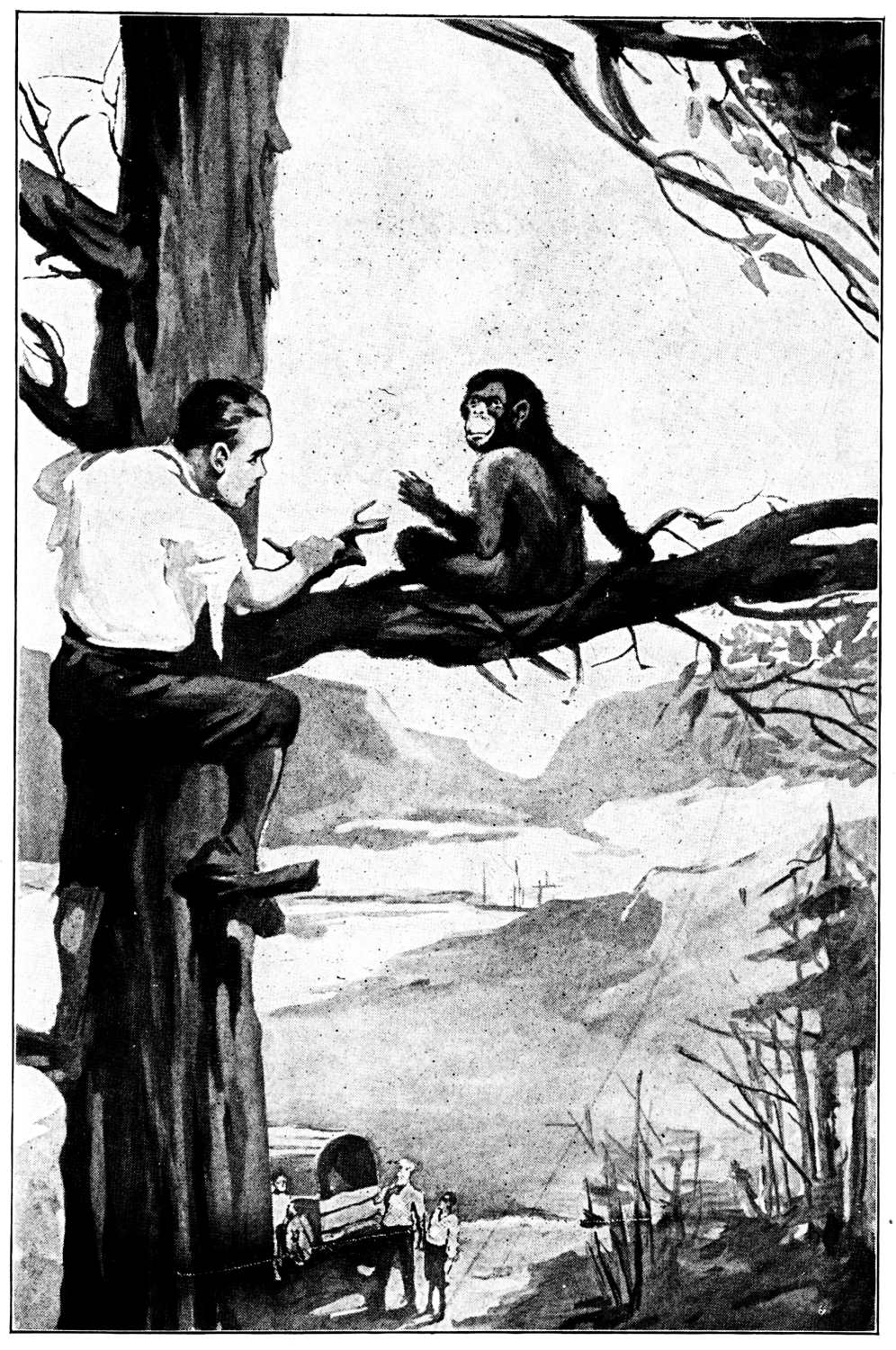
Angel, as usual, was in the trees, wherever they were near the line of
travel. While thus going forward, he was seen to spring down from a
tree, and began setting up the most violent chatter.
George knew what that meant. “What is it, Angel? Which way?”
He selected a tree, and Angel was up alongside and looked to the north.
Far in the distance could be seen a large body of warriors coming down
rapidly.
Muro and Sutoto sprang to the tree, but not before George cried out: “A
big party is coming in from the north.”
Sutoto looked at Muro, and then, addressing John, said:
“The Tuolos are coming.”
This information was almost overwhelming. They were about to be crushed
between three of the bitterest and most vindictive foes on the island.
It could not be helped. They must now fight to the last extremity, as
the Professor had said.
“Our situation here will depend, largely, on the actions of the warriors
who are pursuing the Illyas and Kurabus. If they follow up vigorously,
it will surely involve us.” John’s conclusions were acquiesced in by
Muro.
“How far are we from the river?” asked John.
Sutoto answered: “Probably a half hour,” which he indicated by the sun.
“Turn in that direction at once.”
The boys now saw where their salvation lay; but Muro and Sutoto at once
protested. Chump now spoke: “You do not know what a wonderful way they
have to cross streams. These pieces (pointing to the fort sections) are
used to float the wagon across.”
“But what will they do with the curees (yaks)?”
“The curees pull them over.”
There was no further protest. A half hour would not be long, and within
ten minutes after they reached the river bank the floats could be ready,
and from that vantage point they would be able to defy the island.
Muro kept his position in the wagon top and soon called out to John:
“They are driving the Kurabus toward the river. We had better stop.”
“If that is the case the fort should be erected,” answered John.
“By all means.”
“Harry, drive the wagon up to the large tree at the elevation to the
right; and get ready, boys, to unload and place the sections in
position.”
Within five minutes the wagon was turned around and one end abutted the
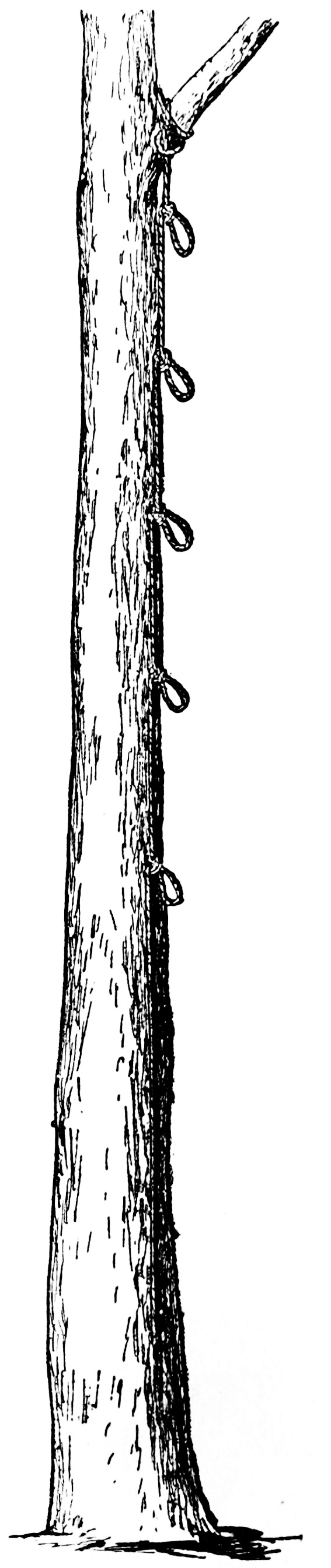
tree. This was a small pine, with the branches not far from the ground,
and the lower limbs could be easily reached by those in the wagon top.
The fort sections were installed within ten minutes thereafter, and the
guns and ammunition arranged in the order agreed on. The victorious
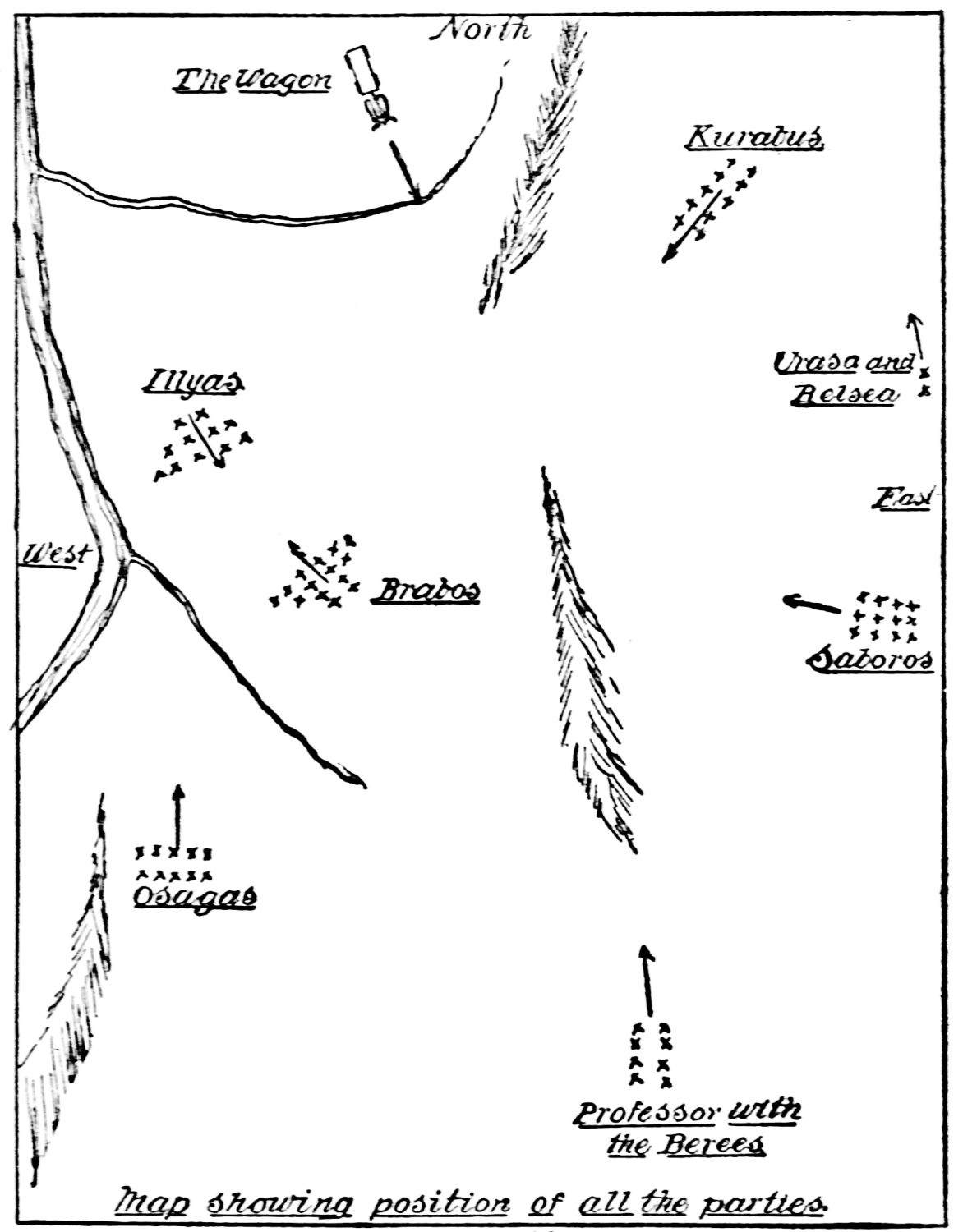
bands were having things their own way. The Illyas were next to the
river, and the Kurabus were farther inland.
The pursuing Brabos were following direct after the Kurabus, and the
other tribe, which had not yet been made out, were on the trail of the
Illyas, and the latter were, therefore, moving directly toward the
wagon.
John and Muro were up in the tree, watching the movements.
The former called down: “At the rate they are now coming forward, they
will reach us in less than a half hour.”
“What shall we do when they pass us?” asked Harry.
“We shall certainly give them a salute,” was his response.
Muro called John’s attention to an object not far to the northwest. Both
watched it intently. There was no doubt a savage there coming up
stealthily.
With an expression John did not understand, Muro glided down the tree
and leaped over the end of the wagon, and sprang out into the brush.
John saw him go forward unhesitatingly to the place of concealment, and
finally the object appeared, and rushed toward Muro.
He saw them embrace, and both came forward, and long before they came to
the wagon, John recognized Uraso.
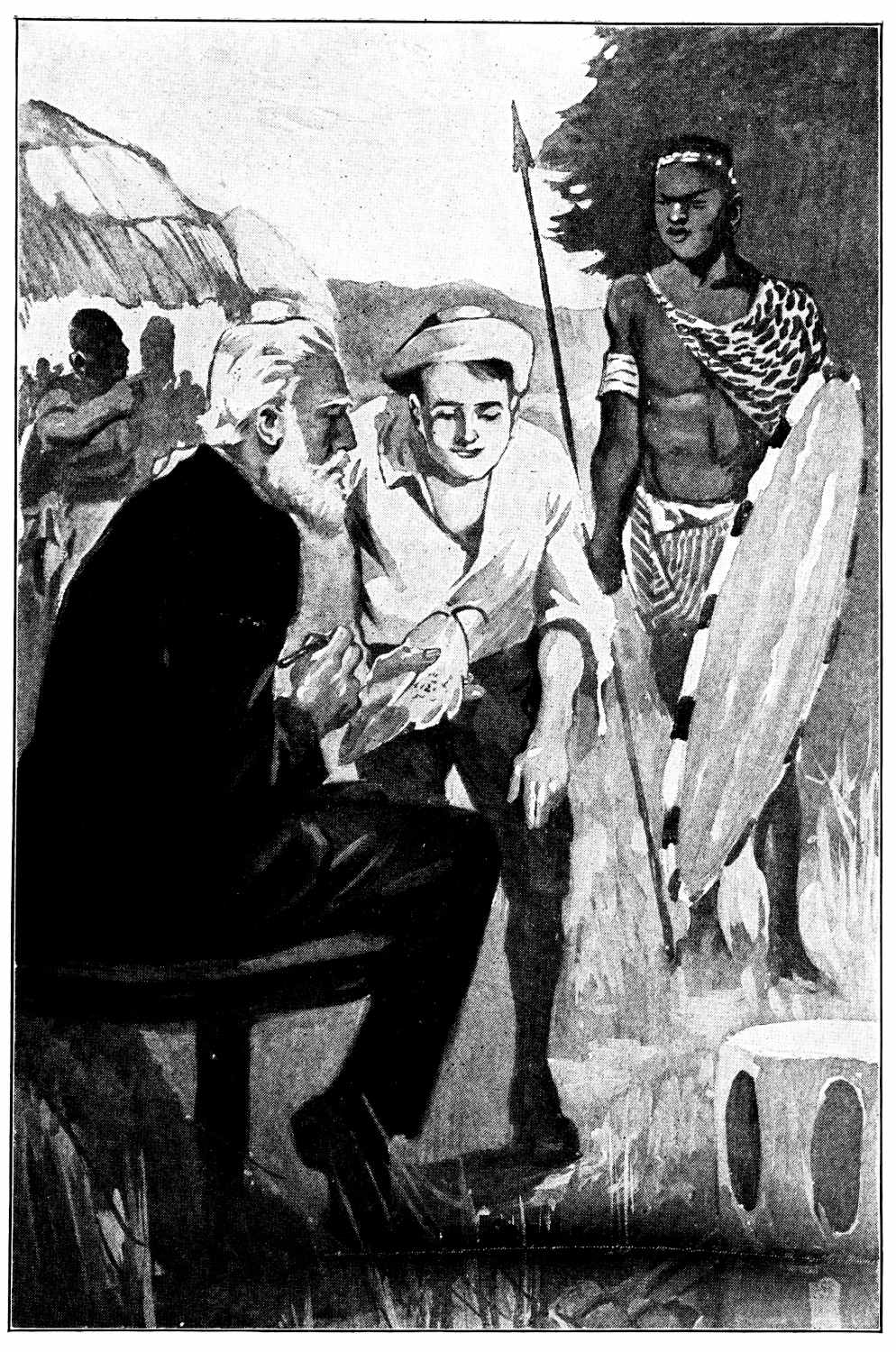
“Uraso is here,” cried John, and the boys leaped up to the top of the
fort, and each one tried to be the first to grasp him by the hand and
welcome him.
He had never seen Blakely before, but nevertheless Blakely gave him a
welcome, and when his eyes lighted on Sutoto, he could not wait to get
over the barrier to extend a welcome to him.
“How did you happen to come here?”
“I escaped from the Illyas, and found the Professor at the head of the
Berees, and he is below here following up the fighters.”
“My people are helping the Brabos.”
“Then they are the ones nearest the river?”
Uraso looked to the south, and his face lighted up as he said: “They are
the Osagas,” and he felt proud to know that his people were in the
coalition against the two tribes.
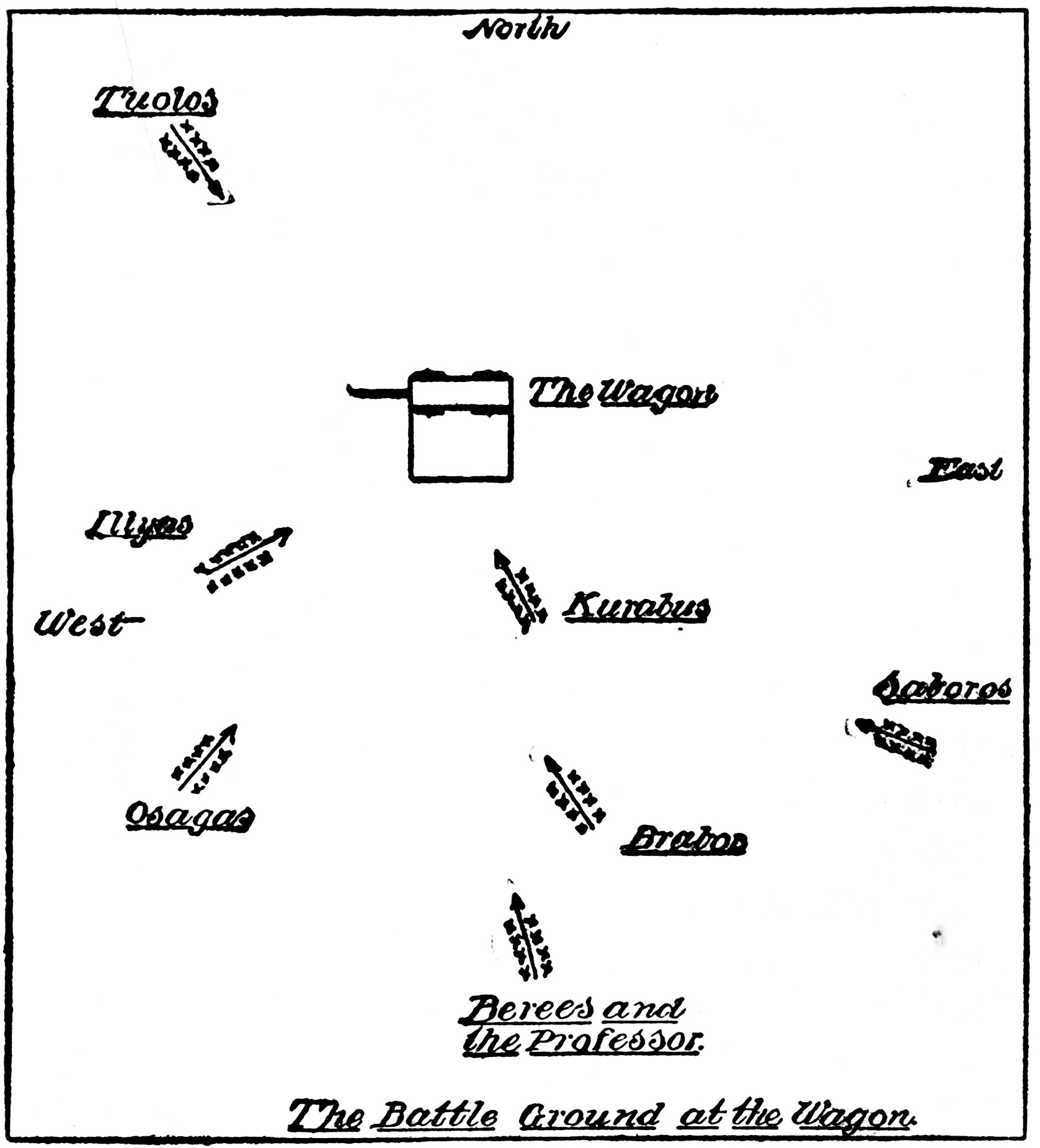
The Battle Ground at the Wagon.
Fig. 17.
John pointed to the north: “Do you see that tribe coming?”
“Yes; and they are the Tuolos.”
“How did you know they were coming?”
“I found one of the Brabos that you wounded three days ago.”
“Did he tell you where we were?”
“Yes; without him, I should have returned to the Professor last night.”
“Where is the Professor now?”
“He is probably near the Brabos, or southeast of the position now
occupied by the Osagas.”
“Why did you leave the Professor?”
“I came with Ralsea to find the Osagas, but when we came up, found that
the Kurabus were coming from the north and had joined the Illyas, so
that my route to the Osagas was cut off.”
“Why did the Professor try to follow the Osagas?”
“Because he was told at the Osaga village that they had gone to capture
the wagon.”
“Why should the Osagas be at enmity with us?”
“They understood I had been killed by the white men.”
“Do you know where my people are?” asked Muro.
“They are with the Professor,” and when Muro learned this he danced
around in delight.
The boys manifested every evidence of joy at this good news. The
Professor was not only safe, but with the Berees and Saboros, and coming
forward as rapidly as possible. This was glorious, indeed.
The first indications the Professor had that they were near the
contending forces was during the afternoon, when they passed over the
scene of the battle ground the day before. Here were bows and arrows,
articles of clothing, broken spears, and here and there articles of food
scattered about in confusion.
This is where the Kurabus made the first stand. The Osagas were not in
sight, and, indeed, the Brabos were not yet in evidence. Before six
o’clock Ralsea came in and at once sought out the Professor. “I have
good news for you,” were his first words.
“Have you seen my people?” asked the Professor in excitement.
“No; but Uraso has gone to them.”
“Where are they now?”
“Somewhere north of the Kurabus and Illyas.”
“Then they must be in their line of retreat.”
“Yes.”
“Have you seen any signs of the Tuolos?”
“Yes, they are coming down direct to the position held by your people.”
“Is there anything we can do to assist them?”
“That is why I came to tell you, while Uraso went to them.”
“Can we go part of the way to-night?”
“Yes; I can lead the way.”
“Then send a messenger to the Osagas at once and inform them that you
are here to assist them and that Uraso is here, and all are opposed to
the Kurabus, the Illyas and the Tuolos.”
“I can get a good runner for that purpose.”
“Also tell the runner to inform the Osagas that the Tuolos are on the
way from the north to aid their enemies.”
“How did you learn that the Tuolos have joined with the others?”
“Uraso and myself found one of the Brabos who had been wounded by your
friends, and he informed us of this.”
“Why are the Brabos at war with the Kurabus?”
“Because on their last raid against the Berees, and while their warriors
were absent, they captured and destroyed one of their principal
villages.”
The Professor was further informed that at no time had the Brabos and
the Saboros been at war with each other, and he thus learned sufficient
to know that the meeting with the Brabos could be easily arranged so as
to leave no resentment on their part.
This feature of the case was one which gave the Professor a great deal
of concern. He desired to weld together the tribes in bonds of unity,
and it was highly important that they should come up with the Osagas
first, because, as the latter were allies, they could more forcibly
impress on the Brabos the desirability of cementing a lasting peace.
Another thing of importance, which he had learned from the Chief Suros
of the Berees, was the unstable character of the Brabos, and the more or
less vindictiveness which was one of their traits.
The Professor hoped that they might be able to reach the field of
battle before the fight was decided, because, now that the wagon and its
occupants were safe, as they had reason to believe, he was anxious to
prevent the Osagas and Brabos from wreaking terrible vengeance on the
two vanquished tribes. It would be a poor beginning for the work of
pacification.
Camp had to be made again that day without reaching the Osagas. Runners
were again sent out to try and find the most direct trail, and none of
them returned before morning, and the two columns were under way as soon
as it was light enough to see.
Soon the first runner came in with the stirring news that the Brabos
were engaged with a party of Kurabus, which had tried to break through
to the east, and by ten o’clock the Professor was startled by the sound
of the guns at the fort.
The firing came from a direction which was almost due north, and turning
to Ralsea, said: “I supposed they were way to the left of that
position.”
“No; the river makes quite a turn at the point where they are, and from
the information we received from the wounded Brabo, the wagon must be
somewhere near the bend, which projects out to the east.”
“Then to reach the Osagas we must go still farther west?”
“Yes.”
The firing was a rapid one, and showed that they must be attacked with
vigor.
Soon the firing ceased, and the Professor breathed freer, and the
column pushed forward directly to the river.
The runner came in with news that the Osagas were within two hours’
march, and renewed energy was put into the marching force.
Uraso danced about the boys and expressed his delight at the opportunity
to help them. He told them about the Professor, and of the two boys, but
he did not know their names. He also told about several other boys who
were held by the Illyas, and of a white man.
This latter information interested John and Blakely, of course. All of
them ached for an opportunity to go to the Illyas’ country and effect
their release.
“That is the first thing which will be done after this little affair
here is settled,” exclaimed John, with some energy.
“The Tuolos are close at hand,” cried out George. The latter came down
the tree in a hurry now.
“Where are the Kurabus?”
“Some of them are trying to break across the country to the east.”
“Let us keep the same order we did four days ago.”
Uraso needed no instructions, but he had never yet fired one of the
guns, and he really felt ashamed when he saw Muro, Chump and Sutoto with
guns.
John saw the situation at once, and placed him by the side of Muro, who
told him hurriedly what to do. The character of the attack on the part
of the Tuolos was sufficient to inform the occupants of the wagon that
they knew who were before them. It is singular, however, that neither
the Kurabus nor the Illyas knew of it being in that spot.
This intimate knowledge of the situation was brought about by the
Tuolos’ perfect system of scouting the country, and this ignorance on
the part of the two fighting tribes could be excused only on the ground
that they were making the fight of their lives, and had enough to do to
keep out of the way of the advancing Brabos and Osagas.
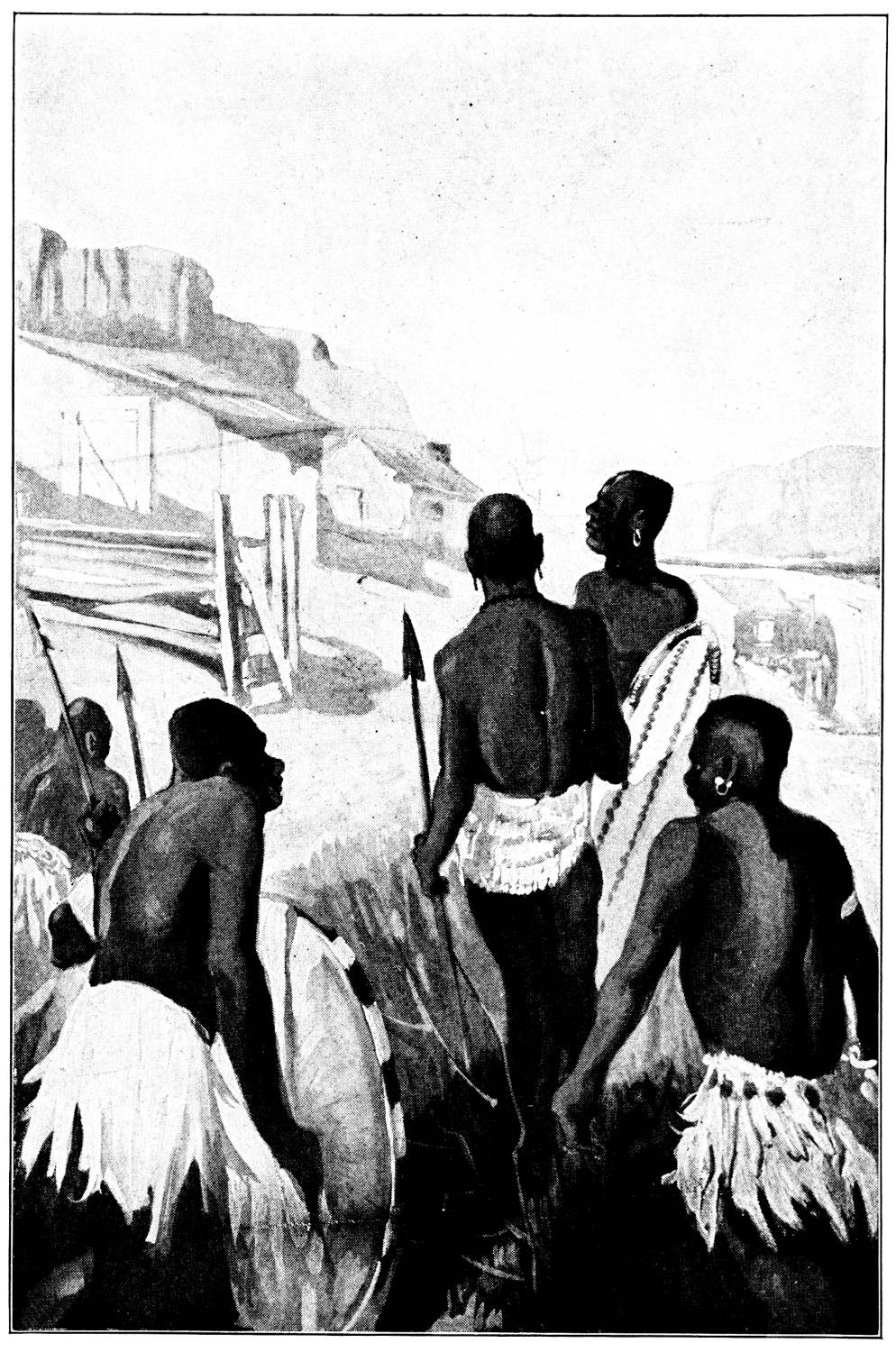
As the Tuolos rushed to the wagon all the garrison were collected
together at that side, and when they had come within less than a hundred
and fifty feet, John ordered the first volley.
“Cease firing and reload,” he ordered.
The shot at this distance was a frightful one to the attacking party;
but they considered for a moment only, and then, slightly wavering, were
again urged forward by the chief.
“Take the reserve guns.” They had no time to reload before the rush was
again on.
This second shot produced the indecision necessary to finish the
reloading of the guns.
“Fire the moment you reload, and make every shot count,” was the next
injunction.
“The Kurabus are coming.” Ralph saw the movement.
“The noise of the volleys is bringing them up, and we are going to be in
for it now,” exclaimed Blakely. “Well, let us give the best we have.”
“This will be the best notice we can give to the Professor,” replied
John, who was now on all sides of the wagon, and inspecting the guns and
ammunition.
“Reserve your fire, and wait until you can get absolutely sure marks.
From this time on we will fire as fast as we can reload.”
At no time in the history of their struggles did they face such a
critical period. To the north were the Tuolos, to the southwest the
Illyas, and to the south the Kurabus.
It is true that the two latter tribes were being pursued by the Brabos
and Osagas; but the coming up of their allies, the Tuolos from the
north, put quite another phase to the situation.
John turned to Uraso: “Did the Professor know that the Tuolos were
coming to the assistance of their allies?”
“Yes; if Ralsea has been able to reach him.”
“Is it likely the Osagas and the Brabos know this?”
“I do not know.”
There was no further time for talk now. The Tuolos saw the Kurabus, who
were the first to come up, and in the distance, hard pressed, were the
Illyas.
The Osagas and the Brabos must have heard the firing of the guns. To
them it added another exciting element to the situation. They now had an
opportunity to capture the whites as well.
They had no news of the arrival of the Tuolos.
The three tribes waited until all were in position, and then with spears
rushed forward to
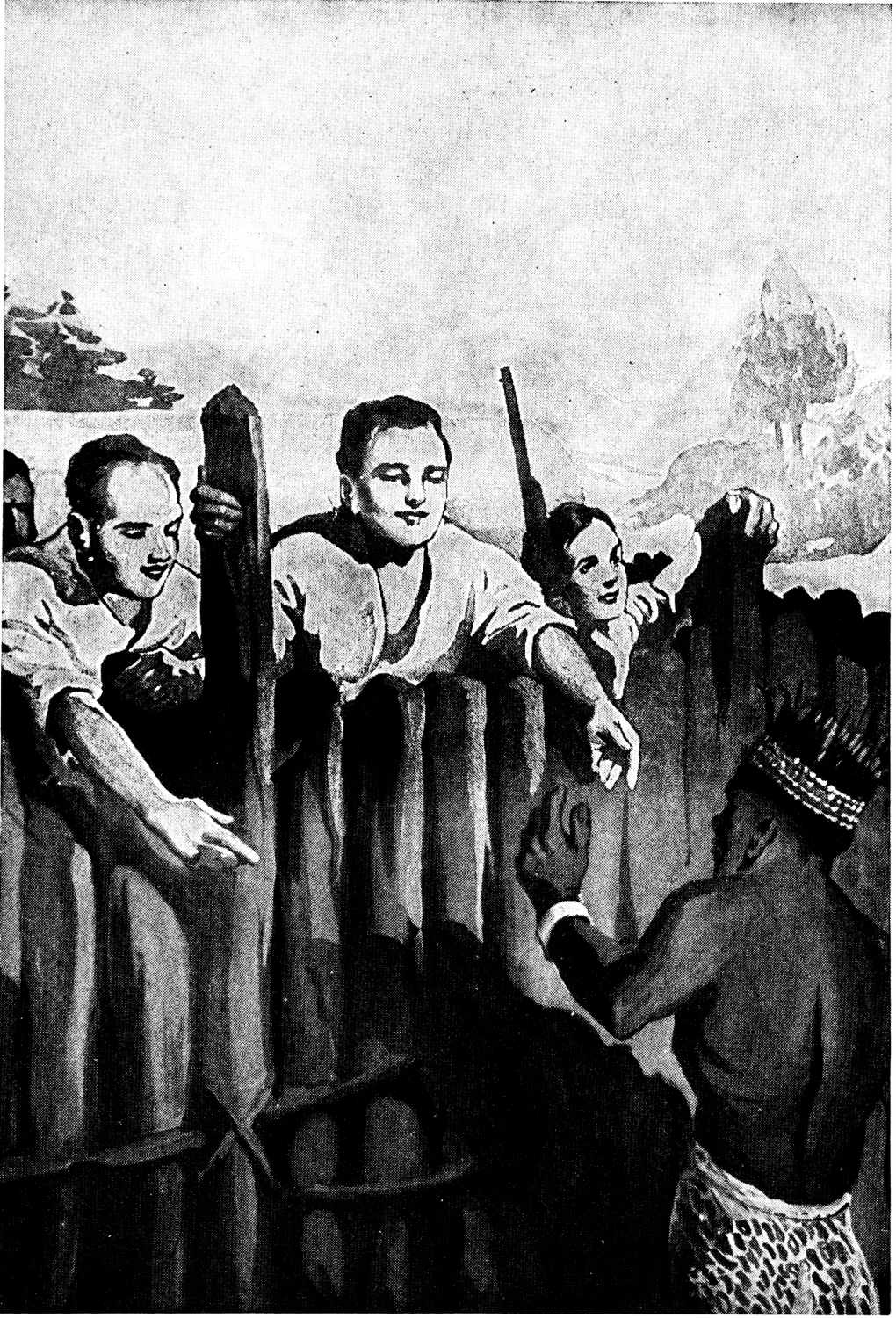
“Each one trying to be the first to grasp Uraso by the
hand, and welcome him”
[See p. 222]
overwhelm the little fort and its occupants by the force of numbers.
“Boys, never surrender!” cried out John, and they stood together and
grimly awaited the oncoming hosts.
The Professor and the two tribes came up to the Brabos, and the surprise
on their part was sufficient to cause a temporary stampede. Ralsea
rushed forward to the chief, and held up his hands, but seeing the
Professor and the two boys, could not understand this attitude of the
chief.
“We are your friends. These white people are your friends. The Saboros
are all here and have come to aid you. Where are the Osagas?”
“To our left. They are coming up.”
Just then the second attack was made on the wagon by the combined forces
of Illyas, Kurabus and Tuolos.
Not far ahead, and to their left, were the Osagas, coming up in great
excitement at the firing of the shots. The messenger from the Professor
had reached them. At first the Brabos were inclined to be resentful, but
as the Osagas came up they shouted:
“The Tuolos, the Tuolos,” and then they knew that unless they secured
aid they might be defeated and driven back.
The Professor did not wait to argue the question, and, turning to
Ralsea, shouted: “Order the men forward; go to the left and aim straight
for the wagon.”
The Saboros now sprang directly to the front, passing between the Osagas
and the Brabos, and when the three forces, which had attacked the
wagon, were enveloping the brave defenders, the Professor and the two
boys, Will and Jim, rushed up to the fort and the latter screamed:
“Hurrah! Hurrah!”
The Sebrees, with the Professor, followed, and surrounded the wagon. The
boys within sprang to the top of the fort the moment the shouts of Jim
and Will rang out. John had seen the head of the Saboros and checked the
firing.
The sudden appearance of the Sebrees and the Osagas was noticed by the
Tuolos before the Illyas knew what was happening, and the grand retreat
began. John and Muro and Sutoto leaped from the fort.
“After them,” shrieked John, and the Sebrees and Osagas were too much in
earnest now to need the command. Uraso embraced the ones in his tribe
that were nearest, and they followed him after the fleeing warriors.
A number of the Kurabus were too near to escape from the enveloping
column, and were captured. Less of the Illyas were taken, but the Tuolos
had time to make their escape. It was late that night when all the
warriors returned.
The Saboros, Osagas, Berees and Brabos surrounded the wagon, and it was
a sight. The sides were full of spears and arrows, but not a single shot
had gone through, nor was one of the defenders wounded.
They came out, and after embracing each other with tears of joy, they
all went around to the warriors and shook hands with them, and the
first thing that the Professor did was to bring up the Brabo chief and
rubbed his nose in token of friendship, and this was followed up by a
similar sign on the part of the others.
But they all knew that the present victory did not mean the submission
of all on the island. The three most powerful tribes were their enemies,
and the following volume, “The Conquest of the Savages,” will tell of
the thrilling exploits of the allied people under the wise guidance of
the Professor, and those who were with him.