THE WISHING-CAP.
There lived once a lady in London,
who had a great deal of money, but
who had never given her heart to God.
This lady had the care of five children:
four of them were brothers and
sisters; and their names were James
and Edward, Charlotte and Louisa.
The fifth child was an orphan, and
had no brothers or sisters. The name
of this little boy was Charles. Little
Charles's papa and mamma had been
dead only a very few months: they
were very pious people, and had
brought up their little boy in the fear
of God. Charles thought of his papa
and mamma every day: he knew they
were gone to heaven, and he knew,
also, who that blessed person was, for
whose sake they had been received
into that happy place.
Every day little Charles read a few
chapters in a Bible which his papa
had given him, and he tried to remember
the good things which had
been taught him: so God blessed
little Charles, and helped him to be
good.
It happened, one Sunday afternoon,
in the Christmas holidays, that the
lady came into the children's play-room,
and sat down among them. "I
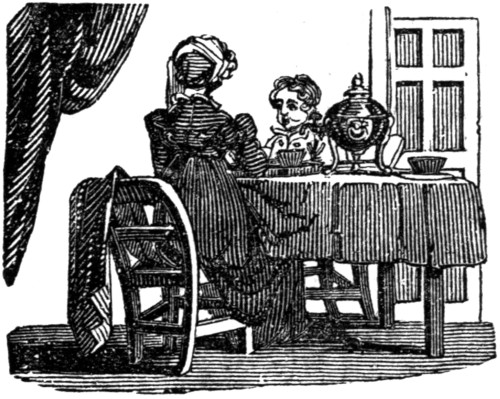
am come," she said, "to drink tea
with you this evening; after which we
will put on a wishing-cap; and then
we shall see what fine things the wishing-cap
will produce."
The children were all pleased to
see the lady sit down among them;
and while they were drinking their
tea, they talked a great deal about
the wishing-cap.
"What can a wishing-cap be?" said
Louisa, who was the youngest: "and
how can it bring fine things?"
"I never heard of a wishing-cap in
all my life," said James. "I want tea
to be over, that we may see it."
"O!" said Charlotte, "I know
what is meant by a wishing-cap. I
remember reading of a man, in a fairy
tale, who had a wishing-cap; and
when he put this cap on, and wished
for any thing, he had it immediately:
but I thought there were no such
things really as wishing-caps, except
in fairy tales."
"Well, well," said the lady, "we
shall see what kind of wishing-cap I
can make: but I must tell you, my
wishing-cap is not so good a one as
the man's in the fairy tale; it will
only produce such things as may be
easily had, it will not bring wonders
to pass."
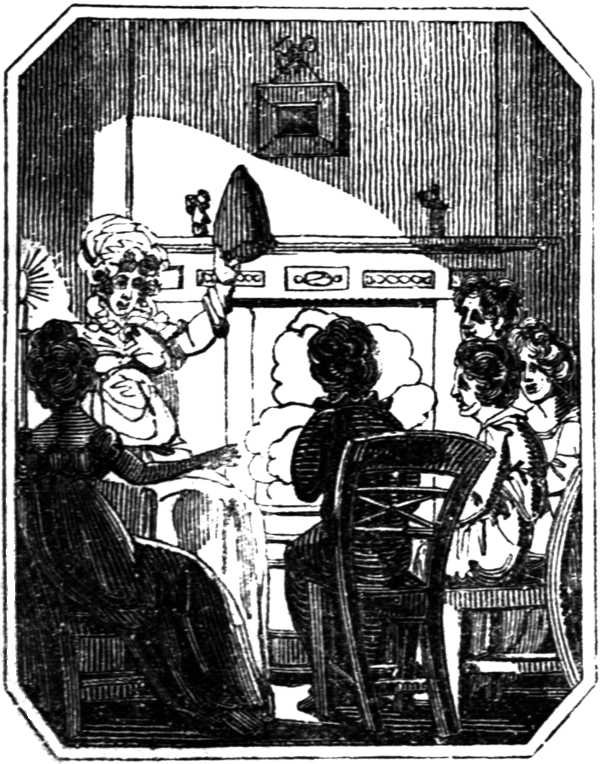
In this manner they went on talking
till tea was over, and the tea-things
carried away. Then the lady
drew her chair to the fire, and bidding
the children sit round her, she
put her hand into her pocket, and
pulled out a sheet of white paper. She
then folded up the paper in the shape
of a cap, and holding it up in her
hand, "This is the wishing-cap," she
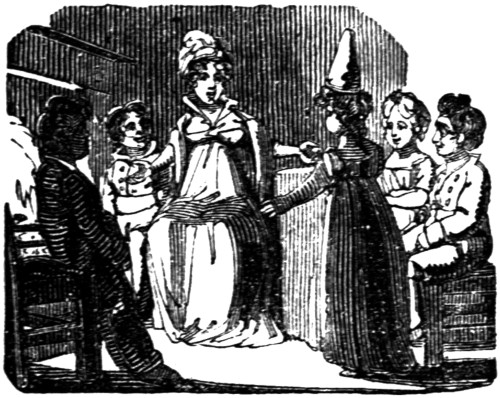
said; "you shall put it on, and try
what it is good for. Come, who will
be the first to wear the cap?" Then
the lady placed the cap on Charlotte's
head. "Now," she said, "think!
what do you wish for?"
"But will what I wish for really
come?" said Charlotte.
"Perhaps it may," answered the lady:
"we shall know to-morrow morning."
"Then," said Charlotte, "I wish
for a muslin frock, trimmed with satin
ribbon."
"Very well," said the lady. "Who
comes next?"
"I! I!" cried James, snatching the
cap from his sister's head, and putting
it on his own; "I wish for a
rocking-horse."
"Now for me," said Edward; "give
me the cap. I wish for a coachman's
whip. Now, Louisa, it is your
turn."
"I wish for a wax doll, with flaxen
hair, and blue eyes," said Louisa.
"Now you have all had your turns,"
said the lady, "but Charles: come,
Louisa, give the cap to Charles."
"There, take it," cried Louisa,
throwing the cap at him, "and make
haste."
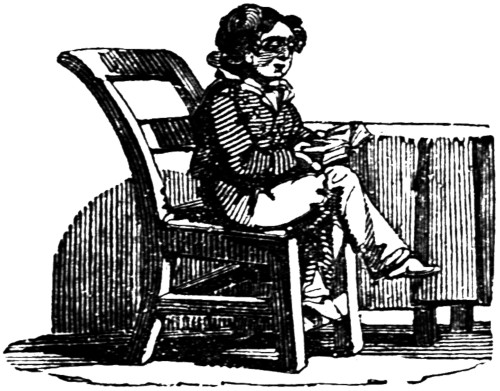
The cap fell at Charles's feet: he
took it up, and laid it on the table.
"Put it on your head, you foolish
boy," said James, "and wish a
wish."
Charles smiled, but he did not offer
to take up the cap.
"What are you about?" said James,
giving him a push; "put on the cap,
and tell us your wish."
"Charles," said the lady, "don't
you understand what you are to
do? Put on the cap, and don't be
stupid."
"I thank you, Ma'am," answered
Charles; "but I beg that you will
not be angry, if I don't put on the
wishing-cap."
"But you shall have it on," said
James, taking it off the table, and
putting it on his head.
Charles took it quietly off his head,
and laid it on the table.
The lady looked surprised; and
drawing Charles to her, she said,
"What is the meaning of your behaviour?
Why will you not play
with us?"
"Perhaps you may not be pleased,
if I tell you, Ma'am; and I do not
wish to make you angry," answered
little Charles.
"But I will know," said the lady,
looking vexed.
"My poor papa, when he was
alive," said Charles, "used to tell me
that I ought not to wish for any
thing but God's blessing: and he
taught me this verse—Seek ye first
the kingdom of God, and his righteousness;
and all these things shall be
added unto you: (Matt. vi. 33.)
and this is the reason why I do not
like to put on the wishing-cap."
While little Charles was speaking,
the rest of the children stood staring
and laughing; and when he had done,
the lady pushed him away, saying,
"You are a strange, foolish boy, and
not fit to play with other children.
Go to bed immediately."
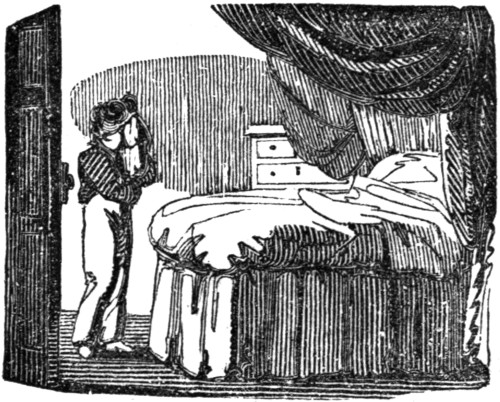
Charles went up to his room. His
cheeks were wet with tears, and his heart
was very sad. He remembered, that
he once had a papa to lean his head
against when he was unhappy, and a
dear mamma to wipe away his tears;
but they were both dead: yet still
he had a Saviour to whom he might
freely go. So he tried to lift up his
heart to this dear Saviour, and laying
his little head on his pillow, he fell
asleep. In his sleep he had a very
sweet dream about heaven: and when
he awoke in the morning, he remembered
these words in the Prophet
Isaiah—As one whom his mother comforteth,
so will I comfort you. (Isaiah
lxvi. 13.)
While Charles was dressing himself,
he heard a very great noise down
stairs. He made haste, and running
into the play-room, he found the rest
of the children screaming and jumping
for joy. Charlotte dressed in a
new muslin frock; Louisa with the
wax doll she had wished for; James
riding on a large new rocking-horse;
and Edward with a coachman's whip.
"Look here, Master Charles," said
James, "see what the wishing-cap has
brought us! Are you not sorry now
that you were such a fool as to refuse
to put on the wishing-cap?" Then the
rude boy began to shout and halloo,
riding up and down as hard as the
horse would go; while Edward kept
cutting and lashing the heels of the
wooden horse with his coachman's
whip, whistling, and smacking his
lips, like a coachman; Louisa sung
to her doll; and Charlotte danced
about in her new frock, singing and
laughing: and, all together, there
was such a noise, that it might have
been heard to the end of the street;
the boys every now and then crying
out, "Well, Master Charles, what do
you think of us now?"
Every thing went on very well, and
all were in the greatest good-humour,
till Edward, without intending it, instead
of lashing the wooden legs of
the horse, gave his brother a most
terrible cut with his long whip, over
one knee, and across one hand.
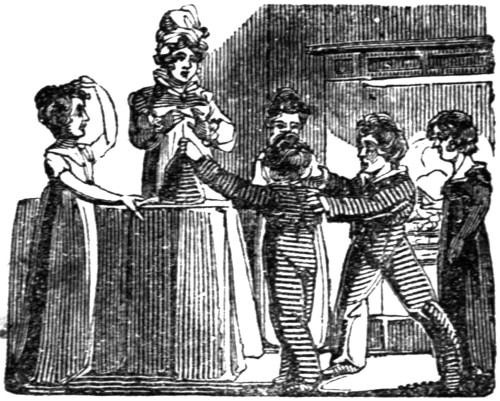
James, being made very angry with
the pain, jumped from his horse; and
flying at his brother, began to beat
him with all his strength. Edward
ran to his sisters for help; and James
followed, continuing to beat him, and
saying, "You sha'n't horse-whip me
for nothing, Sir, I can tell you that."
At length, James pushed Edward
against Louisa; by which means, her
doll was thrown down, and broken to
pieces: and Edward, as he fell, caught
his foot in Charlotte's new frock, and
tore it sadly.
Charlotte and Louisa now began to
scream and cry in their turns; and
there was such a dreadful noise, that
the lady came in haste to see what
was the matter.
The children were all quiet, as soon
as they saw the lady, and very much
frightened too. "So," she said, "you
have been fighting, you naughty children,
instead of enjoying the pretty
things I got for you! You, Charlotte,
have torn your frock; and you,
Louisa, have broken your doll. And
as to you, you naughty boys, you have
been beating each other: go up to
your bed-rooms; and there you shall
stay all day, and have nothing but
bread and water. As for the rocking-horse
and the whip, I shall send them
back to the shop."
So the four children were taken up
to their rooms; and the whip and the
rocking-horse were sent back to the
shop: but little Charles was asked to
breakfast with the lady in the parlour.
And she said to him, "I begin to think
your papa was a wise man, when he
taught you to seek for nothing but
God's blessing: for I see that having
the things we wish for, does not always
make us the happier."
Little Charles was much pleased,
when he heard the lady speak so kindly;
and he asked her to forgive the
other children, but she would not.
And now I will tell you how little
Charles received at last what he had
secretly desired above all things, and
how happy it made him.
About two months after this time,
all the children were taken ill with a
fever which was then going about
London. They all recovered, however,
but little Charles; for though
the lady took great care of him, because
she now began to love him, and
though a very skilful doctor came
often to see him, yet he got worse
and worse. For many days he could
not speak, and did not know any
body.
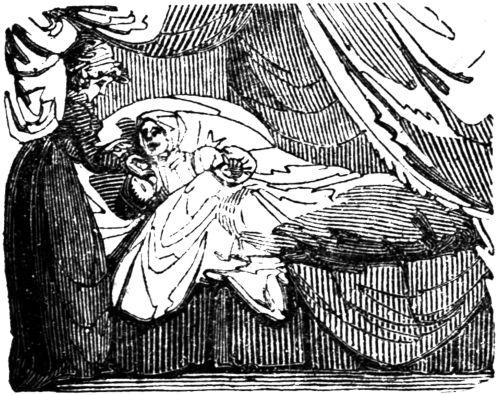
At last, the time of his death drew
very near. He had been asleep; and
opened his eyes, while the lady was
standing by his bed. He looked quite
cheerful; and holding out his hand
to her, "I am going to die, Ma'am,"
he said, "I feel death approaching;
but I am very happy. That dear
Saviour whose love my father taught
me to seek, is very near me, though
my eyes do not now see him. He
comforts me with his promises, and
tells me that for his sake death shall
be made easy to me.
"It was because I desired his love
alone, that I ceased to wish for
other things. I knew that they could
not make me happy. All the world,
my papa taught me, could not make
me happy without my Saviour's love.
And now I am going to this dear Saviour;
and I know that he will forgive
my sins, because he gave me grace to
seek him."
Then little Charles prayed that God
would bless the lady, and the other
children under her care: and soon afterwards
he died.
I am happy to tell you, that the
lady never forgot little Charles's words
upon his dying bed. From that time,
she gave her heart to seek heavenly
blessings instead of earthly possessions:
and she used often to say to
the other children, when they were
wishing for toys, or other foolish
things, "Remember little Charles;
and, like him, put away the wishing-cap."
And so I say to you, my dear little
children, who may hereafter read this
story,—
DON'T PUT ON THE WISHING-CAP.
FINIS.