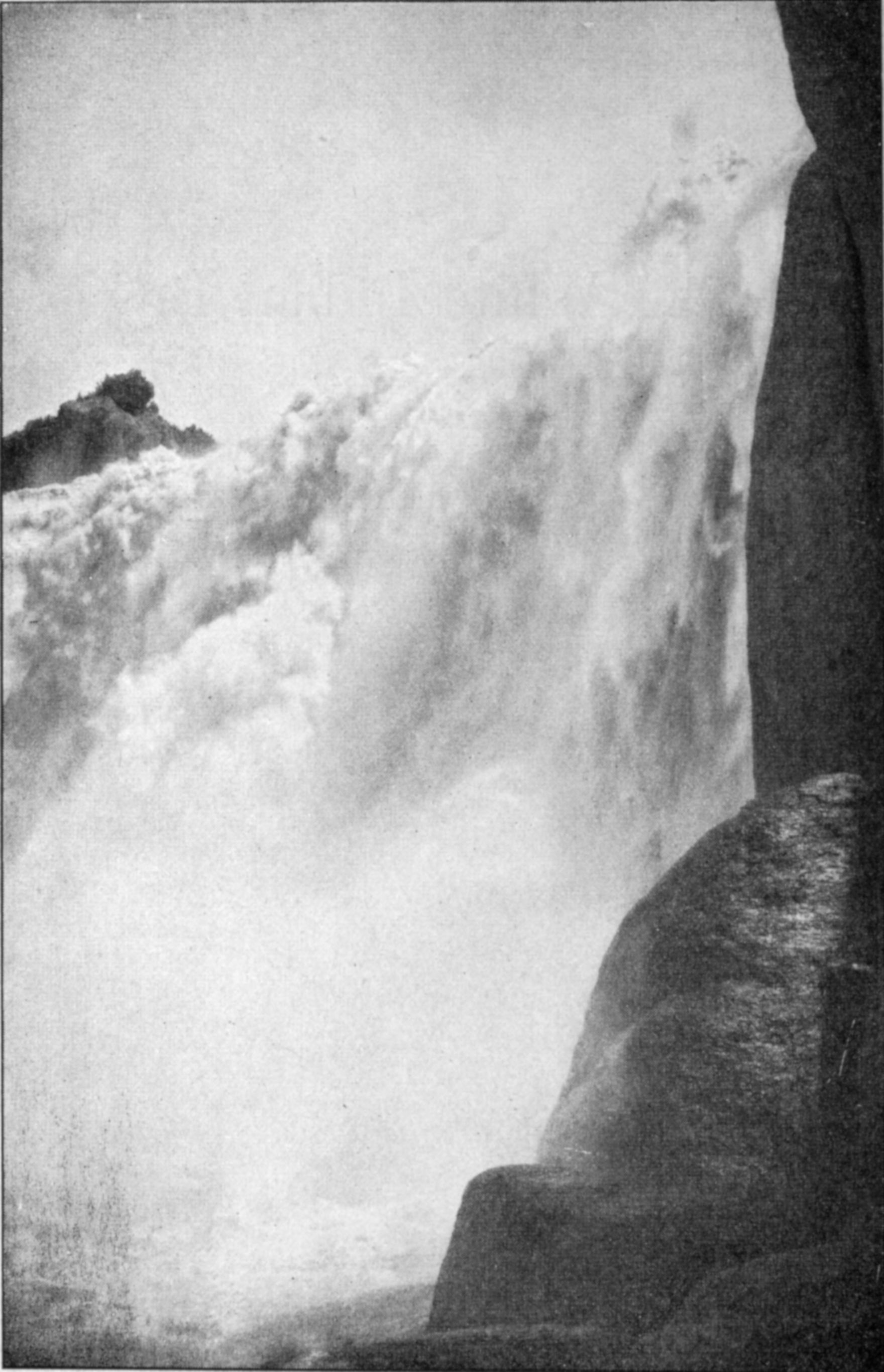
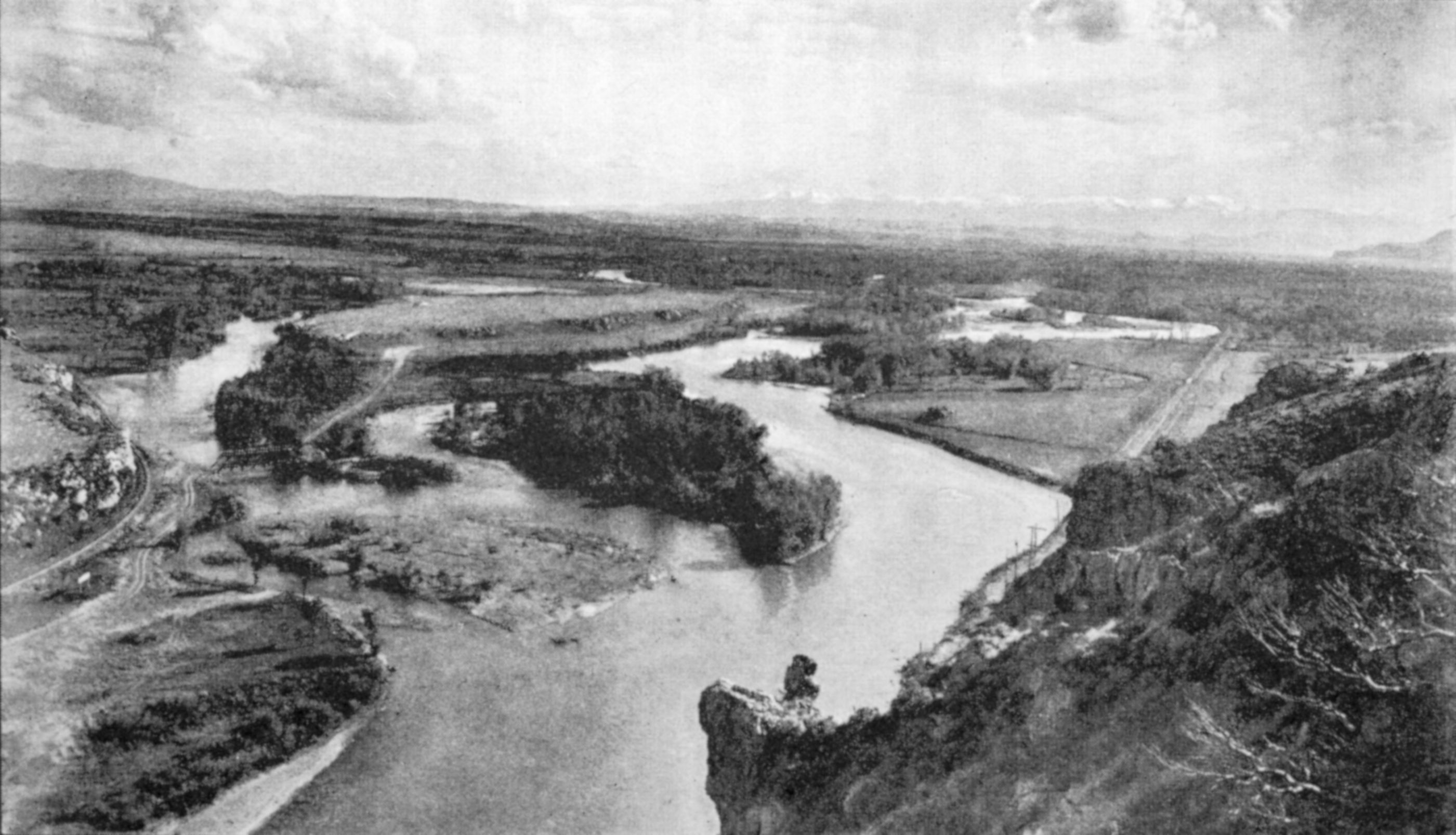
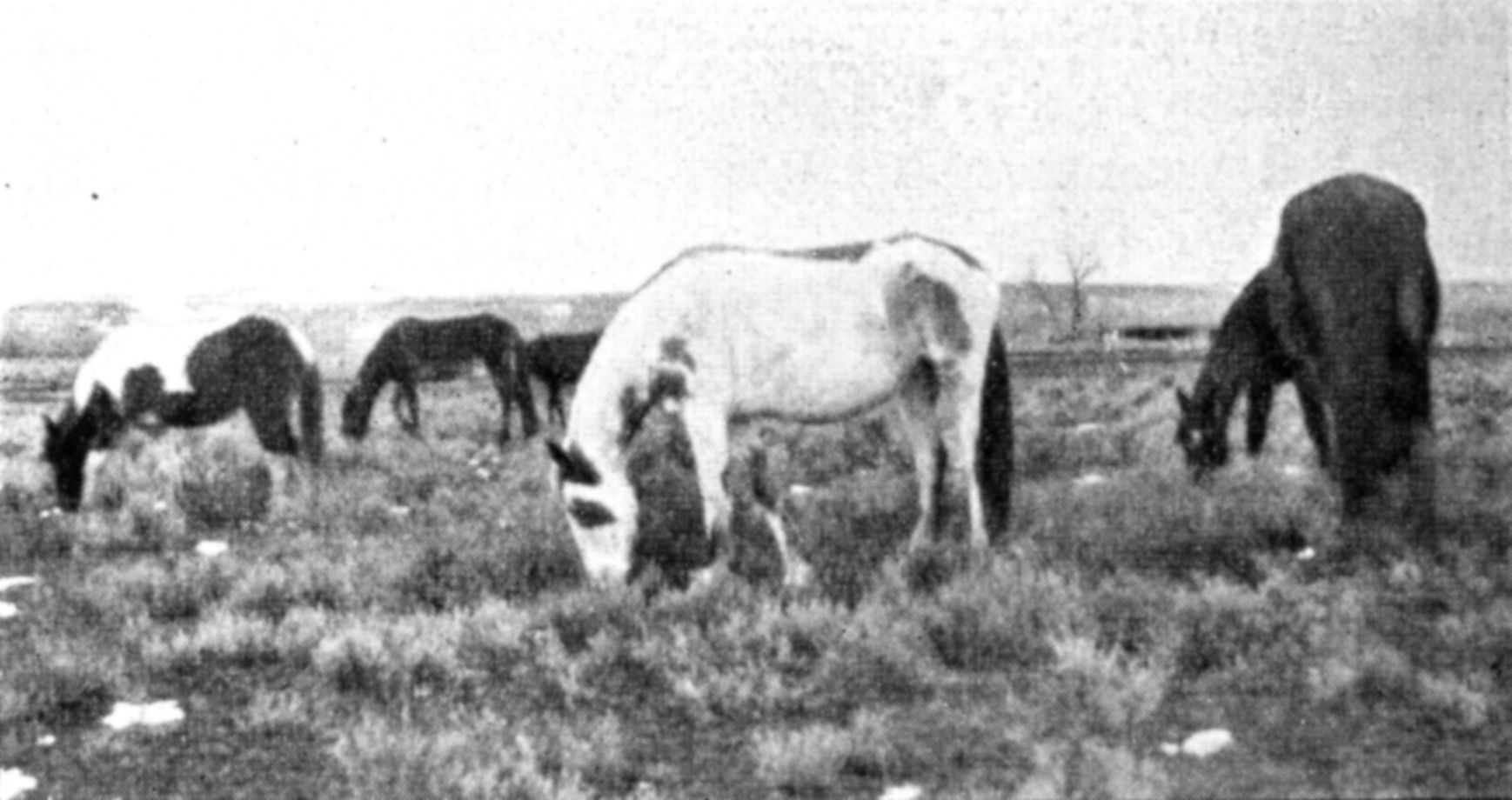
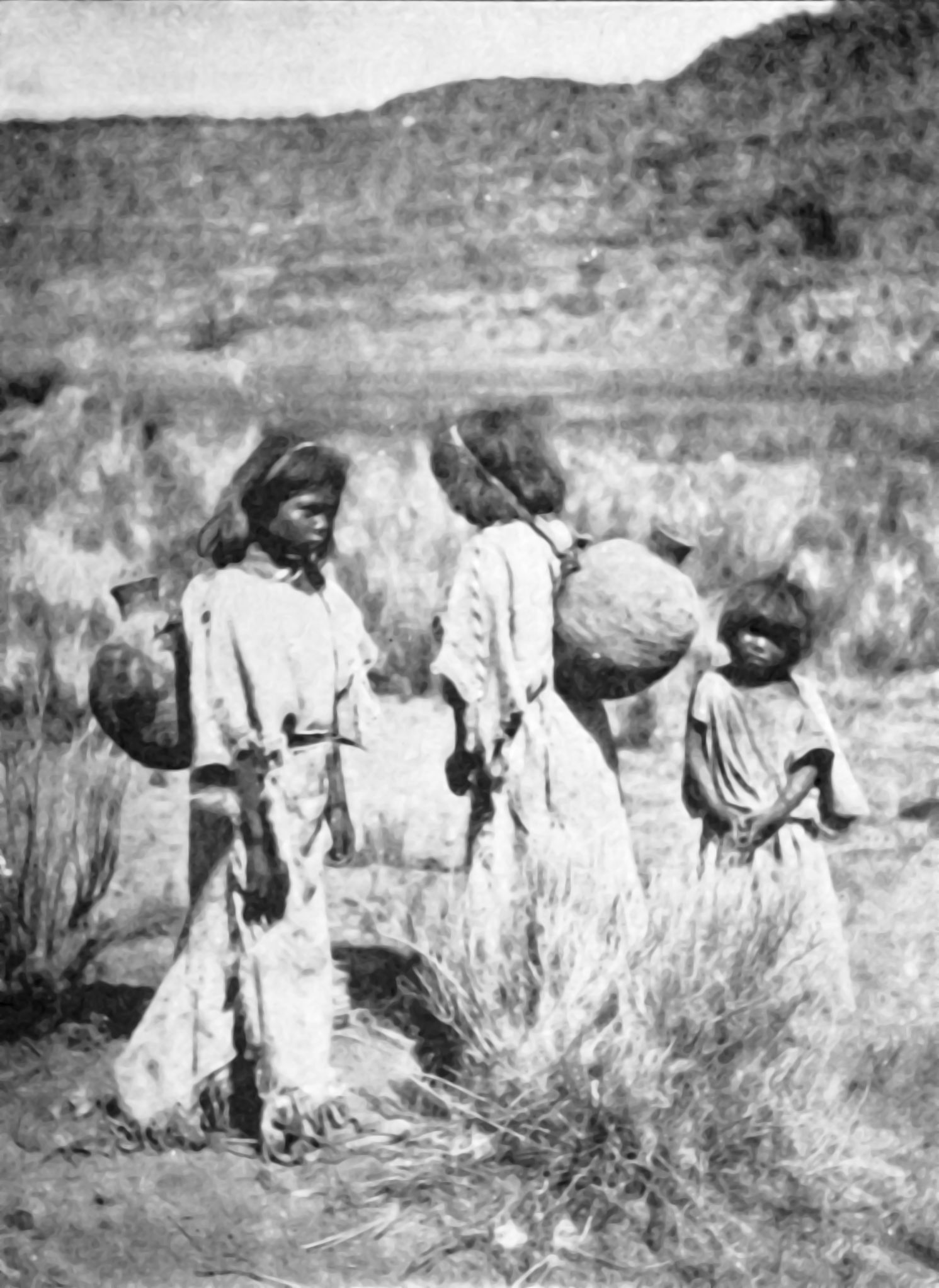
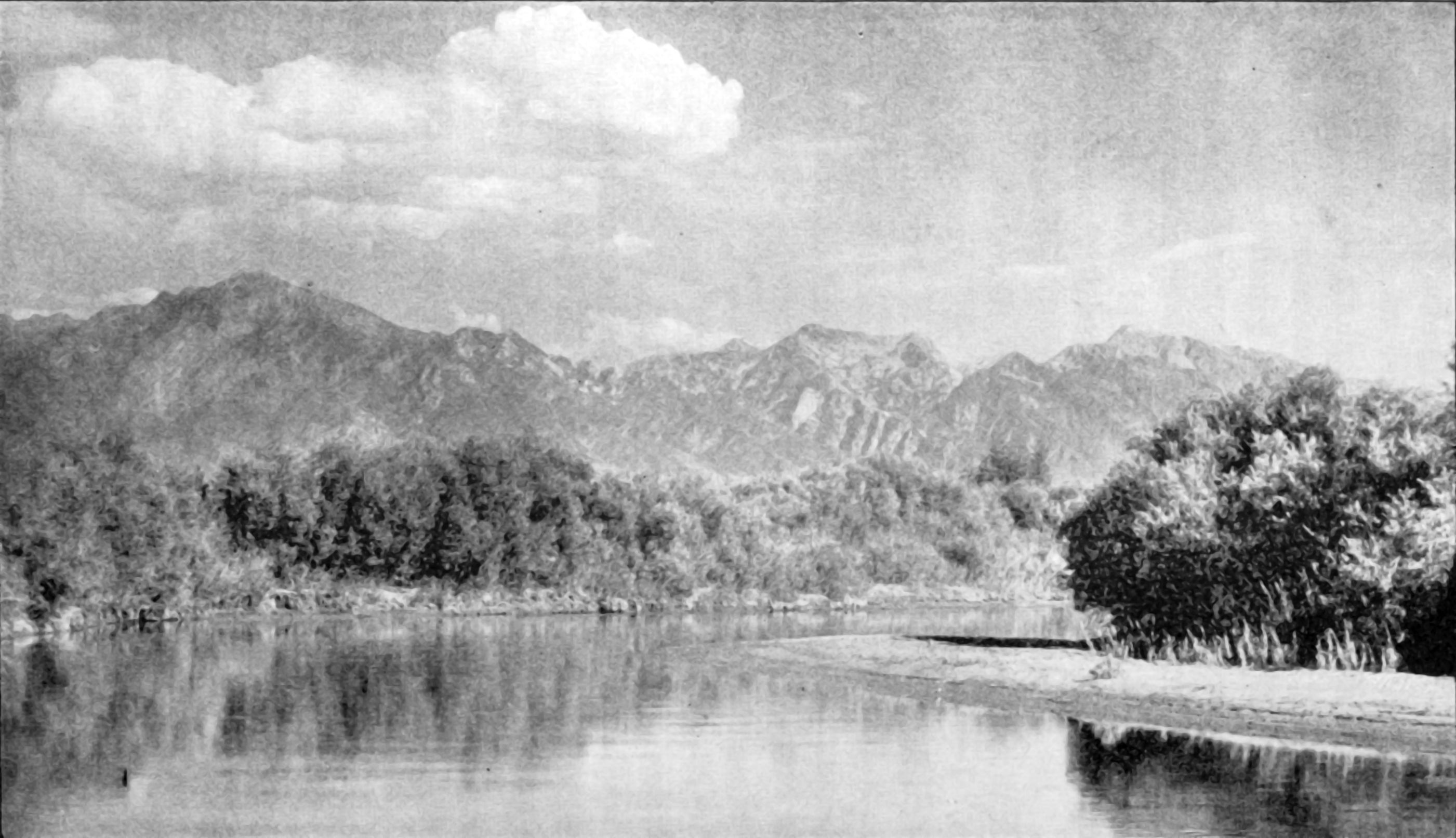
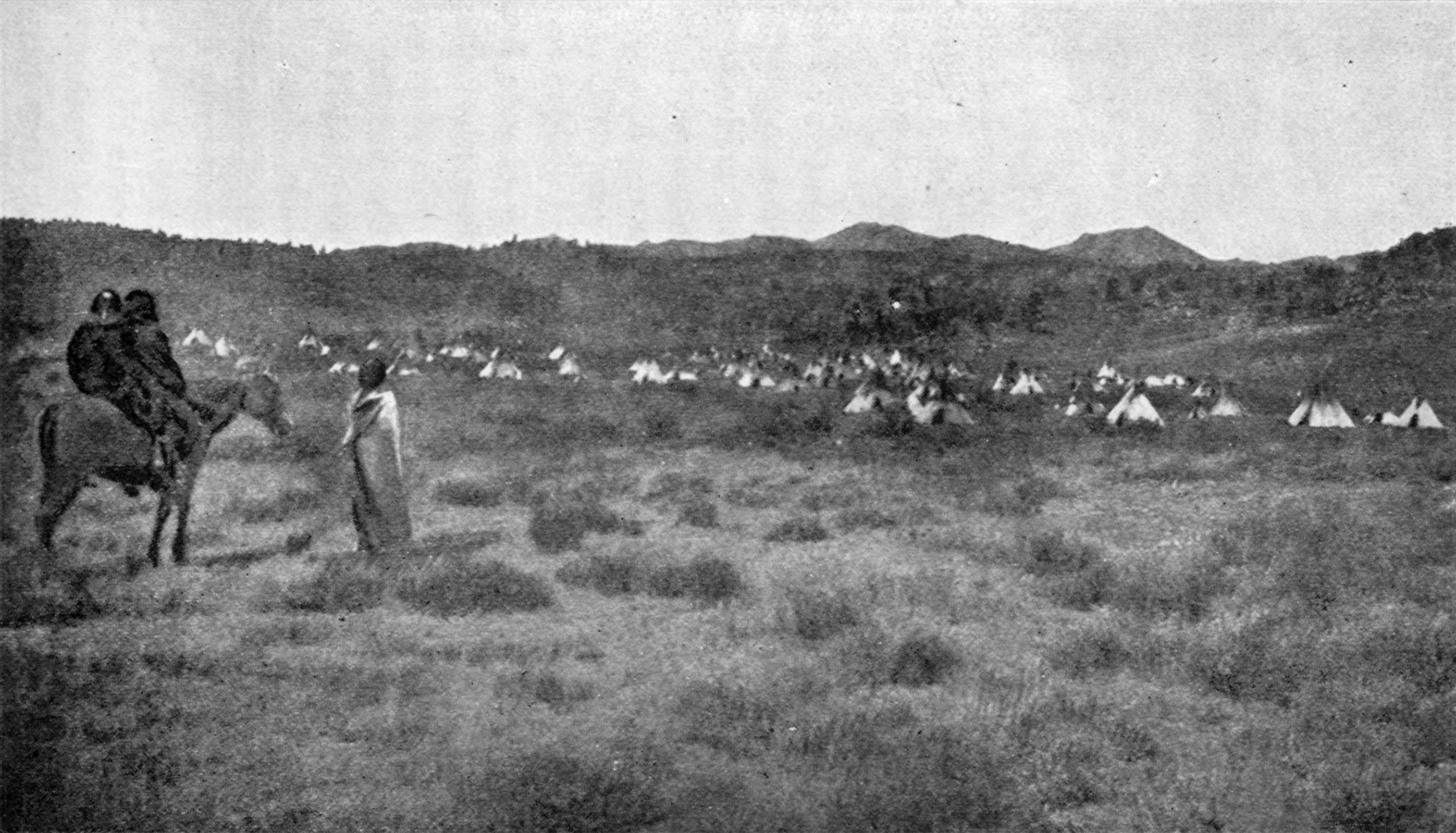
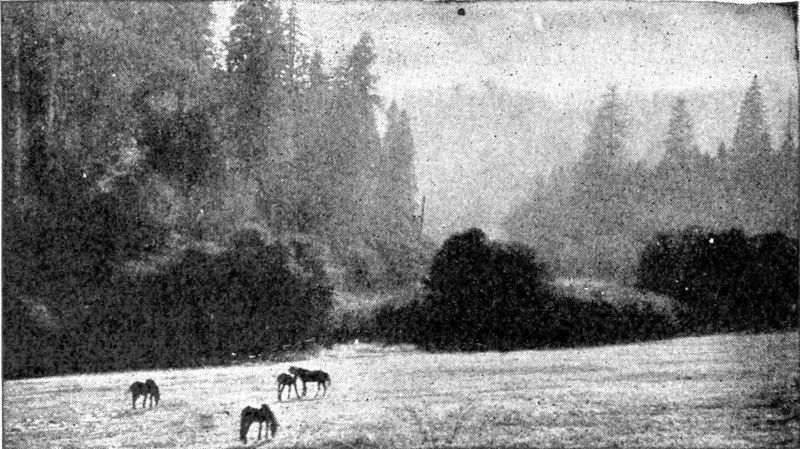
Shoshone Falls of the Snake River, Idaho; one of the wonder scenes
in the land of Washakie’s tribe.
Pioneer Life Series
The
White Indian Boy
The Story of Uncle Nick
Among the Shoshones
by
E. N. Wilson
Revised and Edited by
Howard R. Driggs
Professor of English, School of Education
University of Utah
Illustrated with drawings by
F. N. Wilson
Yonkers-on-Hudson, New York
World Book Company
1922
WORLD BOOK COMPANY
THE HOUSE OF APPLIED KNOWLEDGE
Established, 1905, by Caspar W. Hodgson
Yonkers-on-Hudson, New York
2126 Prairie Avenue, Chicago
The number of men and women who played
a part in the conquest and settlement of
the Great West grows smaller year by year,
and the passing of these plainsmen and
mountaineers marks the close of an era in
our national life. To put into permanent
form, as has been done in this book, a pioneer’s
recollections of his early days, with
their trials and adventures, is to make
a certain contribution to history. Such a
record shows us the courage, perseverance,
and hardihood with which the foundations
of the nation were laid, and to read it is
to watch a state in the making. As a story
of the days when Indian tribes still roamed
the plains, this book will have for boys and
girls all the interest of a tale of adventure.
It is hoped that it will also give them a
realization of the hardships and dangers
so manfully faced by the settlers of the
West and will implant in them a desire
to prove themselves worthy successors to
those builders of the nation. Other volumes
of the Pioneer Life Series will follow
The White Indian Boy
PLS:WDWIB-3
Copyright, 1919, by World Book Company
Copyright in Great Britain
All rights reserved
PRINTED IN U. S. A.
AN INTRODUCTION TO UNCLE NICK
If you ever go to the Yellowstone Park by way of Jackson’s
Hole, you will most likely pass through Wilson,
Wyoming. It is a picturesque little village situated at
the foot of the Teton Mountains. A clear stream, rightly
named Fish Creek, winds its way through the place. On
the very edge of this sparkling mountain stream stands
a log cabin. The cabin is so near the creek, indeed, that
one might stand in the dooryard and catch fish. And
this is what “Uncle Nick” Wilson, who lived in the cabin,
has done many a time. That is a “true fish story,” I am
sure, because I caught two lively trout myself last summer
in this same creek only a few rods from the cabin.
Who was Uncle Nick Wilson? you ask. He was an
old pioneer after whom this frontier town was named.
He was the man, too, who wrote this story book. You
would have liked Uncle Nick, I know. He was a rather
short, round-faced man with a merry twinkle in his eyes.
He took things easily; he spoke in a quiet voice; he was
never too busy to help his neighbors; he liked a good
joke; he was always ready to chat awhile; and he never
failed to have a good story to tell, especially to the children.
Uncle Nick had one peculiarity. He did not like to
take off his hat, even when he went into a house. I
often wondered why, but I did not like to ask him. One
day, however, some one told me the reason. It was
because he had once been shot in the head with an arrow
by an Indian. The scar was still there.
From outward appearances one would hardly have
guessed that Uncle Nick’s life had been so full of exciting
experiences. But when he was sitting about the
campfire at night or at the fireside with a group of boys
and girls, he would often get to telling his tales of the
Indians and the Pony Express; and his hearers would
never let him stop. My own two boys never got sleepy
when Uncle Nick was in the house; they would keep calling
for his stories again and again.
This was one reason why he wrote this story book.
He wanted boys and girls to have the pleasure of reading
his stories as often as they pleased. How he was induced
to write it is an interesting story in itself.
Some years ago two professors of a certain Western
university were making a trip with their families to the
Yellowstone Park by way of Jackson’s Hole trail. As
they were passing through Wilson, one of the women in
the party met with a serious accident. Her little boy had
got among the horses, and the mother, in trying to save
the child from harm, was knocked down and trampled.
Help must be had at once; but how to get it was a
problem. The nearest doctor was over sixty miles away.
While the unfortunate travelers were worrying about what
to do, Uncle Nick’s wife came to the rescue. She quietly
assumed command of affairs, directed the making of a
litter, and insisted that the wounded lady be carried to her
cabin home a short distance away. Then she turned
nurse, dressed the wounds, and attended the sufferer
until she was well enough to resume the journey.
The party meantime camped near by, and whiled away
about three weeks in fishing and hunting and enjoying
Uncle Nick’s stories of the Wild West. Every night they
would sit about the cabin fire listening to the old frontiersman
tell his “Injun stories” and his other thrilling adventures
of the early days. They felt that these stories
should be written for everybody to enjoy. They were
so enthusiastic in their desire to have it done that Uncle
Nick finally consented to try to write them.
It was a hard task for him. He had never attended
school a day in his life; but his wife had taught him his
alphabet, and he had learned to read and spell in some
kind of way. He got an old typewriter and set to work.
Day by day for several months he clicked away, until
most of his stories were told. And here they are—true
stories, of real Indians, as our pioneer parents knew them
about seventy years ago.
The book gives the nearest and clearest of views of
Indian home-life; it is filled, too, with stirring incidents
of Indian warfare, of the Pony Express and Overland
Stage, and other exciting frontier experiences.
Uncle Nick may have had no schooling except as he
got it in the wilds, but he certainly learned how to tell a
story well. The charm of his style lies in its Robinson
Crusoe simplicity and its touches of Western humor.
Best of all, the stories Uncle Nick tells are true. For
many months he was a visitor at our home. To listen
to this kindly, honest old man was to believe his words.
But the truth of what he tells is proved by the words of
many other persons who knew him well, and others who
have had similar experiences. For several years I have
been proving these stories by talking with other pioneers,
mountaineers, pony riders, students of Indian life, and
even Indians themselves. Their words have unfailingly
borne out the statements of the writer of this book. No
pretense is made that this volume is without error. It
certainly is accurate, however, in practically every detail,
and true to the customs and the spirit of the Indian and
pioneer life it portrays.
Professor Franklin T. Baker of Columbia University,
who read the book in manuscript, has pronounced the
book “a rare find, and a distinctive contribution to the
literature that reflects our Western life.”
The rugged, kindly man who lived through the scenes
herein pictured has passed away. He died at Wilson, the
town he founded, in December, 1915, during the seventy-third
year of his age. But he has left for us this tablet
to his memory, a simple story of a simple man who lived
bravely and cheerily in the storm and stress of earlier days,
taking his part even from boyhood with the full measure
of a man.
Howard R. Driggs
AUTHOR’S FOREWORD
You have no doubt read or heard stories of the great wild
West. Perhaps you have even listened to some gray-haired
man or woman tell tales of the Indians and the
trappers, who roamed over the hills and plains. They
may have told you, too, of the daring Pony Express riders
who used to go dashing along the wild trails over the
prairies and mountains and desert, carrying the mails, and
of the Overland men who drove their stages loaded with
letters and passengers along the same dangerous roads.
I know something about those stirring early times.
More than sixty years of my life have been spent on the
Western frontiers, with the pioneers, among the Indians,
as a pony rider, a stage driver, a mountaineer, and a
ranchman.
I have taken my experiences as they came to me, much
as a matter of course, not thinking of them as especially
unusual or exciting. Many other men have had similar
experiences. They were all bound up in the life we had
to live in making the conquest of the West. Others
seem, however, to find the stories of my life interesting.
My grandchildren and other children, and even grown
people, ask me again and again to tell these tales of the
earlier days; so I have begun to feel that they may be
worth telling and keeping.
That is why I finally decided to write them. It has
taken almost more courage to do this than it did actually
to live through some of the exciting experiences. I have
not had the privilege of attending schools, so it is very hard
for me to tell my story with the pen; but perhaps I may
be able to give my readers, young and old, some pleasure
and help them to get a clearer, truer picture of the real
wild West as it was when the pioneers first blazed their
way into the land.
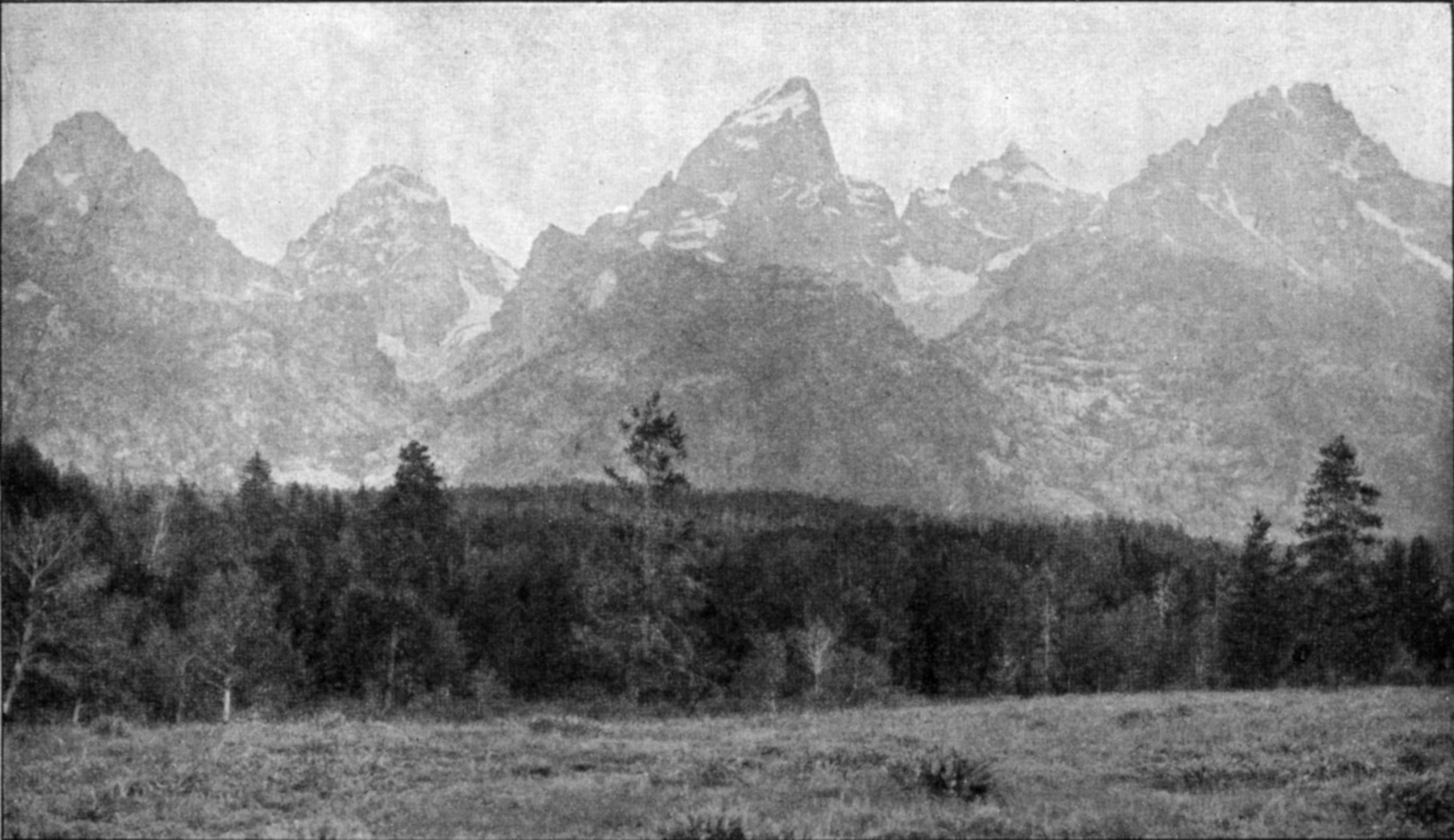
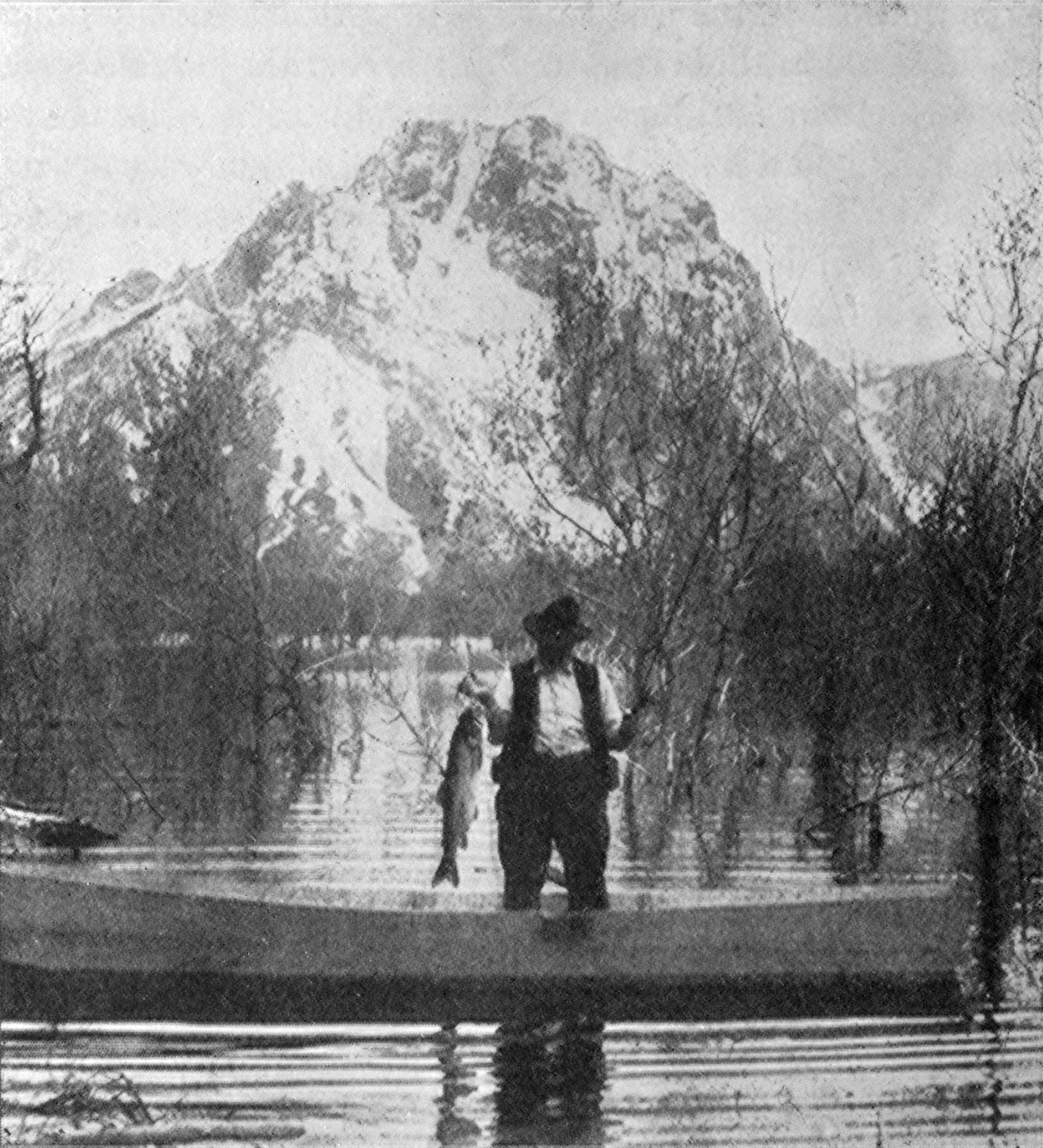
The Teton Peaks from Jackson’s Hole, Wyoming. Jackson’s Hole, the last home of Nick Wilson, is situated
in a hunting ground which is famous even yet. It was named after Jackson, an old trapper.
CHAPTER ONE PIONEER DAYS
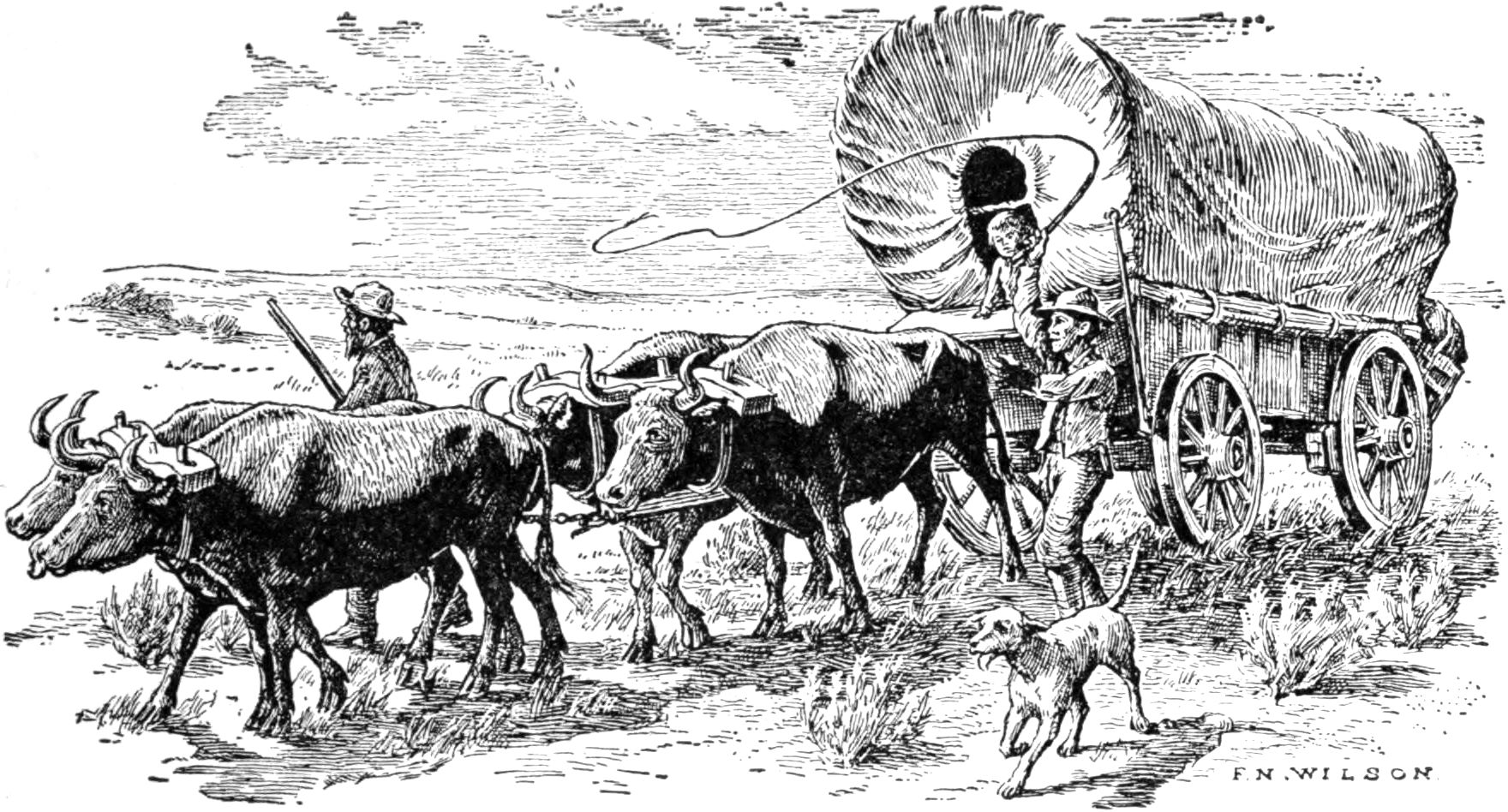
The Western trail in the early days.
I was born in Illinois in 1842. I crossed the plains by
ox team and came to Utah in 1850. My parents settled
in Grantsville, a pioneer village just south of the Great
Salt Lake. To protect themselves from the Indians, the
settlers grouped their houses close together and built a
high wall all around them. Some of the men would
stand guard while others worked in the fields. The
cattle had to be herded very closely during the day, and
corralled at night with a strong guard to keep them from
being stolen. But even with all our watchfulness we lost
a good many of them. The Indians would steal in and
drive our horses and cows away and kill them. Some
times they killed the people, too.
We built a log schoolhouse in the center of our fort,
and near it we erected a very high pole, up which we could
run a white flag as a signal if the Indians attempted to
run off our cattle, or attack the town or the men in the
fields. In this log schoolhouse two old men would stay,
taking turns at watching and giving signals when necessary,
by raising the flag in the daytime, or by beating a
drum at night. For we had in the schoolhouse a big
bass drum to rouse the people, and if the Indians made a
raid, one of the guards would thump on the old thing.
When the people heard the drum, all the women and
children were supposed to rush for the schoolhouse and
the men would hurry for the cow corral or take their
places along the wall. Often in the dead hours of the
night when we were quietly sleeping, we would be startled
by the booming old drum. Then you would hear the
youngsters coming and squalling from every direction.
You bet I was there too. Yes, sir, many is the time I
have run for that old schoolhouse clinging to my mother’s
apron and bawling “like sixty”; for we all expected to
be filled with arrows before we could get there. We could
not go outside of the wall without endangering our lives,
and when we would lie down at night we never knew what
would happen before morning.
The savages that gave us the most trouble were called
Gosiutes. They lived in the deserts of Utah and Nevada.
Many of them had been banished into the desert from
other tribes because of crimes they had committed. The
Gosiutes were a mixed breed of good and bad Indians.
They were always poorly clad. In the summer they
went almost naked; but in winter they dressed themselves
in robes made by twisting and tying rabbit skins together.
These robes were generally all they had to wear during
the day and all they had to sleep in at night.
They often went hungry, too. The desert had but little
food to give them. They found some edible roots, the
sego, and tintic, which is a kind of Indian potato, like the
artichoke; they gathered sunflower and balzamoriza[1]
seeds, and a few berries. The pitch pine tree gave them
pine nuts; and for meat they killed rabbits, prairie dogs,
mice, lizards, and even snakes. Once in a great while
they got a deer or an antelope. The poor savages had a
cold and hungry time of it; we could hardly blame them
for stealing our cattle and horses to eat.
[1] Sometimes called “spring sunflower.” It has a blossom much
like the sunflower, and velvety leaves. It is common in parts of
the West.
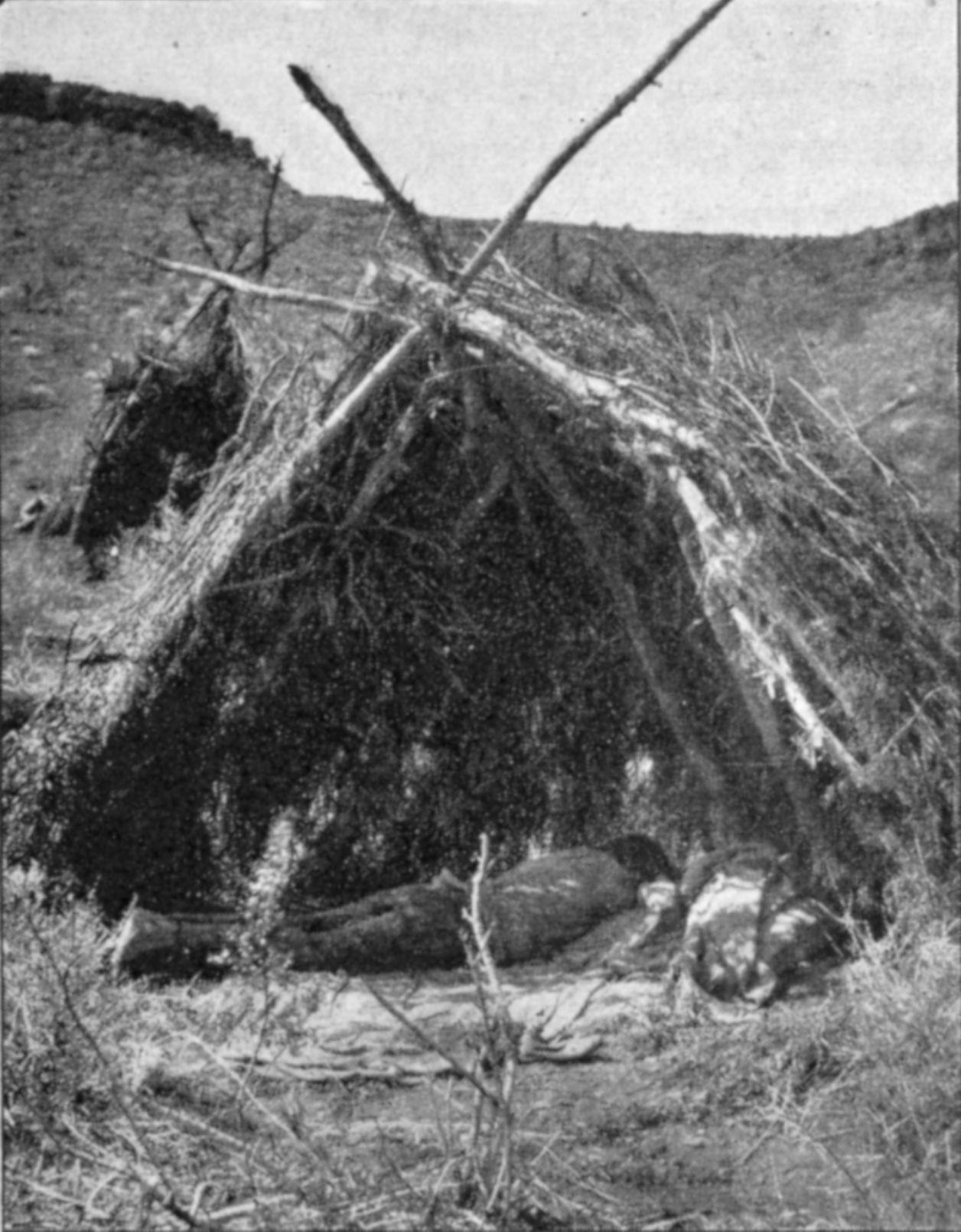
Bur. Am. Ethnology, Smithsonian Institution
Gosiute wickiups in the desert.
Yes, they ate horses, too. That was the reason they
had no ponies, as did the Bannocks and Shoshones and
other tribes. The Gosiutes wandered afoot over the
deserts, but this made them great runners. It is said
that Yarabe, one of these Indians, once won a wager by
beating the Overland Stage in a race of twenty-five miles
over the desert. Swift runners like this would slip in and
chase away our animals, driving them off and killing
them. Our men finally captured old Umbaginny and
some other bad Indians that were making the mischief,
and made an example of them.
After this they did not trouble us so much, but the
settlements were in constant fear and excitement. One
incident connected with my father shows this. Our herd
boys were returning from Stansbury Island, in the Great
Salt Lake, where many cattle were kept. On their way
home they met a band of friendly Indians. The boys, in
fun, proposed that the Indians chase them into town, firing
a few shots to make it seem like a real attack. The
Indians agreed, and the chase began. My father saw
them coming and grabbed his gun. Before the white
jokers could stop him and explain, he had shot down the
head Indian’s horse. It took fifty sacks of flour to pay
for their fun. The Indians demanded a hundred sacks,
but they finally agreed to take half that amount and call
things square.
Some of the Indians grew in time to be warm friends
with us, and when they did become so, they would help
protect us from the wild Indians. At one time Harrison
Sevier, a pioneer of Grantsville, was out in the canyon
getting wood. “Captain Jack,” a chief of the Gosiutes,
was with him. Some wild Indians attacked Sevier
and would have killed him, but “Captain Jack” sprang
to his defense and beat back the murderous Indians.
The chief had most of his clothes torn off and was badly
bruised in the fight, but he saved his white friend. Not
all the Gosiutes were savages. Old Tabby, another of
this tribe, was a friend of my father. How he proved
his friendship for us I shall tell later.
A rather amusing thing happened one day to Tabby.
He had just got a horse through some kind of trade.
Like the other Gosiutes, he was not a very skillful rider.
But he would ride his pony. One day this big Indian
came galloping along the street towards the blacksmith
shop. Riley Judd, the blacksmith, who was always up
to pranks, saw Tabby coming, and just as he galloped
up, Riley dropped the horse’s hoof he was shoeing, threw
up his arms and said,
“Why, how dye do, Tabby!”
Tabby’s pony jumped sidewise, and his rider tumbled
off. He picked himself up and turned to the laughing
men, saying—
“Ka wino (no good), Riley Judd, too much how dye do.”
Besides our troubles with the Indians, we had to fight
the crickets and the grasshoppers. These insects swarmed
down from the mountains and devoured every green thing
they could find. We had hard work to save our crop. It
looked as if starvation was coming. The men got great
log rollers and rolled back and forth. Herds of cattle
were also driven over the marching crickets to crush
them; rushes were piled in their path, and when they
crawled into this at night, it would be set on fire. But
all seemed in vain. Nothing we could do stopped the
scourge.
Then the gulls came by the thousands out of the Great
Salt Lake. They dropped among the crickets and gorged
and regorged themselves until the foe was checked. No
man could pay me money enough to kill one of these birds.
After the cricket war the grasshoppers came to plague
us. Great clouds of them would settle down on our
fields. Father saved five acres of his grain by giving up
the rest to them. We kept the hoppers from settling on
this patch by running over and over the field with ropes.
We used our bed cords to make a rope long enough.
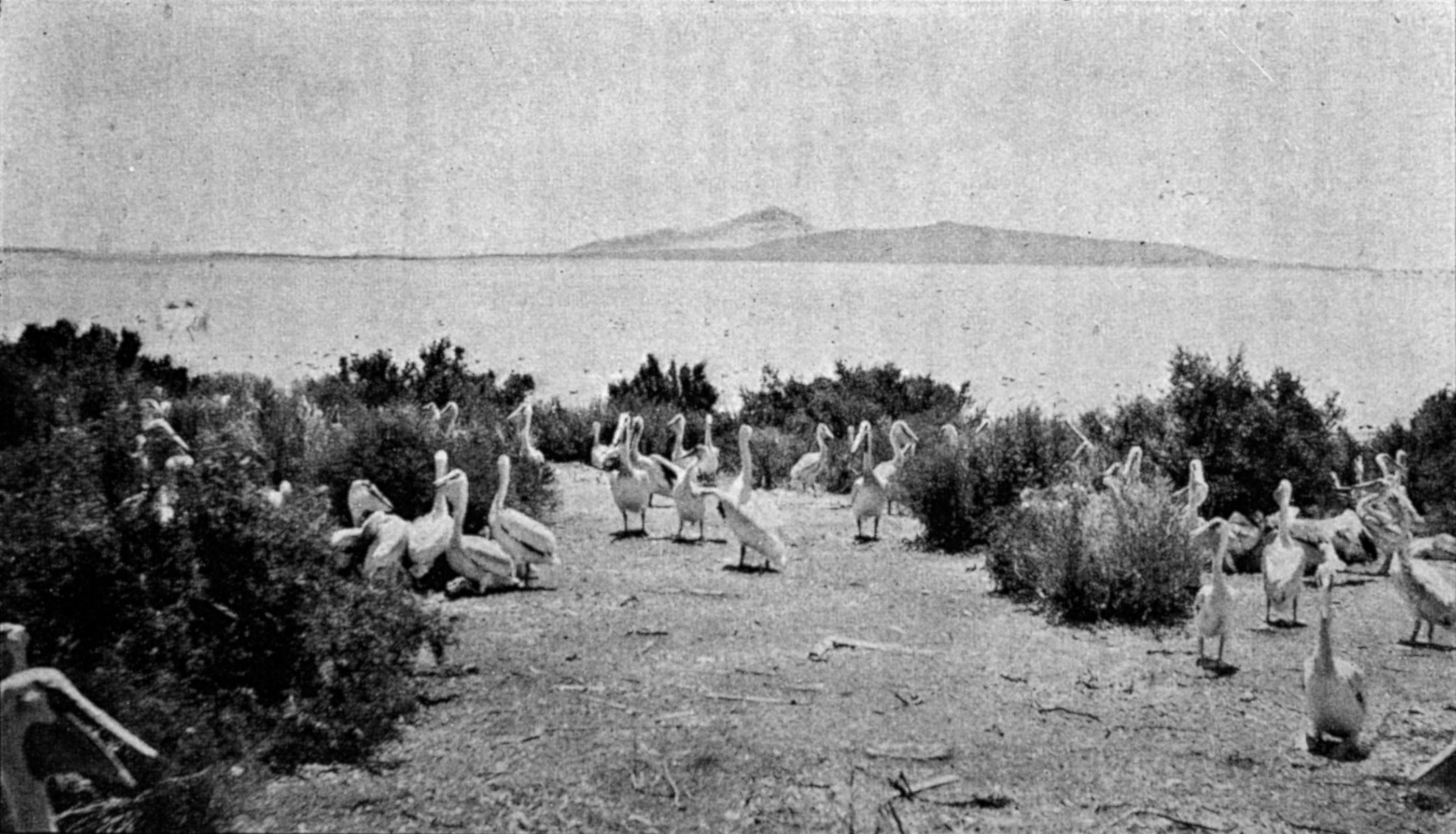
Dr. Charles G. Plummer
Great Salt Lake, Utah, looking south from Bird Island, which is a rookery of hundreds of thousands of gulls, pelicans,
and herons. In the distance are Carrington Island (right) and Stansbury Island (left).
But it was a starving winter anyway, in spite of all we
could do. We were a thousand miles from civilization,
surrounded by hostile Indians. We had very little to
eat and next to nothing to wear. It was a time of hunger
and hardships; but most of the people managed to live
through it, and things grew brighter with the spring.
CHAPTER TWO MY LITTLE INDIAN BROTHER
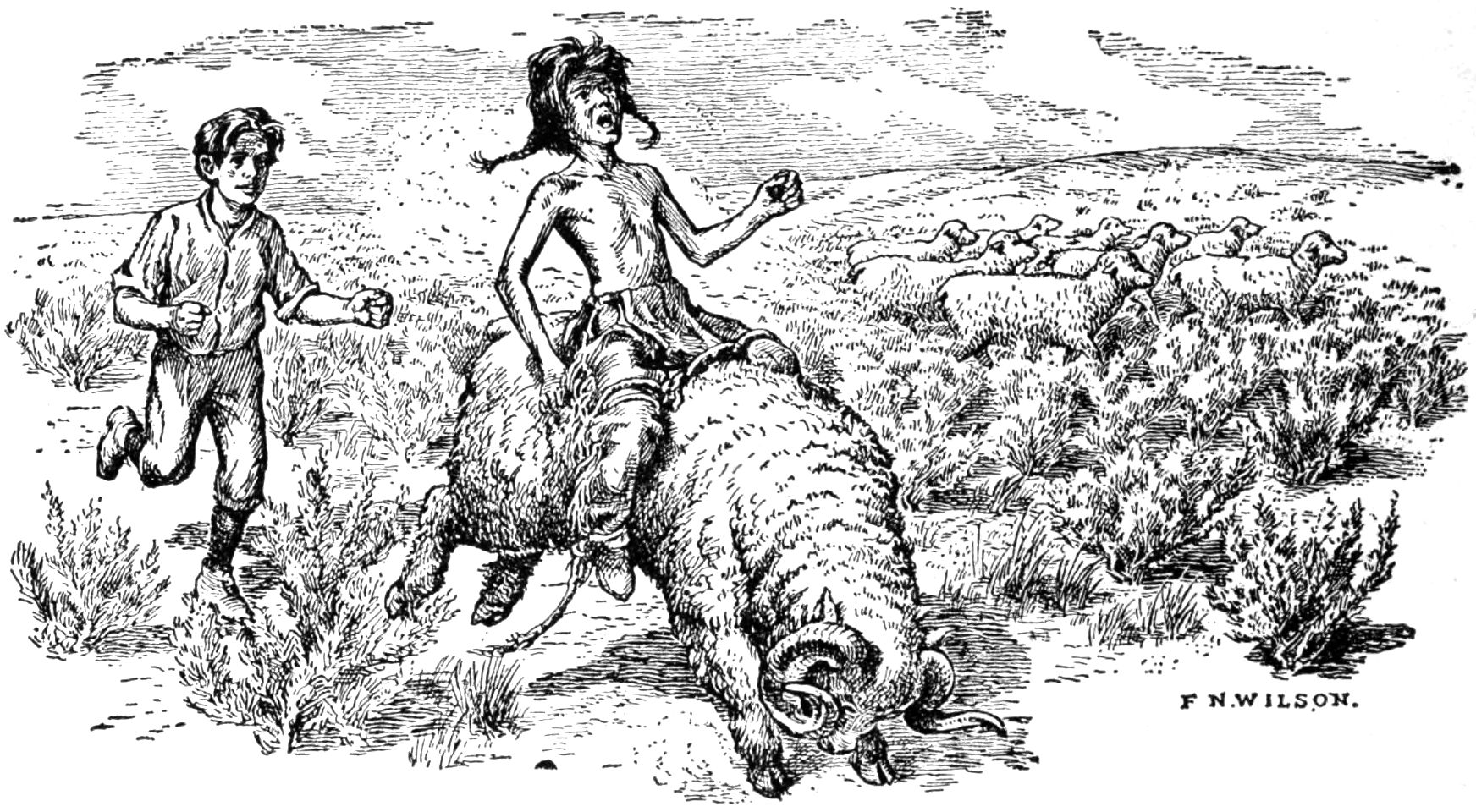
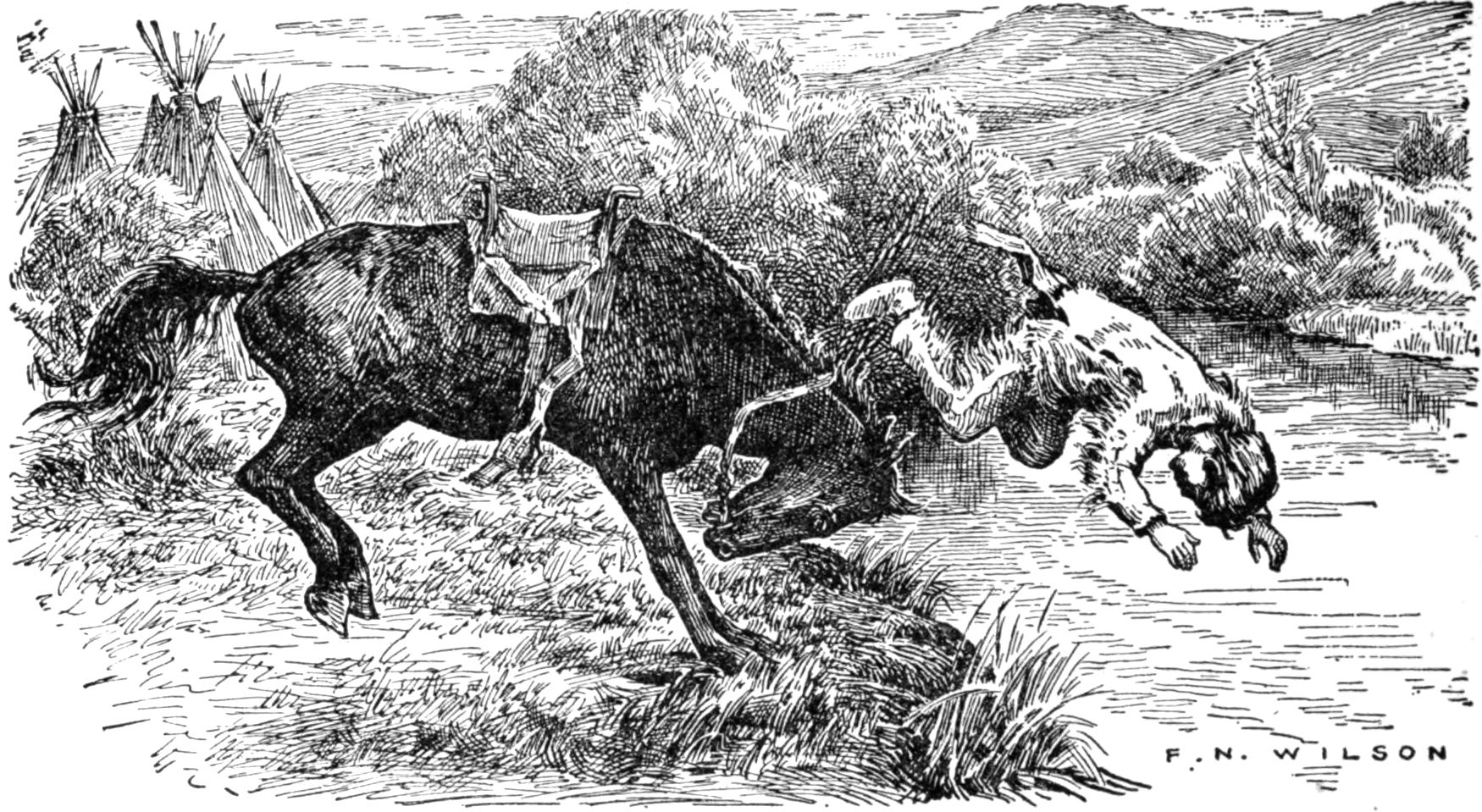
“He went bucking through the sagebrush.”
A few tame Indians hung around the settlements begging
their living. The people had a saying, “It is cheaper to
feed them than to fight them,” so they gave them what
they could; but the leaders thought it would be better
to put them to work to earn their living; so some of the
whites hired the Indians. My father made a bargain
with old Tosenamp (White-foot) to help him. The
Indian had a squaw and one papoose, a boy about my
age. They called him Pantsuk.
At that time my father owned a small herd of sheep,
and he wanted to move out on his farm, two miles from
the settlement, so he could take better care of them.
Old Tosenamp thought it would be safe to do so, as most
of the Indians there were becoming friendly, and the
wild Indians were so far away that it was thought they
would not bother us; so we moved out on the farm.
Father put the Indian boy and me to herding the sheep.
I had no other boy to play with. Pantsuk and I became
greatly attached to each other. I soon learned to talk
his language, and Pantsuk and I had great times together
for about two years. We trapped chipmunks and birds,
shot rabbits with our bows and arrows, and had other
kinds of papoose sport.
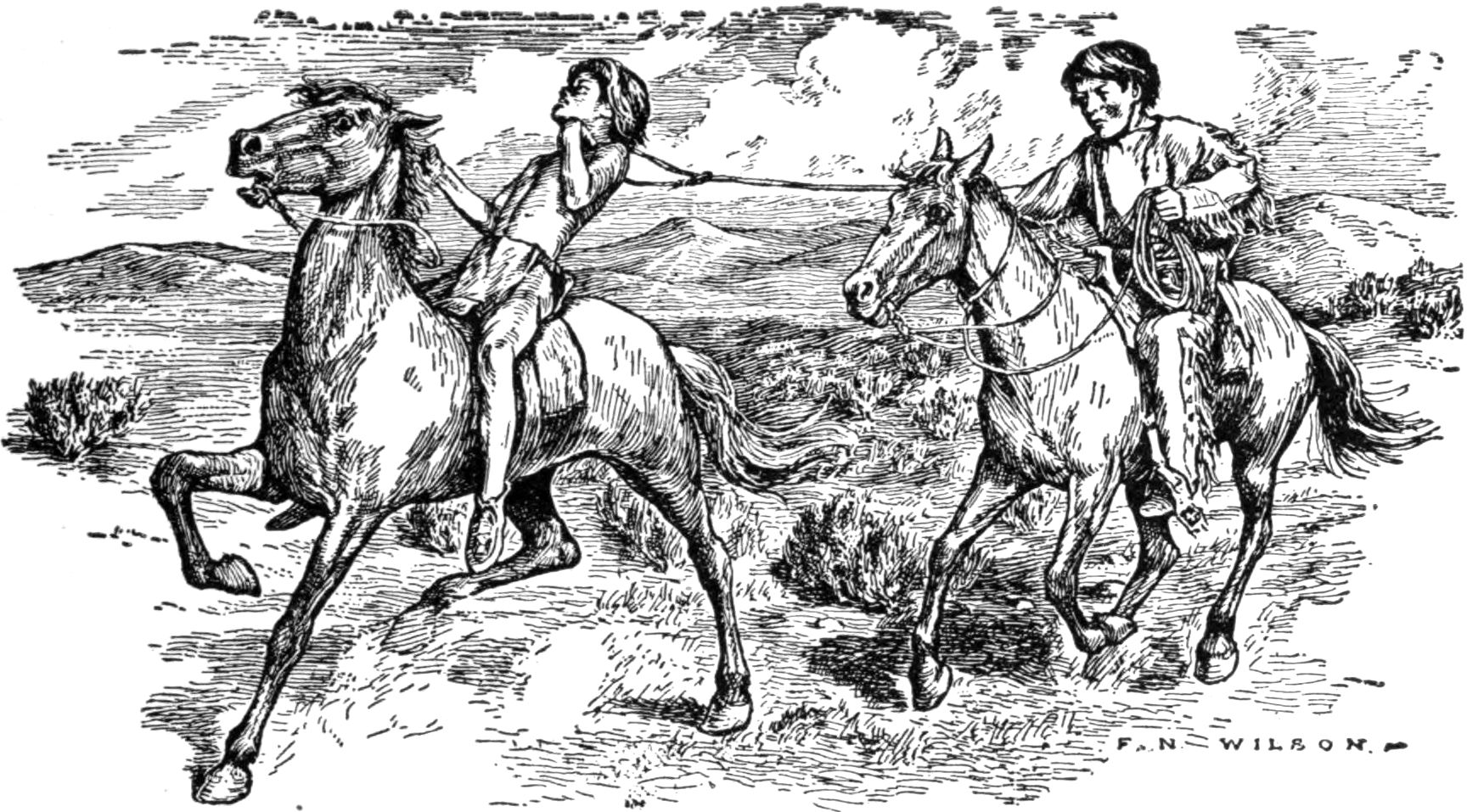
Once we thought we would have some fun riding the
sheep. I caught “Old Carney,” our big ram, and Pantsuk
got on him; but as his chubby legs were hardly long
enough to hold him on the big woolly back, I tied his feet
together with a rope under the ram. Old Carney didn’t
like this. He broke away and went bucking through
the sagebrush. Pantsuk tumbled off under him, and the
old sheep dragged him for several rods before he got free.
Pantsuk was a white papoose for sure, when he scrambled
to his feet; but I guess I was more scared than he was.
We didn’t want any more sheep-back rides.
Some months after this the poor little fellow took sick.
We did all we could for him, but he kept getting worse
until he died. It was hard for me to part with my dear
little Indian friend. I loved him as much as if he had
been my own brother.
After Pantsuk died, I had to herd the sheep by myself.
The summer wore along very lonely for me, until about
the first of August, when a band of Shoshone Indians
came and camped near where I was watching my sheep.
Some of them could talk the Gosiute language, which I
had learned from my little Indian brother. The Indians
seemed to take quite a fancy to me, and they would be with
me every chance they could get. They said they liked to
hear me talk their language, for they had never heard a
white boy talk it as well as I could.
One day an Indian rode up to the place where I was
herding. He had with him a little pinto pony. I thought
it was the prettiest animal I ever saw. The Indian could
talk Gosiute very well. He asked me if I did not want
to ride the pony. I told him that I had never ridden a
horse. He said that the pony was very gentle, and helped
me to mount it. Then he led it around for a while. The
next day he came again with the pony and let me ride it.
Several other Indians were with him this time. They
took turns leading the pony about while I rode it. It was
great sport for me. I soon got so I could ride it without
their leading it. They kept coming and giving me this
fun for several days.
One day, after I had ridden till I was tired, I brought
the pony back to the Indian who had first come, and he
asked me if I did not want to keep it.
“I would rather have that pony,” I replied, “than
anything else I ever saw.”
“You may have it,” he said, “if you will go away with
us.”
I told him I was afraid to go. He said he would take
good care of me and would give me bows and arrows and
all the buckskin clothes I needed. I asked him what
they had to eat. He said they had all kinds of meat,
and berries, and fish, sage chickens, ducks, geese, and
rabbits. This sounded good to me. It surely beat living
on “lumpy dick”[2] and greens, our usual pioneer fare.
“Our papooses do not have to work,” he went on,
“they have heap fun all the time, catching fish and hunting
and riding ponies.”
That looked better to me than herding a bunch of sheep
alone in the sagebrush. I told him I would think it over.
That night I talked with old Tosenamp. The Indians
had tried to get him to help them induce me to go with
them. He refused; but he did tell me that they would
not hurt me and would treat me all right. The next
day I told them I would go.
My parents knew nothing about it. They would never
have consented to my going. And it did look like a
foolish, risky thing to do; but I was lonely and tired and
hungry for excitement, and I yielded to the temptation.
In five days the Indians were to start north to join the
rest of their tribe. This Indian was to hide for two days
after the rest had gone and then meet me at a bunch of
willows about a mile above my father’s house after dark
with the little pinto pony. The plan was carried out, as
you will see. I went with them, and for two years I did
not see a white man. This was in August, 1854. I was
just about twelve years old at the time.
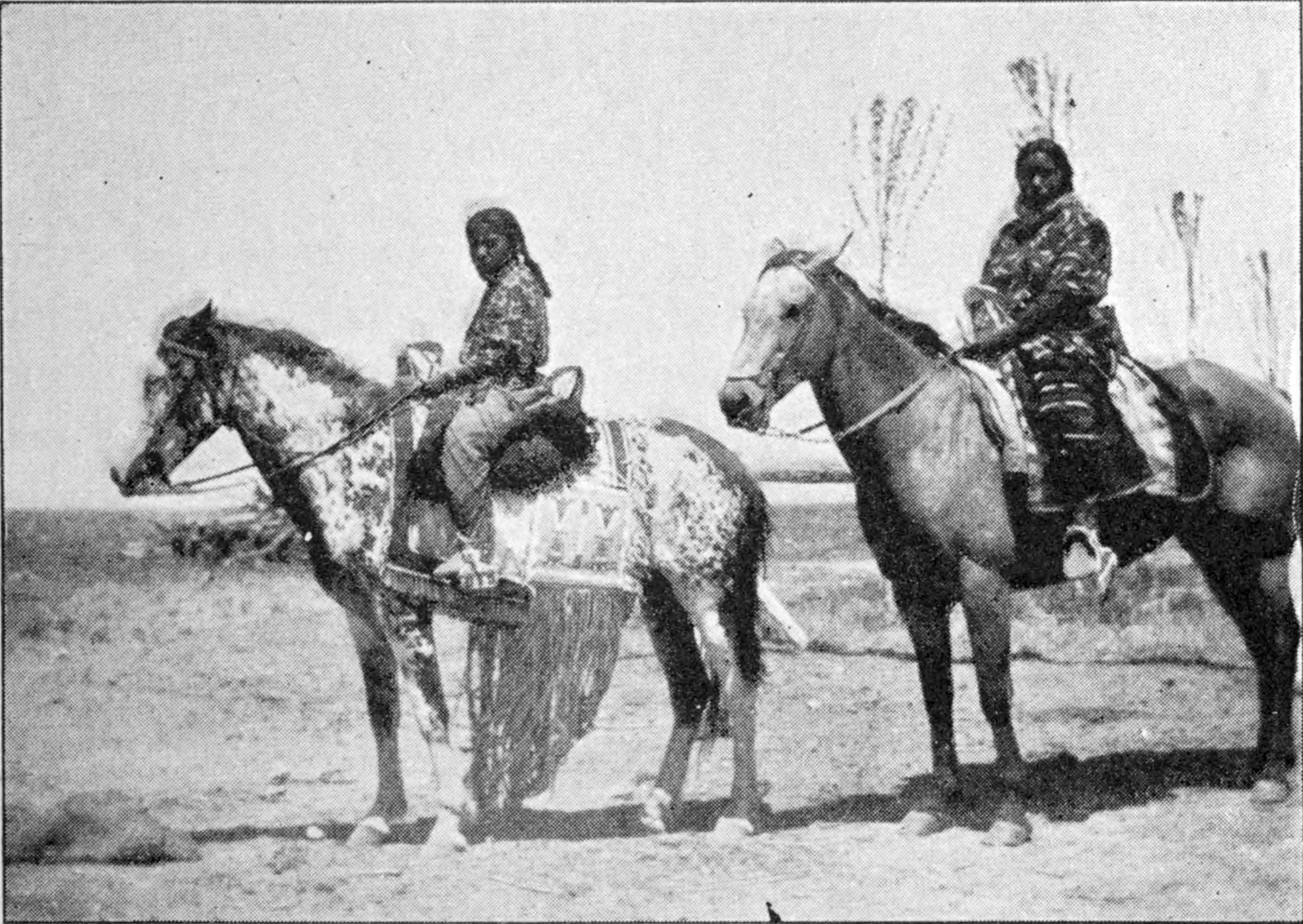
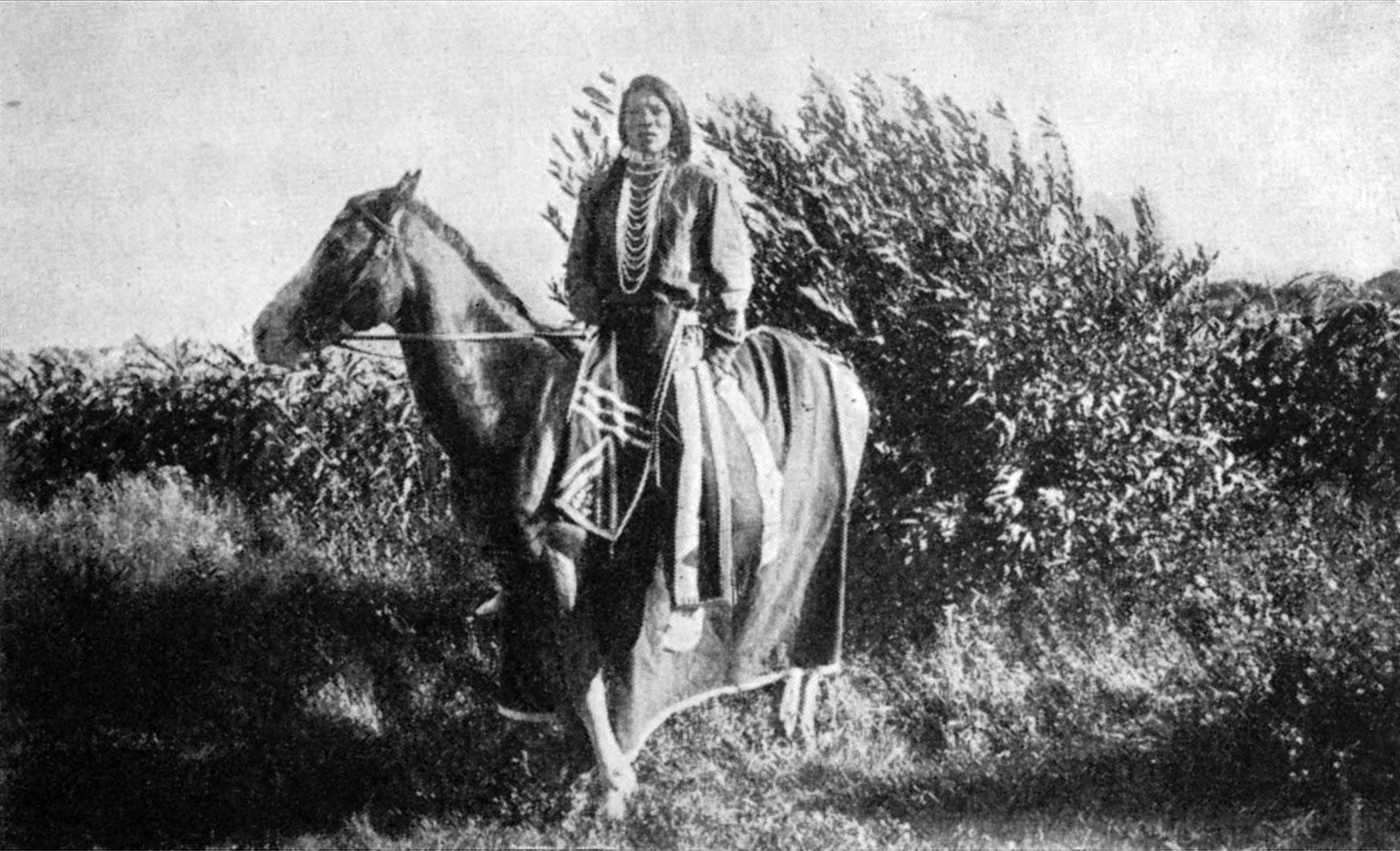
Shoshone squaws on “pinto” and “buckskin” ponies.
CHAPTER THREE OFF WITH THE INDIANS
“I jumped on my horse and away we went.”
The night came at last when we were to leave. Just
after dark I slipped away from the house and started
for the bunch of willows where I was to meet the Indian.
When I got there, I found two Indians waiting for me
instead of one. The sight of two of them almost made
me weaken and turn back; but I saw with them my
little pinto pony and it gave me new courage. They had
an old Indian saddle on the pony with very rough rawhide
thongs for stirrup straps. At a signal from them, I jumped
on my horse and away we went. Our trail led towards
the north along the western shore of the Great Salt Lake.
The Indians wanted to ride fast. It was all right at
first; but after a while I got very tired. My legs began
to hurt me, and I wanted to stop, but they urged me along
till the peep of day, when we stopped by some very salt
springs. I was so stiff and sore that I could not get off
my horse, so one of them lifted me off and stood me on
the ground, but I could hardly stand up. The rawhide
straps had rubbed the skin off my legs till they were raw.
The Indians told me that if I would take off my trousers
and jump into the salt springs it would make my legs
better; but I found that I could not get them off alone;
they were stuck to my legs. The Indians helped me,
and after some very severe pain we succeeded in getting
them off. A good deal of skin came with them.
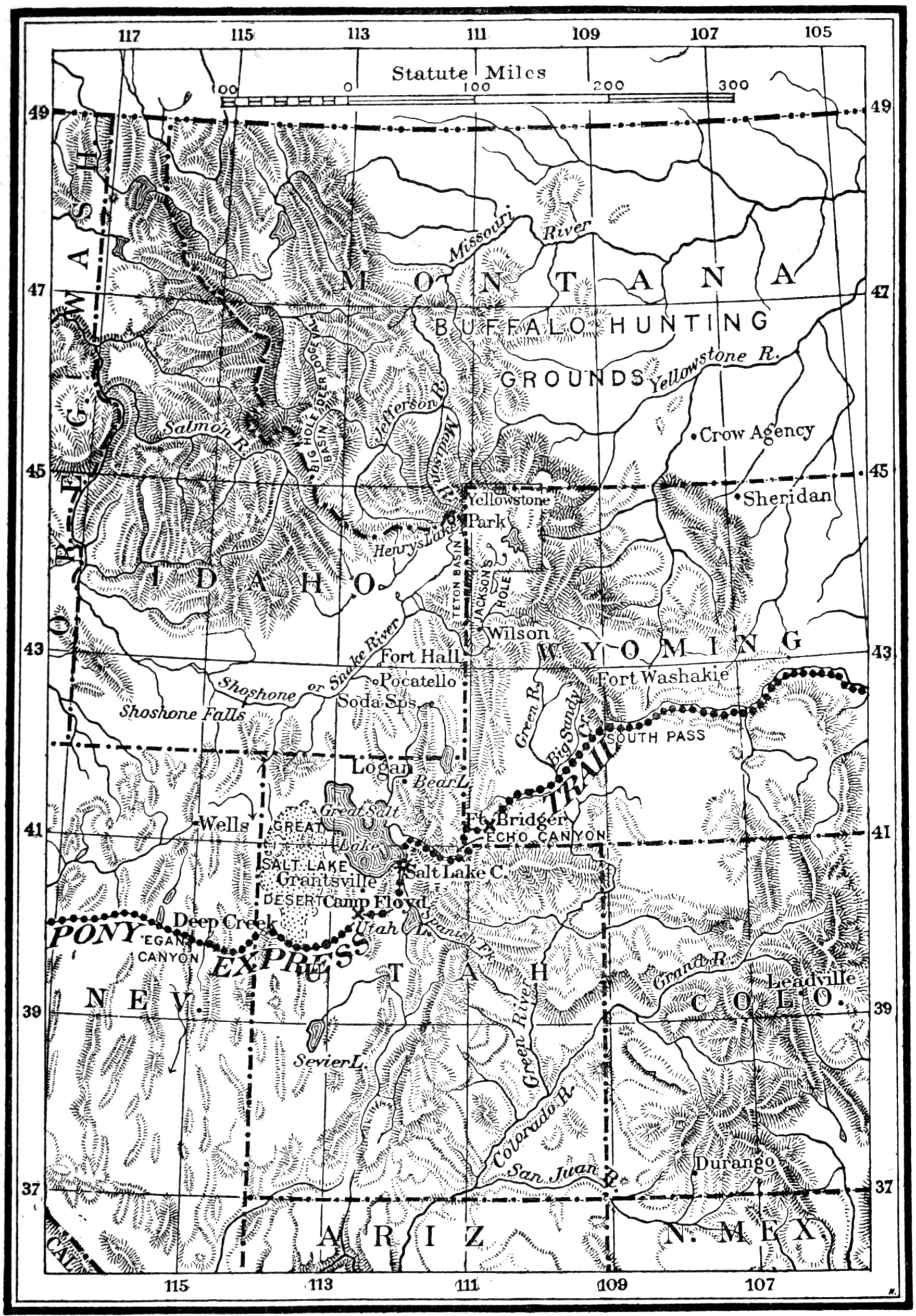
Map of the Western country which was the scene of Uncle Nick’s
adventures.
“Come now,” they urged me, “jump into this water
and you will be well in a little while.”
Well, I jumped into the spring up to my waist. Oh
blazes! I jumped out again. Oh, my! how it did sting
and smart! I jumped and kicked. I was so wild with
pain that I lay on the ground and rolled round and round
on the grass. After half an hour of this, I wore myself
out, and oh, how I cried! The Indians put down a buffalo
robe, and rolled me on to it and spread a blanket over me.
I lay there and cried myself to sleep.
When I awoke, they were sitting by a small fire. They
had killed a duck and were broiling it for breakfast.
“Come,” they said, “and eat some duck.”
I started to get up, but oh! how sore I was! I began
to cry again. They kept coaxing me to come and have
something to eat until finally I got up and went to them,
but I had to walk on a wide track. I ate some duck and
dried meat and felt better. While I was eating they got
the horses ready.
“Come,” they said, “get on your pony.”
“No,” I objected, “I can’t ride; I’d rather walk.”
They said that they were going a long way, and that
I could not walk so far. Then they arranged the saddle
so it would not hurt me so much, by putting a buffalo
robe over it. They lifted me into it. It was not so bad
as I thought it would be. The soft hair of the robe
made the saddle more comfortable. One of them tied
my trousers to my saddle. That day I lost them and for
more than two years I did not have another pair. During
that time I wore Indian leggings and a blanket.
We traveled all day over a country that was more like
the bottom of an old lake than anything else. We camped
that night by another spring. The Indians lifted me
from my horse, put me down on a robe and started a fire.
Then they caught some fish and broiled them again on
the coals. It was a fine supper we had that night.
The next morning I felt pretty well used up; but when
I had eaten some fish and a big piece of dried elk meat
for breakfast, I felt more like traveling. Then we started
again.
Near mid-afternoon, we saw, about six miles ahead of
us, the Indians we had been trying to overtake. They
had joined with another large band, so there were a great
many in the camp. By the time we caught up with them,
they had stopped and were unpacking, and some of them
had their wigwams set up. We rode through the camp
until we came to a big tepee where a large, good-looking
Indian was standing. This man, they said, was Washakie,
their chief; I was to live with him, and he would be my
brother.
An old squaw came up to my horse and stood looking
at me. The Indians said that she was the chief’s
mother and that she would be my mother, too. They
told her that my legs were badly skinned and were very
sore. Then Washakie helped me off my horse.
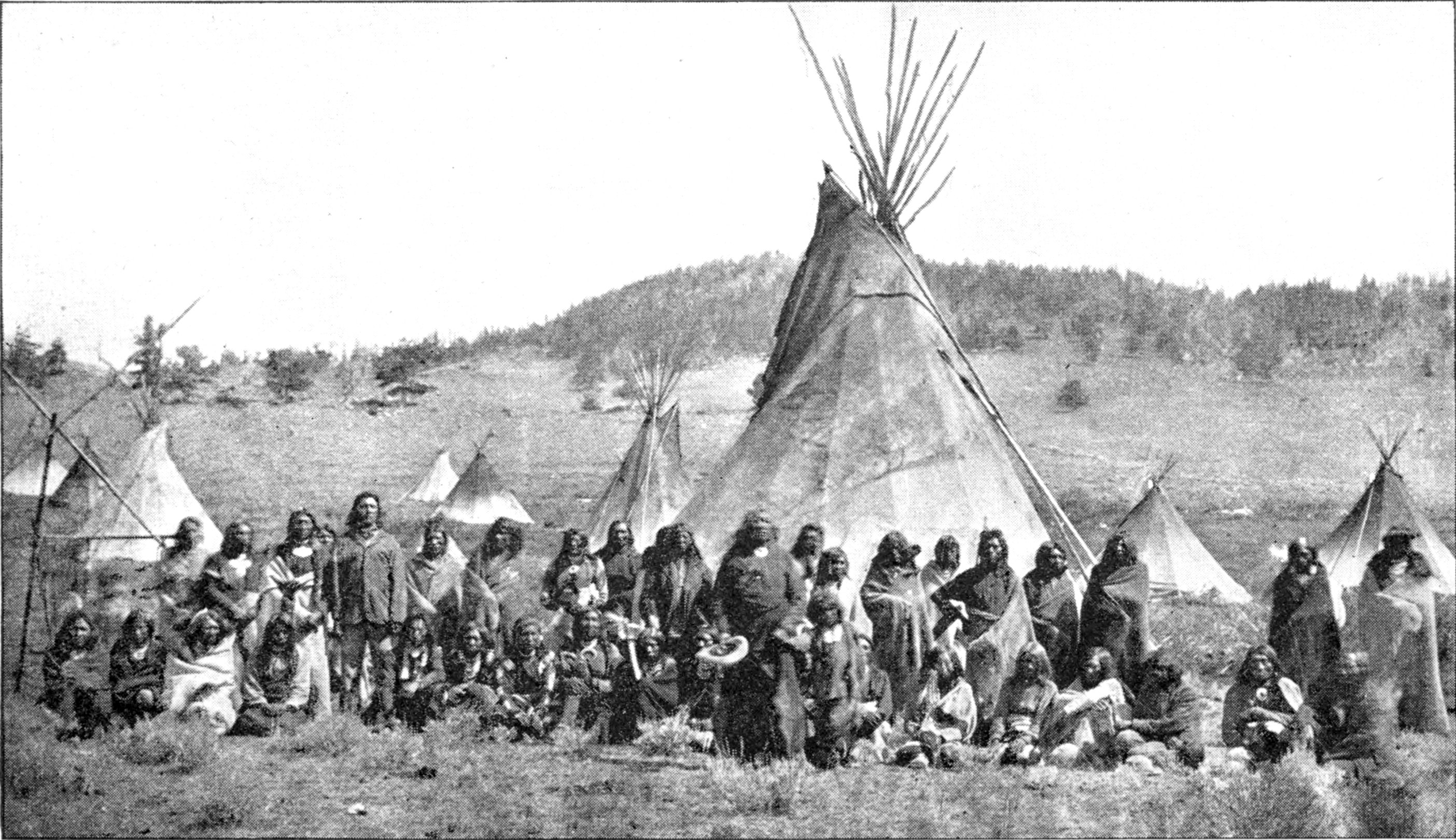
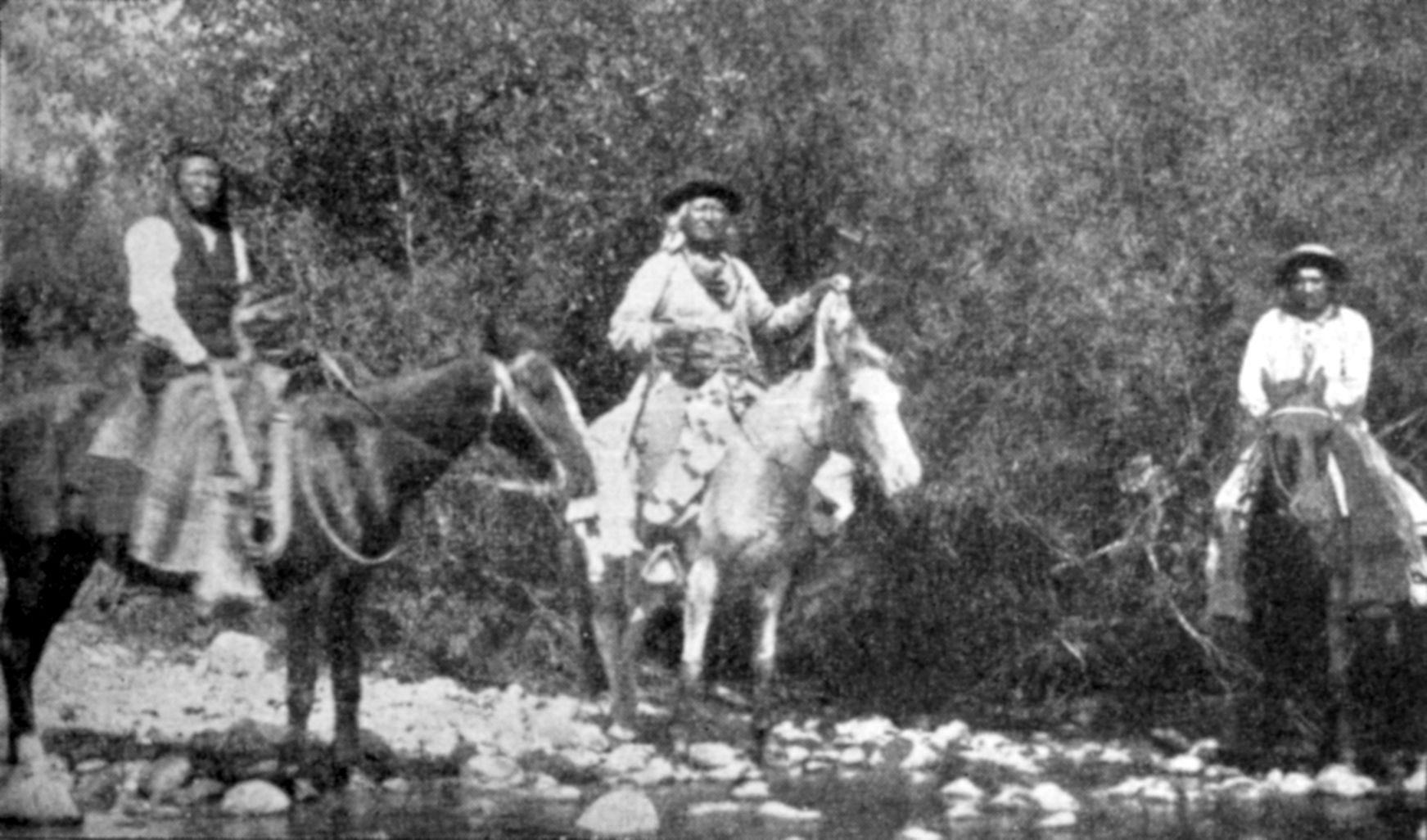
Bureau of American Ethnology, Smithsonian Institution
Washakie (with hat in hand) and part of his Shoshone tribe at South Pass, Wyoming, in 1861.
The old squaw put her hand on my head and began
to say something pitiful to me, and I began to cry. She
cried, too, and taking me by the arm, led me into the
tepee, and pointed to a nice bed the chief’s wife had
made for me. I lay down on the bed and sobbed myself
to sleep. When I awoke, this new mother of mine brought
me some soup and some fresh deer meat to eat. I tell
you it tasted good.
The next morning my new mother thought she would
give me a good breakfast. They had brought some flour
from the settlements, and she tried to make me some
bread, such as I had at home. They had no soda, nothing
but flour and water, so the bread turned out to be pretty
soggy. I think she didn’t like it very well when she
found I didn’t eat it, but I simply couldn’t choke it down.
I did make a good meal, however, of the fried sage chicken
and the fresh service berries that she brought with the
bread.
That day my mother and Hanabi, the chief’s wife,
started to make me something to wear; for after I lost
my trousers, I had nothing but an old thin shirt, out at
the elbows, and a straw hat that had lost part of its brim.
The two women worked for several hours and finally got
the thing finished and gave it to me to put on. I do not
know what to call it, for I had never seen anything like
it before, but it may have been what the girls now call a
“mother-hubbard.” It was all right anyhow, when I
got it on and my belt around to keep the thing close to
me; but I had to pull the back up a little to keep it from
choking me to death when I stooped over.
We stayed at this camp for five days to give me time
to get well. My good old mother rubbed my legs with
skunk oil and they healed rapidly. It had got noised
around that my legs were very bad, and one day when
I was out in front of the tepee, a lot of papooses wanted
to see them. One stooped to raise my mother-hubbard
to take a look, and the rest began to laugh, but they
didn’t laugh long, for I gave him a kick that sent him
keeling. Then his mother came out after me, and I
thought she was going to eat me up. She scolded and
jawed, but I couldn’t tell what she was saying, so it did
not make much difference to me. My old mother, hearing
the noise, came up and led me into the tepee and
gave me some dried service berries. I thought that if
that was the way they were going to treat me, I would
kick another one the first chance I got.
It was not long before I got the chance, for the next
day a papoose about my size tried the same trick and I
fetched him a kick that made him let out a yell that
could have been heard a mile. It brought about half
the tribe out to see how many I had killed. That papoose’s
mother turned loose on me, too, with her tongue and
everlastingly berated me. The chief happened to see
the trouble, and I think that is what saved me from being
cremated. Anyhow, the papooses left my mother-hubbard
alone after that.
My mother began then to teach me the Shoshone
language. My knowing how to talk the Gosiute tongue
made it easier for me, for these two Indian dialects are
very much alike.
One night the hunters came in loaded with game, and
the next day we began to move. The horses were brought
in, and among them was my pinto pony. When I saw
him, it seemed like meeting some one from home. I ran
up and hugged him. My good old mother had fixed up a
pretty good saddle, all cushioned in fine style to keep it
from hurting me.
We traveled about fifteen miles that day and camped
on a small stream they called Koheets (Curlew). Mother
told me to wade out into the water and bathe my legs.
“Not much,” I said, “I have had all the baths I want.”
She said that the water would make my legs tough,
and when she saw I wouldn’t go into the stream she
brought some cold water and told me to wash them. I
wanted to know whether it was salt water. She said it
wasn’t, so I bathed my legs, and when I found that the
water did not hurt them I waded into the creek. Washakie
said it was “tibi tsi djant”—heap good.
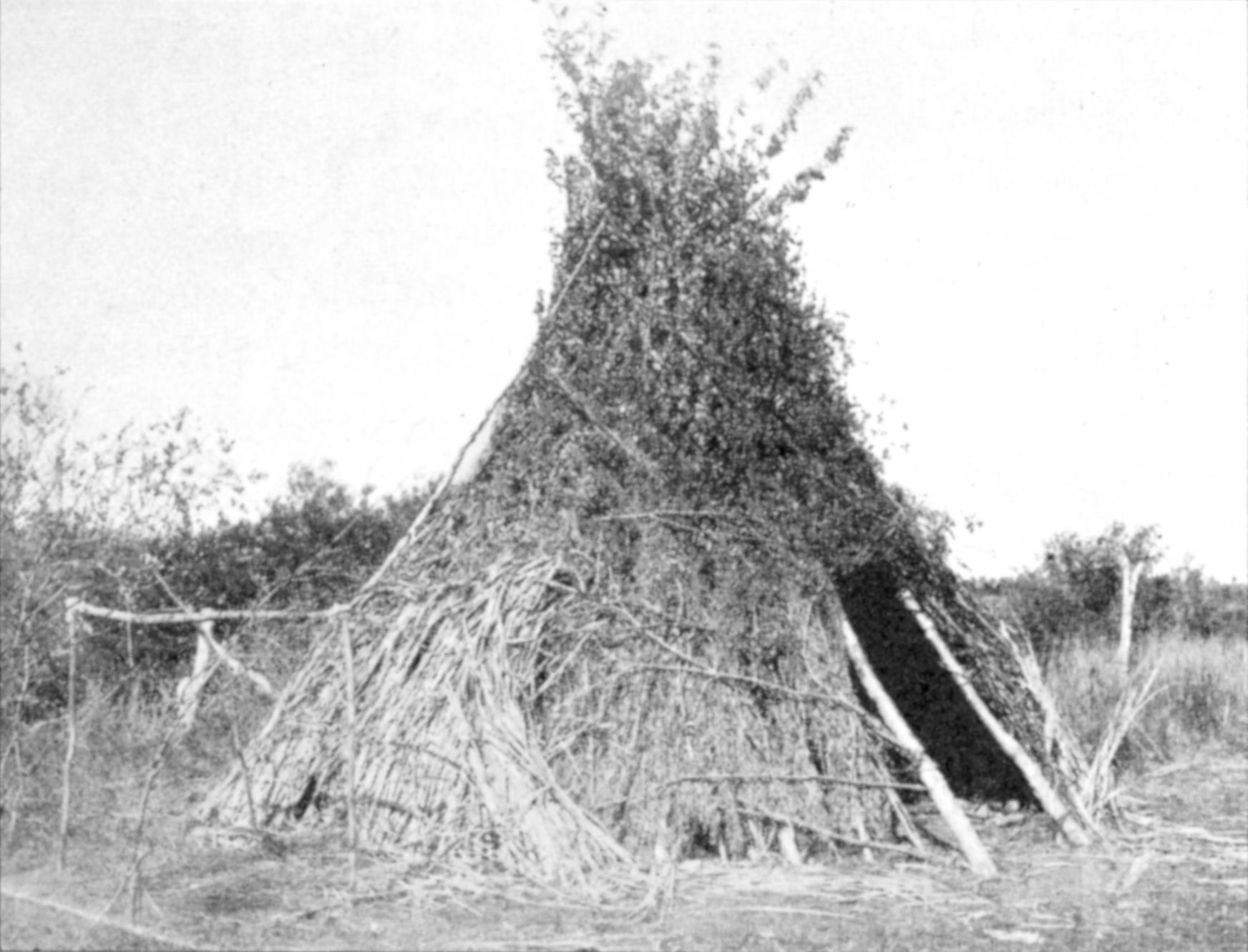
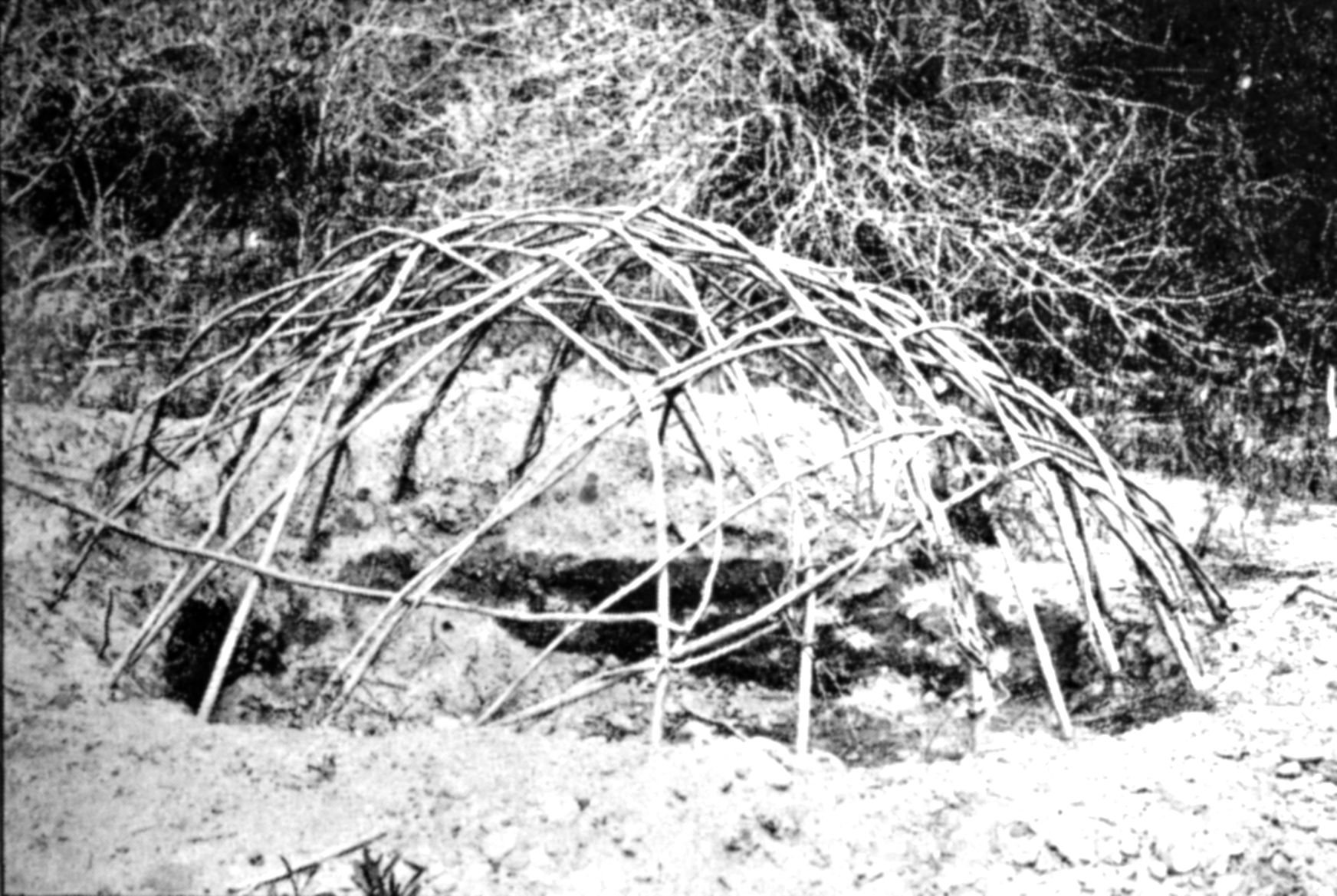
Dr. T. M. Bridges
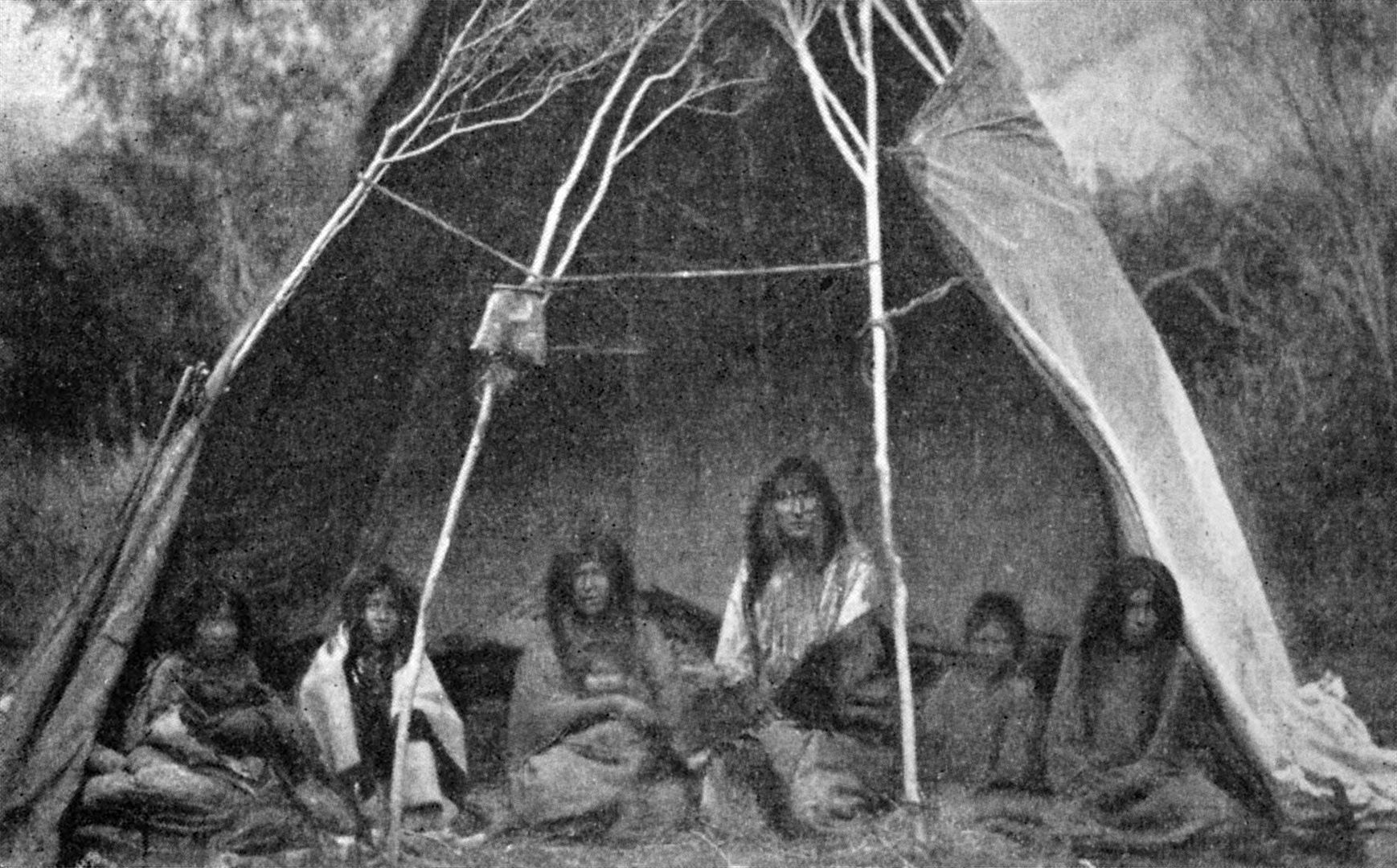
Shoshone wickiup. Lodges of this kind were used in the summer season.
CHAPTER FOUR THE GREAT ENCAMPMENT
“I begged him to let me go.”
It was the custom of the Shoshone chieftains in those
early days to gather all of their tribe every three years.
As this was the year for the great tribal meeting, we
started for the big camp ground. After traveling for three
days, we reached a large river, which the Indians called
Piupa (Snake River). Here we were joined by another
large band of the same tribe.
In order to cross the river, the squaws built boats of
bulrushes tied in bundles; these bundles were lashed
together until they made a boat big enough to hold up
from six to eight hundred pounds. The Indians made
the horses swim over, and some of the papoose boys rode
their ponies across. I wanted to swim my horse, but my
mother would not let me. It took about a week to get
across the river; but during that time I had some of the
best fun of my life.
My mother gave me a fishhook and a line made out of
hair from a horse’s tail. With this tackle I caught my
first fish, and some of them were very large ones, too.
The other boys became more friendly, and we had jolly
times together; but mother kept pretty close watch
over me, for fear I would kick them, and get into more
trouble. After I began to play with the papooses, I
picked up the Shoshone language much faster.
Nothing else of importance happened until we reached
Big Hole Basin. There I saw the first buffalo I had seen
since crossing the plains. Seven head of them appeared
one morning on a hill about a mile away. Ten Indians
started after them. One, having a wide, blade-like spear-head
attached to a long shaft, would ride up to a buffalo
and cut the hamstrings of both legs, then the others
would rush up and kill the wounded animal.
Meat drying before the tepee of a Crow Indian.
About fifteen squaws followed the hunters to skin the
buffaloes and get the meat. Mother and I went with
them. The squaws
would rip the animals
down the back from
head to tail, then rip
them down the belly
and take off the top
half of the hide and cut
away all the meat on
that side from the bones.
They would tie ropes to
the feet of the carcass
and turn it over with
their ponies, to strip off
the skin and flesh from
the other side in the
same way.
The meat was then
carried to camp to be
sliced in thin strips and hung up to dry. When it was
about half dry, the squaws would take a piece at a time
and pound it between two stones till it was very tender.
It was then hung up again to dry thoroughly. The dried
meat was put into a sack and kept for use in the winter
and during the general gatherings of the tribe. The older
it got the better it was. This is the way the Indians cured
all of their buffalo meat. Washakie had about five hundred
pounds of such meat for his own family when we reached
Deer Lodge Valley, now in Montana, the place of our
great encampment.
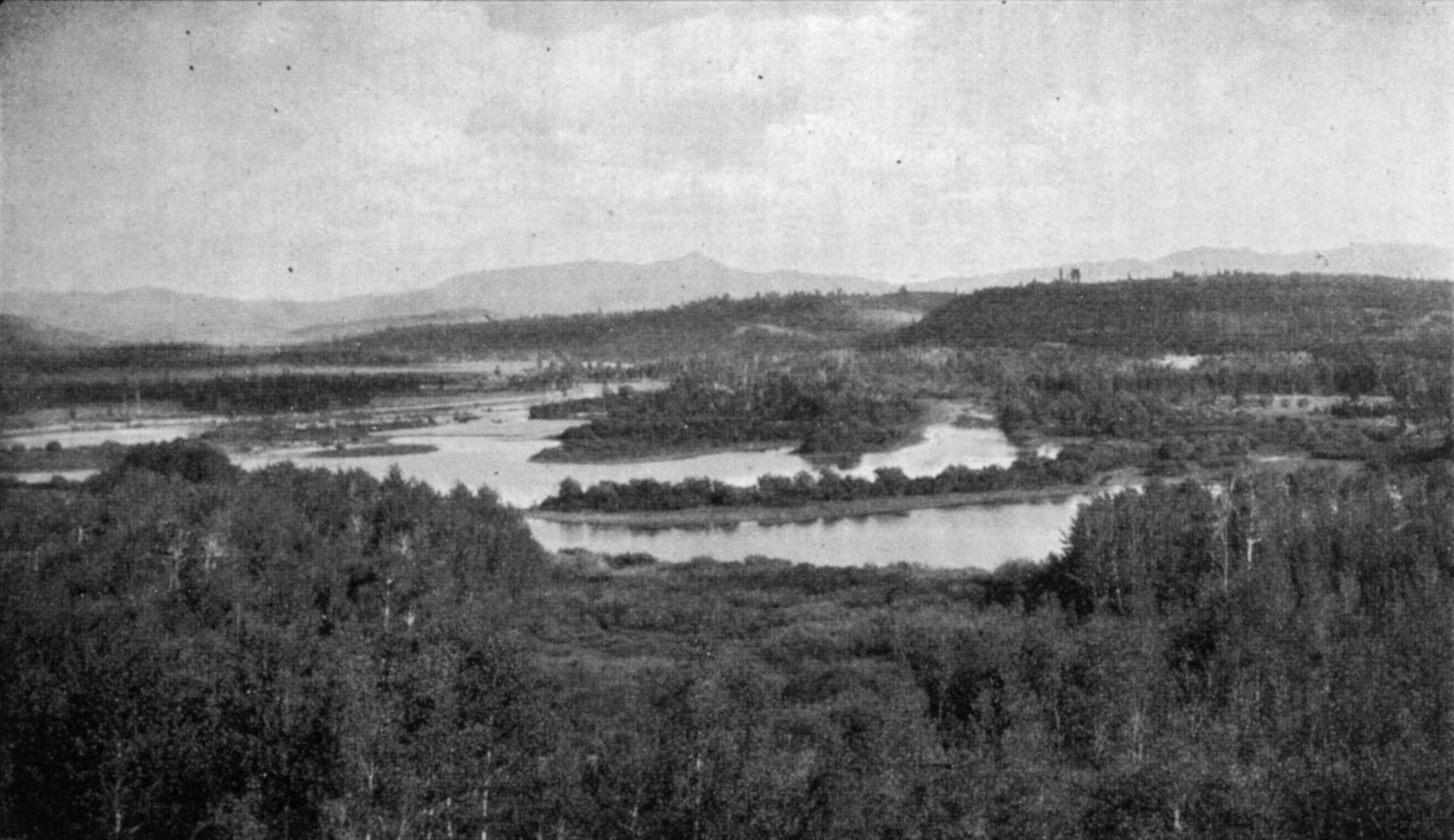
J. E. Stimson
Snake River (Piupa), in the land of the Shoshones.
It was about the last of August before all of the tribe
had assembled. What a sight it was to see so many
Indians together! The tepees were strung up and
down the stream as far as I could see, and the whole
country round about was covered with horses and dogs.
As nearly as I could find out, about six thousand Indians
had gathered. When I asked the chief how many there
were, he said that he could not count them. And to
think that I was the only white person within hundreds
of miles, perhaps! It gave me rather a queer feeling.
Mother kept very close watch over me for fear that I
should get hurt or lost among so many Indians. Whenever
I went around to see what was going on, she was
nearly always by my side. She warned me especially
against Pocatello’s Indians, telling me that they were
very bad, that they would steal me and take me away
off and sell me to Indians that would eat me up. She
scared me so badly that I stuck pretty close to her most
of the time.
The Indians spent much of their time horse-racing
and gambling. They would bet very heavily; I saw
an Indian win fifty head of ponies on one race. Two
Indians were killed while racing their horses, and a squaw
and her papoose were run over; the papoose was also
killed.
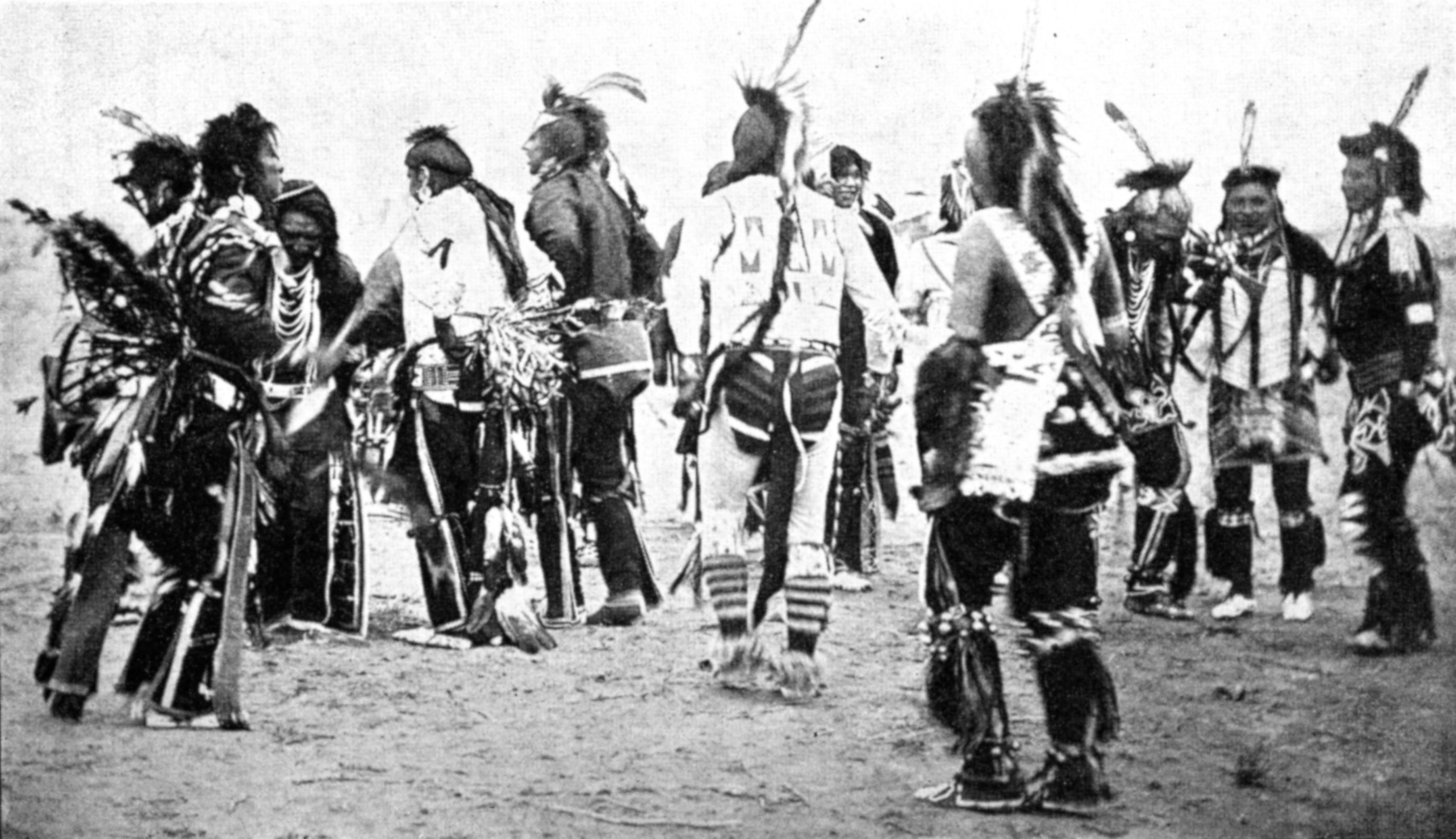
Dr. T. M. Bridges
Shoshone Indians dancing.
Some of Pocatello’s Indians had several scalps they
had taken from some poor emigrants they had killed.
I saw six of these scalps. One was of a woman with red
hair, one a girl’s scalp with dark hair, and four were men’s
scalps, one with gray hair, the rest with dark hair. I
cannot describe the feelings I had when I saw the red
devils dancing around those scalps. It made me wish
that I were home again herding sheep and living on
“lumpy dick” and greens.
Washakie’s Indians had a few Crow scalps, for at this
time the Shoshones and Crows were at war with each
other. I am pretty sure that they had no white scalps;
or if they had, they did not let me see them.
The Indians had great times dancing around the scalps.
They would stick a small pole in the ground and string
scalps on it. Then they would dance around it, singing
and yelling at the top of their voices, making the most
horrible noises I ever heard. The leaders of the different
bands would take the inside, the warriors would circle
about them and the squaws and papooses would dance
around the outside. The noise they made would shame a
band of coyotes. As many as five hundred Indians would
be dancing in this way at one time, and they would keep
at it for hours. I got sick and tired of their hideous
noises; but they thought they were having a high time.
This singing and dancing was kept going at intervals for a
week or more.
The time was drawing near when we were to separate,
and I was glad of it. Some of Pocatello’s Indians left a
few days ahead of the rest of his band. A day or two
before our band was to start my pinto pony ran off with
some other horses. I slipped away from my mother and
went after him. Before I had gone far I met some
Indians hunting horses, but they said they had not seen
mine. I kept on going until another Indian came up
to me. He said he had seen some horses go over a ridge
about a mile away.
“If you will get on my horse behind me,” he said, “I
will take you over and see if your horse is there.” Thinking
no harm, I got on his horse and off we started; but
when we got to the top of the hill no horses were to be
seen. After we got over the hill he began to ride fast.
I got scared, for I thought of the man-eating savages my
mother had told me about. I asked him to stop and let
me get off, but he only whipped his horse harder and went
faster.
Watching my chance, I jumped off and almost broke
my neck; but I got up and put back towards camp as
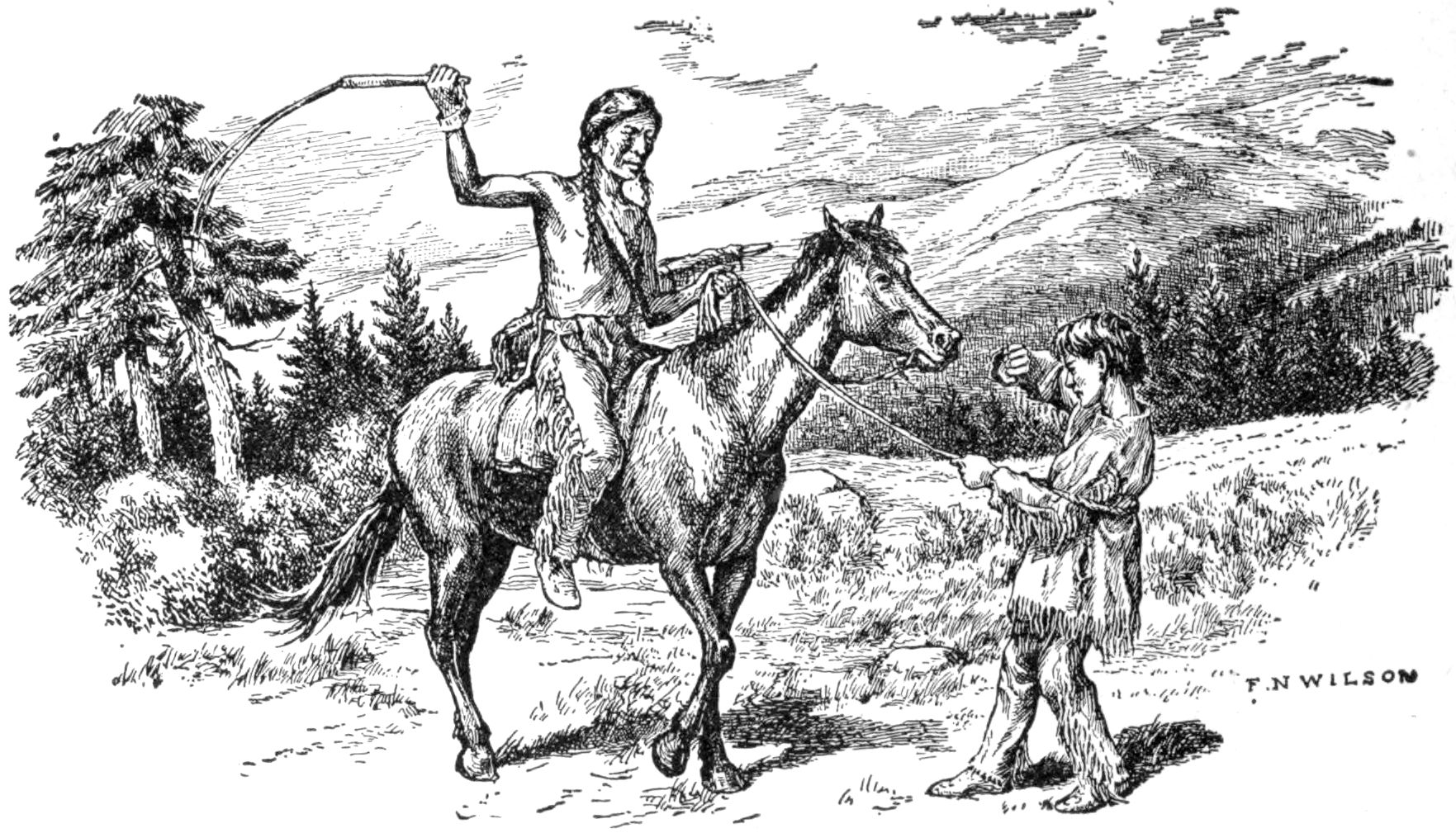
hard as I could run. The Indian turned, dashed up,
and threw his lasso over me. After dragging me several
rods he stopped, and hit me with his quirt, telling me to
get back on his horse or he would put an arrow through
me. I cried and begged him to let me go; but he made
me get on again, and then he struck off as fast as he could
go. I noticed, however, that he kept looking back every
little while.
Pretty soon he stopped and told me to get off. As I
jumped he gave me a lick over the head with his quirt
that made me see stars for a few minutes. Then he
started off on the run again; but after going about fifty
yards he stopped, pulled his bow and arrow out of his
quiver and started towards me as if he intended to put
an arrow through me. He came but a few steps, then
suddenly whirled his horse and off he went over the
prairie.
I soon saw what caused his hurry. A short distance
away were some Indians coming towards me as fast as
they could travel. When they reached me, they stopped,
and one of them told me to get on behind him and he
would take me to my mother. I climbed up double
quick. Before we got to the tepees I met mother
coming out to find me. She was crying. She took me
off the horse and threw her arms around me. One of
Pocatello’s Indians, she said, was trying to steal me and
she never expected to find her white papoose again.
Some Indians happened to see me get on my horse
behind the Indian and told my mother, and Washakie
had sent those Indians after me, before we got very far
away. Mother stayed close to me after that; but I
had had such a scare that I didn’t go very far from the
tepee without her. The chief told me never to go alone
after my horse if he got away again, but to let him know
and he would have the pony brought back. “If Pocatello’s
Indians,” he said, “could get you, they would
swap you for a whole herd of ponies, and then it would
be ‘good-by Yagaki.’” “Yagaki,” by the way, was my
Indian name. It meant “the crier.” They gave it to
me because I mimicked the squaws and papooses one
day when they were bawling about something.
CHAPTER FIVE BREAKING CAMP
“I jumped from my horse and raised her up.”
The camp finally began to break up in earnest. Small
bands went off in different directions to their various hunting
grounds that had been decided on by the council.
We were among the last to leave. There were about sixty
tepees and two hundred and fifty Indians in our band.
We had about four hundred horses, and more than five
hundred dogs, it seemed to me.
Chief Washakie at that time was about twenty-seven
years old. He was a very large Indian and good looking.
His wife, Hanabi, did not appear to be more than twenty
years old. She had only one child, a little boy papoose
about six months old.
Pocatello was not so large as Washakie. He was a
Shoshone, but his wife was a Bannock. She had three
papooses when I first saw her. Pocatello was a wicked
looking Indian. His tribe did more damage to the emigrants
than any other tribe in the West. He wanted to
be the big chief of the Shoshones; he thought he ought
to be the leader because he was older than Washakie,
but the tribe would not have it that way. He did draw
away about five hundred of the tribe, however, and tried
to change the tribe name to “Osasibi”; but Washakie’s
Indians called them “Saididig,” which means dog-stealers.
When this band of Indian outlaws joined us in the Big
Hole Basin, they had new quilts, white women’s clothes,
new guns, watches, saddles, and hats. Mother told me
that they had just attacked a large train of emigrants,
and had killed the people, burned their wagons and robbed
them of everything. They had some very large horses
and mules with them. Mother wanted to buy a saddle
and a hat for me, but I told her that I would not wear a
hat whose owner had been killed and scalped by old
Pocatello.
Washakie and Pocatello were never very friendly.
Pocatello wanted to keep up a constant warfare against
the whites; but Washakie knew that meant only trouble
and that the Indians would finally get the worst of it;
so he would have nothing to do with Pocatello’s murderous
business. Because Washakie thought it would be much
better to live in peace with the whites, Pocatello called
him a squaw and said he was afraid to fight.
I was very glad to go; for I was tired of being stared
at by so many Indians. There were hundreds of young
Indians in the camp and many old ones, too, that had
never seen a white person before. They would gather
around me as if I were some wild animal. If I moved
more suddenly towards them, they would jump back and
scream like wildcats. My mother told them that I would
not bite, but if they bothered me too much I might kick
some of their ribs loose, for I could kick worse than a wild
horse.
Two or three days after we had left the big camp, the
pack on one of our horses turned under his belly and he
began to run and kick like mad. This started the rest of
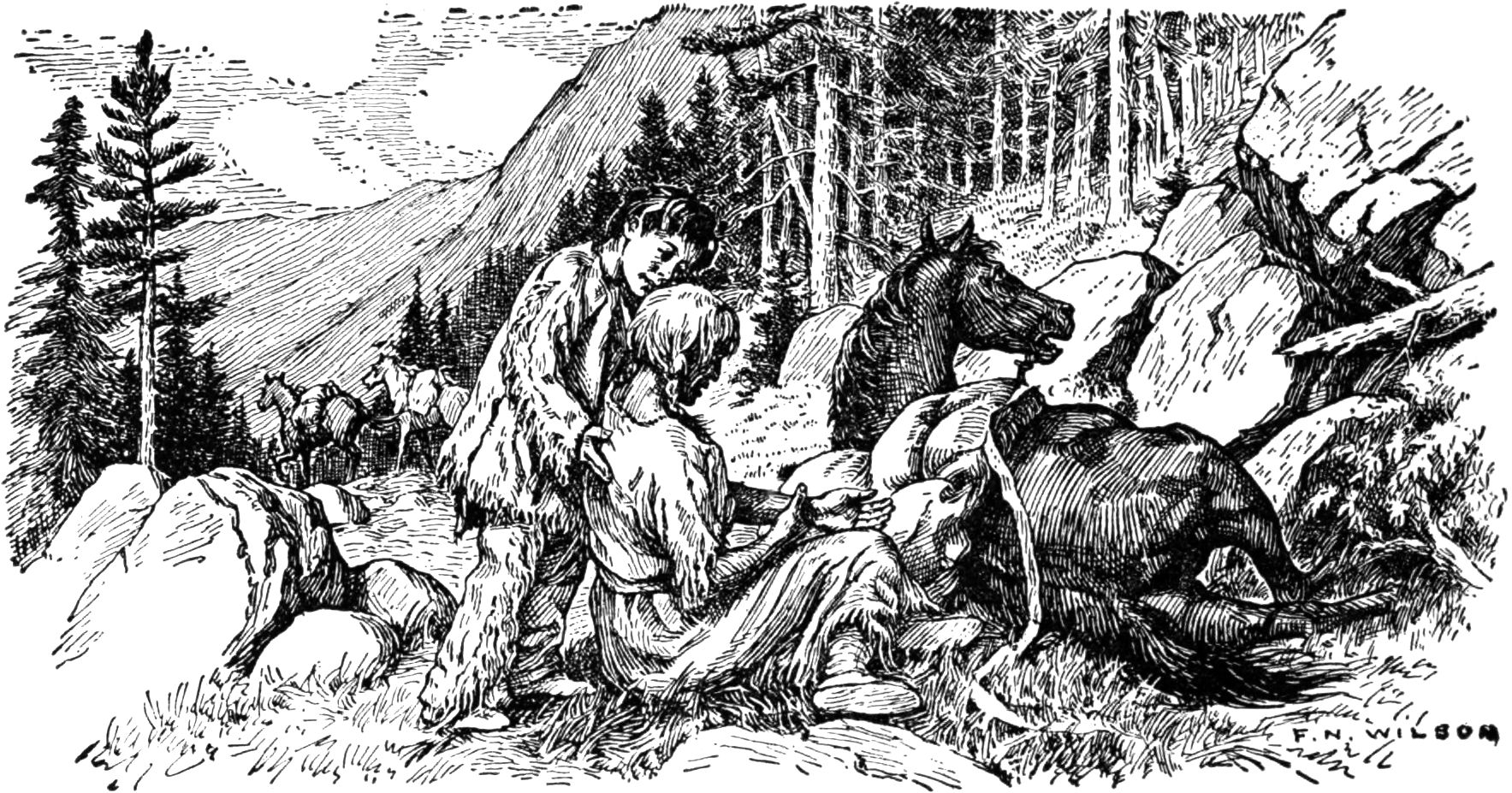
the pack horses and they came running past us. Mother
tried to stop them, but one of the runaways bumped against
her horse and knocked it down. It rolled over with her.
I thought she was killed. I jumped from my horse and
raised her up. She was not dead, but she was badly
bruised and one of her arms was broken. I think I never
cried harder in my life than I did then, for I thought my
poor mother was going to die. She told me not to cry,
that she would be all right soon.
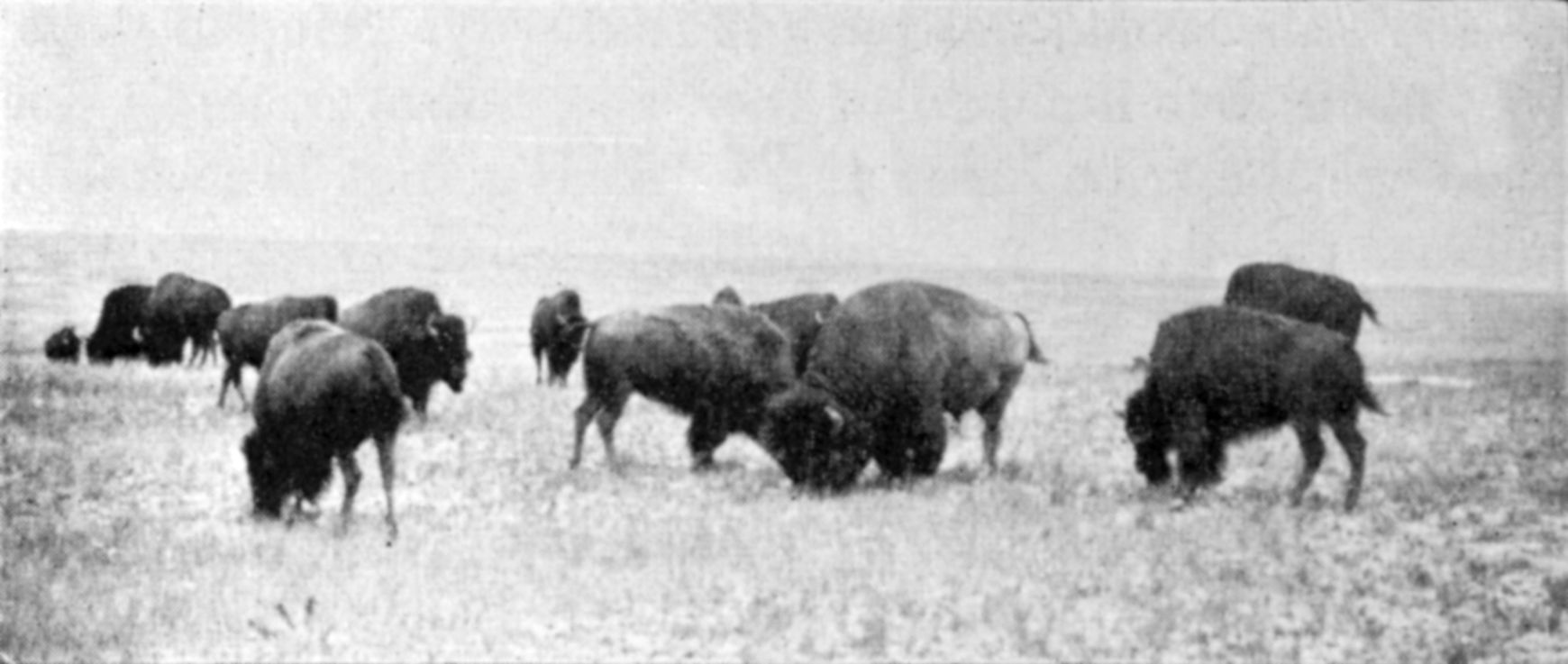
L. A. Huffman, Miles City, Mont.
Buffaloes on the plains.
Washakie’s wife was there and she told me to dash
ahead and tell the chief to hurry back. When he came,
he ordered the band to stop and pitch camp. We had to
stay there a week to let mother get well enough to travel
again. There were a great many antelope in the valley
and plenty of fish in the stream by the camp. When
mother would go to sleep, I would go fishing. When she
awoke Hanabi would call, “Yagaki come,” and I would
get back in double-quick time.
One day while we were camped here waiting for mother
to get better, I went out with Washakie and the other
Indians to chase antelope. About fifty of us circled around
a bunch and took turns chasing them. The poor little
animals were gradually worn out by this running and
finally they would drop down one after another, hiding
their heads under the bushes, while the Indians shot
them to death with their bows and arrows. I killed two
myself. When I got home and told mother about it, she
bragged about me so much that I thought I was a “heap
big Injun.”
Mother’s arm soon got well enough for her to travel, for
the medicine man had fixed it up very well, so we took
up our journey again. There were a great many buffaloes
and antelope too, where we next pitched camp. We
stayed there for about three weeks. During the times
that she could not watch me, mother had Washakie take
me out on his hunting trips. That just suited me. It
was lots of fun to watch the Indian with the big spear dash
up and cut the hamstrings of the great animals. When
they had been crippled in this way, we would rush up and
shoot arrows into their necks until they dropped dead.
The first day we killed six, two large bulls and four cows.
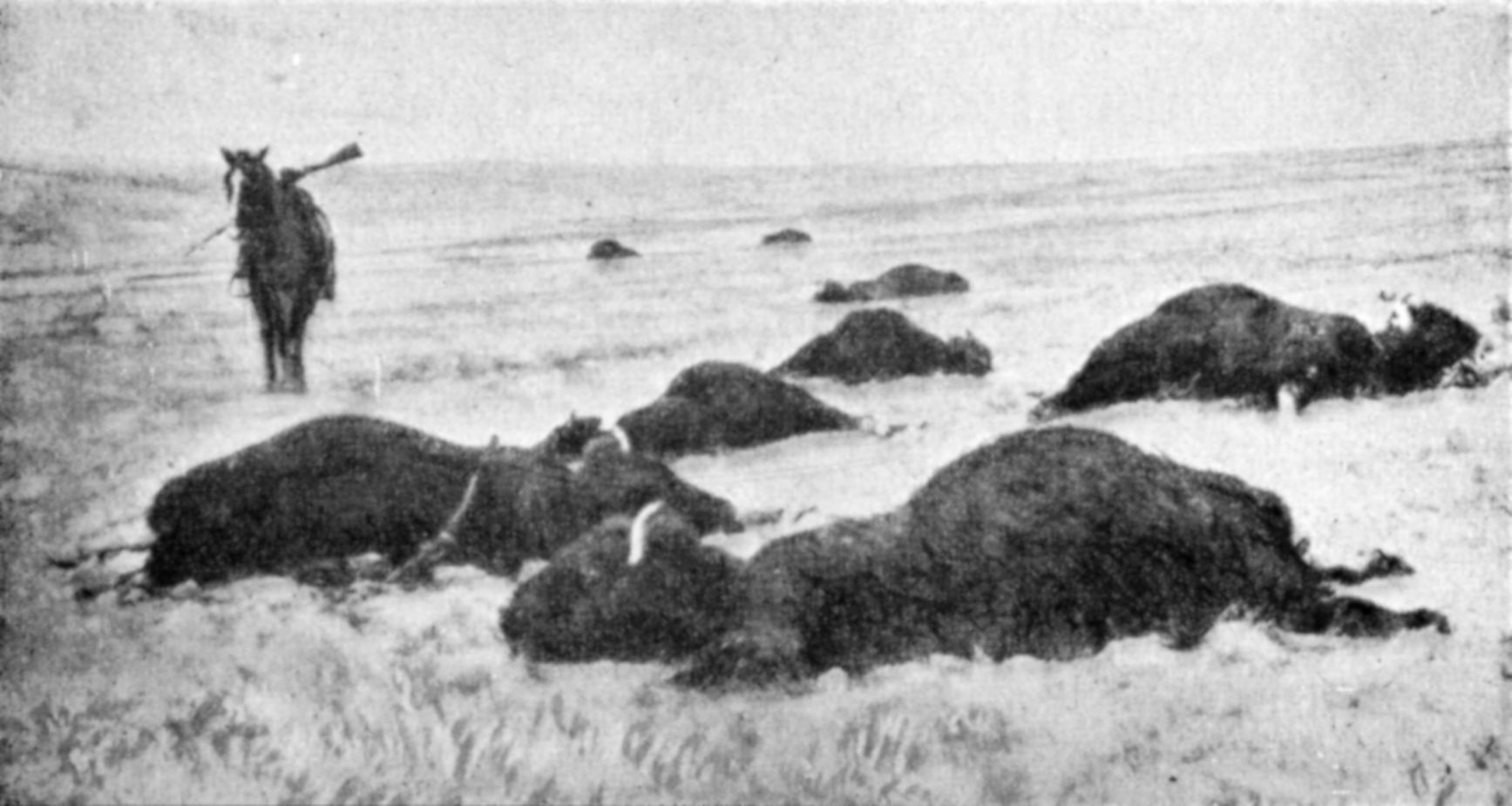
L. A. Huffman, Miles City, Mont.
Why the buffalo disappeared; part of the white man’s trail.
I told Washakie that my bow was too small to kill
buffaloes with. He laughed and said I should have a
bigger one. When we got back to camp, he told some
Indians what I had said and one very old Indian, whose
name was Morogonai, gave me a very fine bow and
another Indian gave me eight good arrows. I felt very
proud then; I told mother that the next time I went out
I would kill a whole herd of buffaloes. She said she knew
I would, but she did not know what they could do with all
the meat.
Washakie said that I was just like the rest of the white
men. They would kill buffaloes as long as there were
any in sight and leave their carcasses over the prairies for
the wolves. He said that was not the way of the Indians.
They killed only what they needed and saved all the
meat and hides.
“The Great Spirit,” he said, “would not like it if we
slaughtered the game as the whites do. It would bring
bad luck, and the Indians would go hungry if they killed
the deer and buffaloes when they were not needed for
food and clothing.”
Two or three days after this we went out again and
killed two more buffaloes. When we got back mother
asked how many I had killed. I told her that I shot twice
at them and I believed I had hit one. She said that I
would be the best hunter in the tribe afterwhile, and some
day, she said, I would be a big chief.
CHAPTER SIX VILLAGE LIFE
“The boy papooses made fun of me.”
Cold weather was coming. Some snow had already fallen
in the mountains. Hanabi and her friends went to work
to make me some better clothes. Very soon they had a
fine suit ready.
The trousers part was made somewhat like the chaps
worn by cowboys, being open in front, with no seat; but
on the sides they had wedge-shaped strips that ran up and
fastened to the belt. These leggings fitted pretty tight, but
there was a seam about as wide as my hand that could be
let out if necessary. They gave me a pair of new moccasins
that came up to my knees. They also made me another
overshirt, or “mother-hubbard,” out of fine smoked
buckskin; it fitted me better than did my first one. The
sleeves came down a little below my elbows and had a
long fringe from the shoulders down; it was also fringed
around the neck and the bottom; and to touch it up more,
they had stitched beads in heart and diamond shapes
over the breast. The clothes were all very fine; but when
I got them on, I looked a good deal like a squaw papoose.
I didn’t care much, though, for the clothes fitted me pretty
well and they were warm and comfortable. Mother also
made me a hat out of muskrat skin. It ran to a peak and
had two rabbit tails sewed to the top for tassels. With
my new clothes on, I was better dressed than any other
kid in camp.
Lee Moorhouse
Indian camp by a river.
We now started for the elk country. When we got
there, the Indians killed about one hundred elk and a few
bear; but by that time it was getting so cold that we set
out for our winter quarters. After traveling a few days
we reached a large river, called by the Indians Piatapa, by
the whites the Jefferson River; it is now in Montana.
Here we pitched camp to stay during the “snowy moons.”
Most of the buffaloes by this time had left for their
winter range; but once in a while we saw a few as they
passed our camp. The Indians did not bother them,
however, because we had plenty of dried meat, and for
fresh meat there were many white-tail deer that we could
snare by hanging loops of rawhide over their trails through
the willows. There were also a great many grouse and
sage hens about in the brush. I have killed as many as
six or seven of these a day with my bow and arrows.
Winter passed away very slowly. Nothing exciting
happened until along towards spring; then one day we
had a terrible fracas. Washakie had gone up the river a
few miles to visit another large Indian village for a day or
two. While he was away, pretty nearly all the camp got
into a fight.
We had a fishing hole close to camp where the squaws
and papooses would fish. Mother and I had been down
there with the others fishing through this hole in the ice,
and when we had caught a good string of fish mother
took what we had to the tepee. She told me not to stay
long.
As soon as she had gone, a girl, a little larger than I,
wanted to take my tackle and fish in my hole. I let her
have it, and she caught several fish. Then I heard mother
call me and I asked the girl to give me back my pole so I
could go home, but she would not do it. I tried to take
it from her, but she jerked it away and hit me over the
head with it, knocking me to my knees. I jumped up and
gave her a whack that knocked her down; when she got
up she let out some of the awfulest yelps I ever heard.
Then she put for home as fast as she could go, yelling and
screaming. I knew something else would happen pretty
quick; so I gathered up what fish the other papooses
hadn’t run away with and hiked for home too. Just as I
got inside the tepee, the girl’s mother came rushing
up with a big knife in her hand. “Give me that little
white devil!” she screamed. “I’ll cut his heart out!”
She started for me, but mother stopped her, and shoved
her back out of the tepee.
They made such a racket that the whole camp gathered
around to see the fun. The squaw hit mother over the
head with the knife; and when I saw the blood fly, I
grabbed a stick and struck the squaw over the head,
knocking her down. Another squaw grabbed mother and
I sent her spinning. Then others mixed in and took sides
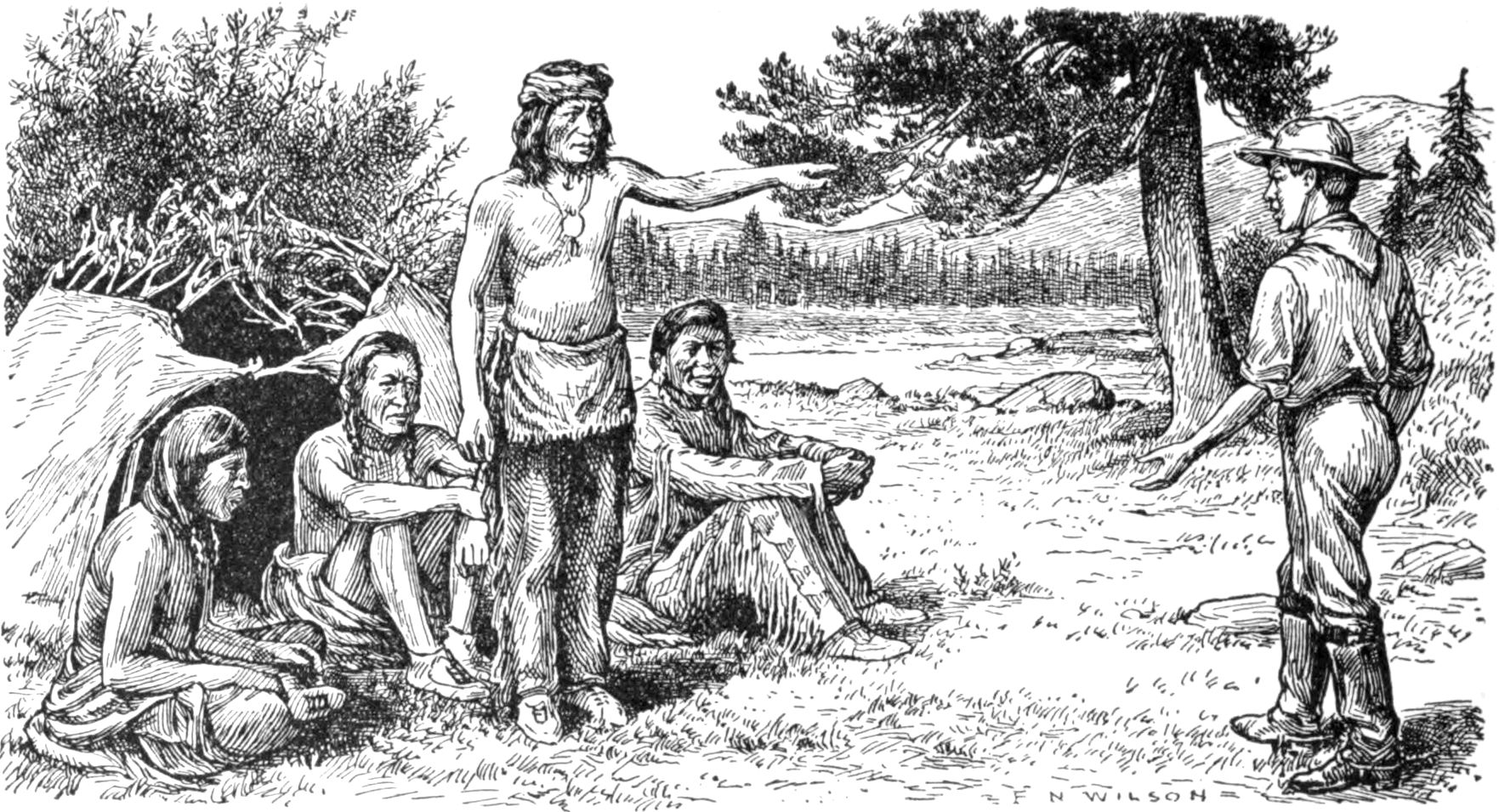
and soon the whole bunch was yelling and fighting fit to
kill. One boy grabbed my stick, but I gave him a kick
that settled him. Then Hanabi took the stick from me:
but I ran into the tepee and grabbed my bow and arrows.
I was so mad I would have made a few “good squaws”
in quick time; but a big Indian jerked my bow from me
and broke the string. I guess it was best that he did.
More Indians rushed up and stopped the fight; but not
before a lot of them went off howling with sore heads.
That night Washakie came home and held a big council.
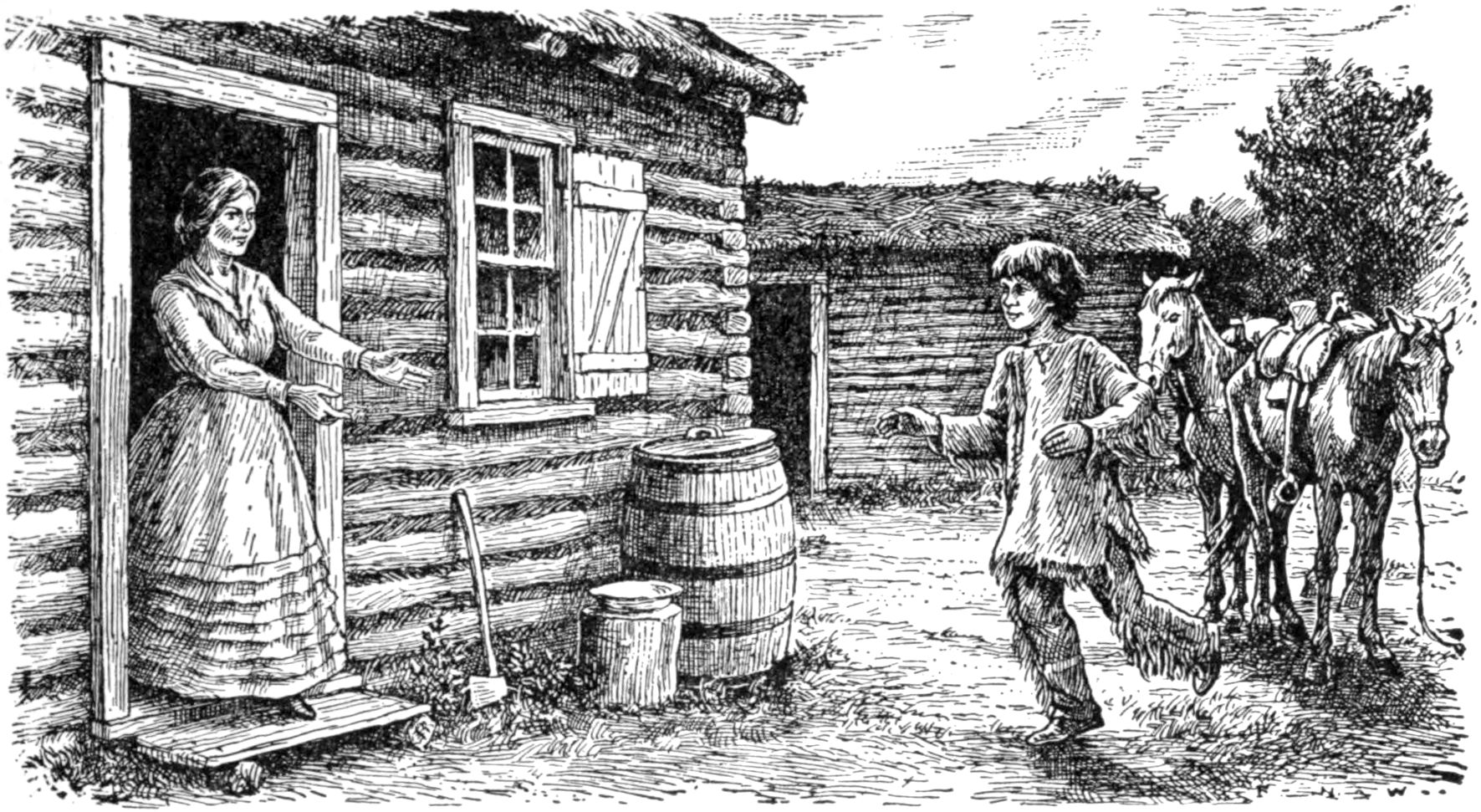
I don’t know what they
said, but the next day
two or three families left
our camp and went to
join another band.
Bur. Am. Ethnology, Smithsonian Institution
The seed gatherers of Western desert tribes.
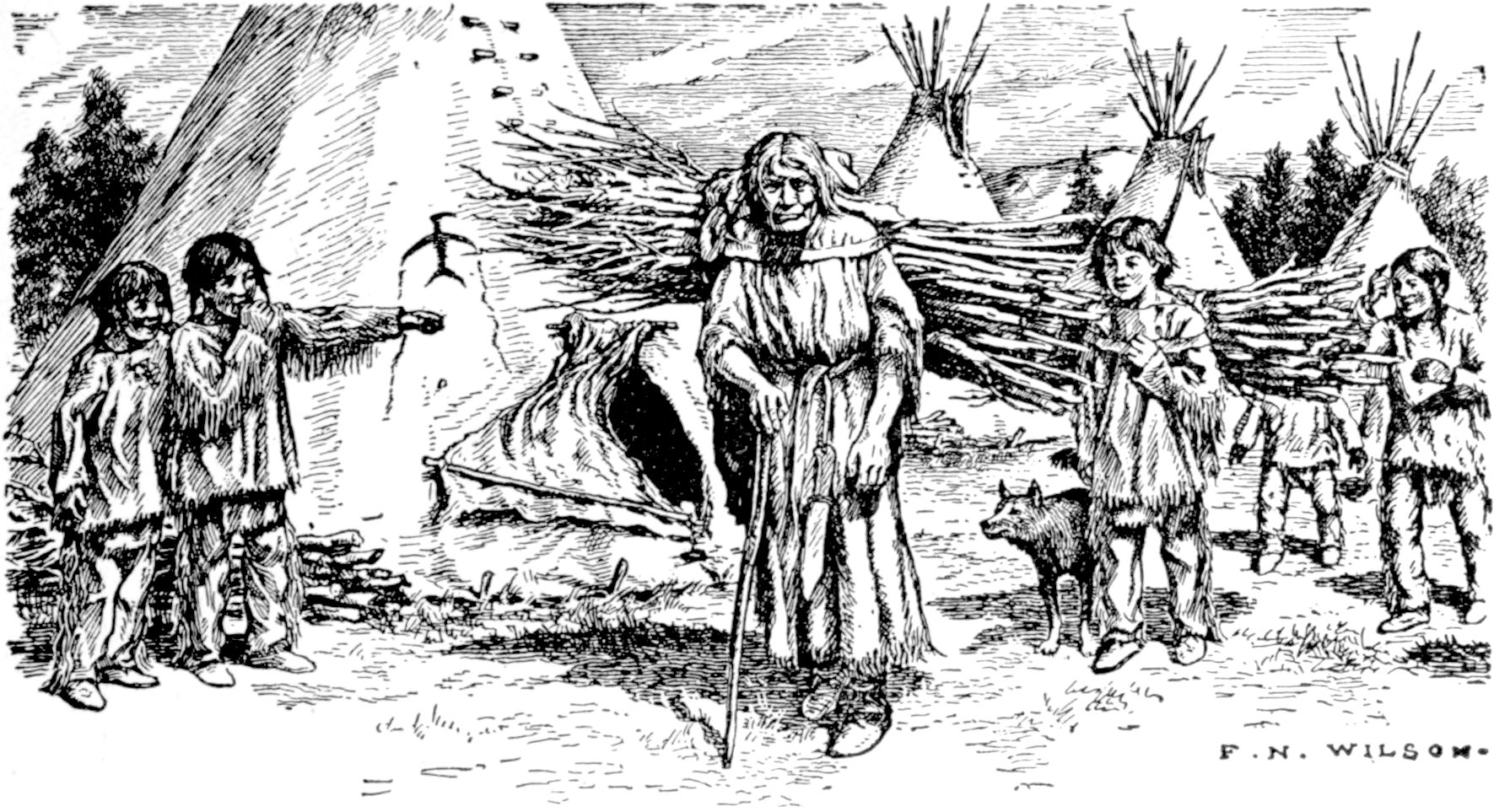
Everything now passed
along very well for a time.
I helped mother carry
wood and water. The
boy papooses made fun
of me, calling me a squaw
for doing it, because
carrying wood and water
was squaw’s work. I
told mother that I would
break some of their necks
if they didn’t stop it. “Oh, let them alone,” she said,
“they are bad boys.”
But one day we were getting wood, and having cut more
than we could carry in one trip, I went back for it when a
boy ran up to me and said, “You’re a squaw,” and spit
at me. I threw down my wood and struck out after him.
He ran yelping at every jump, expecting me, I guess, to
kick his head off. But Washakie happened to see us and
called to me to stop. It was lucky for that papoose that
he did. I went back and got my wood and took it to
the tepee.
Washakie wanted to know what it was all about. I
told him what the boy had done. He said he did not
want to start another camp fight, but he did want me to
take my own part. He said that he had been watching
how things were going, and he was glad to say that, so
far as he knew, I had never started a fuss. He did not
think that I was quarrelsome if I was let alone. He was
glad, he said, to see me stand up for myself; for if I was
cowardly the papooses would give me no peace.
One day I heard an Indian talking to Washakie and
telling him it was not right for him to let me do squaw’s
work; it would set a bad example for the other boys.
Washakie replied that he thought it was a good example,
and if some of the older ones would take it, it would be
better for their squaws.
“We burden our women to death,” he said, “with hard
labor. I did not think so much about it until Yagaki
came. I see now how much he helps mother and how
much hard work she has to do. Yagaki appears to be
happier helping mother than he is when playing with the
other boys. I believe that she would have gone crazy
if it had not been for him, her troubles over the loss of
father and my brothers were so great. I do believe that
the Great Spirit sent the little white boy to her.”
I think myself that if anything had happened to me, it
would have killed mother. She was very proud to have
me with her. She would say to Washakie, “Yagaki is a
smart boy. He asks me questions that I can hardly
answer. One day he asked me why the Indians did not
haul and cut the wood for their women. His father does
that for his mother. He thinks that the Indians ought to
pack the meat, too, and take care of their own horses, or
send the boys to do it. If the women tanned the hides
and made the moccasins and clothes for the family and
did the cooking, it was their share of the work.”
I heard all this talk going on one night when they
thought I was asleep. Washakie agreed with most of
what his mother said, but of course they couldn’t change
the Indians’ way of doing things.
CHAPTER SEVEN MY INDIAN MOTHER
“She used to tell me her troubles.”
My Indian mother was as good and kind to me as any
one could be, but she did not seem to realize that there
was another loving mother miles and miles away whose
heart was sorrowing because of my absence. To her mind
must have come many times these words of the old song:
“Oh, where is my wandering boy tonight?”
My Indian mother would often ask me a good many
questions about my white mother. She asked me if I
did not want to go home. I told her that I should like to
see my folks very much, but if I went home they would
keep me there, and I did not want to herd sheep. I told
her that I would rather play with white boys than with
Indian boys, but that I liked my bow and arrows, and
father would not let me have these at home because I
would be shooting at the cats and chickens all the time.
“I like my pony too, and I could not take him home,”
I said, “and I love you too. If I went away you could
not go with me; so taking it all around I should rather
stay with you.”
This always seemed to please her; for her face would
light up and sometimes a tear would steal down her
brown cheeks, and then she would grab me and hug me
until you could hear my ribs crack.
Often she would tell me about her troubles. Her husband
had been shot a few years before in the knee with a
poisoned arrow by the Crow Indians. He lived a little
over a year after the battle, but he suffered greatly before
he died. Soon after his death her two boys named Piubi
and Yaibi went out hunting mountain sheep. While
they were climbing a steep hill, a snowslide crashed down
and buried them in the deep gorge at the bottom of the
canyon. Here they lay until late in the following spring.
The Indians tried to find their bodies by pushing long
sticks into the snow, but they could not locate them.
But their mother would not give up the search. She
told me how she would go out every day and dig in the
snow with a stick in the hope of finding her boys, until
she got so sick that Washakie and some other Indians
brought her home, where she lay for two months very
near death from sorrow and exposure.
As soon as she could walk she went up to the snowslide
again. The warmer weather by this time had melted some
of the snow, and she found the body of one of her boys
partly uncovered. The wolves had eaten off one of his
feet. She quickly dug the body out of the snow, and
near by she found the other boy. She was too weak to
carry them back to the tepee, and she couldn’t leave
them there to be eaten by the wolves, so she stayed all
night watching over them.
The next morning Washakie found her lying on the snow
beside the bodies of her children. He took them up
tenderly and carried them back to the village. The poor
old mother was very sick after that. During this sickness
and delirium of grief, she dreamed that her youngest boy
came back to her, and he was white. This dream put into
her mind the strange notion that she wanted a white
papoose.
She was just getting well when the band of Indians
she was with came into the settlement where I lived and
found me. When they found that I could talk the Indian
tongue, they decided that I was just the boy for the chief’s
mother. They asked Washakie about it. He would not
let them steal me, but he said that if they could lure me
away from home, it was all right with him. So they set
to work, as I have told, and succeeded in tempting me to
go away with them.
My old mother also told me many things that happened
when she was a little girl. She said that her father was
a Shoshone, and her mother a Bannock. She said she
was sixty-two “snows” (years) old when I came. She
had had four children, three boys and a girl. When the
girl was seven years old, she was dragged to death by a
horse. Her two sons were killed by the snowslide, so
Washakie and I were the only ones she had left.
J. E. Stimson
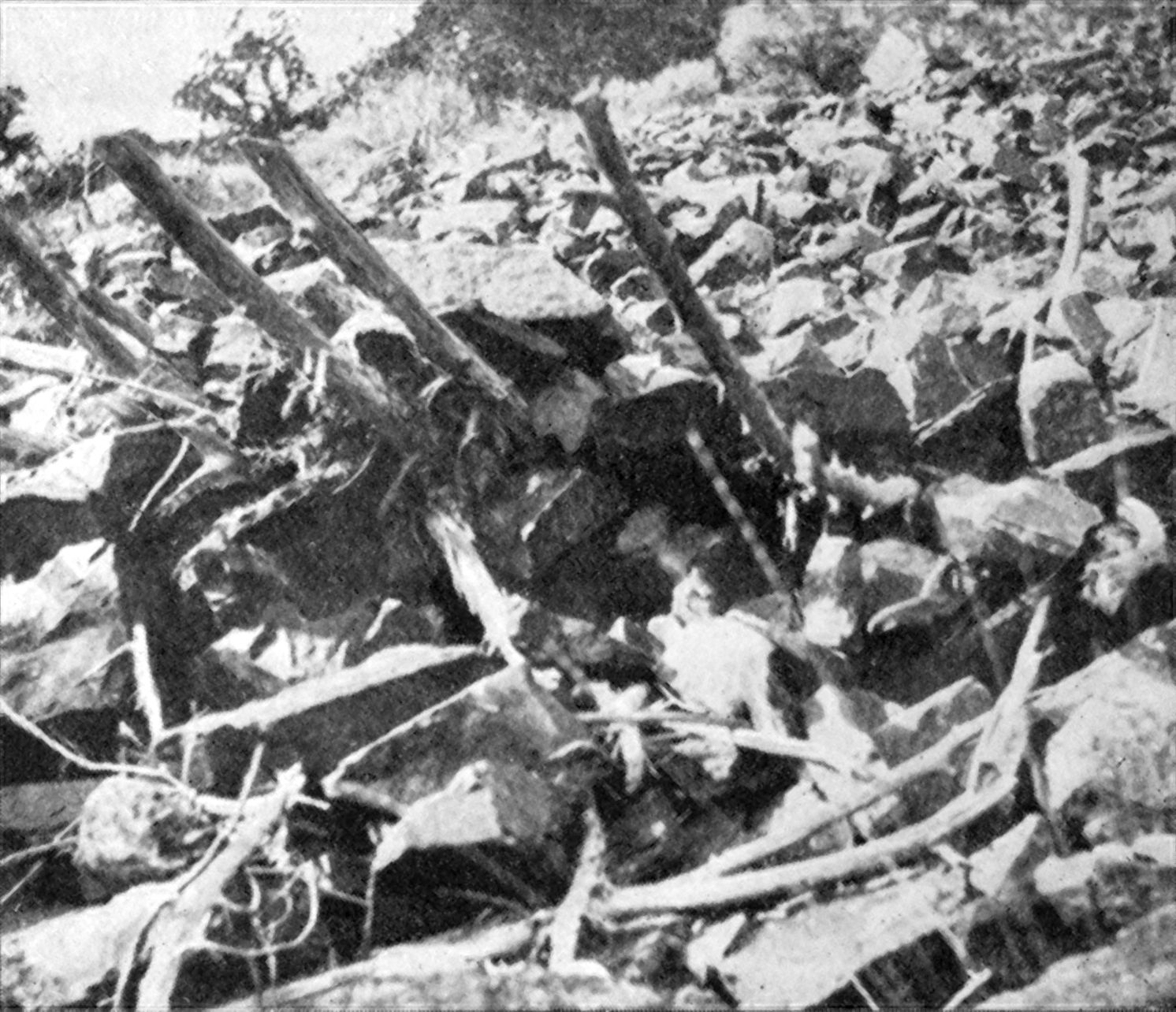
Death’s Canyon, Teton Range, Jackson’s Hole, Wyoming; snow slide
in ravine at left.
Her life, she said, had been filled with sorrow, but she
was having better times now than she had ever had before.
If I would stay with her, she would be happy once more.
She said she had fifteen head of horses of her own. When
she died she wanted Washakie and me to divide them between
us. She also wanted me, when she died, to bury
her as the white folks bury their dead, as she thought
that way was the best.
She certainly was good to me, watching me night and
day and doing everything she could for my comfort, and
I tried to be good and kind to her in return, but sometimes,
boylike, I forgot. One night I was playing with
the Indian boys. Our game was killing white men. With
our bows and arrows, we would slip up to the bunches
of brush and shoot at them. If we clipped off a twig with
the arrow, that was a scalp. We would stick it in our belts
and strut about like big Injuns.
While our fun was on, I heard mother call, “Yagaki,
come in and go to bed.” I paid no attention so she came
out and said, “Why didn’t you come when I called you?”
“I didn’t want to go to bed,” I answered sulkily. With
that she grabbed me by the collar and jerked me toward
the tepee. I begged and promised, but she kept me
going till she got me inside; then she flung me down on a
pile of blankets.
“Washakie,” she said, “you must do something with
this boy. He won’t mind me.” With that she left the
tent and I heard her crying outside.
The chief looked at me a minute, then he said quietly:
“What is the trouble between you and mother?”
“Well, she won’t let me play,” I said; “she makes me
come in every night before dark. The other boys stay
out; I don’t see why I can’t.”
“Mother knows why,” he said. “You should be good
to her and mind her; she is good to you—better than
she ever was to me.”
Mother had come in again. “Yagaki,” she said,
“you must not stay out after dark. Those papooses
might kill you. They have been trained to think it is an
honor to kill a white man. If they could do it without
being seen, they would just as soon put an arrow through
you as not. I know what is best for you, Yagaki. You
must come when I call.”
I always obeyed her after that, and we got along very
well. She was a dear old mother to me.
CHAPTER EIGHT THE CROWS
“I went flying toward the creek.”
As winter began to break up we got ready to move to the
spring hunting grounds, but when we rounded up our
horses we found that about fifty head of the best ones were
missing. The Crow Indians had stolen them. Our
Indians found their trail and followed them, but the
Crows had so much the start that our braves could not
overtake them. We never recovered our animals.
Among the lost horses were six that belonged to mother
and eleven of Washakie’s horses. My little pinto was not
missing, for I had kept him close to camp with the horses
we had used during the winter.
Our Indians were angry. They declared that they
would get even with the Crows before another winter had
passed. And I suppose they did it, for the two tribes were
constantly stealing from each other. The Crows would
steal every horse they could from the Shoshones; and
our Indians would do the same with them. It was as
fair for one tribe as it was for the other. They would
fight, too, every time they met. Each tribe was always
on the watch to get the advantage over the other; so we
were in a constant state of excitement, and war dances
were going on all the time.
When we left our winter camp, we started south. After
two days’ travel, we joined another large Indian camp, and
kept with them during our wanderings the rest of the
summer.
For three or four more days we all traveled south again.
The game was plentiful here, elk, deer, antelope, and
buffalo, so we camped for several days and stocked up with
fresh meat. Then we took up the trail again, this time
going east till we came to a beautiful lake that was fairly
alive with fish. Oh, how I did catch them!
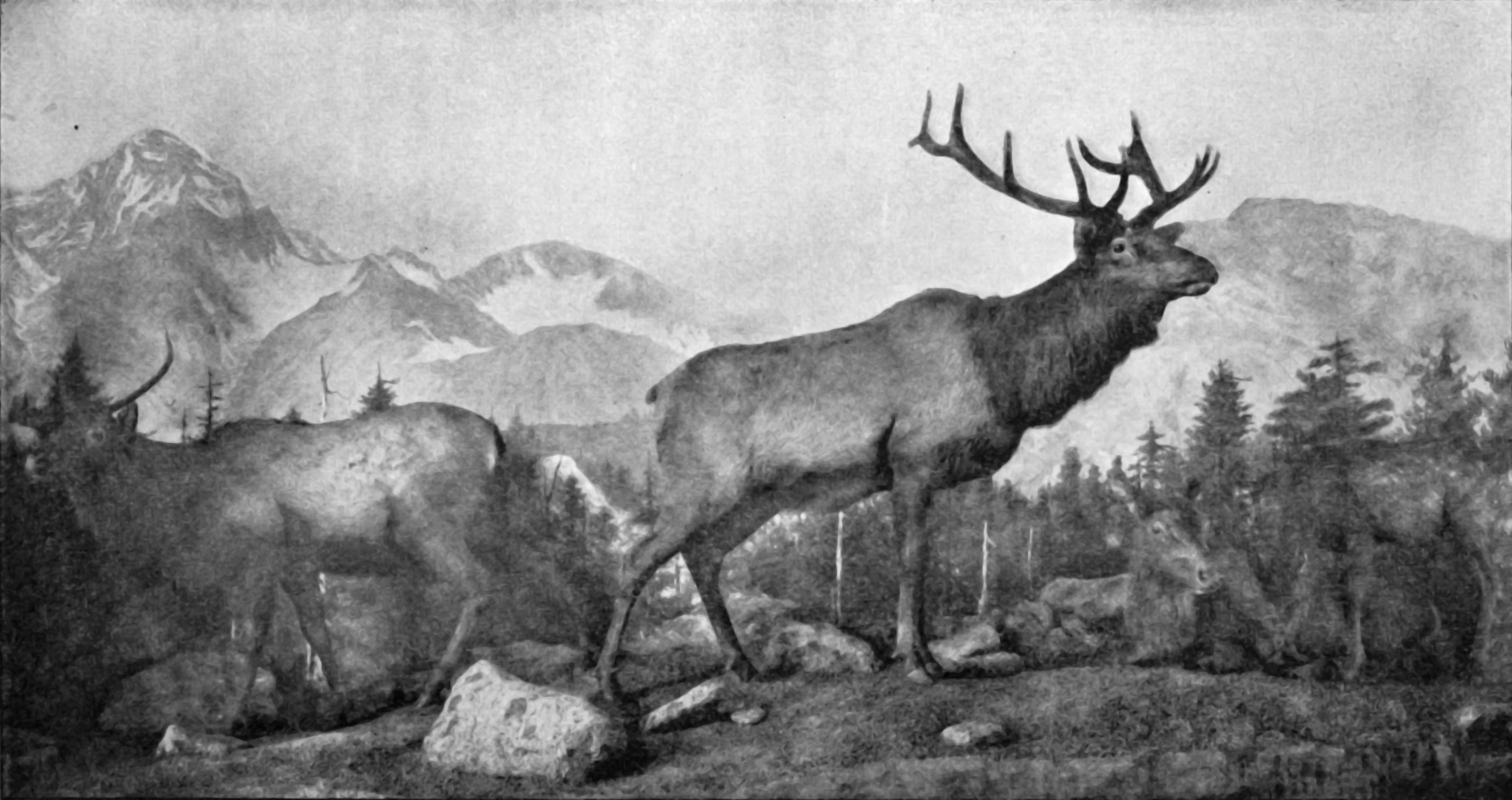
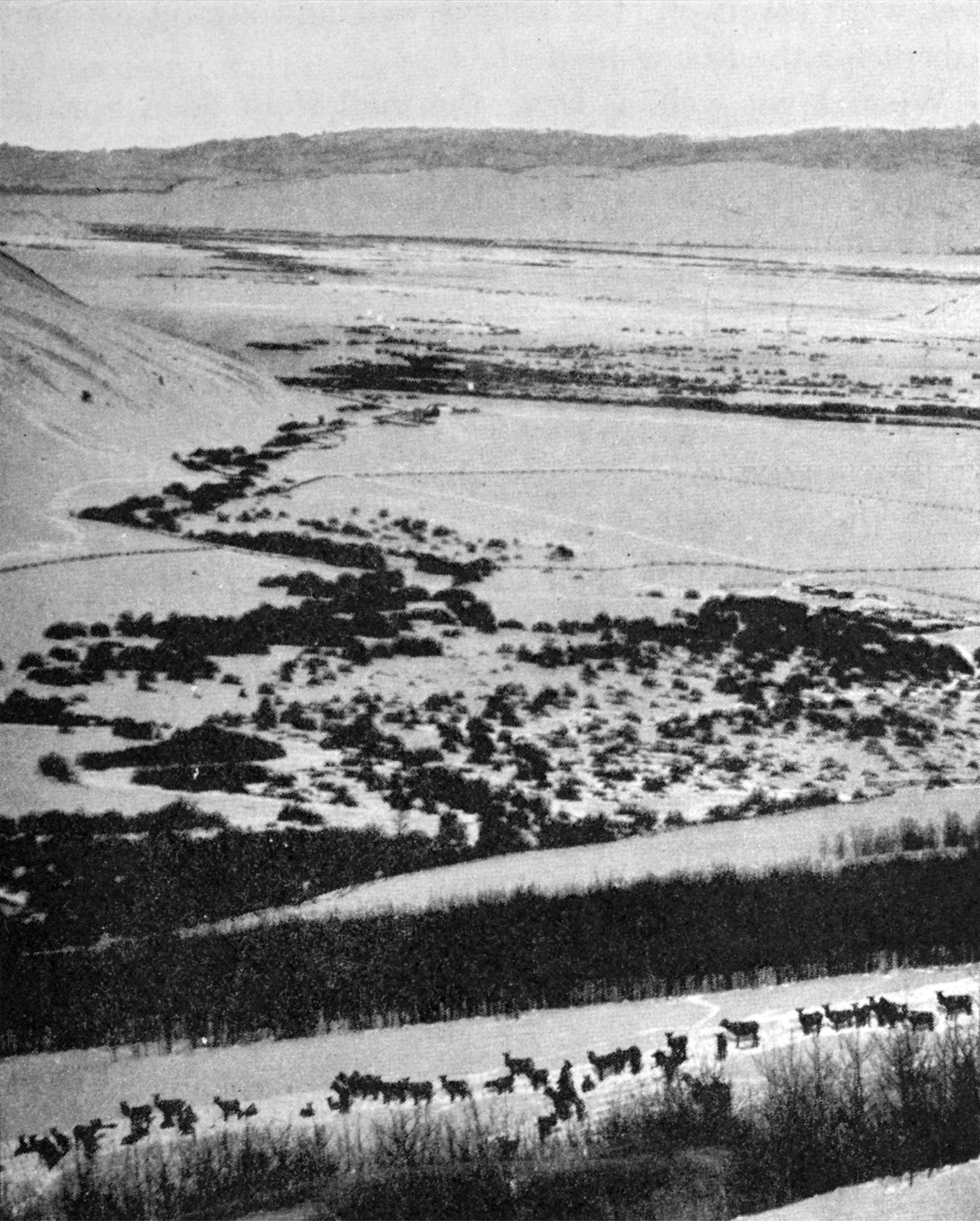
American Museum of Natural History
Elk in their mountain home.
It was a great game country, too. We could see buffaloes
at any time and in any direction that we looked.
There were herds of antelope over the flats. I had great
fun running them. Washakie said that I was riding my
horse too much, that he was getting thin. He told me to
turn the pony out, and he would give me another horse.
I was very glad to let my little pinto have a rest and get
fat again.
The horse that Washakie gave me was a pretty roan,
three years old, and partly broken. When the chief saw
how well I managed my new horse, he said that I might
break some other young horses for him to pay for the roan.
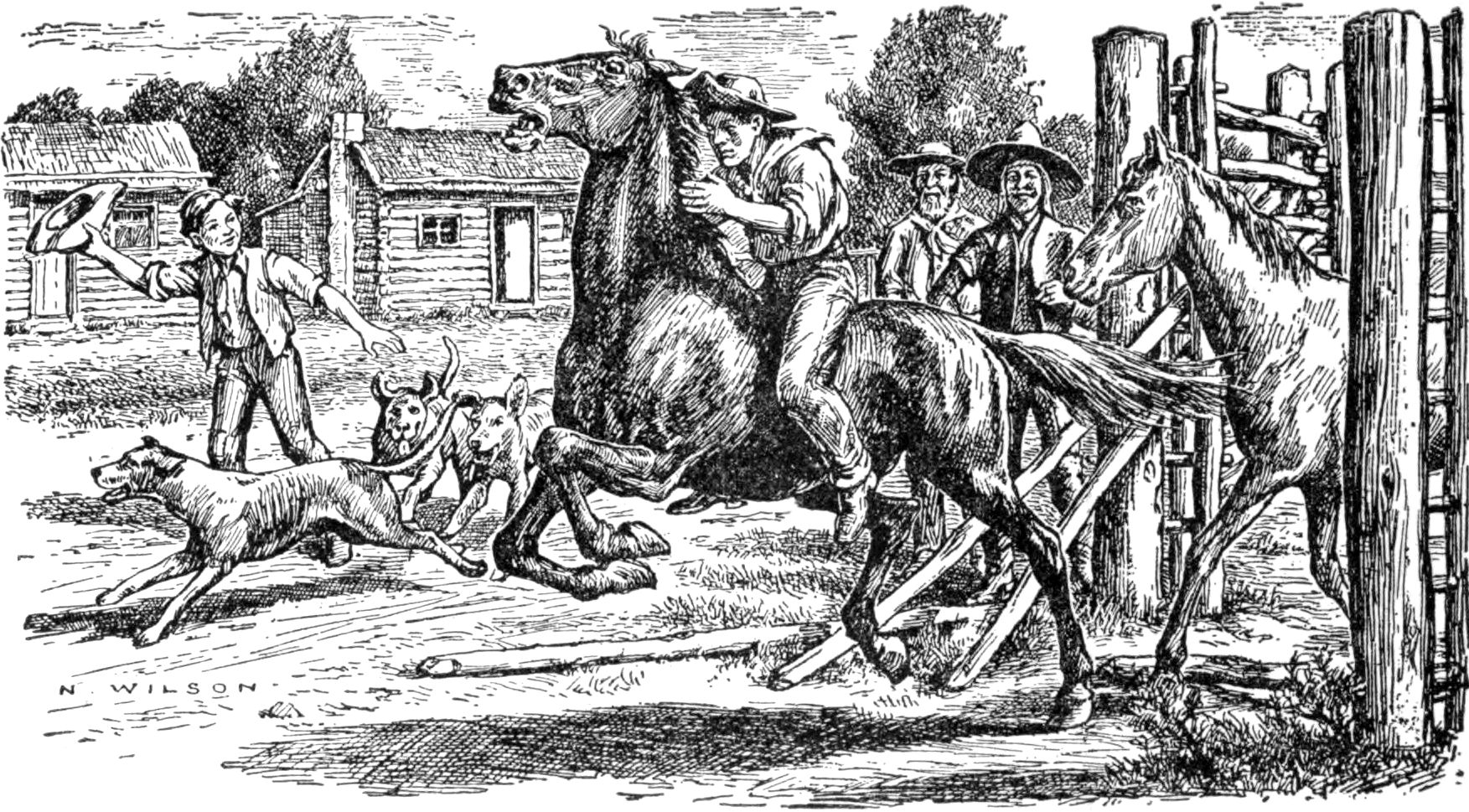
That just suited me, for I liked the excitement of training
wild horses. The Indian ponies were small, especially
the colts that he wanted broken. I wanted to get right
at it, but he said that I must wait till they got fat, so that
they could buck harder.
At this time we were not far from the Crow country.
There was a dispute between the tribes about the boundary
line that divided our hunting grounds from theirs. One
day some of our hunters came rushing to camp badly
scared. They said that the Crows were right on us. I
never saw such excitement in my life. Everybody in
camp was running about and talking excitedly. The
bucks were getting ready to fight; the horses were rounded
up and driven into camp. It was a great mixup—horses,
squaws, dogs, papooses, tepees, and bucks all jumbled
together.
The War Chief ordered the young warriors to go out
and meet the Crows. The old men were left to guard
camp. I started to get my horse.
“If I am going to fight,” I said, “I want my pinto pony.”
Mother stopped me, “Here, you little dunce,” she said,
“you are not going to fight. You couldn’t fight anything.
I don’t believe there is going to be a fight anyway.
I have had too many such Crow scares.”
I wondered whether the Crows had wings like the crows
in our country. She said that they were Indians like the
Shoshones.
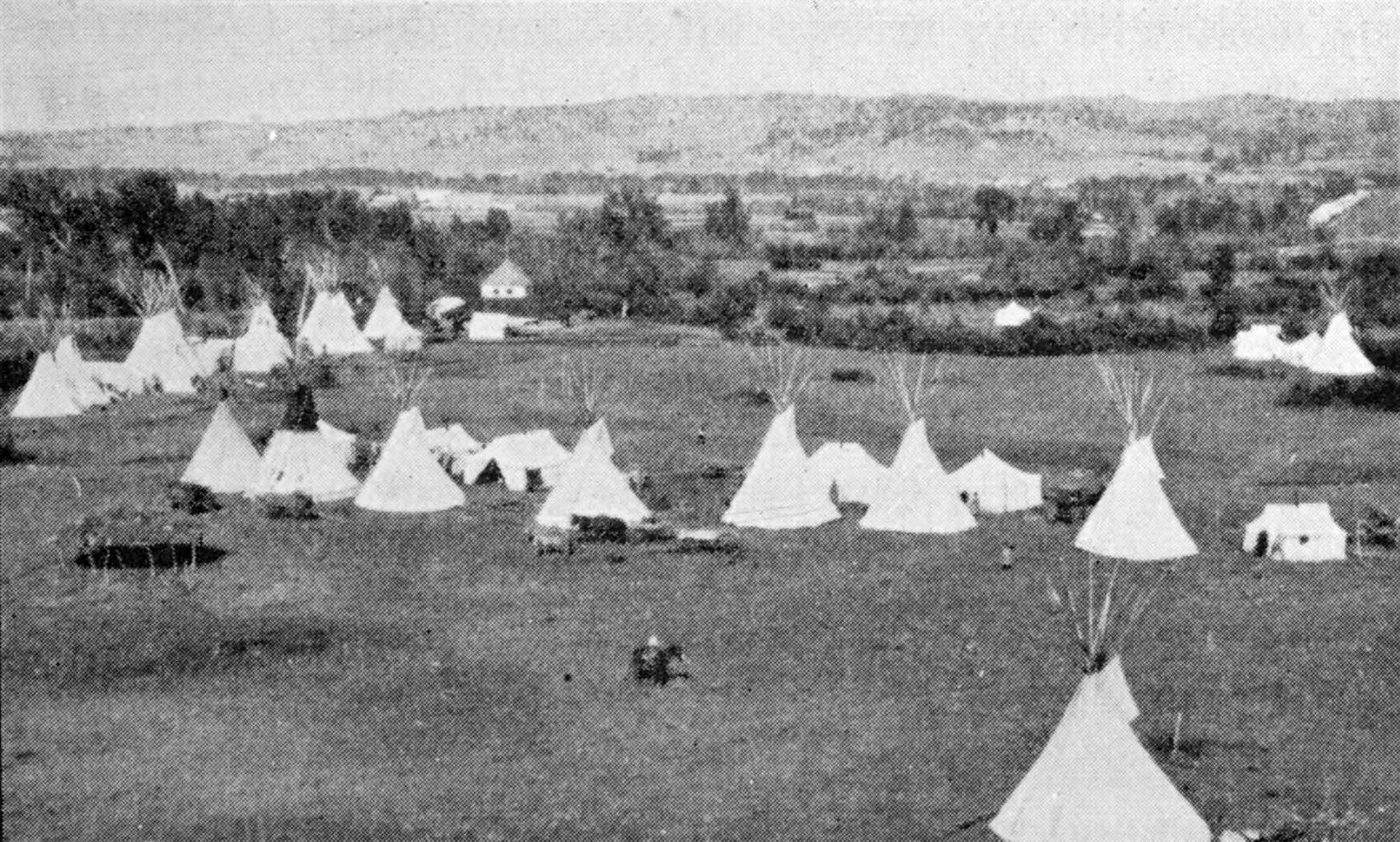
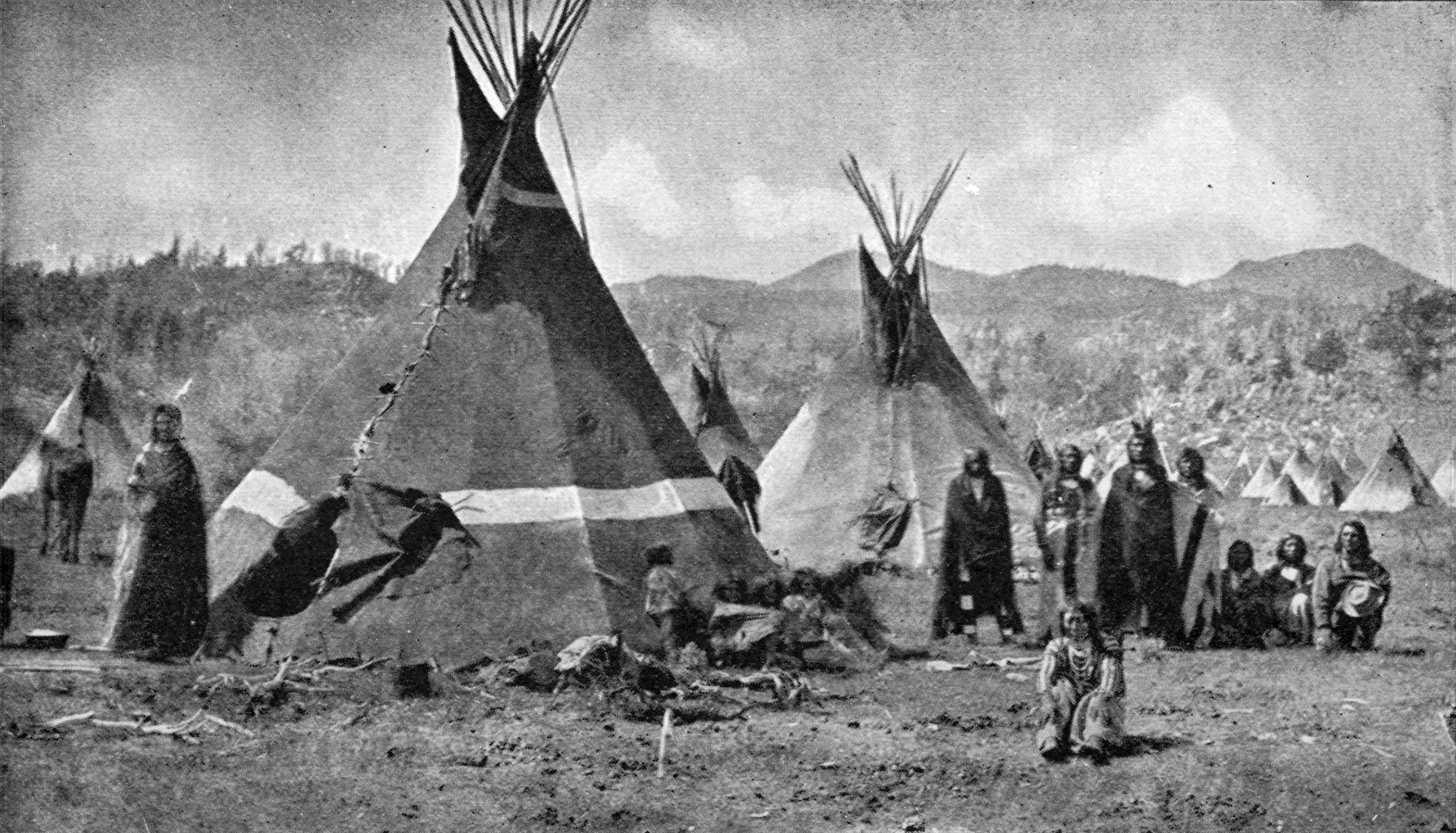
A Crow encampment (Crow Agency, Montana).
By this time the squaws had everything packed and
ready to fling on to the horses that were standing about
with their saddles on. The old bucks were gathered in
small groups here and there talking all at the same time.
But the excitement soon passed over; for the warriors
came back after a little while to tell us that it was not
Crows at all but a herd of buffaloes that had caused the
scare. I was rather disappointed, for I wanted to see
some fun. I began to think that they were cowards—the
whole bunch of them. But they were not. The
next day a band of about fifty young warriors left for some
place. I could not find out where they were going, but
they seemed to mean business.
For a while after this scare everything passed off
peacefully. We fished and chased antelope, and one day
I went with Washakie up into the mountains to kill elk.
We had not gone far till we saw a large herd of these
animals lying down. Leaving our horses, we crept up
close to them. Washakie had a good gun, and at his first
shot he hit a big cow elk. She ran about a minute before
she fell. The chief told me to slip up and shoot her in
the neck with my arrows till she was dead, then to cut
her throat so that she would bleed freely; and to stay
there till he came back. Well, I crept up as close as I
dared, and shot every arrow I had at her. Then I climbed
a tree. I guess she was dead before I shot her, but I was
not sure, for I was afraid to go up near enough to see.
Washakie followed the herd that ran down the canyon.
I stayed up the tree for some time, then came down
quietly and went up to the elk and threw sticks at her,
but she did not move, so I plucked up courage and cut
her throat. She had been dead so long that she did not
bleed a bit.
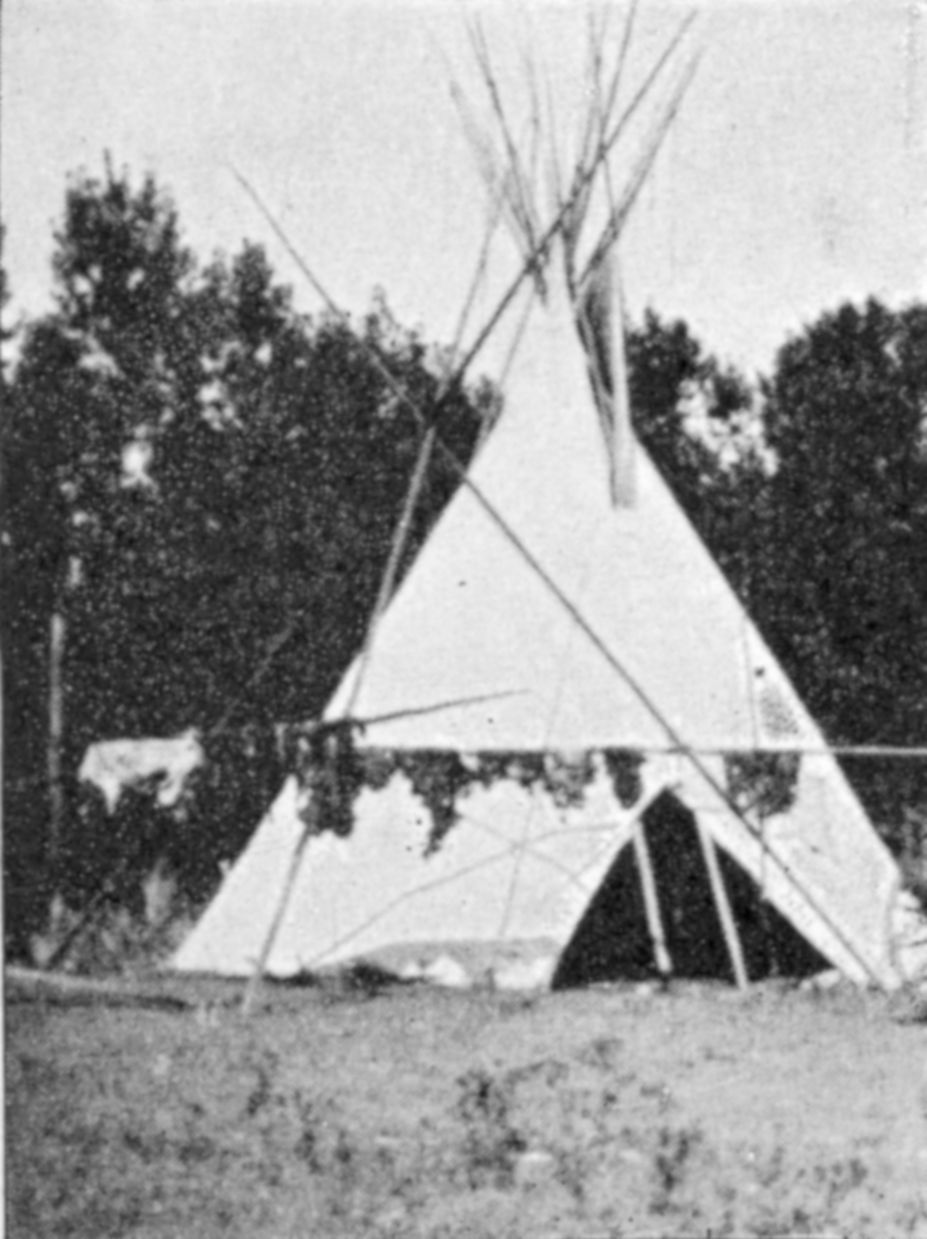
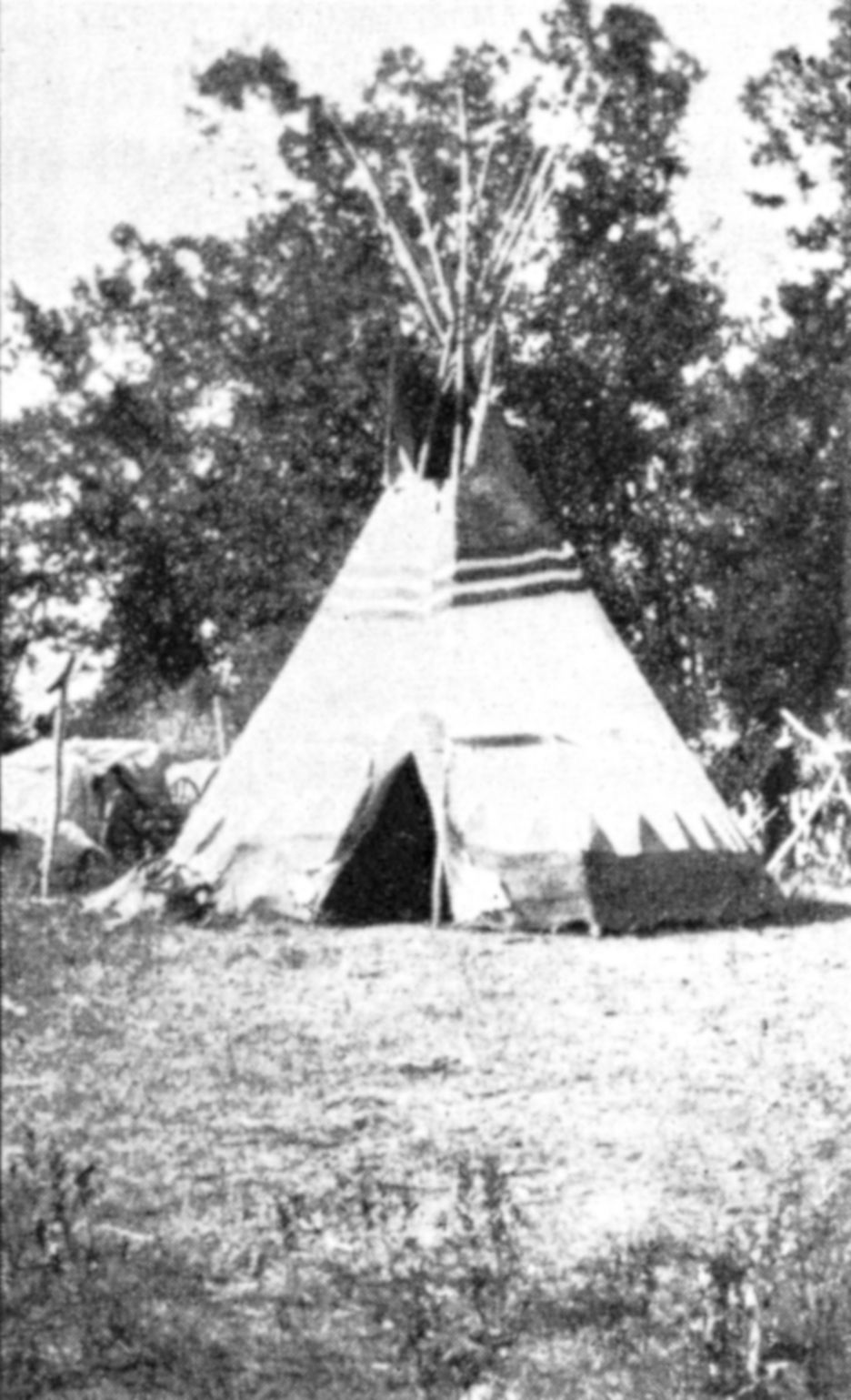
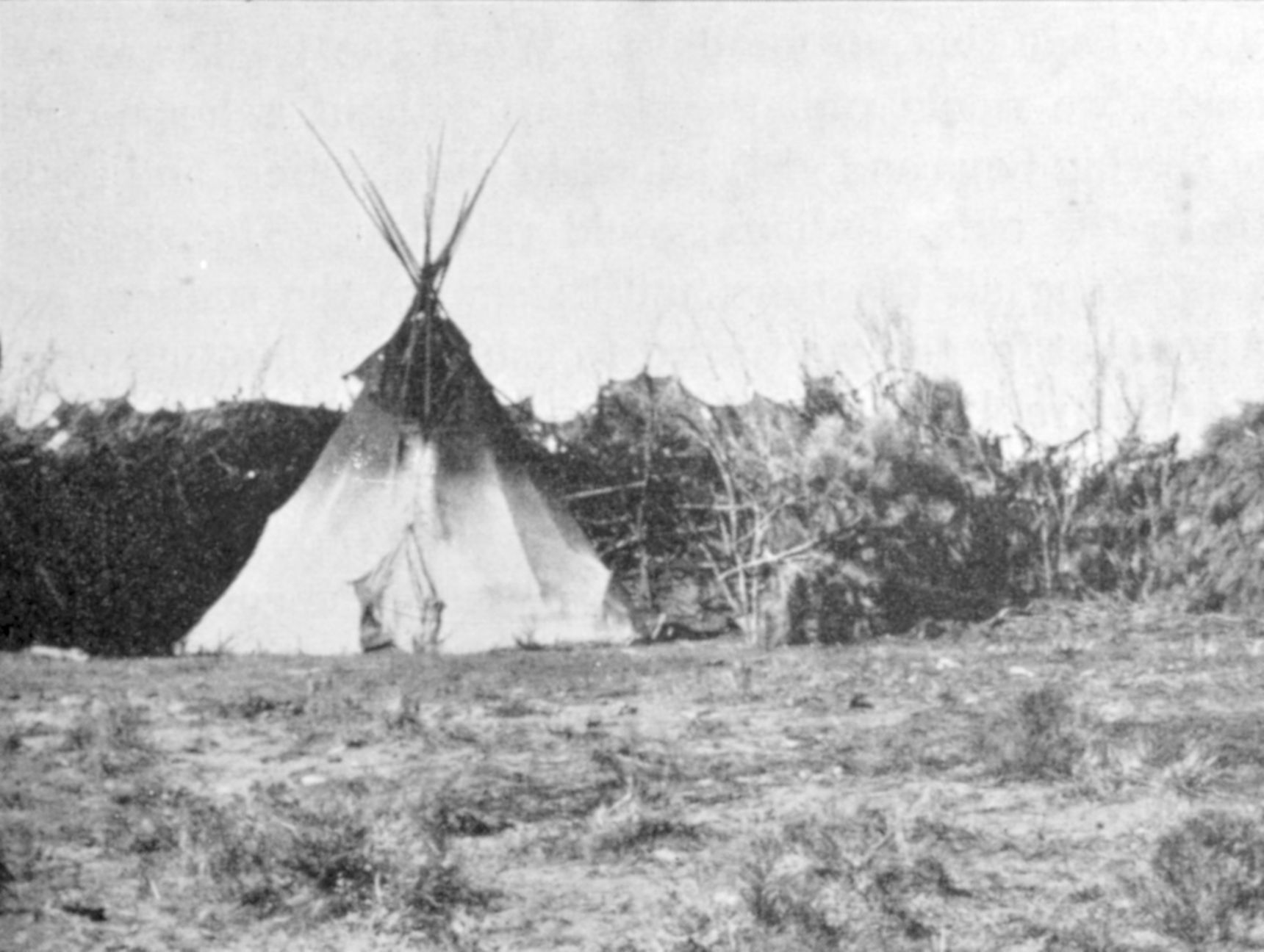
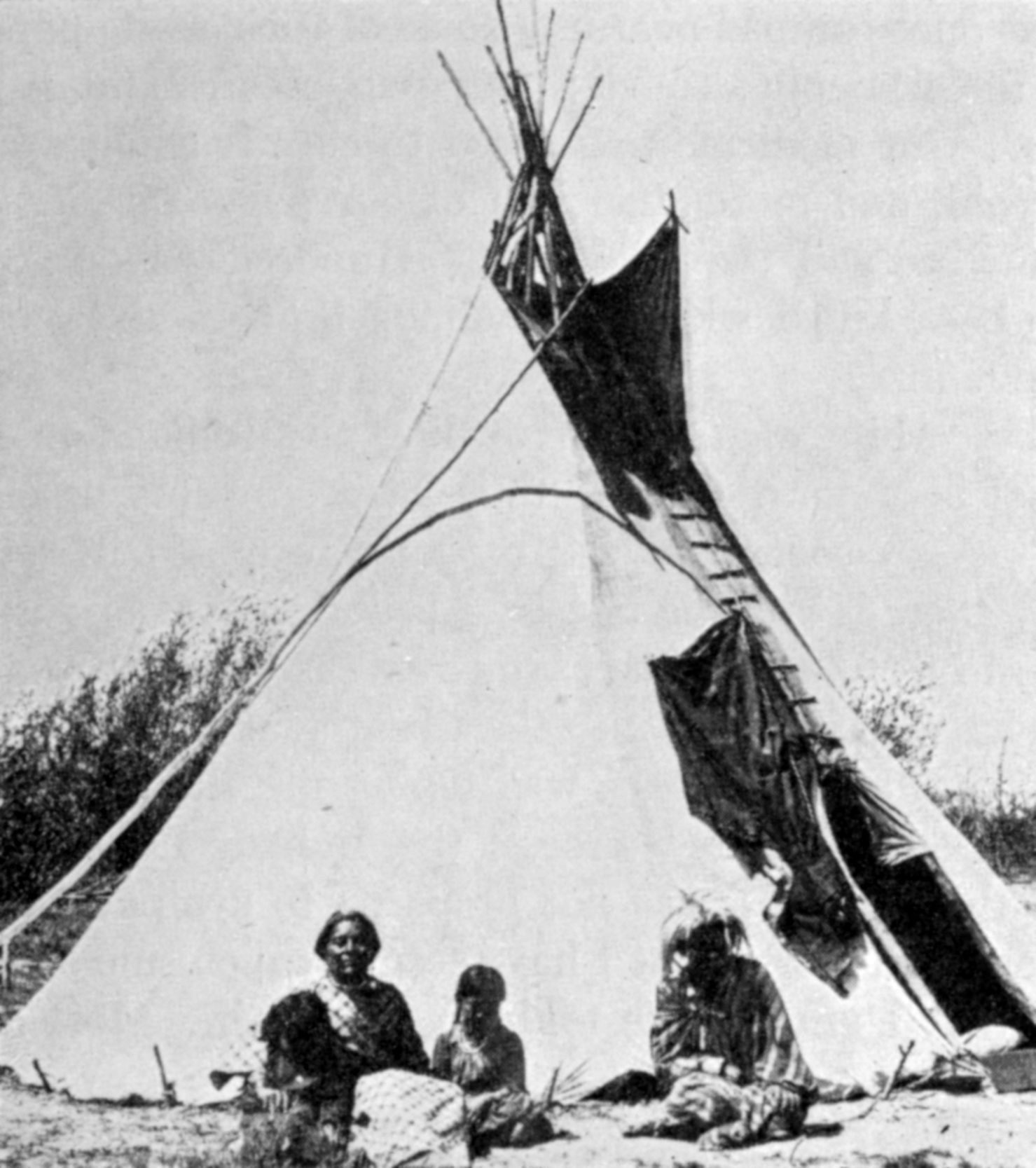
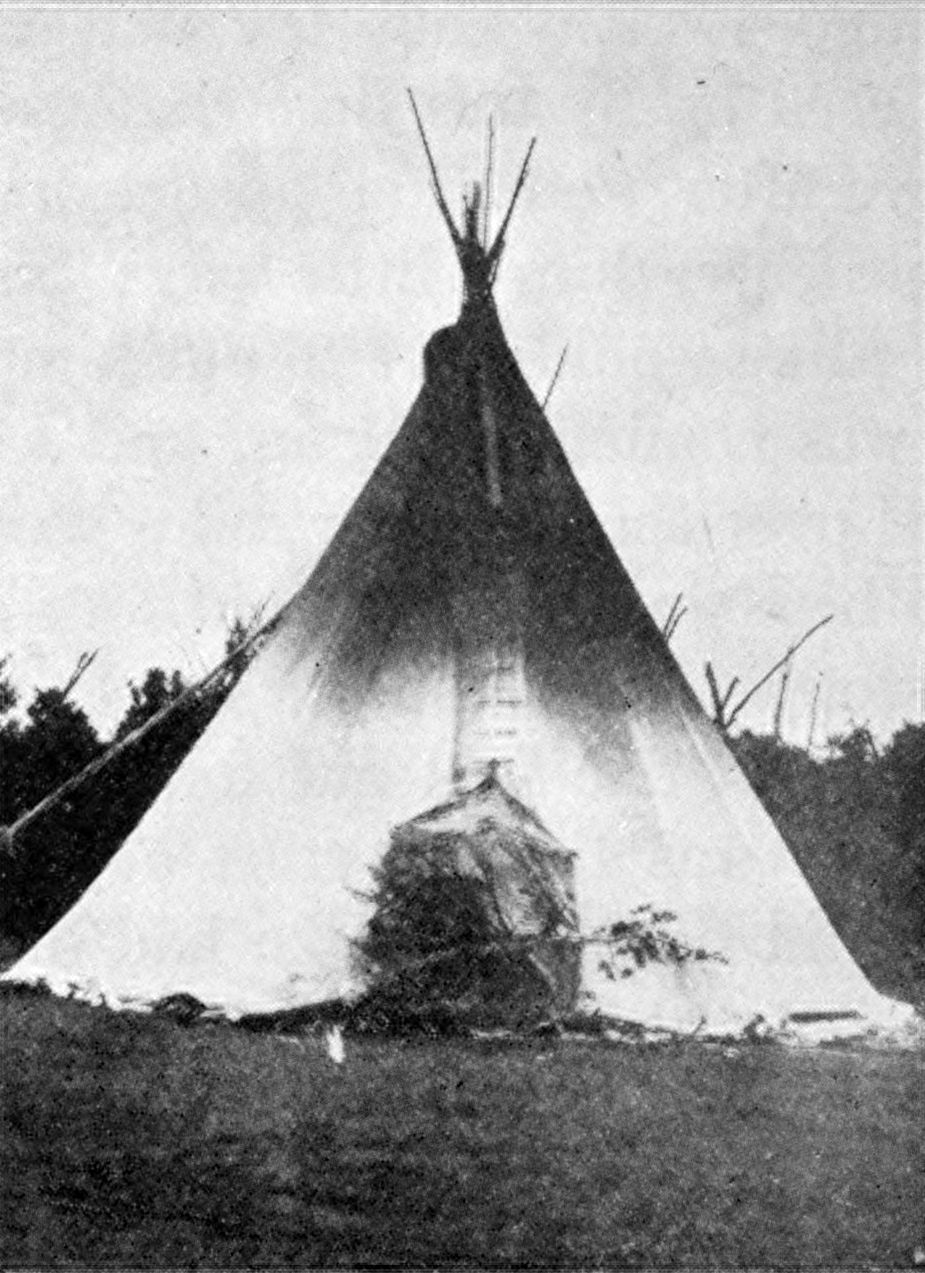
A Crow Indian tepee.
I waited and waited for Washakie to come back. After
a while I began to get scared. I thought that the bears
would smell the elk and
finding me there would
eat me up, so I put off
to where we had left
our horses; but I could
not find them. Then
I started back to the
elk, but I could not find
it. I was so bewildered
that I did not know
what to do. The timber
was thick, and I was
getting more scared all
the time. I tried again
to find our horses and
failed. By this time the
sun had gone down, and
it was very gloomy
among the trees. I
climbed another tree
and waited for a long
time. I was afraid to call for fear of bringing a bear on
to me.
Afterwards, I learned that I had not left the elk long
before Washakie came and took the entrails out of it, and
as he did not see my horse, he thought that I had gone to
camp. Before following the elk, he had tied my horse to
a tree, but it had broken loose and run away. When
Washakie reached camp, some Indians told him that they
had seen my horse loose with the saddle on. He did not
know what to do. Mother was frantic. She started right
out to hunt me, and a big band of Indians followed her.
A little while after dark I heard the strange noise they
were making. I thought the Crows were after me; so I
kept quiet, but pretty soon I heard some one calling—“Yagaki!
Yagaki!” Then I knew that it was one of
our Indians, so I answered him. In a little while there
was a crackling of brush right under my tree.
“Where were you?” he shouted.
“Here I am,” I said.
“What were you doing up there?” he asked.
“Looking for my horse.”
“Well, you won’t find him up there,” he said. “Come
down here.”
I minded him in a hurry.
“Now, get on behind me,” he said; “the whole tribe
is looking for you, and your poor mother is nearly crazy
about you. It would be better for her if some one would
kill you, and I have a notion to do it. It would save her
lots of trouble.”
When he got out of the timber, he began to halloo just
as loud as he could to let the rest know that I was found.
Then I could hear the Indians yelling all through the
woods. We reached camp before mother came in, and I
wanted to go back to look for her, but Hanabi would not
let me. She said that I might get lost again; that I had
given mother trouble enough for one night.
It was not long before mother came. She grabbed me
in her arms and said, “Yagaki, Yagaki, where have you
been? I was afraid a bear had eaten you.” She talked
and cried for almost an hour. She blamed Washakie for
leaving me alone and said that I should never go off with
him again; she would keep me close to her.
The next morning I went with mother and another
squaw to get the elk. Washakie asked me if I thought
I could find it. I told him that I knew I could, so we
started and I led them right to it. As we were skinning
the elk, mother said that I had spoiled the skin by
shooting it so full of holes. But the meat was fat and
tender.
About ten days after this our band of young warriors
came back. They had captured thirty-two head of horses,
but one of our Indians had been killed in the skirmish
they had with the Crows. One of the band told me all
about their raid. He said that they went over to the headwaters
of the Missouri River—Sogwobipa, the Indians
called it. There they found a small band of Crow Indians,
but the Crows had seen them first, and were ready for them.
Just after dark our Indians tried to run off a band of Crow
horses they had seen, but they were met with a shower
of arrows and a few bullets which killed one of their party
and wounded five or six of their horses. One horse was
so badly crippled that he could not travel, so the rider
jumped on to the horse belonging to the dead Indian
and they all broke back as fast as their horses could carry
them. They were chased by the Crows all night, but
they finally made their escape.
Albert Schlechten, Bozeman, Mont.
Headwaters of Missouri River, Montana. The Gallatin, Jefferson, and Madison rivers join here to make the Missouri
River. The country around these rivers was a great hunting ground in the early days for Shoshones, Crows,
Nez Percé, Selish, and other Indian tribes.
A few days after this as they were going through a
range of mountains, they came suddenly upon a small
band of Crows, killed two of them and took all their
horses. They thought the whole tribe of Crows was
following them, so they made a bee line for home. I
thought it was pretty rough for about fifty to jump on a
few like that, kill some and rob the rest of their horses.
I think that Washakie did not like it either. When I told
him that it was not fair, he said it was too bad, but that
the Crows would have treated us just the same.
The Indians were uneasy. They felt sure that the
Crows would follow and attack us any minute, so we kept
a strong guard out all the time. Washakie thought it
best to get a little farther from the border line and in a
more open country where they could watch the horses
better. The Indians did not appear to value their own
lives so much as they did their horses.
I asked Washakie why it would not be better for the
chiefs to get together, talk the matter over, and stop
this stealing and fighting. He laughed and said that
when I got older I might fix things to suit myself, but as
things were going there, he had to be a little careful.
Some of his men would rather be fighting than at peace;
and Pocatello was poisoning the minds of as many of the
tribe as he could with the spirit of war, to draw them
away with him. For his part, Washakie said, he would
rather live at peace.
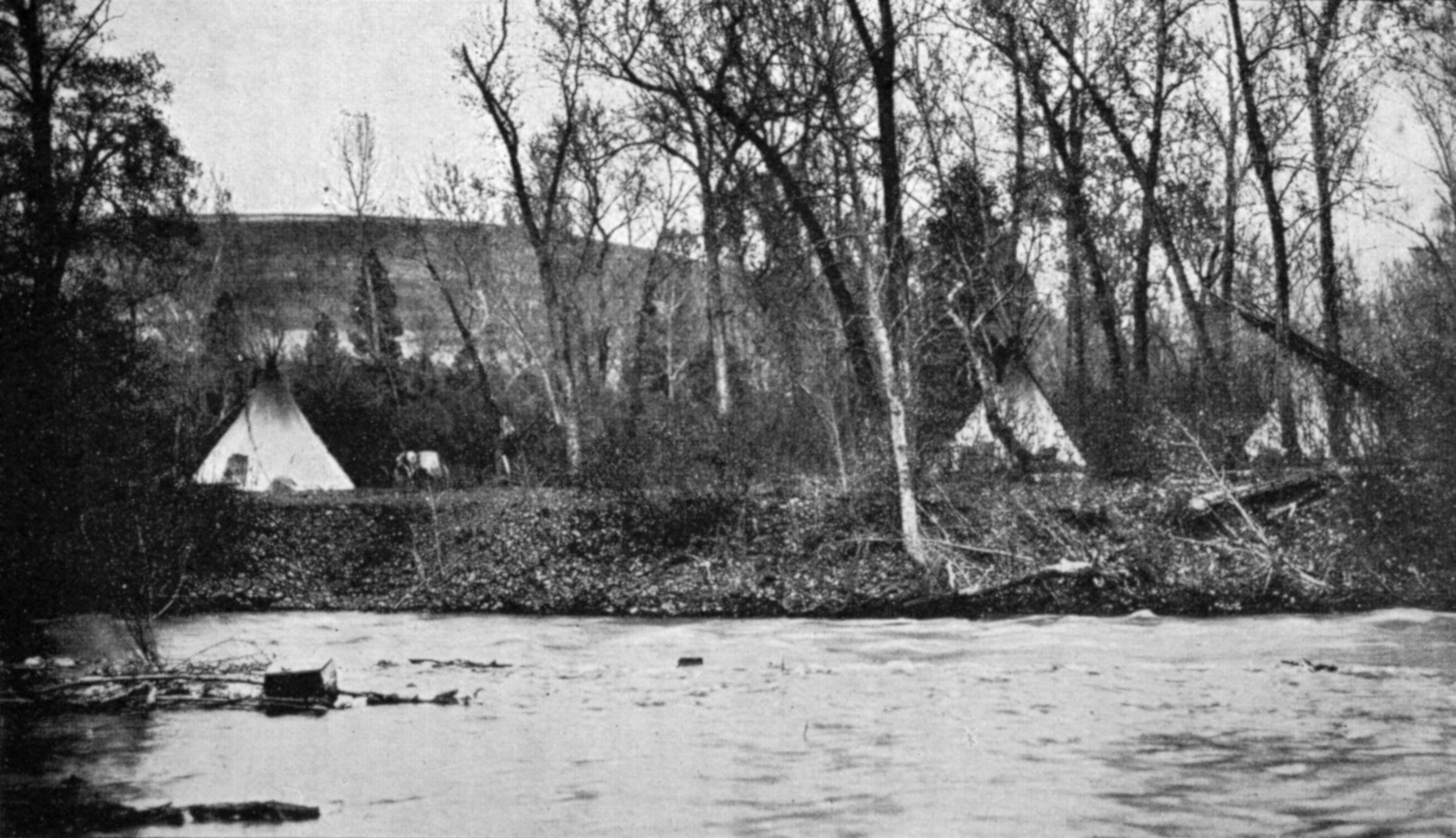
The camp packed up and made a start from the open
country. We made a long string of Indians, horses, and
dogs trailing through the hills. For about a week we kept
traveling southward along the river that came out of the
beautiful lake until we reached another large stream.
When these two streams came together, they made a
very large river. It was the Piupa, or Snake River, which
we had crossed before. We pitched our tepees by a
stream that flowed into the north fork of this big river.
It was not very wide, but it was deep and full of fish.
We papooses had heaps of fun catching them.
After we had been in camp here a few days, Washakie
told me that I might begin breaking the colts. That was
more fun for me. We caught one, tied it to a tree and let
it stand there until it stopped pulling back, then we led
it to water. We staked it out near camp and let it stay
there to feed all night. The next morning I found that I
could lead it alone to water, so I thought I would try to
ride it.
I was putting my saddle on it when mother said, “You
had better ride it bareback.” I told her that I could not
stay on without my saddle, so she told me to do as I liked.
The colt, however, objected so strongly to being saddled
that he came near getting away from me.
Howard R. Driggs
Crow Indian ponies feeding among the sage. From a photograph taken
near Custer battle field, Montana.
“Put a blanket over its head, so it cannot see,” said
mother.
I tied the broncho to a brush, threw a blanket over its
head, and mother helped me to tie it on. By this time
about fifty kids had gathered around to see the fun.
When the saddle was cinched, mother said, “Now get on
and I will pull the blanket off its head.”
I mounted carefully and then said, “Let him go.” Off
came the blanket and away went the horse. He whirled
and sprang into the air, coming down with his head between
his forelegs. I went flying toward the creek,
and I didn’t stop till I got to the bottom of it. When I
crawled out and wiped the water out of my eyes, I could
see that colt going across the prairie with my saddle under
his belly and kicking at every jump.
“Let him go,” said my mother, as I started after him.
I said I would ride that horse if I never killed another
Indian.
“How many have you killed?” she asked in surprise.
“Not half as many as I am going to,” I said. “And I
have half a notion to start in on some of these black imps
that are laughing at me.”
When I got some dry clothes on, a young Indian rode
up on a horse and I got him to go and catch the colt for
me. He brought the broncho back and helped me tie a
strap around him so tight I could just put my fingers
under it, then he held the colt while I got on him.
When I said, “Let him go!” the colt leaped into a run
and the young Indian followed after me, keeping it out of
the brush and away from the horses that were staked
around. The colt soon got tired and stopped running. I
had a fine ride. After a while we went back to camp and
I staked the colt out for the night. The next day I rode
the broncho again, and very soon I had it well trained.
It took mother and me some time to gather up my saddle,
and when we got it together we could hardly tell what
it had been in the first place; but after about a week of
mending, we made it a great deal stouter than it was.
The next colt was not so fractious and I soon got so that
I could ride any of them without much trouble.
About this time we had another stampede. One night
a guard came running into camp with the word that he had
seen a big band of Crows coming. It was in the middle
of the night, but all of the squaws and papooses were
pulled out of bed and ordered to get into the brush and
stay there till morning. I told mother that I would not
go one step without my horse. She said that I could not
find him in the dark, but I was certain that I knew right
where he was, and off I put with mother after me calling,
“Yagaki, Yagaki, come back, come back.” I outran her,
however, and happened to find my pinto. Jumping on
it I dashed back to mother. She scolded me and told me
that the Crows might have got me; but I said I would
have to see the Crows before I believed there were any
within a hundred miles of us.
The Indians, however, gathered up all their horses and
stayed around them all night. Mother, Hanabi, and I
went down to the river about a mile away to hide among
the willows and trees with seven or eight hundred other
squaws and papooses. They made such a racket with their
excited talking and crying that no one could sleep. All
of them expected to be killed before morning.
But morning came and no Crows. The Indians were
mad as hornets, or at least they acted that way. Washakie
sent out some men to where the guard said he saw the
Crows. They found that he had seen only a big dust and
thought it was made by their enemies. I asked Washakie
if he thought that there was any real danger of the Crows
coming to attack us. He said that he did not think
they would come to fight us in this place, but that they
might try to steal our horses, or even attack small bands of
our Indians if they ran on to them away from camp.
Every once in a while after that we would have a Crow
scare. If the Indians saw a cloud of dust, they thought
the Crows were after them. They acted like a band of
sheep that had been run by coyotes. Every little thing
would scare them. It made me tired to see them so
cowardly. I told Washakie that I did not think they
would fight if they had a chance.
“When are you going to send more Indians out to steal
the Crows’ horses?” I asked him.
“Why, do you want to go with them?”
I told him that I had not lost any horses.
“Well, we have,” he said, “and we are going to get them
back before snow flies. The War Chief will attend to that.”
I found out afterwards that Washakie meant business.
He was no coward.
CHAPTER NINE PAPOOSE TROUBLES
“I flung the lasso over his head and jerked him from his pony.”
After this second Crow scare, things quieted down again.
I kept on breaking colts, and whipping kids once in a
while. One day while I was riding a wild colt, the boy
whom I had kicked before for trying to see my sore legs
began to act smart again. He was riding with other
papooses along with me to see the fun, and every once in
a while he would poke my pony with a stick to see him
jump. I warned him once or twice to quit; but this
only seemed to make him worse.
I had a long rawhide rope around the colt’s neck, and
I made a noose in the loose end. When he punched my
horse again, I flung the lasso over his head and jerked
him from his pony. This scared my broncho and he broke
into a run. Before I could stop him, I had nearly choked
the life out of that kid. The blood was coming out of
his nose and mouth and I thought that I had surely killed
him; but as soon as I loosened the rope, he began to bawl,
and when he got up he put out for camp on the dead
run, yelling and groaning as if he was being murdered.
I started for camp, too, for I knew that things would be
popping pretty soon. As he passed our camp, mother
asked who had hurt him. “Yagaki!” he cried, running
on to his mother.
Before I got home, mother met me and asked, “What
have you been doing, Yagaki?”
“Trying to kill that blamed kid,” I said.
“Well, you have nearly done it this time,” she said.
“How did it happen?”
I told her all about it.
“It will cause another camp fight,” she said.
I turned loose the colt I was riding and started after
my pinto pony.
“Where are you going?” she asked me.
“After my horse.”
“What for?”
“Because I want him.”
When I had caught and saddled my pony I saw the
boy and his father and mother with some more Indians
coming towards our tent. I jumped on my horse and
started off. Mother called to me to stop, but I kept on
going. I thought that if they wanted to fight they could
fight; I was going to get out of it as fast as my pinto
could carry me, so I went up the river and hid in the
brush. After dark I heard the Indians calling “Yagaki,
Yagaki,” but I would not answer them.
After a while the mosquitoes got so bad in the brush
that I could not stay there, so when everything was still
I crept out, but I did not know where to go or what to do.
I sat down on a stump and tried to decide. I knew that
there would be a racket in camp and I felt bad on account
of mother, but I was not a bit sorry for the papoose I
had hurt; just then I almost wished I had killed him.
I had some pretty mean feelings as I sat there on the
stump. I was more homesick than I had ever been
before.
Bur. Am. Ethnology, Smithsonian Institution
Indian girls carrying water.
It was not a very pleasant situation, I tell you, to be so
far away from home among a lot of Indians who were mad at
me. I did not know but that they would kill me. I was
worried; but after thinking the matter over I decided that
it would be better for me to go back and face the music.
When I got near camp I met a lot of Indians that
mother had sent out to hunt me. They said that Washakie
was also out trying to find me. When I asked them what
the Indians were going to do to me, they said that they
would do nothing, that I had done what any of them
would have done. I told them that I was afraid that it
would start another camp fight, but they laughed and
said it would not. This made me feel much better.
When I reached camp, mother asked me where I had
been. I told her and she said I was a foolish boy for
running away like that. “Well,” I said, “I thought it
might stop another camp fight if I went away.”
It was not long before Washakie returned. He gave me
a long talk, telling me not to run away any more but to
come to him if I got into trouble again. He would see
that I did not get hurt. I told him that I thought I had
better go home, for I was always getting into trouble
and making it hard for mother and him. He told me he
would not let me go home for that, but advised me to be
a little more careful, as I might have killed the boy. “A
rope tied to a wild horse and around a boy’s neck,” he
said, “is not much fun for the boy.”
“Well I forgot about the rope’s being tied to the horse,”
I said, “the boy made me so mad that I did not know
what I was doing.”
Washakie said that the boy’s neck was badly skinned
and that his father and mother were very angry about it,
but that he would try to calm them. The other papooses
who saw it thought that I did just right. The chief had
a long talk with the boy’s parents, and I heard no more
about it, but I saw the boy wearing a greasy rag about
his neck, and whenever I came near, he would look very
savagely at me.
The mosquitoes made us move from this camp. We
went east nearly to the Teton Peaks, where we found
game plentiful and the streams full of trout. The valley
with its river running north and south through the middle
of it was beautiful. There was no timber on the banks
of the stream, but it was bordered with great patches of
willows from one to two miles wide extending for about
twenty miles along it. The white-tailed deer were
plentiful among the willows. I killed five while we were
there and mother tanned the skins and made a suit of
clothes for me out of them. The clothes were nice and
warm. The Indians also killed a number of moose among
the willows.
Albert Schlechten, Bozeman, Mont.
A white-tailed deer.
Washakie told me that his tribe had had a great fight
with the Sioux Indians in this valley many years before
when he was a small boy. He said that his people lost
a great many of their best men. He took me all over
the battle ground.
We stayed in this valley about thirty days and I began
again breaking colts. When I brought up the first one,
mother said, “Leave your rope here.” I told her I could
not manage the colt without it.
“Well, don’t use it on any more papooses,” she said,
and I minded her.
The Indians killed a great many elk, deer, and moose
while in this valley, and the squaws had all they could
do tanning the skins and drying the meat. I asked
Washakie if he was planning to winter in this valley.
“Oh, no,” he replied. “The snow falls too deep here.
After the buffalo get fat, and we kill all we want for our
winter use, we will go a long way west out of the buffalo
country, but where there are plenty of deer and antelope
and fish. Some of the fish,” he said, “are as long as you
are.”
Berries were getting ripe, so we papooses would go with
our mothers up in the hills and gather them to dry. It
was great fun. One day, however, things got pretty
exciting. We were in a canyon busy gathering the
berries when all at once we heard a terrible screaming.
Pretty soon there came a crowd of squaws and papooses.
One was yelling, “A bear has killed my girl.”
I jumped on my pinto pony, for I was riding him that
day, and started up through the brush as fast as I could
go. When I got a little way up the canyon, where the
brush was not so thick, I could see a bear running up the
hill. I went a little farther and found the girl stretched
out on the ground as if she were dead. Then I shouted
as loudly as I could for some of the Indians to come back,
but they had all gone. I tried to lift her on to my horse
but she was too heavy for me, so I laid her down again.
Then she asked me for a drink. I took the cup she had
been picking berries in and gave her some water. Then
she said she felt better.
“Where is my mother?” she asked.
I told her that they had all run down the canyon like
scared sheep. Then I helped her to her feet. She was
crying all the time, and she said that her head and side
and arm hurt her very much. I asked her if she could
ride. She said she would try, so I helped her up on my
horse and led it until we got out of the canyon. Then
she told me to get on behind her as she thought she could
guide the horse. We had about four miles to go, so I
climbed upon the pony with her.
When we got in sight of camp we saw some Indians
coming full tilt, and when they met us there was the
greatest hubbub I ever heard. When we reached the
camp the girl’s mother came running up and threw her
arms about the girl and acted as if she were crazy. She
would have hugged me too if I had been willing. She
said that I was a brave boy. Mother came up and said,
“Yagaki, I thought you had come down to camp ahead
of me or I never would have come without you.”
New York Zoölogical Society
A black bear.
“Oh, you were as scared as any of them,” I said.
“I know I was scared,” she said, “but I never
would have left you, if I had known you were still in
the canyon.”
That night the girl’s father and mother came to our
tepee to see what I wanted for saving their daughter’s
life. I told them that I wanted nothing.
“You are a good, brave boy,” said her father.
I asked her mother why she ran away and left the girl.
“Well,” she said, “I saw the bear knock my girl down
and jump on her and I thought she was dead, and I
thought the bear would kill me, then there would be two
of us dead.”
The father said that the bears killed many people because
they tried to help the one that was first caught.
He felt that it was better for the rest to run. I did not
agree with him. I thought that everybody should help
kill the bear even if they did run the risk of getting
killed.
“Yes, you have already shown what you would do,”
said my mother. “You are a brave boy.”
“It was a brave act for a boy,” said Washakie; “but
we must not brag too much about Yagaki or he will begin
to think he is a great hero. It is about time we went to
sleep.”
The girl’s mother told me that I might have her daughter
for a wife when I got big enough; but I told her she could
keep the girl, I did not want her.
The next day I wanted mother and the other Indians
to go up the canyon after more service berries, but they
wouldn’t go a step. They had had bear scares enough for
that time. The Indians left the bears alone unless they
caught these animals in the open.
One morning we saw two bears crossing the valley.
About fifty Indians on horses started after them. I ran
and got my pinto pony. When I came back for my
saddle, mother asked where I was going.
“To help kill those bears yonder.”
“No, you are not,” she said.
“Oh, let him go,” said Washakie, and she consented.
I jumped on the horse and started after the bears as hard
as I could go. The Indians had headed them away from
the timber and were popping arrows into them. My
horse was not a bit scared so I ran up to one of the bears
and shot three arrows into his side.
“Keep back, you little dunce,” shouted the Indians,
“that bear will tear you to pieces.”
But the bear was too full of arrows to tear much. He
looked like a porcupine with his quills on end. Very soon
the two bears dropped dead; but their skins were so full
of holes that they were not worth much; the meat was
not much good either.
S. N. Leek, Jackson, Wyoming
A baby elk in its hiding place.
That night the Indians had a big dance around the
two hides. I joined in the fun and sang as loud as any
of them. They thought I was pretty daring. One old
Indian said, “The little fool doesn’t know any better.
If a bear once got hold of him he would not be so brave.”
But they gave me one of the hides and mother tanned it
and sewed up most of the holes. It made me a very good
robe to sleep in.
While we were in this valley another small band of
Indians joined us. The girl that had hit me with the
fishing pole was with them. When she saw that the
other Indians liked me so much, she wanted to make up
with me. She came around several times before she
said anything to me, but finally one day she walked over
to where I was helping mother stake down a moose hide
to dry and said, “Yagaki, I am sorry that I hit you that
day with the fish pole.”
“I am not,” I said.
“Why?” she asked.
“Because we had lots of fun that day.”
“Why don’t you be friends with her?” mother asked.
I said that I did not want to be her friend.
“You are a mean boy,” said mother; “you should be
friends.”
“Not much,” I said; but I did finally tell the girl that
it was all right.
Then she wanted me to go over to their tepee and
play, but I told her that I was afraid her mother would
cut my head off.
“No,” she said, “mother will not hurt you. She feels
sorry for what we did to your folks, and so does my
father.”
Well, we passed the trouble over and became pretty
good friends after that.
Creel
A squaw tanning buckskin.
By this time we had gathered most of the berries that
grew along the foothills; the squaws were afraid to go
farther into the mountains after the bear excitement;
so then they stopped berry picking and went to work in
earnest tanning buckskin and drying meat for winter
use. The Indians quit hunting for elk and deer; for
they already had all of the skins that the women could
get ready for the trading trip they had planned.
It was the custom of the tribe to make a journey almost
every fall to Salt Lake City, and other White settlements,
and swap their buckskin and buffalo robes for red blankets,
beads, ammunition, and other things they needed. Mother
and Hanabi worked all day and away into the night to
get their skins ready in time, and I helped them all I
could. I got an old horse and dragged down enough
wood to last while we stayed there. I carried all the
water for them, and no kid dared to call me a squaw
either.
Finally the time came for us to begin killing buffaloes
for our winter’s supply of meat. We did not have to
hunt them, however, for we could see them at any time
in almost any direction. Many a time I went out with
Washakie to watch the hunters kill the buffaloes. Washakie
wanted only five and we soon got them; but it took
mother and Hanabi a good many days to tan their hides
and get the meat ready for winter.
CHAPTER TEN A LONG JOURNEY
“Three or four buckets of water came over me.”
Nothing went wrong while we were getting ready for
the long trip to market, and finally everything was in
shape to pack up. Our camp by this time was very large,
for Indians had been coming in every few days until there
were fully a thousand of them, and there must have been
as many as five thousand horses. When we took the
trail, I could not see half of the long string of pack animals.
We had twenty pack horses for our own family, loaded
with buffalo robes, elk and deer skins, and our camp outfit.
Washakie had a fine big tepee of elk hides made so it
would shed rain. It could be divided in two parts.
Sometimes if we were going to stop just one night, we
would put up only half of it; but if we made a longer
camp, we would set up the whole wigwam.
After we were well started, I noticed that the Indians
broke up into small bands. That night there were only
twenty-five tepees left in our camp. Washakie said
that it was better to travel in small parties, for we could
make better time and get better pasture for our horses.
In two or three days we reached the big river where I
had come near choking the papoose to death with my
rope. It was quite wide and the current was very swift
where we forded it. When we got in the deepest place,
mother’s horse stumbled over a boulder and fell, and
away went mother down the stream; for she could not
withstand the swift current. I saw her going and started
after her, but I could not catch her until she was carried
into the deep, quieter waters. My horse was a good
swimmer, and I was soon at her side. I pulled her to
the bank and tried to help her out of the water, but the
willows were so thick at this place we had a hard time
getting on land. Washakie hurried to the rescue.
“You came nearly going to the Happy Hunting Grounds
that time, mother,” he said.
Washakie thought that we had better stop there so that
mother could put on dry clothes and get over her scare,
for he was afraid it would make her sick. We pitched camp
for the night by a grove of cottonwoods near the river.
Just before dark an Indian came running in and told
Washakie that the Crows had overtaken a small bunch of
our Indians and had killed them and taken all their
horses. Washakie ordered the War Chief to take every
one of our warriors and follow the Crows clear into the
Crow country if necessary to punish them. The War
Chief told his men to get ready for a long trip, and the
women and children to hide in the willows until they
heard from them. I never saw greater excitement among
the squaws and papooses than we had that night. They
were bawling, and yelling, and rushing everywhere.
“Come on, Yagaki,” called mother, “let us get into
the brush.”
“Not much,” I said, “I am going with the warriors to
kill Crows.”
Mother grabbed me by one arm and Hanabi by the
other, and mother began to cry and say to Washakie,
“Make him come; make him come.”
Washakie laughed and said that I was just fooling,
that I hadn’t lost any Crows. He said that he was going
to guard the camp.
“So am I,” I said. With that mother let me go. I
ran and caught my pinto pony, put my saddle and a few
buffalo robes on him and went with mother and Hanabi
down the river. When we reached the rest of the crowd,
I could hear the papooses howling like a pack of young
coyotes.
“What is the use of hiding and making such a racket?”
I asked. “If the Crows have any ears they can hear
this noise for five miles.”
Mother said that it made no difference for the Crows
did not dare to come into the brush after us.
“Are the Crows as big cowards as our Indians?” I
asked.
She said that they were.
“Then there is no danger,” I said; “we had better go
to sleep.”
It was not long before we heard Washakie call for us to
come back.
“There,” I said; “another scare is over with no Crows
at all. I shall never hide again.”
When we got to camp we learned that a few Crows had
chased some of our Indians and had fired a few shots at
them, but nobody had been killed, and not even a horse
had been stolen. About fifty of our young warriors were
following the Crows; but I knew that they would never
overtake them.
E. S. Curtis
Indians traveling.
The next day we packed up early and hit the trail
pretty hard. For several days we headed south. We
left the Piupa, or Snake River, and crossed over the
mountains. Finally we came to a place called Tosaibi,
which I learned later to be Soda Springs, in southeastern
Idaho. We could not use the water of these springs, so we
went on a short distance and camped on a good-sized river
which the Indians called Titsapa; this was the Bear River.
They said that this stream ran into a big salt lake that
reached nearly to my old home. That started me to
thinking about my dear father and mother, my brothers
and sisters I should like so much to see, and I could feel
the tears running down my cheeks. Mother saw them
and came and sat down by my side.
“Yagaki,” she said, “I fear you do not like to live
with us.”
“Why do you say that?” I asked.
“What are you crying about?”
I told her that I was thinking of my white mother.
“Am I not as good to you as your own mother?” she
asked.
I told her that she was. But I could not help wanting
to see my white mother and my people just the same.
We followed down the Titsapa for one day’s travel and
there we stayed for three days. At this place part of
our band was going to leave us and make the journey to
Salt Lake City to sell our robes and buckskins and what
furs we had. I wanted to go with the party, but mother
would not let me. Hanabi and Washakie went. They
took twelve pack horses very heavily loaded and also
two young horses to sell if they got a chance. They left
mother and me with the camp outfit and sixty-four head
of horses to look after. Those that were not going to
Salt Lake City intended to go off northwest and strike
the head of another river, about four days’ travel away,
and stay there till the others returned.
When mother and I went to packing up for our return,
we found that we did not have pack saddles enough for
all of our camp outfit. Besides our tepee, bedding,
clothing, and utensils, we had sixteen sacks of dried meat
and two sacks of service berries. This was too much for
our eight pack saddles. Mother said that we could get
along if we had two more saddles so I told her to use mine
for one and I would ride bareback. She did not like to
do this, but she finally consented, and another boy let us
have his saddle, so we packed ten horses. This took a
good deal of time each morning.
After three days of slow traveling we reached the head
of a stream which they called Tobitapa; the whites now
call it the Portneuf River. There were fifteen squaws,
about thirty-five papooses, and three old men Indians
in our camp.
Washakie thought it would take them fifteen days to
go to Salt Lake City and get back to where we were.
I asked mother whether she was not afraid that the Crows
would come and kill all of us while they were gone.
“No,” she said, “the Crows never come this far south.”
Then I asked her why she did not want me to go to
Salt Lake City with the others. She said that she could
not take care of so many horses without me to help, and
she was afraid, too, that the white men would take me
away from her.
“Is that the reason Washakie does not like to take me
with him when he goes among the whites?” I asked her.
She told me that Washakie said that if I ever got
dissatisfied and wanted to go home, he would give me my
horse and a good outfit, and see that I got home safe.
“But,” she said, “I hope that you will never want to go
away, for I believe it would kill me if you should leave
me.” I told her not to worry because I thought that I
should always stay with her. It always made her seem
happier when I would tell her that. If she ever saw me
look unhappy, she would turn away and cry. She did
everything she could to make me happy, and I tried to
be kind to her.
Mother was afraid that I would get sick from not having
bread and milk to eat, for I told her that was what I
always had for supper when I was home. She thought
that eating meat all the time would not agree with me
and would make me unhealthy. Often she would have
fried fish and fried chickens or ducks for supper. When
I first went to live with her, she made a small sack and
tied it to my saddle. She would keep this sack full of
the best dried fish when we were traveling, so that I could
eat if I got hungry; for she said that I could not go all
day without eating anything, as the Indians often did.
Every morning she would empty my lunch sack and
refill it with fresh food. She soon found out what I liked
best, and she always had it for me; so you see I had plenty
to eat, even if I was with Indians; and that is more than
a great many white children had at that time.
I was very healthy while I was with the Indians. I
think the reason was that I did not like their way of
doctoring. When any of them got a cold, they would
dig a hole two or three feet deep by the side of a cold
spring. Into this hole they would put a few cobblestones.
Then they would build a fire in the hole, get the stones
right hot, and then scrape the fire all out. The sick person
had to get into the hole with a cup of water, and after
being covered with a buffalo robe, he would pour the
water on the hot rocks and make a steam. This would
make him sweat like sixty. When he had sweated long
enough some one would jerk off the robe and he would
jump into the cold water of the spring. As soon as he
got out of the water, they would throw a buffalo robe
around him, let him sweat awhile, then they would cool
him off gradually by taking the robe off a little at a time
while he quit sweating. He was then supposed to be
well.
Dr. T. M. Bridges
Indian sweat house covered; fire in foreground.
One chilly day I was out hunting chickens, and was
quite a distance from camp when a heavy rainstorm came
and soaked me through before I could get home. That
night I coughed and coughed so that nobody in our
tepee could sleep. The next day mother wanted to dig
a hole for me. I told her that I did not want a hole dug
for me until I was dead. She begged me to take a sweat.
“Not much,” I said, “no more of your jumping into
springs for me.” I had not forgotten how they tried to
cure my sore legs with a salt-springs bath.
She said that it would not hurt me. But I told her
that I was played out and I would not do it.
“Well,” she said, “you need not jump into the cold
water. The heat of the rocks and the steam from the
ground will sweat you enough.”
“You had better do it,” said Washakie, “before you
get sick in bed.”
“All right,” I said, “go to digging.”
Very soon she had the hole dug and everything ready,
then she said, “Come now, pull off your clothes and get
in here.”
“Pull off nothing,” I said.
“You must,” she said.
“Jerk them off,” urged Washakie; “I will hold this
buffalo robe over you so that you will not be seen.”
Dr. T. M. Bridges
Framework of an Indian sweat house.
So off came my clothes and into the hole I went. I got
over the rocks just the way an old sitting hen does over
her eggs. Mother gave me a cup of water and I poured
it over the heated boulders. She stood there to keep the
robe over the hole and kept asking me if I was sweating.
I told her that I was getting wetter than a fish; but for
some cause she kept me for quite a while, then she jerked
off the robe and whack! three or four buckets of cold
water came all over me. Oh, I jumped out of that hole
in a hurry!
Washakie stood there with the robe, threw it over me,
carried me into the tepee and put me to bed. Then
he threw more robes over me, and how I did sweat! It
was rough doctoring, but it cured my cold all right.
This was after Washakie and his party had got back
from Salt Lake. They were gone twenty-two days instead
of fifteen. Washakie had disposed of his robes and
skins at a good price, and he had sold the two horses, so
he came back pretty well outfitted for the winter. He
had twenty-four blankets, a lot of calico, some red flannel
for the tongues of moccasins, some underclothing for me,
and about a peck of beads of all colors and sizes. The
beads were to swap for tanned buckskin, and the blankets
for buffalo robes. He brought me a butcher knife, a new
bridle, two pounds of candy, and a lot of fishhooks. I felt
“heap rich” and very happy.
CHAPTER ELEVEN THE SNOWY MOONS
“Away we went to the bottom.”
Snow had already fallen on the mountain tops when
Washakie got back, so he was in a hurry to get the camp
moved to the winter range. Mother and Hanabi began
at once to arrange the packs for traveling. We soon
started for our winter quarters.
We went down the Tobitapa (Portneuf) to the Piupa
(Snake River), then up the Piupa, and then west over
the divide on to the headwaters of Angitapa (Rock Creek).
At this place we stayed six days and killed sixteen buffaloes,
two for each family. That was to be the last killing of
buffaloes until the next year. Washakie bought four of
the buffalo hides from other Indians, which made six
in all. He said that he wanted something for the women
to do through the winter.
When we started from here we went west over a big
mountain upon which we had to camp in about three feet
of snow. We had to tie up all our horses to keep them
from running away, for we had nothing for them to eat.
Early the next morning we were off and that night we
got out of the snow, but it was still very cold. The next
day we came to a beautiful stream. It was not very
large, but it was fairly alive with mountain trout. We
went down the stream two days’ travel and there we
stayed for about a month, I think. Washakie had intended
to winter here, but he changed his mind and
followed the stream farther down until he came to another
river. I do not remember what the Indians called this
river, but they told me that fish as long as I was tall came
up the river in the springtime. We had a very good
camping ground that winter. It was sheltered from the
wind, but we had a great deal more snow than had fallen
the winter before.
About six hundred yards above our camp was a large
grove of dry quaking aspens, mostly small poles. I told
mother that if she would help me pile a lot of them, I
would haul them down with the horses. She did not
believe that I could do it, but she helped me gather the
poles just the same.
Washakie had brought from Salt Lake City the inch
auger I asked him to get for me, so I went to work to
make a sled like the one I had seen my father make. I
got two crooked sticks for runners, pinned on some cross
pieces, and soon had the thing ready. It did not look
much like a sled, but it answered the purpose pretty well.
I got up two lazy old horses of mother’s, put on their
pack saddles and tied ropes from the sleds to the pack
saddles, then I mounted one of the horses and away we
went for the grove. After putting on quite a few poles
and tying them on with a rope, I took the load to camp
without any bother at all. All of the Indians were out
watching me bring in my first load of wood.
“What cannot a white man do?” said the old War
Chief.
In a few days I had all of the wood we needed down to
the camp. Hanabi said that I was as good as two squaws.
After getting our wood up, I lent the sled to some of the
Indians. They thought they could haul wood as well as
I could, so they hitched up their horses and started out.
But they went on higher up the hill where it was steeper
than where I got my wood. Then they put on a big load
and started down. The sled ran into the horses’ heels,
scared them, and they started to run. The horse that
the Indian was riding broke loose from the sled, and the
other horse ran away with the sled fastened to him,
scattering the poles all over the side of the hill, and bolting
down through the camp. The sled jammed against
the tepees and jerked three or four of them down.
Then the frightened horse struck out through some
cottonwoods, slammed the sled against the trees, and
broke it all to pieces.
Shoshone tepee with sagebrush windbreak.
This discouraged the Indians. They said that the
squaws could pack wood if they wanted any, that it was
their work anyhow. That ended the wood hauling.
I got the Indian boys to help me fix up the sled again.
We pulled it up on a hill with a horse and turned it towards
camp. I wanted some of the boys to get on with me and
slide down, but they were afraid. They said they wanted
to see me do it first, so away I went. Then they came
down with the horse and we pulled the sled up again.
By hard begging, I got two of them on the sled. As
soon as we started, one jumped off, but the other stayed
with me. When we reached the bottom, he said it was
the finest ride he ever had. The next time several of
the boys were ready to try it, and five of us got on. Away
we went to the bottom. Oh, what fun we had! It was
not long till they all wanted to get on, and the heavier we
loaded it, the faster it would go. When the track got
slick, the sled would carry us nearly to camp.
We kept this up for days. When the track was well
made, we would pull the sled up without a horse. All
of the big boys and girls joined in the coasting, and sometimes
the older Indians would ride too. The sled was
kept going all the time, until we wore the runners out.
After that for fun we turned to fishing and hunting chickens
and rabbits. Sometimes we would go for antelope,
but when we went for them, some of the older Indians
would go with us to keep us from killing too many. The
Indians were always careful to preserve the game.
Everything went off peacefully this winter. There
was no quarreling nor fighting. One young papoose
and an old squaw died. We lost no horses. We were
a long way from the Crows, so we had no Crow scares.
I had a very good time, and mother seemed to enjoy the
winter as well as I did.
Along towards spring seven or eight of us little boys
were in the cottonwoods shooting birds when one boy’s
arrow hit the side of a tree, glanced, and struck me in
the leg. The boy was badly scared, for he thought I was
going to kick him to pieces, but I told him to stop crying,
that I knew it was an accident. He quit crying, and the
other boys thought that I was getting to be a pretty good
fellow after all, for before this they believed that if any one
hurt me there would be a kicking scrape right away.
Spring came at last. We moved down the river about
fifteen miles where we could get better grass for our
horses. Here were plenty of white-tailed deer and antelope,
some elk, and a few mountain sheep. Ducks and
geese also were plentiful.
We stayed here until about the middle of May. The
big fish they had told me about began to come up the
river. And they were really big ones; two of them made
all the load I could carry. They must have weighed
thirty or thirty-five pounds each. Mother and Hanabi
dried about two hundred pounds of these fish. I afterwards
learned that they were salmon. The first that
came up were fat and very good, but they kept coming
thicker and thicker until they were so thin that they were
not fit to eat.
After a while we moved camp again, going down the
river a little farther and then up a deep and rocky canyon
where there had been many snowslides during the winter.
We crossed over snow that had come down in these slides
that was forty or fifty feet deep and was as hard as ice.
There was not very much timber in the canyon, and the
cliffs were very high. Years afterwards very rich gold
mines were found in this place, a mining camp was started,
and great quartz mills were built.[3]
As we left the canyon, we climbed a very steep mountain
for about two miles, and then went down through
thick timber until we came out on to a beautiful prairie
covered with the finest grass I had ever seen. Off to
the left was a deep canyon where one fork of the Big
Hole River headed, and here we camped for a long time.
The Indians killed a great many black-tailed deer and
antelope and dried the meat. I think Washakie and I
killed seventeen while we stayed here.
Our next move was down to the forks of the river, where
we stayed three or four weeks to give the women time to tan
the deerskins. It was fine fishing in the Big Hole River.
While we were staying here, one of the War Chief’s
boys was accidentally shot and killed. Oh, what crying
we had to do! Every one in camp who could raise a
yelp had to cry for about five days. I had to mingle my
gentle voice with the rest of the mourners. They killed
three horses and buried them and his bow and arrows
with him. The horses were for him to ride to the Happy
Hunting Grounds. When they got ready to bury him,
every one in camp had to go up to him and put a hand
on his head and say he was sorry to have him leave us.
When it came my turn, I went into our tepee and would
not come out. Mother came after me. I told her I
would not go, that I was not sorry to see him go, for he
was no good anyhow.
“Don’t say that so they will hear it,” she said. Then
she went back and made excuses for me.
They took him up to a high cliff and put him in a
crevice with his bedding, a frying pan, an ax, his bow and
arrows, and some dried buffalo meat. After this they
covered him with rocks. When they got back to camp,
they let out the most pitiful howls I ever heard. I joined
them too, just as loud as I could scream, as if I was the
most broken-hearted one in the camp, but it seemed so
foolish to keep up this howling, as they did for five days.
I got so hoarse I could hardly talk.
But I did feel sorry for his poor mother. She was
really grief-stricken. She cut off her hair close to her
head. I asked mother why she did that. She said that
all mothers did it when their oldest boy died. After our
mourning was over, she would still weep bitterly and
sometimes scream out her sorrow.
We next moved down the Big Hole River to where the
town of Melrose is now situated. We stayed here for
about two weeks, then went on till we came to where the
Big Hole empties into the Beaver Head River and forms
the Jefferson River.
Caspar W. Hodgson
Coming in from an antelope hunt on Camas Prairie, Idaho,
years ago before these pronghorns were fully protected.
Here we did nothing but fish. The buffalo were not
fat enough to kill, and besides, we had all of the dried
elk and deer meat we wanted. It was a beautiful place
to camp, and we had the finest of grass for our horses.
I broke a few more colts, two for mother and four for
Washakie. Our horses by this time were getting fat and
looking fine, but my little pinto was the prettiest one of
all. Hardly a day passed but some Indian would try
to trade me out of him. One Indian offered me two good
horses if I would swap, but I thought too much of the
pony to part with him even for a whole band of horses.
He was just as pretty as a horse could be.
Our next journey took us a long way northeast.
Washakie said that we were going where the buffaloes
were too many to count. After about a week of travel,
we reached the north fork of the Madison River, about
on a line with the Yellowstone Park; and oh, the kwaditsi
(antelope) and padahia (elk) and kotea (buffalo) there
were! Every way we looked we could see herds of them.
While we were at this camp another boy was killed by
a horse. He was dragged almost to pieces through the
rocks and brush.
When I heard of it, I told mother to get her voice ready
for another big howling.
“Aren’t you ashamed to talk that way?” asked Hanabi.
“I am afraid you are a hard-hearted boy,” said mother.
After the poor fellow was buried, we went up the
Madison River about ninety miles and camped there for
a month. The buffalo were now in better condition, so
we killed a good many, drying their meat and making
their hides into robes. Then we went on south and came
to the beautiful lake where we had had such a good time
the summer before. It is now called Henry’s Lake, and
is the head of the north fork of the Snake River. We
did nothing here but fish, for we had enough dried meat
to last till we reached the usual hunting grounds.
CHAPTER TWELVE THE FIERCE BATTLE
“The warriors went on and passed … out of our sight.”
We were now traveling towards the Crow country. I
think our Indians were a little afraid that the Crows
were going to try to stop them; but Washakie said that
he was going through if it cost him half of his tribe, for
he was not going to be bluffed off his best hunting ground
any longer.
I thought something was up, because small bands of
Indians kept joining us, until we had gathered about
seven hundred warriors. We sent all of our surplus
horses down the Snake River with Indians to guard them
until we came back. Washakie and mother kept fifteen
head for pack horses, and I kept two horses to ride.
After the extra horses and packs had gone, we started
for the disputed hunting grounds.
The men all went out ahead, followed by the pack
horses, with the women and children and old men in the
rear. Mother warned me to keep close to her, for Washakie
said that the Crows might tackle us that day.
I said that kind of talk was too thin. But we had not
been traveling very long before one of our scouts came
tearing back and said that he had seen where a very large
band of Crows had passed, and had sighted smoke in
the timber ahead.
The men all stopped and bunched together. I heard
Washakie tell them to go ahead, to keep a good lookout,
and if the Crows pounced on them, to fight as long as
there was a man left. I thought that they must be
getting brave.
We started again with the men in the lead as before,
but riding very slowly. Six or eight Indians kept riding
back and forth along our line to keep the squaws and
pack horses from getting scattered.
Pretty soon we stopped again and the War Chief
ordered us to camp there for the night. “We know now,”
he said, “that we must fight or go back, and we have
gone back so much that the Crows begin to think we are
afraid of them. I feel that we ought to give them a
lesson this time that they will not forget soon.”
“That is the way I look at it,” said Washakie. “Now
is the time to show them that we will fight for our rights.”
This seemed to be the way most of the warriors felt,
for I heard them talking about it in their council that
night.
We camped right there, all in a bunch, with hardly
room to make down our beds. A strong guard was sent
to look after the horses, but the night passed off without
any trouble. When morning came, ten men were sent
to see if they could find any signs of the Crows. They
were gone about an hour, when back they came and
reported that about a thousand Crows were camped over
the ridge just ahead of us.
“We will go on to our hunting grounds,” said the War
Chief, “if there are ten thousand of them.”
The Indians painted up in grand style. They drew
black streaks all over their faces to make themselves look
fiercer, and then we got ready and started forward. We
had not gone far when the squaws were ordered to stop.
The warriors went on and passed over a small ridge out
of our sight.
Pretty soon we heard shooting, then an Indian came
and told us to go back until we came to good water and
stay there until we heard from the chief. “They are
fighting now,” he said.
We had hardly reached the stream of water before we
saw Indians come up on the hill and then disappear,
then come in sight again. They seemed to be fighting
fiercely, and they were yelling to beat Old Billy. They
had not been fighting over an hour before half or two
thirds of them were on top of the hill and slowly coming
down the side towards us.
Dr. T. M. Bridges
A Shoshone brave (Fort Hall, Idaho).
The squaws began to cry and say that the Crows were
getting the better of our Indians and were driving them
back. They kept coming closer and closer to us. When
I looked around I saw that the squaws were getting their
butcher knives; they were ready to fight if they had to.
Then I noticed that our men were not coming towards
us any longer. I could see Washakie on his big buckskin
horse dashing around among the Indians and telling them
what to do, and very soon the driving turned the other
way; they began to disappear over the ridge again, and
I could tell that our Indians were beating the Crows.
We could tell the Crow Indians from ours, for they
had something white over one shoulder and under one
arm, and they wore white feathers in their hair. There
were about fifteen hundred Indians engaged in the fight
on both sides, as the battle ground covered quite a piece
of country. We could see a good many horses running
around without riders.
I believe that the squaws would have taken part in
the battle if it had not been for the guard of about fifty
old Indians that kept riding around us all the time to
keep the squaws and papooses and horses close together.
When our men had driven the Crows back to the ridge,
they seemed to stick there; but they were still fighting
and yelling and circling around. It looked as if they
could not force the enemy back any farther. I got so
excited that I jumped on my horse and said to another
Indian boy, “Come on, let’s go up and see what they are
doing and try to help them.”
Mother grabbed my bridle and said, “You crazy little
dunce; haven’t you one bit of sense?”
“I might kill a whole flock of Crows,” I said, “for
all you know.” But she would not let me go, and I
guess it was a good thing I did not.
After about six hours of fighting, one Indian, badly
wounded, came in and told us to go back to the lake, but
not to unpack until we got word from the War Chief.
We went back and when we got to the top of the divide
we could still see the Indians fighting, although they
were about two miles away, and we could see loose horses
all over the prairie. The sun was nearly an hour high
when we reached the lake.
About dark half of our Indians came to us and the War
Chief told us to unpack and put up the tepees, for
very likely we should stay there for a while. He told us
that about sundown the Crows broke and ran and that
Washakie with the other half of our Indians was following
them to try to head them off and keep them from
getting away. Washakie thought that he and his warriors
could stop them until morning, and then all of his band
could attack them again. The War Chief sent twenty
Indians with one hundred fresh horses to overtake the
Indians that were following the Crows, for their horses
had been on the go all day and were about worn out.
He said that he had seen twenty-five of our Indians that
were dead. How many more had been killed he did not
know. Mother told them that they might take two of
her horses and I let them have my roan pony to help
them in their chase after the fleeing Crows.
By this time three or four hundred squaws and
papooses were wailing and moaning till they could be
heard for two miles. I asked mother when our turn would
come.
“Do hush and go to sleep,” said Hanabi; but there
was not much sleep that night.
When day came, I saw such a sight as I had never seen
before. About one hundred Indians had been brought
in during the night, all very badly wounded. Mother
and I went around to see them. One poor fellow had his
nose shot off and one eye shot out. He said he didn’t
feel very well. Many of them were so badly hurt that
I knew they could not live until sundown, and I thought
about half of them would die that day. A few old Indians
were sent over to the battle field to keep the eagles and
wolves from eating the Indians that had been killed.
The War Chief had been shot in the arm and in the leg,
but was not very badly hurt. He had gone before I got
up that morning and had taken with him all of the warriors
that were able to go.
Creel
Indian grave among the rocks, Utah desert.
That night a little after dark all of our Indians returned.
Washakie said that the Crows had gone into
the thick timber from which he could not get them out,
but that there were not many of them left anyhow.
Our men brought in a very large band of Crows’ horses
and saddles and when they were unpacked I never before
saw such a pile of buffalo robes, blankets, bows and
arrows, and guns. The next morning we all started out
for the battle ground to bury our dead and oh, what a
sight! There were Indians scattered everywhere all
over the battle field. The squaws and papooses wailed
pitifully when they saw their dead Indians lying around.
Wives were hunting for their husbands; mothers were
looking for their sons.
I went about picking up arrows. I had gathered quite
a few when mother saw me with them.
“Throw them down quick,” she said, “the old Indians
will come around and gather them. Don’t touch anything.”
“What do they want with them?” I asked.
“They will keep them for another fight,” was her
answer.
The squaws scalped every Crow they could find.
“Why don’t you scalp our Indians and send their
scalps to the Crows?” I asked her.
“Go away,” she said, “you don’t know what you are
talking about.”
Our Indians carried our dead to a deep washout in the
side of the hill, put them in and covered them with dirt
and rocks. The dead Crows were left to the wolves and
the buzzards.
That night when I got back to camp I was very tired
and hungry, and I had seen so many Indians scalped that
I felt sick and wished from the bottom of my heart that
I was home with my kindred.
About two hundred and fifty horses were captured
from the Crows. Thirty-one Indians on our side had
been killed and about one hundred wounded. Eighteen
of these afterwards died from their wounds, making
forty-nine in all we lost in that terrible fight. The Crows
had suffered far worse than we did. The men sent out
by Washakie to count the killed came back and reported
that they had found one hundred and three dead Crows.
Washakie thought this number would be increased greatly
by those that died from their wounds.
I began to change my mind about our Indians being
cowards after seeing that fight. I have seen other fights
between the whites and the Indians, but I never have
seen greater bravery displayed than was shown by our
Indians in this fierce battle with the Crows.
We had to stay in this place about three weeks to give
our wounded warriors a chance to get well. When we
could move them, it was too late to go the grounds that
Washakie had planned, so we began to get ready for
winter. Our camp was moved over on the Angitapa
(Rock Creek), and the hunters began to kill buffaloes
while the squaws dried the meat. There were a good
many widows and orphans now to take care of. The
worst of it was the man who was best at cutting the hamstrings
had been killed in battle, so we could not get
on so fast with our hunting. However, we soon got all
of the buffaloes that we wanted and the squaws began to
make the hides into robes.
Poor old mother and Hanabi worked very hard to get
ours ready for the journey to Salt Lake. Washakie had
a good many robes. Besides those he had got from
hunting, he had bought a lot from other Indians, and he
had his chief’s share of those captured from the Crows.
We had six packs of dried meat and our camp outfit
made three more. Altogether it made so heavy a load
that we could not travel very fast.
When we got over the divide Washakie said that mother
and I had better stay there with some of the others to
take care of the extra horses. I did not like to do this,
for I wanted to go to Salt Lake this time; but I would
do anything that Washakie advised. He told us that
we could come on slowly after them.
Bur. Am. Ethnology, Smithsonian Institution
Chief Washakie (center) and two of his Shoshone braves (Wyoming).
When they started for Salt Lake, they took with them
about thirty head of the Crows’ horses to swap for anything
they could get for them. After they were gone,
there were one hundred of us left behind, mostly squaws
and papooses and old and wounded Indians to take care
of, besides six hundred head of horses.
CHAPTER THIRTEEN LIVELY TIMES
“He said that it … would have to be cut off.”
After the trading party had been gone two days, the rest
of our band moved down the creek to where it sank in
the sand hills. Here three of the wounded Indians got
so bad that we had to stop for some time; but we had
the finest of grass for our horses, and the sage hens were
as thick as could be.
One day I was out shooting chickens. I had killed
four with arrows and was coming home, when, as I was
passing a tepee, a dog jumped out and got me by the
leg. He tore off quite a piece of my flesh and I shot him
through with an arrow, leaving the feathers on one side
of him and the spike sticking out of the other. As I was
trying to catch the dog to get my arrow back, the old
squaw that owned him ran up with a rope. She threw
it over my head and jerked me along to her tepee.
And there she held me while her girl tied my feet and
hands. Then the angry old squaw grabbed a butcher
knife and was going to cut my head off.
A sick Indian, who happened to be lying near by,
jumped up and held the squaw while a little boy ran
and told mother. Mother came in double quick time.
She grabbed the knife from the squaw, cut the strap
that she had tied me with, took me by the arm, and made
me hike for my tepee. When she saw how the dog had
bitten me, oh, she was mad. She went back to the squaw,
with me following her, and said: “If you don’t kill that
dog before sundown, I will kill you. Look here, see this
poor boy with his leg nearly bitten off.”
The old Indians that had gathered around stopped
the fracas, or I guess there would have been another
camp fight.
Mother went for the medicine man. When he came
he said that it was a very bad bite, and that we must be
very careful or blood poison would set in. He said that
the dog would have to be killed. I told him that I thought
the dog would die if they let him alone.
“But he must be killed before he dies,” said the medicine
man.
This made me laugh.
The cut in my leg was “V” shaped, and the piece of
flesh hung only by the skin.
“Ouch!” I cried, when he tried to put it back in place.
“What did you say?” he asked.
“Ouch!”
“What is that?”
“I don’t know.”
“Oh,” he said, going on with his work of patching up
my leg. He put the piece back where it belonged and
tied it there with a piece of something; then he got some
weeds, mashed them up and made a poultice and put it
on the wound.
After this he went to have the dog killed. I told him
to hurry up or the dog would be dead before he got there.
When the medicine man told any one to do anything,
he had to do it. He sent a big boy to kill the dog, but
when the boy got to the tepee, the old squaw and her
girl pitched on to him and beat the poor fellow nearly to
death. Then the medicine man sent two big Indians
to see what they could do. When they reached the place,
I could hear very loud talking, so I got up and went to
the door to see the fun. One Indian had hold of the old
squaw; the other had the girl and they were shaking
them to beat time. I was glad of it. They deserved a
good shaking.
Well, they killed the dog before he died, anyway.
When the camp had quieted down again, the medicine
man came and changed the poultice on my leg. It had
swollen very badly by this time. He told mother to
boil sage leaves and with the tea to bathe my leg very
often. I could hear mother crying while she was out
gathering the sage, and when she came in I asked her
what she was crying about. She said she was afraid
that I should be lame all my life from the hurt. I told
her that I should be well in a week, that a little thing like
that would not make me lame very long; but my leg
pained me so that I did not get much sleep that night.
The next morning the squaw and her girl and their
tepee were gone, but the sick Indian was left lying there
alone in his bed. I told mother to let him come into our
tepee and stay until his squaw got back. She had
gone with Washakie to sell her robes and skins, and had
left her sister-in-law to take care of her wounded husband
until she returned. Mother objected to taking
care of him, but when I told her he had saved my life by
keeping that old squaw from cutting my head off, she
consented and asked him to come over to our tepee.
The poor old fellow was very sick and so weak he could
hardly walk. He had been shot three times with arrows—in
the arm, in the leg, and in his side. The wound in
his side was so bad that the medicine man had to take
out part of his two ribs. It kept the medicine man busy
tending to me and all of the wounded Indians.
Mother bathed my sore leg three times a day with
sage tea; the swelling all went away, and I was getting
along fine. In about a week I had mother get me some
sticks and I made some crutches; then I could get around
out of doors. When the other lame Indians saw how
well I could move about, they had me make them crutches
also, so that they could move about.
After staying here nearly two weeks, we had to move,
for the wood was getting scarce close to camp. I hobbled
around and helped mother pack up; then we went over
through the sand hills and came to a good-sized stream
which they called Tonobipa. The stream ran south
through the sand hills and lava beds, and farther down it
sank out of sight into the ground.
The sick Indians had a hard time while we were on
the move, but I stood the trip very well. After staying
in our new camp for four days, we packed up again and
started for the place where we were to meet Washakie.
That was five days’ travel away. We could not travel
very fast on account of the sick Indians and we could
not get a very early start because of having so many
horses to pack, so it seemed a very long journey.
One day we had to make a twenty-five-mile ride to
reach water. That day was too hard on our sick. We
were obliged to leave two of them in the sand hills, while
we pushed on to the Piupa. One old Indian carried water
back to them. It was way after dark when we got to
the river. Oh, how tired I was, and how my leg did hurt
before that day’s travel was over. I was glad to get a
good drink of water and to lie down to rest. My leg
hurt so much that mother would not let me do a thing.
She unpacked all the horses and put up the tepee
alone.
The medicine man came to take care of my leg. When
he unwrapped it to put on another poultice, he found
that it had turned black. He said that it had begun to
mortify and would have to be cut off. Then mother
began to cry so hard that the whole camp heard her, and
several Indians came up to see what was the matter.
She told them that her poor boy must lose his leg.
“Not by a blame sight!” I said. Then I told the old
medicine man to pike away to his tepee and not to
come back any more. Mother cried harder and begged
him not to go. She said that I was out of my head and
did not know what I was saying.
“Yes, he does,” said the old rascal, “and I do not care
if the little white devil does die.”
“I know you don’t,” I replied; “if you did, you would
not want to cut my leg off. I know very well what I am
saying,” I told him; “now you get, and mighty quick,
too, or when Washakie comes I’ll have him cut both your
legs off.”
Away he went as mad as fire. When he had gone
mother said, “Now you have run the medicine man off,
you will die.”
“Not half so quick as I would if he kept putting his
poisoned poultices on my leg,” I said. “I should have
been well long ago if he had left me alone. He has been
trying to kill me ever since he began to doctor me. I am
not going to let him do anything for me any more.”
Mother gathered more sage and bathed my leg. The
poor old woman worked with me nearly all night, and the
next morning my leg was better, but I could not move it
without a great deal of pain. Mother said that we should
not leave that place until I got well even if it took all
winter. The next morning, when mother got up she
said she dreamed that Washakie came and killed a sage
hen and put the entrails on my leg and it cured it right
away. I told her to keep right on with sage tea, and I
thought it would be all right soon.
American Museum of Natural History
The sage hen or sage grouse, a beautiful Western bird that should be
saved.
After we had been here a few days, some of the Indians
wanted to go on to the place where we were to meet
Washakie; but mother said she would not move until
I got better, so five tepees stayed with us and the rest
went on. Washakie and his party were at the rendezvous
waiting for them. When they told him how I was, he
started out, and in two days he reached our camp.
The chief was very angry when he saw my leg and was
told how I had been treated. It was bad enough, he
said, to be bitten by a dog without having the squaw
threaten to kill me. He said that she would have to
leave the tribe. When I told him how the old medicine
man had acted, he was angrier still.
The chief had left his things in bad shape; he wanted
to go back as soon as I could be moved. I told him I
thought I could travel, so the next morning we packed
up for the start; but as I went to get on my horse it hurt
my leg so much that I began to cry.
“Hold on,” said Washakie, “I will fix things so you can
ride better.” Then he and some more Indians tied some
tepee poles on each side of two horses and wove some
rope between the poles, making a kind of litter. Several
buffalo robes were thrown on the rope net and this made
a fine bed. Mother led the front horse and away we went
in first-class style. After we got going, Washakie came
up and asked me whether they were traveling too fast.
“No,” I said, “you can run if you want to.”
He laughed and said that I was all right.
That day mother got some boys to shoot some sage
hens for her. They killed three and when we camped
she put the entrails on my sore leg. I slept well that
night. It was the first good sleep I had had for more
than a week. As we traveled along, mother took good
care of my leg in this way and by the time we got to the
main camp I could walk again on my crutches.
The next morning after we arrived here, Washakie
told the War Chief to send down the river for the best
medicine man in the tribe. I told Washakie that I would
not let any more of his medicine men fool with my leg.
He said that he only wanted him to see it. That day the
good medicine man came, and when he saw my leg, he
shook his head and said that it was a wonder I was alive, for
the old medicine man had been putting poison weeds on it,
and if he had kept it up two days longer I would have
been dead.
Washakie sent for the old medicine man. When he
came the chief asked him, “What have you been doing
with this boy?”
He said that he had been doing all he could for me.
“I don’t want any more of your lies,” said Washakie.
“If this boy had died, I would have had you tied to the
tail of a wild horse and let him kick and drag you to death.
Now, go, and don’t let me see you any more, for you are
hated by every Indian, squaw, and papoose in this camp.”
We stayed in this place till my leg got nearly well,
then we moved on down the river to stop for the winter.
Here the fishing was good, and the white-tailed deer,
ducks, and rabbits were very plentiful.
CHAPTER FOURTEEN OLD MOROGONAI
“I used to like to watch him make arrows.”
During the time that I was disabled and had to stay in the
tepee, my old friend, Morogonai, would come and talk
to me for hours. He told me all about the first white men
he ever saw. It was Lewis and Clark. When they made
their trip across the continent, this old Indian had sold
them some horses, and had traveled with them for about
ten days, catching fish and trading them to the whites
for shirts and other articles.
Old Morogonai was respected by all the tribe. He
had once been a chief among the Shoshones, but now
that he was too old to lead the Indians, he became an
arrow maker for them.
I used to like to watch him make arrows. It takes
skill to make a good one. Our Indians generally used the
limbs of service-berry bushes for this purpose. They
would cut a great many of these and leave them for a
year to dry thoroughly. Old Morogonai would take a
bundle of these seasoned limbs and draw each one through
a hole in an antelope horn to make it perfectly straight.
Then he would crease each shaft, and after this he would
feather them and put on the steel spikes. In earlier times
they used flint heads, which they had chipped into shape.
If the arrow was for long-distance shooting, the feathers
were made heavier than the spike; if for short distances,
the spike was made heavier so that it would bring the
arrow down more quickly.
The bows were sometimes made of mountain sheep
horns, which were thrown into some hot spring and left
there until they were pliable. Then they were shaped,
and a strip of sinew was stuck on the back with some
kind of balsam gum that was about as good as glue. This
made a powerful bow. Not many Indians had this kind;
most of our Indians used bows made from white cedar
strung with sinew along the back.
For other weapons, the Indians had spears made of
small pine-tree shafts about twelve feet long and a steel
spike about four inches in length. When they were not
using their spears, they would take the spike off the shaft,
sharpen it, and keep it in a little buckskin scabbard. They
traded with the whites for knives and tomahawks and
guns.
Old Morogonai told me many things about his experiences
with the white man. He was not unfriendly
towards them, but he felt that they had often mistreated
the Indians, and caused a good deal of unnecessary suffering
and trouble for both the red men and the whites.
“At one time,” he said, “an emigrant train, on its way
to Oregon, camped at Humboldt Springs. Some of
Pocatello’s Indians went to the camp to swap buckskins
for flour. The white men took three of their squaws and
drove the rest of the Indians away. That made the
Indians mad. They gathered a large band of Indians,
followed the train, and killed every one of the white men
in it. Then they took all their stock and clothing and
food and weapons, and afterwards set fire to the wagons.”
“At another time,” he said, “some mail carriers drove
a band of fine big horses up to my camp of Indians and
asked me to take care of the animals for them for two
moons, then they would come and give us fifteen red
blankets. They had stolen the horses from an emigrant
train. We did not know this, however, so we agreed to
take care of the animals for them.
“In a few days the emigrants found the tracks of
their horses around our camp and thinking we had stolen
them, they began to shoot before they gave my Indians
a chance to explain. After shooting seven of my braves,
they rode off, driving with them not only their own horses
but some of ours.
“I was away at the time with most of my men. When
I returned, I found my oldest boy and five other Indians
dead and another dying. I gathered what was left of
my band and that night we set out in hot pursuit of the
whites; but it was eight days before I got a chance to
get even. There were a good many men in the camp and
they kept a strong guard at night. On the eighth night
it grew very stormy, we skipped in through the darkness,
stampeded their horses, and got away with twenty-two
of them. The whites followed us, and they would have
overtaken us, if we had not run into a large camp of Pocatello’s
Indians. We did not stop, but kept right on going.
“When the emigrants came up to Pocatello’s band,
they pitched into these Indians without waiting for
explanations. A big fight followed and men were killed
on both sides, but the Indians finally got the worst of it.
The best of it was that we got away with the horses.
“After we got back to the main tribe, Washakie happened
to hear about the trouble and he sent for me. I
told him the full story. He said that he did not blame
me; but it was a bad scrape and he did not want any
trouble with the whites.
“He advised me to keep away from the road where the
white men travel, and have nothing to do with them;
‘for,’ said he, ‘they have crooked tongues; no one can believe
what they have to say.’”
Dr. T. M. Bridges
“Old Ocean” (at right), one of the Lewis and Clark Shoshone guides.
This picture was taken about 1885, when the noted Indian guide was
more than one hundred years old.
“We did not know,” said the old arrow maker, “what
whooping cough, measles, and smallpox were until the
whites brought these diseases among us. A train of emigrants
once camped near us; some of their white papooses
had the whooping cough; our papooses caught it from
them. Our medicine man tried to cure it as he would a
bad cold, and more than half of our papooses died from
the disease and the treatment. Hundreds of our people
have been killed with the smallpox brought to us by the
white man.
“The white men keep crowding the Indians that are
east of here out west, and they keep crowding us farther
west. Very soon they will have us away out in Nevada
where there is nothing but lizards and snakes and horned
toads to live on. If they crowd us farther than that, we
shall have to jump off into the Great Water.”
Bur. Am. Ethnology, Smithsonian Institution
Family of Bannock Indians of Pocatello’s tribe, about 1860.
When Old Morogonai was telling me these and other
tales about the cruel wrongs the Indians have suffered
from the whites, I was not prepared to sympathize with
him as I can now. But I have seen so much since on both
sides that I am sure he told me the truth. Most of the
trouble between the whites and the Indians has been
caused by the white men, who had not white hearts;
they did not treat the Indian fairly.
Shoshone and Bannock Indian relics collected by Dr. T. M. Bridges.
I know that the Indians were a treacherous and revengeful
people. They always demanded a life to pay for a
life, and they would often do bloodthirsty things. But
the whites were mostly to blame. If they had been fair
with the Indians, and treated them kindly, instead of
taking mean advantages of them, the Indians would have
been kind and friendly. I cannot blame the Indians as
much as some do. They were good friends to me, and most
of them have peaceful hearts.
CHAPTER FIFTEEN THE BIG COUNCIL
“The War Chief asked me some more questions.”
Our winter camp was a very beautiful place with plenty
of game and an abundance of good dry wood. We had
nearly everything that was needed to make us happy.
My leg and all of the sick Indians got well, and we were getting
along finely when one day some of Pocatello’s Indians
came to our camp.
That night Washakie called a council of the tribe to
meet in the War Chief’s tepee. I thought this strange,
for he had always held his councils in our tepee. The
next morning they held another council, so I thought I
would go over and see what it was all about. But when
I got to the door of the council tepee, I met an Indian
who told me to run back, that they did not want me in
there. This puzzled me, for I had never before been
sent away from the councils.
When I got back to our tepee, mother and Hanabi
were both crying. I knew then that something serious
was up, but they would not tell me a word about it.
I thought that Pocatello’s Indians wanted Washakie to
help them in some bloody affair with the whites.
Things went on in this way for four days. The Indians
kept on holding councils, but I could not learn what was
the cause. I saw other squaws come to our tepee, but
when I came near them, they would stop talking. This
made me think that the trouble had something to do with
me, and I worried a good deal about it.
On the fifth morning Washakie sent for me. I went
and found about fifteen Indians at the council. The War
Chief first asked me how old I was.
“About fourteen years,” I answered.
“How old were you when you left home?” he went on.
“Nearly twelve.”
“Were you stolen away or did you come to us of your
own accord?” was his next question.
I told him that I ran away; nobody forced me to come;
but two Indians coaxed me and gave me my pinto pony.
He then told me that I might go. When I got back to
our tepee mother and Hanabi wanted to know what
had happened, and I told them.
That night the council was continued in Washakie’s
tepee. The War Chief asked me some more questions.
He wanted to know how the Indians treated me, and why
I ran away from home.
I told him that I had been treated just as well by the
Indians as I had ever been treated by the whites, and that
I ran away because I was tired of herding sheep alone.
Besides, I wanted the pinto pony and the only way I could
get him was to go with the Indians, so I went.
“Have the Indians kept their promises with you?”
the War Chief asked.
“They have done everything they said they would
do,” I told him; “I haven’t any fault to find with them.”
Bur. Am. Ethnology, Smithsonian Institution
Shoshone War Chief’s tepee, from a photograph taken in 1861. The tepee is made of buffalo skins, and is
possibly the identical one in which the big council was held.
Washakie then said that he had told the Indians they
might offer me the pony if I would come; but they were
not to force me away from home. “So when he came,”
the chief continued, “we gave the squaw who owned the
pinto four colts for him. I gave her a yearling, mother
gave two others, and Morogonai gave one. We never
told the boy that he could have the pony; but we all
understood that it belonged to him. Afterwards I gave
him another horse for breaking some colts for me.”
The War Chief asked me whether I would rather live
with the white people or the Indians. I told him I would
sooner live with the Indians. With that the council
broke up and the Indians went to their various tepees.
“What does all this mean?” I asked Washakie.
“You will know in the morning,” he replied.
“If they intend to take my pony away,” I said, “I will
skip out in the night.”
“They are not going to do that,” said my mother;
“whenever you go, that horse goes with you.”
We all went to bed that night wondering what would
happen next day. It was a long night for me, for I did
not sleep much.
Morning came at last, and after breakfast the War
Chief with several other Indians came to our tepee.
With them were the Pocatello Indians. When they were
all inside the tepee, Washakie told me that these Indians
had been down to the place where my people lived;
that my father said I had been stolen by the Indians;
that he was raising a big army to come and get me; and
that he was going to kill every Indian he could find.
Washakie asked me what I thought about it. I told him
that it was not so.
“In the first place,” I said, “my people do not want to
fight the Indians; and besides, if my father had been coming
after me he would have come long before this. I
don’t believe one word of it.”
Washakie was of the same opinion as I was.
Then one of Pocatello’s Indians said he had just come
from Salt Lake City and many people there had asked
him whether he knew anything about the boy that had
been stolen from the whites. He said that all through the
white men’s towns they were getting ready to fight, and
he knew that they were coming to get me.
“I know they are not,” I said, “for I have heard my
father say many times that if any of his boys ran away he
should never come home again; besides, my father has
an old Gosiute Indian living with him who knows all
about my running away.”
Washakie said that it did not look reasonable to him that
they would wait so long and then come to hunt the
boy, especially at that time of the year.
This made the Pocatello Indians angry. “All right,”
they said; “believe that white boy if you would rather
than believe us; but if you get into a fight with the white
men, you need not ask us to help you.”
Washakie said that he was not going to have any
trouble with the whites if he could avoid it.
“No,” they said, “you are too big a coward to fight
anything”; and off they strutted as mad as hornets.
As they went out they said to one of our Indians that
they would like to get that little white devil out in the
brush and they would soon have another white, curly-headed
scalp to dance around.
When the council met again that night, they did not
have much to say; they all appeared to be in a deep study.
After a little while Washakie said he thought it would be
a good thing to send some of our Indians to the white
settlements to find out what was going on.
“That is the best thing to do,” said old Morogonai;
“but who will go?”
“It will not be hard to get men enough to go,” said
Washakie.
The War Chief said it would be better for the white
boy to go himself and end all the trouble; for if his folks
were coming after him, that would stop them and settle
the dispute. Nearly all of the council agreed with the
War Chief.
Washakie asked me what I thought about it. I told
him that I did not know the way home and I would not go.
“If the council decides that it is the wisest plan for you
to go,” said the chief, “we will find a way for you to get
home safe.” He then asked each member of the council
what he thought about it, and all were of the opinion that
it was the best thing to do.
Mother talked and cried a great deal. I do not remember
all she said, but I know that she begged them to send
some one else. Washakie was silent for a long time, then
he said that I had better go; that he would send two of
his men with me to the nearest white town and then I could
get home myself.
“I want you to go home,” he said, “and when you get
there, tell the truth. Tell your father that you came to
us of your own accord; and then if you want to come
back, we shall be glad to have you come and live with us
always.”
“All right,” I said, “I will go home if you want me to,
but I will not stay there.”
How mother did take on! It seemed as if it would
break her poor old heart, and Hanabi took it very hard,
too. I told them not to feel bad, for I would soon come
back.
In a few days, I was to leave, so we began to get ready
for the journey. Hanabi and some other squaws set to
work to make my clothes, and they soon had enough to
dress me in first-class Indian style. The Indians gave me
so many buffalo robes and buckskins that one horse could
not carry them; so Washakie said that I might have one
of the horses they had captured from the Crows.
When the two Indians that were to go with me said
they were ready, we packed up. I had in my pack seven
buffalo robes, fifteen large buckskins, and ten pairs of very
fine moccasins. It was a bulky load, but not very heavy.
Just as I was leaving, the little boys gave me so many
arrows that I could not get them all in my quiver.
CHAPTER SIXTEEN HOMEWARD BOUND
“She knew me the moment she saw me.”
When we started to leave the village, how my mother
did cry! I tried to comfort her by telling her not to feel
bad, for I should soon be back. Little did I think it would
be the last time I should see her, for I fully intended to
return that fall.
We took plenty of dried meat with us to last us through
the trip, and away we went. On the fourth day, at noon,
we came to a place on the Bear River about twenty miles
north of Brigham City, Utah. We stayed there the rest
of the day to give our horses a little rest. The two Indians
said that they would go no farther, for I could find the
way from there very well.
The next morning they helped me pack my horses and
put me on the right trail, telling me not to ride too fast,
for I could get to the white settlement long before night.
As I left them I said, “You may look for me back in
a few days.”
“Don’t try to come back this fall,” they said, “for it
is getting too late to cross the mountains, and we may
have a big snow at any time now. It will take you six
days to get home from here, and that will make it too late
for you to return. You had better stay home this winter.
The Indians will be there next summer. You can come
back with them.”
About noon I came to some warm springs. I thought
it would be a good idea to wash my face and hands as I
had not done it very often for the past two years. I saw
that I had plenty of time, for the sun was high, so I unpacked
and staked my horses and went to work to give
myself a good scrubbing. I ran my fingers through my
hair to get the snarls out, but after all my fussing I could
not see that I looked much better.
My hands were like an Indian’s and my costume was in
the latest Indian fashion. My leggings were trimmed with
new red flannel, my shirt was of antelope skins, and my
frock of heavy buckskin, smoked to a nice reddish hue,
with beads of all colors in wide stripes down the breast
and on the shoulders, and fringes all around the bottom
that reached nearly to my knees. My cap was made of
rawhide, with notches all around the top, and looked like
a crosscut saw turned upside down. It came to a peak
in front, and mother had put a crown in it with muskrat
skin.
After I had scrubbed off all the dirt I could, I packed up
and started again. I could see the little town long before
I came to it. At the first house I reached a man had just
driven up with a load of hay. When I asked him where I
could find a place to camp, he told me to stay at his place
if I wanted to, that he had plenty of hay, and I was welcome,
so I took him at his word. Unpacking my horses
I tied them under the shed and fed them. By that time
the man came out and said that supper was ready. I told
him that I had plenty to eat and would rather not go in.
“Come and eat with me,” he insisted, and taking me
by the hand, he led me into the house.
The women and children stared at me so hard that I
felt uncomfortable. The children would look at me, then
turn to one another and laugh.
“I suppose you would like to wash before you eat,”
said the lady. She gave me some water and soap. It
was the first soap I had seen for two years. After I had
washed, she told me to sit down at the table.
“Don’t you take off your hat when you eat?” the man
asked.
“No,” I said.
“Will you please take it off here?”
I pulled it off.
They had bread and butter and potatoes and gravy and
milk—the first I had seen since I left home. But I was
mighty glad when I got away from that table.
I went out and watered my horses and gave them some
more hay. By this time it was dark, so I made my bed
and turned in. Just as I was getting into bed, I saw this
man go down town and pretty soon he came back with
three more men. I saw them go into the house. Shortly
afterwards he came out and said that the bishop was in the
house and would like to have a talk with me. I told him
that I did not want to talk; but he kept at me until I got
up and went into the house.
The bishop said his name was Nichols, or something
like that; then he added, “I see by your dress that you
have been with the Indians.”
I told him that I had lived with them for a year or two.
He said that he had read in the papers about a little boy
running away with the Indians, and he thought I might
be that boy.
“Maybe I am,” I said.
“To what tribe do you belong?”
“Washakie’s tribe.”
“I have heard,” he said, “that Washakie is a chief
among the Shoshones and that his tribe is friendly to the
white people. What do you know about them?”
“Washakie’s band,” I replied, “are good Indians. I
have heard the chief say many times that he was a friend
to the people of Utah, that he had seen their big chief,
who was a very good ‘tibo.’”
“What is that?” he asked.
“Oh, I forgot I was talking to white men,” I said;
“‘tibo’ means friend.”
I told them that he had no need to fear Washakie’s
tribe, but that old Pocatello had drawn away some of
Washakie’s Indians, and that they were bad Indians, who
were doing everything against the whites they could.
Washakie had told me they were killing the emigrants and
stealing their horses and burning their wagons.
Well, this bishop talked and talked, and asked me ten
thousand questions, it seemed to me. Finally the woman
took pity on me and said, “Do let the poor boy rest.”
I told them I had always been in bed by dark and that
I felt pretty tired.
“Well,” said the bishop, “you may go to bed now, and
I will see you in the morning. You had better come down
to my house and stay all day. I should like very much
to have Brother Snow talk with you.”
I didn’t say anything, but I thought that neither Snow
nor rain would catch me in that place another day, so I
was up by the peep of day and away I went. I traveled
seven or eight miles and stopped by some hot springs,
unpacked my horses, and got me something to eat. I
thought that I would not stop in any more houses where
bishops could get hold of me and talk me to death.
After my horses had fed, I started on my way again,
and after traveling about ten miles more, I came to a
place called Ogden. As I was going along the main street,
a man standing by a store stopped me and began talking
Indian to me. He asked me where I had been. I told
him. While we were talking, several more men came up
and one of them asked me where I was going to camp
that night. I told him that I did not know, but that I
would go on down the road a piece until I found grass and
water. He asked me to put my horses in his corral and
give them all the hay they could eat.
“No,” I said, “I would rather go on.”
“No,” he said, “you must stop here tonight.” With
that he took the rope out of my hands and let my horses
into his corral. I followed him, and when I had unpacked
I asked him if he was a bishop. He said he was. I told
him I thought so.
“Why?” he asked.
“Because you talk so much.”
He laughed and said that I must not mind that, for
they seldom saw a person like me, and they wanted to
find out all they could about the Indians.
After a while he invited me in to supper. I did not want
to go, but he would have his way, so I went in with him.
I think he said his name was West.
This Bishop West, if that was his name, asked me a good
many questions, but he said he would not weary me by
talking too long. I was in bed soon after dark that night.
I intended to get off early the next morning, and give them
the slip as before; but just as I was packing up, the bishop
came out and said, “Hold on there, you are not going
before breakfast.”
I told him that I had plenty to eat with me; but he
insisted that I take breakfast with him, and I had to stay.
He asked me a great many more questions, but he was
very nice about it. I felt glad to talk with him, for he was
so kind and good to me.
Jordan River and Wasatch Mountains, Salt Lake Valley, Utah. The Pony Express and Overland Stage road
ran through this valley.
He said that I would be a very useful man, if I was
treated right. He asked me whether I had been to school
much, and he was very much surprised when I told him
that I had never attended school a day in my life. He
said that I must go to school, and if I lived near him he
would see that I did go. As I started away he asked me
to go and see Governor Young when I got to Salt Lake;
but I thought I did not want to do it. I was a young boy
then and did not realize the importance of his request.
That day I reached a place called Farmington. Just
as I was nearing town, I saw some boys driving cows.
“Where can I camp tonight?” I asked them.
“Up on the mountain if you want to,” said one of
them.
“You think you are pretty smart,” I said.
“Just as smart as you, Mr. Injun,” he replied; “if
you don’t believe it, just get off that buzzard head of a
horse and I’ll show you.”
I jumped off and he ran. I got on my horse and started
after them, but they scrambled through the fence and
ran away through the fields. I went on through the town,
and after getting permission from the owner, camped in
his field, and I was not bothered with any questions that
night.
The next morning I was off pretty early and reached
Salt Lake City. I did not stay there, however, but went
on through and stopped at the Jordan River bridge for
noon. This was a familiar road to me now, for I had been
in the city several times before. That afternoon I journeyed
on to what we called Black Rock and camped that
night at the southern end of Great Salt Lake. I was now
within a short day’s ride of home. I could hardly stay
there till morning, I was so anxious now to get home.
Just as I was making camp, a team drove up with three
people in the wagon. I knew them. They were John
Zundel, his sister Julia, and Jane Branden, our nearest
neighbors, but they did not know me at first.
I had a fire and was broiling a rabbit I had killed, when
Julia came up and tried to get a good look at me, but I
kept my face turned from her as much as I could. Finally
she got a glimpse of my face and went to the wagon. I
heard her say to Jane,
“That is the whitest Indian I ever saw, and he has blue
eyes.”
“I’ll bet a dollar it is Nick Wilson,” said Jane.
They came over where I was and Jane said, “Look up
here, young man, and let us see you.”
I let them take a look at me.
“I knew it was you, you little scamp!” she said, taking
hold of me and shaking me and patting me on the
back.
“I’ve a good notion to flog you,” she went on. “Your
poor mother has worried herself nearly to death about
you.”
Morning came at last, and I packed up in a hurry to get
home. I did not stop this time until I reached it.
As I rode up, two of my little sisters, who were playing
by the side of the house, ran in and told mother that an
Indian was out there. She came to the door, and she
knew me the moment she saw me. I cannot tell you just
what passed the next hour, but they were all happy to
have me back safe at home again.
I had forgotten all about my horses in the joy of the
meeting. When I finally went out to unpack them, the
folks all followed me and mother asked, “Where did you
get all of those horses? Did you take them from the Indians
and run away?”
I told her that they were mine, that I had not run away
from the Indians as I had from her. After that I put
my ponies in the field, and answering their eager questions,
I told them all about my two years among the
Indians.
CHAPTER SEVENTEEN THE YEAR OF THE MOVE
“Away she went, through the bars and down the street.”
Soon after I reached home, another call was made for
men to go out and stop the soldiers from entering the
territory. I wanted to go, but my father would not let
me. I said that I could shoot as well with my bow and
arrows as they could with their old flintlock guns, but
they said I was too young, so my older brother went, and
I let him have one of my buffalo robes and my roan pony.
All of the grain was not out of the fields yet and all of
the men had gone off to the “Echo Canyon War,” as
it was called, except a few very old men who could not do
much work. The women and little boys could be seen
every day out in the fields hauling grain and stacking it.
There would be about half a dozen women to each team
and a little boy driving the oxen. I have seen as many
as fifteen to twenty teams at a time out in the big public
field hauling grain, and just as many women and children
as could get around the wagons. They seemed happy as
larks, for they were singing bravely.
After the grain was hauled it was threshed. An old
man by the name of Baker, who could just get around
by the aid of two walking-sticks, took charge of the
threshing machine. It was not much like the steam
threshers of these days. This one had a cylinder fixed
in a big box, and it was made to turn by horse power,
but we had to use ox power. Old “Daddy Baker” and
as many women as could get around the machine began to
do the threshing. We put on four yoke of oxen to run
the old “chaff-piler,” as we called it.
The oldest boys were set to pitching the grain to the
old machine. One of the other boys started up the cattle
and away she went. I was to do the feeding. At first
the boys pitched the grain so fast that I had to shove three
or four bundles at a time into the mouth of the machine.
This choked the old thing, and caused the belt to break,
and it took half an hour to patch up and get going
again.
The straw and chaff came out together. About fifteen
women with rakes would string out and rake the straw
along until they left the grain behind, then about forty
children would stack the straw. After we threshed an
hour or two we would stop and “cave up,” as we called it.
That meant to push the grain and chaff in a pile at one
side. Then we would go on again.
When we had finished Brother Martendale’s job, we
moved over to Brother Pumpswoggle’s place, and after
that we threshed for some other brother until all the grain
was done.
After the threshing was done, we took the old-fashioned
fanning mill and went the rounds to clean the chaff from
the grain. Some of the women would take turns turning
the old thing, while others would take milk pans and
buckets and put grain into the hopper. The chaff would
fly one way and the grain go another. At best we could
thresh only about one hundred fifty bushels a day, and
we had about twenty thousand bushels to thresh, so it
looked a very discouraging task, with winter so near.
But as luck would have it, some of the men came in
with a large band of mules and horses they had taken
from the soldiers and four of the men were left home
to help do the threshing. “Lonzo” Mecham took charge
of the work, and we used some of the captured mules to
help out, so the threshing went on much faster. They
were good mules.
During all of that fall the women took the part of men
as well as women. They hauled wood from the mountains,
dug potatoes, and gathered in all of the other products
from the gardens and farms. Many of the poor mothers
were hardly able to be out, but they took their double
part bravely while their fathers, brothers and sons were
off in the mountains defending their homes and families.
They were poorly dressed, too, for the cold weather.
Most of the people were very poor. The Indians and
grasshoppers and crickets had kept them down so that it
was hard at best to make a living, and now an army was
coming, they feared, to burn and kill.
The soldiers probably would have made sad work, if
Lot Smith had not stopped them by burning their wagon
trains full of supplies out on the Big Sandy.[4] This held
them off long enough to enable the officers of the government
to meet with the leaders of the state and come to
an understanding; the war was happily prevented.
During the winter many of the men came home. Poor
though we were we had happy times. They had social
gatherings at which they sang and danced and played
games to while away the wintry evenings. Sometimes,
to pay the fiddler, the people took squash or wheat or
carrots. There was little money in the country.
Echo Canyon, Utah. The Overland Trail ran through this pass.
I have said that the people were very poor. They were
poor in furniture, bedding, clothing, but generally they
had enough to eat, and they were gradually getting cattle,
sheep, pigs, and chickens to help out. Their furniture
and dishes, however, had been broken and used up in
their long journey across the plains and it was hard to
get more. Sometimes a coat or a dress would be patched
so many times and with so many different kinds of cloth
that it was difficult to tell which piece of cloth it had been
made of in the first place.
When spring came, matters had not been yet arranged
between our leaders and the government. The leaders
were uncertain how the trouble would end, so they
ordered the settlers to abandon their homes for the time
being and move south. This was a trying thing to do.
The crops were all in when the order came to move.
A guard was left to take care of what was left behind,
and if it came to the worst, they were to burn everything
that might be useful to the army. My father with his
family and most of our neighbors moved down to Spanish
Fork, Utah. Here we stayed for further orders from the
authorities.
To make this move from their homes, the people had to
use any kind of outfit they could get together. Everything
from a wheelbarrow to an eight-mule team could
be seen along the roads. An old wagon with a cow and
a horse hitched up together was a common sight. Some
had good buggies, others an old ox hitched between the
shafts of a rickety old two-wheeled cart. Some of the
women led the family cows with their bedding and a little
food packed on their backs. Some were rich and many
were poor, but they all were traveling the same road, and
all appeared to be happy, and none of them very badly
scared.
By this time I had traded my Crow Indian pony for a
white man’s saddle and a two-year-old heifer. I wanted
to go back to live with Washakie and my dear old Indian
mother, but I did not care to do so until I found out what
the army was going to do.
We had not been in Spanish Fork long before some
Spaniards from California brought in a band of wild
horses to trade for cattle. A good many people had
gathered around the corral to see the mustangs. While
sitting on the corral fence, I saw a little black three-year-old
mare that took my fancy. I asked the man
what he would take for her.
Remains of levee built by Utah troops to flood a canyon
so as to impede the march of Johnston’s army.
“She is worth sixty dollars,” he said, “but if you will
jump off that fence on to her back and ride her, you may
have her for nothing.”
“That is a whack,” I said; “I’ll do it.”
He told me to wait until they were ready to turn the
horses out. It was not long before he said, “Now we
are ready to see the fun.” He had no idea that I would
do it. He thought the colt would throw me off at the
first jump, and they would have a good laugh on my
account.
They let down the bars and drove the horses around so
that the black came near enough for me to jump off the
fence to her back. As she came close I made the leap
and landed fairly. Away she went out through the bars
and down the street. Every dog in the place seemed to
be after us.
We passed over the hill and headed towards Pond
Town. Then we circled to the west towards Goshen.
The band of horses we started with were soon left way
behind and we ran away from all the dogs.
Some one ran over and told my folks that I was on a
wild horse, that it was running away and I would be
killed. Mother was not much worried, for she knew I
had been on wild horses before. My brother, however,
jumped on my pinto pony and struck out after me.
When he finally caught up, the colt I had been riding
had run herself down, and had stopped. He rode up
and handed me a rope, which I put around the mare’s
neck, and then got off to let her rest. After a while I
mounted her again and with my brother drove her back
to town. The stranger kept his word. I had won the
black mare.
When we got back, all of the men that had seen us start
off came up to look at us. Among them was a Mr. Faust,
“Doc Faust,” they called him. He said that I beat all
the boys at riding he ever saw; that he had a good many
horses on his ranch he wanted broken and would give
me fifty dollars a month to come and do it for him. When
I told mother about it, she would not give her consent,
for my father was very sick and she was afraid he would
not live much longer.
We stayed in the neighborhood of Spanish Fork until
about the first of August, then word came that we could
go back home. The leaders had come to a peaceful
agreement with the government.
We started back to our homes with a hurrah! and when
we reached them, we all went to work with a will. I
never saw larger crops than we raised that year. Wheat
ran from fifty to seventy-five bushels to the acre. It
was the same all through the territory. Best of all we
received the highest prices for it. The army bought
all the grain, hay, straw, and other products that we had
to sell.
All of our harvesting had to be done by hand, for there
were no reaping machines in those days. We hired
Owen Baston to cradle our grain, and my brother and I
bound it. That fall, after our wheat was all harvested,
my father died.
After the death of father, my brother and I did not get
along very well together. He was a hard worker. I had
never done much work and it went rather hard with me.
Riding horses, I thought, was more fun than slaving on
the farm, so I decided to go to Mr. Faust’s ranch and
help him break his bronchos. After that I intended to
go back to live with Washakie.
Mr. Faust lived at the south end of Rush Valley, about
sixty miles southwest of Salt Lake. When I got to his
ranch he was very glad to see me.
“We will have that old outlaw of a horse brought to
time now,” he said to his other riders. “Here is the
boy that can ride him.”
I told him that I was not so sure of that, for I had
never ridden a bad horse for more than a year.
“Bad,” he said, “what do you call jumping off a fence
on to the back of a wild mustang?”
“Oh, she wasn’t a bad animal to ride,” I said; “she
did nothing but run.”
“My horses are not bad to break,” he went on, “but
one of them has thrown two or three of the boys, and it
has made him mean. I want him broken, for he is about
as good a horse as I have, and I know you can break
him.”
The next morning one of Mr. Faust’s best riders and
I went out to bring in the band the outlaw was with.
This man told me that if I was not a very good rider I
had better keep off that horse, or he would kill me. I
told him that I did not know much about riding, but I
was not afraid to try him. We brought in the band and
roped the outlaw.
Part of fortifications built by Utah troops to hold back Johnston’s army.
Mr. Faust asked me whether I thought I could ride
him. I was ready to try. The man who had gone with
me tried to get Mr. Faust not to let me do it, for he said
I might be killed. I began to think he was afraid I
should prove the better rider, for the outlaw had pitched
him off several times.
When things were ready, I mounted the broncho. He
went off very peaceably for a little way, and I thought
that they were making a fool of me; but pretty soon
the old boy turned loose, and he fairly made my neck
pop. He gave me the hardest bucking I ever had; but
he did it straight ahead. He did not whirl as some horses
do, so I stayed with him all right.
When he stopped bucking, I sent him through for ten
miles about as fast as he ever went, and when I got back
to the ranch I rode up the corral where the man was
saddling another horse.
Standing up in my saddle, I said, “Do you call this a
bad horse? If you do you don’t know what a bad horse
is.”
The fellow did not like me very much after that. I
got along very well with the old outlaw; but I had to
give him some very hard rides before he acknowledged
me his master.
I had a number of similar experiences in taming horses
which were hard to manage, and although I did not come
out without a scratch or a bruise, I succeeded in making
almost any horse I tried to ride understand that I was
his master. However, I would not advise a boy who has
not a particular faculty for riding unmanageable horses
to engage in the sport on the strength of my remarks here.
It takes quite a knack to establish the right understanding
between a horse and a man. Some persons—women as
well as men—seem to have this gift naturally, and without
any idea of boasting I may say that I think I had it
more than most of the boys in our part of the country.
One reason, perhaps, why I got along so well with them
was that ever since I was a little boy I have loved horses
and liked to be around them, thinking of them more as
human beings than mere dumb beasts. It was the same
way, I may add, with dogs; and horses and dogs know
when a boy or a man has this feeling, and it makes a difference
even in the toughest of them as to how they will
treat you.
I am sorry that I cannot stop and make it a part of my
story to tell about some more of my adventures in taming
wild horses. But possibly this is just as well, as I am
afraid true stories might not prove very interesting beside
some which have been printed in papers and magazines,
in which I think the writers must have drawn
largely upon their imagination in order to make thrilling
“yarns.”
CHAPTER EIGHTEEN THE PONY EXPRESS
“Their leader grabbed my horse’s rein.”
About the time I had decided to go back to my Indian
friends, word came that the Pony Express was to be
started, and Mr. Faust induced me to stay and be one
of the pony riders. I sold my roan pony to a sergeant
in Camp Floyd for seventy-five dollars and my little
black mare for a hundred dollars. Part of this money
I gave to mother, and the rest I used to buy some clothes.
A great “powwow” was going on about the Pony
Express coming through the country. The company
had begun to build its roads and stations. These stations
were about ten miles apart. They were placed as near
to a spring, or other watering place, as possible. There
were two kinds of them, the “home station” and the
“way station.” At the way stations, the riders changed
horses; at the home stations, which were about fifty
miles from each other, the riders were changed; and
there they ate their meals and slept.
Finally the time came for the express horses to be
distributed along the line, and the station keepers and
riders were sent to the various stations. Mr. Faust
and Major Howard Egan went on my bond, and I was
sent out west into Nevada to a station called Ruby Valley.
This was a “home station.” It was kept by William
Smith. Samuel Lee was his hostler.
When we were hired to ride the express, we had to go
before a justice of the peace and swear we would be at
our post at all times, and not go farther than one hundred
yards from the station except when carrying the mail.
When we started out we were not to turn back, no matter
what happened, until we had delivered the mail at the
next station. We must be ready to start back at a half
minute’s notice, day or night, rain or shine, Indians or
no Indians.
Our saddles, which were all provided by the company,
had nothing to them but the bare tree, stirrups, and
cinch. Two large pieces of leather about sixteen inches
wide by twenty-four long were laced together with a
strong leather string thrown over the saddle. Fastened
to these were four pockets, two in front and two behind;
these hung on each side of the saddle. The two hind ones
were the largest. The one in front on the left side was
called the “way pocket.” All of these pockets were
locked with small padlocks and each home station keeper
had a key to the “way pocket.” When the express
arrived at the home station, the keeper would unlock
the “way pocket” and if there were any letters for the
boys between the home stations, the rider would distribute
them as he went along. There was also a card
in the way pocket that the station keeper would take out
and write on it the time the express arrived and left his
station. If the express was behind time, he would tell
the rider how much time he had to make up.
Well, the time came that we had to start. On the afternoon
of April 3, 1860, at a signal cannon shot, a pony rider
left St. Joseph, Missouri; and the same moment another
left Sacramento, California—one speeding west, the other
east over plains and mountains and desert. Night and
day the race was kept up by the different riders and their
swift horses until the mail was carried through. Then
they turned and dashed back over the same trail again.
Each man would make about fifty miles a day, changing
horses four or five times to do it.
Not many riders could stand the long, fast riding at first,
but after about two weeks they would get hardened to it.
At first the rider would be charged up with the saddle
he was riding, and his first wages were kept back for it.
If he had no revolver, and had to get one from the company,
that would add another heavy expense to be deducted
from his wages. Some of the boys were killed
by the Indians before they had paid for these things.
Our pay was too small for the hard work and the dangers
we went through.
Everything went along first rate for a while, but after
about six or eight months of that work, the big, fine
horses began to play out, and then the company bought
up a lot of wild horses from California, strung them along
the road and put the best riders to breaking them.
Peter Neece, our home station keeper, was a big, strong
man, and a good rider. He was put to breaking some of
these mustangs for the boys on his beat. After he had
ridden one of them a time or two, he would turn the half-broken,
wild things over to the express boys to ride.
Generally, when a hostler could lead them into and out
of the stable without getting his head kicked off, the
bronchos were considered broken. Very likely they had
been handled just enough to make them mean. I found
it to be so with most of the horses they gave me to ride.
I was not a bit afraid of the Indians at first; but when
the boys began to get shot at and killed by the skulking
savages, I might not have been afraid, but I was pretty
badly scared just the same.
At one time my home station was at Shell Creek. I
rode from there to Deep Creek. One day the Indians
killed a rider out on the desert, and when I was to meet
him at Deep Creek, he was not there. I had to keep
right on until I met him. It was not until I reached
the next station, Willow Creek, that I found out he had
been killed. My horse was about jaded by this time, so
I had to stay there and let him rest. I should have had
to start back that night if the Indians had not come
upon us.
About four o’clock that afternoon, seven Indians rode
up to the station and asked for something to eat. Neece,
the station keeper, picked up a sack holding about twenty
pounds of flour and offered it to them. They demanded
a sack of flour apiece. He threw it back into the house
and told them to clear out, that he would not give them
anything.
This made them angry, and as they passed a shed about
five rods from the house they each shot an arrow into a
poor old lame cow, that happened to be standing under a
shed. When Neece saw that, he jerked out his pistol
and commenced shooting at them. He killed two of the
Indians and the rest ran.
“Now, boys,” he said, “we are in for a hot time tonight.
There’s a bunch of about thirty of the red rascals up the
canyon, and they will be on us as soon as it gets dark.
We’ll have to fight.”
A man by the name of Lynch was with us at the time.
He had boasted a good deal about what he would do if
the Indians attacked him. We thought he was a kind of
desperado. I felt pretty
safe until he weakened
and began to cry, then
I wanted all of us to get
on our horses and skip
for the next station; but
Pete said: “No; we will
load up all of our old
guns and get ready for
them when they come.
There are only four of
us; but we can stand
off the whole bunch of
them.”
Bur. of Am. Ethnology, Smithsonian Institution
An aged Indian of the Nevada desert,
of Pony Express days, with his bow
and arrows.
Just a little before
dark we could see a big
dust over towards the
mouth of the canyon
about six miles from the
station. We knew they
were coming. Neece
thought it would be a good thing to go out from the station
a hundred yards or so and surprise them as they came up.
When we got there he had us lie down a little way apart.
“Now,” he said, “when you fire, jump to one side, so
if they shoot at the blaze of your gun, you will not be
there.”
You bet I lay close to the ground. Pretty soon we
heard the thumping of their horses’ hoofs. It seemed
to me there were hundreds of them. And such yells
as they let out, I never heard before. They were coming
straight for us, and I thought they were going to run right
over us. It was sandy where we lay, with little humps here
and there and scrubby greasewood growing on the humps.
When the Indians got close enough, Pete shot and
jumped away to one side. I had two pistols, one in each
hand, cocked and ready to pull the trigger, and was
crawling on my elbows and knees. Each time he would
shoot I saw him jump. Soon they were all shooting but me.
I got so excited that I forgot to fire, but I kept jumping.
After I had jumped a good many times, I happened to
land in a little wash, or ravine, that the water had made.
My back came up nearly level with the top of the banks.
Anyway I pressed myself down in it. I was badly scared.
My heart was beating like a triphammer.
As I lay there, the shooting ceased. After a while I
raised my head and looked off towards the desert. Those
humps of sand covered with greasewood looked exactly
like Indians on horses, and I could see several of them
near the wash. I crouched down again and lay there a
long time; it seemed hours.
Finally everything was so still I decided to go and see
whether my horse was where I had staked him. If he
was, I intended to jump on him and strike back for the
Deep Creek station, and tell them that the boys were
killed; but as I went crawling around the house on my
elbows and knees with my revolvers ready to shoot, I
saw a light shining through the cracks. It must be full
of Indians, I thought; and I lay there quietly to watch
what they were doing.
Suddenly I heard one of the men a little distance from
the house say, “Did you find anything of him?”
Another answered: “No, I guess he is gone.”
I knew then it was the boys. When I heard them go
into the house and shut the door, I slipped up and peeped
through the cracks. The three of them were in there
all right. I was almost too ashamed to go in; but I
finally went around and opened the door.
“Hello!” Neece called out; “here he is! How far
did you chase them, Nick? I knew you would stay with
them.”
Several Indians had been killed and the rest of the
bunch had run when the surprise attack was made on
them. They did not bother us any more just then, but
they got plenty of revenge later. The next morning I
went back to Deep Creek.
Shortly after this I was making my ride through one
of the canyons on the trail when suddenly four Indians
jumped out of the rocks and brush into the road just
ahead of me. I whirled my pony and started to run
back, when I found three other Indians standing in the
trail. I couldn’t climb the sides of the canyon; the
devils had me trapped, and they began to close in on
me with their bows and arrows ready. Only one of them
had a gun.
I did not know what else to do, so I sat still on my
horse. As they came up I recognized old Tabby among
them. This gave me some hope. Their leader, a one-eyed,
mean-looking old rascal, grabbed my horse’s rein,
and ordered me to get off. I tried to get old Tabby’s
eye, but he wouldn’t look my way nor speak to me. Two
Indians led my horse about a hundred yards up the
canyon and held it there, while the one-eyed Indian
talked to me.
He said I had no right to cross their country. The
land belonged to the Indians, and they were going to
drive the white men out of it. He took his ramrod out
of his old gun and marked a trail in the road. “We will
burn the stations, here and here and here,” he went on,
jabbing the rod in the dirt. “And we will kill the pony
men.”
With this threat he left me standing in the road, while
he, with old Tabby and the rest, walked away into the
brush and began to talk. I could not hear what they
were saying. I was badly scared. Then they made a fire.
“Joe Dugout’s” well on old Pony Express trail, about ten miles northeast
of Camp Floyd. “Joe” kept a “way station” here for the express.
My soul! I thought. Are they going to burn me?
I was just about to make a dash for the two Indians and
fight for my horse; but that would have been a fool
thing to do.
After a while one of the Indians came up and asked me
if I had any tobacco. I gave him all I had. That made
things look a little better. They had a smoke and then
Old Tabby came to talk with me.
The Indians, he said, wanted to kill me, but he would
not agree to it. My father, he said, was his good friend.
But I must turn back and never carry the mail there
again; for if they caught me they would surely kill me
next time.
“But this mail’s got to go through,” I said. “Let
me take it this time and I will not ride here again.”
When I had made this promise, they let me go. I did
not carry the mail over there any more; but I was sent
further west, about three hundred miles, to ride from
Carson Sink to Fort Churchill. The distance was about
seventy-five miles and was a very hard ride, for the horses
as well as for me, because much of the trail led through
deep sand. Some things were not so bad, however;
I had no mountains to cross, and the Indians were more
friendly here.
East of my beat along Egan Canyon, Shell Creek, and
Deep Creek, they had begun to be very ugly, threatening
to burn the stations and kill the people, and the following
spring they did break out in dead earnest. Some of the
stations were burned and one of the riders was killed.
That spring I was changed back into Major Egan’s division
and rode from Shell Creek to Ruby Valley.
Things grew worse that summer. More stations were
burned, some hostlers and riders were killed, and I got
very badly wounded. It happened this way. I had been
taking some horses to Antelope Station, and on my way
back, I made a stop at Spring Valley Station. When I
got there, the two boys that looked after the station were
out on the wood pile playing cards. They asked me to
stay and have dinner. I got my horse and started him
towards the station, but instead of going into the stable
he went behind it where some other horses were grazing.
Pretty soon we saw the horses going across the meadow
towards the cedars with two Indians behind them. We
started after them full tilt and gained on them a little.
As we ran I fired three shots at them from my revolver,
but they were too far off for me to hit them. They
reached the cedars a little before we did.
I was ahead of the other two boys, and as I ran around
a large cedar one of the Indians shot me in the head with
a flint-tipped arrow. It struck me about two inches
above the left eye. The two boys were on the other side
of the tree. Seeing the Indians run, they came around
to find me lying on the ground with the arrow sticking
in my head. They tried to pull the arrow out, but the
shaft came away and left the flint in my head. Thinking
that I would surely die, they rolled me under a tree and
started for the next station as fast as they could go.
There they got a few men and came back the next morning
to bury me; but when they got to me and found that I was
still alive, they thought they would not bury me just then.
They carried me to a station called Cedar Wells, and
sent to Ruby Valley for a doctor. When he came, he
took the spike out of my head and told the boys to keep a
wet rag on the wound, as that was all they could do for me.
I lay there for six days, when Major Egan happened
to come along. Seeing that I was still alive, he sent for
the doctor again. When the doctor came and saw I was
no worse, he began to do something for me. But I knew
nothing of all this. For eighteen days I lay unconscious.
Then I began to get better fast, and it was not long before
I was riding again.
If Mr. Egan had not happened along when he did, I
think I should not be here now telling about it. But
oh, I have suffered with my head at times since then!
The Indians kept getting worse. They began to attack
and murder emigrants, and they did a lot of damage to
the express line by burning stations, killing the riders,
and running off with the horses. It became harder to
get riders to carry the mail; for every one that could
leave would do so, and the agents found it difficult to
find others to take the dangerous job. They raised the
wages from forty dollars to sixty per month, but men did
not want to risk their lives for even that price.
Between Deep Creek and Shell Creek was what we
called “Eight-mile station.” It was kept by an old man,
and he had two young emigrant boys to help him. Their
mother had died of the cholera, east of Salt Lake City,
and their father had been shot by the Indians farther along
the trail west. He died when they reached Deep Creek,
leaving these two boys with the station keeper. Before
he passed away he gave this keeper five hundred dollars,
a span of big mules, and a new wagon if he would send
the boys back to Missouri where the family had lived.
As it was too late for them to make the trip that fall,
the boys were to pass the winter at Deep Creek. The
old keeper of the “Eight-mile station” could not do the
work very well, so the older of the two boys was sent
there to help him. An emigrant train came along and
the old man slipped away with it, leaving the boy to take
care of the station alone. It was hard to get men to stay
at this station when the Indians began to get mean. The
boy wanted to stay with it, so they let him do it; and his
brother was sent out to help him.
One day, while these two boys were in charge, I rode
up there to meet the other rider. As I reached the
station, I could see him coming five or six miles away.
While we were watching him a band of Indians broke out
of the brush and began to chase him. He made a great
race for his life; but just before he reached the station,
they shot and killed him. We knew the Indians would
attack the station next, so we hurried to the barn and
brought the three horses there to the house.
The station was a stone building about twelve by
twenty feet in size, with a shed roof covered with dirt,
so that no timbers were sticking out for the Indians to
set on fire. There were portholes in each end of the building,
and one on each side of the door in front.
We succeeded in getting our horses into this house by
the time the Indians surrounded the station. They kept
shooting at the back of the house; for they soon learned
not to come up in front of these portholes. One or two
of them that were foolish enough to do it got killed. I
know that one made a mistake by darkening my porthole.
When I saw the shadow, I pulled the trigger.
Three days afterwards, when I went out, I found an
Indian lying there. He must have got in the way of my
bullet.
They kept us there for three days. It was lucky for
us that the station was built on low ground. The water
had risen in the cellar under the house. We had only
one pan that the boys had used for mixing dough to make
their bread. This we had to use to water and feed the
horses in and for mixing bread also. The water in the
cellar was not good, but it kept us from choking to death
those three days that we were held prisoners.
The younger boy was not more than eleven years old,
and the other one was about fourteen. I was only a few
years older. We put the little boy to tending the horses
and looking after things while we guarded the house.
Sometimes the little fellow would get to crying, and
talking about his mother dying and his father getting
killed by the Indians. The older boy was full of grit.
He would try to comfort his little brother.
The first night none of us slept at all, but the next day
and the following night I let them sleep a little by having
one of them watch while the other slept. The third night
I went to sleep and left the boys on guard.
Along towards morning, just as it was getting daylight,
they came and woke me up. There was a lot of shooting
going on outside, and they wanted to know what it meant.
I listened, and the first thing I heard was somebody saying,
“Go to the house and see if the boy is all right.” I
looked through the hole and saw a lot of soldiers. Some
of Johnston’s army had been sent out to clear the trail
of the murdering Indians.
Another exciting experience happened to me when
Mr. Kennedy, a horse trader, was bringing a large band
of mustangs along the trail from California to Salt Lake
to sell. He got belated out on the desert and found it
necessary to stop at Deep Creek, where he could winter
his horses out instead of feeding them. The Indians
were so bad that we had to send out guards with the
horses in the daytime, and at night corral them, and place
a strong guard around them.
Our corral was made by digging a trench and setting
in large cedar posts on end. There was a straw stack in
the middle of the corral where the boys tried to sleep;
but the Indians got so mean that they would shoot arrows
in the bed. This made it too dangerous to sleep there.
Sometimes we would spread our blankets on the straw
as if we were in bed, and in the morning find several
arrows sticking through them.
A favorite way of guarding the corral was to take up a
big picket, or post on either side of the bars, and have a
man stand in its place.
The Indians’ scheme was to get the bars down in some
way, then stampede the horses, and run them off. One
night Peter Neece and I were standing guard in this way.
He was on one side of the bars and I was on the other.
We knew that there were Indians around by the way the
horses in the corral acted. I was standing on the south
side of the bars looking off into the sagebrush, for I believed
the Indians would be coming from that direction,
because the horses were looking that way.
But one Indian, instead of coming straight up from the
front, got close up to the fence at the back and came creeping
around close to the corral to get to the bars. It
happened that he was coming on my side, but I did not
see him. Neece did, but he could not warn me without
giving himself away.
He watched him crawling towards the bars, and just
as he got about to his feet, Neece fired. The Indian
gave one unearthly yell that could have been heard for
miles, sprang in the air and settled down where I had
been standing, but I wasn’t there. When that yell was
being let out, I turned a back somersault and landed a
rod or more inside of the corral.
Sometimes at night when the horses were brought in,
we would saddle one for each of us and keep him saddled
ready for use all night. In the morning we would put
the saddle on fresh horses to be prepared at any minute
to strike out after the Indians if it was necessary.
In the spring, when Mr. Kennedy was about to start
with his horses for Salt Lake, the herder was fired on one
morning as he was driving the band out to grass. The
Indians then closed in behind the horses and headed them
towards the hills. Seven of us immediately started after
them. I was on a lazy, old blue horse, and could not
keep up with the other boys, but Mr. Kennedy rode a
very good horse. He was way ahead of the rest of us
and was crowding the Indians pretty close. He would
have overtaken them in a few minutes more. Just before
he caught up with them, however, one Indian’s horse
fell, carrying his rider down with him. As Kennedy
charged on the Indian to run over him, he received an
arrow in the arm; but the Indian got a bullet through
the head in return. Kennedy had to wait until we came
up to pull the arrow out of his arm.
By that time the Indians had the horses in a box canyon.
A few of the thieves hid among the rocks and held us
back while the rest of the band rushed the horses up the
canyon. The canyon led south a few hundred yards,
then turned sharply around a large, steep mountain and
ran almost directly north. A short distance further
the canyon turned again and opened into a large meadow
about a mile long.
Finley and Bohlman
A coyote, an animal often seen on the desert, along the Pony Express
trail. See Mark Twain’s description of the coyote, in Roughing It.
When we saw that we could not pass the Indians that
were ambushing us at the rocky entrance of the canyon,
Kennedy thought it would be best to go back two or three
miles and cross a low divide to get into it at the head of
the meadow. There the canyon narrowed again. We
might head off the Indians if we got there first. We
turned and went back about two and a half miles to go
over this divide. When we neared the top of the divide
there was a cliff too steep to take our horses over, so we
tied them to a clump of mountain mahogany, and went
afoot. We could not go very fast down the other side,
for the white maple brush was very thick.
Just before we got down to the head of the meadows,
we stopped on the side of the mountain near a very large
flat-topped rock. Kennedy sat there watching for the
Indians to come out on to the meadows from the canyon.
The rest of us went down just below the rock and began
to fill our pockets with “yarb,” or Indian tobacco. While
picking this “yarb,” Frank Mathis laid his old muzzle-loading
Springfield rifle down in the bushes where he
could easily reach it if necessary.
We had been there about half an hour when all at once
Kennedy jumped down among us and cried, “Boys,
we’re surrounded!” In his excitement Mathis grabbed
his gun by the muzzle and gave it a jerk. The hammer
caught on a bush and the gun was discharged, shooting
his left arm off between the shoulder and elbow. That
rattled us a good deal so we hardly knew what to do
next.
Kennedy thought it best for us to fight our way back
to where our horses were tied. He started Mathis up
the hill ahead of the rest of us. We were to keep the
Indians back if we could. We knew they were around
us on every side for we could hear the brush cracking
and see it shaking every once in a while. When near
the top, we came to a bare stretch of ground about two
rods across.
We stopped at the edge of the brush, for we knew that
the Indians could shoot us as soon as we got into the open.
Kennedy thought we had better make a break for it and
scatter out as we ran so that they could not hit us so easily.
I had the shortest legs of all the men; but, just the same,
I wasn’t the last one over. When we were about half
way across, the Indians opened fire with their bows and
guns. One bullet struck a rock right under my feet. It
helped me over the hill just that much quicker.
By the time we reached the horses, Mathis was bleeding
badly. He was faint and begging for water. We
had to lead our horses down to the bottom of the mountain
on account of the rocks. Kennedy sent Robert Orr
and me down to the creek to get water in our hats for
Mathis. When we got back with it, Kennedy sent me
on to the station so I could be there when the express
came and be ready to take it on. That was the last I
ever saw of Frank Mathis. He was sent on to Salt Lake,
where he was cared for and got well, but he got into
trouble later and was killed.
About the time the Indians were at their worst a small
train of emigrants came through on their way to California.
They were warned by all of the station agents
that it was not safe for so few people to travel through
the country at that time, and were advised to stop until
more trains came up. They replied that they were well
armed and could stand off the Indians all right.
At that time I was riding from Shell Creek through
Egan Canyon to Ruby Valley. We who knew the
Gosiute Indians could tell that they were going to make a
raid. They were making signals in the mountains with
smokes by day and fires by night to gather their band.
We knew by their signs that the emigrants would be
attacked as they were going through some of the bad
canyons on the route. Egan Canyon was about the
worst of these; it was a narrow canyon nearly six miles
long, with cliffs on each side from three hundred to one
thousand feet high, so that one could not turn to the
right or the left after entering it. This canyon was the
dread of all that had to go through it.
The train of emigrants had entered this canyon just
ahead of me. I rode very fast to catch up with them
before they got to the worst part of it, but just before
I reached them, I heard the shooting and I knew the
Indians had made an attack. As I stopped to listen
two men came running for dear life. They were bare-headed.
“Go back!” they shouted as they came near, “The
whole company has been killed but us.” They passed
me and ran on.
After a little while I could hear no more shooting, so
I went on cautiously, looking ahead and around at every
turn of the road. Soon I came in sight of the wagons.
I made sure the Indians had gone before I went up to
them.
Such a terrible sight I never saw before. Every man,
woman, and child except the two that escaped had been
cruelly murdered. Only one woman had any life left
when I got there and she died a moment later. I looked
around carefully to see whether any others were alive,
but finding none I rode on. I could not stand to look
long on the dreadful scene. The Indians had cut the
tugs of the harnesses and taken every horse and mule in
the train. When I got out of the canyon, and saw where
the murderous band had turned off the road, I did not
spare my horse until I reached the next station. The
keeper there immediately sent a messenger to Ruby
Valley where the soldiers were and they came and buried
the unfortunate emigrants.
CHAPTER NINETEEN JOHNSTON PUNISHES THE INDIANS
“I told Johnson to have his shooting-irons ready.”
The Indians became so troublesome that the soldiers from
Camp Floyd were called out to stop their dreadful work.
I got a letter from Major Egan directing me to meet him
at Camp Floyd as soon as I could get there, for they
wanted me to act as interpreter and guide for the soldiers.
I started at once and made two hundred miles in three
days. When I reached Camp Floyd, General Albert
Sidney Johnston was all ready to start out against the
Indians with four companies of soldiers. We traveled
west, and crossed the Great American Desert in the night,
so as not to be seen by the Indians.
The soldiers stayed at Fish Springs and sent me out with
three other scouts to see if we could find any signs of the
Indians we were after. We took only two days’ rations
with us. The first day we met with no success, so the next
morning we separated. I sent two of the scouts to circle
around to the south, and took with me a young man by the
name of Johnson, and went northwest. That afternoon
we saw two Indians crossing a valley. We kept out of
sight but followed them until night, and saw them go into
a small bunch of cedars. We left our horses and slipped
up as close to them as we could without letting them
see us.
When we got pretty near to them, I recognized in one
of the Indians my old friend Yaiabi; but not feeling sure
that he would be glad to see me, I told Johnson to have
his “shooting-irons”[5] ready and I would go up to them
and see what they would do. As soon as they saw me coming
they jumped up and drew their bows. I began to talk
to them in their language. Yaiabi did not recognize me
at first, and demanded to know what I was doing there.
I told him I wanted water. He said there was no water
except a very little they had brought with them. They
asked me if I was alone. I told them that another young
man was with me, then I called to Johnson to come up.
After Yaiabi found out who I was he felt better, for they
were very uneasy at first. When I asked him how he came
to be there, he said they had been out to a little lake to
see some Parowan Indians that were camped there. I
asked him what the Indians were doing there. He said
they were waiting for some more of the Pocatello Indians
to come, and as soon as they arrived they were going to
burn all the stations and kill all of the riders and station
keepers.
“Are you going with them?” I asked.
“No.”
“Why then have you been with those Indians?”
He said that the Parowan Indians had stolen his
sister’s little boy two years before, and he went out to
see if he could find the child.
“Did you find it?”
“No,” he said, “they have sold it to the white folks.”
“Do you know when the Indians they are looking for
will be there?”
I knew it was a big day’s ride back to where the Indians
were gathering and I knew it was a hard day’s ride to the
place where the soldiers were camped. I did not know
what was best for me to do. I had these two Indians
and I did not want to let them go, for I was afraid they
would skip back and let the others know that the soldiers
were after them.
Here we were a big day’s ride to water, and our horses
had had none since early morning, so I decided that it
would be better to take the Indians to headquarters and
let General Johnston decide what to do. I told Yaiabi
my plans. He said he did not want to go to the soldiers,
for he was afraid of them. I told him I would see that
the soldiers did him no harm. He said, “Yagaki, you
have known me ever since you were a little boy, and you
never knew of my doing anything bad in your life.” I
told him I knew that he had always been a good Indian,
“but now you know that the soldiers are after those bad
Indians and intend to kill the last one of them, and if I
let you go, you will go to them and tell them that the
soldiers are after them. Then if General Johnston should
find out what I had done he would think I stood in with the
Indians and would have me shot; so, you see, you must
go with us to the soldiers’ camp.”
The Indian that was with Yaiabi said he would not go
to the soldiers’ camp. He started to get his bow, but I
had my pistol on him in a jiffy, and told him to stop. He
stopped, and I kept him there while Johnson gathered up
their bows and arrows. When I told them to get ready to
start, Yaiabi said they were tired and would like to stay
there until morning, but I said that our horses were so
thirsty, we had better travel in the cool of the night or we
should not be able to get them to camp, so we set out for
Fish Springs.
I told Johnson to tie the bows and arrows to his saddle
and to keep a close watch over them; Yaiabi mounted
my horse while I walked and led the horse. When I got
tired of walking, I changed places with Yaiabi, and then
young Johnson walked and let the other Indian ride his
horse. In this way we traveled until morning. When
daylight came, I gave the bows and arrows to young
Johnson and told him to go to General Johnston’s camp as
soon as possible and send us fresh horses and some water.
In about six hours he came back to us, accompanied by two
soldiers with some water and two extra horses for the
Indians to ride. By traveling pretty fast, we reached
camp at one o’clock that day.
General Johnston was very much pleased with me for
bringing the two Indians in. At the sight of so many
soldiers the Indians were very uneasy, but after they had
been given something to eat and saw that they were not
going to be hurt, they felt much better.
The General talked with the Indians for about an hour,
and I acted as interpreter. Yaiabi told him just how the
big camp of Indians was located, and said there were
about three hundred warriors there then; they were
looking for about fifty more to join them that night, and
as soon as they could complete their plans they were
going to burn the stations and kill all the white men they
could find. He thought they would be ready in about five
days to begin their bloody work.
The General liked the way Yaiabi talked. He called
him a good Indian, and said he believed he was telling the
truth. I told Yaiabi what the general said. General
Johnston told me to get a little rest, for he wanted me to
start out again that night if I would. I lay down and had
a little sleep, and when I got up he told me that I was to
go to the lake and see if Yaiabi had told the truth; and
if everything was all right, to send back word as soon as I
could by one of the scouts that he would send with me.
He told me to do all my traveling at night and keep under
cover in the daytime, and to meet him as soon as I could
at a spring about half way between where we were and the
Indians. Then on the following night he would move his
soldiers to another spring which Yaiabi had told about,
and which was within six miles of the lake where the
Indians were gathering.
Howard R. Driggs
Ruins of barracks at Camp Floyd, Utah; an army post established by
Colonel Albert Sidney Johnston; also a home station for Pony Express
and Overland Stage.
After dark, three of us started with four days’ rations.
I rode the little pinto pony on this trip, the first I had
ridden him for a long time. We traveled all night and
reached the first spring just at daybreak. I knew it would
be a hard night’s ride to go from here to the lake and then
reach Yaiabi’s spring in the mountains before daylight.
About midnight we arrived at the north end of the lake,
which was only a mile and a half long and half a mile wide.
I had my two scouts stop there while I wrapped a red
blanket around me and went on foot to find out what I
could about the Indian camp. I had gone only a few steps
when I came to a band of horses, and as I was passing
around them I heard an Indian speak to a horse he was
hobbling. I went up and asked him in Shoshone if he had
come with the Pocatello Indians. He said he had, and
that seventeen others came with him.
“We will start burning the stations, then, soon,” I
said.
“Were you at the council tonight?” he asked. I told
him I was not at the council, that I had been following
a horse that had started back. He said that at the
council it was decided that the Parowans were to go to
Ruby Valley and burn and kill everything they came to;
and that the Pocatello Indians and Gosiutes were to start
at Ibapah and burn towards the east. I asked him when
we were to start from there. He said, “In four days.”
We were walking towards their camp as we talked, so as
soon as I found out all I wanted to know, I said that I
had forgotten my rope and would have to go back for it.
So I parted company with my Indian friend. He was a
Shoshone, and he thought I was another. When I got
out of his sight, I wasn’t long getting back to where I had
left the boys, and in a very short time one of them was
carrying the news to the army.
The other scout and I went to find the spring Yaiabi had
told me about. We got well into the mountains before
daylight, and when it was light enough to see, we found
the spring up a very rough canyon. We staked our
horses so they could get plenty to eat and then crawled
off into the willows for a good nap.
That afternoon I climbed a high mountain near by to
see which would be the best way to go from there to the
Indians’ camp in the night. After I had studied the lay
of the country pretty well, I went back to the horses, ate
a little cold lunch, and when it commenced to get dark,
we struck out to meet General Johnston at the appointed
place.
We did not travel very fast, for I knew we would reach
the place before the soldiers could get there. We were
at the spring about two hours before daylight, and had a
good nap before General Johnston came. When he got
to us he wanted to know if I thought it safe to make a fire
to boil some coffee. I told him I thought there was no
danger, so we made a small fire, and had a good cup of
coffee, then we all lay down for a little nap.
About sundown, the packers began loading the hundred
pack mules we had with us, and we got started just about
dark for the Yaiabi spring, which was about six miles north
of the Indians’ camp. We reached the spring in good time,
and were all unpacked before dawn.
After breakfast, General Johnston and I went up on to
the mountain so that he could see the Indian camp. He
had a good pair of field glasses and could see everything
very plainly. He asked if I knew anything about that
bunch of willows he could see a little to the west of their
camp. I told him I knew it very well, for when the express
first started it came this way, and we had a station
right where the Indian camp is now, so I had been there
many times. He said, “Then you can take me to it in
the night?” I told him I could, and pointed out to him
the way we would have to go. He told me he wanted to
make the attack the next morning at daybreak. We
went back to camp, and found all the soldiers asleep,
except the guard; and in a very short time we were rolled
in our blankets and dreaming of the time when all the
Indians would be good Indians.
When I awoke that afternoon, I saw General Johnston
and his staff going up the mountain to where we had been
that morning. They got back to camp just before sundown,
and held a hasty council with the remainder of the
officers; then orders were given to pack up, and we got
in line just at dark. I told General Johnston he would
have to take his men down this canyon in single file, and
in some places we would have to travel along the side of
the mountain over very narrow trails; that we would
have to climb above high cliffs, and pass through some
very dangerous places. He said that I was to go ahead,
and, when I came to the bad places, to dismount and they
would follow suit. We had about two miles to go before
we would come to the bad places, and when I got off the
next man would get off and so on down the line. By
doing this, we got down the canyon very well, except
that three of our pack mules rolled over a cliff and were
killed.
The head of the company got out of the canyon about
eleven o’clock that night. We were within six or seven
hundred yards of the Indian camp, for the lake lay almost
at the foot of the mountains. As the soldiers came down
they formed into lines, and General Johnston and I
started to find the bunch of willows we had seen from the
top of the mountain. We soon found it, and went back
to the soldiers. The general said that was all he wanted
with me until after the fight, and told me to take care of
the two Indians we had with us. So I got Yaiabi and his
friend, and we climbed a small hill not far away, where
we could see the fight when it commenced.
The soldiers didn’t all get out of the canyon until about
three o’clock in the morning, and the pack train was not
all out when daylight came. In the meantime, General
Johnston had strung the soldiers around the Indian camp.
Just as day was breaking, an old Indian chief started a
fire in front of his tepee, and was standing there calling
to some of the other Indians, when a soldier shot him
without orders. Then the fight commenced. How the
guns did rattle! It was almost too dark at first for me to
see much of the fight, but it was getting lighter all the time.
As we were coming down the canyon that night, the
General gave me his field glasses to carry for him and I
still had them.
Along the edge of the lake grew a lot of bulrushes.
Soon after the firing began, I could see the papooses running
into these rushes and hiding. From the volleys that
were fired it got so smoky that I could not see very plainly,
but the shooting soon stopped, and as the smoke rose,
I could see everything that was going on. By this time
they were in a terrible mixup, and were fighting fiercely,
the soldiers with their bayonets and sabers, and the
Indians with their clubs, axes, and knives. I could see
little children not over five or six years old with sticks
fighting like wildcats. I saw a soldier and an Indian that
had clinched in a death struggle. They had each other by
the hair of the head, and I saw a squaw run up to them with
an ax and strike the soldier in the back and he sank to the
ground, then she split his head with the ax. While she
was doing this, a soldier ran a bayonet through her, and
that is the way it was going over the whole battle ground.
And what a noise they made! with the kids squalling,
the squaws yelling, the bucks yelping, the dogs barking,
and the officers giving their orders to the soldiers.
This was the worst battle and the last one that I ever
saw. It lasted about two hours, and during that short
period of time, every Indian, squaw, and papoose, and
every dog was killed. After the battle, I was sent to
bring up the baggage wagons to haul our wounded to Camp
Floyd.
As we were on our way back to Camp Floyd with the
wounded, and were passing through a rocky canyon, we
were fired at by some straggling Indian, and I was shot
through my left arm about half way between the wrist and
elbow. The same bullet that went through my arm killed
a soldier at my side. The one shot was all we heard,
and we did not even see the one who fired it. I have
sometimes wondered if that bullet was not sent especially
for me.
That spring the great war between the North and the
South broke out, and General Johnston sold all of the
government cattle and wagons very cheap, and went
back East with his pack mules. I bought a yoke of oxen
for eighteen dollars and a new wagon for ten. There
must have been as many as ten thousand oxen bought at
from twenty-five to fifty dollars a yoke. That summer
the gold mines were opened in Montana and everything
had to be hauled with ox teams, and the same oxen we
had bought for eighteen dollars were worth from one
hundred and fifty to two hundred dollars a yoke. The
poor people that had been living on greens and “lumpy
dick” for two or three years now began to get very wealthy
and proud. The young ladies began to wear calico
dresses, and I even saw young men who could afford to
wear calico shirts and soldiers’ blue overcoats and smoke
store tobacco.
CHAPTER TWENTY THE OVERLAND STAGE
“I kept on swinging through the deserts … in the ‘boot’ of the
Concord stage.”
Just before the soldiers left Camp Floyd, the Overland
Stage line was opened from St. Joseph, Missouri, to Sacramento,
California. Shortly afterward the telegraph line
was completed across the continent. This ended the work
of the Pony Express. Instead of the pony riders dashing
on their wiry horses over prairies and mountain and
desert, now came the stage drivers with their sturdy
horses, four or six-in-hand, rolling along in their great Concord
coaches, loaded with passengers, mail, and express.
The stations, as before, were scattered along the trail
from eight to sixteen miles apart, according to the water.
These stations were mainly low dirt-roofed structures,
built of logs or adobe or rock. After Johnston’s army
had decamped, the lumber left by them at Camp Floyd
was used for some stations. They were large enough to
accommodate six to eight horses, and had, partitioned
from the stalls, one room for the stable keepers and another
for provisions. Grain was hauled to them from the
fields of Utah and California. Native hay was supplied
from the grassy valleys through which the route lay.
Traveling blacksmiths kept the horses shod, and the
stages in repair.
As a few of the stations had to be built where there was
no spring or stream, it was necessary to haul water to
them. This was my first work in connection with the
Overland Stage. I had a good four-horse team and was
given the job of supplying Canyon station with water.
An overland stage ready for a trip.
One day while I was unloading the water the stage came
into this station. Major Howard Egan, who had charge
of this division of the route, had the lines. The stage
driver lay dead in “the boot” and one passenger was
wounded. They had been shot by stage robbers, or
“road agents,” as we called them. Another driver must
be had. The station keepers said they couldn’t drive
four horses, so Major Egan called on me. I hadn’t had
any experience handling the stage, but I tried it. The
Major seemed to think I drove all right, for he didn’t
send any man to relieve me as he promised to do, so I
kept on driving. Finally I sold my team and water outfit
and became a regular stage driver. For about two
years I kept on swinging over the rough and heavy roads
through the deserts of Nevada in the “boot” of the
Concord stage.
The “boot” was the place where the driver sat perched
in front. It was big enough to hold two passengers besides
the driver; and a thousand pounds or more of mail
could be packed in the “boot” also. Behind this was the
body of the coach, big enough to hold six passengers.
They sat three on each seat, facing each other. It was
hard on those not used to it to sit day and night through
clouds of alkali dust or sand, through rain and slush, or
snow and cold, cramped up in that stage. If we had to
crowd more than six in, as we did occasionally, it was
rather rough riding. When few passengers were along, or
the mail was lighter, we made up our load with grain or
other provisions to be distributed along at the various
stations. So we were nearly always well loaded. Often
we carried more than a ton of mail in the “boot,” and
strapped on the back platform.
Some pictures I have seen of the Overland Stage have
passengers on top. This is a mistake. There was no
place on the rounded top for passengers. Some of the
boys occasionally lashed packages there. The passengers
would have had to be strapped on too, if they had
tried the top, for they would have got pitched off in a
hurry, the stage rocked so. The body of the stage was
hung on great leather springs, and it swung with a kind of
cradle motion as we dashed along. When a fellow learned
how to swing with it, things went all right; if he didn’t,
it was hard riding.
The road was not only rough and wearisome; it was
dangerous. For a time the Indians were so troublesome
that a soldier was sent with every stage. We should have
felt safer without these
soldiers though, for we
knew how the Indians
hated soldiers. The
worst danger, however,
was not from Indians;
they got lots of blame
that didn’t belong to
them. It was the “road
agents” that infested
the country during those
days that gave us most
trouble.
Two Gosiute braves of Overland Stage days.
Many a time these
desperadoes would hold
up the stage on some lonely place on the road. They would
spring out before the horses and order the driver to stop,
or would shoot down a horse to stop the stage; then after
robbing the passengers and rifling the mail bags of their
valuables, they would dash away with their plunder to their
hiding places in the hills.
Some drivers, when these outlaws came upon them,
would put the whip to their horses and try to dash by
them to safety. At times the boys managed to give the
robbers the slip, but oftener the driver would be shot
down in the attempt to escape. Then the horses, mad
with fright, if no passenger was aboard to grab the lines,
would run away, upset the coach, perhaps, and string
things along the trail in great shape. Sometimes they
have dashed into a station with nothing but the front
wheels dragging behind them.
I was lucky enough to escape such mishaps. The robbers
never held me up; but one day I did have one of my
wheel horses shot down, by some skulking desperado or
Indian, we never knew which. I was swinging along a
dugway down hill about two miles west of Canyon station
when it happened. Three passengers—two men and a
woman—were in the stage. A shot rang out and my
off wheel horse dropped dead.
Antelope Jake, an aged Gosiute
Indian who won his name by
killing antelope for Overland
Stage stations.
I flung off the brake, knowing what was up, cracked my
whip and away we went plunging down the hill, dragging
the dead horse with us till I thought we were out of gunshot.
No more shots came, so I stopped the team, jumped down
and began to unhitch. The man inside the coach jumped
out too, but instead of helping
me, he grabbed the whip and
begun to lash the team, yelling
to me to go on. He was so
scared he acted like a crazy
man till his wife jumped out,
grabbed the whip from his
hand, and told him to behave
himself. Then he cooled down
a little; and with the help of
the other passenger, I got the
dead horse out of the harness,
hitched one of the leaders in
his place, and drove on to the
next station, without any more
trouble. I never found out
who did that devilish trick, but
I don’t believe it was stage
robbers, though, for they would
have followed us up and finished
their mischief. Other
drivers, however, were not so
lucky. Three different times
Major Egan brought in the
stage with the driver dead in the boot and the stage shot
full of holes. At one time a driver who had been wounded
by outlaws was loaded into my stage. We were trying to
get him through to Salt Lake, but the poor fellow died
while he was with me. No other passenger was along at
the time. I couldn’t help the sufferer much. It was a
terrible experience, I tell you, for him and me too, that
long night on the lonely Nevada desert.
Antelope on the desert. Pictures of this kind were often seen by Pony
Express riders.
Afterwards I was changed to another division, driving
in Nevada from Austin to Sand Wells. Jim Clift was
division agent here. It was a heavy road,—full of sand;
but it wasn’t so hard and heavy as another stretch that
Ben Halliday, our big chief, gave me later. When he
heard I was careful with the horses, that I didn’t use
them up as did some of the drivers they brought in from
the East, who didn’t know mountain life, he set me to
driving from the Sink of Carson to Fort Churchill. I
drove there that summer and winter and the next spring
I was sent to drive from Carson City to Virginia City,
Nevada.
Howard R. Driggs
Old stage station at Fort Hall or Ross’s Fork, Idaho.
I arrived at Carson City about ten o’clock one very
fine morning in June. The mail agent met me just as I
entered the town, and told me to drive to Tim Smith’s
big rock stable and put up my horses. He told me that
the line I was driving on was in dispute, and he would
have to go to Salt Lake City to see who had the right of
way. “Stay here until you hear from me,” he said, “and
board in that hotel across the street.” With that he
left me alone, seven hundred miles from home and among
strangers. If he had left me in an Indian camp, I should
have felt all right; but to be left away out here among a
lot of strange white folks was more than I could bear.
I put my horses up, and while I was sitting out by the
side of the stable, I saw a man come out of the hotel. He
had on a white cap, and a white apron that reached from
his chin to his feet. In each hand he had a big, round,
brass thing. He pounded these together and made a
fearful racket. I had never seen a hotel before, to say
nothing of being in one, and as the men that worked in
the barn came rushing past me, I asked one of them what
was up. “Dinner,” he said. I got up and went over to
the hotel, and when I went in, I never saw such a sight
before. They had tables all over the house, and people
were rushing in and sitting down to them.
I slipped in and took off my hat and stood by the side of
the door waiting for some one to come up and ask me to
sit down at a table, but nobody came. I stood there
a while longer, and saw others come in and sit down at
the tables without being asked, so I went sneaking up to
a table and stood there, and as nobody asked me to sit
down, I sat down anyhow. A waiter came up and began
to mutter something to me. I asked, “What?” He got
it off again. I told him that I did not know what he said,
so he went out and brought me something to eat. I went
over to the stable and sat down, and then I began thinking
of home. I didn’t go back to the hotel that night for
any supper, and when I went to bed, the fleas were so bad
I didn’t sleep a wink that night, and when morning came
I was hungry, sleepy, tired, and homesick.
Next morning I met one of the stable men. He asked
me if I had been to breakfast. I told him I had not.
“Come right on in,” he said, taking me by the arm. The
waiter came up and got off the same thing that he said
the day before, and the man that was with me told him to
fetch it along. I told the waiter to bring me the same.
Well, I ate two or three breakfasts that morning to make
up. Then I felt much better.
After breakfast we went back to the stable, and pretty
soon Tim Smith came in and said, “Young man, it may
be three weeks before the right of way is settled, but if
you want to go to work in the stable I will give you three
dollars a day.” I agreed and began to work. Tim Smith
was a one-armed man, and he had fourteen hostlers and a
clerk that worked in the stable. The office was in one
corner of the stable and a young man by the name of
Billy Green was the clerk. He had charge of the men and
was very kind and good to me.
I was afraid to go out at night, so I stayed in the stable
and helped Billy. It was a very large stable, holding over
one hundred horses, and there was a good deal of work to
do after dark.
At that time Virginia City was booming. Two or three
men were killed every day. I had not driven here very
long before I saw a man hanged at what they called the
Golden Gate. I don’t remember what he had done, but
I saw him hanged, anyway.
Those were rough, wild days, and this was one of the
roughest spots in the savage West. I was glad enough
to leave it. After a few months of staging here, I quit
the job and returned home.
Spring at Rockwell’s stage station, Salt Lake County, Utah.
CHAPTER TWENTY-ONE A TERRIBLE JOURNEY
“All of us but the driver would walk ahead of the team.”
When I returned from Nevada to Utah, I found that
mother had moved to Cache Valley, so I went up there
and stayed all winter with her. It proved to be a very
sad winter for me, though it began very happily. I found
here my first sweetheart, a beautiful girl, who made me
love her very dearly by her sweet ways and her kind
heart; for she helped my mother nurse me through a
dangerous illness.
We had spent the time delightfully for about a month,
when I got hurt. My horse, which I was riding one day
very fast, struck some ice, slipped and fell, throwing me
to the ground. My head struck the ice so hard that it
nearly killed me. I was carried home; brain fever came
on and I lay in bed till spring. To make matters worse,
the wound in my head broke out again and I was delirious
for part of the time. But this dear girl stayed by my
bedside day after day, and helped me past death’s door.
They thought I was dying one day, and she was driven
half wild for fear I might go; but the next day I had rallied
and from then on I recovered very fast.
Our intention was to get married; but before we could
realize our hopes they were blighted and destroyed by
certain men who should have been our friends. These
men poisoned the minds of her parents against me, while
I was away driving the stage and guarding the cattle of
the people against the Indians; her parents refused to
allow her to answer my letters; and finally they succeeded
in making her give me up and marry one of the
men who had turned them against me.
The little bunch of cattle, which I had bought with the
money I had received for my team, were stolen that winter,
presumably by the Indians. I hunted for them for a
while, but not one did I ever get back. The money I had
saved for a “wedding stake,” I gave to mother; and as I
had no heart to stay in that town any longer, I started
for the road again.
That summer I worked for John Bolwinkle of Salt
Lake City, as his wagon boss, in charge of his ox-team
freighting from Carson City, Nevada. A mail route had
been established from Salt Lake City to Bannock, Montana,
and Mr. Leonard I. Smith obtained the contract
to carry this mail. Knowing of my experience in this
business, he induced me to drive the stage from Salt
Lake north that winter.
We started out some time in November with a wagon-load
of dry goods to trade for horses along the road.
Besides this, we had one light coach and two buggies, in
which were seven passengers. We went on our journey
through Ogden, Brigham City, and other towns north,
buying what horses we could as we went along. For a few
days we stopped at Soda Springs to arrange about making
a mail station there. At that time a large company
of soldiers were wintering in the town. It was the plan
of Mr. Smith to make me division agent from Soda
Springs to Salt Lake, but I was to go on with him to Bannock
to get acquainted with the whole route.
When we got to Bannock, winter had set in. It
snowed very hard while we were there, and kept snowing
all of the way back. By the time we got to Snake River,
the snow was deep, and there was no place where we
could buy feed for our horses. We had two passengers
with us, and Mr. Smith had not provided us with supplies
enough to last us half way back to Soda Springs.
We could not travel as fast as he had planned on account
of the deep snow, and the horses were getting very
weak for want of food. For these reasons we could not
come back on the road by which we had gone, so we kept
down the Snake River to where the Blackfoot empties into
it. There we ate the last of our provisions. We were
still one hundred miles from any place where we could
get more, and the snow was becoming deeper every day.
When we got up the Ross Fork Canyon we had to stop
for the night. Here three of the horses gave out, and we
had to leave them and one of the buggies. We had left
the coach at Beaver Canyon.
The next morning we started before breakfast, for we
had eaten the last thing the morning before. The snow
kept falling all the time, and by noon, it was at least three
feet deep. All of us but the driver would walk ahead of
the team to break the road. We had four horses on the
buggy, and the buggy would push up the snow ahead of it
until it would run in over the dashboard and sides.
That day two more of the horses gave out and we had to
leave them, but we reached the head of the Portneuf.
That night we all turned out and kicked the snow off
a little space so the poor horses could get some frozen
grass, but it was so very cold and they were so tired that
they could not eat very much.
The next morning we made another early start, and
Mr. Smith said we would get to Soda Springs that day,
but I knew we could not get there that day, nor the next
day, either. I told the passengers that if we were to leave
the buggy, we might make it in two days, but the way we
were fooling along with the worn-out horses, we never
would get there. They told Mr. Smith what I said and he
upbraided me for it. He said I had scared the passengers
nearly to death and he wanted me to stop.
Well, by noon that day, we came to the road we had
come out on, but Mr. Smith did not know the place and
wanted to follow the road over which we had traveled in
going to Bannock. I told him the way we wanted to go
was south, but the way he wanted to go was north. He
told me I was wrong and ordered me to keep still.
“Well,” I said, “I will go to Soda Springs and you can go
to the other place,” so I took what I wanted out of the
buggy and started off, but I had not gone far when I
heard some one calling me. It was so foggy and the
frost was falling so fast that I could see only a few yards,
and as I hesitated about going back, one of the passengers
came up to me and asked me if I was sure I knew
where I was going, and begged me to come back to the
buggy.
Caspar W. Hodgson
A snowy road through an Idaho forest.
One of the passengers was a large, strong Irishman,
and appeared to be well educated; the other was a sickly
looking Englishman. I don’t remember their names, but
they called each other Mike and Jimmy. I went back
to the buggy and Mike saw that I did not want anything
to say to Mr. Smith, so he did the talking. He questioned
Mr. Smith and then me for quite a while, and then he
said he believed that I was right. He told the driver to
turn the team around and follow me. The driver obeyed
although it made Mr. Smith very angry.
After turning south we had not traveled over four miles,
when one of the remaining horses gave out and we could
not get the poor thing to move, so we had to leave the
buggy. We went on about three or four hundred yards
to a clump of quaking aspen, and built a large fire. When
we all got warm, I went to bring up the horses and buggy,
and when I got back to the fire, Mr. Smith and Mike were
quarreling. Mr. Smith said that we were going away
from Soda Springs, and that he intended to turn and go
the other way.
It was already quite dark, but we could travel just as
well in the night as in the day, for we could not see very
far anyhow on account of the fog. I said I knew I was
right and for all those who wanted to go to Soda Springs
to fall in line, for I was going to start right then. I went
to the buggy and got a pair of buffalo moccasins I had
there, put them on, and started down the trail. “Hold
on,” called Mike, “I will go with you.” Then Jimmy
said he was not going to stay there and starve to death,
that he would go with us, too. So the three of us went
our way and left Mr. Smith and the driver standing there
in the fog and snow.
It was about eleven o’clock at night when we left the
buggy. We did not feel much like pushing our way through
the snow, for we had already walked many miles that day,
and had been three days without anything to eat. Mike
said he would take the lead to break the path, I was to
come next, and Jimmy was to follow me. There was
about a foot of snow with a crust on it, not quite hard
enough to hold one up, and on top of this was about two
feet of lighter snow, so you see it was very hard traveling.
We had not been out over two hours, when Mike said
his feet were frozen. I had a few matches in my pocket
wrapped in paper, and we kicked around to find some dry
sagebrush, but it was all wet and frozen. We broke up
some and tried to make a fire, but it would not burn.
Pretty soon Mike said we should give him the matches
and he would try it. He took them and laid them down
by his side while trying to light one, and Jimmy came up,
struck them with his foot, and scattered them all through
the snow. We could not find a single one of them, so we
had to go without any fire.
We trudged along, stumbling over sagebrush and rock
until morning. Mike said we must be very near Soda
Springs, for he thought we had traveled twenty miles or
more during the night, and he could not believe me when
I told him we had not made over eight miles. I told them
before we left the buggy that it was about thirty miles to
Soda Springs, so I knew we had over twenty miles yet.
Jimmy and I were about played out, and had to stop
every little while to rest. Mike had long legs, but Jimmy
and I were so short that when we tried to step in his
tracks we had to jump, and that made it harder for
Jimmy and me. During the night we had traveled too far
to the east and had left the trail through the lava beds
and sagebrush, and had started to cross the big meadow
and swamps along the Blackfoot River. The tall slough
grass and bulrushes were so tangled and frozen together
that we could hardly get through them. Sometimes Mike
would forget himself and step about six feet over a large
mass of grass and rushes, and Jimmy and I would have
to wallow through them.
About noon the fog rose a little and we could see a large
butte which we called the Chinaman’s Hat, and which I
knew was twelve miles from Soda Springs. The butte
was about four miles ahead of us, which would make it
sixteen miles from where we were to Soda. Jimmy said
his feet were frozen, and that he was too tired to go much
farther. I was about worn out, too, so we were in a
pretty bad fix. The fog soon settled again, and was so
thick that we could not see fifty yards, and we were all so
tired out that I knew we could not reach the Chinaman’s
Hat before ten o’clock that night.
We decided that we must not stop to rest more than
ten minutes at any time, and that at least one of us must
keep awake, for we knew that if all went to sleep at the
same time we would never again wake up.
It was a bitter cold night. There was no wind blowing,
and it was very still, not even a bird, rabbit, or coyote
was to be seen or heard—not a sound but the ringing in
our ears. By this time I had gotten over my being hungry,
but I was very thirsty, and I had eaten so much snow
to satisfy my thirst that my mouth and tongue had become
so sore and swollen that I could scarcely speak.
Jimmy was so used up by this time that we could hardly
get him to move after we had stopped to rest, and Mike
would sometimes carry him a little way; but Jimmy said
it hurt him, so Mike would have to put him down again.
Well, night was coming on again, and I do not think
we had traveled over three or four miles that day, but we
were doing the best we could. About four o’clock in the
afternoon we stopped for a minute’s rest; I settled back
in the snow and put one foot out for Jimmy to lay his
head on. Soon it was time to start again and I shook
Jimmy, but he did not stir. Mike had already started,
so I pulled my foot out from under Jimmy’s head, and as
I did so his head sank in the snow. Then I took hold of
him and tried to raise him, but I could not. I called for
Mike, and when he came back, we raised Jimmy up, and
I saw that he was dead.
I cannot tell you what happened in the next half hour,
but from what he said in his sorrow over Jimmy’s death,
I learned for the first time that Jimmy had married Mike’s
sister. After a while I scraped the snow away clear to the
ground, and while doing this, I found a dry thistle stalk
about fourteen inches long. I took the dead man’s coat
off, laid him in the hole, spread the coat over his face,
and covered him with snow, making a little mound like a
grave. I tore some of the lining from my coat, tied it to
the thistle, and stuck it over the grave.
Shoshone tepee. Brush across entrance
means “No one at home.”
It was hard work to get Mike started again. He said
we were all going to die anyway, and he would rather
stay there with Jimmy. I told him we were nearly to
Soda Springs, and if he would try, we could get there;
but he said I had told him that so much that he didn’t
believe I knew where Soda Springs was. He said I had
told him when we first started from the buggy that it was
only thirty miles and he knew we had traveled over
seventy miles by this time. I told him I knew if we traveled
as fast as we could that we would be in Soda Springs
in two hours.
We talked there a long time, and I began to think that
Mike had really made up his mind not to try to go on any
more, when just before dark he seemed to take fresh
courage. He jumped up and started out so fast that I
could not keep up with him. After a while he stopped
and sat down again in the snow, and when I caught up
to him I found him sound asleep. I let the poor fellow
sleep a few minutes, and then I found it almost impossible
to wake him. After pulling and shaking him, I finally
got him on his feet, but he would start off the wrong way.
Then I would get hold of him and start him off right, but
he would turn around and go the wrong way. He did
not know what he was doing, so I had to take the lead.
Then he would stop and I would have to go back and get
him.
After a little time he seemed to come to himself, and
took the lead again for about a mile, and then he sat down
in the snow and said he was done for, and that he would
not go another step. I did all I could to rouse him, but
he would not stir. He gave me a small memorandum
book and a little buckskin bag full of gold dust, and told
me he had a sister living in Mississippi, and that I would
find her address in the book. I talked to him a long time
to try to get him to come with me, but he would not
move.
I saw that it was of no use, and that I would have to
leave him or lie down in the snow and die with him. This
I felt like doing, but for the sake of my mother and sisters,
I thought I would make one more effort to reach the
town, so I left him and had gone about seventy-five
yards, when I stumbled over something and fell headlong
into the snow. I cleared the snow away from my
face, and sat there thinking about home and how badly
my mother would feel if she knew where I was, and how
easy it would be to lie there in the snow and go to sleep.
Drowsiness had nearly overcome me when, suddenly, I
heard the far-away tinkle of a bell. I knew then that I was
not far from Soda Springs. I jumped up and ran back to
Mike as fast as I could go, and when I got to him, I found
him stretched out on the snow with his hands folded
over his breast and sound asleep. It was all but impossible
to wake him. I am certain he would have died if he had
been left ten minutes longer. When I got him awake
enough to tell him about the bell, the sound had ceased.
He would not believe what I told him about it, so I could
not get him to come with me.
I went back to the place where I first heard the bell and
sat down again. In a few minutes I heard it louder than
before. Then I rushed back to Mike and found him
awake, and when I got him to listen he heard the bell this
time, too. He jumped up and started so fast in the direction
of the sound that I could not keep up with him.
When he would see me falling behind, he would come back
and take hold of my hands and pull me along. I begged
him to let me alone and told him it hurt me to be jerked
over the snow in that way. Then he would kick the
snow and say that he would make a good road for me if I
would only come.
We had traveled this way for about half an hour, when
the fog rose a little and we saw, a short distance ahead
of us, a faint light. He then left me and started for
the light as fast as he could go. I tried to follow, but
slipped and fell, and found that I could not get up again.
Many times I tried to rise, but fell back every time. I
thought if I lay there a while and rested, then perhaps
I could get up and go on. I guess I must have fallen
asleep, for the first thing I knew, two men had hold of
me and were carrying me to the hotel where we had seen
the light. Mike had reached there and had told the men
in the hotel that one of his companions was dead and another
was out there just a little way dying in the snow.
When we got to the door, Mike was standing there with
a big glass of whiskey in his hand. “Down this, old boy,”
he said, “and it will be the making of you,” but I could
not bear the smell of this liquor, to say nothing of drinking
it.
They set me down in a chair near the stove, but the heat
soon made me feel sick, and I had to move as far from the
fire as I could get. The cook brought something for us to
eat, but my mouth and tongue hurt me so that I could
hardly eat anything. Then the light began to grow dim
and I could feel them shaking me and could hear them
talking to me, but I could not answer, for my tongue was so
swollen. Then I seemed to go away off.
The next thing I remember, they were telling me that
the doctors had come, and I saw that the house was full
of people. They told me that Mike’s feet were frozen and
that two men were holding them in a tub of cold water to
try to draw the frost out. The doctor was pulling my
moccasins off and I heard him say that my feet were all
right. It seems that they were giving me hot soup or
something every minute, but I was so sleepy that I hardly
knew what was going on. I soon found myself in bed
with two doctors standing over me. One of them was
the faithful Doctor Palmer who, years afterwards, became
a dear friend and neighbor of mine. He told me
they had just brought in the dead man, and that they
did not know what to do with him until either Mike or I
was able to talk. They were going to hold an inquest
over the body and wanted witnesses to tell how he died.
I tried to ask if they had sent for Mr. Smith, but they
could not understand what I said.
I don’t know how much time had passed, when an army
officer came in and began talking to Doctor Palmer. I
heard Doctor Palmer say, “Is that so?” The officer
said it was. Then Doctor Palmer said, “I did not know
he was that bad.” I rose to ask what was the matter,
but Doctor Palmer told me to lie still. The officer said,
“Shall I tell him?” Doctor Palmer said, “Not now,
let the other doctor tell him.” The officer went out and
soon the old doctor came in. He told me that the man
who came with me had his feet so badly frozen that he
could not save them and they would have to be taken off.
He said he would leave Sergeant Chauncey with me while
Doctor Palmer assisted him in cutting off Mike’s feet.
He told me to keep very quiet and in a few days I would
be all right.
About two hours after Mike and I reached the hotel, a
company of men started out to find Mr. Smith; and when
they reached the buggy, they found Mr. Smith and the
driver all right. They had the meat of two horses cut
up and hanging in the trees. When they told Mr. Smith
that Mike and I had reached Soda Springs but that Jimmy
was dead, he said he was surprised that we were not all
dead, for he was certain that I was leading them right
away from the town.
The party that went out for Mr. Smith got back the
day the doctors were going to cut Mike’s feet off. Mr.
Smith came in to see me, and he almost cried when he saw
the fix I was in. He said he would take me right to Salt
Lake City, where I would get better care than I could in
Soda Springs. They would not allow him to move me,
however, though he tried his hardest to take me.
S. N. Leek, Jackson, Wyoming
Winter scene near Uncle Nick’s home in Jackson’s Hole. Thousands of
elk come into this valley during the “snowy moons.”
Owing to the skill of Doctor Palmer I got along pretty
well, but it was several weeks before I was able to get
around very much. Poor Mike suffered terribly after his
feet were taken off, but he got well and strong as ever,
except for the loss of his feet.
When I got well, I drove the mail from Soda Springs
to Franklin during the rest of the winter. That June
Jimmy’s wife came out from Mississippi. She was Mike’s
sister, and a most beautiful woman.
She and Mike induced me to stop driving the mail for a
while and take them back over the road we traveled those
awful days to reach Soda Springs. I secured a buggy for
us to ride in, a small spring wagon to carry the camp outfit,
and a good cook to go with us to do the cooking and
drive the mess wagon.
We first stopped where Jimmy died. The spot was
still marked by the pieces of my coat lining that were lying
around. Then we went to where we had left Mr. Smith
and his driver. When we reached the place where Mr.
Smith wanted to turn north and follow the old trail in the
wrong direction, Mike told his sister that if it had not
been for me that day, they would all have gone the wrong
way and there, somewhere on that lonely trail, have perished
in the snow. From there we went to the Snake
River, where we had eaten our last meal on that awful
trip.
We found here a large band of Indians, and among them
were several that I was acquainted with. We could not
get away from them, they were so glad to see me, so we
stayed here four days. They wanted to know why I
didn’t come back in those days and live with them all the
time. Then I had to tell them all about where I had been
ever since I went away from them and what I had been
doing all that time. They took turns asking me questions
until I thought they would talk me to death.
These were the first Indians this woman had ever seen,
and she was frightened of them until she noticed how
glad they were to see me and how kind they were; then she
felt better towards them. She said she was delighted to
hear me talk to them, that they were certainly a queer
people, and that I must have been a strange boy to leave
my home and go to live with them.
After I had finished my visit with the Indians we
turned back over the same road. When we got to mother’s
home, Mike and his sister stayed with us three weeks.
They kept trying all the time to induce me to go with
them to her home in Mississippi, but my mother objected
so strongly that I would not go, although I wanted to very
much. They would have treated me very kindly, I am
sure. They even offered to share their property with me;
but I thought more of my mother than I did of anybody
else in the world and I could not leave her to make my
home among strangers.
CHAPTER TWENTY-TWO MY OLD SHOSHONE FRIENDS
“Finally she came to my white mother’s home.”
“What became of your old Indian mother, Washakie,
Hanabi, and the rest?” This question has been asked
me again and again. “Did you ever see them again?”
“What other experiences did you have with the Indians?”
Such queries as these have been sent to me from even
far-off France by people who have read the first edition
of my little book.
To satisfy my readers on these points and others that
may be of interest, I have added a few more chapters to
my story.
When I left my dear old Indian mother up north on
“Pohogoy,” or Ross Fork,—a place near the Snake River,—I
promised her I would come back to her. That promise
I intended to keep; but I was prevented from doing so
by other pressing duties, till it was too late.
She waited a year for her “Yagaki” to return, then her
sorrow became so great she couldn’t bear it longer and
she started out to hunt me up. The Indians told me
later that after I had been gone a few months my old
mother would roam off in the mountains and lonely
places and stay until hunger would drive her home. Finally
she came to my white mother’s home in Grantsville
to find her boy. My mother made her welcome, taking
my Indian mother into her home, feeding her, and providing
her with a room as one of the family.
Then she wrote me that my two mothers wanted me to
come home. I wished with all my heart to do so, but at
that time I was about five hundred miles away, out on
the mail line, badly wounded in the head by an Indian
arrow. When I recovered enough to travel, I had to go
to work again. The Indians at this time were burning
stations and killing men every chance they got. Riders
became so scarce and hard to get that I could not well
leave, no matter how I felt.
When I finally did get away, I found that my own
mother, as I have said before, had moved into Cache
Valley, and my old Indian mother had left her, broken-hearted
because she had not found her papoose. She
had stayed with my white mother for more than two
months. When I did not return as she expected, she
grew suspicious that my white mother had hidden me
away; and no words could comfort her or change her
mind. Finally she went off with some Indians who came
there.
My mother urged me to hunt her up. She had taken
quite a fancy to the Indian woman. She thought it my
duty to find and care for her the rest of her life. I felt so
too. She had been a dear friend to me. She had cared
for me and protected me from harm, even saving my life
several times.
The next word I got of my Indian mother was that she
was dead. This sad news came from a band of Shoshones
I found in the Bear Lake Valley. Hearing they were
there, I had gone to see them, thinking to meet some of
my old Indian friends. But those I wished most to see
were not among the band. My dear old mother, they
told me, had died about three years after I left. Washakie
was then out in the Wind River country. As these Indians
were going there, I decided to go with them.
Bureau of American Ethnology, Smithsonian Institution
Washakie’s encampment at South Pass, Wyoming, 1861. South Pass is a pass through the Rocky Mountains,
where the Oregon and Salt Lake trails crossed the Continental Divide.
We found Washakie at South Pass. He was very
glad to see me, and treated me like a brother. But
he could not tell me just where our mother was buried,
as he had happened to be away from her when she died.
He only knew that her grave was somewhere on Ham’s
Fork[7] in Wyoming.
He found an Indian who said he
knew where it was. I offered to give him a pony if he
would guide me to it. He agreed, and we went back to
the head of Ham’s Fork. We found the camping place
they were at when she died, but not the grave, though we
hunted for three days together, and I stayed another day
after he left. Since then I have passed the place many
times and have searched again and again; for I did desire
to carry out my old Indian mother’s wish to be buried
like the whites, but I have never found her grave.
It was the custom of the Indians to bury their dead in
some cleft of rocks or wash. They left no mark over the
grave, but they usually buried with the body articles the
deceased had treasured in life, as weapons, clothing, etc.
In the grave with my dear old mother they placed the
beaded and tasseled quiver she had made of the skin of
the antelope I had killed, the auger I had sent to Salt
Lake for, and other things of mine she had kept after I
went away. There are those who think an Indian has no
heart. This dear old woman certainly had one that was
tender and true. Her soul was good and pure. Peace
to her memory.
Washakie’s wife Hanabi was another good woman.
She, too, had died before I returned to the Indians. Her
little girl papoose, the baby when I was with them, grew
up, I have been told, and married.
Washakie married another squaw by whom he had
several children. One of them, Dick Washakie, is still
living in the Wind River country. He is a wealthy Indian,
and has considerable influence.
When these Shoshone Indians made their treaty with
the government there were three reservations set apart
for the Shoshone tribe—Fort Hall, Lemhi, and Wind
River. Washakie was given his choice. He took the
Wind River reserve because, as he told me afterwards, it
had been his boyhood home, and his father was buried
there. Here Washakie spent the rest of his life, honored
by his tribe and respected for his goodness and his wisdom
by all the whites who knew him. During the early
nineties he passed to the Happy Hunting Grounds.
I saw Washakie many times before he died. We were
always brothers. When I lived in Bloomington, Bear
Lake County, Idaho, the chief often came and stayed
with me. He was always made welcome in my home,
and his lodge was always open to me. During the time
of Chief Joseph’s War, Washakie brought his band and
camped for some months near my ranch on Bear River;
and every day he would come to get the news of the war.
My wife would read the paper and I would interpret it
for the Indians.
While this war was on, the whites would not sell ammunition
to the Indians without a letter of recommendation,
or “Tabop,” as they called it. The Indians all
came to me for these letters. My home for years was
their headquarters. They would have eaten me out of
house and home if the ward authorities had not come to
my rescue and helped to feed these Red Brethren.
CHAPTER TWENTY-THREE TRAPPING WITH AN INDIAN
“I would … ride the round of the traps.”
But the Indians were not always a burden. They
sometimes gave me good help. At one time in particular
I found an Indian who proved a friend in need. It was
during the winter of 1866–7, the year after I had brought
my wife from Oxford, Idaho, to Bloomington.
“Hogitsi,” a Shoshone Indian, with his family, was
wintering in the town at the time. The whites called
him “Hog,” but he hadn’t a bit of the hog in his nature.
I found him to be one of the best Indians I ever knew.
After I had got well acquainted with him, he proposed
that we try trapping to make some money. I was hard
up; my family was destitute of food and clothing, for I
had hard luck that summer, so I was ready to try anything.
We set to work over in Nounan Valley on a little stream
about fifteen miles from home. The results were very
encouraging. At the end of the first week we came back
with sixty dollars’ worth of furs. It was the easiest
money I ever made in my life. Such success made us
ready to try again.
New York Zoölogical Society
A mink.
“Hog” proposed that we go down to the Portneuf
country and spend the winter at the trapping business.
He said he knew of a stream there that was full of beaver
and mink and other fur animals. I was anxious to go,
but my wife protested that she could not think of my
going off for a whole winter with an Indian. She was
sure I would be scalped. It was hard work for me to
persuade her that under our circumstances it was the
right thing to do. She finally consented, however, and
we set to work to get ready.
With “Hog” to help we soon had enough winter’s
wood chopped up to last my family through the winter.
I did all I could otherwise to leave them comfortable;
but the best I could do was not enough to keep them
from having a hard time of it while I was away.
I had three horses. “Hog” got two more from Thomas
Rich; and Joseph Rich, who kept a store in Paris, supplied
us with provisions and camp outfit upon our agreeing
to sell to him what furs we should get.
New York Zoölogical Society
Beaver and beaver lodge.
It was about a week after New Year’s that we struck
out northward through the cold and snow. The snow
got deeper and deeper as we went on towards Soda Springs.
It seemed impossible to make our destination. I suggested
that we turn back, but “Hog” wouldn’t listen to
me. He said that we would find the snow lighter from
there on, and it would be only a day or two more before
we got to the Portneuf. So I yielded and we pushed on
till we reached Dempsey Creek, a branch of the Portneuf.
Here we made our winter camp at the base of the
lava cliffs that border the stream near where it empties
into the Portneuf. We chose a good place on the sunny
side of the rock, and built our quarters. A cleft up the
face of the cliff served us well. By building up a fourth
side to this cleft, we made a fine chimney and fireplace.
Around this we made our shack—of quaking
aspen poles and willows, and long grass to thatch it.
For a door we used the skins of two white-tailed deer
stretched over a quaking aspen frame. Our house was a
cosy shelter from the storms, and roomy enough to store
our bales of furs. For wood we used cedar, which grew
near by.
Within the cedars we found plenty of black-tail deer,
while in the willows the white-tail were so numerous that
we had little trouble to get all we needed. Trout we could
catch at any time; so we had food in abundance.
When it came to trapping, we found beaver and mink
so thick that it was no trick at all to catch them. Otter
were not so plentiful, but we did land several of these
beautiful animals.
I tended the traps and did the cooking. Hogitsi skinned
the animals, stretched the fur, and kept watch of the
horses. He was a good worker—not a lazy thing about
him. Usually he was in bed an hour before me, and up
an hour earlier. By the time I was ready to tumble out, he
had the fire roaring, and was at work on the skins. While
I got breakfast, he would look after the horses, and bring
my old buckskin mare to camp. After breakfast I
would get on her and ride the rounds of the traps to see
what luck the night had brought. Usually I found the
traps all sprung and a beaver or mink or sometimes an
otter in them, tail up, and drowned in the stream. For
we weighted the traps with a rock to hold the animal,
when caught, under water. If the animal is not drowned,
he will often gnaw off his foot and get away. After
taking out the game, I would reset the traps, and return
to camp with my load.
To keep the traps going kept me busy all day. We
caught animals so fast that I had sometimes to stop and
help Hogitsi catch up with his skinning and stretching.
We would sit up at times late at night at this work.
Evidently little trapping, if any, had ever been done on
this stream, for the animals seemed not to know what a
trap meant.
If it hadn’t been for the worry I had for my dear ones at
home, the winter would have been a pleasant one in
every way. It was one of the easiest I ever spent, and
most profitable. I never have made money faster than I
did that winter. When springtime came, we had about
seven hundred pounds of fur. At that time mink and
beaver skins sold at two dollars per pound; otter was
worth one dollar a foot. A stretched otter skin would
often bring nine dollars or more.
When we turned over our pack to Mr. Rich, we found
we had $900.00 due us after paying all our expenses.
He paid us in gold, silver, and greenbacks. Hogitsi was
scared when he saw the pile; and when it came to dividing,
he certainly proved that he was no hog; for he
simply would not take his full share. He insisted that
we should not have had any if it hadn’t been for me;
that it would “make him too rich.”
This streak of good luck gave me a new start. My
wife felt better about the trapping business; but she had
no desire to repeat the experience of that winter; and,
as I found other profitable work to do, I did not turn to
trapping again as a business, though I have done a good
deal of this work at various times since. And I have
also done a good deal of trading in furs with the trappers.
This trading has brought me into acquaintanceship
with a good many of the mountaineers. It was through
this that I came to know Kit Carson, who came to my
home hunting his trapper son-in-law, Sims, one winter.
Sims was wintering near at the time. Kit stopped over
night with me. I brought his son-in-law to my home
and they made up their troubles. Kit wanted to stay
with me for a while. I took him in, and we boarded and
lodged him for several months. We had a good time together
swapping yarns that winter, I can tell you.
CHAPTER TWENTY-FOUR WORKING ON THE INDIAN RESERVATION
“‘We intend to tie you to that tree and burn you alive.’”
When the government undertook the task of settling
the Indians on the reservations, I was given the job of
helping the Indian Agent of the Fort Hall reservation
gather and keep the Redmen within bounds. This was
no easy task. The Indians found it hard, after their
many years of roving life, to be restrained. They often
grew discontented, complaining at times that they were
being cheated and otherwise mistreated. It is a well-known
fact that they often had much cause to complain.
The Indians have been abused shamefully by the whites at
times, and I know it. Our dealings with the Redmen
reflect no great credit on us.
If the Indians became disgruntled, as they frequently
did, they would slip away to the mountains in a sulky
mood. Whenever they did this, it was my business to
bring them back. This task was not only disagreeable,
but sometimes dangerous.
At one time a band under the lead of old Sagwich got
angry over something, and struck for the hills, strongly
determined that they would not come back to the reservation
again.
I was sent to bring them back; they had a week the
start of me. I had a good horse, however, and taking
with me an Indian boy named Suarki, to lead the pack
horse, I started out. The second day we struck their
trail, and knowing well the signs they always leave behind
them, we followed it easily; but it led us over a
hundred and fifty miles through a rough country before
we found the runaway band.
On the sixth day we came upon them camped on the
Salmon River. We pitched our camp about a hundred
yards away. After unsaddling our horses, I went over
to have a talk with them.
Trading post at Fort Hall Indian reservation, Idaho.
Old Sagwich was very angry. He said he knew what I
was after, but he wouldn’t go back; and I would not go
back either, for they would fix me so that I couldn’t give
them any more trouble. He said I ought to be their friend,
but instead of that I was helping to bring more trouble to
them. The whites he accused of lying to them and robbing
them of their hunting ground and forcing them to
work at something they knew nothing about. They
would bear it no longer; they would fight first. The
old chief grew angrier as he went on.
Bureau of Indian Affairs
Piute Indian girl carrying corn (Southern Utah).
“You need not think of escaping this time,” he said to
me. “We intend to tie you to that tree and burn you
alive.” I tried to reason with them, telling them I knew
I was in their power; but it wouldn’t do them any good
to kill me. If they did, the soldiers would soon follow
and kill the last one of them.
“We are not afraid of the soldiers,” he retorted. “We
would rather die fighting than starve.”
“Well,” I replied, “if you kill me, you will kill one of
the best friends the Indians ever had.”
But nothing I could say seemed to make any difference
with old Sagwich. He was determined to carry out his
threat. If he had his way I knew he would do it. The
other Indians, however, were not so devilish. One of
them gave me some fresh elk meat, and I went back to
my camp. Things looked rather black for me that night.
My only hope was that the other Indians would not stand
by old Sagwich.
Dr. T. M. Bridges
At the Indian agency; squaw with papoose in Indian cradle.
If the worst came, I had determined to sell my life as
dearly as possible. The Indians held a council that night.
We kept close watch till morning, but as no one offered
to harm us, we began to feel a little easier. After saddling
our horses, I told Suarki I was going over to have
another talk with them, and instructed him that if they
made a move to kill me, he should leap on my horse and
strike for home to tell the Indian Agent.
Old Sagwich was so sulky he wouldn’t even speak to me.
The other Indians, however, acted better. They said
nothing of what had been decided, but that day they
packed up and took the trail towards home. We followed
them. On our way down the river we came upon one of
the Indians fishing. He told me about the council. Old
Sagwich was stubborn in his determination to kill me,
but the rest wouldn’t consent and he had to give up his
bloody plan.
This experience made me feel that my job was too
risky for the pay I was getting. The Agent wouldn’t
raise my wages, so I quit him and went back to my home
at Oxford, Idaho.
CHAPTER TWENTY-FIVE FRONTIER TROUBLES
“Two Indians were behind them, both on an old horse of mine.”
Later, we moved back into the Bear Lake, where we
made our home for twenty years. During this time I
was often called on to do dangerous service in the interest
of our settlements. After the Indian troubles were over,
we had outlaws to deal with who were worse than Indians.
For a long time the frontier communities suffered from
depredations committed by cattle rustlers and horse
thieves. Organized bands operated from Montana to
Colorado. They had stations about a hundred miles
apart in the roughest places in the mountains. They
would often raid our ranges and steal all the cattle and
horses they could pick up, driving them into their mountain
retreat. They got so daring finally that they even
came into the settlements and robbed stores and killed
men. The colonists did not get together to stop these
outrages till after a fatal raid was made upon Montpelier,
when a store was robbed and a clerk was shot dead.
This roused the people of the valley to action. Gen. Charles
C. Rich called upon the leaders of the towns to send two
men from each settlement—the best men to be had—to
pursue and punish the outlaws. Fourteen men responded
to the call, among them four of the leaders
themselves. It fell to my lot to be one of this posse.
We struck across the mountains east of Bear Lake,
following the trail of the robbers to their rendezvous on
the Big Piney, a tributary of the Green River. We
knew that they had hidden themselves in this country,
for two of the men with us, whose stock had been stolen,
had followed the robbers to their den to recover their
property. Finding the outlaws in such force, they didn’t
dare to claim their stolen stock but returned to Bear
Lake for help.
These men led us to the place where they had come
upon the outlaws; but the outlaws had evidently feared
pursuit and moved camp. To hide their tracks they
had driven their wagons up the creek right in the water
for over a mile. Then they had left the creek and driven
up a little ravine and over a ridge. As we rode up this
ravine, to the top of the ridge, the two men who were in
the lead sighted the tepees of the robbers in the hollow
below. They dodged back to keep out of sight, and we
all rode down into the thick willows on the Big Piney, hiding
our horses and ourselves among them. The two men
that had sighted the outlaw camp then slipped up the hill
again on foot, secreting themselves in the sagebrush at the
top of the ridge, and watched the rest of the afternoon to
see whether the outlaws had mistrusted anything; but
they showed no sign of having seen us. At dark they
came and reported.
We held council then to decide what plan to pursue to
capture the outlaws. As the robbers outnumbered us,
more than two to one, and were well armed, it was serious
business. Our sheriff weakened when the test came; he
said he couldn’t do it, and turned his papers over to
Joseph Rich, as brave a man as ever went on such a trip.
There were others who felt pretty shaky and wanted to
turn back, but Mr. Rich said we had been picked as the
best men in Bear Lake and he didn’t feel like going back
without making an attempt to capture the thieving band.
One man said he was ready to go cut the throats of the
whole bunch of robbers if the captain said so, but Mr.
Rich said, “No; we did not come out to shed blood. We
want to take them alive and give them a fair trial.”
Every man was given a chance to say how he felt.
Most of us wanted to make the attempt to capture the
outlaws, and the majority ruled.
How to do it was the next problem. It would have
been folly for so few of us to make an open attack on so
many well-armed men. The only way we could take
them was by surprise, when they were asleep. This plan
agreed upon, Mr. Rich proposed that we go down the hill
with our horses and pack animals, get in line at the bottom,
then, just at the peep of day, charge upon their camp,
jump from our horses, run into their tents and grab their
guns. When we had decided on this plan of action, Mr.
Rich said that this probably meant a fight. If it did we
should let them fire first. Should they kill one of us, we
must not run; for if we did so they would kill us all. We
should give them the best we had. With our double-barreled
shotguns loaded with buckshot, we would make
things pretty hot for them if they showed fight.
In order that we might know exactly the situation, and
have our tents picked out beforehand, so as not to get in
a mixup, two volunteers were called for to go down
through their camp in the night and get the lay of things.
Jonathan Hoopes and I offered to go. Their tepees
were pitched on both sides of a little stream, which was
deep enough for us to keep out of sight by stooping a little.
Down this stream we stole our way, wading with the current
so as not to make any noise, till we got right among
the tepees. The biggest one was pitched on the brink of
the stream. We could hear some of the men inside of it
snoring away lustily. Hoopes reached his hand up and
found a blanket on which were some service berries spread
out to dry. Being hungry, we helped ourselves, filling
our pockets with them. After taking in the situation
fully, we slipped back to our boys.
There were seven tents in all, and fourteen of us—two
to each tent. Hoopes and I were to take the largest, the
other boys were assigned theirs. We waited for day to
break; just as it did, the word was given; we popped
spurs to our horses and away we went. A few seconds
and we had leaped from them, rushed into the tents and
begun to grab the guns from the robbers, who, wakened
so rudely, stared stupidly, while we gathered in their
weapons. By the time Hoopes was through passing them
out to me, I had my arms loaded with rifles and revolvers.
Mr. Rich told me to carry them up the hill a piece and
stack them. “Shoot the first man who makes a move
to touch them,” was his order. When I looked around,
there sat three of our men on their horses; they hadn’t
done their duty, so some of the tents were yet untouched.
I told Hoopes, and he jumped over the creek to one of
them. I was just gathering up some weapons I had
dropped when a big half-breed made a jump at me, grabbed
my shotgun and we had a lively tussle for a few minutes.
He might have got the better of me, for he was a good
deal bigger than I, but Hoopes jumped to the rescue and
cracked him on the head with his revolver so hard that it
knocked him senseless for some time.
When the outlaws rallied themselves enough to sense
what had happened, they broke out of their tents in
double-quick time, swearing and cursing and demanding
what we wanted.
Captain Rich told them to keep quiet, that they were
all under arrest, that we had the advantage, but we would
not harm them if they behaved themselves. Seeing that
it was useless to resist, they settled down.
The captain then ordered them to kill a calf for us, as
we had not had anything to eat since noon the day before.
They obeyed orders and we soon had a good breakfast.
Later in the day part of our men went out and searched
their herds. A good many cattle and horses belonging to
our men were found among them.
The leaders of the outlaws were not in this band. They
were off making another raid somewhere. One of the
band of outlaws was deaf and dumb. Captain Rich took
this fellow aside and carried on a conversation with him
by writing. From the man he learned that the rest of
the band were expected in that night, but as they didn’t
come, we concluded that they had seen us and were lying
off in the hills waiting a chance to ambush us and rescue
their comrades. We were too sharp to give them the
chance to do that. For three days we waited, guarding
our prisoners. Then, as we thought it too risky to try to
take so large a band of desperate men through the rough
timbered country we must pass to get home, we took
forty head of their horses as bond for their appearance at
court in thirty days, and let the prisoners go.
When we were ready to set out, we carried their guns to
the top of a hill, and Hoopes and I were left to guard the
weapons till we were sure our men were far enough away
to be safe; then we left the weapons and struck out for
home after them.
As no one ever came to redeem the horses, they were
sold at auction. This nest of outlaws was broken up for
good the following year. Since then that part of the country
has had no serious trouble with horse thieves and robbers.
One more rather exciting experience that befell me and
then I shall close these stories of my life in the rugged
West.
It happened in 1870. Jim Donaldson, Charley Webster,
or “Webb,” as we called him, and I were taking a
peddling trip to Fort Stanbow, the soldier post that was
temporarily established near South Pass for the protection
of the miners and emigrants. We had loaded up our
three wagons with butter, eggs, and chickens.
The Sioux Indians were then on the warpath. We had
been warned to keep an eye on our horses, but we thought
little about it till one day we were nooning on the Big
Sandy—about where Lot Smith burnt the government
wagon trains—when, just as we sat down to eat, “Webb”
looked up to see our horses, which we had turned loose to
graze, disappearing in a cloud of dust. Two Indians were
behind them, both on an old horse of mine, and they were
whooping the others across the hills to beat time.
Jumping to our feet we dashed after them afoot. This
was useless, of course. “Webb” and Donaldson jerked
out their revolvers and took several shots at the rascals,
but they were out of revolver reach and getting farther
away every second, while we stared and damned them.
It was a pretty pickle we were in—forty miles from
nowhere, with three wagons loaded with perishable stuff,
and not a horse to move them. We got madder and madder
as we watched the thieving devils gradually slip out of
sight beyond the sand hills.
Then we went back to our wagons—cussing and discussing
the situation. For an hour or more we tried to
puzzle a way out of our difficulty. It was no use. The
more we worried the worse it looked. All the money I had
was invested in those eggs and butter and they would soon
be worse than nothing in the hot sun. The other boys
were in as bad a fix as I was. We just couldn’t see a way
out of it; but we kept up our puzzling till suddenly we
heard a rumbling noise.
A few minutes later a covered wagon drawn by a pair of
mules came in sight.
An old man—“Boss Tweed” the boys had nicknamed
him—was the driver. In the seat with him was a boy,
who had a saddle horse tied behind. They were surely
a welcome sight to us.
We told them of our trouble. The old man reckoned
he could help us out. He proposed that we load the supplies
of two of our wagons on his larger wagon, then trailing
our other wagon behind, his old mules he thought
could haul us into South Pass. It looked like our only
chance, but “Webb” thought he had a better plan.
The Indians, he said, must make their way out of the
country through a certain pass. There was no other
route they could escape by. If we three would take the
mules and boy’s horse and ride hard through the night, we
might get ahead of the thieves and retake our horses.
“Anything for the best,” said the old man; but the
boy objected. We shouldn’t take his horse. He started
to untie his animal, but we stopped him. Our situation
was a desperate one; he had to give in.
We unhitched the mules, and strapped quilts on their
backs. Donaldson and I jumped on them; “Webb”
took the horse. Then we struck the trail single file, my
old mule on lead with Jim to whip him up and “Webb”
behind him to whip Jim’s mule. It was a funny sight.
I never meet Jim but he calls up that circus parade loping
along over the hills out on the Big Sandy.
S. N. Leek, Jackson, Wyoming
Uncle Nick (E. N. Wilson, author of this book), landing a big trout out
of Jackson Lake, Wyoming.
The old mules were slow, but they were tough. They
kept up their steady gait mile after mile through the night.
We couldn’t see any trail—just the gap in the mountains
against the sky to guide us as we loped and jogged and
jogged and loped through the long night.
When daylight came to light our way, we found ourselves
at the place where the trail took up over the pass.
Soon it forked, the two branches of the trail going up two
ravines which were separated by a low, narrow ridge.
We saw no fresh tracks on either trail, so we knew the
Indians had not passed this point. It looked as if we had
got ahead of them as “Webb” hoped.
We rode up one ravine about a mile from the forks,
keeping out of the trail so as to leave no tracks to alarm
the thieves if they came our way. Here we stopped and
“Webb” went up on the ridge to where he could overlook
the country and at the same time watch both trails. Our
plan was to wait till we found out which trail the Redskins
took. Then we could post ourselves on either trail
and head them off as they came up the one or the other
ravine, it being but a short distance between the trails.
“Webb” had not been on watch long before he sighted
them coming about six miles away. He waited till they
reached the forks. Luck favored us. They took our
trail. Seeing this “Webb” slipped down to tell us. We
hastily hid our horses in the tall brush that bordered the
little creek, chose a place where the big birches hung over
the trail, and got ready. “Webb” and Donaldson, having
revolvers, were to take the lead Indian, while with my
rifle I was to settle accounts with the other.
We hadn’t long to wait till here they came crowding
our horses full tilt along the trail. We held ourselves till
we had the dead drop on them, then we all fired. My
companions both caught their Indian in the head. I took
mine right under the arm. Their horses jumped and they
both tumbled off so dead they didn’t know what struck
them. It may seem a cruel thing to do, but we were not
going to take any chances.
I never have found any joy in killing Indians. And I
never have killed any except when circumstances compelled
it; nor have I ever felt like boasting about such
bloody work. These rascals certainly deserved what they
got. They had stolen all we had and left us in a very serious
difficulty. They were Sioux Indians who were escaping
from a battle with the soldiers of Fort Stanbow.
You can easily believe we were mighty glad to get back
those horses and strike the trail again towards our wagons.
We found things all right there. The old man had taken
good care of our produce while we were away. He was
just as happy as we were over our success. But do you
think he would take any pay for his trouble? Not a
cent. It was pay enough, he said, to feel so good because
he had helped us out of a bad fix. When we got to
South Pass, however, we found his home and left him
some supplies with our good wishes. He was away at the
time, so he couldn’t object.
The boy who had refused us his horse didn’t object,
though, to taking five dollars for his pay. I’ve always
found a heap of difference among the human beings one
meets in his travels.
The years that have followed these wild days have not
been so filled with exciting adventures, yet no year has
passed without its rough and trying experiences; for it
has been my lot to live always on the frontier. Even
now my home is in Jackson’s Hole—one of the last of our
mountain valleys to be settled. In 1889 I first went into
this beautiful valley, and a few years later I pioneered
the little town now called Wilson, in my honor.
It was here that I was brought again into close contact
with my Shoshone friends—the Indians from whom for
many years I had been all but lost. In 1895, when the
so-called Jackson’s Hole Indian war broke out and several
Indians were killed and others captured and brought to
trial for killing game, I was called on to act as interpreter.
My sympathies went out to the Indians at this time.
They were misunderstood and mistreated as they always
have been. The Indian has always been pushed aside,
driven, and robbed of his rights.
It is a sad thought with me to see the Redmen giving
away so rapidly before our advancing civilization. Where
thousands of the Indians once roamed free, only a scattered
few remain. The old friends of my boyhood days
with Washakie have almost entirely passed away. Only
once in a great while do I find one who remembers Yagaki,
the little boy who once lived with their old chief’s mother.
But when I do happen to meet one—as I did last year
when I found Hans, a wealthy Indian, who lives now on
his ranch at the Big Bend in Portneuf Canyon—then
we have a good time, I tell you, recalling the days of long
ago when Uncle Nick was among the Shoshones.
Caspar W. Hodgson
A lily pond in the Yellowstone Park, which was part of the land of the
Shoshones.
GLOSSARY
Editorial Note. The Indian words and definitions given in this
glossary have been carefully checked by a scholar of national reputation,
who has studied the Shoshone language. He has pronounced
the words as nearly correct as one can represent in our symbols these
differing dialects of the Indian tribes. It has been the effort of the
editor to be accurate, but it is difficult to give exactly the sounds of
the Indian language.
Angitapa (Ăn′gi-tạ-pä′). Name
applied by Shoshone Indians
to Rock Creek, Idaho.
Antelope (ăn′tḗ-lōp). Animal
akin to the deer, a native of
the Western plains and open
mountain valleys. Commonly
called pronghorns. The North
American pronghorn is not a
true antelope.
Balzamoriza (bäl′zạ-mō-rī-zạ). A
species of plant with showy
yellow blossoms, and velvety
leaves, belonging to sunflower
family. Commonly known as
“spring sunflower.” The
seeds were used by Indians for
food. It grows about one foot
high.
Bannocks (Băn′nŏcks or Pä′no͝oks).
Tribe of western Indians allied
to Shoshones. Dr. Robert
Lowie, of the American Museum
of Natural History, gives
the name Banaite as the one
he found applied by the Lemhi
Indians to the Bannocks.
Chaps (from Spanish-American
chaparajos). Leather or sheepskin
leggings worn by cowboys
to protect their legs from
thorny bushes while riding.
Chief Joseph. Leader of Nez
Percé Indians during sixties
and seventies, who with Chief
Looking-Glass and others led
his tribe in a revolt against
the United States, and afterwards
fled with his people
towards Canada, but was overtaken
by soldiers under General
Miles, captured, and held
in this country.
Coyote (kī-ō′te). Animal of the
wolf family, a native of Western
plains. Picturesquely described
by Mark Twain in his
Roughing It.
Echo Canyon. A canyon about
twenty miles in length, leading
from southwestern Wyoming
westward into Utah. Through
this canyon ran the pony express
and overland trail. The
canyon is so named because
of the clear echoes made by
its red sandstone cliffs.
Fort Hall. The first Fort Hall was
a fur-trading post on the Snake
River, about fifteen miles to
the north of Pocatello. The
second Fort Hall was a military
post about fifteen miles
to the east of original site.
The third and present Fort
Hall is on Ross’s Fork, about
ten miles northeast of Pocatello
on Oregon Short-line.
Now it is the headquarters of
the Indian Agency of that
name.
Gosiutes (Gō′shūtes). Name given
to scattered bands of Indians
living in the deserts of western
Utah and eastern Nevada.
“Go” in this Indian dialect
is said to mean desert or waste
place; hence Gosiutes would
mean desert Utes.
Hanabi (Hăn′a-bi). Washakie’s
wife.
Hogitsi (Hŏg′ĭt-sḗ). Name of Indian
who trapped with Uncle
Nick.
Jackson’s Hole. One of the splendid
valleys in western Wyoming,
lying between the Continental
divide and the Teton
Mountains. It was named
after Jackson, an old mountaineer,
who made this his
rendezvous while trapping and
hunting.
Koheets (Kō′heets). Indian name
for the curlew (cûr′lew), a
Western bird of the plover
family. Name given by Indians
also to a stream in southern
Idaho.
Lemhi (Lĕm′hī). Name given to
tribe of Indians and to an
early fort or settlement in
central eastern Idaho, near
the Salmon River. Indian
reservation there was abandoned
in 1907.
“Lumpy Dick.” A kind of porridge,
made by boiling moistened
flour in milk. Used in
early days by Western pioneers.
Morogonai (Mōr′ō-gō′ni). An old
arrow maker and a retired
chief of the Shoshones when
Uncle Nick lived among them.
Pantsuk (Pănt′so͝ok). Name of
Uncle Nick’s little Indian
brother.
Parowan (Pâr′ō-wăn). Name applied
to tribe of Indians in
southern Utah. Also name
given to first settlement made
in the same part of that state.
Piatapa (Pe′ät-ạ-pä). Name given
by Shoshones to Jefferson
River, Montana.
Pinto (pĭn′tō). Painted, mottled,
or vari-colored. Many of the
Indian ponies were pinto
ponies. (See pictures on
pages 11 and 54.)
Piubi (Pe′ūb-e). Name of one of
Washakie’s brothers who was
killed by snowslide.
Piupa (Pe′ū-pä). Name given to
Snake River by Shoshones.
Means “Big Water.”
Pocatello (Pō′cạ-tĕl′lō). Name of
one of leading chieftains of
Shoshones. He did not agree
with Washakie in the pacific
policy followed by the latter
chief. Pocatello protested and
fought against the encroachment
of the whites. Pocatello,
Idaho, was named after
this chief.
Quaking aspen. A tree common
in the mountains of the West.
Named because its leaves are
ever trembling. Its bark is
white; the tree grows sometimes
fifty to sixty feet in
height. Its wood is for fuel.
Rawhide. Untanned skin of animals.
Strips of this skin were
often used in place of ropes
and strings by the Indians
and pioneers of the West
Sagwich (Săg′wich). A chieftain
of Pocatello’s band.
Sego (se′gō). A plant of lily family
common throughout the
mountains and valleys of the
West. It grows from a small
onion-like bulb, generally
found about eight inches in
the ground. This bulb was
used by the Indians for food.
The Utah pioneers, learning
of this native food from the
Indians, also used it in early
days when provisions were
scarce. The sego lily has
been officially chosen as
Utah’s State flower. It
blooms in the latter part of
May, and is used extensively
on Decoration Day. Among
the interesting spring pastimes
of the Western boys and girls
are sego digging and gathering
sego lilies. Sē′gō is the Indian
name for this plant.
Service berries. Small berries
similar in size and color to
blueberries and huckleberries.
Found plentifully in the
mountains of the West. They
grow on bushes. Used by
Indians for food. Granny
Pokiboro’s service-berry basket
was among the collection
of Shoshone relics pictured on
page 111.
Shoshone (Shō′shō-nḗ). Some
times spelled Shoshoni. Name
applied generally to Indians
of Utah, Idaho, and Western
Wyoming, and some parts of
Eastern Nevada. Southern
Shoshones were usually spoken
of as Ute tribe. “Shoshone”
probably means “Snake.”
The Shoshones were commonly
called the Snake Indians
by the other tribes
and the early pioneers of the
West.
Sioux (So͞o). Name of large Indian
tribe of the northern central
plains.
Sogwobipa (Sŏg-wŏb′bĭ-pä). Name
given by Shoshones to Missouri
River.
Suarki (Sū-ar′ki). Name of young
Indian who accompanied Uncle
Nick when he went to
bring Sagwich and his band
back to the reservation.
Swap (swäp). Means to trade,
to exchange.
Tabby (Tăb-by). Tabby means
the sun. Name of Gosiute
Indian who lived about
Grantsville, Utah, in the early
days and who saved Uncle
Nick. It was also the name
of a chief of the Utes.
Tabop (Tă-bŏp′). Letter of recommendation
given to Indians.
They used such letters at
times when they would come
asking for food.
Tepee (tē′pe͞e, also tĭ′pĭ). Name
applied to cone-shaped tent
used by Western Indian tribes.
Made in earlier days of buffalo
robes or elk skins; now
made of canvas.
Teton Mountains (Tē′tŏn). Name
of mountain range on western
edge of Wyoming. The Teton
Peaks (see picture facing page
1) are famous the world over.
The Grand Teton is about
14,000 feet high.
Titsapa (Tĭt′sē-pä). Name given
to the Bear River, a stream
which rises in northeastern
Utah, flows through part of
Wyoming and Idaho, and
finally finds its way back into
Utah and empties into the
Great Salt Lake.
Tobitapa (Tō′bĕ-tĭ-pä). Name
given by Indians to the Portneuf,
a branch of the Snake
River. The Portneuf rises
in southeastern Idaho and
flows through the Portneuf
Canyon past Pocatello and
empties into the Snake River
about ten miles northwest of
this city.
Tosaibi (Tō′sḗ-ă′bĭ). Name given
springs in southeastern Idaho.
The water of these springs is
a kind of natural soda water.
They are used by many for
medicinal purposes. Tosa or
Tose means white. The sediment
from these springs makes
whitish mounds.
Tosenamp (Tō′sē-nămp′). White-foot.
Tose (white), namp
(foot). Name given to Indian
who worked for Uncle Nick’s
father.
Umbaginny (Ŭm′bạ-jĭn-ny). A
Gosiute Indian killed by the
whites for cattle stealing in
early days.
Washakie (Wäsh′ǡ-kē′). Name of
chief of the Shoshones from
about 1850 until his death
about 1890.
Wickiup(Wĭck′ĭ-ŭp). Name given
to brush huts and other rude
shelters built by the Indians
out West.
Yagaki (Yă′gǡ-kē). Name given
by Indians to Uncle Nick.
Means “the crier.”
Yaibi (Yī′bĭ). Name of one of
Washakie’s brothers killed by
a snowslide.
Advertisements
INDIAN LIFE AND INDIAN LORE
TWO BOOKS FOR YOUNG PEOPLE BY
Edward S. Curtis
Author of “The North American Indian”
INDIAN DAYS
OF THE
LONG AGO
In Indian Days of The Long Ago the
author gives an intimate view of
Indian life in the olden days, reveals
the great diversity of language, dress,
and habits among them, and shows
how every important act of their lives
was influenced by spiritual beliefs and
practices.
The book tells the story of Kukúsim,
an Indian lad who is eagerly awaiting
the time when he shall be a warrior.
It is full of mythical lore and thrilling
adventures, culminating in the mountain
vigil, when Kukúsim hears the
spirit voices which mark the passing of
his childhood. Illustrated with photographs
by the author and drawings by
F. N. Wilson.
IN THE LAND
OF THE
HEAD-HUNTERS
Theodore Roosevelt once
said that Mr. Curtis has caught
glimpses, such as few white men ever
catch, into the strange spiritual and
mental life of the Indians. In In the
Land of the Head-Hunters these glimpses
are shared with his readers.
The story centers about Motana, the
son of the great War Chief. The mountain
vigil, the wooing and winning of
Naida, the raid of Yaklus and his warriors,
the rescue of the captured Naida,
and the final victory, celebrated by
ceremonial dances, are all described.
The action is rapid and the story is
told in the direct, simple style of the
true epic. Illustrated with thirty full-page
photographs by the author.
Price $1.60 each.
WORLD BOOK COMPANY
Yonkers-on-Hudson, New York
2126 Prairie Avenue, Chicago
INDIAN LIFE AND INDIAN LORE
THE HERO OF THE
LONGHOUSE
By Mary E. Laing
Illustrations from 27 paintings by David C. Lithgow
This story gives a portrayal of the
noblest of Indians—Hiawatha. It
follows established facts, and bares to the
reader the heart of his race. It is a convincing
tale.
The training of the Indian youth is shown;
the career of the hero as a warrior is told;
his great work for peace with the Five
Tribes is described.
Besides the story, there is an account of the
historical Hiawatha; also a complete Glossary
giving definitions as well as pronunciations
of the new Indian words. A
map of the country of the Longhouse will
enable the reader to follow the journeys of
the Indian people.
The book is intended as a supplementary
reader in schools, being adapted to the sixth
grade or above. It will also be valuable in
groups of the Wood-craft League, Camp-fire
Girls, and Boy Scouts.
Cloth. xxvi + 329 pages. Price $1.60.
WORLD BOOK COMPANY
Yonkers-on-Hudson, New York
2126 Prairie Avenue, Chicago
INTERAMERICAN GEOGRAPHICAL READERS
A Central American Journey
By ROGER W. BABSON
Here is a geographical reader for grade five or six, dealing with
a perfectly new field, being a children’s book based on the big
adventure of big business in the Central American export field.
The family of an American business man accompany him on a tour of
Central America. They have many friends there and see not only
the customs and scenery of the country but the way in which people
live in their homes. Moreover, they see how our foreign trade
should be handled to bring about closer relations with our country and
theirs, and learn many picturesque and more or less amusing facts
about the mistakes which have been made.
While the interest of the book lies primarily in the things the children
see and hear and do, rather than in any definite plot, there is plenty of
incident, as they visit a gold mine, cacao, coffee, and banana plantations,
a balsam forest, and Indian villages; they travel in unfrequented
regions and experience two earthquakes.
The two Carroll children, boy and girl, have become intimate with a
little Central American girl, daughter of a professor in one of the universities,
and have learned Spanish from her. The practical advantages
of a knowledge of Spanish are brought out in the course of the
story.
The tendency of the book is to give American children not only an interest
in this picturesque region, but the right view of its people.
A part of the educational value is derived from the fact that without
much direct instruction, the importance of accuracy, correct information,
system, and practical experience, and ability, in foreign trade, is
shown.
The illustrations from photographs are of great value. The drawings
add to the attractiveness of the volume.
The author is the famous statistician, who has visited this country
often, and who writes as entertainingly and informingly as he does
for the readers of his books and magazine articles.
Cloth. ix + 219 pages.
Price $1.20.
WORLD BOOK COMPANY
Yonkers-on-Hudson, New York
2126 Prairie Avenue, Chicago
CONSERVATION SERIES
Conservation Reader
By HAROLD W. FAIRBANKS, Ph. D.
Lecturer, University of California; Geography Supervisor Berkeley
Public Schools
A small book bringing out in a simple and interesting manner the
principles of conservation of natural resources has long been wanted,
for there has been little on the subject that could be placed in the hands
of pupils. It is to answer this need that Fairbanks’ Conservation
Reader has been prepared.
The book touches upon every phase of conservation, but it deals at
greatest length with saving the soil, the forests, and wild life. It is one
of the author’s main purposes to arouse a stronger sentiment for preserving
what remains of the forests as well as for extending their areas.
This is because proper forestation will lessen the danger of floods and
of erosion of the soil, and it will encourage the return of the wild creatures
that are of so much economic importance and add so much to the
joy of life.
The matter is presented in an easy narrative style that is calculated to
arouse the intelligent interest of children. The text is illustrated with
photographs of wild animals, trees, landscapes, and rarely beautiful
birds, printed in colors. The subject is timely and the treatment is
happy throughout.
Conservation Reader should be used as a reader or as a book for
regular study in every elementary school in the country.
Cloth. vi + 216 pages.
Price $1.20.
WORLD BOOK COMPANY
Yonkers-on-Hudson, New York
2126 Prairie Avenue, Chicago
Transcriber’s Notes
Illustrations and footnotes relocated close to the relevant text.