THE VIKING AGE THE EARLY HISTORY MANNERS, AND CUSTOMS OF THE ANCESTORS OF THE ENGLISH-SPEAKING NATIONS ILLUSTRATED FROM THE ANTIQUITIES DISCOVERED IN MOUNDS, CAIRNS, AND BOGS AS WELL AS FROM THE ANCIENT SAGAS AND EDDAS
Transcriber's Note:
The cover image was created by the transcriber and is placed in the public domain.
VIKING SHIP, USED FOR BURIAL (GOKSTAD, NORWAY).
(Length of keel, 60 feet; total length, 75 feet; broadest part, 15½ feet; depth from the upper part of bulwark to bottom of keel, 3½ feet.)
Judging from the number of holes seen, which were about 18 inches below the gunwale, it carried sixteen oars, and was consequently a sixteen-seater. Its preservation is due to the blue clay in which it was partly embedded, the upper part being eaten away owing to the clay being mixed with sand, thus allowing the rain and air to penetrate. It is entirely of oak, clinker built, calked with cows’ hair spun in a sort of cord.
BY
PAUL B. DU CHAILLU
AUTHOR OF “EXPLORATIONS IN EQUATORIAL AFRICA,” “LAND OF THE MIDNIGHT SUN,” ETC.
WITH 1366 ILLUSTRATIONS AND MAP
IN TWO VOLUMES.—Vol. I
NEW YORK:
CHARLES SCRIBNER’S SONS.
1889.
Copyright, 1889, by
PAUL B. DU CHAILLU.
Press of J. J. Little & Co.,
Astor Place, New York.
TO
GEORGE C. TAYLOR, Esq.,
OF NEW YORK.
To you, my dear Taylor, who, like myself, have travelled over many
lands, and led the same adventurous life in days gone by, I dedicate
“The Viking Age,” in remembrance of years of friendship, of the
many pleasant days we have spent together, and especially of our
wanderings in the Land of the Midnight Sun, in the home of the old
Vikings, while I was engaged on the present work.
P. B. DU CHAILLU.
New York, September, 1889.
PREFACE.
vii
While studying the progress made in the colonisation of
different parts of the world by European nations, I have
often asked myself the following questions:—
How is it that over every region of the globe the spread of
the English-speaking people and of their language far exceeds
that of all the other European nations combined?
Why is it that, wherever the English-speaking people have
settled, or are at this day found, even in small numbers, they
are far more energetic, daring, adventurous, and prosperous,
and understand the art of self-government and of ruling alien
peoples far better than other colonising nations?
Whence do the English-speaking communities derive the
remarkable energy they possess; for the people of Britain
when invaded by the Romans did not show any such quality?
What are the causes which have made the English such a
pre-eminently seafaring people? for without such a characteristic
they could not have been the founders of so many
states and colonies speaking the English tongue!
In studying the history of the world we find that all the
nations which have risen to high power and widespread dominion
have been founded by men endowed with great, I may say
terrible, energy; extreme bravery and the love of conquest
being the most prominent traits of their character. The
mighty sword with all its evils has thus far always proved a
great engine of civilisation.
To get a satisfactory answer to the above questions we must
go far back, and study the history of the race who settled
in Britain during and after the Roman occupation. We
viiishall thus find why their descendants are to-day so brave, successful,
energetic and prosperous in the lands which they
have colonised; and why they are so pre-eminently skilled in
the art of self-government.
We find that a long stretch of coast is not sufficient, though
necessary, to make the population of a country a seafaring
nation. When the Romans invaded Britain, the Brits had no
fleet to oppose them. We do not until a later period meet
with that love of the sea which is so characteristically
English:—not before the gradual absorption of the earlier
inhabitants by a blue-eyed and yellow-haired seafaring people
who succeeded in planting themselves and their language in
the country.
To the numerous warlike and ocean-loving tribes of the
North, the ancestors of the English-speaking people, we must
look for the transformation that took place in Britain. In
their descendants we recognise to this day many of the very
same traits of character which these old Northmen possessed,
as will be seen on the perusal of this work.
Britain, after a continuous immigration which lasted several
hundred years, became the most powerful colony of the
Northern tribes, several of the chiefs of the latter claiming to
own a great part of England in the seventh and eighth centuries.
At last the time came when the land of the emigrants
waxed more powerful, more populous than the mother-country,
and asserted her independence; and to-day the people of
England, as they look over the broad Atlantic, may discern a
similar process which is taking place in the New World.
The impartial mind which rises above the prejudice of
nationality must acknowledge that no country will leave a
more glorious impress upon the history of the world than
England. Her work cannot be undone; should she to-day
sink beneath the seas which bathe her shores, her record will
for ever stand brilliantly illuminated on the page of history.
The great states which she has founded, which have inherited
her tongue, and which are destined to play a most important
part in the future of civilisation, will be witnesses of the
mighty work she has accomplished. They will look back with
pride to the progenitors of their race who lived in the glorious
ixand never-to-be-forgotten countries of the North, the birthplace
of a new epoch in the history of mankind.
As ages roll on, England, the mother of nations, cannot
escape the fate that awaits all; for on the scroll of time this
everlasting truth is written—birth, growth, maturity, decay;—and
how difficult for us to realise the fact when in the fulness
of power, strength, and pride! Where is or where has been
the nation that can or could exclaim, “This saying does not
apply to me; I was born great from the beginning; I am so
now, and will continue to be powerful to the end of time.”
The ruined and deserted cities; the scanty records of history,
which tell us of dead civilisations, the fragmentary traditions
of religious beliefs, the wrecks of empires, and the forgotten
graves, are the pathetic and silent witnesses of the great past,
and a sad suggestion of the inevitable fate in store for all.
The materials used in these volumes, in describing the
cosmogony and mythology, the life, religion, laws and customs
of the ancestors of the English-speaking nations of to-day, are
mainly derived from records found in Iceland. These parchments,
upon which the history of the North is written, and
which are begrimed by the smoke of the Icelandic cabin, and
worn by the centuries which have passed over them, recount
to us the history and the glorious deeds of the race.
No land has bequeathed to us a literature, giving so minute
and comprehensive an account of the life of a people. These
Sagas (or “say”) record the leading events of a man’s life, or
family history, and date from a period even anterior to the first
settlement of Iceland (about 870 A.D.).
Some Sagas bear evident traces of having been derived, or
even copied, from earlier documents now lost: in some cases
definite quotations are given; others are evidently of a fabulous
character, and have to be treated with great caution; but even
these may be used as illustrating the customs of the times at
which they were written. Occasionally great confusion is
caused by the blending of the similar names of persons living
at different periods.
My method of putting together the series of descriptions
which will be found in the ‘Viking Age’ has been as
follows:—
xBy reading carefully every Saga—and there are hundreds
of them—dealing with the events of a man’s life from his
birth to his death, I was able to select the passages bearing
on the various customs. When in one Saga the bare fact of
a birth, or a marriage, or a burial, or a feast, etc., etc., was
mentioned, in others full details of the ceremonies connected
with them were found. After thus collecting my material,
which was of the most superabundant character, I went over
it and selected what seemed to me to be the best accounts of
the various customs with which I deal in these volumes. I
have not been content with the translations of other persons,
but have in every case gone to the original documents and
adopted my own rendering of them.
Some extracts from the Frankish Chronicles are given in
the Appendix, as showing the power of the Northmen, and
bearing strong testimony to the truthfulness of the Sagas. If
I had not been afraid of being tedious, I could also have
given extracts from Arabic, Russian, and other annals to the
same effect.
The testimony of archæology as corroborating the Sagas
forms one of the most important links in the chain of my
argument; parchments and written records form but a portion
of the material from which I have derived my account of the
‘Viking Age.’ During the last fifty years the History of the
Northmen has been unearthed as it were—like that of the
Egyptians, Assyrians, and Romans—by the discovery of almost
every kind of implement, weapon, and ornament produced by
that accomplished race.
The Museums of Denmark, Sweden, Norway, England,
France, Germany, Russia, are as richly stored with such objects
as are the British Museum, the Louvre, the Museums of Naples
and Boulak with the treasures of Egypt and Pompeii.
I have myself seen nearly all the objects or graves illustrated
in this book, with the exception of a few Runic stones
which have now disappeared, but are given in an old work of
Jorgensen.
As my materials expanded themselves before me I felt like
one of those mariners of old on a voyage of discovery. To
them new lands were continuously coming into view; to me
xinew materials, new fields of literary and archæological wealth
unfolded themselves incessantly. Thus carried away by
enthusiasm and the love of the task I had undertaken, I have
been able to labour for eight years and a half on the present
work, with some interruptions from exhaustion and impaired
health. May I, then, ask the indulgence of a public, which has
always been kind to me, for all the shortcomings of my work?
I have received valuable assistance from many friends, but
I desire especially to express my thanks to Mr. Bruun, the
Chief Librarian of the Royal Library of Denmark, for his
great kindness in allowing me so many privileges during the
years I have worked in Copenhagen; to Mr. Birket Smith, of
the University Library of Copenhagen; and Mr. Kaalund,
Keeper of the Arna Magnæan Collection of Manuscripts, for
the uniform courtesy they have shown me; among antiquarians,
to my friend Professor George Stephens, author of
the magnificent work, ‘Northern Runic Monuments,’ for his
readiness in giving me all the information and help I needed,
which sometimes occupied much of his valuable time (several
illustrations of the runic stones, etc., in these volumes are
taken from his work); to Mr. Vedel, Vice-President of the
Royal Society of Antiquarians; to Messrs. Herbst, Sophus
Müller, and Petersen, of the Royal Museum of Northern
Antiquities, for their great courtesy; I am also indebted to
the works of the following distinguished antiquarians which
have been invaluable to me in my researches and which have
furnished me with many of the illustrations for my book: Ole
Rygh, Bugge, Engelhart, Nicolaysen, Sehested, Steenstrup,
Madsen, Säve, Montelius, Holmberg, Jorgensen, Baltzer, and
Lorange; also to the works of the historians, Keyser, Geijer,
Munch, Rafn, Vigfusson. My sincere thanks are also due to my
young friend Jon Stefánsson, an Icelandic student, for his constant
help in rendering the translations of the Sagas as accurate
and literal as possible; and to my old friend Mr. Rasmus B.
Anderson, late American Minister to Denmark, and translator
of the ‘Later Edda,’ etc.; in England, to Messrs. A. S. Murray,
Franks, and Read, of the British Museum; to Dr. Warre,
the head master of Eton, and to General Pitt Rivers, author
of a valuable work on the excavations in Cranborne Chase,
xiiwhich contains objects strikingly similar to those of Scandinavia;
also to my friends Mr. J. S. Keltie and Mr. Arthur
L. Roberts; to my old friends Messrs. Clowes, who have
taken great pains in carrying out what has proved to be a
very difficult task for the printer, and who have had the work
over two-and-a-half years in type.
I must thank, above all, my esteemed and venerable publisher,
John Murray, for the great interest he has taken in the
present work, which has tried his patience and liberality many
a time, and also for the many years of uninterrupted friendship
and the pleasant business relations (unhampered by any written
agreement whatever), which have existed between us from the
time when I came to him almost a lad, and he first undertook
the publication of ‘Explorations in Equatorial Africa,’ in 1861,
not forgetting my dear friends, his sons, John and Hallam,
the former of whom has assisted me materially in seeing the
work through the press, and my old companion Robert Cooke.
I cannot close this preface without thanking my old and
ever true friend Robert Winthrop, of New York, descendant
of the celebrated Colonial Governor of Massachusetts, to whom
I dedicated “The Land of the Midnight Sun,” for his unfailing
kindness and sympathy during the years I have been
engaged in the present work.
A LIST OF THE PRINCIPAL SAGAS QUOTED IN THE VIKING AGE, INCLUDING THE PERIODS WITH WHICH THEY DEAL.
xvii
Name of Saga.
Century with which they deal.
The Earlier Edda
These are Mythical, and no accurate date can be affixed to them.
The Later Edda
Fórnaldarsögur contains:—
Völsunga
Partly Mythical.
Hervara
Thorstein Vikingsson’s (father of Fridthjof)
Ketil Hæng’s sons
Grim Lodinkinnis’
Fridthjof’s
Hrolf Kraki’s
VI.(?)
Half’s
VI.(?)
Sögubrot
VI.-VII.(?)
Ragnar Lodbrok’s
VIII.(?)
Ragnar Lodbrok’s Sons’
VIII.(?)
Norna Gest’s
No date can be assigned to these.
Gautrek’s
Orvar Odd’s
Herraud and Bosi’s
Egil and Asmund’s
Hjalmter and Ölver’s
Göngu Hrelf’s
An Bosveigi’s
⁂ The above dates are all more or less conjectural, and the Sagas are chiefly valuable as illustrating manners and customs.
Egil’s
Middle of IX. to end of X.
Njala’s
End of X. to beginning of XI.
Laxdæla
IX.-XI. (886–1030).
Eyrbyggja
IX.-XI. (890–1031).
Islandinga Sögur contains:—
I.
Hord’s Saga
X. (950–990).
II.
Hœnsa Thoris’ Saga
X.-XI.(990–1010).
III.
Gunnlaug Ormstunga’s Saga
X.-XI.
IV.
Viga Styr’s Saga
X.-XI.
V.
Kjalnesinga Saga
IX.-XI.
VI.
Gisli Súrsson
X.
xviii
Droplaugarsona Saga
X.
Hrafnkel Freysgodi
X.
Bjorn Hitdæla Kappi
First half of XI.
Kormak’s
X.
Fornsögur contains:—
I.
Vatnsdæla Saga
IX.-XI. (c. 870–1000).
II.
Floamanna Saga
X. (c. 985–990).
III.
Hallfred’s Saga
End of X.
Gretti’s Saga
X.-XI. (Grettir died 1031).
Viga Glum
X.
Vallaljots
Beginning of XI.
Vapnfirdinga
IX.-X.
Thorskfirdinga, or Gullthóri’s
X. (c. 900–930).
Heidar Viga (continuation of Viga Styr’s)
First half of XI.
Fœreyinga
X.-XI. (c. 960–1040).
Finnbogi Rami’s
X.
Eirek the Red
Thátt of Styrbjörn (nephew of Eirek the Victorious, who fell at the battle of Fyrisvellir, 983)
X.
Landnama
IX.-X. (the colonisation of Iceland).
Islendinga bok
IX.-XI. (c. 874–1118).
Ljosvetninga
990–1050.
Vemund’s Saga
End of X. century.
Svarfdœla
First half of X. century.
Biskupa Sögur contains:—
Kristni Saga
X.-XII. (c. 980–1120).
Sturlunga
XII.-XIII. (c. 1120–1284).
Fornmanna Sögur contains:—
I.
Sagas of Kings of Norway
II.
Jomsvikinga Saga
X.
III.
Knytlinga Saga
XI.-XII.
IV.
Fagrskinna (short history of Kings of Norway from Halfdan the Black to Sverrir)
IX.-XII.
Heimskringla Saga contains the Ynglinga Saga, the great work of Snorri Sturluson
Written in first half of XIII. cent., giving history of the Kings of Norway and Sweden from Odin down to 1177.
Flateyjarbok contains lives of Kings of Norway, etc.
Fostbrædra Saga
XI. (c. 1015–30).
Konung’s Skuggsja
XIII.
Rimbegla
XIV.
Orkneyinga
IX.-XIII. (c. 870–1206).
A LIST OF THE PRINCIPAL KINGS OF DENMARK, NORWAY, AND SWEDEN, SOME OF WHOM HAVE SAGAS OF THEIR OWN. — KINGS OF DENMARK. — KINGS OF NORWAY. — KINGS OF SWEDEN.
xix
A.D.
Gorm
900–940
Harald Bluetooth
945–985
Svein Tjuguskegg
985–1014
Harald
1014–1018
Knut the Great
1018–1035
Hörda Knut
1035–1042
Magnus the Good, ruled over Denmark and Norway
1042–1047
Svein Ulfsson
1047–1075
(Mostly petty Kings.)
A.D.
Halfdan the Black, died
860
Harald Fairhair,
reigned
860–930
Eirik Bloodaxe
”
930–934
Hakon the Good
”
934–960
Harald Grafeld (greyskin)
”
960–965
Hakon Jarl the Great, the hero of the battle of Gomsviking,
”
965–995
Olaf Tryggvason
”
995–1000
Eirik Jarl
”
1000–1015
St Olaf
”
1015–1028
Knut the Great
”
1028–1035
Magnus the Good
”
1035–1047
Harald Hardradi
”
1047–1066
Olaf the Quiet
”
1066–1093
Magnus Barefoot
”
1093–1103
Three sons:—Eystein, Olaf, Sigurd Jórsalafari
1103–1130
Civil war—Harald Gilli, Magnus the Blind, and others
1130–1162
Magnus Erlingsson
1162–1184
Sverrir (Sigurdson)
1184–1202
(Not mentioned in the Odinic Genealogies, vol. i. p. 67.)
A.D.
Ivar Vidfadmi
Kings of Sweden and Denmark.
Harald Hilditönn
Sigurd Hring
Ragnar Lodbrók
Björn Ironside
Eirik and Refil
Eymund and Björn
800–830
Olaf and Eymund
c. 850
Eyrik Eymundsson died
c. 882
Björn Eiriksson and Hring
900–950
Eirik the Victorious
c. 950–994
Olaf Skaut-konung
c. 994–1022
Önund Jakob
c. 1022–1050
Eymund the Old
c. 1050–1060
Steinkel Rögnvaldson
c. 1060–1066
Geography and Nomenclature of the Viking Age
THE VIKING AGE.
CHAPTER I. CIVILISATION AND ANTIQUITIES OF THE NORTH.
1
Early antiquities of the North—Literature: English and Frankish chronicles—Early
civilisation—Beauty of ornaments, weapons, &c.
A study of the ancient literature and abundant archæology of
the North gives us a true picture of the character and life of
the Norse ancestors of the English-speaking peoples.
We can form a satisfactory idea of their religious, social,
political, and warlike life. We can follow them from their
birth to their grave. We see the infant exposed to die, or
water sprinkled,[1] and a name bestowed upon it; follow the
child in his education, in his sports; the young man in his
practice of arms; the maiden in her domestic duties and
embroidery; the adult in his warlike expeditions; hear the clash
of swords and the songs of the Scald, looking on and inciting
the warriors to greater deeds of daring, or it may be recounting
afterwards the glorious death of the hero. We listen to the
old man giving his advice at the Thing.[2] We learn about
their dress, ornaments, implements, weapons; their expressive
names and complicated relationships; their dwellings and
convivial halls, with their primitive or magnificent furniture;
their temples, sacrifices, gods, and sacred ceremonies; their
personal appearance, even to the hair, eyes, face and limbs.
Their festivals, betrothal and marriage feasts are open to us.
We are present at their athletic games preparatory to the stern
realities of the life of that period, where honour and renown
were won on the battle-field; at the revel and drunken bout;
2behold the dead warrior on his burning ship or on the pyre,
and surrounded by his weapons, horses, slaves, or fallen companions
who are to enter with him into Valhalla;[3] look into
the death chamber, see the mounding and the Arvel, or inheritance
feast.
These Norsemen had carriages or chariots, as well as
horses, and the numerous skeletons of this animal in graves or
bogs prove it to have been in common use at a very early
period. Their dress, and the splendour of their riding equipment
for war, the richness of the ornamentation of their
weapons of offence and defence are often carefully described.
Everywhere we see that gold was in the greatest abundance.
The descriptions of such wealth might seem to be very much
exaggerated; but, as will be seen in the course of this work,
the antiquities treasured in the museums of the North bear
witness to the truthfulness of the records. The spade has
developed the history of Scandinavia, as it has done that of
Assyria and Etruria, but in addition the Northmen had the
Saga and Edda literature to perpetuate their deeds.
We are the more astonished as we peruse the Eddas and Sagas
giving the history of the North, and examine the antiquities
found in the country, for we hear hardly anything about the
customs of the people from the Roman writers, and our ideas
regarding them have been thoroughly vitiated by the earlier
Frankish and English chronicles and other monkish writings,
or by the historians who have taken these records as a trustworthy
authority.
Some writers, in order to give more weight to these
chronicles, and to show the great difference that existed
between the invaders and invaded, and how superior the latter
were to the former, paint in a graphic manner, without a
shadow of authority, the contrast between the two peoples.
England is described as being at that time a most beautiful
country, a panegyric which does not apply to fifteen or twenty
centuries ago; while the country of the aggressor is depicted
as one of swamp and forest inhabited by wild and savage men.
It is forgotten that after a while the people of the country
attacked were the same people as those of the North or their
3descendants, who in intelligence, civilisation, and manly virtues
were far superior to the original and effete inhabitants of
the shores they invaded.
The men of the North who settled and conquered part of
Gaul and Britain, whose might the power of Rome could not
destroy, and whose depredations it could not prevent, were not
savages; the Romans did not dare attack these men at home
with their fleet or with their armies. Nay, they even had
allowed these Northmen to settle peacefully in their provinces
of Gaul and Britain.
No, the people who were then spread over a great part of
the present Russia, who overran Germania, who knew the art
of writing, who led their conquering hosts to Spain, into the
Mediterranean, to Italy, Sicily, Greece, the Black Sea, Palestine,
Africa, and even crossed the broad Atlantic to America,
who were undisputed masters of the sea for more than twelve
centuries, were not barbarians. Let those who uphold the contrary
view produce evidence from archæology of an indigenous
British or Gallic civilisation which surpasses that of the North.
The antiquities of the North even without its literature
would throw an indirect but valuable light on the history of
the earlier Norse tribes, the so-called barbarians, fiends, devils,
sons of Pluto, &c., of the Frankish and English chronicles.
To the latter we can refer for stories of terrible acts of cruelty
committed by the countrymen of the writers who recount
them with complacency; maiming prisoners or antagonists
and sending multitudes into slavery far away from their homes.
But the greatest of all outrages in the eyes of these monkish
scribes was that the Northmen burned a church or used it for
sheltering their men or stabling their horses.
The writers of the English and Frankish chronicles were
the worst enemies of the Northmen, ignorant and bigoted men
when judged by the standard of our time; through their
writings we hardly know anything of the customs of their
own people. They could see nothing good in a man who had
not a religion identical with their own.
Still allowance must be made for the chroniclers; they wrote
the history of their own period with the bigotry, passions, and
hatreds, of their times.
4The striking fact brought vividly before our mind is that
the people of the North, even before the time when they
carried their warfare into Gaul and Britain, possessed a
degree of civilisation which would be difficult for us to realise
were it not that the antiquities help us in a most remarkable
manner, and in many essential points, to corroborate the
truthfulness of the Eddas and Sagas.
The indisputable fact remains that both the Gauls and the
Britons were conquered by the Romans and afterwards by the
Northern tribes.
This Northern civilisation was peculiar to itself, having
nothing in common with the Roman world. Rome knew
nothing of these people till they began to frequent the coasts
of her North Sea provinces, in the days of Tacitus, and after
his time the Mediterranean. The North was separated from
Rome by the swamps and forests of Germania—a vague term
given to a country north and north-east of Italy, a land
without boundaries, and inhabited by a great number of
warlike, wild, uncivilised tribes. According to the accounts
of Roman writers, these people were very unlike those of the
North, and we must take the description given of them to be
correct, as there is no archæological discovery to prove the
contrary. They were distinct; one was comparatively civilised,
the other was not.
The manly civilisation the Northmen possessed was their
own; from their records, corroborated by finds in Southern
Russia, it seems to have advanced north from about the shores
of the Black Sea, and we shall be able to see in the perusal of
these pages how many Northern customs were like those of the
ancient Greeks.
A view of the past history of the world will show us that
the growth of nations which have become powerful has been
remarkably steady, and has depended upon the superior
intelligence of the conquering people over their neighbours;
just as to-day the nations who have taken possession of
far-off lands and extended their domain, are superior to the
conquered.
The museums of Copenhagen, Stockholm, Christiania,
Bergen, Lünd, Göteborg, and many smaller ones in the provincial
5towns of the three Scandinavian kingdoms, show a most
wonderful collection of antiquities which stand unrivalled in
Central and Northern Europe for their wealth of weapons and
costly objects of gold and silver, belonging to the bronze and
iron age, and every year additions are made.
The weapons found with their peculiar northern ornamentation,
and the superb ring coats-of-mail, show the skill of the
people in working iron. A great number of their early swords
and other weapons are damascened even so far back as the
beginning of the Christian era, and show either that this
art was practised in the North long before its introduction
into the rest of Europe from Damascus by the Crusaders, or
that the Norsemen were so far advanced as to be able to
appreciate the artistic manufactures of Southern nations.
The remnants of articles of clothing with graceful patterns,
interwoven with threads of gold and silver, which have fortunately
escaped entire destruction, show the existence of
great skill in weaving. Entire suits of wearing apparel
remain to tell us how some of the people dressed in the
beginning of our era.
Beautiful vessels of silver and gold also testify to the taste
and luxury of those early times. The knowledge of the art
of writing and of gilding is clearly demonstrated. In some
cases, nearly twenty centuries have not been able to tarnish or
obliterate the splendour of the gilt jewels of the Northmen.
We find among their remains—either of their own manufacture
or imported, perhaps as spoils of war—repoussé work of
gold or silver, bronze, silver, and wood work covered with the
thinnest sheets of gold; the filigree work displays great skill,
and some of it could not be surpassed now. Many objects
are ornamented with niello, and of so thorough a northern
pattern, that they are incontestably of home manufacture.
The art of enamelling seems also to have been known to the
artificers of the period.
Objects, many of which show much refined taste, such as
superb specimens of glass vessels with exquisite painted
subjects—unrivalled for their beauty of pattern, even in the
museums of Italy and Russia—objects of bronze, &c., make us
pause with astonishment, and musingly ask ourselves from
6what country these came. The names of Etruria, of ancient
Greece, and of Rome, naturally occur to our minds.
Other objects of unquestionable Roman and Greek manufacture,
and hundreds and thousands of coins, of the first,
second, third and fourth centuries of the Christian era, show
the early intercourse the people of the North had with the
western and eastern Roman empire, and with Frisia, Gaul,
and Britain.
A careful perusal of the Eddas and Sagas will enable us,
with the help of the ancient Greek and Latin writers, and
without any serious break in the chain of events, to make out
a fairly continuous history which throws considerable light on
the progenitors of the English-speaking people, their migrations
northward from their old home on the shores of the
Black Sea, their religion, and the settlement of Scandinavia,
of England, and other countries.
CHAPTER II. ROMAN AND GREEK ACCOUNTS OF THE NORTHMEN.
7
The three maritime tribes of the North—The fleets of the Sueones—Expeditions
of Saxons and Franks—Home of these tribes—The tribes of
Germania not seafaring—Probable origin of the names Saxons and Franks.
Roman writers give us the names of three maritime tribes of
the North, which were called by them Sueones, Saxones, and
Franci. The first of these, which is the earliest mentioned, is
thus described by Tacitus (circ. 57–117 A.D.):—
“Hence the States of the Sueones, situated in the ocean
itself, are not only powerful on land, but also have mighty
fleets. The shape of their ships is different, in that, having
a prow at each end, they are always ready for running on to
the beach. They are not worked by sails, nor are the oars
fastened to the sides in regular order, but left loose as in
some rivers, so that they can be shifted here or there as
circumstances may require.”[4]
The word Sviar, which is constantly met with in the Sagas
to denote the inhabitants of Svithjod (Sweden), or the country
of which Upsala was the capital, corresponds somewhat to the
name Sueones, and it is highly probable that in Sueones we
have the root of Sviar and of Svithjod. The ships described
by Tacitus are exactly like those which are described in this
work as having been found in the North.
It stands to reason that the maritime power of the Sueones
must have been the growth of centuries before the time of
Tacitus, and from analogy of historical records we know that the
fleets of powerful nations do not remain idle. Hence we must
come to the conclusion that the Sueones navigated the sea long
8before the time of Tacitus, an hypothesis which is implied by
the Eddas and Sagas as well as by the antiquities discovered.
That the Sueones, with such fleets, did not navigate westward
further than Frisia is not credible, the more so that it was
only necessary for them to follow the coast in order to come to
the shores of Gaul, from which they could see Britain, and
such maritime people must have had intercourse with the
inhabitants of that island at that period; indeed, the objects
of the earlier iron age discovered in Britain, which were until
lately classed as Anglo-Roman, are identical with those of the
country from which these people came, i.e., Scandinavia.
The Veneti, a tribe who inhabited Brittany, and whose
power on the sea is described by Cæsar, were in all probability
the advance-guard of the tribes of the North; their ships
were built of oak, with iron nails, just as those of the Northmen;
and the people of the country in which they settled were
not seafaring.[5] Moreover, the similarity of the name to that
of the Venedi, who are conjecturally placed by Tacitus on the
shores of the Baltic, and to the Vends, so frequently mentioned
in the Sagas, can scarcely be regarded as a mere accident.
“The Veneti have a very great number of ships, with which
they have been accustomed to sail to Britain, and excel the
rest of the people in their knowledge and experience of
nautical affairs; and as only a few ports lie scattered along
9that stormy and open sea, of which they are in possession,
they hold as tributaries almost all those who have been
accustomed to traffic in that sea....”
“For their own ships were built and equipped in the following
manner: Their ships were more flat-bottomed than our vessels,
in order that they might be able more easily to guard against
shallows and the ebbing of the tide; the prows were very much
elevated, as also the sterns, so as to encounter heavy waves
and storms. The vessels were built wholly of oak, so as to
bear any violence or shock; the cross-benches, a foot in breadth,
were fastened by iron spikes of the thickness of the thumb;
the anchors were secured to iron chains, instead of to ropes;
raw hides and thinly-dressed skins were used for sails, either
on account of their want of canvas and ignorance of its use,
or for this reason, which is the more likely, that they considered
that such violent ocean storms and such strong winds
could not be resisted, and such heavy vessels could not be
conveniently managed by sails. The attack of our fleet on
these vessels was of such a nature that the only advantage
was in its swiftness and the power of its oars; in everything
else, considering the situation and the fury of the storm, they
had the advantage. For neither could our ships damage them
by ramming (so strongly were they built), nor was a weapon
easily made to reach them, owing to their height, and for the
same reason they were not so easily held by grappling-irons.
To this was added, that when the wind had begun to get
strong, and they had driven before the gale, they could better
weather the storm, and also more safely anchor among shallows,
and, when left by the tide, need in no respect fear rocks and
reefs, the dangers from all which things were greatly to be
dreaded by our vessels.”
Roman writers after the time of Tacitus mention warlike
and maritime expeditions by the Saxons and Franks. Their
names do not occur in Tacitus, but it is not altogether
improbable that these people, whom later writers mention as
ravaging every country which they could enter by sea or land,
are the people whom Tacitus knew as the Sueones.
The maritime power of the Sueones could not have totally
disappeared in a century, a hypothesis which is borne out
by the fact that after a lapse of seven centuries they are
again mentioned in the time of Charlemagne; nor could the
supremacy of the so-called Saxons and Franks on the sea have
10arisen in a day; it must have been the growth of even generations
before the time of Tacitus.
Ptolemy (circ. A.D. 140) is the first writer who mentions the
Saxons as inhabiting a territory north of the Elbe, on the neck
of the Cimbric Chersonesus.[6] They occupied but a small space,
for between them and the Cimbri, at the northern extremity of
the peninsula, he places ten other tribes, among them the Angli.
About a century after the time of Ptolemy, Franks and
Saxons had already widely extended their expeditions at sea.
Some of the former made an expedition from the Euxine,
through the Mediterranean, plundered Syracuse, and returned
without mishap across the great sea (A.D. circ. 280).[7]
“He (Probus) permitted the Bastarnæ, a Scythian race, who
had submitted themselves to him, to settle in certain districts
of Thrace which he allotted to them, and from thenceforth
these people always lived under the laws and institutions of
Rome. And there were certain Franks who had come to the
Emperor, and had asked for land on which to settle. A part
of them, however, revolted, and having obtained a large
number of ships, caused disturbances throughout the whole of
Greece, and having landed in Sicily and made an assault on
Syracuse, they caused much slaughter there. They also landed
in Libya, but were repulsed at the approach of the Carthaginian
forces. Nevertheless, they managed to get back to
their home unscathed.”
“Why should I tell again of the most remote nations of the
Franks (of Francia), which were carried away not from those
regions which the Romans had on a former occasion invaded,
but from their own native territory, and the farthest shores of the
land of the barbarians, and transported to the deserted parts of
Gaul that they might promote the peace of the Roman Empire
by their cultivation and its armies by their recruits?”[8]
11“There came to mind the incredible daring and undeserved
success of a handful of the captive Franks under the Emperor
Probus. For they, having seized some ships, so far away as
Pontus, having laid waste Greece and Asia, having landed and
done some damage on several parts of the coast of Africa,
actually took Syracuse, which was at one time so renowned
for her naval ascendancy. Thereupon they accomplished a
very long voyage and entered the Ocean at the point where it
breaks through the land (the Straits of Gibraltar), and so by
the result of their daring exploit showed that wherever ships
can sail, nothing is closed to pirates in desperation.”[9]
In the time of Diocletian and Maximian these maritime
tribes so harassed the coasts of Gaul and Britain that Maximian,
in 286, was obliged to make Gesoriacum or Bononia
(the present Boulogne) into a port for the Roman fleet, in
order as far as possible to prevent their incursions.
“About this time (A.D. 287) Carausius, who, though of very
humble origin, had, in the exercise of vigorous warfare,
obtained a distinguished reputation, was appointed at Bononia
to reduce to quiet the coast regions of Belgica and Armorica,
which were overrun by the Franks and Saxons. But though
many of the barbarians were captured, the whole of the booty
was not handed over to the inhabitants of the province, nor
sent to the commander-in-chief, and the barbarians were,
moreover, deliberately allowed by him to come in, that he
might capture them with their spoils as they passed through,
and by this means enrich himself. On being condemned to
death by Maximian, he seized on the sovereign command, and
took possession of Britain.”[10]
Eutropius also records that the Saxons and others dwelt on
the coasts of and among the marshes of the great sea, which
12no one could traverse, but the Emperor Valentinian (320–375)
nevertheless conquered them.
The Emperor Julian calls the
“Franks and Saxons the most warlike of the tribes above
the Rhine and the Western Sea.”[11]
Ammianus Marcellinus (d. circ. 400 A.D.) writes:—
“At this time (middle of the 4th century), just as though
the trumpets were sounding a challenge throughout all the
Roman world, fierce nations were stirred up and began to
burst forth from their territories. The Alamanni began to
devastate Gallia and Rhætia; the Sarmatæ and Quadi Pannonia,
the Picts and Saxons, Scots, and Attacotti constantly
harassed the Britons.”[12]
“The Franks and the Saxons, who are coterminous with
them, were ravaging the districts of Gallia wherever they
could effect an entrance by sea or land, plundering and
burning, and murdering all the prisoners they could take.”[13]
Claudianus asserts that the Saxons appeared even in the
Orkneys:—
“The Orcades were moist from the slain Saxon.”[14]
These are but a few of many allusions to the same effect
which might be quoted.
That the swarms of Sueones and so-called Saxons and
Franks, seen on every sea of Europe, could have poured
forth from a small country is not possible. Such fleets as
they possessed could only have come from a country densely
covered with oak forests. We must come to the conclusion
that Sueones, Franks, and Saxons were seafaring tribes belonging
to one people. The Roman writers did not seem to
know the precise locality inhabited by these people.
13It would appear that these tribes must have come from a
country further eastward than the Roman provinces, and that
as they came with ships, their home must have been on the
shores of the Baltic, the Cattegat, and Norway; in fact,
precisely the country which the numerous antiquities point
to as inhabited by an extremely warlike and maritime race,
which had great intercourse with the Greek and Roman world.
The dates given by the Greek and Roman writers of the
maritime expeditions, invasions, and settlements of the so-called
Saxons and Franks agree perfectly with the date of the
objects found in the North, among which are numerous Roman
coins, and remarkable objects of Roman and Greek art, which
must have been procured either by the peaceful intercourse of
trade or by war. To this very day thousands upon thousands
of graves have been preserved in the North, belonging to the
time of the invasions of these Northmen, and to an earlier
period. From them no other inference can be drawn than
that the country and islands of the Baltic were far more
densely populated than any part of central and western
Europe and Great Britain, since the number of these earlier
graves in those countries is much smaller.
Every tumulus described by antiquaries as a Saxon or
Frankish grave is the counterpart of a Northern grave, thus
showing conclusively the common origin of the people.
Wherever graves of the same type are found in other
countries we have the invariable testimony, either of the
Roman or Greek writers of the Frankish and English
Chronicles or of the Sagas, to show that the people of the
North had been in the country at one time or another.
The conclusion is forced upon us that in time the North
became over-populated, and an outlet was necessary for the
spread of its people.
The story of the North is that of all countries whose
inhabitants have spread and conquered, in order to find new
fields for their energy and over-population; in fact, the very
course the progenitors of the English-speaking peoples adopted
in those days is precisely the one which has been followed by
their descendants in England and other countries for the last
three hundred years.
14It is certain that the Franks could not have lived on the
coast of Frisia, as they did later on, for we know that the
country of the Rhine was held by the Romans, and, besides,
as we have already seen, Julian refers to the Franks and
Saxons as dwelling above the Rhine. Moreover, till they
had to give up their conquests, no mention is made by the
Romans of native seafaring tribes inhabiting the shores of
their northern province, except the Veneti, and they would
have certainly tried to subjugate the roving seamen that
caused them so much trouble in their newly-acquired provinces
if they had been within their reach.
From the Roman writers, who have been partially confirmed
by archæology, we know that the tribes which inhabited the
country to which they give the vague name of Germania were
not seafaring people nor possessed of any civilisation. The
invaders of Britain, of the Gallic and of the Mediterranean
coasts could therefore not have been the German tribes referred
to by the Roman writers, who, as we see from Julius Cæsar
and other Roman historians, were very far from possessing the
civilisation which we know, from the antiquities, to have
existed in the North.
“Their whole life is devoted to hunting and warlike
pursuits. From childhood they pay great attention to toil
and hardiness; they bathe all together in the rivers, and wear
skins or small reindeer garments, leaving the greater part of
their bodies naked.”[15]
Tacitus, in recording the speech of Germanicus to his troops
before the battle at Idistavisus, bears witness to the uncivilised
character of the inhabitants of the country.
“The huge targets, the enormous spears of the barbarians
could never be wielded against trunks of trees and thickets
of underwood shooting up from the ground, like Roman swords
and javelins, and armour fitting the body ... the Germans
had neither helmet nor coat of mail; their bucklers were not
even strengthened with leather, but mere contextures of twigs
15and boards of no substance daubed over with paint. Their
first rank was to a certain extent armed with pikes, the rest had
only stakes burnt at the ends or short darts.”[16]
Now compare these descriptions with the magnificent
archæology of the North of that period—as seen in these
volumes—from which we learn that the tribes who inhabited
the shores of the Baltic and the present Scandinavia had at
the time the above was written reached a high degree of civilisation.
We find in their graves and hoards, coins of the early
Roman Empire not in isolated instances, but constantly and
in large numbers, and deposited side by side with such objects
as coats of mail, damascened swords and other examples of
articles of highly artistic workmanship.
Three kinds of swords are often mentioned by the Northmen—the
mœkir, the sverd, and the sax, while among the spears
there is one called frakki, or frakka.
The double-edged sword was the one that was in use among
the Romans, and they, seeing bodies of men carrying a weapon
unlike theirs—single-edged, and called Sax—may have named
them after it, and the Franks, in like manner, may have been
called after their favourite weapon, the Frakki; but we see
that neither the sax nor the frakki was confined to one tribe
in the North. There is a Saxland in the Sagas—a small
country situated east of the peninsula of Jutland, about the
present Holstein—a land tributary to the Danish or Swedish
Kings from the earliest times, but far from possessing the
warlike archæology of the North, it appears to have held an
insignificant place among the neighbouring tribes.
In the Bayeux tapestry the followers of William the Conqueror
were called Franci, and they always have been recognised
as coming from the North.
The very early finds prove that the Sax was not rare, for it
occurs in different parts of the North and islands of the Baltic.
The different swords and spears used were so common and so
16well known to everybody, that we have no special description
of them in the Sagas, except of their ornamentation; but in
the Saga of Grettir there is a passage which shows that the
Sax was single-edged.
Gretti went to a farm in Iceland to slay the Bondi Thorbjorn
and his son Arnor. We read—
“When Gretti saw that the young man was within reach he
lifted his sax high into the air, and struck Arnor’s head with
its back, so that his head was broken and he died. Thereupon
he killed the father with his sax.”
Whatever may be the origin of local names employed by
the Roman writers we must look to the North for the maritime
tribes described by them; there we shall find the home
of the earlier English people, to whose numerous warlike
and ocean-loving instincts we owe the transformation which
took place in Britain, and the glorious inheritance which they
have left to their descendants, scattered over many parts of
the world, in whom we recognise to this day many of the very
same traits of character which their ancestors possessed.
CHAPTER III. THE SETTLEMENT OF BRITAIN BY NORTHMEN.
17
The Notitia—Probable origin of the name England—Jutland—The language
of the North and of England—Early Northern kings in England—Danes
and Sueones—Mythical accounts of the settlements of England.
Britain being an island could only be settled or conquered
by seafaring tribes, just in the same way as to-day distant
lands can only be conquered by nations possessing ships.
From the Roman writers we have the only knowledge we
possess in regard to the tribes inhabiting the country to
which they gave the vague name of Germania. From the
Roman records we find that these tribes were not civilised
and that they were not a seafaring people.
Unfortunately the Roman accounts we have of their conquest
and occupation of Britain, of its population and inhabitants,
are very meagre and unsatisfactory, and do not help us much
to ascertain how the settlement in Britain by the people of the
North began. Our lack of information is most probably due
to the simple reason that the settlement, like all settlements
of a new country, was a very gradual one, a few men coming
over in the first instance for the purpose of trade either
with Britons or Romans, or coming from the over-populated
North to settle in a country which the paucity of archæological
remains shows to have been thinly occupied. The Romans
made no objection to these new settlers, who did not prove
dangerous to their power on the island, but brought them
commodities, such as furs, &c., from the North.
We find from the Roman records that the so-called Saxons
had founded colonies or had settlements in Belgium and
Gaul.
Another important fact we know from the records relating
18to Britain is that during the Roman occupation of the island
the Saxons had settlements in the country; but how they came
hither we are not told.
In the Notitia Dignitatum utriusque imperii, a sort of catalogue
or “Army List,” compiled towards the latter end of the
fourth century, occurs the expression, “Comes litoris Saxonici
per Britannias”—Count of the Saxon Shore in Britain. Within
this litus Saxonicum the following places are mentioned:—Othona,
said to be “close by Hastings”; Dubris, said to be
Dover; Rutupiæ, Richborough; Branodunum, Brancaster;
Regulbium, Reculvers; Lemannis, West Hythe; Garianno,
Yarmouth; Anderida, Pevensey; Portus Adurni, Shoreham or
Brighton.
This shows that the so-called Saxons were settled in Britain
before the Notitia was drawn up, and at a date very much
earlier than has been assigned by some modern historians.
The hypothesis that the expression “litus Saxonicum” is
derived from the enemy to whose ravages it was exposed
seems improbable. Is it not much more probable that the
“litus Saxonicum per Britannias” must mean the shore
of the country settled, not attacked, by Saxons? The mere
fact of their attacking the shore would not have given rise to
the name applied to it had they not settled there, for I
maintain that there is no instance in the whole of Roman
literature of a country being named after the people who
attacked it. If, on the other hand, the Saxons had landed and
formed settlements on the British coasts, the origin of the
name “Litus Saxonicum” is easily understood.
Some time after the Romans relinquished Britain we find
that part of the island becomes known as England; and, to
make the subject still more confusing, the people composing
its chief population are called Saxons by the chroniclers and
later historians, the name given to them by the Romans.
That the history of the people called Saxons was by no means
certain is seen in the fact that Witikind, a monk of the tenth
century, gives the following account of what was then considered
to be their origin[17]:—
19“On this there are various opinions, some thinking that
the Saxons had their origin from the Danes and Northmen;
others, as I heard some one maintain when a young man,
that they are derived from the Greeks, because they themselves
used to say the Saxons were the remnant of the Macedonian
army, which, having followed Alexander the Great, were by
his premature death dispersed all over the world.”
As to how Britain came to be called England the different
legends given by the monkish writers are contradictory.
The Skjöldunga Saga, which is often mentioned in other
Sagas, and which contains a record down to the early kings
of Denmark, is unfortunately lost: it would, no doubt, have
thrown great light on the lives of early chiefs who settled in
Britain; but from some fragments which are given in this
work, and which are supposed to belong to it, we see that
several Danish and Swedish kings claimed to have possessions
in England long before the supposed coming of the Danes.
Some writers assert that the new settlers gave to their new
home in Britain the name of the country which they had left,
called Angeln, and which they claim to be situated in the
southern part of Jutland; but besides the Angeln in Jutland
there is in the Cattegat an Engelholm, which is geographically
far more important, situated in the land known as the
Vikin of the Sagas, a great Viking and warlike land, from
which the name Viking may have been derived, filled with
graves and antiquities of the iron age. There are also other
Engeln in the present Sweden.
In the whole literature of the North such a name as Engeln
is unknown; it may have been, perhaps, a local name.
In the Sagas the term England was applied to a portion
only of Britain, the inhabitants of which were called Englar,
Enskirmenn. Britain itself is called Bretland, and the people
Bretar.
“Öngulsey (Angelsey) is one third of Bretland (Wales)”
(Magnus Barefoot’s Saga, c. 11).
20Another part of the country was called Nordimbraland.
It is an important fact that throughout the Saga literature
describing the expeditions of the Northmen to England not a
single instance is mentioned of their coming in contact with a
people called Saxons, which shows that such a name in Britain
was unknown to the people of the North. Nor is any part of
England called Saxland.
To make the confusion greater than it is, some modern
historians make the so-called Saxons, who were supposed to
have come over with the mythical Hengist and others, a
distinct race from the Northmen, who afterwards continued to
land in the country.
In the Sagas we constantly find that the people of England
are not only included among the Northern lands, but that the
warriors of one country are helping the other. In several
places we find, and from others we infer, that the language in
both countries was very similar.
“All sayings in the Northern (norræn) tongue in which there
is truth begin when the Tyrkir and the Asia-men settled in
the North. For it is truly told that the tongue which we call
Norræn came with them to the North, and it went through
Saxland, Denmark, Sweden, Norway, and part of England”
(Rimbegla, iii. c. i.).
“We are of one tongue, though one of the two, or in some
respects both, are now much changed” (Prose Edda, ii.)
“Then ruled over England King Ethelred, son of Edgar
(979). He was a good chief; he sat this winter in London.
The tongue in England, as well as in Norway and Denmark,
was then one, but it changed in England when William the
Bastard won England. Thenceforth the tongue of Valland
(France) was used in England, for he (William) was born
there” (Gunnlaug Ormstunga’s Saga, c. 7).
That the language of the North should have taken a footing
in a great part of England is due, no doubt, to the continuous
flow of immigration, from the northern mother country, which
entirely swamped the former native or British element.
The story given in the English or Irish chronicles of the
appearance of the Danes, in A.D. 785, when their name is first
mentioned, is as little trustworthy as that of the settlement of
21England, and bears the appearance of contradiction and
confusion in regard to names of people and facts.
We must remember that the Sueones are not mentioned from
the time of Tacitus to that of Charlemagne (772–814), and
certainly they had not disappeared in the meantime.
What were the Danes doing with their mighty fleets before
this? Had their ships been lying in port for centuries?
Had they been built for simple recreation and the pleasure of
looking at them, or did their maritime power arise at once as
if by magic? Such an hypothesis cannot stand the test of
reasoning. The turning of a population into a seafaring
nation is the work of time. Where in the history of the world
can we find a parallel to this story of a people suddenly
appearing with immense navies? Let us compare by analogy
the statement of the chronicles with what might happen to
the history of England in the course of time.
Suppose that for some reason the previous history of England
were lost, with the exception of a fragment which spoke of her
enormous fleet of to-day. Could it be reasonably supposed
that this great maritime power was the creation of a few years?
A few years after the time fixed as that of their first supposed
appearance we find these very Danes swarming everywhere with
their fleets and warriors, not only in England, but in Gaul, in
Brittany, up the Seine, the Garonne, the Rhine, the Elbe, on
the coasts of Spain, and further eastward in the Mediterranean.
The Sueones, or Swedes, reappear at the close of the eighth
and commencement of the ninth centuries by the side of the
Danes, and both called themselves Northmen. Surely the
maritime power of the Sueones, described by Tacitus, could
not have been destroyed immediately after his death, only to
reappear in the time of Charlemagne, when it again becomes
prominent in the Frankish annals.
A remarkable fact not to be overlooked is that, in the time
of Charlemagne, the Franks and Saxons were not a seafaring
people, though their countries had an extensive coast with
deep rivers. The Frankish annals never mention a Frank or
Saxon fleet attacking the fleets of the Northmen, or preventing
them from ascending their streams, though Charlemagne
ordered ships to be built in order to resist their incursions.
22While the country of the Saxons was being conquered by
this Emperor, we find that the Saxons themselves had no
vessels on the Elbe or Weser in which, if defeated, they could
retire in safety, or by help of which they could prevent the
army of their enemies from crossing their streams. Such
tactics were constantly used by the Northmen in their invasions
of ancient Gaul, Britain, Germania, Spain, &c.
Thus we see that, though hardly more than three hundred
years had elapsed since the time when, according to the
Roman writers, the fleets of the Franks and Saxons swarmed
over every sea of Europe, not a vestige of their former
maritime power remained in the time of Charlemagne, and
the Saxons were still occupying the same country as in the
days of Ptolemy.
Pondering over the above important facts, the question
arises: Were not the Romans mistaken in giving the names of
Saxons and Franks to the maritime tribes of whose origin,
country, and homes they knew nothing, but who came to
attack their shores? Were not these so-called Saxons and
Franks in reality tribes of Sueones, Swedes, Danes, Norwegians?
The Romans knew none of the countries of these
people. It seems strange, if not incredible, to find two
peoples, whose country had a vast sea-coast and deep rivers,
totally abandoning the seafaring habits possessed by their
forefathers.
It cannot be doubted that Ivar Vidfadmi, after him Harald
Hilditönn, then Sigurd Hring and Ragnar Lodbrok and his
sons, and probably some of the Danish and Swedish kings
before them, made expeditions to England, and gained and
held possessions there. Several distinct records, having no
connection with each other, being parts of different Sagas and
histories, with the archæology, form the evidence.
“Ivar Vidfadmi (wide-fathomer) subdued the whole of
Sviaveldi (the Swedish realm); he also got Danaveldi (Danish
realm) and a large part of Saxland, and the whole of Austrriki
(Eastern realm, including Russia, &c.) and the fifth part of
England. From his kin have come the kings of Denmark and
the kings of Sweden who have had sole power in these lands”
(Ynglinga Saga, c. 45).
23The above is corroborated by another quite independent
source.
“Ivar Vidfadmi ruled England till his death-day. As
he lay on his death-bed he said he wanted to be carried to
where the land was exposed to attacks, and that he hoped
those who landed there would not be victorious. When he
died it happened as he said, and he was mound-laid. It is
said by many men that when King Harald Sigurdsson came
to England he landed where Ivar’s mound was, and he was
slain there. When Vilhjálm Bastard came to the land he
broke open the mound of Ivar and saw that the corpse was not
rotten; he made a large pyre, and had Ivar burned on it;
then he went up on land and got the victory” (Ragnar
Lodbrók’s Saga, c. 19).
We find that not only did the Norwegians call themselves
Northmen, but that both Danes and Sueones were called
Northmen in the Frankish Chronicles.[18]
“The Danes and Sueones, whom we call Northmen, occupy
both the northern shore and all its islands.”
So also Nigellus (in the reign of Louis Le Debonnaire).[19]
“The Danes also after the manner of the Franks are called
by the name of Manni.”
The time came when the people of the North, continuing
their expeditions to Britain, attacked their own kinsmen.
After the departure of the Romans the power of the new
comers increased, and as they became more numerous, they
became more and more domineering: the subsequent struggles
were between a sturdy race that had settled in the country
and people of their own kin, and not with Britons, who had
been so easily conquered by the Romans, had appealed to
them afterwards for protection, and had for a long period
been a subject race. It is not easy to believe that the
inhabitants of a servile Roman province could suddenly
become stubborn and fierce warriors, nor are there any
antiquities belonging to the Britain of yore which bear
24witness to a fierce and warlike character displayed by the
aboriginal inhabitants.
From the preceding pages we see that Franks and Saxons
are continually mentioned together, and it is only in the
North we can find antiquities of a most warlike and seafaring
people, who must have formed the great and preponderating
bulk of the invading host who conquered Britain.
Britain after a continuous immigration from the North,
which lasted several hundred years, became the most powerful
colony of the Northern tribes, several of whose chiefs claimed
a great part of England even in the seventh century. Afterwards
she asserted her independence, though she did not
get it until after a long and tedious struggle with the North,
the inhabitants and kings of which continued to try to assert
the ancient rights their forefathers once possessed. Then the
time came when the land upon which the people of these
numerous tribes had settled became more powerful and more
populous than the mother country; a case which has found
several parallels in the history of the world. To-day the
people of England as they look over the broad Atlantic may
perhaps discern the same process gradually taking place.
In the people of the United States of North America, the
grandest and most colossal state founded by England or
any other country of which we have any historical record, we
may recognise the indomitable courage, the energy and spirit
which was one of the characteristics of the Northern race to
whom a great part of the people belong. The first settlement
of the country, territory by territory, State by State—the
frontier life with its bold adventures, innumerable dangers,
fights, struggles, privations and heroism—is the grandest
drama that has ever been enacted in the history of the world.
The time is not far distant, if the population of the United
States and Canada increases in the same ratio as it has done for
more than a hundred years, when over three or four hundred
millions of its people will speak the English tongue; and I
think it is no exaggeration to say that in the course of time
one hundred millions more will be added, from Australia, New
Zealand and other colonies which to-day form part of the British
Empire, but which are destined to become independent nations.
25In fact we hesitate to look still further into the future of the
English race, for fear of being accused of exaggeration.
There is a mythical version of the settlement of Britain
contradictory of the Roman records. This version is that of
Gildas whose ‘De Excidio Britanniæ’ is supposed to have
been composed in the sixth century (560 A.D.), and whose
statements have unfortunately been taken by one historian
after the other as a true history of Britain. His narrative,
which gives an account of the first arrival of the Saxons in
Britain and the numerous wars which followed their invasion,
has been more or less copied by Nennius, Bede and subsequent
chroniclers, whose writings are a mass of glaring
contradictions, diffuse and intricate, for they contain names
which appear to have been invented by the writers and which
cannot be traced in the language of those times, while the
dates assigned for the landing of the so-called Saxons do not
agree with one another.
The historians who use Gildas as an authority and try to
believe his account of the settlement of Britain by Hengist
and Horsa (the stallion and the mare) are obliged, in order to
explain away the Roman records, to give a most extraordinary
interpretation to the Notitia.
We are all aware that the people of every country like to
trace their origin or history as far back as possible, and that
legends often form part of the fabric of those histories. The
early chroniclers, who were credulous and profoundly ignorant
of the world, took these fables for facts, or they may have
possibly been incorporated in the text of their supposed works
after their time. The description of the settlement of a
country must be founded on facts which can bear the test of
searching criticism if they are to be believed and adopted;
Gildas and his copyists cannot stand that test, and the Roman
records, as corroborated by the archæology and literature of
the North and the archæology of England, must be taken as
the correct ones.
The mythological literature of the North bears evidence
of a belief prevalent among the people, that their ancestors
migrated at a remote period from the shores of the Black Sea,
through south-western Russia, to the shores of the Baltic.
26This belief seems to be supported by a variety of evidence.
Herodotus describes a people on the Tanais, the Budini, as
being blue-eyed and yellow-haired, with houses built of wood,
his description of the walls reminding one of the characteristics
of the Danavirki (Herodotus, IV. 21, 108, 109). One
of his tribes, the Thysagetæ, may possibly be indicated in the
Thursar of the Voluspa, &c.
When we appeal to Archæology, we find in the neighbourhood
of the Black Sea, near to the old Greek settlement, graves
similar to those of the North, containing ornaments and other
relics also remarkably like those found in the ancient graves of
Scandinavia. The Runes of the North remind us strikingly
of the characters of Archaic Greek. If we follow the river
Dnieper upwards from its mouth in the Black Sea, we see in the
museums of Kief and Smolensk many objects of types exactly
similar to those found in the graves of the North. When we
reach the Baltic we find on its eastern shores the Gardariki of
the Sagas, where, we are told, the Odin of the North placed
one of his sons, and on the southern shores many specimens
have been discovered similar to those obtained in Scandinavia.
In the following chapters the reader will be struck by the
similarity of the customs of the Norsemen with those of the
ancient Greeks as recorded by Homer and Herodotus; for example,
the horse was very much sacrificed in the North, and
Herodotus, describing the Massagetæ, says:
“They (the Massagetæ) worship the sun only of all the gods,
and sacrifice horses to him” (I. 216).
In regard to the Jutes, Jutland = Jöts, Jötnar; Jötland,
Jötunheim, we find them from the Sagas to be a very ancient
land and people, and meet several countries bearing kindred
names—even to this day we have Göteborg, in which the G is
pronounced as English Y.
From the Roman, Greek, Frankish, Russian, English, and
Arabic records, we must come to the conclusion that the
“Viking Age” lasted from about the second century of our
era to about the middle of the twelfth without interruption,
hence the title given to the work which deals with the history
and customs of our English forefathers during that period.
CHAPTER IV. THE MYTHOLOGY AND COSMOGONY OF THE NORSEMEN.
27
The three poems giving the mythology and cosmogony of the North—The
Völuspa, Vafthrudnismal, Grimnismal, the Asar, Jötnar, and Thursar—Odin
and Vafthrudnir—The nine worlds—Before the creation—The
origin of the Hrim Thursar—Birth of Ymir—Birth of Odin—Vili and
Ve—The ash Yggdrasil—The well of wisdom—Hel, one of the nine
worlds—The bridge Bifröst—Heimdall—Bergelmir born before the
creation—The Jötun—Ymir slain by Odin—The deluge of blood—Creation
of the world—Divisions of time—End of the world—A new world.
In the three poems called Völuspa, Vafthrudnismal, and Grimnismal,
we have the earliest accounts of the cosmogony and
of the mythology of the people of the North. The grand
central figure in the mythology is Odin. He and his kin
formed the people known as Asar in the lore and literature
of the North, and were treated as gods. These poems are too
long to be given here in full, but in the following pages we
have endeavoured, by means of extracts, to give a more or
less consecutive account of the subjects with which they deal.
The Völuspa was an inspired poem of a Völva or Sibyl,[20] and
embodies the records of the creation of the present world, and
of the time prior to it; of the various races, their origin and
history, and of the chaos and destruction which finally will
overtake mankind.
It is in some places so obscure, that if it had not been
partly explained by the later Edda, and had light thrown
upon it by the sagas and ancient laws, it would be impossible
to understand its meaning; and even now it is most difficult,
and in some places impossible to fully comprehend several of its
mythical parts, some of which will always remain enigmatical.
Vafthrudnismal is especially interesting as compared with
28the Völuspa, with much of which it corresponds, and some
part of which it amplifies.
The mythical and the real are so intermingled that it is
often impossible to distinguish the one from the other.
In the beginning we are confronted by a chief named Odin,
the son of Bör, who lived near the Tanais (the river Don) not
far from the Palus Mæotis (the Sea of Azof), and there we
find one Asgard, which in all probability had its original in
some real locality.
Besides Asar and Jötnar, many other tribes are mentioned
which can hardly be regarded as altogether mythical, some
of which may have inhabited the far north of the ancient
Sweden, or part of the present Russia and Scandinavia; the
Thursar, who were also called Hrimthursar (hoar frost), and
the Risar, also Bergrisar (mountain Risar), appear from these
names to have lived in a cold mountainous country, possibly
the region of the Ural Mountains.
Jötunheim, the chief burgh of which was Utgard, would
appear to be a general, vague name given to a very wide extent
of country not embraced in Asaheim (the home of the Asar).
Jötunheim, as the name indicates, was the home or country of
the Jötnar and Thursar, between whom and the Asar there was
fierce enmity.
Some of the Jötnar were considered very wise, and Odin, as
the chief of the Asar, determined to go in disguise to Jötunheim,
the home of the Jötnar, in order to seek out the Jötun
Vafthrudnir[21] (the mighty or wise in riddles), who was renowned
for his knowledge. The song begins by representing Odin
as consulting his wife, Frigg, as to the advisability of undertaking
the journey. The stanzas which follow represent Odin
questioning Vafthrudnir in his search for knowledge:—
We are told in the Völuspa that Odin, in the quest of
information, went to visit the Völva, or Sybil, Heid, who was
possessed of supernatural powers of knowledge and foresight.
She asks for a hearing from the sons of Heimdal, or mankind,
and then proceeds to tell what she recollects:—
The nine worlds were—1, Muspel; 2, Asgard; 3, Vanaheim
(home of the Vanir); 4, Midgard; 5, Alfheim (world of
the Alfar); 6, Mannheim (home of men); 7, Jötunheim (the
home of the Jötnar); 8, Hel; 9, Niflheim.
The first beginnings of all things were apparently as obscure
to the Völva as to others; nothing existed before the Creation.
The world was then a gaping void (Ginnungagap), and there
the Jötun Ymir, or the Hrim Thursar, lived. On each side of
30Ginnungagap there were two worlds, Niflheim, the world of
cold, and Muspelheim, the world of heat.
When Ymir lived
In early ages
Was neither sand nor sea,
Nor cool waves,
No earth was there
Nor heaven above,
There was gaping void
And grass nowhere.
“First there was a home (a world) in the southern half of
the world called Muspel; it is hot and bright, so that it is
burning and in flames; it is also inaccessible for those who
have no odals (or family estates); there the one that sits at the
land’s end to defend it is called a Surt. He has a flaming
sword, and at the end of the world he will go and make
warfare and get victory over all the gods, and burn the whole
world with fire” (Later Edda, c. 4).[27]
The origin of the Hrim Thursar and the Birth of Ymir, who
lived in Ginnungagap, and of Odin, Vili, and Ve, is as follows:
“Gangleri asked, ‘How was it before the kindreds existed
and mankind increased?’ Hár answered, ‘When the rivers
called Elivagar had run so far from their sources that the
quick venom which flowed into them, like the dross which
runs out of the fire, got hard, and changed into ice; when this
ice stood still and flowed no longer, the exhalation of the
poison came over it and froze into rime; the rime rose up all
the way into the Ginnungagap.’ Jafnhár said, ‘The part of
Ginnungagap turning to the north was filled with the heaviness
and weight of ice and rime, and the opposite side with
drizzle and gusts of wind; but the southern part of Ginnungagap
became less heavy, from the sparks and glowing substances
which came flying from Muspelheim.’ Thridi said,
‘Just as the cold and all things come from Niflheim, the
things near Muspel were hot and shining; Ginnungagap was
as warm as windless air. When the rime and the breath of
the heat met so that the rime melted into drops, a human
form came from these flowing drops with the power of the one
who had sent the heat; he was called Ymir, but the Hrimthursar
call him Örgelmir, and the kin of the Hrimthursar
have sprung from him.’ Gangleri asked, ‘How did the kin
grow from this, or how came it that there were more men; or
dost thou believe in the god of whom thou didst tell now?’
Hár answered, ‘By no means do we think him a god; he was
31bad, and all his kinsmen; we call them Hrimthursar. It is
told that when asleep he sweated, and then there grew a man
and a woman from under his left arm, and one of his feet
begot a son with the other; thence have sprung the kin of
Hrimthursar. We call Ymir the Old Hrimthurs.’
“Gangleri asked, ‘Where did Ymir live, or by what?’
‘It happened next when the hoar-frost fell in drops that the
cow Audhumla grew out of it; four rivers of milk ran from
her teats, and she fed Ymir.’
“Gangleri asked, ‘On what did the cow feed?’ Hár
answered, ‘She licked the rime-stones covered with salt and
rime, and the first day when she licked them a man’s hair
came out of them in the evening; the second day a man’s
head; the third day a whole man was there; he is called
Buri; he was handsome in looks, large, and mighty; he had
Bör for son, who got Besla, daughter of Bölthorn jötun, for
wife, and she had three sons, Odin, Vili,[28] Ve; and it is my
belief that this Odin and his brothers are the rulers of heaven
and earth. We think he is called so. Thus the man whom
we know to be the greatest and most famous is called, and
they may well give him this name’” (‘Gylfaginning,’ c. 5).
The ash tree Yggdrasil is one of the strangest conceptions
found in any mythology.
An ash I know standing
Called Yggdrasil,
A high tree besprinkled
With white loam;
Thence come the dews
That drop in the dales;
It stands evergreen
Spreading over the well of Urd.
Three roots stand
In three directions
Under the ash Yggdrasil;
Hel dwels under one,
The Hrim-thursar under the second,
Under the third “mortal” men.
(Grimnismal).
Under it stands the well of wisdom for a drink from which
Odin pledges his one eye.
“Gangleri said: ‘Where is the head-place or holy place of
the Asar?’ Hár answered: ‘At the ash of Yggdrasil, where
the gods give their judgments every day.’ Gangleri asked:
‘What can be told of that place?’ Jafnhár said: ‘The ash
is the largest and best of trees; its branches spread all over
the world and reach up over the heaven; three roots of the
tree hold it up and spread very widely. One (of the roots) is
with the Asar, another with the Hrimthursar where of yore
32Ginnungagap was; the third is over Niflheim, and beneath
it is Hvergelmin, but Nidhög gnaws its lower part. Under
the root turning towards the Hrimthursar is Mimir’s well,
in which wisdom and intellect are hidden. Its owner is
called Mimir; he is full of wisdom, for he drinks from
the well of the horn Gjallar-horn. Odin came and asked for a
drink of the well, and did not get it till he pawned his eye.”
“What more wonders,” asked Gangleri, “may be told of
the ash?” Hár answered, “Many wonders. An eagle sits
in the limbs of the ash and knows many things; between
its eyes sits the hawk Vedrfölnir. The squirrel Ratatösk
runs up and down the ash and carries words of envy between
the eagle and Nidhög. Four harts run on the limbs of
the ash and eat the buds; they are called Dain, Dvalin,
Duneyr, and Durathror. So many serpents are in Hvergelmir
with Nidhög that no tongue can number them”
(Gylfaginning, c. 16).
Heid in the Voluspa tells about the holy tree, and that the
horn of Heimdall is hidden under it till the last fight of the
gods. Yggdrasil is watered from the water of the well.
She knows that the blast
Of Heimdal is hidden
Under the bright
Holy tree;
She sees it poured over
By a muddy stream
From the pledge of Valfödr;
Know ye all up to this and onward?
Under the tree lived the three Nornir (Genii), who shape
the destinies of men.
Thence come three maidens,
Knowing many things,
Out of the hall
Which stands under the tree;
One was called Urd,
Another Verdandi,
The third Skuld;
They carved on wood tablets,
They chose lives,
They laid down laws
For the children of men,
They chose the fates of men.
Hel was one of the nine worlds, and stood under the ash
Yggdrasil, where the dead, who did not die on the battle-field,
went. Hence, when a man had died, Hel-shoes were put on
his feet for the journey.
Odin goes to the world of Hel, in which was the Gnipa cave,
in order to inquire about the fate of his son Baldr who had died.
“Odin threw Hel (daughter of Loki) down into Niflheim,
and gave her power over nine worlds; she was to lodge all
those who were sent to her, namely, those who died of sickness
and old age. She has a large homestead there, and her house-walls
33are wonderfully high, and her doors are large. Her
hall is called Eljúdnir, her plate famine, her knife hunger;
ganglati (lazy-goer, idler) her thrall; ganglöt (idler) her
bondswoman; her threshhold is called stumbling-block; her
bed the couch of one who is bed-ridden; her bed-hangings
(ársal) the glittering evil. One half of her body is livid,
and the other half skin-colour; therefore she is easily known,
and her look is frowning and fierce” (Later Edda, c. 34,
Gylfaginning).
“It is the beginning of this Saga that Baldr the Good
dreamt great and dangerous dreams about his life. When he
told them to the Asar they consulted and resolved to ask for
safety for Baldr from every kind of danger; Frigg (Odin’s
wife) took oaths from fire, water, iron, and every kind of
metal, stones, earth, trees, sicknesses, beasts, birds, poison,
serpents, that they would spare Baldr’s life. When this was
done and known, Baldr and the Asar entertained themselves
thus: he stood up at the Things and some gods shot at him,
or others struck at him or threw stones at him. Whatever
they did he was not hurt, and all thought this a great wonder.
When Loki Laufey(jarson) saw this he was angry that Baldr
was not hurt. He changed himself into a woman’s shape and
went to Frigg in Fensalir. Frigg asked this woman if she
knew what the Asar were doing at the Thing. She said that
they all shot at Baldr, and that he was not hurt. Frigg said,
‘Weapons or trees will not hurt Baldr; I have taken oaths
from them all.’ The woman asked, ‘Have all things taken
oaths to spare Baldr’s life?’ Frigg answered, ‘A bush grows
east of Valhöll called Mistiltein (mistletoe); I thought it was
too young to take an oath.’ The woman went away; but Loki
took the mistletoe and tore it up and went to the Thing.
Höd (Baldr’s brother) stood in the outmost part of the ring of
people. Loki said to him, ‘Why doest thou not shoot at
Baldr?’ He answered, ‘Because I do not see where he is,
and also I am weaponless.’ Loki said, ‘Do like other men
and show honour to Baldr; I will show thee where he stands;
shoot this stick at him.’ Höd took the mistletoe and shot at
Baldr as Loki showed him; it pierced Baldr, who fell dead to
the ground. This was the most unfortunate deed that has
been done among the gods and men. When Baldr was fallen
none of the Asar could say a word or touch him with their
hands, and they looked at each other with the same mind
towards the one who had done this deed, but no one could
take revenge; it was such a place of peace. When they tried
to speak the tears came first, so that no one could tell to the
other his sorrow in words. Odin suffered most from this loss,
34because he knew best what a loss and damage to the Asar the
death of Baldr was....” (Gylfaginning, c. 49).
“It is to be told of Hermód that he rode nine nights
through dark and deep valleys and saw nothing before he
came to the river Gjöll[29] and rode on the Gjallar bridge,[30]
which is covered with shining gold.[31] Modgud is the name of
the maiden who guards the bridge; she asked him his name
and kin, and said that the day before five arrays of dead men
rode over the bridge, ‘but the bridge sounds not less under
thee alone, and thou hast not the colour of dead men; why
ridest thou here on the way of Hel?’ He answered, ‘I am
riding to Hel to seek Baldr, or hast thou seen Baldr on the
way of Hel?’ She answered that Baldr had ridden over the
Gjallar bridge, ‘but the way of Hel lies downward and northward.’
Hermód rode till he came to the gates of Hel; then he
alighted and girthed his horse strongly, mounted and pricked
it with the spurs; the horse leaped so high over the gate
that it touched nowhere. Then Hermód rode home to the
hall, alighted, went in and saw his brother Baldr sitting in a
high-seat; he stayed there the night. In the morning Hermód
asked Hel to allow Baldr to ride home with him, and told
how great weeping there was among the Asar. Hel said she
would see if Baldr was as beloved as was told; if all things,
living and dead, in the world weep over him, he shall go back
to the Asar, but remain with Hel (me) if any refuse or will
not weep. Then Hermód rose, and Baldr let him out of the
hall and took the ring Draupnir and sent it to Odin as a
remembrance, and Nanna[32] sent to Frigg a linen veil and more
gifts, and to Fulla a gold ring. Then Hermód rode back to
Asgard and told all the tidings he had seen or heard. Thereupon
the Asar sent messengers all over the world to ask that
Baldr might be wept out of Hel, and all did it, men and beasts,
earth and stones, trees, and all metals, as thou must have seen
that these things weep when they come from frost into heat.
When the messengers went home and had performed their
errands well, they found a jötun woman sitting in a cave,
called Thökk; they asked her to weep Baldr (out of) Hel;
she answered—
Thökk will weep
With dry tears
The burning voyage of Baldr;
I never enjoyed
A living or a dead man’s son;
May Hel keep what she has.
35It is guessed that this was Loki Laufeyjarson, who had caused
most evils among the Asar.”
“Then also the dog Garm, which is tied in front of Gnipa
cave, got loose; he is the greatest terror, he fights Tyr and
they kill each other” (Gylfaginning, c. 5).
The wicked seem to have died twice: first they die and
get into Hel, then they die again and get into Niflhel =
Foggy Hel. The following is one of the answers of Vafthrudnir
to Odin:—
The sides of the rim of heaven communicate with each other
by a bridge called Bifröst, or the bridge of the Asar, on which
Heimdall, the watchman of the gods, stood.
“Heimdall is the watchman of the gods standing on Bifröst
Bridge (the rainbow)” (Later Edda, 27).
“Heimdall is named the White As: he is great and holy;
nine maidens bore him as son, and they were all sisters. He
is also called Hallinskidi and Gullintanni (gold tooth). His
teeth were of gold, his horse is called gold maned. He lived
at a place called Himinbjörg (heaven mountains) by Bifröst.
He is the warden of the gods, and sits there at the end of
heaven to guard the bridge against the Berg Risar (mountain
Jötnar); he needs less sleep than a bird, he can see equally
by night and by day a hundred leagues away, and he hears
when the grass grows, or the wool on the sheep, and all that
is louder than these. He has the horn called Gjallarhorn, and
his blowing is heard through all worlds. The sword of Heimdall
is called Höfud” (Gylfaginning, 27).
We find that the Jötnar and Asar were separated from each
other by a large river whose waters never freeze.
Vafthrudnir.
Tell me, Gagnrad, &c.,
How the river is called
Which divides the land
Between the sons of Jötnar and the gods.
36Odin.
Ifing is the river called
That parts the land
Between the sons of Jötnar and the gods;
Open shall it flow
All the days of the world;
No ice will come on it.
From Vafthrudnismal we learn of the origin of Bergelmir
who was born before the Creation.
It is an important question which are the most ancient
people—the Asar, or the ancient kinsmen of Ymir?
In due course Ymir was slain by Odin, Vili, and Ve, the
three sons of Bör, who was himself a Jötun, and therefore of
the same kin as Ymir. Having slain Ymir, the sons of Bör
37proceeded to make the earth out of his body, and to give the
sun, moon, and stars their places in heaven. The flow of his
blood was so great as to cause a deluge. Bergelmir was the
only one of the Hrim-Thursar who escaped in a boat with his
wife, and from him came a new race of Hrim-Thursar.
“The sons of Bör slew the Jötun Ymir, but when he fell
there flowed so much blood from his wounds that it drowned
the whole race of the Hrim-Thursar, except one who escaped
with his household. Him the Jötnar called Bergelmir; he
and his wife went on board his ark, and thus saved themselves;
from them are descended a new race of Hrim-Thursar”
(Later Edda).
After the destruction of the earlier Hrim-Thursar we hear
how the sons of Bör created the world, and we are told how
the earth and the heavens were made from Ymir.
From Ymir’s flesh
The earth was shaped,
And from his blood the sea;
The mountains from his bones;
From his hair the trees,
And the heaven from his skull.
But from his brows
The mild gods made
Midgard for the sons of men;
And from his brain
Were all the gloomy
Clouds created.
(Grimnismal.)
We are also told of the creation of the planets and stars,
of our world, of the sea, of the moon, and of day and night.
The year was reckoned by winters (vetr), and the days by
nights (nott).
The year was divided into months (mánud or mánad).
“Haustmánud (harvest-month) is the last before winter;
Gormánud (gore-month, called thus from the slaughter of
cattle then taking place) the first month of winter; Frermánud
(frost-month); Hrútmánud (the ram’s month); Thorri (the
month of waning or declining winter); Gói, Einmánud ...
then Gaukmánud or Sádtid (cuckoo-month or sowing-tide);
Eggtíd or Stekktíd (egg-tide or weaning-tide); Sólmánud or
Selmánud (sun-month or sæter-month in which the cattle are
removed to the sel or sæter); Heyjannir (haymaking-month);
Kornskurdarmánud (grain-reaping month)” (Skaldskaparmal,
c. 63).
The month was subdivided into six weeks; each week contained
38five days. The days were called—Týsdag = Tuesday;
Ódinsdag = Wednesday; Thórsdag = Thursday; Frjádag =
Friday; Laugardag (bath-day) or Thváttdag (washing-day)
= Saturday.
Another amplification of the Creation is given in Gylfaginning.
Thridi said:
“They took Ymir’s skull, and made thereof the sky, and
raised it over the earth with four sides. Under each corner
they set four Dvergar, which were called Austri, East; Vestri,
West; Nordri, North; Sudri, South. Then they took glowing
sparks that were loose and had been cast out from Muspelheim,
and placed them in the midst of the boundless heaven,
both above and below, to light up heaven and earth; they
gave resting-places to all fires, and set some in heaven; some
were made free to go under heaven, but they gave them a
place and shaped their course. In old songs it is said that
from that time days and years were reckoned.”
The creation of the world, and of the heavens and planets,
is followed by that of the Dvergar and of man and woman,
who were helpless and fateless (their destinies not having been
spun by the Nornir); from these two mankind are descended.
Norse Cosmogony—Midgard, Asgard, and Mannheim—The Asar and Vanir—Thor
and Tyr—The Goddesses—The Apples of Youth.
Where the mythical Odin ends in the Völuspa, if there is any
ending to him, is impossible to tell; it appears that he came
and built an earthly Midgard,[70] according to the writer of the
Later Edda who gives the tradition and belief of the people
in his day.
Odin himself was originally a Jötun, and it would appear
from the mythological literature of the North that, for some
reason, he wished to found a new religion, and desired to
proclaim himself chief and spiritual ruler over several, if not
all the tribes before mentioned; this claim, from the account
of the fights which took place, must have been hotly contested.
In the history of the birth of every nation, something
similar has taken place, and these struggles are always
described with wonderful and often supernatural accompaniments.
We are led to believe that a devoted band of followers
attached themselves to Odin’s cause, and gradually others
joined him; thus forming a community over which he was the
leader. To protect themselves from their enemies, among
whom, according to the Eddas, were included Jötnar and
Thursar, &c., the Asar erected a wall round their country, and
called the whole enclosed land Midgard.
In the centre of Midgard, Odin built for himself, his family,
chiefs, and councillors, Asgard,[71] called also Asaheim (home of
the Asar), and Godheim (home of the gods). As, in the
Northern language, afterwards denoted one of the gods, who
in course of time were also deified, and to whom, as well as to
Odin, sacrifices were offered.
45Within the walls of Midgard, which encircled Asgard, was
Mannheim,[72] where Odin’s adherents dwelt, and hence the
name of their country.
“They gave them clothes and names; the men they called
Ash, and the women Embla. From them all mankind is
descended, and a dwelling-place was given them under
Midgard. In the next place the sons of Bör made for themselves,
in the middle of the world, a burgh which is called
Asgard, and which we call Troja (there dwelt the gods of
their race), and thence resulted many tidings and adventures,
both on earth and in the sky. In Asgard is a place called
Hlidskjalf, and when Odin seats himself there in the high seat
he sees all over the whole world, and what every man is doing,
and he knew all things that he saw. His wife was Frigg, and
she was the daughter of Fjorgvin, and from their offspring are
descended the race which we call Asar, who inhabited Asgard
the ancient, the realm that surrounds it, and all that race are
known to be gods, and for that reason Odin is called Allfather”
(Later Edda).
After Midgard had been built for the sons of men, there is
a golden age on the Ida-völl (plain of movement). Altars and
hearths were raised by the Asar, showing that work is conducive
to happiness.
The Asar met,
Who raised on the Idavoll
Altars and high temples;
They laid hearths,
They wrought wealth,
They shaped tongs,
And made tools.
They played chess on the grass-plot;
They were cheerful;
They did not lack
Anything of gold
Until three
Very mighty
Thurs maidens came (Nornir)
From Jotunheim.
Then followed a great battle between the Asar and their
neighbours, the Vanir. The Asar seem to have been at first
defeated, but afterwards made peace. This fight is the most
obscure part of the whole of Völuspa.
A fight is also mentioned in the Ynglinga Saga which seems
to be the same as the one referred to in Völuspa.
“Odin went with a host against the Vanir, but they withstood
him well and defended their land. Asar and Vanir got
the victory by turns; each waged war in the other’s land and
plundered. When they became tired of this they appointed
a meeting for agreement between themselves, and made peace
and gave each other hostages. The Vanir gave their foremost
men, Njörd the wealthy and his son Frey, and the Asar gave
a man called Hœnir, and said he was well fitted to be a chief.
He was a tall and very handsome man. The Asar sent with
him a man called Mimir, who was very wise; in exchange for
him the Vanir gave one, who was the wisest among them,
called Kvasir. When Hœnir came to Vanaheim he was at
once made chief; Mimir taught him everything. And when
Hœnir was at the Things or meetings, and Mimir was not
near, and some difficult cases were taken to him, he always
gave the same answer, ‘Let others say what is to be done.’
Then the Vanir suspected that the Asar had deceived them in
the exchange of men. They took Mimir and beheaded him,
and sent his head to the Asar. Odin took the head and
besmeared it with the juice of plants, so that it could not rot.
He sang charms over it, and by spells made it so powerful that
it spoke with him, and told him many unknown things”
(Ynglinga, c. 4).
47Thór was one of the greatest of the Norse gods after Odin;
indeed, these with Frey formed a sort of triad.
“Thór is the foremost of them (the gods); he is called Asa-Thór
or Öku-Thór. He is the strongest of all gods and men.
His realm is Thrúdvángar (= plains of strength), and his hall
is called Bilskirnir; in it there are 540 rooms. It is the
largest house built by men. (See Grimnismal.) Thór owns
two he-goats, which are called Tanngnjóst (tooth-gnasher) and
Tanngrísnir (tooth-gnasher), and a chariot (reid), on which he
drives and the he-goats draw it. Therefore he is called Oku-Thór
(= the driving Thór). He also owns three costly things.
One of them is the hammer Mjolnir which the Hrim Thursar
and Berg Risar know when it is aloft, and that is not strange,
for he has broken many a head of their fathers or kinsmen.
The next best of his costly things is the belt of strength.
When he girds himself with it his Asa-strength doubles.
He owns a third thing, which is worth much, iron-gloves,
without which he cannot hold the handle of the hammer. No
man is so wise that he may reckon up all his great feats, but
I can tell thee so many tales of him that the hours will be
whiled away before I have told all that I know.”
“Hár said: ‘Furthermore there is an As called Týr. He is
the boldest and most daring and has much power over victory
in battles. It is useful for valiant men to make vows to him.
It is a saying that the one surpassing others in valour and
fearing nothing is Tý-brave. He is so wise that the wisest
man is called Tý-wise. One of the proofs of his daring is this.
When the Asar persuaded the Fenriswolf to allow them to tie
it with the chain Gleipnir, it did not believe that they would
untie it till they laid Týr’s hand into its mouth as a pledge.
When they would not untie it then it bit off his hand at the
place now called Wolf-joint (wrist). He is therefore onehanded
and said not to be the reconciler of men.’” (Later Edda,
Gylfaginning, 21).
The Later Edda differs from the Grimnismal in giving the
number of gods or Asar which it mentions. When Gylfi asks
how many Asar there are he is told twelve, and the names of
Odin, Höd, and Baldr are omitted from the list. Only a few of
these gods seem to have been of sufficient prominence to have
had sacrifices offered to them, as is seen in the chapter on
Religion, and we cannot depend on the Later Edda for reliable
information concerning them.
48“The Asar went to their feast, and the twelve Asar who
were to be judges sat down in the high-seats: their names
were—Thór, Njörd, Frey, Týr, Heimdall, Bragi, Vidar, Vali,
Ull, Hœnir, Forseti, Loki” (Later Edda).
The following extract from the Later Edda gives us the
names of the principal goddesses, with their leading characteristics.
“Gangleri said: ‘Who are the Asynjar?’ Har answered:
‘Frigg is the highest; she has a very splendid house called
Fensalir. The second is Sága, who lives at Sökkvabekk, a
large place. The third is Eir; she is the most skilled
healer (= physician). The fourth is Gefjon, who is a maiden,
and those who die as maidens wait upon her. The fifth is
Fulla; she is also a maiden with loose hair, and wears a golden
band round her head; she carries the ashen box of Frigg
and takes care of her shoe-clothes (= shoes and stockings),
and partakes in her secret counsels. Freyja is next in
rank to Frigg; she is married to a man called Ód, their
daughter is Hnoss; she is so beautiful that fine and costly
things are called after her—hnoss. Ód went far off and left
Freyja weeping, and her tears are red gold. She has many
names; that is because she called herself by different names
when she went among foreign nations in search of Ód;
she is called Mardöll, Hörn, Gefn, and Sýr. She owns the
Brisinga necklace. She is called Vanadis (dis (goddess) of
the Vanir). The seventh is Sjöfn; she applies herself much
to turning the minds of men to love, both males and females;
from her name a loving mind is called sjafni. Lofn is so
mild and good to invoke that she gets Allfödr (Odin) or Frigg
to allow the marriages of men, male and female, though they
have been forbidden or flatly refused; from her name is lof
(leave), and that which is lofat (= praised) by men. Vár
listens to the oaths of men and the private agreements which
men and women make between themselves; these are called
várar, and she punishes those who break them. Vör is wise
and asks many questions, so that nothing can be hidden from
her; when a woman knows a thing she is vör (= aware) of
it. Syn guards the door of the hall (Valhalla) and shuts
it to those who are not to enter; therefore when some one
denies a thing he is said to put down syn (= negation, refuse).
Hlin has to guard the men whom Frigg wishes to save from
danger. Snotra is wise and of good manners; a wise man or
woman is called snotr from her name. Gna, Frigg sends into
various worlds on her errands; she has a horse which runs
49on air and water, called Hófhvarfnir (= hoof-turner)” (‘Later
Edda,’ Gylfaginning, 35).
The gods, it would seem, had it in their power, if not to
secure everlasting life, at least to retain perpetual youth,
unlike poor Tithonus of the well-known Greek myth. It may
not be inappropriate to continue here the legend relating
to this. Idun, the wife of Bragi, who was celebrated for his
wisdom and eloquence, kept in a box the apples which when
the gods felt old age approaching they ate in order that they
might keep their youth till Ragnarök.
“Odin, Loki and Hœnir went from home over mountains
and uninhabited land, and it was not easy for them to get food.
When they came down into a valley they saw a herd of oxen,
took one of them and prepared it for the fire. When they
thought it was cooked they took it off, but it was not cooked.
A second time, after waiting a little, they took it off, and
it was not cooked. They considered what might be the
cause of this. Then they heard a voice in the tree above
them which said that he who sat there caused this. They
looked up, and a large eagle sat there. The eagle said:
‘If you will give me my fill of the ox, it shall be cooked.’
They assented, and the bird came slowly down from the tree, sat
down on the hearth, and at once gobbled up the four shoulder-pieces
of the ox. Loki got angry, took a large pole, raised
it, and with all his strength struck the eagle. At the blow
the eagle flew into the air. The pole adhered to its body,
and the hands of Loki to one end of it. The eagle flew so
that Loki’s feet touched the rocks, the stone-heaps and the
trees. He thought his hands would be torn from his shoulders.
He shouted, eagerly asking the eagle to spare him, but it
answered that Loki would never get loose unless he swore
to make Idun leave Asgard with her apples. Loki promised
this, got loose and went to his companions, and no more
tidings are told about their journey till they reached home.
At the appointed time Loki enticed Idun to go to a wood
out of Asgard by saying he had found apples which she
would prefer to her own, and asked her to take her own apples
with her to compare them. Thjassi Jötun then came in an
eagle’s shape and took Idun and flew away to his abode
in Thrymheim. The Asar were much grieved at the disappearance
of Idun, and soon became grey-haired and old. They
held a Thing and asked each other for news of Idun. The
last seen of her was when she walked out of Asgard with Loki.
He was brought to the Thing and threatened with death or
50torture. He got afraid and said he would fetch Idun from
Jötunheim, if Freyja would lend him the hawk-skin which
she owned. When he got it he flew north to Jötunheim,
and one day came to Thjassi Jötun, who was sea-fishing.
Idun was alone at home. Loki changed her into a nut, held
her in his claws and flew as fast as he could. When the
Asar saw the hawk flying with the nut and the eagle pursuing
they went to the Asgard-wall and carried thither
bundles of plane-shavings. When the hawk flew into the
burgh it came down at the wall. The Asar set fire to the
plane-shavings, but the eagle could not stop when it lost
the hawk, and the fire caught its feathers and stopped it. The
Asar were near, and slew Thjassi inside the Asgard-wall,
which is a very famous deed. Skadi, his daughter, took
helmet and brynja and a complete war-dress, and went to
Asgard to avenge her father. The Asar offered her reconciliation
and wergild,[77] and first that she might choose a husband
from among them, not seeing more than their feet. She
saw a pair of very beautiful feet, and said: ‘This one I choose;
few things can be ugly in Baldr.’ But it was Njörd of Nóatún.”
(Later Edda, Bragarœdur, c. 56.)
CHAPTER VI. ODIN OF THE NORTH.
51
The Odin of the North—The forefathers of the English—Their migration
from the shores of the Black sea—The geographical knowledge of the
Norsemen—Tyrkland the home of Odin—Sigrlami, one of the sons of
Odin—Odin establishes his family in the North—Death of Odin in the
North—Attributes of Odin—Poetical names of Odin—Sleipnir, the horse
of Odin—Odin as a one-eyed man.
In the Norse literature we find Odin referred to not only as
a god, but as a hero and leader of men. It is not necessary to
believe that any real person of the name of Odin ever existed,
but from the frequency with which a migration northwards is
mentioned, and from the details with which it is described, it
is legitimate to infer that the predecessor of the Norsemen
came from the south or south-east of Europe—probably, to
judge from literature and archæology combined, from the
shores of the Black Sea.
At the time of Odin’s arrival in the North we find not only
a country called Gardariki, which is often mentioned in the
Sagas, and seems to have adjoined the south-eastern shores of
the Baltic, but also the large Scandinavian peninsula and that
of Jutland, and the islands and shores of the Baltic, populated
by a seafaring people whose tribes had constant intercourse
with each other, and, to judge by the finds, seem to have had
an identical religion. These people intermarried with the Asar
who came north with Odin, and hence arose tribes called half-Risar
and half-Troll.
“It is written in old books that Alfheimar[78] were north in
Gandvik and Ymisland, between it and Hálogaland. And
before the Tyrkjar and Asia-men came to the Northern lands,
Risar and half-Risar lived there; then the nations (peoples)
were much mixed together; the Risar got wives from Mannheimar,
and some of them married their daughters there”
(Hervarar Saga, ch. i.).
52The account given in the Hervarar Saga agrees with that in
the Ynglinga Saga, which is important not only as giving an
idea of the conception the people of the North had of our
world, but as describing the names of the lands and countries
mentioned in the earlier Eddas and Sagas.
“The round of the world on which men dwell is much cut
by the sea; large seas stretch from the outer sea round the
earth into the land. It is known that a sea runs from Njörvasund
(Straits of Gibraltar) all the way up to Jorsalaland (the
land of Jerusalem). From it a long bay runs north-east,
called the Black Sea, which separates the three parts of the
world; the part east of it is called Asia, but the one west of it
is called Europa by some, and Enea by others. North of the
Black Sea is the great or the cold Sweden; some say that
Sweden is no smaller than Serkland (the land of Saracens)
the great; some say she is as large as Blaland (the land
of the blue (black) men) the great. The northern part of
Sweden is uninhabited, on account of frost and cold, as the
southern part of Blaland is on account of the sun’s burning
heat. In Sweden there are many large herads (districts).
There are also many kinds of people and many tongues: there
are Asar, Dvergar, and Blamenn (blue (black) men), and many
kinds of strange people; there are beasts and dragons wonderfully
large. From the north, in mountains which are beyond
all settlements, a river springs that flows through Sweden; its
right name is Tanais; it was in old times called Tanakvísl,[79]
or Vana-kvísl; it flows into the Black Sea. The land round
Vanakvísl was then called Vanaland or Vanaheim (home or
world of the Vanir). This river[80] separates the two-thirds of
the world; east of it is Asia, and West of it is Europa”
(Ynglinga Saga, 1).
“A large mountain ridge runs from north-east to south-west;
it separates Sweden the Great[81] from other lands.
South of the mountain, not far off, is Tyrkland; there
Odin owned a great deal of land. At that time the chiefs
53of the Rómverjar (Romans) went widely about the world
and underlaid (conquered) all nations; and many chiefs on
that account left their lands. As Odin was foreknowing
and skilled in witchcraft he knew that his descendants
would live in the northern part of the world. Then he
set his brothers Vili and Vé to rule Asgard; he left, and
all the Díar with him, and many folk. First he went westwards
to Gardaríki, then southwards to Saxland. He had
many sons; he became owner of land at many places in Saxland,
and left his sons to defend Saxland. Then he went
northwards to the sea and settled on an island; that place is
now called Odinsey (Odin’s island) in Fjón (Fýen). Then
he sent Gefjon[82] northwards across the Sound to discover lands;
she came to Gylfi, and he gave her one plough-land. Then
she went to Jötunheim and there got four sons by a Jötun;
she changed them into oxen, and harnessed them to the plough,
and drew the land out to sea, and westwards, opposite to
Odinsey, and the land is called Selund (Zealand); she afterwards
lived there. Skjöld, a son of Odin, married her; they
lived at Hleidra (Leire). There is a lake or sea called Lög
(Mälaren). The fjords in the Lög lie as the nesses in Selund.
When Odin heard that Gylfi’s land was good he went there,
and he and Gylfi made an agreement, for Gylfi thought he
had not strength enough to withstand the Asar. Many
devices and spells did Odin and Gylfi use against each other,
and the Asar always got the better of them. Odin took up
his abode at the Lög (Mälaren), which is now called the old
Sigtúnir; there he made a great temple and sacrificed according
to the custom of the Asar. He gave abodes to the temple-priests;
Njörd lived at Nóatún, Frey at Uppsalir, Heimdall at
Himinbjörg, Thor at Thrúdvang, Baldr at Breidablik; he gave
good abodes to them all” (Ynglinga, c. 5).
While Odin, according to the sages, was in Sweden[83] his son
Sigrlami ruled over Gardaríki; during the life of his father or
after his death he had to fight against the Jötnar, and, like
Skjöld his brother, he married a daughter of King Gylfi, who
ruled over the present Sweden, whose authority is made to
extend to the principal islands which form part of the present
Denmark.
“At this time the Asia-men and Tyrkjar came from the
east and settled in the northern lands; their leader was
54called Odin; he had many sons, and they all became great
and strong men. One of his sons was called Sigrlami; to him
Odin gave the realm now called Gardaríki; he became a great
chief over that land; he was handsomer than any man. He
was married to Heid, the daughter of King Gylfi; they had a
son called Svafrlami.” (Hervarar, c. 2).
Sigrlami fell in a fight against Thjassi the Jötun. When
Svafrlami heard of his father’s death he took for himself all
his realm, and became a powerful man. It is said that on one
occasion when riding in a forest he chased a stag for a long
time, and did not kill it until sunset, when he had ridden so
far into the forest that he lost his way. He saw a large stone
and two Dvergar beside it, whom he was going to sacrifice to
the gods, but on their begging to be allowed to give a ransom
for their lives Svafrlami asked their names. One was called
Dyrin, the other Dvalin. Svafrlami at once recognised them
to be the most skilful of Dvergar, and insisted upon their
making a sword for him, the hilt to be of gold, and the
scabbard to be ornamented and inlaid with gold. The sword
was never to fail, and never to rust; to cut iron and stone
as well as cloth; and it was to bring victory in all battles
and duels (einvigi) to every one who carried it.
On the appointed day Svafrlami came to the rock; the
Dvergar gave him the sword; but Dvalin, standing in the
door of the stone, said: “Thy sword, Svafrlami, shall be a
man’s bane (death) every time it is drawn; and with it shall
be performed the greatest nithing’s deed; it also will be thy
death.” Svafrlami then struck at the Dvergar so that both
edges of the sword entered into the rock, but the Dvergar
ran into the rock. Svafrlami, we are told, called the sword
Tyrfing, and carried it in battles and single fights; with it he
killed in a duel Thjassi the Jötun, his father’s slayer, whose
daughter Frid he married” (Hervarar Saga, c. 3).
We not only have accounts of how this Odin established his
family in the North, but also how he died there. Feeling
that his days were coming to an end, he prepared to die on a
pyre, as was the custom of those times; and we find the belief
existed that after his death he returned to the old Asgard.
“Odin fell sick and died in Sweden. When he was at
death’s door he let himself be marked (wounded) with a spear-point,
and said he was the owner of all the men slain by
weapons, and would go into Godheim (the world of the gods),
55and there welcome his friends. Now the Swedes thought he
had gone to the old Asgard, and would live there for ever.
Then there again arose worship of Odin, and vows were made
to him. The Swedes often thought he appeared to them in
dreams on the eve of great battles; to some he gave victory,
others he invited home; either of these alternatives was considered
good. After death he was burnt with great splendour.[84]
It was their belief that the higher the smoke rose in the air
the more glorious would the burnt man be in heaven,[85] and
the more property that was burnt with him the wealthier
would he be” (Ynglinga Saga, c. 10).
Whether a hero and leader of the name of Odin ever lived
or not we cannot tell, but that we know from the records the
people believed that he and the Asar had existed, and the
creed they had established was their religion; and this belief
lasted with many to the end of the pagan era, which did not
entirely disappear till the twelfth century. Odin and some of
the Asar were deified and worshipped in all the countries of
the North, and with the lapse of time their fame increased.
“Odin was a mighty warrior and travelled far and wide, and
became owner of many realms (countries). He was so successful
that in every battle he gained the victory, and at last his
men believed that in every battle victory was in his power.
It was his custom, when he sent his men into fight or on other
errands, first to lay his hands on their heads and give them
bjanak;[86] they believed that luck would then be with them.
Also it happened that whenever his men were in need on land
or at sea they called on his name, and always felt relieved
by it; for every kind of help they looked to him. He often
went so far away that he was on a journey many seasons”
(Ynglinga, c. 2).
“It is said with truth that when Asa-Odin, and with him
the Díar,[87] came into the northern lands, they began and taught
those ídróttir[88] which men afterwards long practised. Odin
was the foremost of them all, and from him they learned the
ídróttir, for he first knew them all, and more than any other.
He was highly honoured on account of the following things.
He looked so fair and noble when he sat with his friends that
56every mind was delighted; but when he was in a host, then
he looked fierce to his foes. This was because he knew the
ídróttir of changing looks and shapes in any way he liked.
Another of his ídróttir was that he spoke with such skill and
so glibly that all who listened thought it the only truth; he
always spoke in poetry (hendingar) like that which now is
called skáldskap (skaldship, poetry). He and his temple-priests
are called Ljódasmidir (lay-smiths, song-smiths), for
that ídrótt came from them into the northern lands. Odin
had power to cause his foes to grow blind or deaf or full of
fear, and to make their weapons bite no more than wands
(sticks of wood). His own men fought without armour
madly, like dogs or wolves, bit their shields, and had the
strength of a bear or bull; they cut down the foe, and neither
fire nor iron hurt them. That is called berserksgang (rage
or fury of Berserks)” (Ynglinga, c. 6–7).
In the poetical language of the Sagas and Eddas a very
great number of figurative names are given to Odin, which
show how numerous his attributes were believed to be, and
many of which recall the language of Homer; among them
we may mention:—
“Then Thridi said: Odin is the highest and oldest of the
Asar; he rules over everything, and, however mighty the
57other gods are, they all serve him as children a father. Frigg,
his wife, knows the fates of men though she cannot prophesy.
Odin is called Allfödr, because he is the father of all the gods;
he is also called Valfödr, because all those who fall in battle
(valr = the slain) are his chosen sons. These he places in
Valhöll and Vingólf (a hall owned by the goddesses), and
then they are called Einherjar. He is also called Hanga-gud
(god of the hanged), Hapta-gud (god of the chained), and
Farma-gud (god of cargoes), and he gave himself still more
names when he was at King Geirröd’s. Gangleri said:
‘Wonderfully many names have you given to him, and surely
it needs great wisdom to know the events which are the
reasons of every one of these names.’ Hár answered: ‘Great
wits are needed to explain this carefully, but, to tell it shortly,
most of the names have been given because, as there are many
different tongues in the world, every nation thinks it necessary
to change his name according to their language, that they
may invoke and pray to him for themselves. His journeys
have given rise to some of these names, and they are told
among people’” (Later Edda, c. 20).
“Two ravens[91] sit on his shoulders and tell into his ears
all the tidings, which they see or hear; these are Hugin and
Munin. At the dawn of day he sends them out to fly all
over the world, and they come back at day-meal time (the
biggest meal of the day); hence he knows many tidings;
therefore he is called Hrafnagud (Raven-god)” (Gylfaginning,
c. 38).
Among the earlier myths connected with Odin may be
mentioned the following account of the origin of his horse
Sleipnir.
58
Fig. 1.—Earlier runic stone at Tjängvide, Götland, with the eight-footed horse of Odin.—Height about 5 feet; width, 4 feet 4 inches; thickness, 1 foot. Another similar stone with representation (in relief) of an eight-footed horse has been found also in Laivide in Götland.
“Gangleri asked: ‘Who owns Sleipnir the horse, or what
hast thou to tell of him?’ Hár answered: ‘Thou knowest
nothing about Sleipnir nor whence he sprang, but it will seem
to thee worth a hearing. In early times when the gods had
built up Midgard and made Valhalla there came a smith who
offered to make a burgh for them in three seasons (half-years)
so good that it would be strong and safe against
Bergrisar (mountain-jötnar) and Hrimthursar, though they
entered Midgard. In the place of wages he wanted to marry
Freyja and get the sun and moon. The Asar came together
to counsel among themselves, and it was agreed with the
59smith that he should get what he wanted if he could make
the burgh in one winter, but if any part of it was unfinished
on the first day of summer he was to lose his pay; he would
not be allowed to use the help of any man in the work.
When they told him these conditions he asked leave to make
use of his horse Svadilföri; on the advice of Loki this was
conceded to him. The first day of winter he began to build
the burgh, and during night he carried stones on his horse to
it; the Asar wondered much how the horse could drag such
large rocks, and it did much more work than the smith.
Strong witnesses were brought and many oaths were taken
at their agreement, because the jötun thought it unsafe to
stay with the Asar if Thor, who had gone to Austrveg (eastern
countries) to kill Jötnar, should come home. As the winter
passed the building of the burgh proceeded, and it was so
high and strong that it could not be taken. When three days
of the winter were left it was almost all finished except the
gate. Then the gods sat down on their judgment-seats and
tried to find an expedient; one asked the other on whose
advice Freyja was to be married in Jötunheimar and air and
heaven defiled by taking sun and moon away and giving
them to the Jötnar; they all agreed that the causer of most
evils, Loki Laufeyjarson, had caused this, and that he deserved
an evil death if he did not find a way to cause the smith to
lose his pay. They rushed at Loki, who got afraid, and took
oaths that he would manage, whatever it might cost him, that
the smith should lose his pay. The same evening when the
smith drove out with his horse Svadilföri, to fetch stones, a
mare ran out of the wood towards it and neighed to it. When
the stallion saw what kind of horse this was he got wild,
tore his ropes and ran towards it; the mare ran into the
wood, and the smith followed and wanted to get hold of it,
but the horses continued running all night, and no work was
done that night; next day, as before, the work did not proceed.
When the smith saw that the work could not be
finished he got into Jötun-fury. When the Asar knew for
certain that he was a Bergrisar (mountain jötun), they could
not keep their oaths and called Thor; he came at once, and
then the hammer Mjollnir went aloft; he paid him for the
work, not by giving him the sun and moon, but by preventing
him from living in Jötunheimar; at his first blow the jötun’s
skull was broken into small bits, and he was sent down to
Nifl-hel. But Loki had had such dealings with Svadilföri
that he gave birth to a foal; it was grey, and with eight feet,
and it is the best horse among gods and men” (Gylfaginning,
41–42).
60Odin was believed not only to give victory to his favourites,
but other gifts, and is represented as coming to the aid of his
followers, in the guise of an one-eyed old man—
“King Siggeir ruled Gautland; he was powerful and had
many men; he went to King Völsung and asked him to give
Signy to him in marriage. The king and his sons received
this offer well; she herself was willing, but asked her father
to have his way in this as in other things referring to herself.
Her father made up his mind that she should be married, and
she was betrothed to Siggeir. The wedding-feast was to be at
King Völsung’s, and Siggeir was to come to him. The king
prepared as good a feast as he could. When it was ready the
guests and Siggeir’s men came on the appointed day; Siggeir
had many men of rank with him. It is said that great fires
were made along the hall,[93] and the large tree before mentioned
stood in the middle of the hall, and that when men were
sitting before the fires in the evening a man walked into the
hall whom they did not know. He wore a spotted hekla
(frock); he was barefooted, and had linen breeches fastened to
his legs; he had a sword in his hand, and wore a hood low
down over his face; he was very grey-haired, and looked old,
and was one-eyed.[94] He went to the tree, and drew the sword,
and stuck it into the trunk so that it sank up to the hilt. No
man dared to speak to him. He said: ‘He who pulls this
sword out of the trunk shall get it as a gift from me, and will
find that he never had a better sword in his hand than this
one.’ The old man then went out, and no one knew who he
was, or where he went. Then all the foremost men tried to
pull out the sword, and could not. Sigmund, the son of King
Völsung, pulled it out as easily as if it had been quite loose.
No man had seen so good a sword, and Siggeir offered three
times its weight in gold for it. Sigmund answered that he
should have pulled it out; now he should never get it, though
he offered all the gold he owned” (Volsunga, c. 3).[95]
Of Odin it is said:
“Odin changed shapes; then his body lay as if sleeping or
dead, and he was in the shape of a bird or a beast, a fish or a
serpent, and in the twinkling of an eye went into far-off lands
on his own errands or on those of other men. Besides, he could,
with words only, extinguish fire, calm the sea, and turn the
winds into whatever direction he wished. He had a ship
called Skídbladnir, on which he crossed large seas; it could
be folded together like cloth.[96] He had with him Mimir’s
head, which told him many tidings (news) from other worlds.
Sometimes he raised (awaked) dead men out of the earth
(ground), or sat down beneath hanged men (hanging in
gallows);[97] therefore he was called the lord (dróttin) of the
ghosts or of the hanged.[97] He had two ravens, which he
taught to speak, and they flew far and wide over lands
(countries) and told him many tidings. Therefore he became
very wise. So much lewdness followed this witchcraft when
it was practised that it was thought a disgrace for men to
practise it; and the priestesses (gydjur) were taught the idrótt.
Odin knew where property was hidden in the ground, and he
knew songs by which he unlocked (opened) the earth, the
rocks, and the stones, and the mounds, and bound (held fast)
with mere words those who dwelt in them, and went in and
took what he wished. On account of these powers he became
very famous; his foes feared him, but his friends trusted in
him and believed in him and his power. He taught most of
his idróttir to the sacrificing-priests; they were next to him
in all wisdom and witchcraft. Many others, however, learned
a great deal of them, and from them witchcraft has spread
widely and been kept up long. But men worshipped Odin
and the twelve chiefs (höfdingi) and called them their gods,
and believed in them long afterwards” (Ynglinga Saga,
ch. 7.)
CHAPTER VII. THE SUCCESSORS OF ODIN OF THE NORTH.
62
Njörd the successor of Odin—Frey succeeds Njörd—A great temple built at
Uppsalir by Frey—The ship of Frey—Death of Frey—Frey’s death kept
secret from the people—Freyja, the priestess—Fjölnir, the son of Yngvi
Frey—Svegdir—Genealogies of the Norse chiefs from Odin Skjöld, the
founder of the Danish branch of chiefs.
According to the sagas, after the death of Odin, Njörd of
Nóatún became the ruler of the Swedes.
“Thereupon Njörd of Nóatún became ruler over the Swedes,
and continued the sacrifices; the Swedes called him their
dróttin (lord); he gathered taxes from them. In his days
there was very good peace, and seasons were so good in every
respect that the Swedes believed that Njörd ruled over good
seasons and the wealth and welfare of men. In his days most
of the Díar died, and all of them were afterwards burnt and
sacrificed to. Njörd fell sick and died; he also let himself be
marked (with a spear) before he died, as a token that he
belonged to Odin. The Swedes burnt him, and wept very much
over his mound” (Ynglinga, c. 11).
“Njörd of Nóatún then begat two children. His son was
Frey and his daughter Freyja. They were beautiful in looks
and mighty. Frey is best of the Asar. He rules the rain
and the sunshine, and also has power over the growth of the
ground. It is good to make vows to him for good seasons
and peace. He also rules over men’s fortune in property.”
(Gylfaginning, c. 24.)
In Vafthrudnismal Odin asks Vafthrudnir the origin of
Njörd.
Odin.
Tell me ...
Whence Njörd came
Among the sons of Asar;
He rules hundred-fold
Temples and altars
And he was not born among Asar.
Vafthrudnir.
In Vanaheim
The wise powers shaped him,
And gave him to the gods as a hostage;
At the doom of the world
He will come back again,
Home to the wise Vanir.
63The Njörd who is related to have been punished by uncontrollable
sadness for falling in love with Gerd and sitting on
Odin’s high-seat is a mythical Njörd.
“A man was called Gýmir whose wife Orboda was of Berg
(mountain) Risar kin. Their daughter Gerd was the most beautiful
of all women. One day Frey had gone to Hlidskjalf[98] and
could see over all worlds. When he looked to the North
he saw on a farm a large and fine house towards which a
woman was walking. When she lifted her arms, opening the
door, a light shone from them on the sea, and the air and all
worlds were brightened from her. His great boldness in sitting
down in the holy seat thus was revenged upon him, for he went
away, full of sorrow. When he came home he did not speak
or sleep or drink and no one dared question him. Then
Njörd called to him Skirnir, the shoe-boy of Frey, and
told him to go to Frey, address him and ask with whom
he was so angry that he would not speak to men. Skirnir
said he would go, though not willingly, as unfavourable
answers might be expected from him. When he came to
Frey he asked why he was so sad and did not speak to men.
Frey answered that he had seen a beautiful woman and for
her sake he was so full of grief that he would not live long
if he should not get her. ‘Now thou shalt go and ask her
in marriage for me and take her home hither whether her
father is willing or not; I will reward it well.’ Skirnir answered
that he would undertake this message if Frey gave him his
sword. This sword was so good that it fought of itself. Frey
did not fail to do this and gave it to him. Skirnir then went
and asked the woman in marriage for him and got her promise
that she would come after nine nights and keep her wedding
with Frey. When Skirnir had told Frey of his journey Frey
sang:
“Long is one night,
Long is another,
How can I endure three?
Often a month to me
Shorter seemed
Than one half of this wedding-night.”
(Later Edda, Gylfaginning, 37.)
After the death of Njörd, Frey, one of his sons, succeeded
him as high priest of the sacrifices, and, according to tradition,
built the great temple at Upsala, which became of great repute
as a most holy place among the people of the North, who came
64from all parts of the country to assist at the sacrifices. The
Sagas say that great Things were held there, all important
quarrels settled, friendship sealed, and peace concluded between
chieftains and countries.
“Frey took the realm after Njörd; he was called the dróttin
of the Swedes, and took taxes of them. He was as well liked as
his father, and in his days also were good seasons. Frey raised
a large temple at Uppsalir, and had his head burgh (höfud
stad) there; all his taxes, lands, and loose property he gave
thereto. That was the beginning of the Uppsalir wealth, which
has been kept up ever since.
“In his days the peace of Fródi[99] (King in Denmark) began;
then there were good seasons in every land. The Swedes
attributed that to Frey. He was worshipped more than
other gods, because in his days the people of the land became
wealthier than before, on account of the peace and the good
seasons. His wife was called Gerd, daughter of Gýmir;[100] their
son was Fjölnir. Another name of Frey was Yngvi; this
name was long afterwards used among his kin as a name of
honour, and his kinsmen were afterwards called Ynglingar.
Frey fell sick; when he was near death they took counsel
and allowed few men to see him; they made a large mound
ready for him with a door and three holes. When Frey was
dead they carried him secretly into the mound and told the
Swedes that he was alive, and kept him there for three winters.
They poured all the taxes into the mound, the gold through
one hole, the silver through another, and the brass pennings
through the third. Then peace and good seasons continued”
(Ynglinga, c. 12).
“When all the Svíar knew that Frey was dead, and peace
and good seasons continued, they believed it would last while
Frey was in Svithjód, and would not burn him, and called him
the god of the world (veraldar god), and sacrificed ever since
chiefly to him for good seasons and peace” (Ynglinga, c. 13).
After the death of Frey, Freyja, the daughter of Njörd,
became the priestess, and offered the sacrifices.
“Freyja upheld the sacrifices, for she alone of the godar was
then living, and she became so renowned that all high-born
65women are called fruvor.[101] Thus every woman is the freyja of
her property, and she who has a household is hús-freyja[102] (housewife).
Freyja was rather many-minded (fickle); her husband
was Ód; her daughters were Hnoss (costly thing) and Gersemi
(precious thing); they were very beautiful, and the costliest
things are called by their names” (Ynglinga, c. 13).
According to the Ynglinga, Yngvi Frey was the son of
Njörd, and Fjölnir the son of Yngvi Frey. Fjölnir ruled over
the Swedish and Upsala domain, and died in Zeeland. A strong
friendship existed between him and Fródi the grandson of
Skjöld, the son of Odin, and it was the custom of these two
chiefs to visit each other.
“Fjölnir the son of Yngvi Frey then ruled over the Swedes
and the Upsala-wealth; he was a powerful king, and peace-happy
and season-happy. At that time Peace-Fródi was at
Hleidra (Leire); they were friends and invited each other.
When Fjölnir came to Fródi in Zeeland there was a great
feast prepared for him, and people were invited to it from
far and wide. Fródi had a large house; in it there had been
a large vat, many feet high, held together by large timbers; it
stood in the lower story, and there was a loft above in which
there was an opening through which the drink could be poured
in; the vat was full of mixed mead,[103] a very strong drink.
In the evening Fjölnir and his men were shown to their room
on the next loft. In the night he went out on the svalir (a
kind of balcony) to look for something; he was overcome with
sleep and dead-drunk. When he returned to his room he
walked along the balcony to the door leading into the next
room, and there he missed his footing and fell into the mead-vat
and perished” (Ynglinga, c. 14).
Svegdir succeeded his father, Fjölnir, and though several
generations had passed away since the death of the last Odin,
the veneration towards Asgard, the old home of the earlier
Odin, was strong in the heart of the people.
“This Sweden they called Mannheimar (the world of men),
but the large Sweden they called Godheimar (the world of
gods); from Godheimar many tidings and wonders were told”
(Ynglinga, c. 10).
“Svegdir took the realm after his father; he made a vow
66to search for Godheim and Odin the old. He went with
twelve men far and wide about the world; he came to Tyrkland
and to Sweden the great, and met there many of his friends
and kinsmen, and was five winters on that journey.[104] Then he
came back to Sweden, and stayed at home for some time.
He had married a woman called Vana in Vanaheim; their
son was Vanlandi. Svegdir went again in search of Godheim.
In the eastern part of Sweden there is a large bœr called
Stein (stone); there stands a rock as large as a big house. One
evening after sunset, when Svegdir ceased drinking and went
to his sleeping-house, he saw a Dverg sitting outside the rock.
Svegdir and his men were very drunk, and ran to the rock.
The Dverg stood in the door and shouted to Svegdir to come
in if he wanted to meet Odin. Svegdir rushed into the rock,
which at once closed upon him, and he came not back”
(Ynglinga, c. 15).
A description of the leading events in the life of each of
the remaining mythical or semi-mythical rulers named in the
genealogies is given in the Ynglinga, but we have only thought
it necessary to place before the reader these few typical
examples, as the scope of the work will not admit of a fuller
treatment of the subject; though some extracts have been
incorporated in the Chapter on Customs, &c.
The Northern chiefs traced their ancestry from this Odin of
the North, whose influence had become so great with King
Gylfi that two of his sons, as we have seen, married the latter’s
daughters.
When reading the Saga literature we are particularly struck
by the frequent references made to pedigrees in which the
people of the North took great pride. There are three great
genealogical branches through which the Northern chiefs
traced their descent from Odin.
“All who are truly wise in events know that the Tyrkjar
and Asia-men settled in the northern lands. Then began the
tongue which has since spread over all lands. The leader of
these people was called Odin, and to him men trace their
families”[105] (Sturlaug’s Saga (Fornaldarsögur, 111), c. 1).
These genealogical branches are:—1. The Ynglinga; or that
of Hálfdán the black, the nephew of Rögnvald Jarl. 2. The
67Háleygja; or that of Hakon Jarl the great. 3. The Skjöldunga;
or that of Harald Hilditönn or the Danish branch.
If we could admit that these genealogies are more or less
correct, and if we struck an average by generations (of thirty
years) the result would make Odin live about the beginning
of the Christian era; if a longer average of life is allotted, he
would have lived some centuries before that date. But of
course the genealogies must be treated as in the main mythical.
The Ynglingatal,[106] a genealogical poem,[107] composed for Rögnvald
Heidumhœri (the uncle of Harald Fairhair), traces the
family of Rögnvald through thirty generations up to Odin,
and being probably composed a little after 900, it would make
Odin live about 100 before Christ.
Ari in ch. 12 of Islendingabók traces his family through
thirty-seven degrees up to Yngvi Tyrkja King.
These are the names of the forefathers of the Ynglingar and
Breidfirdingar (Men of Breidifjord):—
1.
Yngvi Tyrkjaking.
2.
Njörd Sviaking.
3.
Frey.
4.
Fjölnir, who died at Frid-Fródi’s.
5.
Svegdir.
6.
Vanlandi.
7.
Vísbur.
8.
Dómaldi.
9.
Dómar.
10.
Dyggvi.
11.
Dag.
12.
Alrek.
13.
Agni.
14.
Yngvi.
15.
Jörund.
16.
Aun the old.
17.
Egil Vendikráka.
18.
Ottar.
19.
Adils at Uppsalir.
20.
Eystein.
21.
Yngvar.
22.
Braut-önund.
23.
Ingjald the evil.
24.
Ólaf, wood-chopper (tretelgja).
25.
Hálfdán Whiteleg Upplendingaking.
26.
Godrod.
27.
Ólaf.
28.
Helgi.
29.
Ingjald, the son of the daughter of Sigurd, son of Ragnar Lodbrok.
30.
Oleif the white (king in Dublin).
31.
Thorstein the red.
32.
Glei Feilan, the first of them who settled in Iceland.
33.
Thórd gellir.
34.
Eyjólf, who was baptized in his old age when Christianity came to Iceland.
35.
Thorkel.
36.
Gellir, the father of Thorkel and Brand and Thorgils, Ari’s father.
As another example of these genealogies we give that of
The following passage from the ‘Later Edda,’ which refers to
this branch, may help the curious to fix the dates of these
chiefs. According to it Odin the hero lived some years before
the beginning of the Christian era.
“Skjöld (Shield) was the son of Odin, from whom the
Skjöldungar are descended. He dwelt in and ruled over the
lands now called Danmörk, which were then called Gotland.
Skjöld had a son, Fridleif, who ruled the lands after him.
Fridleif’s son Fródi got the kingship after his father, about
the time when the Emperor Augustus made peace all over
the world; then Christ was born. As Fródi was the most
powerful of all kings in the Northern lands, all who spoke
the Danish (Dansk) tongue[109] attributed the peace to him,
and the Northmen called it the Peace of Fródi. No man did
harm to another, even if he met the slayer of his father or his
brother bound or loose; no thieves or robbers were then found,
so that a gold ring lay for a long time in Jalangr-heath
(i.e., was not taken by any one)” (‘Later Edda.’ Skáldskaparmal,
c. 43).
CHAPTER VIII. THE STONE AGE.
69
Prehistoric ages of man—Use of metal unknown—First traces of man—Weapons
of flint, bone, &c.—Graves of the Stone Age—Introduction of
domestic animals—The cromlech or dolmen always near the sea—Gallery
or passage graves—The passage grave of Karleby—Stone coffin graves—Sepulchral
chambers—Objects of the Stone Age.
We have now given accounts of the literature which contains
the earliest records of the people of the North. Let us pause
and study for a while its archæology, which will throw considerable
light also on its inhabitants and their customs.
It is now generally recognised by archæologists that all
people who have advanced to a certain degree of civilisation
have passed through three periods of development, which
according to the material of which their implements, weapons,
and utensils were made, have been named the stone, the bronze,
and the iron age. We have very abundant evidence that the
people of the North passed through these three stages, and
indeed had reached the iron age before they came within the
ken of history. Beginning with the stone age, let us see what
we can learn of the civilisation of the North from the various
articles which were in use during the three stages.
The finds in the North have been classified under the name
“grave,” “bog,” and “earth” finds; that is, objects found in
graves, bogs, or in the ground. In the latter case they are
often hidden under stones, in obedience to the injunctions of
Odin. Those of the iron age are found as far as 69° North
latitude.
The custom of burying different objects with the dead, and
also that of throwing objects and weapons into springs or bogs,
or of hiding them in the ground, has helped in a most remarkable
manner to give us an idea of the industries and daily
life of the people there at a remote period.
70In the earliest age the use of metal was unknown, the
weapons were made of stone, horn, and bone,[110] and towards
the close of this age pottery was made.
The first traces of man in some parts of the present Scandinavia
are the kjökkenmöddinger (kitchen refuse heaps), consisting
of oyster and mussel shells, bones of fish, birds, and
mammals, such as the deer, bear, boar, beaver, seal, ure-ox,
wolf, fox, &c., &c., with remains of clay vessels. Among and
near these heaps of refuse are found a great number of rude
implements and weapons made of flint, bone, horn, and broken
flint chips, also fireplaces made of a few stones roughly put
together, thus showing that the inhabitants lived in a very
primitive state.
No graves of the earliest period of the stone age have thus
far been found in the North. Towards the latter part of this
age we see a great improvement in the making of weapons
and tools; the latter were beautifully polished, and graceful
in form. Domestic animals had also been introduced, as shown
by the bones of cattle, horses, sheep, pigs, and dogs, that have
been found in the graves. Beads of amber and bone were worn
as ornaments. The graves of the stone age discovered in the
present Scandinavia and on the islands and shores of the
Baltic may be classified in four groups: the cromlech or dolmen;
the passage or gallery graves; the free-standing stone coffins;
and the stone coffins covered by a mound.[111]
The cromlechs consist of from three to five large stones
standing upright, and so placed as to form a ring, with a
large block or boulder on the top. These were intended for a
single body, buried in a sitting position, with flint implements
and weapons. The walls of the chamber were made by large
stones, smooth inside, and the floor consisted of sand or gravel.
Certain marks on the tops of stones seem to indicate that
71sacrifices to the dead were prevalent; holes about 2 inches in
width are found on the roofs of some cromlechs and passage
graves. These cromlechs always occur near the sea, seldom
more than seven miles from the coast. The other graves of
the stone age are often found far inland, but they are almost
always near a lake or river having connection with the sea.
Fig. 2.—Cromlech near Haga, Bohuslän.
Fig. 3.—Cromlech (stendös) with concave recesses on the roof-stone, near Fasmorup, in Skåne.
The cromlechs which appear to be the latest graves of this
age have a much wider distribution than the other forms;
they are found in nearly all the provinces where the older
72forms of graves occur. Most of them were in or on the top of
a mound, which almost always had the roof, and in most cases
part of the wall, uncovered. The mound, which is generally
round, sometimes oblong, is surrounded at its base by stones
often very large; when this was oblong, the grave was nearer
the one end than the other.
Fig. 4.—One of three oblong cromlechs, distance between each about 120 feet, length 52 feet, and width 20 feet, position north and south, Lille Rorbœk, Zeeland. The central one had two stone-built chambers, both with the entrance from the east. The southern burial chamber is now destroyed, while the northern is completely preserved. It is 5½ feet long, and 3 feet wide, and has four walls of stone, three of which support a stone roof.
Fig. 5.—Sepulchral chamber covered with a mound, Kallundborg, Zeeland; height about 16 feet. In levelling the mound the earth was found to contain articles which tend to show the existence of a “kjókkenmödding.”
73
Fig. 6.—Passage grave on Axvalla heath, near Lake Venern, Vestergötland, Sweden, situated on a hill overlooking a flat country. Numerous graves belonging to that period are found in the neighbourhood.
The walls are made by large slabs, those in the passage being lower than the slabs of the quadrangle. The roof is of flat slabs of granite, 5 to 6 feet above the floor, a similar one serving as a door, closing the outer end of the passage, which is 20 feet long, and 2½ to 3 feet broad, and 3 feet high. The mortuary itself (the quadrangle) is 32 feet long by 9 feet broad.
The dead sit along the walls, young and old, men and women, the chin resting in both hands, with their legs drawn up. Thin slabs form the cells round each skeleton, and are about 3 feet high, consequently do not reach the roof. Arrow points, knives, etc., of flintstone, are found with the men, pieces of amber with the women.
Numbers of similar graves are found in Sweden and Denmark, a single grave sometimes containing nearly one hundred bodies.
Fig. 7.—Plan of above grave.
Gallery or passage graves consisted of a chamber and a
74narrow gallery leading into it, the whole being covered by a
mound, the base of which was generally surrounded by a circle
of larger or smaller stones.
Fig. 8.—Passage grave near Karleby—front view; length of the main gallery, covered by nine large stones, 52 feet; width, 7 feet; length of passage, 40 feet; height, 6 feet.
The chamber in a passage grave is either oblong, square,
oval, or nearly round; the walls are formed by large upright
blocks, not quite smooth, though even on the inside; the
interstices are generally carefully filled up with gravel or
fragments of stone, and birch bark is sometimes found between
the blocks. The roof was formed by immense flat slabs or
blocks, smooth on the under side, but rough on the top, the
interstices being closed in the same manner as those in the
walls. The floor is sometimes covered with small flat stones,
but usually with earth. On the long side of the chamber
there is an opening, from which a passage was built in the
same manner as the chamber, only longer and narrower.
This passage, or more precisely its inner part, was covered
with blocks resembling the roof blocks of the chamber, but
smaller; near the inner opening of the passage, and the outer
end of its covered part a kind of door setting has been often
found, consisting of a stone threshold and two narrow doorposts.
75
Fig. 9.—Side view of passage grave near Karleby.
Fig. 10.—Ground-plan of passage grave near Karleby.
The irregular lines show the position of the slabs covering the grave.
76The passage graves vary much in size. The length of the
chamber is generally from 11½ to 23 feet, its width from 5 to
10 feet; height from 3½ to 4½ feet. The passage is often as
long as the chamber, or even longer, and its width is from
2 to 4 feet, and height from 3 to 5 feet. But some are much
larger, and are called giants’ graves. One of the largest of
these graves is that of Karleby, near Falköping, Vestergötland,
in Sweden, where a great number of the graves of the stone
age have been found.
Fig. 11.—Stone coffin (hällkista) near Skattened, in Södra Ryrs parish, Vestergötland, 21¼ feet in length. Graves of this type are very numerous in Bohuslan also, and in Dal and south-western Vermland.
This grave[112] was found under a large but not very deep
mound, and is divided into a large chamber and two smaller
ones, separated by stone slabs.
In it were remains of sixty skeletons, and by their side a
large number of poniards, spear-points, arrow-heads, and other
objects of flint and stone, showing that the grave belonged to
the period when stone implements were still in use; but
among the skeletons in the lower part of the grave a couple of
bronze beads and a bronze spear-point were found.
77
Fig. 12.
Fig. 13.—Plan of above Mound.
Mound, Broholm. Sepulchral chamber made of boulders, with short passage leading to it. Stones from 4 feet 15 inches to 4 feet high, and 2½ to 4 feet wide; inside of the chamber 9 feet wide. Only four stones remain of the passage leading to the chamber, which is about 2 feet wide, and turns south-west. The space between the boulders is filled with small stones. In the chamber were charcoal and different things. To the left of the entrance lay remains of two skulls close to each other; and spread in every direction were daggers, blades, and points of spears, points of arrows, numerous amber beads, a necklace of amber, four clay vessels, and fragments of others, &c.
78
Fig. 14.—Entrance to passage grave at Uby, Holbæk amt, Denmark. Diameter 100 feet, height 14 feet. The length of the chamber is 13½ feet, width 7½ feet, height 7½ feet. Entrance towards the south passage is 18 feet long, 2½ feet wide, and 5½ feet high. There were found in the passage many human bones and several flint implements and three small clay urns.
The isolated stone coffins were formed of flat upright stones,
and were four-sided, though the two longer sides were not
parallel, thus making the coffin narrower at one end than at
79the other. Most of them were probably covered with one or
more stones; and although these have in many places long
ago been destroyed or removed, they are sometimes still found
in their place. The direction of these coffins is almost always
from north to south, and they are generally surrounded by
a mound of stones of more or less stone-mixed earth. This
form of grave was probably the outcome of the omission of
the passage. Several intermediate forms have been found,
showing how the passage was gradually lessened until it can
only be traced in the opening which narrows at the south
end of the coffin.
Fig. 15.—Interior of the passage grave at Uby. The spaces between the large stones filled with pebbles. The roof is formed by two large stones which have been cut from a large block.
The length of the stone coffin was generally from 8 to
13½ feet, width from 3 to 5 feet, height from 2½ to 5 feet.
A few, especially in Vestergötland, are from 19½ to 31 feet in
length, one of the longest graves of this kind in Sweden being
80one on Stora Lundskulla, in Vestergötland, with a length of
34 feet, and width of 8 feet. Nearly all other stone coffins
found are, like the gallery graves, without a stone at the
southern end. This cannot be accidental.
Besides the stone coffin above described, several have been
found covered with a mound. The chambers are generally
formed of upright flat stones, and roofed also with stones.
They are generally smaller than the stone coffins, being from
6 to 10 feet long, and closed on all four sides; sometimes,
however, there is found in the southern end an opening as
previously mentioned.
81POTTERY.
Fig. 16.—Clay urn—Stone age—⅓ real size. In passage grave, Stege, island of Möen, Baltic, found with remains of some skeletons. Two stone axes, a flint saw, 2 arrow-points, 3 spear-heads, fragments of clay vessels with covers, pieces of a wooden tub, 2 awls of bone, a chisel of bone, 3 flint wedges, 2 flat scrapers of flint, and 17 amber beads for necklace were also found in the grave. The same mound was afterwards used for burials belonging to the bronze age, with cinerary urns with burned bones, on the top of which was a double-edged bronze knife, &c.
Fig. 17.—Amber-beads forming a necklace found in the grave with the clay urn.
The same mound was afterwards used for burial belonging to the bronze age; near the top, and entirely separate from the burial-chambers, there was discovered a very small stone coffin containing an urn with burnt bones, and on these lay a fine double-edged knife, a knife, and a pair of pincers, all of bronze.
Fig. 18.—Clay vessel found near Fredericia, Jutland. ⅓ real size.
Fig. 19.—Clay urn. Stone age grave, with flint weapons and amber-beads. ⅓ real size. Island of Möen.
82POTTERY OF THE STONE AGE.
Fig. 20.—Necklace of amber beads found with other amber beads and ornaments, altogether about 2,500, in a bog at the hamlet of Lœsten, Viborg amt, Jutland. ¼ real size.
Fig. 21.—Clay vessel which had a top, Stone age. ⅓ real size.—Möen.
Fig. 22.—Stone axes, of the form of some bronze axes. Several specimens in the Copenhagen Museum. ⅓ real size.—Fyen.
The two axes in this page are given on account of their peculiar form, similar to that of the bronze age. Many other forms of weapons will be found illustrated in ‘The Land of the Midnight Sun.’
83
Fig. 23.—Clay vessel found in a burial chamber with flint implements and other objects near Aalborg, Denmark. ⅓ real size.
Fig. 24.—Clay vessel found in a large passage grave, with flint, and other implements, near Haderslev, Slesvig. ⅓ real size.
CHAPTER IX. THE BRONZE AGE.
84
Abundance of gold—Stone occasionally used for arrow-heads—Pottery—Graves—Commencement
of cremation—Objects of this period—Proficiency
in the art of casting—Weapons—Ornaments more varied than in
the stone age—The Kivik grave—Oak coffins—Clothing of the bronze
age—Sewing implements—Burnt and unburnt bodies sometimes found
in the same grave—Gold vessels and ornaments—Bronze vessels—Battle-horns—Bronze
knives.
While the three ages to some extent overlap, while we find
stone articles running into the bronze age, and bronze and
even stone into the iron age, still the distinction between the
three periods is too clearly marked to be overlooked. Thus
in the bronze age, characterised by the use of that metal and
of gold, the weapons were almost entirely of bronze; amber
still continued to be used for ornaments, and towards the close
of this epoch glass, in the shape of beads, and iron appeared,
but silver seems to have been unknown. Sometimes stone
continued to be used for arrow-heads and spear-points.
The pottery shows a distinct improvement on that of the
stone age.
The graves of the bronze age, as in the preceding stone
age, are covered by a mound of earth, or a cairn, and contain
several burial places. During the latter part of the bronze
age the custom of burning the dead was introduced, but
in the earlier part the bodies were unburnt. When the
custom of cremation commenced and how long it lasted
it is utterly impossible to tell, but from the numerous finds
it is evident that it must have been in use long before iron
became known. The graves of this period also generally
lie on the top of some high hill, or the cairns are placed
on the summit of some promontory having an unobstructed
view of the sea or some large sheet of water. These graves
85prove that the shores of the Baltic and of the Cattegat
were once thickly inhabited by a people having the same
customs and religion; and from the situations of the graves,
as well as from the objects, etc., in them, we learn that they
were a seafaring people. North of the great lakes on the
large Scandinavian peninsula these antiquities become more
rare, thus showing that country not to have been so thickly
settled.
Fig. 25.—Cake of a rosin-like substance made of a paste of birch bark, and containing fragments of amber, used as a kind of putty to fill up the hollows of objects of bronze, &c., found in bogs and urns belonging to the bronze age.
From the finds of beautiful and often costly antiquities
belonging to the bronze
age,[113] and from their great
numbers, the fact is brought
vividly to our mind, that
even before iron was discovered
there existed in
those regions a remarkable
culture.
The people had attained
very great proficiency in
the art of casting, most of
the objects are cast, and
some of the weapons have
still the mark of the clay
upon them; the model was
sometimes made of wax
and clay put round it, the
bronze was cast into the
mould thus made, and the wax melted into the mould which
afterwards was broken in order to take out the sword or object
manufactured. Some of the small daggers especially are
marvels of casting, which could not be surpassed to-day. The
largest swords are cast in one piece. In the collection at
Copenhagen nine of these are perfect, the size of the longest
being from 35 to 38 inches. The swords, daggers, poniards often
have their hilts ornamented or twisted with threads of gold.
The weapons of the bronze epoch are the same as those of
86the stone age; poniards, axes, spears, bows and arrows. The
sword and the shield seem to have been in common use; one
of these now in Copenhagen was found covered with thin
gold.
The simple ornaments of the stone age are replaced by
more varied and beautiful ones. Gold jewels and vases become
common and testify to the wealth of the people. In this age
as in the preceding age of stone, the people of the North
attained a greater degree of proficiency, and seem to have
possessed a higher degree of civilisation than the people
of Central and Northern Europe belonging to the same
period.
The graves containing unburnt bones which belong to the
early period of the bronze age are very similar to those of the
preceding period of the stone age, they contain several skeletons
then finally decrease in size until they become about 7 feet
long, or just large enough to contain one body.
The bodies were often not buried in stone chambers but
in coffins made of the trunks of oak trees. It may be that
at a later period the customs of burning bodies and burying
bodies unburnt co-existed, as will be seen in the account
of the iron age. The warrior was buried with his weapons
just as in the stone age.
One of the most interesting graves which I have seen, belonging,
probably, to the bronze age, is the Kivik cairn
(see p. 88), near the sea on a beautiful bay near the town of
Cimbrisham. This monument is the only one of its kind known
in the North. It shows perfect resemblance to others of the
bronze age, and differs only from the cairns found on the hilltops
of Bohuslän in its larger size. We have looked with
great care at the tracings, which are not so deep as those of
the rock-tracings situated in the neighbourhood. The signs
carved on the stones are evidently symbolical, and were so
made as to look upon the great chief that had been buried
there.
87
Fig. 26.—Skeleton in a grave, about 8 feet 5 inches long, lying south-west and north-east. The mound, which was about 4 feet high, with a diameter of 50 feet, contained in the centre another grave. Hesselagergaard, Broholm, Fyen. The original position of the head of the warrior was 19 inches from the line of stones. The warrior was buried with his weapons just as in the stone age. The following were some of the objects found in the grave: Fragments of a bronze fibula, a little above the head to the right. Two bronze rings, on each side of the head, 6 inches from it. A bronze necklet; 13 inches below the lower edge of the necklet was a large, flat, bronze titulus (sort of shield boss) ornamented with three rows of spirals. Above the edge of the large titulus was a bronze dagger, in a scabbard, 8½ inches long.
Fig. 27.—Man buried with ornaments. Grave, 9 feet 6 inches long, 2 feet 3 inches wide, in a mound, Hesselagergaard. Among the ornaments were some spiral bracelets and finger rings, amber beads and one light blue glass bead.
The Kivik grave, like many others belonging to the bronze
age situated by the sea, is about 700 feet in circumference.
The coffin, of flat upright slabs, was discovered in 1750; its
length is fourteen feet; width, three feet. It is formed by
89four slabs on each side, and one at the north end. These were
nearly four feet high, three feet wide, and eight to nine inches
thick, and placed side by side. The inner surfaces were more
or less smooth, though neither cut nor polished, and on these
were the tracings. Two of these stones were lost about seventy
years ago. The grave was covered with three slabs, and
pointed north and south.
Fig. 36.—Oak coffin. Kongshöi find (Jutland).
Fig. 37.—Oak coffin, with skeleton body covered with a woollen cloak, Treenhöi, Jutland; one half serving as bed.
In a mound at Havdrup in Ribe amt, Jutland, there were
found in 1861 three well-preserved oak coffins. The contents
of two had been taken out before the discovery was notified
to the authorities, but the third was found in the state shown
in the illustration. Near this mound was that of Kongshöi,
containing four well-preserved oaken coffins. The contents
of these were however not as well preserved as those in the
coffins of Treenhöi. At the top of this mound there were
discovered clay urns with burnt bones.
90In some of these oaken coffins are found wooden bowls with
handles, and ornamented with inserted pins of tin.
The articles of dress, found in a most extraordinary state of
preservation in the oak coffin, kept from decay no doubt by
the tannin in the oak, show how the people of the North
dressed well before iron had come into use among them. These
are the earliest perfect garments known, and even the latest
period to which they belong cannot be far from three thousand
years ago, and they may be of a much earlier date.
Fig. 38.—Oak coffin, Treenhöi, Jutland; one half serving as bed.
Among the most interesting graves which have given
remarkable results in regard to dress are the mounds of
Treenhöi by Vandrup, near Kolding, in Jutland.
In a man’s grave was a small cap covering the head of the body,
which was wrapped in a deer-skin, composed of several sewn
pieces of woven material, and ornamented outside with woollen
threads, which had been inserted, and terminating with knots.
91
Fig. 39.—Cap.
Fig. 40.—Woollen shawl.
Fig. 41.—Cap.
Fig. 42.—Coarse woollen cloak.
Fig. 43.—Woollen skirt held by a striped band.
Articles of clothing, Treenhöi, Jutland.
On the left side under the cloak lay a bronze sword in a
wooden sheath, of lath lined with deer-skin, the hair being
inside. The hilt was ornamented by an oval bronze button at
its top. There were no traces of leggings or other protection
for the legs, but the feet seem to have been protected by
strips of wool, and to have had leather shoes or sandals on.
92
Fig. 44.—Woman’s skirt and bodice of wool, found with bronze ornaments, and a bronze poniard with horn handle by the side of the body which had been wrapped in a deer-skin.—Aarhus, North Jutland.
The graves of women contain daggers, which may possibly
imply that the women had
been warriors; also large
spiral rings, various ornaments,
finger-rings, bracelets,
glass beads, &c.
Women’s dress of the
bronze age seems to have
consisted of the skirt and
bodice as at the present
time, but the men’s clothes
were quite different from
those of the iron age; in the
earlier time trousers were
not worn, while we see them
in use in the latter.
Many sewing implements
of bronze have been found
in the graves, the needles
like those of the stone age
are sometimes made of bone,
but many are of bronze;
awls were used to pierce the
holes in garments that were
made of skins, and some
peculiar shaped knives have
been found which were probably
used in the making
of skin clothing, or in cutting
leather.
In a grave-mound near
Aarhus, in North Jutland,
a coffin made of two oak
logs was found. The bottom
of the coffin was covered
with an untanned ox or
deer-hide. On this lay a
large cloak, made of coarse wool and cattle-hair. In the cloak,
which was partly destroyed, was wrapped the skeleton of a
93woman dressed. The hair was long and dark, and a net
covered the head, tied under the chin.
Fig. 45.—Profile of mound of the bronze age, with large coffin and unburnt body, and stone cist with cinerary urn containing burnt bones, also three smaller stone cists filled with burnt bones. Dömmerstorf, S. Halland.
Fig. 46.—Mound and sepulchral cist. The stones in this grave were of size of the fist, and formed a pavement of a diameter of about a yard. The urn contained burnt bones, among which were found a bronze awl, and fragments of a bronze saw.
Fig. 47.—Mound at Elsehoved, Fyen. At the bottom, in the centre of the mound, was found an irregular grave filled with earth, of about 4 feet 9 inches in length, 1 foot 9 inches in width, 1 foot 10 inches in depth (measured inside). Outside, on the natural soil, was spread a bed of earth, rich in charcoal, which contained remains of burnt bones and pieces of a clay urn, &c.
Burnt and unburnt bodies are sometimes found in the same
mound; the latter generally at the bottom of the graves, the
former at the top, this shows that the graves with unburnt
bodies are considerably the older of the two. A mound with
several graves may possibly have been the burial place of
one family. The graves of the later bronze age are more
94numerous on the shores of the Baltic than in other parts
of Europe. Sometimes the burnt remains have been found
wrapped in clothing, and placed in an ordinary sized coffin,
but more generally these burnt bones are preserved in urns
of clay enclosed in a small stone cist.
Fig. 48.—Cairn covered with earth, bronze age, Kongstrup, Zealand. Diameter nearly 40 feet; height, 10 feet; covered with about 3 feet of clay, containing over thirty urns, one of which was fastened with a resin-like substance; with burnt bones and cinders, protected by little sepulchral cists made of slabs.
Fig. 49.—Mound of the bronze age, covering a double ring of stones; diameter of outside ring 86 feet; containing several burial-places, with urns and burnt bones.—Near Kallundborg, Zealand.
These stone cists of about the length of an average man
are interesting as indicating the transition to the small ones
containing burnt bones; some of these of a size large enough
for an unburnt body have contained only a small heap of
burnt bones, and evidently belonged to the period when the
cremation of the dead began to prevail. Many of these little
cists are only large enough to enclose a clay pot, in which the
bones were collected; sometimes no coffins were found, but
only clay pots containing ashes, a small bronze knife, a bit
of bronze saw, or something of that kind. In some cases
the bones were put simply into a hole in the mound and
the whole covered with a stone slab.
95
Fig. 50.—Clay vase; ⅙ real size. Found in stone cist in the mound with an urn containing burnt bones, among which lay two bronze knives.—Mound at Gjöttrup, near Lögstör, Denmark.
Fig. 51.—Pot of burned clay; ¼ real size. Found in a mound with urns and bronze objects.—Vidstrup, Hjörring amt, Denmark.
Fig. 52.—Cinerary urn, ⅙ real size. Burnt bones.—Holstein.
Fig. 53.—Cinerary urn, ⅙ real size. With burnt bones.—Jutland.
Fig. 54.—Fragment of woollen cloth. Real size. Found at the bottom of a mound at Dömmestorp, in Halland; in a fold of it lay a well-preserved bronze poniard with its leather scabbard. The shawl was 5 feet long and 20 inches wide.
96
Fig. 55.—Maglehöj mound; height about 14 feet, diameter 40 to 50 feet; with sepulchral chamber, height, 5 feet; width, 5½ feet; length, 7 feet. Inside the chamber the ground was laid with cobble-stones; on top of these flint-stones, 2 to 3 inches in thickness; and then again a layer of cobble-stones, and among these were found: a diadem of bronze, two pieces of shields or breast-armour, the blade of a dagger, &c., &c.—Zeeland.
Fig. 56.—Floor of chamber.—Maglehöj.
Fig. 57.—Interior of chamber with cinerary urn.—Maglehöj.
97
Fig. 58.—Gold vessel, ½ real size, found with ten other similar ones. All of 20-carat gold. Placed with the handles downward in the bronze urn, Fyen (see p. 101).
Fig. 59.—Gold vessel, ⅓ real size, handle surrounded with gold threads. Found with a gold vessel in a mound, Zeeland.
Fig. 60.—Bottom of the vase.
98
Fig. 61.—Gold vessel, about ½ real size, found under a slab, Halland. Weight, 2 oz. 5 dr.
Fig. 62.—Design forming the bottom part of the vase. ¼ real size.
Fig. 63.—Bracelet of solid gold, ¾ real size; weight, 6 oz.—Scania.
Fig. 64.—Diadem of gold, ⅔ real size, Balsby, Scania; deposited, together with four massive bronze axes, upon a slab below the surface of the ground.
99
Fig. 65.—Hollow bracelet of gold, real size, found with four spiral gold bracelets near a large stone.—Skärje, Bohuslan.
Fig. 66.—Spiral ring of double thread of gold.—Scania.
Fig. 67.—Pincers of gold. Real size.—Halland.
Fig. 68.—Bronze pincers. ¾ real size.—Fyen.
Fig. 69.—Bronze pincers. Real size.—Scania.
100
Fig. 70.—Bronze vessel, with representation of sun ship, with prow and stern alike, as in northern ships. ⅓ real size.—Bog near Aalborg, Denmark.
Vessels of bronze are uncommon in the graves; some by
their form seem to be of Greek origin, while others appear to
be of Northern make. Some beautifully cast, and of peculiar
shape, seem to have been made to be suspended. Some are
ornamented with the svastica[115] and other symbolic signs, and
may have been used to carry offerings to the gods.
101
Fig. 71.—Bronze vase, in which were found eleven gold vessels with handles like illustration. Representation of sun ship, ⅓ real size.—Bog find, Rönninge, Fyen, Denmark.
Fig. 72.—A vase of bronze found in a grave-cist in a mound, Fyen. The cist was three feet wide, built of stone slabs, with one on the top. ⅓ real size.
Fig. 73.—Bronze vase, with burnt bones, a gold arm-ring, four double buttons (two of gold and two of bronze), two bronze knives, &c., Denmark.
102
Fig. 74.—Bronze vase. ½ real size.—Broby, Denmark.
Fig. 75.—Bronze pail. ¼ real size.—Ögemose, Denmark.
103
Fig. 76.—Hanging vase of bronze. ½ real size.—Bog, Senāte, Vestergötland.
Fig. 77.—¼ real size. Svastica.
Fig. 78.—⅓ real size. Scania.
Fig. 79.—¼ real size.
Patterns of the bottom of different vases.
The bogs[116] of Denmark contain large horns or trumpets,
made entirely of bronze, with pendant chains (see p. 104).
Nothing exactly corresponding to them has yet been discovered
in other countries. They have been cast in several pieces,
and with surprising skill, and are carefully fastened together
by rivets which interlace each other. Sometimes they have
been buried in the bogs in a broken state, but generally have
been so well preserved that they can still be blown. They
produce a dull and not very loud sound. On one occasion
they have been found with a shield of bronze and a few bronze
swords, hence their use in battle may be inferred. But
generally several of them are found together, rarely less than
two, and sometimes as many as six on the same spot.
104
Fig. 80.—Battle horn of bronze, ⅛ real size.—Bog, Fredriksborg Amt, Denmark.
Fig. 81.—Ornament to battle-horn. ½ real size.
Fig. 82.—Horn of bronze, ⅐ real size.—Bog, Scania, at a depth of over 6 feet.
Fig. 83.—Battle horn of bronze, with chain ornamented with birds; ⅛ real size, or 30 inches long.—Bog, Ribe Amt, Denmark.
105
Fig. 84.—Bronze boats covered with gold.—Nors parish, North Jutland.
A perfectly unique find belonging to the bronze age is that
discovered at Nors parish, Northern Jutland, in 1885. In an
urn, greatly damaged, were about 100 small boats of bronze
canoe-shaped, about four to five inches in length, placed one
into another, all covered inside and outside with a thin sheet
of gold; some have been found to be ornamented with concentric
106rings on the side. What was the meaning of the
offering or find will always remain a mystery.
The curiously-shaped knives, which are found in very great
numbers, seem to be peculiar to the North, and the North of
Germany. What they were used for is hard to tell, possibly
as sacrificial knives. It can hardly be doubted that the signs
upon them are symbolical; some may be representations of the
sun-ship, others are somewhat like minute representations of the
rock-tracings, or designs upon Greek coins, while the heads of
horses remind us of the gold vases represented in this chapter.
Fig. 85.—Bronze knife, with sun ship and fish. Real size. In a mound at Skjellerup, near Aarhus, North Jutland.
Fig. 86.—Bronze knife, without handle, with a serpent. Real size. In a mound, Jutland, with three stone coffins.
Fig. 87.—Bronze knife. Real size. Found in mound in Jutland.
Fig. 88.—Bronze knife in clay urn, with burnt bones, two other knives, &c. ⅔ real size.—Denmark.
107
Fig. 89.—Bronze knife, with a vessel. ⅔ real size. In a mound.—Fyen.
Fig. 90.—Bronze knife.—Jutland.
Fig. 91.—Bronze knife; ship, with two suns and S. Skanderborg Amt, Denmark. ⅔ real size.—Jutland.
Fig. 92.—Bronze knife, with ship, sun, and triskele. ⅔ real size.—In an urn in Holstein.
Fig. 93.—Bronze knife, mound at Dömmestorp, Halland, in a ruined stone cist. Real size.
108
Fig. 94.—Bronze knife, with two ships very like those on rock-tracings. Real size.—In a mound near Vimose on Fyen.
Fig. 95.—Bronze knife, Scania. Real size.—Scania.
Fig. 96.—In a mound.—Zeeland.
Fig. 97.—Found in a field in Fyen, near Svendborg, with two other swords.
Fig. 98.
Fig. 99.—Found with bones and charcoal in a mound.—Fyen.
Handles of bronze swords. ⅓ real size.
109
Fig. 100.—Real size.
Fig. 101.—Real size.
Fig. 102.—Real size.—Zeeland.
Fig. 103.—In urn with burnt bones, together with a bronze knife, tongs, and an arrow-point. Real size.—Möen.
Fig. 104.—Real size.—Möen.
Daggers.
Varying in size from 3 inches to 6½ inches.
110
Fig. 105.—½ real size.
In a field in the side of a lake with 163 pieces of bronze.
Fig. 112.—Upper part of bronze sword. ½ real size.—Scania.
Swords.—These peculiar bronze swords are found in various towns in England and Germany.
111
Fig. 113.—Spear-point of bronze. ½ real size. In a heap of coals with twenty other spear-points.—Nordre Aurdal, Christiania.
Fig. 114.—Spear-head of bronze. ⅓ real size.—Fálköping, Vestergötland.
Fig. 115.—Knife of bronze. ⅙ real size. In stone coffin in a mound, Island of Möen, in the Baltic, with a sword and a knife.
Fig. 116.—Knife of bronze. ⅓ real size.
112
Fig. 117.—Knife of bronze. ⅓ real size. In mound, Zeeland.
Fig. 118.—Knife of bronze. ½ real size.—Halland, Sweden.
Fig. 119.—½ real size. In urn, Holstein.
Fig. 120.—⅓ real size. In urn, Fyen.
Knives of bronze.
Fig. 121.—Bronze sword. ⅓ real size.—Vestergotland.
113
Fig. 122.—Sword of bronze, ⅕ real size.—Lake Längsjon, Uppland.
Fig. 123.—Dagger of bronze; full length, 24 inches.—Köngshöi find, Denmark.
Fig. 124.—Leather sheath for bronze dagger, handle of horn; in tumulus at Dömmestorp, Halland.
Fig. 125.—One-edged bronze sword, found in a bog, Östergötland, Sweden. Length, about 20 inches. The only one of this type found in the North. Prof. Stephens in his ‘Runic Monuments’ shows that the type is Assyrian, and that it has come by the trade routes through Russia into Sweden from Asia.
114
Fig. 126.—Bronze shield with handle. ⅕ real size.—Denmark.
115
Fig. 127.—Thin shield of bronze, ⅛ real size, found in a bog at a depth of a little more than 3 feet. 66 inches full size diameter; bird-like figures round centre.—Halland.
Fig. 128.—One-eighth part of a small bronze shield, measuring only 27 inches in diameter, containing eight triangles; ½ size. In a bog, Falster.
116
Fig. 129.—⅓ real size.—Flensborg amt. Denmark.
Fig. 130.—⅓ real size.
Fig. 131.—Massive bronze axe, ⅓ real size, ornamented on three sides.—Veile amt, Denmark.
Fig. 132.—In Randersfjord, Jutland. ½ real size.
Bronze axes.
117
Fig. 133.—Bronze axe; ½ real size.—Scania.
Fig. 134.—Bronze axe; ⅓ real size.—Bohuslän, Sweden.
Fig. 135.—⅓ real size. Ploughed up in a field, Zeeland.
Fig. 136.—Fragment of bronze axe, ⅓ real size, with handle of oak.—Near Eskilstuna, Södermanland.
Fig. 137.—Axe of thin layer of bronze, ⅙ real size, cast upon a mould of clay, ornamented with some round plaques of gold, in the midst of which are pieces of amber.—Södermanland, Sweden.
118
Fig. 138.—Two forms of stone for casting; one for four saws, the other for two knives. ⅓ real size.—Scania.
Fig. 139.—Necklace of bronze. ⅓ real size.—Bog, V.-Götland.
119
Fig. 140.—Saw of bronze. ½ real size.—Denmark.
Fig. 141.—Bronze ring. Real size.—Denmark.
Fig. 142.—One of two bronze bracelets round wrist of skeleton in tumulus, Dömmestorp, Halland. ⅔ real size.
Fig. 143.—Bronze ring. Real size.—Denmark.
Fig. 144.—Bronze bracelet, ½ real size.—Denmark.
120
Fig. 145.—Fibula of bronze. ⅔ real size. Found with a bronze ring in bog, Zeeland.
Fig. 146.—Head ornament or hair-ring. Little less than ½ size.
Fig. 147.—Long spiral bracelet, found near a big stone, Scania.
121
Fig. 148.—Tutulus of bronze, with many other objects, in a large mound at Bosgården, near Lund, Sweden.
Fig. 149.—Bracelet. ½ real size.—Denmark.
Fig. 150.—Bracelet of bronze. ⅔ real size.—Scania.
122
Fig. 151.—Diadem of bronze. ½ real size.—Denmark.
Fig. 152.—Button of bronze. Real size.—Scania.
Fig. 153.—Button found with other objects in a small clay urn, with burnt bones, surrounded by little slabs; real size.—Dömmestorp, Halland.
Fig. 154.—Fibula of bronze. ⅖ real size.—Scania.[117]
Fig. 155.—Bronze pin. ⅓ real size.—Bohuslän.
123
Fig. 156.—In a private collection. ⅔ real size.
Fig. 157.—Found in a bog among the contents of a bronze vessel—rings, pins, knives, etc. ½ real size.—Fyen.
Bronze pins.
Fig. 158.—⅔ real size.—Jutland.
Fig. 159.—In urn with burnt bones. ⅔ real size.—Jutland.
124
Fig. 160.—Bracelet of gold. ½ real size.
Fig. 161.—Twisted necklace of bronze, ½ real size, found in a bog at a depth of 1m. 5c. at Langhö, Södermanland.
Fig. 162.—Ornament of bronze, ⅛ real size, for wooden pail.—Bog of Balkåkra, near Ystad, Scania.
CHAPTER X. THE IRON AGE.
125
The three historic ages overlap each other—Division of the iron age by
archæologists—Gradual development in the mode of burial during the
three ages—Appearance of silver, lead, and glass—Greek and Roman
objects—Cinerary deposits—Cremation—The Kannikegaard cemetery—Primitive
kettle-shaped graves—Intentional destruction of weapons and
armour in graves—Cinerary urns—Symbolic signs—Ornaments of the
iron age.
In the iron age, when the knowledge of all the metals was
known, and weapons were made of iron, bones were still sometimes
used for arrow-heads; this age gradually merges into
the historic period. It is impossible to assign definite limits
of time to the three prehistoric ages; they run by degrees
into each other; the classification specifies no division of time,
but marks degrees of development in man.
Northern archæologists divide the iron age in the North
into the earlier, middle, and later iron age, in the same
manner as they have divided the preceding stone and bronze
ages; and it may safely be said that in all these ages the
North surpasses other countries in the beauty and number
of its objects. All the antiquities, as well as the Eddas and
Sagas, plainly show that the people who inhabited the eastern
and southern shores of the present Scandinavia[118], the islands
of the Baltic, and the southern shores of that sea, to a certain
distance inland, which now comprise Northern Germany, were
of the same origin and belonged to the same race; and the
126vast number of weapons of various kinds testify equally with
the records to the warlike character of the people. The finish
of the weapons of the later stone age is something wonderful,
many of them are as polished as glass; the weapons of bronze
are equally remarkable.
In the beginning of the iron age appear the shears, which are
very similar to those now in use. Clothes during this period
were generally kept together by pins and buckles, which have
been found in great numbers; horns were used as drinking
cups, and domestic vessels of glass, bronze, silver, gold, wood,
or burnt clay, and objects of Roman manufacture, dice, checkers
or draughtsmen, and chessmen, have also been unearthed.
At a very early period of this age remains of brynjas, or
coats of ring armour, have been found in graves where burning
of the dead has taken place; this shows that they were known
in the North even in the beginning of the Christian era, if
not before; they are also met with in graves of a later period,
and in the bog finds of the third and fourth century.
Along with iron the people became also acquainted with
silver, lead, glass, &c., and knew the art of soldering and
gilding metals. The jewels and ornaments in their design
and workmanship show a considerable advance in taste.
At what time the use of iron began to be known among
the people and when it superseded bronze is impossible to
tell: the change must have taken place a long time before
the ships of the Suiones were described by Tacitus, a wonderful
example of the accuracy of whose description is found
in the Nydam boat of which I will speak hereafter. Iron is
very abundant in Sweden and Norway, and bog iron was no
doubt plentiful in the islands of the Baltic; the use of the
latter is proved by masses of slag, weapons, &c. found in the
earliest graves of the iron age. The use of the bronze of
the preceding period continued, and many objects of bronze
are evidently of home manufacture.
127
Fig. 163.—Cinerary deposit. Hole, filled with stones, 4½ feet deep, 3 feet in diameter.—Fyen.
Fig. 164.—Cinerary deposit. Grave, 5 feet in diameter, 4 feet deep, lined with cobble stones, burnt bones, and broken fragments of clay urns.—Fyen.
Fig. 165.—Cinerary deposit. Grave, 16 feet long, 6 feet wide, running from north-west to south-west, with hole 2½ feet deep, containing burnt bones and fragments of ornamented clay urns, remains of a large one-edged knife, &c.—Grönneskev field, Fyen.
The earliest graves[119] belonging to this iron age in the North
are called by Northern archæologists depôts cineraires (cinerary
deposits). These graves are round bowl-shaped holes, the
excavations being from about two to four feet in diameter,
and three to four feet deep: into these the remains of the
funeral pyre, such as burnt bones of the corpse, ashes, charcoal,
fragments of clay, urns, ornaments, jewels, other objects
128and weapons are thrown in, without order or method. The
burnt bones and the charcoal are scattered sometimes over a bed
covering a certain space, or sometimes in a heap together.
In other graves the antiquities are found resting on the
black mould itself. What were the causes which led to the
temporary disuse of the mound-burials we cannot tell.
Then came a period when after the burning of the corpse
on the pyre the pieces of the bones were gathered into urns of
clay, wooden buckets with metal mountings, vessels of bronze
or glass bowls; these latter being very rare. These urns, &c.,
which are frequently found covered, for protection, by other
vessels, were placed in chambers of varying sizes, those of the
earliest graves being made of slabs, and just large enough to
contain the sepulchral urn.
It should be mentioned that the development of the form
of these graves runs in an unbroken chain, beginning with the
large grave chamber of the stone age, and culminating in
the insignificant receptacles for preserving a mere handful of
burnt bones.
These graves are found sometimes singly, and at others in
many hundreds, and even thousands, together.
The Kannikegaard cemetery on the island of Bornholm in
the Baltic, and that of Möllegaard by Broholm on the island
of Fyen, are perhaps the two richest antiquarian fields of the
earliest iron grave period. Kannikegaard must have been a
very large common graveyard; it is over 1,000 feet long and
over 150 feet wide, and formed, no doubt, part of a more
extensive burial ground, as there are other graves some
200 feet further on. In nearly all the graves scorched stones
have been found, often in such quantities that they nearly fill
the grave; a clay urn was also often found standing at the
bottom of the burnt spots or lying on its side, sometimes
with the bottom up or in broken pieces; many graves contain
no antiquities, and hold only burnt bones and charcoal.[120]
129In no other part of Europe do we see such a vast number of
graves of this period, showing that the North must then have
been inhabited by a far more dense population than other
countries; from the number and contents of these depôts
cineraires, we gather that the population burned its dead in
large burial-grounds.
The practice of burning the dead had already become
common in the latter part of the bronze age, and prevailed
most extensively, if not entirely, during the iron period
immediately following it.
Connected with the burning of the dead was the intentional
damage done to objects which were exposed to the heat of the
funeral pyre. Special care seems to have been taken to
render swords and other weapons thoroughly useless. Swords
are cut on the edges, bent and twisted; shield bosses are dented
or flattened; and jewels and other objects are entirely ruined,
and the illustrations seen in these volumes will show how
thorough the destruction was. Bent swords and shield bosses,
&c., were sometimes placed over the cinerary urn, at other
times they were put at their side.
We find that the same custom also existed during the
cremation period of the bronze age,[121] many of the swords of
that period being broken in several places.
Among the objects most commonly found are shears, iron
knives, silver and bronze fibulæ, glass beads, melted or whole
in many of which the colours are unaltered, and as fresh as
if made to-day; iron and bone combs, tweezers of iron, amber
beads, buckles, dice, draughtsmen, fragments of trappings for
horses and waggons, ornaments of gold and silver, fragments
of cloth, weapons, iron keys, fragments of bronze and iron
vessels, iron clinch nails, spurs of bronze and iron (showing
that horses were used at a very early period in the North),
clay urns, &c., &c. A remarkable fact is that the earliest
130swords seem to be chiefly single-edged, a departure from the
shape of the bronze swords: the fragments of the shields are
of wood, with heavy iron bosses and handles.
Fig. 166.—Axe, ruined by cuts on its edge.—Norway.
Fig. 167.—Shield boss, ruined by cuts, Norway. Found with a double-edged sword, blade broken in two places, a bit for a horse, &c. ⅓ real size.
Fig. 168.
Fig. 169.
Fig. 170.
Half-moon shaped knives, sharp on the outside edge, with one end ending in a loop or ring, and the handle twisted; found at Kannikegaard. ½ real size.
Fig. 171.—Single-edged sword, from cinerary deposit at Kannikegaard. ⅕ real size.
Fig. 172.—Found in cinerary deposit at Kannikegaard, one of nineteen nearly perfect swords. ¼ real size.
131
Fig. 173.—Double-edged sword, found over a clay urn with burnt bones. ½ real size.—Öland.
Fig. 174.—Shield boss. ½ real size.—Kannikegaard.
Fig. 175.—Sword of iron, found with unburnt bones, fragments of a knife, and wooden scabbard. Kannikegaard. ⅛ real size.
Fig. 176.—Bronze needle. Real size. Kannikegaard.
Fig. 177.—Two-edged sword, found in cinerary deposit at Kannikegaard. ⅕ real size.
Fig. 178.—Iron knife; ⅓ real size. Kannikegaard.
132
Fig. 179.—Sword, Odense Amt Fyen. ⅛ real size.
Fig. 180.—Bent sword. Real size.—Kannikegaard.
Fig. 181.—Single-edged sword, found in cinerary deposit Bornholm.
Fig. 182.—Single-edged sword, from cinerary deposit at Kannikegaard.
Fig. 183.—Sword from the grave-place near Horsens; found with a bronze kettle, containing burnt bones, a heavy finger-ring of gold, a torn shield-boss of bronze, a shield handle of iron with nails of bronze, a spear-head, two iron spurs, one pair of iron shears, two knives, one iron buckle, bronze mountings for a drinking horn, melted glass, fragments of a pan and sieve of bronze, different mountings of silver, numbers of pieces of melted iron and bronze; not far from the grave were found more than thirty urns containing burnt bones, and several skeleton graves.
133
Fig. 184.—Neck-ring of silver. ½ real size. Kannikegaard.
Fig. 185.—Sword. ⅕ real size.—Kannikegaard.
Fig. 186.—Spear-point, found near Kannikegaard. ¼ real size.
Fig. 187.—Bent sword. ⅕ real size.—Kannikegaard.
Fig. 188.—Iron comb, real size, found with an urn containing burnt bones of a child, &c., with other objects.
134
Fig. 189.—Stone cist with three layers of stone on the top, containing unburnt bones.—Kannikegaard.
Fig. 190.—Inside of stone cist. Length, 6½ feet; width, 2 feet 10 inches; height, 22 inches. On left shoulder of skeleton, under the right shoulder, on the breast and by the head, were silver fibulæ.—Kannikegaard.
Fig. 191.—Stone coffin, 7½ feet long, 20 inches wide, 18 inches high, showing how the beads were placed.—Kannikegaard.
Fig. 192.—Fibula of bronze, plated with silver. ⅔ real size. Found in a piece of woollen cloth, with numerous beads, &c., in a stone coffin.—Kannikegaard.
135
Fig. 193.—Bead of gold and silver mixed. Real size.—Kannikegaard.
Fig. 194.—Mosaic bead, of red colour. Real size.—Kannikegaard.
Fig. 195.—Mosaic bead, real size, found with a silver ring.—Kannikegaard.
Fig. 196.—Glass bead. Real size.—Kannikegaard.
Fig. 197.—Fibula of bronze: on its pin was a piece of linen—found with mosaic beads in a stone coffin. Real size.—Kannikegaard.
Fig. 198.—Fibula of silver, with fragments of bone comb, long knife, with remains of wooden scabbard, &c. Stone coffin 9 feet long. Real size.—Kannikegaard.
Fig. 199.—Bead of gold and silver mixed, made of three pieces soldered together.—Kannikegaard.
Fig. 200.—Axe of iron, found together with human teeth, horn comb, &c. ½ real size.—Kannikegaard.
136
Fig. 201.—Cylinder-shaped receiver of bronze ⅔ real size, with a cover and pieces of a leather band; in it were 7–8 pointed pieces of wood, probably toothpicks or pins.—Kannikegaard.
Fig. 202.—Iron sword, slightly more than ⅛ real size.—Kannikegaard.
Fig. 203.—One-edged sword, from a grave-mound, Norway. 2 9 real size.
Fig. 204.—Double-edged sword, from a grave-mound, Norway, found with other damaged weapons, &c. 2 9 real size.
137
Fig. 205.—Iron spear-point, found in clay urn. Skovlyst, Ribe, Jutland.
Fig. 206.—Spear-point, from a cairn, Norway; found with two unburnt bodies, seven bronze buckles, a bronze key, seven beads of glass and amber, &c. 2 9 real size.
Fig. 207.—Stirrup, from a grave-mound, Norway, found with another similar stirrup, a double-edged sword, spear-point, axe blade, &c., all damaged. 2 9 real size.
Fig. 208.—Cinerary urn and bent sword with iron sheath.—Skovlyst, Ribe, Jutland.
138
Fig. 209.—Black clay urn, with hollow spots, ¼ real size, containing burnt bones.—Broholm, Fyen.
Fig. 210.—Clay urn with svastica, ¼ real size, top of which was closed by the bottom of another, containing burnt bones, a pointed iron knife, a needle of bronze, melted lumps of glass from beads of different colours, &c.—Bornholm.
The cinerary urns are of different sizes and shapes, many of
which are not ungraceful: the clay of which they are made is
of a black or greyish colour, coarse and rough, porous, and
often very tender; the people even at a later period never
139seeming to have been skilled in the potter’s art. Many of
the designs upon them are peculiar, and were, no doubt,
symbolical. Among these are circles with dots, triangles,
the svastika and triad, &c., &c. Glazed pottery was unknown
in the North.
Fig. 211.—Dark brown clay urn, ⅓ real size.—Möllegaard, Broholm.
Fig. 212.—Urn with fine vertical stripes and punctuation, containing burnt bones, bone comb with bronze rivets, ornamented with concentric lines along the back. ¼ real size.—Möllegaard, Broholm.
140
Fig. 213.—Urn of dark grey colour, containing burnt bones, &c.—Möllegaard, Broholm.
Fig. 214.—Black urn, containing only burnt bones. ¼ real size.—Möllegaard, Broholm.
Fig. 215.—Urn of reddish clay, ⅓ real size, which had another urn on the top like a cover.—Kannikegaard.
Fig. 216.—Small urn. Real size, containing nothing but earth.—Kannikegaard.
141
Fig. 217.—Clay urn, ⅛ real size.—Kannikegaard.
Fig. 218.—Clay urn.—Kannikegaard.
Fig. 219.—Small greyish clay urn found in a burned spot. ⅓ real size.—Möllegaard, Broholm.
Fig. 220.—Urn, ⅓ real size, and glass mosaic beads, real size; two of the beads found were blue, with bands of red, yellow, and red; two more were blue, with a pattern repeated four times, containing black, yellow, red, and white grounds; one was white, with a wheel-like pattern, repeated three times, having a red centre and black spokes—Möllegaard, Broholm.
Fig. 221.
Fig. 222.
Fig. 223.
Fig. 224.
142
Fig. 225.—Clay urn filled with burnt bones, and numerous objects. ¼ real size—Möllegaard.
Fig. 226.—Wooden bucket with bronze hoops. ¼ real size. Found in large mound, with burnt bones, and a piece of gold spiral ring.—Norway.
Fig. 227.—Wooden bucket, with bronze fittings, ⅓ real size. Found in a large round tumulus inside a stone sepulchral chamber, with two pairs of iron scissors, fragments of two double-edged swords, fragments of several arrow-heads, two shield bosses, &c., &c.—Norway.
143
Fig. 228.—Clay urn, ⅓ real size, found in a tumulus with another clay urn.
Fig. 229.—Clay urn, upside down, to cover a bronze basin, of Roman manufacture, placed on a slab filled with ashes and burnt bones, fragments of bronze ornaments and glass vessels which had been exposed on the pyre; ashes and bones were scattered round, showing the burning to have taken place on the spot. ⅓ real size.—Harf Medelpad, Norway.
Fig. 230.—Clay urn in a stone cist containing the remains of a skeleton, &c. ¼ real size.—Sojvide, Gotland.
144In Gotland, the graves are made of lime slabs. Some of
these stone cists are not deep under the ground, and without
apparently any mound.
Fig. 231.—Clay urn, ⅓ real size, found in a round mound, inside a sepulchral chamber of the length of 6 feet, width 2 feet, height 1 foot 8 inches.—Norway.
Fig. 232.—Clay urn, ½ real size, found in a mound containing a large stone cist, with fragments of iron objects and another clay urn.—Norway.
Fig. 233.—Clay urn, in a mound. Bohuslan.
Fig. 234.—Clay urn in a stone cist.—Gotland.
145
Fig. 235.—Clay urn, covering one filled with burnt bones. ¼ real size.—Nafverstad, Bohuslån.
Fig. 236.—Clay urn, with three partitions (on the outside are ten knobs), found, with fragments of a belt hook, under a stone slab. ⅔ real size.—Himmelshöi, Bornholm.
Fig. 237.—Clay urn, ⅓ real size, found in a round mound, inside a sepulchral chamber.—Stavanger, Norway.
Fig. 238.—Clay urn, ¼ real size, found in a mound.—Norway.
146
Fig. 239.—Clay urn, ¼ real size, containing burnt bones.—Norway. Earlier iron age.
Fig. 240.—Clay urn, ⅓ real size, found in a mound placed over burnt bones contained in a clay urn.—Norway. Earlier iron age.
Fig. 241.—Clay urn.—Norway. ½ real size. Skeleton grave, found with five other clay urns, a silver fibula, &c.
147
Fig. 242.—Clay urn filled with burnt bones and covered with another vase. ¼ real size. Found in a large round tumulus—Bohuslån.
Fig. 243.—Clay urn, containing burnt bones and fragments of a bone comb, glass beads, lever balance of spindle, &c., found, covered with a slab, in an oblong mound. ⅓ real size. Earlier iron age.
Fig. 244.—Iron urn or kettle, 10 inches high, 12¾ inches in diameter, and 6 inches deep.—Norway. Three other kettles of same shape and workmanship have been found: one in a grave-mound.
Fig. 245.—Bronze cinerary urn; ⅕ real size.—Norway.
148
Fig. 246.—Bronze kettle, ⅕ real size.—Norway. Found under a slab in the border of a round mound. It contained burnt bones, among which was a gold bracelet, and other objects.
Fig. 247.
Fig. 248.
Small clay vessels found in an oblong mound at Greby, Bohuslån, found with a clay urn filled with burnt bones, on which were fragments of a bone comb, glass beads, &c. ½ real size. Earlier iron age.
Fig. 249.—Round clay urn, found in a mound, Greby, Bohuslån, containing burnt bones and two melted glass beads, &c. ¼ real size. Earlier iron age.
149
Fig. 250.—Clay urn, ¼ real size, containing burnt bones, found inside a sepulchral chamber of stone, 6 feet long, nearly 4 feet wide, and 3 feet high, in a round tumulus.—Norway.
Fig. 251.—Cinerary vase of clay, ⅕ real size, found surrounded by burnt bones in a mound at Björkö. Later iron age.
Fig. 252.
Fig. 253.
Fig. 254.
Fig. 255.
Four of seven mosaic glass beads, real size.—Broholm grave.
Of variegated colours, yellow, white, black, blue, and red, and of different designs. Besides those represented were 26 blue glass beads, one of which had red stripes, one red, another lilac; there were also eight amber beads, different shapes, and a fibula of bronze, to which was attached a coarse woven cloth, &c.
Fig. 256.
Fig. 257.
Iron knives, ½ real size, in an urn on the top of burnt bones without coal and ashes.—Möllegaard, Broholm.
150
Fig. 258.
Fig. 259.—Porcelain beads, and beads of gold and silver mixed. Real size.—Bornholm. Earlier iron age.
Fig. 260.—Curved iron knife, ½ real size, and with the remains of a large urn containing burnt bones.
Fig. 261.—Iron knife, ⅓ real size; found in a cinerary urn containing burnt bones, two pairs of shears, a buckle, awl, and ring, all of iron; a bronze fibula, &c.—Möllegaard, Broholm.
The following objects in one grave in Möllegaard will give
a thorough idea of the destruction wrought on the pyre.
Fig. 262.—Handle of iron for kettle.—Möllegaard.
151
Fig. 263.—Remains of a damaged iron instrument and silver fibula rusted together. Real size.
Fig. 264.—Silver fibula and other objects rusted together. Real size.
Fig. 265.—Iron comb, ½ real size. Möllegaard.
Fig. 266.—Blue and light green.
Fig. 267.—Dark grey, with white eyes.
Fig. 268.—Red, with red, black, and yellow design.
Melted glass mosaic beads, real size.
152
Fig. 269.
Fig. 270.
Fig. 271.
Fig. 272.
Four of eleven iron ornaments, shaped like buckets. Real size.—Möllegaard.
Fig. 273.—Bronze vessel, 9 inches in diameter, with handle fastened with rivets. It contained numerous articles taken from the pyre, but rust had united them all.
Fig. 274.
Fig. 275.
Two iron spurs in burnt spot.—Kannikegaard.
Fig. 276.—Iron buckle, ⅔ real size.—Kannikegaard.
153
Fig. 277.
Fig. 278.
Two prismatic dice, real size, damaged by fire, the sides pointing towards each other always counting seven; found in an urn with burnt bones, remains of a glass cup, &c., one foot under the ground.—Kannikegaard.
Fig. 279.
Fig. 280.
Fragments of bone comb and iron rivet, real size, found in a cinerary urn.—Broholm.
Fig. 281.—Spiral ring of massive gold, showing the two sides, found near a large bronze cauldron, and fragments of the mountings of a carriage, several iron swords, shield bosses, &c. Real size.—Broholm.
Fig. 282.—Spiral gold ring much alloyed with silver, showing the two sides. Real size.—Broholm.
CHAPTER XI. RUNES.
154
Early knowledge of the art of writing—Knowledge of rune writing very
remote—Archaic Greek characters—Jewels with earlier runes—Runes
on memorial stones—Runic alphabets—The origin of runes—Their
mystical meaning—Memorial runic stones—Runic staves—The Runatal—Archaic
inscriptions compared with runes.
As the early form of writing known as runes occurs so frequently
in connection with these Northern relics, it will be
well to devote a chapter to the subject. The written records
and finds in the North give numerous examples showing
that at a very early period the tribes of the North knew
the art of writing. The characters used were called “rúnir”
runes.
The knowledge of rune writing was so remote, that it was
supposed by the people to have come with Odin, thus showing
its great antiquity and possibility of the theory that the
runes were brought to the North by the people who had
migrated from the south-east, and who may have obtained
their knowledge from the Greek colonies situated on the
shores of the Black Sea or Palus Mæotis. The numerous
runic inscriptions, showing in many cases the archaic form of
these characters, bear witness to the truth of the Northern
records, though it cannot be denied that they often closely
resemble the Etruscan letters. To corroborate these records
a considerable number of antiquities, the forms of which are
unknown in Italy and are similar to those of the North, have
been found in Southern Russia, and may be seen in the
museums of that country.
At what early date the art of writing runes became known
in the North it is impossible to tell. From the Roman coins
155found in the Nydam, Vimose, Thorsberg, &c. finds we know
that the people knew the art at the period to which the coins
belong, but this is far from proving to us that they had just
learned the art of writing; people do not learn how to write
first on objects of gold and silver; but, at any rate, we can fix
a date as early as the second or third century of the Christian
era. It must be admitted as surprising, if the Northern peoples
were so advanced as to manufacture the beautiful weapons and
artistic articles found in the graves and elsewhere, they had
not also instituted a coinage of their own.
That the knowledge of runes did not come to the North
before that of working iron is almost certain, as no runes have
been found there on the objects belonging to the bronze age.
A fact we must bear in mind is, that in the earlier graves of
the iron age, many of which are of greater antiquity than the
bog finds,[122] the objects were so thoroughly destroyed on the
pyre, that all traces of runic character upon them would disappear.
156
Fig. 283.—Diadem of gold, with earlier runes inside; found in oblong mound of sandy mould with remains of a stone coffin.—Jutland.
Fig. 284.—Silver fibula, with earlier runes,[123] richly gilt, the zigzag and runes filled with blue niello; ⅔ real size; earlier iron age.—Etelhem, Gotland.
157Besides the runes found inscribed upon jewels, weapons,
coins,[124] &c., there are others engraved on rocks and memorial
stones, which are of very great antiquity, some of which seem
to be earlier than the runes of the bog finds.
There are two alphabets; the earlier one numbered twenty-four,
the later sixteen letters.
Earlier Runes from the Vadstena bracteate.
Later Runes.
The Vadstena alphabet is divided into three sections, each
containing eight letters or characters. The earlier runes were
written from the right to the left; the later runic inscriptions
are read from the left to the right. The later runes differ
considerably from the earlier ones, from the gradual changes
that took place, some falling out of use, till only sixteen existed
in later times. Their signification also changed.
Were it not for the evidence of the finds having runic
inscriptions of the fuller runic alphabet, it would have seemed
more probable that the less developed one was the earlier;
but in the face of the most indisputable proofs of the antiquity
of the fuller alphabet, such assertions cannot be made. The
only conclusion to which this leads us therefore is, that the
runic alphabet must in the course of time have become
simplified. There are runic inscriptions which contain both
earlier and later runes, but the former at last gradually
disappeared.
It seems that the custom of having alphabets on objects
158such as the Vadstena bracteate existed in Greece and Etruria.[125]
The earliest graves in the Roman colonies in which there
is writing are very few; what writing there is is never in the
language of the people, but always in Latin; and nearly all, if
not all such graves, are those of Christian people.
Fig. 285.—A fibula of silver, partly gilt, with same runic letters, with slight variations. Real size.—Charnay, Burgundy, France (of Norse origin).
The art of writing shows the advanced civilisation of the
people of the North compared with that of the other
159countries mentioned. The language of Tacitus[126] is plain
enough, and any other interpretation is not correct. The
assertion made that the knowledge of writing came to the
North through the present Germany is not borne out by the
facts. Runic monuments do not occur south of the river Eider,
either on detached stones or engraved on rocks. The few jewels
found scattered here and there, either in France or Germany
are thoroughly Northern, and show that in these places the
people of the North made warfare, as corroborated by the testimony
of the Eddas and Sagas, as well as of Frankish and old
English and other records.
Fig. 286.—Neck-ring of gold, with runes; ½ real size; found (1838) in a round mound.—Wallachia.
Great indeed has been, and still is, the harvest of runic
monuments or objects in the North. Every year several new
objects with these characters are discovered in fields, bogs,
and graves, or when old walls or buildings are demolished.
160England, being the earliest and most important of the
Northern colonies, possesses many monuments and objects with
runes; among them a large knife, now in the British Museum,
found in the bed of the Thames, the blade of which is ornamented
with gold and silver, and an inscription in runes.[127]
From the sagas we learn that runes were traced on staves,
rods, weapons, the stem and rudder of ships, drinking-horns,
fish bones, and upon the teeth of Sleipnir, &c.
In Runatal (Odin’s Rune song), or the last part of Havamal,
there is a most interesting account of the use that could be
made of runes. It shows plainly that in earlier times they
were not used by the people in general for writing; that they
were mystic, being employed for conjurations and the like,
and therefore regarded with a certain awe and superstition;
just as to-day writing is looked upon by certain savage tribes,
who cannot be made to understand how speech can be transmitted
and kept on paper for an indefinite period.
In this song, Odin is supposed to be teaching some one,
and giving advice; he reckons up his arts thus:—
“Atli was a great, powerful, and wise king; he had many
men with him, and took counsel with them how he should get
the gold; he knew that Gunnar and Högni were owners of so
much property[147] that no man had the like of it; he sent men to
the brothers and invited them to a feast in order to give them
many gifts; Vingi was the leader of the messengers. The
queen knew of their secret talk, and suspected treachery against
her brothers. She cut runes, took a gold ring, and tied on it
a wolf’s hair; she gave this to the king’s messengers. They
went as the king had told them, and before they landed Vingi
saw the runes and changed them so that they meant that
Gudrún wished them to come to Atli. They came to the hall
of Gunnar and were well received; large fires were made
before them; there they drank merrily the best drinks.
Vingi said: ‘King Atli sent me hither and wanted you to visit
him to get honour and large gifts, helmets and shields, swords
and coats-of-mail, gold and good clothes, warriors and horses
and large estates, and he says he would rather let you than
any others have his realm.’ Then Gunnar turned his head and
said to Högni: ‘What shall we accept of this offer? He offers
us a large realm, but I know no kings owning as much gold as
we, for we own all the gold which lay on Gnitaheath, and large
skemmas (rooms) filled with gold and the best cutting weapons
and all kinds of war-clothes; I know my horse to be the best,
my sword the keenest, my gold the most renowned.’ Högni
answered: ‘I wonder at his offer, for this he has seldom done,
and it is unadvisable to go to him. I am surprised that among
the costly things which Atli sent to us I saw a wolf’s hair tied
on a gold ring, and it may be that Gudrún thinks he has a
wolf’s mind (mind of a foe) towards us, and that she wants us
not to go.’ Then Vingi showed him the runes which he said
Gudrún had sent. The men now went to sleep, while they
continued drinking with some others. Then Högni’s wife,
Kostbera, a most handsome woman, went to them and looked at
the runes. She and Gunnar’s wife, Glaumvör, a very accomplished
woman, brought drink. The kings became very drunk.
Vingi saw this, and said: ‘I will not conceal that King Atli is
very heavy in his movements, and too old to defend his realm,
164and his sons are young and good for nothing; he wishes to
give you power over the realm while they are so young, and
he prefers you to enjoy it.’ Now Gunnar was very drunk, and
a great realm was offered to him, and he could not resist fate;
he promised to go, and told it to his brother Högni, who
answered: ‘Your resolve must be carried out, and I will follow
thee, but I am unwilling to go’” (Volsunga, c. 33).
Runes were occasionally used as charms in cases of illness.
Egil went on a journey to Vermaland to collect the tax
from the Jarl Arnvid, who was suspected of having slain
King Hakon the Good’s men when they went thither for this
purpose. On the way he came to the house of a bondi named
Thorfinn.
“As Egil and Thorfinn sat and took their meal, Egil saw
that a woman lay sick on the cross-bench, and asked who she
was. Thorfinn answered that she was his daughter Helga.
She had been long ill from a very wasting sickness; she
could not sleep at night, and was like one ham-stolen[148] (crazy).
‘Has anything been tried for her illness?’ said Egil. Thorfinn
said: ‘Runes have been traced by the son of a bondi in
the neighbourhood, but she is far more ill since than she was
before; canst thou do anything for such an illness?’ Egil
answered: ‘It may be that it will not be worse though I
take charge of it.’ When he had done eating he went to
where she lay and spoke to her. He bad that she be taken
out of bed and clean clothes put under her, which was done.
Then he examined the bed, and there found a piece of whalebone
with runes on it. He read them, cut them off, and
scraped the chips into the fire; he burned the whalebone
and had her clothes carried into the open air. Then Egil
sang:—
“Egil traced runes, and placed them under the pillow in
the bed where she rested. It seemed to her as if she awoke
from a sleep, and she said she was then healed, though she
165had little strength. Her father and mother were very glad”
(Egil’s Saga, c. 75).
When persons were deaf, they communicated with others by
means of runes.
“Thorkel told his sister Orny that the steersman had come
to his house, saying: ‘I wish, kinswoman, that thou shouldst
serve[150] him during the winter, for most other men have
enough to do.’ Orny carved runes on a wood-stick, for she
could not speak, and Thorkel took it and read. The wood-stick
told this: ‘I do not like to undertake to serve the
steersman, for my mind tells me that, if I do, much evil
will come of it.’ He became angry because his sister declined,
so that when she saw it she consented to serve Ivar, and continued
to do so during the winter” (Thorstein Uxafót, Fornmanna
Sögur, 110).
Runes traced on sticks (kefli), which were sometimes used,
did not offer proper security against falsification, unless personal
runes were used, which however were known only to a
very limited number.
An Icelandic settler named Gris, who had gone on a journey
to Norway, was going back to Iceland from Nidaros (Throndhjem).
“A woman came to him with two children, and asked him
to take them with him. He asked: ‘What have they to do
there?’ She said that their uncle Thorstein Svörf lived in the
district where Gris had a bœr, and that her name was Thorarna.
Gris said: ‘I will not do that without some evidence.’ Then
she gave him from under her cloak a stick on which were many
words known to Thorstein. Gris said: ‘Thou wilt think me
greedy for property.’ She asked: ‘Ask as much as thou wilt.’
He answered: ‘Four hundreds in very good silver, and thou
must follow with the children.’ ‘It is not possible for me to follow
them,’ she said, ‘but I will pay what thou askest.’ She told
him the name of the boy Klaufi, and of the girl Sigrid. Gris
added: ‘How hast thou become so wretched, thou who art of
such good kin?’ She replied: ‘I was taken in war by Snækoll
Ljotsson, who is the father of these children; after which he
drove me away against my will.’
“Gris had a favourable wind after he had taken these children
166on board, and sailed to Iceland into the same river-mouth
as usual; and as soon as he had landed he carried away
both children, so that no one knew of his coming. That
evening he went to Thorstein at Grund, who received him very
well, mostly because his son Karl had gone abroad at the
time that Gris had been abroad, and Thorstein wanted to ask
about his journey. Gris spoke little. Thorstein inquired if
he was ill. Gris answered that it was rather that he was not
well pleased with his doings; ‘for I have brought hither two
children of thy sister.’ ‘How can that be?’ said Thorstein.
‘And I will not acknowledge their relationship unattested.’
Then Gris showed him the stick, and he recognized his
words thereon, though it was long since he spoke them.
He acknowledged the children, but paid Gris to bring up
Klaufi” (Svarfdæla, c. 11).
“Klaufi and Gris sailed from Solskel southward along the
Norwegian coast, until they came to an islet, where lay two
ships with no men on them. They jumped on board one of
the ships, and Klaufi said: ‘Tell thou, Gris, who has steered
these ships, for here are runes, which tell it.’ Gris said he did
not know. Klaufi answered: ‘Thou knowest, and must tell.’
Gris was obliged to do so, against his will, and thus read the
runes: ‘Karl steered the ship when the runes were carved’”
(Svarfdæla, c. 14).
“One summer in the time of King Harald Hardradi it
happened, as was often the case, that an Icelandic ship came
to Nidaros (Throndhjem). On this ship there was a poor man
who kept watch during the night. While all slept he saw
two men go secretly up to Gaularas with digging tools and
begin to dig; he saw they searched for property, and when
he came on them unawares he saw that they had dug up a
chest filled with property. He said to the one who seemed
to be the leader that he wanted three marks for keeping quiet,
and some more if he should wish it. Thorfinn assented to
this, and weighed out to him three marks; when they opened
the chest a large ring and a thick necklace of gold lay uppermost.
The Icelander saw runes carved on the chest; these
said that Hakon Jarl had been the owner of this property”
(Fornmanna Sögur, vi. 271).
One day Thurid, the old foster-mother of Thorbjörn Öngul,
an enemy of Grettir, asked to be taken down to the sea.
“When she came there, she found the stump of a tree with
the roots on, as large as a man could carry. She looked at
167the stump, and had it turned round. On one side it looked
as if it had been burned and rubbed. On this side she had
a small spot smoothed with a knife. Then she took her knife
and carved runes on it, and reddened it with her blood,
singing words of witchcraft over it. She walked backwards
around the stump, in the opposite direction to the sun’s course,
and pronounced many powerful incantations thereover. Then
she had it pushed out into the sea, and said it should be driven
out to Drangey, and cause great mischief to Grettir. When
Grettir was cutting the stump for firewood with an axe, he
wounded himself severely above the knee”[151] (Gretti’s Saga,
c. 81).
Fig. 287.—Stone axe with earlier runes; ⅔ real size.—Upland.
Fig. 288.—Earlier runic inscription discovered (1872) on a perpendicular bluff 20 feet high and about 200 feet from the shore, at Valsfjord, Fosen, North, Throndhjem. The runes are carved in a perpendicular line from the bottom up. Hardly anything is left of the letters. The Runes; 1 15 real size.
The deeds of warriors were recorded on runic staves:—
Örvar-Odd, when very old, desired to revisit the scenes of
his childhood, where a Völva had foretold him that his death
would be caused by the head of the horse Faxi, at his birthplace,
Hrafnista. When he arrived there he walked around on
168the farm, and his foot struck the skull of a horse, and a viper
came out of it and bit him in the leg.
“He suffered so much from this wound that they had to
lead him down to the shore. When he got there he said:
‘Now you must go and hew a stone coffin for me, while some
shall sit at my side and carve that song which I will compose
about my deeds and life.’ Then he began making the song,[152]
and they carved it on a tablet,[153] and the nearer the poem drew
to its end, the more the life of Odd ebbed away” (Orvar Odd’s
Saga; Fornaldar Sögur. p. 558).
Fig. 289.—Stone, with earlier runes, height over 6 feet.—Krogstad, Upland.
169
Fig. 290.—Earlier runes on granite block. About 10 feet high, 4 feet 11 inches at widest part, and 9 inches thick.—Tanum, Bohuslän, Sweden.
“The two brothers Jokul and Thorstein were to meet
Finnbogi for a Holmganga.[154] As he did not come, they took
a post from the latter’s farm; Jokul carved a man’s head
at one end, and traced in runes an account of what had
occurred that day” (Vatnsdæla, 34).
The inscriptions of the earlier runes, the translation of which
must be received with extreme caution, are short, while those
of a later period are much longer.
170
Fig. 291.—Runic stone, showing transition between earlier and later runes, about 4½ feet above ground; breadth, 2 feet 4 inches.—Stentofte, Blekinge, Sweden.
Fig. 292.—Part of stone block, with earlier runes.—Torvik, Norway. Eight feet 10 inches in length by 2 feet 2 inches wide, with a thickness of from 2⅓ to 3⅛ feet.
171
Fig. 293.—Red quartz stone, with earlier runes and warrior on horseback. Height, 8 feet 3 inches, but only 6 feet above ground; greatest breadth, 5 feet.—Hagby, Upland.
Fig. 294.—Granite slab of a stone coffin in a grave-mound, forming one of the sides 1 15 real size.—Torvik, Hardanger, Norway.
Fig. 296.—Runic stone, earlier runes. Height, over 13 feet; greatest width, a little over 3 feet; with letters about 6 inches long; near a dom ring.—Björktorp, Blekinge, Sweden. See p. 314 for grave.
174
Fig. 297.—Earlier runic stone; about 7 feet 7 inches long, and at its broadest part 3 feet 6 inches.—Norway.
175
Fig. 298.—Granite block with earlier and later runes (the earlier runes in the centre). Height, 5 feet 3 inches; greatest breadth, 3 feet; average thickness, 1 foot.—Skå-äng, Södermanland, Sweden.
176
Fig. 299.—Earlier runic stone, Sigdal, Norway.
Fig. 300.—Earlier runic stone discovered in 1880, in a ruined grave-mound which contained a slab stone chest; one of the side slabs bore runes, and is given here. It has probably stood on another mound before it was put to this use.—Bergen Museum, Torvik, Hardanger, Norway.
177
Fig. 301.—Tune stone (with earlier runes) of red granite; found in a graveyard wall surrounding the church of Tune, near Moss, entrance of Christiania fjord. Height, 6 feet 7 inches; greatest width, 2 feet 4 inches.
178
Fig. 302.—Earlier runic inscription on a bluff, 11 feet above high-water mark.—Væblungsnæs, Romsdal, Norway.
Fig. 303.—Runic stone, having the longest runic inscription known, composed of over 760 letters. Height, 12 feet; width, 6 feet.—In the Churchyard of Rök, Ostergötland, Sweden.
179
Fig. 304.—Marble lion, with later runic inscription. Height, 10 feet. Now at Venice, whither it was brought from the Piræus in 1687.[156]
Not only do the finds prove to us how extensive were the
voyages and journeys of the vikings, but many of the runic
stones add their testimony to these and the sagas, often mentioning
journeys in distant lands both for peaceful and warlike
purposes. There are four runic stones extant on which Knut
the Great is mentioned as “Knut who went to England”; the
Thingamenn or Thingamannalid is mentioned on at least two
runic stones.
180
Fig. 305.—Later runic stone, with animal and bird.—Upland.
181
Fig. 306.—Later runic stone, with animals, possibly a representation of Fylgja at Svartsjö Castle, Lake Mälaren, Sweden.
Fig. 307.—Later runic stone, with birds.—Upland.
182
Fig. 308.—Stone with later runes. Height above ground, 10 feet; the width over 5 feet.—Nysätra parish, Upland.
Fig. 310.—Later runic stone, 7½ feet above the ground. “Sterkar and Hiorvardr erected this stone to their father, Geiri, who dwelt west, in Thikalid (Thingmannalid). God help his soul.”—Kålstad, Upland.
183
Fig. 311.—King Gorm’s stone, with later runes.—Jellinge, Jutland. Front view.
Fig. 312.—Back view of King Gorm’s stone.
184The inscription on the above stone runs thus, the translation
being literal: “Haraltr kunukr bath kaurua kubl thausi aft kurm
(Gorm) fathur sin auk aft thæurui muthur sina, sa haraltr ias sær
uan tanmaurk ala auk nuruiak auk tana ... t kristnæ” =
Harald king bade make mounds these after Gorm, father his
and after Thyra, mother his, that Harald who swore, Denmark
all and Norway and Dane ... to christianize.
The historical mounds of King Gorm and his queen Thyra
are respectively 200 and 230 feet in diameter, and about 40 feet
high (see p. 183); the burial chamber of King Gorm was of
wood, 22 feet long, 4½ feet high, 8 feet wide. In the grave
were found a small silver cup, a bronze cross covered with
gold, a wooden figure representing a warrior in armour, several
metal mountings, &c.
Fig. 313.—Wooden shield with later runes.—Norway.
185
Fig. 314.—Runic stone in ship-form grave, Upland. In the grave was found a helmet, apparently made of iron-plate, with ornaments of bronze in imitation of eyebrows; also a helmet-crest. On the helmet were numerous representations of horsemen with spears and carrying shields on their left arms, in front of the horses a snake, and in front of and behind each horseman a bird flying.
Fig. 315.—Baptismal stone font.—Langhem Church, Sweden.
186
Fig. 316.—Baptismal stone with runes and a representation of Gunnar in the snake-pit, used as font in a church, Bohuslän. No Christian symbol is marked upon it.
Fig. 317.
Fig. 318.
Fig. 319.
Fig. 320.
Baptismal fonts with runic inscriptions, some apparently heathen.
187Two rock-tracings found at Ramsund and Gœk, on the
southern shores of Lake Mälar, province of Södermanland,
Sweden, show how deeply preserved in the memory of the
people all over the North is the history of the Volsungar as
told in the earlier Edda, and the Saga of that name. To
the late Professor Carl Säve we are indebted for the discovery
of these two mementoes of the past. I here give the representation
of the finer of the two, which is engraved on granite.
Fig. 321.—Tracing of later runes illustrating the Eddaic songs and Volsunga saga. Length, 16 feet; width, from 4 to 5 feet.—Ramsund Rock, Södermanland, Sweden.
The scene is surrounded below by sculpture, and covered
with runes above are two serpents twisted together, one without
runes. Below the large snake Sigurd on his knee pierces
with his sword the body of the reptile. In the midst between
the snake the horse Grani is standing, made fast to a tree where
two birds are seen. On the left Sigurd, seated, roasts on the fire,
at the end of a stick, the heart of Fafnir. Round the fire are
deposited pincers, an anvil, bellows, and hammer; the head of
the smith (blacksmith) Regin is seen separated from the
trunk. Then above is sculptured an animal, which looks like
a fox—no doubt the otter—for the murder of which was
given, as ransom, the rich treasure so fatal to Fafnir and to all
those who possessed it after him. The runic inscription has
not the slightest connection with the scene, not even with
Sigurd Fafnisbani. As Mr. Säve remarks, Sigurd or Holmger,
188and perhaps both, believed that they were descended from
Sigurd Fafnisbani, the famous hero of the Volsunga.
The tracing on the stone of Gœk, not far from the city of
Strengenæs, is about half the length of that on the Ramsund
stone, but of the same width, and is not as fine. The subject
is treated in a somewhat similar manner: the hammer is on
the ground, while on the Ramsund stone it is in the man’s
hand. Above the horse Grani is a Christian cross.
The runic inscription, here also upon a snake, surrounds the
figures, but has nothing to say about Sigurd Fafnisbani.
Fig. 322.—Oscan inscription (first three lines) on a bronze tablet in British Museum.
Fig. 323.—Greek inscription on bronze axe from Calabria, in the British Museum.
Fig. 324.—Archaic Greek inscription in the British Museum.
From the facsimile illustrations given of Etruscan, Greek
and earliest Roman inscriptions chosen at random from the
189museums, the reader will be able to judge for himself, and
probably see how much more closely the earlier runes resemble
the Greek archaic and Etruscan inscriptions than the
Latin ones.
Fig. 325.—Bronze tablet, first three lines. Treaty between the Eleans and Heræans of Arcadia; copied from “Ancient Greek Inscriptions” in the British Museum.
(Euphorbos.)
(Menelaos.)
(Hector.)
Fig. 326.—These three archaic inscriptions are found on a vase from Camirus in Rhodes, now in the British Museum.
Fig. 327.—Etruscan inscription on a sepulchral urn in the British Museum.
Fig. 328.—Etruscan inscription on an urn in the British Museum.
Fig. 329.—Etruscan inscription on a sarcophagus from Toscanella, in the British Museum.
190
Fig. 330.—Plaque of terra-cotta, representing Poseidon, painted. Found near Corinth. Now in the Louvre.
Fig. 331.—Latin inscription.
Fig. 332.—Early Latin inscription: painted on a vase in British Museum.
191
Fig. 333.—Etruscan inscription, on a sarcophagus from Toscanella, in the British Museum.
Fig. 334.—On an Etruscan sepulchral monument in terra-cotta, British Museum.
Fig. 335.—Bronze spear-point, with earlier runes, and svastica and triskele stamped on it. Length 16½ inches.—Venice, island of Torcello. ½ real size.
Fig. 336.—Iron spear-point, with runes and figures inlaid with silver, discovered in a mound with burnt bones and weapons.—Müncheberg, Mark-Brandenburg. ½ real size.
192
Fig. 337.—Iron spear-point, with runes and figures inlaid with silver.—Volhynia, Russia. ½ real size.
Fig. 338.—Runic stone found at Collingham, Yorkshire.
CHAPTER XII. NORTHERN RELICS—BOG FINDS.
193
Numerous Greek and Roman objects—Intentional destruction of weapons—Thorsberg
find—Coats of mail—Garments and harness—Weapons and
ornaments—The Vimose find—The sax—Bronze and iron spurs—Carpenter’s
plane—The Kragehul find—The Nydam find—Discovery of a large
oak boat—Its construction—Various weapons, tools, and ornaments—Damascened
swords.
Before passing on to other parts of our wide subject, let us
examine somewhat more minutely and in detail the various
classes of remarkable objects which have been found in the
lands of the old Norsemen, belonging to the earlier iron age.
Fig. 339.—Shield boss of bronze with Latin inscription AELAELIANVS. ⅕ real size.—Thorsbjerg find.
The bog finds[157] are very important,
and throw additional light on the
earlier history of the people. From
them we are able to see how people
were dressed, and to learn about
their riding equipment, agricultural
implements, cooking utensils, household
vessels, waggons, tools, and
offensive and defensive weapons;
from one of these also we were first
made acquainted with their sea-vessels.
Many of the objects appear
to be of Greek or Roman origin, and
Roman coins are found, so that we
can approximate closely the date when the objects were in
use, and consequently the taste and manner of living of the
period.
194We can dress a warrior from head to foot, and wonder at
his costly and magnificent equipment, and his superb and
well-finished weapons, and can realise how magnificent must
have been some of his riding and driving vehicles.
Fig. 340.—Bronze breast-plate, covered with gold and silver.—Thorsbjerg find.
All these antiquarian bog-finds are within very easy access
of the sea, varying in depth beneath the surface of the earth—in
the Thorsbjerg bog, 10–14 feet; in the Nydam, 5–7 feet;
the Vimose, 4–5 feet. Those of Denmark have proved far
richer than those of the present Sweden, Norway, and the
countries situated on the eastern and southern shores of the
Baltic. In numerous instances the objects are unique, and
many present a great similarity to those found in the skeleton
graves, such as swords with Roman characters upon them,
fragments of wooden buckets, checkers, dice, &c.
195Here also, as in the graves where the bodies were burnt, we
find objects intentionally damaged. This bending, twisting,
and hacking of weapons seems to have been a religious custom.
The spear-handles, scabbards, bows, arrow-shafts, and shields
are often broken into fragments, or rolled together in inextricable
knots. Ringed coats of mail and garments are torn
to pieces, which afterwards were wrapped carefully together;
and the skulls and skeletons of horses are cleft in many
places.
Fig. 341.—Fragments of silver shield boss, with gilt ornaments.—Thorsbjerg find.
Fig. 342.—Silver helmet.—Thorsbjerg find.
Fig. 343.—Bronze serpent: probably ornament to helmet.—Thorsbjerg find.
These masses of objects seem to imply that they were either
the spoils and remains of great fights between different chieftains,
or offers to the gods thrown into sacred springs. In
this latter case the finds must be the produce of a long series
of years, and have been given to the gods at different times,
196the destruction, instead of taking place on the pyre, having
taken place on the water.
This destruction was not apparently peculiar to the inhabitants
of the North, for Cæsar relates of the Gauls, that
when they went into battle they made a vow to consecrate the
booty to the god of war. After the victory the captured
animals were sacrificed, and the rest of the booty was brought
together into one spot.
Fig. 344.—Bronze buckle inlaid with gold and silver, for ring armour; the back shows how the rings were attached. ⅔ real size.—Thorsbjerg Bog-find.
Reverse.
The narrative of Crosius offers the most striking similarity
between this custom and that of the Cimbrians and Teutons,
who, when coming from the North after their victory over the
Romans at Arausia (near the river Rhone), in the year 105
before Christ, sacrificed the whole of the booty. He relates:—
“When the enemies had taken possession of two camps and
an immense booty, they destroyed under new and strange
imprecations all that had fallen into their hands. The clothes
were torn and thrown away, gold and silver thrown into the
river, the ring armour of the men cut to pieces, the accoutrements
of the horses destroyed, the horses themselves thrown
into the water, and the men with ropes around their necks
suspended to the trees, so that there was no more booty for
the victors than there was mercy for the conquered.”
197
Fig. 345.—Bronze plate, covered with gold and silver, belonging to ring armour.—Thorsbjerg find.
Fig. 346.
Fig. 347.
Fig. 348.
Fig. 349.
Figures, made of thin silver plates, belonging to bronze plate.
Fig. 350.—Fragment of ring armour. Real size.
198One might suppose that Orosius has here described the
feast of victory at Nydam or Thorsbjerg.
If any proofs were needed to show that the objects were
intentionally placed in the water, we have them in the fact
that several clay vessels have been sunk by heavy stones being
put in them, and that other objects were fastened to the
bottom by means of large wooden hooks. Finally, we ought
to add, the space within which the antiquities were found
was in several places marked off by fence-like wicker hurdles
of twigs, or by poles, spears or swords, stuck into the mud.
The Thorsbjerg[158] Bog-find.—The researches in this find cover
a period of six years, from 1856 to 1862, and is one of the most
remarkable, for here were brought to light objects unknown in
other similar finds. From the coins[159] enumerated below, we
199must come to the conclusion that many of the objects found
belong to the second century of our era. Among the most
remarkable antiquities of warfare are the superb coats of mail
found in the North, and the skill displayed in making war
accoutrements at such an early period shows an advanced
state of civilisation. These coats of mail (which are also
found in graves) are a network of rings each of which is run
through four others. In their workmanship they vary:—in
some the rings are clinched; in others only every other
ring is riveted, the alternate ones being welded together,
so that each clinched ring grasps four welded ones, and each
welded ring grasps four riveted.
THORSBJERG FIND.
Fig. 351.—Trousers of woven woollen cloth.[160] Length 45 inches. Width round waist 38½ inches. On the waistband were several small loops which probably held the waistbelt. The socks which are sewn to the trousers are of the same pattern as that of the sleeves of the shirt, but the squares are smaller. 1 18 real size.
Fig. 352.
Fig. 353.
Fig. 354.
Fragments of woollen cloak, with border.
200
Fig. 355.—Woollen shirt or blouse 33½ inches long, 20 inches wide, with wristbands of a stronger cloth and a lighter colour than the shirt, which is brownish red. Both sleeves are of a stronger cloth than that of the body of the shirt. 1 20 real size.
Fig. 356.—Woven border at bottom of the shirt.
Fig. 357.—Pattern of the body of the shirt.
Fig. 358.—Horse head-gear of leather. The heads of the bronze rivets resembling rosettes are covered with ornamented silver plates: the bridle and other mountings are of bronze.
201
Fig. 359.—Flat round wooden shield, made of planed boards of different widths.
Fig. 360.—Wooden sword-hilt with bronze nails, the middle surrounded with braided bronze thread.
Fig. 361.—Fibula of bronze with engraved ornament.
Fig. 362.—A pendant of gold. Real size.
Fig. 363.—Amber die, rounded so as not to stand on the number. Real size.
Fig. 364.—Remains of leather shoe. ⅓ real size.
202
Fig. 365.—Rake of wood with teeth, about nine inches long.
Fig. 366.—Ornament of bronze for scabbard. Heads of rivets plated with silver. ½ real size.
Fig. 367.—Rein, made of three pieces of leather, with bronze ring.
203
Fig. 368.—Leather sandal in one piece, for left foot. ⅓ real size. Fastened over the foot with narrow straps and buttons.
Fig. 369.—Shoulder clasp of bronze for ring armour, inlaid with gold and silver.
204
Fig. 370.—Fragment of a sandal with silver-plated rivets. ⅓ real size.
Fig. 371.—Ornament of bronze for wooden scabbard, with inscription in earlier runes. Real size.
Fig. 372.—Bronze ornamentation for scabbard, plated with silver and gold. ½ real size.
205
Fig. 373.—Scabbard of wood, with bronze mounting.
Fig. 374.—Embossed mounting of a scabbard strap, silver-plated, the whole centre inlaid with a thin gold plate.
Fig. 375.—A bridle of bronze, the end-piece plated with silver and gold. ½ real size.
Fig. 376.—Silver-plated bronze buckle.
206
Fig. 377.—Bronze mounting on horses’ head-gear, apparently plated.
Fig. 378.—Shield boss with silver top.
Fig. 379.—Mountings to leather straps with svastica and gilt knobs.
Fig. 380.—Bronze and silver-plated mounting for leather used on horses’ head-gear.
207
Fig. 381.
Fig. 382.
Fig. 383.
Fig. 384.
Iron axe-heads. ⅓ real size.
Vimose Bog Find.—The explorations in the Vimose bog,[161]
situated about five miles from Odense, Fyen, commenced in
1848, and since that time 3,600 objects have been gathered
together, all of which were found in a space of 9,000 square feet.
Sometimes there seemed to be a certain order in the way in
which the articles had been sunk, for all the ring armour was
together, and a number of small articles had been placed
inside a shield-boss, while other articles were surrounded with
broad bands of cloth. Many of the objects here were also
badly damaged. Only one coin has been found, i.e. a silver
denarius of the time of the Empress Faustina Junior (d. 175),
with “Pudicitia” on its reverse. The number of single and
double-edged swords, many of which are in tolerably good
preservation, is 67. The single-edged swords, between 15¾
and 24 inches long, are simply welded, sometimes having
ornaments traced on the blade, and several of these were still
in their wooden scabbards when
found. The double-edged swords
vary in size from about 19 or 20
inches, to 35 or 36 inches. On
several are factory stamps—a star-shaped
sign on one side of the
blade near the tongue or hilt point,
and a ring-shaped figure on the
sides of the hilt points, a mark
which looks rather like a scorpion;
in one stamp are Latin letters,
which are somewhat difficult to
decipher. Many are welded or
forged from two united blades, while
others are made of a single blade
and have no factory mark. Fourteen
are damascened in different
patterns.
208VIMOSE FIND.
Fig. 385.—One of four bronze buckles, enamelled in red, green, and blue, the inside borders of black mosaic enamel. ⅔ real size.
Fig. 386.—Sax, or single-edged sword. ¼ real size.
Fig. 387.—Damascened sax. ¼ real size.
Fig. 388.—Bent sax, or single-edged sword. ¼ real size.
Fig. 389.—Single-edged sax or iron sword. ¼ real size.
209
Fig. 390.
Fig. 391.
Sax, or single-edged swords, one in wooden scabbard. ¼ real size.
In this remarkable find several
enamelled objects have been discovered.
This art appears to have
been unknown to the nations of
classical antiquity. There is no
word for it in Greek or Latin.
Philostratus,[162] when describing a
wild boar hunt, mentions the beauty
and fine colour of the harness of the horses, and, when stating
how these colours were produced, mentions that they were
made by the barbarians living on the shores of the ocean.
210
Fig. 392.—Griffon’s head, ornament belonging to helmet of bronze. Real size.
This description may very well refer to the people of the
North, the great splendour of whose riding gear and chariots
we see from the finds and sagas.
211
Fig. 393.—Fragments of ring-armour of hammered iron. Real size.
Fig. 394.—Bronze mounting, plated with gold silver, and belonging to ring-armour. Real size.
Fig. 395.—Remains of ring-armour of iron, with traces of gold plating. ½ real size.
212
Fig. 396.
Fig. 397.
Fig. 398.
Spurs, one of bronze, with iron point; the others of iron.
Fig. 399.—Wheel. 1 20 real size.
Fig. 400.—Man’s head on a piece of bronze covered with a thin gold plate. Real size.
Fig. 401.—Ferrule of silver for hilt plated with gold. Real size.
Fig. 402.—Parts of a wooden plane. ⅓ real size.
213
Fig. 403.—Shoulder-strap of leather, with bronze button and design of dolphin. About ⅐ real size.
Fig. 404.—Silver ornament plated with gold. Real size.
Fig. 405.—Fragment of wooden shield with gilt-headed nails.
Fig. 406.—Silver-plated bronze ornament.
214
Fig. 407.—Silver mounting to scabbard. Real size.
Fig. 408.—Silver mounting for scabbard. ½ real size.
Fig. 409.—One of 1,000 spears, inlaid with concentric circles. ⅓ real size.
Fig. 410.—One of 1,000 spears. ⅓ real size.
Over 1,000 spears were found; the handles of most of
them were broken off, but five have been preserved complete;
these are 8 feet 7⅔ inches long, 9 feet 2 inches long
9 feet long, 11 feet long, and 6½ feet long. The handles are
made of ash, and some spears are ornamented with threads of
gold, silver or bronze inlaid in concentric circles; sometimes
215ornaments are traced up the middle of the blade, and originally
these also were filled with some kind of metal.
Fig. 411.—Crocodile’s head carved in wood. Real size.
Fig. 412.—Brynja, or coat of mail, 3 feet long.
216
Fig. 413.—Bone comb with svastica. ½ real size.
Fig. 414.—Fragments of checker-board. ⅙ real size.
VIMOSE FIND.
Fig. 415.—Bronze enamelled bowl (1867), 2¾ in. high, 4¾ in. wide, in bog at Maltbœk, Jutland. The enamel in the serpentine line is red.
Kragehul Find.—In a small bog called Kragehul, situated
near the city of Assens on Fyen, objects have been found
which seem to belong to the 4th or 5th century. The first
mention of the Kragehul bog is in 1751, when some articles
217with rune inscriptions were found, which, unfortunately, have
been lost, but it was not until 1864 that a regular exploration
took place.[163]
KRAGEHUL FIND.
Fig. 416.—Bundle of bent weapons.
Fig. 417.—Bronze vessel destroyed by sword cuts. ⅕ real size.
218
Fig. 418.
Fig. 419.
Iron spears with ornaments carved on the wooden handles. ½ real size.
Fig. 420.—Spear, ½ real size.
Fig. 421.—Spear, ⅓ real size.
219The antiquities, none of which are of Roman origin,
seem to have been thrown in without any order, but spears
with thin iron points on the end formed the boundary of
the find.
In this as in the other bog finds, weapons are twisted
together in extraordinary knots and many objects destroyed.
The Nydam Bog Find.—The remarkable bog find at Nydam[164]
is extremely valuable on account of the boat, and the discovery
of Roman coins enables us to approximate the date of the
objects,[165] which is probably about the years 250 and 300 of
our era.
The Nydam oak boat was discovered in 1863 near
Slesvig, in Southern Jutland. Its length is about 75 feet;
its widest part, about 10½ feet. It held 14 benches, and was
rowed with 28 oars, the average length of which was 12 feet.
By its side was the rudder, about 10 feet long.
The bottom plank, which is not a keel proper, is 45 feet
3 inches long, and of a single piece. The oar-tholes are
fastened to the gunwales with bast ropes, and, though they
have all one general shape, there are no two alike.
220
Fig. 422.
The boat is clinch-built; that is, the planks are held together
by large iron bolts with round heads outside, and clinch plates
on the inside, at a distance of 5½ inches from each other. The
space between the planks is filled with woollen stuff and a
pitchy sticky mass. The boards are joined in a very common
221manner to the frame with bast ropes. In the frame are
holes, which correspond to elevated pieces on the boards
which are also bored through; these pieces had not been nailed
to the planks, but were hewn out of the latter, which thereby
had lost more than half their thickness. Vessels by this
peculiar manner of joining frame and boards acquired great
elasticity, which must have been of good service in the surf
and in a heavy sea.
Fig. 423.—Oar-thole of red pine. ⅒ real size.
Fig. 424.—Oar-thole of the Nydam Boat. ⅐ real size.
Fig. 425.—Inside view of one of the stems of the Nydam boat.
222
Fig. 426.—Rib of boat, showing seat attached.
Fig. 427.—Wooden pegs fastening stem to bottom plank. 1 17 real size.
Fig. 428.—Showing how the boards joined the ribs.
Fig. 429.—End face view of oar-thole. ⅒ real size.
Fig. 430.—Rudder, 10 feet long, found alongside Nydam boat.
223The boat was shaped alike both fore and aft, so that it could
be rowed in either direction; and in both stems, which are
fastened to the bottom plank, are two holes through which,
judging from the manner in which they are worn, ropes
were probably drawn, by which to drag the boat ashore at the
beginning of winter. In the bottom there is a hole, which
probably after the ship had been drawn up served to give
outlet to the water collected in the boat.
The boat had undoubtedly been intentionally sunk, for in
the planks under the water-line had been cut large holes to
let in the water. Rust had destroyed the ends of the iron
bolts which had held the planks together, and also the
ropes with which the boards and the frame had been held
together. The planks fell apart, therefore, and took their
original straight shape; the oar-tholes were loosened from the
gunwale; the frame fell on different sides, and the two high
stems fell down. As the joints loosened, the separate pieces
sank to the bottom, and remained lying at about an equal
depth, while the turf grew up above them and preserved them
from destruction. After all the parts of the boat had been
carefully collected and dried, it was possible to restore it to its
original shape.
Fig. 431.—Wooden scoop for baling water. ⅑ real size.
Another boat of red pine wood was discovered alongside it.
This one was laid on the field and covered with bog mould, until
the work connected with the other boat was finished. Unfortunately
the war of 1864 put an end to the examination of the
Nydam bog, so that the boat was left lying on the field, and
strangers have carried off many pieces of it. The bottom plank
was about 50 feet long, 13 inches broad, and ends in two spurs
224or rams. How high the prows were raised above the plank
cannot be stated. Since this date the diggings have been
done by inexperienced men, and consequently have given
but little results. This sacred part of the land of the Danes
had passed into the hands of its German conquerors, for the
Nornir[166] are fickle, and what is fated to one generation to
accomplish is often, in the course of time, undone by another.
NYDAM BOG FIND.
Fig. 432.—The end of the bottom plank of a vessel of red pine, with a ram at each end, from Nydam Bog-find. The pointed lines show how the spurs protruded from the stem.
Fig. 433.
Fig. 434.
Fragments wooden scabbard with bronze mountings. ½ real size.
225
Fig. 435.—A throwing spear with line attached, length of spear 10 feet. ⅓ real size.
Fig. 436.—Spear-head. ⅓ real size.
Fig. 437.—Leaf-shaped spear-point ornamented with engraved lines. ⅓ real size.
226
Fig. 438.—Iron axes. ¼ real size.
Fig. 439.—Iron celt. ¼ real size.
Fig. 440.—Tweezer and earpick of bronze hanging on a bronze ring. Real size.
Fig. 441.—Wooden club. ⅛ real size.
227
Fig. 442.—Black glass bead. Real size.
Fig. 443.—Light-green glass bead, with yellow points on a dark-red ground. Real size.
Fig. 444.—Green glass bead with red stripes. Real size.
Fig. 445.—½ real size.
Fig. 446.—½ real size.
Buckles.
Fig. 447.—Silver tweezers. Real size.
Fig. 448.—Silver ear spoon. ½ real size.
Fig. 449.—Iron knife with wooden handle. ¼ real size.
Fig. 450.—Double-barrelled tube of silver found with ear pick. Real size.
228
Fig. 451.
Fig. 452.
Wooden bows, with notches at the end for fastening the string. 1 11 real size.
Fig. 453.—Part of a wooden bow. ½ real size.
Fig. 454.—Part of arrow-shaft bearing runic stave. Real size.
Fig. 455.—Arrow-shaft. ⅓ real size.
Fig. 456.—Arrow-shaft with owner’s mark. Real size.
Fig. 457.—Arrow-point of iron. ⅓ real size.
229
Fig. 458.
Fig. 459.
Fig. 460.
Bronze mountings for a quiver. ¼ real size.
Fig. 461.—¼ real size.
Fig. 462.—½ real size.
Fragments of wooden scabbards with bronze mountings.
Fig. 463.—Wooden quiver. ¼ real size.
230
Fig. 464.—Bearded spear-head, bent and twisted. ⅓ real size.
Fig. 465.
Fig. 466.
Bearded spear-points of iron. ⅓ real size.
Fig. 467.—Iron spear-point, bayonet shaped. ⅓ real size.
Fig. 468.
Fig. 469.
Iron spear-points. ⅓ real size.
Fig. 470.—Leaf shaped iron spear-point. Real size.
231
Fig. 471.—Iron sword, damascened, bearing Latin inscription. ⅔ real size.
Fig. 472.—Iron sword bearing Latin inscription. ⅔ real size.
Fig. 473.—Iron sword bearing Latin inscription.
Fig. 474.—Part of sword blade with runes inlaid with gold.
Fig. 475.
Fig. 476.
Damascened blades. ⅔ real size.
232
Fig. 477.—Wooden bowl. ⅙ real size.
Fig. 478.
Fig. 479.
Iron ferrules to scabbard, inlaid with flat hammered gold wire. ½ real size.
Fig. 480.—Wooden trough. ⅙ real size.
233
Fig. 481.
Fig. 482.—Ornaments of bronze plated with thin silver and gold. Real size.
Fig. 483.—Bit of bronze. ¼ real size.
Fig. 484.—Bit of iron. ¼ real size.
Fig. 485.—Double-edged damascened sword with silver handle. ⅕ real size.
Fig. 486.—Double-edged damascened sword. ⅕ real size.
234
Fig. 487.—Spiral bracelet of gold with triangular ornaments, ½ real size, found in a bog near Horsens, Denmark.
Fig. 488.
Fig. 489.
Damascened iron sword, ¼ real size, of the later iron age, with mounting for scabbard, made of silver, in relief work and gilt. Found in a bog near Slagelse on Zealand, Denmark.
Fig. 490.—Iron sword, with bronze handle, ⅙ real size, found in a bog at Fremlöse, not far from the town of Odense, on Fyen, with fragments of two other iron swords, &c. Earlier iron age.
CHAPTER XIII. NORTHERN RELICS—GROUND FINDS.
235
The custom of hiding objects—Discovery of numerous golden objects near
the surface—Necklaces of gold—Golden horns discovered at Mögletönder—The
Bangstrup find.
The objects found in the earth, and classified under the name
of ground finds, are often not only very valuable but also very
beautiful; in many instances they are of the same type and
period as those of the bogs and graves. The custom of intentionally
hiding objects which existed in the stone and bronze
age lasted until the end of the Viking age, and one of the
finest archæological fields in the whole of Scandinavia is that
of Broholm, situated on the island of Fyen. These finds are
divided into three principal groups, viz.:—Lundeborg, Gudme,
and Elsehoved. Almost all the objects were so near the
surface of the soil that they were discovered either when
ploughing, or digging with a spade.
Fig. 491.—Denarius; Trajan (98–117). Broholm. Real size.
Fig. 492.—Fibula of bronze. Broholm. Real size.
236
Fig. 493.—Solidus: temp. Constantine II. (337–61), found near Hesselagergaard, Broholm, 1875. Real size.
Fig. 494.—Largest Neck-ring, Broholm. Heaviest rings, weight 3 lbs., 1 lb. 14½ oz., 1 lb. 2½ oz.; ½ real size. Among other objects discovered with this neck-ring were three other neck-rings, one weighing about 2 lbs. 2 ozs., another 1½ lb.; six pieces of massive gold belonging to neck-rings; six spiral gold rings; a spiral finger-ring of gold; bent gold bars probably used as money; and bracteates.
Fig. 495.—Roll of flat gold band.
Fig. 496.—Gold bead. Real size. Broholm.
Fig. 497.—Gold band.
237
Fig. 498.—Solidus: temp. Constantine II. Broholm. Real size.
Fig. 499.—Gold Neck-ring, from Hesselagergaard, Broholm. ⅗ real size.
Fig. 500.—Fibula of gold. Broholm. Real size.
Reverse of Fig. 500.
238
Fig. 501.—Hollow gold object, ornamented with cornelians, found at Lundeberg, Broholm. Real size.
Fig. 502.—Gold Mounting for sword scabbard. Real size. Broholm.
Reverse of Fig. 502.
239
Fig. 503.
Fig. 504.
Gold bracteates. Real size.
Fig. 505.—Mosaic bead. Real size.
Fig. 506.—Gold bracteate, showing fibula on the neck. Real size.
Fig. 507.—Gold ring used as money. Real size.
240
Fig. 508.—Gold spiral ring. Elsehoved, Broholm. Real size.
Fig. 509.—Fibula of copper covered with gold, and ornamented with garnets, one of which remains intact; a bird will be seen at the bottom. ½ real size.
Fig. 510.—Roman coins of the 5th century, forming part of a necklace, with a string of gold beads (Valentinianus, 425–455; Julius Majorianus, 457–461; two Leo I., 457–474; Zeno, 474–491; two Anastasius, 491–515).
241
Fig. 511.—Gold rings used as money. Real size.
Fig. 512.—Ring of gold. Real size.
Among the finest and most
valuable objects found in the
North were the two superb
golden horns discovered at Mögeltönder
on the peninsula of
Jutland, which were once the
pride of the great Museum of
Northern Antiquities in Copenhagen.
They were without equals in
any part of the world; their exterior was made of different
bands of gold, with figures in repoussé work, fastened to the
harder gold of the body of the horn. Both were stolen from
the old Danish Museum on the 4th of May, 1802, and the
ignorant thief melted them; thus those two superb specimens
were for ever lost to science, and with an unfortunate fatality
the cast of each has also been lost; but luckily the drawings
made can be relied on. The thief was captured a year after,
and his punishment was not adequate to the crime he had
committed.
The representations given upon them must have had a
meaning; these were symbolical, and were probably very
significant and not used for mere ornamentation; what
the figures and symbolical signs meant is impossible for us
to tell. Among the most remarkable of the former is the
242three-headed man, holding in one hand what appears to be
an axe, while with the other he leads some kind of horned
animal.
Fig. 513.—Golden horn discovered at Mögeltönder, 1639, with thirteen broad rings round it. Length, 2 feet 9 inches; weight over 7 lbs.
⅕ real size.
Fig. 514.—Golden horn discovered at Mögeltönder, 1734. The exact length of this horn, which had round its broadest end an inscription in earlier runes, has not been stated, but, judging from a facsimile in silver gilt made by command of Frederick VII. from the old drawing, and presented by him to the old Northern Museum, it must have been over 20 inches long. Though the lower part was broken off and lost, it still weighed more than 8 lbs.
⅕ real size.
Fig. 515.—Inscription in earlier runes on horn.
243
Fig. 516.—Facsimile of each ring of the damaged horn (Fig. 514).
244
Fig. 517.—Facsimile of the rings of the perfect horn (Fig. 513).
245Bangstrup Find (Fyen).—Conspicuous among many remarkable
finds is the Bangstrup find (Fyen, 1865), in which rings of
gold used as money, ornaments of peculiar shape, and 46 gold
Roman coins, which were pierced or had a loop attached to
the top, were discovered. The coins, ranging from the time
of Trajanus Decius (249–251) to that of Constantine II.
(337–351), give an approximate idea of the time of the
deposit of the find; for, while most of the earlier coins are well
worn, the later ones are very well preserved and the coinage is
very sharp and clear, thus indicating that they cannot have
been long in circulation. As the dates of these later coins are
about 340–350, the find cannot have been buried much later
than that time.
307–323.
Fig. 518.
IMP. LICINIVS. P. F. AVG. ORIENS AVGVSTORVM.
306–337.
Fig. 519.
CONSTANTINVS PFAVG. VICTORIA. CONSTANTINI. AVG.
Fig. 520.—Gold coin.
Fig. 521.—Crescent-shaped pendant of gold.
The crescent-shaped ornaments have, so far as is known,
never been found elsewhere in the North; but in the Ukraine
similar ones have been discovered, and are described in the
work “Account of the Mounds, &c., of the Government of
Kiew,” by Privy Councillor J. Foundoukleï, Kief, 1848.
246BANGSTRUP FIND.
Fig. 522.—Crescent-shaped pendant of gold.
Fig. 523.—Crescent of gold pendant-shaped: representing two lions drinking out of a cup.
Fig. 524.—Leaf-shaped pendant of thin sheet gold.
Fig. 525.—Leaf-shaped pendant, sheet gold.
Fig. 526.—Rectangular pendant of sheet gold, with embossed human figure.
Fig. 527.—Semi-spherical gold ornamentation of unknown use.
CHAPTER XIV. DESCRIPTION OF SOME REMARKABLE GRAVES AND THEIR CONTENTS.
247
Sepulchral chambers containing skeletons—The objects in these graves not
destroyed—Numerous Roman and Greek objects—The Vallöby grave—The
Bavenhöi grave—The Varpelev graveyard.
Fig. 528.—Mound, about 13 feet above the ground, showing sepulchral chamber five feet below the surface. The body had been placed upon woollen pillows filled with down. Six oak logs supported the side planks forming the sepulchral chamber, which had an oak floor. The space between the timbers had been filled with tresses of wool and other hair of animals. The chamber had been carefully covered with clay.—Bjerring, near Viborg, Northern Jutland.
To return to the subject of graves, we will now speak of the
sepulchral chambers containing skeletons. They generally
vary in size, from the length of a man upwards, being about
four feet wide and two or three feet high. Sometimes the
corpse had been laid upon woollen stuff, cattle-hair, or birch-bark,
the head turned southwards, and the feet towards the
north. The inside lining is often of planks, between which
248and the outer stone wall bark has been placed, the seams
between the timber being filled with pitch. Above the burial-chamber,
which was sometimes below the level of the ground,
a mound or cairn was often raised.
The objects found in these graves have not been destroyed,
and the weapons, which are few, have not been made useless.
In the graves containing skeletons are found costly silver
and glass cups, pottery, wooden pails with metal mountings,
drinking-horns or their fragments; gold, silver, bronze, or
silver-gilt jewelry; great masses of glass, amber, gold and
mosaic beads; metal mirrors (these are scarce), bone combs,
riding and driving harness, &c. The damaged weapons are
often richly ornamented, and of exquisite workmanship.
A remarkable fact is the number of unmistakable Roman
249and Greek objects, and sometimes coins, which occur in the
finds. In the graves of women the objects chiefly found are
pins, needles, buttons, jewels, ornaments, combs, knives, &c.
Fig. 530.—Vallöby Grave; showing the natural eminence, with arrangement of stones, cist, and mound.
Fig. 531.—Horizontal view; showing how the objects were placed. Coffin proper, 9 feet long, 2 feet deep.
Fig. 532.—Bird’s-eye view of grave, seen from above. Length of outer inclosure between 11 and 12 feet; height about 2 feet; width about 2½ feet.
Vallöby Grave.—The antiquities in this grave plainly show
two civilisations: the Roman or Greek, as represented by the
bronze vessels; and the Northern, by the silver cups and black
clay vessels, &c., &c.
250The grave was made with especial care, and was sunk about
six feet below the natural surface of the bank; the stone
inclosure was built of rounded stones, of the size of a man’s
fist, placed together with great regularity.[167]
Fig. 533.—Samian Clay Bowl. Hunting scenes in bas-relief. Inscription (“Cos. L. Viri—”) partially defaced. ⅖ real size.
Fig. 534.—One of two flat bronze bowls. In the earth above were two small silver knobs, one covering the other, the use of which is unknown. ⅕ real size.
Fig. 535.—Fluted bowl of bronze. ⅕ real size.
251
Fig. 536.—⅕ real size.
Fig. 537.—⅖ real size.
Fragments of bronze kettle.
Fig. 538.—Kettle handle. ⅕ real size.
Fig. 539.—Side view.
Fig. 540.—Front view.
Handle of kettle. ⅖ real size.
Fig. 541.—Bottom of bronze kettle. ⅕ real size.
Fig. 542.—Side view of bottom of kettle. ⅕ real size.
Bavenhöi Grave Find—At Bavenhöi, in Himlingöi, Zeeland,
is a large bank of gravel, of slight elevation, only about
200 to 230 feet in length. This had evidently been used as
252a common cemetery, as the bodies were found deposited in
the earth without a coffin, though partly surrounded by stone
settings. The antiquities found at various times with the
skeletons seem to belong to the latter part, or perhaps the
middle, of the early iron age.
BAVENHÖI GRAVE FIND.
Fig. 543.—Bronze vase. ¼ real size.
Fig. 544.—Border of silver goblet; plaqué with gold and ornamented with figures in relief—viz., a double head with moustaches and helmets; a helmeted man crouching, with a dagger in his hand; two quadrupeds with manes; a horned animal; and three birds. Between the figures are dots, circles, and crosses.
Fig. 545.—Silver cup. ½ real size.
Fig. 546.—Silver goblet, with repoussé work of silver plated with gold; similar to the Vallöby one. ⅓ real size.
253
Fig. 547.—Flat basin or stewpan of bronze, containing two goblets of silver, &c. ⅙ real size.
Fig. 548.—Bronze pail. ⅙ real size.
Fig. 549.—Bronze vase, ¼ real size, with border upon which are engraved hunting scenes, a lion, two horses, a tiger or leopard, and two bucks, a dog and two deer; these animals are separated by trees and plants, the leaves of which, to judge from some traces, must have been silvered over.
Fig. 550.—Part of the design round the border of vase, representing hunting scene. ½ real size.
254
Fig. 551.—Bronze fibula covered with gold, with an inscription scratched in earlier runes. ⅔ real size.
Fig. 552.—Bronze fibula plated with embossed gold ornamented with 3 blue glass knobs and an oval piece of glass of the same colour. ⅔ real size.
Fig. 553.—Fibula from Storeheddinge, Zeeland, showing the part missing in the one above. ⅔ real size.
Fig. 554.—Gold ring of three spirals flattened and ornamented with heads of animals, found still adhering to the bone of the hand. Real size.
255
Fig. 555.—Ground plan of the Graveyard at Varpelev.
At Varpelev, Zeeland, a grave was found covered by several
slabs; it is nearly 4 yards long, 1¾ yard broad, the bottom
being about 3 yards under the surface of the earth. Within
lay the skeleton of a full-grown man, with its head to the S.S.W.,
and its feet to the N.N.E.;
alongside of it were numerous
objects, the most
interesting of which are
those of glass.[168]
The graveyard at Varpelev
is a low bank 200
feet long, 125 feet wide.
The bodies were laid
down, generally, in a bent
position in the sand or
gravel, in their clothes or
grave-dress, but without a coffin. Old and
young men, women and children lay buried
here, and one corpse bears the mark of a
heavy sword-cut. In the centre of this
skeleton graveyard stood a single clay
urn, containing burnt bones. At one place
there was a bed made of paved stones burnt
and smoked, which had evidently been used
as a pyre.
Fig. 556.
Fig. 557.
Grave at Varpelev.
The richest grave was situated under the highest point
of the bank, at a depth of 9 feet under the surface; it was
made in the gravel, and was surrounded by sixteen rough
stones of different size and shape. The majority were 2 feet
256in diameter; the large stone at the head measured 3 feet in
length and width, and was 2 feet thick. The interstices were
filled up with blue clay. A large slab, 2 feet long, 1½ feet
broad, and 8 inches thick, was laid on the head, which like the
rest of the bones was much decomposed, and proved to be that
of a heavy-built man. The corpse lay on its back, nearly
straight, with its head to the south-west; it had originally
had over it some kind of covering, as there are remains of
clothes or a grave-dress.
VARPELEV GRAVE FIND.
Fig. 558.—Skull (with sword-cut?). Varpelev Grave. 2 9 real size.
Fig. 559.—Skeleton of man; above the head two large stones. Varpelev. 1877.
Fig. 560.—½ real size.
Fig. 561.—Real size.
Two silver buckles: one found near the middle of the corpse, one near the head.
Fig. 562.—Real size.
Fig. 563.—Real size.
Gold rings found on finger bones.
257
Fig. 564. Fig. 565.
Roman Coin of Probus, 276–82; found lying by right ear of corpse. Real size.
Fig. 566.—Fragment of thin ornamented silver plating, probably the mounting of a drinking-horn. ½ real size.
Fig. 567.—Fibula of silver, svastica shape, plated with gold, with amber knob in the centre; beautiful small birds may be noticed on each arm; found in a woman’s grave. ½ real size.
Fig. 568.—Hair-pin of gold, top ornamented with garnet; found in a woman’s grave. ⅔ real size.
258
Fig. 569.—Skeleton of woman.
Fig. 570.—Skeleton lying on its left side, with an iron knife near the hands.
Fig. 571.
Fig. 572.
Fig. 573.
Skull, seen from three sides.
CHAPTER XV. GREEK AND ROMAN ANTIQUITIES IN THE NORTH.
259
Similar antiquities in the North and in Southern Russia—Roman coins—The
trade of Gotland in earlier times—Ornaments and other objects of
bronze.
Among the archæological wealth of the North still belonging
to the earlier, but not earliest, iron age, we find a class of
graves and antiquities which are of special importance, for
they help us to fix very closely a date for the period to
which they belong, and for this light we are indebted to Roman
coins and other objects, both Roman and Greek, which these
graves contain.
Many of the finds of this period are most interesting, as
showing the taste of the people in the North, and a wealth
and civilisation of which we were not aware. They are the
more valuable because we see from them the wide extent of
the maritime expeditions and overland trading journeys of the
people towards the beginning of the Christian era. They show,
as has already been pointed out, the intercourse which the
people of the North had with those of the Black Sea and the
Mediterranean, and also with the newly-acquired north-western
provinces of the Roman empire (Gaul, Britain, and Frisia).
But, what is still more important, they help to prove the
general truthfulness of the earlier Edda and Sagas, for they
show that the Asar, or whoever the emigrants were, who came
north, and who were said to have brought their civilisation
with them and to have given it to the people there, were
either related to or on intimate relations with the people who
inhabited the shores of the Black Sea; for many of the
antiquities which were claimed to be of a peculiar northern
origin are identical with those found there; while similar
260ornaments of unmistakable Greek origin are found in both
regions. To complete the chain of proof, many of the antiquities,
both in the Museums of Kief and Smolensk, are
similar to those of the North.
Many of the forms of the antiquities, such as neck-rings
and gold snake-shaped bracelets, fibulæ, &c., which were
thought to belong exclusively to the North, are found in great
number in the graves of Kertch, in Southern Russia, where
they lie almost side by side with the exquisite Grecian
antiquities—the pride of the Hermitage Museum in St. Petersburg—mementoes
of the colonies established by Greece on the
shores of the Black Sea. They show that at that period there
were two distinct civilisations and peoples living near each
other—one Greek, the other native. The natives were probably
of the same stock as a great number of the people of the
North.
Western and Eastern, Roman and Byzantine, coins have
been found; the gold solidi were for the most part used by
the people in the North as ornaments, for loops have been
attached to or holes made through them. The two largest
discoveries hitherto made of Roman coins are those of Hagestaborg,
in Scania, southern Sweden (550 denarii), found in 1871,
and of Sindarfe (Hemse parish), Gotland, at which latter spot
about 1,500 Roman coins were found, in 1870, in a clay urn.[169]
Few coins dating before the Christian era have been found.
261The people had to learn that these coins had an intrinsic
value, and that with them they could buy goods. In every
country where barter takes place it has taken a certain, sometimes
a great, number of years for the people to learn this
value.[170] The fact that the earlier coins are rare does not conclusively
prove that intercourse between the North and the
Western parts of Europe had not taken place before that
time.
Judging from the extensive hoards of coins discovered, it
is not improbable that they were kept for some opportune
time when their need would be required, such as for purchases
when travelling back to the Western or Eastern Roman provinces.
That the people were well acquainted with the value
of these coins is beyond dispute, for otherwise they would not
have kept them.
We must remember that human nature is and always has
been the same; there were misers in those early days as there
are now. The Sagas give us some examples of the practice
of hoarding, and the probability is that some of the hoards
found may have been collected during the lifetime of one or
more persons. But the numbers found, in hoards or otherwise,
even without those which remain undiscovered, show the
existence of commercial intercourse.
One of the countries of whose earlier history we know
nothing, except that it is mentioned here and there in the
Sagas, is the island of Gotland; but from the finds, which are
especially rich in coins, we are led to the conclusion that it
was a great emporium of trade at least from the beginning
of the Christian era to the twelfth century. Roman, Byzantine,
Arabic, and earlier English coins are found in far greater numbers
262than in all the Scandinavian lands together. Of the
latter, those of Ethelred are even more numerous than in
England itself. Situated in a sea whose shores at that
period seem to have been inhabited by a dense population,
Gotland appears to have occupied the position of commercial
supremacy which England holds in Europe to-day.
We have historical evidence of its being a great emporium
of trade as late as the fourteenth century, until Wisby, its chief
town, was destroyed by the Danes. Its magnificent towers,
walls, and ruined churches still bear witness to its past
greatness.[171]
From the time of Alexander Severus (A.D. 235) to Theodosius
(A.D. 395), which comprises a period of 160 years, the coins
become very scarce, and Roman gold coins take the place of
263silver.[172] From the finds we see that this period in the North
becomes exceedingly rich in gold jewels, and it seems probable
that the people preferred gold coins to those of silver.
The North is particularly rich in finds of bronze vessels,
which appear to be more specially of Greek, or some perhaps
of Roman manufacture; the scarcity of them in Britain and
Gaul would imply that they are chiefly of Greek origin; they
seem to have been highly prized by the people.
Fig. 574.—Bronze vessel, ⅕ real size, containing burnt bones, ring armour, coat or mail, dipper of bronze with a sieve belonging to it, two glass tumblers, &c., under a stone slab buried in the ground.
Near the fishing village of Abekås, Southern Scania,
in Jutland, a dipper has been found with the name of
the Roman manufacturer on it, and the words “P. Cipi
Polibi.” Another, with a name on it, was also found in
Helsingland, Sweden.
264
Fig. 575.—Piece of the coat of mail. Real size. Oremölla.
Fig. 576.—Vessel of glass. ⅓ real size. Oremölla.
Fig. 577.—Dipper of bronze, with sieve. ⅓ real size. Oremölla.
Fig. 578.—Urn. ⅖ real size. Oremölla.
265
Fig. 579.—Bronze vessel of Roman workmanship, containing burnt bones, and a few pieces of melted glass. Height, 18 inches. Inscribed on it are the following words in silver:[173] “Apollini Granno donvm Ammillivs Constans præfectvs templi ipsivs votvm solvit libentissimo merito.” Mound, Fycklinge, Vestmanland, Sweden. ⅕ real size.
Fig. 580.—Roman bowl of bronze, found, with several antiquities, under a slab at Sojvide, Gotland.
266
Fig. 581.—Ornament of a large bronze vase, with hole for the handle; found when ploughing. ⅔ real size. Öland.
Fig. 582.—Handle of a Roman bronze vase. ⅔ real size. Öland.
Fig. 583.—Bronze vessel, ⅕ real size, with burnt bones, in a tumulus, with two bronze spurs exactly alike, a bent double-edged sword, a spear-head damaged purposely, lying over the kettle, another larger spear-head well preserved, &c. Norway.
Fig. 584.—Restored bronze vase, containing ashes and bones, length 8½ inches, encircled by glittering stones and inlaid with silver. Angvaldnœs, Karmoen, Norway.
Fig. 586.—Silver vase. 3 7 real size. Byrsted, Aalborg amt, North Jutland.
Fig. 587.—Sieve of bronze, ⅓ real size, found with ornaments of bronze and a drinking horn, a gold charm, two gold rings, and a small gold button found in a sepulchral chamber of little over 4 yards in length, and about 2 feet 3 inches wide. Norway.
Fig. 588.—Handle of the sieve. Real size.
268
Fig. 589.—Ornament of a bronze vase, 3 7 real size, found in a tumulus. Norway.
Fig. 590.—Ornament of bronze. ½ real size. Norway.
Fig. 591.—Bronze vessel from Mosbœk bog. Jutland.
Fig. 592.—Fragments of a bronze chain, probably part of riding gear. ⅓ real size. Bog, Karby on Mors.
Fig. 593.—Head at fastening of the handle of the bronze vessel.
269
Fig. 594.—Bronze basin, over a kettle containing burnt bones, ¼ real size, in round tumulus, inside a little stone cist built of slabs; with it also were a bronze kettle and a glass cup. Norway.
Fig. 595.—Bronze vase containing burnt bones, wrapped in a dark green woollen cloth with greenish and yellow stripes, fastened with a fibula of silver. In the chamber were a pair of shears and other objects. Ringkjobing amt, Jutland.
Fig. 596.—Vase, ¼ real size, found in a round mound, Vang Hdm., Norway, with fragments of another bronze vessel of the same size, but of a somewhat different form. It has on it the inscription “LIBERTINVS. ET. APRVS. CVRATOR [ES. POS] VERVNT.” Originally it must have belonged to a Roman temple of one of the northern provinces of the empire, and was offered to this temple by two of the administrators (curatores) named above. The shape of the letters leads to the conclusion that the vase belongs to the first century of our era.
270
Fig. 597.—Bronze bucket of Roman make, ⅕ real size, found in a round mound, Norway, together with a spear of iron and other objects of the same metal, but these were so decayed as to be undistinguishable.
Fig. 598.—Bronze vessel about 10 inches high. Angvaldnœs mound, Norway.
Fig. 599.—Flat finger-ring of silver and alloyed gold, real size, found together with fragments of Roman or Greek bronze vessels, four small beads of greenish glass, and two bronze fibulæ, in a mound, Hjörring, Jutland.
Fig. 600.—Bronze ring, real size, with Latin inscription, “Divo Trajano Parth. Avg. Patri.” Holbæk, Denmark.
271
Fig. 601.—Part of bent sword, real size, showing inscription in Latin “RANVICI,” probably a name, and above it a stamp, probably constituting the trade-mark of its maker.—Similar swords have been found at other places in the North, in the Nydam and Vimose bogs.
Fig. 602.—Bent sword, ¼ real size, found in a mound at Einang, Kristians Amt, Norway, on a layer of charcoal and burnt bones.
Fig. 603.—Bronze vessel, of Roman manufacture, mound 48 to 50 feet diameter, 6 feet high, found in a mound at Harf, Meldelpad Sweden, above a slab, filled with burnt bones, an iron spear-point, fibula of bronze, fragments of clay urns, &c. ¼ real size.
272
Fig. 604.—Bronze kettle, ⅑ real size, Brokær, Ribe, Jutland; found with fragments of Roman bronze vessels; and of two massive coats of mail; fragments of artistically woven cloth; double-edged sword with scabbard; comb, fragments of checkers, oblong dice of bone, and fragments of a silver drinking-horn, &c.
Fig. 605.—Ornaments of silver for drinking-horn, Brokær, Ribe, Jutland. ½ real size.
On the farm of Brottby, Ösby, Upland, a grave-mound
of about 150 feet in circumference and 13 feet in height was
found. The mound, the exterior of which was of earth,
covered a cairn, in which was found a stone burial chamber
enclosing a clay urn. The upper part contained bones, which
were entirely unburnt, below which were pieces of the skull,
also unburnt.[175]
273
Fig. 606.—Grave-chamber found at Bröttby, Upland.
Fig. 607.—A buckle of bronze found with an iron needle. Bröttby.
Fig. 608.
Fig. 609.
Fig. 610.
Glass beads, of pale red colour, with white flowers with light and dark-green leaves; one is fastened to a silver wire. Of the twelve beads, three are represented here. Bröttby.
Fig. 611.
Bronze chain, found in a small elevation ½ foot deep, with a bead covered with some metal, and a silver wire like the one in Bröttby parish. Upland.
Fig. 612. Fig. 613.
Denarius of Marcus Aurelius A.D. 162. Bröttby.
274AARESLEV FIND.
Fig. 614.—Fibula of gold, ornamented with eight garnets. Aareslev, Fyen. Real size.
Fig. 615.—Fibula with hanging ornament of gold, real size, representing a lion’s head; the filagree work is ornamented with garnets, found with another large silver fibula, a crystal ball, a vase of bronze, an imitation of a Roman coin, &c. Aareslev, Fyen.
Fig. 616.—The crystal ball with Greek inscription found near a skeleton with hanging ornaments, &c. Aareslev, Fyen. Real size.
Fig. 617.—Part of a belt buckle, silver gilt. ⅓ real size.
275
Fig. 618.—Bronze vessel, ⅕ real size, so brittle, that only by covering it all around with clay could it be moved away. It is made of two parts joined together in the middle with small flat rivets of bronze, and contained six quarts of burnt bones, among which were seventeen human teeth, different articles of iron and bronze, which had been packed in apparently coarse linen, small fragments of which only remained; a bronze mounting for a drinking-horn, and different kinds of iron knives; iron mounting for a knife-handle, remains of two iron awls, an iron key, two small melted lumps of silver, remains of about thirty-two bone needles, a glass bead with green ground and yellow stripes, remains of four earthen vessels, &c. Möllegaard, Broholm.
Fig. 619.—Bronze ornament, real size, found with kettle. Möllegaard, Broholm.
Fig. 620. Fig. 621.
Byzantine gold coins, fifth century, Libius Severus and Leo, found in Björnhofda, Öland, with thirty-three other coins of the same century. Real size.
Fig. 622. Fig. 623.
Barbaric imitation of Byzantine coin of the fifth century. Real size. Mallgards, Gotland.
Fig. 624. Fig. 625.
Antonini Pii.
Fig. 626. Fig. 627.
Faustina the younger.
CHAPTER XVI. GLASS.
276
Vessels with painted figures—Vessels with Greek letters—Drinking-horns of
glass—Cut glass.
Nothing perhaps can give us a better idea of the refined
taste of some of the Northmen than the beautiful glass objects
which have been found in different parts of the country.
Many of these are evidently of Greek, some perhaps of Roman,
origin. In the museums of Italy, Greece, or Russia no such
exquisite bowls are found, which after having been painted
they seem to have been baked or subjected to heat in order
that they might retain their colour.
Fig. 628.—2½ inches high; diameter across top, 3 inches; across bottom, 17 10ths of an inch. A blue panther, with grey or brown contours and dots, attacks a brown stag; on the other side of which is a brown lioness. Between the animals are circles of dots, brown and yellow by turns, with a brown spot in their middle.
Fig. 629.—3½ inches high; 39 10th inches diameter. A brown bull, with a blue band with brown dots, attacks a brown bear. To the left a man in yellow coat and green breeches, holding a whip in one hand, in the other a blue shield; to the right a stag, being torn by a lion, both brown.
These two vessels were found in a field, Nordrup, Zeeland, in a grave 3 feet 4 inches under the ground. It contained a skeleton, and, besides the two vessels, a Roman bronze vessel and bronze sieve, a gold finger-ring, a silver fibula, forty-one beads of glass and glass mosaic, a clay vessel, and fragments of two clay vessels.
277
Fig. 630.—4 inches high, 3¾ inches in diameter across top. In a mound, Viborg amt, Jutland.
Fig. 631.—Fragment of glass vessel, with gladiator and shield of blue tint, the gloves and shoulders are brown. Arm and legs of the other gladiator flesh colour. Thorslunde.
Fig. 632.—Fragments of glass bowl found in a grave by Thorslunde, Fyen. ⅗ real size. The wolf is greyish upon light yellow ground. The arm and legs are of a brown tint, the dots yellow and brown. These lay alongside remains of skeletons which seem to have been buried in sitting posture; some of the designs are raised.
Glass, as we have seen, has been found in the later bronze
278age: the ancient name for amber in the North was gler,[176] which
was well known by the stone age people; but we are aware
that glass was unknown to them.
Fig. 633.—Fragment of a glass bowl of a green tint, ⅗ real size, found in a grave mound by Thorslunde.
Fig. 634.
Fig. 635.
Fig. 636.
Fig. 637.
Fig. 638.
Fig. 639.
Fig. 640.
Border of the vase.
Besides the glass vessels of Roman or Greek workmanship
279others of inferior quality, as is the case in every country, have
been found; some of these, which are generally of a bluish
green, yellow or white tint, are cut, some ornamented with
thread patterns in relief.
Fig. 641.
Fig. 642.
Fragments of what must have been a magnificent glass vase of a dark blue colour; the figures in relief are of an opaque white and represented most probably some mythological subject. Sölberg, Lower Eker, Norway.
Fig. 643.—Glass drinking-horn. Norway.
Fig. 644.—Thin greenish glass vessel, open at both ends. ¼ real size. Varpelev.
Fig. 645.—Amethyst-coloured glass bowl. ¼ real size. Varpelev.
Fig. 646.—Glass drinking-horn, length 8 inches, diameter of mouth 2½ inches; very rare in the North. ¼ real size. Bavenhöi.
280
Fig. 647.—Vessel or goblet of greenish glass, ornamented with fillets. ¼ real size. Bavenhöi.
Fig. 648.—Glass vessel. ⅓ real size. With white and blue ornamented threads, found with beads, and bronze pans and sieves, in a woman’s skeleton grave. Ringsted, Zeeland.
Glass with thread-like lines have been found in a stone coffin, Roman, near Dusseldorf.
Fig. 649.—Dark blue glass bowl mounted with silver, on which was inscription in Greek letters, ΕΥΤΥΧΩΣ (with good luck). ½ real size. Above the head of the skeleton in the grave, but more or less damaged by the large stone, were at least six glass vessels and fragments of clay urns. Varpelev.
281
Fig. 650.—Vessel of greenish white glass with representations of various animals, found broken in many pieces. ⅔ real size. Bavenhöi.
Fig. 651.—Animals represented on this glass vessel. Lion, yellow and brown; bear, dark brown with light yellow outlines; animal with fore part of body missing, probably an ox. ⅓ real size. Bavenhöi.
Fig. 652.—Portion of glass vessel, much damaged. ½ real size. Two lions, light yellow, blue outlines, a double cross in the middle. Bavenhöi.[177]
282
Fig. 653.—Vessel of whitish green glass, ornamented in various colours which have been burnt on the vessel itself. The colour of the four letters D.V.B.P. represented on the cup has been destroyed by the effects of time, as has also that of the beak, wings and legs of the bird. This, however, perfectly resembles the bird on the opposite side of the cup, which is better preserved, and on which the wing is light yellow with dark brownish outlines, the beak and legs red. ⅔ real size. Varpelev.[178]
Fig. 656.—Glass cup, ¼ real size, found in a round tumulus, with a large bronze vase with two arms, the bronze ornamentation of a wooden bucket, &c., &c. Norway.
283
Fig. 657.—Glass vessel. ½ real size. Norway.
Fig. 658.—Glass vessel. ¼ real size. Norway.
Fig. 659.—Found deep in a stone circle. The cup or glass covered an urn of clay with burnt bones and some glass beads, etc. ½ real size. Upland.
Fig. 660.—In a stone cist, with a skeleton, some arrow-heads of bone, and a clay urn, etc., etc. ¼ real size. Oland.
Fig. 661.—Glass vessel found in a stone cist containing a skeleton, with a clay vessel, an iron knife, and bronze mounting for two drinking-horns. ⅓ real size. Gotland.
284
Fig. 662.—Tumbler of thick green glass. ½ real size. Varpelev.
Fig. 663.—Glass vessel found in a mound with unburnt skeleton. Norway.
CHAPTER XVII. HORSES—WAGGONS.
285
Favourite colours of horses—Splendour of the harness—Iron and bronze
bits—Spurs—Bridles.
We have ample proof from the Sagas that the people of the
North were great breeders of horses, and took pride in their
adornment. We are told of the favourite colours of horses, and
the finds bear witness to the gorgeousness of their harness and
trappings.
“Stein was for a while with King Knút, and was conspicuous
for his weapons and clothes, and was called Stein the Proud.
Old and wise men have told how Stein was so haughty that he
had his horse shod with gold, and the hoof above adorned.
King Knut thought Stein vied with him in magnificence, and
therefore Stein left him” (Fms. v. 181).
“King Adils liked good horses very much, he had the best
horses at that time. One of his horses was called Slöngvir
(the flinging one), and another Hrafn (Raven); the latter he
took from Ali when he was dead, and another horse also called
Hrafn was bred by him; he sent it to King Godgest in
Hálogaland. Godgest rode on it and could not stop it and fell
down, and was killed”[179] (Ynglinga Saga, ch. 33).
The chief Thorstein Kuggason had to seek shelter during
bad weather at the farm of Björn Hitdælakappi while going to
help his foes. When Thorstein took leave:
“Björn sent for the stud-horses which were near the hay-house,
for fodder was given to them while the bad weather
lasted. The stallion was a son of Hvíting (some famous
stallion) and was white, but the mares were chestnut. Another
286son of Hvíting, also white, was in Thórarinsdal; but the mares
(with him) were black. Björn had the stud-horses led to
Thorstein, and said he wished to give them to him. Thorstein
said he would not take them; ‘for I am not yet worthy of
gifts from thee, and if I reward thee not for this entertainment
which I have now received from thee then I shall probably not
reward thee for further benefits, but, if I reward the entertainment
as well as thou deservest, then I will receive the horse,
and see that thou gettest something in return’” (Björn Hitdælakappi’s
Saga, p. 55).
An Icelander, Odd Úfeigsson, had traded with the Finns,
which no man was allowed to do without the king’s leave.
Thorstein, one of Harald Hardrádi’s hirdmen, saved him from
Harald, who wanted to slay him, and Odd escaped to Iceland.
On one occasion, when Hárek, Thorstein’s kinsman came to
Iceland:
“Odd sent with him to Norway a good stud of horses as a
gift to Thorstein, and said, as was true, that Thorstein had
saved the lives of him and his crew. Hárek came to Norway
to his kinsman Thorstein, who was still with the king. He
brought him the horses and said they were sent to him by Odd.
Thorstein said: ‘This is very unfortunate for me as but for
this the help that I gave Odd and his men would not have
been known; now I cannot hide it, and it is somewhat difficult
to escape.’ Thorstein showed the horses to the king, and said,
‘they were a gift sent by Odd.’ The king answered: ‘I was
not worthy of gifts from Odd; he has sent them to thee and
not to me’”[180] (Fornmanna Sögur, vi. 383–384).
The magnificence with which the harness used by these
people was ornamented is shown by their horse-collars, several
of which, made of wood and richly decorated, are now in the
Museum of Northern Antiquities in Copenhagen. The fact
that such collars have always been found in pairs shows that
two horses were generally harnessed to the waggons used; the
pair is always similar, and the ornamentation at the ends,
often of bronze gilt, or silver, or gold, generally consists
of animals’ heads such as are so commonly represented on
fibulæ. At the top of the collars is a hole, through which the
287rein passed, and the wood is decorated with representations of
human heads of metal, the triskele, and birds, &c., riveted on.
Fig. 664.—Collar for driving of gilt bronze, grave mound, Jutland. ¼ real size.
Fig. 665.—2 9 real size.
Fig. 666.
Fig. 667.
Front view. ⅓ real size.
Horse-collar found in sepulchral chamber at Sollested, Assens, Fýen. Among other interesting finds in this sepulchral chamber were the remains of a cinerary urn with burnt bones and fragments of iron; equipment for two horses, including remains of a magnificent saddle, horses’ bits ornamented with gold and silver; stirrups inlaid with silver and gold, &c., &c.
A remarkable horse-collar was found at Sollested, Assens,
Fýen, in a sepulchral chamber, 30 feet long, 9 feet broad, with
its entrance facing the north-east; the representations of heads
riveted to the collar are similar to numerous ones found in
Southern Russia, of which many examples are to be seen in
the Hermitage, St. Petersburg.
288
Fig. 668.—Fragments of harness with nails and other ornaments of iron covered with silver, sewn on leather. Real size. Denmark.
Fig. 669.—Iron bits.
Fig. 670.—Chains of iron, ¼ real size, with large rings at the end. Sollested.
Fig. 671.—End of waggon-pole. Real size. Sollested.
289
Fig. 672.
Fig. 673.
Parts of a bit of bronze gilt, ⅔ real size, found in a round tumulus explored in 1852, containing the remains of a ship and a waggon, pieces of a wooden saddle riveted with gilt bronze ornaments, several stirrups, bones of several animals, &c. Vold Borre, Norway.
Fig. 674.—Iron spur found in a tumulus. ⅓ real size. Norway.
Fig. 675.—Ornament to horse collar of bronze gilt. ½ real size.
Fig. 676.—Iron spur, found in a tumulus with a stone vase, a single-edged sword, an axe, two spear-heads, a shield-boss, a pair of stirrups, &c. ⅓ real size. Norway.
Fig. 677.—Part of horse collar of bronze. ½ real size.
Fig. 678.—Bronze bridle, little less than ⅕ real size, found in a tumulus. Norway.
290
Fig. 679.—Iron bit, 2 9 real size, found in a tumulus with a two-edged sword, two spear-heads, an axe, three knife-blades, fragments of a shield-boss, &c., all of iron. Norway.
Fig. 680.—Iron bit, 2 9 real size, found in a tumulus with a large axe, a spear-head, thirteen arrow-heads, six shield bosses, two knife-blades, clinch nails, &c. Norway.
Fig. 681.—Iron bit found in a tumulus. 2 9 real size. Norway.
Fig. 682.—Iron bit. 2 9 real size. Norway.
Fig. 683.—Iron bit, 2 9 real size, found in a tumulus, with burnt bones. Norway.
291
Fig. 684.—Iron bit for horses. ⅓ real size. Ultuna.
Fig. 685.—About ¼ real size. Norway. In a mound.
Fig. 686.—Stirrup, ⅓ real size, found in a mound upon the island of Bjorko.
Fig. 687.—Stirrup of iron inlaid with silver. ⅓ real size. Viborg, Jutland. In a grave with other riding gear.
292
Fig. 688.—Iron stirrup. 2 9 real size. Norway.
Fig. 689.—Iron stirrup, found in the upper part of a large round mound, with two double-edged swords bent in two, three spear-heads, five horses’ bits, a pair of shears, pincers, two bronze fibulæ, horses’ teeth, burnt bones, &c. 2 9 real size. Norway.
Fig. 690.—Iron stirrup. 2 9 real size. Norway.
Fig. 691.—Gold spur, ⅔ real size; weight, 9 ozs. Smaalenenes, Norway; earlier iron age.
Fig. 692.
Full view.
Fig. 693.
Ornaments of above spurs, real size; weight, 1⅙ ozs.; the point of iron missing; traces of the rust still seen. Smaalenenes, Norway.
293
Fig. 694.—Bridle and bit in bronze, Småland. Collection of Count G. Essen. ⅕ real size.
Fig. 695.
Fig. 696.—Spur of iron, ⅓ real size. Found in a large heap of stones of oblong shape, with a spear-head of iron, a double-edged sword, &c.
Fig. 697.—Spur of iron, real size, found in a paved circle, with burnt bones, two spear-points, &c. Norway.
Fig. 698.—Spur of bronze. Öland. Real size.
Fig. 699.—Spur of bronze, real size, found in mound, with another spur quite similar, a bronze kettle, a bent double-edged sword, a spear-head spoiled intentionally, &c. Norway.
294Waggons are seldom mentioned in the Sagas, and no description
of their appearance is given; but we learn that dead
warriors were sometimes put in them and burned on the pyre,
and the correctness of this statement is proved by the finds in
various graves, among others in one at Broholm, Fyén, where
fragments of a waggon have been found together with burnt
bones, a large kettle, several iron swords, shield bosses, gold
jewels, &c., &c. But though remains of waggons have been found,
it was not till the discovery in the bog of Deibjerg, Ringkjöbing
in the North of Jutland, that we obtained a knowledge
of their shape and of the splendour of their ornamentation.
Fig. 700.
Fig. 701.
Fig. 702.
Fig. 703.
Parts of perch of waggon with symbolic signs, Denmark.
295
Fig. 704.
Fig. 705.
Fig. 706.
Parts of sides of different waggon; with symbolic signs. Denmark. ¼ real size.
In this bog two waggons of a similar pattern, one of which in
an almost complete state of preservation is represented here,
were discovered. The spokes of the wheels had evidently been
bent by heat, and the iron tires round them had apparently
been bent by force; the pole, which was also richly ornamented
with bronze, and the bottom and sides were well preserved,
but the waggon of which a representation is given was more
copiously ornamented with mystic signs than its companion.
The following extracts from Sagas refer to the use of these
waggons by the people. It is interesting to note that these
waggons are almost identical in shape with the modern Kärra,
used in Sweden. (See ‘Land of the Midnight Sun,’ Vol. i.,
p. 51).
“King Sigurd of Hringariki had two children, a daughter
Ragnhild, and a son Guthorm. Haki the Berserk slew him
and took his son and daughter home with him. Hálfdán the
black sent one hundred men for them, who fetched them and
burned the hall of Haki. They tented a very fine waggon, and
put Ragnhild and Guthorm in it” (Hálfdán the black’s Saga,
ch. 5).
“One summer King Eirek had a feast made at Uppsalir.
Then he had two waggons driven to the place where he sacrificed
to the god called Lýtir. It was customary for the waggon to
stand there during the night and for the god to come in the
morning. Now Lýtir did not come as he usually did, and the
king was told that he disliked to do so. The waggon stood
for two nights and he did not come. Then the king began to
offer much greater sacrifices than before, and the third morning
they became aware that Lýtir had come. Then the waggon was
so heavy that the horses fell dead from exhaustion before they
could pull it to the hall. The waggon was then put on the
middle of the floor of the hall, and the king walked to it with
a horn, and welcomed Lýtir, and said, he wanted to drink to
him and was very anxious that he should undertake the
journey, and that he would give him large gifts as before”
(Flateyjarbók, i. 579–580).
“When he was ready to ride away two white horses with
black ears were led forward, they belonged to Thord Breidavad
and had disappeared that summer at the Thing” (Heidarviga
Saga, c. 20).
“The queen ‘Yrsa’ had twelve horses led forward, they
were all brown except one which was white as snow, and on this
one Hrolf was to ride. They were the best horses of King
297Adils and covered all over with armour” (Hrolf Kraki Saga,
c. 44).
Fig. 707.—Scene with waggon; bas-relief; length, 5 feet 9 inches; height, 4 feet 6 inches. This remarkable stone had been a good deal cut in order to range with other stones forming the flooring of the church of Alskog, Gotland. It was preserved from entire destruction by Prof. P. A. Save. Unfortunately, from the softness of the sandstone and the tramping of feet, it has become very indistinct. What the scene was intended to represent it is difficult to say.
298“There were four stud horses of Thorstein’s of red colour. They
looked well but not fully broken. Thorstein offered to give
him the horses, but Gunnlaug said he needed no horses as he
was to leave Iceland. Thereupon they rode towards the stud
horses, there was a gray stallion with four mares. It was the
best stallion in Borgarfjord” (Gunnlaug Ormstunga, c. 5).
Fig. 708.—Runic stone, with waggon and horse.—Near Levede, in Gotland.[183]
We find that the laws contained regulations in regard to
the making of the roads, and the shutting of gates.
“The highroad shall be so broad that a man can sit on a
saddled horse and put his spear-handle on the ground and put
his thumb as high up as he can and the spear shall be one
span longer. It shall be laid down across the road. It shall
not be broader” (Gulath).
“If a man walks through the gate of a fence he who opens
it shall be answerable as to shutting it. If cattle or horses go
inside and spoil a field or meadow, then the opener of the gate
shall pay back according to valuation all the damage made”
(Gulath).
CHAPTER XVIII. VARIOUS FORMS OF GRAVES.
299
Different forms of graves—Picturesque situation—Various shapes of mounds—Bautastones—The
Hjortehammar burial-ground—Stone-set graves—Ship-form
graves—Triangular graves—Anund’s mound.
Mouldering bones and ashes of mighty heroes and noble
women now forgotten under the mounds, or in the graves
made hoary by the centuries that shroud you by their oblivion,
I salute you! We also shall be forgotten.
The thousands of mounds, cairns, bautasteinar (memorial
stones) and graves found to this day all over the North show
the high veneration the earlier English-speaking tribes had
for their dead; these mounds or cairns are always situated on
some conspicuous place by the coast, from which a magnificent
view can often be had.
We have already treated of graves at some length with special
reference to the age—stone, bronze, or iron—to which they
belonged, and also with relation to the objects found in them.
Before, however, proceeding to speak of the burial customs of
the Norsemen it may be well to give some further idea of the
various classes of graves.
Sweden is particularly rich in these mementoes of the past,
in the midst of which the high roads not unfrequently pass,
forming a most impressive scene. What emotion have I felt
when standing upon many of these graves, deeply impressed
by the beauty or loneliness of the site chosen and of its
surroundings; perhaps never more so than on the coast of
Bohuslän—the Viken of yore.[184] There the cairns have been
300erected on the summit of the bare solid rocky hills of primary
formation, several hundred feet above the level of the water,
and overlooking a panorama of fjords, sounds, barren islands
and desolate coast, with the open seas beyond, and with the
sun sinking below the horizon. The waves strike at their
base, and with the wind sing mournfully a requiem over the
forgotten dead; their work is done, the glorious mission they
had to accomplish in the history of the world is ended, the
mighty drama of the sword is closed.
Fig. 709.—Cairn, Bohuslän, Sweden.
It is towards evening, before the twilight fades gradually
into darkness, that the scene of this weird landscape is most
impressive, and no one can really imagine its effects until
he stands upon the spot and sees the view spread before him.
In some parts of Norway the contrast is often great in the
extreme; the mounds there have huge mountains in the background
with their summits clad in snow, and in the foreground
the grand open sea. One of the bleakest spots in the country,
where these have been erected, is on the flat gravelly coast of
Lyster, which lies between the mountain and the sea;—there,
over the last resting-places of those warriors, the wind blows
301most fearfully in winter-time, and the sea dashes on the shore
in huge foamy white waves.
In Denmark and parts of Sweden there are places on the
elevated points of the coast full of charms, looking over the
Sound, the Cattegat, the Baltic, or the waters of some of the
great lakes. Many of these resting-places of man are now
covered by forests, and upon some of the mounds huge oaks
sprung from the acorn of their sires tell forcibly of the
centuries that have passed over them.
Fig. 710.—Grave, Einang, Norway; diameter, 50 feet; earlier iron age.
We can vividly realise why the people laid their dead to
rest by that sea they loved so much during their lifetime, and
upon which they had sailed so often. The mariner as he
passed by could behold the graves of the dead and victorious
champions, whose memory was always kept fresh by the scalds[185]
who sang his exploits generation after generation, thus filling
the youth of the country with pride, and making them wish to
emulate the deeds of these men, often their kinsmen of old,
who had gone to Valhalla.
The mounds and cairns are not always round, they are
sometimes square, oblong, rectangular or triangular. The
302round mounds and cairns exist in different parts of the world,
and in Scandinavia as far back as the stone and bronze ages;
the vast number of bautastones seen all over the country
shows also how well the injunctions of Odin were carried out
by his followers in that respect. Some of these are very
imposing, and their dark forms look weird enough against the
landscape or the clear or gloomy sky. One of the finest stood
in Brastod parish, Bohuslän, now lying prostrate and broken,
its height being 26 feet; and its place was on one corner of a
stone set of rectangular graves 40 feet in length and 28 feet
in width.
Fig. 711.—Bautastone (from grave shown on p. 301) with nineteen runes; 1 15 real size; 5 feet 8 inches in height; width, 3 feet 2 inches; 9 inches thick; length of rune, 2 feet 1½ inches.
303
Fig. 712.—Bautastone on a mound 200 feet in circumference and 7 feet high, Runesten Grimeton (Bohuslän), Halland; 19½ feet high, 4½ feet wide. Surrounding it are mounds and graves of various shapes.
Fig. 713.—Oblong mound, Yttersala, Södermanland; 33 feet in diameter. In the vicinity are numerous other graves of various shapes.
Fig. 716.—Rows of mounds with bautastones from 4½ to nearly 6 feet high, Rekarnebygden, Södermanland. Near by are many other mounds and stone-set graves.
306
Fig. 717.—Square stone-set graves with large boulders at the corners and centre.
Fig. 718.—Triangular grave; sides of triangle about 50 feet; corner stones about 3 feet high. In the middle of the south-west side are two stones, 5 feet apart, with a slab between them, one 3 feet, the other 4 feet high. Thorsbacken, Nerike, Sweden.
The most interesting of the graveyards which I have seen is
that of Hjortehammar, situated in the province of Blekinge on
a narrow promontory lost in the maze of islands which dot the
coast of Sweden on this part of the Baltic. It is joined now
to an island situated near its further end by a causeway and a
small bridge. This is not only remarkable from its position
307and size, but on account of the numerous forms of graves of
various sizes it contains.
The length of
the cape is about
1,200 feet, and its greatest
breadth about 200 feet. The
engraving gives an idea of
the shape and size of the
different graves, some of
which are shown in large
scale. This cape is but a
continuation of a ridge full
of graves; heather and
juniper cover many of them;
and well chosen was this
secluded and quiet spot for
the last resting-place of
their departed kinsmen or
friends.[186]
Fig. 719.—Hjortehammar burial-ground, with various shaped graves.
In the Háleygjatal, a
poem on the genealogy of
the famous Hákon jarl,
tracing his pedigree to
Odin, there is a passage
which recalls the burial-place
Hjortehammar.
Fig. 722.—Triangular grave. Sides 60 to 65 feet long, with a small elevation in the middle, and a bautastone nearly 5 feet high and 2 feet 6 inches broad. Lyngstad, Södermanland.
309Among the most remarkable and not uncommon stone-set
graves are those of the so-called “ship-form” setting; they
belong both to the earlier and later iron age. This peculiar
form of grave is found on the peninsula of Scandinavia and on
the islands of Gotland, Öland, and other islands of the Baltic,
in Courland and Livonia, and was also erected in England
and Scotland by the people of the North.
Fig. 725.—Graveyard with mounds and stone-set graves at Åsby, Södermanland.
One of the most interesting is that where the rowers’ seats
310are marked, and even a stone placed in the position of the
mast.
The longest ship-form grave which I think is known is one
near Kåsberga, a fishing village in the southern part of
Sweden, with a length of 212 feet and a width of 60 feet. It
is made by thirty-eight stones, the two forming the prow
being 12 and 18 feet in height above the ground—the latter
being the northern one.
Fig. 726.—Ship-form grave, Karums parish, Öland.
But the finest of all, though less in size, is the famous one
of Blomsholm, near Strömstad, the whole neighbourhood of
which is surrounded with mementoes of the past—graves,
dom-rings, mounds, bautastones, and rock-tracings.[188]
311
Fig. 727.—Ship-form graves, Blomsholm, Bohuslan, made of forty-nine upright stones (formerly there were fifty-one). Length, 141 feet; greatest breadth, 31½ feet; prows north and south, the northern headstone 11 feet high, the southern 14½, the stones gradually diminishing in size towards the centre, where the largest is about 3 feet. Built on a small mound or elevation which was higher in former times.
312
Fig. 728.—Sjusta mound, Skog parish, Upland; 204 feet in circumference; 28 feet high; with a row of stones at its base. At the south end is another stone-set mound.
313
Fig. 729.—Type of Mound with bautastone at the top and circle of stones at the base.
Fig. 730.—Mound, 3 feet high, with bautastone, Balunda parish, Westmanland.
314
Fig. 731.—Triangular graves; stone forming the apex, with runes, is about 25 feet from the two others, which are 14 feet apart—Björktorp, Blekinge.
Fig. 732.—Incomplete mound; 50 feet in circumference; 10 feet high; largest stone over 6 feet high; in Thortuna parish, Westmanland.
315
Fig. 733.—Mounds on Kjula-ridge. Södermanland.
Fig. 734.—Mound set with boulder-stones, Dalsland; circumference of boulders, 100 feet; height of mound, 4 feet, on the top of which are two flat stones standing on edges. Near it is a boulder stone-setting, probably a dom-ring.
316Many of the cairns, which are often beautifully arranged,
are small, being 4 or 5 feet in height, or sometimes almost
even with the ground, their diameter varying from 20 to
80 feet. Numbers of them have stone-settings, sometimes
close, sometimes not.
Fig. 735.—Diameter, 20 feet.
Fig. 736.—Diameter, 16 feet.
Fig. 737.—Diameter, 16 feet.
Cairns—Blekinge.
Fig. 738.—Round cairn at Björkeby, Foresund, Södermanland.
Fig. 739.—Square cairn, island of Öland.
317
Fig. 740.—Anund’s mound, Vestmanland. Circumference, 652 feet; height 84 feet. A great number of standing or fallen bautastones are found near the mound.
318One of the most interesting graves which have been recently
opened in England is one belonging to the manor of Taplow,
near Maidenhead, about fifty miles by river above London.
The mound, 240 feet in circumference, and 15 feet high,
overlooks the Thames and the surrounding lands.
Fig. 741.—Gold fibula ornamented with garnets and red glass. ⅔ real size. Taplow, England.
Fig. 742.—Fibula of bronze, ½ real size, the edge of the triangle and nail heads of bronze, the middle a thin silver plate. Found in a mound with 14 urns and burned bones, a spear point of iron, &c. Zeeland, Denmark.
Among the objects were two shield bones, one sword,
fragments of others, fragments of a spear head, one bronze
vessel, one wooden bucket so common in the graves of the
North, with bronze hoops, &c., two pairs of glass vessels (one
of which is here represented) similar to one found with a
burial ship in Vold in Norway, forty checkers, two pairs of
ornaments for drinking horns (all of silver gilt), one green
glass bead, &c. &c.; a fibula of the same form as those of the
North. But the most remarkable article was a quantity of
gold thread belonging to a garment, the triangular form of
the pattern still remaining.
This grave, like the one of King Gorm of Denmark and
several others of the North, is in the old churchyard where
the ancient parish church stood. On the slope of the mound
319itself several Christian graves are seen. The viking, like some
of the chiefs of the North, was probably buried on his estate,
on the land that had descended to him through his ancestors
or which possibly he might have conquered from some of his
foes. These antiquities by their form seem to belong to the
later iron age.
Fig. 743.—Vessel of green glass. ⅔ real size. Taplow, England. 11⅛ inches in height.
Fig. 744.—Ornament of silver gilt, showing end of drinking horn. ½ real size.
Fig. 745.—Silver gilt ornamentation for mouth of drinking horn. ½ real size. The horn itself, found in a mass of small fragments. Taplow, England.
CHAPTER XIX. BURIALS.
320
The two modes of burial—Burning of the dead on the pyre—The law of
Odin—Ceremonies after death—Laws and superstitions connected with
the dead—The journey to Hel—The burial of Sigurd and Brynhild—Burial
on waggons—Burial of weapons with the dead—Burials in ships—The
Gökstad ship’s sepulchral chamber—The Moklebust mound.
The Eddas and Sagas abound with descriptions of funeral
rites and burials, the accuracy of which is most fully vindicated
by the finds.
Two modes of burial were prevalent among the people, one
that of burning the dead, the other of burying them unburned.[189]
It was the belief of the people that the dead burned on the
pyre would go to Valhalla with all the weapons and wealth
burned with them, and that these would afterwards resume
their original shapes. Horses, dogs, falcons, or other animals
which the deceased had liked, were often added, and sometimes
some of his thralls were killed and burned on the pyre
with him.
“Odin enacted the same laws in his land as had formerly
prevailed with the Asar. Thus he ordered that all dead men
should be burned, and on their pyre should be placed their
property. He said thus: that with the same amount of
wealth should they come to Valhalla as they had on the pyre;
that they should also enjoy what they had themselves buried
in the ground. But the ashes should be thrown into the sea
or buried in the earth; that over great men mounds should
be raised, as memorials; and over men who had some manfulness
bautasteinar should be erected, and this custom was
observed for a long time” (Ynglinga Saga, c. 8).
“It was the custom of powerful men, whether kings or jarls,
321at that time to learn warfare and win wealth and fame; that
property should not be counted with the inheritance, nor
should sons get it after fathers, but it should be placed in the
mound with themselves” (Vatnsdæla, 21).
“The first age is called the age of burning; then all dead
men were burned and bautastones raised after them. But
after Frey had been mound-laid at Uppsalir many chiefs
raised mounds as well as bautastones to the memory of their
kinsmen. Afterwards King Dan the Proud had his own
mound made, and bade that he and also his horse with the
saddle on and much property should be carried to it when
dead in king’s state and in war-dress. Many of his kinsmen
did the same afterwards, and the mound-age began in Denmark.
But the burning age lasted a long time after that with
the Northmen and the Swedes” (Prologue of Heimskringla).
“The first age was the one when all dead men were to be
burnt. Then the mound-age began when all powerful men
were laid in mounds and all common people buried in the
ground” (St. Olaf’s Saga. Prologue).
Fig. 746.—Largest pavement of pyre, 33 feet in diameter.—Broholm, Fyen, Denmark.
322As we read the Sagas we get a vivid and impressive idea of
the grand and solemn pageant that must have taken place
when the body of a great warrior was put on the funeral pile,
and his companions in arms, relatives or former foes bid him
happy speed to Valhalla, as the flames ascended high up
towards the sky, or the ship sailed from the land in a lurid
blaze, while the purifying fire was consuming the corpse.
Then followed the ceremony of carefully gathering the charred
bones, which were sacredly preserved in an urn or valuable
vessel.[190]
The first duty to the dead was to close the eyes and mouth
and pinch together the nostrils, which ceremony was called
nabjargir.
It appears to have been a case of outlawry not to cover
a body with mould, and if a slayer maimed the body of his
enemy when dead he was fined. The body seems to have
been left on a cover until they could lay it in the mound.
“No man shall have a dead man longer than five days in
his house except in a necessity, such as if there is impassable
ice or a snowstorm. Then it shall be taken to an outhouse
and covered with timbers or straw, and removed as soon as the
weather is good” (Eidsivathing law II. 41).
If the deceased had during life been a wild and unruly man,
fierce in temper, who it was feared might after death, as a
323ghost, cause trouble in the house where he had lived, some
very peculiar ceremonies were observed. The person who was
to perform the nabjargir did not approach the body from the
front, but from behind, and closed the eyes, and not till then
did any one else venture to approach to prepare it for funeral.
Such a corpse was not carried out of the house through one of
the usual entrances, but a hole was broken in the wall behind
it, through which it was carried backward.
“Snorri godi (temple priest), the great chief, had received
a forest from Thorólf Bœgifot (lame-foot), who wanted to get it
back.
“Thorólf Bœgifot (after visiting his son to get his help in
this matter) came home in the evening, and spoke to no one.
He sat down in his high-seat, but did not eat that evening.
He sat there when the people went to sleep, and in the
morning when they rose Thorólf still sat there, and was dead.
The housewife sent a man to his son Arnkel to tell him the
death of Thorólf. Arnkel rode to Hvamm with some of his
servants, and saw that his father sat dead in the high-seat.
All the people were full of fear, for all thought there was
something frightful in his death. Arnkel went into the hall
and in along the seats to the back of Thorólf; he bid every
man to beware of walking in front of him while the nabjargir
had not been performed. Arnkel then took hold of the
shoulders of Thorólf, and he had to use his strength ere
he could lay him down. Then he wrapped a cloth around
his head, and prepared his corpse for burial according to
custom. Thereupon he had the wall broken behind him,
and got him out there. Then oxen were yoked to a sledge,
on which Thorólf was placed, and driven up to the valley
of Thorsa; but he was not easily brought to the place where
he should be. There they buried him carefully. After
the death of Thorólf many thought it bad to be out of doors
after the sun had set; and as the summer was about to
close, they became aware that Thorólf did not rest quiet, for
then men could never be at peace outside after sunset. In
the spring, Arnkel took Thorólf’s body out on a ness, and
there buried it anew. He had a fence made across the cape
above the grave, so high that nothing but a flying bird could
get over it. There Thorólf lay as long as Arnkel lived, but
when he afterwards again became troublesome his body was
burned, and the ashes thrown into the sea” (Eyrbyggja, c. 33).[193]
324The ceremony was sometimes considered as an incitement
for the performer to avenge the dead.
Höskuld, an illegitimate son of Njal and Hródný, was
attacked by six men on his way home and slain. Hródný’s
shepherd found the corpse and told her. They went during
the night to Njal’s farm, Bergthórshvál.
“Then they both walked to the house and knocked at the
door. A húskarl opened the door. She ... went to Njal’s
bed. She asked if Njal was awake. He answered: ‘I have
slept till now, but now I am awake, and why art thou here so
early?’ She said: ‘Rise from the bed of my rival and walk
out with me, with her, and with thy sons.’ They rose and
went out. Skarphédin (Njal’s son) said: ‘Let us take our
weapons with us.’ Njal said nothing; they ran in and came
out armed with their weapons. Hródný walked in front till
they came to the sheephouse. She went in and told them to
follow her. She took a creeping light (lantern) and said:
‘Here, Njal, is thy son Höskuld. He has got many wounds
and now needs to be healed.’ Njal said: ‘I see marks of
death on him but no marks of life. Why hast thou not given
him nabjargir as his nostrils are open?’ She answered: ‘I
intended that for Skarphédin.’ Skarphédin walked to the
corpse and performed the nabjargir. Then he said to his
father: ‘Who, sayest thou, has slain him?’ Njal answered:
‘Lýting of Sámsstadir with his brothers has probably slain
him.’ Hródný said: ‘I intrust it to thy hands, Skarphédin,
to avenge thy brother. I expect thou wilt do thyself honour
though he is not legitimate, and that thou wilt take the
revenge into thy hands’” (Njala, c. 98).
Before putting a body in the mound hel shoes were put on
for the journey to Hell.
“Thereafter Gisli and all his household made ready for the
mounding of Vestein, his brother-in-law. He intended to mound
him in the sand plain ... below Sæból. When they were
on their way with the corpse Thorgrím with many men joined
him. When they had made the mound Thorgrím godi walked
to Gisli and said: It is now the custom, brother-in-law, to tie
Hel-shoes on the feet of men before they are mound-laid.
For it was said that they (the shoes) should go to Hel when
the man was dead, and therefore a man who dresses much
when he goes out, or is long in dressing, is said to prepare for
Hel. Thorgrím said: I will do this with Vestein and tie the
Hel-shoes on his feet. When he had done it, he said: I know
325not how to tie Hel-shoes if these are unfastened” (Gis
Súrsson’s Saga).
In the weird description of the burial of Sigurd and Brynhild[194]
we see that the mound was reddened with blood, and
that human beings were burned with them on the pyre.
326Another custom no less imposing was to bury the chiefs
with their carriages and horses, so that they might make their
entries driving into Valhalla, or riding on horseback; and it
was considered honourable to go to Odin with many slain.
“The second day after the battle (of Bravoll), in the morning,
King Hring caused a search to be made among the slain
for the body of King Harald, his kinsman, and a great part of
the slain host lay on the top of it. It was mid-day before
the search was completed and it was found. King Hring took
the body of his kinsman, and washed the blood from it, prepared
it magnificently, according to old custom, and laid it in
the waggon which King Harald had in the battle. He then
raised a large mound, and caused the body to be carried in the
same waggon with the horse which King Harald had in the
battle, and thus he had him driven to the mound. There the
horse was killed. Then King Hring took the saddle he himself
had ridden on and gave it to King Harald his kinsman,
and bade him do as he liked, either ride to Valhalla or
drive. He held a great feast to celebrate the going away
of his kinsman. Before the mound was closed, King Hring
bade all his high-born men and champions who were present
to throw into the mound large rings (gold and silver) and
good weapons, to honour King Harald Hilditönn, and the
mound was carefully closed” (Sögubrot of Fornkonungum).[201]
If circumstances allowed, the deceased seems to have been
placed on a bed prepared for the purpose, until the burial
could take place.
“Glúm also went home with his men, and had the dead
carried into an outhouse, where Thorvald’s body was prepared
more honourably than the others, for clothes were laid under
him, and he was sewed up in a skin” (Viga Glúm’s Saga,
c. 23).
In a large burial chamber at Lower Aure, Norway, were
found the remains of a chair, thus confirming the accounts
of the Sagas about men being placed on their chair in the
grave. Some of these chambers were occasionally built of
wood.
“Aran, a foster-brother of Asmund, died suddenly. Asmund
had a mound raised over him, and placed at his side his horse
327with saddle and bridle, his standards, and all war-dress, his
hawk and dog. Aran sat on a chair in all his armour. Asmund
let his chair be put into the mound and sat down upon it, and
then the mound was closed. The first night Aran rose from
the chair, killed the hawk and the dog, and ate them both.
The second night he rose, killed the horse and cut it to pieces,
tearing it much with his teeth; he ate the horse, the blood
streaming down from his mouth; he invited Asmund to eat
with him. The third night Asmund began to feel sleepy;
and suddenly Aran seized his ears and tore them off. Then
Asmund drew his sword, and cut Aran’s head off; and afterwards
burned him to ashes. He thereupon went to the rope and was
drawn up, and the mound was closed; Asmund took with him
the property which had been placed in the mound” (Egil
and Asmund’s Saga, c. 7).
“Angantyr had a large mound raised below the Havada-mountains,
at the place where the king had been slain. It
was built with timber, and was very strong” (Hervarar Saga,
c. 16).
Sometimes the body of a man was divided into several
portions, and each of these buried in different parts of the
country.
“While he (Hálfdán) was king there were very good years.
The people made so much of him that when they heard he
was dead, and that his body had been taken to Hringariki to
be buried there, powerful men from Raumariki, Vestfold and
Heidmörk came, and all asked for leave to take his body and
mound it in their fylki;[202] they thought that those who got it
were likely to have good seasons. They agreed to divide the
body in four pieces, and the head was mounded at Stein in
Hringariki; the others took their pieces home and mounded
them, and they are all of them called the mounds of Hálfdán
(in Snorri’s time)” (Hálfdán the Black’s Saga, ch. 9) (Heimskringla).
Friends often wished to be buried near each other, for they
believed that their spirits could talk to each other or look over
their household before important events occurred.
“Then Thorstein fell sick. He said to Fridthjof: ‘My son,
I beg of thee that thou wilt yield to the king’s sons with
regard to thy temper, for that befits thee on account of their
dignity, and I have good hope of thee. I want to be laid in a
328mound opposite to King Beli, on this side of the fjord, near
the sea, for then it will be easy for us to call to each other
before great events.’ The foster-brothers of Fridthjof were
Björn and Asmund; they were tall and strong men. A short
time after Thorstein died; he was mounded as he had prescribed,
and Fridthjof got his land and personal property”
(Fridthjof’s Saga, c. 1).
Several persons were often buried in the same mound; and
after a battle many of the slain were buried together.
“After this Hjálmar died. Odd then placed the Berserks
in a heap, and piled upon them boughs. This was near the
sea. He put with them their weapons and clothing, divesting
them of nothing. He covered this with turf and cast sand
over it. He then took Hjálmar on his back, carried him to
the sea, and laid him down on the shore. He went out on the
ships, took ashore every one who had fallen, and there threw
up another mound over his men. It is said by those who have
gone thither, that to this day are seen those mounds which
Odd there made” (Orvar Odd’s Saga, c. 14).[203]
“On the following morning Hrolf had the field cleared, and
divided the booty among his men. There were raised three
very large mounds. In one Hrolf placed his father Sturlaug
and Krák, Hrafn’s brother and all the best champions of their
host who had fallen. In that mound were put gold and silver
and good weapons, and all was well performed. In the second
was placed King Eirik, Brynjólf and Thórd and their picked
men. In the third was Grim Ægir, near the shore, where it
was thought least likely that ships would approach. The
warriors were buried where they had fallen” (Göngu Hrolf’s
Saga, ch. 34).
From many descriptions we see with what awe the ancient
Vikings regarded the mounds under which renowned chiefs
were buried. Over the mounds of great warriors flames were
seen at night, and the ghost of the departed was believed to
remain there.
When the burning did not take place, the warrior was buried
with his weapons and entire equipment. Sometimes he slept
with his sword under his head. Angantyr’s shoulders rested
upon the famous sword Tyrfing, and Angrim’s sons were
buried there in that manner. Many of the weapons placed
329with them were very famous and supposed to possess special
or supernatural qualities, and mounds were sometimes broken
for the sake of getting.
“A little after she (the Amazon Hervör) left by herself in a
man’s dress and weapons and went to Vikings, and was with
them for awhile, and was called Hervard. A little after the
chief of the Vikings died, and Hervard got the command of
them. Once they came to Sámsey. Hervard went up on land,
and none of his men wanted to follow him, for, they said, it
would not do for any man to stay out there at night. Hervard
said that much property was likely to be in the mounds, and
went up on the island near sunset. They lay in Munarvag.
She met a herd-boy there, and asked him about news. He
said, ‘Dost thou not know the island? Come home with me,
for it will not do for any man to stay out here after sunset;
I am going home at once.’ Hervard replied: ‘Tell me; where
are the mounds of Hjörvard?’ The boy said: ‘Thou art unwise,
as thou wantest to search for that at night which few
dare search for at mid-day; burning fire plays on the mounds
after sunset.’ Hervard replied he would certainly go to the
mounds. The shepherd said: ‘I see that thou art a bold man,
though thou art unwise. I will give thee my necklace if thou
wilt come home with me.’ Hervard answered: ‘Though thou
wouldst give me all thou ownest thou couldst not hinder me
from going.’ When the sun set they heard hollow noises in
the island, and the mound fires appeared. The shepherd got
frightened and took to his feet, and ran into the forest as
quickly as he could, and never looked back.”
As she comes by the mound she sings:—
Awake, Angantyr!
Hervör thee rouses,
The only daughter
Of thee and Svafa;
Yield to me from the mound
The sharp sword
Which the Dvergar
For Svafrlami forged.
Hjörvard! Hervard!
Hrani! Angantyr!
I awaken you all
Beneath the tree-roots,
Who are clad in
Helmet and coat of mail
With shield and sharp sword,
And reddened spear.
Sons of Arngrim!
Much harm doing,
Much have you
The mould increased,
As no one
Of the sons of Eyfura
Will speak to me
At Munarvag.
Hjörvard! Hervard!
Hrani! Angantyr!
So be the mind
Of you all
330As if you were rotting
In an ant-hill
Unless ye yield
The sword forged by Dvalin;
It is not fit for ghosts
Costly weapons to hide.
Angantyr.
Hervör, my daughter!
Why callest thou thus
Full of baneful words;
Thou art going to fare badly;
Mad hast thou become
And out of thy senses,
Mind-bewildered,
As thou awakenest the dead.
Neither father buried me
Nor other kinsmen;
The two who lived
Kept Tyrfing;
Although at last
One became its owner.
Hervör.
Thou dost not tell me truth;
The As shall leave thee
Unharmed in the grave-mound
If thou hast not Tyrfing;
Thou art unwilling
To give the heritage
To thy only child.
Then the mound opened and looked
as if it were all on fire and flame.
332“Then she went down to the sea, and when it dawned she
saw that the ships had left. The vikings had been afraid of
the thunderings and the fires in the island”[210] (Hervarar Saga,
c. 10).
Burial in ships.—The mode of burial in ships would appear
to have belonged exclusively to the North, where it seems to
have been in much favour, and shows in a remarkable manner
the seafaring character of the people.
Until recently few descriptions have been more ridiculed by
persons who did not believe in the Saga literature, than those
which gave accounts of burials of chiefs, warriors, and others
in ships. Here again archæology has come to our aid to prove
the truthfulness of the Sagas, and in such a perfect manner as
to settle the question beyond controversy; for we find ships in
which the body of the dead warrior was not burned, and other
ships which have been used as a pyre. The earliest account
of such burial is in Voluspa, amplified in the later Edda,
which gives us a vivid description of the funeral of Baldr, the
son of Odin.
“The Asar took the body of Baldr and carried it down to
the sea. Hringhorni was the name of Baldr’s ship; it was
larger than any other ship. The gods wanted to launch it for
the burning-voyage of Baldr, but it did not move. Then the
gyg (Jötun-woman)[211] in Jötunheim, named Hyrrokkin, was sent
for. She came riding on a wolf, with snakes for reins. She
leapt from the steed, and Odin called to four Berserks to take
care of it, but they could not hold it except by throwing it
down. She went to the stem of the ship and pushed it forward
at the first attempt, so that fire issued from the rollers and the
ground trembled. Then Thor grew angry, seized his hammer,
and would have broken her head if the gods had not asked
him to spare her. The body of Baldr was carried out on the
ship, and his wife Nanna, Nep’s daughter, on seeing this died
333from grief. She was laid on the pyre and it was set on fire.
Thor went to it and consecrated it with Mjölnir. At his feet
there ran a Dverg named Lit. Thor pushed him with his
foot into the fire, and he was burned. To this burning came
many kinds of people. First went Odin and his ravens and
Frigg, as well as the Valkyrias. Frey drove in a carriage
drawn by the boar called Gullinbursti (gold bristle) or Slidrugtanni
(the awful-tusked). Heimdal rode the horse Gulltopp
(gold tuft), and Freyja with her cats. There came also
many Hrim Thursar and Bergrisar. Odin laid on the pyre
the gold ring Draupnir; afterwards every ninth night there
dropped from it eight equally heavy gold rings. The horse
of Baldr was led on the pyre in full harness” (Gylfaginning,
ch. 49).
“They carried him in the snowstorm to Naustanes, where a
tent was put over him at night. In the morning, at high
water, Skallagrim was laid in a ship, and they rowed to
Digranes. Egil had a mound made near the end of the
ness (cape), and in this he was laid, with his horse, his
weapons, and smithying tools. It is not mentioned that loose
property was put in the mound with him. Egil took the
inheritance, lands, and loose property; he took care of the
farm” (Egil’s Saga, c. 61).
“Geirmund died at Geirmundsstadir, and was laid in a ship
in the woods near the farm (gard).”
Of this Geirmund much is told of in Sturlunga as a great
chief.
“Thórir, An’s brother, fell in a battle against king Lugjaldi
of Naumdœlafylki.
“An had a mound made and put a ship in it and placed
Thórir in its lypting, but the king’s men he placed along both
sides of the ship that it might look as if all served him” (An
Bogsveigi’s Saga, ch. 6).
“The brothers Eirik and Jorund became very famous by this
deed (slaying King Gudlaug of Hálogaland), and they thought
themselves far greater men than before. When they heard
334that King Haki had allowed his champions to go away, they
sailed to Sweden and collected a host, and when it was known
that the two Ynglings had returned the Swedes flocked to them
in great numbers. They sailed up into the Log (Lake Mälar)
and went to Uppsalir against King Haki, who met them on
Fyrisvellir. A great battle ensued; King Haki rushed forward
with such valour that he slew all that were near him, he finally
killed Eirik and cut down the standard bearers of the brothers,
whereupon Jorund fled to his ship with his men. Haki received
such severe wounds that he saw his days would not be
long. He then had a skeid which he owned loaded with dead
men and weapons, he had it launched on the sea, and the
rudder adjusted and the sea sail hoisted. He had tarred wood
kindled and a pyre made on the ship, the wind blew towards
the sea. Haki was almost dead when he was laid on the pyre.
Then the burning ship sailed out to sea. This was very famous
for a long time after” (Ynglinga Saga, c. 27).
“King Hakon then took the ships belonging to Eirik’s sons,
which lay on the dry beach, and had them dragged ashore.
He placed Egil Ullserk, together with all who had fallen on
his side, in a ship, which was covered with earth and stones.
He also had dragged ashore several more ships, and into these
were laid the dead. The mounds are still to be seen south of
Frædarberg. High bautastones stand at the mound of Egil
Ullserk” (Hakon the Good’s Saga, ch. 27).
Women were sometimes buried in ships.
“After this Unn, who was now quite old, as was her custom,
went into her sleeping-house to rest, but bade her guests enjoy
themselves, and ordered that they be entertained as splendidly
as possible. When she retired the feast continued until it was
time to go to bed. The next day, as Unn remained longer
than usual in her sleeping-room, Olaf went in and found her
dead. He returned to the guests and announced this to them,
who all said that Unn had well kept up her dignity to the last.
“At the same time Olaf’s wedding and Unn’s arvel were held.
On the last day of the feast her body was carried to the mound
which had been prepared for it. She was placed in a ship
therein, and with her a great deal of property, and then the
mound was closed.” Olaf then took possession of his grandmother’s
property, and, after the feast was over, gave fine
presents to the foremost of those present, and all departed
(Laxdæla, ch. 8).[214]
335Men were sometimes buried in a ship’s boat.
“Ingimund was laid in the boat of the ship Stigandi, and
his body prepared honourably as was the custom with high-born
men. Thorstein said to his brothers: ‘It seems to me
right that we shall not sit in our father’s seat at home, or at
feasts, while his slaying is unavenged.’ This they did, and
neither went to games nor other gatherings” (Vatnsdæla
Saga, 22).
One of the most valuable discoveries, showing the burial of
a warrior in a ship without his body being burned, is that of
the Gökstad ship.
Very few things in the North have impressed me more than
the sight of this weird[215] mausoleum, the last resting-place of
a warrior, and as I gazed on its dark timber I could almost
imagine that I could still see the gory traces of the struggle
and the closing scene of burial when he was put in the
mortuary chamber that had been made for him on board the
craft he commanded.
336
Fig. 747.—Sepulchral chamber, Gökstad ship.
The greatest length of the mound was from N.E. to S.W. About 150 feet in diameter, height above the soil 15 feet; above the sea 18 feet. The roof of the structure had been broken through by the weight of the earth of the mound above it. The large cut in the side was probably made by thieves wishing to get possession of the weapons, &c.
Fig. 748.—Bedstead, upon which the dead warrior had been placed, found in the sepulchral chamber, Gökstad ship.
337
Fig. 749.
Fig. 750.
Axe, ¼ real size, found in mound.
Fig. 751.
Fig. 752.
Fig. 753.
Fig. 754.
Fig. 755.
Fig. 756.
Fig. 757.
Fig. 758.
Fig. 759.
Fig. 760.
Some objects of bronze or iron.—Gökstad ship.
338
Fig. 761.—Part of a sledge.
Fig. 762.
Fig. 763.
Fig. 764.
Fig. 765.
Fig. 766.
Fig. 767.
Some objects of bronze or iron. Gökstad ship. See Vol. ii., Frontispiece and pages 162 to 168.
The warrior had been buried according to his position in
life; remains at least of twelve skeletons of horses were found
in different parts of the mound on each side of the ship; there
339were also remains of skeletons of several dogs. The bones
and feathers of a peacock were inside the ship, the prow of
which, like that of the Tune boat, looked towards the sea as if
ready for a voyage.
One of the finest discoveries, illustrating the use of a ship as
a pyre for the burial of the dead warrior, was in a mound
12 feet high and 92 feet in diameter, opened in 1874 in
Moklebust Eids parish, Bergen Stift, Norway.
Among the objects were a vast number of rivets or clinch-nails,
and a great number of shield-bosses belonging to shields
which adorned the sides of the ship; perhaps several warriors
had been burned together. On the bottom of the mound, on
the level of the ground, was a layer of charcoal and burned
soil intermingled with small pieces of bone, which extended
nearly to the sides, but was heaviest in the middle. Separated
from this by a layer of light shore-sand was another similar
layer.
Inside an oval about 28 feet in length and 14 feet in width
these two layers were interspersed with burned bone-splints,
clinch-nails, and spikes.[216] In the eastern half of the charcoal
layer were found six shield-buckles; and in the western half,
shield-buckles scattered about in various ways, sometimes
singly, sometimes close to one another. In nearly every one
of them lay a clinch-nail, evidently placed there intentionally,
340just as some of the shield-buckles were filled with bone
fragments and charcoal.
A little to the west of the centre of the mound was found a
large bundle of strongly-bound and intentionally bent weapons
and other implements. Right under this bundle was a bridle-bit
of iron, and under this, in a hole dug below the natural
level of the ground, a whole collection of shield-bosses, which
all lay with their convex sides downward, and formed a
covering for a large bronze kettle, represented above, without
any other protection but the above-mentioned bosses.
Fig. 768.—Bronze kettle filled with burnt bones mixed with ashes, charcoal, &c., and covered with twelve shield-bosses; nearly ⅓ real size. Moklebust.
Fig. 769.—Handle of kettle; real size. Moklebust.
In the middle of the bones lay an arrow-point 6 inches
long; also six draughtsmen and three dice of bone. The
draughtsmen were ball-shaped; on one side a small part was
cut off, so as to give a flat surface, in the middle of which
there was a small hole (fitting the pegs in the board itself, as
seen from other finds of boards with pegs which were undoubtedly
made thus for use at sea, so as to keep the pieces
in position).
341
Fig. 770.—Enamelled bottom of kettle on p. 340 (inside), ⅔ real size; found in a mound, Moklebust.
Fig. 771.—Enamelled bottom (outside), of most brilliant colours, real size. Moklebust.
It seems as if the men of this warrior had dragged his ship
ashore, placed the corpse therein with all his weapons and one
or more horses, and had adorned it and hung their shields on
its sides, hoisted the sails, and then let the flame consume the
whole. The bones were then gathered and placed in the urn,
and the twelve shield-bosses placed over it, provisions placed
at its side, and the whole covered with a mound. But right
over the urn the bridle had been placed, so as to be near at
342hand; then his weapons and the remains of the ship’s chest,
and then the two layers of other remains from the pyre.
Fig. 772.
Fig. 773.
Bronze figure representing a man; with inscription. Found with a bronze kettle containing burnt bones, a double-edged sword bent, several spear-heads, a shield boss, melted pieces of glass, &c.; earlier iron age. Norway.
CHAPTER XX. RELIGION.—WORSHIP, SACRIFICES, ETC.
343
Odin’s religion—Sun worship—The Three Annual Sacrifices—The Atonement
Boar and Bragi Toast—The Victory Sacrifice—Temple Priests—Animals
for Sacrifices—Sacrificial ceremonies—Divination—Chips—Drawing
of lots—Consecration of land and property—Worship of Thor—Sign
of the Hammer—The Svastica—Story of Framar.
The earlier Edda or Sagas which relate to us the traditions
about Odin and the Asar do not give any description of the
sacred ceremonies or rites they performed.
From the Ynglinga Saga we learn that the hero Odin of the
North sacrificed after the manner of the Asar, and that the
sacrifices made by him, Njörd, Frey, and Freyja, were to a
power worshipped by them, but we are not told who the god
or power was. It probably was in some instances the sun,
represented perhaps by the eye of the earlier and mythical
Odin of the Völuspa—who, as we have seen, pledged his eye
for a drink from the well of Urd; we know that the worship
of the sun was widely spread at one period in the history of
the world.[217] How the change from the worship of this unknown
power to the worship of Odin and the other gods took place
we are not told; but it may, we think, be taken for granted
that many of the ceremonies and beliefs mentioned in the
Sagas were of very ancient origin.
It is only by a study of all the Sagas that we gain a knowledge
of the beliefs, religious ceremonies, mode of worship
and superstitions of the people of the North, which are often
minutely described. It is somewhat difficult for the present
344generation of English people, living in Great Britain and other
countries, to realise that no more than eight centuries ago
many of their forefathers believed and practised the rites we
are going to describe, and that so slow was the march of
Christianity, that six or seven hundred years ago the provinces
of North-Eastern Prussia, Vindland, Pomerania, &c., whose
inhabitants are among the finest in Europe, were still heathen.
It is certain that Odin and some of the Asars were deified
and worshipped in all the countries of the North, and with
the lapse of time their fame is found to increase. The attributes
of Odin were believed to be many.
There were three principal sacrifices a year, at which the
people assembled in the chief temples:—Vetrarblót, Midsvetrarblót,
and Sigrblót.
“It is their custom to have a sacrifice in the autumn and
welcome the winter, another at mid-winter, the third at the
beginning of summer; then they welcome the summer. The
Eynir, Sparbyggjar, Verdælir and Skeynir take part in this.
There are twelve men[218] who are the foremost in managing the
sacrifice-feasts: this spring Ölvir is to hold the feast; he is
now very busy in Mæri, and all provisions needed for the feast
are brought thither.” (St. Olaf, 115; cf. id. 123).
The first of these, called Vetrarblót[219] (Winter sacrifice), which
took place on winter nights[220] in the month of Gói, was a
sacrifice for a good winter. The 14th of October, which was
the ancient month of Gói, is still called winter-night, or the
first night of winter.
“That autumn the news was told King Olaf from Thrándheim
that the Thrands had had great feasts during the winter nights:
there had been great drinking. The King was told that all
cups were hallowed to the Asar according to ancient custom.
345It was also said that cattle and horses were slaughtered there, the
altars reddened with blood, and sacrifices made for the bettering
of the year. Also it was said that they all thought it evident
that the gods were angry because the men of Hálogaland
had become Christians” (St. Olaf, 113. Heimskringla).
The second Midsvetrarblót (Mid-winter sacrifice), also called
Jólablót[221] (Yule sacrifice), was held at mid-winter, or in the
beginning of the month of Thór (middle of January), to ensure
a good year and peace, and lasted three days; at this feast
it was customary to make vows to some of the gods, especially
Frey, at Yule-eve. It seems to have been the greatest and
most important of all, and many animals were slaughtered at
it.[222] The 12th of January is still called mid-winter in Norway.[223]
This sacrifice plainly shows that the blessings of peace were
appreciated by this warlike race. The Swedes, as we have read,
wept over the death of Njörd, for during his time there were
good years and peace.
“King Fornjót ruled Jötland (Jötunland) which is called
Finnland and Kvenland, that is east of the arm of the sea which
goes on the opposite side of Gandvik and which we call Helsingjabotn
(Bothnian Gulf). Fornjót had three sons: Hler,
whom we call Ægir, Logi, and Kári, who was father of Frosti,
the father of Gnár the old; his son was Thorri, who had two sons,
Nor and Gor; his daughter was Gói. Thorri was a great
sacrificer; he had a great sacrifice every year at mid-winter
which was called Thorra blót; from this the month was named
(Thorri). One winter Gói disappeared at the Thorri sacrifice;
she was searched for and not found. When the month had
passed Thorri had a sacrifice in order to find out where Gói
was; this they called Góiblót, but they learnt nothing about
her” (Fornaldar Sögur ii., p. 17).
On the Yule-eve it was the custom to lead in procession a
boar, consecrated to Frey, called Sónar golt (atonement-boar),
and on this those present placed their hands, made solemn
vows, and drank the Bragi toast.
“King Heidrek had a boar fed; it was as large as the largest
bull, but so fine that it seemed as if every hair on it was of
346gold. He placed one hand on its head and one on its bristles,
and made a vow that never should a man transgress so much
that he should not have the lawful judgment of his wise
men, and these men should take care of the boar, or else he
should come with riddles which the king could not guess”
(Hervarar Saga, c. 14).
In the evening vows were made, and the atonement-boar
(sónar golt) was led forward; the men laid their hands on it, and
made vows at the Bragi toast (Helga Kvida Hjörvardssonar).[224]
“In the winter the foster-brothers (Ingólf and Leif) made a
feast for the sons of the Jarl (Herstein, Hástein and Hólmstein,
the sons of Atli-jarl). At this feast Hólmstein made a vow that
he would marry Helga, the daughter of Örn, or no other
woman. Men disliked this vow, but Leif was seen to become
red (in his face), and he and Hólmstein were no friends when
they parted at the feast” (Landnáma i., c. 3.)
“Thórodd was with another man at Thórar’s. There was
a great Yule-feast, the ale being provided by each one himself.
There were many besides in the hamlet, who all drank together
during Yule. A short way off there was another hamlet. There
the brother-in-law of Thórar, a powerful and wealthy man,
lived; he had a grown-up son. They were to drink during
the half of the Yule at each other’s farm, and first at Thórar’s”
(St. Olaf, c. 151).
“One winter at Yuletide, when the people were assembled
to drink, Finn said: ‘Vows will be made in many places this
evening, where it is not better to be than here; now I vow
that I will serve the king who is the highest and in all things
surpasses others’” (Fornmanna Sögur ii., ch. 201).
The third, called Sigrblót (Victory sacrifice), for luck and
victory, occurred in the beginning of spring, about the middle
of April, being fixed at that time of the year because warfare
and most Viking expeditions took place in the summer. It
was in honour of Odin, to whom alone, as we see from the
Sagas, sacrifices were made for victory.[225]
In those warlike days sacrifices relating to war were the
most important, for the life of the nation depended upon victory,
and they were consequently foremost among the people.
347“Dag, son of Högni, made a sacrifice to Odin, to avenge his
father (who was slain by Helgi); Odin lent his spear to him.
Dag met his brother-in-law Helgi at the place called Fjoturlund,
he pierced him with the spear, and Helgi fell there”
(Helga kvida Hundingsbana II).[226]
“In Sweden it was an old custom, from heathen times, that
the chief sacrifice (höfudblót) should be at Uppsalir in the
month of Goi, and that the sacrifice should be for peace and
victory for the King, and men should come thither from all
over the Swedish realm” (St. Olaf, c. 76, Heimskringla).
When Hakon jarl returned from Denmark, he ravaged
both shores.
“When he had sailed eastward as far as the Gauta Skerries
(rocky islets), he went ashore and made a great sacrifice. Two
ravens, which croaked loudly, flew towards him, and the jarl
thought that Odin must have accepted the sacrifice and that he
would have a good chance of victory. He thereupon set fire
to his ships and burned them all, and went into the country with
his men with warlike intentions” (Fornmanna Sögur, vol. i.).
Sacrifices.—The superintendents of the sacrifices as we have
seen were in the earliest times in the North the Hofgodi
(temple priests), who were called Diar and Drotnar, and were
held in great esteem and veneration by the people; but in
later times temporal rulers were also priests, and had charge
of the sacrifices.[227]
“All over Sweden men paid taxes to Odin; one penning
(piece of money) for every nose; and he had to defend their
land against war; and sacrifice for a good year” (Ynglinga
Saga, c. 8).
The animals for sacrifice, which were generally oxen, horses,
sheep, boars, and falcons, fattened in order to be of large size
and fine appearance, were slaughtered by the temple priest,
and in later times, as a rule, in front of the idols.[228] Sometimes
the superintendence of the sacrificing feast alternated between
a certain number of the foremost bœndr[229] of the fylki.[230]
“It happened in Sweden that the bull which was to be
sacrificed was old and so well fed that it was vicious; when
348men wanted to capture it it ran into the woods and became
furious” (Ynglinga, ch. 30).
The people believed that good or bad years were often
caused by faith, or want of faith, in the Asa creed; a year was
good when their chiefs sacrificed much, bad when they were
not zealous sacrificers.[231]
The ceremony was divided into two parts: first the slaughtering
of animals, and reddening of the temple and altars with
blood—probably on the first night; then the sacrificial feast.
In some places the expenses[232] of these feasts were defrayed
by the godi, who in return had the care of the temple possessions
and of the temple tolls:[233] in the earliest times people had
to pay taxes—a custom said to have been instituted by Odin.
It was the custom to cook the flesh of the slaughtered animals
in large kettles hanging over these fires along the floor of the
temple. The people then assembled to eat it seated along
the walls, and the filled horns were carried between or round
the fires, which were probably regarded as holy, the person
having charge of the feast consecrating the horns and the
meat (i.e., making the sign of the hammer of Thor over them).
First was drunk the horn of Odin, for victory and power; then
Thor’s horn by those who trusted in their own strength and
power; Njörd’s and Frey’s horn for good years and peace;
Bragi’s when solemn vows were made; and the memorial toast
for dead kinsmen which was proposed by the sacrificing priest.[234]
Of the solemn ceremonies which took place at the slaying
of the living animals we have no description, but the blood
from the sacrifices of either animals or human beings was
collected into a bowl (Hlaut-bolli), generally of copper, which
had its place in the temple at the principal altar. The altars
and walls of the temple, and the people and idols, were
spattered with blood with a kind of broom called Hlaut-tein
(blood-twigs).
349“Sigurd Hlada-jarl was a very great sacrificer, as his father
Hakon had been; he kept up all the sacrificing-feasts in
Thrandheim on the king’s behalf. It was an old custom
when a sacrifice was to take place that all the bœndr should
come to the temple, and take with them the provisions needed
while the feast lasted. Every man was to bring ale; there
were also slaughtered all kinds of small cattle, as well as
horses. All the blood which came therefrom was called hlaut
(sacrifice blood), the vessels for holding it hlaut-bowls, and the
twigs, hlaut-twigs. With them the altars had to be reddened
all over, and also the walls of the temple inside and outside;
then the men were to be sprinkled with them, but the flesh
had to be boiled for people to eat.
“Fires were to burn on the middle of the temple floor, and
kettles to be put on them; the drinking-horns had to be
carried around the fire. The chief who made the feast had
to consecrate the horns, and all the sacrifice-food. The horn
(toast) of Odin must be drunk first, for the victory and power
of their king; and then the horn of Njörd and Frey, for a
good year and peace. Many used to drink Bragi’s horn next
to these. Men also drank horns for those of their kinsmen who
had been great men; these were called minni (memorial
horns). Sigurd jarl was a most open-handed man; he did a
very famous deed, as he held a great sacrificing feast at
Hladir, and himself alone paid all the costs” (Hakon Adalsteinsfostri
(Hkr.), ch. 16).
It was customary to try and find out the decrees of fate or
the will of the gods by a kind of divination or casting of lots
with chips dipped in the blood of sacrifices; the most common
way of making inquiry was by Blótspán (sacrifice chip) and by
lots (hlut)—both methods of casting lots, but differently performed—the
former of which apparently meant the throwing
these sacred chips of wood.
Mention is made of the use of scales with lots in them, on one
side favourable, on the other side unfavourable; if the favourable
one went higher up than the other, it was a good omen.
Einar, an Icelander, and one of Hakon jarl’s scalds, wanted
to leave him and join Sigvaldi his foe at the battle of the
Jomsviking, for he thought he had not as much honour with
the jarl as formerly.
“When Hakon saw that he was going, he shouted for him
to come and speak with him, and so he did; the jarl took two
350scales of burnished silver, gilt all over; with them were two
weights, one of gold, the other of silver, on each of which a
likeness was made; they were called lots and were of the kind
customary with men. Strong qualities were in them, and the
jarl used them for all things of importance to him. He used
to put them on the scales and tell what each of them should
signify to him. When it went well, and the one he wanted
came up, the lot in the scale which signified what he wanted
never kept quiet, but moved on the scale and made a tinkling
sound. These costly things he gave to Einar, who became
merry and glad, and desisted from going to Sigvald. From
this he got a name and was afterwards called Skálaglam =
‘scale tinkle’” (Jomsviking Saga).
“Ingjald gathered men and went against Granmar and his
son-in-law, Hjörvard; he had a far larger host than the two
others. The battle was hard, and after a short time the chiefs
of Fjadrundaland, Vestr-Gautland, Nœriki, and Attundaland
(they were with Ingjald), and all the host from these lands,
fled. Ingjald received many wounds, and with difficulty
escaped to his ships; his foster-father Svipdag the Blind fell
there, with both his sons, Gautvid and Hulvid. Ingjald went
back to Uppsalir dissatisfied with the expedition; he saw that
the hosts from the kingdoms he had conquered were unfaithful.
After this there was a great war between the kings; but when
it had lasted some time the friends of both brought about a
reconciliation. The kings appointed a meeting, met, and all
three made peace, which was to stand while they lived; this
was bound with oaths and pledges. The next spring Granmar
went to Uppsalir to sacrifice for peace, as was the custom
towards summer. The sacrifice-chip fell so as to show that he
would not live long” (Ynglinga Saga, c. 42).
Marks were cut on pieces of wood or other material, and
each person had his mark. Sometimes the places at feasts
were assigned by lot, and lots were also drawn for human
sacrifice. The images of some of the gods were sometimes
marked on the lots.[235]
“At the advice of powerful men it was agreed that the
kings should draw lots as to which of them should hereafter
rule, and the lots were to be cut and put in the folds of a cloak.
Then Eystein asked his brother King Olaf with whom he
sided in this matter. He answered: ‘We have long kept our
love for each other and agreed well; thy will in regard to the
351rule of the land and the laws, King Eystein, is also mine.
Eystein said: ‘I advise thee, King Sigurd, to cut the third lot
for the cloak, for King Olaf, like ourselves, is the son of Magnús.’
Sigurd answered: ‘Men can see that every expedient
has now been tried, for thou wantest to have two lots where I
have one, but I will not deprive King Olaf of any honour.’
Then the lots were put into the cloak, and the lot of King
Sigurd came up, and he was to rule” (Sigurd Jorsalafari’s
Saga, c. 21).
It seems to have been the custom among zealous sacrificers
to consecrate their lands and property to the gods, without
however denying themselves the use and enjoyment thereof.
That this was customary all over the North we may conclude
from the mass of names of farms, villages, &c., named after the
gods Odin, Frey, and Thor.
In their colonies the people followed the same custom of
dedicating their settlements or lands to the gods, and we find
ample proof of this in England, Normandy, Iceland, the
Orkneys and Faroe Islands.
Among the gods most worshipped besides Odin were Frey,
Thor and Njörd.
We find from the Sagas that Frey was worshipped equally in
Norway, Iceland, and Sweden, and no doubt also in Denmark.
One summer when Hallfred and his followers came from
Iceland to Norway, and asked for tidings, they were told that
there had been a change of chiefs in Norway; that Hakon
Jarl was dead, and Olaf Tryggvason had come instead with a
new creed and commandments.
“Then the men on the ship agreed to make a vow; they
vowed to give much property to Frey if they got a fair wind
to Sweden, but to Thor or Odin if they got to Iceland; if
they should not get a fair wind to sail, the King should have
his way.” They never got a fair wind, and had to sail to
Thrándheim (Hallfredar Saga, c. 5).
“When Hrafnkel had settled at Adalbol (Iceland) he had a
great sacrifice. He had a large temple made. He loved Frey
more than other gods, and gave him one-half of all his most
precious things. He settled in the whole valley and gave
lands to the people, but wanted to rule them and became godi352(= temple-priest and judge) over them. After this his name
was lengthened and he was called Frey’s godi.”
Fig. 774.—Runic stone, with hammer, at Stenqvista Södermanland, Sweden. Stones with a similar-shaped hammer have been found in several places in Denmark and Sweden.
“Hrafnkel owned one valuable thing which he loved more
than any other. This was a horse with a dark stripe along its
back which he called Freyfaxi; he devoted to his friend Frey
one-half of this horse, and
loved it so much that he
made a vow to slay any man
who rode it against his
will” (Hrafnkel Freysgodi’s
Saga).
Thorkel had been forced to
sell his land to Glum. Before
he departed from Thverá
he went to the temple of
Frey, leading thither an ox,
and said:
“Frey, who long hast
been my patron, and hast
accepted many gifts from
me and rewarded me well,
now I give this ox to thee,
so that Glum may leave
Thveráland as much against
his will as I do now: let me
see some token whether
thou acceptest it from me
or not. At this the ox bellowed
loud and fell dead,
which Thorkel liked well,
and he was less sad because
he thought his prayer was
heard”(Vigaglum’s Saga,
c. 9).
Thor[236] like Frey was invoked.
The poetical and
figurative names given to
him are far from being as numerous and beautiful as those
given to Odin. It was customary, at least in the earliest times,
353to make the sign of the hammer at burials and marriages.[237]
This hammer was called Mjollnir, and (Lokasenna) when Thor
is taunted by Loki, he answers each time by these lines—
But that the svastica was emblematic of the sign of Thor,
and had been adopted as such by the people of the North, is
only an hypothesis, for it is also found in Greece and other
countries; there is nothing in the Sagas to prove the assertion.
“Asbjörn Reyrketilsson and his brother Steinfinn took up
land above Krossá, and east of Fljot. Steinfinn lived at Steinfinnstadir,
and no man has descended from him. Asbjörn
consecrated his land to Thor, and called it Thorsmörk” (Landnama
v., 2 ch.).
The hammer as an ornament is not uncommon, and may
have been used as an amulet, as is seen on several runic stones
(see p. 352).
Even Christians called upon Thor for help in sea voyages
and difficulties.
“Eyvind, from Sweden, went on expeditions westward, and
in Ireland married Raförta, daughter of the Irish king
Kjarval. She bore him a son, Helgi, and they sent him to the
Hebrides to be fostered. Two winters later they came back to
the Hebrides, and did not recognise him, as he had been starved.
They therefore called him Helgi the Lean, and took him away.
He was after this fostered in Ireland, and when grown up
became a highly honoured man, and was married to Thórun
Hyrna, daughter of Ketil Flatnose. They had many children;
Hrólf and Ingjald were their sons. Helgi the Lean went to
Iceland with his wife and children. He had a very mixed
creed; he believed in Christ, but nevertheless invoked Thor
for help in sea voyages and in difficulties. When he saw
Iceland, he inquired from Thor where he should take up land.
The answer told him to go to the north coast of Iceland”
(Landnama iii., 12).[239]
354Worship of Njörd.—Njörd[240] was also worshipped, though we
have no account of sacrifices made to him; but the formulary
of the oath, “So help me Frey, Njörd, and the Almighty As
(Odin)!” shows the existence of his worship. Egil calls
upon him and the two other gods to drive Eirik Blood-axe
from the land.[241]
Fig. 775.—½ real size.
Fig. 776.—Thor’s hammer. In a field. Läby, Uppland. Real size.
Fig. 777.—Thor’s hammer and chain of silver.—Bredsätra, Öland. Real size.
There were men who did not believe in and did not worship
Odin, as may be seen from the following example:—
“Then came to Hrafnista, Framar, a viking king; he was
a sacrificer and iron did not wound him. He demanded in
marriage Hrafnhild, the daughter of Ketil Hæng. Ketil
answered that she should choose a husband herself. She
refused Framar. Therefore Framar challenged Ketil to holmganga
at Arhaug, on the first day of Yule, and said he should
355be every man’s nithing if he did not come. On Yule-eve he
came to Arhaug. Framar and the men of the land sacrificed
for good years.
“Bödmód, the son of Framar, after inviting Ketil to his hall,
mentioned Odin. When he named Odin, Ketil got angry, for
he did not believe in him; and sung a song:—
Odin worship
Did I never,
Though long I have lived;
I know that Framar
Will fall sooner than
This high head.
Twice the sword of Ketil did not bite; the third time it cut
Framar from the shoulder down to the loins. Then Framar
sung:—
There is courage in Hæng,
Dravendil is sharp,
It bit the word of Odin
As if it were nothing;
Now the father of Baldr proved false
It is unsafe to trust him;
Enjoy well thy hands,
Here we shall part.
Framar thereupon died, and Ketil went home” (Ketil Hæng’s
Saga, c. 5).
CHAPTER XXI. RELIGION.—ALTARS, TEMPLES, HIGH-SEAT PILLARS, ETC.
356
The most primitive form of altar—The earliest Asa temple in the North—The
temples in Norway and Denmark—Size and materials of temples—Their
magnificence—Temple priests—Support of temple—Holiness and
sacredness of temples—High-seat pillars—Sacred pegs.
The hörg was a sacred altar, built of stones, often mentioned
in the Eddas and Sagas, but never described, and was quite
distinct from the stalli, or altar. Perhaps it was an enclosed
structure, or was built over a sacrificing mound or upon some
elevation. Its primitive form makes it undoubtedly of far
greater antiquity than the temple, though both were retained
as we see in later times by the people in their worship.
It seems to have been especially used for sacrifices to the
Alfar and Asar;[242] and from the words of Freyja to Hyndla,
who was her friend, when speaking of Ottar, we find that
a hörg had been raised to her by the latter, and sacrifices
made to her.
The first temple belonging to the Asa creed which Odin
is fabled to have established was at Sigtuna; afterwards the
most celebrated of all the temples in the North was that of
Upsala, but unfortunately we have no description of it in the
357Sagas; its fame was so great that on special occasions people
from all over the North came to it.
The two principal temples in Norway were in Hladir in
Thrandheim, and in Gudbrandsdal.
“Gudbrand of Dalir was a great friend of Hakon Jarl. They
owned a temple which was the second for size in Norway, the
largest being at Hladir (in Thrandheim). The former was
never unlocked except when the Jarl came thither” (Njala, 87).
The largest one in Denmark was in Hleidra (Zeeland), but
unfortunately in this case also the Sagas give no description.
Other temples of less repute were also built.
The Hof or temple was often of large size, and the Sagas
give us examples of their appearance, some of them being of
great splendour; they were generally if not always rectangular
buildings,[244] with a rounded addition at one end like the
apse of a church. Some had two parts: an inner or more
sacred one, where the images of the gods were placed; and an
outer one, where the sacrificial feasts were held. At the
blotveitsla or sacrificial feast the people seem to have remained
standing, high seats existing only for the blotgodi (sacrificing
priest). At the farther end the God (god-idols) stood on their
stall (altar).
“Olaf sailed to Hladir, and had the temple broken down,
and all the property and ornaments taken out of it and off the
gods. He took a large gold ring from the temple door, which
Hakon Jarl had made, and then had the temple burnt.
“Olaf sent the large gold ring which he had taken from the
temple door to Queen Sigrid, Storrada (the Proud) in Sweden
(he wanted to marry her). She had it broken, and brass was
found inside. She got angry, and said that Olaf was likely
to be false in more things than this” (Olaf Tryggvason, 65,
66).
Sometimes these buildings were magnificently furnished
and adorned with costly and precious metals; their walls were
hung with tapestries, and otherwise ornamented,[245] and on the
door was a golden ring.[246] Many of them must have been the
358property of powerful and wealthy bœndr,[247] as may be inferred
from the fact that some chiefs when they left the country
tore them down and took them away, together with the temple
mould on which they stood, which was holy.
“Ketilbjörn, a famous man in Norway, went to Iceland, and
dwelt at Mosfell. He was so rich in personal property that he
told his sons to make a cross-beam of silver in the temple
which they were building. As they would not, he with his
thrall Haki and his bondmaid Bót drove the silver up on the
mountain with two oxen; they hid it so that it has never
been found since; then he killed Haki in Hakaskard, and
Bót in Bótarskard” (Landnama v. 12).
“Thorhad the old was temple-priest in Thrandheim, in
Mœri. He wished to go to Iceland, but first took down the
temple, and carried with him the temple mould and the altars.
He came into Stödvar-fjord and made the whole fiord as holy
as the temple place in Mœri, and allowed nothing to be slain
there except homestead cattle. He lived there all his life afterwards;
the Stodfirdings are descended from him”[248] (Landnama).
The hof-godi or temple-priest was occasionally a woman.
“Steinvör was a priestess, and took care of the head temple;
to this all bœndr had to pay temple tax. Steinvör went to the
chief Broddhelgi, for she was related to him, and told him her
trouble, that Thorleif, the Christian, did not pay temple tax
like other men. Broddhelgi said he would take up this case
for her against Thorleif.”[249]
359A tax, as we have seen, was said to have been imposed in
Odin’s time for the support of the temple; in the time of
Frey a change took place, according to the sagas, and
certain lands and properties in the several districts called
Uppsala-Aud (Uppsala wealth) were set apart for this purpose;
but in later times again, in Norway at least, and probably in
other parts of the North, the bœndr had to pay taxes for the
support of the temples, some of which seem to have been the
private property of the godi.
The temples were considered so holy that any one damaging
them or entering them armed was declared an outlaw, and
no one who had committed an offence punishable by law was
allowed to enter; such person was called Varg i Veum (wolf
in the sanctuary). The grove or fields surrounding the
temples were often regarded as inviolate, so that no act of
violence would be permissible within their precincts. This
was expressed by the ancient name of Ve (sanctuary, sacred
place), which was extended so as to embrace the Thing-place,
which was also regarded as sacred, while the Thing was
going on.
“Ingimund went into the temple, and before he was aware
of it Rafn ran in with a sword. Ingimund turned towards
him and said, ‘It is not the custom to bring weapons into the
temple, and thou wilt turn the wrath of the gods against thee;
such a thing is impossible unless it is atoned for’” (Vatnsdœla,
c. 17).
“Búi went to the temple, and when he arrived there, saw
that the enclosure as well as the temple was unlocked. He
entered and perceived that Thorstein lay on his face in front
of Thor. Búi walked silently until he came to Thorstein, and
grasped his knees with one hand and his shoulders with the
other in such a manner that he lifted him and struck his head
so hard against a stone that his brains were scattered over the
floor; he died immediately. Búi carried him out and threw
him near the fence of the enclosure, and entered the temple
again. He took the sacred fire, and, kindling lights, carried
them around the temple and set the hangings on fire. The
fire quickly caught one thing after the other, and in a short
time the temple was in flames. He went out and locked both
the temple and the enclosure, and threw the keys into the fire
and departed. Thorgrim Godi awoke in the morning and saw
360the temple burning; he called on his people, men and women,
to run with water vessels and save it; he also called upon his
son, Thorstein, but he was nowhere to be found. When they
reached the gate of the enclosure it was not easy to pass, for
it was locked, and the keys were nowhere to be found; they
were obliged to break open the door, for the fence was so high
that they could not get over it. Entering the enclosure, they
saw Thorstein there dead; the temple was also locked, and
nothing in it could be saved. Hooks were brought and the
temple was pulled down, and thus part of the temple was
saved” (Kjalnesinga Saga, c. 4).
For this Búi was outlawed by Harald Fairhair, but was subsequently
forgiven.
“King Beli ruled over Sygna-fylki (in Norway); he had
three children; Helgi and Hálfdán were his sons, and Ingibjörg
his daughter. Ingibjörg was fair-looking and wise; she
was the foremost of the king’s children. On the shore west
of the fjord there was a large bœr,[250] called Baldr’s hagi (Baldr’s
field or enclosure), which was a place of peace,[251] where a large
temple stood, surrounded by a high wooden fence; there were
many gods, though Baldr was most worshipped. The heathen[252]
men were so careful about the temple that neither man nor
beast was to be hurt there; men were not allowed to stay with
women there” (Fridthjóf’s Saga, 1).[253]
“When Fridthjóf had left Norway the kings held a Thing,
and outlawed him from all their lands, and took to themselves
all his possessions. King Hálfdán settled at Framnes, and
rebuilt the burned part of the farm; and they repaired the
whole of Baldr’s hagi, but it was a long time before the fire was
extinguished. King Helgi disliked most of all that the gods
had been burned. It was very costly to build Baldr’s hagi
again as good as it was. King Helgi then resided at Syrstrond”
(Fridthjóf’s Saga, c. 10).
The fact that some of the old temples were a subject of
pilgrimage to those who had emigrated from the land is
further proof of the veneration paid to them.
“Lopt Ormsson went from Gaulardal in Norway to Iceland
when young, and took up land along the Thjórsá river. Lopt
361went to Norway every third summer for himself and for his
mother’s brother Flosi, to sacrifice in the temple which his
grandfather Thorbjörn had guarded” (Landnama v., ch. 8).
Inside the principal door of the temple stood the high-seat
pillars, which were highly venerated, and in which were placed
the so-called reginnaglar (sacred pegs). It was the custom
for families to take these pillars when they left their old home
for Iceland, and when at sea to throw them overboard, and
settle where they came ashore: they, the timbers of the temple,
and the mould under the altars of the gods, were considered
sacred.
“The summer that Ingólf and Hjörleif went to settle in
Iceland, Harald Fairhair had been king in Norway for twelve
years. There had passed from the beginning of this world
six thousand and seventy-three winters; but from the birth of
our Lord, eight hundred and seventy-four winters.
“They sailed together till they saw Iceland, and then
separated. When Ingólf saw Iceland, he threw overboard his
high-seat pillars for luck, saying that he would settle where
the pillars went ashore.
“Ingólf took up his abode where his high-seat pillars had
come to land; this was at Reykjarvik, and there the high-seat
pillars still remain in a hall”[254] (Landnama).
“Thórólf Mostrarskegg made a great sacrifice, and inquired
from his beloved friend Thor whether he should reconcile himself
to the King (Harald Fairhair), or go away from the country
and seek other fate. The answer pointed out to him Iceland.
Thereupon he got a large seagoing ship, and made it ready for
the Iceland journey, and took with him his household and live
stock. Many of his friends went on the journey with him.
He took down the temple and carried with him most of the
timbers which had been in it, and also the earth and mould
from under the altar on which Thor had sat. Thereupon he
sailed out to sea with fair winds, reached the land, and went
along the south coast westward past Reykjanes. Then the
fair wind ceased, and they saw that large fjords went into the
land. Thórólf threw overboard his high-seat pillars, which
had been standing in the temple; the image of Thor was
carved on one of them. He declared that he would live in
Iceland, at the place where Thor landed them. As soon
as they left the ship they drifted to the western fjord. Then
362there came a breeze; they sailed westward past Snjófellsnes and
into the fjord; they saw it was very broad and long, with very
high mountains on both sides. Thórólf named it Breidifjord
(broad fjord). He landed on the southern side, nearly at
its middle, and laid the ship in the bay, which they afterwards
called Hofs-vag. They searched the shore, and found on the
point of a ness north of the bay that Thor had there landed
the pillars. The ness was called Thórsness. After this Thórólf
went with fire around the land which he took up from
Stafá (river) to the river which he called Thórsá, and
there settled his ship’s crew. He raised a large house at
Hofs-vag which he called Hofstadir. There he had a large
temple built; there was a door on the side wall, near the one
end; inside stood the high-seat pillars, and pegs were in
them; they were called regin naglar. Inside this there was
a great peace-place; in the innermost part of the temple was
a room like the choirs in churches now, and a platform was
raised on the middle of the floor like an altar, on which there
lay a jointless ring weighing two ounces, and on this all oaths
had to be sworn. The temple priest had to wear that ring on
his arm at all meetings” (Eyrbyggja, c. 4).
After Ingimund had departed from Norway for Iceland he
landed at Borgarfjord. He was met by Grim and Hámund,
the former of whom invited him to remain with him, and take
whatever he wanted, whether real or portable property. For
the offer Ingimund thanked him, but said he would only
remain over winter, and in the spring would go to look for the
place he intended to settle on. The following summer he
wandered about, and in the autumn took winter quarters in a
valley called Vididal, at a place which was afterwards named
Ingimundarhöll.
“When spring came and the snow began to melt on the
mountain sides Ingimund said, ‘I should like some men to go
up on a high mountain to look if there is less snow in other
places, for I do not think we will settle in this valley, for it is
not an equal bargain.’ They went up on a high mountain and
saw far away. They returned and told him that the mountains
on the north-west were very snowless, and soon they were all
on their way thither. As they approached the Vatnsdal
valley Ingimund recognised it from the description given by
the Fins; and when they came to the Vatnsdal river Vigdis
said ‘I must rest a little while, for I feel sick.’ She gave
birth to a girl who was named Thordis, after Ingimund’s
363mother. He then said that the place should be called Thordisarholt.
He chose a site for his residence in a very beautiful
grove, raised a large temple, one hundred feet in length; and
when he was digging holes for his high-seat pillars he found
the image of Frey of silver, as he had been foretold. Then he
said, ‘It is indeed true that you cannot go against fate, but
nevertheless I like this. This farm shall be called Hof
(temple)’” (Vatnsdæla, 15).[255]
Lodmund the old, a Norwegian from Voss, went to Iceland:
“He threw his high-seat pillars overboard at sea, and said he
would settle where they were driven ashore. They landed in the
eastern fjords, and he settled in Lodmundarfjord, where he
lived that winter. When he heard that his high-seat pillars
were on the south coast he carried on board the ship all his
property, hoisted the sail, laid himself down, and bade no one
be so bold as to utter his name. After he had been lying
down for a short time a loud crash was heard, and it was
seen that a large land-slip had come down upon the farm
where Lodmund had dwelt. He rose and said, ‘It is my
imprecation that the ship which hereafter sails out from
here shall never come undamaged back from the sea.’ He
took up land where the high-seat pillars had come ashore”
(Landnama iv. 5).[256]
CHAPTER XXII. RELIGION.—HUMAN SACRIFICES.
364
Sacrifices to Odin—Human sacrifices resorted to on momentous occasions—Kings
sacrificed—Children sacrificed by their fathers—Sacrifice to prolong
life—Warriors given to Odin after battle—Sacrificing springs—Sacrifices
on Thor’s stone—Sacrificing place at Blomsholm—Sacrificing
mound—The blood-eagle sacrifice—Giving oneself to Odin on a sick-bed—The
earliest account of human sacrifice in the North—The
abandonment of human sacrifices.
Besides the sacrifices already mentioned others were held
when the aid of the gods was required; the most important
of them were human sacrifices, which were offered in times
of great calamity, such as famine, or in order to avoid some
great evils, or to obtain victory, or for some other weighty
reasons.
“At this time occurred a very bad year in Reidgotaland, and
it looked as if the land would become a waste. Lots were
then thrown by the wise men, and they threw the sacrificing-chip;
the answer came that there never would be a good year
in Reidgotaland until the highest-born boy in the land should
be sacrificed. A Thing was summoned, and all agreed that
Angantýr, son of Heidrek, was the foremost there, because of
his kin, but nobody dared to mention it. Then they resolved
to submit this question to the decision of King Höfund in
Glœsisvöll (Heidrek’s father); the most high-born were to be
chosen for the journey, but everybody declined. King Harald
and many others asked King Heidrek to assist in deciding this
question, and he consented. He at once had a ship made ready,
on which he went with many renowned men, and sailed to
Risaland. When King Höfund heard of his arrival he at once
wanted to have him slain, but Queen Hervör remonstrated, and
so managed that they were quite reconciled. Then Heidrek
told his errand and asked for his decision, and Höfund said
that his son was the foremost in the land. At this King
Heidrek changed colour and thought the case became difficult;
he asked his father to give him advice how to save the life of the
boy. Höfund said: ‘When thou goest home to Reidgotaland,
thou must summon the men to a Thing from thy possessions
365and those of King Harald, and there pronounce thy decision
about thy son. Then thou shalt ask how they will reward thee
if thou allowest him to be sacrificed. Say that thou art a
foreigner, and that thou wilt lose thy land and people if this
is to take place. Then thou shalt make it a condition that one-half
of the men of King Harald present at the Thing shall
become thy men or else thou wilt not give up thy son, and this
shall be confirmed by oaths. If thou dost get this I need
not give thee advice as to what thou shalt do thereafter.’
Heidrek thereupon took leave of his father and mother, and
sailed away from Risaland. When Heidrek returned to
Reidgotaland he summoned a Thing, to which he spoke thus:
‘It is the decision of my father, King Höfund, that my son is the
foremost here in the land, and is to be chosen for sacrifice; but
in return for this, I want to have power over one-half of those of
King Harald’s men who have come to this Thing, and you must
pledge me this.’ That was done, and they came into his host;
then the bœndr asked that he should deliver his son to them,
and thus improve their season. But after the hosts had been
divided, Heidrek asked his men to take oaths of allegiance.
This they did, and swore that they would follow him out of the
land and in the land to wherever he wanted. Then he said:
‘I think that Odin gets the value of a boy if, instead of him,
he gets King Harald and his son and his entire host.’ He bid
them raise his standard to attack King Harald and slay him and
all his men. The war horns were sounded and the attack made.
The battle soon turned against King Harald and his men, for
they had far fewer men and were unprepared. But when they
saw there was no escape they fought with great valour, and cut
down the men of King Heidrek so fiercely that it seemed
uncertain which would be defeated. When Heidrek saw his
men fall thus in heaps, he rushed forth with the sword Tyrfing
and killed one after the other; at last King Harald and his son
and a great part of their men fell there, and Heidrek became
the slayer of his father and brother-in-law. This was reckoned
to be the second nithings-deed committed with Tyrfing according
to the spell of the Dvergar. King Heidrek reddened the
temple-altars with the blood of King Harald and Halfdan, and
gave Odin all the dead men who had fallen there, in the place
of his son Angantýr, in order to improve the season. When
Queen Helga heard of the death of her father she was so affected
that she hanged herself in the disar-hall[257] of the temple”
(Hervarar Saga, c. 11 & 12).
366Several instances are mentioned in which powerful kings were
sacrificed or offered their children on the altars of the gods.
“There was a great crowd of men who left Sweden because
of King Ivar’s rule. They heard that Olaf Tretelgja[258] had
good lands in Vermaland, and so many went thither that
the country could not support them. There then came a
very bad season and a great famine. They attributed this
to their king, as the Swedes are wont to hold him accountable
for both good and bad seasons. King Olaf was not a
zealous sacrificer, and this the Swedes did not like, thinking
that therefore arose the bad years. They then gathered a host,
went against the king, surrounded his house, and burned him,
giving him to Odin as a sacrifice for good years. This was at
Vœnir (Venern)” (Ynglinga Saga, c. 47).
The custom of sacrificing a beloved child of a chief was
considered, as it well might be, the highest atonement that
could be offered, and is one of such antiquity that its birth
is lost in the dim light of past ages. We have remarkable
instances of this custom mentioned in the Bible; the story of
Abraham and Isaac, and of Jephthah’s vow show the existence
of the practice in very early times. In Lev. xx. 2–4, the
practice is mentioned as taking place among the heathen;
and we see that, as in the North, the father had absolute power
over the life of his child, otherwise he could not sacrifice him.
The most thrilling accounts of sacrifice of children are
those of the sacrifice by Hakon Jarl of his own son, and by
King Aun of nine sons.[259]
367In the beginning of the battle of the Jomsvikings against
Hakon Jarl and his sons luck was against him, and the Jarl
called his sons ashore, where he and they met and took
counsel.
“Hakon Jarl said: ‘I think I see that the battle begins to
turn against us; and I dislike to fight against these men;
for I believe that none are their equals, and I see that it
will fare ill, unless we hit upon some plan; you must stay
here with the host, for it is imprudent for all the chiefs to
leave it, if the Jomsvikings attack, as we may at any moment
expect. I will go ashore with some men and see what can be
done.’ The Jarl went ashore north to the island. He entered
a glade in the forest, sank down on both his knees and
prayed; he looked northwards and spoke what he thought
was most to the purpose; and in his prayers he called upon
his fully trusted Thorgerd Hórdatróll; but she turned a deaf
ear to his prayer, and he thought that she must have become
angry with him. He offered to sacrifice several things, but
she would not accept them, and it seemed to him the case was
hopeless. At last he offered human sacrifices, but she would
not accept them. The Jarl considered his case most hopeless
if he could not please her; he began to increase the offer, and
at last included all his men except himself and his sons Eirik
and Svein. He had a son Erling, who was seven winters old,
and a very promising youth. Thorgerd accepted his offer,
and chose Erling, his son. When the Jarl found that his
prayers and vows were heard, he thought matters were better,
and thereupon gave the boy to Skopti Kark, his thrall, who
put him to death in Hakon’s usual way as taught by him”[260]
(Fornmanna Sögur, xi. 134).
Human sacrifices were resorted to by kings in order to
lengthen their own life.
“When King Aun was sixty he made a great sacrifice in
order to secure long life; he sacrificed his son to Odin. King
Aun got answer from Odin that he should live another sixty
winters. Thereupon he was king for twenty-five winters at
Uppsalir. Then Áli the Bold, son of King Fridleif (in Denmark),
368came with his host to Sweden against King Aun;
they fought, and Áli always gained the victory. King Aun
left his realm a second time and went to the western Gautland.
Áli was king at Uppsalir for twenty-five winters, till Starkad
the Old slew him. After his death Aun came back to Uppsalir
and ruled the realm for twenty-five winters. He again made
a great sacrifice for long life and offered up another son. Odin
told him that he should live for ever if he gave him a son
every tenth year, and would call a herad[261] (district) in the
land after the number of every son whom he thus sacrificed.
During ten winters after he had sacrificed seven of his sons he
was unable to walk, and was carried on a stool. He sacrificed
his eighth son and lived ten winters more in bed. He
sacrificed his ninth son and lived ten winters more, and drank
from a horn like a young child. He had one son left and
wanted to sacrifice him, and thereupon to give Uppsalir with
the herads belonging to it to Odin, and call it Tíundaland.[262]
The Swedes stopped him; then he died and was mound-laid at
Uppsalir” (Ynglinga, c. 29).
Men, particularly the slain after a battle, were sometimes
given to Odin for victory, the largest number ever given
being those who fell at the famous battle of Bravalla. It
seems to have been customary to redden the altars with the
blood of the fallen chiefs.[263]
Prisoners of war, no matter what their rank, were called
thralls, and were sacrificed; sometimes they were slaughtered
like animals, their blood put into bowls, and their bodies
thrown into bogs or a spring outside the door of the temple
called blót-kelda (sacrificing spring), or their backs broken on
sharp stones; sometimes they were thrown from high cliffs.[264]
“Thorgrim Godi was a great sacrificer; he had a large
temple raised in his grass-plot,[265] one hundred feet in length and
sixty in breadth, and every man was to pay temple-tax to it.
Thor was most worshipped there; the inmost part of it was
made round as if it were a dome; it was all covered with
hangings, and had windows; Thor stood in the middle, and
other gods on both sides. There was an altar in front made
with great skill and covered above with iron; on it there was
to be a fire which should never die out, which they called holy
369fire. On the altar was to lie a large ring of silver, which the
temple priest was to wear on his arm at all meetings. Upon
it all oaths were to be taken in cases of circumstantial
evidence. On the altar was to stand a large bowl of
copper, in which was to be put the blood which came from the
cattle or men given to Thor; these they called hlaut (sacrifice-blood),
and hlaut-bolli (sacrifice-bowl). The hlaut was
to be sprinkled on men and cattle, and the cattle were to be
used for the people (to eat) when the sacrificing feasts were
held. The men whom they sacrificed were to be thrown down
into the spring which was outside near the doors, which they
called blót-kelda. The cross-beams which had been in the
temple were in the hall at Hof, when Olaf Jónsson had it built;
he had them all split asunder, and yet they were still very
thick” (Kjalnesinga, c. 2).
“On Thorsness, where Thórólf Mostrarskegg landed, there
was a very holy place (helgi-stad); and there still stands Thor’s
stone, on which they broke[266] those men whom they sacrificed,
and near by is that dom-ring where they were sentenced to be
sacrificed” (Landnama ii., c. 12).
This passage shows that the dom-ring where men were sacrificed
was different from the dom-ring where the people met to
judge; the former seems to have been always made with stones,
while the latter, as we have seen from Egil’s Saga, were made
with hazel poles. It is probable that many of the dom-rings
which are now seen were used as sacrificing places.
Not far from the large ship-form grave of Blomsholm, in a
silent pine forest, stands a magnificent Dom-ring (see next page 370),
a witness of the great past. What unwritten records are stamped
upon its stones! what unrevealed histories lie for ever buried
from our sight! how much they would tell if they could speak!
The ring is about 100 feet in diameter, and is composed of ten
standing stones. Near by is the eleventh. In the centre is a
huge boulder, overlooking the rest; its uncovered part stands
about 5 feet above the ground; it is 9 feet long by 7 feet wide.
“When Thórd gellir established the fjordungathing (quarter
Things) he let the Thing of the Vestfirdingar be there (on
Thorsness); thither men from all the Vestfjords were to
come. There may still be seen the dom-ring within which
370men were doomed to be sacrificed. Within the ring stands
Thor’s stone, on which those were broken who were used for
sacrifice, and the blood-stains can still be seen on the stone”
(Eyrbyggja, c. 10).
Fig. 778.—Dom-ring, or sacrificing ring, Blomsholm, Bohuslän.
371Many dom-rings[267] are seen in the country without the sacrificing
stone in the centre; these may have been used as
enclosures for duelling, while others similar to the above
engraving may have been horg or sacred altars.
Sacrificing mounds, and apparently mounds in which offerings
were deposited, are mentioned, but unfortunately we have
no description of them.
“King Olaf[268] had there (Karlsá) broken the sacrificial mound
of the heathens; it was so called because usually, when they
had great sacrifices for a good season, or for peace, all were to
go to this mound, and there sacrifice prescribed animals; they
carried thither much property, and put it into the mound
before they went away. King Olaf got very much property
there” (Fornmanna Sögur v. 164.)
Fig. 779.—Probably a sacrificing slab, on a rocky ridge at Viala, Vingåkers parish, Södermanland, overlooking Lake Kolsnaren; 7 feet 10 inches in length, 5 feet 10 inches in width, and 10 inches thick.
“A mound composed of earth and pure pfennings; for
thither must be carried a handful of silver and a handful
of mould for every one who dies, and also for every one
who is born. Odd said: ‘Then kinsman Gudmund you
shall go ashore with your men to the mound this night,
according to this man’s direction; and I will take care of the
ships with my men.’ They did this, and went to the mound,
where they collected as much money as they could carry, and
with their burden returned to the ships. Odd was well satisfied
with the results, and delivered the man into their keeping.
‘Keep good watch over him,’ he said, ‘for his eyes are all the
time turned towards the shore, so that he could not have found
it as disagreeable there as he says.’ Odd with his men then
372went ashore, and up to the mound. Gudmund and Sigurd,
meanwhile watching the ships, put the man between them,
and began to sift away the mould from the silver; but when
they least expected it he jumped up and overboard, and swam
towards the land. Gudmund snatched a harpoon and shot
after him; it pierced the calf of his leg, but he reached the
shore and disappeared in the forest. When Odd with his
companions arrived at the mound, they each decided to take
burdens according to their strength, but on no account heavier
than could be easily carried”[269] (Orvar Odd’s Saga, c. 9 & 10).
Among the human sacrifices were those called blódörn (blood
eagle), so called on account of the skin or flesh being cut
down the whole back to the ribs, from both sides of the spine,
in the shape of an eagle, and of the lungs being drawn through
the wound. This special mode of sacrifice seems to have been
practised on the slayer of a man’s father.[270]
“After King Harald Fairhair’s sons had grown up they
became very unruly, and fought within the country. The
sons of Snœfrid, Halfdan Háleg (high leg) and Gudröd
Ljómi, slew Rögnvalld Mœra Jarl. This made Harald very
angry, and Halfdan fled westward over the sea, but Gudröd got
reconciled to his father. Halfdan went to the Orkneys, and
Einar Jarl fled from the isles to Scotland, while Halfdan made
himself king of the Orkneys. Einar Jarl returned the same
year, and when they met a great battle took place, in which
Einar was victorious, and Halfdan jumped overboard. The
following morning they found Halfdan on Rinar’s hill.
The Jarl had a blood eagle (blodörn) cut on his back with a
sword, and gave him to Odin for victory. After that he had
a mound thrown up over Halfdan. When the news of this
reached Norway his brothers were very angry, and threatened
to go to the islands and avenge him; but this Harald prevented.
Somewhat later Harald went westward across the
sea to the isles; Einar went away from the islands, and over
to Caithness (Katanes). After this men intervened and they
became reconciled. Harald laid a tribute on the islands,
and ordered them to pay sixty marks of gold. Einar Jarl
offered to pay the tribute, and in return possess all the odals
(allodial rights). This the bœndr agreed to, for the rich thought
373they would buy them back, and the poor had not property
enough to pay the tribute. Einar paid it, and for long
after the jarls possessed all the odals, until Sigurd Jarl gave
them up to the men of the Orkneys. Einar Jarl ruled long
over the Orkneys, and died on a sick bed” (Flateyjarbók,
p. 224, vol. i.).
The custom of a man giving himself to Odin on a sick bed
by marking himself or being marked with the point of a spear,
probably arose from the disgrace which was supposed to attach
to a man who died unwounded in his bed, and not in battle.
Odin himself[271] followed this practice, which enabled a man to
come to Valhalla.... When tired of life, or of old age, men gave
themselves to Odin by throwing themselves from the rocks.
Eirik the victorious, who fought against Styrbjörn, gave
himself to Odin in order to get the victory; and Harald
Hilditönn was killed by Odin himself, because he had become
so old.
The earliest account given of a human sacrifice in the North
is that of Domaldi, which, if we may trust the genealogies,
took place about the beginning of the Christian era.
“Domaldi inherited and ruled the land after his father
Visbur. In his days there was in Sweden great hunger
and famine; then the Swedes made large sacrifices at Uppsalir.
The first autumn they sacrificed oxen, but the season did
not improve; the second autumn they sacrificed men, but
the season was the same or worse; the third autumn the Swedes
came in crowds to Uppsalir when the sacrifice was to take
place. The chiefs held their consultations, and agreed that
the hard years were owing to their king, and that they must
sacrifice him for good years, and should attack and slay him,
and redden the altars with his blood. And thus they did”
(Ynglinga Saga, ch. 18).
“Before the holding of the Althing (in the year 1000) in
Iceland the heathens held a meeting, and resolved to sacrifice
two men from every district of the land (Iceland was
divided into four quarters), and to invoke their gods that
they should not let Christianity spread over the country.
Hjalti and Gizur had another meeting with the Christians,
and said they would have human sacrifices as many as the
374heathens, adding: ‘They sacrifice the worst men and cast them
dawn from rocks and cliffs, but we will choose them for their
virtues, and call it a victory-gift to our Lord Jesus Christ;
we shall live the better, and more warily against sin than
before. Gizur and I will give ourselves as a victory-gift on
the behalf of our district’” (Biskupa Sögur i.).
From the following passage it will be seen that when
Christianity gained a footing in Iceland, human sacrifices
were abandoned:—
“Thorólf Heljarskegg (Hel-beard) settled in Forsœludal
(Iceland); he was a very overbearing man and unpopular, and
caused many a quarrel and uproar in the district. He made
himself a stronghold (virki) south at Fridmundará, a short
way from Vatnsdalsá, in a ravine; a ness was between the
ravine and the river, and a large rock in front of it. He was
suspected of sacrificing men, and there was not one in the
whole valley that was more hated than he” (Vatnsdœla,
ch. 16).
Hallstein, an Icelandic chief, son of the Norwegian chief,
Thorólf Mostrarskegg,
“Dwelt at Hallsteinsnes. There Hallstein sacrificed his son,
in order that Thor might send him high-seat-pillars (126 feet);
thereafter a tree came on his land, sixty-three ells in length
and two fathoms (6 ells = 12 feet) thick; this was used for his
high-seat-pillars, and of it are made the high-seat-pillars of
nearly every farm in the Thverfjords” (Landnama ii., c. 23).[272]
CHAPTER XXIII. RELIGION.—IDOLS AND WORSHIP OF MEN AND ANIMALS, ETC.
375
The introduction of idol worship—The gods magnificently dressed—Besmearing
the gods—Descriptions of the gods in temples—Amulets
representing the gods—Worship of men after death—Animal worship—Worship
of groves and natural objects—Fire regarded as holy.
It is impossible to tell at what time idols or representations
of the gods came to be introduced; it is however certain
from the Sagas, that they were already very common in the
temple before Christian missionaries came to preach a new
religion. At some period, and we know not how the change
took place, we see that likenesses were made to represent some
of the gods, which were often adorned with fine clothes and
ornaments of silver and gold, and as a rule stood on an elevation
or pedestal, which also seems to have served as an
altar.[273] Occasionally they were besmeared with fat, possibly
to give them a bright appearance.
There must have been many idols representing different
persons who were worshipped besides the Asar, as we find that
Thorgerd Hördabrud was also represented.
In the great temple in Mœri, in Norway, all the gods were
seated on chairs, and the idol of Thor was magnificently
adorned with precious metal. This god was also in the
temple belonging to Hakon and Gudbrand in Gudbrandsdal.
“Then they (Fridthjof and Björn) heard that Beli’s sons
were in Baldr’s hagi at the disablót;[274] they went up there, and
asked Hallvard and Asmund to damage all ships small and
large which were near; and so they did. They went to the
door in Baldr’s hagi; Fridthjof wanted to go in; Björn told
him to be wary, but he wanted to go alone. Fridthjof asked
376him to stay outside and keep watch. Then Fridthjof went in,
and saw that few people were in the disar-hall. The kings
were at the disablót and sat drinking; there was fire on the
floor, and their wives sat at the fireside and warmed the gods,
and some besmeared them with grease and wiped them with
a cloth” (Fridthjof’s Saga, 9).
When Sigmund was ready to start for an expedition to
avenge his father—
“The Jarl (Hakon) went out with him and asked, ‘What
belief hast thou?’ Sigmund answered, ‘I believe in my
might and strength.’ The Jarl replied, ‘It must not be so;
thou must seek for help where I put all my trust, which is in
Thorgerd Hördabrud. Let us go to her, and try to get luck
for thee from her.’ Sigmund told him to do as he liked;
they went to the woods, and then, by a little by-path, to an
open space in the forest where there was a house with a fence
around it; this house was very fine, and the carvings were ornamented
with gold and silver. Hakon and Sigmund entered
with a few men; there were many gods, and so many glass-windows,
that there was no shadow anywhere. A splendidly
dressed woman was in the inner part of the house opposite
the entrance. The Jarl threw himself down, and lay long
before her feet; then he rose and told Sigmund that they
must make her some sacrifice, and put silver on the stool
before her. ‘But as a mark that she will accept, I want her
to let loose the ring she wears on her arm; thou, Sigmund,
wilt get luck from that ring.’ The Jarl took hold of the
ring, but it seemed to Sigmund that she clenched her
fist and he did not get it. He threw himself down a second
time before her, and Sigmund saw that he wept; he rose, and
took hold of the ring, which then was loose, and gave it to
Sigmund, who promised not to part with the ring” (Færeyinga
Saga, ch. 23).
When Hakon Jarl, after having been baptized in Denmark,
had again adopted the practice of the pagan religion,
“He heard of a temple which was the largest in Gautland,
while it was heathen. In that temple were one hundred gods.
Hakon took all the property which was in it. The men who
guarded the temple and the sacrificing-place fled, while some of
them were slain; Hakon went back to his ships with the property
and burnt and destroyed all that he met with on the
way, and had very much property when he came down. While
377he was making this ravage in Gautland, Ottar Jarl, who ruled
over a great part of Gautland, heard of it; he quickly started
and gathered all the land host against Hakon Jarl, and
attacked him. They at once began the battle; Hakon was
overpowered, and at last fled with his men, and went to Norway.
Thereafter Ottar Jarl summoned a Thing, and declared at it
that Hakon should be called varg-i-veum (wolf in the holy
place), because, said he, no man had done worse deeds, for
he had destroyed the highest temple in Gautland, and wrought
many other evil deeds; that no one knew any example of
such things, and that wherever he went he should have that
name” (Jómsvikinga Saga, ch. 12).
“King Olaf Tryggvason (995–1000) went to Thrandheim to
christianize the bœndr; they agreed that he should go into
their temple and observe their customs. He went into the
temple, with a few of his men and some of the bœndr. They
were all unarmed except the king, who had a staff ornamented
with gold in his hand. As they entered there was no lack of
carved idols: Thor sat in the middle, for he was most worshipped;
he was large and ornamented all over with gold and
silver; he sat in a splendid chariot, to which were harnessed
two very well-made wooden he-goats. Both the chariot and
the he-goats rested on wheels, and the rope around their horns
was of twisted silver. All was made with wonderful skill”
(Flateyjarbók i., p. 319).
Votive offerings of jewels and other valuable objects have
been made in temples and churches in all lands and ages, and
to this day the practice holds in some Roman and Greek
Catholic countries.
The use of small images as amulets by the Northmen is
shown by Kálf’s answer when asked by the King (Olaf Tryggvason)
where Halfred was.
“‘He probably still adheres to his custom of sacrificing
secretly; he has the image of Thor made of a tooth in his
purse, and too little is told to thee, lord, about him, and thou
canst not see how he really is.’ The King asked them to call
Halfred that he might answer for himself. Halfred came.
The King said, ‘Is it true of thee, that thou sacrificest?’
‘It is not true, lord,’ answered Halfred; ‘now search my
purse; here no trick is possible, even if I had wanted to
use one.’ Nothing of the kind was found with him” (Olaf
Tryggvason’s Saga).
378“When King Olaf (Tryggvason) had been a short while in
Thrandheim he heard a rumour that some men in Thrandheim
still kept up heathendom, and that the idol of Frey
stood there unbroken, and that those men who were there
sacrificed to the idol. When he heard this he was displeased,
and at the time he got these evil tidings he was at a feast.
There were also some men from Thrandheim with him. He
accused them of sacrificing to Frey as some witnesses had
told him, and as they knew that they were not guiltless they
did not deny it boldly, but would not acknowledge it. He
said: ‘It will be seen how much of your words is true, and I
will try it in this way—I command you to break the idol
of Frey, to which I am told you sacrifice, and if you will not
do that I believe that the accusation I bring against you is
true.’ They answered: ‘We will not break the idol of Frey, for
we have served him long, and it has helped us well.’ He said:
‘I and my men will break it though you forbid it.’ They
answered: ‘Certainly we will forbid and hinder the destruction
of Frey, though we expect that he will valiantly defend himself
and help us if we follow him boldly, for he has more
power than thou thinkest.’ He said: ‘This shall be tried.
You shall defend Frey and I will attack him with God’s
grace and the help of good men. Let him then defend himself
if he is able. To-morrow we shall hold a Thing where I
appoint. I will take Frey there and judge him boldly, and
slay him, and do the good for you which God teaches me,
if you will leave your false belief.’ They did not think this
very advisable, but saw it had to be as the king wished.
They went to their ships and rowed in the fjord and strove
with both sails and oars. The luck of the king was stronger than
the witchcraft of Frey and the evil belief of those who followed
him, and therefore it happened as the best one (God) wished,
and the king’s ship went much faster and he got first to the
temple. When he came ashore his men saw some stud horses
near the road which they said belonged to Frey. The king
mounted a stallion and let others take the geldings, and they
rode to the temple. He alighted from the stallion, went into
the temple, and struck down the gods from their altars. Then
he took Frey under his arm and carried him out to the horse,
and shut up the temple. He rode with Frey to the meeting
and came before those summoned. His land-tent was pitched,
and he waited there. Now the men of Thrandheim came to
the temple and opened it and went in. They saw that Frey
had disappeared and the other gods were maimed, and they
knew for certain that the king had caused this. They went
to the meeting. When they had come there the king spoke
379mostly of things connected with the rule of the land and the
laws. He then sent men to his tent and bad them carry Frey
out, and when he was brought to the king the king took him
and set him up and said: ‘Do you know this man?’ They
answered: ‘We know him.’ ‘Who is he then?’ said the
king. ‘One whom thou dost not know; he is Frey, our god.’
He said: ‘What good can Frey do, that you think it needful
or a great necessity to believe in him?’ They answered:
‘We thought him very powerful until within a few years.’
‘Why is he less powerful now?’ said the king. They
answered: ‘Because he is now angry with us, which thou
causest, for since thou didst tell us to believe in another god,
and we partly followed thy persuasions, he thinks we have
forsaken him, and therefore will not take any care of us.’ He
then said, as if in mockery or jest: ‘It is unfortunate that
Frey is angry with you, but in what way did he before show
the power which you now miss?’ They answered: ‘He often
spoke with us and foretold future things, and gave us good years
and peace.’ He said: ‘I maintain that Frey has not spoken
with you, but the devil himself.’ ... He took a large axe
and went to Frey, and said: ‘Now I will try, Frey, if thou
canst talk and answer me.’ Frey was silent. ‘If thou,’ said
the king, ‘canst not or wilt not, then may the one who is in
thee, and has long strengthened thee, answer.’ ... Frey was
silent. The king said: ‘Still I speak to thee, Frey; if thou
canst give to men strength or power, then spare it not, and do
what thou art able to do, and if thou sleepest, awake and
defend thee, for now I will attack thee.’ He raised his hand
and cut off Frey’s hand, but he did not move. Then he
struck one blow after the other until he had cut asunder the
whole idol....” (Flateyjarbók, I. Olaf Tryggvason).
The gods were not the only beings worshipped, for we
have some examples of men being worshipped after their
death.
“Olaf Geirstada-alf had a dream, at which he was much
surprised, and which he would not tell when asked. He then
summoned a Thing from all his realm, which was held at Geirstadir.
The king asked the people to finish their cases, and
afterwards he would make known why he had summoned them,
as many might think that there was little reason for it. ‘I
will tell my dream here,’ said he. ‘It seemed to me that a large
black and fierce-looking bull entered the land from the east; it
went about the whole realm. It seemed that so many men fell
before its breath, that only half were left. Finally it killed
380my hird.’ He asked them to explain it, for he knew it must
signify something. They answered that he himself could
guess best what it meant. He added: ‘There have long been
peace and good seasons in this kingdom, but many more people
than it could sustain. The bull of which I dreamt is probably
a foreboding of a sickness which will begin in the eastern part
of this land, and cause many deaths. My hird will be attacked
last, and it is most probable that I shall follow, for I cannot, more
than others, survive my destined death-day. Now this dream
is explained, and it will prove to be true. I advise the multitude
here assembled to throw up a large mound out on the cape, and
make a fence across it higher up, so that no cattle can go
thither. Into the mound let every man of prominence put half
a mark of silver to be buried with him. Before the disease
ceases, I shall be placed in the mound. I warn all not to behave
like some who worship by sacrifice, after their death, those
in whom they trusted while alive, for I think dead men can
do nothing useful. It may also happen that those who are
worshipped will be suddenly bewitched. I think the same evil
spirits (vœttir) sometimes do useful, sometimes harmful things.
I fear much that a famine will come in the land after I have
been mounded, and nevertheless we shall be worshipped and
afterwards, bewitched in spite of ourselves.’ It happened as
King Olaf said, and according to his explanation of the dream.
The disease came before it was expected, many died, and all men
of any prominence were laid in the mound; for King Olaf
immediately sent men to make an exceedingly large mound,
and the people made the fence according to his advice.
It also happened that the hird died last and was mound
laid. At last Olaf died, and was quickly laid among his
men with much property and the mound was closed. Then
fewer people died. Bad seasons and famine followed. It
was then resolved to offer sacrifice to King Olaf for good
seasons, and they called him Geirstada-alf” (Flateyjarbók ii.
c. 6).
“There was a king named Godmund in Jötunheim; his
farm was called Grund, and the herad (district) in which it was
situated Glæsisvellir. He was a powerful man and old, as well
as all his men, and lived for so many generations that people
believed Odains Akr (the land of the undying) to be in his
realm. The place is so healthy that sickness and old age
vanish from every man who comes there, and nobody can die
there. It is said that after the death of Godmund, men
worshipped him and called him their god. King Godmund had
a son, Höfund, a seer and a wise man; he was made judge
over all the adjoining lands; he never gave a wrong judgment;
381nobody dared or needed to doubt his judgment” (Hervara
Saga, c. 1).
“Thórólf Smjör (butter, because he said Iceland was so fertile
that butter dripped from every blade of grass) was the son of
Thorstein Skrofa, son of Grim, who was worshipped after his
death on account of his popularity and called Kamban”
(Landnama i., ch. 14).
Animal Worship.—The worship of animals and birds seems
to have sometimes taken place.
Once some men went to Eystein and told him that a large
host had come into his realm so hard to deal with that it had
devastated all the land, and left no house standing.
“When Eystein heard these tidings he thought he knew
who these vikings were. He sent an arrow-message all over
his realm and summoned all who were willing to help him and
could wield a shield. ‘Let us take with us the cow Sibilja, our
god, and let her run in front, and I believe that, as before,
they will not be able to stand her bellowing. I urge you all
to valiantly drive away this large and evil host.’ This was
done, and Sibilja let loose; Ivar saw her coming, and heard
her fierce bellowing; he bade all the host make a great noise
both with weapons and war-cries, lest they should hear the
voice of the evil beast which went against them. Ivar told his
hearers to carry him forward as far as they could, and when
the cow came at them to throw him on her, and then either he
or she should die; and to take a large tree and cut it into the
form of a bow, and also bring him arrows; this strong bow was
now brought, and the large arrows he had ordered, which
were not manageable by any other. Ivar then urged every
one to do his best. Their host went onward with great rushing
and tumult, and Ivar was carried in front of their ranks. The
bellowing of Sibilja sounded so loud that they heard it as well
as if they had been silent and stood still; they were so
startled that all, except the brothers, wanted to fight among
themselves. When this wonder was going on, those who
carried Ivar saw that he drew his bow as if it were a weak
elm twig, and they thought he was going to draw his arrows
beyond the point.[275] They heard his bowstring sound louder than
they had ever heard before; they saw that his arrows flew as
swiftly as if he had shot with the strongest cross-bow, and so
382straight that one arrow went into each eye of Sibilja; and she
stumbled and fell down on her head, and her bellowing was
much more than before. When she came at them he bid them
to throw him on her, and he was as light to them as a little
child, for they were not very near to the cow when they threw
him; he came down on the back of Sibilja, and became as
heavy as if a rock fell on her, and every bone in her was broken
and she was killed.
“Although the sons of Ragnar were valiant, they could not
stand both an overwhelming force of men and witchcraft;
nevertheless they made a stout resistance, and fought like
warriors with great renown. Eirik and Agnar were in the front
that day, and often went through the ranks of King Eystein,
but Agnar fell” (Ragnar Lodbrok’s Saga).
“King Olaf was at a feast in Ögvaldsnes. One evening there
came to the farm an old man, very wise in talk, one-eyed, with
a hood low down over his face; he could tell of every country.
He began to talk with the king, who liked it very much and
asked about many things, but he was able to answer any question,
and the king did not go to bed for a long time that night.
Then the king asked if he knew who Ögvald was, after whom
the bœr and the ness (cape) were named. The guest said he
had been a king and a great warrior, and had worshipped a
cow more than anything else, and taken it with him wherever
he went, as he thought it wholesome to drink its milk. Ögvald
fought against a king called Varin, and fell in the battle; he
was mounded there a short way from the bœr and the bautastones
raised, which stand there still. In another place near to
this bœr the cow was mounded” (Olaf Tryggvason’s Saga, c. 71).
“Floki Vilgerdarson, a great Viking, made himself ready in
Rogaland to search for Snow-land (Iceland). He made a large
sacrifice to the three ravens, which were to show him the way.
They sailed to the Faroes, and then put to sea with the three
ravens, to which sacrifice had been made in Norway; when the
first was let loose it flew in the direction of the stern; the second
rose into the air, and came back to the ship; the third flew in
front of the prow in the direction in which they found the land.
“They landed at the place called Vatnsfjord, in Breidifjord.
The fjord was so full of fish that they neglected to gather hay
on account of the fishing, and during the winter therefore all
their cattle died. The spring was rather cold there, and Floki
went up on a mountain on the north side of the fjord, and on
the other side saw a fjord filled with ice. Therefore they called
the land Iceland” (Landnama i., c. 2).
Natural objects, such as groves and the sacrificing stone,
383were worshipped, and no one was allowed to look at Helgafell
(a holy mountain) before he had washed himself in the morning,
and no cattle were to be killed there.
“Eyvind, the son of Lodin, settled in the valley of Flatey
(his land extending) as far as Gunnsteinar (Gunn-rocks), which
he worshipped.”
“Thorir Snepil took up the whole of Fnjóskadal to Odeila,
and dwelt at Lund (grove); he worshipped the grove” (Landnama
iii., ch. 17).
“Hord’s brother-in-law Indridi wished to slay the bondi
Thorstein Gullknapr (gold-button), and waited for him on the
way to his sacrificing house, whither he was wont to go. When
Thorstein came, he entered the sacrificing house and fell on his
face before the stone he worshipped, which stood there, and
then he spoke to it. Indridi stood outside the house; he
heard this sung in the stone:—
Thou hast hither
For the last time
With death-fated feet
Trodden the ground;
Before the sun shines,
The hard Indridi
Will justly reward thee
For thy evil doings.
“Thorstein went out and home; Indridi distinctly saw him
going, and told him not to run so fast. He went in front of him,
and at once struck him with the sword of Soti under the chin
so that his head flew off” (Hörd’s Saga, c. 37).
“On the ness stands a mountain, which he (Thórólf Mostrarskegg)
held in such reverence that no one was allowed to look
on it unwashed, and nothing was to be killed on it, neither
men nor cattle. He called it Helgafell (holy mountain), and
he believed he would go thither when he died, as well as all
his kinsmen on the ness. On the point at which Thor had
landed he made the place for all judgments, and there established
a herad-thing (a Thing for the district). This place
was so holy that he would not allow the field to be defiled in
any manner” (Eyrbyggja, c. 4).
Fire seems to have been looked upon as holy; and it was
sometimes the practice to ride round the land with fire, or to
throw a burning arrow, so as to signify ownership.
“Jörund godi (temple-priest), son of Hrafn Heimski, settled
west of Fljót, where it is now called Svertingsstadir; there he
raised a large temple. A small piece of land lay unsettled east
of Fljót, between Krossá (river) and Jöldustein; Jörund went
384with fire around this, and made it the property of the temple”
(Landnama v., c. 3).
“Onund the wise took up land in the valley east of Merkigil.
When Eirik (from Goddalir) wanted to settle in the
valley west of it, Onund threw sacrificing-rods to ascertain
when Eirik would come and take up the land. Onund then
forestalled him, and shot with a burning arrow across the river,
and thus took possession of the land west of it and dwelt on it”
(Landnama iii., c. 8).
The chief Blundketil was burnt in his house by his foes.
When the chief Tungu-Odd heard of it he rode to the place
with the son of the burnt chief.
“Odd rode to a house which was not quite burnt down.
He stretched out his hand and pulled a rafter of birch-wood
out of the house, and then rode against the sun (from west to
east) round the houses with the burning brand and said:
‘Here I settle on this land, for I do not see any homestead;
may the witnesses present hear it. He then whipped his
horse and rode away” (Hœnsa Thori’s Saga, c. 9).
CHAPTER XXIV. RELIGION.—THE NORNIR AND VALKYRIAS.
385
The shaping of man’s future at his birth—The three Nornir—Their dwelling-place—Their
kin—Good and Evil Nornir—They water the ash Yggdrasil—The
maids of Odin—They determine the issue of battle—Choose the
warriors for Valhalla—Figurative names—They ride through the air—Their
appearance—They help warriors in battle—Their sojourn among
men—The first and second songs of Helgi.
It was believed by the Northmen that the future life of all
men was shaped at their birth by genii called Nornir, who
preordained the fates of men and all that happened in the
world. The gods themselves seem to have been under their
control.
There were three Nornir, called Urd, the past; Verdandi,
the present; and Skuld, the future, they dwelt by Urd’s well,
situated at the foot of the ash Yggdrasil, whose roots they
watered with their wisdom and the experience of the past:[276]
they spun the threads of fate at the birth of every child, and
measured the boundaries of his doings, and the days of his
life.[277]
The names of these three Nornir were to those men of old
the embodiment and philosophy of life. They could not have
existed without their fathers before them, hence Urd was the
symbol of the great past.
Verdandi, the present, symbolised the present life itself, consequently
was closely connected with Urd.
386Skuld, the future, represented the growth, the shooting
forward, and was an inseparable part of the triad.
“There stands a fine hall under the ash, near the well, and
from that hall come three maidens, who are named Urd,
Verdandi, and Skuld. These forecast the lives of men, and are
called Nornir.”
“But there are other Nornir who come to every one that
is born, to shape his life. Some are of the kindred of the
gods, others of Alfar kin, and some of Dvergar kin” (Gylfaginning,
c. 15).
Vafthrúdnir.
Three great rivers
Fall over the field
Of the maidens of Mögthrasir.
They are the only destinies
That are in the world,
Though they dwell with Jötnar.
In time the number of Nornir seems to have increased.
387In Fafnismál, Sigurd asks the following question of
Fafnir:—
“Gangleri said: ‘If the Nornir rule the fates of men, they
deal them out very unevenly, for some have a happy and rich
life, while others have little property or praise—some a long
life, some a short one.’ Hár replied: ‘Good Nornir, and of
good kindred, forecast a happy life; but when men have evil
fates, the evil Nornir cause it’” (Gylfaginning, c. 15).
The water with which the Nornir watered the ash Yggdrasil
was considered holy.
“Further it is told that the Nornir who live at Urd’s well
take water out of it every day, and also the clay which lies
round it, and pour it over the ash-tree that the branches may
not dry up or grow rotten. This water is so holy that everything
which comes into the well grows white like the film called
skjall which lies next to the eggshell. The dew which falls
thence on the earth is called honey-dew, and the bees feed on it.
Two birds live in Urd’s well, called swans, and from them has
sprung the kin of birds with this name” (Gylfaginning, c. 16).
The Valkyrias were the maids of Odin, and were sent by him
to determine the issue of battle, and choose those who were to
388fall and dwell with him in Valhalla. The belief in Valkyrias
appears to have been of very great antiquity, and is one of the
most striking, poetical, and grand features of the Asa faith.
In no record of the religions that have come down to us do
we find anything that would make us suppose that such belief
ever existed in other parts of the world, and it was well
adapted to the creed of a people among whom war and the
conquest of other lands were leading features.
Heid in Voluspa gives the names of the Valkyrias and in
her version we learn that
So we see that originally the number of Valkyrias belonging
to Odin was only six, afterwards their number increased.
Sometimes they appear nine together, at others treble that
number.
Others are mentioned in Grimnismal. Odin, speaking to
Geirrod, says—
“Hjörvard and Sigrlin had a large and handsome son. He
was silent, and no name had been fastened to him.[285] He sat
on a mound, and saw nine Valkyrjas riding, and one of them
seemed the foremost—she sang:—
“The daughter of King Eylimi was Svava; she was a
Valkyrja and rode over air and sea; she gave this name to
Helgi, and often afterwards sheltered him in battles” (Helga
Kvida Hjörvardssonar).
The following among other poetical and figurative names
389are given to the Valkyrias:—The maidens of victory, the
goddesses of the fight, the graspers of spears, the witches of
the shield, the maidens of the slain, the exultant ones, the
strong one, the entangling one, the silent one, the storm-raisers.
They are mentioned as riding through the air, over
the sea, and amid the lightning, helmet-clad, with bloody
brynjas, and glittering spears; the spear which carried death
and victory being the emblem of Odin. When their horses
shake their manes, the froth which comes from their bitted
mouths drops as dew into the valleys, and hail falls from their
nostrils into the woods.
The slain were called Val (chosen), and belonged to Odin.
From the word Val are derived the names of Valkyrias,
Valfödr (the father of the slain), Valhalla (the hall of the
slain), Valól (field of battle, field of the slain), and probably
also of those birds of prey which after the battle visited the
field of action.
Skuld, the youngest of the three Nornir, who personified the
future, followed the Valkyrias, probably in order to witness
the decrees of fate given to men at their birth.
“There are others that have to serve in Valhöll, carry drink
and take care of the table-dressing and the beer cups. These
are called Valkyrias; Odin sends them to every battle; they
choose death for men and rule victory. Gunn and Róta and
the youngest Norn, Skuld, always ride to choose the slain and
rule man-slayings” (Gylfaginning, ch. 36).
It was believed that during a battle warriors sometimes saw
Valkyrias coming to their help: how grand and beautiful
must have been the vision created in their mind by their faith
in them, as they thought they saw them riding on their fiery
steeds, and sweeping over the battle-field, by land or by sea.
It is hard to realise a grander picture for a warrior to behold.
Helgi saw:—
Three times nine maidens,
But one rode foremost
A white maiden under helmet;
Their horses trembled,
From their manes fell
Dew into the deep dales,
Hail on the lofty woods;
Thence come good seasons among men,
All that I saw was loathsome to me.
[Helga Kvida Hjörvardssonar.]
390Sometimes the Valkyrias came to earth and remained
among men.
“Nidud was a king in Sweden. He had two sons and one
daughter, whose name was Bödvild. There were three brothers,
sons of the Finna-king, one Slagfinn, the other Egil, and the
third Völund; they ran on snow-shoes, and hunted wild beasts.
They came to the Ulfdal, where there is a lake called Ulfsjár
(Wolf’s lake), and there made themselves a house. Early one
morning they found at the shore of the lake three women
who were spinning flax, near them lay their swan-skins; they
were Valkyrias. Two of them were daughters of King Hlödver
(Louis), Hladgunn Svanhvit (Svan-white), and Hervör Alvitr
(All-wise); and the third Ölrún, daughter of Kjar of Valland.
The brothers took them to their house. Egil got Ölrún;
Slagfinn, Svan-white; and Völund, All-wise. There they
dwelt for seven winters; after which the women went to visit
battle-fields, and did not return. Then Egil went on snow-shoes
to look for Ölrún, and Slagfinn for Svan-white, while
Völund remained in Ulfdal. He was the most skilled smith
that is spoken of in ancient Sagas. King Nidud had him
captured, as is told in the song” (Völundar Kvida).
Helga Kvida gives an account of how Sigrun, a Valkyria,
betrothed herself to Helgi, and of how she comes with other
Valkyrias to protect him. Their appearance is thus described:—
391In the second song of this poem we learn the mode of
thought, the religious ideas and customs of the people of the
North, and glean some new facts; that men and women were
sometimes thought to be born again; that Helgi derived his
name from Helgi Hjörvardson, and that he was brought up by
Hagal. His foes, and not the sons of Hunding, search for
him, but he escapes by dressing himself in the garb of a
bondwoman. This episode of his life and the following fights
must have taken place after those of the first song. The
connection between the two poems is somewhat obscure.
“Granmar was a powerful king who lived at Svarinshang; he
had many sons, among them Hödbrod, Gudmund, and Starkad.
Hödbrod was at an appointed meeting[292] of kings; he betrothed
himself to Sigrun,[293] daughter of Högni. When she heard this
she rode with Valkyrias over the sea and air to search for Helgi.
He was then at Logafjöll (Fire-mountains), and had fought
against the sons of Hunding; there he slew Alf and Eyjolf,
Hjorvard and Hervard; he was very weary of the fight, and sat
down at Arastein (Eagle’s stone); where Sigrun found him,
threw her arms about his neck and kissed him, and told him
of her errand, as is related in the old Völsunga-kvida:—[294]
392“Helgi then gathered a large fleet, and sailed to Frekastein
(Wolf’s stone). At sea they met with a dangerous tempest,
and lightning flashed down on the ships. They saw nine
Valkyrias riding in the air, and recognised Sigrun; then the
storm abated, and they came safely to the land. The sons of
Granmar sat on a rock when the ships sailed towards the shore.
“Gudmund rode home with news of war; then the sons of
Granmar gathered a host. Many kings came there. There
were Högni, the father of Sigrun, and his sons Bragi and Dag.
There was a great battle, and the sons of Granmar fell, with
all their chiefs, except Dag, son of Högni, whose life was spared,
and who promised on oath to follow the Völsungs. Sigrun
went among the slain, and found Hödbrod near death’s door.
She sang:—
“Helgi married Sigrun, and they had sons; but Helgi did not
live long. Högni’s son Dag sacrificed to Odin for revenge on
his father, and Odin lent him his spear. Dag met his brother-in-law
Helgi at Fjoturlund; he thrust the spear through him,
Helgi fell, and Dag rode to Sevafjoll and told Sigrun the
tidings:—
“Sigrun was short-lived from grief and sorrow. It was the
belief in olden times that men were reborn, but now it is called
an old woman’s story. It is said that Helgi and Sigrun were
born again; he was then named Helgi Haddingjaskati, and she
Kara,[307] Hálfdán’s daughter, ‘as is sung in the lay of Kara,[308] and
she was a Valkyria.’” [Helgi Hundingsbani II.]
CHAPTER XXV. RELIGION.—THE VOLVAS.
394
Prophetic sibyls—Great reputation of some Volvas—Ceremonies attendant on
their prophecies—Payment to the sibyls—Their descent—Incantations—Cats
favourites of the sibyls.
The utterances of the Volvas or sibyls,[309] who could tell the
past and the future, were given to the people as coming from
the gods; and by special preparations and conjurations they
made men believe that they were placed in such a state that
they could see into the decrees of fate, or, as they themselves
expressed it, had been informed of things which were
previously secret.
Some Volvas had a greater reputation than others, and in time
of great calamity people sent for them, in order to know the
decrees of impending fate. When the Volva came a seat
of honour was assigned to her, a separate feast[310] prepared,
and among the dishes one made of the various hearts of
animals.
When the principal question was to be answered, special
preparations were required. Seid[311] was to be performed. A
Seid-hjall, or platform consisting of a flat stone, was laid upon
three or four posts, and women were to be found who knew
how to recite or sing the so-called Vardlokur.[312] When all this
was ready, and the Volva on the platform, the women formed
in a circle round it, and the effective song was chanted while
395the seeress, with the strangest gesticulations, made her conjurations
and received her revelations.[313]
The two brothers Hálfdán and Fródi were kings (in Denmark).
Fródi slew Hálfdán, but could not find his sons
Helgi and Hróar, and therefore invited Sœvil jarl, who was
married to their sister Signý, to a feast, as Fródi suspected
that the boys were staying with him.
“A Volva called Heid was there; Fródi asked her to use
her art, and try what she could tell of the boys. He entertained
her splendidly, and seated her on a high seid-platform.
The King asked what tidings she saw, ‘for I know that many
things will pass before thy eyes now, and I see great luck on
thee; and answer me as quickly as thou canst, seid-woman.’
She then threw open her jaws and yawned much, and a song
came out of her mouth:
‘Two are inside,
I trust neither of
The handsome ones
Who sit at the fires.’
“The King asked: ‘Is it the boys, or those who saved
them?’ She answered:
‘It is those who long
Were in Vifilsey
And were called there
With the names of dogs,
Hopp and Hó.’
“At this moment Signý threw a gold ring to her; she
became glad at this gift, and now wished to change what she
had told. She said: ‘Why was this so? All that I told was
a lie, and now all my telling is gone astray.’ The King said:
‘Thou shalt be tortured to tell it.’ ... He shook the
seid-woman hard, and asked her to tell the truth, if she did not
want to be tortured; she yawned much, and the seid-telling
was difficult. She sang:—
‘I see where sit
The sons of Hálfdán,
Hróar and Helgi,
Both unhurt;
They will rob
The life of Fródi
unless they are killed soon, which will not take place;’ thereupon
she leapt down from the seid-platform, and sang:—
396“Thereafter the boys ran out to the wood with great
fear; their foster-father Regin recognized them and was very
glad. The Volva had given them the good advice to run
away when she ran out of the hall herself. The king asked
men to rise and search for them. Regin extinguished all the
lights in the hall, and each man held the other back, for some
wished them to escape, and in this way they got into the
wood” (Hrolf Kraki’s Saga, c. 3).
The Volva Gróa used spell-songs in order to get a whetstone
out of Thor’s head.
“The Volva Gróa, wife of Örvandil the skilled, came and
sang her spell-songs over Thor until the whetstone got loose.
When Thor felt this, and had hope of getting rid of the whetstone,
he wanted to reward Gróa for the cure, and make her
glad, he told her the tidings that he had waded southward
across Elivagar, and carried Örvandil in a basket on his back
away from Jötunheimar; the proof of this was that one of his
toes had projected out of the basket and frozen so that Thor
broke it off and threw it upon the heaven, and made of it the
star called Örvandil’s toe. Thor said he would soon come
home. Gróa became so glad that she remembered no spell-songs,
and the whetstone did not get loose, and still sticks in
the head of Thor” (Skáldskaparmal, c. 17).
The descent of the Volvas is thus described:—
All Volvas come from
Vidólf,
All wizards from
Vilmeid,
All sorcerers
From Svarthöfdi,
All Jötnar
From Ymir.
The Sagas give an interesting insight into the incantations
and ceremony used by the Volvas.
“Ingjald dwelt at Hefni, north in Halogaland. He went
on warfare in the summer, remaining quiet during the winter.
Friendship existed between Ingjald and Thorstein Ketilsson,
and the former became the fosterer of Ingimund Thorsteinsson.
“Once at a feast, according to ancient custom, Ingjald
prepared incantation (seid), that men might know their fates.
There was there a Finn woman skilled in witchcraft. Ingimund
and Grim (son of Ingjald) came to the feast with a great
many men. The Finn woman was placed high, and splendid
preparations made for her; each of the men went from his
seat to inquire of her about their fates. She told every one
397his fate, but they did not all like it quite as well. The two
foster-brothers sat in their seats and did not go to inquire;
they had no mind for her prophesying. The Volva said,
‘Why do these young men not ask about their fates, for they
seem to me the most noteworthy of those present?’ Ingimund
answered, ‘I do not care to know my fate until it comes, and I
think my life does not depend on thy tongue-roots.’ She
replied, ‘I will, however, tell thee unasked. Thou wilt settle
in a land called Iceland; it is still to a great extent unsettled;
there thou wilt become a man of rank and grow old; many of
thy kinsmen will also be famous men in that land.’ Ingimund
said, ‘This is well told, because I have made up my mind
never to go to that place, and I should be a poor trader if I
sell my many good family lands and go into deserts.’ The
Finn answered: ‘It will happen as I tell, and it shall be a
token that the image has disappeared from thy purse which
King Harald gave thee in Hafrsfjord, and it now lies on the
stone ridge where thou wilt settle; a Frey of silver is marked
on it; when thou buildest thy farm my tale will prove true.’
Ingimund said: ‘If I should not offend my foster-father by it,
I would reward thee by knocking thee on the head; but
because I am not an overbearing or fretful man, I shall not do
it.’ She said he need not be angry. Ingimund said she
had brought bad luck there, and she said that it would be
thus, whether he liked it or not. She added: ‘The fate
of Grim also points thither, as well as that of his brother
Hrómund, and both will be great bœndr.’ Next morning
Ingimund searched for the image, but did not find it; he
thought this a bad omen. Ingjald told him to be merry,
and not let this affect him, or hinder his joy, saying that many
famous men now thought it honourable to go to Iceland, and
that it was only for good that he invited the Finn. Ingimund
said he could not thank him for this, but nevertheless their
friendship would never cease” (Vatnsdæla Saga, c. 10).
“At that time there was a very bad season in Greenland;
the men who had gone a-fishing had a small catch, and some
had not returned. There was a woman in that district (Herjolfsnes),
Thorbjörg, who was a spákona, and was called
‘the little Volva.’ She had had nine sisters, all spákonas,
but she alone was then living. It was her custom in the
winter to go to feasts, and those especially who wanted
to know about their fate, or the season, invited her. As
Thorkel was the greatest bondi in Herjolfsnes, it was thought
he ought to know when the bad season would cease. He
invited the prophetess, and she was well received, as war
customary with such women. A high seat was prepared for
398her, and a cushion of hen’s feathers placed upon it. That
evening, when she came with the man sent for her, she was
dressed in a blue cloak with straps, set with stones down to
the skirts; she wore glass beads on her neck, and a hood of
black lambskin lined with white catskin; she had a knobbed
staff in her hand, ornamented with brass and with stones
around the top; at her belt hung a large skin-bag, in which
she kept the charms which she needed for her foretelling.
She wore hairy calfskin shoes with long thongs with large
tin buttons on the ends; she had on her hands white catskin
gloves with the fur inside. When she entered every one
thought it his duty to greet her with words of respect; she
received this according to her liking of each of those present.
Thorkel took her hand and led her to the seat prepared for
her, and then begged of her to let her eyes run over the
people of the household, and over the herd, and over the
homestead. She spoke a little of everything. The tables were
set in the evening; the food prepared for her was porridge
made with goat’s milk, and the hearts of all kinds of animals
which were there. She had a spoon of brass and a knife of
brass with a handle of walrus-tusk, mounted with two rings;
its point was broken off. After the tables were taken away,
Thorkel went to her and asked how she liked the looks of
things there in the homestead and the behaviour of the men,
and how soon she would ascertain what he had asked her,
which all were most anxious to know. She said she could not
tell until the next morning, after she had slept. Towards the
end of the following day such preparations were made for
her as she needed for performing the seid. She bade them
get women who knew the witchcraft songs which were
used for the seid, called vard-lokkur (weird or fate songs);
but such women could not be found; search was made on the
farm if any one knew them. Then Gudrid (the daughter of
an Icelander by name Thorbjörn, who had emigrated to
Greenland) said: ‘I am neither skilled in witchcraft nor a
prophetess, but nevertheless Halldis, my foster-mother, taught
me a poem in Iceland, which she called vard-lokkur.’[315]
‘Then thou art wise in good time,’ replied Thorkel. She
answered, ‘This is the only custom at which I will not assist,
for I am a Christian woman.’ Thorbjörg added, ‘It may be
that thou wilt help people herewith and wouldst not be a
lesser woman than before (and still wouldst not be lowered
by it), and of Thorkel I will ask the things needed.’ Thorkel
pressed Gudrid hard, and she consented. The women
399placed themselves in a ring around the seid-hjall on which
Thorbjörg sat, and Gudrid sang the song so well that all
present thought they had never heard a finer voice. The
spákona thanked her, and said that many spirits who had
before wanted to depart and give no help had now come, and
found pleasure in listening, as the song was so well sung;
‘and many things which before were hidden from me and
others are now made clear. I can tell thee, Thorkel, that this
bad season will not last longer than this winter, and that it
will improve with the spring; the sickness which has been
here will also be better sooner than you expect. I will at
once reward thee Gudrid for thy help, for thy fate is now very
clear to me; thou wilt be married very honourably here in
Greenland, though thou wilt not enjoy it long, for thy ways
lie to Iceland, where a great and good family will spring from
thee, and such bright rays shine over thy offspring that I have
not power to see this clearly; and now farewell, daughter.’
Then they went to the spákona, and every man asked what he
wished most to know. She spoke willingly, and what she did
not fail much to prove true. Then she was called for to
another farm, and went there. Thorbjörn was then sent, for
he would not stay at home while such superstitions were performed.
The weather soon improved, as Thorbjörg had told”
(Saga Thorfin’s Karlsefnis, c. 3).[316]
Cats seem to have been special favourites with these sorceresses.
“Thórolf Sleggja became a very unruly man; he was a
thief, and in other respects a very wicked man. People very
much disliked his neighbourhood, and thought they might
expect any evil from him. Though he had not many men
with him, he had animals which he trusted, namely, twenty
cats; they were all black, and exceedingly large and strongly
bewitched. People went to Thorstein (a chief) and told him
this trouble, as the rule of the herad belonged to him; they
said Thórolf had stolen from many, and done many other
unmanly deeds. Thorstein said this was true, ‘but it is not
very easy to deal with this man of Hel and his cats, and I do
not want to lose any of my men against them.’ They answered
he could scarcely keep his honour if he did nothing. Then
Thorstein gathered men, as he wanted to have many with
him. His brothers and his Norwegian guest were with him. They
went to Sleggjustadir. Thórolf did not trouble himself about
this; he could never have good men with him. He went in when
400he saw them coming on horseback, and said: ‘Now the guests
must be welcomed, and I intend my cats to do it, and I will
place all of them in the entrance, and it will take them long
before they get in if they defend the door.’ Then he made
them very strong with spells, and they looked very fierce,
mewing and rolling their eyes. Jökul (Thorstein’s brother)
said to Thorstein: ‘It was good advice of thine not to let this
human fiend be undisturbed any longer.’ They were eighteen
men. Thórolf said to himself: ‘Now fire shall be made, and I
do not care though smoke follows it, for the coming of the Vatnsdal
men is not likely to be peaceful. He put a kettle over the
fire, and laid under it wool and all kinds of rubbish, and the house
became full of smoke. Thorstein came to the door and said:
‘We ask thee to go out, Thórolf.’ He answered that their errand
could not be peaceful. Then the cats at once began to whine
and act hideously. Thorstein said: ‘This is a wicked company.’
Jökul answered: ‘Let us go in at them, and not care for these
cats.’ Thorstein said they should not, ‘for it is most likely
that our men will be hurt by all the cats and Thórolf’s
weapons, for he is a great champion; I should prefer
that he gave himself up and walked out, for he has so much
smoke from the fuel that he cannot well stay in.’ Thórolf
took the kettle off the fire and threw it on the wool-pile,
and so strong a smell came out that Thorstein and his men
could not stand very near the door. Thorstein said: ‘Beware
of the cats that they do not clutch you, and let us throw the
fire into the houses.’ Jökul took a large firebrand and threw
it into the entrance, so that the cats drew back and the door
fell back. The wind blew on the houses and the flames
were fanned up. Thorstein said: ‘Let us stand at the fence
where the smoke is thickest and see what he does, for he has
so much fuel that he cannot stay long.’ Thorstein guessed
right. Thórolf jumped out with two chests full of silver, and
went with the smoke; when he came out the Norwegian was
there, and said, ‘Here is the fiend running, and he looks wicked
now.’ He ran after Thórolf down to Vatnsdal river, until they
came to some deep pits or fens. There Thórolf turned round
towards him, took hold of him, laid him under his arm, and said:
‘Thou triest to run now; let us then both run.’ He jumped into
the bog and they sank, and neither came up again. Thorstein
said: ‘A great mishap was this that my Norwegian should perish,
but it is well that Thórolf’s property will be enough to pay his
wergild.’ And so it was. The abode of Thórolf was after this
called Sleggjustadir, and cats were often seen there, and it was
often thought evil to be there” (Vatnsdæla, c. 28).
Men and women with the power of foreseeing and foretelling
401were thought to be born with the same gifts as the Volva;[317] by
foretelling evil they had a great hold on the people, and
received good rewards for their knowledge.[318]
“A woman, by name Oddbjörg, went about the herad. She
was merry, wise and foreknowing. She made it a great point that
the housewives should receive her well, and she told favourable
things according to her entertainment. She came to Upsalir.
Saldis received her well, and asked her to foretell something
good about her boys. She said: ‘These boys look promising
if they have luck, which I do not see.’ Saldis said: ‘I think
thou wilt not find the entertainment very good for this
taunt.’ She answered: ‘Thy entertainment will not depend
on this, and thou needest not be so sensitive as to words.’
Saldis said: ‘Little shalt thou say of it if thy mind does not
think it good.’ She answered: ‘I have not as yet said too much,
but I do not think their love to each other will last long.’
Saldis replied, ‘I thought I deserved other words for the sake
of good entertainment, and thou wilt be driven away if thou
tellest evil foretellings.’ Oddbjörg said: ‘I think I need not
spare thee as thou mayest this without reason; I will not visit
thee again, and thou mayest bear this as well as thou wilt, but
I can tell thee that they will carry spears of death against each
other, and one thing after another, worse and worse, will be
caused by this in the herad’” (Viga Glum, c. 12).
“When Hákon, Pal’s son, was in Sweden, he heard of a man
who practised sorcery and foretelling, whether he used for it
witchcraft or other things. He became very curious to see this
man, and know what he could tell about his fate. He went to
him, and at last found him in a district near the sea where he
received feasts and foretold seasons and other things to the
bondi. When he met him he asked how he would succeed
in getting the realm or other luck. The wizard asked
who he was, and he told his name and kin, that he was
a son of the daughter of Hákon, Ivar’s son. The wizard
said: ‘Why shouldst thou ask witchcraft or foretelling from
me? Thou knowest that thy kinsmen little liked men of my
kind. It may be needful for thee to ask thy kinsman, Olaf the
Stout, in whom thou trustest fully, about thy fate, but I guess
that he will not condescend to tell thee what thou art anxious
to know, or is not so powerful as thou thinkest him.’ Hákon
answered: ‘I will not blame him, for I think it is rather
my unworthiness to learn wisdom from him than his incapability
402to teach it to me. I have come to thee because I
think that neither of us need envy the other as to virtue or
religion.’ The man answered: ‘I am pleased that thou
trustest fully in me, and more than in the belief of thyself and
thy kinsmen. It is strange with those who have this belief,
they fast and have vigils, and think thus to be able to know
the things they desire, and though they do such things they
know less of the things they wish to know the more important
they are. We undergo no afflictions, and yet always know the
things our friends think important. Now it will be so that I
will keep thee, because I see thou thinkest thou canst rather
get truth from me than from the preachers of King Ingi
whom he trusts fully. Thou shalt come after three nights,
and then we shall see whether I am able to tell thee any of the
things thou wishest to know.’ They parted, and Hákon passed
three nights in the district, and then went to the wizard. He
was alone in a house and sighed heavily when Hákon entered,
stroked his forehead with his hand, and said it had taken him
much trouble to know the things he wished to hear of; Hákon
said he wanted to hear his fate. The wizard began: ‘If thou
wishest to know thy fate it is long to tell, for it is great, and
many great tidings will spring from thy life and doings—I
see in my mind that thou wilt at last become sole chief over
the Orkneys, but it may be thou thinkest the waiting time
long. I also think that thy offspring will rule there, and thy
next journey westward to the Orkneys will lead to great events
when that which springs from it appears. Thou wilt also in
thy days commit a crime which thou mayest redress or not to
the god in whom thou believest. Thy steps go further out into
the world than I can trace, though I think thou wilt rest thy
bones in its northern half. Now I have told thee what I can
tell thee this time, and thou mayest be satisfied or not with it.’
Hákon answered: ‘Much tellest thou if it is true, but I think
it will turn out better than thou sayest, and maybe thou hast
not seen the truth.’ The wizard said he might believe what
he liked, but that this would take place” (Orkneyinga, c. xxvi.
p. 100).
The crime was the slaying of St. Magnus; and the steps out
in the world, Rögnvald’s journey to the Holy Land.
CHAPTER XXVI. RELIGION.—ÆGIR AND RAN. [319]
403
Ægir the god of the sea—His wife Ran—The origin of wind and fire—Figurative
names of the sea, the wind, ice, rocks, clouds, hail, and rain—Ran’s
net—The nine daughters of Ægir and Ran—Superstitions connected
with Ran.
Ægir seems to have been one of the earlier gods worshipped
in the North as the god of the sea. His worship must have
been deeply implanted in the hearts of the people, and he was
worshipped to the end of the pagan era. He was believed to
govern the wind and the sea, and with his wife Ran to receive
all shipwrecked people. He is fabled to have lived in the
island of Læssö, was the son of the Jötun Fornjot, who ruled
over Jötland, and had two brothers, Wind and Fire.
“‘How is the wind called?’ ‘The son of Fornjot, the
brother of Ægir and of the Fire.’ ‘How is the fire called?’
‘The brother of the wind and of Ægir’” (Skáldskaparmál,
cc. 27, 28).
“Then Gangleri said, ‘Whence comes the wind? He is so
strong that he moves large oceans and stirs up the fire, but
however strong he is he cannot be seen, so he must be
strangely shaped.’ Hár answered, ‘I can tell thee easily.
On the northern end of heaven there sits a jötun called
Hrœsvelg in an eagle’s shape; when he flaps his wings the
winds rise from under them’” (Gylfaginning, c. 18).
The Sagas teem with poetical and allegoric expressions about
the sea, the wind, fire, ships, &c., &c. The sea is called—
Ymir’s blood.
Ran’s husband.
The land of Ægir’s daughters.
The land of the ships.
404The sea king’s road.
The house of the sands.
The land of the fishing tackle.
The land of the sea birds.
The land of the fishes.
The land of the keel.
The land of the ship’s beaks.
The necklace of the earth.
The belt of the earth.
The father of the billow.
The father of the nine daughters of Ægir.
The glittering home.
The clashing chain of the rock.
The hidden path.
It is also called the land of different sea kings.
In Virgil the sea is called Arva Neptuni, the fields of
Neptune. In the North it is called the land of Ægir, or Ran.
The sky which hangs over land and water was called—
The tub of the wind.
The helmet of the wind.
The wash-basin of the winds.
The highway of the moon.
The tent of the sun.
The hall of the moon.
The hall of the mountains.
The wind weaver.
The dripping hall.
The sea of mist.
The upper world, &c.
The wind and storms are called—
Ægir’s brother.
The brother of fire.
The wolf of the earth.
The wolf of the sail.
The bane of the ships.
The bane of the woods.
The stone-mad = very mad.
The coldly dressed.
The crasher, clasher.
The soother, comforter.
The squall maker.
The whistler, howler.
The breaker of the tree.
The dog of the sail.
The breaker of the rigging.
The shower driver.
The one madly rushing.
The never silent, &c.
The ice against which ships had to contend was called—
The heaven of the deep.
The roof of the salmon hall (the sea).
The elk’s gallows.
The rocks were called—
The bones of the sea.
The bones of the earth.
The anchor was called—
The one with the cold nose.
The clouds are called—
The harbinger of the shower.
The wind floating.
The strength of the storm.
The hiding helmet, &c.
The hail—
The stones of the clouds.
The rain—
The tears of the clouds.
405The Asar wanted to get a kettle large enough for them all,
and sent Thór to the jötun Hýmir to get it from him. Thor
went, and we have from the Later Edda the story about his
fishing for the serpent with Hýmir. He came back with the
kettle after having slain many Jötnar.
“Ægir, who is also called Gymir, had made ale for the
Asar when he had got the large cauldron which has been
told of. To that feast came Odin and his wife Frigg. Thor
did not come, for he was in Austrveg (eastern lands). Sif,
Thór’s wife, Bragi and his wife Idun were there. Týr was
there; he had only one hand. The Fenris-wolf tore off his
hand when he was tied. Njörd and his wife Skadi, Frey
and Freyja, Vidar, Odin’s son, Loki, Beyggvir and Beyla,
the servants of Frey, were there. Many Asar and Alfar
were there. Ægir had two servants, Fimafeng and Eldir;
shining gold was used instead of lights there; the ale
carried itself; there was a great peace-place (grida stad)”
(Lokasenna).
“A man is called Ægir, or Hler; he lived on the island
now called Hlésey (Læssö on the Kattegat); he was very skilled
in witchcraft. He went on a journey to Asgard; when the Asar
knew this he was well received, but with many ocular delusions.
In the evening, when they were going to drink, Odin
had swords carried into the hall; they were so bright that
they shone, and no other light was used while they sat
drinking. Then the Asar went to their feast, and the twelve
Asar who were to be judges sat down in high-seats. Their
names are: Thór, Njörd, Frey, Týr, Heimdall, Bragi, Vidar,
Vali, Ull, Hœnir, Forseti, Loki. Also the Asynjur: Frigg,
Freyja, Gefjon, Idun, Gerd, Sigun, Fulla, Nanna. Ægir
thought that all looked splendid there. The walls were all
covered over with fine shields, the mead was strong, and much
of it was drunk” (Bragarœdur).
“Why is gold called the fire of Ægir? The following tale
is told of it. Ægir, as has been told, had been invited
to a feast in Asgard, and when he was ready to go home he
invited Odin and all the Asar to visit him in three months.
On that journey went Odin, Njörd, Frey, Týr, Bragi, Vidar,
Loki, and the Asynjur Frigg, Freyja, Gefjon, Skadi, Idun, Sif.
Thór was not there; he had gone to the eastern lands to slay
Tröll. When the gods had seated themselves, Ægir had
lýsigull (light gold, bright gold) brought in on the floor of
the hall, which lighted up and brightened the hall like fire, as
406the swords do in Valhalla. Loki quarrelled with all the gods
and killed Fimafeng, Ægir’s thrall; another of his thralls was
called Eldir.
Early the gods of the slain (the Asar)
Took their food,
And at the feast
Ere they were satisfied
Shook the twigs
And looked on the blood,
They found there was
Enough at Ægir’s.
(Hymis Kvida, 1.)
Ran, who was the wife of Ægir, and like him also worshipped,
was supposed to have a net in which she caught all
those who were lost at sea, and the people seem to have been
superstitious as to the manner in which shipwrecked persons
were received by her.
“Ægir’s wife is called Ran, and their nine daughters have
been named before. At that feast everything came by itself,
food and drink and all that was necessary for the feast. The
Asar became aware that Ran owned a net in which she caught
all men that came out on the sea. Now this saying relates
why the gold is called the fire,[320] or the light or the brightness
of Ægir, or Ran, or Ægir’s daughters” (Skáldskaparmál,
c. 33).
The nine daughters of Ægir and Ran had names emblematic
of the sea and its waves.
In the Later Edda (Skáldskaparmál), c. 25, we read—
“How is the sea to be called? Ymir’s blood, the visitor of
the gods, the husband of Ran, the father of Ægir’s daughters,
who have the following names:—
“Himinglœfa—the heaven glittering (implying the glittering
of the sun and moon on the waves).
“Dùfa—the dove (symbolising the stillness of a quiet sea,
heaving up and down gently).
“Blódughadda—the bloody-haired (so named from the
sunset or blood giving colour to the waves).
“Hefring—the hurling, heaving—may mean the overdrifting,
moving heavily along by a gale.
“Unn (Ud)—the loving or beloved one.
“Hrönn—the towering one.
407“Bylgja—the billowing, swelling one.
“Bara—the one carrying, lashing against the rocks.
“Kólga.—the cooling one.”
“Thorod had been lost with his men at sea, and the wreck
was thrown up on the shore, but no bodies. His wife and son
invited the neighbours to the arvel.[321] The first evening of the
arvel, when the men had sat down in their seats, Thorod and
his companions walked into the hall, all wet. They were well
received, for this was thought a good omen; men in those
days believed that drowned men had been well received by
Ran, if they visited their own arvel, for there still remained
some of the old beliefs, although men had been baptized, and
were named Christians” (Eyrbyggja Saga, c. 54).
In Hervarar Saga, Gest asks King Heidrek, “Who are those
widows who, according to the habits of their fathers, live
together, and who seldom are partial to men, &c.?” The
latter replies: “They are Ægir’s daughters (the waves); they
always go three together, and the winds awaken them.”
Egil’s son Bödvar having been drowned, the old father in
his grief over his loss composed a poem about him. Vol. ii.,
p. 416.
408Fridthjof, for having violated the peace of Baldr’s temple,
was condemned by the Kings, Helgi and Hálfdán, to proceed
to the Orkneys to collect the tribute from Angantyr the Jarl.
“Then came a wave dashing so strongly that it carried away
the gunwales and part of the bows, and flung four men overboard,
who were all lost.
“‘Now it is likely,’ said Fridthjof, ‘that some of our men
will visit Ran. We will not be thought fit to come there
unless we prepare ourselves well. I think it right that every
man should carry some gold with him.’ He cut asunder the
ring of Ingibjörg and divided it among his men, and sang—
We will cut the red ring
Which the rich father
Of Hálfdán owned.
Before Ægir slays us.
Gold shall be seen on the guests
In the middle of the hall of Ran,
If we need night quarters there,
That befits open-handed warriors.”
(Fridthjof’s Saga, ch. vi.)
CHAPTER XXVII. RELIGION.—SACRIFICES TO THE ALFAR, DISIR, FYLGJA, HAMINGJA, AND LANDVŒTTIR.
409
Sacrifices to the Alfar—Early worship of the Alfar—Spirits of the Alfar—Sacrifices
to the Disir—Ceremonies attending the sacrifices—The Fylgja
and Hamingja or following and family spirits—They take various shapes—They
appear in dreams—Guardian spirits of the land.
The people made sacrifices to the Alfar (Alfa-blót) mentioned
in the earlier Edda, as well as to the Asar and Disir, who we
have seen were closely related to the former.[330] These sacrifices,
of which there are few accounts, and which seem to have been
made in houses, are perhaps traces of a religion previous to
that of Odin of the North.
King Olaf Haraldsson sent as messengers to Olaf, King of
Sweden, Björn, his marshal, and the Icelandic scald Sigvat.
After leaving Norway they went across the Eidaforest.
“Then they went through Gautland, and one evening came
to a farm called Hof. The door was shut and they could not
enter; the husband and wife said it was holy there, and they
went away. Then they came to another farm; the housewife
stood at the door and asked them not to go in, saying they
were holding Alfa-blót. Sigvat sang:—
Do not go farther in,
Wretched man;
I fear the wrath of Odin,
We are heathens.”
(St. Olaf’s Saga, c. 92.)
We have seen that the Alfar, from whom some people
claimed their descent, as others did from the Asar, were of
two kinds, and dwelt at Alfheim, not far from the Urd well by
the ash Yggdrasil. They made the fetter Gleipnir, with which
410the Fenris-wolf was kept tied; also the ship Skidbladnir, Odin’s
spear Gungnir, and Sif’s golden hair, &c.
“Why is gold called the hair of Sif? ‘Loki, son of Laufey,
had, through cunning, cut off all the hair of Sif (wife of Thor).
When Thor knew it he took Loki and would have crushed
every bone in him if he had not sworn to get the Svartalfar
(black Altar) to make hair of gold for Sif which would grow
like other hair. Thereafter Loki went to the Dvergar, called
the sons of Ivaldi,[331] and they made the hair and Skidbladnir
and the spear of Odin, Gungnir. Then Loki staked his head
to the Dverg Brok that his brother Sindri would not be able
to make three things as good as these. When they came to
the smithy, Sindri laid the skin of a swine on the hearth and
asked Brok to blow (the bellows), and not to stop before he
had taken from the hearth what he had put on it. When he
had left the forge and Brok had made the bellows blow, a fly[332]
sat down on his hand and pecked at it; he continued until
the smith took from the hearth a boar with golden bristles.
Then Sindri put gold on the hearth and asked him to blow
and not to stop till he came back. He went, and the fly came
and sat down on his neck and pecked twice as hard, but he
blew until the smith took from the hearth a gold ring called
Draupnir. Then Sindri laid iron on the hearth and asked
him to blow, as this would be of no use if he stopped it. Then
the fly settled down between his eyes and pecked at his
eyelids. When the blood ran down into his eyes so that he
saw nothing he swept away the fly as quickly as he could, and
the bellows fell down; then the smith came and said that now
all that was on the hearth had been made nearly useless. He
took a hammer from it and gave all these (three) things to his
brother Brok, and asked him to take them to Asgard for the
wager.... Loki gave to Odin the spear Gungnir, to Thor
the hair for Sif, to Frey Skidbladnir.... Then Brok gave
the ring (Draupnir) to Odin, and said that every ninth night
eight rings equally heavy would drop from it; he gave the
boar to Frey, and said it could run over sea and air by night
and day faster than any horse, and that the night or mijrk-heimar
(the black world) would never get so dark but there
would be enough light from the shining of its mane. He
gave the hammer to Thor, and said that whatever he met,
however large the object was, he might strike it with the
hammer and it would never fail; if he threw it at anything it
411would never miss, and never go so far as not to come back
into his hand’” (Skáldskaparmal, 35).
“Ragnar (the son of Sigurd Hring) grew up in his father’s
hird; he was taller and handsomer than any man people had
seen, and like his mother and her kin to look at, for it is
known from all old sayings about the people that are called
Alfar that they were much finer than other kinds of men in
the northern lands. The parents of his mother Alfhild and
all her kin sprung from Alf the old” (Sögubrot, c. 10).
“The land which King Alf ruled was called Alfheim, and
all the people that spring from him are of the Alfa-kin; next
after the Risar they were finer than other people. King Alf
was married to Bryngerd, daughter of King Raum, in Raumariki;
she was tall but not handsome, for Raum was ugly;[333] the
men who are tall and ugly are called raumar” (Thorstein’s
Saga Vikingssonar, c. 1).
The people thought that the spirits of the Alfar sometimes
lived not far from human habitations.
Kormak and Thorvard had fought, and the latter had been
wounded; he recovered slowly, and as soon as he could get on
his feet went to find Thordis (a Volva), and inquired how he
could best recover his health. He replied:—
“A short distance from here there is a hill, in which Alfar
live. Thou must get the bull, which Kormak killed, and with
its blood redden the outside of the hill, and make a feast for
the Alfar of the meat, and thou wilt recover” (Kormak’s Saga,
c. 22).
Disa-blót.—The sacrifices offered to the Disir, or genii who
specially guarded men and families and appeared when important
events happened,[334] seem to have been performed by
women only, and to have been usually made in the autumn or
winter nights; sometimes human sacrifices were made to them.
This worship from its very nature was probably of great
antiquity, and belonged to the religion practised by the
Asar.
The earliest account of a Disa-blót is in Hervarar Saga.
“A man named Arngrim was a Risi and mountain dweller,
412who took Ama Ymi’s daughter from Ymisland, and married
her; their son was Hergrim, called half-Tröll. He was sometimes
with the mountain Risar, and sometimes with men;
he had the strength of a Jötun; was much skilled in witchcraft
and a great Berserk;[335] he carried off Ogn Alfasprengi
from Jötunheim and married her; they had a son called
Grim. Starkad then lived at Ölfossar; he was by kin a Thurs,
and like them in strength and nature; his father was Störkvid.
Ogn Alfasprengi was betrothed to Starkad, but Hergrim took
her from him while he was travelling north over Elivágar;
when he came back he asked him to give him back his wife,
and at the same time challenged him to ‘holmganga.’[336] They
fought at the uppermost waterfall at Eydi. Starkad had
eight hands, and fought with four swords at once. He won the
victory, and Hergrim fell. Ogn was looking on, and when
Hergrim had fallen she stabbed herself and would not marry
Starkad. Starkad took all the property of Hergrim with him,
and also his son Grim, who grew up with him, and was both
tall and strong. King Alf, who ruled in Alfheimar, had a
daughter Alfhild. At that time the land between Gautelf and
Raumelf was called Alfheimar. One autumn there was a great
disablót (sacrifice to the Disir)[337] at King Alf’s, and Alfhild went
to it; she was more beautiful than any other woman, and all the
people in Alfheimar were handsomer than other people at that
time; but in the night, as she was reddening the hörg with
blood, Starkad Aludreng took her away to his home. Then
King Alf invoked Thor to seek for Alfhild, and Thor killed
Starkad, and made Alfhild go home to her father, and Grim
the son of Hergrim with her. When Grim was twelve winters
old he went into warfare and became one of the greatest
warriors; he married Bauggerd, the daughter of Alfhild and
Starkad. He settled on an island in Halogaland called Bólm,
and was therefrom called Eygrim Bólm; their son was Arngrim
Berserk, who afterwards lived in Bólm, and was a most
famous warrior” (Hervarar Saga, c. 1).
“King Eirik Bloodaxe and Gunnhild came the same evening
to Atli, where Bard had prepared a great feast for him, and
there was to be a disablót. There was much drinking and
feasting in the hall. The king asked where Bard was, for he
saw him nowhere. A man replied: ‘Bard is outside helping
413his guests.’ ‘Who are those guests,’ inquired the king,
‘that he thinks it more his duty to be there than inside with
us?’ The man told him they were the huskarlar (servants) of
Thorir hersir. The king added: ‘Go to them as speedily as
possible, and call them in here.’ When they came, the king
received Ölvir well, and made him sit opposite him in the
high-seat, and his men on both sides of him. Egil was next
to Ölvir; then ale was brought in, and many memorial toasts
were drunk, a horn to be emptied at each. As the evening
was drawing to a close many of Ölvir’s men became drunk;
some of them vomited in the hall, but others went outside”
(Egil’s Saga, c. 44).
Even at Upsala sacrifices were offered to the Disir.
“King Adils was at a disablót, and rode on a horse round
the disarsal (hall of the Disir); his horse stumbled and fell,
and the king was thrown off, and his head hit a stone so
that it broke and his brains lay on the stone. This caused his
death. He died at Uppsalir, and is mound-laid there; the
Swedes called him a powerful king” (Ynglinga Saga, c. 33).
Among the Disir two women, who are mentioned several
times in the Sagas, seem to have been regarded as special
objects of worship. These are the sisters Thorgerd Hörgabrud,
or Hölgabrud, and Yrpa. The name of Hörgabrud
signifies the bride of the altars, and indicates her supposed
holiness; and the second name, Hölgabrud, undoubtedly
shows that she has been especially worshipped in Hálogaland,
whence the family of the great Hakon Jarl hailed; thus
Thorgerd and her sister came to be the special guardians of
that family (see Human Sacrifice, page 367).
“A king called Hölgi, after whom Hálogaland is named, is
said to have been the father of Thorgerd Hölgabrud. To both
of them sacrifices were made, and a mound was raised for
Hölgi; one layer was of gold and silver, which were offerings,
and another was of earth and stones” (Later Edda (Skáldskaparmál),
c. 45).
The Disir are often spoken of as Fylgja (following spirit),
and Hamingja (good luck or family spirit); but there must
have been some distinction between them and the Disir proper,
as no sacrifices were offered to the Hamingja and Fylgja.[338]
414The latter seem to be synonymous, but the former spirit,
which at the hour of death left the dying person and passed
to a dear son, was the more personal, and it was believed that
it could be transmitted from one man to another.
The expressions kynfylgja (kinguardians), attarfylgja (family
guardians), which sometimes occur in the Sagas, seem to
indicate a belief that the eminent qualities of a family were
protected by these spirits.
King Volsung married his daughter Signy to King Siggeir.
When Siggeir departed—
“Signy said to her father: ‘I do not want to go with Siggeir,
and my mind does not feel love towards him, and I know by
my foresight, and from our kynfylgja, that this marriage will
cause much sorrow to us if it is not soon broken off” (Volsunga
Saga, c. 4).
Sometimes the guardian spirit of one man would follow
another. Thorstein went to find the Dverg Sindri, and gave
him good gifts, and they separated with the greatest friendship.
The Dverg said—
“Now must we separate for some time, and fare thee well.
I tell thee that my Disir will constantly follow thee. Thereupon
Thorstein went to his boat and rowed to his men”
(Thorstein Vikingsson, ch. xxii.).
“At the time when Olaf came to Gardariki there were
many men in Hólmgard who foretold future things; they all
could tell by their wisdom that the fylgjas of a young foreigner
had come into the country, and that these were so lucky-looking
that never had they seen the fylgjas of any man like
them; but they knew not who or whence he was; nevertheless
they showed with many words that the bright light
shining over him would spread all over Gardariki and widely
through the eastern half of the world” (Fornmanna Sögur, I.
c. 57).
“Glum dreamed one night that he was standing outside his
farm, and looking over the fjord, and that he saw a woman
going up the district from the sea, and walking towards
Thverá (the farm of Glum). She was so large that her
shoulders touched the mountains on both sides of the valley;
he went from the house to meet her, and invited her to him,
and then he awoke. All thought it marvellous, but he said:
‘The dream is great and remarkable; but thus will I interpret
415it: that my mother’s father Vigfus must be dead, and that
woman who was taller than the mountains is probably his
hamingja, for he surpassed others in most things of honour,
and his luck will dwell where I am.’ Next summer, when
ships arrived from Norway, the death of Vigfus was heard of”
(Viga Glum, c. 9).
The shapes of the various Fylgjas can best be found from
the forms in which the people thought they perceived them.
They were inherited from one man by his descendants and
even relatives, so that some families had their permanent
guardianship; to them accordingly was often ascribed the
success of some individuals.
The shapes most frequently assumed were those of birds
and animals, and in some such shape every man was supposed
to have his fylgja indicative of his character; cunning people
were said to have foxes for their fylgja; fierce warriors, wolves;
great chiefs, eagles, oxen, bears, and other animals.[339] From
numerous Sagas we find that they frequently assumed the
shape of bears, which went in front of the persons they wanted
to guard, and sometimes presented themselves in the form of
the human being whose genii they were, but never in the shape
of women[340] like the Disir proper. Those of the deceased were
believed to warn their relatives, kinsmen, and friends, and
appeared at or before important events in the life of the person
whom they guarded, sometimes while he was awake, but as a
rule in dreams, and it was believed that a sudden sleepiness
foreboded their coming. Wherever those under their protection
went they accompanied them, preceding them to such
places as they intended to visit.
When Halfred while on a voyage to Iceland fell sick—
“A woman was seen to walk along the ship; she was large
and had on a coat of mail, and walked on the waves as if on
land. Halfred looked and saw that it was his female guardian
416(fylgja-kona), and said: ‘I declare myself altogether sundered
from thee.’ She asked, ‘Wilt thou, Thorvald, receive me?’
He replied he would not. Then Halfred the young (a son of
the poet Halfred) said, ‘I will receive thee;’ she then
vanished. Then Halfred said: ‘I will give to thee, my son,
the sword of the king, but the other things shall be laid in my
coffin if I die on board the ship.’ He sang (‘God rules; I fear
hell; every man must die’). A little after he died, and was
laid in a coffin with his things, a cloak, a helmet, and a ring,
and then thrown overboard” (Halfredar Saga, c. 11).
The chief Hall of Sida had a feast. In the night Thidrandi
his son heard some one knocking repeatedly at the door, and
went out with a sword in his hand.
“He heard the sound of horses’ feet from the north, and saw
nine women[341] riding in black clothes with drawn swords in their
hands. He also heard horse-feet from the south, and saw nine
women all in white clothes on white horses. He wanted to go
in and tell this vision to people, but the black-dressed women
were quicker and attacked him, while he defended himself
valiantly.
“A long while after Thórhall (one of the guests) awoke
and asked if Thidrandi was awake, and got no answer. He
said it was too late. They went out. The moon shone and
the weather was frosty. They found Thidrandi lying wounded”
(Fornmanna Sögur).
“One summer King Ivar Vidfadmi went with his host west
from Sweden to Reidgotaland, and landed in Selund. He
sent word to his son-in-law Hrœrek to come to him; he told
this to Aud his wife, who asked if he intended to go to meet
his kinsman and invite him to a feast on shore. In the evening,
when King Hrœrek retired, Aud had prepared a new bed with
all the clothes in it new, and placed it on the middle of the
floor; she requested him to sleep therein, to remember what he
dreamt, and tell it her in the morning; and she made herself
another bed. In the morning, when asked about his dream,
‘I dreamt,’ he said, ‘that I was standing near a forest, beside
a fine level field, and there saw a stag. Then a wild beast,
with a mane like gold, ran out of the forest; the stag thrust its
horns under the shoulder of the beast, and it fell dead. Thereupon
417I saw a large dragon fly to where the stag was, at once
seize it in its claws, and tear it asunder. Then I saw a she-bear
with her cub, which the dragon wanted to take, but the
bear defended it; and then I awoke.’ She answered: ‘This
is a remarkable dream; and beware thou of King Ivar, my
father, that he does not deceive thee when thou meetest him,
for thou hast seen kings’ fylgjas, and there will be fights with
them, and it will be well if this stag is not thy own fylgja,
which seems most likely to me”[342] (Sögubrot, c. 2).
“That morning Thorstein awoke in his room, and said:
‘Art thou awake, Thórir?’ ‘I am,’ answered Thórir, ‘but
have slept till now.’ Thorstein said: ‘I want to get ready to
go away from this room, for I know that Jökull will come
hither to-day with many men.’ ‘I do not think so,’ said
Thórir, ‘and will not go; but how hast thou found it out?’
‘I dreamt,’ said Thorstein, ‘that thirty wolves ran hither and
seven bears, with an eighth red-cheeked bear, which was large
and fierce; with them also were two she-foxes, which ran ahead
of the flock and were rather fierce-looking; I disliked them most.
All the wolves attacked us, and it seemed to me that at last
they tore all my brothers asunder, except thee alone; but
nevertheless thou didst fall. Many thought I was killed by
the bears, but I killed all the wolves and the smaller she-fox;
then I fell. What thinkest thou this dream signifies?’ said
Thórir. ‘I think,’ said Thorstein, ‘that the large red-cheeked
bear is Jökul’s fylgja, but that the other bears are the fylgja
of his brothers, and all the wolves I have seen are men with
them, for they are likely to show the tempers of wolves to us.
With regard to the two she-foxes, I do not know the men who
have those fylgja; I think they have lately come to Jökul,
and they must be disliked by most men’” (Thorstein Vikingsson,
c. 12).
The child of an Icelandic woman by name of Orny, having
been exposed,[343] was saved by a bondi named Krumm, and by
him raised as his own, and called Thorstein. One day when
the boy was seven years of age Krumm went with him to Krossavik,
where the grandfather of the boy, Geitir, lived. While
there he rushed forward on the floor, as is the habit of children,
stumbled and fell. As Geitir laughed, the boy asked him why
he found it so funny. Geitir answered:—
418“‘It is true; for I saw that which thou didst not see.’
‘What was it?’ said Thorstein. ‘I can tell thee. When thou
camest into the room a young white bear followed thee, and
ran before thee on the floor; when he saw me he stopped, but
thou didst rush on and stumble over the young bear; I think
thou art not the son of Krumm, but of higher kin’”[344] (Fornmanna
Sögur, iii. p. 113).
“He (Thórhalli) dreamt a dream and went northward to
Finni. When he came to the door he said: ‘I should like
thee to explain a dream which I have dreamt.’ Finni said:
‘Go; I will not hear thy dream,’ and pushed the door and said:
‘Go away as quick as thou canst, and tell it to Gudmund of
Mödruvellir, or else thou shalt be driven away with weapons at
once.’ Then he went away to Mödruvellir. Gudmund had
ridden that day out into the district and was expected home
that night. Einar, his brother, lay down and fell asleep. He
dreamt that an ox, very fine-looking, with large horns, walked
up through the district; it walked up to Mödruvellir and went
to every house of the farm, and at last to the high-seat, and
there fell dead. Thereupon Einar said: ‘This forebodes great
tidings, and this is the fylgja of a man.’ Then Gudmund
came home, and it was his custom to go to every house of the
farm bœr. When he had come to his high-seat he leant back
and talked with Thórhalli, who told him his dream. Then he
rose in the seat when food was brought. It was hot milk,
warmed with stones. Gudmund said: ‘This is not hot.’ Thorlaug
said: ‘Now I do not know where thy liking for the heat
comes from.’ He drank again and said: ‘This is not hot.’
Then he sank backward and was dead. Thorlaug said: ‘This
is great tidings, which will be heard widely; no man shall
touch him, and often has Einar had forebodings of lesser
tidings.’ Then Einar came and prepared the body and said:
‘Thy dream, Thórhalli, has no small power,[345] and Finni has
seen in thee that the man to whom thou didst tell the dream
would be death-fated, and he liked Gudmund to become so.
Cold must he have been inside, as he did not feel anything’”
(Ljósvetninga, c. 21).
The country as well as the people had its guardian spirits, or
Landvœttir, by which it and its inhabitants were protected,
and which were supposed to assume different shapes. What
the Disir and Hamingja were to the family, the Landvœttir
were to the whole or a large tract of the country; and though
they were sometimes attached to special men, whom they
419followed, they were more closely connected with the land than
with the people, and there was a heathen law in Iceland preventing
the people from disturbing them.
They were subordinate to the guardian gods of each country,
and excited dreams in men, and on behalf of the guardian god
watched over those places at which they dwelt; they especially
liked to dwell on mountains, and sometimes the dead were
assigned places with them.[346]
“It was the beginning of the heathen laws that men should
not go with a head-ship (with dragon-heads) out on the main
sea, or, if they did, they should take the heads off before they
saw land, and not approach it with gaping heads and yawning
snouts, that the landvœttir might not be frightened” (Landnama,
c. 7)
These landvœttir sometimes loved special men, and followed
them.
“Björn (an Icelander) dreamt one night that a rock-dweller
came to him and offered to enter into partnership with him,
and he consented. Thereafter a he-goat came to his goats, and
they increased so much that he soon became very rich. After
this he was called He goat Björn. Second-sighted men saw
that all landvœttir followed He-goat Björn to the Thing, and
Thorstein and Thórd (his brothers) to hunting and fishing”
(Landnama, iv. c. 12).
Egil, fleeing from the pursuit of King Eirik Bloodaxe and
his men, got a vessel to go to Iceland.
“And when they were ready to sail Egil went upon an
island. He took into his hand a hazel-pole and went on a
projecting rock, pointing landwards. He took a horse’s head
and fastened it upon the pole; then he said the following
words: ‘Here I raise a pole as a curse, and I turn this curse
upon King Eirik and Queen Gunnhild.’ He turned the horse’s
head so that it pointed landwards. ‘I turn this curse on the
guardian spirits who dwell in this country, so that they shall
all go astray, and no one of them shall meet or find his home
until they have driven King Eirik and Gunnhild from the
land.’ He thrust the pole into a rift in the rock, and let it
stand there; he carved runes on the pole which told all this
imprecation. Thereupon he went on board ship and sailed”
(Egil’s Saga, c. 30).
CHAPTER XXVIII. VALHÖLL-VALHALLA.
420
Influence of the belief in “the hall of the slain”—A warrior’s death a pass to
Valhalla—Figurative offer of warriors to Odin—Self-sacrifice to Odin—Entrance
to Valhalla—Food and drink in Valhalla—Odin’s welcome to
warriors.
The belief in a Valhalla (the hall of the slain) by the
ancestors of the English tribes was destined to exert a most
potent influence upon the future history of Europe. It made
the people of the North most powerful and skilled warriors; it
infused into their minds an utter disregard of death, and led
them to accomplish great deeds of valour in their own and
distant lands. To fall gloriously on a battle-field was held to
assure a certain entry to Valhalla; it was a sign of the favour
of Odin. This part of the Valhalla faith was so deeply rooted
in the minds of the people that it lasted to the very end of
the Pagan era, or about the 12th century.
In Grinismal, which gives a description of the home of some
of the gods and of the goddesses, Freya and Saga, we read:—
421To those men of old, death was but one of the phases of their
lives; it had no terrors for them, and they faced it smilingly,
bravely, and contentedly. It was in their eyes preferable
to dishonour, or the humiliation of defeat; vanquisher and
vanquished when dying parted friends, and praised the deeds
of each other, one bidding the other speed to Valhalla as the
fire was lighted on the pyre, or as the burning ship that was
to consume the body sailed from the shore. The victor
often mourned that he had not been among the slain and
chosen, and consoled himself by thinking that he must obtain
more renown and do braver deeds before he could aspire to
meet Odin. There is something grand and noble in this
despising of life, and in aspiring, during its continuance, to
do great and noble deeds.
Before the fight the combatants told each other that they
would go to Valhalla, and the hosts of the enemy were figuratively
given to Odin by throwing a spear over them;[352] King
Vikar, of Hördaland, was thus given to the god by his mother.[353]
Odin himself steered Harald Hilditönn’s war-waggon in the
battle, and killed his favourites with Harald’s weapons for he
was old, and could not bear the brunt of any more fighting.
Eirik the victorious threw over Styrbjörn’s host the spear
which Odin gave him, accompanying the action with the words
“Odin owns you all.”
“King Vikar sailed from Agdir north to Hördaland with
many men. He stayed a long time in some islands and had
strong headwinds. They threw chips (sacrifice-chips) to get
fair wind, and it fell thus that Odin was to receive a man out
of the host to be hanged by drawing of lots. The host was
divided for lot-drawing, and the lot of King Vikar was drawn.
At this all grew silent, and it was resolved that the counsellors
should next day have a meeting about the difficulty. About
midnight Hrosshársgrani (Odin) roused his foster-son Starkad,
and asked him to go with him. They took a little boat and rowed
to an islet inside the island. They walked up to a wood, and
found a clearing crowded with men. A Thing was held there,
and eleven men sat on chairs, but the twelfth was not occupied.
They went forward to the Thing, and Hrosshársgrani (Odin)
422sat down on the twelfth chair. They all greeted Odin. He
said that the judges should judge about the fate of Starkad.
Thor said: ‘Alfhild, the mother of Starkad’s father, chose a
bad Jötun as father for her son instead of Asathór, and I forecast
for Starkad that he shall neither have a son nor a daughter,
and thus end his kin.’ Odin answered: ‘I forecast for him
that he shall live as long as the lives of three men.’ Thor
said: ‘He shall do a nithing’s deed in each of the three lives.’
Odin answered: ‘I forecast for him that he shall have the best
weapons and clothes.’ Thor said: ‘I forecast for him that he
shall neither own land nor sea.’ Odin answered: ‘I give him
that he shall have very much loose property.’ Thor said: ‘I lay
on him a spell which shall make him think he never has
enough.’ Odin answered: ‘I give him victory and skill in
every fight.’ Thor said: ‘He shall become maimed in every
fight.’ Odin said: ‘I give him skaldship so that he shall make
poetry as quickly as he talks.’ Thor said: ‘He shall not
remember the poetry he makes.’ Odin said: ‘I forecast for him
that he be thought the greatest by the most high-born and
best men.’ Thor said: ‘He shall be disliked by all people.’
The judges judged all that they had said of Starkad to be
his fate, and then the Thing was dissolved. Hrosshársgrani
and Starkad went to their boat. Hrosshársgrani said to Starkad:
‘Now thou must reward me well, foster-son, for the help I
gave thee.’ Starkad assented. ‘Then,’ said Grani, ‘thou shalt
send King Vikar to me, and I will tell thee how to do it.’ He
handed Starkad a spear, and said it would look like a reed.
They came back to the host when it was nearly day. The
next morning the counsellors of the king met to take counsel,
and agreed to make some semblance of sacrifice, and Starkad
told their counsel. There stood a fir-tree near them, and a
high stump near it; low on the fir was a slender shoot
which reached up to the limbs. Servants prepared the food of
the men, and a calf was killed and cut up. Starkad had the
entrails taken out, mounted the stump, bent down the slender
twig, and tied the entrails to it. Then he said to the king:
‘Now a gallows is ready for thee, king, and it will not seem very
dangerous for men. Go hither and I will lay the string round
thy neck.’ The king said: ‘If this contrivance is not more
dangerous than it looks to me, then I do not think it will hurt
me; but, if it is otherwise, then fate will rule it.’ Then he
mounted the stump, and Starkad laid the string round his
neck, and stepped down from the stump. Then he struck him
with the reed, and said, ‘Now I give thee to Odin.’ He let go
the twig, and the reed changed into a spear which pierced the
king; the stump sank down under his feet, the calf’s entrails
423were turned into a strong withy, and the twig rose and lifted
the king up to the limbs, and there he died” (Gautrek’s Saga,
c. 1).
Men occasionally sacrificed themselves by throwing themselves
from cliffs so that they might be acceptable to Odin
and go to Valhalla.
“Once King Gauti, of Vestr Gautland, was hunting and
lost his way; he found a small farm where the people were
afraid of him. When he went to bed a girl came to him, and
when he asked about her family she answered: ‘My father
is called Skafnörtung (pincher), because he is so stingy that
he cannot bear to see food or anything else which is his decrease;
my mother is called Tötra (tattered), because she never
wants to wear any clothes but those which are worn and in
tatters; she calls that thrift.’ The king asked: ‘What are the
names of thy brothers?’ She answered: ‘One is called Fjölmódi,
the second Imsigul, the third Gilling.’ The king asked:
‘What art thou and thy sisters called?’ She answered: ‘My
name is Snotra,[354] because I was thought the wisest of us all; my
sisters are called Hjötra and Fjötra. There is a rock close to
our farm called Gillingshamar, and near it a steep rock, which
we call Ætternisstapi (family rock); it is so high and so steep
that anything alive falling down from it is killed. We give
it the name Ætternisstapi, because by its help we reduce
our family in number when it seems to us that some great
wonders happen. All our forefathers died there without any
sickness, and then went to Odin; we need not have any burden
or sulkiness from our fathers and mothers, for this place of joy
has been equally easy for all our kinsmen to get to; we need not
live with loss of property, or want of food, or any other wonders
or portents that may happen. Now my father thinks it the
greatest wonder, that thou hast come to our house; it would
have been a very uncommon thing even if a man of low birth
had taken food here; but this is most strange that a king,
chilled and without clothes, has come to us, for that has never
before happened. To-morrow my father and mother intend to
divide the inheritance, among us their children; they will then
with the thrall go down the Ætternisstapi, and journey to
Valhalla. My father will reward the thrall for his goodwill, in
intending to drive thee from the door, with nothing less than
that he shall enjoy the happiness with him, for he is sure that
Odin will not go to meet the thrall unless he is in his company.’[355]424Then she slept with the king, who when he took leave asked
her to let their child, if a boy, he called Gautrek.
“When Snotra came home, her father said: ‘A great wonder
has happened that this king has come to our farm and eaten
up a great deal of our property which we least of all wanted to
lose. I think we cannot maintain our family on account of
poverty, and therefore I have brought together all my property,
and want to divide the inheritance between my sons. I and
my wife and my thrall intend to go to Valhalla. I cannot
reward the thrall better for his faithfulness than by taking him
with me; Gilling together with his sister Snotra shall get
my good ox; Fjölmódi and his sister Hjötra shall have my
gold-bars; Imsigul and his sister Fjötra shall have all the
corn and the fields; but I ask you, my children, not to increase
your number so that you cannot preserve my inheritance.’
When Skafnörtung had said what he liked they all went up on
Gillingsrock, and they led their father and mother down on the
Ætternisstapi, and they went cheerfully and merrily to Odin.
Now when they came home they consulted how to manage;
they took wooden pins and pinned the vadmal (thick woollen
cloth) round every one, so that none of them touched the other
naked; they thought this the best way of preventing their
number increasing. Snotra became aware that she was with
child; she moved the wooden pin in the vadmal so that she
could be touched with the hand, and affected sleep. When
Gilling woke he touched her cheek with his hand, and said:
‘This is bad that I have hurt thee; it seems to me thou art
much stouter than before.’ She answered: ‘Hide this as well
as thou canst.’ He said: ‘That shame I will not have, for
this cannot be hidden when our number is increased.’
“Two black snakes crept on the gold-bars of Fjölmódi, who
therefore with his wife threw himself down from the Ætternisstapi.
Imsigul saw a bird take corn from his field; therefore
he and his wife went down from Ætternisstapi. Gilling, the
third brother, did the same after Gautrek, Snotra’s boy, had
slain his ox. Snotra being left alone went to King Gauti”
(Gautrek’s Saga, c. 1, 2).
The scald Eyvind composed a poem on King Hakon
Adalsteinsfostri after his death in the battle of Stord against
the sons of Eirik Blood-axe, and in this poem we see how he
made his entrance into Valhalla, and how Odin sent Valkyrias
to choose those he loved.
“The body of King Hakon Adalstein’s foster-son, after the
battle, was carried to Sœheim in Lygrisfjord, in North Hördaland,
425and a mound thrown up over it. Before he fell eight
sons of Harald (fair-hair) had been slain in light, as Eyvind has
told, and he has said that the king went to Valhalla, for it
was the belief of the heathen that all who died of wounds
were taken to Valhalla.”[356]
The warriors who went to Valhalla were named Einherjar,
and their food and drink are thus described:—
“Then said Gangleri: ‘Thou sayest that all men who have
fallen in battle since the beginning of the world have now come
to Odin in Valhalla: what has he to give them to eat? It seems
to me that there must now be a great multitude.’ Hár replied,
‘Thou sayest true that there are very great hosts of men
there; but there will be many more, nevertheless they will be
thought too few, when the wolf comes; but there are never
such hosts in Valhalla that there is not more than enough of
the flesh of the boar called Sæhrimnir. He is boiled every day,
and every night he is whole again. As to this question which
thou now askest, I think few are wise enough to be able to
tell the truth about it’” (Later Edda).
“Then Gangleri said: ‘What have the Einherjar[376] to drink
which may last as long as the food? Is water drunk there?’
Hár answered: ‘Strangely dost thou ask; as if Allfödr (Allfather = Odin)
would invite to him kings or jarls or other powerful
men and give them water to drink; and, by my troth,
many of the comers to Valhalla would think the drink of water
dearly bought if no better cheer were to be had there, and they
have before suffered pains and wounds unto death. I can tell
thee another thing. The goat Heidrún stands on the roof of
Valhalla, and bites buds off the branches of a very famous tree,
Lerad, and from her teats flows a mead which fills a large
vessel every day; the vessel is so large that all the
Einherjar may get quite drunk out of it.’ Gangleri said: ‘That
is an exceedingly useful goat for them; the tree on which she
feeds must be very good.’ Hár said: ‘Still more remarkable is
the stag Eikthyrnir which stands on Valhalla and feeds on the
branches of this tree. From his horns there falls such a large
drop that it comes down into Hvergelmir, and thence fall the
rivers named, Sid, Vid, Sekin, Ekin, Svöl, Gunnthró, Fjörm,
Fimbulthul, Gipul, Göpul, Gömul, Geirvimul, which run
through the Asa-land’” (Later Edda, Gylfaginning, c. 39).
428The warriors in Valhalla appear to have divided their time
between drinking and fighting.
Odin.
Tell me,...
Where men in the grass-plot
Fight every day?
They slay whom they choose
And ride from the fight
And sit together well agreeing.
Vafthrudnir.
All the Einherjar
In the grass-plot of Odin
Fight every day;
They slay whom they choose
And ride from the fight
And sit together well agreeing.
(Vafthrudnismal.)
In Grimnismál we are told that the cook in Valhalla was
called Andhrimnir, and the cauldron Eldhrimnir:—
Andhrimnir does
Cook Sæhrimnir
In Eldhrimnir;
The best of pork,
But few know
By what the Einherjar live.
“Then Gangleri said: ‘A great many men are there in
Valhalla; surely Odin is a very great chief, as he rules over
such a host. What is the entertainment of the Einherjar when
they are not drinking?’ Hár answered: ‘Every day after
having dressed they put on their war clothes, and go out into
the enclosure and fight and slay each other. This is their
game; near day-meal[377] they ride home to Valhalla and sit down
to drink[378]’” (Later Edda, c. 40).
Odin did not eat, for wine was to him both food and drink.
“Then said Gangleri: ‘Has Odin the same fare as the
Einherjar?’ Hár: ‘The food which stands on his board he
gives to his two wolves, Geri and Freki;[379] he needs no food,
for wine is both drink and food to him.
“King Eirek (blood-axe of Northumberland), son of Harald
Fairhair, one summer made warfare west of Scotland, and in
Ireland, and in Bretland (Wales), and did not stop before he
came south to England, and ravaged there as in other places,
because King Adalstein (Ethelstan) was then dead, and his
son Jatmund ruled England” (Fagrskinna, c. 27).
“Eirik had a host so large that five kings followed him.
As he was a man of great bravery and a victorious man he
429trusted so well himself and his host that he went far inland
with warfare. Then King Olaf, King Jatmund’s tax-king,[380]
came against him; they fought, and Eirik was overpowered
by the land-host, and fell there with all his men. Arnkel
and Erlend, the sons of Torfeinar (jarl in the Orkneys), fell
there with him” (Fagrskinna, c. 28).
After the death of Eirik, Gunnhild (his wife) caused a poem
to be made on him, how Odin welcomed him, which gives us
an idea of the belief of people about the Valhalla.
What dreams are those?
Methought a little before day
That I made Valhöll ready
For slain people;
I bid the valkyrjas carry wine,
As a king (visi) was coming;
I expect
From the earth
Some famous warriors;
Therefore is my heart glad.
What is thundering, Bragi,
As if a thousand were moving,
Or a multitude of men?
The wainscot walls do creak (Bragi answers)
As if Baldr were coming
Back to the halls of Odin.
Foolish talk (said Odin)
Sayest thou, wise Bragi,
Though thou well knowest all things
It is thundering for Eirik
Who will come here
The chief into the halls of Odin.
Sigmund and Sinfjotli!
Rise quickly
And go meet the chief;
Bid him come in
If it be Eirik,
For him I now expect.
I awakened the Einherjar;
I bid them rise
To spread the benches with straw,
To wash the beer-vessels,
Why expectest thou Eirik (Sigmund said)
More than other kings? (konung)
In many a land (said Odin)
Has he reddened the sword (mœkir)
And carried the bloody blade.
Why didst thou then deprive him of victory
As thou thoughtest he was brave?
Because it is uncertain
When the grey wolf looks
To the seat of the gods.
Hail now, Eirik (said Sigmund),
Thou shalt be welcome here;
Enter the hall, wise man;
I would ask
Who follows thee
Of kings (jöfr) from the thunder of edges (battle)?
There are five (said Eirik).
I shall tell the names of all.
I am myself the sixth.
CHAPTER XXIX. SUPERSTITIONS.—SHAPE-CHANGING.
430
Popular belief in the power of shape-changing—Journeys taken under assumed
shapes—The language of birds—Use of animal food to incite to bravery—The
drink of oblivion.
We have many instances in the Sagas showing that there
was a popular belief in the power of some persons to change
their shape[381] (hamhleypa), either by their own will or by the
power of witchcraft. No matter into what animal shape an
individual had been changed, no spell could ever touch the
human eye, which remained unchangeable.
Men often undertook journeys under an assumed shape, in
which case their own body was supposed to lie as dead, in a
magical sleep; and a spirit was considered most fit for a
journey when it was in animal shape: the name of the person
who was on the journey was never to be mentioned, and it
was considered most important that a sleeper should not be
aroused, for if disturbed the whole enchantment was destroyed.
Women who undertook journeys in such animal shapes
were called hamhleypa, or runners under another shape.
“It is said that Ulf, a hersir,[382] every night became so cross
that no one could speak to him, and that in the evening the
sleeping sickness came over him, so that he fell asleep. But
there were those who said that he could change his shape and
roam about far away as a wild beast, and that it was only his
body which sat sleeping in the house; therefore his name
was lengthened, and he was called Kveldulf (Evening Ulf)”
(Egil’s Saga, ch. 1).
“It is mentioned that once when Signy was sitting in her
skemma[383] there came to her a Völva very skilled in witchcraft.
431Signy spoke to her: ‘I want to exchange shapes with
you.’ She said, ‘Thou shalt have thy will;’ so she caused by
her witchcraft that they exchanged appearance; the sorceress
sat down on the bed of Signy, as she told her, and went to
bed with the king in the evening, and he did not know that
Signy was not with him. Of Signy it is said that she went
to the earth-house of her brother Sigmund, and asked him to
lodge her during the night, as she had gone astray in the
forest, and did not know where she was. He said she could
stay there, and he would not refuse a lonely woman lodgings,
and thought she would not reward him for the good entertainment
by telling where he was. She went into his room
and they sat down to eat; he often looked at her, and she
seemed fair and fine to him.... Thereupon she went home,
met the sorceress, and asked to exchange shapes again, and
thus she did. When time passed on Signy gave birth to a
boy, who was called Sinfjötli. When he grew up he was
large and strong and good-looking, and resembled much the
Volsunga family; he was not quite ten winters old when she
sent him to Sigmund in the underground house. She had
tried her other sons before she sent them to Sigmund by
sewing gloves to their hands through flesh and skin. They
did not bear it well, and grumbled at it. She did the same
to Sinfjötli, and he did not wince; she tore the kirtle off him
so that his skin followed the sleeves;[384] she said he must feel
pain. He answered, ‘Little will a Volsung feel this pain.’
Then he came to Sigmund, who asked him to knead their
meal while he fetched firewood. He handed him a bag, and
then went after wood. When he returned, Sinfjötli had baked
the bread. Sigmund asked if he had found anything in the
meal. He replied, ‘I fancy there was something alive in the
meal when I began to knead it, but I have kneaded it also
herein.’ Sigmund said, laughing: ‘I guess thou wilt not eat
this bread to-night, for thou hast kneaded in it the most
poisonous worm.’ Sigmund was so strong that he could eat
poison without being hurt; and Sinfjötli could stand poison
externally,[385] but was unable to eat or drink it”[386] (Volsunga
Saga, c. 7).
“King Hring, of Uppdalir, in Norway, had a son, Björn
(bear), and when his wife died he married a woman from
Finnmörk. She changed her stepson into a bear in this way.
She struck him with a wolfskin glove, and said that he should
become a fierce and cruel lair-bear, ‘and use no other food than
432the cattle of thy father; thou shalt kill it for thy food, so
much of it that it will be unexampled, and never shalt thou
get out of this spell, and this revenge shall harm thee.’
“Thereafter Björn disappeared, and no one knew what had
become of him. When he was missed he was searched for,
and nowhere found, as was likely. Then it is told that the
king’s cattle were killed in large numbers, as a big and fierce
grey bear began to attack them. One evening the bondi’s
daughter (Björn’s sweetheart) happened to see this fierce bear,
which came to her and fondled her much. She thought she
recognized in this bear the eyes of Björn, Hring’s son, and did
not shun him much. The bear walked away, and she followed
until it came to a cave. When she came there a man
greeted Bera,[387] the bondi’s daughter. She recognized Björn,
and they were very glad to see each other. They stayed in
the cave for a while, for she would not part before she need.
He said it was unfit for her to stay there with him, as he was a
beast by day and a man by night. King Hring came home
from his warfare, and was told what had occurred while he was
away, that his son Björn had disappeared, and a large beast
had come into the country and attacked his own cattle mostly.
The queen urged much to have the beast slain, but it was
delayed a while; the king disliked this, and thought it strange.
One night, when Bera and Björn were in their bed, Björn said,
‘I expect that to-morrow is my death-day, and that I shall be
hunted up, and I take no pleasure in life because of the ill
fate that lies on me, though I have one enjoyment, namely,
that we are two, which will now be changed. I will give thee
the ring which is under my left arm; to-morrow thou wilt see
men who attack me, and when I am dead go to the king and
ask him to give thee what is under the left shoulder of the
bear, which he will grant. The queen will suspect thee when
thou goest away, and give thee the flesh of the animal to eat,
but thou shouldst not eat it, for thou art pregnant, as thou
knowest, and wilt bear three boys, who are ours, and on them
will it be seen if thou eatest of the bear’s flesh, and this queen
is the greatest witch. Then go home to thy father, and
there bring up the boys; one of them will seem the worst to
thee, and, if thou art not able to have them at home for the
sake of their overbearing and unruliness, then take them away
with thee to this cave. Thou wilt find here a chest with three
compartments; the runes by its side will tell what is to belong
to each of them; three weapons are in the rock, and each of
them shall have the one intended for him. The first-born of
433our sons shall be called Thórir, the second Elgfrodi, the third
Bödvar, and I think it probable that they will not be little men,
and their names will long be remembered.’ He foretold her
many things, and then the bear’s skin fell over him. The
bear went out, and she after him, and looked round. She saw
many men coming past the spur of the mountain, with many
large dogs in front. The bear ran out of the cave and along
the mountain; the dogs and the king’s men came against it,
and it was difficult to hunt it; it maimed many men before it
was slain, and killed all the dogs. At last they made a circle
round it, and it ran in the circle, and saw that it could not
escape; it turned to the king’s side, caught the man next to
him, and tore him asunder alive; then it was so exhausted
that it threw itself down on the ground; they soon rushed at
it and slew it. The bondi’s daughter saw this, went to the
king, and said: ‘Will you, lord, give me what is under the left
shoulder of the bear?’ The king consented, as it could only
be a thing well fit to be given to her. The king’s men had
then flayed off much of the skin of the bear; she went and
took the ring, and kept it, but they saw not what she took,
and did not search; the king asked who she was, as he did
not know her; she gave him a wrong name”[388] (Hrolf Kraki,
cc. 25, 26).
Some women could shape themselves into a Mara or Kveldrida
(evening-rider, or nightmare), in which shape they
could hurt or kill people in their sleep. In the Eidsifja
Kristinrett we find that there was a punishment for women
who had this power.
“Geirrid and Gunnlaug conversed during the greater
part of the day, and late in the evening she said to him: ‘I
should like thee not to go home to-night, for many are the sea-sliders
(those who slide over the sea—witches, spirits, etc.),
and there are often witches beneath a fair skin, and thou dost
not look very lucky in my eyes now.’ He answered: ‘I shall
not be hurt, as we are two together.’ She said: ‘Odd will be
of no use to thee, and thy self-will is worse for thyself.’ Then
Gunnlaug and Odd left, and went to Holt. Katla was already
in her bed, and asked Odd to invite Gunnlaug to stay; he
said he had done so, but he wanted to go home. ‘Then let him
go, and meet what he deserves,’ she answered. Gunnlaug did not
come home in the evening, and they talked about searching
434for him, but did not. In the night, when Thorbjörn looked
out, he found his son Gunnlaug at the door; he was lying
there, and was mad. He was carried in and his clothes pulled
off. He was bruised and bloody all over his shoulders, and
his flesh torn off the bones. He lay all the winter in
wounds, and his sickness was much talked of. Odd Kötluson
said that Geirrid had ridden on him, as they had parted
abruptly that night; and most people thought it to be so. The
next spring, during the citation days, Thorbjörn rode to
Máfahlid and summoned Geirrid, charging her with being
an evening-rider and causing the sickness of Gunnlaug. The
case came to the Thorsnesthing, and Snorri godi helped his
brother-in-law, Thorbjörn, while Arnkel godi defended the case
for his sister, Geirrid. The verdict of twelve (tylftarkvid)[389] had
to decide; but neither Snorri nor Arnkel were allowed to
deliver the verdict, on account of their relation to prosecutor
and defendant. Then Helgi Hofgardagodi, the father of Björn,
whose son Gest was the father of Skald-Ref, was called upon
to deliver the verdict of the twelve. Arnkel godi went to
the Court and took an oath at the altar-ring that Geirrid
had not caused the sickness of Gunnlaug. Thórarin (a son
of Geirrid) and ten others took oath with him, and then
Helgi gave verdict for her (Geirrid), and the suit of Snorri
and Thorbjörn was made void, and this brought dishonour on
them” (Eyrbyggja, c. 16).
It was believed that some people understood the language
of birds.[390]
“Dag, the son of King Dyggvi, took the kingship after
him; he was so wise that he could understand the talk of
birds. He had a sparrow which told him many tidings; it
flew into various lands. The sparrow once flew into Reidgotaland,
to a farm called Vörvi; it went on the field of the owner
and took food. The owner came there, took up a stone, and
wounded the sparrow to death. King Dag became sorry when
the sparrow did not return; he then made a sacrifice to inquire,
and got the answer that his sparrow had been killed at Vörvi.
Then he levied a great host and went to Gotland, and made
warfare and plundered. One evening when he went down to
his ships with his host a thrall ran out of a forest and threw a
pitchfork at them, which hit the king and killed him. His
men went back to Sweden” (Ynglinga Saga, ch. 21).[391]
435“One summer when King Olaf’s men had been gathering
land-taxes he asked where they were best treated. They
said by an old bondi who knew many things before they
happened, and who had answered many of their questions,
and they thought he understood the voice of birds.” ...
The king took this bondi on board his ship to show the way
along the coast.
“As they were rowing a crow flew over the ship with
loud shrieks. The bondi looked at it. The King said:
‘Does it mean anything to thee?’ ‘It does, lord,’ answered
he. Another crow flew over the ship, shrieking. The bondi
forgot to row, and his oar got loose in his hand. The king
said: ‘Thou art very attentive to the crow, or to what it says,
bondi.’ He answered: ‘I have some misgivings, lord.’ A
crow passed over the ship a third time, shrieking louder than
the two others, and flying nearer the ship. The bondi rose
and stopped rowing. The king said: ‘This signifies much to
thee, or what does it tell?’ The bondi answered: ‘That which
it is unlikely that I or it knows.’ The king said: ‘Tell me.’
The bondi sang:—
The one winter old crow tells,
It knows not;
The two winters old one tells,
I believe it not;
But the three winters old one tells,
Which I think not likely,
That I row
On a mare’s head,
And that thou, king,
Art the thief of my property.”
(Olaf the Quiet’s Saga (Heimskr.), c. 10.)
Not only was it believed that the form could be changed,
but it was further believed that by eating some peculiar kind
of food the temper of men could be changed. The meat and
blood of strong and fierce beasts, especially of wolves, were
held potent to make men brave and fierce, and thus partake
of the nature of animals.
“Thereafter Regin came to Sigurd, and said: ‘Hail, my
lord; a great victory hast thou won, as thou hast slain
Fafnir, and no one was so bold before as to dare to sit in his
way, and this deed of fame will be remembered while the
world stands. Regin stood looking on the ground for a long
while, and then suddenly said, with great anger: Thou hast
slain my brother, and scarcely can I be innocent of this deed.’
Sigurd took his sword Gram and wiped it on the grass, and
said to Regin: ‘Thou wast far off when I did this deed, and
tried this sharp sword with my hand and my strength. I had
to fight the power of the serpent, when thou didst lay in a
436heather cluster, and didst not know heaven from earth.’ Regin
answered: ‘This serpent might have lain long time in his
lair if thou hadst not used the sword which I made for thee
with my hand, and then thou hadst not done this alone.’
Sigurd said: ‘When men come to fight, it is better to have a
good heart than a sharp sword.’ Then Regin said to him
very sadly: ‘Thou didst slay my brother, and scarcely can I
be innocent of this deed.’
“Then Sigurd cut out the serpent’s heart with a sword called
Ridil. Regin drank the blood of Fafnir, and said: ‘Do one
thing for me which is easy to thee; go to a fire with the heart
and roast it, and give it me to eat.’ Sigurd went away and
roasted it on a spit, and when the blood came out of it, he
touched it with his finger to see if it were roasted; he put his
finger in his mouth, and when the serpent’s heart-blood touched
his tongue he understood the speech of birds; he heard nuthatches
(Sitta Europæa) chirp in the brushwood near him—‘There
thou sittest, Sigurd, roasting the heart of Fafnir; he
(Sigurd) should eat it himself, then he would become wiser than
any other man.’ Another said: ‘There lies Regin, wishing to
betray the one who trusts him.’ The third one said: ‘Let him
(Sigurd) cut off his head, then he can rule alone over the great
gold.’ The fourth one said: ‘He would be wiser if he acted
according to our advice, and rode to the lair of Fafnir, and
took the great gold which is there, and then rode up to
Hindarfjall (Hind-fell), where Brynhild sleeps, where he will
learn great wisdom; he would be wise if he took your advice,
and thought of what he ought to do (namely, to slay Regin);
where I see the ears I expect the wolf.’ The fifth said: ‘He
(Sigurd) is not so wise as I think if he spares him (Regin),
having slain his brother.’ The sixth said: ‘It would be a
bold deed if he slew him, and ruled alone over the gold.’ Then
Sigurd said: ‘It is not my fate that Regin is my slayer, but
both the brothers ought rather to go the same way.’ He drew
the sword Gram and cut off Regin’s head. After this he ate
part of the serpent’s heart, and kept part of it. Then he
jumped on his horse and rode on Fafnir’s track to his room,
and found it open; all the doors were of iron, and also the
door-fittings, and all the beams, and it was dug into the
ground. Sigurd found there very much gold, and the sword
Hrotti, and there he took the helmet of terror, and the golden
coat-of-mail, and many costly things. He found there so
much gold that he thought likely that two or three horses
would not carry more. He put it all in two chests, and took
the bridle of the horse Grani, which would not walk, and it
was no use to whip it. He found what the horse wished,
437jumped on its back and spurred it, and it ran as if it had no
burden on its back” (Volsunga Saga, c. 19).
“When it drew near to Yule, people became uncheerful,
Bödvar asked Hött why this was. He told him a large and
terrible animal had come there for two winters; it had wings
on its back, and always flew: for two autumns it had come,
and done much damage; weapons did not wound it, and the
best champions of the King did not come home. Bödvar said:
‘The hall is not so well manned[392] as I thought, if one creature
is to lay waste the realm and property of the king.’ Hött
replied that it was not an animal, but the worst fiend.
On Yule-eve the King said: ‘I want people to be quiet and
silent this night, and I forbid all my men to endanger themselves
against the animal; with the property let it happen
as it may, but I do not want to lose my men.’ Every man
promised to do as he ordered. Bödvar stole away in the night
with Hött, who went unwillingly, saying that he was taken
to death, while Bödvar said it would not be so. As they
left the hall, Bödvar was obliged to carry him, he was so
frightened. When they saw the beast, Hött shouted as loud
as he could, and cried that it was going to swallow him.
Bödvar told the animal to be silent, and flung him down in
the moss; there he lay, not without fear, nor dared he go
home. Bödvar now went against the beast; it happened that
his sword was fast in the scabbard; at last he got the scabbard
turned, so that the sword came out; he thrust at once under
its shoulder so strongly that he pierced the heart, and it
fell dead. Then he went to where Hött lay; he took him,
and carried him to the place where the beast lay dead. Hött
trembled violently. Bödvar said: ‘Now thou shalt drink its
blood.’ He was long unwilling, but dared not, however, disobey.
Bödvar made him swallow two large mouthfuls, and
eat some of the beast’s heart; then took hold of him, and
they wrestled a long while. Bödvar said: ‘Thou hast become
rather strong, and I do not think thou art now afraid
of the hirdmen of King Hrolf.’ Hött replied: ‘I will not
be afraid of them nor of thee hereafter.’ Bödvar answered:
‘That is good, my companion Hött; let us go and lift up the
beast, and arrange it so that others will think it alive.’ This
they did. After this they went home quietly, and no one
knew what they had done” (Hrolf Kraki’s Saga, c. 35).[393]
There were several different drinks, known under different
438names, prepared in a special manner and with incantations,
which were supposed to possess special properties. For these
magical drinks, which were believed to have great power, many
things were mixed, and runes were used, partly as formularies
over the drink, or carved on trees or bones which were thrown
into it[394]; in the latter case this was done to excite love for the
one in whose behalf the potion was given. Chief among these
drinks was the drink of oblivion (Uminnisveig), a drink prepared
to remove sorrow from the mind.
Gudrun went from Denmark home to her mother Grimhild
who gave her the drink of oblivion.
Grimhild brought to me
A cup to drink,
A cold and bitter one;
I forgot my sorrows;
It was mixed
With the might of the earth,
With ice-cold sea-water,
With sacrificed blood.
In the horn were
All kinds of letters
Carved and painted in red;
I could not read them;
A long ling-fish,
The unreaped corn-ear,
The bowels of beasts.
Many evils
Were mixed in that beer;
The herbs of every forest,
Burnt acorns,
The soot of the hearth,
Sacrificed bowels,
A boiled swine-liver,
For it soothes the sorrows.
(Volsunga, c. 32.)
After taking this drink of oblivion she forgot all her
sorrows, and married King Atli, who afterwards murdered her
brother at a feast where they were invited by him. Gudrun
revenged herself by killing the children she had by Atli, and
then had him murdered.
CHAPTER XXX. SUPERSTITIONS.—WITCHCRAFT.
439
Two kinds of witchcraft—Use of runes with incantations—Power of witchcraft—Ceremonies
attending it—The Finns great masters in the art—Magical
characters on weapons—Witchcraft—Knowing women—Raising
dead people—Power of the eye to blunt weapons—Charmed
swords—The life-stone—Charmed garments—Ocular delusions—Appearance
of ghosts at feasts considered lucky—Protection against
ghosts—Punishment of witchcraft in later times.
The worshippers of the Asa creed were strong believers in
witchcraft; it is most difficult for us now to comprehend such
superstition, but we need not go back to that remote period
to find the same diseased state of mind in Europe and
America.
Two kinds of witchcraft, Galdr and Seid, were practised.
Galdr, derived from gala, to sing, was a form of sorcery; Odin
was called the father of galdr, and those who practised it
were called galdrasmid, or galdr-smiths, and sometimes galdra-men,
who, while singing their formularies, used at times to
mark certain mystic runes[395] which were used with the incantation;
and it appears that caution in the use of these runes
was necessary, as their use by an impostor was held to cause
danger.[396] It was supposed that such gald were able to cure
wounds and sickness, allay fire and storm, rouse up the dead
in order to consult them as to the future, and win the love of
women.
“He (Odin) taught with runes and with songs called
galdrar; therefore the Asar are called galdra-smiths. Odin
knew and himself practised the greatest of idróttir, which
is called seid: by it he could tell the destiny of men and
440future things, and cause death or bad luck, or illness, and take
away men’s wit or strength, and give them to others. He
taught most of his idróttir to the sacrificing priests; they were
next to him in all wisdom and witchcraft. Many others, however,
learned a great deal of them, and from them witchcraft
has spread widely and been kept up long” (Ynglinga Saga,
c. 7).
The seid, which had been learnt by the Asar from the Vanir,
like the galdr, was performed with songs and incantations, and
generally at night. It was used mostly for evil purposes, and
its knowledge was not held as noble as that of galdr. It had
been taught by Freyja, and was chiefly performed by women.
Among the ceremonies attending seid was that of cooking
strange dishes, the objects composing which were kept secret
by the seid persons.
“Kotkel had a large seid-platform made; they all went up
on it and sung there their wisdom, namely, galdr” (Laxdæla,
c. 35).
“Kotkel and Grima and their sons left their home during
the night; they went to the farm of Hrút and there made a
great seid. When the seid-sounds were heard, those inside
could not understand what it was, but the song was fine to
listen to. Hrút alone knew these sounds, and said that no
man must look out that night, and that every one who was
able must be awake, and they would not be harmed if they
did this. Nevertheless all fell asleep. Hrút was awake the
longest time, but nevertheless fell asleep. Kári, his son, was
then twelve winters old and the most promising of his sons,
and much loved by him; he could scarcely get any sleep, for
all this was intended against him; he did not get much rest.
He jumped up, looked out, and walked on the seid place, and
fell down dead at once” (Laxdæla, c. 37).
The Finns were looked upon as great masters in witchcraft,
and their advice was in much favour; they were considered
especially clever in going on journeys in another shape.
“Vanlandi, the son of Svegdir, succeeded him and ruled the
realm of Upsala; he was a great warrior, and travelled far and
wide. He lived one winter in Finnland with Snjar the old,
and married his daughter Drifa. In the spring he went away,
and Drifa remained; he promised to come back in three winters,
but for ten winters he did not come. Then Drifa sent for
441the seid-woman, Huld, and sent Visbur, their son, to Sweden.
Drifa made a bargain with the seid-woman, Huld, that she
should get Vanlandi by seid to Finnland, or slay him. When
the seid was performed Vanlandi was at Uppsalir; thereupon
he wished to go to Finnland, but his friends and advisers prevented
him from going, and said that his wish was owing to
the witchcraft of the Finns” (Ynglinga, c. 16).
Mal was a name given to magical characters, runes, &c.,
which were inlaid upon weapons, and which were believed to
enable their owners to hold others spell-bound.
“Thorgrim Nef dwelt at Nefstadir, near the Haukadal
river. He was versed in witchcraft and magic, and a very
great wizard. Thorgrim and Thorkel invited Thorgrim Nef to
their home, for they had a feast. Thorgrim was skilled in iron
work. The three went together to the smithy, and thereupon
shut the door. The pieces of the sword Grásida (grey-side),
which Thorkel got at the division of property between himself
and his brother, were taken, and from these Thorgrim made a
spear, which was finished at night. Ornaments (mal) were
inlaid on it” (Gisli Sursson’s Saga).
Witchcraft-knowing women were accustomed to rub with
their hands the whole body of the man who was to go to war
or fight; by this means they found the most vulnerable part
of the body, for they believed that on this place they could
find a knot which was supposed to be the spot that was to be
wounded, and if they found such a knot they had a special
protection made for it.
“Helga’s foster-mother used to touch men (with her hands)
before they went into a fight; she did this with Ögmund
before he left, and said she did not find a vulnerable spot”
(Kormak i.).
“It is told that Hrói gathered men and got 30 before he
left; his foster-mother wanted to touch his body with her
hands before he went from home, and thought she knew then
best how he would succeed. She found a vulnerable point
on his foot, but in other places she was satisfied” (Vemunds
Saga, c. 5).
The champion Thormód came very often to talk with the
widow’s daughter against Grima’s will. Then she sent a man,
Kolbak, to lie in ambush for Thormod one evening.
442“She (Grima) touched him all over with her hands. Then
Kolbak went his way.... Thormód walked in front of the
sheephouse door, and at that moment a man with a drawn sax
ran out of it and struck at Thormód. The blow hit Thormód’s
arm above the elbow and the wound was large. Thormód
threw his shield down and drew his sword with his left hand
and struck at Kolbak with both arms, the one blow after the
other. The sword did not bite, for Kolbak was so strengthened
with witchcraft that iron did not bite him. Kolbak did not
strike any more blows at Thormód, but said: ‘Now I can do
with thee, Thormód, what I like, but I will not do more.’
Kolbak went home and told Grima the news” (Fóstbrædra
Saga, c. 14).
Among the numerous kinds of witchcraft practised was that
of a man sitting out of doors at night in the open air, and, by
some magical action not described, raising troll (wizard or
witch) or dead people, in order to ask them questions as to the
future.[397]
Hakon and Ingi were pretenders to the crown of Norway,
and were going to fight a battle.
“It is told that Gunnhild, to whom Simon had been married,
and who was the foster-mother of King Hakon, had out-sitting
for the victory of Hakon. The result was that they should
fight against Ingi at night, but never by day, and then it would
go well. The woman who was said to have sat out is called
Thórdis Seggia, but I do not know it for true” (Hakon Herdibreid’s
Saga, c. 16).
Some people were supposed to have power in their eyes, by
which they could blunt swords in the fight.
“Gunnlaug Ormstunga challenged the viking Thórorm to a
hólmganga, because he would not pay back money which he
had borrowed from Gunnlaug. Gunnlaug was then at the hird
of King Adalrad in London, who told him that this man
blunted every weapon, and gave him a sword to fight with and
told him to show only his own sword to the viking” (Gunnlaug
Ormstunga’s Saga).
“She (Thordis the witch) blunted Kormak’s sword so that it
could not bite” (Kormak’s Saga, c. 23).
Men who carried charmed weapons were always held to be
443lucky in fight. When using such charmed swords, good care
had to be taken that the charm should be effective, or part
of the power was lost: for instance, the famous sword Sköfnung—taken
from the mound of Hrólf Kraki—was not to be drawn
in the sight of people, nor must the sun shine on the hilt,[398]
and the wounds inflicted by these could not be cured except
by touching them by the so-called lifstein (life-stone) which
was attached to the sword. The wounds of the sword Sköfnung
could only be healed by the stone set in its hilt.
“Bersi had a sharp sword, Hviting, with a lifstein attached
to it, which he had carried in many dangers” (Kormak’s Saga,
c. 9.)
Bersi, on account of his many duels, was called Holmganga
Bersi.
“Kormak said to him: ‘I challenge thee, Bersi, to holmganga
(a duel) at the end of half a month on Leidholm.’ ...
“Bersi had a sharp sword called Hviting, with a lifstein
attached to it, which he had carried in many dangers.
“Dalla (mother of Kormak) advised him to find Midfjord
Skeggi and ask for Sköfnung (Holf Kraki’s sword). Kormak
went to Reykjar (Skeggisbù) and told him his case. Skeggi
answered that he was unwilling to lend him the sword, for
they ‘Sköfnung and Kormak’ were unlike in temper.
‘Sköfnung is slow, but thou art impatient and headstrong.’
Kormak rode away ill pleased, returned to Mel, and told
his mother that Skeggi would not lend him the sword.
Skeggi used to give Dalla advices; and there was friendship
between them. Dalla said: ‘He will lend thee the sword,
though he will not yield readily (at once).’ Kormak did not
think it was fair if he withheld not the sword from her, but did
from him.... A few days later she told Kormak to go to
Reykjar, as Skeggi would now lend him the sword; Kormak
found him and asked for Sköfnung. ‘The management of it
may seem difficult to thee,’ said Skeggi; ‘a bag (covering)
follows it (goes with it) and thou shall leave it quiet; the sun
must not shine on the upper guard, nor shall thou draw it
except thou preparest for fight; but, if thou comest to the
fighting-place, sit alone, and there draw it. Hold up the blade
and blow on it; then a small snake will creep from under the
guard; incline the blade, and make it easy for it (the snake)
444to creep back under the guard.’ Kormak said: ‘Many things
do you the wizards use?’ Skeggi replied: ‘This, however,
will help thee fully.’ After this, Kormak rode home and told
his mother what had happened; and said that her will had
much power over Skeggi; showed her the sword, and tried to
draw it: but it would not leave the scabbard. Dolla said:
‘Too self-willed art thou, kinsman.’ Kormak put his feet on
the guard, and tore off the bag; Sköfnung howled at this, but
could not be drawn from the scabbard.
“The time for the holmgang approached, and Kormak left
home with fifteen men. In the same manner Bersi rode to the
place with as many men. Kormak came first, and said to
Thorgils that he wanted to sit there alone. Kormak sat
down and unfastened the sword, and did not take care that the
sun did not shine on its guard; he had girt himself with
it outside his clothes, and tried to draw it; but did not get it
out until he stepped on the guard; the small snake came, but
it was not handled as he should have been, and the luck of the
sword was changed, and it went howling out of the scabbard”
(Kormak’s Saga, c. 9).
There were also garments which were supposed to be impenetrable.
When about to leave the house of his parents, Hrólf went
to his mother Asa and said:
“I want thee, mother, to show me the cloaks which Vefreyja,
thy foster-mother, made for my father a long time ago.’ She
opened a large chest and answered: ‘Here thou canst see them,
and they have decayed but little as yet.’ Hrólf took them up;
they were with sleeves, a hood at the top, and a covering for
the face; they were wide and long; no iron could cut them,
and poison could not damage them. Hrólf took two which
were the largest, and said: ‘I do not carry away too much
from the house of my father, though I take the cloaks’”
(Göngu Hrólf’s Saga, c. 4).
Among the kinds of witchcraft mentioned in the sagas is
one called sjonhverfingar (ocular delusion).
“At Froda there was a large hall and a locked bed adjoined
it, as then was customary. On each side of the hall was a small
room; one of them was filled with dried fish and the other with
flour. Meal fires were made every night in the hall as was the
custom. People used to sit long at the fires before they went
to their meal. When the gravediggers came home that night,
445and men were sitting at the fires at Froda, they saw a half
moon appearing on the wall of the room. All those who were
inside could see it. It moved backwards against the course of
the sun through the room. It did not vanish while they sat at
the fire. Thorod asked Thorir Wood-leg what this foreboded.
Thorir answered it was the Urdarmani (moon of Urd). Deaths
of men will follow upon this. This continued all the week;
the urdarmani entered every night” (Eyrbyggja, c. 52).[399]
“Late in the summer Hörd went to Saurbœr with twenty-three
men, for Thorstein Öxnabrodd (ox-staff) had boasted
that his witchcraft-knowing foster-mother Skroppa could with
her sorcery effect that the Hólmverjar (men of Hólm, the
island) were not able to harm him. They came to the bœr;
Skroppa and the daughters of the bondi Helga and Sigrid were
at home, but Thorstein was at his sæter at Kuvallardal, in
Svinadal. Skroppa opened all the rooms; she made sjonhverfingar,
so that the three (women) sitting on the cross-bench
seemed to them three boxes standing there. The men of Hörd
talked about wanting to break these boxes. Hörd forbade
that. They then left the farm and turned northward to see if
they could find any cattle. They saw a young sow running with
two pigs in that direction; they got ahead of it. Then it seemed
to them that a large crowd of men was coming against them
with spears and fully armed, and the sow with its pigs shook
their ears. Geir (Hörd’s foster-brother) said: ‘Let us go to
our boat; there will be odds against us.’ Hörd said it was
best not to run away so soon without any trial. At the same
time he lifted up a large stone and struck the sow to death.
When they came to it they saw Skroppa lying dead there,
while the bondi’s daughters, whom they had taken for pigs,
stood at her side. When she was dead they at once saw that
the crowd which came against them was oxen and not men;
they drove the cattle down to the boat, killed them, and loaded
their boat with the meat. Geir took Sigrid away against her
will, and they went out to the Hólm (Hörd’s Saga, 25).”[400]
When drowned men came to their own arvel, or burial feast,
as ghosts, it was looked upon as a good sign for the survivors
of the family, for then the dead men had been well received by
Ran.
The people were strong believers in ghosts, and thought that
the spirit of the dead could come into the mound where the
446body was buried. When they were seen at night at their
mounds they were surrounded by fire, and it was said that
the gate of Hel, where the dead were supposed to be, was open.
These ghosts of the dead were harmless.
The bondmaid of Sigrun, when walking one evening past the
mound of Helgi, saw that he rode to it with many men; she
sang:
Helgi and his men rode their way, and the maidens went
home to their house. The next evening Sigrun let a bondmaid
447keep watch at the mound; and at sunset, when Sigrun
came to the mound, the bondmaid sang:
There were ghosts who were supposed to kill people; the
best means of protection against them was to burn the body
and throw the ashes into the sea, or to cut off the head and
put it at or between the feet, as the body had then to walk on
its own head. Another way of getting rid of them was to
pursue them by law, and sentence them at the door of the
house they haunted.[412]
Án had slain an outlaw, Garan, in a wood.
“Án left him dead; he cut off his head, dragged him out
(of his house), and put his nose between his legs, that he
should not appear after his death” (An’s Bogsveigis Saga,
c. 5).
“The overbearing of Klaufi became so great that he maimed
both men and cattle. Karl thought it a great evil that his
kinsman should be a ghost. He went to his mound and had
him dug up. He was then still undecayed. He had a large
fire made on the rock above the house of Klaufabrekka, and
burned him to ashes. He had a case of lead made, and put
the ashes in it. Two bars of iron were on it, and he sunk it
into the hot spring south of Klaufabrekka. The stone on
which Klaufi was burnt was rent in two parts, and Klaufi
never did harm after this”[413] (Svarfdæla, 30).
“At this time Thórodd Thorbrandsson lived in Alptafjord.
He owned both Úlfarsfell and Örlygsstadir, but then the
haunting of Thórólf Bœgifót became so strong that people
448could not dwell on these farms. Bólstad was also empty
of people, for Thórolf began to haunt there as soon as
Arnkel (the bondi, Thórolf’s son) was dead, and killed men
and cattle. And no man has dared to settle there since
because of this. When this farm was quite deserted, Bœgifót
haunted Úlfarsfell, and caused great trouble there. All the
people were struck with terror when they became aware
of him. The bondi went to Kársstadir and complained of
this to Thórod, for he was his tenant. He said it was the
opinion of people that Bœgifót would not stop before he had
devastated the whole fjord of men and cattle, and if no
means were tried against this he would not be able to keep
himself there any longer. When Thórod heard this, he
thought it was not easy to deal with. Next morning he
sent for his horse, and told his huskarls (servants) to go
with him, and also had men from the next farms with him.
They went to Bœgifótshöfdi (Cape of Bœgifót) to Thórolf’s
grave. He was then still not decayed, and very troll-like
to look at. He was blue like Hel, and stout like a bull.
When going to move him, they could not lift him at all.
Then Thórod had a felled tree pushed under him, and thus
they lifted him out of the grave. Then they rolled him
down on the beach, cut wood, made a large pile, set it on
fire, rolled Thórolf on it, and burned the whole into cold
ashes, though it lasted long before the fire could take in
Thórolf’s body. It was blowing a hard gale, and the ashes
were blown far and wide while the burning lasted, and all the
ashes they could they raked out on the sea. When they had
finished this work, they went home and came there about
bedtime” (Eyrbyggja, c. 63).
In later times the seid people were feared and punished,
because they did evil. Harald Fairhair burnt one of his own
sons because he had mixed himself up with this form of witchcraft.[414]
“If a woman is accused of using witchcraft, “galdr,” and
sorcery, six women shall be named on both sides of her who
are known to be good housewives; they shall give evidence
that she knows neither galdr nor sorcery. If they do not,
she is an outlaw. The king gets one half of her property,
and the bishop the other” (Gulath 28).
“Rögnvald Réttilbeini owned Hadaland; he learned witchcraft,
and became a seid-man. King Harald disliked seid-men.
449In Hördaland there was a seid-man called Vitgeir;
Harald sent him word to leave off seid. He answered and
sang:
It does little harm
Though we the children
Of bœndr
Make seid
When Rögnvald
Réttilbeini,
The famous son of Harald,
Makes seid in Hadaland.
When Harald heard this, he sent Eirik (Blood-axe) to Uplönd;
he came to Hadaland and burnt his brother Rögnveld, together
with eighty seid-men, in his house; this deed was much
praised” (Harald Fairhair, c. 36).
CHAPTER XXXI. SUPERSTITIONS.—OMENS.
450
Belief in omens—The sight of blood on food a foreboding of violent death—Blood
dripping from weapons a sign of fierce conflict—Peculiar appearances
of the moon—Ravens—Howling wolves—Stumbling when going
to fight—The second song of Sigurd Fafnisbani—Supernatural beings—Visions.
The people were strong believers in omens, to which they
paid great attention, and which were supposed to be seen by
persons when awake or in their dreams. Some omens repeated
themselves before recurring events of the same kind.
If any one imagined that he saw blood on his food, or that his
food disappeared, he expected a speedy and violent death;[415] and
it was a common belief that blood dripping from weapons, or
their sounding loud when used, foreboded a fierce battle or
conflict.[416]
“He (Hildiglúm) heard a crash so loud that he thought
both earth and heaven shook from it. Then he looked into
the west, and saw a ring with the colour of flame, and in it a man
on a grey horse. He passed quickly; and had a burning firebrand
in his hand. He rode so near him that he could easily
see him. He was black as pitch. He sang this stanza with
a loud voice:—
I ride on a
Rime-frost maned horse,
With dewy wet mane,
Causing evil;
Fire is in the ends of the brand.
Poison in the middle;
Thus is it with Flosi’s plan
As if a stick were thrown,
Thus is it with Flosi’s plan
As when a stick is thrown.
It seemed to him that he flung it eastward to the mountains,
and that such fire rose from it that he did not see the
mountains for it. It seemed to him the man rode eastward
to the fire and disappeared there. Then he went in to his
bed, and fell in a long swoon, but woke from it. He remembered
451all that had passed before his eyes, and told it to his
father, who asked him to tell it to Hjalti Skeggjason. He
went to Hjalti and told him. ‘Thou hast seen a gandreid,’[417]
said Hjalti, ‘and it always forebodes great tidings’” (Njala,
c. 125).
Before the burning of Njal the following omen, which
proved true, appeared at his farm Bergthorshval:—
“Bergthóra (his wife) carried food to the table. Njal said:
‘Strange does this look to me now; I think I look all over the
room, and that both the gable-walls are off, and the table and
the food all covered with blood.’ All except Skarphédin were
startled at this. He asked them not to grieve or look sorrowful
so that people would talk of it” (Njala, c. 127).
“It happened when Gunnar and Kolskegg rode towards
Rangá that blood fell on the halberd of Gunnar. Kolskegg
asked why this was so. Gunnar answered that when this
happened in other countries it was called blood-rain, and
Olver bondi in Hising said that this usually foreboded great
tidings” (Njala, c. 72).
Among these omens must be reckoned the so-called Urdarmáni
(the moon of Urd), a peculiar kind of appearance of the
moon which foreboded the death of many people.[418] There were
also natural omens, good and bad. It was considered a good
omen if a warrior saw a raven follow him when going to fight—the
interpretation probably being that the raven followed a
victor in order to eat the corpses of the enemy; it was also a
good omen to see or meet two men conversing, or to hear
a wolf howl. When a man who was slain by any kind of
weapon fell on his face it was thought to be an omen that he
would be revenged, and the vengeance would come down upon
the man who stood just in front of him when he fell;[419] but to
stumble when going to fight, or to hear the croaking of ravens,
was considered a bad omen.
The second song of Sigurd Fafnisbani relates how Sigurd was
going to make war on the sons of Hunding. As he sailed along
the coast a man stood on a rock and asked him who they were.
They answered, and when they asked who he was he said
452he was called Hnikar (one of Odin’s names), but they might
call him the man of the rock, Feng or Fjölnir (Odin’s names).
He went on board and the storm ceased.
When there was to be an important event there were always
some omens before it took place, in the shape of visions, or
supernatural beings who sang songs which foretold the event.
It foreboded a violent death if a man saw his fylgja
bloody.
“Once Njal and Thórd (his servant) were outside the farm.
A he-goat was in the habit of going about the grass-plot on
the farm, and no one was allowed to drive it away. Thórd said,
‘This is strange.’ Njal asked, ‘What dost thou see which
seems strange?’ He answered, ‘It seems to me that the
he-goat lies here in the hollow place, and is bloody all over.’
Njal replied there was no he-goat there, nor anything else.
‘What is it, then?’ inquired Thórd. ‘Thou must be a death-fated
man, and hast seen thy Fylgja,’ said Njal, ‘and guard
thyself well.’ ‘That will not help,’ added Thórd, ‘if death is
fated to me’” (Njala, c. 41).
“It is said that King Gorm once invited to a Yule-feast
his father-in-law Harald, who promised to come in the winter,
and the messengers so reported.
“When the time for preparation came the Jarl chose such
followers to the feast as he wanted. Knut went with him, but
it is not said how many men he had. They arrived at the
Limafjord, and as they were about to cross it they saw there
an oak which appeared somewhat unusual. There were growing
on it acorns, which were small and quite green, but under it
lay others both ripe and large. At this they wondered much,
and the Jarl thought it very strange that there should be
green acorns at that time of the year, for there lay near the
oak those which had grown during the summer. ‘We will go
454back,’ said the Jarl, ‘and proceed no farther.’ He thereupon
returned home, where he remained with his hird the next
season. The King deemed it strange that the Jarl did not
come, but thought something important had prevented him.
All was quiet during the summer, and when winter came the
King invited the Jarl to the Yule-feast, as in the previous year.
The Jarl promised to go, as before, and when the time came
departed with his followers, and journeyed until he came to
the Limafjord. He had now come on board, and intended to
cross the fjord. It is said that they had with them pregnant
bitches. After they had got on board the Jarl thought he
heard the whelps in the bellies of the bitches barking, while
the mothers themselves were silent. This the Jarl and all
regarded as the greatest wonder, and they therefore turned
back, and stayed at home during that Yule. On the third
winter the King again invited the Jarl, who promised to come;
and when the time came he departed, and journeyed until he
arrived at the Limafjord, resolving to remain there overnight.
Then a sight presented itself which was thought very strange.
They saw a wave rise within, and another without, the fjord,
and the two advanced to meet each other. The waves were
large and made a great noise when they met and fell together;
then it seemed as if the sea became bloody. Then the Jarl
said, ‘This is a fearful portent, and we must turn back and
not accept the invitation.’ This they did, and the Jarl
remained at home also that Yule....
“It was resolved that the King should send messengers to
the Jarl to ascertain why he had not come. The Queen
advised that they should first meet and talk to him, and
thus see what the reason was. When the messengers told the
Jarl of their errand, he quickly got ready and went to visit
Gorm with a fine retinue. The King received his father-in-law
well, and quickly went to speak with him. The King asked
why he had not once come at his bidding, and thus shown
disrespect to the King and his invitation. The Jarl replied
that he had meant no disrespect, but had not once come to
the feast, because other things had prevented him. He then
told the wonders which they had seen, as mentioned before,
and asked if he would like to know what he thought each
wonder meant. To this the King assented. The Jarl then
said: ‘I will first take that one where we saw an oak with
small green acorns, with the old and large ones underneath.
That I think must foretell a change of belief which will come
over these lands, which will flourish more, and the fine acorns
foretell that; but the present belief is betokened by the old
acorns on the ground, and they will rot and become mere dust;
455this belief will also fall and be destroyed when the new one
rises. The second wonder was when we heard the whelps
bark in the bitches. That I think must foretell that young men
will take the words from the mouths of the older, and become
so reckless that they will have no less to say, though the older
are oftener wiser in counsels. And I think that those of whom
this will be true have not yet come into the world, for the
whelps which barked while the mothers were silent were yet
unborn.
“‘The third, when we saw the waves, one from the outer
part, and the other from the inner part of the fjord, meet midways
and fall each on the other’s neck, and the water become
bloody from the disturbance therefrom forebodes, I think, that
some enmity will arise between great men within the country,
whence will come fights and much disturbance. It is very
likely that some offshoot of this war will take place at the
Limafjord, because it is there we have seen these wonders of
which I have spoken.’
“King Gorm was satisfied with the words of the Jarl, and
thought him wise; he gave him peace, and his anger departed.
It is said that before they went into the speech-room the King
had set men to slay the Jarl, if haughtiness and disrespect
were the only reasons for his not coming to the feast when
invited; but the King now thought he had good cause for not
coming. They went away from the speech-room, and the Jarl
remained with him for a while. They then separated in peace,
and the Jarl received good gifts. He left with his followers,
and had a good journey home.
“A short time after Klakkharald gave his foster-son and
kinsman Knut all his realm, and Knut took the rule of Holtsetaland
and all the realms of Harald Jarl.
“The Jarl made ready to leave, and began his journey
southward to Valland. He there embraced Christianity, and
never returned to Denmark” (Flateyjarbók, vol. i.).
CHAPTER XXXII. SUPERSTITIONS.—DREAMS.
456
Faith placed in dreams—Revelations of the gods in dreams—Their interpretation
an important gift—Absence of dreams considered a misfortune—Magical
sleep.
The faith of the Northmen in dreams[434] was almost as great
as that which they placed in their gods; like the ancient
Egyptians, Greeks, Jews, and other earlier nations, they
believed that by them they were informed of coming events.
Instances frequently occur in the Sagas of men wishing to
dream in order to know the future. Those dreams which were
of greatest importance were believed to be influenced by the
revelations of the gods to the sleeper. Odin in a dream
showed King Eirik the Victorious how it would go in the
battle against Styrbjörn.[435]
The place where any one dreamt was considered important,
especially if the dream was in a new house; the interpretation
of dreams consequently was considered an important gift, and
men and women who could explain them were called draum-spekingar
(dream-wise),[436] amongst whom the Queens Ingigerd
and Thyri had great renown.
“Harald was a Jarl who ruled over Holtsetaland (Holstein);
he was nicknamed Klakkharald. He was a wise man, and had
a daughter Thyri, who was the wisest of women, and interpreted
dreams better than others. She was also handsome.
The Jarl looked to her for the rule of the land, consulted her
in everything, and loved her much. When Gorm had grown
up and had taken the kingship, he left, and intended to ask
457for the hand of Harald Jarl’s daughter, or else attack him.
When Harald Jarl and his daughter heard of King Gorm’s
journey and of his intentions, they sent messengers to invite
him to a grand feast. This he accepted, and sat with them at
the feast in good friendship and honour. Then he announced
his errand to the Jarl, who said that his daughter should decide
for herself, as she was much wiser than he. His suit was
brought before her, and she said: ‘It shall not be decided forthwith,
and thou shalt return with good and honourable gifts.
If thou thinkest much of me, thou shalt, when thou comest home,
quickly cause to be built a house large enough for sleeping
in. It must stand where no house has stood before. Therein
shalt thou sleep the first night of the winter, and three nights
together; and remember if thou dreamest anything. And thou
shalt send men to tell me of thy dreams, if thou hast any, and
I will then say whether I will marry thee or not. But do
not send if thou dost not dream.’ After this talk, King Gorm
remained but a short time at the feast, and made ready to
go home, as he was anxious to try her wisdom. He left with
much honour and suitable gifts. When he returned home,
he did in all things as she had told him: had the house built,
and went into it as directed. He left three hundred fully-armed
men near the house, and bade them watch and guard,
as he thought there might be some treachery connected with
it. He lay down on the bed which had been made in the
house, and fell asleep and dreamt; and there he slept three
nights, and then sent men and writings to Holtsetaland to
the Jarl.
“The messengers arrived and told Harald Jarl and his
daughter of King Gorm’s dreams, and their errand to Thyri.
When she had heard the dreams, she said: ‘You may stay
here as long as you like, but you shall tell your king that I
will marry him.’ They returned and told the king, who was
very glad.
“He made his journey to Holtsetaland with many and well-dressed
men. Harald Jarl heard of it, and had a splendid
feast and grand entertainment prepared for him; and now
they were married and loved each other well. At the feast
Gorm entertained them by telling his dreams. ‘I dreamt
the first night, and all the three nights which I slept in the
house, that I was outside and overlooked my whole realm.
I saw the sea recede from the land so that all islands, sounds,
and fjords were dry. After that I saw that three oxen went
out of the sea upon the land where I was, and bit off all the
grass closely where they walked, and then went away.
“‘The second dream was very like the first, for it seemed
458as if three oxen again came up from the sea; all were red,
with large horns; they bit off the grass as closely as the
previous ones, after which they returned.
“‘In the third dream, which was like the others, I saw
three oxen come up again; they were all black, and much
larger horned than the others; after a while they returned to
the water. After that I heard such a terrible crash that
I thought it must be heard all over Denmark, and I saw that
it was caused by the sea returning toward the shore. Now,’
he said, ‘I want thee, queen, to interpret the dream for the
entertainment of those present, and thus show thy wisdom.’
She consented, and interpreted the dream as follows: ‘When
three white oxen went up out of the sea on the land, that
must mean three severe winters, when so much snow will fall
that the season will be bad. When thou sawest three other
red oxen, that means there will come three snowless winters,
but yet not good ones, for they bite the grass off the ground.
The three black oxen signify that there will come three
winters, which will be so bad that none have ever seen the
like, and such a black and bad season and famine will
come over the land that it will be unexampled. That thou
sawest them with large horns means there will be many
outcasts who will lose all their property; that they went again
into the sea means that the bad season will leave the land
like they did; and that thou heardest a loud crash when the
sea again came back on the shore means the war of powerful
men, who shall meet here in Denmark, and have fights and
great battles. It seems to me likely that some of the men in
some of the wars will be near kinsmen to thee. If thou hadst
first dreamt those things that were last, then these wars would
have taken place in thy time, but now this will do no harm;
and I would then not have gone with thee if thou hadst dreamt
as I have before said. I can hinder all these dreams about
the famine from being fulfilled.’ After this feast King Gorm
and Queen Thyri went home to Denmark, and had many ships
loaded with corn and other food, and transported this to
Denmark; the same was kept up every year until the arrival
of those severe years which she had foretold. When the hard
time came they wanted for nothing on account of their
preparations, and there was no want in Denmark, for they
distributed much grain among the people. Thyri was thought
to be the wisest woman that had ever been in Denmark, and
was called Thyri Danmarkarbót (Denmark’s helper, saver)”
(Flateyjarbók, vol. i.).
People were often forewarned of death in their dreams:—
459“One night when King Ivar slept in the lypting[437] (upper
deck) on his dragon-ship, it seemed to him that a great
dragon flew out of the sea. Its colour was golden, and it
glowed in the air as if sparks were flying from the hearth of
a forge, and shone over all the lands nearest it. Behind
it flew all the birds that he knew of in the northern lands.
He saw a great cloud rising in the north-east, followed by such
a rain-storm that it seemed to him all the forests and the
whole land were floating in the water which had fallen: this
was accompanied by thunder and lightning. When the large
dragon flew towards the land, he met the rain-storm, and such
a darkness arose that he could see neither the dragon nor the
birds, but only heard the loud sound of the thunder and the
tempest. This passed south and west over the land, and all
over his realm. Then it seemed to him all his ships had been
changed into whales, and swam out to sea. At this he awoke
and called his foster-father, Hörd, told him his dream, and
asked him to interpret it. Hörd said he was so old he could
not understand dreams. He stood on a rock near to one end
of the gangway, but the king lay in the lypting, and was unfastening
the lower border of the tent as they talked. The
king was in a bad humour, and bade Hörd go down on the
ship and interpret his dream. Hörd answered that he would
not, and said, ‘I need not interpret thy dream; thou must
know thyself what it means. It is likely it will not be long
before others rule Sweden and Denmark. Now a greediness
foreboding death has come upon thee, as thou wantest to
conquer for thyself every realm, and dost not know that on
the contrary thou wilt die and thy foes take thy realm.’ The
king said, ‘Come here and tell thy evil prophecies.’ Hörd
said, ‘I shall stand here and tell them.’ The king said, ‘To
whom of the Asar was Halfdan the Valiant like?’ Hörd
answered, ‘He was as Baldr was with the Asar, over whom all the
gods wept, and not like thee.’ The king said, ‘That is good.
Come here and tell it.’ Hörd answered, ‘I will stand here and
tell.’ The king replied: ‘To whom of the Asar was Hrærek
like?’ ‘To Hænir, who was the greatest coward of the Asar,
though he was less cowardly than thou art.’ The king asked,
‘To whom of the Asar was Helgi the Sharp like?’ Hörd replied,
‘He was as Hermód, who was very bold, and did harm to thee.’
The king said, ‘To whom of the Asar was Gudröd like?’
Hörd: ‘He was as Heimdal, who was the most foolish of all
the Asar, and nevertheless a lesser fool than thou.’ The king:
‘To whom of the Asar am I like?’ ‘Thou resemblest the
460worst of all serpents existing, the Midgardsorm.’ The king
answered in great anger: ‘If thou tellest me I am death-doomed,
I can tell thee thou shalt live no longer, for I know thee, thou
great Thurs. Now come nearer, thou Midgardsorm, and let
us try our strength.’ The king rushed from the lypting, and
was so angry that he jumped out under the lower edge of the
tent. Hörd plunged into the sea from the rock, and the men
on the watch on board the king’s ship saw neither of them
come up on the surface afterwards” (Sögubrot, c. 3).
“He (Gjúki) had three sons, Gunnar, Högni, and Guttorm.
Gudrún, his daughter, was a most famous maiden.... Gjúki
was married to Grímhild, the witchcraft-knowing. King Budli
was more powerful than Gjúki, though both were powerful.
Atli, the brother of Brynhild (Budli’s daughter), was a cruel,
large, swarthy man, but of an imposing look, and the greatest
warrior. Grímhild was a woman of fierce mind. The Gjúkungs
flourished much, mostly because of their children who surpassed
most others. Once Gudrún told her maidens that she could
not be merry. A woman asked her what was the reason. She
answered: ‘We did not get good luck in dreams, and the
sadness of my heart thou didst ask about is caused by a
dream.’ The woman said: ‘Tell me, and let it not sadden
thee, for dreams often forbode the weather.’ Gudrún said:
‘This one does not. I dreamt that I saw a fine hawk on my
hand; its feathers had a golden colour.’ The woman said:
‘Many have heard of your beauty, wisdom, and courtesy; the
son of some king will ask thee in marriage.’ Gudrún said:
‘Nothing did I think better than the hawk, and I would
rather have lost all my property than lose it.’ The woman
said: ‘Thy husband will be a great man, and thou wilt love
him much.’ Gudrún said: ‘It grieves me that I do not know
who he is; let us go to Brynhild, she will know it.’ They
made ready with gold and great beauty, and went with their
maidens till they came to Brynhild’s hall, which was adorned
with gold, and stood on a mountain. When they were seen,
Brynhild was told that many women in gilded waggons[438] drove
towards the burgh. She replied: ‘That must be Gudrún,
Gjúki’s daughter; I dreamt of her this night; let us go out
and meet her; handsomer women (than she) cannot visit us.’ ...
Gudrún said: ‘I dreamt that many of us walked together from
the skemma and saw a large hart which far surpassed other
deer; its hair was of gold. We all wished to catch it, but I
alone succeeded, and I loved it above all other things. Then
thou didst shoot it at my knees, which was such a sorrow to
461me that I could scarcely bear it. Then thou gavest a wolf’s
cub to me, which besprinkled me with the blood of my
brothers.’ Brynhild answered: ‘I will explain what will happen.
Sigurd, whom I chose for my husband, will come to you;
Grímhild will give him a mixed mead which will cause heavy
trials for all of us; thou wilt marry him and quickly lose him;
thou wilt marry King Atli; thou wilt lose thy brothers and
slay Atli.’ Gudrún said: ‘A sore sorrow is it to us to know
such things.’ They went away home to King Gjúki” (Volsunga,
c. 25).
The following dream foreboded the death of Gisli, who fell
after one of the most memorable defences recorded:—
“Gisli laid himself down and tried to sleep, while they (Aud
and Gudrid) were awake; and a sleep came over him. He
dreamt that two birds came to the house and fought by
stealth; they were rather larger than cock ptarmigans, and
screamed rather loudly; they were dyed all over in blood.
He awoke after this. And (his wife) asked if he had dreamt
anything: ‘Thy sleep-journeys are not good now,’ said she.
He sang a song (describing what he had dreamt)” (Gisli
Sursson’s Saga, p. 95).
When the brothers Gunnar and Hogni were invited on a
visit by King Atli, by whom they were afterwards slain, their
wives dreamt bad dreams. Kostbera, Hogni’s wife, tells her
dream to her husband, and Glaumvör afterwards to hers, in
order to dissuade them from going.
“It happened that the son of a high-born woman lost his
memory, as if he was insane. His mother came to King
Harald, and asked him for good advice. The king advised
her to go and see King Magnus, for he knew there was none
better in the land, and he would give counsel. She went to
King Magnus accordingly, who said, ‘Did you not see King
Harald?’ ‘I did,’ answered she, and told him what he said.
King Magnus added, ‘Nobody is wiser than King Harald in
this land, and he can give some advice if he have the will.’
King Harald, on hearing this, said: ‘Then I shall give
some. I think I see what ails thy son: he is draumstoli,[444]
for it is not the nature of a man that he dream not. I advise
thee to go to where King Magnus has washed his hands,
463and let the boy drink from the water. Then you shall
make him sing. Though he is struck by sleepiness and
yawning, you shall not let him sleep, but take him to where
the king has rested himself, and let him fall asleep there, and
then it is most likely that a dream will appear to him.’ She
did all as she had been told, and her son slept there a while;
and when he awoke he smiled and said, ‘I dreamed, mother.
It seemed as if the Kings Magnus and Harald came to me, and
each spoke in one of my ears.’ ‘Rememberest thou, my son,’
asked she, ‘what each one of them said?’ ‘I do,’ he said.
‘King Magnus said, “Be as good as you can.” Not long
after, King Harald said, “Be most quick at learning, and
retain in your memory what you learn as best you can.”’ This
boy afterwards became a remarkable man.”
“King Halfdan (the Black) never dreamt. He sought
advice from Thorleif the Wise what to do. The latter told
the king what he himself used to do when he wanted to know
something beforehand. He used to lay himself to sleep in a
pigsty, and was then always sure of a dream. The king in
consequence did the same, and also had a dream” (Halfdan
the Black, c. 7).
There was supposed to be a kind of magical sleep which
came over any one who was stung by a sleep-thorn (svefn-thorn)
placed in the ear. This magical sleep could not be
broken until the sleep-thorn fell out of the ear of the person
under the spell.
“The king (Helgi) had drunk so heavily that he at once
fell asleep on the bed, and the queen seized her opportunity
and stung him with a sleep-thorn; when all was quiet she rose,
shaved off all his hair and besmeared him with tar, then she
took a leather bag and put some cloth in it in which she
wrapped him up, and bade some men take him down to his
ships. She roused his men, saying that their king had gone
on board and wished to sail, as there was a fair wind. They
all jumped up as quickly as they could, but as they were
drunk did not know what they were doing; they went to the
ships, and saw no king but a very large leather bag. They
wanted to see what was in it and wait for the king, as they
thought he would come later on. When they untied it they
found the king inside. The sleep-thorn dropped down and he
awoke from a bad dream, and was enraged with the queen”
(Hrólf Kraki’s Saga, c. 7).[445]
CHAPTER XXXIII. THE STRUGGLE BETWEEN PAGANISM AND CHRISTIANITY.
464
The old Asa belief and Christianity—Clinging to the old faith—King Hakon
the Christian and the heathen bœndr—Mixture of the two creeds—Hakon
attempts to Christianize the people—Their opposition—Performance of
ancient rites in secret after the introduction of Christianity—Sceptics—Adaptation
of Christian ideas to the old belief—Cruelty of the earlier
Christian kings.
In the following accounts we see the struggle between
Christianity and the old Asa belief. Hakon, the foster-son of
Athelstan, so named because he had been fostered by that king
in England, came back to Norway a Christian, but his people
clung to the old faith, and to strengthen himself in the country
he at first found it necessary to observe the tenets of his
religion in secret. He ordered the Yule-feast to be celebrated
at Christmas, and persuaded some of his best friends to adopt
Christianity.
“Hakon was a good Christian when he came to Norway; but
as all the land was heathen, and there were much sacrificing
and many chiefs, and he much needed the help and friendship
of the people, he decided to conceal his Christianity, and kept
Sundays, and fasting on Fridays, and the greatest festivals. He
made it a law that the Yule should begin at the same time as
that of the Christians, and that every man should have a certain
measure of ale, or pay a fine, and keep the days holy while Yule
lasted. It formerly began on hökunótt (the midwinter-night),
and it was kept for three nights. He wanted to make the
people Christians, when he got established in the land and had
fully subjected it to himself. He sent to England for a bishop
and other priests. When they came to Norway, Hakon made
known that he would try to Christianize the land” (Hakon the
Good’s Saga, c. 15; Fornmanna Sögur, 1).
“Wise men say that some of those who settled in Iceland
465had been baptized, and that most of those who came from the
West (British Islands) had been baptized. Among them are
named Helgi the Lean, Örlyg the Old, Helgi Bjóla, Jörund the
Christian, Aud the Deep-minded, Ketil, and others who came
from the West; and some of them kept Christianity well
till their death-day; but their families seldom preserved it,
for some of their sons raised temples and sacrificed, and all
the land was heathen for nearly one hundred winters” (Landnáma,
v., c. 15).
Sigurd Thorisson, when a heathen, was accustomed to keep
the three feasts held during the year; he afterwards adapted
them to the new religion, which was destined finally to oust
paganism.
“When he became a Christian he continued his custom with
the feasts. He then had in the autumn a great feast for his
friends, and a Yule-feast in the winter, and still invited many
people; the third feast he had at Easter-time (Páskar), and then
also invited many. This he continued while he lived” (St.
Olaf’s Saga, 123).
But the struggle continued for some time, for the people
were loth to abandon the ancient faith, and Hakon was obliged,
as king, to assist at the sacrificial feast at the temple at Hladir.
Sigurd jarl on one occasion dedicated the first toast to Odin,
and the king drank out of the horn, first making the sign of
the cross over it. One of those present who watched him saw
this, which displeased him very much; whereupon we see by
the answer of Sigurd that he tried to make the people believe
that it was Thor’s sign, from which we must conclude that the
two signs were very much alike.
The following day the bœndr, who wanted the king to observe
the tenets of the ancient belief, wished him to eat horseflesh,
then to drink the gravy, and finally to eat the fat; but
as he would do none of these, he had to “open his mouth over
the handle of the kettle.” At the Frostathing, Hakon made
a speech, wherein he said he wanted the people to be Christians
and keep Sundays, which the bœndr did not like. Asbjörn, a
powerful bondi, answered thus:—
“‘When thou didst hold a Thing the first time in Thrándheim,
and we had taken thee for king and got our odals, we
thought we had grasped heaven with our hands; now we do not
466know whether we have become free, or thou wilt make us thralls
again in a curious manner, as thou wantest us to scorn the
belief which our fathers and forefathers had before, first in the
burning age and now in the mound age; many of them have
been much more eminent than we, but nevertheless this belief
has been good for us. We have loved thee highly, so that we
have given thee with us the rule of all laws and land-rights.
Now it is our will and decision to have and keep the laws which
thou didst establish at the Frostathing, and to which we then
consented; we will all follow thee and hold up thy kingship
while any of the bœndr here at this Thing are alive, if thou,
king, wilt show moderation and ask of us only what we can
grant thee, and what is not unfeasible. But if thou wilt go so
far in this matter as to deal with us by force and overbearing,
we have all of us determined to part from thee, and take
another chief, that we may be free to hold the belief we wish
to have; now thou shalt make thy choice, king, before the
Thing is closed.’ The bœndr cheered this speech much, and
said they wanted to have it as Asbjörn said; it was a loud
noise. Sigurd jarl said, when he got a hearing: ‘It is the
will of King Hakon to assent to all that the bœndr want,
and never to part from your friendship.’ The bœndr said
they wanted the king to sacrifice for good seasons and peace,
as his father did. The grumbling ceased, and they closed the
Thing. Thereupon Sigurd spoke to the king, and told him not
to flatly refuse the wish of the bœndr, and that it would not
do to act otherwise, ‘for, as you have heard, it is the strong
will of the chiefs and all the people; but I will find some way
out of the difficulty.’ The king assented to this.
“In the autumn during the winter-nights there was a large
sacrificing-feast at Hladir, and thither came King Hakon. He
had been accustomed when he was present at sacrifices to take
his meals in a small house with few men. The bœndr complained
that he did not sit in his high-seat at such a great feast; the jarl
told him to do it, and he did it. When the first horn was
filled, Sigurd jarl spoke and consecrated it to Odin; he drank
from it to the king; the king took it and made a sign of
the cross over it; then a man called Kár of Grýting said:
‘Why does the king behave thus? Will he no longer worship[446]
the gods?’ Sigurd jarl answered: ‘The king acts like all
others who believe in their own strength and might; he signs
his cups to Thor; he made a hammer-sign over it before he
drank it.’[447] That evening all was quiet. Next day when they
sat down at the tables the bœndr crowded towards the king and
467asked him to eat flesh (horseflesh, another text); the king
would by no means do it. Then they asked him to drink the
broth, which he would not. Then they asked him to eat the
grease [fat of the soup; another text, the blood], and he would
not. Thereupon they were going to attack him. Sigurd tried
to reconcile them, and asked the bœndr to stop the tumult;
he said the king was going to open his mouth over the
handle of the kettle where the steam of the horseflesh-broth
had made it greasy. The king went to it and wrapped a linen
cloth round the handle, and opened his mouth over it. Then
he went to his seat, and none of them, bœndr or king, liked
it well” (Fornmanna Sögur, i., c. 22, 23).
“King Olaf went with his men after Yule to Thrándheim.
Kjartan, Bolli and Halfred Ottarsson were with him, and many
Icelanders; and he had a large and fine host. When he came
to Mœri those chiefs of the Thrands who were most opposed to
Christianity were there, and with them all the great bœndr who
had before been accustomed to keep up the sacrifices there; a
great crowd was present, and, as had been agreed upon at the
Frostathing, a Thing was summoned, and both parties went
fully armed to it. At first there was noise and tumult; but
when it subsided, and a hearing could be got, King Olaf bade
the bœndr be christianized, as he had done before. Járnskeggi
(Iron-beard) answered on behalf of the bœndr as before,
and said: ‘Now, as before, king, we do not want thee to
break our laws; it is our will, king, that thou sacrificest like
other kings have done here in the country before thee and
other chiefs of the Thrands, Sigurd Hlada jarl, and Hakon jarl
(the great), who before thee was chief over the greater part of
this country; he was a famous man on account of his wisdom
and bravery, though he had not king’s name; for long his
rule was very well liked, and he did not lose it through
preaching such lawlessness that no one should believe in
the god he liked; nor did his father. Hakon Adalsteinsfostri
has been the only one who brought this forward; the Thrands
got bitter and threatened him if he continued this, and after
the persuading of Sigurd jarl and other friends of his he
thought right to give in to the bœndr; the only thing that will
do for thee is to act as we told thee before this winter, for we
have not changed our mind since about the belief.’ The bœndr
cheered loudly the speech of Skeggi, and said they wanted it
all to be as he had said. Then the king said: ‘I will do as we
agreed to at the Thing of Frosta; I will now enter the temple,
and see your proceedings and the preparing of the sacrifice.’
The bœndr were well pleased, and went to the temple. The
king went in with a few of his men and some of the bœndr. All
468who went in were unarmed; the king had a gold ornamented
staff in his hand. When they came into the temple there was
no lack of idols. Thor sat in the middle, and was most worshipped;
he was tall, and ornamented all over with gold and
silver. The king raised the staff and struck Thor so that he fell
down from the altar and was broken; then the king’s men who
had entered rushed forward and knocked down all the gods from
their altars. While they were in, Járnskeggi was slain outside
the door of the temple by the king’s men” (Fornmanna Sögur,
c. 166, 167).
It was so difficult to make any progress in christianizing
the people, that they were for a time allowed to perform their
rites secretly. The bœndr were little satisfied with the religious
belief of their king. The eight chiefs who superintended the
sacrifices (probably from the eight fylkis of the Thrándheim
district) united to exterminate the Christian religion.
“These eight men who ruled over the sacrifice made an
agreement that the four chiefs from outer Trandheim should
overthrow Christianity, and the four from inner Thrandheim
should force the king to sacrifice” (Hakon the Good’s Saga,
c. 19).
“Gunnhild’s sons had embraced Christianity in England, but
when they began to rule in Norway they could not make any
progress in christianising the people; but wherever they could
they tore down the temples and spoiled the sacrifices, and thus
became very much disliked by the people. The good years
also soon ceased in the land. The kings were many, and each
had his hird around him, and therefore spent much and were
greedy of property; so they did not well observe the laws
established by King Hakon. They were handsome men, large
and strong, and great men of idróttir”[448] (Fornmanna Sögur, 1).
“Thorbjörn Ongul (hook) had a foster-mother, Thurid; she
was very old, and people thought her good for little. In
heathen times when she was young, she had been very skilled
in witchcraft, but she appeared to have forgotten all this.
Although Christianity prevailed in the land, there were many
traces of heathendom left. It had been the law of the land
that it was not forbidden to sacrifice secretly or perform other
old customs, but if it was discovered it was to be punished by
lesser outlawry” (Gretti’s Saga, c. 80).
The following passage shows how firmly rooted amongst the
469people was the belief in the power of Thor, the sight of whose
image was alone sufficient, in their minds, to make the God
of the Christians vanish before it, and how hard was the struggle
when they had to give up that belief.
“Olaf had all the most prominent men there (in Upplönd)
taken, both in Lesjar and in Dofrar, and they were forced to
accept Christianity or suffer death, or, if able, flee away.
Those who received Christianity gave into the hands of the
king their sons as hostages and pledges of their faith. The
king stayed overnight at Bœar in Lesjar, and left priests
there. Then he went through Lorodal and came to Stafabrekka.
The river Otta runs through the valley, and the fine
district on both sides is called Lóar. The king could look
over the whole length of the district. ‘It is a pity that we
must burn a district so fine,’ said the king. He came down
into the valley with his men, and they stayed overnight at
the farm Nes, and the king chose a loft as his sleeping-room,
which is there still (Snorri’s time) and has not been
changed since. He stayed there five nights, and cut a Thing-summons,
summoning men from Vagar, Lóar, and Hedal,
and at the same time let them know that they should either
fight battles against him and suffer from his ravages, or accept
Christianity, and bring him their sons as hostages. Thereafter
they came to him and obeyed, but some fled south to
Dalir.
“Dala-Gudbrand was the name of a man who ruled like a
king over the Dalir, and was Hersir by title. Sigvat Scald
compared him in regard to power and large possessions
to Erling Skjálgsson. Gudbrand had a son who is mentioned
here. When he heard that King Olaf had come to Lóar and
forced men to accept Christianity he cut a war arrow and
summoned all the men of Dalir to the farm Hundthorp to
meet him. They all came, and it was a multitude of men,
because the lake Lög lies near there, and they could come
as well by water as by land. Gudbrand held a Thing, and
said: ‘A man, by name Olaf, has come to Lóar, and wants us
to take a new belief and break all our gods asunder, and says
he himself has a much greater and mightier god. It is a
wonder that the earth does not burst asunder under him when
he dares speak such things, or that our gods allow him to live
any longer. I expect if we carry Thor out of our temple at the
bœr where he is, and if he looks on Olaf and his men, Olaf’s
god and himself and his men will melt and vanish, for this
has always helped us.’ They all shouted at once that Olaf
470should never escape thence if he came to them, and they said
he would not dare to advance farther south in the Dalir.
They sent seven hundred men north to Breida to spy, with
the son of Gudbrand, eighteen winters old, as leader, and
many other prominent men. These men came to the farm
Hof and remained there three nights, and many who had fled
from Lesjar and Lóar and Vagar, unwilling to adopt Christianity,
joined them there. King Olaf and Sigurd, the bishop, left
teachers in Lóar and Vagar.
“The king went to the bœndr and held the Thing with
them. The day was very wet. When the Thing was opened
the king rose and told them that the men of Lesjar, Lóar
and Vagar had accepted Christianity and torn down their
sacrificing-houses, and now believed in the true God, who
shaped heaven and earth and knew all things. The king
sat down, and Gudbrand answered: ‘We do not know about
whom thou art talking; dost thou call him God whom
neither thou nor any other can see? We have a god whom
we may see every day, but he is not out to-day because the
weather is wet. He will look terrible and great to you. I
expect that fear will creep into your breasts if he comes to the
Thing. But as thou sayest that thy God is so powerful, then
let him make the weather to-morrow cloudy, with no rain, and
we will meet here.’ Thereupon the king went home to his
room, and with him Gudbrand’s son as a hostage, while
the king gave them another man in his place. In the
evening the king asked Gudbrand’s son how their god was
made. He answered he was made after Thor (his likeness);
had a hammer in his hand; was of a large size, and hollow
inside; that a platform was made under him, on which
he stood when outside the temple; that he did not lack gold
and silver on him: that four loaves of bread were brought to
him every day, and as much meat. Then they went to bed.
But the king was awake all that night and prayed. When
it was day he went to mass, then to his meal, and then to the
Thing. The weather was as Gudbrand had said. The bishop
rose in his gown with a mitre on his head and a crozier in
his hand, and preached to the bœndr and told them many
tokens which God had shown, and ended his speech well.
Thórd Istrumagi (paunch-belly) answered: ‘This horned man
with a staff in his hand with a top like a crooked ram’s horn
talks much. As you, comrades, say that your god works so
many tokens, then ask him to-morrow before sunrise to let
the weather be bright and sunny, then we will meet and do
one of two things—agree on this matter, or fight a battle.’
They parted for a time.
471“Kolbein the Strong, who was with King Olaf, had his kinsmen
in the Fjords. He was always so dressed that he was
girt with a sword, and had a large stick in his hand
which some call ‘club.’ The king told him that he should
stand next him that morning, and then said to his men:
‘Go this night to the boats of the bœndr and bore holes
in all of them, and take away their horses from the farms
where they are and ride on them. This was done. The king
stayed all night at the farm, and prayed God to clear this
difficulty with His mercy and grace. After the matins, about
daybreak, he went to the Thing. When he came some of the
bœndr had arrived. They saw a large crowd of bœndr coming
to the Thing, carrying a large image, ornamented all
over with gold and silver. When the bœndr present saw it,
they all rushed up and bowed to the monster. Then it was
placed on the middle of the Thing-plain. On one side sat the
bœndr, on the other the king and his men. Then Dala-Gudbrand
rose and said: ‘Where is your god now, king; I
think he now carries his chin rather low. It seems to me
that your boasting, and that of the horned man whom
you call bishop, sitting at your side, is less than yesterday.
It is because our god, who rules all, has come, and looks
on you with keen eyes; and I see that you are full of terror
now, and dare scarcely look up with your eyes. Now throw
off your superstition and believe in our god, who has
you altogether in his power.’ He ended his speech. The
king said to Kolbein the Strong, so that the bœndr did
not hear: ‘If during my speech it happens that they look
away from their god, then strike him as hard a blow
as thou art able with the club.’ Then he rose and said:
‘Many things hast thou (Gudbrand) spoken to us this morning;
thou wonderest that thou art not able to see our God, but
we expect He will soon come to us. Thou dost threaten us
with thy god, who is blind and deaf, and can neither help
himself nor others, and can move nowhere from his place
unless he is carried: I expect that in a short time evil
will happen to him. Now look into the east; there comes our
God with great light.’ The sun was rising, and all the bœndr
looked towards it. At the same moment Kolbein struck their
god so that he burst all asunder, and mice large as cats, and
vipers and worms, ran out. The bœndr were so frightened that
they fled, some to their ships; but when they launched them they
were filled with water, and they could not get on them. Those
who ran to their horses found them not. The king had them
called to him, and said he wished to speak with them, and
they came back to the Thing. Then the king rose and said:
472‘I do not know why you make this tumult and uproar; now
you can see what power your god had to whom you brought
gold and silver, food and provisions; you saw what beings
had eaten him, mice and worms, vipers and adders. Those
who believe in such things, and will not leave off their
folly, are the worse for it. Take your gold and costly
things scattered on the plain; bring them home to your
wives, and never hereafter ornament tree or stones with them.
Now here are two choices: either you accept Christianity now,
or fight a battle against me to-day, and may those get the
victory whom the God in whom we believe wills.’ Dala-Gudbrand
rose and said: ‘A great loss have we suffered in our
god, but as he could not help us we will now believe in the
God in whom thou believest.’ They all accepted Christianity,
and the bishop baptized Gudbrand and his son. King Olaf
and Sigurd the bishop left teachers there; and those who
were foes parted as friends, and Gudbrand had a church made
in the Dalir” (St. Olaf, Heimskringla, 117–119).
But even in early times, before Christianity had made any
advance among the Northmen, there were sceptics such as
Hrolf Kraki, Orvar Odd, and others, who had little or no
belief. Examples are given in the Sagas of others in later
times, when Christianity had gained a footing in the country,
who also had no belief. When King Olaf Tryggvason asked
Eindridi what was his religious belief, the latter answered:—
“‘I have made up my mind never to believe in logs or stones,
though they be in the shape of fiend or man, whose power I
don’t understand; and though I have been told that they
have great power, it seems to me very unlikely, for I find that
those images which are called gods are in every way uglier
and less powerful than myself.’ The king asked: ‘Why dost
thou then not believe in the true God, who is all powerful,
and let thyself be baptized in his name?’ ‘Because,’ Eindridi
replied, ‘it has never before been put before me, and no one
on your behalf has told me about this God, whom you call
almighty; but another more important reason is that, as I
would not believe what my father and kinsmen told me about
their gods, I have decided never to hold that belief which is
in every way so unlike theirs, unless I am fully convinced that
your God is as almighty as you call him’” (Fornmanna Sögur).
When Christianity predominated among the people, we
find that sacrifices and worship of heathen gods were forbidden.
473“When Harald Gormsson the Dana king had become a
Christian, he sent an order throughout his realm that all the
people should get baptized and be converted to the true faith.
He went round himself, and punished and forced those who were
unwilling. He sent two jarls to Norway with many men to preach
Christianity there; their names were Urguthrjót and Brimisskjar.
Many people were baptized in the Vikin which belonged
to King Harald. After Harald’s death his son Svein Tjúguskegg
(forked beard) soon went on an expedition to Saxland
and Frisland, and later to England. The Northmen who had
adopted Christianity turned again to their sacrifices as before,
like the people did in the northern part of the country
(Norway). Olaf Tryggvason said he would christianize the
whole of Norway or lose his life. ‘I will make you all great
and powerful men, for I trust you best for the sake of kinship
and other relationship.’ They all consented to do whatever he
commanded, and follow him in all that he wished, with all those
who would take their advice. Then Olaf made known to the
people that he would preach Christianity to all men in his
realm” (Olaf Tryggvason, Heimskringla, c. 59).
“Blót (worship by sacrifice) is forbidden to us—we shall
neither worship heathen vœttir (guardian spirits), nor gods, nor
mounds (haugar), nor altars (horgs). If a man is known and
convicted of secretly throwing up a mound, or making a house
and calling it hörg, or raising a pole and calling it skaldstong
(i.e., imprecation-pole), he shall thereby forfeit every penny of
his property” (King Sverri’s Kristinrétt).[449]
It is curious to see how Christian ideas were transformed.
The poet Eilif Gudrúnarson says of Christ, that he is “strong
against the Jötnar”; he was possibly thinking of Thor. Halfred
says the Christian dogmas are not more poetical than the
old belief.
In a fragment of a song on Christ, the poet Eilif Gudrúnarson
says that Christ sits at the well of Urd (Later Edda,
Skáldskaparmál, 52)—
“Men say he (Christ) sits on a rock
South at the well of Urd.
Thus the mighty lord of the gods
Has strengthened himself with the lands of Rome.”
It appears that the eating of horseflesh was forbidden by
the early Christians. The Emperor Otto having consulted his
474chiefs as to what steps should be taken to provide provisions
for the army, when fighting against the Danes south of Danavirki,
was advised by them either to withdraw from the
country, or slay some of the horses for food. To this the
Emperor replied:—
“To this advice there is a great drawback, for it is the
greatest sacrilege for baptized men who can in any other
manner prolong their lives to eat horseflesh” (Olaf Tryggvason,
Fornmanna Sögur, c. 1).
The Halfred’s Saga, which relates how Halfred, who had
been baptized, was for some time with the King, Olaf Tryggvason,
and asked him to hear a song, which at first the king
declined to hear, as too heathen for him, shows how hard was
the struggle with some men to entirely give up the old faith.
“Of yore I worshipped well
Him the bold-minded
Lord of Hlidskjalf (Odin);
The luck of men changes.”
The king said: “This is a very bad stanza; thou must
improve it.”
“Every kindred has made songs
To win the love of Odin;
I remember the songs
Of the men of our time,
But because I serve Christ
I must hate against my will
The first husband of Frigg (Odin),
For his power I liked well.”
The king replied: “The gods dwell much in thy mind, and I
do not like it.”
That conversion to Christianity did not always at first have a
softening influence over the character of its converts is to be
seen from the following passages:—
“The great Hákon jarl was a zealous sacrificer. When
he came to Vikin he found that the (Emperor Otto’s) jarls
Urguthrjót and Brimisskjar had broken down the temples and
christianized all the people they could. Hákon had all the
broken temples rebuilt, and sent word all over Vikin that no
man should believe in the faith which the jarls had imposed.
He went northward across the land to Thrándheim, and there
first remained quiet. He ruled over the whole of Norway, but
never afterwards paid any taxes to the King of Denmark.
Afterwards he was in all things worse and more heathen than
he had been before he was baptized” (Fornmanna Sögur, vol. i.,
ch. 73).
“Hákon was open-handed with property toward his men, and
for a long time beloved by the whole people; but he had the
greatest misfortune to his dying day, which was not strange, for
he was always guileful, unfaithful and treacherous, both to
friends and foes, and the greatest god-nithing and sacrificing
man: the time had come when Almighty God had intended that
the sacrifices and heathendom, and the evil messenger of the
devil, Hákon jarl, should be condemned, and the holy faith and
true customs take their place. When Hákon was slain, he
had been Jarl thirty-three winters since the fall of his father,
Sigurd Jarl; he was twenty-five when his father fell, and
lacked two winters of sixty” (Fornmanna Sögur, i., c. 104).
“‘Now, Sigurd, thou hast jarlship over this realm, which I call
my own, as well as all other realms, which King Harald Fairhair
owned, and each of his descendants have inherited one after
the other. As it has happened that thou hast come into my
power, thou hast two choices: the first is that thou and all
thy dependents shall embrace the true faith and be baptized,
and then thou shalt hold from me the rule thou hast heretofore,
and what is worth more, live with Almighty God
eternally in the kingdom of heaven, if thou observest His
commands. The other choice is very bad, and very unlike
476the former: that thou shalt die in this place, and I will
go with fire and sword over the islands and lay waste
this whole realm, unless the people will believe in the
true God; and, if thou shalt make this choice, then thou wilt,
as all others who believe in a skurdgod (carved god, idol), after a
sudden death, suffer terribly with the fiend in the flames of hell
without end.’ As the Jarl was then situated, he chose to
embrace the true faith.
“The Jarl and all his men were therefore baptized. Thereupon
he became King Olaf’s man, and bound this with oath.
Sigurd Jarl then took the country as fief from the king,
and gave him as hostage his son Hvelp (whelp) or Hundi (dog),
whom King Olaf had baptized with the name Hlödver, and
taken to Norway. Thereupon King Olaf sailed from the
Orkneys, and left behind learned men to teach the people
in the holy faith. The king and the jarl then separated as
friends” (St. Olaf’s Saga).
The later accounts of the struggle between the two creeds
show how many crimes were committed avowedly in the name
of conscience and religion, but really in that of superstition
and ignorance, which brings with it bigotry, vandalism and
murder, the curse of mankind; and we see that the people had
a dislike to the adoption of Christian names.
“He (King Olaf, the Saint) had Hrærek blinded in both eyes
and took him with him; he had the tongue of Gudröd, King of
Dalir, cut out; Hring and two others he forced to give oaths
that they would leave Norway and never come back” (St. Olaf,
Heimskringla, c. 74).
“Olaf Tryggvason and Bishop Sigurd both went with many
worships to Godey (god-isle), where Raud the Strong, a man
of sacrifices, lived. Olaf attacked the loft where Raud slept,
and broke it and went in. Raud was taken and tied, and of
the men in there some were killed and others taken. Raud
was led before the king, who bade him let himself be
baptized; ‘then,’ said the king, ‘I will not take thy property,
but be thy friend if thou wilt do this.’ Raud cried out
against this, and said he would never believe in Christ, and
blasphemed much. The king grew angry, and said Raud
should die the most hideous death. He had him taken out
and lashed to a beam, a stick was placed between his teeth to
force open his mouth, in which a snake was placed; but it
would not go in, and recoiled, because he blew against it.
Then the king had a stalk of angelica put in Raud’s mouth;
477some say that the king put his war-horn into his mouth with
the snake in it; he had a red-hot iron bar put on the outside
of it. The snake recoiled into the mouth of Raud, and down his
throat, and ate its way out of his side, and Raud died. The
king took thence a large quantity of gold and silver and other
loose property, weapons, and many costly things. He had
slain or tortured all those of Raud’s men who would not be
baptized” (Olaf Tryggvason, c. 87).
“Olaf Sviaking had a son by his queen who was born on
the day of St. James’ vigil; when he was baptized the bishop
called him Jacob. The Sviar disliked that name, and said
that never had a Sviaking been called Jacob” (St. Olaf,
c. 89).
CHAPTER XXXIV. THE LAND.
478
Division of the land—Supposed origin of the division—The odal—How land
could become odal—Redemption of the odal—Laws in regard to redemption—Purchase
of land and closing of the bargain—Existence of leaseholds—Commons—Rights
of common—Laws regulating commons.
In old Sweden and Norway, and no doubt all over the
North, the land was divided into Herad and Fylki. In
Sweden there were small and large Herad; in Norway there
were both Herad and Fylki, the latter probably corresponding
to the larger Herad in Sweden.
We are unable to find how and when such division of land
began to take place among the people: that a sudden emigration
burst upon the country we have no proof whatever.
The word her (“host”) implies a certain number of people
or families coming together for mutual protection or otherwise,
and the whole was called host. These either took by force or
settled peacefully upon certain tracts of land, which were then
called Herad, probably on account of being the land of the her.
In the course of time—perhaps for mutual protection, or for
some other reason unknown to us—those Herad or Fylki,
though entirely independent of each other in their internal
affairs, were united together, and were called thjod, or veldi, which
means a nation made up of different Fylki and Herad. So the
land of the Swedes was called Svi-thjód, or Svia-veldi: and that
of the Danes and Norwegians, Dana-veldi and Noregs-veldi.
A man who settled upon a Herad without lawful right could
be summarily ousted without resorting to legal remedies.
Thormod and Thorgeir made themselves obnoxious to the
people of the neighbourhood by their wild habits. Those who
thought themselves wronged by them went to Vermund (chief
of the Herad), and laid their complaints before him. Vermund
479summoned Hávar and Bersi (the fathers of the two young men)
to him, and told them that the people disliked their sons.
“‘Thou, Hávar,’ he said, ‘art a man not belonging to the
herad, and hast settled here without permission. We did not
object to thy living here till thy son Thorgeir caused dissension;
we want thee to break up thy residence and depart from
Isafjord; but Bersi and his son we will not drive away, for
they are heradsmen’” (Fostbrœdra Saga).
Odal.—We find a great part of the land divided into Odal—i.e.,
the title to which was absolute, and not dependent on a
superior—but how this was acquired we do not know. The
probability is that in the beginning of the migration or conquest
each head of a family took, or had allotted to him, a
certain amount of land as odal—the extent of land being
proportionate to the size of his family or to his rank. Then
the settler became a buandi[453] (a dweller), that is, of the Herad
of which he formed an integral part. The word bondi is still
applied in Norway to odal men, who own farms in their own
name. To this day there are odal farms in Sweden and
Norway which have remained in the same family almost from
time immemorial; and such were the safeguards in olden times
against alienation of land, that it has been impossible for those
estates to be gradually absorbed into the hands of comparatively
few men, as has been unfortunately done in some other
countries; and as no conquerors have come to dispossess the
original owners, and give large tracts of land to their followers,
the land in many parts of Scandinavia, with the exception of
Denmark, has remained much divided to this day. Besides
odal there was kaup land, the latter being freehold land that
could be bought, and loose property.
The Gulathing’s Law enumerates seven ways in which landed
property could become odal:—
“1. When it had descended through four generations in
unbroken succession. 2. When the land had been given as
weregild.[454] 3. When it had been got by so-called branderfd.
4804. When it was received as heidlaun (fee-reward), i.e., when,
in later times, it was given by a king to his servant for faithful
services. 5. At a later period, when it was given by the
king as drekkulaun (drink-reward), either for having been well
entertained, or as a reward for nursing the king. 6. When
it was received as reward for fostering a child (barnfóstrlaun).
7. When it had been acquired in exchange for another odal”
(Gulathing’s Law, 270).
“The inheritance is called branderfd if a man receives
another to keep him in bad and good circumstances, and feeds
him till fire and pyre (until he dies)” (Gulath., 108).
In all the last six modes of acquiring the land, it is of
course understood that the land must have been the odal of
the grantor.
The odal could not be alienated from the family, and if
sold to any one outside the family, the latter had the right of
redemption, which consisted in this: that in case the land
was sold to a stranger, the nearest of kin had the right to
redeem the odal from the new owner within a certain time and
on certain conditions. These differed in the different laws.
The Gulathing’s Law, which most extensively treats this subject,
sets as a rule for the redemption, that it could be made
by the nearest of kin after lawful notice, on payment of a
sum one-fifth less than that at which the land was appraised
by arbitrators. The kinsman, however, in order to keep this
right open, had to publicly announce it at the Thing under
whose jurisdiction the land lay, within twenty years after the
sale, so that twenty years should never be allowed to pass
between two announcements. If this was neglected, the next
of kin had not thereby lost his right of redemption, but he
had to pay the full value of the land.
“If the land lies (is in possession of the buyer) for twenty
winters and no notice is given, full value must be paid for it”
(Gulath., 272).
The right of redemption was not forfeited until the land
had been in the family of the new owner for the period of
sixty years without any notice of redemption having been
given.
481“If the land belongs to the same line of family for sixty
years or more, it becomes the odal of the owner, so that no
man can buy it from him” (N. G. L., ii. 93).
“If there are two brothers, and one of them dies before his
father and leaves a son, then he shall redeem that part of the
odal at four-fifths[455] of the value from his father’s brother. But
he cannot do it before his grandfather is dead” (Gulathing’s
Law, 294).
“When the redeemer has claimed the land according to law,
he shall carry the money to the land at the middle of the fast
on the morning next after the washing-day (Saturday), when
three weeks of the fast are left. He shall put it on a stone
where field and meadow meet. He shall speak thus: ‘Be here
on the land Thursday in the Easter-week, and take the value
of the land, as much as it is valued in lawful money. I will
come here with honest men, and thou shalt have as many here.
They shall value the land as it is done when men redeem their
odals. The half of the money shall be in gold and silver, and
the other half in native bondsmen not older than forty and
not younger than fifteen winters’” (Gulath., 266).
If the king was odalsman (i.e., next of kin) to land in the
possession of another, then the redemption was to take place
within the reigns of three kings, for otherwise the right of
redemption was forfeited.
“If land falls to the king it must be redeemed from his
steward who has the survey in the Fylki in which the land
lies. If there is no king’s steward in the Fylki, it must be
redeemed from the steward who is next in rank and before the
lives of three kings are gone. If the land is not redeemed
before, it must lie where it is. Though three kings rule the
land the time is reckoned as the life of one king. If the king
wants to redeem land his steward shall redeem it as we do
among ourselves. He must have redeemed it also before the
lives of three kings are gone, else it lies where it is. Land
cannot be redeemed while the king is in the Fylki in which
the land lies” (Gulath., 271).
“The land of no man can become odal before three generations
have owned it in unbroken succession and it falls to the
fourth (as inheritance)” (Frostath., xii. 4).
482“Land becomes the odal of a church if she has owned it for
thirty winters” (Frostath., xii. 4).
The land was bought in the following manner, and the
bargain was closed by weapon-taking and the shaking of
hands.
“If a man buys land in the presence of many men, the
thingmen shall convey the land to him. He shall summon the
other man home, and thence to the Thing, and have witnesses at
the Thing that he has lawfully summoned him. He shall take
mould, as is mentioned in the laws, to the four corners of the
hearth, and to the high-seat, and where field and meadow meet,
and where pasture and stone-ridge meet, and have witnesses,
and those who were present at their bargain, at the Thing that
he has taken the mould lawfully. If he has full witnesses, the
Thingmen shall with weapon-taking convey the land to him.
Wherever they agree about the bargain, and the sale and the
mould is rightly taken, it, and also the conveyance, shall
be kept at a church and at an ale-house, and at a manned
ship with several rowing-seats, as if it were made at a
Thing. Wherever the king conveys land it shall be kept”[456]
(Gulath., 292).
“The silver was then all counted, and every penning paid
for the land. Börk then took the money, and by a hand-shaking
transferred the land to Snorri” (Eyrbyggja Saga,
c. 14).
“If a woman is baugryg,[457] she can inherit both odal and
(loose) property, and no man can redeem it from her. The
women who are odal-women and whom the odals follow are
these. Daughter and sister, and father’s sister, and brother’s
daughter, and son’s daughter. The daughter and sister are
two baugrygs. They can pay and receive wergild like men.
They also have, like men, the first right to buy the land”
(Gulath., 275).
Leaseholds also existed in these early days.
“Thrand leased out the lands at Gata to many, and took
as high a rent as possible” (Færeyinga Saga, c. 2).
Commons.—From time immemorial the large extents of land
and sea, which belonged to no individual, and used by one or
483more communities as their common property, were called
almenning or commons, and were under the power of the herad.
Every one had the right to make use of wood and water on
these commons; to build himself sæter,[458] as well as smithies and
hunting-huts; to fish in the waters, hunt and trap animals; to
cut timber and mow grass, observing the previous rights of
any earlier user. The settler ought then to fence around his
property within twelve months. Outside his home field he
owned as outgrounds all the surrounding land as far as he
could throw his knife. All fishing-places at some distance
from the coast were commons, but the king had a right to get
a fee or tax from those who fished there, which tax was one
of his sources of revenue.[459]
“Every man is allowed to use water and wood on a common.
Every one shall have his common as he has had it from old
time. If a settlement is made on a common, the king owns it.
If there is a field and meadow fenced in, he owns the land as
far from the fence as he can throw his knife. The remaining
is common. All that is thrown up on the coast of a common
is owned by the king. If people sail along the coast or from
sea and their ships founder, whoever owns the land where
they are wrecked owns as much property as he can prove with
witnesses. The king owns all other sea-wrecks” (Gulath.,
145).
“This law have the kings given to all the men of Hálogaland;
namely, the kings have given up all fish-gifts (taxes)
from all capes and all fishing-places, except that men shall
give to the king five fishes. That shall every man do who
fishes in Vagar (in Hálogaland)”[460] (Frostath., xvi. 2).
“The law of seal-catching places is, that within three weeks
from St. John’s Mass, and six weeks from Yule, all such places
are holy, and no man shall go into another’s ground without
leave. If a man is found in another’s fishing-ground during
these weeks and catches seals, he is a thief. Between these
times they shall protect their seal-catching places like their
land with a law stick (lag kelfi), and a ran baug (fine); if the
thief goes then, he is fined for trespassing in another man’s
land....” (Frostath., xiv. 11).
“Deer-enclosures every man can make on common land, if
484he does not spoil another’s hunting.... A spear-fence shall
not stand longer than ten winters” (Frostath., xiv. 9).
Later, and after the establishment of the kingdom of Harald
Fairhair, the commons as well as the odal became the property
of the king; and William the Conqueror, after the conquest
of England, considered himself to have the same powers as
those usurped by Harald Fairhair and other northern kings.
“King Harald became the owner of all odals, and of all the
land cultivated and uncultivated in every Fylki, and even of
the sea and the rivers and lakes. All bœndr were to be his
tenants, both those who cultivated the field and the saltmakers;
and all fishermen, hunters and trappers, both on sea and on
land, were his men” (Egil’s Saga, c. 4).[461]
If a person had been living on a common during the time
of three kings, none of whom reigned less than ten years, he
had thereby acquired full and legal rights to his land, even
though he lacked the formal consent of the king.
“If a steward or messenger of the king charges a man with
dwelling on land taken from the common without the king’s
leave, and the man answers that the land has been held by
him during the lives of three kings, none of whom ruled less
than three winters, then if the steward or king’s messenger
denies this he shall bring forward witnesses” (Frostath.,
xiv. 7).
When the king gave land to a man, his successor could
take it back, so the gift was only valuable for the lifetime of
the king.
The customs which regulated settlements made on the land
in Iceland were probably very ancient, but it is impossible to
tell whether they were handed down from the time of the first
settlers in the North.
Asbjörn, son of Heyangrs-Björn, a hersir (chief)[462] in Sogn,
died at sea on his journey to Iceland, but Thorgerd, his wife
and their sons came to Iceland.
“It was the custom that a woman should not take up more
land than a half-grown and well-kept heifer, two winters old,
could be led across during the spring-long day from sunrise
485to sunset; therefore Thorgerd led her heifer from Thoptufell,
near Kviá, southwards to Kidjaklett at Jökulsfell” (Landnáma,
Pt. iv., c. 10).
“Those who came out later thought the first comers had
taken too much land, and on that account King Harald
Fairhair established a law that no one should take up more
land than he could walk over with fire in one day with his
ship-companions. They were to light fires when the sun was
in the east, which were to burn until night; then they were
to walk until the sun was in the west and make other fires;
the smoke was to be seen from the one fire to the other”
(Landnáma, v., c. 1).
CHAPTER XXXV. DIVISIONS OF PEOPLE INTO CLASSES.
486
Antiquity of class divisions in the North—Influence of education—The classes
into which society was divided—The Jarl the progenitor of kings—Primogeniture—The
thrall—Description of freemen—The freeman a
farmer or bondi—Occupation of Jarl and his wife—High-born women—Marriage
of the high born—Sons of Jarls—Divisions of the people at
the close of the Pagan era—The Hersir or leader of the host—Customs
of ancient chiefs—The Jarl in earlier and later times—The Lendirmenn
the leaders and advisers of the bœndr—The position and power of the
Bondi—The Haulld, a higher grade of bondi—The king—Grades of
kingship—Sea kings—Consent of the Thing to the election of a king—Manner
of selecting a king.
From very early times the people of the North were divided
into classes. Men and women were educated from their childhood
to believe in the superiority or inferiority of their own
being, of the position inherited by them at their birth, and
consequently to think themselves superior or inferior to the
other people of the commonwealth. This belief was intensified
by the education they received, their surroundings and their
mode of life, as seen throughout from the day of their birth to
the time when they were buried. The class that governed held
that they were born to rule, and the slave to remain a slave.
The lot of each had been hereditary, fate had so decreed.
This demarcation into classes was acquiesced in by the people
of the land, for it could not have existed a single moment
without their will, and formed an integral part of the social
and political fabric throughout the whole history of the people.
But as will be seen in the perusal of these volumes, no man
was allowed to rule over the people unless he excelled in
many things.
The Rigsmál gives in a striking manner the mode of life of
early times, and shows into how many classes society was divided:
viz., the slave; the karl or bondi; the jarl, and the hersir.
487In the first stanza of the Voluspa we have seen that all men
are called the sons of Heimdall, of which we have an explanation
in the Rigsmál. Heimdall travels about under the
name of Rig, from house to house; first he goes to Ai and
Edda (great-grandfather and great-grandmother), then to Afi
and Amma (grandfather and grandmother), and then to Fadir
and Módir (father and mother).
In the poem we see the ancestry of each class under a sort
of developing system—how the jarl and hersir are the progenitors
of chiefs and kings; and we learn of odal, or of
primogeniture and entail; of the hersir we learn nothing,
except that he existed.
Then follows a description of the jarl, who possessed all the
qualities given by Odin, from whom many claim descent.
489From this we learn the occupation of himself and wife and
their manner of living, that he was a warrior, and had a knowledge
of runes.
Towards the end of the Pagan era the grades of the people
were Konung, Jarl, Hersir or Lend mann, Hauld, Bondi, Leysingi,
and Thrall.
The Hersir.—The dignity of Hersir was hereditary and of
great antiquity, but was not as ancient as that of the Drottin or
Godi.[482] The records in regard to his functions are very meagre.
He was the leader of the her (host, or community), their chief in
war and in the administration of justice; high “priest (Godi)”
in regard to worship, and as such took care of the temple, superintended
the sacrifices and other religious ceremonies. As a
godi he held the farms and estates belonging to the temple,
and sometimes received a temple-tax from the bœndr for the
maintenance of the temple and sacrifices. In most instances
the temple property from time immemorial belonged to the
Hersir who presided at the Thing. The change of the name
of the ruler from that of Godi to that of Hersir seems to point
to the time when the temporal and spiritual authority were
united, but we have no knowledge how it came to pass—probably
it did so very gradually and insidiously.
By Harald Fairhair the independence of the Hersir, consequently
of the Herad, was well-nigh annihilated, and the
former never regained his position. Thus died this ancient
and noble dignity, connected with the very earliest history of
the ancestors of the English-speaking people. It was an office
492of a patriarchal nature belonging to the social structure of
that period, intimately connected with the Bondi of the Herad
of which the Hersir was the hereditary head; and with the
loss of his independence came that of the freedom of the Herad
and of the people; and never has Norway been herself since
that time. But out of evil came good. These men, who could
not bear the yoke of this Royal despot, in whom there is but
little to admire, except his personal bravery, afterwards migrated
into different parts of Europe, as is seen from several Sagas.
“In the old age of Ketil, Harald Fairhair established his
rule over Norway, so that no Kings of Fylkis or other great
men could thrive there without acknowledging his power.
“When Ketil heard that King Harald intended to make him
submit to the same conditions as other powerful men, to get
no wergild for his kinsmen and become his tenant, he summoned
a Thing of his kinsman and said: ‘To your knowledge
must have come our dealings with King Harald, which need
not be told, for it is more necessary to take counsel about the
hard conditions which he wishes to impose on us. I know for
certain his enmity toward us, and that we can hope for nothing
from him. It therefore seems to me that we have the choice
of only two things—either to flee the country, or be slain each
at his place; and I prefer to die like my kinsmen, but I do not
wish to lead you into such danger by my self-will, as I know
the temper of my friends and kinsmen: they will not leave
me though it may be some danger to follow me.’
“Björn, Ketil’s son, replied: ‘Quickly will I proclaim my
choice, for I will follow the example of other high-born men,
and flee this land, rather than remain here as the thrall of
King Harald.’ All thought this well and manfully spoken,
and it was decided that they should all leave the country.
Björn and Helgi wanted to go to Iceland, as they had heard
that the land was good, with plenty of game and fish. Ketil
however said that he would not go to that wild country in his
old age, but westward, where he knew many places, as he had
ravaged widely there” (Laxdœla, 2).
“Úlf Gyldir was a powerful hersir in Thelamörk. He
resided at Fiflavellir, and his son Asgrim dwelt there after
him. King Harald Fairhair sent his kinsman Thórorm from
Thruma to get tribute from Asgrim, but he would not pay any,
for he had shortly before sent to the king a Gautaland horse
and much silver, but said that this was a gift, and no tax, for
he had never before paid any. The king returned the
property, and would not accept it” (Landnáma, v., c. 6).
493“A man was called Dala-Gudbrand; he had the name of
Hersir, but ruled like a king over the Dalir (district). Sigvat
Scald compared him in power and in vast possessions to Erling
Skjálgsson” (St. Olaf, Heimskringla, c. 118).
“Arnvid the blind replied: ‘Lord (Herra), most unlike are
red gold and clay, but greater is the difference between King
and Thrall. You promised your daughter Ingegerd, who is
high born in all pedigrees of Uppsvia family, which is the
highest in the northern lands, for it is descended from the
gods themselves’” (St. Olaf, Hkr., 96).
It was the custom of the Hersir and of chiefs to sit daily or
often on the mound raised over the remains of their ancestors’
kinsmen or wives, so that they could be seen for a long distance,
and that every one might have access to them. At such times
it seems to have been customary for the chiefs to be alone.
They occupied themselves there in playing with their dogs,
hunting with hawks, cutting the manes of their horses, or looking
at games, &c.; or they quietly contemplated the panorama,
and saw before them visions of Odin, of the Valhalla, and of
their kinsmen who had gone there.
This custom of sitting on mounds seems to be of very great
antiquity, and was mentioned in the earlier Edda, and in
many places in the Sagas.
“Thrym the Jotun had stolen Thór’s hammer, and Loki,
having borrowed the eagle-shape of Freyja, goes in the dress
of Freyja (see Wedding-dress), as a bride to Jotunheim, and
there beholds Thrym.
Thorleif the wise was a chief who would not accept
Christianity, and Ólaf Tryggvason sent the poet Hallfred to
him on this account.
“Thorleif was wont, as was often the custom of men in
ancient times, to sit on a mound not far from the bœr, and
there he was when Hallfred came” (Fornmanna Sögur).
494“Thorgnýr Jarl had much loved his queen, and her mound
was near the burgh. The jarl sat there often at good meals, or
when he held councils, or had games played before him”
(Göngu Hrólf’s Saga, c. 5).
The Jarl.—The term Jarl, in the Earlier Edda, was not
hereditary, but was a name of distinction given to a high-born
chief who possessed warlike qualities, to the commander of a
host, and, at a later time, to a chief ruling over certain districts.
In the historical period, when Fylkis existed, we have independent
jarls of Hálogaland, whose jarldom was only different
in name from that of king, to whom he was next in dignity.
Later the jarldom was an office given by the king for life.
Harald Fairhair named jarls for every Fylki, to govern on his
behalf; but this was never completely carried out, even in his
own time, for his sons became sub-kings. In the course of the
tenth century the jarls, except those of Hálogaland,[484] disappeared
in Norway. In Harald Fairhair’s time the jarldom was
inherited in the Orkneys, and the jarl, who sometimes possessed
large tracts of land in Scotland, had to pay taxes to the
Norwegian kings. During Harald Hardrádi’s rule, in the
middle of the eleventh century, there was only one jarl in
Norway as a help to the king (Harald Hardrádi, Hkr., ch. 49).
They often traced their title, which was sometimes considered
a family title, through a long descent; and the famous
Háleygja jarls (the jarls of Hálogaland) traced their pedigree
from Odin.[485]
“Hákon jarl ruled over Norway all along the coast over
sixteen Fylkis. After Harald Fairhair had ordered that a jarl
should be in every Fylki the custom was continued for a long
time. Hákon had sixteen jarls under him” (Olaf Tryggvason,
Heimskringla, c. 50).
In the time of Harald Fairhair there seems to have been a
certain ceremony at the making of a jarl.
“In Naumudal two brothers, Herlaug and Hrollaug, were
kings. They had been making a mound for three summers;
495it was made of stones, and lime and wood. When the mound
was finished the brothers heard that Harald Fairhair was
coming with a host. Then Herlaug had a great deal of food
and drink conveyed to the mound, and went with eleven men
into the mound and had it shut. Hrollaug went to the mound
on which the kings used to sit and had his high-seat prepared
for him there and sat down; he had cushions laid on the footboard
where the jarls used to sit; then he rolled himself
down from his high-seat into the jarl’s seat, and gave himself
the name of a jarl. Thereafter he met Harald and gave him
his whole realm, and offered to become his man, and told him
what he had done. Harald took a sword and fastened it to
his belt; then he fastened a shield to his neck and made him
his jarl, and led him up to his high-seat; he gave him
Naumudalsfylki and made him jarl over it” (Heimskringla,
p. 53).
“Hálfdán the old had nine sons by Alvig the Wise, daughter
of King Eyvind of Hólmgard. They were called Thengil,
Ræsir, Gram, Gylfi, Hilmir, Jöfur, Tyggi, Skyli or Skuli,
Harri or Herra.[486] These nine brothers became so famous in
warfare that in all songs their names are used as names of
rank, like the names of kings or jarls. They had no children,
and fell in battle” (Hálfdán the Old, Later Edda).
The Lendir menn.—With the disappearance of the Hersir
a new class of men, called Lendir menn, arose, who ranked
below the Jarl, and whose office was somewhat similar to that
of the Hersir; but they received their dignity, which was not
hereditary, from the king, and it seldom happened that any
one but the son of such a one was raised to the dignity.
Before a hundred years had passed after Harald Fairhair’s
usurpation of power, the Lendir menn had won such a position
in the state that the rulers of the country always had to seek
their help. They were the leaders and trusty advisers of the
Bondi.
“Shortly after Yule, Svein Jarl gathered men all around
Thrándheim, summoned the levy, and prepared his ships. At
this time there were in Norway many lendir menn, several of
whom were powerful, and so high-born that they were near
descendants of kings or jarls; they were also very rich. Kings
496and jarls ruling the country had great support from the lendir
menn, for in each Fylki it was the lendir menn who ruled over
the mass of the bœndr” (St. Olaf, c. 44).
The Bondi was a name of honour given to him who possessed
lands which he cultivated with men under him consequently
the foremost chiefs of the country were bœndr.
They made and unmade the laws in the Thing, accepted
or deposed the men who were to rule or ruled over them. In
them lay the strength and power of the country; from their
earliest youth we find them practising all kinds of athletic
games, fitting themselves to be warriors on land and sea.
The Haulld seems to have been a higher grade of bondi,
on account of the nature of the odal which he had inherited
from his father and mother, and which his forefathers had
owned before them. The haulld and the bondi were the only
classes who could be regarded as hereditary; they formed an
integral part of the herad, and were the representatives of all
that was powerful and influential in the land. Throughout
the whole Northern literature we see their power when
assembled in the Thing.
The desire to show this power caused chiefs and rich bœndr
to surround themselves with a retinue of free and warlike
men.
“When Ólaf Tryggvason ruled over Norway, he gave his
brother-in-law Erling one half of the land-rents, and one half
of all the revenues between Lidandisnes (Lindesnœs) and Sogn.
Ólaf married his other sister to Rögnvald Jarl Úlfsson, who
ruled long over Western Gautland. Rögnvald’s father Úlf was
the brother of Sigrid the Proud, mother of Ólaf King of Sweden.
Eirik Jarl did not like Erling to have so much power, and
took to himself all the possessions which King Ólaf had
granted to Erling; but Erling continued to take all the land-dues
in Rogaland, and the inhabitants often paid them twice
to him. Little did the Jarl get of the fines, for the sýslumenn
(tax-gatherers) could not remain there. The Jarl never went
to veizlas (entertainments, feasts) there unless he had many
men with him.
“Eirik did not dare to fight against Erling, for he had many
and mighty kinsmen, and was powerful and popular. He also
constantly had with him as many men as a king’s bodyguard.
Erling was often on warfare during the summer, and won
497property, for he kept up in the same manner his liberality and
high living, though he had smaller and less revenues than
in the days of King Ólaf” (St. Ólaf’s Saga, 21).
“Thorstein Thorskabit became a most powerful man; he
always had with him sixty free men” (Eyrbyggja Saga, ii.).
The King.—Kon[487] in the old Northern tongue meant a man
of high birth; in the Rigsmál, the word is konung.
All descendants of Rig[488] retained the name of konung.
Dyggvi, who was the first of the Ynglings, assumed this title,
and later arose a class of chiefs to whom the name of konung
was applied.
“His son Dyggvi then ruled the lands and of him is nothing
told except that he died of sickness.... The mother of Dyggvi
was Drótt, the daughter of King Danp, the son of Rig, who
was the first that was called king (konung) in the Danish
tongue; his kinsman always afterwards held the king’s name
to be the highest name of honour. Dyggvi was the first of
his family who was called king.
“Before, they (the family) were called dróttnar (lords) and
their wives dróttningar and the hird was called drótt. Each
one of them was called Yngvi all his life and all together
they were called Ynglingar. Drótt the drottning (queen)
was the sister of Dan the Proud, after whom Danmörk
(Denmark) is named” (Ynglinga, c. 20).
The process of the transfer of the ruling authority from the
hands of the Hersir to those of the King cannot be clearly
shown; it was most probably gradual and slow, the one being
absorbed by the other. The dignity of Hersir was earlier than
that of Konung.
At first the name of king was a dignity which implied
power or rule with it; there were several grades.
The Fylki kings; the Herad kings; the Skatt kings = tax-kings
or sub-kings; the Sea-kings, and the Host-kings.
The Herad-kings, the kings of the whole realm, who ruled
over several Fylkis or Herads, were the most powerful. They
were originally spiritual rulers, and traced their origin to Odin
and his sons.
498“At that time there were many kings in Upplönd who ruled
over Fylkis, and most of them sprang from Harald Fairhair.
Two brothers, Hrœrek and Hring, ruled Heidmörk, and Gudröd
ruled the Gudbrandsdal. There was also a king in Raumaríki”
(St. Ólaf, 34).
“Harald Fairhair reigned over Norway for a long time;
but before that the country was ruled by many kings, some
having one Fylki to govern, and others somewhat more. All
these kings Harald deposed.... He placed a jarl in every
Fylki, to rule the land and administer the laws” (Flateyjarbók).
Many of the bold spirits of the North could ill brook the
yoke of the first king of Norway.
Sölvi, son of King Húnthjóf, escaped from a battle against
Harald Fairhair in which his father fell. He went to King
Arnvid of Sunnmœri and told him to fight against Harald.
“‘Though this trouble has come on our hands, it will not be
long before the same will come on yours, for I guess that
Harald will soon come here when he has subjugated and made
thralls of any one he pleases in Nordmœri and Raumsdal.
You will have to do the same as we had to do, defend your
property and your freedom, and gather together all those from
whom you may expect help. I offer my help and that of my
warriors against this overbearing and insolence; else you must
do like the men of Naumudal, go of your free will under his
yoke and become his thralls. My father thought it a victory
to die in his kingship with honour, rather than become the
under-man[489] of another king in his old age. I expect thee to
think the same, and others who are of some rank and wish to
use their strength’” (Egil’s Saga, c. 3).
“Once King Hrólf invited his brother-in-law Hjörvard to a
feast; while Hjörvard stayed at the feast it happened when
the kings were outside that King Hrólf untied his breeches belt
and meanwhile gave his sword to King Hjörvard; when King
Hrólf had again fastened the belt he took back the sword, and
said to King Hjörvard: ‘We both know that it has long been
said, that he who receives the sword of another man while he
unties his breeches belt, shall ever after be his under-man; now
thou shalt be my under-king, and bear it as well as others.’
Hjörvard became exceedingly angry at this, but had to submit.
He went home dissatisfied, nevertheless he paid tax to
499King Hrólf like others of his under-kings who had to pay him
homage” (Hrólf Kraki’s Saga, c. 23).
But there were men to whom the name of king was given
who had neither land nor power, and finally it came to imply
a leader who ruled over warriors, and who was called host-king,
in the same way that the commander of a ship was called
a sea-king. The latter sometimes possessed no land, and they
were only leaders of smaller or larger parties of Vikings.[490] As
soon as a king’s son or some other prominent man had
acquired a number of warships, he was at once called king by
his companions. These men roamed wherever they pleased,
plundering every man’s land; their estate was upon “Rán’s
land”—the sea; their ships were their houses. Their acts
of daring must have been numerous indeed, and the following
passage gives a vivid idea of a sea-king:—
“Eystein the son of Adils ruled Svíaveldi after his father;
at that time Hrólf Kraki fell at Hleidra, and kings plundered
much in the Swedish realm, both Danes and Northmen. There
were many sea-kings who ruled over many men, and had no
land. He only was thought to fully deserve the name of sea-king,
who never slept under a sooty rafter and never drank at the
hearth-corner (fire-place)” (Ynglinga Saga, c. 34).
“As soon as Olaf got men and ships, his warriors gave him
the name of king, for it was the custom that host kings, who
went on Viking expeditions, if they were king-born, should be
given the name of king, although they ruled over no lands”
(St. Olaf’s Saga, c. 4).
Many of the valorous deeds of the sea-kings, whose names
are only mentioned, are lost to us, but this confirms how much
of the history of the famous men of the North has been lost.
It was the custom for the head kings to receive taxes from
tributary or tax-kings.
“Now Knút the Powerful had won England by battles and
fights, and he met with much difficulty before the people of
the land became obedient to him. He considered himself as
possessing all Norway as an inheritance; but Hákon, his
nephew, thought he owned part of it, and that he had been
forced to leave it in a shameful manner. One reason that
500Knút and Hákon had kept quiet over their claim on Norway
was, that when first King Olaf Haraldsson came into the land,
the whole people gathered together and would hear of nothing
but that he should be king of the whole country; but afterwards,
when they thought they were oppressed on account of
his overbearing, some left the country. Many eminent men
and sons of powerful bœndr had gone to Knút on various
errands; and each one who came to Knút asked his friendship,
and obtained much property. There was also greater splendour
to be seen there than in other places, both on account of
the number of men which were daily there, and of the furnishing
of the rooms which he possessed. Knút the Powerful took
taxes and dues from those countries of the northern lands
which were richest, but as he received more than other kings,
he also gave away more. In all his realm there was such
peace that no one dared break it; the inhabitants themselves
had peace and ancient land-rights. From this Knút won
great renown in all lands” (St. Olaf’s Saga, 139).
A king could give to a friend the title of king without the
power of one.
“King Hring said: ‘I would not give her to thee unless it
were that I am sick, and I like thee to have her rather than
others, for thou art the foremost of all men in Norway; I will
also give thee the name of king, for her brothers will not give
either her or the honour away to thee like I do.’ Fridthjóf
answered: ‘I thank you much, lord, for your favour, which
is greater than I expected, but I do not want more than a
jarl’s name as a title.’[491] Hring gave Fridthjóf power over the
realm he had ruled with hand-fastening (joining of hands)
and jarl’s name. He was to rule until the sons of Hring were
full-grown and could rule the land” (Fridthjóf’s Saga, c. 14).
“Then Heidrek went about the land, and made it tributary
to King Harald of Reidgotaland as it had formerly been, and
then returned to the king. He had won very large treasures
and a great victory. Harald welcomed him and thanked him
with many fine words. A wedding-feast was prepared, and
Heidrek married the daughter of the king, who celebrated it
with great honour; he gave to Heidrek the name of king and
half of his kingdom; he ruled Reidgotaland long after this,
and was thought wise and victorious; he had a son by his
wife called Angantýr. King Harald also in his old age begot
a son called Hálfdán; they were both most promising, and
501were thought far above other men in Reidgotaland” (Hervarar
Saga, c. 10).
No king could rule over the people or the land without the
consent of the Thing.[492]
“Some Fylkis-kings summoned a Thing, and Olaf made a
speech wherein he asked the bœndr to take him for king over
the country, and promised to keep to the old laws and defend
the land against foreign chiefs and hosts; he spoke long and
well, and was cheered. Then the kings rose one after the
other, and all spoke in favour of this to the people. At last
the name of king over the whole land was given to Olaf
according to the laws of Upplönd”[493] (St. Olaf, Heimskringla,
c. 35).
When Olaf had made a long speech to the bœndr—
“The whole crowd of people arose and would hear of nothing
but that Olaf Tryggvason should be king; and so he was
chosen king at the Allsherjarthing (general Thing) over all
the country which Harald Fairhair possessed, and the rule given
to him according to ancient laws. The bœndr promised to
give him many men in order to get the realm, and afterwards
to hold it; and he, on the other hand, promised to uphold the
laws and rights of the land” (Fornmanna Sögur, 1).
If a king attacked a man, the people of all the Fylkis might
gather against him and kill him. The bœndr, as soon as a
king or jarl had encroached upon the property or violated
their domestic peace, were obliged to cut up herör (host arrow,
war arrow)—if it was a king in every Fylki, if it was a jarl in
four, and after such a summons to gather together, attack, and
slay or drive the offender away. This legal enactment was
undoubtedly of very ancient origin.
“No man shall attack another (with armed men), neither
the king, nor any other man. If the king does so, an arrow
shall be cut and sent inland through all the Fylkis, and he
shall be attacked and slain if taken. If he escapes he shall
never come back to the country. Whoever will not attack
him, or drops the arrow, shall pay three marks” (Earlier
Frostathing’s Law, iv., 50).
CHAPTER XXXVI. SLAVERY—THRALDOM. [494]
502
Slavery among the Asar—Its early existence in the North—Contempt in
which the slave was held—Nationalities of captives in war—Purchase of
slaves—Daughters of foreign kings taken as slaves—Slaves considered
chattels—Slaves could buy their freedom—Ceremonies attending the
attainment of freedom—Relations between the freed slave and his former
master—Freedom obtained through bravery in war—Masters empowered
to kill slaves—Positions of trust given to slaves—Indemnity payable to
masters for injury to slaves—Laws relating to slaves’ children—Price of
slaves—Laws of purchase.
Slavery flourished with the Asar on the shores of the Black
Sea, and their slaves seem to have been of foreign birth, as we
see from the words of Skirnir, when he comes to ask Gerd in
marriage for his master Frey. He thus speaks of himself:—
I am not of Álfar,
Nor of Asa-sons,
Nor of the wise Vanir:
Though alone I came
Through the wavering fire
Your halls to behold.
(Skirnismál, 18.)
Slavery existed in the North from the earliest time, and
was probably introduced by the followers of Odin.
Among thrall men, the thjon and bryti (steward) were the
most prominent, and among the thrall women the seta and
deigja, the latter being a kind of housekeeper or forewoman.
“Two are the best bondwomen of a man, seta and deigja,
and two thralls, thjón and bryti” (Earlier Gulathing’s Law,
198).
Though serfdom, a modified form of slavery, existed afterwards
in other parts of Europe, the land of the Swedes, Gautar,
and Norwegians was never degraded by it; but, alas, it
503took root in Denmark, and showed there to what a miserable
condition a free people can be gradually brought by not
watching over their liberties.
There are in the Sagas numerous examples showing the contempt
in which the thrall was held; his mark was closely
cropped hair, and his dress was of white vadmal, to distinguish
him from the free man.
“Thrand said he had two young thralls to sell him. Rafn
answered that he would not buy them before he saw them.
Thrand led forward the two boys; their hair was cropped, and
they were in white coats (kulf)” (Flateyjarbók, i.).
“Almstein thrall had many children. ‘Now I think it is
thy kin, Úlf, as Almstein was thy grandfather, but I am
Hálfdán’s grandson; thy family has got hold of the king’s
property, as can be seen, by ale-service and other outfittings.
Now take here the white kirtle which my grandfather Hálfdán
gave thy grandfather Almstein, and therewith take thy
family name, and be a thrall henceforth; for it was decided at
the Thing, when Hálfdán got a king’s name, that thy grandfather
should wear the kirtle, and the mother of his children
came to the Thing, and all his children put on clothes of
the same kind, and all their offspring had to do the same.’
Harald had a white kirtle carried before the eyes of Úlf, and
sang:—
Knowest thou this kirtle?
Thou hast to pay the Skjöldung a cow,
And a full-grown ox
Thou hast to pay the Skjöldung;
A pig and a fattened goose
Thou hast to pay the Skjöldung;
Children and all which thou earnest
Thou hast to pay the Skjöldung.”
(Fornmanna Sögur vi., Harald Hardrádi.)
Captives in war formed the chief supply of slaves, who
consequently came from many different countries whither
expeditions were made, as Hunaland, Friesland, Valland
(France), Britain, Ireland, Scotland, Spain, and other countries
on the shores of the Mediterranean.
“When Egil went to Iceland from a journey to England,
Norway, and Vermaland, the district (south-western part
of Iceland) was all settled; the first settlers were dead, but
their sons or grandsons dwelt there. Ketil Gufa had come to
Iceland when the land was much settled; he was the first
winter at Gufuskalar in Rosmhvalanes; he had come from
Ireland across the sea, and had many Irish thralls with him”
(Egil’s Saga, c. 80).
504“Leif (Ingólf’s foster-brother) went on warfare in the west;
he made war in Ireland, and there found a large underground
house; he went into it, and it was dark, until a sword which a
man wore made it light. Leif slew him and took the sword
and much property; then he was called Hjörleif (Sword-Leif).
Hjörleif made war widely in Ireland, and got much
booty; he took there ten thralls, Dufthak, Geirröd, Skjaldbjörn,
Haldór, Drafdrit; the others are not named” (Landnáma).
Purchases of slaves took place wherever the people traded.
“Thangbrand (a priest) bought a fair Irish maiden; he
went home to Brimaborg (Bremen) with Bishop Albertus, and
took the maiden with him” (Fornmanna Sögur, i., 81).
“It happened in the beginning of the summer that King
Hákon the good went with a ship-host eastward to Brenneyjar
to make peace (renew treaties) on behalf of his country according
to the laws. This meeting between chiefs (höfdingi)[495]
was to take place every third summer, and matters on which
the kings (of Norway, Denmark, and Sweden) had to decide
were settled there. It was thought a pleasant journey to
go to this meeting, for men came there from almost all
lands of which we have tidings. Höskuld (an Icelander)
launched his ship; he also wanted to go there, for he had
not seen the king during the winter, and a fair was held
there at the same time. This meeting was very large; there
was a great deal of amusement, drinking, and games, and all
kinds of merriment. Nothing remarkable happened there.
Höskuld met with many of his kinsmen who lived in Denmark.
One day when Höskuld walked with some others to
amuse himself he saw a splendid tent far from the other
booths. He walked there and entered the tent, in which
sat a man in clothes of gudvef (a costly stuff), with a Gardariki
hat on his head. Höskuld asked for his name. He
called himself Gilli, from Gardariki. Höskuld said he had
often heard his name mentioned, and that he was the richest
of all traders. Höskuld said: ‘Thou art likely to have things
to sell us which we want to buy.’ Gilli asked what they
wanted to buy. The followers of Höskuld said that he wanted
to buy a bondmaid, if he had any to sell. Gilli said: ‘You
mean to get me into difficulty, when you demand for purchase
things which you think I have not got; but it is not
sure that I have them not.’ Höskuld saw that there was a
curtain hanging across the booth; this Gilli lifted, and Höskuld
505saw twelve women sitting inside. Gilli told Höskuld to go to
them and see if he liked to buy any of these women. Höskuld
did so. They sat all together from wall to wall in the booth.
Höskuld looked carefully at them; he saw that one poorly
dressed sat next to the edge of the tent; he thought she was
beautiful of face as far as he could see. He asked: ‘How dear
will that woman be, if I want to buy her?’ Gilli said: ‘Thou
must pay for her three marks of silver.’ Höskuld said: ‘I
think thou valuest this bondmaid rather high, for this is the
price of three.’ Gilli said: ‘Thou art right; I value her higher
than the others; choose any of those eleven, and pay for her a
mark of silver, and let this one be my property.’ Höskuld
said: ‘First I will see how much silver there is in my money-bag
(sjód), which I have at my belt.’ He asked Gilli to take
the scales. Then Gilli said: ‘This matter shall be without
guile from my side; the woman had a great defect, and I want
thee to know it, Höskuld, before we make this bargain.’
Höskuld asked what it was. Gilli said: ‘She is dumb; I
have tried to get her to talk in many ways, but I have never
got a word from her; it is certainly my belief that this woman
cannot speak.’ Then Höskuld said: ‘Come with the scales
and let us see how much the money-bag which I have here
weighs.’ Gilli did so; he weighed the silver, and it was three
marks. Then Höskuld said: ‘Now it has happened that this
will be our bargain; take thou this silver, and I will take
this woman; I think that thou hast shown thyself generous
in this matter, for surely thou didst not want to cheat me.’
Then Höskuld went home to his booth. Next morning when
people dressed Höskuld said: ‘Little liberality is seen on the
dress which Gilli the Wealthy has given to thee; it is also true
that it was more difficult for him to dress twelve than it is to
dress one.’ Höskuld then opened a chest and took up a fine
woman’s dress and gave it her; and all people said that fine
clothes suited her. When the chiefs had settled matters
according to law, the feast and the meeting ended. Then
Höskuld went to find King Hákon, and greeted him honourably,
as was fit. The King looked at him and said: ‘We
should have accepted thy greeting, Höskuld, even hadst thou
greeted us a little earlier; but still we will do it now.’
“It occurred one morning when Höskuld went out to look
over his farm (bœr), and the weather was fine, and the sun
shone and was low above the horizon, that he heard some
talking; he went to where a brook flowed in front of the slope
of the tun (grass-plot). He there saw two people, and recognised
them; it was his son Olaf and his mother (the bondwoman);
then he saw that she was not dumb, for she talked
506much to the boy. Then Höskuld went to them and asked
for her name, and told her it would not do to conceal it longer.
She said she would not. They sat down on the slope; then
she said: ‘If thou wantest to know my name, it is Melkorka.’
Höskuld asked her to tell more about her kin. She said:
‘My father is named Myrkjartan; he is king in Ireland, and
I was taken captive thence fifteen winters old.’ Höskuld said
she had too long been silent about such good kin. Then
Höskuld went in and told Jorun (his wife) about what had
happened on his walk. Jorun said she knew not whether
she told the truth, and that she did not like uncouth people,
and then they left off speaking; Jorun was not friendlier to
her than before, but Höskuld somewhat more. A little later,
when Jorun went to bed, Melkorka pulled off her shoe-clothes
(skóklædi = shoes and stockings) and laid them on the floor.
Jorun took the stockings and struck her head with them.
Melkorka got angry and struck Jorun’s nose with her fist so
that blood spurted out. Höskuld came and parted them.
Thereafter Höskuld let Melkorka go away, and gave her a
bœr in Laxárdal; it has since been called Melkorkustadir,
and is now waste; it is south of the Laxá (a river). Melkorka
had a household there, to which Höskuld gave all that was
needed, and Olaf their son went with her; it was soon seen
in Olaf, when he grew up, that he would surpass other men
in beauty and good manners” (Laxdæla, c. 12, 13).
“Astrid, Olaf Tryggvason’s mother, went with her son, who
was then three winters old, on board a trading-ship bound to
Gardariki; her brother Sigurd was with King Valdimar there.
“On their voyage eastward Vikings met them; they were
Eistr (Esthonians); they took the property and the people
and killed some of them, while they divided the others among
themselves as slaves. Olaf was parted from his mother, and
Klerkon, an Esthonian, took him and Thórólf and Thorgils
(two of Astrid’s followers). Klerkon thought Thórólf too old
for a thrall and unfit for work, and killed him; but took the
boys with him and sold them to a man called Klerk, and got
for them a very good he-goat. Another man bought Olaf for a
good rain-cloak; his name was Reas, that of his wife Rekon, of
his son, Rekoni. Olaf stayed there long, and was well kept
and liked by the bóndi, and remained six winters in Eistland
in this outlawry” (Olaf Tryggvason, c. 5).
Lodin, a Norwegian trader, once was at a market in Eistland.
“There he saw a woman who had been sold as thrall, and
when he looked at her he recognised in her Astrid, Eirik’s
507daughter, the widow of King Tryggvi, and then she was
unlike what she had been the last time he saw her. She was
pale and lean, and badly dressed. He went to her and asked
how it was with her. She answered: ‘Heavy is it to tell that.
I have been sold into slavery and taken hither for sale.’ Then
they knew each other, and Astrid also him. She asked him
to buy her and take her home to her kinsmen. ‘I will,’
answered he, ‘take thee to Norway if thou wilt marry me.’
And because she was then hardly situated, and knew that
Lodin was a man of great kin, brave and wealthy, she promised
him this to get away. Then Lodin bought Astrid and took
her home to Norway, and married her there with the consent of
her kinsmen” (Olaf Tryggvason’s Saga, Heimskringla, c. 58).
Sigurd, Astrid’s brother, came to Eistland to gather taxes
for the King of Hólmgard.
“He saw on a market-place a very fine boy, who seemed to
him a foreigner, and asked for his name and family. He
said he was called Olaf, and his father Tryggvi Olafsson, and
his mother Astrid, daughter of Eirik Bjódaskalli. Sigurd
recognised in him his sister’s son, and asked why he was here.
Olaf told him what had happened. Sigurd took him to Reas’
bóndi and bought the boys Olaf and Thorgils, and took them
to Hólmgard”[496] (Olaf Tryggvason, c. 6).
“One day Olaf was in the market-place, which was crowded.
There he recognised Klerkon, who had slain his foster-father
Thórólf Lúsaskegg; he had a small axe in his hand, and went
up to Klerkon and cut his head down to the brains. Thereupon
he at once ran home and told his kinsman Sigurd.
Sigurd took him to the room of Queen Allogia (Olga, which is
a corruption of the Northern name Helga) with these tidings,
and asked her to help the boy. She looked at him, and said,
‘Such a handsome boy must not be slain;’ and ordered all
her men to come thither fully armed. In Hólmgard there was
such great fridhelgi (peace-holiness), that the law bade that any
one who slew another, not condemned, should himself be slain.
Therefore the people rushed forward according to their custom
and laws to search for Olaf and take his life, as the law bad.
It was said that he was in the queen’s house, and that there
was a fully armed host to defend him. When the king heard
this he quickly went thither with his hird, and as he did not
want them to fight, first procured a truce, and then a settlement.
He adjudged a fine for the murder, which was paid by
508the queen. It was the law in Gardariki that there should be
no king-born men except with the king’s permission. Therefore
Sigurd told the queen of what family Olaf was, and also
why he had come thither, that he could not remain in his own
country on account of the hostility (and persecution) of his
enemies. Sigurd asked her to tell this to the king, and beg
him to help this king’s son, who had been so ill-treated. She
did so, and he assented to her request. He therefore took
Olaf under his protection, and treated him well, as befitted
a king’s son. Olaf remained in Gardariki nine winters (years)
with King Valdimar. He was handsome, larger and stronger
than most others, and in idrottir superior to all other Northern
men of whom the Sagas tell” (Olaf Tryggvason, Fornmanna
Sögur, i., p. 81).
Daughters of foreign kings and other beautiful women who
were often prisoners of war were generally made concubines,
and called kings’ thrall-women, and became bones of contention
in the household circle.
“Olaf, King of Sweden, son of Eirik, had a concubine Edla,
a daughter of the Jarl of Vindland, who had been taken in war,
and was therefore called the king’s thrall-woman” (St. Olaf,
c. 72).
“Ketil Thrym, a settler (in Iceland), went abroad and was
with Vedorm, the son of Vemund the old. He bought from
Vedorm, Arneid, daughter of Jarl Asbjörn Skerjablesi, whom
Hólmfast, son of Vedorm, had captured when he and Grim,
the nephew of Vedorm, killed Asbjörn Jarl in Sudreyjar
(Hebrides). Ketil Thrym bought Arneid two parts dearer
than Vedorm valued her at first; when the bargain was made
he married her” (Landnáma, iv., c. 2).
Thralls, who were considered chattels, and had no personal
rett,[497] being regarded as the exclusive property of the
master and classed among his kvikfé or live goods, could not
acquire anything for themselves unless allowed by their
owner; but this permission seems to have often been
granted, as they generally had property, and even seem to
have possessed weapons, of which the master had not the right
to arbitrarily deprive them.[498]
509“If cattle damages cattle, horn or hoof or thrall, it shall be
paid at half value” (Bjarkey Law, 140).
Those who belonged to rich masters were allowed to work
for themselves, and thus acquire means to buy their freedom,
and it was more usual for a slave to buy his freedom
than to be made free. He either paid the full sum and
became a free man at once, or paid part of the sum down and
the rest by work for his master.
After this he had personal rett, but had to work one year
for his master, without whose consent he could not marry or
make bargains; but when he had paid the sum and wished to
become free, he made his freedom-ale—a feast with a certain
measure of ale—to which he had to invite his master and his
wife, and seat them in the high-seat.
On the first evening of the feast he had to pay the price of
his freedom, namely 6 aurar, to the master, which he could
give up or not. Then he became leysingi (freedman) and could
marry and make bargains not exceeding a certain amount.
Even after the freedom-ale there was a special relation
between the freedman and his former master and his descendants,
which was called, on the side of the master, vörn (defence),
on that of the freedman thyrmsl (obligation, dependence);
these terms meant that the master protected the freedman,
and that the latter was dependent on the former. The freedman
was not by birth a member of any family that could help
him, so “his former master had to do that duty.”
The master had to take care of his freedman if he became
a pauper; if the latter went against his former master in anything,
whether in law or in enmity, he became his thrall again.
The master and his descendant took the inheritance after
their freedman or his descendant, if he had no free kinsmen
within a certain degree. This custom varied in different parts
of the country; according to the Frostathing’s Law, it was the
fourth degree.[499]
“The family of a leysingi is four men in thyrmsl, but the
fifth (degree) is no more in it, though not bought free”
(Frostath., ix. 11).
510“If a man wishes to buy himself off thyrmsl and dependence,
rather than make his freedom-ale, it shall be so if his
master will pledge his faith in granting it, and then it shall
never be broken” (Frostath., ix. 16)
“If a leysingi wishes to have the power of bargains and
marriage, he shall make his freedom-ale, with at least 3 sáld
(measures) of ale, and invite his master to it, with witnesses,
and seat him in the öndvegi, and lay 6 aurar in balances the
first evening, and offer him the sum of a leysingi.[500] If he
receives it, it is well; if he gives it up, it is as if it were paid”
(Gulathing’s Law, 62).
“If a thrall gets land or lives (for himself), he shall make
his freedom-ale with 9 mœlirs (measures) of ale, and kill a ram,
and a family-born man[501] shall cut off its head, and his master
shall take the neck-band[502] from his neck. If his master allows
him to make his freedom-ale, he shall ask his leave to make it
with two witnesses, and invite him, with four others, to the
feast which is his freedom-ale” (Frostathing’s Law, ix. 12).
Though a slave had been made free, he could not leave the
fylki without permission.
“If a freedman leaves the fylki without the permission of
his master, and obtains for himself property, his lord should
go after him with witnesses. If he is willing to return, all is
well; if not, his lord may by the witnesses prove that he is
his freedman, and bring him back to his old place, bound or
not, as he chooses, and seat him where he sat before” (Gulathing’s
Law, 67).
“When a thrall or bondmaid pays his sum of redemption
they shall be taken to the church, a book laid on their heads,
and freedom given to them. They shall work a twelvemonth
(xii manad) for their master” (Gulath., 61).
Slaves and freedmen who had made their freedom-ale were
limited in their bargains.
“A pauper must not make or have power over any
bargain. Nor must a thrall, except only about his knife.
Also a freedman who has not made his freedom-ale must not
make a bargain higher than an ‘ortug’” (Gulath., 56).
A thrall who proved that he had for twenty years lived and
acted as a free man without any one during that time having
511made any objection thereto, was, according to law, a free man,
even if no freedom-ale or formal liberation had taken place.
“If a thrall goes about like a free man for 20 winters or
more and no one hurts him or his bargains or his marriage
out of the fylki or in the fylki, then he is free if he wants to
be called free” (Gulath., 61).
In order to replenish the waste of war, we find that thralls
were allowed to follow their masters on expeditions, and that
they could win their liberty by bravery.
“If they meet a host and fight, and a thrall slays a man,
then he is free, though he was a thrall before” (Gulathing’s
Law, 312).
“A bondi is not allowed to send his paid servant into a levy
instead of himself, unless the steersman (of the ship) consents
to it; for, if a servant comes from the harbour for the bondi, he
shall redeem himself from flogging. If a thrall comes in
a levy instead of his master, the king may take him if he
wants to, or pronounce him free in relation to every man”
(Jutland Law, iii. 2).
Sometimes thralls were rewarded by their masters for meritorious
actions. Vebjörn and his brothers went to Iceland, but
in a heavy storm their ship was wrecked on some rocks, and
they got ashore.
“There they were entertained during the winter by Atli,
Geirmund Heljarskinn’s thrall. When his master got the
news of this, he asked why he had taken care of Vebjörn and
his companions. The thrall replied: ‘I wanted to show thus
what a great and splendid chief the man was who owned a
thrall that dared to undertake such things.’ Geirmund
thanked him for his deed, and as a reward gave him his
liberty, and land to settle on” (Sturlunga, Part i., ch. 3).
“Every man who is free and able shall own shield, spear,
and cutting weapons. Only in cases of extreme necessity,
where a general rising of the people takes place, the thrall
goes out armed like the free men” (Gulathing’s Law, ch. 312).
Any one who captured a runaway slave and brought him
back to his master could ask a reward according to the
distance at which the slave was found or captured.
“If a man’s thrall runs away and another gets hold of him
512inside the fylki and outside the quarter (of the fylki), he shall
have one eyrir. If he capture him outside the fylki but inside
our law district, he shall get two aurar. If he captures
him in the country and out of our law district, he gets half a
mark. If he brings him home in chains the owner has to
redeem him, but not otherwise” (Gulath., 68).
Without being held responsible, a master could kill or maim
his thrall; only in the former case he had to publicly announce
the slaying on the day it was done.
“If a man beats his thrall to death, he shall tell it to men
the same day. Then he is not answerable to any one but God.
But if he does not this, he is a murderer”[503] (Earlier Frostathing’s
Law, v. 20).
The slaying of another man’s thrall was paid for by an
indemnity of twelve aurar.
“It was the law at that time that if a man slew the thrall of
another, the slayer should carry home indemnity therefor to
the owner, before the third rising of the sun after the deed.
This indemnity was twelve aurar of silver; and if it was paid
according to this law, no suit could be commenced for the
slaying of the thrall”[504] (Eyrbyggja Saga, c. 43).
“Steinar summoned Thorstein for thrall-killing, and claimed
that the slaying of each be punishable by fjorbaugsgard (lesser
outlawry); this was the law if a man’s thralls were killed, and
the indemnity was not paid up before the third sunrise after.
Two cases of lesser outlawry[505] were to count the same as one of
full outlawry” (Egil’s Saga, c. 85).
Thralls were given duties and positions of trust. King
Ann’s thrall, Tunni, as we have seen, became the King’s adviser,
and became so powerful that he rebelled against his own
master.
“Erling Skjálgsson said to King Olaf: ‘To this I will
quickly reply, that I deny reproaching Aslak or others for
being in your service; but I acknowledge that now, as heretofore,
each one of us kinsmen wants to be above the others. I
will also confess that I willingly submit to thee, King Olaf,
513but it will be hard for me to bow before Selthorir, who is
thrall-born in all his kindred,[506] though he is now your árman
(tax-gatherer)”[507] (St. Olaf’s, c. 122).
The chief Thorolf Skjalg was a great friend of the wife of
the bondi Lodin. Lodin was slain at night, it was not known
by whom, and Thorolf took the widow home.
“He wanted to make the sons of Lodin thralls, and succeeded
in making a thrall of Rögnvald, but not of Ulf, who was
sold as a thrall into far-off countries.... Thorolf had
Rögnvald among his thralls, and when he was grown up he
placed him over other thralls to command them and keep
them at work” (Fornmanna Sögur, c. 145).
If any harm was done to thralls, the master took payment
in the same manner as he did for harm done to his cattle,
horse, &c. In two cases only did the thrall himself take
payment—when offended by another thrall, or when at the
Thing, church, or feast with his master; in the first case taking
all the payment, in the last one-twelfth.
“A hauld shall get 3 aurar (as rett) on the behalf of his
bryti and thjon, and deigja and seta; and 2 aurar for all other
slaves. A thrall’s rett shall be two-thirds less than his master’s.
If a thrall beats another thrall this shall be paid, but the
master owns it not” (Frostath., xi. 21).
“If a man’s thrall follows him to church, or to a feast, or to a
Thing, then he is holy where the ships land or stand. If a
man beats him in either place, a fine in silver shall be paid
to the king” (Frostath., 61).
The child of a free woman by a thrall was free, and belonged
to the family of the mother.
The child of a thrall woman by a free man was a slave, and
belonged to the master of the mother, unless the father
publicly declared it to be his own, and it gained liberty before
it was three nights old.[508]
The price of thralls varied somewhat, and in Egil’s Saga
we have mention of a thrall for whom three marks in silver
were paid, or twice as much as the average; they were generally
sold at two and three marks; a common thrall woman
514being usually sold for one mark. The Swedes and Danes considered
three marks as the average value of a thrall.[509]
“Steinar saw a thrall called Thrand, one of the strongest of
men. Steinar wished to purchase him and offered a high
price; but his owner charged three marks of silver for him,
and valued him twice as much as a common thrall. And that
was their bargain” (Egil’s Saga, c. 84).
“The wergild of a Gotlandman is three marks of gold if he
is slain. The wergild of every other man is ten marks of
silver, except that of a thrall, which is 4½ marks of penning
(money)” (Gotland Law, i. 15).
A thrall could not be sold out of the country unless he was
a criminal.
“No man is allowed to sell a thrall or thrall-woman out of
the country, unless he is known to be a criminal; but if he
does so, he must pay the king three marks” (Earlier Frostathing’s
Law, 20).
When a slave was sold the seller had to tell the defects, if
any, in regard to his body or health.
“If a man buys a thrall from another, the seller shall be
answerable as to stitches[510] and epilepsy for the nine next years”
(Frostath., v. 3).
Thralls were used to do the killing for their masters—in a
word, to commit murder for them—and to expose children.[511]
“Kári in Iceland quarrelled with Karli about an ox. Kári
thereupon persuaded his thrall to slay Karli. The thrall
feigned to have gone mad, and ran south across Hraun. Karli
sat on his threshold. The thrall struck him a death-blow.
Kári killed the thrall” (Landnáma, ii.).
Even with thraldom a master had his retinue of fixed male
and female free servants in his household. These were called
house-folk. Workmen and labouring men were also engaged
on estates.
CHAPTER XXXVII. THE THING.
515
The people in assembly—Different assemblies—The general assembly—Local
assemblies—Analogy of the United States—Retinues of Thingmen—Attendance
at the Thing—The summons—Place of assembly—Its
sanctity—Breach of the peace at a Thing a sacrilege—Laws regulating
judgments of the Thing—Appeals—Common law of the towns—Confirmation
of resolutions passed at the Thing—Amusements between the
sessions—Accommodation of members—Assemblies in Iceland—Jurymen.
From the most ancient times we find that the people in
assembly, called Thing, exercised their judicial and legislative
power. There they deliberated, not only on the questions concerning
their small communities, but also on the internal or
external affairs of the whole country. There were smaller and
larger Things, classified under the different names of Thing,
Mót, and Hús-thing, the latter being a private meeting to which
the chief summoned his own men.
In order to preserve freedom of deliberation and the individual
liberty of each person who came, the most stringent
laws and regulations were laid down.
“With laws shall our land be built, and not be laid waste
by lawlessness. But he who will not allow others the laws
shall not enjoy them himself” (Frostath., i. 6).
The Herad-things were apparently held very often, and were
only attended by the people belonging to the Herad; every
one who wished a question to be settled, and required a Thing,
had the right to summon one.[512]
There were general Things, or Fylkis-things, in which several
herads were represented, under the leadership of the hersir or
king.
Every Herad was independent of the Fylki in its local
516affairs, and every Fylki was independent one from the other,
each having self-government. When the affairs of the country
required the presence of all the people, then the bœndr of
the Herads and Fylki met together at a general Thing called
Allsherjar-thing (Thing of all the hosts), and all had to abide
by the decision taken. In fact the country was a union of
states bound together for mutual protection; but they felt that
a general government was not able in all things to attend to
the affairs of each Herad or Fylki, and could not know the
wants of the people, as the majority of those who would have
had the management of affairs lived far from them, and many
had never seen other Herads or Fylki than their own. The
nearest approach to this ancient form of government is that
of the United States.
When we say that the Thing was the assembly of the people,
we must qualify the expression, for only bœndr (or free men)
who owned land had a voice in the deliberations. The sons
and other relations of these bœndr, or free men, who did not
own land had no voice whatever in the affairs of the country.
The Thingmen were followed by a more or less large retinue,
according to their rank or wealth.
All the bœndr of the Herad were bound to appear at the
Herads-thing on pain of fine, unless a bondi had such a small
farm as to be einvirki (sole worker). These latter were not
obliged to appear at any other Thing than (1) Konungs-thing,
i.e. a Thing summoned by the king himself; (2) Manndráps-thing,
i.e. a Thing in consequence of a murder; (3) Manntals-thing,
i.e. a Thing for the equalization of the tax; and (4) Vápna-thing,
i.e. a Thing to examine if every man possessed the
weapons prescribed by law. All members of the Thing according
to law had an equal vote.
The summons was by sending out a Thingbod (Thing-summons),
or, in case of murder, an ör (arrow) throughout the whole
Thing-district; the summons or arrow was sent from farm to
farm, and called upon all Thingmen to meet at the usual Thing-place,
generally the fifth day after the issue of the summons.
“Every man who thinks a Thing necessary may have one.
Every man shall carry the summons and not drop it. It shall
517go between the winter-houses and not between the sœters. The
Thing-summons shall delay nowhere in weather fit for travelling
except in night-quarters, and not unless there is necessity. If a
man drops the summons he is liable to pay three aurar....
The man who carries a summons shall cut three notches on the
door-post or door ... and put the summons over the lintel.
All bœndr shall go to the Thing when the summons comes to
their house except single-workers. They shall go only to
three Things—a Thing for murder, a Thing for choosing a king,
a man-reckoning (census) Thing. During all other Things they
shall sit at home.... A widow and a disabled bondi shall not
go to the Thing against their will. All other bœndr shall go to
the Thing when the summons comes to their house, or pay
a Thing-fine” (Earlier Gulathing’s Law, 131).
The Thing was held in an open place called Thingvöll
(Thing-plain), in earlier times near a temple.[513] On the Thingvöll,
or near it, there always seems to have been a Thing-brekka,
or Thing-hill, from which all announcements were made.
The Tiling-plain was a sacred place, which must not be
sullied by bloodshed arising from blood-feud (heiptarblód) or
any other impurity. The Thing, from the time it was opened
until it was dissolved, was during pagan times under the
protection of the gods. It was opened with certain religious
ceremonies, which included a solemn peace declaration (grida
setning) over the assembly, which in earlier times was pronounced
by the Hersir near whose temple the Thing took
place. Every breach of the peace at a Thing was a sacrilege
which put the guilty one out of the pale of the law—he was
like the violator of the temple peace—a varg í veum (wolf
in the sanctuary), an outlaw in all holy or inhabited places,
and an útlagi (outlaw) for all until he had made reparation
for his crime.
A struggle having arisen between the godi Thorstein and
his followers and some descendants of a chief Kjallak who
had announced their intention not to respect the sanctity of
the Thing and proceeded to act in defiance of the remonstrances
of Thorstein, recourse was had to arbitration, and
Thord Gellir was appointed arbitrator.
518“No peace was made between them, for neither would have
it. The plain on which they fought was covered with blood,
and also the place where the Thornes-thing stood during the
fight....”
“He began the arbitration by saying that both parties should
be content with their lot, that neither slain men nor wounds
should be paid for, and that the plain was spoiled by the
blood of hate which had come down on it and was no longer
holier than other ground. Those who attacked first had
caused this which was the only breaking of peace. He said
that no Thing should thereafter be held there”[514] (Eyrbyggja
Saga, c. 9, 10).
On the journey to and from the Thing, and during its
duration, all the men were peace-holy.
“All men named for Gulathing journey shall be at peace
with each other until they come back to their homes. If any
one breaks the peace and wounds or maims a man, he has
forfeited loose property and peace in the land, and shall never
come to the country” (N. G. L., ii. 16).[515]
The punishment given to those who did not heed the judgment
given at a law-thing, and confirmed by weapon-taking,
was a fine.
“If a man breaks the judgment given at a law-thing, and
confirmed by vápnatak inside and outside the law-court, then
he is to pay the king four marks of silver, and one mark to
the plaintiff” (N. G. L., ii. 17).
“If a man has been fined for breaking a judgment once,
and persists in disregarding it, then the king’s stewards shall
summon him to a Thing and outlaw him unless he pays what
is then due. A man is liable to the same if he breaks the
judgment given at the Frostathing, and confirmed by vápnatak
inside and outside the law-court” (Earlier Frostathing’s Law,
v. 46).
In Iceland Things were held regularly twice a year, namely,
before and after the Althing (Thing for the whole land).
The one taking place in the springtime lasted at least four
days, or at most a week.[516] The other, called Leid, at the end
of summer, lasted not more than two days.
519“We (the people) shall have Leid (autumn-thing), and
those godis who hold a Thing together shall have Leid together....
The Leid shall not be held before fourteen
nights after the Althing. No Leid shall last less than one
day, or longer than two nights” (Gragas (1852), iii. § 61).
The country was divided into four quarters, and each of
these into three Thing-districts, except the northern quarter,
which was divided into four.[517] Every Thing-district was divided
into three parts, each of which was ruled by a godi who was
temple-priest. At the Quarter-thing all the bœndr of the
quarter assisted.[518]
The Althing, which was held once a year, took place between
the two other Things. This was natural, as at the Spring-thing
they prepared for the Althing, and at the Thing held
at the end of summer it was usual to make known what had
taken place at the Althing.
“The Althing was placed where it is now, according to the
advice of Úlfljót and all the men of the land. Before this
the Thing was at Kjalarnes, established by Thorstein, son of
Ingolf, the (first) settler, and father of Thorkel Máni (moon),
lawman, and other chiefs” (Islendingabók, c. 3).
The appeal of a cause from a lower Thing to the higher one
was expressed in the Gulathing’s Law, which probably had the
greatest authority over the larger part of the country; every
dispute had first to be treated at the smaller Thing of the
Herad, and only when it could not be satisfactorily settled
there was it to go before the Fylkisthing. A Thing from two
Fylki had less power than one of four, and one from four less
than one from eight.
“In every case when all the men of the Fylki agree, no lawful
judgment of theirs in matters about which they have right
to judge shall be broken, though kinsmen on the male or
female side or near relatives do not come. But if one-fourth
or more of the right Thingmen do not come, a new Thing shall
be summoned from two Fylkis for the case.... If they do not
agree at the Thing of two Fylkis, it shall be sent to a Thing
of three Fylkis. If they do not agree, a Thing of four Fylkis.
If they do not agree, a Thing of eight Fylkis; that which is
520agreed upon by all there and brought into the law-court
shall stand” (Frostath., x. 30).
To this Thing as well as to lesser Things, every bondi who
was a working man had to come. In later times, if the king
was not present, his representatives the lendir men were bound
to be there. Among these lesser Things were those which
dealt with questions relating to paupers.
“It is customary in Iceland for the bœndr to have a Thing
in the autumn in order to deal with the poor; the one first
named among the poor was Thorljót, the father of Thjódolf”
(Flateyjarbók, iii. 421).
In the course of time and towards the latter part of the
pagan era there arose from the Herad towns proper (kaupstad
= trading-places), and the people formed a separate class
whose interests were not identical with those of the bondi, and
who required a special government and Thing. The common
law of the towns is known under the name of Bjarkeyjar-rétt
(town law). Each town had its mót, formed by all householders
(húsfastir).
There were also meetings of people of the Hrepp, which
was a tract of country consisting of at least 20 bœndr, who
were able to give pay to Thingmen. Their meetings were
ordinary or extraordinary. For extraordinary meetings they
had to send the cross (or in early times the war-arrow) around.
At the meeting the affairs of the poor and other burdens of
the community, and the regulations concerning order, were
settled. Five men were chosen, who were the representatives
or executive power of the community. These men had not
necessarily to be landowners. Their duty was to prosecute
vagabonds or criminals, and to be present at oath-taking.
“There shall be lawful Hrepps in this country (Iceland). It
is lawful when 20 bœndr or more are in it. If the lögréttu-men
(law-court men) allow it there may be fewer (bœndr)....
Five landowners (bœndr) shall be chosen in every Hrepp to
prosecute all those who do not fulfil their duties in the Hrepp,
and also to divide the tithes and food-gifts (to the poor), or
see to the keeping of oaths taken by men. They need not be
landowners if all the men of the Hrepp agree.... If a pauper
521is unlawfully brought into the Hrepp, the man to whom he is
sent shall cut a cross if he thinks he needs a Hrepp-meeting,
and carry it to the next house, and there appoint a Hrepp-meeting
within seven nights or more, and tell the others to
carry the cross. Then each of them shall have it carried as
directed by the man who cut it, and it shall be sent in all
directions” (Grágás, p. 171, § 234).
The resolutions taken at the Thing were finally confirmed
by the vápnatak (weapon-taking), for, as we know, the thingmen
during the deliberations put away their weapons, and by again
taking them up and shaking them they declared matters
settled and the Thing dissolved.
“King Sverri summoned the people to Eyrathing[519] in
Thrándheim, and named twelve men from each Fylki of the
eight which are on that side of Agdanes. When they came,
the name of king was given to Sverri at this Thing of eight
Fylkis, and it was done with weapon-taking, and the people of
the land took oaths to him, according to the old laws of the
land” (Fornmanna Sögur, viii. 41).
Sigurd Slembidjakn, who pretended to be the son of
Magnus Bare-foot, murdered Harald Gilli of Norway in his
bed at night, and then asked the people to take him as king.
“Many from the king’s house came down to the piers, and
all answered, as with one mouth, declaring it should never be
that they would yield homage and service to a man who had
murdered his brother; ‘for if he was not thy brother, thou
art not born to be king.’ They clashed their weapons together,
and declared them all to be outlawed and peaceless. Then
the king’s horn was blown, and all the lendirmen and hirdmen
were gathered” (Harald Gilli’s Saga, c. 18).
Between the sessions of the Thing amusements took place,
among them that of saga-telling; and the people who attended
were often finely dressed.
“Thormod the scald wondered that no man was in the
booth, as many were there when he fell asleep. Fifl-Egil
entered and said: ‘Too far art thou now from great fun.’
Thormod answered: ‘Where wast thou, or what is the fun?’
Egil answered: ‘I was in the booth of Thorgrim Trölli, and a
522great part of the Thing-assembly is there.’ Thormod asked:
‘What is their amusement?’ Egil answered: ‘Thorgrim
Einarsson is telling a saga.’ Thormod asked: ‘Of whom is
he telling a saga?’ Egil answered: ‘I know not about whom
the saga is, but I know that he tells it well and entertainingly;
he sits on a chair outside the booth, and the people sit round
and listen to the saga.’ Thormod said: ‘Thou must be able
to name some man mentioned in the saga, especially as thou
sayest it is so entertaining.’ Egil answered: ‘One Thorgeir,
a great champion, was mentioned in the saga as having fought
very well, as is likely. I should like thee to go and listen
to the saga.’ Thormod answered: ‘I can do it,’ and rose”[520]
(Fostbrœdra Saga, c. 32).
“The sons of Hjalti made an arvel after the death of their
father. They were summoned to the Thorskafjardar-thing.
When they came to the Thing they were so well dressed that
people thought the Ásar had come” (Landnáma, iii. c. 10).
As the people often came from a long distance, there were
erected near the Thing-place Thing-booths for their accommodation,
some of which were very large.
Thorstein had slain the thrall of a neighbour, and therefore
was summoned to the Thing.
“Thorstein, son of Egil (Skallagrimsson), had very many
men with him at the spring Thing, and went there one night
earlier than the others, and he and his Thingmen tented their
booths.[521] When they had made their own booths ready,
Thorstein bade his Thingmen go and raise large booth-walls;
then he had a much larger booth than the others, in which
there were no men” (Egil’s Saga, c. 85).
In Iceland we find the kvid (a law term which may mean
both the witnesses and the jury). The men who were in the
kvid did not need to be eye-witnesses; but had to be men who
were impartial, and who could form the best judgment from the
circumstances of the case. They had to give a verdict under
oath. The number of the men of the kvid, and the manner of
choosing them, varied according to the matter to be considered.
In some important cases, recourse was had to the Tylftarkvid
(a body of twelve men) summoned at the instance of the
523plaintiff by the godi of the district, who with him named or
chose eleven of his Thingmen.
The second kind of kvid was Búakvid (bondi kvid), which
was used in cases of murder and other crimes, consisting of five
or nine neighbours chosen by the plaintiff.
The third kind or Bjargkvid (saving kvid) consisted of five
men, also chosen by the plaintiff and of the same place. The
defendant had the right to challenge jurors out of the kvid, but
only for lawful reasons, and the places had to be filled up. If
the kvid after deliberation could not agree, the majority ruled;
and if in the Tylftarkvid the votes were equal, the godi had
the casting vote; but the verdict was nevertheless to be given
unanimously, though the minority were not responsible if the
verdict was found to be wrong.
In the earliest times the same practice seems to have held
in Norway, till Christianity coming in brought with it the
purification oath.
Men could be turned out of the jury if they were not bœndr.
In a law case at the Althing after the burning of Njál, Eyjólf
Bölverksson, a man skilled in law, said the following with
regard to the jury or kvid:
“‘I name witnesses to this that I take these two men out
of the kvid, and name them both, because they are booth-sitting
men (less than bœndr) and not bœndr.’ Mörd went
to the court and said: ‘I name witnesses to this that I make
void the lawful challenging of Eyjólf Bölverksson, because he
challenged men out of the kvid who are rightly in it. Every
man who owns three hundreds[522] in land or more, though he
has no milch cattle, has the right to be in a jury of bœndr, as
also he who has milch cattle, though he is a tenant.’ He had
the witnesses before the court, went to where the bœndr (of
the jury) were and told them to sit down, and that they had
a right to be in the kvid. Then there was a great uproar, and
all said that the case of Flosi and Eyjólf was made perfectly
void” (Njala, c. 142).
It seems that it was usual to have twelve judges to decide
important cases.
“Thereafter King Heidrek went home with his queen and
524they loved each other well; he left off all warfare and made
laws in the land; he chose twelve of the wisest men to judge
in important cases in his realm, and prevented all warfare
in his land; he became a great chief and was well liked”
(Hervarar Saga, c. 14).
Gunnar, when attacked, slew Thorgeir Otkelsson, and was
summoned before the Thing to answer for it.
“Many chiefs tried to effect a reconciliation, and the result
was that twelve men were to arbitrate in the case” (Njala,
c. 74).
King Olaf, of Sweden, always had with him twelve of the
wisest men, who assisted him in difficult cases.
CHAPTER XXXVIII. THE GODI AND THE GODISHIP.
525
Power and functions of the godi or temple-priest—The leaders at sacrifices and
spiritual rulers in the earliest times—The law only above the godi—He is
the administrator of the law among the Thingmen—The post hereditary—Ceremony
attending the assumption of office—The godi’s office transferable—Appearance
of the godi—Their attendance at the Althing
compulsory—The weapon-thing—Sanctity of the law-courts.
The power and functions of the godi, or temple-priest, whose
name has been mentioned in the chapter on Religion, were
probably the same in Norway as in Sweden or Denmark
before the time of Harald Fairhair of Norway, Gorm of Denmark,
and Eirik of Sweden. In the earliest times the godis,
whose office was called godord (godiship), were the leaders at
sacrifices and spiritual rulers of the people, and their descendants
united both the spiritual and temporal power.
The original number of holders of the godiship in Iceland
was thirty-nine, but in the year 1004 twelve new members
were added.
The position of the godi among the Thingmen was of
a special nature, and was grounded on birth or privilege, such
as purchase; the only thing above him was the law, which
was in the keeping of all the godis of the country. He had
to see that the law was carried out among the Thingmen, and
had to help his own Thingmen when they had a case against
a Thingman of another district.[523]
The temple-priest as such had certain revenues; he had,
besides, a share of the pay given to the Thingmen by the
bœndr who did not go to the Thing; parts of certain fines and
forfeited property, and fees for certain legal formalities which
could only be performed by him.[524] He was named by the
526district or by the family, and the bœndr[525] under a certain godi
were called the Thingmen of the godi.
The godord was looked upon as property; it was inherited,
and could be given away, sold, or forfeited. If the godi
forfeited the godiship, then the men of the Thridjung-district[526]
to which the godiship belonged had to elect another; and
also, when the heir was not of age, they could elect a provisional
godi. The heir to a godiship would become godi,
if the bœndr allowed him, at the age of twelve. If the heir
was a woman, she could give the godiship to whichever man
of the district she preferred.
When a man became a godi he killed a ram and dipped his
hands in its blood.
“Höskuld said: ‘Let us redden ourselves in the blood of
the godi according to ancient custom.’ He killed a ram,
reddened his hands in its blood, and declared Arnstein’s
godiship to be his....” (Ljosvetninga Saga, c. 4).
If the godi broke the law he was prosecuted like another
man, consequently there was a check upon his powers, and he
had to take great care that law and justice were properly
executed.
“The men of the Thridjung-district always have power over
the godiship when the godi is outlawed and loses it. They
shall draw lots among themselves. If a man has bought
a godiship, or it has been given to him, then it shall be
inherited (by his heirs).... If the godi becomes sick, he
has the right to sell the godiship. If he dies and leaves a son
12 winters old he gets it (the godiship) if the people allow it.
If a woman is heiress she shall sell the godiship to some man
of the district. If the godi dies before einmanud[527] they shall
draw lots and have a meeting as to who shall get the godiship;
crosses[528] shall be cut and sent in all directions. If he dies after
einmanud they (the people) shall come one night before others
to the Spring-thing and draw lots who shall be godi. If he
dies towards the Althing (time), or on the way to the Thing,
then his nearest kinsman at the Althing shall be godi. If
527there is no kinsman his Thingmen[529] shall decide who is to be
godi, and must come to their decision before the courts (are
formed). If there are cases at the Spring-thing the godi is
liable to lesser outlawry if he has not arrived at the beginning
of the Thing” (Grágás (1852), p. 142).
If the godi for one reason or another could not rule over his
district, he could give it to whomsoever he liked within the
district; though the office could be owned by more than one,
it could only be represented by one man.
“Hrafnkel sat on his farm (bu) and continued to be honoured.
He died and his mound is in Hrafnkelsdal outside Adalbol.
Much property, all his war-dress, and his good spear were
mound-laid with him. His sons assumed his rule. Thorir
lived in Hrafnkelsstadir and Asbjörn at Adalbol. They both
owned the godiship and were thought to be powerful men”
(Hrafnkel Freysgodi’s Saga).
If there were several owners, and the power had only been
given to one of them, it went by turns one year at a time.
“Helgi Asbjarnarson lived at Oddsstadir near Hafrsá; he
was godord-man (godi); he was married to Droplaug, daughter
of Spakbessi. They had many children. Hrafnkel, the first
cousin of Helgi, lived at Hafrsá and was young. He and
Helgi both had the same godord (godiship) and Helgi wielded
the godiship.
“Hrafnkel claimed the godiship from Helgi Asbjarnarson,
his kinsman, and did not get it.
“In the spring people went to the Spring-thing. Helgi
Asbjarnarson then named An Trud into the court (dóm), though
it was to be concealed, for An had given to Helgi seven stud
horses. When An was seated in the court Helgi put on his
head a felt-hood to disguise him and asked him to speak little.
Thereupon Hrafnkel with the sons of Droplaug and many men
walked up to the court. Helgi Droplaugarson walked up to
the seat of An Trud in the court; he jerked up the felt-hood
with the guards of his sword and struck it down and asked
who sat there. An told his name. Helgi said: ‘Who named
thee into the court on the behalf of his godiship?’ He
answered: ‘Helgi Asbjarnarson did it.’ Helgi Droplaugarson
528then asked Hrafnkel to name witnesses and claim that Helgi
Asbjarnarson had forfeited the godiship; he said all his cases
were made void as he had named An into the court. Then
there was great pressing forward and a fight nearly ensued,
but Hólmstein intervened and tried to reconcile them. The
agreement was that Hrafnkel should have the godiship as
long as Helgi had had it before, and thereupon they should
have it both together; Helgi should, however, help Hrafnkel
in all cases at Things and meetings of men and wherever
needed. Helgi Droplaugarson said to Hrafnkel: ‘Now it
seems to me I have helped thee.’ He answered that it was so.
Then people rode home from the Thing” (Droplaugarsona
Saga).
The godis seem to have worn long beards, which apparently
was the custom among rulers, for Edward is represented on
the Bayeux tapestry with a beard.
“Rolf was a great chief and a most powerful man; he had
to keep the temple of Thor on that island (Mostr), and was a
great friend of Thor, on which account he was called Thorolf.
He was tall and strong, fair of face, and had a large beard,
wherefore he was called Mostrarskegg; he was the most prominent
man on the island” (Eyrbyggja Saga, c. 3).
When the heir to the godiship was a minor, the fittest
Thingman took the office till he came of age.
“It was law at that time that when the heirs were minors
the Thingman who was thought the fittest should keep the
godiship (until they were of age)” (Vatnsdæla, c. 41, 42).
The men of Vatnsdal had a meeting at Karnsá about the
godiship.
“They spoke about the godiship and did not agree; every
one of them wished to become godi. Then they laid lots in
a cloak-skirt, and the lot of Thorkel Silfri (a chief) always
came first, for he was skilled in witchcraft. Thorgrím (a
kinsman of the deceased godi) walked out and met Thorkel
Krafla (his own illegitimate son) in the entrance with other
boys. Thorgrím said: ‘Now I want thee to pay the price for
the axe.’ Thorkel answered: ‘I should like very much to
have the axe, and can easily pay its price now, though I have
not the ware thou likest.’ Thorgrím said: ‘Other things
than ware will be taken.’ Thorkel asked: ‘Dost thou want
529me to slay Silfri?’ ‘Yes,’ answered Thorgrím. The lot of
the godiship had then been drawn by Silfri. Thorkel walked
into the room, and so near Silfri that he touched his foot;
Silfri pushed him away and called him the son of a bondmaid.
Thorkel jumped up on the next seat and struck his
head with the axe (taparöx); Silfri at once died, and Thorkel
said the axe was not too dear. Thorgrím said the boy had
been badly tempted, and did not stand it well, but had shown
himself to be a kinsman of the Vatnsdælir (by his bravery),
and he would acknowledge that he was his son. Thereupon
Thorgrím got the godiship, and was called the godi of Karnsá”
(Vatnsdæla, c. 41, 42).
“The godi if he likes shall go upon the Thing-slope at the
Spring-thing and name witnesses that he asks all Thingmen of
his district (thridjung) to go to the Althing, and they shall
decide it with lots or in other ways. Every ninth of his
Thingmen shall go. The Spring-thing shall be dissolved at
mid-day when men have been four nights at it, but not before,
unless all the Thingmen agree otherwise and all cases brought
before it are decided” (Grágás, i. 116).
Every Thing-district had a fixed Thing called Herad-thing,
which was presided over by the three godis of the Thing-district.
The godi in whose district the Thing-place lay declared the
Thing holy; if the Thingman could not come himself, he could
send a freeman of his house in his place.
“We shall have a Spring-thing in our country. Three godis
shall have one together. They shall not hold a Thing for
longer than one week, nor for less than three nights, unless
they are allowed by the Lögrétta[530].... The godi who owns
Thinghelgi (declaration of thing-peace) there shall declare the
Thing holy the first evening when they come there.... The
godi shall decide what are the Thing-boundaries, and he shall
declare it holy, as at the Althing, and declare what is its
name”[531] (Grágás, p. 96, § 56).
A Thingman could declare himself the Thingman of another
godi. Every godi had to have a booth on the plain, large
enough to hold all his Thingmen; but the great bœndr often
had with them their own booths, and their friends, women,
children, and servants, &c. The godi who declared the
530Althing holy was called allsherjar godi (the godi of the whole
host).
We see that in Iceland at first the Kjalnesinga godi had
the high office at the Althing,[532] but later the godi in whose
district the Althing lay.
The Althing began on Thursday when ten weeks (fifty days)
of summer had passed, and lasted fourteen days.[533]
To the Althing all the godis had to come, and to arrive on
Thursday night, before the sun had left the plain; if not, they
forfeited their godiship. If a godi had met with lawful
hindrances, the godi of the same Thing-district decided who
should take his place. He had the right to call upon every
ninth man of his Thingmen to follow him to the Spring-thing.[534]
All the bœndr who had come to the Althing on Thursday
night were considered right Thingmen, but the bœndr who
remained at home had to pay a fine. If they came before the
first Sunday of the Thing they were right Thingmen, but
received no pay. The Thingmen were not allowed to leave
the precincts of the Thing before the assembly was dissolved.[535]
“All godis shall come to the Thing on the fifth day of the
week when 10 weeks of the summer have passed before the sun
leaves the Thing-plain. If they do not come they are fined
and lose their godiship, unless necessity causes their absence.
The Thingmen shall come to the Thing on the fifth day of the
week and go to their booth with the godi in whose Thing-district
they are; each of them shall have a partition of cloth across
the booth; each shall get Thing-journey pay, and they are
Thingmen both in their own matters and in those of others.
The godi is then bound to give a Thingman room in his booth;
if he does not, then the Thingman does not break the law
though he go to another booth, and has also a claim to the
Thing-journey pay. Men shall pay Thing-journey pay as
they agree upon in every district with the godi.... The
Thingmen shall not be one night or longer away from the
Thing; nor are they Thingmen when they go outside the
Thing-marks” (Grágás, i. 24).
Sometimes meetings took place called Vápnathing, where
531all the bœndr had to appear, and produce for inspection the
arms which every man was legally obliged to have.
“Wherever a weapon-thing is to be, the king’s steward
(árman) or a lend-man shall announce it in the autumn, and
hold the Thing in the spring. All free and full-grown men
shall come to it or pay a fine of three aurar each. Then men
shall show their weapons as is laid down in the laws. A man
shall have a broad-axe or a sword, a spear, and a shield which
must have at least three iron-rims across it, and whose handle
must be fastened with iron nails. Three aurar are to be paid
for every folk-weapon (missing or not in good order). For
every rowing-bench the bœndr shall furnish two dozen arrows
and one bow. One eyrir shall be paid for every missing arrow,
and three aurar for a bow” (Earlier Gulathing’s Law, 309).
The place where the judges sat was holy, and ropes, vebönd,
marked out the boundaries of the enclosure.
“The court was held in a level field and hazel poles were
put down in a circle into the ground with ropes around them;
these ropes were called vebönd (sacred bands). Inside the
circle sat the judges, twelve from Firdafylki, twelve from
Sygnafylki, and twelve from Hördafylki; these thirty-six men
were to judge in all cases. Arinbjörn chose the judges in
Firdafylki, and Thórd of Aurland (the brother of Björn) those
from Sygnafylki and these twenty-four acted together” (Egil’s
Saga, c. 57).
“It is an old right that stewards from every Fylki shall
make the vebönd on the Thing-plain. The vebönd shall be
so wide that those appointed for the law-court shall have room
to sit inside. The stewards shall name for the law-court as
many men as are fixed for each Fylki. From the inner
Thrándheim forty men shall be named for each Fylki, and
from the outer Thrándheim sixty men from each Fylki, and
the oldest and most able men shall be named into the law-court.
No lendirmen must go into the law-court unless the
bœndr allow it. It is also law that no man who is not named
must sit inside the vebönd without being liable to pay a mark.
If a man leaves the law-court and goes outside the vebönd to
another place he is to pay a full mark” (Frostathing’s Law, i. 2).
CHAPTER XXXIX. THE LAWS OF THE EARLIER ENGLISH TRIBES.
532
Comprehensiveness of the codes of the Northmen—The earlier laws—The
Icelandic laws—The Grágás law-book—Judgment rings—Power of the
lawmen—Their office hereditary in early times—Their office elective in
Iceland—Manner of election—Duty of the lawman—Ceremony at the
close of his term of office—Length of the term of office—Norway divided
into four law-districts—Law originally vested in the people—Members of
the law-court—Mode of their election—Judicial decisions.
For clearness of language, comprehensiveness, and minuteness
of detail, we find nothing in Europe during the first ten
centuries of the Christian era that can compare with the
earlier laws of the Norsemen; we must go back to Rome to
find such comprehensive and exhaustive codes. They give us
a very clear insight into the life and civilisation of the North,
which from these records seem to have been far above those
of neighbouring countries at that period. Some of the laws
given in the course of this work demonstrate the mode of life
of the time. We can see from these that, above all, the Norsemen
abhorred perjury, murder, seduction, adultery, and the
violation of the sanctity of blood-relationship.
The earlier laws, as all laws in every country, were but a
codification of the customs of the people, handed down in
many cases from very ancient times.
The Icelandic laws were based upon those of the mother-country,
just as those of the English colonies are to-day
based on the old English laws, and those of other colonies on
those of the countries that founded them.
“When Iceland was widely settled, an eastern (Norwegian)
man called Úlfljót was the first who brought laws there; this
Teit told us; they were called Úlfljót’s laws; Úlfljót was the
father of Gunnar, from whom the Djupdælir in Eyjafjord are
descended. The laws were mostly taken from the Gulathing-laws
as they were then, or made according to the advice of
533Thorleif the Wise, son of Hördakári, with regard to what should
be added or taken away, or altered” (Islendingabók, c. 2).
One of the great authorities for our knowledge of the
administration of justice among the Norwegians is the law-book,
the Grágás.[536]
Sigvat Scald made a song wherein he says the king
(Magnus) was too hard towards the bœndr.
“After this the king became milder; also many spoke to
him about this. At last he had a talk with the wisest men,
and they made laws. Then he had a law-book written which
is still in Thrándheim, and is called Grágás (the grey goose).
He became popular and was liked by all the people of the
land, and therefore was called Magnus the Good” (Magnus
the Good’s Saga, Heimskringla, c. 17).
All over the Northern lands are yet seen numerous judgment
rings, made of large stones, where justice was administered;
some were used for religious ceremonies, some for duellings.
“The defender in a case can name six judges whom he does
not want to judge in his case. They are to rise from the
court (dóm), and sit inside the dómhring (sacred precincts)
while the case is judged” (Grágás, i. p. 78).
The lawmen, or lögmenn, were the most influential and
powerful men in the land; they were respected and loved
by the people, and great faith was placed in their advice.
Extensive knowledge of the earlier customs and ancient laws
was absolutely necessary for this important office, in order to
put before the Thing in a proper light the subjects under
discussion. From the Sagas we see that their office in the
earlier time was probably hereditary; but in Iceland, as the
emigration broke the hereditary succession, the lawmen were
chosen by election.
“Hákon was one of the most merry, eloquent, and modest of
all men; he was very wise and especially fond of law-making.
He enacted the Gulathing’s law, with the advice of Thorleif
the Wise; also the Frostathing’s law, with the advice of Sigurd
jarl and other Thrands who were very learned; but the Heid-sævi’s534law (Eidsivia law) had been enacted by Halfdan the
Black (father of Harald Fairhair)” (Fornmanna Sögur, i.,
p. 31).
“At this feast were Gunnar and many others of the best
men. After the feast Njal asked if he might take home
Thorkall, Asgrim’s son, for fostering, and he was with Njal
long after. He loved Njal more than his father. Njal taught
him the laws, so that he became the greatest lawman in Iceland”
(Njala, 27).
The lawman was the representative of law, though he had
neither judicial nor legislative power; he was selected by the
law-court, or Lögretta, on the first Friday of the Althing,
before the cases which were to be tried at the Thing were
made public on the law-hill. Then if the election was not
unanimous, it was decided by throwing of lots which quarter
should elect him; the law-court men of the quarter could elect
him from their own quarter or from another, but the majority
decided the question. The lawman, followed by the members
of the law-court, walked up to the law-hill and took the seat
intended for him. An election was good for three years, and
the same man could be elected again; but he could forfeit
his office through injustice or carelessness.
His duty was to expound the laws to the people, and
therefore it was necessary for him to know them well; before
the law was written he was looked upon as a living law-book
for the people; any who were in difficulties on points of law
went to him, not only to the Althing, but to his home.
The part of the law relating to the regulations of the Thing
was recited every summer on the first Friday of the assembly,
and this was the lawman’s first duty; all the remaining
parts of the law had to be recited by him during the course of
his three years of office.
At the dissolution of the Thing he made public from the
law-hill the timereckoning, a kind of almanack for the coming
year. Supposing that he was doubtful on any point he was
allowed to take counsel with five or more men, wise in law,
and their advice was considered sacred.
If the lawman had not arrived on the first Friday before
the people went to the law-hill he had to pay a fine of three
535marks, and they could elect another man in his place. The
yearly pay for this office was 248 ells[537] of vadmal from the
property of the law-court, besides the half of all the fines.
The closing ceremony at the term of office was for the
lawman to recite the regulations of the Thing. This ceremony
took place on the first day of the fourth summons, after which
he was free. When the lawman died, a man was taken from
his quarter to recite the regulations, and his successor was at
once elected.
A lawman, when at home, could be a godi as well as a
lawman, but at the Thing he was obliged to have a representative
of his godiship.
“It is a law that there shall always be a man in our country
whose duty it is to tell people the law, and he is called lawman
(lögsögu-man = law-telling man). If the lawman dies, a man
shall be taken the next summer from the quarter of the country
in which he dwelt last, to recite the regulations of the Thing.
Then the lawman is to be elected on the Friday before the
cases are proclaimed. It is also good if all agree about one
man. If one of the law-court men is against that which most
want, it shall be decided with lots from which quarter the
lawman is to be elected. The men of the quarter who win the
lot shall choose the lawman, if he is willing to undertake the
office, whether he is from their own quarter or from some other.
If they do not agree, the majority shall rule; but if those who
disagree about the lawman and sit in the law-court are equal
in numbers, the bishop of the quarter shall decide.... From
the law-court where the electing takes place the men shall go
to the law-hill. The lawman shall go thither and sit in his
seat, and seat those whom he wishes on the law-hill, and then
the cases are to be brought forward. It is also law that it
is the lawman’s duty to recite all parts of the law in three
summers, and the Thing-regulations every summer. The
lawman has to recite all declarations of innocence (e.g. of outlawry),
if possible, when the greater part of the people are
present; also he shall recite the reckoning of seasons; and if
people shall come to the Althing before ten weeks of the
summer have passed and inquire about keeping the ember-days
and the beginning of fasts, he shall make known all this
at the dissolution of the Thing.... If he is not wise enough,
he shall take counsel with five or more law-skilled men. Every
intruder is fined three marks, and the lawman has to prosecute
536him. The lawman shall receive every summer 400 feet of
vadmal from the law-court property for his work; also half of
all the fines. When the lawman has had the law-telling for
three summers, he shall recite the Thing-regulations for the
first Friday of the fourth summer; then he can give up office
if he likes. If he wishes to keep office, the greater part of
the law-court men can again decide. The lawman is to be fined
three marks if he does not come to the Althing on the Friday
before people go to the law-hill, no necessity hindering, and
another lawman is to be elected if the people wish” (Grágás, i.)
The following table shows how long the elected lawmen
usually remained in office, and how great was the order and
stability of government in those days, the lawman having to
stand for election once a year:—
Rafn (Lawman)
930–950 (20 years)
Thórarin (Lawman)
950–970 (20 years)
Thorkel (Lawman)
970–985 (15 years)
Thorgeir (Lawman)
985–1002 (17 years)
The whole of Norway was divided into four law districts, but
not before the time of Hakon the Good, who codified the laws:
(1) Frostathing’s Law district, (2) Gulathing’s Law district, (3)
Eidsifjathing’s, (4) Borgarthing’s; but we find that the Gulathing
existed, and had probably existed long, before Harald
Fairhair.[538]
In the course of time changes and additions were made. In
regard to how these new laws were to be made, the laws themselves
contain no provision; but that they were made by the
co-operation of king and people is evident, and their adoption
depended, no doubt, on the standing, wisdom, and influence of
him who proposed them.
When Harald Fairhair became king of all Norway his idea
seems to have been that the royal power established by him
537should be exalted far above existing laws, and from it every
change in these laws ought to emanate for the future.
King Hákon yielded up to the country the proprietary
right which his father had usurped. New legal relations were
then entered into between king and people; these seem to
have been called landsrétt (law of the land), which could not
be changed without the consent of both king and people.
The lög, or law proper, dealing with the relations existing
between man and man, was regarded as having originated
from the people alone, and therefore was their private property.
But royalty being acknowledged as a necessary part
of the state, and as such amenable to the lög, was on that
account given a voice in its changes or revisions.
In the first place, the legislative power of the country was
transferred from the Fylkisthings to the Lawthings, and was
placed in the hands of representative men (nefndarmenn)[539]
instead of in the hands of all the bœndr of the fylki. Thus
the Lawthings became the only legislative power in the
country, each one legislating for its separate district. Then
the various earlier laws were consolidated into one law for
every district.
By this important change royalty appears in a highly
influential aspect; however, as is clearly shown, only in consequence
of a special power given it for the time being, and
not as a right established for all time.
The highest power was not in the Althing, but in the
Lögretta (law-court), composed of two kinds of members—those
who were self-named, or godis by right (they were
thirty-nine), and those who were elected (twelve for the
northern quarter, and nine for each of the others); but these
godis took three men from each quarter which had only nine
godis, and so the number was increased to forty-eight, to
which number was added the lögmadr (lawman). The number
of judges or godis of the Lögrétta at the Gulathing seems to
have been thirty-six.
The elected members were appointed thus. Every one of
538the forty-eight chose two of his Thingmen and a third man as
advisers; thus the law-court men consisted of 144 members
(besides the lawman, who made the number 145).
The Lögthing (law-thing) did not appear before the time
of Hákon the Good, when the country was divided into four
districts.
The law-court had a certain place on the Thing-plain, and
was part of the Thing. There were three benches, one behind
the other; on the middle bench sat the forty-eight self-elected
law-court men and the lawman; on the front and the last
bench were seated the elected members. The judicial power
rested with those on the middle bench, for the law-court men
on the two other benches could only give advice.
When a decision had a majority for it from the middle
bench, all the law-court men assented, and it was made public
from the law-hill by the lawman.
The court was to come together on both Sundays and
on the closing day, and the lawman could call the members
together when he wanted, but only if the majority of the
Thingmen wished.
Less important matters could be decided though the full
number were not present, provided there were not less than
forty-eight; and the lawman could take men from the two
other benches to fill the empty seats on the middle bench.
No man but a member was allowed a seat on the law-court
benches. The Thingmen sat round, and only the one who
had something to say to the law-court was allowed to rise.[540]
“We shall also have a law-court every summer at the
Althing, and it shall always sit on the place where it has long
been. There shall be three benches round the law-court, so
long that forty-eight men may sit on each of them easily,
namely twelve men from each quarter who have the right to
sit in the law-court, and the lawman besides; these rule laws
and licenses, and they, and also our bishops, shall sit on the
middle bench. From the northern quarter those twelve men
shall sit in the law-court who have the twelve godiships which
were there when they had four districts with three godis in
each. From all the other quarters those nine shall sit in the
law-court who have the full and old godiships, which were
539three in every Spring-thing, when three Thing-districts were in
each of the three quarters, and they shall each of them take
one man from each of the old Thing-districts, so that twelve
men sit in the law-court from each quarter....
“Each man who sits in the law-court has to have two men
to give him advice, one in front of himself, and the other
behind him and his Thingmen; then the benches are fully
occupied, with forty-eight men on each bench. No man shall
sit inside the benches on the space of the law-court except
those who have cases; but at other times they can sit there,
and the lawman has to dispose of the seats. The people shall
sit outside the benches. Only those who have cases ... have
the right to rise in the law-court when laws or licenses are
considered. He who rises (without the right to do so) is to be
fined three marks, and whoever likes can prosecute him.
People who crowd so much to the Lögrétta purposely, or make
so much noise or tumult that cases are disturbed, are liable to
lesser outlawry, as in the case of every disturbance at the
Thing. If men come to the law-court who have to sit there
and others have sat in their seats, they shall ask for their
seats, and the men are not punished if they go away; but if
they tarry when the seat is asked for, they are fined three
marks. Then the man shall ask for his seat with witnesses,
and if the other does not rise he is liable to lesser outlawry....
“The law-court shall sit both Sundays (Drottnisdag) of the
Thing and the last day of the Thing, and always between
those days when the lawman or the greater part of the people
wish.... There their laws shall be changed and new laws
be made if people want them; there all innocence (e.g. of
outlawry) shall be asked for. As soon as the godis get into
their seats each of them shall place a man on the bench before
him and another on the bench at his back for advice. Then
the men who have cases shall tell what they disagree upon:
then they shall think on the case until they are decided in
their mind on it and ask all law-court men who sit on the
middle bench to tell what each of them wants in this case
according to law. Thereupon each godi shall tell what the laws
say and with whom he will go in this case, and the majority
shall rule. If an equal number of law-court men on both sides
say that two different decisions are lawful then the decision of
those with whom the lawman sides shall rule. If the others
are more they shall rule, and both shall take véfangseid (oath
of division) to this that they think what they decide in this
case is lawful and follow it up because it is law.... It is the
lawman’s duty to tell all those who ask him what is law, both
540at the Thing and at home, but not to give advice in a suit....
If the lawman commits something which the greater part of
the Thingmen would call Thing-breach then he is liable to
lesser outlawry” (Grágás, i. 4).
“We shall go to the law-hill in the morning, and lead the
courts forward for challenging not later than when the sun is
to be seen on the western rock of the chasm seen from the seat
of the lawman on the law-hill. The lawman shall go out first
if he is in good health, then the godis with their judges if they
are not hindered; otherwise every one of them shall get a man
in his place” (Grágás, i. 26).
“If one or more judges retire, then the prosecutor has
the right to invite to lot-drawing at the court all those who
have cases before it, and decide the place where they shall
draw lots about proffering the case. Every man who has a
case before the court shall put one lot in a cloak skirt, though
he has more than one case. Every man shall mark out his
lot, and they shall all be put into a skirt, and four shall be
taken out in one” (Grágás, 37).
“The first summer that Bergthór (Hrafnsson) recited laws a
new law was made that our laws should be written in a book
the next winter in the house of Haflidi Másson, after the
dictation and ruling of Bergthór and other wise men chosen
for it. They were to make new laws wherever they thought
them better than the old ones. These were to be recited the
following summer in the Lögrétta (law-court), and all those
were to be kept against which the greater part of the people
did not vote. Vigslódi (part of the laws treating about man-slayings)
and many other laws were written and recited in the
Lögrétta by priests the following summer. All liked them
well, and none were against them” (Islendingabók, c. 10).
From the following account we can see what great power
the lawman had over the people, and how well the latter
understood that the price of freedom was constant watchfulness.
King Olaf of Sweden and St. Olaf of Norway constantly
quarrelled about the frontiers of their countries. The bœndr
in the Vikin got St. Olaf to send men to the King of Sweden
to make peace. Rögnvald jarl of Vestr Gautland, who was
friendly to Norway, helped the men sent, whose leader was
Björn Stallari (marshal). The following account tells how
they succeeded, with the help of Thorgnýr, lawman:
“At this time there was in Tíundaland a lawman named
541Thorgnýr, the son of Thorgnýr Thorgnýsson, whose family had
for many reigns been lawmen in Tíundaland. Thorgnýr was
old, and kept a numerous bodyguard around him. He was said
to be the wisest man in Sviaveldi, and was the kinsman and
foster-father of Rögnvald jarl of Vestr Gautland.
“Rögnvald jarl came one night to the bœr of Thorgnýr
the lawman.... There were many outside, who received him
well, and took charge of his horses and harness. The jarl
went into the hall, which was full of men. In the high-seat
there sat an old man. Björn (King Olaf’s marshal) and the
others had never seen a man so tall or so stout before; his
beard was so long that it lay on his knees and covered his
whole breast; he was handsome, and looked like a high-born
man. The jarl walked up and saluted him. Thorgnýr welcomed
him, and told him to go to the seat where he was used
to sit, and the jarl sat down opposite Thorgnýr. It was some
nights before the jarl told his errand; he asked Thorgnýr to
go with him into the speech-room, and Björn and his men
followed him there. The jarl began by relating how Olaf
Norway’s king had sent men in order to make peace; he spoke
long of what troubles the war with Norway caused to the Vest-gautar,
and how he had promised to follow these envoys to the
King of Sweden, who disliked the matter so strongly that no
one dare broach it. ‘Now, foster-father,’ said the jarl, ‘I do not
trust myself alone in this matter; therefore I come to thee,
and expect thy good advice and help.’ When the jarl had
ended his speech Thorgnýr was silent for a while, and then
answered: ‘You behave strangely; you like to have the high
name of jarl, and yet you know no expedient when you get
into some difficulty. Why didst thou not remember, before
promising this journey, that thou hast not power to speak
against King Olaf. It seems to me more worthy to be reckoned
among bœndr and be free in one’s speech, though the king be
present. I will go to the Upsala Thing, and give thee such
help that thou shalt say without fear before the king what thou
likest.’ The jarl thanked him for this promise, and remained
with Thorgnýr and rode with him to the Thing. A great
crowd was with King Olaf, who was with his bodyguard. The
first day, when the Thing began, King Olaf sat on a chair, and
around him stood his bodyguard. In another place sat
Rögnvald jarl and Thorgnýr, and in front of them the jarl’s
guard and Thorgnýr’s troop of húskarlar (house carls); behind
the chair stood a crowd of bœndr in a circle. Some even went
up on the hills and mounds to listen. When the king had
made his customary speech at the Thing, Björn Stallari rose
near the jarl’s seat and said aloud: ‘King Olaf sent me
542hither to say that he offers the King of Sweden reconciliation,
and the division of land which of old existed between Norway
and Sweden.’ He spoke so loudly that the King of Sweden
heard it distinctly. At first, when the King of Sweden heard
King Olaf of Norway named, he thought he came on some
errand of his own; but when he heard of reconciliation and
division of land between Sweden and Norway he started up and
shouted loudly that this man should be silent; so Björn sat
down. When he could get a hearing, the jarl arose and spoke
of King Olaf the Stout’s message and offer of reconciliation
to Olaf, King of Sweden. He said that the Vestr Gautar asked
that reconciliation should be made with Norway’s king; he
enumerated every difficulty which the Vestr Gautar had on hand
because they missed all those things from Norway which they
needed in order to live well, and on the other hand were
exposed to attacks and plundering if the Norway king should
gather a host and make war on them. He added that Olaf,
Norway’s king, had sent men thither to ask for the king’s
daughter Ingigerd. After the jarl had finished speaking, Olaf,
King of Sweden rose and answered that he highly disliked
the reconciliation; he reproached the jarl very greatly for
his boldness, as he had made truce and peace with the
stout man (King Olaf) and made friends with him. He
added that he had proved traitor to him, and he would
deserve to be driven from the realm, and that all this
was caused by the urging of his wife Ingibjörg, and that it
had been most unwise to marry such a woman for love: he
spoke a long time and severely, and again turned his reproach
against Olaf the Stout and sat down, and there was silence for
some time. Then rose Thorgnýr, and when he stood up all
the bœndr, who before had been sitting, rose, and all the rest
pressed forward, wanting to listen to what he said. At first
there was great tumult and clashing of weapons in the crowd,
but when a hearing was got, Thorgnýr said: ‘The temper of the
King of Sweden is not what it has been. Thorgnýr, my grandfather,
remembered Eirik Emund’s son, Uppsala-king, and said
of him, that while he was at his most active age he had a levy
every summer and went to various lands, and subjected
Finnland and Kirjálaland, Eistland and Kúrland, and a great
part of the eastern lands, where still may be seen the earth-forts
and other great works that he made; yet he was not so
proud that he would not listen to men if they wished to
speak to him. My father, Thorgnýr, was with King Björn a
long time, and knew his habits. During his time his realm
stood with great strength and with no abatement; and he
was easy to deal with by his friends. I can remember King
543Eirik the Victorious, and was with him on many war-journeys;
he increased the Swedish realm, and defended it manfully, and
it was easy for us to give him advice. But this king now allows
no man to be so bold as to talk to him except only what he
wants, and uses he thereto all his power, and permits his tributaries
to fall away from him from lack of strength and courage.
He would hold Norway’s realm subject to himself, though no
King of Sweden has before desired this, and thereby causes
trouble to many a man. Now this is the will of us bœndr, that
thou, King Olaf, should make reconciliation with Olaf the
Stout, and marry thy daughter Ingigerd to him. If thou wilt
win back to thyself those realms in the east which thy kinsmen
and forefathers once owned, we will all follow thee
thither. But if thou wilt not do what we tell thee, we will
attack and slay thee, and not endure from thee trouble and
lawlessness: our forefathers have done the same, they threw
five kings down into a well, at the Múla-Thing, who before
had been as full of overbearing as thou hast been with us.
Tell us now quickly which choice thou wilt make.’ Then the
multitude clashed their weapons. The king arose, and said
that he wanted everything to be as the bœndr wished, for thus
had all Kings of Sweden acted. At this the grumblings of the
bœndr ceased. The chiefs, the king, the jarl and Thorgnýr
talked together, and then made peace and reconciliation on
behalf of the King of Sweden, according to the proposal of
Norway’s king. It was resolved at that Thing that Olaf’s
daughter Ingigerd should be married to Olaf Haraldsson, and
the king delivered into the jarl’s hands the power to betroth
her, and gave to him the charge of the marriage”[541] (St. Olaf’s
Saga, c. 79–81).
CHAPTER XL. INDEMNITY, WEREGILD.
544
The freeman’s right to peace—Inviolability of body and honour—Indemnity
for murder—Inequality of freemen’s personal rights—Computation of
indemnity—Lists of the amount paid or received—The rights of Icelanders
trading in Norway—Indemnity for wounds—Laws relating to
indemnity—Slander—Indemnity in kind.
Every freeman was fridheilag (peace-holy), unless he had
forfeited his right to peace. This sacredness of person meant
both inviolability of body and honour: for every breach of this,
in deed or word, he could claim a redress consisting of a certain
amount of money, which was his rétt.
“It is first in our mannhelgi (man-holiness) that every
man in the country shall be peace-holy in and out of the
country” (Frostath., iv. 1).
Blood feuds and revenge were of such common occurrence in
these days, that throughout the Sagas there is a great mass of
literature which deals with the customs and laws regulating the
indemnity for murder.
As every individual, so every family had its rétt. This was
the so-called manngjöld, or indemnity due to the family
as a redress for the slaying of one of its members. This
view of the family, which is very old, namely, that it was its
right and duty to avenge the slaying of one of its members on
the slayer or his family, was the law of the land, and the
weregild (indemnity) was equivalent to buying off the family
revenge. It was really the price of the dead man, which varied
according to his rétt when living.
If the slayer died before paying the weregild, his heir had
to pay it.
From the laws we find that the rétt, or personal rights
545of every freeman, were not equal. People were divided into
classes, as we have seen, and it was according to his rank
that a man had to pay or receive weregild.
The entire family weregild was computed in gold, one[542]mark
of gold being reckoned as eight marks of silver in weight. Six
marks of gold seem to have been the family weregild for a
haulld, and that of the other classes was fixed in proportion.
A general rule seems to have prevailed for the computation
of the rétt in all upper classes, which was reckoned in silver,
or 12 ells of vadmal for every eyrir. In the lower classes it
was reckoned in the so-called lögeyrir (legal eyrir), i.e. about
12 feet of vadmal for every eyrir.
Some rétts were hereditary, and a wife enjoyed the same
rétt as her husband received, and retained it even during
widowhood.
“This is about the rights of women. Every man has full
rétt on behalf of his wife. Three marks are due to a haulld if
his wife is struck.
“A widow shall have her rétt herself, as high a rétt as that
of her late husband, and whoever she wishes shall claim it”
(Frostath., x. 37).
In Gulathing’s Law the haulld is the centre of the division;
his rétt is three marks.
“A haulld shall get as his full rétt three marks. The rétt
of every man upward (of higher rank) from the haulld shall
increase by a third and decrease downwards” (Frostath., x. 34).
The amount to be paid or received by each degree of a
family was entirely independent of the number of members of
such degree. In the computation the following rules were
chiefly followed:—The weregild on both sides embraced the
family within the same degrees of the slain and the slayer,
each individual degree on the side of the slayer paying
weregild to the corresponding one in the family of the slain;
the first receiver of weregild was the son of the slain, or, if he
was not alive, the father.
“The first indemnity (baug)[543] is called head-indemnity. That
546is ten marks. That is (as much as) thirty-two cows if the slain
man is odal-born. The weregild increases and decreases like other
rétts of men. The father shall get it if the son is not alive; if
both live, the father owns three marks. If he is not able to
fight, he gets twelve aurar from the slayer. If the slayer is
outlawed he loses that indemnity. When the slayer dies his heir
receives the axe (has to pay the weregild)” (Gulath., 218).
“The second indemnity is called brother’s indemnity.
That is five marks, or sixteen cows. The third is the
indemnity of the brœdrung (first cousin). That is four marks,
or half an eyrir less than thirteen cows” (Gulath., 219).
The sum paid was the same whether the receiver was one or
more. The amount paid by each degree became smaller in
proportion as the kinship became more distant. The degrees
of kinship embraced in the weregild were always considered as
existing on both sides. If they in reality did not exist, the
slayer had to pay, and the next of kin on the other side to
receive, for the missing degree.
“The slayer shall pay the head-indemnity to the son
of the dead. The brother of the slayer shall pay indemnity
to the brother of the dead if he is found; otherwise the
slayer shall pay it. The brœdrung of the slayer shall pay
to the brœdrung of the dead brœdrung-indemnity if he is
found; otherwise the slayer shall pay it” (Gulath., 222).
The saktal was a list of the amount to be paid or received by
every degree in the weregild. Two or three of these lists
are found in the Gulathing’s Law, and one in the Frostathing’s
Law.
The nearest kinswomen on both sides, mother, daughter,
sister and wife, paid and received a certain gift called Kvenngjöf.
Otherwise a woman was never reckoned as payer or
payee, unless she were sole heir. But the moment she was
married her rights in this respect passed over to her nearest
male relative.
“A mark is a woman’s kvenngjöf. Four women shall
receive it if they are found; the mother of the slain man, his
daughter, his sister, and his wife. Each of them receives two
aurar if they all exist. Wherever they are not found the son
of the slain man shall receive it. If all the women are missing,
the slayer shall take this mark and pay it to the son of the slain.
547If one of the women is missing, the son of the slain shall receive
two aurar, and if two are missing, half a mark, and if all are
missing, one mark” (Gulath., 221).
The Gulathing’s Law differs from the Frostathing’s Law only
in one point, viz., the last divides the bondi into two classes, the
árborinn-man and the reksthegn.[544] The law seems to mean in
the case of the latter a man who was not odal-born, yet could
point to four generations of freemen on his father’s side; but
the difference between the two is not told.
The Icelanders when trading or staying in Norway took
the rétt of a haulld; but if they remained more than three
years, or settled there, they were to have the rétt which they
had in their own country, and which had to be proved by
witnesses.
All other foreigners had the rétt of a bondi unless they
could prove by witness a higher one.
“A freedman (leysingi) owns six aurar as single rétt, and
his son a mark as single rétt. A bondi owns 12 aurar as single
rétt, a haulld three marks, a lendrman and a stallari (marshal)
six marks, the jarl and the bishop 12 marks. The son of a
lendrman shall get the rétt of a haulld if he gets no land....
Icelanders have the rétt of a haulld while they are on trading
journeys, until they have been here three winters and lived
here. Then they have the rétt which witnesses prove. All
other foreigners who come to this country have the rétt of a
bondi unless they prove by witnesses that they have a higher
rétt” (Gulath., 200).
The inhabitants of towns all enjoyed the same rétt, which
was three marks.
“It is the law that all men have an equal rétt in the town
(namely) the rétt of a haulld, 3 marks, the lendrman as well
as the freedman who has made his freedom-ale” (Bjarkeyjar
Law, 97).
The lendir-menn were regarded as a higher division of the
haulld; and although the son of the lendr-man, as such, had
548most hopes of receiving such a dignity, and until his fortieth
year enjoyed the same rétt as his father, yet, in case he had
not before that time really received his appointment as lendrman,
he belonged thenceforth only to the class of the haulld,
and enjoyed only the rétt of the latter.
The king’s ármenn enjoyed half a haulld’s rétt, or the same
as a bondi.
With the introduction of Christianity we find that the rétt
of a bishop was equal to that of a jarl. The jarl and bishop
had the double rétt of a lendr-man, 12 marks each; the stallari
(marshal of the king) had the rétt of a lendr-man. The priest,
the skutilsvein (page), the goldsmith of the king, and those
who steered his trade-ships, had that of a haulld. In all these
cases the children only inherited the rétt which belonged to
their father at their birth.
Indemnity paid for wounds varied according to the rétt of the
man who gave the wound.
For wounds in the face, or on places where hair or clothes
did not hide the cicatrice, an additional indemnity was paid
called áljótseyrir (indemnity for looking more ugly); for
cutting and burning, an additional indemnity which was
called granbragds-eyrir (grön = lip), which meant that the pain
was so great that the lips of the man trembled under the
operation.[545]
If the giver of the wound was outlawed on that account, and
wanted to be released from the outlawry, he had to buy himself
out for fifteen marks, to be paid to the king; and to the
wounded man a sum according to his rétt.
“If a freedman wounds a man he shall pay 12 aurar as fine,
and his son double, and a bondi triple; an odal-born man
double the bondi, a lendr-man and a stallari double again,
and a jarl double the amount they pay, the king double the
jarl. When a man wounds another he shall pay wound-indemnities
to the one whom he wounded, one eyrir for the
wound, one eyrir where a muscle is cut, one eyrir when edge
and leg meet, one eyrir for every bone that falls down if it
makes a sound when thrown into the scales, one eyrir for every
singeing, one eyrir for each cut in the clothes, one eyrir for
549every cut if it bleeds, half a mark for wounds in the vital
parts, half a mark for marrow-wounds (piercing to the marrow).
The wounder shall pay healing-fee and give to them both
(physician and wounded) food for a month. If a muscle is
cut off and falls on the ground the indemnity is six aurar, and
as much if a scar is left in a man’s head (a scar which causes
pain when the head is combed). All breast-wounds shall be
valued, but back-wounds receive double indemnity. If a man
is present at a quarrel and does not part nor help either he
shall pay a slanbaug (ring or indemnity of laziness) to the
king 12 aurar” (Gulath., 185).
“There are bone-indemnities (bein-gjöld) wherever a bone
is loosened from the wound of a man.... Then there is one
eyrir to be paid and one eyrir for each little bone until they
are six. But if so large a bone is loosened that six holes may
be made in it six aurar shall be paid, but a bone-indemnity is
never higher than six aurar” (Frostath., iv. 49).
“If a haulld wounds a man he is liable to pay six baugar
(rings) to the king, and twelve aurar are in each ring. If an
árborinn-madr wounds a man he has to pay three rings; and
a leysingi (freedman) two, a lendr-man twelve, a jarl twenty-four,
a king forty-eight, twelve aurar being in every ring, and
the sum is to be paid to all to whom it is due by law. All this
is valued in silver” (Frostath., iv. 53).
“If an árman (steward) is struck or slain at a church or at a
feast or at a Thing the slayer is outlawed, as for the slaying of
any man; but if anywhere else he shall pay fifteen marks, and
the árman has half the rétt of a haulld” (Frostath., iv. 57).
“The king’s skutilsveins (pages) shall have the rétt of a
haulld in all greater and lesser things. But with regard to
other servants of the king they shall have the rett of a haulld
if they wear ale-cloths (aprons) on their necks, and also the one
who steers his trading-ship between lands, and also his goldsmiths.
Stallaris (marshals) shall have the rett of a lendr-man
in smaller and larger things” (Frostath., iv. 60).
If a man bit another man, his fore teeth were broken at the
Thing by the king’s tax-gatherer (sýslu-man), but no indemnity
was paid. Wounds with knives were also punished at the
Thing.[546]
“It is unfitting that men should bite each other like horses
or dogs. When a man bites another the syslumadr (steward)
550shall have him taken and brought to the Thing and his teeth
broken out of his mouth” (King Magnus’ Laws).
To the wounded man himself, indemnity for wounds and fees
for physicians were paid; the former varying according to the
nature of the wounds, but otherwise equal for all without
distinction of rétt. The fee paid to a physician was fixed
according to the time taken in healing the wound.
“One eyrir shall be paid as healing-fee every month and
two monthly allowances of meal and two of butter. Thus it
shall be every month till.... It shall be offered at the first
Thing, and his farm and his loose property is taken until he
has paid lawful fine to the king and wound-indemnities and
healing-fee to the wounded. If he does not offer it at the first
Thing he is outlawed and his property, except what he takes
into the wood with him (is confiscated)” (Frostath., iv. 12).
“All have equal wound-indemnities (sárbœtr), thegn and
thrall. If a man wounds a man’s thrall he shall feed him
while he lies wounded and pay his work to his master and his
healing-fee” (Gulath., 215).
If any one killed his own thrall he was not punished, but
had to declare it; and if he failed to do so, he was mordingi
(murderer). If a man slew the thrall of another man, he had
to pay the value of the naked thrall to the master, but nothing
to the king.[547]
Atli, a freeman working for Njal, was slain by a kinsman
of Halgerd, the wife of Gunnar; when Gunnar, who was at the
Althing, knew it, he went to Njal and wished him to arbitrate.
“Njal said: ‘It was our intention not to disagree on this, and
I will not make him a thrall.’ Gunnar said he assented,
and stretched forward his hand. Njal named witnesses, and
they agreed on this. Skarphedin said: ‘Halgerd does not
allow our húskarls to die from old age.’ Gunnar answered:
‘It is thy mother’s intention that the blows should be mutual
in each other’s farm.’ Njal said: ‘There will soon be too much
of this.’ He arbitrated that one hundred in silver should be
paid, and Gunnar paid it at once” (Njala, c. 38).
In ch. 39 we are told that the man who slew Atli is slain
by one of Bergthóra’s men, and Gunnar pays back the weregild
to Njal.
551Offence in word consisted in abuse or disgraceful similes, or
in bringing an accusation of some disgraceful deeds.
In the first case the offended had to get witnesses to the
offence, and must not return the abuse; if he did so, he was
held to have avenged himself, when the two offences were
balanced one against the other, and there was no indemnity.
In the second case the offender could free himself by proving
the truth of his accusation, or getting ten witnesses that the
accusation was grounded on a report from the house of the
offended. The offended person then had to deny this on oath,
or in some cases by undergoing the burning iron ordeal;
according to the result the offender had or had not to pay
indemnity.
If a man was slandered behind his back to the king or a
chief, the offender was liable to the punishment which the
slandered would have had had he been guilty.
“No one of us shall slander another to the king, or to a more
powerful man than himself. If he slanders away a man’s life
or property, he has slandered away his own property or life, if
it is proved. If he denies it he shall do it with a séttareid
(an oath). He shall have the same punishment which he meant
for the man” (Gulath., 137).[548]
“No man can take his rétt oftener than three times,[549] neither
man nor woman, if he does not take revenge in the meantime”
(Gulath., 186).
The weregild was not always paid in cash, but was sometimes
given in kind.
“Now the payment must be regulated. A cow shall be
worth two aurar and a half. When a cow is paid it must not
be older than eight winters, unless the receiver cares to take it.
All paid cows must have good horns and tails, eyes and teats,
and in every respect be good. Corn and oxen and all calf-bearing
cows may be paid as indemnities (baug). Gold or
burnt (cleansed) silver may be paid if found. Horses, but not
mares. A stallion, but not a gelding. It must not have
faults. Sheep may be paid, but not goats. Odal-land, but
not kaup-land. A ship, unless it is repaired or so old
that the first oar-loops of it have been rown off, its stems are
552broken off, or it is repaired with planks which have not been
put on while the ship stood on its stocks. Nothing worth
less than one eyrir shall be paid unless the indemnity is less....
Weapons which are unimpaired, hard and unbroken.
Those with which the man was slain shall not be offered. A
sword shall not be paid as indemnity unless it is ornamented
with gold or silver. Vadmal and all new linen and all new
and uncut cloth, unless the receiver wants to take new and cut
cloth. Men’s clothes and not women’s may be paid, new and
not old. New stuff not cut into a cloak. Blue cloaks and
skrùd (a kind of stuff) new and uncut. All boys brought up
at home when not older than fifteen winters, unless the
receiver assents, may be paid. Bondmaids shall not be paid
as weregild” (Gulath., 223).
CHAPTER XLI. THE OATH AND ORDEAL.
553
Sanctity of the oath—Manner of taking the oath—Oath upon the Bible adopted
with Christianity—Oaths sworn by objects—The oath of truce—Oath by
witnesses—Purifying oath—Its various forms—Perjury—Different forms
of ordeal—Passing under sods—Ordeal of boiling water—Walking on red-hot
irons.
The law of the people was much influenced by their religion.
Great stress was laid upon the sanctity of the oath, which, like
a vow, was considered most binding. No other literature
points out so clearly and so often the sacredness of an oath
and the loathing in which oath-breakers were held. Let the
youth of every land learn this noble trait of the character of
the Norsemen. No one could absolve a man for breaking his
oath, no matter how great might have been the splendour of
his achievements. The higher born the man was, the more
did he consider himself bound to keep his oath.
History teaches us that the avenging fates have never been
slow to smite low to the dust oath-breakers, as well as nations
which, in a moment of hallucination showing the moral disease
of the mind of their people, have absolved the men who had
committed this crime.
The proofs used to clear a man were “witnesses,” “oath,”
and “ordeal.” The taking of an oath was looked upon as a very
sacred and holy ceremony. He who violated it sooner or later
incurred the enmity of the gods. Many examples were remembered
by the people showing how an oath was kept, in spite of
the greatest provocation or temptation. What any one had
sworn was considered sacred, and could not be broken with
impunity.
The oath was taken at the Thing, or Temple, by placing the
hand on a ring which had been consecrated by having been
dipped in the blood of the sacrificial ox. This ring, which was
554of silver, lay on the altar of each head temple, and was therefore
called altar-ring, or “stalla-hring.” The godi was required
to have it on his arm at every Thing, so that it was always at
hand if needed. The man who took the oath held his hand
upon the ring,[550] and in the presence of witnesses called upon
the Asar and begged their help. Three Asar, Frey, Njörd,
and Odin, were always called upon.
The oath upon the Bible, a practice found to exist to this
day among people chiefly descended from the North, is but a
form of the ancient laws, and, like many others, was adopted
with Christianity.
“A ring, weighing two aurar or more, was to lie in every
head temple on the altar, and every godi was to wear it on his
arm at all Law-things which he should hold himself, and to
redden it in the blood of the cattle which he himself sacrificed
there. Every man who had to perform legal duties there had
first to take an oath on this ring and name two or more witnesses,
and say: ‘I call to witness that I take oath on the ring,
a lawful oath, so help me Frey and Njörd, and the Almighty
As (Odin), to defend or prosecute this case, or give the
evidence, verdict, or judgment which I know to be most true
and right and lawful, and to perform everything as prescribed
by law which I may have to perform while I am at this
Thing’” (Landnáma, iv. c. 7).[551]
In a fight against Glum, Thorvald Krok was slain; the
people were in doubt if the slaying had been done by Glum
or one of his men. At the Althing it was decided that Glum
should take an oath the following autumn that he had not
slain Thorvald, and he was to take the oath in three temples
in Eyjafjord.
“The man who was to take a temple oath held in his hand
a silver ring which had been reddened in the blood of the bull
which had been sacrificed, and it must weigh not less than
three aurar. Then Glum said these words: ‘I call Ásgrim
and Gizor as witnesses that I take a temple oath on the ring,
and I tell the Asar that I was not there, and I fought not
there, and I did not redden point and edge where Thorvald
Krok was slain; now let those who are wise and are present
here look to my oath.’ The others could not find fault, and
555said they had not heard this wording before. The same oath
was taken by him at Gnupafell and at Thverá” (Viga Glum’s
Saga, c. 25).
Oaths were sometimes sworn by objects. Völund says to
Nidud, his father-in-law:—
First thou shalt to me
Swear all oaths
At the ship’s side
And at the shield’s edge,
At the horse’s foot
And at the sword’s edge
That thou killest not
The wife of Völund
Nor puttest to death
My bride.
(Völundarkvida, 33.)
Gudrun thus curses Atli, for having broken his solemn oath
to her brothers, before she slays him in his bed and burns
him and his men in his own hall:—
The oath of truce or peace was sealed by hand-shaking, and
had to be repeated with a great deal of care.
Snorri Godi, the famous Icelandic chief, when on his way
from a feast with Thorgils Arason, stopped overnight at a farm
called Breidabólstad. After they had entered and sat down,
Snorri said:—
“‘I have been told, Thorgils, that no man can cite the oath
of truce so well as thee’” (Heidarviga, c. 33).
The following saga shows how an oath of peace was sometimes
kept under the greatest temptations to break it. Gretti
was an outlaw, and had come in disguise under the name of
Gest to see some games of idróttir in which he was invited to
take part; but knowing that if he was recognised his life
would not be safe, he insisted that those present should take
the oath of peace towards him.
“‘Here I establish peace among all men, especially with
regard to this man, named Gest, who sits here; and I include
all godords menn (district chiefs) and good bœndr, and the
556whole mass of young men able to fight, and all other heradsmen
of the Hegranesthing district, or wherefrom any may
have come with or without name; we give by hand-shaking
safety and full peace to the unknown stranger who is called
Gest, for games, wrestling, and all kind of merriment, for
remaining here or returning home, whether he need go by
sea or land or by other conveyance; he shall have peace in
every named or unnamed place as long as he needs for a safe
return, with observance of the plighted faith. I establish this
peace for us, our kinsmen, friends and kindred, men as well as
women, thralls and bondwomen, boys and independent men.
He who violates the peace or breaks the plighted faith shall
be a peace-nithing, and shall be outcast and driven from God
and good men in heaven, and from all saints; and shall be
received nowhere among men, but be driven away by every
man as far as wolves are driven, or wherever Christians go to
church, heathens sacrifice in temples, fire burns, earth produces,
a speaking child calls its mother, mother bears son,
people kindle fires, ships glide, shields glitter, sun shines,
snow falls, a Finn runs on snow-shoes, fir grows, a hawk flies all
the long spring day with a straight fair wind blowing under
both wings, heaven encircles, world is settled and wind blows
water towards sea, men sow corn; he shall shun churches and
Christians, heathen bœndr, houses and caves, every home
except hell. Now let us agree and be at peace one with the
other in goodwill, whether we meet on mountain or beach, on
ship or snow-shoes, on earth or jökul (glacier), on the high sea
or on horseback, as if one find his friend on water or his
brother on the way; agreeing as well one with another as son
with father, or father with son, in all dealings. Now we join
our hands together all of us, and keep this truce, and all words
spoken in this plight of faith witnessed by God and good men,
and all who hear my words or are here present.’ Many said
that much was in this, and Gest said: ‘Well hast thou
declared the truce, if thou and thy people do not break it
afterwards, and I shall no longer delay showing myself.’ He
then threw off his hooded cloak and outer garments. Each
looked at the other, very startled at recognizing Grettir
Asmundsson, whom they knew by his size and strong frame,
which were uncommon. They became silent, and Hafr perceived
that his speech had been unwise. As the men from the
herad walked two by two, each blamed the other, but most
him who had pronounced the oath of peace. Then said
Grettir: ‘Make it plain to me what you have in your mind,
for I do not wish to sit long without clothing (they removed
their outer garments when they wrestled); you have much
557more at stake than I in the keeping of the truce.’ They made
little answer, and sat down. The sons of Thord and Halldor,
their brother-in-law, began to talk together. Some were in
favour of keeping the truce, and others not, and they nodded
their heads one to another. Tungustein said: ‘Is that your
thought, Grettir, but what will the chiefs do? Thou art in
truth a great and brave man, but seest thou not how they
put their noses together in deliberation what to do.’”
After a taunting song from Grettir, in which he ridiculed
their indecision, Hjalti Thordarson said:—
“‘It shall not be so; let us keep our oath of peace, though
we have been outwitted; let us not ourselves set the example
of violating the truce we have declared and given. Grettir
shall go free wherever he likes, and the truce shall last until
he has returned. Then this plighted faith will be no longer in
force, whatever may happen between us.’ All thanked him,
and thought his opinion chief-like, considering the guilt of the
person interested. Thorbjörn Öngul, Hjalti’s brother at this
became silent” (Gretti’s Saga, c. 73, 74).
Oaths by witnesses.—If there were witnesses, including at
least two freemen who were of age, to testify under oath for or
against, then the one who had the most witnesses won his
case.
If a witness’s appearance was hindered, then two men could
take his evidence and give it under oath on his behalf.
If people heard a bad report about a man, evidence was given
by ten men, two of whom had to swear to it, and the others
verified their words that they had heard such report without
knowing if it was true or not. Such evidence forced the
accused to free himself from the accusation either by oath or
ordeal.
The purifying oath, skirsl[555] or dulareid,[556] varied according
to the accusation. It was taken either by the defendant alone,
or by him and a certain number of co-swearers, the number of
whom varied according to the nature of the cases. The
greatest number was twelve, and the oath, which was considered
the most solemn and important, was in such a case
called tylftareid (twelve-men oath).
558Geirrid was accused at the Thing of being a kveldrida,[557] by
which she had caused some wounds on Gunnlaug.
“At the Thing a godi named Arnkel, Thorarin, and ten
others took oath upon the altar-ring that she had not been the
cause of Gunnlaug’s injury” (Eyrbyggja).
The tylftareid was divided into two kinds, namely, a milder
oath with the so-called fangavitni,[558] and a stronger one called
nefndarvitni,[559] when each side chose six men from the haullds in
the herad, neither related to nor enemies of either party. Of
these twelve men defendant had to take two, and to add to
them two of his nearest kinsmen, making with himself five,
and the other seven were fangavitni chosen freely among the
free men, the rest having nothing to do with the case. If one
of the twelve men did not take the oath, then what is called
eidfall (the one who fails in an oath) took place, and the whole
affair was considered to be at an end, and the defendant lost
the case.
“Wherever a tylftareid shall be and witnesses are named, then
the plaintiff names one half of the witnesses, and the defendant
the other; and each shall name as their witnesses when the
oath is taken twelve of the best haullds in the fylki, or the
best bœndr if haullds are not there. Neither foes nor friends
shall be named. He shall take two of the twelve as witnesses,
then two of his nearest kinsmen; then they are five with himself,
and the other seven shall be free men and full-grown, who
will be responsible for his words and oaths” (Frostath., iv. 8).
“Tylftareid (oath of twelve men) has to take place in order
to free one from the accusation of murder” (Landnáma, 89).
Next came the oath given by six men, which was called
séitareid,[560] which was taken when the five co-swearers were fangavitni.
If the oath was given with nefndarvitni the proceedings
were the same as in the case of the strong tylftareid. Each
side chose three haullds; of these six the defendant chose one,
to whom he added one of his nearest kinsmen, then they were
three with himself, and the remaining three were fangavitni.
559A still stronger séttareid is mentioned in Gulathing’s Law
under the name of grimueid.[561] In this six men of equal rétt
with the defendant were chosen, and were co-swearers with
him.
“Then there is grimueid. Three men shall be named on
each side of equal rétt as him who is to be the seventh”
(Gulath., 134).
In the lýritareid (a kind of oath of justification given by
three men), the defendant himself was one of the swearers;
the man of equal rétt not related to him was his co-swearer,
and the third was any chosen freeman.
“The lýritareid shall be taken thus. He (plaintiff) shall
take it himself, and another man of equal rétt who must neither
be a kinsman on male or female side, nor a near relative. The
third shall be a free and full-grown man who will be responsible
for his word and oath” (Gulath., 135).
In the oath by two men, “tveggja manna eid,” the defendant
seems to have himself chosen his co-swearers without restriction.
Like the oath of twelve, if one refused to swear to the
case the procedure was not valid.
Perjury was punished by fine, and inability thereafter to
give evidence, and loss of rétt.
“The men who become false witnesses are liable to pay
three marks to the king, and are never able to give evidence
after, or use any evidence (on their own behalf), and lose their
rétt” (Frostath., xiii. 25).
The Ordeal.—The ordeal was a ceremony performed under
different forms in order to prove the innocence or the truth
of an accusation, and was preceded by an oath. Among
the various kinds of ordeal was that of going under an
arch or hoop of sods, a ceremony sometimes connected with
an oath.[562]
If the plaintiff succeeded in passing under these sods without
breaking them, or without their falling down, he was considered
560to have proved his case. The strips of sod seem to have
generally been three.
“Ordeal then consisted in a man going under a strip of sod
which was cut from the field; the ends of it were to be fast in
the ground, and the man who was to perform the ordeal must
go under it. He who went under the sod was considered
not guilty if it did not fall down upon him. Thorkel made
an agreement with two men that they should dispute about
something, and be present when the ordeal was taking place
and touch the turf, so that all should see that they threw it
down. After this the ordeal was to be performed, and as soon
as the man had come beneath the sod the men who were
to rush against one another with weapons did so, and met
close to the turf-loop and fell there; it fell down, as was
likely, then men rushed between them and separated them,
which was easy, for they fought with no anger. Thorkel Trefil
asked for judgment on the ordeal. All his men said that it
would have been satisfactory if nobody had spoiled it. Then
Thorkel took all the movable property, while the lands were
given to Hrappsstadir” (Laxdæla, c. 18).
Berg summoned Jökul to the Hunavatns Thing on account
of a blow received from him during a wedding feast, and prepared
the case.
“At the Thing they tried to reconcile them, but Berg
said he would take no fine and not be reconciled unless Jökul
went under three sod-slices, as was there the custom after great
offences, and thus show his humility. Jökul said that sooner
should the Troll take him than he would lower himself thus.
Thorstein said: ‘This is a matter for consideration, and I will
go under the sod-slice.’ Berg said that would do. The first
sod-slice reached to the shoulder, the second to the waistbelt,
the third to the middle of the thigh. When Thorstein went
under the first, Berg said: ‘Now I will make the foremost of
the Vatnsdal-men stoop like a pig.’ Thorstein answered:
‘There was no need for thee to say this, but the first result of
these words will be that I will not go under any more sod-slices’”
(Vatnsdæla, c. 33).
The ordeal of boiling water was sometimes resorted to.
A bondwoman, Herkja, told Atli that she had seen King
Thjodrek and Atli’s wife, Gudrun, together. Gudrun asked
Atli why he was no longer merry. He told her the cause of
561his jealousy, and that she was unfaithful to him. She
answers:—
The severest ordeal resorted to seems to have been that of
walking on red-hot irons.
“Hallkel Huk, a lend-man in Norway, went westward to
the Hebrides; there Gilli-Krist came to him from Ireland,
and said that he was the son of King Magnus Berfœtti
(bare-foot). His mother was with him, and said that he was
also called Harald. Hallkel received them, took them with
him to Norway, and at once went to King Sigurd with Harald
and his mother. They told the king their errand. Sigurd
talked of this matter with the chiefs, and said that every one
might advise what he liked, but all asked him to have his own
562way. Then Sigurd let Harald be called, and told him that he
would allow him to undergo the ordeal to prove who was his
father. Sigurd said that Harald should walk on iron bars to
prove his fathership; but that ordeal was thought to be rather
hard, for he had to suffer it for the sake of his fathership and
not for his kingship, which he had before renounced by oath.
Harald assented to this. He fasted before he walked on the
irons and suffered the ordeal, the severest in Norway, that nine
‘red-hot’ ploughshares were to be laid down, and Harald to
walk over them with bare feet, and two bishops to lead him.
Three days afterwards the ordeal was tried, and the result was
that his feet were not burnt. Thereafter Sigurd acknowledged
the kinsmanship of Harald; but his son Magnus disliked him
much, as did many chiefs. Sigurd trusted so much to his
popularity with the people that he asked all to swear that
Magnus, the son of Sigurd, should be king after him, and he
got that oath from all the people of the land” (Sigurd
Jórsalafari’s Saga, c. 34).
CHAPTER XLII. DUELLING.
563
Two forms of duelling—The challenge—The places of combat—Rules of
duelling—Plan of duelling-ground—Length of sword used—Offer of
sacrifice before a duel—A peculiar duel—Women a constant cause
of duels—Famous duels—The abolition of duelling.
The custom of duelling, which was frequently resorted to as a
form of ordeal, prevailed very extensively.
There were two kinds of duels, the einvigi and the
holmganga. When used as a form of ordeal, or means of
proof, if the challenger was victorious, then the object
demanded was his, for his victory was thought to be the
judgment of the gods.
“It was the law of holmganga in those times, that if he who
challenged another man in order to get something gained the
victory, he should have the prize for which he had challenged;
but if he was defeated, he should release himself with as much
property as had been agreed upon; but if he fell in the holmganga
he should forfeit all his property, and he who killed
him was to take all the inheritance” (Egil’s Saga, c. 67).
In the einvigi[568] there were no settled rules, and each party
could use such weapons as he wished, and proceed in such
manner as he thought most advantageous to himself. It was
the simpler mode of duelling. One of its peculiarities was that
the place for the fight was marked out. The combatants were
allowed to use other weapons besides swords, and themselves
carried the shield, while in the holmganga it was carried for
them.
The holmganga, which took place after a formal challenge at
which the time and place were fixed, was the form of duelling
that chiefly prevailed. Its rules were most strict and binding,
564and were regulated by a code of law called the “holmganga
laws.”
It derived its name from the fact that the combatants
originally fought upon a small islet (holm), partly in order
that they might not be disturbed and parted against their
will, and partly that the fighting place might have a natural
border, over which they could not retire.
In later times, instead of an island, places were marked out
for duels; and though they were sometimes marked by stones
in a ring, like a dom-ring, they were nevertheless called
“holm,” because the laws of holmganga prevented any one from
passing the boundary.
The laws of duelling seem to have been recited before the
combat. Björn Hitdœlakappi said:—
“‘I left my country because I wanted to seek fame; there
are now two choices before me: the one to bravely get victory,
though that is unlikely, in fighting against this man; the
other is to fall with valour like a man, and that is better than
to live in shame and not dare to win honour for the king. I
will fight against Kaldimar.’ The king thanked him, and the
laws of the holmganga were read. The champion had an
excellent sword called Mœring. They fought hard and
eagerly; at last the champion fell, but Björn received a severe
wound; on this account he got great fame and honour from
the king” (Björn Hitdœlakappi’s Saga).
The combatants had sometimes to fight on a cloak, and were
allowed to use three shields, in case of these being cut asunder,
one after the other. They usually did not themselves carry the
shield, each combatant having a friend to hold it, who was
called skjaldsvein (shield man). Swords of a certain length
only were allowed, and it seems that they were used for
striking, not thrusting.
“A cloak was spread under their feet. Bersi said, ‘Thou,
Kormak, didst challenge me to holmganga, but instead of it I
offer thee einvigi (single-fight). Thou art young and little
experienced, and at holmganga there are difficult rules, but
none whatever at einvigi.’ Kormak answered, ‘I shall not fight
better in einvigi, and I will risk this, and in all be on equal
footing with thee.’ ‘Thou shalt now have thy way,’ said Bersi.
565“This was the holmganga law: that the cloak should be
10 feet from one end to the other, with loops in the corners,
and in these should be put down pegs, having a head at the
upper end; these were called tjösnur. The one who made
the preparations must go toward the pegs, hold his ear-lobes,
and stand with his feet apart, seeing the sky between them,
using the formulary which was afterwards used at the sacrifice
called Tjösnublót (peg sacrifice). Three squares, each one foot
wide, must be marked around the cloak. Outside the squares
must be placed four poles, called höslur (hazel poles): it was
called a hazelled field when it was prepared thus.
“Each man must have three shields, and when these were
made useless he must stand upon the cloak, even if he had
walked out of it before, and thereafter defend himself with his
weapons.
Fig. 780.—Plan of Holmganga Ground.
“He who had been challenged was to strike first. If one
was wounded so that blood
came upon the cloak he was
not obliged to fight any longer.
If either stepped with one of
his feet outside the hazel poles,
it was held he had retreated;
and if he stepped outside with
both, he was held to have fled.
One man was to hold the
shield before each of the combatants.
The one who had received
most wounds was to pay
as hólmlausn (i.e., indemnity for
being released from the fight)
three marks of silver.
“Thorgils held the shield of his brother, and Thord Arndisarson
that of Bersi, who struck the first blow and cleft
Kormak’s shield. Kormak struck at Bersi in the same way.
Each of them spoiled three shields for the other. Then
Kormak had to strike; he struck, and Bersi parried with
Hviting. Sköfnung cut off its point in front of the ridge, and
the sword-point fell on Kormak’s hand, and he was wounded
in the thumb, whose joint was rent, and blood came on the
cloak. Thereupon men intervened, and did not want them to
go on fighting. Kormak said, ‘It is little victory which Bersi
has got from my accident, though we part now’” (Kormak’s
Saga, c. 10).
“‘But I think that thou tellest the difficulties in fighting
me,’ said Viking, ‘and that thou despairest when thou seest
me.’ Harek said: ‘It is not so, and I must save thy life, as
566thou wantest thyself to go into the open mouth of death
(hel); and give thou the first blow, as is holmganga law, for I
have challenged thee; but I will stand still for thee meanwhile,
for I am not frightened that it will harm me’” (Thorstein
Vikingson’s Saga, c. 4).
After getting ready, they went to the island.
“There was a fine field not far from the sea, where the holmganga
was to be. There the place of the holmganga was marked
by stones placed in a ring around it. Ljót came thither with
his men, prepared for the holmganga with shield and sword.
He was very large and strong, and when he arrived on the
field at the holmgang-place the Berserk frenzy came upon
him, and he howled fiercely and bit his shield.
“Egil made ready for the holmganga, having his old shield,
and girt with the sword Nadr, with Dragvandil in his hand.
He went inside the marks of the duelling-place (i.e., the squares
marked out round the cloak), but Ljót was not ready. Egil
raised his sword and sang.
“After the song Ljót came forward and pronounced the
law of the holmganga, that he who stepped beyond the mark-stones
which are set around the place of holmganga should ever
afterwards be called nithing (coward).
“Then they rushed at each other, and Egil struck at Ljót,
who covered himself with the shield, while Egil dealt blow
after blow so that Ljót could not strike him. He drew back to
get room to wield his sword, but Egil went equally fast after
him and smote most violently. Ljót went out beyond the
mark-stones and to and fro on the field. Thus went the first
attack. Then Ljót asked to be allowed to rest, which Egil
granted....[569]
“Egil bid Ljót to make himself ready. ‘I want this fought
out.’ Ljót started to his feet, and Egil ran forward and at
once struck at him. He went so close to him that he stepped
back, and his shield did not cover him. Then Egil smote him
above the knee, and cut off his leg. Ljót fell, and at once
died” (Egil’s Saga, c. 67).
The swords had to be of a certain length.
“Bersi had a shield, and a long keen sword. Thorkel said,
‘The sword which thou wearest, Bersi, is longer than the laws
allow.’ ‘It shall not be so,’ said Bersi, and brandishing Hviting
with both hands he struck Thorkel his death blow” (Kormak’s
Saga, c. 14).
567Egil Skallagrimsson had summoned Atli before the Gulathing
to get some property belonging to his wife, which he
claimed that Atli had. The latter offered to prove by the
oath of himself and twelve other men that he had no property
belonging to Egil. But Egil said he did not want to take the
oath for his property, and added:
“I will offer thee another law to settle the case with,
namely, that we fight in a holmganga here at the Thing, and
he who gets the victory shall have this property. What Egil
said was law and an ancient custom, that every one, whether
he was defendant or plaintiff, had the right to challenge the
other party to holmganga. Then Atli and Egil shook hands,
and settled it between themselves that they should fight a
holmganga, and he who got the victory should possess those
estates about which they contended. It was the custom of
duellers not to draw their sword on the place of holmganga,
but let the sword hang on the arm, so that it was ready at once
whenever they wanted it” (Egil’s Saga, c. 57).
It seems to have been customary, after both kinds of
duel, to offer sacrifice of one or two oxen, which the victor
slaughtered.
“A large and old bull was led forward; it was called sacrifice-bull;
he who got the victory was to kill it. Sometimes one
bull was sacrificed; sometimes each of the combatants brought
one” (Egil’s Saga, c. 68).
There seems to have been a peculiar kind of holmganga
called Kerganga, but the regulations concerning this mode of
fighting are not explained.
Thorgils, an Icelander, dwelt at Hakon jarl’s, in Norway.
“He went on a trading journey to Upplönd and Sweden
and dwelt in the winter at the house of a bondi called Thrand,
a wealthy man, who had a daughter, Sigrid. A man called
Randvid wished to marry her; he was a wicked man, and a
great champion. Thrand refused his consent to the marriage;
then Randvid offered to Thrand a kind of holmganga, which is
called Kerganga (tub-going). The fight takes place in a tub,
which is closed above, and Thrand preferred to fight with a
wooden club rather than marry his daughter to so wicked a
man. Then Thorgils said to Thrand: ‘Thou hast entertained
me well, and I will reward it with good, and fight against
568Randvid on thy behalf.’ Thrand said he would accept the offer.
Thorgils used the sword from the earth-house (underground
house). Randvid had a stick two feet long, and very stout.
The tub was closed. Randvid asked Thorgils to deal the
first blow, because he had been challenged; he did so, and
hit the stick, and it split, and the sword entered the belly of
Randvid. He said then: ‘Now give me the sword, but take
the stick, and I will smite thee with the sword.’ ‘It seems
to me,’ replied Thorgils, ‘that this is a chip, not a stick.’
Soon after Randvid died; he had trusted in his witchcraft,
for he had killed many a man by this kind of holmgang.
Thorgils killed two other vikings, Snœkoll and Snœlejon.
Thrand rewarded him well, and he became very famous
for this deed. He made ready for Iceland the next summer”
(Flóamanna Saga).
A man was often forced to give up his wife when another
man challenged him to holmganga, and make the wife the
prize of the victor. Many a man not feeling himself able to
cope with the challenger, surrendered his wife and daughters
or sisters to the latter. This acquisition by holmganga was
undoubtedly considered quite legal, and could not be disputed
except by a fresh holmganga.
Unn, the wife of Rút, had separated from her husband,
but left her property with him, and got her kinsman,
Gunnar of Hlidarendi, to prosecute her case. Rút named
his witnesses, and said the case was quashed. Gunnar asked:
“‘Are you so near to me you brothers, Höskuld and Rút,
that you can hear my words?’ Rút answered: ‘We can
hear, but what dost thou want?’ Gunnar said: ‘The men
here present shall be witnesses that I challenge thee, Rút,
to holmganga, and we will fight to-day on the islet here in
Oxará (Axe river); or, if thou wilt not fight, thou must give
up all the property.’ Then Gunnar sang a song.... Gunnar
left the court with all his men, Höskuld and Rút also went
home. The case was neither prosecuted nor defended thereafter.
Rút said when he entered the booth: ‘It has never
happened to me before, that a man has challenged me to
holmganga and I have declined it.’ Höskuld said: ‘Thou
intendest to fight, but thou shalt not if I have my will, for
there is as much difference between thee and Gunnar as
between Mörd and thee; let us rather both together pay the
property to Gunnar.’ The brothers asked the bœndr how
much they would contribute to it; they all answered as much
569as Rút wanted. Höskuld added: ‘Then let us go to the booth
of Gunnar and give up the property.’ They went to the
booth and called Gunnar, who went out to the door of the
booth. Höskuld said: ‘Now receive the property.’ Gunnar
replied: ‘Then give it up, for I am ready to receive it.’ They
made over all the property completely”[570] (Njala, c. 24).
“When they had fought a while Thorgils cut off the end of
Svart’s shield and his foot; but then it was law that men got
the inheritance of the man who fell in a holmganga. Thereupon
Thorgils cut off Svart’s head and took all his ships and
property” (Flóamanna Saga, c. 16).
One cause of constant duelling was a challenge given on
account of women; and some men, especially Berserks, went
about from place to place making duelling a profession.
It was quite common for a maid who had several suitors to say
that she would accept the one who should be victorious in a
duel. This often resulted in the death of one or more of the
combatants; and it appears that even fathers were sometimes
challenged by the suitors.
“One winter there came to Vors (Voss) Thorstein, a
kinsman of the brothers Ivar and Hreidar (with whom the
Icelander Eyúlf was stopping), who owned a farm in Upplönd.
He told his trouble, which was that a Berserk, Asgaut
by name, had challenged him to holmganga because he
refused to give his sister to him; he asked them to follow
him with many men to the holmganga. They did not like to
refuse, and went with thirty men to Upplönd and to the place
where the meeting was to be. They asked their men if any
one wanted to win a wife by holmganga against Asgaut; but,
although they thought the woman fair, no one was ready to do
this. The brothers asked Eyúlf to hold the shield before
Thorstein. Eyúlf said he had done that for no one, not even for
himself. ‘I shall not be happy if he is slain on my hands’
(i.e. while I hold the shield before him); ‘there seems to me no
fame in this. If the man is killed, shall we then go home,
leaving matters thus, or get a second and a third champion?
Our disgrace will increase the more, the more men of ours
fall; and little honour will there be on our journey if we
go back with Thorstein unavenged, if he falls. Rather ask
of me to go into holmganga against the Berserk; that is
helping one’s friend, but the other I will not assist in.’
570They thanked him, but, nevertheless, thought he risked too
much. He added: ‘It seems to me as if none of us would go
back if he is not avenged, and that it would be worse to fight
against the Berserk if your kinsman is first slain.’ Thereupon
he advanced, and Ivar offered to hold the shield before
him. Eyúlf said: ‘That is a generous offer; but I can best
take care of it, and the old saying true is, “One’s own hand is
most faithful;”’ then he went to the place of the holmganga.
The Berserk said: ‘Will this fool fight against me?’ Eyúlf
replied: ‘Is it not that thou art afraid to fight against me?
It may be that thou art of such a cowardly disposition as to
fear a large man, and braggest before a small one.’ He
answered, ‘That is not true; but I will pronounce for the laws
of holmganga. Six marks will absolve me from the holm if I
get wounded.’ Eyúlf added: ‘I do not think it due to
observe the laws towards thee when thou puttest a value on
thyself, for in our land (Eyúlf was an Icelander) such a value
as thou settest on thyself would be thought a thrall’s value.’
Eyúlf had to strike the first blow, and the sword struck the
lower part of the shield and cut off it and the foot of the
Berserk. Eyúlf got great fame from this deed, and thereupon
went home with the brothers. Much property was offered to
him, but he said he had not done this for the sake of property
nor for the woman, but rather from friendship towards the
brothers” (Vigaglum’s Saga, c. 4).[571]
“It happened on Yule-evening that the men were to make
vows there over the horn of Bragi. Then the sons of Arngrim
made theirs. Hjorvard vowed that he would marry Ingibjörg,
the daughter of Yngvi,[572] king of the Swedes, at Uppsalir, who was
famous through all countries for her beauty and accomplishments,
or else he would never marry. That same spring the
brothers (Hjorvard and Angantyr) made the journey to Uppsalir,
and went before the table of the king; his daughter sat at his
side. Hjorvard told the king of his vow and his errand while
all listened. Hjorvard asked him to say at once what answer
he should receive. The king thought this matter over, knowing
how valiant and high-born they were. At that moment
Hjalmar Hugumstori (high-minded) stepped forward and said
to the king: ‘Recollect, lord, how much I have increased your
honour since I came into this land; I have increased your realm
so that it is twice as large; have defended it, brought into your
possession the most costly things, and also placed my services
at your free disposal; now, I beg of you to grant me honour
and give me your daughter, on whom my mind has always been
571bent. I deserve this better than the Berserk, who has only done
evil in your realm and those of other kings.’ The king thought
it over with double care, and it seemed to him a perplexing
matter that these two chiefs should strive so hard for his
daughter. He answered that either of them was so great and
high-born that he would refuse her to neither; he asked her to
choose which of them she liked to marry. She said that if her
father wanted her to marry she would marry the man of whom
she knew good, and not the one of whom she knew only evil,
as she had heard of the sons of Arngrim. When Hjorvard
heard her words he challenged Hjalmar to single fight south
in Samsey; he said he should be called nithing (coward) by
every man if he married the maiden without accepting the
challenge. Hjalmar said he was quite ready, and the time of
the fight was at once appointed. The sons of Arngrim went
home, and told their father the result of their errand, and
of the challenge to the fight. Arngrim answered: ‘Never
have I been anxious about your journey before now, but nowhere
know I of any match for Hjalmar in bravery and
daring, or for the champion that follows him (Orvar Odd),
who is only second to him in strength and valour.’ They
talked no more about it. Bjartmar, a jarl, ruled Aldeigjuburgh,
a very powerful and famous warrior; he was a great
friend of the sons of Arngrim, and they always had peace-land
there. The brothers went to Bjartmar jarl, who at once made
a great feast for them; at this Angantyr asked in marriage
the jarl’s daughter Svafa, and readily won her. The feast was
made a wedding feast, which lasted half a month.
“When the feast was over the sons of Arngrim prepared for
their journey to Samsey. The last night before they left,
Angantyr had a dream, which he told to the jarl: ‘It seemed
to me we brothers were in Samsey, and found many birds there,
and killed them all. Then we went to the other side of the
island, and two eagles flew against us. I had a hard fight
against one of them, and at last we both sat down. The other
eagle fought against my brothers, and overcame them all.’
The jarl answered: ‘Such a dream needs no unravelling. The
fall of some men is shown to you by this, and I think it concerns
you.’ They said they would not fear that. The jarl
added: ‘All men go when death calls upon them.’ They
spoke no more. When the feast was over the brothers went
home, and Svafa remained with the jarl. They made themselves
ready for the fight, and their father followed them to
their ship, and gave good armour to them all. ‘I think,’ said
he, ‘there is need of good weapons now, for you fight against
the most valiant champions.’ Then they parted, and he bade
572them farewell. They sailed to Samsey, and went to Munarvog
(a bay).
“When they came upon the island Berserk-fury came over
them; they wrestled with the trees as they were wont.
“It is told of Hjalmar that he landed with ships on the
other side of Samsey, in the harbour Unavog. He had two
ships, and both were called ask; one hundred very valiant men
were on each of them. The brothers saw the ships, and knew
that Hjalmar and Odd (the far-travelling, called Orvar-Odd)
owned them. The sons of Arngrim drew their swords and bit
the edges of their shields. They went to the ships, and six of
them went on board each ask; so brave were the men on them
that everyone took his weapons, and no one fled from his place
or spoke a word of fear. The Berserks went along the one side
forwards and the other backwards, and slew every man. Then
they went ashore howling. Hjorvard said: ‘Our father Arngrim
has become a fool from old age, as he told us that Hjalmar and
Odd were the bravest champions, and now I saw no man fight
better than the others.’ Angantyr said: ‘Let us not complain
that we did not find our equals; it may be that Odd and
Hjalmar are not yet dead.’ Hjalmar and Odd had walked up
on the island to see if the Berserks had come; when they came
out of the forest the sons of Arngrim went on land from their
ships with bloody weapons and drawn swords; the Berserk-fury
was over, and they were less strong after it, as it were after an
illness. Odd sang:
“‘Then was (cause of) fear,
Once upon a time,
When they howling
Stepped from the asks,
And groaning
On the island stepped,
The inglorious ones,
Twelve together.’
“Hjalmar said: ‘Thou seest that our men are slain, and it
seems to me most likely that we shall all lodge with Odin in
Valhöll to-night.’ This was the only word of fear that Hjalmar
ever spoke. Odd answered: ‘I never saw such fiends, and
it is my advice that we escape into the forest; we two shall
not be able to fight the twelve, who have slain twelve of the
bravest men in Svia realm.’ Hjalmar said: ‘Let us never flee
from our foes, let us rather go under their weapons; I will go
and fight the Berserks.’ Odd said: ‘I will not lodge with
Odin to-night, and all these men will be dead ere evening
comes, and we two shall live.’ Hjalmar sang:
“‘Valiant men
Go from the warships,
Twelve together,
Inglorious men;
To-night will we,
The two champions,
Lodge with Odin,
And the twelve will live.’
573“Odd answered:
“‘To these words
I will answer give;
The twelve Berserks
Will to-night
Lodge with Odin,
But we two live.’
“They saw that Angantyr had Tyrfing in his hand, for it
glittered like a sunbeam. Hjalmar asked: ‘Which wilt thou
fight against, Angantyr alone or his eleven brothers?’ Odd
answered: ‘I will fight Angantyr; he will give hard blows
with Tyrfing, and I trust my shirt better than my brynja for
shelter.’ Hjalmar said: ‘Have we been in any battle where
thou wert in front of me; thou wishest to fight Angantyr
because it seems to thee a greater feat; now, I am the principal
in this duel, and also heir of the kingdom. Therefore I must
have my will; it would be far from my promise to the king’s
daughter in Sweden, to let thee or another go to this single
fight instead of me, and I will fight Angantyr. Odd said he
chose the worse alternative, but Hjalmar had his will. He
drew his sword and walked towards Angantyr; one pointed to
the other, the way to Valhöll. Angantyr said: ‘If any one
of us escapes hence no one shall take another’s weapons; I
want to have Tyrfing in my mound if I die; Odd shall have
his shirt and Hjalmar his weapons; those who live shall make
mounds over the other.’ Then Hjalmar and Angantyr went
against each other, and fought with the greatest violence;
there was no need to urge on to attack or defence. They
struck hard and often, and sank into the ground up to their
knees. It was like a burning flame when the steels met;
neither heeded anything except to strike as often as possible,
and the ground shook on account of their fight as if it were
trembling. They fought till their armour began to be cut
through; then each gave the other many and large wounds.
Their breath came forth from their nostrils and mouths so that
they were like burning stoves. Odd said afterwards a more
warrior-like fight or finer weapons than in that single fight
would never be seen; it is also told in tales far and wide that
few more famous or brave men have been found.
“When Odd and the others had looked on for a long time,
they went to another place and made ready for fight. Odd
said to the Berserks: ‘I suppose you want to follow the custom
of warriors, and not that of thralls; one of you, and no more,
shall fight me at a time, if your courage fails not.’ They consented.
Then Hjorvard came forward. Odd went against
him. Odd’s sword was so good that it cut steel as if it were
cloth. They began their fight with great blows, and before
long Hjorvard sank dead to the ground. When the others
574saw this they scowled horribly and gnawed the edges of their
shields, and froth gushed out of their mouths. Hervard rose
and attacked Odd; the same happened to him, he fell dead.
At this the sorrow of the Berserks turned into rage; they
stretched out their tongues and ground their teeth, roaring
like mad bulls, so that the rocks resounded. Then Seming
rushed forth; he was, next to Angantyr, the best of the eleven.
He attacked Odd so fiercely that he could do no more than
defend himself. They fought long, so that it could not be
seen which would get the victory; all their armour was cut
off, but Odd’s shirt protected him so that he was not hurt.
Seming received wounds, but nevertheless did not yield till
nearly all his flesh was cut off his bones. Odd saw no spot on
him which was not bloody. When all his blood had run out
of his veins he fell down with great valour, and at once died.
One rose after the other, but Odd at last slew them all; then
he was excessively tired, but not wounded. He went to where
Angantyr and Hjalmar had fought. Angantyr had fallen, and
Hjalmar sat by a hillock, and was as pale as a corpse. Odd
went to him and sang:
After the burial of the Berserks Odd leaves for Sweden.
“Thereafter Odd laid Hjalmar on the ship and sailed away.
Then he used the idrott (skill, art) which had been given
him, and hoisted sail in calm weather and sailed home to
Sweden with the dead Hjalmar. He landed where he wished
to land, and drew up his ship; he placed Hjalmar on his back,
walked home to Uppsalir (Upsala) with him, and laid him
down at the door of the hall. He went in with the mail-coat
of Hjalmar, and also his helmet, and put them down on the
floor in front of the king, and told him the tidings which had
occurred. Then he went to where Ingibjörg sat in a chair,
sewing a shirt for Hjalmar. Odd said: ‘Here is a ring which
Hjalmar sent thee on his death-day, and therewith his greeting.’
She took the ring, looked at it, but answered nothing; she
sank back between the chair-posts and died at once. Odd
burst into loud laughter, and said, ‘Nothing better has occurred
for a long time, and I welcome it; now they will enjoy each
other dead, which they could not alive.’ Odd took her and
carried her with his hands, and laid her in the arms of
576Hjalmar at the door of the hall, and sent in for the king
and told him to look how he had arranged her. Thereafter the
king welcomed Odd, and seated him in the high seat at his
side. When Odd had rested himself the king said he wanted
to make an arvel[574] after Hjalmar and Ingibjörg, and raise a
mound over them. The king let everything be done as Odd
ordered. The helmet and mail-coat of Hjalmar were brought
forward, and the men praised his deeds highly, and told how
hard it had been to slay him; they were both placed in one
mound, and all went to see this great mound, for Odd had it
made with much honour. He remained quiet that winter with
King Hlodver, who in the autumn gave him men and ten
ships, and he went in the summer to seek Ögmund Eythjofsbani
again, but found him not” (Orvar Odd’s Saga, c. 14).
In the time of King Knut duelling was abolished in Norway,
and robbers and Berserks were outlawed.
“The last summer before the one when Eirik jarl, Hakonsson,
made ready to go west to England to visit King Knut the
Great, his brother-in-law, he placed his son Hakon as ruler
over Norway, and gave him into the hands of his own brother
Svein jarl to look after and govern for him, because Hakon
was a child in age. Before Eirik jarl left, he summoned to
him the chiefs and powerful bœndr; they talked much about
the laws and customs of the land, for Eirik jarl was a wise
ruler. The men thought it a great barbarity in the land, that
rioters or Berserks challenged high-born men for the sake of
their property or women, and that the one who fell should
have no indemnity paid for his slaying; many suffered
disgrace and loss of property, and some lost their life; therefore
Eirik jarl abolished all holmgangas in Norway, and outlawed
all robbers and Berserks who went about plundering”
(Gretti’s Saga, c. 19).
“In the summer a throng of men rode to the Thing—Illugi
the Black and his sons Gunnlaug and Hermund, Thorstein
Egilsson and his son Kollsvein, Önund from Mosfell with
all his sons, and Sverting Hafr-Bjarnarson. One day when a
crowd went to the lögberg (law-hill) and the law cases were
ended, Gunnlaug asked for a hearing, and said, ‘Is Hrafn
Önundsson here?’ He said he was. Gunnlaug Ormstúnga
then added: ‘Thou knowest that thou hast got my betrothed,
and that thou hast shown enmity towards me; on that account I
will summon thee to holmganga after three days’ time on Öxarár-holm’
577(an islet in the Axe-river (Öxará)). Hrafn replied: ‘This
is well offered, as was to be expected from thee, and I am ready
when thou wishest.’ This the kinsmen of both thought
lamentable, but it nevertheless was the law in that time to
bid to holmganga the person by whom a man thought himself
wronged. After three nights they made ready for the holmganga,
and Illugi the Black followed his son to the place with very
many men, but Skapti (lawman) followed Hrafn and his
father and other kinsmen.... Hermund held the shield before
his brother Gunnlaug, and Sverting Hafr-Bjarnarson that
before Hrafn. The one who first got wounded had to redeem
himself from the holmganga with three marks of silver. Hrafn
had the first blow, for he was the challenged one, and he cut
into the top of Gunnlaug’s shield, and his sword broke at the
guards, as the blow was given with great force. The sword-point
rebounded from the shield, and struck Gunnlaug on the
cheek, and he was a little hurt. Both their fathers and many
others stepped between them. Gunnlaug said, ‘I claim that
Hrafn is defeated, for he is weaponless.’ Hrafn replied, ‘And
I claim that thou art beaten, for thou art wounded.’ Gunnlaug
at this grew very angry, and cried that this was not fought
out. His father Illugi would allow them to fight no more at
that time. Gunnlaug added that next time when he and
Hrafn were to meet he hoped his father would be too
far away to part them. After this they separated, and the
men went back to their booths. On the following day a law
was enacted at the law-court (of the Thing) that thenceforth
all holmgangas should be abolished; this was done at the
advice of the wisest men in the land who were there present”
(Gunnlaug Ormstunga).
CHAPTER XLIII. OUTLAWRY.
578
Irredeemable crimes—Outlaws regarded as enemies of society—Custom of
pleading for an outlaw—Liabilities of a murderess—Substitution of
corporal punishment and fines for outlawry—Purchase of an outlaw’s
peace.
The laws did not aspire to improve the moral condition of
the criminal and try to make him a better man, except through
fear of punishment; their object in early days was to prevent
private revenge, and stop people taking matters into their own
hands. Crimes against personal rights or those of property
were punished by fines as indemnity to the injured. By paying
an indemnity the criminal released himself from the revenge of
the injured and of his family, or from the outlawry which his
conduct or crime had brought upon him.
If any man had wronged another he was placed outside the
pale of the law until the weregild was paid; and if he or his
family could not pay he was outlawed, and the outlawry was
declared at all the Things in the country.[575]
There were crimes called Ubota-mal (irredeemable crimes),
that is, for which no weregild could be paid; they were punished
by outlawry and loss of all property, including the odal, which
was the greatest punishment that could be inflicted. Such
crimes were the violation of the sanctity of the temple or of
the Thing-place, and secret or unprovoked murder. From the
old laws of Norway we find that a man was called Ubota-man
who could not redeem himself.
1. “If a man attacks another in his house and breaks the
house and slays him, that is called nithing-slaying. 2. It is a
nithing-slaying if a man slays the one to whom he has given
579his plighted faith. 3. It is also a nithing-slaying if a man slays
another during a truce. 4. If a man strikes another against a
stone, or a timber, or a stump. 5. To burn a man in his house.
6. To plunder the slain, or take away a man’s clothes and
weapons. 7. To murder a man. 8. To avenge thieves. These
things must be denied with séttareid. Wherever a man
commits a nithing-slaying, he is an unholy outlaw and forfeits
every penny of his property, both land and movable property:
he shall never come to the country, or the king, or the jarl,
unless he brings true war-news (of a hostile host coming)”[576]
(Gulath., 178).
Men could be slain with impunity, and were irredeemable if
they were found guilty with the following women:—
“These women are seven (kinds). One’s wife, then sister,
thirdly daughter, fourthly mother, fifthly stepmother, sixthly
brother’s wife, seventhly son’s wife. If a man finds a man with
one of these, he may slay him if he likes; but he must tell
the man whom he meets first of it, and why he did it”
(Gulathing’s Law, 160).
The following wording seems to imply that to slay a
lawman under any circumstances, or run away with another
man’s wife were ubota crimes:—
“It is also a nithing-slaying if any one slays a lawman
who is ordained to tell people the law. That man strikes
down the rights of all men, for the lawman has duties to
all, poor and rich, where he rules.... Men who are found
to be so deceitful as to run away with other men’s wives are
ubota-menn.”
Such an outlaw was regarded as an enemy of society, and
lost his personal security with regard to every one of its
members; from the earliest times he was called varg i véum
(wolf in the sanctuary), or skógar-man (forestman), so called
probably because he was deprived of intercourse with mankind
and left with the wild beasts of the forest, and could be killed
by any one who saw him.
Grettir while in Norway had accidentally set fire to a
house in which there were some Icelanders who had been
580drinking, and therefore probably could not get out, and so were
burned.
“That same summer there came a ship to Gasar, before the
opening of the Althing. News was brought of the journeys
of Grettir, and the burning of the house. Thorir of Gard
became exceedingly angry at this, and thought that he ought
to avenge his sons. He went to the Althing with many men,
and there presented the case of the burning; but they were
unwilling to do anything, because nobody was there to answer.
Thorir said he would accept nothing but Grettir’s outlawry
from Iceland for such an evil deed. Skapti the lawman
answered: ‘It is certainly a wicked deed, if the news is true;
but a tale is always half told if only one man tells it, for
most men are willing to take the worst side of a question if
there are two, therefore as matters stand I will not decide that
Grettir shall be outlawed for this.’ Thorir had great power
in his Herad and was a great chief, and friendly with many
great men; he pressed the case hard, and no one appeared in
Grettir’s defence. Thorir then had Grettir outlawed from the
land, and was afterwards the most dangerous of all his foes, as
was often seen. He at once put a price on his head, as was
done with other outlaws, and rode home. Many said that
this had been effected more by power than according to law,
but the case stood as it had just been settled” (Gretti’s Saga,
c. 46).[577]
This seems to indicate that it was customary for some one to
plead on an outlaw’s behalf, for it is said in the Saga that
“Skapti died, when Grettir had been outlawed nineteen years,
so that then there was no one to plead his cause.” His friends,
however, brought his case before the Althing, and the judge
decided that a man could not be an outlaw for more than
twenty winters, even if during that time he committed some
new crime; but that before that time expired the sentence
could not be revoked.
“That summer the kinsmen of Grettir spoke much of his
outlawry at the Althing, and some thought that he had served
his time, as he had been outlawed now a part of the twentieth
year; but those who had charges to bring against him did
not like this, and said he had committed many deeds since
581for which he ought to be outlawed, and therefore his outlawry
ought to last longer. At this time Stein Thorgestson was
chosen lawman. He was a wise man, he was asked to give his
decision. He enquired if the time of the summer thus far
passed belonged to the last twelve months of the twenty years
since he had been outlawed. As it was, Thorir from Gard
tried to raise all the objections he could, and found that
Grettir came to Iceland when a part of the summer had
passed, and had not been an outlaw during that time. Nineteen
twelvemonths, less the three months that passed from
that Althing until Grettir came to Iceland in the autumn,
had his outlawry lasted. Then the lawman said that no
man should be an outlaw longer than twenty winters, even
though during that time he committed deeds for which he
ought to be outlawed; but that before twenty winters passed he
would not declare any one free from his outlawry” (Gretti’s
Saga, c. 79).
The liabilities of a woman who committed murder were
different according to the Gulathing or the Frostathing Law.
“If a woman slays a man, the kinsmen of the dead, if they
wish, may slay her, if she does not go away in five days during
summer, and in half a month during winter” (Frostath., iv.
33).
“If a man slays a woman he is outlawed, just as if he had
slain a man. But if a woman slays a man she is outlawed, and
her kinsmen shall send her out of the country; and also if a
pauper[578] slays a man he shall be sent out of the country
within five days, and he may stay with his kinsmen five nights
if no necessity delays him longer. If he stays longer he shall
pay forty marks, or deny it with lyritareid” (Gulath., 159).
Sigmund and Eylif, sons of Önund, wanted to get rid of
a man called Örn, their kinsman. Mörd Gigja advised them to
get him outlawed, and in that way get him from the Herad.
“They raised against Örn a suit about the right of grazing
and it was agreed that Örn should be slain as unholy, and
have no weregild anywhere, except at Valugerdi (his farm) and
within an arrow-shot from his land. They continually tried to
get at him, but he kept well on his guard. One day when he
was driving oxen from his land they came upon him and slew
582him, and it was thought that his death was unholy. Hamund
Gunnarsson and Thorleif led the prosecution in Örn’s case,
while Mörd supported the brothers; they paid no fine, but were
outlawed from the Herad” (Landnáma, v., c. 4).
Another kind of outlawry (Utlegdarmal) was less severe, and
did not imply the confiscation of property, for the outlaw
could redeem himself by paying weregild. To this second
class belonged a great many crimes, the principal of which
were: simple slaying,[579] severe wounds, crimes against honour,
bodily ill-treatment, crimes against personal liberty, robbery,
etc.
In some cases corporal punishment, and occasionally fines,
were substituted for outlawry.[580]
If a man killed another and failed to cover the body with
earth he was outlawed.
Helgi Droplaugarson slew Björn, because he visited Thórdis,
a kinswoman of Helgi’s, too often.
“The following night Helgi Sveinung and the two others
went to a skerry (rock) lying off the shore and removed Björn
thither and covered his corpse. The widow of Björn thought
there would be a prosecution by Helgi Ásbjarnarson and sent
men to him at Mjófanes (her place). In this spring after Björn’s
death, this chief sent to Borgarfjord to prepare the case, and
did not find the corpse of Björn.
“Then Helgi Ásbjarnarson (a godi) summoned Helgi Droplaugarson
because he had murdered a man, thrown him into
the sea, and not covered him with mould. Helgi summoned
him at the Thing for greater outlawry. He had prepared the
case of seduction for the Althing. Both cases came to the
Thing. Helgi Droplaugarson went to the court, with many
men; he called witnesses to prove that Helgi Ásbjarnarson
had no case, and said that three men had seen Björn covered
with mould; then Sveinung and two others took oath at the
altar ring that they saw Björn covered with mould. Now the
case of Helgi Ásbjarnarson was made void. Then Helgi
Droplaugarson wanted to make Björn unholy, but Helgi
Ásbjarnarson offered property and then Helgi Droplaugarson
arbitrated, and he decided that 100 aurar should be paid”
(Droplaugarsona Saga, p. 15, 16).
583If a man was outlawed he had to buy his peace, “fridkaup,”
from the king, who determined what the amount should be.
“Now it may happen that the king permits the outlaw to
stay in the land at the entreaties of chiefs, or in some other
way. Then he (the outlaw) must buy peace with the king
according to his mercy (the price paid by the outlaw to stay
in peace in the country is determined by the king), and pay
that half of his fine which is unpaid with sale-meetings
(auctions), of the kind that men of good sense see that he is
well able to hold. If he is not willing to pay, the kinsmen of
the dead may take revenge on him, even though he be
reconciled (in peace) with the king, and they will not be
outlawed though they slay him. But those who took care of
his property while he was an outlaw must pay him back as
much as they received in lands and movables, and the rent of
the land besides” (Frostathing’s Law, Introd. 5).
CHAPTER XLIV. REVENGE.
584
The duty of the nearest relative—Procedure—Blood-nights—Secret slaying—Incitement
to revenge by women—Intentional wounding—Arbitration—Manslaughter—Murder
by lunatics—Insults—Punishment of derision.
Revenge played a conspicuous part in the daily life of the
Norsemen, and it was the duty of the nearest relative to avenge
the death of a kinsman. This duty first belonged to the
brother of the deceased, and, if he had no brother, to his next
of kin. Relatives as far as the fourth degree were obliged, if
there was no one nearer, to undertake the duty. If the relative
could not find the murderer, his revenge fell upon the
innocent kinsman of the murderer, or upon the servants of the
latter.
Procedure depended on the nature of the case. If a man
was slain in his own Herad, his wife or heir, or the nearest of
kin present in the Herad, the same day that the death became
known sent out an arrow from farm to farm through the Herad
to summon the bœndr. The summons ordered them to meet
the same day, or, if it was already late, the next day, at the
place of murder, to attend the Arrow-thing. At the Arrow-thing
those more especially had to appear to whom the murderer had
announced the slaying, with his name and residence; those
assembled examined the circumstances of the slaying, and
what was practically a coroner’s inquest took place.
“Thither came nine bœndr who lived next to the slaying-place.
Mörd (who caused the slaying and declared it) had ten
men with him. He showed to the bœndr the wounds of
Höskuld, and named witnesses to the wounds, and one to every
wound except one. He feigned not to know who had given it,
for he had given it himself. He declared that Skarphedin
had slain him, and that his brothers and Kari had given the
585wounds. Then he summoned the nine neighbours of the
slaying-place to come to the Althing, then he rode home”
(Njala, 112).
The days and nights immediately following a murder were
called blood-nights.
Hrolleif, the son of a witchcraft-knowing woman, slew the
chief Ingimund. When he came home and told his mother
what he had done, she said:
“‘It is my advice that thou goest away, for the blood-nights
are the quickest for revenge’”[581] (Vatnsdæla, c. 24).
“Glum went out one day to slay Sigmund; he put on the
blue cloak, and had a spear in his hand, ornamented with gold.
When he had killed him he rode off to his brother Thorstein,
who, seeing blood on the inlaid ornaments of the weapon, asked
if he had struck anyone with it just before. Glum said: ‘It
is true, I forgot to tell thee that I have slain Sigmund Thorkelsson
to-day.’ Thorstein answered: ‘That will be bad tidings
to Thorkel (Sigmund’s father) and the Esphol men, his sons-in-law.’
Glum added: ‘It is an old saying, that during the
blood-nights every one is most passionate; but they will think
little of it as time passes’” (Viga Glum’s Saga, c. 8).
If at least twenty-seven bœndr had come to the Thing, and
the nearest kinsman of the murdered man was present, and the
slayer himself, after having received truce (grid), appeared, or
it was stated that although the arrow had reached him he did
not desire to appear, the Arrow-thing possessed the right to at
once render judgment in the case.
The fifth day the prosecution took place at the Fimtarthing,
which was an extraordinary Heradsthing.
To this Thing the slayer, or the person accused of the
murder, was summoned, and here the case was carried to completion,
and judgment given by the Thingsmen.
If the slaying was murder, and there was no certainty as to
the murderer, then the next of kin could require three persons,
on whom his suspicions had fallen, to free themselves one after
the other, by tylftareid (an oath of suspicion).
“If the king accuses a man of land-treason (high-treason),
586he must repel the charge by a tylftareid. Charge of murder
and of breach of faith must also be repelled in this way. Six
men, equal to him (the accused) in rétt, shall be summoned
on both sides of him, two of them selected, then two of his
nearest kinsmen, himself as the fifth, and seven fangavattar
(witnesses summoned at random)” (Gulathing’s Law, 132).
“Further, if thou findest a man slain out on the field, thou
shalt hide the body and tell the first man whom thou meetest,
and then go to his heir if he is in the Fylki; else thou shalt cut
a Thing-summons and call a Thing. The man that does not
come to the Thing is fined six aurar, called the large Thing-fine,
and proves himself to be the slayer if the heir wants to accuse
him of it” (Gulath., 161).
If a reconciliation took place between the slayer and family
of the slain, the nearest of kin to the slain at once assured the
slayer of intermediate truce (grid), and later, when the indemnity
was paid, which generally took place in several
instalments, assured him of security (tryggdir), whereby the
matter was regarded as completely settled.[582]
If the slayer left the weapon in the wound of his foe his act
was not considered murder, but only a lesser crime, termed
“secret slaying.”
“One morning, just before day-light, while Véstein was still
in bed, some one entered the room, thrust a spear through his
breast, and went out again. When Vestein tried to rise he fell
dead. His sister Aud called upon a thrall of hers, Thord the
faint-hearted, and bade him take the weapon from the wound.
It was the custom for the man who pulled the weapon from
a wound to be obliged to avenge the slain; but it was called
secret slaying, and not murder, if the slayer left the weapon
remaining in the wound” (Gisli Sursson’s Saga).
To slay a man for revenge at night, or to put any one to
death at night, was considered murder.
“King Olaf sat down in his seat when the room had been
prepared, and was very angry. He asked where the slayer
was. He was told that he was guarded out on the balcony.
The king said: ‘Why is he not slain?’ Thorarin Nefjulfsson
answered: ‘My lord, do you not call it a murder to slay men
587at night?’ Then the king said: ‘Put him into fetters, and
slay him to-morrow’” (St. Olaf’s Saga, c. 126).
“Then Arinbjörn said: ‘The king will not let himself be
incited to all thy nithing-deeds. He will not let Egil be
killed this night, because night-killings are murders.’ The
king replied: ‘It shall be as thou askest, Arinbjörn, that Egil
shall live this night’” (Egil’s Saga, c. 62).
Incitement to revenge was often given by women. Thorbjörg,
the wife of Indridi, heard that her brother Hörd had been
treacherously slain by Thorstein Gullknapp.
“When she and her husband came into their bed in the
evening, Thorbjörg drew a sax and thrust it at Indridi; but he
parried the blow with his hand and got much wounded. He
said: ‘Thorbjörg, it is difficult to know what to do, and thou
art very hard upon me. What shall I do that we may become
friends again?’ ‘Thou canst do nothing but fetch the head of
Thorstein Gullknapp for me’” (Hörd’s Saga, c. 37).
To him who performed nabjargir (ceremony attending the
dead) belonged the duty of avenging the dead.
Höskuld, a son of Njal by his concubine Hródný, was
found wounded with sixteen wounds. Hródný laid him
against the wall in Njal’s sheephouse and went in to Njal’s
bed, as it was night.
“She asked if Njal was awake. He answered: ‘I have
slept, but now I am awake. Why art thou here so early?’
Hródný replied: ‘Rise from the bed of my rival and go out
with me, and also thy wife and thy sons.’ They rose and
went out. Skarphedin said: ‘Let us take our weapons with
us.’ Njal did not speak, and they ran in and fetched their
weapons. Hródný walked on in front, and when they came to
the sheephouse she went in and asked them to follow. She
took up a lantern and said: ‘Here, Njal, is thy son Höskuld
with many wounds on him, and he needs to be healed.’ Njal
answered: ‘I see death-marks on him, and no life-marks; why
hast thou not given him nabjargir, as his nostrils are open?’
‘I intended Skarphedin to do that,’ she answered. Skarphedin
walked up to Höskuld’s body and closed the nostrils, eyes, and
mouth. Then he asked his father, ‘Who, sayest thou, is the
slayer?’ Njal answered: ‘Lýting of Samstadir and his brothers
have probably slain him.’ Hródný said: ‘I give it into thy
hands, Skarphedin, to revenge thy brother; and I expect thee
to behave well and perform the greatest part (in the revenge),
588though he was not legitimate.’ Bergthóra (Njal’s wife) said:
‘It is strange that you slay men for slight reasons, while you
ponder over and digest this matter until nothing comes of it;
Höskuld Hvitanesgodi will soon be here and ask you to come
to terms, and you will grant him them; if you intend to do
anything, do it now.’ Skarphedin said: ‘Now our mother
incites us with lawful provocation’” (Njala, c. 98).
Then follows in the Saga a long account of how the two
brothers of Lýting were killed, and how he himself was wounded
and escaped. Lýting went to a man called Höskuld, who was
a godi, and asked him to reconcile him with Njal and his
sons. Höskuld consented, and went with him to Njal’s
home.
If a man intentionally wounded an innocent man, or
offended him in such a way that full rétt was due to him, the
offended could slay him if he had not offered surety.
It was not uncommon to resort to arbitration when cases of
revenge occurred for which weregild would have to be paid.
Gunnar of Hlidarendi, the famous champion, with his brother
Kolskegg had slain eight men. After the prosecution of the
case had begun at the Althing, some proposed that good men
should arbitrate.
“It was determined, according to the advice of the wisest
men, that all the suits which followed should be submitted to
arbitration; six men to arbitrate, and it was done at once at
the Althing. It was decided that the death of Skamkel should
not be paid for, the wound of the spur making up for the
wergild; for the other a befitting payment was made. The
kinsmen of Gunnar gave property, so that all the weregilds
were at once paid at the Althing” (Njala, c. 56).
Manslaughter was murder if it was not acknowledged by
the slayer; if there was no witness to the deed, he had to
acknowledge it at the farm nearest to the place of slaughter,
and tell his name and home. If kinsmen of the slain were
present, he might pass the place; but in no case could he go
further than the third farm without declaring it.
“Further, if men meet at the crossing of roads, and the one
slays the other, and the man is alive when people come to him,
then he is the slayer whom the man declares to be, unless the
great evidence help him. If another man declares himself to
589be the slayer, then they are both slayers, though there is only
one wound on the dead man. When a man declares the slaying
lawfully, he goes from the place in whatever direction he
likes, and declares it at the next house, unless kinsmen on
male or female side or near relatives of the dead are there; in
this case he shall pass on to the next house, unless they (kinsmen)
are also there; then he shall go to the third house
and declare it, whoever are in it. He is neither called Ulf
(wolf), nor Björn (bear), unless it be his name. He shall tell
the jartegn (by which he is known), and tell where he slept
last night. At the Arrow-thing evidence of the declaration of
the slaying shall be given” (Gulathing’s Law, 61).[583]
If a man acknowledged a slaughter lawfully, and also in the
presence of witnesses gave surety that he would pay weregild
and thegngildi (weregild for a thegn), he thereby made himself
holy and sacred, so that he could not be slain.
“If a man wounds an innocent man, or injures him publicly
by deeds liable to full rétt, and revenge is taken by the man
or his kinsmen before a lawful offer with full surety has been
made, then the one who first broke the peace is outlawed,
whether he has been slain or outraged in other ways, unless
the king and other men of good sense think otherwise. But
if he offers full surety he is peace-holy, and the one who slays
him is outlawed” (Frostath., Introd. 6).
An insane man who committed murder, though not accounted
responsible for his actions, was expelled the country.
“If a man becomes mad so that he breaks his chains and
kills a man, he shall leave the land, and have all his property
in half a month’s truce during summer, and one month during
winter” (Frostath.).
“If a father becomes so mad that he slays his son, or a son
slays his father, or a brother his brother, he shall be outlawed,
and leave the land, and never come back again” (Frostath.,
iv. 31).
Among the insults which were most resented were those
caused by “nid,” or derision. Derision was of two kinds: the
first called “tungunid,” tongue derision; that is, derisive or
590mocking words, which were chiefly in songs and lampoons
(nidvisur), which sometimes were also thought to possess
magical power, thus scaring away the guardian spirits, and
bringing misfortune on the person in question. The second
were trenid (wooden derision), that is, derisive images carved or
traced on wood. These were placed at spots where they
would draw attention, generally on the grounds of the enemy;
and some of them must have corresponded to the caricatures
of our own times.
These derisive songs were so much resented that Harald
Gormsson, King of Denmark, intended to go to Iceland to take
revenge upon the people for a derisive song which had been
made upon him by an Icelander.
“Harald Gormsson King of Denmark heard that Hakon jarl
had cast away Christianity, and made warfare in many places in
his lands. Then he levied a host and went to Norway, and
when he came into the realm of Hakon he plundered there,
and devastated the country, and went with his host to the
islands called Solundir. Only five farms were left in Laradal,
and all the people fled to the mountains and forests with all
the loose property they could take with them. Then he
wanted to sail[584] to Iceland, to take revenge for the derision
(nid) which all the Icelanders had made on him. The Icelanders
had enacted a law that as many nid-songs (derisive
songs) should be made about the King of Denmark as there were
noses (heads, men) in the country. The reason for this was
that a ship owned by Icelanders had been wrecked in Denmark,
and all the property on board taken by the Danes, who called
it wreckage; this was done by the king’s steward Birgir, and
the derision was on both of them”[585] (Olaf Tryggvason’s Saga,
c. 36).
Derision was forbidden by law, and punished by outlawry.
“No man shall make tongue-nid (derision) on another, nor
wood-nid (nid carved on wood). If it be known and proved
that he has done this, he is liable to outlawry; he shall
redeem the offence with an oath of reconciliation; he falls as
an outlaw if he is slain. No man shall make exaggeration or
591slander about another: that is exaggeration if a man says
about another what cannot take place, or will not, or has not,
saying he is a woman every ninth night, and has borne a child,
and calls him gylvin (she-wolf). He is an outlaw, if it is
proved; he shall redeem the offence with an oath of reconciliation;
he falls as an outlaw if he is slain” (Earlier Gulathing’s
Law, 138).
4. “Sueonum hinc civitates, ipso in oceano, præter viros armaque classibus
valent. Forma navium eo differt quod utrinque prora paratam semper appulsui
frontem agit. Nec velis ministrantur, nec remos in ordinem lateribus adjungunt:
solutum, ut in quibusdam fluminum, et mutabile, ut res poscit, hinc
et illinc remigium” (Germ. xliv.).
5. “Hujus est civitatis longe amplissima
auctoritas omnis oræ maritimæ regionum
earum, quod et naves habent Veneti
plurimas, quibus in Britanniam navigare
consuerunt, et scientia atque usu nauticarum
rerum reliquos antecedunt, et in
magno impetu maris atque aperto, paucis
portibus interjectis, quos tenent ipsi,
omnes fere qui eo mari uti consuerunt,
habent vectigales” (Gallic War, iii. c. 8).
“Namque ipsorum naves ad hunc
modum factæ armatæque erant; carinæ
aliquanto planiores, quam nostrarum
navium, quo facilius vada ac decessum
æstus excipere possent; proræ admodum
erectæ, atque item puppes ad magnitudinem
fluctuum tempestatumque accommodatæ;
naves totæ factæ ex robore ad
quamvis vim et contumeliam perferendam;
transtra pedalibus in latitudinem trabibus
confixa clavis ferreis digiti pollicis crassitudine;
ancoræ pro funibus ferreis
catenis revinctæ; pelles pro velis alutæque
tenuiter confectæ, hæ sive propter
lini inopiam atque ejus usus inscientiam,
sive eo, quod est magis verisimile, quod
tantas tempestates Oceani tantosque
impetus ventorum sustineri, ac tanta
onera navium regi velis non satis commode
posse arbitrabantur. Cum his
navibus nostræ classi ejusmodi congressus
erat, ut una celeritate et pulsu remorum
præstaret; reliqua, pro loci natura,
pro vi tempestatum, illis essent aptiora
et accommodatiora. Neque enim his nostræ
rostro nocere poterant (tanta in his erat
firmitudo), neque propter altitudinem
facile telum adjiciebatur, et eadem de
causa minus commode copulis continebantur.
Accedebat, ut, cum sævire
ventus cœpisset et se vento dedissent, et
tempestatem ferrent facilius, et in vadis
consisterent tutius, et ab æstu relictæ
nihil saxa et cautes timerent; quarum
rerum omnium nostris navibus casus
erat extimescendus” (c. 13).
6. Ἐπὶ τὸν αὐχένα τῆς Κιμβρικῆς χερσονήσου
Σάξονες (Geog. lib. ii. c. 2).
8. “Quid loquar rursus intimas Franciæ
nationes jam non ab iis locis quæ olim
Romani invaserant, sed a propriis ex
origine sui sedibus, atque ab ultimis
barbariæ littoribus avulsas, ut, in desertis
Galliæ regionibus collocatæ et pacem
Romani imperii cultu juvarent et arma
delectu?” (Eumenius. Constantin.
Aug. c. vi.)
9. “Recursabat quippe in animos illa
sub Divo Probo et paucorum ex Francis
captivorum incredibilis audacia et indigna
felicitas, qui a Ponto usque correptis
navibus Græciam Asiamque populati nec
impune plerisque Libyæ littoribus appulsi
ipsas postremo, navalibus quondam victoriis
nobiles ceperant Syracusas, et immenso
itinere pervecti Oceanum, qua
terras irrupit intraverant atque ita eventu
temeritatis ostenderant nihil esse clausum
piraticæ desperationi quo navigiis pateret
accessus” (Eumenius Panegyr. Const. Cæs.
xviii. circ. A.D. 300)
10. “Per hæc tempora (i.e. 287) etiam
Carausius, qui vilissime natus in strenuæ
militiæ ordine famam egregiam fuerat
consecutus, cum apud Bononiam per
tractum Belgicæ et Armoricæ pacandum
mare accepisset, quod Franci et Saxones
infestabant, multis barbaris sæpe captis,
nec præda integra aut provincialibus
reddita aut imperatoribus missa consulto
ab eo admitti barbaros ut transeuntes
cum præda exciperet atque hac se occasione
ditaret; a Maximiano jussus occidi
purpuram sumpsit et Britannias occupavit”
(Eutropius, Breviarium Historiæ,
ix. ch. 21).
12. “Hoc tempore velut per universum
orbem Romanum bellicum canentibus
buccinis, excitæ gentes sævissimæ limites
sibi proximos persultabant. Gallias
Rhætiasque simul Alamanni populabantur;
Sarmatæ, Pannonias et Quadi;
Picti, Saxonesque, et Scoti, et Attacotti
Britannos ærumnis vexavere continuis”
(Rerum Gestarum, lib. xxvi. s. 4).
13. “Gallicanos vero tractus Franci, et
Saxones iisdem confines, quo quisque
erumpere potuit terra vel mari, prædis
acerbis incendiisque et captivorum funeribus
hominum violabant” (Ammianus
Marcellinus, d. circ. 400, lib. xxvii. c. 8,
§ 5).
15. “Vita omnis in venationibus atque in
studiis rei militaris consistit. Ab parvulis
labori ac duritiæ student ... in fluminibus
promiscue perluuntur et pellibus
aut parvis rhenonum tegimentis
utuntur magna corporis parte nuda”
(Cæsar De Bello Gallico, vi. 21).
16. “Nec enim immensa barbarorum
scuta, enormes hastas, inter truncos arborum
et enata humo virgulta perinde
haberi quam pila et gladios et hærentia
corpori tegmina ... non loricam Germano,
non galeam, ne scuta quidem ferro
nervo ve firmata, sed viminum textus vel
tenues fucatas colore tabulas, primatu utcunque
aciem hastatam, cæteris præusta
aut brevia tela” (Tacitus Annals, ii. 14).
17. “Nam super hac re varia opinio est,
aliis arbitrantibus de Danis Northmannisque
originem duxisse Saxones, aliis
autem aestimantibus, ut ipse adolescentulus
audivi quendam praedicantem
de Graecis, quia ipsi dicerent, Saxone
reliquias fuisse Macedonici exercitus
qui secutus magnum Alexandrum inmatura
morte ipsius per totum orbem
sit dispersus” (Ann. lib. 1).
18. “Dani et Sueones, quos Northmannos
vocamus, et Septentrionale litus
et omnes in eo insulas tenent” (Vita
Caroli Magni, c. 12; Eginhard, historian
and friend of Charlemagne).
19. “Dani more quoque Francisco dicuntur
nomine Manni.”
20. Völuspa is derived from völva, sybil
and spá, foretelling. The name völva
seems to be derived from völr (staff, stick),
as we see that the sibyls or prophetesses
used to walk from place to place with a
stick.
21. Vafthrudnir. Vaf = weave, or entangle:
thrudnir = strong, or mighty;
hence Vafthrudnir = mighty in riddles
which cannot be disentangled.
24. When the heart, which is near the
ribs, is cold, the ribs are also cold;
therefore this means cold-hearted.
25. Fœda means both to give birth to,
to raise, and to feed.
26. Ividi, a very obscure word (only
found here in the whole Northern literature),
which has been translated differently
without any particle of authority
in any case, and in each case only as a
mere guess. The word vid means tree,
perhaps the world-tree, Yggdrasil, which
extended its roots under the world.
27. It is well known that the later Edda
bears strong marks of the influence of
Christianity, and we quote it with caution
and only when it essentially agrees with
Voluspa and other parts of the earlier
Edda.
28. Vili, will; Ve, sanctuary, holy place. Cf. also ‘Lokasenna,’ 26; ‘Ynglinga,’ c. 3.
46. Bloody surf means poetically the
sea, and the expression, the bones of
Blain, a name nowhere else mentioned in
the earlier Edda, seems to refer to a fight,
the record of which is lost to us.
47. Modsognir and Durin, only mentioned
here, refer to some lost myth. There
seem to have been three kinds of tribes
of Dvergar, having for chiefs, respectively,
Modsognir, Durin, Dvalin. “Many man-likenesses
in the earth,” namely Dvergar,
who are often described as living under
the earth.
48. The five stanzas (Nos. 11, 12, 13,
15, 16) omitted give a long list of names
of Dvergar, among them those of Nyi,
the growing moon; Nidi, the waning
moon; Nordri, the north, &c.; Althjof,
all-thief; Dvalin, the delayer, &c., &c.
49. The Dvergar clan of Dvalin, who is
not mentioned before, seems to have been
the highest among all the Dvergar.
From Alvismal we may infer that the
Dvergar were related to the Thursar.
50. There seems to be something missing
between the stanzas 16 and 17, unless
the poet means the host of the Dvergar,
who were under the three above-named
chiefs.
51. It seems that the house in which
Ask and Embla were to live was in existence
already. Ask means ash-tree, like
Yggdrasil; Embla only occurs here in the
Völuspa, and it is most difficult consequently
to give a meaning to it; the
elm-tree is called alm, and perhaps is
here meant to be in contrast to the ash.
52. Odin, Hœnir, and Lodur gave them
life. Hœnir is mentioned in the later
Edda. Lodur is only mentioned in the
beginning of Heimskringla.
53. Jarnvid, or iron forest; the word is
only found here and in the Later Edda.
The old one means a Jötun woman,
Angrboda, by whom Loki begat the
Fenrir wolf (‘Later Edda,’ c. 34).
54. The son of Fenrir. According to
the prose Edda Mánagarm is the name of
the son of the Fenrir wolf who swallowed
the moon. See Gylfaginning, c. 12.
55. A third bird not named lives in the
halls of Hel. They represent the Jötnar,
the Asar, and the third Hel (the home of
the dead), and seem to be the wakers of
these three different realms.
56. The Asar, after taking Loki, bound
him to a rock with fetters made of the
entrails of his son, Vali (who must not
be confused with his namesake, Baldr’s
brother).
“Now Loki was without any truce
taken to a cave. They took three slabs,
set them on edge, and made a hole in
each. They took the sons of Loki, Vali
and Nari or Narfi, and changed Vali
into a wolf which tore Narfi asunder.
Then they took his entrails and with
them tied Loki over the three slabs; one
was under his shoulders, another under
his loins, the third under his knees, and
these bands changed into iron. Then
Skadi (a goddess) took a poisonous serpent
and fastened it above him, so that
the poison should drip into his face; but
his wife Sigyn stands at his side, and
holds a vessel under the poison-drops.
When it is full she goes out to pour it
down, but in the meanwhile the poison
drips into his face; then he shudders so
hard that the whole earth trembles; that
you call earthquake. There he lies in
bands till the doom of the gods”
(Gylfaginning, c. 50).
“Loki begat the wolf
With Angrboda,
And Sleipnir
With Svadilföri;
One monster was thought
Most terrible of all;
It was sprung from
The brother of Býleist (= Loki).”
[Hyndluljód, 40]
The Asar were afraid of Fenrir wolf,
Loki’s son, and twice tried to chain it,
but could not.
“Thereupon they were afraid that
they could not chain the wolf; then
Allfödr (Odin) sent the servant Skírnir,
the messenger of Frey, down to Svartálfaheim
(world of the black Álfar) to some
Dvergar, and had a chain made, called
Gleipnir. It was made of six things:
Of the noise of the cat, of the beard
of women, of the roots of the mountain,
of the sinews of the bear, of the breath
of the fish, of the spittle of the bird.”
At last they succeeded in chaining it
with the chain, but Týr lost his right
hand, which he was obliged to put into
the mouth of the wolf as a pledge.
“When the Asar saw that the wolf
was fully tied they took the band which
hung on the chain and was called Gelgja,
and drew it through a large slab, called
Gjöll, and fastened the slab deep down
in the ground. They took a large stone
and put it still deeper into the ground;
it was called Thviti, and they used it as
a fastening pin. The wolf gaped terribly
and shook itself violently, and wanted
to bite them. They put into its mouth a
sword; the guards touch the lower palate
and the point the upper palate; that is
its gag. It groans fiercely and saliva
flows from its mouth and makes the river
Von; there it lies till the last fight of
the gods” (Later Edda, c. 34).
59. Jörmungand is the world serpent,
Midgard’s serpent, the son of Loki.
“Angrboda was a Jötun woman in Jötunheimar.
Loki begat three children by
her: Fenrir wolf, Jörmungand, or Midgardsorm,
the serpent, and Hel. When
the gods knew that these three children
were brought up in Jötunheimar, they
had foretellings that great misfortune
and loss would be caused by them, and
all thought much evil must be expected
from them, first on account of their
mother, and still more of their father.
Allfödr (Odin) sent the gods to take and
bring them to him. When they came
to him he threw the serpent (Midgardsorm)
into the deep sea that lies round
all lands, and it grew so much that it
lies in the middle of the sea round all
lands and bites its tail” (Later Edda,
c. 34).
60. “Naglfar.” The ship, said in the
Later Edda, Gylfaginning 51, to be made
of nails of dead men; when it is finished
the end of the world comes.
65. Loki is the father of Fenrir-wolf,
who is called the Jötun’s son, as Loki was
a Jötun.
66. Odin’s son, Vidar, avenges his father
by slaying the Fenrir-wolf.
67. Here the Völva again sees how
everything is destroyed. Ragnarök,
“the doom of the powers and the end
of the world,” is mentioned in Lokasenna
where Loki is taunting the gods; when
he comes to Tyr, the latter answers
him—
I have no hand
And thou hast no praise;
We are both badly off;
Nor is the wolf well
That in bands shall
Wait for Ragnarök.
In Atlamal Ragnarök is also mentioned
in the dreams of Glaumvor (see
p. 462). In the later Edda the word is
corrupted by having an “r” added,
which gives the meaning of twilight instead
of doom of the gods, as it really meant.
68. The Völva seems never to tire reminding
her hearers that the dog Garm
barks loud, &c.
70. Midgard—midr, middle; gardr, yard,
enclosed space; also, courtyard and premises;
a house in a village or town; a
stronghold; a fence or wall; a collection
of houses, a farm.
71. Asgard in olden times meant a place
surrounded by walls, and also a collection
of houses enclosed by a fence, hence
the modern name in Scandinavia of gård
for farm. The residence of the gods is
also called by this name in the Edda.
72. Mannheimar (always in plural mannheimar,
the singular is mannheim) means
homes of men.
73. The word Gullveig is only found as a
compound word this once in the literature
of the North. Gull = gold; veig
= draught, also strength. It may be
a metaphor for the thirst of gold being
the root of evil, and the cause of the
first fight and manslaying in the world,
as the thirst is never dying.
75. Here evidently the reference is to
the war between the Vanir and the Asar.
This shows that they had been defeated.
Feast means sacrifice, which was always
followed by the feast; this would imply
that they wanted to make a sacrifice for
peace or victory.
76. A stockade made like Danavirki or
other strongholds in the north.
88. Idróttir, a name for all kinds of
athletic and intellectual games.
89. We must here remark that nowhere
is Thor called the God of Thunder.
90. See Havamal, the lord of the gallows;
see Havamal where he is said to have
hung on a tree.
91. Grimnismál, 19–20, also mentions
these ravens.
19.
The battle-tamer (Odin) feeds
Geri and Freki,
The famous father of hosts (Herjafödr)
And by wine alone
The weapon-famous
Odin always lives.
20.
Hugin and Munin
Fly every day
Over the wide earth;
I am afraid Hugin
Will not come back,
But still more of Munin.
Poetical names were given to these
ravens by Eyvind Skalda-spillir; they
are called the Swans of Farmatýr (the
god of cargoes), i.e., the Swans of Odin.
92. Because he was always fighting
against the Jötnar.
93. The fires were always in the centre,
lengthwise.
94. This man was Odin, who is always
represented as having only one eye.
96. The story of Odin’s ship reminds one
of the tent mentioned in the ‘Arabian
Nights,’ which could cover an army, and
yet could be folded and carried in a
small pocket.
97. Odin himself hung in Yggdrasil to
learn wisdom, and this is a like custom
(Havamal, 139); it seems that Odin
learned wisdom from the one hanging in
the gallows by sitting under it.
98. A high seat from which Odin could
see over all worlds. (Gylfaginning, 17.)
In the older Edda there is a long poem,
Skirnismál or Skirnisför, on the story of
Njörd falling in love with Gerd.
99. The peace of Frodi, so called from
the chief who ruled Denmark at the
time, and who must have become very
celebrated.
106. Cf. also Ynglinga Saga, and Prologue
to Heimskringla.
107. The Ynglingatal is not given, as it
is tedious, and would be uninteresting
to the general reader.
108. Fródi had two sons, Ingjald and
Hálfdán. From the first was descended
the great Harald Hilditönn, who was
defeated by his kinsman Sigurd Hring
at the Bravalla-battle, see p. 368. From
the second was descended Harald Fairhair,
the ancestor of the Dukes of Normandy,
and so indirectly of Queen Victoria.
109. This was written after all the petty
kingdoms of Denmark had been consolidated
into one; the term Danish tongue
at earlier periods did not exist, but
Norrœna, or Northern tongue, was used
instead.
110. Antiquities of the stone age have
been found in bogs at Hœbelstrup; Sandbjerg,
near Hörsholm; Lœsten, near
Randers; Kjœr, Ringkjöbing Amt, Jutland;
Samsö, &c.; and in mounds.
Among them are numerous amber beads;
flint tools from 4½ to 10 ins. long, many
having teeth like a saw; axe-blades,
chisels, spear-points, and ornaments.
111. The following contents of a Dolmen
at Luthra, Vestergotland, are typical:—5
spear-heads, 1 arrow-head, 19 rough
flint axes, 4 bone pins, 18 bone beads,
4 amber beads, 11 pierced teeth of bears,
dogs, and pigs, several bones of cows,
and a great number of skeletons.
112. Of the 140 passage graves at present
known in Sweden, more than 110 have
been found in Skaraborglan, and most of
these near Falköping.
113. Some of the forms of these antiquities
are met with in parts of Germany,
Hungary, England, and elsewhere in
Europe, whilst others, by far the most
numerous, are peculiarly Northern.
114. In one of the slabs (Fig. 28) there
seems to be a representation of a kind of
sacrificing altar, with figures of persons
coming towards it, as if they were
coming there for some object. There
seem to be men blowing horns. In Fig. 29
are a ship and a large cone, on each side
of which are an axe and another object
or sign the significance of which is unknown.
Fig. 31 has four-footed animals, the
lower ones coming in opposite directions,
and the others going the same way; but
the two subjects are separated by peculiar
marks.
115. The Svastika, or Suvastika, is in its
essential form a cross with bent arms
, but with many modifications.
As a symbol, it is found widespread over
a large part of the Old World. It is
certainly of ancient origin, but authorities
are disagreed as to its symbolical
significance. Other symbols equally difficult
to interpret, found in Norse remains,
are the three dots, circle of dots, triangles,
the triskele , &c.
116. In a bog by Taarup several pieces
of bronze, such as arm rings, spear-points,
chisels, &c., were found.
Near Aarup, Jutland, two bronze earrings
of a similar pattern, two bracelets
made of convex bronze bands with engraved
ornaments, a solid gold ring for
the hair, three spiral-shaped loops of
gold with bowl-shaped buttons at the
ends. The engraved ornaments seem to
point to the fact that the engraving
needle was known in the bronze age.
Somewhat similar objects have been
found in other bogs.
117. See ‘Land of the Midnight Sun’ for other ornaments of bronze.
118. During the stone and bronze ages
the population of Norway was not as
great as that of Sweden, Denmark, and
the islands of the Baltic. It is only
during the iron age that that country
becomes more thickly settled, and approximates
somewhat in its population
to the neighbouring countries; bronze
finds have occurred in Norway as far
north as 66° 10´ N. latitude.
119. Mixed finds precede the advent of
each age. Stone implements or weapons
are found together with those of bronze,
and later bronze implements, which are
the forerunners of the approaching iron
age, are found with those of iron.
Examples of such are—a grave at Stonholt,
Viborg Amt, containing pearl of
glass mosaic, with bronze poniard; grave
at Alstrup, Aalborg Amt, containing iron
weapons alongside an urn in which were
a knife and ring of bronze; grave at
Assens on Fyen, containing early iron age
fibula, with bronze knife, saw, and needle;
at Helsinge Zealand, grave with iron
pin and bronze objects; at Brandtbjerg,
near Sorö, Zealand, fragments of iron
fibula and objects from bronze age, &c.
120. Broholm, situated on the S.E. coast
of Fyen, forms the centre of the area
of a magnificent archæological field,
which extends about four kilometres all
around it. In order to give an adequate
idea of the richness of the place, I cannot
do better than use the language of the
late Herr F. Sehested, who in three
summers discovered more than 10,000
different pieces belonging to the three
ages above mentioned.
121. In an urn in a mound near Veile,
Jutland, was found a bent bronze poniard;
and in another mound at Mors, Jutland,
an urn containing burnt bones and a
bent bronze poniard.
Sehested mentions (1) a bronze sword
broken in four pieces, total length about
2 feet 8 inches with point missing; (2)
fragments of a bronze sword with hollow
handle broken at the top of the handle:
(3) handle of sword with fragments of
broken blade; (4) fragments of a spear-head
broken near its socket. These
objects had been intentionally rendered
useless.
122. I can give an example that has
lately come to my knowledge to prove
this assertion. Professor Lorange found
runes on parts of burnt bones found
in a grave which he with Professor
Stephens places, judging from the antiquities
which belonged to it, as belonging
to the sixth century.
“RUNE-INSCRIBED BURNT BONE.
“In a letter dated Feb. 27th, 1886, I
received from my friend the gifted Norwegian
old-lorist A. Lorange, Keeper
of the Bergen Forn-hall, a facsimile
drawing of a piece of burnt bone,
shortly before found in a grave-urn from
the early iron age at Jæderen. Afterwards
he kindly sent the original to the
Danish Museum, that I might give a
faultless engraving. While there, the
frail treasure was scientifically treated
by Hr. Steffensen, the Conservator, and it
is now quite hard and in excellent order.
But even when it was taken from the
urn, the runes were sharp and quite
readable. These Old-Northern letters
were elegantly cut, most of them in
decorative writing, that is, with two or
three strokes instead of one, very much
in the style of the (? 7th century) Old-Danish
Bone Amulet found at Lindholm
in Scane, Sweden (‘Old Northern Run.
Mon.,’ vol. i., p. 219; iii., p. 33; 4to
Handbook, p. 24); and of the ashen
Lance-shaft from the Danish Kragehul
Moss, not later than the year 400
(‘O. N. Run. Mon.,’ vol. iii, p. 133; 4to
Handbook, p. 90).
“This burnt bone is nearly 4 inches
long; average width, ½ inch. It bears
over forty rune-staves, cut in two lines,
in the Boustrophedon order.
“From the rune-types and language
I judged this piece to date from the
6th century. But as Hr. Lorange was
familiar with the build and grave-gear
of the tumuli of a similar class, I begged
him to say whether—exclusively from
his standpoint as archæologist—he agreed
with me. He replied, that he did.
“If I have read the runes aright, this
object also has been a heathen amulet.
It is the first burnt bone yet found
risted with runes. Other such we may
have lost, for want of lynx-eyed examination.
“George Stephens,
Cheapinghaven, Denmark.
November 6, 1886.”
123. Similar runes also occurred on a scabbard found at Varpelev, and on a gold horn.
124. Danish coins with runic characters
have been obtained from as early a
period as that of Svein Úlfsson, or the
12th century. A runic kefli, according
to its contents, carved soon after 1200,
is preserved in the Danish museum. It
was found in Vinje church, Upper Telemarken,
of Norway. The inscription
thereon signifies: Sigurd Jarlson traced
these Runes the Saturday after Botolf’s
mass, when he journeyed hither and would
not be reconciled to Sverre, the slayer of
his father and brother. Sigurd was the
son of the well-known Erling Skakke;
he lost a battle against Sverre in 1200.
As the latter died in 1202, it was between
these two dates that the unsuccessful
attempt at reconciliation occurred.
(Stephens, p. 515.)
125. Dennis, p. 306. See Signor Gamurrini,
who has described and illustrated
them (see Ann. Inst. 1871, pp. 156–166).
Franzius, in his ‘Elementa Epigraphices
Græcæ,’ p. 22, 4to, Berolini, 1840,
gives three Greek alphabets found inscribed
in the same manner on various
objects. No. 1, of twenty-four letters, is
on the Agyllic vase first engraved by
Lepsius (‘Annal. Hist. Archæol. Rom.,’
vol. viii., p. 186). The second is a fragment,
only sixteen letters, found on the
wall of an Etruscan sepulchre (‘Lanzi
Saggio di ling. Etr.,’ ii., p. 436). The
third is incomplete, having only the beginning,
or the first fourteen letters.
126. Tacitus (Germ. c. 19) says: “Litterarum
secreta viri pariter ac feminæ
ignorant” (Men and women are equally
ignorant of the secrets of letter writing).
The earliest Latin inscriptions found in
the North have characters unlike the
runes.
127. In the Royal Library at Copenhagen
there exist three most remarkable manuscripts
in runic characters, showing the
late period at which these still were in
use. The first of these manuscripts,
bearing the date of 1543, was written
as a journal by Mogens Gyldenstjerne (a
Danish noble) of Stjernholm, during a
voyage into the North Sea undertaken by
him in that year. The second bears the
date of 1547, and is written as a note on
a rough draft of a power of attorney
by Bille of Bregentved, another Danish
noble. The third is a notice about the last-mentioned
estate, also containing a line
in runic characters.
The Runic codex containing the Scanian
law also contains, in a different hand, a
list of Danish kings, and among these
one Ambruthe as having been king in
Jutland. The time of this codex can be
approximately fixed at about the year
1300.
152. Kvædi, a poem or song. The poem
consists of seventy-one stanzas with eight
verses each, and the manuscripts are
late and corrupted. It is evidently made
up from the lives of several warriors,
and often exaggerated, e.g., that he lived
300 years, and that his height was 16
or 24 feet.
155. Professor Stephens in ‘Handbook of Old Northern Runic Monuments,’ says:
“The only Northern stone known to me which bears two words, cut far apart and
running in different directions. I would therefore suggest that the one name is
carved later than the other. Perhaps the husband or wife died first, and shortly
after the partner was called away: thus they most likely lay in the same grave,
and were remembered on the same block.”
156. Bugge, by comparing the runic inscription
on the Piræus marble lion now
at Venice, comes to the conclusion that,
while the damaged state of the inscription
makes it impossible to decipher it as
a whole, enough can, however, be read to
show its approximate date, and also the
home of the tracer. The snake-slings and
runes on this lion in all probability are
traced by a man from Sweden, who has
been among the Værings or Varangians.
157. Bog finds belonging to the bronze
age, as well as to the iron age, have
been discovered in many places in the
North. Those of the bronze age consist
chiefly of swords, lance-heads, axes,
sickles, &c. Objects of the bronze age
are also found deposited under stones or
in fields.
158. Thorsbjerg is situated south of Flensborg,
in Southern Jutland. Among the
objects found were fragments of swords,
all double-edged, the hilts of all, with
one exception, of wood, inlaid with bronze
and silver, with scabbards of wood with
metal mountings (on the metal bottom-piece
of one scabbard is a very clear
runic inscription); a sword-belt of thick
leather, 41½ inches long and 3½ inches
wide; buckles for sword-belts, all of
bronze, with broken pieces of iron buckles;
bows and arrows in a more or less complete
state, the most perfect bow being
about 60 inches long, but both ends are
somewhat damaged, and the original
length seems to have been a couple of
inches more; a great number of arrow-shafts,
all of similar shape, between
26–35 inches long and ½ inch thick, but
the arrow-points are all destroyed, the
iron having rusted; remnants of shields,
flat and circular, composed of several
smoothly-planed and pretty thin wooden
boards, which are not equally broad all
over, but become narrower towards the
border:—the largest cross-measure is
42½ inches, the smallest 21 inches, the
thickness of the middle boards, which as
a rule are somewhat heavier than the rest,
is about ½ to ¼ inch (the shield-buckles
are of bronze, but broken pieces of iron
ones have been found also; their cross-measure
is between 6–7 inches); axes,
whose blades are much decomposed by
rust, with thirty good handles of ash
and beechwood, which measured between
23 and 33½ inches in length; a few well-preserved
spear-points, and others more
or less destroyed by rust; four spear-handles,
32, 98½, 107½, and 116 inches
in length; several riding and driving
accoutrements; more than sixty fibulæ
of many different styles; many broken
pieces of gold rings, only two of which
have been fitted together so as to form
one complete ring; two spiral rings of
bronze; a round pendant of gold; a
hollow ornament of silver-mixed gold;
a mass of beads; a piece of unworked
amber; pincers; dice of amber; a variety
of utensils and tools for domestic use,
such as bowls of wood and clay, spoons,
jugs, knives, &c.; two pairs of coarse
woollen trousers, &c.; and several objects,
the use of which is unknown.
159. Thirty-seven Roman coins were found
altogether. The earliest is of the year
60 A.D.; the latest, 194 A.D.—1 of Nero,
1 of Vitellius, 4 of Vespasianus, 1 of Domitianus,
7 of Trajanus, 6 of Hadrianus,
1 of Aelius, 6 of Antoninus Pius, 1 of
Faustina the elder, 3 of Marcus Aurelius,
2 of Faustina the younger, 3 of Commodus,
and 1 of Septimius Severus, the
last-named being struck in the year 194
of our era.
160. On a superb silver vase at the Hermitage,
St. Petersburg, found in Southern
Russia, is a representation of a man
wearing similar trousers.
161. The principal objects in this find
included a very great number of arrow
shafts (most of them thoroughly decayed),
with arrow-points of bone or iron; a
remnant of a quiver of wood about
25 inches long; a mass of wooden scabbards,
mostly for edged swords; 390
pieces of metal and bone mountings for
the scabbards, some of silver, and one of
bronze covered with silver and thin gold
plates, with runes lightly traced; shield-boards,
handles and buckles (180 of the
latter of iron); about 150 knives, all of
iron and different shapes; several remnants
of belts, as well as about 40 buttons
of bronze, some covered with gold, and
about 60 double buttons of bronze; about
250 different pieces of buckles and other
mountings of iron and bronze; about 150
different pieces of riding harness; a few
horses’ bones; bronze bowls, needles,
keys; scissors; scythe-blades; 1 millstone;
1 small anvil; 6 hammers; 25 iron
chisels; 3 iron files; 2 iron pincers; 57
bone combs, some with svastica, and one
with runes on; 4 square, 2 oblong dice;
amber, glass, and mosaic beads; fibulæ
of bronze, iron, silver, &c., &c.
162. This Greek writer, who lived at the beginning
of the 3rd century, was called to the Roman
Court by Faustina, wife of Septimius Severus,
whose numerous coins are found, and if this art
was known by the Romans he would certainly
have described it.
“Around this youth is a group of young men
of fine appearance, and engaged in fine pursuits,
as beseems men of noble birth. One of them
seems to bear on his countenance traces of the
palæstra, another gives evidence of gentleness,
a third of geniality: here is one who you would
say had just looked up from his book; and of the
horses on which they ride no two are alike, one
is white, another chestnut, another black, another
bay, and they have silver bridles, and their
trappings are adorned with golden and decorated
bosses (φάλαρα). And it is said that the barbarians by the ocean pour these colours
on red-hot copper, and that the designs become hard, like stone, and are durable.”—Philostratus,
Imagines. Chapter on Boar-hunting.
163. The articles found include glass,
mosaic, and porcelain beads; fragments
of four bone combs; four tweezers of
bronze, of which two hang on bronze
rings; remains of wooden shields with
metal mountings; bronze mountings;
10 iron swords, damascened in several
patterns, the length of the blades being
from 31 to 35 inches, their width 1¾
to 2 inches; and fragments of several
others; fragments of wooden scabbards,
of which one has remains of leather on
it; several metal mountings for scabbards;
a buckle of bronze; about 80
points of iron spears, all of different
shapes; 30 spear-handles, ornamented
with engraved lines, some straight, and
others with snake lines; remains of a
wooden bow, length 47½ inches, and
fragments of another; arrows; four
whole iron knives, between 7 and 10
inches long, and several handles and
fragments; four oval-shaped whetstones
and fragments of a square one; five
small balance-weights; fragments of a
heavy wooden post and of a small twig;
some mountings of silver which probably
belonged to riding harness; bones of three
animals; &c., &c.
164. Among the objects found in the bog
were 106 iron swords, all double-edged,
with handles of wood sometimes covered
with silver, or of bone or massive bronze;
93 damascened in different patterns, two
wrought from two different pieces, and
only eleven simply wrought. On several
there are Latin inscriptions, and on one
blade runes inlaid in gold. The condition
in which the swords were when
buried is peculiar. Generally they were
without hilts and bent, on many were
found deep cuts on both edges, one having
23 cuts on one, and 11 cuts on the
other edge. Wooden scabbards, with
mountings of bronze; mountings to
sword-belts; buckles of iron and bronze;
rings with loose end-mountings; 70 iron
shield buckles; iron axes; iron bridles,
three of which were still in the mouths
of (skeleton) horses; 552 iron spear-points,
several ornamented with gold;
several hundred spear-handles; numerous
household utensils of wood; several
hundred arrow-shafts with traces of
marks of ownership on them, and some
with runes, &c.
165. Thirty-four Roman coins, struck between
the years 69 and 217 A.D., are
so-called denarii of silver, and date from
the time of Vitellius (1), Hadrian (1),
Antoninus Pius (10), two of which have
the mark of DIVVS; Faustina the elder
(4), Marcus Aurelius (7) (partly as Cæsar,
between the years 140–143, and partly
as Imperator), Faustina the younger (1),
Lucius Verus (2), Lucilla (2), Commodus
(5), and Macrinus (1), the latter a very
rare coin, struck in 217 A.D.
167. In the coffin itself, on the right side
of the skeleton, were found, among other
objects, forty-six checker pieces of glass,
sixteen dark red, the others of whitish
colour, ¾ to 1½ inch; three finger-rings
of gold, and a spiral bracelet, similar to
the one from Oland (vol. ii. p. 311);
two fibulæ of silver, one gilt. On the
left, sixty checker pieces, thirty-one of
which were black, the others whitish;
with these was a small amethyst stone
with rough, unworked surface. At the
feet, bronze vessels, one placed on the
other, two small bosses of silver of
unknown use.
169. The earliest coins (Gotland) are
those of Augustus (29 B.C.–A.D. 14).
Then follow those of Nero, and coins
of all the different emperors to Alexander
Severus (222–235); the greatest
numbers are those of Trajan (98–117);
Hadrian (117–138); Antoninus Pius
(138–161); Faustina, wife of Antoninus
Pius, Marcus Aurelius (161–180); Faustina
junior, wife of Marcus Aurelius, and
Commodus (180–192). At Hagestaborg
the most numerous were those of Antoninus
Pius, Marcus Aurelius, Faustina
the younger, and Commodus. The earliest
are of the time of Nero (54–68), the
latest of that of Septimius Severus (193–211).
In Öland the earliest are those
of Trajan, the latest those of Alexander
Severus. In Zeeland the earliest are of
Vespasian, the latest of Macrinus (217,
218). In Fyen the earliest are of Tiberius
(14–37), the latest of Geta (211, 212). In
Bornholm the earliest are of Nero, the
latest of Septimius Severus. In Jutland
the earliest are also of Nero, the latest of
Macrinus (217, 218). In southern Sweden
the earliest are of Claudius (41–54), the
latest of Alexander Severus, but only
one or two of the latter have been found;
after the time of Commodus the silver
denarii became rarer and rarer. On
the island of Fyen a complete series of
gold coins from Decius (249–251) to
Licinius the elder (307–323) have been
found. The Byzantine coins are of gold,
and chiefly used as ornaments, date from
Constantinus Magnus (306–337) to Anastasius
(491–518); one also of Justinius I.
(518–527) has been found. In Norway
the gold coins of the above period
are exceedingly rare, only one of Valens
(364–378) and one of Gratuanus (367–375)
having been discovered; also one
of Tiberius Constantius (578–582), one
of Mauricius Tiberius (582–602), one of
Constantius V. Copronymus (741–775),
one of Michæl III. (842–867) all of
gold. Some of the earlier Arabic coins
had already made their appearance in
Scandinavia. The Roman coins from
the Bangstrup find date from between
A.D. 249 and 361. See also Appendix.
170. I have myself seen an illustration of
this on the African coast, where natives
could not understand that coins represent
the value of goods, though traders
had come to their country for a long
time, and in some places they were loth
to take money as payment, while a few
miles inland it was refused.
171. See “Land of the Midnight Sun.” The
islands of Zeeland and Fyen are especially
rich in Roman objects and show the existence
of great intercourse with the Roman
provinces; while Gotland is particularly
rich in coins. In the hamlet of Ryk
(Tanum parish), Bohuslän, a Roman coin
struck A.D. 179 for the Emperor Marcus
Aurelius was found in the ground. From
the inscription on the coin the date can
be accurately fixed, for it was said that
it was coined in the year when Marcus
Aurelius was Tribune for the thirty-third
time, Imperator for the tenth time, and
Consul for the third time.
A gold coin of Tiberius (14–37) was
found in a stone-set coffin at Rorbœk;
a silver denarius of Nerva (96–98) in the
find of Fraugdegard, Fyen; and a silver
denarius of Antoninus Pius (138–161),
with a skeleton, in a natural hill at
Bennebo, near Holbœk; a silver denarius
of Lucius Verus (161–169), with a skeleton,
in a hill at Gunnerugs, near
Prestö; a barbaric imitation in gold of a
Roman imperial coin, with a loop soldered
to it, found with a skeleton at Aareslen
in Odense amt, Fyen. One limit of time
obtained by means of the coins is certain
enough, for the graves cannot have been
closed before the year of their coinage.
Pyteas mentions Guttanæ. The Gotlanders
in the Sagas are called Gutar;
they may have met him on some of their
trading journeys. The two names seem
to be sufficiently similar to make this a
probable supposition. In the island of
Gotland a Greek coin of copper was found,
but it seems to have been struck at Panormus
in Sicily. On the obverse is a female
head looking to the right, on the reverse
a horse galloping to the left; it has no
Punic letters. (In the collection of Capt.
C. T. von Braun, of Ystad.) Two Macedonian
coins of silver were also found;
one of them is a diabole of Philip II.,
similar to the coins described in Müller,
“Der Macedoniske Konge Philipp II.’s
Mynter,” p. 3, Nos. 14–16, and engraved
Plate 1. (Both were in the collection
of Capt. v. Braun, of Ystad; now only
one remains there.)
Also Roman coins anterior to
Augustus, found together about 100
years ago. A silver coin of the family
of Lucretia; a silver coin of the
family of Nævia; a coin of the
family of Sulpicia. They are all unusually
well preserved, but shorn on the
border. (In the collection of Capt. von
Braun Ystad.) A silver coin of the
family Funa; a silver coin of the family
Poblicia; one subærate coin of the family
Postumia; one silver coin of the family
Procilia; a silver coin of the family
Tituria; a silver coin of the family
Veturia. (In the collection of Capt. von
Braun.) A silver coin of the family
Nævia, given by Capt. Braun to the
Museum at Uddevala; and a silver coin of
the family Sicinia, both well preserved.
(In the Wisby Museum; formerly in the
collection of Mr. P. A. Save.)
172. Three hundred and forty-four silver
denarii, coined by the emperors between
Nero and Marcus Aurelius, among them
many of Trajan, Hadrian, and Antoninus
Pius, have been found at the mouth of
the Elbe.
Under a large stone on a bank at
Sengerich, in Hanover, 1,100 silver
denarii were dug up, coined between the
years 96 and 211.
In Mecklenburg the finds of imperial
coins embrace the period from Augustus
to Valentinian.
Finds of Roman coins from the first
two centuries after Christ have also been
made at the mouth of the Vistula and in
its lower course, near the Oder.
An especially interesting discovery was
that of a Greek denarius coined in Lycia
by Trajan; the only Greek coin discovered
in Hanover.
173. Apollo Grannus, to whose temple
the vase once belonged, was worshipped
by the tribes of Gaul and Belgium. The
Roman historian Dio Cassius relates that
he was one of the gods worshipped by
the Emperor Caracalla, who was murdered
in A.D. 217. The name has also
been discovered in Transylvania on a
stone which Quintus Axius Ælianus,
Governor of Dacia at the beginning of
the second century, had cut. It, however,
happens that this Ælianus had before
this resided in Belgium, whither he had
probably brought with him the worship
of the god.
174. More than forty different statuettes have been found.
175. Among the bones outside the urn
were found various fragments of bronze,
six clinch-nails of iron, remains of glass,
a burnt oblong loaf of bread, two pieces
of a head ornament of bronze with rivets
of iron, a ring of bronze, twelve beads of
glass of different size and appearance,
a damaged hanging ornament of bronze,
a square plate of bronze with iron rivets,
a denarius of the Emperor Marcus Aurelius
coined in A.D. 162.
176. The word amber occurs in three
earlier poems. Magical runes were
written on gler.—Sigrdrifumal. Pliny
in his ‘Natural History,’ Book xxxv.
3, 42, speaks of amber as being “formed
in the islands of the Northern Ocean.”
177. For other objects in Bavenhöi find, see p. 252–254.
178. For other objects found at Varpelev, see p. 256–258.
179. Cf. also Flateyjarbók, i. 401; Hrólf Kraki, c. 44; Heidarviga Saga, c. 20;
Eyrbyggja Saga, c. 13.
180. Cf. also Finnboga Saga, c. 23; Gunnlaug Ormstunga’s Saga, c. 5.
181. Grimhild had asked her sons Gunnar
and Högni to pay weregild to Gudrún
because they had slain her husband,
Sigurd Fafnisbani.
182. This shows that bows of yew as well
as of elm were used.
183. Another stone in relief has been found
by Prof. Save, nearly 12 feet high, at
Larbrö, in the northern part of the island
of Gotland; of the same horse-shoe shape
as shown here and on p. 58, with representations
of ships, horses, and the eight-footed
horse Sleipnir.
184. In Tanum parish, Bohuslän, alone
there are more than 2,000 mounds, the
largest being about 300 feet in circumference;
near Upsala nearly 600; at
Ultuna, 700.
The greatest number of mounds found
in any one spot is east of the ancient
Birka Bjorko, where there are over 1,000
of them; while seven graves, as will
be seen in the course of the narrative,
are found close together.
186. I was sorry to see the place
being gradually destroyed, the gravel
taken away, and the embankments,
made by the digging, falling down
with the grave.
188. At Eds, Upland, there is a very fine
ship-form grave of twenty-eight stones,
182 feet long and 50 feet wide. The
largest stone at one end is 9 feet in
height, and is evidently a bautastone;
the rest, although large, each measuring
several feet in circumference, are common
boulders. At the centre of the ship there
lies a similar stone, where, as well as at
the ends, there is a small mound-like
elevation.
In the woods at Braidfloar, between
Levide and Sproge in Götland, there is a
ship-form grave 144 feet long, but only
16 feet at its widest part; the stones,
however, are small, none being higher
than 3 feet.
At Lungersas, Götland, Nerike, there
is a ship-form grave in which stands a
stone with an inscription in later runes.
There is also a bautastone with runes,
in one end of a ship-form at Lilla Lundley
in Lids, Södermanland, upon which
are the words “Spjute and Halfdan raised
this stone after Skarde their brother. He
went eastward with Roar. In Serkland
lies the son.” (See p. 356 Yellow Book,
Den yngre jernalder.)
A ship-form grave between the post-stations
of Ljungby and Hamneda province
of Kronobergs is 92 feet long and
32 feet broad; the neighbourhood is full
of grave-mounds and bautastones.
Another near the shore of the Baltic,
in Eista parish, Götland, is 50 feet by
16 feet. A third, on the island of Faró,
near Götland, is 50 feet by 8 feet.
We see by this that their breadth
does not always bear the same proportion
to their length.
In two ship forms at Hjortehammar, in
Blekinge, there were found burned bones,
ashes, two of the bowl-shaped fibulæ of
bronze so common during the later iron
age, a round fibula of silver, some glass
beads, &c.
In one at Raftötangen, in Tanum
parish, was an urn filled with ashes, on
the top of which lay a finely ornamented
damascened sword of the later iron age.
189. Such expressions occur as “i haug lagdr,” mound laid; “heygdr,” mounded.
190. There seem to have been special
places built for the burning of the dead.
On the island of Fyen, not far from
Broholm, and about 1,200 yards from
the numerous graves, are two sites of
pyres, round in shape, about 120 yards
distant from each other. The pavement,
about 7 inches in thickness, is made of
cobble stones of the size of a man’s fist
set very close together, and broken into
sharp angles. The stones, especially
those in the middle, have been exposed
to the action of fire, but have been preserved
by being covered with earth that
had gathered over them brought by wind
and rain in the course of centuries.
192. In Sigrdrifumál the texts have in
stanza 34 laug = bath, and haug = mound.
The letters h and l being very like in the
manuscripts, we can choose whichever
we like best of the two.
194. In Brynhild’s ride to Hel we have a
different account:—
“After the death of Brynhild two
pyres were made, one for Sigurd, which
was first set on fire, but Brynhild was
burned on the other and was in a carriage
tented with god-web (a kind of
fine cloth). It is told that Brynhild
drove in the carriage on the road of Hel,
and went through the tun where the
jötun-woman dwelt” (Hel-reid Brynhildar).
210. I visited the island of Samsö in order
to see if I could discover any indication
of the mound of Angantyr. This island
stands in the middle of the great belt;
it is only in clear weather that part of
the coast of the peninsula of Jutland can
be seen; its shores are in many parts
lined with huge boulders. In some parts
mounds, passage graves, dolmens, &c., are
to be seen; everything tends to show that
in olden times it was a great burial place.
Many of the mounds are either hidden
by woods, or stand solitary amidst cultivated
fields. The scene described in
Hervara came forcibly upon my mind,
and I wondered not that Hervör knew
not where the mound of her father was.
This island was well chosen for the resting-place
of these men of the sea.
211. The gyg (ogress, witch) seem to
have been women of Jötun race, possessing
supernatural strength.
212. Volsunga Saga. ch. 38; instead of a
ship he is buried in a stone coffin, but
the poetry must be more trusted.
214. Cf. Landnama, ii. An Bogsveigi’s
Saga, c. 6. Atlamál. Gisli Súrsson.
Laxdæla Saga, ch. 7.
215. Other ship-graves, such as that of
Tune, Borre, &c., have been found with
skeletons of horses.
Among other ships found is the Gunnarshaug
ship, discovered in Bergen Stift
in 1887. The large mound in which it
was found had a diameter of over 125
feet, and stood about 500 feet from the
shore.
The ship was only partly preserved
owing to the action of the soil. Its
planks were of oak, thicker and less
broad than those of the Gökstad ship,
fastened by clinch-nails. In the uppermost
planks, considerably thinner than
the rest, there are holes at distances of
a little over 3 feet. Its keel is about
the same length as that of the Gökstad
ship.
It stood north to south, and has been
supported by six stones, each about 6 feet
high. Its inside has been clothed with
a layer of moss, evidently to hinder decay
by the soil, and on one side of it was a
heap of shavings, chips and bark, left by
the carpenters. There are reasons for
thinking that a wooden roof had been
erected over the ship, and afterwards
broken down.
Of the Viking’s body no trace is left,
but the remains found indicate his place
in the middle of the ship; these are two
swords, forging-tools, five long whetting-stones,
a tinder-box and pieces of a wooden
box. Farther north: several large beads
of mosaic glass and fine chesspieces of
amber and coloured glass, part of a
waxen tablet, a bracelet of gold, &c.
Near the weapons lay an iron kettle
and both the stones of a hand-mill, which
shows that the Vikings ground their
grain at sea. The stem was filled with
rust.
Oars and carved tools were also found,
and planks of an exceedingly well-built
boat of oak, over which there lay a fir
plank, several feet long, with steps cut
in it, evidently a landing-board (cf. Gökstad
ship).
This is the first burial-place found in
Bergen Stift where the body was unburnt,
but they are common further
south.
216. In a large mound at Vold, Borre
parish, Norway, was a small vessel about
54 feet long, but in such an imperfect
state of preservation that only the clinch-nails
with pieces of the planks were left.
On the right side lay a horse’s skeleton,
near which were found remains of a fine
bridle and saddle of leather and wood,
the mountings of bronze and silver;
also fragments of a glass bowl similar
to the one found in a mound at Taplow
(see p. 319). On the left side lay the
skeletons of another horse and of a dog.
Above the ship, over the entire mound,
was spread a layer of charcoal. Among
the objects found were a wrought-iron
chain, an iron axe, fragments, and an iron
kettle containing ashes, &c. This grave
was made in a group of large mounds.
In Tune, Norway, about five miles
from the river Glommen, were found in
1867, in a mound, the remains of a
viking ship, now in Christiana. This
mound lay on a hill not far from the
Visterflö, one of the branches of the
river Glommen. It was about 24 feet
in height, and 500 feet in circumference.
Behind the mast lay the unburned
corpse of a man, with part of
the skeleton of a horse at his side. At
the stern were the remains of ring
armour.
At Lackalänga, near Lund, there are
several earth-mounds. In one of these
were found—fragments of a ship, the
wood being incrusted with iron rust; an
urn of clay, with burned bones and coal;
fragments of weapons, &c.; at least
100 clinch-nails of iron, and some other
pieces of the same metal, probably originally
belonging to a vessel buried in
the mound; two larger buckles of iron,
like those used on saddles; two stirrups,
bits for a bridle, &c.
217. According to Herodotus, i. 212,
Tomyres, queen of the Massagetæ, whose
son had been taken prisoner by Cyrus,
sends to him the following message:—“Restore
my son; depart out of the
country, unpunished.... But if you
do not do this, I swear by the sun, the
Lord of the Massagetæ, that insatiable as
you are, I will glut you with blood.”
218. “East of Tanakvisl (Tanais, Don) in
Asia was Asaland, or Asaheim, and the
head-burgh (chief town) in the land was
called Asgard. In the burgh was a chief
called Odin; it was a great sacrificing-place
(blótstad). It was customary there
that twelve temple-priests (hofgodar)
were the foremost, and had charge of
the sacrifices and judged between men.
They were called diar or drottnar; all
the people were bound to give them
service and reverence” (Ynglinga Saga,
c. 2).
219. Vetrarblót = winter-sacrifice; from
vetr = winter, and blót = sacrifice. The
milky way is called vetrarbraut = winter
way, because people thought that the
appearance of the milky way predicted
the course of the winter.
220. The people counted by nights instead
of days.
221. This was also sometimes called
Thor’s sacrifice.
222. It seems that at this season other
sacrifices than those to Frey were sometimes
offered. Cf. Hálfdán the Old.
Skaldskaparmal, c. 13.
232. Sometimes the expenses devolved on
the king, at others the feasts were provided
for by the food and ale brought by
those in attendance (Hakon Adalsteinsfostri,
16, 18). How far people went for
sacrifices is seen in Landnáma v., 8.
234. In Herraud’s Saga, ch. 12, the toasts
are given in different order. The first
toast is dedicated to Thor; then one to
all the Asar; then one to Odin; and
lastly, one to Frey.
236. In the earliest times Thor was the
great enemy of the Jötnar. He was
called upon by wrestlers also (Gunnlaug
Ormstunga, 10), and showed his anger
by causing loss of property (Flóamanna
Saga, c. 20)
237. Thrymskvida. The bridegroom and
bride were to be marked with the holy
sign. (Vol. II., p 12.)
238. St. Olaf’s Saga, 44. “He was marked
after Thor and hammer in the hand.”
239. In the account of Fornmanna Sögur
about the battle of Svold, Eirik jarl is
said to have had Thor in the prow of his
ship. “He took it away and put the
cross instead, which he did on the advice
of Olaf Tryggvason,” otherwise he would
not get the victory.
240. In Vafthrudnismál, Njörd is said to
have ruled over many temples by the
old Asgard.
242. From Vafthrúdnir’s answer to Odin
about Njörd’s origin we find that he
ruled over temples and hörg. (Vafthrúdnismál,
38.)
243. Shining like glass. Amber is called
gler; and in Sigrdrifumál, st. 17, we
find that runes were written on gler or
amber.
The hörg is also mentioned in Völuspa,
7; Helgakvida Hjorvardssonar, 4;
Landnáma ii. 16; Elder Gulathing’s Law,
ch. 29; Orvar Odd, p. 29; Hervarar
Saga, 1.
244. See Landnama v., 2; Hrafnkel
Freysgodis Saga, pp. 4–6.
248. Adam of Bremen about 1070 writes
that not far from Sictona (Sigtuna) is
the temple Ubsola, where were the
three gods, Thor, Wodan and Fricco
(Frey). What he says about this temple
makes it evident that not only its roof
but also the whole inside of the structure
was covered with gold plates. Further
he says that close to it there was a
large tree, which no one knew, and
which stretched its branches far out,
and was always green, as well as a
spring, near which the heathen made
their sacrifices, and wherein a live man
was thrown; the people believed that
his wishes would be fulfilled, in case he
sank; also a golden chain went around
the temple, and hung from the roof.
249. Saxo writes that the Danish king
Halfdan journeyed to Upsala in order to
find out the cause of his daughter’s
sterility, and was answered that he must
first satisfy the spirit of his brother,
whom he had unwittingly slain; this he
did, and then she, in accordance with
the promise of the oracle, bore Harald
Hilditönn.
At the present old Upsala church
there were discovered the foundations of
an old building, a mass of coals, molten
copper and silver pieces, with small
traces of pure gold, as well as a rusty
nail with a little gold on it, and finally
skulls of pigs and hawks, and cheekbones
and teeth of horses, all of which
tend to show that the old heathen temple
of Upsala, so famous during pagan times,
stood there. (Verelius Notæ in epist.
def. Shefferi, p. 16.)
250. This implies that in the sacred
precincts there were several buildings.
258. Olaf, son of Ingjald Illrádi ...
fled to a forest district of Vermaland,
where he cleared the land of its woods;
therefore he was called Tretelgja (tree-cutter).
259. “The scene of most interest, and at
the same time of most horrors, taken
from the mythical or poetical history of
Greece is one which represents the sacrifice
of Trojan captives to the manes of
Patroclus. Achilles himself is the priest
or butcher, for he occupies the centre of
the scene, clad in brazen cuirass and
greaves, his long yellow locks uncovered
by a helmet, and seizing by the hair the
wretched Trojan captive who is seated
naked at his feet imploring mercy, he
thrusts his sword into his neck, just as
the ‘swift-footed son of Peleus’ is represented
to have treated Lycaon, the first
victim he sacrificed to his friend Patroclus.
Above the Trojan stands Charon,
in red jacket and blue chiton, wearing a
cap or helmet, and bearing his mallet on
his shoulder ready to strike. The right
half of the scene is occupied by the two
Ajaces, each bringing forward a victim,
naked and wounded, whose hands are
bound behind their backs. Ajax Telamonius,
the more prominent of the two,
is fully armed; and Ajax Oïleus is similarly
armed, but without a helmet. The
funeral pyre on which the corpse of
Patroclus was already laid before the
sacrifices of captives, horses, and dogs
were made to his manes is not shown.
This episode forms the subject of the
first wall paintings found in Etruria
which were illustrative of Hellenic
myths, but since their discovery that
of the Grotta del Orco at Corneto has
afforded us additional proof that the
Etruscans did not always confine the
pictorial adornments of their sepulchres
to the illustration of the peculiar customs,
funeral observances, or religious
creed of their native land” (Dennis’s
‘Etruria’).
260. From this passage we see that it
was the custom of Hakon Jarl to make
sacrifices, but unfortunately the manner
in which he made them is not told.
269. Odd evidently, like some other of
his countrymen, as seen in this narrative,
was not orthodox in the religion of his
fathers, for he robbed the graves.
270. Cf. also Ragnar Lodbrók, 18; Norna
Gest, 6; Olaf Tryggvason, 179; Sigurdar
Kvida Fafnisbana ii., 26; Orkneyinga
Saga, ch. 8.
278. These three maidens came from
Jötunheim, the home of the Jötnar;
here they are no doubt meant to designate
the three Nornir, who came and
disturbed the peace of the golden age by
establishing past, present, and future,
i.e., change, fluctuation, development,
and growth.
279. Idavöll, ida, movement; voll, plain.
This stanza tells of the golden age when
the Asars were happy and lacked nothing.
280. Grimnismál, gives a somewhat similar
account.
288. Fire-mountain. Here the text is corrupted,
but I follow Bugge in the suggestion
that this is a place-name, the
battle taking place on the plain beneath
the Logafjöll, from which the Valkyrias
come down to take the slain.
290. Valkyrias are here called disir, guardian
spirits, and seem to come from the
South, the ancient home of the Asar.
291. Chiefs. Helgi invited them to come
home with him and his chiefs that night,
and they would not.
292. We find that kings sometimes had
meetings among themselves.
293. Probably she was betrothed by her
father, not being present herself.
294. From this we see that this beautiful
story is derived from the lost Völsunga-kvida
(a great loss), and from which
Völsunga itself is probably mostly taken.
299. Meaning: “Everything is not in thy
power, as the Nornir have great power
also over the fates of men.” The death
of Helgi was against Sigrun’s will.
308. The song of Kara is lost. Svafa in
the first song, Sigrun in the second, is
Svafa reborn; and Kara in the third and
lost song is Sigrun reborn.
309. In Orvar Odd we see that the Volvas
performed the foretelling ceremony with
fifteen boys and fifteen girls. It seems
that night was the chosen time. The
boys and girls doubtless stood in a ring
round the platform, and sang incantations.
They had a stick, with which
they struck the cheek of a man, and
brought oblivion on him, and then, by
striking him on the other cheek, gave
him back his memory.
319. The name of Ægir is found in Helgi
Hundingsbani i., st. 30: in Lokasenna;
in Hymiskvida; that of Ran, in Helgi
Hjorvardsson, 18; Helgi Hundingsbani,
i. 3; Egil’s Saga, &c.
320. In poetry gold is often called Ægir’s
fire, or Ran’s light, showing that belief
in the old myth still existed.
337. The worship of the Lares and Penates,
the household deities who watched over
the personal and pecuniary interests of
individuals and families, was the most
prominent feature of the Etruscan mythology,
whence it was borrowed by the
Romans. Thence it was also, in all
probability, that the Romans obtained
their doctrine of an attendant genius
watching over every individual from his
birth. (See Dennis’s ‘Etruria,’ vol. i.,
p. 59.)
339. The eagles dreamt of by Angantyr
were thought to be the fylgjas of champions
(Hervarar Saga, c. 5).
Thorstein Vikingsson saw in the many
bears which attacked him a foreboding
of a king or a king’s son (Gautrek and
Hrolf’s Saga; Thorstein Vikingsson, c.
12).
Thus also Geitir guessed the birth of
Thorstein Uxafot from the white bear
cub, which he had observed walking
ahead of the latter.
340. Njala, 12; Finnbogi Rammi’s Saga;
Fornmanna Sögur, iii. They are seen
in a walking state. Viga Glum’s Saga;
Halfred’s Saga, 22, 24; Vatnsdæla, p. 36;
Atlamal, 19; Egil’s Saga, 50, 60; Sögubrot,
2.
341. The nine women in black had been
the Disir of the family, which was going
to forsake the old belief; the Disir
wanted to take with them the best
member of the family before they left.
Therefore they slew Thidrandi, whom the
nine white Disir try in vain to defend.
The nine white Disir were to be the
guardian spirit of the family after it had
adopted the new belief. From this we
can see that the new religion could not
entirely overthrow the old superstition
and belief.
342. Persuaded by Ivar Vidfadmi, Hrœrek
slew his brother Helgi, thinking he was
too good friends with his wife. Afterwards
Ivar slew Hrœrek in a fight. In
the dream Hrœrek is the stag, Helgi is
the wild beast, Ivar is the dragon, and
the she-bear with the cub is Aud with
her son.
350. The word in the text means “hangs,”
and it is impossible to tell if the wolf is
living or dead; it may mean that the
wolf is ready to pounce.
351. Odin’s warriors. In Ragnarök these
Einherjar fight with Odin against the
Fenri wolf.
352. Voluspa, 24; Hervarar Saga, 5; Eyrbyggja,
44; Fornmanna Sögur, v. 250.
Harald Hilditönn was given to Odin at
his birth (cf. Saxo). He was victorious
all his life till his last battle.
376. Einherjar is plural, and is a compound.
Ein = only, single; and herjar,
from the verb herja = make warfare.
Thus it means the only fighters, the
only champions, being the warriors chosen
by Odin to dwell in Valhalla with him,
while Freyja lodged one-half of the
slain.
377. Chief meal, corresponding in time to
breakfast.
427. The birds of Odin were the birds of
prey, or perhaps his ravens Hugin and
Munin coming to tell him the news.
428. The hail-sprinkled gull, sprinkled
with blood; hail—poetical expression used
for arrows. The wave of the heap of
slain—the blood of the slain making
waves by its quantity. A gull is often
used as meaning a bird of prey.
429. The mead of kings (blood of warriors
slain by the host of kings).
430. Shield is called here the plain of the
ring. The tree of the shield is the
warrior.
431. I make ready for the sound of Ilm—take
my weapon for battle, as the sound
of Ilm is = noise made by weapons.
433. Hedin’s cloth = armour. The dyed
wand is the sword dripping with blood.
434. In Helgakvida Hundingsbana, sleep
is called draum-thing (dream-meeting).
435. Halfdan dreamt of the greatness of
his family, Halfdan the Black, c. 7. Sometimes
there were different explanations
of the same dream (Vatnsdæla, 42).
453. Buandi, plural buendr; bondi, plural
bendr; bóandi, plural bóendr. These are
different forms of the same name; the
transition from buandi to bóandi and
then to bondi is easily traced. The form
to-day is bonde. The original meaning
is a dweller; the verb to dwell is búa—bjó—búid.
455. The Frostathing’s Law says nothing
about the deduction of one-fifth from the
appraised value.
A new law enacted that the odalsman,
in order to keep his right open,
should make the usual announcement
every tenth year; and the king was
subject to the same regulations as other
people.
456. Cf. also earlier Gulathing’s Law,
267; earlier Frostathing’s Law, vi. 4.
457. Baugryg means a woman who, being
a single daughter, could pay and receive
wergild.
483. Greyiom: this is the dative form
which is grey in nominative; the form
grey hund also occurs (Fornmanna Sögur
xi. 10.)
484. The male line of Hákon Jarl the
Great became extinct in his grandson,
Hákon Eiríksson, in 1029.
485. Háleygjatal, in which Eyvind traces
the family of Hákon. Cf. also the jarls
of Mœri (Rögnvald, Mœra-jarl, who was
the forefather of the jarls of Orkneys
and Rouen in Normandy).
486. Herra = a lord, or master, was only
used as a title after the year 1277, when
knights and barons were first introduced
into Norway. The word is derived from
Her (host), thus meaning the lord, or
perhaps at first the leader of a host.
505. A man convicted of the lesser outlawry
by paying a fine of one mark
within a fixed period was safe within a
certain space. If he neglected such payment
he became a full outlaw.
520. The Saga was about Thorgeir Hávarsson,
Thormod’s foster-brother, and his
last fight, in which Thorgrim had fought
against him. Thormod cleft Thorgrim’s
head with his axe as he sat on the chair,
and escaped.
521. Pitched a tent over the walls which
remained standing.
522. The term “hundreds” means some value, perhaps of vadmal or of silver.
523. Twenty feet of vadmal were paid
yearly by each bondi who did not go to
the Thing to those who went to the
Althing (Grágás, 77, 107).
536. The old laws of Sweden were published
during the years 1827–77 (the
life-work of Schlyter), in Lund, in
thirteen volumes; the thirteenth volume
is a dictionary to the twelve volumes
preceding it.
537. The Danish ell is a trifle more than two English feet.
538. Gulathing, so called from Gula or
Guley (an island), where the Thing took
place. Frostathing, from some local
name. Our knowledge of the earlier
laws of the Northmen is derived from
the earlier Gulathing’s Law, almost completely
preserved in writing from the
latter half of the 12th century. The
earlier Frostathing’s Law is almost completely
preserved in a writing from the
earlier part of the 13th century. Of the
earlier Eidsifjathing’s Law, the earlier
Borgarthing’s Law, and the earlier Bjarkeyjar
Law, or town-law, there are only
fragments left. Most of the Icelandic
laws are comprised in the Grágás, which
is completely preserved in writing not
later than the year 1200.
The historical Sagas often show the
effect of the laws in real life and how
the latter were interpreted by the
people.
539. Nefnd also = a body of men or arbitrators
to give judgment in a case. In
the old Swedish law it was composed of
twelve members (see Schlyter). It is
not found in the Icelandic laws, but the
Görd is its equivalent.
543. Indemnity to be paid in metal rings
of silver or gold.
544. The reksthegn was a freeman descended
from thrall kin, although his
family might have been free for several
generations. The rétt of the árborinn-madr
was 12 aurar, that of the reksthegn
one mark. The classes in the two other
law districts were probably similar to
those above, but it seems that the haulld
and bondi were classified as one.
545. The laws on wounds are so minute
and numerous that it is not possible to
give them in full. Cf. also Gulath., 179–215;
Frostath., iv. 42–53.
560. Séttareid, an oath of six; i.e., six
compurgators.
561. Grima, a hood covering the face;
grimueid, a kind of oath taken by six
compurgators. The origin of the word
is obscure; perhaps the compurgators
had to appear in court with cowls or
hoods on.
562. See chapter on Foster-brotherhood.
Vol. ii. p. 61.
563. In the second song of Helgi, stanza 31,
an oath upon a stone is mentioned; these
holy stones may have meant hörgs.
564. This shows the large size of some of
the halls.
582. Cf. Fœreyinga Saga, c. 4, 5; Njala,
38, 122; Heidarviga Saga, c. 22; Björn
Hitdœlakappi; St. Olaf’s Saga, 126, 132;
Egil’s Saga, c. 24, 59, 60; Viga Styr, 4.
N. G. L., i. 56, 60, 159, 167, 178.
584. The text of Fornmannasögur says
that he had 1200 ships.
585. In the song, which is very coarse,
it is said that the king and Birgir were
like stallion and mare. Cf. Vatnsdæla
Saga, c. 33. Björn Hitdœlakappi’s Saga.
592
BY THE SAME AUTHOR.
THE LAND OF THE MIDNIGHT SUN.
ASHANGO LAND.
EXPLORATIONS IN EQUATORIAL AFRICA.
* * * * *
STORIES OF THE GORILLA COUNTRY.
WILD LIFE UNDER THE EQUATOR.
LOST IN THE JUNGLE.
MY APINGI KINGDOM.
THE COUNTRY OF THE DWARFS.
TRANSCRIBER’S NOTES
Moved the list of the author’s books from the beginning to the end.
Changed “Lanfey” to “Laufey” and “Lanfeyjarson” to “Laufeyjarson” everywhere. “It is
guessed that this was Loki Laufeyjarson” on p. 35 was already correct.
Changed “ἐπενεχθείσῃς” to “ἐπενεχθείσης” on p. 10.
Added missing footnote anchor after “slain Saxon” for fourth footnote on p. 12.
Added footnote reference numbers to footnotes on pp. 60, 326,
333, 430, and 430.
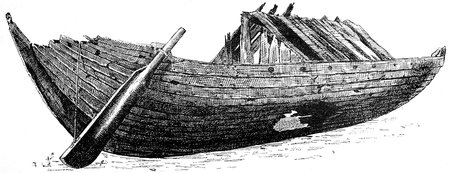

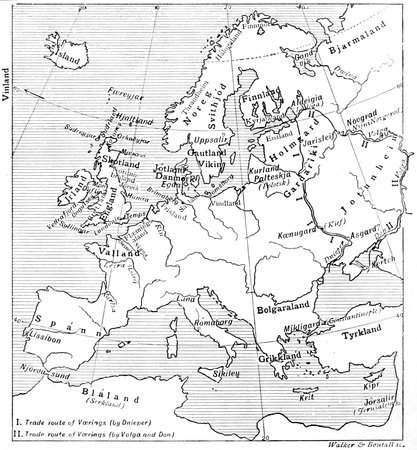
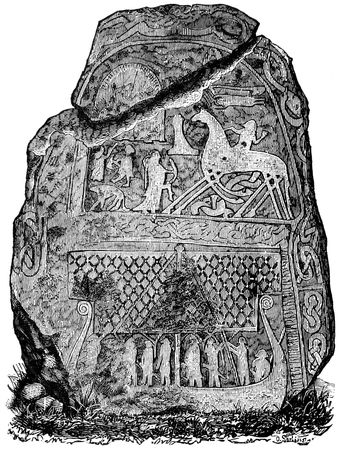
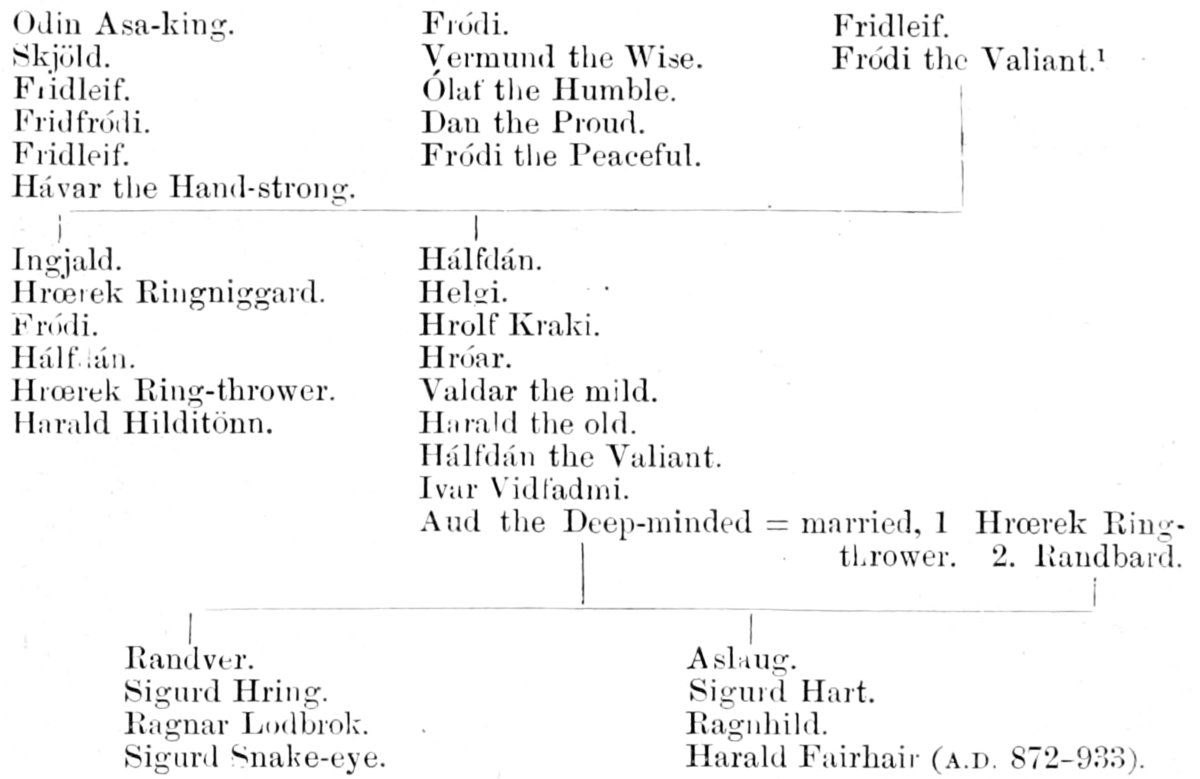
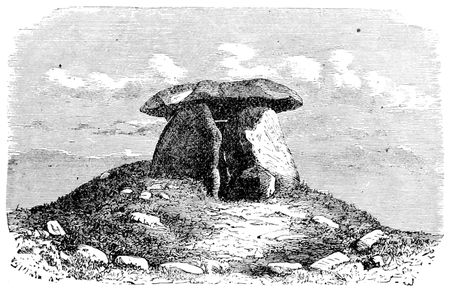
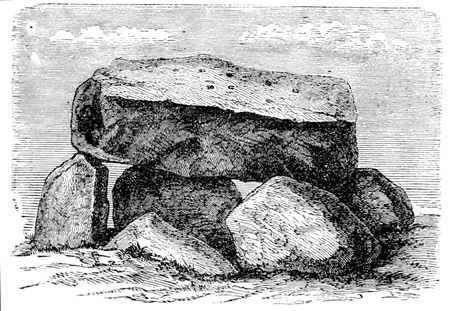
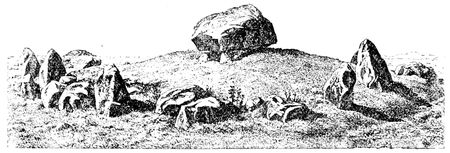
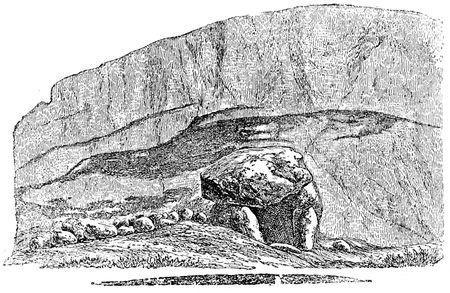
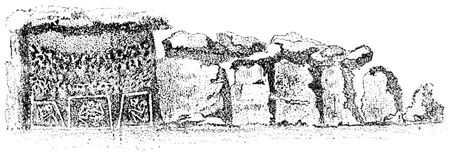
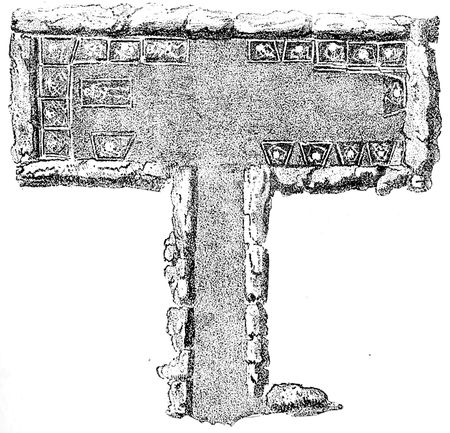
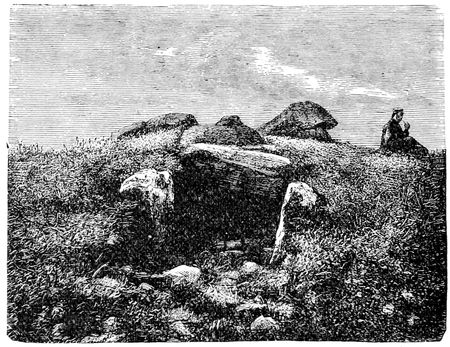
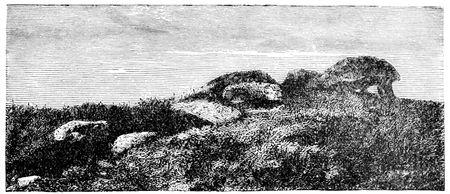
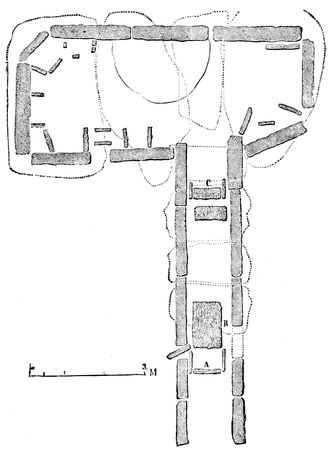
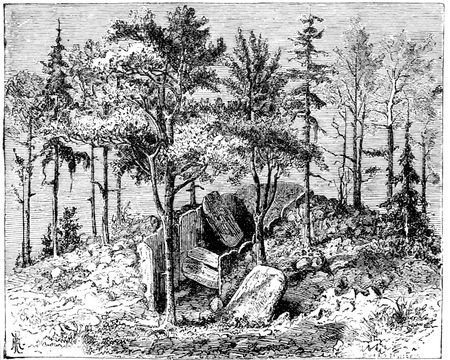
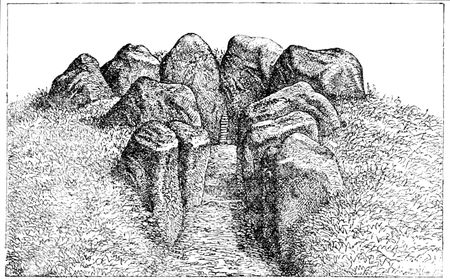
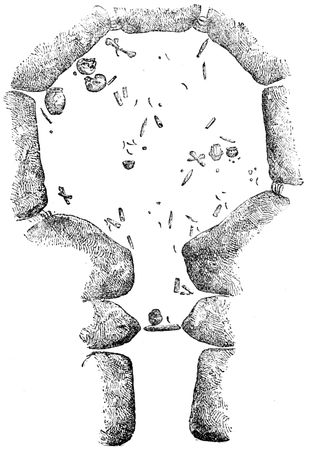
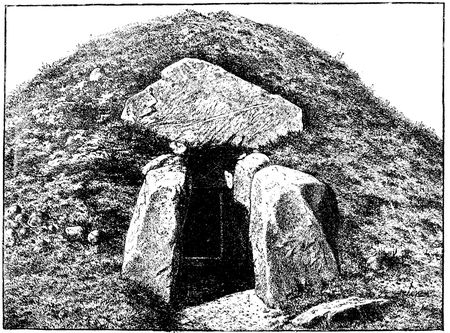
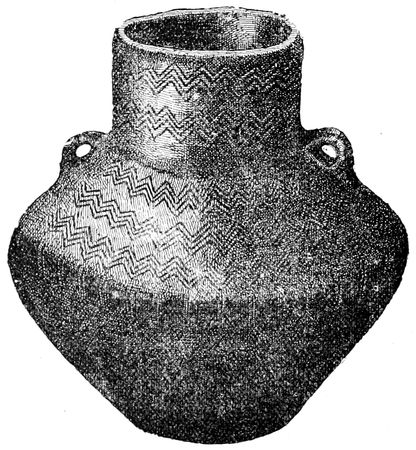
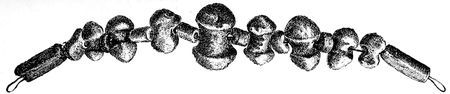
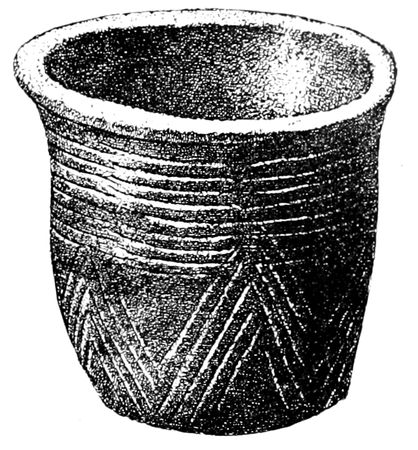
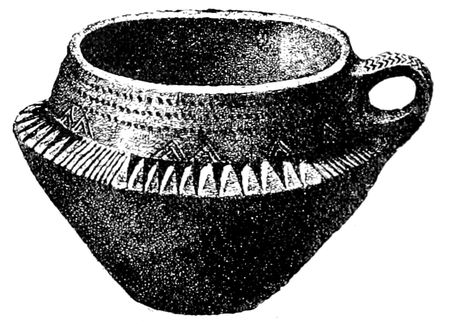
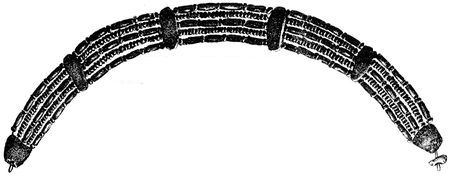
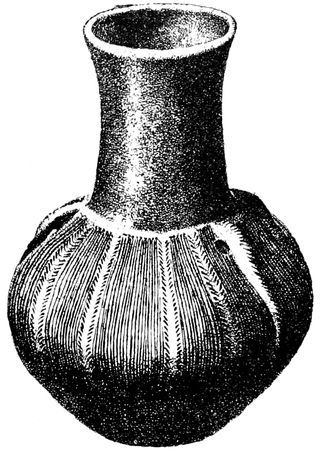
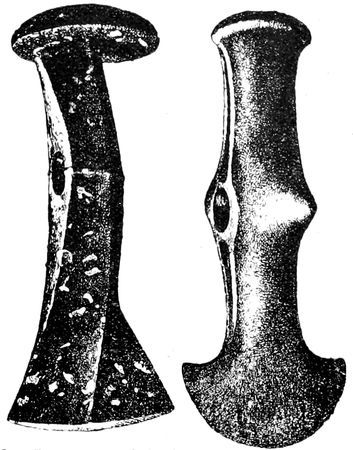
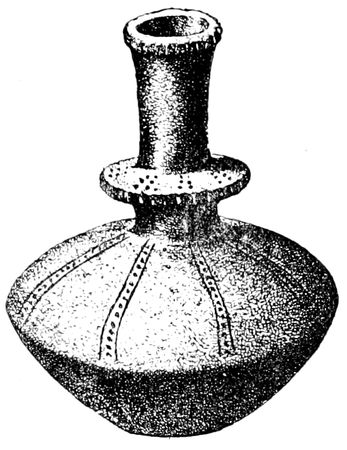
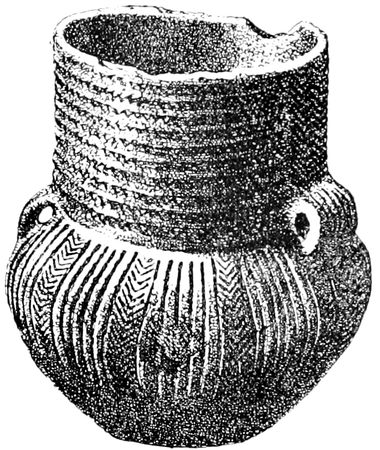
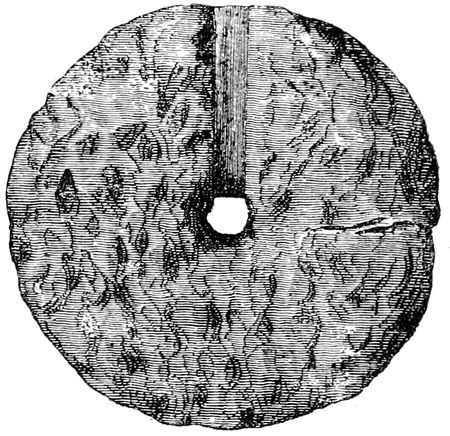
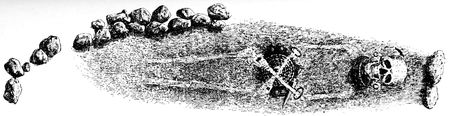
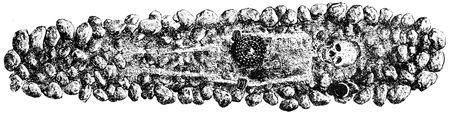
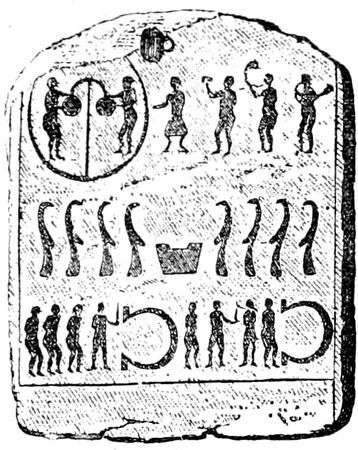
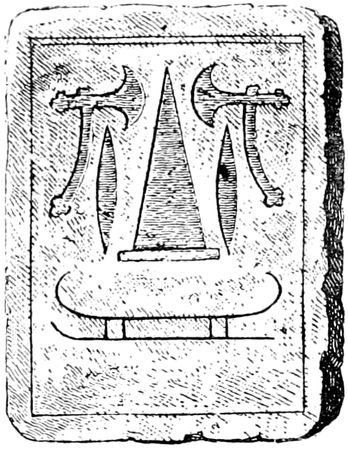
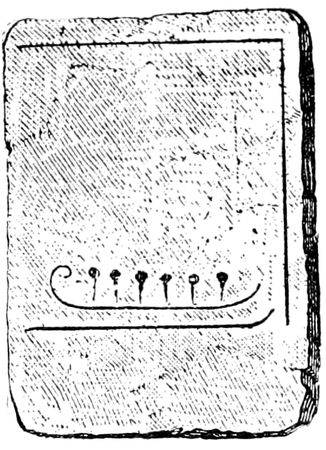
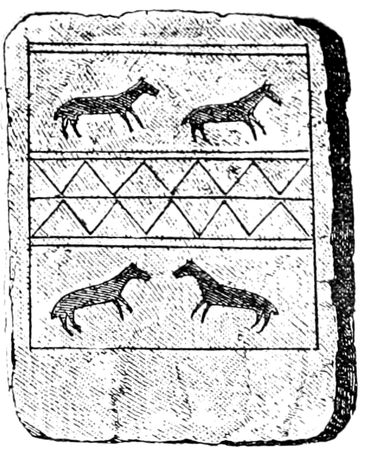
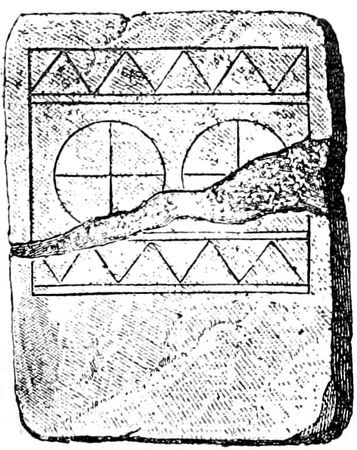
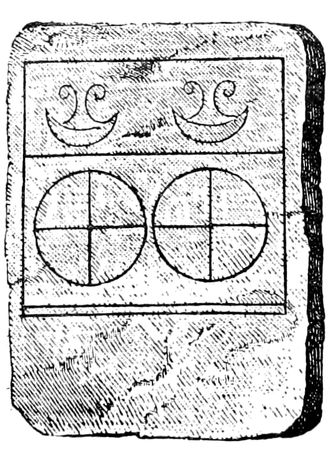
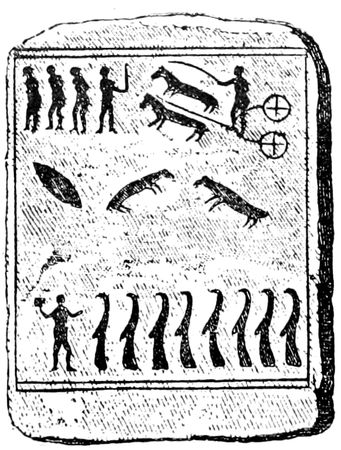
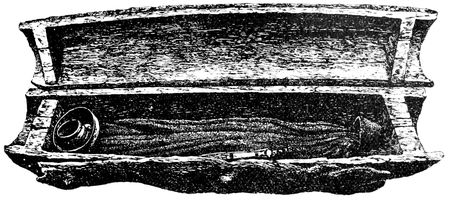
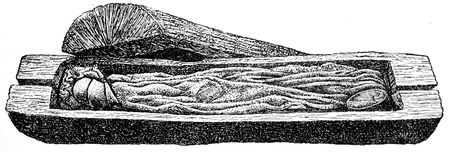
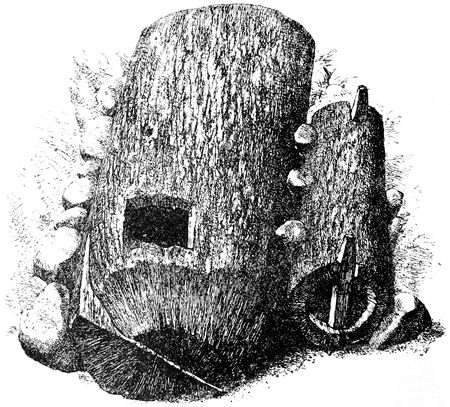
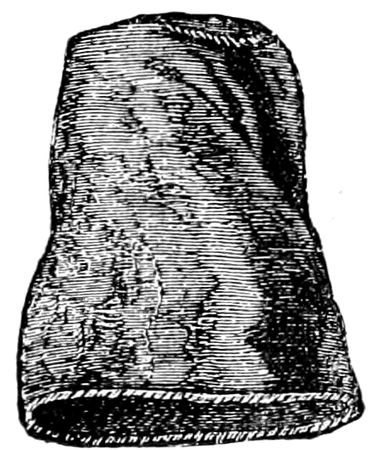
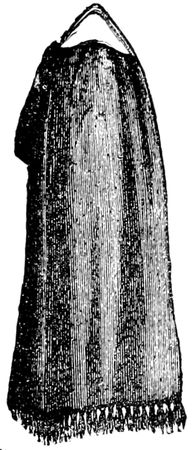
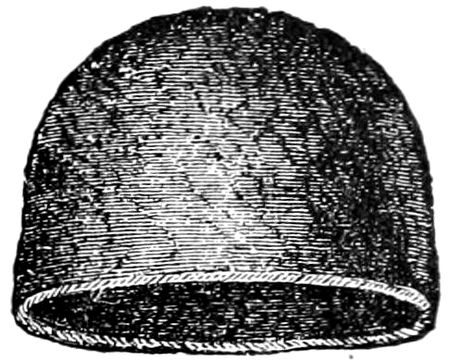
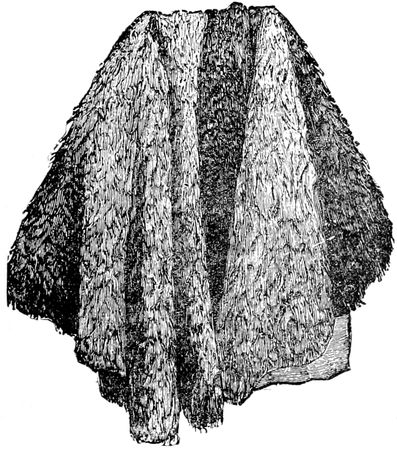
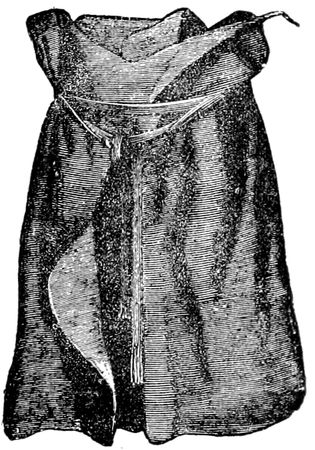
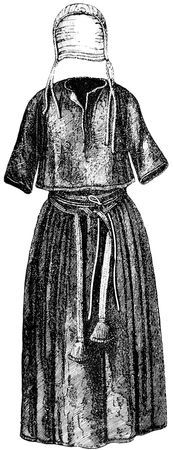
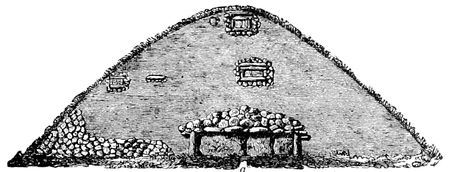

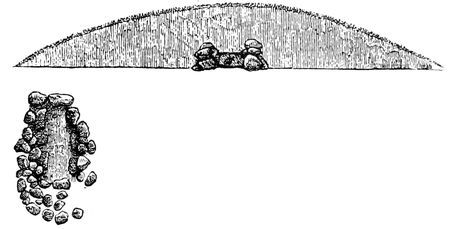
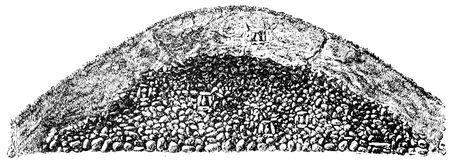
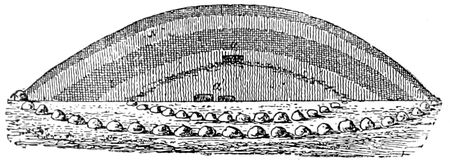
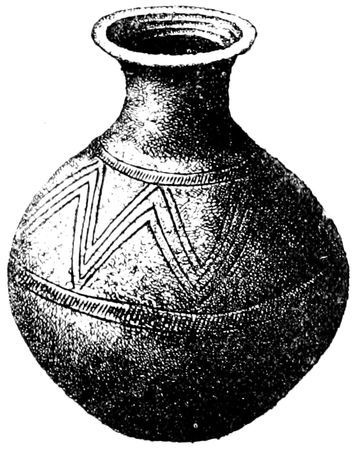
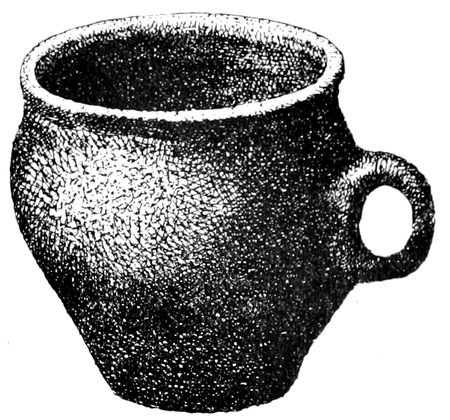
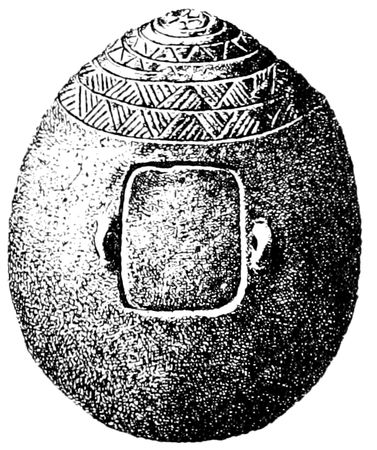
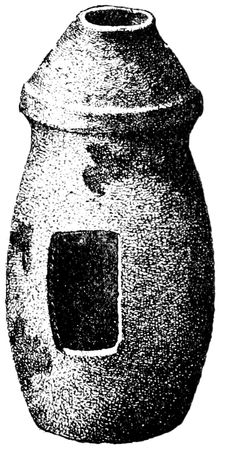
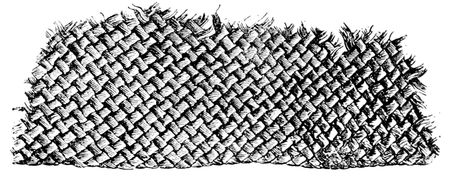
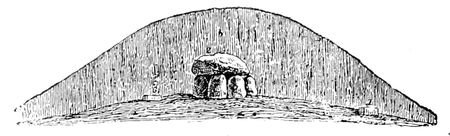
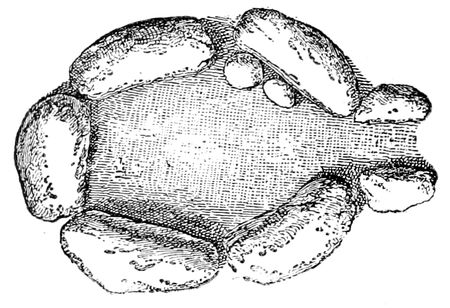
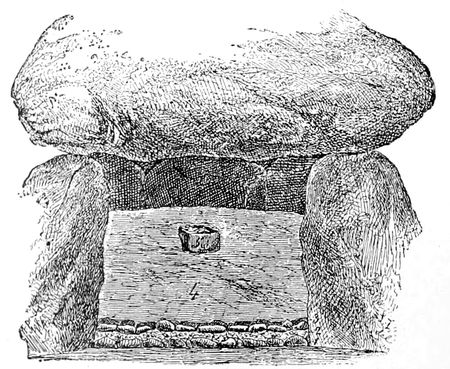
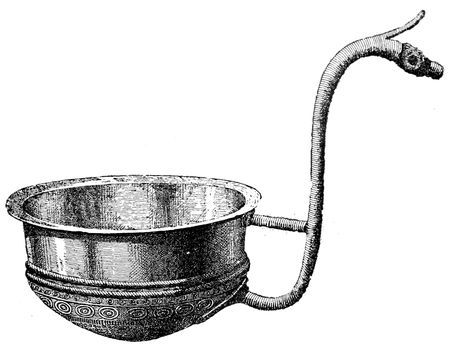
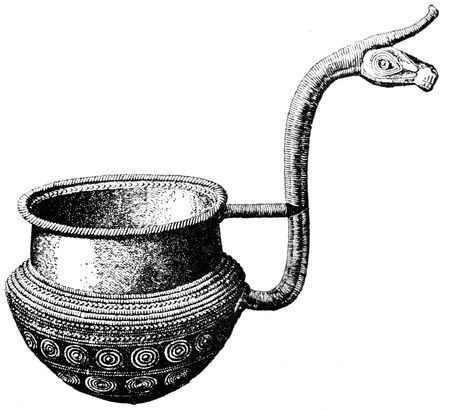
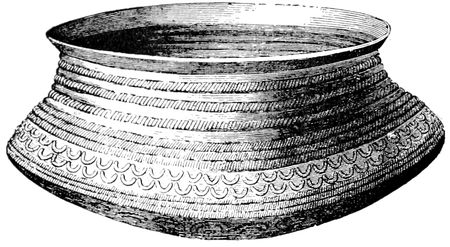
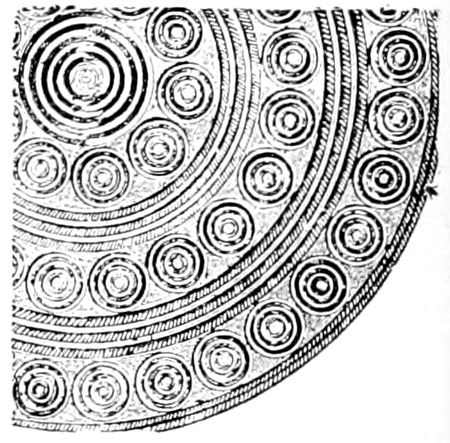
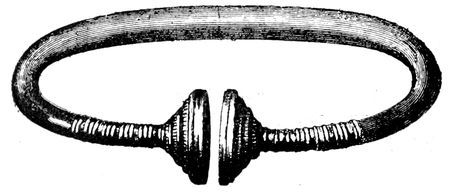
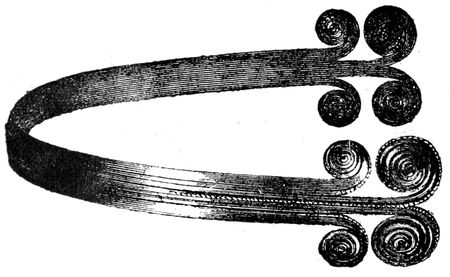
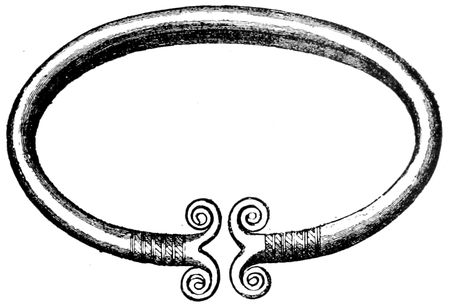
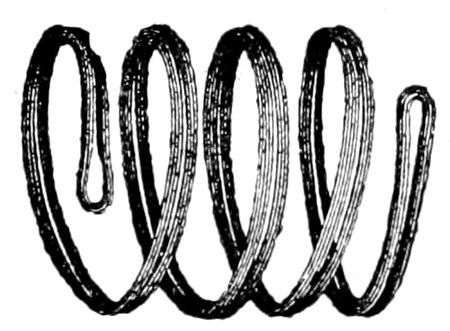
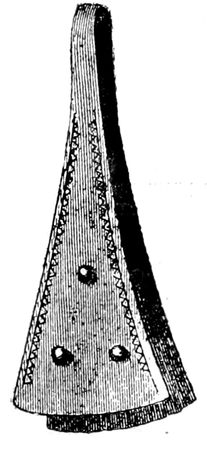
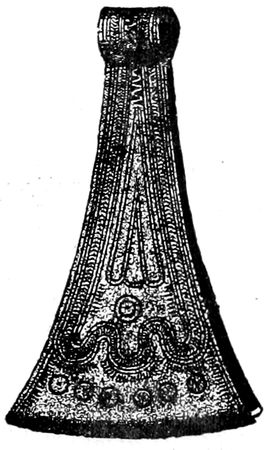
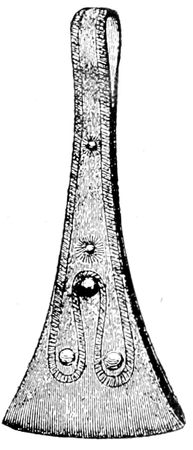
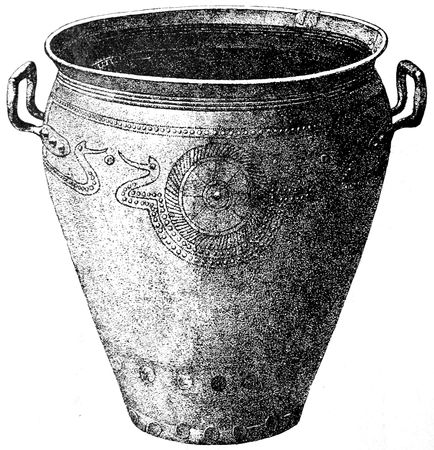
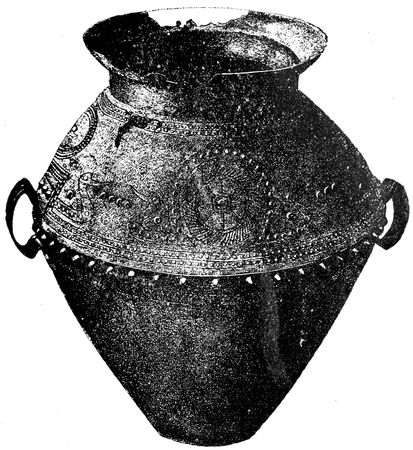
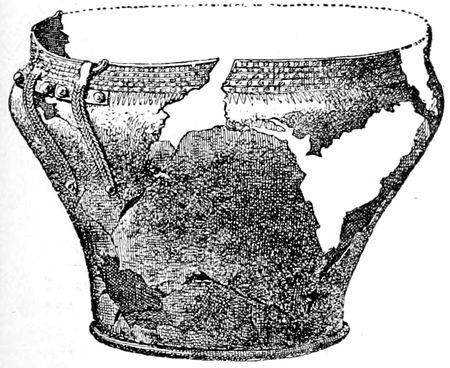
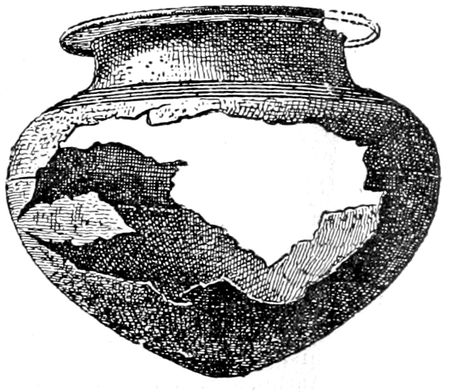
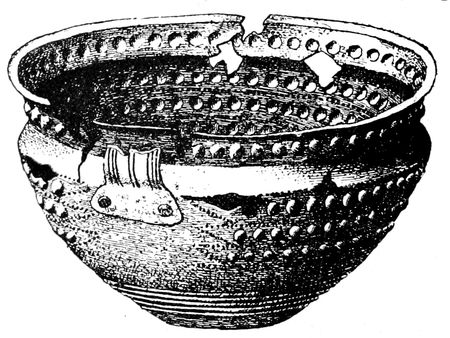
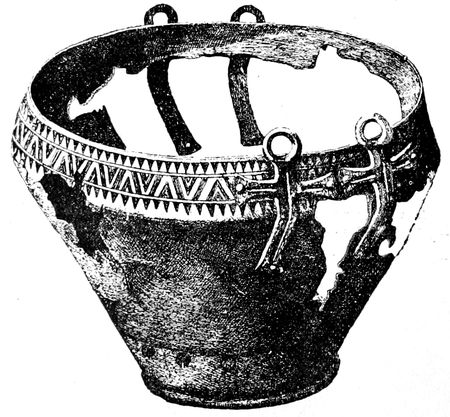
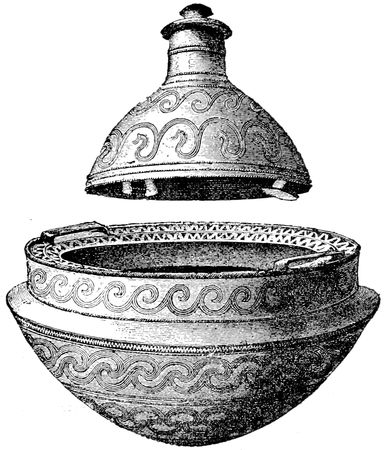
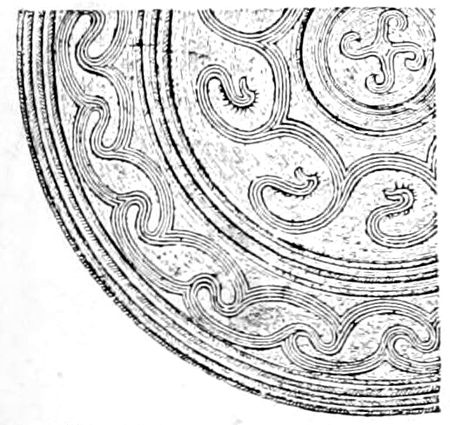
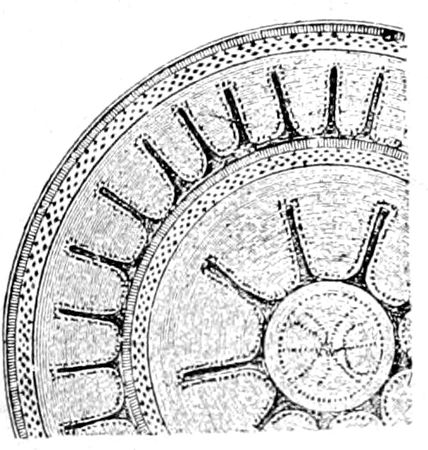
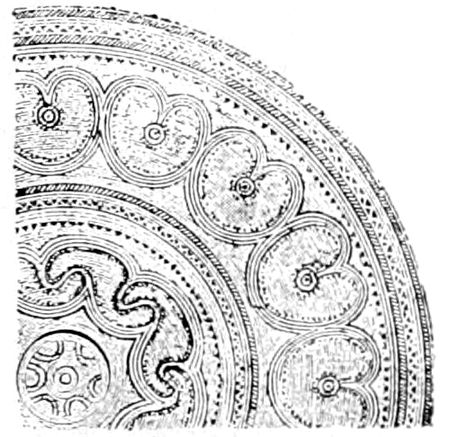
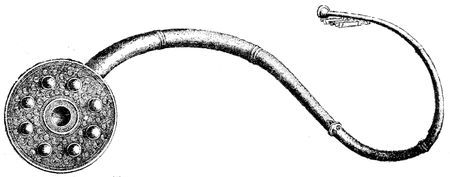
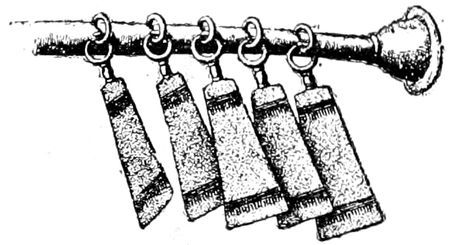
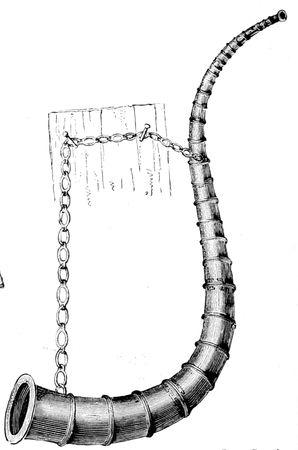
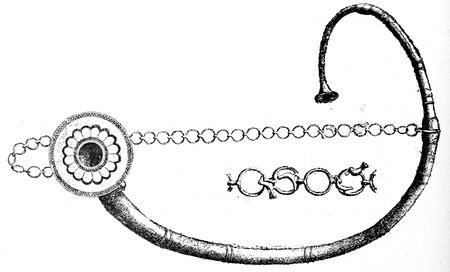
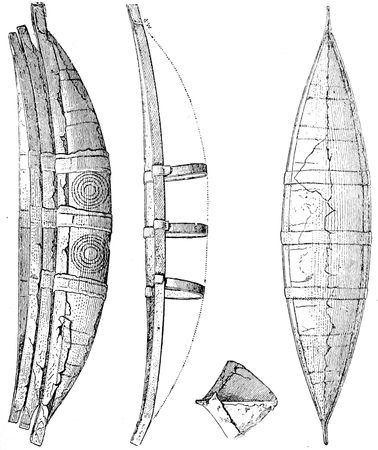
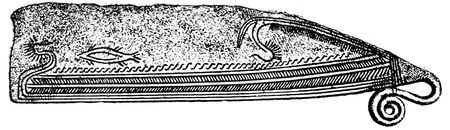
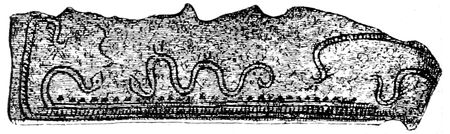
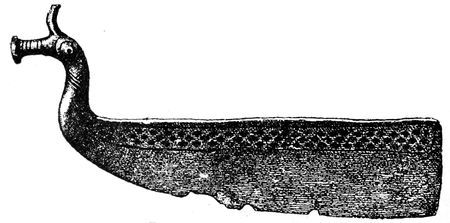
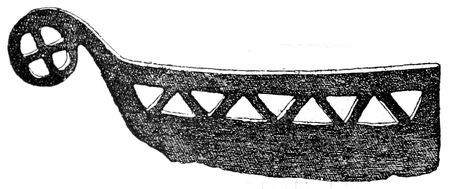
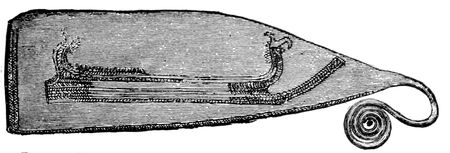
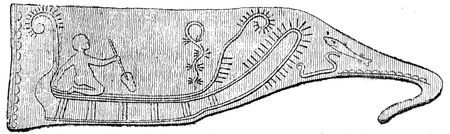
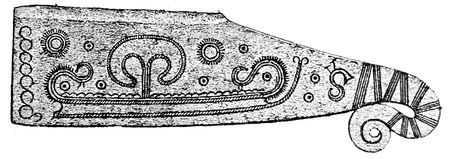
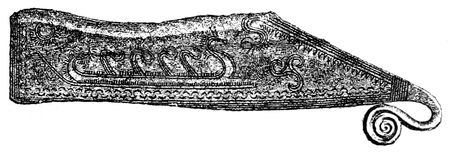
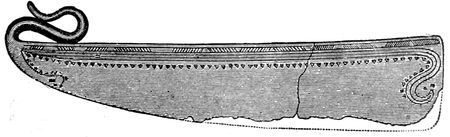
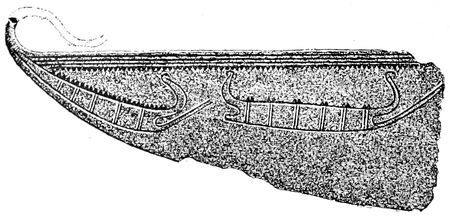
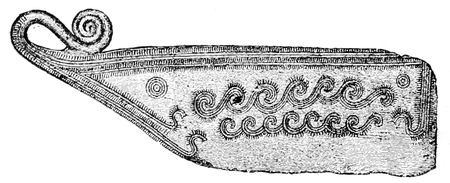
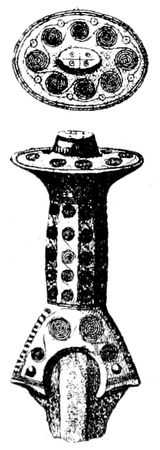
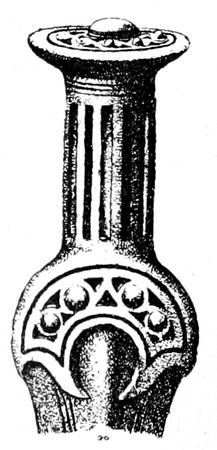
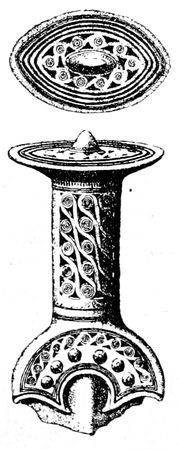
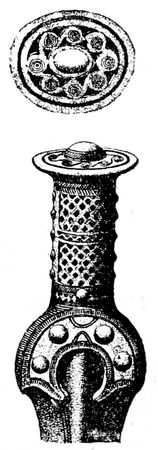
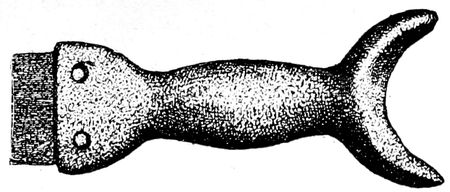
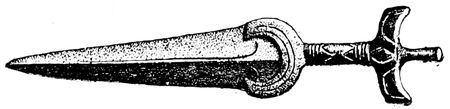
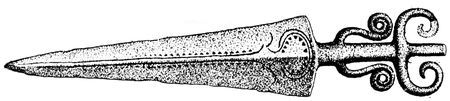
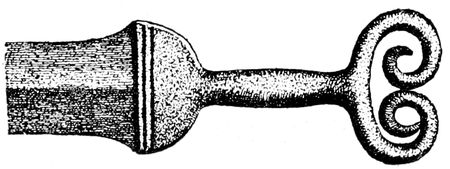
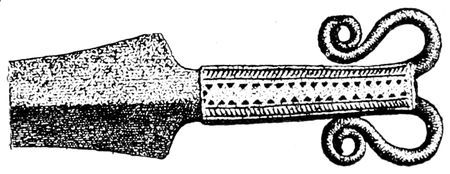
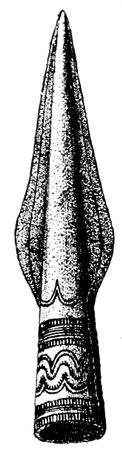
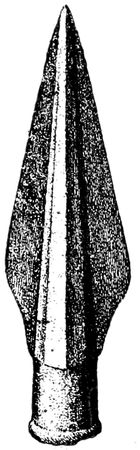
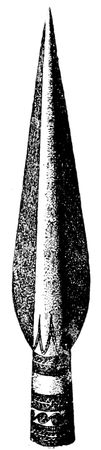
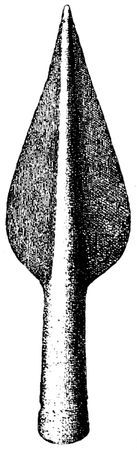
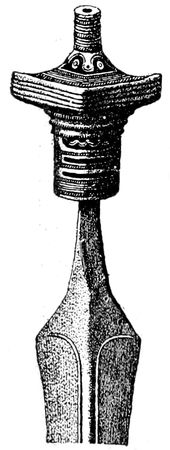
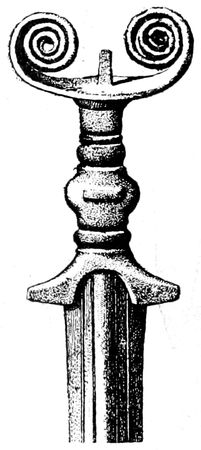
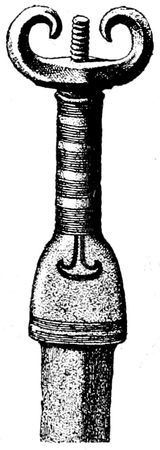
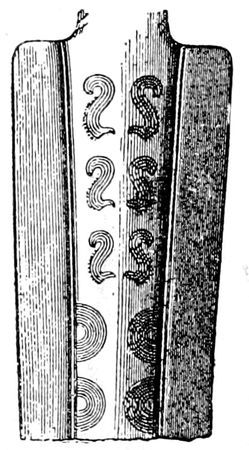


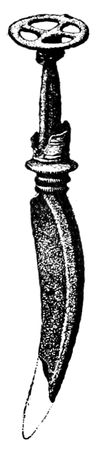
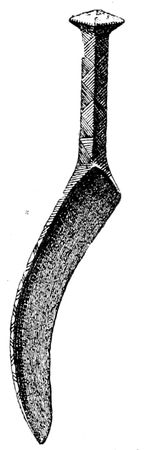
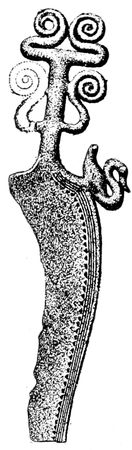
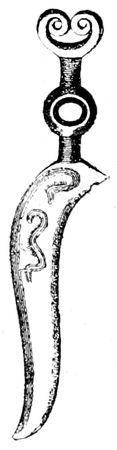
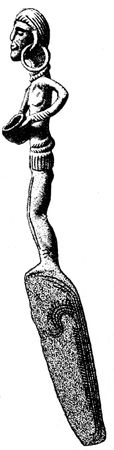





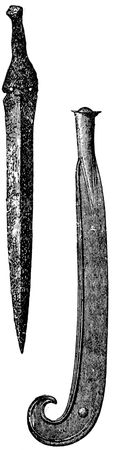
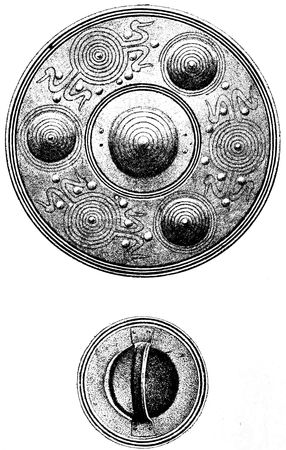
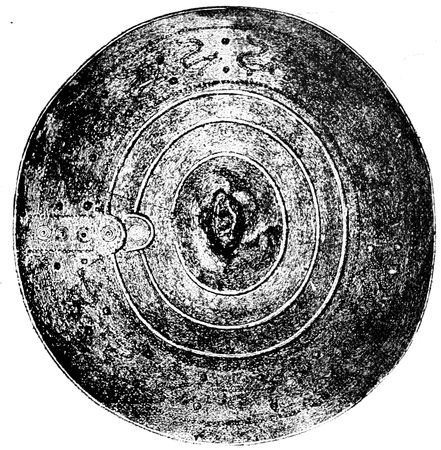
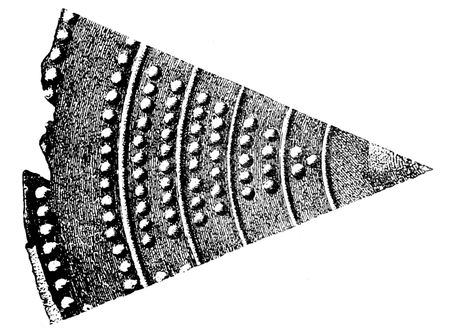
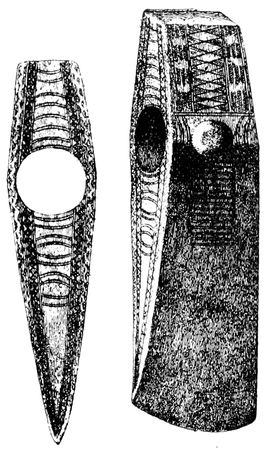
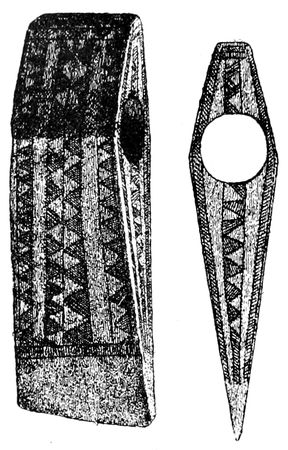
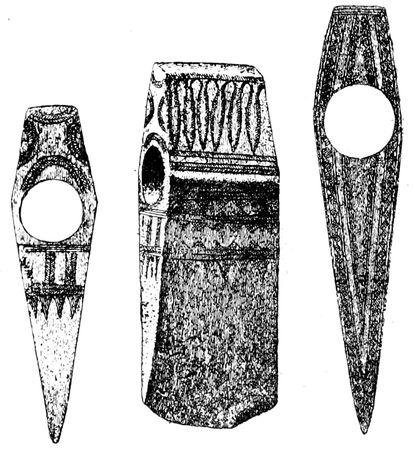
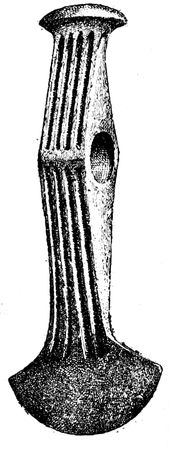
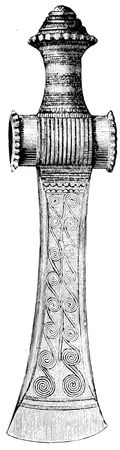
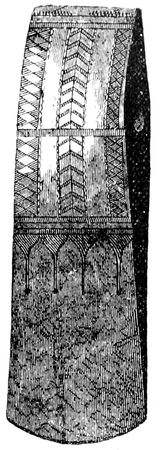
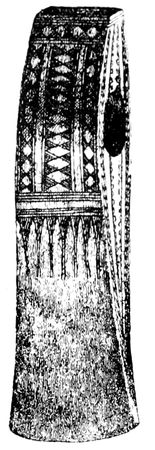
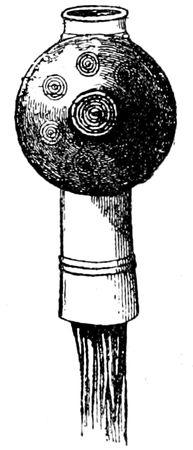
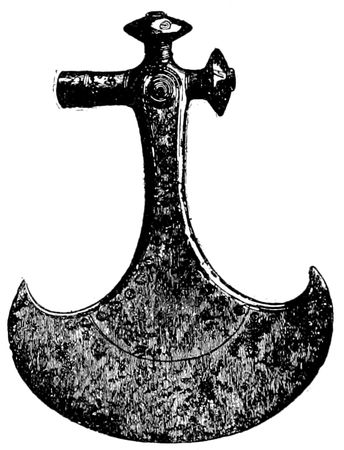
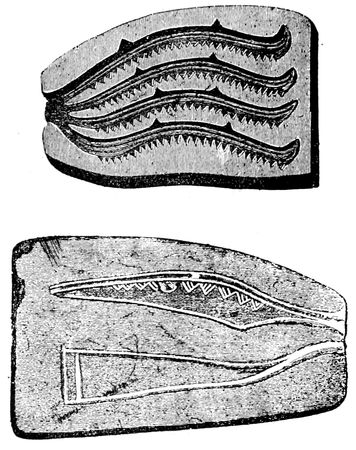
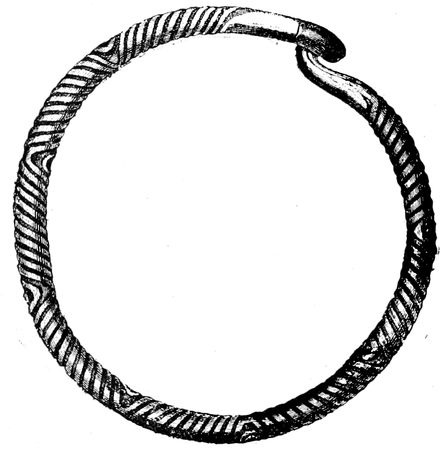
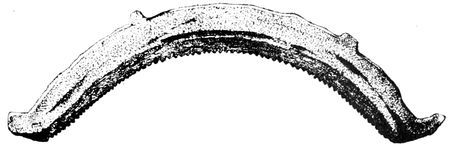
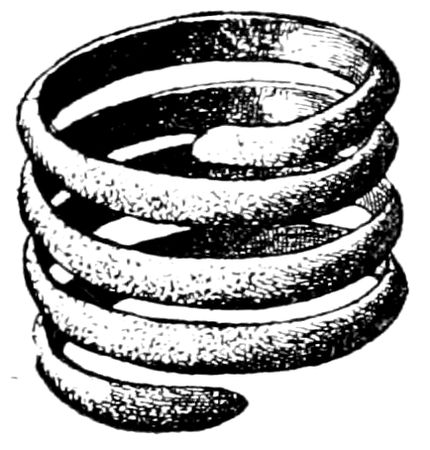
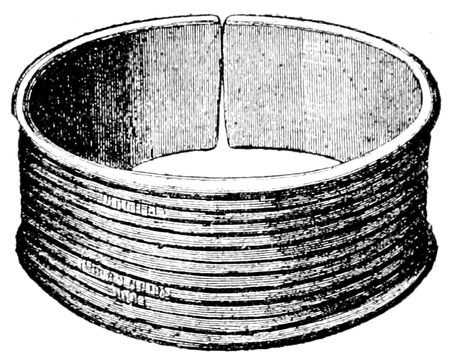
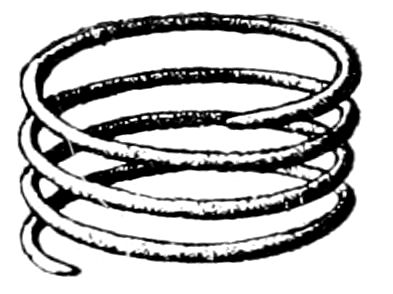
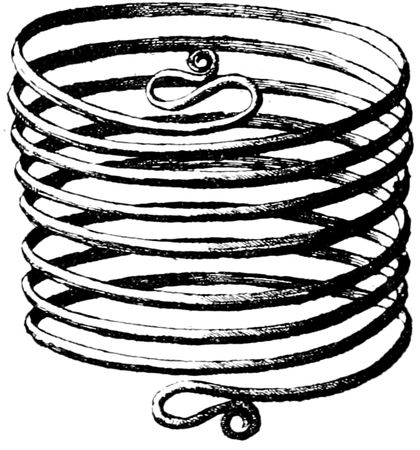
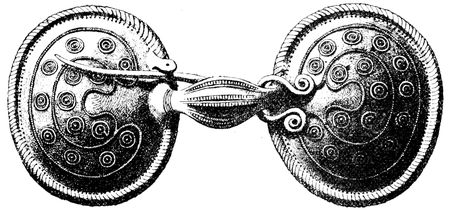
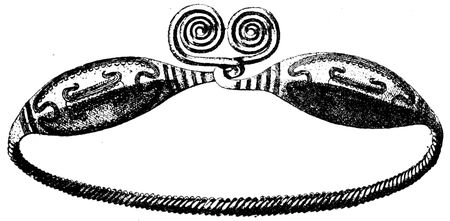
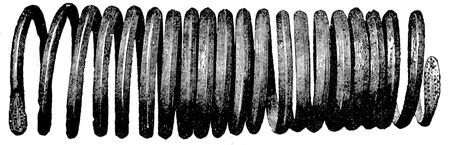
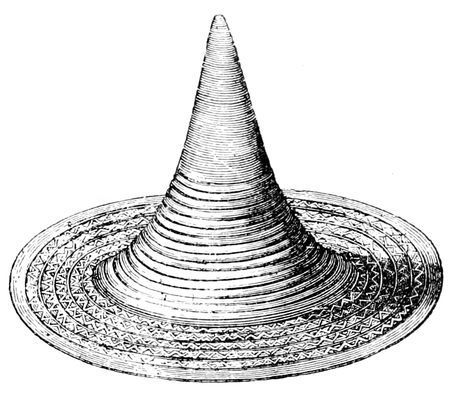
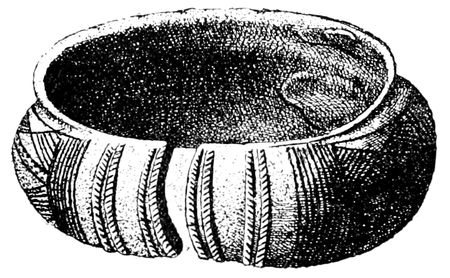
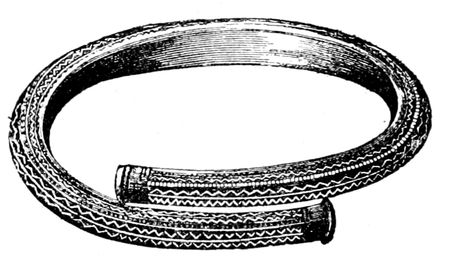
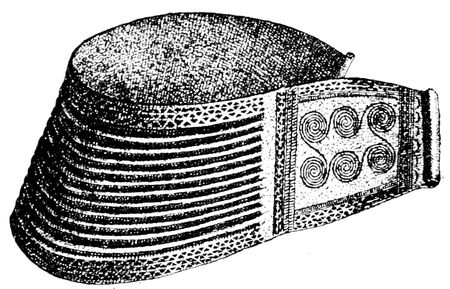
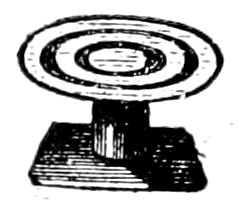
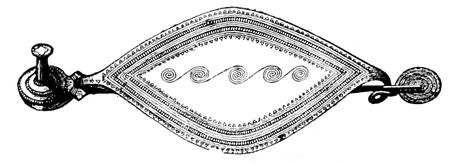

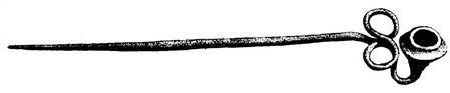
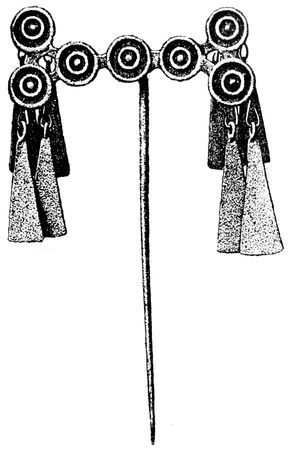


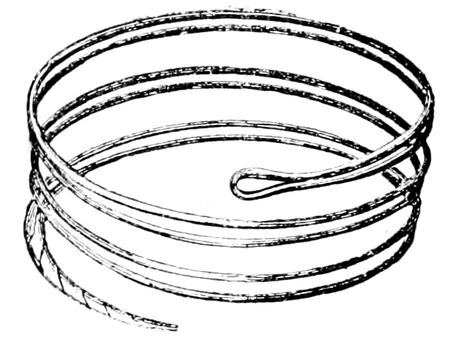
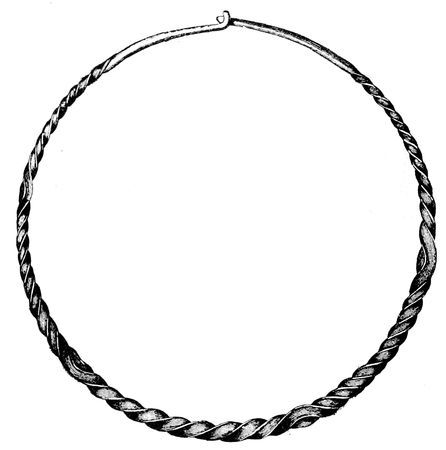
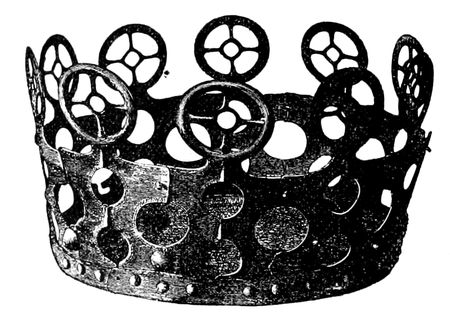
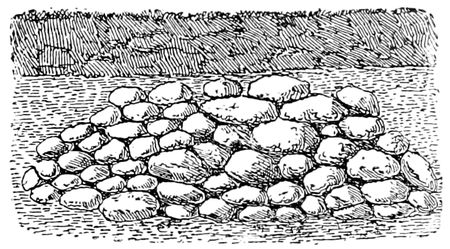
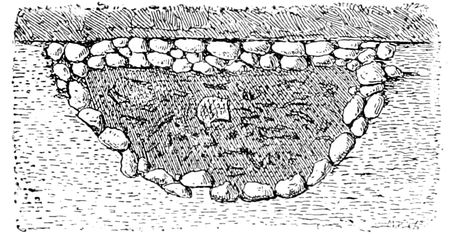
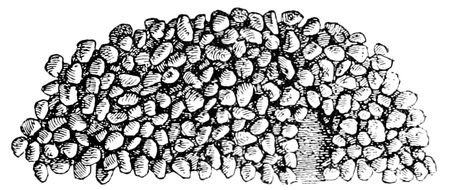
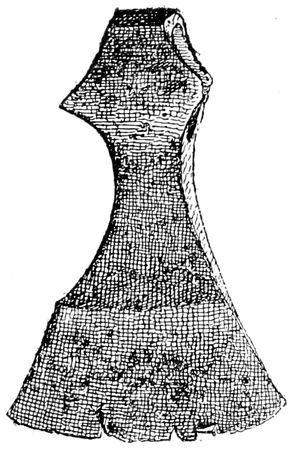
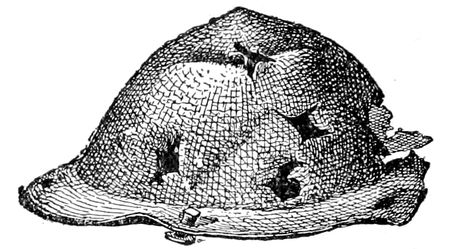
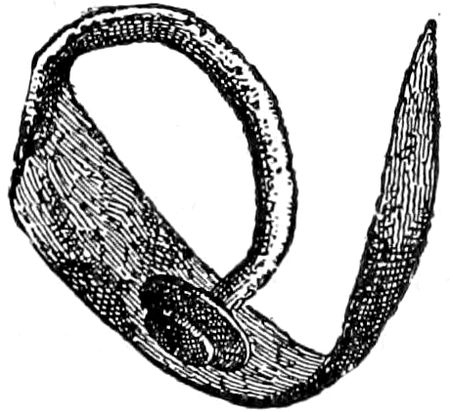
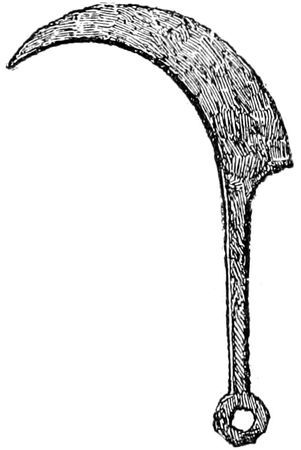
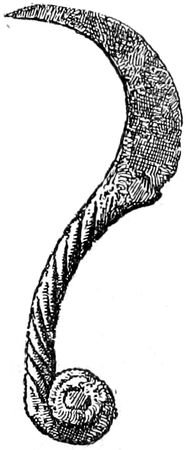
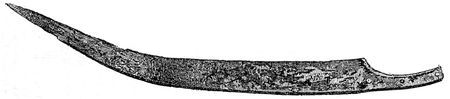
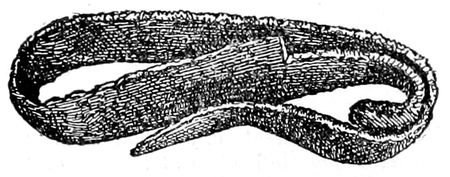
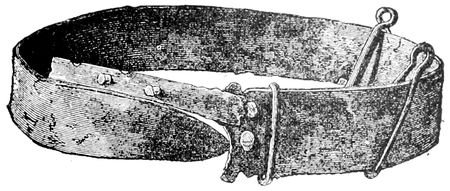
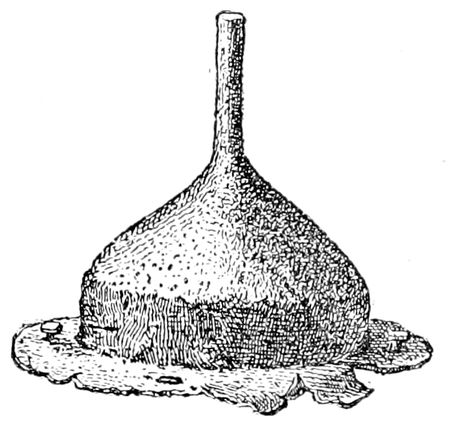


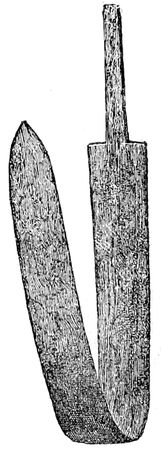

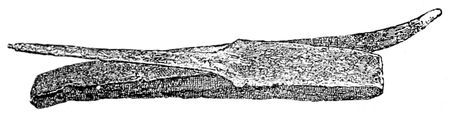
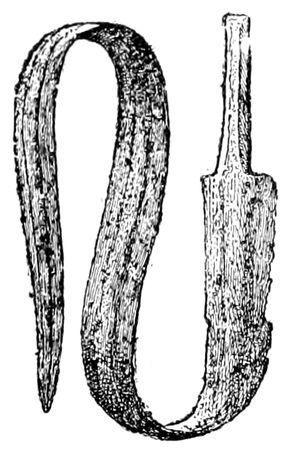
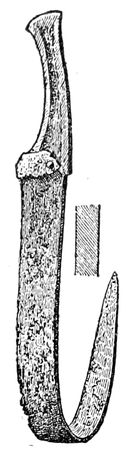
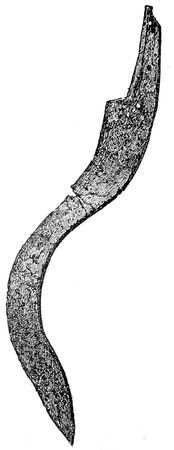
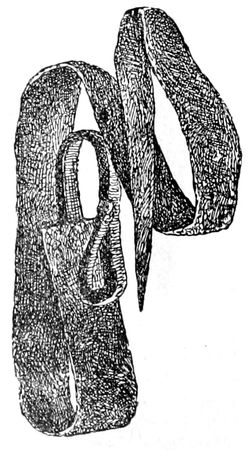
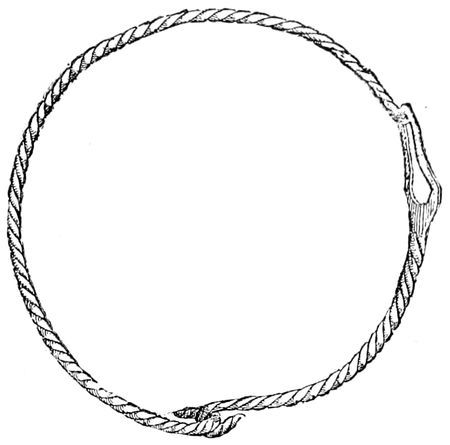

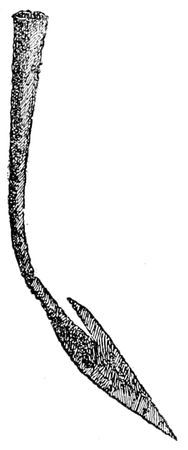
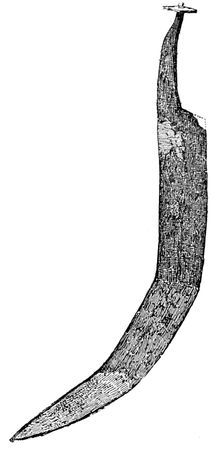
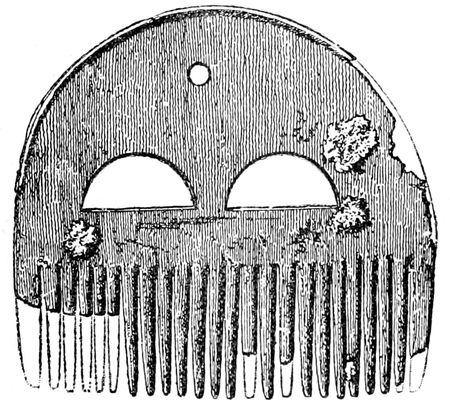
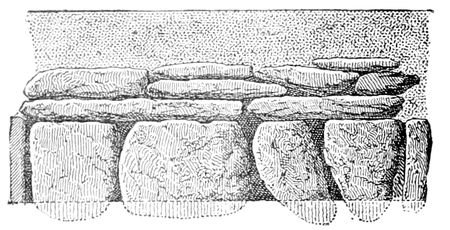
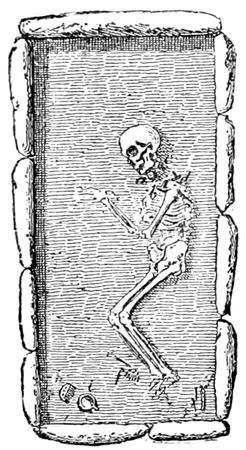
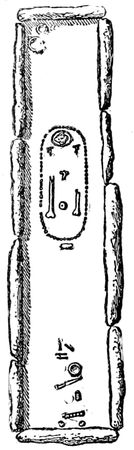
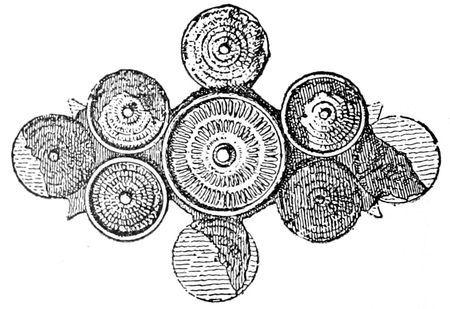
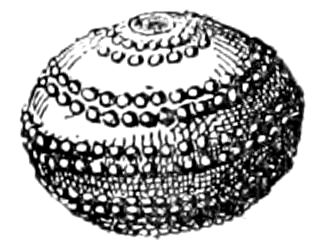
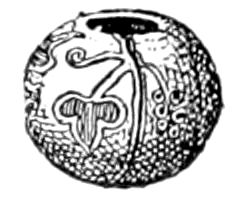
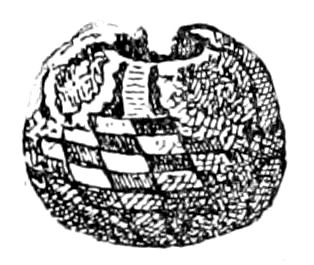
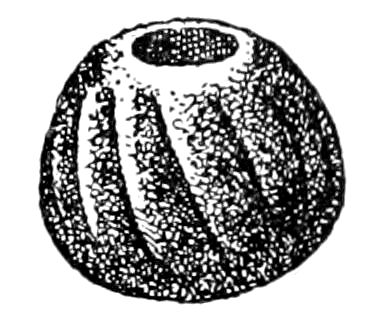
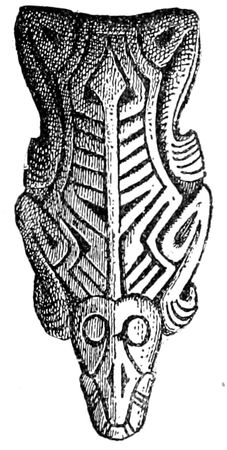
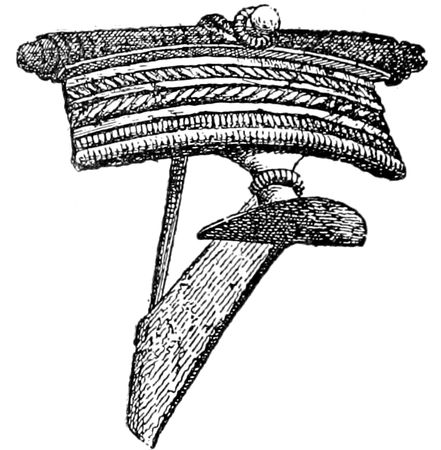
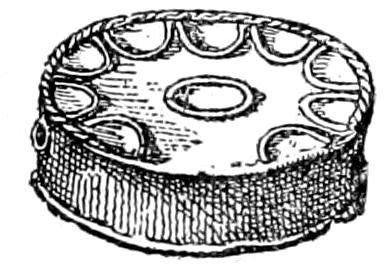
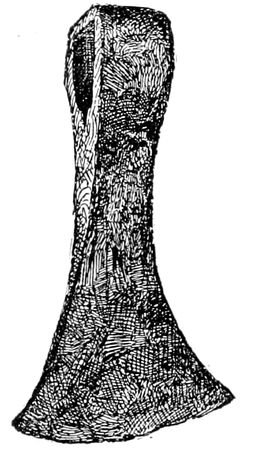
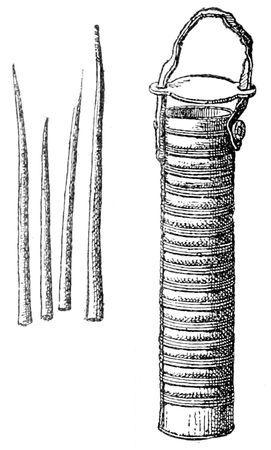

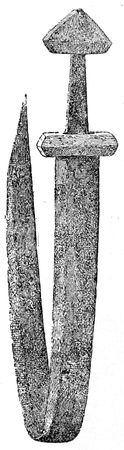
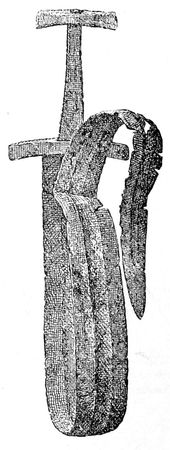
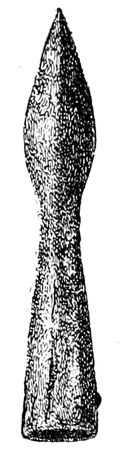
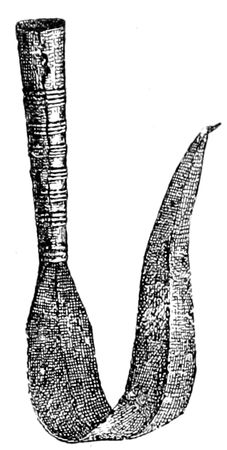
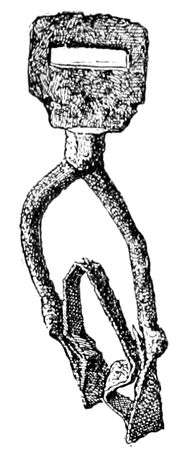
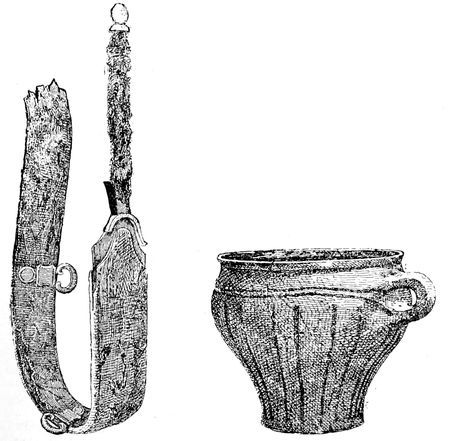
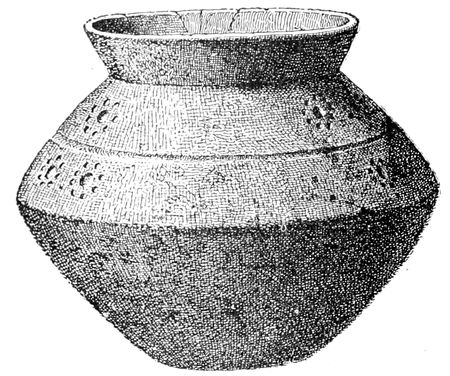
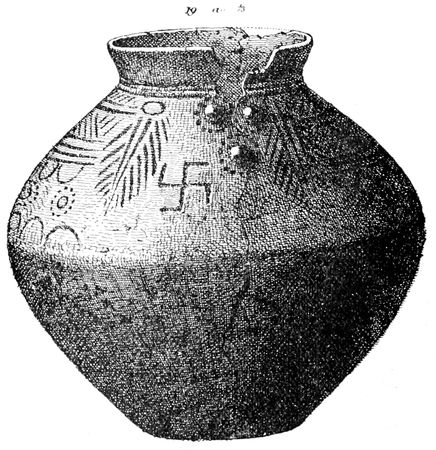
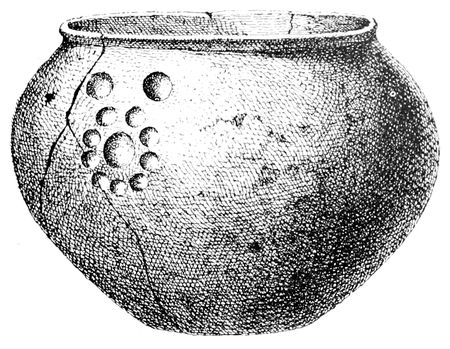
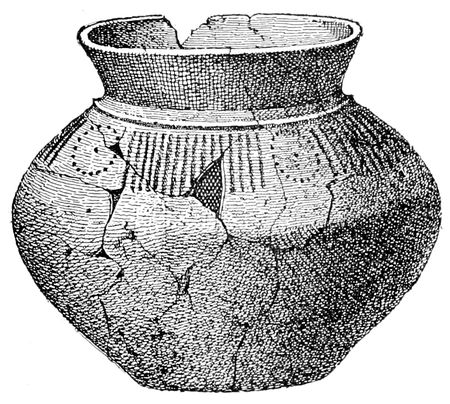
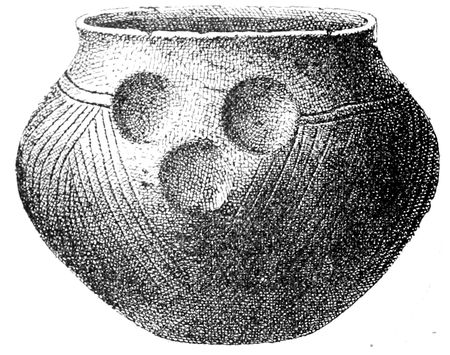
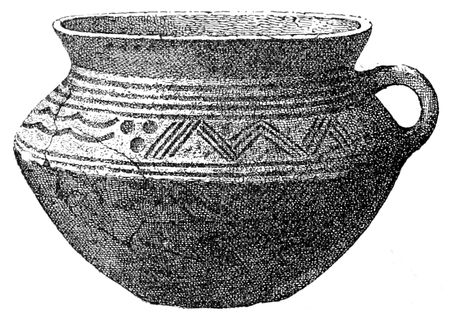
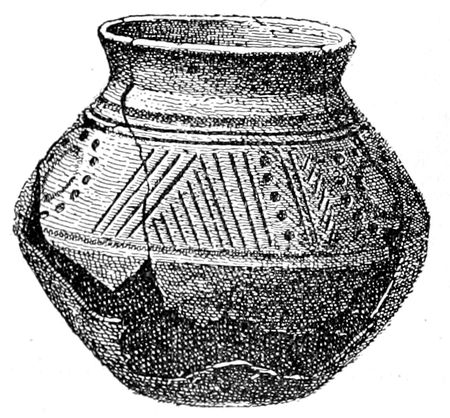
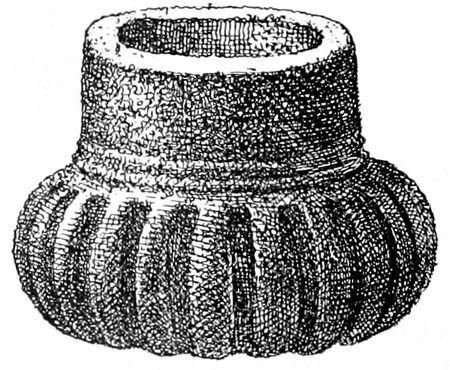
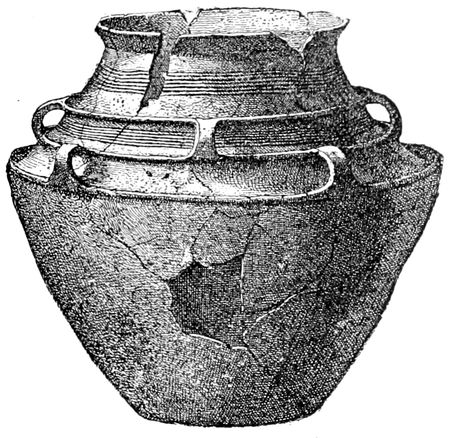
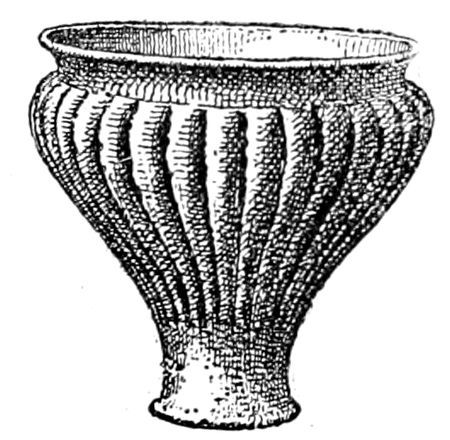
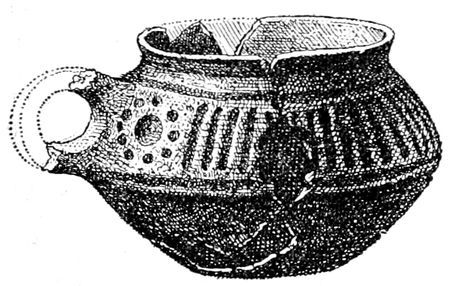
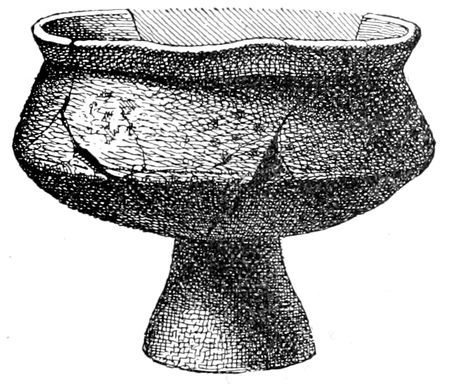
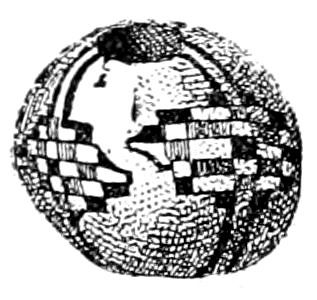
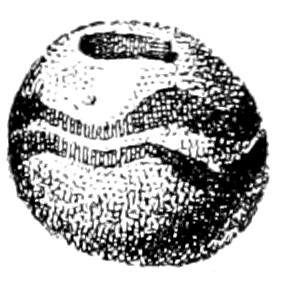
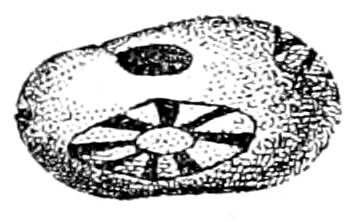
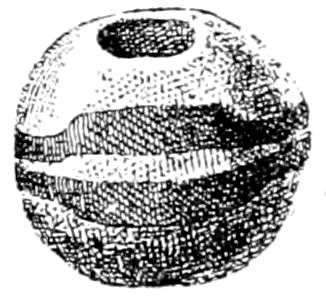
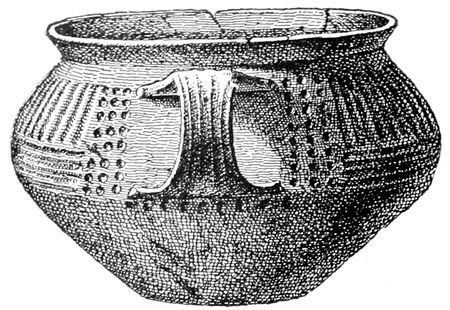
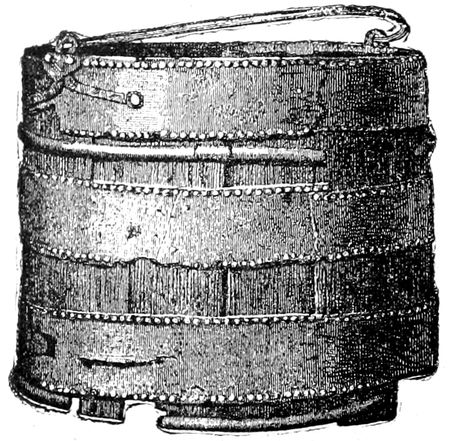
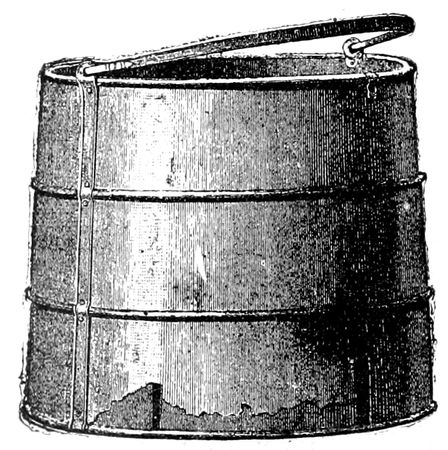
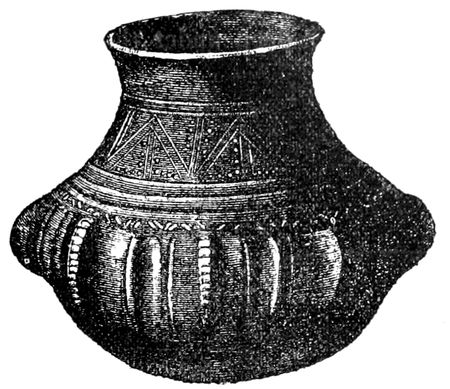
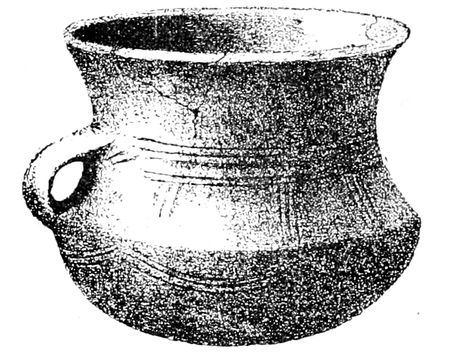
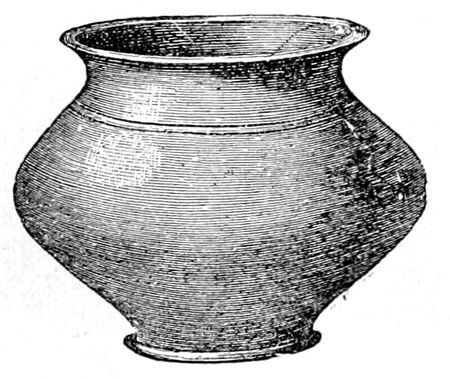
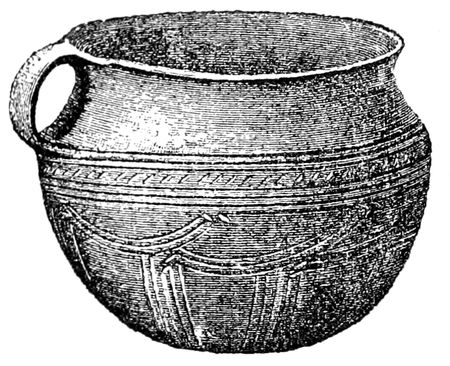
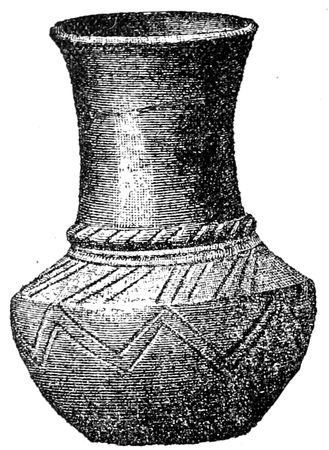
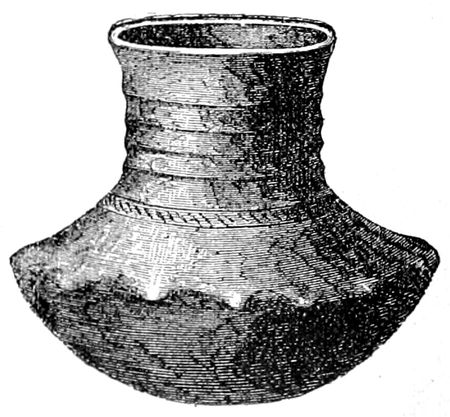
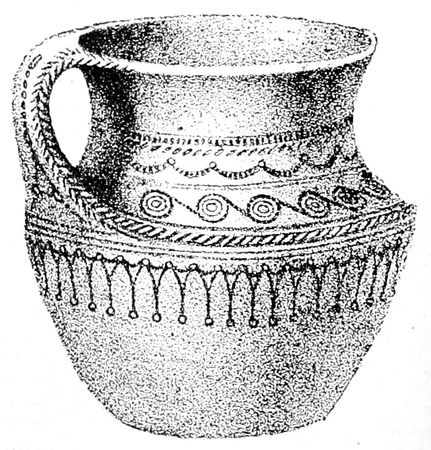
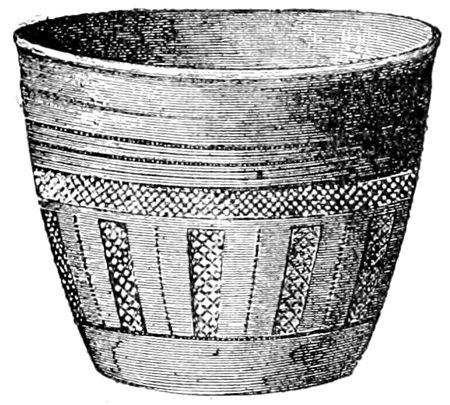
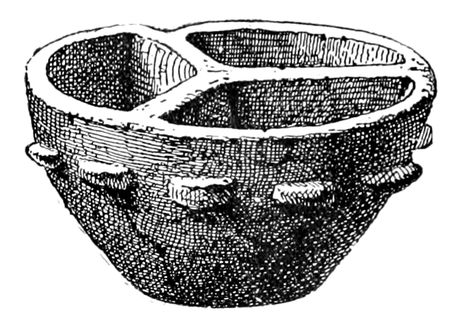
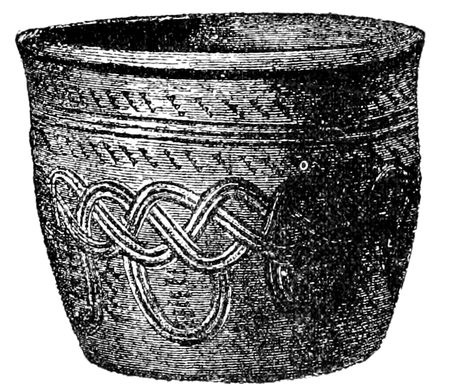
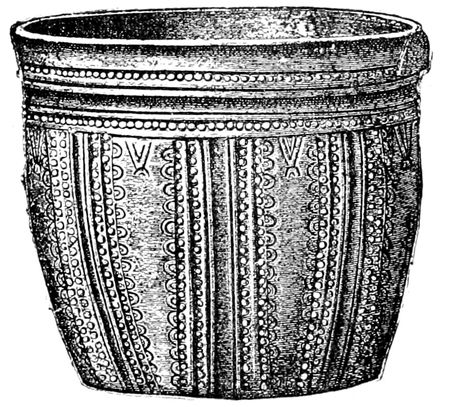
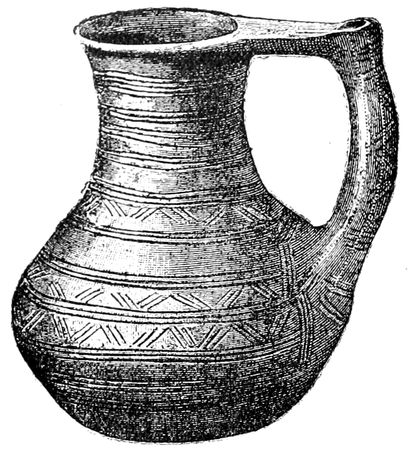
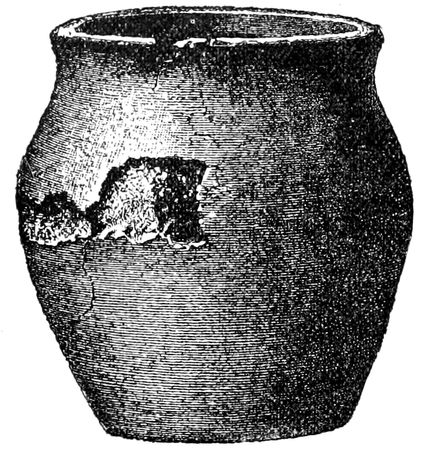
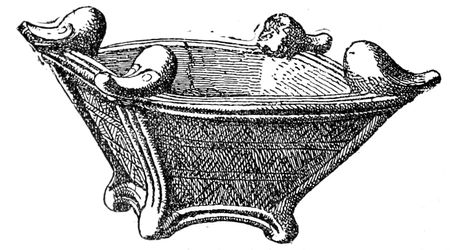
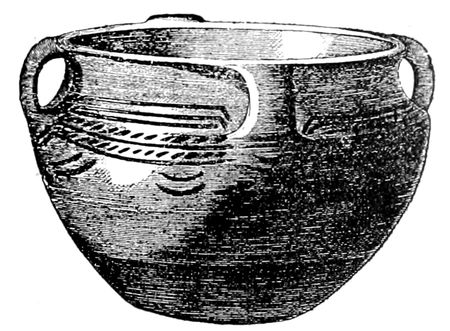
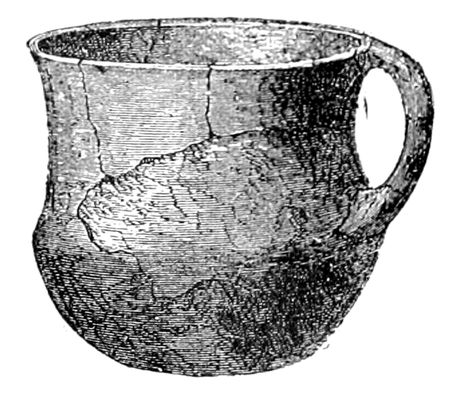
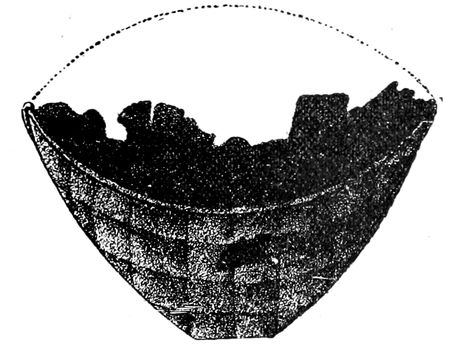
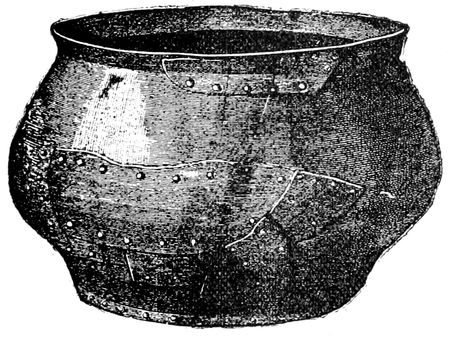
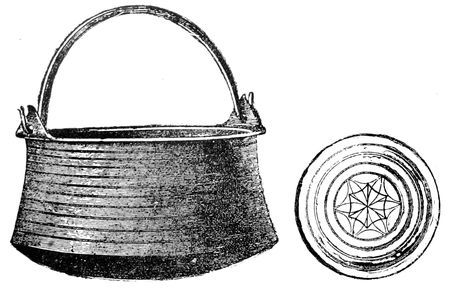
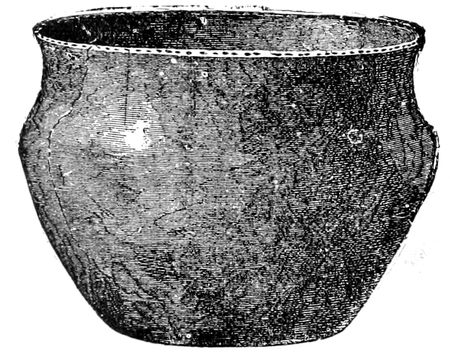
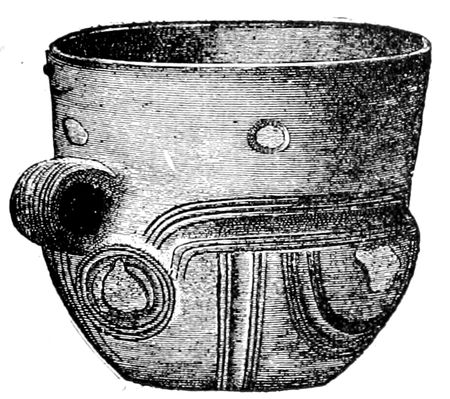
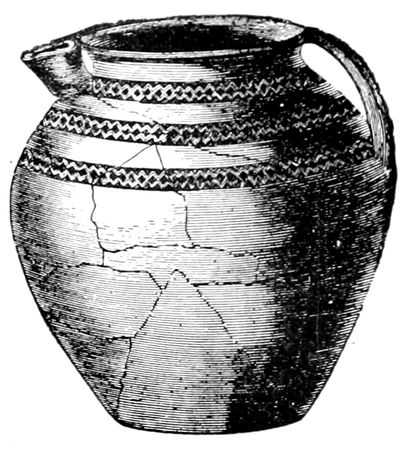
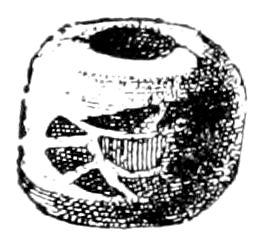
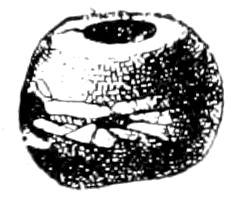
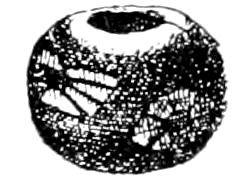
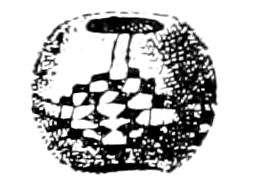


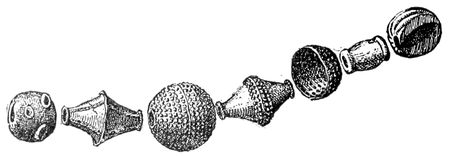
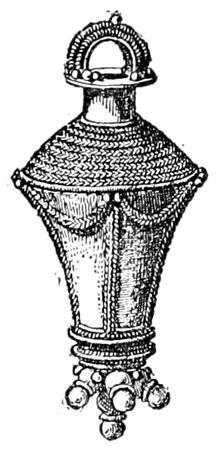
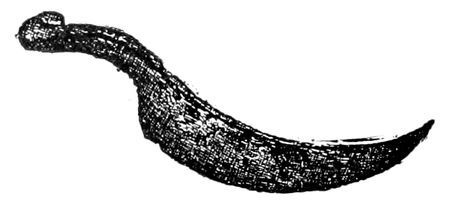

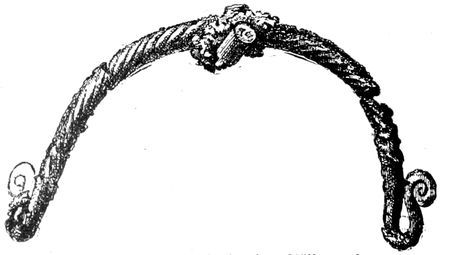
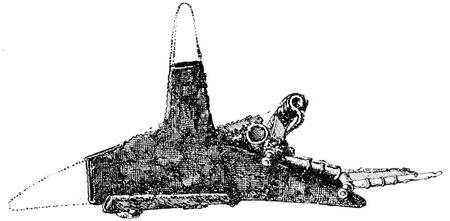
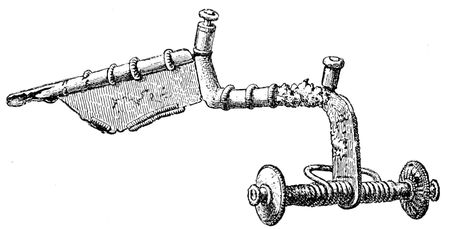
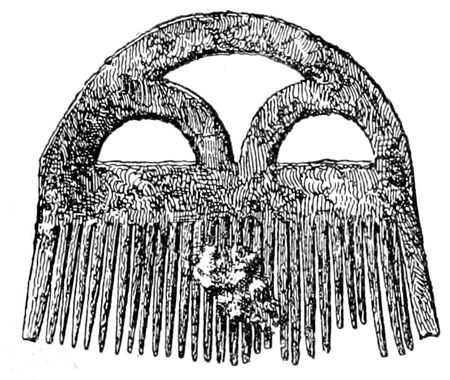
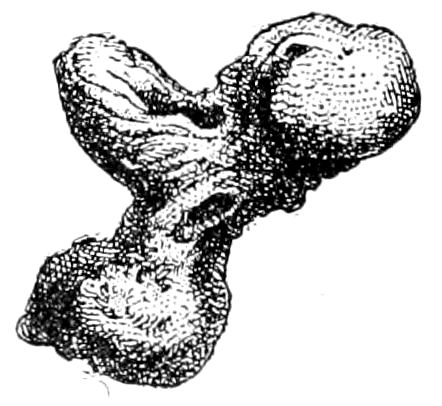
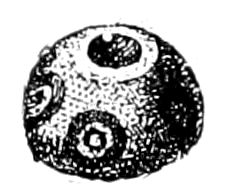
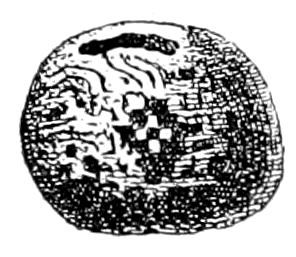
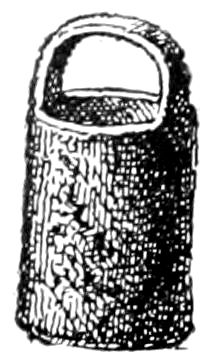
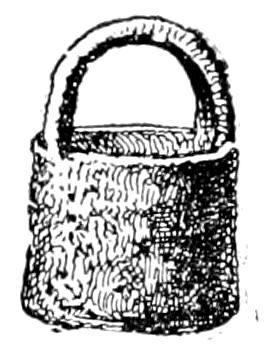
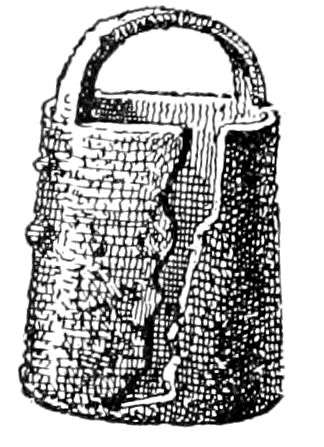
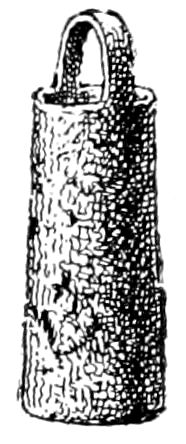
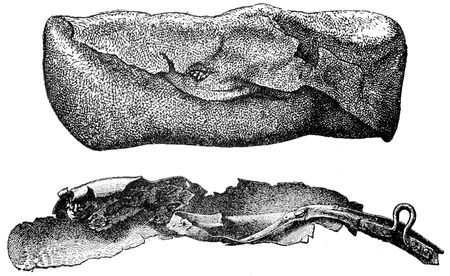
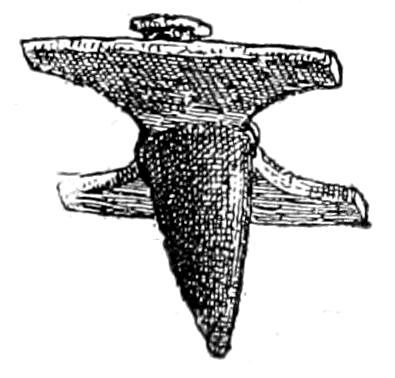
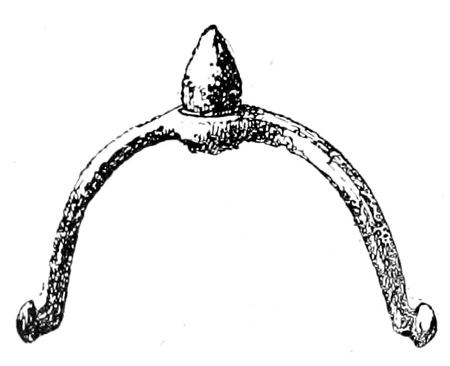
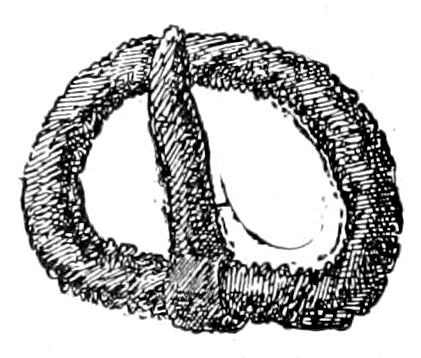
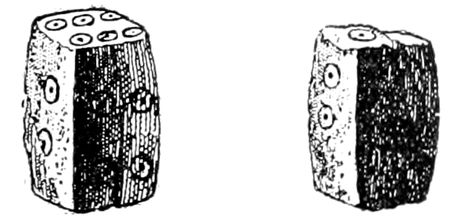
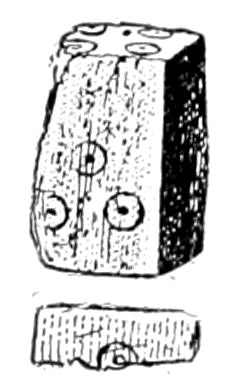
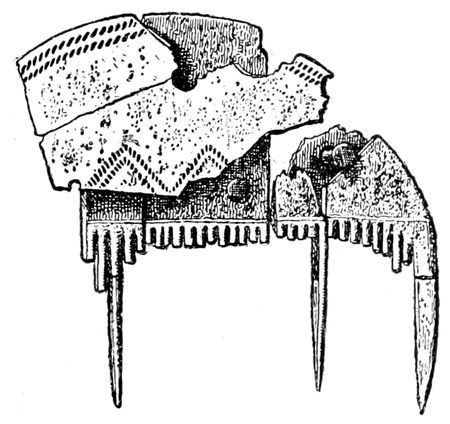
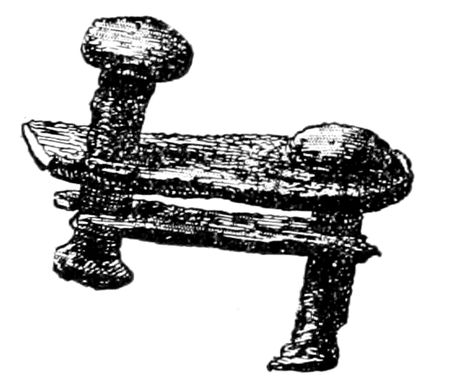
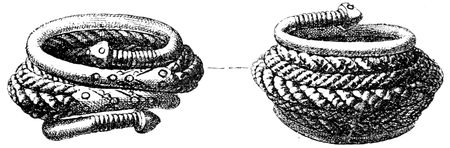
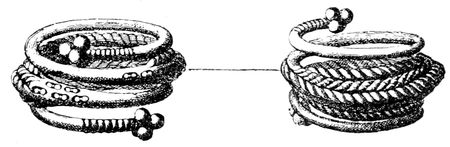
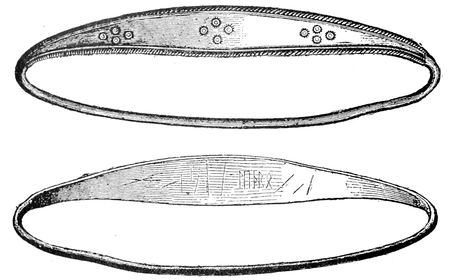
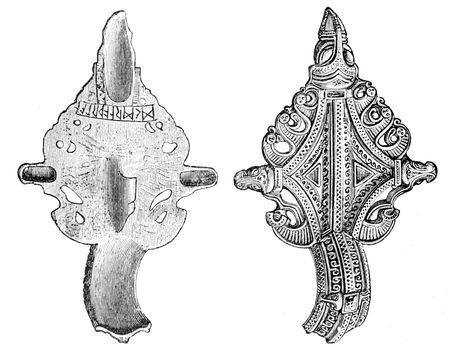


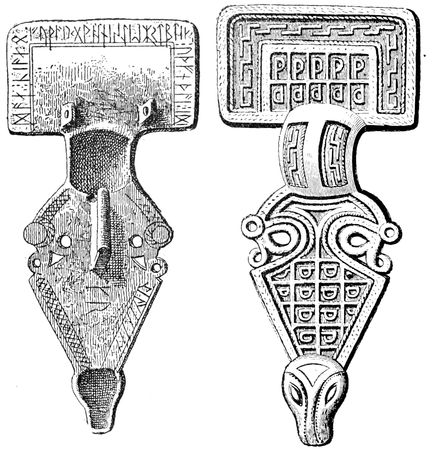
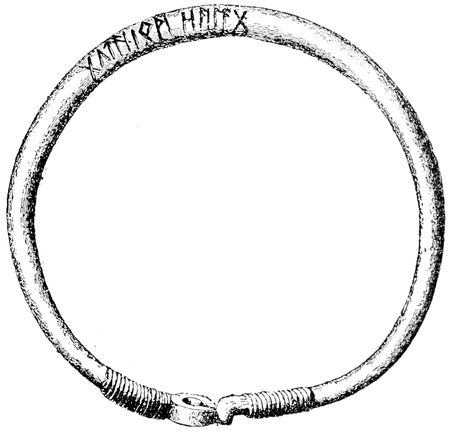
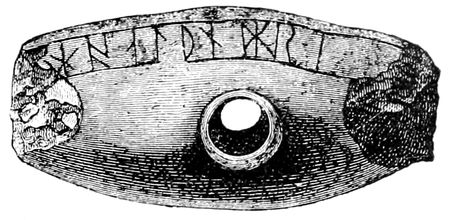
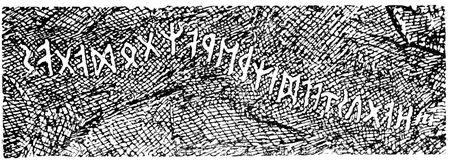
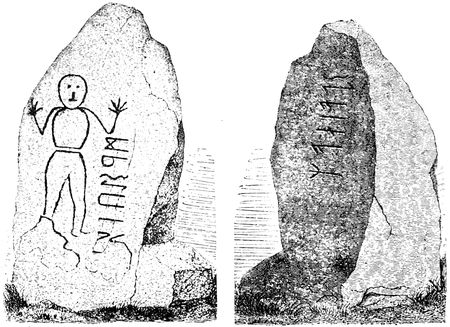
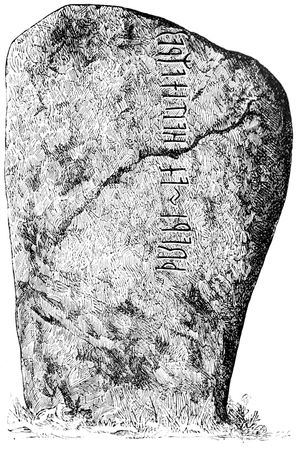
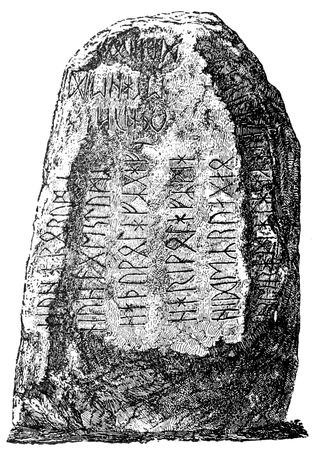
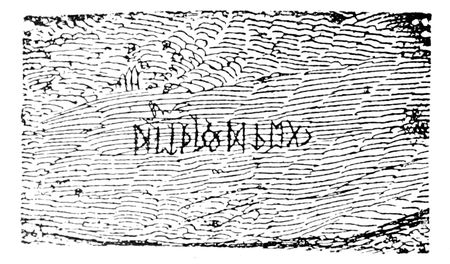
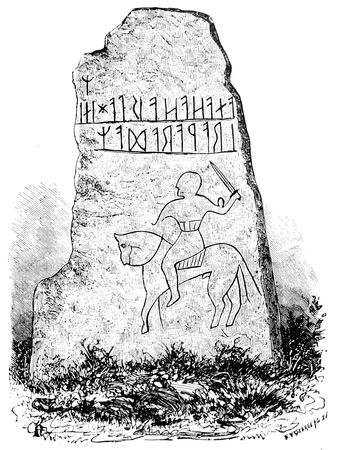
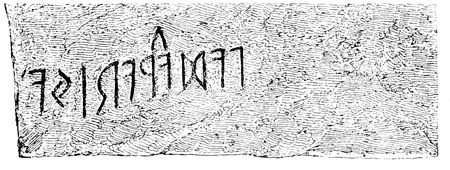
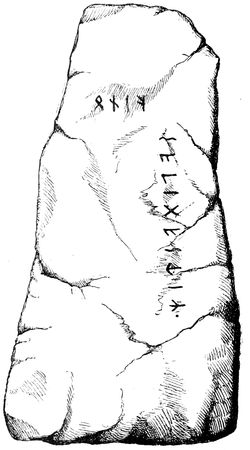
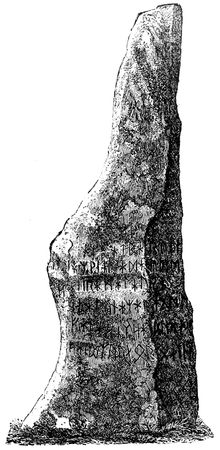
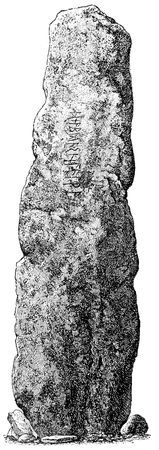
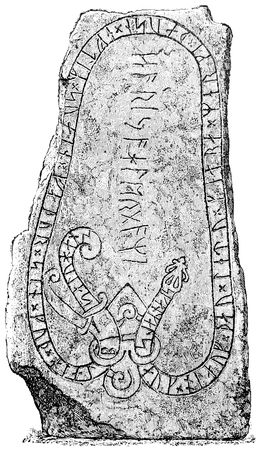

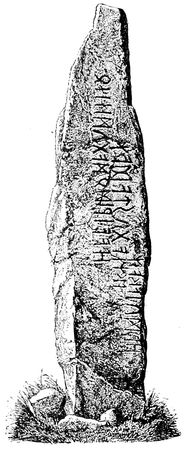
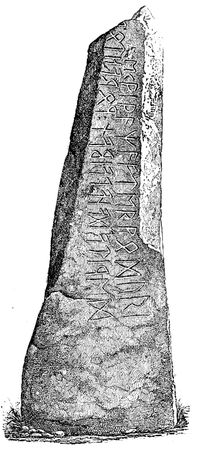
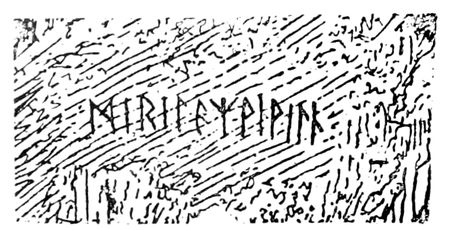
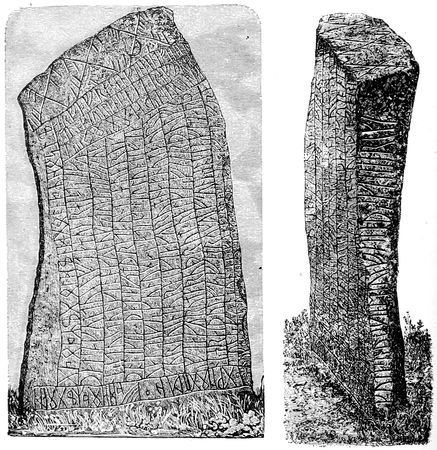
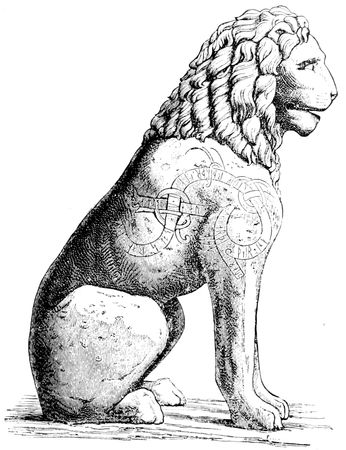
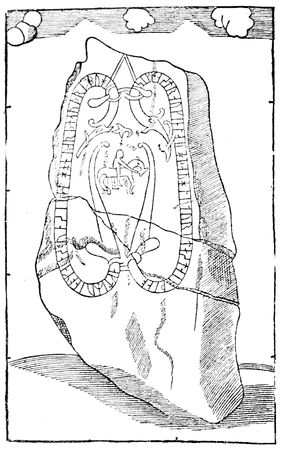
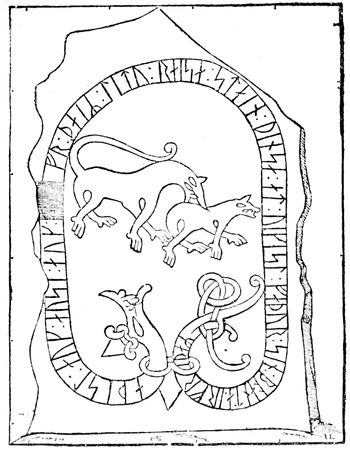
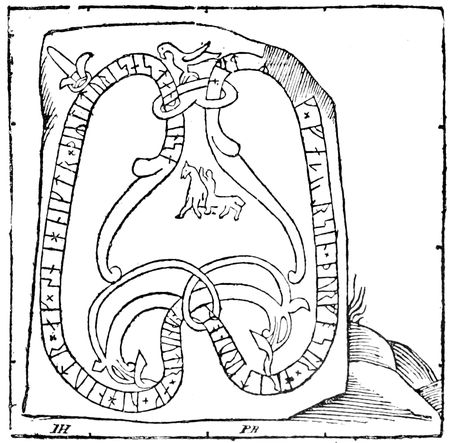
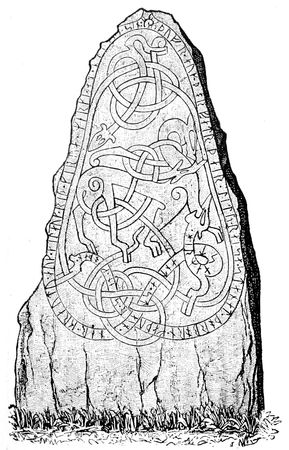
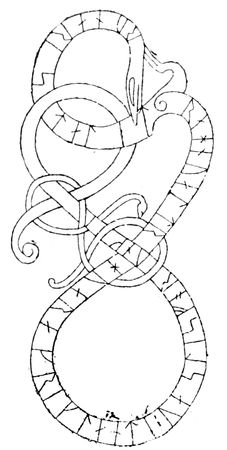
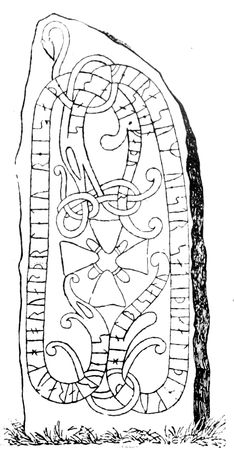
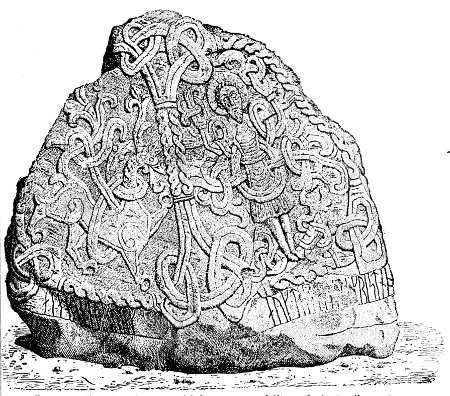
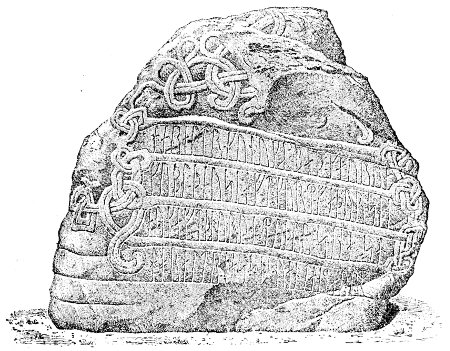
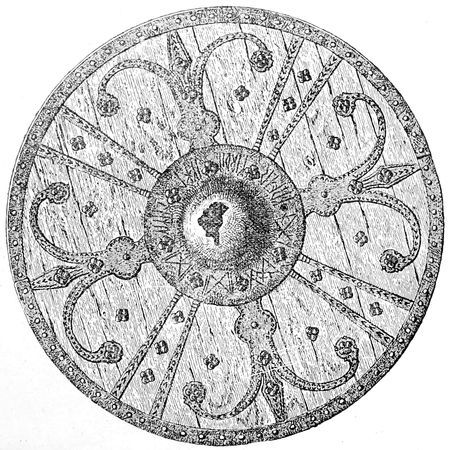
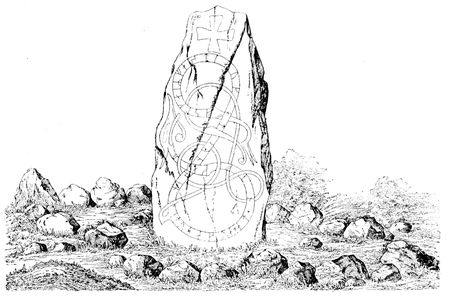
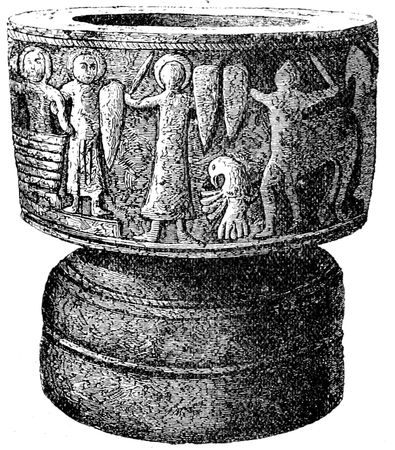
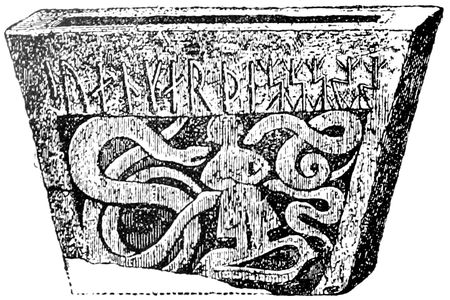
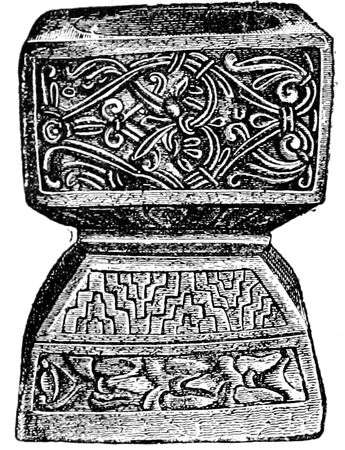
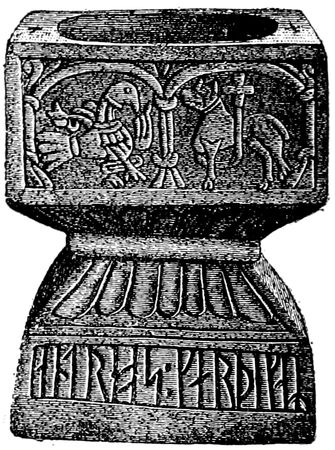
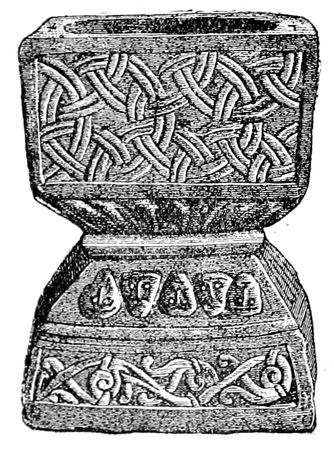
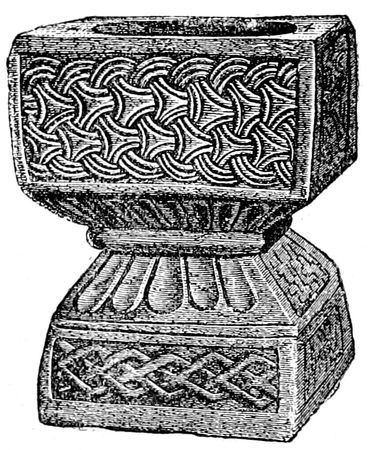
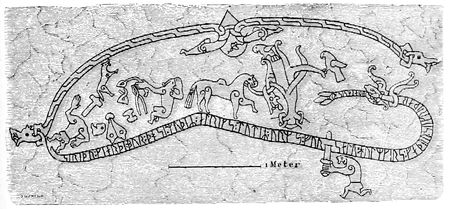
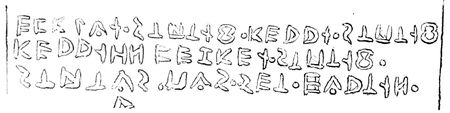
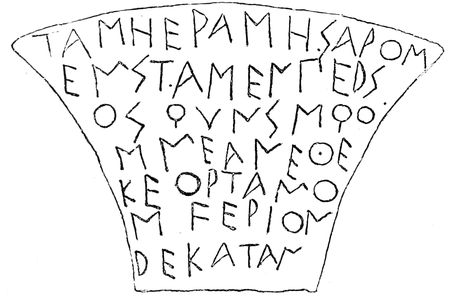

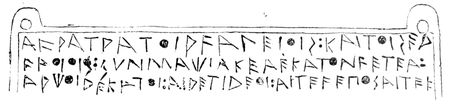
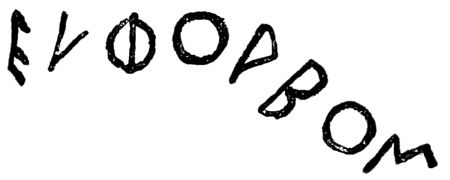
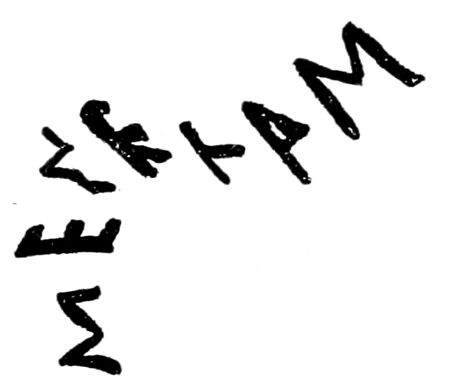
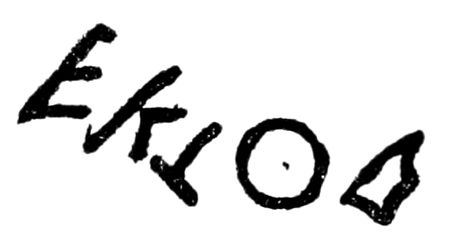



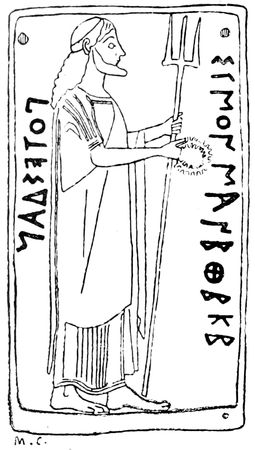
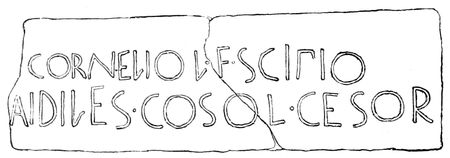
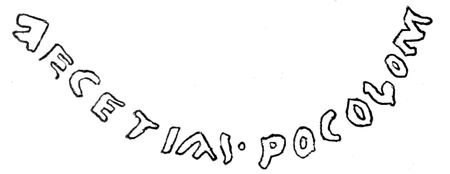

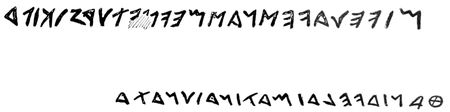
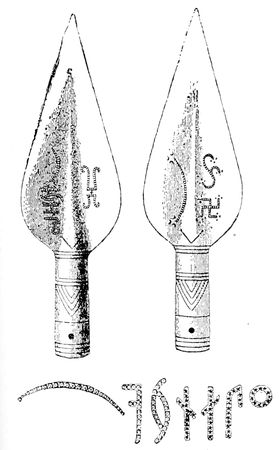
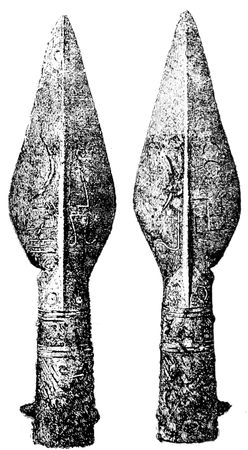
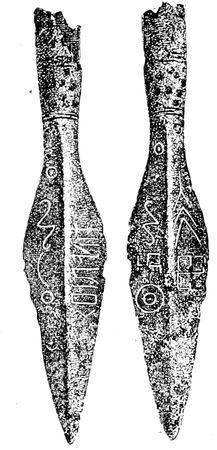
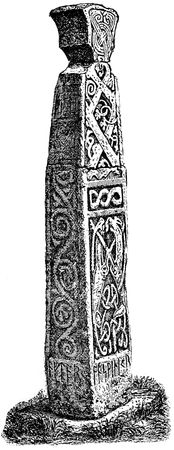
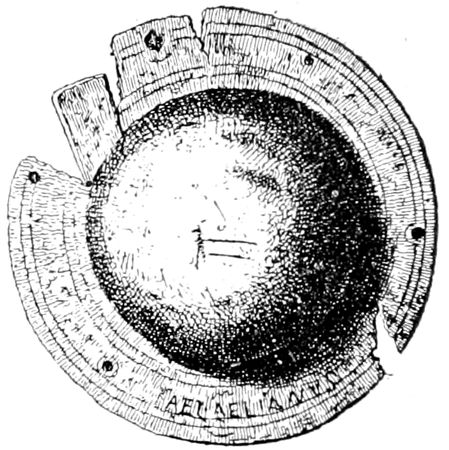
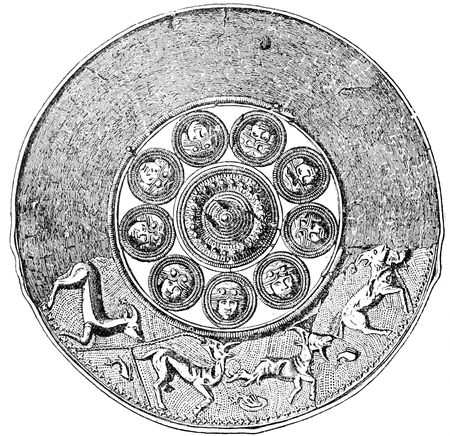
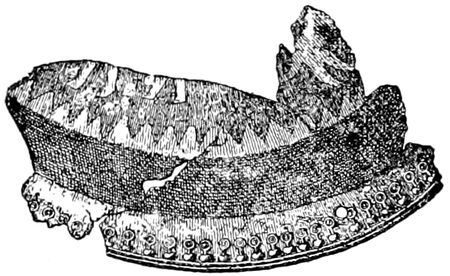
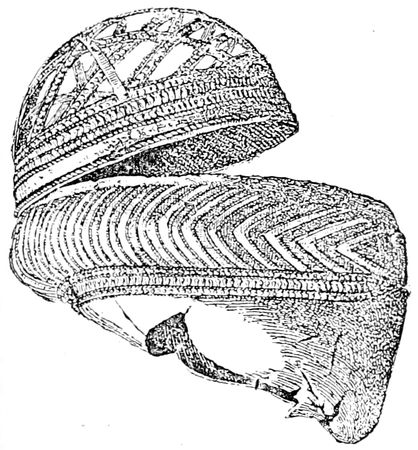
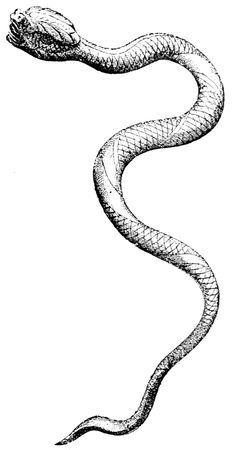
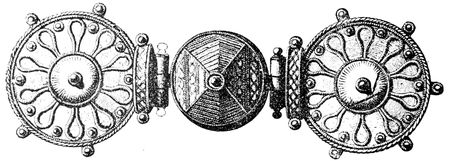
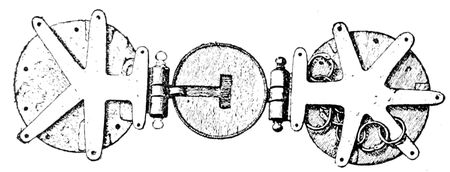
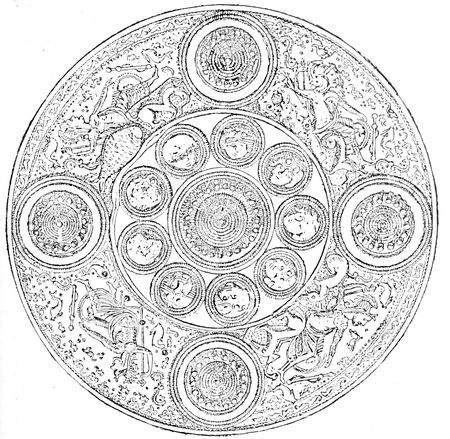
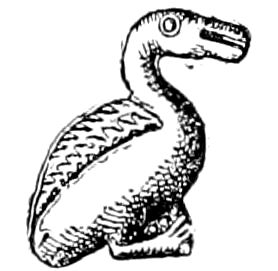
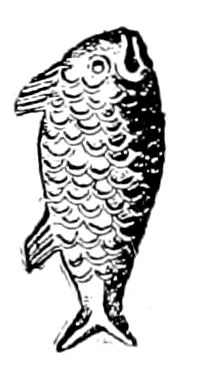
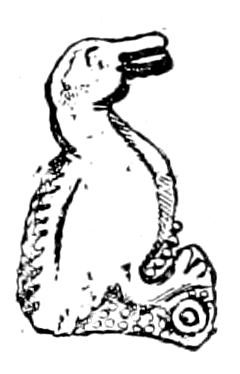
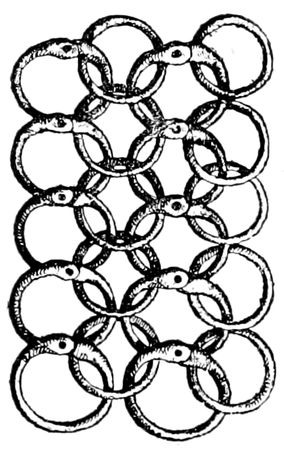
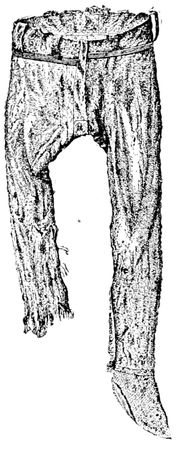
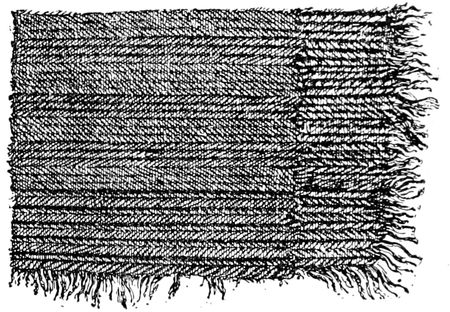
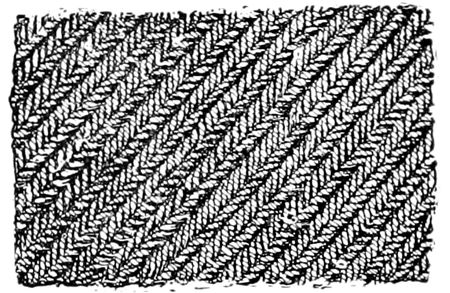
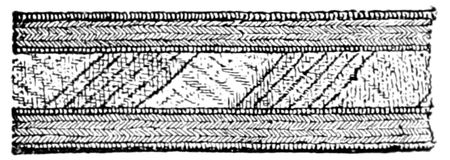
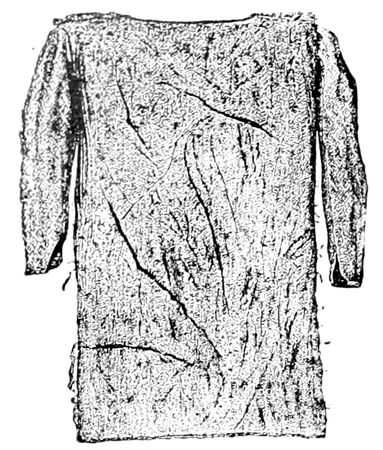
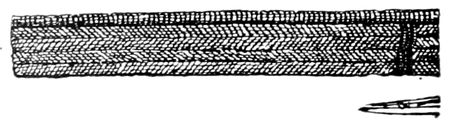
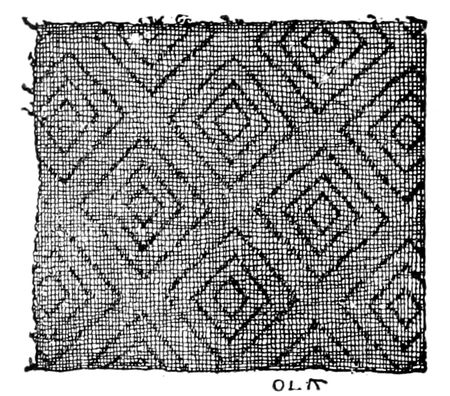
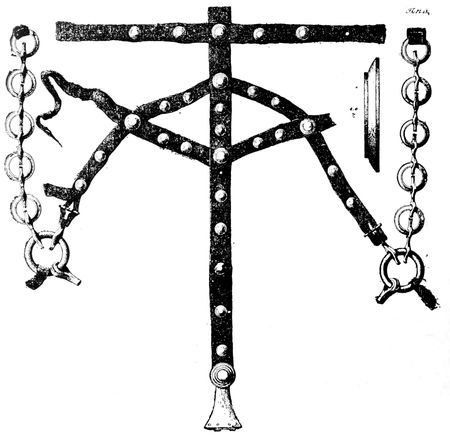
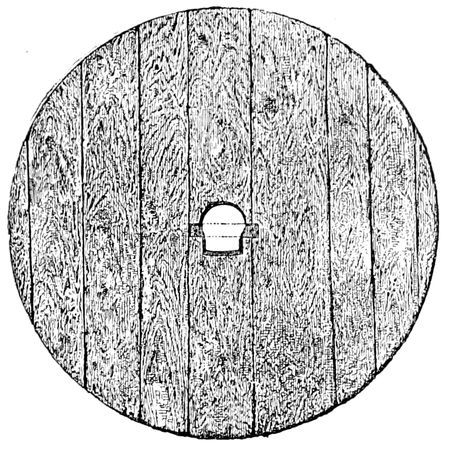
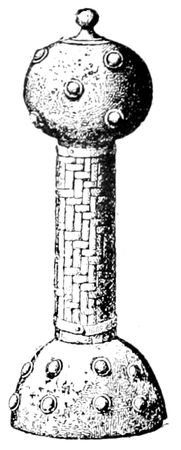
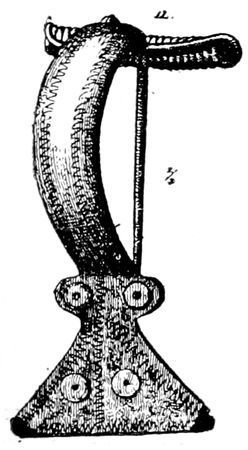
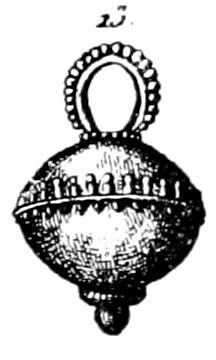
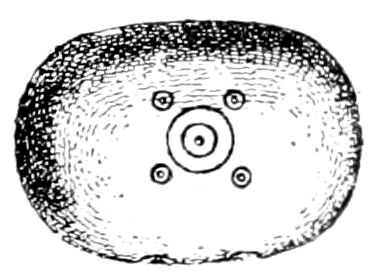
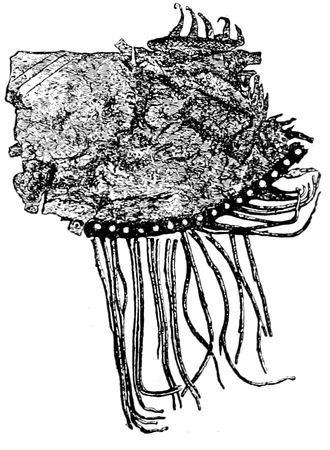
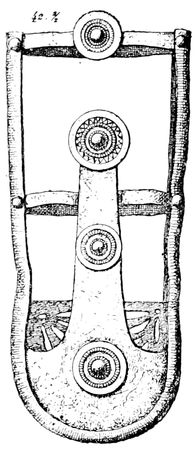
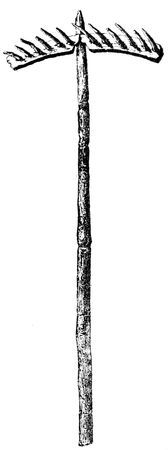
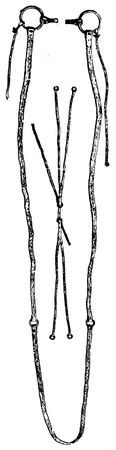
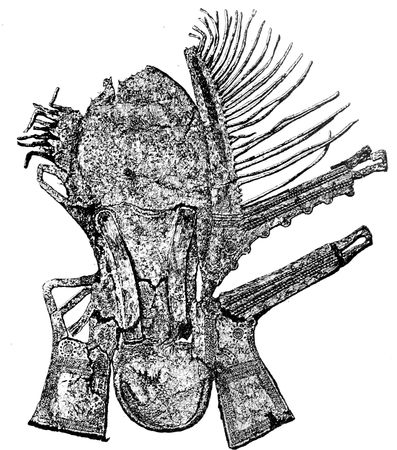
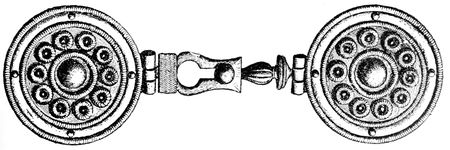
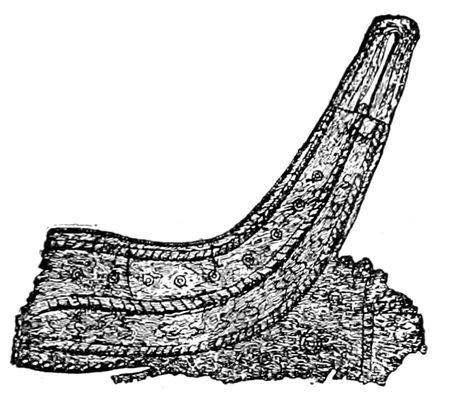
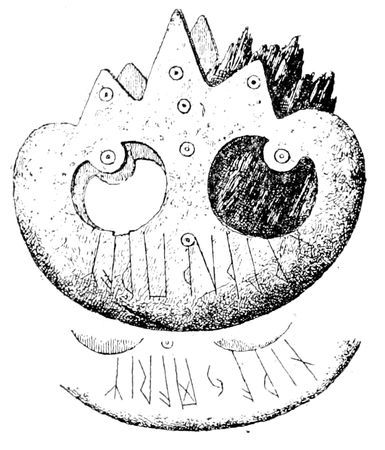



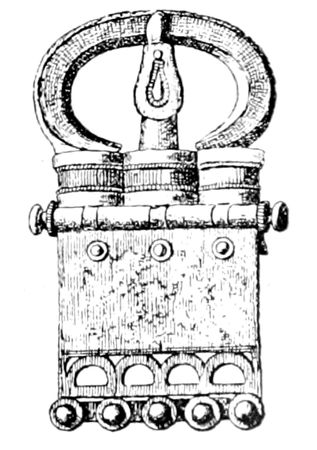
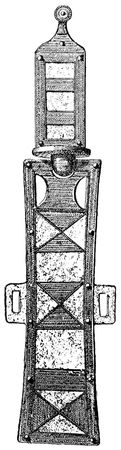
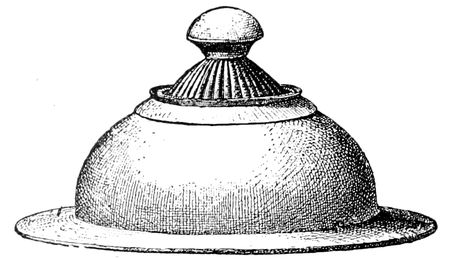
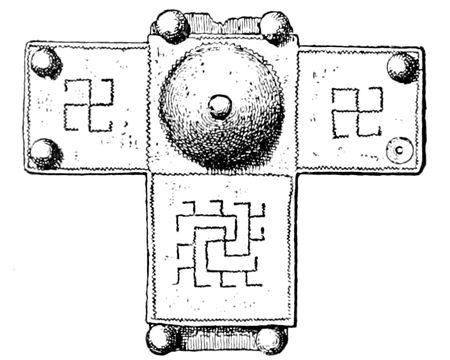
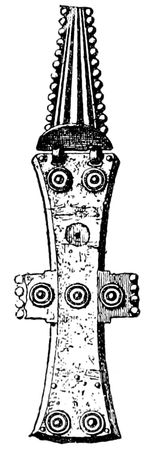
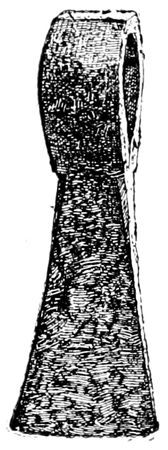
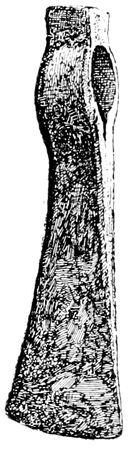
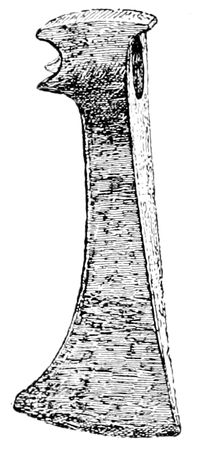
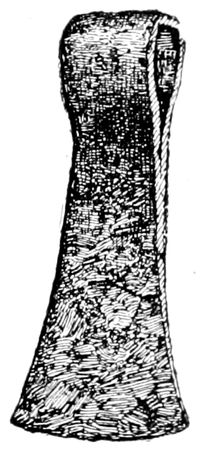
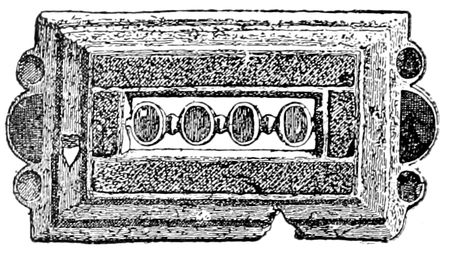


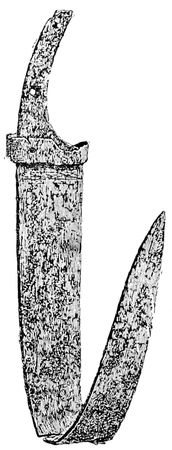



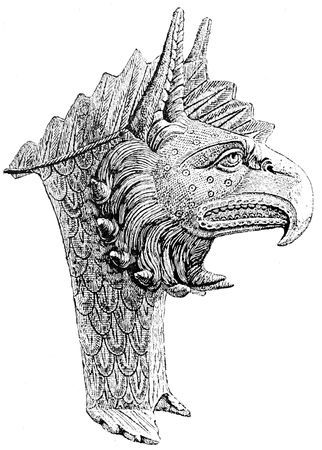
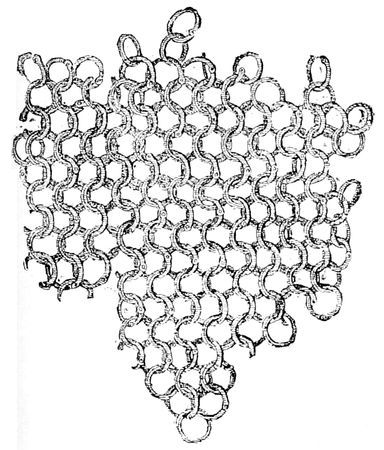
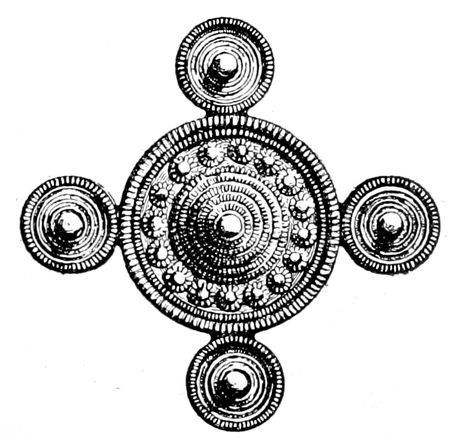
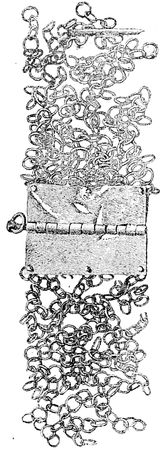
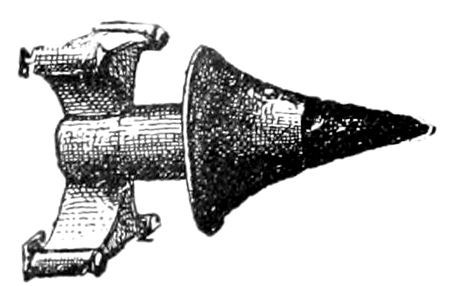
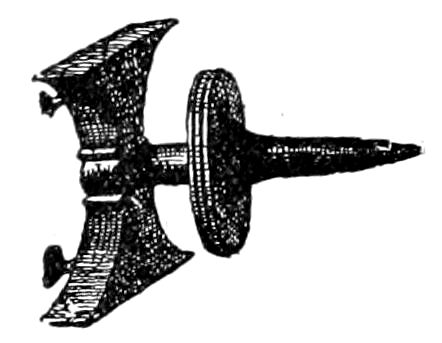
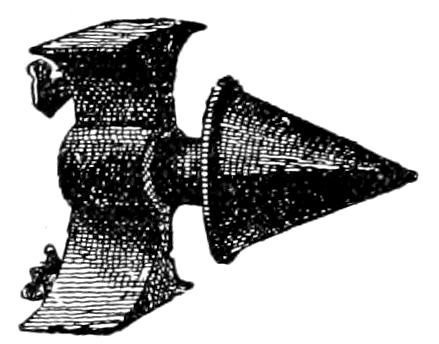
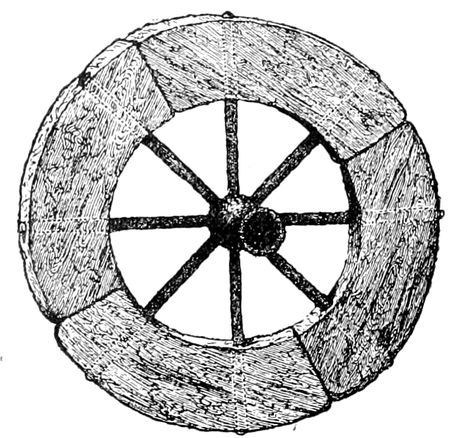
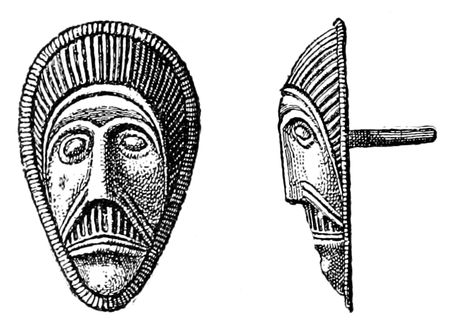
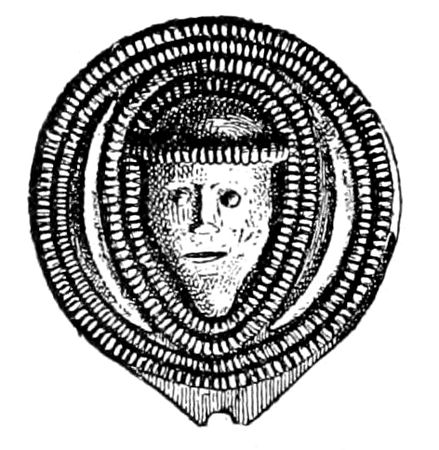
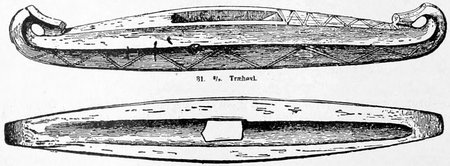
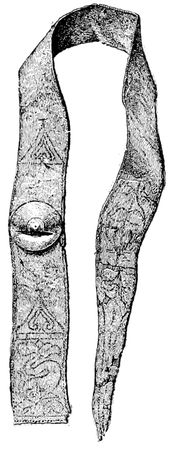
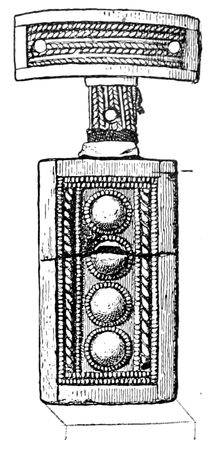
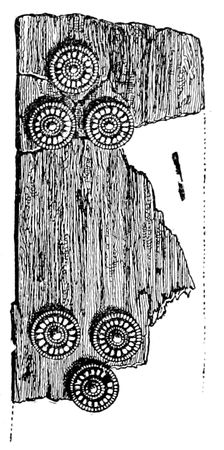
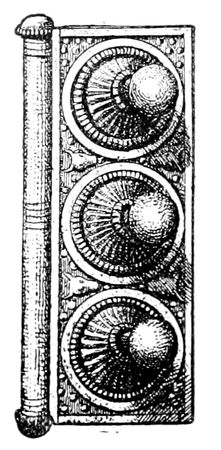

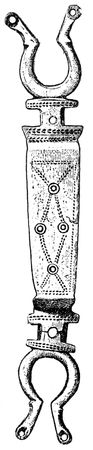


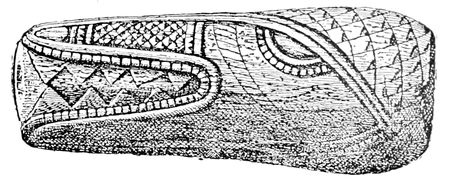
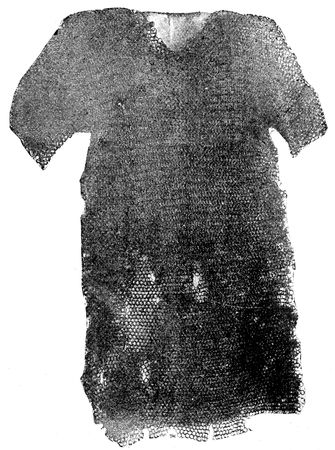
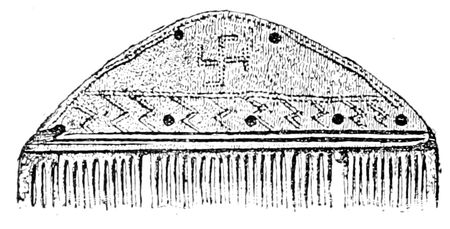
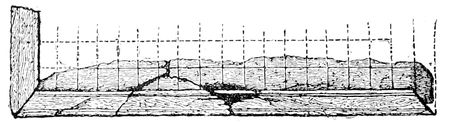
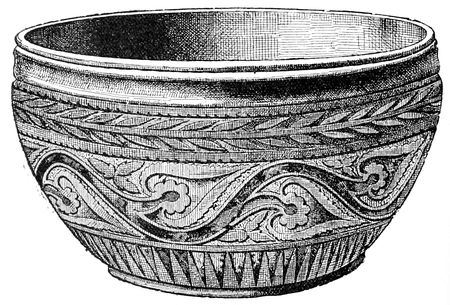
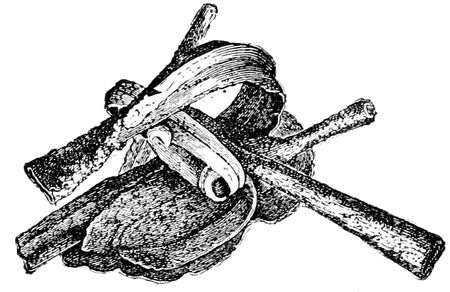
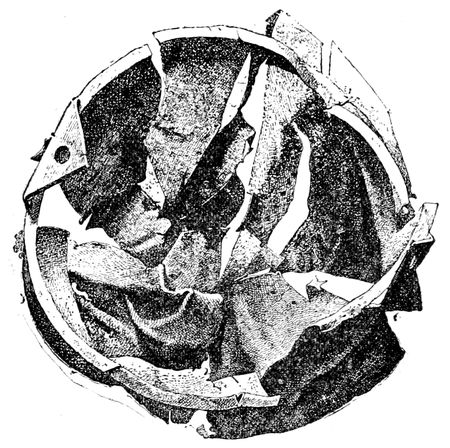




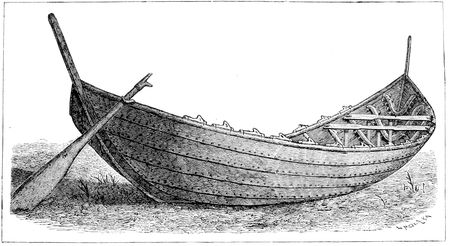
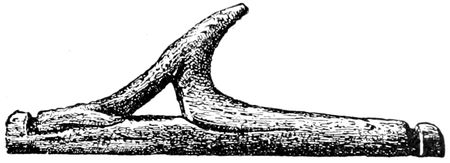
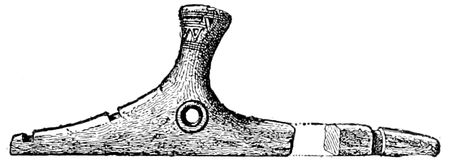
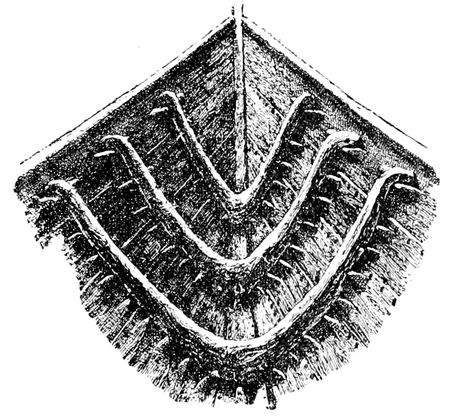
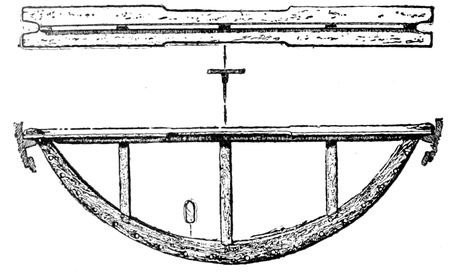
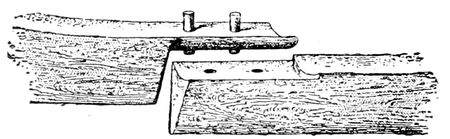
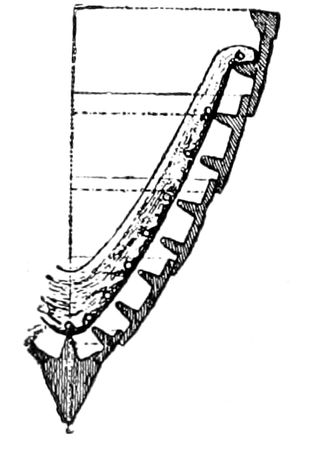


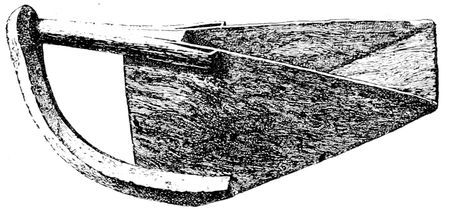
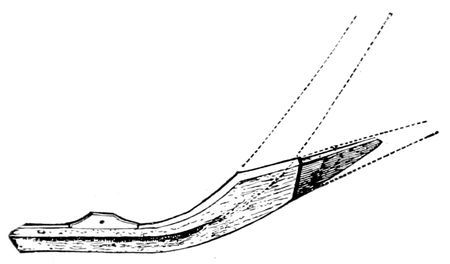
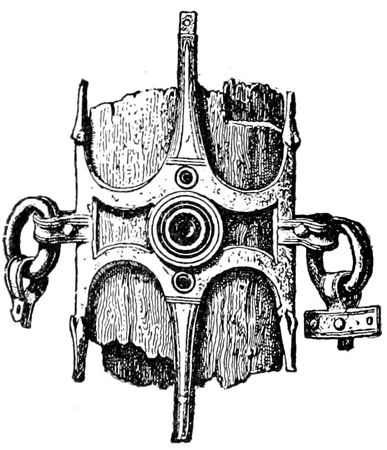
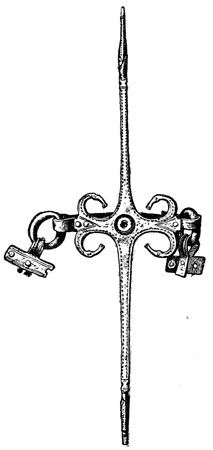



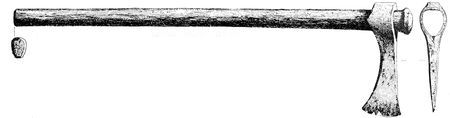
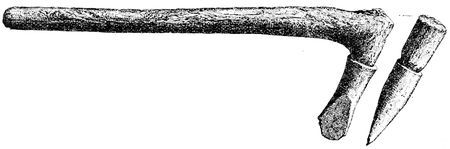
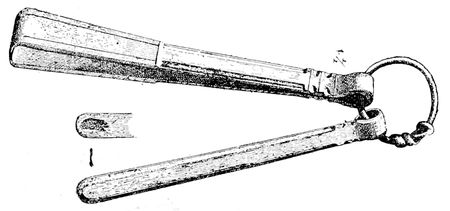
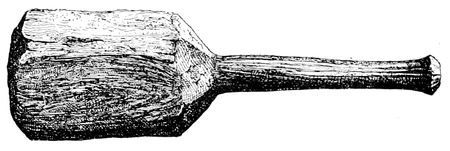
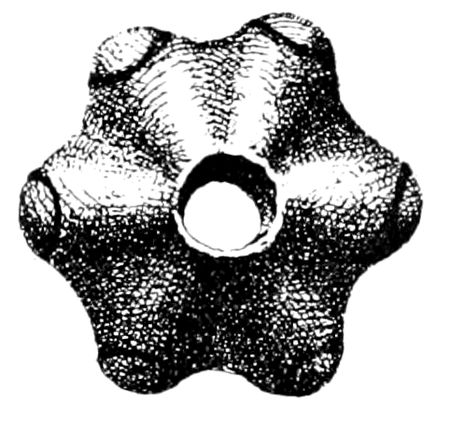
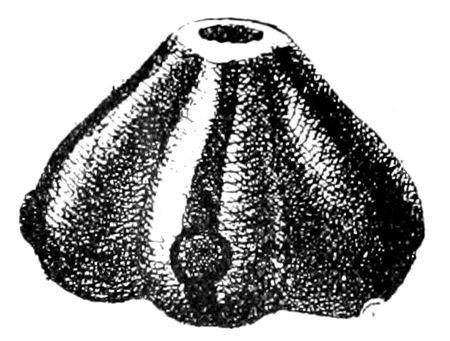
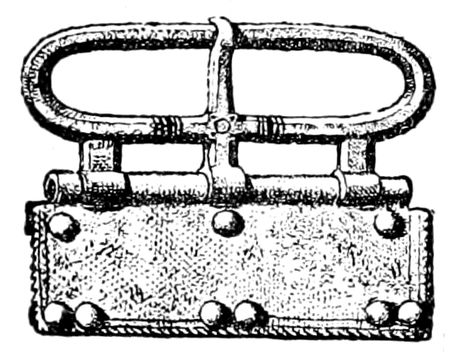
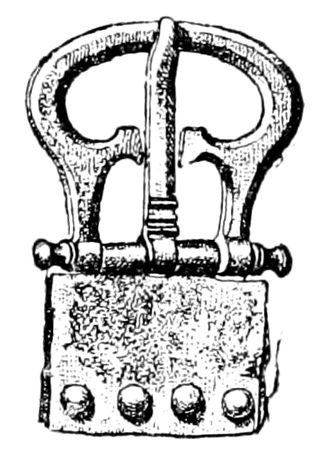
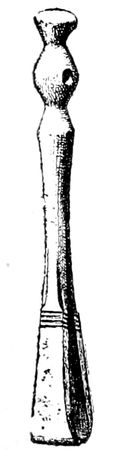
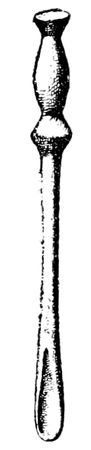
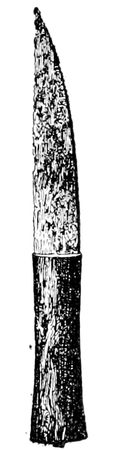
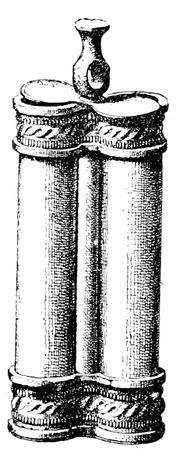


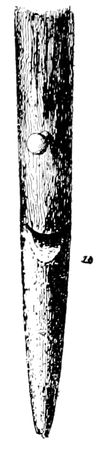
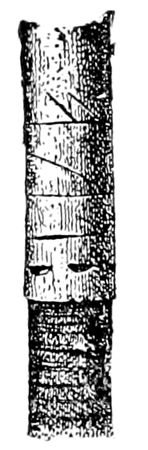


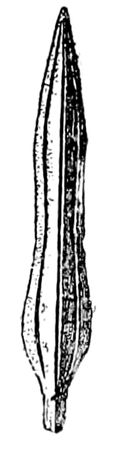
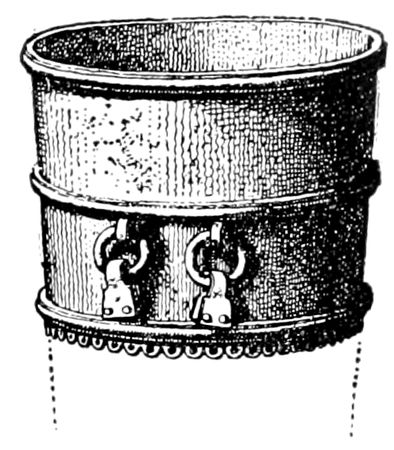
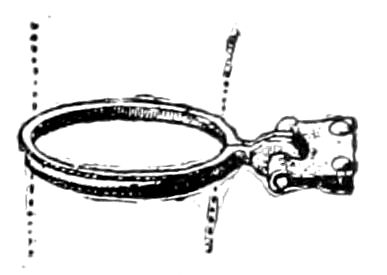
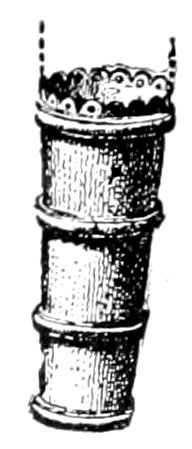

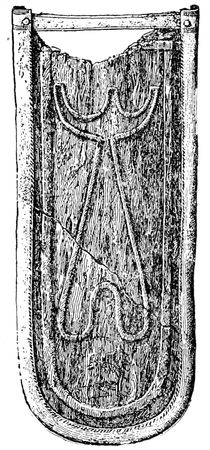
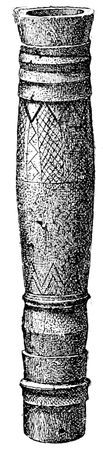
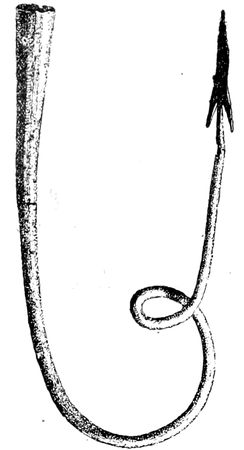
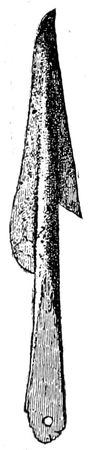




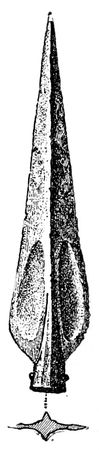
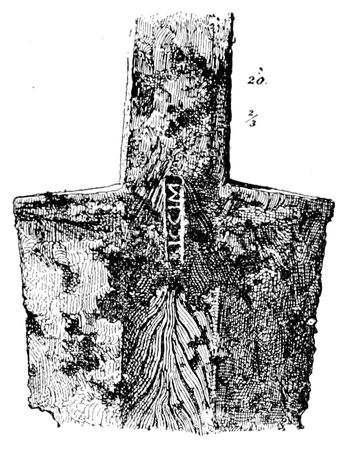
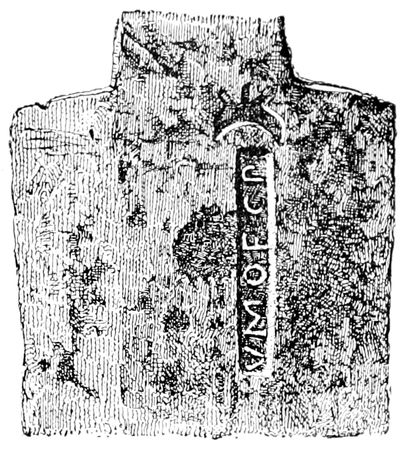
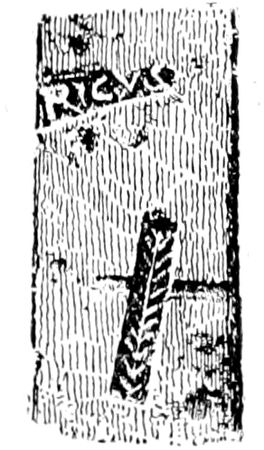
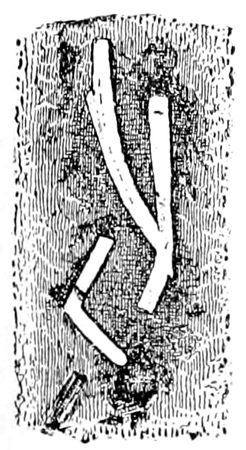
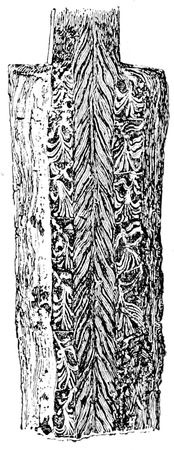
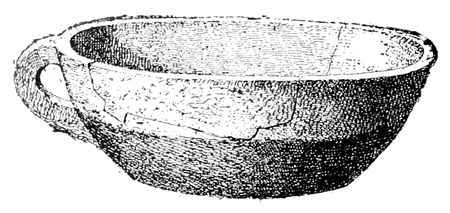
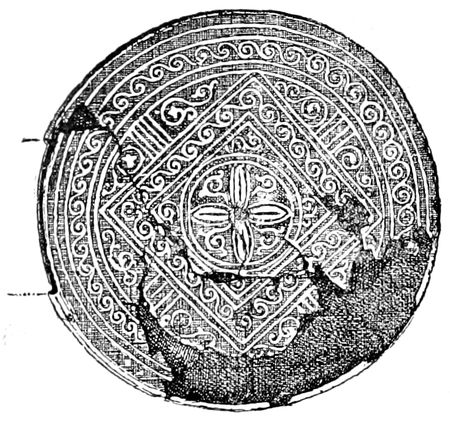
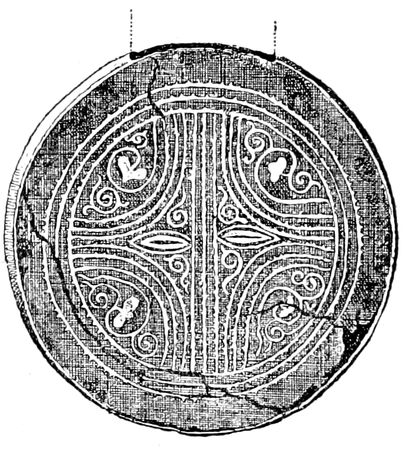
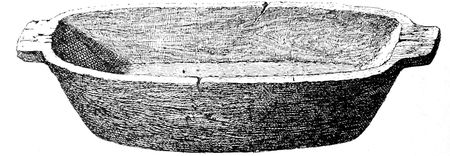
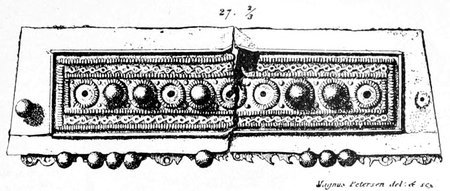
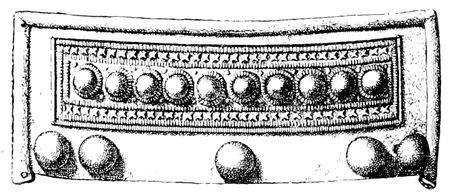
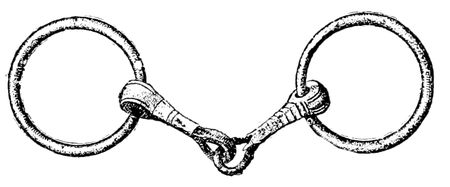
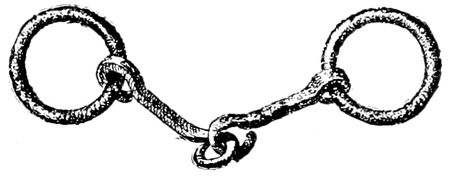


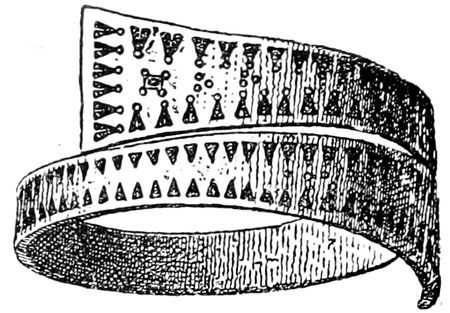
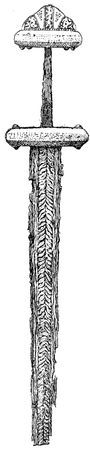


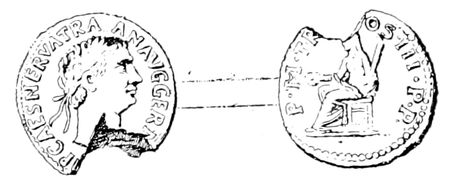
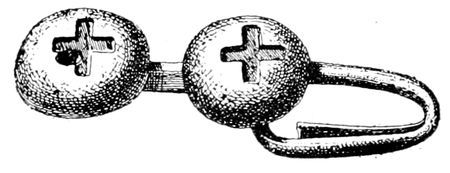
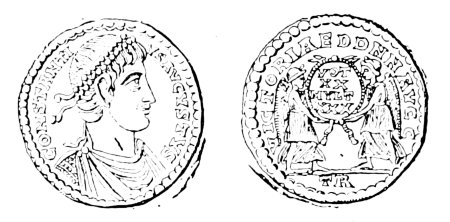
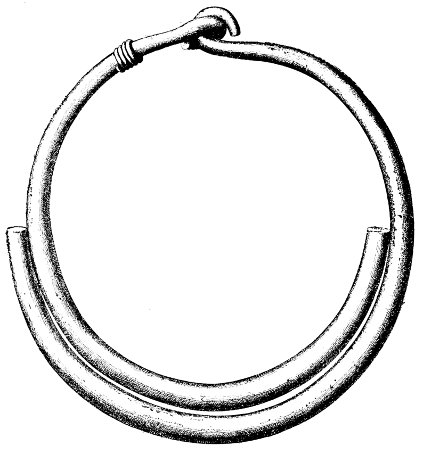
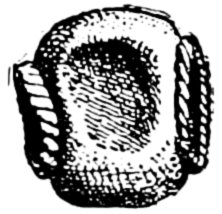
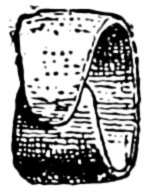
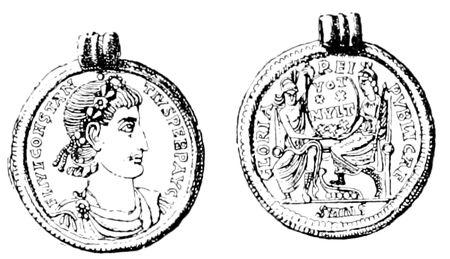
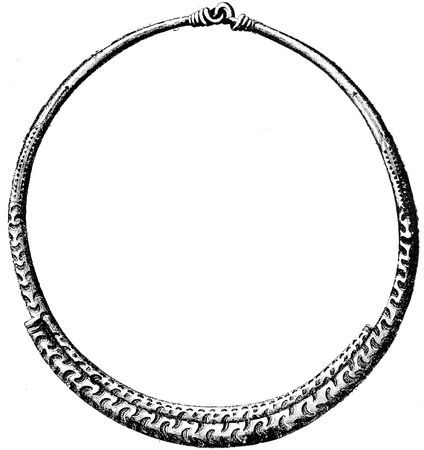
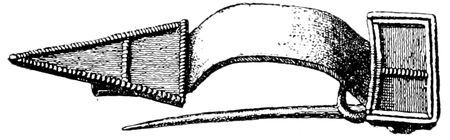
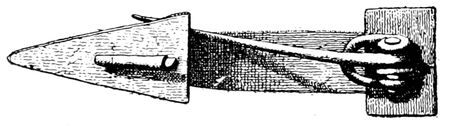
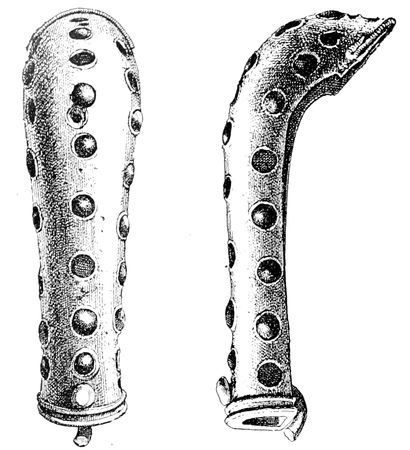
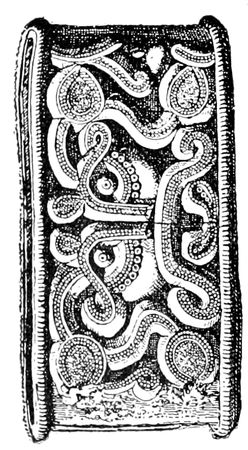
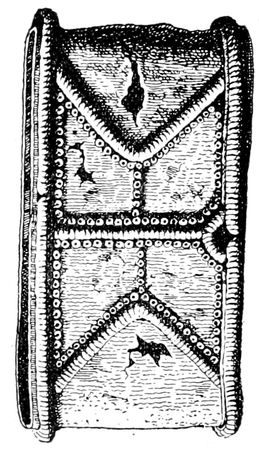
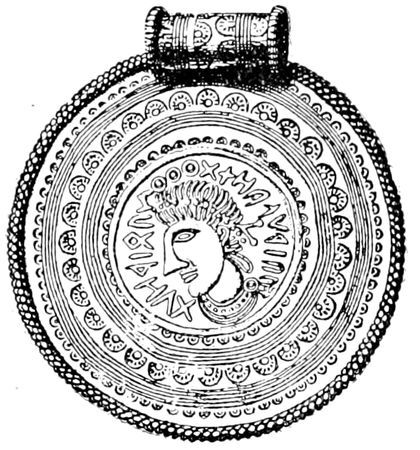
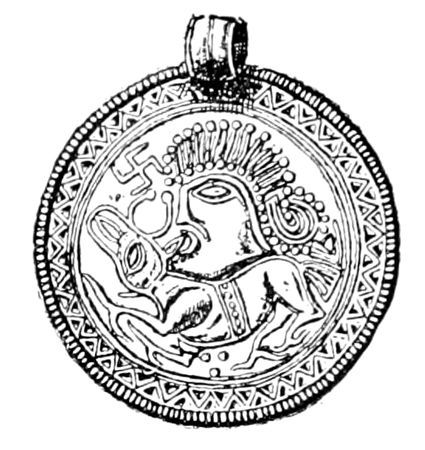
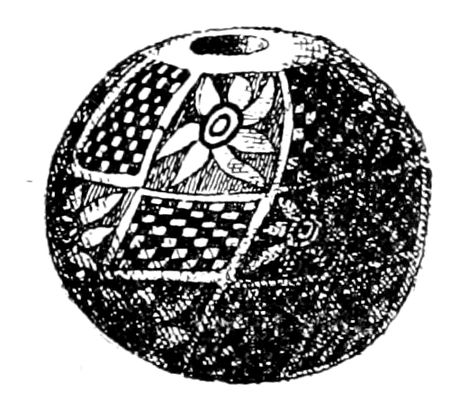
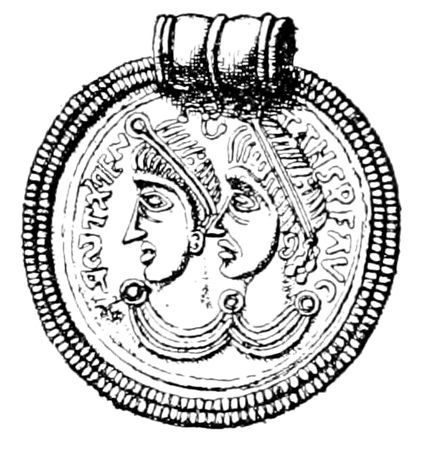
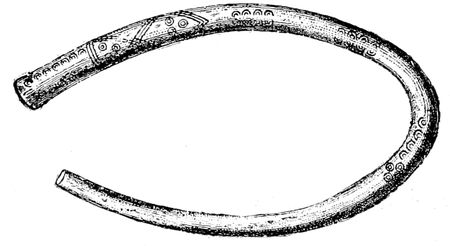
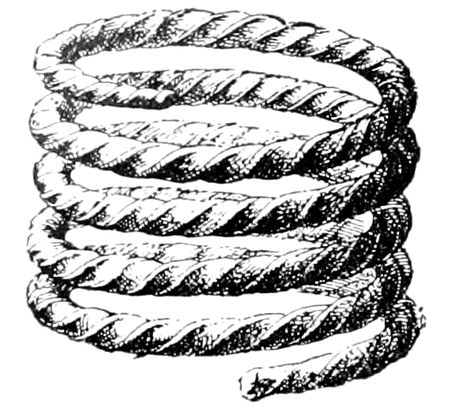
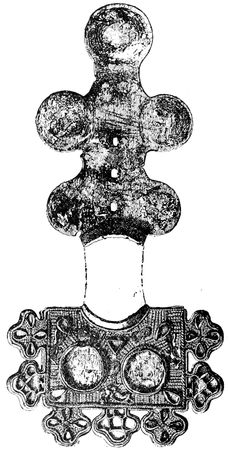
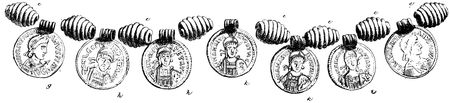
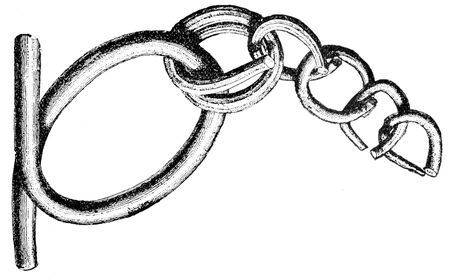
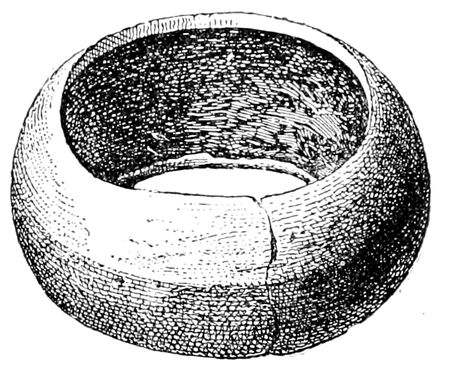
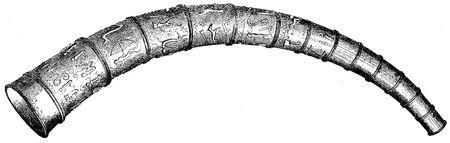
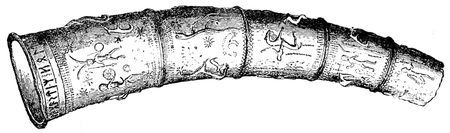

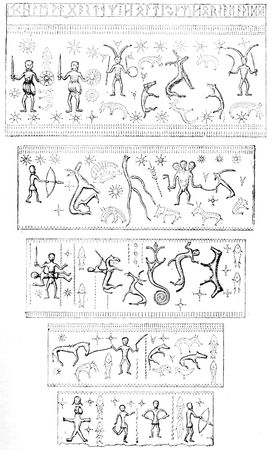
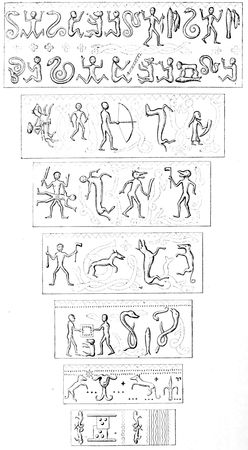
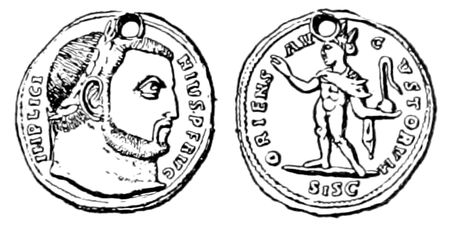
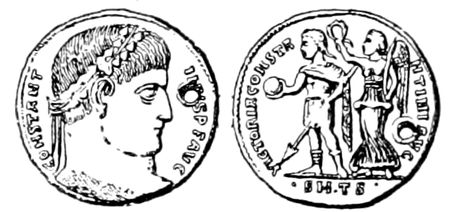
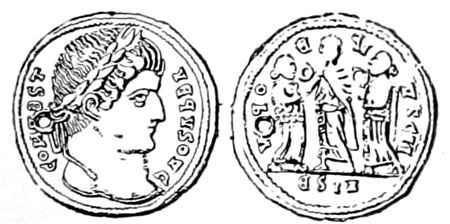
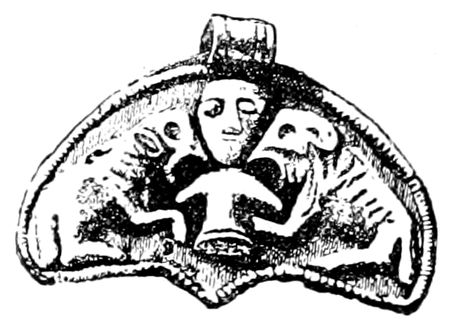
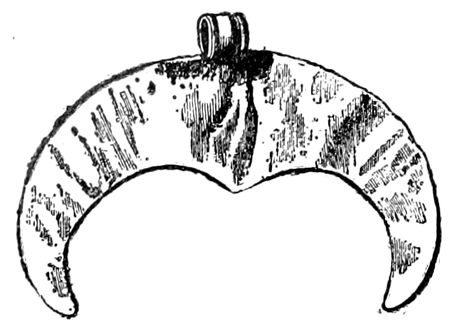
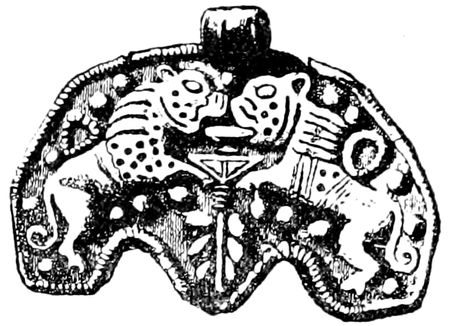
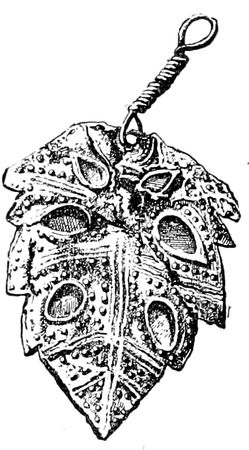
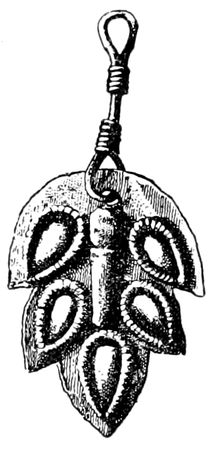
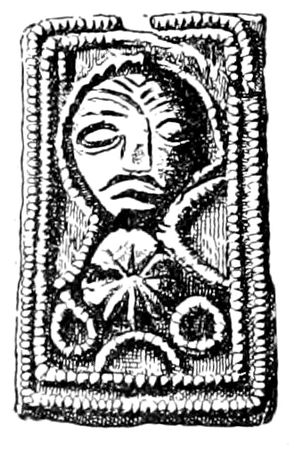
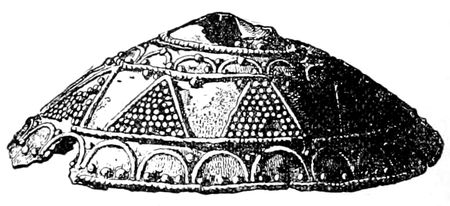
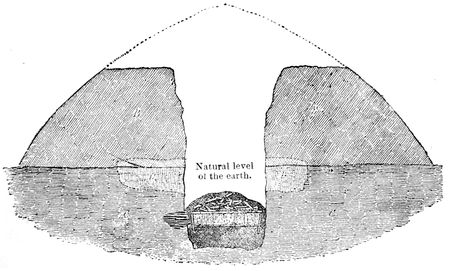
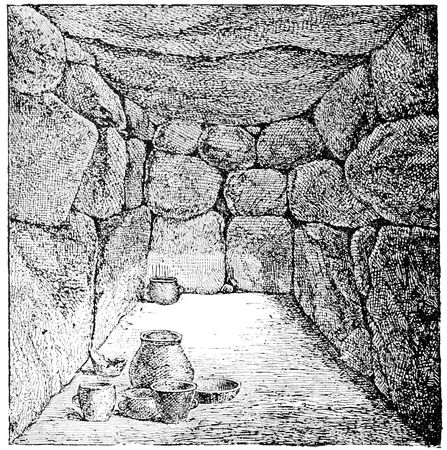
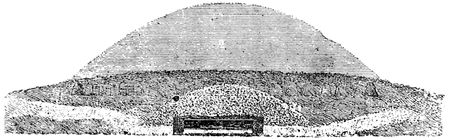
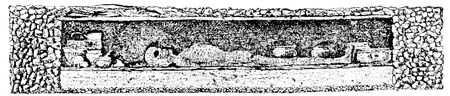
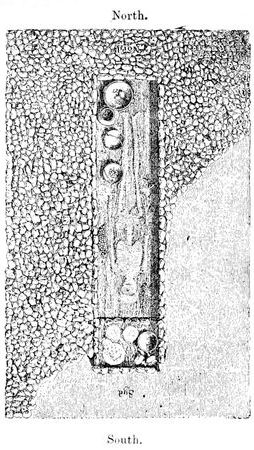
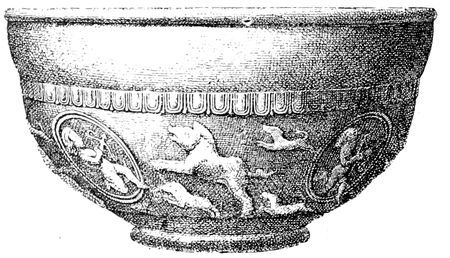
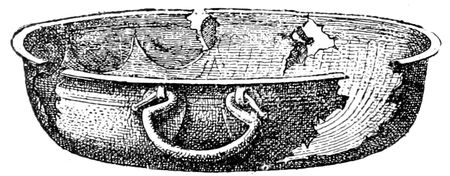
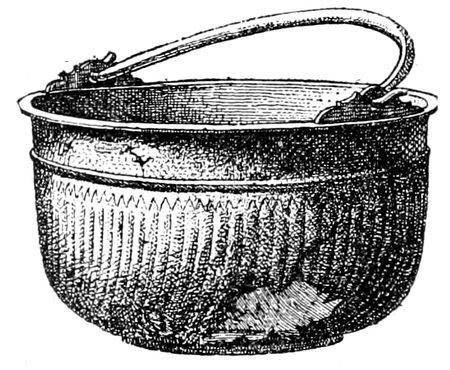
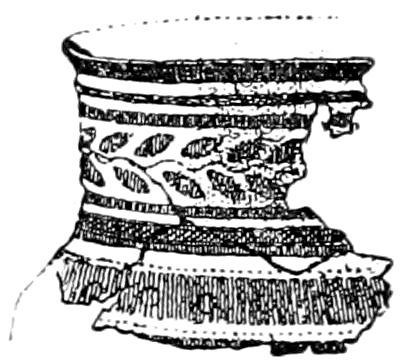
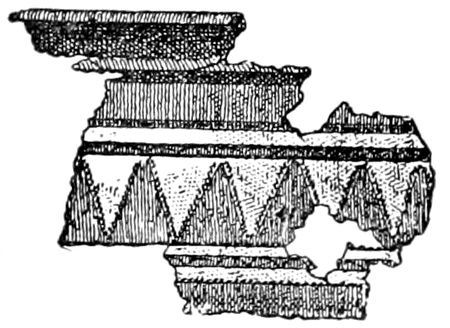
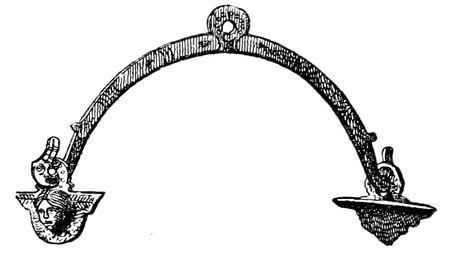
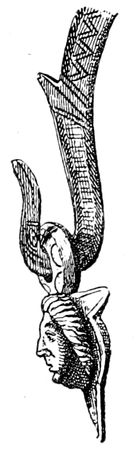
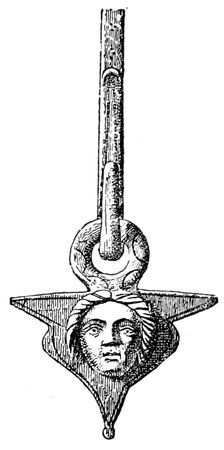
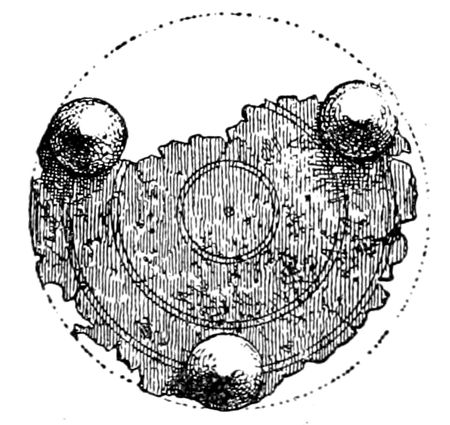
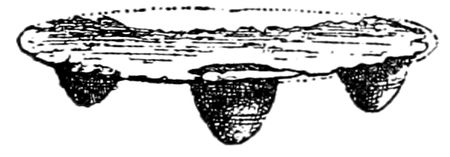
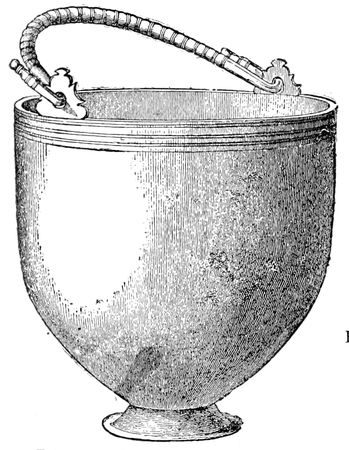
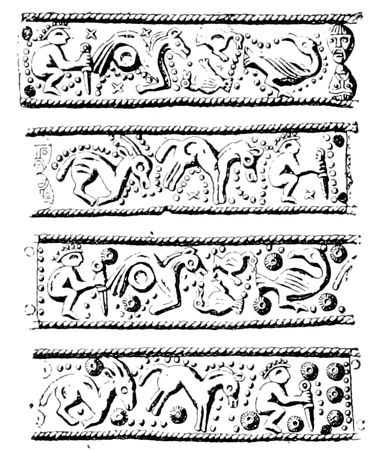
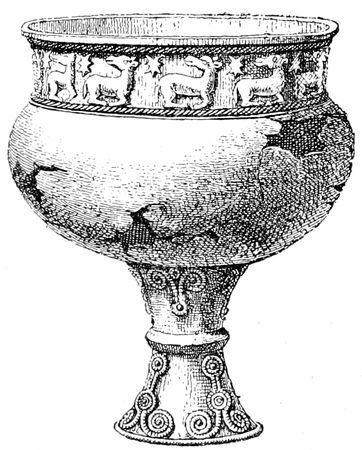
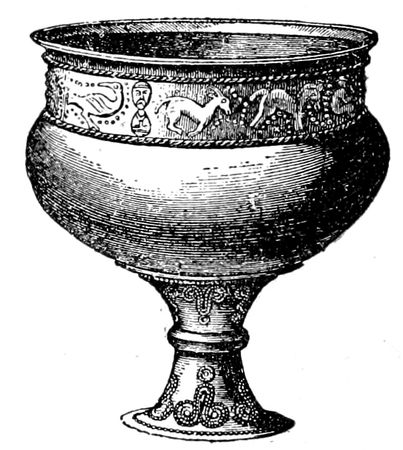
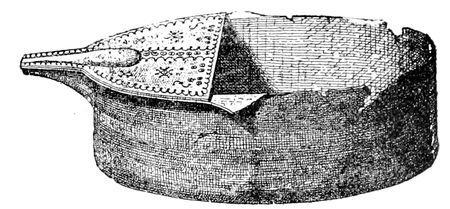
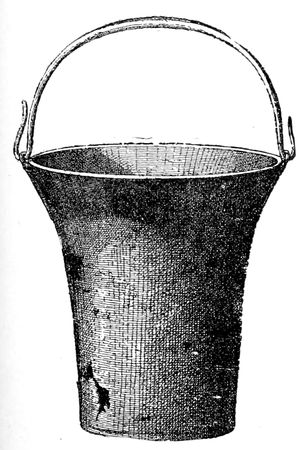
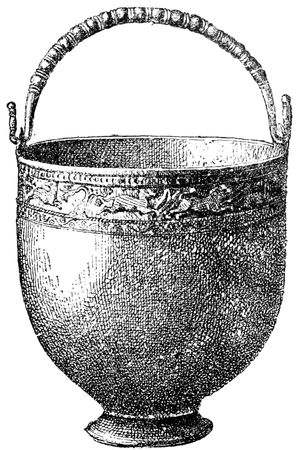
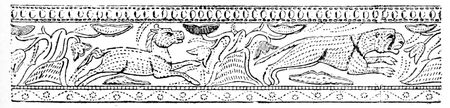
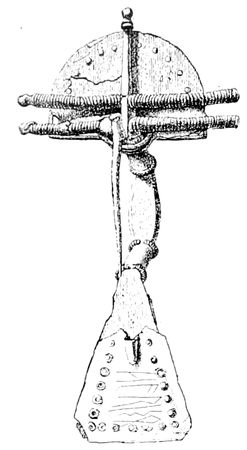
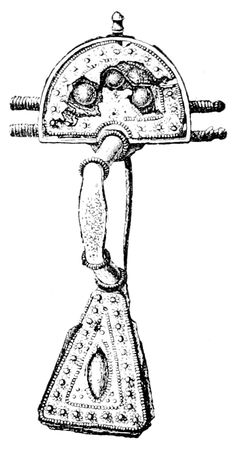
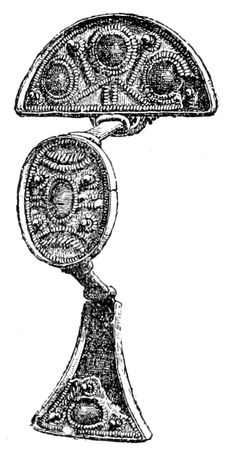
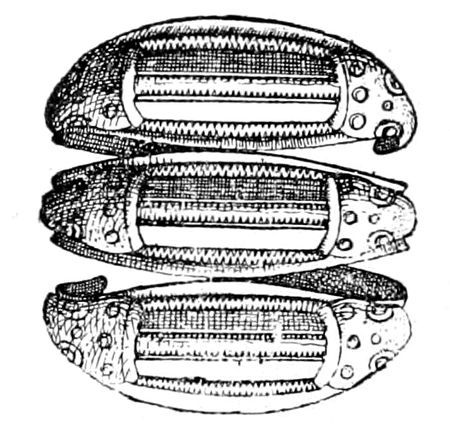
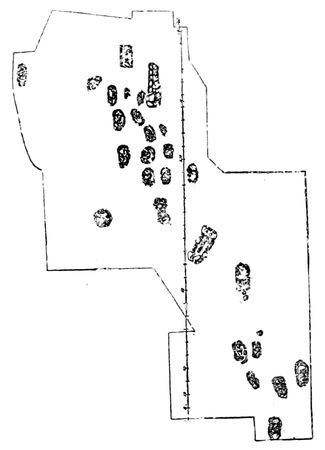
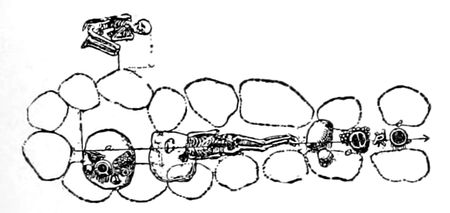
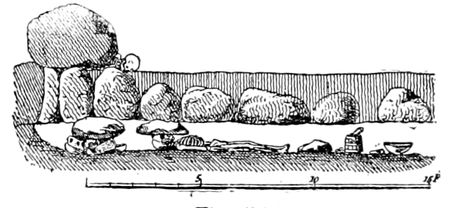
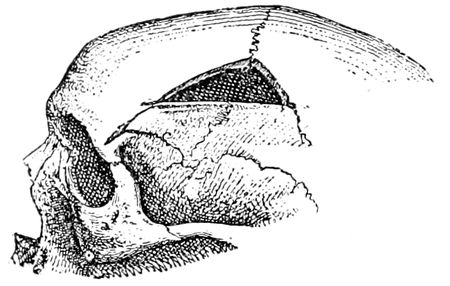
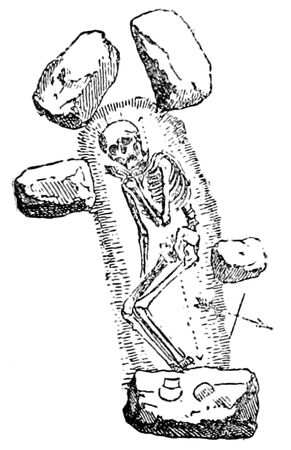
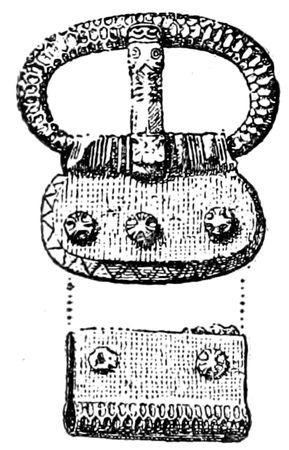
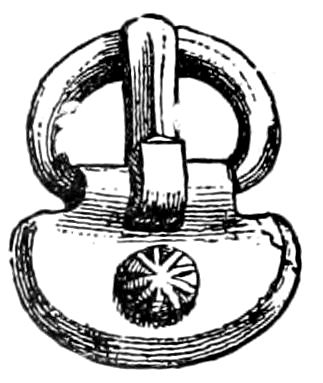
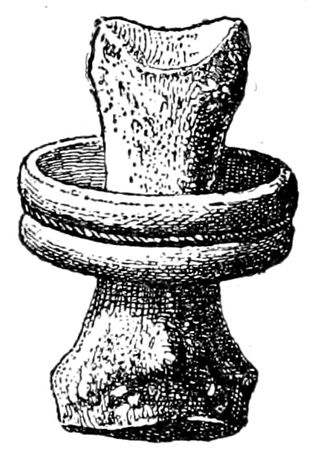
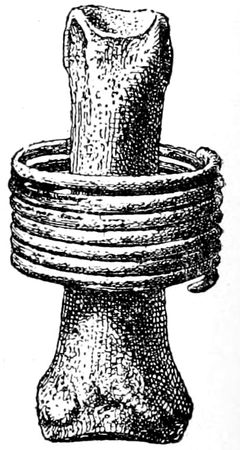
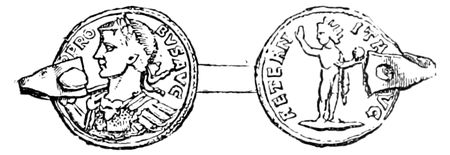
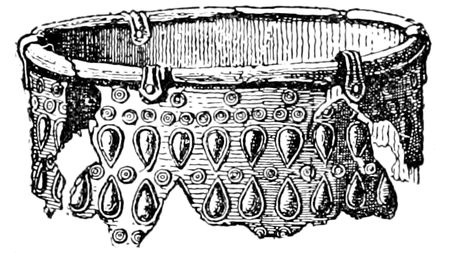
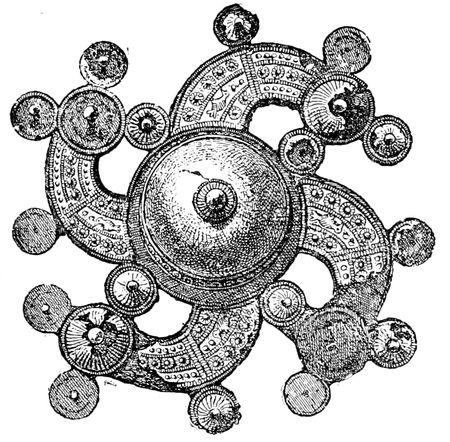
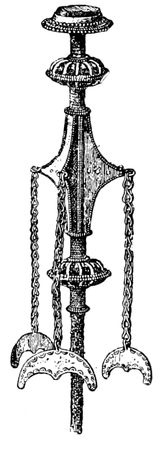
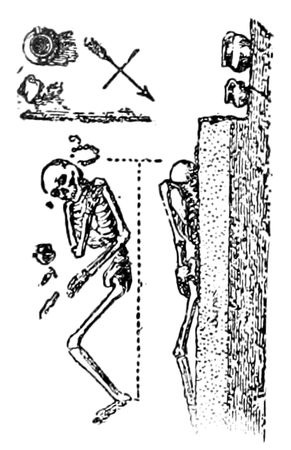
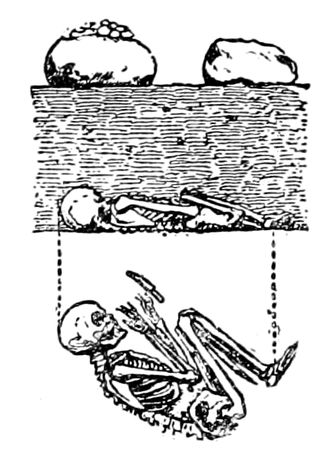
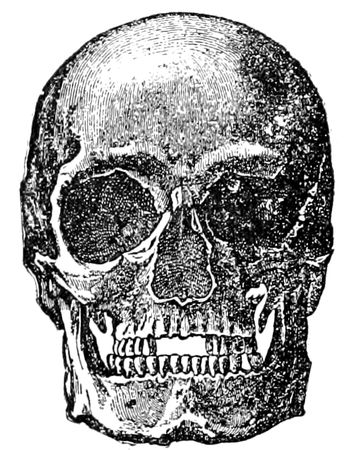
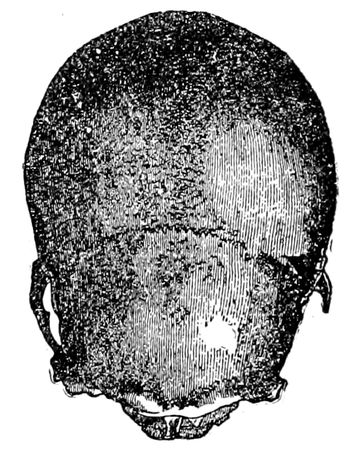
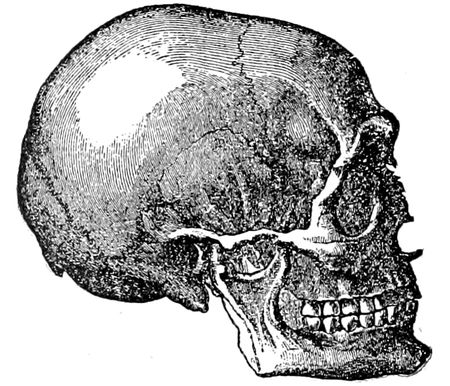
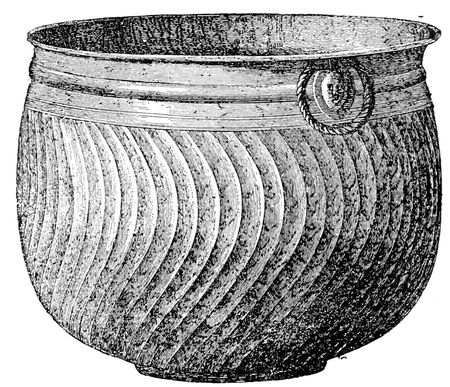
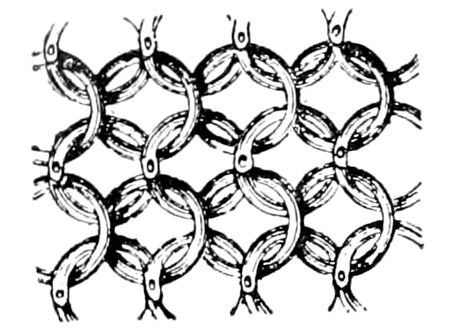
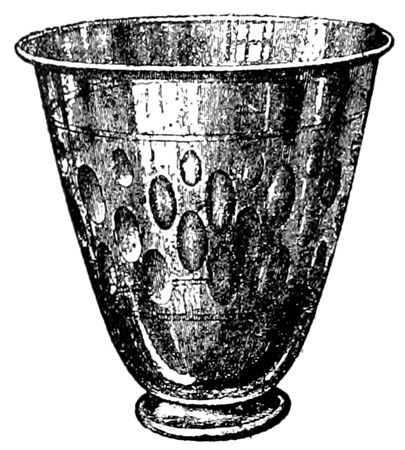
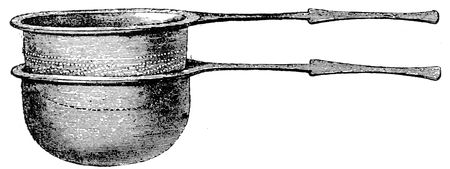
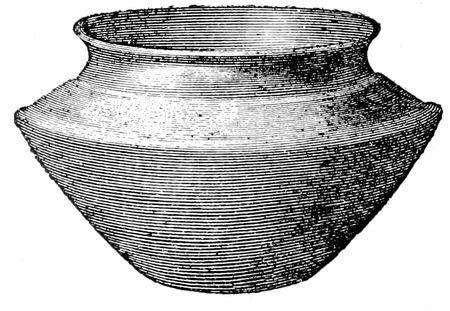
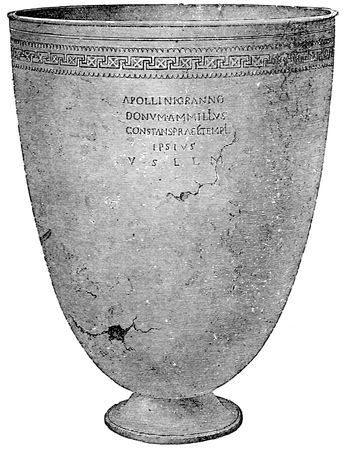
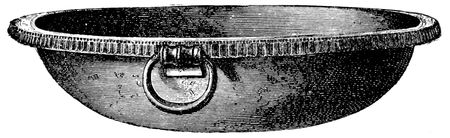
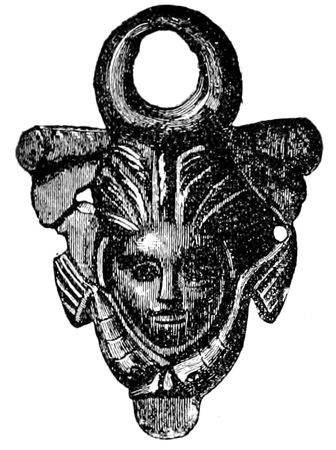
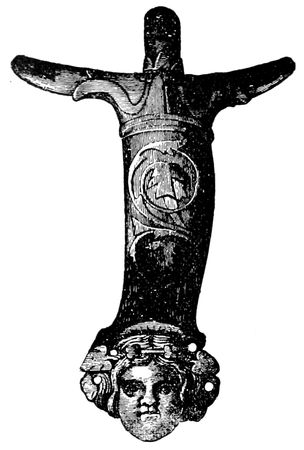
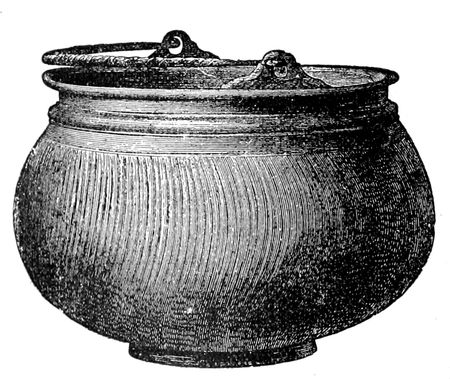
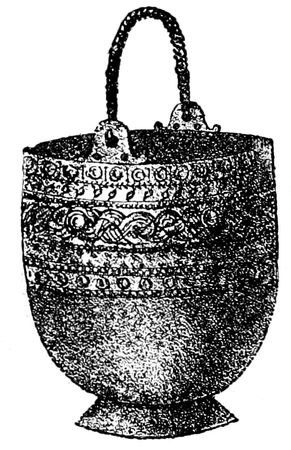
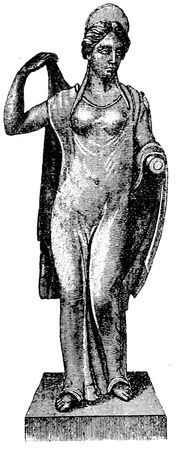
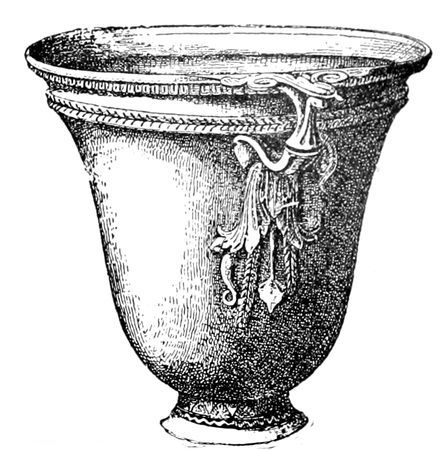
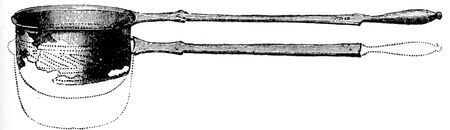
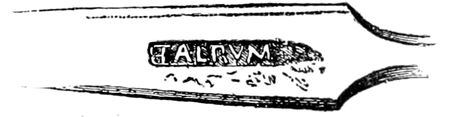
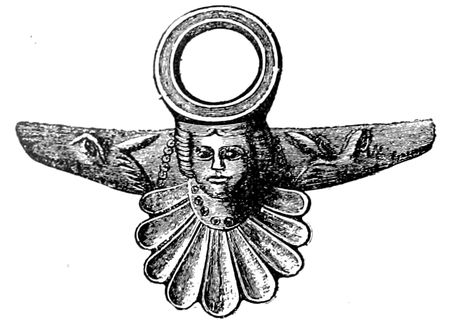
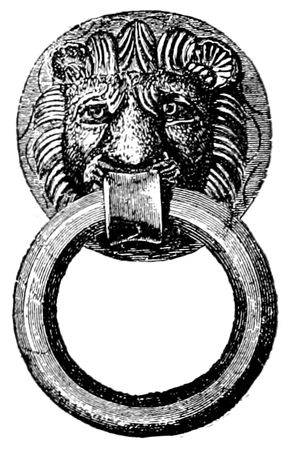
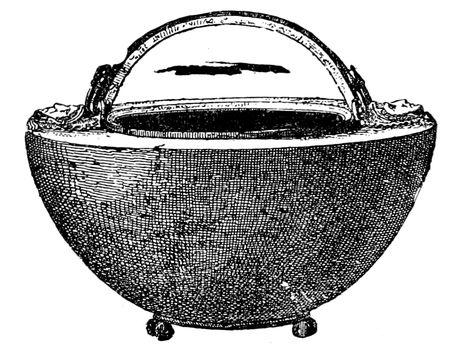
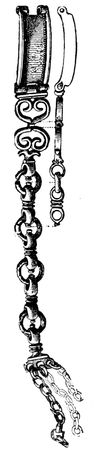
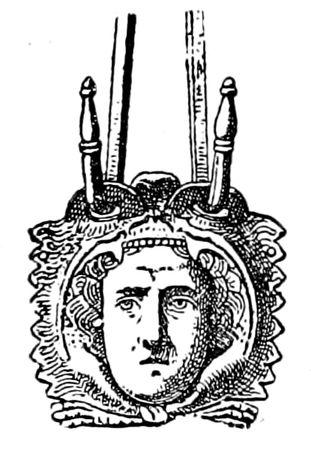
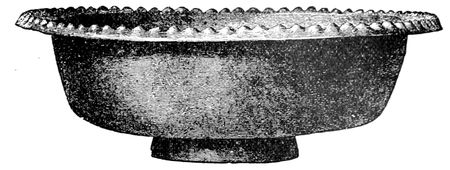
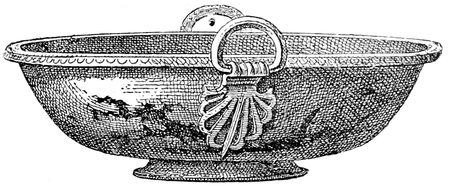
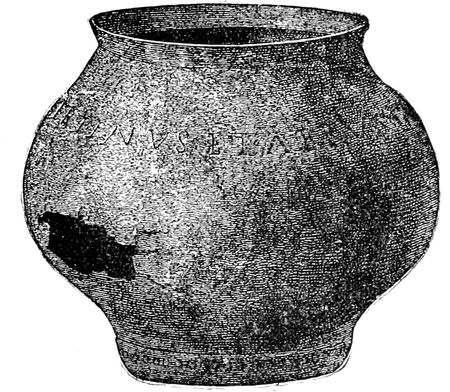
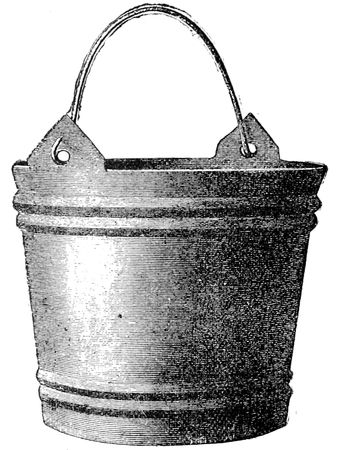
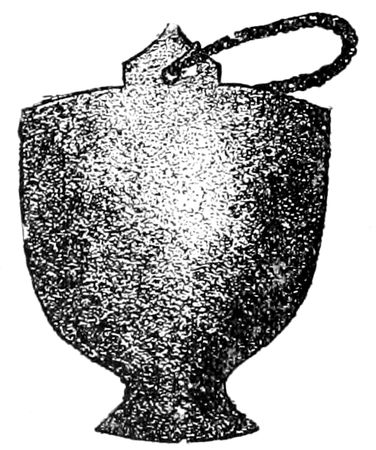
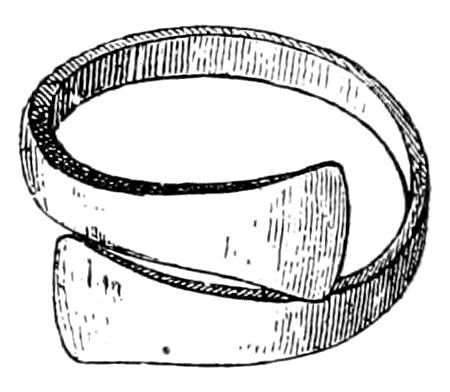
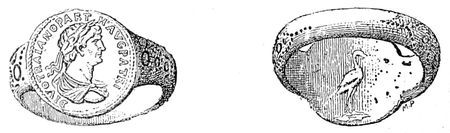
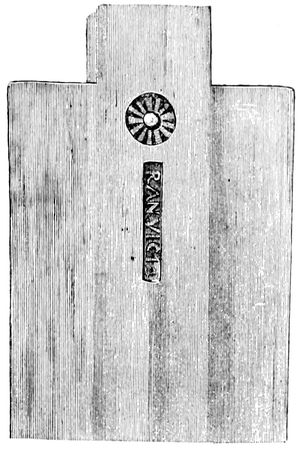

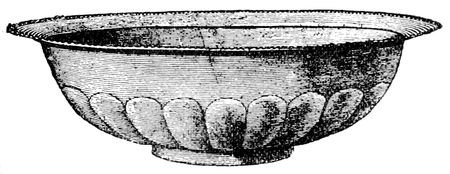
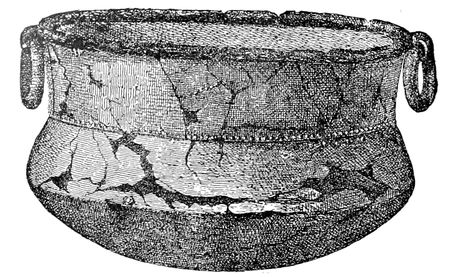
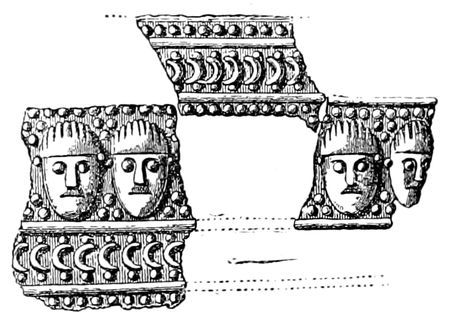
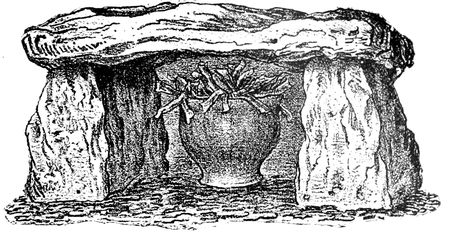
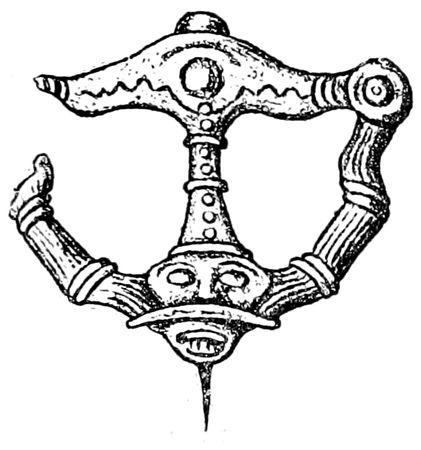
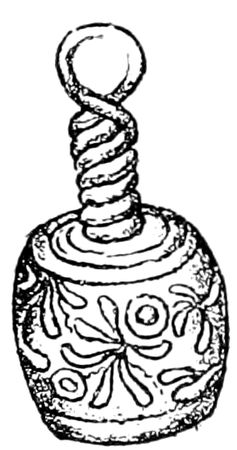
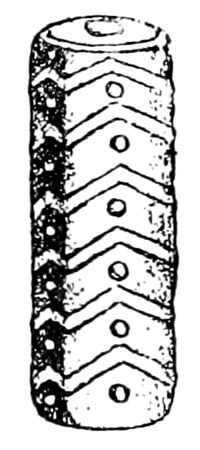
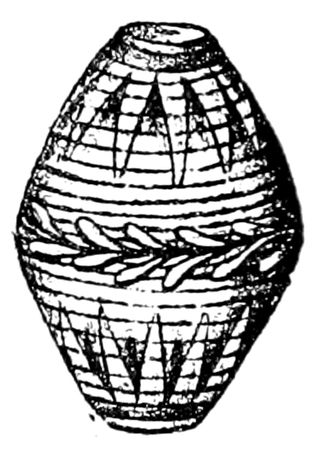
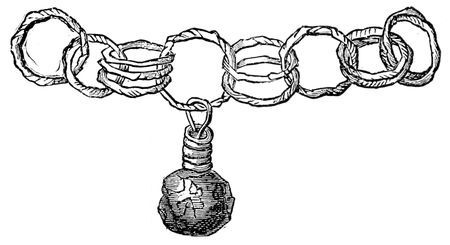
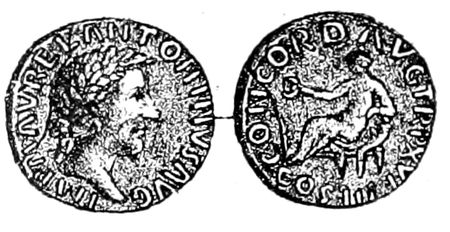
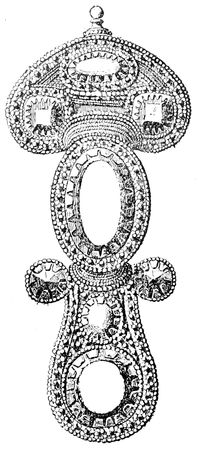
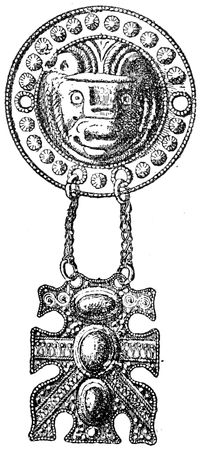
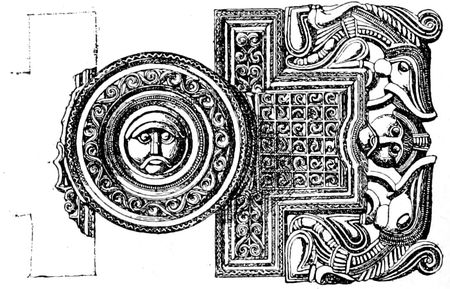
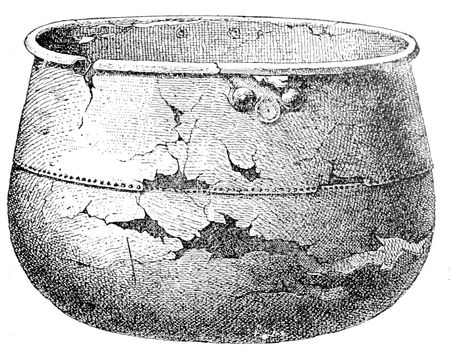
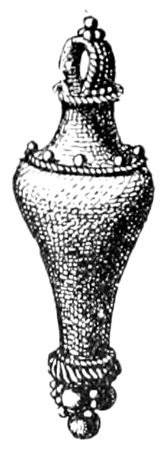
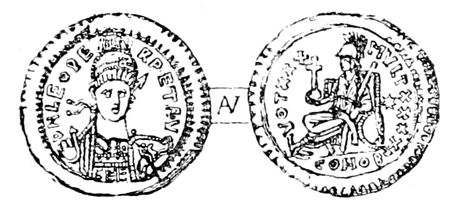
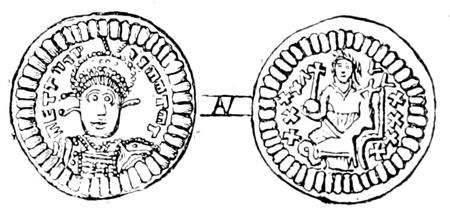
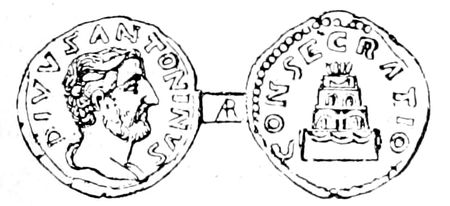
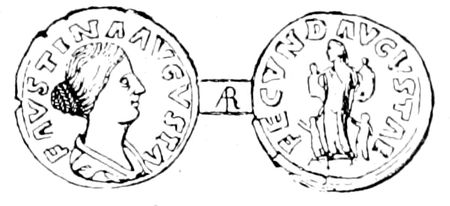
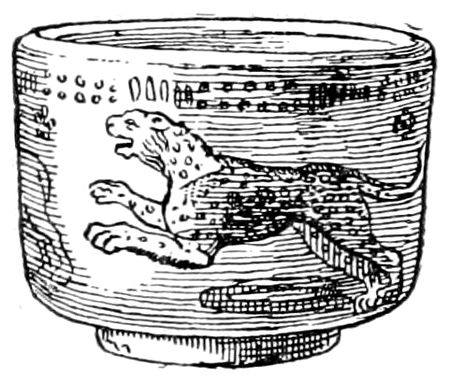
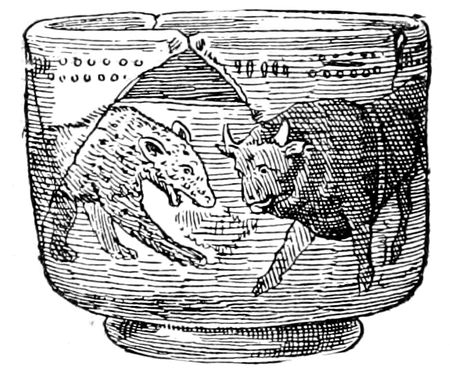
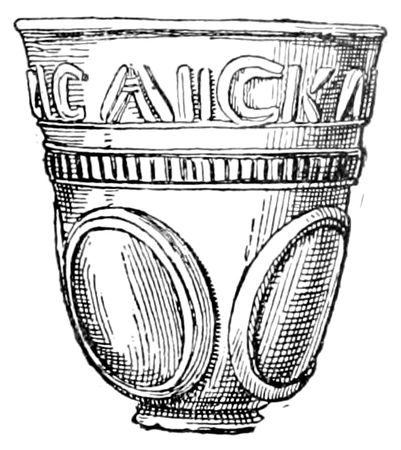
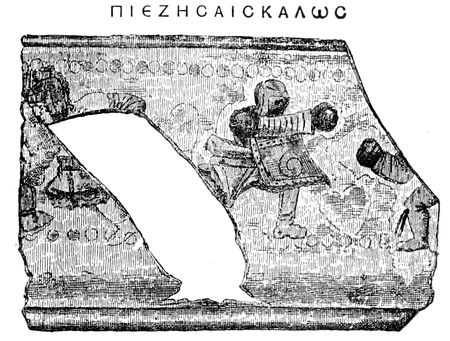
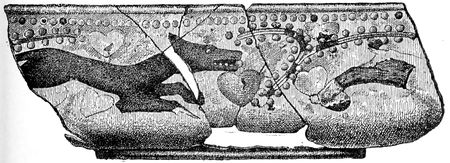
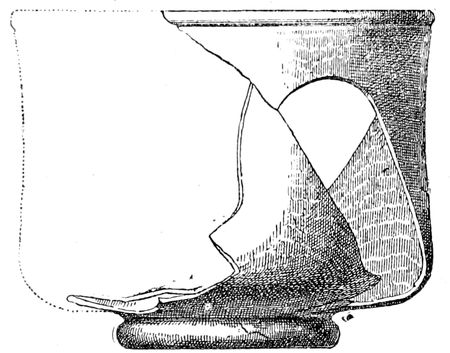
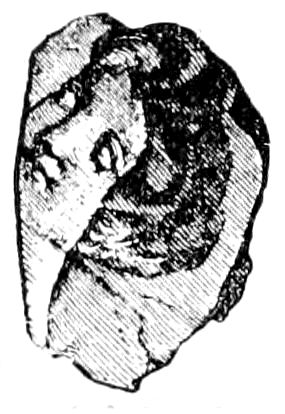
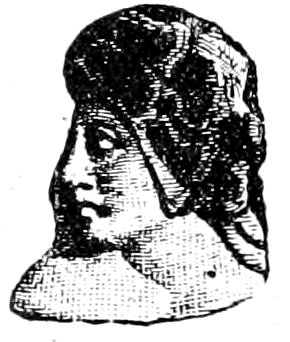
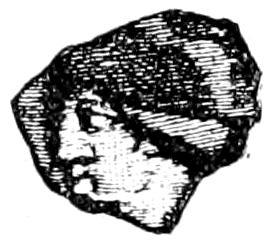
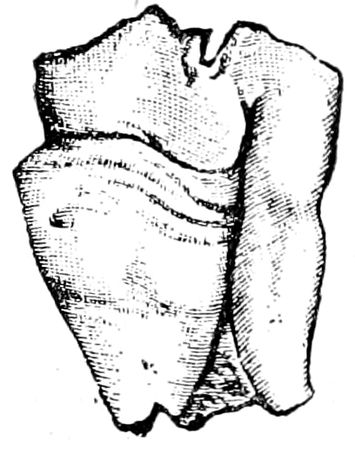
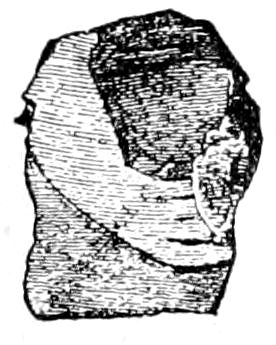
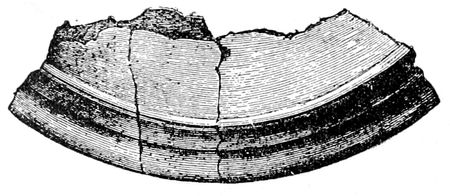
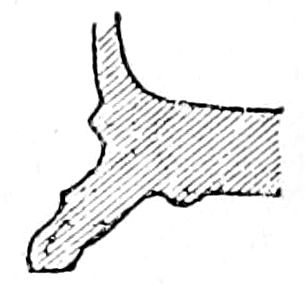
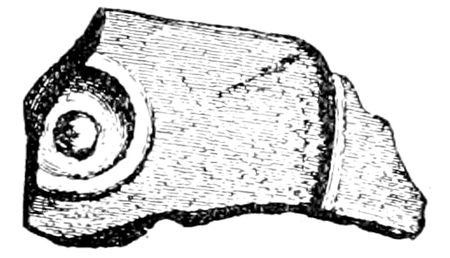
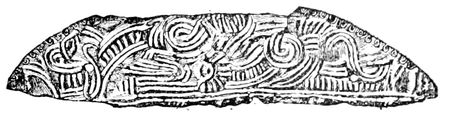
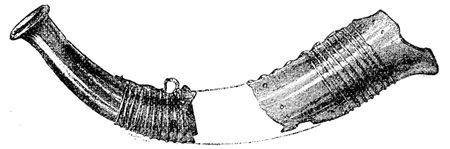
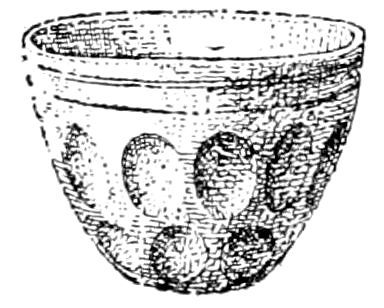
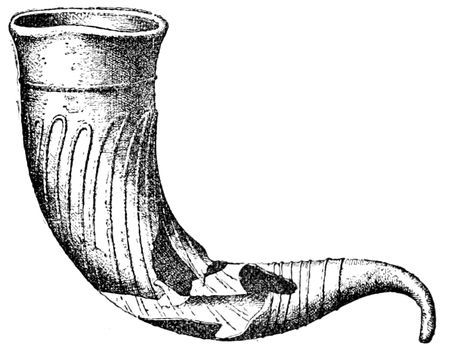
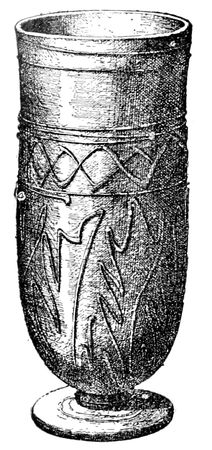
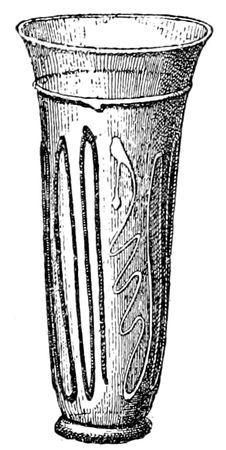
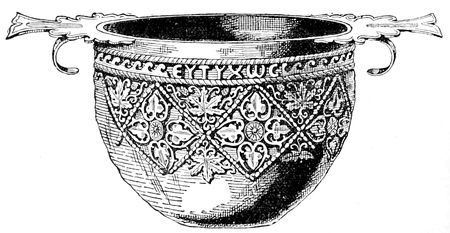
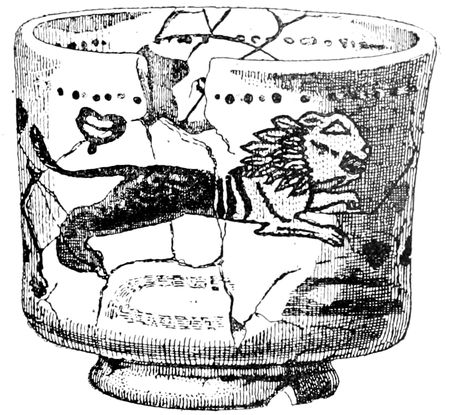
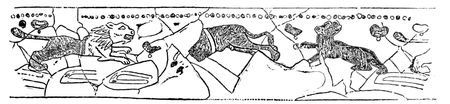
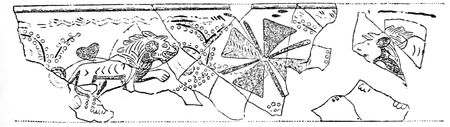
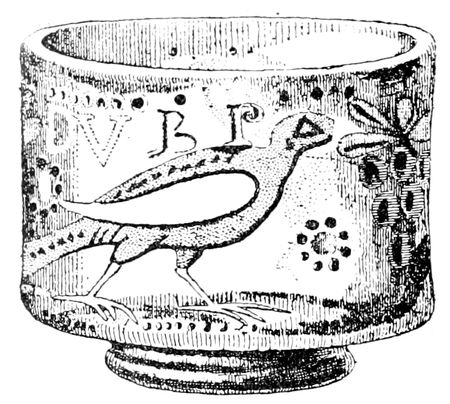
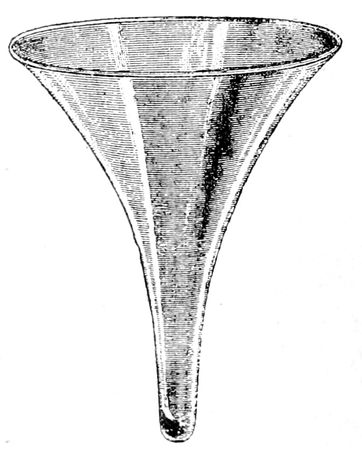
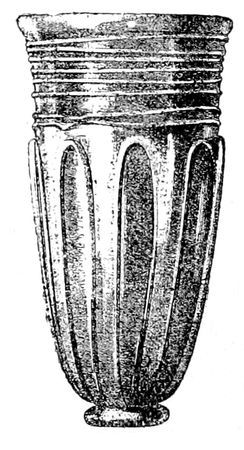
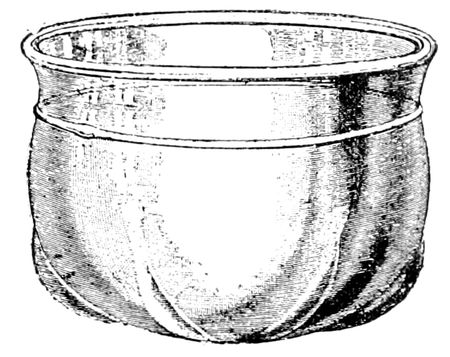
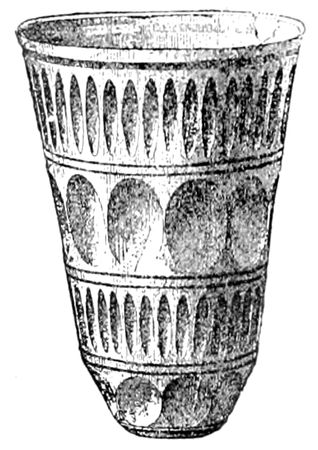
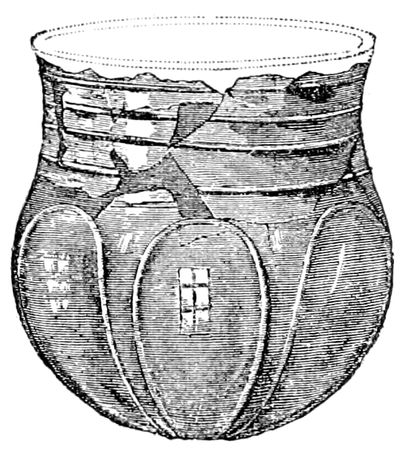
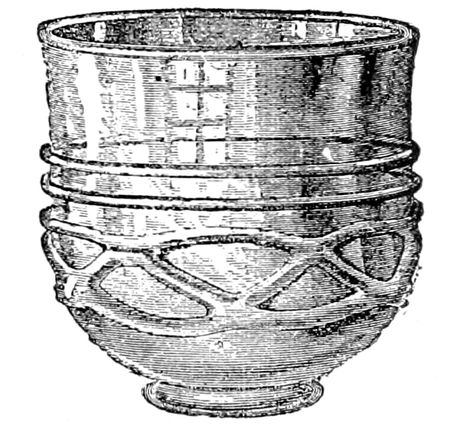
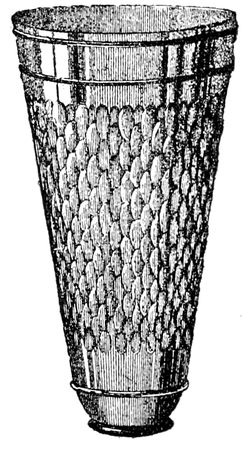
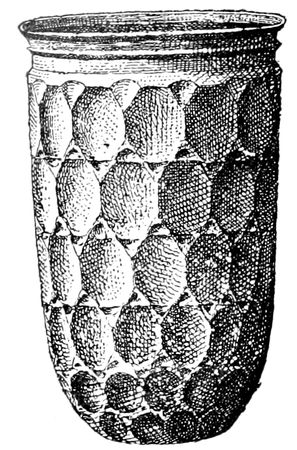
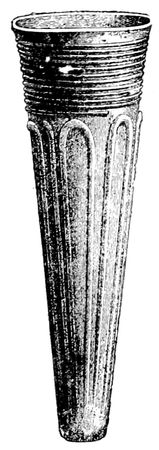
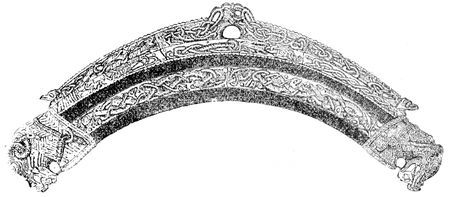
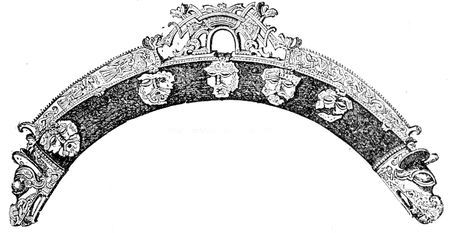
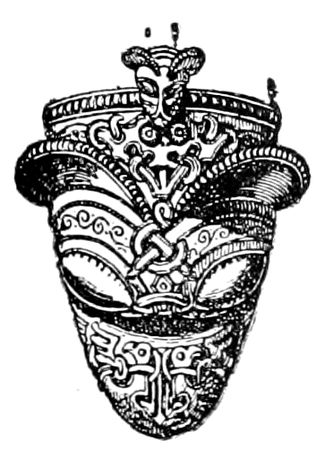
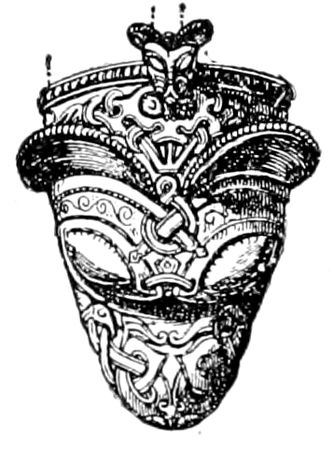
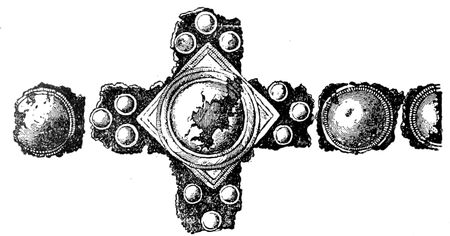
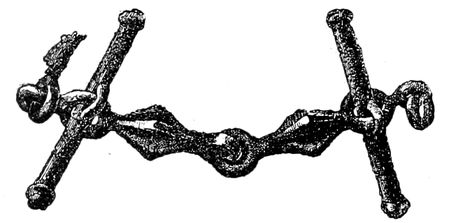
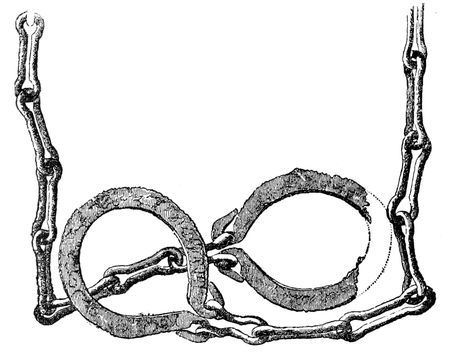
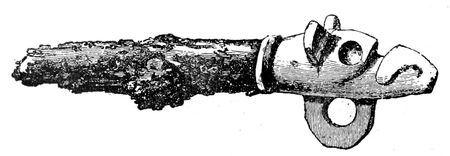
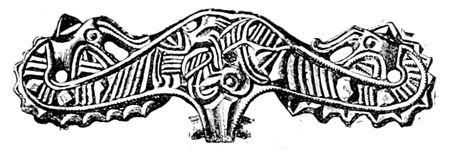
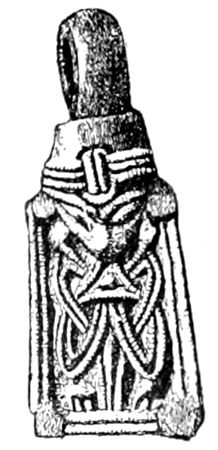
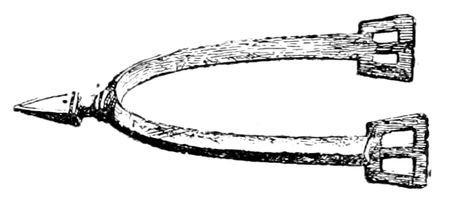
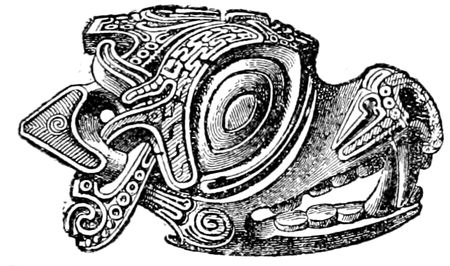
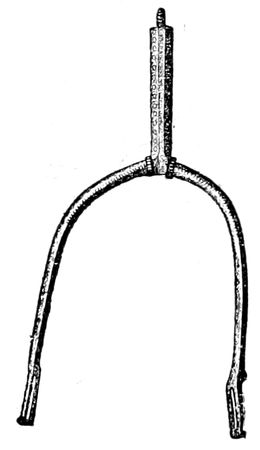
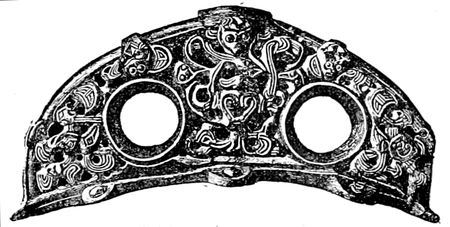

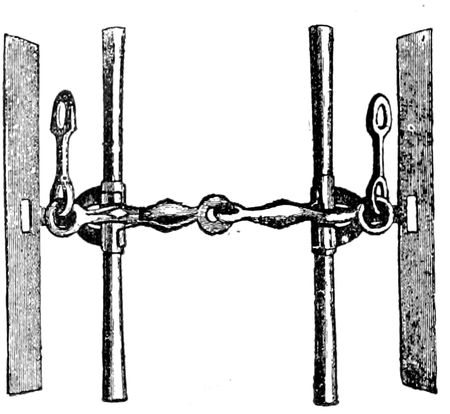
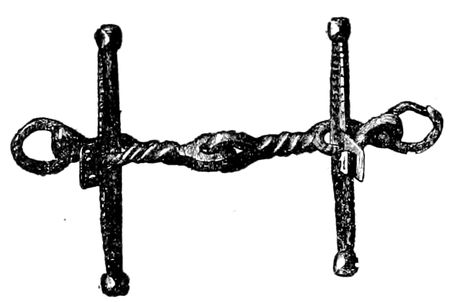
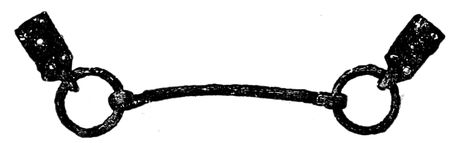
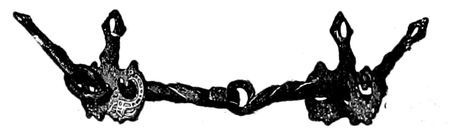
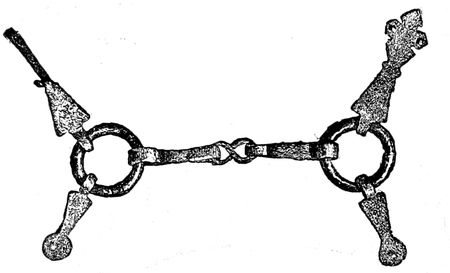
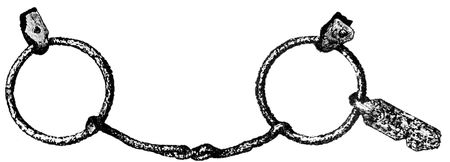
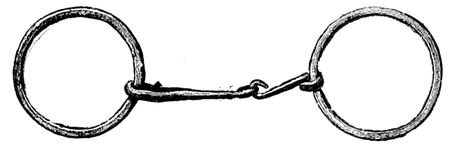
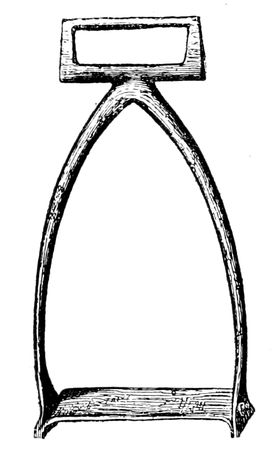
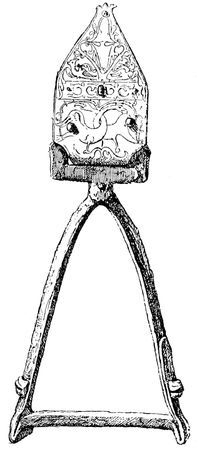
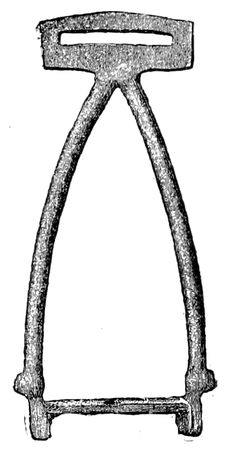
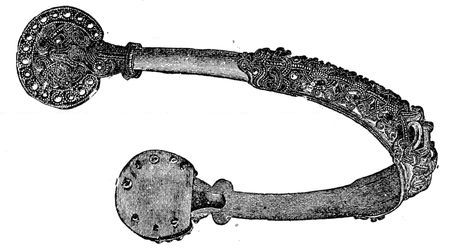
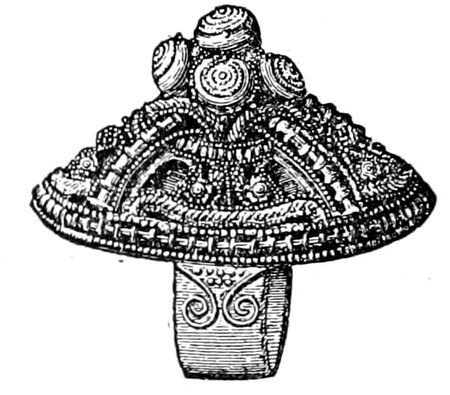
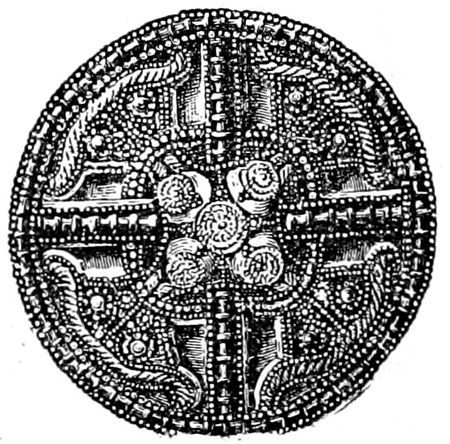
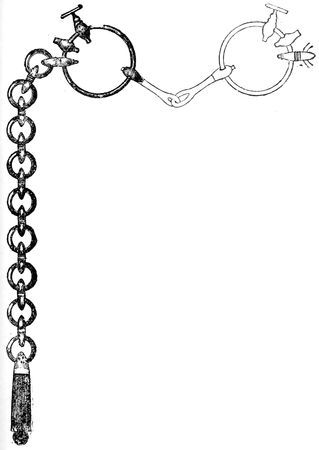
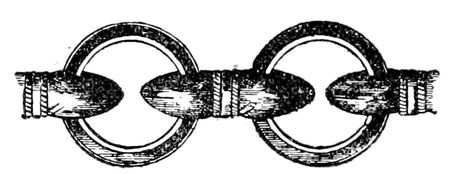
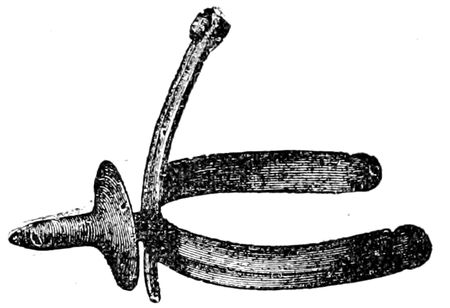
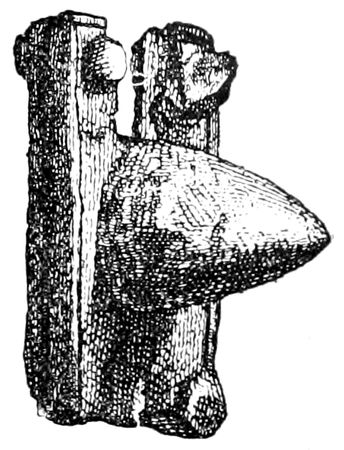
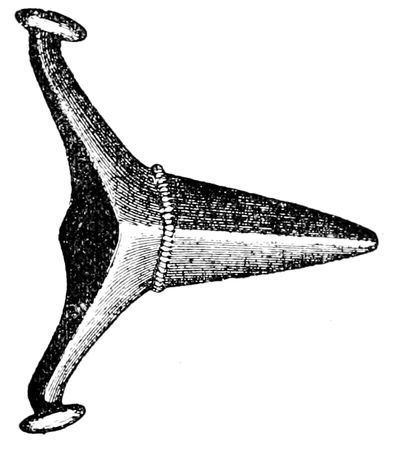
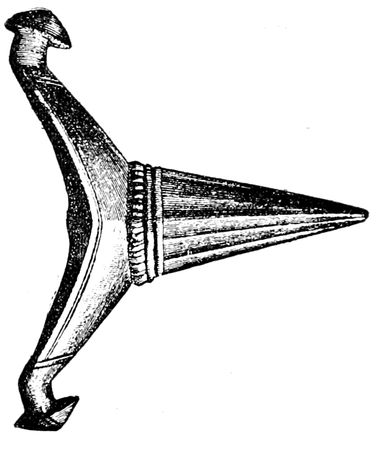
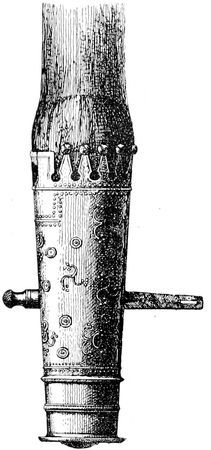
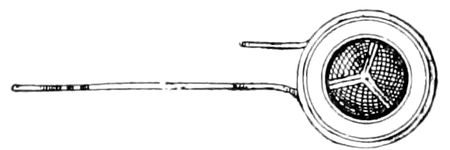
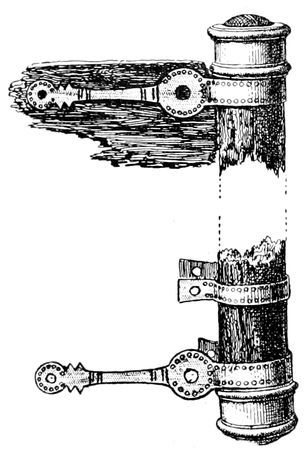
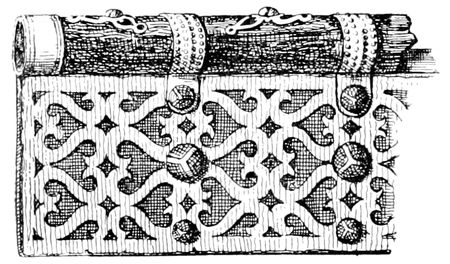
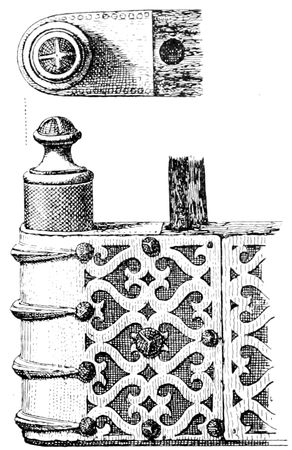
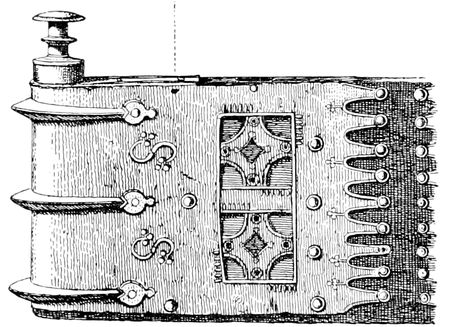
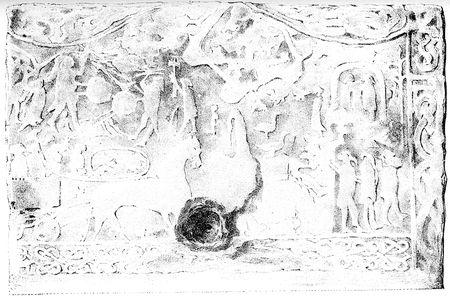
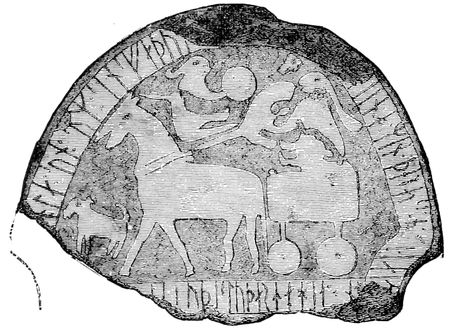
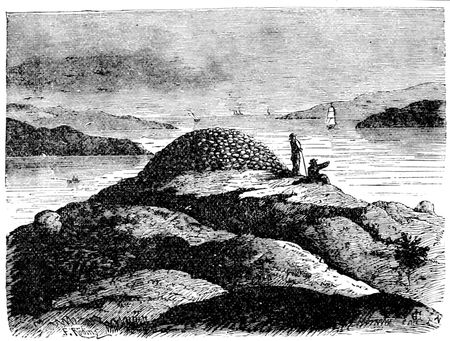
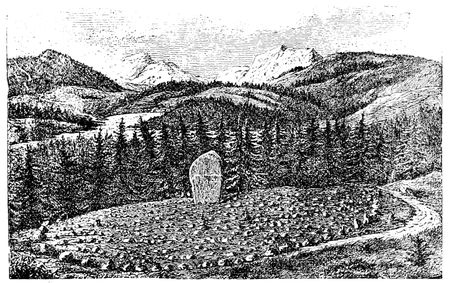
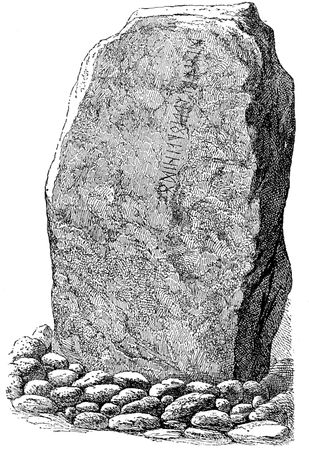
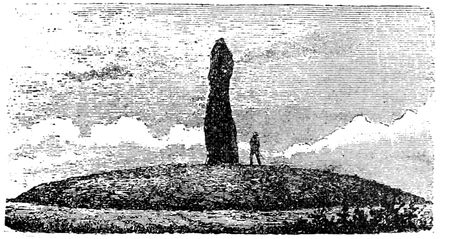
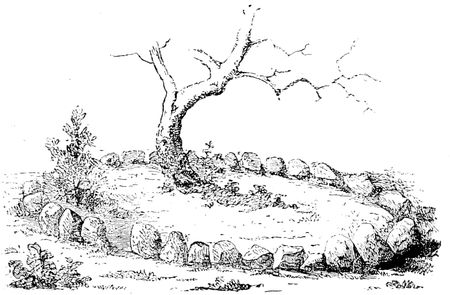
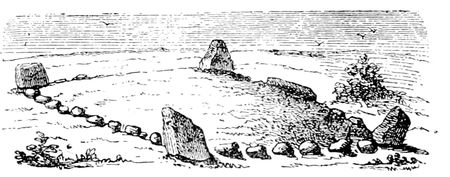
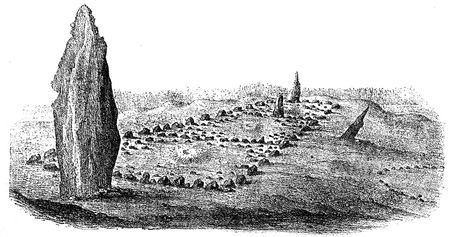
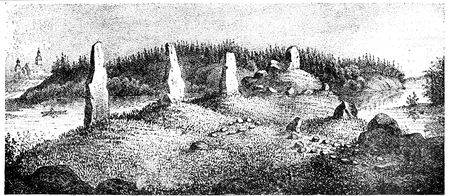
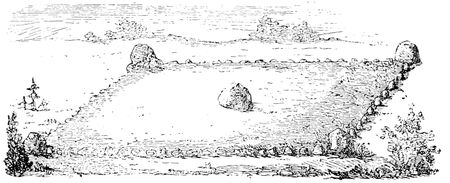
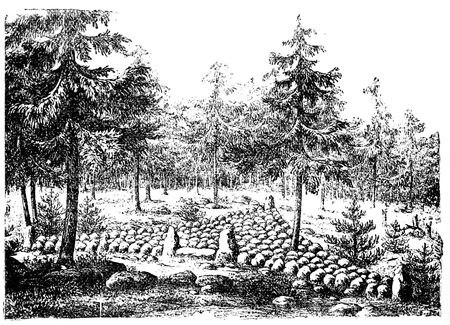
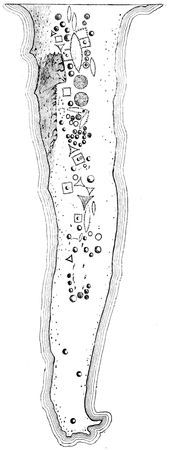
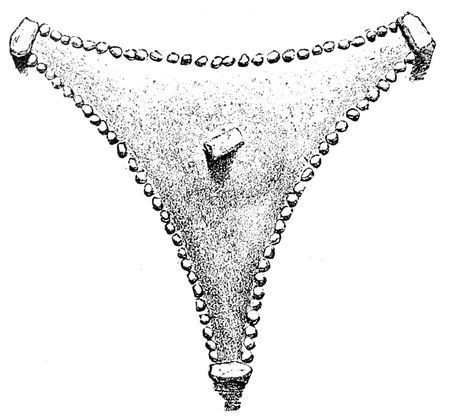
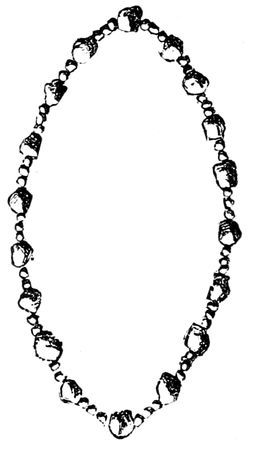
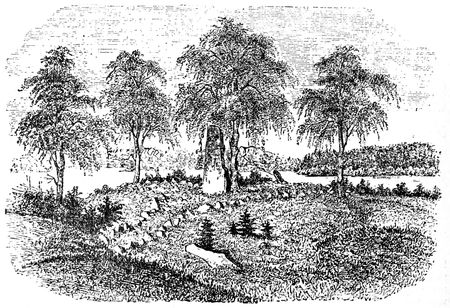
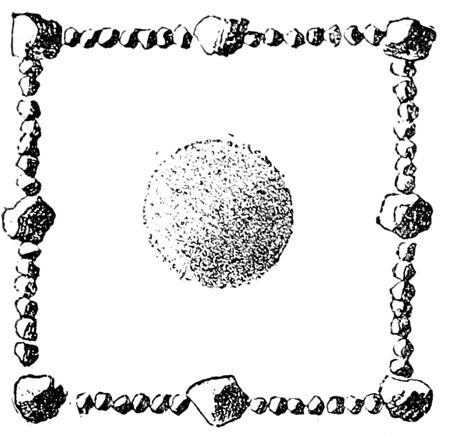
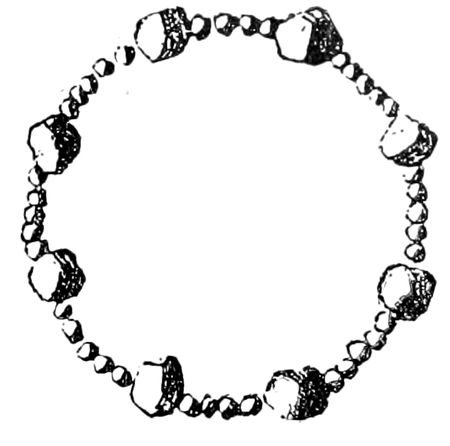
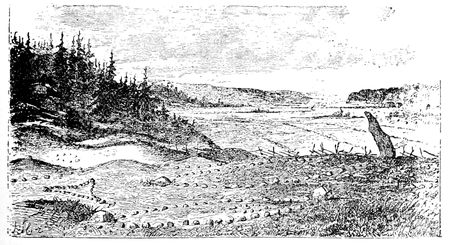
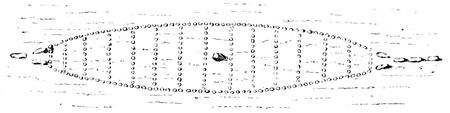
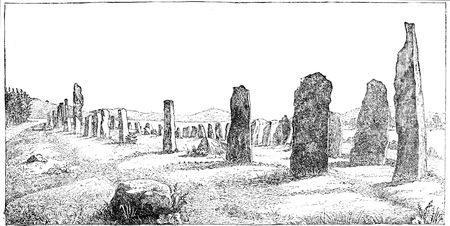
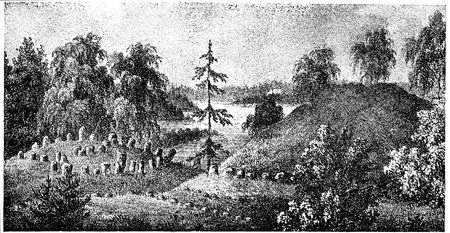
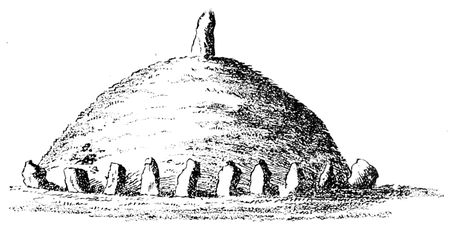
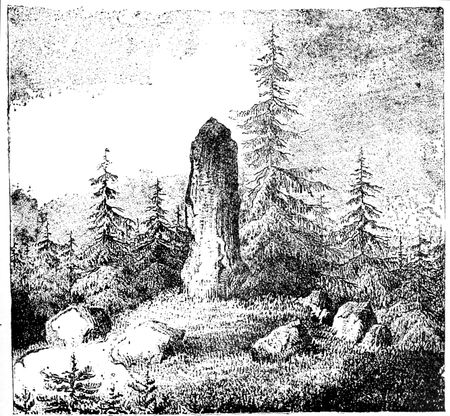
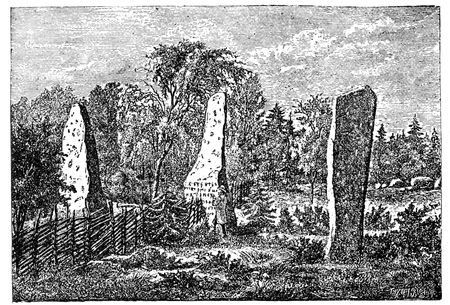
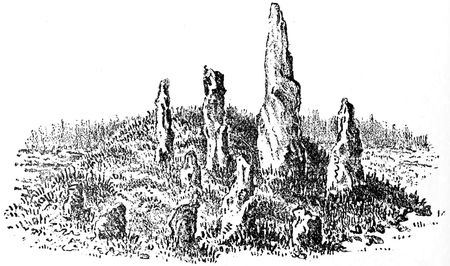
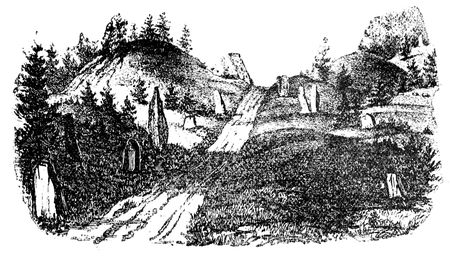
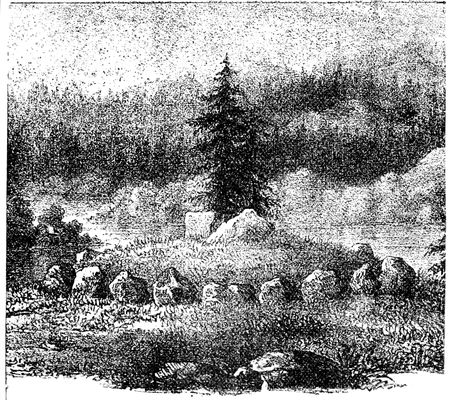
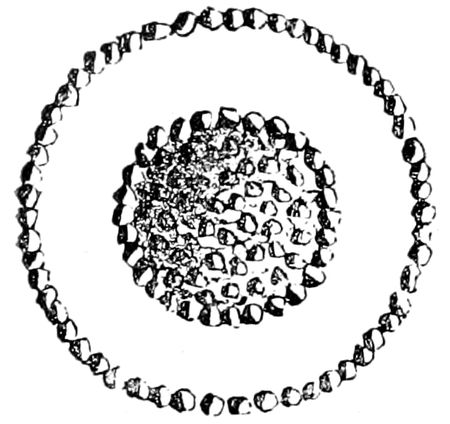
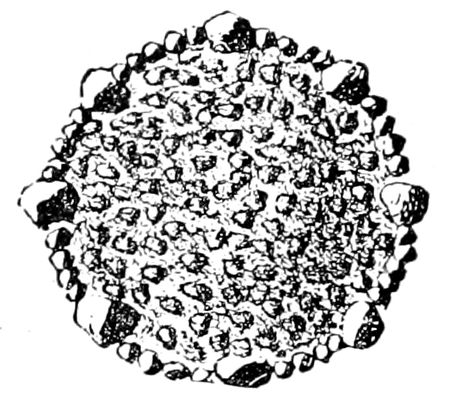
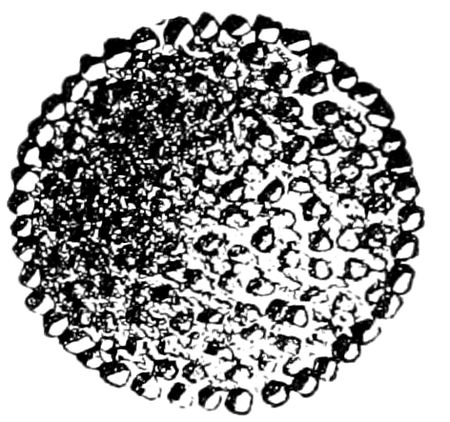
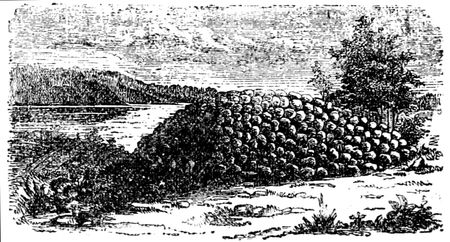
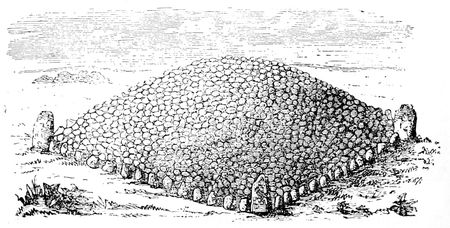
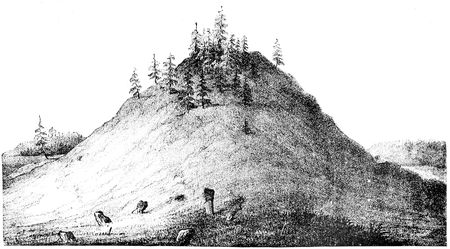
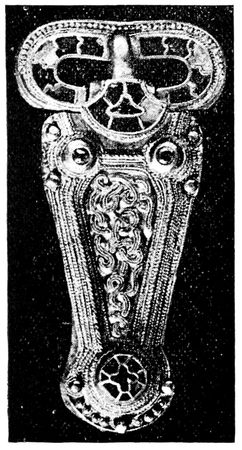
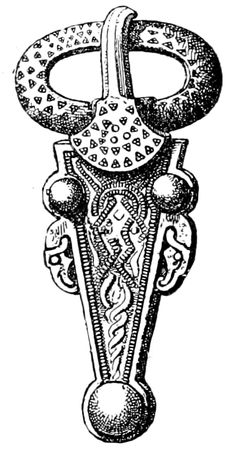
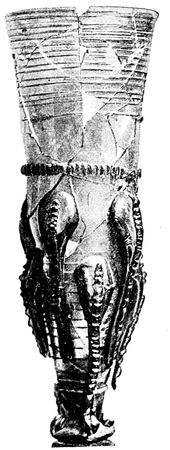
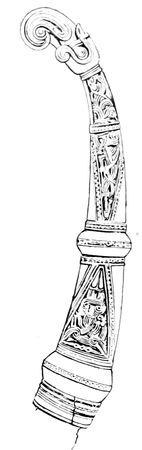
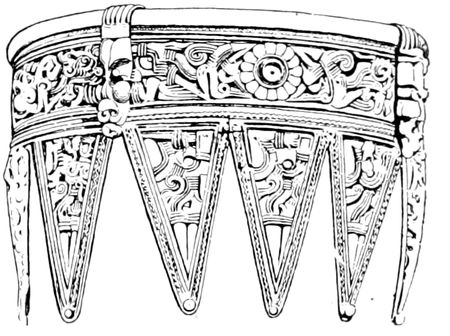

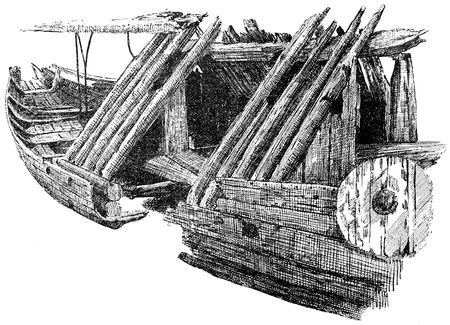
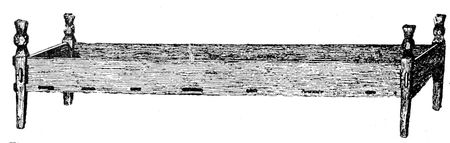
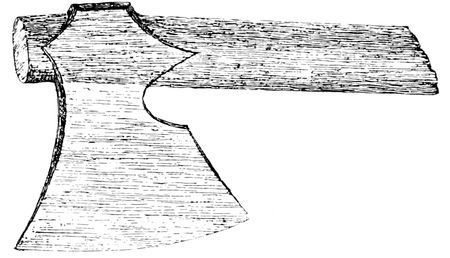
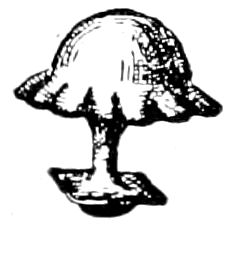
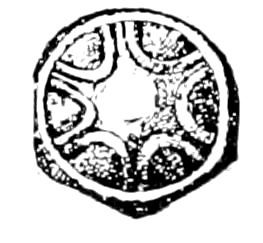
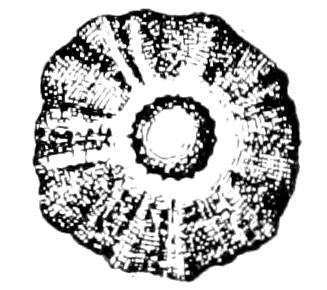
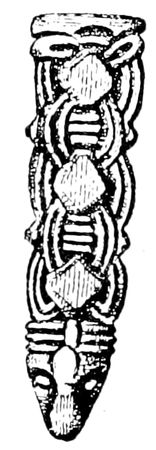
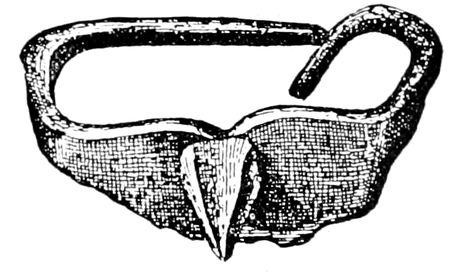
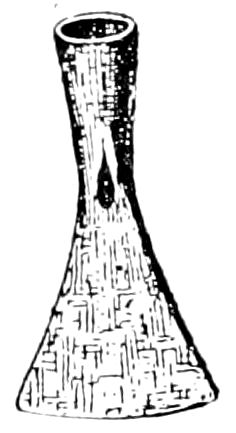
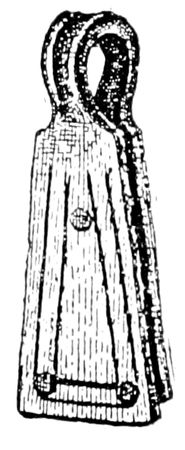
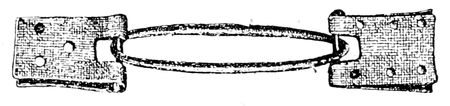

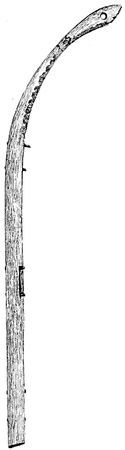
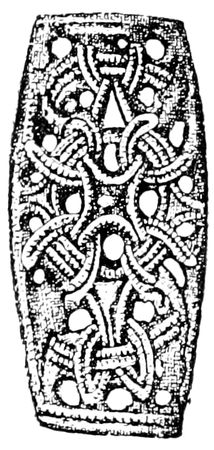
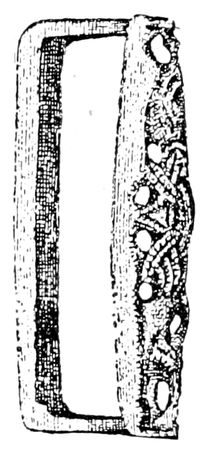
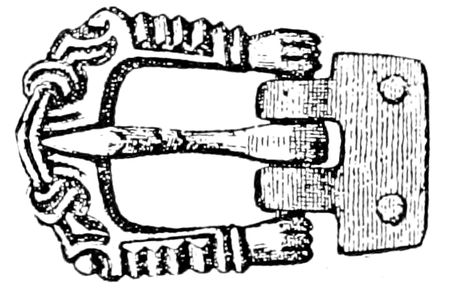
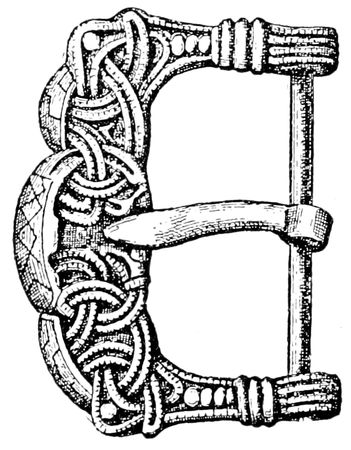
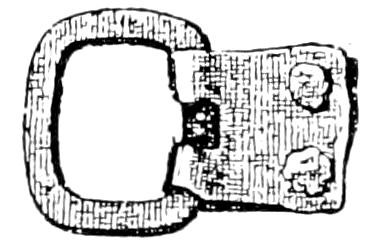
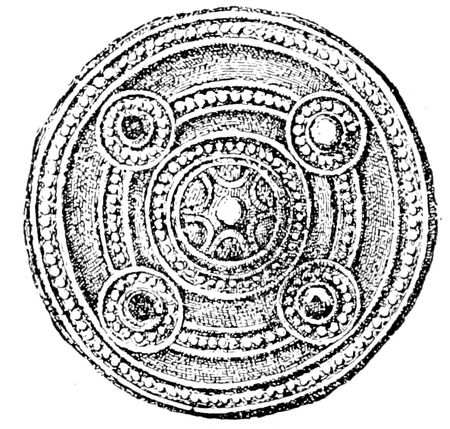
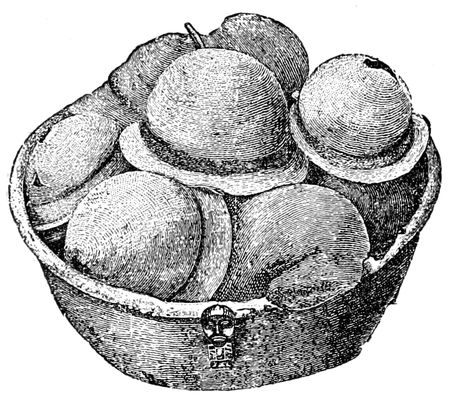
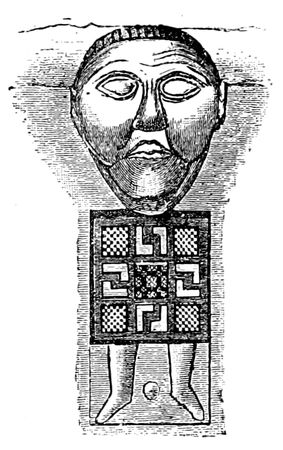
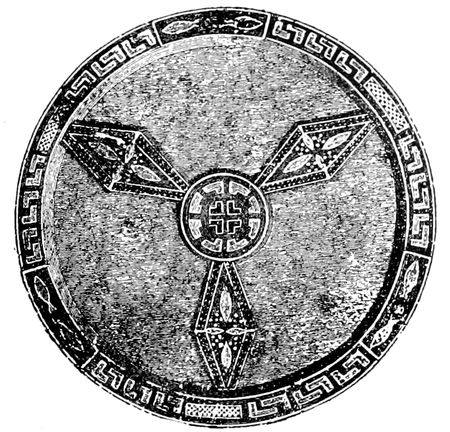
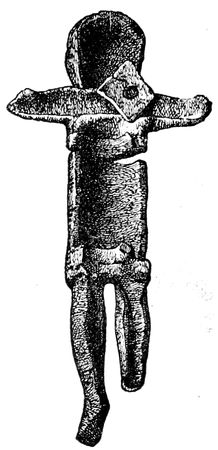
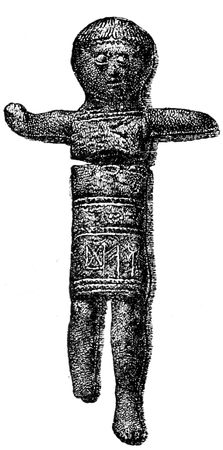
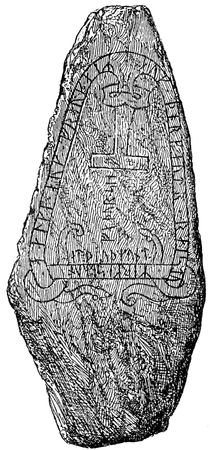
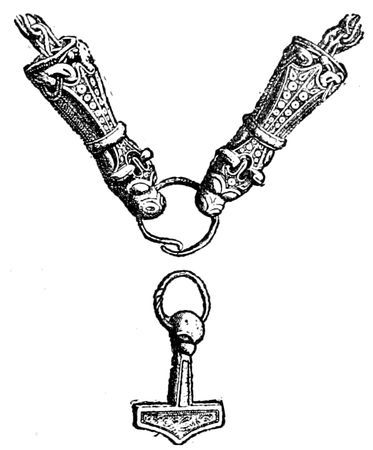
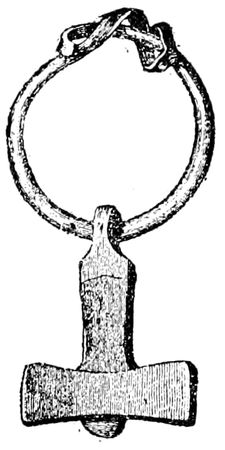
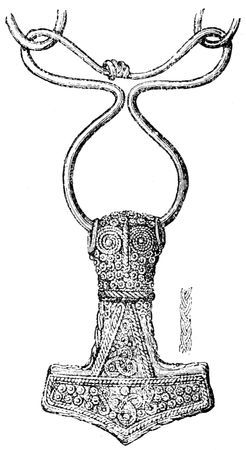
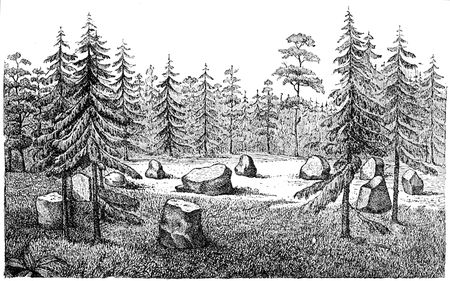
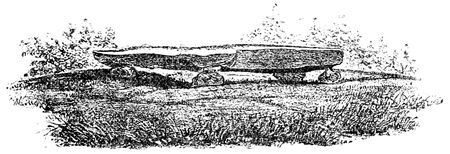
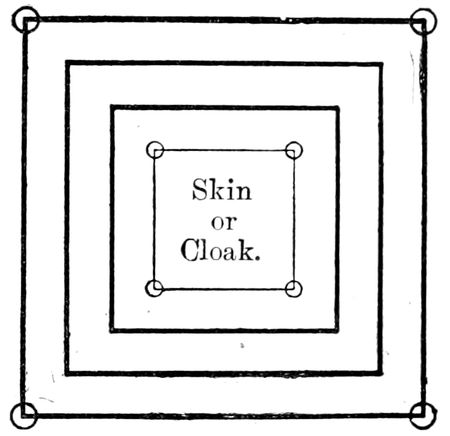
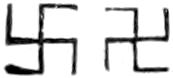 , but with many modifications.
As a symbol, it is found widespread over
a large part of the Old World. It is
certainly of ancient origin, but authorities
are disagreed as to its symbolical
significance. Other symbols equally difficult
to interpret, found in Norse remains,
are the three dots, circle of dots, triangles,
the triskele
 , &c.