Amongst the curious myths of the Middle Ages none were
more extravagant and persistent than that of the “Vegetable
Lamb of Tartary,” known also as the “Scythian
Lamb,” and the “Borametz,” or “Barometz,” the latter
title being derived from a Tartar word signifying “a lamb.”
This “lamb” was described as being at the same time both
a true animal and a living plant. According to some
writers this composite “plant-animal” was the fruit of a
tree which sprang from a seed like that of a melon, or
gourd; and when the fruit or seed-pod of this tree was fully
ripe it burst open and disclosed to view within it a little
lamb, perfect in form, and in every way resembling an
ordinary lamb naturally born. This remarkable tree was
supposed to grow in the territory of “the Tartars of the
East,” formerly called “Scythia”; and it was said that
from the fleeces of these “tree-lambs,” which were of surpassing
whiteness, the natives of the country where they
were found wove materials for their garments and “head-dress.”
In the course of time another version of the story
was circulated, in which the lamb was not described as
being the fruit of a tree, but as being a living lamb
attached by its navel to a short stem rooted in the earth.
The stem, or stalk, on which the lamb was thus suspended
above the ground was sufficiently flexible to allow the
animal to bend downward, and browze on the herbage
within its reach. When all the grass within the length of
its tether had been consumed the stem withered and the
lamb died. This plant-lamb was reported to have bones,
blood, and delicate flesh, and to be a favourite food of
wolves, though no other carnivorous animal would attack it.
Many other details were given concerning it, which will be
found mentioned in the following pages. This legend met
with almost universal credence from the thirteenth to the
seventeenth centuries, and, even then, only gave place to an
explanation of it as absurd and delusive as itself. Following
the outline sketched in the preface, I shall, in this
chapter, lay before the reader the story of the “Barometz”
or “Vegetable Lamb,” as related by various writers, and
shall then give my reasons for assigning to the fable an
interpretation very different from that which has been
hitherto accepted as the true one.
The story of a wonderful plant which bore living lambs for
its fruit, and grew in Tartary, seems to have been first
brought into public notice in England in the reign of Edward
III., by Sir John Mandeville, the “Knyght of Ingelond that
was y bore in the toun of Seynt Albans, and travelide
aboute in the worlde in many diverse countreis, to se
mervailes and customes of countreis, and diversiteis of
folkys, and diverse shap of men and of beistis.” In the
26th chapter of the book in which he “wrot and telleth
all the mervaile that he say,” and which he dedicated to
the King, he treats of “the Countreis and Yles that ben
beȝond the Lond of Cathay, and of the Frutes there”; and
amongst the curiosities he met with in the dominions of
the “Cham” of Tartary he mentions the following:—
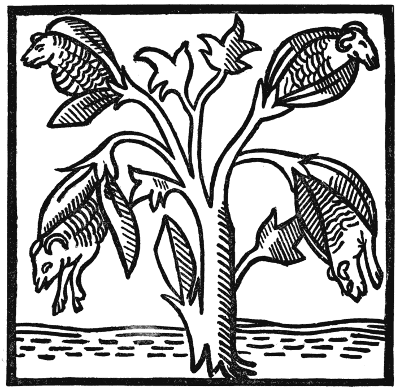
Fig. 1.—The Vegetable Lamb Plant.
After Sir John Mandeville.
This plate illustrates that version of the Fable by which the
“Vegetable Lamb” is represented as contained within a fruit, or
seed-pod, which, when ripe, bursts open, and discloses the little
lamb within it.
“Now schalle I seye ȝou semyngly of Countrees and Yles
that ben beȝonde the Countrees that I have spoken of.
Wherefore I seye you in passynge be the Lond of Cathaye
toward the high Ynde, and towards Bacharye, men passen
be a Kyngdom that men clepen Caldilhe: that is a fair
Contree. And there growethe a maner of Fruyt, as though
it weren Gowrdes: and whan thei ben rype men kutten
hem ato, and men fynden with inne a lytylle Best, in
Flesche, in Bon and Blode, as though it were a lytylle
Lomb with outen Wolle. And Men eten both the Frut
and the Best; and that is a great Marveylle. Of that Frute
I have eaten; alle thoughe it were wondirfulle, but that I
knowe wel that God is marveyllous in his Werkes.”[1]
Sir John Mandeville appears to have never previously
heard of this strange plant, but reports of its existence
under various phases may be traced back, as we shall
presently see, to a date at least eighteen hundred years
earlier than that of his mention of it. As it is in the works
of these older writers that we shall find the long-sought key
of the mystery, we will set them aside for the present and
follow the growth and dissemination of the fable.
Claude Duret, of Moulins, who, in his ‘Histoire
Admirable des Plantes (1605),’ devotes to it a chapter
entitled “The Boramets of Scythia, or Tartary, true
Zoophytes or plant-animals; that is to say, plants living
and sensitive like animals,” therein says:—
“I remember to have read some time ago in a very
ancient Hebrew book entitled in Latin the Talmud Ierosolimitanum,
and written by a Jewish Rabbi Jochanan,
assisted by others, in the year of salvation 436, that a certain
personage named Moses Chusensis (he being a native
of Ethiopia) affirmed, on the authority of Rabbi Simeon,
that there was a certain country of the earth which bore a
zoophyte, or plant-animal, called in the Hebrew ‘Jeduah.’
It was in form like a lamb, and from its navel grew a stem
or root by which this zoophyte or plant-animal was fixed,
attached, like a gourd, to the soil below the surface of the
ground, and, according to the length of its stem or root, it
devoured all the herbage which it was able to reach within
the circle of its tether. The hunters who went in search of
this creature were unable to capture or remove it until they
had succeeded in cutting the stem by well-aimed arrows or
darts, when the animal immediately fell prostrate to the
earth and died. Its bones being placed with certain
ceremonies and incantations in the mouth of one desiring
to foretell the future, he was instantly seized with a spirit
of divination, and endowed with the gift of prophecy.”
As I was unable to find in the Latin translation of the
Talmud of Jerusalem the passage mentioned by Claude
Duret, and was anxious to ascertain whether any reference
to this curious legend existed in the Talmudical books, I
sought the assistance of learned members of the Jewish
community, and, amongst them, of the Rev. Dr. Hermann
Adler, Chief Rabbi Delegate of the United Congregations
of the British Empire. He most kindly interested himself
in the matter, and wrote to me as follows:—
“It affords me much gratification to give you the information
you desire on the Borametz. In the Mishna Kilaim,
chap. viii. § 5 (a portion of the Talmud), the passage
occurs:—‘Creatures called Adne Hasadeh (literally, “lords
of the field”) are regarded as beasts.’ There is a variant
reading,—Abne Hasadeh (stones of the field). A commentator,
Rabbi Simeon, of Sens (died about 1235), writes
as follows on this passage:—‘It is stated in the Jerusalem
Talmud that this is a human being of the mountains: it
lives by means of its navel: if its navel be cut it cannot
live. I have heard in the name of Rabbi Meir, the son
of Kallonymos of Speyer, that this is the animal called
‘Jeduah.’ This is the ‘Jedoui’ mentioned in Scripture
(lit. wizard, Leviticus xix. 31); with its bones witchcraft
is practised. A kind of large stem issues from a root
in the earth on which this animal, called ‘Jadua,’ grows,
just as gourds and melons. Only the ‘Jadua’ has, in
all respects, a human shape, in face, body, hands, and
feet. By its navel it is joined to the stem that issues from
the root. No creature can approach within the tether of
the stem, for it seizes and kills them. Within the tether of
the stem it devours the herbage all around. When they
want to capture it no man dares approach it, but they tear
at the stem until it is ruptured, whereupon the animal dies.’
Another commentator, Rabbi Obadja of Berbinoro, gives
the same explanation, only substituting—’They aim
arrows at the stem until it is ruptured,’ &c. The author of an
ancient Hebrew work, Maase Tobia (Venice, 1705), gives an
interesting description of this animal. In Part IV. c. 10,
page 786, he mentions the Borametz found in Great Tartary.
He repeats the description of Rabbi Simeon, and adds what
he has found in ‘A New Work on Geography,’ namely,
that ‘the Africans (sic) in Great Tartary, in the province of
Sambulala, are enriched by means of seeds like the seeds of
gourds, only shorter in size, which grow and blossom like a
stem to the navel of an animal which is called Borametz in
their language, i.e. ‘lamb,’ on account of its resembling a
lamb in all its limbs, from head to foot; its hoofs are cloven,
its skin is soft, its wool is adapted for clothing, but it has
no horns, only the hairs of its head, which grow, and are
intertwined like horns. Its height is half a cubit and more.
According to those who speak of this wondrous thing, its
taste is like the flesh of fish, its blood as sweet as honey,
and it lives as long as there is herbage within reach of the
stem, from which it derives its life. If the herbage is destroyed
or perishes, the animal also dies away. It has rest
from all beasts and birds of prey, except the wolf, which
seeks to destroy it.’ The author concludes by expressing
his belief, that this account of the animal having the shape
of a lamb is more likely to be true than that it is of human
form.”
We have an interesting record of another journey into
Tartary, undertaken almost simultaneously with that of Sir
John Mandeville, by Odoricus of Friuli, a Minorite friar
belonging to the monastery of Utina, near Padua. The
exact date of his departure on his travels is not mentioned,
but he returned home in 1330, and the history of his adventures
and observations[2] was written in the month of May of
that year—thus taking precedence by about thirty years of
the narrative of the old English traveller.
Odoricus, describing his visit to the country of the
“Grand Can,” says:—“I heard of another wonder from
persons worthy of credit; namely, that in a province of the
said Can, in which is the mountain of Capsius[3] (the
province is called ‘Kalor’), there grow gourds, which,
when they are ripe, open, and within them is found a little
beast like unto a young lamb, even as I myself have heard
reported that there stand certain trees upon the shore of
the Irish Sea bearing fruits like unto a gourd, which at a
certain time of the year do fall into the water and become
birds called Bernacles; and this is true.”
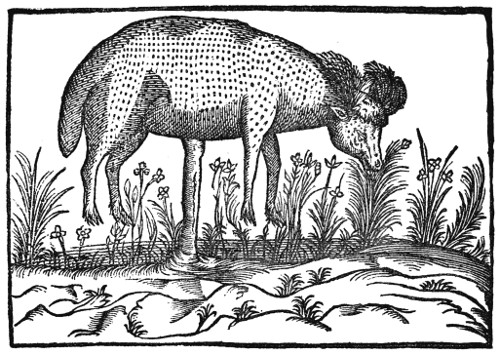
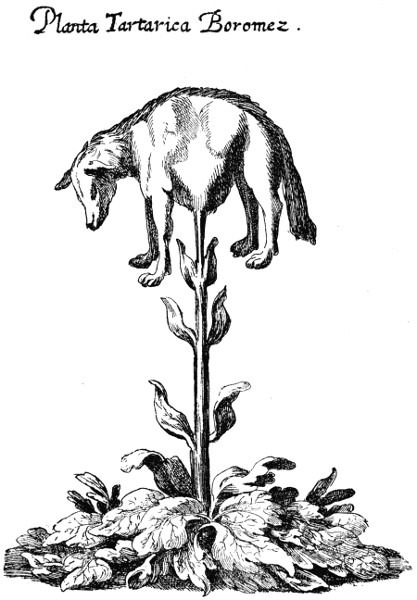
Fig. 2.—Portrait of the “Barometz,” or “Scythian Lamb.”
After Claude Duret.
In the sixteenth and seventeenth centuries the “Scythian
Lamb” was made a subject of investigation and argument
by some of the most celebrated writers of that period.
Fortunio Liceti, Professor of Philosophy at Padua,
writing in 1518,[4] gives his complete credence to the story
of the little beast like a lamb found within a fruit-pod
when it bursts from over-ripeness; and besides the above
passage from Odoricus quotes another, by which it would
appear that the worthy friar afterwards himself saw this
botanical curiosity, and described it as being “as white as
snow.” I have been unable to find this paragraph in the
Hakluyt edition of Odoricus’s travels.
Juan Eusebio Nieremberg, however, in his ‘Historia
Naturæ’ (Antwerp, 1605), also quotes these two passages,
and in exactly the same words. He probably copied them
from Liceti, and not from the original.
Sigismund, Baron von Herberstein, who, in 1517 and
1526, was the ambassador of the Emperors Maximilian I.
and Charles V. to the “Grand Czard, or Duke of Muscovy,”
in his ‘Notes on Russia,’[5] gives further details of this
“vegetable-animal.” He writes:—“In the neighbourhood
of the Caspian Sea, between the rivers Volga and Jaick,
formerly dwelt the kings of the Zavolha, certain Tartars, in
whose country is found a wonderful and almost incredible
curiosity, of which Demetrius Danielovich, a person in high
authority, gave me the following account; namely, that his
father, who was once sent on an embassy by the Duke of
Muscovy to the Tartar king of the country referred to,
whilst he was there, saw and remarked, amongst other
things, a certain seed like that of a melon, but rather
rounder and longer, from which, when it was set in the
earth, grew a plant resembling a lamb, and attaining to a
height of about two and a half feet, and which was called
in the language of the country ‘Borametz,’ or ‘the little
Lamb.’ It had a head, eyes, ears, and all other parts of
the body, as a newly-born lamb. He also stated that it
had an exceedingly soft wool, which was frequently used
for the manufacturing of head-coverings. Many persons
also affirmed to me that they had seen this wool. Further,
he told me that this plant, if plant it should be called, had
blood, but not true flesh: that, in place of flesh, it had a
substance similar to the flesh of the crab, and that its hoofs
were not horny, like those of a lamb, but of hairs brought
together into the form of the divided hoof of a living lamb.
It was rooted by the navel in the middle of the belly, and
devoured the surrounding herbage and grass, and lived as
long as that lasted; but when there was no more within its
reach the stem withered, and the lamb died. It was of so
excellent a flavour that it was the favourite food of wolves
and other rapacious animals. For myself,” adds the Baron,
“although I had previously regarded these Borametz as
fabulous, the accounts of it were confirmed to me by so
many persons worthy of credence that I have thought it
right to describe it; and this with the less hesitation
because I was told by Guillaume Postel,[6] a man of much
learning, that a person named Michel, interpreter of the
Turkish and Arabic languages to the Republic of Venice,
assured him that he had seen brought to Chalibontis (now
Karaboghaz), on the south-eastern shore of the Caspian Sea,
from Samarcand and other districts lying towards the
south, the very soft and delicate wool of a certain plant
used by the Mussulmans as padding for the small caps
which they wear on their shaven heads, and also as a
protection for their chests. He said, however, that he had
not seen the plant, nor knew its name, except that it was
called ‘Smarcandeos,’ and was a zoophyte, or plant-animal.
The numerous descriptions given to him,” he added,
“differed so little that he was induced to believe that there
was more truthfulness in this matter than he had supposed,
and to accept it as a fact redounding to the glory of the
Sovereign Creator, to whom all things are possible.”
Shortly after the publication of the above narrative by
Sigismund von Herberstein, and probably in allusion to it,
Girolamo Cardano, of Pavia, carefully discussed the phenomenon
in question in his work ‘De Rerum Naturâ,’[7]
printed at Nürnberg in 1557. He endeavoured to expose
the absurdity of the statements made concerning this
“animal-plant,” and explained the physical impossibility of
its existence in the manner described. He argued that if it
had blood it must have a heart, and that the soil in which
a plant grows is not fitted to supply a heart with movement
and vital heat. He also pointed out that embryo animals,
especially, require warmth for their development from the
ovum, which they could not obtain if raised from a seed
planted in the earth, demonstrating clearly enough that no
warm-blooded animal could exist thus organically fastened
to the earth. In reply, however, to a possible question suggested
by himself, why there should be no plant-animal on
land, seeing that there are zoophytes in the sea, he, with the
weakness and indecision which were innate in his character,
admitted that “where the atmosphere was thick and dense
there might, perhaps, be a plant having sensation, and also
imperfect flesh, such as that of mollusks and fishes.”
This weak point in his argument laid him open to the
criticism of his relentless enemy, Julius Cæsar Scaliger.
Always on the watch to wound and harass Cardano with
cutting satire and irritating gibes, this caustic persecutor
lost no time in making his attack. In one of his “Exercitationes”[8]
he thus personally addressed the object of his
sneering disparagement:—
“You may regard as beyond ridicule this wonderful
Tartar plant. The most renowned of the Tartar hordes of
the present day, by its reputation, its antiquity, and its
nobility, is that of the Zavolha. These people sow a seed
like that of the melon, but rather smaller, from which
springs and grows out of the earth a plant which they call
‘Borametz,’ i.e. ‘the Lamb.’ This plant grows to the
height of three feet in the likeness of a real lamb, having
feet, hoofs, ears, and a head perfect with the exception of
horns, instead of which the plant has hairs in the form of
horns. Its skin is soft and delicate, and is used in Tartary
for head-gear. The internal pulp is said to be like the
flesh of the cray-fish, and to have an agreeable flavour;
but if an incision be made, real blood flows from it. The
root or stalk which rises from the earth is attached to the
navel of the lamb, and (which is more remarkable) whilst
the plant is surrounded with herbage it lives as does a
lamb, but as soon as it has consumed all within its reach it
withers and dies. This does not happen by the arrival of
the plant at any definite period of its growth, for it has
been found by experiment that if the grass around it be
removed it perishes. Another most curious circumstance
connected with it is that wolves will eat it with avidity,
though no other carnivorous animals will attack it. This,”
says Scaliger, still apostrophizing Cardano, “is merely a
little sauce and seasoning to your allusion to the fable of
the Lamb; but I would like to know from you how four
distinct legs and their feet can be produced from one
stem.”
It is very remarkable that this dissertation of Scaliger,
which is really a keen satire on Cardano, and a sarcastic
repetition of his version of the fable with ironical comments
thereon, has been almost invariably taken as serious, and
regarded as an expression of his entire belief in the
“Scythian Lamb,” as described. Of all subsequent writers
on the subject, Deusingius[9] seems to have been the only
one who clearly perceived Scaliger’s intention and meaning.
Hence, many profound believers in the myth have claimed
as their champion one who would have derided them for
their credulity.
Claude Duret, for example, whose implicit faith in the
marvellous zoophyte nothing could shake, quotes verbatim
in its defence the remarks of “le grand Jules César
Scaliger,” and asks[10] triumphantly,—
“Who cannot see plainly that Cardano, after having long
doubted, and after having adduced philosophical arguments
drawn from the works of Aristotle and other eminent
writers, felt himself obliged and condemned to confess that
in a place filled with heavy and dense air (such as is
Tartary) the Borametz—true plant-animals—might exist
as described, as well as sponges, ‘sea-nettles,’ and ‘sea-lungs,’
which every one knows are true zoophytes, or
animal-plants.”
After this amusing assumption that the air of Tartary
possesses the “weight” and “density” necessary for the
production of plant-animals, Duret quotes from Sir John
Mandeville’s book in the language in which it was
originally written—the Romanic—the passage which I
have extracted from the old English version of the enterprising
knight’s ‘Voiage and Travailes,’ and also cites, in
confirmation of the prodigy, the account given of it by the
Baron Von Herberstein. He then strongly expresses his
own belief that—
“Of all the strange and marvellous trees, shrubs, plants
and herbs which Nature, or, rather, God himself, has produced,
or ever will produce in this Universe, there will
never be seen anything so worthy of admiration and contemplation
as these ‘Borametz’ of Scythia, or Tartary,—plants
which are also animals, and which browze and eat
as quadrupeds.... If I did not entirely believe this I would
denounce it as fabulous, instead of accepting it as a fact;
but those who are in the habit of daily studying good and
rare books, printed and in manuscript, and who are endowed
with great wisdom and understanding, know that there is
no impossibility in Nature, i.e. God himself, to whom be
all the honour and glory!”
Besides the authors already quoted, and others who
merely copied the narratives of their predecessors, Guillaume
de Saluste, the Sieur du Bartas, accepted as authentic the
story of the Vegetable Lamb. In his poem “La Semaine,”
published in 1578, in which the first few days of the
existence of all terrestrial things are described reverently
and with considerable power, he represents this plant as
one of those which excited the astonishment of the newly-created
Adam as he wandered on the first day of the second
week through the Garden of Eden, the earthly Paradise in
which he had been placed.
“Or, confus, il se perd dans les tournoyements,
Embrouillées erreurs, courbez desvoyements,
Conduits virevoultez, et sentes desloyales
D’un Dedale infiny qui comprend cent Dedales,
Clos non de romarins dextrement cizelez
En hommes, my-chevaux, en courserots seelez,
En escaillez oyseaux, en balènes cornues,
Et mille autres façons de bestes incogneues,
Ains de vrays animaux en la terre plantez,
Humant l’air des poulmons, et d’herbes alimentez,
Tels que les Boramets, qui chez les Scythes naissent
D’une graine menues, et des plantes repaissent;
Bien que du corps, des yeux, de la bouche, et du nez,
Ils semblent des moutons qui sont naguières naiz.
Ils le seroient du vray, si dans l’alme poictrine
De terre ils n’enfonçoient une vive raçine
Qui tient à leur nombril, et tombe le meme jour
Quils ont brouttè le foin qui croissoit à l’entour,
O, merveilleux effect de dextre divine,
La plante a chair et sang, l’animal a raçine,
La plante comme en rond de soymême se meut,
L’animal a des pieds, et si marcher ne peut:
[18]
La plante est sans rameaux, sans fruict, et sans feuillage,
L’animal sans amour, sans sexe, et vif lignage;
La plante a belles dents, paist son ventre affamè
Du fourrage voisin, l’animal est sémè.”
Joshua Sylvester, the admiring translator of Du Bartas,[11]
gives the following version of the above lines:—
“Musing, anon through crooked walks he wanders,
Round winding rings, and intricate meanders.
False-guiding paths, doubtful, beguiling, strays,
And right-wrong errors of an endless maze;
Nor simply hedged with a single border
Of rosemary cut out with curious order
In Satyrs, Centaurs, Whales, and half-men-horses,
And thousand other counterfeited corses;
But with true beasts, fast in the ground still sticking
Feeding on grass, and th’ airy moisture licking,
Such as those Borametz in Scythia bred
Of slender seeds, and with green fodder fed;
Although their bodies, noses, mouths, and eyes,
Of new-yeaned lambs have full the form and guise,
And should be very lambs, save that for foot
Within the ground they fix a living root
Which at their navel grows, and dies that day
That they have browzed the neighbouring grass away.
Oh! wondrous nature of God only good,
The beast hath root, the plant hath flesh and blood.
The nimble plant can turn it to and fro,
The nummed beast can neither stir nor goe,
The plant is leafless, branchless, void of fruit,
The beast is lustless, sexless, fireless, mute:
The plant with plants his hungry paunch doth feede,
Th’ admired beast is sowen a slender seed.”
About the middle of the seventeenth century very little
belief in the story of the “Scythian Lamb” remained
amongst men of letters, although it continued to be a
subject of discussion and research for at least a hundred
and fifty years later.
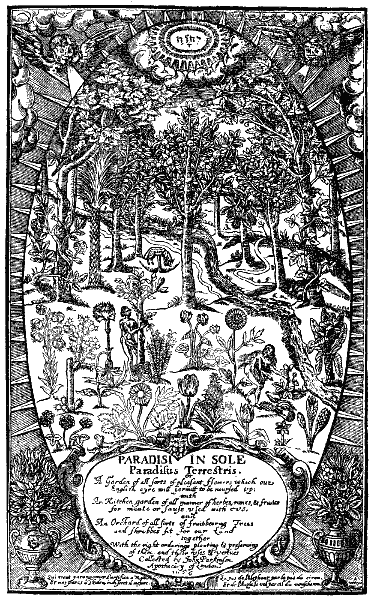
Fig. 3.—Adam and Eve admiring the Plants in the Garden of
Eden. The “Vegetable Lamb” in the background.
Fac-simile of the Frontispiece of Parkinson’s “Paradisus”
Large image (365 kB)
Athanasius Kircher, Professor of Mathematics at Avignon,
who wrote[12] in 1641, after following the error of his predecessors
of quoting Scaliger as a believer in the myth,
says:—
“Some authors have regarded it as an animal, some as a
plant; whilst others have classed it as a true zoophyte.
In order not to multiply miracles, we assert that it is a
plant. Though its form be that of a quadruped, and the
juice beneath its woolly covering be blood which flows if
an incision be made in its flesh, these things will not move
us. It will be found to be a plant.”
This unwavering prediction has been fulfilled. But the
story had to pass through many vicissitudes of acceptance
and disbelief before this decision of Kircher was unanimously
admitted to be correct. It seems to have been
the fate of this curious fable, through the whole period
of its history, that no sooner has a ray of some author’s
common sense penetrated the mist of superstition by which
it was surrounded than it has been again befogged by the
ignorant credulity of the next writer on the subject.
Jans Janszoon Strauss, a Dutchman, better known
as Jean de Struys, who travelled through many countries,
and amongst them Tartary, from 1647 to 1672, describes[13]
this vegetable wonder. But he was an uneducated and
credulous man, and his account of it is little more than a
repetition of the errors and fallacies of former centuries
concerning it, rendered still more incomprehensible by his
having confused with its “very white down, as soft as silk,”
the Astrachan lamb-skins, which were then, and are still, a
well-known article of commerce. He says:—
“On the west side of the Volga is a great dry and waste
heath, called the Step. On this heath is a strange kind of
fruit found, called ‘Baromez’ or ‘Barnitsch,’ from the word
‘Boran,’ which is “a Lamb” in the Russian tongue, because
of its form and appearance much resembling a sheep,
having head, feet and tail. Its skin is covered with a down
very white and as soft as silk. The Tartars hold this in
great esteem, and it is sold for a high price. I have myself
paid five or six roubles for one of these skins, and doubled
my money when I sold it again. The greater number of
persons have them in their houses, where I have seen
many. That which caused me to observe it with greater
attention was that I had seen one of these fruits among the
curiosities in the house of the celebrated Mr. Swammerdam,
in Amsterdam, whose museum is full of the rarest things
in Nature from distant and foreign lands. This precious
plant was given to him by a sailor who had been formerly
a slave in China. He found it growing in a wood, and
brought away sufficient of its skin to make an under-waistcoat.
The description he gave of it did very much agree
with what the inhabitants of Astrachan informed me of it.
It grows upon a low stalk, about two and a half feet high,
some higher, and is supported just at the navel. The head
hangs down, as if it pastured or fed on the grass, and when
the grass decays it perishes: but this I ever looked upon
as ridiculous; although when I suggested that the
languishing of the plant might be caused by some
temporary want of moisture, the people asseverated to me
by many oaths that they have often, out of curiosity, made
experience of that by cutting away the grass, upon which it
instantly fades away. Certain it is that there is nothing
which is more coveted by wolves than this, and the inward
parts of it are more congeneric with the anatomy of a lamb
than mandrakes are with men. However, what I might
further say of this fruit, and what I believe of the wonderful
operations of a secret sympathy in Nature, I shall rather
keep to myself than aver, or impose upon the reader with
many other things which I am sensible would appear
incredible to those who had not seen them.”
The next traveller, in order of date, who made the
Tartarian Lamb the object of his investigations was Dr.
Engelbrecht Kaempfer, who, in 1683, accompanied an
embassy to Persia, and was appointed Surgeon to the
Dutch East India Company two years later. He reported,
on his return, that he had searched “ad risum et nauseam”
for this “zoophyte feeding on grass,” that there was nothing
in the country where it was believed to grow that was called
“Borametz,” except the ordinary sheep, and that all accounts
of a sheep growing upon a plant were mere fiction
and fable. “The word ‘Borametz,’” he says,[14] “is a corruption
of the Russian ‘Boranetz,’ in Polish ‘Baranak,’ the diminutive
of which, ‘Baran,’ is Sclavonic. In such a case it
signifies ‘a sheep.’ But,” he continues, “there is in some
of the provinces near the Caspian Sea a breed of sheep
totally different from those with which we are commonly
acquainted, and highly valued for the elegance of the skin,
which is used in various articles of clothing by the Tartars
and Persians. For the magnates and the rich who desire
a material superior to that worn by the general population,
the skins of the youngest lambs are preserved, the fleeces
of these being much softer that those of the older ones,
and the younger the animal from which they are taken the
more costly are they.” He then refers to the barbarous
custom of killing the ewes before the time of natural
parturition to obtain possession of the immature fleece of
the unborn lamb, and says, correctly, that the earlier the
stage of pregnancy in which this operation is performed
the finer and softer is the fur of the fœtal skin, and the
lighter and closer are the little curls for which it is chiefly
prized. The pelt, also, is so thin that it is scarcely heavier
than a membrane, and, in drying, it frequently shrinks so as
to lose all similitude to the skin of a lamb, and assumes a
form which might lead the ignorant and credulous to believe
that it was a woolly gourd. He, therefore, conjectures that
some of these dried and shrunken skins may have been
placed in museums as examples of the fleece of the “Tartarian
Lamb,” under the supposition that they were of
vegetable origin.
Kaempfer’s suggestions were ingenious, though his theory
was erroneous. But, although he rather impeded than
assisted in the correct identification of the object of discussion,
he, at least, helped to discredit the myth, which
he declared to be one of those “received with favour by the
superstitious, and which when once they have found a writer
to describe them, however incorrectly, please the many,
obtain numerous adherents, and become respectable by age.”
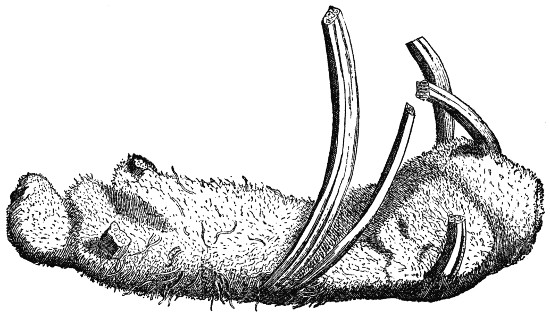
Fig. 4.—Rhizome of a fern, shaped by the Chinese to represent a
tan-coloured dog, and laid before the Royal Society by
Sir Hans Sloane as a specimen of the “Barometz,” or
“Tartarian Lamb.”
From the ‘Philosophical Transactions,’ vol. xx. p. 861.
An important chapter in the history of this curious
fiction was reached when, in 1698, Sir Hans Sloane[15] laid
before the Royal Society an object which has ever since
been generally regarded as a specimen of the strange natural
production about which so much mystery had existed,
so many outrageous stories had been told, and on which
so much learned discussion had been expended. His
description of it is printed in the Society’s Transactions,
and is as follows:—
“The figure (fig. 4) represents what is commonly, but
falsely, in India, called ‘the Tartarian Lamb,’ sent down
from thence by Mr. Buckley.[16] This was more than a foot
long, as big as one’s wrist, having seven protuberances, and
towards the end some foot-stalks about three or four inches
long, exactly like the foot-stalks of ferns, both without and
within. Most part of this was covered with a down of a
dark yellowish snuff colour, some of it a quarter of an inch
long. This down is commonly used for spitting of blood,
about six grains going to a dose, and three doses pretended
to cure such a hæmorrhage. In Jamaica are many scandent
and tree ferns which grow to the bigness of trees, and have
such a kind of lanugo on them, and some of the capillaries
have something like it. It seemed to be shaped by art to
imitate a lamb, the roots or climbing parts being made to
resemble the body, and the extant foot-stalks the legs.
This down is taken notice of by Dr. Merret at the latter
end of Dr. Grew’s Mus. Soc. Reg. by the name of ‘Poco
Sempie,’ a ‘golden moss,’ and is there said to be a cordial.
I have been assured by Mr. Brown, who has made very
good observations in the East Indies, that he has been told
by those who lived in China that this down or hair is used
by them for the stopping of blood in fresh wounds, as cob-webs
are with us, and that they have it in so great esteem
that few houses are without it; but on trials I have made
of it, though I may believe it innocent, yet I am sure it is
not infallible.”
Sir Hans Sloane had, it is true, clearly perceived the
nature of the specimen sent to the Royal Society by Mr.
Buckley, and had correctly identified it as a portion of one
of the arborescent ferns; but on the question whether he
had discovered the right interpretation of the puzzling
enigma I shall have more to say presently. The object
figured seems to have been regarded by many of his
contemporaries as so insufficient to meet the requirements
of the oft-told story of the plant-animal, and so
unsatisfactory an explanation of it, that every one who
subsequently had an opportunity of visiting Tartary still
felt it to be his duty to make enquiries concerning the
famous prodigy of that country.
Accordingly, we find that John Bell, of Autermony,
availed himself of the opportunity afforded him by a
diplomatic journey to Persia,[17] in 1715-1722, to endeavour,
whilst in Tartary, to obtain authentic information respecting
the “Vegetable Lamb.” He found that nothing was known
of it in the country where it was supposed to be indigenous,
and thus writes of it:—
“Before I leave Astracan, it may be proper to rectify a
mistaken opinion which I have observed to occur in grave
German authors, who, in treating of the remarkable things
of this country relate that there grows in this desart, or
stepp adjoining to Astracan, in some plenty, a certain
shrub or plant called in the Russian language ‘Tartasky
Borashka,’ i.e. ‘Tartarian Lamb,’ with the skins of which
the caps of the Armenians, Persians, Tartars, &c., are faced.
They also write that the ‘Tartashky Borashka’ partakes of
animal, as well as vegetative life, and that it eats up and
devours all the grass and weeds within its reach. Though
it may be thought that an opinion so very absurd could
find no credit with people of the meanest understanding,
yet I have conversed with some who were much inclined
to believe it, so very prevalent is the prodigious and absurd
with some part of mankind. In search of this wonderful
plant I walked many a mile accompanied by Tartars who
inhabit these desarts; but all I could find out were some
dry bushes, scattered here and there, which grow on a single
stalk with a bushy top of a brownish colour: the stalk is
about eighteen inches high, the top consisting of sharp
prickly leaves. It is true that no grass or weeds grow
within the circle of its shade—a property natural to many
other plants, here and elsewhere. After a careful enquiry
of the more sensible and experienced among the Tartars,
I found they laughed at it as a ridiculous fable.”
Bell further says:—
“In Astracan they have large quantities of lamb-skins,
grey and black, some waved and others curled, all naturally
and very pretty, having a fine gloss, especially the waved,
which at a small distance appear like the richest watered
tabby:[18] they are much esteemed, and are much used for
the lining of coats and the turning up of caps, in Persia,
Russia, and other parts. The best of these are brought
from Bucharia, China, and the countries adjacent, and are
taken from the ewe’s belly after she hath been killed, or the
lamb is killed immediately after it is lambed, for such a
skin is equal in value to the sheep. The Kalmuks and
those Tartars who inhabit the desert in the neighbourhood
of Astracan have also lamb-skins which are applied to the
same purpose, but the wool of these being rougher and
more hairy, they are inferior to those of Bucharia and
China both in gloss and beauty, and also in the dressing;
consequently in value. I have known one single lamb-skin
from Bucharia sold for five or six shillings sterling, when
one of these would not yield two shillings.”
Bell had sufficient discrimination to see that these
Astracan lamb-skins were in no way connected with the
fable of the “Borametz,” and thus avoided the error of
Kaempfer, who regarded them as having given rise to the
reports of the existence of that marvellous “animal-plant.”
The Abbé Chappe-d’Auteroche, during his visit to Tartary,[19]
about half a century later than John Bell, sought for
the “Scythian Lamb” with equal earnestness and with
similar want of success.
Long, however, before the result of the investigations of
these two travellers had been made known, a second
manipulated fern-root, similar to that described by Sir Hans
Sloane, had been subjected to the scrutiny of another
keen and scientific observer.
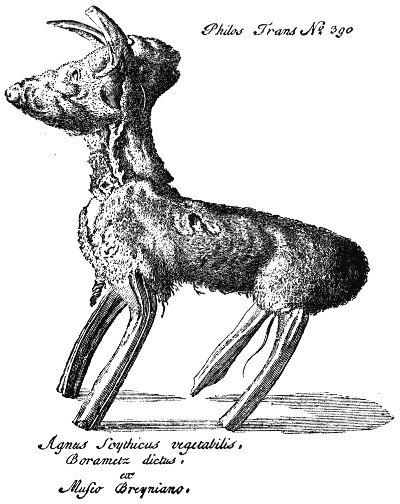
Fig. 5.—Rough model of a tan-coloured dog, shaped by the
Chinese from the rhizome of a fern, and submitted
to the Royal Society by Dr. Breyn as a
specimen of the “Scythian Vegetable Lamb.”
From the ‘Philosophical Transactions,’ No. 390.
In September, 1725, Dr. John Philip Breyn, of Dantzic,
addressed to the Royal Society of London an important
communication in Latin on this subject,[20] in which he
expressed his complete disbelief in the old story, and
described a specimen of the “Borametz” (as he believed it
to be) which had fallen into his hands, and which had led
him, independently, to the same conclusion as that
arrived at by Sir Hans Sloane, of whose observations, he
says, he was unaware when his own memoranda were
written. Commencing by quoting the maxim, “Non fingendum
sed inveniendum quid Natura faciat aut ferat,” he
urges upon all who search for the hidden treasures of
Nature, or who desire to discover her secrets, to bear in
mind that golden axiom that “the works and productions
of Nature should be discovered, not invented,” and
remarks that, if the older writers had adhered to this,
Natural History, great and honourable in itself, would not
have been tarnished by so many silly fables like that of the
“Scythian Lamb.” He directs attention to the fact that
none of those who have described this plant-animal are
able to say that they ever saw it growing; quotes Kaempfer’s
interpretation of the origin of the report, namely the
Astrachan lamb-skins of commerce, and hesitates to regard
the object in his possession as the key of the problem.
That he had grave and sufficient reasons for his doubts
upon this point will be seen from his interesting description
of the curiosity referred to. He says:—
“A certain learned and observant man, passing through
our city on his return from a journey through Muscovy,
enriched my museum with, amongst other natural curiosities,
one of these ‘Scythian Lambs,’ which he declared to be the
genuine Borametz. It was about six inches in length, and
had a head, ears, and four legs. Its colour was that of iron-rust,
and it was covered all over with a kind of down, like the
fibres of silk-plush, except upon the ears and legs, which
were bare, and were of a somewhat darker tawny hue. On
careful examination of it, I discovered that it was not an
animal production, nor yet a fruit, but either the thick
creeping root, or the climbing stem, of some plant, which by
obstetric art had acquired the form of a quadruped animal.
For the four legs, which looked as if the feet had been cut
off from them, were so many stalks which had supported
leaves, as were also those which formed the ears, and
which more nearly resembled horns. The fibres emerging
from these, by which, like other plants, this root or stalk
had conveyed nutriment, left no doubt upon this point.
Close inspection also showed that one of the front legs had
been artificially inserted, and that the head and neck were
not of one continuous substance with the body, but had
been very cleverly and neatly joined on to it. In fact, this
root, or stem, had been skilfully manipulated into the form
of a lamb in the same artful manner as the little figures of
men, which, it was said, shrieked and dropped human blood
when drawn from the ground, were formed from the roots
of the mandragore and bryony.”
Dr. Breyn added that there remained in his mind some
doubt as to the plant from which this burlesque of nature
and art was fabricated, until the similarity of its ferruginous
silky fibres to those of some of the capillaries suggested the
thought that it must be a portion of some exotic fern. As
to the particular species to which it belonged he was unable
to pronounce an authoritative opinion, but, hoping in the
course of time to receive more certain information concerning
it, he would merely say that he believed it was of a
peculiar species found in Tartary, and up to that date
undescribed.
Dr. Breyn’s confirmation of Sir Hans Sloane’s identification
of the “Scythian Lamb” as the stem or rootlet of a
fern artificially and cleverly manipulated was a crushing
blow to the already weakened fable. Unfortunately, however,
the conclusion thus arrived at was utterly misleading,
though it not only satisfied his contemporaries, but has
ever since—even to the present day—been universally
accepted as the correct interpretation of the problem. The
injurious result was, that, as the question appeared to have
been set at rest, enquiry ceased, and for nearly sixty years
afterwards no more was heard of the “Vegetable Lamb.”
Towards the close of the century two eminent botanists,
who were, of course, well acquainted with the specimens
that had been described by Sir Hans Sloane and Dr.
Breyn, were constrained in writing of the poetry of their
science to make the legendary “Borametz” their theme.
Dr. Erasmus Darwin, in 1781, contributed to the
literature of the subject the following lines[21]:—
“E’en round the Pole the flames of love aspire,
And icy bosoms feel the secret fire,
Cradled in snow, and fanned by Arctic air,
Shines, gentle Borametz, thy golden hair;
Rooted in earth, each cloven foot descends,
And round and round her flexile neck she bends,
Crops the grey coral moss, and hoary thyme,
Or laps with rosy tongue the melting rime;
Eyes with mute tenderness her distant dam,
And seems to bleat—a ‘vegetable lamb.’”
Dr. Erasmus Darwin appears to have bestowed “golden
hair” upon his Borametz, to assimilate it to the fern-root
toys that were regarded as its prototypes; but as the fern
of which they were made is a native of Southern China,
and as no author has described the lamb-plant as being
found in a cold climate, his authority and his motive
for locating it in an arctic region are alike inexplicable.
Dr. De la Croix, the other botanical author above
referred to, extolled, in 1791, the fabulous animal-plant
in a Latin poem[22] which Bishop Atterbury characterized
as “excellent, and approaching very near to the versification
of Virgil’s ‘Georgics.’”
“Qui Caspia sulcant
Æquora, sive legant spumosa Boristhenis ora
Sive petant Asiam velis, et Colchica regna,
Hinc atque inde stupent visu mirabile monstrum:
Surgit humo Borames. Præcelso in stipite fructus
Stat quadrupes. Olli vellus. Duo cornua fronte
Lanea, nec desunt oculi; rudis accola credit
Esse animal, dormire die, vigilare per umbram,
Et circum exesis pasci radicitus herbis:
Carnibus Ambrosiæ sapor est, succique rubentes
Posthabeat quibus alma suum Burgundia Nectar;
Atque loco si ferre pedem Natura dedisset,
Balatu si posset opem implorare voracis
Ora lupi contra, credas in stirpe sedere
Agnum equitem, gregibusque agnorum albescere colles.”
As this has not been “done into English” (to use an old
phrase), I venture to offer the following translation of it:—
“The traveller who ploughs the Caspian wave
For Asia bound, where foaming breakers lave
Borysthenes’ wild shores, no sooner lands
Than gazing in astonishment he stands;
For in his path he sees a monstrous birth,
The Borametz arises from the earth:
Upon a stalk is fixed a living brute,
A rooted plant bears quadruped for fruit,
It has a fleece, nor does it want for eyes,
And from its brows two woolly horns arise.
The rude and simple country people say
It is an animal that sleeps by day
And wakes at night, though rooted to the ground,
To feed on grass within its reach around.
The flavour of Ambrosia its flesh
Pervades; and the red nectar, rich and fresh,
Which vineyards of fair Burgundy produce
Is less delicious than its ruddy juice.
[39]
If Nature had but on it feet bestowed,
Or with a voice to bleat the lamb endowed,
To cry for help against the threat’ning fangs
Of hungry wolves; as on its stalk it hangs,
Seated on horseback it might seem to ride,
Whit’ning with thousands more the mountain side.”
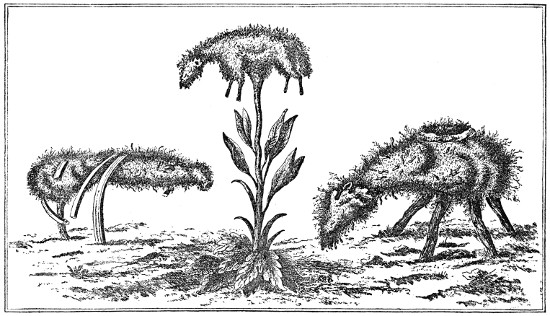
Fig. 6.—The “Borametz,” or “Scythian Lamb.”
From De la Croix’s ‘Connubia Florum.’
The central figure is a copy of Zahn’s picture of the fabulous plant-animal; the other two are taken from fern-root specimens
supposed to be “Vegetable Lambs.”
We must now leave the poetical view of the subject, and
come to facts.
The substance of which the artificial animals exhibited
by Sir Hans Sloane and Dr. Breyn were constructed is the
long root-stock of a fern of the genus Dicksonia, of which
there are from thirty to thirty-five species, varying greatly
in size, in their mode of growth, and in the cutting of their
fronds. Some of them, such as D. antarctica, a native of
Australia and New Zealand, often seen in our greenhouses,
are tree-like in habit, having stems from ten to forty
feet in height, and fronds two or three yards in length, and
two feet or more across; whilst others have root-stocks
creeping along the surface of the ground. The genus is
most fully represented in tropical America and Polynesia:
one species extends as far north as the United States and
Canada, and another was introduced into this country from
St. Helena. In some species, such as D. Molluccensis, from
Java, the stems are furnished with strong hooked prickles;
in others they are densely clad at the base with a thick
coat of yellow-brown hairs, which shine almost like
burnished gold. The stems of D. Sellowiana, from tropical
America, are so thickly clad with long fibrous hairs, changing
to brown or nearly black, that it has been said they
precisely resemble the thighs of the howling monkeys.[23]
The species of Dicksonia which has been supposed to
have given origin to the fable of the “Scythian Lamb” has,
from that circumstance, received the name of Barometz. It
was formerly known as Cibotium glaucescens. It was introduced
into cultivation in conservatories in this country
about the year 1830, and was shortly afterwards described
as Cibotium barometz, but the genus Cibotium is now
generally united with Dicksonia. Its long caudex, or root-stock,
creeps over the surface of the ground in the same
manner as that of the better known “Hare’s-foot” fern,
Davallia Canariensis, and this is covered with long silky
hairs, or scales, which look something like wool when old
and dry. These hairs or scales have been sometimes used
as a styptic in Germany, and also, very commonly, in China,
as related to Sir Hans Sloane by Dr. Brown. The similar
hairs of other species of Dicksonia, natives of the Sandwich
Islands, are exported to the extent of many thousands of
pounds weight annually under the name of “Pulu,” and are
used in the stuffing of mattrasses, cushions, &c. The hairs
of D. culcita are similarly utilised in Madeira. No more
than two or three ounces of hair are yielded by each plant,
and it is reckoned that about four years must elapse before
another gathering can be obtained.
The rhizomes and stems of many ferns abound in starch,
and have a commercial value, either as medicine or food.
The soft mucilaginous pith of Cyathea medullaris, one of
the large tree-ferns of New Zealand, was formerly eaten by
the natives. It is of a reddish colour, and, when baked,
acquires a somewhat pungent flavour. In New Zealand
ferns seem to be in some repute for their edible properties,
for the large scaly rhizomes of Marattia fraxinea, and
those of another fern, Pteris esculenta, nearly allied to our
common bracken, P. aquilina, are also eaten by the Maoris.
The natives bake them in ashes, peel them with their teeth,
and eat them with meat, as we do bread; and sometimes
pound them between stones, in order to extract the
nutritious matter, the woody part being rejected as useless.
In Nepaul, the rhizomes of Nephrolepis tuberosa are similarly
prepared for food; and in New Caledonia the mucilaginous
matter of Cyathea vieillardii is obtained from incisions
made in the stem, or at the base of the fronds. The
succulent fronds of the little water-fern, Ceratopteris thalictroides,
are boiled and eaten as a vegetable by the poorer
classes in the Indian Archipelago. The young shoots of
the handsome tree-fern, Angiopteris evecta, are eaten in the
Society Islands, and its large rhizome, which is in great
part composed of mucilage, yields, when dried, a kind of
flour. In the same islands the young fronds of Helminthostachys
limulata, the “Balabala” of the Fiji Islands, are
eaten in times of scarcity; and the soft scales covering the
stipes of the fronds are used by the white settlers for stuffing
pillows and cushions in preference to feathers, because
they do not become heated, and are thus more comfortable
in a sultry climate. In New South Wales, the thick
rhizome of Blechnum cartilagineum is much eaten by the
natives. It is first roasted and then beaten, so as to
break away the woody fibre: it is said to taste like a waxy
potato.
By skilful treatment the inhabitants of Southern China
occasionally converted the thick root-stock of one of
these tree-ferns, “Dicksonia barometz,” into a rough semblance
of a quadruped, which quadruped, by a foregone
conclusion, was supposed to be a lamb. They removed
entirely the fronds that grew upward from the rhizome,
excepting four, and these four they trimmed down until
only about four inches of each stalk was left. The object
thus shaped being turned upside down, the root-stock
represented the body of the animal, and was supported by
the four inverted stalks of the fronds, as upon four legs.
If the specimen had an insufficient number of stalks growing
from it to make the four legs, others were artificially
and neatly affixed to it; ears were similarly provided, and,
if necessary, the trunk was fitted with a head and neck
made from another root-stock.
So far, well! The identification of the material of which
these imitations of four-legged animals were fashioned as
the rhizome and frond-stalks of a tree-fern is complete, and
perfectly satisfactory. But, having given to these root-stocks
of tree-ferns the full benefit of an acknowledgment of the
economic uses that have been made of them in various ways
and in different localities, and having frankly stated the still
accepted theory of their connection with the myth of the
“Vegetable Lamb of Scythia,” I have to express my very
decided opinion that they and the “lambs” (?) made from
them had no more to do with the origin of the fable of the
“Barometz” than the artificial mermaids so cleverly made
by the Japanese have had to do with the origin of the belief
in fish-tailed human beings and divinities. In the first place,
as we shall presently see, these manipulated ferns were not
intended by those who fashioned them to resemble lambs
at all. Secondly, if they had been intended to represent
the lamb of the fable, they could have been, like the
Japanese mermaids, only the outcome and illustration of the
legend—not the objects which first gave rise to it. Neither
the one nor the other of these counterfeit fabrications appears
to have been ever common; and neither was certainly manufactured
in sufficient numbers, nor distributed so abundantly
and completely over the habitable globe, as to have laid the
foundation of a myth which in the one case was universally
believed,[24] and in the other attracted attention all over
Europe and Western Asia, and also in Egypt. Very few
of the Japanese artificial mermaids have been seen in this
country, though they have been eagerly sought for, and the
fern-“lambs” that have been brought to England may be
counted on one’s fingers.[25]
Further, it is a fact which seems to have been strangely
overlooked, that these tree-ferns, with the creeping root-stocks,
do not grow in Tartary. The particular species of
Dicksonia from which the doll-“lambs” were made is a
native of Southern China, Assam, and the Malayan peninsula
and islands.[26] And we have conclusive evidence, in
addition to the report made by Mr. Buckley to the Royal
Society (p. 27), that these playthings themselves were of
Chinese workmanship.
Juan de Loureiro, an accomplished Portuguese botanist
and Fellow of the Royal Society of Lisbon, who lived and
laboured as a Catholic missionary for more than thirty
years in Cochin China, and, afterwards, for three years in
China, thus writes[27]:—
“The Polypodium borametz grows in hilly woods in
China and Cochin China. Many authors have written of
the Scythian Lamb, or Borametz—most of them fabulously.
Ours is not a fruit, but a root, which is easily shaped by
the help of a little art into the form of a small rufous dog,
by which name, and not by that of a ‘lamb,’ it is called by the
Chinese.”
Loureiro describes the cutting off the stalks to form the
legs, the fixing on of smaller ones as ears, and other
particulars of the rude manufacture of these fern-root dogs,
as witnessed by himself. The common name of these toys
in China—“Cau-tich,” and in Cochin China, “Kew-tsie,”
both represent a “tan-coloured dog.”
It must also be borne in mind that the lamb-plant was
represented as springing from a seed like that of a melon, but
rounder, and that the natives of the country where it grew
planted these seeds. It was therefore a cultivated plant.
The lamb, it was also stated, was contained within the fruit
or seed-capsule of the plant; and when this fruit, or seed-pod,
was ripe it burst open, and the little lamb within it
was disclosed. The wool of this lamb was described by
various writers as being “very white,” “as white as snow,”
whereas these root-stocks of ferns bear no resemblance to
a lamb in their natural condition; and when they have
been deftly trimmed into shape the hairs or scales upon
them are tawny orange, matching better with the “tan”
markings of a dog, which they were intended to represent,
than with the soft, white fleece of a young lamb.
Therefore, even if I had no better explanation to offer,
I should be led to the conclusion that the identification of
these tawny toy-dogs, made in China from the root of a
wild fern, the spores of which are as small as dust, with
the “Vegetable Lambs” of Scythia, whose white fleeces
were found within the ripe and opening fruit of a cultivated
plant, raised from a large seed, was obviously erroneous,
and that the origin of the rumour must be sought for elsewhere.
The plant that set all Europe talking of the lambs that
grew in fruits and on stalks of plants somewhere in Scythia
was one of far higher importance and value to mankind
than the childish knick-knacks made for amusement out
of the creeping root-stocks of ferns. These and the curly-fleeced
progeny of the poor ewes of Astrachan were lambs
that crossed the track of the first, lost lamb, and led those
searching for it into the mistake of following their respective
trails, whilst the original “Scythian Lamb” escaped
from sight.
Tracing the growth and transition of this story of the
lamb-plant from a truthful rumour of a curious fact into a
detailed history of an absurd fiction, I have no doubt whatever
that it originated in early descriptions of the cotton
plant, and the introduction of cotton from India into
Western Asia and the adjoining parts of Eastern Europe.
Herodotus, writing (B.C. 445) of the usages of the people
of India, says (lib. iii. cap. 106) of this cotton:—“Certain
trees bear for their fruit fleeces surpassing those of sheep
in beauty and excellence, and the natives clothe themselves
in cloths made therefrom.”
In the 47th chapter of the same book, Herodotus describes
a corselet sent by Aahmes (or Amasis) II., King of
Egypt, to Sparta as having been “ornamented with gold
and fleeces from the trees”—padded with cotton, in fact.
Ctesias, also, who was the contemporary of Herodotus,
and was made prisoner, and kept by the King of Persia as
his court physician for seventeen years, was acquainted
with the use of a kind of wool, the produce of trees, for
spinning and weaving amongst the natives of India, for he
mentions in his ‘Indica’ a fragment quoted by Photius,
“tree-garments”; and that he thus referred to clothing made
from these tree-fleeces we have the testimony of Varro:—“Ctesias
says that there are in India trees that bear wool.”
Nearchus, the admiral of Alexander the Great, reported
that “there were in India trees bearing, as it were, flocks
or bunches of wool, and that the natives made of this
wool garments of surpassing whiteness, or else their black
complexions made the material appear whiter than any
other.”
Aristobulus, another of Alexander’s generals, made
mention in his journal of the cotton plant, under the name
of “the wool-bearing tree,” and stated that “it bore a
capsule that contained seeds which were taken out, and
that which remained was carded like wool.”
Strabo, who records this (lib. xv. cap. 21), referring to it
in another paragraph, writes:—“Nearchus says that their
(the natives’) fine clothing was made from this wool, and
that the Macedonians used it for mattresses and the
stuffing of their saddles.”[28]
Theophrastus, the disciple of Aristotle, writing about
B.C. 306, says[29]:—
“The trees from which the Indians make their clothes
have leaves like those of the black mulberry, but the whole
plant resembles the dog-rose. They are planted in rows
on the plains, so as to look like vines at a distance.”
In another passage of the same book (cap. 9) he
writes:—
“In the Island of Tylos, which is in the Arabian Gulf,[30]
the wool-bearing trees, which grow there abundantly, have
leaves like the vine, but smaller. They bear no fruit, but
the pod containing the wool is about the size of a spring
apple (“μηλον”), whilst it is unripe and closed, but when it
is ripe it opens: the wool is then gathered from it, and
woven into cloths of various qualities—some inferior, but
others of great value.”
This description by Theophrastus is remarkably correct
as applied to the herbaceous variety of the cotton-plant,
from which the chief supply of cotton for spinning and
weaving into cloth has always been obtained. In its mode
of growth—branched, spreading, and flexible—it may well
be likened to the dog-rose; and its palmate leaves bear a
close resemblance to those of the black mulberry, which
differ little from the leaves of some varieties of the vine.
The remark relative to the mode of cultivation is also
exactly applicable to the cotton-plant, which is set in rows
about four feet asunder, and the plants about two feet
apart, so that a field of it resembles a vineyard when seen
from a distance.
Pomponius Mela, the author next in order of time, also
writes in his account of India[31] of the “trees that produce
wool used by the natives for clothing.”
Then comes Pliny, who, incompetent and worthless as a
naturalist, though admirable as a writer, obscured this
subject, as he did many others. In his ‘Natural History’[32]
he mentions cotton in four different paragraphs, and in
every one of them inaccurately. He confuses cotton with
flax, and the fabrics woven of it with linen, and treats of
silk as a downy substance scraped from the leaves of trees.
And, in transcribing, or translating, the passage from Theophrastus
relating to the “wool-bearing trees,” he distorts
the author’s words, and states that “these trees bear gourds
the size of a quince, which burst when ripe, and display
balls of wool out of which the inhabitants make cloths like
valuable linen.” Pliny therefore seems to have been the
author of the “gourd” portion of the story which afterwards
obtained currency in Western Europe.
I shall quote one more ancient mention of the “fleece-bearing
plant,” because the author of it gives a more exact
description than any previous writer of that portion of it
from which the wool is taken.
Julius Pollux, who wrote about a hundred years later
than Pliny, says in his ‘Onomasticon’:—
“There are also Byssina and Byssus, a kind of flax. But
among the Indians a sort of wool is obtained from a tree.
The cloth made from this wool may be compared with
linen, except that it is thicker. The tree produces a fruit
most nearly resembling a walnut, but three-cleft. After
the outer covering, which is like a walnut, has divided and
become dry, the substance resembling wool is extracted,
and is used in the manufacture of cloth.”
This remark, of the pericarp of the cotton-pod, in some
species of Gossypium, being three-cleft, is in accordance
with fact, and is not noticed by any previous writer.
In tracing the development of these early and truthful
accounts of the cotton-plant into the complete fable
of the compound plant-animal, the “Vegetable Lamb of
Scythia,” we shall find it, as in the case of some other
myths of the Middle Ages, attributable to two principal
causes:—
1. The misinterpretation of ambiguous or figurative
language; 2. The similarity of appearance of two actually
different and incongruous objects.
It is a curious fact, which I believe has not hitherto been
noticed in connection with this subject, that the Greek
word “μηλον” (melon), very fitly used by Theophrastus in
the passage quoted (p. 48) to describe the form and appearance
of the unripe cotton-pod, may be equally correctly
translated “a fruit,” “an apple,” or “a sheep”: the adjective
“ἑαρινόν,” which is also used, means “vernal”; therefore
the phrase may be regarded as signifying either that the
vegetable wool was taken from a “spring apple” growing
upon a tree, or from a “spring-sheep” (or lamb) growing
upon a tree. Although I believe that the mistake originated,
as I shall presently explain, in the actual and substantial
resemblance between cotton wool and lamb’s wool, rather
than in the verbal identity of an appellative noun, it is not
improbable that this ambiguous phrase of convertible
interpretation may, in some measure, have contributed to
convey, many centuries later, to readers of a dead language
who knew nothing of the plant referred to, an erroneous
idea of the nature of “the fleeces that grew on trees.” It
would seem so much more likely that a soft fleece of white
wool should grow upon a young lamb yeaned in spring-time
than inside a fruit like an apple in the partly-formed and
unripe condition in which it is found in spring, that students
in the Middle Ages, as they pondered doubtfully over this
word of double meaning, would probably prefer the first
interpretation, and translate the passage of Theophrastus
as a statement that the wool was taken from a “spring-sheep,”
or lamb, growing upon a tree which bore no other
fruit. It is also probable that this use of the Greek word
“melon” gave rise to the report in later times that the seed
of the plant which bore the “Vegetable Lamb” was like
that of a melon or gourd.
We may next take into account the prevalence amongst
many tribes and nations in both hemispheres of the custom
of using figurative language in relation to the objects and
occurrences of their daily life.
A very striking and remarkable proof is given us by
Herodotus that the Scythians of the North-West, who
carried both the cotton and the rumour of the lamb-plant
into Muscovy, were in the habit of speaking thus
figuratively and metaphorically. He writes (lib. iv.
cap. 2):—
“The part beyond the north, the Scythians say, can
neither be seen nor passed through, by reason of the
feathers shed there; for the earth and air are full of feathers,
and it is these which interrupt the view.”
Further on (lib. iv. cap. 31) he also observes:—
“With respect to the feathers with which the Scythians
say the air is filled, and on account of which it is not possible
either to see further upon the continent, or to pass through
it, I entertain the following opinion. In the upper parts of
this country it continually snows—less in summer than in
winter, as is reasonable. Now, whoever has seen snow
falling thick near him will know what I mean; for snow
is like feathers, and on account of the winter being so
severe the northern parts of this country are uninhabited.
I think, then, that the Scythians and their neighbours call
the snow feathers, comparing them together.”
Herodotus was, of course, right in this interpretation.
Who can doubt that the people who would thus realistically
describe snow as feathers would probably describe
the white wool of the cotton-pod as “tree-lamb’s-wool,” the
produce of a “lamb-plant,” or “plant-lamb”?
The growth and development of the story of “the
Scythian Lamb” from the similarity of appearance of two
really different objects may be best explained by comparing
it with another Natural-history myth, which ran
curiously parallel with it. I allude to the fable that Sir
John Mandeville tells us he related to his Tartar acquaintances,
viz. that of the “Barnacle Geese”—which has
never been surpassed as a specimen of ignorant credulity
and persistent error.
From the twelfth to the end of the seventeenth century
it was implicitly and almost universally believed that in
the Western Islands of Scotland certain geese, of which the
nesting-places were never found, instead of being hatched
from eggs, like other birds, were bred from “shell-fish”
which grew on trees. Upon the shores where these geese
abounded, pieces of timber and old trunks of trees covered
with barnacles were often seen which had been stranded by
the sea. From between the partly opened shells of the
barnacles protruded their plumose cirrhi, which in some
degree resemble the feathers of a bird. Hence arose the
belief that they contained real birds. The fishermen
persuaded themselves that these birds within the shells
were the geese whose origin they had been previously
unable to discover, and that they were thus bred, instead
of being hatched, like other birds, from eggs. As the tale
spread to a distance, it gained by repetition, like the story
of “The Three Black Crows” amusingly told by Dr. John
Byrom.[33] The trees found upon the shore were soon
reported to be trees growing on the shore; that which
grew on trees people soon asserted to be the fruit of trees;
and thus, from step to step, the story increased in wonder
and obtained credit. It was discussed during many
centuries by philosophers and men of learning, who, one
after another, accepted the evidence in its favour, until Sir
Robert Moray, F.R.S., in 1678, reported to the Royal
Society that he had examined these barnacles, and that
in every shell that he had opened he had “found a little
bird—the little bill, like that of a goose; the eyes marked;
the head, neck, breast, wings, tail, and feet formed, the
feathers everywhere perfectly shaped and blackish-coloured,
and the feet like those of other water-fowl.” This nonsense
was published in the ‘Philosophical Transactions’ (No. 137,
January and February, 1678) under the auspices of the
highest representatives of science in this country. The old
botanist Gerard had previously (in 1597) had the audacity
to assert that he had witnessed the transformation of the
“shell-fish” into geese.[34]
In like manner the “wool-bearing plant” of Ctesias,
Nearchus, Aristobulus, and Theophrastus, the plant of
which Herodotus wrote that “it bore as its fruit fleeces
which surpassed those of lambs in beauty and excellence,”
was soon reported to be “a plant bearing fruit within which
was a little lamb having a fleece of surpassing beauty and
excellence.” As it was evident that a living lamb must
take food, the “lytylle best” was, in the next version,
kindly placed upon a stalk, and so balanced thereon as to
be able to bend downward, and browze upon the surrounding
herbage. Of course the lamb, if it fed on grass,
must have digestive and other organs, like those of lambs
ordinarily begotten, so these were liberally bestowed upon
it with as much particularity as that exercised by Sir
Robert Moray in enumerating the “parts and features”
of the “little tree-bird.”[35] The transformation of the
wondrous “plant-animal” from “a little lamb with a white
fleece disclosed by the bursting of a ripe seed-pod growing
on a stalk” into “a lamb growing on a stalk attached to
its navel, and browzing on the herbage within its reach,”
vastly increased the difficulty of identifying it. Like the
barnacle geese, it was discussed by philosophers and sought
for by travellers; but its features had been distorted
beyond recognition, and, instead of endeavouring to find
its original portrait in the pages of old historians and
geographers, enquirers looked for fresh information concerning
it in the misleading tales of successive travellers.
At last, as we have seen, another “vegetable lamb” crossed
the trail of the original lost one, in the shape of the two
Chinese toy-dogs laid before the Royal Society by Sir
Hans Sloane and Dr. Breyn. That distinguished body of
savants unfortunately accorded their recognition to the
wrongful claimant, and ever since then botanists and
antiquarians have regarded the problem as solved, and have
been satisfied that in these few rude models of “tan-coloured
dogs” they have found the true and original “snow-white”
“Vegetable Lamb of Scythia.”
The contented acceptance by botanists and other representatives
of science, down to the present day, of three
or four trumpery toys artificially and roughly fashioned by
the Chinese from the rhizomes of a fern which does not
grow in Tartary or Scythia, and brought to Europe by
travellers at rare intervals, as sufficient to account for the
origin of a rumour which spread from Asia all over Europe
and attracted the attention of learned men of all countries
for many centuries, is not the least remarkable circumstance
in the history of the legend of the “Scythian Lamb.”
Well might the old historians consider worthy of record
the reports they had heard of the existence of the “wool-bearing
tree,” for, as Dr. Ure has remarked,[36] “it would be
universally regarded as a miracle of vegetation did not
familiarity blunt the moral feelings of mankind. This class
of plants, largely distributed over the torrid zone, affords
to the inhabitants a spontaneous and inexhaustible supply
of the clothing material best adapted to screen their
swarthy bodies from the scorching sun, and to favour the
cooling influence of the breeze, as well as cutaneous exhalation.
While the tropical heats change the soft wool of the
sheep into a harsh, scanty hair, unfit for clothing purposes,
they cherish and ripen the vegetable wool, with its more
slender and porous fibres, admirably suited for clothing in
a hot climate, as the grosser and warmer animal fibres are
in a cold one. No sooner does the cotton pod arrive at
maturity than its swollen capsules burst with an elastic
force, in gaping segments, in order, as it were, to display
to the most careless eye their white fleecy treasure, and to
invite the hand of the observer to pluck it from the seeds,
and to work it up into a light and beautiful robe. Thus
held forth from the extremity of every bough, by its
resemblance to sheep’s wool it could not fail to attract
attention.”
Such keen observers as the ancient conquerors of India
would have been sure to notice with surprise and interest
the wonderful vegetable product which could be compared
to nothing so aptly as to the white, soft wool of a little
lamb, to appreciate its value and usefulness, and to admire
the fabrics manufactured from it. And, as these fabrics
gradually found their way northward from India by the
great caravan routes, either by Samarcand, or by the passes
of the Hindu Kush, by Bokhara and Khiva, through
Turkestan and Tartary into Russia, in one direction, and
by Egypt to the countries on the Mediterranean in another,
the sensation they would cause is not difficult to realise.
We can imagine how the newly-arrived trader, as he
displayed his goods, would be eagerly questioned by intending
purchasers of the novel, soft, white or coloured
cloths, so well suited to their requirements, as to the nature
of the raw material of which they had been woven. We
can picture to ourselves their astonishment when he
explained to them that the delicate, white, flossy fibres from
which his fabrics were made, of which he, perhaps, showed
them a sample, and which looked so like lamb’s wool, was
the produce of a plant, the fruit of which burst open when it
became ripe, and exposed to view the white wool within it.
And we can easily understand how the fame of this spread,
and was carried into distant lands, and how this “vegetable
lamb’s wool” was discussed and talked about in countries
where it, and the yarn spun from it, and the cloths woven
from it, had not yet penetrated.
Now, let us complete our identification of the cotton-pod
of India as “the Vegetable Lamb” of the fable by showing
its right to the title of “the Scythian Lamb.”
There is probably no race of men, or rather aggregate of
races, mentioned prominently in history, of whom, and of
whose country so little has been definitely known as of the
ancient Scythians. They have been generally and vaguely,
and, to a certain extent, correctly, regarded as represented
in modern times by the numerous hordes of Tartars inhabiting
the lands north of the mountains of the Caucasus,
and part of central and northern Asia. So exclusively
have they been identified with these tribes that the terms
Tartary and Scythia have been looked upon as synonymous,
and thus “the Scythian Lamb” has been called also
the “Tartarian Lamb,” or “the Vegetable Lamb of
Tartary.”
Under the name of “Scythia” was included (as may be
seen on any good classical map) a vast territory, partly in
Europe and partly in Asia, extending from the 25th to
the 116th degree of East longitude. The European portion
of it was comparatively a small province, known as
“Scythia Parva,” and comprised those districts of Silistria
and Bessarabia bordering the western shores of the Black
Sea, south of the mouths of the Danube. Scythia in Asia,
which was separated from Scythia Parva by the two
Sarmatias, included the whole of Turkestan, Thibet, Mongolia,
and Siberia. It was bounded on the West by the
Ural Mountains and river, and extended northward through
then unknown regions to the Arctic Circle, and southward
to the Himalayas. But still further south, beyond the
western Himalayas—the Hindu-Kush—was another part
of Scythia, known as “Indo-Scythia.” This stretched
southward to the Erythrean Sea (the Arabian Sea), and
was that part of India now called Scinde and the Punjab.
Through it flowed the Indus and the Hydaspes, and it was
on the banks of the latter river, at Bucephalia (either the
present Jhelum, or Jubalpore, eighteen miles lower), that
Alexander’s admiral collected the flotilla which he conducted
down the Hydaspes to its confluence with the Indus, and
along the whole course of that great river, and made his
way by its lower mouth into the open water of the Arabian
Sea. Then and there it was—from the time of their arrival
in the country, during the war with Pontus and other
Indian princes, and on their ten months’ voyage homeward—that
Alexander and his commodore Nearchus saw the
native population of Indo-Scythia “clad in garments the
material of which was whiter than any other, or at any rate
appeared so in contrast with their wearers’ swarthy skin,”
and which were “made of the wool like that of lambs, which
grew in tufts and bunches upon trees.”
Although more than two thousand years have passed
since then, Nearchus’s description of this costume—“a shirt,
or tunic, reaching to the middle of the leg, a sheet folded
about the shoulders, and a turban rolled round the head”—would
be almost equally accurate at the present day.
Its wearers may be congratulated that fashion has left
unchanged and unspoiled an apparel so serviceable and
well-suited to the climate of the country and the habits of
its people!
As the “fleeces of vegetable wool, softer and whiter than
that of the lamb,” came from Indo-Scythia, the supposed
plant-animal that bore them was first called “the Scythian
Lamb.”
As time passed on, the name of Scythia in Asia became
merged in that of Tartary. From the time that the
Mahometans became masters of Egypt and Constantinople,
as no Christian was allowed to pass through their dominion
to the East, intercourse with India by the two most
direct roads ceased entirely. Cotton goods and other
merchandise from India were therefore conveyed by the
trading caravans before mentioned. The depôt to which
they were generally forwarded was Samarcand, as was
correctly related to Guillaume Postel by Michel, the Arabic
interpreter (p. 13). There they met the great caravan travelling
from the East into Russia, and, on the journey, passed
through part of Scythia in Asia. In each district the
caravan was joined by hosts of Tartar traders carrying
with them the wool of their sheep, the hair of their goats,
and the skins of both, the soft, curly skins of their lambs,
and droves of hardy colts, the produce of their mares,
whose milk was, and still is, to them as important an article
of diet as that of cows is to ourselves. As the Tartar
merchants brought with the fleeces of their sheep, goats,
and lambs the fleeces also of “the fine white wool that
grew on trees” and the piece-goods made from it, “the
vegetable lamb” from which it was supposed to have been
sheared became also in this manner identified with Tartary,
in the same way as were Indian spices with “Araby,” through
which they sometimes passed in transit, but where they
never grew. It thus became known as “the wool of the
Tartarian Lamb,” and travellers whose curiosity concerning
the far-famed “zoophyte” was subsequently aroused sought
for it in the dominions of the “Great Cham.” But,
just as when Æneas Sylvius Piccolomini, afterwards Pope
Pius II., sought in Scotland for the “goose-bearing tree,”
which he eagerly desired to see, upon being told that it
grew much further north, complained that “miracles will
always flee farther and farther away”; so when any painstaking
traveller in Tartary endeavoured to investigate the
subject of the strange “plant-animal,” he was sure to learn
(unless he allowed himself to be cunningly hoaxed by the
skin of a natural lamb, or the fruit of another plant) that
the object of his search was non-existent in its reputed
birthplace, and that he must look for it elsewhere.
Thus the story of the “Scythian” or “Tartarian Lamb”
grew, and was exaggerated and distorted, until all traces of
its origin were so obliterated that even men of thought and
learning have been unable to recognise in the misleading
descriptions given of it the plant which, excepting corn, is,
perhaps, the most valuable to mankind. For, as I have
said, it seems to me to be clear and indubitable that the
fruit which burst when ripe and disclosed within it “a little
lamb” was the cotton pod, and that the soft, white, delicate
fleece of “the Vegetable Lamb of Scythia” was that which
we still call “Cotton Wool.”
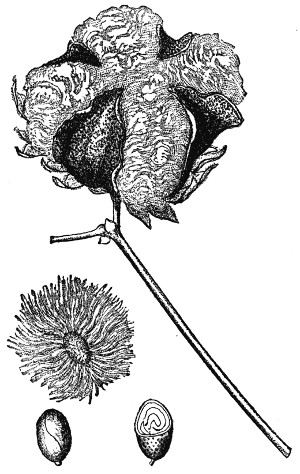
Fig. 7.—The Real “Vegetable Lamb”—A Cotton Pod.
(Gossypium herbaceum.)