Transcriber’s Note: For this book you will need to have a font installed
that can render cuneiform characters such as 𐎠, 𐎡, 𐎢. If these do not
display for you, then one suitable option is the font ‘Segoe ui historic’.
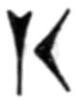
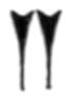
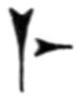
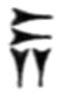
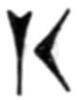
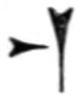
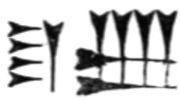
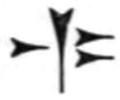
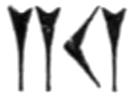
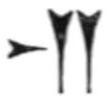
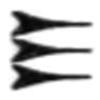
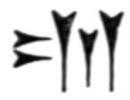
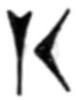
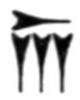
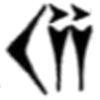
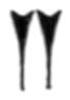
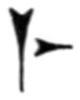
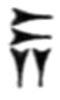
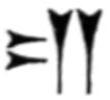
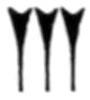
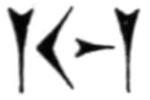
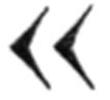
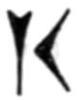
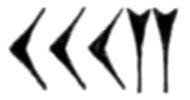
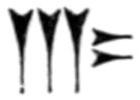
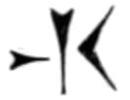
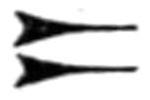
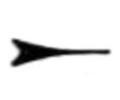
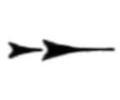
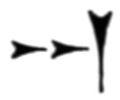
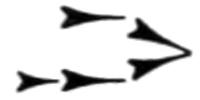
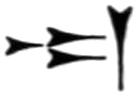
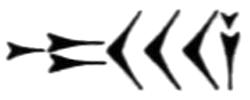
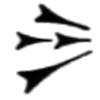
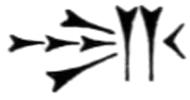
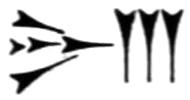
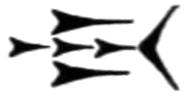
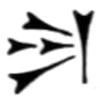
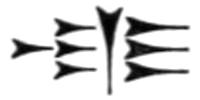
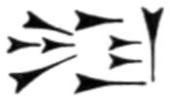
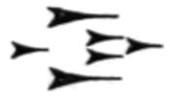
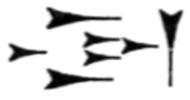
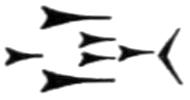
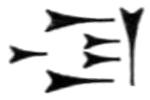
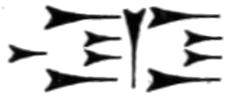
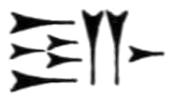
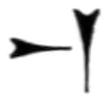
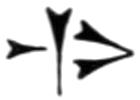
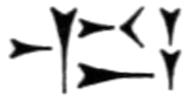
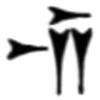
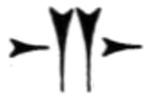
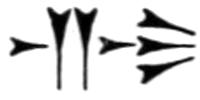
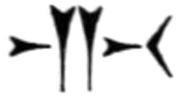
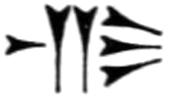
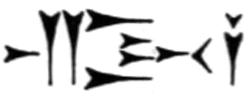
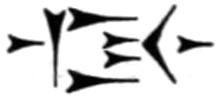
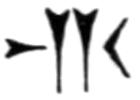
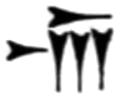
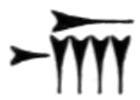
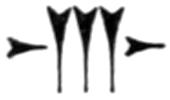
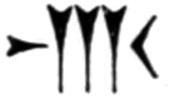
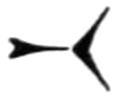
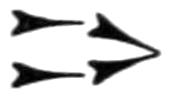
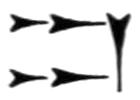
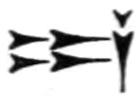
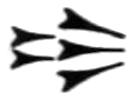
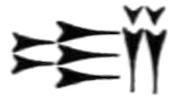
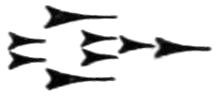
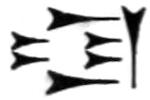
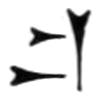
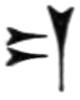
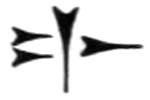
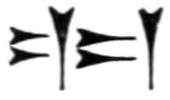
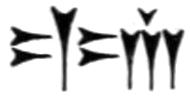
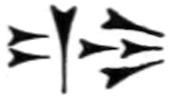
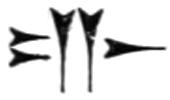
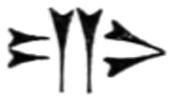
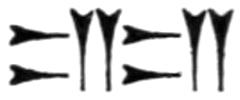
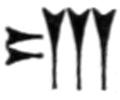
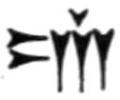
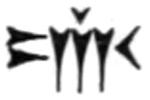
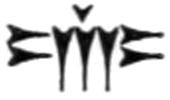
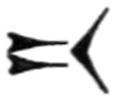
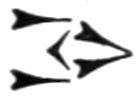
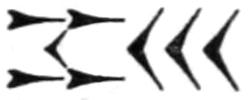
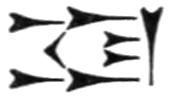
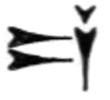
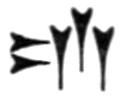
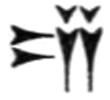
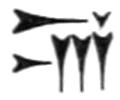
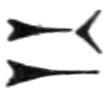
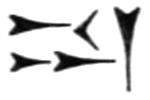
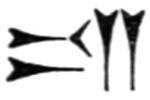
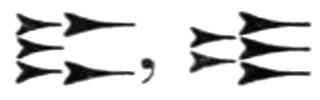
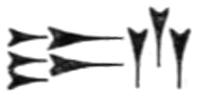
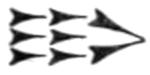
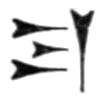
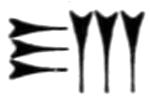
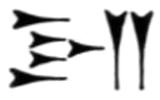
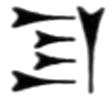
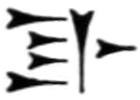
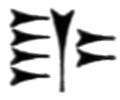
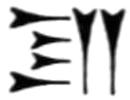
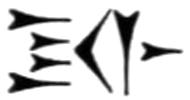
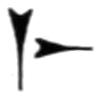
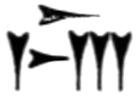
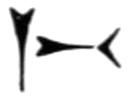
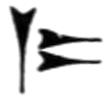
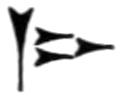
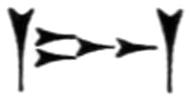
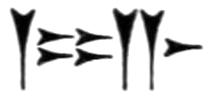
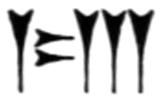
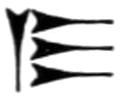
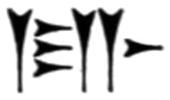
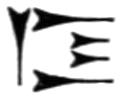
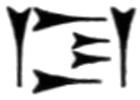
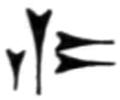
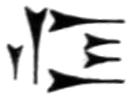
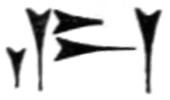
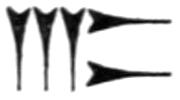
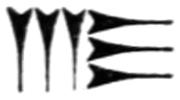
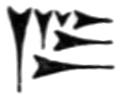
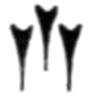
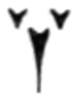
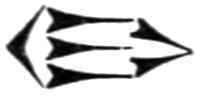
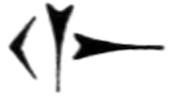
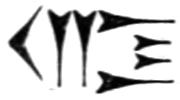
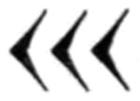
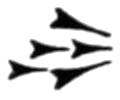
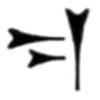
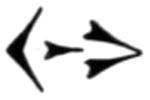
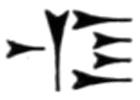
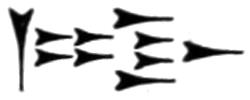
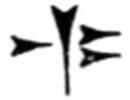
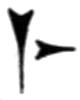
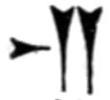
Cuneiform signs that have no Unicode equivalent are given as images.
THE
TRILINGUAL CUNEIFORM INSCRIPTIONS
PLAN OF PERSEPOLIS.
(From Curzon’s “Persia and the Persian Question”)
Longmans, Green & Co., London, New York & Bombay.
THE DISCOVERY AND
DECIPHERMENT OF THE
TRILINGUAL CUNEIFORM
INSCRIPTIONS
BY
ARTHUR JOHN BOOTH, M.A.
WITH A PLAN
LONGMANS, GREEN, AND CO. 39 PATERNOSTER ROW, LONDON
NEW YORK AND BOMBAY
1902
[The Plan of Persepolis is inserted by kind permission of Lord Curzon of Kedleston
from his work ‘Persia and the Persian Question.’]
INTRODUCTION
The decipherment of the cuneiform inscriptions of
Western Asia is worthy of being included among the
great achievements of the nineteenth century. Only a
hundred years ago it was still possible to maintain that
there was no such thing as cuneiform writing, and that
the mysterious figures that went by that name were
merely a grotesque form of ornamentation. We propose
to recount the method pursued by the long
succession of scholars who in the end succeeded in
solving the perplexing problem that was presented to
them. Few, if any, of those who, in the beginning of
last century, occupied themselves with the subject,
could have imagined the brilliant discoveries that would
result from their tedious labours. In these pages we
shall be chiefly occupied with the inscriptions of the
Achaemenian kings. They were the first to be discovered
and studied, and they possess the peculiar
advantage of being, with few exceptions, trilingual.
They are, in fact, generally found in three parallel
columns, and it was seen that the characters and no
doubt the languages also varied in each. It was
observed that the writing in one of the columns was
much simpler than in the others; the number of
different signs being limited to about forty-two. It
was assumed that they were alphabetical, whereas there
could be little doubt from their great number that the
signs in the other columns were syllabic or ideographic.
Notwithstanding the comparative simplicity of the
former, it was not till forty years had been devoted to
their study that the riddle was successfully solved. At
length the sound of each letter was fully established,
and the words they combined to form were found to
belong to a language, akin to Zend, to which the name
of Old Persian is now given. From its analogy to Zend
and Pehlevi it was a comparatively easy task to assign
correct or approximately correct meanings to the
words, and to arrive at the sense of the short sentences
that occur on the monuments. The first stage in the
progress of decipherment was reached in 1845, when
Professor Lassen of Bonn published a tentative but
fairly correct translation of the whole of the inscriptions
then accessible, belonging to the first or Persian column.
This success was no doubt a matter of great interest to
the philologist; but the inscriptions themselves were
found to be almost wholly wanting in historical importance.
They were nearly all taken from buildings
at Persepolis or elsewhere, and they simply commemorated
their erection by Darius or by Xerxes or by
Artaxerxes Ochus. They are uniformly conceived in
the same set form of words, from which at the most
some deductions might be drawn as to the relations
existing between the Persian and his god Ormuzd.
Two of them indeed were varied by a list of the
provinces included in the Empire. It is true the
inscription at Behistun was not included in this collection;
but even it adds little of importance except with
reference to the revolt of the Magian impostor. The
publication of this inscription by Major Rawlinson, in
1846, marks the successful termination of the task of
deciphering the first column, and a complete mastery
over the Old Persian language had then been obtained.
It was correctly supposed that the other two
columns contained translations of the same Persian
text; and the knowledge now acquired of the latter
could not but afford an invaluable key to unlock the
difficulties of the others. The decipherment of the
inscriptions in the second column was attended by even
less interest than the first. The language was ascertained
to be Scythic, but nothing was found written in
it except what was already known from the Persian.
It, however, gave rise to a very heated controversy as
to who the people were by whom it was spoken, which
for a time enlivened an otherwise extremely dull subject.
The decipherment of the third column, however, at
length led to very important consequences that amply
compensated for all previous disappointments. It was
clearly recognised that the writing closely resembled
inscriptions found on bricks that had been picked up
from time to time on the site of Babylon; and hence
the third column received, even in the beginning of
the inquiry, the distinctive name of the ‘Babylonian
Column.’ Only very few specimens of these unilingual
inscriptions in the Babylonian character were collected
during the first half of the century, and no progress
was made in their decipherment. Meanwhile, however,
the study of the third column proceeded with the help
of the Persian key; and at length the energy of
scholars was stimulated by the sudden discovery in
Assyria of multitudes of unilingual inscriptions written
in a very similar character to that of the Babylonian
and the third column. M. Botta began his excavations
at Khorsabad, in 1843, and Mr. Layard at Nineveh, in
1845-6, and from that period there was no lack of
material. The walls, and even the floors, of the newly
discovered palaces were covered with long inscriptions
which were afterwards found to record the great
achievements of their Royal founders. But of far
greater interest and importance than these were the
numerous inscribed tablets found in what was called
the Library of Assurbanipal. The first stage in the
progress of this branch of the subject was reached in
1852, when Major Rawlinson published a complete
transliteration and translation of the third column of
the Behistun inscription, followed soon afterwards by
translations of a few of the unilingual inscriptions
recently found. The mastery he had obtained of the
language of the third column by means of the Persian
key enabled him at length to dispense with its assistance,
and to pass on to the unilingual inscriptions where he
had no such guide. He found that the language
belonged to the Semitic family, and it came as a
surprise to the learned world of that day to learn that
the polytheistic nations of the Euphrates Valley spoke
a kindred language to the Hebrew, and belonged presumably
to a kindred race. It was thus shown that
the three languages of the Persian inscriptions were
representatives, of the Aryan, Turanian and Semitic
families. The difficulty of the task that remained was
still very great, for it was found that Babylonian and
Assyrian were not exactly the same language, but
differed from one another at least as much as two
strongly marked dialects of the same speech. The
decipherer also was greatly impeded by varieties in the
method of writing. Two very different systems prevailed
in each country, so that there were in fact four
different methods of writing the signs to be mastered;
and when we consider that the language is written by
means of several hundred signs, it was no trifling
matter to find that each might be multiplied by four.[1]
For a long time, no doubt, the knowledge of Babylonian
and Assyrian remained very imperfect, but the labours
of many scholars, reaching over fifty years and working
upon the extensive materials gradually accumulating,
have cleared up most of the difficulties, and both are
now almost as well understood as any other ancient
language.
With so much work still in hand, it was extremely
disheartening to learn from Major Rawlinson that he
had descried yet another and totally different language
in certain inscriptions sent to him from Southern
Babylonia. The intelligence was confirmed shortly
afterwards by the discovery in the Library of Assurbanipal
of large numbers of tablets that served as phrase-books
for the acquisition of this newly found language.
Farther investigation showed that it belonged to the
Turanian family; and it has received the names of
Akkadian and Sumerian. Some years later the cities
of Southern Babylonia were more thoroughly explored,
especially Tello, by M. de Sarzec, and the number of
inscriptions in this language largely increased. They
are found written in a linear or archaic character that
evidently preceded the use of cuneiform. The conclusion
was soon reached that this Turanian language
was the original language of Southern Babylonia, and
that the cuneiform writing developed from its ancient
script. But still more surprising was the discovery that
not merely the writing but the religion and literature
of later times descended from this ancient source. An
immense collection of tablets has been made from the
various libraries of Babylonia and Assyria, upon which
a large and varied literature is inscribed. It consists
of epic poems, legends of creation, astronomical books,
legal judgments and contracts. In the field of religion
it comprises magical incantations, hymns and penitential
psalms. But it was found that all the most important
part of this literature was simply translated from the
Sumerian, and that Assyrian literature proper is limited
to the dry and monotonous records of the kings. It is
not the least interesting result of these studies to have
shown that the Turanian race lies at the back of the
civilisation of Western Asia. From them the Semitic
races of the valley of the two rivers derived their law,
their religion, the legends of their faith, their heroic
literature, their science and art, and all the chief
elements of their culture. Scarcely less surprising was
the discovery of the immense antiquity of the Sumerian
civilisation. The evidence derived from the cuneiform
documents, combined with the results of the excavations
carefully conducted at Nippur by Dr. Peters and others,
have carried back the beginnings of Sumerian history
to an almost incredible antiquity, sometimes estimated
at B.C. 6000.[2] From the written documents now in our
possession, we are able to reconstruct the records of
Southern Babylonia from about B.C. 4000, and an
entirely new page in the history of the human race has
been opened. We can trace the beginnings of civilisation
among the lagoons of the Persian Gulf, the rise of
a great commerce with the Mediterranean, with Egypt,
and possibly with India; the descent of the Semitic
nomads into the rich cities created by the industry of
the Turanian population; the foundation of a Babylonian
Empire reaching across to the Mediterranean at a period
still anterior to the reputed age of Abraham. We can
note many incidents in the struggle for the possession
of Syria in which Egypt for a time remained the victor.
We assist at the foundation of the infant kingdom of
Assyria some 2000 years after our records begin; all
the events of its rise and fall are engraved on our
imperishable books of stone, and many incidents in
the writings of the Jews have received illustration.
Finally, on the fall of Assyria we see the old Empire of
Babylon recover from its partial eclipse and flourish
for a time under the great Nebuchadnezzar. Then
follow the rise of Persia and the extinction of the great
Semitic Empires, events on which our cuneiform records
have thrown new and important light. Considering
that the existence of the old Babylonian Empire was
previously entirely unknown; that our knowledge of
the Assyrian Empire hitherto depended altogether on a
few passages in the Hebrew Scriptures, and some absurd
legends collected by Herodotus and Ctesias; that the
very existence of a second Babylonian Empire seems to
have entirely escaped the knowledge of the Greeks, we
are in a position to estimate the gain to the range of
our historical information. The inscriptions have also
shown the origin of many myths popular in ancient
times; and of legends that even still enter into current
theology. They have exhibited the Semitic people in
the new light of a polytheistic race, and they have
illustrated the important position filled by the Turanians
at the dawn of civilisation.
It was only natural that the accuracy of many of
these results should have been somewhat strenuously
contested. M. Renan, for example, could not be induced
to believe in the polytheism of the Semitic race, though
the images of their gods began to crowd the Louvre in
bewildering numbers. M. Halévy disputed the very
existence of the Sumerian race and language, and the
controversy he excited has not even yet wholly died
away. Others cannot reconcile themselves to the
subordinate position of the Semite to the Turanian in
laying the foundations of all modern culture, and they
still endeavour to show that the two races were at least
contemporary workers from the earliest times, and contributed
equally to the great result. All this is perhaps
symptomatic only of a passing phase of irritation, for
the evidence on the other side seems too overwhelming
to be long withstood.[3]
It is because the trilingual inscriptions have rendered
such important service that we have considered it worth
while to recount the history of their discovery after
they had lain forgotten for some two thousand years,
and to explain the steps that were taken in the work
of decipherment by the many scholars whose patient toil
was ultimately rewarded with success.
TRILINGUAL CUNEIFORM INSCRIPTIONS — CHAPTER I THE DISCOVERY OF ACHAEMENIAN RUINS AND INSCRIPTIONS—BARBARO TO LE BRUYN, A.D. 1472-1718
The trilingual inscriptions of the Achaemenian Kings
of Persia that have led to the decipherment of the
whole cuneiform literature were found chiefly at Persepolis
and Behistun; though a single line at Murgab
and a short inscription at Hamadan, the ancient
Ecbatana, also contributed to an important extent.
Other inscriptions were observed at Van in Armenia;
at Naksh-i-Rustam, a few miles from Persepolis; upon
the site of the ancient Susa, and so far afield as Egypt.
They are all monumental: chiselled upon the walls of
buildings to record the name of the king who erected
the edifice. They are written in three different methods
of cuneiform writing, and reproduce the same text in
three different languages.
The inscriptions at Persepolis were the first to
attract attention. The ruins where they were found had
excited curiosity long before their discovery by European
travellers, and many legends had arisen to account for
their origin. It was variously reported that they were
the remains of a palace of Solomon, or of Cai Caius,
a predecessor of Cyrus, or of the great national hero
Jamshid. The literary classes described them as the
Takht-i-Cai Khusrau, or Throne of Cyrus; and later
on as the Khaneh-i-Dara or Mansion of Darius. The
early travellers, however, learned that the popular
name for them was Chehel Minar, or Forty Minarets,
from the lofty columns that form their chief architectural
characteristic. But during the eighteenth
century Jamshid triumphed over all his competitors,
and since then they have been more generally known as
the Takht-i-Jamshid, or Throne of Jamshid. The
question of their origin was not indeed finally settled
till the inscriptions were interpreted. Chardin, at the
end of the seventeenth century, and Heeren, a hundred
years later, still supported the claims of Jamshid.
Although it no longer admits of doubt that the
buildings were erected by Darius and Xerxes, there is
even yet no complete unanimity as to their original
design. The more common belief is that they were the
actual palaces of the sovereign, and that one of the
buildings was the scene of the conflagration ordered by
Alexander. Their dimensions and construction offer
considerable difficulties to the supposition that they
were the actual residence of the great king, though
they may have been adapted for official receptions and
other ceremonial purposes.
They lie on the south-east slope of a hill overlooking
the plain of Mervdasht about forty miles north of
Shiraz. Many other remains belonging to the same
period are found on both sides of the neighbouring
river Polvar. Three miles further up are the ruins of
the fortress city of Istakhr; and four miles across the
river are the Tombs of Naksh-i-Rustam. Doubtless the
great city of Persepolis included within its circuit the
whole of these isolated ruins, though the name has
become restricted to those that now specially engage
our attention. They rise upon a terrace partly hewn
from the solid rock, partly constructed of massive
blocks of stone. They now consist chiefly of the
colossal jambs of doors and windows, the connecting
walls having entirely disappeared. Their chief characteristics
are the beautiful columns that formerly gave
the place its name, and the profusion of bas-reliefs that
ornament the stonework. The platform is of very
irregular shape, and is encased by a magnificent wall
varying in height from twenty to fifty feet. It is
approached from the plain on the west side by (1) a
Double Staircase sunk into the line of the wall and
rising parallel to it. At the summit is (2) a Porch
entered between two buttresses supported by colossal
bulls; beyond are two other buttresses with winged,
human-headed bulls looking in the opposite direction
towards the east. In the centre of the edifice marked
by these two entrances there were originally four
columns designed to support the roof, of which two
only are now standing. Turning to the right, towards
the south, is (3) a Sculptured Staircase leading up to
the Columnar Edifice. It differs from the one already
mentioned by standing out considerably from the line
of the terrace; indeed there are two projections, the
first no less than two hundred and twelve feet in
length; the second, which again projects from the
centre of the first, is eighty-six feet in length. At either
end of each projection is a single flight of steps; and
the whole front is seen to be completely covered with
bas-reliefs. Beneath the landing stage of the central
projection the wall is divided into three compartments.
In the centre is a plain polished slab intended for an
inscription, and on either side are armed guards. In
the spandrils formed by the ascent of the steps is
a favourite device representing a contest between a
lion and a bull. On the wall to right and left of the
central stairs are three horizontal rows of bas-reliefs
separated by an ornamental design of roses. They
represent a procession of tributaries, leading animals or
bearing gifts, about to ascend the central stairs. At
either end is a polished slab occupying the whole
height of the wall; but only the one to the west has
been filled with an inscription. The Columnar Edifice
(4), standing on the terrace above, is designed in the
form of a Central Cluster and three colonnades—one in
front and one on either side. The centre formed a
square of thirty-six columns, and each of the colonnades
consisted of two rows of six columns. The total
number of columns should therefore be seventy-two, of
which only thirteen now remain standing. They differ
in height, and belong to two different orders. Those
in the front colonnade and central group are lower
than the others, and have a capital resembling the Ionic
order, except that the volutes rise perpendicularly. In
the colonnades a double bull or unicorn rests directly
upon the shaft; and it has been generally assumed that
similar animals were originally superimposed over the
voluted capital to make the other columns of equal
height. The edifice covered an area of three hundred
and fifty feet from east to west, and two hundred and
forty-six feet from north to south. Passing through
the columns, and continuing in the same southerly
direction, the ruins are reached that have yielded the
largest number of inscriptions. First in order are the
massive jambs belonging to the building now known as
(5) the Palace of Darius; and beyond are the remains
of three buildings lining the southern terrace. The one
to the right is the scarcely discernible ruins of (6) the
Palace of Ochus. In the centre rise the huge pilasters
of the great (7) Palace of Xerxes; while beyond to the
left is a small ruin called (8) the South-eastern Edifice.
Turning back towards the north, between these ruins
and the hill are the ruins of (9) the Central Edifice, a
building resembling the Porch at the summit of the
entrance. Beyond, in a line with the Columnar Edifice
are the huge remains of the (10) Hall of the Hundred
Columns. On the hill overhanging the Platform are
two rock tombs similar to those at Naksh-i-Rustam;
and, above, some travellers have traced three distinct
walls and towers that formed the defence of the palace
and city.
The palaces stand upon an artificial terrace of their
own raised above the level of the platform, and the
stairs leading up to them have afforded an opportunity
for the display of ornamentation in bas-relief. The
Porch is invariably protected by colossal guards hewn
out of the stone. Over the great door of the main
entrances the king is depicted entering or leaving the
building, with attendants bearing the royal parasol and
fly-chaser. On the doors leading to the lateral chambers
he may be seen in dignified conflict with wild animals;
or, as in the Palace of Xerxes, these scenes are replaced
by attendants bearing viands to the royal table. Some
of the most elaborate designs are met in the Central
Edifice and in the Hall of the Hundred Columns. In the
latter the king appears seated in a chair of state raised
above the heads of five rows of warriors; while at the
opposite door his throne is similarly supported by three
rows of figures representing subject nations. These
bas-reliefs are surrounded by an exquisite fretted fringe
of roses, diversified above by small figures of bulls and
lions; and over the whole the winged figure of Ormuzd
is seen to hover.
A large inscription occupies the outside wall of the
southern terrace. It is in four tablets, known as the
H, I, K and L of Niebuhr. The I inscription enumerates
the provinces of Darius: another contains
the declaration that that Terrace or Fortress was built
by Darius, and, ‘before him there was not any fortress
in that place.’[4] Above the animals in the Porch is an
inscription of Xerxes in three tablets, declaring that it
was erected by him, and that it was one of the many
beautiful works accomplished by him and his father Darius
‘in Parsa’ (Inscription D). The unilingual inscription
on the sculptured staircase informs us that it also was
constructed by Xerxes (Inscription A). As we ascend
the south stairs to the Palace of Darius, we observe on
the façade below the landing stage three tablets of
inscriptions which are repeated upon the landing, on
the anta in the south-west corner. It is again Xerxes
who speaks, but he tells us that it was Darius who
erected that palace (Inscriptions C and Cᵃ). Passing
through the great doors we observe above the king and
his attendants three tablets of inscriptions. They are
in the three languages and run: ‘Darius, the great
king, king of kings, king of nations, son of Hystaspes, the
Achaemenian, has built this palace’ (Inscription B).
Within, round the doors and windows is a single-line
inscription written on the top in Persian, ascending on
the left in Susian and descending on the right hand in
Babylonian (Inscription L). On the west side of this
palace is a second staircase, added later, of Artaxerxes
Ochus, as we learn from a magnificent inscription on
the façade (Inscription P). This inscription is repeated
on the stairs leading to the palace of that king.[5]
Adjoining the latter is the Palace of Xerxes, approached
by two principal staircases, one to the east and the
other to the west. On both occur inscriptions declaring
Xerxes the builder in words repeated upon the wall
above and upon the anta of the great Portico (Inscription
E). Entering by the great doors we see a short
inscription over the king and his attendants, which is
repeated over the side doors and windows and even
upon the royal robe (Inscription G).
These inscriptions, as we have said, do little more
than record the name of the founders, and with the exception
of the I inscription, they give no other information.
But they are sometimes accompanied by a
religious formula consisting of two paragraphs, of
which occasionally the second only is given. It runs:
1. ‘A great god is Auramazda who has created this
heaven, who has created this earth, who has created
men, who has created happiness for men, who has made
Darius [or Xerxes] King, the only King among many,
the only ruler of many.
2. ‘I am Darius [or Xerxes] the great King, the King
of Kings, the King of the lands of many races, King of
this great earth far and near; son of Hystaspes [or
Darius] the Achaemenian.’
The inscription at Hamadan contains nothing else.
The early travellers were attracted by Naksh-i-Rustam
almost as early as by the Chehel Minar. It lies, as we
have said, about four miles distant, across the Polvar,
and no doubt it formed part of the great city. The
bas-reliefs that excited the most curiosity belong to the
Sassanian period and do not concern us here; but the
tombs are Achaemenian. They are executed in the
face of the rock and are four in number. They are
comprised within a space of two hundred yards, and in
exterior design they are precisely alike. They are in
the shape of a Greek cross, and the transverse section
reproduces in half relief the façade of a palace. In the
topmost section there rests a rectangular stage ornamented
with two rows of human figures, each containing
fourteen persons in different costumes, designed to represent
the various satrapies of the Empire. Upon it
the king is seen standing on a dais; before him is an
altar upon which the sacred fire is burning, and above
floats the image of Ormuzd. The second tomb from the
east is the only one that bears an inscription, and from
it we learn that it was the resting place of the great
Darius. The façade has four tablets of inscriptions, two
in Persian and one each in the Susian and Babylonian
languages. The Persian text inscribed in the upper
limb of the cross is the best preserved and the most
difficult of access. It consists of sixty lines and contains
a second and later list of the provinces of the Empire
(Inscription NR). Beneath it, between the half
columns in the transverse section, is another Persian
inscription, originally of about the same length, but so
mutilated that only fifteen lines have been partly copied
(Inscription NR ᵇ). The names of three of the great
officers of the Crown have also been recovered (Inscriptions
NR ᶜ, ᵈ, ᵉ), and quite recently the names of
seven supporters of the throne have been added.
Ascending the valley of the Polvar, at a distance of
forty miles to the north of Persepolis the traveller
reaches another large group of Achaemenian ruins,
which it is now generally admitted represent Pasargadae,
the city of Cyrus. The early travellers were attracted
by a curious edifice standing among them which they
were told was the Tomb of the Mother of Solomon;
but it was not till the nineteenth century that its
similarity to the tomb of Cyrus, described by Arrian,
struck the imaginative Morier, the author of ‘Hajji
Baba.’ At the same time a single-line inscription was
found repeated on several pillars with the legend: ‘I
am Cyrus, the King, the Achaemenian’ (Inscription M).
The discovery of the Achaemenian ruins and inscriptions,
to which we have briefly called attention,
dates from the beginning of the seventeenth century.
Till then Persia was almost entirely unknown to
European travellers, and only a few scattered notices
of the Persepolitan ruins come to us earlier. The first
of these dates back to the end of the fifteenth century,
and is due to a Venetian ambassador, Giosafat Barbaro,
who visited the country in 1472. The account of his
mission was not, however, published till 1545. He
tells us that a day’s journey from Camara he came to
a great bridge across the ‘Bindamyr,’ which he heard
had been built by Solomon.[6] Not far distant he perceived
a hill where on a level spot, stood forty columns,
called from that circumstance ‘Cilminar.’ Some of them
are in ruins, but from what remains it is evident the
building was formerly very beautiful. Above the
terrace there rises a rock on which human figures of
gigantic size are sculptured, and over them appears a
figure which resembles ‘God the Father in a circle.’[7]
Elsewhere he observed a tall figure on horseback who
he was told was Samson, and others clothed after the
French fashion. ‘Two days distant from this place is
a place called Thimar, and another two days farther
we come to a village where there is a sepulchre, in
which they say the mother of Solomon is buried.
Upon it is a kind of chapel on which are engraven
Arabic characters denoting “Mother of Solomon.” This
place they call Messeth Suleimen, or Temple of Solomon.
The door looks towards the east.’ Such is the earliest
account in modern times of the famous ruins of
Persepolis and Pasargadae, although Barbaro was quite
unaware of their identity. It will be observed that
he also visited Naksh-i-Rustam, and saw in the Sassanian
bas-relief of Rustam the figure of Samson. It is possible
that the notes of his journey were fuller than the
published account, and they may have fallen into the
hands of Sebastiano Serlio, a Bolognese architect. A
few years before the appearance of the ‘Viagi,’ Serlio
published his celebrated treatise on Architecture, which
enjoyed extraordinary popularity, and was translated
into many languages.[8] In it he gives a drawing of the
façade of an edifice which he had heard was supported
by a hundred columns. He had never seen it or its
ruins, and seems to have had no idea where the
building had stood, though he apparently gives us to
understand that it was Grecian. The drawing shows
a building with ten columns in front, adorned with
Corinthian capitals, and supporting a second story of
four columns and architrave. He had heard that only
a few of the columns remained above ground, but he
decided to present his readers with his conception of
what it must have resembled. He ventures so far as
to give the dimensions of the columns, although he
anticipates that the whole thing will be flouted as a
chimera or a dream. He thus gives us the first of a
long series of conjectural ‘restorations,’ with which
successive generations of architects have enlivened their
books and obscured the subject in hand. He is certain
that some such building with a hundred columns had
existed somewhere, but it never seems to have entered
his mind that he had to go so far afield as Persia to
find it. Whether the idea was suggested by what he
had heard from Barbaro we cannot say; but it is a
complete error to suppose that he represented his
drawing as ‘the plan and elevation of Persepolis.’[9]
The first to suggest the identity was Don Garcia, who,
however, does not appear to have read what Serlio had
to say on the subject.[10] He thought Serlio had called
his drawing the ‘Forty Alcorans’ and omitted its size
and proportion. Serlio, on the contrary, says nothing
about forty columns, and he gives the proportions of
his imaginary edifice, which he leaves us to infer was
one of the marvels of Greece.
It was not till the Portuguese found their way round
the Cape of Good Hope that communication with Persia
became regular and frequent. In 1508, Alboquerque
conquered the island of Ormuz at the entrance to the
Persian Gulf. Even at that time this barren rock was the
resort of merchants from India; and under Portuguese
rule it rapidly rose to great prosperity. Its king was
permitted to retain his rank and a nominal authority,
but his dominions, which included the islands of Kesem
and Bahrein and the port of Gombrun on the mainland
passed under Portuguese influence. In the division of
the East among the religious orders, Persia fell to the
Augustinians, to be the special field of their missionary
labours. They erected a church and convent at Ormuz,
which continued for a hundred years to be a centre of
their activity. In the reign of Don Sebastian the Father
Symon de Morales became its prior and applied himself
to the acquisition of the Persian language. Soon after the
union of the Portuguese and Spanish thrones, Philip II.
instructed the Viceroy of the Indies to send an envoy
to the King of Persia in order to settle the details of
the commercial intercourse which had arisen between
the two countries, and no one was better qualified to
undertake the task than Morales, upon whom the
selection fell (1583). The route from Ormuz to Ispahan,
then the capital of Persia, passed within a short distance
of Persepolis; and it is to the long succession of
envoys who travelled that way that we are in great
measure indebted for our knowledge of these ruins and
the mysterious characters engraven upon their walls.
The missions took place chiefly in the reign of Shah
Abbas (1587-1628), a monarch whose alliance against
the Turk was eagerly sought for by the European
powers. He had not only distinguished himself in the
early part of his reign by considerable military capacity,
but had evinced a strong desire to develop the commercial
resources of his country. Indeed, he was as much
of a merchant as a soldier. He was the chief, if not the
sole, owner of the silk industry, and he sought to attract
the merchants of all nations by permitting the freest
competition among them. He did everything in his
power to render the country agreeable to strangers. He
erected sumptuous caravansaries for their accommodation
upon the road. He made travelling even in remote
districts absolutely safe, by the slaughter, it was said,
of twenty thousand robbers. He received men of all
nationalities and of the most diverse creeds with equal
hospitality. He even sought to attract skilled artisans
from Europe to instruct his subjects, and he caused his
palaces to be decorated by foreign artists. The period
of his reign was peculiarly favourable for the execution
of his liberal projects. The Portuguese trade was
carried on with great success from Ormuz. About 1595
the Dutch made their first appearance in the Indian
Seas, and gave a great stimulus to competition. Nor
were the English merchants indifferent to the opening
of a new market. So far back as 1861 Antonie
Jenkinson visited Persia with that object, but he was
not favourably received. In the first year of the
seventeenth century, John Mildenhall, accompanied by
John Cartwright, a student of Magdalen, renewed the
overtures, and they found Shah Abbas even then well
disposed to cede a port on the Gulf. In 1609, Joseph
Salbancke again reported favourably of the commercial
prospects if an English fleet could contend successfully
against the Portuguese and Dutch. At length the East
India Company, which was founded in 1600, succeeded
in opening the trade in 1614, and from that year a British
Resident was regularly established at Ispahan. It thus
happened that both political events and commercial
enterprise concurred at the same time to bring Persia into
communication with Europe, and a country that only
a few years before was scarcely known became the
frequent resort of travellers.
In 1601, Philip II. thought it advisable to renew
diplomatic intercourse with this great monarch, and he
instructed the Viceroy at Goa to despatch a second mission
to Ispahan. The Viceroy chose three Augustinian
friars, among whom was Antoine de Gouvea, who has left
an interesting account of his travels. Gouvea was the
Rector of the College of Goa, and Professor of Theology,
and he had acquired a competent knowledge of Persian.
The party landed at Ormuz early in 1602, and set out
in May to join the king, but they turned aside from
the direct route to visit ‘Chelminira,’ or the Forty
Columns, which he believed to be the ‘sepulchre of an
old king who was buried here.’[11] He found, however,
that the tomb was on the side of the mountain, and was
generally attributed to Cyrus. He thought it was more
probably to be assigned to Assuerus or Artaxerxes, and
the tomb close by to his wife, Queen Vasti. The ruins
of the Forty Columns were locally known as ‘the Old
Town,’ and it was thought that it had been the original
site of Shiraz. Old writers confirmed this view, because
they said the river Bondamiro[12] (which passes near the
ruins) ‘washed the walls of Shiraz.’ Gouvea, following
the geographical writers of the time, had no doubt that
Shiraz was the ancient Persepolis. It never occurred to
him to connect it with ‘the old town’ of Chelminar, to
which tradition pointed as the original site of Shiraz.
He called attention to the magnificent staircase that leads
from the plain to the platform on which the ruins stand.
Two staircases, he says, rise from the foot of the mountain,
vis-à-vis one to the other, consisting of numerous
steps well adjusted, and cut out of immense blocks of
stone. The two stairs converge to one common landing
place; and, writing evidently from memory, he adds
that the sides are adorned with figures in relief, so well
made that ‘he doubts if it were possible to execute
them better.’ The Porch is, he says, adorned with
‘figures of savage animals cut out of a single block, and
so lifelike that they appear as though they desired to
excite fear.’ He describes the columns as surmounted
by beautiful statues. On the Portico and in various
places among the ruins he saw the portrait of the king.
He does not mention any of the ruins on the platform;
they appear all to come under the comprehensive
description of ‘chapels,’ which he says were built of
huge blocks of stone. But he noticed the two tombs on
the hill, one being ‘the sepulchre of the king, which is
not very different from the other.’ He confuses the
great entrance stairs leading to the Porch with the
sculptured stairs leading to the Court of the Columns;
and represents it as approached directly through the
Porch. It was a long time before this error was cleared
up. Gouvea called attention to the inscriptions. ‘The
writing,’ he says, ‘may be clearly seen in many places,
and it may explain by whom the building was erected
and the purpose it was intended to serve; but there is
no one who can understand it, because the characters
are neither Persian, Arabic, Armenian, nor Hebrew, the
languages now in use in the district; so that everything
contributes to obliterate the knowledge of that which
the ambitious prince desired to render eternal.’
When Gouvea arrived at the Court, which was then
at Machad, the capital of Khorassan (or Bactria), he
was met by Robert Sherley, an Englishman, who was
then not more than twenty years of age. Sherley, we
hear, was naturally of good disposition, though infected
by the pestiferous errors he had imbibed in England.[13]
He was no match in argument for the Professor of
Theology, and after some discussion ‘he was converted
and submitted to the Roman Church with seven or
eight of his suite.’ Gouvea, as was natural, attributed
great importance to these conversions, and although he
publicly declared that the primary object of his mission
was to kindle a war with the Turk, he lost no opportunity
of assuring the king that his heart was set much
more on ‘teaching the knowledge of the true God.’
He presented his Majesty with a ‘Life of Our Lord,’
richly bound, and certain religious pictures sent by the
Archbishop of Goa; and he continued, in season and
out of season, to press the faith upon his acceptance.
The Shah, who was surrounded by Christians both in
the harem and the Court, treated these importunities
with toleration, and his courtesy encouraged the zealous
priest to hope that he might number him among his
converts.[14] A Persian merchant, who noticed with
surprise the civility of the king towards Christians, had
already circulated a report in Italy of his approaching
admission into the Church, and Gouvea was surprised to
meet at Ispahan with an embassy of Carmelite fathers
sent by Clement VIII., with instructions to arrange the
details attending the conversion of the country. These
extravagances prejudiced the position of the Portuguese
fathers, and they found that the Shah was
beginning to grow weary of the whole affair. He,
however, granted them leave to turn a large disused
palace into a monastery, and to build a church.
Gouvea quitted Ispahan in company with a Persian
envoy bound for Spain, who was the bearer of a letter
from the Shah to Philip. The two other fathers
remained behind to supervise the interests of their
community. While Gouvea was still on his way to the
coast, he received the pleasing news that war between
Turkey and Persia had actually broken out.
The war was carried on by Rudolph in Europe and
Abbas in Asia, till 1607, when the Emperor concluded
the Peace of Sitvatorok, without consulting the
convenience of his ally. The Shah was extremely displeased
by an act that, without any warning, left him
to bear the whole brunt of the campaign. It was
while he was still suffering from the unfaithfulness of
his European allies that Gouvea appeared for the
second time at his Court. He left Goa in February
1608, and arrived at Ispahan in June; but it was with
difficulty he could obtain an interview with the Shah.
On his return to Portugal he was raised to the
bishopric of Cyrene. He wrote his book in 1609,
before he left Goa, and he evidently brought it with
him to Lisbon, where it was published in 1611.
At the Spanish Court he had an opportunity of
meeting Don Garcia de Silva Figueroa, who was subsequently
to visit Persia as Ambassador, and to interest
him in the ruins of Chehel Minar. In view of his projected
journey, Don Garcia made a special study of the
antiquities of the country in the original authorities,
and in such modern books as were then available. He
was a Castilian of high rank, and about fifty-seven
years of age at the time he left on his mission, in 1614.
He had an extremely difficult part to play, and one
little suited to his haughty and irascible temper. The
Portuguese authorities were greatly incensed at the
appointment of a Spaniard, and they threw every
obstacle in his way. The Viceroy detained him at
Goa on one pretext or another from November 1614
to March 1617, when at length the Ambassador
hazarded the voyage to Ormuz in a small vessel of two
hundred tons.[15] On his arrival he found the Portuguese
governor of the island nearly as intractable as the
Viceroy, and it was not till October that he was able to
continue his journey. He passed that winter at Shiraz,
which he said was certainly the Cyropolis of the
ancients and the place of burial of Cyrus, its founder.
He found his sojourn intolerably dull: he complains
that there was ‘not as much as any bookes except a few
pamphlets intreating of Holy Confession, and Navarr’s
Summes which the monkes of St. Augustine use.’ In
April 1618, he set out for Ispahan, and reached the
bridge across the ‘Bradamir,’ which river he had no
doubt was the ancient Araxes. A league further on
he came to the ruins of ‘Chelminara,’ of which he had
heard so much from Gouvea. He did not hesitate to
identify them at once with ‘those huge wilde buildings
of the castle and Palace of Persepolis’; and he appears
to have been the first to make this identification.[16]
Gouvea, as we have seen, had no doubt that Shiraz
was built on the site of Persepolis. Cartwright, to whose
journey we have already alluded, was so convinced
of the same that he heads a chapter ‘Description of
Sieras, ancient Persepolis,’ and adds: ‘This is the city
Alexander burnt at the request of a drunken strumpet,
himself being the first president in that wofull misery.’[17]
Don Garcia is warm in his praise of ‘this rare yea
and onely monument of the world (which farre exceedeth
all the rest of the world’s miracles that we have seen or
heard off).’ He found only twenty of the pillars left
standing, but there were broken remains of many others
close by; and half a league distant in the plain he
noted another, and still farther off two short ones. He
mentions the numerous bas-reliefs that ‘doe seele the
front, the sides and the statlier parts of this building.’
The human figures are ‘deckt with a very comely
clothing and clad in the same fashion which the
Venetian magnificoes goe in: that is gownes down to
the heeles with wide sleeves, with round flat caps, their
hair spred to the shoulders and notable long beards.’
Some are seated in ‘loftier chayres’ with a ‘little
footstoole neatly made about a hand high.’ He was
particularly struck by the ‘hardnesse and durablenesse
of these Marbles and Jaspers so curiously wrought and
polished that yee may see your face in them as in a
glasse.’ He was embarrassed to define the style of
architecture, ‘whether Corinthian, Ionick, Dorick, or
mixt.’ He called especial attention to ‘one notable
inscription cut in a Jasper Table, with characters still
so fresh and faire that one would wonder how it could
scape so many ages without touch of the least blemish.
The letters themselves are neither Chaldæan, nor
Hebrew, nor Greeke nor Arabike, nor of any other
nation which was ever found of old or at this day to be
extant. They are all three-cornered, but somewhat
long, of the form of a Pyramide, or such a little
obeliske as I have set in the margin (△), so that in
nothing doe they differ from one another but in their
placing and situation.’ He notes that the threefold
circle of walls said to have surrounded the castle ‘hath
yielded to the time and weather.’ He mentions also
the Tombs. ‘There stand,’ he says, ‘the sepulchres of
their Kings placed on the side of that hill at the foote
whereof the Castle itself is built.’ He did not himself
visit Naksh-i-Rustam, but apparently his servants went,
and ‘did see some horses of marble, large like a
Colossus and some men also of giantly stature.’ This
description is taken from a letter written by Don
Garcia from Ispahan in 1619 to a friend at Venice. It
was published at Antwerp in the following year, and
appeared in English in 1625, in Purchas’ Pilgrims. A
more detailed account is found in the ‘Embassy of
Don Garcia,’ a work elaborated from his notes or
memoirs by a member of his suite, and translated into
French in 1667. It contains a very full, and on the
whole accurate, description of the ruins. He noticed
the irregular slope of the terrace, which he attributed
to the exigencies of defence. The double staircase
leading to the platform is so constructed that ‘one can
easily ride up on horseback.’ On reaching the summit
he noticed the Porch, the walls of which, he said, are
supported by two great horses in white marble, larger
than elephants, each with two wings, and with eyes
expressive of the dignity of the lion. Beyond is
another door adorned in the same manner, and exactly
between the two stands a large column on its pedestal.[18]
The Porch leads to the Columnar Edifice, where he saw
twenty-seven columns still standing (not, as Purchas
says, twenty), but there had evidently originally been
forty-eight arranged in six rows of eight each.
He observed that they belonged to two different
orders: the one resembled the column in the Porch;
the others, he says, have no capitals except that upon
one he perceived the half of a horse without its head.
Singularly enough he falls into the same error as
Gouvea, an error reproduced in some of the earlier
engravings of the ruins; and represents the columns as
standing upon the same level as the Porch. According
to our author, therefore, on leaving the Columnar
Edifice he came to a ‘very beautiful stair, which
though not so large nor so high as the first, is incomparably
more beautiful and magnificent, having on the
walls and balustrade a triumph or procession of men
curiously clothed, carrying flags and banners and
offerings. At one extremity of the procession we see a
chariot drawn by horses, in which there is an altar
from whence a flame of fire is seen to rise. At the
other are combats of animals, among which he observed
a lion tearing a bull, so well represented that art can
add nothing to its perfection: it is impossible indeed to
discover the slightest defect.’ Having ascended the
stairs, he reached a court on which he observed a
ruined building, consisting of several parts, each part
about sixty feet long by twelve feet wide. This is the
first distinct mention of what is now known as the
Palace of Darius. The walls are six or seven feet thick
and twenty-four feet high, and are so profusely adorned
with figures in relief that it would require several days
to examine them adequately, and several months to
describe them in detail. The one that struck him most
was the representation of a ‘venerable personage,’
sometimes seated ‘on an elevated bench,’ sometimes
walking, accompanied by two attendants holding a
parasol and a fly-chaser over his head. He was greatly
impressed by the ‘perfection and vivacity’ of the
figures; and ‘especially by the drapery and dress of the
men.’ They are cut in ‘white marble and incorporated
in the black stone,’ the latter being of such exquisite
polish that it reflects as clearly as a mirror—so much
so indeed that the Ambassador’s dog, Roldan, shrank
back in terror from the reflection of his own ferocity.
This perfection of polish is the more remarkable, considering
the great antiquity of the work, which must
date from the monarchy of Assyria, or even earlier.
He noted the strange peculiarity that among the
immense number of figures there was not a single
representation of a woman. He observed inscriptions
in some places, but ‘the characters,’ he said, ‘are
wholly unknown, and are no doubt more ancient than
those of the Hebrews, Chaldeans and Arabians, with
which they have no relation; and their resemblance to
those of the Greeks and Latins is still less.’ The ruins
of the Palace of Xerxes seem to have escaped his
notice; but he visited the Hall of the Hundred
Columns. It covers, he says, a square of a hundred
paces, the ground in the centre being thickly strewn
with fallen columns. It looks more like an accumulation
of several ruins than the remains of a single
edifice. Here also were bas-reliefs upon the walls,
larger than life and representing ‘furious combats with
terrible and ferocious animals; some resembling winged
lions and others serpents.’
He noticed the two famous sepulchres on the side
of the mountain overhanging the ruins, above the space
enclosed by the walls of the terrace. He observed that
they were formed by a wall of black marble thirty feet
square, covered with figures in white marble. On the top
appears a man of authority, possibly a king or prince,
seated on a throne, with several figures standing round
him. Before him is an altar with fire burning upon
it. Near it is a coffer cut into the rock, which seems
to have been the sepulchre. It is seven or eight feet
long by three feet wide. The tombs are separated
forty to fifty paces from each other but are of similar
design. It might, he thought, be at first supposed, as
Gouvea seems to have imagined, that the splendid ruins
below were intended only as an ‘ornament’ for the
tomb of the Great King: but further reflection convinced
the writer that they were none other than the
Palace and Citadel of the Persepolis described by ancient
authors; and indeed there is distinct evidence of the
conflagration due to the impetuosity of Alexander.
Till Don Garcia made the elaborate notes from which
the writer of the foregoing account derived his information,
‘nothing assured’ was known in Europe concerning
these remarkable remains. Sebastian Serlio, we
are told in his work on Architecture, only knew of them
from ‘an uncertain and barbarous relation,’ and he has
given us merely a rough drawing of the edifice, showing
forty small columns with Corinthian capitals.[19] Don
Garcia even complains that Gouvea could only give
him a ‘confused’ account. Don Garcia brought an
artist with him, and he took the best means of dissipating
the obscurity in which the subject was hitherto
involved by having drawings made upon the spot. The
artist said he intended to copy the triumphal procession
on the stairs, but he probably found the time at his
disposal insufficient for this labour, for he afterwards
says he actually accomplished the drawing of four of
the figures, upon one of which were ‘the characters
composed of little triangles in the form of a pyramid.’
But of greater importance than these was the copy Don
Garcia ordered to be taken of ‘a whole line of the large
inscription which is on the staircase in the centre of
the triumphal procession. It is to be found on a highly
polished table, four feet in height, in which the letters
are deeply cut.’ We are unable to say whether these
drawings appeared in the original Spanish edition, but
they have not been reproduced in the French translation.
Don Garcia finally reached Ispahan in 1618, where
he was detained till August in the following year. His
mission turned out a complete failure. One of its
principal objects was to secure a monopoly of the
Persian trade for Spain. Just as he reached Goa he heard
that the Governor of Lara had taken Gombrun from the
Portuguese. While he was in Persia, he had the mortification
to find that port regularly used every year by the
English to land their goods. In 1618, peace was concluded
between Persia and Turkey, and the Shah was
thus rendered independent of the Spanish alliance, while
he was daily becoming more disposed to rely upon the
English merchant fleet in the event of an open rupture
with the Portuguese of Ormuz. He had always consistently
opposed the concession of a monopoly to any
one nation, and he now found himself sufficiently powerful
to reject the demands of Spain. The discomfited
Ambassador left in August 1619, and spent the winter
at Ormuz in the hope of a favourable change in the
aspect of affairs: and he finally reached Spain in 1622,
after an adventurous voyage.
During his residence in the Persian capital, he made
the acquaintance of Pietro della Valle, a Roman gentleman
of considerable fortune, who had been travelling
for some years in the East. In consequence of a disappointment
in love he had sought relief in foreign adventure,
and at the age of twenty-nine he embarked at
Venice for Constantinople. After visiting Egypt and
the Holy Land, he crossed the desert to Bagdad. At
that time Bagdad was commonly supposed to be built
on the site of the ancient city of Babylon. But Della
Valle had no difficulty in pointing out that this was
evidently an error, for we know that the one city was
built on the Tigris, while the other stood on the
Euphrates. He made several excursions through
Mesopotamia, and visited the mounds near Hillah,
which he had no doubt covered the ruins of the true
Babylon. He has left an account of the state in which
he found them, which may still be read with interest;
and he picked up some of the bricks, both baked and
unbaked, of which they are composed.[20] These he subsequently
brought back with him to Rome, where they
were included in his private collection of antiquities.
They were perhaps the first specimens that ever reached
Europe, and a few of them may still be seen in the
Museo Kircheriano. He indulged his antiquarian tastes
by endeavouring to ascertain the sites of some of the
famous cities of antiquity, and he seems to have been
the first to identify that of Ctesiphon correctly. At
Bagdad he married a Mesopotamian lady, and afterwards
crossed the mountains of Kurdistan into Persia.
He was cordially welcomed to the Court by Shah Abbas,
who enrolled him among the privileged number of
‘Guests of the King.’
In the autumn of 1621, after a sojourn of nearly five
years, Della Valle thought it expedient for many reasons
to turn his steps homewards. He had fallen into very
bad health, and it was clear that he had ceased to be
cordially received at Court, although he professes to
have left without having forfeited its favour.[21] Accordingly
on October 1, he quitted Ispahan without any
formal leave-taking, and followed the usual road to the
coast. After several days’ journey he came to the Puli
Neu, or New Bridge over the ‘Kur,’ no doubt the
‘Cyrus’ of the ancients, and probably also identical
with the Araxes, a word that simply means ‘river.’ He
followed its course till he came to a small rivulet called
the Polvar, which at first he thought must correspond
to the Medus of Strabo, an opinion he subsequently
rejected on the ground that the stream was not of sufficient
importance. Having crossed it by a bridge, he at
length reached Chehel Minar, and pitched his tents close
to the ruins.[22] The ‘Geographical Epitome’ of Ferrari,
which Della Valle carried with him, represented Shiraz
as the probable position of Persepolis, an opinion which
Gouvea had not controverted. We have seen, however,
that Don Garcia had no difficulty in identifying Chehel
Minar with the ruins of the ancient Persian Palace.
Della Valle had no doubt often discussed the matter
with him during the winter of 1618, which they spent
together at Ispahan, and he accepts the identification
of the site of Persepolis without hesitation. He was,
however, by no means convinced that the ruins upon
the Terrace are the remains of the Palace. Without
decisively rejecting that supposition, he was more inclined
to believe that they were originally designed
for a great temple. The scene on the sculptured
staircase he regarded as a sacrificial procession; and
the imposing figure beneath the umbrella might represent
a high priest no less than a king. He could not
discover any indications that the principal buildings
had ever been roofed, which he considered a strong confirmation
of the temple theory. He observed that the
‘horses’ on the Porch were human-headed with wings
like griffins, and that their backs were apparently protected
by iron harness. He thought the monsters on
the other two piers were the same, only facing in the
opposite direction. Between them he saw there had
originally been four columns, two of which were still
standing, and the others fallen to the ground. Turning
to the right towards the south, he observed a large vase
of marble, about twenty-four feet square, that had
evidently been intended for ablutions; and passing
farther on in the same direction he came to the
sculptured staircase, which he now places for the first
time in its correct position beneath the Columnar
Edifice. We also learn that the figures on both sides
are turned towards the central stairs, and present the
appearance of a procession about to ascend the steps.
He gives a detailed account of the bas-reliefs, and
observes that the different groups are separated from
each other by a design representing the cypress tree.
The various animals that figure in the procession lead
him to think they were intended for sacrifice, and hence
that the edifice had been probably a temple. He fixes
the position of the inscriptions at the extreme end of
the procession. He is much less enthusiastic in his
praise than Don Garcia. He does not consider that the
figures of men and animals, nor those of trees, are well
designed; and he thinks the beauty of the work as a
whole consists chiefly in its antiquity and in the magnificence
of the marble of which it is composed. Don
Garcia had counted twenty-seven columns, but at the
time of Della Valle’s visit, only three and a half years
later, not more than twenty-five remained. As he approached
from the north he observed the traces of two
rows of columns stretching from east to west. Beyond
them is a vacant space, about sufficient for two rows of
columns; and then we come to a central group of six
rows of columns arranged from north to south. On
either side, to west and east of the central group, but
separated from it by the distance already mentioned,
there are double rows of columns, as on the north side.
He says nothing of any colonnade on the south, where
in fact there is none. The columns are about twenty-six
and a half feet apart, and some are higher than
others, from which he inferred that the building was
not roofed, and could not therefore have been the
palace of a king. He could not find any trace of a
staircase leading to an upper story.
Passing the columns and continuing in the same
southerly direction, he observed two small chambers,
one on the right hand, near the edge of the Terrace;
the other on the left hand, towards the mountain. They
are not really chambers, but open courts; nor are they
surrounded by walls, but by the jambs of doors and
windows. As in the Columnar Edifice, there are no
indications that the buildings were roofed, and on that
account he believes they were parts of a temple where
sacrifices were offered in the open air; he does not consider
they were designed for a sepulchre. In addition
to the ‘venerable personage’ already noted by Don
Garcia, he remarked that men are depicted on the side
doors struggling or fighting with lions. Behind this
chamber, in a small open court, he saw two high
pilasters with inscriptions at the top, but at such an
elevation that he could not distinguish the characters.
From this point we fail to follow him with equal
certainty. He detected a group of columns forming a
square of six in a ruin that evidently corresponds to
the Palace of Xerxes; and he observed the remains of
an aqueduct below. He alludes to another enclosure
which may possibly be the Hall of the Hundred Columns,
although he thought it could have been no part of the
original design of the fabric.
He remarked the great inscription near the lion on
the wall of the sculptured terrace below the Columnar
Edifice. ‘It occupies,’ he says, ‘the entire height of
the wall from top to bottom. One cannot tell in what
language or letters these inscriptions are written,
because the characters are unknown. They are very
large and are not united to one another, but divided and
distinct, each by itself alone as in Hebrew: if indeed
what I take for a letter only is not a complete word.
I have copied five of them as best I could, and they
are those that occur most frequently.’[23] The lines of
the inscription are filled up ‘so that I cannot tell
whether they are to be read from right to left as in
Oriental languages, or from left to right as with us.’
He is, however, disposed to believe they are read from
left to right, because when the ‘pyramidical figure’ is
vertical the head is always uppermost, and when the
figure slopes or is placed horizontally the head is to
the left and the point inclined to the right. He
remarked that the writing was composed entirely of
the one pyramidical figure and of an angular character
more slender than the other; and it was simply the
number and disposition of these two forms that constituted
the difference of the letter.
Don Garcia had no doubt that the ruins had been
entirely devoted to the secular uses of a palace and
citadel. We have seen that Della Valle, though he
accepted their identification with Persepolis, could not
readily believe that the large roofless buildings had
ever been suited for a dwelling, and he therefore
inclined to the theory that they were the remains of a
temple.
From his tent at Chehel Minar he rode a league to
the north to the base of the hills that surround the
plain, in order to visit a monument called Naksh-i-Rustam—of
which he is the first to give an account.
He explains that Rustam is a celebrated Persian hero
who lived about the time of Cyrus. Della Valle came
to a large square space levelled in the side of the rock,
on which various figures larger than life were cut in half
relief. The subject represented two men on horseback,
the one endeavouring to wrest from the other a ring
which he held in his hand. A third person appears
on horseback, holding the hand of a man by his side.
Elsewhere he observed figures of women, and other
subjects to which he could not assign a meaning. Near
these sculptures he noticed remains that could only
have been intended for sepulchres. Among these were
two square pedestals with an aperture above to contain
the ashes of the body. Elsewhere he observed on the
side of the mountain several openings like windows,
possibly intended to admit a corpse. But the most
remarkable discovery was a sculpture that could only
be reached by ladders. It represented the front of a
house; a door in the centre and several columns on
each side, supporting an architrave—frieze and cornice.
The front was ornamented with various figures which
he could not accurately define on account of the height
of the monument. But he thought he discerned a man
leaning upon a bow and contemplating an altar. Above
him, as if suspended in the air, was a figure which
appeared to his companions to resemble the Devil. He
thought this was probably Jamshid, who had reigned
many years before Cyrus, and who is still remembered
as a great enchanter, and possibly to be identified with
Nebuchadnezzar. He had seen two somewhat similar
sepulchres just over Chehel Minar (those noticed by
Don Garcia), and one of these he had been able to
enter. He found they were excavated from the rock,
quadrilateral in shape, and about the height of a man;
with three large hollow niches at the sides, which he
somewhat fancifully imagined had been used as reservoirs
for water. A long stone he observed on the floor
appeared to cover the place of sepulture. He thought
the city of Persepolis might have covered the whole
plain between Chehel Minar and Naksh-i-Rustam.
Della Valle only passed two days among these ruins,
and then continued his journey to Shiraz. His intention
was to go to Ormuz and take a passage to Goa,
from whence he could find his way back to Europe.
As he approached the coast, however, he found his
journey impeded from a very unexpected cause. The
departure of Don Garcia from Ispahan, in the summer
of 1619, had been followed by the interruption of the
good relations between the Portuguese and the Persians.
While the Ambassador was still detained at Ormuz
(1619-20) he had the mortification to witness the
English merchant fleet arrive and calmly proceed to
take the soundings of the harbour of Gombrun, which,
since its annexation to Persia, had acquired the new
name of Bunder Abbas, or Port of Abbas. In the spring
(1620), hostilities broke out between Persia and the
Arabs of the opposite coast, who were friendly to the
Portuguese. With a view to reprisals the latter threw
the Persian merchants at Ormuz into prison. As the
year advanced, the Portuguese fleet arrived with positive
orders to recover Gombrun and the island of Bahrein,
and also to build a fort at Kesem to secure the water
supply. The friction that existed between the Portuguese
and Spanish authorities delayed the immediate execution
of these instructions, and meanwhile the annual English
fleet had time to arrive. An engagement at once
followed, and the Portuguese were forced to withdraw
(January 1621). When the English vessels left the
Gulf with their cargo the Portuguese returned, and
speedily began hostilities by landing a force on the
island of Kesem and beginning the erection of a fort
(June 1621). In the autumn they destroyed the Port
of the Two Headlands on the mainland, and the Persian
army immediately occupied the whole coast line and
cut off communications with Ormuz (October). This
event occurred just at the time Della Valle was on his
journey to Bunder Abbas. He approached sufficiently
near to hear the roar of cannon from Ormuz, and after
making some useless attempts to cross to the island, he
retired to Mina, where, under the protection of the
English merchants, he waited the course of events
(October 1621). The town was very unhealthy. His
wife died, and he himself was reduced to the point of
death. As soon as the English fleet arrived the Persians
with their assistance commenced hostilities in earnest.
Kesem was occupied and the new fort destroyed.
Ormuz itself was attacked, and fell after an heroic resistance
(April 1622). The Portuguese held the port of
Jask on the mainland till the following year (1623),
when it was taken by the English to avenge the death
of their commander Shilling, and handed over to the
Persians. Thus the Portuguese were finally driven
from the Persian Gulf, and their trade was transferred
to the English and Dutch.[24] Della Valle returned to
Shiraz to recruit his health, and it was not till January
1623 that he found a passage in an English vessel
to Surat. He reached Rome in 1626, bringing with
him the body of his wife, and a large collection of
curiosities. He gave an account of his adventures in a
series of letters to a friend at Naples: the one which
contains his description of Persepolis is dated from
Shiraz, October 21, 1621. On his return to Rome he
made a collection of his scattered correspondence, but
the first part did not appear till 1650, only two years
before his death; the portion (Part III.) that contains
the letter on Persepolis was first published in 1658. It
included the five cuneiform letters he had copied on the
spot, and although their publication was delayed for
nearly forty years they still seem to have been the first
to appear in Europe; for we are not aware that the
drawings of Don Garcia ever saw the light.
Meanwhile Persepolis was visited by an English
traveller, whose description long anticipated that of
Della Valle. It will be recollected that Gouvea met a
young Englishman, Robert Shirley, at Ispahan in 1602,
and won him over to the Catholic faith. Shirley was
subsequently employed by Shah Abbas as Envoy to the
European Courts, and he resided for many years in
Spain. The fall of Ormuz put an end to his mission in
that country, and in 1623 we find him in England. He
was a somewhat absurd person who adhered to Oriental
costume, and went about in a red turban surmounted
by a cross. A singular occurrence cast suspicion on
the validity of his credentials as a Persian envoy. A
native Persian arrived on the scene, who treated
Shirley’s pretensions with contempt, and gave himself
out as the only true representative of the Shah. The
documents that could alone settle the dispute were all
written in Persian, and no independent person could
then be found in the whole of England who was able to
read a word of that language. The controversy grew
warm, and the native Persian enforced his position by
knocking his rival down. At length it was determined
to send an English ambassador to Ispahan to clear up
the matter, and Sir Dormer Cotton was selected. He
was accompanied by Sir Thomas Herbert, who has left
an account of his adventures. They sailed from Tilbury
on Good Friday 1626 and reached Bunder Abbas in
January 1627. He found the English in enjoyment of
high favour in consequence of the assistance they had
lately rendered in driving the Portuguese from the
Gulf. They were ‘privileged to wear their flags displayed
at the top of their publick houses’ or consulates,
and there were many merchants, both English and
Dutch, living in the town. Nor does it appear to have
been a wholly undesirable residence. Herbert speaks
in praise of the ‘Buzaar,’ the numerous coffee-houses,
sherbet-shops, and other places of entertainment. Its
prosperity had increased immensely since the fall of
Ormuz, ‘which of late was the glory of the East, but
had now become the most disconsolate.’
The description Herbert gives of Persepolis in the
first two editions of his Travels, which appeared in
1634 and 1638, is extremely meagre and imperfect.[25]
He says it was built by ‘Sosarinus, who lived in the
Median dynasty, the third Emperor from Arbaces,
who gave end to Sardanapalus.’[26] It flourished for two
hundred and thirty years till destroyed by Alexander.
He does not believe that Shiraz was ever a part of
Persepolis, thirty miles distant, though the one may
have risen out of the other. He remarks that the
‘whole basis’ or platform ‘is cut by incredible toyle
out of the solid marble rock twice the compasse of
Wyndsor Castle.’ It is approached by ‘ninety-five
easie staires, dissected from the durable black marble,’
‘so broad that a dozen horsemen may ride up abreast
together.’ The total ascent, however, is not more than
twenty-two feet, and at the summit is a gate ‘engraven
with a mightie elephant on one side and a Rhynoceros
on the other.’ These majestic figures are thirty feet
high; and a little beyond are two other piers ‘wherein
is engraven a Pegasus.’ Between them he noticed two
columns, and was consequently more accurate than
Don Garcia. ‘Of like work, bulk and matter are two
gallant Towers.’ The gate leads to the famous Columns,
of which only nineteen now remain standing, and one
other below in the plain. ‘Howbeit the ruines and
ground of four score more are yet visible: this great
roome was the Hall.’ He at first estimated the height
of the columns at ‘fifteen foote,’ but later (1638) he
modified this to from fifteen to twenty cubits. And
they ‘rise beautifully in forty squares or concave parallels;
every square has three full inches.’ ‘Adjoining
is another square roome whose blacke marble wals
are yet abiding.’ It has eight doors ‘exquisitely engraven
with images of Lions, Tygres, Griffons and Buls
of rare sculpture and perfection: a top of each door is
the image of an Emperour in state with staffe and
scepter.’ Elsewhere he amplifies this account. ‘In
other places (for the wals are durable) Battailes, Hecatombs,
triumphs, Olympick games, and the like, in
very rare sculpture and proportion.’ The country
people gave different accounts as to whom this figure
was intended to represent, and they variously proposed
Jamsheat, Aaron, Sampson and Solomon, but they excluded
Rustam. This room measured ‘ninety paces
from angle to angle, in circuit three hundred and
sixty paces, beautified with eight dores,’ and joining it
were two smaller apartments, one seventy by sixty, the
other thirty by twenty paces. He was told that the
first was the Chamber of the Queen and the other the
nursery. He was particularly struck by the appearance
of the latter. ‘The wals are,’ he says, ‘rarely
engraven with images of huge stature, and have been
illustrated with gold which in some places is visible,
the stones in many parts so well polisht that they
equal for brightnesse a steele mirrour.’ He was at a
loss to assign this wonderful building to any of the
known styles of architecture: ‘whether this Fabrick was
Ionick Dorick or Corinthiack I cannot determine, but
such to this day it is that a ready Lymmer in three
moneths space can hardly (to do it well) depict out all
her excellencies.’
He also noticed the tomb mentioned by Don Garcia.
It lies, he says, ‘somewhat further, over heaps of
stones of valewable portraictures.’ ‘It is cut out of the
perpendicular mountaine,’ and represents ‘the image of
a King (which may be Cambyses) adoring three deities,
the fire, the sunne and a serpent.’ He also mentions
‘Nasci Rustam,’ the monument of Rustam, situated, he
says, five miles west of Persepolis.[27]
Herbert gives an engraving of the ruins, which is
the first general view ever taken of Persepolis in
modern times. It only occupies a portion of a small
folio page, and it is scarcely possible to imagine any
drawing more inaccurate and grotesque. We ascend
to the platform by a series of about fourteen steps
leaning straight up against it, at right angles to the line
of the terrace. At the summit there is not a trace of
the Porch, but we pass through a narrow opening with
posts on either side. On the top of one of these
appears an elephant with its proboscis stretched out in
a menacing attitude. On the top of the other post we
observe an unpleasant creature leaning forward, possibly
intended for a tiger. When we have made our way
through these inhospitable guardians and gained the
platform, we find the whole of it on the left-hand side
occupied by columns. Facing the entrance, at some
distance from it, we see three doors and the high wall
of a roofless building, and behind it a lofty and ragged
mountain. Behind the columns on the left at a great
elevation we observe a kneeling figure, worshipping a
serpent coiling round a cross, and beyond, an altar on
which fire is burning. To the right, on the same level,
we observe a human-headed centipede. This misleading
picture is reproduced evidently from the same
plate in the second edition of 1638. It was not till the
appearance of the second edition that he thought it
worth while to notice the existence of the cuneiform
letters. ‘In part of this great roome,’ he says, referring
to the Palace of Darius ‘(not farre from the portall) in
a mirrour of polisht marble wee noted above a dozen
lynes of strange characters, very faire and apparent to
the eye, but so mysticall, so odly framed as no Hieroglyphick
no other deep conceit can be more difficultly
fancied, more adverse to the intellect. These consisting
of figures, obelisk, triangular and pyramidall yet in
such simmetry and order as cannot well be called barbarous.
Some resemblance, I thought some words had
of the Antick Greek shadowing out Ahashuerus Theos.
And though it have small concordance with the Hebrew,
Greek and Latine letter, yet questionlesse to the
Inventer it was well knowne and peradventure may
conceale some excellent matter though to this day
wrapt up in the dim leafes of envious obscuritie.’[28]
The letter of Don Garcia had appeared in Purchas
the year before Herbert sailed for India, and it is
obvious he had it before him when he wrote his own
account. Indeed he refers to Don Garcia, though he
does not acknowledge his own obligations to him. Don
Garcia in his letter did not mention the sculptured
stairs, one of the most remarkable features of the ruin;
Herbert has likewise passed it over in silence. Don
Garcia remarked that it was possible to ride up the
stairs to the platform. Herbert adds that twelve horsemen
might ride abreast; forty years later he recollected
that he had actually witnessed this feat accomplished.
Both writers express doubts in nearly the same language
as to the style of the architecture; they both compare
the cuneiform letters to ‘pyramids’ and ‘obelisks,’ and
they both note their dissimilarity to Hebrew, Greek and
Latin. Herbert had, however, the merit of giving the
earliest published account of the Palace of Darius.[29]
His description of the animals on the gate and his
measurements are also wholly his own.
Having spent two days at Persepolis, he followed the
mission to Asheraff, on the Caspian, where Shah Abbas
was holding his Court. The result was extremely disappointing.
The Shah indeed received Sir Dormer
Cotton with his usual courtesy, and declared his continued
friendship for Sir Robert Shirley. He acknowledged
the services Shirley had rendered, and protested
his willingness to punish his traducer, if that miscreant
had not unfortunately escaped his vengeance by death.
But the Shah was then an old man, and he appears to
have fallen under the influence of a favourite Minister.
This functionary interposed so successfully that the
Ambassador could never obtain a second interview,
and, after considerable delay, the courtier assured him
that he had the royal authority to declare that the
credentials of Sir Robert Shirley were fictitious. This
startling communication was certainly false, and no
doubt it originated with the Minister himself; but it
was no less decisive of the matter. Overcome by disappointment,
both Sir Dormer and Shirley fell ill and
died shortly afterwards. Herbert continued his journey,
and after visiting Babylon, returned to Surat, on his way
home.
The account he gave of the ruins to his friends
excited considerable interest, which was stimulated by
the publication of two editions of his Travels. He often
expressed his regret that adequate drawings were not
made by a competent artist before the monument was
irrevocably destroyed: ‘The barbarous people every
day defacing it and cleaving it asunder for grave stones
and benches to sit upon.’ The result of these representations
was that Lord Arundel sent out a young artist
for the express purpose, who unfortunately died before
he reached his destination. It seems indeed that
the ruins were for a time really exposed to considerable
danger. In consequence of the writings of Della Valle
and Herbert, they were visited by so many foreigners
of distinction that the Governors of Shiraz found their
revenues seriously taxed by the obligations of hospitality.
Several, it was said, were ruined, and at length one of
the Governors made a deliberate attempt to destroy the
cause of so much inconvenience. But the solidity of
the structure offered serious obstacles to the execution
of this design.
Meanwhile Persia was beginning to attract more
general attention, and in 1637 it was visited by a German
named Oelschloeger, more euphemistically styled
Olearus. His ‘Beschreibung’ was first published at
Schleswig in 1647, and a revised edition appeared in
1656.[30] It is a magnificent folio in black-letter, richly
adorned with a profusion of excellent engravings and a
number of maps. The book was translated into Dutch
in 1651, into French in 1656, and into English in 1666.
Olearus was born in Anhalt in the first year of the century,
and entered the service of the Duke of Holstein-Gottorp.
The Duke had recently founded the town of
Friederichstadt, and he desired to open a trade with
Persia by way of Russia. He accordingly sent a commission
to Moscow and Persia to negotiate the business,
and Olearus was attached to it as secretary.[31] They left
Gottrop in October 1635, but it was not till the end of
March 1636 that they even reached Moscow. They
continued their journey in the end of May, and arrived
at Ispahan in April of the following year (1637). Shah
Abbas had died in 1629, but they were well received
by his successor, Shah Sefy, and the usual interchange
of presents followed. One of the Ambassadors, a
merchant named Brugman, displayed very undiplomatic
conduct, and the embassy failed in its purpose. It
accomplished the return journey somewhat more rapidly,
in about a year and a half (December 21, 1637, to
August 1, 1639). Olearus did not visit Persepolis himself,
but a member of the mission, the ‘hochedel
gebornen’ Mandelslo, proceeded to India by the well-known
route to Ormuz and passed the ruins. Olearus
devoted himself to Persian studies, and translated
‘Gulistan.’ But his chief service is the excellent edition
he published of the travels of Mandelslo, which he enriched
by copious notes of his own taken from various
sources.[32] We learn from this work that, on his way
from Ispahan to the coast, in 1638, Mandelslo came to
a large village called Meshid Maderre Soliman, which,
he said, derived its name from a tomb half a mile distant.
It was explained to him by the Carmelites of
Shiraz that no doubt it was the resting place of the
mother of the great Shah Solimans, though the popular
opinion in the neighbourhood was that it was the tomb
of Solomon himself. He gives an excellent description
of the chapel of white marble resting upon successive
tiers of square blocks of hewn stone; and adds that in
his day there might still be seen within the chapel strange
letters in unknown characters engraved upon the walls.
These, however, were afterwards ascertained to be
merely verses from the Koran, written in Arabic. He
has given a drawing of it, which conveys a fair impression
of its appearance, and is curious as the earliest
known representation of the tomb of Cyrus. Continuing
to the south, he reached Persepolis. He heard
many fabulous accounts of its origin, some ascribing it
to Tzemschied Padschach, others to Solomon, and some
even to Darius; but his informants were clear that it
had been destroyed by ‘Iskander as they call Alexander.’
The ascent is made by four stairs with ninety-five marble
steps. On reaching the summit he found the remains
of four walls, apparently designed for gates. On the
two first were horses carved in stone, with curious head-stalls
and saddles. On the other two the horses have
lion heads and are adorned with crowns and wings. He
also, like Herbert, entirely omits to mention the sculptured
stairs, and passes direct from the gates to the
describe the columns. He found nineteen standing, and
eleven others partly ruined, but no doubt the original
number was forty. He could not decide whether the
building had been roofed. Passing on, a slight ascent
brought him to two moderate-sized chambers, of which
the door and window posts remained as well as the walls,
the latter remarkable for their beautiful shining marble.
On the sides of the doors he observed figures larger than
life, some sitting and others standing. They wore long
beards and their hair descended to the shoulder, while
their robes extended to the feet. Not far distant are
other chambers, but of these nothing remains except
the door and window frames. ‘Not far from these
rooms,’ he continues, ‘is a square column in which is a
polished stone, some say of jasper, in which are engraved
singular characters or writing, which no one can read.
They seem as if they had been inlaid with gold.’ The
rest of the platform is beautiful and level, and measures
about 300 by 200 paces. Mandelslo has illustrated
his description by an engraving that scarcely does
justice to the text. After the statement that the platform
was reached by four stairs, we were not prepared
to find in the illustration a single row of steps
leading straight up at right angles. The translator,
Davies, seems to have thought that by the four stairs
were meant a single flight at each corner of the platform.
The four ‘walls’ of the Porch appear as a series
of detached stones placed in a row, one after the other,
along the western line of the terrace. The animals are
cut out of the front of each stone, but they have no
appearance of supporting any portion of the structure.
Beyond, at some distance to the east, is a small square
building, having on one side the slab with the inscription.
There is no indication whatever of the sculptured
terrace, which is indeed wholly forgotten in the text.
The columns, however, at length appear for the first time
in the true direction to the right of the entrance. From
them an immense wall extends right across the platform
to the east. It is pierced below by one large and three
other smaller doors. Above, apparently belonging to a
second story, are a series of seven or eight double
windows, while still higher we observe several figures of
men and animals. This great structure obscures the
view of the tombs on the hill, and they are not mentioned
in the text. Olearus, in his notes, refers to Barbaro, and,
at second hand, to Don Garcia. But his chief reference
is to Herbert, from whom he quotes the whole of the
account given in the earlier editions of the Travels.
Mandelslo’s book was translated into English by
John Davies, and it appeared in 1662, four years after
its original publication; but the illustrations were not
reproduced.[33] The translator has adopted the very
singular method of incorporating with the text the notes
that Olearus added from other writers. Mandelslo is
thus made to appear as if he had quietly appropriated
without acknowledgment the observations made by
Barbaro, Don Garcia, and Herbert. The translator is,
however, wholly responsible for this peculiar result.
At the time Olearus issued his edition (1658) the text,
taken together with the notes, probably resumed all that
was then known concerning Persepolis and the cuneiform
letters; and the translator made no independent additions.[34]
But in the same year (1658) the third volume
of Della Valle’s Travels was at length published, in
which he gives the account of his visit to the ruins.
His fame soon became well known in England, and a
translation of his Travels to India appeared in 1665,
along with those of Sir Thomas Roe.
Nearly thirty years had now elapsed since the last
edition of Sir Thomas Herbert’s book was published
(1638). He was still living, and no doubt he became
sensible of the deficiency of his own account of Persepolis
in comparison with that of Della Valle. It appears also
that a Mr. Skinner had recently returned from Persia,
with whom Herbert had the advantage of conversing.
He had, moreover, preserved ‘the mixt notes’ he took
at the time of his visit, nearly forty years before, and
with a memory thus refreshed he sat down to compose
a greatly enlarged account of the famous ruins.[35] He
also gave instructions to the engraver Holler to execute
an entirely new design of the place, which was accomplished
in 1663. The view is still characterised by the
most surprising inaccuracy. It is upon a much larger
scale, and is a far more pretentious work than its
predecessor. We now ascend to the platform by a
double staircase parallel to the line of the terrace,
but it is still erroneously represented projecting prominently
from beyond it. At the summit we observe
the four animals and the two columns of the Porch.
There is, however, no trace of the walls the animals
supported. In front are an elephant on one side and a
rhinoceros on the other, having ‘visages with beards
and long hair like men, agreeable to that fourth beast
which Daniel looked upon.’ One of the other animals
is ‘like unto a Pegasus,’ ‘trapped with warlike mail’;
but the fourth ‘is so disfigured that it cannot be
described.’ Turning to the right, we see at the edge
of the terrace a tombstone of the usual pattern, engraved
apparently with cuneiform letters. It stands entirely
by itself, and is no doubt the jasper or marble table
referred to in the text. Beyond it, upon the same level,
are a large number of columns and the ruins of many
others are to be seen strewn upon the ground. He tells
us ‘there be but 19 pillars at this day extant, yet the
fractures and bases of 21 more are perspicable.’ ‘It
is evident,’ however, he continues, ‘there were in all a
hundred pillars when the place was in perfection, as
appears by the vacant spaces and also bases ... which
are yet visible.’ The entire centre of the picture is
occupied by a raised platform, no less than thirty feet
above the level of the porch and columns. It is
approached by a double staircase constructed in precisely
the same manner as the first. The north wall
of this elevated terrace stretches across, west to east,
from the columns below to the hill that bounds the
platform on the east, and it is completely covered from
end to end with bas-reliefs. This sculptured wall was
entirely forgotten by Herbert in his earlier editions,
and it is now described elaborately, the description
being evidently borrowed from Della Valle, a few errors
being introduced, possibly from the ‘mixt notes.’
Having ascended to this elevated terrace, we come to
a huge two-storied building, open at the top, resembling
a modern factory gutted by a fire. It is divided into
three compartments, and is represented as occupying
the whole western side of the platform. Both within
and without, from top to bottom, we observe the walls
are entirely covered with bas-reliefs. On turning to
the text for an explanation, we find, however, that the
building still possesses its former modest dimensions;
but ‘the walls and broken arches were wrought or
pourtrayed with figures resembling some great persons
on horseback, after whom proceed several others in
sacerdotal habits.’ He has still a clear recollection of
the ‘gold that was laid upon the Freez and Cornish,
as also upon the trim of Vests.’ Turning away from
this wonderful building, we observe a small ruin in the
north-east corner, standing like the one just described
upon the upper platform. This corresponds in position
to that occupied by the Hall of the Hundred Columns,
and the description he gives of it is one of the most
singular portions of his narrative. He came, he says, to
a large square room, where he observed bas-reliefs of
a great person, and ‘sundry petitioners, but in several
habits, as men of several nations,’ besides guards armed
with spears. Near this he penetrated into a vault, ‘flagged
at the bottome with square marble stones,’ which led
him into a ‘fair room or chappel,’ ‘supported by four
pillars 4 yards about, 8 in heighth and 4 yards from each
other.’ He found the entrance elaborately sculptured
with the figures of men, apparently priests, with uplifted
hands. By another subterranean passage he reached a
second chapel, also supported by four pillars seven yards
high. Upon the arch is a man of colossal size with a
lion couchant at his feet. Near him a king seated on
a chair of state and on either side two rows of flamens.
A few paces thence he beheld two giants, who by pure
force subjugate two lions, and not far off a great prince,
holding a sceptre or Pastoral Staff. On one side of him
stand the Satraps, and on the other the Magi or priests.
Opposite is a prisoner in chains, who he conjectures
may be Daniel or Croesus. Beneath are six ranks of
guards carrying spikes. Such is the first detailed
account we have of the Hall of the Hundred Columns,
and the elaborate sculptures with which it is adorned.
It is remarkable that the accumulation of rubbish should
have been so great that Herbert says ‘’tis presumed
that the greatest part of the pile was vaulted underground’;
and that, according as he burrowed laboriously
through the débris, each of its great doors should appear
to him like vaulted chapels.[36]
The hill that overhangs the platform on the south-east
is shown by the drawing to be covered by a
wonderful work of art. Four rows of figures support
a stage whereon we observe a kneeling figure; but the
serpent is now seen grovelling upon the ground, and
the centipede of the earlier edition has developed into
‘a demon of as uncouth and ugly a shape as well could
be imagined.’ ‘It is of a gigantic size ... discovering
a most dreadful visage twixt man and beast. This
monster has seven several arms.’ He now treats us to
three lines of inscriptions ‘for better demonstration,
which nevertheless whiles they cannot be read, will in
all probability like the Mene Tekel without the help of
a Daniel hardly be interpreted.’ He agrees with Della
Valle that each character might represent a word—or
at least a syllable. He also agrees with the same
authority that the writing ran from left to right, but in
the sample he gives us, two or three characters are
placed upside down which, if they had fallen under
Della Valle’s notice in that position would have entirely
upset his argument from their ‘posture and tendency.’
Herbert compared the characters with ‘twelve several
alphabets in Postellus and with the fifty-eight alphabets
which Purchas had borrowed from the learned Gromex,’
but he could not perceive the least resemblance. They
are, he says, ‘like Pyramids inverted, or with bases
upwards, or like Triangles or Deltas.’ He, however,
recommends the study to ‘ingenious persons who
delight themselves in this dark and difficult art or
exercise of Deciphering.’ The language must have
been known to Daniel, who was probably the architect
of this palace as of ‘Shushan and Ecbatan’;
for we know that he was a ‘civil officer’ under
‘Nebuchadnezzar, Belshazzar, Astyages, Darius and
Cyrus.’
During the remainder of the century we are chiefly
indebted to French travellers for the gradual accumulation
of more correct information upon this subject,
and it was greatly to their advantage that they could
always depend upon a hospitable welcome and much
store of information from the friendly Superior of the
Capuchins at Ispahan. When Persia was first rendered
accessible to Europeans by the liberal policy of Shah
Abbas, numerous missionaries flocked to the capital in
the hope of winning converts to the Roman faith. We
have already seen that the Augustinian Friars who
arrived with Gouvea were awarded a disused palace as
a monastery. They were followed, in 1608, by
Carmelites from Rome. In 1627, Father Pacifique, of
the French Order of Capuchins, obtained permission to
establish missions at Ispahan and Bagdad; and during
the second half of the seventeenth century their house
became a resort of the principal European travellers.
The rule of Père Raphael du Mans covered the whole
of that period. He is first heard of at Ispahan, in
1644, where he remained as Superior of the Order till
his death, in 1696, at the age of eighty-three. Not
long after the settlement of the Capuchins, the Jesuits
also made a similar attempt, but without much success;
they were, however, given permission to open schools
at Tauriz and a few other places in the south of Persia.
It must be recollected that the object of these religious
persons was not so much the conversion of Mahomedans—an
attempt which when discovered was always
rigorously punished—as the extension of the Roman
sway over the Georgian and other native Christians.
Resident agents of the Dutch and English East India
Companies had also long been settled in the country.
The Shah presented them with handsome residences at
Ispahan and Shiraz; and they had permanent establishments
at Bunder Abbas. The French still remained at
a great disadvantage. Their first East India Company
was formed in 1604, but for more than thirty years it
did not fit out a single ship. At length its term of
privilege expired without its ever having been exercised
(1635), and a merchant of Dieppe despatched a vessel
on his own account. A small Company was eventually
formed and an attempt made to found a trading colony
at Madagascar in imitation of those possessed by the
English and Dutch at Bombay and Ceylon (1643); but
no result followed and its privileges likewise lapsed.
In 1664 another effort was made, and three agents were
sent to Persia to reside at Ispahan, Shiraz, and Bunder
Abbas, while two envoys were accredited to the Court.
These efforts were, however, productive of little result,
and were chiefly felt by the enmity they excited among
the Dutch against the eminent French travellers who
are now to engage our attention.
The names of Tavernier, Daulier Deslandes and
Thévenot fill the latter half of the seventeenth century.
Tavernier enjoyed an exceptional reputation as a
traveller and merchant throughout the whole of that
period. He was born at Paris, in 1605, of a Protestant
family, and began his wanderings at the early
age of fifteen. At first he followed the profession of
a soldier of fortune, but he soon exchanged that
precarious calling for the more lucrative pursuit of
a travelling jeweller. He visited the East altogether
six times between the years 1632 and 1668. His chief
dealings were with the Shah of Persia, but he also
extended his travels to India, and he was the first
Frenchman to visit the Court of the Great Mogul.
He brought back jewels from the mines of Golconda
and from the pearl fisheries of the Persian Gulf, and
after having them polished and set in Paris, he sold
them at greatly enhanced prices to Indian princes and
to the Shah of Persia. He was the first to reveal the
riches of the East to his countrymen, and he enjoyed
the favour of Louis XIV., from whom he received
a patent of nobility. It was on the occasion of his
sixth and last journey to Persia, in 1664, that he
was accompanied by Daulier Deslandes, a young artist
who was included among his eight ‘serviteurs,’ and
who passed the year with him.[37] Although travelling
together in this manner for the sake of convenience,
Daulier was in fact charged with a special mission on
behalf of the French merchant company.[38] The two
travellers left Ispahan in 1665 on their way to Bunder
Abbas, and they seem on that occasion to have visited
Persepolis together. Some days later they overtook
M. de Thévenot at Bihry, in Lars (March 26) and
the whole party proceeded to the coast. Tavernier
went on to India, but Daulier and Thévenot returned
to Persepolis (May 1665), and it was probably
during this second visit that Daulier found time to
make his investigations.[39] He published the account
of his travels in 1673, and among the illustrations
that adorn his book there is one of Persepolis or, as
it is called, Tchelminar.[40] The engraving is vastly
superior to anything that had yet appeared: indeed
the fanciful and erroneous pictures given by Herbert
and Mandelslo do not deserve to be put in comparison
with it. We now for the first time obtain some idea of
the real appearance of the ruins. The view is taken
from the west, and shows correctly the peculiar features
of the stairs, sunk into the wall of the terrace, and
ascending in double flights parallel to it. We observe
also the remarkable indentations in the formation of
the platform, which Della Valle thought were designed
for its defence. The four walls of the Porch, separated
by the two columns, are intelligibly drawn, though
their height is inadequate and the animals do not stand
out with sufficient boldness. The fourfold ascent by
single flights to the upper platform is clearly shown;
and for the first time we find the Columnar Edifice of
Xerxes correctly placed above. The still more elevated
position of the Palace of Darius is plainly marked and
its ruins fairly represented. The absurd appearance it
presented in the drawings of Herbert and Mandelslo
now finally disappears, and we obtain something like a
correct view of the southern portion of the platform.
Beyond the door and window frames of the Palace of
Darius we observe to the south-east the ruins of the
somewhat similar edifice of Xerxes. The latter is
depicted upon a much higher elevation, and the western
staircase leading to it comes too prominently into view.
The east side of the platform is still indistinct. The
Central Edifice and the Hall of the Hundred Columns
are somewhat confused: the latter edifice appears
erroneously placed upon the central platform. No
adequate representation of the Tombs upon the hill is
attempted. The description that accompanies the plate
evinces much accurate observation. He treats the platform
as divided into three different elevations, and in
many places he observed that the rock itself was the
foundation of the edifice. The first animal he met on
the porch resembles an elephant; the others, looking
east, have wings. Strangely enough he dismisses the
sculptured stairs with a mere passing notice. He
merely observes that the Columnar Edifice is reached
by two single flights ‘whose sides are ornamented by
bas-reliefs.’ Following Della Valle, he correctly
divides the columns into a central group of thirty-six
and porticoes on the three sides; but he was wrong in
conjecturing that the front row consisted of only eight
columns in two rows of four, and in supposing that
they were intended to support idols. Only nineteen
were then standing, but there were two in the Porch,
and another in the plain five hundred paces from the
platform. He noticed two others at a distance of three
leagues ‘to the left.’ He observed that the columns of
the central group have a double capital resembling
those in the Porch, and have round bases. From this
great ruin he ascended ten or twelve steps to the
remains of some chambers, evidently the Palace of
Darius. In front, he ‘saw the vestiges of several small
columns,’ the first reference we have to the ruins of the
Palace of Ochus. Turning towards the mountain, he
came upon other chambers, apparently the Palace of
Xerxes from the description of the steps descending
abruptly to a lower platform. He also notes ‘a fine
building with bas-reliefs,’ possibly the Hall of the
Hundred Columns. He mentions the two sepulchres,
where he observed a man with a bow sacrificing to an
idol which resembles a satyr. He was unable to visit
Naksh-i-Rustam. He was greatly impressed by the
general effect produced by these ruins, and he considered
them ‘one of the finest remains of antiquity.’
He dwelt especially upon the immense number of bas-reliefs;
he estimated that there were at least two
thousand, many of them only showing their heads above
ground. In addition to the general view, he has
drawn a few of the bas-reliefs, among others that of
the man sacrificing to the satyr. Others represent the
personage beneath the parasol, or fighting the lion.
These sketches are insignificant in size and execution,
but they are a great advance upon the preposterous
attempts of his predecessors. He shows an inscription
round an arch, but it is of a purely imaginative character;
and he merely records the existence of letters
‘which no one can read,’ many of which, he adds, were
gilt. He adopted the opinion of Père Raphael that
the edifice was a Temple and erected by Assuerus,
though he tells us that others maintain that it was the
Palace of Darius.
A year after the publication of the ‘Beautés de la
Perse’ a much more prosaic narrative appeared (1674),
written by Daulier’s travelling companion, M. de
Thévenot.[41] De Thévenot was born at Paris, in 1633.
He found himself at an early age in possession of
independent means, and he began his travels at nineteen.
He first visited England, which seems to have
been then regarded as the training ground where the
traveller might be inured to the perils of foreign adventure
(1652). He subsequently visited Holland and
Germany, and he spent a few years in Italy. He
had the advantage of meeting M. d’Herbelot at Rome,
who afterwards gained a great reputation as a linguist
and Orientalist. It may have been the incentive communicated
from this source that determined Thévenot
to visit the East and to devote himself to the acquisition
of Eastern languages. The two friends planned a
journey together, but at the last moment d’Herbelot
was prevented from leaving. Thévenot left Rome in
1655, at the mature age of twenty-two, and passed
a considerable time visiting the islands of the Mediterranean,
Turkey, the Levant and Egypt.[42] After an
absence of seven years, he returned to Paris and published
an account of his journey, which appeared
in 1664, in two volumes. He had taken pains to acquire
several Oriental languages, Turkish, Arabic and
Persian, and while staying in Paris, he devoted himself
to the study of such sciences as were then within
reach. The proof-sheets of his book were scarcely dry
when he left for Persia (October 1663). His route lay
by Aleppo to Mosul, which he reached about the end
of July 1664. From thence he dropped down the
Tigris to Bagdad, and struck across by Hamadan to
Ispahan, where he arrived in October.[43] Here he remained
the guest of Père Raphael till February 1665,
when he took the opportunity of going to Bunder Abbas
in the suite of Tavernier. The larger portion of the
baggage mules were employed in carrying the merchandise
of that enterprising traveller to the coast; but
it does not appear that he himself joined the party till
they were far on the road. They arrived at Bunder
together, and here Thévenot was destined to meet with
a severe disappointment. The French were at that
time making an attempt to revive their East India
Company, a step that roused the jealousy of the Dutch
to such an extent that they positively refused to give
him a passage. They wished to preserve the secrets of
the trade entirely to themselves, and Thévenot feared
that even if he were received on board, their patriotism
might go to the length of imperilling his life.[44] At
Bunder Abbas itself, where the Dutch had recently
become completely the masters, he scarcely found himself
safe. The only person he could trust was the
agent of the English Company, who took him under his
protection and gave out that he was an Englishman.
He was compelled, therefore, to return to Shiraz, and it
was on this occasion that he enjoyed the companionship
of Daulier Deslandes. They visited the ruins of
Persepolis, and Thévenot made copious notes of his
impressions. In the autumn he made his way to
Bassora, where he found a passage to India on board
an Armenian vessel. He seems to have returned in
the spring of 1667 in company with Tavernier.[45] On
their way from Bunder Abbas they once more visited
Persepolis, and upon this occasion they found Chardin
there. Thus by a singular accident the three great
travellers stood together among the historic ruins.[46]
Thévenot died soon afterwards, at the early age of
thirty-four, at Maiana, the ancient Atropatena, thirty
leagues from Tauris (November 1667). Two volumes
of his Travels, up to the time of his arrival at Surat,
were published in 1674, and a third, on India, in 1684.
A complete edition appeared in five volumes in 1689.
Numerous others followed, and before the end of the
century the work had been translated into English,
Dutch and German.
It cannot be said that Thévenot’s description of
Persepolis contributed much to the elucidation of the
plan of the building. He, however, gives an accurate
though somewhat complicated description of the double
staircase. He explains for the first time the position of
the animals on the pilasters of the Porch—their heads
facing the front, and their half bodies in demi-ronde
adorning the inside of the passage. He thought they
were cut out of a single block, those facing the stairs
representing elephants and the others griffins. He
gives a fair account of the sculptured wall, which
previous travellers had so frequently overlooked. He
describes the projection in the centre, with a single
stair at either end, and the single flights at each end of
the terrace. They are, he says, almost entirely buried
beneath rubbish, which may perhaps account for their
having so frequently escaped observation. ‘Nevertheless
one sees several figures on that portion of the wall
of the terrace which is above ground.’ He noticed the
combat—a lion and bull—and the three rows of bas-reliefs,
representing, as he thought, a sacrifice or a
triumph. He observed the various arms of the men,
and the different animals, the sheep, oxen and dromedary,
that figure in the procession. He conducts the
reader up the stairs to the platform strewn with columns,
some buried, some broken, and others marked only by
their bases. Seventeen were then standing, and he
conjectured that there were originally twelve rows of
nine in each. He remarked the strange style of the
capitals, and fancied they had been surmounted by
statues, or perhaps by idols. He proceeds to the
square building beyond, where he beheld ‘an old man
followed by two valets,’ one holding a parasol and
the other a crozier. But at this point his narrative
becomes confused and we follow him with difficulty.
In his description of the eastern part of the platform,
however, he enumerates six distinct buildings, which
appear to be formed by the ruins of the Great Hall of
the Hundred Columns and those of the Central Edifice
united. Although the description of the arrangement
of these buildings is hopelessly confused, we obtain for
the first time an adequate account of the remarkable
bas-reliefs found among them. He describes the personage
seated upon a chair of state, a staff or sceptre in
his hand, while beneath him are three rows of figures,
one over the other, with uplifted arms, supporting
those above. The winged figure is, he says, an idol
seated upon an arc, with the body passed through a ring.
He found another similar piece of sculpture with three
rows of figures among these ruins, and he also mentions
the great bas-relief in the north door of the Hall, where
the seated personage is elevated above five rows of
figures, but he failed to notice that these were guards.[47]
He divides the edifices on the platform into three rows
of buildings one behind the other from west to east, the
first two ‘rows’ containing, he says, each four buildings
and the third five, of which the third is the largest,
and we thus arrive at the thirteen buildings in all. His
description of the Tombs is more intelligible. They
resemble, he says, the façade of a temple cut into the
rock. Below are four columns with capitals representing
the head and throat of an ox. In the centre is the
entrance to the tombs. They support an architrave
approaching to Doric in style, and ornamented by lions.
Above are two rows of arcades composed of human
figures about two feet in height. Over them, in the
centre, is an idol, resembling a winged man. On the
right is a person praying, and to the left a pedestal surmounted
by a globe. At either end is a portion of a
round column with the head of a bull, and below, on
each side of the second row are two men, one over the
other, armed with pikes. It was impossible to gain
access to this tomb, for it was full of water, but on
entering the other to the south of it he found three
sepulchres cut into the rock like the basins of a fountain.
In the centre of the cave is a slab that appears to cover
a tomb. Beyond the platform, to the south, he observed
a single column still standing, and to the north the
ruins of a porch. On his way to Naksh-i-Rustam, he
observed on his right hand another column standing.
He was inclined to believe that Chehel Minar had been a
temple, for it is evident the buildings have never been
roofed, and the site itself was not large enough for a
palace.[48] Finally, he apologises for the confusion in
which part of his narrative is involved, and protests,
probably with truth, that if he had added anything
more to his description he might only have increased
its obscurity.
Two years later, Tavernier added his contribution
to the subject[49] (1676). Although he seems, as we
have said, to have visited Persepolis along with Daulier,
in March 1665, yet he was evidently but little influenced
by his opinion. He had seen the ruins several times,
and his judgment on the subject had been no doubt
already formed. He tells us that on the occasion of
one of his visits he was accompanied by an artist named
Angel, a Dutchman, who, it appears, was commissioned
by Abbas II. to make drawings of the ruins; and the
estimates they formed are in striking contrast to those
of Daulier. Tavernier was too much concerned with
practical affairs to be greatly interested in antiquarian
research; and his eye, trained to dwell on the minute
beauty of the precious stones, saw little to admire in
colossal mounds of chiselled marble. Nor was the
prosaic Dutchman who accompanied him more susceptible
to this form of beauty. Angel spent eight
days in making drawings of the various ruins, and in
the end expressed regret that he had wasted so much
of his time. As for Tavernier, he declared he did not
consider them worth the labour of a quarter of an hour.
The bas-reliefs seemed to him to be wretchedly executed,
and he could only recollect to have counted twelve
columns.
Shortly afterwards there appeared a book by Jean
Struys, a Dutchman, whom Sir W. Ouseley rightly
styles ‘the lying traveller.’[50] In it there is an engraving
of what is called the ‘Tomb of Persepolis,’ which is
such a grotesque misrepresentation that we can scarcely
believe even Struys responsible for the vagaries of the
artist he employed. He observed that the number of
columns had been reduced to eighteen, and he estimated
their height at thirty-eight feet. He was especially
struck by the beauty of the staircase; and he was the
first to make the correct suggestion that the animals
guarding the porch were lions. He noted the numerous
bas-reliefs whose beauty had not yet been effaced by
time; but he fancied he saw battle scenes depicted among
them. He thought the cuneiform ‘characters strangely
resembled the Arabian, though no one has yet been able
to decipher them.’[51]
An agent of the East India Company, Mr. S. Flower,
made a collection of various inscriptions, and among
others of ‘one consisting of two lines in the nail
character, or pyramidal shape, such as is impressed on
some bricks lately found in the neighbouring countries.’
These appeared in the ‘Philosophical Transactions’ of
1693, and were reproduced by Dr. Hyde, who, quoting
Flower, says that the characters are not found except at
Persepolis, though some missionaries say they are known
and in use in Egypt. He adds that they appear to be
written from left to right. The inscription as copied in
Hyde is punctuated after each letter,[52] and exhibits a
miscellaneous collection of characters selected from the
three descriptions of writing.
From what has been said it will be seen that down
to the end of the seventeenth century, or a hundred
years after the visit of Gouvea to Persepolis, the chief
authorities upon the subject were still Don Garcia and
Della Valle. Herbert perhaps enjoyed a wider popularity,
but so far as his account was correct he
depended chiefly upon other writers. The description
given by Mandelslo and Daulier added little to the
knowledge already acquired. Mere verbal descriptions,
however, even by the most graphic writer, could never
convey so vivid an impression to the mind as a pictorial
representation. The drawings made by Don Garcia
were not reproduced by his translators, and if they
enriched the original Spanish edition, that work is so
little known, that it has not even yet found its way to
the British Museum. The drawings of Della Valle had
not then[53] and, we believe, have never since been
published. Mandelslo gave a tolerable drawing of the
tomb at Murgab; but his view of Persepolis is little
better than the plates in the earlier editions of Herbert.
The English translator omitted them, and it is little
likely that a book written in German and published in
the remote town of Schleswig ever enjoyed a wide
circulation. The engraving given by Herbert, even in
his latest edition, is still grossly incorrect. It was
executed by an artist who had never visited the spot,
and Herbert was himself entirely unable to convey a
true idea of the appearance and position of the different
ruins. Daulier Deslandes at length made a great
advance upon all his predecessors, and placed the
student in a position to form a tolerable conception of
the general aspect of the buildings.
Still less progress had yet been made towards the
reproduction of the cuneiform letters. Della Valle had
given five of the characters in the Italian edition of his
Travels, but his French translators omitted them.
Herbert contributed three lines; Daulier gave a short
inscription taken from an arch; and Flower had quite
recently increased the available material by two lines.
They were all very imperfectly copied, but it was
known that large numbers of similar inscriptions
appeared in various parts of the ruins. Dr. Hyde, the
learned Orientalist, concluded that they were not letters
at all, but simply designed as ornamentation. He
entirely repudiated the suggestion, which was already
current, that they had any resemblance to Chinese.[54]
He went so far as to upbraid the artist for having been
the cause of so much torment to critics and men of
learning. The whole matter was, he declared, beneath
his notice, and he would not have alluded to it if he
had not feared that his silence might be misconstrued.[55]
This opinion was occasionally repeated both in
France and Germany down to the close of the eighteenth
century. Early in that century, however, the materials
for forming a more accurate judgment began rapidly to
accumulate. The three travellers Chardin, Kaempfer
and Le Bruyn all made important contributions to the
subject. Chardin was the son of a rich jeweller in
Paris, and early in life he was sent on business to
Persia and India. On his return in 1681 he settled in
England and was knighted by Charles II., who afterwards
sent him to Holland as his ambassador. Chardin’s
three visits to Persepolis were made as far back as
1666, 1667 and 1674, but his account of it did not
appear till 1711. It was published at the same time
in two different forms: in three volumes quarto and
in ten volumes duodecimo, but with the same text
and plates. This edition was somewhat expurgated to
avoid giving offence to the Catholics, but another
came out in 1735, which included the suppressed
passages. Chardin died in London in January 1713,
two years after the publication of the complete edition
of his Travels, but before he had time to finish the
most cherished work of his life, which was a Commentary
on the Bible, based upon his knowledge of
Oriental customs. It is said he was assisted in the
composition of his works by Charpentier, a Member of
the French Academy, and the magnificent drawings,
twenty-three in number, made of Persepolis, are the
work of M. Grélot, whom he brought with him for the
purpose.[56] They convey a most admirable impression,
and the student can for the first time realise the
splendour of the ruins: which he could never have
grasped from the confused description of travellers.
They include two general views upon a large scale.
In the first a few inaccuracies detract somewhat from
its value. We observe birds of a highly imaginative
design perched upon the columns of the Porch; but
whether they are designed to represent portions of the
capital, or merely temporary visitors, does not appear.
The sculptured stairs are incorrectly represented,
showing only a single ascent, and without the projecting
flight in the centre—a deficiency removed in
the description given in the text. The columns are
massed too closely together; the Palace of Darius is
placed on the south-west extremity of the platform, in
the position that should be left vacant for the Palace
of Ochus; and the stairs appear on the north instead
of on the south side of the Palace. On the other hand,
we find the Hall of the Hundred Columns correctly
placed for the first time on the same elevation as the
Porch. The second view is more valuable. It is taken
from about the same place as Niebuhr subsequently
selected. The eye first rests upon the Hall of the
Hundred Columns with the cistern and entrance porch
to the right. Looking southwards, the Columnar Edifice
is seen to occupy a prominent position, and beyond it
lies the Palace of Darius, standing upon its own terrace,
but, by an unaccountable error, with the façade turned
to the east instead of the south. It appears unduly
cramped between the columns and the Palace of
Xerxes, which rises upon its terrace at an apparent
elevation considerably higher than that of Darius. The
double stairs leading to it on the east, and the straight
flight down to the southern terrace are given. Under
the hill we see a tolerable representation of the south-east
edifice, and as we turn back to the Hall of the
Hundred Columns we observe a poor representation
of the Central Edifice. There is a tendency to represent
the ruins in too perfect a condition: the lower portion
of the massive piers at the entrance have the appearance
of being intact; the eastern stairs of Xerxes are also
represented as far too well preserved, and the artist
has entirely omitted the great mound opposite the
Central Edifice. Apart from these defects, the drawing
gives an intelligent design of the place, and it will
enable the reader to recover from the nightmare into
which he may have fallen after reading the account of
Thévenot, and even the description of Chardin himself.
The other plates are devoted to separate drawings of
the more remarkable objects. One (Plate 54) makes
the first attempt to reduce the platform to scale; but
the buildings are not indicated upon it. Another gives
the Great Staircase (Plate 55); two are devoted to the
Porch (Plates 56 and 57); two to the Sculptured Stairs
(Plates 58 and 59); two to the Columns of the Hall of
Xerxes (Plates 60 and 61). The bas-reliefs are treated
with special attention. Besides those on the Porch
and the Sculptured Stairs, we are shown the King
walking beneath the parasol (Plate 62); seated upon the
chair of state above the five rows of guards (Plate 63);
and again over the three rows of suppliants (Plate 64).
Special plates are devoted to his contests with wild
animals (Plate 65), and to the guards at the entrance
to the Palaces (Plate 66). A plate is devoted to each
of the Tombs on the hill (Plates 67 and 68), and another
to a general view of the tombs at Naksh-i-Rustam. By
means of these admirable drawings the Persepolitan
ruins received their first adequate illustration. Daulier
had indeed contributed a general view of some excellence;
but the few and insignificant sketches he
attempted of the bas-reliefs were the only drawings
that had yet appeared. It is doubtful whether anything
much better has since been produced than the
magnificent views of the sculpture on the Great Portal
of the Hall of the Hundred Columns and the drawing
of the Tombs overhanging the Platform. The sculptured
staircase is drawn upon an immense scale. It fills two
plates, one opening out in length equal to twelve pages
of the book, and the other to five or six pages. The
execution is admirable as a work of art, and as such
it has perhaps never been surpassed. In point of
fidelity to the subject it may not be more in error than
many of its successors. At that period the sculptures
were no doubt in a more perfect condition than they
since became after a lapse of a century or two, and
Chardin describes them as being in his day ‘still so
complete and so sharply defined that the work appears
to have only just come from the sculptors’ hands.’ The
plates are no doubt far from reaching photographic
accuracy; but this objection applies, if not equally, to
the later drawings of Porter and Flandin. When we
look at the general view of the platform and observe
the remarkable precision with which the various ruins
are marked upon it, we are surprised to find the
description in the text so complicated and confused.[57]
The pencil of the artist seems to have followed with
perfect clearness the relation to each other of the
various parts of the ruins; but in Chardin’s account
of them, from the point where he leaves the Columnar
Edifice, we become lost in his description of a perfect
maze of apparently isolated structures. When we
advance from ‘the marvellous temple choir,’ as he calls
that edifice, and proceed to follow his ‘straight line,’
we can only very dimly recognise where we are going.
It is not, indeed, till we arrive at the Tombs that we
once more recover consciousness of our position. While
nothing can be learned of the general disposition of the
ruins from the account of Chardin, he has furnished
a careful description of detached portions of the edifice.
From him we learn that there are inscriptions over the
animals on the Porch. He gives a long and minute
description of the bas-reliefs on the sculptured staircase.
He shows that the dress and arms of the various
figures are intended to indicate the countries from
which they came, and he accompanies his dissertation
with much learned commentary. He thought
the Columnar Edifice had originally consisted of twelve
rows of ten columns, or one hundred and twenty in all;
and he is quite sure he counted three rows with ten in
each. He noted also that ‘the capitals are different,
not only in their ornamentation but also in the fact that
some are single and others double.’ The conflict between
men and animals depicted on the side doors he thought
represented the struggle of heroes with different nations,
which, as in the Book of Daniel, were symbolically
represented by animals. He considered the stately
personage under the parasol united in his own person
the offices of both priest and king. The winged figure
seemed to him to represent the soul ascending to heaven,
amid the clouds of sacrifice; and he rejected the impious
conjecture that it denoted a serpent or satyr or worse.
He was fully convinced that the ruins were those of a
temple and that the Columnar Edifice had been the
‘choir’ where the victims were immolated. The great
difficulty of supposing that the principal buildings had
ever been roofed favoured the supposition of its
ecclesiastical character. He reviews at great length the
different opinions as to its origin; some ascribe it to
the period before the Deluge, others to Solomon; but
he finally decides in favour of Jamshid, the fourth King
of Persia, who, he ascertained, had flourished about the
time of the descent of Jacob into Egypt.[58] This opinion
as he takes care to emphasise, would throw back the
construction of the edifice many centuries before
Darius. The idea that the ruins represented the castle
and palace of Persepolis was first advocated by Don
Garcia, but it had long lost its popularity and the rival
opinion first put forward by Della Valle, that they were
the remains of a temple had already secured the
adhesion of Daulier and Thévenot. Chardin now gave
it the support of his authority, and he affected to
scout the opposite view as ‘a vain and ridiculous tradition,’
although later investigation has affirmed its truth.
He was followed by Kaempfer, and encouraged by the
English traveller Fryer, who qualified the opinion that
it was ‘Cambyses’ Hall’ with the doubt that it might
after all ‘be the ruins of some heathen temple.’[59]
Passing to the tombs, he rightly conjectured that
the round object above the fire altar represented the
sun, ‘the great divinity of the Persians.’ More adventurous
than Thévenot, he effected an entrance into the
northern tomb over the Hall of the Hundred Columns,
and describes it as a square space of twenty-two feet and
twelve feet high. At the side he noticed two tombs of
white marble sixty-two by twenty-six inches and thirty
inches high, both full of water. Chardin thought that
the entire façade of the tomb was concealed after its
construction by a covering of earth. It was the common
belief of the country people that Nimrod had been
buried in the first of these tombs and Darius in the
second, but Chardin thought that both had been occupied
long before the time of Darius.
He mentions the column in the plain three hundred
paces from the platform, perfect except the capital.
From this spot across to Naksh-i-Rustam ruins may
be seen scattered over the whole plain and it was here
he thought the city of Persepolis had stood, with the
Temple to the east and the Tombs to the west. It
reached northwards between the hills where fallen
columns, pieces of architraves and bas-reliefs might be
observed, and he was told that there were traces of
ruins within a circuit of ten leagues.
Chehel Minar is honeycombed by subterranean passages,
possibly drains or aqueducts, and Chardin explored
several of them. He found one of sufficient
height to walk through upright, and he advanced
nearly a mile, when he was forced to return. The
people of the country told him it extended for six leagues
and leads to subterranean tombs. A similar passage
connects the temple with Naksh-i-Rustam.
Chardin noted many inscriptions among the ruins,
sometimes even upon the robes of the figures.[60] He
observes that the strange characters are sometimes three
inches in height, and there can be no doubt that some
of them, especially the capitals, were gilt. This was in
fact the opinion of several of the early travellers, such
as Mandelslo and Daulier Deslandes; while Herbert saw
gilding on the bas-reliefs themselves. The writing is
composed of only two kinds of characters: one resembles
an oblique triangle, the other a pyramid. The
first has ‘la pointe ou angulaire, ou en bas ou en
travers.’ The second may assume six postures: ‘when
perpendicular, the pointed end may be either top or
bottom; when horizontal, either to left or right; when
diagonal, it may point either way.’ It may be read not
only from left to right, but also from top to bottom like
Chinese. Some consider the writing is purely hieroglyphical,
but Chardin thinks it is a true writing like our
own—but it will be impossible ever to tell whether it
has vowels, or anything else about it. In order to
illustrate his opinion concerning the various directions
in which the characters might be read, he made a copy
of the inscription that runs round the window of the
Palace of Darius. This is the first complete inscription
ever copied, and unfortunately it contributed much to
impede the progress of decipherment.[61] Although consisting
of only one line, it is in three different scripts,
and its inspection served at once to confirm the opinion
of Chardin that the wedges might be turned in any
direction—for to the left of the window we see the thick
end of the wedge at the bottom; on the right of the
window it is in the reverse position; while on the top
it is turned to the left. It was long before it was discovered
that this inscription was to be read, like the
legend running round a coin—the line to the left being
written running up; and the line to the right running
down; so that in reality the wedge always preserves the
same direction.
He visited Naksh-i-Rustam, and was the first to give
an account of the Inscriptions on the second tomb. The
one above consists, he says, of fifteen lines; the other
near the cornice and the door is shorter. He induced his
valet, by an offer of three crowns, to explore the interior,
and he was probably the first European who ever accomplished
the task. He was encountered at the narrow
entrance by an immense flight of pigeons, at first mistaken
for demons, who were terrified by his intrusion
and hastened to make their escape. He reported that
the cave measured forty paces in a straight line from
the entrance and thirty on either side. Facing the entrance
he noticed the lids of three sarcophagi upon the
ground, and to right and left were four tombs each six
feet long.[62]
The general impression left upon his mind by the
contemplation of Persepolis was that the ruins were the
most magnificent he had ever seen.[63] Although not
without fault, they are, taken as a whole, characterised
by excellent taste and worthy of admiration for the
amount of labour that lies concealed as well as for that
which is displayed. He attributed the destruction of
the building more to the religious zeal of the Mohamedans
than to time. Istakhr early became the seat of a
Viceroy of the Khalifs, and since then the work of demolition
has never ceased. Even Shah Abbas adorned his
palace at Ispahan with some of its marbles, and others
found their way to Shiraz. Not long before Chardin’s
visit the governor of that place gave orders that sixty
men should be employed in systematic destruction
directed chiefly against the human figures; but fortunately
his orders were not fully carried into execution.
The year after the appearance of Chardin’s account
of Persepolis Engelbert Kaempfer published his Travels,
(1712) which include a description of the same monument.[64]
He was a German physician who went to Persia
in 1684 in the capacity of secretary to the Swedish
Envoy, and he subsequently remained as surgeon to the
Dutch fleet stationed in the Persian Gulf. His visit to
Persepolis occurred twelve years later than that of
Chardin, but unfortunately he was not accompanied by
a skilful artist (1686). He treats us to five drawings of
Persepolis and three of Naksh-i-Rustam. The former
include two general views of the Platform, one taken
from the west and the other from the east: the Porch,
the sculptured stairs and the great door of the Hall
of the Hundred Columns. They are quite unworthy
to be compared either in design or execution with those
of Chardin. But if it were not for the exceptional excellence
of the latter, we should feel more grateful to
Kaempfer and his successor Le Bruyn. As it is,
Kaempfer’s drawing of the sculptured stairs almost
carries us back to the archaic period of art represented
by Herbert, and may best be described as grotesque.
He is more successful in the treatment of the façade of
a tomb at Naksh-i-Rustam. He has, however, merits
peculiar to himself. The first attempt to draw the
platform to scale was made by Chardin; but Kaempfer
improved upon this example by marking the position
and outline of the principal ruins upon it; and has thus
afforded the student invaluable assistance to guide him
through the intricacies of all future descriptions. He
has added to its clearness by numbering each of the
ruins: a system he has also followed in his general
view.
But of still greater importance was the attention he
directed to the Inscriptions. It is to him we owe the
designation of ‘cuneiform’ from the wedge-like appearance
of the signs that compose the groups—a name
they have since retained. He considered that the
writing was ideographic, as in the Chinese; it was
unknown elsewhere, but here it was found cut into the
doors, windows, statues and walls, and it was certainly
contemporary with the construction of the edifice. He
was told that the hollow formed by the excision was
formerly filled in with gold, which had been removed
by the cupidity of subsequent ages, though he fancied
he could still detect traces of it in some places. He
was particularly struck by the appearance of an
inscription on the south wall of the Terrace. It
occupied a slab no less than ten paces in length, and
was divided into four tablets, each containing twenty-four
lines. He copied the one on his right hand as
carefully as the difficulties of the situation would
permit; he was unfortunately prevented from copying
the others, but he observed that the characters in them
varied to a certain extent. The inscription he gave
was afterwards known as the ‘L of Niebuhr,’ and
belongs to the third or Babylonian system of writing.[65]
He has transcribed the whole of the twenty-four lines,
and it was by far the longest text that had ever yet
been published to the world. Although the copy is
defective when compared with the perfection that has
since been achieved, yet as a first attempt upon so
large a scale it deserves high commendation. He also
gives the trilingual inscription round a window in the
Palace of Darius, but in this he had been anticipated by
Chardin.[66]
He is careful also to direct the reader’s attention to
the position of inscriptions in other parts of the ruins.
He mentions the inscription over the animals in the
Porch (of which, however, we had already heard from
Chardin), but he also fixes the position of the inscription
in twenty-four lines on the sculptured stairs;[67] of
the three inscriptions on the south stairs of the Palace
of Darius;[68] of the three inscriptions, each of six lines,
over the bas-relief on the great doors of the same
edifice,[69] and of the three inscriptions, each of four lines,
in the corresponding position in the Palace of Xerxes.[70]
Kaempfer favoured the opinion then most generally
accepted that the building was a temple rather than a
palace, and he considered that the columns were
designed to support a roof.[71] He gives the earliest
description we have of the central edifice, and he
explains clearly the nature of the building. It consists,
he says, of the remains of three massive doors and the
bases of two columns and although these ruins are few
in number he declares they are superb.[72]
He remarked that two months would be scarcely
long enough to sketch the principal objects, and he
could only spare three days.
Nearly twenty years later the ruins were visited by
another traveller who had more time at his disposal.
Corneille le Bruyn arrived early in November 1704 and
occupied himself for three months in sketching and
measuring the various edifices.[73] Unfortunately, the
result is scarcely equal to the effort. His book, which
was published at Amsterdam in 1718, contains eight
plates of Persepolis; but they are greatly inferior to
those of Chardin and are executed on too small a scale
to assist the student in following the diffuse and confused
description given in the text. Two plates are
devoted to four general views taken from different
points. In these the buildings are indicated by letters,
which refer the reader to the text, and they enable him
to apprehend some of the more obscure statements
made by the writer. One plate is devoted to views of
the great stairs and entrance portico. Two others
reproduce the figures on the sculptured stairs. Though
inferior to the same views given by Chardin, they are
immeasurably superior to the one by Kaempfer and fall
little short of those subsequently executed by Niebuhr.
The remaining plates contain a number of small
vignettes, which convey but a poor impression of the
objects they are designed to represent. Le Bruyn has,
however, devoted one of the plates to Inscriptions and
this is the most important work he has achieved in
connection with this subject. He has copied five
separate inscriptions, four of which were now published
for the first time. (1) The Inscription on the
Sculptured Stairs.[74] (2) The Inscription on the pilaster
in the Portico of the Palace of Darius.[75] It is in three
tablets, each tablet containing from thirteen to fifteen
lines. (3) The Inscription seen over the King in the
same palace.[76] It is also in three tablets, each containing
six lines. (4) The Inscription in the folds of the
royal robe—of which seven lines are given.[77] (5)
Finally, he has reproduced the window Inscription
already published by Chardin and Kaempfer, but instead
of representing it as it occurs round a window, he has
placed the three lines under one another in parallel
lines.[78] By this simple change of position he has shown
the fallacy of the theory that the lines at the sides may
be read from top to bottom: or that the wedge can
occur with the point upwards. Le Bruyn is a more
accurate copyist than Kaempfer, and in some respects
he even excels Ouseley, a hundred years later. With
Le Bruyn the cuneiforms assume the bold and regular
appearance with which we are now familiar, although
he confuses many of the letters by too great
compression.
Le Bruyn appears to have been one of the first
travellers to attempt to make a collection of these antiquities
to send home to Europe. The extreme hardness
of the stone severely taxed the strength of his tools, and
it was with considerable difficulty that he secured a piece
from a window covered with cuneiform characters,
and some other smaller objects. These he despatched
through the agent of the Dutch East India Company to
the Burgomaster of Amsterdam. So far as we know,
the only other specimens of cuneiforms that had hitherto
been seen in Europe were those picked up by Della
Valle on the site of Babylon and sent to the Kircherian
Museum.
He was not very happy in some of his criticisms.
He described the animals on the Entrance Portico as
having a likeness to the Sphinx with the body of a horse
and the feet of a lion. He imagined that the animal
attacked by the lion on the sculptured stairs was a horse
or even an ass. The object that separates the various
groups in the same place he describes as a vase. He
considered the capital surmounting the columns was the
figure of a kneeling camel. He is about the only competent
observer, with the exception of Niebuhr, who
discerned female figures among the sculptures.[79] He
appears to say that there are no less than forty-six of
these in the Palace of Darius alone: among them are the
King’s attendants bearing the fly-chaser and parasol.
He estimates the total of human figures among the ruins
at 1300; and, judging by the number of bases, he considered
there were originally not less than two hundred
and five columns.[80] He gives the measurements of the
buildings, the size and number of the figures with a
detail that becomes irksome and bewildering. The
reader often regrets that he did not make better use
of his pen and pencil, and spare him some of the
results of the measuring tape. He is by no means too
lavish of his praise. He censured the figures as stiff
and devoid of animation; the nude he found represented
without anatomical skill and the draperies without taste.
He admits, however, that the ornamentations, when they
occur, are beautiful. He was of opinion that all the
stone for the construction of the various edifices came
from the neighbouring mountains, where he observed all
the various shades found at Persepolis. He had the
good sense to reject the foolish theory supported by
Chardin as to the Jamshid origin of the ruins; and he
could see no evidence that they had ever been used as
a temple. On the contrary, he considered that they
had been a palace, and his conviction that the columns
had originally supported a roof lessens the difficulty of
accepting that view. He argues with some force and
great diffuseness that it could only have been the Palace
of the Achaemenides destroyed by Alexander: an
opinion confirmed by later investigation, and one that
greatly facilitated the attempt made by Grotefend to
decipher the inscriptions.
CHAPTER II NIEBUHR TO DE MORGAN. A.D. 1765-1897
It was more than sixty years before any farther contribution
was made to the knowledge of Persepolis. In
1761, however, the King of Denmark, Frederic V.,
fitted out an expedition chiefly for the purpose of
exploring Arabia. Five commissioners were nominated,
to each of whom a special branch of inquiry was assigned.
Among them was Carston Niebuhr, the father
of the writer whose historical works agitated the
early part of last century. They left Copenhagen in
January of that year, and reached Constantinople after
an adventurous voyage. From thence they went to
Egypt, and finally to Yeman, where they arrived in
1763. Here three out of the five explorers died, and
the two survivors left for Bombay in 1764. Soon
afterwards another died, and Niebuhr, the sole survivor,
determined to return home, and to take Persia
and the Euphrates Valley on his way. He received
many courtesies from the English merchants settled at
Bushire and Shiraz, especially from Mr. Hercules, the
agent of the East India Company, in whose house he lived
at Shiraz. Through his influence Niebuhr went on to
Persepolis, furnished with the best introductions to the
chiefs of the neighbouring villages. He arrived on the
13th of March, 1765, and remained till the 3rd of April.
He afterwards returned for two days to compare his
sketches with the original. He wrote in German, and
the French translation appeared in 1780.[81]
The magnificent views of Persepolis given to the
world by Chardin, and the very useful plan drawn to
scale by Kaempfer, had already afforded ample material
for forming a tolerably accurate conception of the
general aspect of the ruins. Little remained now to be
done except to work for the archæologist, to whom the
minutest attention to detail was the first necessity.
Niebuhr, unfortunately, cannot claim to have accomplished
this difficult task, so far at least as his drawings
are concerned. He has, however, contributed ten
plates of illustrations of considerable artistic merit.
Following the example of Kaempfer, he begins with a
ground plan on which the various edifices are distinctly
indicated by letters. This is followed by a general
view looking towards the west; three plates are
devoted to the sculptured stairs; one to the mysterious
animals on the porch that continued so long a
stumbling-block; the Palaces of Darius and Xerxes
each occupy a plate, and two others portray the
seated figures in the Hall of the Hundred Columns.
He was so satisfied with this achievement that he
thought even the student would have no need of any
farther assistance from the artist’s pencil.[82] This is,
however, so far from the case, that even the general
reader has some cause to complain.[83] Niebuhr has
conveyed an entirely false conception of the appearance
of the sculptured terrace by the omission of the broken
line of sculpture, of which one half still remains above
the other two. He has also had the temerity to
represent the figures as though they were perfect,
though he states in the text that the larger number on
one side are so mutilated that they are without their
heads.[84] It would be impossible in his drawings to
distinguish the different nationalities; it is difficult
even to detect the ‘Kaffir,’ as he calls the famed
Ethiopian.[85]
On the other hand, the description he has given of
the ruins has the merit of being more concise than that
of Chardin, and we follow him throughout with clearness.
He was disposed to accept the theory that the
edifice was originally a temple, the seat of an ecclesiastical
chief, comparable to the Roman Pontiff, who
had gradually passed into a secular prince. He did
not doubt that it finally became the residence of the
Achaemenian Kings, and was the edifice destroyed
by Alexander.
It is not necessary to refer to many of his criticisms.
He had little hesitation in deciding that the animals on
the Porch were griffins (licornes), and that a double
griffin ornamented the capital of the columns. Besides
griffins, he fancied he discerned women among the bas-reliefs,
especially in the Palace of Xerxes.[86] He, however,
made the important observation that in the
Columnar Edifice or Hall of Xerxes the columns of the
central cluster are four feet lower than those at the
side, and that there are the remains of four walls that
seem to indicate an entrance from the north. He did
not consider that the evidence was sufficient to conclude,
as was generally done, that this edifice must have
been necessarily open at the top; on the contrary,
he suggests the possibility that the central group of
columns supported a second stage, and the side
colonnades a terrace.[87] He thought it probable that
the whole assemblage of columns—seventy-two in
number—had originally formed one immense building,
which would have exceeded in size the Hall of the
Hundred Columns. With regard to the latter, he had
no doubt that it also had been roofed, and he observed
numerous fragments of columns both in the great hall
and in the portico. Della Valle had long ago traced
the bases of thirty-six columns in the Palace of Xerxes;
Niebuhr now adds the observation that there are four
in each of the side rooms. He was also the first to
observe the third tomb to the south of the others near
Persepolis that has been left incomplete.[88]
But his principal merit lies in the great service
he has rendered towards the solution of the mystery
of the cuneiform letters. It is true he neglected to
furnish a complete copy of all the inscriptions, which,
with the time at his disposal, he might perhaps have
accomplished; but the contributions he did make are
of great value.
(1) He copied the inscription on the west end of
the sculptured terrace, 25 lines, known as Inscription
A.
(2) The six-line inscription in three tablets over the
king in the Palace of Darius: B, C, D.
(3) The corresponding inscription in the Palace of
Xerxes: E, F, G.
(4) He also copied the large inscriptions in four
tablets on the outside south wall of the platform: H, I,
K, and L. They each fill twenty-four lines, and an
idea of the size of the letters may be formed from the
fact that the original covers a space twenty-six feet
long by six feet high.
Of these Le Bruyn had already copied the A
inscription in the drawing he gives of the stairs, the
six-line inscription of Darius (B, C, D), and a line of
the inscription of Xerxes from the royal robe; while
Kaempfer copied one tablet (L) of the inscription on
the south terrace.[89] The others now appear for the first
time. It has already been observed that Kaempfer was
the first to draw the characters with a bold and steady
hand; in this he has been followed by Niebuhr, so that
his copies differ in no respect from those produced in
the present day. The few remarks he has made upon
the subject are of peculiar value and very materially
assisted later scholars. He was the first to observe
that the inscriptions are written in three different
‘alphabets,’ and that these always recurred together.[90]
So slow is the progress of discovery, however, that he
never seems to have advanced to what might appear to
be the obvious conclusion that the three tablets are
repetitions of the same text in different languages. He
noted that the ‘alphabet’ in one of the tablets of the
series was comparatively simple, and consisted of no
more than forty-two different signs.[91] These he copied
out, and they appear in Plate 23. He thus limited the
first step in decipherment to the interpretation of a
comparatively small number of signs. Till then the
greatest confusion was produced by the appearance of
detached portions of inscriptions, selected indifferently
from all the three kinds of writing, a process that
inspired the fear that the number of signs to be mastered
was practically unlimited. Having clearly detected
each separate letter from among the number of confused
signs in a line of inscription, he farther assisted the
student by marking off each separate letter by a full
stop or colon in the copies he made of the inscriptions
themselves.[92] From the division of the signs into letters
he does not seem to have made the next step and
apprehended the division of the lines into words by the
diagonal wedges in the Persian column. He, however,
directed attention to two different copies of the same
inscription, where in one the letters that end the third
line are in the other the first that occur in the fourth
line; he pointed out that this practically settled the
direction in which the writing should be read.[93] He
also showed that the lines supposed by Chardin to be
written from top to bottom are not in reality upright,
but should be placed on their side, and when horizontal
the letters correspond to those already known.[94]
Before leaving the neighbourhood of Persepolis,
Niebuhr visited Istakhr and Naksh-i-Rustam, but he did
not go on to Murgab. At Istakhr he saw two columns
still standing, and he noted the massive blocks of the
gateway.[95] He made no attempt to enter any of the
tombs, which he says could not be done ‘without the
risk of losing one’s life.’ That risk, such as it was, was,
however, undertaken in the following year by Mr.
Hercules, who had provided himself with tools in the
case of necessity; but he found that some earlier visitor
had pierced a hole through the top, and that there was
nothing but dust remaining. Niebuhr has not noticed
the inscription on the Tomb of Darius; but his accurate
copies of the Pehlevi made at this spot and at Naksh-i-Rejeb
opposite were the first that enabled Silvestre
de Sacy to translate that language.
We shall see in a future chapter that before the
close of the century the writings of Le Bruyn and
Niebuhr had attracted a fair share of attention among
European scholars; and the copies they had made of
the inscriptions became the object of sedulous study,
especially in the North. In Göttingen, the interest
excited by the description of the ruins of Persepolis
gave rise to an extremely heated controversy between
Heeren and Herder. The former, in an early edition of
the ‘Historical Researches,’ maintained that they were
of Achaemenian origin. Persepolis, he says, ‘as the
residence and place of sepulture of the Persian kings,
was considered in the light of a sanctuary, and held to
be the chief place in the kingdom.’ Herder, on the
other hand, contended for its Jamshid origin, and
supported his opinion in a series of very acrid ‘Persepolitan
Letters.’[96] The question was of more importance
than might at first sight appear, for upon its decision
depended the royal names that should be looked for in
the inscriptions. George Grotefend, a student in the
University, who made the first successful attempt to
decipher them in 1802, adopted the opinion of Heeren,
and his investigations were largely based upon the
conviction that the names of Darius and Xerxes could
not fail to be found hidden in the cuneiform characters.
Meanwhile the new century opened with a continuance
of the explorations, and one of the most fruitful
discoveries was the inscription of Cyrus found by
Morier at Murgab. For some time previous the disturbed
state of the country had led to a complete
suspension of diplomatic relations between Persia and
European countries. Foreigners, who had been so
cordially welcomed by Shah Abbas became almost
unknown. Englishmen were gazed upon in the streets
of the capital as ‘monsters of an unknown genus,’ and
thought to be Chinese.[97] At length Captain (afterwards
Sir John) Malcolm was sent by the Indian Government
to solicit an alliance for common action against the
Afghans. The French, however, viewed this friendly
alliance with jealousy, and in 1805 they sent M.
Jaubert, a well-known Orientalist, to detach the Shah
from the English alliance.[98] The French envoy was
successful; a Persian mission visited France, and concluded
a treaty with Napoleon, in May 1807; an
embassy under General Gardanne followed. These
intrigues were, however, immediately met by a special
mission from England, headed by Sir Harford Jones;
and James Morier was appointed secretary. Morier
was descended from a Huguenot family who, after
leaving France, settled first in Switzerland and afterwards
in Smyrna, where they engaged in business.
Here James was born, about 1780. Not long after, his
father came to England, became a naturalised subject,
and sent his sons to Harrow. A reverse of fortune
compelled him to return to Smyrna, where James again
resided till about 1800. His father was appointed
Consul at Constantinople in 1804, and died there of the
plague in 1817. He had, however, the good fortune to
secure appointments for three of his sons in the
diplomatic service, and a commission in the navy for a
fourth. Morier reached Bushire at the end of 1808,
but upon this occasion he only spent a few months in
the country. He returned in 1810, once more filling
the position of secretary to an embassy of which Sir
Gore Ouseley was chief. Ouseley brought his brother
William with him in the capacity of private secretary
and Mr. Gordon, a brother of Lord Aberdeen, was also
attached to the mission. While the party was detained
at Shiraz, in 1811, they scattered in pursuit of
archæological discovery. Morier revisited Persepolis;
Sir W. Ouseley went to Fasa, which was then considered
to be the ancient Pasargadae; while Gordon
undertook the dangerous journey to Susa.[99] Morier
remained in Persia for six years, devoting himself to
study; and he has secured a lasting fame as author of
‘Hajji Baba.’ Upon the occasion of his first visit in
1809, he spent only two days at Persepolis, and he
added nothing to the knowledge already existing with
reference to it. He, however, went to Naksh-i-Rustam,
and his friend Captain Sutherland succeeded,
as Mr. Hercules had done before, in entering the tomb
farthest to the left.[100] He afterwards continued his
journey along the valley of the Polvar, ‘between
mountains whose brown and arid sides presented
nothing to cheer or enliven the way.’ When he had
travelled, as he supposed, about forty miles, and was still
some two miles from Murgab, he turned from the direct
route to view the ruins known in the country as
‘Mesjid Madre Suleiman,’ or Tomb of the Mother of
Solomon. He observed the three pilasters of what is
now termed the Palace of Cyrus, and conjectured at
once that they belonged to a Hall, ‘the interior of
which was decorated with columns.’ They were surmounted
by a short inscription, of which he made a
copy. He next observed a ‘building of a form so
extraordinary that the people of the country often call
it the court of the deevis or devil.’ He gives an
excellent drawing of the well-known tomb, and adds:
‘if the position of the place had corresponded with the
site of Passagardae as well as the form of this structure
accords with the description of the Tomb of Cyrus, I
should have been tempted to assign to the present
building so illustrious an origin.’ He shows that the
plain in which it stands was once the site of a great
city, ‘as is proved by the ruins with which it is
strewed’; the cuneiform inscriptions indicate that it
was of the same ‘general antiquity’ as Persepolis; the
two structures correspond in description, and in fact
the only evidence on the other side is the absence of
the inscription which Aristobulus declares he saw upon
it. The place had been visited twice before, once
by Barbaro in the fifteenth century, and again by
Mandelslo in 1638. Mandelslo, indeed, gives an admirable
drawing of it, which later artists have scarcely
excelled. But till it was seen by the imaginative
Morier no one had suggested that it was the Tomb
of Cyrus. The opinion was readily accepted by
Grotefend,[101] and it guided him to no small extent in the
decipherment of the name of Cyrus in the inscription
brought from the immediate vicinity.[102] When, however,
Morier paid his second visit to Murgab in 1811,
he was so overawed by the ponderous learning of his
travelling companion Ouseley, that he tacitly allowed
the subject to drop. On this occasion he succeeded in
gaining access to the interior, but found nothing worthy
of mention. He also noticed for the first time a very
remarkable bas-relief of a winged human figure, and
over it a repetition of the inscription he had already
copied.[103]
Kaempfer had set the example of collecting specimens,
and we fear the gentlemen of the embassy were
only too ready to follow in his steps. They even went
so far as to bring stone-cutters with them, provided
with the requisite tools to carry their design into effect.
We afterwards hear rather ominously of ‘the specimens
in the possession of Sir Gore Ouseley and Lord
Aberdeen.’[104] Morier published in 1812 the account of
his ‘First Journey,’ containing the famous Cyrus inscription,
and in 1818 the account of his ‘Second Journey’
followed. These works were well received, and can
still be read with interest, but the fame of the author
rests on his ‘Hajji Baba,’ which appeared in 1824.
Ouseley, who accompanied the embassy, was a very
learned Orientalist, who was perhaps somewhat oppressed
by the weight of his own accomplishments.[105]
He was born in Ireland, in 1771, and after serving for
a time in the army, he retired in 1794, and devoted
himself wholly to his favourite pursuits. He became a
thorough Persian scholar, and the author of many books
bearing on Persian history and antiquities. He was
therefore well qualified to accompany the embassy, and
it was a source of keen pleasure to him to visit the
country under such advantageous circumstances.
We have said that he turned aside from Shiraz to
visit Fasa or Pasa, in the hope of finding the tomb of
Cyrus; but, like Della Valle, he discovered nothing
except a venerable cypress tree, which ‘is said to have
been for above one thousand years the boast and
ornament of the place.’[106] He finally came to the
conclusion that Pasargadae and Persepolis were one
and the same place, and firmly opposed the claim put
forward by Morier on behalf of Murgab. Ouseley
seems to have spent five days in all among the ruins of
Persepolis, and he made excellent use of his time. He
added another to the increasing number of general
views (Pl. 40), and contributed a few small sketches of
various parts of the building (Pl. 41). He rendered
considerable service by the accurate copy he made of
the cuneiform inscription round the window frames of
the Palace of Darius. He found it repeated no less
than eighteen times, and by a careful collation he was
able to present a complete reading of the mutilated text.[107]
He finally dispelled the erroneous idea that it was to be
read from the top downwards; and he pointed out that
certain of the characters found on bricks and gems
from Babylon are never to be seen at Persepolis.[108] His
description of the ruins is painstaking, but the subject
was now almost exhausted. He agrees with Niebuhr
that the Hall of Xerxes was roofed, and also that it
may have supported another stage. He went farther
and suggested the comparison with the façade of the
tombs, an idea which Fergusson afterwards turned to
excellent account.[109] But the chief value of his narrative
consists in the full account he gives of Murgab and the
illustrations that accompany it. Mandelslo and Morier
had, as we have seen, both sketched the tomb; Ouseley
adds a third sketch and by no means the best; but his
other drawings are quite new, and from them the
reader gains his first impressions of the plain of Murgab.
They afford excellent views of the principal remains—the
terrace, the square building, the palace, the
caravansary, and the winged figure. He gives a
satisfactory account of each, and when he comes to
the palace, we find it described simply as ‘a cluster of
pillars and pilasters.’ Notwithstanding all his prepossessions,
he could not fail to be struck by the
strange likeness of the Murgab tomb to the description
given of the tomb of Cyrus, and he adds: ‘I should
not have hesitated to believe it the tomb of Cyrus had
the discovery of it rewarded my researches in the
vicinity of Pasa or Fasa, or if, as Mr. Morier says, its
position had corresponded with the site of Passagardae.’
As it was, he even ventured to express the opinion that
it was a building of ‘doubtful antiquity.’[110] He visited
it just an hour after Morier had made his sacrilegious
entry; the startled female custodian had meanwhile
returned, locked up the sacred shrine, and fled; so he
was unable to satisfy his curiosity by a near inspection.
He copied the Cyrus inscription from a solitary monolith
to the north of the palace, and there were thus three
independent versions of the same inscription taken from
three different parts of the ruins.[111] The copy made by
Ouseley was sent to the Director of the Imperial
Library at St. Petersburg and through him it fell under
the notice of Grotefend. Ouseley succeeded in making
a magnificent collection of Persian manuscripts, especially
relating to history and geography. His later years
were spent in France, and he died at Boulogne, in
1842.[112]
Two hundred years had now elapsed since Gouvea
called attention to the ruins of Persepolis. A considerable
amount of literature had accumulated on the
subject, and large numbers of plans and drawings of
the principal objects were taken, which materially
assisted the student. On looking back over these,
however, it was curious to observe how widely the
descriptions differed from each other, and how irreconcilable
were the various views of the same monument.
The explanation was not far to seek. Most of the
travellers could only spare a few days from more
pressing occupations to devote to the work. They
were afterwards compelled to complete from memory
the hasty sketches they had made on the spot, and
although many of them display considerable skill in
the use of their pencil, only a few had any professional
knowledge of drawing. They were, moreover,
all alike at the mercy of the engraver, and some
thought they had good reason to complain of the
treatment they received at his hands. But there was
another cause that led to inevitable discrepancies.
Few of them aimed to produce the minute accuracy of
a photograph, or could resist the temptation of idealising
the work before them: on the one hand, Le Bruyn
exaggerated the ruin wrought by time; on the other,
Niebuhr repaired its ravages. According to the one,
the sculptured staircase is a confused mass of mutilated
figures; according to the other, it appears as perfect
as when first completed by the sculptor. Nor was
it only in the drawings that inaccuracies were to be
detected. The measuring tape itself seemed to yield
different results in different hands. It was impossible
to find agreement even as to the number of steps in
the great staircase. According to one, there were only
ninety-five (Herbert); according to another, one hundred
and thirteen (Kaempfer); and other accounts ranged
between these two extremes.
It was with the professed object of giving a final
and authoritative representation that would satisfy the
curiosity of the minute student that Sir Robert Ker
Porter undertook to go over the old ground once more.
He was an accomplished artist and he consequently
possessed qualifications many of his predecessors
were without. He arrived at Murgab on June 12,
1818, and left Persepolis on July 1, so that he was not
more than eighteen days engaged in the study of the
numerous antiquities in the neighbourhood. At the
conclusion of his stay, he congratulates himself upon
finding that: ‘I had drawn nearly every bas-relief of
consequence, had taken a faithful plan of the place,
and copied several of the cuneiform inscriptions.’[113]
His industry during the time must certainly have been
extraordinary. He surveyed the sites of Murgab and
Persepolis, and made two ground-plans of both places.
The former was now made for the first time, but the
latter had been taken as early as the days of Kaempfer.
He took two drawings of Murgab, four of the Achaemenian
remains at Naksh-i-Rustam, six of the
Sassanian sculptures, and two of the same period at
Naksh-i-Rejeb. In addition to this he made twenty-four
drawings of the monuments of Persepolis—some
of them upon a large scale—and copied inscriptions
that occupy four plates: that is to say, he accomplished
in eighteen days work that now fills forty-two plates of
engravings. This is certainly wonderful, but if he had
executed less than one-quarter, the result would perhaps
have been more satisfactory. In addition to the
drawings, he measured the various buildings and the
more important objects in each; and took notes for his
very elaborate description of the dress, the arms, and
other minute details of the various figures in the
numerous bas-reliefs. Herbert had long ago expressed
the opinion that ‘a ready Lymmer in three moneths
space can hardly (to do it well) depict out all her
excellences,’ and certainly the twelve days (from June
22 to July 1), which were all that Porter actually
spent at Persepolis, were wholly inadequate for the
purpose. In looking through Porter’s drawings, we
find indeed ample evidence of haste, and of the absence
of that minute accuracy which it was his special
object to achieve. Yet his book is still perhaps the
best that exists upon the subject in English. The
drawings of his competitors are certainly not more
accurate, and his careful and minute descriptions are
quite unrivalled. His merit lies in the thorough
investigations he made upon the ground itself, in the
painstaking and, upon the whole, accurate measurements
he took of each monument, and in the clear and
explanatory account he has given of the various subjects
depicted on the bas-reliefs. The care with which
his investigations were made was rewarded by the
discovery of the remains of the second edifice at
Murgab, which had escaped the notice of Morier and
Ouseley. His visit to Naksh-i-Rustam resulted in the
earliest drawings we possess upon an adequate scale of
the façade of a tomb, and it was completed by a
ground plan of the interior.[114] He expressed his conviction
that the third tomb with the long cuneiform
inscription was in all probability that of Darius, an
opinion afterwards proved to be correct.[115] The long
debate as to the nature of the enigmatical animals on
the Great Porch at Persepolis was still undecided.
Even Mr. Morier adhered to the notion that they were
horses, but Porter’s keen eye at once identified them
with the bull, which subsequent discoveries at Nineveh
has confirmed.[116] He also showed that the capital of
the columns was composed of two half bulls, but he
does not seem to have recorded that they are elsewhere
varied by half griffins.[117]
Porter had no doubt that the Takht-i-Jamshid represented
the ruins of the palaces of Persepolis, although
the subject had not yet passed beyond the region of
controversy. He inclines, however, to the compromise
favoured by Niebuhr, and dwells upon the pontifical
character of the sovereign, especially after the death of
Zoroaster, when, he says, Darius assumed the title of
Archimagus. He accepted Morier’s suggestion that
Murgab was the site of Pasargadae and its principal
monument the tomb of Cyrus.[118] He had a thorough
belief in the decipherment of Grotefend. He not only
accepted his recognition of the names of Darius and
Xerxes, but he followed him when he traced their
descent from Jamshid. That hero was, he thought,
none other than Shem, whom sacred writ planted in
that very region of Persia, and possibly Persepolis bore
his name from the very earliest ages.[119] Porter did not
himself advance our knowledge of the inscriptions. He
copied the inscription at Murgab, but that had been
previously done by Morier and Ouseley, and, as he
candidly remarks, he ‘found that we all differed in some
of the lines from each other.’[120] He also copied a portion
of the inscription (A) on the sculptured staircase, of
which Niebuhr had already given a satisfactory rendering;[121]
and finally he took the trouble to execute an extremely
imperfect copy of the four tablets of inscriptions
on the south wall, which had also been much better
done by Niebuhr.[122]
Notwithstanding its many defects, his book continued
for thirty years to be the chief authority on the
subject.[123] Heeren popularised the general result in the
fourth edition of his ‘Researches’ (1824), and it thus
became equally well known to German readers. Texier
complained, in 1842, that there was absolutely no book
in French upon the subject, and he had to refer to
Porter for his information.[124] It was not till after the
publication of the elaborate works of Texier and
Flandin, which did not appear till 1849-51, that Porter
was in any way superseded. Even then the form in
which the great French authorities are published has
rendered them inaccessible except to students in a
great public library. The general reader would have
remained in complete ignorance of the results but for
the opportune publication, in 1851, of Fergusson on the
‘Palaces of Persepolis,’ and Vaux on ‘Nineveh and
Persepolis.’
Within this long period, the area of discovery
widened. Hamadan was identified with Ecbatana by
D’Anville and Rennell, and it soon became an object of
curiosity. The city stands 6,000 feet above the level of
the sea, in a plain at the foot of Mount Elvend (the
Orontes), and is surrounded by vineyards, orchards and
gardens. Morier visited it in 1813, and discovered
in the outskirts of the city a base of a small column of
the identical order found at Persepolis, and near it he
observed a large irregular terrace, perhaps the foundation
of the Palace. Rawlinson afterwards detected five
or six other bases of the same type. Three years before
Morier’s visit, Kinneir had observed an inscription some
seven miles distant, carved on the surface of the rock on
a steep declivity of Mount Elvend.[125] ‘It consists,’ says
Morier, ‘of two tablets, each divided into three longitudinal
compartments, inscribed with the arrow-headed
character of Persepolis. These inscriptions are called
by the Persians Genj-nameh, or “Tales of a Treasure.”’[126]
When Porter passed through Hamadan, he also went
in search of the mysterious stone which he heard bore
unintelligible writing. After a fruitless ascent of one
of the highest peaks of Mount Elvend, he was fortunate
enough in the course of his descent to come across the
object of his expedition. The stone, he says, consists
of ‘an immense block of red granite of fine texture,’
and the inscription is in excellent preservation. The
natives believe that whoever succeeds in deciphering
it will find a key that will enable him to discover a
large treasure in the mountain, and hence the name
they give it. Porter only reached it when the day was
far advanced, and he had not time to make a copy.[127]
Bellino, of whom we shall hear later, made another
attempt, in 1820, but unfortunately he was attacked
by fever at Hamadan, and died without accomplishing
his object.[128] At length Mr. Stewart and M. Vidal, the
consular dragoman at Aleppo, obtained copies about
1827, and communicated them to M. Schulz, who was
then at Van. Professor Schulz of Hesse had been
commissioned by the French Foreign Minister to undertake
a scientific journey to the East, and he reached
Van in July 1827, where he made copies of no less
than forty-two cuneiform inscriptions. Long afterwards
they were found to be written chiefly in the old
Armenian language; but one was in the three varieties
adopted by the Achaemenian kings. It was engraved
on a large square tablet escarped on the precipitous
face of the rock about sixty feet above the ground. It
was divided into three columns, each column consisting
of twenty-seven lines. Unfortunately, Schulz was murdered
in 1829, and his papers ultimately found their
way into the hands of M. Lajard of Paris, by whom
they were sent to M. St. Martin for publication.[129]
St. Martin, as we shall see, had early busied himself
with cuneiform inscriptions, but in consequence of his
early death, the papers of Schulz fell into the possession
of the very eminent Orientalist Burnouf, by whom they
were used with singular ability. The inscriptions
found at Mount Elvend and at Van[130] became the subject
of his ‘Mémoire sur deux Inscriptions,’ which appeared
in 1836, and which marked the first great advance in
cuneiform decipherment that had taken place since the
memorable effort of Grotefend thirty-four years before.
Till the publication of Burnouf’s essay in 1836,
the task of decipherment had made but small progress,
and so far as we are aware, no copy of a Persian
inscription had yet been published that had been taken
by anyone with the smallest knowledge of the meaning
of the characters. Mr. Rich, the British Resident at
Bagdad, was, however, a zealous student of Grotefend,
and in constant correspondence with him. He kept
him supplied with copies of the few inscriptions that
were then brought to light from the ruined mounds of
Mosul and Hillah. His German secretary Bellino, who
was also much interested in cuneiform discoveries,
generally acted as the medium of communication; and
Grotefend’s later pamphlets are full of recognition of
the services he had received from both scholars. Rich
was a man of very unusual attainments.[131] When still
quite a boy, he mastered several Oriental languages,
and in later years, amid the pressure of official life he
never lost his interest in these subjects. He collected
large numbers of Oriental manuscripts, and his mind
was filled with the lore they contained. His house at
Bagdad became the rendezvous of all the more eminent
travellers who passed that way in the early years of the
century. His hospitality acquired a reputation not
inferior to that of Père Raphael at Ispahan during the
latter half of the sixteenth century. Rich was equally
ready to place his vast stores of Oriental knowledge at
the disposal of his guests, and his official position
enabled him to afford them substantial assistance. It
was peculiarly fortunate that so eminent a man should
have held that office at a time when public interest
was first awakened to the archæology of the ancient cities
of the East. He was himself able to render important
services in this field of inquiry, and he made a collection
of antiquities, afterwards acquired by the British
Museum, which, though limited, as it is said, to a single
small case, was still unequalled then in Europe, and
was the beginning of the vast collection that now fills
the Babylonian and Assyrian rooms. In the summer
of 1821, he found himself at Bushire on official business,
and well-nigh overpowered by the excessive heat. He
accordingly decided to make a short trip to Shiraz,
where a friend, who had just returned, gave him the
refreshing intelligence that ‘the climate even then, in
July, was so cold that one was obliged to put on a fur
jacket and actually suffered from cold.’[132] Mr. Rich
had, however, no cause to complain of the cold. The
usual temperature, he found, was 90° at the hottest
time, but it fell during the nights to 71°, which he
considered ‘deliciously cool without being chilly.’[133] It
was impossible for him to be so near Persepolis without
gratifying his curiosity. ‘My expectation,’ he says,
‘was greatly excited. Chardin, when I was a mere
child, had inspired me with a great desire to see these
ruins.’ He was, however, merely travelling for health;
and he had no intention of undertaking the onerous
duties of an itinerant antiquarian. There was indeed
no longer any necessity. ‘The ruins have been so
accurately described, measured, and delineated by our
friend Porter that nothing remains to be done; and I
can abandon myself entirely to the luxury of imagination,
of which the line, compass and pencil, and the
intolerable labour they bring on, are eminently destructive.’[134]
On August 17, 1821, he enjoyed the first view
of the ruins from his resting place, a mile distant, and
with unusual philosophy he repressed his curiosity
and continued his march to Murgab. ‘I took,’ he
writes, ‘a capricious kind of pleasure in not going to
them, and forcing myself to be contented with this
general survey.’ He passed the little nook of Naksh-i-Rejeb
and the ruins of Istakhr, and at length encamped
before the ‘Meshed i Mader i Suliman.’ It will be recollected
that the learning of Ouseley had decisively
negatived the sagacious intuition of the more brilliant
Morier, and the subsequent discovery of the name of
Cyrus on the inscriptions at Murgab was as yet far
from being accepted as decisive of the matter. The
true site of the tomb of Cyrus was therefore still in
dispute, and Rich could only venture to write that he
‘began to think that this in reality must be the tomb.’[135]
He hoped, however, to be able to contribute something
to the settlement of the question, but when he left he
confessed, after all, that he was still unconvinced.[136] He,
however, made another copy of the now celebrated
inscription. After a stay of only one day, Rich retraced
his steps towards Persepolis, and pitched his tent on
the top of the great staircase, beneath the shadow of
the Entrance Porch.
His resolution to abstain from antiquarian labour
entirely broke down in presence of the inscriptions.
He employed workmen to clear away the rubbish which
in some places concealed them, and he disclosed for the
first time the inscription on the south stairs leading
to the Palace of Darius,[137] and the one opposite on
the façade of the stairs of the Palace of Ochus. ‘I was
actually diligent enough,’ he writes, ‘to fall to work
at copying the inscriptions; and during the six days
we remained at Persepolis I copied all the inscriptions
except one. I have found much to corroborate Grotefend’s
system, and have admired his sagacity. The
labour I have gone through will greatly assist him.’[138]
Indeed the result of his industry, combined with that of
his predecessors, was to leave little more to be done by
the copyist at Persepolis. The inscriptions over the
animals on the Porch, and the long inscription at
Naksh-i-Rustam seem indeed to be the only ones that
remained.
1. He copied the three tablets of inscriptions of
Xerxes on the Anta of the Palace of Darius, which had
been imperfectly done by Le Bruyn (Table 131).[139]
2. The three tablets of inscriptions of Xerxes on the
Anta in his palace—now first taken.[140]
3. The three tables of inscriptions of Xerxes, consisting
of four lines over the king’s head on the east
portal of his palace.[141] This is the same inscription as
Niebuhr had copied from the north portal (his E,
F, G).
4. Fragmentary inscriptions of Xerxes found in his
palace.[142]
5. The three inscriptions of Xerxes on the south
stairs of the Palace of Darius[143]—now first taken.
6. The central inscription of Artaxerxes Ochus on
stairs to Palace of Ochus[144]—now first taken.
7. His Seyid copied the three tablets of the inscription
of Xerxes over the colossal animals on the east
walls of the Porch.[145] Mr. Rich was unfortunately unable
on account of giddiness to remain at a height; and on
this account he deputed the task to his Seyid, who
had some experience of the cuneiform letters found at
Babylon. This inscription was now first taken, but
the copy turned out to be practically useless; and the
first adequate rendering was made by Westergaard.
Coming from Babylon, where all the inscriptions he
had seen were unilingual, he was much struck by the
repetition of each inscription at Persepolis in three distinct
modes of writing. ‘Every inscription in Persepolis,’
he says, ‘even the bits on the robes of the king,
are in the three kinds. When an inscription is round a
door or window, the first species is on the top, the
second on the left hand running up, the third on the
right, running down. I speak as looking at the door.’
‘If one under the other, the first (or Zend) is always in
the upper tablet; if side by side over a figure, it is the
one over the head of the king; if on his robes, it is on
the front fold; if on the face of a platform, it is in the
centre, with the figures on each side facing towards it.’
‘The other two species always preserve their order:
the third (or Babylonian) in the place of least consideration.’[146]
He called special attention to the inscriptions
upon the tomb at Naksh-i-Rustam. ‘They are,’ he said,
‘the longest of all the cuneiform inscriptions I have
ever seen. In fact, there is a prodigious quantity of
writing upon them, but so small and so high up and so
much worn that I should think it impossible to copy
them.’[147] He was neither surprised nor disappointed by
his visit, but the impression left was not one of unmixed
admiration. The general view presented by the ruins
he declared to be grand; the colonnade to be fine, and
the execution and finish very beautiful; but he thought
the portals at the landing place were much too narrow,
all the doors too narrow and the windows too small, yet
‘formed of blocks that would build a mole.’ There is
no correspondence between the object and the means,
which gives to many parts of these remains, at least as
they now appear, rather a heavy, crowded and crushed
effect, ‘proceeding from the disproportionate application
of vast materials, which is, after all, a foolish ambition.’[148]
Shortly after leaving Persepolis, he was struck down
by cholera, and his death at the early age of thirty-five
removed a man exceptionally qualified to render important
service to his country and to learning. It had been
his intention to send his valuable copies of the inscriptions
to Grotefend, who was probably less qualified than
Rich imagined to make a satisfactory use of them. As
it was, they were not published till 1839, when the
progress of cuneiform studies had deprived them of
much of their importance.
Soon after the publication of Rich’s book, in 1839,
the Danish scholar Westergaard visited Persepolis, and
completed the transcription of the whole of the inscriptions.
He was, as we shall see, fully qualified for the
task by his technical knowledge of the subject. Only
two new inscriptions, however, remained for him to
copy: the one on the Porch that Rich was unable to
reach (Inscr. D), and the great inscription on the tomb
at Naksh-i-Rustam, which proved it to have been the
sepulchre of Darius (Inscr. NR).
Only one Persian inscription of first-rate importance
now remained to reward the zeal of the copyist. This
was the famous one engraved in an almost inaccessible
position upon the rock of Behistun. It is situated on
the road from Hamadan to Kermanshah, about twenty
miles before reaching the latter place. The rock forms
an abrupt termination to a long range of barren hills,
and presents a most remarkable appearance, rising in
perpendicular form to the height of 1,700 feet. As it
lies on the direct route to Media by the Holwan Pass,
it was well known from the earliest times. According
to Greek legend the hill was dedicated to Zeus; and
Semiramis, on the occasion of an expedition against the
Medes, caused a portion of the face of the rock to be
polished and her own effigy to be carved upon it, surrounded
by a hundred of her guards. She added an
inscription in Assyrian characters, commemorating her
triumphant march.[149] Whether any inscription of the
kind ever existed is doubtful, but if so, all traces of it
have disappeared. The inscription that has been recovered
appears to have been executed in the fifth or
sixth year of the reign of Darius; and it gives a lengthy
record of the suppression of the revolts with which his
reign opened. It occupies a surface of about 150 feet
in length by 100 feet in height.[150] The tablets rest upon
a narrow ledge of the rock, 300 feet from the ground,
and the engraver could only have executed his task
from a scaffolding erected for the purpose. Major
Rawlinson tells us that the mere preparation of the surface
of the rock must have occupied months. Where a
flaw occurred, a piece was inlaid by embedding it in
molten lead, and this tedious work was so carefully
executed that it can only be detected by close scrutiny.
After the letters were engraved, the whole received a
coat of silicious varnish, in order to impart clearness
of outline and to protect the surface against the action
of the weather. ‘The varnish,’ he says, ‘is of infinitely
greater hardness than the limestone beneath it.’[151] Notwithstanding
all this elaborate preparation, many fissures
have been made in the rock by the percolation
of water, and the writing is defaced in many places.
The inscriptions are grouped round a central tablet
decorated with sculpture. The principal figure is Darius
the King. He has one foot placed on the prostrate form
of a vanquished foe; behind him are two attendants, and
in front stand nine captives chained together. The last
of the series is evidently a later addition made after the
original work was accomplished; and he is distinguished
from the rest by the peculiarity of his pointed cap.
Close to each figure is a short inscription, giving the
name and a relation of the evil deeds of the individual;
by which means they are identified with the leaders of
the rebellion. The prostrate form is no less a personage
than Gaumates, the Magian. Above is the winged
figure which is now known to be a representation of
Ormuzd himself.[152] Rawlinson considers the execution
of the figures as inferior to that of the bas-reliefs at
Persepolis. ‘The effigies of Darius and his attendants
alone exhibit that grace of outline and studied finish of
detail which may place them at all upon an equality
with the Persepolitan sculptures.’ The figure of the
King is six feet in height, but the others are of diminutive
stature, designed no doubt to mark their inferiority
of position.[153] The artist seems to have even taken the
trouble to represent them as repulsive in appearance.
This part of the work is covered by no less than thirty-three
short inscriptions—eleven in Persian, twelve in
Median or, as it is now called, Susian, and ten in Babylonian.
To the left of the sculptured tablet, and upon
the same level, in a position exceptionally difficult of
access, are two large tablets in the Babylonian style.
To the right are four tablets—two in Susian and two
in Babylonian—which were added later, and refer to the
events connected with the figure with the pointed cap.
This portion is so much defaced that it is difficult to do
more than conjecture its meaning. It seems, however,
to relate to a revolt in Susiana which, according to
M. Oppert, occurred before the twelfth year of the reign
of Darius.[154] Its chief was captured and hanged upon a
cross. The main body of the inscription lies below the
sculptured tablet. Immediately beneath it are four
columns in Persian, each twelve feet high, and containing
ninety-six lines of cuneiform writing; and a fifth, half
that length, relating to the events of the more recent
rebellion. To the left, below the large Babylonian inscription,
are three columns in Susian. It is calculated
that the whole contains nearly a thousand lines of
cuneiform writing, of which no less than 416 are in
Persian. It is said to comprise ten times as many words
as all the rest of the shorter texts put together.[155]
The French traveller Otter seems to have been the
first to call attention to Behistun, about the year 1734,
and it is also noticed in the travels of Olivier.[156] Kinneir
passed it in 1810, and he describes ‘a group of figures
in the form of a procession sufficiently perfect to show
that they are of the same age and character as those of
Persepolis.’[157] In 1818, Porter at length succeeded in
getting sufficiently near to sketch the figures.[158] He
confirms Kinneir’s conjecture as to their resemblance to
those at Persepolis; and he recognises the winged figure
as ‘the floating intelligence in his circle and car of sunbeams,
so often remarked on the sculptures of Naksh-i-Rustam
and Persepolis.’ He remarked that there was
a cuneiform inscription above the head of each figure
and below ‘eight deep and closely written columns in
the same character.’ Notwithstanding the facility
Porter had already acquired in copying inscriptions at
Persepolis, he was at too great a distance from these to
make the attempt. He calculated it would require a
month to complete the task, and adds that ‘at no
time can it ever be attempted without great personal
risk.’
The extremely inaccessible position of the inscriptions
long baffled the zeal of explorers. M. Flandin, as we
shall see, though specially commissioned by the French
Government to examine Persian antiquities, retreated
in dismay from the perilous task, which was left as usual
to the private enterprise of an Englishman to accomplish.
So long indeed as the history of cuneiform
decipherment is remembered, the name of Henry Creswicke
Rawlinson will continue to be associated with
Behistun. He was not only the first to surmount the
very considerable physical difficulties of approaching
the inscriptions, but he succeeded, while in a position
that was highly inconvenient, if not positively dangerous,
in making so accurate a copy that few errors or omissions
of importance were afterwards detected. The
first copy appears to have been made entirely with the
pen—the process of taking paper casts being employed
on a later occasion—and it was a task that called for
the display of extraordinary patience and most scrupulous
care. He had to transcribe, or more properly to
draw, vast numbers of signs of multitudinous and fantastic
shapes, without at that time having the smallest
clue to their meaning—a knowledge that would have
served to check the accuracy of his work as he went
along. Soon afterwards indeed he became the most
skilful of decipherers. He cannot indeed claim to have
been the first to solve the difficulties of the Persian
alphabet; but his translation of the Behistun inscription
was by far the greatest contribution ever made to a
knowledge of that language; and he rendered scarcely
less remarkable service in unravelling the mysteries of
the third, or Babylonian, column.
Rawlinson was born at Chadlington Park, Oxfordshire,
in 1810.[159] His family was recognised for centuries
among the principal country gentry of Lancashire;
but his father sold his ancestral estate and settled in
Oxfordshire. He enjoyed the supreme distinction of
winning the Derby in 1841 with Coronation, an achievement
that no doubt afforded him scarcely less pleasure
than the triumphs of his two illustrious sons, Henry
and George.
Henry was the seventh child of a family of eleven.
He was educated at Ealing School, which at that time
enjoyed a great reputation, and had recently numbered
the two Newmans among its pupils. Here he acquired
a sound knowledge of the classical languages, so that
in after life he could master the contents of almost any
Latin or Greek prose author with facility. Indeed
when he left he was first in Greek and second in Latin
of the whole school. He grew to be six feet high,
broad-chested, strong limbed, with steady head and
nerve. He was fond of field sports, a taste which he
had every opportunity of indulging at Chadlington and
which he retained throughout the whole of his busy
life. At sixteen he obtained a nomination to the
Indian Service, and after six months spent in the study
of Oriental languages under a private tutor at Blackheath,
he sailed for India, where he arrived in October
1827. He had the good fortune to go out in the same
ship with Sir John Malcolm, who had just been appointed
Governor of Bombay. He devoted himself to the
acquisition of the native languages and Persian, and
also to various studies, particularly that of history. On
the voyage out he edited the paper that was started for
the amusement of the passengers, and this early connection
with the press he afterwards continued, so that at
the age of nineteen we find him contributing articles
and short poems to the Bombay newspapers. But he
never forgot that he was a soldier, and that it was no
less part of his duty to cultivate physical activity. He
accordingly passed much time in hunting and shooting,
and in various athletic games, and one of his great
achievements was an extraordinary ride that might
now incur the humanitarian censure of a less strenuous
age. In 1833, when still a lieutenant, he was one of
eight officers selected to proceed to Persia to assist
in training the army of the Shah. They landed at
Bushire, where they were delayed for some months
by the heavy snow on the mountains between that
port and Shiraz. Rawlinson’s interest in archæological
subjects was already awakened, and he took the first
opportunity of visiting Shapoor and Persepolis, and
making numerous sketches of both places. He was
stationed at Tabriz during the summer of 1834, and
with characteristic energy he endeavoured to reach the
top of Mount Ararat, but he was prevented by the great
depth of snow. In the following spring (1835) he was
nominated by the Shah to act as Military Adviser to
the King’s brother, who was Governor of Kurdistan and
resided at Kermanshah. On his way he visited Hamadan,
and copied the cuneiform inscription at Mount Elvend
(April 1835). At Kermanshah he was within twenty
miles of Behistun, which, as his biographer observes,
‘has been in the Providence of God the great means by
which the ancient Persian, Assyrian, and Babylonian
languages have been recovered, and a chapter of the
world’s history that had been almost wholly lost once
more made known to mankind.’ He passed his leisure
time during 1835-37 in transcribing as much of the
inscriptions as he could reach, and in the endeavour to
fathom their meaning. Sometimes he ascended and
descended the slippery rock three or four times a day
‘without the aid of rope or ladder or any assistance
whatever.’ The difficulties are, he modestly says, ‘such
as any person with ordinary nerves may successfully
encounter.’[160] Towards the close of the year 1835, he
paid a short visit to Bagdad, to place himself under the
care of Dr. Ross; and he there became acquainted with
Colonel Taylor, whom he was afterwards destined to
succeed as British Resident. In the early spring, he
led a native force of three thousand men through the
mountains of Luristan, and took the opportunity of
visiting Dizful, Suza, and Shuster. By that time his
interest was fully aroused in cuneiform studies, and
he no doubt heard from Colonel Taylor of the efforts
that had been made in Europe to interpret the inscriptions.
The vagueness of his information upon the
subject is evident from the prominence he accords to
the abortive speculations of St. Martin. We find him,
in March 1836, lamenting over the destruction of the
famous black stone of Susa, for he had hoped by its
means to ‘verify or disprove the attempts which have
been made by St. Martin and others to decipher the
arrow-head characters.’[161] His mind was also occupied
with geographical subjects, in which he afterwards
attained to great distinction. He wrote to his brother
for particulars of the expedition of Heraclius, and
thought he had solved the mystery of the two rivers
at Susa, which was probably the same as that afterwards
announced by Mr. Loftus. He began to look forward
to his three years’ leave of absence, which he hoped to
spend in ‘a nice cheap lodging’ at Oxford or Cambridge
‘for the sake of consulting the classical and Oriental
works which are there alone procurable.’ Meanwhile
he had ordered out books from England, and for the
present he found life tolerable enough. ‘I am,’ he
says, ‘in a country abounding with game and antiquities,
so that with my gun in hand I perambulate the
vicinity of Shuster, and fill at the same time my bag
with partridges and my pocket-book with memoranda.’
It was not till the autumn of that year (1836), during
a short visit to Teheran, that he became acquainted
with the alphabets of Grotefend and St. Martin, and
learned the progress that had been made by them in
Germany and France.
He returned to his post at Kermanshah for the
winter of 1836-7, and once more directed his attention
to the inscriptions at Behistun. During all this period
he continued to be practically the governor of the
extensive province of Kermanshah and the commander
of a large portion of the army stationed in it. In the
summer of 1837, he was relieved of these duties, and
received a mark of the Shah’s favour by being appointed
Custodian of the Arsenal of Teheran. He passed that
winter (1837-8) in the capital, and when the British
Envoy, Sir J. McNeill, accompanied the army of the
Shah to Herat, he found himself left in ‘quasi political
charge.’ Soon afterwards, the progress of political
events led to the withdrawal of the Mission from Persia,
and Rawlinson found himself at Bagdad towards the
close of the year 1838, where he remained till October
1839.
While at Kermanshah (1835-7) he was able to
make a nearly correct transcript of the entire first
column of the Persian text, together with the opening
paragraph of the second, ten paragraphs of the third
column and four of the detached inscriptions, amounting
altogether to two hundred lines, or one half of the
whole inscription.[162]
The outbreak of the Afghan war, in 1839, summoned
him to a very different sphere of activity. He
was recalled to Bombay in October of that year, and
in January 1840, he was ordered to Candahar, where
he filled the important office of Political Agent throughout
the whole of that trying period. It was due in a
measure to his energy and prudence, acting in combination
with the military talent of General Nott, that
the town was saved, and a portion of the disaster at
Kabul retrieved. The evacuation of Candahar took
place in August 1842, and by the end of the year
Rawlinson was back in India. He had been present at
three battles and on each occasion was honourably
mentioned in despatches; in addition to these services,
he accompanied the General as aide-de-camp during the
hard fighting on the march to Cabul and the Sutlej.
An accidental meeting on board a steamer with Lord
Ellenborough, who was then the Governor-General,
ripened into friendship, and procured for the young
officer an offer of the ‘Residency in Nepaul’ or of ‘the
Central India Agency’; but these were declined.
Rawlinson had set his heart on completing his cuneiform
studies, which had now been suspended by three years
of adventure; and although these appointments were of
much greater dignity and emolument, he eagerly seized
upon the opportunity of returning to Bagdad as
‘Political Agent in Turkish Arabia,’ in succession to
Colonel Taylor. Here he arrived in December, 1843,
to ‘work out the Babylonian puzzle’ and to spend
‘twelve weary years of his life doing penance in order
to attain a great literary object.’[163]
As soon as he could spare time, in the early summer
of 1844, he returned to Behistun, accompanied
by Mr. Hester and Captain Jones, R. N.[164] It will be
remembered that up to that time he had only secured
two hundred lines of the Persian column, or about one
half of the whole. A week of continuous work now
enabled him to transcribe the whole of the Persian, the
whole of the Susian, and the whole of the detached
Babylonian epigraphs. The Babylonian version of the
Great Inscription was still found to be inaccessible
without more elaborate appliances, and it was abandoned
for the present. He spent the year 1845 in
completing a Memoir on the subject, which he had
begun to prepare in 1839, before the outbreak of the
war. The new materials he had just collected rendered
it advisable to rewrite the whole work, though the
translation he had attempted of the earlier portion
remained substantially unaltered. This task involved
transcribing four hundred lines of cuneiform, which
was a work of no ordinary labour in that climate and
among many other conflicting claims upon his time.
He began as soon as possible to transmit instalments
of his Memoir to England; and in May 1846 we
learn by the Report of the Asiatic Society that ‘the
extraordinary discoveries of Major Rawlinson are
now passing through the press and will be shortly
published.’
Meanwhile the great discoveries of Botha and
Layard had transferred the interest of scholars from
the Persian to the Babylonian column, for the latter
was seen to bear a close analogy to the inscriptions
coming to light with such startling rapidity on the banks
of the Tigris. It was evident that the possession of the
long inscription at Behistun would greatly increase the
knowledge of this language; it covered no less than a
hundred and ten lines, and the Persian version, which
was by this time practically understood, would
materially assist the translation. Accordingly, in
September 1847, Rawlinson returned to Behistun with
ladders, planks, ropes, and various other contrivances.
But his chief dependence was upon a wild Kurdish boy,
who squeezed himself up a cleft in the rock and drove
in a wooden peg. To this he fastened a rope, and endeavoured
to swing himself across the inscription to a
cleft on the other side. This he failed to accomplish
on account of the projection of the rock. ‘It then
only remained for him to cross over to the cleft by
hanging on with his toes and fingers to the slight
inequalities on the bare face of the precipice; and in
this he succeeded, passing over a distance of twenty
feet of almost smooth perpendicular rock in a manner
which to a looker-on appeared quite miraculous.’[165] He
then drove a second peg, and the rope connecting the
two enabled him to swing right across. To it he
attached a ladder like a painter’s cradle, and then, under
Rawlinson’s direction, he took paper casts of the whole
Babylonian text. The work occupied ten days, but
unfortunately the inscription was found to be sadly
mutilated. ‘The left half, or perhaps a larger portion
even, of the tablet is entirely destroyed, and we have
thus the mere endings of the lines throughout the entire
length of the whole inscription.’[166] On his return to
Bagdad, he applied himself to the difficult task of
deciphering and translating his new acquisition. In
this investigation he could as yet derive no assistance
from other scholars. Those who were beginning to
study Assyrian in Europe, of whom Dr. Hincks and
M. de Saulcy were the most notable, had not as yet
made farther progress than himself. He devoted the
whole of 1848 and part of 1849 to this laborious
pursuit, and at the same time added Hebrew to the
number of his accomplishments. His ‘Second Memoir’
was, however, completed in time to despatch to London
in 1849, and he prepared to return himself in order to
superintend its publication. The ‘Memoir on the
Babylonian Translation of the Great Inscription at
Behistun’ finally appeared in the fourteenth volume
of the ‘Journal of the Asiatic Society,’ 1851.
Rawlinson had made the rock of Behistun his own;
and although many complaints were heard of the delay
that occurred before he could give the results to the
world, no one attempted to undergo the dangers he
had faced in order to dispute his title to possession. It
is to him, therefore, that we owe the recovery of this
Memorial of Darius. It afforded a few not very important
additions to history, and it was valuable by confirming
the veracity and accuracy of Herodotus, which
some writers were still disposed to impeach. But its
chief importance lay in the length of the text, which
for the first time presented sufficient materials to enable
the student to acquire a competent knowledge of the
old Persian language. Once in possession of this key,
he could apply it to the solution of the more difficult
problems afforded by the other two columns, and in
this manner three ancient and forgotten languages were
restored to knowledge.
We have now come to the time when the enterprise
of individual travellers was about to be superseded by
commissioners sent by foreign Governments to collect
information in an official capacity. We cannot say
that the general reader has cause to be thankful. We
now part company with the modest volume that could
be purchased and handled with comparative ease. In
its place we have massive folios, which an enterprising
student may indeed find in the ‘large room’ of the
British Museum, but which are beyond the power of a
private library to acquire. No one untainted by
African gold could contemplate their possession, and
indeed it would be necessary to build an addition to an
ordinary house to find them accommodation. They
are not adapted for study, for they tax too severely the
physical endurance of the reader. The writer who is
employed to fill in the blanks between the magnificent
illustrations, is probably sensible of this, and one of
them, M. Flandin, afterwards republished his text in a
more convenient form. These vast folios are designed,
we should think, mainly for the glorification of the
Government who has paid for them, and for the benefit
of the various mechanical persons employed in their
fabrication. Sumptuously bound in red morocco, with
richly gilt edges, they serve only to be rolled into the
room of a palace in order that the pretty pictures that
adorn them may be idly scanned amid the chatter of a
tea-table.
The first of these great compilations that comes
under our notice was made by Charles Texier, who had
already gained fame and experience by his ‘Description
de l’Asie Mineure,’ published between 1838-48. He
was a Government Inspector of Public Works, and he
subsequently became Professor of Archæology at the
Collège de France (1840). He obtained a grant of
160,000 francs to enable him to publish his book, a
sum afterwards reduced to 100,000. He does not seem
to have regarded this measure with as much satisfaction
as the reader, for he was compelled upon this
occasion to restrict his publication to only two folios;
and he complains that he had to suppress a considerable
portion of his vast collections. In 1839 he set
out for Persia, and the account of his travels was
published by instalments between the years 1842 and
1852. In 1849 very few of the plates referring to
Persepolis had appeared, and no text,[167] but Fergusson
was able to use a considerable part of the drawings, in
1850, for his ‘Nineveh and Persepolis.’
Texier set out upon his enterprise, as Porter had
done before, with a desire to aim at the most scrupulous
accuracy; but his fatal passion for ‘restorations’ has
made sad havoc of his moral aspirations.
He began the Persian portion of his work at Van,
and travelled steadily round to Persepolis. Like
Flandin, who followed closely on his track, he was
prevented by the disturbed state of the country from
visiting Susa. He devoted two days (January 12-14,
1840) to Murgab, and gives six drawings. He was
fully convinced that the famous tomb was that of Cyrus,
though the winged figure may be only ‘a prince or
magus in the attitude of devotion.’[168] He confessed he
could make nothing of the general disposition of ‘the
Palace’; it consists, as he candidly admits, of ‘a
certain number of pillars, of which the relations cannot
be easily established; a large column and remains of
walls.’ The second palace noticed by Porter seems to
have escaped his observation. Persepolis occupied him
for about ten days, and resulted in twenty-four
drawings. His general views have nothing of the
artistic merit afterwards displayed by Flandin, and
they are probably in no degree more accurate. He
observed from the débris at the bottom of the outside
wall of the Terrace that it had been originally ornamented
by a parapet; and he considered there were
distinct traces of a triple wall of defence on the hill at
the back, which may in some degree account for the
description given by Diodorus. He thought that
nearly all the buildings had been left incomplete, an
opinion that has since gained ground. He maintained
that the central group in the Columnar Edifice was
intended to be enclosed by a wall and roofed; and he
suggested that the design on the tombs, with a stage
above, was a correct representation of the architecture
of the palaces, a view afterwards supported by the
authority of Sir James Fergusson. He was fully convinced
that the bas-reliefs had been originally coloured;
and one of the chief objects of his journey was to
collect evidence on this point. It is singular to find
that the writer completely ignores the results already
achieved in decipherment, and that he still describes
the Palaces of Darius and Xerxes as the Hareem and
the Baths: an eccentricity into which M. Flandin also
falls. Texier excels in measurements; they agree substantially
with those of Flandin and Coste, and differ by
about ten per cent. from those of Porter.[169] The work
of Texier was from the first almost completely superseded
by that of Flandin, who passed over the same
ground only a few months later (October 1840) and who,
as we have said, has wisely republished his narrative in
a comparatively portable form.
When the English mission to which Rawlinson was
attached withdrew from Persia, the Shah made overtures
to Louis Philippe with a view to replace the English by
military instructors from France.[170] The French king
judged this a favourable opportunity to reopen diplomatic
relations with Persia, and he accordingly despatched
the Count de Sarcey on a mission to the Shah.
The ambassador was accompanied by a numerous staff,
each member being charged with the investigation of a
particular subject. The embassy assumed the character
of an exploring expedition quite as much as that of a
political mission. One attaché was required to make a
special study of the geology, another of the arts, a third
of the industry, as if the country had been hitherto
wholly unexplored by Europeans. The proposed adventure
excited much interest, and the two Academies
of Inscriptions and Beaux Arts solicited permission to
send representatives. This was duly accorded, and
MM. Flandin and Coste were elected by the suffrage of
the members of the Academies: the one in the
capacity of artist, the other in that of architect.
M. Coste was already familiar with the East, and
was known by a work on the Arabian monuments of
Cairo. M. Flandin was apparently unused to the
inconveniences of Oriental travel, and his book presents
us with a harrowing picture of the sufferings he endured.
It is indeed wonderful that he survived his cook, whom
he describes as a ‘véritable empoisonneur,’ or the
numerous lacerations of soul he underwent as, one by
one, his friends returned to the shade of the boulevards
and left him behind a prey to the tortures of the
Persian sun. Still more wonderful that he should have
escaped alive from so many perils. At one time, he
and his horse roll together into a trench from which
there seemed no visible escape; at another, the enthusiastic
artist is seen scrambling up the rock of
Behistun with bleeding feet and hands to find his toil
and peril fruitless, and to accomplish a descent backwards
by a ‘véritable gymnastique de lézard’;[171] or again
his excitable temper involves him in personal encounters
with the natives, in which blows are freely exchanged
on both sides, and on one occasion he received a stab
with a poniard. These adventures, however amusing
to himself and his readers, unfortunately involved his
antagonists in shocking punishments by flogging, which
the courtesy of the Persian officials thought it necessary
to inflict, although Flandin is not always free from the
blame of having been the first to give provocation.
The embassy left Toulon on October 30, 1839, but
it was not till the following June that the two artists
settled down before the rock of Behistun, where they
found numerous traces of ruins in the plain on both
sides of the river, which indicate the former existence
of a very considerable town; but there was nothing
that pointed to an earlier date than the Greek and
Sassanian periods. The only exception is the cuneiform
inscription on the rock itself. Three years before,
Major Rawlinson had succeeded, as we have said, in
obtaining paper casts of about two hundred lines of
this inscription. M. Flandin does not seem to have
been aware of this achievement, otherwise he would
have been less willing to declare that it is impossible to
approach. After having ‘done all that was possible,’
the two travellers went on to Kermanshah. M. Coste
proceeded to Sar-i-Pul-i-Zohab, where he copied a
bas-relief, which was afterwards found to be of Medic
origin; and Flandin was left alone to accomplish the
task of copying the Sassanian inscriptions at Takht-i-Bostan.[172]
After eighteen days of solitude, he returned
once more to Behistun in a more resolute frame of
mind. Upon this occasion he brought ladders to assist
him to scale the rock; but these turned out to be too
short. He declared that without a scaffolding made
expressly for the purpose, it would be impossible to
accomplish his object, and even then he foresaw great
difficulties in its erection. As it was, he was without
rope, or wood, or workmen. He, however, made one
last effort, and succeeded at some risk in scrambling up
to the ledge at the base of the tablet. He found the
inscriptions were even then beyond his reach, and it
was impossible to recede a sufficient distance to obtain
a tolerable view. He ascertained that they consisted of
seven columns, each of ninety-nine lines, and that there
were also tablets above the figures.[173] It must be
admitted that the result was extremely unsatisfactory,
considering the official position of the explorer. He
abandoned the enterprise and left the honour to Major
Rawlinson, who, as soon as political events permitted,
revisited the scene and completed the task he had
already begun. Flandin and Coste returned to Ispahan
in August, and after a period of rest they proceeded,
early in October, to Murgab. Here they remained for
two days. M. Flandin hesitates to accept the identification
of the ruins with those of Pasargadae, and prefers
Fasa: an impression which, however, wears off later,
when he had visited that place.[174] He describes the
ruins of the principal palace at Murgab to consist of
three pillars and a column. ‘There are,’ he adds, ‘no
means of obtaining sufficient data to reconstruct the
plan. Nothing is to be found except the foundations of
columns and pillars, which lead to the belief that it was
formerly the site of some important structure.’ Not
more satisfactory is his notice of the Terrace, which, he
says, is the remains of an edifice of which it is impossible
to recognise the character. These descriptions
scarcely prepare us for the very elaborate plans that
appear in the plates, upon which the modern ideas of
the place are chiefly based.[175] From Murgab they proceeded
to Naksh-i-Rustam, where they again allowed
themselves to be baffled by difficulties that they should
certainly not have treated as insuperable. They
observed the long inscription on one of the tombs,
which they made no effort to copy, because it happened
to be in a position which they considered inaccessible.
They reconciled themselves to the omission the more
easily on account of its mutilated condition, which they
thought would defy the perseverance of the decipherer;
otherwise indeed it might be found to record ‘the life
of the illustrious dead intombed within.’[176] Less than
two years after they had left, this very inscription was
copied by the Dane Westergaard; and in 1843, or
seven years before Flandin published his book, it had
been deciphered by Lassen, who found that it declared
the tomb on which it was inscribed to be that of Darius
Hystaspes. From their quarters at Husseinabad they
visited various objects of archæological interest, and
made drawings and plans of them. They finally
removed their camp to Persepolis on October 25, and
remained there to December 8. During that period of
forty-three days they made upwards of a hundred
magnificent drawings of the place, which will always
remain a striking proof of the industry no less than the
talent of the two artists. The plates include highly-finished
pictures of the Terrace and surrounding country
taken from various points of view; admirable drawings
of the different buildings, and of all the numerous bas-reliefs
they contain; ground plans of the platform and
of each of the principal edifices; besides copies of
all the inscriptions. The work is farther enlivened
by a few pictures of Persepolis before it fell into
decay, restored according to the imagination of the ingenious
artists. The scale upon which this work is
executed may be judged from the number of plates devoted
to the more important objects. The sculptured
staircase fills no less than twenty-two; the Palace of
Xerxes and the Hall of the Hundred Columns occupy
twelve each; while sixteen plates are appropriated to
inscriptions.
There can be no doubt of the high artistic merit of
these drawings; but it must have been impossible within
the time to complete them upon the spot; and they
have no doubt suffered in accuracy by subsequent elaboration.
Sir James Fergusson indeed goes so far as
to declare that they cannot be relied upon to decide any
matter requiring minute accuracy of detail, and he
points out several ‘of their many mistakes.’[177] It may
be doubted also how far their plans and measurements
are absolutely trustworthy. There is certainly the most
surprising and singular contrast between the doubt and
hesitation expressed in the text and the confidence and
minute execution displayed in the plates.[178] The surveys
indeed may be due chiefly to M. Coste: and it is possible
he may not have communicated all the results of
his investigations to his volatile companion. While
the latter despairs of detecting the plan of the edifice
at Murgab, or those of the Palaces of Darius and Ochus
at Persepolis, we find all three set down with the utmost
precision upon the plans; and while the one traveller
declares that all the tombs at Naksh-i-Rustam contain
accommodation for an equal number of bodies,[179] M.
Coste was quietly making the plans that refute this
statement. It cannot be admitted that the combined
work possesses any exceptional authority, or that it
suffices to set at rest the many doubtful points that have
arisen with reference to these ruins. So far from its
having superseded the more careful labours of Porter,
it is entirely deficient in the minute and accurate verbal
description in which that writer excels.
The copies of the inscriptions made by the two explorers
have received the praise of M. Burnouf, and they
are certainly wonderful productions, especially when it is
considered that neither appears to have had the smallest
knowledge of the cuneiform writing. If they had been
able to face the perils of Behistun or the difficulties of
Naksh-i-Rustam, they might still have anticipated the
work of Rawlinson and Westergaard. At Persepolis
itself there was little that was now left for them to
accomplish. They appear to have been the first in
point of time to make a serviceable copy of the inscriptions
over the Porch; Rich, it will be recollected, was
forced to abandon them to his Seyid, who failed in the
attempt. But this inscription was first published by
Westergaard, although his copy was made two years
after that of Flandin. Flandin seems, however, to have
been the first to publish the inscription of Artaxerxes
Ochus from the west stairs of the Palace of Darius; but
the same inscription occurs also on the Palace of Ochus,
and this was already well known through the copy made
by Rich. MM. Flandin and Coste have not therefore
made any contribution to our knowledge of the cuneiform
inscriptions. They, however, carried on somewhat extensive
excavations. They employed labourers to clear
away the rubbish that had accumulated in the palaces
and which obscured the lower portion of the bas-reliefs.
By this means they brought to light a Sassanian relief
at Naksh-i-Rustam which had hitherto been unobserved,
and which they found to be covered with a Pehlevi
inscription.[180] At Persepolis they claim to have discovered
eight entirely new bas-reliefs, besides disclosing the
lower portion of many others.[181] They dug up the statue
of a bull near the east stairs of the Palace of Xerxes,
the only monument en ronde which has been found
among the ruins.[182] They disclosed the head of a bull
among the débris of the Porch, and finally set at rest
the long debated question as to the nature of the
colossal animals. They completed the portraiture of
the guards on the façade of the sculptured staircase, by
raising the fallen masonry.[183] They were the first to
clear away the rubbish that had collected in the Palace
of Darius, and to disclose the bases of the columns that
had supported the roof.[184] They settled the nature of
the monster with which the king is seen to struggle, by
unearthing its tail, which proved to be that of a scorpion.[185]
They were the first also to show the correct
position and number of the columns in the Portico of
the Palace of Xerxes. They were also the first to show
the former existence of columns in the South-Eastern
Edifice.[186] Fragments of columns strewn on the ground
within the Hall of the Hundred Columns had been
remarked by Kaempfer and by Niebuhr; but they do
not seem to have been observed by Flandin and Coste.
It was due to their laborious excavations that it was
ascertained, after six and a half feet of rubbish had
been cleared away, that the edifice had originally contained
ten rows of columns of ten in each in the centre,
and two rows of eight in the Portico.[187]
In the beginning of the year 1841, they found themselves
at Fasa, and speedily recognised that it could not
compete with Murgab as the representative of Pasargadae.
On their return to Shiraz, they ascertained that
Baron de Bode, an attaché to the Russian embassy, had
just left for Susa. When at Kermanshah, in the preceding
summer, they abandoned an attempt to reach that place
from the south through the defiles of Luristan. Such
an enterprise would probably not have been very easy
even to travellers much better suited to deal with the
turbulent tribes; and it would most likely have proved
fatal to one of M. Flandin’s excitable temperament.
But now an opportunity offered to follow close upon the
steps of a traveller protected by the authority of a
diplomatic mission, and along a route that circumstances
rendered at that time exceptionally secure.[188]
M. Flandin finds some difficulty in excusing his neglect
to perform a journey which his commission seemed to
demand. He tells us that his purse had begun to feel
the strain of eight months’ travel, although we find it
was still sufficient to support the cost of another year
in safer and pleasanter quarters.[189] Having abandoned
this project, they returned for a few days to Persepolis,
in order to obtain a few plaster casts of the more striking
bas-reliefs. They reached Teheran on March 20, where
they met Baron de Bode, who had just returned from
Susa. The inspection of the antiquities he had collected
‘in that country, the object of our regrets,’ must have
excited some mortifying reflections; though they gladly
inferred from the drawings that the place ‘offered in
reality little of interest.’[190] The excavations of Mr.
Loftus, ten years later, dispelled this flattering illusion.
After a month spent in the enjoyment of royal favour,
they left Teheran (April 24), and proceeded by Tabriz
and Urmia to Bagdad, which they reached in July. M.
Flandin bade farewell to Persian territory after a free
interchange of blows with the people of the frontier
village.[191] From Bagdad he paid hurried visits to
Hillah and Mosul; and left early in September for
Aleppo and Beyrout, where he embarked for France
on December 1, 1841.
He revisited the East in 1843, in order to sketch
the monuments discovered by M. Botta at Khorsabad.
In consequence of this employment, the publication of
the results of the Persian journey was greatly delayed.
The ‘Voyage en Perse’ was not even written till 1850,
and it did not appear till the following year.[192] The folio
edition with plates bears no date. A portion of the
plates was used by Mr. Fergusson in 1850, for his book
on the Palaces of Nineveh and Persepolis, but they were
not available the year before.[193] They brought home
two hundred and fifty-four drawings and thirty-five
copies of inscriptions, most of which they profess to
have executed on the spot;[194] and the collection forms
an extremely valuable addition to our knowledge of the
antiquities of Persia. M. Flandin was strongly of
opinion that no individual enterprise could hope to
compete with the minuteness of research and the untiring
industry of an official like himself, who was
charged with a Government mission, and invested with
the confidence of two academical bodies.[195] A Government
can indeed afford to publish a book no one can
afford to buy, but it seems unable to imbue its commissioners
with the energy so frequently displayed by
private individuals. The lamentable failure of Messrs.
Flandin and Coste before the rock of Behistun and the
tomb of Darius; besides the serenity with which they
abandoned even an attempt to reach Susa, afford sufficient
evidence of this. M. Coste is scarcely even mentioned
in the ‘Voyage’; but we see enough of M.
Flandin to recognise that he did not possess the qualities
that make a successful explorer. His narrative is interrupted
and disfigured by puerile details of personal
adventure in which he evinces a complete absence of
the coolness, the nerve and the tact requisite for his
task. He magnifies to absurd proportions the risks to
which he is exposed; he is constantly involved in
humiliating personal encounters with the people of the
country, in which he displays vastly more temper
than courage. The reader might be tempted to regard
these conflicts with some complacency, if it were not
for the excruciating punishment with which the politeness
of the Persian authorities thought fit to visit his
assailants.[196]
Very little more now remained to be done to illustrate
all that is necessary to know of these Persian ruins.
The inscriptions had been successfully recovered and
many times copied. The Persian text had been fully
translated, and only a few obscure passages awaited
farther elucidation. Still the most careful accounts
were found to conflict on many points, and neither
Porter nor his successors had removed the discrepancies
and contradictions that had been so long
remarked.
After the lapse of many years, it was determined to
appeal to the new art of photography, in order to obtain
a degree of accuracy that could not be achieved by
the pencil. The first to make the attempt was a Mr.
Ellis, but his negatives were entirely destroyed in the
course of the rough journey to the sea. At length Herr
Stolze made another and very successful effort.[197] He
was attached to a German scientific expedition, sent out
to the East in 1874, under the direction of Dr. Andreas,
to observe the transit of Venus. Stolze spent some
time travelling over Persia, and visited among other
places Persepolis and Fasa in the winter of 1874; but
his real work began in June 1878, a season of the year
when the heat is excessive, and when the process of
developing the negatives within a closed box involved
actual suffering. Notwithstanding these disadvantages
he took upwards of three hundred plates between the
date of his arrival on June 16 and his departure on
July 3. He found the vertical sun of summer better
suited for photographing the inscriptions than the bas-reliefs,
especially those situated in the deep shade of the
doorways. One of his greatest achievements was the
photogrammetric plan of Persepolis, which surpasses
any previous attempt to arrive at an accurate survey.
It is said that no fewer than three hundred and fifty
plates were used in the construction of the three metrical
plans at the end of his second volume.[198] After a few
days spent at Murgab, he hastened back to cooler quarters.
His negatives were so carefully packed that they
all reached Europe in safety. Unfortunately, one case
was opened at the London Custom House, and the plates
were replaced so loosely by the bungling official that a
few were cracked; but even these have been pieced
together without retaining much trace of their ill usage.
In the course of his travels he took no fewer than fourteen
hundred negatives, and in the spring of 1879 he
had the satisfaction to find himself at Berlin with his
treasures. In September 1881, he submitted a few of
the completed photographs to the Fifth Oriental Congress,
and they sanctioned the publication of those
relating to the Achaemenian and Sassanian periods.
The result was the appearance, in 1882, of ‘Die Achaemenidischen
Denkmäler von Persepolis,’ photographed by
Stolze and edited by Noeldeke; and two more ponderous
and magnificent folios were thus added to the growing
mass of inaccessible lore. Persepolis alone occupies
ninety-nine plates, and the scale on which the work is
executed may be judged from the devotion of twenty-one
views to the Palace of Darius, eighteen to the Palace
of Xerxes, twelve to the Hall of the Hundred Columns,
and twelve to the Hall of Xerxes. Nine plates
(106-14) are devoted to Naksh-i-Rustam and eleven
(127-37) to Murgab. It is doubtful how far the photographic
process will assist the student of the inscriptions.
Noeldeke fears it will be of little value as regards the
Pehlevi; and certainly little can be made out of the
cuneiform except by the constant and painful use of a
powerful magnifying glass. They may, however, be
occasionally useful to decide disputed points: as, for
example, the photograph of the inscription on the Anta
of the Palace of Darius proves that the transcription of
Westergaard is correct, and that of Rich wrong (Plate
XIII.). Another photograph shows that the error in one
of Niebuhr’s copies is due to a defect in the original.[199]
Elsewhere Niebuhr is shown to be even more careful
than Westergaard.[200] The photographs of the monuments
and bas-reliefs meet with a very varying measure of
success. Some are so blurred and indistinct that it is
fortunate that they are each labelled in German, French
and English; otherwise we might doubt whether they are
correctly described.[201] Comparative success is reached
more frequently, and excellence occasionally. It is particularly
unfortunate that the great sculptured staircase
has not been taken on a sufficiently large scale to bring
out the figures with distinctness (Pl. 77 ff.); Noeldeke is,
however, of opinion that it is the best view of them
taken since Ouseley, thus passing over both Porter and
the two French artists, Texier and Flandin. Among
the most valuable views from Murgab are the two plates
showing the Tomb of Cyrus (Pl. 128-9). The series
closes with what might pass for a snowy mountain in
Switzerland, but which is explained to be fragments of
a bas-relief at Pasargadae (Pl. 137). Noeldeke, like
Texier, fully believes in the destruction of some of the
buildings by fire, and he also considers that few of them
were ever thoroughly completed; indeed he attributes
to that cause the absence of all traces of walls round
the Hall of Xerxes, or of a roof. He thinks there never
were any more columns than can now be identified, and
that some even of these were left unfinished. The same
applies to the Entrance Porch; possibly the gates on
the North and South sides (which are supposed to have
been part of the general design) were never erected;
nor the second pair of columns. At the instigation of
Dr. Andreas, a trench was dug into the Central Mound,
which had long been the object of so many conjectures,
with the disappointing result that it was found to contain
nothing but cuttings discarded by the masons.
Three years later, in 1881, these ruins were visited
by M. Dieulafoy and his wife, Madame Dieulafoy, who
notwithstanding the disabilities of her sex, has been
appointed a Chevalier of the Legion of Honour and an
Officer of the Academy. The journey has resulted in
the production of two vast works: one an elaborate
treatise on ‘L’Art antique de la Perse,’ in five volumes,
petit in-folio, 1884, by Monsieur Dieulafoy; and a
single volume of massive proportions descriptive of their
travels by the valiant and industrious lady.[202] M. Dieulafoy
is one of the best known writers in France on architecture,
and his opinions, though at times as fanciful
as those of M. Flandin, are always worthy of respect.
Madame Dieulafoy displayed marvellous pluck in the
course of her adventures, and extraordinary expansiveness
in their relation. When the span of life is
lengthened to that enjoyed by the patriarchs, there will
be time to study her works at leisure. One other
traveller should be named who has given an admirable
account of Persepolis, and, if detached from its cumbrous
surroundings, one more adapted to the pressure of
modern times. Lord Curzon visited Persia in 1889-90
and he has devoted a chapter of his Travels (chap. xxi.
vol. ii.) to the subject. It is by far the best description
we know, and affords all the information that need
be sought. He frequently calls attention to the extraordinary
contradictions to be found in the various
writings on the subject, which, from the days of Porter,
it has been the constant aim of successive travellers to
remove. In mere matters of opinion there is, of course,
no prospect of reaching unanimity in this or in any other
subject. Whether the great halls were walled and roofed,
or protected only by falling curtains; whether the palaces
were ever occupied as residences or reserved only for
state ceremonial, and a host of other disputed questions,
will remain points of controversy. Each successive
traveller with pretensions to originality to establish
will continue to put forward new theories, and he will
illustrate the beauty of his imagination by elaborate
drawings of his conjectural restorations. These are
inevitable failings of humanity and must be treated
with toleration; but it is different when mere questions
of fact are involved. After three centuries of travellers
to Persepolis, we have still to reiterate the desire of
Fergusson that some one may yet be found ‘who will
go there with his eyes open, which does not seem yet
to have been the case.’[203] Although the sun itself has
been summoned to share in the task, even still there is a
conflict of evidence as to the number of windows in the
Hall of the Hundred Columns, as to the number and
position of the columns in the Palace of Darius, and
many other points too tedious to mention. There may
indeed be more important questions in the world awaiting
solution than even the exact construction of a
Persepolitan palace, but it is irritating to find, notwithstanding
our painful quest, that Truth evades our grasp
in this as in weightier matters.
Persepolis was fully known and its inscriptions
translated before any attempt was made to explore the
site of Susa. Major Rennell was among the first to
identify it with Shus, about fifteen miles S.W. of Dizful.[204]
The place was visited in 1810 by Captains Kinneir and
Monteith, who were attached to the mission of Sir John
Malcolm.[205] The former describes the ruins as lying
about seven or eight miles to the west of Dizful and not
unlike those of Babylon. He describes it as consisting
of a succession of mounds covered with fragments of
bricks and coloured tiles extending over nearly twelve
miles. Two mounds attracted special attention. The
first rises to a height of a hundred feet and is about a
mile in circumference. At its base is the reputed
Tomb of Daniel, a building that appears comparatively
modern. The other mound is not quite so high, but it
is nearly two miles in circumference. They are composed
of a mixture of brick and clay, with irregular
layers of brick and mortar five or six feet thick to serve
as a prop. Large blocks of marble covered with
hieroglyphics were reported to be occasionally discovered
by the Arabs.[206] One of these—the famous
‘black stone’—was seen by Captain Monteith near
the Tomb of Daniel, where it had recently been rolled
down from the summit of the Citadel Hill. It was not
more than twenty-two inches long and twelve broad,
but it had a cuneiform inscription on one side, and
various sacred emblems represented upon the other.
He made a sketch of it and might then have purchased
it at a moderate price; but, though not large,
it was found impossible at that time to remove it.
Shortly afterwards two other Englishmen—the unfortunate
Grant and Fotheringham—offered seventy pounds
for it, but their intention to take it with them on their
return was frustrated by their murder.[207] The value set
upon it by the foreigners raised it in the estimation of
the natives to such a height that the subsequent effort
of Mr. Gordon to get possession of it utterly failed
(1812).[208] It was already invested with the mysterious
virtue of a talisman, and its loss, it was thought, would
involve the country in disaster. To secure its retention
resort was had to the singular expedient of
blowing it into a hundred fragments by gunpowder.
The destruction, however, was not complete, and the
fragments were afterwards carefully collected, and
secretly built into a pillar in the Tomb of Daniel, where
they now are. In 1836 Rawlinson was able to pass
two days amid the ruins in the course of his march
from Zohab to Shuster. His visit, he thought, had
enabled him to ‘unravel the mystery of the two rivers
Eulaeus and Choaspes.’ He heard that the ‘black stone’
had been blown to pieces, but he was evidently not
informed that the fragments were collected and were
then in the Tomb of Daniel. He was rewarded, however,
by the discovery of a broken obelisk with ‘a very
perfect inscription of thirty-three lines,’ which was
afterwards found to be written in Old Susian.[209] Five
years later, Mr. Layard penetrated into the tomb
disguised in Arab dress, and was told by a dervish
that the precious inscription was buried there. In the
outer court he was shown one or two small capitals and
other vestiges of columns that had fallen from the
mound; and also the fragment of a slab with a few
cuneiform characters almost obliterated. The mound
appeared to him little inferior in size to the Mujelibi,
and he found and copied an inscription from a marble
slab nine feet long by two feet six inches broad.[210] It
was during this visit to Persia that he went to Malamir,
in the valley of the Upper Karun, south-east of Susa,
where he copied two long inscriptions, in a dialect of the
Susian, one of thirty-six lines and the other of twenty-four,
and made drawings of the singular bas-reliefs
which accompany them.[211]
The first information of importance concerning Susa
comes, however, from Mr. Loftus. He was attached as
geologist to Sir W. F. Williams’s mission for the
delimitation of the Turkish and Persian frontier, between
1849 and 1852. His first visit to Susa was made in
May 1850. The ruins, he says, cover an area of about
3½ miles in circumference, within which four separate
mounds are distinctly marked. The loftiest he estimated
at about 2,850 feet round the summit, and it had
evidently been the citadel.[212] To the north is a larger
mound at a lower elevation, and here it was that he
was rewarded by the discovery of the ancient palace.
To the east of these is another, which he calls the Great
Platform; it covers sixty acres, and does not exceed
seventy feet in height. Beyond it, still farther eastward,
may be discerned some remains that indicate the place
where the city itself stood (No. 4 on plan).
The excavations were begun in 1851 and at first
without decisive result. Three trenches were ‘dug into
the citadel mound to the depth of nineteen feet, but
failed to discover anything except portions of a brick
pavement, fragments of moulded composition-bricks
stamped with cuneiform and covered with green glaze.’[213]
It was not till the following year that Mr. Loftus
succeeded in excavating a building almost exactly similar
to the Columnar Edifice at Persepolis. He determined the
position of twenty-one bases of the central group; two
bases in each row of the eastern colonnade, and three
of the western. On the north he found three bases, all
in the inner row, and it is still doubtful if there ever
was a second row on this side.[214] He ascertained that
the building consisted, as at Persepolis, of a central
square of thirty-six columns, surrounded on three sides
by a colonnade, and we are indebted to him for the
measurements. His opinion is that the central group
was roofed, but not enclosed by a wall, and the space
between it and the colonnades was open.[215] He searched
in vain for the traces of walls such as Fergusson suggested
had existed at Persepolis; and was the more
convinced that none had ever existed because he found
distinct traces of foundations elsewhere. He brought
to light a trilingual inscription, repeated four times on
the bases of the columns, which were found to have
been written by Artaxerxes Mnemon (Inscr. S). They
are of more than usual interest, for the King traces his
genealogy back to Hystaspes, and confirms thereby the
statement of Herodotus. He states also that he built
the hall, or, as he calls it, the Apadana, on the site of
an earlier edifice erected by the great Darius, and afterwards
destroyed by fire during the reign of Artaxerxes I.
He likewise invokes Mithra and Anahita for the first
time side by side with Ormuzd as tutelary deities.
Another evidence of degeneracy is seen in the corruption
of the language, which exhibits several grammatical
solecisms. Another short trilingual legend of the same
king was found round a column in a different part of
the mound, and several detached bricks and vases with
the names of Darius and Xerxes, but no other trilinguals
of importance. On the other hand, the long inscription
in thirty-three lines found by Rawlinson on the Citadel
Hill, and the two inscriptions found by Layard at
Malamir, gave rise to fresh difficulties. It was recognised
that the writing was different from any yet known;
and the perplexity was heightened when it was farther
observed that they differed from one another. Here,
then, were two new methods of writing, and possibly two
new languages added to those already in hand; and
there seemed to be no end to the task imposed on the
cuneiform student. For some time little effort was
made to grapple with these new problems. The script
found on the Citadel Hill received the provisional name
of ‘Old Susian,’ and many other specimens of it gradually
accumulated. Subsequent investigations have shown
that the writing and language found at Susa and Malamir
are related to those in the second column of the
trilingual inscriptions. It is now ascertained that the
Old Susian is the most ancient form; and that the script
and language of the second column descends from it,
through the medium of the script and language found at
Malamir. The Old Susian inscriptions were translated
by Oppert in 1876, and those of Malamir by Professor
Sayce in 1885. These documents were generally referred
to kings contemporary with Sargon and Sennacherib,
though others subsequently found were attributed to
the fourteenth century B.C. Still later discoveries
have proved that the Old Susian was in use at least as
early as B.C. 3000. The origin of the ‘New Susian’
of the second column has thus been carried back to a
great antiquity; and the existence of a very ancient
population in Elam, speaking a Scythic language has
been established. The relation between the Scythic of
Elam and the Scythic of Southern Babylonia has not
yet, we believe, been universally admitted. There are
powerful interests at work to dwarf or deny the extension
and influence of the Turanian races, both in Elam
and in Babylonia, and till these have been surmounted,
it will be difficult to estimate correctly the exact state
of the evidence.
It was not till thirty-three years had elapsed from
the date of Mr. Loftus’s discoveries that Susa was again
visited. Upon this occasion (1885) the enterprising
traveller was M. Dieulafoy, whom we have already
mentioned, and it is to these two travellers that we owe
nearly all we know of its Achaemenian remains. Mr.
Loftus must always enjoy the honour of being the first
to reconstruct the Columnar Hall, and it was he also
through whom the two inscriptions of Artaxerxes
Mnemon became first known. M. Dieulafoy, on the
other hand, has largely increased our knowledge of
Persian art by the discovery of the enamelled friezes.
The service he has rendered towards the reconstruction
of the buildings is more problematical, for a large
portion of it depends upon the justness of the imaginative
faculty, which is never a very sure guide in such
matters. He found three or four bases in the central
cluster of the Hall not previously excavated by Loftus;
but they add nothing to our knowledge of its construction,
which the earlier traveller had already fully
determined. M. Dieulafoy’s most successful work was
achieved on the occasion of his second visit to Susa, in
1885. At first it was difficult to collect workmen, but a few
deserters from the army were attracted, when it became
known that the pay offered was about equal to that of
their colonel. Before the end of the month nearly
three hundred men were collected, and excavations
were energetically pursued upon each of the three hills.
A double-headed bull, broken into convenient fragments,
was found in the eastern colonnade of the great Hall,
and the pavement of a terrace on the south was reached.[216]
At length (March 21), large quantities of bricks and
enamelled tiles were found which, when put together,
formed various devices, men and animals of gigantic
size, triangles of alternate blue, green and white, palm
leaves and other decorative designs, evidently parts of
a frieze.[217] The brilliant colours were marvellously preserved
from having lain so long face downwards. Soon
after, the base of a column, signed by Artaxerxes
Mnemon, was found in the larger mound. Meanwhile
Madame Dieulafoy supervised the collection of the
enamels, and as they were pieced together the floor of
her tent was gradually enlivened by the apparition of a
magnificent lion set in blue turquoise.[218] Numerous
repetitions of the same device were found, indicating a
procession of these majestic animals. A few cuneiform
letters were also met, tinted with blue. The enamels
had clearly fallen from a great height, and had
formed the decoration of the upper portion of a wall.
It was evident also that the building they came from
had been preceded by a still more ancient edifice to
which some of the bricks had belonged.[219] Almost as
interesting was the discovery close to their camp on the
south side of the Apadana of the parapet of a staircase
richly ornamented with yellow and blue lotus flowers,
set in a rich green foundation.[220] The excavations
conducted at two points of the Citadel Hill had as
yet proved unproductive. They had occupied fifty
men constantly for two months, and had only resulted
in the discovery of a few bricks with Susian texts, and
some fragments of cut stone. Not much more success
had rewarded their attack upon the large mound to the
east. Here little was found except immense walls of
crude brick and the remains of a cemetery of Parthian
times. Farther search had now, however, to be postponed
on account of the approach of the hot weather.
On April 28 work was suspended and the treasures
packed. Fifty-five cases were despatched, containing
the lion frieze and the decoration of the stairs. They
were, however, seized at the Turkish frontier, and all
the attempts of M. Dieulafoy to smuggle them on board
a French steamer were frustrated. Fortunately, the
head of the lion and many small objects were hidden
away in the personal luggage and thus escaped detention.
The travellers got back to France in July, and
were then informed that the Shah had revoked the
firman and would not permit them to return. It
appears that the Mollahs at Dizful had discovered that
the torrential rains and threatening clouds that had
lately visited the country were due to the presence of
the foreigners so near the holy Tomb of Daniel. The
infidels had disturbed the resting-places of the faithful
and removed the talismans buried by the prophets for
the protection of Susiana. It was abundantly proved
that their unholy presence was always accompanied by
signs of divine wrath and followed by terrible plagues.
After much negotiation, however, leave to return was
obtained, on condition that the French Government
would waive the claim to indemnity if, as seemed probable,
their agents should perish in their forthcoming
visit. This singular condition was subsequently modified,
and while the Shah disclaimed all responsibility
for the safety of the mission, he renewed the firman for
a limited time.[221] It was perhaps partly in consequence
of these negotiations, and partly to stimulate the
Turkish Government to surrender the fifty-five cases
still in their possession, that the travellers re-appeared
in the Persian Gulf on board a French man-of-war,
which had not been seen in those waters for three
years. On their way they stopped at Muscat, and the
officers were duly entertained at the Lawn Tennis Club
by the ubiquitous English.[222]
M. Dieulafoy resumed operations at Susa on December
13, 1885. The firman was to expire on April 1,
and their funds were now reduced to 15,000 francs.[223]
They accordingly determined to abandon the hope of a
thorough investigation and to content themselves with
the humbler task of filling the Museum. They now
concentrated all their efforts on the Palace Hill: by the
end of the year they had come upon the foundation of
the Palace of Darius, which had been buried beneath the
ruins of the later Palace of Artaxerxes. At this depth
they made their second great discovery of enamelled
tiles, bearing the design of the archers, an ornament
attached to an earlier structure. It was, however, found
sixty metres from the Apadana and could not, therefore,
have been a portion of the decoration of the palace.[224] At
a little distance, in the plain, they came upon a small
Achaemenian building which Dieulafoy declared to be
a covered fire temple.[225] By the middle of February the
exhausted state of their finances compelled them to dismiss
a hundred of their workmen. The clearance of
the palace, however, continued. Several more bases
were found, and another double bull, which was shattered
into portable form by a stroke from the powerful
arm of the lady Chevalier.[226] A sketch was also completed
of the fortification for two-thirds of its circumference,
a work that produces a startling effect upon the
reader who looks at Plate 2. Little now remained but
the task of collecting their treasures. The process of
packing and superintending the removal of such weighty
objects occupied the rest of their time, and when they
left, at the end of March, they brought away three hundred
and twenty-seven cases and forty-five tons of baggage.
When the difficult journey to the coast was successfully
overcome, they found a man-of-war ready to
transport them safely back to France. They had
acquired inestimable archæological riches, which are
now to be seen among the precious collections of the
Louvre. These remains of Achaemenian palaces, as
they say, were not torn from some splendid ruin, but
called back to life from the hidden embrace of the
grave; and they were acquired at the peril of their lives.
The Susian mission waged an almost hopeless battle and
came off victorious.[227] We fear, however, that a good
deal of M. Dieulafoy’s industry was misdirected. If a
third plate were to be prepared, marking only the
‘Restorations directes d’après les fouilles,’ and omitting
the lines indicating the ‘Restorations calculées’ and the
‘Restitutions hypothétiques,’ the reader would be surprised
to see how little of the ‘Acropole de Suse’ remained.
The great staircase ascending to the Apadana
or Columnar Edifice seems to be also entirely without
authority, and his most ingenious speculations are to a
great extent completely overthrown by the excavations
of his successor.
Since the mission of M. Dieulafoy, a most advantageous
concession has been made to France. In 1895
the Shah accorded to that favoured nation an exclusive
right to carry on archæological excavations throughout
the whole of his dominions. This concession was
extended in August 1900, and was rendered perpetual,
with the farther privilege of retaining all the
artistic objects discovered.[228] M. de Morgan, who had
already acquired a great reputation by his travels
in Persia and his work in Egypt, was appointed in
1897 to carry on the explorations, and with the protection
of a Persian garrison he began his operations in
December of that year. They are still in progress, but
he has been able to publish an account of his discoveries
up to the spring of 1899. He has been described as
the Prince of Excavators; and it is indeed a most fortunate
circumstance that this work should have fallen
into such unusually competent hands. He has ample
time at his disposal, and sufficient means to employ no
less than five hundred men at a time. He is satisfied to
carry out his undertaking in a patient and painstaking
manner. He has the merit of keeping his imaginative
faculty under severe restraint, and we have little cause
to apprehend an apparition of the airy fancies that so
many of his predecessors have substituted for solid toil.
In his excavations on the site of the Apadana, he
has been unable to verify the existence of the three bases
belonging to the inner row of the northern colonnade.
They were, however, among the first to be discovered
by Mr. Loftus, and as he did not belong to the inventive
group of travellers there can be no doubt they are to
be found.[229] De Morgan is of opinion that the northern
colonnade could never have contained more than a
single row of columns, on account of the nature of the
ground, which, he says, would not admit of more. His
careful excavations between the central group and the
lateral colonnades have proved the entire absence of
any foundations upon which a solid structure could rest.
It is clear, therefore, that the building could never have
been enclosed by brick walls, adorned, as so commonly
supposed, by enamelled designs. The theory supported
by the Book of Esther that it was protected only by
hanging curtains gains, therefore, probability, though we
do not see that the supposition of its having been surrounded
by wood is excluded. Below the foundations
of Artaxerxes he found farther remains of the earlier
edifice of Darius. Among these were the round base of
a column and part of a bull-headed capital.[230] Elsewhere,
lying at a still greater depth, he came upon a fluted
column of a style entirely different from those in the
more modern edifice. His investigations on the southern
side have dispelled any hope of finding a sculptured
staircase as at Persepolis.[231]
His discoveries have contributed largely to widen
the range of information concerning the ancient civilisation
of Susiana. He has found upwards of eight
hundred bricks bearing the inscriptions of various
Elamite kings and patesis written in the Old Susian
language; some of these are said to go back to B.C. 3000,
or earlier, and a few of them are written, according to
M. de Morgan, in Sumerian and others in Semitic. Besides
bricks, a bronze bas-relief, and a few archaic
tablets and a stele with Susian inscriptions have also
been discovered. Other objects not of Elamite origin
have been met which it is reasonable to conclude were
captured in the course of successful raids. They go
back to the earliest days of Babylonian history. One
is an obelisk of a King of Kish who lived, it is said, so
far back as B.C. 3850.[232] Another is a bas-relief of the
famous Naram Sin carried off from Sippara; a third is
a brick of the same king, a possible indication that he
was at one time the suzerain of the country, and contributed
to the embellishment of its temples. In
addition to these, many boundary stones have been
found, all relating to land in Chaldæa belonging to the
late Cossaean period, which prove how successful the
Elamites continued to be in removing their neighbours’
landmarks.[233]
Perhaps of greater interest is the glimpse these
excavations have afforded of a still more distant past.
M. de Morgan found that the Citadel Hill has reached
its present altitude of one hundred and twenty feet
above the plain entirely by the accumulation of deposit
left by successive generations of settlers.
He sank a series of mines of considerable length
into the side of the hill, and at various depths, down to
24·90 metres below the surface. The Achaemenian
remains reach no farther down than 4·50 metres, and this
stratum represents a period extending over 2,500 years.
If we assume a similar rate of deposit for the remainder
we arrive at more than B.C. 12,000 for the date of the
lowest stratum examined. It is very remarkable that
it was precisely at this depth, representing in any case
an extremely remote period, that he found the most
finished pottery, adorned with the most perfect artistic
designs; and these, he has no doubt, could not have
been produced except in a high state of civilisation.[234]
There is some resemblance between these objects
and others recently found in Egypt and ascribed to
B.C. 6000.[235] This early civilisation seems to have been
swept away by the invasion of a people in a much less
advanced condition, who occupied the country for a
long period of time;[236] it is not till these had disappeared
and we ascend to a level of 12·95 metres below
the surface that we come to the beginning of the
Elamite deposit. It has a thickness of from eight to
nine metres, which, according to our estimate, would
require about five thousand years to form. It was in
this stratum, between 4·50 and 12·95 metres below the
surface that he made his principal discoveries. Here
he came upon the walls of Elamite palaces and temples,
which have enabled him to show that the method of
decoration by means of enamelled brick of exquisite
colour and design was extensively practised. The
quantity of carbonised material leads to the conclusion
that wood was largely employed in the construction of
these edifices; and the remains of columns prove that
the Persians derived their idea of columnar architecture
direct from their predecessors. The inscriptions so
recently found are still in the hands of Father Scheil,
who is now engaged in the work of decipherment.
They show, he says, the influence of Semitic speech
in Elam at an early period, and the advocates of the
antiquity of Semitic civilisation begin to hope they may
still have occasion to rejoice.
Very few other inscriptions remain for us to notice.
Before the end of the eighteenth century a vase of Xerxes
was discovered in Egypt containing a trilingual inscription
translated into Egyptian hieroglyphics. It was
described by Caylus (after whom it was named), and was
long the object of much learned curiosity (Inscr. Qᵃ).
Another inscription was found near Suez, in A.D. 1800,
and published in the ‘Travels of Denon,’ in 1807. It
contains a legend of Darius, and appears to have belonged
to a larger monument, afterwards partly
recovered, but which has since been entirely destroyed.
It was engraved upon a stele and was also quadrilingual:
having three cuneiform inscriptions on one side
and the Egyptian hieroglyphics on the other. On the
Persian side were two human figures with their hands
resting upon three cartouches. To the right was the
Persian, to the left the Susian, and below the Babylonian
text, with the legend ‘Darius the great king,
king of kings, king of lands, the king of the wide earth,
son of Hystaspes the Achaemenian.’[237] Below, occupying
the whole face of the stele, was the longer inscription
in twelve lines with the Persian on the top and the
others under. Nearly the whole of the Susian was lost,
and only a few letters of the Babylonian remained.[238]
It begins with the long introductory form, and Darius
goes on to say that he has conquered Egypt; and commanded a
canal to be dug from the Nile to the ‘sea
which is in communication with Persia.’[239] It seems to
say that the king ordered the half of the canal toward
the sea to be destroyed.[240] It is supposed that this was
done in accordance with the advice of the engineers who
thought the Red Sea was above the level of the Mediterranean
(Inscr. Sᶻ). Two other inscriptions have also
been found in Egypt: one on a crystal cylinder now
in the British Museum and first described by Grotefend
in his ‘Neue Beiträge’ of 1840. It represents Darius
in the act of killing a lion. The king is standing upright
in a chariot with the tiara upon his head, and
carrying a bent bow in his hand. Above him is the
winged figure, and in the background a trilingual
inscription with the legend ‘I [am] Darius the king.’
The other occurs upon a vase of grey marble, and like
the one of Caylus, it is quadrilingual. It was first
made known by Longpérier in the ‘Revue Archéologique’
(1844), through an imperfect copy taken by the Abbé
Giacchetti, but a complete transcript was afterwards
sent by Sir Gardner Wilkinson to Rawlinson. It reads
simply: ‘Artaxerxes the great king.’ It is known as
the Venice vase, and is preserved in the Museum of St.
Mark’s (Inscr. Qᵇ). A few other vases were afterwards
found at Susa and at Halicarnassus, but they all repeat
the same legend as that found upon the Caylus vase. A
short inscription of Darius, containing the long introductory
form already described, is also mentioned by
Gobineau as having been found near Kermanshah.[241]
Two unilingual inscriptions, one of Arsaces and the other
of Pharnuches, were also afterwards found on seal
cylinders which, with the trilingual of Darius in the
British Museum (Nᵃ) raise the number to three in all.[242]
CHAPTER III DECIPHERMENT OF THE FIRST OR PERSIAN COLUMN—TYCHSEN TO LASSEN, A.D. 1798-1836.
We have already called attention to the important
services rendered by Niebuhr to the study of the cuneiform
inscriptions. The copies he made at Persepolis
were by far the most accurate that had hitherto appeared,
and the scholars who first applied themselves
to the difficult task of decipherment worked chiefly
upon them. He pointed out that the inscriptions
generally occur in groups of three columns, and that
in each the cuneiform signs are different. He pointed
out also that the three different systems always recur in
the same definite order: the signs characteristic of the
first, second and third columns in one inscription
always correspond to those of the first, second and
third columns in the others. He observed also that
the signs characteristic of the first column are evidently
much simpler than those in the other two. After a
careful comparison of the various places where they
are found, he remarked that they were limited to forty-two
in number; and these he collected and published
together in his Plate 23, where they occupy a position
that might at first sight lead the reader to suppose that
they formed a part of the ornamentation of the
sculptured staircase.[243] This is the first cuneiform alphabet
ever published, and it was not the least important
service rendered by Niebuhr to the study. Its formation
was not so simple as might be supposed, and it
would have been difficult to accomplish it except by a
minute study of the monuments themselves. The inscriptions
had hitherto been so imperfectly copied that
no mere collation of them, however carefully made,
could have succeeded in eliminating the whole of the
faulty signs arising from the errors of the transcriber.
The accidental addition or omission of a wedge, or an
alteration in its direction, had the effect of magnifying
the apparent number of the letters. It is a singular
proof of the accuracy of Niebuhr’s judgment that he
should have been so successful in this first attempt
to distinguish between the genuine and the defective
letters. In his list of forty-two signs, he has only
introduced nine that are not true letters, including the
sign that was afterwards found to be the mark of
separation between the words.[244] On the other hand,
amid all the conflicting signs found in the copyists, he
passed over only two that are genuine: one (𐎦) is
included by Grotefend in his list of defective signs; the
other (𐎵) was first added to the alphabet by Rawlinson.[245]
It proved of great advantage to concentrate the
attention of scholars upon signs that were for the most
part genuine, and to save them the dissipation of energy
that would have resulted if they had been left to wander
unguided among the inscriptions themselves. Niebuhr
rendered a farther service by separating each group of
wedges that formed a letter by a colon, an idea he
copied from the Zend; and the eye thus soon becomes
accustomed to recognise the complicated combinations
that belong to each other. While he contributed so
much to the correct apprehension of the alphabet, it is
singular that he never remarked that the words themselves
are regularly separated from each other by a
diagonal wedge.
This fundamental fact also escaped the notice of
Tychsen, who was the first to make a serious attempt at decipherment.
Tychsen’s family was of Norwegian descent,
but he was born in the small town of Tondern, in Schleswig
Holstein, in 1734. Although of humble origin, he was
sent to the University of Halle, where he early acquired
a taste for Oriental languages. He was appointed a
lecturer in the University of Bützow (1760) and
subsequently transferred to the more important post
of librarian and curator of the Museum at Rostock
(1789). He attained a great reputation by his knowledge
of Hebrew and Rabbinical archæology; and he was the
first to lay the foundation of modern Biblical criticism.
His Oriental studies embraced Arabic and Syriac; and
he also wrote on the Cufic inscriptions preserved in
Venice and London. His works include six volumes
of archæological papers, which he calls ‘Pastimes of
Bützow,’ ‘A History of the Rostock Library’ (1790), and
two treatises on Arabic and Syriac (1791 and 1793).
He is also mentioned as having written a treatise on
Zoroaster. His opinions on cuneiform are contained in
a curious tract entitled ‘De Cuneatis Inscriptionibus
Persepolitanis Lucubratio’ (1798). He agreed with
Niebuhr that the inscriptions are to be read from left
to right, and that the three columns contain three
different kinds of writing, which he thought concealed
three different languages, probably the Parthian, Median
and Bactrian.[246] He recognised that the characters in the
first column are by far the simplest, and it is on them
that he fastened his attention. By some means which
he has failed adequately to explain,[247] he professes to be
able to transliterate the cuneiform signs, and he has
gratified the curiosity of the reader by presenting him
with a table showing the values he has found for a great
variety of signs, among which he admitted several that
are defective. He saw that more than one sign may be
used for the same sound; and he assigned four each to
the letters l, r, s and x. Conversely, he thought that
the same sign might express the most diverse sounds. E,
n, t, are given as the different values of a single sign, No.
5 (𐎿). B, k, r, and b, x, y, are assigned respectively to
two others, Nos. 27 (𐎹) and 31 (𐎴); while two different
values for the same sign are quite common. Like many of
his successors, he recognised a profusion of vowels, and
he has allotted nine different signs to his three forms
a, ä, ă. It is scarcely surprising that out of the nine,
one turned out to be correct, No. 21 (𐎠); and of the
four signs he allotted to s, one was correct, No. 38 (𐏁).
He was also successful in detecting the signs for d and u:
but as his system was based upon no intelligible
principle, these results were purely accidental, and
could not afford a guide to future inquirers.[248] Having
succeeded to his satisfaction in finding known equivalents
for the unknown signs, and being thereby enabled
to transliterate the cuneiform text, the next step was to
endeavour to make some sense of it. This he sought
to do by comparing the singular words that resulted
from his system with those of languages he thought
must be the most nearly allied, such as Zend,
Pehlevi, Chaldee, Arabic, Syriac and Armenian.[249] He
failed to recognise fully the intention of the diagonal
wedge, so that upon some occasions he rendered it by
the conjunction ‘and.’ He had, however, the merit
of pointing out that a particular group of seven cuneiform
letters were continually recurring, often followed
by the same group with three or four other letters
added to the termination. These are enclosed by
diagonal wedges, and we now know they are single
words, the simplest form being the nominative singular
of ‘King,’ and the two longer the same word with the
addition of the genitive singular and the genitive plural
terminations. But Tychsen had no suspicion, at this
time at least, that the letters occurring between the
diagonals must be treated as one word,[250] nor that the
terminal variation was a grammatical inflexion. Accordingly
he makes the simple form of seven letters
represent two words, which he transliterates and translates
Osch Aksak, ‘is Aksak’; and the two longer
groups he treats as three words—Osch Aksak yka,
‘is Aksak divus,’ for the first; and Osch Aksak acha,
‘is Aksak perfectus,’ for the second.[251] The personage
named Aksak, whom he had thus evolved, he took to
be Arsaces, the founder of the Parthian dynasty; and
he accordingly found himself compelled to attribute the
inscriptions and monuments to that comparatively late
date.[252] Tychsen’s efforts at translation were exhausted
by his rendering of the B and G Inscriptions of Niebuhr
both of which he found to belong to Aksak; but he has
transliterated the Inscriptions A, H, I, and L, for the
benefit of other scholars who may wish to read some
meaning into them. The curious feature of his system
is that some of his letters actually turned out to be
correct, such as his a, u, s, or sch. But as these results
are purely accidental he cannot be allowed to have made
any real contribution to cuneiform decipherment.
Immediately after the appearance of his tract, it
was assailed by Witte, a professor of his own university,
who seized that occasion to revive the old view of Dr.
Hyde that the cuneiform characters were simply designed
as a fantastic ornamentation and had no other signification.[253]
On the appearance of Grotefend’s system,
Tychsen had the singular magnanimity to abandon his
own and he became one of the principal exponents of
the theories of the younger scholar.
In the same year (1798) that Tychsen published his
‘Lucubratio,’ a paper on the same subject was read
before the Royal Academy of Copenhagen, by Dr.
Münter. Münter’s father, who was a clergyman and a
poet, was born at Lübeck and died at Copenhagen,
where he was pastor of the German church. His son
Frederick was born at Gotha, in 1761, but his youth
was passed at Copenhagen, and many of his works were
written in Danish and subsequently translated into
German. Like his father, he entered the Church, and
became a Professor of Theology at Copenhagen, and
eventually rose to be the Bishop of Seeland (1808).
He was a very prolific writer, especially upon theological
subjects. His works include a ‘History of
Dogma’ (1801), a ‘History of the Danish Reformation’
(1802), and the last, which is considered to be the
most important, was on the ‘Symbols and Works of Art
of the Early Christians,’ published in Altona, 1824.
He also acquired considerable reputation as a philologist
and Orientalist. His paper on the Cuneiform
Inscriptions was published in Danish in 1800, and
translated into German in 1802. It was not till then
that it became accessible to the general reading public,
and very soon afterwards M. de Sacy noticed it in the
‘Magasin Encyclopédique.’[254] Münter had long been in
correspondence with Tychsen on the subject of their
common studies; but the two scholars arrived at
widely different results. While the latter invented a
system of interpretation that enabled him to transliterate
the inscriptions with comparative facility, the
former could not admit that the solution of the difficulty
rested upon any satisfactory basis. His own contribution,
if much more modest, is not on that account less
valuable.
Münter, in the first place, rendered important service
to his successor, Grotefend, by sweeping away the
foolish conjecture that the inscriptions belonged to the
Parthian age, and with it the misleading inference that
the name of Arsaces was to be sought for among them.
In a few masterly pages, remarkable alike for wide
knowledge and accurate judgment, he showed that
Persepolis could only be referred to the Achaemenian
kings, an opinion that had already gained the support
of Heeren, in opposition to the authority of Herder,
who ascribed it to the mythological age of Jamshid.[255]
It might be thought that the claims of Darius or
Jamshid to be the founder of Persepolis would not give
rise to heated discussion; yet in the beginning of
last century the tranquillity of Göttingen was convulsed
by the fierce controversy that raged between the two
learned advocates of the rival theories.[256]
Münter did not profess to be able to transliterate
and still less to translate the inscriptions. His pretensions
were limited to a very tentative endeavour to
assign values to thirteen characters; and of these, four
were not derived from Niebuhr’s list, and they turned
out to be merely errors of the copyist. Having fixed
the date of Persepolis and presumably therefore of the
inscriptions, he inferred that the language must be closely
allied to the Zend or the Pehlevi. He made a minute
investigation of all the cuneiform inscriptions that were
known in his day in Europe, and studied Kaempfer
and Le Bruyn with the same attention as he studied
Niebuhr. He accepted Niebuhr’s division of the Persepolitan
inscriptions into three different kinds of writing;
and he conjectured that the first was alphabetical, the
second syllabic, and the third ideographic. The latter
he thought bore some resemblance to Chinese. He saw
that the language of the first column admitted of too
many vowels to be closely related to the Pehlevi. He
was, on the whole, disposed to think that the three
columns contained translations of the same text into
different languages, which might probably be Zend,
Pehlevi and Parsi.[257] On this point, however, he did
not consider the evidence sufficient to exclude all
doubt. Indeed, he said the three columns might turn
out to be in the same language, expressed in different
characters.[258] He studied carefully the inscriptions that
occur on vases, cylinders and bricks from Babylon, a
few of which were then beginning to find their way to
the European museums and the private collections of
Sir W. Ouseley and Mr. Townley. The most important
of these was upon the vase described by Caylus, which,
in addition to the cuneiform inscription, was also inscribed
with Egyptian hieroglyphics.[259] Tychsen pronounced
the latter to be Phoenician, and he believed
that the urn itself had formerly contained the ashes
of his friend Aksak.[260] Münter made the more important
remark that the characters on the Babylonian relics
were nearly identical with that of the third Persepolitan
column.
Meanwhile, he devoted his attention exclusively
to the simplest form of writing, which is found in the
first column; and he speedily recognised that the
diagonal wedge which occurs so frequently was evidently
intended to separate one word from the other. He
compared it to the cypress tree that divides the groups
in the procession on the sculptured staircase seen at
Persepolis; and adds that in one of the old Hindu
alphabets the words are similarly separated by a small
oval.[261] This discovery, now announced for the first
time, had till then escaped the observation of Tychsen,
who, it will be remembered, fancied he found three
different words enclosed within the same diagonals. In
order to find values for the cuneiform letters, he had recourse
to a twofold method. He sought out the signs
that recurred the most frequently and that were the most
uniformly repeated in the same word, for he concluded
that these would naturally turn out to be vowels. He
soon identified three in particular (𐎠, 𐎹, 𐏂) that were
constantly recurring: the first in almost every word,
and occasionally several times in the same word.[262] In
the inscriptions analysed, he found that the first was
repeated 183 times, the second 146, and the third 107
times.[263] He then proceeded to compare the forms of
these letters with those of the vowels in other kindred
languages; and he thought he discerned a strong
resemblance between the first and third in the Zend
character for a and in the Armenian for o.[264] He could
not find a letter anywhere that resembled the second.
However, he observed another cuneiform sign that also
recurred with great frequency (𐎶), and which might
easily bear comparison with the Zend letter for a long.[265]
A likeness between a defective cuneiform sign () and
the Zend letter for i gave him a fourth vowel. Similar
considerations led him to assign the values of ouwiiy
to another sign (𐏁), a conjecture that turned out to be
less happy than that of Tychsen, who accidentally hit
upon its correct value, s. Münter had now pointed
out six signs he thought expressed vowels (viz. 𐎠 e or a,
𐎹?, 𐎡 o, 𐎶 a, i, 𐏁 ou, &c.). The second he
dropped out of his alphabet, for after careful search
he could find no letter in any other alphabet to give
him a clue to its value. The fifth was not a genuine
letter; and of the four that remained two were, as he
surmised, vowels (Nos. 1 and 3). The other two were
both consonants. Only one of the former—the first,
a—was found to be correct; but it had already
been recognised by Tychsen. The other—the o—was
afterwards found to be i. He also identified seven
other signs with the consonants p, kh (two), r, r strong,
s and b, which he obtained by the simple process of
comparing them with other letters found in Zend,
Armenian and Georgian, to which they had ‘no small
similarity.’[266] Three of the signs he selected were not
genuine; and of the four others the only one that was
correct was b (𐎲). His efforts in this direction were
thus limited to finding correct values for two signs
(a and b).[267]
Like Tychsen, he was attracted by the frequent
repetition of the word of seven letters. In one short
inscription it may be found five times, and it is
repeated at least twenty-eight times in the inscriptions
copied by Niebuhr. He also observed that the same
seven letters occur frequently with a terminal addition
of three or four other letters, and this word is
immediately preceded by the simpler form in seven
letters. He concluded that the additional letters must
be an inflexion: not, as Tychsen thought, an independent
word, such as ‘pius’ or ‘perfectus.’ Münter
confessed his inability to read the word, but he
regarded it as the key of the whole alphabet.[268] His
first impression corresponded with that of Tychsen, in
so far as he supposed it to be a proper name.[269] But its
recurrence so frequently seemed to discredit this supposition,
particularly as no name of any king of the
Achaemenian dynasty appeared to fit into seven letters.[270]
Then he assumed it must be a title, possibly ‘king of
kings,’ and in that case he clearly saw that the
preceding word must be the name of the king. Here
he had got on the right track, for the word does in fact
signify ‘king,’ and the one that precedes it, at the
beginning of the inscriptions, was afterwards found to
be the royal name; but he ultimately rejected this
explanation, because in Niebuhr’s Table A it followed
a word of two letters, which could not possibly express
the name of any of the Achaemenian kings. The
passage he refers to happens to be erroneously copied,
for a diagonal wedge has been introduced where there
should be a letter, and Münter was misled by this
unfortunate mistake. He thus abandoned an hypothesis
that, if persevered in, might have led to some result.
He may also have thought that the word of seven
letters was too long to be simply ‘king,’ and consequently
he made the unfortunate guess that it signified
‘king of kings.’ This assumption stood greatly in the
way of his arriving at the correct meaning. The truth
is that the two words already referred to as occurring
together are required to make up the signification of
‘king of kings,’ the second being merely a repetition of
the first with the addition of the genitive termination,
corresponding to ‘rex’ and ‘regum.’ Münter could
derive no assistance from a Zend grammar, for at that
time none had been written.[271] What information he
collected by his own study afforded him no help in the
present matter. According to his transliteration, he
knew three out of the four letters with which the
longer word terminates: these were e; an unknown
sign, possibly a j, followed by ea; but Zend could not
guide him to the signification of the inflexion ‘ejea.’
The transliteration was at fault, for the four letters are
really ‘anam,’ which corresponds exactly to the Zend
genitive plural. To be thus baffled when so near the
truth is a curious illustration of how completely even an
exceptionally keen inquirer may fail to recognise what
might seem self-evident. With the very phrase ‘king
of kings’ constantly present to his mind, it never struck
him that two words occurring one after the other, and
differing in only what he recognised to be an inflexion,
were precisely the ‘king of kings’ he was in search of.[272]
In this dilemma De Sacy suggested that the word
or words were probably a religious formula, such as an
invocation of God or the Ferhouer, and this opinion
gained confirmation by its occurrence on cylinders and
bricks which Münter had no doubt were inscribed with
magical incantations. He was thus led far away from
the true solution.[273]
Münter made a careful study of the words that
showed a change of termination, and he drew up a list
of seven of the most common inflexions.[274] The two last
in this list are the ones added so often to the enigmatical
word he vainly sought to read, and which are,
as we now know, the signs of the genitive singular and
plural.
His inquiries did not pretend to go beyond the
first or simplest species of writing, but he took
occasion to point out the signs in the second and third
columns that correspond to the word of seven letters.
Their identification, he argued, is indisputable, for
when the word occurs twice in succession in the first
column the corresponding signs are similarly repeated
in the second and third; and their restricted form
clearly indicates that they must be syllabic or ideographic.[275]
The Persepolitan inscriptions were now tolerably
well known to persons interested in such matters, by
the plates of Le Bruyn and more especially by those of
Niebuhr. But the inscriptions from Babylon had only
just begun to attract notice. So far back indeed as
the beginning of the seventeenth century Della Valle,
as we have seen, had sent a few inscribed bricks to
Rome, but they had received little attention.[276] Later
travellers do not appear to have mentioned the
existence of these curious relics till the end of the
eighteenth century, when Père Emanuel, a Carmelite,
who resided at Bagdad, gave a description of them in a
manuscript referred to by D’Anville in the Memoirs of
the Academy of Inscriptions.[277] Soon afterwards the
Abbé Beauchamp, in his account of Hillah, says he
found ‘large and thick bricks imprinted with unknown
characters, specimens of which I have presented to the
Abbé Barthélemy.’[278] His account excited some interest,
and it was translated into English in 1792, and also
into German by Witte of Rostock. Several of the
bricks were deposited in the National Library at Paris,
and plaster casts of them were sent to Herder and
Münter. Shortly afterwards the same collection was
enriched by the Egyptian vase already mentioned,
which Count Caylus had discovered, and which he
described in his ‘Recueil d’Antiquités.’[279] About the
same time also various cylinders and bricks found their
way to different European museums and private
collections. Drawings of a few of these were also to
be found in Caylus; and in 1800 Münter published two
others from Babylonian bricks that had not seen the
light before.[280]
Meanwhile the directors of the East India Company
gave instructions to the Resident at Bussorah to secure
ten or a dozen specimens for their museum (1797).
They said they had heard that near Hillah ‘there exist
the remains of a very large and magnificent city,
supposed to be Babylon, and that the bricks contain an
indented scroll or label in letters totally different from
any now made use of in the East.’[281] The bricks reached
London in 1801, and the task of copying and describing
them was entrusted to Joseph Hager. Hager was a
curious specimen of the wandering scholar, and he enjoyed
a reputation that appears to have been quite out of
proportion to his acquirements. He was of Austrian
descent, but he was born at Milan in 1757, and died at
Pavia in 1819. He early took to the study of Oriental
languages, and especially Chinese. He roamed about
Europe, visiting all the libraries from Constantinople to
Madrid, and from Leyden and Oxford to the south of
Italy. He wrote both in Italian and German, and
apparently also in English and French. One of his first
works was in German on a Literary Imposture (1799),
and he became known in England as a contributor to
Ouseley’s Oriental Collections, and by a book on the
‘Elementary Characters of the Chinese’ (1801). It was
in this year that his Memoir on the Babylonian Inscriptions
was written, and shortly afterwards he settled in
Paris, and was commissioned by Napoleon to compile a
Dictionary of Chinese in Latin and French (1802). For
this he was to receive 6,000 francs a year; but after
some time a suspicion arose as to his qualifications and
industry. The result of an inquiry was that he was
removed from his post, and he left France in 1806. We
afterwards find him a teacher of German at Oxford,
and in 1809 he retired to Pavia to fill the chair of
Oriental Languages. He wrote several books on Chinese,
including a Grammar, a Prospectus of a Dictionary, a
‘Panthéon Chinois,’ and the like; but they were severely
handled by the most competent critics. He, however,
accomplished his work on the Inscriptions with a fair
degree of merit. He began by publishing one of them
in the ‘Monthly Magazine’ (August 1801) without note
or commentary. It fell into the hands of a M. Lichtenstein,
and gave rise to a very foolish essay, to which
reference will shortly be made. Next year Hager published
the others, accompanied by a learned Dissertation
on the subject.[282] He pointed out, as indeed had been
already done by Münter, that the characters on the
bricks are ‘formed of nearly the same elements and
nail-headed strokes’ as at Persepolis; but he showed
for the first time that the system of writing must have
originated among the Chaldæans, who ‘were a celebrated
people when the name of the Persians was scarcely
known.’[283] He considered that many ancient alphabets
were derived from the cuneiform, even including Devanagari,
the oldest Sanscrit character, which was popularly
ascribed to Divine revelation.[284] He finds many of
the Babylonian characters the prototypes of Samaritan
or Cuthean, and the similar Phoenician letters. Finally
he shows with striking effect the wedge-like and angular
origin of our own alphabetical system.[285] He called
attention to the ancient custom of cutting inscriptions
upon pillars and columns, and he considers it natural on
that account to find that ‘the writing of the ancients was
perpendicular rather than horizontal, columns and pillars
being much fitter for the former manner of writing
than for the latter.’[286] Such at least was the direction
of the Egyptian, Ethiopian and Chinese. On account
of the absence of stone in Babylon, it was necessary to
substitute bricks, and we learn from Clement of Alexandria
that Democritus took his treatise on Morals from
an inscription written on a brick column.[287] The columnar
origin of writing is perhaps the reason that the inscription
on the Babylonian bricks is, as Hager asserts,
‘perpendicular rather than horizontal,’ an opinion he
thinks he can prove by the gems he has studied. Various
conjectures as to the subject of the legend on the bricks
had been put forward. Münter and Grotefend thought it
was a talisman;[288] others that it recorded some historical
event or an astronomical observation; but Hager suggested
that the subject was probably the same as that on
the Roman bricks: that is to say, that it recorded the
name and the place of the maker—a suggestion that
turned out to be very nearly correct. He had no doubt
that the writing was the same as that discussed by
Democritus in his lost treatise, and which is referred
to by many of the classical writers.[289] He considers
that it is ideographic, ‘for we find single groups
composed of abundance of nails, like the various
strokes in the Chinese characters, all different from
each other and different from the Persepolitan.’
Nor does he consider that they were developed from
hieroglyphics, but deliberately ‘formed and combined
by an arbitrary institution, and designed to express, not
letters nor syllables, but either whole sentences or whole
words.’[290] Finally he suggests that the Persepolitan
mode of writing was directly derived from the Babylonian
by simply laying the perpendicular inscription
upon its side; by that means the heads of the wedges
that were originally at the top are now all turned to the
left, and the inscription that was originally read from
top to bottom becomes by its changed position always
read from left to right. ‘If we turn our perpendicular
characters in such a manner as to make them lie in a
horizontal direction, the effect will be exactly what takes
place in the Persian writing.’[291] This is a remarkable
anticipation of a much later discovery.
Hager’s book was still going through the press when
another important inscription was added to the Paris
Library (1802). It is on a stone found by M. Michaux
at Tak Kasra below Bagdad. The Vase of Caylus and
the Caillou Michaux continued for a time to be the two
most celebrated samples of the Persepolitan and Babylonian
styles in Europe. Later on, the Persepolitan collection
was enriched by the discovery of the ‘Suez
Stone,’ published in the ‘Travels of Denon,’ in 1807.
But all these were entirely eclipsed by the long inscription
found at Babylon and sent by Sir Harford Jones to
the India House. It was long known simply as the
India House Inscription, till later knowledge proved it
to be the Standard Inscription of Nebuchadnezzar.
Shortly afterwards (1808) the Library of Trinity
College, Cambridge, received an inscription from Sir
John Malcolm of which we hear little till a much later
period.
We have said that an inscription published by
Hager without commentary in 1801 fell into the hands
of Lichtenstein, who made it the subject of a Memoir
published in the ‘Brunswick Magazine.’[292] This eccentric
writer put forward the theory that the bricks
concerning which so much noise was being made were
in fact not older than the seventh or eighth century A.D.,
and that the characters bore a ‘striking resemblance’ to
Cufic.[293] Nothing more was necessary than to remove
the arbitrary additions of unnecessary wedges, in order
to detect the Cufic symbols they concealed. Unlike
most other scholars, he chiefly studied the Babylonian
bricks and the most complicated of the Persepolitan
systems; and he regarded an entire group of characters
as only one letter. Having reduced it to the necessary
simplicity by simply dropping out all the inconvenient
wedges till he could discover something that suggested
the appearance of a Cufic letter, he was enabled to draw
up an alphabet by which he read all the cuneiform
inscriptions with the greatest ease.[294] He then discovered
that the language was an ancient form of Arabic and
should be read from right to left. He was quite surprised
that Hager should have been so deluded by wild dreams
of Belus and Semiramis that he failed to see that his
bricks ‘contained only a few miserable sentences in
Arabic.’ What the Arabic words really were he did not
consider it necessary to disclose to the public, but he
communicated a few of them to De Sacy, who pronounced
that they were not Arabic at all. Lichtenstein
was good enough to translate Hager’s brick, and found
that it was a prayer; from thence he passed on to
Niebuhr’s inscriptions, and selected the difficult specimens
(C, E, and L, Pl. 24). From C he obtained the most
astonishing result. The words ran as follows: ‘The
King, the Sovereign, Prince of all Princes, the Lord
Saleh, Jinghis, son of Armerib, governor-general for the
Emperor of China, Orkhan Saheb.’[295] Encouraged by
this striking success, he next took in hand the long
inscription on the Caillou Michaux. It was written,
he says, in Armenian, and contains an exhortation addressed
by a priest of the ‘Temple of the God of the
Dead’ to certain women mourning their departed
friends.[296] De Sacy, from whom our information is taken,
gives more than a page of this pious effusion, which he
says is not more than a sixth part of the translation.
It is needless to say that the whole is a pure invention.
Indeed it does not clearly appear whether the Memoir
was intended by Lichtenstein as a jeu d’esprit, or whether
it was simply an impudent imposture. It is certainly
curious that he succeeded in getting himself treated
seriously. Besides the solemn review and confutation
by De Sacy from which we quote, we find so late as
1820 that Grotefend still thought it necessary to combat
his theories, and De Sacy even at that period classified
together ‘the conjectures of Lichtenstein and the
labours of Grotefend’ as equally open to suspicion.[297]
We now come to the scholar to whose ingenuity we
owe the first real success that was achieved in deciphering
the cuneiform letters.
George Frederick Grotefend was born at Münden,
Hanover, in 1775. He was sent to the University of
Göttingen in 1795, where two years later he obtained a
tutorship. He applied himself to the study of philology
under Heyne, and in 1803 he became Pro-Rector. Soon
afterwards he was transferred to the Gymnasium of
Frankfort on the Maine; and in 1821 he became Rector
of the Lyceum at Hanover, where he died in 1853. He
was always an industrious student, but he failed in
after life to follow up his first great success; and if it
had not been for it, his name would probably never
have been known. In 1817 he published a Latin
Grammar, which was translated into English under the
supervision of Dr. Arnold; and subsequently he did
some useful service by his inquiries into the early
Italian languages. In 1835 he published a book on the
Rudiments of the Umbrian, and, in 1837, another on the
Oscan, and these were followed in 1840 by a Geography
and History of Ancient Italy. The paper on
the Cuneiform Inscriptions that first brought him into
notice was read before the Göttingen Academy on
September 4, 1802; and, curiously enough, at the same
sitting Heyne first called attention to the Greek inscription
on the Rosetta Stone, from which the reading of
Egyptian hieroglyphics takes its departure.[298]
Grotefend himself informs us that he had no special
knowledge of Oriental languages,[299] and many of his
critics, who were probably quite as ignorant as himself,
took care that the fact should not be forgotten.
Although he had no special qualification in this respect
for the task he undertook, yet he early displayed a
remarkable aptitude for the solution of riddles: a
peculiar talent which he shared in common with Dr.
Hincks, who also acquired great distinction as a cuneiform
scholar. In consequence of this peculiarity a
friend induced him to turn his attention to Niebuhr’s
enigmatical inscriptions, which were then exciting very
general curiosity;[300] and he now disclosed the result to
the Academy. He communicated the substance of it
to the ‘Göttingen Literary Gazette’ (Sept. 18, 1802);
and in the following year Silvestre de Sacy, the well-known
Arabic scholar, gave a full account of it in the
‘Magasin Encyclopédique’ of Millin.[301] It was subsequently
reported in the well-known Vienna periodical, the
‘Fundgruben des Orients’;[302] and in 1815 Grotefend had
the opportunity of explaining the matter in his own words
in an appendix to Heeren’s ‘Historical Researches.’[303]
The careful investigations of Münter were found of
great service by his more successful follower. Münter
had already pointed out that the inscriptions belonged
without doubt to the period of the Achaemenian
dynasty; that the words were separated from each
other by a diagonal wedge, and that the writing ran
from left to right. He had directed special attention
to the word of seven letters, and to the fact that it
preceded in many cases another identical to it but
terminating with some unknown grammatical inflexion.
He had suggested that the former probably signified
some such title as ‘king of kings’ and that the royal
name must be looked for in the word that precedes it,
an opinion he only abandoned in view of the difficulties
already explained.
Such was the state of the inquiry when Grotefend
entered upon it. The Memoirs on the Antiquities of
Persia, published by M. de Sacy in 1793, afforded a sort
of text-book to the decipherer. De Sacy had succeeded
in reading some inscriptions at Naksh-i-Rustam, written
in Pehlevi. Like those at Persepolis, they were
engraved above the sculptured representations of kings,
and they were found to contain the royal name and
title. Grotefend inferred that the cuneiform inscriptions
had very probably served as models for these
later legends. The simplest of these and, from its
brevity, the one that afforded the most striking resemblance
to the B and G of Niebuhr ran: ‘N N rex
magnus rex regum [rex-um] Filius ... [regis] stirps
Achaemenis[?]’[304] The first step Grotefend made in advance
of his predecessor was to perceive that it required
two words to make up the phrase ‘king of kings,’ and
that these two words no doubt corresponded to the two
in the cuneiform: the one with seven letters and the
longer form of the same word that followed it. This
apparently obvious necessity had, as we have seen,
wholly escaped Münter. When it was once recognised
that the word of seven letters was clearly ‘king,’ it
became obvious that, according to the analogy of the
Pehlevi model, the first word of the inscription was the
name of the sovereign, the third a qualifying title corresponding
to ‘magnus’ and the two following, where he
found the word of seven letters again repeated, and on
this occasion followed by the longer form, evidently
corresponded to ‘rex’ and ‘rex-um’ (‘regum’).
Comparing the two inscriptions (B and G), he found
they began with different words, which he now inferred
were the names of two different kings; but he observed
that the name in B, which was presumably in the
nominative case, also occurred in the third line of G
with a case-ending, followed by the word for ‘king.’
also with a case-ending. The termination differed from
that already observed in the phrase ‘king of kings,’
and it marked, no doubt, the genitive singular, as the
other denoted the genitive plural. Referring to his
Pehlevi model, he inferred that the passage indicated
the relationship of the two monarchs, and that the
king of the second inscription (G) here declared himself
to be the son of the king of the first inscription (B).
This little bit of ingenuity solved the whole mystery.
In the corresponding place in B he found another word
in the genitive case, which was no doubt the name of
the father of the king of that inscription; and he
remarked that this name was not followed by the royal
title. He had thus discovered the cuneiform signs that,
with little doubt, expressed the names of three Achaemenian
princes, and he had recognised that these
personages stood to each other in the relation of father,
son and grandson, and that the first was probably not
of royal rank. That is to say, from ‘G’ he found that
‘King Z’ was son of ‘King Y’; and from ‘B’ he found
that ‘King Y’ was son of ‘X’ without the addition of
‘King.’ It only remained to determine who these three
princes were most likely to be: and as the Achaemenian
dynasty was a short one and their names already known
from history, the task was not a difficult one. The two
kings at the head of the inscriptions could not be Cyrus
and Cambyses, because their names did not begin with
the same cuneiform letter; they could not be Cyrus
and Artaxerxes, because there is no such discrepancy
in the length of the cuneiform words. There thus only
remained Darius and Xerxes for the names occurring
first in the two inscriptions; and this result was confirmed
by the absence of the royal title from the name of
the father of the king in one of the inscriptions, for
he recollected that Hystaspes is not called king by the
Greek writers. He assumed, therefore, that the first
word in B was Darius (and it must have been satisfactory
to notice that the second letter, a, was precisely
the a of Münter) and the other Hystaspes; while the
first word in G he assumed was Xerxes.
From these three known words he now set himself
to get at least the approximate values for the letters
they contained. According to De Sacy, Grotefend first
transliterated Darius and then Xerxes, from which two
names he obtained the word for ‘king,’ and finally he
transliterated Hystaspes. But according to Grotefend’s
own account of the matter, he fastened in the first instance
on the word that should read ‘Hystaspes.’ It consists
of ten cuneiform signs, including the inflexion. He
learned from Anquetil’s Zend-Avesta that the Zend form
of the name was Goshtasp, Gustasp, Kistasp. Placing a
letter of the name under each cuneiform sign, he arrived
at the following result:
𐎻
·
𐎡
·
𐏁
·
𐎫
·
𐎠
·
𐎿
·
𐎱·
G
o
sh
t
a
s
p.
Here, then, were seven letters of the cuneiform alphabet
for which values were provisionally assigned and three
left over for the genitive termination. The word for
Darius also consisted of seven letters, which he at first
read thus:
𐎭
·
𐎠
·
𐎼
·
𐎹
·
𐎺
·
𐎢
·
𐏁·
D
a
r
—
—
u
sh.
The process so far was confirmed by the repetition of the same letters
a and sh in both words in the position in which they
were to be expected. There was more difficulty with
Xerxes. The cuneiform word consisted of seven letters:
of which he already knew,
or guessed, five, and these known values occurred in
the order he expected; the first and third letters remained
to be determined. It happens that Herodotus
mentions that the name of Xerxes corresponded in
sound to that of the Persian for ‘warrior’ or ‘king’;
and Grotefend noted that the first two letters in the
words for ‘Xerxes’ and ‘king’ were the same in the
inscriptions. He ascertained that the Greek letter ξ
transliterates the Zend ‘kshe’; but he could find nothing
in the Zend vocabulary under ‘kshe.’ There were, however,
several forms under ‘kh,’ ‘sh,’ which left no doubt
that the first letter required should be read ‘kh.’ This
assumption also enabled him to read the word for ‘king’
which had so long attracted attention. Of the seven
letters that composed it he now knew four, which
occurred in the order
𐎧
·
𐏁
·
𐎠
·
𐎹
·
𐎰
·
𐎡
·
𐎹.
kh
sh
e
—
—
o
—.
The Zend word for ‘king,’ ‘khsheio,’ corresponds almost
exactly to the form thus reached,[306] and it enabled him
to add i conjecturally to his alphabet (𐎰). No
explanation of the third letter in ‘Xerxes’ had yet
presented itself; but it nearly resembled the fourth and
seventh in the word for ‘king,’ and the fourth in the signs
for ‘Darius’; and Grotefend presumed—erroneously,
as it turned out—that they were the same. He
observed that in Zend the aspirate is sometimes left
out, and he thought the Zend khsheio might very
well be supposed occasionally to take an h. He
accordingly conjectured that this was the value of the
unknown letter, and he read khshe h io h for ‘king,’
khsh h ershe for ‘Xerxes,’ and Darheush for
‘Darius.’ It was not, therefore, till this point had been
reached that he completed ‘Darius’ by the addition of
h. He was led to decide for e as the value of the
fifth letter, 𐎺, by the pronunciation of the name of
Darius in Hebrew.[307] The form for Xerxes must have
seemed at first sight rather disconcerting; but by the
time the Appendix was republished, in 1824, Grotefend
was able to announce that his conjecture was fully confirmed
by Champollion, who spelt out the hieroglyphics
for Xerxes on the Vase of Caylus to read Khshharsha.
The result of his labours on the three proper names
was that he arrived at the values of thirteen cuneiform
signs: Goshtasp from Goshtasp or Hystaspes;
Dreu from Darius, and kh and h from Xerxes.
Of these thirteen letters, nine turned out ultimately to
be correct; but the a had been previously recognised
by Tychsen and by Münter: so that Grotefend now
added eight correct values to the cuneiform alphabet,
viz. shtsp—dru—kh.
He did not, however, rest satisfied with this
achievement. He sought to transliterate and translate
the remainder of the two inscriptions, but in this
his fortune failed him. He does not explain in his
own Memoir the method he pursued, but de Sacy has
given us an insight into the process which no doubt
rests on good authority.[308] We may suppose that he
kept the Pehlevi inscription before him and continued
to be guided by its analogy. He accordingly expected
to find that the word after ‘king’ would express some
honorary epithet corresponding to ‘magnus’ in the
example before him. It was in fact composed of four
letters of which he already knew the first and third,
e — r —. The nearest word in Zend to suit his purpose
was eghre, ‘strong.’ He therefore considered
himself entitled to add a gh and another e to his list—both
wrong.
So also in the position in the cuneiform where he
should expect to find a word corresponding to the one
translated ‘stirps,’ in the Pehlevi he observed a word of
three letters of which he knew the first two, p, u —.
He hit upon a word in Pehlevi—bun—that had precisely
the signification of ‘stirps.’[309] So he gave his p
the alternate value of b, and added n to his list.
These also were both wrong. His attention was next
turned to the two different inflexions which had been
remarked at the end of ‘king.’ In the one consisting
of three signs, he already knew the two last, — ha,
and, for some reason we have not found explained, he
assumed the first (𐏃) was a second sign for a. In
this addition to his alphabet he was nearly right, for
the letter has the value of h before a, i, u. In the
second inflexion of four letters the first and third signs
are the same, his e or a; and he learned from
Anquetil that the Zend has a genitive ending etschao.
This was sufficient to add tsch and another o to his
alphabet—both wrong. Here, then, are six more letters,
gh, e, n, a, tsch and o, to be added to the thirteen already
found, making nineteen in all. There are twenty-five
letters in the two inscriptions given by De Sacy in
1803; and there is no doubt that before that time
Grotefend had, with two exceptions, completed his
alphabet, as it is found in the Appendix to Heeren in
1815.[310] According to it we see that he had already
attempted to assign values to thirty-seven cuneiform
signs, three of which are not to be found in Niebuhr’s
list and are due to defective copying. Two others
occur in Niebuhr’s list, but are also defective (e, , and
r, letter No. 8), so that there remain thirty-two genuine
signs for which he has now found values. Several
signs are, however, allotted to express the same sound.
Thus he gives three signs for e (Nos. 3 [defective], 4
and 10) besides the sign for e or a which he
generally transliterates e. He also gives three signs
for o (Nos. 12, 16 and 23). It was afterwards found
that these signs, which he took to be synonymous, are
very far from being so: for example, not one of his
three signs for o has that value, being respectively i,
ch(a), and m(a). Indeed, among all the additions we are
now considering he only succeeded in arriving at two
correct values, 𐎳, f (No. 39) and 𐏃, a (No. 41), if
indeed the second may be allowed to pass. Its true
value is the aspirate h. But, as we shall afterwards
see, it takes an inherent a, and it is very commonly
used to express the sound ‘Ha,’ the vowel a being
altogether omitted. In an inquiry of this kind it is
necessary to admit approximate values as correct; and
in the present case the value allotted to this sign by
Grotefend ultimately led to the important identification
of the word ‘Achaemenian.’ Here the first syllable,
‘Ach,’ is represented by the two signs for h and kh;
and before it was known that the first letter had the
sound of ‘Ha’ it was a comparatively slight error to
drop the aspirate and set it down as a. We have
therefore added this letter to the number of Grotefend’s
correct discoveries. He also observed that the
word for ‘king’ is often represented by an ideogram
(𐏋) which, like the word, is subject to inflexions.
This discovery he, however, generously attributes to
Tychsen;[311] but we have not found it in the ‘Lucubratio.’
De Sacy was not aware of the origin attributed to
it, and he has given the credit entirely to Grotefend
himself.[312]
Soon after the completion of the alphabet, but still
before the appearance of the Appendix in 1815, he was
induced to change the value of two of the signs.[313] One
of these he now fixed correctly, k (25), and the other
approximately sr (40).
It will be recollected that Sir William Ouseley
visited Murgab in 1811 and made a copy of the inscription
that is found repeated there several times. His
book did not appear till 1821; but Grotefend had the
advantage of seeing a copy of the inscription in time to
include it in his Memoir. According to the alphabet
as it then stood, the transliteration would render zuschudsh;[314] but if we follow his own account, he saw
reasons, which he does not explain, to change the first
letter from z to k and the third from sch to sr; with
the result that he produced kusruesch, which he
read ‘Kurus.’ He does not mention the change of the
d into e, but a more correct copy of the same inscription
showed that that sign did not exist in the original,
which consists of five signs only. After he had arrived
at this result, he tells us, he came across the French
translation of Morier’s first Memoir, published in 1813,
where, it will be recollected, that acute traveller
suggested that Murgab was Pasargadae, the city of
Cyrus.[315] This confirmation of his own studies was
certainly satisfactory, though the sequence of events as
he describes them is remarkable. Grotefend had now
contributed eight correct values from the inscriptions
B and G, two from the Murgab inscriptions, and two
from other sources—that is, twelve in all (if we admit
the sr, really r before u, and the a which is h before a,
i, u). In addition to these the a and b of Münter were
known, though Grotefend erroneously changed the b
into v; and hence in 1815 fourteen correct values had
been reached.
Grotefend was now able to transliterate after his
own fashion all the inscriptions in the first style of
writing. It was quite a different matter to translate the
mass of strange words that began to pour in upon him.
He had to seek for analogous words in Zend or Pehlevi,
or in other languages he considered akin; and he was
assured by many candid friends that this was an undertaking
for which he was incompetent. In the excitement
of the first discovery he was much more reckless
in this matter than he afterwards became, when he had
more experience of the difficulties of the task. We
find that he contributed the following translation of the B
and G inscriptions to the ‘Göttingen Literary Gazette,’
August 1802. B: ‘Darius, the valiant King, the King of
Kings, the Son of Hystaspes, the Successor of the Ruler
of the World, in the constellation of Moro.’ This figures
in De Sacy in 1803 as follows: ‘Darius, rex fortis, rex
regum, rex populorum, Hystaspis stirps, mundi rectoris
in constellatione mascula Moro τοῦ Ized.’ For G we
have: ‘Xerxes, the valiant King, the King of Kings,
the Son of Darius the King, the successor of the ruler
of the world.’[316]
His next attempt at translation appeared in the
‘Göttingen Literary Gazette’ of August 1803. In the
interval he had made a study of Niebuhr’s inscriptions
A, H and I, and compared the A with Le Bruyn’s
inscription No. 131, which it nearly resembles.[317] The
translation of the second paragraph of A he gives thus:
‘Xerxes the Monarch, the valiant King, the King of
Kings, the King of all pure nations, the King of the
pure, the pious, the most potent assembly, the Son of
Darius the King, the descendant of the Lord of the
Universe, Jemsheed.’[318] The H of Darius ran to much
the same effect and also culminated in Jamshid. Subsequently
he attempted the inscription on the windows
of the Palace of Darius that remained for so long a
stumbling-block to his successors, and also the one on
the royal robe in the Palace of Xerxes given by Le
Bruyn (No. 133). He likewise allowed the complete
translation of the Le Bruyn No. 131 to appear in the
Appendix to Heeren in 1815.[319] Many of these attempts
excited well-deserved ridicule, and even in 1815 we find
him much less eager to gratify public curiosity, and
perhaps less confident in his own ability to do so
adequately. He willingly furnished Heeren with the
transliteration of the texts, but it was only by special
request that he added some of his translations. ‘If I
have,’ he says, ‘as a decipherer established the value
of the signs, it belongs to the Orientalist to complete
the interpretation of the writing now for the first time
made intelligible.’[320] He, however, still thought he could
answer for the general sense of his rendering, though
not for its verbal accuracy, and subject to that limitation
the window inscription and the Le Bruyn plate
No. 131 appeared in 1815. In the later edition of 1824
they are, however, suppressed.
We have now given an account of this once famous
discovery and the results that were first attained. We
have credited Grotefend with having found correct, or
at least nearly correct, values for twelve characters;
and the achievement may be allowed to merit the fame
it still confers upon its ingenious author. Each step in
the process now appears simple enough, and it is not
easy for us to estimate the full magnitude of the difficulties
he surmounted. They can indeed only be realised
by remembering how completely a man like Münter
had failed. Yet it is exceedingly curious to consider how
so ingenious a person was baffled when he might seem
to be on the point of farther success. Grotefend was
harassed by the continued recurrence of the two words
he transliterated ‘Bun Akeotscheschoh.’ There was, of
course, no punctuation to guide the translator, and he
constantly connected these two words together. His
translation usually ran: ‘Darii regis [filius] stirps mundi
rectoris.’[321] He was quite satisfied from the beginning
that ‘bun’ signified ‘stirps,’ and in the Pehlevi inscription,
which was his constant model, he had before him the
very appropriate reading ‘stirps Achaemenis.’ No
phrase, he well knew, was more likely to appear in
these inscriptions than this very one. He had already
arrived at the first three letters of this word, a, k, e or a,
and it is strange the suspicion never entered his mind
that the rest of his transliteration should be modified in
accordance with the apparently inevitable conclusion
that the mysterious word was in fact ‘Achaemenian.’
This is all the more remarkable from another consideration.
De Sacy had expressly exhorted him to keep a
look out for ‘Ormuzd,’ which was certain to occur
frequently in the cuneiform, as it did in the Sassanian
inscriptions. In the Le Bruyn No. 131 he found a
word which, according to his alphabet read ‘euroghde’;
and in this with singular acuteness he fancied he
detected some trace of Ormuzd.[322] But he identified the
first portion of the word with the Zend of Anquetil
‘éhoré,’ and read for the whole ‘Oromasdis cultor.’[323]
Yet, according to his own transliteration the word gave
him aur . . da,
𐎠
·
𐎢
·
𐎼
·
𐎶
·
𐏀
·
𐎭
·
𐎠·
a
u
r
.
.
d
a.
He knew that a vowel may be omitted; and it is certainly
strange that he never suspected that the two intervening
letters might express ‘muz,’ and the whole give him
‘Aurmuzda.’ In deference to the Murgab inscription
he had already changed his original z into a k, and
his sch into sr; and we should think he might have seen
sufficient ground in what has been said to justify his
abandoning the ogh. His singular attachment to ogh
prevented him from observing that the fourth letter in
this word is the same as the letter that follows ‘aka’ in
the other; and it is curious he did not see that an m
in one case would help him on with ‘Ormuzd,’ just as
an m in the other would lead up to ‘Akam[enian].’
There was an additional reason indeed for his changing
his o into m, for he knew that (according to
Anquetil) m was the sign of the accusative—a form
from which he was forced to depart when he made o
an accusative termination.[324] If he had advanced to
‘akam,’ we can scarcely suppose that he would have
failed to recognise ‘Achaemenian,’ and would have
modified his transliteration in accordance with this new
discovery. It was the identification of m and n long
afterwards by Rask that to a great extent facilitated
the way for farther progress towards completing the
alphabet, an opportunity that Grotefend unfortunately
allowed to escape him.
One of the chief services rendered by Grotefend to
the alphabet was to draw up a long list of the various
signs he found in the inscriptions which were evidently
due to errors on the part of the copyist. These he
ascertained by a careful collation of the inscriptions as
they appeared in the works of Le Bruyn, Niebuhr, and
others.[325] Even Niebuhr had admitted eight of these
into his corrected list of forty-two letters, but they
existed in great numbers in the inscriptions, and till
cleared out of the way, they presented a serious obstacle
to the decipherer. Some of his detractors, like St.
Martin, have accused him of wilfully excluding these
signs, or of changing them arbitrarily to suit the
exigencies of his own system; but the charge is entirely
without foundation, as De Sacy recognised from the
first.
Grotefend was of opinion that the cuneiform system
was intended only for engraving, and that some other
writing must have been in use for ordinary purposes.[326]
He divided the various specimens that had come under
his notice into three classes. The first included the
Persepolitan inscriptions; the second was to be seen
upon the stone recently published by Millin, which he
says partly resembles the third Persepolitan and partly
the Babylonian bricks;[327] and the third the Babylonian
inscriptions, the most important being that published
by the East India Company. ‘These are the most
complicated,’ and are to be ‘distinguished by the number
of the strokes of union and by the eight-rayed star.’
The first class—namely, the Persepolitan—he again subdivided
into three kinds, according to the relative complexity
of the writing. He considers they represent
different languages: the first or simplest is the ‘Zend,
which is apparently the Median language’; the second
the Parsi, or language of the true Persians; the third
‘perhaps a Persian dialect, perhaps Pehlevi; but in
consequence of the absence of prefixes it cannot belong
to the Aramean family,’ a reason also that excluded the
two others from the same classification. He thought
the first system of writing was the Old Assyrian; the
second differs from it by having a greater number of
oblique and fewer angular wedges; while it differs from
the third system by avoiding, like the first, wedges
placed diagonally, and by having more wedges that
cross each other.[328] He held that all the three systems
of Persepolitan are alphabetical and not merely syllabic
or ideographic; in the first system he finds words composed
of eleven characters, in the second of nine, and in
the other of seven. On account of the number of signs
required in the second system to compose a word, he
concludes that it employs separate letters for long and
short vowels; and also to express the combination of a
consonant and vowel. He thought the number of letters
in its alphabet was about forty, and he observed that the
monogram for ‘king’ is always used; neither here nor
in the third system is the royal title ever written alphabetically.
In the Plate (No. 2, 1815) he gives three
short inscriptions: the Xerxes (G, Niebuhr), the Cyrus
(Murgab) and the Xerxes on the Vase of Caylus, arranged
word for word to show the signs in the three systems
that correspond to each other; and he found that the
second system corresponds word for word to the first,
but that the third differs considerably. In the third
system he remarked also that a word could be formed
with so few signs that he thought it avoided the use of
vowel signs as far as possible, and employed a single
character to express the threefold combination of
consonant, vowel and consonant; and to that extent he
concedes that it may be called syllabic.[329]
It is a very singular circumstance that Grotefend
seems to have spent the whole of his ingenuity upon his
first efforts; from that time he was unable to make any
farther contribution of importance, and the work of
decipherment was carried on entirely by other scholars.
Yet he never withdrew his attention from the subject,
and when he died, in 1853, all the difficulties of the
Persian column had been overcome with but little farther
assistance from him, and sufficient was already known
of the Babylonian to disclose a wonderland of new and
unexpected knowledge. Grotefend made a careful study
of all the available inscriptions as they came to light,
and from first to last his interest in them never flagged.
We have already seen how carefully he analysed
the three Persepolitan columns, seeking out in each the
signs that might be supposed to correspond to each
other. The classification of the Babylonian inscriptions
as they now began rapidly to accumulate afforded him
fresh material for the exercise of his ingenuity. It seems
to have been some time before he would admit the
practical identity of the writing of the third Persepolitan
column with that of the simplest of the Babylonian
styles. According to his earliest classification the three
Persepolitan systems were kept entirely apart from the
two that had been remarked at Babylon. But it was
not long before the similarity of the most complicated
of the Persepolitan with the simplest of the Babylonian
became apparent. This was fully recognised by Rich,
in 1811, and we cannot suppose that Grotefend was far
behind.[330] Rich was the first to announce that Grotefend
had come to the important conclusion that the two or
three different forms which had been observed at Babylon
were mere varieties of one and the same method of
writing, analogous to our Roman and Gothic character.
Grotefend’s attention was now chiefly directed to the
Babylonian inscriptions, mainly in consequence of the
articles contributed by Rich to the ‘Fundgruben des
Orients,’ and afterwards by the constant correspondence
he maintained with Bellino, the German secretary Rich
had brought out with him to Bagdad.[331] Grotefend now
abandoned the idea that the third column was written
in Pehlevi. He described the language as Median
Persian, and he called it the ‘Babylonian column.’ He
showed also that the many differences in the writing of
the simple Babylonian were due no doubt to the
idiosyncrasies of the engravers; but they added greatly
to the difficulty of the decipherment.[332] He noted also
the frequent occurrence of different ideograms for the
same word, such, for example, as for ‘son.’ He sharply
contrasted it with such writing as is found in the
India House Inscription which he called ‘the complex’
(zusammengesetzt). Mr. Rich had lately obtained several
specimens of cylinders; two of these were found on the
site of Nineveh and a few others at Borsippa. The
account he gave of them in the ‘Fundgruben’ speedily
attracted attention, and the facsimile of one in red jasper
from Nineveh was published by Dorow in 1820.
Grotefend called attention to the well-marked differences
in the cuneiform writing that characterise these
specimens, and which remove the third Persepolitan
still farther from them than even from the most complicated
Babylonian.[333] These opinions he expressed in
his letter to Dorow, and in a tract on the ‘Elucidation
of certain Babylonian Cylinders’ included in the same
publication (1820).[334]
After his promotion, in the following year, to the
rectorship of the Lyceum at Hanover (1821) other
studies began to engage his time. He wrote a History
of his Academy (1833); he edited the fragments of
Sanchoniathon (1836); and he dabbled somewhat
deeply in such matters as the Oscan and Umbrian
languages (1835-1838). He had not, however, entirely
forgotten his old subject, and in 1832 he attempted a
translation of the I inscription, which he sent to the
‘Göttingen Gazette.’ He recognised that it contained a
list of geographical names, which, however, he was
unable to render correctly; but he had the merit of
attracting the attention of other scholars to their
existence, and it was from them that Lassen was afterwards
enabled to make such remarkable progress.[335] In
1837 he began to contribute a succession of papers to
the Scientific Society of Göttingen on his old subject,
many of which were afterwards republished in separate
form. He was now sixty-two years of age, and his
mind was, no doubt, less able to grapple with the series
of discoveries that were just on the point of being made.
In the previous year (1836) Burnouf and Lassen had
simultaneously published their Memoirs on the cuneiform
decipherment that soon carried the subject far
beyond the point at which Grotefend had left it some
thirty years before. Grotefend accepts the general
results, but without much evidence of enthusiasm.[336] The
reading of ‘Auromazda’ is now satisfactorily established;
but he clings to his ogh with unabated
affection.[337] On the other hand, he suggests the surrender
of the sr in ‘Kurus,’ and reads r or rh. As
regards ‘Achaemenian,’ the utmost he will concede is
that the Greeks probably derived it from ‘Akhâosô-schôh,’[338]
and to do this he reluctantly softens his tsch
to a soft c to give the s; but he will on no account
admit the true reading, n.[339] He still contends that the
languages of the three Persepolitan columns are related
to each other, but he sees that the first, though
resembling Zend, is not identical with it. He entirely
rejects the idea already broached that the third is
Semitic, and he adheres to his conviction that none of
the three can be called syllabic or ideographic in the
strict sense of those terms.[340]
Notwithstanding the tenacity with which he adhered
to some of his old errors, his later contributions were
not entirely without result. He devoted great attention
to the comparison of the language of the first with
those of the other two columns, and in this task he
exhibited a considerable amount of penetration.[341] For
example the word ‘adam,’ which is constantly recurring
in the Old Persian, continued to be translated, even
by Lassen in 1836, as ‘posui.’[342] It was Grotefend who
first observed that it was rendered in the other two
columns by words that were certainly elsewhere used
for the pronoun, ‘mân, manâ,’ and the suggestion led to
the recognition of ‘adam’ as the first person singular,
‘ego.’[343] The writings of Burnouf and Lassen revived
an interest in cuneiform studies, and Grotefend was
enabled for the first time to publish inscriptions which
he had received twenty or even thirty years before from
Bellino, and which had lain till now unseen in his desk.
He was still regarded as the chief authority upon the
subject, and newly discovered inscriptions were invariably
forwarded to him. Among these he received one
that had recently found its way to the British Museum,
and in which he was able to read the name of Artaxerxes,
a king not previously met with in the inscriptions (1837).
But his chief triumph in this respect was the publication,
in 1848, of an inscription of Sennacherib. The
original cylinder was said to have come from Kouyunjik,[344]
but Bellino had long ago made a copy of the inscription
and the cylinder is now called after him. When
the inscription was at length translated by Mr. Fox
Talbot in 1856, it was found to relate the first two
years of the Annals of the King. Grotefend caused an
admirable engraving of it to be made on copper, and
this, said the translator, not without a tinge of irony,
‘was, I think, the greatest service that painstaking
savant rendered to the science of archæology.’[345]
Grotefend continued to write upon these subjects
down to his death in 1853. He endeavoured to keep
abreast of the new discoveries in Assyria. He was
familiar with the writings of Botta and Layard. He
studied the disquisitions of Westergaard, Hincks, and
Rawlinson. He contributed articles on the builder of
the Khorsabad Palace; on the age of the Nimrud
Obelisk; on the foundation and destruction of the
buildings of Nimrud; and on inscriptions found at
Babylon and Nimrud. When M. Mohl, the well-known
secretary to the French Asiatic Society, visited him
shortly before his death, he found his table littered
with inscriptions, chiefly those received from Bellino in
the early years of the century.[346] He professed to have
given up his Persepolitan studies in favour of the new
Assyrian inscriptions; and he saw no reason why he
should not succeed in unravelling their mystery. It is
somewhat pathetic to observe the old man of seventy-eight,
still animated by the recollection of a success
he had achieved fifty years before, but had never
been able to repeat, vainly hoping that at the last
moment he might be rewarded by another fortunate
guess that would redeem the long failure of so many
years. The new discoveries were coming upon him
with extraordinary rapidity and magnitude, and he
could not but feel crushed and helpless beneath such
an accumulation of fresh materials. The solution of the
difficulties they involved had passed into younger and
abler hands than his, and he had to comfort himself as
best he might with the recognition so freely accorded
to him, that he had laid the foundation upon which
others were now building; and with the assurance that
the recollection of his services would not wholly pass
away from the remembrance of men.[347]
Grotefend’s method of decipherment, when it first
appeared, met with a varying degree of success in
different quarters. In Germany, as we have seen, it
was at once adopted by Tychsen, who became one of its
chief exponents; and it also secured the favour of
Heeren, who allowed it to share in the wide popularity
accorded to his own writings. But even in Germany
it was some time before it gained general recognition.
The theory of Lichtenstein, absurd as it may now
appear, continued to command attention, and even in
1820 Grotefend still thought it necessary to defend his
own opinions against those of his rival.[348] His views,
however, gradually gained the ascendant, and in 1824
he felt he could now allow the controversy to drop;
and in the new edition of Heeren he left out a large
portion of the criticism he published in 1815. Since
then his merits have been fully acknowledged by his
own countrymen, who are rarely disposed to underrate
any of the achievements of their kindred. In England
his system never had to contend with the rivalry of
Lichtenstein. It was received at once with general
approval by all who were best qualified to form a
judgment. The learned Ouseley, the more brilliant
Morier, Sir R. K. Porter and Mr. Rich never doubted
for a moment that Grotefend had deciphered the names
of Hystaspes, Darius and Xerxes. Very different was
its reception in France. De Sacy, who was really the
first to introduce it to the notice of Europe, could
never feel any real conviction that it rested upon solid
grounds. He was quite uninfluenced by the jealousies
that blind the judgment of smaller men, and he would
gladly have given it his approval if he could have brought
himself to accept the evidence. But this he was entirely
unable to do; and it was certainly not because he failed
to apprehend the process by which it was reached.
The explanation he has given of it greatly excels in
lucidity and in logical precision the account of Grotefend
himself—so much so, indeed, that we are inclined to
think that Grotefend never thoroughly understood his
own system till it was explained to him by De Sacy.
The French scholar was fully acquainted with the
subject, for he had himself made frequent attempts at
decipherment, always, he frankly acknowledges, with a
‘total absence of success.’ The only point he considers
tolerably certain is that the word with seven signs is
the title of King.[349] He doubts altogether that the names
of the kings had been correctly ascertained, and he
points out the difficulty of accepting an alphabet that
contains three or four signs for e, three for o, and
so on. The opinion he formed in 1803 he repeats in
1820. In his letter to M. Dorow, he confesses that
he is still unable to find the names of the Persian
kings or of the god Ormuzd in the cuneiform inscriptions;
and he declares he does not believe that anything
hitherto published on the subject is worthy of
confidence.[350]
While the cuneiform inscriptions were thus engaging
the attention of European scholars, English travellers
had begun the investigation of the sites of Babylon and
Nineveh that were so soon to yield such surprising
results. In 1808, Kinneir visited Hillah, accompanied
by Captain Frederick, of the Royal Navy; and two
years later they extended their explorations to the
mounds near Mosul. Kinneir’s ‘Geographical Memoir,’
published in 1813, contains an excellent account of
both these historic ruins. Soon after his visit, Mr. Rich
went to Hillah and began his investigations (1811).
He found the surface of the ground covered with
‘broken pans and bricks, some of which have writing
on them.’[351] He was able to make a small collection of
antiquities, including a curious basaltic stone covered
with cuneiform characters, and these specimens eventually
found their way to the British Museum.[352] The
Memoir he published on the subject made its first
appearance in the ‘Fundgruben des Orients,’ but was,
republished in England by Sir James Mackintosh. A
second Memoir, written in 1817 and printed soon afterwards,
was enriched by three plates containing several
cuneiform inscriptions that now appeared for the first
time.[353] Rich considered there were three different kinds
of writing to be found at Babylon, which he divided
‘according to the order of their complication.’[354] The
first, he observed, corresponds to the third Persepolitan;
and in Plate 8 he gives three specimens of it, all found
upon stones resembling the ‘Caillou Michaux’ described
by Millin. The second occurs rarely, and Mr. Rich
says he was the first to publish an example, although
Grotefend had already seen a copy of a similar kind.
It is on a piece of baked clay in shape like a barrel,
about 4¾ in. long and 1½ in. in diameter (Plate 9, No. 4).
The third species is that generally found on bricks and
cylinders, of which he gives four examples.[355] While he
wrote, he learned that the three different kinds of
Babylonian writing had been submitted to Grotefend,
and that ‘learned and ingenious person’ had come to
the conclusion that they ‘are only varieties of different
modes of writing the same character, and that there is
in fact but one real kind of Babylonian writing.’[356]
Although Rich found a vast number of bricks at Babylon,
he observed that the inscriptions were nearly all alike:
in fact only four different legends had up to that time
been noticed on the Babylonian bricks. The most
common consists of seven lines. The others are in six,
four and three lines; of these Grotefend had seen copies
of the inscriptions in seven and three lines. The other
two are comparatively rare. The inscribed bricks are
generally about 13 in. square by 3 in. thick, and are of
different colours, red, white and black.[357] They were
usually found with the inscriptions downwards, and when
they occur in a different position there is a strong presumption
that they have been moved from their original
place. The cylinders found by Mr. Rich varied from
1 to 3 in. in length and were of different materials—some
of stone, others of paste or composition.[358] They
are perforated to admit of the passage of a cord, and
were carried about to be used for seals. Rich was
among the earliest to recognise that this was their
purpose; and he thus accounted for the writing being
from right to left, contrary to the invariable custom.
He also made the useful suggestion that, as the
language of the first Persepolitan was no doubt that of
the court of Darius, the languages of the other two
columns were in all probability those of Susa and
Babylon.[359] Rich exercised considerable influence in
Germany by his contributions to periodical literature,
and his cordial assent to the opinions of Grotefend was
of importance at that time. We have seen that his first
Memoir was published in Vienna before it appeared in
London; and he continued to write to the ‘Fundgruben
des Orients’ to describe the inscriptions he had procured
from Babylon and Nineveh. The cylinder from Nineveh
is said to have been the earliest specimen brought to
light, and it was the first to attract the attention of
Grotefend to the Babylonian system of writing.[360] It
was published by Dorow in 1820, when inscriptions of
that kind were almost unknown. Rich’s secretary,
Bellino, was also in constant correspondence with
Grotefend down to the period of his early death.[361] He
sent him a copy of the first column of one of the
inscriptions at Hamadan, which Grotefend presented to
the University Library of Tübingen, where Bellino had
been educated.[362] He also sent him copies of inscriptions
on forty bricks in Mr. Rich’s collection, many of them of
service by illustrating slight differences in the writing
of words and characters.[363]
We have said that De Sacy remained unconvinced
that the names of Darius and Xerxes were to be found
in the Persepolitan inscriptions. Two years after he
had solemnly repeated this confession, a M. St. Martin
announced that he had made the same discovery as
Grotefend, which he professed to have reached by an
entirely different and far more scientific method: a
circumstance which, if true, would have afforded a
strong confirmation of the reality of the original discovery.
St. Martin was born in 1791, and died of
cholera in 1832, at the early age of forty-one. He rose
from a comparatively humble sphere of life, and the
aristocratic prefix to his name seems to have been
merely assumed. He was for a time a traveller to his
father, who was a tailor, but his talent for languages
soon transferred him from the mercantile to the learned
world, and, combined with his strong Monarchical
opinions, enabled him to secure a fair amount of success.
He was especially devoted to Oriental studies, and he
learned Arabic, Persian, Turkish and Armenian; but
his attainments seem to have struck his contemporaries
as more pretentious than profound. He was appointed,
when only nineteen, to be secretary to the Society of
Antiquaries (1810), and at thirty-one he became Curator
of the Library of the Arsenal (1824) and afterwards an
Inspector of the Royal Printing House, a position that
enabled him to introduce the Zend and cuneiform type.
He was a very precocious scholar, for one of the writings
on which his fame rests was published at the age of
twenty—‘Egypt under the Pharaohs’ (1811). Seven
years later his most important work appeared: ‘An
Historical and Geographical Memoir on Armenia’
(1818). He is remembered also as one of the founders
of ‘L’Universel’ (1829), a strong organ of the Legitimist
party.
His paper on the cuneiform inscriptions was read
before the Académie des Inscriptions, of which he was
a member, in 1822, and it was afterwards published in
the ‘Journal Asiatique’ (February 1823). A more
detailed account of his discoveries was promised, but it
never seems to have appeared; and the only other
authoritative expression of his opinion occurs in
Klaproth’s ‘Aperçu de l’Origine des diverses Ecritures’
(1832), where we are favoured with the latest development
of his cuneiform alphabet. His treatment of this
subject is not calculated to raise his reputation as a
scholar; and it certainly exposes him to the charge of
want of candour.
He is good enough to begin the account of his
original discoveries by a reference to the previous
labours of Grotefend, of which he had a very poor
opinion. He has seen the analysis of Grotefend’s
system given by Tychsen in the ‘Göttingen Gazette’ of
September 1802, and the Essay of De Sacy, written in
the following year. These publications, he says, produced
little impression at the time, and they were
farther discredited by Grotefend’s own contribution to
Heeren, in 1805.[364] None of the papers since contributed
by Grotefend to periodical literature have shown any
improvement upon his earliest writings, and St. Martin
lays it down that the contents of the inscriptions are
rightly regarded as still wholly unknown. But in addition
to this unfavourable opinion, which was shared
also by De Sacy, he brings charges of his own against
Grotefend’s system that are wholly without foundation.
He accuses him of frequently varying the values he
assigned to the characters, whereas it was in consequence
of the extreme tenacity with which he clung to
the values he originally assigned that his progress was
in great measure arrested. St. Martin says Grotefend
attributed five or six entirely different values to the
same character, and that he considered that each
character is susceptible of assuming a variety of
different forms, both statements being equally without
foundation.[365] He affects to regard the corrections
introduced into the texts by Grotefend—which is
one of his most valuable services—as purely arbitrary,
and he professes to believe that interpretations based
upon these emendations can inspire no confidence, and
can only be regarded as an exercise of the imagination.
He was surprised to find that his own interpretations,
which he reached by ‘proceeding in an entirely
different way,’ should have conducted, so far as they
went, to precisely the same result: and he will not dispute
that Grotefend is entitled to the priority of merit
in detecting the royal names.[366] It does not appear that
St. Martin got any farther himself, and we may be
permitted to doubt whether he would have accomplished
even this but for the labours of the predecessor
he is so careful to disparage. When we come to
inquire into ‘the entirely different way’ followed by
St. Martin we find that in fact it is precisely the same
as that with which we are already familiar. He
worked on the same two inscriptions, the B and G of
Niebuhr; he treats us over again to the analogy of the
Sassanian inscriptions: the well-known phrase ‘king of
kings’; the genitive suffix; the position of the royal
names; the evident relationship of father and son, and
so on. Our original investigator continues to carry us
over all the old ground. He is struck by the similarity
of the wedges in the word for ‘king’ and in one of the
royal names; he is guided by the Zend khsheio to the
cuneiform words for ‘king’ and ‘Xerxes,’ and he tells
us how dexterously he proceeded from this to the
decipherment of the names of Darius and Hystaspes.
In one name only he differed from his predecessor. It
will be remembered that Grotefend deciphered ‘Cyrus’
in the Murgab inscription. St. Martin preferred to
transliterate ‘Houschousch’ and to read ‘Ochus’;[367] but
in this single attempt at originality he turned out to be
wrong and Grotefend right. He has spared us all the
reasons that led him to these important results, as well
as many grammatical and literary considerations which
he promised to publish in a more extended Memoir.
One success he may indeed claim. In reading the
name of Hystaspes he compared it to a Zend form
‘Vyschtaspo,’ which gave a more correct result than the
‘Goshtasp’ of Grotefend.[368] This happy accident enabled
him to assign the correct value of v instead of g to one
cuneiform sign; and in the second letter of the same
word he substituted y for Grotefend’s o, and thereby
approached nearer the correct value, which is i. These
are the sole contributions he made to the work of
decipherment.
It must not, however, be supposed that his treatment
of the alphabet was wanting in originality. It
will be recollected that Grotefend was in possession of
thirteen correct values; but of these St. Martin rejected
five.[369] The eight that remained added to the two he
determined himself (v and y or i) gave him an alphabet
of ten correct values, as opposed to the thirteen in the
possession of Grotefend. He altered the values Grotefend
had incorrectly assigned to nine other characters,
without making any improvement upon them.[370]
He confessed with admirable modesty that there were
twelve characters of which he could make nothing;
and this struck Lassen as being the most satisfactory
portion of his work.[371] Among them Grotefend had
already condemned four as defective; one he had
determined correctly as f, and he had nearly approximated
to two others, th for t before u (22) and
dj for j before i (32). St. Martin’s alphabet in its
complete form consists of twenty-five letters, represented
by twenty-seven cuneiform signs.[372] But of
these letters he has three different modifications of the
sound of e, which alone monopolise six cuneiform signs.
Three signs are allotted to h, two to a, two to ou, two
to ch, and two to r. In its latest form ten of the letters
of our alphabet are left without equivalents in
cuneiform—b, f, g, i, l, q, u, w, x, z. He was not,
however, always without a b.[373] It was probably not
till after 1826 that he saw reason to substitute an
m. Rask had recently suggested that the word which
Grotefend transliterated ‘Akeotchoschoh’ should be
‘Aqamnosoh,’ and signified ‘Achaemenian.’ St. Martin
had no suspicion of this when he first wrote his paper,
and he translated the phrase ‘race illustrious and very
excellent.’[374] But when Klaproth appeared, in 1832, the
transliteration and translation were made to run as
follows: ‘Poun Oukhaamychye,’ ‘race d’Achémènes,’
which differs from the first only by the substitution of
an m where b occurred before.[375] This is a farther
instance of unacknowledged borrowing. St. Martin
accommodates himself to the view taken by Rask; but,
as ill luck would have it, he changed the wrong letter:
the sign he altered into m is in fact the n in the word
‘Achaemenian.’[376] With this our notice of St. Martin’s
Memoir may fitly close. It is indeed a singular production
for a scholar of repute. He begins by assuring
his readers that the contents of the Persepolitan inscriptions
were still entirely unknown; he censures
the method adopted by Grotefend that had yielded him
the names of three of the Achaemenian kings; for
himself, he leads us to suppose that he is about to
announce an entirely different and more scientific
method. He then proceeds, without a word of warning
and in simple confidence in our ignorance, to follow
precisely the method he has just denounced, and he
affects astonishment that it should lead him to precisely
the same result. He can make no progress beyond the
three names already known. In the case of the Murgab
inscription he ventures to take a step upon his
own account and immediately blunders into error. His
alphabet is remarkable for its inferiority to the one he
desires to supersede. It has at most ten correct values
to Grotefend’s thirteen or fourteen.[377] Eight cuneiform
letters are abandoned altogether in simulated despair.
Nine are changed without being improved, and ten of
the most important sounds in human language are left
without expression. We do not condemn him for
being inferior to his master: many pupils suffer from
that disability; but we censure him for denying his
obligation and for affecting an originality he did not
possess. One service indeed he rendered. If he made
no new discoveries in cuneiform, he at least has the
merit of discovering Grotefend’s discovery to France.
Many of his countrymen were willing to take upon his
authority what they would not accept from the German
writer, and it gradually came to be believed (though
even yet by no means universally) that the names of
Hystaspes, Darius and Xerxes were to be read in the
Persepolitan inscriptions.[378]
The first advance in cuneiform decipherment after
Grotefend was made by Rask, a distinguished Danish
scholar. He was born in 1782, and at first he devoted
himself entirely to Icelandic. He spent two years in
the island, and on his return, in 1817, he published an
edition of the Edda. Subsequently he added Oriental
languages to the range of his acquirements. For a time
his serious attention was devoted to Sanscrit, Persian
and Arabic, while his leisure moments were diverted by
the acquisition of Russian and Finnish. He then went
to India for three months, to perfect himself in such
trifling matters as Sanscrit, Hindustani, Zend and
Pehlevi. A short visit to Ceylon was devoted to
Cingalese, Pali and Elu. On his return to Copenhagen
he filled two professorial chairs—those of Oriental
Languages and Icelandic. He is regarded as one of the
earliest founders of Comparative Philology, and the
number of his writings is very large. Among them are
Grammars of Anglo-Saxon, Icelandic, Cingalese, Acra,
Lapp, Danish and Italian. But it is to the little volume
‘Ueber das Alter der Zend-Sprache’ that we have now
to refer.[379] Some writers contended that Zend is merely
a dialect of Sanscrit, restricted in its use to sacred
literature, and never employed as a spoken language.
It was also asserted that the Zend-Avesta was of comparatively
recent date, possibly not earlier than the
third century A.D.[380] One of the many arguments
adduced by Rask to confute these theories was the
similarity between the Zend and the language of the
first Persepolitan column. He pointed out that, so far
as it had been deciphered by Grotefend, it bore a strong
resemblance to that of ‘Father Zoroaster’; and he
argued that where they differed to a marked degree in
their case-endings, the probability was that the divergence
is due to an error in the values assigned to the
letters by Grotefend. Thus, the genitive plural as given
by Grotefend ends in e or a, ch (tsch), a, o, which
bears no resemblance to anything to be found in Zend;
and he casually threw out the suggestion that it should
read a-n-a-m, which is a usual Zend form.[381] He farther
showed, in support of this view, that the change of an
o into m would go a long way to solve the difficulty of
the word that follows ‘stirps’; and he hazarded the
improved transliteration ‘aqamnosoh,’ from which
‘Achaemenian’ might be derived. The change of tsch
into n, and o into m, which was at once accepted and
ultimately proved to be correct, was of great importance;
and both Burnouf and Lassen admit the extent of their
obligations. Rask’s own studies lay in an entirely
different direction, and he made no attempt to follow
up his success in decipherment; but he took occasion
to point out that there must be some radical error in an
alphabet that assigns two different sounds—e and a—to
the same sign, and two signs to the same sound, a; and
he lays down the rule ‘that one letter should have only
a single sound, and two or more letters can never
denote one and the same sound.’ The last maxim was
not, however, verified, for it is found that some letters
are represented by two and even three signs, according
to the vowel they precede. He added the useful
warning that the language of the inscription is probably
Old Persian, and not, therefore, identical with the
language of Zoroaster. Hence, while they are similar,
and may be usefully compared, it by no means follows
that the grammatical forms and the vocabulary are
always identical.[382]
We now come to the two great scholars, Burnouf
and Lassen, to whom, after Grotefend, the decipherment
of the cuneiform is chiefly to be ascribed.
Eugène Burnouf was the son of a distinguished
father, who was a Professor at the Collège de France.
Eugène was born in 1801, and died in 1852. At the
age of twenty-five he acquired a great reputation for
Oriental scholarship by the publication of his essay
‘Sur le Pali,’ which he wrote in collaboration with
Lassen.[383] But his fame rests principally upon his Zend
studies, the first of which, the Vendidad, appeared in
1830. More than a hundred years had elapsed since
the first copy of the original text was brought to
Europe by George Bouchier, an Englishman (1718),
who had obtained it from the Parsees at Surat. Bouchier
presented it to the University of Oxford, where it might
be seen long afterwards chained to a wall in the
Bodleian. No one, however, could read a word of it.
At length a young Frenchman, Anquetil de Perron,
determined if possible to overcome the difficulty. He
went to Surat in 1758, and put himself under the tutorship
of the learned Parsees. He was, however, surprised
to find that, although they knew the value of
the characters, they were completely ignorant of the
language itself. Yet their sacred books were written
in it, and they daily recited the meaningless sounds in
their ritual. It was sufficient, they said, that God
should understand the prayers they were enjoined to
repeat. By an ingenious comparison with the Pehlevi
and Persian vocabularies Anquetil at length arrived at
a probable translation; and after his return to Paris he
published a French version of the Zend-Avesta (1771).[384]
His work was very unduly depreciated by Sir W. Jones,
the leading English Orientalist, but it attracted a
larger degree of esteem on the Continent, and a
German edition by Kleuker appeared at Riga, in 1777,
which enjoyed a fair amount of popularity.[385] Both the
language and the subject-matter of the Zend-Avesta
began to receive the attention of scholars, and those
especially who were interested in cuneiform recognised
their importance. Tychsen, for example, wrote on the
religion of Zoroaster,[386] and Rask on the relation of the
language to Sanscrit;[387] and the same conjunction of
studies was preserved in later times by Burnouf,
Westergaard, Oppert and Spiegel. Down to the time
of Burnouf, however, the knowledge of Zend continued
to be very imperfect, and Grotefend was constantly
impeded in his attempt to elucidate the language of the
cuneiform inscriptions by reference to the very defective
work of Anquetil. Burnouf was appointed to the chair
of Sanscrit in the Collège de France in 1832, and the
idea occurred to him to connect his Sanscrit and Zend
Studies. He found that a translation of the Yaçna into
Sanscrit had been made by two Persian scholars some
four hundred years before, while the recollection of
Zend was still preserved; and it is entirely due to his
labours upon this text that such remarkable progress
was made in the study. His ‘Commentaire sur le
Yaçna’ appeared in 1834; and in addition to its other
merits it was at once recognised that it afforded the
most valuable assistance to the cuneiform student.
Indeed, Sir Henry Rawlinson admitted that it was to a
great extent in consequence of the knowledge he
derived from it that he was enabled to overcome the
difficulties of the Behistun inscription. Burnouf’s
‘Mémoire sur deux Inscriptions cunéiformes’ appeared
in 1836. It was submitted to the Académie des
Inscriptions in March, and finally given to the world
on June 1. He considered that the Inscriptions B and
G of Niebuhr had been sufficiently worked upon; and
if additional results were to be obtained they should be
sought from fresh materials.[388] Although Schulz’s papers
were not yet published, Burnouf obtained access to
them; and found they included two trilingual inscriptions
from Elvend near Hamadan, copied by Mr.
Stewart, and a trilingual from Van.[389] The two Hamadan
inscriptions reproduce precisely the same text, except
that the name of Darius occurs in one in the place of
Xerxes in the other. Comparing these with the trilingual
of Xerxes at Van, he found that the first two
paragraphs are the same in both; but the last paragraph
of the Van inscription is not found at Hamadan.
At Persepolis the whole of the Hamadan inscription is
repeated on the Anta of the Porch to the Palace of
Darius; and considerably more besides. But the
additional portion does not correspond to that found in
the last paragraph at Van. The whole of it was copied
long before by Le Bruyn (No. 131). Burnouf next
observed that the inscription on the sculptured stairs—the
A of Niebuhr—bears a strong resemblance to those
just mentioned; but the beginning is clearly imperfect.
Ouseley, however, had published a five-lined inscription
from Persepolis, which corresponds exactly to the
Darius at Hamadan; and Grotefend pointed out that it
was probably the beginning of the A inscription.[390]
With this addition the A runs for a time parallel to
the Hamadan, while at its close it corresponds to the
Le Bruyn. Burnouf had thus a considerable number
of copies of the same text, and by careful collation
he sought to eliminate the errors due to the engraver
or the transcriber. By these means he obtained a
correct recension of the Hamadan inscription upon
which his work was chiefly founded. But there was
another to which he made frequent reference, especially
towards the close of his Memoir. This is the I
inscription of Niebuhr, which is copied from the outside
wall, on the southern side of the great platform of
Persepolis.[391]
It will be recollected that Grotefend had called
attention to this inscription in 1832, and had pointed
out that it evidently contained a long list of proper
names.[392] Whether this suggestion ever reached Burnouf
it is impossible to say, but it is certain he made it an
early object of study; and from it he derived the
cuneiform sign ‘B,’ with which he signed his letters to
Lassen.
The method he pursued to determine the value of
an unknown sign was to collect all the words in which
it occurred, and endeavour to assign to it a letter,
from among those not already rigorously determined,
that would produce a word for which some meaning
might be found by comparing it with Zend. For
example, the word with which the Darius at Hamadan
begins consists of only two letters, which, according to
Grotefend, would yield vu. But Burnouf could make
no sense out of this, and he accordingly substituted a
b for the first letter (𐎲). The result was that he
could not only extract a sense out of bu—which he
compared with the Sanscrit bhû and bû ‘to be,’ but
two or three other words were also rendered intelligible
by the same change.[393] The consideration, however, that
finally settled the matter was the discovery of a name
in the I inscription, which, upon the supposition that
the letter in question was a b would yield ‘Bakhtroch,’
and this he had no difficulty in identifying with Bactria.
Hence he altered the v of Grotefend into a b without
apparently recognising that he merely restored the value
originally given to that sign by Münter.[394]
Unfortunately, his method did not lead to very
important results, for it only enabled him to add two
additional values correctly. Both of these were suggested
to him by the second word in this same Hamadan Inscription.[395]
The word occurs also in the B and G inscriptions,
where it was transliterated by Grotefend eghre.
Burnouf accepted the change of the initial e (𐎺) into
i, which was made by St. Martin, without approaching
nearer to the correct value, which is in fact a v. The
emendation of the second letter lay ready at hand, and
could not well be longer overlooked. Since Rask had
identified the sign for m, this particular sign (𐏀) was
the only one that required alteration in order to read
Aurmzda,[396] and it was therefore inevitable that
Grotefend’s gh should at length be surrendered for a z;
the only wonder is that this change should have been so
long delayed.[397] The emendation of the last letter of the
word (𐎣) displays an entirely different order of ingenuity.
The letter occurs in only seven different words in all the
inscriptions of Niebuhr, Le Bruyn, and Schulz but in
one instance it is the initial sign in a word of which the
others are tpdhuk. It was certainly no common
feat of imagination that led Burnouf to see that if a k
were to precede this remarkable agglomeration, the
province of Kappadocia would turn up. By these
means, however, he got rid of another of Grotefend’s
e’s, and altered it into a k, which proved to be correct.
Having thus changed eghre into izrk, the next step
was to find some similar word in Zend that might suggest
its meaning. This, however, was not easy; the nearest
he could think of was ‘yazata,’ which might bear to be
translated ‘divine.’[398]
Such was the method that enabled Burnouf to
restore one correct value, b, that had been recently neglected,
and to add two others, z and k, to the alphabet.
He was on the point of increasing the number of correct
values by two or three others, but unfortunately he
hesitated to yield to his first intuition. In the twelfth
line of the I inscription he found a word which, according
to his alphabet he transliterated ‘Arion.’[399]
It occurred in a position in the geographical list that
would naturally suggest that it indicated ‘Armenia,’ and
to obtain this result it was only necessary to change the
sign (𐎷) which he read i into m. There was a farther
reason that appeared to justify this alteration. In the
Hamadan inscription the same sign occurs in buiom,
which he translated ‘excellent’; but if it were permitted
to alter the i into m we should obtain bumom, ‘earth.’
The meaning of the sentence would then be: ‘He has
given [or created] this earth; he has given [or created]
this heaven,’ which would be an evident improvement
in the sense.[400] He would not, however, allow that the
alphabet could include more than one m, and he was
not prepared to sacrifice the m (𐎶) discovered by
Rask in the genitive termination anam. Thus he
narrowly missed adding the m (𐎷) before i to the
number of his correct values. So also in line 11 there
occurs a word he reads ayura, but by the change
of the y into th he would arrive at ‘Athura,’ the ancient
‘Aturia.’[401] This change was farther sanctioned by
another name, which his system transliterated pryi;
but by the hypothesis under consideration, it would
become prthi, a manifest form for ‘Parthia.’ Moreover,
the same alteration would introduce an important
improvement in the word for ‘king,’ which would then
read khchâhthôh (from the Zend khchathrô) in place of
khchâhyôh.[402] Notwithstanding all these probabilities,
he finally rejected the alteration and lost the addition
of another correct value. It is interesting also to
observe how nearly he approached the correct value of
Grotefend’s h (𐎹, No. 27). He perceived that if it
were changed into a y, it would yield yuna in the
twelfth line, which there could be no doubt would
indicate ‘Ionia.’ As it is, however, he retained the
incorrect value; and he could find no satisfactory
explanation of huna; for he, of course, rejected ‘Huns’
as an evident anachronism.[403] It would be tedious and
unnecessary to go through the other signs to which he
gave new values, for they unfortunately all turned out
to be wrong. Indeed, if his services to decipherment
were to be estimated by this test alone, they would not
rank higher than those of St. Martin or Rask; for
although he lays claim to have ascertained the value of
twelve characters, eight of these are erroneous, one
(the b) fairly belongs to Münter, another (the a) to
Grotefend, and only two remain to be placed to his
own credit: precisely the same number as were contributed
by St. Martin and Rask. His alphabet gives
definite values to thirty cuneiform signs and an
uncertain value to three others.[404] Following the
analogy of Zend, he allots a separate sign to the long
and short values of each of the vowels a, i, u, and in
this he considers he has reached ‘a result that should
satisfy criticism.’ With respect to the consonants,
however, he agrees with the maxim of Rask, and
strives as far as possible to avoid according more than
one sign to each. He has, however, found it difficult
to avoid giving two signs to l and h, and no less than
four to gh. As regards l or h, he introduces the
second signs apologetically, followed by a mark of
interrogation, indicating that they may be variants or
defective signs. We now know there is no well-authenticated
l in the language, and his first sign
turned out to be d before i (𐎮) and the other r before
u (𐎽). He was equally unfortunate with regard to h,
neither of his signs for that letter being correct. He
felt that the four signs for gh required explanation.
He places only one among the thirty definite values
in his alphabet. The others he labels as uncertain.
(These are 𐎦, 𐎪, 𐎸.) He thought that a comparison
of these would convince the student that they
are composed of exactly the same elements, so that
they seem to differ from each other only by the caprice
of the engraver, who has arranged the wedges according
to his fancy, while he has neither altered their form
nor increased nor diminished their number.[405] He
recognised, however, the objection that all cuneiform
writing consists of the same elements, and that the sole
difference of one sign from another consists in the
arrangement of the wedges. He was forced to fall
back upon the impossibility of assigning different values
to these signs and at the same time preserving any sense
in the words where they occur. The second gh (𐎦)
he considered justified by its occurrence in the word he
thought must be ‘çughd,’[406] the third (𐎪) because it
would enable him to read ‘baghem,’ ‘destiny,’ and the
fourth (𐎸) by its completing the sense of ‘ghudraha,’
which he thought denoted the Gordyans.[407] In this
latter case the correct transliteration is ‘m’udray’; but
it is not likely, even if he had read the word correctly,
he would have detected in this form the name of Egypt.
As a matter of fact, the first gh, which he has put in
his alphabet (𐎯, 34) as the usual form, is d before u;
the second (𐎦) is g before u; the third (𐎪, 32) is j
before i; the fourth (𐎸, 33) is m before u.
Grotefend thought he found four and St. Martin six
signs for e, but Burnouf correctly excluded that letter
altogether from his alphabet. He, however, incorrectly
admits one sign for ô long. He considers the absence
of th, a form that occurs frequently in Zend, is probably
due to the scarcity of documents. The want of the
palatals, tch and dj, may perhaps be assigned to the
same cause; though more probably it arises from the
nature of the alphabet itself, for these letters are only
developments of the consonants k and g.[408]
Burnouf acknowledges his obligation to Grotefend
for twelve letters; but these should properly be raised
to fifteen.[409] The twelve he admits include eight correct
values and four incorrect. The three he leaves unacknowledged
are t (24), u (36), and a (41), all of which
are correct, and they raise the number of correct
values accepted from this source to eleven. Burnouf
attributes three of his letters to St. Martin, namely t, u
and i: the first two are already accounted for from
Grotefend; the i is indeed due to St. Martin, but it is
wrong. Burnouf rejected the only absolutely correct
value found by St. Martin, viz. v. Two letters, the m
and n, he refers to Rask, from whom also he must have
derived the q (25) which he erroneously substitutes for
Grotefend’s k.
The twelve values which Burnouf credits to his own
account include the a of Grotefend and the b of
Münter.[410] There remain the two values which he was
the first to fix correctly, viz. k (4) and z (18); the
others are all incorrect. We have thus accounted for
twenty-nine signs out of the thirty of his alphabet;[411]
the other, the ng (28) of Grotefend, he treated as
uncertain, but suggested h, the true value being j(a)[412]
Besides the thirty just mentioned he gives three other
signs, to which he hesitates to assign any value, though
he thought they might all represent the sound of gh.
These are, as we have already explained, the dj (32)
and the ‘k?’ (33) of Grotefend, now ascertained to be
j before i, and m before u. The other does not appear
in Niebuhr’s list, and Lassen is the first to assign it a
value, g, which turned out correct (g before u).
Burnouf dropped one letter entirely out of his alphabet
(𐏂, No 13): the n that completed the bun or ‘stirps’
of Grotefend. Since Rask had found the true sign for n,
a second n might well seem to be redundant;[413] and this
supposition was confirmed by finding the sign written
at Hamadan with three horizontal wedges instead of
with two: a difference that transformed it into a p.
Burnouf accordingly thought the other form was an
error of the copyist, and he read pup, upon which he
confesses neither Zend nor Sanscrit could throw any
light; though from the context it evidently means
‘son,’ and may therefore possibly be a monogram for
the Zend puthra.[414] He trusted, however, that future
research would re-establish the ejected sign; in which
case he proposed to give it the value of th, and to read
puth. It was, in fact, afterwards found to be a genuine
sign entirely distinct from p, and it has received the
value of tr or thr, which has completed the transformation
of bun or pun into puthra.
To sum up: of the thirty-three different cuneiform
signs in Niebuhr’s list for which values have been
ultimately found, Burnouf knew only sixteen correctly
(two from Münter, a and b; ten from Grotefend; two
from Rask and two from himself), or not quite one
half.[415] Yet with such imperfect materials to work with
he was able to render important service in the matter
of translation. It is obvious that, according as the
letters became known, and the words of the new
language began to be made out, the task of finding
their meaning would depend upon the knowledge of
the languages most nearly akin, and upon the acumen
with which the interpreter could apply the resources at
his disposal. In other words, the task would pass from
the decipherer to the translator; and it is in this
department that Burnouf has earned the greatest distinction.
Although he could command only a limited
number of correct values, and consequently his transliteration
was still extremely imperfect, yet his knowledge
of Zend, which was greater than that of any
other scholar then living, enabled him to make sense of
many of these crude forms and for the first time to
approach to a correct translation of the words that
were not simply proper names. When he began his
labours, there were apparently only two words, ‘king’
and ‘son,’ that were correctly read, in addition to a few
proper names, such as Achaemenian, Hystaspes, Darius,
Xerxes, Cyrus and Persia;[416] but to these both Grotefend
and St. Martin had accumulated a vast number of
worthless and misleading meanings, from ‘the constellation
of Moro’ down to ‘Jamshid.’ Burnouf added
several correct words to the vocabulary, and he was
always able to avoid falling into extravagant error.
He showed, for example, that the word Grotefend had
taken for the conjunction ‘and’ was in reality a form of
the verb ‘to give or create.’[417] He overcame the chief difficulty
in the word he read ‘aqunuch’ = ‘generator,’ really
‘ak’unaush,’ ‘to make,’ and read by Grotefend
‘florentem.’[418] The word Grotefend translated ‘Dominus’
he rendered ‘this is,’ and suggested the possibility of its
being ‘I am,’ which turned out to be its correct meaning.
Besides these contributions, he recognised the
demonstrative pronoun ‘this’ (aim for avam, ‘ce’); and
he added the words ‘heaven,’ ‘man,’ ‘master,’ ‘province,’
‘world,’ and some others.[419] The great improvement in
translation that resulted will be best appreciated by a
comparison. The text of the first paragraph in the
Hamadan inscription, translated by Burnouf, is word
for word the same as that of the Le Bruyn (No. 131)
translated by Grotefend, except that ‘Darius’ in the
former is ‘Xerxes’ in the latter. We have placed the
translation of Burnouf opposite that of Grotefend.
A comparison of the two translations with the final
version will show at a glance how vastly superior
Burnouf’s rendering was to that of his predecessor.
Not the least important of his contributions to the
work of translation was the identification of the names
of some of the provinces of Darius, which are contained
in the I inscription. We have already observed that
Grotefend had attempted a translation of this inscription
in 1832;[425] and in 1836 he again drew attention to
the circumstance that it contained a series of geographical
names. The list included no less than
twenty-four proper names, some of which were entirely
beyond Burnouf’s power to decipher; but he made an
attempt to read sixteen, and out of these eight were
correct. He thus added Persia, Media, Babylon,
Arabia, Cappadocia, Sarangia, Bactria and Sogdiana to
the names deciphered from the cuneiform;[426] and we
have seen how nearly he arrived at four more—Athura
(or Assyria), Armenia, Ionia[427] and Parthia.
Among his contributions to a knowledge of the
grammar, he pointed out that the change of Grotefend’s
o into m brought the accusative singular into line with
the Zend and Sanscrit; the genitive aha is also found
in Zend, and both languages alike use it as a dative.
A nominative ending in oh has also its counterpart in
the Zend termination in o. He indicated the apparent
barbarism that treats the nominative case as inherent
in the word itself; so that the case-ending is appended
to it without modification, as if we wrote ‘dominus-um’
for ‘dominum,’ or ‘dominus-i’ for ‘domini.’[428]
He inferred from the two words ‘Aurmzda’ and
‘izrk’ that cases occur in which both the vowels and
the aspirate are suppressed; and he concluded that the
system of cuneiform writing could not have been
originally applied to express a Sanscrit or Zend
language, in both of which the vowel is rigorously
represented. He conjectured also that the cuneiform
signs for the vowels might include an aspirate that
rendered its separate expression unnecessary.[429] ‘There
is therefore an evident disagreement between the
language of the inscriptions and the characters in
which they are written’; and this he ascribed ‘to the
influence of a system of transcription of Semitic origin.’[430]
The discovery that there was a marked discrepancy
between the mode of writing and the characteristics of
an Indo-European language, now announced for the
first time, was soon to receive very ample confirmation,
though it was no small surprise to most scholars when
the origin of the writing was traced, not to Semitic, but
to Turanian sources. In opposition to the opinion of
Grotefend, Burnouf thought that the greater simplicity
of the mode of writing in the first Persepolitan column
indicated its later development, and he showed that the
language was not identical with Zend, as Grotefend at
first imagined, but a dialect less pure than Zend, and
in actual process of developing into a later form.[431]
Indeed it already exhibited by its interchange of letters
some of the peculiarities noticed in modern Persian.
He has no doubt that it was the living language of the
court of Darius; and it is peculiarly interesting, inasmuch
as its existence fully establishes the greater
antiquity of Zend, and removes for ever all the
doubts that had arisen as to the authenticity of that
sacred language.[432]
We have already said that Burnouf was connected by
ties of friendship with Lassen from an early age. Lassen
was a Norwegian, born at Bergen in 1800, and consequently
a year older than his friend. He was educated
at Christiania, and at the age of twenty-two he left
Norway to continue his studies at Heidelberg. He
obtained a travelling studentship from the Prussian
Government, and visited London and Paris in the years
1824-6. During his stay in the latter capital he made
the acquaintance of Burnouf, and collaborated with him
in the production of the ‘Essai sur le Pali’ (1826). On
his return to Germany he settled at Bonn, whither he
was attracted by the presence of Schlegel and Bopp.
Like them, he was devoted to the study of Sanscrit and
the literature of India; and in conjunction with Schlegel
he became the founder of Sanscrit philology in Germany.
In 1829, he assisted him in the publication of the
Râmâyana, and subsequently edited other ancient texts.
In 1830, he received a Professorship at the University
with the munificent stipend of three hundred thalers,
or about forty-five pounds, a year; and ten years later,
when he had attained a wide celebrity, a chair of Indian
Languages and Literature was created for him with a
salary of seven hundred thalers. Here he spent his life,
writing and lecturing on his favourite studies, which
also included modern Persian and English literature.
His chief works were the ‘Prakrit Grammatik’ (1837),
the Vendidad (1852), and notably the ‘Indische
Alterthumskunde,’ begun in 1847 and continued down
to 1867.
Lassen was troubled during the greater portion of
his life by a weakness of sight, which from 1840 became
a serious impediment to his studies. His last lectures
were delivered in the session 1868-9, but he lived on
to 1876, when he died in the city which partly from his
own labours had acquired the name of ‘the second
Benares, on the shore of a second Ganges.’
When he left Paris in 1826 he continued to correspond
with Burnouf, and received letters from him
subscribed with the cuneiform sign for B (𐎲). Burnouf
had in fact long devoted himself to cuneiform studies,
as is apparent from his edition of the Yaçna in 1833;
but it is not stated when Lassen first directed his
attention to the same subject. Both scholars published
their essays upon it in 1836. When Burnouf communicated
his Memoir to the Academy of Inscriptions,
in March 1836, Lassen confesses that he was entirely
taken by surprise.[433] His own Memoir on the subject was
already in the press, and his preface is dated in May.
Both essays were published about the same time,
though we cannot say which had the actual priority of
appearance. It is perfectly certain that neither scholar
was dependent upon the published work of the other,
and if they had not been personal friends, the question
of the complete independence of their discoveries could
never have arisen. As it is, however, we know that in
the summer preceding the publication of the Memoirs,
Burnouf visited Bonn, and had much conversation with
Lassen on the subject of their common pursuits.[434] He
told him that he had ‘deciphered the names of all the
old Persian provinces,’ which sufficiently indicated the
direction of his studies; and it is quite possible that he
told him also of his identification of the letters k and z
as well as b. At all events, his Memoir preceded by a
clear month (April) the writing of Lassen’s preface, and
he is entitled to claim these two letters. Whatever
confidences Burnouf may have imparted, Lassen was
evidently more reticent, for although the discoveries of
the Bonn professor embraced the re-discovered b of
Münter and the k and z of Burnouf, they include also
several other correct values of which Burnouf had no
knowledge.
Lassen was not without enemies, and among them
the bitterest was Holtzmann, whom we shall afterwards
meet as a contributor to cuneiform studies. It appears
that Lassen, writing to a friend in November 1835,
expressed great surprise to find that Burnouf had
deciphered the names of the Persian provinces.
Holtzmann took this to mean that Lassen had till then
known nothing of either the I inscription or the
Persian provinces, and that he had borrowed the whole
idea of his book and part of its substance from his friend.
There is, however, nothing inconsistent with the far
more probable assumption that he had been at work
upon it long before the summer visit of Burnouf, and
was possibly annoyed as well as surprised to find that
his friend had gone so far upon the same track. Much
has been said of this matter, and it has even been
attempted to raise it to the dignity of a grave literary
scandal; but it seems to have originated in a misunderstanding
of Holtzmann, prompted possibly by personal
antipathy, and to have been fostered by those unamiable
persons who love to sow discord, and whose delight it
is to sever friendships that are the chief joy of life.
Happily, in this case their efforts were unsuccessful. It
is certain at least that the friendly relations between the
two scholars were never interrupted, and M. Jacquet,
who knew both, said that they had worked simultaneously
and without communication with each other.[435] It is
quite possible also that Grotefend’s previous mention of
the inscription had escaped Lassen’s notice. However
this may be, we give his own account of the discovery.
He tells us he was attracted to the I inscription by
recollecting the statement of Herodotus that Darius set
up a column on the banks of the Bosphorus with an
inscription in Assyrian and Greek, recording the names
of the nations that had followed his banner. He
considered that the sculptured staircase at Persepolis
undoubtedly portrayed the representatives of various
nations bearing tribute to the great King, and he
thought that there must be a record of their names
somewhere among the ruins. Accordingly, with such
assistance as he could obtain from Grotefend’s alphabet,
he examined the various inscriptions in Niebuhr and Le
Bruyn, till at length he discovered what he sought in
the I inscription of the former.[436] It was natural to
suppose that the nations would be arranged in geographical
order and follow somewhat the same succession
as in Herodotus. The names given by the Greek historian,
some of which are also found in the Zend-Avesta,
would afford a clue to their pronunciation in the
cuneiform language, and he might hope with this
assistance to carry on the work so successfully begun
by Grotefend. It was in consequence of the discovery
of the names of the three kings in the B and G
inscriptions that Grotefend had been able to fix the
values of some of the signs; and it was natural to
suppose that the list now brought to light, which
contained twenty-four proper names, would yield results
of proportionately greater importance. Indeed Lassen
believed that he had by this means found the values of
almost all the signs that still remained doubtful or
unknown. Many other scholars had already indulged
the same delusion. St. Martin boasted that his system
was ‘à l’abri de la critique.’[437] Burnouf felt convinced
that after his own labours ‘there could be no further
doubt except with reference to the letters that rarely
occur.’[438] Lassen was certainly more successful than
any of his predecessors, Grotefend alone excepted. He
can lay an indisputable claim to having correctly
deciphered six additional signs; and this number may
be raised to eight if, as is not improbable, he independently
discovered the k and z of Burnouf; and to ten,
if we allow two other letters to pass, the w (𐎺, No. 10)
and the t (𐏂, No. 13), which he brought very close to
their true values of v and tr—or ti as Spiegel writes it.[439]
At the time we have now reached, the forty-two signs
collected by Niebuhr had been reduced to thirty-three
by the elimination of the diagonal and of eight others
found to be defective. Lassen accounted for all the
thirty-three that remained, and he added three others
he found elsewhere. Of these one (𐎦) is treated by
Grotefend as a defective sign for n; but it turned out
to be a genuine letter.[440] Burnouf was the first to
recognise its claim, and it figures as one of his three
conjectural signs for gh. Lassen gives it the definite
value of g, which was correct, for it was eventually
determined as g before u. The two other signs he
added, () t and () v, were both ascertained to be
defective, and he subsequently dropped them from his
alphabet. At this period, therefore, he admitted thirty-four
genuine signs and two defective. His alphabet
contained twenty-three correct values as opposed to
the thirteen of Grotefend and the sixteen of Burnouf.
It was made up of the
2
from Münter—a and b;
10
from Grotefend—s (or ç), r, d,
p, t (24), u (36), sch (or
š[441]),
f, a (41) and kh or k—the same as those
accepted by Burnouf;
1
from St. Martin—v;
2
from Rask—m and n;
2
deciphered simultaneously with Burnouf—k and z;
6
added by himself—i, t (22), m, d,
g (35), g (44)—
twenty-three in all. There were also two added by himself
nearly correct—w (10), t (13), which, as approximate
values, may be allowed to pass, especially in consideration
of the German pronunciation of w. Nine were
incorrect—i (16), k (19), o (25), z (26), h (27), n (28),
g (32), g (33), s (40).
But it contained a peculiarity of its own into which
Lassen was betrayed by a desire to press the grammatical
forms of Zend upon the cuneiform language.
In the first place he insisted with not less force than
Burnouf, in distinguishing the long and short vowels.
Each of the vowels a, i, u are accordingly allotted two
distinct signs, and one of his defective signs is pressed
into the service in order to secure a û. But in addition
to this his a (𐏃), when it occurs in the middle of
a word, takes the value of ang; and in a similar position
his î and û may become y and v. Still more
remarkable is his treatment of diphthongs. He observed
three instances in which two signs are seen frequently
to follow each other. Of one of these accidental
combinations he made a long ê,[442] of the second an ô[443] and
of the third a q.[444] He forfeited much of the advantage
of his greater command of correct values by falling
into these errors. He, however, boldly recognised that
some consonants are represented by more than one
cuneiform sign, among which he includes t with four
signs; s, v, n and m with two each. He was not
uniformly correct in the signs he allotted nor in their
number; but if he gave too many to t, which has only
two, he did not give enough to m, which has three.
Lassen gave full credit to Grotefend for his ingenious
discovery, and he admitted that the values established
upon the authority of the three proper names were in all
probability correct. But, so far as was known, Grotefend
had never published any account of the method he
followed to determine the other signs, a method that
resulted in the production of words that had no resemblance
to any human language, and that could not in
fact be pronounced by any human tongue. Lassen did
not put himself forward as an opponent of Grotefend,
but as a continuator of his work from the point where
he considered his predecessor had left it.[445] He would
not even accept his reading of ‘Cyrus’ in the Murgab
inscription, and in this his scepticism landed him in
serious error. Lassen’s method was much the same as
that of Burnouf. The signs not explained in the three
proper names he regarded as doubtful or unknown,
and he sought for them elsewhere especially in the
proper names in the I inscription, where it might be
possible to determine their sound by their occurrence
in a word identified as that of some well-known country
or province. The result of his special study of this text
was that he made out correctly no less than nineteen
of the twenty-four names it contains, which compares
favourably with the eight of Burnouf. But in addition
to these he added three that are not to be found in the
original, by fancying he saw proper names in what are
in fact merely common words. His nineteen names,
however, provided him with abundant material to
continue the work of decipherment.
One result of his study became immediately apparent
to him. The constant agglomeration of consonants
without the intervention of a vowel proved
that in some cases the vowel must be inherent in the
consonant. He arrived at this conclusion from the
word ‘Çprd,’ which he found as the name of a country
in his inscription, and which he concluded was Çapardia,
or the Sapeires of Herodotus.[446]. We have seen that
Burnouf was led to the same inference from the appearance
of such forms as ‘izrk’ and ‘Aurmzda.’[447] Lassen
also observed instances, such as the word ‘imam,’
where the word is sometimes written with and sometimes
without the a (𐎠).[448] He at length laid down the
rule that an a is only distinctly expressed at the
beginning of a word, and in the middle before h or
another vowel. On all other occasions, he says, it is
inherent in all the consonants, unless distinctly excluded
by the occurrence of another vowel.[449] This rule he
afterwards applied more distinctly to the short a (𐏃),
and adds that it is expressed when it follows the long â
(𐎠), never after i or u.[450] In his transliterations he
assumes the truth of this rule, and he invariably
separates two consonants by the interposition of an a.
We have said that he may indisputably claim to
have added six new values correctly to the alphabet,
i, t, m, d, g (25), g (44).[451] The sign for i is the second
letter in ‘Hystaspes,’ and it had been variously given
the value of o by Grotefend and y by St. Martin,
according as they followed the form ‘Goshtasp’
or ‘Vyschtaspo.’ But Lassen pointed out that the
correct Zend form is ‘Vistaçpa,’ and he consequently,
preferred i, a rendering confirmed by the word ‘imam,’
‘this,’ which corresponds exactly to the Zend and
Sanscrit word.[452] This alteration got rid of Burnouf’s
(h)ôma (‘excellent’), which went to join the goodly
company of Jamshid and the constellation of Moro.
The name ‘Katpatuk’ for Cappadocia, which
Burnouf had already cited with good effect, was turned
to farther account by Lassen. He not only used it to
confirm the sign for k (𐎣) with which it begins and
ends; but it enabled him to find a true sign for t, by
comparison with other words in which it occurs.[453]
We have already said that Burnouf suspected that
m was the true value of the sign Grotefend made an h,
and that he only rejected it because he could not reconcile
himself to the existence of two signs for the same
sound. Lassen was less influenced by such considerations,
and when he came to a word that transliterated
‘A r—i n,’ he had no scruple in completing it by writing
an m for the unknown letter. Indeed the word
occurred exactly where, from geographical considerations
he would be led to expect ‘Armenia,’ and the
conclusion would have been irresistible even if it had
not been confirmed by the name ‘Chorasmia’ which he
observed a little farther down in his list.[454] He made
the useful remark that the sign was always preceded
by i, the full signification of which was not then
apparent. We now know that it is precisely the m
before i.
The discovery of the sign for d was a happy
intuition, and rested on slight evidence. He found in
the eighteenth line a name of which he knew four
letters, ai—us, and he divined that the unknown
letter was d, which enabled him to read ‘Aidus’ =
India.[455] This guess was confirmed by one other instance
only, where the same sign will make ‘daquista,’ which
he thought was Zend for ‘the wisest.’ The word is
really ‘duvaishtam’ and has quite another signification.
We have not noticed how he arrived at the value g
for Grotefend’s u, or for the sign which Grotefend
thought was a defective n. We find them without
explanation in the place where they appear to be
mentioned for the first time.[456] The first is g before a;
the other g before u.
In addition to the six correct values just enumerated,
Lassen was also very nearly successful in two
others—w (𐎺, 10) and t (𐏂, 13), really v before a and
tr before a. The latter he correctly acknowledged in a
later work.
The first is the e of Grotefend in his ‘Darheusch.’
Lassen had the Hebrew form of the name ‘Darjavesch’
in his mind, and no doubt he suspected the presence of
the sound of v in the Old Persian word. The discovery
of the w was certainly ingenious, though scarcely convincing,
if it had not been supported from other
sources.[457] At the end of the B inscription there is a
word in the nominative, ‘Akunush,’ which is found elsewhere
with the accusative termination m, but, instead
of the u, the sign now under discussion is substituted—that
is, instead of ‘nus,’ we have n 𐎺 m. Now, he
argued, it is impossible either in Zend or Sanscrit for a
word whose theme ends with u to lose it in the accusative;
and therefore the unknown sign must either be a
u or the corresponding half-vocal v.[458] But in Darius,
the letter that follows is a u, and therefore it must be
the half-vocal—the only question being whether it is
the Zend v or w. He eventually erroneously decided
for the w, and pointed to two other words wᵃsna and
wᵃzᵃrk, where as a w it would make excellent sense.[459]
With regard to the t, it will be recollected that
Grotefend gave the value of n to a sign that completed
the word ‘bun,’ to which he gave the meaning ‘stirps.’
This word had long been a stumbling-block to Zend
scholars, and Lassen determined to get rid of it. He
showed in the first place that the b or p at the beginning
could not be interchangeable, and the word must
at all events be treated as ‘pun’; but he proposed to
alter it still further by reading ‘put.’ By this means
he came nearer to its obvious meaning, ‘son’—that is, to
the Zend ‘putra.’ He found this innovation supported
by another word, kstm, to which he thought he could
attach a Zend meaning.[460]
The nine incorrect values he admitted into his
alphabet[461] show little or no improvement on those
suggested by Grotefend or Burnouf; and unfortunately
the decipherer himself can rarely distinguish the
incorrect values from the correct. A glance over a
page of Lassen’s transliteration will show the havoc
these nine incorrect letters have made in his work.
But, as we have said, he introduced errors peculiar to
himself that were even more fatal than his failure to
identify all the signs correctly. For example, he
remarked that the sign he took for a short a (𐏃)
seemed composed of the sign for n (𐎴) and an angular
wedge which might be an abbreviation of the sign
itself. He was led to this hypothesis by comparison
with the Zend, where ă is clearly a combination of a
and n.[462] He goes farther and gives the short a and n
the guttural sound of ang, when it is found before the
letter he thought was h (𐎹, 27; really y), and he cites
several instances which he thinks will justify this
opinion. He recognises, however, that the rule even
thus limited is not always applicable.[463]
Another error, due also to the deference he professed
for Zend analogies, arose from the supposition
that the two letters which he took for u and w had
together the value of q. He compared them to the
sound of q which is produced in Zend by the two
letters sv or hv, the latter being modified into uv in the
Old Persian.[464] Equally disastrous was his introduction
of the two diphthongs hi for ê, and au for ô. He
observed that these two letters are occasionally found
together, and he concluded they must correspond to the
Sanscrit diphthong ai = ê and au = ô. The occurrence
of an h for an a in one of them was a matter of small
difficulty. Indeed he had actually found the ai = ê in
Aidus = India; and suggests that hi may be the form it
assumes as a medial.[465] The most eccentric peculiarities
of his transliteration may be traced to these unfortunate
errors. His transformation of a into ng appears in his
‘Aurᵃngha Mᵃzdanga’ for ‘Aurahya Mazdaha.’ The
diphthong uv with the sound of q seemed at first to
yield a better result. By it he was able to read
‘Quarᵃzmiᵃh’ and ‘Arᵃqᵃtis,’ which are more suggestive of
the true words Chorasmia and Arachosia than the
correct forms ‘Uvarazamiya’ and ‘Harauvatish.’[466] But,
on the other hand, it led him to read ‘qan’ or ‘qwan’
(Chaonia) for ‘Uvaja’ (Susa), ‘Aqᵃ’ for ‘Hauv,’ Patᵃqᵃ for
‘patuv,’ ‘Dᵃqistᵃn’ for ‘duvaishtam,’ and so forth. The
diphthong hi (really yi) for the long ê produced ‘tesam’
in the place of ‘tyᵃisham.’ The diphthong au (really
ku) for the long ô was still more disastrous. Burnouf,
when he wrote ‘aqunuch,’ had nearly reached the
correct transliteration of ‘akunaush,’ but it becomes
scarcely recognisable in the ‘aônus’ of Lassen. The
first sign of this diphthong had been long since
correctly determined by Grotefend as a k. But its
identification depended in great measure on the belief
that Murgab, where it is the first letter in the inscription,
represents the ancient Pasargadae, the city of
Cyrus. Lassen would by no means accept this as
sufficient proof, for even upon that hypothesis the
inscription might not necessarily belong to Cyrus.
St. Martin read it ‘Houschousch,’ and conjectured that
this name referred to ‘Ochus.’ Lassen accepted this
view, and saw in the first two signs, which he took for
au, the strongest confirmation that they had the value
of the ô long in Ochus. In 1845, when the result of
his farther studies were published, we find that his
original alphabet has undergone considerable improvement.
He has suppressed the second signs for each of
the vowels a, i and u, and the two diphthongs for the
long ê and ô, that caused so much trouble, have disappeared.
We hear no more of the double letters for
q, nor of the second value ng which he ascribed to his
initial a, now found to be more correctly h. He has
also struck out the two defective signs he admitted for
t and û. For the rest, the improvement consists chiefly
in sweeping away the errors into which his love of Zend
analogies had at first hurried him. The only addition
he made to the number of his correct values was thr,
suggested by Grotefend, to which, as we have said, he
had previously nearly approached. The remaining
signs now correctly represented are due to M. Beer and
M. Jacquet, who wrote in the interval that separated
the two Memoirs by Lassen.
Lassen’s translations are naturally much affected by
the nine incorrect values he still retained, and by the
errors he introduced himself. Yet if we compare the
transliteration and translation of the Le Bruyn No. 131,
as given by Burnouf and Lassen, we cannot fail to
recognise the superiority of the latter. For the
‘Bu izrk’ of the one we have ‘Baga wazark’ of the
other, which closely anticipates the ‘Baga vazraka’ of
the correct version. The ‘Omam buiom,’ the ‘Homa
excellent,’ is replaced by ‘imam buvam,’ ‘this earth;’
and many similar improvements may be noted throughout.
Both writers succeeded fairly well in rendering
the simple phrases, but great diversity still existed as
to the meaning of the obscurer passages. Both alike
declare that Auramazda is the creator of heaven and of
man; and that he has established Darius or Xerxes as
King. But when we proceed to the second paragraph
of the inscription our translators go far astray. The
passage beginning ‘king of countries’ is thus variously
rendered:[467]
B. oahunâm pl. ôznânam.
L. dᵃnghunâm ps‘uwᵃznânâm.
S. dahyunâm . par’uv . zanânâm.
Trans.
B.
[roi] des provinces qui produisent les braves.
L.
[rex] populorum bene parentium.
S.
[König] der Länder die aus vielen Stämmen bestehen
[or more simply by Menant: des pays bien peuplés].
B. âahâhâ buîôhâ izrkâhâ rurôh âpôh.
L. aᵃnghâhâ bu‘mihâ wᵃzᵃrkâhâ d’uriᵃh âpyᵃh.
S. ahyâyâ . bu‘miyâ . vazrakâyâ . d’uraiy . apiy.
Trans.
B.
[roi] du monde excellent, divin, redoutable, protecteur.
L.
[rex] existentis orbis terrarum magni, sustentator, auctor.
S.
[König] dieser grossen Erde auch fernhin [or, with Menant:
‘de cette vaste terre (qui commande) au loin et auprès’].
Lassen finishes thus: ‘Xerxes, rex magnus: ex voluntate
Auramazdis (palatium) domitor Darius rex constituit.
Is meus pater. Memet tuere, Auramazdes, heic
felicitate: tum hoc ibi palatium, tum hoc patris
Darii regis palatium, excelse Auramazdes, tuere heic
felicitate’—a passage rendered by Menant: ‘Xerxès,
le grand roi, déclare: Par la volonté d’Ormuzd, Darius
mon père a construit cette demeure. Qu’Ormuzd me
protège avec les autres Dieux, qu’Ormuzd avec les
autres Dieux protègent mon œuvre et l’œuvre de mon
père le roi Darius.’ The I inscription, from which Lassen
derived so much assistance, fared badly at his hands
when he attempted to translate its concluding lines.
Even in the list of proper names he committed what
must now appear to be the stupendous blunder of
mistaking three common words for the names of three
provinces of the Empire. The words so honoured are:
‘ushkahyâ,’ ‘darayahyâ,’ ‘parauvaiy,’ which figure as
‘Uscangha’ (the Uxii), ‘Drangha’ (the Drangii) and
‘Parutah’ (the Aparyten).[468]
His transliteration of the others is naturally frequently
defective, but nevertheless he identified twenty
correctly. The four he failed in are Susa, Arabia,
Egypt and Ionia. It would have been difficult for him
to recognise either Susa or Egypt, even if his transliteration
had been more perfect. The first is represented
in the cuneiform by three signs—uvj—and
reads ‘uvaja,’ which certainly does not suggest Susa.
But Lassen turned the uv into q; as the last letter in his
opinion was n (𐎩, 28) he evolved q’n, from whence
Chaona. The word for Egypt, as correctly transliterated
‘M’udray,’ would perhaps have been even more
embarrassing than his own ‘Gudraha,’ in which he
agreed with Burnouf in recognising ‘Gordyene.’ The
word he read ‘Arbela’ was correctly translated ‘Arabia’
by Burnouf; and a somewhat too pedantic learning
reconciled him to ‘Huns,’ which Burnouf had rightly
rejected.[469]
CHAPTER IV BEER AND JACQUET TO RAWLINSON—A.D. 1838-1846
The simultaneous publication of the two essays by
Burnouf and Lassen roused considerable interest among
those devoted to the obscure problems of cuneiform
decipherment. Grotefend, whose attention for the
previous twenty years had been chiefly diverted to
other pursuits, returned once more to the subject in
which he had previously achieved such great success,
and in the year following he published ‘Neue Beiträge
zur Erläuterung der Persepolitanischen Keilschrift.’
We have already seen that his mind had by that time
lost much of its elasticity, and he displayed more
tenacity in defending his old errors than aptitude in
recognising the truth of the new discoveries. To some
of these, however, he is forced to give a qualified
assent.[470] He may indeed claim the merit of having
now for the first time fixed the true value of one
more character. It may be recollected that the two
signs 38 (𐏁) and 40 (𐎽) had been long considered
to express the same sound. Grotefend first
attributed to both the value of sch; but in consequence
of the Murgab inscription he afterwards considered that
the last (40) must denote sr. This opinion was not,
however, generally accepted. St. Martin preferred ch
for both, and Lassen s. Burnouf, however, suggested
ch for the first and l for the other. But Grotefend was
now disposed to drop the s from the last letter (𐎽)
and to read r, or some slight modification of that sound,
corresponding to the pronunciation adopted on the
other side of the Tigris for the letter which is rendered
an l on this side. Accordingly in his translation of the
Murgab inscription he writes simply Kurusch and elsewhere
Kurhush. In his revised alphabet it appears as
rh.[471] Grotefend has also the merit in this tract of being
the first to indicate that (𐏂), the t of Lassen, might
sometimes have the sound of thr, as in ‘puthra,’ and
possibly in ‘Artakhshathra.’ In his alphabet, however,
he drops the sound of r and makes the value th.[472]
In the following year a more important contribution
was made by the appearance of two essays, one by
E. F. F. Beer in Germany, the other by Eugène Jacquet
in France. The former was published in the ‘Hallische
Allgemeine Zeitung,’ the other in four papers inserted in
the ‘Journal Asiatique’ (1838).[473] Beer was a native of
Bötzen, where he was born in 1805 and received his
early education. He went to Leipzig in 1824 and
thenceforth he chiefly devoted himself to the study of
Semitic Palaeography. He died in 1841, at the age of
thirty-six. Both he and Jacquet showed that Lassen
was entirely mistaken in supposing that there were
different cuneiform signs to indicate the long and short
signs of the vowels a, i, u.[474] They simultaneously
discovered the correct values of the two letters
27 (𐎹) and 41 (𐏃). The first, the h of Grotefend
and Lassen, is ascertained to be y; the other, the
a of Grotefend and the ‘a long’ and ng of Lassen,
was found to be the aspirate h.[475] The remaining
corrections are due to the ingenuity of Jacquet alone.
Jacquet was born at Brussels, but the whole of his
short life was spent at Paris, where he died in 1838 at
the age of only twenty-seven. His extraordinary
precocity and the wonderful range of his acquirements
place him among the most remarkable men of his
generation. He was distinguished at school by the
critical accuracy of his classical knowledge, and by the
zeal with which he applied himself to the geography,
history and literature of ancient times. He had scarcely
ceased to be a school-boy when we find him studying
Oriental languages under the most distinguished masters.
He was the pupil of De Chézy in Sanscrit, of Silvestre
de Sacy in Arabic and Persian, of Jaubert in Turkish,
and Abel Rémusat in Chinese.[476] His studies travelled
far beyond the ordinary course of even these learned
professors, and embraced the various languages of
India, the Malay Archipelago, Java, and even Ethiopia.
At the same time he became familiar with most
European languages, including Danish and Portuguese.
At the age of eighteen, he began to contribute regularly
to the ‘Journal Asiatique.’ It was in its pages that he
published his ‘Considerations on the Alphabets of the
Philippines,’ which appeared in 1831, when he had just
reached the age of twenty. It at once attracted the
attention of M. G. von Humboldt, who wrote to compliment
the young author, and who farther showed his
appreciation by adopting in his own work most of
Jacquet’s conjectures.[477] This was followed by Memoirs
on the languages and literature of Polynesia, including
the cabalistic writings of Madagascar. From these
subjects Jacquet passed to those affecting India. At
the age of twenty-four we find him in correspondence
with Mr. James Prinsep, the Secretary of the Asiatic
Society of Calcutta, and well known as the first
decipherer of the Pali alphabet.[478] He has already
planned the execution of a ‘Corpus Inscriptionum
Indicarum,’ and is busily occupied collecting materials
from every available source. He is associated with
Raoul Rochette in the study of Bactrian and Indo-Scythian
medals, and his extraordinary capacity as a
numismatist is fully recognised. In the midst of these
various occupations he found time to devote himself to
cuneiform inscriptions, which his knowledge of Zend
and Pehlevi qualified him to investigate. From 1835
he was in constant correspondence with Lassen upon
this and kindred subjects; and his singular ability
enabled him to overcome many difficulties that had
baffled previous inquirers. He not only earned distinction
in the somewhat arid fields of philology and
ethnology, but he was equally alive to the historical
and literary aspects of the subjects he investigated.
He was particularly interested in tracing the intellectual
relations of the people of China, India, and Upper Asia,
and he devoted some interesting papers to the connection
between the East and West in ancient and mediaeval
times. These were mostly written at the age of nineteen
to twenty. At nineteen we also find him translating
from the Danish and reviewing a tract by Rask on a
Pali and Cingalese manuscript. He amused his leisure
moments by translating from Chinese and from Sanscrit,
in following the march of Alexander through Bactria,
and in studying the history and literature of Buddhism.
Jacquet’s life was inspired by two passions, devoted
attachment to his widowed mother and a boundless
love of knowledge. To the one he was ready to forego
his hopes of fame: to the other he sacrificed his health.
There can be no doubt that his incessant and feverish
labours induced the fatal disease that first showed itself
in the autumn of 1835, when he was but twenty-four.
The last three years of his life were ennobled by an
heroic struggle against increasing weakness. In the face
of much suffering, he continued his labours to the end;
and he died as a scholar might wish to die, seated at
his desk, pen in hand, alone among his books and
manuscripts, his mind filled to the last moment of
consciousness with the work that had occupied his life.
Thus passed away one of the most promising scholars
of the age. It is possible that the multitude of his
acquirements was incompatible with profound knowledge
in each of the many subjects he treated. M.
Julien contested the accuracy of his Chinese translations;
and De Sacy seemed to doubt some other of his
qualifications; but he received the enthusiastic applause
of many other scholars—of the two Humboldts, of
Ritter, Lassen, Burnouf, and Prinsep, each in their
several departments.[479]
His essay on Cuneiform Decipherment was among
the works he left incomplete. It was in the form of a
review of Lassen’s recent Memoir, and three papers on
the subject appeared during his lifetime in the ‘Journal
Asiatique,’ and a fourth was published shortly after his
death.[480] It can scarcely be said that he has gone beyond
the introduction. The first essays are occupied chiefly
with an account of what had been already accomplished
in the field of cuneiform research, and with a review of
the ethnological points raised by Lassen’s treatment of
the provinces of Darius. It is only incidentally that he
touches upon the language of the inscriptions, and he
reserves the discussion of the alphabet to a future paper.
Unfortunately, his premature death prevented him from
accomplishing his task, and strange to say not a single
note could be found among his papers that might be
used for the purpose. This is the more remarkable
from the frequent references he makes to that portion
of his work in which he proposes to explain the points
of difference with Lassen, and to the various passages
from the inscriptions that he intended to bring forward
in support of his views.[481] On other subjects he was in
the habit of making the most elaborate notes, and it is
scarcely possible to suppose that in a matter of this kind
he charged his memory with an accumulation of detached
words and phrases collected from the numerous
inscriptions then available.
The essays indicate some of the corrections he proposed,
but for the reason mentioned we are left very
much to conjecture the foundation upon which they
were based.
We see, however, that his correction of 27 (𐎹)
from h into y was suggested by the words read by Lassen
‘Arbah’ and ‘Huna,’ which he recognised should be
more properly read ‘Arabaya’ and ‘Yuna’ (Ionians).[482]
Similar etymological considerations led him to the
correction of the 𐏃 a into h. This letter occurs at
the beginning of the words Lassen reads ‘aryᵃwᵃ,’
‘arᵃqᵃtis,’ and ‘Aidhus,’ where Jacquet points out that
the corresponding Zend forms require an aspirate.[483] In
these essays we have only found two other corrections
suggested. The first is 10 (𐎺), the e of Grotefend,
which Lassen nearly approached in w, but to which
Jacquet rightly gives the value of v.[484] The other is
26 (𐎰), the i of Grotefend and z of Lassen, which
Jacquet changes into th in consideration of its occurrence
in Assyria (Athuria) and Sattagydes—which he
reads ‘Thrataghadus’ and also (as Lassen adds) in
Mithra.[485]
If Jacquet’s contributions to the study of cuneiform
had been limited to the essays in the ‘Journal Asiatique,’
they would have been comparatively unimportant. But
he was also in correspondence with Lassen on the
subject, and he not only communicated to him the
result of his investigations, but also the reasons upon
which they were based.[486] In 1837, Lassen took part in
the foundation of a journal devoted to Oriental subjects—the
‘Zeitschrift für die Kunde des Morgenlandes.’[487]
Grotefend became a contributor from the commencement,[488]
and Lassen reported the progress of cuneiform
research as occasion required. His first essay on the
subject appeared in 1839,[489] and contained a criticism of
the recent writings of Beer and Jacquet; with, as regards
the latter writer, some important information derived
from his correspondence. From this source we learn
that Jacquet recognised the correctness of the value of
r, already assigned to 𐎽 by Grotefend; and completed
it by determining it to be the r before u.[490] He was led
to this conclusion not only by the occurrence of the
letter in ‘Kurus,’ but also in ‘paru,’ which compares with
the Zend for ‘many’—‘the king of many lands.’ He
showed also that 16 (𐎨), the o of Grotefend and i of
Lassen, is really ch;[491] and finally 28 (𐎩), the ng of
Grotefend and n of Lassen, he finds to be z: which, if
not correct, is a considerable improvement. He was
led to this conclusion by an ingenious conjecture. The
letter is found in the province Lassen transliterated uwn,
and which, from his theory of the diphthong, he read q’n
and supposed to denote Chaona. The word occurs first
in the list, and Jacquet inferred that it must refer to the
capital province, Susa. He did not altogether reject
Lassen’s q, but by changing the n into z, he got near to
what he sought, either in ‘uwᵃzᵃ’ or ‘qᵃzᵃ’ for Susa.[492]
To sum up: Beer and Jacquet both independently
found the correct values for 27 (𐎹) y and 41 (𐏃) h;
Jacquet added the correct value of 10 (𐎺) v, of 16
(𐎨) ch or c of 26 (𐎰) th; and he completed the
value of 40 (𐎽) r before u.
Beer may thus be credited with having contributed
two letters (27 and 41), Jacquet with six (10, 16, 26,
27, 40 and 41). He also suggested that the name of
the first province in the I inscription referred to Susa
and not to Chaonia, and that Babirus—not Babisus—was
the correct reading for Babylon.[493]
The year 1838 was memorable not only for the
essays of Beer and Jacquet, but also for the appearance
of Major Rawlinson among the number of cuneiform
scholars. We have already related how his attention
was directed to the subject while he was stationed at
Kermanshah during the years 1835-7, and that he
succeeded in making a transcript of two hundred lines,
or about one half of the great inscription at Behistun.
When he first began the study, in 1835, he was aware
that Grotefend had previously ‘deciphered some names
of the early sovereigns of the house of Achaemenes,’
but he could not obtain a copy of the alphabet, nor
ascertain from which inscription it had been formed.
Rawlinson began upon the two inscriptions he had
copied at Elvend, and ‘when he proceeded to compare
them, he found that the characters coincided throughout,
except in certain particular groups, and it was
only reasonable to suppose that the groups which were
thus brought out and individualised must represent
proper names. There were but three of these distinct
groups in the two inscriptions,’ and they were arranged
so as ‘to indicate a genealogical succession,’ no doubt
‘belonging to three consecutive generations of the
Persian monarchy; and it so happened that the first
three names, of Hystaspes, Darius and Xerxes, which I
applied at hazard to the three groups proved to answer
and were in fact the true identifications.’[494] This ingenious
process was precisely the same as that already followed
by Grotefend, which we have described in detail.
Rawlinson appears, however, to have divined the
method independently, though the application of the
three names to the three groups was no doubt suggested
to him by what he had heard reported by Grotefend’s
discovery. He next turned his attention to the first
two paragraphs of the Behistun inscription, and by the
same means he detected five other proper names, which
he identified with Arsames, Ariaramnes, Teispes, Achaemenes
and Persia. The recognition of these eight
proper names yielded him the values of eighteen
cuneiform characters, which later study showed he had
correctly identified.[495]
Such was the progress he had made down to the
autumn of 1836 by his own independent research.
Shortly afterwards he received copies of Heeren and
Klaproth’s writings, where at length he found the
alphabets of Grotefend and St. Martin explained; but
he writes: ‘Far from deriving any assistance from
either of these sources, I could not doubt that my
knowledge of the character ... was much in advance
of their respective and in some measure conflicting
systems of interpretation.’[496] He had indeed some
cause for congratulation, for he had discovered eighteen
correct values, while Grotefend was only successful
in twelve, though, with the two from Münter, he
had at his disposal fourteen in all. St. Martin only
made out two letters by his own ingenuity, and disposed
altogether of not more than ten.[497]
Having thus greater means at his disposal, Rawlinson
succeeded, in the course of 1837, in arriving at an
approximate translation of the first two paragraphs of
the Behistun inscription, ‘which,’ he says, ‘would have
been wholly inexplicable according to the systems of
interpretation adopted either by Grotefend or Saint
Martin,’ the only ones with which he was at that time
acquainted. By the end of the year his paper was
complete, and on January 1, 1838, he forwarded the
translation of the two paragraphs to the Royal Asiatic
Society, where it was received on March 14. In April
a copy was submitted to the Asiatic Society in Paris,
where it excited great interest, and Rawlinson was at
once elected an Honorary Member. Steps were at the
same time taken to put him in possession of the latest
results of European investigation. M. Burnouf sent
him his ‘Mémoire’ of 1836. M. Mohl shortly afterwards
forwarded him a copy of the Yaçna. Sir Gore Ouseley,
the Vice-President of the Asiatic Society, introduced
him to the notice of Lassen, who wrote to him from
Bonn in August (1838) to acquaint him with his
alphabet and with the corrections made since its appearance
in 1836 ‘as well by others as by myself.’[498]
With the valuable assistance thus placed at his disposal,
Rawlinson continued to work at his translations during
the remainder of 1838 and till the autumn of 1839.
So early as January 1839, we learn from Mrs. Rich
that he had already succeeded in deciphering a large
part of the two hundred lines.[499] He derived the
greatest assistance from Burnouf’s ‘Commentaire sur
le Yaçna.’ ‘To this work,’ he says, ‘I owe in great
measure the success of my translations.’ During his
stay at Bagdad in 1839 he was in correspondence
with Lassen and Burnouf, who informed him of the
progress recently made by Beer and Jacquet. Rawlinson,
on his part, was rapidly completing his alphabet,
and he lost no time in making his friends acquainted
with the result. He was surprised to find that the
European scholars just about kept pace with his own
progress, and that he had little to learn from them,
though perhaps he might be in a position to add something
to their knowledge. He observed that Lassen’s
newest version of the alphabet ‘coincided in all
essential points with my own,’ but that his labours
‘have been of no farther assistance to me than in
adding one new letter to my alphabet and in confirming
opinions which were sometimes conjectural.’[500] Rawlinson
had indeed succeeded in working out the whole of
the alphabet by his own unaided ingenuity, so that he
was accustomed to say that there were only two letters
he owed to others: k, 𐎣 No. 4, which he learned from
Burnouf, and y, 𐎹 No. 27, from Lassen, who got it
from Jacquet.[501]
On the other hand, his contributions to the general
advance of the study were necessarily limited. By the
time he became known to European scholars they had
on their part advanced so far that only four letters of
Niebuhr’s list remained for which a correct or approximate
value had not been found. These were:
19
𐎮
k of Lassen,
28
𐎩
z of Jacquet,
32
𐎪
g’ of Lassen,
33
𐎸
g of Lassen.
The appearance of Rawlinson did not, therefore, take
place till after the difficulty of the decipherment had
been almost completely surmounted without his assistance.
When his correspondence with Burnouf and
Lassen began, in the autumn of 1838, he was, however,
still in time to rectify two out of the four incorrect
values.
He found 32 (𐎪) in the name of Cambyses, where
it occurs as the fourth sign, which he transliterated
correctly as j; Kₐbujᵢy. Hincks afterwards read the
sign zh(i) and Oppert z(j)i; but both these sounds
have since yielded to the one proposed by Rawlinson,
and it now appears as j before i. But Rawlinson’s
most striking success was with the last letter, 33 (𐎸),
another g of Lassen. In his letter to Burnouf, he proposed
to substitute m.[502] It is the initial letter in the
name Lassen read ‘Gudrâha’ and thought indicated
the Gordyaei. Rawlinson suggested the name was
M’udraya, and should be compared with the Phoenician
‘Mŭdra’ and the Hebrew ‘Mitsraim,’ and signified, in
fact, Egypt. Both of these emendations were, however,
rejected by Lassen.[503]
There is another sign which came under discussion
at this time. It will be recollected that we have
assigned 13 (𐎡) to Lassen, who gave it the approximate
value of t. Rawlinson, however, suggested to Burnouf
that its true value is not t but tr. In this, however, he
had been anticipated, as we have seen, by Grotefend in
1837, who suggested thr.[504] It is admitted that it is
impossible to distinguish between the comparative
merits of tr and thr;[505] and as Rawlinson probably knew
nothing of Grotefend’s ‘Beiträge’ at the time, he may
be credited with having discerned the correct sound of
the sign.[506]
Then, as on subsequent occasions, his great merit
lay in the superiority of his translations. He was
already in a position to criticise Lassen’s efforts in this
department with some severity. He thought that
Lassen had ‘in many cases misunderstood both the
etymology of the words and the grammatical structure
of the language.’[507] When Rawlinson found that he was
obliged to renounce the claim to a ‘priority of alphabetical
discovery,’ and that he was continually being
anticipated in the values he gave to the signs which he
had himself just ‘obtained through continued labour,’
he was consoled by the reflection that he was ‘the first
to present to the world a literal and, as I believe, a
correct grammatical translation of nearly two hundred
lines of cuneiform writing.’ Unfortunately, however,
he withheld his translation, in the hope of making the
accessories more perfect. A host of historical and
geographical questions started up in rapid succession,
and he was unwilling to limit his task to the series of
critical notes which was all he at first contemplated.
He accordingly began to recast his Memoir in the
autumn of 1839, with the confident hope that it would
be ready for publication early in the spring of 1840;
but the outbreak of the Afghan War interrupted his
literary projects and summoned him to a very different
sphere of activity. Before he left, however, he had
time to make a second communication to the Asiatic
Society, in which he related some of the results of his
study. His paper, which was read before a meeting of
the Society, contained a ‘précis of the contents of a
large part of the Behistun inscription, which differed in
no material respect’ from the translation he elaborated
at a much later date.[508] Indeed, we are told that, so far
as the original materials extended, it was ‘absolutely
identical’ with his subsequent work, which, as we shall
presently see, was so perfect that later scholarship has
found little to correct.[509] This was certainly a great
achievement on the part of a young officer of twenty-nine
years of age, and it was far in advance of anything
that had yet been accomplished.
Meanwhile the number of inscriptions available for
study continued to increase. In 1837, Grotefend
published four lines of an inscription from the collection
of Lord Aberdeen and Sir Gore Ouseley, which
had recently been presented to the British Museum
by Mountstuart Elphinstone. With the assistance of
Lassen’s alphabet he deciphered the name of the king
to whom it belonged. It read ‘Artks’t’â,’ which he
easily identified with Artaxerxes.[510] The last line contained
what appeared to be a new letter (𐏍), which he
thought had the value of v.
Two years later (1839) the inscriptions copied by
Mr. Rich so far back as 1821 at last saw the light.[511]
Several of them were already known by the copies
made by Le Bruyn and Niebuhr; but the plates were
found to contain the complete text of the Inscription of
Artaxerxes, of which Grotefend’s formed the four concluding
lines (Pl. 23, Inscr. P). It was taken from the
north wall of the palace, now identified as that of
Ochus, facing the Palace of Darius. He also was the
first to copy the Inscription of Xerxes from the anta of
his palace (Pl. 16, Inscr. E). The same inscriptions are
frequently repeated, and it was an advantage to have
copies of more than one version. Thus Rich gave the
celebrated four-line Inscription of Xerxes, copied from
the east portal of the palace, which was already so well
known from Niebuhr’s copy, taken from the north (Inscr.
G, Pl. 18). Rich has also given two versions of the
Inscription of Darius—one taken from the anta of
the palace and already known from Le Bruyn (131)
(Inscr. Cᵃ), the other from the south stairs, which he was
himself the first to disinter from the rubbish by which it
was hidden (Pl. 20, Cᵇ).[512]
Of greater importance than any of these were the
copies taken by the Danish Sanscrit scholar Westergaard.
He was commissioned by the Danish Government
to visit Persia for the purpose of collecting
inscriptions and other matters of archæological interest.
He went to Persepolis and Naksh-i-Rustam in 1843,
and not only did he carefully recopy all the inscriptions
already known, but some others that had hitherto
been neglected. Among the latter are the inscriptions
over the animals on the great Eastern Porch at
Persepolis, and the long inscription upon the tomb at
Naksh-i-Rustam. The first is indeed to be found in
Mr. Rich’s collection (Pl. 24, 25, 26); but the copy, as
we have seen, was made by his Seyid and was found
useless for purposes of study. All previous travellers
had recoiled before the difficulties of transcribing the
tomb inscription, but these were at length surmounted
by Westergaard, and his copy is the greatest prize he
secured. It was found to be an inscription of Darius,
and it served to identify the rock-hewn sepulchre upon
which it is inscribed with the tomb of that king. It
contained a more complete enumeration of the provinces
than the I inscription, and as it was trilingual, it
was hoped that so large a number of proper names
would at length afford a clue to the values of the signs
in the second and third columns, which had as yet
remained unknown. Westergaard was the first of the
travellers who possessed a competent knowledge of the
cuneiform character, before he undertook the difficult
task of transcribing them; and consequently his copies
are of exceptional value and accuracy. On his return
to Bonn he gave Lassen his copies of the first or Persian
column; and reserved to himself the study of the
second or Susian column. In the following year
(1844) the two scholars published the results of their
labours in the ‘Zeitschrift,’ and their Memoirs afterwards
appeared together in a separate volume under
the title ‘Ueber die Keilinschriften der Ersten und
Zweiten Gattung, von Chr. Lassen und N. L. Westergaard’
(Bonn, 1845).
Six years had now elapsed since Lassen published
his first Memoir. During the interval Beer and Jacquet
had made their contributions to the general knowledge;
and although Major Rawlinson had not yet published
his Memoir on the Behistun inscription, he had been in
correspondence with Lassen since 1838, and had already
corrected two letters. It is interesting therefore to
inquire how far Lassen profited by these investigations.
We have seen that he had nine incorrect values
in 1836 for the letters in Niebuhr’s list.[513] These were:
16
𐎨
i
19
𐎮
k
25
𐎤
with u = ô
26
𐎰
(z)
27
𐎹
h
28
𐎩
n
32
𐎪
g
33
𐎸
g
40
𐎽
s
By 1844 he corrected the four following:
(1) 25 𐎤 into q, an approximate value for k.
(2) 26 𐎰 into θ, following Jacquet th.
(3) 27 𐎹 into j for y, following Beer and Jacquet.
He also accepted the corrected value of 41 (𐏃) as the
aspirate h, following Jacquet and Beer; but this value
we have already allowed to Grotefend’s a for ha, as
approximately correct. One other letter, 22 (𐎬) t,
which he made correct in 1836, he now changes into
d’h. Thus, in 1844, he still had six wrong values; of
these one had been correctly fixed by himself in 1836,
22 (𐎬) t; another, 16 (𐎨) ch, recently by Jacquet, and
two by Rawlinson, 32 (𐎪) j, and 33 (𐎸) m before u.
There thus remained only two letters not yet
provided with correct values: viz. 19 (𐎮), which was
fixed by Holtzmann in 1845 as d before i,[515] and 28 (𐎩),
fixed simultaneously by Hincks and Rawlinson in 1846
as j before a.
In addition to the thirty-three signs in Niebuhr’s
alphabet that gained final recognition, two others have
since been added. One of them was first found at
Behistun by Rawlinson, 43 (𐎵) n, and does not appear
in Lassen. The other, 44 (𐎦), was admitted in 1836
by both Burnouf and Lassen as gh and g, and is finally
accepted as g before u (Spiegel). But in the Memoir of
1836, Lassen farther sanctioned two other signs, ()
t, and () u, which he now rightly omits as defective
signs for 24 (𐎫) t and 36 (𐎢) u.
His new alphabet shows also a great improvement
in other respects. In deference to the decisive opinions
of both Beer and Jacquet, Lassen has given up his
double signs for the long and short vowels. He indeed
admits that his a (𐏃) is in fact h; his î (𐎨) is k, and
his û () is defective.[516] His diphthongs (𐎹 · 𐎡) ê and
(𐎤 · 𐎢) ô, likewise disappear; and, what is even of more
consequence, his disastrous (𐎢 · 𐎺) for q is quietly
suffered to drop. Strange to say, the unlucky conjunction
of these two letters u and w with q excited the
unbounded admiration of Jacquet, who regarded it as
the most brilliant inspiration of its author.[517]
To compensate for these omissions, Lassen added a
sign () which with 44 (𐎦), in addition to the thirty-three
signs in Niebuhr’s list, made up the thirty-five
letters which constitute his alphabet.[518] This sign () is
always found in conjunction with 31 (𐎴) n. Grotefend
pointed out long ago that the two signs 𐎴 · replace
the word for ‘king’ and, whatever might be their
pronunciation, there was no doubt as to their signification.[519]
It was at first supposed that the last letter
was an alternative sign for 27 (𐎹); but this had to be
abandoned, and Lassen now gives it the value of rp, and
he reads the combined letters ‘narap.’ He was led to
this result because Westergaard thought that the word
corresponding to it in the second column had the sound
of ‘narap.’[520] The two signs are now treated as together
forming a monogram for ‘king,’ and in transliteration
they are represented by khs to indicate an abbreviated
form of the royal title. He adds also the two new signs
that occur in the Inscription of Artaxerxes. The one
(𐏍) first appeared in the copy published by Grotefend
in 1837; the other (𐏏) is dimly discernible in Rich
(Pl. 23, line 10), and is no doubt more clearly delineated
by Westergaard. The first had evidently the sound of
dah, for it precedes the j in the well-known word
‘dahjunam’; the other clearly denotes the complex
sound ‘bumi’ in the word ‘bumi-ja.’[521]
The long line of scholars from Münter to Jacquet,
whose labours we have now passed in review, had at
length succeeded in deciphering the cuneiform alphabet
of the first species of writing found at Persepolis, and,
with the exception of two, they had attached correct
values to each of the thirty-five letters. When, therefore,
Lassen wrote his second Memoir, the task he had to
perform was concerned much less with the alphabet
than with the numerous strange words formed by it,
which it was now necessary to assign a meaning to
and connect together by grammatical rules. It is clear
there was only one method to pursue, and that was to
compare them with the words and forms of other
languages with which the Old Persian was likely to be
connected. It was natural in the first instance to turn
to Zend, the sacred language of the country in which
the inscriptions were found; and the most superficial
comparison, which was all that was then possible, was
sufficient to prove that the two languages were closely
allied. The early scholars were, however, greatly
impeded by the extremely imperfect knowledge of Zend
that as yet prevailed; and even if the cuneiform alphabet
had been completely deciphered by Grotefend, it may
be doubted whether the means were then available to
grapple successfully with the difficulties of translation.[522]
At that time Zend was known only by the work of
Duperron, which, however remarkable for the time at
which it appeared, was quite inadequate for the purpose.
Indeed some scholars, even long afterwards, had doubts
as to the genuineness of the language itself. Since then,
however, the edition of the Yaçna published by Burnouf
in 1833 placed the study upon an entirely different
footing; and the progress made by Bopp and many
others in Sanscrit was also of material service. It thus
happened that concurrently with the improvement of
the cuneiform alphabet the chief obstacles to the
translation of the language were removed. When
Burnouf and Lassen wrote their Memoirs in 1836, little
progress had been made in that direction beyond the
identification of the names of the Achaemenian kings,
and of a few simple words. The attempt to go beyond
rested chiefly upon conjecture and frequently resulted
in absurdities of which the constellation of Moro is the
typical instance.[523]
Progress was at first considerably retarded by a
misapprehension of the relation between the Old Persian
of the inscriptions and the language of the Zend-Avesta.
Grotefend for a long time thought the two were
absolutely identical, an opinion which, however, he
subsequently modified.[524] Both Burnouf and Lassen,
especially the latter, were at first inclined to suppose
too close a resemblance between them. We have
already pointed out some of the errors that resulted,
especially with regard to the long and short vowels and
the diphthongs. But this error was speedily corrected,
and Lassen afterwards showed that the relation they
bore to each other was that of descent from a common
parent; and although Old Persian is historically more
modern, it continued to retain some of the primitive
forms which Zend had changed. While he recognised
that they were two distinct dialects, he admitted that
they closely resembled each other, and hence the great
assistance he derived from the Zend in the interpretation
of the inscriptions.[525] After Zend, he found that Sanscrit
afforded him the greatest help. Indeed he was surprised
to observe how often it agreed with the Old Persian,
and it was particularly useful with respect to the
grammatical forms.[526]
It is the natural affectation of the minute scholar to
exaggerate the importance of an accurate knowledge of
grammatical construction, and to disparage or ridicule
even great results that may have been attained in
defiance of strict rule. It became the fashion to
underrate the very considerable achievements of Lassen
as a translator, because it was afterwards found that he
fell into several errors which later knowledge has
cleared away. Major Rawlinson was unfortunately
peculiarly liable to depreciate the work of his competitors,
and it is therefore with no surprise that we
find him dwell with more emphasis upon their failures
than upon their success. But it is certainly remarkable
that Hincks, the Irish cuneiform scholar, should have
been betrayed into a judgment that must now be
regarded as singularly unfair and censorious. Writing
in 1847, he gave expression to the opinion that ‘Lassen
seems to have been completely destitute of the peculiar
talent of a decipherer, and his attempts at translation
were consequently as bad as could be made ... the
number and grossness of many of his mistakes are such
as to create astonishment.’[527] It is quite true that Lassen
sometimes mistook verbs for adjectives, and that in some
places he had to warn the reader that his translation
was purely conjectural. But his services should be
estimated by the state of knowledge at the time he
wrote. It must be remembered that when he began
these studies, in 1836, all that was known were a few
proper names, and every attempt to pass beyond had
hitherto led to ridiculous misrepresentations of the true
meaning of the texts. When, in 1844, he completed
his translation of the whole series of inscriptions of the
Persian column—with the exception of the Behistun,
which was not accessible to him—he had succeeded in
making their contents as well known as they are at
present in all the essential points of their subject-matter.
It must be recollected also that he had to contend
with difficulties that have since been in great measure
removed. The texts upon which he worked were in
many places in need of emendation; and the parallel
columns in Susian and Babylonian, which have afforded
so much assistance to later translators, were then
completely unknown. Moreover, it should not be forgotten
that, notwithstanding all the advantages that
are now at command, many of the passages over which
Lassen stumbled are still the subject of dispute.
His collection included the ten independent inscriptions
at Persepolis; the Tomb inscription at
Naksh-i-Rustam, so lately recovered by Westergaard;
the Cyrus inscription from Murgab; the inscriptions of
Elvend and Van that only a few years before had acquired
an entire volume to expound. He added a translation
of the short inscription on the crystal cylinder
brought from Egypt and now in the British Museum.
He reads: ‘Ego Darius hominum tutor.’ He also translated
the Denon inscription, found in 1800 near Suez,
which, according to him, signifies ‘Darius hominum
tutor magnus.’ Both these inscriptions write ‘King’
with the abbreviation to which Lassen assigned the
value of ‘narpa’ and translates ‘hominum tutor.’ The
true meaning of the first is ‘I [am] Darius the King,’
and of the second ‘Darius the great King.’[528] The same
abbreviation occurs in the inscription on the Caylus
vase, but in this case Lassen translates it simply as ‘rex’—‘Xerxes
rex magnus.’[529]
Although Lassen may justly claim great praise for
the skill he has displayed in his translations, it must not
be supposed that he succeeded in overcoming all the
difficulties that stood in his way. His task was greatly
simplified by the constant recurrence of a set form of
words with which the inscriptions usually begin.[530] At
Persepolis this form is first met with on the Porch, and
it occurs altogether five times in the ten Persepolitan
inscriptions. The two Hamadan inscriptions consist of
nothing else. A shorter form, which begins at the
second paragraph of the one just mentioned, is repeated
three times at Persepolis. The longer form sometimes
reaches over twenty lines, and as the whole series of
these inscriptions only amount to three hundred lines,
it is evident how considerably the task of the translator
was reduced. Most of the inscriptions are, as we have
seen, repeated in several places: the window inscription
in the Palace of Darius no less than eighteen times.
But the very limitation thus imposed upon him was one
of the chief obstacles to his progress. Indeed, until the
Behistun inscription became available it was impossible
to acquire any extensive knowledge of the language.
To this circumstance must be partly ascribed the
inferiority of Lassen’s rendering of difficult passages,
when compared with the facility we observe in Rawlinson
from the first.
Between the publication of the First Memoir and
the one we are now considering, Lassen made considerable
progress. In the I inscription the names of the
twenty-five provinces are now given correctly with the
exception of two: ‘Gordyaei,’ which Rawlinson had
shown should read ‘M’udraya,’ Egypt; and ‘Parutia,’
which is not a proper name at all, but means ‘east.’
Neither Lassen nor Rawlinson had much success in
their treatment of the new names of provinces found at
Naksh-i-Rustam, and no general agreement has even
yet been reached with regard to some of them. A
careful collation of the difficult passages in the subject-matter
of the inscriptions is, however, sufficient to
prove the great superiority of Rawlinson over Lassen,
both in the actual work of translation and in the
necessary emendation of a disputed text. An instance
of the comparative ingenuity of the two scholars is
afforded by a passage in the Naksh-i-Rustam inscription,
where the last letter of the thirteenth line is
obliterated and the passage runs thus (Lassen’s transliteration):
line
13
?
”
14
Arçahjâ puthra ârija ârija d—
”
15
thra
The omission of the letter led Lassen into one of
the greatest blunders in his revised translation. His
‘progenies Arçis’ commits him to a definite historical
error, while the rendering of the following words
‘ârija ârija’ is merely an instance of aberration to
which the greatest scholars are occasionally subject.
Rawlinson, who greatly excelled him in ‘intuition,’ had
no difficulty in supplying the missing letter as p, and
he translated the passage correctly: ‘son of a Persian,
an Arian, of Arian descent,’ in the place of ‘Progenies
Arçis, a venerabilibus stirpis auctoribus oriundi’!
Lassen’s knowledge now enabled him to point out
several instances in the Inscription of Artaxerxes Ochus
that served to illustrate the decay of the language,
though the interval from the classical age of Darius was
not more than a hundred and ninety years. It is here
that the two new signs—or rather contractions—for the
syllables ‘dah’ and ‘bumi’ first occur. Of more
interest is the evidence this inscription affords of the
degeneration of the Persian religion by the admittance
of Mithra into its worship. Artaxerxes the Third
traces his genealogy through Artaxerxes the Second
(Mnemon), Darius the Second (Nothus), Artaxerxes the
First (Longimanus), Xerxes, Darius the First, and
Hystaspes, to Arsames the Achaemenian; and neither
of the two last are distinguished by the royal title.
The most important publication after Lassen’s essay
in 1844 was a criticism that appeared upon it by Adolf
Holtzmann in the following year.[531] It was written
with much personal animosity to Lassen, and this enlivens
in an amusing fashion the extreme aridity of
the subject-matter.
Only two letters now remained to be correctly
determined: 19 (𐎮), the k’h of Lassen, and this
Holtzmann successfully accomplished. The letter
occurs in the words Lassen transliterated ‘jak’hija’ and
‘hak’hi(s).’[532] Holtzmann substituted d and read the
first word ‘jadij,’ which he compared with the Sanscrit
‘jadi,’ Zend ‘jedhi’—‘when’—instead of Lassen’s
‘venerandus,’ a meaning that turned out to be correct.[533]
Finally, he reviewed all the words in which the letter
occurs, and he found that the substitution of d for k
enabled him to assign satisfactory meanings to the
whole of them.[534]
Holtzmann is also credited[535] with having slightly
improved the value of 28 (𐎩), the z of Jacquet, by
giving it the sound of g—presumably g soft, but as it
always precedes a the reader would naturally assume it
to be hard, as in ‘gadija,’ ‘aga’mija,’ etc. It is in fact
j before a.
Holtzmann has the merit also of rectifying several
of Lassen’s verbal errors. For example, he showed
that ‘hadâ,’ which Lassen thought signified ‘continually,’
in reality means ‘with.’[536] Of more importance
was his treatment of the word then read ‘Paru-ja’
(‘parauvaiy’). Rawlinson had already annihilated two of
Lassen’s provinces—Uscangha (the Uxii) and Drangha
(the Drangii)[537]—and Holtzmann now disposes of the
third—Paru-ja—which Lassen still cherished in 1845.
Lassen derived the word from the Sanscrit ‘parvata,’
‘hill,’ and thought it was a mountain district called
Parutia, near the Persian frontier. Holtzmann had
recourse to the Sanscrit ‘purva’ (easterly), and translated
the sentence ‘the land of the east,’ meaning the
eastern provinces whose names followed.[538] When
Holtzmann attempted the correction of longer sentences
he was not always so successful. For example, he
rendered the words that were then transliterated
‘jak’hija âwamâ (ma)nijâhja hak’â ânijanâ mâ rçam
imam Pârçam,’ ‘When one goes—from Anijana to the
ocean, this land they call Persia’!—the real meaning
being ‘Wenn Du so denkst vor Niemanden möchte ich
zittern—so schütze dieses Persische Heer.’[539] Another
instance of ingenuity is the rendering of the line ‘hak’â
ânijanâ nija tᵃrçᵃtija,’ ‘ab Anjana usque ad Tarsatia’
(sic). It will enable the reader to see how uncertain
was the progress yet made when these same
words were rendered by Lassen, in 1844, ‘adoratio
consecrata contingit,’ and by Rawlinson, in 1846,
‘From the enemy feareth not’—which closely approached
the true translation: ‘fürchtet sich ... vor
keinem Anderen.’[540]
Sometimes, however, Holtzmann showed a marked
improvement upon Lassen. Thus the latter scholar
translated the fiftieth line of the Naksh-i-Rustam
inscription ‘Auramuzdi adorationem attulere, quae
[regiones] illae palatium exstruxere.’ Holtzmann substitutes
‘Auromazdas enim opem tulit dum opus feci,’ and
Rawlinson, in 1846, correctly renders the sentence
‘Aurmazd brought help to me so that I accomplished
the work.’[541]
When Rawlinson was writing his Memoir in 1846
he remarked upon the singular fact that no Englishman
except himself had yet taken part in the work of
decipherment. Many had indeed occupied themselves
in the more adventurous task of collecting the materials—among
whom were Morier, Ouseley, Ker Porter, and
Rich—but so far Rawlinson was alone among his
countrymen as a decipherer. This special study arose
first in northern Europe, and it is remarkable how
large a share was borne by Denmark. Niebuhr, upon
whose foundation all later scholars built, was born at
Ludwigsworth in North Hanover; but he served under
the king of Denmark, and his Travels were first published
at Copenhagen. Münter, though a German by
descent and birth, was brought up at Copenhagen, and
passed his whole life in Denmark, where he died as
Bishop of Seeland. Rask was a Dane, and he laboured
throughout his life as a Professor at the University of
Copenhagen. Westergaard belonged to the same
nationality and, as in the case of Niebuhr, his journey
to the East was due to the liberality of the Danish
Government. Lassen was born and educated at
Bergen, though, it is true, he left Norway at the age of
twenty-two and passed the greater portion of his life at
Bonn. Tychsen was also of Norwegian descent, but
born at Tondern, in Schleswig. Grotefend was a
Hanoverian, born at Münden. Beer, on the other
hand, was an Austrian from Bötzen. France was as
yet represented only by two scholars, St. Martin and
Burnouf; Belgium by one, Jacquet; and England also
by one, Rawlinson. But the latter was soon joined by
two others, Hincks and Norris, both of whom, especially
the former, were soon to acquire a brilliant reputation
in cuneiform studies. The Rev. Edward Hincks
belonged to a Chester family settled in Ireland since
1767. His father was a Presbyterian minister who for
a time kept a school at Cork, and afterwards became
classical master at the Belfast Academy (1821-36). He
was a man of the most varied learning, who lectured
with equal success on two such different subjects as
Chemistry and Hebrew. He wrote a Greek Grammar,
and was a frequent contributor to the proceedings of
the Royal Irish Academy. He married a Chester lady,
by whom he had a numerous family, many of whose
members rose to distinction. One son became Archdeacon
of Connor, another Professor of Natural Science
at Toronto, a third was well known in Canadian
politics. He became Premier in 1851, and was called
the ‘Colbert of Canada.’ He was afterwards appointed
to a Colonial Governorship, and was made a K.C.B. in
1862. His brother Edward, the cuneiform scholar,
was born in 1792, and after a distinguished career at
the University of Dublin, he settled down in a remote
country parish as Rector of Killyleagh in the county
Down. In that inhospitable region he spent forty-one
years, till his death in 1866. He first attracted attention
by his papers on Egyptian hieroglyphics, contributed
to the Irish Academy. His contributions to
cuneiform literature began in June 1846, when he read
a paper ‘On the First and Second Kinds of Persepolitan
Writing.’[542] This was followed by another in November
‘On the Three Kinds of Persepolitan Writing and on
the Babylonian Lapidary Character.’ In January of
the following year a farther essay appeared, ‘On the
Third Persepolitan,’ and in the December after he published
a long paper in the ‘Journal of the Royal Asiatic
Society’ on the Inscriptions of Van.[543]
When he entered upon the study of the first column
but little remained to be done to complete the decipherment
of the Persian alphabet. His attention was
therefore chiefly directed to the writing in the Susian
and Babylonian columns. In a postscript to his first
essay he insisted on the substantial resemblance of the
language of the third column to those of the Babylonian
and Assyrian inscriptions. He supported the opinion
which had been even then suggested, that both of these
‘have much in common with the Semitic languages’
and he announced that he had read the names of Babylon
and Nineveh on the bricks.[544] He devoted his ingenuity
in the first instance to prove the identity of the cursive
mode of writing found in the third column and in some
Babylonian inscriptions with the character seen on
Babylonian bricks and in the East India House Inscription.
He published two elaborate tables in illustration
of this theme, and offered a few suggestions as to the
meaning of the signs.[545] His later contributions deal
chiefly with the Assyrian inscriptions, which, since the
excavations made by Botta, began to attract the largest
share of public attention. In 1850, he wrote on
Khorsabad, on the Assyrio-Babylonian phonetic system,
and on Assyrian mythology. Among his more important
contributions to Assyriology are his treatise on the
Assyrian Verb (1855-6) and his Assyrian Grammar,
begun in 1866.[546] The last was left unfinished, and,
strange to say, no notes were found among his papers
to assist in its completion. Like Jacquet, he seems to
have charged his memory with the whole burden of
the complicated task he had set himself to accomplish.
Few scholars enjoyed a higher reputation for extraordinary
acumen in unravelling the difficulties of this
intricate subject. The ‘intuition’ he displayed was
specially remarkable, and often led him to anticipate
conclusions that other scholars only reached by a slow
and arduous course of inquiry. Even Rawlinson, who
shared to a high degree in this rare gift, often found
himself anticipated by the Irish scholar. Hincks, for
example, was the first to decipher the name and titles
of Nebuchadnezzar in the India House Inscription and
in many other places, where Grotefend thought he
had found ‘forms of prayer.’[547] This was, however,
after he had received the Behistun Inscription, where
‘Nebuchadnezzar’ was found by Rawlinson in the Persian
column.[548]
Hincks’s paper ‘On the First and Second Kinds of
Persepolitan Writing’ was read to the Royal Irish
Academy on June 9, 1846, and he communicated
its contents to Mr. Norris, the secretary of the Royal
Asiatic Society, who sent a detailed account of it to
Major Rawlinson at Bagdad. This letter was despatched
from London on August 20, and five days
afterwards, on the twenty-fifth of the same month,[549]
Major Rawlinson sent off a Supplementary Note in which,
by a very singular coincidence, he introduced some important
modifications in his system of transliteration
that brought it into substantial agreement with that
just then proposed by Hincks. Thus the two documents
crossed each other on the way, a circumstance that
affords conclusive proof of their independent production.[550]
But as Hincks’s paper was read in June and Rawlinson’s
note not despatched till August, the priority must be
awarded to the former. This was the first occasion on
which Hincks had contributed to cuneiform research,
and, as we have said, he had the good fortune to
forestall Rawlinson in one of his most useful discoveries.
When he wrote, Lassen’s Second Memoir of 1844 was
still the chief authority on the subject, and it is to it
that he directs his criticism. In looking over Lassen’s
alphabet, nothing was more remarkable than the number
of signs allotted to certain supposed modifications of
the same sound. Thus k, for example, was represented
by no less than four different signs expressing k (No. 4),
k’ (16), k’h (19), and kh (42): d by three different signs,
d (11), d’h (22), and dh (34). At the same time it was
beginning to be remarked that certain of these signs to
which modifications of the same sound were ascribed
were only to be found in combination with particular
vowels. Lassen himself had pointed out in his First
Memoir of 1836 that m (29) always preceded an i.
Jacquet added that r (40) always occurred before u.
Holtzmann also remarked that 28 (𐎩), to which he
gave the value of g, is always followed by a, and 19 d
by i.[551]
The merit of Hincks consists in this: that he was
the first to point out that the various signs allotted to
the same letter did not differ from each other by any
modification of sound as Lassen supposed, and also
that their employment was regulated according to the
vowel that succeeded them. He accordingly divided
the signs for these consonants into two classes, according
as they were followed by a, inherent or
expressed, and by i or u; and he added r: the former
he called primary, and the latter secondary, consonants.
Lassen, as we have said, was of opinion that the
secondary letters must have a somewhat different
value, and in particular that they were all aspirated.
He also thought they might be used indifferently before
any vowel. Thus, for example, he supposed that the
two signs for m (𐎶 and 𐎷) might both be used
before i, and that they expressed a slightly different
sound. Hincks, on the contrary, maintained that 𐎶
could never really open upon i; and when it appears
to do so, as in the group 𐎶·𐎡, a is always understood.
Thus 𐎷·𐎡 is ‘mi,’ but 𐎶·𐎡 is ‘mai’ or
‘mê,’ the secondary form of m being equivalent to its
primary form; and he ascribed the existence in the
alphabet of this peculiarity to a survival from a
syllabic mode of writing. Its utility is, however,
obvious, for with only three vowels—a, i and u—it
would otherwise be impossible to render the sounds ê
and ô (ai—au). As, however, the consonants themselves
were of the same value, Hincks writes them with
the same sign, and discards the h which had till then
been added to mark an imaginary difference in the
sound of the secondary consonants. This is precisely
what Rawlinson did in his Supplementary Note, and for
the same reason. Hincks lays down the general rule
that when a primary consonant replaces a secondary
consonant before i or u ‘an a must be interposed either
as a distinct syllable or as a guṇa to the vowel.’[552] This
alteration led to a considerable modification in the
method of transliteration, but its importance arose from
the altered translation of which the words became
susceptible. Thus, in the instance already given, ‘miy’
is the termination of the first person singular present
tense of the verb; while ‘mey’ (properly ‘maiy’) is
the enclitic pronoun used for my. So also the words
Lassen transliterates ‘utamija khsathram’ and renders
‘tum hoc regnum,’ when properly transliterated
‘utamê’ (‘utamaiy’) signify ‘meumque regnum.’[553]
Hincks had also the merit of calling attention to the
indiscriminate addition of a by Lassen to words ending
in iy and uw. This lengthening of the syllable sometimes
entirely obscured the sense—as in ‘thatija’ which
Lassen supposed to signify ‘generosus,’ and which is in
fact the verb ‘he says.’[554]
When we compare Hincks’s alphabet with Lassen’s
(passing over the mere omission of the aspirates) we
find that Hincks had only four incorrect values, as
opposed to the six of Lassen. These were:
26
z for th;
32
zh(i) for j(i);
33
kh(u) for m(u);
39
p(r) for f(a).
Two of these were already correctly given by Lassen
(Nos. 26 and 39). On the other hand, Hincks corrected
three out of Lassen’s six wrong values:
16
ch instead of Lassen’s k’;
19
d(i) instead of Lassen’s k’h (due to Holtzmann);
28
j instead of Lassen’s z’.
It may be observed also that Hincks has correctly
indicated all of what he termed the secondary consonants
and distinguished between those followed by i
and those followed by u. The others not so distinguished
are the primary consonants preceding a
inherent or expressed.
When Hincks read his paper in June, Rawlinson’s
Memoir on the Behistun Inscription had been already
received by the Asiatic Society and was in the printer’s
hands. It was no easy task at that time to carry it
through the press. Cuneiform type had to be cast, and
the expense and trouble it caused were very great.
The work was, however, looked forward to with the
greatest interest. After the appearance of Professor
Lassen’s essay, in 1844, all the cuneiform inscriptions of
the Persian column then known had, as we have said,
with one notable exception, been translated. There
remained the great inscription at Behistun, which it was
known Major Rawlinson had copied and was at work
upon. We have already narrated the succession of untoward
circumstances that had delayed its publication
for seven years, from the time when two hundred lines
had been prepared for the press in 1839 down to the
late autumn of 1846, when the completed work was first
made public. Meanwhile no other traveller appeared
at all disposed to anticipate him. There were indeed
few who cared to undergo the personal risk Rawlinson
had so cheerfully faced, nor willing to expend a
thousand pounds upon the dangerous task, as he had so
generously done. Indeed down to 1884 only one other
traveller subsequently accomplished the ascent.[555] In
February 1846, Rawlinson forwarded a complete translation
of the entire text to the Royal Asiatic Society.
The remainder, with the cuneiform original and notes,
followed at intervals in the course of the year. The
editorial note, dated September 7, tells us that the text
and the first five chapters of the Memoir had been already
received. The work appeared in four parts, of which
the first three form the tenth volume of the Society’s
Journal. The first was published in 1846, and contained
eight plates, two representing the rock of
Behistun and the figures sculptured upon it, executed
by Lieutenant Jones of the Indian Navy;[556] the others
are devoted to the five columns and appendices which
form the text. Then follow the transliteration and
two translations, one in Latin and the other in English,
with notes on the state of the text. This was followed
by the first two chapters of his ‘Memoir on the Inscription’
to page 53. This portion of the work was
reviewed by Hincks, in the January number of the
‘Dublin University Magazine,’ 1847, and by Benfey in a
pamphlet published at Leipzig in January 1847. Part
II. was published before the meeting of the Society in
May 1847, and included the third chapter of the
Memoir, treating of the cuneiform alphabet and the
important Supplementary Note on the pronunciation,
pages 55 to 186.[557]
Part III. was at the same time in the hands of the
printer, and appeared later in the year (1847). It
contains Chapters IV. and V. of the Memoir. The
former gives a revised transliteration and translation of
the text with an Analysis; and the other a complete
revised edition of all the inscriptions previously published
by Lassen. Mr. Norris, the Assistant Secretary
of the Asiatic Society, saw the whole of this complicated
work through the press, and he undertook to alter the
transliteration given in Chapter IV. in accordance with
the principles laid down in the Supplementary Note.
For his services in this matter, he received a vote of
thanks from the Society. ‘He unites,’ said the proposer,
‘more varied learning and more rare and
extensive research and intelligence than I have ever
seen combined in the same individual’;[558] and he subsequently
attained an independent position in the first
rank of cuneiform scholars.
Part IV. was not published till 1849. It included
the sixth chapter of the Memoir and treated of the
Vocabulary, but the dissertation was never completed.
It breaks off in the middle of a sentence, when the
writer had not proceeded further than the words commencing
with vowels and with consonants of the first
three classes. It purports to give a few brief etymological
explanations, but in reality it is admirable as a
display of learning in many fields of knowledge, and it
is especially interesting for the explanation it affords of
the reasons that led to the determination of words of
doubtful meaning. While he was engaged in this work,
he received Lassen’s Second Memoir. It did not reach
him till August 1845, when his own translations were
completed and already beyond the reach of alteration.
He had little cause, however, to regret the delay that
arose from the difficulty in those times of ‘communicating
between Bonn and Bagdad,’ for he could have
derived small benefit from the very inferior translations
of his predecessor. In the philological branch of the
subject, however, he found the Memoir ‘of the greatest
convenience as a manual of reference,’ and his
marginal notes show how carefully he consulted it.[559]
By the publication of this work Major Rawlinson at
length took his place among the cuneiform scholars of
Europe. We have shown that the study was by that
time far advanced, and most of the difficulties of the
Persian column were already surmounted. Rawlinson
did not, therefore, put forward any pretension to original
discovery in that department, but was, he said, ‘content
to rest my present claims on the novelty and interest of
my translations.’[560] He hoped eventually to earn the
higher distinction of an original discoverer, ‘according
to the success that may attend my efforts to decipher the
Median [Susian] and Babylonian inscriptions.’ It was
not, however, without an effort that he presented himself
in so modest a garb upon this occasion. He was convinced
that he had made each step in the tedious
process of decipherment by his own unaided effort;
and in whatever light he might appear to the public, he
was certainly an original discoverer to himself. He had
no doubt that if Grotefend and Lassen had never lived
the world would have been indebted wholly to him for
the discovery, and, although we think he may have
been influenced more than he suspected by other
scholars, there is no great improbability in supposing
that his own ingenuity would have been quite equal to
grapple singly with the task.
Notwithstanding his avowed disclaimer, he still
cherished the opinion that he had really made some
important contributions to the determination of the
alphabet. On one occasion indeed he went so far as to
claim the paternity, directly or indirectly, of at least
ten characters, and he referred to his correspondence
with Burnouf and Lassen as the medium through which
he had made his influence felt. It is clear, however,
that in this he was entirely mistaken. According to
his own admission, he knew as little of the Continental
scholars as they did of him until his first communication
to the Asiatic Society, which was received in
March 1838. It will be recollected that Burnouf and
Lassen had published their Memoirs two years before;
so neither of these could have been influenced by
Rawlinson. It only remains to inquire whether he
could have suggested any of the six values ascribed to
Jacquet, whose essay appeared in the course of 1838.
Here a comparison of dates is not sufficient in itself to
determine the question. Rawlinson’s communication
was known in London on March 14, and was submitted
to the French Society on April 20. Jacquet began
that very month to publish his criticism of Lassen, and
his active mind was full of the subject. He was no
doubt present at the meeting when Rawlinson’s copy
of the inscription was submitted to the Society, and
there was ample time for him to profit by any suggestions
it contained in his future papers on the subject.
We have, however, conclusive proof from Rawlinson’s
own admission that the values of these six letters were
not then known to him. Nor could they have been
communicated to Jacquet through his subsequent
correspondence with Burnouf. Jacquet died in July
1838, and Rawlinson’s correspondence with Burnouf
and Lassen did not begin till the summer of that year.[561]
From that period Rawlinson himself accounts for all
the letters in question. Writing after Jacquet’s death,
he tells us in a letter to Burnouf that he had just found
the value of 16 (𐎨) ch. Two other values, 26 (𐎰) th
and 41 (𐏃) h, he fixed still later in the winter
1838-9; another, 27 (𐎹) y, he acknowledges he
received from Lassen.[562] The sign 10 (𐎺) he also fixed
in 1838-9; but he gave it the same value as Lassen
had done in 1836, viz. w. In Germany w was no
doubt equivalent to its correct value v, but scarcely so
to an English-speaking man, especially as he distinguishes
it from his v (𐎻) No. 15. The other letter, 40
(𐎽) r, was known correctly to Grotefend in 1837.
With reference, therefore, to the six letters attributed to
Jacquet, it is seen that none of them were due to the
influence of Rawlinson, either through his Memoir or
subsequently by correspondence. One letter (r) was
fixed before Rawlinson was known. Three others were
first announced after Jacquet was dead (16, 26, 41).
One was wrong (10), and the other (27) he acknowledged
to have borrowed from Lassen. It is impossible,
therefore, to admit the pretension put forward by
Rawlinson, that he could ‘fairly claim the paternity,
either directly or indirectly, of at least ten characters’
on the ground that ‘it was impossible to say by whom
each individual letter became identified.’ On the
contrary, the history of the identification is plain
enough, and there is no difficulty in assigning the proportion
of merit due to each discoverer. It was not
till after the essays of Jacquet that Rawlinson bore any
share in the general progress of the study; and then
not more than four characters remained to be correctly
identified.
We have already seen with what conspicuous success
Rawlinson had found the true values of two of these, so
far back as 1838. One still gave Lassen a great deal
of trouble, and he had variously valued it as k (1836),
ich (1839), k’h (1844). In his letter to Rawlinson he
preferred to leave it undetermined (1839).[563] Rawlinson
suggested that it had the sound of t before i, which is
so nearly correct and so great an improvement upon
all previous attempts that it might almost be conceded
to him as an approximate value if he had announced it
earlier. He acknowledges that he remained long in
doubt concerning it, and there is no evidence, as in the
case of the other two letters, that he suggested the
emendation to Burnouf.[564] Before his alphabet appeared,
in 1846, the true value had been already fixed by
Holtzmann in 1845 as d before i.
It thus appears that Rawlinson had a real aptitude
for unravelling this kind of puzzle. Only four letters
were left to him by his predecessors; and of these he
determined two correctly and one nearly correctly.
The fourth, 28 (𐎩) the z of Jacquet, he improves to
an approximate correct value j’h in his first alphabet;
and in his second he gives it correctly as j before a: a
correction made simultaneously by Hincks. He may
also claim the merit of having restored the sound of k
(he writes kh) to 25 (𐎤). The value of this letter had
long before been fixed by Grotefend, but since then it
had passed through many vicissitudes. St. Martin
thought it was h; Burnouf made it q; and Lassen
thought, in 1836, it stood for the a in the diphthong au,
ô, till at length, in 1844, he reluctantly adopted
Burnouf’s q.
Tn addition to these services, Rawlinson contributed
two new letters, one of which, No. 43 (𐎵), n before u,
has taken a permanent place in the alphabet. The
other (𐎾), ñ, is really a Susian letter with a nasal sound,
and is found in the Persian column in only two proper
names. Oppert suggests that it may be the missing l;
and Spiegel is disposed to agree.[565]
If we consult Rawlinson’s alphabet as it stood early
in 1846, it will be seen that he was in possession of
correct values for the thirty-three signs in Niebuhr’s
list, with the exception of two, 10 (𐎺) w for v, and
19 (𐎮) t for d, and both of these may be almost
allowed to him as approximately correct. In the case
of the first, indeed, we have already conceded it to Lassen,
in consequence of the practical exclusion of w from
the German language; and we have only denied it to
Rawlinson because he distinguishes it from his 15 (𐎻) v.
We have not included the addition of the aspirate
among the number of errors, where it indicated only an
unimportant modification of a correct sound. It had
its origin in the difficulty that was found in believing
that there could be more than one sign in the alphabet
to express precisely the same sound. We have seen
that Hincks had just shown that these signs do in fact
express the same sound, and that their employment
depends solely upon the vowel that follows. After
Major Rawlinson’s first alphabet was in print, he arrived,
independently, as we have already stated, at precisely
the same conclusion. He had long been struck with
the peculiarity that certain consonants are only to be
found followed by a particular vowel, and in his first
alphabet he indicated five letters thus distinguished.
These were: 19, t with i; 29, m with i; 33, m with u;
40, r with u; 43, n with u; and he observed especially
the affinity the vowel i had for certain consonants—a
peculiarity he noticed also in some of the Scythic
languages.[566] When once his attention was directed to
these facts it was not long before he set himself to
account for them. One of the most useful contributions
to decipherment made by Lassen arose from the suggestion
that an a is understood though not always
expressed after a consonant, when not followed by
another vowel. Indeed until this idea occurred to him
the result of decipherment was the apparition of a long
series of words consisting of an agglomeration of
consonants which no living tongue could pronounce.
The next step to be made, resulted from the observation
that some letters were always followed by i and others
by u. A laborious classification of each letter according
as it was followed by each of these vowels was therefore
undertaken, and the result was sufficiently remarkable.
It showed that in two cases in the grade of sonants (d
and m) there was a different sign according as the letter
was followed by a, i, or u. Conversely, there were three
cases in the grade of aspirates (th, y, sh), where the same
sign might be found before any of the three vowels;
and finally there were several cases in the grade of
surds (k, t, and r), where it was noticed that the same
sign was followed by either a or i, and that a different
sign was used before u. Taking these facts into
consideration, Rawlinson thought he observed sufficient
regularity to justify him in formulating the general law
that, for some unexplained reason, the grade of surds in
each class were expressed by two signs, one used before
a and i, the other before u; the grade of aspirates by
one sign only, equally available before any of the three
vowels; and the grade of sonants by three signs, each
applied to one vowel only. He admitted that there
were numerous exceptions to the rule; indeed, the class
of dentals is the only one where the series is complete,
but the exceptions he was inclined to attribute chiefly
to the incompleteness of the alphabet.[567]
When the letters of Rawlinson’s original alphabet
were distributed into the various classes of gutturals,
palatals, and so on, and among the subdivisions of surds,
aspirates, and sonants, they were found sufficient to
suggest the existence of some such law in the cases
that have been named. With Holtzmann’s correction
of 19 (𐎮) from t to d, he had the three d’s required
to complete his sonants of the dental class. His own
list gave him the three m’s required for the sonants of
the nasal class; and he already knew that one was
used only before i, and the other only before u. He
knew also that the aspirates of three of the classes
were to be found indifferently before any vowel. In
the case of the surds, he had found that five of them
(k 𐎣, ch 𐎨, t 𐎫, n 𐎴, r 𐎼) are always to be found
before either an a or an i. He knew also that his
second sign for n 𐎵 (43) and his second sign for r
𐎽 were only to be found before u; and he observed
that the signs he still read (𐎤) kh and (𐎬) th were
also only found before u. It required, therefore, no
great effort to deprive them of their h, and to range
them with the others as the second signs in the surd
grades for k and t.
Once the existence of this law was inferred, Rawlinson
was led to make other modifications in his original
alphabet, in order to bring it into strict conformity,
and in every instance the alteration has been confirmed.
The following Table shows the distribution of the letters
into the various classes and grades, and the modifications
they underwent. When they fail to comply with
the supposed law, the deficiencies are left blank: when
they violate it, the offence is marked by ‘!’.
One of the results of the classification of the consonants
according to the vowels that follow them was
to introduce a considerable change in the method of
transliteration. It is only in exceptional cases that the
a, following a consonant, is found in the text, but its
inherence is inferred. When, therefore, an i or u
immediately follows a consonant with an inherent a,
instead of transliterating as formerly such a group as
𐎥 𐎡 gi and 𐎥 𐎢 gu, they are now written gai and
gau; and this modification has materially assisted the
explanation of the words in which such combinations
occur. An interesting proof of the accuracy of this
system is afforded by the word ‘Kurus,’ which was so
long an object of contention. The genitive is denoted
by the insertion of an a—‘Kuraus.’ The letter 𐎽 (r),
which is followed by u, is used for the nominative
‘Kurus’; but the letter 𐎼 (r), which has an inherent a
is substituted in the genitive. Thus:
Nom. Kurus,
𐎤
·
𐎢
·
𐎽
·
𐎢
·
𐏁
k
u
r
u
s
Gen. Kuraus,
𐎤
·
𐎢
·
𐎼
·
𐎢
·
𐏁
k
u
r(a)
u
s
The interchange of these two signs in ‘Kurus’ finally
disposed of a supposition started by Burnouf and
supported so lately as Holtzmann,[569] that 𐎽 might be
l, and that the Persians pronounced the name of their
great king ‘Kulus.’
Considerations of the same kind greatly assisted
Rawlinson in rectifying some of his values. For
example, in the case of 𐎦, which he had hitherto
read gh, he found that it replaced 𐎥 the g before a,
in order to form the locative singular ‘Margauw;’ and
consequently he had no hesitation ‘in placing the two
characters, not merely in the same class, but in the
same grade of that class.’ It is therefore now found
among the gutturals as g before u.[570]
Precisely the same considerations led to the rectification
of 28 (𐎩) j’h to j. He found the locative of
Susiana (‘uwajaiya’) written 𐎩 · 𐎡, i.e. ji, which he
knew from grammatical considerations must stand for
jai; and he therefore concluded that 𐎩 is j before a;
which is correct.
A farther result of this classification is to supply the
sounds of the missing vowels e and o, for when i or u
follow a consonant with an inherent a, the diphthongs ai
and au are produced, which correspond phonetically
and grammatically to the diphthongs ê and ô in
Sanscrit.[571] Such were the results communicated by
Rawlinson in his Supplementary Note, which, as we
have seen, crossed the detailed account of Hincks’s
paper on the same subject. It was received in London
on October 8, and its substance was read at a meeting
of the Society on December 6, and noticed in the
‘Athenæum’ of December 19.[572] The alterations in the
method of transliteration required by the new system
were, as we have said, carried out under the supervision
of Mr. Norris.[573]
Rawlinson has not drawn up a formal grammar
of Old Persian, but he loses no opportunity of comparing
its forms with Sanscrit and Zend, and pointing
out wherein they agree and wherein they differ. He
shows that the initial letter a, so frequently employed,
is used to express the temporal augment in the past
tenses of verbs, and according to the analogy of the
Sanscrit it is short. But the short a of Sanscrit
terminations is changed into long a in the cuneiform;
and the mute terminal consonants of the former are
usually omitted, as in the endings ‘as,’ ‘at,’ ‘an,’ ‘am,’
a rule applicable to both nouns and verbs. He shows
also that the suffixes in i, so common in Sanscrit and
Zend, are all lengthened into ‘iya’; a rule also
applicable to the terminal u.[574] If he had finished his
chapter on the Vocabulary, the student might have
been able from it to put together a complete grammar.
Under their initial letters we find ‘adam,’ the personal
pronoun ‘ego’; ‘aniya,’ ‘alius’; the two demonstrative
pronouns ‘ava,’ ‘that,’ and ‘iyam,’ ‘this’;[575]
correctly traced through all their cases so far as they
were known—and the same is done for the cases of the
verbs ‘am‘iy,’ ‘I am,’ and ‘thah,’ ‘to say’;[576] and in each
he shows the close similarity they exhibit to Sanscrit
and Zend. In his notes to the translation he dwells
especially on the construction of the sentences and
upon the historical questions raised by the subject-matter
of the text. He gives an elaborate analysis of
each letter of the cuneiform alphabet, comparing
its use and pronunciation with those of other
languages. He can draw a wealth of illustration at
pleasure from the kindred languages of Sanscrit,
Zend, Pehlevi, Persian, as well as from Pali, Devanagari,
Hebrew, Chaldee, Syriac, and Turkish; and
although he displays an amount of knowledge that is
truly surprising, he defers with unaffected humility to
‘the more experienced philologist.’[577] He classifies Old
Persian as belonging to ‘the Arian type, resembling
Sanscrit very closely in its grammatical structure; but
in its orthographical development more nearly approximating
to the Zend: while in the peculiarity of
organisation which requires the juxtaposition of certain
consonants with certain vowels it exhibits something of
a Scythic character.’[578] He was not disposed to admit
the antiquity then beginning to be claimed for Zend.
He thought that in comparison with Old Persian it
was modern. He imagined that the latter became
gradually extinct after the age of Alexander, and that
it was succeeded by Zend and Pehlevi, the former as a
hieratic and the other as a demotic language but
both derived from it.[579] He was clear at least that Old
Persian could never have descended from Zend, though
he reluctantly admits the possibility of their contemporary
existence. His unwillingness to allow the
antiquity of Zend was due in great measure to the
legendary character of the Zendavesta, a book which
he considered could not have been written till after
the cuneiform Persian had been entirely forgotten.
Otherwise, he said, ‘the priesthood could neither
have had the audacity nor the desire to darken
authentic history by the distorted and incomplete
allusions to Jemshid and the Kayanian monarchs which
are found in the Vendidád Sadé and in the ancient
hymns.’[580]
The appearance of Rawlinson’s work was received
with feelings of enthusiasm in Germany. The reproach
that England had hitherto neglected the cuneiform
records was at length effaced, and in such a manner as
to entitle her to claim the first place in the roll of discovery.
Benfey declared that few, if any, of the contributions
made in recent times in the field of Oriental
research could compare with it in importance.[581] Major
Rawlinson, he says, displays an extraordinary aptitude
for decipherment, and an accuracy and depth of philological
learning that render it peculiarly fortunate that
such an important document should have fallen into his
hands. In mere length, the inscription exceeds by
more than a hundred lines all those published by
Lassen put together. It consists of five columns of
about four hundred and ten lines, and, although there
is considerable repetition, it nevertheless offers a great
variety of words and phrases which added immensely
to the knowledge previously acquired.[582] One great
difficulty with which he had to grapple was the very
imperfect state of the text. A glance over the plates
will show the numerous blanks left in the writing in
consequence of injury to the rock. Rawlinson’s copy
was so carefully executed that he committed only one
serious error, the omission of a line in the fourth
column. The other imperfections are due entirely to
the ravages of time. In the first column there is a
large fissure on the right hand, extending from the top
to the twenty-fifth line, and again from the sixty-third
line to the end, besides numerous occasional gaps elsewhere.
But the second column is in a much worse
condition. ‘A fissure, varying in breadth, caused by
the percolation of water, bisects it and destroys the
continuity of the writing throughout its whole extent.’[583]
The third is nearly perfect, except at the bottom, where
several lines are wholly lost. The fourth column is
worse than the second; ‘a fissure transects the tablet
longitudinally,’ and in the lower half ‘the rock is more
or less broken by the trickling of the water.’ But
when we come to the fifth, we find ‘a state of such
deplorable mutilation that it would be waste of time
and ingenuity to undertake an analysis of the text, or
to attempt anything like a connected and intelligible
translation.’ In the face of these difficulties he was
obliged to have recourse to very elaborate and
ingenious restorations. At the end of the second
column, for instance, he found the Susian copy perfect,
and this enabled him to ‘restore’ the Persian text. It
is one of the first instances of a long translation from
the Susian, and his version of it turned out afterwards
to be correct.[584] In the numerous repetitions that occur
so frequently, he found a safe guide in other passages
of the inscriptions. Sometimes, however, he had to
work on much less solid foundation, as when he sought
help from other sentences that were only ‘of nearly
similar construction’; or when his restoration was
‘generally borne out by the context’; or merely by
considerations of ‘grammatical propriety.’ In such
cases he could never arrive at more than a high probability.
He had frequently to measure the length of a
blank and then tax his memory to supply one or more
words with the required number of letters that would
fit into the vacant place and at the same time make
sense. Sometimes, as in the fourth column, the sense
was so obscure that he feared his ‘restorations will be
considered rather bold than felicitous.’[585] Occasionally
his courage failed him altogether, and he was obliged
to confess that ‘I cannot restore the [passage] even
conjecturally.’ It is remarkable how uniformly successful
his ‘conjectural restorations’ were found to be.
He imposed the most admirable restraint upon the
intuitive faculty with which he was so eminently
gifted; and his emendations exhibit a patience and
sobriety that many scholars engaged in similar work
might advantageously study. When he had surmounted
the imperfections of the text so far as
possible, he set himself to the task of translation, and
achieved the most notable success in this department of
literature. When we consider that he had to unravel
the intricacies of long sentences, determine the grammatical
relations of multitudes of new words and fix
their meaning by a patient comparison with Zend or
Sanscrit analogies, the unfailing divination he displays
is absolutely marvellous. A careful comparison of this
first translation with that now accepted as correct will
show comparatively few alterations, although the
labours of many scholars have since been devoted to a
rigorous study of the same text. The main body of
the translation remains the same, word for word, down
to the minutest particulars. Some doubtful passages,
concerning which Rawlinson himself entertained doubts,
have been cleared up; but it rarely happens even in
these that the original translation was in fault as to the
general meaning.
The long list of commentators begins with Benfey,
whose tract on the subject was sent to the press in
January 1847, when he could only have seen the first
part of Rawlinson’s work. Some of Benfey’s suggestions
have been accepted, others definitely rejected.
A few instances will illustrate the nature and extent
of the earliest attempt at revision. Almost the
first error occurs in Column I. par. 10, where we
find: ‘The troubles of the state ceased which Bardius
excited.’ Rawlinson warns us that ‘this sentence
cannot be read with any certainty,’ on account of a
blank in the inscription, and the doubt attaching to
the word ‘azada.’ Benfey derives this word from the
Sanscrit ‘ajatá,’ which signifies ‘deprived of children,’
and he translates the passage: ‘The kingdom was deprived
of heirs because Bardius was killed.’[586] But this
alteration turned out to be quite unauthorised. ‘Azda,’
as the word is now written, is identified with the
Armenian ‘azd,’ ‘information,’ corresponding to the
Sanscrit ‘addhâ,’ ‘certain’; and Rawlinson himself
corrected the passage in 1873 to ‘It was not known to
the state that Bardius was killed.’ The accepted version
given by Spiegel is ‘The army had no information
that Bardius was killed.’[587] Soon after, we are told that
‘Cambyses, unable to endure his [misfortunes], died’
(par. 11). Benfey attributes his death to ‘overwhelming
anger’ (übergrossem Zorn); but Oppert showed that
the word really means ‘suicide.’ In 1873, Rawlinson
had made the rectification himself.[588] Not more happy
was the substitution of ‘Liebet mich’ for the often
repeated exclamation Rawlinson renders ‘Hail to thee!’
and which properly signifies ‘Go forth!’ as Rawlinson
said in 1873.
There are, however, some instances where the
commentator makes a useful correction. The erroneous
reading, ‘he would frequently address the state’ (par.
13), he altered to ‘er möchte das Reich mit Macht
vernichten,’ which approaches Spiegel, ‘er möchte viele
Leute tödten,’ or, as Rawlinson said in 1873, ‘he slew
many people.’ So also the passage ‘afterwards Dadarses
remained away from me in the field’ (Col. II. par. 9), is
improved to ‘dann erwartete mich dem Befehl gemäss
Dadarses.’ This Rawlinson changed in 1873 to ‘afterwards
Dadarses waited for me there,’ the accepted
version being ‘dort erwartete mich Dadarses so lange’
etc. It will be observed that the critic was himself
liable to fall into superfluous additions not far removed
from error. Sometimes, however, he avoided this trap,
as when he substituted ‘he lied’ (Col. IV. par. 1) for
Rawlinson’s ‘impostor,’ and ‘if you so think’ (par. 5)
for ‘if it should be thus kept up.’ But in a large
proportion of cases Benfey follows his leader into error
with perfect complacency. In one or two places
Rawlinson is obliged to confess that the difficulties are
so great that translation is almost impossible. One of
these occurs in the description of the religious reform
after the death of Gomates, the Magian (Col. I. par. 14).
Referring to this passage, he says: ‘Of several of the
most important words the orthography is doubtful; of
others the etymology is almost impenetrable, and the
construction, moreover, in some parts renders the
division into sentences a matter of serious embarrassment.’[589]
But the difficulties have been found almost as
insuperable by his successors. They have not been
able to derive assistance from the Susian and Babylonian
columns, where the difficulties are even greater. The
meaning of some words still remains a mystery, and
even the general drift of the passage is open to
discussion. Spiegel[590] warns his readers that the
explanation of the whole paragraph is still so uncertain
that no opinion as to the religious history of the times
can be prudently based upon it. But such passages as
these are fortunately of rare occurrence; and from the
moment of Rawlinson’s publication the contents of the
inscription were known as thoroughly as they are at
the present day. The careful study of two generations of
scholars has changed a word here and a word there,
and cleared up the meaning of a few doubtful passages,
but in all substantial respects the translation remains
unaltered.
Rawlinson’s revised translation of the inscriptions
published two years before by Lassen forms the
concluding chapter of his Memoir. We have already
had occasion to contrast the merits and demerits of
the two translators. Rawlinson’s transliteration presents
an entirely modern appearance in consequence
of the correctness of the values of so many signs.
There are still a few errors, owing chiefly to the prolongation
of the final syllable in such words as ‘thatiya,’
‘tyaia,’ and others, an error already signalled by
Hincks. But these are of small importance. As regards
the translations, he brought from the study of the
Behistun record a knowledge of the language that no
one else then possessed, and he was able at once to
resolve difficulties that had baffled all previous attempts.
Such expressions as ‘generosus [sum]’ finally disappeared
for the correct rendering ‘he says.’ Sentences
that were hitherto entirely misapprehended now appear
in their correct form. ‘The son of Arcis’ gives place
to ‘the son of a Persian, an Arian of Arian descent.’
The last paragraph of the same inscription is satisfactorily
explained. Even where he fell short of success,
as in the end of the I inscription, he made important
contributions to the elucidation of intricate passages.
Rawlinson added the inscription on the Venice vase,
not known to Lassen. It had been recently published
by Longpérier in the ‘Revue Archéologique’ (1844),
who thought it should be referred to Artaxerxes I.
Rawlinson translated it ‘Artaxerxes the King,’ and
assigned it to Artaxerxes Ochus. Opinion has since
been divided upon the subject; Spiegel and Menant
follow Longpérier; Oppert and Weissbach follow Rawlinson.
Very few additional inscriptions in Old Persian have
been brought to light since the date of Rawlinson’s
Memoir. But a good deal of labour has been spent in
clearing up the doubtful passages in those already
known. In some cases the text was, as we have said,
so much mutilated as to defy intelligible translation.
This was the case with the fifth column of the Behistun;
and Rawlinson thought it best to omit it altogether
from his revised edition of 1873.[591] This diffidence,
however, may have stimulated M. Oppert to attempt a
restoration of the text. We have already described
the process followed by Rawlinson. It consisted in
selecting a word or words containing the number of
letters required to fit into the space left vacant by the
erasure of the text, and which would at the same time
make some kind of sense. It is obvious how much of
the success of this operation will depend upon the
ingenuity of the restorer; and still more upon the
restraint he exercises over his imagination. No one is
more distinguished than M. Oppert for the ingenuity of
his conjectural restorations; and the column that
Rawlinson abandoned as hopeless appears in Oppert’s
edition as the ‘Complementary Behistun Text,’ and in a
comparatively perfect condition. In this case he could
receive no assistance from the translations, because
both the other columns are destroyed; and not much
by comparison, for there are few parallel passages.
His work is, therefore, the more admirable as a display
of the imaginative faculty. But his reading has not
been accepted by Menant or Spiegel, or by Weissbach.[592]
No doubt we owe the ‘Testament of Darius at Naksh-i-Rustam’
to the same method which appears to have
been exercised upon the few lines copied by Westergaard
from the long inscription below the one known and
which Spiegel declares it is clearly impossible to
translate.[593] One of the three short inscriptions engraved
above the figures of the Tomb has also given rise to
some discussion. Mr. Tasker, an English traveller, sent
them to Rawlinson, by whom they were published in
the ‘Journal of the Asiatic Society,’ and an improved
version appeared some time afterwards.[594] Even at that
period considerable difference of opinion existed as to
the meaning of at least one of these short legends.
According to Rawlinson, Norris, and Oppert, Aspathines
is the ‘keeper of the arrows’ of King Darius; but
Norris adds ‘chamberlain’ and Oppert ‘quiver-bearer.’
Elsewhere Oppert translates it quite differently:
‘Aspathines, minister of King Darius, who makes the
law observed.’ Spiegel’s version is: ‘Aspacanâ des
Königs Darius genosse, Zügelhalter (?).’[595]
In the autumn of 1846, when Rawlinson’s ‘Memoir’
was passing through the press, Dr. Frederick Hitzig
published a tract on the Persian Text of the Tomb
Inscription of Darius; but his translation shows little
advance beyond the point reached by Lassen.[596] The
edition of the Persian inscriptions by Theodore Benfey
made its appearance early in 1847. His transliteration
suffers from having been made before the method of
writing explained by Hincks and Rawlinson in the
previous year had become generally known. We have
already sufficiently noticed Benfey’s translations, which
show considerable improvement on those of Lassen, but
fall far short of the comparative excellence obtained by
Rawlinson. In the course of the summer, another
writer appeared whose name has been already mentioned
and who was destined to occupy a very important
place in the future history of Cuneiform
Research. M. Oppert was born in Hamburg in 1825,
and studied successively at Heidelberg, Bonn and
Berlin. At Bonn he was a pupil of Lassen, and to this
circumstance probably we owe his early interest in
cuneiform and the publication of a tract on the
subject at the age of twenty-two. The promising
youth was precluded by his Jewish faith from holding
a professorship in Germany, and consequently he went
to Paris in 1847. His later writings have all appeared
in the French language, and for this reason he is
generally included among the number of French scholars,
of whom, till quite recent years, he was by far the
ablest representative.[597] So far as we are aware, the
pamphlet on the ‘Lautsystem des Altpersischen’
was his first effort in this department of knowledge.[598]
In it he explains the principle that regulates the
employment of the consonants in substantially the
same manner as Hincks and Rawlinson had done in
the previous year. He had evidently arrived at his
conclusion independently, and it is remarkable that
he was not better informed of the progress that had
recently been made. It might be supposed that the
attention of everyone interested in the subject would
be directed to the appearance of Rawlinson’s ‘Memoir,’
which was then eagerly expected. It was in fact published
before May 1847, and Oppert’s tract was not sent
to press till July.
With the publication of Rawlinson’s Memoir, in
1846-7, the decipherment of the Persian inscriptions
may be considered accomplished. In 1850, he could
write that there ‘are probably not more than twenty
words in the whole range of the Persian cuneiform
records upon the meaning, grammatical condition or
etymology of which any doubt or difference of opinion
can at present be said to exist.’[599] The value of his own
contribution to the general result received the fullest
recognition. Professor Max Müller declared to Canon
Rawlinson that, ‘thanks mainly to your brother, we
have now as complete a knowledge of the grammar,
construction and general character of the ancient
Persian language as we have of Latin.’[600] He was
greeted as the Champollion of the new decipherment, a
position he has retained to a large extent in Germany
and France. So late as 1895, M. Oppert found
occasion to remark that, ‘after Rawlinson it was only
possible for other scholars to obtain gleanings in the
field of Persian cuneiform interpretation.’[601] In his own
country, however, he seems to have suffered for a time
from the singular affectation that was so long in fashion,
of looking to Germany alone for all the springs of
knowledge. As a matter of fact, in this department at
least, few Germans, with the exception of Grotefend,
made any important contribution. Rask, Lassen,
Westergaard, were all Scandinavians, and it is certain
that for many years Rawlinson continued to be the
source whence Continental writers drew most largely;
and the neglect into which he fell at home occasioned
the surprise of at least one eminent Frenchman.
‘Young English and Germans,’ says M. Oppert, ‘pretend
not to know him. An Englishman once told me
he had never read a line of Rawlinson. I replied: “I
supposed just so; if you had read him, your papers
would be less imperfect than they are.”’[602] This testimony
to the great services of Sir Henry Rawlinson is given
by the scholar who for many years occupied by far the
most prominent position among Continental writers
upon cuneiform subjects, and who has himself contributed
largely to the progress of the study.
In 1851, M. Oppert undertook a complete revision
of the whole series of Achaemenian inscriptions. The
work appeared in the ‘Journal Asiatique,’ between
February 1851 and February 1852, and was afterwards
published in a separate form.[603] He introduced a
considerable number of alterations, in both the transliteration
and translation, and, so far as we have
noticed, a large proportion of them have been accepted.
He criticised some of Rawlinson’s opinions, but rarely
with asperity, and he generously acknowledges that
the English scholar ‘a grandement mérité de l’histoire
du genre humain.’[604] He subsequently revised his own
translations for his book on the ‘Expédition en
Mésopotamie,’ published in 1858. In the same year
Rawlinson made an amended version of the Behistun
Inscription for the edition of Herodotus published by
his brother; and again in 1873 for the ‘Records of the
Past.’[605] The other inscriptions were once more revised
by Oppert in 1877 for the same useful publication.[606]
But meanwhile a complete edition of the whole Persian
inscriptions had been published by Spiegel in Germany
in 1862,[607] and in France in 1872, by M. Menant.[608] The
latest publications on the subject that have come under
our notice are the valuable treatises on the languages
of the first and second columns by Weissbach,[609] and
of the third column by Dr. Bezold,[610] accompanied in
each case by a revised text, transliteration and translation.
CHAPTER V DECIPHERMENT OF THE SECOND OR SUSIAN COLUMN—WESTERGAARD TO OPPERT—A.D. 1844-52
The signal success that had been achieved in the
decipherment of the Persian column of the Achaemenian
inscriptions greatly facilitated the accomplishment
of the difficult task that still remained. In the
other two columns it was comparatively easy, especially
in the short inscriptions, to identify the combinations of
signs that corresponded to the proper names in the
Persian, and to check them by their recurrence in the
positions where they were again to be expected. The
satisfactory application of this process left no doubt
that the writing in both columns was from left to right;
and that they were translations of the same text.
When the groups of characters composing the proper
names were ascertained, the next process was to
separate them into letters or syllables, and to identify
each with the corresponding letter in Persian. The
result of this inquiry was to show clearly that the
writing was partly syllabic and to raise the suspicion
that it was also partly ideographic. It was seen that
the signs were too numerous to be limited to an alphabet,
and that long words could be expressed with comparatively
few signs. In some cases its ideographic character
was illustrated by the occurrence of only one sign to
represent an entire word—such as ‘King.’ It was also
observed that in the second column a vertical wedge
usually preceded proper names as a determinative.
From the time when Niebuhr pointed out that there
were three essentially different styles of writing, and
that each style was uniformly reproduced in the same
relative position in all the inscriptions, the subject had
given rise to much speculation. It was at first thought
that the three columns repeated the same text in the
same language written in different characters.[611] Grotefend,
however, recognised that the languages also were
different, but he thought they were dialects closely
related to each other. The first, as we have seen, he
considered to be Zend, which he called the Median
language; the second he thought was Parsi, or the
language of the Persians; and the third another dialect
of Persian, possibly Pehlevi.[612] Subsequently he changed
the order of the last two, and described them respectively
as resembling Pehlevi and Parsi.[613] As regards
the signs, Münter thought that in the second column
they were syllabic and in the third ‘hieroglyphic’;
Tychsen and Grotefend thought that both had signs for
vowels and consonants, which were at times replaced by
an ideogram. Grotefend further saw that the second
included signs for the combination of a consonant and
vowel; the third he considered had no vowel signs, but
used signs for the triple combination of consonant,
vowel and consonant.[614] He entirely rejected the idea
that either system was purely ideographic. In 1824,
he prepared a Table for the third edition of Heeren,
showing some words that corresponded to each other
in the three languages. The inscriptions he selected
were the G of Niebuhr, the inscriptions at Murgab and
on the Caylus vase. These he arranged word for word
in parallel columns opposite to one another. He used a
full stop to indicate the combination of wedges that went
to form each letter or syllable; indeed at that period
it required scarcely less skill to divide the words into
letters than to distinguish the words themselves. No
attempt was made to assign values to the characters,
and for many years no farther progress was made. In
1837 he still thought the three columns represented
dialects of Old Persian, though they might not exactly
correspond to Zend, Pehlevi and Parsi. The two first
he considered nearer to each other as regards language;
but he remarked that the two latter presented
a closer resemblance to one another as regards the
writing. Still he said the resemblance was by no
means so close as that between the third column and
the Babylonian inscriptions. He saw indeed that the
writing of the third column was a mere simplification
of the Babylonian; and he hazarded the useful conjecture
that the writing of the second might be only an
arbitrary modification of the third. He would not even
yet admit that either could be, strictly speaking,
described as syllabic; and he entirely rejected the idea
that the third was a Semitic language.[615]
But the study was now upon the point of entering
on an entirely new phase. We have already seen the
success with which Burnouf and Lassen applied the
discovery made by Grotefend to the long list of names
in the I inscription. The visit paid in 1843 by
Westergaard to Naksh-i-Rustam resulted in the recovery
of a farther list of provinces from the Tomb of
Darius. On his return to Germany, he made over his
copy of the first column to Lassen, who was best
qualified to turn it to account, and he devoted himself
to an attempt to decipher the language of the second
column. The result appeared in the ‘Zeitschrift für
die Kunde des Morgenlandes’ of 1844; and the same
year, in English, in the ‘Mémoires des Antiquaires du
Nord.’[616] In 1845, the Memoir was republished in
German, along with Lassen’s Second Memoir, and this,
as the latest, must be regarded as the most authoritative
version.[617] The investigation is based upon an
analysis of the various proper names contained in the
inscriptions. Westergaard began with the well-known
names of the Kings which Grotefend had turned to
such good account, and afterwards reviewed those of
the provinces recently deciphered by Lassen. From
these he obtained a sufficient number of values to
attempt a transliteration of the more common words
occurring in the Persian version, and especially in the
well-known form that opens so many of the inscriptions.
He has given us a transliteration of this passage,
which is the first ever made into Roman characters of a
Susian inscription.[618] His work was necessarily based
upon Lassen’s defective decipherment of the Persian
signs; and it was therefore inevitable that it should reproduce
the same erroneous values. He transliterated
all the various inscriptions, beginning with those of
Xerxes as the shortest and simplest, and proceeding to
those of Darius, including the one at Naksh-i-Rustam,
which he was the first to copy.[619] It is curious to compare
the earliest attempts at transliteration with those
subsequently made by Oppert and Weisbach. It will
be seen that few of the words in his glossary could now
be recognised. He had little opportunity of displaying
his skill as a translator, for in this department he
implicitly followed Lassen’s rendering of the corresponding
Persian column, and we find the same errors
in both, from ‘Arça’ downwards; but he concludes with
the K inscription, which has no Persian counterpart,
and here he achieved a respectable success. He was
able to make out sufficient to show that Darius laid
claim to the foundation of the Persepolitan platform.[620]
In the German edition he omits his adventurous transliterations
(as well as the declination of Ku, ‘king,’
which it will surprise some scholars to hear takes the
forms of ‘Kuyoni’ in the accusative singular, and
‘Kuthin’ or ‘Kuthrar’ in the genitive plural), and he
has consequently lessened the interest, if not the value,
of that work.[621]
The result of his investigations was to show that
the language was partly alphabetical and partly syllabic.
Down to 1837, Grotefend had recognised about sixty
different signs.[622] Westergaard rightly calculated, from
the relation of the vowels to the consonants, that they
must exceed a hundred, but his actual identification
only reached eighty-two. He noticed two other probable
groups, but he was unable to decide whether they
formed one sign or two. One of them has now gained
admission.[623] In consequence of the great care he
exercised in the collation of his copies only four
defective signs found their way into his list.[624] He
noticed the recurrence of twelve other signs, which he
ascribed to the error of the copyist, though he thought
three of them might be genuine. It turned out
that three were genuine, but only one of those that
seemed to him likely to be so.[625] In addition to the
determinative sign before proper names, which Grotefend
had pointed out, he recognised another, the horizontal
wedge, which is sometimes interchangeable with
it. It will remain a curiosity in the history of decipherment
that Westergaard should have gone out of his
way to declare that the words for God, Ormuzd and
Heaven were not preceded by a determinative—‘their
importance being, no doubt, thought too great to need
any such distinction.’[626] He, in fact, mistook the
determinative sign itself for the vowel which happens
to precede his rendering of these three names.
He thought he had discovered signs for six vowels
(a, â, i, e, u and o), and eighteen consonants.[627] Of the
former only one (u) turned out to be correct. His a
and i have both syllabic values (an and in). His long
â is a defective sign (No. 10). His e should be i and
his o an a. Only four of his consonants were ultimately
found to be used as alphabetical signs, and for these
his values are correct (t, kh, s and m). A few of the
others represented correct consonantal values, though
used syllabically. For example, his p is ap, his r is ra,
his s is as, his n is na. He was more fortunate in
his syllabic values, sixteen of which have been accepted
as strictly correct, if we include two where w is
substituted for the more usual m; and eight others may
be passed as approximately correct (Nos. 5, 11, 12, 22,
23, 60, 69, 81). The values he attached to about fifteen
other signs were, however, highly inaccurate and misleading;
and he was unable to assign any value whatever
to twenty-two out of his eighty-two signs.[628]
He could not identify the sign for l; no doubt
because there was no corresponding sound in the
Persian by which he was guided, and he thought that
no syllable began with m. He considers all the
syllables begin with a consonant, though he detected
two possible exceptions, where the syllables appear to
be as (Nos. 8 and 82). Neither of these are in reality
exceptions, but there are numerous other instances
where the vowel is the initial. None of his syllables
exceed two letters, though later investigation has
shown that there are several cases where a vowel
separates two consonants. He noticed that the syllabic
sign was frequently replaced by two signs to
express the simple consonant and the vowel. He
observed the peculiarity that the language knows of no
difference between the sounds of m and w, both being
written with the same letter; and he also showed that
the sonants are generally absent, for while k, p, t are
represented, he could not find g, b, or d. He saw that
the consonants are sometimes doubled in the middle of
a word; and he conjectured that this form was adopted
to indicate the distinction. Thus, he thought the
syllabic sign for pi might express either pi or bi; but if
preceded by the alphabetical sign for p, the two
together denoted the surd.
At a time when the affinities of the language were
entirely unknown St. Martin had given it the name of
Median, no doubt under the supposition that it was
allied to Persian and spoken by the Median branch of
the common Aryan race.[629] The investigations now
concluded by Westergaard showed for the first time
that its affinities were with the Scythic or Turanian
family of languages, and the inconvenience of retaining
the name of Median first became apparent.[630] There
could be no doubt that the Median conquerors were
Aryans, as may be shown from the names of their
leaders, and their close relationship to the Persians in
race and language was accepted by all the early historians
as self-evident. It is clear, therefore, that the
language of the second column is not theirs, yet
Westergaard determined to adhere to the name of
Median as its most appropriate designation. He was
led to adopt this course chiefly because there appeared to
be no other district except Media where it could have
been spoken, and also because its graphic system seems
to indicate contact with Assyria. There can be little
doubt that his decision was fully justified at the time,
and, to avoid unnecessary confusion, in referring to the
earlier writers we have in this chapter generally followed
their description of the language of the second column
as Median. On the other hand, modern discovery has
tended to increase the importance of Susa, by showing
that at least a portion of its territory had become the
hereditary dominions of Cyrus, before his accession to
the Persian throne. At the same time the connection
between the language of the second column and that
of the ancient inscriptions found in the district has
been more completely recognised. There appears good
ground to believe that the Aryan race had been
established throughout Media long before they rose into
historical importance. The inconvenience of calling a
Scythian language after the Aryan Medians has therefore
manifestly increased, while the name of ‘Susian,’
though not free from objection, has become more
appropriate, and is the one now generally adopted.
How far the language was spoken beyond the limits of
Susiana, among the subject tribes of Media, may still
be open to conjecture. There is, as we shall see, some
evidence in favour of its extension.
It will be recollected that early in 1846 Rawlinson
had been able to translate the whole of the last paragraph
of the second column of the Behistun inscription
from the Median or Susian text, the Persian version
of that passage having been found illegible.[631] Several
years later Mr. Norris, with all his special knowledge,
was obliged to confess that he was ‘unable to give a
better translation than Colonel Rawlinson has prepared’
of that very paragraph.[632] In the same year Rawlinson
announced the opinion his studies had led him to adopt
upon this subject. It does not appear that he was as
yet acquainted with Westergaard’s essay; but he had
arrived at the same conclusion with reference to the
Scythic affinities of the language. He likewise estimated
the number of the signs at about a hundred,
‘the vowels, unless they commence a syllable, being for
the most part inherent.’ He does not appear to have
noticed the absence of sonants, but he saw that there
must be considerable interchangeability in letters of
the same class, and perhaps even between n and l.
He added that the language evinced a repugnance
to r. He held that ‘it resembles the Scythic in the employment
of post-positions and pronominal possessive
suffixes.’ In the declension of nouns it uses post-fixed
particles that are frequently the same as in modern
Turkish, and he notified the existence of a Tartarian
gerund. The pronouns are, he says, Semitic; the
adverbs Aryan; the vocabulary a strange agglomeration
of Turkish and Semitic. Although its construction
is more akin to Aryan than Scythic, yet upon the
whole he decides that its affinity is with the Scythic,
and suggests that that would be a more appropriate
name for it than Median.[633] He thought some of its
peculiarities might be explained by comparison with
the Georgian, which, when time permitted, he proposed
to undertake.[634] He suggested that it was the language
of the aboriginal race whom the Aryan Medes had conquered,
and whose settlements reached at least to
Behistun, where an inscription had been found without
the Persian translation, apparently indicating that it
was locally comprehensible.[635]
When Rawlinson had finished his Persian Memoir he
devoted himself to a more elaborate study of the Median,
and he appears to have nearly completed an essay
upon the subject. Meanwhile, however, he was drawn
from this branch of inquiry to the more attractive and
useful study of the Babylonian column: and his work
on Median was never published.[636] He did not, however,
lose his interest in the subject. He handed over his
copies and other materials to Mr. Norris, who undertook
the investigation of the subject and to whom he
continued to give valuable assistance as occasion arose.
The study of Median was taken up in the meantime
by Dr. Hincks from the point where it was left by
Westergaard and Rawlinson. Hincks’s contribution is
contained in three papers read before the Irish Academy
between June 1846 and January 1847; and the last
two appeared after he had seen the opinions of Rawlinson
to which we have referred.[637] These papers were
communicated without delay to the Asiatic Society in
London, as we learn from a note by the Secretary, who
says he had just received (June 1846) a communication
on the Median cuneiform from ‘a learned clergyman in
a remote part of Ireland.’[638]
Hincks differed in some material points from
Westergaard. He would not admit the long vowels,
and limited them to a, i and u, adding, however, er to
their number. He restricted the simple consonants to
m, p, t, k, s, and n; and from these he thought all the
other signs were combined. He rightly admitted the
compound syllabic form, consisting of two consonants
joined by a vowel, which Westergaard had overlooked,
and he even allows the occasional use of a double syllable,
such as ‘ersa’ and ‘washa.’ He showed that the vowel
is never omitted, though not always necessarily pronounced.
Thus the group ‘an-na-ap’ reads simply
‘anap’; and he did not consider that the simple consonants
preceding its syllabic form altered the sound as
Westergaard had suggested.[639] Hincks adopted the eighty-two
signs distinguished by Westergaard, and attempted
the identification of sixty-seven, or seven more than
Westergaard. His identification of the three vowels, a,
i and u, was correct: and his limited number of consonants
were also correct so far as they went, with the
exception of p, which is the syllable ‘pir’ (No. 40).
He, however, allotted more than one sign to some of his
consonants: thus k is represented by three signs, t by
two; and conversely he allowed that several characters
might express the same value. He accepted fifteen of
Westergaard’s correct syllabic values and added nine
of his own, to which we may add fifteen others nearly
correct, or thirty-nine in all; thus, including his three
vowels and five consonants, he had forty-seven signs
available for transliteration, as opposed to the twenty-nine
of Westergaard. Singularly enough he made
little improvement in the misleading syllabic signs of
his predecessor. Some of them, indeed, he made considerably
worse, and added others of his own, so that,
notwithstanding a few corrections, their number rose to
seventeen. He, however, pointed out that there was a
determinative before the words for ‘god,’ ‘Ormuzd’ and
‘heaven,’ contrary to the opinion of Westergaard; and
that the group the latter had mistaken for the vowel a
was precisely that sign. He was less successful in his
classification of the language, which he could not
accept as Scythic. He considered its affinity was with
the Aryan family, but he could not find that any of
the Indo-European languages had similar inflections.[640]
A few years later De Saulcy wrote two articles in
the ‘Journal Asiatique’ on the Median, without, however,
making any important contribution to the subject.[641]
His papers deserve notice chiefly on account of his
eminence in other departments of study, and because
he was the only Continental writer whose attention was
directed at that time to this special branch of inquiry.[642]
He thought he could recognise that it bore a close
relationship to Persian, sufficient to justify the opinion
of Strabo that the two languages were the same. Both
Westergaard and Rawlinson had already observed that
some of its grammatical forms and vocabulary could
be best explained by reference to the modern Georgian
and Turkish; and De Saulcy, notwithstanding his
opinion of its affinity with Aryan, fully recognised that
it had left traces in other quarters, including Kurd,
Mongol, Armenian and the Gipsy tongue, but nowhere
to a greater degree than in Turkish. He
supports his opinion with a wealth of illustration drawn
from these sources that must have fairly distracted his
printer, and the indiscriminate use of the mechanism
of philological dictionaries has in fact led the writer
into many serious errors. He does not refer to Hincks,
and notwithstanding all the resources at his command,
he has fallen far short of the Irish writer whose country
rectory was ill provided with these artificial appliances.
De Saulcy has not, in fact, added a single correct value
to those already known, and has failed to recognise
several already established as correct. The utmost
generosity cannot concede to him the possession of
more than twenty-one correct values and nine nearly
correct, all previously known; so that he had not more
than thirty available for transliteration, as opposed
to the twenty-nine of Westergaard and the forty-seven
of Hincks. But he introduced a host of errors that are
wholly his own. He assigned no less that thirty values
that are absolutely wrong, although he only attempted
sixty-two out of the eighty-two in Westergaard’s list.
But it is not only in the details of decipherment that he
went astray; his error covers the whole conception of
the structure of the language. He has no less than
fifteen different signs for vowels representing many
fantastic gradations of sound. Different modifications
of a and ou monopolise each three signs, besides the
concession of one each for hou and ô. A simple u is not
suffered to appear; but ha, he or e?, ya, aï?, and oui are
classified among the vowels. Some difference still exists
as to the treatment of the vowels. The latest authority
limits them to a, e, i and u, and excludes o.[643] M. Oppert
ranks a or ha among the consonants; and in addition
to e, i and u he admits o and such sounds as yi, ya, ah
among vowels.[644]
But it is in the treatment of the consonants that De
Saulcy has most departed from the earliest and the latest
scholars. He fully admits the syllabic character of the
language, but he has done the utmost under the circumstances
to conceal this peculiarity.[645] In his list the only
sign that appears in syllabic form is the semi-vowel ar
attributed to a defective sign (No. 10), and the eye
already accustomed to the appearance of syllabic combinations
is struck by the singular bareness produced
by purely alphabetical letters. He admits altogether
twenty-one distinct consonantal sounds, of which fourteen
are ‘quiescent’ or simple consonants, and each is represented
by one sign only, except m, w, to which three are
allotted. He allows six gutturals to a language that has
at most but two, and fills the other classes with scarcely
less profusion. He recognises that the signs for m and
w are interchangeable, and that d and t, as well as b and
p, have several signs common to both; but he gives
both p and t the exclusive use of others; and dè and
dh have each a sign reserved to themselves. His consonantal
sounds are given different signs according as
they are supposed to be followed by a, by e or i, and by
o or ou, an idea no doubt suggested by the restricted
use of the same principle in Old Persian. These letters
may be said to be practically syllabic signs, as they are
only used in conjunction with a vowel; but in reality
the classification involves serious error. It is now admitted
that, with few exceptions, the same sign never
conveys the sound of more than one vowel, and in the
isolated cases where it occurs it is generally at the end
of a word. In the whole Syllabarium of Weisbach there
is only one instance where the same sign is given an
optional sound of pe, pat, and in that of Oppert there are
only three where a can be exchanged for i.[646] In neither
authority is there a single instance where e and i are
interchangeable. It is therefore a fundamental error
of the gravest character to represent the same sign as
systematically employed to express either of two vowel
sounds, even if the two selected were ever interchangeable.
It is, moreover, doubtful whether there was any
difference allowed between the sounds of o and u, except
in the attempt to express foreign words. De Saulcy’s
system also excluded the compound syllables when two
consonants are divided by a vowel. While Hincks did
good service in adding a third determinative to the two
acknowledged by Westergaard, De Saulcy actually refused
to admit the determinative character of the horizontal
wedge, and thereby reduced the number to one. On the
other hand, he thought he had detected a sign to indicate
the plural, which is in fact nothing but the syllable sin.
Perhaps the most useful contribution he made was the
remark that, while a few of the Median signs bore a
certain resemblance to those of the same value in Persian,
the larger number of them were actually ‘identical’ with
the Assyrian.[647] It must be confessed that it was long
before this identity was detected, and even such a
practised copyist as Westergaard declared that the five
different species of cuneiform writing then known
‘differed from one another in the shape of nearly every
letter or group,’[648] and considerable practice is still required
before their identity can be brought home to the
eye. The similarity—to employ a less emphatic expression—proved,
however, of great assistance in
enabling future inquirers to fix the value of the signs.
Some time had yet to elapse before they could take advantage
of this discovery, for when De Saulcy wrote, the
Assyrian characters were themselves still undeciphered.
De Saulcy’s work was criticised by Löwenstern in
the ‘Revue Archéologique’ (1850), where he sought to
trace the affinity of Median to the Aramaic branch of
the Semitic family, while he admitted that some of the
endings might be traced in Pehlevi and New Persian.
He did not consider it to be the Median language, which,
he maintained, is properly represented by Zend; and
he suggested, as Mr. Rich had done before, that it might
have been the dialect of Susa.[649] Holtzmann fully recognised
that it contained Semitic elements, but still he
considered that it should be regarded as the mother of
Pehlevi; and he subsequently added that it was probably
the language of the court at Susa.[650] Still the opinion of
its Scythic origin, first suggested by Westergaard and
Rawlinson, continued to gain ground, supported, no
doubt, by the numerous similarities to this linguistic
stock that were pointed out in the learned Memoirs of
De Saulcy. In 1852, M. Oppert, writing on the Persian
column, went so far as to propose to drop the designation
Median altogether, and, following the suggestion of
Rawlinson, to substitute ‘Scythic.’ At that time he
considered it to be the language of the hordes who
overran Western Asia, and who, after twenty-eight
years of domination in Media, were finally expelled
by Cyaxares. It must be admitted that they were
fortunate to leave such a permanent memorial of their
passage.[651]
A more important contribution than any of these
was made by Luzzato, who showed with sufficient clearness
that twenty-four of the Median signs corresponded
to the Babylonian (1850).
Down to the time we have now reached the progress
made was disappointing. We have seen that much
speculation was indulged as to the affinity of the
language and the people to whom it should properly be
attributed; but very little knowledge of the language
itself had been acquired. Dr. Hincks had read forty-eight
signs with sufficient correctness, and De Saulcy
thirty-one, out of the one hundred and eleven with
which the language is written; but both scholars were
encumbered by the multitude of unknown or erroneous
values. In 1852, however, a considerable step was
made in advance. On July 3 of that year, Mr. Norris
read a paper to the Asiatic Society on the result of his
study of the Median column of the Behistun inscription
with which Colonel Rawlinson had entrusted him; but
the essay did not appear in the Journal in its completed
form till 1855. The much greater diversity of material
at his command enabled him to dispose of many difficulties
that had obstructed earlier scholars. In the first
place, he was able to increase the number of signs from the
eighty-two that had puzzled his predecessors to one
hundred and three, and to all of these he endeavoured to
assign values. He was successful with fifty-seven, and
twenty-one others were sufficiently correct for purposes
of transliteration, making a total of seventy-eight in
addition to two determinatives. One other sign has not
even yet been satisfactorily settled,[652] and he still had
twenty-four incorrect values. Unlike many decipherers,
however, he was able to distinguish the gradations
of certainty attaching to the values he assigned.
Those that appear in his list allied to any vowel other
than a, i or u are to be regarded as questionable. He
estimated their number with tolerable accuracy at about
twenty. He fully recognised the true syllabic character
of the language. ‘Each character,’ he says, ‘represents
a syllable which may be either a single vowel or a
consonant and vowel, or two consonants with a vowel
between them.’[653] He has, however, given six signs in
his list a purely consonantal value, m, r, s and t, the two
latter being each represented by two signs.[654] Four of
these are correct, but the second signs for s and t are
both wrong. He limited the vowels to a, i and u, but
he has also allowed e to appear in his list, because
he found a sign in Median that corresponds exactly
to the Babylonian for that letter, and it is now admitted
as correct. He reckoned eleven initial consonantal
sounds: they include the consonants already named
with the exception of m, together with th, ch, p, k,
v, l, n and y. With these united to one of the three
vowels all the syllables in the language are formed.
The double syllables are composed of the same consonantal
sounds (excluding th and y), separated by a.
He did not consider that any of the signs represented
the union of two consonants separated by i or u, an
opinion that has been since over-ruled. He recognised
that there was no difference between the surd and sonant
consonants at the beginning of a word, and he agreed
with Westergaard that the double letter in the middle
emphasised the hard sound. He saw also that the same
sign was used equally to express the Persian m and w;
and that ‘the aspirate, which is quite uncertain, must
also be disregarded.’ He accepted the two determinative
signs already admitted by Westergaard, and also the
determinative before the words for ‘god’ and ‘heaven’
which had been pointed out by Hincks.[655] He also recognised
the ideogram for ‘month.’ The gradual recognition
of the similarity of a large number of the Median
and Babylonian signs was at length beginning to bear
fruit. Norris indicates a resemblance between nearly
fifty in his list of one hundred and three signs.[656] Twenty
of these are indeed ‘identical’ in form, and independent
investigation proved that they conveyed the same sound
in both languages. In the others the similarity was
sufficiently striking to afford an important confirmation
of the values arrived at by the study of the text. Indeed
in a few cases—such, for example, as the e already mentioned,
the similarity to the form of a Babylonian
character was the only clue to the value of the Median
sign.[657] If he had allowed himself to be more influenced
by the Babylonian script he would have slightly increased
the number of his correct values;[658] though, on
the other hand, a too rigorous adherence to this rule
might have landed him in some errors. He hazarded
the important statement, subsequently so remarkably
confirmed, that there are evident signs that the syllabarium
had been originally devised to express a Scythic
tongue,[659] for, he said, ‘the unchangeable roots, the
agglutinative structure and the simple syllabisation of
such tongues are perfectly suited to such a mode of
writing, while the Semitic and Indo-Germanic cannot
without the most awkward and unsystematic arrangements
be represented by it.’ He considered that the
language of the second column must have been that of
the pastoral tribes of Persia; and he pointed out that the
omission from the Median text of the names of the
districts in which Otiara and Rhages are placed showed
that those towns were well known where the language
was spoken, and it also afforded some evidence of the
area it covered. On the other hand, the discovery of
Scythic inscriptions at Susa seemed to point no less
emphatically to its southern range, and the possibility
presented itself that that was the source from which
it spread. De Saulcy farther showed that a close
analogy might be traced to Turkish; but Norris was
the first to point out that its nearest modern relationship
is with the Volga-Finnish branch of the Scythic
family, and that it bears a close resemblance to the
language now spoken by the Finns.[660]
He was the first to treat the grammar systematically.
He pointed out with sufficient accuracy the case-endings
of nouns,[661] and explained that, in common with Finnish,
they distinguished more cases than the Indo-European
languages, such as the allative and the locative. He
showed that there was no distinction of gender, and
that the adjectives had the same case-endings as the
nouns. He explained that the plural was formed by
the addition of pa (which, however, ought to have been
p, pe, or ip), and that the case-ending was suffixed to it.
He distinguished the pronouns with tolerable correctness,
and showed their relationship to the Tartar
languages. He also proved that the analogies with these
languages are more obvious in the verb than in the other
parts of speech.
He has given an admirable transcript of the Median
text of the Behistun inscription in eight plates, accompanied
by a transliteration that shows a remarkable improvement
on all previous efforts, though of course it
has since undergone considerable alteration. His translation
follows the rendering of the Persian column made
by Rawlinson, and has received little alteration from
later scholars. He brought his essay to a close by
giving the Median transliteration and translation of the
remaining inscriptions, including two that were lately
found by Mr. Loftus at Susa, and which now appear for
the first time. The unilingual at Persepolis was at
length intelligibly rendered. Westergaard had made
out its general purport; but even this imperfect result
escaped the efforts of De Saulcy.[662] The last paragraph
was, however, found one of unusual difficulty, and Norris
suggested two alternative versions:
1. ‘Ormuzd, protect me, with all the gods, and also
this fortress. Moreover, do not doubt that those
confined in this place are wicked men;’
or
2. ‘Ormuzd, protect me, with all the gods, and also this
fortress and what is enclosed therein. This do
not doubt that the wicked men will be punished.’
In 1879, Oppert reads the same passage:
‘Que me protège Ormazd avec tous les Dieux, et cette
forteresse, et aussi ce qui est dans cette forteresse.
Que jamais je ne voie ce que l’homme méchant souhaite
[que je voie]!’
The latest attempt was made by Weisbach, in 1890,
and runs thus:
‘Mich möge Ahuramazda mit allen Göttern schützen,
und diese Festung, und wiederum zu diesem Platze...!
Das möge er nicht sehen (?), das, was der
feindliche Mann ersinnt!’[663]
The work of Norris excited some controversy, and
Holtzmann was especially concerned to refute the
Finnic-Tartar hypothesis. M. Haug revived the theory
of its closer relationship to Turkish, proposed by De
Saulcy, and he suggested that the Persians themselves
were originally Tartars.[664]
M. Oppert had now become the chief representative
of cuneiform studies upon the Continent. His essays
on the Persian column of the inscriptions (1851-2),
evinced a complete mastery of the subject and considerable
independence in the treatment of doubtful passages.
The reputation he had earned led to his being attached
to the French scientific expedition to Babylonia. On
his return he undertook to write an account of the
expedition, and his second volume, which made its
appearance in 1859, contains an elaborate account of
the work of decipherment.[665] Although the book is
chiefly concerned with Assyrian, he has given a Syllabarium
of the Median, with the object chiefly of comparing
it with the Babylonian and Assyrian systems of
writing.[666] The great importance resulting from such a
comparison now becomes apparent. The values of the
Assyrian signs were already ascertained in a large
number of cases, and it was recognised that, with some
exceptions, the similar sign in Median generally expressed
the same value. The principle was also definitely
admitted that each sign has only one value,[667] and that an
independent sign may be looked for to express the combination
of the vowels a, i and u before and after each
of the principal consonants, k, p, t, m, r, l and s, and
therefore we may expect a sign for each of such forms
as ka, ki, ku, ak, ik, uk, and so on. The application
of this system enabled Oppert to make a very decisive
improvement in the Syllabarium. It will be
recollected that Norris had twenty-four wrong values,
and twenty-one only approximately correct. Oppert
now corrects twelve of the former and eighteen of the
latter. The result was that he could dispose of eighty-three
values absolutely and six nearly correct. He was
doubtful as to the sound of one, wrong as to seven, and
he omitted seven. Thus, when the determinatives are
added, all of the 106 signs in Menant’s list were
deciphered except fifteen. He also added a fourth
to the list of determinative signs. He showed that
the one mistaken by Norris for s was in fact used
simply to indicate that the following letter was an
ideogram (No. 66 of Hincks). It had long ago been
observed that a single sign was employed for ‘king,’
and Norris added another for ‘month.’ Oppert points
out that the determinative before ‘god’ was also an
ideogram for ‘god,’ and that ‘man,’ ‘water,’ ‘animal,’
or ‘horse’ and ‘road’ were likewise indicated by ideographic
signs. He considered that the grammatical
forms show analogy first to Magyar, then to Turkish,
Mongol and Finnish. He gave it the name of Medo-Scythic,
and he now considered that it was spoken
by the tribes at Persepolis and Behistun—more particularly
by those in the north of Media. The student
of the second column had at his command some ninety-nine
proper names, besides a large number of Persian
official terms and titles transliterated into the Median
script; and with their assistance the pronunciation of
about a hundred and forty words was already known.
The remarkable success of Oppert was due almost
entirely to the successful comparison of the Median and
Babylonian signs; and it had something of an accidental
character, for it appeared in a work chiefly devoted to
Assyrian and without special reference to this particular
branch of the subject. Indeed the attention of scholars
was now so thoroughly absorbed by the study of Assyrian
and the many new discoveries it opened to their view, that
the second column fell into comparative neglect. Mordtmann
wrote papers upon it in 1862, and again in 1870,
in the ‘German Oriental Gazette,’ in which he appears
to have ignored the results already attained, and to have
given different values to some of the signs. He called the
language Susian, in consequence of the order in which
the provinces of ‘Persia, Susiana and Babylon’ occur in
the Behistun inscription, and also because Susa bears
an entirely different name in the Median from that given
to it in the Persian, while the other names are alike in
both. In support of his opinion he was the first to
show that the inscriptions on some bricks found at Susa,
which were then beginning to attract attention, though
written in a different dialect, were evidently similar in
speech and writing to the second column.
It will be recollected that Rawlinson visited Susa in
1836, and observed a few bricks and a broken obelisk
bearing the peculiar inscriptions to which we have just
referred. He considered the style of writing to be ‘the
farthest removed of any from the original Assyrian
type,’ and he surmised that the language is ‘not even,
I think, of the Semitic family.’[668] In 1852, Loftus
collected a few other inscriptions in the same character
and language, which were sent to Rawlinson. Mr.
Norris, who announced this acquisition in his Median
Memoir, stated that Rawlinson still thought that the
characters were those of ‘the Assyrian alphabet,’ but
in a different language, and that he had made out
sufficient to show that they belonged to Susian kings
who were anterior to Darius.[669]
When Mr. Layard visited the same neighbourhood,
in 1841, he was fortunate enough to be able to copy
two inscriptions at Malamir, one of thirty-six lines and
the other of twenty-four.[670] Rawlinson, in his classification
of the cuneiform inscriptions, called them the
Elymaean, and from the differences they presented, he
considered that they ‘are entitled to an independent
place,’ apart from Babylonian or Assyrian. In 1850,
he again points out their dissimilarity from either of
the two last mentioned, but he adds that they are not
so difficult to read as those he had found on the bricks
at Susa.[671] The surprising discovery of De Saulcy that
the Median and Babylonian characters are ‘identical,’
notwithstanding their apparent diversity, naturally
stimulated the ingenuity of other writers to widen the
sphere of the ‘identical’; and Mordtmann was among
the first who laboured in this direction. The work
was continued by Lenormant, who made his appearance
within the circle of cuneiform scholars in 1871,
by the publication of his first series of ‘Lettres Assyriennes,’
followed, in 1873, by the ‘Choix de Textes.’ The
result of the minute comparison he instituted was to
show that the Old Susian script closely resembled Old
Babylonian, while the Elymaean of Malamir is simply
an earlier form of the Median or New Susian character.
The development towards ‘identity’ had now gone so
far that Bertin describes the difference between Old
Susian and Old Babylonian as very slight, while Elymaean
and Median are simple ‘variants of the same.’[672]
Mordtmann and Lenormant were successful also in
showing that both these two newly-discovered languages,
or dialects, are closely related to Median, and belonged
therefore to the Scythic family. The remarkable discovery
that had recently been made that a Scythic
language—the Akkadian—was the primitive speech of
Chaldæa, gave a very unexpected extension to the
range of the Turanian races; and it was now beginning
to be recognised that the civilisation of Western Asia is
to be referred to them, and not, as heretofore supposed,
to a Semitic people. The effect of these discoveries
was to stimulate once more the flagging interest in the
writing of the second column, and efforts were now
directed to determine the nature of its relationship to
the newly-found dialects, and more particularly to
ascertain the people to whom each might be attributed.
The first to enter upon this new field of inquiry after
Lenormant was Oppert, who submitted a tentative
translation of an Old Susian inscription to the Congress
of Orientalists in 1873. In the following year, Mr.
Sayce attempted two short inscriptions published by
Lenormant. If we may judge by comparison with a
later version given by Oppert, no great measure of
success was yet attained.[673] Indeed three years afterwards,
Oppert himself admitted that the Susian could
not yet be read. The inscriptions of Malamir caused
less difficulty, and Sayce declared that it was ‘the same
as the Median with a few unimportant variations.’ It
must be confessed, however, that his subsequent analysis
tended to show that these ‘variations’ had a considerable
range both in grammar and vocabulary.[674]
Meanwhile the language of the second column
continued to receive a great variety of names which
has produced immense confusion. Lenormant, however,
heroically adheres to ‘Median,’ because one of the
Median tribes is specially distinguished as Aryan, and
it was therefore reasonable to suppose that the mass
of the people were of different, and presumably of
Turanian, race. Professor Sayce admits that it must
have been ‘the vernacular of the lower classes of
Persia: in other words, of the Medes’; but he preferred
to call it Elamite, ‘as less likely to lead to ambiguity
and misconception.’ He suggests that Amardian would
be still better, for Susiana is always called ‘Khapirti’ in
the Median text; and this is evidently the same as the
country of the Amardians of Strabo. He showed that
its relation to the dialect of Malamir was closer than to
that of Old Susian; and he thought there was no doubt
that the latter was related to the Akkadian.
One of the most interesting parts of Professor
Sayce’s essay was the publication of ‘a revised list of
the powers of the Elamite’ (i.e. Susian) ‘character,
which can now be determined by means of the
Assyrian syllabary.’[675] Written in 1874, this document
illustrates the process of development that occurred
between the two works of Oppert, that of 1859 and
the one of 1879, to be mentioned shortly. It will be
recollected that we left him with seven wrong values,
six nearly correct and seven omitted altogether. We
find that when Sayce wrote, four of the first and one of
the second had been corrected, and three signs omitted
by Oppert were now provided with correct, or nearly
correct, values. At the same time a plentiful crop
of fresh errors was introduced. Six or seven values,
correctly ascertained in 1859, were now rejected and
erroneous ones substituted. At least three of the values
proposed for the signs omitted by Oppert were very far
indeed from the mark. The ideogram for ‘horse’ was
rejected in favour of the syllable az, which may have
suggested to Weisbach the substitution of ‘donkey’ in
place of the nobler quadruped preferred by Oppert.
The two writers who have brought the knowledge
of the Median syllabary to its present standard are
Oppert and Weisbach: the former in a special treatise
written in 1879 (‘Le Peuple des Mèdes’) long remained
the leading authority on the subject, and his conclusions
have in the main derived confirmation from the
more recent investigations of Weisbach on the language
of the second column, which appeared in 1890. With
very few exceptions, to be noticed later, both scholars
are in substantial agreement as to the values of the
signs; and it is this agreement that forms for the
present the standard of right and wrong, by which the
efforts of their predecessors have been judged. Both
writers were guided to a large extent by the values of
the corresponding Babylonian characters.[676] Oppert, as
was said, thought he could trace a resemblance between
ninety-six of the Median signs and their Babylonian
equivalents. In each case, the sound as well as the
form of the character was appropriated. Weisbach is
much less struck by the general application of this law.
He fully admits the strong similarity of many of the
signs, but some have, he says, so far diverged from
their original types as to be hardly recognisable.
Others, he thinks, were borrowed from New Assyrian,
and a few from older forms. Indeed he is, on the
whole, indisposed to derive the syllabary direct from
the New Babylonian. He thinks it is more properly to
be traced through the writing of Malamir to the Old
Susian, and the development from the Old Babylonian
of the latter was a parallel and independent process
similar to that which produced the New Babylonian.
But as the Old Susian character has not yet been
sufficiently investigated, he restricts his comparison to
the New Babylonian, and he points out some of the
principles that were followed in the evolution of the
new script. For example, the vertical wedge that
crosses the horizontal in the Babylonian is generally
placed before them in Median, and the same rule
applies to the horizontal crossing the vertical. There
is an evident effort to simplify both the writing and the
language. The signs preserve the same signification in
both, but when it happens in Babylonian that the
same sign has many different values (sometimes no less
than nine) it has never more than two in Median. So
also the number of homophones, or different signs with
the same values, are strictly limited. Indeed, he considers
that the Median was an early effort to approach
an alphabetical system.[677]
We have seen that several of the errors made by
Oppert in his list of 1859 were corrected from various
sources before 1874.[678] He was still left with three
wrong values, five only nearly correct and four
omitted altogether. Of the first class he now gives one
a value that accords with that of Weisbach—11ᵇ, ‘ko’
for ‘kam,’ the ‘gau’ of Norris and Weisbach.[679] Of the
second class he corrects four,[680] and he supplies correct
values to three of those previously omitted.[681]
He now presents us with a list of a hundred and
twelve distinct signs, and no less than fifteen ideographs;
but when their syllabic values are also known
the majority are included in the hundred and twelve
signs. Four, however, appear among the ideographs
for the first time, and raise the total number of signs
to a hundred and sixteen. Six of these are,[682] however,
repeated twice over to express different syllabic values,
thus reducing the number of distinct signs to a hundred
and ten. He accepts a hundred and five of the hundred
and six signs that were already known, rejecting only
one (No. 21). He completes his number by the addition
of five other signs,[683] of which Weisbach has accepted
three. With these two exceptions, the whole of Oppert’s
signs are to be found in Weisbach: that is, a hundred
and eight out of the hundred and ten. Weisbach, however,
includes in his list the No. 21 of Hincks, omitted
by Oppert.
The two writers are also substantially agreed as to
the values of the signs. Of the hundred and six given
in Menant’s list, we find they differ only as to seven.
Of these, two are omitted by Oppert[684] and one by
Weisbach.[685] In four cases only have they arrived at
absolutely contradictory values.[686]
The discovery announced in 1859 of a determinative
sign to indicate that the one preceding it should be
read ideographically led to the identification of a
number of signs to which ideographic values may be
attached, and their number is raised from the seven
known in 1859 to sixteen. The ones now added by
Oppert are ‘town,’ ‘mountain,’ ‘race,’ ‘arch’ (a window),
‘sea,’ ‘house,’ ‘head,’ ‘ship,’ ‘camel’; and
Weisbach has since contributed a fifth determinative
which, he says, is placed before articles of wood.[687]
The difficulty of the transliteration is greatly
enhanced by the fact that the same sign represents both
m and w, and the three gradations of sound—the surd,
aspirate and sonant—are not distinguished by separate
signs. It is therefore impossible to say in many cases
whether to transcribe m or w, k or g, p or b, f or d; and
Oppert has enumerated no less than six different modifications
of sounds—č (tch), ḡ (dj), z̆, ts, dz, and z—that
are all represented by a single sign.[688] Weisbach points
out that g, is only clearly distinguished from k when it
occurs before i. The Median z represents the Persian z,
c, j, and the Babylonian s (and o?); the r and n are sometimes
found to be interchangeable. When the sound
cannot be checked by its occurrence in a proper name,
Oppert generally adopts the hard sound; but he allows
himself a certain latitude in the application of this rule,
and he shows a decisive preference of w to m.
Weisbach follows the uniform practice of transcribing
the gutturals, dentals and labials by the tenues; he
always uses z for the Persian c, j and z, and for the
Babylonian z and s; and, contrary to Oppert, he prefers
m to w.
Oppert recognises the five vowels a, e, i, o and u;
and, following De Saulcy, he admits yi, ya and ah in
his list, among vowels. Weisbach excludes the o, for
he considers there was no difference of sound between
it and u; the y he includes among the semi-vowels,
with both r and l. Although Oppert found that all the
five vowels follow the consonant to form the single
syllable, he considered that only a, i and u precede it.
Both writers agree to limit the consonantal sounds to
about eleven. Oppert was the first to treat the
grammar with elaborate care, and when he claimed
that his work was ‘une création entièrement nouvelle,’
the statement was probably more strictly accurate
than he imagined.
The nouns do not admit of any distinction of
gender, and have only the singular and plural number.
Oppert distinguishes no fewer than twelve different
cases, indicated by suffixes, a profusion limited by
Weisbach to eight, viz. nominative, genitive, accusative,
dative, ablative, allative, locative and comitative.
Oppert, however, did good service in unravelling
the mysteries of the verb, though his passion for
systematising and ‘restoration’ has carried him too
far; and his verb, declined through all its moods and
tenses, presents a very different appearance from the
skeleton which, according to Weisbach, is all that can
be strictly collected from the texts themselves. For
example, we are presented with the six persons of a
complete past tense, where Weisbach can only find
authority for three; and we get a complete imperfect,
although only one termination is really known, viz.
that of the first person singular. With no less confidence
we find two verbs—a reciprocative (‘je me sus’),
and an ‘intensive’ (‘savoir bien’)—of which Weisbach
can see no trace; and the same remark may be applied
to his desiderative (‘je veux savoir’) and his factitive (‘je
fais savoir’).[689]
Both writers agree as to the personal pronouns;
but in the possessive Weisbach can only find the third
person singular and the first person plural, while
Oppert supplies us with the series complete.[690]
Weisbach calls attention to the dialectical differences
in the Naksh-i-Rustam inscriptions, and to the evidence
of decay visible in the language of Artaxerxes at Susa.
For the reasons already mentioned there is considerable
diversity observable in the transliterations
made by the two writers, but so far as we have
observed they are in substantial agreement with regard
to the meaning of the text, as may be seen by a
comparison of their rendering of the unilingual inscription.[691]
Occasionally, however, Weisbach finds himself
unable to follow the more imaginative flights of his
predecessor. He will have nothing to do with the
‘restoration’ of the concluding paragraph of the Suez
inscription of Darius.[692] He is equally unable to accept
the interesting completion of the detached inscription at
Behistun, marked L by Norris. Norris reads: ‘I made
another tablet in the Arian language, such as did not
exist before, and I made a large ... and a large
... and ... and....’ This not very promising
attempt is perfected by Oppert as follows: ‘I have
made also elsewhere a book in Arian language, that
formerly did not exist, and I have made the text
of the Divine Law (Avesta) and a commentary of the
Divine Law and the prayer and the translation.’ He
observes truly that ‘the passage is of first-rate importance,’
and he adds encouragingly: ‘The explanation
which I give is sure.’ It is therefore somewhat
disconcerting to find that the latest writer cannot
get much beyond the crudity of Norris. Weisbach
reads: ‘Machte ich Inschriften in anderer Weise (?)
(nämlich) auf Arisch, was vormals nicht war, und das
grosse ... und das grosse ... und das ...
und das ... machte ich.’ Alas for the Divine Law
and the commentary and the prayers![693]
We have already said that in 1859 Oppert had abandoned
the hypothesis that the language of the second
column was introduced by the Scythic hordes who
were expelled by Cyaxares. He recognised that it was
connected with the ancient Akkadian, and could not,
therefore, be a new importation, but an original native
dialect. He considered that the Median name itself
is Turanian and related to ‘Mada,’ the Akkadian for
‘land.’ He thought it is clear from Herodotus that
the six tribes who composed the Median nation were
not all of the same origin. The dominant caste were,
he still held, of the same Indo-European race as the
Persians, but a large part of the population were
Turanians, and the language of the second column
was that of the agricultural and nomadic tribes of
Media, especially those of the north. He accordingly
gave it the name of Medo-Scythic to distinguish it from
the Aryan Median of the classical writers.
This very tenable hypothesis he, however, abandoned
in its turn, and advanced one much more hazardous.
He relies upon a fable of Herodotus to show that the
Aryans occupied the country from a much earlier
period than has been commonly supposed, and did not,
therefore, make their first appearance with Dejoces.
Both Aryans and Turanians, he now thinks, were long
settled together in the same country, and it is impossible
to say which of the two were the first comers,
though he inclines to give precedence to the Aryans.
The various tribes were upon an equality, sometimes
the Turanian and sometimes the Aryan gaining the
ascendency. He considers the former were known as
the Medes, a word essentially Turanian in its origin,
while the others retained their proper designation of
Aryans. He holds that the Median dynasty of Dejoces
was Turanian. He carefully analyses the names of their
kings, and he has succeeded in affording a fresh
illustration of the peculiar power of philology to prove
any thesis whatever, when employed by a skilful manipulator.
Not many years before, he laid it down as
self-evident that these same names were pure Aryan.[694]
Now it becomes no less apparent that they are pure
Turanian. The dynasty of Dejoces marks the ascendency
of the Turanian Medes, and the language of the
second column is that which was spoken by them. He
accordingly drops his previous qualification of Scythic,
and gives it simply the name of Median. The rise of
the Persian power enabled the Aryan Medes to recover
the position they had temporarily lost, and hence all
the names that occur from the time of Darius clearly
belong to that race. Mada became a geographical
name which embraced the whole population of the
country now under an Aryan aristocracy, and Herodotus
was therefore fully justified in speaking of the
Medes and Persians as one in speech and descent.
The theory of the Turanian origin of the Median
dynasty has been almost universally abandoned.[695] The
attack upon it was led by the Jesuit scholar Delattre,[696]
and the whole controversy has been ably summarised by
Weisbach. Recent writers have thought it so necessary
to insist upon the Aryan race of the Median kings that
they decline to give to the Turanian language of the
second column the name of Median. It has accordingly
come into fashion to indicate in an unmistakeable
manner the source from which it has sprung. Delattre
called it ‘Anzanisch,’ from the name of the territory
ruled by the Malamir kings. Halévy adopted a suggestion
made by Mr. Sayce, and calls it ‘Amardian.’[697]
Hommel speaks of it as ‘Susian-Median’ and ‘Susian,’[698]
a term which Weisbach has qualified by calling it New
Susian. The more probable opinion seems to be that
it was the language of Susa at the time of the Persian
conquest, and possibly also of some of the subjugated
tribes in Media. The name of Susian is therefore
more appropriate than one that might confuse the
people who spoke it with the Aryan conquerors of
their country. Still it is very far from satisfactory.
The great importance of the inscriptions recently discovered
in the Old Susian language will tend more and
more to reserve to them the designation of Susian; and
considerable confusion will arise from its extension also
to the language of the second column. The latter may
possibly be a descendant of the true Susian, but both
in the system of writing and in the language the connection
is remote.
The relationship of the Median is now placed almost
beyond the sphere of controversy. M. Gobineau, who
wrote in 1859, maintained indeed that it was connected
with Pehlevi, half Semitic and half Aryan: and M.
Mohl still earnestly hoped that we might ‘get rid of the
Scythic hypothesis and all the complications it involves.’[699]
But this desire was not destined to be
realised, and its affinity to the Altaic branch of the
Turanian family is now admitted. Some doubt is felt
as to whether it has left any successor, and which of
the modern languages approaches the nearest. Oppert
inclines to Turkish:[700] Weisbach is more guarded, and
considers that it exhibits marked differences from all
the living representatives of its Turanian relatives.[701]
There is little doubt that it and kindred languages
were extensively spoken in early times throughout
Susiana and the lower valley of the Euphrates down to
the Persian Gulf. Its connection with the Old Susian
has never been doubted. Lenormant, Oppert, Sayce
and Hommel have testified to its more distant relationship
with the Akkadian, the primitive language of
Babylonia. Weisbach is naturally more sceptical, for
in 1890 he had scarcely emancipated himself from
the heresy of Halévy, who doubted the existence of
Akkadian as an independent language.[702] Sayce and his
disciple Hommel added the speech of the Kossaeans to
the same group.[703] They were indeed disposed to create
a new family of languages which they called Alarodian,[704]
and included within it the Elamite, embracing New
and Old Susian, Kassite,[705] Hittite[706] and Vannic.[707] They
considered that the nearest modern representative of
this language is the Georgian and Basque, an opinion
which, it will be remembered, had somewhat fascinated
both Westergaard and Rawlinson. The propriety of
this classification was, however, doubted by Lenormant,
and it has never been satisfactorily established.[708]
CHAPTER VI DECIPHERMENT OF THE THIRD OR BABYLONIAN COLUMN—HINCKS AND RAWLINSON—A.D. 1846-1851
The task of deciphering the Third or Babylonian
Column led to far more important results, and cannot
be so briefly summarised. The earliest inscriptions
found in Babylonia were observed to consist of two
well-marked styles of writing the cuneiform character.
One of these styles was to be seen on the Michaux
Stone, published in the Collection of Millin. The other
occurs on the numerous bricks that were picked up
upon the ancient site of Babylon, and on a number of
cylinders. But the most remarkable example of this
style was found in the long inscription obtained by
Sir Harford Jones and published by the East India
Company. The first style is by far the simplest,
and it is known as the Cursive or New Babylonian;
the other is so elaborate that Grotefend called it the
‘Zierschrift’;[709] but it is generally described as the
Lapidary or Old Babylonian. All the early scholars
were struck by the close similarity of the writing in the
third column at Persepolis to the first or simplest form
of Babylonian. Münter went a step farther, and
pointed out that the similarity extended to the Old
Babylonian of the brick inscriptions. In the collection
of inscriptions made by Mr. Rich, he thought he
discerned three well-marked varieties of writing; but he
was able to announce that Grotefend, after a careful
comparison, considered that they were all closely
related to one another and to the third Persepolitan.[710]
It was soon recognised that there are in fact only two
varieties of Babylonian, and what Mr. Rich supposed to
be a third is due only to the vagaries of the scribe, or,
as Rawlinson explained, it ‘arises from the distortion of
oblique elongation.’[711] It was long, however, before the
identification of the two systems was satisfactorily
established. In the fifth volume of the ‘Fundgruben
des Orients’ Grotefend demonstrated the essential
identity of the third Persepolitan and the simple
Babylonian, and in the following volume he illustrated
the similarity of the two systems of Babylonian.[712] In
1840 he succeeded in identifying a few lapidary
characters with their equivalents in New Babylonian.
In his contribution to the subject he endeavoured to
render the names of Hystaspes and Darius into the two
Babylonian forms.[713] In Hystaspes he seems to have
succeeded in only one character—the lapidary sign for
‘as’—but his spelling out of Darius was correct, both
in the cursive and lapidary forms.[714] He was able also
to recognise that certain inscriptions on vases written
in the cursive style reproduced in part the same text as
those on the bricks written in the lapidary style. With
a little farther study he would have been able, from the
material collected in this Table, to draw up a short list
of equivalent signs in the two systems. As it was, he
left this demonstration to be accomplished by Dr.
Hincks in a much more successful manner than it was
in his power to attempt. He had observed indeed that
certain words in the East India House inscription
corresponded to those found on the bricks, and he has
collected them together in line 19 of his Table, and
placed them word for word below the brick inscription
for purposes of comparison.[715] But both are in the same
lapidary character, and their juxtaposition served only
to show that the same words, and possibly portions of
the same sentence, were to be found in each. Grotefend,
as we shall soon see, had not the smallest idea of
their meaning. It was the good fortune of Dr. Hincks
to observe that portions of the text of the East India
House inscription are reproduced in a fragmentary
inscription written in cursive characters and published
by Ker Porter.[716] This, as he says, was ‘a most important
discovery, as the equivalence of certain cursive
and lapidary characters which bore scarcely any resemblance
to one another was thus demonstrated, as
well as the equivalence to each other of different
lapidary characters which are constantly transcribed
by one and the same cursive character.’ By this means
he succeeded in drawing up a Table of seventy-six
cursive characters, selected from the third Persepolitan
column, and placing opposite each its equivalent
lapidary sign taken from the East India House
inscription.[717]
Hitherto the cuneiform inscriptions known to Europe
had been practically limited to the Persepolitan and
Babylonian styles of writing. A few examples of different
varieties were, however, beginning to crowd upon the
bewildered student. Almost the first examples of the
Assyrian style were collected by Mr. Rich in 1820, during
his visit to Nineveh, and these were subsequently acquired
by the British Museum.[718] In 1827, Schulz found about
forty inscriptions at Van, written in a very similar
character, and these were published in the ‘Journal
Asiatique’ of 1840.[719] A prism with a long inscription
was discovered at Nineveh in 1830, but it does not seem
to have become accessible till purchased by Colonel
Taylor in 1846.[720] In 1840, Mr. Layard copied an inscription
at Malamir that presented another striking
variety. But the first period of great discoveries in
Assyria had now approached. In 1843, M. Botta, the
French Consul at Mosul, began his excavations in the
mound at Khorsabad, and he soon uncovered the remains
of a palace. He found the doors adorned with monumental
bulls, and the walls decorated with bas-reliefs
and inscriptions. He described the result in a series of
letters to M. Mohl, which appeared in the ‘Journal
Asiatique’ between May 1843 and June 1845. M.
Flandin was hastily commissioned to take sketches; but
fortunately the task of copying the inscriptions was left
entirely to Botta. He faithfully transcribed upwards of
two hundred, many of them being, however, exact or
slightly varied reproductions of each other. A large
collection of sculptures found its way to the Louvre, and
the drawings and inscriptions made their appearance in
1849 in the great work ‘Monument de Ninive.’ Like
many similar productions in France, it was executed upon
such a splendid scale as to place it practically beyond
the reach of ordinary students. The inscriptions were,
however, afterwards published separately; and M. Botta
contributed a valuable essay on the newly found ‘Ecriture
Assyrienne’ (1848).[721]
Meanwhile Mr. Layard was rapidly accumulating
treasures upon even a greater scale for the British
Museum. He began to excavate at Nimrud—the ancient
Caleh—in November 1845, and speedily brought to light
the remains of three buildings, known as the North-West,
Central and South-West Palaces. In the following year
he extended his labours to Kouyunjik, a mound on the site
of Nineveh, where he unearthed a palace of unusual size,
which he found had been erected by the son of the Khorsabad
king. He was rewarded by the discovery of the
vast treasures now preserved in the British Museum—colossal
bulls and lions, winged human figures, and
many other symbolical objects; long rows of bas-reliefs
depicting battles, sieges and hunting scenes, and large
numbers of inscriptions. One of the most important of
these was found in the autumn of 1846 on a black
obelisk in the central palace of Nimrud. It consists of
two hundred and ten lines, and enjoys the distinction of
being the first purely Assyrian inscription that was ever
deciphered.[722] Of scarcely less importance was the discovery
of an inscription upon the pavement where the
names and titles of five kings were clearly recorded.
Their names could not indeed be read as yet, but sufficient
was already known from a comparison with the
Persian inscriptions to indicate the genealogical relationship
of the unknown sovereign. The Assyrian signs for
‘king,’ ‘son of’ and a few others had been made out,
which left no doubt as to the meaning of the document.
It began with the father of the founder of the North-West
Palace, and ended with the grandson of the builder of
the Central Palace. On his return to England, in 1847,
Layard wrote an account of ‘Nineveh and its Remains,’
but the work did not appear till 1849. It was followed
in the same year by the ‘Monuments of Nineveh,’ which
contained drawings of the bas-reliefs and copies of the
inscriptions.
Two great collections of Assyrian inscriptions were
now in the hands of scholars, who found themselves
face to face with the difficult problems they suggested.
In England the task was divided between Hincks and
Rawlinson; but Mr. Norris, Dr. Birch, and Mr. Layard
gave valuable assistance in the publication of documents.
Mr. Norris was farther engaged in the study of
the Susian texts. In France the work was taken up
by Botta, Löwenstern and De Saulcy. M. Oppert does
not seem to have turned his attention to this branch of
the subject till 1857, when for the first time France
was worthily represented. Germany was silent, except
for a few contributions made by Grotefend in his declining
years that added little to the general progress.
Nothing could at first be more bewildering than the
immense number of signs. Grotefend counted only a
hundred and thirty different characters in the third
Persepolitan column. Mr. Fisher, in 1807, found that
the East India House inscription contained two hundred
and eighty-seven;[723] and Grotefend, in 1837, estimated
that the whole of the Babylonian inscriptions known to
him contained about three hundred different signs.[724] But
Botta encountered no less than six hundred and forty-two
at Khorsabad alone.[725] The unskilled eye will be
disposed to agree with Löwenstern that at first sight
the Ninevite character presented no analogy with the
Persepolitan, or even with the characters on the
Babylonian bricks. In his ‘Essai de Déchiffrement’
(1845) he was, however, the first to point out that a
large number of them do really correspond to the third
Persepolitan; and he based his attempted interpretation
partly upon the analogy he had discovered.[726] In
his first Essay, of 1846, Hincks also stated his belief that
‘the third Persepolitan agrees in character with the
Babylonian and with the Assyrian writing in Schulz’s
inscriptions.’[727] Löwenstern afterwards admitted that he
would scarcely have recognised the similarity from
Schulz’s plates; but it became clearly apparent in the
more perfect drawing of Texier.[728] Indeed he was
eventually so much struck by the resemblance that he
hesitated to classify the Persepolitan with the Babylonian
in preference to the Assyrian; in fact, he
ultimately persuaded himself that it was nearer the
Assyrian. Meanwhile Botta had begun the minute
study of the Assyrian character to which later investigators
owe more than they are always willing to
acknowledge.[729] Those whose fortune it is to occupy
the higher pinnacles of knowledge are only too prone to
despise the humbler artificers who constructed the
scaffolding that enabled them to achieve the ascent.
Botta arranged the signs with great care into fifteen
classes, according to the number of wedges they contain.
The first class included all those with one wedge
only; and so on up to the fifteenth class, where we
find signs composed of fifteen wedges and upwards:
though none appear to exceed eighteen. The result of
his classification was to persuade him that the graphic
system of Assyria was substantially the same as that
found at Persepolis and Babylon. He accepted Rich
and Westergaard as the most faithful copyists of the
former, and he compared ninety-six of their signs with
those at Khorsabad. He found that seventy-two were
so similar that their identity could not fail to be
recognised at first sight. Fourteen others exhibit a
greater difference, but their identity is capable of
demonstration. There are therefore eighty-six signs
out of ninety-six concerning which no doubt can exist.
He thought the difference was not so great as between
Gothic and Latin characters. With respect to the
writing at Van, he counted a hundred and twelve to a
hundred and fifteen characters, and he found that ninety-eight
or a hundred were reproduced identically at
Khorsabad.[730] When he began to write upon this subject
he had only just received a copy of the East India
House inscription, and it was some time before he could
hazard an opinion as to the relationship of the New
Assyrian to the Old Babylonian.[731] The result of a first
study of the two hundred and eighty-seven signs in the
East India House inscription was the identification of a
hundred and seven of the signs with the Assyrian, and
a more careful investigation ultimately raised the
number to one hundred and seventy-nine.[732] The
remaining one hundred and eight have not, he says, any
proper equivalent at Khorsabad. He was inclined to
attribute a good deal of the diversity to the material
and the instrument used. Where, for example, the
stone was brittle, as at Van, the engraver showed a
disinclination to make the wedges cross, and the chisel
would naturally produce a different effect from the
impress of a wedge upon soft clay. Much also was, no
doubt, due to the individuality of the scribes, who
seemed to think they might increase or diminish the
number of the wedges according to fancy. Others
were simple errors on the part of the original scribe or
his copyist, and some may have been intended for
abbreviations. He did not believe it possible to establish
any fundamental distinctions between any of these
styles. Thus he thought the Taylor prism combined
the differences peculiar to Nineveh and Babylon so
equally that it would be impossible to decide to which
class it really belongs. He concluded, therefore, that,
notwithstanding considerable apparent variety, there
was substantial identity; and that one and the same
mode of writing prevailed in Assyria and Babylon, at
Van and Persepolis. Indeed he went so far as to
suppose that whoever could read a Khorsabad inscription
would be able also to read all the others. It is
true he could not himself read or pronounce a single
word with any degree of certainty;[733] and Rawlinson
declared that his special studies afforded him no
facility. He could, he says, read the Babylonian of
the third column, but he has not ‘yet succeeded in
identifying a single name in the tablets of Van or
Khorsabad.’[734]
At first indeed Rawlinson was much more impressed
by the diversity than by the similarity of the signs, and
he described them as ‘constituting varieties of alphabetical
formation.’ He divided Babylonian into the
writing of the third Persepolitan and that of the bricks
and cylinders; the latter he considered was the primitive
form ‘which must have embodied the vernacular
dialect of Shinar, when the earth was of one language
and one speech.’ Assyrian he also divided into two
classes, Assyrian proper and Medo-Assyrian or Vannic;
but he also distinguished Assyrian proper into two subdivisions,
representing the lapidary and the running
hand—a specimen of the latter being the Taylor prism.
The Elymaean inscriptions he placed in a class apart,
‘as entitled to an independent rank.’ He pointed out
that even the third Persepolitan writing is not identical
with the cursive Babylonian, and that the variation is
sufficient to constitute a serious impediment to study.
The writing on the Assyrian cylinders is ‘quite distinct
from any variety of character which occurs on similar
relics at Babylon’; and he found ‘characters at Van
that never occur at Khorsabad and vice versa.’ He
cannot, therefore, agree with Botta that they all ‘belong
to one single alphabetical system,’ and that the differences
are merely ‘varieties of hand.’[735] Farther study,
however, led him to alter his opinion, and in 1850 he
admits that ‘there is no doubt but that the alphabets of
Assyria, of Armenia, of Babylonia, of Susiana and of
Elymais are, so far as essentials are concerned, one and
the same. There are peculiarities of form, a limitation
of usage—but unquestionably the alphabets are “au
fond” identical.’ Mr. Layard had also arrived at the
same conclusion. In his opinion, the varieties appear
to be mere ‘caligraphical distinctions.’[736]
The same important discovery was soon afterwards extended,
as we have already related, to include the writing
in the second or Susian column of the Persepolitan inscriptions.
In 1846, Hincks called attention to the similarity
that existed between them. Both the Babylonian
and Assyrian modes of writing, he says, ‘agree in principle
with the second Persepolitan,’ and he farther observed
that where the characters are the same, they have
generally the same, or nearly the same, value in all
three.[737] It is curious that Botta was quite unable to
trace the existence of this resemblance. Writing of
the three columns, he says: ‘The elements of the
groups are in each quite different, and even when the
form agrees the sound is quite different’; and this
opinion was shared by Westergaard, who, as we have
said, maintained that the various species of cuneiform
writing ‘differed from one another in the shape of
nearly every letter or group.’[738]
A good deal has been said from the time of Botta
downwards as to the similarity of the various styles.
There is no doubt that they are sufficiently formidable
to require a special training in reading each kind,[739]
and the Assyrians themselves found it necessary to
make transcriptions from the Babylonian in order to
make the writing intelligible. There was a greater
diversity in the writing of Babylonian than of Assyrian,
in consequence of there being no standard official type
in the former as there was in the Assyrian,[740] and
consequently a copyist sometimes altogether mistook a
sign, and occasionally he was actually unable even to
divine its meaning; indeed, so great was the diversity
in the manner of writing that the Assyrian scribes
made use of Tables of Variants, and in one of these no
less than twenty different ways of writing the same
sign have been found. On the whole, most students
will be inclined to agree with Mr. Budge, who dwells
more on the differences than the similarity of the styles.[741]
The demonstration of the similarity of the cuneiform
writing of Babylon and Assyria was followed
by the more important discovery that the languages
expressed by both were the same as that of the third
Persepolitan column. The Persian, now deciphered
and translated, was thus found to afford a key, not
only to the language of the third column, but also
to the large collection of inscriptions from Nineveh.
Hincks, in a Postscript of June 1846, to which
reference will be frequently made, announces that he
believes the third Persepolitan ‘agrees, to a great
extent at least, in language with the Babylonian
inscriptions.’[742] In 1848, Botta endeavoured to establish
beyond the possibility of doubt that the Assyrian
of Khorsabad likewise agreed with the language of
Babylon and Persepolis. He showed that the same
grammatical inflexions, the same personal pronouns,
the same particles, and very many words agreed in all
three languages. With regard to the inscriptions at
Van, Botta was at first in doubt, but farther study led
him to believe that here the inflexions were not the
same.[743] This was subsequently fully recognised by
Hincks[744] and by most other scholars. It did not, however,
prevent De Saulcy from hazarding a translation
of one of them on the supposition that it was written
in Semitic.[745] In 1850, Rawlinson agreed that both the
Babylonian and Assyrian languages are to be included
in a common category; but he added that ‘they can
hardly be called identical, inasmuch as each dialect
affects the employment of specific verbal roots and
certain particular nouns and adjectives.’[746] They are,
in fact, distinguished by certain dialectical differences
which have been compared in degree to that existing
between the dialects of the West and North of England;
but other authorities think the differences scarcely
amount to provincialism.[747]
The suggestion that the newly-discovered language
would turn out to be Semitic was made at an early
period of the inquiry. It had not, however, occurred
to Grotefend, who described it, in 1837, as Parsi, and
in 1840 he had apparently returned to his original
opinion that it was Pehlevi, and he expressly rejected
a suggestion of Lepsius that the writing might be
compared to Phoenician.[748] Before the decipherment of
the cuneiform every conceivable hypothesis had been
started as to the probable affinities of the Ancient
Assyrian language.[749] At length, in 1845, Löwenstern
recollected that the Jewish Scriptures place Assur in
the same ethnological division as Heber, and he concluded
that Assyrian must therefore have been a
Semitic speech.[750] In June 1846, Hincks also announced
that ‘both Assyrian and Babylonian appear to
have much in common with the Semitic languages’;[751]
and in the following January he stated emphatically
that they ‘exhibit a much greater similarity to the
other Semitic languages than I had at first supposed.’
In consequence of this similarity, he now for the first
time sets the fashion, afterwards generally adopted, of
classifying the signs according to the letters of the
Hebrew alphabet, and he endeavoured for a brief time
to assimilate the vowel system to the Semitic method.[752]
In a tract written in 1847 Löwenstern dwelt with
increasing force upon the Semitic affinities of the
language; and he considered that Rawlinson is fundamentally
wrong in applying the laws of an Aryan
speech ‘to a writing and a language that are Semitic.’[753]
It cannot be said that he contributed much towards the
proof of his assertion. He was entirely mistaken in the
fundamental principle of his comparison, the supposed
similarity of the vowel systems of the two languages;
but he pointed out the analogy of a few words, such as
‘rabu,’ ‘great,’ to its Hebrew equivalent, and this was
the only word which, according to Menant, was then
correctly read.[754] In the December previous, Hincks
pointed out that the personal pronoun in Assyrian
reads ‘a-na-ku,’ but he left it to the learning of his
readers to recognise the identity of this word with
the Hebrew. This was afterwards done by Botta,[755] who,
however, continued on the whole to be doubtful of
the Semitic affinities of Assyrian.[756]
In 1849, De Saulcy contributed two memoirs on
cuneiform, which seem to have added considerably to
the proof.[757] In the first he is said to have shown that
the two languages agreed in the feminine termination t
and in the relative pronoun ‘sha’; and in the second
he identified the particles for ‘and’ and ‘with.’[758] In
the following year, Hincks added other forms and
words that could be best explained by reference to the
Hebrew;[759] and Rawlinson definitely settled the question
by an elaborate comparison of its grammatical forms
and vocabulary with those of other Semitic languages.[760]
Since that time its affinity to the Semitic family has
been fully accepted. Rawlinson showed that Babylonian
is found in a more primitive state than any
other of the Semitic dialects of Asia open to our
research. It is held to be the oldest representative of
that family yet known, ‘the Ethiopic ranking next in
point of antiquity.’[761]
Hincks declared that it bears the same relationship
to Semitic as Sanscrit to Aryan, an opinion shared by
Mr. Sayce and Professor Haupt. It properly belongs
to the northern group, which includes Hebrew, Phoenician,
Syriac and Chaldee; but there is some disagreement
as to the degree of relationship.[762] Mr. King
describes it as ‘closely akin’ to the northern group,
while Mr. Pinches considers the differences are often
very great, especially in the verbs.[763] Mr. Boscawen
finds striking affinities in grammar to Arabic, one of
the southern group.[764] It was some time, however,
before these opinions prevailed. M. Luzzato, in 1850,
still maintained that Assyrian was an Indo-European
language;[765] and Holtzmann that it was a Persian
dialect mingled with Semitic elements.[766] Botta long
remained in doubt, and Hitzig did not hesitate to deny
that it is Semitic.[767] So late as 1858 Ewald, the
German Hebraist, entirely refused to accept the grammatical
forms of Assyrian as Semitic.[768] M. Renan
wrote to the same effect in 1859, and he even retained
his doubts in the fourth edition of his ‘Langues
Sémitiques,’ published in 1863.[769] The recent discoveries
were indeed peculiarly unacceptable to M.
Renan. Not long before, he had laid down that monotheism
was the special ‘note’ of the Semitic races, and
he was naturally extremely disconcerted by the
unexpected apparition in the Louvre of a profusion of
Assyrian gods, according as they were dug up by M.
Botta. In 1865 we are still assured that Assyrian,
‘though of the Semitic type, is only distantly connected
with known forms of that language.’[770]
It is much easier to determine the grammatical
affinity of a language than to read it, and the place of
Babylonian in the family of languages was definitely
fixed before much progress was made in the work of
translation. From the time that Grotefend’s attention
was first directed to cuneiform research, he endeavoured
to include the second and third columns, no
less than the first, within his sphere of inquiry. But
he achieved very little success. In his Essay published
by Heeren (1824) we find that he had already
singled out the groups in the third column that
corresponded to Cyrus, Hystaspes, Darius and Xerxes.
The Babylonian, unlike the Persian, has no sign to
mark the division of the words, and the difficulty
attending their separation was at first very great. The
process was facilitated when it was recognised that each
line begins and ends with a word: that is to say, a word
is never divided and carried over from one line to
another. In 1837, Grotefend successfully divided eight
lines of the Elvend inscription, with only a slight mistake.
He also divided the B inscription of Darius
nearly correctly: the exception being that at the end
of his first line he seems to treat three words as one.[771]
Nor was the difficulty confined to the separation of the
words only. Some of the signs are so long that they
were at first mistaken for two or more letters. Thus
the sign for ar in the word for Xerxes was treated by
Grotefend as th and r;[772] and Löwenstern divided the sign
for gi into r and s, which continued for a long time to
be a source of trouble.
In 1840 Grotefend gives a Table to show the
transliteration of his four royal names. He reads
Cyrus ‘Kho · re · s’ for ‘Ku · ra · as’; Hystaspes
‘Wi · scht · as · p’ for ‘Us · ta · as · pa’; Darius
‘Da · r · ha · a · wesch’ for ‘Da · ri · ya · a · vus’; Xerxes
‘Kh · sch · ah · th · r · sch’ for ‘Hi · si’ar · si.’[773]
We have here sixteen different signs with their
values attached; and of these only three (as, da, a) are
absolutely correct; though the others give the consonantal
values. These values appeared substantially
in his tract of 1837, with the addition of ‘wo-hu’
for the signs that read ‘rabu.’[774] Hincks, writing in
December 1846, makes the very liberal admission that
perhaps Grotefend knew the values of ten cursive
characters correctly and of ten others approximately.[775]
It will be seen from the transliteration that he
recognised some of the signs as syllabic and some as
alphabetical. He also knew there was a single sign for
‘son,’ which, he points out, occurred as a in Darius;
and he had found three of the equivalent signs for
‘king.’ It is not improbable that if he had persevered
in analysing a larger number of proper names, he might
eventually have reached other solid results. Unfortunately,
these were not readily accessible. The I inscription,
that yielded so much assistance to Burnouf and Lassen,
had no Babylonian equivalent; and Westergaard had
not yet copied the one at Naksh-i-Rustam. Failing the
only true method, he had recourse to another that
once more carried him far away to another ‘constellation
of Moro.’
There was much speculation as to what could be
the signification of a certain inscription found on
cylinder seals and ‘holy’ vases, and reproduced with
amplification on the bricks collected by Mr. Rich at
Babylon. Hager had long ago thrown out the useful
suggestion that the brick inscriptions most probably
recorded the name of the maker or the builder; but
this opinion did not ultimately find favour. It was
contended that the inscriptions on the seals and ‘holy’
vases must have a religious import, and were no
doubt used as talismans, in accordance with Oriental
custom; and nothing could be more natural than that
the same mystical formulae should be impressed upon
the bricks, in order to banish the evil demons from the
precincts of the building. Grotefend accordingly
looked about for guidance, and at length found something
to suit his purpose in the Zend-Avesta. He
collected a number of brick inscriptions together, and
placed under them such portions of the inscriptions on
seals and ‘holy’ vases as he found to correspond. They
are not, however, exactly alike, for in the latter two
or more words are omitted from the middle of the
sentence. The first legend contains sixteen words
and, according to Grotefend, it runs thus: ‘(1) Ich
erhebe (2) demüthigst (3) den grossen (4) König (5)
Mithras (6) immerdar (7) mit Grösse (8) und mit
Stärke (9) an diesem (10) öffentlichen Orte (11) Ja
(12) ich erhebe (13) diesen (14) grossen (15) König
(16) Mithras.’ The legend taken from the brick of
Nebuchadnezzar (line 13) differs slightly from this.
The name of the king or god is not the same (words 5
and 16); and the two words ‘öffentlichen Orte,’ ‘ja,’
are also different. At the end, a seventeenth word is
added, signifying, as is supposed, ‘sei gnädig.’ Such
was the last attempt at translation before the breaking
of the new light. The meaning of this inscription is
now known to be: ‘(words 1, 2, 3) Nabu-kudur-usur,
(4) King (5) of Babylon, (6-10) Restorer of Bit-Saggatu
and of Bit-Zida, (11) eldest son (12, 13, 14) of Nabu-pal-usur,
(15) King (16) of Babylon, (17) I.’[776]
Löwenstern, in his ‘Essai de Déchiffrement,’ published
in 1845, contributed little to the progress of the
study. He, however, boldly attempted to pass beyond
the guidance of the Persepolitan inscriptions, and to
decipher two proper names in an inscription recently
found at Khorsabad. The one he selected is engraved
over a bas-relief and appears in Botta (Plate 25). The
subject evidently referred to the capture of a city, and
Löwenstern learned from the Hebrew Scriptures that
the Assyrians had only captured four important places.
One of these was Asdod, which was taken by Esarhaddon,
and the appearance of sea in the bas-relief left
no doubt that this was the place referred to. He had
thus ingeniously conjectured the names of the city and
the conqueror by independent means; and there was
little difficulty in fixing the cuneiform groups in which
they were to be found. We have already said that
Löwenstern observed the close resemblance between
the Assyrian and Persepolitan characters; and he at
first thought that the similarity extended to the square
writing of the Hebrews. It was by comparison with
these that he sought to achieve his decipherment. The
name of the town consisted of five characters. The
first he did not know, but assumed to be a; the second
corresponded exactly to the Hebrew ‘shin,’ the third to
the Old Persian d; and, pursuing this method, he
satisfied himself that he had deciphered ‘Asdoh’ or
‘Asdod.’ Botta afterwards pointed out that the word
had been improperly transcribed, and that the first
sign, translated a, was simply the determinative of
‘city.’[777] As regards the group that should contain the
name of Esarhaddon, Löwenstern thought it consisted of
three signs. The first, he erroneously stated, had been
ascertained by Grotefend to be r;[778] the second was
already known as s in ‘Asdod’; the third bore a remote
resemblance to the Hebrew ‘koph’ turned over on its
side. It remained to adapt the result, rsk, to the
name of Esarhaddon. The matter was simplified by
Isaiah, who calls the king in whose reign Asdod was
captured Sargon. Another reading of this name is
‘Sarak,’ which is evidently the word in the inscription,
the transposition of the r and s being obviously
unimportant. It happened, curiously enough, that
Löwenstern guessed the name of the Khorsabad king
correctly, but his transliteration was entirely at fault.
Two years later, Longpérier pointed out that he had
omitted the first sign of the name altogether; and
Botta protested against the separation of the second
sign into two, in order to evolve r and s.[779]
In June 1846 Hincks began the series of contributions
to the subject which he continued down to the
time of his death, twenty years later. In his first
paper he tells us he had just begun to apply himself
to the third Persepolitan, which, he says, he found to
agree in ‘character and, to a great extent at least, in
language with the Babylonian inscriptions, and to the
Assyrian writing in Schulz’s inscriptions.’ ‘In both,’ he
says, ‘some of the characters represent elementary
sounds and some [represent] combinations. In both,
two or more characters are used to represent the same
sounds. In both, no vowel is omitted; but vowels and
consonants are repeated in two consecutive characters.’
He also ‘found it to be a general rule, though it admits
of some exceptions, that when a character occurred in
two or more alphabets, it had the same value, or nearly
so, in all of them.’ Thus the pa of the second Persepolitan
is pa in Assyrian, and ba in Babylonian. He
claimed to be able to read the names of ‘Babylon’ and
‘Nineveh’ on certain bricks that had been brought
from those places.[780]
A few months later he was able to announce that
he had ‘made considerable progress in deciphering the
Babylonian cursive and also the lapidary character of the
East India House inscription.’ He found that the writing
in the third Persepolitan column was identical with the
former, or cursive, style, and that its title to be called
the ‘Babylonian column’ was therefore incontestable.
The only predecessor he will allow to have had in
this inquiry is Grotefend, who has discovered, he says,
that the Babylonian characters are partly syllabic and
partly literal; and that ‘certain lapidary characters
correspond to certain cursive ones.’ Grotefend, he
adds, may also have discovered the values of about ten
cursive characters correctly, and possibly of ten others
approximately. But he was not aware that ‘several
equivalent characters might be in use to represent the
same letter or syllable.’[781] Hincks was, however, more
adequately supplied with materials to work with.
Besides the Persepolitan inscriptions which he had the
advantage to study in the more perfect copies of
Westergaard, he had also access to the list of provinces
at Naksh-i-Rustam lately copied by the same traveller.
The discovery that a clay cylinder published by Porter
reproduced in cursive characters a portion of the East
India House inscription written in the lapidary style
had, as we have already seen, enabled him to compare
together seventy-six signs in the two different modes of
writing. These he now attempted to classify according
to what he considered to be their values. The Table is
the first of the kind that appeared, and is consequently
of very exceptional interest. His decipherment was
based in the usual manner upon a comparison between
the proper names in the Babylonian and those in the
Persian column. ‘But,’ he says, ‘even more [values]
were determined by comparing different modes of
writing the same word.’ His success, so far as it goes,
is certainly remarkable. He recognises correctly the
signs for the three principal vowels, a, i and u (Nos.
1, 4 and 7); a second sign for u, used in the late
Babylonian, is also correctly identified. The breathing
sign is rendered with approximate correctness by ya
(No. 2; cf. King 226), and the two diphthongs ai and ia
figure as yu and ya (9 and 3). The list of consonantal
sounds is, of course, far from complete; but it is
remarkable that in the great majority of cases the signs
are presented to us as syllabic. They even include two
compound syllables, ‘bar’ and ‘sar.’ They are distributed
among twenty-one different sounds: r or er, ra,
ru; n, na, nu, ana; ba, bu, bar; ak, ka, ku; ta, da; s, as,
us; sa, su, sar, and the signs for the plural. It will be
seen that this affords a remarkable anticipation of a
later discovery. A careful examination will show that,
so far as the consonantal sounds are concerned, there are
extremely few errors. Indeed, out of fifty-five signs,
we have only found twelve radical mistakes in this
respect. On the other hand, he was able to give
to many signs their absolutely correct syllabic value.
At the time of writing he was of opinion that the
distinction between i and u was not observed; and he
accordingly classifies together the syllabic ending in
either of these vowels. He thought that the same
confusion existed among the consonants. He considered
that the language did not admit of distinction
between r and l, or between b and p, or w and m; nor
between the gutturals k, g and kh; nor between the
sibilants; and that ch is expressed by s, and j by k.
He identified the personal pronoun I—a-na-ku; and
he read the name and titles of Nebuchadnezzar in
various inscriptions which Grotefend had mistaken for
forms of prayer. He saw clearly the ideographic and
determinative value of some of the signs, and fixed correctly
upon those for ‘and,’ ‘son,’ ‘great,’ ‘earth,’ ‘one,’
‘house,’ ‘god,’ ‘man’ (two), and another sign for ‘king’
not previously recognised by Grotefend. He also
pointed out two signs for the plural. (December
1846.)
In his paper of January 1847 he increases his list of
primary signs to ninety-five, and he analyses the remaining
characters found in the East India House inscription
published by Mr. Fisher in 1807. He thinks he has been
able to assign values to a hundred and ninety-nine of
these, and to attach them to some one or other of the
ninety-five primary values to which, in his opinion, they
corresponded. If this attempt had been successful, he
would have arrived at the values of the whole of the
two hundred and eighty-seven signs in Mr. Fisher’s
list, and a few others in addition. But the paper in
other respects indicates a retrograde tendency. ‘The
language,’ he says, ‘has been brought to exhibit a much
greater similarity to the Semitic ones than I had at first
supposed.’ He accordingly abandons the ‘transcription
of Babylonian words into Roman characters’ and assimilates
them to the letters in the Hebrew alphabet.[782] He
distributes the signs into classes according as he supposes
them to be labials, gutturals, dentals, nasals, linguals
and sibilants. He does not attempt to subdivide the
classes into surds and sonants, but he separates each
class into two divisions, according as he considers that
the consonant is followed by e (:sheva) or by a (-pathac).
‘Values different from these are annexed to the characters
which admit them.’ In so far as each sign is inseparably
attached to one or other vowel the system remains
syllabic; but his new table exhibits a strong desire to
revert, if possible, to an alphabetical system in correspondence
with the Hebrew. His study of the inscriptions
at Van enabled him, even at this early date,
to give ‘the mode of expressing numbers in cuneatic
characters from 1 to 100,000’: a system he farther exemplified
in his later paper on the Van inscriptions.
His manipulation of the two hundred and eighty-seven
signs induced him to take a much too favourable
opinion of his own achievement, for we find him, in the
course of the following year (May 1848), announcing that
‘the values of the great majority of the [Babylonian]
characters are, in my judgment, already settled beyond
the reach of criticism,’[783] a statement which we now know
is, in fact ‘beyond the range of criticism.’ By that
time he had, however, made the important discovery
that Sennacherib and Esarhaddon were the builders of
the two palaces at Nineveh. He would not, however,
admit that Sargon was the Khorsabad king, a fact that
had just been demonstrated with remarkable ingenuity
by Longpérier.[784] Hincks suggested that the proper
reading was Ni-Shar.
It is worthy of remark that the writings we have
just reviewed of Hincks, in 1846-7, were brought to the
notice of Continental students by Mohl, in his ‘Rapport’
to the Société Asiatique of 1848.
It is, in fact, in these essays that the first real progress
in the decipherment of Babylonian was made. In
them Hincks laid the foundation upon which all subsequent
work was raised, a work to which he himself
contributed no small share.
The year 1847 was especially rich in contributions
to the study. It opened with the remarkable paper we
have just reviewed; and during its course Rawlinson
expounded his views in the ‘Journal of the Asiatic
Society,’ Botta in the ‘Journal Asiatique,’ Longpérier in
the ‘Revue Archéologique.’ Löwenstern added another
Memoir of greater value than the first, and De Saulcy
made his appearance in this field of inquiry by a paper
communicated to the Académie des Inscriptions, and by
two essays that have exposed him to much criticism.
Hincks, as we have seen, had worked exclusively
upon the Persepolitan and Babylonian texts; but the
great discoveries of Botta and Layard soon diverted
attention to the more ample materials that were beginning
to pour in from Khorsabad and Nimrud. We
have already alluded to the enormous number of
different signs that were found to be employed in the
Assyrian inscriptions—no less than six hundred and
forty-two, according to Botta’s computation. It seemed
incredible that they could all convey different shades of
sound. Grotefend noticed that even in the third
Persepolitan some signs appeared to be interchangeable,
and therefore presumably of similar value; and
this peculiarity became even more noticeable in Babylonian.[785]
Hincks, as we have seen, noticed ‘the
equivalence to each other of different lapidary characters,
which are constantly transcribed by one and the
same cursive character.’ In a paper read before the
Académie des Inscriptions in 1845, Botta explained
that many Assyrian characters of very different form
were frequently substituted for one another, and the
inference was that there are several signs to express the
same, or nearly the same, sound. Rawlinson’s attention,
up to the present, had been almost entirely fixed
upon the Persian column of the Behistun inscription,
and his version of it appeared early in 1847. He saw
that it afforded the ‘only key to the decipherment of
the Babylonian alphabet.’[786] We have observed that
Grotefend found himself practically limited to four
proper names; Löwenstern had only twenty to work
upon;[787] while Hincks and De Saulcy, with the addition
of the Naksh-i-Rustam inscription, had forty. From
the Behistun and other sources now available to
Rawlinson, the number gradually rose to ninety-four;[788]
and with these before him, he began to apply himself to
‘the determination of the phonetic powers of the
characters.’ Among the new names was that of
Nebuchadnezzar, which he at once recognised was the
same as occurred so frequently on the bricks at Hillah.
This discovery was made quite independently of Dr.
Hincks; and Layard is inclined to think that, in actual
date, the precedence is due to Rawlinson.[789] He was
able already (1847) to announce that he had ‘obtained
a tolerably extensive alphabet from the orthography of
the proper names’; but he adds: ‘I have left the
grammar and construction of the language hitherto
untouched.’ He had, however, been greatly struck by
the number of signs with apparently equivalent sounds.[790]
He found it difficult to admit the existence of variants
in the same inscription, except such as were caused by
slight changes in the writing of the same character.
He saw, however, that no such explanation would cover
all the difficulties of the case, for some of the substitutes
were obviously totally distinct in form. In this case he
did not believe that they were ‘legitimately interchangeable.’
He thought the ‘phonetic organisation of
the language was so minute and elaborate that although
each form was designed to represent a distinct and
specific sound, yet the artist was perpetually liable to
confound the characters.’ He suggested also that each
consonant had a different sign to express the surd and
sonant; and in some cases one might be substituted for
the other. The ‘vowel-sounds,’ he declared, ‘were
inherent’; but it was allowable also to represent them
by separate signs; and farther redundant consonants
were frequently introduced for the sake of euphony.
These opinions were immediately traversed by Löwenstern,
in his ‘Exposé des Eléments’ (1847). This tract
followed the sudden, though happily transient, conversion
of Hincks to the application of the Semitic
vowel system to the Babylonian writing. Löwenstern
embraced this view with characteristic energy; and it
was adopted also by De Saulcy, in whose case it
became one of the chief causes of the ultimate failure of
his Assyrian studies.
Löwenstern, as we have said, considered that
Rawlinson was fundamentally wrong in applying the
laws derived from Indo-European languages ‘to a
writing and a language that are Semitic.’ He absolutely
denied that the vowel is inherent.[791] The signs are
simple consonants, and they may be used in connection
with any vowel sound. The vowels may or may not be
expressed, and the signs for them are to a large extent
expressive of any vowel sound. One sign he mentions
may convey the sound of hou, a, and ya; another of a
or ha, w and ü.[792] The vowels are, he says, by no means
limited to the a, i and u of the Sanscrit, but include
also the e and o and the diphthong ao. He entirely
disagrees with the opinion of Rawlinson that the
equivalent signs have any modified value. He compares
Assyrian with Egyptian, and regards the signs
that are apparently interchangeable as simple ‘homophones.’
He shows the different ways in which the
names of the Achaemenian kings are written; and
draws the apparently inevitable inference that the
different signs have one and the same sound. ‘The
variants,’ he says, ‘may be used indifferently without
violating the phonetic laws of the language.’[793] He was
apparently the first to observe that some signs ‘express
different sounds’; and these he calls ‘homotypes.’[794]
As was natural, he does not appear to have had any
idea of the importance of this discovery. His homotypes
seem limited to the signs for vowels, any one of
which may express almost any vowel sound, and also
aspirates and liquids; and he observed that m and w,
and y and i, are each expressed by the same signs.
His present pamphlet indicates how rapidly the
study was progressing. He now relies entirely upon
the analysis of proper names, in accordance with
the suggestion of Longpérier; and he abandons his
attempted comparison with the form of the Hebrew
letters. He surrenders his reading of ‘Ashdod,’ and
suggests ‘No Kaschzar’ in place of it; and he even
doubts the identity of Arsak and Sargon. He thinks
he has discovered from the Naksh-i-Rustam inscription
that the sign he mistook for r is really s, and that his
k is certainly n. Accordingly he reads the word sch(kh)n which somewhat revives his confidence in
Sargon.
It is not clear to what extent, if to any, he was
indebted to Hincks. His exaggerated Semitism was
probably of native growth. He was not yet aware of
the age of the Babylonian bricks, as explained by
Hincks in 1846: yet he knew the determinative sign
for proper names, which apparently was not known to
Hincks.[795] Hincks, on the other hand, recognised a sign
‘prefixed non-phonetically to the name Ormuzd, and
also used by abbreviation for the word “god.”’ Löwenstern
says there is ‘no special sign accompanying the
names of the gods.’ He, however, recognised a sign
as the monogram for ‘god’; but when he found it in
conjunction with the name of ‘Aurmuzd’ he treated it
as the initial letter, and gave it the definite phonetic
value of a.[796] Such were the difficulties to be overcome
before the determinative for ‘god’ was recognised. He
observed that a word may be expressed by its first and
last signs, an early indication of the phonetic complement.[797]
Meanwhile Hincks and Rawlinson announced
the discovery already mentioned that the apparent
equivalent signs in Persian depended in reality upon
the vowel that was associated with the consonantal value.
It at once occurred to Longpérier that the great difficulty
of the Assyrian homophones might be solved by
the application of the same principle. If, he says,
there is a separate sign for the consonant m according
as it is followed by a, i or u, ‘one can understand how
a similar practice, if extended to many consonants,
would augment the number of alphabetical signs.’ He
warned scholars not to be too ready to accept the
existence of homophones, because he observed that
‘according as the work proceeds the number of homophones
decreases.’[798]
While these discussions were proceeding, Botta continued
his contributions to the ‘Journal Asiatique’
(1847-8), and afterwards published them in a separate
‘Mémoire sur l’Ecriture cunéiforme’ (Paris, 1848). He
endeavoured to introduce some degree of order among
the profusion of Assyrian signs. He drew up a Table,
consisting of a hundred and twenty-five signs that
seemed to be most commonly used; and under each of
these he arranged the signs which he found were sometimes
apparently interchanged for them.[799] In this List
of Variants we constantly find six or seven signs—sometimes
many more—grouped together as of equivalent
value. In view of later discoveries, it will be seen
how extremely useful this classification might become,
for the signs thus brought together were no doubt
usually those that contained the same consonantal
values. In the meantime, however, Botta was at a loss
to find any reasonable explanation. Like Rawlinson,
however, he could not believe that any of them were,
as Löwenstern maintained, real homophones, or signs
having identical values. They must, he thought, be
distinguished from each other by some slight shades of
sound that were sufficiently near to be easily confounded.[800]
He explained, in anticipation of the discovery
so soon afterwards made by Hincks, that ‘it is
possible that the language is syllabic—so far, at least,
as that each consonant is represented by a different
sign, according to the vowel to which it is joined.
Thus, for example, there would be one sign for b;
others for ba, bi, etc. In Semitic languages the short
vowels have little importance, and therefore the syllable
ba might be expressed by the sign for b only; by the
two signs b and a; and also in certain cases, by the signs
that represent b in connection with the other vowels.’
It will be seen that Botta was very far indeed from
being the mere painstaking classifier which it was once
the fashion to describe him. He and Longpérier were,
in fact, the only two Continental scholars, at present
occupied with this subject, who were gifted with any
real penetration into its difficulties.
Botta succeeded in dividing nearly the whole of the
Bull inscription correctly into its words, but the difficulty
of this task was still so great that even he occasionally
fell into error. He also first pointed out that
the sign Löwenstern mistook for two signs was one and
indivisible. He detected the determinative sign for
‘country’ that is used in the Khorsabad inscription,
and he made the important suggestion that the phonetic
value of the sign for ‘king’ is ‘sar.’[801] Longpérier at
once connected this word with its Hebrew equivalent,
and showed that it is used to express the first syllable
in the name of the Khorsabad king ‘Sar-gin.’ He made
an attempt to decipher an inscription on the leg of the
Khorsabad bull, and he was the first to recognise
‘Assur.’ His translation runs thus: ‘Glorious [is]
Sargon, King, great King, King of Kings, King of the
country of Assur.’[802] He also showed that ‘great’ might
be expressed by one sign only,[803] which added another
step to the discovery of the phonetic complement
begun by Löwenstern. This short contribution to the
‘Revue Archéologique’ shows that Longpérier possessed
to a high degree a true aptitude for these studies; and
if he had been able to pursue them, he might have
vindicated for France a more favourable position than
it was her fortune to obtain. The difficulty in these
matters of recognising truth from error was nowhere
more clearly illustrated than in the case of the identification
of ‘Sargon’ by Longpérier. So far was the
correctness of this ingenious suggestion from gaining
immediate acceptance, that we find Hincks subsequently
conjectures that the name of the father of Sennacherib
should be read ‘Ni-Shar.’[804] A later attempt, in 1849,
which resulted in ‘Kin-nil-li-n’a’ showed little improvement.
Even in 1850 Rawlinson is still so far afield
that he translates it ‘Arko-tsin’; and it is not till
August 1851 that he accepts ‘Sargina,’ the reading
given four years previously by Longpérier.[805] Yet the
question was of no little interest, for it really settled
the controversy between Hincks and Rawlinson as to
the date of the Lower Assyrian dynasty in favour of
the former. It was not till Rawlinson read ‘Sennacherib’
in a tablet found by Layard at Kouyunjik that he
would acknowledge his error, and admit that there was
at last found ‘a tangible starting place for chronology.’
Hincks was satisfied, two years earlier, that he had
identified the names of Sennacherib and Esarhaddon.
In June 1849 Hincks read a paper on the Khorsabad
inscriptions which shows a great advance upon
any contribution yet made to the decipherment of the
language. There is evidence in his essay on the Van
inscriptions that so early as December 1847 he had
practically given up the attempt he made in the
previous January to assimilate the Assyrian writing as
far as possible to the Hebrew—at least as regards the
vowel system.[806] He is now satisfied that the Assyrian
maintains a clear distinction between the vowels, and
also between the surd and sonant consonants at the
beginning of a word, though at the end the two sounds
were confounded. He points out that no distinction is
made between the sounds of w and m, and, he adds,
between l and r; but he afterwards correctly admits
the independent existence of these sounds in his
Syllabarium.[807] He has also definitely arrived at the
conviction that the Assyrian characters are wholly
syllabic or ideographic—in a large number of cases
they are both. He will not now admit that any of them
represents a simple consonant. He has still no doubt
that there are many homophones. Many characters
appear to have precisely the same values, ‘though much
fewer than might be inferred from a mechanical comparison
of inscriptions and observance of interchanges.’
He recognises the existence of polyphones, already
described by Löwenstern in 1847 as ‘homotypes.’
‘Many characters,’ he says, ‘admit of two or more
kindred values, the distinction between which would
appear not to have been considered so great as to
require different modes of representing them.’ This
discovery was so perplexing that he doubted how best
to present it to the reader: ‘Whether it is more
desirable to give different values to the same character,
or to give it one value only, with a warning to the
reader that he may, under certain restrictions, substitute
another for it at his pleasure.’
But the chief importance of his present essay consists
in the light it throws for the first time on the
nature of the ideograms. The earliest inquirers leant
to the opinion that the language was at least partly
monogrammatic, though Grotefend was inclined to
regard these signs more in the light of abbreviations.
He, however, distinctly pointed out the existence of
ideographic characters in the shorter inscriptions at
Persepolis. In 1846 (December) Hincks recognised a
sign that was used ‘by abbreviation for the word “god”’;
and he noticed that ‘besides having a phonetic value,
it is used as a non-phonetic initial before the name of
Ormuzd.’ In the same essay he gave numerous other
instances of the existence of ideographic and non-phonetic
determinative signs.[808] In 1849 he added for
the first time the true phonetic value (an) for the sign
for ‘god’;[809] and in the present essay he shows the
various uses to which ideographic signs may be applied.
He explains that many phonetic characters also express
words; these may be considered as abbreviations,
though possibly some ‘originally denoted ideas and
thence, in process of time, the initial sounds in the
words which express them.’ A second class resemble
the mixed signs of the Egyptians: they may represent
words by themselves, but they sometimes require the
addition of complements. Another class never have
complements, nor any phonetic value except in compound
nouns, of which the word they represent forms
an integral part. The ideograms, however, that give
rise to the most interesting speculation are those that
have phonetic values, but where the words that denote
the ideas they express have no phonetic relationship to
the phonetic value of the ideogram. For example, we
now know that the phonetic value of the ideogram for
‘god’ is an; but this syllable forms no portion of the
Assyrian word for ‘god,’ which is il-u. A glance over
any table giving the syllabic values of ideograms will
show how extensively this peculiarity prevails; and its
recognition soon led Hincks to the important deduction
that the writing was borrowed from some other people
where the phonetic value of the ideograms was in some
sort of agreement with the initial sound of the word
they represented.[810] Hincks dwelt on the great difficulty
of deciphering a language in which the characters are
sometimes used as phonetic syllables and sometimes as
ideographs. In each case it was necessary first to
determine in which sense it occurred, and, if in the
latter, the pronunciation could only be ascertained when
it was found spelt out phonetically in some known
word. For example, the pronunciation of the ideogram
for ‘god’ was fixed by finding that it formed the il-u in
‘Bab-ilu.’ When the pronunciation of the ideogram was
known, it afforded, as has been said, in the majority of
cases no clue whatever to the syllabic value of the
sign, and the transliterator was liable to fall into the
error of reading a word ideographically instead of
phonetically, just as frequently as to mistake ideograms
for phonetics. Compound ideograms were also not
infrequent, where two or more were used to express an
idea, but without reference to the sound. For example,
the word for ‘palace’ is composed of two ideograms,
bit and rab, meaning respectively ‘house’ and
‘great’; but Hincks warned the reader that he might
fall into a serious error if he were to suppose that they
are employed in conjunction phonetically, and that
‘bitrab’ is the pronunciation of the Assyrian word for
‘palace.’[811] He shows that several ideographs may be
used as simple determinative suffixes to words which
are phonetically complete without them. The determinatives
probably all originally represented words,
and many of them preserved their phonetic values.[812]
This inquiry into the nature and use of ideograms
was the first that had been made, and it formed an
important contribution to the knowledge of the language.
His attempted transliterations are not of equal value.
He rejected the reading of ‘Sargon’ given by Löwenstern,
and he does not seem to have heard of the solution of
the difficulty proposed the year before by Longpérier.[813]
He recognised indeed that the sign for ‘king’ with
which the word begins forms an integral portion of the
name, but he did not perceive, like Longpérier, that
its counterpart is the Hebrew ‘sar’; and he was led by
other comparisons to assign the value of ‘kin-nil’ to
the ideogram. He knew also that the sign Löwenstern
had broken up into two and thought signified r, s
formed in fact a single sign, which he pronounced ri or
li. These efforts resulted in ‘kin-nil-li-n’a,’ which
might seem even less manageable than the r, s, k of
Löwenstern. But Hincks was quite equal to the occasion,
and, with the customary imaginative faculty of the
philologist, he found no difficulty in connecting this
person with the Chinzirus of Ptolemy, who, it appears,
was a contemporary of Porus. He had already detected
that the names of the son and grandson of this prince
were Sennacherib and Esarhaddon, the builders of
Kouyunjik and the South-West Palace of Nimrud. The
first we find he transliterated ‘Sanki’ or ‘Sankin,’ with
the possible addition of ‘rav’ or ‘ram’—‘Sankin-rav’:
the other came out as ‘Adar-ka-dan.’ He also
explains how he arrived at ‘Nabiccudurrayuchur’ for
Nebuchadnezzar, and how he fancied he had found ‘Jerusalem’;
but these instances only serve to illustrate the
great obstacles that had still to be overcome. We have
already mentioned the suggestions that were made first
by Longpérier and afterwards by Botta with the view of
reducing the number of homophones. Hincks confesses
he had not seen the essay of the former, and we have not
observed that he has acknowledged his obligations to
Botta, though he was evidently acquainted with his work,
as we see from an unpleasant reference to ‘a mechanical
comparison of inscriptions.’ It was, however, upon the
principle these writers suggested that Hincks was now
about to solve one of the greatest difficulties of the language.
The solution is contained in an Appendix to the
essay just reviewed, and was sent to press on January
19, 1850, the same day that Major Rawlinson read his
first paper to the Asiatic Society. Hincks now explains
that there are four distinct vowel sounds in Assyrian,
ā, a, i and u; but the difference between the first two
was not maintained when they preceded a consonant.[814]
He laid down that every sign represented a consonant
either preceded or followed by one of these vowels.
Therefore, each consonant was represented by seven
signs, thus: cā, ca, ci, cu; ac, ic, uc. He thought
there were at least fifteen consonants, and that the
syllabary was of Indo-European origin, and need not
therefore, as he had at first supposed, be adjusted to
the Hebrew alphabet. The principle thus announced
has been accepted with some modifications. The
difference between the long and short a has not been
maintained in this connection, and consequently the
syllabic representation of each consonant is reduced
from seven to six. His statement that the difference
between surd and sonant is maintained at the beginning
but not at the end of the syllable has also been
admitted. We have thus separate signs for ba, bi, bu
and pa, pi, pu; but the signs for ap, ip and up answer
for both. Hincks’s consonants have been accepted without
material change. His y has been omitted and h
added; z has been substituted for j. Two signs for k
to represent Caph and Koph, and two for t to represent
Teth and Tau have been added, where Hincks only had
one for each, so that the number of consonants is now
raised to seventeen. Not only did Hincks arrive at a
correct theory of the simple syllables, but he identified
correctly a very large number of the signs corresponding
to them. Of the seventy-one he gives in his Table
at least fifty-seven are accurate, and possibly even
more. He closed the essay with a brief specimen of a
translation from the Khorsabad inscription.
This Essay of Hincks exercised a decisive influence
upon the future study of Assyrian. It demonstrated
that, although the language was Semitic, the mode of
writing was not Semitic; and for a time it divided
scholars into two opposing camps. Those who followed
Hincks maintained that the language was syllabic, and
that each sign expressed a consonant associated with
an inherent and invariable vowel. Those, on the
contrary, who sought to assimilate it to the Hebrew
system were of opinion that the signs represent
simple consonants that might be preceded or followed
by any vowel. We have noted the gradual recognition
of the syllabic nature of the Assyrian writing. The
earliest opinion was that the signs were both syllabic
and alphabetical, and we have seen that Grotefend in
his transliteration treated them in this manner. Hincks
in his first Essay followed the same method, but he
found the vast majority of the signs were syllabic, and
his Table shows only four that are purely alphabetical.
Then came the discovery that the language itself was
Semitic, and the inference naturally followed that the
writing was so likewise. Under the influence of this
conviction, Hincks drew up his Second Table, showing
only the consonantal value of the signs, and leaving
them to be associated indifferently with the vowel
sounds. But he remained in this opinion for a comparatively
short time, and in the end of the same year
he had reverted to his original view. The effect of the
present essay was to establish the absolute syllabism of
the language; and in a paper read shortly afterwards
before the British Association ‘On the Language and
Mode of Writing of Assyria’ (August 1850), he ‘maintained,
in opposition to all other writers, that the
characters had all definite syllabic values, there being
no consonants, and consequently no necessity or liberty
of supplying vowels.’ In this opinion he then stood
alone. Rawlinson, in reply, expressed his belief that
the signs had a syllabic origin, but that they were
‘subsequently used to express a mere portion of a
syllable.’ ‘He could,’ he says, ‘adduce numerous
instances where the cuneiform signs were used as bona
fide letters.’[815]
In France, the opinion Hincks expounded in his
second essay took immediate root. The logical instincts
of the French mind clung with desperate tenacity to
the conviction that a Semitic language could only be
expressed by a Semitic mode of writing. Löwenstern
at first (1845) thought that the signs represented some
sort of mechanical union of consonant and vowel: that
is to say, that there was a fixed portion of the sign to
represent the consonantal sound, and a variable portion
to indicate the conjunction of the vowel. ‘The signs,’
he said, ‘reproduce in part the same forms differently
combined, which suggests a syllabic union in many of
the signs.’ But he subsequently became the most
thorough-going champion of the alphabetical theory.
Botta only just found it ‘possible to conceive that the
language was syllabic,’ yet he followed Longpérier in
the luminous suggestion already described.[816] Even
De Saulcy was haunted by dim fears that, after all,
Assyrian might turn out to be syllabic, and the consistency
with which he adhered to the opposite or
Semitic mode of writing rendered his subsequent
studies almost valueless. Rawlinson, as we shall soon
see, yielded in time, and his transliteration of the
Behistun inscription shows small traces of his early
heresy, which he was still ready to defend in August
1850.
Such was the progress already made in decipherment
when Rawlinson at length gave to the world some
of the results of his labours in the same field. It will
be remembered that in the autumn of 1847 he succeeded
in taking a copy of the third column of the Behistun
inscription. Whatever leisure he could command during
the year 1848 and the early part of 1849 he devoted to
its study; and when he returned to England in the
autumn of that year, he brought the translation home
with him. The work of publication was one of great
difficulty, in consequence of the multitude of strange
characters in many languages that had to be reproduced
and corrected; and although Rawlinson remained in
England till 1851, he was obliged to leave before it
was accomplished. Some Continental writers chose
to make this delay a matter of complaint against
Rawlinson, whom they accused of deliberately withholding
his copies for personal and selfish motives. It
would be difficult, however, to mention anyone who
was at that time at all likely to profit by their possession.
The special qualifications of a decipherer are by
no means common, and M. de Saulcy at least gave
decisive proof that he did not possess them. M. Oppert,
on the other hand, was still absorbed in the Persian and
Median versions. But these gentlemen, and those who
then shared their feelings, write as though Major Rawlinson
had appropriated the rock of Behistun as well as
the copy of the inscription that covered it.[817] They seem
to forget that if they were prepared to undergo the
same sacrifice and overcome the same difficulties, they
could in a few weeks procure copies for themselves.
What would have been more natural than to give the
commission to M. Flandin, whose enterprise in such
matters had already been so conspicuously illustrated?
Nothing, however, could be farther from their intentions.
They had no notion of foregoing the luxury of
feeling aggrieved with the English soldier whose energy,
like his genius, so far out-soared their own. Rawlinson
was, we submit, fully justified in the course he adopted.
He had obtained his copy at great personal sacrifice; no
one in Europe was so qualified to accomplish the task
of decipherment as himself, and the eighteen months
he devoted to the task was not excessive. The subsequent
delay in publication was incident to the nature
of the work itself, for which he was not responsible.
He, however, lost no time in placing the general
results at which he had arrived before the public. On
January 19 and February 16, 1850, he read papers
before the Asiatic Society ‘On the Inscriptions of
Assyria and Babylon,’ and these, with a few additional
notes, were published in March of that year.
He tells us he had found more than eighty proper
names in the trilingual inscriptions, including those in
the Behistun; and ‘by a careful comparison of the
duplicate forms of writing’ them in the Persian and
Babylonian columns he had been able, by means
of the former, which were known, to determine the
values of about a hundred Babylonian characters. The
next step was by a collation of the inscriptions to
ascertain ‘the homophones of each known alphabetical
power.’ By this means he ‘added nearly fifty characters
to those previously known through the Persian
key.’ He confessed that his knowledge of the Babylonian
characters was at present limited to these one
hundred and fifty characters.[818] From the direction of
his studies we may infer that these signs were chiefly
taken from the trilingual inscriptions; and in that case
they would be practically exhaustive; but they would
amount to less than one half of those in general use in
the Assyrian text.[819] The same process of comparison
with the Persian translation enabled him to draw up ‘a
list of about two hundred Babylonian words of which
we know the sound approximately and the meaning
certainly.’ But in addition to these, he was able, by
‘an extensive comparison of similar or cognate phrases,
to add about two hundred meanings certainly, and a
hundred more, probably, to the vocabulary already
obtained through the Babylonian translation.’ He was
thus acquainted with the meaning of about five hundred
out of a vocabulary which he estimated as containing
five thousand words.[820] These words, he explains, ‘are
almost all found either in their full integrity or subjected
to some slight modification in Assyrian’; and they
enabled him ‘to arrive at a pretty correct notion of the
general purport of the phrases in which they occur.’
Although his vocabulary was still limited to one-tenth
of the vocabulary, it embraced ‘all the most important
terms in the language’; and he found it sufficient for
the interpretation of the historical inscriptions.
The present Memoir was intended simply as introductory
to the subject, and he did not give a list of the
one hundred and fifty signs with their values attached.
We cannot, therefore, institute a comparison as yet with
the Syllabarium already drawn up by Hincks. It is
sufficiently clear, however, that he had not, at the time
of writing the Memoir, realised the essentially syllabic
character of the language. There are, he says, ‘cases
where a single alphabetical power appertains to the
sign,’ and, he adds, ‘it cannot certainly be maintained
that the phonetic portion of the alphabet is altogether
syllabic.’ ‘There is,’ he observes, ‘an extensive
syllabarium; but at the same time many of the
characters can only be explained as single consonants.’
There is no indication that he had as yet apprehended
the principle that governs the combination of consonant
and vowel, as recently expounded by Hincks, and
which is interwoven with the whole structure of the
language. Indeed he says distinctly: ‘I have neither
adopted, nor do I conceive it possible to adopt, any
system with regard to the employment of the vowels in
Assyrian and Babylonian.’ In some other respects also
he was still behind the great Irish scholar. Hincks, for
example, had laid down that the distinction between
the consonantal sounds is uniformly maintained; and
the truth of this statement has been since confirmed.
Rawlinson was, however, still of opinion that ‘the
gutturals and sibilants everywhere interchange.’ ‘There
is the greatest possible difficulty in distinguishing
between k, d, and t. L and v interchange.’ It is
evident also that he had still much to learn from his
rival on the subject of the ideograms. It may be
doubted indeed how far he had as yet apprehended the
important place they occupy. ‘The names of the
gods,’ he says, ‘are represented by signs which appear
in some cases to be arbitrary monograms, but which
are more generally either the dominant sound of the
name or its initial phonetic power.’ He thought, for
example, that the monogram for Bel was simply the
letter ‘B,’ an idea that is wholly unfounded. He is
of course aware that there are many other ideograms
besides those used for the gods, but he gives them no
sort of prominence. He, however, attributes an ideographic
origin to the syllables. ‘When a sign
represents a syllable,’ meaning apparently a compound
syllable, ‘I conjecture that the syllable in question may
have been the specific name of the object which the
sign was supposed to depict; whilst in cases where a
single alphabetical power appertains to the sign it
would seem as if that power had been the dominant
sound in the name of the object.’ But this is a purely
academical question. The important point lay in precisely
the opposite direction, and attention had been
already called to it by Hincks. The peculiarity most
necessary to emphasise is that in a vast majority of
cases the pronunciation of the ideogram has no relation
whatever to the name of the object it represents, nor,
when it has a syllabic power, to the phonetic value of
the syllable. Rawlinson, however, did good service in
the present Memoir by laying down the first rudiments
of the grammar, a branch of the subject that Hincks
subsequently did much to elucidate; and he was also
the first to bring into prominence the polyphonic
character of the language. Hincks had indeed remarked
that ‘many characters admit of two or more
kindred values’; but Rawlinson farther shows that
‘certain characters represent two entirely dissimilar
sounds—sounds so dissimilar that they cannot be
brought into relation with each other.’ He gives as an
example the sign for the vowel a, which also conveys
the sound of ‘bar.’
But the great distinction of Rawlinson lay in his
unequalled power of translation. Large numbers of
Assyrian inscriptions were now before the world. The
‘Monument de Khorsabad’ had appeared in 1848;
Layard’s collection followed in 1849, and included the
inscription on the Black Obelisk found in 1846. So
far only a few words had been made out with more or
less of accuracy; but nothing had yet been done in the
way of a connected translation. The few lines of the
Khorsabad inscription which Hincks attempted in the
Addenda to his paper (Feb. 26, 1850) had not as yet
appeared.[821] Rawlinson, however, observed that many
of the common expressions used at Behistun were
adopted almost verbatim from the Assyrian annals; and
it was the discovery of these known passages in the
Assyrian inscriptions that first encouraged him to
undertake their translation. He disclaimed all pretensions
to be ‘a complete master of the Assyrian
language’; and he still speaks of it as to a great extent
unintelligible. ‘The first outwork,’ he says, ‘has been
carried in a hitherto impregnable position, and that is
all’ Indeed he is so discouraged by the difficulty of
the task that he is sometimes disposed ‘to abandon the
study altogether in utter despair of arriving at any
satisfactory result.’ In consequence of the profusion of
ideograms in proper names, he finds that their ‘pronunciation
is a matter of exceeding difficulty, nay, as I
think, of absolute impossibility’; and it was in this
department that he achieved the least success. He,
however, passes in review many of the principal inscriptions
that were then known, and analyses the contents
of each.[822] He begins with the earliest in date, the one
taken from the North West Palace at Nineveh, which
he ascribes to King Assur-adan-pal—really Assur-natsir-pal.
He passes on to the inscription of his
successor, whom he calls Temenbar II. (really Salmaneser
II.), which covers the Black Obelisk, and it is to
it that he devotes the largest share of attention.[823] His
analysis, partly a verbal translation and partly a
summary, fills no less than seventeen pages, and the
achievement cannot fail to elicit unqualified admiration.
The unfortunate failure to identify a large proportion
of the proper names gives to it an unreal appearance
that no doubt strikes the modern student unfavourably
and may at first lead him to exaggerate its deficiencies.
If, however, he is careful to remember that it is the
first attempt of the kind ever made, his feelings will
soon turn to astonishment that so much should have
been correctly made out of what had hitherto been
absolutely unintelligible. He may profitably compare
a few passages with a modern version. For example,
Temenbar begins: ‘At the commencement of my reign
after that I was established on the throne I assembled
the chiefs of my people and came down into the plains
of Esmes, where I took the city of Haridu, the chief
city belonging to Nakharmi.’ A recent translation of
the same passage runs: ‘At the beginning of my reign
when on the throne of the kingdom I had seated myself
in state, my chariots and [my] armies I assembled.
Into the depths of the land of Simesi I penetrated;
Aridu the strong city of Ninni I captured.’ Again
Rawlinson translates: ‘I went out from the city of
Nineveh and crossing the Euphrates I attacked and
defeated Ahuni, the son of Hateni, in the city of Sitrat,
which was situated upon the Euphrates, and which
Ahuni had made one of his capitals. Ahuni, the son of
Hateni, with his gods and his chief priests, his horses, his
sons and his daughters and all his men of war, I brought
away to my country of Assyria.’ The modern version
says: ‘I departed from Nineveh; the Euphrates I
crossed at its flood; I marched against Akhuni, the son
of Adini. The country of Shitamrat, a mountain peak
on the banks of the Euphrates, he made his stronghold.
The peak of the mountain I captured; Akhuni, with
his gods, his chariots, his horses, his sons, his daughters
and his army, I carried away and to my city of Assur I
brought’;[824] and so on through the events of thirty-one
years of the reign of the great king. On the other
hand, it would be too much to say that even the sense
is always preserved. There are, in fact, many and
serious divergencies from the correct translation as it
now stands, after more than forty years’ continuous
study. It is impossible that it could have been otherwise
with the means then at hand. The wonder is that
so much could have been accomplished with one
hundred and fifty imperfectly understood characters;
and with only five hundred words arrived at conjecturally
out of some six thousand. Rawlinson himself
warned the reader that here and there ‘little dependence
can be placed on the translation’; and he
confesses that sometimes he could not ‘conjecture even
the meaning of several passages.’ Notwithstanding his
difficulty with the proper names, a host of new ones
were now for the first time identified: Amanus; the
Hittites; Chaldæans; the rivers Tigris, Euphrates,
Belikh; the cities of Borsippa, Tyre, Sidon, Gabal,
Caleh. On the other hand, the Akkadians now make
their first appearance in modern history as ‘Hekdi,’
‘which may be connected with the Armenian “Haik.”’
Hazael of Damascus is still concealed as ‘Khazakan of
Atesh’ and ‘Jehu the son of Omri’ appears as ‘Yahua
the son of Hubiri,’ ‘a prince,’ says the translator, ‘of
whose native country I am ignorant.’ He called
attention to the name of Yehuda in a Khorsabad
inscription in connection with that of Hamath; but he
hesitated to identify it with Judah. Indeed at this
period he could not bring himself to believe that the
son of the Khorsabad king was Sennacherib and his
grandson Esarhaddon, as Hincks ventured to assert.[825]
The signs for Sargon he transliterated ‘Arko-tsin,’ and
those for Sennacherib, ‘Bel — — Adonim-sha’; but Esarhaddon
came out almost correct as ‘Assar-Adan.’ He
concludes his paper by an analysis of the inscriptions
found at Khorsabad, containing the annals of ‘Arko-tsin.’
It was not till the following year, and till after Rawlinson’s
return to Persia, that the publication of the third
column of the Behistun inscription was completed. It
fills the fourteenth volume of the ‘Journal of the Royal
Asiatic Society,’ and the greater part of it was laid on
the table before May 1851.[826] A portion of the expense
was defrayed by a Government grant, made at the suggestion
of Lord John Russell; and the volume consists of
seventeen large plates containing the cuneiform text with
transliteration and a Latin translation. Then comes
an ‘Indiscriminate List of Babylonian and Assyrian
Characters,’ with their phonetic powers, and also such
ideographic values as had been ascertained. The list
includes two hundred and forty-six principal signs, many
of which are followed by others varying in form; and
generally representing the different methods of writing
found at Persepolis, Babylon and Nineveh. An analysis
of the text, extending over a hundred pages, follows,
but it has not been carried farther than to the end
of the first column. The ‘Memoir on the Babylonian
and Assyrian Inscriptions’ is even more incomplete.
It covers only sixteen pages, and breaks off in the middle
of a sentence, before the analysis of the second sign was
concluded. No explanation is given of this abrupt
termination.
The discovery of a separate sign for each combination
of vowel and consonant, explained by Dr. Hincks
in his Appendix of January 1850, no doubt exercised
considerable influence on Rawlinson,[827] and we are now
in a position to recognise the full effect it produced in the
progress of the study. How far Rawlinson independently
divined the existence of some such principle is by no
means clear, but we have no doubt that when he read
his first paper to the Society he was still of opinion that
the alphabetical system entered largely into the Assyrian
language. ‘Many of the characters,’ he then said, ‘can
only be explained as single consonants.’[828] In accordance
with this view, when he had occasion to refer to the
Assyrian characters, he uniformly gives them purely
alphabetical values, although in many cases their correct
syllabic values had been already definitely fixed in
Hincks’s Essay.[829] Hincks himself pointed this out in one
notable case. In 1850, Rawlinson said that the suffix of
the third person plural is a simple n; but soon afterwards
Hincks showed that the consonantal termination is followed
by u. This opinion Rawlinson adopted in 1851,
and remarked of the word ‘Yatipsu,’ ‘the termination in
u marks, of course, the plural number like the Hebrew.’[830]
‘When,’ says Hincks, ‘the commentary was published
[in 1850] no u could be discovered. The sign he now
reads su was a simple s.’[831] These facts are not sufficiently
accounted for by the explanation Rawlinson
gives in his present Memoir. ‘In the articulation kat,
for example, which is composed of two characters, ka
and at, either one or other of these signs must represent
a simple letter rather than a syllable; and as this
peculiarity of expression pervades the whole Assyrian
alphabet, I think I am justified in still adhering to the
statement which I announced last year, that the
phonetic signs were in some cases syllabic and in others
literal.’[832] However this may be, he now finally
abandons the description of the signs as letters, and no
simple alphabetical values are to be found in his
‘Indiscriminate List.’ There can be little doubt that
the alteration in the method of writing is to be best
explained by a corresponding change of opinion.[833]
However great may have been his obligation to Hincks,
he soon made the discovery his own. He corrects the
errors and supplies the deficiencies of his predecessor.
He suppresses the twofold signs for a, and limits the
regular syllabic combinations to the three vowels a, i
and u, which thus yielded six instead of seven values
for each of the consonants. Following Hincks, he
accepts only fifteen distinct consonantal values, but he
prefers to use z and kh in place of the j and g of Hincks,
now written z and ḫ. With these he has given one
hundred and seven simple syllabic combinations, a
much larger number than really exists; but he has no
less than seventy-eight correct, out of a possible number
that slightly exceeds eighty.[834] He, however, took no
account of the signs that indicated the exceptional
combinations with the vowel e, which amount to
about a dozen. This defect was soon afterwards noticed
by Hincks, who, however, signally failed in his attempt
to identify them. On the other hand, we are now
introduced for the first time to the compound syllables
that form so large a portion of the Babylonian signs.
These, unlike the simple syllables so successfully treated
by Hincks, consist of two consonants separated by a
vowel. It is true that a few made their appearance in
Hincks’s short translation from the Khorsabad inscription
(February 1850), such as ‘sib,’ ‘kun,’ ‘bul’ and ‘gur,’
along with three others that are incorrect.[835] We also
learn from a later publication that before the appearance
of Rawlinson’s Syllabarium Hincks knew the
values of upwards of twenty other compound syllabic
signs.[836] But they do not seem to have been made
known to the world, and they all, with the exception
of five, are now met in the Syllabarium for the first
time. Rawlinson gives sixty-eight of these syllables,
and no less than fifty are correct. He has been unable to
give any phonetic value to sixty out of his two hundred
and forty-six principal signs, but in several cases he
has determined their ideographic meaning. The distribution
of the signs, as explained by Hincks, considerably
diminished the number of supposed homophones, and
the compound syllables now enumerated tended in the
same direction. But Rawlinson dwells with increasing
bitterness on the extreme confusion introduced into the
language by polyphones. He complains that ‘after
years of laborious research he has overcome the
difficulty to but a limited extent.’ ‘The meaning of a
word,’ he says, ‘may be ascertained from the trilingual
inscriptions, or from its occurring in a variety of
passages with only one possible signification; but
unless its correspondent can be recognised in some
Semitic tongue it is often impossible, owing to the
employment in it of a polyphone character to fix its
orthography; and this uncertainty presses on the
student with almost crushing severity.’[837] In addition
to this, he had to contend with the difficulty that
besets all early decipherers—the inability to distinguish
between his own correct and incorrect values, where
the latter often cause more confusion than if the sound
were still regarded as doubtful. Notwithstanding all
these obstacles, his transliteration was sufficient to
afford a considerable knowledge of the nature of the
language; and to enable the student to recognise the
connection of the words that resulted with their Semitic
relatives. In the forty years that elapsed between the
version we are now considering, and that given by
Dr. Bezold, a whole army of scholars has been ceaselessly
at work upon the Babylonian and Assyrian inscriptions,
and the point they have reached is naturally far
in advance of that in which it was placed by the first
Essay of Rawlinson. The comparison of a few passages,
taken almost at random, will enable the reader to
appreciate the position the study had reached in 1851.[838]
The first lines of the inscription are rendered thus by
Rawlinson, De Saulcy and Bezold.
The passage is thus translated by the three scholars:
Raw. ‘[Ego Darius, rex magnus, rex regum, Hystaspis
filius Arsamis nepos] Achaemenis rex gentium Persicarum;
rex Persidis. Darius rex [ ] dicit: mihi
pater meus Hystaspes: pater qui Hystaspis [Arsames:
pater qui Arsamis] Ariaramnes: pater qui Ariaramnis
Teispes: pater qui Teispis Achaemenes. Darius rex
[ ] dicit: ob hanc [rationem nos Achaemenses
appellamur ab antiquo oriundi (?)] sumus; ab antiquo
stirps noster reges fuere(?) Darius rex [ ] dicit:
octo e genere meo ante me regnum egere.’
De S. ‘[Lacune] Akhéménès roi des rois, homme
perse, roi du pays de Perse, Darius roi grand, dit: Mes
pères, Hystaspe; le père de Hystaspe [lacune] Ariaramnès;
le père de Ariaramnàh Chispis: le père de Chispis,
Akhéménès Darius, roi grand dit: Pour raison cette
[lacune] au temps de nos pères nous avons régné, au
temps des pères notre race [furent] leurs rois. Darius
roi grand dit: Huit dans l’état de ma race, mes pères
dans mon visage [avant moi] la royauté ont pris elle (?)
[lacune].’
Bez. ‘[Ich, Darius, der grosse König, der König der
Könige, der König der Länder (?)] der Achämenide:
König der Schar (?) der Menschen, ein Perser, König
von Persien. So spricht Darius der König: Mein
Vater [ist] Uštazpi; der Vater des Uštazpi [war
Arshâma, der Vater des Arshâma] Ariaramna, der
Vater des Ariaramna Šišpiš, der Vater des Šišpiš, [war]
Aḫamanis. So spricht Darius der König: Darum
[werden wir Achämeniden genannt; von Alters her
sind wir erprobt], von Alters her (?) waren unsere
Sprossen Könige. So spricht Darius der König: Acht
in mitten meiner Familie übten vor mir die Königsherrschaft
aus.’
In the August of this year (1851) Rawlinson was
able to announce that he had met with an inscription
that satisfactorily fixed the date of the Lower Assyrian
dynasty. We have said that this was in reality done
long before by Longpérier when he identified the
Khorsabad king with the Sargon of Isaiah (1847); and
by Hincks, who was satisfied that the builders of the
later palaces were Sennacherib and Esarhaddon (1849).
But we have seen that Rawlinson long refused to recognise
these identifications as satisfactorily established. At
length, however, he found in a tablet from Khorsabad
(Pl. 70 Botta) an account which he acknowledged referred
to the capture of Samaria by Sargon in the first year of
his reign; and he also succeeded in identifying ‘Omri.’[840]
He thought that Sargon, whose identification he acknowledged
in his Analysis of the Behistun inscription,[841] was
the same personage as Shalmaneser, who figures in the
same inscription as the conqueror of Ashdod; and he
made out the names of other cities that fell before the
arms of that king: ‘Hamath, Beroea, Damascus,
Bambyce, Carchemish.’
But the inscription to which he now more particularly
drew attention was recently found by Mr. Layard on a
colossal bull at the great entrance of the Kouyunjik
Palace; and Rawlinson speedily recognised that it contained
the Annals of Sennacherib, its founder, and son of
Sargon. The annals extend only to the seventh year of
the king, but they recount the subjugation of Babylon in
the beginning of his reign, and the defeat of Hezekiah
and the capture of Jerusalem in his third year. The
narrative agrees with what was already known from the
Hebrew writings and from Polyhistor. The discovery, in
a cuneiform inscription, of the three names Hezekiah,
Jerusalem and Judah, and an account of events related in
the Book of Kings, naturally stimulated the interest of a
wider public than is generally occupied with archæology.[842]
From this period dates the great popularity these studies
enjoyed for a time, a popularity that culminated more
than twenty-five years later by the despatch of George
Smith on a mission to the East by the ‘Daily Telegraph.’
A year after the publication of the third column of
the Behistun inscription, Hincks read a paper ‘On the
Assyrio-Babylonian Phonetic Characters’ (1852), which
may be regarded as having closed the early stage of inquiry
into the subject.[843] In this essay he contributes no
less than a hundred and eighteen new values, of which
sixty-eight certainly, and possibly more, are correct.
When these are added to the Syllabarium of Rawlinson,
upwards of two hundred correct signs, in addition to
those for the vowels and diphthongs, were now at the
disposal of the decipherer. It had also been proved
conclusively that ‘the characters all represent syllables
and were originally intended to represent a non-Semitic
language.’ In opposition to the system that
still found an advocate in De Saulcy, it was shown
that ‘instead of the vowels being unrepresented, or
only represented by points, as in all Semitic writing
that was first applied to a Semitic language, we have in
the cuneatic inscriptions every vowel definitely expressed.’
This new Syllabarium demonstrates for the
first time how extensively polyphony prevailed. Indeed
one of its chief merits consists in the enumeration of
the different values expressed by the same sign. This
had been done to a slight extent by Rawlinson, who
puts the polyphones in an apologetic manner in a
separate column, under the heading ‘Phonetic Powers
arising from Ideographic Values.’ This excited the
contemptuous criticism of De Saulcy, who was still so
far from appreciating the true nature of the language
that he declared: ‘Either this language was for the
Assyrian an inextricable gâchis, or one or other of
these values must be chosen.’[844] The present Memoir of
Hincks, which must soon after have fallen into his
hands, ought to have convinced him that the former
alternative is the only one available. Indeed the
number of polyphones is so great that the two hundred
and fifty-four characters which Hincks now deals with
express no less than three hundred and forty-four
different values. In the Appendix to the Khorsabad
inscription (January 19, 1850) it will be recollected
that he gave seventy-one simple syllabic values, of
which we found fifty-seven correct. In a lithographed
paper, presented to a meeting of the British Association
in the course of the same year, he added to their
number, so that, with the vowels, his contribution
amounted to a hundred. These apparently include the
twenty-five (correct) compound syllables already mentioned.
In the present Memoir he added a hundred
and eighteen new values (sixty-eight correct), so that
he claims to have discovered by his own unassisted
ingenuity no less than two hundred and eighteen
values. He acknowledges that he is indebted to
Rawlinson for seventy-seven in addition to these, and
he states that they were substantially agreed as to the
signification of one hundred and seventy-seven signs.[845]
They disagree as to forty-nine; but the disagreement,
generally speaking, does not extend to the consonantal
value; it arises from the doubt as to whether the sign
conveys the value of e or o, as Hincks thought, or of i
or u, as Rawlinson maintained. Hincks frankly confesses
he received seventy-seven values from Rawlinson
after 1850; but Rawlinson has not told us how many
values he borrowed from Hincks during that year.
The probability is they were extremely few, if any;
the transliteration and translation of the inscriptions
taken at Behistun and from the Black Obelisk were
made before the Appendix was sent to press, and
neither could have been accomplished unless Rawlinson
had previously drawn up a very comprehensive
list for his own use. No doubt he took full
advantage of Hincks’s paper to introduce occasional
corrections and emendations, and it is to be regretted
that he has not gratified our curiosity as to the extent
of his obligations.
In the present Memoir Hincks modified in some
respects his original mode of writing. Following
Rawlinson’s example, he has discarded the use of c
in favour of k for the Koph series; and he adopts s to
express the three Hebrew sounds of s, s̱ and š̱ (s, ts,
and sh). He also follows Rawlinson in substituting z
for j, and kh for g. All these modifications have been
accepted except the last, which is now written ḫ. On
one other point, however, he was less conciliatory. In
deference to Rawlinson, he drops his two sounds for a:
his long ā becomes now simply a; but he insists on the
distinct recognition of the union of the consonant with
e or o. ‘We must,’ he says, ‘consider the seven forms
which might belong to each.’ These forms, therefore,
are now a, e or o, i and u; and one of the chief points
of disagreement with Rawlinson is that the latter
ignores the sounds of e or o and substitutes either i or
u. Hincks was quite right in maintaining that
Rawlinson unduly neglected the vowel e; for his
‘Indiscriminate List’ only contains one syllable formed
with e, viz. ep. Hincks was, however, wrong in
supposing that there is any regular syllabic combinations
so framed. The regular syllabic combinations are
six, not seven, and they are formed with a, i and u
only—as Rawlinson rightly saw. The combinations
with e are exceptions to the rule, and have been
ascribed to local or dialectic changes.[846] They amount
to about twelve and, strange to say, only one was
correctly identified by Hincks (te). The o sound seems
to be practically unknown.
In the passages we selected to illustrate Rawlinson’s
transliteration of the Behistun inscription, we placed
that given by De Saulcy two years later side by side
with it, not on account of its intrinsic merit, but
because of the claims put forward on his behalf by some
of his countrymen. It seems to be generally admitted
that the honour attaching to the first decipherment of
the Babylonian inscriptions cannot be justly claimed by
more than three scholars—Hincks, Rawlinson and De
Saulcy. We have endeavoured to lay before the reader
the contributions made by the first two. There can be
no doubt that Hincks displayed remarkable insight into
the formation of the language, and that his ingenuity
in detecting the value of the signs, and in recognising
their relation to one another was very great. Whether
he would have been able to go farther and acquire
equal distinction as a translator is another question.
His genius seems to have been more adapted to
elucidate matters of grammar and philology. Rawlinson
had a rare ability of assimilating the suggestions of
other scholars so quickly as to be almost oblivious that
they were not original, and of carrying them rapidly to
a perfection that was all his own. Thus Hincks’s elementary
Syllabarium of 1850 appears in Rawlinson’s
Memoir of 1851, so vastly improved as to be practically
an independent work. But the translation of the
inscriptions was entirely his own, and in this department
Hincks never entered into competition with him.
Here, according to M. Menant, his rival was De Saulcy.
It is unfortunate that De Saulcy’s early contributions
should have become almost inaccessible, and we have
not found any detailed account of their contents.[847]
They date from 1847, but his earliest efforts, even
according to M. Menant, only deserve mention because
the author himself was disposed to treat them too
severely.[848] On June 20, 1847, in a letter to Burnouf,
he attempted to identify some of the kings mentioned
in a genealogical fragment found at Van.
Ten days later he endeavoured to solve the riddle of
the second name in the Khorsabad inscription. In the
following July he suggested that the name on the
Michaux stone should be read ‘Saosdoukin’; and in
December he imagined that he had found the sense of
the Van inscriptions. He, however, honestly confesses
that in the light of subsequent knowledge all these
efforts were vain. ‘He has,’ he says, ‘passed the
sponge over all he has hitherto done, and has recommenced
the study of Assyrian ab ovo.’[849]
In 1849, however, he contributed two pamphlets
which it is admitted were of greater importance. In
the first, which appeared on September 14, he undertook
a transcription of the Babylonian column of the
Elvend inscription with translation and analysis. He
succeeded, we are told, in separating the Babylonian
signs correctly, so that each group could be compared
word for word with the Persian. In his analysis he is
said to have justified the values he attributed to each
sign, and the meaning he attached to each word. He
regarded the signs as purely consonantal, and sought to
bring them all into relation with the twenty-two Hebrew
letters. He seems to have thought that some of the
signs are capable of division: one portion fixed,
representing the consonant, and the other a variable
appendix indicating the vowel. In the second
pamphlet, dated November 27, he treated the Persepolitan
inscriptions in the same manner, but with a
growing suspicion that the Assyrian letters might after
all turn out to be syllabic.[850] By this means he arrived
at the consonantal sound of a hundred and twenty signs
which M. Menant says were generally correct. When
Rawlinson published his Syllabarium, in 1851 (two
years later) De Saulcy observed that sixty-eight of these
one hundred and twenty signs received the same values.
Not satisfied with this success, he seems actually to
have thought that Rawlinson had borrowed them without
acknowledgment from him: ‘J’avais donc lu et
publié avant M. Rawlinson soixante-huit des valeurs
exactes publiées par lui; il eût été de bon goût, peut-être,
de prendre, ne fût-ce qu’une seule fois, la peine de
citer mon nom.’[851] It is, of course, quite impossible to
admit the claims made on his behalf. We have not
been able to see the signs to which reference is made,
but it is quite certain that, in September 1849, there
were not sixty-eight signs in the Persepolitan inscription
still remaining unknown either to Hincks or
Rawlinson. It must be recollected that De Saulcy’s
pamphlets appeared more than two years after Hincks
had already accomplished a somewhat similar classification
with a considerable measure of success; and therefore
after the consonantal values of a large number of
signs had long been correctly ascertained. On the
other hand, the earlier papers of Hincks were quite
accessible to De Saulcy, and we learn from Mohl that
they were well known in France a year before the
appearance of his two pamphlets.[852] ‘What,’ asks M.
Menant, ‘did Rawlinson owe to De Saulcy’s labours on
the Assyrian text? It is impossible to say,’ he answers,
‘for Rawlinson has not given an account of his preliminary
studies.’[853] The answer is, however, much
simpler than this. Rawlinson owes nothing to De
Saulcy, for the reason that his transliteration of the
Behistun inscription was accomplished before he left
Bagdad in October 1849,[854] and therefore before it was
possible for him to receive even the earliest of De
Saulcy’s pamphlets. Menant afterwards concedes that
Rawlinson’s work on the Obelisk proves preliminary
labours which he graciously admits may justly claim to
be independent.[855] Nor is it true, as Menant says, that
‘it was by following De Saulcy’s steps that all later
progress has been accomplished.’[856] The precise opposite
approaches more nearly to the truth. It was by
abandoning the alphabetical system, to which De Saulcy
clung with strange pertinacity to the last, that all later
progress was in reality accomplished; and two months
after these pamphlets were written this was precisely
what was done by Hincks with unmistakable perspicuity
in the Appendix to his Khorsabad Essay.
The two tracts of De Saulcy, written in 1849, gave
the transliteration according to his peculiar system of
the whole of the Achaemenian inscriptions accessible to
him. The text of the Behistun inscription had not, of
course, escaped as yet from the jealous hands of the
English Major. The translation of these inscriptions
was comparatively easy, for it was only necessary to
follow the Persian version, which was already known.
De Saulcy may therefore claim to be the first who accomplished
this task, which neither Hincks nor Rawlinson
thought necessary to attempt. But De Saulcy did
not rest satisfied with this achievement. On February
3, 1850, he published a transliteration of ninety-six lines
of the inscription engraved upon the bulls at the
entrance to Khorsabad; and he accompanied it by a
translation, which two years later he still considered was
sufficiently accurate. On February 12, he also contributed
a Memoir on the Royal Names at Nimrud.[857]
These two publications appeared between Major Rawlinson’s
lectures of January 19 and February 16. In the
first lecture, Rawlinson gave the earliest translation of
a purely Assyrian inscription that had ever appeared,
with the exception of the few lines rendered by
Longpérier and Hincks. It was taken from the Black
Obelisk, and he promised to read at the next sitting a
précis of the Khorsabad inscription.[858] It was clear,
therefore, that he had already prepared it. Meanwhile,
after this announcement was made, and thirteen days
before it was carried into execution, De Saulcy’s translation
appeared. This forms the second long Assyrian
inscription to be translated, and it can scarcely be
denied that De Saulcy and Rawlinson had worked upon
it independently of each other. The report of Rawlinson’s
second lecture was given in the ‘Athenæum’ on
March 2. It is, as we have said, impossible to estimate
the comparative merits of the two works, because we
have not seen De Saulcy’s pamphlet. It can only be
judged by what we know of that writer’s later acquirements.
The transliteration from which we have quoted
made its appearance in February 1854, having apparently
been sent to press in June 1853, or some three
years after Rawlinson’s version of the same text.[859] It
cannot, therefore, claim the indulgence so willingly
accorded to a first effort; on the contrary, it is distinctly
put forward as a rival Essay, intended to prove
‘the essential error of Rawlinson’s method of reading.’
It was designed at the same time to show that not one
of the general results reached in the two Memoirs of
1849 had now to be abandoned, and also to establish
his legitimate right to a large share of priority of
discovery to which De Saulcy says he attached great
value. We have already disposed of his claims to
priority so far as regards the consonantal values of the
Babylonian signs found in the trilingual inscriptions,
and we are at a loss to imagine in what other direction
he fancied that he had achieved priority. So far indeed
from his studies having ever been in advance of his
contemporaries, they uniformly lagged far behind, and
he evinces a singular inability even to follow the results
obtained by their genius. A remarkable instance of
this is seen in his rejection of Longpérier’s reading of
‘Sargon’ in the Khorsabad inscription. ‘The kh, k
or g,’ he writes in 1852, ‘is in reality a d’; and in
the Table he published in 1854 it is actually found
under that heading. He regrets that he is obliged to
renounce all hope of finding the ‘Sargon of the Bible’
at Khorsabad; and he reads ‘Sardon’ instead.
De Saulcy still adheres to his alphabetical interpretation,
and it is no doubt the syllabarium of Rawlinson
that is ‘the essential error’ he sets himself to remove.
His transliteration accordingly consists, as the reader
will have observed, of an immense agglomeration of
consonants which the student is left to bring within the
possibilities of human utterance as best he may. It is
clearly a comparatively easy task to arrange a number
of signs according to the simple consonantal sounds
they contain. Hincks reached this point in 1847, and
De Saulcy’s latest effort seems to carry us back to that
rudimentary stage of the inquiry. Here we find the
signs distributed among the various classes of gutturals,
dentals and so on, exactly as in Hincks’s Table seven
years before. It is possible that the later writer is
more complete and accurate; it could scarcely have
been otherwise, considering the large amount of data
now available and the impossibility of not being
guided, to some extent at least, by the Syllabarium of
Rawlinson and Hincks. Yet in this elementary work
of simple classification there are numerous errors he
might have escaped if he had condescended to place
more dependence upon their authority. Thus, for
example, among his gutturals we find (of course bare
and stripped of their vocalic garments) the signs for
ip, up, al and zi. His dentals include two gutturals,
the signs for ga and gi. Among his labials he
gives us the signs for as and ku. Among his
linguals are those for ki and su and they include
the signs for the syllables tar, kur and rit; while
the sign for ul is found among the sibilants. Notwithstanding
all his efforts to escape syllabic values, he
was forced to enumerate a few—kam, ak, akh, at,
bar, far, in or an, ar, as, is. Some of these are correct;
but not even here would he submit to authority,
and he has accordingly blundered. His ak should be
uk, his akh al, his far par, and of the two signs he
gives for as, one should be si and the other sur, while
his is should be us. With few exceptions all these might
have been found correctly given by Rawlinson three
years before. Hincks had long ago pointed out in his
Khorsabad Essay (June 1849) that a clear distinction is
maintained between the vowels, and between the surd
and sonant consonants. Yet here we find the signs for
m, w, ou and b, and those for l and r all classed
indifferently together. His treatment of the vowels is
not less behind the knowledge of the time. The single
vowel a is represented by no less than seven signs that
really express an, a, ap, i, ruh, man, it. Two of these
signs, according to De Saulcy, also express ha, and one
either e or i. Ha has four signs, none correct. They
are really the signs for a, it, i and il. He was correct
in supposing the language contained two diphthongs,
ai and ia; but neither of his signs for ai is correct:
one has, in fact, the value of tir.
It may be said in conclusion that on all points of
difference between Rawlinson and De Saulcy, both as
regards the theory of the language and the details of its
expression, Rawlinson was right and De Saulcy hopelessly
wrong. De Saulcy was not only unable to teach
Rawlinson anything, but, as we have already observed,
he was incapable to a very remarkable degree of apprehending
the truth from others. He lived for many
years afterwards, but his Essay on the Behistun inscription
seems to have been the last occasion on which he
meddled with cuneiform studies. He probably recognised
more clearly than some of his admirers how
incompetent he was to make any useful contribution to
the subject. It is impossible to refrain from sympathy
with him. He tells us he spent a whole year in ‘comparing
sign by sign and transcribing all the Achaemenian
texts without exception.’[860] Nothing is more calculated
to overwhelm the mind with despondency than to pass
years of fruitless toil amid such arid wastes as these
and to discover in the end that the natural ability to
make useful application of the knowledge acquired is
wholly wanting. For the true genius of a decipherer
is a rare gift, and no amount of industry or learning
can compensate for its absence. Hincks and Rawlinson
possessed it with exceptional intensity. Many of
the other scholars whose labours we have reviewed
were endowed to a less degree—Grotefend, Jacquet
and Lassen. Even Longpérier, in the few lines he
contributed to the subject evinced no little aptitude in this
direction; but De Saulcy was singularly deficient in the
special qualifications it required. It would have been
more worthy of the position he occupied in other
departments of study if he could have restrained the
irritation that the consciousness of the waste of so much
effort could not fail to produce. It was lamentable that
he should fretfully pretend to have anticipated the discoveries
of Rawlinson, or that he should have presented
his own crude performance as a possible rival to his.
It would almost seem, from the extreme rarity of his
pamphlets, that he endeavoured to suppress the evidence
of his failure, and it would be well if his countrymen
were to allow his work in this department to pass out
of the reach of farther controversy.
The translation of the Babylonian Column of the
Behistun inscription was apparently thought at the time
to dispense with the necessity of any special publication
of the Semitic columns of the other Achaemenian
inscriptions at Persepolis and Naksh-i-Rustam. De
Saulcy had indeed devoted himself to this portion of the
subject in 1849, and Menant informs us that ‘all the
trilingual inscriptions then known were already translated.’[861]
But they do not appear to have attracted the
attention of any more competent scholar till 1859,
when M. Oppert published a portion of them in the
second volume of his ‘Expédition en Mésopotamie.’
He gave the text, with transliteration and translation of
the Window inscription L and B (Darius); D and E
(Xerxes), and the unilingual H (Darius) from Persepolis;
the long inscription and the three short ones at Naksh-i-Rustam,
the K of Xerxes at Van, and the S of Artaxerxes
Mnemon at Susa. He also gave a new translation of
the Behistun inscription without text or transliteration.
A peculiar feature of his book is that he has made a
transcription of the inscription into Hebrew characters.
A complete edition of the Babylonian columns of the
Achaemenian inscriptions was published by Dr. Bezold
in 1882, with text, transliteration, translation and commentary,
and is now the standard edition.
We have now brought to a close this tedious history
of the various steps that led up to the decipherment of
the Achaemenian inscriptions; and we have described
the share taken in its accomplishment by a long succession
of scholars, from Tychsen to Oppert. The whole of
these inscriptions were now interpreted and their contents
made known to the world. The difficulties of the
cuneiform character, which at first appeared insuperable,
were at length surmounted.
The subject for a long time seemed to yield no
results at all commensurate to the labour and ability
lavished upon it. Its interest seemed to be limited to
the arid domains of philology, or at best to throw
a sidelight upon a few matters of no great importance
in ancient history. Some scholars were gratified to
find that their old and greatly maligned friend Herodotus
was ascertained to be much more trustworthy
than was long supposed; but these were matters that
could only affect a small and comparatively worthless
class of dilettanti. At length, however, there came the
great Assyrian discoveries and the apparition in the
cuneiform records of ‘Jehu, the son of Omri,’ and a
host of other notabilities of sacred history. The study
was raised at once, especially in England, to an entirely
different plane of interest. Lectures began to be
delivered upon it throughout the provinces; books
were written by Vaux, Bonomi, Fergusson, and many
others, to explain the subject to the public. The
great work of Layard was quickly followed by a
popular edition, and was translated into German.
Curiosity was stimulated by the appearance, in 1853,
of an account of the results of farther explorations.
Whether the new learning would tend to confirm the
ancient records or whether it would compel a revision
of cherished beliefs began to be debated in many
quarters, far beyond the circle of learned societies.
An account of the progress subsequently made in
the knowledge of the Assyrian language lies beyond the
scope of our present work. It was indeed a happy
accident that the power of reading Assyrian should
have been acquired just as a countless number of
inscriptions in that language were brought to light.
Excavations continued at Nineveh and elsewhere under
the direction of Mr. Layard during the winters of 1849
and 1850; and in the autumn of 1851, Colonel Rawlinson
returned to Bagdad. He was charged with the
general supervision of the work, while Mr. Hormuzd
Rassam assumed the practical direction in the field.
Parliament sanctioned a grant of three thousand pounds,
and many large sums were contributed by private
individuals, including five hundred pounds from Lord
John Russell.[862] Soon after, Rassam discovered the
famous inscription of Tiglath Peleser, which afforded
the earliest glimpse into a long-forgotten history. In
it the genealogy of the Assyrian kings was traced back
to the fourteenth century B.C., and the names of no
less than twenty-five sovereigns were recorded.[863] The
inscription itself was written at a time when Assur was
still the capital of the kingdom and Nineveh was too
unimportant to be mentioned. Rawlinson was surprised
to find that the language was more polished then than
at a later time, and he was obliged to admit that
the discovery ‘annihilates all my theories about the
modernicity of Assyrian civilisation.’[864] Shortly after, he
was able to announce that ‘all the Assyrian kings mentioned
in the Bible have now been identified,’[865] and
many others who occur in profane history, so, that almost
a perfect list has now been obtained. Two French
expeditions were engaged at the same time on the
work of exploration. M. Place, from 1851 to 1854,
devoted himself chiefly to Khorsabad, though with
scarcely the success his perseverance merited. But
the chief effort was made by the Commission headed by
M. Fresnal, 1852-4, which included M. Oppert among
its members, and which concerned itself principally
with the exploration of the ruins of Babylon. Meanwhile
Southern Babylonia was explored by Mr. Loftus,
whom we have already mentioned in connection with
Susa; and by Mr. Taylor, the Vice-Consul at Bussorah.
It is to their labours during the winters of 1853 and
1854 that we owe the recovery of the history of the
Early Babylonian Empire that long preceded even the
foundation of Assyria. The forgotten cities of Nippur,
Erech, Larsa, Ur and Eridu were once more summoned
to surrender the records of a civilisation reaching back
many thousand years before the Christian era. In
1854, Rawlinson was able to send home a list of eighteen
of the primitive kings of the ancient Babylonia
and of twenty other personages of less exalted station;
and he records his surprise at the discovery of ‘monarchs
who must have reigned before the establishment of the
Assyrian Empire.’[866] Till then it was generally held
that Babylon owed its foundation to the late period of
the great Nebuchadnezzar.[867] Early in 1854, a fruitful
discovery was made in the Lion Room of the North
Palace of Assurbanipal at Kouyunjik.[868] Here large
numbers of tablets were found, which subsequent
investigation showed to consist of lexicons and phrase-books
to enable the student to acquire the primitive
language of Babylonia, from which it afterwards became
apparent the larger portion of the Assyrian literature
had been derived. Rawlinson was the first to detect
the existence of this language in a tablet sent to him
from Larsa by Mr. Loftus.[869] He announced the discovery
in a valuable paper, contributed to the ‘Journal
of the Royal Asiatic Society’ in 1855, on the Early
History of Babylonia. At that time, however, he had
made but little progress in this new study, for he says:
‘I have no hesitation in pronouncing the language to
be Semitic.’[870] In the following year he found out his
mistake, and, having carefully studied the vocabularies
from Kouyunjik, he speaks of it more guardedly as
‘the Chaldean or Hamitic language of Babylonia.’[871]
Six years later, we still hear of the ‘Hamitian language,
of which not much is yet understood.’[872] For a time it
was known also as the Proto-Chaldean;[873] Hincks seems
to have been the first to call it by its later name of
Akkadian,[874] but Rawlinson was the earliest to make
any considerable progress in its study. In 1866,
he endeavoured to translate the tablets bearing on
astronomy and other scientific subjects; but he found
‘the primitive Babylonian language’ was so extensively
employed in these documents that it was ‘advisable to
undertake a thorough examination of this ancient and
most difficult language.’ The result was that he
thought it was intermediate between the African
languages and the Proto-Turanian or Finno-Ugrian,
which he proposed to classify under the name of the
‘Erythean Group.’ He considered it came from the
uplands of Central Africa, and was the speech of the
Akkads or Highlanders. From that circumstance it
gradually acquired the name of Akkadian, suggested by
Hincks.[875]
The recovery of this ancient language is among the
most interesting results of cuneiform discovery. The
most ancient records in the world are written in it, and
it opens a page of history hitherto entirely unknown.
It shows that a Turanian race led the van of civilisation,
and was the founder of both the religion and literature
of the Semitic people of Irak.
The first period of discovery was now drawing to a
close. The French retired in 1854, and Colonel
Rawlinson in March 1855. Nearly twenty years were
to elapse before the excavations were renewed by
George Smith, in 1873.
Meanwhile the number of scholars interested in
these subjects began to increase. Dr. Samuel Birch
did good service in assisting the publication of Layard’s
inscriptions.[876] Mr. Bosanquet contributed a large
number of articles on the questions of chronology raised
by these new discoveries,[877] a matter that also occupied
Rawlinson.[878] Hincks also turned his attention to translation,
and it is to him we owe the translations in Mr.
Layard’s ‘Nineveh and Babylon,’ published in 1853,
and also a version of the Bavian inscription.[879] In 1854
he wrote an essay on Assyrian mythology, but he still
continued to be chiefly engaged with the grammar.
His dissertation on the Pronoun appeared in 1853; on
the Verb in 1855 to 1856, a work that has been
characterised as his most valuable contribution;[880] on
Akkadian, 1855; on Tiglath Peleser, 1857; on Polyphony,
1863; and finally a treatise on Assyrian Grammar,
begun in 1866 in the ‘Journal of the Asiatic
Society,’ which was interrupted by his death. Mr. Fox
Talbot was also added to the number of translators.
In 1856 he rendered a portion of the East India House
inscription, and for a number of years he applied himself
to the translation of the most important inscriptions.[881]
Mr. Norris, relieved from the burden of the
Susian Column, turned his attention to Assyrian
weights (1856), and subsequently became known as
the author of the first Assyrian dictionary (1866).[882] In
France, M. Oppert acquired an interest in Assyrian
during his recent journey to the East, and he earned a
reputation in this department of study by the appearance
of his ‘Etudes Assyriennes’ in the ‘Journal
Asiatique,’ February 1857. From that period he has
continued to be one of the most prolific and the most
useful of the cuneiform scholars of France. The
number of these was farther increased by the appearance
of M. Menant, in 1858, as the writer of a ‘Notice
sur les Inscriptions cunéiformes de la Collection de M.
L. de Laval.’[883] Soon afterwards (1860) he published
the ‘Ecritures cunéiformes,’ an ‘Exposé des Travaux
qui ont préparé la Lecture des Inscriptions,’ which is
still a useful apology for the science.[884] For, notwithstanding
all the magnificent results already obtained,
the science was still in need of an apologist.[885] In 1852,
Professor Wilson, the President of the Royal Asiatic
Society, went so far as to regard the Assyrian
Inscriptions as still ‘merely dumb memorials of
antiquity.’[886] Very great discrepancies were indeed yet
to be found in translations of the same passages by
different scholars, and the true meaning of a large
number of words continued to be warmly disputed. It
was found, in fact, that M. Stern of Göttingen still
maintained that the language was entirely alphabetical;
that there were no ideographs; and he read every
syllable of one inscription differently from De Saulcy,
except the proper names.[887] Mr. Fox Talbot attributed
the prevailing incredulity ‘to the fact that each
cuneiform group represents not always the same syllables,
but sometimes one and sometimes another’: in
other words, to the existence of polyphones. Hence it
was inferred that the system adopted ‘cannot be
true, and the interpretations based upon it must be
fallacious.’[888] He proposed, therefore, to submit the
whole matter to a practical test. He accordingly
translated the inscription of Tiglath Peleser, recently
found at Kaleh Sherghat, and forwarded it in a sealed
envelope to the President of the Asiatic Society. Three
other scholars—Rawlinson, Hincks, and Oppert—were
then invited to make independent versions of the same
inscription, and to communicate them under cover to
the Society. Carefully lithographed copies had been
executed for this purpose, so that there might be no
variation in the text. A competent jury of examiners
were selected, among whom were Professor Wilson (the
President), Mr. Grote, Dean Milman, Sir Gardner
Wilkinson, and Whewell; and on the day appointed
the sealed packets were opened in their presence. It
was found that Dr. Hincks had not had time to translate
the whole, and that Oppert had committed the
double blunder of working from a copy executed by
himself, and of making his translation in English, a
language with which he was imperfectly acquainted.
A careful comparison was, however, undertaken, and
the Jury issued their report on May 29, 1857. Grote
and Milman were of opinion ‘that the coincidences
between the translations, both as to the sense and the
verbal rendering, were very remarkable.’ Wilkinson
made a separate report, and stated that ‘the similarity
is quite equal to what it would be in the translation of
an ordinary historical inscription in Egyptian hieroglyphics.’
‘Indeed,’ he adds, ‘the resemblance is so
great (very often exactly the same, word for word) that
the interpretation could not be arbitrary’; but while
‘there is a remarkable concurrence as to the general
meaning of each paragraph ... very many words
were differently translated.’ The closest resemblance
was found to exist between the versions of Rawlinson
and Hincks. Talbot was ‘less positive and precise,’
and Oppert showed the greatest divergence. The
examiners farther noted their opinion passage by
passage, and as we look down the pages, among many
verdicts of ‘very near,’ ‘much alike,’ and so on, we
find other judgments much less satisfactory, such as
‘many coincidences and many variations’; ‘some
coincidences and great variations’; and even ‘totally
different.’
Much indeed yet remained to be done before
accuracy could be achieved, and the voice of the
doubter was not yet stilled. In France especially, the
greatest scepticism prevailed as to the genuineness of
the translations, and those of Oppert, in the ‘Journal
Asiatique’ were received with general incredulity.[889]
Neither De Saulcy nor Longpérier took any farther
share in the work, and their silence increased the
discouragement. A very eminent Frenchman, Count
de Gobineau, had just written on the ‘Ecritures des
Textes cunéiformes’ and attacked the whole system
pursued by Rawlinson and Oppert.[890] The one he
proposed to substitute is too grotesque to merit
description, but the defection of a scholar so well
known in Oriental studies intensified the growing
unbelief.[891] It was at this conjuncture that Menant
published his book on Cuneiform Writing, in which he
related the successive steps that had led up to the
decipherment of the inscriptions (1860): an undertaking
which he describes four years later, in his
second edition, as having slowly produced a beneficial
effect. Some people may have been more influenced
by the striking reward conferred upon M. Oppert by
the Institut in 1860, which awarded him the prize of
twenty thousand francs, founded by the Emperor for
the ‘work or the discovery most calculated to the
honour of France,’ and this, we learn with surprise,
afforded ‘une sanction qui devrait dissiper toutes les
susceptibilités.’ These susceptibilities were, however,
by no means dispelled by any such Imperial mandate.
Mohl writes with evident sympathy that ‘people decry
a language in which one can never know if a syllable is
ideographic or phonetic, and, when phonetic, which of
two or three different values it may have in that
place.’[892] Gobineau still remained recalcitrant (1864),
and Sir George Cornewall Lewis contended in the
‘Astronomy of the Ancients’ that neither Egyptian nor
Assyrian could ever be restored.[893] Lord Macaulay also
rejected the interpretation with undisguised contempt.[894]
It was only by slow degrees that these doubts were
finally extinguished, and that the cuneiform languages
have conquered the universal recognition of all competent
inquirers.
When Rawlinson returned from Bagdad in 1855, he
was appointed a Director of the East India Company,
and he entered Parliament as Member for Reigate. In
1859 he went to Persia as British envoy, a position
from which he retired in the following year.
After his resignation, he devoted himself for some
years almost exclusively to his old cuneiform pursuits.
He undertook to supervise the publication of the
‘Inscriptions of Western Asia,’ and he might be found
at work upon them daily at the British Museum. Mr.
George Smith was appointed his working assistant, and
in that position he gained the intimate knowledge of the
Assyrian language which he afterwards turned to such
excellent account. The first volume of the Inscriptions
appeared in 1859, and the last, or fifth, in 1884.[895]
Rawlinson entered Parliament once more in 1865, as
Member for Frome, but retired on his re-appointment
to the India Office in 1868. He fell a victim to influenza
in 1895, at the age of eighty-five. During his life he
was gradually overwhelmed with honours bestowed
upon him by learned Societies in various quarters of the
globe;[896] but a grateful country was long reluctant to
confer its seal of recognition. Military authorities are
naturally unwilling to acknowledge the merits of distinguished
officers who descend to civil employments;
and in 1851, after the publication of the Behistun
inscription, he had to sue in somewhat humble terms
for promotion to the rank of Lieutenant-Colonel. On
his return from Bagdad in 1855, when the walls of the
Museum were lined with the trophies he had accumulated
and the country was enraptured with the new arcana
of knowledge his genius had unveiled, Lord Clarendon
thought a knighthood worthy of his acceptance. This
he hastened to decline, and shortly afterwards he
received the more appropriate honour of K.C.B. (1856).
The dignities to which he subsequently rose were
due to political services and social position, and seem
to have been entirely unconnected with the achievements
we have recounted.
As for Dr. Hincks, he appears never to have obtained
any reward whatever, unless the Gold Medal of a
provincial academy can be regarded as such.[897] He had
the misfortune to be born an Irishman, and to fill the
obscure position of a country clergyman, so that he was,
no doubt, reconciled from the first to the inevitable
sequence of disparagement and neglect. After all,
hieroglyphic figures and cuneiform signs are inconvenient
subjects for pulpit oratory, and not likely to edify
a rustic congregation or to lead to preferment in the
Church. The estimate in which he was held, even in
learned circles, may be gathered from the short paragraph
allotted to him in the ‘Athenæum,’[898] where he
explained one of the most far-reaching discoveries in
Assyrian, as compared to the three long columns that
follow, devoted to a few unimportant observations made
by Rawlinson. But notwithstanding his apparent failure
to obtain the recognition that was his due, when the
evening of life approached and the time for departure
came, he could dwell with satisfaction on the work of
his life; and though in the years to come few might
remember his name, he could not fail to enjoy the conviction
that the rich fields of knowledge he had opened
to view would remain the assured possession of man for
all generations to come.
APPENDICES
A.—TABLE SHOWING VALUES ASSIGNED TO THE LETTERS
OF THE OLD PERSIAN ALPHABET.
B.—TABLE SHOWING THE TRUE VALUES OF OLD PERSIAN
LETTERS, AND THE AUTHOR AND DATE OF THEIR
DECIPHERMENT.
C.—TABLE SHOWING THE VALUES GIVEN TO EACH SIGN OF
THE SUSIAN (MEDIAN) SYLLABARY.
APPENDIX A TABLE SHOWING VALUES ASSIGNED TO THE LETTERS OF THE OLD PERSIAN ALPHABET
Niebuhr Alphabet
Tychsen, 1798
Münter, 1800
Grotefend, 1803-1815
St. Martin, 1823-1832
Rask, 1826
Burnouf, 1836
Lassen, 1836
Grotefend, 1837
Beer, 1838
Jacquet, 1838
Lassen, 1844
Hincks, June 1846
Rawlinson, before August 1846
Rawlinson, after August 1846
Hincks, Dec. 1846
1
Defective
1
2
𐏐
Sign of Separation
Sign of Separation
2
3
ě
r
e
e
3
4
𐎣
l, ě
p
e
e
k
k
e
k
k
k
k before a & i
k
4
5
𐎿
ê, t, n
s
s‛
ç
ç
ç
ç
s
s
s before a, i, u?
s
5
6
𐎿
Defective
6
7
𐎲
l, s
b
v
r
b
b
b
b
b
b
b before a, i, u
b
7
8
𐎼
r
8
9
𐎼
l, ê
r
r
r
r
r
r
r
r
r before a & i
r
9
10
𐎺
ê i(u)
e
i
i
w
i
v
w
w
w
v before a & u
w?
10
11
𐎭
kh
d
d
d
d
d
d
d
d
d before a
d
11
12
𐎡
m, ǎ, ä
o (vocal)
o
y
ô
y, medial
ô
i
i
i
i
12
13
m
n
n
t
th
thr
tr
tř
tř
thr
13
14
𐎱
a, ǒ
p or b
p
p
p
p
p
p
p
p before a, i, u
p
14
15
𐎻
ä
g
v
g
v, initial
g
v
w before i
v
v before i
w(i)
15
16
𐎨
ǎ, ä, r
r (fort)
o
e
v
î y,
è(n) medial
ch or c
k’
ch
ch
ch before a &
ch
16
17
ä
uncertain
w
17
18
𐏀
ǎ
gh
e
z
z
gh
z
zh
z
z before a, u?
zh
18
19
𐎮
l
uncertain
l?
kʹ
w
k’h
d (before i)
t with i
d before i
d(i)
19
20
a
Defective
20
21
𐎠
a
e or a
e or a
a
â
â
â
â
a
a
a
a
21
22
𐎬
a
th
dh
t‘
m
d’h
t before u
t’h
t before u
t(u)
22
23
𐎶
a
o
â
m
m
m
ǒ
ʹm
m
m
m before a
m
23
24
𐎫
i(u)
t
t
t
t
t
t
t
t
t before a & i
t
24
25
𐎤
d
z, changed to k, 1815
h
q
q
with u 36 equal ô
k
th
q
k before u
kh
k before u
k(u)
25
26
𐎰
n, s
i
h
y
z
i
θ
z
th
th before a, i, u
th
26
27
𐎹
b, k, r
h
e
h
h with 12 equal ê
h
y
y
j for y
y
y
y before a, i, u
y
27
28
𐎩
r
ng
h?
ñ
ng
z
z’
j
jh
j before a
j
28
29
𐎷
b, r
h
e
î
‘m?
hh
‘m
m before i
m (with i)
m before i
m(i)
29
30
k
Defective
30
31
𐎴
b, x, y
tsch
b, changed to m after 1826
n
n
n
s
n
n
n
n before a & i
n
31
32
𐎪
x
dj
gh? uncertain
gʹ
dsh
g’
zh before i
j
j before i
j(i)
32
33
𐎸
x
k
gh? uncertain
g‛
s s
ψ
kh before u
m (with u)
m before u
m(u)
33
34
𐎯
d, y
z
gh
d‛
z?
dh
d before u
dh
d before u
d(u)
34
35
𐎥
u⁽ᵘ⁾
u
û
g
y
g
g
g
g before a
g
35
36
𐎢
u, uᵘ
u
ou
u
u with 10 equal q
u
u
u
u
u
u
36
37
Defective
37
38
𐏁
s
ou, w, ii, y
sch, sh
ch
ch
s‛
sh
s
sh
sh
sh before a, i, u
sh
38
39
𐎳
ǒ
f
f
f
f
f
p before r
f
f before a?
ph(r)
39
40
𐎽
s
sch, changed to sr, 1815
ch
l
s‛
rk (h?)
r before u
‘r
r before u
r (with u)
r before u
r(u)
40
41
𐏃
j, y
a
ou
a
a, initial n̆g, medial
ǎ
h
h
h
h
h
h before a, i, u
h
41
42
𐎧
ô
kh
kh
kh
k‛
kh
kh
kh
kʹh
kh before a & u
kh
42
Later Additions
43
𐎵
n (with u)
n before u
n(u)
43
44
𐎦
gh? uncertain
g‛
gʹ
gh
g before u
gh
g before u
g(u)
44
45
rp
rp
q?
doubtful final
45
46
𐎾
ñ
ñ
ñ
46
47
𐏋
King
47
48
𐏍
v
dᵃh
dah?
48
49
𐏏
bumi
bumʹi
49
Defective Signs
x
i
n
v
n
t
kh
sʹ
s
o
r
m
h
t
v, û, medial
APPENDIX B TABLE SHOWING THE TRUE VALUES OF OLD PERSIAN LETTERS; AND THE AUTHOR AND DATE OF THEIR DECIPHERMENT
The preceding are the 110 signs given by Menant. The five other signs are
Westergaard
Norris
Oppert
Weisbach
Cuneiform Signs
Correct Values, Weisbach
Oppert
53
35
5
mu
mu, vu
66
33
iz, Z; det.
ić, iz, iç
107
82
race
race
49
la (found once only)
109
Ideog. for animal
FOOTNOTES
[1] Later Assyrian includes 570 different signs, but only 300 are in
common use (British Museum Guide, edited by E. A. W. Budge, 1900,
p. 41).
[2] The British Museum Guide goes so far as to mention B.C. 8000 as a
probable date (p. 3).
[3] On this subject see Sir Henry Howorth, English Historical Review,
April 1898; Weissbach (F. H.), Zur Lösung der Sumerischen Frage, 1897;
and especially Mr. Pinches’ ‘Sumerian or Cryptography,’ J. R. A. S. 1900.
[4]Die Achämenideninschriften Zweiter Art., by F. H. Weisbach, 1890,
p. 77. Inscription H.
[5] A much defaced inscription at the corner is conjectured from the
position of the name Xerxes to have been set up by his son Artaxerxes
Longimanus: only the Semitic portion is partly legible, and it is the
only trace of that king at Persepolis. Carl Bezold: Die Achämenideninschriften,
1882, pp. 47.
[6]Viagi fatti da Vinetia alla Tana (Vinegia, 1545), p. 46.
Camara is no doubt the same place as the Comerum of Friar Odoricus,
1825 A.D. Cf. Curzon (Hon. G. N.), Persia, 1892, ii. 130. It must have
been about ten miles from Persepolis, which Barbaro seems to regard as
about a day’s journey.
[8]De le Antiquità, Venetia, 1540. Cf. the edition in the British
Museum, Il Terzo Libro di Sebastiano Serlio, Venetia, 1534, p. 100.
[9] See Menant, Les Achéménides (Paris 1872), p. 33, where, however, the
reader will find a copy of Serlio’s drawing.
[10] Don Garcia: L’Ambassade (Paris, 1667), p. 163.
[11]Relation des Grandes Guerres, par le P. Fr. Anthoine de Gouvea
(Rouen, 1646), p. 78. The original was written at Goa, in 1609, and
published at Lisbon, 1611: Relaçam em que se trata das Guerras, etc.
(Lisboa).
[12] So spelt in the Portuguese edition, p. 30; ‘Bandimico’ in the French
edition, p. 79.
[13] Gouvea, Relation des Grandes Guerres, p. 107.
[15]Ambassade de Don Garcia de Silva Figueroa en Perse, traduit par de
Wicqfort (Paris, 1667), p. 5. The Spanish original does not appear in the
Catalogue of the British Museum, where, however, may be found the tract
De Rebus Persarum, Antwerp, 1620.
[16] See the letter of Don Garcia in Purchas, His Pilgrimes, ii. 1534.
[17] ‘The Preacher’s Travels, penned by J. C., sometime student in Magdalen
Colledge in Oxford,’ London, 1611, p. 84.
[18] He only mentions one (p. 146). He does not seem to have noticed
any difference in the animals in the farther Portico.
[19] ‘Brute et grossière estampe’: Ambassade, p. 163. We have already
said that this statement is incorrect. Supra, p. 11.
[20]Viaggi di Pietro della Valle (Brighton, 1843), i. 382.
[24] Herbert (Sir Thomas), Travels, 1665, pp. 111-17.
[25]Some Yeares Travels, by Sir Thomas Herbert, Bart. See the various
editions published in 1634, 1638, 1665 and 1677. The first edition, A
Relation of some Years Travaille, begunne anno 1626, by T. H. Esquier,
London, 1634, has recently been practically withdrawn from the Museum
Library in order to enjoy the honour of appearing within a glass case.
[52] Cf. Philosophical Transactions Abridged, iii. 543, where reference is
made to Phil. Trans. June 1693; xvii. 776. Hyde (Dr. Thomas), Veterum
Persarum ... Historia, 1760, pp. 548, 557, Pl. 14. Cf. Evetts (Basil T. A.),
New Light on the Bible (1892), p. 74. Menant, Les Langues perdues (Paris,
1885), p. 62.
[54] This view may have been suggested by Chardin, who was known to
Hyde. (Hyde, p. 548, note.)
[55] Hyde, Vet. Pers. Hist. p. 557. Cf. Menant, p. 65.
[56] See Voyages de Monsieur le Chevalier Chardin (Amsterdam, 1711),
iii. 98 ff, Plates 52-74; but four of these are devoted to copies of the inscriptions
(Pl. 69-73).
[57]Voyages du Chevalier Chardin (ed. Langlès, Paris, 1811), viii. 242-318.
[64]Amoenitates Exoticae, by Engelbert Kaempfer (1712), 297-353.
[65] P. 332. The four inscriptions in Niebuhr are lettered H, I, K, and
L. H and I are Persian; K is Susian; and L Babylonian. L is the H of
Bezold, p. 39; Menant, p. 78. I is unilingual.
[83] Morier observes: ‘On comparing Le Bruyn’s, Chardin’s and Niebuhr’s
drawings with the sculptures, I found them in general correct in outline,
but imperfect in the details of dress, arms, &c.... They have not been
done justice to in the works of those travellers.’—Second Journey through
Persia (London, 1818), p. 76.
[84] Morier says Le Bruyn has exaggerated the mutilation. A Journey
through Persia, by James Morier (London, 1812; referred to as First
Journey), p. 134. Elsewhere he says the faces of all the figures to the right
are mutilated; Second Journey, p. 76.
[85] In Porter’s drawing this personage appears at the other end of the row.
Cf. Plates, Niebuhr, ii. 120, and Porter, Travels in Georgia, i. 670.
[92] This, as we have noticed, had been already done by Flower.
[93] P. 117. Professor Sayce makes the obvious remark that another easy
way of settling this point is the consideration ‘that the ends of all the lines
were exactly underneath each other on the left side, whereas they terminated
irregularly on the right.’ Fresh Lights from the Monuments, by A. H.
Sayce (1890), p. 10.
[94] ‘Quelques voyageurs en ont tiré la conséquence que les anciens Perses
ayent écrit de haut en bas, commes les Chinois. Mais si l’on examine de
plus près les inscriptions, comme quelques uns les ont copiées icy, et qu’on
les compare avec mes copies, on trouvera que les lignes qui sont droites
sont toutes couchées de côté, ce qui fait que le nombre des lettres n’est à
beaucoup près pas si grand que peut-être on a pu le penser d’après les copies
de mes prédécesseurs.’ Niebuhr, ib. p. 113.
[95] P. 126. Morier saw only one column. First Journey, p. 141.
[96] Heeren, Historical Researches (Eng. ed. 1846), vol. ii. Appendix VI.
[104]Second Journey, p. 75; Ouseley, ii. 255. They were afterwards given
to the British Museum, and for a long time were the only materials for
the study of Persian art. The practice of taking away specimens seems to
have been continued by later travellers, and, as Porter says, much of value
was ‘doomed to the predatory mallet’ (p. 632). When Rich visited the
ruins in 1821, he observed that ‘many parts had been defaced by the passion
for preserving curiosities. This rage has induced some even to chip off
bits of inscriptions. One has endeavoured to chisel off a very fine head,
which was well preserved, and, not succeeding, he has apparently in wrath
thrown his mallet against the head and smashed it.’ (Koordistan, ii. 222.)
Rich found the inscription on the robe of the king in the Palace of Xerxes
had suffered from these proceedings. ‘They have been variously defaced
by people chipping off pieces (mostly very recently) for curiosities. I have
copied what remains of three of them’ (Babylon and Persepolis, Pl. 19).
A disease visited the people of the country shortly after, and those of them
who had assisted in these acts of Vandalism thought themselves justly
punished. Flandin, ii. 113, 127.
[105] Ouseley (Sir W.), Travels, vol. ii. For Persepolis and Murgab see
chaps. xi. and xii.
[111] Plate 49: 1. Morier, from a pillar of the palace. 2. Gordon (and
Morier), from over the winged figure. 3. Ouseley, from the solitary monolith.
[112] Mohl, Rapports annuels faits à la Société Asiatique, 1840-45: 1843,
p. 13.
[113] Porter (Sir Robert Ker), Travels in Georgia, &c. (London, 1821),
i. 679.
[114] Plates 17 and 18, pp. 516, 518. See the curious engraving of a Royal
tomb at Persepolis in Hyde, p. 307, where he says the soul or Icuncula
is about to ascend to heaven.
[116]Ib. p. 587. D’Hancarville had, however, already suggested that they
were ‘partly bulls.’ See the various opinions on this question stated by
Ouseley, ii. 247, note.
[121] Pl. 44, p. 616. He omits the first four lines.
[122] Pl. 55 and 56, p. 681. Cf. Niebuhr, Pl. 31. Porter left out lines 18
and 19 of Inscription H. Westergaard, Ueber die Keilinschriften (Bonn,
1845), p. 2.
[123] Porter’s Travels were published in 1821, the same year as Ouseley’s,
and three years after Morier’s Second Journey, 1818. Loftus complains of
the ‘exceedingly rough and incorrect sketch’ made by Porter of a bas-relief
at Susa: Chaldæa and Susiana, p. 415. Yet Flandin admits Porter’s talent
in drawing. The plates of all his predecessors were, he says, superseded.
He became the ‘oracle of the archæologists,’ especially in architecture and
sculpture (Flandin, i. 9). The most important contribution since made
in English is the chapter on the subject in Lord Curzon’s Persia, Vol. II.
chap. xxi.
[124] Texier (Ch. F. M.), Description de l’Arménie (1842-52), i. xv.
[125] Kinneir (J. Macdonald), Geographical Memoir (1813), p. 126. Flandin
estimates the distance at eight kilomètres. See Menant, Les Achéménides,
p. 129. Murray says vaguely, ‘near’ Hamadan (Handbook, Asia Minor,
p. 328). Curzon uses the same expression (i. 566).
[150] Rawlinson (George), Herodotus edited by (1862), ii. 490; The Five
Great Monarchies (1879: referred to as History), iii. 416. Perrot and
Chipiez, History of Art in Persia (Eng. ed., 1892), p. 393, but cf. p. 38.
[151]Journal of the Royal Asiatic Society (referred to as J. R. A. S.) x. 193.
[152] This was suggested by Dr. Hincks in the Dublin University Magazine,
Jan. 1847, p. 15.
[154] Rawlinson, in Records of the Past, O.S. i. 128. Oppert, ib. ix. 68.
Cf. the later attempts of Spiegel, Die Altpersischen Keilinschriften (1881),
p. 41, and Weissbach, op. cit. p. 29.
[159]Memoirs of Sir Henry Rawlinson, Bart., G.C.B., by George Rawlinson
(Longmans, 1898). In the title-page he is described as K.C.B. According
to Dod the higher rank was conferred in 1889: K.C.B. in 1856.
[160]J. R. A. S. x. 15. Layard, however, says he sometimes at least
availed himself of a powerful telescope. Nineveh and Babylon (1882),
p. xliii.
[177] Fergusson, p. 107, note; p. 165, note; p. 176; Flandin counted only
three windows on the north side of the Hall of the Hundred Columns.
Their number is not yet ascertained. See Curzon, ii. 177. This is a point,
says Fergusson, ‘which nothing but the most inexcusable carelessness could
have left at all doubtful.’
[178]Cf. the account already given of the principal palace at Murgab
(Flandin, 8vo, ii. 83) with the Pl. 197. See also the account of the Palace of
Darius, p. 176, and the Palace of Ochus, p. 184, and compare with the
plates. Of the Palace of Darius he says: ‘C’est à peine si l’on en retrouve
assez de traces pour reconnaître la distribution intérieure de l’édifice,’ p. 176.
[187] Flandin, p. 196; Fergusson, p. 176; Ouseley, ii. 239; Niebuhr, ii. 121.
[188] Notwithstanding an escort of irregular horse, Baron de Bode, however,
narrowly escaped receiving a volley into his party from the Bakhtiyari,
whose impetuosity was only restrained by Mr. Layard, who happened to be
among them at the time. Layard, Early Adventures (1894), p. 210.
[193] Some of the plates seem to have appeared in 1848 (J. R. A. S. 1848,
ix. 393, note), but the earliest received in the British Museum was in
August 1850; others not till September 1851. The plan of the S.E. edifice
and the general plan of the ruins were not available for Fergusson up to
December 1850. See Fergusson, p. 96, note; p. 132, note.
[196] For a few of these scenes see ii. 28, 93, 103, 174, 397. He cared little
whether the punishment fell on the right man. After one of these
encounters he writes: ‘Au bout d’une heure le Ket-Khodâh arriva avec
quelques hommes qui en conduisaient un autre les mains liées, qu’ils me
présentèrent comme celui qui avait été instigateur des offenses dont je
me plaignais. Je ne le reconnaissais pas; mais peu importait. Ce que je
voulais, ce que je devais à mon habit de frengui, c’était de ne pas laisser
impunie une aggression comme celle dont j’avais eu à souffrir ... je me
contentai donc du prétendu coupable qui m’était amené: le Ket-Khodâh le
fit coucher sur le dos; on lui attacha le bas des jambes à un bâton dont les
extrémités étaient tenues en l’air par deux hommes qui lui administrèrent
des coups de verges sur la plante des pieds. Lorsque je crus avoir assez fait
pour l’exemple j’arrêtai les coups’ (ii. 398).
[207] W. K. Loftus, Chaldæa and Susiana (1857), pp. 417-19. A sketch
of the stone may be seen in Walpole’s Travels in Turkey, ii. 426, and is
reproduced in Loftus, p. 419.
[209] Rawlinson, Memoir, p. 63; Bonomi, Nineveh and its Palaces (1889),
p. 479; Loftus, p. 344; J. R. A. S. xii. 482. This inscription was long
known as the Susra Inscription, from the name of the king as deciphered by
Rawlinson.
[227] ‘Nous avons acquis, au prix d’un travail opiniâtre et d’efforts dont nul
ne soupçonnera jamais l’âpreté, des richesses archéologiques inestimables.
Les reliques des Palais achéménides ne furent pas arrachées à un monument
superbe, mais ressuscitées des entrailles avares de la terre et conquises au
péril de notre vie. En ma qualité d’historiographe des fouilles, il m’appartient
de parler hautement et sans fausse modestie. La mission de Susiane
a livré une bataille désespérée et la Providence aidant, elle revient
victorieuse.’ A Suse, p. 353.
[228]Recherches Archéologiques, par J. de Morgan, G. Jéquier et G. Lampre
(Paris, 1900), vol. i. p. ix.
[248] See Appendix A, which shows the letters of the cuneiform alphabet
arranged according to Niebuhr’s list, and the values Tychsen has assigned
to each. The numbers preceding the letters in the text refer to the
numbers of the letters in Niebuhr’s alphabet.
[250] He made this discovery afterwards, either independently or else he
accepted it from Münter. See Heeren, Historical Researches (Eng. ed.
1846), ii. 329.
[269] ‘Aber selbst die Flectionen, die mir überall im Wege standen, mussten
mich in meiner Erwartung, hier nomina propria anzutreffen, immer ungewisser
machen, und dadurch musste ich auch immer mehr davon abgeschreckt
werden in dem Wort mit den 7 Buchstaben einen Königstitel zu suchen.’
p. 127.
[296] Millin, pp. 445-7. The Michaux Stone, as is now well known, is a
Kudurru, or landmark, of which class it is still the oldest specimen. It
dates from B.C. 1120, and being chiefly an inventory of effects and measurements,
the difficulties of its translation have been only recently overcome.
See Maspero (G.), Dawn of Civilisation (Eng. ed. 1894), p. 762.
[297] Letter to Dorow, Die Assyrische Keilinschriften (1820), pp. 28, 59.
[298] Grotefend (G. F.), Neue Beiträge, Hanover, 1847, 4to.
[301] Year VIII (1803), v. 438. De Sacy’s essay is accompanied by a plate
giving the text, transliteration and translation of the B and G inscriptions
of Niebuhr.
[303]Historische Werke, xi. 325. We have used the edition of 1824 as the
more accessible. On comparing it with the earlier edition of 1815, we have
not found any difference of importance. Both editions contain the same two
plates. No. 1 is taken from De Sacy, as above, and edited by Tychsen. It
gives Grotefend’s alphabet exactly as it subsequently appeared, but without
the later emendations of the sr and k, together with the long list of
defective signs. At the bottom is a transliteration of the Xerxes inscription
(G). No. 2 is by Grotefend. It gives the cuneiform text in the three species
of writing of the inscriptions of Xerxes and Cyrus, and that on the Caylus
Vase, with the translation. The three columns are divided so as to show the
words of each species that correspond to one another. Kaulen says Grotefend’s
essay appeared in the second edition of 1805 (Assyrien und Babylonien,
1899, p. 126). Weisbach says its first appearance was in 1815 (Achämenideninschriften
Zweiter Art, 1890, p. 3). We have not found the second
edition in the British Museum.
[304] De Sacy, Mémoires sur diverses Antiquités, Paris, 1793. It is given
by Heeren (Eng. ed.), vol. ii. App. 2, p. 332.
[305] 𐎲 was assumed to be the same as the 𐎼 r in ‘Darius.’
[306] The true Zend spelling is ‘khchayo’; the ‘h’ before ‘y’ expressed in
cuneiform is understood in Zend. Burnouf (Eugène), Mémoire sur deux
Inscriptions (1836), p. 76.
[327] The Caillou Michaux. De Sacy also held that this inscription was
different from the third Persepolitan, and that the Babylonian bricks
and cylinders offered another variety (Millin, 1803, v. 440). De Sacy
reported that the inscriptions on the bricks at Paris differed entirely from
the inscriptions published by Hager (Hager, p. 58, note.)
[328] Heeren (Eng. ed.), ii. 324-5; Millin, ii. 372; cf. Werke, xi. 334,
339, 355. Heeren also thought the first species was the oldest.
[330] Grotefend’s views on this point were explained in the Fundgruben des
Orients, vol. v. pt. 3. See Grotefend, Neue Beiträge (1840), p. 7.
[331] Dorow, op. cit. p. 26. Cf. Grotefend, Neue Beiträge (1840), p. 23.
[332] Dorow, pp. 32, 38, 41. He recurs to this subject in Neue Beiträge
(1840), pp. 6 and 7, and refers for his original treatment of it to Fundgruben
des Orients, vol. iv. pt. 4, and vol. vi. pt. 2.
[356] Rich, p. 186, note. This statement is, however, too sweeping, for Grotefend
always clearly distinguished two distinct kinds of Babylonian, corresponding
to the cursive and the hieratic. Rich’s first and third are examples
respectively of these two styles. The former, or cursive, occurs in lapidary
inscriptions such as Rich has described; the second, or hieratic, on bricks
and cylinders, and in the long inscription of Sir Harford Jones (the India
House Inscription). Rich’s second species is not a distinct variety. Its
peculiarity consists only in the ‘distortion of oblique elongation,’ due
perhaps to the eccentricity of the engraver. (See Rawlinson in J. R. A. S.
x. 24.)
[369] St. Martin agreed with Grotefend in the signs for s, r, d, b or p, a,
t, kh, and sch (𐏁) which, in accordance with French orthography, he
read ch. He rejected k, f, sr, a (No. 41), all of which are correct.
[370] The following is the list of incorrect values assigned by Grotefend,
showing the changes made by St. Martin:
Grotefend
St. Martin
Correct
v
r
b
e
i
v(a)
o
e
ch
gh
e
z(u)
o
a
m
i
h
th
h
e
y
h
e
m
tsch
b and m
n
[371] ‘Lob verdient, dass er sich bescheidet, einige Zeichen als unentziffert
hinzustellen.’ Lassen, Altpersische Keilinschriften (Bonn, 1836), p. 18.
[378] For St. Martin’s alphabet see Journal Asiatique (1823), p. 67, Plate;
Burnouf, Mémoire, Pl. 1; and Klaproth, Aperçu, p. 63. St. Martin was
engaged upon the second and third columns at the time of his death. His
Memoir remained incomplete, and, so far as we know, it has never been
published in a separate form. Journal Asiatique (3ᵉ série), v. 359.
[379] Translated from the Danish by Hagen, Berlin, 1826.
[380] In 1832 Schlegel asserted that the Zend and the Zend-Avesta were
forgeries by the Guebres (or Parsees) of Guzerat (Heeren, Eng. ed., ii. 341).
Rawlinson, in 1847, was still of opinion that Zend dates after Alexander,
possibly some centuries (J. R. A. S. x. 50). He was also convinced of the
late origin of the Zend-Avesta.
[409] Correct values from Grotefend, acknowledged by Burnouf, are:
r, d, a (Münter), f, kh, p, s or ç, ch
8
in all
Incorrect values from Grotefend,
o,
u,
g,
h
4
in all
12
35
15
27
Correct values from Grotefend, not acknowledged by Burnouf,
t,
u,
a
3
in all
24
36
41
15
in all
He credits St. Martin with t, because he agreed with him that the
central wedge should be drawn slightly lower than the other two (p. 137).
He credits the u to St. Martin and the a to himself, because he says both
are short, whereas Grotefend made them long (p. 142-3). But these reasons
are clearly insufficient to deprive Grotefend of the merit of having suggested
to Burnouf the values of the three letters.
[410] The twelve correct values claimed to have been discovered by Burnouf
are:
Grotefend
Burnouf
4
𐎣
e
k
Correct
7
𐎲
v
b
Correct (from Münter)
16
𐎡
o
v
Wrong (from Münter), ch
18
𐏀
gh
z
Correct
19
𐎮
uncertain
l?
d(i)
}
Correct values
25
𐎤
k
q
k(a)
}
22
𐎬
th
dh
t(u)
}
26
𐎰
i
y
th
}
29
𐎷
h
î
m(i)
}
34
𐎯
z
gh
d(u)
}
40
𐎽
sr
l
r(u)
}
41
𐏃
a
a
h(a),
Correct (from Grotefend)
[411]I.e. fifteen from Grotefend, one, i, from St. Martin, two from Rask,
and eleven of his own: that is, deducting the a of Grotefend already
included. As we have seen, he credited himself with the b of Münter,
which Grotefend did not accept—twenty-nine in all.
[423]Mémoire, p. 119. Burnouf suspected, as we have said, that the word
he transliterated ‘buiom’ and translated ‘excellent’ should be ‘bumom’
and mean ‘earth’: ‘He has given this earth’ (p. 149). The change of the
i into m turned out afterwards to be correct, and the word ‘bum’im’ does
signify ‘earth,’ the passage being ‘who created this earth.’
[425]Göttingen Anzeigen (1832), p. 122. Holtzman (A.), Beiträge, p. 16.
[426]Mémoire, pp. 133, 138, 146, 154, 155. Grotefend had already detected
Persia.
[427]Ib. p. 148. He considers Ionia the probable reading, but he cannot
yet admit it decisively. Some writers add Aria to Burnouf’s correct discoveries
(J. R. A. S. x. 12, note, Rawlinson), but the word he translates
‘Arion’ and identifies with Arran, between the Caspian and Black Seas, occurs
in line 12 and signifies Armenia. The word for Aria is in the sixteenth line,
and he identifies it with Haroyu of the Parsees, the Indian Sarayu (p. 155).
[449] ‘Ich glaube nämlich erwiesen zu haben, dass der Vocal “a” nur initial,
in der Mitte nur vor “h” und vor andern Vocalen ausdrücklich durch ein
Schriftzeichen geschrieben, allen Consonanten dagegen inhärirt, wenn er
nicht durch ein anderes Vocalzeichen ausgeschlossen wird.’—Lassen, p. 16.
[467] Spiegel is taken as representing the correct version. Cf. Spiegel, p.
64 (Inscr. Cᵃ); Burnouf, Plate III.; Lassen, p. 174; Menant, Les Achéménides,
p. 53, Inscr. C.
[469] Lassen’s transliteration of the provinces is as follows:
Pârᵃça, p. 155; Mâd, p. 63; Bâbis‘us‘, p. 67; Ârᵃbâh, p. 69; Âzurâ, p.
79; G‘udrâhâ, p. 84; Ârᵃmin, p. 85; Kᵃtpᵃt‘uk, p. 88; Çᵃpᵃrd, p. 89; Hunâ,
p. 89; Açᵃgᵃrt, p. 101; Pᵃrzᵃwᵃ, p. 102; Zᵃrᵃk, p. 103; Aryᵃwᵃ, p. 105;
Bâk‘tris‘, p. 106; Çug‘d, p. 106; Qârᵃzmiᵃh, p. 107; Zᵃtᵃgᵃdus, p. 108;
Arᵃqᵃtis, p. 112; Aidus, p. 113; Gadâr, p. 114; Çᵃka, p. 114; Mᵃk, p.
114; Qwan, p. 115.
He was wrong in Chaona, Arbela, Gudraha and Hunae (Lassen, passim;
Spiegel, p. 50; Menant, p. 80). When Jacquet wrote, in 1838, he understood
that Lassen had already given up the Huns. Journal Asiatique
(Oct. 1838), vi. 403.
[474]Zeitschrift für die Kunde des Morgenlandes, ii. 172 for i and u; p.
174 for all three. Holtzmann, Beiträge, p. 15.
[475] As regards the y, Lassen always substitutes the palatal j for the half-vowel,
and Holtzmann follows him; but this was, no doubt, due to the
practical exclusion of y from the German alphabet. Lassen says that Beer
and Jacquet both corrected the sign to j, though we know that Jacquet
always wrote y; and Rawlinson acknowledges that he received the y from
Lassen. From the time of Benfey (1847) the y is finally adopted in German
transliterations.
[476]Mémoire de E. Jacquet, par Félix Nève (Bruxelles, 1855), p. 10.
[495] Canon Rawlinson explains the process thus: ‘Applying to the letters
of these names the phonetic values previously obtained from the trio
Hystaspes, Darius, Xerxes, twenty-one out of the twenty-eight letters were
found exactly to suit their place. The remainder were new forms and
furnished the alphabet with four new letters, m, n, h, and ch.’
(Memoir of Sir Henry Rawlinson, p. 320.) Rawlinson himself, however,
confessed in 1846: ‘I am neither able, nor is it of any consequence after
the lapse of so many years, to describe the means by which I ascertained
the power of each particular letter, or to discriminate the respective dates
of the discoveries.’ (J. R. A. S. x. 6, note.)
[514] So late as 1839, he could not bring himself to give up ‘Ochus’ in the
Murgab inscription, although he felt greatly shaken by the arguments of
Jacquet in support of ‘Kurus.’ He ended by leaving 25 𐎤 unaltered,
but changed 40 (𐎽) from s into gh (Zeitschrift, ii. 169-71). His
acceptance of the correct value, r, appears in 1844: and the approximate
value of q for 25 (𐎤) k, making ‘Qurus’ for ‘Kurus.’
[515]Beiträge zur Erklärung &c. (Karlsruhe, 1845), ap. Spiegel, p. 142.
[521]Ib. p. 166. This was not discovered when Lassen wrote in 1839.
He then thought the new letter had the value of x (Zeitschrift, ii. 175).
[522] Lassen, First Memoir, p. 14. In 1852 we are told that English
scholars were still disposed to distrust ‘the authenticity of the Zendavesta
as translated by Anquetil,’ and it is curious to learn that the Achaemenian
inscriptions were appealed to, to prove ‘that there was in use in Persia in
the time of Darius a language very much the same as Zend.’ J. R. A. S.
xiii. (1852) 200.
[525] Lassen, Second Memoir, p. 253. Burnouf seemed to think that the
Old Persian descended directly from the Zend. Jacquet, Journal Asiatique,
v. 371.
[550] It took forty-four days to communicate between Bagdad and London.
If, therefore, Hincks’s paper had been forwarded earlier, say on June 12, it
would have been in Major Rawlinson’s hands on July 26; but we have
positive assurance on Mr. Norris’s authority that this was not the case.
See the Athenæum, loc. cit.
[556]J. R. A. S. x. 16. Hincks received Part I. in time for his papers, read
on Nov. 30 and Dec. 14, 1846. Trans. R. I. Acad. vol. xxi. part ii. p. 233.
[566] Rawlinson wrote, early in 1846: ‘The cause of the affinity of the
vowel i for the characters j, t, m and v can neither be explained, nor can
we perceive any uniform effect which the coalition produces upon the
phonetic power of the consonant. I can only illustrate the formation of
the different groups by adverting to the law which still prevails in the
Tartarian dialects, requiring the juxtaposition of certain vowels with
consonants in order to render the latter articulable; and by observing that,
as a similar rule appears to hold good in the so-called Median alphabet,
which has every indication of a Scythic origin, it is not improbable that
the Persian writing may have been indebted to that source for so remarkable
a deviation from the true principles of Arian orthography.’ J. R. A. S.
x. 65.
[582] In the Persepolitan texts there are not more than four hundred words;
the Behistun comprises ten times as many as all the rest put together.
Darmesteter, quoted by Perrot, History of Art in Persia, p. 33, note.
[590] Spiegel, p. 89. Spiegel translates (1881): ‘Die Plätze der Anbetung,
welche Gaumâta der Mager zerstört hatte, bewahrte ich dem Volke, die
Weideplätze (?), die Heerden, die Wohnungen je nach Clanen, was Gaumâta
der Mager ihnen weggenommen hatte’ (p. 9). Weissbach (1898): ‘Die
Tempel, welche Gaumâta, der Mager, zerstört hatte, stellte ich wieder her,
für das Volk die Hilfsmittel, die Herden und das Wohnen in den Häusern
(?) welche Gaumâta, der Mager, geraubt hatte’ (p. 15).
[592]Ib. ix, 68, 69. Cf. Spiegel, pp. 41, 109; Menant, Les Achéménides,
p. 122; Weissbach, Altpersischen Keilinschriften. p. 31.
[593]Records, O.S. ix. 77; Rawlinson, J. R. A. S. x. 311; Spiegel, p. 121.
M. Benfey attempted to restore this inscription, but in 1852 Oppert declared
that the labour was a simple loss of time. It is perhaps to be
regretted that he did not adhere to his first impression. Journal Asiatique,
xix. 172 (March 1852).
[594] Vol. xii. p. xix, xv. p. 432; Spiegel, p. 59; Oppert, Rec. O.S. ix. 78.
[607]Die Altpersischen Keilinschriften, von Fr. Spiegel, second edition,
Leipzig, 1881.
[608]Les Achéménides et les Inscriptions de la Perse, par Joachim Menant,
Paris, 1872.
[609]Die Altpersischen Keilinschriften, von F. H. Weissbach und W. Bang,
Leipzig, 1893. Die Achämenideninschriften zweiter Art, von F. H. Weisbach,
Leipzig, 1890.
[610]Die Achäm. Ins. des Babylonischen Textes, von Dr. Carl Bezold,
Leipzig, 1882.
[611] This opinion is attributed to Niebuhr by M. Oppert (Expédition en
Mésopotamie, 1859, ii. 2); in the passage referred to Niebuhr merely says
there are three alphabets, but says nothing about their being in the same
language (Niebuhr, ii. 113).
[612] Heeren, Historical Researches (Eng. ed.), ii. 324. Durow, Die Assyrische
Keilschriften erläutert (Wiesbaden, 1820), p. 38.
[619]Ib. pp. 340, 364. The E inscription from the seventeenth line may be
seen at page 347. Cf. with Weisbach, Die Inschriften Zweiter Art, p. 82.
[620]Cf. Copenhagen edition, p. 419; Bonn ed. p. 113.
[621] Copenhagen edition, p. 323. Cf. this with the declination of the
same word by De Saulcy (Journal Asiatique, 1849, xiv. 179), where the
accusative singular is ‘Keiounay,’ and the genitive plural ‘Keiouyna’ or
‘Keioulara’!
[625] No. 12 in Weisbach’s list: the others are 63 and 65 in the same list.
[626] Copenhagen edition, p. 278. This statement is softened in the Bonn
edition (p. 6), where he merely says that neither of the two determinatives
he had recognised preceded these words. Cf. ib. p. 124.
[627] He thought possibly the vowels might be limited to the long and
short sounds of a, i and u, and in that case he was disposed to change his e
into i, which would have been correct (p. 118).
[636]Ib. vol. ix. Report, 1846, and Report, May 1848.
[637] In his last paper he made several corrections in the values of the
letters (Trans. R. I. Acad. xxi. 241) which Menant has not taken into
account in his Table. Les Ecritures cunéiformes (second ed. 1864), p. 138.
[640]Transactions, ib. p. 129. J. R. A. S. xii. 483.
[641]Journal Asiatique (4ᵉ série), vols. xiv. xv. August 1849, May 1850.
[642] De Saulcy was distinguished for his success in reading the Egyptian
demotic character, which Mohl regarded as the greatest achievement since
Champollion (Rapports Annuels à la Société Asiatique, 1844, p. 36).
[647]Journal Asiatique, xiv. 212: ‘Que certains signes de l’écriture médique
avaient une assez grande ressemblance avec les signes Persans de même
valeur, mais que la plupart d’entre eux étaient identiques avec des signes
de l’écriture Assyrienne.’ Hincks had already pointed out, in 1845, that
there were many characters common to both (Trans. R. I. Acad. xxi. 131);
and in June 1849 he added that a ‘very large proportion of the Median
characters can be identified with Assyrio-Babylonian characters, having
nearly the same phonetic values’ (xxii. 4). Westergaard thought the
writing originated in Babylon, ‘whence it spread in two branches, eastward
to Susiana and northward to the Assyrian Empire, from whence it passed
to Media, and last to ancient Persis’ (p. 273, Copenhagen edition). He
thought the Median bore most resemblance to Assyrian writing, and Persian
to Babylonian writing (ib. p. 272; cf. Bonn edition, p. 4).
[655] He attributes this observation to Holtzmann, who wrote in 1851; but
Hincks’s opinion was published three years previously in the Trans. R. I.
Acad. 1848. Norris had heard of De Saulcy, but did not read him; see J. R.
A. S. xv. 153, note.
[659] Oppert takes the credit of this to himself: ‘Depuis 1851, j’avais entrevu
l’origine touranienne de l’écriture cunéiforme’ (Les Mèdes, p. 5), but he
acknowledges that Norris had suggested it.
[660] M. Oppert claims to have suggested in 1847 that Median belongs to
the ‘Finno-ouralienne’ race (Expédition, p. 82). He has not given any
reference, and we know of no writing of his of that date except the tract
already reviewed: and this opinion does not appear to be stated there.
[661] Cf. J. R. A. S. xv. 63; cf. Weisbach, p. 49.
[662]Cf. Westergaard, Bonn edition, p. 113; Journal Asiatique, xv. 426.
[663] Cf. J. R. A. S. xv. 149; Les Mèdes, p. 197; Weisbach, p. 77.
[664] Mohl, op. cit. vol. ii. Report, June 1855; Weisbach, p. 7.
[665]Expédition scientifique en Mésopotamie (1851-4), par Jules Oppert,
vol. ii. Paris, 1859.
[666] M. Oppert cannot always be taken seriously where his own claims are
concerned. Writing in 1859, he says of the Median: ‘Tous nos devanciers,
y compris M. Norris, l’ont prise pour une écriture distincte de celle des
Assyriens’ (p. 71). Leaving out of account Norris’s identification of 47
of the characters, De Saulcy had pronounced them to be ‘identical’ in
1848. Oppert now compares 97 Median signs and 8 ideograms with both
Babylonian and Assyrian groups.
[667] ‘Deux caractères n’expriment jamais le même son,’ p. 35. ‘Les
mêmes sons syllabiques sont toujours attachés au même signe,’ p. 77.
[668] Bonomy, Nineveh and its Palaces (1889), p. 479; J. R. A. S. xii. 482.
[669]J. R. A. S. (1855), xv. 97; Memoir by Canon Rawlinson, p. 174.
[670] Layard (Sir H.), Early Adventures (1894), pp. 168, 220. Cf. Professor
Sayce in Trans. Soc. Bib. Arch. iii, 472.
[672] ‘Development of Cuneiform Syllabary’ (1887), J. R. A. S. vol. xix.
They appeared to Mr. Vaux in 1851 ‘to contain a considerable number of
new characters, for which no conjectural equivalent can be found either in
the Babylonian or the Assyrian alphabet’ (Nineveh and Persepolis, p. 431).
[673]Trans. S. B. A. vol. iii. (1874), p. 479; Records of the Past, O.S. vol.
vii. (1876), p. 81.
[675] The word ‘Assyrian’ is often used as interchangeable with ‘Babylonian,’
especially by French writers. Professor Sayce, although he here lapses
into this habit, is careful to explain that ‘the form of the character proves
that the syllabary was derived from Babylonian, and not from Assyrian as
the Armenian.’ Trans. S. B. A. (1874), iii, 471.
[677] Weisbach, Die Achaemenideninschriften Zweiter Art, pp. 25-27.
[678]Trans. S. B. A. vol. iii, article by Prof. Sayce ‘On the Cuneiform
Inscriptions of Elam and Media,’ p. 465.
[679]Cf. Oppert, Les Mèdes, p. 41; Weisbach, p. 33. With regard to the
other two, he now omits No. 21, to which he had formerly assigned ‘kam’—the
‘zis’ of Weisbach (No. 25). The other, 71ᵇ, he changes from ‘tu’ to
‘kin,’ the ‘en’ of Weisbach (No. 109).
[680] These are: 16, ‘ni’ to ‘ne’; 34, ‘ta’ to ‘te’; 75, ‘ha’ to ‘a’; 77, ‘nu’
to ‘ni.’
[684] Namely, No. 21, which Weisbach values as ‘zis’ No. 25. No. 20
Oppert includes among his signs, but cannot find its value. In Norris it
is ‘kwe.’ In the list given in Sayce’s article it is ‘khub.’ Weisbach gives
‘kup (?)’ No. 29.
[685] Weisbach fails to find a value for 71ᵃ, to which Oppert gives ‘nu’ (No.
41).
[693] Norris in J. R. A. S. xv. 145; Oppert, Records of the Past, vii. 109.
Cf. Les Mèdes, p. 155; Weisbach, p. 77. See also the surprising expansion
into ‘the future life,’ Col. IV. par. 7 (Les Mèdes, p. 149), which, however,
he softens in the English version to ‘May I die as a Mazdean’ (Records,
loc. cit. p. 106). Cf. Weisbach, p. 73. par. 46, line 99.
[694] ‘Nous ne connaissons pas un seul nom propre de Mède qui ne soit
Aryan—ceux de Déjocès et d’Ecbatane sont du perse le plus pur.’—1852,
Les Mèdes, p. 2.
[695] Sayce seems to be the only noteworthy exception. See Early Israel,
p. 242.
[698] Hommel (Dr. Fritz), Geschichte Babyloniens und Assyriens (Berlin,
1885), p. 101.
[699] Gobineau, Lectures des Textes cunéiformes. He afterwards wrote
Traités des Ecritures cunéiformes, 2 vols. 1864. Mohl, op. cit. Report 1859,
ii, 257.
[700] Major Conder also, J. R. A. S. (1892), xxiv. 734. He thinks Akkadian
is also nearest to Turkish, though Akkadian words survive unchanged to
the present day in Finnic-Hungarian and Ugric (ib.).
[702] Weisbach, op. cit. pp. 13, 45. He has since given in his adhesion to
the orthodox view. See Zur Lösung der Sumerischen Frage (Leipzig, 1897),
pp. 16, 36.
[704] Rawlinson was the first to show that the Alarodians of Herodotus
(iii. 94, vii. 79) were probably the Uradhians or people of Ararat of the
Assyrian texts. See Sayce on Van, J. R. A. S. 1882, vol. xiv.
[705] The knowledge of Kassite is limited to about fifty words found in a
lexicon list (Hommel, p. 47, note 3). Delitzsch denies their relationship to
Susian.
[706] Of Hittite it could still be said in 1893, ‘So far we know nothing
whatever about the Hittite language’ (J. R. A. S. 1893, p. 404). Cf.
Conder’s notes in the same volume, p. 823.
[707] Mr. Sayce succeeded in deciphering the Vannic in 1893 and 1894
(J. R. A. S. 1894, p. 699).
[718] In Koordistan, ii. 130, he gives a facsimile of writing from Nimrud.
See also Babylon and Persepolis, Pl. IX. No. 5. Rawlinson, J. R. A. S.
x. 27.
[721] In July 1849, 88 plates were out, but not the descriptive text. The
work was finally in five volumes folio, and contained 220 inscriptions. The
inscriptions were sold separately for 60 francs.
[722] See the drawing of it in Menant, Ecritures, p. 168. It is published by
Layard, Pl. 53-6, and translated by Rawlinson, 1850, and by Hincks, 1854.
[745] The Armenian inscription Schulz, No. 8, was the one De Saulcy
attempted (Mohl, Vingt-sept ans d’histoire, i. 350). Nos. 9, 10, and 11 are
the trilingual of Xerxes.
[747] Boscawen, The Bible and the Monuments, p. 18; Pinches, S. B. A.,
1882, vol. vii. ‘On Assyrian Grammar.’ Cf. Sayce, The Science of Language
(3rd ed. 1890), ii. 168.
[748]Beiträge, 1887, pp. 24, 37, 39; 1840, p. 65, Plate. Cf. above, pp. 184,
299.
[749] See these stated by Löwenstern, Essai de Déchiffrement, 1845, p. 12.
[799] Rawlinson thus describes Botta’s labours. He has been employed in
‘constructing a complete table of variants, the frequent repetition of the
same word with orthographical variations furnishing him with a key to the
equivalent signs: and by these means he has succeeded, he informs me, in
reducing the Assyrian alphabet to some manageable compass.’—J. R. A. S.
1846, x. 29.
[809]Ib. xxii. 328; Athenæum, Sept. 21, 1850, p. 1000.
[810] ‘It will appear,’ he says later on, ‘that I consider the syllabary to be
of Indo-European origin.’ In 1852 he adds: ‘The characters all represent
syllables, and were originally intended to represent a non-Semitic language.’
Transactions, xxii. 57; ib. p. 295.
[811]Transactions, xxii. 25. In this case, however, it is so. Hincks afterwards
instanced an, which, followed by ac, he reads, not ‘anac,’ but
‘nabu.’ Athenæum, Sept. 21, 1850.
[812] He explained this matter with great clearness in 1850, when he
showed that the sign for an is used (1) as a simple phonograph in some words,
as in ‘zarangu’; (2) elsewhere it occurs alone as an independent ideograph
for ‘god,’ and forms the plural ‘gods’ by the mere addition of the plural
sign. (3) Again, it is found before the proper names of gods, as before
Aurmuzd. Here the name is phonetically complete without it, and it is
therefore simply a non-phonetic determinative. (4) Elsewhere it forms part of
a compound ideograph, and may entirely change its phonetic value; and (5)
it may be used ideographically for ‘god’ in Semitic proper names, where its
value is not an but ilu, or sometimes Assur.—Transactions, ib. pp. 27-30;
Athenæum, ib.
[813] He admits in Sept. 1850 that he had not yet seen Longpérier’s paper
(Athenæum, Sept. 21, 1850).
[814] He explained, however, that his short a corresponds to the Greek
epsilon (Transactions, p. 10). In his list the consonants followed by ā
are really those followed by a, and those followed by a correspond to the
consonants followed by i. His view of the four vowels dates from the
paper on Van, Dec. 1847 (J. R. A. S. 1848, vol. ix.).
[816]Essai de Déchiffrement, p. 11; cf. Journal Asiatique, 1848, xi. 246.
[817] Thus Löwenstern, writing in 1847, before the third column was taken,
says: ‘Rawlinson a, durant nombre d’années, interdit au public savant la
vue des trésors dont il s’était réservé de faire un usage si utile à sa gloire.’—Exposé,
p. 10.
[819] Mr. King has given a list of 329 signs (First Steps in Assyrian, p.
cxxxii.). Conder reckons about 550 in all (‘On Hittite Writing,’ J. R. A. S.
1893, p. 829).
[820] Menant, in 1864, reports 6,000 words, Ecritures, p. 256.
[822] He refers to the British Museum series recently edited by Layard and
Birch.
[823]J. R. A. S. xii. 430 ff. The greater part, if not the whole of the
Obelisk inscription was translated before the publication of Layard’s book
in 1849. Layard, Nineveh and its Remains (1849), ii. 192, note.
[824] Cf. J. R. A. S. xii. 482-3; Records of the Past, N.S. 1890, iv. 39-40.
The translator is Father Scheil, who has not thought it worth while to
mention the name of his great predecessor. From what he says the reader
might suppose the inscription was first translated by Oppert (p. 37).
[825] He thought the dynasty of Nimrud flourished B.C. 1300-1200, and
the later dynasty of Khorsabad from B.C. 1100-1000. J. R. A. S. xii. 471.
[826] ‘The cuneiform text accompanied by a transcript in Roman characters
and an interlineary Latin translation was printed’ before May; see Report,
May 1851, J. R. A. S. xiii. p. vi. The complete volume appeared in January
1852 (ib. p. 199). Rawlinson returned to Bagdad in the autumn of 1851
(Memoir, p. 171).
[828] The report of his lecture, given in the Athenæum, leaves no doubt on
this point. It says: ‘Major Rawlinson could not admit that the phonetic
system was entirely syllabic, as had been sometimes stated. There was no
doubt an extensive syllabarium, and the literal characters, moreover, required
a vowel-sound either to precede or follow the consonant: but such vowel
sound was rarely uniform. He preferred, therefore, distinguishing the literal
signs as sonant and complemental, and leaving the vowels to be supplied
according to the requirements of the language’ (Athenæum, March 2, 1850).
And in August of the same year he vindicated the use of bona fide letters,
in opposition to Hincks, who maintained that ‘the characters had all definite
syllabic values’ (Athenæum, Aug. 24, 1850).
[829] For example, he describes the signs for ut and ti as t; for bu and
bil as b; for la and li as l; su as s, and ku as k (J. R. A. S. xii. 405,
406, 424, 433). Hincks already knew that the signs indicated ti, bu, la, li
and ku.
[838] For Rawlinson see J. R. A. S. vol. xiv. Plate 1; for De Saulcy, Journal
Asiatique, 1854, iii. 95; for Bezold, Die Achämenideninschriften, p. 24.
[839] The sign for ‘king’ was written ‘melik,’ after the Hebrew, till it was
seen that the Assyrians pronounced it ‘sarru’ (Menant, Manuel, p. 265).
In Rawlinson’s analysis he points out that one of the terms for ‘king’ was
certainly ‘sarru,’ as in the Window inscription of Darius at Persepolis and
also at Khorsabad. ‘This discovery,’ he adds, ‘of course tends to discredit
the reading of “melik,” and to suggest the uniform adoption of “sarru”’
(J. R. A. S. xiv. p. iii, note). The discovery was made by Longpérier in 1847,
and he gives the Hebrew equivalent (Revue Archéologique, 1848, Longpérier
to Löwenstern, Sept. 1847, p. 503). Oppert assigns the credit to De
Saulcy (Journal Asiatique, 1857, ix. 142), who mentions it in 1849. Hincks
seems to have been the first to suggest ‘melik’ or ‘malek’ (1849). ‘On
Khorsabad,’ Trans. R. I. Acad. xxii. 39.
[840] Singularly enough, Hincks had just independently deciphered in the
Obelisk inscription the names of Menahem and Jehu the son of Omri.
Prof. Wilson, Jan. 1852, J. R. A. S. xiii. 198. See also George Smith,
Assyrian Discoveries, 1883, p. 10. Hincks did not at first recognise Rawlinson’s
identification of Samaria (see Athenæum, Sept. 13, 1851).
[847] Although the British Museum contains a multitude of tracts by De
Saulcy on numismatics and other subjects, those on Assyrian do not appear
to be among the number, and we have advertised for them in Paris without
result.
[848]Les Langues perdues: Assyrie, p. 139. De Saulcy’s early contributions
were letters to Burnouf, June 20 and 30, 1847.
[876]Trans. S. B. A. 1886, ix., article by Mr. Pinches. Dr. Birch’s interest
in the subject dates from 1846, when he wrote on the discovery of the name
of Babylon, in Proceedings of the Society of Literature.
[877] See Athenæum, Sept. and Oct. 1851; J. R. A. S. 1854-5, and many
others.
[897] He received the Conyngham Medal of the Royal Irish Academy in
1848 (Athenæum, May 1850). Layard has well said: ‘In any other country
but England a man of such attainments and so eminently calculated to confer
honour upon the nation to which he belonged, would have received some
reward, or would have been placed in a position of independence to enable him
to pursue his studies. But in spite of numerous representations to Government
and of the European reputation he had established, he was allowed to
remain without any public recognition of his literary and scientific acquirements.’—Nineveh
and Babylon, new ed. p. xlvi, note.
[899] The signs are reproduced from M. Oppert, Le Peuple des Mèdes, 1879.
[900] The values in this column assumed to be correct are taken from Weisbach,
Die Achämenideninschriften, Zweiter Art., 1890, p. 33.
[901]Keilinschriften, Bonn, 1845. Mémoire des Antiquaires, Copenhagen, 1844.
The values in brackets [*] in this column are from the Copenhagen Edition.
encourages merchants and travellers; Persian antiquities and inscriptions first became known to Europe in his reign by the voyages of Gouvea and others, 12;
Hincks, Rev. Edward (1792-1866; rector of Killyleagh, co. Down): suggests that Ormuzd is represented by the winged figure in the Persian bas-reliefs, 104;
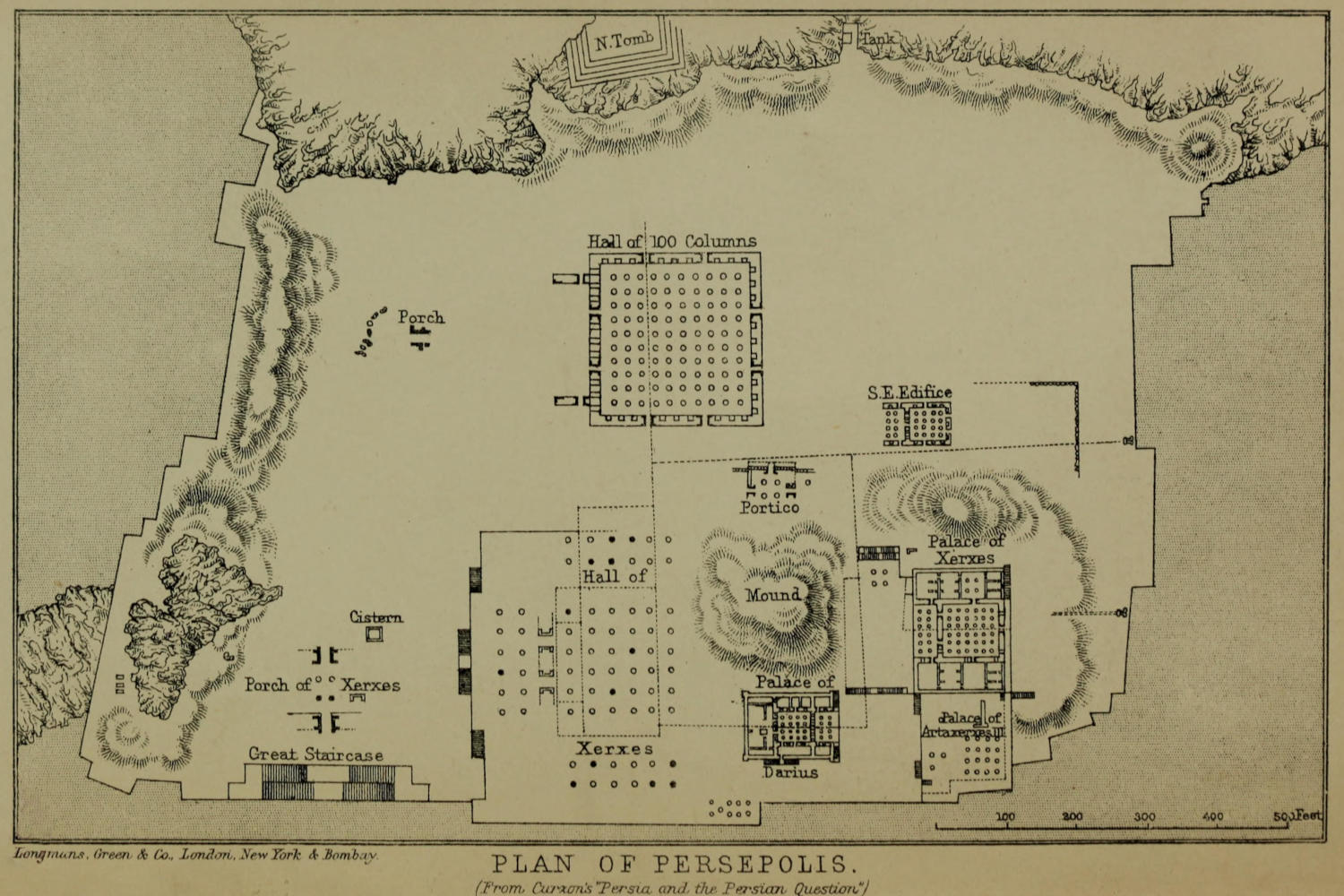
 ) and
the Zend letter for i gave him a fourth vowel. Similar
considerations led him to assign the values of ou w ii y
to another sign (𐏁), a conjecture that turned out to be
less happy than that of Tychsen, who accidentally hit
upon its correct value, s. Münter had now pointed
out six signs he thought expressed vowels (viz. 𐎠 e or a,
𐎹?, 𐎡 o, 𐎶 a,
 i, 𐏁 ou, &c.). The second he
dropped out of his alphabet, for after careful search
he could find no letter in any other alphabet to give
him a clue to its value. The fifth was not a genuine
letter; and of the four that remained two were, as he
surmised, vowels (Nos. 1 and 3). The other two were
both consonants. Only one of the former—the first,
a—was found to be correct; but it had already
been recognised by Tychsen. The other—the o—was
afterwards found to be i. He also identified seven
other signs with the consonants p, kh (two), r, r strong,
s and b, which he obtained by the simple process of
comparing them with other letters found in Zend,
Armenian and Georgian, to which they had ‘no small
similarity.’
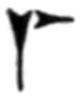 , and
r, letter No. 8), so that there remain thirty-two genuine
signs for which he has now found values. Several
signs are, however, allotted to express the same sound.
Thus he gives three signs for e (Nos. 3 [defective], 4
and 10) besides the sign for e or a which he
generally transliterates e. He also gives three signs
for o (Nos. 12, 16 and 23). It was afterwards found
that these signs, which he took to be synonymous, are
very far from being so: for example, not one of his
three signs for o has that value, being respectively i,
ch(a), and m(a). Indeed, among all the additions we are
now considering he only succeeded in arriving at two
correct values, 𐎳, f (No. 39) and 𐏃, a (No. 41), if
indeed the second may be allowed to pass. Its true
value is the aspirate h. But, as we shall afterwards
see, it takes an inherent a, and it is very commonly
used to express the sound ‘Ha,’ the vowel a being
altogether omitted. In an inquiry of this kind it is
necessary to admit approximate values as correct; and
in the present case the value allotted to this sign by
Grotefend ultimately led to the important identification
of the word ‘Achaemenian.’ Here the first syllable,
‘Ach,’ is represented by the two signs for h and kh;
and before it was known that the first letter had the
sound of ‘Ha’ it was a comparatively slight error to
drop the aspirate and set it down as a. We have
therefore added this letter to the number of Grotefend’s
correct discoveries. He also observed that the
word for ‘king’ is often represented by an ideogram
(𐏋) which, like the word, is subject to inflexions.
This discovery he, however, generously attributes to
Tychsen;
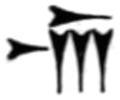 ) t and (
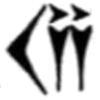 ) v, were both ascertained to be
defective, and he subsequently dropped them from his
alphabet. At this period, therefore, he admitted thirty-four
genuine signs and two defective. His alphabet
contained twenty-three correct values as opposed to
the thirteen of Grotefend and the sixteen of Burnouf.
It was made up of the
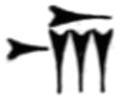 )
t, and (
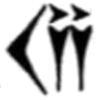 ) u, which he now rightly omits as defective
signs for 24 (𐎫) t and 36 (𐎢) u.
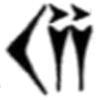 ) is defective.
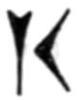 ) which with 44 (𐎦), in addition to the thirty-three
signs in Niebuhr’s list, made up the thirty-five
letters which constitute his alphabet.
 ) is
always found in conjunction with 31 (𐎴) n. Grotefend
pointed out long ago that the two signs 𐎴 ·
 replace
the word for ‘king’ and, whatever might be their
pronunciation, there was no doubt as to their signification.
 , tř