OUR FLAG. — CHAPTER I. — Company A, Halifax Light Infantry. — Company B, Standish Guards, of Plymouth. — Company C, Cambridge Light Infantry. — Company G, Assonet Light Infantry, of Freetown. — Company H, Samoset Guards, Plympton. — Company K, Bay State Light Infantry. — Company L, City Guards. — Third Regiment Infantry, Three Months’ Men. — CHAPTER II. — CHAPTER III. — FIELD AND STAFF. — NON-COMMISSIONED STAFF. — CHAPTER IV. — A Corrected Roster of Company A, Living and Dead, to October 1, 1903. — CHAPTER V. — Corrected Roster of Company B. — CHAPTER VI. — Corrected Roster of Company C. — CHAPTER VII. — Corrected Roster of Company D. — CHAPTER VIII. — History of Company L, Third Regiment, Massachusetts Volunteer Militia, afterwards Company E. — Corrected Roster of Company E to March 31, 1905. — CHAPTER IX. — Corrected Roster of Company F, New Bedford. — CHAPTER X. — Corrected Roster of Company G, New Bedford. — CHAPTER XI. — Corrected Roster of Company H, Third Regiment, Massachusetts Volunteer Militia. — CHAPTER XII. — Corrected Roster of Company I, Massachusetts Volunteer Militia. — CHAPTER XIII. — Corrected Roster of Company K. — CHAPTER XIV.
“’Twas eighteen hundred sixty one, April the twelfth at six,
Old Sumter’s gates were firmly barred, and water filled the ditch;
And the sentinel with martial tread, the relief expected soon,
When upon the air so calm and still, there came a cannon boom.
“Beat the long roll,” the Major cried, “bid every man fall in,
Secession’s work so long delayed, the Rebels now begin;
But just as true as the Old Flag does from the flagstaff fly,
We’ll show the Rebs true Yankee grit, we’ll whip them or we’ll die.”
Boom! boom! the cannon loud did roar, the shot flew thick and fast,
And many a shell of a hundred pounds close to Old Glory passed.
Said Anderson, “My noble men, such things should never be,
Those stars of light, those bars of gold are emblems of the free.”
“That flag, the glory of our land, should we but pull it down,
Would make our mothers weep for shame, and our sweethearts on us frown.”
And every man he loud did shout, “Hurrah! Hurrah! Hurrah!
No traitor’s hand shall touch that flag, or its glory ever mar!”
Our dear Old Flag, in darkest days, inspired the old war song,
“We’re coming Father Abraham, three hundred thousand strong.”
And when the mud of the Sacred Soil made weary soldiers lag,
Then new strength came to march again as we beheld the flag.
When on the field of Winchester, in the thickest of the fight,
The Stars and Stripes were seen aloft, it gave the soldiers might;
And when we all were driven back and thought we’d lost the day,
Then daring Sheridan came up, and unto us did say:
“Right about march, just follow me, I’m with you although late;
Fix bayonets, charge the Rebel lines, and all the ground retake.”
And every man, on foot, on horse, looked like a son of Mars,
As he shouted “Down the Rebel flag.” “Hurrah! the Stripes and Stars!”
At Gettysburg, our dear Old Flag was riddled by the shot
And men had fallen by the score, by roadside and in lot.
For three long days we fought the Rebs, repelling Pickett’s charge,
And the victory of the Old, Old Flag, did every heart enlarge.
When in our country’s darkest hour, our Grant was heard to say:
“Be true, my men, to the Old Flag, and you’ll shall see some day
That victory like the morning sun, will rise and on us shine,
For that Old Flag, so dear to me, I’ll fight upon this line.”
At Appomattox, in sixty five, we charged the Rebel lines,
And then in silence, there we stood waiting for further signs
Until we saw General Grant pass, in arm with General Lee,
For the Flag of Slavery had surrendered to the great Flag of the Free.
Then wave, Old Flag, wave evermore, our fathers fought for thee;
Thy very presence make us glad, as thy Stars and Stripes we see.
Thou art the sign of liberty, the glory of our land,
And long our institutions free, like bulwarks sure shall stand.
Sentinel of old, stand at thy post, and from the flagstaff fly;
For thee, and for thy honor bright, our comrades dared to die.
Receive the honors due to thee, and may we all be true
To the Stars and Stripes, our country’s flag: The Red, The White, The Blue.
History of the Third Regiment, Massachusetts
Volunteer Militia, 1861—Three Months’
Service.
“Pride of New England! Soul of our fathers!
Shrink we all craven-like, when the storm gathers?
What though the tempest be over us lowering,
Where’s the New Englander shamefully cowering?
Graves green and holy around us are lying,—
Free were the sleepers all, living and dying!
If we whispered the truth, whisper no longer;
Speak as the tempest does, sterner and stronger;
Still be the tones of truth louder and firmer,
Startling the haughty South with the deep murmur;
God and our charter’s right, freedom forever!
Truce with oppression, never, O, never!”
The Third Regiment, Massachusetts Volunteer
Infantry, as its number seems to indicate, claims
relationship with the earliest forces of the Commonwealth.
The claim is well sustained by the fact
that seven companies from Bristol and Plymouth
counties helped to compose the original regiment,
and became the nucleus of the Third Regiment
which served in the Civil War. These seven companies
were:
Organized in 1792, receiving its charter from John
Hancock, then Governor of Massachusetts. The officers
at that time were: Capt. Asa Thompson,
First Lieut. Cephus Washburn, Jr., Second Lieut.
Charles P. Lyon.
Captain Thompson was a mighty man of valor, of
gigantic proportions, being six feet and seven inches
in height in normal condition, and eight feet with
his captain’s cap on. On parade and muster this
company attracted attention, not only by the Saul-like
appearance of its captain, but also by the large
bearskin caps worn by the officers and men. Tradition
says that when Captain Thompson marched
his army across South Boston bridge, throngs of
men, women, and children collected to see “the
giant” and his men, and not a few trembled with
fear lest the bridge should not be able to support
the captain and his great company.
When called into service in 1861 this company
was officered by Capt. Joseph S. Harlow, of Middleboro;
First Lieut. Cephus Washburn, Jr., of Kingston;
Second Lieut. Charles P. Lyon, of Halifax.
At the opening of the War this company was officered
by Capt. C. C. Doten, of Plymouth; First
Lieut. Otis Rogers, of Plymouth; Second Lieut.
William B. Alexander, of Boston. Officers and men,
69.
Capt. James P. Richardson; First Lieut. Samuel
E. Chamberlain; Second Lieut. Edward F.
Richardson. Officers and men, 97.
Organized in 1850. Capt. John W. Marble; First
Lieut. Humphrey A. Francis; Second Lieut. John
M. Dean. Officers and men, 24.
On entering the three months’ service this company
had as its officers: Capt. Lucian L. Perkins;
First Lieut. Oscar E. Washburn, of Plympton;
Second Lieut. Southworth, of Middleboro. Officers
and men, 56.
Capt. William S. McFarlin, of South Carver;
First Lieut. John Dunham, of North Carver; Second
Lieut. John L. Porter, of New Bedford. Officers
and men, 62.
Organized in 1853. Capt. Timothy Ingraham, of
New Bedford; First Lieut. James Barton, of New
Bedford; Second Lieut. Austin S. Cushman, of New
Bedford. Officers and men, 78.
[Furnished by Major Cushman.]
This regiment was under the command of Col.
D. W. Wardrop, and was composed of troops residing
in localities more widely separated from their
commander’s headquarters and from Boston than
any other regiment in the State, and therefore in
any comparisons which may be made with other
troops regarding the relative rapidity of their mobilization
in responding to the President’s call for
troops, this fact becomes important.
It was on the afternoon of Monday, April 15th,
that Special Order, No. 14, was issued by Governor
Andrew and dispatched by mail, and a special messenger
sent to the respective colonels of the Third,
Fourth, Fifth, Sixth, and Eighth Regiments. The
colonel of the Third resided in New Bedford, a distance
of fifty-six miles from Boston; that of the
Fourth in Quincy, eleven miles; that of the Fifth in
Medford, five miles; that of the Sixth in Pepperell,
about thirty-seven miles, and that of the Eighth in
Lynn, eleven miles. The order was received by Colonel
Wardrop the same evening, and at once promulgated
to Company L, and some members of his staff
were dispatched to convey his orders to the other
companies. Horace Scott, President of the Fairhaven
Railroad, gratuitously tendered a special
train as far as Tremont for the messengers going to
Halifax, Carver, Plympton, and Plymouth. The last
named place was fifty-eight miles from New Bedford,
not accessible at that time of night by railroad,
nor were the other places above named, yet
Company A received its orders at two A. M., April
16th, and Company B received its orders at three
A. M., April 16th, and both companies reported in
Boston at noon of the same day. It has not been
possible to ascertain when Company G at Freetown
received its orders, but it is credited with having
reported for duty “promptly.” The same may be
said of Company H, of Plympton, and Company K,
of Carver. The Freetown company had to travel
forty-eight miles by rail, the Plympton and Carver
companies thirty miles, and the Halifax company
twenty-eight miles, after leaving their homes scattered
miles apart and distant from the stations. It
is surprising that with the limited railroad facilities
of those days and without modern means of intercommunication
by telegraph or telephone, in the
midst of a cold spring northeaster, over roads almost
impassible with mud and thawing snow, that
the orders should have been so rapidly transmitted
and so promptly obeyed.
Col. David W. Wardrop was proficient in military
tactics. He had first served as lance corporal in
the old Boston Fusileers, and afterwards belonged
to the City Guards of New Bedford. Some credited
him with having a West Point education. At all
events, he was in his element when performing any
military duty, and inspired his men with confidence
in his military ability. He was prompt, courageous,
and energetic, but his regiment was small
and widely scattered over two counties. At the
time of promulgating Special Orders, No. 14, it consisted
of but six companies, yet he strove with the
governor for the honor of being the first regiment
to leave the State.
Captain Richardson’s company from Cambridge
was attached to the regiment April 16th as Company
C, and on May 9th at Fortress Monroe Captain
Chipman’s company from Sandwich, Capt.
Charles C. Doten’s company from Plymouth, Capt.
W. D. Chamberlain’s company from Lynn, and
Capt. J. K. Tyler’s company from Boston, all three
years’ companies, were temporarily assigned to the
Third Regiment, and designated as Companies D,
E, I, and M, respectively.
The original companies, including Company C,
embarked on the steamer S. R. Spaulding April
17th, from Central Wharf, in the early evening and
dropped down the harbor to await supplies. She
sailed under sealed orders the next forenoon, to find
when nine miles out that her destination was Fortress
Monroe, which was reached at eleven A. M.,
Saturday, April 20th, after a voyage of forty-seven
and one-half hours.
That afternoon the regiment embarked on the
gunboat Pawnee, and at five o’clock proceeded to
Gosport Navy Yard under orders from Washington
to destroy the dry dock construction houses and all
vessels and munitions of war which could not be
secured against seizure by the rebels. As they approached
their destination in the darkness the vessels
there were uncertain whether the unexpected
troops were friends or foes of the Union, and so the
Pawnee and all on board were for a while exposed
to imminent peril of instant destruction by a broadside
from the Pennsylvania and a raking fire from
the Cumberland, whose crews and some of whose
officers remained loyal to the Union, and stood with
shotted guns and lanyards in hand breathlessly
awaiting some sign by which the character of the
mission of the approaching troops could be assured.
Finally the repeated hail of the Pawnee’s boatswain
convinced the loyal sailors that loyal troops had
come to their support, and then the night air re-echoed
with enthusiastic shouts and added volume
to the inspiring strains of the “Star Spangled Banner,”
which was played by the splendid band on the
quarter-deck of the Pennsylvania.
Time has satisfied the public that the place could
have been held and the enormous loss avoided,
which resulted from the attempt at destruction. It
speaks well for the Third that its colonel was of
that opinion at the time and volunteered to hold it
with his small force until re-enforced. Commodore
Paulding, however, felt compelled by his orders to
decide otherwise, and soon buildings and ships were
aflame as the various details proceeded with their
several tasks. Even the detail taken from Company
B to assist in mining the dry dock were driven
from their work before its entire accomplishment
by the extreme heat. Two companies, A and B,
were on guard as a reserve, as it was known that
two rebel companies were at Norfolk. Other details
threw cutlasses, sabres, shot and shell into the
river, and every man worked energetically at his allotted
task in the light of the great conflagration
until he was aboard the Pawnee for return to Fortress
Monroe, where she arrived Sunday, April 21st,
at six A. M. Thus the Third had been the first
northern volunteer troop to land aggressively on
Southern soil.
The duties at Fortress Monroe were very arduous
and fatiguing, and consisted in strengthening its
defences and unloading, handling, and storing the
enormous amount of provisions and other supplies
for troops, which it was foreseen must be concentrated
there and in that vicinity. The regiment
won the favor of the regulars, both officers and men,
by its excellent discipline, strict attention paid to
the details of guard duty and its precision in infantry
drill. Colonel Dimick, the commandant,
complimented Colonel Wardrop on commanding
such a regiment, though the guard at sea battery
had fired at the boat in which Colonel Dimick was
returning from the Minnesota and wounded the coxswain
near whom Colonel Dimick was seated, for
not answering his hail the night before.
As soon as contrabands came into our lines in
sufficient numbers (and Company G has the honor
of turning in the first three, who applied for protection
to Charles R. Haskins, of Myricksville, while
on picket), they were assigned to the heavier labors
of the quartermaster’s department. The regiment
was thus enabled to pay more attention to its ordinary
military duties. May 13th two companies and
a fieldpiece held Hampton bridge, and May 24th
Companies B and M
made a reconnoissance with General Butler and took two prisoners. June 8th
Companies B and C with loaded muskets suppressed
insubordination in the Naval Brigade. They were
finally relieved by Company E June 17th.
July 1st the regiment was ordered to occupy
Hampton during the remainder of its term, and
Companies A, B, and C, constituted the main guard.
Here during the remainder of its term it gained experience
in entrenching with the thermometer at 114
degrees, and scouting with the thermometer one degree
higher. On one occasion (July 5th) Companies
L, B, and E, with a howitzer battery, were
stationed on picket all night and an attack was expected.
July 14th a private of Company E was
shot and beaten, but not killed, when outside our
lines. On July 16th the regiment marched to Fortress
Monroe and embarked on the steamer Cambridge
for Boston. On the 19th touched at Long
Wharf and was ordered into camp at Long Island.
On the 22d the regiment was mustered out of the
service of the United States. The next day it
landed at Boston, marched to the Common amid
great enthusiasm, and was dismissed. It had
never failed to discharge its duty.
History of the Third Regiment, Massachusetts
Volunteer Militia—Nine Months’ Service in
North Carolina, 1862-3.
This Regiment was, in fact, what its name represents,
Massachusetts Volunteer Militia; not one
drafted man was in its ranks. It was made up almost
entirely of men from Bristol and Plymouth
counties; young men who were raised in good
homes and educated in the schools of Massachusetts.
Quite a number were attending either high
schools, seminaries, or colleges, or were graduates
of the same. When the call was made for three
hundred thousand men they left home, not for what
they would get, but for what they would save; they
went not for pay, but from principle; they went not
because they were spoiling for a fight, but to save
the country which they believed would be spoiled
should they stay at home. It should be remembered
that at this time there was no large bounties paid
to recruits; indeed, few towns paid but a small
bounty, and many towns paid no bounty to induce
men to go to war; therefore, those who enlisted in
1862 enlisted from patriotic principles.
It is fair to say that the Third Regiment was composed
of as good men as ever shouldered a musket
or wore a sword. Many of the officers had seen service
in the three months’ regiments and in the State
militia, and therefore were the better prepared to
do efficient service in the nine months’ campaign.
Both officers and men were loyal soldiers, true patriots,
ever ready to serve their country and defend
Old Glory. So far as known each officer and private
always responded to orders, and faithfully performed
the duties confided to him, whether pleasant
and easy, or hazardous and hard. Each went
when and where ordered, and did his duties without
grumbling or “showing the white feather.” If
at any time one was afraid he had the good sense
to keep it to himself. If any one felt that he was selected
to fill a position of unusual danger, he was
wise enough to keep his own counsel, do his duty to
the best of his ability, and acquit himself like a
man.
This regiment was recruited in the months of
August and September, 1862, and as soon as each
company was filled it went into Camp Joe Hooker.
This camp, situated in the town of Lakeville, some
three miles south of the village of Middleboro, occupied
a large field near a beautiful pond, which
was accessible to all who wished to enjoy the luxury
of a daily bath. The camp was ample for forty
companies to drill at one time. Here the companies
were drilled in the setting-up drill, company
movements, and practical guard duty. On the 23d
of September the companies were mustered into the
United States service by a regular army officer, and
soon after were furloughed for one week, that they
might visit their friends before going to the front.
All but two men returned within the time of their
furlough, one of whom deserted the service; the
other was returned by the provost guard after the
regiment reached Newbern, N. C.
October 22d the regiment left Camp Joe Hooker
and marched to the Lakeville depot, where they
took cars for Boston. Marching to Long Wharf the
right wing embarked on the steam transport Merrimac,
and the left on the steamer Mississippi, for
Newbern. Each of these steamers had on board
one other full regiment, so that each steamer was
taking out fifteen hundred men. One has only to
imagine the crowded condition of the ships, when
nearly the whole number were on deck at the same
time, yet during the voyage there were no rows, no
curse words, and no
swaggering braggadocio. The sail down Boston Bay and around Cape Cod was
anything but agreeable; many of the boys unwillingly
paid their respects to Old Neptune. The remainder
of the voyage was over a sea as smooth as
a mill pond.
Captain Baxter, of Hyannis, captain of the Merrimac,
was the right man for the place he occupied.
A born commander, he easily controlled not only his
own officers and crew, but all on shipboard. There
was no want that he could not supply. Was there
contention as to which companies should first be
served with cooked rations? He could determine
to the satisfaction of all. Was there a clamor for
fresh water? He would say, “Boys, I am condensing
sixteen hundred gallons of water for you every
twenty-four hours, and here you are shouting as if
you were in an old-fashioned Methodist meeting,”
and the boys would answer, “Yes, captain, but the
water is too hot to drink,” and he would reply, “I
have on board fourteen hundred barrels of pure Cochituate
water, which I brought for you, call one of
your officers and break out as much as you please.”
Then taking his violin he would play and sing some
home song which would pacify every discordant element
and make everyone feel happy.
Early on the morning of October 22d the shores
of North Carolina were seen like a cloud rising
from the ocean, and Captain Baxter remarked,
“There is the land I expected to make at six
o’clock this morning.” When within three miles
of Beaufort harbor we encountered a strong southeast
gale and it was with difficulty that the pilot
boarded our ship. As it was his boat was smashed
into pieces. When entering the harbor we were
shown Fort Macon, which General Burnside in his
early campaign had taken, and which Federal
troops now occupied. At Morehead City we embarked
on flat open cars for Newbern, and were
shown the early battle grounds where General
Burnside contested his right to enter and hold Newbern.
Leaving the cars at the depot the Third Regiment
marched to its camping ground on the east bank of
the Neuse River, and near the city of Newbern.
Here the regiment was given a hearty welcome by
Captain Hart, of the Twenty-third Regiment,
Massachusetts Volunteer Militia. This officer had
erected tents and put the camp in fine order for the
Third Regiment. Colonel Lee, also of the Twenty-seventh,
extended greetings. Later on the Third
was for a short time attached to his brigade, until
transferred to the brigade of Col. J. Jourdan, where
it continued during its term of service.
Camp equipage and arms were received in a short
time and the regiment was drilled several hours
daily. Nearly all the drilling was the manual of
arms, battalion and brigade movements. The arms
distributed to the Third were not up to the standard.
They were said to be Austrian rifle muskets
captured from a blockade runner. Great improvements
were made on them by the regimental and
company armorers; yet the Confederate loss promised
little gain to the Union forces, except in the
moral force of showing that the regiment had arms
and was prepared to use them at close quarters, at
least when occasion required. These arms were
duly condemned by an inspecting officer and efforts
made to exchange them for serviceable ones, but
without success.
A variety of duties attested the intelligence and
endurance of the regiment as a whole, and of its
companies on detached service. October 30th Companies
A and B were detached for picket duty at
Newport Barracks, where they remained for more
than a month, during which time they with a platoon
of cavalry and a battery made an expedition
to Peltier’s Mills, and for the first time learned the
superiority of army shoes on the march in contrast
to stylish boots.
Picket duty taught the boys how to find their own
beef and pork, and occasionally honey, which
abounded in that part of North Carolina. In garrison
duty, reconnoissances, engineering work, exhausting
marches sometimes with the thermometer
ranging over one hundred in the shade and the dust
inches deep, and on the field of battle, the skill and
bravery of the regiment was well displayed. One
company sent to build a bridge over Bachelor’s
Creek were so efficient in construction work that
they finished their work and returned to camp in
two days, notwithstanding it was supposed to take
one company a month to accomplish the job. Many
of the men of that company were bridge builders
before the war.
Thirty men sent to do picket duty at Creek No. 1
held that station for three months, although they
were constantly in fear of being surprised, and
nearly all the time slept with their muskets beside
them.
November 11th our pickets at Deep Gully
were attacked and the Third Regiment were under arms
all night. November 30th Company I was detailed
for duty at Plymouth and Elizabeth City, N. C.,
where it did garrison duty five months, and suffered
special casualties during a siege by the Confederates,
losing in killed, wounded, and prisoners
nearly thirty men. (See history of Company I.)
At different times nearly every company in the regiment
were detailed for picket or special duty. (See
Company history.) During the month of December,
1862, the Third Regiment rendered good service in
connection with the expedition made by General
Foster into the interior of North Carolina, the object
being to cut the Confederate means of supplies
by the Wilmington and Goldsboro railroad.
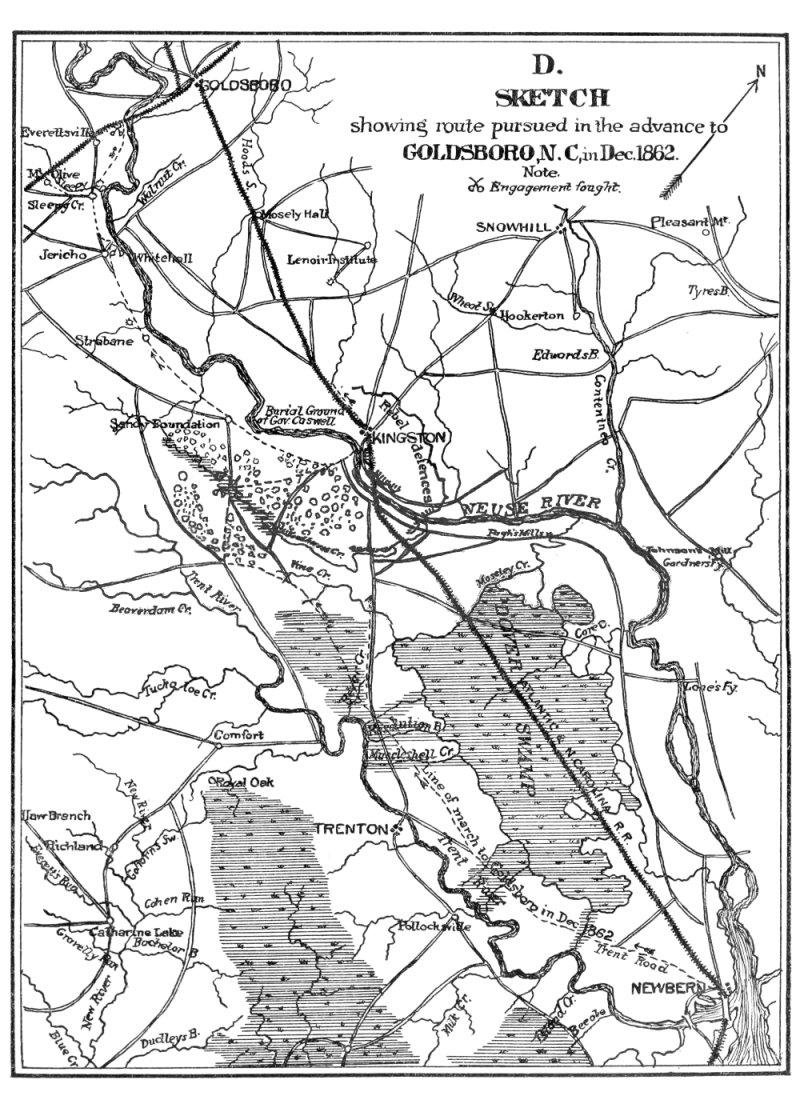
The following is a verbatim report of General
Foster to the War Department. The accompanying
sketch will help the reader to understand the
march of the expedition and the battles fought.
From the report of Maj.-Gen. J. G. Foster, to the
Joint Congressional Committee on the Conduct of
the War. Copied from the report of that Committee,
printed by the Government, supplement, part
2, page 11, of General Foster’s report:
“Expedition to Goldsboro, North Carolina,
in December, 1862.”
“General Burnside having moved the army of the
Potomac towards the Rappahannock with the intention
of crossing, I was ordered by Major-General
Halleck, general-in-chief of the armies of the United
States, to advance with my whole available force
and destroy the railroad bridge at Goldsboro, and
as much of the track as possible; the movement to
be made simultaneous with the crossing at Fredericksburg.
Accordingly, having been reinforced by
one brigade from Major-General Dix’s corps at Fortress
Monroe, I advanced from Newbern on the 12th
of December, 1862, with four brigades and forty
pieces of artillery, in all about twelve thousand
men. After removing the obstructions placed in
the roads of the retreating rebels, I pushed a cavalry
force directly toward Kinston, which surprised
the main picket guard of the enemy and drove it in.
Under cover of this feint the main body was moved
rapidly by the left so as to strike Southwest Creek
at the most westerly of the four bridges that cross it.
As anticipated this bridge was found weakly guarded.
While occupying this guard in front a regiment
was thrown across the creek on a milldam, which
by a vigorous and unexpected charge captured the
artillery guarding the bridge, and thus opened it to
our advance. This was late at night. At daylight
on the following morning we advanced upon Kinston.
The enemy was encountered in a chosen position
on the south side of the Neuse River, where the
road crossed a swamp closely filled with thick undergrowth.
The enemy occupied a ridge just beyond
the swamp. For over two hours our attack
failed to dislodge the enemy. Finally, after strong
demonstrations on both flanks, a decisive effort was
made in the centre, in which one of my best regiments,
the Tenth Connecticut Volunteers, gallantly
charged through the enemy’s line and seized and
held the bridge over the Neuse, in the rear. The enemy
then broke. A part retreated rapidly up the
south bank of the Neuse; the remainder were captured.
We crossed the river at once and occupied
Kinston. General Evans rapidly retreated, with
the garrison of the defences of the town, up the
north bank of the river, closely pursued by our cavalry.
We captured during the day seven hundred
prisoners, nine pieces of artillery, four heavy guns,
and a large quantity of ammunition, which being
stored in houses in the town, we could only partially
destroy without destroying the town. The information
obtained at Kinston went to show that General
Burnside had been repulsed at Fredericksburg;
that General Lee had telegraphed Gen. G. W.
Smith, at Goldsboro; that he could send him thirty
thousand men, if necessary, to resist our advance;
and that strong defences had been constructed at
Mosely Hall and other points where the road
crosses difficult streams. Believing, however, that
by deceiving the enemy and rapid marching, the object
of the expedition could be attained, I determined
to go on. As a feint, the army was pushed
out a few miles on the Goldsboro road and encamped.
At daylight it retraced its steps, crossed
the river, burnt the bridge behind it, and rapidly
marched up the south bank. At Whitehall a sharp
affair took place. A rebel gunboat was being built
at that point and a considerable force was there to
defend it and prevent our crossing. Every attempt
to cross infantry to burn the boat failed. All the
artillery was then opened and soon completely riddled
the vessel. It served also to give the impression
that an attempt to force a crossing was made.
Leaving a few men to keep up that impression, the
main body marched rapidly up the river and
reached the railroad bridge as the smoke was seen
ascending from the Mount Olive station, which the
cavalry had destroyed. The enemy was not
prepared for us; their force was scattered; large
numbers had been detached towards Whitehall and
Kinston. The brigade on the south side at the
bridge was soon whipped and driven from the field.
The bridge was burned despite the efforts of the
force collecting on the north bank; and before any
considerable concentration could be made to disturb
us, we had destroyed several miles of the track.
As the column moved off on its return, having accomplished
its purpose, a brigade made an attack
on our rear guard, which repulsed it with severe
loss. After that no attack was made and the column
returned quietly to Newbern. The force in the
department of North Carolina was now increased
and constituted by the President, the Eighteenth
Army Corps, under my command.”
While General Foster’s report is a most excellent
one, still it must be remembered that it is a report
made from the standpoint of the whole expedition,
and deals little with particulars only as seen in battles.
It remains for the writer of the Third Regiment
to state the part taken by that regiment in
the expedition.
On Dec. 11, 1862, at six A. M., in a dense fog, the
Third Regiment formed line on the left of General
Lee’s brigade, the third brigade in the column. No
secrets were withheld from the boys. Everyone
knew that a march was before them, that fighting
was expected and hardships were anticipated, yet
every officer and man cheerfully responded to the
order, “March!”
The obstacles mentioned by General Foster in his
report were great trees felled across the road for
several hundred yards, and it was impossible to
pass until such obstacles were removed. This was
soon accomplished by our “Black Pioneer Brigade.”
Another obstacle was that nearly every bridge
which crossed creeks and rivers was guarded by
rebel pickets, who fired the bridges just before they
retreated, making it impossible for either infantry
or artillery to pass until the bridges were rebuilt,
save in a few instances where the rivers were fordable.
Over some parts of the march great turpentine
trees were on fire, which falling across the road
made marching that way quite dangerous; yet
through fire and water the expedition made twelve
miles the first day, notwithstanding our skirmishers
were in constant action with the rebel pickets.
Never were men more glad than the Third Regiment
when ordered to bivouac for the night, and
never was mattress or feather bed more acceptable
than “Mother Earth” to the boys that night. Both
fires and loud talking were forbidden. All save the
men on picket duty slept; slept like tired children.
Friday the Third was detailed to guard the baggage
train, which it faithfully did until twelve at
night. All this day our advance were face to face
with the rebel pickets, which in some instances
showed stubborn resistance; in others but a semblance
of resistance, but always burned the bridges
they were defending before retiring towards Kinston.
These men seemed to be possessed more with
the spirit of burning than with the spirit of patriotism.
Consulting the sketch map you will find that
when the column had passed Muscleshell Creek and
Resolution Bayou the army had taken the Trent
road (the most direct road from Newbern to Kinston)
until near Bear Creek. It was from this point
that General Foster “pushed a cavalry force directly
toward Kinston, which surprised the main
picket guard of the enemy and drove it in, into its
fortified position south of Kinston. Under cover
of this feint the main body was moved rapidly by
the left so as to strike Southwest Creek at the most
westerly of the four bridges that cross it. As anticipated
this bridge was found weakly guarded.
While occupying this guard in front a regiment
was thrown across the creek on a milldam, which
by a vigorous and unexpected charge captured the
artillery guarding the bridge, and thus opened it to
our advance.” It has been learned on good authority
that the regiment which made the above mentioned
charge was the Ninth New Jersey. This
bit of information can be found in the Adjutant-General’s
report of Massachusetts in the report of
the Twenty-third Massachusetts Regiment and
reads like this: “The Ninth New Jersey crossed
through the old mill, charged the enemy, captured
two pieces of artillery, and the rebels retreated.”
General Foster says, “this was late at night.” “At
daylight the following morning (Sunday) we advanced
upon Kinston.” It should be remembered
that the column after passing Wine Creek abandoned
the main road leading to Kinston, took an
unfrequented turpentine road through the woods,
and came upon the right flank of the Confederate
army, which was in line on the opposite side of the
swamp, where their batteries were posted to resist
our advance on Kinston. The road through this
swamp was as straight as an arrow and covered
with water nearly a foot deep. The position of the
Third Regiment on the opposite side of the swamp
was near the hospital and the sight of the dead and
wounded was anything but reassuring, as they were
carried to the rear; yet when the order was given
“Forward!” not a man flinched, and the Third Regiment
went through the swamp on the double-quick.
The first brigade having turned the rebels’ right,
and captured a battery and several hundred prisoners
there was little left for the Third to do but to
join in the shout of victory, view the prisoners,
sympathize with the wounded in the Old Baptist
Church, view the dead in the woods, and march into
Kinston. As we marched over the beautiful bridge
which spans the Neuse River, we saw the wise generalship
of General Foster in coming upon Kinston
through the swamp instead of the main road, where
the rebels had erected earthworks and mounted
guns, which would command the road for more than
two miles.
Our place of bivouac in Kinston was on the park,
which was enclosed by a rail fence, five rails high.
Captain Grant, of Company C, Third Regiment, being
officer of the day, gave strict orders that only
the topmost rails should be taken. This order was
so strictly obeyed that in the morning not a vestige
of the fence remained; each man had taken only the
top rail.
Words fail to describe the things seen on that
park the next morning, feather and straw beds, mattresses,
pillows, sheets, and bed clothes of nearly all
kinds and description, china tea-sets, bottles of perfumery,
and almost everything in the housekeeping
line. Tobacco and cigars could be had without the
asking. Feathers were seen all over the ground,
indicating that someone had been engaged in the
poultry business on an immense scale during the
night.
The bugle sounded very early and the command
recrossed the bridge and resumed the march towards
Goldsboro. An old colored woman standing
by the roadside raised her hands as we were passing
and shouted, “You honeys of Lincoln’s army
need fear nothing from nobody between here and
Richmond! De good Lawd bless you all!”
At Whitehall we again encountered the Confederate
forces, which General Foster handsomely outwitted.
He gave them the impression that his
whole force was engaged, while the fact was that
only a few regiments with nearly all his batteries
were in action; the bulk of the command were pushing
on toward Goldsboro. Failing to find any way
for the infantry to cross the river and burn the gunboat
in the process of building, orders were given
for all the batteries to concentrate their fire on the
gunboat, which was soon destroyed. A few men
were left to keep up the impression that it was General
Foster’s purpose to cross the river, the main
army marching rapidly on toward Goldsboro.
At Everettsville we again came upon the rebel
pickets, who fled without firing a gun. Shells from
our battery hastened their retreat toward the railroad
bridge. This they crossed and joined the main
force, which so far as we could learn were in the
woods near the railroad. After shelling the woods
for nearly three hours, the Third Regiment was ordered
to take position near the Wilmington railroad
and parallel with it. Here it remained until a
railroad monitor was destroyed by our batteries
and the railroad bridge burned; then we were ordered
to stack arms and proceed to tear up the
track and burn the ties. This order was executed
with such vigor that in less than one hour three
miles of ties were on fire. Had the rebels not lost
their heads they could have captured the Third
Regiment, for it was without arms. As it was,
Captain Marble, of Company A, barely escaped being
captured by a rebel picket post in the woods,
not a hundred yards from the railroad.
After executing its orders the regiment was ordered
to its arms and marched back over the hill.
While here it was reported that the enemy was advancing
with a flag of truce and a company of cavalry
went to receive it. Judge our surprise when
it was fired upon by a rebel brigade, ambushed on
the opposite side of the railroad. Immediately the
brigade crossed the railroad and charged on Morrison’s
and Belger’s batteries. At this time the
writer was standing near Captain Belger and heard
that officer say, “There they come, now we will have
some fun,” and, without waiting for orders from
General Lee, the commander of the only brigade
then on the field (the so-called rear guard), Captain
Belger gave the order, “Action front, double shotted
canister! Load! Aim! Fire!” At this time the enemy
were within two hundred yards of his guns and
the Third Regiment was supporting this and Morrison’s
Battery, with their two batteries firing upon
the advancing brigade. I need not say that they
were long in wiping it out. Two other brigades
which charged on the left centre of our brigade
were soon driven back in disorder.
It is supposed that seeing Morrison’s and Belger’s
batteries still on the field, they thought it a
fine thing to capture those two popular batteries;
it being quite dark they did not notice that these
batteries were supported by infantry. Moreover,
they had opened a mill gate, which created a torrent
through which the batteries must pass in going
from the field, but they were too badly punished
to follow out their plans. When the Third came to
the stream they found it a roaring torrent; yet
through the icy cold water they went, and when
the whole brigade with the batteries were over, we
were only too glad to be told that we would have to
march ten miles before bivouacking for the night.
At nine o’clock we reached the main army and laid
down in our frozen clothes until the following
morning, when we began our march toward Newbern.
We reached Newbern without molestation
on the twenty-first day of December, having been
absent eleven days, and having marched over one
hundred and fifty miles.
In the engagements had the only casualties suffered
by the Third as reported, were six wounded.
By special order of General Foster the names of
“Kinston,” “Whitehall,” and “Goldsboro” were inscribed
upon the regimental flag.
December 30th the Third Regiment was attached
to General Heckman’s brigade in anticipation of going
further south, but when inspected by Captain
Abel, of General Heckman’s staff, the arms were
found to be of such poor quality that they were for
the second time condemned, and failing to get them
replaced by good arms, General Heckman sent the
following communication to Colonel Richmond:
To Colonel S. P. Richmond, Commanding Third Regiment,
M. V. M., Headquarters First Brigade, Nagle’s Division,
Newbern, N. C., Jan. 12, 1863.
Colonel: In the report of my Assistant Adjutant-General
who inspected your regiment last muster, the arms you now
have were condemned. I have made every effort since to have
the arms changed to retain you in my brigade, but time would
not permit and another regiment has been assigned.
Accept my regrets that your regiment was not in condition
to remain (as regards equipments). The soldierly appearance
and conduct of your officers have made a favorable impression,
and I part with you with regret.
Very respectfully yours,
C. A. HECKMAN,
Brigadier-General Commanding First Brigade,
Nagle’s Division, Eighteenth Army Corps.
General Foster says, “The Third Regiment always
obeys orders and performs all its duties promptly
and without grumbling.” General Prince says,
“The Third Massachusetts Regiment and its commander
can be trusted with important duties with
a certainty that they will be performed promptly
and well.” Colonel Jourdan says, “The Third Regiment
is always ready for duty.”
On January 28th the regiment moved to Camp
Jourdan, near Fort Totten. This location was not
a desirable one; neither was the ground in a condition
for the dwelling place of men. It was considered
a very unhealthy locality, but it was one of the
most important points in the defences of Newbern.
The first thing done was the removal of more than
five hundred cords of the refuse from stables,
dumped there. Many ditches were made, the camp
graded and trees planted until the medical director
pronounced it one of the cleanest, prettiest, and
most healthy camps near Newbern, and he also
made a report to that effect, complimenting the regimental
commander and medical staff highly.
March 6th the regiment was ordered to go with
General Prince’s division on an expedition into
Jones and Onslow counties, where they remained
five days. The Third with other troops under command
of Colonel Richmond was twice detailed for
important detached service, and received the thanks
of General Prince for the able manner in which the
duty was performed. Several hundred prisoners
were taken and brought to Newbern. While the
men were quite affable, the officers were very sullen
and did not care to talk with “Yankee mudsills.”
In the attack at Deep Gully, March 14th, and also
on Fort Anderson, on the opposite side of the
Neuse, the Third were under marching orders until
the next day at one P. M., and then went
on a reconnoissance
to Pollocksville, returning to camp on the
evening of the 16th in the rain, with the mud more
than a foot deep. So muddy were the roads that
the regiment was eight hours marching ten miles.
On the 17th Companies A, B, K, and H were ordered
to march to Deep Gully for picket duty,
where they remained eight days. They were relieved
by the One Hundred and Fifty-eighth New
York Regiment, and marched back to Newbern.
From April 2d on until the time of leaving this
department (except when on expeditions), the
Third Regiment furnished a detail of one hundred
and fifty men daily for intrenchment work.
April 5th orders were received to march to Foster’s
Wharf with three days’ rations. The regiment
was there on time, expecting to go to Washington,
N. C., but at six P. M., orders were received from
General Foster to go back to camp.
April 7th at six P. M. orders were received to
march immediately with three days’ rations, and
the regiment proceeded to Foster’s Wharf, were
transported across the Neuse River, and bivouacked
for the night. The next day we joined a column
commanded by General Spinola, and made a forced
march to Blount’s Creek, rear of Washington, to attempt
to break the siege and relieve General Foster,
who was there at the time. At the point of attack
it was found that the rebels occupied a strong position
on a hill, the only approach being a narrow defile
with heavy woods on either side. These conditions
at the outset forbade hope of success. An engagement
was made, the Third taking part in the
movement, but they were met by so fierce a fire from
the rebel batteries on the hill that it was thought
expedient to retire. Captain Belger’s horse was
shot under him, and he was severely wounded, yet
as he passed Colonel Richmond he said, “Give it to
them, Colonel, we’ll pay them off for this.” Later
we were informed that the rebels, believing that the
Yankees would play some Yankee trick on them, left
their position from fear of a flank movement. Of
one thing we were assured, the siege of Washington
was raised, and General
Foster returned to Newbern.
This expedition was regarded as the most
adventurous and exhausting of any in which the
Third participated during its term of service. More
than thirty miles were covered by a hurried march
and the battle fought on the same day. So exhausted
were the men that several had to be assisted
to the place of bivouac for the night.
April 13th Company D was sent on an expedition
by steamer, forty miles down the Neuse River, to explore
the opposite shore. On leaving, General Foster
said, “I want you to go down the river on a
pleasure trip; it may be, however, that you will find
other than pleasure somewhere.” The company
obeyed orders, but finding no rebels, it returned the
following night.
April 16th the Third Regiment received orders to
march with a column under General Prince to Core
Creek, where it remained six days, and was engaged
in several skirmishes with the enemy. It was this
movement combined with another column on the opposite
side of the Neuse River, which caused the
rebels to evacuate their positions in front of Washington,
North Carolina, thereby relieving the Forty-fourth
Massachusetts Volunteer Militia from their
uncomfortable position.
May 11th four companies were detailed for picket
duty at Deep Gully, where they remained ten days.
May 23d orders were received at eight P. M. to
march immediately to a certain point near Batchelder’s
Creek, and await orders. Arriving at the
point indicated they rested on arms. This hurried
movement was made in consequence of our pickets
being driven in, and Colonel Jones, commander of
the Fifty-eighth Pennsylvania, being killed during
the engagement. The enemy having retired during
the night, the regiment was ordered back to Newbern.
This march was made through the dust six
inches deep, and with the thermometer one hundred
and ten degrees in the shade. We arrived in
Newbern at twelve o’clock, a tired, besmeared, dust
covered lot of soldiers.
May 31st four companies marched to Deep Gully
for picket duty, but being relieved by a detachment
from Lee’s brigade, they returned to Newbern the
same evening.
Newbern was twice threatened with assault, apparently
for the purpose of retaking the city. The
first occurred on the evening of Nov. 11, 1862, while
the main army was absent on a reconnoitring
march to Tarboro, in the northern part of the state,
leaving the Third almost alone in the defence of the
city. The regiment was under arms all night, and
re-enforcements were brought up from Newport. The
alarm was caused by a fierce attack made upon the
pickets at Deep Gully, a few miles out on the Trent
road, one man being killed and several wounded.
The regiments that had been absent for nearly two
weeks were now returning and the rebels withdrew
the following day.
The second assault was made on March 14, 1863,
operating from different directions; one by the way
of the Trent road, the other approaching from
across the Neuse River. The latter division was
vigorously handled by the garrison at Fort Anderson,
on the north bank of the river, and by gunboats,
and finally repulsed. Many shells were
thrown into the city, some of which tore up the
ground occupied by the Third Regiment but a little
time before as their camp. A flag of truce was
sent asking the surrender of the city, but General
Foster’s answer was, “If you want Newbern, come
and take it.” These assaults seemed to be more
like “feelers” of the Union strength than any serious
menace to Newbern.
Various places were garrisoned and much picket
duty done by the Third Regiment, besides the services
already mentioned, which proved the fidelity
of both officers and men, and the readiness of the
regiment to measure up at all times to the trusts
committed to its keeping.
Being ordered to Boston, Mass., the regiment left
Newbern June 11, 1863. As they marched from
their camp to the place of taking train and boat,
they were escorted by the One Hundred and Fifty-eighth
New York Volunteers, preceded by the band
of the Forty-ninth Massachusetts Regiment, General
Foster and Colonel Jourdan honoring the column
by a standing review. The Forty-fifth and
Forty-first Massachusetts Regiments were in line
on the other side of the Trent River, and cheered
us with music and voice on our homeward journey.
Seven companies went by rail to Morehead and embarked
on the steamer S. R. Spaulding. Three
companies with the sick went on board the steamer
Tillie, at Newbern, and sailed by the way of Roanoake
Sound. The voyage for the most part was
rough and most of the officers were seasick until we
rounded the shores of Cape Cod, when the sea became
smooth, and new life was imparted to all.
Landing in Boston we received a very enthusiastic
reception by her citizens and were escorted to the
Common by the Forty-fourth Massachusetts Rifle
Club. The Governor being absent, Adjutant-General
Schouler reviewed the column from the State
House steps, after which the regiment marched to
Beach Street barracks and partook of a collation.
At one P. M. the regiment took the cars for Camp
Joe Hooker, but being furloughed on the train and
ordered to report in camp on the 22d, each man
turned his face toward the old home and the dear
ones he had left there when he went to serve his
country.
June 22d the regiment reported at camp, where it
remained until the 26th and was mustered out of
the service by Capt. J. K. Lawrence, being dismissed
by a complimentary and affecting speech from Colonel
Richmond. The men dispersed quietly, maintaining
their excellent character and discipline to
the last. Many of these men showed their patriotism
by re-enlisting, some going the third and fourth
time.
During the campaign the regiment was transported
by steamer and railroad more than two thousand
miles, and marched more than four hundred
miles over the swampy roads of North Carolina,
most of this being done during the inclement season.
It bivouacked upon the ground without shelter
when the water froze in canteens, and also
marched when the thermometer ranged at one hundred
and twelve degrees in the shade. During the
most of the time more than two hundred men were
furnished for extra duty, as mechanics, and quite a
number were detailed as overseers of contrabands
and other duties of a governmental nature. The
regiment which left home with a roster of one thousand
and fifteen men returned with nine hundred
and twenty-seven.
“Oh Life! Oh Death! Oh World! Oh Time!
Oh Grave, where all things flow!
’Tis yours to make our lot sublime,
With your great weight of woe.
Through sharpest anguish hearts may wring,
Though bosoms torn may be;
Yet suffering is a holy thing,
Without it, what were we!”
Historical Record of the Field and Non-Commissioned
Staff Officers of the Third Regiment,
Massachusetts Volunteer Militia.
Col. Silas P. Richmond.
Silas Peirce Richmond, son of Isaac and Lucinda
(Peirce) Richmond, was born in Freetown,
June 19, 1831, on the Richmond homestead, which
has been owned in the family continuously since
1775. His grandfather, Samuel Richmond, was a
soldier in the War of the Revolution, and his father,
Isaac Richmond, was a soldier in the War of 1812-15.
Silas P. Richmond was educated in the public
schools of Freetown and at Peirce Academy, Middleboro.
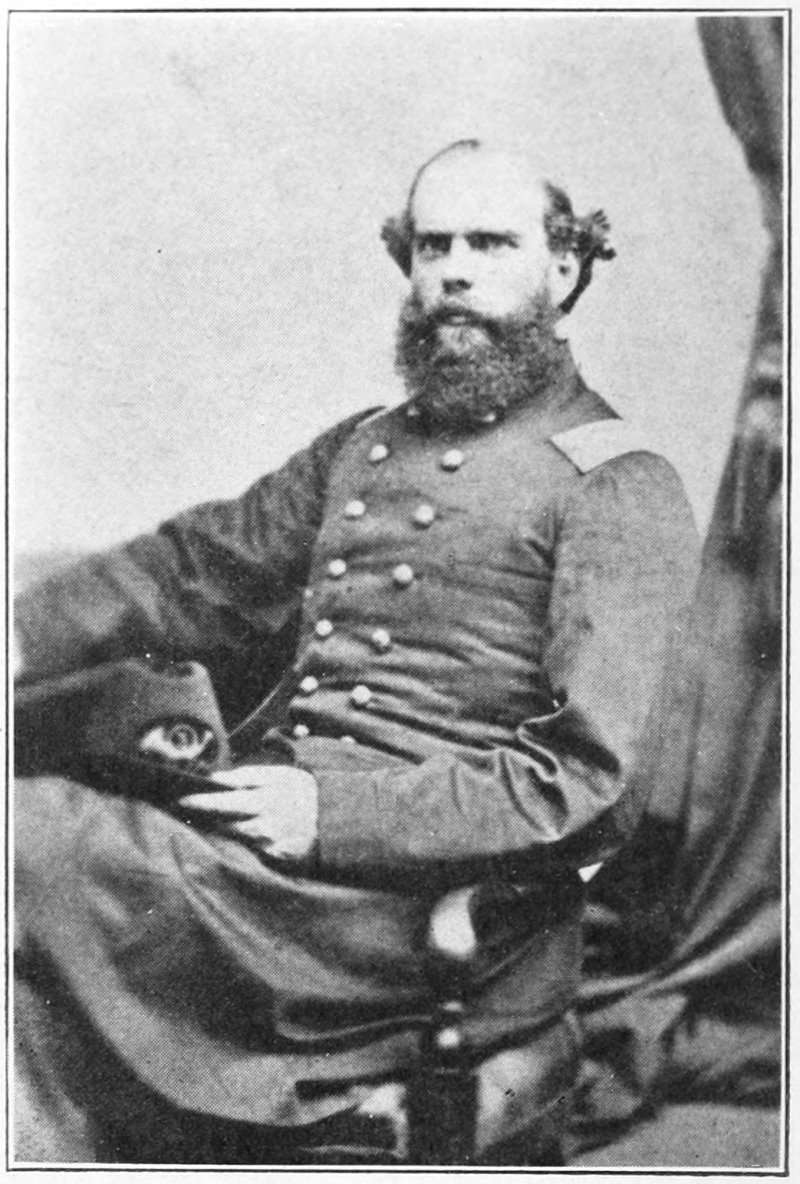
Col. SILAS P. RICHMOND.
He was engaged in farming and lumber business
early in life. He was the first man to enlist in Company
G, Third Regiment, Massachusetts Volunteer
Militia, in May, 1850. He was appointed corporal
in April, 1851; commissioned fourth lieutenant of
same company in August, 1851; third lieutenant in
August, 1853; first lieutenant in May, 1854; captain
in May, 1855; major and inspector, Second Brigade,
Massachusetts Volunteer Militia, July 29,
1856. He was in Kansas in 1858-9, and served with
John Brown in repelling the “Border Ruffians” and
was badly wounded in the knee at the battle near
Lawrence, Kansas. He returned to Massachusetts
and was appointed captain
and aide-de-camp, Second Brigade, Massachusetts Volunteer Militia, Sept.
15, 1859, and in that capacity responded to the call
of the “Minute Men,” April 15, 1861, serving at Fortress
Monroe and Hampton, Virginia, and taking
part in the battle of Big Bethel, June 10, 1861. At
the end of the campaign he returned to Massachusetts
and was honorably discharged. On the 8th
of May, 1862, he was commissioned lieutenant-colonel,
Third Regiment, Massachusetts Volunteer Militia,
and as such responded to the call to re-enforce
the Army of the Potomac at the time of General
Bank’s retreat in the Shenandoah Valley. In July,
1862, he was ordered by Governor Andrew to reorganize
and recruit the Third Regiment, Massachusetts
Volunteer Militia, to the maximum for service
in the field. He completed that work and the regiment
was mustered into the United States service,
one thousand and forty strong, Sept. 15, 1862. He
was commissioned colonel of the Third Regiment
Oct. 7, 1862, and, on Oct. 22, 1862, he proceeded with
the regiment by steamer to Newbern, North Carolina.
During that campaign he participated in the
battles of Kinston, Whitehall, Goldsboro, Deep
Gully, Blount’s Creek, and in repelling the bombardment
of Newbern. During a part of that time
he commanded a brigade. At the end of this term
of service he returned to Massachusetts. On the
28th of September, 1863, he was commissioned colonel
of the Fifty-eighth Regiment, Massachusetts
Volunteers, and proceeded to recruit that regiment.
On Nov. 21, 1863, he was appointed superintendent
of recruiting in Bristol, Plymouth, Barnstable, Nantucket,
and Dukes counties, and as such continued
the recruiting of the Fifty-eighth Regiment, until
it was ordered to join the Army of the Potomac,
April 28, 1864; but as the Fifty-eighth had only
eight companies at that time, he could not be mustered
into the United States service as colonel of it,
and so resigned. On July 19, 1864, he was appointed
assistant provost marshal of the Department
of the South, with the rank of colonel, and
served as such at Beaufort, North Carolina, Hilton
Head, Savannah, Georgia, and Charleston, South
Carolina. He was on the first steamer that reached
Savannah when it was taken, and on the first
steamer that landed at Charleston when that city
was captured. He was honorably mustered out of
service in September, 1865.
He engaged in the lumber and grain business in
Indiana and Michigan in 1867-9, and lost a nice
property by fire in Michigan in 1869. He returned
to Massachusetts in 1870. Colonel Richmond has
been a justice of peace for more than forty years,
and is also a notary public. He was for ten years
chairman of the board of selectmen of Freetown. As
auditor in 1854 he prepared the first printed report
ever made of the finances of Freetown. He has also
served as assessor, town clerk, school committee,
and overseer of the poor of Freetown. He served
eighteen years as moderator at annual town meetings.
He served two terms as United States census
taker, and two terms as state census taker. He was
chairman of the trustees of the First Christian
Church in Assonet for several Years. He was a representative
in the legislature from the sixth Bristol
district in 1892, and served as chairman of the taxation
committee. He was a delegate to the National
Republican Convention in 1892; a turnkey in Massachusetts
State Prison, 1871-9; deputy keeper in
the Bristol County House of Correction, 1879-82;
general traveling agent for the C. C. G. Co., 1882-89;
president of Bristol County Agricultural Society
1889-91; charter member of Post No. 1, Massachusetts
G. A. R., and member of the Loyal Legion
of the United States. He is a Mason and Knight
Templar since 1865. On Jan. 1, 1896, he was appointed
deputy sheriff and court crier of the Supreme
and Superior Courts in Bristol County, and
now holds that position. His address is Richmond
Road, Assonet, Mass.
Lieut.-Col. James Barton.
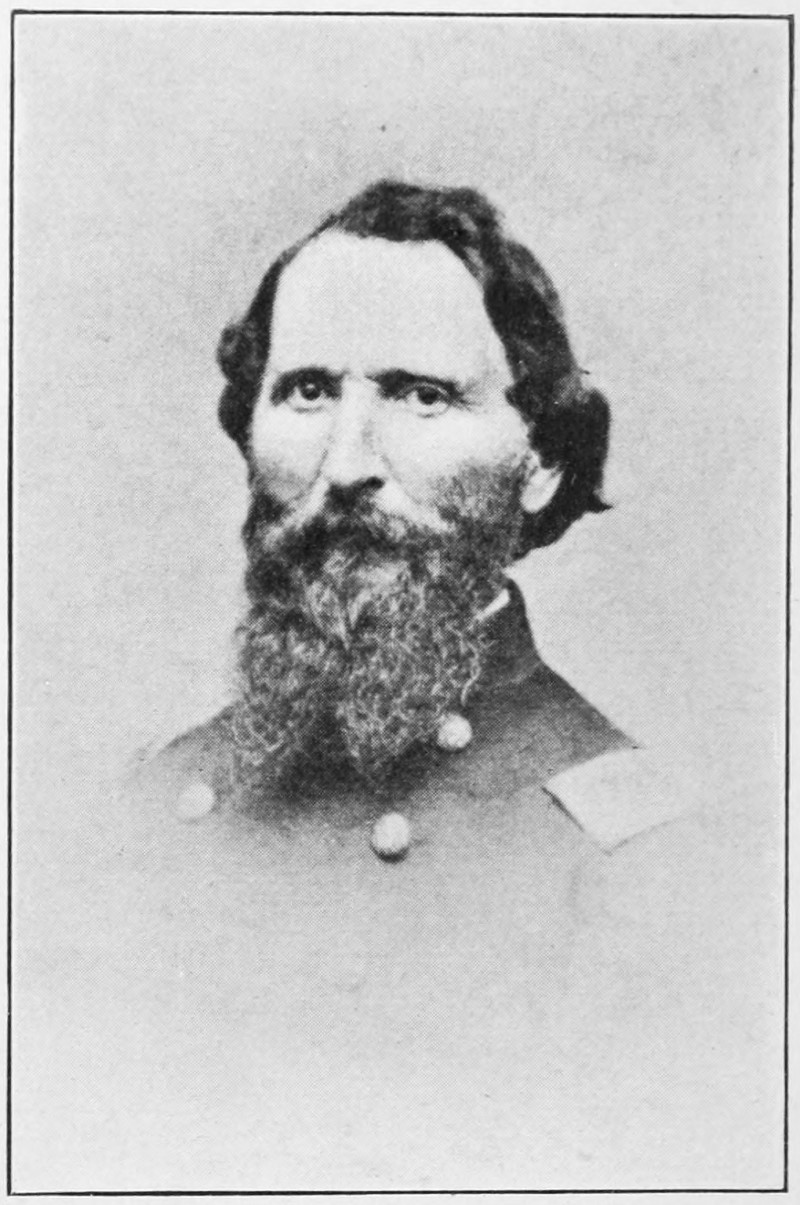
Lieut.-Col. JAMES BARTON.
Lieut.-Col. James Barton came from a military
family. Among his ancestors was Gen. William
Barton, of Revolutionary fame, who captured the
English General Prescott
and his aide-de-camp in the town of Portsmouth, R. I., for which act Congress
presented him with a beautiful sword as an acknowledgment
of his hazardous and successful
achievement. In his early years Colonel Barton resided
in Newport, R. I., and was a member of the
Newport Artillery, which was chartered in 1741.
He accompanied this organization to Providence at
the time of the Dorr War. In 1853 he removed to
New Bedford and carried on the business of a marine
blacksmith, and this he continued after as well
as before the war. The breaking out of the war in
1861 found him holding the position of first lieutenant
in the New Bedford Guards (minute men), afterwards
Company E, Third Regiment, Massachusetts
Volunteer Militia. With this company he
served twice, first as first lieutenant of the company,
and second as lieutenant-colonel of the regiment
of which the company made a part, and served
with the regiment through its campaign in North
Carolina. He was a good, conscientious officer,
faithfully performing every duty, and always in his
place on battalion drill, on the march, and in battle.
He was one of the earliest members of William Logan
Rodman Post, No. 1, G. A. R., New Bedford,
Mass. He died March 5, 1887.
Maj. John Morrissey.
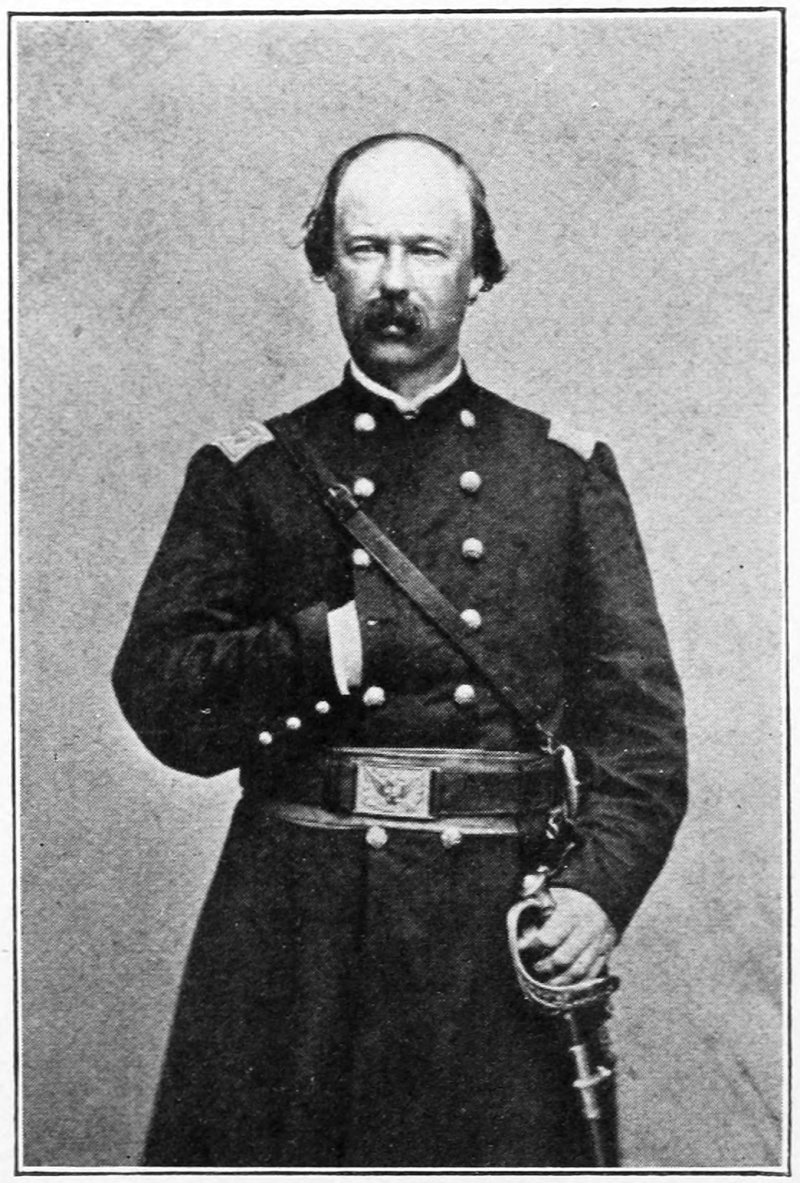
Major JOHN
MORRISSEY.
Major Morrissey was forty-five years of age
when he entered the service of his country in the
Third Regiment. He was a native of Plymouth,
where he resided at the time of his commission.
His position as sergeant-at-arms in the State House,
Boston, shows that he went to war for pure patriotic
principles. He was well liked by all the regiment,
and never failed to do his duty on drill, on
the march, and in camp. After the war he was
given his former position, which office he filled acceptably
until his death. He died in his own town,
beloved and highly respected by all who knew him.
His force of character was more in good acts than
in many words.
Adj’t. Lucian L. Perkins.
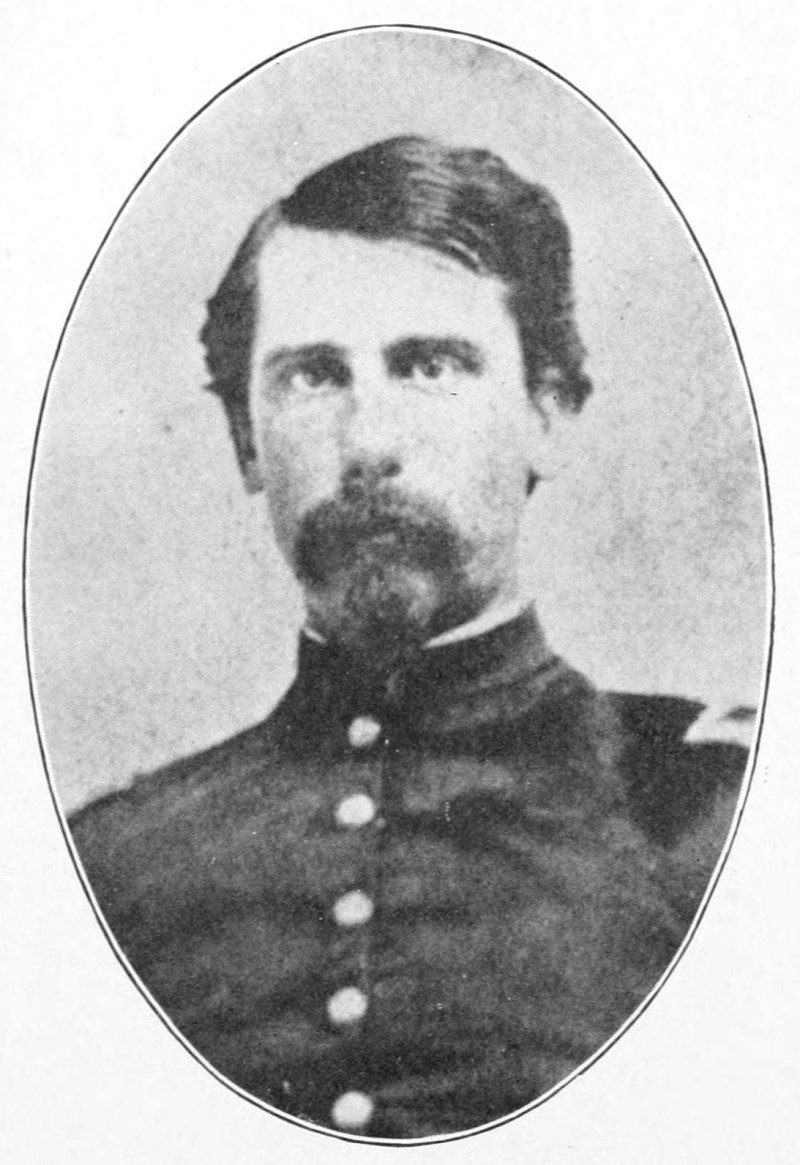
Adj’t. LUCIAN L. PERKINS.
Adjutant Perkins was born in Plympton, Mass.,
July 1, 1835. At the age of eighteen he joined Company
H, Third Regiment of Plympton Rifles. He
served in different positions in this company, and
at the time of President Lincoln’s call for seventy-five
thousand troops he was first lieutenant. He
went to Fortress Monroe in command of his company,
and was there elected captain. He served
through the three months’ service and was discharged
at the expiration of enlistment.
He served as adjutant of the Third Regiment
nine months’ service, and was discharged at the expiration
of the same. He will ever be remembered
as the soldier, the gentleman, and the officer, who
faithfully performed every duty assigned to him.
On dress parade and battalion drill he knew his
place and filled it to the satisfaction of every officer
and man.
After the close of the war, he, with his brother
Charles A. S. Perkins, went to Newbern, N. C., purchased
several acres of land there, and was engaged
successfully in the cotton business at the corner of
Broad and Middle Streets.
He died in Newbern, N. C., in October, 1864, of
yellow fever, and his remains were afterwards
brought to Plympton for burial.
Quartermaster Bethuel Penniman.
Bethuel Penniman was commissioned Oct. 10,
1862, being forty-three years old and a resident of
New Bedford. He was a successful business man,
and because he was such was commissioned to look
after and care for the supplies of the regiment. He
remained with the regiment and was mustered June
26, 1863.
After the war he was active in mining, manufactures,
and real estate business. Of his own life he
says, “There has been nothing eventful in my life,”
and yet at eighty-six, we find him hale and hearty
and ready to beat the boys in a good, profitable,
straight bargain.
His welcome was always cordial, especially to
any member of the Third Regiment. He represented
New Bedford in the legislature, and served
one term on the Board of Aldermen in 1862. He
was also a member of the New Bedford Protecting
Society, and of the organization of firemen, and was
for five years attached to the old hand engine, Veteran,
No. 1. He was an attendant and member of
the Unitarian Church and belonged to the Wamsutta
Club. He was a charter member of Post No.
190 G. A. R., and a member of the Loyal Legion.
He visited Washington, D. C, and witnessed the
inaugural ceremonies of President Roosevelt. On
returning to his home in New Bedford he was taken
sick and died April 15, 1905, being eighty-seven
years old.
Surgeon Alfred Augustus Stocker.
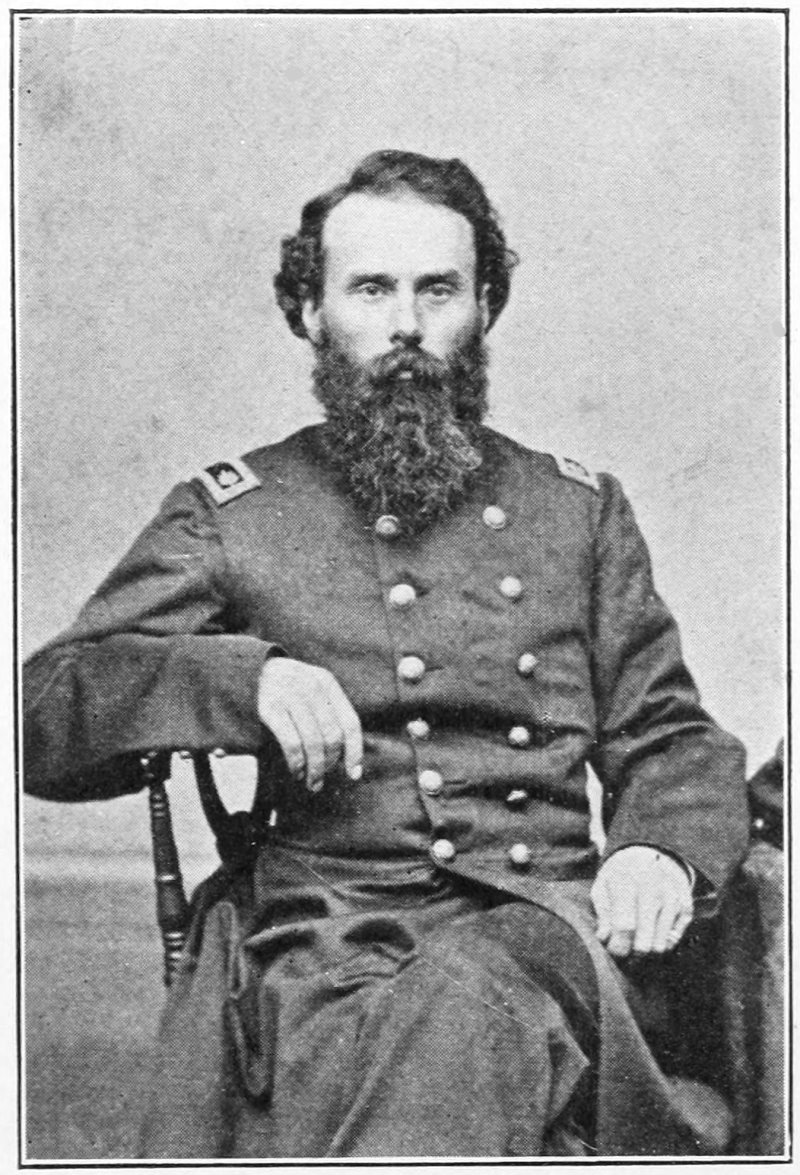
Surgeon ALFRED A. STOCKER.
Alfred Stocker was forty-three years of age when
commissioned and a resident of Cambridge. He
graduated at Harvard University with the degree of
M. D. in the class of 1853. In 1861 he assisted in
raising the Twelfth Regiment, Massachusetts Volunteer
Militia. He was nominated by Colonel Webster
major-surgeon, but unavoidable circumstances
compelled him to decline. By request of Governor
Andrew in May, 1862, he went to the front in Virginia,
and joined the “Army of the Potomac.” Arriving
at the White House on the Pamunkey River
he was placed in charge of a division of the great
field hospital then established there. On the breaking
up of the hospital he was assigned to the Thirty-first
Pennsylvania as acting surgeon, July 20th to
October 1st, passing through the whole Peninsula
campaign. He was at South Mountain and Antietam.
He was commissioned surgeon of the Third
Regiment, Massachusetts Volunteer Militia, Oct. 16,
1862, serving in North Carolina until mustered out
with the regiment, and during the winter of 1863-4
he was at Readville on the staff of General Pierce,
serving as special inspector of recruits. Oct. 16,
1863, he was commissioned major-surgeon of the
Fifty-eighth Massachusetts Volunteer Veterans in
the Ninth Army Corps with General Burnside. He
was with General Grant from the Wilderness to
Petersburg, Va. On account of physical debility
contracted in the service, he resigned Aug. 1, 1864,
and was honorably discharged. He has now retired
from professional practice on account of age and
growing disability and resides in Cambridge, Mass.
Asst. Surgeon Woodbridge R. Howes.
Woodbridge R. Howes was commissioned Oct. 21,
1862, being forty-five years old and residing in Mattapoisett.
He was in the service of the United States
from Nov. 13, 1862, and with the regiment until it
was mustered out. He practiced professionally in
Hanover until his death, and served on the school
committee of Hanover. He was a member of the
Joseph Wilder Post, No. 83, G. A. R., and at one
time commander; member of North River Lodge,
I. O. of O. F., holding various offices, and censor for
several years of the Massachusetts Medical Society.
He died in Hanover, Feb. 4, 1898, and was buried in
the cemetery of that town. He left one son, Clarence
L. Howes, M. D., practicing in Hanover, and
one daughter, Mary W., wife of J. W. Beal, architect
in Hanover.
Chaplain Charles Andrew Snow.
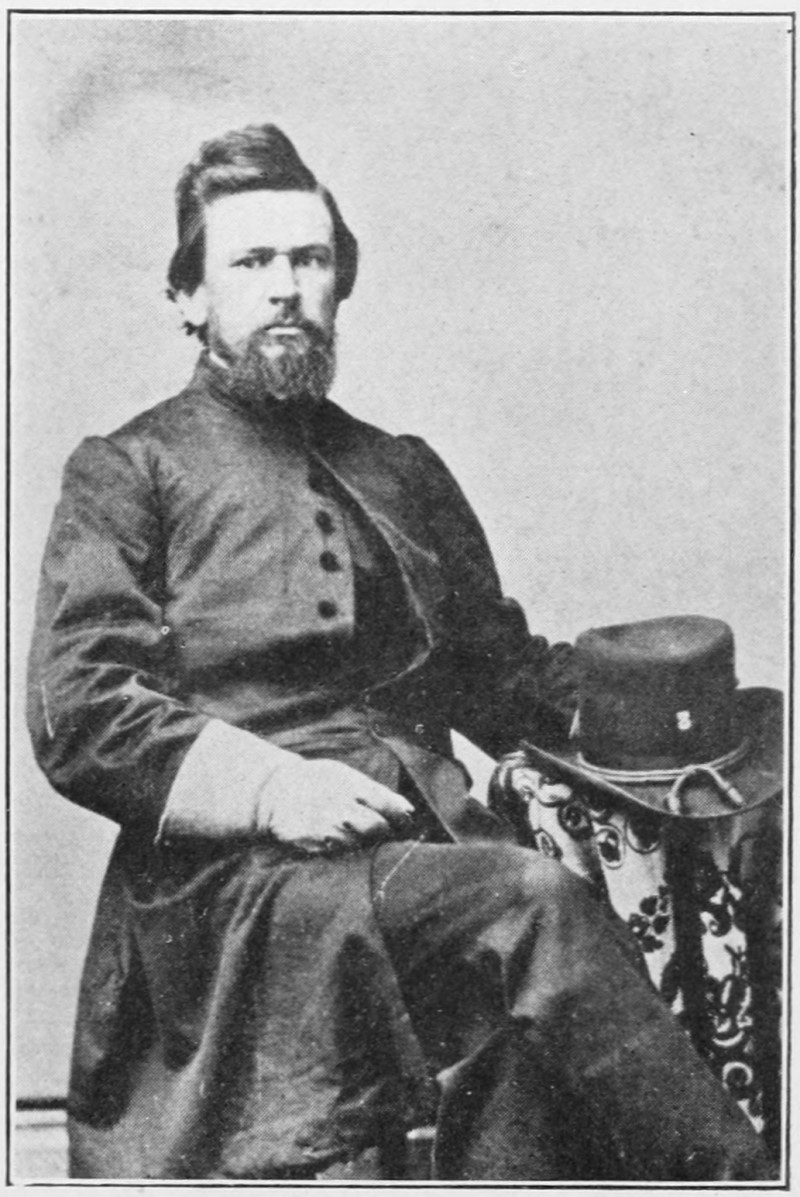
Chaplain Rev. CHARLES A. SNOW.
Chaplain Snow was thirty-three years of age
when commissioned, and resided in Fall River. He
was appointed chaplain Oct. 10, 1862; commissioned
October 16th, and sworn into the United States
service October 22d. He was on duty with the regiment
until it was mustered out. Since that time he
had been in professional service as pastor of
churches in Fall River, Providence, R. I., South Abington
(now Whitman), New Bedford, and West
Harwich. In 1898 he retired from full ministerial
service on account of ill-health. He is the author
of many miscellaneous papers, essays, sermons, important
historical sketches, etc. He was a life
member of the Old Colony Historical Society. He
died in Taunton, Nov. 28, 1903.
Sergt.-Maj. Joseph E. Nye.
Joseph E. Nye was commissioned at the age of
twenty-four, while residing in New Bedford. He
was promoted from Company E, May 29, 1863, vice
Robbins having been discharged to enable him to
accept a lieutenancy in the Heavy Artillery. Sergeant-Major
Nye was a most faithful officer, and
performed his duty to the entire satisfaction of his
superior officers. He was always on time and always
kept good time when on dress parade and when
marching in review.
After the war he was engaged in the livery business
in Fall River, and died there about twelve years
ago.
Quartermaster Sergt. Theodore A. Barton.
Quartermaster Sergeant Barton was twenty-one
years old when commissioned and a resident of
New Bedford. He was the youngest son of Lieut.-Col.
James and Mary Barton, and came from a renowned
military family. He was born in 1842 and
received a private and public school education. His
parents moved from Newport to New Bedford when
young Barton was eleven years old. He was a member
of the High School in New Bedford, and graduated
from the same near the beginning of the war.
He enlisted in the Third Regiment and was appointed
quartermaster-sergeant, in which office he
served during the nine months’ campaign in North
Carolina, and was mustered out with the regiment.
He re-enlisted in the Fifty-eighth Regiment and was
appointed quartermaster with the rank of first lieutenant.
He was at one time the youngest regimental
quartermaster (and one of the best) in the Army
of the Potomac. He served faithfully to the close
of the war and was mustered out with his regiment.
Soon after the war he took up his residence in
Providence and engaged in the hardware business
with Freeman P. Little, forming the firm of Little
& Barton. The governor of Rhode Island selected
him as one of the staff officers with the rank of colonel,
in which office he served with honor, and was
distinguished for his soldierly bearing. Subsequently
he removed to Ashton and became bookkeeper
in one of the Goddard’s mills. In 1868 he
entered the employ of the Gorham Company and
was their confidential clerk and bookkeeper, remaining
in that position until failing health compelled
him to take a long rest. When the new State House
was being constructed he was chosen assistant to
E. K. Glezen, secretary of the commission, and
when it was completed and a new commission
formed he was elected its secretary, in which office
he remained until his death, Jan. 24, 1905. He was
prominent in G. A. R. and Sons of Veterans circles
and was department commander of Rhode Island
in 1886. In 1894 he was elected senior vice-commander-in-chief
of the national body of Sons of Veterans,
and was the first man to receive that honor
from Rhode Island. A widow and daughter survive
him, residing in their beautiful home in Providence.
Commissary Sergt. Arthur Hooper.
Commissary Sergt. Arthur Hooper was born in
Bridgewater, May 18, 1843, and was nineteen years
old when he enlisted in Company K, Third Regiment,
Massachusetts Volunteer Militia, for nine
months. He was promoted to regimental commissary
sergeant, Oct. 28, 1862, and discharged with
the regiment June 26, 1863. He re-enlisted Dec. 11,
1863, in Company A, Fifty-eighth Massachusetts
Third Veteran Regiment for three years, and was
detailed regimental commissary sergeant. The regiment
left Readville, Mass., April 28, 1864, and was
assigned to the First Brigade, Second Division,
Ninth Army Corps, Gen. Ambrose E. Burnside commanding.
Sergeant Hooper was with the regiment
in the battles of the Wilderness, Spottsylvania,
North Anna River, Cold Harbor, Petersburg, Welden
Railroad, and Poplar Grove Church. He was
furloughed Dec. 11, 1864, and was ordered to report
to the commissary department of the United States
General Hospital at Readville, Mass. He was mustered
out June 13, 1865.
He lived in Bridgewater until June, 1882, when
he went to work as salesman for Carter & Company,
paper dealers in Boston. He was elected to the legislature
from the districts of Bridgewater and East
Bridgewater in 1880. He has been secretary of the
Fifty-eighth Massachusetts Regimental Association
since 1888. He joined the G. A. R. in 1868, and for
the past four years has been quartermaster of E. W.
Kinsley Post, Boston. He was the compiler of a
history of Bridgewater during the Rebellion, which
was published in 1880, a work that reflects honor on
the author and is of great value to the town. His
place of business is No. 100 Federal Street, Boston,
where he is a clerk and director of the firm, respected,
trusted, and honored.
Hospital Steward Eugene Whittemore.
Hospital Steward Eugene Whittemore was
commissioned at the age of twenty and resided in
Boston. He served with the regiment and was mustered
out with the same. He is now letter carrier
in South Boston.
Sergt.-Maj. Edward L. Robbins.
Sergt.-Maj. Edward L. Robbins was twenty-seven
years of age when commissioned, and a resident of
Plymouth. He was discharged May 29, 1863, to enable
him to accept a lieutenancy in the heavy artillery.
He was a good, faithful officer, and enjoyed
the good-will of all the officers and men in the regiment.
He now resides in Wollaston, Mass. (Lincoln
Avenue).
Company A, Third Regiment, Massachusetts Volunteer
Militia.
[Written by Corporal John G. Gammons.]
The early history of this company is of such importance
and interest as to claim more than a passing
notice.
Company A, known as Halifax Light Infantry,
was organized in 1792 when George Washington was
President of the United States and John Hancock
Governor of Massachusetts. It was one of the first
companies in the State to receive its charter from
Governor Hancock, and therefore takes rank as one
of the oldest among the militia companies in the
State at that time.
It was well armed, equipped and drilled and was
in active service in the war with England in 1812-14,
being on duty at Boston, Mass., where for faithful
service rendered, it received the thanks of Governor
Hancock and the commendation of the citizens of
Boston.
It was commanded by Capt. Asa Thompson of
Halifax, a “mighty man of valor” of gigantic proportions,
being six feet seven inches in normal condition,
and eight feet tall with his captain’s hat on.
On parade and at musters this company attracted
attention, not only by the Saul-like appearance of
its captain, but also by the large black bearskin caps
worn by its officers and men. Tradition says that
when Captain Thompson marched his company
across South Boston bridge throngs of men, women
and children would collect to see “the giant” and
his men, and not a few would tremble with fear that
the bridge would not be able to support the captain
and his great company.
When President Lincoln issued his first proclamation
for troops, Company A (as minute men) reported
for duty April 16, 1861, being commanded by
Capt. Joseph Harlow of Halifax, whose height was
six feet two inches. This zealous and patriotic officer
rode all night through the towns in which the
members of the company resided, summoning them
to meet on Boston Common the next day, by order
of Governor John A. Andrew. This midnight ride
has been fittingly compared to that of Paul Revere.
Company A was assigned to the Third Regiment,
Massachusetts Volunteers, three months’ men, Col.
David S. Wardrop commanding, and was ordered to
Virginia, where it did its full share in destroying
Gosport Navy Yard. It afterward served there
under Major-General Butler and was doing guard
duty when the slaves coming into our lines were declared
“contraband of war” by that officer.
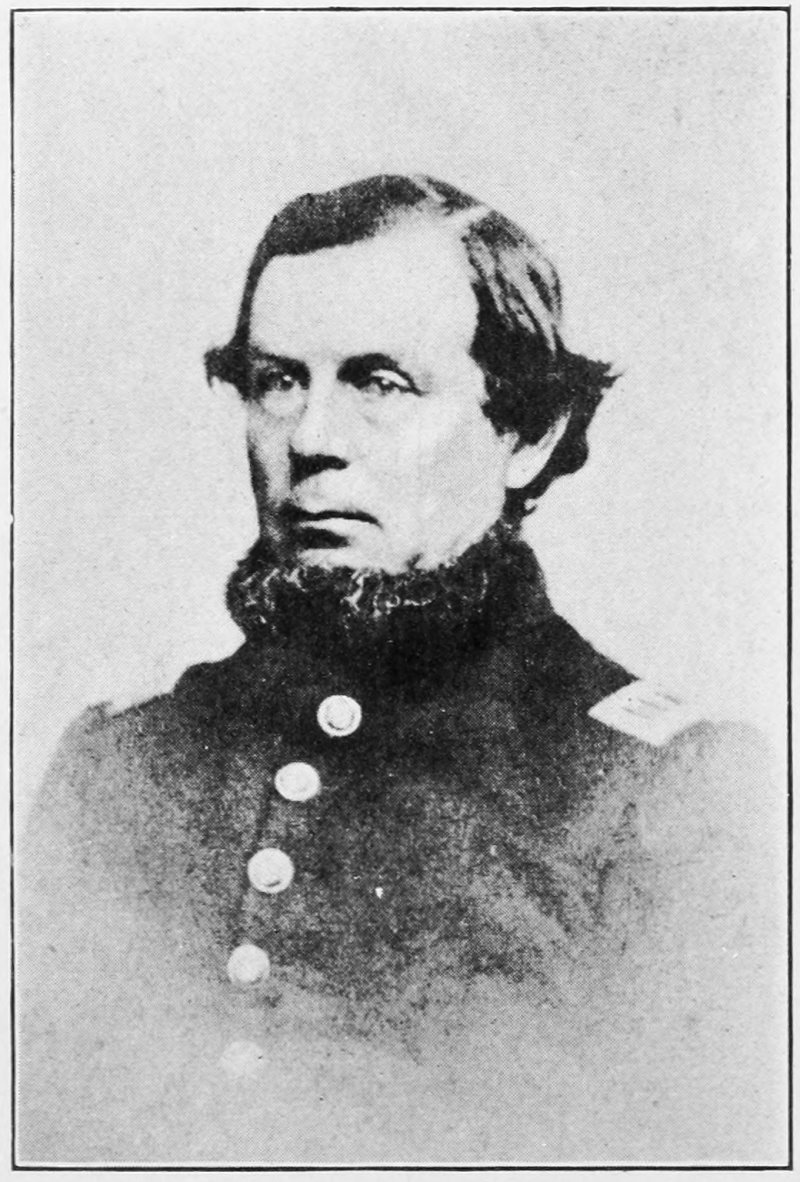
Capt. JOHN W. MARBLE.
Sept. 18, 1862, Company A, having united with
Company G, of Assonet, went into camp at Lakeville,
Mass., known as Camp Joe Hooker. John W.
Marble, of Assonet, receiving eighty-seven votes,
was declared elected captain of the company;
Charles P. Lyon of Halifax was elected first lieutenant,
and Nathaniel Morton of the same town was
elected second lieutenant; each of these officers receiving
the same number of votes as Captain Marble.
Never was there a more democratic election and
never were men better pleased with their officers.
Captain Marble proved a kind-hearted man, caring
for his men and giving them his best in military
drill, discipline, clothing and rations. He also kept
an eye on his men when on the march and in battle.
He was never known to fall out on the march, or to
be taken suddenly sick on the eve of a battle, or ride
in an ambulance on the long and weary forced
marches. His men had confidence in him and were
always ready to obey his commands without asking
questions; and, although not a graduate of West
Point, no battalion or brigade movement ever puzzled
him to know where to place his company, either
on drill or in the evolution of field movements.
Lieutenant Lyon was not only a good officer, he
was a good man. No day was so hot or stormy, and
no night was so dark or cold, that he did not fulfill
his duty beyond the letter of the law, whether that
duty was in camp, on picket, or on the march. His
interest in the company is reciprocated by “The Old
Boys” to this day, and will continue as long as one
of the company is left to tell of war events and our
reunions are characterized by fraternal greeting
rather than “paying off old scores.”
Lieutenant Morton had, and still continues to
have, a large place in the esteem of the company.
He was always ready to serve when and where his
service was wanted and needed. He was the gentleman,
the officer, the friend of every man in the company.
Always at his post of duty, on the march,
everywhere; and in everything he proved himself
worthy of the confidence of his superiors, equals,
and inferiors. In battle he had no fear of all the
rebels “this side of perdition.”
Like the commissioned officers, the non-commissioned
officers were men of worth and usefulness.
No company could boast of a better orderly sergeant
than Company A. For proficiency in drill, promptness
at guard mount and discipline, Orderly Sergt.
James H. Hathaway stood number one. Danger to
him was a thing unknown. Duty before pleasure,
and obedience to his superior officers was his slogan.
Sergt. William A. Lyon was always ready to go
when and where ordered and do as ordered. He
was a well drilled man, a true soldier, beloved and
honored by the whole company.
Sergt. Stephen Hathaway was known as “The
man of money,” yet he never allowed money to become
his stepping stone to preferment. He was as
ready as any one to do his duty with the company,
regardless of toil, deprivation or danger, when not
on detached duty.
Sergt. Morton V. Bonney could outlift any man in
camp. I once saw him stand astride a full barrel
of pork which others could not lift, and, taking it
by the chimbs, raise it clear from the ground, saying,
“There, I have lifted your darned old barrel of
pork.” In drill he was accurate, and on dress parade
the perfect soldier; and, like Israel’s second
king, he “behaved so wisely” that every one respected
and loved him.
Ordnance Sergt. Frederick Thayer was not only a
master of his trade, but prompt in every detail of
his work. Every weapon was always ready when
wanted for guard mount, dress parade or for the
march, and not one of Company A was ever sent to
quarters because of a rusty or dirty gun.
Corporals Uriel Haskins, Ephraim Haskins,
Thomas Gurney, James E. Arnold, Soranus Thompson,
David B. Hill, and John G. Gammons, were always
ready and faithful in the discharge of every
duty assigned to them.
Asa Kilbreth could blow “The Flowers of Michigan”
through a fife as no other musician in the regiment,
if in the world. His time was so perfect that
every one could keep step when marching in review.
John G. Bonney was as good with his drum as
“Uncle” Kilbreth with his fife, and when these two
musicians sounded reveille every man was ready for
roll call. The whole company was made up of exceptionally
good and true men, “soldiers from the
word go.”
Company A could truthfully boast of more musical
talent than any other company in the regiment.
Singing could always be had for the asking, without
money and without price. Stringed instruments
were in evidence. A double quartette was
always ready and willing to entertain and enliven
what otherwise would have been dull hours of camp
life. Miller Briggs was a knight of the bow, and
he could make the “old campaign fiddle” talk, sing,
weep or shout, as occasion required or his fancy dictated.
Al. Ashley was always ready to make a
speech, play a game of euchre, go on guard or go
into a fight. Pearly Haven was born with a thirst
that water had no power to quench. Pearly was
always weak when near anything strong.
Edward H. Rennis went to “his own place” when
he went into the cook-house. His boiled dinners
and his baked beans remain as things joyfully to be
remembered. Few were the cooks who could deal
out better rations than Rennis.
Die Mason, while a good company clerk, would
stand before a heated stove and burn the whole
front of his uniform, absolutely oblivious of what
was going on. In the battle of Goldsboro, he filled
his musket with cartridges from breech to muzzle
and returned to Newbern with it full. When apprised
of the fact, he simply said, “I marched two
hundred miles to snap at the rebels.”
Corp. Thomas Gurney was a most painstaking
and
accurate diarist. Benjamin H. Bearse
could roast a fowl or a pig to perfection. John
Boyce was so squint-eyed that he could see “the
rebels” on either flank and in front of him. Henry
Cook, notwithstanding he had lost his voice, would
not ask to be discharged, whispering, “If I cannot
speak with my voice, I can speak to the rebels with
my musket.” John Drayton could provide fun for
the whole company. Herculese Dean was the staid
gentleman; Timothy French the man of affairs.
Bradford G. Hathaway was known as the “big man
with curly hair.” Daniel L. Hathaway would not
shake hands with a rebel prisoner, who, recognizing
him as a fellow workman in the Live Oak Swamps,
extended his hand. Dan declared he never would
shake hands with a d——d rebel.
Shubael G. Howland will be remembered as the
man who carried six rebel muskets seventy miles on
his shoulder and sent them home to make sure that
the rebels would never get them again.
Aaron D. Hathaway could bring a mule team out
of the mud when every one else had given up in despair.
He performed this feat by pushing the
mules’ heads under the mud and keeping them there
until they were glad to jump out to breathe.
Alamanzer Osborne had queer notions about sardines.
Isaiah Stetson could scent a battle afar off.
James H. Petty, while never perfect in the manual
of arms on dress parade, in battle could shoot
as straight as any one. He was never known to
fall out on the march because of sore feet and was
in his glory when in a battle.
Jacob P. Hill was known as “the tall man;” William
T. Marston as the man who grew so corpulent
that Uncle Sam had no uniform that would fit
him. Francis Briggs, when “in trim,” could outrun
any deer and yell louder than an Ute Indian.
Horatio N. Hood never got stuck in the mud with
his team.
The first night in Camp Joe Hooker was a
sweater to many, a conundrum to a few, and a go-as-you-please
to all. Every one kept good-natured
for the most pessimistic knew that all things that
have a beginning have an end; and so it came to
pass that, before reveille, the silence was broken
only by the tremendous snoring of the tired merrymakers.
The first day in camp was one of laborious duty.
How many tons of stones were buried by Company
A no one will ever know, for it is safe to say no one
will ever resurrect them; but when the job was completed
Company A had as level and as smooth a
street as any company in camp. Some amusing
things occurred on the guard line. Some of the officers
detailed for guard duty would give one set of
orders and some another set, and it was hard for
the guards to tell which was right and which was
wrong. Some of the guards would not be relieved
at “arms aport” but would persist in standing at
a “charge.” One such was left to enjoy his “charge
bayonet” until the next relief: the two hours taught
him a lesson which he never forgot. Occasionally
some of the guards would fix their muskets firmly
in the ground, and, putting coat and hat on the
same, go off on a “lark,” returning in time to come
in with the relief; but such things were not considered
as a grave offense, since we were not mustered
into service.
In a few days an inspecting officer came and we
were mustered into the service of Uncle Sam. Soon
we were uniformed and began the role of soldiers.
It took us less time to get used to our rations than
to get used to our beds, which at that time consisted
of the soft side of a hemlock board, quite different
from those beds we had left at our homes.
One afternoon just after recall the boys took umbrage
at something the sutler had said or done,
and, magic-like, the two regiments in camp gathered
with the avowed purpose of demolishing his
place of business. I waited with bated breath to
see what a few officers would do with two thousand
enraged men. Just at the critical moment I saw
the stalwart form of Colonel Richmond standing
on a box, and with a voice like that “of many
waters” and of mighty thunders, he proclaimed,
“There will be a roll call in each company’s barracks
within five minutes and every one not present
will be marked.” Company A was in line in less
than two minutes. The roll was called and every
member answered “Here.” That little incident has
always remained with me as an exhibition of the
ready wit and good sense of our beloved Col. S. P.
Richmond.
Our stay in camp was of short duration for we
were wanted for active service and were ordered to
prepare for the South Land. The morning of our
last day in camp brought many of the wives, mothers,
fathers, sisters, and sweethearts to say the last
good-bye to the boys who were to defend the Old
Flag on southern battlefields. Alas! that some of
the boys who marched away that day, suppressing
their tears in a manly way, were never again to
look on the dear faces which tearfully said good-bye,
silently praying God that they might return
again to the old home and to their loved ones.
At Lakeville station we took the train for Boston,
where we received an ovation through the city.
The right wing of the regiment was assigned to the
Mississippi, the left wing went on board the Merrimac.
The bell rang, the whistle sounded, and we
found ourselves going down the river, our destination
being Newbern, N. C. With the exception of
nearly running down two schooners and breaking
our foreyard arm into three pieces in contact with
a vessel going through the “Narrows,” our voyage
was uneventful. Company A did her full share of
duty, notwithstanding that the rough water in Boston
Bay gave to many of the boys all the business
they could manage on their own private account.
Our ship, after rounding Cape Cod, anchored in
Vineyard Haven. Seeing our consort pass in the
early dawn of the following morning, we prepared
to follow, and, just as the steam was applied, a
large schooner came across our bow. The engines
were reversed and we barely escaped a collision.
Captain Baxter hailed with this sarcastic remark,
“I believe some captains would run all night for
the sake of running across a ship’s bow and being
run down.” When we overtook the Merrimac we
were hailed with, “How did you break your foreyard
arm?” and Captain Baxter replied, “Carrying
sail, sir.”
Our run to North Carolina was over a sea as
smooth as a mill-pond. The voyage could have
been made in safety in a canoe; but when within
five miles of the harbor, we encountered a southeast
gale, which drove thousands of porpoises into the
harbor. Our pilot, either through ignorance or
carelessness, ran our ship upon the bar. I was
standing beside the Captain when the thing happened,
and Captain Baxter, quietly drawing his revolver
and placing it close to the pilot’s head, soberly
remarked: “I have a good mind to put a little
light into your stupid rebel brain.” I need not
tell you that that pilot trembled like a whipped
dog. With the rising tide and the assistance of a
tug, we were soon off the bar; and, as we headed for
the wharf, I heard Captain Baxter say, “I did not
care half as much for getting stuck on that bar, as
I do for having the captain of the Merrimac get
alongside the wharf before the Mississippi, for I
shall never hear the last of it.” At Morehead City
we took train for Newbern and camped on the banks
of the Neuse River. Here for the first time, we
were drilled in the evolutions of the brigade, preparatory
to going on the march and into battle.
After a few days of camp life, Company A and
Company B were detailed for picket duty at Newport
Barracks, one mile distant from Newport
City, which consisted of three houses, two barns
and a five-by-ten store. Newport City was the trading
mart for that section, and many times have I
seen a barrel of pitch sold for thirty dollars and a
barrel of tar sold for twenty dollars.
Our camp consisted of two companies of infantry,
a battery of four guns and a platoon of cavalry.
A detail from Company A went every day to a post
called Havelock, and the boys from there kept the
company well supplied with fresh beef and pork.
One night one of Company A being on picket,
thought he saw some one stealthily approaching the
post. “Who goes there?” rang out on the still
night. Receiving no answer, he fired. Alas! his
aim was only too sure, for, on inspection, there in
the throes of death lay a large black cow. I believe
that was the only rebel that Company A ever
roasted and ate.
Some of Company A will never forget David B.
Hill and the hive of bees and honey he brought into
camp one night. The following morning, when his
namesake came to inquire after his missing hive,
Dave met him on the parade ground, and, passing
himself off as commandant of the camp, solemnly
declared that he had no men who would be guilty
of stealing; but said he: “If I find that one of my
command has done so mean an act, I will have the
offender punished severely.” This satisfied Mr.
Hill, and he was never seen in camp after such positive
assurance of the honesty of the soldiers.
Our first march taught Company A the superiority
of army shoes over fashionable boots to march
in, for the first ten miles found many of the men,
as well as the officers, with their boots slung over
their shoulders, their feet without stockings, and
their heels raw to the quick. The lesson was never
forgotten. At Peltier’s Mills the fortunate ones
luxuriated on a supper of bread and bacon. The
less fortunate were allowed to pass the night in a
hog field, where the fleas were thicker than the stars
in the “Milky Way.” “Pollocksville Express”
marked another episode in our marching history,
and we learned that being a soldier did not mean
“flowery beds of ease.” Some of these marches
were attended with rain, not like the gentle rains
at the North, but downpours, mud ankle-deep, baggage
wagons with the wheel-hubs rolling on the surface,
horses balking, teamers saying everything but
their prayers. But we were being hardened for
more active and laborious service.
Our first real march began Dec. 11, 1862, at six
A. M. In a dense fog our line was formed and soon
the march began. There were twelve thousand,
all told, infantry, artillery, and cavalry. These,
with one hundred and sixty wagons occupied four
miles, for we were moving in single column. Just
at sunset our skirmishers captured one captain and
two privates. This we believed to be a good omen,
and some of the boys were heard to say, “We shall
capture every rebel we find.” At eleven P. M. we
stacked arms and laid down near them for the
night; and no one had to resort to opiates to sleep.
The next morning a sorer and more jaded set of
men could not be found than Company A. Every
belt, every strap had chafed to the quick, and water
was not to be had to bathe the inflamed parts. But
for all this, Company A did not flinch nor cry, “I
have seen all the marching I want to see; I want to
go home.”
The second day Company A, with the other companies
of the Third, was detailed as baggage guard,
and vigilantly did we perform our duty from early
dawn to twelve at night, when we again halted and
were allowed to sleep “on our arms.” We were getting
into that part of the country where our enemy
might pounce on us at any moment; and we soon
learned that it was wiser to build no fires, than to
illuminate the sky and thus show “the rebs” our
position. As a little recompense for our hard
march the previous day, we were allowed to kill
quite a number of fat hogs; and in this, Company
A was always ready and willing to do her full share.
I recall a little ruse I played on a soldier of a
New York regiment. Finding a dead hog still
warm, with its hams and shoulders gone, I determined
to secure a piece to roast; but, to my chagrin,
I found that I had left my knife in my haversack.
Then came to me the old conundrum: If
you had a bottle of water, how would you get the
water without drawing the cork or breaking the
bottle? and, knowing the answer, I said, “Push in
the cork.” Then taking the initiative, I called to
a soldier, saying, “I have a good fat hog here, and
if you will loan me your knife to cut out a roast, I
will give you all you want.” This he gladly did,
so I got my pork and it made a fine roast.
Sunday, December 14th, at twelve o’clock, near
Kinston, the Third Regiment went into her first
real fight in North Carolina. Being the second
regiment in the First Brigade, we had not long to
wait before being ordered to take position on the
opposite side of a swamp through which was a
straight road with water a foot deep. The rebel
batteries on the opposite side made it dangerous for
passers that way; but through we went in good order.
Then the rebels, learning that the Third with
Company A were after them, limbered their guns
and ran for their lives. Before going into battle,
we saw the wounded brought past us, and further
on we saw many a brave fellow lying dead at our
feet; but each soldier was careful to step aside and
not tread on our dead comrades. Our forces captured
five hundred prisoners, nine guns which the
rebels had spiked, and saved the beautiful and
costly bridge over the Neuse River which the rebels
had set on fire. The adjutant-general reports two
hundred and ten killed and wounded; but to know,
one had to see the dead on the field and in the wood,
and the wounded in the old Baptist Church. Some
were so severely wounded that they begged their
officers to end their misery by a shot from a revolver.
As Company A was marching past the prisoners,
one was heard to say, “Oh! here goes the
Third Massachusetts Regiment. They are all
drafted men.” This was too much for Corp. Uriel
Haskins, and, turning like an enraged lion, he said
to the man, “Say that again and I will knock every
tooth in your lying jaw down your throat.” The
fellow did not repeat his words, for
had he, Uriel would have been as good as his word. What a
scene the Common presented the following morning.
The nice rail fence had strangely disappeared.
Beds, crockery, and even ladies’ silk
dresses were strewed over the ground; and I suspect
that many a fowl that went “crowing to bed”
never saw the sun rise. The morning saw us again
on the march. We were as glad to be gone as the
people were to have us go; our blood was up and we
were ready to go into another battle.
Our second battle at Whitehall was an artillery
duel, forty battery guns being in action; and, although
the Third did not take position on the field,
the shot and shell from the rebel batteries were
quite as thick as we cared to have them for comfort.
Yet not a man of Company A was seen to
dodge or try to gain cover. During the battle Colonel
Richmond sat on his horse as calm and straight
as if on inspection. I saw General Foster walking
along the line of fire with the reins of his horse on
his arm occasionally giving orders to the officers
commanding the batteries. I saw the dead and
wounded horses lying on the ground. I saw one
batteryman load his gun with canister, and, aiming
it at a tree in which were thirty sharpshooters doing
deadly work, bring them down as apples fall to
the ground; and they didn’t come down because
they wanted to. But few of our soldiers were killed
or wounded.
Again we proceeded on our march, and, after
marching ten miles, we halted at six P. M. and prepared
for the night. We were allowed to build
fires, make coffee and enjoy a good warm supper.
To reach and cut communications between Wilmington
and Goldsboro was our objective point, so
that the rebels could not send re-enforcements, while
General Dix attacked the rebels at Blackwater.
December 16th we resumed our march, reaching
Everettsville about twelve o’clock, where we encountered
quite a strong picket force. These men
escaping to the woods our batteries shelled the
same. The Third Regiment was ordered to take position
near the railroad and on a line parallel with
it. Here we remained until an iron-clad car with
a battery was demolished and the bridge across the
river was fired. At one time I counted nine shells
fusing within two hundred feet of Company A, yet
no one sought shelter behind the many great stumps
of trees where we were lying (according to orders)
on the ground. The main army retiring, our brigade
was ordered to remain on the field to make
sure that no
rebels would harass our rear.
After the demolition of the iron-clad, the Third
Regiment was ordered to stack arms, overturn the
railroad track and set the ties on fire. This was so
expeditiously done that in half an hour the ties were
on fire as far as one could see. A mill also did not
escape the flames. During this time General Magruder,
coming from Wilmington on the cars with
ten thousand men and finding the railroad on fire,
disembarked his men and batteries, and marched
them to the scene of action, on a road parallel to
the railroad and on the opposite side of it. We did
not know this then as well as we did one hour later.
The Third Regiment, having done as ordered,
marched to the rear just over the brow of the rising
ground. Hardly had we gained this position when
we were told that the rebels were advancing with a
flag of truce, and a battalion of cavalry went to receive
it. When near the railroad, which was six
feet high at this point, a brigade of rebel infantry
fired a volley without hitting either man or horse.
The cavalry returned the fire and then returned to
cover.
At this time I was standing near Colonel Richmond
and Captain Belger. The rebel brigade lost
no time in getting over the railroad, and with
charged bayonets they came up the slope on a double-quick.
“Action front!” shouted Captain Belger,
“Double canister! Load!” Never did soldiers
present better alignment than that rebel brigade;
but when they saw that Belger’s battery was supported
by infantry, they made the fatal mistake of
making a right half wheel. “Aim! fire!” commanded
Captain Belger, when the rebel bayonets
were not more than two hundred yards from his
battery. As the battery sent forth its deadly contents
great gaps were made in the rebel ranks.
Three times the colors were shot down and three
times they were raised; but the fourth time they
remained on the ground for want of any one to
raise them. Some fifty of the men who had taken
refuge behind a stack of fodder were served with
grape and solid shot. It took but a moment to send
both stack and men flying towards the woods; fifty
men becoming entangled by a fence were treated to
spherical case, which bursting in their midst killed
many of them.
During all this time the rebel batteries on the opposite
side of the railroad were raining shot and
shell at us, the most of which passed harmlessly
over our heads, enough, however, falling short to
give us a sprinkling of “the sacred soil” of the
South. We were ordered to lie down, and this order
was so effectively obeyed that no daylight could
penetrate between us and “Mother Earth.” Looking
to the left, I saw three other brigades approaching
our left center. These were about one hundred
yards in the rear of each other. The Twenty-seventh
Regiment lay as quiet as death until the first
brigade showed breast high, when rising they
poured such a withering volley into the rebel ranks
that those who could turned and ran, reaching the
second brigade; that turned and ran; and these two
brigades reaching the third brigade, that turned
and ran. Neither Belger’s nor a thirty-two-pounder
brass battery of six guns allowed them to
run without helping them to run faster. Darkness
drawing its mantle over the scene we were ordered
to march back to the main army. The rebels left
their dead and dying on the field.
The brook over which we had come dry shod was
now a roaring torrent, and we, for the first time,
saw the trap the rebels had set for us by opening
the gate at the mill-pond. In their charge they no
doubt expected to drive us into the brook, and there
slaughter us at their own sweet will and pleasure;
but we had punished them so severely that they
thought it best to let the Yankees alone. But
through the brook we had to go; and those who
were sure-footed went, with the water up to their
arm-pits. These, both officers and men, did heroic
service in rescuing those who were carried down
with the raging current. With all our cartridges
wet and our clothing frozen, we had to stand and
patiently wait for the whole brigade to cross the
flood before we were ordered to march, and were
only too glad when told that we would have to
march several miles before we would bivouac for
the night. Being ordered to build no fires, we
stretched ourselves on the frozen ground, slept like
tired, healthy children and arose at daylight, our
clothes steaming, and commenced the weary homeward
march.
No one but a soldier can tell how mean it makes
one feel to be in an enemy’s country without ammunition
to defend oneself with should an attack be
made; but we neither saw nor heard any rebels on
the homeward march. On this march Company A
was three days without food. Toward evening of
the third day, the writer, leaving the marching column,
marched straight for a sweet potato mound,
and, taking all he could carry, hastened to his company.
This was no easy matter as the column was
marching nearly as fast as himself. But fortune
favoring the brave, he regained his place at dark.
Nearly all the potatoes were divided among the
boys, and I can say that the best thing I ever tasted
in my life was a sweet potato, skin, dirt and all.
After dark I secured two hogs’ heads, and these
with the sweet potatoes made an excellent stew for
several of the men, including the commissioned officers
of Company A.
Nothing special occurred on our return march.
The footsore boys left at Kinston were ready to resume
the homeward march. The last night of the
march we slept on the ground where the water in
the ditches made ice one inch thick. As often as
we awoke shivering with the cold, we would up and
run until bodily heat would allow us to sleep again.
We arrived in Newbern at 12.30, Dec. 21, 1862. Not
long after our return, Company A with another
company of the Third Regiment, were ordered on
picket duty at Deep Gully, where the rebels had
made an attack. Here we stayed two weeks, when
we were relieved by the other companies sent from
Newbern.
On Tuesday, Jan. 27, 1863, our regiment was
moved from our first place of encampment to Fort
Totten. Here we were protected by an embankment
twelve feet high and forty feet wide at the
base. Our marches from this place to various
points, especially that to Swansboro over almost
impassible roads, will never be forgotten by Company
A. When, in the language of Colonel Richmond,
“eight men make a company,” Company A
was always sure to exceed that number, notwithstanding
that the mud was so deep that we made
but five miles in ten hours.
Wednesday, April 8th, we crossed the Neuse
River and commenced our march to Blount’s Creek,
where we encountered quite a body of the enemy;
but after an artillery demonstration for one hour,
both armies began a retreat at the same time, and
neither knew why the other retreated, unless it be
that the rebels caught sight of General Spinola
(our commanding general) with his high red shirt
collar, and, mistaking him for Sitting Bull, imagined
retreat the better part of valor. I remember
his saying to Colonel Richmond, “Colonel, your men
stand as straight in battle as old veterans of the
regular army.” In this battle Captain Belger had
his horse shot from under him and he himself was
badly wounded; but as he was being led past the
Third, he said, “Give it to them, colonel, we will pay
them for this.”
While the march to Blount’s Creek was a hard
one, the going to Core Creek was as easy as a train
of cars could make it. Here we stayed two days
and took two hundred rebel prisoners. Two incidents
still remain fresh in my memory: one was,
that when going out, some break about the engine
caused a stop and the engineer, finding it beyond
his power to mend it, asked if there was any man
on the cars who knew how to fix it up. Hardly
were the words out of his mouth when a man
stepped forward saying, “I guess I can fix this machine.
I helped make it.” The other incident was
that of a very young soldier, in fact, the youngest
soldier I ever saw in the army. Speaking to me
about the killed, he innocently said, “I think I killed
one of them, for the hole in his head was made by a
very small bullet, and you see I have a musket
smaller than the others.”
Our last march was to Batchelder’s Creek, where
the rebels attacked our men, and Colonel Jones,
commanding the post, was killed. May 23, 1863, at
eight P. M., we commenced our march and when
within a safe distance, learning that the rebels
were two brigades strong with a battery of six guns,
we halted for the night. The following morning
Company A was sent one mile in advance of the
regiment, and the writer with six men was sent one
mile in advance of the company. But at nine A. M.,
word being received that the rebels learning of our
coming had politely retired, we were ordered to join
our regiment. As I was sitting beside Captain
Marble, Captain Hawes and Lieutenant Mason being
present, Corp. Uriel Haskins came up, and,
saluting Captain Marble, asked permission to go
foraging, saying, “We have nothing to eat.” “No,”
said Captain Marble with a frown, “Not one of
you shall go. I brought a minister with me and
when I want any stealing done I will send him. It
is no harm for a minister to steal.”
The return march to Newbern was exceedingly
hot and the road was so dusty that at times it
seemed impossible to breathe. We reached our
camp at one P. M., a tired, dust-covered and sweat-stained
set of soldiers.
June 10, 1863, was our last day on southern soil.
Several of the non-commissioned officers being on
the sick list, I was ordered to act as orderly sergeant
in detailing and marching the last detail from
Company A to guard mount in North Carolina.
And so I have this honor. The next morning found
us on the train for Morehead City, where seven companies
embarked on the steamer S. R. Spaulding.
The other three companies went on board the
steamer Tilley at Newbern.
Our passage home was for the most part of the voyage
rough, so much so that a majority of both officers
and men were seasick. One morning the adjutant
of the regiment came to me and asked, “Will
you take the guard to-day?” remarking at the same
time, “I know you have done double duty, but the
fact is, about all the officers are so seasick that they
cannot take care of themselves, much less take
charge of the guard.” My reply was, “Yes, adjutant,
I will do it.” As I left Company A’s quarters,
I heard several saying, “Is there anything that
Corporal Gammons cannot and will not do, when
emergency so requires?” and I remember answering,
“It is a pretty poor soldier who would not prefer
to do double duty than to be seasick.”
How good the shores of Cape Cod looked to us;
even the sand on the tail-end of grand old Massachusetts
looked far more glorious to us than all the
magnolia swamps of North Carolina; and the surf,
as it broke on the beach, seemed to say, “This is the
land of the free, the loyal, the brave North.”
Tuesday, June 16, 1863, we again marched the
streets of Boston with the glad consciousness of
having done our duty as soldiers when our services
were needed. We had proved ourselves worthy of
the country of which we were citizens, and of the
Old Flag we had defended; and of our record we
were not a little proud.
Our march through Boston was one continued
ovation from the start to finish. Often we heard
the people saying, “This is the Old Third Regiment;”
and from doors, balconies, and windows came the
glad “Welcome home again to our
brave Massachusetts soldiers.” Many times our ranks were broken
by the hand-shaking of fathers, the embraces of
mothers, and the kisses of sweethearts. And because
the officers were equally served with the rank and
file, no one said anything about perfect alignment
or perfect marching. To be home again and see our
own, who had come fifty miles to welcome home the
war-stained boys, who had served nine months in
Uncle Sam’s army, correcting their mistaken and
misled brothers, was more than anything else,
more than everything else.
On all the marches, both trying and dangerous,
in battle, on picket and guard duty, Company A
acted the part of brave, true and patriotic soldiers;
worthy the name of “sons of noble sires” and of the
grand old State of Massachusetts; and with the
other companies of the Old Third Regiment, Massachusetts
Volunteer Militia, takes its place on the
roll of honor. I do not recall of one instance of a
member of Company A being punished for disobedience
to orders, overstaying a pass, “standing on a
barrel,” “riding the wooden horse,” or “carrying
dirt on their heads in a mess pan.” Company A
escaped all such punishment for two reasons; first,
because the men willed to be soldiers; and second,
the officers knew how to use men.
After the close of the war Company A continued
its organization and was well uniformed, well officered,
and well drilled until July 6, 1876, when by
order of Governor Rice, it was disbanded to reduce
the expenses of the volunteer militia of the State,
the six companies being reduced to two, those of
Brockton and Plymouth remaining.
Company A, which was usually full, has been commanded
since the close of the war by Capt. Cephus
Washburn, of Halifax; Capt. Charles P. Lyon, of
Halifax; Capt. Morton V. Bonney, of West Hanover;
and Capt. George H. Bonney, of Kingston.
These men are still alive and are honored and beloved
by all their fellow-citizens.
[The first figures indicate age at enlistment. As the whole company
were Massachusetts men, the towns only will be mentioned. Mustered
out June 26, 1863, will be considered the time, unless otherwise indicated.
A star (*) before the name stands for service in the three months’ regiment.]
*John W. Marble, Captain; Freetown; 36. For
many years foreman of Anthony and Swift’s
Slaughter House, Assonet. Ex-member of Legislature.
A man of staunch qualities. Died June 18,
1900.
*Charles P. Lyon, First Lieutenant; Halifax;
36. A great admirer of and worker for the interests
of Company A; has held nearly every office in
the company from corporal to captain. He rendered
such timely assistance to Captain Harlow in
notifying the members of the company to report on
Boston Common, that, notwithstanding the order
was received at night, the following morning saw
Halifax “Minute Men” on the early train armed
and equipped, according to the call of the “War Governor”
and President Lincoln, with every man present.
For years after the war he served as captain
of the company. His town honored him and itself
in sending him to the Legislature, where his voice
and his vote was always on the right side. By
trade a bootmaker, his work stood first-class. Born
and always residing in Halifax,
he has always enjoyed the confidence and good-will of his fellow-citizens;
and now in the sunshine of a grand and
fully rounded out life, he awaits orders to the
higher and better life, honored and loved by all his
associates, including every member of Company A.
*Nathaniel Morton, Second Lieutenant; Halifax;
21. The gentleman, the scholar, the officer,
the soldier, “The modest man,” who proudly wears
the “Minute Men’s Medal,” presented to him by the
commonwealth for meritorious service. He participated
in the burning of Gosport Navy Yard and
assisted Captain Lyon in recruiting the company in
1862. Has held all the higher offices in the towns
of Halifax and Pembroke for the last twenty-seven
years; prominent in probate business; honored and
respected by his townsmen. He resides in Bryantville,
Mass., where, with his accomplished wife, he
cordially welcomes all his friends.
*James H. Hathaway, First Sergeant; Freetown;
25. Mustered out with regiment. For many
years foreman in factory at Walpole, Mass. Employee
Consolidated Railroad. Resides at East
Walpole, Mass.
*William A. Lyon, Sergeant; Halifax; 25. Respected
and beloved by the whole company. For
several years
an employee of the Old Colony Railroad.
Killed by the cars. A widow living.
Stephen Hathaway, Sergeant; Freetown; 24.
Died in Illinois. Widow, son, and daughter.
*Morton V. Bonney, Sergeant; Hanson; 21. A
leading business man in his town. Ex-member of
Legislature, trusted and honored by his fellow-citizens;
an influential member of the Third Regiment
Association. Resides at West Hanover, Mass.
*Frederick Thayer, Ordnance Sergeant; Freetown;
22. A boss workman in Mason’s Machine
Shop, Taunton. In Soldiers Home, Togus, Maine.
*Uriel Haskins, Corporal; Freetown; 19; tack-maker.
Ex-member of City Government; honored
by all his associates. Resides in Taunton, Mass.
Ephraim H. Haskins, Corporal; Freetown; 18.
He enlisted in Fifty-eighth Massachusetts Infantry;
commissioned second lieutenant in same.
Killed at battle of Weldon Railroad, Sept. 30, 1864.
Widow and one daughter.
Thomas Gurney, Corporal; Hanson; 28. He
enlisted in the Fifty-eighth Massachusetts Volunteers;
mustered out at close of war. A successful
merchant; member of school board. Past Master
of Atlantic Lodge, A. F. & A. M. A man of sterling
worth.
James E. Arnold, Corporal; Berkley; 29. A
good, faithful soldier, a zealous patriot. Nothing
of his history since the war known.
Soranus Thompson, Corporal; Hanson; 25.
Died and was buried with G. A. R. honors at Brockton,
Mass. Left a family.
*William W. Hood, Corporal; Hanson; 28. Discharged
for disability, April 22, 1863. Boot and
shoemaker. An honest and respected citizen.
Member of Post No. 127. G. A. R. Has a family.
Resides in Hanson, Mass.
*David B. Hill, Corporal; Freetown; 26. A genius,
a good soldier, an aspirant for shoulder straps.
Was a member of Company G, Freetown “Minute
Men,” Third Regiment, three months’ men, and was
corporal of the guard in Virginia, when the first
three slaves coming into our lines were declared
“contraband of war” by Gen. Benjamin Butler.
John G. Gammons, Corporal; Westport; 26. Recruiting
officer for Fifty-eighth Regiment. Re-enlisted
in Company F, Third Massachusetts Heavy
Artillery. (Sergeant.) Commissioned second lieutenant
in Fifty-eighth Regiment (never mustered).
Commissioned second lieutenant in Eighteenth Unattached
Company Massachusetts Volunteers. Mustered
out at close of war. Taught military school
one year. Graduated from Taylor University, receiving
degree of Ph. D. Pastor of several Methodist
Episcopal churches; president of several corporations;
writer of local histories; pastor of Arnold’s
Mills Methodist Episcopal Church. Resides
at Arnold’s Mills, R. I.
*Asa Kilbreth, Musician; Pembroke; 62. A
splendid musician; a great friend of all the boys;
never “fell out on the march.” Respected by his
townsmen. Died and buried at Pembroke, Mass.
Left a widow and son.
John G. Bonney, Drummer; Pembroke; 29.
Punctual to duty. A favorite of the company, and
highly respected by his fellow-citizens. Died at
Pembroke, Mass. Left a widow and daughter.
Horatio N. Hood, Wagoner; Hanson; 30. Never
got stuck in the mud; was proud of his team, using
his horses with humanitarian consideration. Died
at Greene, Maine, April 15, 1900. Buried in Maine.
Left widow and four sons.
Privates.
Anthoney, Nicholas B., Westport; 40. First
officer of ship. A man of high moral character, a
true soldier and a respected citizen. Died at Westport,
Mass., 1868. Two daughters living.
Ashley, Albert B., Freetown; 24. A natural
orator, with great magnetic powers. Shipped in
United States Navy May, 1861. Served on United
States Frigate Mississippi, Gulf Squadron, Lieutenant
Dewey (now Rear Admiral), executive officer.
Participated in capture of New Orleans. Discharged
from Navy, June, 1862. Enlisted in Company
A, Third Massachusetts Volunteer Militia.
Mustered out with regiment. Re-enlisted. Orderly
sergeant, Company B, Fourth Massachusetts Cavalry
from August, 1863, to March, 1865. Commissioned
lieutenant in Twenty-first United States Colored
Troops, March, 1865. Mustered out May, 1866.
Went West, 1869. Manager of several coal mines
and coal companies for twenty-two years. Grand
Lecturer, State of Illinois, for sixteen years. Owner
and manager of Ashley Heights since 1892. A man
of wealth and influence. Popular with the mystic
orders. Post Office (Summers).
Ashley Heights, Lake Huron, Mich. (Winters), La Grange, Ill.
Beal, Bernard C., Hanson; 29. A man of noble
character. Chairman of Selectmen. For many
years quartermaster of Post No. 127, G. A. R. Farmer
and poultry raiser.
Bearse, Benjamin H., Hanson; 40. A giant in
stature, large-hearted, a favorite of all the company,
respected by all his fellow-citizens. Died at
South Hanson, Feb. 12, 1903. Widow and son.
Bonney, Allen F., Hanover; 42. A man of noble
character. Died at West Hanover, July 5, 1885.
Buried at Hanover. Widow and daughter.
Bourne, Thomas W., Hanson; 28. An esteemed
citizen. Farmer and road builder. Post Office,
South Hanson, Mass.
Boyce, John, Berkley; 42. A man of strong
moral character. A pronounced Prohibitionist. Respected
by his townsmen. Died at Berkley April 9,
1893. Buried at Assonet, Mass. Several children
living.
Briggs, Francis G., Freetown; 25. A hustler.
Lived in Assonet. Wife, two sons and two daughters.
A gentleman of leisure. Died in Assonet, July
27, 1905, age, sixty-eight years.
Briggs, Seth M., Hanson; 25. An excellent violinist.
Printer, Town Auditor. A grand good fellow,
highly esteemed by his many friends. Member
of T. L. Bonney Post, G. A. R. Resides at South
Hanson, Mass.
Broadbent, Samuel S., Westport; 18. A ready
speaker. Member of G. A. R. Janitor of school
building in New Bedford, Mass. Resides in New
Bedford, Mass.
Brooks, Thomas J., Westport; 39. A faithful
soldier. Nothing of his history known since the
close of the war.
Burgess, Theophilus J., Rochester; 23. History
since muster out unknown.
Chace, Franklin J., Freetown; 18; Remembered
as a faithful soldier. History since war unknown.
Chipman, Sumner J., Freetown; 21. Resides in
Pelham, N. H. No family.
Cook, Henry, Hanson; 34. A man of sound principles.
Member of G. A. R. Retired. Post office,
Plymouth, Mass. Has a family.
Dean, Hercules, Berkley; 27. A gentleman and
soldier. Strong temperance man. Respected by his
many friends. Died Oct. 21, 1890. One daughter,
postmistress, Assonet, Mass.
Drayton, John, Hanson; 40. An agreeable comrade,
a ready wit, full of mirthfulness. An esteemed
citizen, beloved by a large circle of friends. Died
at South Hanson May 11, 1898. Widow and children.
Drew, George, 3d, Halifax; 21. Re-enlisted.
Killed in battle. A good brave soldier.
Duffee, George, Freetown; 21. A good honest
man, a faithful soldier. Employed in Census Bureau,
Washington. Resides in Washington, D. C.
Foster, Calvin, Pembroke; 37. Reported living
at Pembroke. Has a family. Remembered as a
faithful soldier, ready and willing to do every duty
assigned him.
French, Timothy E., Berkley; 34. A man of
strong moral character with pronounced temperance
principles. No storm was cold enough, no
rain wet enough, no march so exhausting that cold
water was not the most refreshing beverage for him.
Died in Berkley, Mass., Dec. 7, 1899.
*Fuller, Eldridge G., Hanson; 41. A “good soldier.”
Died October, 1867.
Fuller, Frederick E., Halifax; 18. Died in
Newbern, N. C., Dec. 1, 1862. This being the first
death in Company A and Fred being so young, it
made a lasting impression on the company. We
buried him under a tree near our camp.
Hambley, Andrew T., Freetown; 21. Died March
10, 1892.
Hathaway, Aaron D., Freetown; 19. A successful
lumber dealer in the west. Acquired wealth.
Died in California in 1900.
Hathaway, Andrew J., Freetown; 21. Died at
Dighton, Mass., June 15, 1903. Widow, son, and
daughter living.
Hathaway, Bradford G., Berkley; 39. For many
years on the police force in Providence, R. I. A
farmer and poultry fancier. Died in Berkley,
March 30, 1887.
Hathaway, Daniel L., Berkley; 30. As brave a
soldier as ever fought in battle. Died in Taunton,
Mass. Left several children.
Hathaway, Lynde, Freetown; 43. A faithful,
bold and true soldier. Died at Assonet, Mass., Jan.
22, 1887. Sons and daughters living.
*Haskell, James H., Freetown; 28. Died Sept.
10, 1880.
Haskell, Otis, Lakeville; 33. A soldier true to
orders. Lives in Taunton, Mass. Several children
living.
*Haskins, George H., Freetown; 38. A good soldier;
an honest farmer. Resides in Freetown, Mass.
Haven, Perley, Halifax; 25. Farmer. Resides
at Thomastown. Post office, Middleboro, Mass.
Hayward, Luther W., Halifax; 23. Died at Halifax,
July 6, 1863. Buried at Hanson, Mass. Unmarried.
Hayward, Lysander W., Halifax; 18. A brave
soldier, a trusted citizen. Farmer and coal dealer.
Has a family. Post office, Halifax, Mass.
Hill, Jacob P., Hanson; 39. One of the “Minute
Men” of 1861, known in Company A as the
“tall man on the right.” A genial comrade and
companion. Member of A. C. Monroe Post, No. 212,
G. A. R. Died suddenly at his home in East Bridgewater,
Aug. 9, 1903. Left a family. Buried with
military honors at East Bridgewater, Mass.
Holmes, Martin L., Halifax; 18. Boot and shoemaker.
An honored citizen, industrious and frugal.
Has a wife. Post office, Rockland, Mass.
Horr, Andrew J., Freetown; 26. Lives in East
Freetown. Farmer. Widower. One daughter.
Howland, Alonzo; Hanover; 23. Boot and shoemaker.
Respected by his many friends. Member of
Post 74, G. A. R. Post office, Rockland, Mass. Wife
and four children.
Howland, Shubael G., Freetown; 44. A man of
strong will powers, of great endurance; respected
by his townsmen. Died in 1901. A widow living.
Keen, Thatcher, Hanson; 23. He never disappointed
his friends nor helped his enemies. A
worthy citizen. Died at Abington, Mass., June 3,
1868. Buried at Rockland, Mass.
Lambert, Francis M., Bridgewater; 24. Discharged
for disability. May 27, 1863. Died in Brockton.
Mass., Nov. 6, 1864.
Lambert, Zaccheus, Bridgewater; 40. Discharged
for disability, May 27, 1863. Died at
Brockton, Mass., Nov. 1, 1882.
*Marston, William T., Halifax; 27. Discharged
for disability, May 27, 1863. A good, faithful soldier.
Reported living in Bridgewater, Mass.
Mason, Darius B., Pembroke; 26. Company
clerk, mirthful and sunny, ready to go anywhere
and do anything ordered to do. A good citizen.
Died and buried in Whitman, Mass. Widow and
son living.
Murtaugh, Thomas W., Freetown; 24. A faithful
and true soldier. Superintendent of the culinary
department in Fall River Hospital. Resides
in Fall River, Mass. Son and daughter.
Niles, Truman E., Hanover; 35. A good soldier
and honored citizen. Died in Middleboro, Mass.,
Oct. 31, 1902. Widow and children living.
Osborne, Alamanzer, Bridgewater; 21. A faithful
soldier, a respected citizen, a successful trader.
Resides in Brockton, Mass. Member of Post No.
13, G. A. R. Has a family.
Packard, Horace F., Halifax; 20. A soldier
“who needeth not to be ashamed.” Resides in
Brockton, Mass.
Paine, George A., Freetown; 28. A man of
splendid habits, a true soldier. Died about 1873.
Widow, son, and daughter living.
Perry, Marcus T., Pembroke; 32. Died in South
Hanson, Oct. 24, 1894. Buried in Pembroke, Mass.
Left widow and daughter.
Peterson, Algeron A., Hanson; 30. Migrated
west. Present history unknown.
Petty, James H., Westport; 52. A soldier who
never feared to go into a battle and never fell out
on the march. Died in Westport, Mass., Aug. 2,
1893. Four sons and one daughter living.
Phillips, Samuel W., Berkley; 41. Never was
known to shirk duty. Died in Taunton Insane Asylum,
April 1, 1899.
Porter, Oliver C., Halifax; 35. A good all-round
soldier. Died Feb. 18, 1873. Buried in Halifax,
Mass.
Record, Charles, Berkley; 22. A faithful soldier.
Veterinary Surgeon. Excellent character.
Resides in Fall River, Mass.
Rennis, Edwin H., Freetown. A most excellent
company cook, a brave man in battle, a good citizen.
Died in Dartmouth, Mass., about 1885. A widow
living.
Richmond, Joseph S. W., Halifax; 18. Died —.
Rounseville, Edwin S., Freetown; 24. A faithful
soldier; a thrifty farmer. Resides in Freetown.
Has a wife and daughter.
Rounseville, Simon D., Freetown; 24. Died in
Freetown on returning from the war, June 20, 1863.
Buried with military honors.
Sampson, Augustus M., Hanson; 36. A brave
soldier. A clean cut temperance man and a highly
respected citizen. A boot and shoemaker.
Soule, Charles W., Halifax; 18. Died in Hospital,
Newbern, Dec. 2, 1862. Buried near our camp.
Body sent home and buried in family cemetery.
Spooner, Asa J., Freetown; 30. Was mustered
in, went home sick and never reported to the company
for duty. Lives in East Freetown, Mass.
Stetson, Charles H., Hanson; 20. Discharged
for disability, March 27, 1863. Superintendent of
almshouse. Member of Post No. 127, G. A. R. Post
office, South Hanson, Mass.
Stetson, Isaiah, Hanson; 44. Died in Hanson,
September, 1889. Left a family.
*Stetson, William F., Hanson; 30. Discharged
for disability, March 13, 1863. Dealer in stoves, etc.
Son and four daughters. Post office, West Hanson,
Mass.
Stowell, Richard P., New Bedford; 18. Lives
in New Bedford, Mass.
Studley, Judson, Hanover; 31. Farmer and poultry
raiser. An honored citizen. Has a family.
Post office, West Hanover, Mass.
Thayer, Charles H., Kingston; 18. A good soldier.
Believed to have died fifteen years ago.
Thompson, James H., Kingston; 25. A good soldier
and a good citizen. Died, leaving a family.
Thompson, Morton, Halifax; 18. Teacher. Died
in Halifax, Mass. Left a family.
Torrey, Leander, Hanover; 24. Faithful to every
duty, a true and staunch patriot, respected wherever
known. Died at Rockland, Mass., April 8,
1879. A widow, son, and daughter living at Brockton,
Mass.
Vinal, Joseph, Hanover; 37. Farmer. A good,
quiet citizen. Wife and children. Post office, West
Hanson, Mass.
Whitney, Abel H., Hanover; 19. Died in West
Hanover, July 19, 1863. Buried in Hanover. Unmarried.
Whitney, Charles T., Halifax; 27. Discharged
for disability, March 4, 1863. Boot and shoemaker.
A respected citizen. Has a family. Post office, Halifax,
Mass.
Whitney, Oren T., Hanover; 28. Re-enlisted in
Company E, First Battalion, Heavy Artillery.
Mustered out at close of war. Farmer and wood
dealer. Past Commander Post No. 83, G. A. R.
Post office, West Hanover, Mass.
Wilcox, George F., Freetown; 20. As good a soldier
as ever marched with a company. Died in
Providence, R. I., February, 1897. Widow living.
Wilcox, Marcenah B., Freetown; 18. A good
soldier and a successful business man. Married.
Lives in New York.
*Winslow, Benedict A., Freetown; 19. For
many years ticket agent, Old Colony Railroad.
Lighthouse keeper. Cook in City Hospital, Fall
River, Mass.
Wood, Cyrus, Halifax; 40. Died and was buried
in Halifax. One son living.
Company B, Third Massachusetts Volunteer
Militia.
[Written by Sergt. Benjamin S. Atwood.]
This company was formed by consolidation of
three companies of the Third Regiment Massachusetts
Volunteer Militia. Company K from Carver
furnished captain and forty-six enlisted men; Company
B, of Plymouth, furnished first lieutenant and
thirty-one enlisted men, and Company H, from
Plympton, furnished second lieutenant and twenty-one
enlisted men, making a total of one hundred
and one.
These three companies served under Col. David
A. Wardrop the first three months of the war at
Fortress Monroe and Hampton, Va. The Third
Regiment was detailed immediately upon its arrival
at Fortress Monroe for service on United States
gunboat Pawnee, which went up to Gosport Navy
Yard, there helped destroy the Navy Yard, sink the
ships and pulled the Cumberland out, when they returned
to Hampton Roads. At that time the Third
Regiment of Massachusetts Volunteers were the
only troops in the enemy’s country, and were the
first troops to invade the same, being at that time
the Massachusetts Volunteer Militia, not having
been sworn into the United States service.
Company B formed of the three companies aforementioned,
reported for duty at Camp Joe Hooker
and organized as follows:
Capt. Thomas W. Griffith, from Co. K.
First Lieut. Charles A. S. Perkins, from Co. B.
Second Lieut. William S. Briggs, from Co. H.
First Sergt. Asa Shaw, from Co. K.
Second Sergt. Charles W. Griffith, from Co. K.
Third Sergt. Job B. Oldham, from Co. B.
Fourth Sergt. Benjamin S. Atwood, from Co. H.
Fifth Sergt. James R. Robbins, from Co. B.
Corp. George A. Shaw, from Co. K.
Corp. John M. Cobb, from Co. K.
Corp. Hosea S. Bumpus, from Co. K.
Corp. Andrew T. DeMerritt, from Co. K.
Corp. Amasa M. Bartlett, from Co. B.
Corp. Charles M. Perry, from Co. B.
Corp. William S. White, from Co. H.
Corp. Gideon Shurtleff, from Co. H.
Musician John Murdock, from Co. K.
Wagoner Lorenzo N. Shaw, from Co. K.
The members of the company were recruited from
seven different towns as follows: Carver, 30; Plymouth,
29; Middleboro, 11; Plympton, 10; Wareham,
12; Rochester, 3; Kingston, 5; East Bridgewater, 1.
The ages of the company were as follows: 22,
less than 20 years old; 29, from 20 to 24 years inclusive;
16, from 25 to 29 years inclusive; 18, from
30 to 34 years inclusive; 8, from 35 to 39 years inclusive;
8, from 40 to 44 years inclusive. Average
age, 26 years, 9 months.
[The first figures indicate age at enlistment: the city or town, the place
of enlistment.]
Thomas B. Griffith, Captain. Born in Carver,
May 17, 1823. When three months old his parents
moved to Middleboro. When seventeen years old he
went on a whaling voyage around Cape Horn. On
his return he clerked for the Ellis Foundry Company
several years, and was postmaster at South
Carver at the same time. In 1853 he with Jesse
Murdock and Matthias Ellis, formed a partnership
called the Murdock Parlor Grate Company, in
South Carver. He was interested in that business
while he was in the service. He was connected with
the Massachusetts militia for a number of years before
the war. Also after the war he served as major
in the Third Massachusetts Volunteer Militia.
His business after the war was in connection with
the Murdock Parlor Grate Company. He was one
of the pioneers in importing bananas from Jamaica.
He held a large amount of the stock of the company
at the time of his death. He was also interested in
real estate at Onset, and one of the original cottage
owners at Onset. He died in Roxbury, February,
1897, and was placed in the tomb at South Carver.
Charles A. S. Perkins, First Lieutenant. Born
in Plympton, Mass., June, 1828. When a young
man he went to Plymouth and learned the printer’s
trade. During President Buchanan’s administration
he served as postmaster in the town of Plymouth.
He was for many years publisher and editor
of the Plymouth Rock, a publication quite extensively
circulated throughout Plymouth County.
He was commissioned first lieutenant of Company
B, and served with the regiment through its nine
months’ service. After being mustered out he together
with his brother Lucian, adjutant of the regiment,
purchased a business enterprise at the corner
of Broad and Middle Streets, Newbern, N. C.,
where he died of yellow fever, October, 1864. Afterwards
his remains were brought to Plymouth for
burial.
William S. Briggs, Second Lieutenant. Born in
Middleboro and was twenty-eight years old when
he enlisted. At the time of the consolidation of the
three companies he was second lieutenant of Company
H. He was quite an extensive dealer in fast
horses before and at the time of his service. He
continued the same after being mustered out. He
located at Providence, R. I. He bought a large
farm in Raynham, Mass., and died there Aug. 27,
1897, at the age of seventy years.
Asa Shaw, First Sergeant; 29. Born in Carver.
Died April 25, 1865.
Charles W. Griffith, Second Sergeant; 27.
Born in Carver. Died Dec. 31, 1893.
Job B. Oldham, Third Sergeant; 29. Served with
Company B in the three months’ service. Died in
Plymouth, Feb. 8, 1879. Buried in Vine Hill Cemetery.
Benjamin S. Atwood, Fourth Sergeant; 29. Born
in Carver, June 25, 1840. He lived in Plympton at
the time of the first call and went as private in
Company H, Third Regiment Massachusetts Volunteer
Militia, Plympton Rifles. He served full term
and was discharged with the regiment. Soon after
his discharge he was commissioned first lieutenant
in Company H. On consolidation of Company H
with B and K he was appointed fourth sergeant;
served his time as such and was mustered out with
the regiment. After the close of the war he settled
in Abington, and has been a manufacturer of
wooden boxes in Whitman (formerly South Abington)
for many years, where he now resides.
James H. Robbins, Fifth Sergeant; 31. Born in
Plymouth. Died in Plymouth, Jan 1, 1901. Buried
in Vine Hill Cemetery.
George H. Shaw, Corporal; 28. “The Tall Corporal
on the Right.” Carver. Resides at 205 Centre
St., Middleboro.
John M. Cobb, Corporal; 18. Born in Carver.
Resides in Carver.
Hosea C. Bumpus, Corporal; 24. Born in Wareham.
Died at Wareham. Buried in Centre Cemetery.
Amasa M. Bartlett, Corporal; 23. Born in Plymouth.
Has lived in the Old Colony since the war.
Now lives in the vicinity of Boston.
Andrew DeMerritt, Corporal; 29. Born in Carver.
Lives in Middleboro.
Charles M. Perry, Corporal; 19. Born in Plymouth.
A bright, smart young man. Died soon after
being mustered out.
Gideon Shurtleff, Corporal; 38. Born in Middleboro.
While in the service Gid’s laugh was as
good as an extra ration of whiskey. After being
mustered out he lived in Duxbury. Died in North
Duxbury, Mass., in 1897; age, seventy-two years.
William S. White, Corporal; 44. Born in
Plympton. Served many years with the Massachusetts
militia before his enlistment. Died in Brockton,
May 3, 1897, and was buried in Plympton.
John Murdock, Musician; 38. Born in Carver.
Died in Carver, Feb. 22, 1886.
Lorenzo M. Shaw, Wagoner; 39. Born in Carver.
Died in Carver in 1893.
Privates.
Atwood, Stephen; 19. Born in Carver. Died in
Middleboro, Sept. 15, 1899.
Atwood, Ebenezer E.; 25. Born in Carver. Resides
in Kingston.
Atwood, Josiah W.; 19. Born in Carver. Resides
in Carver.
Bumpus, Hiram W.; 33. Born in Wareham, June
24, 1829. He lived in Wareham a few years after
being mustered out, and then went to Pennsylvania
for about twenty years. He returned to Wareham,
where he now lives.
Bryant, Charles E.; 34. Born in Plympton,
Oct. 27, 1827. Resides in Kingston. Farmer.
Briggs, James W.; 35. Born in Middleboro.
Moved to Plympton a few years after being mustered
out. Died in Plympton, Jan. 2, 1901, age,
seventy-four years.
Barnes, Benjamin F.; 18. Born in Plymouth.
Nurse in a hospital while in service. Lives at 450
Cottage St., New Bedford.
Bates, Nathaniel B.; 24. Born in Carver. Died
in Carver, Sept. 27, 1882.
Bates, James H.; 18. Born in Carver. Died in
Carver, July 15, 1865.
Bryant, Zeneas Frank; 29. Born in Plympton.
Acted as company clerk during the service. Died
at Chelmsford about ten years ago.
Bradford, Ebenezer N.; 25. Born in Plymouth.
Killed on railroad at Cape Horn, Canada, Jan. 28,
1870. Buried at Burial Hill, Plymouth.
Bartlett, John N.; 29. Lived in Wareham,
where he died in 1894. Buried at Centre Cemetery.
Bradford, William H.; 21. Born in Plympton.
Died in Middleboro, June 5, 1892; age, fifty-two
years.
Burgess, Ebenezer; 18. Born in Wareham. Resides
in Wareham.
Chandler, John B.; 32. Born in Carver. Killed
in railroad accident at Brockton, May 12, 1896.
Buried in Middleboro.
Cobb, Charles S.; 22. Born in Charlestown. Resides
in Kingston.
Chase, Charles H.; 34. Born in North Carver,
April, 1828. Died in Boston, Oct. 4, 1897.
Chapman, John F.; 22. After being mustered
out of the nine months’ service, he enlisted for one
hundred days and was stationed at Marblehead. He
was taken sick with consumption and was sent to
the hospital at Rainsford, Boston, where he died
November, 1866.
Cobb, Sidney O.; 18. Born in North Carver, Nov.
13, 1844. He enlisted in September, 1862, as a private,
served nine months and was mustered out
with his regiment June 26, 1863. After being mustered
out he lived in Carver and Plympton, and
finally settled in South Abington, now Whitman.
He served as constable and police officer for many
years, and more than twenty years as deputy sheriff
of Plymouth County. He died Jan. 19, 1899, and
was buried in Colebrook Cemetery, Whitman.
Chandler, William B.; 18. Born in Carver. Resides
in Middleboro.
Cobb, Allen; 44. Born in Middleboro. Died in
Middleboro, Aug. 10, 1890.
Cobb, Joseph F.; 26. Born in Carver. Died in
Middleboro, Dec. 30, 1878.
Cornell, William H.; 18. Born in Carver. Discharged
for disability, May 9, 1863.
Doten, George H.; 30. Born in Plymouth. Died
in Plymouth, Dec. 25, 1896. Buried in Vine Hill
Cemetery.
Donnelley, James; 31. Born in Kingston. Died
in Kingston, Oct. 16, 1877. Buried in Vine Hill
Cemetery, Plymouth.
Darling, George; 34. Lived in Middleboro. Died
Mar. 3, 1879.
Dempsey, Robert M.; 23. Lived in Middleboro,
where he was employed by the Murdock Parlor
Grate Company. Died Dec. 22, 1893.
Dunham, Henry A.; 30. Born in Carver. Resides
in Middleboro.
Dunham, Ellis D.; 21. Born in Carver. Died
in Middleboro, Oct. 26, 1904.
Ellis, Barzillai F.; 44. Lived in East Bridgewater.
Died July 8, 1887.
Gammons, Edward A.; 20. Born in Wareham,
Jan. 15, 1842. After being mustered out of the service
he went into the employ of the Wareham Bank
and Wareham Savings Bank. In 1885 he was appointed
cashier of the Wareham Bank, now the
National Bank of Wareham. He was also appointed
treasurer of the Wareham Savings Bank,
which office he held until July, 1904, when he resigned.
He is still cashier of the Wareham National
Bank. Ned is evidently as young as when he
was out at Newbern, although he is a good deal
larger, and hasn’t as much hair on his head. He
sticks to business so close that he can’t get to the
reunion. He is very much interested in anything
that is for the benefit of the old soldiers.
Gammons, John W.; 22. Born Feb. 12, 1840, at
Wareham, Mass. After being mustered out of the
service he worked at his trade as a nailer in different
factories. He then went to sea, and took in several
passages around Cape Horn. He was captain
of several vessels. The last fifteen years of his life
was spent in the coasting trade, making passages to
the various ports on the Atlantic coast. Died and
was buried at Centre Cemetery, Wareham.
Griffin, Harvey B.; 22. Born in North Plymouth.
Resides in North Cambridge.
Hall, Sylvester S.; 34. Born in Litchfield, Me.
He died April 26, 1877, at Wareham. He first enlisted
in Company G, Eighteenth Massachusetts Infantry.
He was discharged for disability, and re-enlisted
in Company B, Third Massachusetts Infantry.
Harlow, Martin L.; 18. Plymouth. He served
the term of his regiment and was mustered out in
Lakeville, Mass., June 26, 1863. He lived in the different
towns around the Old Colony, and finally
settled in Whitman. He was appointed postmaster
by Grover Cleveland, and afterwards by President
McKinley. He died Aug. 12, 1899, and was
buried in Carver.
Holmes, Nathaniel; 27. Born in Plymouth.
Died in Plymouth, Jan. 21, 1887. Buried in Oak
Grove Cemetery.
Harlow, Ivory W.; 23. Born in Plymouth,
where he now resides and works at his trade as a
carpenter.
Holmes, George H.; 21. Middleboro. Born in
Greenwich, R. I. Died in the Massachusetts Soldiers
Home at Chelsea, April 6, 1904. Buried at
Wareham.
Holmes, Samuel N.; 19. Plymouth. Discharged
for disability, May 4, 1863. Unknown.
Holmes, Isaac S.; 43. Plymouth. Discharged
for disability, May 27, 1863. Unknown.
Irving, William; 31. Born in Carver. Went
West soon after being mustered out, where he died
a number of years ago.
Jenkins, Benjamin S.; 18. Born in Plymouth,
where he died Nov. 14, 1877.
Johnson, Charles W.; 27. Resides in Plymouth.
Mass.
Jackson, George F.; 21. Born in Plymouth.
Died in Plymouth, Sept. 11, 1884. Buried in Vine
Hill Cemetery.
Jefferson, Salem; 44. Rochester. Born in
Douglas, Mass., Sept. 16, 1805. Died Aug 4, 1893,
in Rochester, Mass. Buried in East Rochester,
Mass.
Lucas, Adoniram B.; 24. Middleboro. Born in
Carver. He served full time with the regiment and
was mustered out of same. He has always lived
in Plymouth County and still resides in Whitman.
Leach, Thomas M.; 24. Born in Plympton. Died
at Crescent Grove, Minn.
Lobdell, Isaac F.; 27. Born in Plympton, where
he died Nov. 9, 1876.
Mange, Winthrop H.; 24. Born in Kingston,
where he now resides. Occupation, a slitter.
Manter, John D.; 36. Born in Wareham. Died
in Newbern, N. C., Feb. 6, 1863. Buried in Centre
Cemetery, Wareham.
Murdock, John; 36. Carver.
Neal, James; 37. Born in Plymouth, where he
died Jan. 15, 1885. Buried in Vine Hill Cemetery.
Nickerson, Joseph S.; 18. Wareham.
Oldham, John R.; 18. Born in Wareham. After
being mustered out he enlisted in the Twenty-fourth
Massachusetts. Killed at Petersburg, Va.
Perkins, Henry F.; 27. Born in Kingston. Died
in Plympton, March 22, 1877. Buried in Soldiers
Home Lot, Forest Dale Cemetery, Malden.
Place, Charles C.; 33. Plymouth.
Place, Isaac H.; 37. Born in Plymouth. Died
at Plymouth, May, 1888. Buried at Vine Hill Cemetery.
Pierce, Moses W.; 19. Born in Rochester. Lives
in East Rochester, Mass.
Penniman, Prince E.; 33. Cook for the officers
while in service. Lived in Middleboro. Died at Onset,
Mass., Aug. 17, 1904.
Paulding, James S.; 42. Born in Plymouth.
Died Oct. 19, 1880. Buried in Burial Hill, Plymouth.
Raymond, Thomas W.; 21. Born in Rochester.
Has lived recently in Brockton and Plympton.
Ramsdell, Cornelius, Plympton. Resides in
Whitman.
Robbins, Herbert; 18. Born in Plymouth, where
he now resides.
Raymond, Samuel B.; 34. Born in Plymouth.
Died in Plymouth and was buried in Burial Hill.
Sherman, Leander L. Born in Plymouth, where
he now resides.
Spooner, William F.; 19. Born in Plymouth.
Died in Plymouth, Jan. 27, 1872.
Smith, Thomas; 23. Born in Ireland. Died in
Plymouth, Mar. 30, 1894. Buried in Vine Hill Cemetery.
Sherman, James E.; 22. Born in Plympton. He
resided in Plymouth after being mustered out,
where he kept a store. He died May 31, 1897, and
was buried at Oak Grove Cemetery.
Sears, James F.; 21. Died in Lynn.
Shaw, Alonzo D.; 21. Born in Carver. Died at
Newbern, N. C., April 18, 1863.
Shaw, Edward W.; 24. Born in Carver. Died
in Carver, Jan. 29, 1902.
Shaw, Ezra; 21. Born in Middleboro. Died in
Carver, Aug. 15, 1893.
Shaw, Jesse M.; 18. Born in Carver. Resides
in Fall River.
Shaw, Nathaniel Jr.; 25. Born in Carver. After
being mustered out he kept a grocery store in
Plymouth. He died April 13, 1903.
Stringer, Andrew; 19. Born in Carver, where
he now resides.
Sampson, John; 42. Born in Wareham. Died
in 1880 and was buried in Centre Cemetery.
Shurtliff, Benjamin, Jr.; 22. Born in Middleboro.
Unknown.
Tillson, George W.; 18. Born in Carver. Died
in Middleboro, May 13, 1895.
Washburn, Philip M.; 23. Born in Kingston.
Resides in Somerville. By occupation, a carpenter.
Washburn, Joseph G.; 21. Born in Carver. Resides
in Maine.
Ward, Ansel B.; 19. Born in Carver. After being
discharged from Company B he re-enlisted in
Company M, of the Fourth Massachusetts Cavalry,
Feb. 16, 1864, and was taken prisoner Nov. 1, 1864,
and confined in Libby Prison. He was paroled Mar.
3, 1865. He died in Carver, November, 1878.
Willis, Marcus M.; 34. Born in Middleboro.
Unknown.
Wrightington, Henry; 23. Lived in Brockton.
Died Dec. 8, 1892.
Wright, Edward S.; 40. Born in Plympton,
where he always lived. He served many years with
the Massachusetts militia. He died in Plympton,
May 19, 1901.
Company C, Third Regiment, Massachusetts
Volunteer Militia.
[Written by James B. Smith, Member of the Company.]
The raising of Company C was unique, and in a
sense highly sensational and dramatic. The President’s
call for three hundred thousand men made it
necessary for Fall River to furnish two hundred recruits;
this in a manufacturing city of fifteen thousand
with the cotton business booming was not an
easy task. The question was asked, “How are we
to persuade men to leave their lucrative employment
and become soldiers?” But the “Fathers of
the City,” rising to the occasion, called a mass meeting
in City Hall, Aug. 13, 1862, where inspiring and
patriotic speeches were made by several of the leading
men of the city, among whom was Elihu Grant.
After the speech-making a call was made for volunteers.
A great silence pervaded the meeting, and
no one moved until a young man ascended the platform,
and throwing his hat vehemently upon the
floor shouted, “I will volunteer to go to war.” This
so electrified the people that before the close of the
meeting more than enough for one company had
put their names on the roll of volunteers. The
young man who said “I will volunteer to go to war”
(according to the best authority at hand) was William
Deplitch, the first man wounded in battle. So
high ran the fever of enlistment that another company
was started and raised in a few days. These
two companies are known in local and military history
as Companies C and D, Massachusetts Volunteer
Militia, Nine Months’ Men. They were attached
to the Third Regiment, and served with the
same in North Carolina during its campaign.
At the election of officers for Company C (as was
anticipated) Elihu Grant was elected captain, and,
being a West Point graduate, he was eminently
fitted for that position. Benjamin A. Shaw was
elected first lieutenant, and Charles D. Copeland
second lieutenant. The choice of officers was well
made, and the company were pleased with their selection.
Be it remembered that at this time the
Governor of Massachusetts, John A. Andrews, instead
of appointing the officers left it to the company
to elect their own officers. Captain Grant was
a kind-hearted, considerate man, with high ideas of
military discipline; those men who obeyed the letter
and spirit of the law were treated accordingly,
and those who disobeyed were punished according
to military law and usages. Captain Grant could
not look with any degree of leniency on disobedience
to orders. He was the pronounced enemy of
liquor drinking in any form or by any one; so the
transgressors on these lines received condign punishment.
No doubt that the captain’s zeal like
David of old, sometimes “eat him up;” but he was
a true friend to every man in his company and
sought their well being. No man of Company C
could say that he did not have his full share of rations
in food and clothing.
Lieutenants Shaw and Copeland were God’s noblemen.
They were true and kind to the men, and
were greatly beloved by both officers and men in the
regiment. They were always in their places with
the company on the march and in battle. They
took a great interest in the company, visiting the
sick in tent and hospital.
The non-commissioned officers were a good set of
fellows from the orderly sergeant to the eighth corporal.
Indeed, the whole company was made up of
good men who were ever ready to obey orders, to
go anywhere and to do anything reasonable; but,
like all other men, they liked a little fun when not
on duty. I never knew one of them to shirk duty,
or fall out just before going into battle.
At a meeting for drill in Fall River on the 17th
of September, 1862, an order was read for Company
C to report for duty at Camp Joe Hooker, and the
following day the company went into camp at Lakeville,
Mass., as a part of the Third Regiment. The
company was assigned to a barrack on the extreme
right of the regiment, and, like all the other companies
coming into camp, they did their part to
make the first night in camp memorable by songs
and speech-making until early the next morning,
when tired nature asserted her right and there was
silence until reveille.
September 23d, Company C with the other companies
of the regiment, were mustered into the service
of the United States for nine months. On Saturday,
the 27th, the whole company was given a
furlough until the following Monday, when it returned
to camp. The men were then uniformed
and at once commenced the various duties of camp
life to prepare themselves for the more serious duties
of soldiers on Southern soil.
Company C, like all the other companies, was
from time to time on special detached service; with
these exceptions the history of the company is the
history of the regiment.
At the expiration of the service Company C, with
Company D, returned to Fall River, where they received
an ovation, and all were glad that they had
served their country in her time of need and were
at home again with their friends. As the corrected
history will indicate, quite a number re-enlisted
for the second, and some for the third time.
[The first figures indicate age at enlistment: the city and town, the
place from which the recruits came, or are credited as belonging.]
Note.—It should be remembered that several of the men from Westport
were citizens of Fall River credited to the quota of Westport, the town of
Westport paying them a bounty.
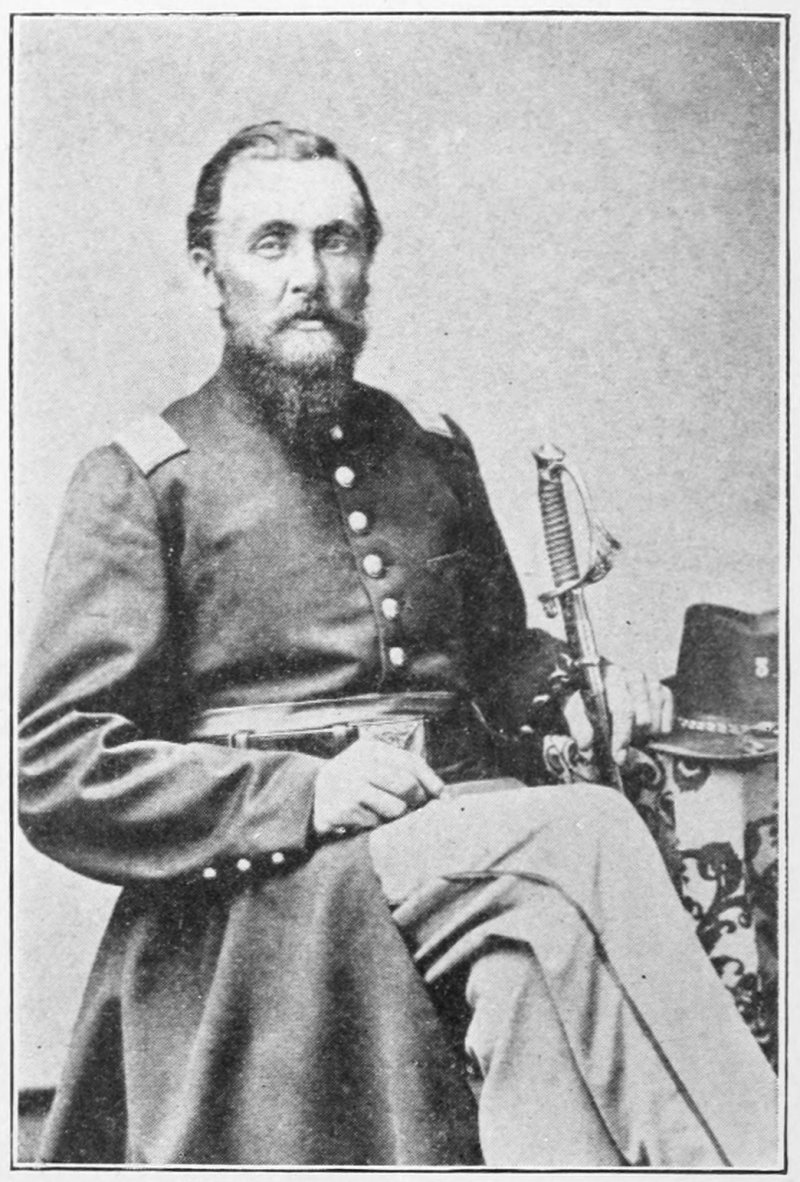
Capt. ELIHU GRANT.
Elihu Grant, Captain; 42; Fall River. The
preacher; the soldier; the man of affairs. A Westerner
by birth, an Easterner by practice. He was
first known in Fall River as a popular preacher,
where he ably served several churches. Later he
became one of the firm of Flint, Grant & Nichols.
Tin, Crockery and Furniture Dealers. He graduated
from West Point and also from one of the
Western colleges. He was a bookkeeper, agent for
soldiers and sailors, probation officer for the Second
District Court, a member of the School Board,
and a member of the G. A. R. He was a Free Mason
and belonged to several other mystic orders.
He married Amanda Gifford, of Westport, for his
first wife, and Mary Read, of the same town, for his
second wife. His death occurred at New Bedford,
March 13, 1897, at the ripe age of seventy-five years,
and was caused by his being thrown from his carriage
at Westport Harbor, Mass. One daughter
and three sons, fifteen grand and eight great grandchildren
survive him.
Benjamin A. Shaw, First Lieutenant; 30; Fall
River. He served his full term of enlistment and
was mustered out with the regiment. He was commissioned
in the Second Heavy Artillery, went with
the company to Portsmouth, Va., and died there
July 26, 1864. His grandfather was in the Revolutionary
War, and his father was a soldier in the
War of 1812.
Charles D. Copeland, Second Lieutenant; 33;
Fall River. A patriotic soldier; a model officer.
His son is a doctor of medicine and resides in
Bridgewater, Mass. He has one son and two daughters
living.
Alphonso Borden, First Sergeant; 30; Fall
River. He was discharged for disability March 27,
1863. He died in Fall River, being run over by a
fire engine. A widow survives him, living on Rock
Street, Fall River.
Charles G. Remington, Sergeant; 25; Fall
River. He was mustered out with the regiment,
came home, and after a while went West. Nothing
can be learned of his present residence. He is supposed
to be living in the West.
Isaac L. Hart, Sergeant; 41; Fall River. He was
for years a prominent manufacturer. He was superintendent
of Seaconnet Mills for many years.
He died Dec. 20, 1886. Two sons survive him.
J. E. Cunneene, Sergeant; 30; Fall River. A
prominent manufacturer; superintendent of cotton
mills in Fall River; a good soldier; a good citizen,
and a good friend.
Lester Lamson, Sergeant; 22; Fall River. He
resides in Paris, France, where he acts as an artist
in portrait painting and practices medicine as occasion
may require.
E. F. Manchester, Sergeant; 20; Westport. A
soldier, a patriot, a true man in everything and
everywhere. He was engaged in business in Fall
River several years. He moved to Portsmouth,
R. I., where he died after a lingering sickness. A
widow and several children survive him.
Thomas Wiseman, Corporal; 25; Fall River. He
re-enlisted in Fifth Unattached Company, Heavy
Artillery. He resides in Fall River and is janitor
of the post office and custom house in that city.
Nathaniel Ford, Corporal; 23; Fall River. A
contractor and builder. Resides in Fall River.
Robert C. Negus, Corporal; 32; Fall River. Both
before the War and after he followed a seafaring
life in a whaling ship. He died in Fall River several
years ago.
Robert Fielden, Corporal; 26; Fall River. For
several years he was engaged in the mill business.
He retired from active business and lives in Swansea.
Frederick A. Norton, Corporal; 18; Fall River.
He resides in Fall River and is clerk in the city
office, street department.
Samuel F. Durfee, Corporal; 28; Fall River.
He resides in Fall River. He carries on the teaming
business and is janitor of the G. A. R. Hall.
James McGuire, Corporal; 31; Fall River. Died
several years ago.
George G. Grush, Corporal; 20; Fall River. In
the employ of the Bell Telephone Company (long
distance). A very busy man when on duty; a genial
companion when off duty. He resides in Fall
River.
Charles S. Weaver, Wagoner; 20; Fall River.
He went West; since then nothing has been heard
of him.
Privates.
Althan, George; 18; Fall River. Dead.
Andrews, Thomas; 44; Westport. Dead.
Austin, Francis S.; 30; Fall River. He resides
in Fall River, where for many years he was boss machinist.
He retired from business in good circumstances.
He has two sons and three daughters living.
Borden, Stephen B.; 23; Fall River. Dead.
Butler, James; 32; Fall River. Died at Soldiers
Home, Togus, Maine, July 10, 1904.
Baker, Abram H.; 18; Westport. He went to
California and is supposed to be living.
Bucklin, George W.; 37; Fall River. Dead.
Brayton, Stephen F.; 21; Fall River. Resides
in Fall River.
Bowers, Joseph; 21; Fall River. A machinist
for M. C. D. Borden.
Bohan, James; 22; Fall River. Resides in Providence,
R. I.
Borden, John A.; 21; Fall River. Nothing
known of him since the war.
Bradbury, William; 18; Fall River. Resides in
Providence, R. I. He is an efficient member of the
police force of that city. Is a comrade of Slocum
Post, No. 10, G. A. R., and past grand of Westminster
Lodge, No. 27, I. O. O. F. A fluent speaker
and earnest worker in the Order.
Brow, Frank E.; 16; Fall River. He went to
Los Angeles, Cal., where he is supposed to be living.
Clark, Henry; 36; Fall River. Died a long time
ago.
Clarkson, Edwin; 18; Fall River. Resides in
Central Falls, R. I.
Coggeshall, Edward D.; 25; Fall River. A blacksmith,
Jamestown, N. Y.
Caswell, Thomas N.; 32; Fall River. Dead.
Cook, Charles H.; 25; Fall River. He resides
in Fall River and is janitor of the Veteran Firemen’s
Building.
Chase, George N.; 23; Fall River. Dead.
Crapo, Francis H.; 22; Fall River. Died in Chicago
years ago.
Caldwell, William; 30; Fall River. A farmer,
living just out of Fall River.
Cameron, John A.; 18; Fall River. Resides in
Fall River.
Cash, William; 35; Fall River. Resides in Fall
River. He was company bugler.
Crowley, Patrick; 40; Westport. Resides in
Fall River.
Crighton, Thomas J.; 18. He re-enlisted Aug.
17, 1864, and was discharged July 27, 1865. He was
on detached service as aid to surgeon-general. He
resides in Fall River and is foreman of a brass foundry
there.
Davol, John; 40; Fall River. Fife major of regiment.
Died in Taunton, April 20, 1904.
Davol, John N.; 18; Fall River. Drum major of
regiment. John N. was the son of John Davol.
There is a story current that one day there was a
little difference between father and son, the son
saying that being drum major, he outranked him
(the father), whereupon the father retorted that he
was his father and would give him (the son) a
sound licking, which he did, after which harmony
reigned between father and son.
For many years after the war John Davol was in
the clothing business in Fall River and John N., his
son, was in company with him. The last named
died in the Soldiers Home, Togus, Maine, Oct. 24,
1904.
Delmage, James L.; 29; Fall River. He lives on
a farm in Swansea, where he is spending his remaining
days in the quiet of a well-earned rest.
Dixon, James; 30; Fall River. Dead.
Dolman, Joseph; 43; Fall River. Dead.
Darling, John A.; 29; Fall River. He was for
years a sailor on a coasting vessel, then a carpenter,
and later a grocer. He was a member of the G. A.
R. He died in January, 1896, leaving a widow, one
daughter and three sons.
Davis, John R.; 19; Fall River. Resides in Fall
River.
Deplitch, William; 35; Fall River. He was
discharged May 27, 1863, on account of wounds received
in the Battle of Goldsboro, N. C., Dec. 17,
1862. For years he held a good position in Washington
in one of the Government Buildings, receiving
a good salary. He died in Fall River, Nov. 14,
1882.
Eaton, Josiah J.; 24; Westport. He died in
1902 or 3, leaving a widow and one daughter.
Fiske, Benjamin S.; 21; Fall River. Nothing
known of him since he was mustered out.
Fitzgibbons, Thomas; 43; Fall River. Dead.
Graham, William; 26; Fall River. Dead.
Gilbert, Thomas; 26; Fall River. He re-enlisted
in Twenty-first Unattached Company. He died Oct.
7, 1904.
Grant, George A.; 20; Fall River. He re-enlisted
in Company D, Sixtieth Massachusetts. He resides
in Brockton, a prominent man of the city, chairman
of the board of assessors for several years, a
man of affairs with an honorable record.
Green, Dennis; 18; Westport. Dead.
Horsman, John; 22; Fall River. Dead.
Horsman, Francis; 44; Fall River. He was for
many years a gardener and a mill hand. He resides
in Fall River and is hale and hearty at the age of
eighty-seven.
Hill, Joseph; 38; Fall River. Died in Bristol,
R. I.
Irving, Eli; 22; Fall River. A painter. Resides
in Fall River.
Jennings, Thomas J.; 21; Fall River. Dead.
Jennings, Cornelius D.; 35; Fall River. Supposed
to be dead.
Kenney, Thomas; 27; Fall River. For many
years a mill hand; now retired.
Lawrence, James; 27; Fall River. He re-enlisted
in Twenty-first Unattached Company Heavy Artillery.
He resides in Fall River and is a collector
for the Singer Sewing Machine Company.
Lawton, David; 26; Fall River. Agent for the
Providence Steamboat Company for many years.
Dead.
Lewis, William H.; 34; Fall River. Dead.
Lord, George; 27; Fall River. Dead.
Lock, John B.; 18; Fall River. Supposed to be
living out West.
Monroe, Albert F.; 18; Fall River. A popular
artist of Fall River. Residence, 181 Elm St.
McKinnon, Thomas; 28; Fall River. Dead.
Murphy, Dennis B.; 36; Fall River. Resides in
Fall River.
Malone, Henry; 21; Fall River. Resides in Fall
River.
Mallison, John; 30; Fall River. Unknown.
Martin, George; 40; Fall River. Dead.
Martin, Peter; 26; Westport. Resides in Fall
River.
Mars, Reuben; 19; Fall River. Fell from a team
in New York and was killed.
Nary, James; 28; Fall River. Dead.
Newman, William; 28; Fall River. Dead.
Peckham, William W.; 22; Fall River. Re-enlisted
and was killed in the Battle of Cold Harbor,
Virginia.
Peckham, Peleg H.; 29; Fall River. Boss
painter in Fall River.
Phelan, John; 25; Fall River. Dead.
Pell, Jabish; 25; Fall River. Died in New Bedford,
1903.
Packard, William H.; 26; Fall River. He carried
on the blacksmithing business in Fall River
for many years. Dead.
Platt, Edward; 35; Fall River. Resides in Fall
River.
Read, John P.; 19; Fall River. Died of typhoid
fever in 1863.
Regan, Timothy; 18; Fall River. Resides in Fall
River.
Regan, Morty; 23; Fall River. Dead.
Smithson, John; 18; Fall River. Resides in Fall
River.
Smith, Lafayette; 27; Fall River. Dead.
Sharples, Lawrence; 20; Fall River. Dead.
Sidley, John P.; 25; Fall River. Re-enlisted in
Fifty-eighth Regiment. Resides in Fall River.
Smith, James B.; 23; Fall River. A stirring business
man; writer of history of Company C. Resides
in Providence, R. I.
Terry, Edward P.; 21; Fall River. Resides in
Somerset, Mass.
Thackray, William; 38; Fall River. Re-enlisted
in Fifth Unattached Company, Heavy Artillery.
Retired from all business and resides in Fall River.
Tracy, William; 38; Fall River. Resides in Fall
River. He believes he can outrun any boy of his
age. He is now 82 years old.
Taylor, John; 36; Fall River. Discharged for
disability, March 2, 1863. Died in Fall River.
Walker, James; 18; Fall River. Driver for Fire
Engine, No. 7. Resides in Fall River.
Wallace, Richard D.; 28; Fall River. Dead.
Waite, Ishmael; 36; Fall River. Painter. Resides
in Fall River.
Company D, Third Regiment, Massachusetts Volunteer
Militia.
[The following historical sketch of Company D, Third Regiment,
Massachusetts Volunteer Militia (a nine months’ campaign during the
War of the Rebellion), was prepared by Capt. Andrew R. Wright,
and read by him at the reunion of the Third Regiment, held at Lincoln
Park, Mass.]
In the month of August, 1862, a call was made by
the President of the United States for three hundred
thousand troops to aid in suppressing the rebellion
then still existing, and to serve for a term
of nine months, or during the war. In compliance
with that call the Commonwealth of Massachusetts
proceeded to mobilize the militia of the State, by
reorganizing the old regiments not then in the field,
and by forming a number of new regiments for service
under that call. Among the old regiments included
in that call was the Third, which was located
in the Old Colony district. Company D of
this regiment was recruited up to the maximum,
one hundred and one men, as required at that time
by the laws of the United States governing the service
in time of war. The company was composed of
men enlisted from Fall River and Westport. When
nearly the full number had been recruited, an election
of officers was held in the City Hall in Fall
River, at which election Col. Silas P. Richmond presided.
The election resulted in the choice of Andrew
R. Wright as captain, Thomas McFarland as
first lieutenant, and George Reynolds as second
lieutenant. In a few days afterwards the ranks
having reached the required number, the company
was ordered to proceed to the camp of instruction
at Lakeville, which had been prepared by the State
for such instruction to the raw troops as might be
given to them previous to being called into active
service at the front, and also to issue necessary
clothing and equipments. The camp was known as
“Camp Joe Hooker.” While there the company was
drilled in the setting-up drill and company movements,
also practical instruction in guard duty.
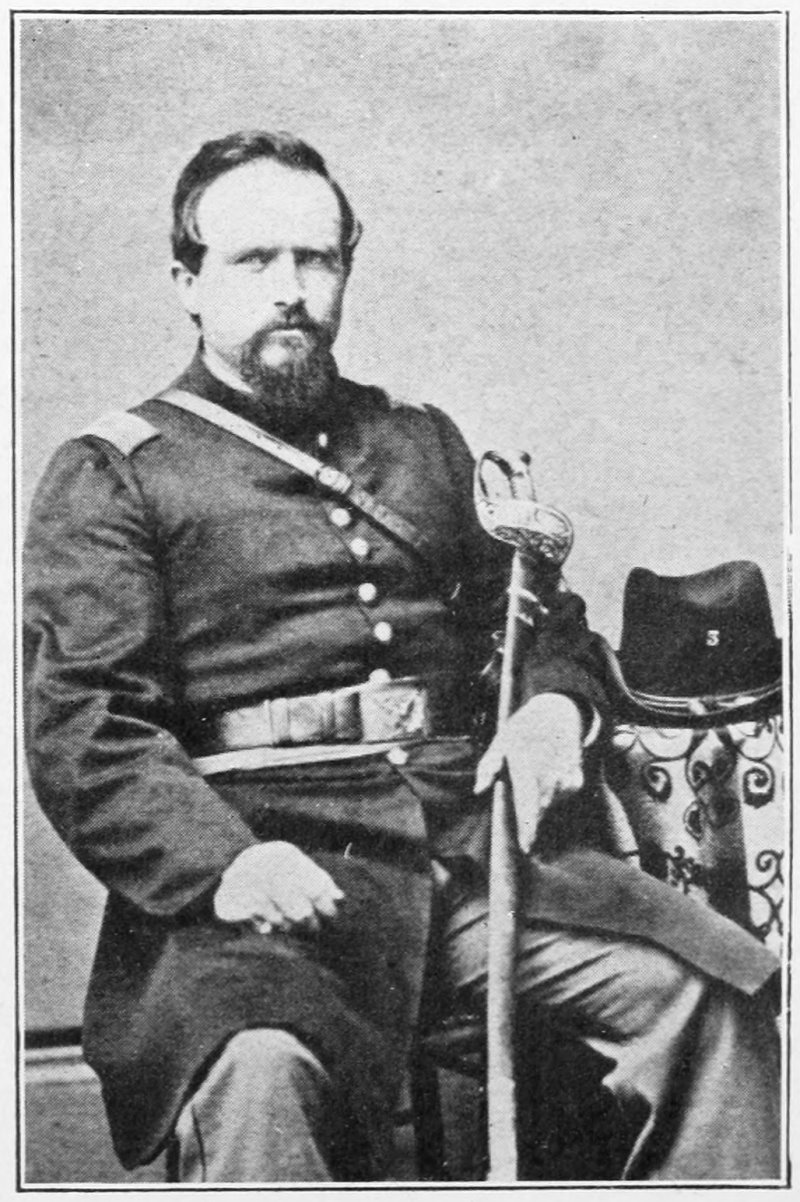
Capt. ANDREW R. WRIGHT.
On the 23d of September, 1862, the company was
mustered into the United States service by a regular
army officer; the company was paraded in two
ranks, the ranks were opened and the front rank
faced the rear; the mustering officer, having the
muster roll, passed between the ranks from left to
right critically examining each man as he came before
him. Not one was rejected. After the identification
and inspection the men collectively were required
to remove their caps, hold up their right
hands and take the oath to support the laws and
constitution of the United States. The parade was
then dismissed, and the company was then truly a
portion of Uncle Sam’s army for the defence of the
Union. The non-commissioned officers were appointed
as follows:
Sergeants: Samuel B. Hinckley, First; Francis
McGraw, Almanzor S. Elsbree, James Holt, Thomas
A. Austin.
Corporals: Ashael M. Borden, Cornelius Kelley,
Jr., Philip Chase, Charles E. Slade, William H.
Wright, William H. Monroe, Sierra L. Braley,
Charles F. Tripp.
After the muster the company was furloughed
for one week that they might make a last visit to
friends before leaving for the front. At the expiration
of the furlough all returned to camp except
two; one of whom deserted the service, the other
was returned to the company by the provost guard
after they reached Newbern. After all preparations
had been made the company had orders to
break camp and proceed to Newbern, N. C., via Boston,
and thence by steamer to point of destination.
On the morning of departure from Camp Joe
Hooker, the regimental line was formed for the first
time, Company D being upon the extreme left of
the line. The company with the rest of the regiment
marched from the camp to the railroad station
at Lakeville on the line of the Old Colony road
and embarked upon cars and were transported to
Boston, marched through the city and went on
board the steamer Mississippi that was to convey
the whole of the Fifth and half of the Third Regiments
to North Carolina. To say that the steamer
was full conveys but a faint idea of the crowded
condition of the vessel, and many of the men realized
for the first time the discomforts and privations
of campaigning; and this was but the beginning
of hardships they endured during their nine
months’ campaign in the swamps and pine barrens
of the old “North State.” After an uneventful voyage
by steamer, the company arrived at Morehead
City and disembarked, then were transported on
flat, uncovered freight cars to Newbern; arriving
there they were marched to the first camp occupied
by the regiment in Dixie. In honor of the colonel
it was named Camp Richmond. It was located on
the banks of the Neuse River and on the left of the
Forty-fourth Regiment of Massachusetts Volunteer
Militia, who had preceded the Third a few days.
During all this time neither the regiment nor the
company had been supplied with arms, and were
not so supplied until some days after the arrival,
when early one evening the long roll was sounded
and report came in from the front, some six miles
away, that our pickets had been driven in and the
enemy was then marching upon Newbern. Then
the arms and ammunition were issued to the regiment
and as soon as possible the company was paraded
in the company street, anxiously awaiting
the call to form regimental line; but the alarm
proved false and the company was dismissed to
quarters, and the camp quieted down for the night.
Subsequently, upon critical examination of the arms
that had been issued, they proved to be a lot of Austrian
rifles, and were nearly worthless. The men
were very much discouraged, as the springs in the
locks of some of the rifles were so weak that it was
impossible to explode a percussion cap with the
hammers; but by the skill of Sergeant Austin and
the use of tools procured from the ordnance officers
of the department the guns of the company were got
into quite serviceable condition, but were far from
satisfactory at any time during the company’s term
of service.
From this time forward until early in the month
of December, 1862, the company was engaged in the
regular camp and garrison duty, among which were
company, battalion, and brigade drills. To vary
the monotony of camp life somewhat, the company
with Company C were detailed for picket duty on
the railroad between Newbern and Beaufort, occupying
a deserted rebel cavalry camp. The company
remained there two weeks and then returned to
Newbern.
On the evening of December 10, 1862, after dress
parade, the colonel commanding gave orders to prepare
three days’ cooked rations, and, upon the following
day, to issue the same to the men, and also
to see that they were provided with serviceable
shoes and two pairs of new socks for each man,
that forty rounds of ammunition be supplied each
cartridge box, that the trunks of all officers and the
knapsacks of enlisted men be packed with all necessary
articles and made ready for the wagoners who
would take them on the following afternoon. All
these unusual orders could mean but one thing, and
that was an expedition into the enemy’s country;
and, acting upon these orders, Company D made requisitions
upon the quartermaster and commissary
for the requisite amount of supplies to comply
with the order. The camp was stripped of everything
not absolutely necessary for use by the men.
Before daylight on the morning of the 11th, the
regimental line was formed and troops marched out
into the Neuse road that ran from Newbern out
into the enemy’s country. Very little apparent
progress was made that day, much time being consumed
straightening out the column, and it was late
when the company went into bivouac, passing under
a magnificent arch of fire formed by the blazing
trunks of turpentine trees that lined either side of
the road and almost as far as the eye could reach on
the right and left of the column. The next day the
regiment was detailed to guard the baggage train
and slow progress was made.
On the 14th occurred the battle of Kinston, and
the company being in line of battle for the first
time, it was attached to the brigade commanded by
Colonel Lee of the Twenty-seventh Massachusetts
Regiment, and was on the extreme left of the line,
it being in close proximity to a field hospital. The
sight of the wounded and dying being brought from
the front and through the lines to the hospital was
not a cheerful prospect, nor one calculated to enliven
the spirits of the men while expecting at any
moment to receive the order to advance into the
circle of fire, but no man flinched and all were ready
for whatever duty might be required of them. The
brigade being in the rear line of battle was not actively
engaged with the enemy. The enemy was defeated
and the Union column entered Kinston early
in the evening of that day and went into bivouac in
a large field or common in front of the town. There
they remained until the following morning. After
going into bivouac strict orders were promulgated
from general headquarters forbidding foraging in
the town, but sometime in the middle of the night
the company was mysteriously supplied with a most
bountiful supply of all needful provisions and many
of the luxuries of life in the shape of canned jellies,
fruits, and preserves, and for once at least the company
reveled in a grand banquet.
The next morning the company with the rest of
the troops evacuated the town and took up the line
of march toward Whitehall, which was reached the
following day in the afternoon. Here a fierce artillery
fight took place, the right brigade of the column
and most, if not all of the artillery, being engaged
with the enemy.
The brigade to which the Third Massachusetts
Regiment and Company D was attached, passed
around the base of a hill in the rear of the line of
battle (but well within range of the enemy’s sharpshooters,
as the singing of their rifle bullets passing
just above the heads of the company so eloquently
testified) to the right of the position held
by the enemy, and which they evacuated that night.
The company bivouacked the same night upon a
sandy plain on the edge of a forest, with hungry
stomachs and empty haversacks; but they were very
fortunate in finding the commissary wagons that
night and securing a fifty-pound box of hardtack
and a few pounds of mixed coffee and sugar, which
proved a very welcome supper.
On the next day, the 17th of December, the company
met the enemy; the brigade to which the regiment
was attached being upon the right of the column,
found itself in the immediate vicinity of the
enemy early in the forenoon, the skirmishers driving
in their pickets and developing their position
near a bridge on the Wilmington and Welden Railroad
that crosses the Neuse River near the town of
Goldsboro. After a sharp engagement the enemy
retired; the Union Infantry Regiments were
marched to a position near the railroad, stacked
arms, and commenced to destroy the road, which
was effectively accomplished for a number of miles.
At the same time the bridge was fired and destroyed,
thus for the time crippling the road, which
was supposed to be one of the leading lines of communication
of the Confederate army of Northern
Virginia with the southern portion of the Confederacy.
When preparing to leave the field an alarm was
made that the enemy had rallied, reformed their
lines, and were about to make an attack. The
alarm proved to be correct, our lines were hastily
reformed to resist such attack. It was at this time
that the company first met the enemy face to face,
as they came down the railroad embankment like a
swarm of immense gray ants. They formed line
of battle in the open fields as on parade, and started
with a yell to make a charge upon the Union lines
some three hundred yards in their front. These
lines were composed of troops of which Company D
of the Third Regiment Massachusetts Volunteer Militia
formed a part.
Sections of the New York Artillery and Belger’s
Rhode Island battery of Parrott guns were rapidly
placed in position
in the immediate front of the infantry
lines formed to resist the charge of the enemy,
and hurled such terrible charges of grape and
canister into the faces of the enemy that no human
courage could withstand, and, before more than half
the distance that separated the contending lines
had been traversed, the enemy’s lines were broken,
and those of the enemy who were able to do so
sought shelter in the thick woods on their left, followed
by showers of bullets from the rifles of the
infantry. While this scene was terribly exciting,
so far as known not a man left the ranks of Company
D, with the exception of one man slightly
wounded by a fragment of an exploded shell.
This action ended the active hostilities of this expedition
of the Eighteenth Army Corps into the enemy’s
country. It failed of its co-operative purpose,
as the Army of the Potomac had been disastrously
defeated at Fredericksburg a short time previous,
thus enabling the commander of the Confederate
forces to reinforce at any point. The expedition
returned to Newbern without incident, and
shortly after were ordered to inscribe upon their
colors the words “Kinston,” “Whitehall,” and
“Goldsboro,” to commemorate the battles that were
fought at the locations indicated.
An inspiring sight gladdened the hearts of the
company when approaching Newbern on the return
from the expedition, in the appearance of the Stars
and Stripes floating in the air from the flagstaff on
Fort Totten; it seemed to welcome the column home
from the dangers and hardships it had endured in
its defence.
The company went into its old quarters at Camp
Richmond, and the regular routine of camp duty
commenced. The trunks and knapsacks were again
returned by the wagoners, and the company were
housekeeping comfortably once more. Nothing of
great interest occurred until early in the year of
1863, the company in the meantime participating
with the regiment in two or three marches into the
enemy’s country, but with no apparent results. In
the late winter or early spring of 1863 the enemy
made a reconnoissance in force along the whole line
of the department, and seemed determined to make
an assault upon Newbern from the left flank of the
Neuse River and directly opposite of the town, but
they were held at bay by a comparatively small
force, when, with the assistance of the gunboats,
they were compelled to retire. A strong demonstration
was made upon the lines immediately in
front of Newbern, strong reinforcements, among
whom were the Third Regiment with Company D
attached, were hurried to the front, remaining under
arms all night, and momentarily expecting an
attack, but no assault came and the enemy withdrew.
They seemed more determined upon the extreme
right of the lines of the department, as they
erected batteries upon the river bluff opposite the
town of Little Washington, thus cutting off communication
with the troops occupying that position,
and the rest of the department, also holding the
general commanding the department at the time the
enemy closed the river. To relieve this condition
of affairs, a column was formed of all the available
troops then in Newbern, among whom was the regiment
to which Company D was attached, and an attempt
was made to reach the rear of the enemy’s
position in front of Little Washington by way of a
road crossing Blount’s Creek in the rear of the position
held by the enemy; but the attempt failed, although
the artillery attached to the column and the
right of the brigade to which the company was attached,
were actively engaged with the enemy perhaps
for a half hour. Yet, for some unexplained
reason, the order was given to retreat on Newbern,
which the column reached without molestation by
the enemy, and the troops in a dispirited frame of
mind, as they could not understand the grand strategy
exhibited upon this expedition.
About this time a number of regiments returned
to the department from South Carolina, where they
had been sent some months before to re-enforce General
Hunter in his operations against the rebel position
in and about Fort Sumter and the approaches
to Charleston. About the time that these
troops returned to the department General Foster
bravely succeeded in running the blockade at Little
Washington, and suddenly appeared at Newbern.
Affairs quickly assumed a different aspect. He immediately
organized two expeditions, one to reach
the rear of the rebel position that was besieging
Little Washington, the other to make a demonstration
on Kinston. Company D was attached to the
latter column, and with the rest of the troops was
transported by train to Batchelder’s Creek, the extreme
front line of the department. The company
remained here a few days, and with the rest of the
regiment and other troops, made threatening demonstrations
upon the enemy’s position in front of
Kinston. No decisive action was had, but the demonstrations
there and at Little Washington had the
effect of raising the siege of that place, and the enemy
retreated from his threatening positions before
the whole line, and quiet reigned again.
In the early spring an order was received by the
commanding officer of Company D from regimental
headquarters to report to General Wessels, then in
temporary command of the department, for instruction
in some special duty. The officer so ordered
immediately reported, and, in the interview with
the general, the officer was told that information
had been received that the enemy were preparing
to erect fortifications at a locality some twelve or
fourteen miles below Newbern, on the northerly
bank of the Neuse river, and known as Wilkinson’s
Point, for the purpose of blockading the river, thus
closing this very important line of water communication
by which the department received a very
large part of its supplies of all kinds. He then
gave the following order, “You will take with yourself
your first lieutenant, two or three non-commissioned
officers and fifty privates; see that they are
provided with three days’ cooked rations in their
haversacks and forty rounds of ammunition in their
cartridge boxes. You will leave camp at five o’clock
in the morning, march to the government wharf in
the rear of general headquarters and go on board a
steamer which you will find awaiting you there.
A topographical engineer will be taken on board
from the surveying steamer lying in the stream;
you will then proceed down the river, being convoyed
by one of the gunboats, the commanding officer
of which has been given his instructions. Arriving
near the point, your steamer will come to anchor,
and you will observe closely whether signs of
the enemy can be seen from the steamer; if there
are indications that the enemy are in force then the
gunboat will shell the place vigorously to drive
them back from the point, when you will land your
command under cover of the fire of the gunboat,
and make a thorough inspection of the work that
has been done by the enemy, and effectually destroy
any fortifications that may have been begun. The
engineer will land with you and make such plans
and drawings as he may think proper. If upon
your arrival at the point no signs of the enemy are
apparent, you will land half of your command and
endeavor to ascertain whether any unusual number
of people, either soldiers or civilians, have visited
or made surveys of the point; thoroughly examine
the location one or two miles back from the
point and upon either side of it, and make report to
these headquarters through your regimental commander.”
The officer, after receiving these instructions, was
dismissed by the general with the significant remark
that “this duty may be a pleasant excursion,
or it may prove to be a very serious matter. Let
us hope that it will turn out to be the former.”
The captain immediately returned to the regimental
camp and the detachment was fully prepared
that night. It was off bright and early the next
morning; the point was reached in due time, but
no signs of the enemy were seen. A detail of
twenty-five men and sergeants, under the command
of Lieutenant McFarland, was landed from the
steamer and spent several hours seeking for knowledge
of the enemy, but none was obtained and the
detail was re-embarked and the steamer and detachment
returned to Newbern the same day, the detail
reaching camp about dusk, much pleased with this
pleasant tour of duty.
Sometime in the month of May Company D with
E and F companies was detailed for a tour of two
weeks’ picket duty at Deep Gully, at the extreme
front of this department. Nothing of moment occurred
during the time occupied in this duty. At
the expiration of two weeks the detail returned to
camp at Newbern.
The term of service was now drawing near its
close. Quite naturally the members of the company
were impatient to return to the dear friends at
home. In due time the order came to break camp
and proceed to Boston. All camp and garrison
equipage was collected and turned over to an officer
detailed from general headquarters to receive it. All
articles belonging to the company not otherwise
needed was distributed to the comrades of other
regiments in the department.
Early in June the regiment paraded in heavy
marching order and marched out of the camp,
where, upon the whole, so many pleasant days had
been passed, and lasting friendships had been
formed. The regiment marched through the town
and gayly gave a marching salute to the brigade
commander as it passed his headquarters. The colonel,
staff, colors and right wing of the regiment
marched to the railroad station in Newbern and was
transported to Morehead City, thence took the
steamer S. R. Spaulding to Boston. The left wing,
to which Company D was attached, proceeded to
the wharf in rear of general headquarters and went
on board the steamer Tillie and sailed down the
river to Hatteras Inlet, remaining inside the bar
until the following morning, then proceeded to sea
and reached Boston in due time. Escorted by the
Forty-fourth Regiment, the Third marched to the
Old Colony railway station, saluting the Governor
of the Commonwealth when passing the State
House. Company D with the rest of the regiment
was furloughed for one week with orders to report
at Camp Joe Hooker, Lakeville, at that time, there
to be mustered out of the United States service.
Companies C and D were transported to Fall River,
where a very cordial reception awaited them by the
city government. Upon the expiration of the furlough
the company returned to Camp Joe Hooker,
and, on June 26, 1863, was mustered out of service
and returned to their several homes; and it is to be
believed none regretted the duty which he had been
able to perform for the country in its time of need.
[Written by Comrade Vernon Wade.]
[The first figures indicate age at enlistment: the city and town, the place
of enlistment.]
Andrew R. Wright, Captain; 30; Fall River. Attended
Fall River schools. Learned the trade of a
machinist. In 1853 went to California, where he
remained four years. On his return to Fall River
worked at his trade. A man of staunch character.
Organized Company D, which was attached to
Third Regiment, Massachusetts Volunteer Militia,
and was with his company during the North Carolina
campaign; participated in all the battles of the
regiment and was mustered out of the same. Returned
to Fall River. Worked four years at his
trade in Providence, again returned to Fall River,
and was associated with A. G. Thurston in mechanical
business. Was City Marshal of Fall River nine
years. Was elected high sheriff of Bristol County,
which office he held eighteen years. Keeper also of
Taunton jail. Died in Fall River, July 3, 1899, leaving
a widow and two children. Was a member of
Mount Hope Lodge, A. F. & A. M., Richard Borden
Post, G. A. R., the Unitarian Society, and Fall
River Board of Trade. Highly respected by all, as
a citizen, soldier, and business gentleman, he lived
beloved, and died lamented by his company and his
large circle of friends.
Thomas McFarland, First Lieutenant; 36; Fall
River. Born in Scotland, 1826. Came to Fall River
and worked in one of the cotton mills. Enlisted in
Company D, and was elected first lieutenant in
same, served with his company through the nine
months’ campaign. Re-enlisted and was promoted
captain of Company G, Fifty-eighth Massachusetts
Infantry. Killed at battle of Cold Harbor, June 3,
1864, leaving a widow and two children.
George Reynolds, Jr., Second Lieutenant; 24;
Fall River. He was a faithful officer and a true
friend to every man in the Company. He is engaged
in the wholesale fish business in Fall River
and lives in Tiverton, R. I. He is a great admirer of
horses and but few can tell all the points of a good
blooded horse better than George.
Samuel B. Hinckly, First Sergeant; 30; Fall
River. He re-enlisted and was promoted captain of
Company G, Fifty-eighth Regiment, where he proved
himself a brave, discreet officer, who won the confidence
of all his men in battle by his cool courage,
devotion to his country, and his unlimited patriotism
for country and the Old Flag. Soon after the
war he went to Riverside, California, where he now
has an orange grove of ten acres. Samuel always
has on hand a treat for all who visit him, and an
extra box of the best fruit for any member of the
old Third.
Almanza S. Elsbree, Sergeant; 28; Fall River.
For many years after the war he had charge of a
stationary engine. He died Dec. 26, 1893, respected
by a large circle of friends, leaving a widow and
two children.
Frank McGraw, Sergeant; 30; Fall River. He
was born in Ireland and came to America a strong,
vigorous youth. He enlisted in Company D, Sept.
23, 1862; served in the nine months’ campaign, and
was mustered out with the regiment. He re-enlisted
in 1864 and was detailed in the signal corps with
Sherman, marching with him to the sea. After the
war for many years he was in business in Fall
River, where he was highly respected. He was appointed
inspector of the Fall River police force. He
died in Fall River, May 26, 1892, leaving three children.
By request Rev. J. G. Gammons conducted
the funeral service. Gen. O. O. Howard was present
and made complimentary remarks on the soldierly
character of Comrade McGraw. A large concourse
of people were present including Richard
Borden Post, G. A. R., of which he was an honored
and an active member. He was buried with military
honors in the beautiful Oak Grove Cemetery,
Fall River.
James Holt, Sergeant; 24; Fall River. He was
taken sick with typhoid fever in Newbern and carried
to the hospital, from which he was discharged
and returned to the company. He died April 30,
1869. A widow and two sons survive him.
Thomas Austin; age, 26; Fall River. Unknown.
Ashiel M. Borden, Corporal; 24; Fall River. He
was a good, true soldier, served his time of enlistment,
and was discharged with the regiment. He
died Aug. 9, 1871, leaving a widow and four children.
The widow was burned to death several years
ago; two children are now living.
Cornelius Kelley, Jr., Corporal; 31; Fall River.
Died several years ago.
Philip Chase, Corporal; 28; Fall River. He was
a member of the Seventh Massachusetts Regiment
Militia, June 15, 1861. He enlisted in the Third
Regiment Sept. 23, 1862. He enlisted in the Thirteenth
Regiment, Company K, Sept. 1, 1864. He
was mustered out Nov. 23. 1865. He is now a hotel
clerk.
Charles E. Slade, Corporal; 26; Fall River. He
was taken sick and sent to the Stanley Hospital,
Newbern, soon after he arrived there. When sufficiently
recovered he was detailed as nurse. He returned
home with the regiment and mustered out
with the same. After the war he went into business.
He was elected superintendent of Grant Mill in Fall
River, a position which he filled to the satisfaction
of the corporation. He died Feb. 8, 1895. He left
a son who resides in Providence, R. I., and a daughter
who is the wife of George W. Bliss, a grocer in
Fall River.
William H. Wright, Corporal; 26; Westport.
He re-enlisted in Company G, Fifty-eighth Massachusetts
Volunteers. He wore a medal which had
been presented to him by Queen Victoria. He was
a prisoner of war and was confined in Salisbury
Prison, North Carolina, Jan. 23, 1865.
William H. Monroe, Corporal; 22; Fall River.
He was also lieutenant in the Sixtieth Massachusetts
Volunteer Regiment. On returning home he
engaged in the painting, decorating, and paper
hanging business. He resides in San Pedro, California,
and has one son living in Trinidad, Colorado.
Sierra L. Braley, Corporal; 19; Fall River. He
re-enlisted Dec. 11, 1863, as sergeant, Battery L,
Heavy Artillery. He was promoted to second lieutenant,
April 16, 1865. He was lieutenant United
States Colored Troops, June 3, 1865. He was first
lieutenant of Company D, State Militia in 1866,
and captain in 1868. He was quartermaster of the
Third Battery, Sept. 1, 1876. He was captain of
Company M, Dec. 17, 1878, and resigned Jan. 1,
1879. He was bookkeeper for George E. Hoar until
his death, which occurred Feb. 27, 1901, in Fall
River. A widow and one daughter survive him, living
in Fall River.
Charles P. Tripp, Corporal; 21; Westport. He
is by trade a carpenter. He served during the nine
months’ campaign. He was badly injured while
tearing up the railroad track at the battle of Goldsboro.
He came home and was mustered out with
the regiment. He was a contractor and builder for
many years in Fall River. He served five terms as
councilman in the City Government. He was a
member of several mystic orders, G. A. R., and Red
Men. He died April 29, 1895.
Edwin J. Dyer, Musician; 18; Fall River. He re-enlisted
twice and was for a time in the commissary
department. After muster out he went into
the machinery business. He was a clothier, a mercantile
agent, and is now president of a life insurance
company. He is a member of Post No. 2, G.
A. R., Boston. He resides in Dorchester, Mass.
Charles C. Borden, Musician; 17; Fall River.
Unknown.
Valentine Perry, Wagoner; 39; Fall River.
Died Jan. 19, 1901.
Privates.
Ash, Thomas; 20; Fall River. Unknown.
Baker, Jeremiah D.; 40; Fall River. At the time
of enlistment he was a nailer. He re-enlisted in
Company G, Corporal, Fifty-eighth Regiment,
March 26th and was mustered out July 14, 1865.
He went into the quarry business. He died leaving
a widow, now eighty-five years old, and three children.
Brightman, William B.; 21; Fall River. A fisherman
in Alaskan waters.
Brightman, James; 20; Fall River. Re-enlisted
in Company I, Second Regiment Heavy Artillery
as Corporal, Sept. 3, 1865.
Brown, Samuel; 22; Westport. He re-enlisted in
Company G, Fifty-eighth Massachusetts. He died
of wounds May 12, 1864.
Borden, Isaac S.; 23; Westport. He re-enlisted
in Fifty-eighth Regiment, March 12, 1864. He was
wounded in battle and discharged July 14, 1865.
He is a grocer.
Bradbury, Robert; 37; Westport. Discharged
May 12, 1863. Dead.
Coogan, James; 40; Fall River. Dead.
Clarkson, Thomas; 27; Fall River. Wounded
in the battle of Goldsboro. Died Jan. 6, 1897.
Cannady, William J.; 18; Fall River; Moulder.
Resides in Fall River.
Curren, James; 19; Westport. Dead.
Casey, Michael; 23; Westport. Re-enlisted in
Company F, Fifty-eighth Massachusetts Regiment.
Mustered out July 16, 1865.
Cordingly, Thomas R.; 36; Westport. Dead.
Cutler, Israel; 26; Westport. Unknown.
Davis, John P.; 44; Fall River. Known as company’s
poet. Dead.
Dacy, Timothy; 40; Fall River. Dead.
Demaranville, Stephen E.; 21; Westport. Supposed
to be living in New Bedford.
Donovan, Edward M.; 25; Fall River. He re-enlisted
in Company G, Fifty-eighth Regiment. He
was wounded and taken prisoner Sept. 31, 1864. He
died in Petersburg.
Daval, Henry S.; 23; Westport. Dead.
Dwyer, William; 27; Westport. He re-enlisted
in Company G, Fifty-ninth Massachusetts Volunteers.
He was wounded June 18, 1864. Dead.
Dolan, Andrew; 36; Westport. Dead.
Dillon, John; 22; Westport. Deserted Sept. 25,
1862.
Dyer, Stephen K.; 18; Westport. Died in Newbern,
June 6, 1863.
Earl, Andrew R.; 23; Westport. Known as the
“large man” (265 pounds), had his suits made to
order—“the baby of Company D.” A brave and
fearless soldier, who was faithful to every duty and
was never scared. Resides at Soldiers Home, Santa
Monica, Cal. Fell down an elevator well and broke
his legs while at work in San Francisco.
Folger, David J.; 23; Fall River. He re-enlisted
in Company M, Second Massachusetts Cavalry. He
was a prisoner in Libby and Andersonville nine
months with twenty of his comrades who were taken
at the same time, and was the only one to survive
the hardships of prison life. He was a carriage
manufacturer and continued in that business until
his death, June 4, 1901. A widow and one daughter
living in Amesbury, Mass., survive him.
Francis, William; 19; Fall River. Died in Fall
River.
Frawley, Patrick; 32; Fall River. Unknown.
Freelove, Richmond D.; 24; Fall River. Died in
Fall River.
Fay, Edward; 23; Westport. Farmer, grocer,
business man; lives with his son in Bolton, Mass.
Flaherty, John; 33; Fall River. Died in Fall
River, Dec. 15, 1893.
Grush, Frederick A.; 22; Fall River. He re-enlisted
as First Sergeant in Company G, Fifty-eighth
Massachusetts Infantry. He was taken prisoner at
the battle of Crater July 30th, and died at Annapolis,
Md., October, 1864.
Hackley, John; 40; Westport. Died in 1863.
Hayston, Thomas; 31; Fall River. Dead.
Hanson, George; 18; Fall River. Re-enlisted
July 21, 1864, in Sixtieth Unattached Company,
Massachusetts Volunteer Militia. Oil merchant.
Harrington, Timothy; 23; Westport. Dead.
Harrington, Daniel; 19; Westport. Lives in
Fall River.
Harrington, John; 18; Westport. Dead.
Hoolhen, Michael; 21; Westport. Unknown.
Jorden, James; 18; Fall River. Discharged June
10, 1863. Transferred; did not return with the regiment.
Kidd, Thomas; 40; Fall River. Resides in Fall
River. Clerk.
Kaylor, William; 24; Westport. Known as
“Lawyer Kaylor;” very active in learning and expounding
army regulations, services to be rendered
and rations due each man. Died Feb. 8, 1898.
Leadwith, James; 20; Fall River. He re-enlisted
in Company H, Seventeenth Massachusetts Regiment.
He was discharged at the end of the war.
He is a painter and lives in Fall River.
Levally, Benjamin W.; 18; Fall River. He re-enlisted
in Captain Hurlburt’s company of cavalry.
He died in Fall River, Aug. 17, 1900.
Leary, James; 18; Fall River. He re-enlisted in
Company G, Fifty-eighth Massachusetts Infantry.
He was wounded May 12th and taken prisoner Sept.
30, 1864. He was killed on railroad crossing at Fall
River, Mass.
Manchester, Gilbert; 19; Westport. Unknown.
Murphy, Jeremiah E.; 21; Fall River. Unknown.
Miller, George; 34; Westport. Supposed to be
dead.
Marshall, John; 24; Westport. Unknown.
Murphy, Timothy; 32; Fall River. Dead.
Morton, Charles H.; 21; Fall River. Commissioned
second lieutenant, October, 1863; assigned
to duty as adjutant of recruiting, and was on duty
at Readville, Mass. Mustered first lieutenant of
Company G, Fifty-eighth Regiment and was with
the regiment through the battles of the Wilderness,
Spottsylvania, Cold Harbor, and in the march
across the James; in engagements June 16th, 17th,
18th, in front of Petersburg and the Battles of the
Mine, July 30th; taken prisoner September 30th at
Poplar Grove fight. In prison at Libby and Danielsonville,
Va., and Salisbury, N. C. Exchanged
Feb. 22, 1865. Went to oil fields, Pennsylvania.
Proprietor of a store in New Bedford; in the real
estate business in Boston; deputy state constabulary
from 1866 to 1870. On account of poor health
retired from all business until 1873, when he was
appointed postmaster of Fair Haven, which position
he held fourteen years. Director of National
Bank of Fair Haven, and its president from 1881
until July 1, 1904. Treasurer of Fair Haven Institution
for Savings since 1886. Chairman of
School Board.
Mowry, William I.; 18; Fall River. Re-enlisted
in Fourth Cavalry, Aug. 20, 1863. Discharged at
Richmond, Va., Nov. 14, 1865. Boss carpenter at
Tecumseh Mills. Lives in Fall River.
Millerick, John; 25; Fall River. Re-enlisted in
Company F, Fifty-eighth Regiment, and was in all
the battles of the regiment; wounded in battle; captured
and had his arm amputated in a Rebel prison;
paroled Aug. 10, 1864, and mustered out July 13,
1865. Night watchman for several years. Died
Mar. 31, 1878, leaving a widow and seven children.
Mellor, Charles H.; 18; Fall River. Unknown.
McKenny, Felix. Jr.; 21; Fall River. He was
wounded at Blount’s Creek by the falling of the
limb of a tree, which was cut off by a Rebel shell.
A barber in Fall River.
McDermott, Thomas; 28; Fall River. Re-enlisted
March 12, 1864. Died of wounds July 5, 1864.
McPhee, Thomas; 40; Fall River. Dead.
McDonald, Daniel; 28; Fall River. Unknown.
McNaughton, Charles; 38; Westport. Died
Feb. 11, 1894.
McGuinness, Edward; 37; Fall River. Died Jan.
3, 1900. A widow and several children survive him.
McGowan, John; 30; Westport. Unknown.
Ogden, Henry; 25; Fall River. Died in 1893.
Page, Hathaway B.; 20; Fall River. Re-enlisted
in Sixtieth Infantry. Dead.
Pool, John; 44; Fall River. Dead.
Peters, John; 29; Fall River. Re-enlisted March
12, 1864, in Company F, Fifty-eighth Regiment.
Died in Salisbury prison, North Carolina, Jan. 15,
1865.
Platt, Charles; 19; Fall River. Unknown.
Petty, Hiram S.; 30; Westport. Re-enlisted in
Second Heavy Artillery, Company I. Mustered out
Sept. 3, 1865, at the expiration of his term of service.
Dead.
Pickles, James; 26; Westport. Unknown.
Ryan, Jeremiah; 44; Westport. Believed to be
dead.
Robotham, James; 18; Westport. Dead.
Shehan, Daniel; 25; Fall River. Dead.
Sherman, William H.; 25; Fall River. Lives at
the Soldiers Home, Togus, Maine, and has charge of
the steam in connection with the Home.
Shay, Michael W.; 19; Fall River. Dead.
Sargent, John; 23; Fall River. Dead.
Sanford, Sylvester; 22; Fall River. Re-enlisted
in Company G, Fifty-eighth Regiment. Works at
carpentering and stone work in South Westport,
Mass., where he resides.
Soule, Robert F.; 18; Westport. Lives in Bakerville,
Dartmouth. Farmer.
Shaw, Charles; 42; Westport. Dead.
Smith, Robert; 35; Westport. Supposed to be
dead.
Tripp, Allen H.; 25; Westport. Died in Providence,
R. I.
Wise, Whitlock; 27; Westport. Unknown.
Wade, Vernon; 28; Fall River. Re-enlisted, sergeant
in Sixtieth Massachusetts Regiment. A faithful
soldier, a true patriot, a successful business
man, trusted and respected by all. Resides in Fall
River, where he carries on a grocery business.
Woodcock, Jonas; 36; Fall River. Dead.
Company E, Third Regiment, Massachusetts Volunteer
Militia.
[By Frederick F. Maxfield.]
This company was made up of New Bedford men
with three exceptions, Capt. John A. Hawes, of
Fairhaven; Daniel H. Tripp, of Westport; and
Albert M. Allen, of Westport. For the greater part
the company was composed of young men and men
in the prime of life. It is well for us to remember
that New Bedford has an unique history, among
the military companies of the State. First, the
New Bedford Guards were organized in 1842. They
were disbanded, and out of that organization came
many who served as officers during the War of the
Rebellion. At the present time there are two of
the New Bedford Guards living; viz., James E.
Blake, druggist, corner of Second and Middle
Streets, New Bedford; William Balis, grain
dealer, foot of Middle Street. In 1853 the City
Guards were organized and drilled. This company,
known in history as Company L and City
Guards continued in commission, answered to the
call of President Lincoln, and served three months
in the Third Regiment Massachusetts Volunteer
Militia. On its return to New Bedford all its commissioned
officers resigned, and William E. Mason,
sergeant of the company, was in command. When
the call was made for three hundred thousand men,
Sergeant Mason recruited the company to its maximum
number, but, being a modest man, and knowing
that John A. Hawes was an adept in military
matters, he asked Mr. Hawes to be captain of the
company, which being agreed to by all, Sergeant Mason
was made first lieutenant, and James L. Sharp
second lieutenant.
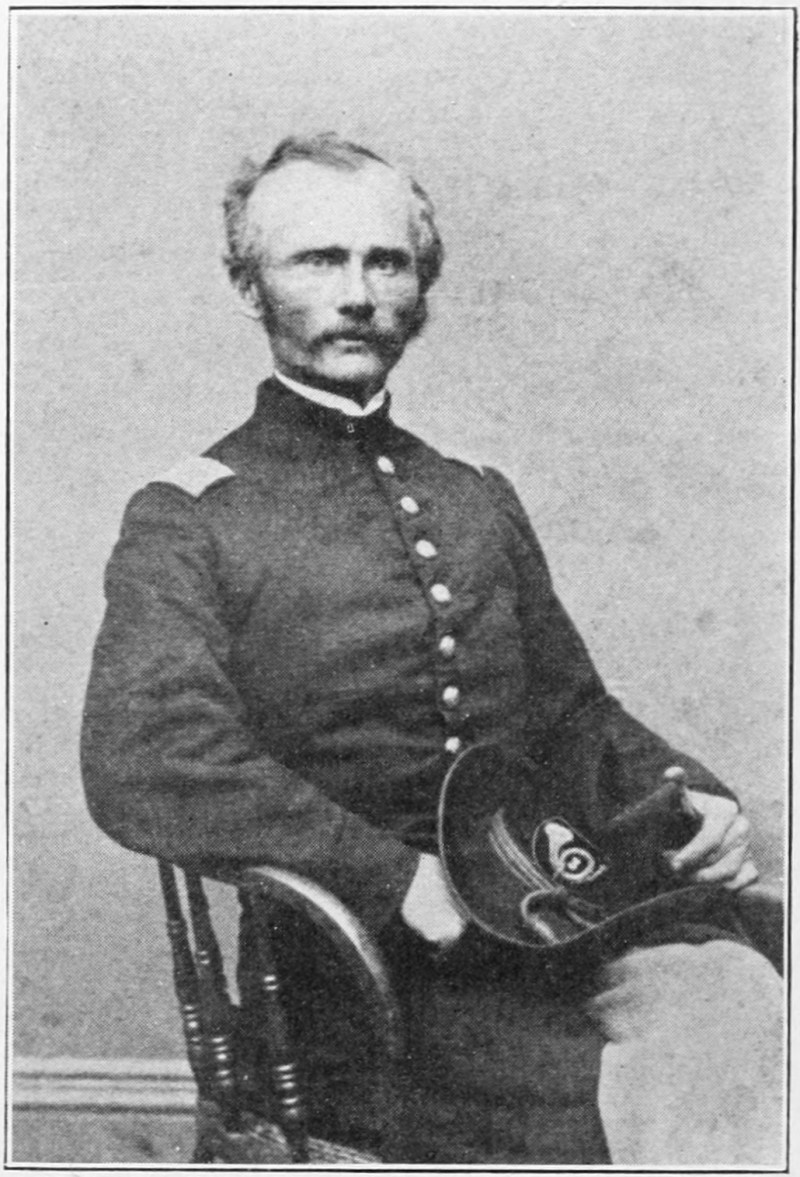
Capt. JOHN A. HAWES.
Captain Hawes was a man eminently fitted for
the commander of the company. Born in a home
of wealth, educated in the schools of his own town,
and in Harvard Law College, and having practiced
law, he was well prepared to deal with all the difficult
questions of military and army life; yet notwithstanding
his wealth, he never asked his company
to go where he would not lead, nor to suffer
hardships which he would not share with them. He
went to war not for pay, but for the honor of the
old flag, which he loved more than wealth, more
than ease, more than honors. That his services
were appreciated by his superior officers will be seen
by the following:
“Headquarters Second Brigade, Fifth Division,
Eighteenth Army Corps,
Newbern, N. C., May 6, 1863.
Captain John A. Hawes:
It is with much pleasure and I may say pride, inasmuch as
your splendid company is part of my brigade, that I congratulate
you on the remarkable good condition of your company,
both in reference to drill, discipline, and soldierly
bearing. To command such a fine company must certainly
be an honor of which you may well feel proud.
I have the honor to be, Captain,
Very respectfully your obedient servant,
J. JOURDAN, Colonel,
Commanding Brigade.”
Captain Hawes looked after the rights and well
being of his men, in camp and on the march. He
never allowed one of his company to do a dare-devil
act just for the notoriety of the thing, neither did
he allow any one to shirk his duty. Each man must
do his duty, and each man must be given his rights
in rations, in recreations, and in social enjoyments.
On the march he took always the left side of his
company, and, if for any good reason, one of his boys
became unable to continue the march from sickness,
he always found a place for him in an ambulance,
instead of leaving him by the roadside to care for
himself. He has been heard to say, “Mrs. —— intrusted
her boy to me, and I must so care for him,
that should we live to go home, when I meet her I
can look her in the face with the consciousness that
I did my duty.” Such was Captain Hawes as an
officer of the army.
On returning home he took up his citizen life
quietly, and enjoyed the comfort of his luxurious
home. For several years he was president of the
Bristol County Agricultural Society at Myricks,
where his good judgment and kindly acts will long
be remembered. A little incident explains his character.
One morning a representative from the
church in Myricks went to him and suggested that
a rope be put across one of the driveways on the
Agricultural Society grounds, as some of the people
of Myricks were nearly run over by the careless driving
on the previous day. Turning to one of his officials,
he said, “Mr. —— says a rope should be put
across the road to prevent people from being run
over.” “If he wants a rope across the road, let him
put it there,” said the official. Turning to the official
he said, “This is my friend, you see that a rope
is put across the road,” and the proud official had
to obey orders. For years he was commodore of the
New Bedford Yacht Fleet, where by his gentlemanly
courtesies to his superiors, inferiors, and equals, he
endeared himself to all. After a well-rounded out
life, with his loved ones around him, he quietly
passed from works to reward, lamented by a large
circle of friends, who to this day regard him as a
model man, a good officer, and a true friend to all
with whom he had to do.
The same that is said of Captain Hawes can be
said of First Lieutenant Mason, who will be remembered
by every man in the company and regiment,
also, as a man of high moral character, and a true
officer. Modest, yet firm in discipline; gentle, yet
insisting that every man must do his duty; bold,
when duty called; careful, when care became the
better part of valor, he would not allow himself, nor
the men under his command, to imperil life just for
the name of being called bold; but when duty called
no braver man could be found and no one who could
be trusted better with an important duty. True
to himself, he was true to his men. On the march
Lieutenant Mason was always at the head of the
company. He never ordered his men to go where
he would not lead. He served his company and his
country as a man who believed that shoulder straps
are honorable only when honored by the wearer.
His slogan was that every man has rights, which
must be respected by all regardless of rank or position,
and he should be protected in those rights.
After serving his nine months in the Third Regiment
and being mustered out, he recruited Company
G, Fifty-eighth Massachusetts Volunteer Infantry,
being second lieutenant Sept. 18, 1863, and
captain in the same company Jan. 22, 1864. Here
the same good traits as an officer continued. At
the battle of Cold Harbor he was severely wounded,
and again at the battle of Crater the same year,
and for his bravery in these and other battles he
was invested major. He was mustered out in 1865,
returned home, and was made inspector in the Custom
House, Boston, where he remained until failing
health compelled him to resign. In his home in
New Bedford, in the calm and serene beauty of a
life of seventy-eight years well and conscientiously
spent, he died May 27, 1905, beloved and honored.
Second Lieut. James L. Sharp was a good officer,
who readily responded to every duty. Before the
war he carried on the business of a tinsmith in New
Bedford and was very successful; after the war he
went to New York and continued in the same business.
He is known as the patentee of the celebrated
Gas Burner Stove. He died several years ago.
[By Major Cushman.]
Company L was generally known as the “New
Bedford City Guards.” The first meeting for its
organization was held July 22, 1852, and, on the
31st of August following, George A. Bourne was
commissioned its captain. He had previously been
commissioned captain of Company K, in the Third
Light Infantry, Second Brigade, First Division,
which existed in New Bedford and was known as
the “City Guards.” Captain Bourne resigned Jan.
19, 1847, and the company was disbanded Aug. 8,
1849. Captain Bourne commanded the “New Bedford
City Guards” till 1854, when he resigned, and
was succeeded by Captain Timothy Ingraham, who
was in command at the time of the receipt of Special
Order, No. 14, dated April 15, 1861, which ordered
the company to report immediately in Boston.
The New Bedford City Guards under Captain Ingraham
soon became noted for proficiency in drill.
His son was a cadet at West Point and the company
not only adopted the complete uniform of the
cadets, but excelled in the new tactics afterwards
promulgated by the War Department as Hardee’s
Tactics, which formed a part of the instruction at
West Point. As a part of their fatigue dress the
Guards wore a unique scarlet jacket, from which
they were jocularly termed when in exercise drills,
the lobster backs. Besides their complement of
company officers they had an independent staff and
a full band. They drilled as a battalion as well as
a company. They acquired many of the improvements
which characterized the noted Ellsworth
Zouaves, and prided themselves upon excellence in
skirmishing drills, the “silent manual” bayonet exercise,
and guard duty.
When Governor Andrew issued his preparatory
order of Jan. 16, 1861, almost the entire company
volunteered to respond to any call for duty without
the borders of the state, so that when Special Order,
No. 14, was promulgated late that Monday
evening, April 15th, they flocked to their armory as
the news spread, to learn of the arrangements for
their departure. There was little sleep that night
in the homes of the Guards. What might be their
ultimate destination none could decide. An ominous
darkness shrouded the immediate future into
which they were being ushered, trusting in Providence
and confident in their acquired military
knowledge. The few short hours before their departure
were devoted to hasty arrangements to provide
for their families and business while absent.
Early the next morning they responded to the call
and at eight o’clock left the armory. Meanwhile
the citizens had organized a fitting public demonstration
of patriotic feeling to bid them God-speed,
so they were not permitted to leave until the city’s
great heart found expression by a popular clergyman’s
craving Divine protection for its gallant
youth, and Ex-Governor John Henry Clifford had
eloquently bade a final farewell with thrilling assurances
of civic pride and neighborly love, pledging
the united support of the entire community.
Then to the inspiring music of its own band the
company marched to Fairhaven ferry, accompanied
by such an enthusiastic crowd as never before had
been seen in the city. Owing to the extraordinary
duties imposed upon the railroads which interfered
somewhat with the regular schedules, the company
did not reach Boston until noon. It was quartered
temporarily near the Old Colony depot, and that
night through the courtesy of the New England
Guards, slept in their quarters over the Boylston
Market. Lieutenant Porter then returned to New
Bedford.
The next day (Wednesday, the 17th) Lieutenant
Barton joined the company in Boston. In the afternoon
Company L marched to the State House, received
its colors, and was addressed by Governor
John A. Andrew, and then amid the most enthusiastic
demonstrations of the excited populace, proceeded
to Long Wharf, where it embarked on the
steamship S. R. Spaulding, which dropped down
the harbor awaiting supplies. While at anchor
down the bay on the 18th of April, a boat came
alongside and a young man climbed over the side,
who stated that he wanted to enlist. He was recognized
instantly by Lieutenant Cushman as Edward
L. Pierce, a former college mate, and was at
once enrolled in Company L. At Fortress Monroe,
as soon as “contrabands” came flocking around the
fort for protection, he was assigned to the congenial
duty of caring for their welfare, and proved a
most useful acquisition. At the end of his duty at
Fortress Monroe he was appointed to perform similar
service at Port Royal, South Carolina, and during
the war aided materially in developing the former
slaves of the South into defenders of the Union
and useful citizens.
On arrival at Fortress Monroe Company L efficiently
performed every duty to which it was assigned,
although its costly uniforms were quickly
ruined by the mounting of heavy guns, and the
handling of immense quantities of quartermaster’s
supplies, besides the ordinary routine of military
duty. From the company many were detailed for
duty at post headquarters, scouting, and unusual
guard duty. Captain Ingraham, who had been compelled
by sickness to return on the tug-boat, April
18th, and Lieutenant Porter, accompanied by several
recruits reached Fortress Monroe on May 5th,
the former resumed command, but Lieutenant Porter
(the fourth lieutenant), being supernumerary
under the army regulations, was with the recruits
mustered into Company K. July 22d the regiment
was mustered out of the service of the United
States.
On the return of the company to New Bedford at
the end of its tour of service, it received a popular
ovation, and was heartily welcomed home. Many of
its members served subsequently as officers in regiments
which were formed during the war. The
state finally reimbursed the Guards for their ruined
uniforms.
[The first figures indicate age at enlistment: the city and town, the
place of enlistment.]
John A. Hawes, Captain; 29; Fairhaven. Dead.
William E. Mason, First Lieutenant; 35; New
Bedford. Resides at 118 Acushnet Ave., New Bedford.
Died May 24, 1905.
James L. Sharp, Second Lieutenant; 33; New
Bedford. Dead.
David A. Butler, First Sergeant; 25; New Bedford.
Carpenter for many years. Chief of New
Bedford police force. Elected colonel First Regiment
Massachusetts Volunteer Militia, 1888; resigned.
Died in New Bedford, Feb. 6, 1906. Widow
and adopted child living.
Charles H. Tobey, Sergeant; 23; New Bedford.
Captain in Fifty-eighth Regiment. Superintendent
of Star Mills, Middleboro, for many years. Shipper
in Leonard’s Shoe Factory. Resides in Middleboro.
James C. Hitch, Sergeant; 25; New Bedford.
Dead.
Isaac H. Jennings, Sergeant; 27; New Bedford.
Commissioned captain after nine months’ service.
Dead.
Joseph E. Nye, Sergeant; 24; New Bedford. Promoted
to sergeant-major. May 29, 1863. Dead.
John H. M. Babcock, Corporal; 30; New Bedford.
Dead.
Francis Herley, Corporal; 33; New Bedford.
Dead.
George R. Paddock, Corporal; 27; New Bedford.
Dead.
Alexander M. Brownell, Corporal; 20; New
Bedford. Detective in Richmond, Va.
Frank H. Kempton, Corporal; 19; New Bedford.
Captain in Fifty-eighth Regiment. Clerk in Providence.
Resides in Providence, R. I.
Henry H. Potter, Corporal; 21; New Bedford.
Captain of New Bedford City Guards. Dead.
Franklin K. S. Nye, Corporal; 23; New Bedford.
Residence, Soldiers Home, Hampton, Va.
Sylvester C. Spooner, Corporal; 23; New Bedford.
In the clothing business, Millbury, Mass.
Stephen P. Sawyer, Musician; 34; New Bedford.
In the fine ware business in New Bedford.
Charles G. Allen, Musician; 14; New Bedford.
Motorman on electric cars in New Bedford.
Henry C. Baker, Wagoner; 25; New Bedford.
Baker. Resides in Fall River.
Privates.
Allen, Thomas L.; 23; New Bedford. Steward.
Astor House, New York.
Allen, Albert M.; 20; Westport. Dead.
Angell, William H.; 19; New Bedford. Dead.
Bly, William L.; 21; New Bedford. Retired
merchant. Returned to New Bedford at the close
of the war. Resides in Medford.
Briggs, Charles H.; 19; New Bedford. Clerk in
a furniture store.
Brayton, Charles F.; 20; New Bedford. Invalid,
lives in New Bedford.
Brown, Jacob; 36; New Bedford. Dead.
Barker, William T.; 25; New Bedford. Dead.
Bullard, Amasa; 45; New Bedford. Dead.
Briggs, Leonard; 33; New Bedford. Dead.
Coggshall, George; 19; New Bedford. Clerk.
Lives in New York.
Crapo, Philip M.; 19; New Bedford. Sailor.
Died in Iowa.
Christian, Stephen E.; 19; New Bedford. Killed
in battle June 18, 1864, while in action in the Fifty-eighth
Regiment.
Chadwick, Isaac; 47; New Bedford. Retired
whaling master. Dead.
Covell, Benjamin B., Jr.; 24; New Bedford.
Dead.
Cushman, Frederick E.; 19; New Bedford.
Served in the Fifty-eighth Regiment. Attorney-at-law.
Resides in Austin, Texas.
Chapman, Edward T.; 19; New Bedford. Served
in the Fifty-eighth Regiment and lost his arm June
2, 1864, while on skirmish duty. Dead.
Crane, Charles F.; 18; New Bedford. Died in
Newbern, North Carolina, Jan. 29, 1863. Was complimented
by General Foster during inspection for
soldierly bearing and neatness.
Dexter, Luke; 30; New Bedford. Dead.
Davis, George H.; 20; New Bedford. Dead.
Dedrick, Charles M.; 29; New Bedford. Lives
in New Bedford.
Dexter, Thomas D.; 22; New Bedford. Carriage
painter in Mattapoisett.
Forbes, Charles H.; 20; New Bedford. Dead.
Folger, Reuben C.; 21; New Bedford; Mason.
Lives in New Bedford.
Grinnell, Enoch N.; 22; Policeman in Lowell,
Mass.
Gifford, Thomas J.; 22; New Bedford; Plumber.
Lives in New Bedford. Re-enlisted in ninety
days’ service.
Howe, William W.; 22; New Bedford. Dead.
Hitch, Alfred G.; 22; New Bedford. Dead.
Haffords, Joseph T.; 21; New Bedford. Dead.
Hathaway, Savory C.; 25; New Bedford. Dead.
Hathaway, James S.; 30; New Bedford. Carriage
manufacturer in New Bedford.
Hargraves, John; 36; New Bedford. Dead.
Hanover, Walter; 28; New Bedford. Dead.
Hiller, Alfred; 19; New Bedford. Lawyer.
Lives in Nebraska.
Hussey, Thomas; 19; New Bedford. Workman
in a shoe factory in New Bedford, Mass.
Howard, Abner L.; 23; New Bedford. Dead.
Hatch, William W.; 23; New Bedford. Served
in the Fifty-eighth Regiment. Dead.
Handy, George F.; 19; New Bedford. Resides in
Rutland, Mass.
Hall, Gilbert N.; 22; New Bedford. Retired
merchant. Lives in New Bedford.
Howland, Nicholas E.; 19; New Bedford. Re-enlisted
in Company C, Fifty-eighth Regiment;
wounded and discharged. Expressman in New
Bedford.
Howland, Charles H.; 25; New Bedford. Lives
near Boston.
Hudson, Jack; 22; New Bedford. Blacksmith in
Chicago.
Jenkins, George W.; 21; New Bedford. Re-enlisted
as sergeant in the Fifty-eighth Regiment and
wounded in battle June 16, 1864. Lives in Malden,
Mass.
Jackson, William M.; 32; New Bedford. Deserted
Oct. 20, 1862, immediately after bounty was
received.
Kelley, Joseph H. A.; 23; New Bedford. Dead.
Leach, William H. H.; 23; New Bedford. Drummer.
Lives in New Bedford.
Lawrence, William; 43; New Bedford. Dead.
Lovejoy, Amos F.; 43; New Bedford. Discharged
for disability April 24, 1863. Carpenter. Lives in
New Bedford (Wamsutta Mills).
Mann, William M.; 25; New Bedford. Dead.
Mann, John E.; 19; New Bedford. Works in a
shoe factory, Brockton, Mass.
Munroe, Joseph V. G.; 31; New Bedford. Dead.
Mendall, Charles W.; 22; New Bedford. Dead.
Maxfield, Frederick F.; 22; Clerk. Lives in
New Bedford.
Manchester, John B.; 28; New Bedford.
Keeper of the police station, New Bedford.
Mosher, John M.; 23; New Bedford. Lives in
Natick, Mass.
Negus, Charles H.; 28; New Bedford. Re-enlisted
in Company E, Fifty-eighth Regiment. Dead.
Paiser, Jacob; 23; New Bedford. Dead.
Potter, Simeon W.; 23; New Bedford. Dead.
Purrington, Philip B.; 23; New Bedford. Dead.
Pierce, John W.; 20; New Bedford. Discharged
for disability, March 12, 1863.
Rigby, Samuel; 19; New Bedford. Dead.
Robbins, Thomas C.; 21; New Bedford. Letter
carrier, New Bedford.
Rice, Adoniram J.; 28; New Bedford. Blacksmith
in New Bedford.
Reynolds, William F.; New Bedford. Workman.
Lives in Bourne, Mass.
Richards, William D.; 23; New Bedford. Keeps
a livery stable in New Bedford.
Soule, Rufus A.; 24; New Bedford. Member of
the legislature. Speaker of the Senate. Senior
partner of the firm of Hathaway, Soule & Harrington,
shoe manufacturers in New Bedford and Middleboro.
A man of staunch character and influence
in New Bedford, where he resides.
Spooner, Samuel H.; 23; New Bedford. Dead.
Simmons, Charles H.; 22; New Bedford. Bookkeeper
in Express Office, New Bedford.
Saddler, William G.; 28; New Bedford. Invalid,
lives in New Bedford.
Swift, Leander; 24; New Bedford. Dead.
Tabor, Lyman G.; 19; New Bedford. Dead.
Tophams, Philip M.; 24; New Bedford. Unknown.
Tripp, Thomas G. C.; 30; New Bedford. Dead.
Tripp, Daniel H.; 30; Westport. Blacksmith.
Dead.
Tripp, Edwin C.; 22; New Bedford. Dead.
Tuckerman, Robert, Jr.; 31; New Bedford. Discharged
for disability, Oct. 28, 1862. Dead.
Wilkinson, William; 32; New Bedford. Lives
in Alabama.
Wilcox, Henry P.; 22; New Bedford. Lives in
Indianapolis, Ind.
Washburn, William H.; 19; New Bedford. Died
in New Bedford, Feb. 14, 1906.
Wood, Thomas F.; 19; New Bedford. Member
of the firm of Wood, Brightman & Co., New Bedford.
Watson, Samuel J.; 19; New Bedford. Re-enlisted
as second lieutenant in the Fifty-eighth Regiment
and taken prisoner in the Battle of the Crater,
July 30, 1864. Died on parole in New Bedford.
Company F, Third Regiment, Massachusetts Volunteer
Militia.
[Written by F. P. Vincent, Edgartown.]
This company, which was recruited in New Bedford,
was composed of men from New Bedford,
Dartmouth, Edgartown, Westport, and Acushnet.
Several of the men from New Bedford were sailors,
and after returning from their nine months’ service
either enlisted in the navy or went to sea. Several
such never returned again to America; they were
what are known as “roving characters.” We would
say, however, that many of this company re-enlisted
and served until the end of the war.
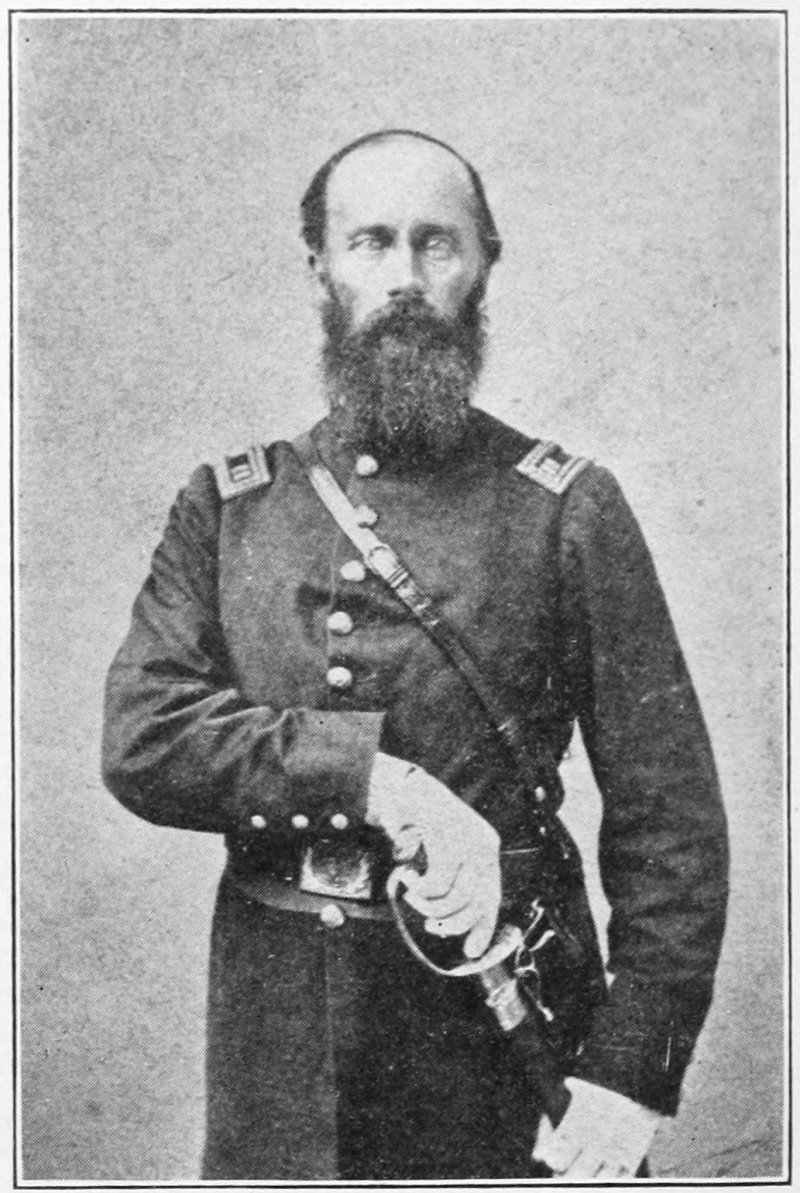
Capt. GEORGE R. HURLBURT.
Captain Hurlburt and his lieutenants recruited
the company, and were elected as its commissioned
officers. No one ever had cause to regret the choice
made. They were bold, true officers, and the non-commissioned
officers also were as true and faithful
as any company could wish. Captain Hurlburt,
whether seen on horse or on foot, was an officer of
which no company need be ashamed. He was of
good build, and quick to learn the evolutions of the
company, whether on company, battalion, or brigade
drill. His men believed in him, and I think
would have followed him anywhere he might lead.
In evidence of his standing as a military officer, I
have only to refer to an order from his brigade commander,
just before leaving for home.
Headquarters Jourdan’s Brigade,
Eighteenth Army Corps,
Newbern, N. C., June 10, 1863.
Captain: Inasmuch as the term of enlistment of the Third
Regiment, Massachusetts Volunteer Militia is about to expire,
I cannot permit you to go to your home and its endearment
without some slight recognition of your valuable services as a
commanding officer, and it is with pleasure that I call the
attention of your friends at home and abroad to your splendid
company, for there is the proof of your ability as an officer.
With kind regards for your future happiness, believe me to be,
Respectfully, your obedient servant,
J. JOURDAN,
Colonel Commanding Brigade.
Before the war Captain Hurlburt pursued the
business of a ship carpenter in New Bedford, was
for some time deputy sheriff of Bristol County, in
which latter position he remained four years. After
being mustered out he raised a company of cavalry
and was captain of the same. After the war
he was manager of a hotel in Hartford for seventeen
years. Failing health caused him to seek the
quiet of a home at the Vineyard, where he died in
1900, at the age of eighty-two years.
First Lieut. William H. Allen was in the harness
making business for years, and later was known in
New Bedford as the popular “piano tuner and repairer.”
He died in New Bedford in 1892, and was
buried with military honors.
Second Lieut. Jonathan W. Davis was detailed
for signal corps service during his nine months’
campaign. He returned with his company and for
many years was bookkeeper at the Parker House,
New Bedford. He died in New Bedford, in 1898,
and was buried in the family cemetery.
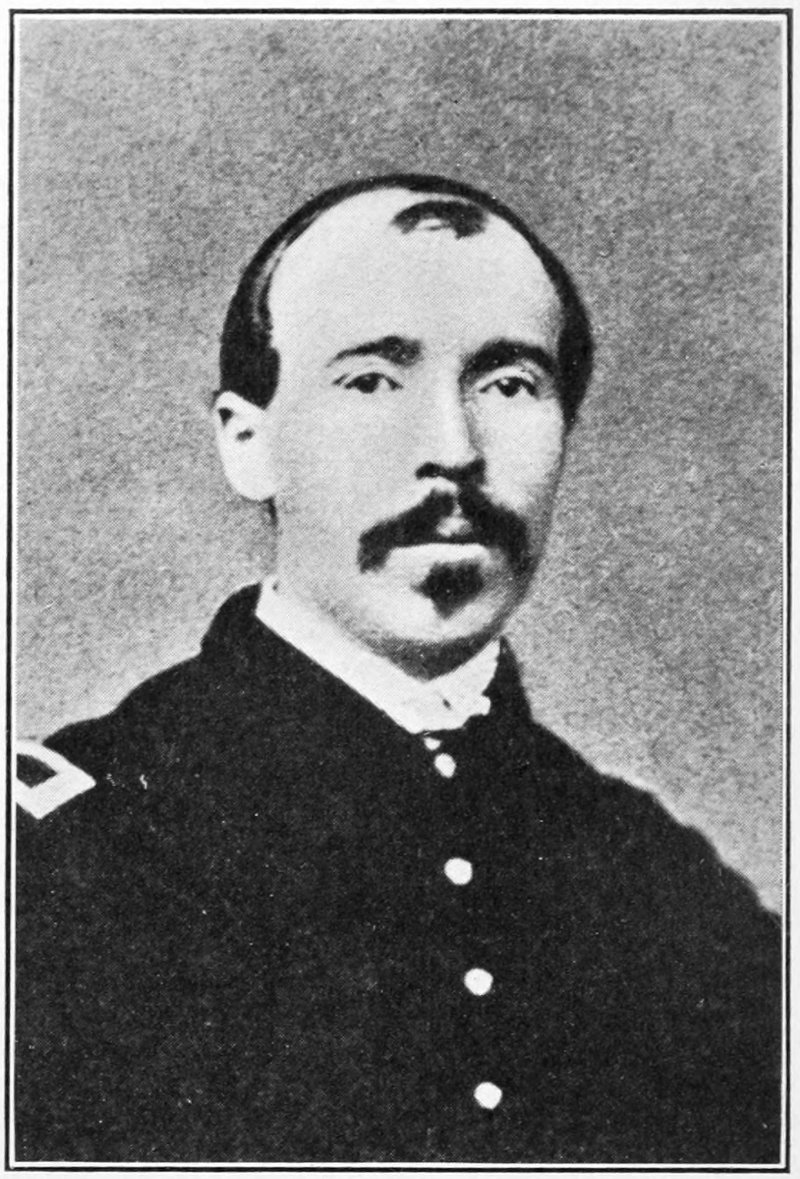
Sergt. PATRICK CANNAVAN.
But few, if any company in the Third Regiment,
could boast of so proficient an orderly sergeant as
Sergeant Cannavan, of Company F. From 1855 to
1860 he was in her Majesty Queen Victoria’s army;
he saw much hard fighting in the Crimean War and
was honored with two medals for his bravery at
that time. After his return from his nine months’
service for Uncle Sam, like a true soldier he engaged
in such business as he could command. He
recruited for the army and drilled both men and
officers. At one time it looked as though he would
receive a commission in the heavy artillery with
Captain James L. Wilber, with whom he had spent
several weeks of recruiting,
but Captain Wilber was ordered to consolidate his company with a portion
of a company near Boston. Sergeant Cannavan
was offered the sergeancy in the company but
declined. Being determined to see more active service,
he went with his former captain, George R.
Hurlburt in Company B, Fourth Massachusetts
Cavalry. This time he enlisted as a private, all the
sergeants’ places being filled. Soon he was made
sergeant and sent with a company to Hilton Head,
Florida, where he was ordered to drill officers, both
commissioned and non-commissioned. On the
morning following Sergeant Cannavan’s promotion,
First Sergeant Ashley went to the hospital, and, as
he never returned to the company, Sergeant Cannavan
performed the duties of that officer.
Sergeant Cannavan distinguished himself during
an engagement at Gainesville, Florida, on the 17th
of August, 1864. In the absence of his superior officer
he led his company in a desperate sabre charge,
thus saving his comrades in the rear from capture
by the rebel cavalry, who outnumbered his cavalry
two to one. For this act of bravery he was commissioned
Second Lieutenant in Company A, Fourth
Cavalry. In this engagement he was unhorsed, his
carbine shot away by a rebel bullet which destroyed
the hook holding the carbine to the belt, and he received
a slight wound. Seven days later Sergeant
Cannavan with a few of his men reached the main
command, and when they rode into camp the company
thought these men must have come from the
dead. Two months after this battle he was promoted
to First Lieutenant Fourth Cavalry, Company
B. After the surrender of Lee Lieutenant
Cannavan was detailed to flag all trains going from
Richmond to see if there were any deserters on
board. He also had the supervision of families going
from Richmond to their old plantations, sometimes
going as many as forty miles into the interior.
Returning home in the latter part of November,
1865, he engaged in the grocery business. In 1875
Mr. Cannavan was appointed assistant city marshal,
which office he occupied for two years. In
1878 he was for the second time appointed on the
police force, in which capacity he has served the
City of New Bedford continuously since that time,
viz., thirty years. During all these years he has
never met the man whom he could not handle alone,
and in some instances he has had some pretty hard
cases with crazy drunks, but in no instance has he
cracked a skull or broken flesh with his policeman’s
club. He is honored and respected by all the citizens
of New Bedford. Even the rough classes yield
when Cannavan is known to be after them. Now
in the sixty-eighth year of his age he is hale and
happy. He has never indulged in the ardent and
never used tobacco. He spends his spare time with
his family reading instructive books. He is held in
high esteem by all the children of his patrol, for he
always carries strings for tops, and marbles in his
pockets for the little ones.
The city honored him in 1905 by making him
chief marshal on Memorial Day. Taking all in all
we believe we make no mistake in writing so extended
a history of this remarkable man, of whom
in our long acquaintance we have heard only good
things. In the near future he expects to receive a
medal of honor from this government for meritorious
service rendered during the War of the Rebellion.
His address is 427 North Chauncy Street,
New Bedford, Mass.
These officers are but samples of the whole company.
They were good fighters because they were
well drilled; they were good soldiers because they
were well disciplined; they are (those still living)
good citizens, because they were good patriots; they
have succeeded and made their mark in the world
because the spirit of success is in them. Good officers
make good soldiers, good soldiers make good
citizens, and good citizens make a good country.
Is it asked, “Where are the men who made the rank
and file of Company F?” the answer comes, “Many
have joined the great majority, who as young men
responded to their country’s call in the hour of
need.” They did their work well; peace to their
ashes. A great and mighty Nation is reaping the
fruits of their toil, and the haughty South has been
brought back, not the raging maniac she was in ’61,
but, cured of the past, she sits at the feet of Uncle
Sam, “clothed and in her right mind.”
“God of the nations, be with us yet,
Lest we forget, lest we forget.”
Lest we forget what war has cost,
When we our greatness loudly boast.
Lest we forget our noble sons,
Who died to hold our nation one.
[By F. P. Vincent and Sergt. Patrick Cannavan.]
[The first figures indicate the age at enlistment: the city and town,
the place of enlistment.]
George H. Hurlburt, Captain; 38; New Bedford.
Died in 1900.
William H. Allen, First Lieutenant; 25; New
Bedford. Died in 1892.
Jonathan W. Davis, Second Lieutenant; 25;
New Bedford. Died in 1898.
Patrick Cannavan, First Sergeant; 25; New
Bedford. Lives in New Bedford.
James H. Williams, Sergeant; 26; Dartmouth.
Photographer, Nantucket Beach.
Frederick A. Plummer, Sergeant; 29; New Bedford.
Dead.
Joseph C. Brotherson, Sergeant; 21; New Bedford.
Re-enlisted in Company B, Fourth Massachusetts
Cavalry. Promoted captain of Company D,
April, 1865. Died with the United States Civil Engineers
out West in 1900.
Charles H. Walker, Sergeant; 40; New Bedford.
Dead.
Charles A. Gould, Corporal; 27; New Bedford.
In the New York Custom House, New York.
James Smith, Corporal; 31; Edgartown. Mason
by trade. Contractor in Boston.
Zacheus H. Wright, Corporal; 32; Acushnet.
Carpenter. Dead.
Andrew Dexter, Corporal; 28; New Bedford.
Lives in Ohio.
John H. Ricketson, Corporal; 26; Dartmouth.
Re-enlisted in Company B, Fourth Cavalry. Died
in Dartmouth.
Frederick Hoffman, Corporal; 26; New Bedford.
Went to California and died in San Francisco.
Charles W. Cleveland, Corporal; 32; Edgartown.
Went to sea; mate of whaling vessel. Died
in New Bedford.
Henry Kohn, Corporal; 19; New Bedford. Lives
in New York City.
Francis P. Vincent, Chief Bugler; 30; Edgartown.
Postmaster, Cottage City, Mass. One of the
leading men of the town.
James Western, Wagoner; 27; New Bedford.
Died in 1867.
Privates.
Booth, Nathaniel A.; 18; New Bedford. Died
in New Bedford in 1870.
Burns, James A.; 35; New Bedford. Dead.
Bessie, George A.; 19; Dartmouth. Sailor. Unknown.
Brightman, John H.; 40; Westport. Fisherman.
Died in Westport, Mass.
Burke, William; 30; New Bedford. Weaver.
Lives in Fall River.
Brannan, Patrick; 18; New Bedford. Dead.
Buswell, James E.; 28; Edgartown. Dead.
Barrett, John; 29; New Bedford. Supposed to
be living in New Hampshire. Farmer.
Beatle, Edward E.; 22; Edgartown. Unknown.
Clark, Patrick; 31; New Bedford. Went to Fall
River. Unknown.
Card, Benjamin F.; 19; New Bedford. Died in
New Bedford, February, 1905. Painter and storekeeper
until he died.
Chase, Alvah H.; 23; Dartmouth. Farmer.
Lives in Middleboro.
Clark, Henry E.; 27; Dartmouth. Dead. Leaves
a widow living in Hicksville.
Cushing, William B.; 18; Acushnet. Dead.
Cornell, Solomon; 32; Dartmouth. Lives in
South Dartmouth.
Cameron, John; 21; Berkley. Unknown.
Durfee, George L.; 18; New Bedford. Carpenter.
Lives in New Bedford.
Donovan, James; 20; New Bedford. Inspector
of cars. Killed on railroad.
DeKay, Richard; 21; Dartmouth. Deserted
Oct. 3, 1862.
Davis, George W.; 19; New Bedford. Re-enlisted
in Third Massachusetts Heavy Artillery, Company
F. Carpenter. Lives in North Dartmouth.
Fisher, John P.; 20; Edgartown. Dead.
Foster, Daniel O.; 26; Warren, R. I. Re-enlisted
as sergeant in Fourth Cavalry. Dead.
Gifford, James B.; 21; Westport.
Gifford, Abram; 18; Westport. Re-enlisted in
ninety days’ regiment. Carpenter and surveyor.
Lives in New Bedford.
Gifford, Levi K.; 22; Dartmouth. Dead.
Gordon, John; 22; New Bedford. Discharged
March 21, 1863, for disability. Dead.
Gammons, Charles W.; 18; Dartmouth. Discharged
March 24, 1863, for disability. Dead.
Graves, Perry; 33; New Bedford. Re-enlisted
in Capt. Allen’s Company Heavy Artillery stationed
at New Bedford and Washington, D. C. Dead.
Hammond, Henry; 38; New Bedford. Dead.
Holmes, Samuel B.; 30; New Bedford. Dead.
Hathaway, George W.; 28; New Bedford. Died
in New Bedford, Nov. 14, 1905.
Hoffman, William; 29; New Bedford. Re-enlisted
in Fourth Cavalry. Died in Boston, 1901.
Holmes, Joseph B.; 18; New Bedford. Re-enlisted
and was commissioned second lieutenant in
a colored regiment. Sash and blind manufacturer.
Lives in Providence, R. I.
Howland, Abram H.; 19; New Bedford. Lives
in New Bedford.
Hamer, William; 35; New Bedford. Dead.
Jenkins, George; 25; New Bedford. Went to
California. Unknown.
Janney, William A.; 36; New Bedford. Re-enlisted
as sergeant in Fourth Cavalry. Died in New
Bedford.
Kenner, Henry G.; 27; Dartmouth. Supposed
to be living in Maryland.
Luscomb, Abram R.; 23; New Bedford. Dead.
Lakey, Thomas; 20; New Bedford. Drummer.
Dead.
Lawton, Joseph M.; 33; Dartmouth; Painter.
Lives in New Bedford.
Lewis, Henry S.; 23; Dartmouth. For many
years overseer in a cotton mill in New Bedford.
Died in 1900.
Mitchell, John S.; 39; New Bedford. Died at
sea.
Mason, Humphrey S.; 27; New Bedford. Dead.
Macomber, Lyman A.; 18; Dartmouth. Lives in
Providence, R. I.
Macomber, Alden T.; 30; Dartmouth. Died
April 21, 1863.
Mosher, Frederick P.; 28; New Bedford. Dead.
Muspratt, John; 20; New Bedford. Lives in
New Bedford on Sixth Street.
Oliver, Horatio G., Jr.; 23; New Bedford. Re-enlisted
as sergeant in Fourth Cavalry, was
wounded and captured. Died in prison.
Oliver, Charles H.; 31; New Bedford. Re-enlisted
in Fourth Cavalry as sergeant. Died in Salisbury
Prison.
Orne, George; 42; New Bedford. Died in Boston
Hospital, Jan. 3, 1863.
Plummer, Horace M.; 22; New Bedford. In
post office, New Bedford.
Peckham, Samuel G.; 29; Dartmouth. Died in
New Bedford.
Peck, William B.; Dartmouth. Died at Smith
Mills, Mass.
Pierce, Alexander O.; 26; Acushnet. Painter.
Died Dec. 20, 1905.
Peckham, John B.; 21; Dartmouth. Dead.
Potter, Thomas, Jr.; 40; Acushnet. Dead.
Quick, James S.; 20; New Bedford. Went to
Michigan. Supposed to be living.
Rodman, Samuel J.; 20; New Bedford. Carpenter.
Lives in New Bedford.
Ryan, Edward; 19; New Bedford. Dead.
Ryder, David; 44; Dartmouth. Re-enlisted in
Fourth Cavalry, captured and died in a rebel
prison.
Ripley, Joseph A.; 21; Edgartown. Contractor
in Providence, R. I. Member of Prescott Post, No.
1, G. A. R.
Stowell, Columbus; 44; New Bedford. Re-enlisted
in Fourth Cavalry, taken prisoner and died
in rebel prison.
Soule, Edwin P.; 24; New Bedford. Special police
in New Bedford.
Smith, John W.; 18; New Bedford. After the
war went to Illinois. Resides in Chicago.
Stiles, James; 26; New Bedford. Lives in Nantucket.
Sanford, Leonard M.; 22; New Bedford. Lives
in Westport, Mass.
Shea, Matthew; 26; New Bedford. Soldier of
Crimean War. Supposed to be living in Attleboro.
Shaw, Charles H.; 30; New Bedford. Dead.
Stephens, William H.; 22; Dartmouth. Re-enlisted
in Fourth Cavalry. Died in New Bedford.
Spooner, Joseph S.; 36; Acushnet. Supposed to
be dead.
Tripp, Philip M.; 23; New Bedford. In the jobbing
business. Died June 29, 1906.
Teachman, Sidney M.; 18; New Bedford. Dead.
Webb, William H.; 24; New Bedford. Unknown.
Wilson, James; 31; New Bedford. Resided many
years in New Bedford on Ash Street. Died March
5, 1906.
Welch, William H.; 25; New Bedford. Re-enlisted
in Heavy Artillery. Died in hospital, Boston.
Wady, William I.; 19; Dartmouth. Went to sea.
Unknown.
Wordell, Andrew L.; 19; Dartmouth. Re-enlisted
in Fourth Cavalry. Died in prison in South
Carolina.
Worth, Jethro; 25; Edgartown. Went into
Navy; officer. Dead.
Wilbur, Joseph H.; 19; Edgartown. Painter.
Vineyard Haven.
Wood, George H.; 19; Dartmouth. Went to sea;
returned, and is now living on a farm in Westport
with his twin brother. Both are bachelors and possess
quite a handsome property.
Company G, Third Regiment Massachusetts Volunteer
Militia.
This company was recruited by its captain, William
S. Cobb; first lieutenant, Henry W. Briggs;
and second lieutenant, James L. Wilber. In the
days of 1862 in passing City Hall, New Bedford,
one might notice four tents on the north side of the
hall. In these four tents companies were being recruited,
viz., Companies E, F, and G, and another
company which was being recruited by Major Cushman.
In six weeks the recruiting was accomplished,
and Companies E, F, and G, went into
Camp Joe Hooker, Lakeville, Mass., and were made
a part of the Third Regiment. To say that there
was no rivalry in this recruiting would be far from
the truth, but as each man had his choice of the
four companies the officer who could show the
greatest advantages succeeded soonest in getting
his company filled.
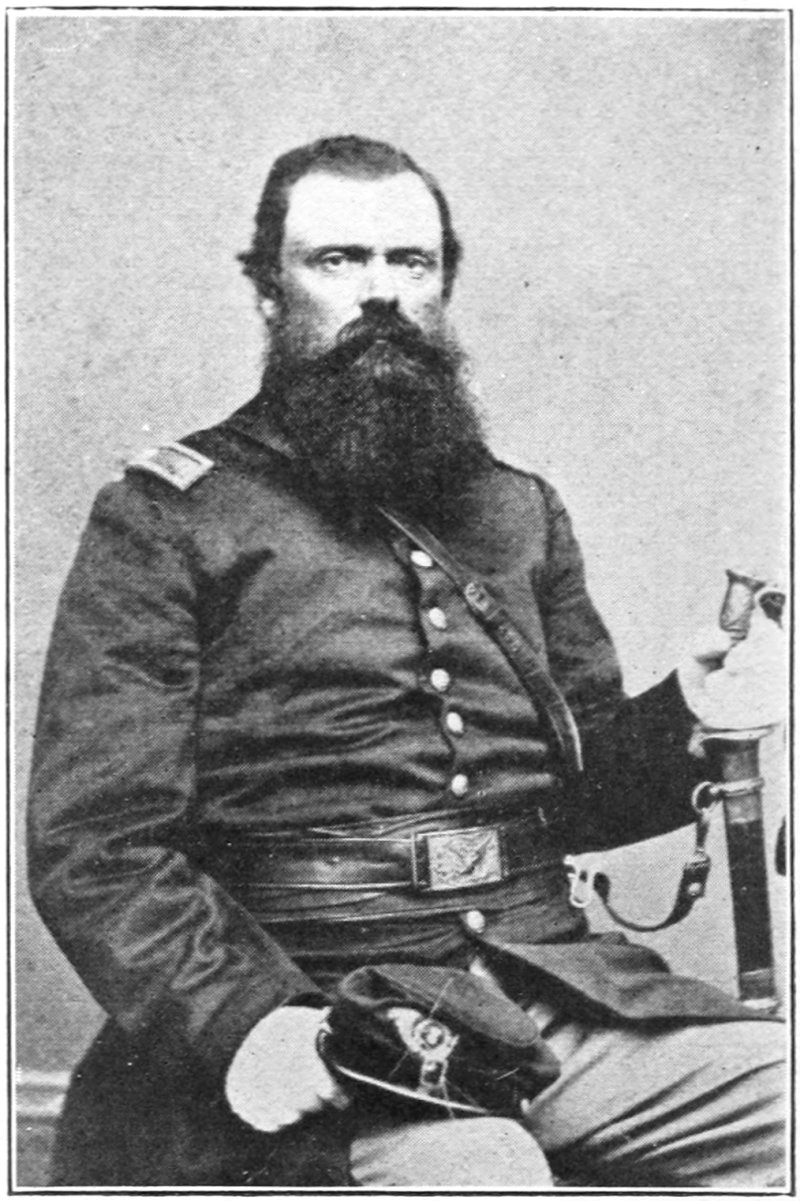
Capt. WILLIAM S. COBB.
William Cobb who went as captain of Company
G was for several years in the outfitting business
in New Bedford and was well known by a large circle
of admiring friends, and, being at one time city
marshal, he enjoyed the right of way in recruiting
his company. He never lost his hold on his men,
nor his popularity as commanding officer. His men
never failed of getting their rations of every sort.
He was a kind, considerate officer, and loved his
men as though they were his own sons. After the
war he was for many years high sheriff of Bristol
County, in which place he performed his duties acceptably,
without fear or trembling, neither was he
a slave to any political party. His shibboleth was
duty before pleasure.
First Lieut. Henry W. Briggs was a faithful officer
during his term of service, and after the war
was a contractor and builder in New Bedford for
a number of years. He was a good, honest man,
and those who intrusted their interests to him had
no cause to regret or to find fault with the work.
Second Lieut. James L. Wilber was not only a
faithful officer, but after serving nine months in the
Third he recruited part of a company for the Heavy
Artillery, was commissioned captain of the same,
and went to North Carolina, where he did good service.
After the close of the war Captain Wilber
was elected on the police force, in which position he
served as deputy of the day force. He was an able
officer, and was respected by all the citizens of New
Bedford where he resided. After thirty-two years
a police officer he died July 23, 1905, and was buried
with G. A. R. honors.
The make up of Company G were mechanics, and,
on returning home, their services were in such demand
that but few of them comparatively re-enlisted
for the second time. They were nearly all
New Bedford and Dartmouth men, and as the world
goes they were a fine set of fellows. Like all others
of the companies of the Third Regiment, more than
fifty per cent. of this company have answered the
last roll call, while their relatives are reaping the
benefits of their sacrifice and toil in the Southland.
Some of those still living have gone to distant parts
never to return. So far as known they have all
been good citizens, while many of them have made
their mark in the world of finance, and are well to
do business men.
[The first figures indicate the age at enlistment: the city and town, the
place of enlistment.]
[Corrected by Capt. James L. Wilber, Samuel S. Broadbent,
and Lieut. Patrick Cannavan.]
William S. Cobb, Captain; 43; New Bedford.
Dead.
Henry W. Briggs, First Lieutenant; 33; New
Bedford. Dead.
James L. Wilber, Second Lieutenant; 28; New
Bedford. Died in New Bedford, July 23, 1905.
Charles West, First Sergeant; 30; New Bedford.
Dead.
William F. Chace, Sergeant; 28; New Bedford.
Dead.
John W. Look, Sergeant; 30; New Bedford. Carpenter.
Lives in Marion.
Abel Soule, Jr., Sergeant; 34; New Bedford.
Ship Carpenter. Lives in New Bedford.
Roland W. Snow, Sergeant; 29; New Bedford.
Dead.
Simeon Webb, Corporal; 36; New Bedford.
Dead.
Thomas F. Hammond, Corporal; 21; New Bedford.
Dead.
William G. Dunham; Corporal; 28; New Bedford.
Letter Carrier, New Bedford.
Andrew Porter, Corporal; 29; New Bedford.
Dead.
William Eldridge, Corporal; New Bedford.
Dead.
John L. Flynn, Corporal; 32; New Bedford.
Dead.
George W. Perry, Corporal; 33; New Bedford.
Carpenter. Resides in New Bedford.
Ira P. Tripp, Corporal; 34; New Bedford. Salesman
in store corner of Union and Sixth Streets,
New Bedford.
Privates.
Allen, Joseph H.; 21; New Bedford. Supposed
to be living in Brockton.
Allen, George F.; 22; New Bedford. Unknown.
Alger, Charles, Jr.; 18; New Bedford. Re-enlisted.
Unknown.
Atchison, Martin; 18; New Bedford. Re-enlisted
in Fourth Cavalry. Lives in Colorado.
Albro, Alfred; 21; Dartmouth. Unknown.
Akin, Charles R.; 37; New Bedford. Served in
Fourth Cavalry. Dead.
Atwood, Luther; 38; New Bedford. Deserted
Oct. 22, 1862. Dead.
Bacon, David B.; 31; New Bedford. Dead.
Bearse, Zachariah S.; 21; New Bedford. Unknown.
Besse, Daniel; 34; New Bedford. Dead.
Bowman, Joseph B.; 42; New Bedford. Dead.
Boling, John M.; 27; New Bedford. Unknown.
Bliss, Charles; 36; New Bedford. Dead.
Bolles, James C.; 20; New Bedford. Lives in
California.
Burdick, Benjamin F.; 27; New Bedford. Lives
at Nantucket.
Bradley, David; 28; New Bedford. Dead.
Carroll, James N.; 18; New Bedford. Unknown.
Collins, James; 21; New Bedford. Unknown.
Chase, Collins; 30; New Bedford. Wheelwright.
Lives in New Brunswick.
Cobb, William S., Jr.; 21; New Bedford. Dead.
Connolly, James; 30; New Bedford. Unknown.
Chase, William H.; 40; New Bedford. Unknown.
Croy, William D.; 22; Dartmouth. Discharged
May 30, 1863, to re-enlist. Unknown.
Clark, James; 26; New Bedford. Discharged
May 30, 1863, to re-enlist. Unknown.
Davis, James A.; 26; New Bedford. Dead.
Dunham, Thomas S.; 18; New Bedford. Dead.
Durpee, Benjamin; 18; New Bedford. Went to
California. Unknown.
Dexter, Ezra F.; 43; New Bedford. Lives near
Boston.
Edwards, John; 29; New Bedford. Dead.
Flahaven, John; 28; New Bedford. Unknown.
French, John F.; 27; New Bedford. Unknown.
Fleet, James; 33; New Bedford. Dead.
Freeman, Josiah; 23; New Bedford. Lives at
Nantucket.
Gifford, William F.; 20; New Bedford. Dead.
Gifford, Samuel T.; 30; New Bedford. Dead.
Gifford, Charles C.; 18; New Bedford. Sergeant
of the police. Lives in New Bedford.
Garlick, Reuben A.; 19; Dartmouth. Unknown.
Hazard, John F.; 27; New Bedford. Dead.
Haskins, William A.; 18; New Bedford. Unknown.
Hathaway, Frederick A.; 18; New Bedford.
Sailmaker. Lives in New Bedford.
Harrington, Daniel; 23; New Bedford. Deserted
Oct. 21, 1862.
Jenny, Sanford, Jr.; 23; New Bedford. Dead.
Joseph, William R.; 19; New Bedford. Dead.
King, Isaac; 44; New Bedford. Dead.
Keene, Ebenezer S.; 20; New Bedford. Dead.
King, Alfred C.; 21; New Bedford. Unknown.
Linehan, John; 37; New Bedford. Dead.
Lewis, Benjamin F.; 25; New Bedford. Dead.
Look, Gilbert A.; 31; New Bedford. Dead.
Long, George R.; 34; New Bedford. Dead.
Lyng, William; 18; New Bedford. Laborer.
Lives in New Brunswick.
Mack, Andrew N.; 18; New Bedford. Dead.
Mosher, Folder B.; 36; New Bedford. Dead.
Mosher, Caleb P.; 34; New Bedford. Dead.
Matthews, Barak E.; 41; New Bedford. Dead.
McCann, Edward; 35; New Bedford. Dead.
Maxfield, Charles H.; 18; New Bedford. In
clothing store. Lives in Providence, R. I.
Moltram, John; 29; New Bedford. Resides in
Providence, R. I.
Minor, Barney; 35; New Bedford. Deserted and
discharged for disability.
Norton, Francis; 35; Edgartown. Dead.
Paine, Henry K.; 25; New Bedford. Dead.
Packard, George F.; 31; New Bedford. Unknown.
Parker, George W.; 22; New Bedford. Unknown.
Perry, Lyman C.; 42; New Bedford. Dead.
Pierce, Charles C.; 21; New Bedford. Unknown.
Pierce, Charles H.; 18; New Bedford. Dead.
Parsons, Lewis G.; 22; New Bedford. Discharged
March 3, 1863, for disability.
Pratt, Henry B.; 21; New Bedford. Discharged
March 19, 1863, for disability.
Richards, Silas N.; 20; New Bedford. Dead.
Salisbury, Robert; 31; New Bedford. Unknown.
Smith, Samuel D.; 43; New Bedford. Supposed
to be dead.
Smith, John S.; 44; New Bedford. Dead.
Sisson, George F.; 41; New Bedford. Unknown.
Slocum, William; 19; New Bedford. Dead.
Spooner, Samuel K.; 44; New Bedford. Dead.
Taber, Cornelius G.; 32; New Bedford. Dead.
Taber, Theodore A.; 21; New Bedford. Unknown.
Taber, Daniel G.; 41; New Bedford. Unknown.
Taylor, William W.; 24; New Bedford. Dead.
Tighe, James D.; 19; New Bedford. Unknown.
Tripp, Sylvanus A.; 41; New Bedford. Supposed
to be dead.
Tripp, George H. W.; 26; New Bedford. Discharged
April 30, 1863, for disability. Dead.
Tillinghast, William A.; 19; New Bedford.
Fire Engine Driver. Dead.
Wilkie, David; 20; New Bedford. Unknown.
Whitehead, Thomas; 41; New Bedford. Dead.
Wilbur, Henry C.; 21; Edgartown. Unknown.
Company H, Third Massachusetts Volunteer
Militia.
[Written by William H. Luther, Member of Company H.]
[This is not claimed to be a perfect history, but it is believed to be as
perfect a record as can be secured at this late date. When not otherwise
indicated, the person is supposed to have been mustered out with his
regiment.]
The immediate cause for the raising of Company
H was the call of President Lincoln for three hundred
thousand men to put down the Rebellion, and
the incentive was a bounty of two hundred dollars
offered to every man who enlisted. The formation
of a company from the towns of Rehoboth, Somerset,
Dighton, and Swansea, was a happy thought,
as the quota called for from these four towns would
make a full company. Meetings were held in each
of these places and recruiting offices were opened.
Nathaniel B. Horton was the recruiting officer for
Rehoboth, Noah Chase for Dighton, William P.
Hood for Somerset, and Allen Mason for Swansea.
These four officers with their towns seemed to vie
with each other in raising the required number, and
so great was the enthusiasm that within a very
short time the company was full. Then came the
question of a captain and two lieutenants. Somerset
having the largest number, was supposed to
have the first choice to the captaincy, and the other
three towns were to select the lieutenants and non-commissioned
officers according to their best judgment.
A Mr. Davis, of Somerset, was mentioned
for captain, and it was graciously accorded to him,
while the first lieutenancy was accorded to Otis A.
Baker, of Rehoboth; but on the day of organization
Mr. Davis declined his position and the way was
left clear for the election of Otis A. Baker. No
records can now be found giving the date of election
of officers. The best that can be learned is that
it was held on a very hot Saturday afternoon in the
old Hornbine Church in Southeast Rehoboth, about
the last of August or the first of September, 1862.
Otis A. Baker was unanimously elected captain;
Robert Crossman, 2d, of Dighton, first lieutenant;
and Joseph Gibbs, of Somerset, second lieutenant.
Swansea was accorded her full share of the non-commissioned
officers.
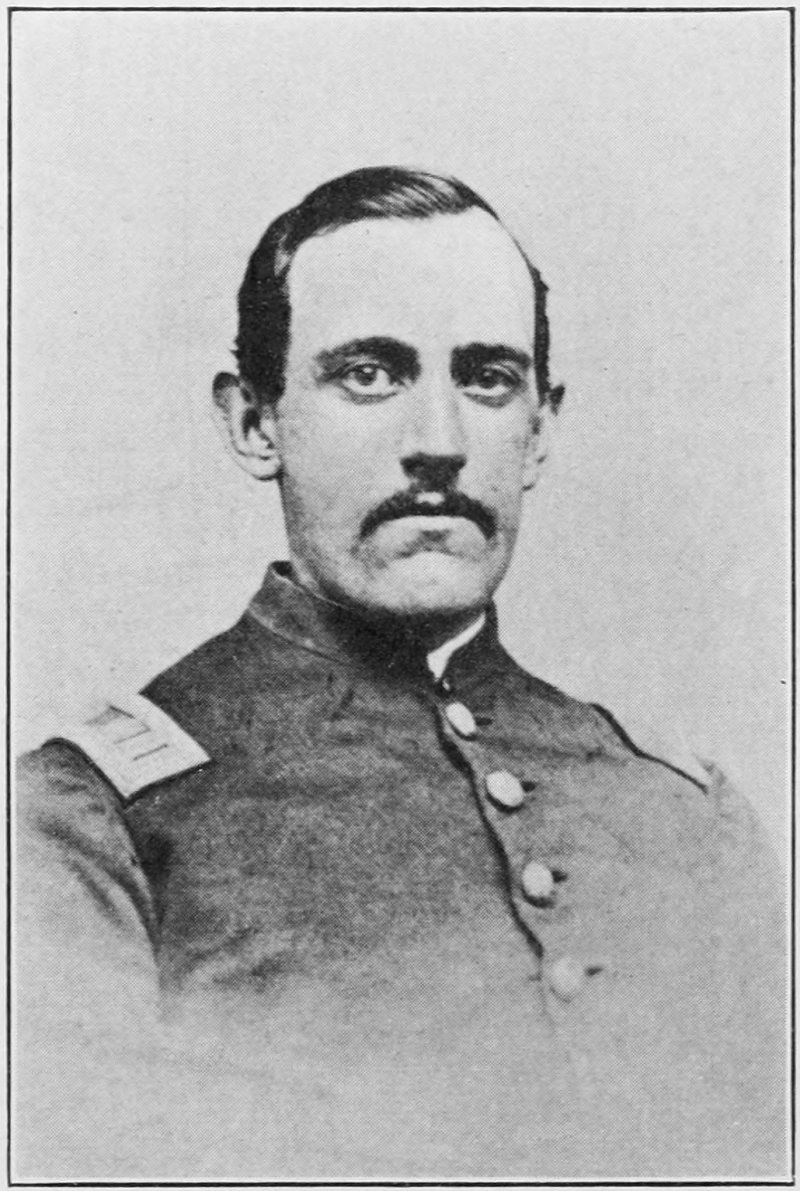
Capt. OTIS A. BAKER.
The choice of Captain Baker was a happy one.
His father, Ira S. Baker, was one of the foremost
men of Rehoboth, having held the first offices of the
town for years. He was also a member of the House
of Representatives in Boston. After graduating
from the public schools of Rehoboth Captain Baker
learned the trade of a mason, in which business he
was very successful; notwithstanding, when the war
broke out he left his remunerative business in Providence,
R. I., and enlisted in Company A, First
Rhode Island Detached Militia, for three months.
He served his full term, being engaged with his regiment
at the battle of Bull Run, where he received
a wound in his arm. Having been discharged and
having recovered from his wound, he re-enlisted as
first sergeant in Company A, Fourth Rhode Island
Infantry, September, 1861, and was promoted to
second lieutenant, Nov. 20, 1861. He was with his
regiment in the well remembered Burnside Expedition,
taking part in the capture of Roanoke Island
and the battle of Newbern, and remaining with his
regiment until Aug. 11, 1862, when he resigned his
commission. The cause of his resignation, together
with over half of the commissioned officers of the
regiment, was the action of Governor Sprague in
taking an officer from another regiment and giving
him a place over them as one of the field officers.
Soon after his arrival home I met Lieutenant
Baker in Providence and invited him to go with
Company H as first lieutenant, it being understood
then that the captaincy was settled; his answer was
that he intended to see the war through and was
ready for anything that might offer. Lieutenant
Baker at that time was twenty-four years old; he
was indeed a giant, standing six feet four in his
stockings, straight as an arrow, well versed in military
tactics; and, although the youngest of the
captains in the Third Regiment, his ability as officer
was never questioned, nor had the company any
reason to regret its choice of him as their captain.
Resolute by nature, kind in heart, he was a man
who did things; always doing his duty regardless
of consequences to himself. He exacted from every
man of his company a strict and impartial obedience
to himself and to all officers with whom they
were to render duty. At the battle of Kinston, N.
C., as we were formed into line of battle, expecting
momentarily to be ordered to the front to take a
more active part, Captain Baker made this little
speech, “In a few moments we shall be where we
shall see more active and more dangerous work, but
no matter what we may meet let not a man of you
run until I run, but when you see me run then let
every man run like the devil.” Suffice it to say, no
man was seen running.
Lieutenant Crossman was highly esteemed by the
whole company. His quiet, unassuming manner
caused every one to love him and to confide in him;
he was a true man and a true soldier. He demonstrated
his patriotism by re-enlisting in the Fifty-eighth
Regiment, in which he was elected captain,
and was with his company at the battle of Cold
Harbor, where he was wounded terribly in the
shoulder; an injury from which he never recovered.
There can be little doubt that this shortened his
life many years. He died at Taunton, July 25,
1876.
Lieutenant Gibbs was a whole-hearted, first-class
man, against whom there was never heard a word
of censure, nor was there one spot on his splendid
character. Being detached early for signal service,
he was with us but a short time, almost all of his
term of nine months being spent in Charleston Harbor,
S. C., where he rendered very satisfactory service
to his commanding officer.
But a few days elapsed after our organization before
we were ordered to go into camp at Lakeville,
Mass. We were to meet at Somerset village, from
which place we were to be conveyed across the river
in rowboats to take the cars for camp. Arriving
there late in the afternoon, we found the most of
the regiment in barracks, and were assigned our
place among the other companies for the night.
Such a night. The boys were full of sport and determined
to have a good time, which they did to
their heart’s content. It is safe to say no one slept
that night within a radius of a quarter of a mile.
There was every kind of a noise imaginable, and
some that were never heard before nor since.
Speeches were made, songs sung, hens cackling,
roosters crowing, turkeys gobbling, ducks quacking,
pigs squealing and bulls bellowing; but all this was
due to leaving home, and still having home with us.
What could be expected of a hundred men just
leaving home, and as yet having no military restraint
put on them? The following night some of
us were put on guard, with a four-foot cord stick
as our weapon of defense; what great things we declared
we would do should the Rebs come down on
us suddenly; but we were getting ready for the
hard and dangerous work before us, upon which we
were soon to enter.
In a few days the mustering officer came and we
were inspected and mustered into the service of
Uncle Sam. Some of our men were beyond the
forty-five year limit, but all passed except one, Samuel
H. Vial, who had in the company a son George,
and who upon being asked his age gave it honestly
as forty-nine. Of course he was rejected. The oldest
man in the company was Peleg Swift of Somerset,
a giant in size and strength, but gray-haired.
Upon being asked his age, he replied, “Forty-four.”
“Is that all?” asked the mustering officer. “That is
what my good mother called me,” replied Peleg.
He was accepted, although fourteen years beyond
the law limit. No better soldier ever carried a musket,
and no one ever knew of his dropping out on
the tiresome marches. He was killed at Petersburg
by a rebel shell.
The material composing Company H were worthy,
steady farmers’ boys, with the addition of several
iron workers from Somerset and Dighton. Many
of the men were old neighbors at home, several of
them being from the same families. For instance,
there were four pairs of brothers, and when one
heard from home all the others were interested to
hear the news. No more rugged or better men than
Company H ever enlisted. Accustomed from early
life to hard work, plain, and good fare, and the
best of health, they were already fitted for the hardships
of the march and the privations of soldier
life. They were an honest set of men, and anything
left in their tents was sure to be found where
it was left.
Of the military experiences of Company H I will
say nothing, as the history of the company is the
history of the regiment. It was never on detached
or detailed duty, and wherever the regiment went
there went Company H. There are no tragic events
to record. The company has the unique distinction
of bringing home every man that went out with it.
It is the only company of which I have any knowledge
that served so long a period in the war and
never lost a man, either by sickness or by bullet. I
believe this is due largely to the early life and temperate
habits of the men of this company; but we
cannot close our eyes to the fact that since the close
of the war more than fifty-two per cent. have answered
the last call.
In conclusion, let me extend my thanks to those
comrades who so ably assisted me in gathering
facts, especially to Captain Baker, Comrade
Walker, of Dighton, and Samuel L. Buffington of
Swansea. Those men, together with the record of
the company in 1862, and notes and facts preserved
in diaries, has made it possible at this late date
to write such a correct history of the company. We
are growing old, our ranks are fast thinning, our
roll calls are growing shorter and shorter, it behooves
us to quit ourselves like men. Like all other
men I have done many things for which I am sorry,
and some things for which I am ashamed, but there
is one incident in my life of which I am neither
sorry nor ashamed, and that is the fact that I enlisted
and served in Company H, Third Regiment
Massachusetts Volunteer Militia.
[The first figures indicate age at enlistment: the city and town, the
place of enlistment.]
Otis A. Baker, Captain; 24; Rehoboth. Enlisted
as a private in Company A, First Rhode Island Detached
Militia, April 16, 1861. Wounded at battle
of Bull Run, July 21, 1861. Discharged. Re-enlisted
in September, 1861, first sergeant of Company
A, Fourth Rhode Island Infantry. Promoted
second lieutenant, Nov. 20, 1861. Resigned, Aug.
11, 1862. Re-enlisted Sept. 18, 1862. Chosen captain
of Company H, Third Regiment, Massachusetts
Volunteer Militia. Mustered out June 26,
1863. Re-enlisted Aug. 1, 1864; captain of the
Eighteenth Unattached Company. Massachusetts
Volunteer Militia. Discharged Nov. 14, 1864. Re-enlisted
Dec. 10, 1864; captain of Eighteenth Unattached
Company for one year, or until the close
of the war. Mustered out May 12, 1865. Resides
in Rehoboth, Mass.
Robert Crossman, 2d, First Lieutenant; 34;
Dighton. Mustered out with regiment, June 26,
1863. Re-enlisted and was chosen captain in the
Fifty-eighth Massachusetts Infantry. Wounded at
battle of Cold Harbor. Discharged for disability,
Oct. 11, 1864. For many years one of the State
Constabulary. Died in Taunton, July 25, 1876.
Joseph Gibbs, Second Lieutenant; 35; Somerset.
Detached Nov. 21, 1862, for signal corps service.
On duty at Port Royal and at Charleston Harbor,
during the bombardment of Charleston. Died Apr.
7, 1863.
Arnold D. Brown, First Sergeant; 24; Rehoboth.
Enlisted May 26, 1862, as a private in Co. B, Tenth
Rhode Island Infantry. Discharged Sept. 1, 1862.
Re-enlisted in Company H, Third Massachusetts
Volunteers. Discharged June 26, 1863. Re-enlisted
sergeant-major Third Rhode Island Cavalry, Aug.
7, 1863. Promoted second lieutenant Feb. 6, 1864.
Discharged 1865. Died Oct. 26, 1874.
George F. M. Forrester, Sergeant; 38; Somerset.
Farmer; for many years a resident of Somerset.
Dead.
Edwin Haskins, Sergeant; 24; Dighton.
Moulder. Resides in North Dighton.
Jonathan W. Thurber, Sergeant; 23; Swansea.
Re-enlisted. Sergeant of Eighteenth Unattached
Company, Massachusetts Volunteer Militia, Aug. 1,
1864. Discharged Nov. 14, 1864. Died in Seekonk,
January, 1904.
Samuel W. Gibbs, Sergeant; 23; Somerset. Farmer.
Resides in Somerset.
Henry H. Lothrop, Corporal; 24; Rehoboth. Re-enlisted
in navy. Lost at sea from a United States
Transport in 1865.
Sylvanus D. Jones, Corporal; 34; Dighton. Re-enlisted
Dec. 10, 1864; corporal in Eighteenth Unattached
Company, Massachusetts Volunteer Militia.
Discharged May 12, 1865. Dead.
James McNeil, Corporal; 34; Swansea. Detailed
corporal of Pioneer Corps. Dead.
Isaiah B. Case, Corporal; 20; Seekonk. Lives in
Philadelphia, Penn. Proprietor of a restaurant.
Josiah L. Horton, Corporal; 21; Dighton. Died
Dec. 28, 1890.
Charles B. Peckham, Corporal; 36; Somerset.
Dead.
Daniel Briggs, Corporal; 21; Dighton. Dead.
Horace L. Horton, Corporal; 19; Swansea. Farmer.
Resides in Rehoboth.
James M. Evans, Musician; 25; Dighton. For
many years a grain dealer in Taunton; also connected
with the Nickel Plate Works. Dead.
Allen B. Luther, Musician; 20; Rehoboth. Died
Oct. 13, 1864.
Mark P. Chase, Wagoner; 19; Somerset. Unknown.
Jason W. Fuller, Wagoner; 37; Rehoboth. Discharged
for disability, Nov. 27, 1863. Died May 30,
1896.
Privates.
Bliss, Joshua S.; 21; Rehoboth. Re-enlisted as
first sergeant in Eighteenth Unattached Company,
Massachusetts Volunteer Militia, Aug. 1, 1864. Discharged
Nov. 14, 1864. Re-enlisted in Eighteenth
Unattached Company, Dec. 10, 1864. Discharged
May 12, 1865. A lumber dealer in Buffington, N. Y.
Buffington, Samuel L.; 18; Swansea. Mustered
out with regiment. Supposed to be living in Swansea.
Buffington, George O.; 18; Swansea. Re-enlisted
in Eighteenth Unattached Company, Massachusetts
Volunteer Militia, Aug. 10, 1864. Discharged
Nov. 14, 1864. Farmer. Resides in Swansea.
Babbitt, Nathaniel M.; 39; Dighton. Farmer.
Resides in Dighton.
Briggs, Oliver H.; 28; Dighton. Re-enlisted
Aug. 10, 1864, in Eighteenth Unattached Company,
Massachusetts Volunteer Militia. Discharged Nov.
14, 1864. Re-enlisted Dec. 10, 1864. Discharged
May 12, 1865. Sutler. Resides in Washington, D. C.
Belden, William H.; 22; Dighton. Re-enlisted
Aug. 10, 1864, and made a corporal. Discharged
Nov. 14, 1864. Resides in Fall River.
Bullock, Gilbert D.; 34; Rehoboth. Farmer.
Died in Hebronville, Mass., Dec. 25, 1904.
Chace, George F.; 18; Somerset. Dead.
Chace, George A.; 18; Somerset. Treasurer of
Chace Corporation.
Chace, Benjamin F.; 28; Somerset. Dead.
Chace, William P.; 32; Swansea. Resided in
Somerset for years. Dead.
Chace, Edwin; 19; Dighton. Resided in Dighton
for years. Dead.
Chace, Baylies R.; 20; Somerset. On detached
duty at Plymouth, N. C. Originally a member of
the Twenty-ninth Massachusetts. Discharged for
disability. Inspector in Providence.
Chace, Herbert A.; 20; Dighton. Discharged
for disability Mar. 27, 1863. Re-enlisted Aug. 10,
1864, in Eighteenth Unattached Company, Massachusetts
Volunteer Militia. Died June, 30, 1879.
Carmichael, John B.; 19; Somerset. Residence,
unknown.
Curtis, George E.; 23; Rehoboth. Re-enlisted
Dec. 10, 1864, in Eighteenth Unattached Company,
Massachusetts Volunteer Militia. Discharged May
12, 1865. Resides in East Providence.
Carroll, Michael; 26; Somerset. Dead.
Davis, Nathan S.; 33; Somerset. Dead.
Farrell, Dominick; 45; Rehoboth. Resided in
Somerset. Dead.
Francis, Darius P.; 22; Rehoboth. Died in Attleboro,
Apr. 12, 1891.
Francis, David W.; 21; Rehoboth. Re-enlisted
Aug. 10, 1864. Discharged Nov. 14, 1864. Farmer.
Resides in Rehoboth.
Goff, Henry N.; 39; Dighton. Detailed in Pioneer
Corps. Re-enlisted Aug. 10, 1864, in Eighteenth
Unattached Company, Massachusetts Volunteer
Militia. Discharged Nov. 14, 1864. Died in
Dighton, Mar. 8, 1889.
Goff, Andrew J.; 22; Rehoboth. Re-enlisted
Aug. 10, 1864. Discharged Nov. 14, 1864. Died
Nov. 25, 1899.
Green, George; 36; Rehoboth. Died in East
Providence, Jan. 7, 1900.
Hood, David B.; 18; Somerset. Unknown.
Harrington, Daniel; 33; Rehoboth. Re-enlisted
in Company C, Third Rhode Island Cavalry, Oct.
13, 1863. Discharged Nov. 29, 1865. Died in Warren,
R. I., Apr. 12, 1891.
Hathaway, George W.; 39; Somerset. Detailed
in Pioneer Corps. Unknown.
Hatten, John R.; 25; Somerset. Dead.
Holten, Michael; 29; Somerset. Dead.
Horton, Alfred A.; 20; Rehoboth. Re-enlisted
Aug. 10, 1864, in Eighteenth Company, Massachusetts
Volunteer Militia. Discharged Nov. 14, 1864.
Farmer. Resides in Dighton.
Hicks, John F.; 24; Rehoboth. Re-enlisted Aug.
10, 1864, in Eighteenth Unattached Company, Massachusetts
Volunteer Militia. Discharged Nov. 14,
1864. Resides in East Providence.
Hardy, Samuel; 39; Dighton. Died Aug. 31, 1881.
Hall, William H.; 22; Somerset. Residence unknown.
Hill, Thomas; 44; Rehoboth. Re-enlisted Dec.
10, 1864, in Eighteenth Unattached Company, Massachusetts
Volunteer Militia. Discharged May 10,
1865. Died Nov. 10, 1897.
Handley, Edward; 19; Rehoboth. Re-enlisted in
Eighteenth Unattached Company, Massachusetts
Volunteer Militia, Aug. 10, 1864. Discharged Nov.
14, 1864. Farmer. Resides in East Providence.
Handley, Andrew A.; 18; Rehoboth. Re-enlisted
in Third Rhode Island Cavalry, Sept. 15, 1863. Discharged
Nov. 29, 1865. Died Apr. 21, 1892.
Kingsley, Amos N.; 18; Swansea. Re-enlisted.
Unknown.
Kent, Alva B.; 19; Rehoboth. Died in Providence,
August, 1871.
Luther, William H.; 22; Rehoboth. Re-enlisted
as corporal of Eighteenth Unattached Company,
Massachusetts Volunteer Militia, Aug. 10, 1864.
Discharged Nov. 10, 1864. Re-enlisted as sergeant
of Eighteenth Unattached Company, Massachusetts
Volunteer Militia, Dec. 10, 1864. Discharged May
12, 1865. Town Clerk of Rehoboth for eighteen
years. Bookkeeper in Pawtucket. Resides at 132
Grove Ave., East Providence.
Luther, Hale S.; 32; Rehoboth. Detached in
Signal Corps, Nov. 14 1862, with Lieutenant Gibbs.
One of the selectmen of Rehoboth. Elected to General
Court, 1875. Died Apr. 22, 1895.
Lincoln, Alvin C.; 20; Dighton. In Alaska
when last heard from.
Lahne, Peter F.; 23; Somerset. Lived and died
in Somerset.
Lampson, John R.; 20; Somerset. Resides in
Maine.
Marble, George W.; 24; Somerset. Dead.
Marble, Alexander H.; 21; Somerset. Oysterman.
Resides in Somerset.
Mosher, Edward F.; 28; Somerset. Believed to
be dead.
Martin, Albert F.; 20; Swansea. Re-enlisted
Dec. 10, 1864. Discharged May 10, 1865. Dead.
Moulton, James F.; 22; Rehoboth. Died May 4,
1883.
Maker, William H.; 25; Swansea. On detached
service at Plymouth, N. C. Discharged for
disability Nov. 13, 1863. Resides in Warren, R. I.
Pierce, Abraham; 31; Rehoboth. Died Dec. 1,
1890.
Pierce, Ezra V. B.; 21; Swansea. Farmer. Resides
in Rehoboth.
Pierce, William C.; 39; Somerset. Discharged
for disability, Mar. 2, 1863. Dead.
Padelford, Silas M.; 28; Somerset. Resides in
Dighton.
Purington, Samuel C.; 21; Somerset. Re-enlisted
as sergeant in Eighteenth Unattached Company,
Massachusetts Volunteer Militia. Discharged
Nov. 14, 1864. Residence unknown.
Read, James O.; 18; Dighton. Re-enlisted in
Eighteenth Unattached Company, Massachusetts
Volunteer Militia, Aug. 6, 1864. Discharged June
10, 1865. Superintendent of City Asylum, Pawtucket,
R. I.
Reynolds, William; 30; Swansea. Re-enlisted
Aug. 10, 1864. Discharged Nov. 14, 1864. Died
1893.
Roach, James; 29; Rehoboth. Died in Coventry,
R. I., 1868.
Ryan, William; 37; Somerset. Discharged for
disability, May 27, 1863.
Shove, Charles H.; 25; Swansea. Believed to
be living; residence unknown.
Slade, Alfred L.; 21; Swansea. Dead.
Swift, Daniel E.; 18; Somerset. Dead.
Swift, Peleg; 44; Somerset. Re-enlisted in Eighteenth
Unattached Company, Massachusetts Volunteer
Militia. Discharged Nov. 14, 1864. Re-enlisted
and was killed before Petersburg.
Smith, Stephen N.; 26; Dighton. Re-enlisted in
Eighteenth Unattached Company, Massachusetts
Volunteer Militia. Discharged Nov. 14, 1864. Died
Oct. 7, 1894.
Smith, Leprilet C; 28; Dighton. Died Nov. 25,
1893.
Sullivan, Jeremiah; 18; Somerset. Unknown.
Simmons, Oliver; 35; Somerset. Re-enlisted
Dec. 10, 1864, in Eighteenth Unattached Company,
Massachusetts Volunteer Militia. Discharged May
12, 1865. Died.
Sherman, Ira M.; 35; Somerset. Dead.
Thurber, Jeremiah; 22; Rehoboth. Farmer.
Resides in Swansea.
Tripp, John E.; 19; Swansea. Re-enlisted Aug.
5, 1864, in Company G, Second Regiment, Massachusetts
Heavy Artillery. Discharged Sept. 3, 1865.
Dead.
Tripp, George A.; 32; Rehoboth. Dead.
Talbot, Charles H.; 20; Dighton. Farmer. Resides
in Somerset.
Vial, George H.; 24; Rehoboth. Died in Barrington,
R. I., 1890.
Walker, Nathan O.; 23; Dighton. Farmer. Resides
in Dighton.
Walker, George A.; 32; Dighton. Died in Dighton,
July, 1863.
Wink, Adam; 24; Dighton. Detailed in Pioneer
Corps. Re-enlisted Dec. 10, 1864. Discharged May
12, 1865. Residence unknown.
Welch, John W.; 37; Somerset. Residence unknown.
Westcott, Henry N.; 29; Dighton. Detailed as
corporal of carpenters, Oct. 30, 1862. Re-enlisted
in Eighteenth Unattached Company, Massachusetts
Volunteer Militia, and promoted to second lieutenant.
Died Sept. 13, 1888.
Williams, Henry A.; 30; Dighton. Re-enlisted
in Eighteenth Unattached Company, Massachusetts
Volunteer Militia, Aug. 10, 1864. Discharged as
sergeant Nov. 14, 1864. Selectman in Dighton for
many years. Died July 3, 1895.
Williams, Caleb; 41; Rehoboth. Re-enlisted
Jan. 21, 1864, in Company B, Third Rhode Island
Heavy Artillery. Died May, 1903.
Williams, Edmund; 25; Rochester. Believed to
be dead.
Welden, Silas H.; 23; Swansea. On detached
service at Plymouth, N. C. Discharged for disability
Nov. 2, 1863. Re-enlisted in Company D, Sixtieth
Massachusetts. Farmer. Resides in Dighton.
Company I, Third Regiment, Massachusetts Volunteer
Militia.
[Written by Lieut. Jabez M. Lyle.]
The signal service rendered by Company I, and
the casualties suffered by it, make it quite proper
to give a somewhat detailed history of its formation
and of the general character of the men composing
it. The following account is taken from an
interesting paper written by Lieutenant J. M. Lyle,
and is given in almost his own words:
“In the summer of 1862, President Lincoln, notwithstanding
the prophesies of the wise men by
whom he was surrounded,—that the rebellion would
be crushed in a very short time,—found that the
Civil War had lasted more than a year, and that it
was necessary to use more extreme measures if the
war was to be closed in favor of the North, so he
called for three hundred thousand men; but still
having in mind the idea that the war must soon be
brought to a close, he offered to take a large part of
this vast number as volunteers for nine months.
“The Third Regiment of Militia which had already
served one term at the front and been honorably
discharged again volunteered, and Col. Silas
P. Richmond was authorized to recruit the regiment
to the full standard to serve nine months.
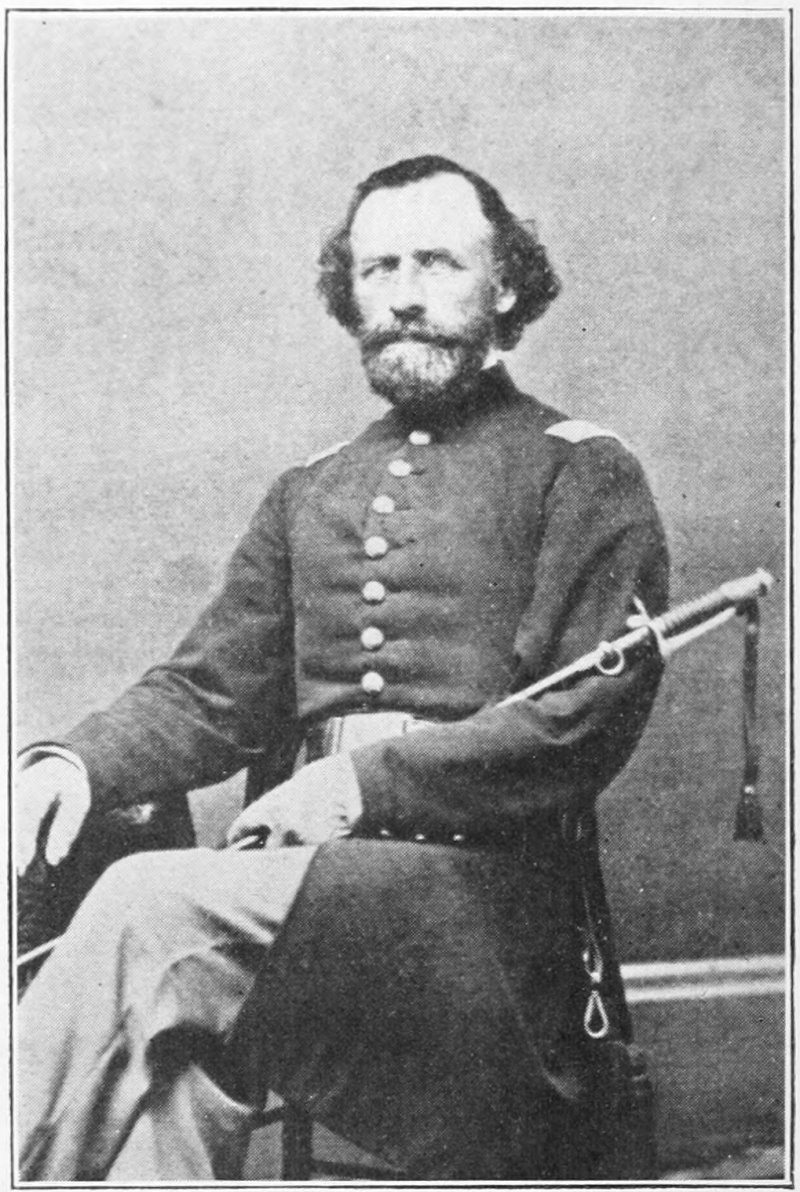
Capt. BARNABAS EWER, JR.
“Capt. Barnabas Ewer, Jr., obtained authority
to recruit a company from Fairhaven and adjoining
towns, to be known as Company I, Third Regiment,
Massachusetts Volunteer Militia. I think it
was in the month of August when Captain Ewer
opened an office in Centre Street, under the old
Town Hall, and invited volunteers to come forward
and sign their names on the company roll. After
a time of more or less discouragement a company of
one hundred and one officers and men was raised,
of which number forty-two were from Fairhaven,
twenty from Mattapoisett, fourteen from Rochester,
twelve from Lakeville, five from Marion, two from
Falmouth, two from New Bedford, and one each
from Acushnet, Wareham, and Litchfield, Me.
“The company officers were at first, Barnabas
Ewer, Jr., captain; Solomon K. Eaton, first lieutenant;
and Jabez M. Lyle, second lieutenant. Feb.
23, 1863, Lieutenant Eaton resigned on account of
ill-health, and, on April 8, 1863, Lieutenant Lyle
was commissioned first lieutenant, and Joshua H.
Wilkey was commissioned second lieutenant.
“This company was composed of men from many
different walks in life, farmers, mechanics, business
men, clerks, students in college, and teachers.
Their ages as given ranged from eighteen to forty-five
years. Too many troublesome questions along
this line were not asked. With one exception they
were American born; this one exception, poor fellow,
was the first one killed. No one was discharged
before the expiration of the term of service,
and no one was punished for misbehavior. Since
their muster out, the men, so far as I have been able
to learn, have proved themselves of no mean order,
filling their different stations with honor from humble
citizens of toil to judge upon the bench of the
Supreme Court.
“Sept. 22, 1862, the company reported at Camp
Joe Hooker, in Lakeville, where it remained until
October 22d, when the regiment broke camp and
proceeded to Boston with orders to report to Major-General
Foster, at Newbern, North Carolina.
“November 30th we were detached from the regiment,
and, with about thirty men from the different
companies who were found unable to do full duty,
we started at night on board steamer Northern
Light, for Plymouth, N. C. We reached there December
1st, relieving a large body of infantry, artillery,
and cavalry, who returned to Newbern. Here
our numbers were increased by a small company of
infantry and thirty cavalry recruited from the natives
in that vicinity, and known by us under the
title of “Buffaloes.” Lying in the waters, of the Roanoke,
there were rarely less than three or four,
sometimes many more gunboats. Commander Flusser,
of a first-class reputation as a fighting man, was
in command of the naval force. We found our
duty to be patrol, guard, and picket. The arrangement
between the land and naval forces was that
the land force was to give immediate alarm to the
naval force of the approach of the enemy, and then
at once retire to the Custom House on the bank of
the river, when the gunboats would shell the woods,
and, if need be, the town; and in this manner keep
the rebels from entering the place.
“On the 10th of December at 5.30 A. M., a most
beautiful moonlight morning, an alarm was sounded
by the picket, and soon we heard the patrol calling,
‘The rebels are coming.’ Lieutenant Eaton was off
duty sick; so Captain Ewer ordered me to go to
company headquarters and get the men in line,
while he visited the other companies and notified
the gunboat. I was quickly at the quarters of the
company and found the men already in line in
charge of Sergeant Wilkey. We waited in this position,
hearing nothing more of the rebels. Presently
Captain Ewer came to the company and asked
if anything new had occurred; I told him everything
was as quiet as death. At this point it is well to
state that the evening before all the gunboats save
one, which had just arrived and was a very large
one with a full complement of men and a very heavy
armament, had gone down the river to coal. In a
few minutes Captain Ewer ordered me to take an
escort and visit a picket about half a mile from
where we were, and on a road parallel to the one
where the alarm had been given, and see if anything
could be heard of the cause of the alarm. Calling
for volunteers, Corporal Mendell, Albert Wilcox,
and Elisha Dexter came forward. We visited the
picket named, and could learn only that a sound of
moving wagons had been heard some time previous,
but as nothing further had been heard the noise
must have been made by wagons going up the country
outside of our lines. As we started to return
to the company, we heard the rebels coming down
the road at the foot of which Company I was posted.
This force of the enemy was composed of the Sixteenth
Regiment of North Carolina Infantry with
two pieces of artillery, and one hundred and five
cavalrymen under Colonel Lamb. The cavalry
charged on Company I, yelling like demons. As
they were about to strike the company, Sergeant
Wilkey ordered the men to make a half wheel to the
right and fire. This was done and they retired to
the Custom House. Before the company had time
to start, the cavalry had run across the line, taken
fourteen prisoners, and wounded a number of others.
On reaching the Custom House the balance of the
garrison were found already there. Up to this time
the gunboat had done nothing. The enemy located
one piece of artillery on the bank of the river and
opened fire on her. The first shot went through her
smokestack and the second into her steam chest;
when the cry came that her boiler had burst, upon
which her captain ordered her cable slipped, and she
was soon drifting down the river, meanwhile firing
into the town as she slowly drifted away. On reaching
the Custom House our men at once occupied the
windows, and when the cavalry attempted to pass
a little later, they found it too hot for them and retired.
The rebel infantry on entering the village,
picketed each cross street to prevent anyone escaping,
and also set fire to the houses. A piece of artillery
located on a rise of ground where it had the
range of the Custom House, sent nine shots into the
upper corner, one which fatally wounded young
Francis Stoddard. At this time the rebels suddenly
retreated. In this action the company lost two men
killed, Sullivan and Stoddard, several wounded,
fourteen taken prisoners; a number of citizens were
drowned or killed.
“After this we had a quiet time, engaged in picket
and guard duty, but somewhat apprehensive of a
visit from a ram, christened by the boys “Roanoke
Sheep,” that we knew was only a few miles up the
river waiting for a chance to visit us. This ram
did come down later, clearing all before it until Lieutenant
Cushing succeeded in blowing it up.
“We had a large number of contrabands, horses
and mules to look after, and as Captain Ewer did
not feel authorized to feed them with government rations
we did considerable foraging outside the lines.
Three foraging expeditions fell to my lot to conduct.
One of these occasions is worth relating. We
started early in the morning with a number of wagons
and volunteers from Company I to go several
miles outside of our lines to a barn where there was
a large lot of corn that we wanted. After we had
proceeded some distance beyond the picket line we
saw a man coming on the run waving his hands and
acting very much excited. We halted until he
reached us and gave us the information that the rebels
were at the barn where we were going, and were
loading up the corn to carry up the country, and
that the best thing for us to do was to go back to
camp. After carefully considering the matter, we
concluded to go on and see what we could discover.
On reaching the vicinity of the barn we dismounted
and so arranged the men as to surround the premises,
and if possible capture all hands. Our attempt
proved a grand success. We took some thirteen
wagons of all descriptions, with all hands connected
with them. After finishing the loading of the captured
wagons and our own, we started on our return.
While still outside our picket line, we saw a
body of horsemen coming on the gallop toward us.
We halted, and formed our wagons and men in the
best shape we could to care for ourselves. They
proved, however, to be a body of our own cavalry
who were coming to look for us. The contraband
whom we had met earlier in the day had worked his
way into the town and told his story to Captain
Ewer, and he had become anxious about us. We
soon formed line again and took up our camp campwards.
After entering within the lines we met the
infantry coming out to see where we were: these so
increased our numbers that when we reached Plymouth
we had a large column of cavalry, infantry,
rebels, with our train of wagons, and as we passed
headquarters received a royal welcome from the men
from the gunboats and citizens who were gathered
on the street.
“One other expedition we will mention, caused by
our guide, a man named Giles, having been shot
while he and Corporal Mendell were entering the
gate leading to the guide’s house. Giles was a native
and his home was outside our lines. Corporal
Mendell reported the incident to Captain Ewer, and
it was not known for a certainty whether or not the
guide was dead. I was ordered to take a boat and
crew from Company I, in which were a number of
sailors, and visit the home of the guide to render
him any needed aid and bring him to town if possible.
We started early in the morning, were all day
until ten o’clock at night. On reaching the house
we found the guide dead, and that there was nothing
we could do.
“In these ways we spent our time until one day in
March we saw a steamer coming up the river carrying
a general’s flag at the fore. When the boat was
made fast Company I was ordered to get ready to go
somewhere, we did not know where. It seems, however,
that General Palmer wanted to visit some of
the outposts. One of these was Edenton, and the
men were allowed here to go ashore. On returning
to the steamer, some of the citizens reported to the
general that some silver was missing. The company
was ordered to fall in line on the wharf; knapsacks
were unslung and carefully inspected, but no
silver was found. On swinging off, the steamer
headed for Elizabeth City. Here the company disembarked
and spent about two months in garrison
duties, similar to those performed at Plymouth. The
major of the Eighth Massachusetts Volunteer Militia
had command of the post. Foraging became a
part of our duty. One expedition in this line is
worthy of mention, showing how the innocent may
suffer imposition. We started one day under command
of an officer of some North Carolina troops.
The expedition was made up of a detail from the
Eighth Regiment, Massachusetts Volunteer Militia,
and Company I. We were absent two days and a
night, and the object was to procure rations as our
commissary was getting short. We were successful
in finding corn, bacon, and some very nice hams.
These last were found by Company I. As we were
about to go ashore on our return, we noticed that
the men of the Eighth Regiment had on their overcoats,
but in our innocence thought it not strange,
presuming they thought that the better way of carrying
them. The next day when we applied to the
commissary for a share of the hams, he informed us
that none were turned in. It seems that the men
with overcoats had carried them away under their
capes.
“We formed a part of an expedition sent one day
to break up a camp of guerillas, located some distance
up the Dismal Swamp canal. We used a little
noisy steamer which gave a decided notice of our
coming, and, as might be expected, the guerillas took
the hint and left. All we could do was to burn the
camp, which we did, and then returned in safety.
“After about five months of garrison duty in Plymouth
and Elizabeth City, Company I was ordered
to report at Newbern, when its services became again
a part of the regimental history.”
[Written by Corporal James F. Tripp and Comrade Henry P.
Crowell.]
[The first figures indicate age at enlistment: the city or town, the place
of enlistment.]
Barnabas Ewer, Jr., Captain; 50; Fairhaven.
For years before the war he was in the outfitting
business. He raised Company I, and was its captain
during its nine months’ campaign in North
Carolina. He assisted in raising the Fifty-eighth
Regiment and was commissioned major of the same.
He went with the regiment to the front and was
killed in action at Cold Harbor, June 3, 1864.
Solomon R. Eaton, First Lieutenant; 55; Mattapoisett.
For many years he was engaged in the architectural
business, where he gained success and
renown. He resigned his office as first lieutenant
February 23d, on account of failing health, and died
at Mattapoisett, Oct. 9, 1872.
Jabez M. Lyle, Second Lieutenant; 30; Fairhaven.
He was promoted to first lieutenant, Apr. 3, 1863,
and afterwards to captain in the Twenty-third Unattached
Company, One Hundred Days’ Men. After
muster out he taught school in Fairhaven. He was
for quite awhile in the oil business; then engaged in
the real estate and insurance business, which he still
continues in New York City successfully. His address
is 1550 Fulton Street, Brooklyn, N. Y. Of
Company I he says, “The men of this company were
quite the equal of any company in the Old Third.
Many of them were college graduates, and others
were pursuing their studies in college, which for
the time they ceased to take up again after they were
mustered out of service. Since the war many of
these men became doctors, lawyers, one a judge in
the courts of Massachusetts, one the honored principal
of the Friends Academy in New Bedford; many
have made their mark in business; and not one has
ever disgraced himself by misbehavior. A large
number re-enlisted and went to the front. All the
officers save Lieutenant Eaton went the second time,
and some the third time into the service.”
As captain, Lieutenant Lyle recruited Company I
to its fullest strength. During his service he was
acting adjutant for one month in camp at Lakeville,
acting quartermaster, commissary, ordnance officer
at Plymouth, N. C., and lastly he commanded two
companies at Readville, Mass., at the time of the
second election of President Lincoln.
Joshua M. Wilkey, Second Lieutenant; 26; Fairhaven.
He was promoted from first sergeant to second
lieutenant, Apr. 3, 1863. He was promoted first
lieutenant in the Twenty-third Unattached Company;
also promoted captain in a company raised
for one year. He died in Fairhaven, Nov. 12, 1901.
Jirah Kinney, Jr.; First Sergeant; 26; Mattapoisett.
He was in the First Rhode Island Detached
Militia and took part in the battle of Bull Run. After
the war he returned to Mattapoisett, where he
lived until he moved to Buffalo, N. Y., his present
residence.
Lawrence R. Rankin, Sergeant; 23; Rochester.
Believed to have been killed in the battle of Cold
Harbor, June 3, 1864.
Thomas H. Bowen, Sergeant; 21; Fairhaven.
Died in Fairhaven, Apr. 30, 1879.
Nelson I. Sweet, Sergeant; 21; Fairhaven. After
muster out he worked for the Standard Oil Company
until pensioned and retired by the same. He
resides in Brooklyn, N. Y.
Elisha Copeland, Sergeant; 26; Fairhaven. Died
in Fairhaven, Apr. 3, 1886.
George, F. Rogers, Sergeant; 21; Fairhaven. Died
in Newbern, N. C., June 2, 1863.
Sylvanus D. Waterman, Corporal; 21; Litchfield,
Me. Died in Kentucky several years ago.
Horace P. Tripp, Corporal; 24; Fairhaven. Died
in Fairhaven, Apr. 29, 1864.
Jessie A. Warner, Corporal; 44; Fairhaven. Died
in Fairhaven, June 13, 1892.
Nathan H. Mendall, Corporal; 30; Marion. Believed
to be living in Rochester, Mass.
Benjamin H. Strowbridge, Corporal; 40; Lakeville.
Unknown.
James N. Cox, Corporal; 18; Fairhaven. Re-enlisted
in Fifty-eighth Massachusetts Volunteer Militia
as sergeant. Wounded in the Battle of the Wilderness.
Resides in Calmut, Mich.
Benjamin F. Robinson, Corporal; 20; Mattapoisett.
Employed at State Farm, Bridgewater.
James F. Tripp, Corporal; 28; Fairhaven.
Prominent in town affairs. Real estate agent. One of the
officials at Dry Dock, Fairhaven. Resides on Walnut
Street, Fairhaven.
Benjamin Burt, Musician; 18; Fairhaven. Resides
in New Brunswick, N. J.
Privates.
Allen, William F.; 21; Fairhaven. Engaged in
the life insurance business in New York. Resides in
Omaha Menger, N. Y.
Allen, Charles A.; 19; Marion. Resides in
Marion.
Baker, Benjamin T.; 18; Fairhaven. Resides in
Whitinsville, Mass.
Barrows, Alpheus; 21; Mattapoisett. Resides in
Mattapoisett. Re-enlisted in Second Heavy Artillery.
Benton, Charles H.; 18; Lakeville. Unknown.
Bowen, Martin; 18; Fairhaven. Died in Franklin,
Pa., Aug. 25, 1899.
Braley, Charles G.; 22; Fairhaven. Living in
Fairhaven.
Briggs, George P.; 20; Fairhaven. Resides in
Cottage City.
Butts, Joseph A.; 20; Mattapoisett. Resides in
New Bedford.
Benton, William H.; 41; Lakeville. Supposed
to be dead.
Braley, George B.; 23; Fairhaven. Died in
Marion, Mass.
Blankenship, James W.; 19; Marion. Nothing
known of his history since muster out.
Bishop, Israel S.; 43; Rochester. According to
best information he died several years ago.
Bourne, Sylvanus, Jr.; 22; Falmouth. Believed
to be living in Falmouth.
Bourne, Thomas B.; 19; Rochester. So far as
known he still lives in Rochester.
Bishop, Micah S.; 27; Rochester. Unknown.
Crowell, Thomas C.; 27; Fairhaven. Died in
Fairhaven, March 26, 1879.
Crowell, Henry P.; 21; Fairhaven. An honored
and respected citizen of Fairhaven, where he still resides.
Carson, Reuben; 22; Fairhaven. Died in Hyde
Park, in 1904. Buried in New Bedford.
Cole, Charles G.; 38; Lakeville. Unknown.
Crapo, Henry E.; 23; Rochester. Unknown.
Cole, Theodore W.; 24; Rochester. Resides in
New Bedford.
Cole, Albert L.; 44; Lakeville. Believed to be
dead.
Cole, Nelson F.; 43; Lakeville. Unknown.
Carver, Gilbert; 24; Lakeville. Unknown.
Crapo, Francis N.; 21; Rochester. Unknown.
Caswell, William F.; Fairhaven. Resides in
New Bedford.
Crosby, Edward F.; 18; Mattapoisett. Unknown.
Damon, Edward F.; 21; Fairhaven. Died in Fairhaven,
March 23, 1866.
Davis, Alden; 32; Fairhaven. Died in Fairhaven,
Sept. 13, 1901.
Dean, William; 36; Lakeville. Unknown.
Dexter, Albert M.; 25; Mattapoisett. Died July
25, 1899.
Dexter, Elisha L.; 28; Mattapoisett. Unknown.
Dexter, James W.; 44; Mattapoisett. Died in
1890.
Dodge, Gilbert A.; 26; Marion. Resides in Orleans,
Mass.
Dillingham, Edward H.; 37; Fairhaven. Re-enlisted
in Fifty-eighth Massachusetts Veteran Volunteers.
Died in Petersburg, Va., March 8, 1865, and
was buried in Virginia.
Dunham, George; 18; Fairhaven. Unknown.
Ellis, Daniel S.; 21; Mattapoisett. Died in Mattapoisett,
Mar. 21, 1893.
Ellis, William T.; 20; Rochester. Died soon after
muster out.
Ellis, John; 42; Acushnet. Unknown.
Freeborn, John P.; 22; Fairhaven. Resides in
Newport.
Gillett, Albert D.; 21; Fairhaven. Lives in Soldiers
Home, Chelsea.
Gillett, Charles W.; 24; Fairhaven. Resides in
New Bedford.
Gifford, Charles H.; 23; Fairhaven. Died in
Fairhaven, Jan. 20, 1904.
Gifford, William C.; 18; Mattapoisett. Re-enlisted
in Third Heavy Artillery. Resides in Fairhaven.
Hitch, Frederick H.; 22; Fairhaven. Resides in
New York.
Holmes, Heman G.; 25; Mattapoisett. Master’s
Mate at close of the war. Member of school committee
in Mattapoisett, where he still resides.
Hiller, Eben R.; 31; Mattapoisett. Died in Mattapoisett,
May 1, 1890.
Hammond, John W.; 24; Mattapoisett. One of
the judges of the Supreme Judicial Court of Massachusetts.
Resides in Cambridge, Mass.
Hammond, Rowland; 20; Mattapoisett. Died in
Campello, July 8, 1900.
Ingraham, William H.; 35; Wareham. Died in
Wareham.
Ingraham, Andrew; 20; New Bedford. Resides
in Cambridge, Mass.
Jenkins, William; 22; Falmouth. Unknown.
Luce, Leander; 24; New Bedford. Unknown.
Lobie, Franklin A.; 44; Mattapoisett. Died in
Newbern, N. C., Jan. 19, 1863.
Marvell, Samuel M.; 18; Fairhaven. Re-enlisted
in Fifty-eighth Regiment. Promoted sergeant.
Taken prisoner and died in Salisbury Prison, N. C.,
Dec. 29, 1864.
Nye, John L.; 27; Rochester. Unknown.
Potter, William H.; 30; Marion. Resides in
Marion.
Pierce, Lucius; 30; Rochester. Unknown.
Paull, Roger; 23; Lakeville. Unknown.
Paris, Caleb; 27; Lakeville. Died in Myricksville,
Feb. 19, 1900.
Purrington, William B.; 19; Fairhaven. Died
in Fairhaven, Apr. 1, 1865.
Purrington, John A.; 44; Mattapoisett. Died in
New Bedford, Dec. 14, 1899.
Ryder, Madison N.; 18; Rochester. Unknown.
Randall, Fayette E.; 18; Mattapoisett. Resides
in Mattapoisett.
Randall, George W.; 26; Mattapoisett. Resides
in New Bedford.
Sampson, Zabdiel S.; 20; Fairhaven. Died in
New York, 1900.
Smith, Roland; 24; Fairhaven. Resides in Rock
Station, Middleboro, Mass.
Sears, Stephen C.; 23; Rochester. Resides in
Somerville, Mass.
Sullivan, Michael; 26; Lakeville. Killed in action
at Plymouth, N. C., Dec. 10, 1862.
Stoddard, Francis M.; 18; Fairhaven. Died in
Plymouth, N. C., December 16th, from wounds received
in action Dec. 10, 1862.
Tinkham, Charles H.; 20; Mattapoisett. Died
in Newbern, Nov. 30, 1862.
Taber, Loring P.; 18; Fairhaven. Died of wounds
in Washington, D. C., June 23, 1864.
Toby, John A.; 23; Falmouth. Town Clerk of
Falmouth.
Tripp, Handel J.; 43; Rochester. Died in Foxboro,
1904.
Wilber, Isaiah T.; 27; Rochester. Died in Mansfield,
Mass., Feb. 9, 1901.
Westgate, Stephen; 18; Fairhaven. Resides in
New Bedford.
Wrightinton, Thomas W.; 25; Fairhaven. Resides
in Fairhaven.
Westgate, Andrew; 33; Fairhaven. Died in Fairhaven,
Feb. 16, 1904.
Wilcox, Albert M.; 30; Fairhaven. Resides in
Fairhaven.
Wood, Lemuel C., Jr.; 33; Fairhaven. Died in
New Bedford in 1897.
Winslow, Leander; 27; Lakeville. Died in 1904.
Company K, Third Regiment, Massachusetts Volunteer
Militia.
[Written by Corporal Henry Manley, Member of the Company.]
Company K was a new company recruited for the
purpose of filling the quota of the towns of East
Bridgewater, West Bridgewater, and Bridgewater.
It was not connected with the Third Regiment of
Massachusetts Militia either before or after its term
of service.
In the call for 300,000 three years’ men early in
the summer of 1862, the combined quota of the
above-named towns was 102, and taking it for
granted that about the same number would be required
under the call of August 4th, for 300,000 men
for nine months, concerted action was taken in town
meetings in each of those towns.
A very enthusiastic war meeting was held on the
evening of Aug. 18, 1862, in the town hall in East
Bridgewater, at which Joseph Chamberlain was
president and Sergt. Morton D. Mitchell was secretary.
It was voted that it is expedient that East
Bridgewater, together with Bridgewater and West
Bridgewater, should endeavor to raise by voluntary
enlistment a company to enter into the United
States service for nine months.
Voted, That Messrs. James Mitchell, Benjamin
W. Harris and George Bryant be a committee to
wait upon the governor and request him to appoint
some person or persons, to engage in the enlistment
of such volunteers.
Voted, That Messrs. Richard M. Smith and William
Allen be a committee to consult with the citizens
of Bridgewater and West Bridgewater in relation
to a meeting of the three towns for the purpose
of forming a military company.
It is probable that similar meetings were held in
each of the other towns, but no record of them has
been found.
In West Bridgewater a town meeting was held on
Aug. 22, 1862. It was voted that a bounty of
$150 be paid to volunteers for nine months’ service,
and it was recommended that the volunteers unite
with Bridgewater and East Bridgewater to form a
company. It was also recommended that the whole
town attend a meeting to be held at Agricultural
Hall in Bridgewater on the following Wednesday
(August 26th) for the purpose of forwarding the
formation of a military company. A committee
had been chosen at a previous meeting to take
charge of recruiting, consisting of the Selectmen
(James Howard, Albert Copeland and George T.
Ryder), together with one man from each school
district, as follows: William O. Alger, J. Q. Hartwell,
Nahum Snell, Samuel N. Howard, Charles E.
Howard, Galen K. Richards, Thomas Ames, Leavitt
T. Howard.
In East Bridgewater at a town meeting held on
Aug. 23, 1862, it was voted to pay a bounty of $100
to volunteers for nine months’ service, and a committee
of three was chosen to procure enlistments.
The committee consisted of Samuel Bates, John B.
Fisher, and George Bryant. The meeting also recommended
to such of its inhabitants as may enlist
for nine months’ service that they unite with the
volunteers from the towns of Bridgewater and West
Bridgewater in forming a company.
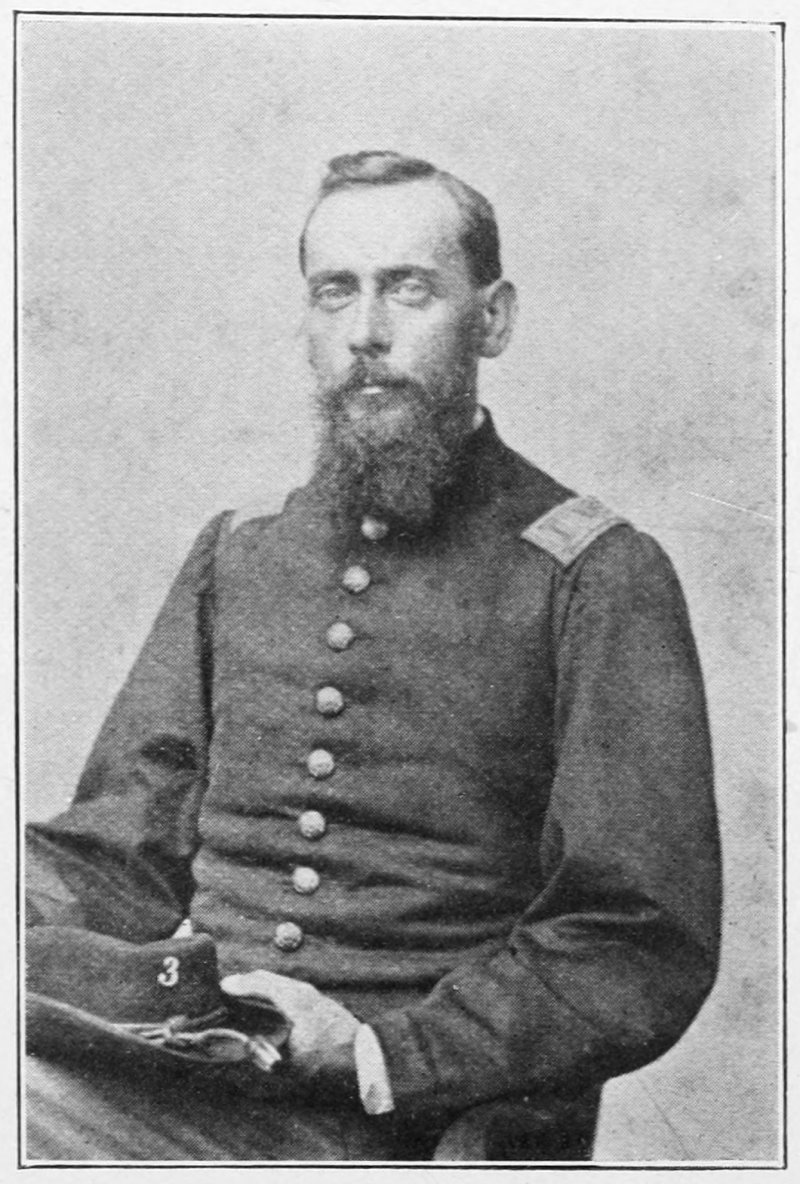
Capt. SAMUEL BATES.
A town meeting was held in Bridgewater on Aug.
26, 1862, to raise volunteers under the call for men
to serve nine months. It was voted that a committee
of seven be chosen by the town to take in charge
the business of raising the number of volunteers
necessary, also to pay a bounty of $150 to each volunteer
who shall enlist to the credit of the town for
nine months’ service. The committee chosen at this
meeting were F. B. King, Edward W. Bassett, Nathan
Fobes, Almansor Osborne, Lewis Holmes, and
Holden W. Keith.
Shortly after this time a number of men from
North Bridgewater and Easton who had arranged
to join the Fourth Regiment, learning that this company
was nearly full, and that the regiment was
nearly ready to leave for the seat of war, joined the
company, completely filling its ranks.
The mass meeting alluded to in the town meeting
in West Bridgewater was held in Agricultural Hall,
Bridgewater, on the evening of August 26th. The
presiding officer was B. W. Harris, Esq., of East
Bridgewater. The vice-presidents were Hon. Artemas
Hale, Col. Samuel Leonard, Hon. J. H. Mitchell,
Samuel G. Alden, James Howard, and Capt.
Joseph Kingman. The meeting is represented as of
an enthusiastic character, but no account of the addresses
has been discovered.
The company thus recruited was assigned to the
Third Massachusetts Infantry and named “Company
K.”
It went into Camp in Lakeville, Mass., on Sept.
16, 1862, and was the second company of the regiment
to arrive at the camp. It was given a patriotic
and affectionate send-off by the people of the
Bridgewaters, and was escorted to the train and
from the train at Haskins Station to Camp Joe
Hooker by the Bridgewater Cornet Band.
The barracks at Camp Joe Hooker were new. The
main buildings, twenty in number, were each about
70 × 25 feet on the floor and nine feet high in the
walls. They were built of matched boards, planed
on the inside, with good tight floors, and shingled
roofs. The bunks were built double “like two sinks,
one above the other,” and each accommodated four
men, two in the upper and two in the lower berth.
Each barrack held one hundred men, or a company.
They were well ventilated and comfortable. The
barracks, cook-houses, officers’ quarters, stables, etc.,
fifty buildings in all, were built in one week.
The company consisted of one hundred and one
men, exactly the legal maximum for an infantry
company. The towns furnishing the men were as
follows: Bridgewater, thirty-four; East Bridgewater,
twenty-four; West Bridgewater, twenty-five;
North Bridgewater, eleven; Easton, four; Middleboro,
one; Boston, one; Gloucester, one; total, one
hundred and one. It will be seen from the above
that the members of the company were from contiguous
territory with only two exceptions; First
Sergt. Winter was imported from Gloucester as a
trained and drilled man and was almost the only
man in the company with military experience even
in the militia, and he had never been in the United
States service. With him came his friend “Natty”
Ackerman who hailed from Boston. The remainder
of the company was recruited amongst friends and
neighbors. Nearly all were of American parentage,
and most of them were men of standing in the community
both before and since the war. They were
“men of their hands,” too, and there are few things
that could not be built, or machines that could not
be run by members of the company.
The occupations of the recruits were given as follows:
Boot and shoe workers in some form, forty-six;
farmers, seventeen; moulders, seven; machinists,
four; laborers, four; carpenters, three; salesmen,
three; students, three; bookbinders, two; druggist,
one; “railroader,” one; civil engineer, one; surveyor,
one; butcher, one; nailer, one; wheelwright,
one; painters, two; box maker, one; stone cutter,
one; teacher, one.
The officers were as ignorant of military usages
as the men, and, as may be supposed, the discipline
at first was not of the most rigid character. But
the members of the company as a rule were disposed
to do the right thing, and perhaps enjoyed themselves
better and did just as good service as they
would have done under more severe officers. The
men of the company owe a debt of gratitude to their
officers who were all kind-hearted men and devoted
to the welfare of the company, and whose mildly
used authority was much better adapted to a company
of intelligent men of pronounced Yankee blood
than would have been that of military martinets.
Fifty-two members of the company were married
and forty-nine were single.
The average age was between twenty-eight and
twenty-nine years. Twenty were twenty years old
and under, twenty-four were between twenty and
twenty-five, nineteen were between twenty-five and
thirty, twenty-two were between thirty and forty,
and sixteen were more than forty.
Company K was the color company throughout its
service, and its position was therefore on the right
centre when the regiment was in line of battle.
The record of the company in the service is not a
bloody one. No one was killed, wounded, taken
prisoner, or missing, and no one deserted. Two
men died from disease in the service and six men
were discharged for disability before the regiment
was mustered out. The story of the regiment as a
whole will be given elsewhere, and that part of the
company’s history which also means the regimental
history, has been omitted in this account. Company
K followed the fortunes of the regiment closely.
The only time that it was on detached duty, except
for picket, or service of that nature, was early in its
service after it arrived in Newbern and before the
arms had been distributed, when it was ordered to
some mythical point to build a bridge. After groping
around outside the picket line, entirely unarmed,
for two days, the company returned, having
found the bridge nearly completed.
The members of the company had an exceptional
opportunity to see the details of warfare. At the
Battle of Kinston the company with the regiment
was in reserve, and, while under fire, was unharmed.
After the action they had an opportunity, from the
view point of the victors, to examine a well-fought
field with many killed, wounded and prisoners, and
also to explore the captured town of Kinston.
At Whitehall the company was again under fire,
and, as was reported, the inferior character of its
arms saved it from a more intimate acquaintance
with the enemy.
At Goldsboro the company had an opportunity of
seeing a charge repelled under sensational circumstances
and with severe loss to the enemy, a sight
which many soldiers of longer service have never
seen. The circumstances of this charge have been
traditional in the company and the results have
been much exaggerated, the enemy’s loss being set
all the way from five hundred to fifteen hundred.
The unadorned facts are that after the burning of
the bridge and during the withdrawal of the Union
forces, by a blunder of the enemy a charge was
made by two regiments of General Clingman’s brigade
against a much superior force, and it was the
fortune of Company K as a part of the regiment, to
act as guard to Belger’s Rhode Island battery,
which with another light battery had a fair chance
to destroy the attacking force as it charged up a
long slope. The Third Regiment lay on the ground
in front of the battery (which was firing over the
regiment), and Company K had an unobstructed
view of the premises, and nothing to do but look on.
The writer in a letter written at the time estimated
that the nearest rebel came within fifty rods of the
regiment. The attacking force consisted of the Fifty-second
North Carolina Regiment, Colonel Marshall,
and the Fifty-first North Carolina, Colonel
Allen. These regiments, with two others which did
not participate in the charge, made the brigade commanded
by Gen. Thomas E. Clingman. His report,
printed in the “Official Records of the Union and
Confederate Armies,” First Series, Vol. XVIII,
page 117, gives the losses as follows:
|
|
Killed |
Wounded |
Missing |
| Marshall’s Regiment |
11 |
58 |
10 |
| Allen’s |
“ |
6 |
43 |
8 |
|
|
—— |
—— |
—— |
| Total, |
17 |
101 |
18 |
making |
a total loss of 136. The writer has not succeeded
in learning the total strength of the two regiments
at the time of the charge.
The company’s most potent enemies during its
service were the severe marches to which it was subjected
and the malarious climate. The effects of
both of these are still felt by many of the survivors.
On the return of the regiment a public reception
was given to Company K on Saturday, June 20th,
at the Agricultural Hall by citizens of Bridgewater,
East and West Bridgewater. The company met at
the town hall, Bridgewater, and was escorted to the
Fair grounds by the Bridgewater Cornet Band under
the marshalship of Dr. Asa Millett, where twelve
or fifteen hundred people had assembled to receive
it. For the gratification of their friends the soldiers
spent about half an hour in drilling. At about
half past two o’clock, after stacking arms the company
was drawn up in front of the judges’ stand on
the track to listen to the speech of welcome. The
president of the day, James Howard, Esq., of West
Bridgewater, after stating the object of the meeting,
introduced Hon. B. W. Harris, of East Bridgewater,
who, in an appropriate speech in behalf of the citizens,
welcomed the soldiers on their return home.
A procession was then formed which marched to the
hall to partake of a collation which had been prepared
by the ladies of the several towns. After the
repast the company adjourned to the upper hall to
listen to the speeches. This hall as well as the
lower was tastefully decorated with flags and pendants.
The soldiers occupied seats directly in front
of the speakers and were here presented each with
a bouquet of flowers by the school children, the presentation
speech having been made by one of the
young ladies. Speeches were made by Hon. John A.
Shaw, Hon. Benjamin W. Harris, and others.
Later in the afternoon, Major Morrissey entered the
hall, and, taking his seat on the platform, was received
with great applause, Company K giving him
three hearty cheers. He was then introduced and
addressed the soldiers. The entertainment was
closed by singing “America” by the whole audience
under the direction of Mr. Wilde.
After the arrival home of the company and before
it was mustered out came the death of one of its
members, Mr. James Henry Packard, of North
Bridgewater (now Brockton). He was buried in
the Marshall’s Corner Cemetery with military honors
from his comrades.
Twenty members of the company entered the military
service after being mustered out of Company
K. Ten of this number joined Company D, Fifty-eighth
Massachusetts Infantry, three of them forming
the commissioned officers of the company. Of
these ten, one was killed in action, five were
wounded, seven were taken prisoners, of whom two
died in rebel prisons. All but one of the ten is included
in one or more of the above categories, and
whether the tenth man was taken prisoner or
wounded the writer has not been able to learn. The
remaining ten enlisted in various organizations, but
none of them lost their lives in the service.
In June, 1906, thirty-six members of Company
K were known to be living. One has not been heard
from by his relatives for about twenty years, and
the remaining sixty-four are known to be dead. The
commissioned officers are all dead. Of the non-commissioned
officers, two corporals survive. Fourteen
of the surviving men of the company are past labor
by reason of age or infirmities, or both. Twenty
are “still in the ring” pursuing their usual avocations;
one has retired, and one is in the Soldiers
Home, in Togus, Maine.
The company was mustered into the United
States service on Sept. 23, 1862, and was mustered
out on June 26, 1863. The members of Company K
were mustered on the above dates unless otherwise
noted.
Samuel Bates, Captain; born in East Bridgewater,
June 3, 1828. Boot-cutter; married; commissioned
Sept. 3, 1862; died in Whitman, Mass.,
Sept. 26, 1879. After the war, Capt. Bates passed
several years in the employ of the interior department
in Washington, ending in September, 1879.
Nathan Fobes, First Lieutenant; salesman;
twenty-two; single. Enlisted from Bridgewater.
Commissioned Sept. 3, 1862; died in East Orange,
N. J., Oct. 14, 1899. Lieutenant Fobes was a traveling
salesman for Boston and New York merchants.
Charles E. Churchill, Second Lieutenant; thirty-eight;
married; shoe-cutter. Enlisted from West
Bridgewater. Commissioned Sept. 3, 1862. Lieutenant
Churchill served as aid on the staff of Brig.-Gen.
J. Jourdan from Feb. 26, 1863, until the return
of the regiment. Lieutenant Churchill entered the
service the second time and served as captain of
Company D, Fifty-eighth Massachusetts Infantry.
He was wounded and taken prisoner Sept. 3, 1864,
and discharged for disability, Feb. 10, 1865. Lieutenant
Churchill lived in West Bridgewater, and
died there on Feb. 4, 1901.
George F. Winter, First Sergeant; twenty-nine;
bookbinder; married. Enlisted from Gloucester;
died in Gloucester of heart disease Jan. 9, 1886. He
was a bookbinder by occupation.
John B. Fisher, Sergeant; twenty-one; law student;
single. Enlisted from East Bridgewater;
died June 13, 1882, in East Bridgewater. He also
served in the Thirty-sixth United States Colored
Troops, known as the Second North Carolina Regiment.
Linus E. Hayward, Sergeant; forty; married;
farmer. Enlisted from West Bridgewater. Enlisted
a second time in the Fifty-eighth Massachusetts
as first lieutenant and was promoted captain.
Was wounded and taken prisoner. Was
exchanged and returned home with the regiment.
Died in West Bridgewater, July 16, 1904.
Samuel E. Hawes, Sergeant; salesman; twenty-five;
single. Enlisted from Bridgewater. Died in
Brockton, Feb. 9, 1886.
Josephus L. Freeman, Sergeant; thirty-five; shoe-cutter;
married. Enlisted from West Bridgewater.
Lived in Brockton and followed the occupation of
a mechanic in the shoe manufacturing shops of that
city. Died in Brockton, March 18, 1892.
Nahum Washburn, Jr., Corporal; twenty-three;
single; druggist. Was proprietor of a drug store
in Bridgewater, and died there Oct. 14, 1893.
Alfred H. Perkins, Corporal; moulder; thirty-one;
married. Enlisted from Bridgewater. Promoted
regimental wagoner Dec. 9, 1862. Died in
Bridgewater, March 8, 1902.
Thomas P. Ripley, Corporal; twenty-one; single;
farmer. Enlisted from West Bridgewater. Carried
on the business of manufacturing boots and
shoes in Cocheset, West Bridgewater. Died Aug.
23, 1891, in West Bridgewater.
Elijah Hinkley, Corporal; “railroader;” forty-four;
married. Enlisted from East Bridgewater;
was a shoemaker, and later a gate tender for the
Old Colony Railroad Company and its successors,
until his death, on Dec. 16, 1893, in East Bridgewater.
George M. Keith, Corporal; thirty-one; married;
shoemaker. Enlisted from East Bridgewater; was
foreman in shoeshops for seventeen years; superintendent
of Bridgewater Water Company for ten
years, ending in 1900, and since then president of
the East Bridgewater Savings Bank. Mr. Keith is
still living in the house in which he was born in
East Bridgewater.
Marcellus G. Howard, Corporal; student; twenty-five;
single. Enlisted from Bridgewater. Corporal
Howard was detailed as a member of the color
guard and as such carried the State colors. He carried
on the market business in Bridgewater; died of
consumption in Palatka, Fla., Dec. 24, 1881.
Seth B. Edson, Corporal; surveyor; twenty-seven;
single. Enlisted from East Bridgewater.
Mr. Edson lived in East Bridgewater, where he carried
on the nursery and farming business. Died
Feb. 21, 1905, in East Bridgewater.
Henry Manley, Corporal; teacher; twenty-one;
single. Enlisted from North Bridgewater. He is
a civil engineer, assistant engineer engineering department
city of Boston. Member American Society
of Civil Engineers. Lives in West Roxbury
(Boston), Mass.
David P. Reynolds, Private, promoted Corporal,
Dec. 9, 1862; shoemaker; twenty; single. Enlisted
from East Bridgewater. Died Sept. 6, 1867, of consumption,
in East Bridgewater.
Alfred Gurney, Company Wagoner; farmer;
forty-four. Enlisted from East Bridgewater. Was
a farmer in East Bridgewater, and died there Feb.
28, 1901.
Privates.
Alden, Caleb, 42; single; farmer. Enlisted from
Bridgewater. Died in Soldiers Home, in Togus,
Me., on Jan. 3, 1899. Buried in Bridgewater.
Alden, Isaac R., painter; 18; single. Enlisted
from Bridgewater. Was the company drummer;
enlisted a second time and served as drummer in
Company F, Fifty-sixth Massachusetts Infantry;
has carried on the business of grocer in Bridgewater
since the war.
Alden, Lucius F., 18; single; shoemaker. Enlisted
from West Bridgewater. Carried on the business
of shoe manufacturing in Brockton, as a member
of the firm of Churchill & Alden for many years.
Died in Brockton, Dec. 28, 1903.
Alden, William S., Jr., farmer; 18; single. Enlisted
from Bridgewater. Went to California many
years ago. His relatives have not heard from him
for about twenty years.
Andrews, Manassah Lloyd, machinist; 18; single.
Enlisted from Bridgewater. Lives in East
Bridgewater (Elmwood), in good health, and busily
employed at his trade.
Ackerman, Nathaniel, bookbinder; 38; married.
Enlisted from Boston. Discharged for disability,
March 1, 1863. Died —.
Barney, Hial, farmer; single; 26. Enlisted from
Bridgewater. He carried on the meat business in
Wareham, Mass., for twenty-five years. Was selectman,
assessor, and overseer of the poor in Wareham
for six years. Retired from business in 1891.
Lives in Manchester, N. H. Address, 708 Pine St.
Bartlett, Ezekiel R., shoe stitcher; 22; single.
Enlisted from West Bridgewater; absent sick when
company was mustered out. Honorably discharged
June 26, 1863. Enlisted and served in Company C,
Sixtieth Regiment, 100 days’ service; followed business
of workman in shoe factory. Lives in East
Bridgewater.
Beals, Charles T., shoemaker; 18; single. Enlisted
from East Bridgewater. Has been a carriage
painter for thirty-six years; has lived in Massachusetts,
Ohio, and California. Is now living at No. 17
West Second St., Mansfield, Ohio, in poor health,
his lower limbs being paralyzed.
Beaton, James W., shoemaker; 22; married. Enlisted
from East Bridgewater. Lives in Boston
(Dorchester); has been a teamster and stage driver.
Is in the employ of the New York and New Haven
Railroad Company as gate-tender.
Bird, Henry W., shoemaker; single; 19. Enlisted
from East Bridgewater, lives in East Bridgewater.
Blackman, Andrew G., carpenter; 29; married.
Enlisted from East Bridgewater. Has worked in
a shoeshop for twenty-five years. Lives in East
Bridgewater.
Brainard, John M.,
shoemaker; 39; married.
Enlisted from West Bridgewater. He was drowned
in the stream near his residence in East Bridgewater,
on Oct. 23, 1878.
Briggs, George D., shoemaker; 19; single. Enlisted
from Bridgewater. Also served as corporal
in Eighteenth Unattached Company, Massachusetts
Infantry; one year’s service. Has been foreman in
shoe factory and is now janitor of The Union Trust
Building, Brockton, Mass.
Briggs, Walter C., salesman; 18; single. Enlisted
from West Bridgewater. Served in Twentieth
Unattached Company for one year, and in
Eleventh United States Infantry. Died —.
Caldwell, George, shoe cutter; 43; married. Enlisted
from West Bridgewater. Died in the service
from disease in the Foster Hospital, Newbern, N.
C., on June 7, 1863.
Caldwell, Charles H., shoemaker; 20; married.
Enlisted from West Bridgewater. Lives in West
Bridgewater, near Westdale Station.
Caldwell, Melvin, shoe cutter; 18; single. Enlisted
from West Bridgewater. Died in West
Bridgewater, May 25, 1864.
Conant, Seth W., farmer; 40; married. Enlisted
from Bridgewater. Enlisted and was mustered into
United States service as private in Company D, Fifty-eighth
Regiment, March 12, 1864, and was killed
in action in front of Petersburg, July 30, 1864.
In Bridgewater in the Rebellion, a book written
and published by Arthur Hooper, a member of Company
K, it is related that after the Battle of Spottsylvania,
May 12, 1864, Conant was detailed with
others to bury the dead. The first one found was
his son Lucius, a private in the same company.
Copeland, Ezra S., farmer; 27; single. Enlisted
from West Bridgewater. He was a member of the
Pioneer Corps. Died March 2, 1874.
Copeland, John, butcher; 43; married. Enlisted
from West Bridgewater. Lived on his farm in West
Bridgewater and died there on June 3, 1904.
Coughlin, Bartholomew, laborer; 29; married.
Enlisted from East Bridgewater. Died in Bridgewater
Mar. 12, 1871.
Coughlin, George T., farmer; 18; single. Enlisted
from East Bridgewater. Lives in Brockton;
has carried on a real estate business and is a special
police officer.
Crafts, Francis T., machinist; 21; single. Enlisted
from Bridgewater. Has been a teacher and
farmer; is a clerk in the office of the Secretary of
State, State House, Boston. Resides in Quincy,
Mass.
Cushman, Newell F., carpenter; 38; married.
Enlisted from Bridgewater. Enlisted and served in
Company D, Fifty-eighth Massachusetts Infantry.
Is an inmate of the Soldiers Home, Togus, Maine.
Davenport, Augustus H., bootmaker; 21; married.
Enlisted from North Bridgewater. Lives in
Brockton, Mass.
Davenport, Nathaniel M., shoemaker; 26; married.
Enlisted from North Bridgewater; also
served as corporal in Company C, Sixtieth Massachusetts
Regiment, 100 days’ service. Proprietor of
Hillside Farm (hotel), Jefferson, N. H. Post office
address, Standing, N. H.
Delano, Henry H., shoemaker; 22; single. Enlisted
from Easton. Was at home in Easton sick
when the regiment was mustered out. Is a box and
trunkmaker. Lives at 226 B Washington St., Malden,
Mass.
Dyson, William A., shoemaker; 28; married.
Enlisted from East Bridgewater. Lived in East
Bridgewater and was well known in all nearby localities
as a tin peddler. Died in East Bridgewater
May 31, 1899.
Ellis, Waterman J., shoemaker; 36; married.
Enlisted from East Bridgewater. Died in Pembroke,
Mass., Apr. 3, 1891.
French, Albert W., moulder; 40; married. Enlisted
from West Bridgewater. He was popularly
known as “Old Hockomock” from the name of the
extensive meadows near his home in West Bridgewater.
He was a heavy and strong man and was a
member of the Pioneer Corps. Died —.
French, George H., moulder; 18; single. Enlisted
from West Bridgewater. Died in West
Bridgewater, Sept. 13, 1879.
Fryes, James, laborer; 42; married. Enlisted
from West Bridgewater. Absent sick when the
company was mustered out. Died —.
Hancock, Elijah, farmer; 42; married. Enlisted
from West Bridgewater. Was superintendent of
the Town Farm in West Bridgewater for twenty-five
years, and also superintendent of the Town
Farm of Sandwich, Mass., for fifteen years. Died
in Brockton, Mass., April 7, 1906.
Hardin, Luther, shoemaker; 37; married. Enlisted
from East Bridgewater. Lived in East
Bridgewater and died there Mar. 7, 1899.
Hayward, Beza, 44; nailer; married. Enlisted
from Bridgewater. He was a farmer and died in
West Bridgewater, Nov. 7, 1895.
Hayward, Edwin, machinist; 22; single. Enlisted
from Bridgewater. Died at Soldiers Home, Togus,
Me., Nov. 21, 1900, and his remains were sent to
Bridgewater for interment.
Hinsman, William Van Buren, shoemaker; 43;
married. Enlisted from Bridgewater. Was the
company officers’ cook. Has lived mostly in Boston
since the war, serving as house agent and janitor.
Present address, 15 Pierce Street, Norfolk Downs,
Quincy, Mass.
Holmes, John, shoemaker; 38; married. Enlisted
from Bridgewater. He was living in Bridgewater,
in his own house, in July, 1905, but made his home
with a daughter in Whitman, Mass. He was the
company cook, and performed his duties as such to
the entire satisfaction of the company, and his cook
house was always a model for the company cooks of
the regiment.
Died in Bridgewater March 17, 1906,
age eighty-one years and five months.
Hooper, Arthur, painter; 19; single. Enlisted
from Bridgewater. Promoted Regimental Commissary
Sergeant, Oct. 27, 1862. Enlisted and served
as Commissary Sergeant in Fifty-eighth Massachusetts
Regiment from Jan. 14, 1864, to June 14, 1865.
Lives in Dorchester (Boston), Mass. Clerk and director
of John Carter & Co. (incorporated), dealers
in paper, 100 Federal St., Boston.
Howard, Cyrus S., shoemaker; 27; married. Enlisted
from East Bridgewater. Has lived in
Easton; at present living in Middleboro, Mass.
Jones, Samuel, farmer; 38; single. Enlisted
from Middleboro. Died in Newbern (in Foster
Hospital), of measles, May 26, 1863. Buried at
Hillside Cemetery, Bridgewater.
Kane, John, farmer; 21; single. Enlisted from
West Bridgewater. Lives in East Bridgewater.
Keith, Edgar D., shoemaker; 36; single. Enlisted
from Bridgewater. Died Jan. 9, 1896, in
Bridgewater.
Keith, George T., civil engineer; 19; single. Enlisted
from Bridgewater. Is a civil engineer living
in Olean, N. Y. Member American Society Civil
Engineers. Is resident engineer Barge Canal, Gates,
Monroe County, N. Y.
King, Francis D., wheelwright; 39; married. Enlisted
from Bridgewater. Kept a public stable in
Bridgewater and was a deputy sheriff. Died in
Bridgewater, July 10, 1896.
Kingman, Hosea, 19; student; single. Enlisted
from Bridgewater. Was detailed on the Signal
Corps and served thereon from Nov. 26, 1862, to
June 25, 1863. Mr. Kingman was an eminent lawyer
and was easily the leader of the Plymouth
County bar. He was a member of the Metropolitan
Sewerage Commission at the time of his death.
Died in Bridgewater, March 29, 1900.
A memorial tablet on the walls of the building of
the Old Bridgewater Historical Society in West
Bridgewater, reads as follows: “Hosea Kingman,
Born in Bridgewater, April 11, 1843, enlisted in
State Volunteers, 1862; mustered out of service
1863; graduated at Dartmouth College, 1864. Admitted
to the bar 1866, appointed judge 1878. Died
in Bridgewater, 1900. He inherited patriotism
from his ancestors and served his country in the
field before his majority. A faithful and devoted
friend, a good citizen, affable, free in manner and
absorbed in his profession. He was a discreet and
wise counsellor, a powerful advocate with keen
judgment. Towns, counties, and states, sought his
services.”
Lackey, George A., painter; 23; married. Enlisted
from Easton. He also served as private in
Company H, Seventh Massachusetts Regiment, and
as sergeant in Company D., Fifty-eighth Regiment.
In the Battle of Spottsylvania Court House, May
4, 1864, Sergeant Lackey was severely wounded, losing
his left leg. He was discharged for disability
March 11, 1865. Has lived in Easton since the war,
was representative in the Massachusetts Legislature
in 1883, and has been a member of the Board
of Registration of Voters in Easton since 1884. Is
proprietor of a general store and janitor of school.
Address, South Easton, Mass.
Lincoln, Isaac H., shoemaker; 21; married. Enlisted
from East Bridgewater. He was absent sick
at East Bridgewater when the company was mustered
out. He also served in the band of the Twentieth
Massachusetts Regiment, and in the Fourth
Heavy Artillery. Shoemaker and carpenter; lives
in East Bridgewater.
Marshall, Albert L., farmer; 19; single. Enlisted
from North Bridgewater; also served as private
in Fourteenth Massachusetts Battery from
Feb. 27, 1864, to June 16, 1865. He is a patient in
the State Insane Asylum, Taunton, Mass.
Mitchell, Henry M., carpenter; 27; married.
Enlisted from West Bridgewater. Died in Oakland,
California, June 13, 1904.
Morse, Luther M., bootmaker; 26; married. Enlisted
from North Bridgewater. Died in Lynn,
Mass., Oct. 13, 1894.
Murphy, William T., farmer; 19; single. Enlisted
from Bridgewater. Also served in Company
D, Fifty-eighth Massachusetts Infantry; was taken
prisoner in battle in front of Petersburg, July 30,
1864. Died a prisoner of war at Danville, Va.,
Nov. 27, 1864.
Norton, Joseph C., farmer; 43; married. Enlisted
from Bridgewater. He was the company
fifer, also served as fifer in Company C, Fifty-sixth
Massachusetts Infantry, where his name is recorded
as “Naughton.” Died in Bridgewater, Aug. 3, 1887.
O’Neil, John, moulder; 27; single. Enlisted
from West Bridgewater.
Osborne, Isaac P., bootmaker; 37; married. Enlisted
from North Bridgewater. He was detailed
in command of a gang of forty negroes and built a
blockhouse and numerous corduroy roads near Newbern.
Isaac, as he was always called, was a great
dancer, and, with the weight of eighty years, is still
light enough on his feet to be the envy of many a
young man. Lives in Brockton, and has been a
member of the Common Council in that city.
Packard, Bradford, farmer; 44; married. Enlisted
from West Bridgewater. Lived and died on
his farm in West Bridgewater. Died Aug. 26, 1884.
Packard, James H., bootmaker; 27; married. Enlisted
from North Bridgewater. Discharged for
disability, March 12, 1863, and died in North
Bridgewater, June 23, 1863. His death occurred
during the few days’ interval between the arrival of
the regiment in Massachusetts and before it was
mustered out. He was buried with military honors
in the Marshall’s Corner Cemetery.
Packard, Nathan F., farmer; 24; single. Enlisted
from North Bridgewater. Lived in North Bridgewater,
and died there of consumption, Oct. 1, 1873.
Phelan, George, bootmaker; 27; married. Enlisted
from North Bridgewater; died in Raynham,
Mass., June 16, 1903.
Quigley, Patrick, laborer; 36; married. Enlisted
from East Bridgewater. He also served in
Company E, Fifty-eighth Regiment. Died in East
Bridgewater, June 30, 1894.
Reed, John N., boxmaker; 20; single. Enlisted
from East Bridgewater. Lives in Brockton and is
employed in the insurance business.
Reynolds, Josiah E., shoemaker; 19; single. Enlisted
from East Bridgewater. Died in East Bridgewater
of consumption, Oct. 4, 1879. Also served in
Company O, Sixtieth Regiment, 100 days.
Reynolds, Elisha, laborer; 44; married. Enlisted
from North Bridgewater. Discharged for
disability March 27, 1863. Died —.
Ripley, Edward H., moulder; 23; single. Enlisted
from Bridgewater. Died in Soldiers Home
in Togus, Me., June 5, 1905.
Sampson, Ezra F., shoemaker; 34; married. Enlisted
from East Bridgewater. Discharged for disability,
May 9, 1863. Lives at East Bridgewater;
was a member of the “Pioneer Corps.”
Sharpe, Edward O., shoemaker; 34; married. Enlisted
from East Bridgewater. Died June 3, 1889,
in East Bridgewater.
Shaw, Asa T., shoemaker; 29; married. Enlisted
from West Bridgewater. Also enlisted in Company
B, Fifty-eighth Massachusetts, and died a
prisoner of war at Salisbury, N. C., Dec. 22, 1864.
Shaw, George T., shoemaker; 26; married. Enlisted
from West Bridgewater. Lives at Cocheset,
in West Bridgewater. Is proprietor of a grocery
store.
Shipman, John, moulder; 34; single. Enlisted
from West Bridgewater. Shipman was the company
armorer. The quality of the rifles furnished
were such as to make his office no sinecure, and a
large amount of work was necessary to put the
arms in condition to be used at all. He was, however,
equal to the occasion, as he was a trained man,
and, if necessary, could make any part of a rifle.
He enlisted in Company D, Fifty-eighth Regiment,
was wounded in both legs in the Battle
of the Wilderness, and was taken prisoner on May 12, 1864.
He was a prisoner in Andersonville and other prisons
for six months and nineteen days, and when exchanged
weighed only eighty pounds. He was a large
man and his usual weight was 200 pounds. He died
in West Bridgewater, Dec. 3, 1905.
Snell, Issacher K., shoemaker; 22; married.
Enlisted from Easton. Discharged March 12, 1863,
for disability. Lived in Brockton and Boston, and
died in Boston, Oct. 11, 1902; buried in Cocheset,
West Bridgewater.
Sturtevant, Dexter M., farmer; 39; married.
Enlisted from Bridgewater. Absent sick when the
company was mustered out. Honorably discharged
June 23, 1863. Lives in Bridgewater; has always
been a farmer there and has kept the grocery store
at “Sturtevant’s Corners,” Bridgewater. When the
writer called on him in the last days of June, 1905,
he found him engaged in mowing with a scythe.
Sturtevant, Zenas W., shoemaker; 39; married.
Enlisted from East Bridgewater. Absent sick at
East Bridgewater when the company was mustered
out. Lived in East Bridgewater, and died there
Aug. 21, 1899.
Townsend, John P.; machinist; 26; single. Enlisted
from Bridgewater. Was commissioned second
lieutenant in Company D, Fifty-eighth Massachusetts
Infantry, Mar. 2, 1864; promoted first lieutenant,
Aug. 8, 1864, and captain, May 3, 1865. Was
taken prisoner in battle near Poplar Spring Church,
Sept. 30, 1864; was confined in Petersburg, Libby
Prison, Salisbury, N. C., and Danville, Va. Released
Feb. 22, 1865; came home on furlough, returned
to the regiment Apr. 9, 1865, and was mustered
out of the service July 18, 1865. Mr. Townsend
is foreman of a large machine shop and foundry
in Bridgewater.
Washburn, John M., shoemaker; 19; single. Enlisted
from Bridgewater. Has been in business
mostly in the west; now with the American Clock
Company, Chicago. Lives in Chicago; address,
2885 North 46th Street, Jefferson Station.
Washburn, Nathan H., stonecutter; 26; single.
Enlisted from Bridgewater. Lives in Brockton,
“Campello.” Has been employed in various capacities
in shoe factories since the war.
Washburn, Selden M., cutter; 26; single. Enlisted
from West Bridgewater. Has been employed
in shoe factory. Died in Bridgewater, Feb. 8, 1900.
Winslow, John A., moulder; 27; married. Enlisted
from Bridgewater. Enlisted in Company D,
Fifty-eighth Regiment. Arthur Hooper in Bridgewater
in the Rebellion gives the following account
of his service: “Wounded in the head in the battle
of Cold Harbor, June 3, 1864; returned to his regiment
and served faithfully until he was taken prisoner
Sept. 30, 1864, in battle near Poplar Spring
Church. Was taken to Richmond, Va., and from
there to Salisbury, N. C., where he was confined
about four months; returned to Richmond and was
released Feb. 22, 1865, and went to Annapolis, Md.
Winslow was a man six feet, four inches tall, and
weighed 165 pounds at the time of his capture, but
was reduced to seventy-five pounds while in rebel
prisons. He remained at Annapolis about a month
when he was able to come home on a furlough
where he remained until Apr. 9, 1865; returning to
his regiment he remained until the regiment was
ordered home and mustered out of service July 14,
1865, as corporal. He lived in Bridgewater and
died there on Apr. 11, 1887.”
Wentworth, Horace, shoemaker; 45; married.
Enlisted from Bridgewater. He was John Holmes’s
efficient assistant in the cook house. His two sons,
Horace E. and Lucian, were soldiers in the same
company. Died in Bridgewater, Mar. 3, 1896.
Wentworth, Horace E., shoemaker; 19; single.
Enlisted from Bridgewater. Died Sept. 11, 1876,
in East Bridgewater.
Wentworth, Lucian T., shoemaker; 18; single.
Enlisted from Bridgewater. Died at Caspar, Wyoming,
Feb. 8, 1904.
Wilbur, Shepard B., shoemaker; 22; single. Enlisted
from North Bridgewater. Died in Brockton,
July 3, 1899.
Whitman, Joseph M., shoemaker; 22. Enlisted
from West Bridgewater. Lives in East Bridgewater.
His was the last name shouted at roll call,
and as he was the shortest man in the company his
post was on the extreme left, the last in the ranks.
History of the Third Regiment, Massachusetts
Volunteer Militia Association.
The surviving members of the Third Regiment,
Massachusetts Volunteer Militia met at Dighton
Rock, Simmons Grove, August, 1890. Invitations
had been sent to all the comrades and a goodly number
were present, the object of the meeting being the
formation of an association to perpetuate past
events, and to hold together the members of the Association
until they should answer the last roll call.
Col. S. P. Richmond was chosen temporary chairman
and George F. Coughlin, clerk. N. P. Norton,
B. S. Atwood, E. Grant, William Mason, Patrick
Cannavan, B. F. Lewis, Otis A. Baker, J. M. Lyle
and L. F. Alden were chosen a committee to nominate
officers for a permanent organization. They reported
as follows: President—Col. Silas P. Richmond;
Vice-Presidents—Capt. Andrew R. Wright,
Maj. Thomas B. Griffith, Maj. William E. Mason;
Secretary—Chaplain Charles A. Snow; Treasurer—Sergt.
James C. Hitch.
The report was adopted and the officers nominated
were declared elected by the temporary chairman,
Col. S. P. Richmond.
The following were chosen an Executive Committee:
C. P. Lyon, C. D. Copeland, R. A. Soule, J. L.
Wilber, J. W. Hammond, B. S. Atwood, F. M. McGraw,
P. Cannavan, J. Gibbs, C. E. Churchill.
The Fruit Growers Association of Bristol County
served a bountiful clam dinner, which was highly
appreciated by the comrades. At the afternoon session
it was voted that the Executive Committee secure
some design for an Association badge. After
voting that the time and place of the next meeting
be left with the Executive Committee, the meeting
adjourned and the comrades expressed their joy at
being granted once more the privilege of meeting
each other.
C. A. Snow, Secretary.
The second meeting of the Association was held
at Fort Phœnix, Fairhaven, July 30, 1891.
The address of the President, Col. S. P. Richmond,
was most hearty, cheering and encouraging. He exhorted
the boys to continue the Association meetings
so long as two were able to meet together.
The Executive Committee asked for more time to
complete arrangements for Association badge. Comrades
George A. Grant, of Brockton; Chase, of Fall
River; and B. F. Atwood, of Whitman, were appointed
a special committee to secure badge.
It was voted to secure a record book. It was voted
that the Executive Committee consider the feasibility
of an excursion to and over the old battlefields in
North Carolina, and report at the next meeting. It
was voted that the present board of officers continue
for another year and that the several companies
elect a secretary to aid the secretary of the Association,
and that the last named officer be allowed a
salary of $25. The treasurer’s report showed a balance
on hand of $22.45. It was voted that the expenses
incurred by the secretary for printing, etc.,
be paid from the funds of the treasury.
After dinner the members present with their families
to the number of over four hundred listened to
an excellent address by Professor Andrew Ingraham,
of Company I.
The meeting adjourned to meet at the call of the
Executive Committee.
Charles A. Snow, Secretary.
The third meeting of the Association was held at
Onset, July 28, 1892.
The business session opened at 11.30 A. M., Col.
S. P. Richmond in the chair. His address of welcome
was received with applause. The records of
the last meeting were read and approved. A letter
from Treasurer Hitch regretting his inability to be
present, and declining re-election was received. His
report showed $35.70 in the treasury. The report
was accepted and placed on file. The committee on
badge reported that they had secured a badge. This
was adopted by the Association, and members gave
orders for badges to the committee. The Executive
Committee reported the changes during the year by
reason of resignations and deaths.
After enjoying a splendid shore dinner, two hundred
and twenty-five persons being present, the Association
was called to order at 2.30 P. M. It was
voted that the expenses for printing be paid from
the treasury funds. Lieutenants Gibbs and Lyon,
who were appointed by the president to collect
funds, reported having received $15.36. It was
voted that the present board of officers be elected
to serve another year. The resignation of Sergeant
Hitch was unanimously rejected. Sergeant Hitch
positively declining, the Executive Committee were
authorized to fill all vacancies which may occur during
the year from any cause. It was voted that the
next Association meeting be held in Brockton. The
committee on badges were ordered to contract for
two hundred badges. The President and comrades
Ingraham, Taber, and Alden, were elected a committee
to prepare memorials of those members who
have died during the year.
The meeting adjourned at 3.15 P. M.
Charles A. Snow, Chaplain and Secretary.
The Third Regimental Association met at Brockton,
July 27, 1893. They were received royally by
Fletcher Webster Post, G. A. R., who entertained
them in their Post Hall, presenting each with a neat
white badge bearing the inscription, “Brockton,
Third Massachusetts Regimental Association,
1893.”
After the exchange of greetings, quite a number
meeting their comrades for the first time since the
mustering out of the regiment thirty years ago, the
members of the Association took the electrics to
Highland Park, where the business of the day was
transacted.
At 11 A. M. the meeting was called to order by the
president, who in his address emphasized the necessity
and the duty of the living to stand firm and exhibit
the spirit of fraternity, loyalty, and charity,
ever keeping in mind those noble principles of patriotism
which prompted them to enlist in the service
of our country.
The report of the last meeting was read and
adopted. The treasurer reported cash on hand at
the beginning of the present year, $37.40; paid out
$6.25; balance on hand, $31.15. The report was
adopted. Comrade Atwood reported that two hundred
badges had been procured, and fifty were still
on hand for members who wished to purchase. His
report was accepted. It was voted that the names
of deceased members be placed on the Roll of Honor,
and that notice of the same be sent to the family of
each. It was voted that the present officers be continued
another year. They are as follows: President—Col.
Silas P. Richmond; Vice-Presidents—Capt.
A. R. Wright, Maj. T. B. Griffith, Maj. W. E.
Mason; Treasurer—J. C. Hitch; Secretary and
Chaplain—C. A. Snow. Capt. A. R. Wright was
added to the Executive Committee. Executive
Committee—C. P. Lyon, B. S. Atwood, S. F. Brayton,
R. A. Soule, P. Cannavan, J. L. Wilber, J.
Gibbs, A. Ingraham, C. E. Churchill, G. A. Grant,
T. B. Griffith, A. R. Wright, C. C. Doten and A. S.
Cushman.
Comrades Gibbs and Lyon were appointed to solicit
funds from the members, and they succeeded
to the amount of $45. It was voted that the next
meeting be held in Plymouth on the last Thursday
in July, 1894.
Business being ended the Association adjourned
at 12.15 P. M., and the comrades sat down to tables
in the grove, where a splendid dinner had been prepared
by the Fletcher Webster Women’s Relief
Corps, No. 7. The comrades will long remember the
cordial greetings of the G. A. R. Post and the W. R.
C. of Brockton.
Charles A. Snow, Secretary.
Plymouth, July 26, 1894.
The place and time for the Association Meeting
was all that comrades could desire. The hot wave
was softened by a refreshing breeze from the bay;
every one seemed happy. Members of the Association
and their friends to the number of two hundred
were present. The hall of Collingwood Post, G. A.
R., was tendered as headquarters for the Association.
The business session was called at 11 A. M. Brief
but cheerful remarks were made by the president,
and his youngest son Mark Harrison was unanimously
voted an honorary member of the Association.
The records of the last meeting were read
and approved. The treasurer’s report showed all
bills paid and $12.64 in the treasury. The committee
to solicit funds reported $23.43, with all expenses
paid. The present board of officers were re-elected
for the ensuing year. It was voted that our
next meeting be held in Bridgewater on the last
Thursday in July, 1894. The usual vote of thanks
was given to Collingwood Post, G. A. R., for the use
of their hall. The meeting
adjourned at 12 P. M.
After enjoying an excellent dinner the comrades
visited Pilgrim Hall, by invitation from C. C. Doten,
and other places of historic interest in Old Plymouth
received their share of attention.
Charles A. Snow, Secretary.
Bridgewater, July 25, 1895.
The annual reunion of the Third Regiment Association
was held in Bridgewater with Post 205, G.
A. R., in its hall. In the absence of the president
and vice-presidents, Lieut. Charles P. Lyon was
chosen president pro tem. Vernon Wade, E. T. Chapman
and B. S. Atwood were appointed to arrange
for the reunion in 1896. Sergt. B. S. Atwood was
chosen secretary pro tem, and Maj. Thomas B. Griffith
was chosen treasurer pro tem. Sergt. M. Bonney
was elected on the committee for reunion of
1896. Resolutions of sympathy to the family of
our late treasurer, Sergt. J. C. Hitch, were ordered
sent to New Bedford. The usual G. A. R. collation
was served to the comrades by the entertaining
Post. Mr. King, son of Comrade King, of the Association,
invited the comrades to ride through the
town in barges provided by him. A vote of thanks
was given to Mr. King, also to Mr. Vaughn for collation
and to Post 205 for use of its hall. Mr.
Vaughn was voted an honorary member of the Association.
Owing to the heavy rain in the morning the attendance
was small. No action was taken to re-elect
officers as the By-laws of the Association required
the old officers to retain their positions until
others were elected to fill their places.
B. S. Atwood, Secretary pro tem.
Lincoln Park, July 29, 1896.
The Association met to-day in this attractive resort.
The order of the day was called at 11.30 A. M.,
Col. S. P. Richmond in the chair. In his address of
welcome he admonished every comrade to maintain
the existence of the Association by attending its
meetings. Prayer was offered by Chaplain Snow.
The records of the two previous meetings were read
and approved. It was voted that a Roster of the
Association be printed and a copy be sent to each
company secretary for distribution. It was voted
that we meet next year at Dighton Rock Park. The
treasurer’s report showed all bills paid and a balance
of $14.06 on hand. Comrades Gibbs and Lyon
reported that they had solicited $19.45, making the
amount now in the treasury $33.51.
The election of officers as follows: President—Silas
P. Richmond; Vice-Presidents—Capt. A. R.
Wright, Maj. T. B. Griffith, Maj. William E. Mason;
Treasurer—Lieutenant Joseph Gibbs; Secretary
and Chaplain—C. A. Snow; Executive Committee—Charles
P. Lyon, B. S. Atwood, S. F. Brayton, Rufus
Soule, Patrick Cannavan, J. L. Wilber, Joseph
Gibbs, Andrew Ingraham, George M. Keith, Geo. A.
Grant, A. R. Wright, C. C. Doten, A. S. Cushman
and T. B. Griffith.
A good dinner was served. The History of Company
A was read by Lieut. C. P. Lyon; Company D,
by Capt. A. R. Wright; Company E, by Maj. W. E.
Mason. The meeting adjourned.
Charles A. Snow, Secretary.
Dighton Rock, July 29, 1897.
The Association met at Dighton Rock Park this
day. Owing to the rain only thirty were present.
The order of the day was called at 12.15. Prayer,
by Chaplain Snow. The welcome words of the
president were timely and to the point. It was
voted that the funds in the treasury did not warrant
the publication of Association Roster. Treasurer
Gibbs reported having received $33.50; paid
out, $10.73; balance on hand, $22.77. Dighton
Rock Park was suggested to the Executive Committee
as the place of our next meeting. A splendid
shore dinner was enjoyed by the members of the Association
and others.
At the two P. M. meeting the old board of officers
were re-elected. The afternoon was bright, and the
comrades expressed their appreciation of the place,
and the satisfaction of meeting again.
Charles Snow, Secretary.
The Third Regiment Association held its annual
meeting at Dighton Rock Park, July 28, 1898. The
order of business was called at 10.30 A. M., President
Richmond in the chair. Capt. A. R. Wright
was chosen assistant secretary. Prayer, by Chaplain
Snow. Words of welcome by the president.
The treasurer reported $8.88 on hand; all bills paid
to date. The old board of officers were re-elected
with the exception of Maj. T. B. Griffith, who died
during the year. Capt. O. A. Baker was chosen to
fill the vacancy. George A. Grant was chosen secretary
pro tem and George M. Keith was added to
the Executive Committee. Captain Baker and Lieutenant
Lyon were chosen a committee to solicit
funds. They reported $21.51 contributed.
At 12 P. M. the President declared a recess until 1.30 P. M.
Full justice was done to the ample dinner by the
comrades and their friends.
At the appointed hour the Association reassembled.
The place of the next meeting was left with
the Executive Committee. A vote of thanks was
tendered to the officers for their services. It was
voted that an expression be made of the respect and
esteem of the character and efficient service of the
late David W. Wardrop, colonel of the Third Massachusetts
three months’ men. Remarks were made
by Major Cushman and Colonel Richmond. The
meeting adjourned at 2.30.
George A. Grant, Secretary pro tem.
The Association met in Brockton, July 27, 1899.
They were given a royal welcome. Business session
at 10.45. The President, in his address, referring
to the soldiers of the Spanish war, while complimenting
them for their patriotism and courage,
said, “But they are hardly to be compared with the
rank and file of the soldiers of ’61 to ’65.”
The records of the last meeting were read and
adopted. The treasurer reported $10.57 on hand.
A list of the members who have died during the past
year was read. Secretary Snow, declining further
service on account of increasing infirmities, George
A. Grant was chosen secretary.
The election of officers was as follows: President—Col.
S. P. Richmond; Vice-Presidents—Maj.
William E. Mason, Capt. O. A. Baker, Capt. Linus
Hayward; Chaplain—C. A. Snow; Treasurer—Lieutenant
Joseph Gibbs; Secretary—George A. Grant.
Executive Committee—Same as last year with
the exception of the election of George A. Lackey,
to fill the vacancy caused by the death of Capt. A.
R. Wright.
Communications from Quartermaster Penniman
and Honorable Philip M. Crapo expressing their regrets
at being unable to be present were received.
The meeting adjourned.
George A. Grant, Secretary.
The Third Regiment Association held its meeting
this year in Fall River, July 26, 1900. They were
the guests of Richard Borden Post, G. A. R. Fall
River is the home of Companies C and D. The
morning rain made it hard for many to attend.
Order was called at 11 A. M. The president’s
speech was full of tenderness. Invocation by Chaplain
Snow. The treasurer reported $28.03 on hand.
The comrades stood at attention with uncovered
heads while the secretary read the names of those
who have passed away during the year.
The old board of officers was elected to serve another
year, with the exception of G. A. Grant, who
was elected treasurer to fill the vacancy caused by
the death of Lieut. Joseph Gibbs. It was voted that
our next reunion be held in Middleboro on the last
Thursday in July, 1901. Mrs. Jennie Gibbs was
voted an honorary member of this Association. The
treasurer reported $29 in the treasury.
The meeting adjourned to partake of an excellent
dinner prepared by the Women’s Relief Corps of
Richard Borden Post.
George A. Grant, Secretary.
According to vote at our previous meeting, the
Association met at Middleboro, July 25, 1901. The
weather was stormy. The meeting was opened by
the president at 11 A. M. Prayer by the chaplain.
Remarks by the president. The records of the last
meeting were read and approved. The treasurer reported
$16.68 on hand after paying the expenses of
last year.
The election of officers was as follows: President—Col.
Silas P. Richmond; Vice-Presidents—Maj.
W. E. Mason, Capt. O. A. Baker, Capt. Linus
Hayward; Chaplain Emeritus—C. A. Snow; Chaplain—John
Gray Gammons; Secretary and Treasurer—G.
A. Grant; Executive Committee—C. P.
Lyon, B. S. Atwood, James B. Smith, Vernon Wade,
Fred T. Maxfield, P. Cannavan, Leander Wilber, Edwin
Haskins, Ezra F. Sampson, Uriel Haskins.
A collection was taken amounting to $16.08. A
vote of thanks was tendered to the Y. M. C. A. for
the use of their hall for the day. Maj. C. S. Allen
of Whitman, and Thomas Waring of Fall River,
were voted honorary members of the Association.
It was voted that we hold our next reunion at Whitman.
The meeting adjourned for dinner.
After dinner an electric car ride to our first Camp
Joe Hooker had been planned, where the comrades
reviewed the experiences of thirty-nine years ago.
George A. Grant, Secretary.
The reunion of the Third Regiment Association
was held in Whitman, July 31, 1902. This being
the home of our genial comrade, B. S. Atwood, nothing
was wanting to make the day all that could be
desired by the boys.
Order was called at 10.30 A. M., Col. Silas P. Richmond
in the chair. His earnest greeting was received
with the old-time applause. A hearty welcome
was given to all the comrades by Sergt. B. S.
Atwood. Prayer by the chaplain. The records of
the last meeting were read and approved. The
treasurer’s report showed $17.77 on hand. Comrade
Ezra F. Sampson extended a cordial invitation to
the Association to meet at East Bridgewater in
1902. This was accepted. The board of officers for
the last year were re-elected. James S. Tripp and
J. P. Hill were added to the Executive Committee.
A collection of $9.09 was taken.
The Women’s Relief Corps of Whitman furnished
an excellent dinner. The remainder of the day was
given to speech-making by several comrades. The
reunion in Whitman passes into history as a very
pleasant one, long to be remembered.
George A. Grant, Secretary.
The Association met in East Bridgewater, Aug.
5, 1903. The day was rainy and the call to order
by the President at 10.10 A. M. found but fifty-six
members present. The records of the last meeting
were read and approved. The treasurer’s report
showed $10.11 on hand, with all bills paid. The
publication of the regimental history received the
sanction of all members present. It was voted that
a member from each company be elected to write its
company history.
The following were elected: Company A, John
G. Gammons; Company B, B. S. Atwood; Company
C, James B. Smith; Company D, Vernon Wade;
Company E, Fred T. Maxfield; Company F, Benjamin
Card; Company G, Ira B. Tripp; Company H,
William H. Luther; Company I, Jabez M. Lyle;
Company K, Henry Manley.
Chaplain Snow was elected to prepare the history
of the field and staff, also the history of the regiment,
and publish the same in book form.
The comrades stood at attention while the secretary
read the names of those who had died during
the past year. Greetings were ordered sent to Capt.
Otis Baker (the only living captain), now in the
distant West.
The following is the list of officers for the year:
President—Col. Silas P. Richmond; Vice-Presidents—Maj.
W. E. Mason, Capt. O. A. Baker, Capt. Linus
Hayward; Chaplain—John Gray Gammons; Musician—Seth
Miller Briggs; Executive Committee—C.
P. Lyon, B. S. Atwood, James B. Smith, Vernon
Wade, F. T. Maxfield, P. Cannavan, Leander Wilber,
Edwin Haskins, Ezra F. Sampson.
It was voted that we hold our reunion next year
at Dighton Rock Park, July 21, 1904.
George A. Grant, Secretary.
The Association held its fifteenth annual reunion
at Dighton Rock Park, July 21, 1904. The day
was fine and the transportation by electrics easy.
The order of the day was called by the president at
11.05 A. M. The greeting of the president indicated
that he was not growing old, infirm, or forgetful of
his boys who marched at his command through the
mud of North Carolina forty-three years ago. The
records of the last meeting were read and approved.
It was voted that the thanks of the Association be
tendered to the family of our late Chaplain Snow
for the work done by him on Regimental History.
It was voted that all the historical manuscript be
forwarded to Chaplain J. G. Gammons to enable
him to complete the work with such assistance as he
may desire in compiling the history. A collection
of $20.42 was taken. After the reading of the list
of those who died last year, the president spoke
with much feeling on the death of Chaplain Snow,
referring to his many good qualities as an officer
and a man. The old board of officers were re-elected
to serve another year with the exception of
Stephen P. Sawyer who was chosen in place of
Linus Hayward, deceased. The Executive Committee
is the same as last year. Sergt. B. S. Atwood
suggested that an entertainment after the business
session and dinner would be of interest to the comrades,
and it was left with him to provide what he
thought best in such line for our reunion in 1905.
It was voted that we hold our next reunion at Dighton
Rock Park. The treasurer’s report showed
$13.26 on hand with all bills paid.
George A. Grant, Secretary and Treasurer.
The Third Regiment Association held its reunion
at Dighton Rock Park, July 20, 1905. The meeting
was called at 11.20 A. M. The greetings of the
president were as fraternal and cordial as ever;
years seem to make no impression on either his
health, voice, or memory. His recital of the war
days so thrill the boys that they all seem young
again, and should war demand their services, they
would follow their old leader anywhere he asked
them to go. The records of the last meeting were
read and approved. The treasurer reported $44.36
in the treasury. The names of those who died during
the year were read by the secretary. Chaplain
Gammons reported that the Regimental History
was nearly completed. A letter from Surgeon A.
A. Stocker, now in his eighty-sixth year, was read
regretting his inability to be at the reunion, and
sending his kind regards to Colonel Richmond and
all the other members of the Association. With
the exception of William E. Mason the old board of
officers were re-elected. Sergt. B. S. Atwood was
chosen vice-president. It was voted to hold our reunion
next year at Fort Phœnix, Fairhaven.
The dinner was fine, and the entertainment which
followed it was very pleasing. Masters Ralph and
Benjamin Atwood and Miss Blanche Atwood, grandchildren
of Sergeant Atwood; also Miss Clara A.
Goodwin, did themselves great credit in the rendering
of their parts, which were pleasing to all who
heard them.
George A. Grant, Secretary and Treasurer.
Since the organization of the Association one hundred
and ninety have answered the last roll call.
Their names and the dates of deaths will be found
in the History of the Field and Staff, and the corrected
history of the several companies.
During the meetings of the Association no liquors
have been used at dinner, neither sold nor used by
the comrades, nor has any one been seen under the
influence of liquor. All the meetings have been
characterized by unanimity and cordial greetings.
The Compiler.
TRANSCRIBER’S NOTE
Obvious typographical errors and punctuation errors have been
corrected after careful comparison with other occurrences within
the text and consultation of external sources.
Some portrait illustrations have been moved closer to the relevant
biographical information for that person.
Except for those changes noted below, all misspellings in the text,
and inconsistent or archaic usage, have been retained.
Frontispiece caption: ‘The Complier’ replaced by ‘The Compiler’.
Pg iii: ‘Third Rgiment)’ replaced by ‘Third Regiment)’.
Pg 16: ‘made a reconnoisance’ replaced by ‘made a reconnoissance’.
Pg 21: ‘swaggering braggadocia’ replaced by ‘swaggering braggadocio’.
Pg 25: ‘were atacked and’ replaced by ‘were atacked and’.
Pg 41: ‘on a reconnoisance’ replaced by ‘on a reconnoissance’.
Pg 42: ‘Foster returnd’ replaced by ‘Foster returned’.
Pg 50: ‘and aid-de-camp,’ replaced by ‘and aide-de-camp,’.
Pg 53: ‘and his aid-de-camp’ replaced by ‘and his aide-de-camp’.
Pg 54, illustration caption: ‘MORRESSEY’ replaced by ‘MORRISSEY’.
Pg 73: ‘accurate diarian’ replaced by ‘accurate diarist’.
Pg 84: ‘had he, Urial’ replaced by ‘had he, Uriel’.
Pg 86: ‘rebels would harrass’ replaced by ‘rebels would harass’.
Pg 95: ‘Corporal Gamons’ replaced by ‘Corporal Gammons’.
Pg 96: ‘brave Massachusets’ replaced by ‘brave Massachusetts’.
Pg 99: ‘he has alwas’ replaced by ‘he has always’.
Pg 100: ‘an employe of’ replaced by ‘an employee of’.
Pg 104: ‘Ashley Hights,’ replaced by ‘Ashley Heights,’.
Pg 160: ‘in the immdiate’ replaced by ‘in the immediate’.
Pg 208: ‘but Captain Wilbur’ replaced by ‘but Captain Wilber’.
Pg 235: ‘pigs squeeling and’ replaced by ‘pigs squealing and’.
Pg 265: ‘Promnent in town’ replaced by ‘Prominent in town’.
Pg 291: ‘39; shoemaker;’ replaced by ‘shoemaker; 39;’.
Pg 295: ‘Died in Brigewater’ replaced by ‘Died in Bridgewater’.
Pg 302: ‘of the Willerness’ replaced by ‘of the Wilderness’.
Pg 313: ‘adjourned at 12 M.’ replaced by ‘adjourned at 12 P. M.’.
Pg 317: ‘At 12 M. the’ replaced by ‘At 12 P. M. the’.