A correspondence has been shown to exist between the motion of the
electron last captured and the occurrence of transitions between the
stationary states corresponding to the various stages of the binding
process. This fact gives a point of departure for a choice between
the numerous possibilities which present themselves when considering
the formation of the atoms by the successive capture and binding of
the electrons. Among the processes which are conceivable and which
according to the quantum theory might occur in the atom we shall
reject those whose occurrence cannot be regarded as consistent with a
correspondence of the required nature.
First Period. Hydrogen—Helium. It will not be necessary to
concern ourselves long with the question of the constitution of the
hydrogen atom. From what has been said previously we may assume that
the final result of the process of binding of the first electron
in any atom will be a stationary state, where the energy of the atom
is given by (5), if we put 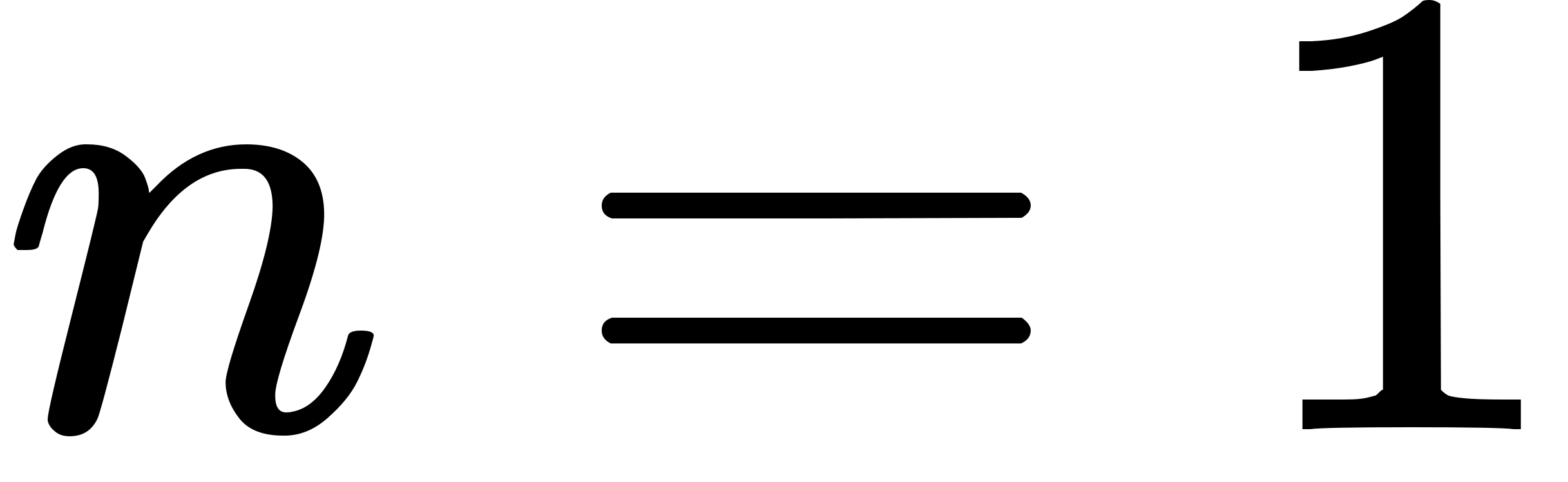 , or more precisely by formula
(11), if we put and
, or more precisely by formula
(11), if we put and 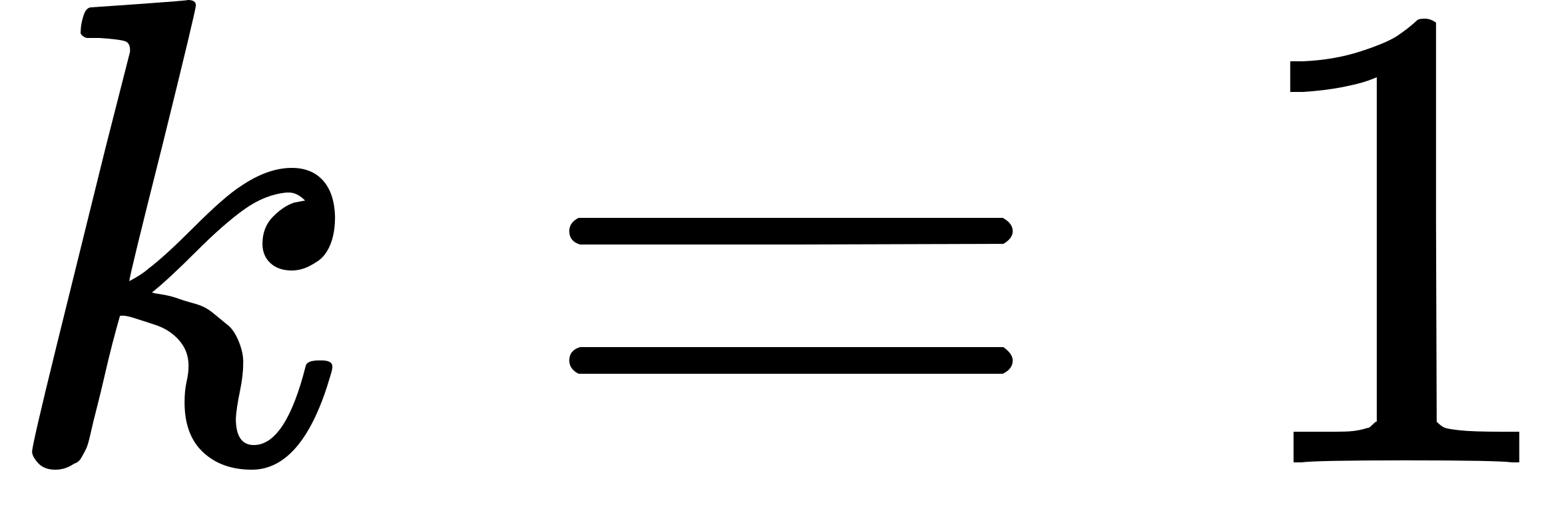 . The orbit of the electron
will be a circle whose radius will be given by formulae (10), if
. The orbit of the electron
will be a circle whose radius will be given by formulae (10), if  and
and  are each put equal to
  . Such an orbit will be called a
-quantum orbit, and in general an orbit for which the principal
quantum number has a given value will be called an -quantum
orbit. Where it is necessary to differentiate between orbits
corresponding to various values of the quantum number , a central
orbit, characterized by given values of the quantum numbers and
, will be referred to as an
. Such an orbit will be called a
-quantum orbit, and in general an orbit for which the principal
quantum number has a given value will be called an -quantum
orbit. Where it is necessary to differentiate between orbits
corresponding to various values of the quantum number , a central
orbit, characterized by given values of the quantum numbers and
, will be referred to as an 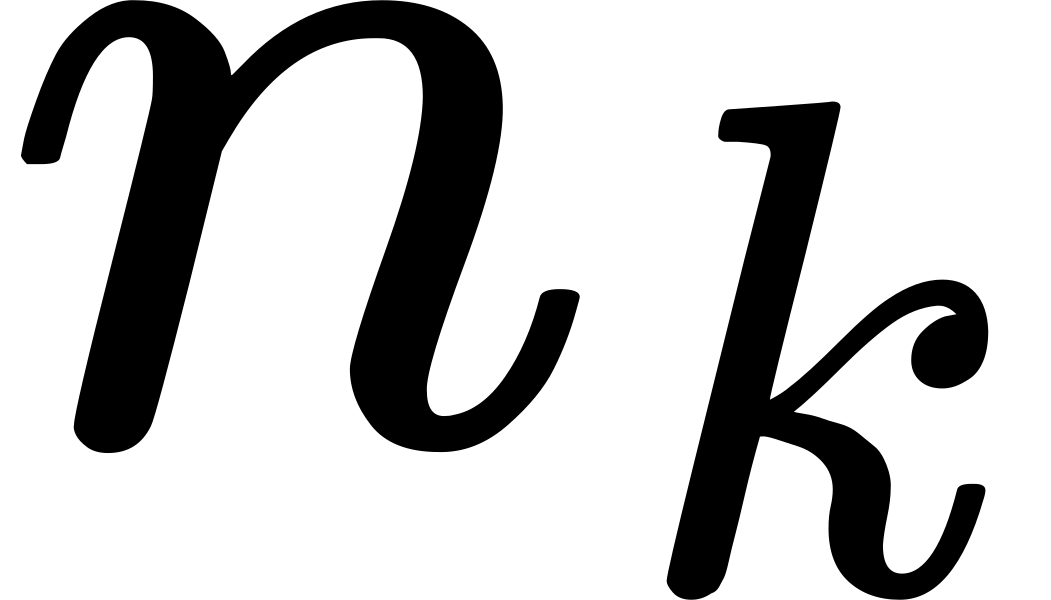 orbit.
In the question of the constitution of the helium atom we meet the much
more complicated problem of the binding of the second electron.
Information about this binding process may, however, be obtained
from the arc spectrum of helium. This spectrum, as opposed to most
other simple spectra, consists of two complete systems of lines with
frequencies given by formulae of the type (12). On this account
helium was at first assumed to be a mixture of two different gases,
"orthohelium" and "parhelium," but now we know that the two spectra
simply mean that the binding of the second electron can occur in two
different ways. A theoretical explanation of the main features of the
helium spectrum has recently been attempted in an interesting paper by
Landé. He supposes the emission of the orthohelium spectrum to be due
to transitions between stationary states where both electrons move in
the same plane and revolve in the same sense. The parhelium spectrum,
on the other hand, is ascribed by him to stationary states where the
planes of the orbits form an angle with each other. Dr Kramers and
I have made a closer investigation of the interaction between the
two orbits in the different stationary states. The results of our
investigation which was begun several years before the appearance of
Landé's work have not yet been published. Without going into details
I may say, that even though our results in several respects differ
materially from those of Landé (compare Essay II, p. 56), we agree with
his general conclusions concerning the origin of the orthohelium and
parhelium spectra.
The final result of the binding of the second electron is intimately
related to the origin of the two helium spectra. Important information
on this point has been obtained recently by Franck and his co-workers.
As is well known he has thrown light upon many features of the
structure of the atom and of the origin of spectra by observing the
effect of bombarding atoms by electrons of various velocities. A short
time ago these experiments showed that the impact of electrons could
bring helium into a "metastable" state from which the atom cannot
return to its normal state by means of a simple transition accompanied
by the emission of radiation, but only by means of a process analogous
to a chemical reaction involving interaction with atoms of other
elements. This result is closely connected with the fact that the
binding of the second electron can occur in two different ways, as is
shown by the occurrence of two distinct spectra. Thus it is evident
from Franck's experiments that the normal state of the atom is the last
stage in the binding process involving the emission of the parhelium
spectrum by which the electron last captured as well as the one first
captured will be bound in a 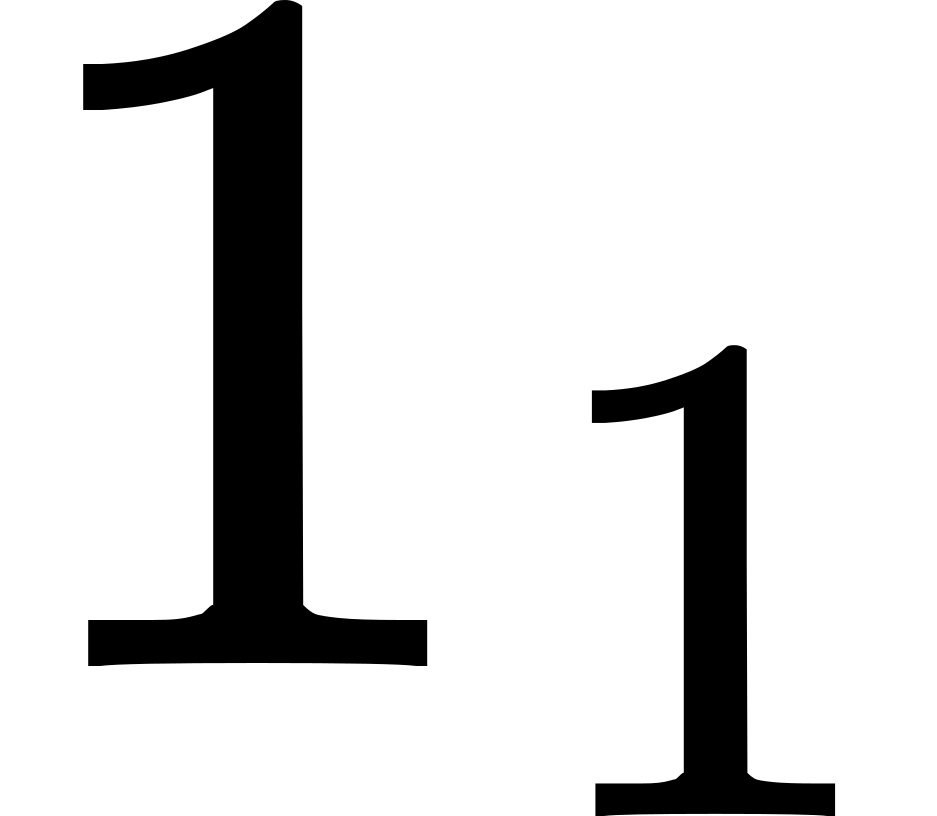 orbit. The metastable state, on
the contrary, is the final stage of the process giving the orthohelium
spectrum. In this case the second electron, as opposed to the first,
will move in a
orbit. The metastable state, on
the contrary, is the final stage of the process giving the orthohelium
spectrum. In this case the second electron, as opposed to the first,
will move in a 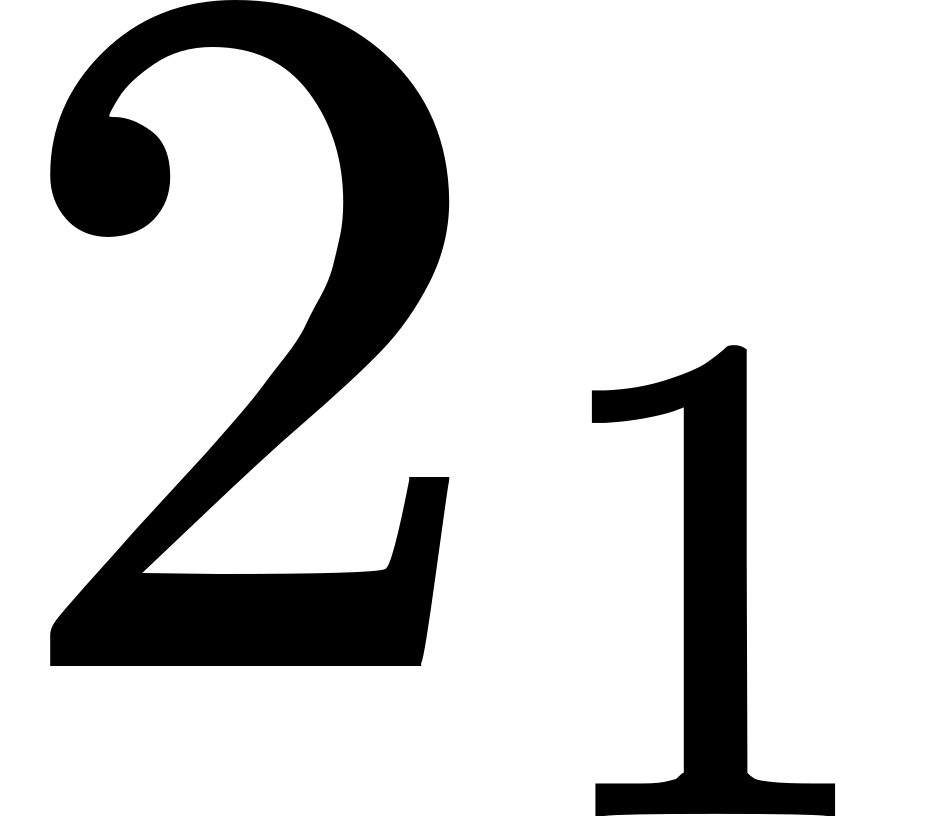 orbit. This corresponds to a firmness of
binding which is about six times less than for the electron in the
normal state of the atom.
orbit. This corresponds to a firmness of
binding which is about six times less than for the electron in the
normal state of the atom.
If we now consider somewhat more closely this apparently surprising
result, it is found that a clear grasp of it may be obtained from the
point of view of correspondence. It can be shown that the coherent
class of motions to which the orthohelium orbits belong does not
contain a orbit. If on the whole we would claim the existence
of a state where the two electrons move in orbits in the same
plane, and if in addition it is claimed that the motion should possess
the periodic properties necessary for the definition of stationary
states, then there seems that no possibility is afforded other than the
assumption that the two electrons move around the nucleus in one and
the same orbit, in such a manner that at each moment they are situated
at the ends of a diameter. This extremely simple ring-configuration
might be expected to correspond to the firmest possible binding of the
electrons in the atom, and it was on this account proposed as a model
for the helium atom in my first paper on atomic structure. If, however,
we inquire about the possibility of a transition from one of the
orthohelium states to a configuration of this type we meet conditions
which are very different from those which apply to transitions between
two of the orthohelium orbits. In fact, the occurrence of each of these
transitions is due to the existence of well-defined corresponding
constituent harmonic vibration in the central orbits which the outer
electron describes in the class of motions to which the stationary
states belong. The transition we have to discuss, on the other hand,
is one by which the last captured electron is transferred from a state
in which it is moving "outside" the other to a state in which it moves
round the nucleus on equal terms with the other electron. Now it is
impossible to find a series of simple intermediate forms for the motion
of those two electrons in which the orbit of the last captured electron
exhibits a sufficient similarity to a central motion that for this
transition there could be a correspondence of the necessary kind. It
is therefore evident, that where the two electrons move in the same
plane, the electron captured last cannot be bound firmer than in a
orbit. If, on the other hand, we consider the binding process
which accompanies the emission of the parhelium spectrum and where the
electrons in the stationary states move in orbits whose planes form
angles with one another we meet essentially different conditions. A
corresponding intimate change in the interaction between the electron
last captured and the one previously bound is not required here for
the two electrons in the atom to become equivalent. We may therefore
imagine the last stage of the binding process to take place in a manner
similar to those stages corresponding to transitions between orbits
characterized by greater values of and .
In the normal state of the helium atom the two electrons
must be assumed to move in equivalent orbits. As a first
approximation these may be described as two circular orbits, whose
planes make an angle of 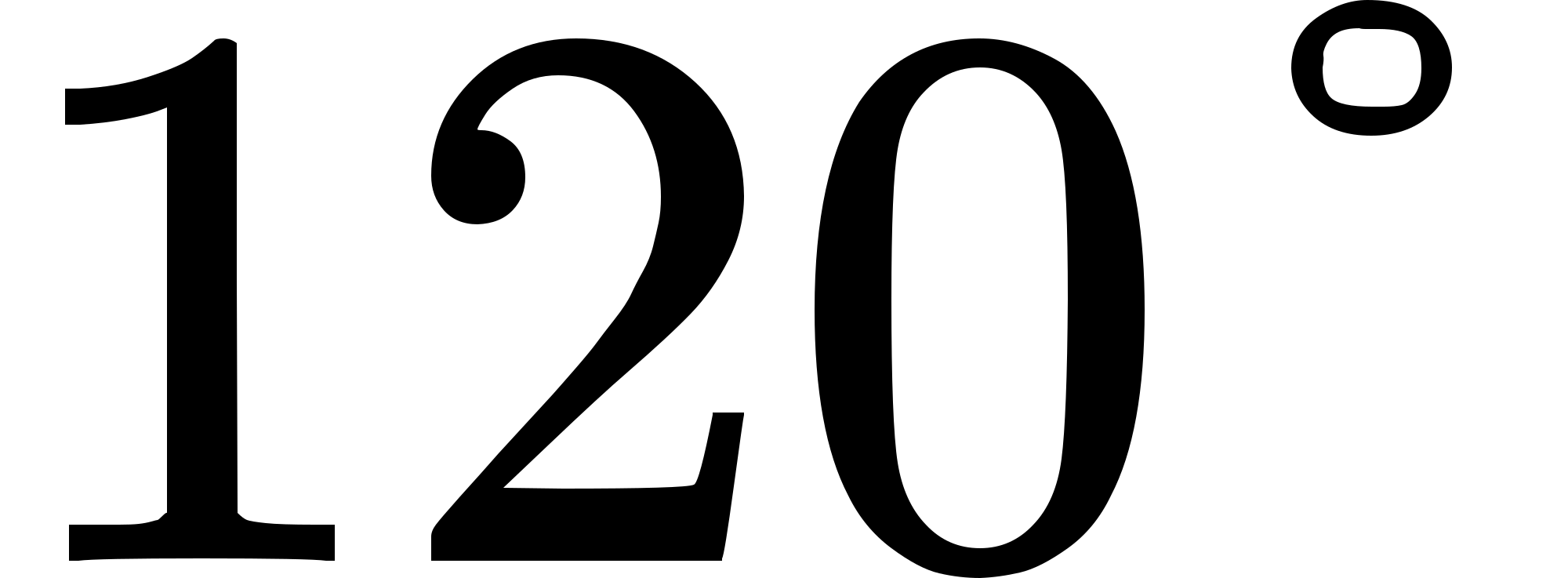 with one another, in agreement with
the conditions which the angular momentum of an atom according to the
quantum theory must satisfy. On account of the interaction between the
two electrons these planes at the same time turn slowly around the
fixed impulse axis of the atom. Starting from a distinctly different
point of view Kemble has recently suggested a similar model for the
helium atom. He has at the same time directed attention to a possible
type of motion of very marked symmetry in which the electrons during
their entire revolution assume symmetrical positions with reference
to a fixed axis. Kemble has not, however, investigated this motion
further. Previous to the appearance of this paper Kramers had commenced
a closer investigation of precisely this type of motion in order
to find out to what extent it was possible from such a calculation
to account for the firmness with which the electrons are bound in
the helium atom, that is to account for the ionization potential.
Early measurements of this potential had given values corresponding
approximately to that which would result from the ring-configuration
already mentioned. This requires
with one another, in agreement with
the conditions which the angular momentum of an atom according to the
quantum theory must satisfy. On account of the interaction between the
two electrons these planes at the same time turn slowly around the
fixed impulse axis of the atom. Starting from a distinctly different
point of view Kemble has recently suggested a similar model for the
helium atom. He has at the same time directed attention to a possible
type of motion of very marked symmetry in which the electrons during
their entire revolution assume symmetrical positions with reference
to a fixed axis. Kemble has not, however, investigated this motion
further. Previous to the appearance of this paper Kramers had commenced
a closer investigation of precisely this type of motion in order
to find out to what extent it was possible from such a calculation
to account for the firmness with which the electrons are bound in
the helium atom, that is to account for the ionization potential.
Early measurements of this potential had given values corresponding
approximately to that which would result from the ring-configuration
already mentioned. This requires  as much work to remove a
single electron as is necessary to remove an electron from the hydrogen
atom in its normal state. As the theoretical value for the latter
amount of work—which for the sake of simplicity will be represented
by
as much work to remove a
single electron as is necessary to remove an electron from the hydrogen
atom in its normal state. As the theoretical value for the latter
amount of work—which for the sake of simplicity will be represented
by  —corresponds to an ionization potential of
 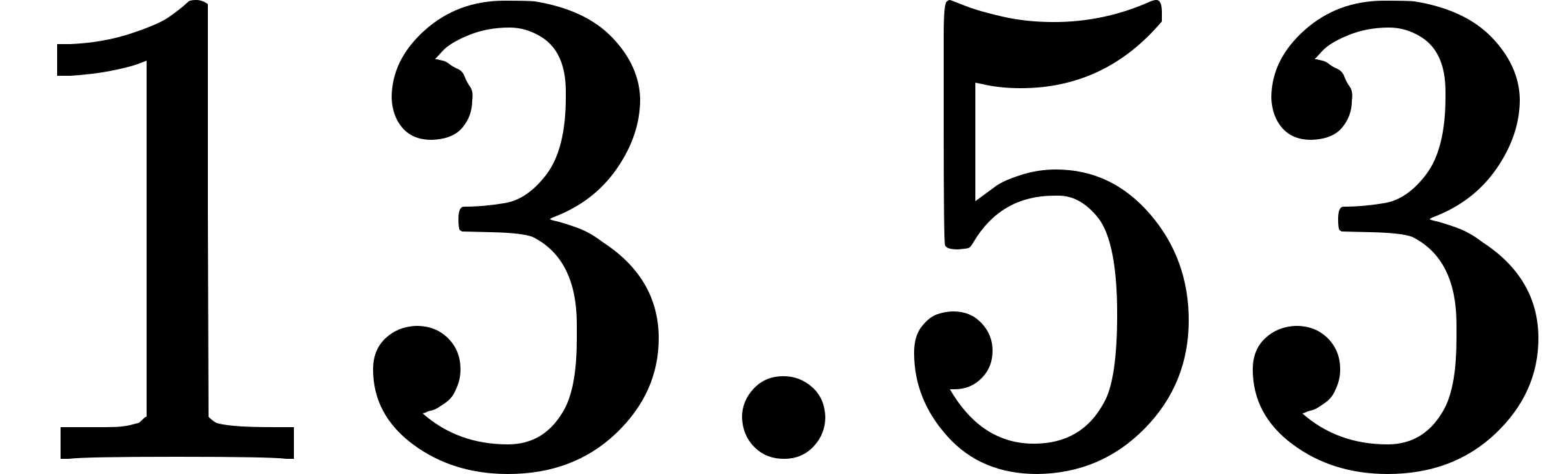 volts, the ionization potential of helium would be expected to be
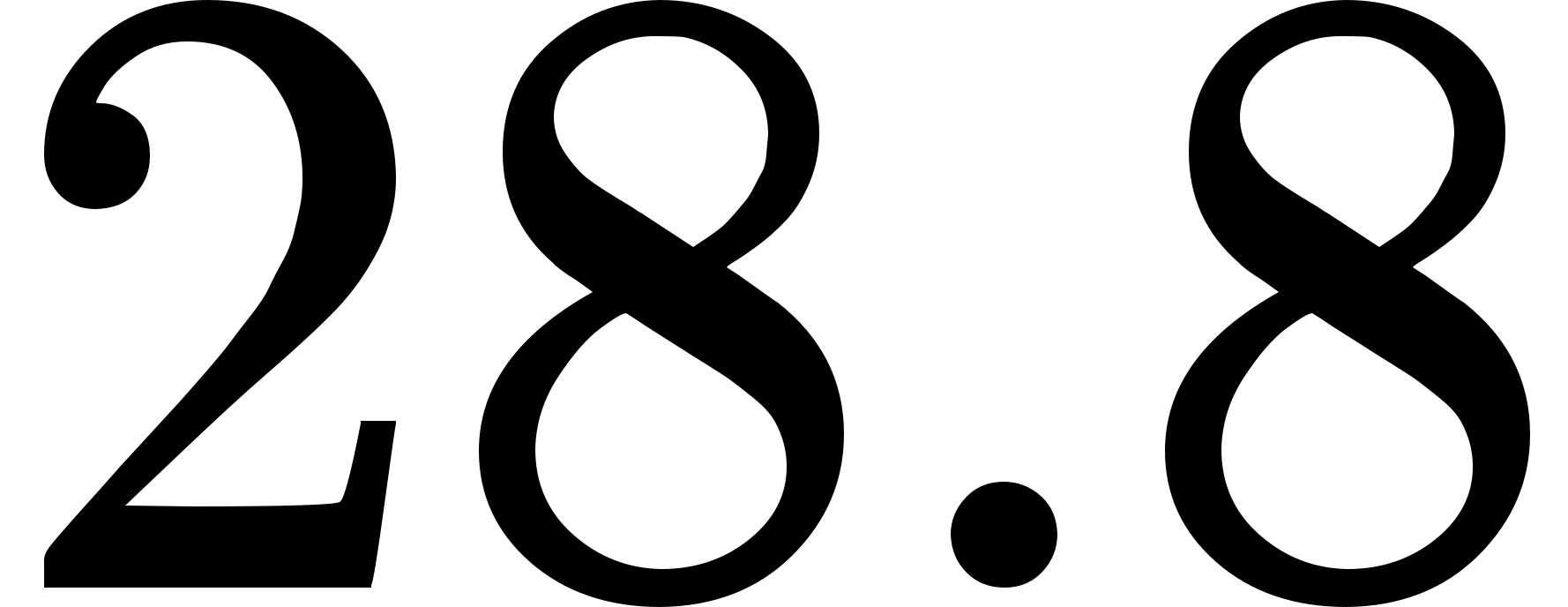 volts. Recent and more accurate determinations, however,
have given a value for the ionization potential of helium which is
considerably lower and lies in the neighbourhood of
volts. Recent and more accurate determinations, however,
have given a value for the ionization potential of helium which is
considerably lower and lies in the neighbourhood of 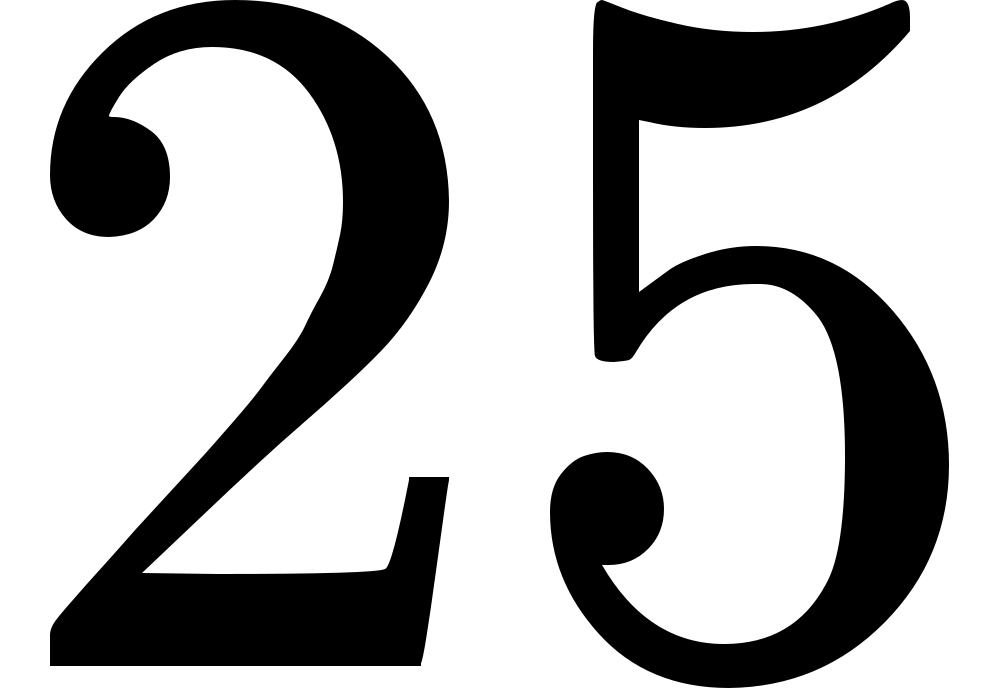 volts. This
showed therefore the untenability of the ring-configuration quite
independently of any other considerations. A careful investigation of
the spatial atomic configuration requires elaborate calculation, and
Kramers has not yet obtained final results. With the approximation
to which they have been so far completed the calculations point to
the possibility of an agreement with the experimental results. The
final result may be awaited with great interest, since it offers in
the simplest case imaginable a test of the principles by which we are
attempting to determine stationary states of atoms containing more than
one electron.
volts. This
showed therefore the untenability of the ring-configuration quite
independently of any other considerations. A careful investigation of
the spatial atomic configuration requires elaborate calculation, and
Kramers has not yet obtained final results. With the approximation
to which they have been so far completed the calculations point to
the possibility of an agreement with the experimental results. The
final result may be awaited with great interest, since it offers in
the simplest case imaginable a test of the principles by which we are
attempting to determine stationary states of atoms containing more than
one electron.
Hydrogen and helium, as seen in the survey of the periodic system given
in Fig. 1, together form the first period in the system of elements,
since helium is the first of the inactive gases. The great difference
in the chemical properties of hydrogen and helium is closely related
to the great difference in the nature of the binding of the electron.
This is directly indicated by the spectra and ionization potentials.
While helium possesses the highest known ionization potential of
all the elements, the binding of the electron in the hydrogen atom
is sufficiently loose to account for the tendency of hydrogen to
form positive ions in aqueous solutions and chemical combinations.
Further consideration of this particular question requires, however,
a comparison between the nature and firmness of the electronic
configurations of other atoms, and it can therefore not be discussed at
the moment.
Second Period. Lithium—Neon. When considering the atomic
structure of elements which contain more than two electrons in the
neutral atom, we shall assume first of all that what has previously
been said about the formation of the helium atom will in the main
features also apply to the capture and binding of the first two
electrons. These electrons may, therefore, in the normal state of
the atom be regarded as moving in equivalent orbits characterized by
the quantum symbol . We obtain direct information about the
binding of the third electron from the spectrum of lithium. This
spectrum shows the existence of a number of series of stationary
states, where the firmness with which the last captured electron is
bound is very nearly the same as in the stationary states of the
hydrogen atom. These states correspond to orbits where is greater
than or equal to  , and where the last captured electron moves
entirely outside the region where the first two electrons move. But in
addition this spectrum gives us information about a series of states
corresponding to in which the energy differs essentially
from the corresponding stationary states of the hydrogen atom. In
these states the last captured electron, even if it remains at a
considerable distance from the nucleus during the greater part of its
revolution, will at certain moments during the revolution approach to
a distance from the nucleus which is of the same order of magnitude
as the dimensions of the orbits of the previously bound electrons.
On this account the electrons will be bound with a firmness which is
considerably greater than that with which the electrons are bound in
the stationary states of the hydrogen atom corresponding to the same
value of .
, and where the last captured electron moves
entirely outside the region where the first two electrons move. But in
addition this spectrum gives us information about a series of states
corresponding to in which the energy differs essentially
from the corresponding stationary states of the hydrogen atom. In
these states the last captured electron, even if it remains at a
considerable distance from the nucleus during the greater part of its
revolution, will at certain moments during the revolution approach to
a distance from the nucleus which is of the same order of magnitude
as the dimensions of the orbits of the previously bound electrons.
On this account the electrons will be bound with a firmness which is
considerably greater than that with which the electrons are bound in
the stationary states of the hydrogen atom corresponding to the same
value of .
Now as regards the lithium spectrum as well as the other alkali spectra
we are so fortunate (see p. 32) as to possess definite evidence about
the normal state of the atom from experiments on selective absorption.
In fact these experiments tell us that the first member of the sequence
of  -terms corresponds to this state. This term corresponds to a
strength of binding which is only a little more than a third of that of
the hydrogen atom. We must therefore conclude that the outer electron
in the normal state of the lithium atom moves in a orbit,
just as the outer electron in the metastable state of the helium atom.
The reason why the binding of the outer electron cannot proceed to an
orbit characterized by a smaller value for the total quantum number may
also be considered as analogous in the two cases. In fact, a transition
by which the third electron in the lithium atom was ultimately bound
in a orbit would lead to a state in the atom in which
the electron would play an equivalent part with the two electrons
previously bound. Such a process would be of a type entirely different
from the transitions between the stationary states connected with the
emission of the lithium spectrum, and would, contrary to these, not
exhibit a correspondence with a harmonic component in the motion of the
atom.
-terms corresponds to this state. This term corresponds to a
strength of binding which is only a little more than a third of that of
the hydrogen atom. We must therefore conclude that the outer electron
in the normal state of the lithium atom moves in a orbit,
just as the outer electron in the metastable state of the helium atom.
The reason why the binding of the outer electron cannot proceed to an
orbit characterized by a smaller value for the total quantum number may
also be considered as analogous in the two cases. In fact, a transition
by which the third electron in the lithium atom was ultimately bound
in a orbit would lead to a state in the atom in which
the electron would play an equivalent part with the two electrons
previously bound. Such a process would be of a type entirely different
from the transitions between the stationary states connected with the
emission of the lithium spectrum, and would, contrary to these, not
exhibit a correspondence with a harmonic component in the motion of the
atom.
We obtain, therefore, a picture of the formation and structure of
the lithium atom which offers a natural explanation of the great
difference of the chemical properties of lithium from those of helium
and hydrogen. This difference is at once explained by the fact that the
firmness by which the last captured electron is bound in its
orbit in the lithium atom is only about a third of that with which the
electron in the hydrogen atom is held, and almost five times smaller
than the firmness of the binding of the electrons in the helium atom.
What has been said here applies not alone to the formation of the
lithium atom, but may also be assumed to apply to the binding of the
third electron in every atom, so that in contrast to the first two
electrons which move in orbits this may be assumed to move
in a orbit. As regards the binding of the fourth, fifth
and sixth electrons in the atom, we do not possess a similar
guide as no simple series spectra are known of beryllium, boron and
carbon. Although conclusions of the same degree of certainty cannot be
reached it seems possible, however, to arrive at results consistent
with general physical and chemical evidence by proceeding by means of
considerations of the same kind as those applied to the binding of
the first three electrons. In fact, we shall assume that the fourth,
fifth and sixth electrons will be bound in orbits. The
reason why the binding of a first electron in an orbit of this type
will not prevent the capture of the others in two quanta orbits may
be ascribed to the fact that orbits are not circular but
very eccentric. For example, the  rd electron cannot keep the
remaining electrons away from the inner system in the same way in
which the first two electrons bound in the lithium atom prevent the
third from being bound in a -quantum orbit. Thus we shall expect
that the
rd electron cannot keep the
remaining electrons away from the inner system in the same way in
which the first two electrons bound in the lithium atom prevent the
third from being bound in a -quantum orbit. Thus we shall expect
that the  th,
th,  th and
  th electrons in a similar way to
the rd will at certain moments of their revolution enter into the
region where the first two bound electrons move. We must not imagine,
however, that these visits into the inner system take place at the
same time, but that the four electrons visit the nucleus separately at
equal intervals of time. In earlier work on atomic structure it was
supposed that the electrons in the various groups in the atom moved in
separate regions within the atom and that at each moment the electrons
within each separate group were arranged in configurations possessing
symmetry like that of a regular polygon or polyhedron. Among other
things this involved that the electrons in each group were supposed
to be at the point of the orbit nearest the nucleus at the same time.
A structure of this kind may be described as one where the motions of
the electrons within the groups are coupled together in a manner which
is largely independent of the interaction between the various groups.
On the contrary, the characteristic feature of a structure like that I
have suggested is the intimate coupling between the motions of the
electrons in the various groups characterized by different quantum
numbers, as well as the greater independence in the mode of binding
within one and the same group of electrons the orbits of which are
characterized by the same quantum number. In emphasizing this last
feature I have two points in mind. Firstly the smaller effect of the
presence of previously bound electrons on the firmness of binding of
succeeding electrons in the same group. Secondly the way in which the
motions of the electrons within the group reflect the independence both
of the processes by which the group can be formed and by which it can
be reorganized by change of position of the different electrons in the
atom after a disturbance by external forces. The last point will be
considered more closely when we deal with the origin and nature of the
X-ray spectra; for the present we shall continue the consideration of
the structure of the atom to which we are led by the investigation of
the processes connected with the successive capture of the electrons.
th electrons in a similar way to
the rd will at certain moments of their revolution enter into the
region where the first two bound electrons move. We must not imagine,
however, that these visits into the inner system take place at the
same time, but that the four electrons visit the nucleus separately at
equal intervals of time. In earlier work on atomic structure it was
supposed that the electrons in the various groups in the atom moved in
separate regions within the atom and that at each moment the electrons
within each separate group were arranged in configurations possessing
symmetry like that of a regular polygon or polyhedron. Among other
things this involved that the electrons in each group were supposed
to be at the point of the orbit nearest the nucleus at the same time.
A structure of this kind may be described as one where the motions of
the electrons within the groups are coupled together in a manner which
is largely independent of the interaction between the various groups.
On the contrary, the characteristic feature of a structure like that I
have suggested is the intimate coupling between the motions of the
electrons in the various groups characterized by different quantum
numbers, as well as the greater independence in the mode of binding
within one and the same group of electrons the orbits of which are
characterized by the same quantum number. In emphasizing this last
feature I have two points in mind. Firstly the smaller effect of the
presence of previously bound electrons on the firmness of binding of
succeeding electrons in the same group. Secondly the way in which the
motions of the electrons within the group reflect the independence both
of the processes by which the group can be formed and by which it can
be reorganized by change of position of the different electrons in the
atom after a disturbance by external forces. The last point will be
considered more closely when we deal with the origin and nature of the
X-ray spectra; for the present we shall continue the consideration of
the structure of the atom to which we are led by the investigation of
the processes connected with the successive capture of the electrons.
The preceding considerations enable us to understand the fact that the
two elements beryllium and boron immediately succeeding lithium can
appear electropositively with and valencies respectively
in combination with other substances. For like the third electron in
the lithium atom, the last captured electrons in these elements will
be much more lightly bound than the first two electrons. At the same
time we understand why the electropositive character of these elements
is less marked than in the case of lithium, since the electrons in the
-quanta orbits will be much more firmly bound on account of the
stronger field in which they are moving. New conditions arise, however,
in the case of the next element, carbon, as this element in its typical
chemical combinations cannot be supposed to occur as an ion, but
rather as a neutral atom. This must be assumed to be due not only to
the great firmness in the binding of the electrons but also to be an
essential consequence of the symmetrical configuration of the electrons.
With the binding of the th, th and th electrons in
orbits, the spatial symmetry of the regular configuration
of the orbits must be regarded as steadily increasing, until with
the binding of the th electron the orbits of the four last
bound electrons may be expected to form an exceptionally symmetrical
configuration in which the normals to the planes of the orbits occupy
positions relative to one another nearly the same as the lines from the
centre to the vertices of a regular tetrahedron. Such a configuration
of groups of -quanta orbits in the carbon atom seems capable
of furnishing a suitable foundation for explaining the structure of
organic compounds. I shall not discuss this question any further,
for it would require a thorough study of the interaction between
the motions of the electrons in the atoms forming the molecule. I
might mention, however, that the types of molecular models to which
we are led are very different from the molecular models which were
suggested in my first papers. In these the chemical "valence bonds"
were represented by "electron rings" of the same type as those which
were assumed to compose the groups of electrons within the individual
atoms. It is nevertheless possible to give a general explanation of
the chemical properties of the elements without touching on those
matters at all. This is largely due to the fact that the structures of
combinations of atoms of the same element and of many organic compounds
do not have the same significance for our purpose as those molecular
structures in which the individual atoms occur as electrically charged
ions. The latter kind of compounds, to which the greater number of
simple inorganic compounds belong, is frequently called "heteropolar"
and possesses a far more typical character than the first compounds
which are called "homoeopolar," and whose properties to quite a
different degree exhibit the individual peculiarities of the elements.
My main purpose will therefore be to consider the fitness which the
configurations of the electrons in the various atoms offer for the
formation of ions.
Before leaving the carbon atom I should mention, that a model of this
atom in which the orbits of the four most lightly bound electrons
possess a pronounced tetrahedric symmetry had already been suggested
by Landé. In order to agree with the measurements of the size of the
atoms he also assumed that these electrons moved in orbits.
There is, however, this difference between Landé's view and that given
here, that while Landé deduced the characteristic properties of the
carbon atom solely from an investigation of the simplest form of motion
which four electrons can execute employing spatial symmetry, our view
originates from a consideration of the stability of the whole atom. For
our assumptions about the orbits of the electrons are based directly
on an investigation of the interaction between these electrons and the
first two bound electrons. The result is that our model of the carbon
atom has dynamic properties which are essentially different from the
properties of Landé's model.
In order to account for the properties of the elements in the second
half of the second period it will first of all be necessary to show
why the configuration of ten electrons occurring in the neutral atom
of neon possesses such a remarkable degree of stability. Previously it
has been assumed that the properties of this configuration were due
to the interaction between eight electrons which moved in equivalent
orbits outside the nucleus and an inner group of two electrons like
that in the helium atom. It will be seen, however, that the solution
must be sought in an entirely different direction. It cannot be
expected that the  th electron will be bound in a
orbit equivalent to the orbits of the four preceding electrons. The
occurrence of five such orbits would so definitely destroy the symmetry
in the interaction of these electrons that it is inconceivable that
a process resulting in the accession of a fifth electron to this
group would be in agreement with the correspondence principle. On the
contrary it will be necessary to assume that the four electrons in
their exceptionally symmetrical orbital configuration will keep out
later captured electrons with the result that these electrons will be
bound in orbits of other types.
th electron will be bound in a
orbit equivalent to the orbits of the four preceding electrons. The
occurrence of five such orbits would so definitely destroy the symmetry
in the interaction of these electrons that it is inconceivable that
a process resulting in the accession of a fifth electron to this
group would be in agreement with the correspondence principle. On the
contrary it will be necessary to assume that the four electrons in
their exceptionally symmetrical orbital configuration will keep out
later captured electrons with the result that these electrons will be
bound in orbits of other types.
The orbits which come into consideration for the th electron
in the nitrogen atom and the th,  th,
th,  th and
  th
electrons in the atoms of the immediately following elements will be
circular orbits of the type
th
electrons in the atoms of the immediately following elements will be
circular orbits of the type 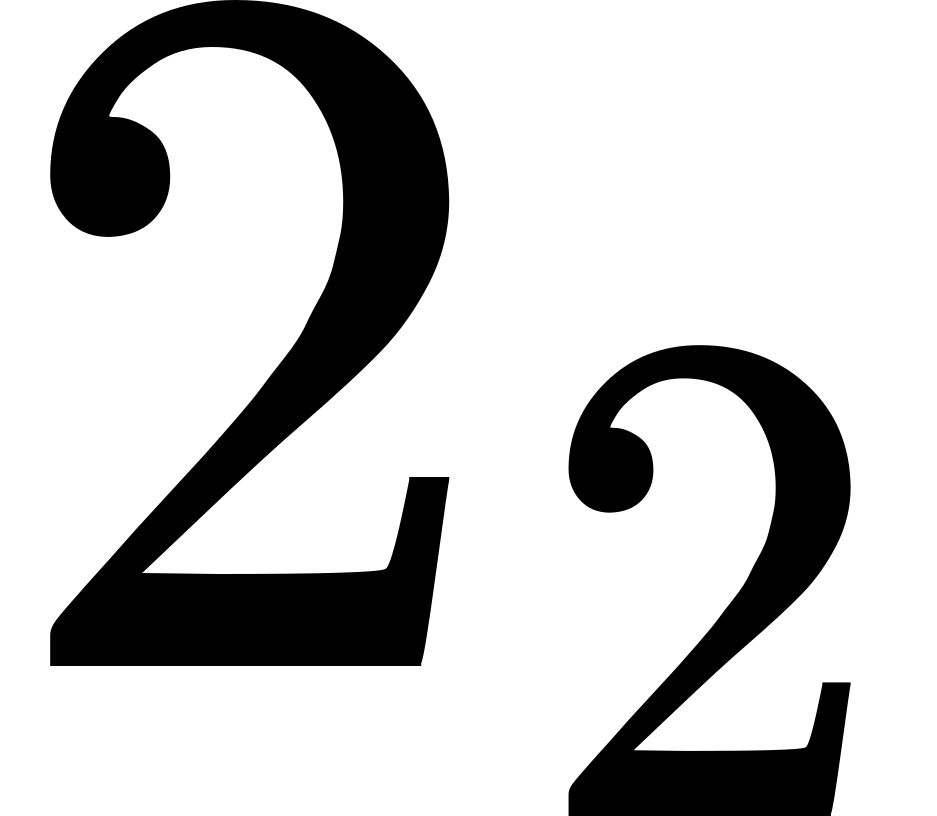 . The diameters of these orbits
are considerably larger than those of the
. The diameters of these orbits
are considerably larger than those of the 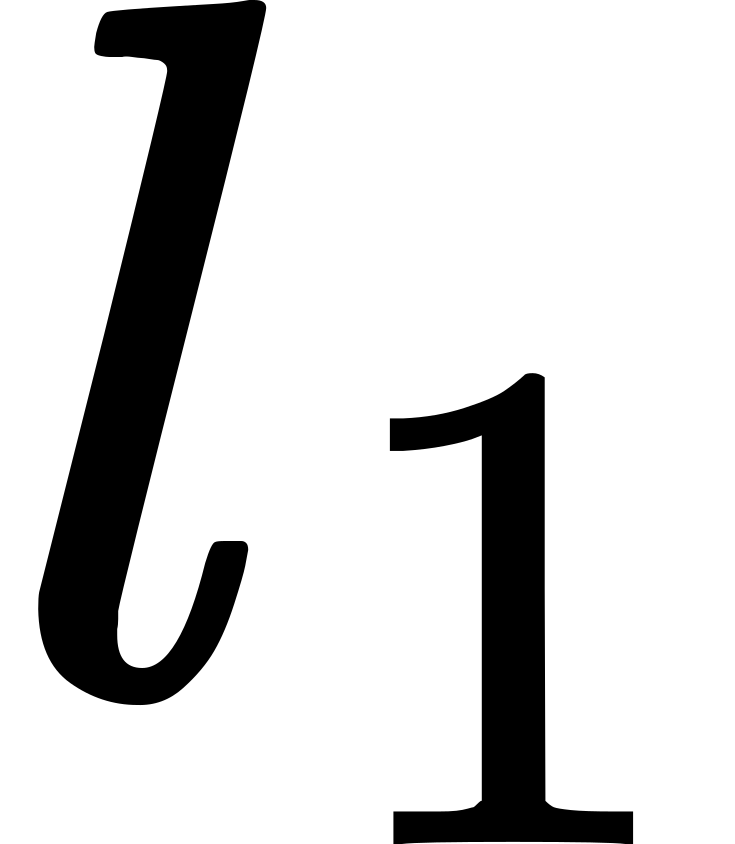 orbits of the
first two electrons; on the other hand the outermost part of the
eccentric orbits will extend some distance beyond these
circular orbits. I shall not here discuss the capture and
binding of these electrons. This requires a further investigation
of the interaction between the motions of the electrons in the two
types of -quanta orbits. I shall simply mention, that in the
atom of neon in which we will assume that there are four electrons
in orbits the planes of these orbits must be regarded not
only as occupying a position relative to one another characterized
by a high degree of spatial symmetry, but also as possessing a
configuration harmonizing with the four elliptical orbits. An
interaction of this kind in which the orbital planes do not coincide
can be attained only if the configurations in both subgroups exhibit
a systematic deviation from tetrahedral symmetry. This will have the
result that the electron groups with
orbits of the
first two electrons; on the other hand the outermost part of the
eccentric orbits will extend some distance beyond these
circular orbits. I shall not here discuss the capture and
binding of these electrons. This requires a further investigation
of the interaction between the motions of the electrons in the two
types of -quanta orbits. I shall simply mention, that in the
atom of neon in which we will assume that there are four electrons
in orbits the planes of these orbits must be regarded not
only as occupying a position relative to one another characterized
by a high degree of spatial symmetry, but also as possessing a
configuration harmonizing with the four elliptical orbits. An
interaction of this kind in which the orbital planes do not coincide
can be attained only if the configurations in both subgroups exhibit
a systematic deviation from tetrahedral symmetry. This will have the
result that the electron groups with 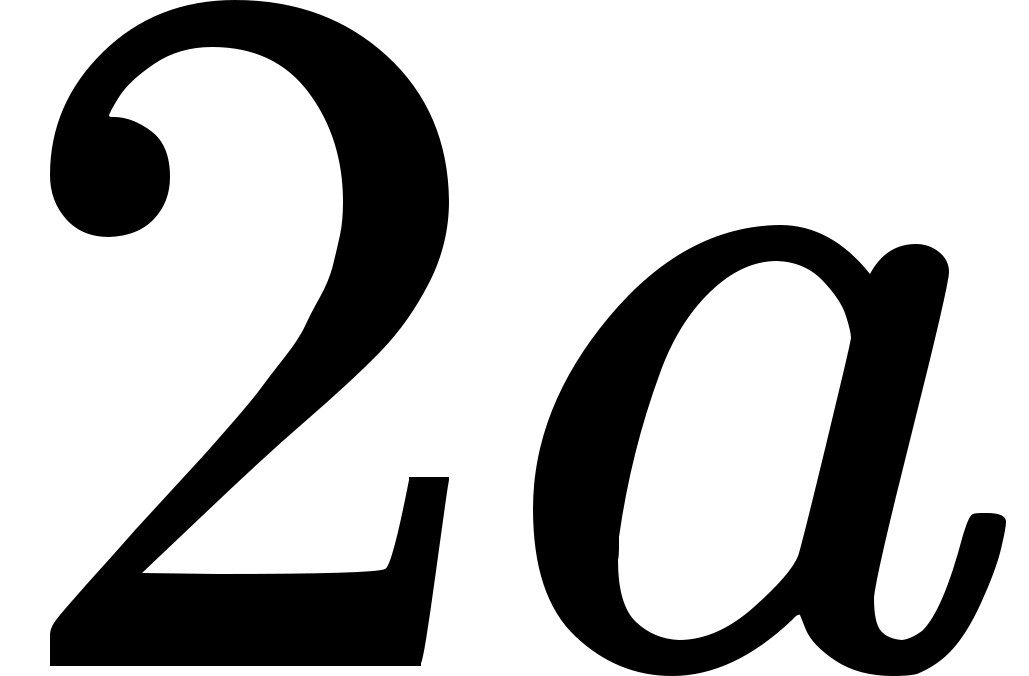 -quanta orbits in the neon
atom will have only a single axis of symmetry which must be supposed
to coincide with the axis of symmetry of the innermost group of two
electrons.
-quanta orbits in the neon
atom will have only a single axis of symmetry which must be supposed
to coincide with the axis of symmetry of the innermost group of two
electrons.
Before leaving the description of the elements within the second period
it may be pointed out that the above considerations offer a basis for
interpreting that tendency of the neutral atoms of oxygen and fluorine
for capturing further electrons which is responsible for the marked
electronegative character of these elements. In fact, this tendency
may be ascribed to the fact that the orbits of the last captured
electrons will find their place within the region, in which the
previously captured electrons move in orbits. This suggests
an explanation of the great difference between the properties of the
elements in the latter half of the second period of the periodic system
and those of the elements in the first half, in whose atoms there is
only a single type of -quanta orbits.
Third Period. Sodium—Argon. We shall now consider the structure
of atoms of elements in the third period of the periodic system.
This brings us immediately to the question of the binding of the
 th electron in the atom. Here we meet conditions which in
some respects are analogous to those connected with the binding of
the th electron. The same type of argument that applied to the
carbon atom shows that the symmetry of the configuration in the neon
atom would be essentially, if not entirely, destroyed by the addition
of another electron in an orbit of the same type as that in which the
last captured electrons were bound. Just as in the case of the rd
and th electrons we may therefore expect to meet a new type of
orbit for the th electron in the atom, and the orbits which
present themselves this time are the
th electron in the atom. Here we meet conditions which in
some respects are analogous to those connected with the binding of
the th electron. The same type of argument that applied to the
carbon atom shows that the symmetry of the configuration in the neon
atom would be essentially, if not entirely, destroyed by the addition
of another electron in an orbit of the same type as that in which the
last captured electrons were bound. Just as in the case of the rd
and th electrons we may therefore expect to meet a new type of
orbit for the th electron in the atom, and the orbits which
present themselves this time are the 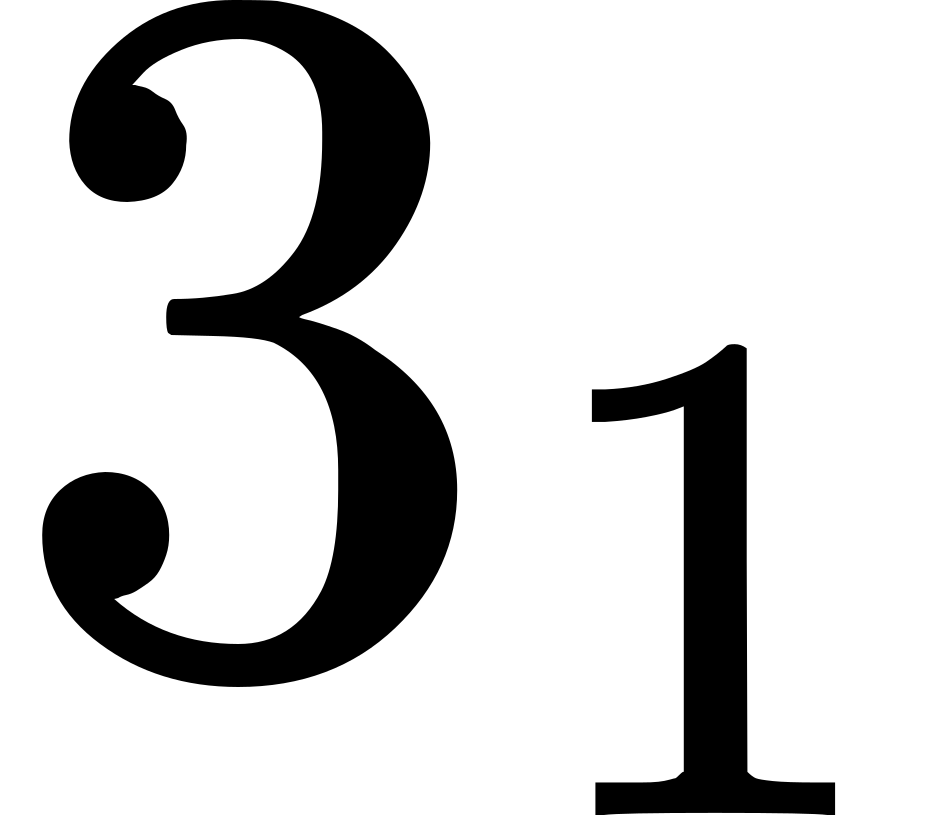 orbits. An electron in
such an orbit will for the greater part of the time remain outside
the orbits of the first ten electrons. But at certain moments during
the revolution it will penetrate not only into the region of the
-quanta orbits, but like the orbits it will penetrate
to distances from the nucleus which are smaller than the radii of the
-quantum orbits of the two electrons first bound. This fact, which
has a most important bearing on the stability of the atom, leads to a
peculiar result as regards the binding of the th electron. In
the sodium atom this electron will move in a field which so far as the
outer part of the orbit is concerned deviates only very little from
that surrounding the nucleus in the hydrogen atom, but the dimensions
of this part of the orbit will, nevertheless, be essentially different
from the dimensions of the corresponding part of a orbit in
the hydrogen atom. This arises from the fact, that even though the
electron only enters the inner configuration of the first ten electrons
for short intervals during its revolution, this part of the orbit will
nevertheless exert an essential influence upon the determination of the
principal quantum number. This is directly related to the fact that
the motion of the electron in the first part of the orbit deviates
only a little from the motion which each of the previously bound
electrons in orbits executes during a complete revolution.
The uncertainty which has prevailed in the determination of the quantum
numbers for the stationary states corresponding to a spectrum like that
of sodium is connected with this. This question has been discussed by
several physicists. From a comparison of the spectral terms of the
various alkali metals, Roschdestwensky has drawn the conclusion that
the normal state does not, as we might be inclined to expect a priori,
correspond to a orbit as shown in Fig. 2 on p. 79, but that
this state corresponds to a orbit. Schrödinger has arrived
at a similar result in an attempt to account for the great difference
between the terms and the terms in the
orbits. An electron in
such an orbit will for the greater part of the time remain outside
the orbits of the first ten electrons. But at certain moments during
the revolution it will penetrate not only into the region of the
-quanta orbits, but like the orbits it will penetrate
to distances from the nucleus which are smaller than the radii of the
-quantum orbits of the two electrons first bound. This fact, which
has a most important bearing on the stability of the atom, leads to a
peculiar result as regards the binding of the th electron. In
the sodium atom this electron will move in a field which so far as the
outer part of the orbit is concerned deviates only very little from
that surrounding the nucleus in the hydrogen atom, but the dimensions
of this part of the orbit will, nevertheless, be essentially different
from the dimensions of the corresponding part of a orbit in
the hydrogen atom. This arises from the fact, that even though the
electron only enters the inner configuration of the first ten electrons
for short intervals during its revolution, this part of the orbit will
nevertheless exert an essential influence upon the determination of the
principal quantum number. This is directly related to the fact that
the motion of the electron in the first part of the orbit deviates
only a little from the motion which each of the previously bound
electrons in orbits executes during a complete revolution.
The uncertainty which has prevailed in the determination of the quantum
numbers for the stationary states corresponding to a spectrum like that
of sodium is connected with this. This question has been discussed by
several physicists. From a comparison of the spectral terms of the
various alkali metals, Roschdestwensky has drawn the conclusion that
the normal state does not, as we might be inclined to expect a priori,
correspond to a orbit as shown in Fig. 2 on p. 79, but that
this state corresponds to a orbit. Schrödinger has arrived
at a similar result in an attempt to account for the great difference
between the terms and the terms in the  and
and  series of
the alkali spectra. He assumes that the "outer" electron in the states
corresponding to the terms—in contrast to those corresponding
to the and terms—penetrates partly into the region of the
orbits of the inner electrons during the course of its revolution.
These investigations contain without doubt important hints, but in
reality the conditions must be very different for the different alkali
spectra. Instead of a orbit as in lithium we must thus assume
for the spectrum of sodium not only that the first spectral term in
the series corresponds to a orbit, but also, as a more
detailed consideration shows, that the first term in the series
corresponds not to a orbit as indicated in Fig. 2, but to a
series of
the alkali spectra. He assumes that the "outer" electron in the states
corresponding to the terms—in contrast to those corresponding
to the and terms—penetrates partly into the region of the
orbits of the inner electrons during the course of its revolution.
These investigations contain without doubt important hints, but in
reality the conditions must be very different for the different alkali
spectra. Instead of a orbit as in lithium we must thus assume
for the spectrum of sodium not only that the first spectral term in
the series corresponds to a orbit, but also, as a more
detailed consideration shows, that the first term in the series
corresponds not to a orbit as indicated in Fig. 2, but to a
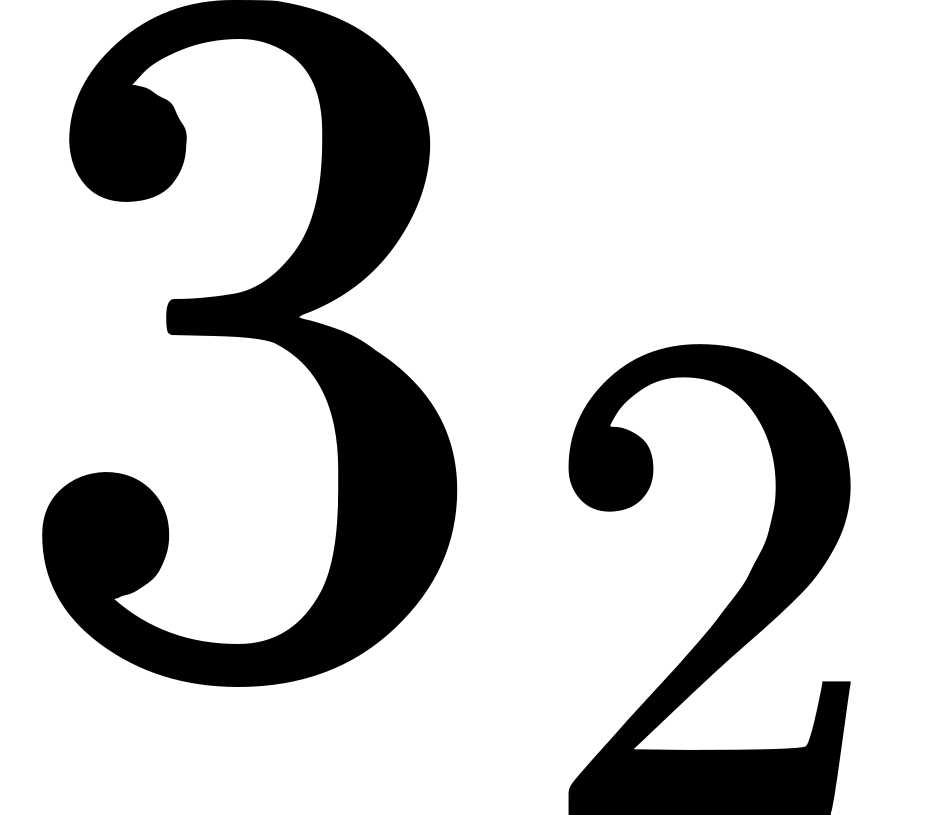 orbit. If the numbers in this figure were correct, it would
require among other things that the terms should be smaller than
the hydrogen terms corresponding to the same principal quantum number.
orbit. If the numbers in this figure were correct, it would
require among other things that the terms should be smaller than
the hydrogen terms corresponding to the same principal quantum number.
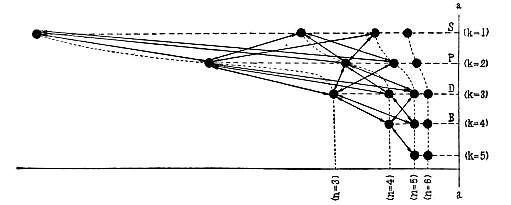
This would mean that the average effect of the inner electrons could
be described as a repulsion greater than would occur if their total
electrical charge were united in the nucleus. This, however, cannot
be expected from our view of atomic structure. The fact that the last
captured electron, at any rate for low values of , revolves
partly inside the orbits of the previously bound electrons will on the
contrary involve that the presence of these electrons will give rise to
a virtual repulsion which is considerably smaller than that which would
be due to their combined charges. Instead of the curves drawn between
points in Fig. 2 which represent stationary states corresponding to
the same value of the principal quantum number running from right to
left, we obtain curves which run from left to right, as is indicated
in Fig. 3. The stationary states are labelled with quantum numbers
corresponding to the structure I have described. According to the view
underlying Fig. 2 the sodium spectrum might be described simply as a
distorted hydrogen spectrum, whereas according to Fig. 3 there is not
only distortion but also complete disappearance of certain terms of
low quantum numbers. It may be stated, that this view not only appears
to offer an explanation of the magnitude of the terms, but that the
complexity of the terms in the and series finds a natural
explanation in the deviation of the configuration of the ten electrons
first bound from a purely central symmetry. This lack of symmetry
has its origin in the configuration of the two innermost electrons
and "transmits" itself to the outer parts of the atomic structure,
since the orbits penetrate partly into the region of these
electrons.
This view of the sodium spectrum provides at the same time an immediate
explanation of the pronounced electropositive properties of sodium,
since the last bound electron in the sodium atom is still more loosely
bound than the last captured electron in the lithium atom. In this
connection it might be mentioned that the increase in atomic volume
with increasing atomic number in the family of the alkali metals finds
a simple explanation in the successively looser binding of the valency
electrons. In his work on the X-ray spectra Sommerfeld at an earlier
period regarded this increase in the atomic volumes as supporting
the assumption that the principal quantum number of the orbit of the
valency electrons increases by unity as we pass from one metal to the
next in the family. His later investigations on the series spectra
have led him, however, definitely to abandon this assumption. At
first sight it might also appear to entail a far greater increase in
the atomic volume than that actually observed. A simple explanation
of this fact is however afforded by realizing that the orbit of the
electron will run partly inside the region of the inner orbit and that
therefore the "effective" quantum number which corresponds to the
outer almost elliptical loop will be much smaller than the principal
quantum number, by which the whole central orbit is described. It may
be mentioned that Vegard in his investigations on the X-ray spectra has
also proposed the assumption of successively increasing quantum numbers
for the electronic orbits in the various groups of the atom, reckoned
from the nucleus outward. He has introduced assumptions about the
relations between the numbers of electrons in the various groups of
the atom and the lengths of the periods in the periodic system which
exhibit certain formal similarities with the results presented here.
But Vegard's considerations do not offer points of departure for a
further consideration of the evolution and stability of the groups, and
consequently no basis for a detailed interpretation of the properties
of the elements.
When we consider the elements following sodium in the third period of
the periodic system we meet in the binding of the  th,
th, 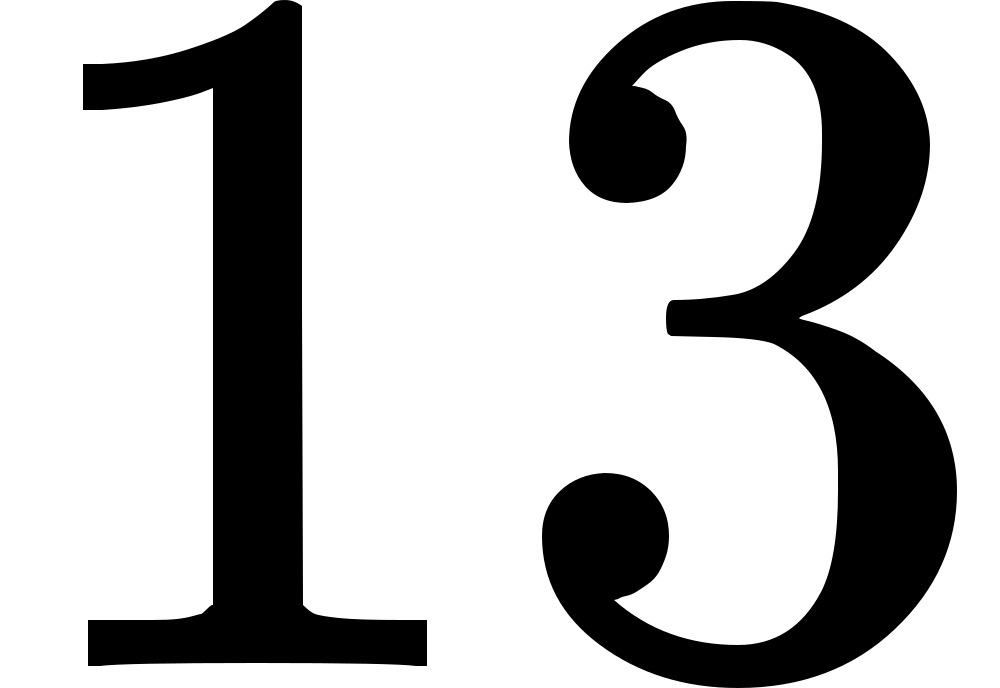 th
and
th
and 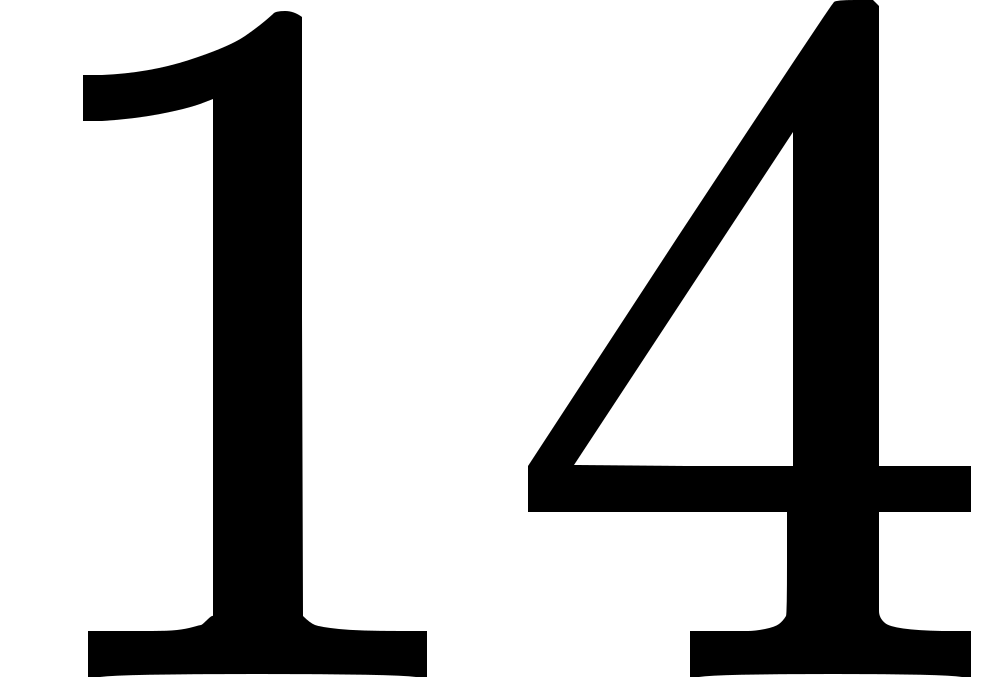 th electrons conditions which are analogous to those we
met in the binding of the th, th and th electrons. In
the elements of the third periods, however, we possess a far more
detailed knowledge of the series spectra. Too little is known about
the beryllium spectrum to draw conclusions about the binding of the
fourth electron, but we may infer directly from the well-known arc
spectrum of magnesium that the th electron in the atom of this
element is bound in a orbit. As regards the binding of the
th electron we meet in aluminium an absorption spectrum different
in structure to that of the alkali metals. In fact here not the lines
of the principal series but the lines of the sharp and diffuse series
are absorption lines. Consequently it is the first member of the
terms and not of the terms which corresponds to the normal state
of the aluminium atom, and we must assume that the th electron
is bound in a orbit. This, however, would hardly seem to be
a general property of the binding of the th electron in atoms,
but rather to arise from the special conditions for the binding of the
last electron in an atom, where already there are two other electrons
bound as loosely as the valency electron of aluminium. At the present
state of the theory it seems best to assume that in the silicon atom
the four last captured electrons will move in orbits forming
a configuration possessing symmetrical properties similar to the outer
configuration of the four electrons in orbits in carbon. Like
what we assumed for the latter configuration we shall expect that the
configuration of the orbits occurring for the first time in
silicon possesses such a completion, that the addition of a further
electron in a orbit to the atom of the following elements
is impossible, and that the
th electrons conditions which are analogous to those we
met in the binding of the th, th and th electrons. In
the elements of the third periods, however, we possess a far more
detailed knowledge of the series spectra. Too little is known about
the beryllium spectrum to draw conclusions about the binding of the
fourth electron, but we may infer directly from the well-known arc
spectrum of magnesium that the th electron in the atom of this
element is bound in a orbit. As regards the binding of the
th electron we meet in aluminium an absorption spectrum different
in structure to that of the alkali metals. In fact here not the lines
of the principal series but the lines of the sharp and diffuse series
are absorption lines. Consequently it is the first member of the
terms and not of the terms which corresponds to the normal state
of the aluminium atom, and we must assume that the th electron
is bound in a orbit. This, however, would hardly seem to be
a general property of the binding of the th electron in atoms,
but rather to arise from the special conditions for the binding of the
last electron in an atom, where already there are two other electrons
bound as loosely as the valency electron of aluminium. At the present
state of the theory it seems best to assume that in the silicon atom
the four last captured electrons will move in orbits forming
a configuration possessing symmetrical properties similar to the outer
configuration of the four electrons in orbits in carbon. Like
what we assumed for the latter configuration we shall expect that the
configuration of the orbits occurring for the first time in
silicon possesses such a completion, that the addition of a further
electron in a orbit to the atom of the following elements
is impossible, and that the 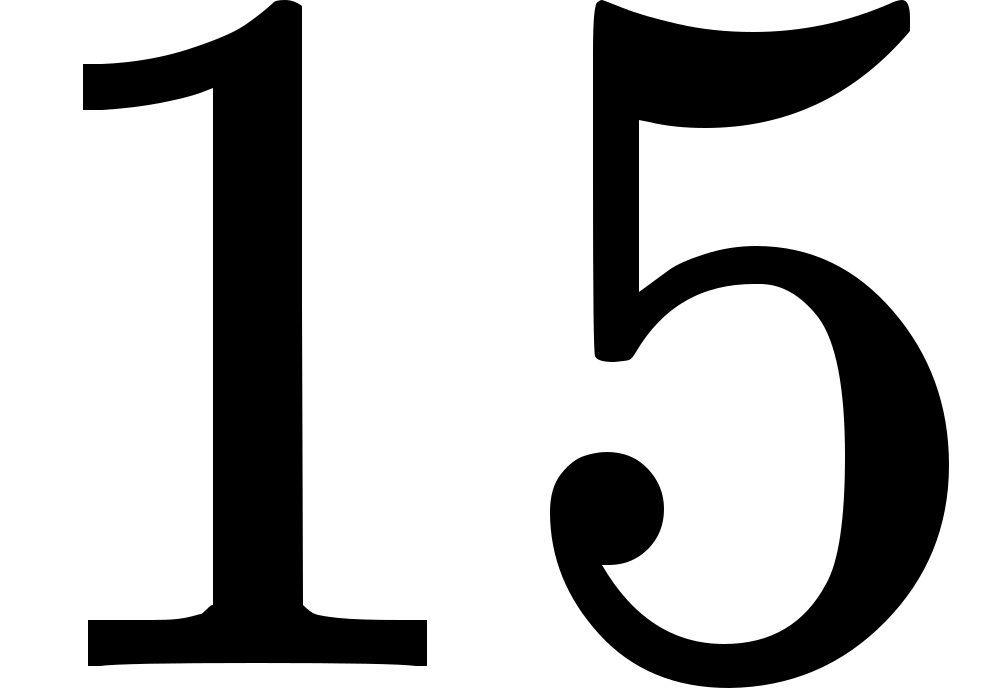 th electron in the elements
of higher atomic number will be bound in a new type of orbit. In this
case, however, the orbits with which we meet will not be circular, as
in the capture of the th electron, but will be rotating eccentric
orbits of the type . This is very closely related to the fact,
mentioned above, that the non-circular orbits will correspond to a
firmer binding than the circular orbits having the same value for the
principal quantum number, since the electrons will at certain moments
penetrate much farther into the interior of the atom. Even though a
orbit will not penetrate into the innermost configuration
of orbits, it will penetrate to distances from the nucleus
which are considerably less than the radii of the circular
orbits. In the case of the
th electron in the elements
of higher atomic number will be bound in a new type of orbit. In this
case, however, the orbits with which we meet will not be circular, as
in the capture of the th electron, but will be rotating eccentric
orbits of the type . This is very closely related to the fact,
mentioned above, that the non-circular orbits will correspond to a
firmer binding than the circular orbits having the same value for the
principal quantum number, since the electrons will at certain moments
penetrate much farther into the interior of the atom. Even though a
orbit will not penetrate into the innermost configuration
of orbits, it will penetrate to distances from the nucleus
which are considerably less than the radii of the circular
orbits. In the case of the 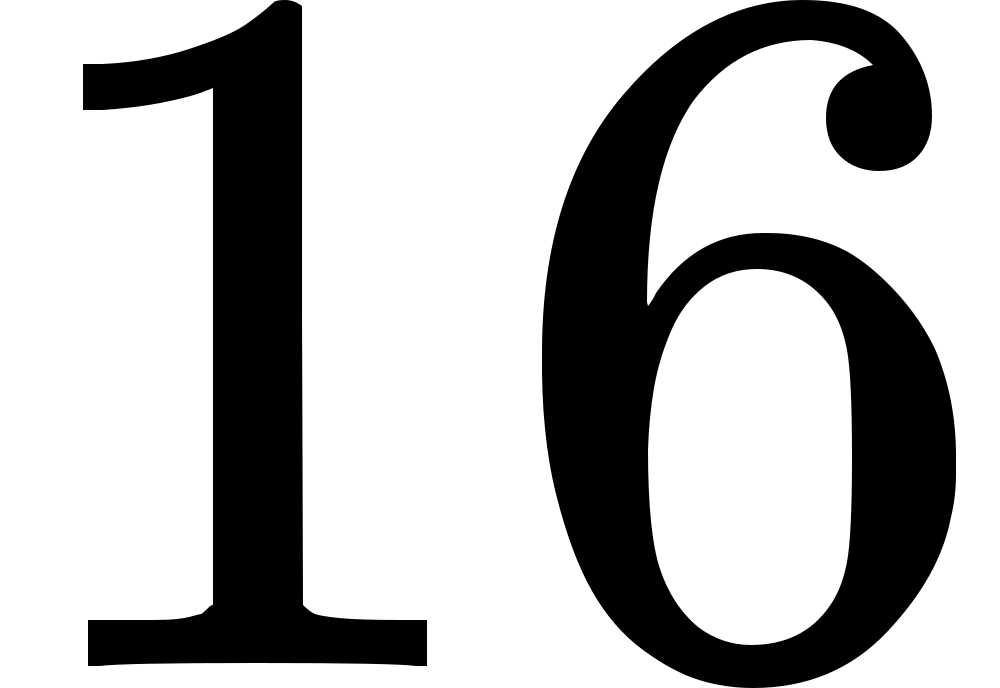 th,
th, 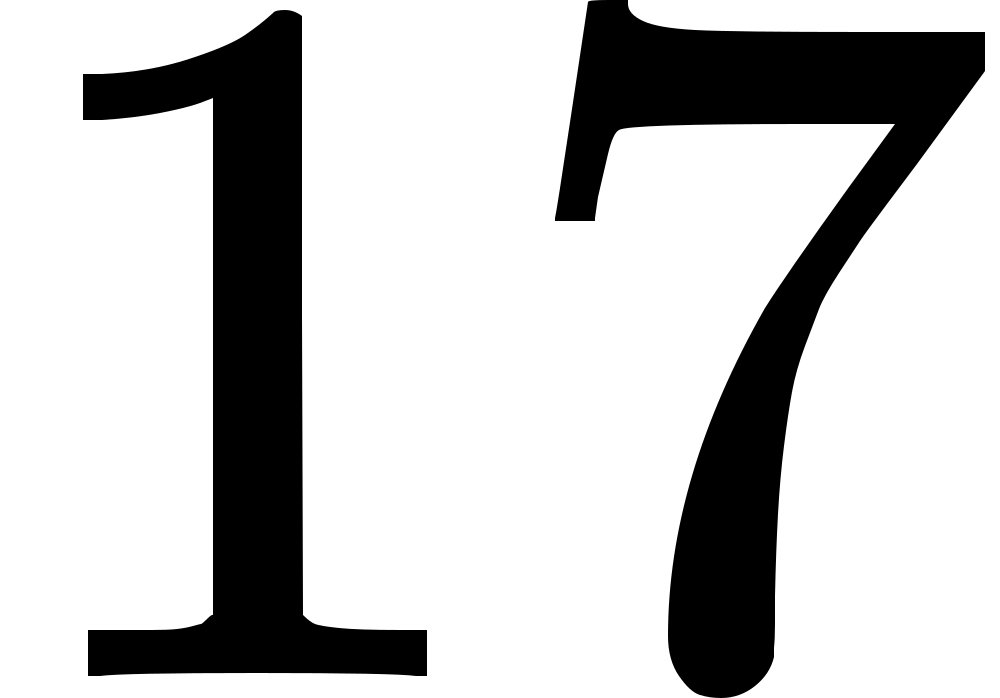 th and
  th electrons
the conditions are similar to those for the th. So for argon we
may expect a configuration in which the ten innermost electrons move
in orbits of the same type as in the neon atom while the last eight
electrons will form a configuration of four orbits and four
orbits, whose symmetrical properties must be regarded as
closely corresponding to the configuration of -quanta orbits in
the neon atom. At the same time, as this picture suggests a qualitative
explanation of the similarity of the chemical properties of the
elements in the latter part of the second and third periods, it also
opens up the possibility of a natural explanation of the conspicuous
difference from a quantitative aspect.
th electrons
the conditions are similar to those for the th. So for argon we
may expect a configuration in which the ten innermost electrons move
in orbits of the same type as in the neon atom while the last eight
electrons will form a configuration of four orbits and four
orbits, whose symmetrical properties must be regarded as
closely corresponding to the configuration of -quanta orbits in
the neon atom. At the same time, as this picture suggests a qualitative
explanation of the similarity of the chemical properties of the
elements in the latter part of the second and third periods, it also
opens up the possibility of a natural explanation of the conspicuous
difference from a quantitative aspect.
Fourth Period. Potassium—Krypton. In the fourth period we meet
at first elements which resemble chemically those at the beginning of
the two previous periods. This is also what we should expect. We must
thus assume that the 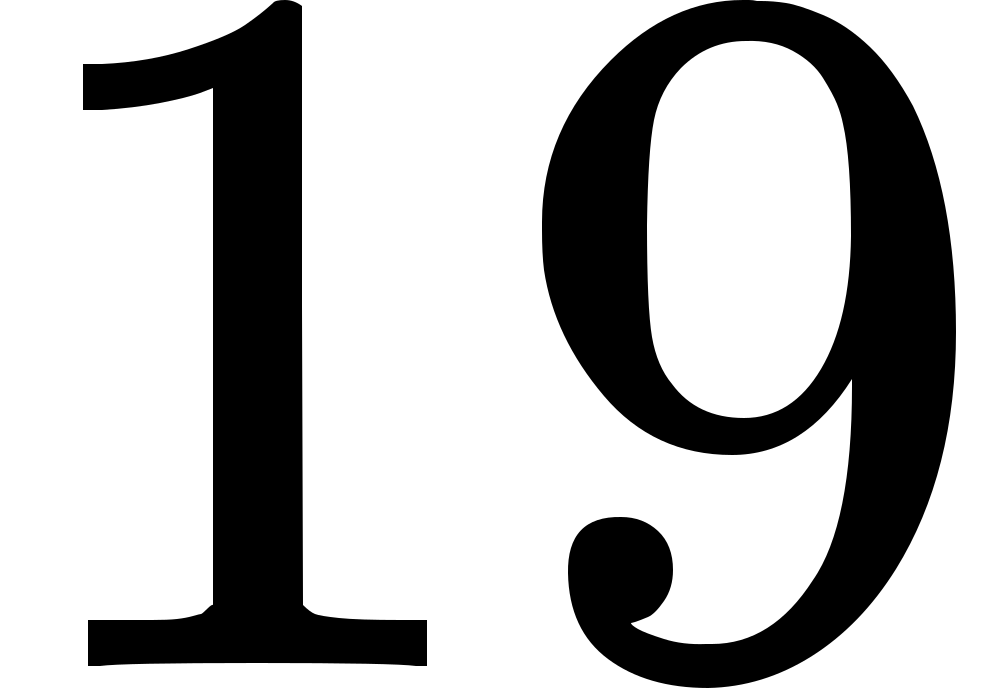 th electron is bound in a new type of
orbit, and a closer consideration shows that this will be a
th electron is bound in a new type of
orbit, and a closer consideration shows that this will be a 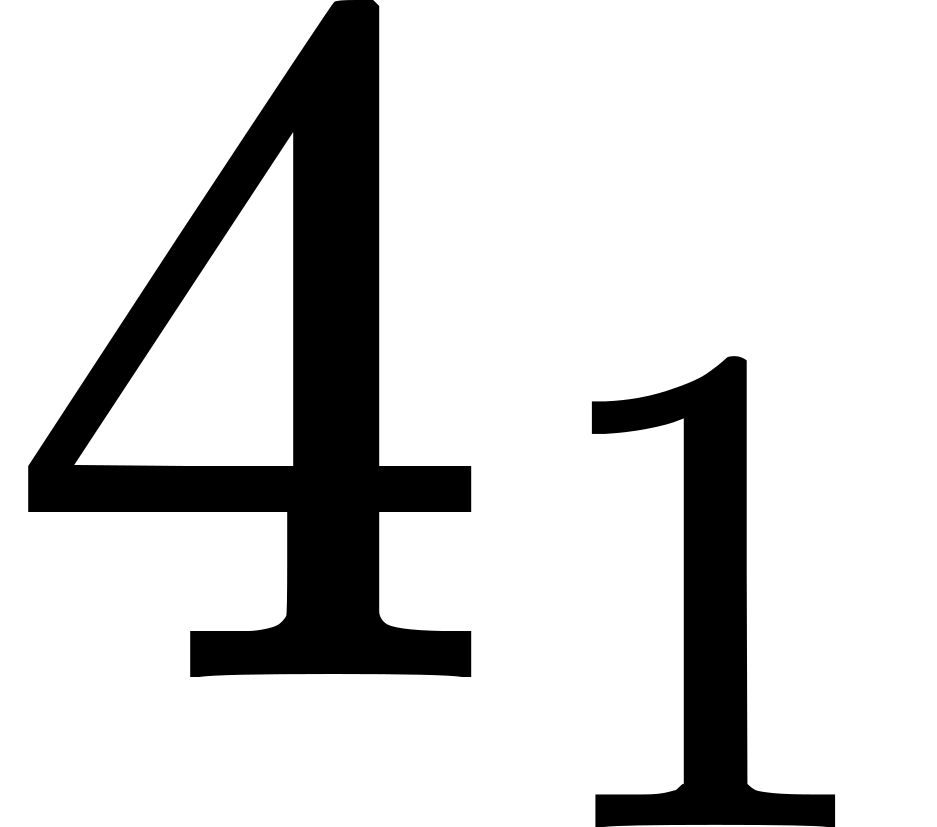 orbit. The points which were emphasized in connection with the binding
of the last electron in the sodium atom will be even more marked here
on account of the larger quantum number by which the orbits of the
inner electrons are characterized. In fact, in the potassium atom the
orbit of the th electron will, as far as inner loops
are concerned, coincide closely with the shape of a orbit.
On this account, therefore, the dimensions of the outer part of the
orbit will not only deviate greatly from the dimensions of a
orbit in the hydrogen atom, but will coincide closely with a hydrogen
orbit of the type , the dimensions of which are about four
times smaller than the hydrogen orbit. This result allows an
immediate explanation of the main features of the chemical properties
and the spectrum of potassium. Corresponding results apply to calcium,
in the neutral atom of which there will be two valency electrons in
equivalent orbits.
orbit. The points which were emphasized in connection with the binding
of the last electron in the sodium atom will be even more marked here
on account of the larger quantum number by which the orbits of the
inner electrons are characterized. In fact, in the potassium atom the
orbit of the th electron will, as far as inner loops
are concerned, coincide closely with the shape of a orbit.
On this account, therefore, the dimensions of the outer part of the
orbit will not only deviate greatly from the dimensions of a
orbit in the hydrogen atom, but will coincide closely with a hydrogen
orbit of the type , the dimensions of which are about four
times smaller than the hydrogen orbit. This result allows an
immediate explanation of the main features of the chemical properties
and the spectrum of potassium. Corresponding results apply to calcium,
in the neutral atom of which there will be two valency electrons in
equivalent orbits.
After calcium the properties of the elements in the fourth period
of the periodic system deviate, however, more and more from the
corresponding elements in the previous periods, until in the family
of the iron metals we meet elements whose properties are essentially
different. Proceeding to still higher atomic numbers we again meet
different conditions. Thus we find in the latter part of the fourth
period a series of elements whose chemical properties approach more
and more to the properties of the elements at the end of the preceding
periods, until finally with atomic number 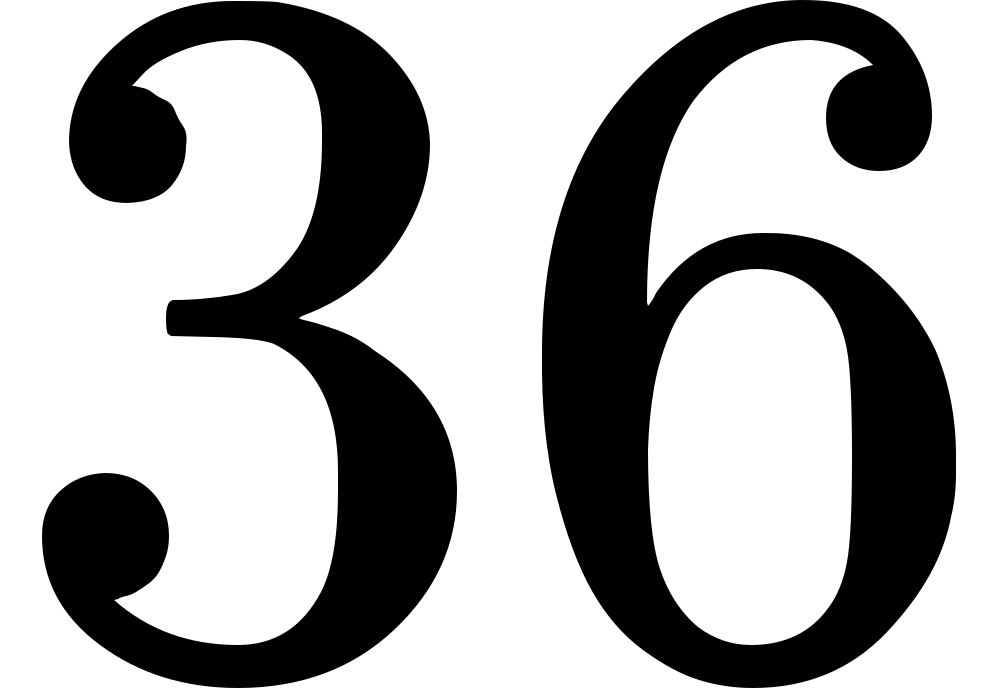 we again meet one of
the inactive gases, namely krypton. This is exactly what we should
expect. The formation and stability of the atoms of the elements in the
first three periods require that each of the first electrons
in the atom shall be bound in each succeeding element in an orbit of
the same principal quantum number as that possessed by the particular
electron, when it first appeared. It is readily seen that this is no
longer the case for the th electron. With increasing nuclear
charge and the consequent decrease in the difference between the fields
of force inside and outside the region of the orbits of the first
bound electrons, the dimensions of those parts of a
orbit which fall outside will approach more and more to the dimensions
of a -quantum orbit calculated on the assumption that the
interaction between the electrons in the atom may be neglected. With
increasing atomic number a point will therefore be reached where a
we again meet one of
the inactive gases, namely krypton. This is exactly what we should
expect. The formation and stability of the atoms of the elements in the
first three periods require that each of the first electrons
in the atom shall be bound in each succeeding element in an orbit of
the same principal quantum number as that possessed by the particular
electron, when it first appeared. It is readily seen that this is no
longer the case for the th electron. With increasing nuclear
charge and the consequent decrease in the difference between the fields
of force inside and outside the region of the orbits of the first
bound electrons, the dimensions of those parts of a
orbit which fall outside will approach more and more to the dimensions
of a -quantum orbit calculated on the assumption that the
interaction between the electrons in the atom may be neglected. With
increasing atomic number a point will therefore be reached where a
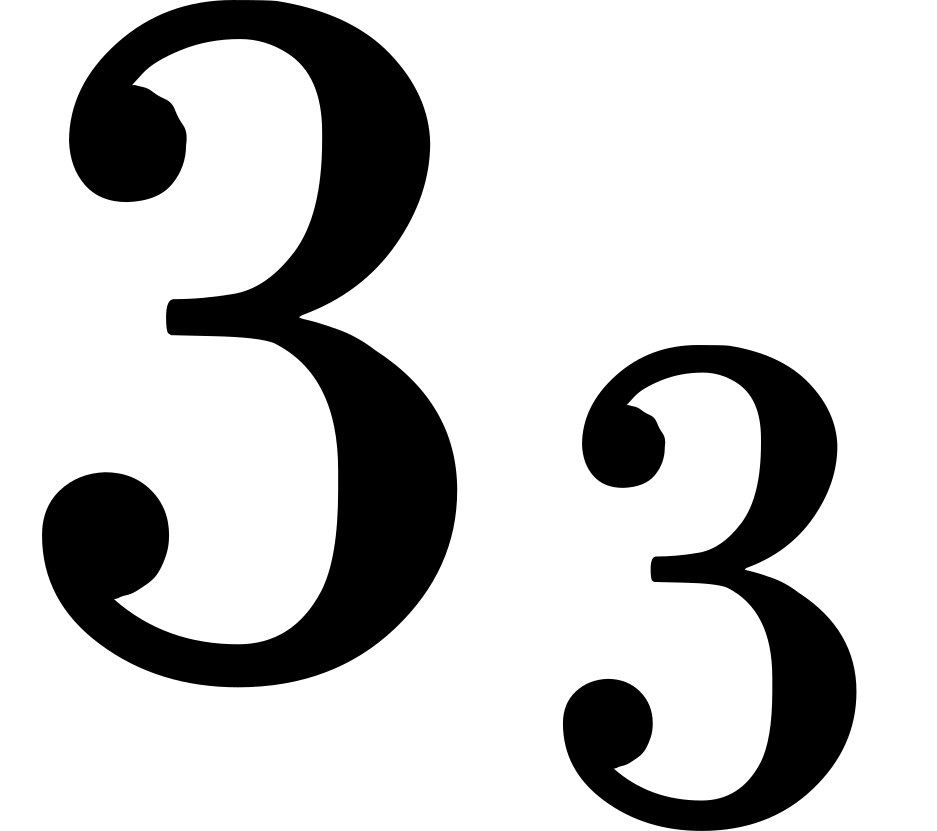 orbit will correspond to a firmer binding of the th
electron than a orbit, and this occurs as early as at
the beginning of the fourth period. This cannot only be anticipated
from a simple calculation but is confirmed in a striking way from an
examination of the series spectra. While the spectrum of potassium
indicates that the orbit corresponds to a binding which is
more than twice as firm as in a orbit corresponding to the
first spectral term in the series, the conditions are entirely
different as soon as calcium is reached. We shall not consider the
arc spectrum which is emitted during the capture of the
orbit will correspond to a firmer binding of the th
electron than a orbit, and this occurs as early as at
the beginning of the fourth period. This cannot only be anticipated
from a simple calculation but is confirmed in a striking way from an
examination of the series spectra. While the spectrum of potassium
indicates that the orbit corresponds to a binding which is
more than twice as firm as in a orbit corresponding to the
first spectral term in the series, the conditions are entirely
different as soon as calcium is reached. We shall not consider the
arc spectrum which is emitted during the capture of the  th
electron but the spark spectrum which corresponds to the capture and
binding of the th electron. While the spark spectrum of magnesium
exhibits great similarity with the sodium spectrum as regards the
values of the spectral terms in the various series—apart from the fact
that the constant appearing in formula (12) is four times as large as
the Rydberg constant—we meet in the spark spectrum of calcium the
remarkable condition that the first term of the series is larger
than the first term of the series and is only a little smaller
than the first term of the series, which may be regarded as
corresponding to the binding of the th electron in the normal
state of the calcium atom.
th
electron but the spark spectrum which corresponds to the capture and
binding of the th electron. While the spark spectrum of magnesium
exhibits great similarity with the sodium spectrum as regards the
values of the spectral terms in the various series—apart from the fact
that the constant appearing in formula (12) is four times as large as
the Rydberg constant—we meet in the spark spectrum of calcium the
remarkable condition that the first term of the series is larger
than the first term of the series and is only a little smaller
than the first term of the series, which may be regarded as
corresponding to the binding of the th electron in the normal
state of the calcium atom.
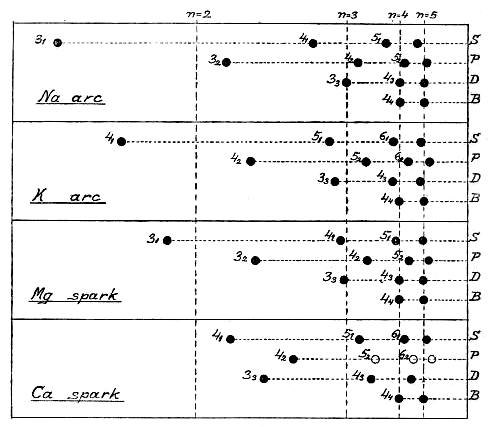
These facts are shown in figure 4 which gives a survey of the
stationary states corresponding to the arc spectra of sodium and
potassium. As in figures 2 and 3 of the sodium spectrum, we have
disregarded the complexity of the spectral terms, and the numbers
characterizing the stationary states are simply the quantum numbers
and . For the sake of comparison the scale in which the
energy of the different states is indicated is chosen four times as
small for the spark spectra as for the arc spectra. Consequently the
vertical lines indicated with various values of correspond for
the arc spectra to the spectral terms of hydrogen, for the spark
spectra to the terms of the helium spectrum given by formula (7).
Comparing the change in the relative firmness in the binding of the
th electron in a and orbit for potassium
and calcium we see that we must be prepared already for the next
element, scandium, to find that the orbit will correspond
to a stronger binding of this electron than a orbit. On the
other hand it follows from previous remarks that the binding will be
much lighter than for the first electrons which agrees that in
chemical combinations scandium appears electropositively with three
valencies.
If we proceed to the following elements, a still larger number of
orbits will occur in the normal state of these atoms, since
the number of such electron orbits will depend upon the firmness of
their binding compared to the firmness with which an electron is
bound in a orbit, in which type of orbit at least the last
captured electron in the atom may be assumed to move. We therefore
meet conditions which are essentially different from those which we
have considered in connection with the previous periods, so that
here we have to do with the successive development of one of the
inner groups of electrons in the atom, in this case with groups
of electrons in -quanta orbits. Only when the development
of this group has been completed may we expect to find once more
a corresponding change in the properties of the elements with
increasing atomic number such as we find in the preceding periods. The
properties of the elements in the latter part of the fourth period
show immediately that the group, when completed, will possess
electrons. Thus in krypton, for example, we may expect besides the
groups of , and -quanta orbits a markedly symmetrical
configuration of electrons in -quanta orbits consisting of
four orbits and four 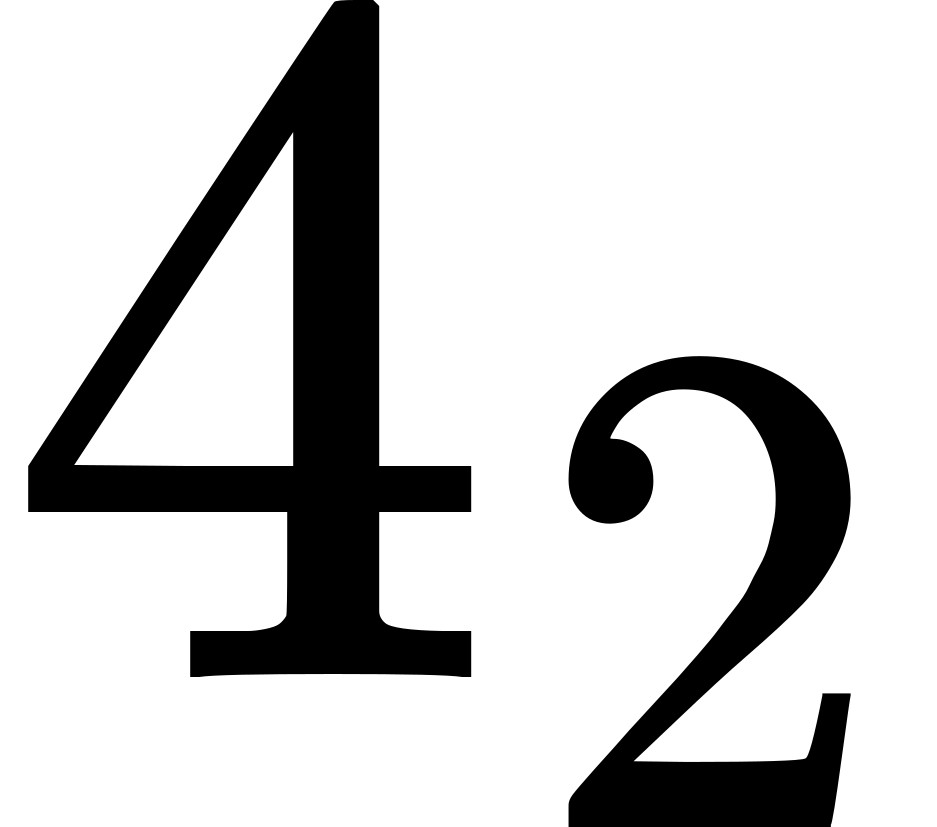 orbits.
The question now arises: In which way will the gradual formation of the
group of electrons having -quanta orbits take place? From analogy
with the constitution of the groups of electrons with -quanta
orbits we might at first sight be inclined to suppose that the
complete group of -quanta orbits would consist of three subgroups
of four electrons each in orbits of the types , and
respectively, so that the total number of electrons would
be instead of . Further consideration shows, however,
that such an expectation would not be justified. The stability of the
configuration of eight electrons with -quanta orbits occurring
in neon must be ascribed not only to the symmetrical configuration of
the electronic orbits in the two subgroups of and
orbits respectively, but fully as much to the possibility of bringing
the orbits inside these subgroups into harmonic relation with one
another. The situation is different, however, for the groups of
electrons with -quanta orbits. Three subgroups of four orbits
each cannot in this case be expected to come into interaction with one
another in a correspondingly simple manner. On the contrary we must
assume that the presence of electrons in orbits will diminish
the harmony of the orbits within the first two -quanta subgroups,
at any rate when a point is reached where the th electron is no
longer, as was the case with scandium, bound considerably more lightly
than the previously bound electrons in -quanta orbits, but has
been drawn so far into the atom that it revolves within essentially the
same region of the atom where these electrons move. We shall now assume
that this decrease in the harmony will so to say "open" the previously
"closed" configuration of electrons in orbits of these types. As
regards the final result, the number indicates that after the
group is finally formed there will be three subgroups containing six
electrons each. Even if it has not at present been possible to follow
in detail the various steps in the formation of the group this result
is nevertheless confirmed in an interesting manner by the fact that
it is possible to arrange three configurations having six electrons
each in a simple manner relative to one another. The configuration of
the subgroups does not exhibit a tetrahedral symmetry like the groups
of -quanta orbits in carbon, but a symmetry which, so far as the
relative orientation of the normals to the planes of the orbits is
concerned, may be described as trigonal.
In spite of the great difference in the properties of the elements
of this period, compared with those of the preceding period, the
completion of the group of electrons in -quanta orbits in
the fourth period may to a certain extent be said to have the same
characteristic results as the completion of the group of -quanta
orbits in the second period. As we have seen, this determined not
only the properties of neon as an inactive gas, but in addition
the electronegative properties of the preceding elements and the
electropositive properties of the elements which follow. The fact that
there is no inactive gas possessing an outer group of electrons
is very easily accounted for by the much larger dimensions which a
orbit has in comparison with a orbit revolving
in the same field of force. On this account a complete -quanta
group cannot occur as the outermost group in a neutral atom, but only
in positively charged ions. The characteristic decrease in valency
which we meet in copper, shown by the appearance of the singly charged
cuprous ions, indicates the same tendency towards the completion of
a symmetrical configuration of electrons that we found in the marked
electronegative character of an element like fluorine. Direct evidence
that a complete group of -quanta orbits is present in the cuprous
ion is given by the spectrum of copper which, in contrast to the
extremely complicated spectra of the preceding elements resulting from
the unsymmetrical character of the inner system, possesses a simple
structure very much like that of the sodium spectrum. This may no doubt
be ascribed to a simple symmetrical structure present in the cuprous
ion similar to that in the sodium ion, although the great difference
in the constitution of the outer group of electrons in these ions is
shown both by the considerable difference in the values of the spectral
terms and in the separation of the doublets in the terms of the
two spectra. The occurrence of the cupric compounds shows, however,
that the firmness of binding in the group of -quanta orbits in the
copper atom is not as great as the firmness with which the electrons
are bound in the group of -quanta orbits in the sodium atom. Zinc,
which is always divalent, is the first element in which the groups
of the electrons are so firmly bound that they cannot be removed by
ordinary chemical processes.
The picture I have given of the formation and structure of the
atoms of the elements in the fourth period gives an explanation of
the chemical and spectral properties. In addition it is supported
by evidence of a different nature to that which we have hitherto
used. It is a familiar fact, that the elements in the fourth period
differ markedly from the elements in the preceding periods partly in
their magnetic properties and partly in the characteristic
colours of their compounds. Paramagnetism and colours do occur
in elements belonging to the foregoing periods, but not in simple
compounds where the atoms considered enter as ions. Many elements of
the fourth period, on the contrary, exhibit paramagnetic properties
and characteristic colours even in dissociated aqueous solutions. The
importance of this has been emphasized by Ladenburg in his attempt
to explain the properties of the elements in the long periods of the
periodic system (see p. 73). Langmuir in order to account for the
difference between the fourth period and the preceding periods simply
assumed that the atom, in addition to the layers of cells containing
electrons each, possesses an outer layer of cells with room for
electrons which is completely filled for the first time in the
case of krypton. Ladenburg, on the other hand, assumes that for some
reason or other an intermediate layer is developed between the inner
electronic configuration in the atom appearing already in argon, and
the external group of valency electrons. This layer commences with
scandium and is completed exactly at the end of the family of iron
metals. In support of this assumption Ladenburg not only mentions the
chemical properties of the elements in the fourth period, but also
refers to the paramagnetism and colours which occur exactly in the
elements, where this intermediate layer should be in development. It is
seen that Ladenburg's ideas exhibit certain formal similarities with
the interpretation I have given above of the appearance of the fourth
period, and it is interesting to note that our view, based on a direct
investigation of the conditions for the formation of the atoms, enables
us to understand the relation emphasized by Ladenburg.
Our ordinary electrodynamic conceptions are probably insufficient to
form a basis for an explanation of atomic magnetism. This is hardly to
be wondered at when we remember that they have not proved adequate to
account for the phenomena of radiation which are connected with the
intimate interaction between the electric and magnetic forces arising
from the motion of the electrons. In whatever way these difficulties
may be solved it seems simplest to assume that the occurrence of
magnetism, such as we meet in the elements of the fourth period,
results from a lack of symmetry in the internal structure of the
atom, thus preventing the magnetic forces arising from the motion of
the electrons from forming a system of closed lines of force running
wholly within the atom. While it has been assumed that the ions of the
elements in the previous periods, whether positively or negatively
charged, contain configurations of marked symmetrical character, we
must, however, be prepared to encounter a definite lack of symmetry
in the electronic configurations in ions of those elements within
the fourth period which contain a group of electrons in -quanta
orbits in the transition stage between symmetrical configurations of
and electrons respectively. As pointed out by Kossel,
the experimental results exhibit an extreme simplicity, the magnetic
moment of the ions depending only on the number of electrons in the
ion. Ferric ions, for example, exhibit the same atomic magnetism as
manganous ions, while manganic ions exhibit the same atomic magnetism
as chromous ions. It is in beautiful agreement with what we have
assumed about the structure of the atoms of copper and zinc, that
the magnetism disappears with those ions containing 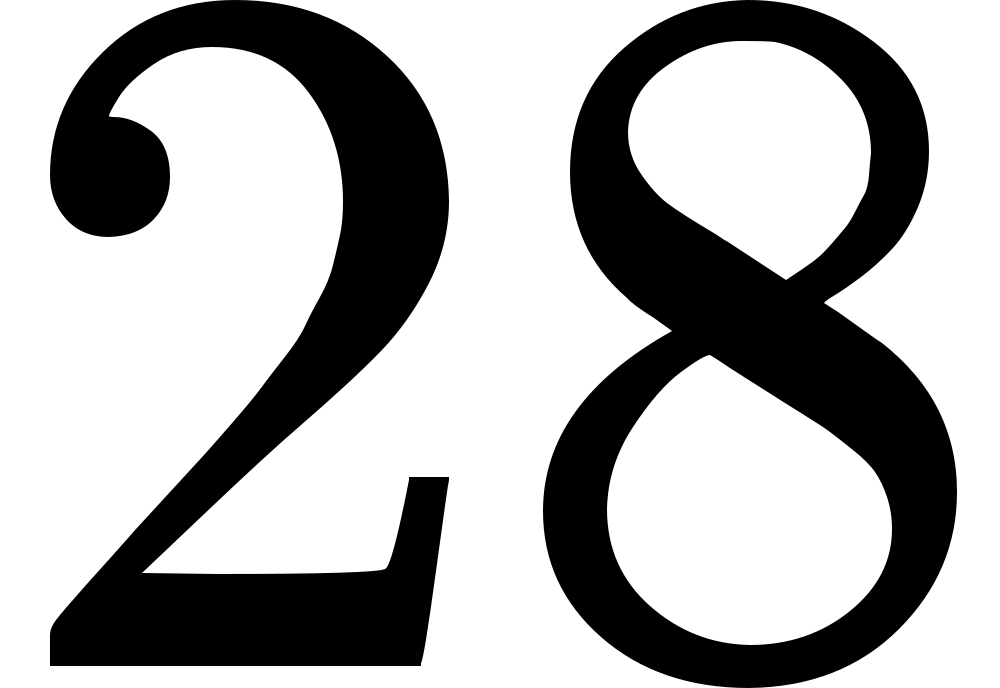 electrons
which, as I stated, must be assumed to contain a complete group of
-quanta orbits. On the whole a consideration of the magnetic
properties of the elements within the fourth period gives us a
vivid impression of how a wound in the otherwise symmetrical inner
structure is first developed and then healed as we pass from element
to element. It is to be hoped that a further investigation of the
magnetic properties will give us a clue to the way in which the group
of electrons in -quanta orbits is developed step by step.
electrons
which, as I stated, must be assumed to contain a complete group of
-quanta orbits. On the whole a consideration of the magnetic
properties of the elements within the fourth period gives us a
vivid impression of how a wound in the otherwise symmetrical inner
structure is first developed and then healed as we pass from element
to element. It is to be hoped that a further investigation of the
magnetic properties will give us a clue to the way in which the group
of electrons in -quanta orbits is developed step by step.
Also the colours of the ions directly support our view of atomic
structure. According to the postulates of the quantum theory absorption
as well as emission of radiation is regarded as taking place during
transitions between stationary states. The occurrence of colours,
that is to say the absorption of light in the visible region of the
spectrum, is evidence of transitions involving energy changes of the
same order of magnitude as those giving the usual optical spectra of
the elements. In contrast to the ions of the elements of the preceding
periods where all the electrons are assumed to be very firmly bound,
the occurrence of such processes in the fourth period is exactly what
we should expect. For the development and completion of the electronic
groups with -quanta orbits will proceed, so to say, in competition
with the binding of electrons in orbits of higher quanta, since the
binding of electrons in -quanta orbits occurs when the electrons
in these orbits are bound more firmly than electrons in
orbits. The development of the group will therefore proceed to the
point where we may say there is equilibrium between the two kinds of
orbits. This condition may be assumed to be intimately connected not
only with the colour of the ions, but also with the tendency of the
elements to form ions with different valencies. This is in contrast
to the elements of the first periods where the charge of the ions in
aqueous solutions is always the same for one and the same element.
Fifth Period. Rubidium—Xenon. The structure of the atoms in
the remaining periods may be followed up in complete analogy with
what has already been said. Thus we shall assume that the 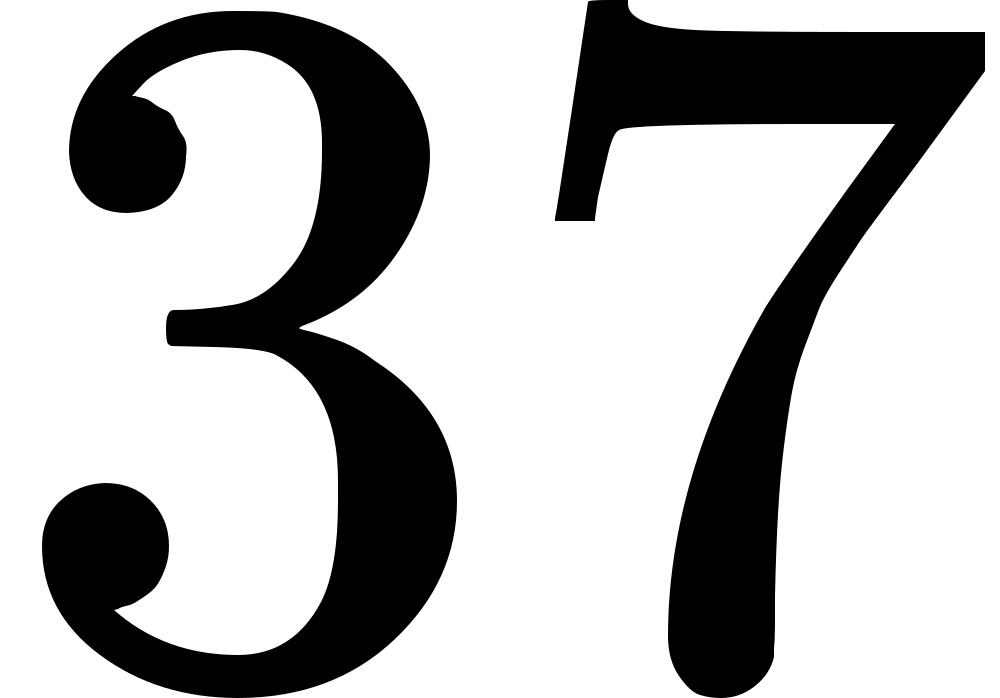 th
and
th
and 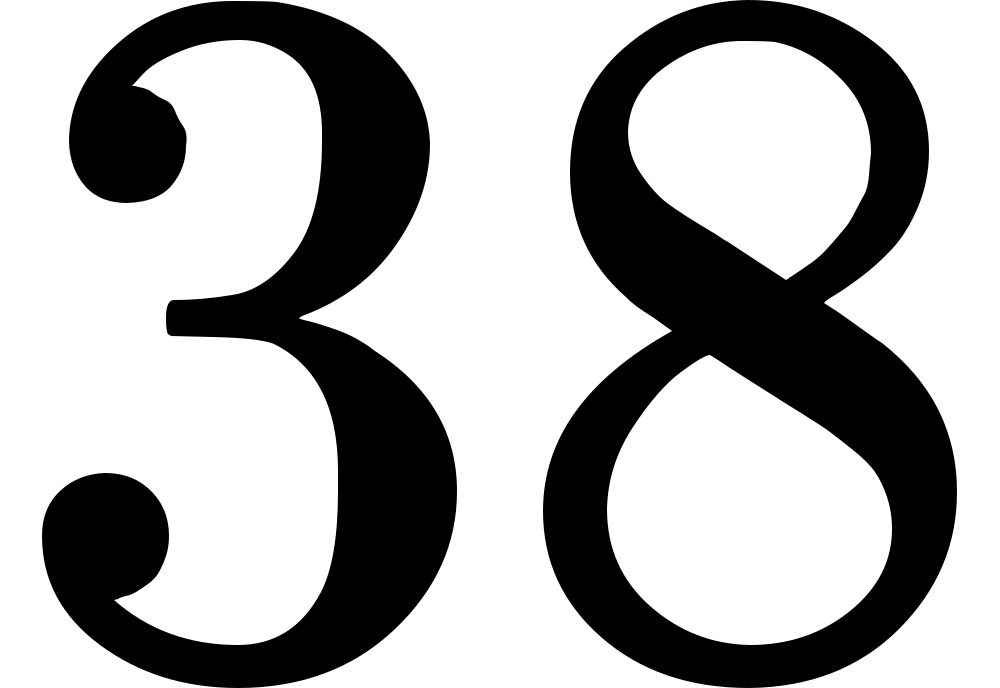 th electrons in the elements of the fifth period are bound
in
th electrons in the elements of the fifth period are bound
in 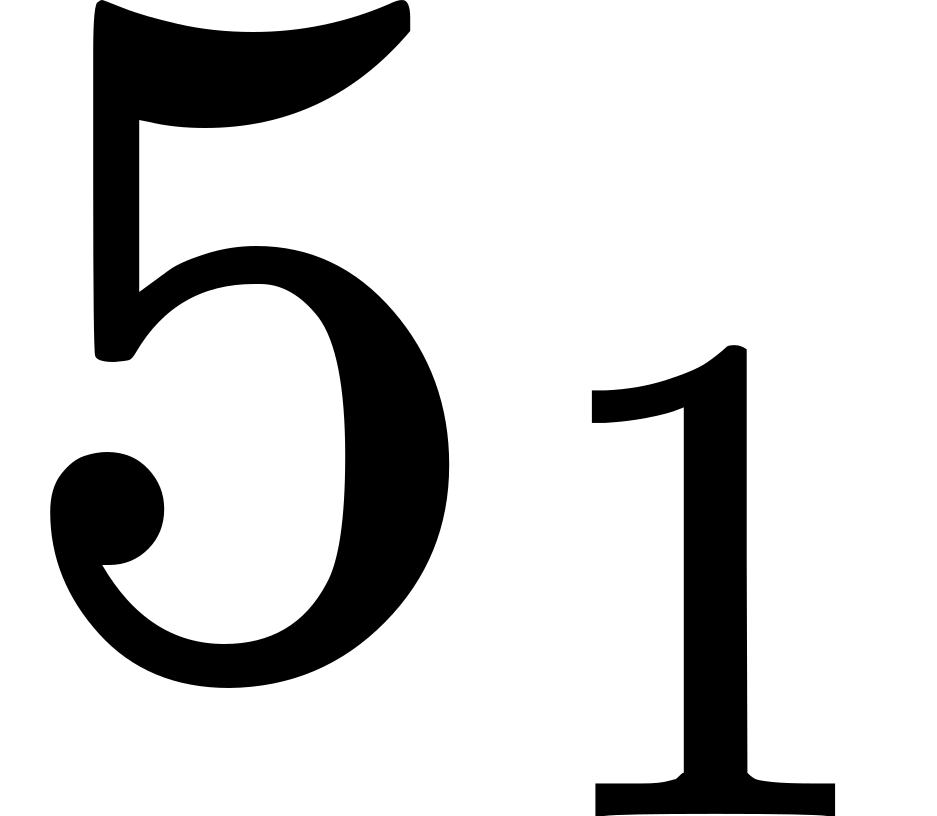 orbits. This is supported by the measurements of the arc
spectrum of rubidium and the spark spectrum of strontium. The latter
spectrum indicates at the same time that
orbits. This is supported by the measurements of the arc
spectrum of rubidium and the spark spectrum of strontium. The latter
spectrum indicates at the same time that 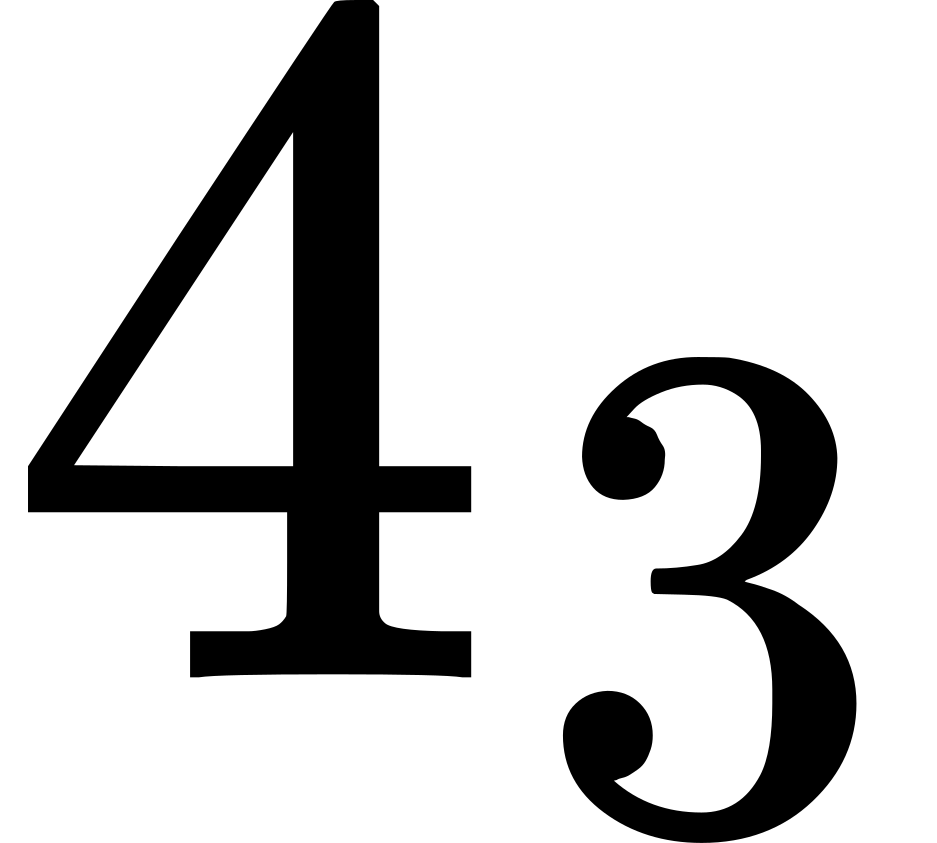 orbits will soon
appear, and therefore in this period, which like the th contains
elements, we must assume that we are witnessing a further
stage in the development of the electronic group of -quanta
orbits. The first stage in the formation of this group may be said
to have been attained in krypton with the appearance of a symmetrical
configuration of eight electrons consisting of two subgroups each of
four electrons in and orbits. A second preliminary
completion must be regarded as having been reached with the appearance
of a symmetrical configuration of electrons in the case of
silver, consisting of three subgroups with six electrons each in orbits
of the types , and . Everything that has
been said about the successive formation of the group of electrons
with -quanta orbits applies unchanged to this stage in the
transformation of the group with -quanta orbits. For in no case
have we made use of the absolute values of the quantum numbers nor of
assumptions concerning the form of the orbits but only of the number of
possible types of orbits which might come into consideration. At the
same time it may be of interest to mention that the properties of these
elements compared with those of the foregoing period nevertheless show
a difference corresponding exactly to what would be expected from the
difference in the types of orbits. For instance, the divergencies from
the characteristic valency conditions of the elements in the second and
third periods appear later in the fifth period than for elements in
the fourth period. While an element like titanium in the fourth period
already shows a marked tendency to occur with various valencies, on the
other hand an element like zirconium is still quadri-valent like carbon
in the second period and silicon in the third. A simple investigation
of the kinematic properties of the orbits of the electrons shows in
fact that an electron in an eccentric orbit of an element
in the fifth period will be considerably more loosely bound than an
electron in a circular orbit of the corresponding element in
the fourth period, while electrons which are bound in eccentric orbits
of the types and respectively will correspond to a
binding of about the same firmness.
orbits will soon
appear, and therefore in this period, which like the th contains
elements, we must assume that we are witnessing a further
stage in the development of the electronic group of -quanta
orbits. The first stage in the formation of this group may be said
to have been attained in krypton with the appearance of a symmetrical
configuration of eight electrons consisting of two subgroups each of
four electrons in and orbits. A second preliminary
completion must be regarded as having been reached with the appearance
of a symmetrical configuration of electrons in the case of
silver, consisting of three subgroups with six electrons each in orbits
of the types , and . Everything that has
been said about the successive formation of the group of electrons
with -quanta orbits applies unchanged to this stage in the
transformation of the group with -quanta orbits. For in no case
have we made use of the absolute values of the quantum numbers nor of
assumptions concerning the form of the orbits but only of the number of
possible types of orbits which might come into consideration. At the
same time it may be of interest to mention that the properties of these
elements compared with those of the foregoing period nevertheless show
a difference corresponding exactly to what would be expected from the
difference in the types of orbits. For instance, the divergencies from
the characteristic valency conditions of the elements in the second and
third periods appear later in the fifth period than for elements in
the fourth period. While an element like titanium in the fourth period
already shows a marked tendency to occur with various valencies, on the
other hand an element like zirconium is still quadri-valent like carbon
in the second period and silicon in the third. A simple investigation
of the kinematic properties of the orbits of the electrons shows in
fact that an electron in an eccentric orbit of an element
in the fifth period will be considerably more loosely bound than an
electron in a circular orbit of the corresponding element in
the fourth period, while electrons which are bound in eccentric orbits
of the types and respectively will correspond to a
binding of about the same firmness.
At the end of the fifth period we may assume that xenon, the atomic
number of which is 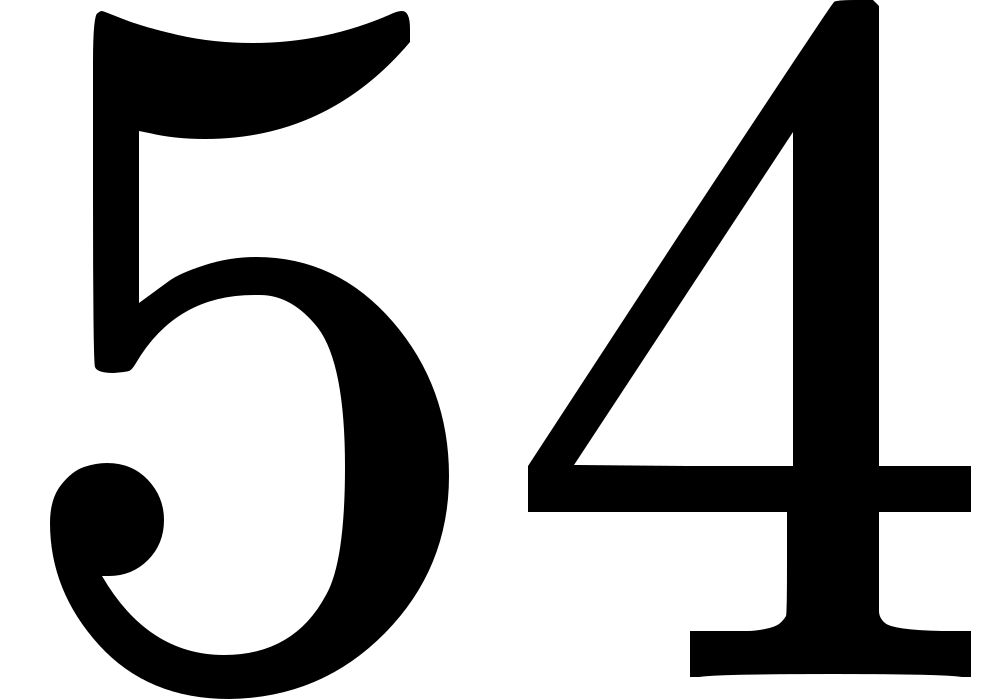 , has a structure which in addition to the
two -quantum, eight -quanta, eighteen -quanta and
eighteen -quanta orbits already mentioned contains a symmetrical
configuration of eight electrons in -quanta orbits consisting
of two subgroups with four electrons each in and
, has a structure which in addition to the
two -quantum, eight -quanta, eighteen -quanta and
eighteen -quanta orbits already mentioned contains a symmetrical
configuration of eight electrons in -quanta orbits consisting
of two subgroups with four electrons each in and 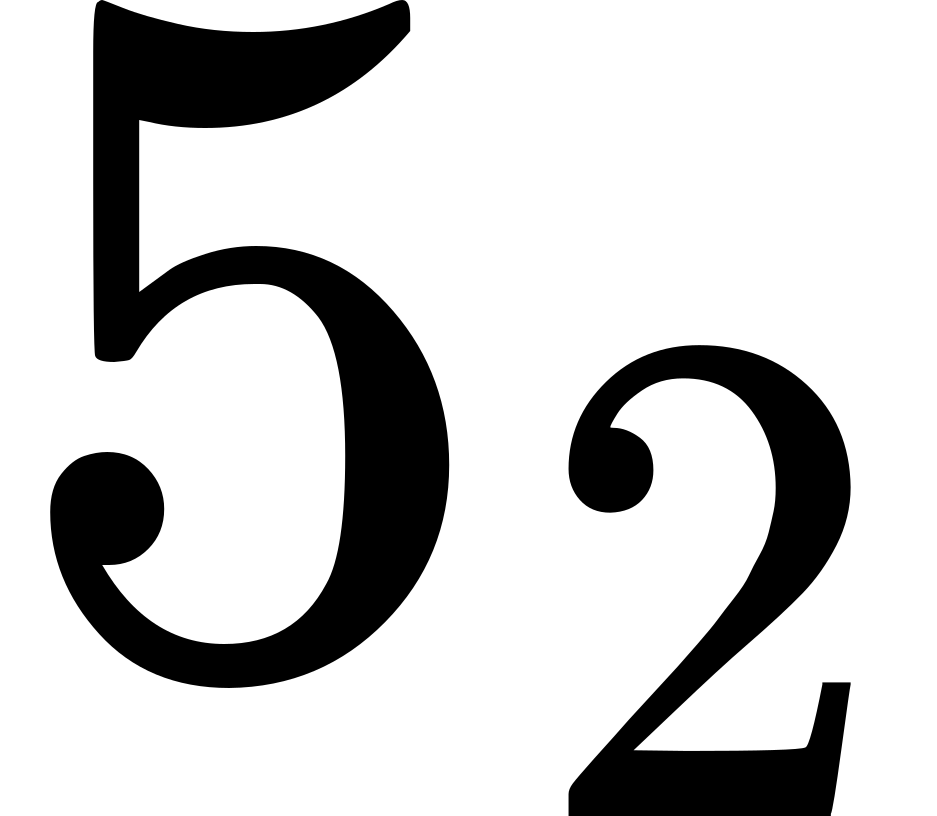 orbits respectively.
Sixth Period. Caesium—Niton. If we now consider the atoms of
elements of still higher atomic number, we must first of all assume
that the 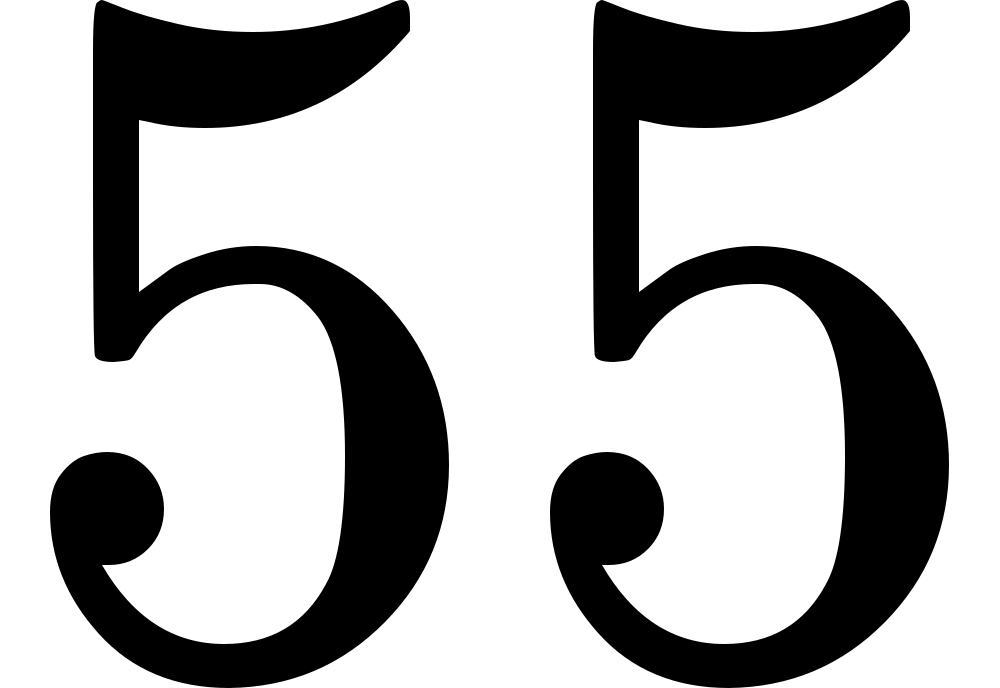 th and
 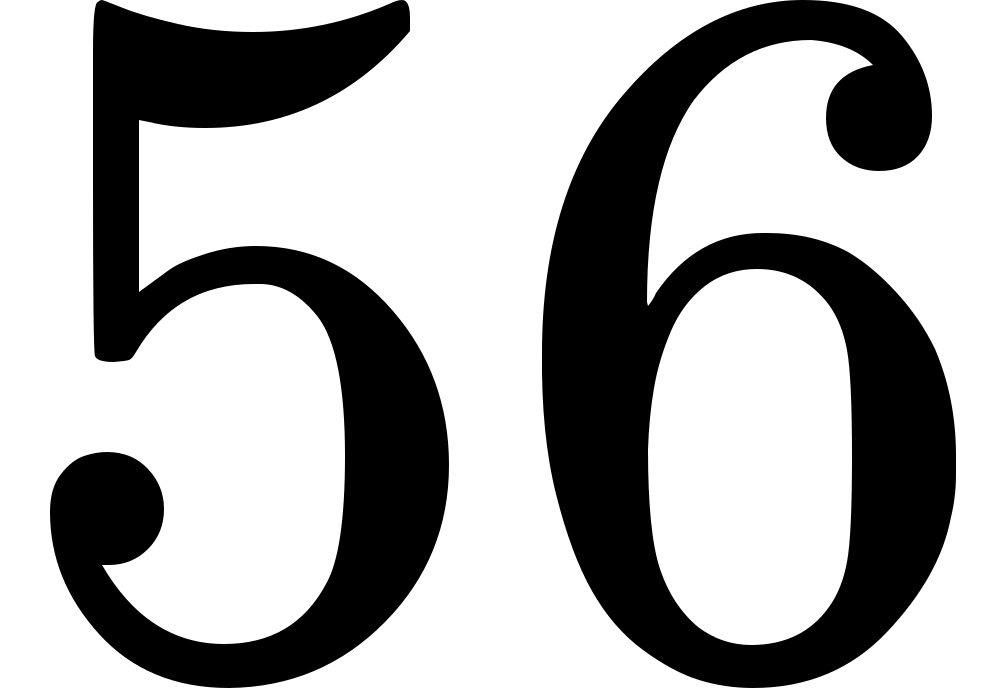 th electrons in the atoms of caesium and
barium are bound in
th electrons in the atoms of caesium and
barium are bound in 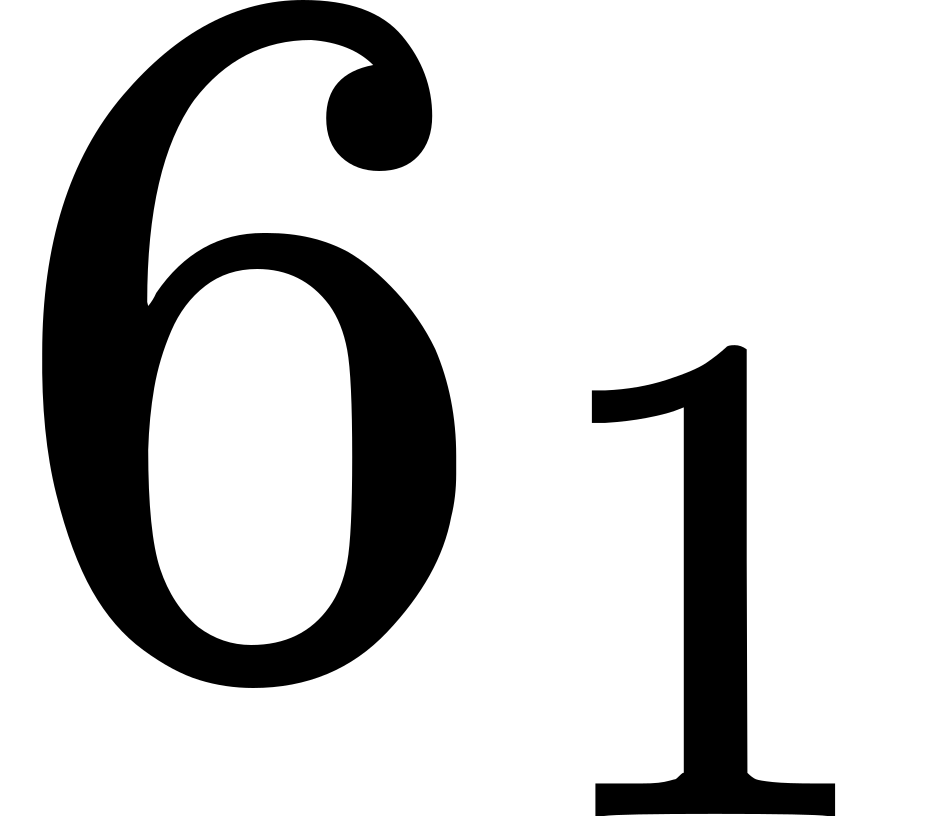 orbits. This is confirmed by the spectra
of these elements. It is clear, however, that we must be prepared
shortly to meet entirely new conditions. With increasing nuclear charge
we shall have to expect not only that an electron in a
orbits. This is confirmed by the spectra
of these elements. It is clear, however, that we must be prepared
shortly to meet entirely new conditions. With increasing nuclear charge
we shall have to expect not only that an electron in a 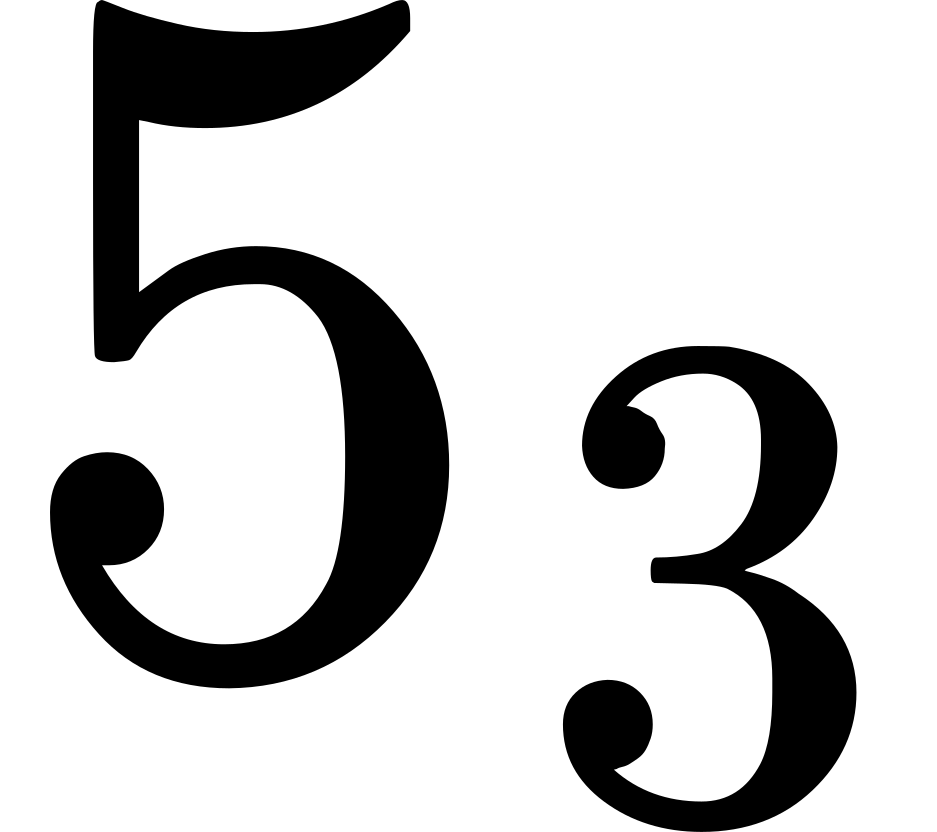 orbit will be bound more firmly than in a orbit, but we
must also expect that a moment will arrive when during the formation
of the atom a
orbit will be bound more firmly than in a orbit, but we
must also expect that a moment will arrive when during the formation
of the atom a 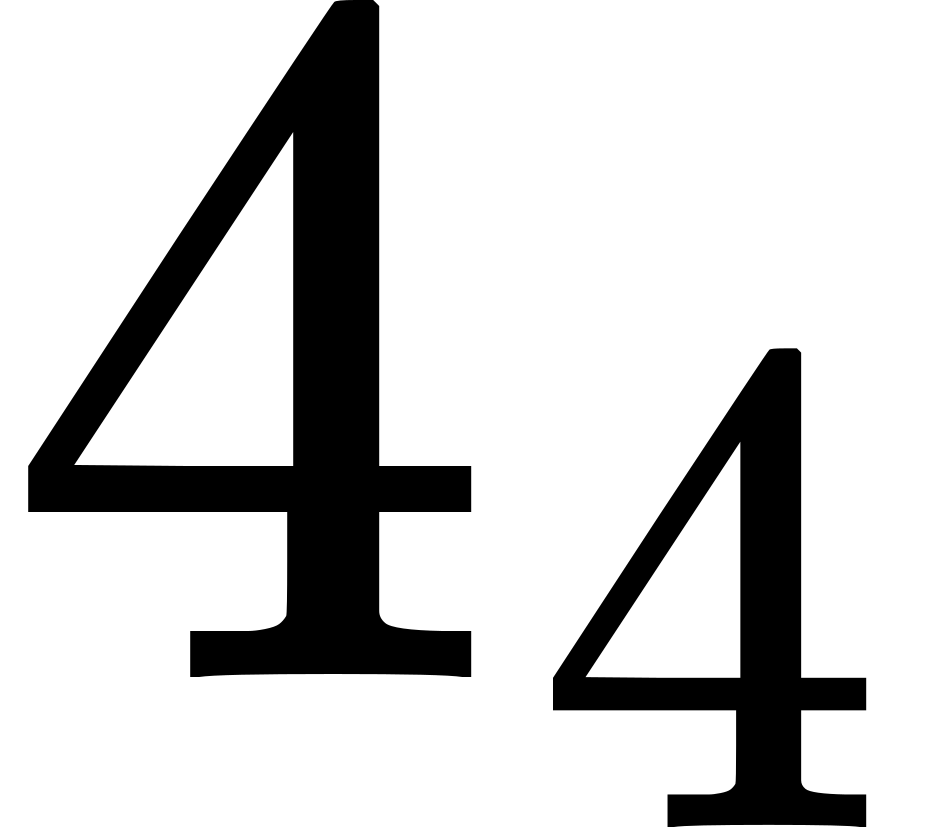 orbit will represent a firmer binding of the
electron than an orbit of or -quanta, in much the same way
as in the elements of the fourth period a new stage in the development
of the -quanta group was started when a point was reached where
for the first time the th electron was bound in a
orbit instead of in a orbit. We shall thus expect in the
sixth period to meet with a new stage in the development of the group
with -quanta orbits. Once this point has been reached we must be
prepared to find with increasing atomic number a number of elements
following one another, which as in the family of the iron metals have
very nearly the same properties. The similarity will, however, be
still more pronounced, since in this case we are concerned with the
successive transformation of a configuration of electrons which lies
deeper in the interior of the atom. You will have already guessed that
what I have in view is a simple explanation of the occurrence of the
family of rare earths at the beginning of the sixth period.
As in the case of the transformation and completion of the group of
-quanta orbits in the fourth period and the partial completion of
groups of -quanta orbits in the fifth period, we may immediately
deduce from the length of the sixth period the number of electrons,
namely
orbit will represent a firmer binding of the
electron than an orbit of or -quanta, in much the same way
as in the elements of the fourth period a new stage in the development
of the -quanta group was started when a point was reached where
for the first time the th electron was bound in a
orbit instead of in a orbit. We shall thus expect in the
sixth period to meet with a new stage in the development of the group
with -quanta orbits. Once this point has been reached we must be
prepared to find with increasing atomic number a number of elements
following one another, which as in the family of the iron metals have
very nearly the same properties. The similarity will, however, be
still more pronounced, since in this case we are concerned with the
successive transformation of a configuration of electrons which lies
deeper in the interior of the atom. You will have already guessed that
what I have in view is a simple explanation of the occurrence of the
family of rare earths at the beginning of the sixth period.
As in the case of the transformation and completion of the group of
-quanta orbits in the fourth period and the partial completion of
groups of -quanta orbits in the fifth period, we may immediately
deduce from the length of the sixth period the number of electrons,
namely 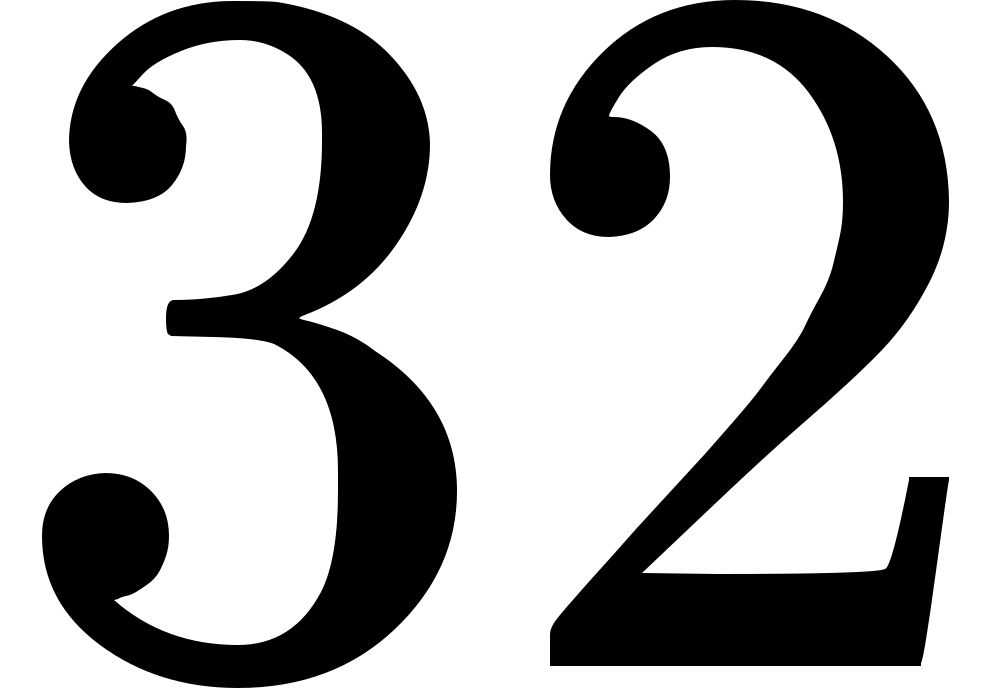 , which are finally contained in the -quanta group
of orbits. Analogous to what applied to the group of -quanta
orbits it is probable that, when the group is completed, it will
contain eight electrons in each of the four subgroups. Even though it
has not yet been possible to follow the development of the group step
by step, we can even here give some theoretical evidence in favour of
the occurrence of a symmetrical configuration of exactly this number
of electrons. I shall simply mention that it is not possible without
coincidence of the planes of the orbits to arrive at an interaction
between four subgroups of six electrons each in a configuration of
simple trigonal symmetry, which is equally simple as that shown by
three subgroups. The difficulties which we meet make it probable that
a harmonic interaction can be attained precisely by four groups each
containing eight electrons the orbital configurations of which exhibit
axial symmetry.
, which are finally contained in the -quanta group
of orbits. Analogous to what applied to the group of -quanta
orbits it is probable that, when the group is completed, it will
contain eight electrons in each of the four subgroups. Even though it
has not yet been possible to follow the development of the group step
by step, we can even here give some theoretical evidence in favour of
the occurrence of a symmetrical configuration of exactly this number
of electrons. I shall simply mention that it is not possible without
coincidence of the planes of the orbits to arrive at an interaction
between four subgroups of six electrons each in a configuration of
simple trigonal symmetry, which is equally simple as that shown by
three subgroups. The difficulties which we meet make it probable that
a harmonic interaction can be attained precisely by four groups each
containing eight electrons the orbital configurations of which exhibit
axial symmetry.
Just as in the case of the family of the iron metals in the fourth
period, the proposed explanation of the occurrence of the family of
rare earths in the sixth period is supported in an interesting manner
by an investigation of the magnetic properties of these elements. In
spite of the great chemical similarity the members of this family
exhibit very different magnetic properties, so that while some of them
exhibit but very little magnetism others exhibit a greater magnetic
moment per atom than any other element which has been investigated.
It is also possible to give a simple interpretation of the peculiar
colours exhibited by the compounds of these elements in much the same
way as in the case of the family of iron metals in the fourth period.
The idea that the appearance of the group of the rare earths is
connected with the development of inner groups in the atom is not in
itself new and has for instance been considered by Vegard in connection
with his work on X-ray spectra. The new feature of the present
considerations lies, however, in the emphasis laid on the peculiar
way in which the relative strength of the binding for two orbits of
the same principal quantum number but of different shapes varies with
the nuclear charge and with the number of electrons previously bound.
Due to this fact the presence of a group like that of the rare earths
in the sixth period may be considered as a direct consequence of the
theory and might actually have been predicted on a quantum theory,
adapted to the explanation of the properties of the elements within the
preceding periods in the way I have shown.
Besides the final development of the group of -quanta
orbits we observe in the sixth period in the family of the
platinum metals the second stage in the development of the group
of -quanta orbits. Also in the radioactive, chemically
inactive gas niton, which completes this period, we observe the first
preliminary step in the development of a group of electrons with
-quanta orbits. In the atom of this element, in addition to the
groups of electrons of two -quantum, eight -quanta, eighteen
-quanta, thirty-two -quanta and eighteen -quanta orbits
respectively, there is also an outer symmetrical configuration of eight
electrons in -quanta orbits, which we shall assume to consist
of two subgroups with four electrons each in and 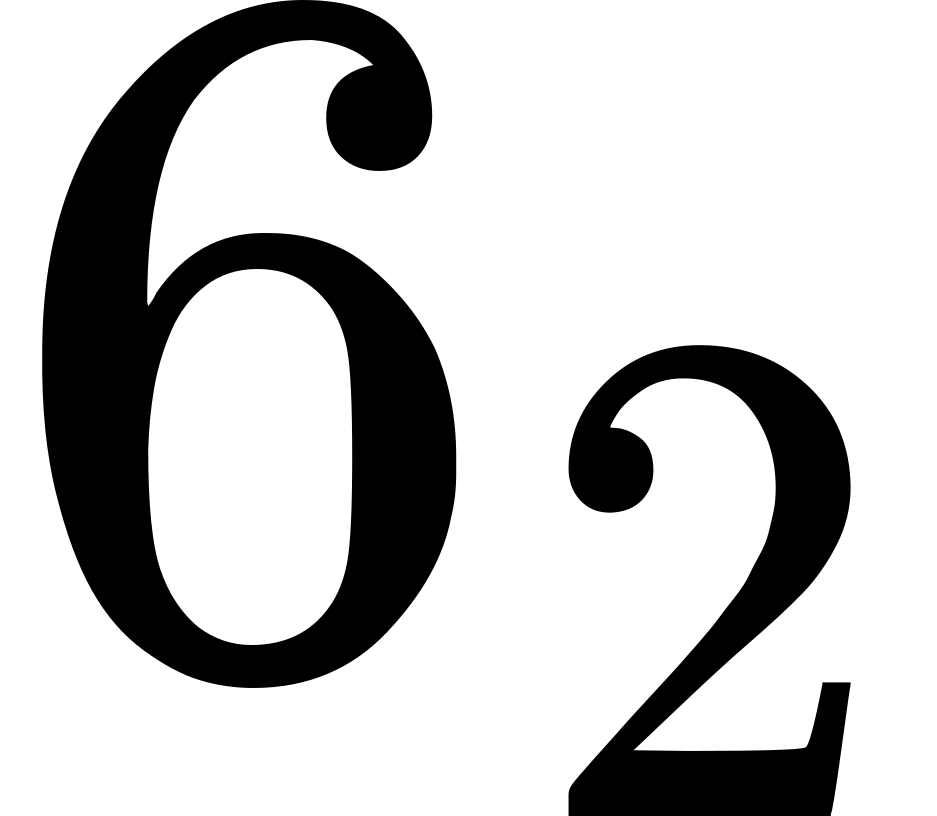 orbits respectively.
Seventh Period. In the seventh and last period of the periodic
system we may expect the appearance of -quanta orbits in the
normal state of the atom. Thus in the neutral atom of radium in
addition to the electronic structure of niton there will be two
electrons in 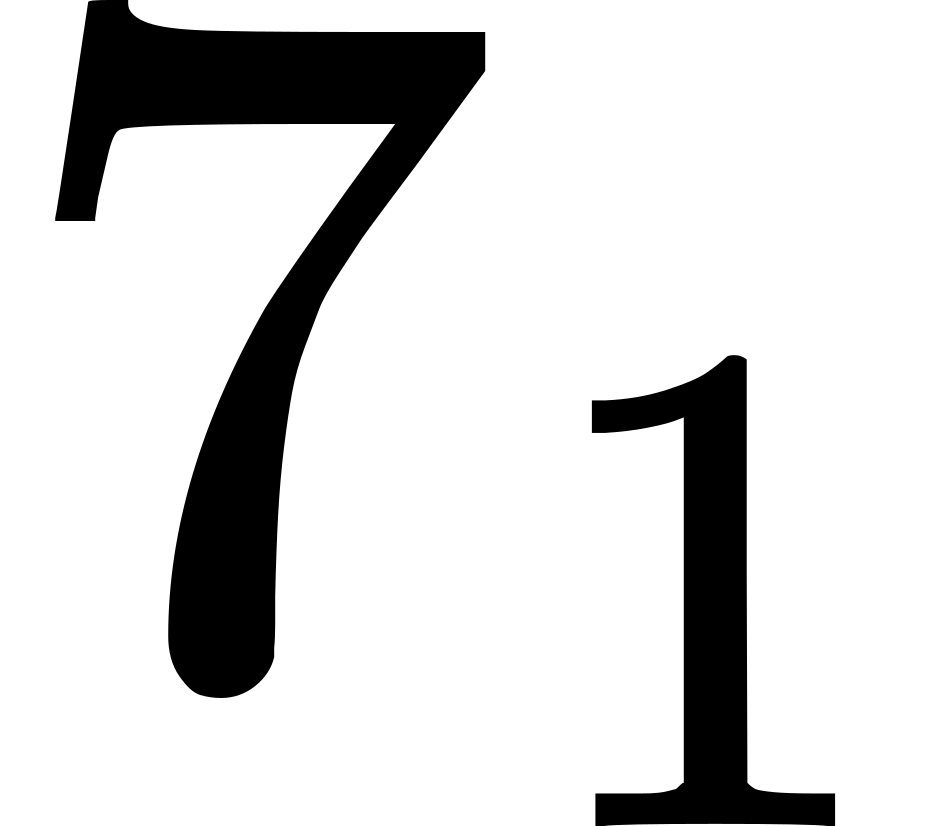 orbits which will penetrate during their
revolution not only into the region of the orbits of electrons
possessing lower values for the principal quantum number, but even
to distances from the nucleus which are less than the radii of the
orbits of the innermost -quantum orbits. The properties of the
elements in the seventh period are very similar to the properties of
the elements in the fifth period. Thus, in contrast to the conditions
in the sixth period, there are no elements whose properties resemble
one another like those of the rare earths. In exact analogy with what
has already been said about the relations between the properties of
the elements in the fourth and fifth periods this may be very simply
explained by the fact that an eccentric
orbits which will penetrate during their
revolution not only into the region of the orbits of electrons
possessing lower values for the principal quantum number, but even
to distances from the nucleus which are less than the radii of the
orbits of the innermost -quantum orbits. The properties of the
elements in the seventh period are very similar to the properties of
the elements in the fifth period. Thus, in contrast to the conditions
in the sixth period, there are no elements whose properties resemble
one another like those of the rare earths. In exact analogy with what
has already been said about the relations between the properties of
the elements in the fourth and fifth periods this may be very simply
explained by the fact that an eccentric 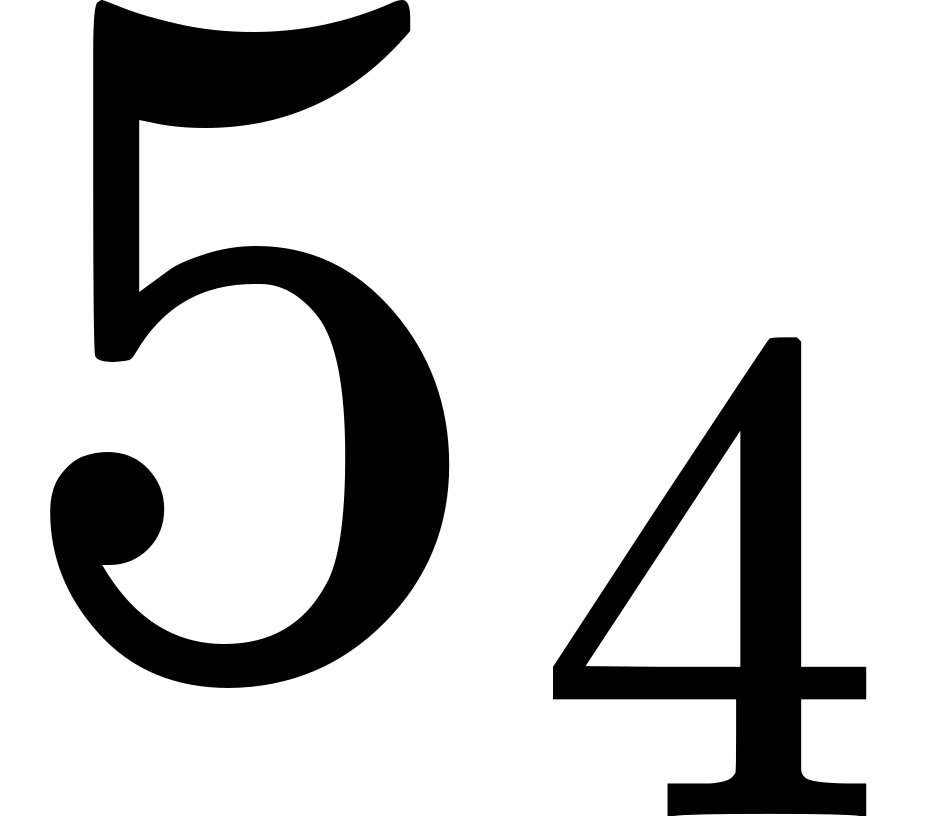 orbit will correspond
to a considerably looser binding of an electron in the atom of an
element of the seventh period than the binding of an electron in a
circular orbit in the corresponding element of the sixth
period, while there will be a much smaller difference in the firmness
of the binding of these electrons in orbits of the types and
respectively.
orbit will correspond
to a considerably looser binding of an electron in the atom of an
element of the seventh period than the binding of an electron in a
circular orbit in the corresponding element of the sixth
period, while there will be a much smaller difference in the firmness
of the binding of these electrons in orbits of the types and
respectively.
It is well known that the seventh period is not complete, for no atom
has been found having an atomic number greater than 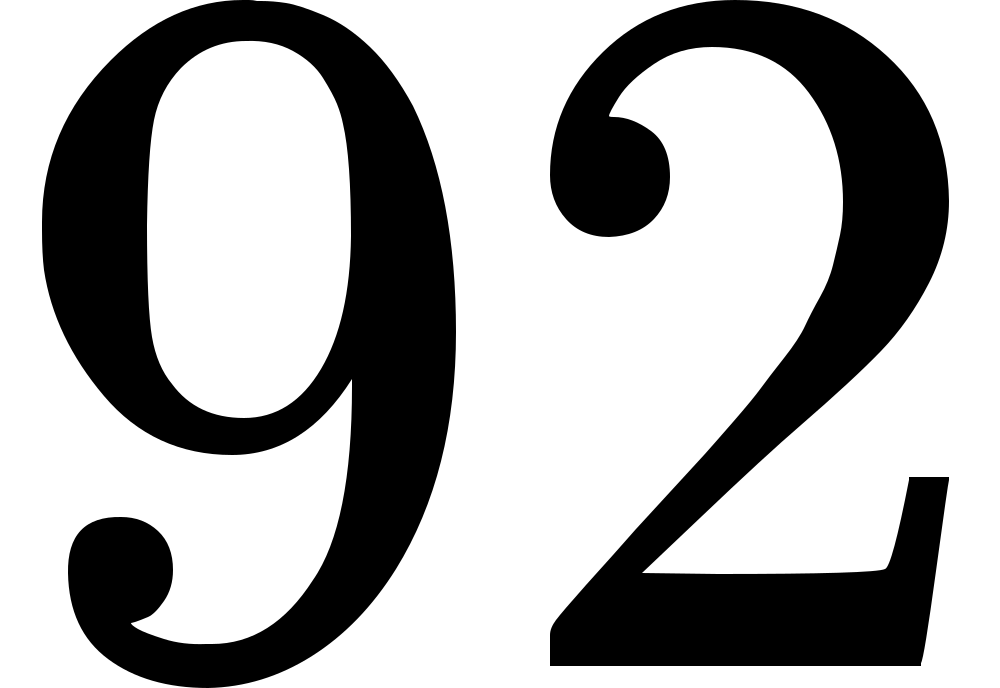 . This is
probably connected with the fact that the last elements in the system
are radioactive and that nuclei of atoms with a total charge greater
than will not be sufficiently stable to exist under conditions
where the elements can be observed. It is tempting to sketch a picture
of the atoms formed by the capture and binding of electrons around
nuclei having higher charges, and thus to obtain some idea of the
properties which the corresponding hypothetical elements might be
expected to exhibit. I shall not develop this matter further, however,
since the general results we should get will be evident to you from
the views I have developed to explain the properties of the elements
actually observed. A survey of these results is given in the following
table, which gives a symbolical representation of the atomic structure
of the inactive gases which complete the first six periods in the
periodic system. In order to emphasize the progressive change the table
includes the probable arrangement of electrons in the next atom which
would possess properties like the inactive gases.
. This is
probably connected with the fact that the last elements in the system
are radioactive and that nuclei of atoms with a total charge greater
than will not be sufficiently stable to exist under conditions
where the elements can be observed. It is tempting to sketch a picture
of the atoms formed by the capture and binding of electrons around
nuclei having higher charges, and thus to obtain some idea of the
properties which the corresponding hypothetical elements might be
expected to exhibit. I shall not develop this matter further, however,
since the general results we should get will be evident to you from
the views I have developed to explain the properties of the elements
actually observed. A survey of these results is given in the following
table, which gives a symbolical representation of the atomic structure
of the inactive gases which complete the first six periods in the
periodic system. In order to emphasize the progressive change the table
includes the probable arrangement of electrons in the next atom which
would possess properties like the inactive gases.
The view of atomic constitution underlying this table, which involves
configurations of electrons moving with large velocities between each
other, so that the electrons in the "outer" groups penetrate into the
region of the orbits of the electrons of the "inner" groups, is of
course completely different from such statical models of the atom as
are proposed by Langmuir. But quite apart from this it will be seen
that the arrangement of the electronic groups in the atom, to which
we have been lead by tracing the way in which each single electron
has been bound, is essentially different from the arrangement of the
groups in Langmuir's theory. In order to explain the properties of the
elements of the sixth period Langmuir assumes for instance that, in
addition to the inner layers of cells containing , , ,
and electrons respectively, which are employed to account
for the properties of the elements in the earlier periods, the atom
also possesses a layer of cells with room for electrons which is
just completed in the case of niton.
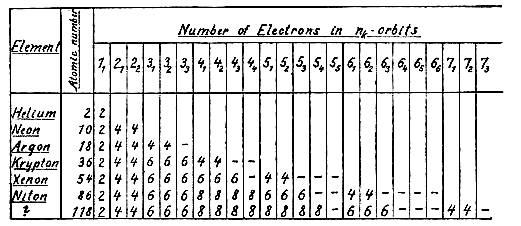
In this connection it may be of interest to mention a recent paper
by Bury, to which my attention was first drawn after the deliverance
of this address, and which contains an interesting survey of the
chemical properties of the elements based on similar conceptions of
atomic structure as those applied by Lewis and Langmuir. From purely
chemical considerations Bury arrives at conclusions which as regards
the arrangement and completion of the groups in the main coincide with
those of the present theory, the outlines of which were given in my
letters to Nature mentioned in the introduction.
Survey of the periodic table. The results given in this
address are also illustrated by means of the representation of the
periodic system given in Fig. 1. In this figure the frames are meant
to indicate such elements in which one of the "inner" groups is in a
stage of development. Thus there will be found in the fourth and
fifth periods a single frame indicating the final completion of the
electronic group with -quanta orbits, and the last stage but one
in the development of the group with -quanta orbits respectively.
In the sixth period it has been necessary to introduce two frames, of
which the inner one indicates the last stage of the evolution of the
group with -quanta orbits, giving rise to the rare earths. This
occurs at a place in the periodic system where the third stage in the
development of an electronic group with -quanta orbits, indicated
by the outer frame, has already begun. In this connection it will be
seen that the inner frame encloses a smaller number of elements than
is usually attributed to the family of the rare earths. At the end of
this group an uncertainty exists, due to the fact that no element of
atomic number 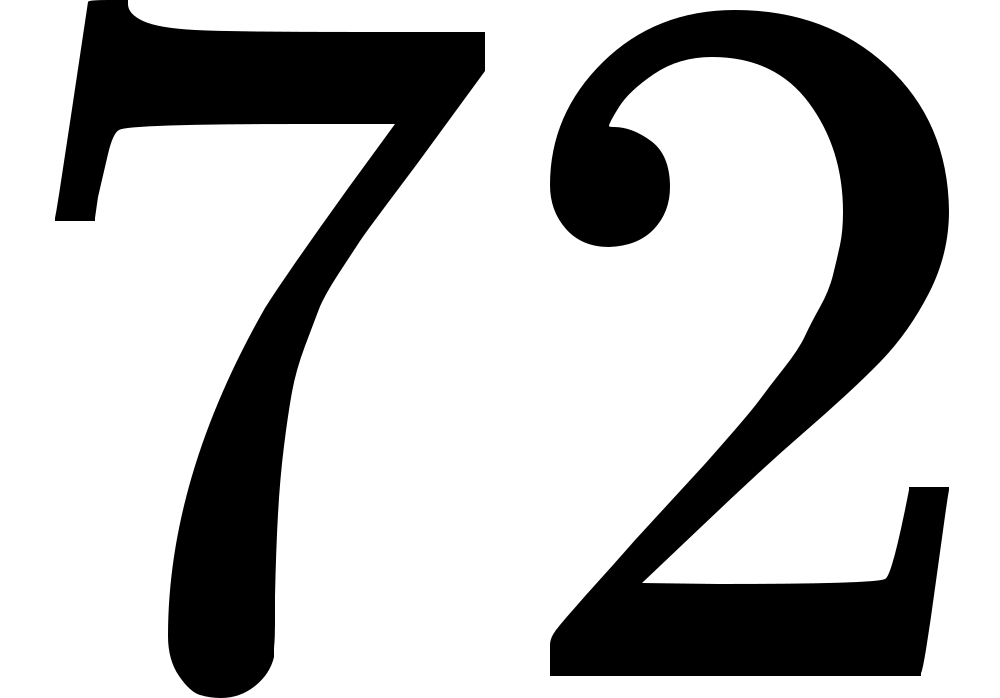 is known with certainty. However, as indicated
in Fig. 1, we must conclude from the theory that the group with
-quanta orbits is finally completed in lutetium (
is known with certainty. However, as indicated
in Fig. 1, we must conclude from the theory that the group with
-quanta orbits is finally completed in lutetium (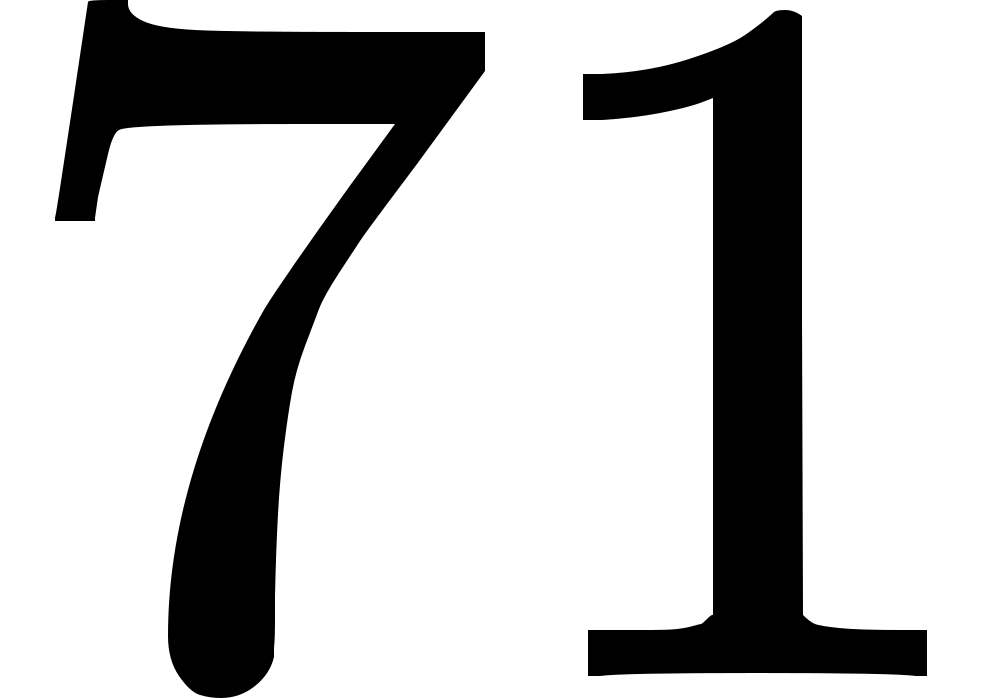 ). This
element therefore ought to be the last in the sequence of consecutive
elements with similar properties in the first half of the sixth
period, and at the place an element must be expected which in
its chemical and physical properties is homologous with zirconium
and thorium. This, which is already indited on Julius Thomsen's old
table, has also been pointed out by Bury. [Quite recently Dauvillier
has in an investigation of the X-ray spectrum excited in preparations
containing rare earths, observed certain faint lines which he ascribes
to an element of atomic number . This element is identified by
him as the element celtium, belonging to the family of rare earths, the
existence of which had previously been suspected by Urbain. Quite apart
from the difficulties which this result, if correct, might entail for
atomic theories, it would, since the rare earths according to chemical
view possess three valencies, imply a rise in positive valency of two
units when passing from the element to the next element
). This
element therefore ought to be the last in the sequence of consecutive
elements with similar properties in the first half of the sixth
period, and at the place an element must be expected which in
its chemical and physical properties is homologous with zirconium
and thorium. This, which is already indited on Julius Thomsen's old
table, has also been pointed out by Bury. [Quite recently Dauvillier
has in an investigation of the X-ray spectrum excited in preparations
containing rare earths, observed certain faint lines which he ascribes
to an element of atomic number . This element is identified by
him as the element celtium, belonging to the family of rare earths, the
existence of which had previously been suspected by Urbain. Quite apart
from the difficulties which this result, if correct, might entail for
atomic theories, it would, since the rare earths according to chemical
view possess three valencies, imply a rise in positive valency of two
units when passing from the element to the next element 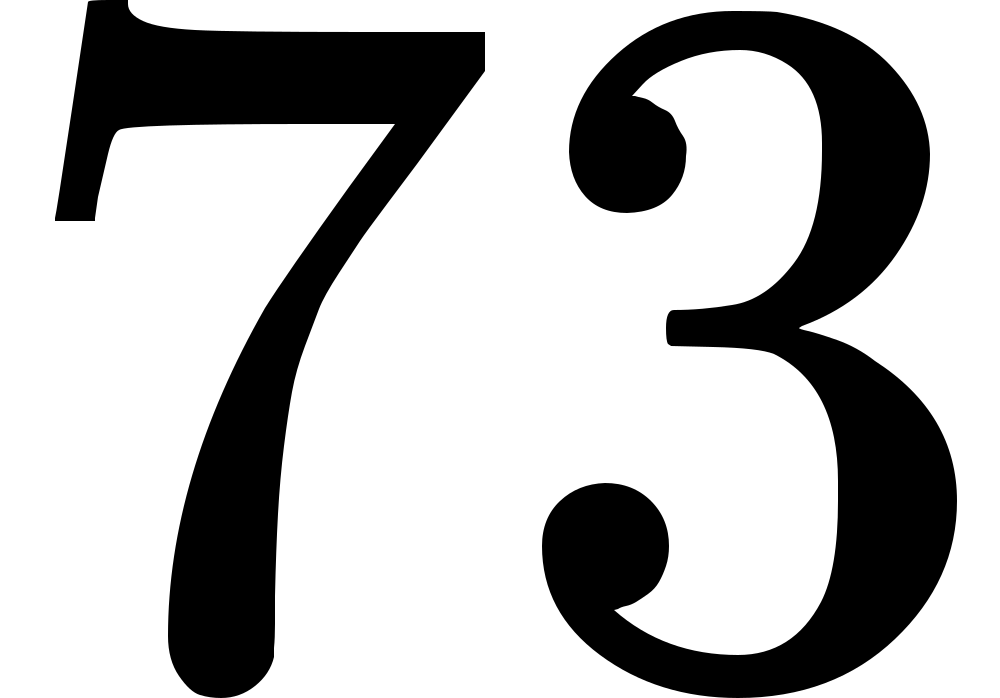 ,
tantalum. This would mean an exception from the otherwise general rule,
that the valency never increases by more than one unit when passing
from one element to the next in the periodic table.] In the case of
the incomplete seventh period the full drawn frame indicates the third
stage in the development of the electronic group with -quanta
orbits, which must begin in actinium. The dotted frame indicates the
last stage but one in the development of the group with -quanta
orbits, which hitherto has not been observed, but which ought to begin
shortly after uranium, if it has not already begun in this element.
,
tantalum. This would mean an exception from the otherwise general rule,
that the valency never increases by more than one unit when passing
from one element to the next in the periodic table.] In the case of
the incomplete seventh period the full drawn frame indicates the third
stage in the development of the electronic group with -quanta
orbits, which must begin in actinium. The dotted frame indicates the
last stage but one in the development of the group with -quanta
orbits, which hitherto has not been observed, but which ought to begin
shortly after uranium, if it has not already begun in this element.
With reference to the homology of the elements the exceptional position
of the elements enclosed by frames in Fig. 1 is further emphasized
by taking care that, in spite of the large similarity many elements
exhibit, no connecting lines are drawn between two elements which
occupy different positions in the system with respect to framing.
In fact, the large chemical similarity between, for instance,
aluminium and scandium, both of which are trivalent and pronounced
electropositive elements, is directly or indirectly emphasized in the
current representations of the periodic table. While this procedure
is justified by the analogous structure of the trivalent ions of
these elements, our more detailed ideas of atomic structure suggest,
however, marked differences in the physical properties of aluminium
and scandium, originating in the essentially different character of
the way in which the last three electrons in the neutral atom are
bound. This fact gives probably a direct explanation of the marked
difference existing between the spectra of aluminium and scandium.
Even if the spectrum of scandium is not yet sufficiently cleared up,
this difference seems to be of a much more fundamental character than
for instance the difference between the arc spectra of sodium and
copper, which apart from the large difference in the absolute values
of the spectral terms possess a completely analogous structure, as
previously mentioned in this essay. On the whole we must expect that
the spectra of elements in the later periods lying inside a frame will
show new features compared with the spectra of the elements in the
first three periods. This expectation seems supported by recent work on
the spectrum of manganese by Catalan, which appeared just before the
printing of this essay.
Before I leave the interpretation of the chemical properties by means
of this atomic model I should like to remind you once again of the
fundamental principles which we have used. The whole theory has evolved
from an investigation of the way in which electrons can be captured by
an atom. The formation of an atom was held to consist in the successive
binding of electrons, this binding resulting in radiation according
to the quantum theory. According to the fundamental postulates of
the theory this binding takes place in stages by transitions between
stationary states accompanied by emission of radiation. For the problem
of the stability of the atom the essential problem is at what stage
such a process comes to an end. As regards this point the postulates
give no direct information, but here the correspondence principle is
brought in. Even though it has been possible to penetrate considerably
further at many points than the time has permitted me to indicate
to you, still it has not yet been possible to follow in detail all
stages in the formation of the atoms. We cannot say, for instance,
that the above table of the atomic constitution of the inert gases may
in every detail be considered as the unambiguous result of applying
the correspondence principle. On the other hand it appears that our
considerations already place the empirical data in a light which
scarcely permits of an essentially different interpretation of the
properties of the elements based upon the postulates of the quantum
theory. This applies not only to the series spectra and the close
relationship of these to the chemical properties of the elements, but
also to the X-ray spectra, the consideration of which leads us into
an investigation of interatomic processes of an entirely different
character. As we have already mentioned, it is necessary to assume that
the emission of the latter spectra is connected with processes which
may be described as a reorganization of the completely formed atom
after a disturbance produced in the interior of the atom by the action
of external forces.


 is a constant and
  ,
,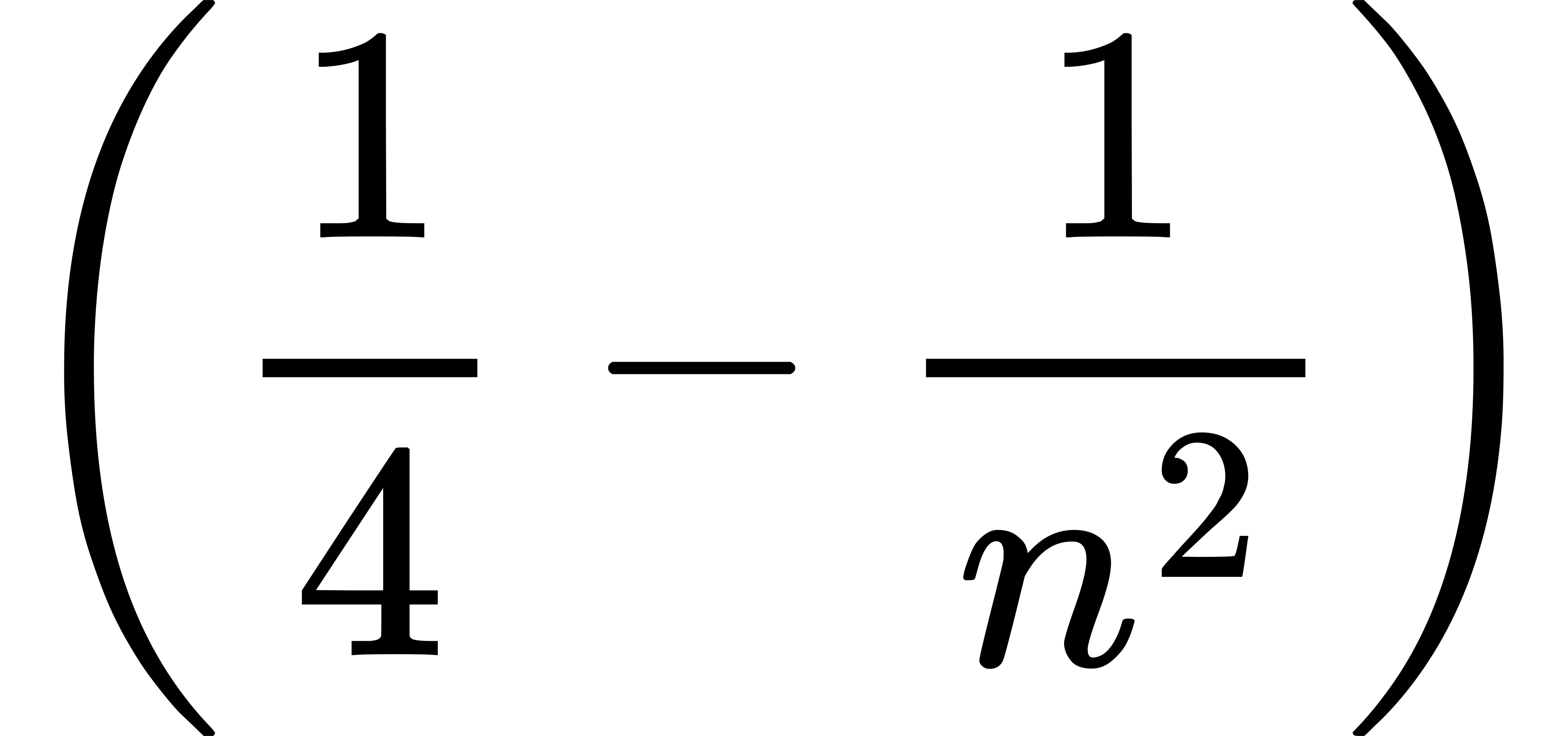 are given in the
following table:
are given in the
following table:

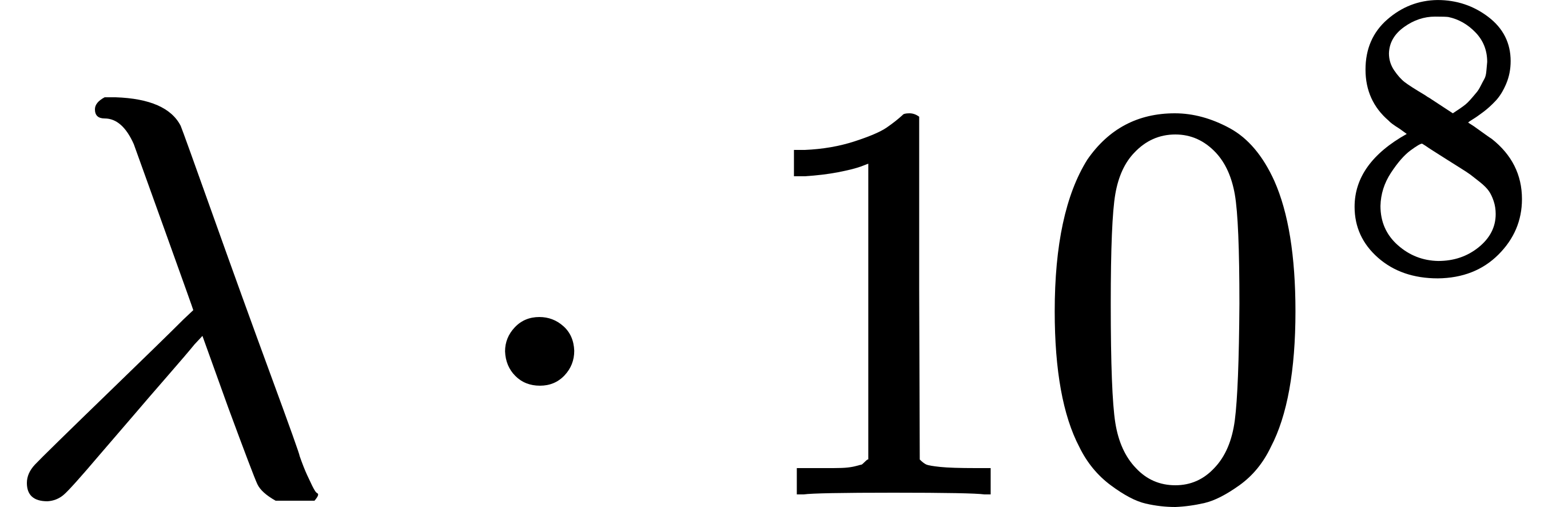
 ·
· 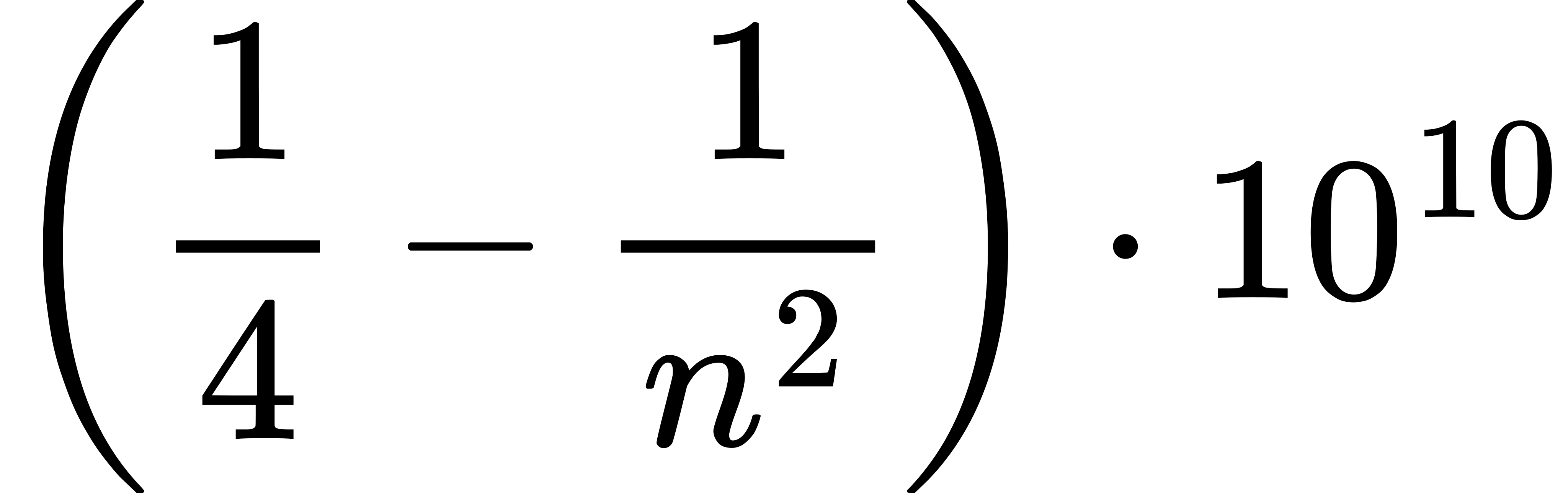
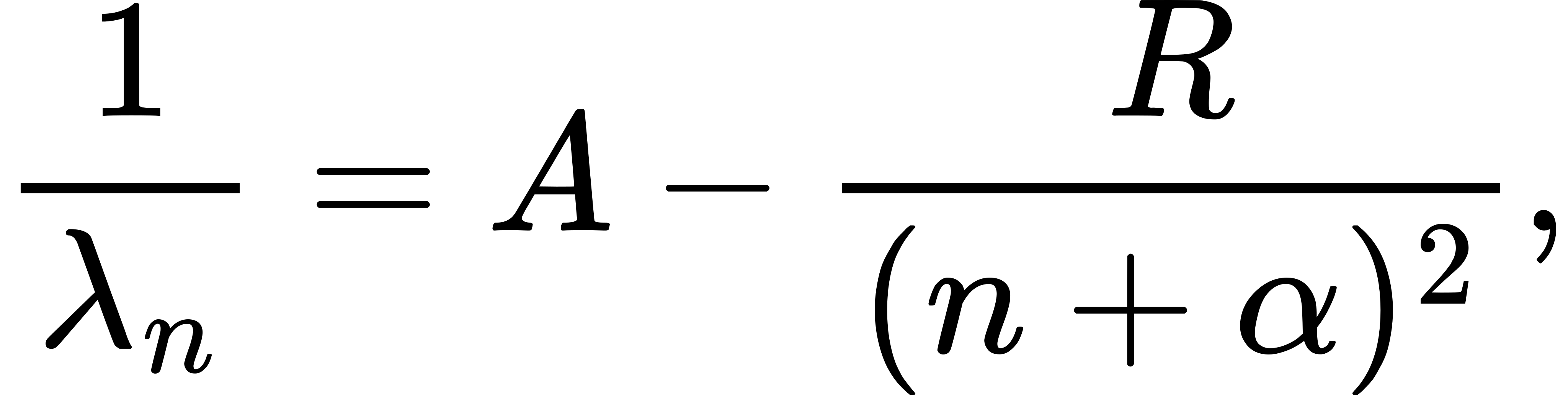
 and
and  are constants having different values for
the various series, while
are constants having different values for
the various series, while 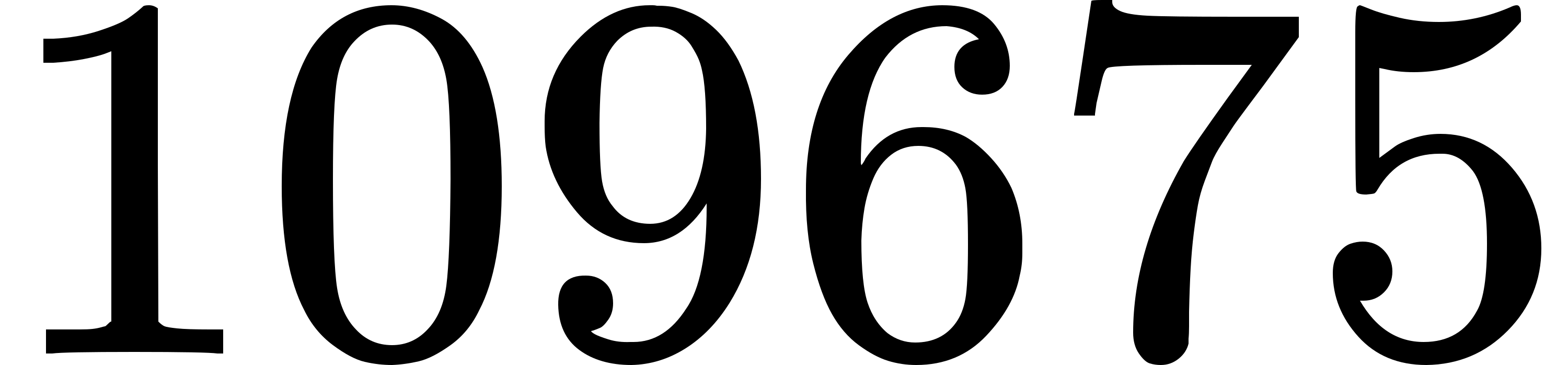 .
.
 and
and 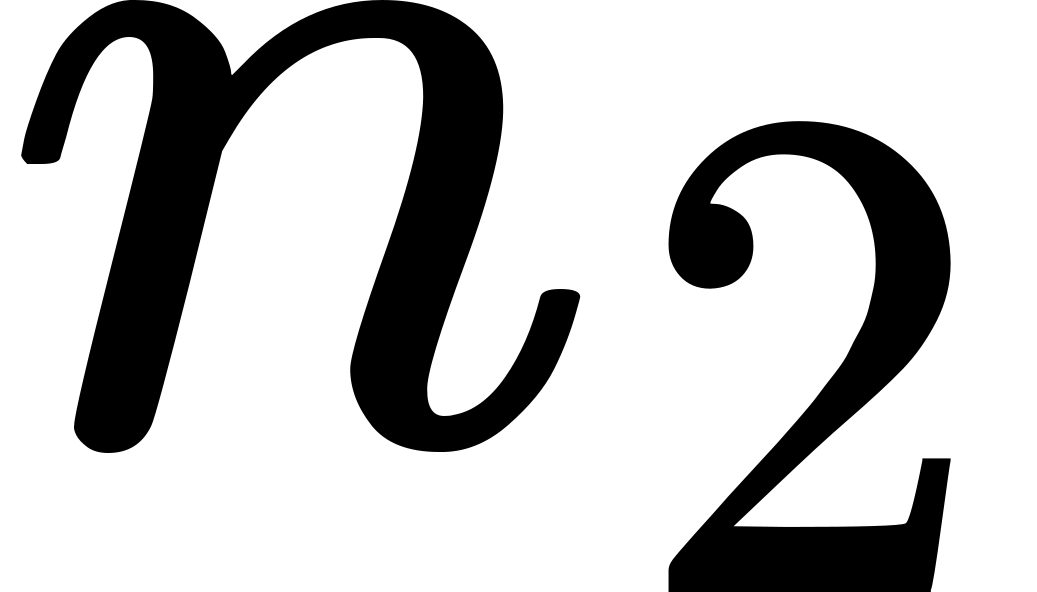 are whole numbers, and
 is a series of functions of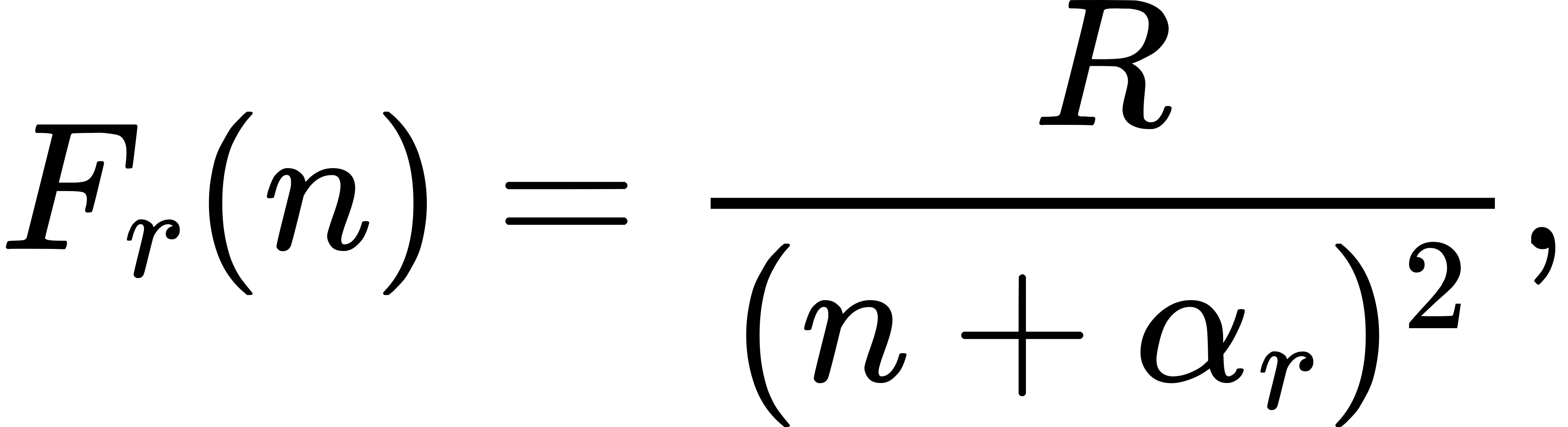
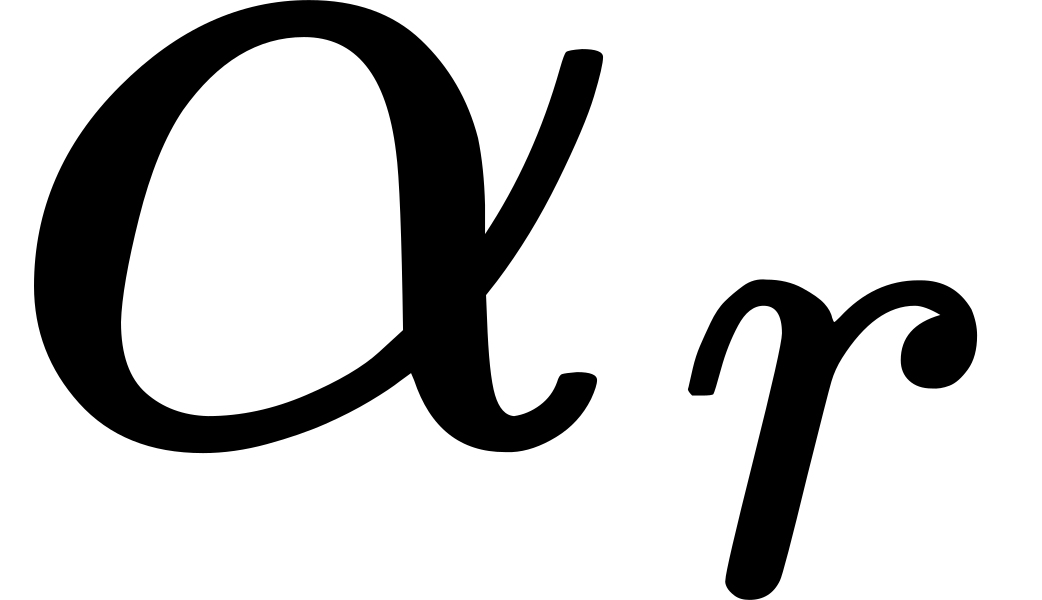 is a
constant which is different for the different functions. A particular
spectral line will, according to this principle, correspond to each
combination of
is a
constant which is different for the different functions. A particular
spectral line will, according to this principle, correspond to each
combination of 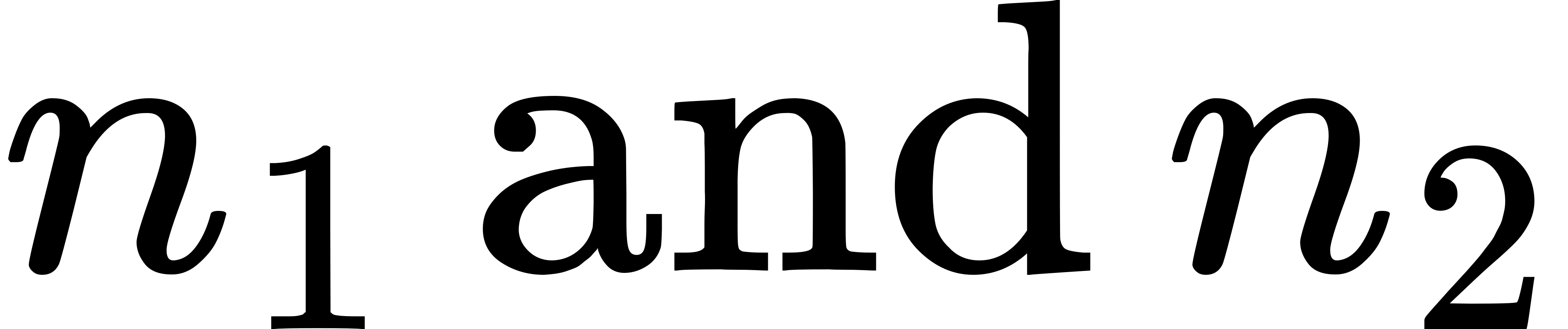 ,
, .
.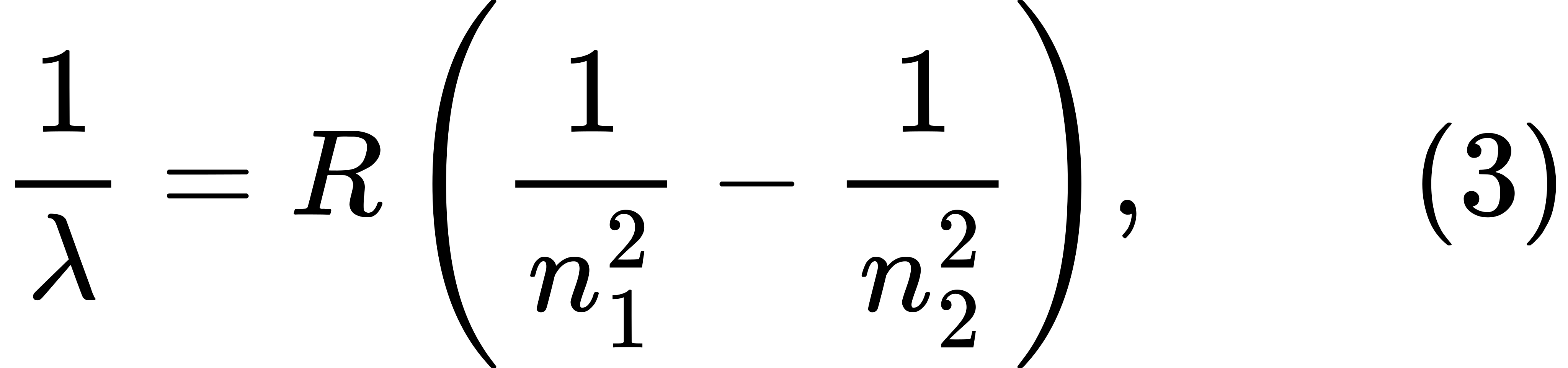
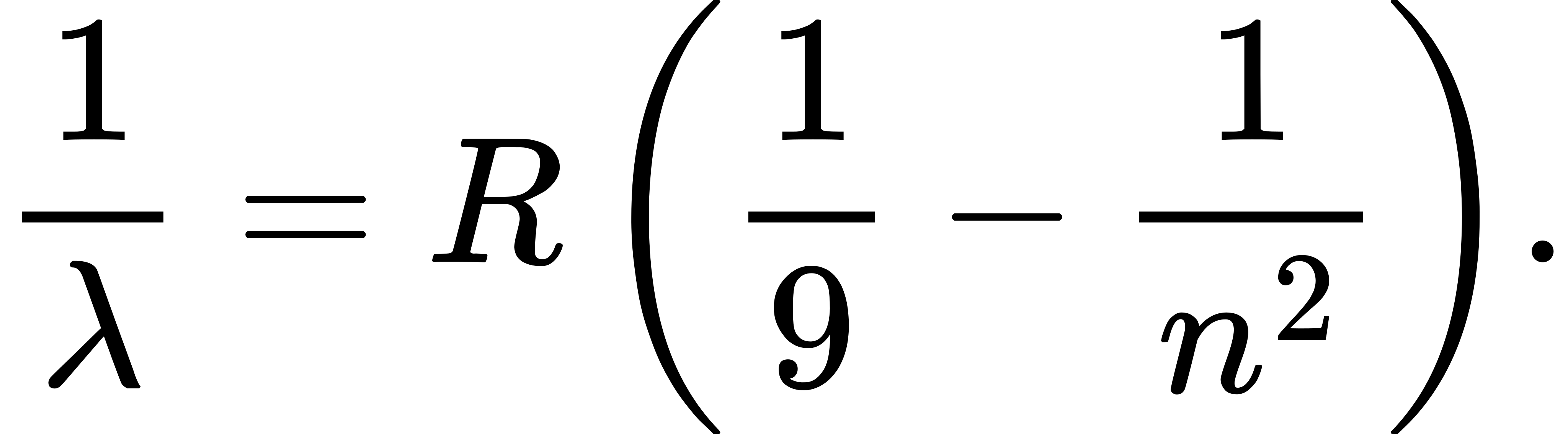
 .
.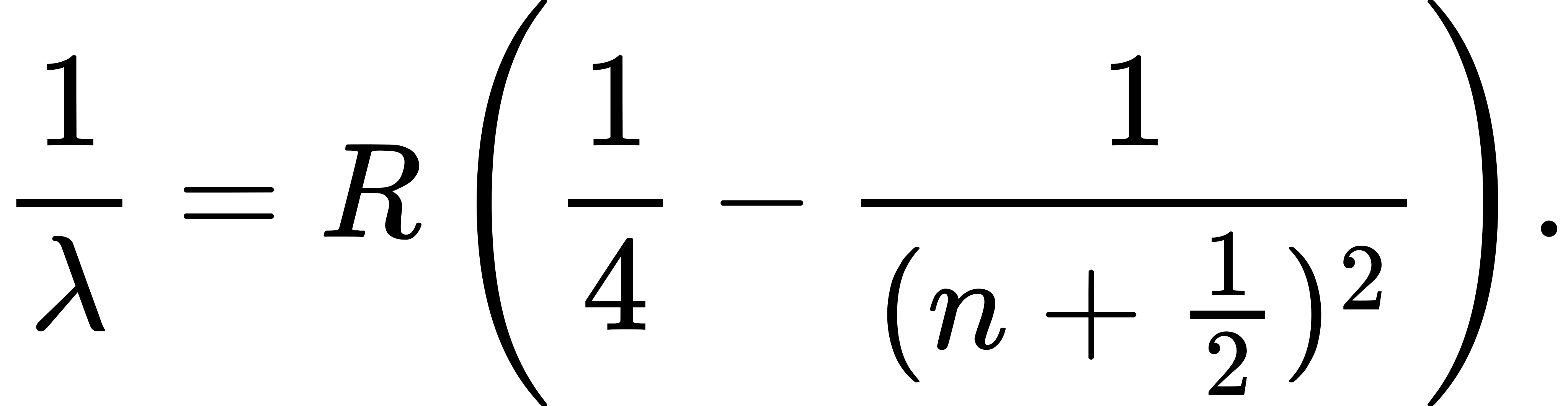
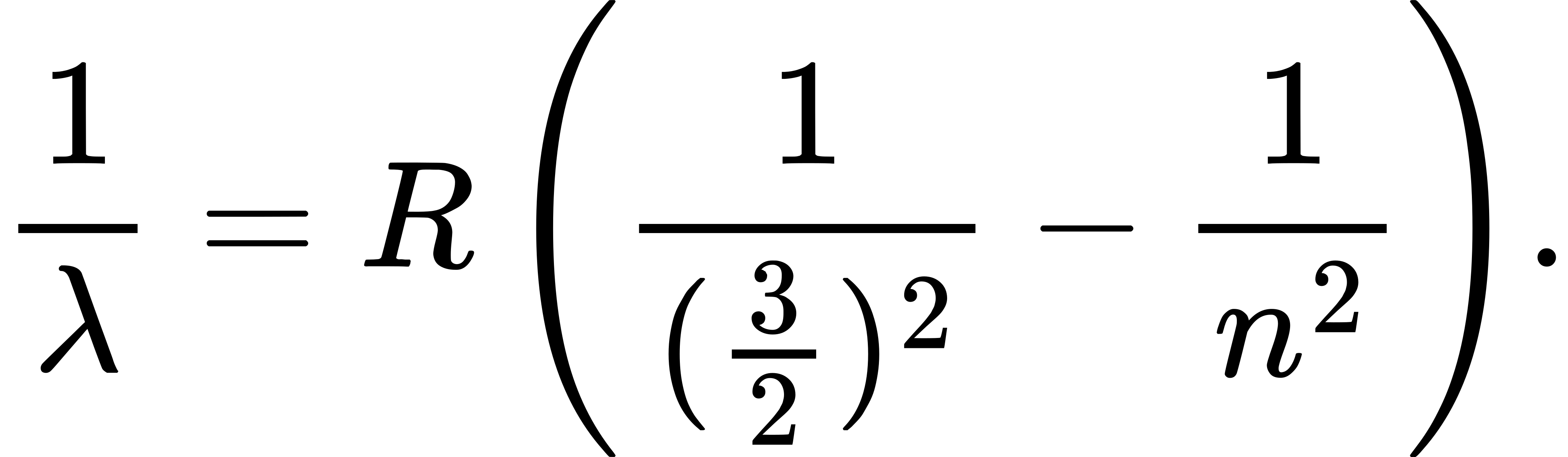
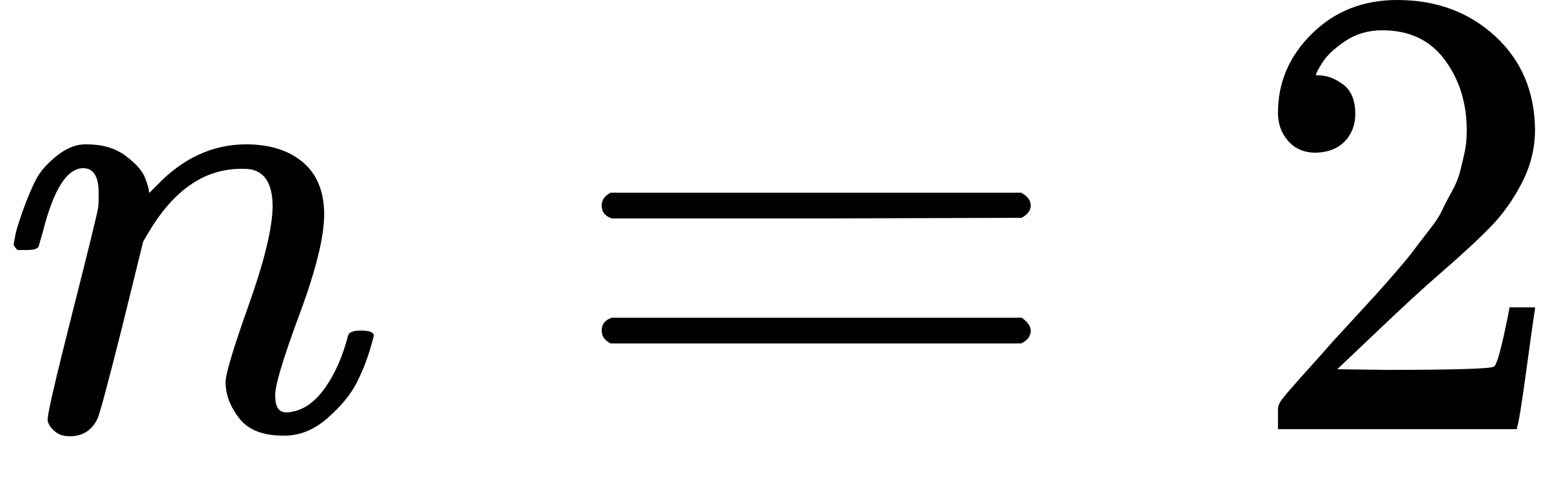 )
)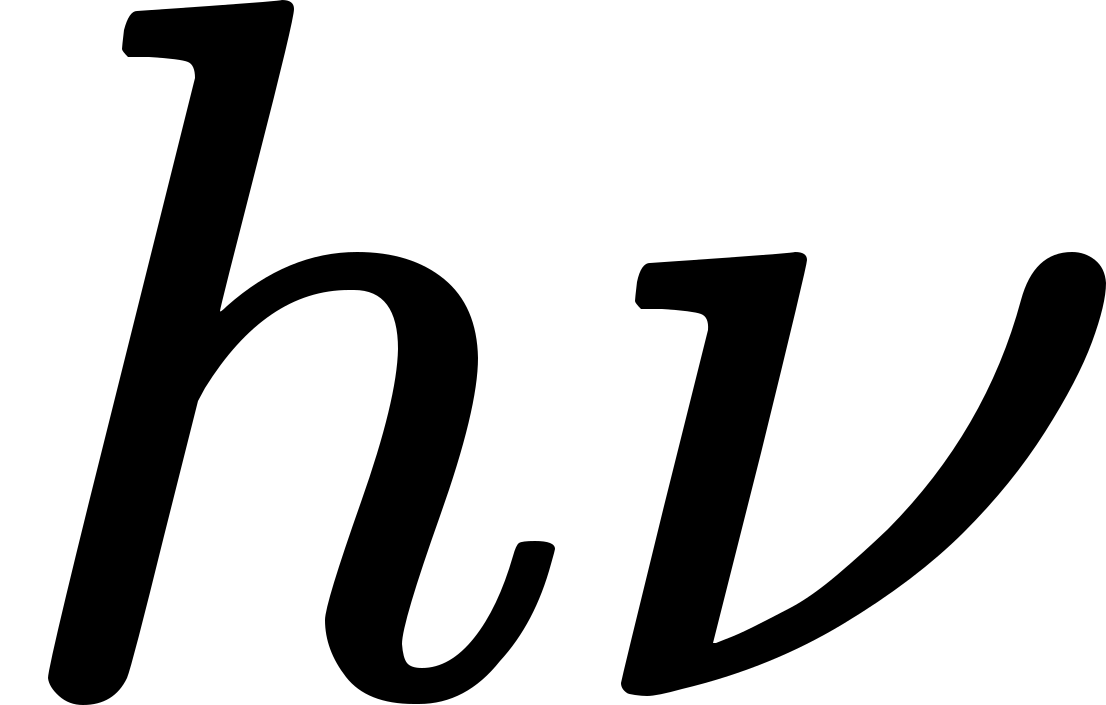 ,
,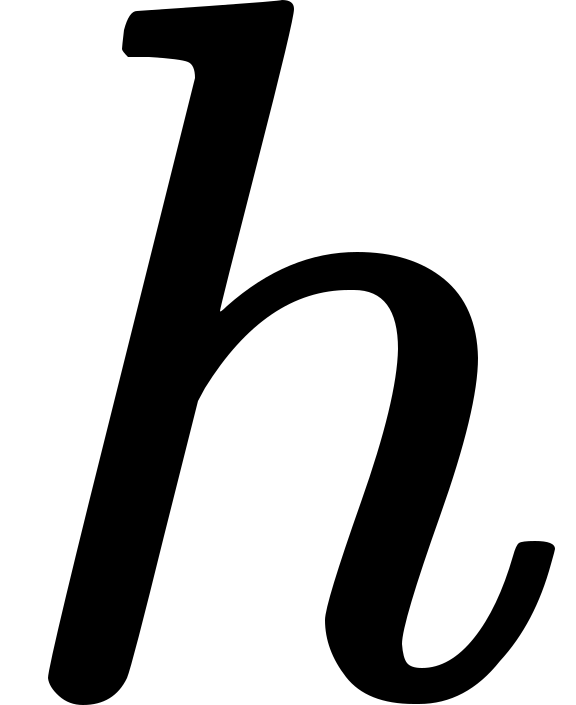 is Planck's constant and
  is the
frequency of oscillation of the system per second. In formal respects
Planck's theory leaves much to be desired; in certain calculations
the ordinary electrodynamics is used, while in others assumptions
distinctly at variance with it are introduced without any attempt being
made to show that it is possible to give a consistent explanation of
the procedure used. Planck's theory would hardly have acquired general
recognition merely on the ground of its agreement with experiments
on black body radiation, but, as you know, the theory has also
contributed quite remarkably to the elucidation of many different
physical phenomena, such as specific heats, photoelectric effect,
X-rays and the absorption of heat rays by gases. These explanations
involve more than the qualitative assumption of a discontinuous
transformation of energy, for with the aid of Planck's constant
is the
frequency of oscillation of the system per second. In formal respects
Planck's theory leaves much to be desired; in certain calculations
the ordinary electrodynamics is used, while in others assumptions
distinctly at variance with it are introduced without any attempt being
made to show that it is possible to give a consistent explanation of
the procedure used. Planck's theory would hardly have acquired general
recognition merely on the ground of its agreement with experiments
on black body radiation, but, as you know, the theory has also
contributed quite remarkably to the elucidation of many different
physical phenomena, such as specific heats, photoelectric effect,
X-rays and the absorption of heat rays by gases. These explanations
involve more than the qualitative assumption of a discontinuous
transformation of energy, for with the aid of Planck's constant  ,
,
 is the charge of the electron and
  its mass, while
 )
) )
) we have

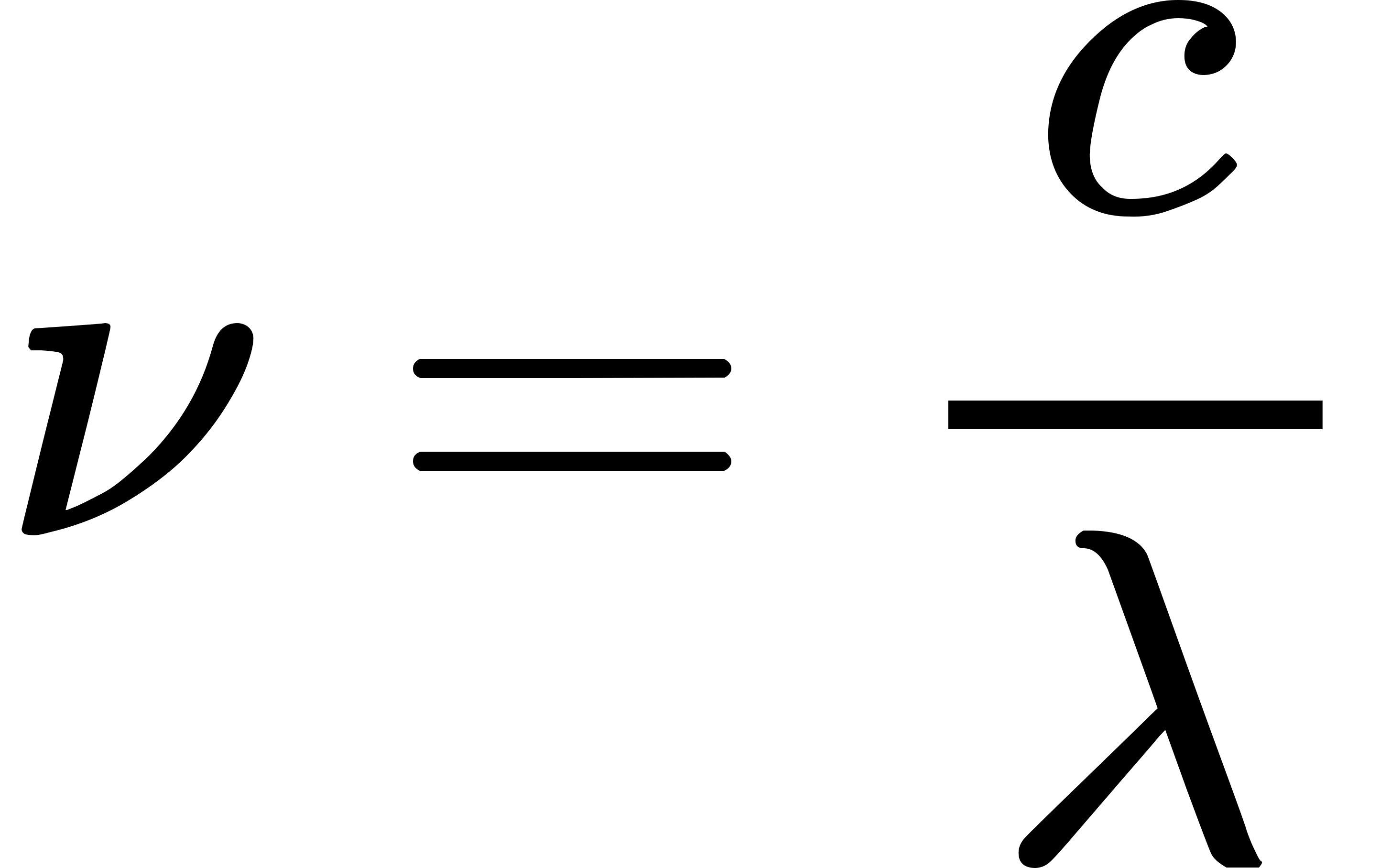 ,
, is the
velocity of light—each of the spectral lines may be regarded as being
emitted by the transition of a system between two stationary states in
which the energy apart from an additive arbitrary constant is given
by
is the
velocity of light—each of the spectral lines may be regarded as being
emitted by the transition of a system between two stationary states in
which the energy apart from an additive arbitrary constant is given
by  respectively.
Using this interpretation the combination principle asserts that a
series of stationary states exists for the given system, and that it
can pass from one to any other of these states with the emission
of a monochromatic radiation. We see, therefore, that with a simple
extension of our first assumption it is possible to give a formal
explanation of the most general law of line spectra.
respectively.
Using this interpretation the combination principle asserts that a
series of stationary states exists for the given system, and that it
can pass from one to any other of these states with the emission
of a monochromatic radiation. We see, therefore, that with a simple
extension of our first assumption it is possible to give a formal
explanation of the most general law of line spectra.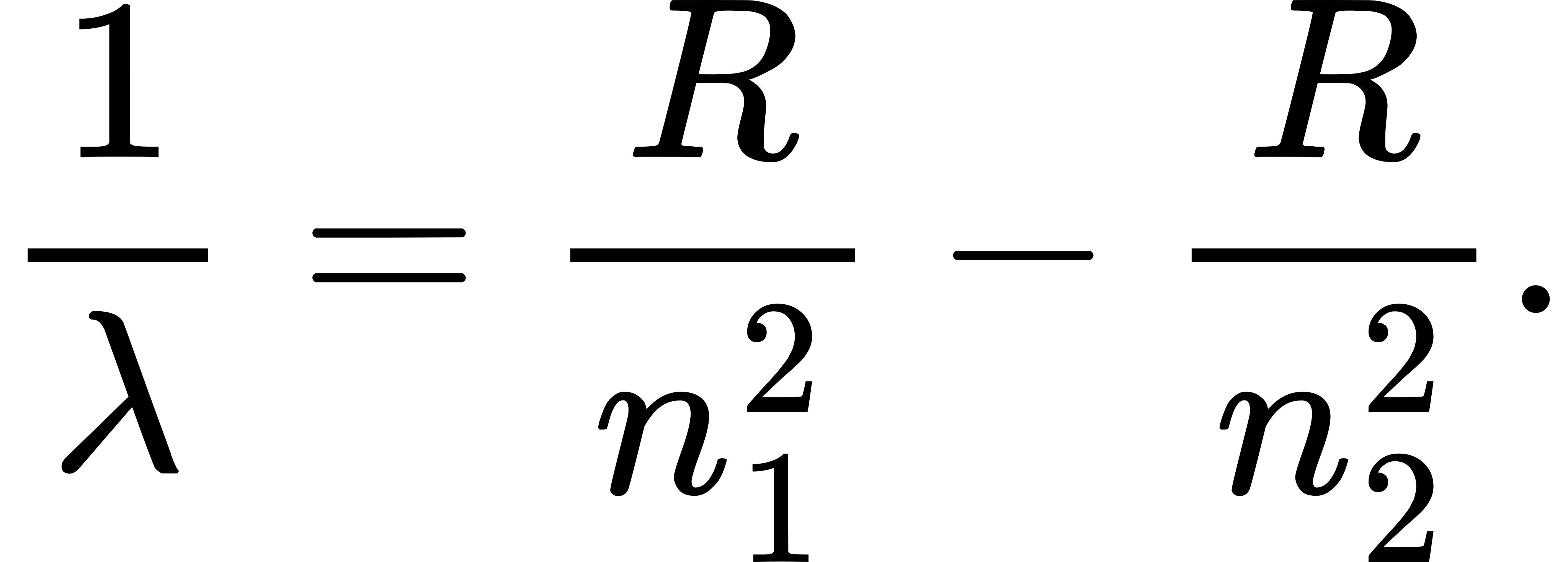
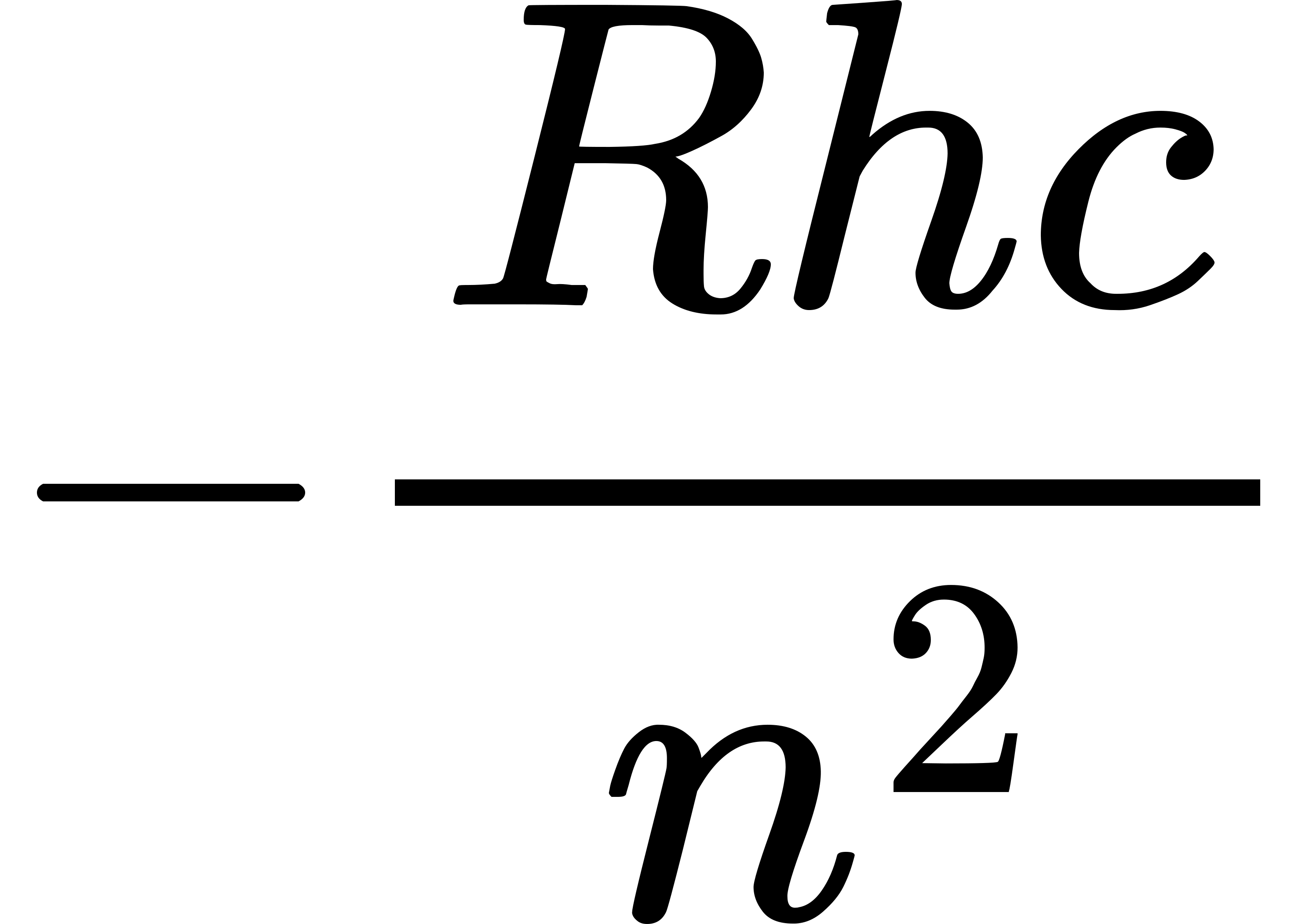 .
.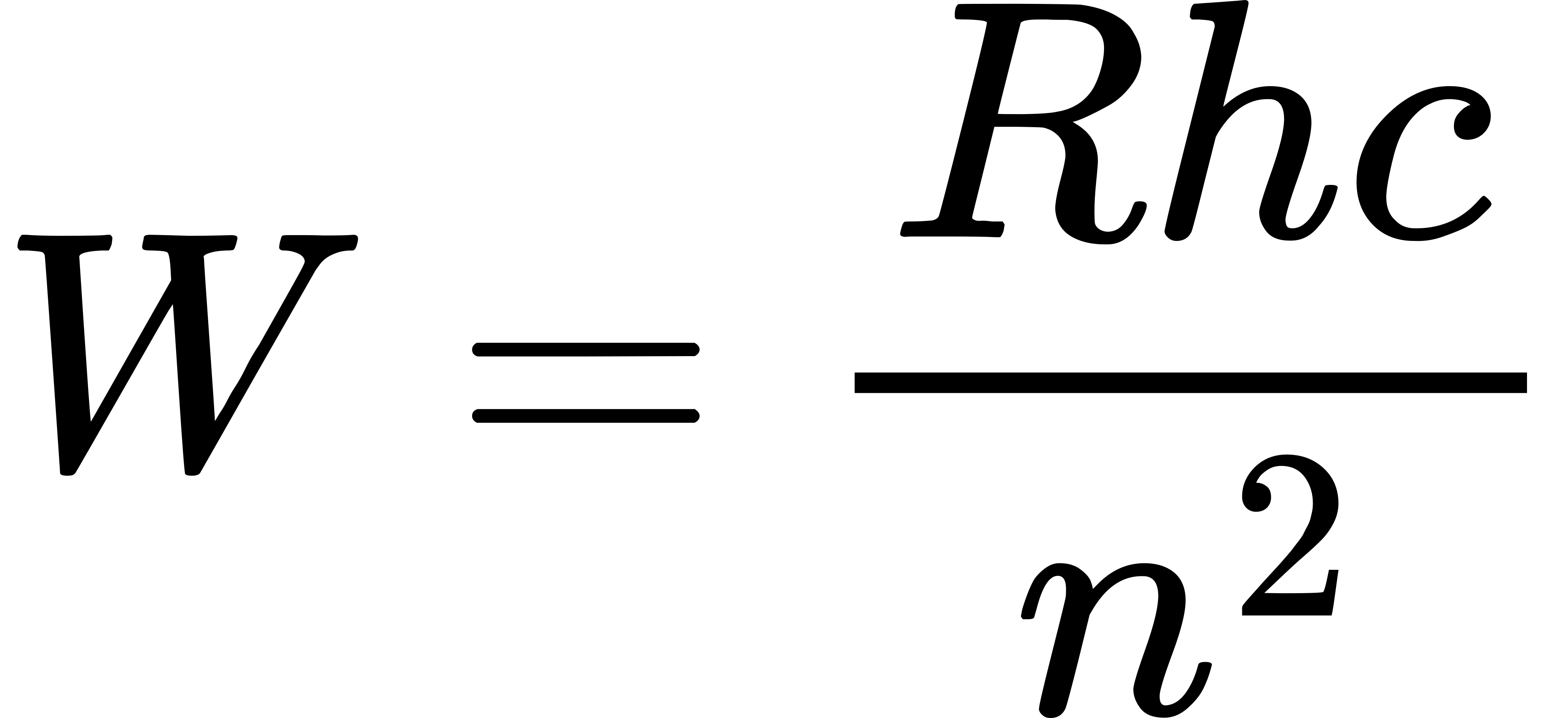 .
.
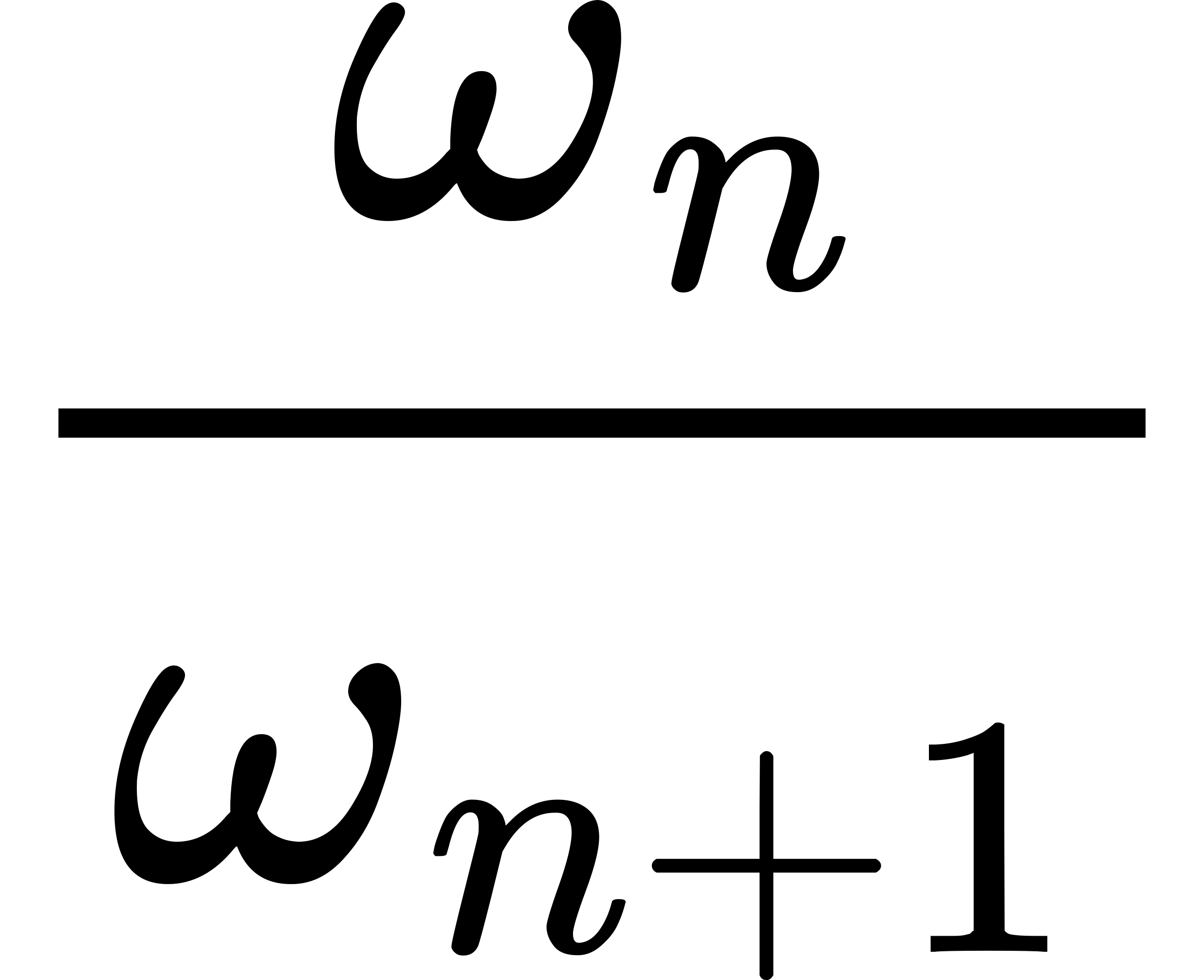 approaches the value
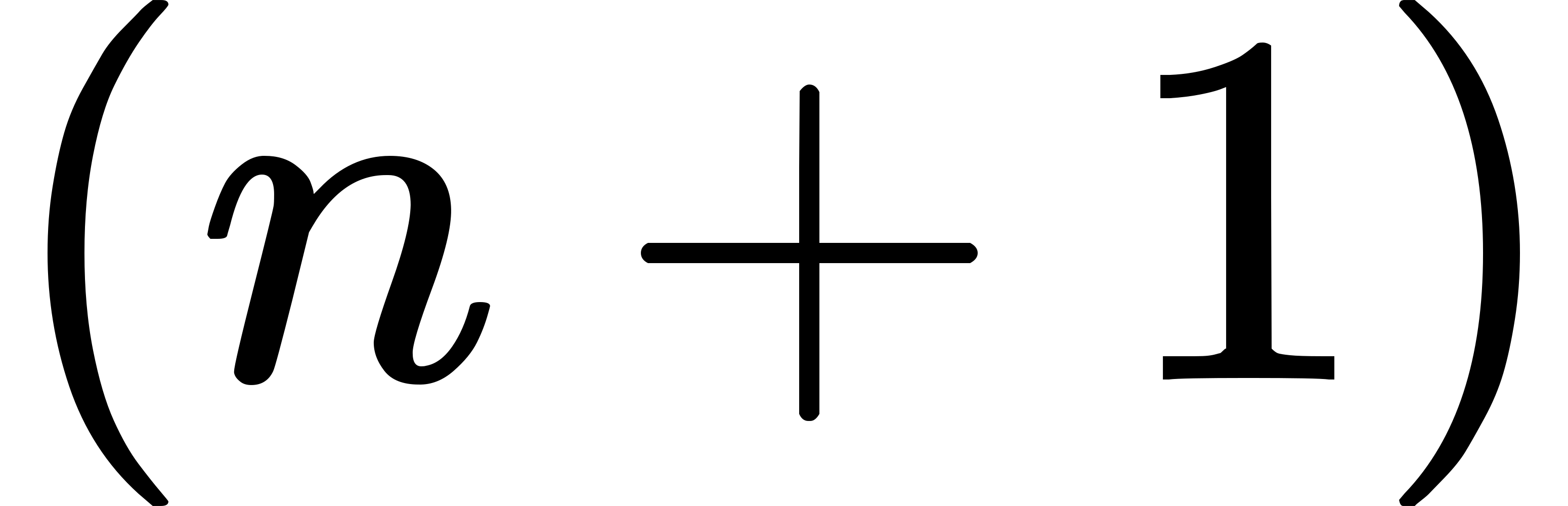 th and the
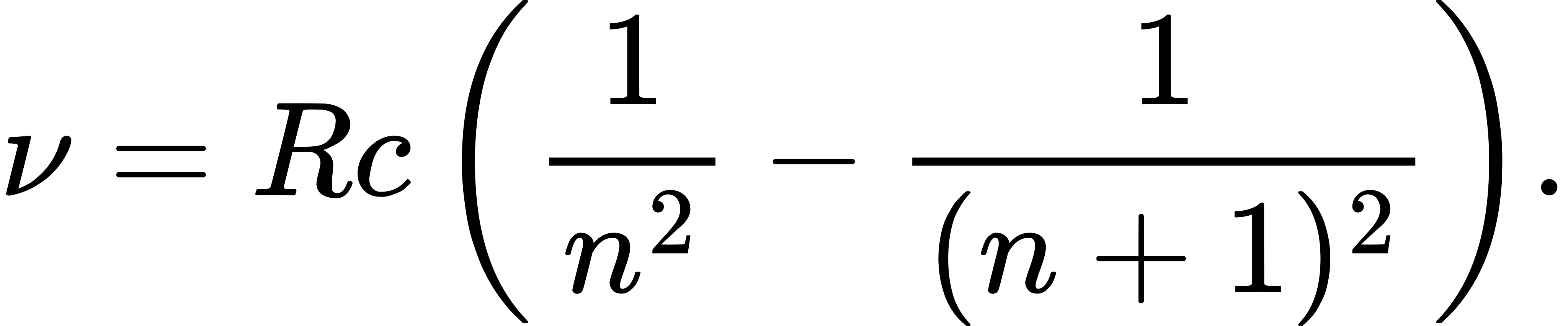
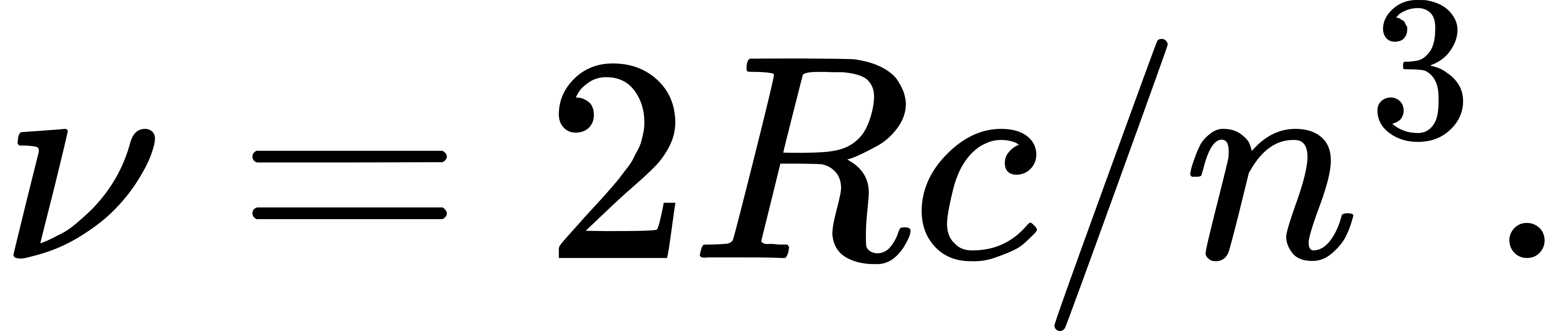

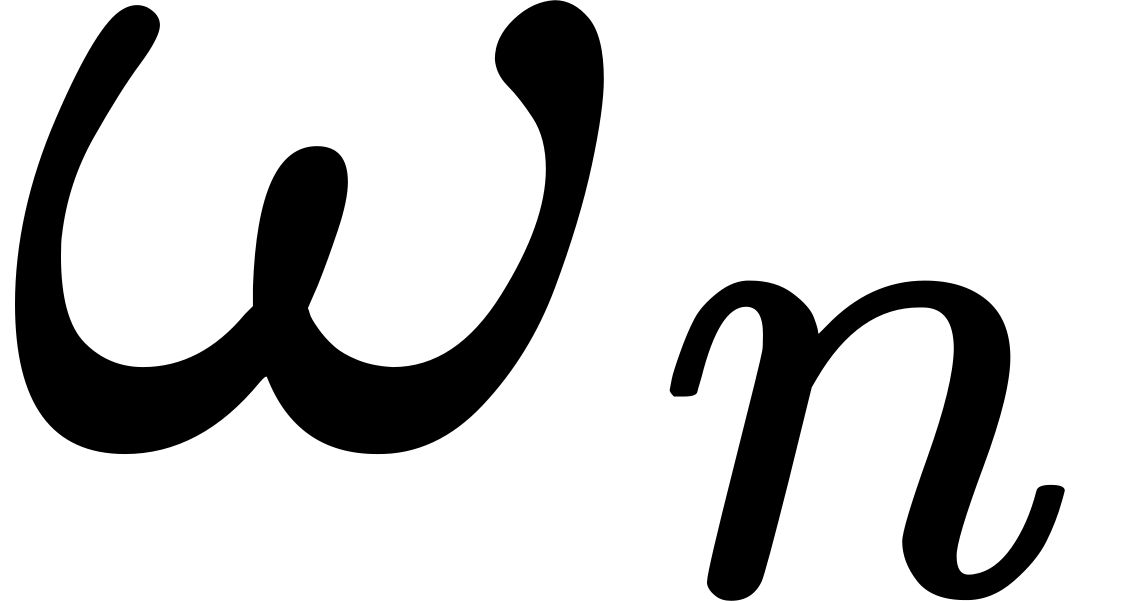 in (6) we see that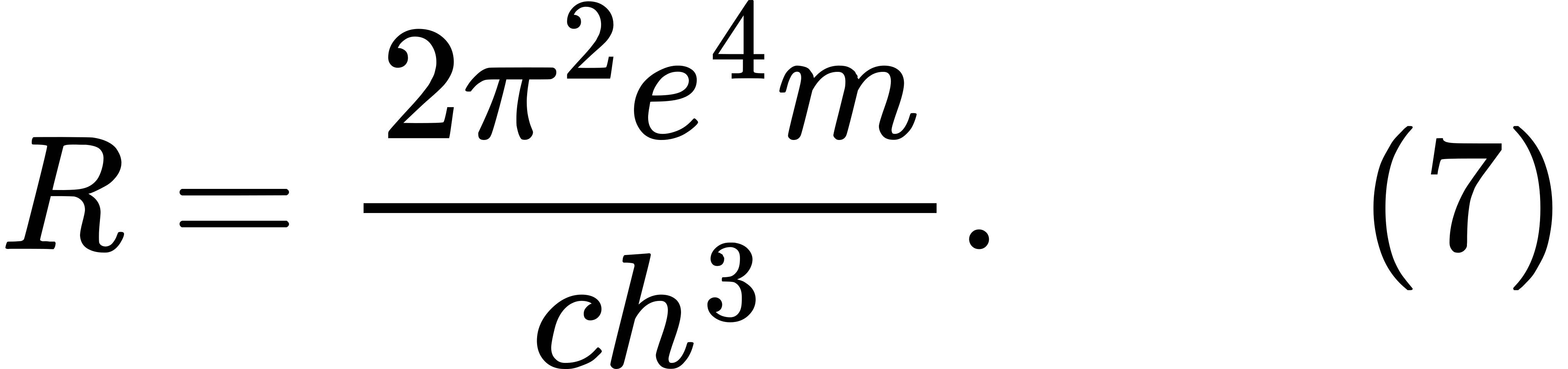
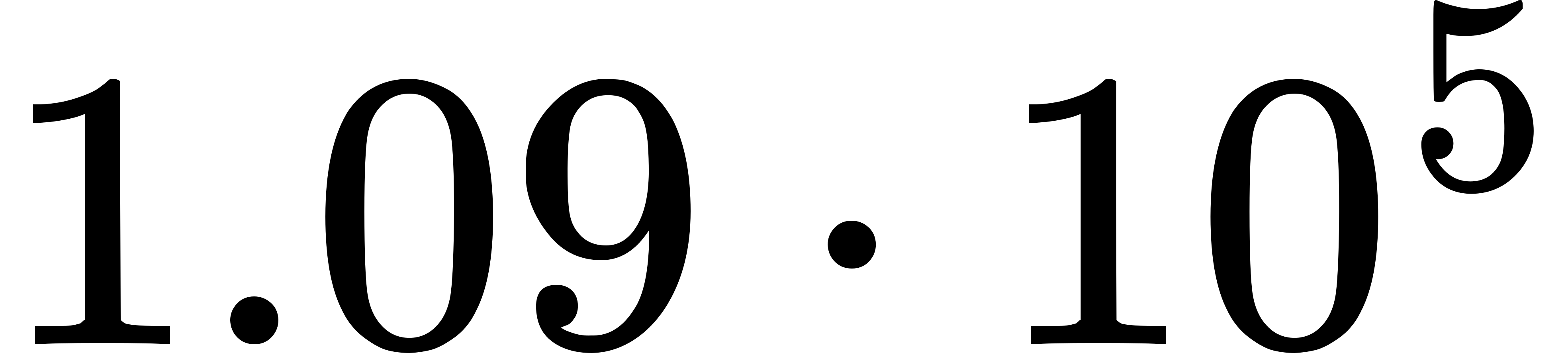 .
. .
.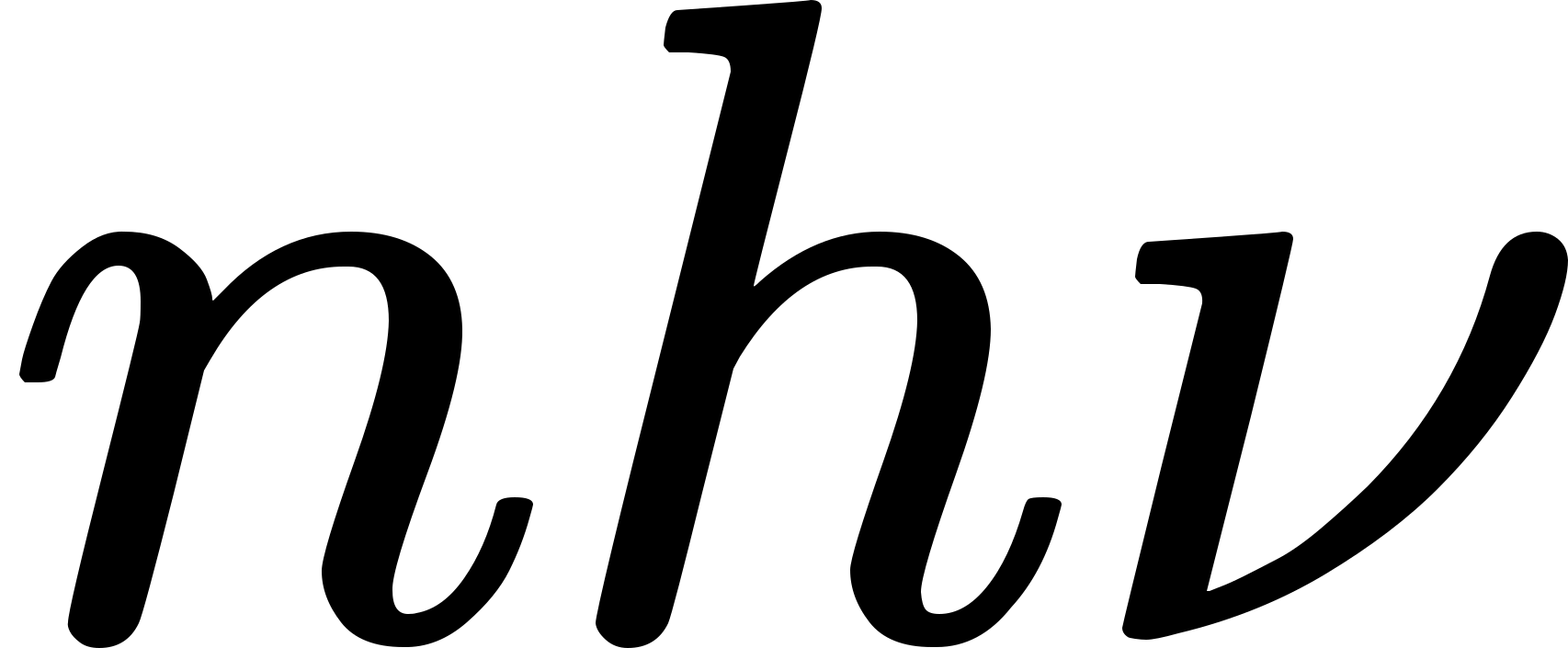 .
.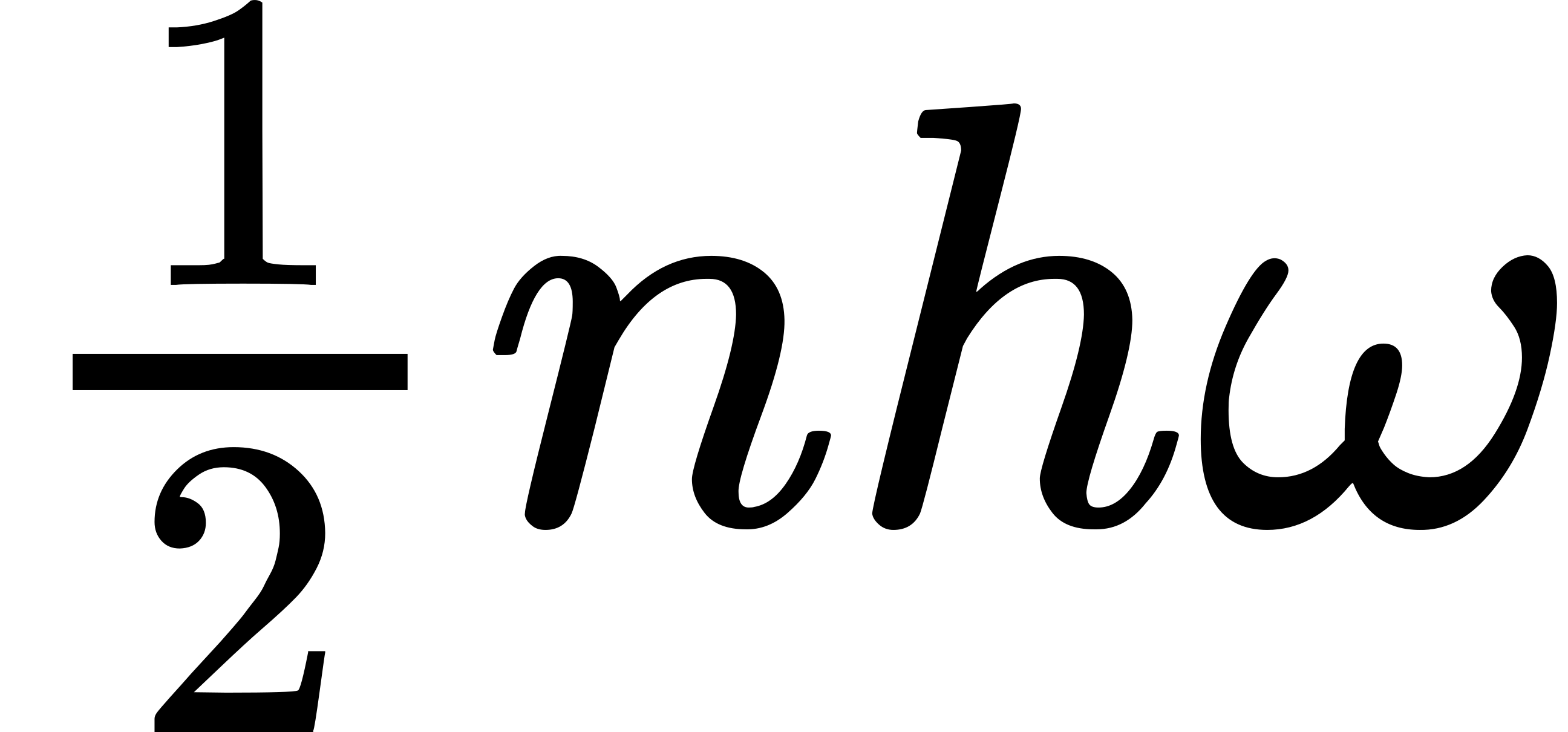 .
.
 .
.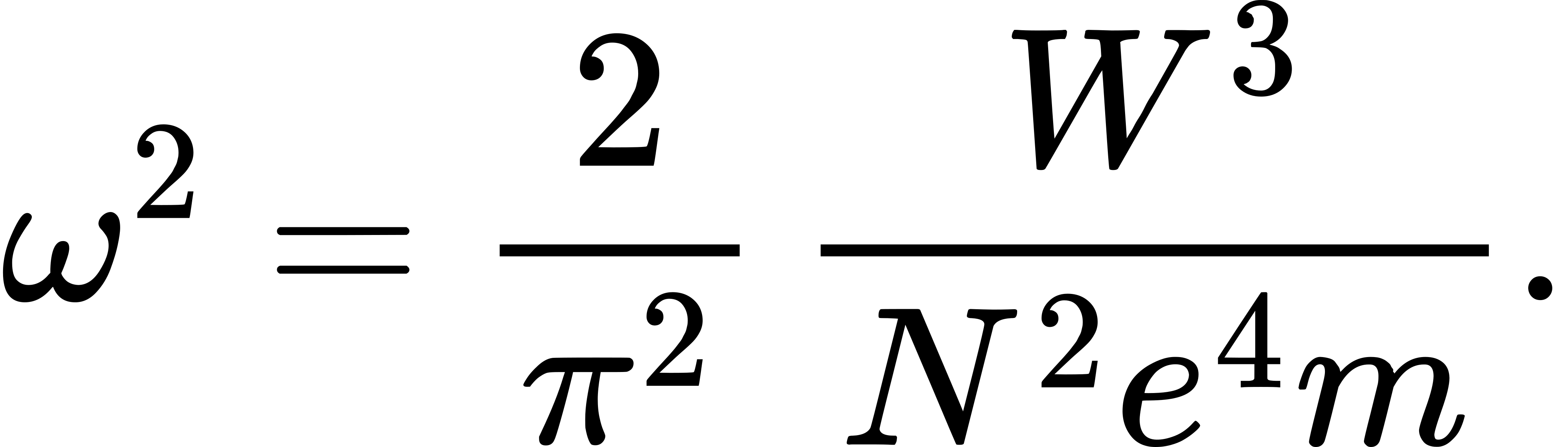

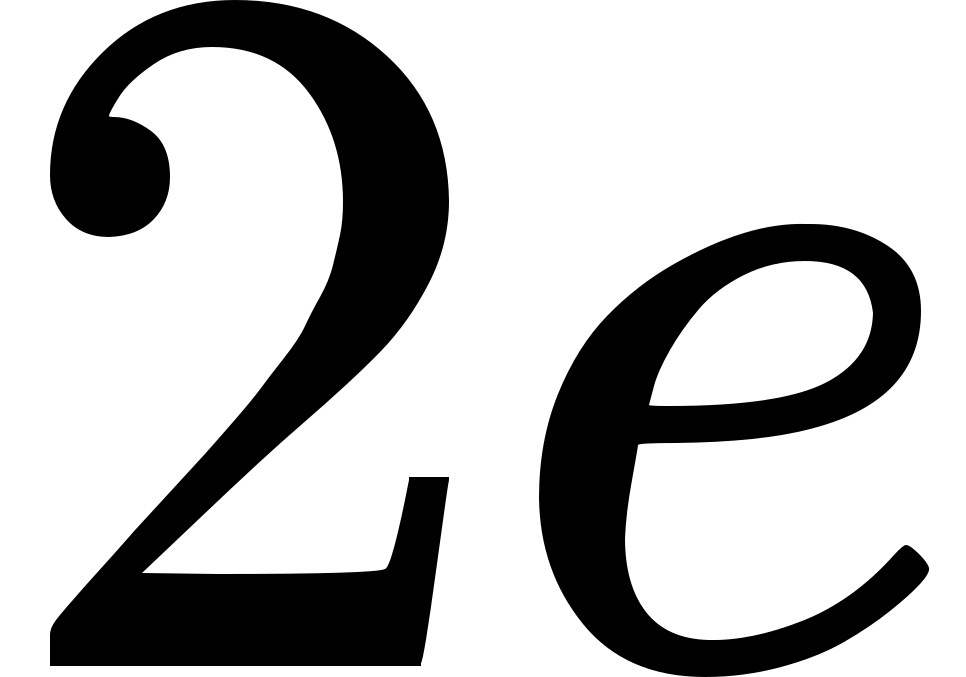 ,
,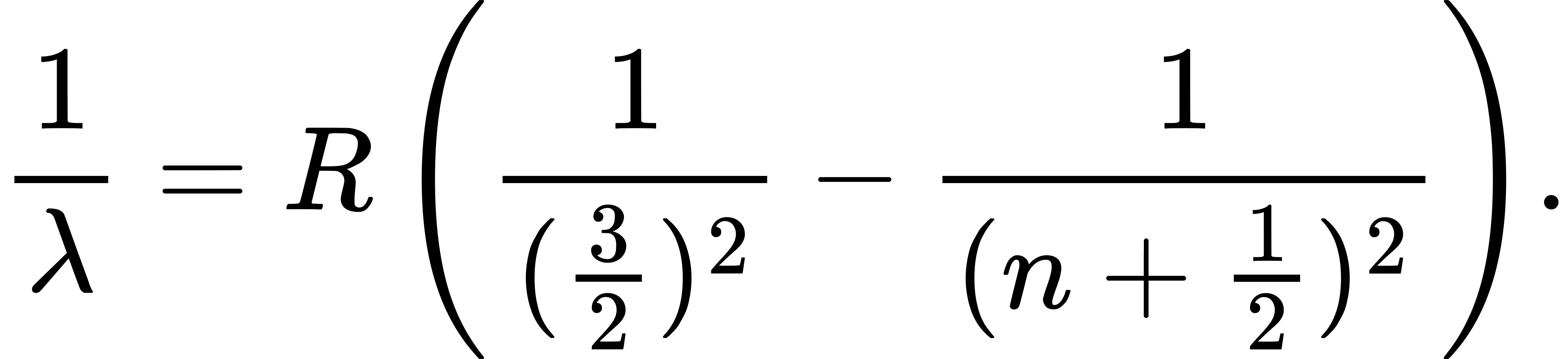
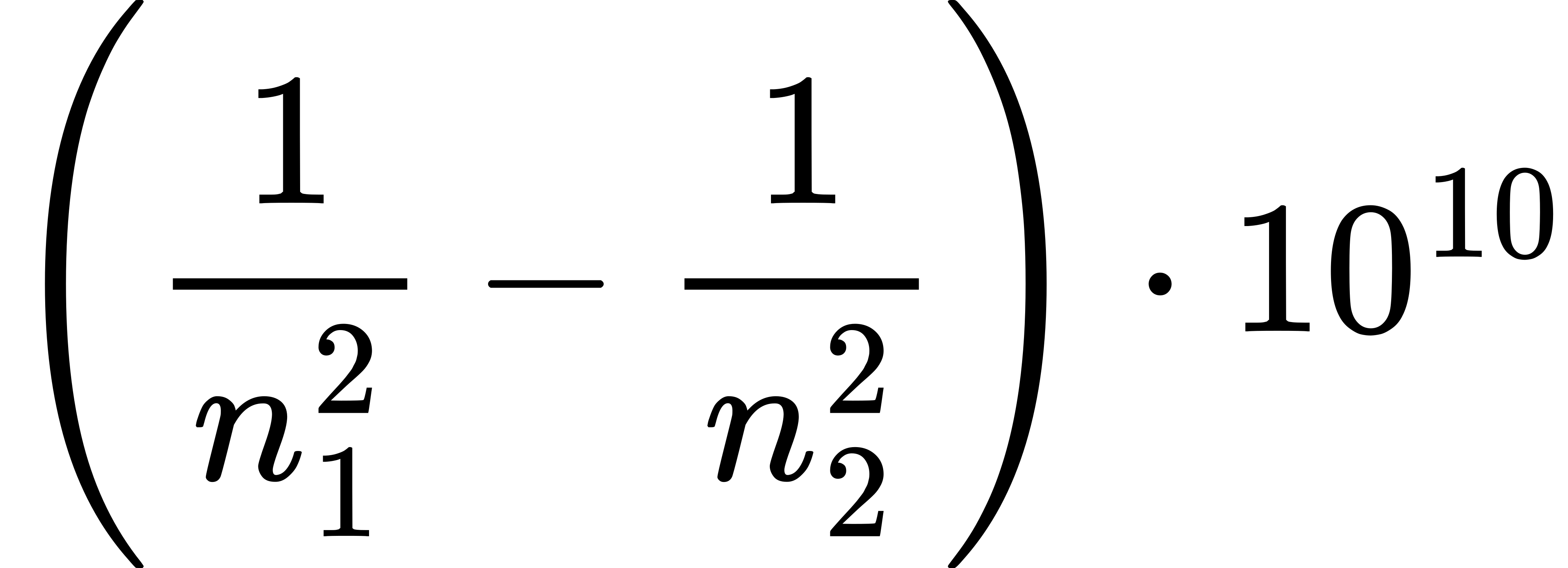 ;
;
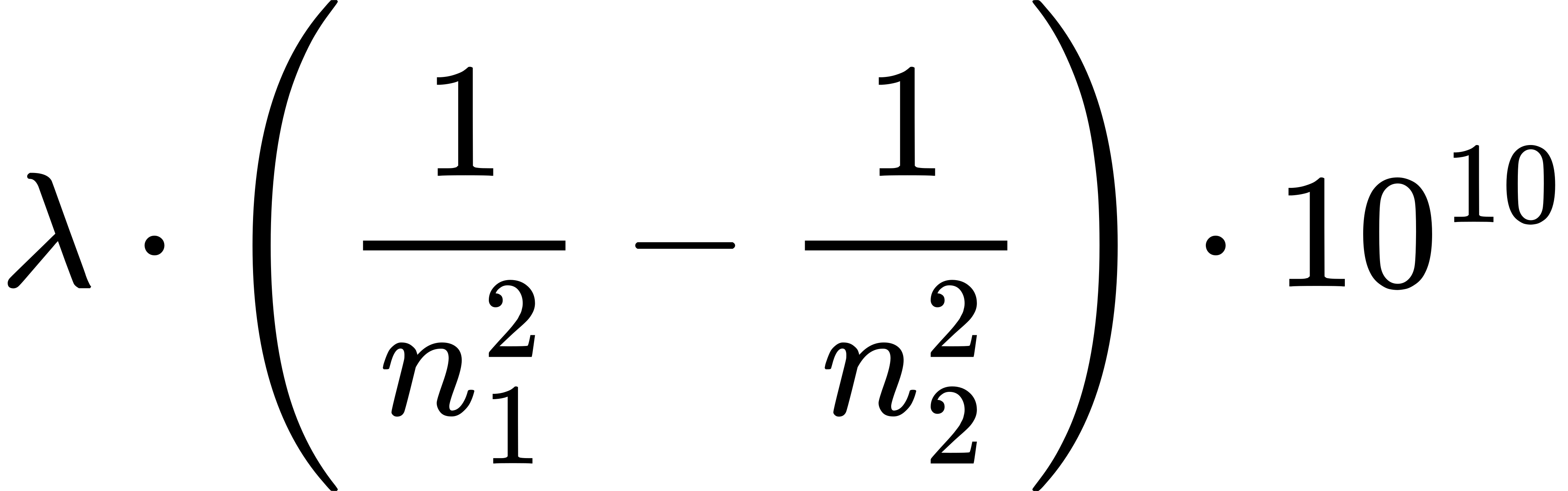
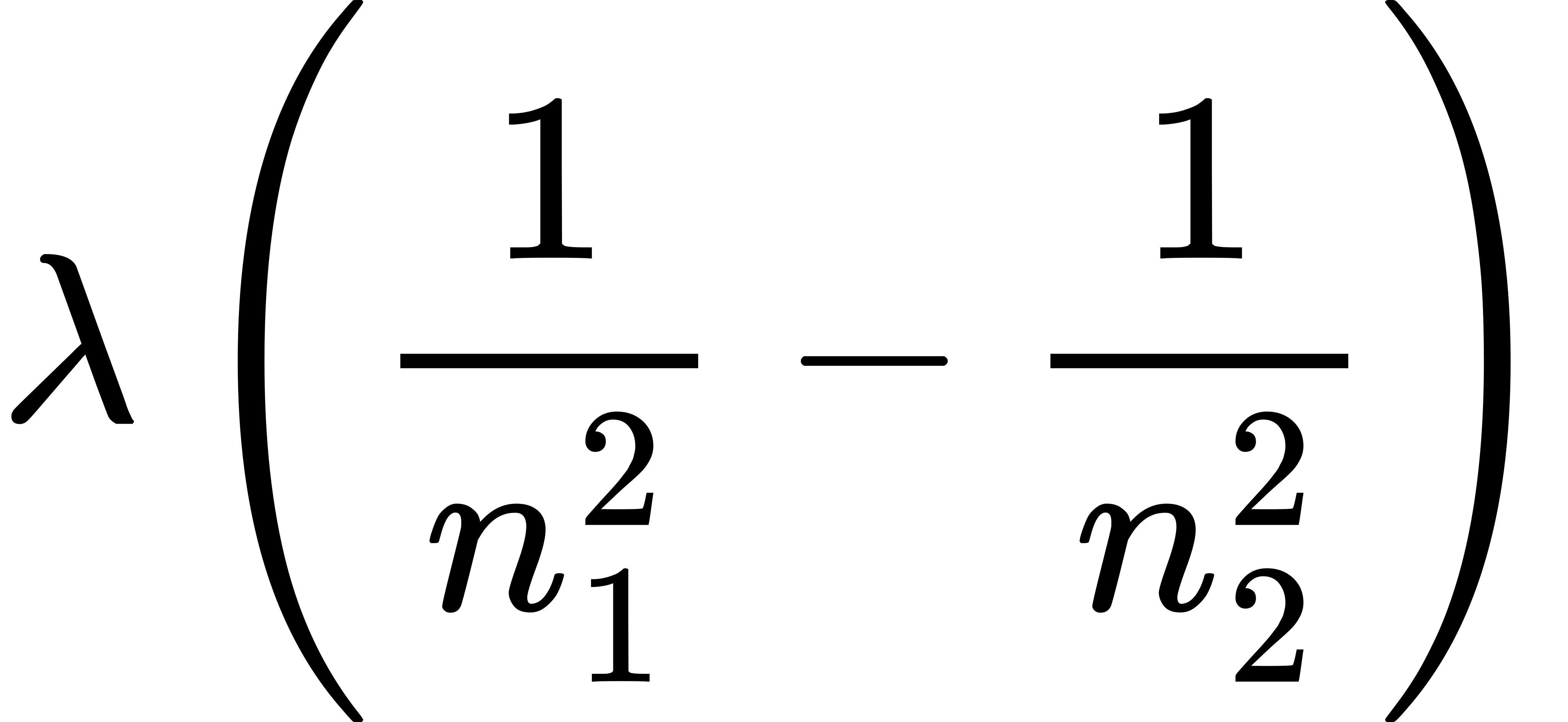
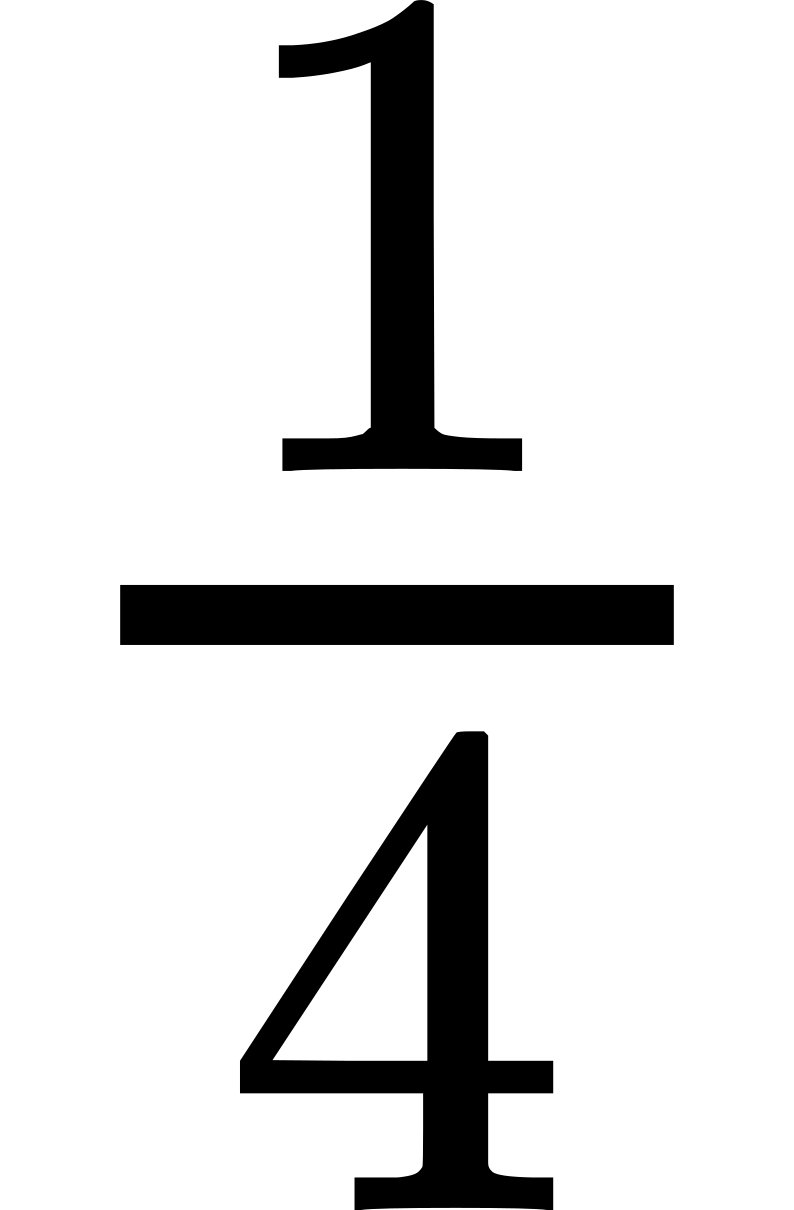 of the corresponding product for the hydrogen spectrum.
From the tables on pages
of the corresponding product for the hydrogen spectrum.
From the tables on pages  and
and  ,
, .
. and for a helium atom four times as great.
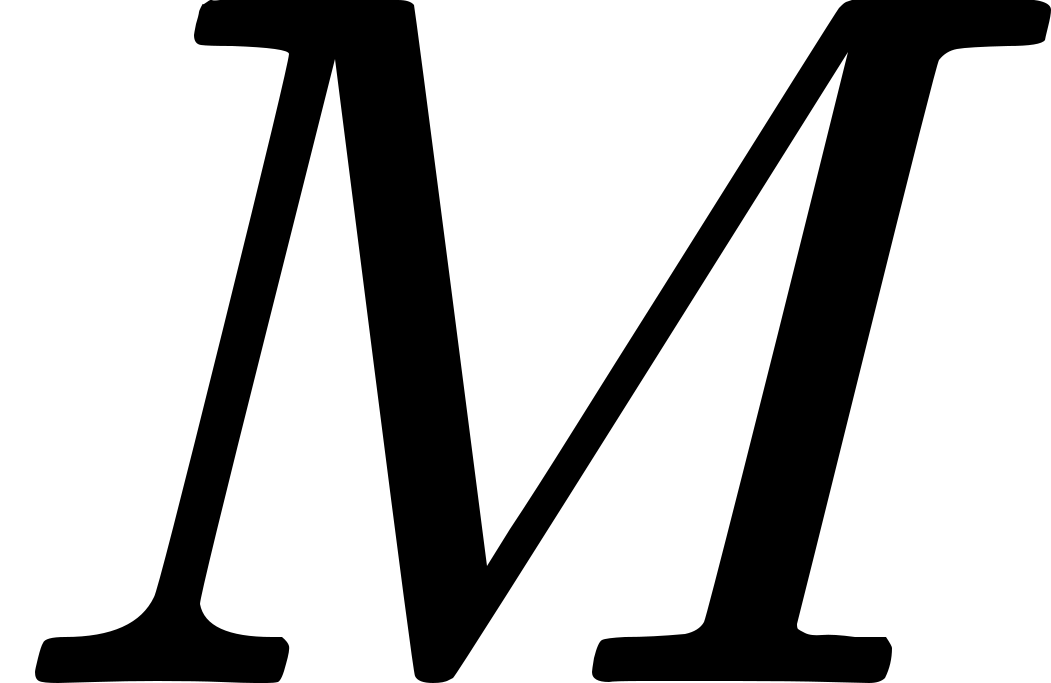 ,
,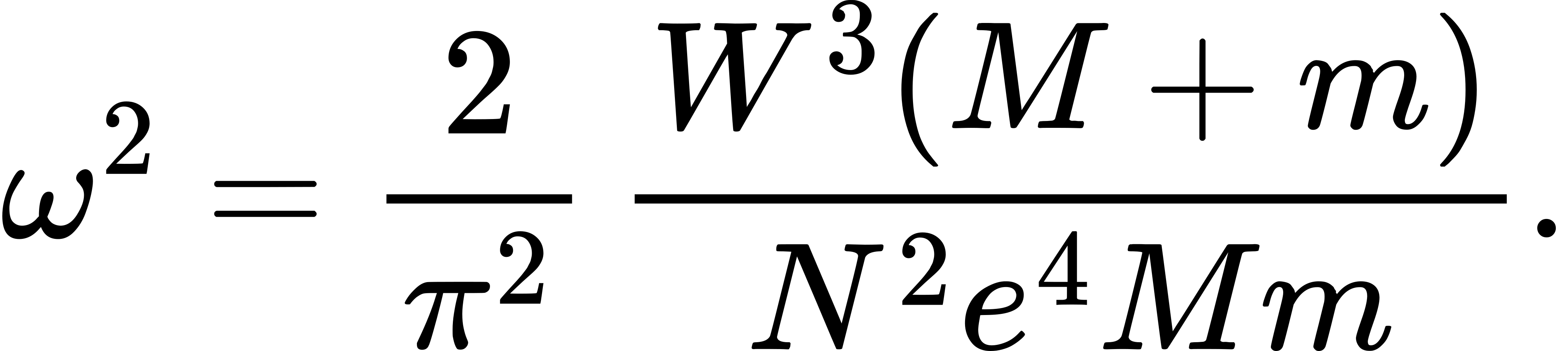

 which is in complete agreement with the
preceding value calculated from the experimental observations.
which is in complete agreement with the
preceding value calculated from the experimental observations. ,
,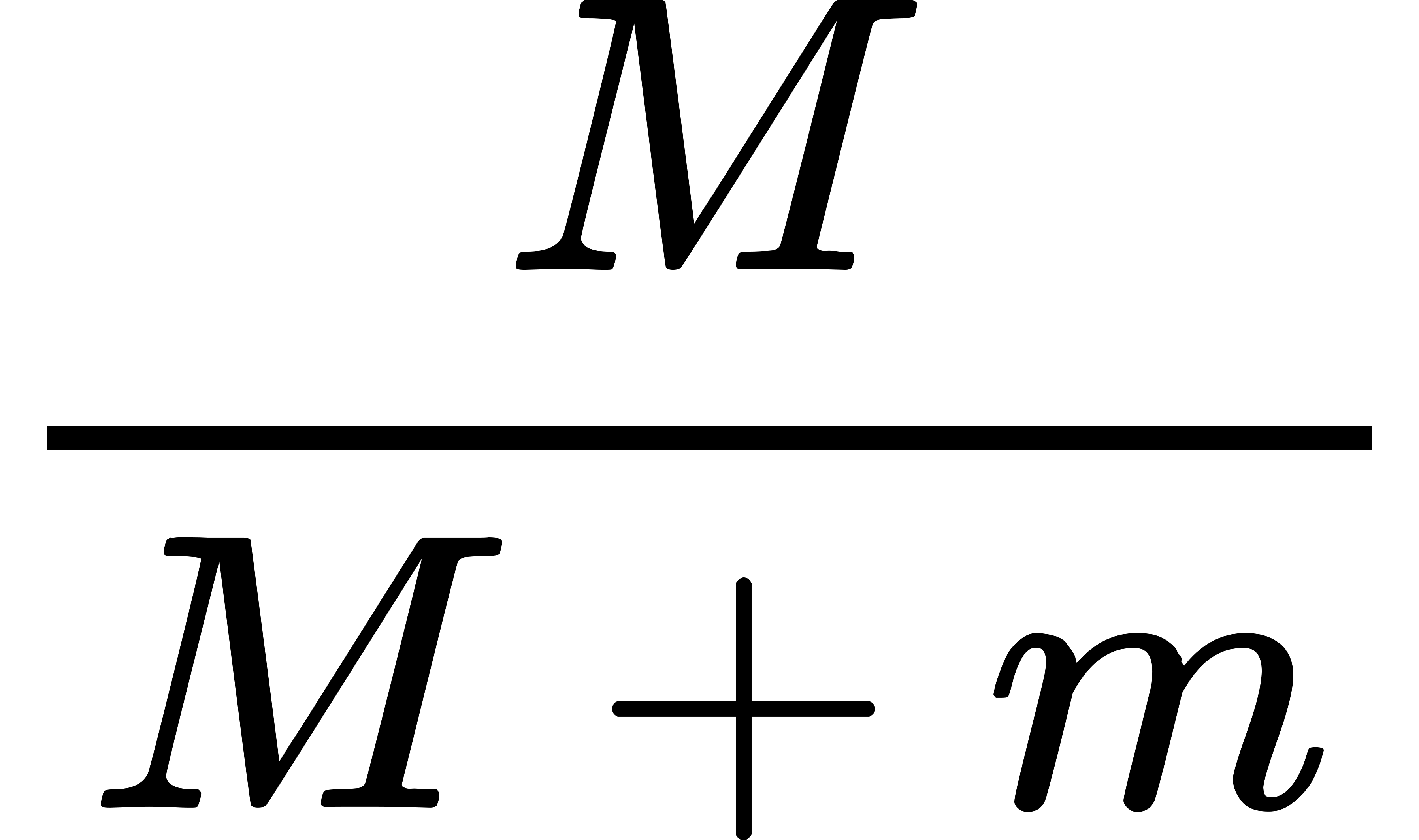 ,
,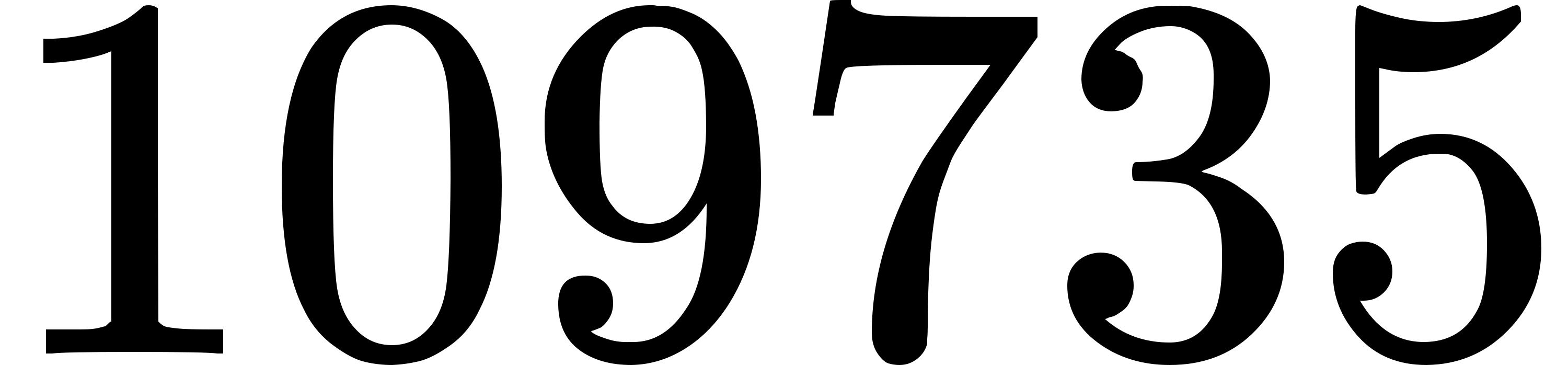 and
not
and
not 



 and
and  represent the energy of the system before and
after the emission.
represent the energy of the system before and
after the emission.
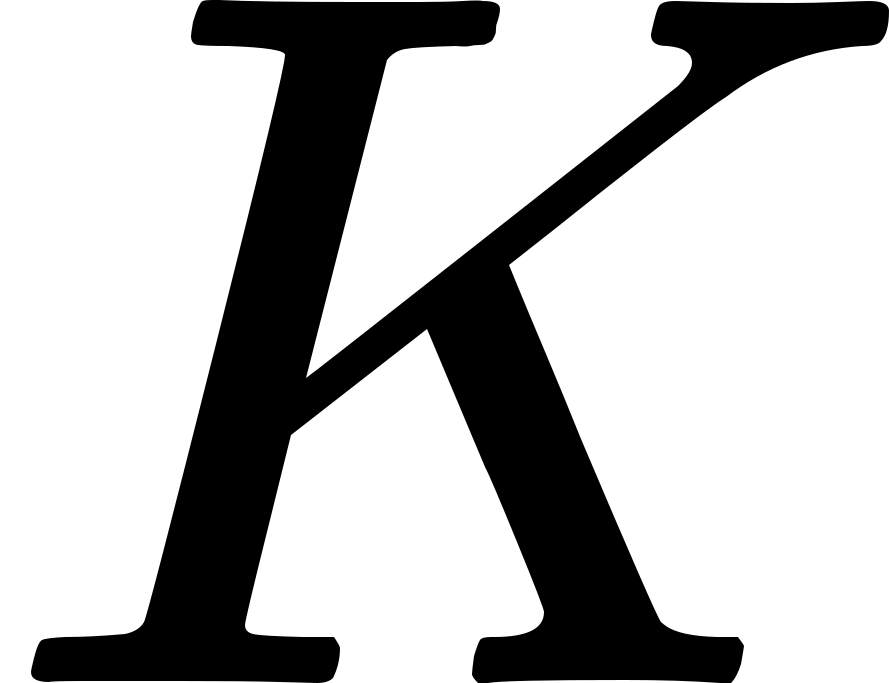 is a constant, and
  and
and  are whole numbers.
If we put
are whole numbers.
If we put 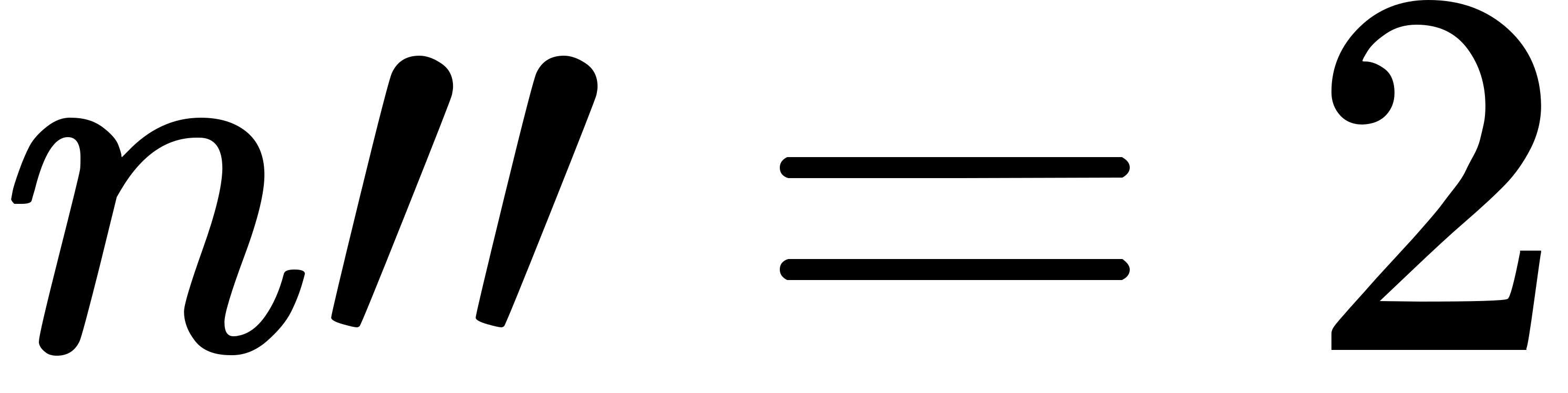 and give to
  or
or 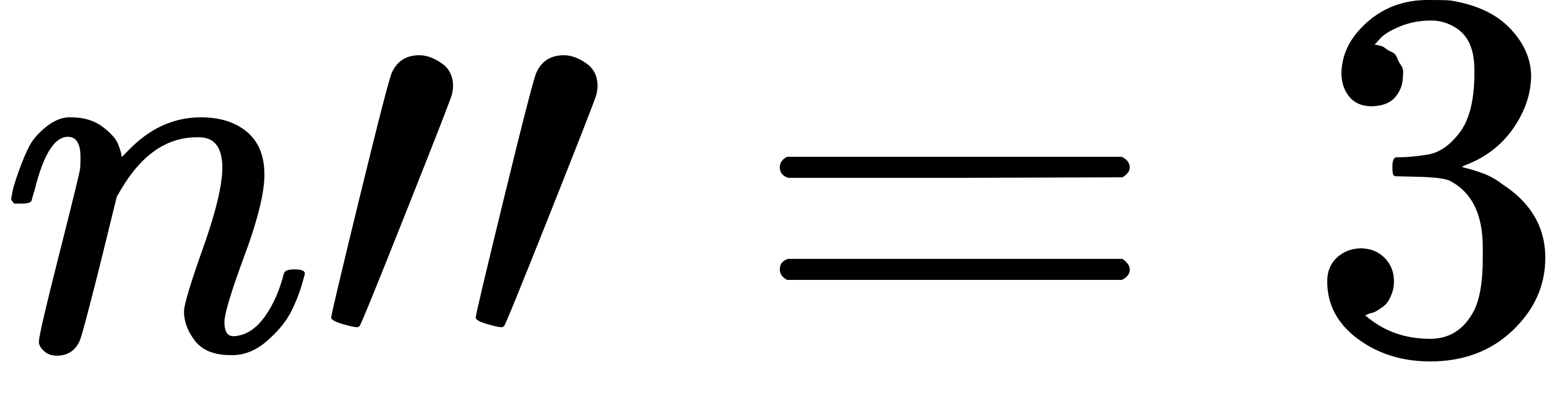 we obtain respectively the ultra-violet and infra-red
series. We shall assume the hydrogen atom simply to consist of a
positively charged nucleus with a single electron revolving about it.
For the sake of simplicity we shall suppose the mass of the nucleus to
be infinite in comparison with the mass of the electron, and further we
shall disregard the small variations in the motion due to the change
in mass of the electron with its velocity. With these simplifications
the electron will describe a closed elliptical orbit with the nucleus
at one of the foci. The frequency of revolution
we obtain respectively the ultra-violet and infra-red
series. We shall assume the hydrogen atom simply to consist of a
positively charged nucleus with a single electron revolving about it.
For the sake of simplicity we shall suppose the mass of the nucleus to
be infinite in comparison with the mass of the electron, and further we
shall disregard the small variations in the motion due to the change
in mass of the electron with its velocity. With these simplifications
the electron will describe a closed elliptical orbit with the nucleus
at one of the foci. The frequency of revolution 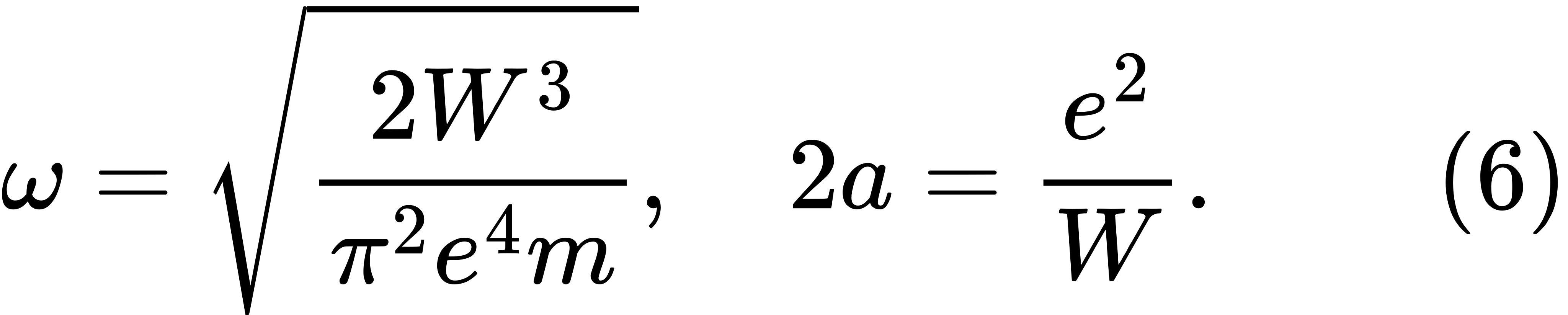
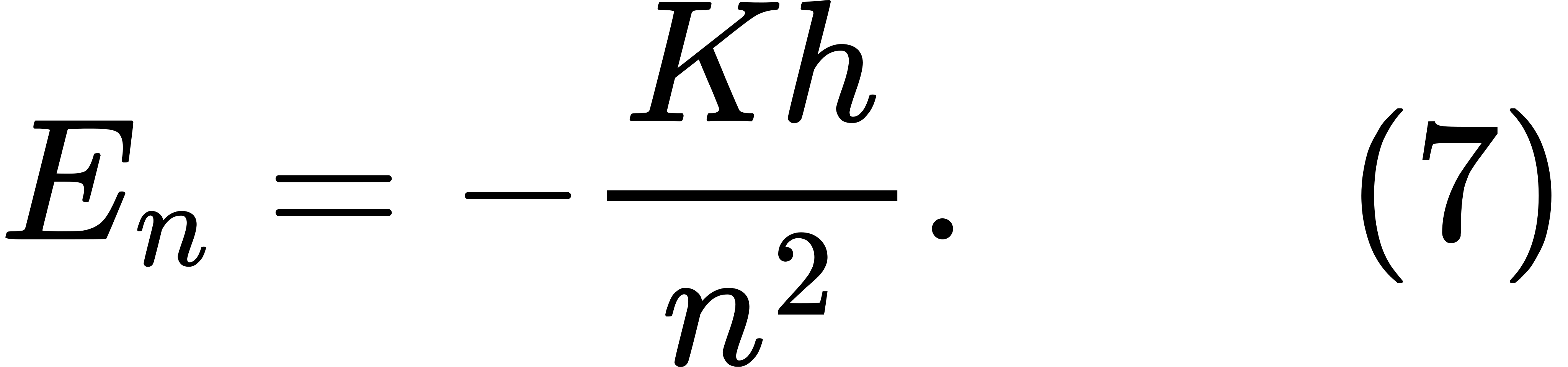
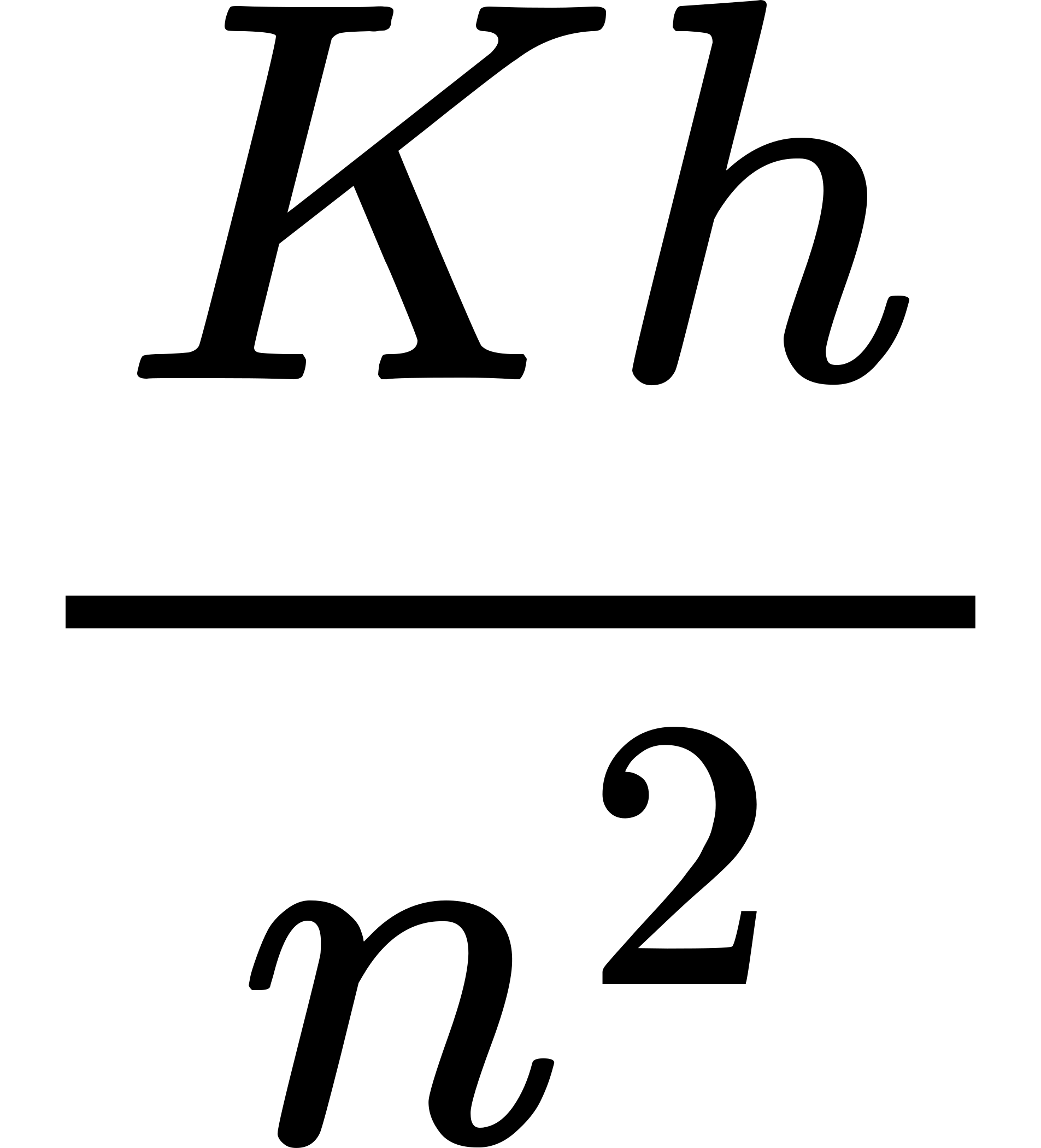 for
for 
 remains unchanged. By
considering transitions corresponding to large values of
remains unchanged. By
considering transitions corresponding to large values of 

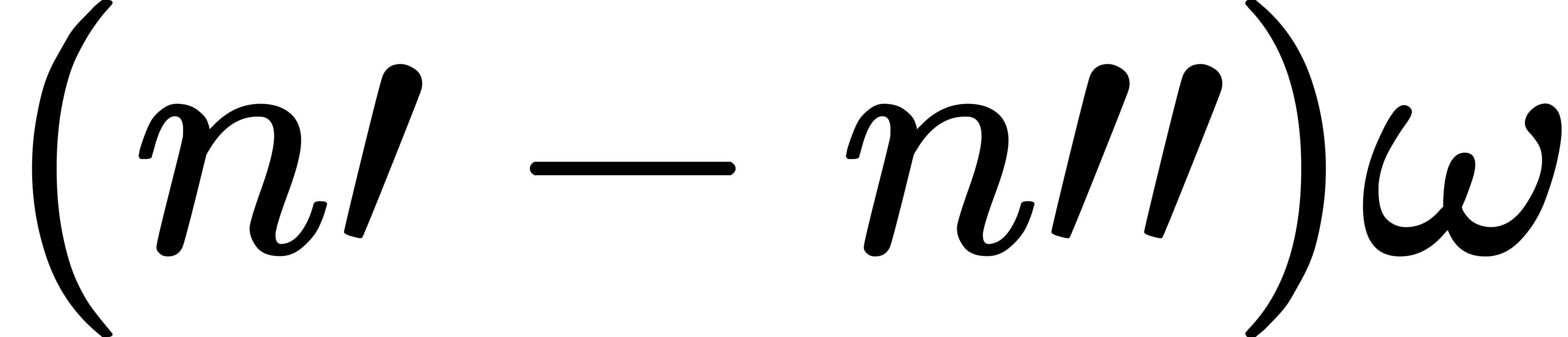 ,
, of
the particles in a given direction in space may be represented as a
function of the time by a trigonometric series of the form
of
the particles in a given direction in space may be represented as a
function of the time by a trigonometric series of the form

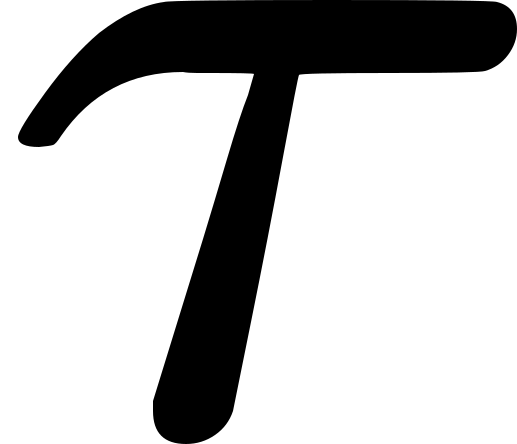 .
.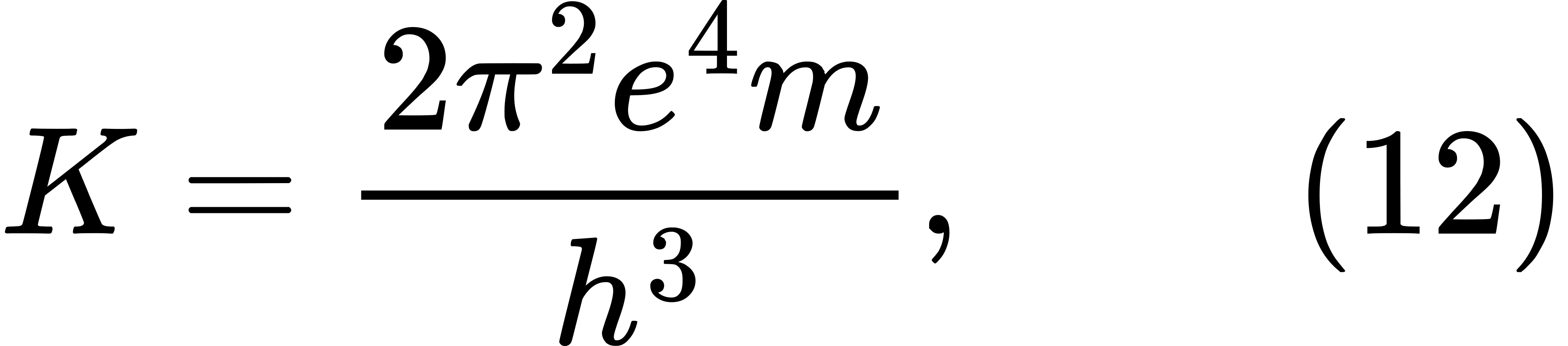
 .
.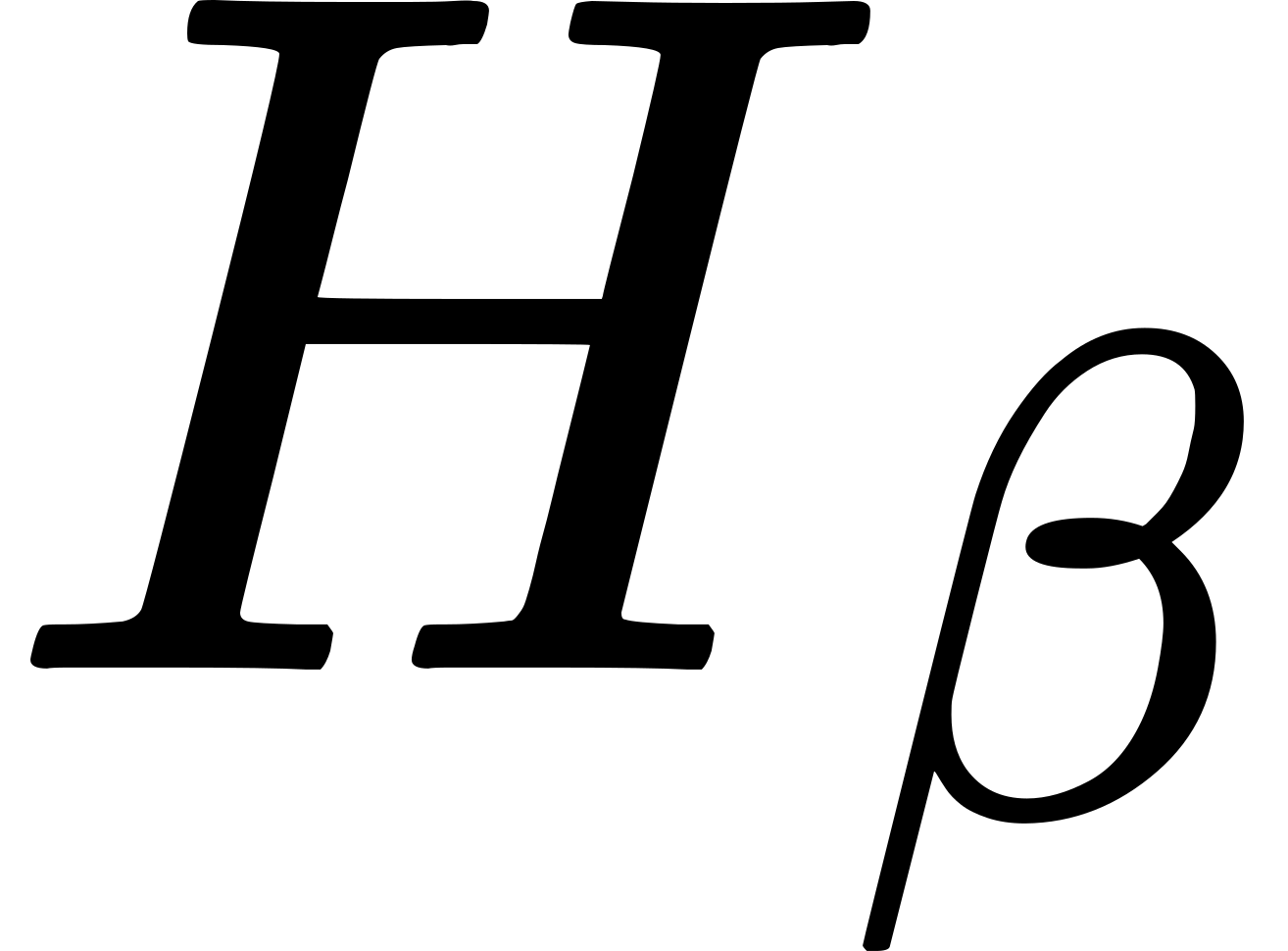 of the hydrogen
spectrum which corresponds to a transition from the fourth to the
second stationary state may be considered in a certain sense to be an
"octave" of the red line
of the hydrogen
spectrum which corresponds to a transition from the fourth to the
second stationary state may be considered in a certain sense to be an
"octave" of the red line 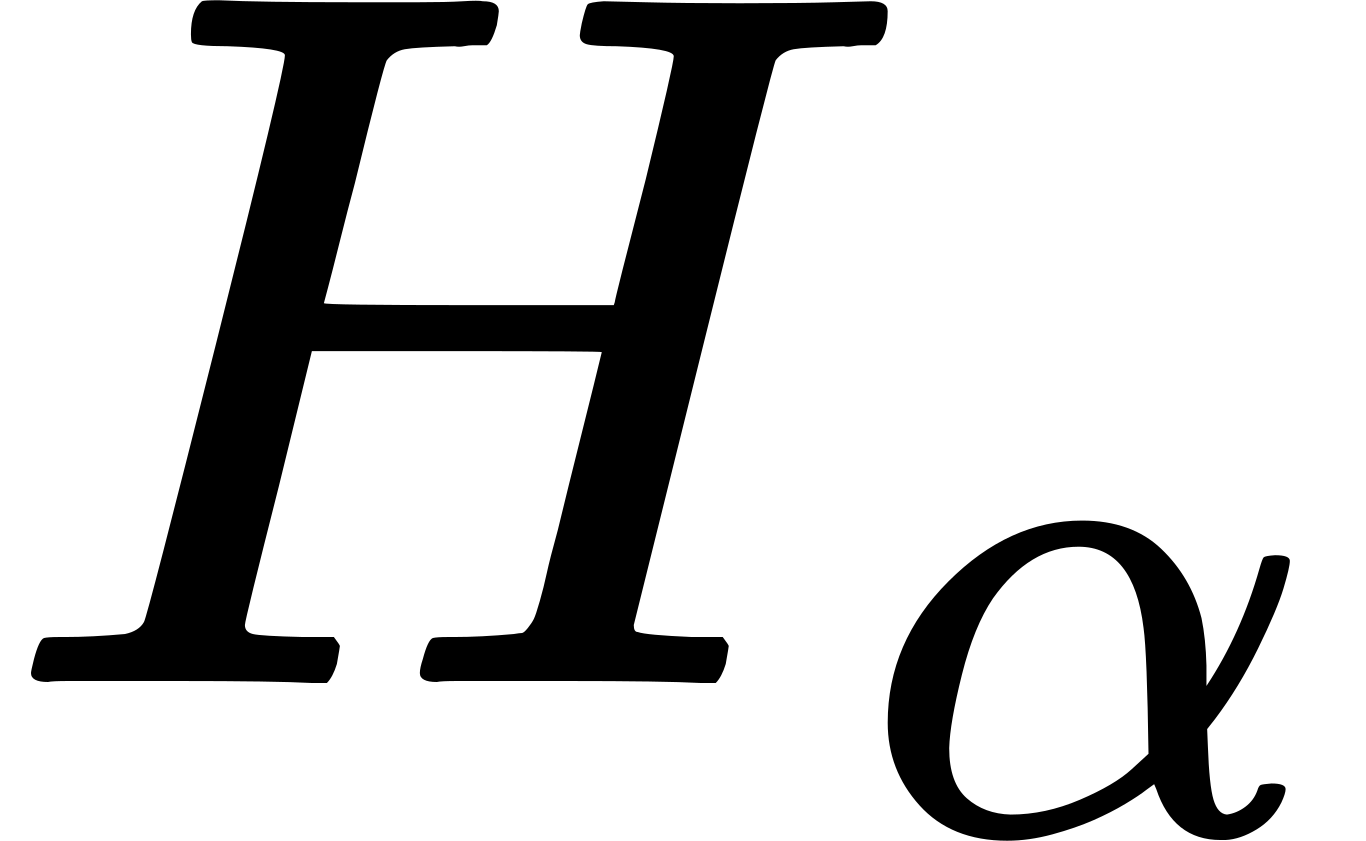 ,
,

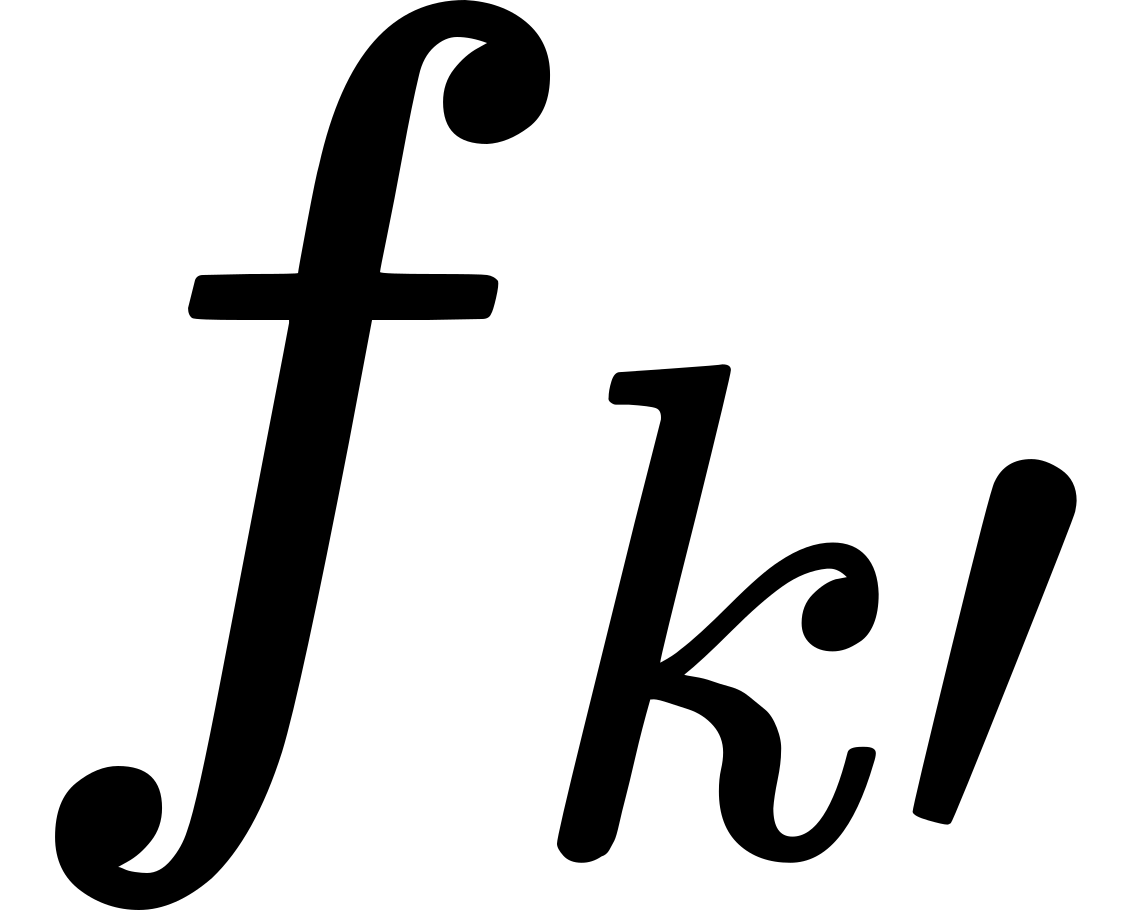 and
and
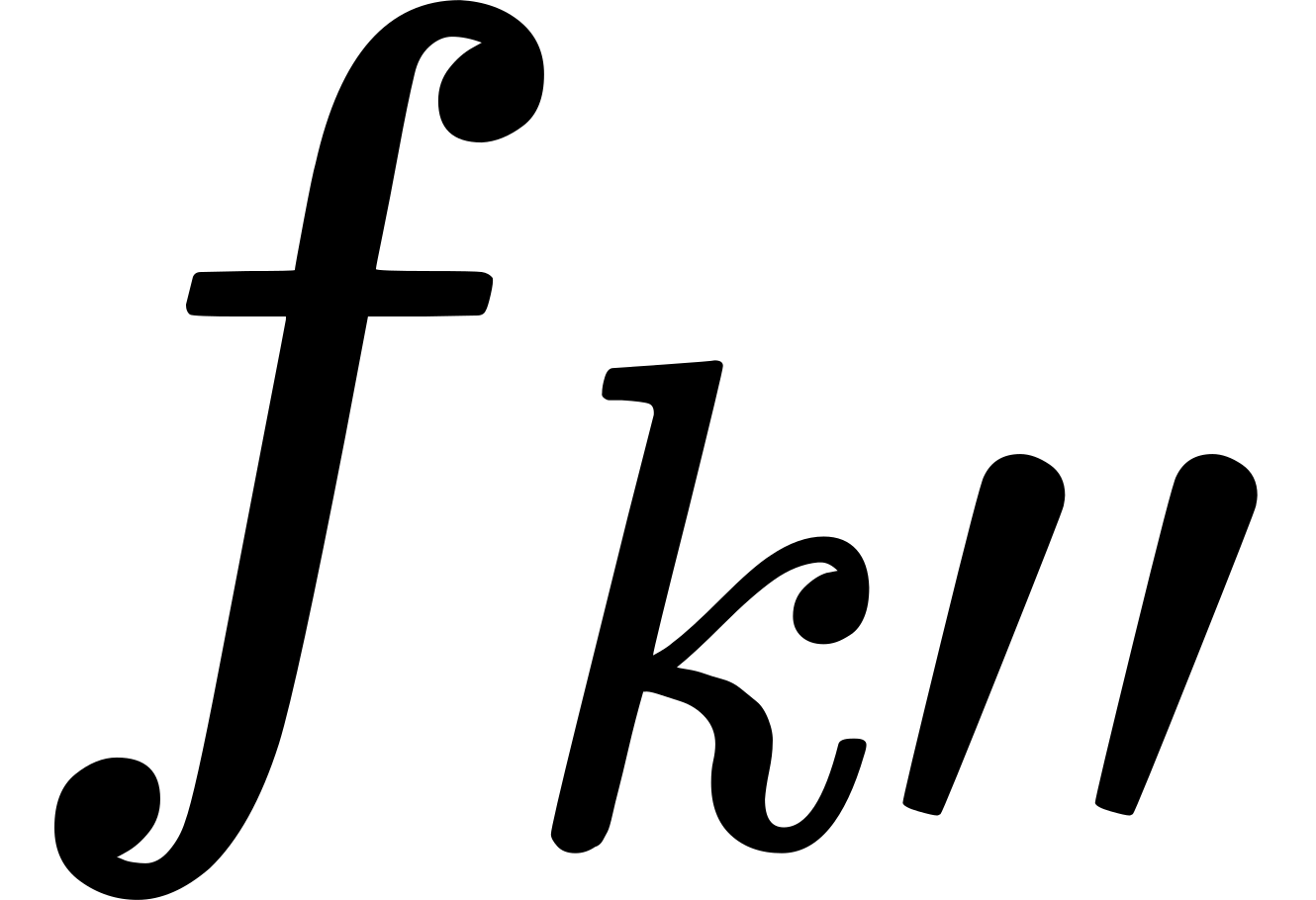 are two functions belonging to a series of functions
characteristic of the element. These functions vary in a simple manner
with
are two functions belonging to a series of functions
characteristic of the element. These functions vary in a simple manner
with 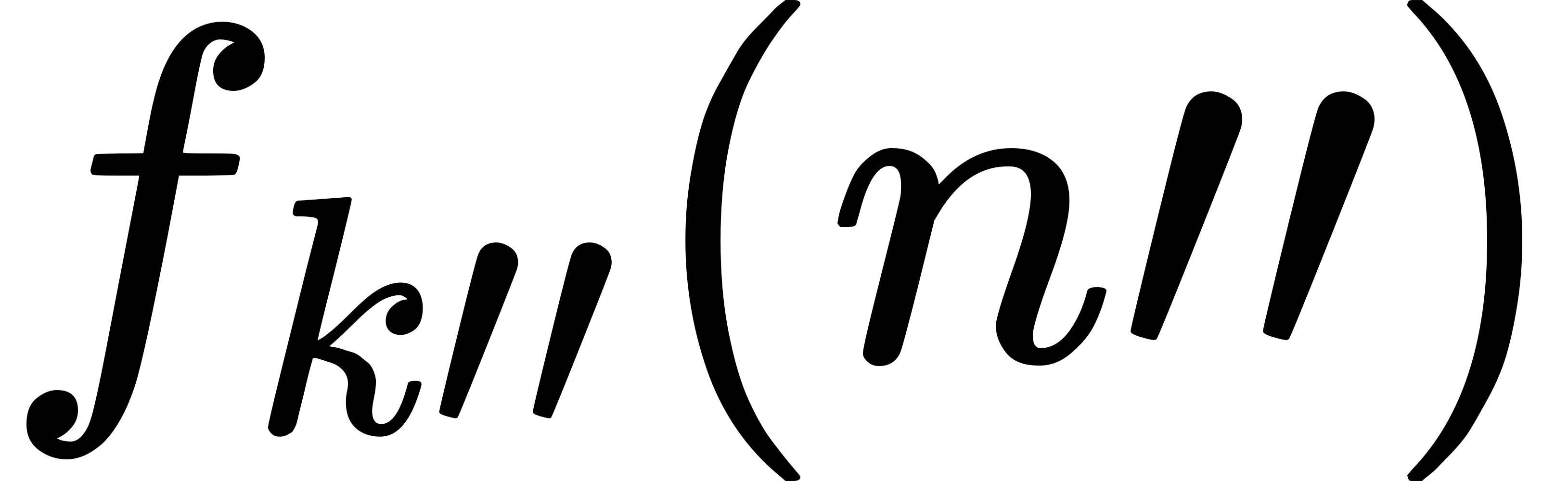 to remain constant, while
a series of consecutive whole numbers are substituted for
to remain constant, while
a series of consecutive whole numbers are substituted for 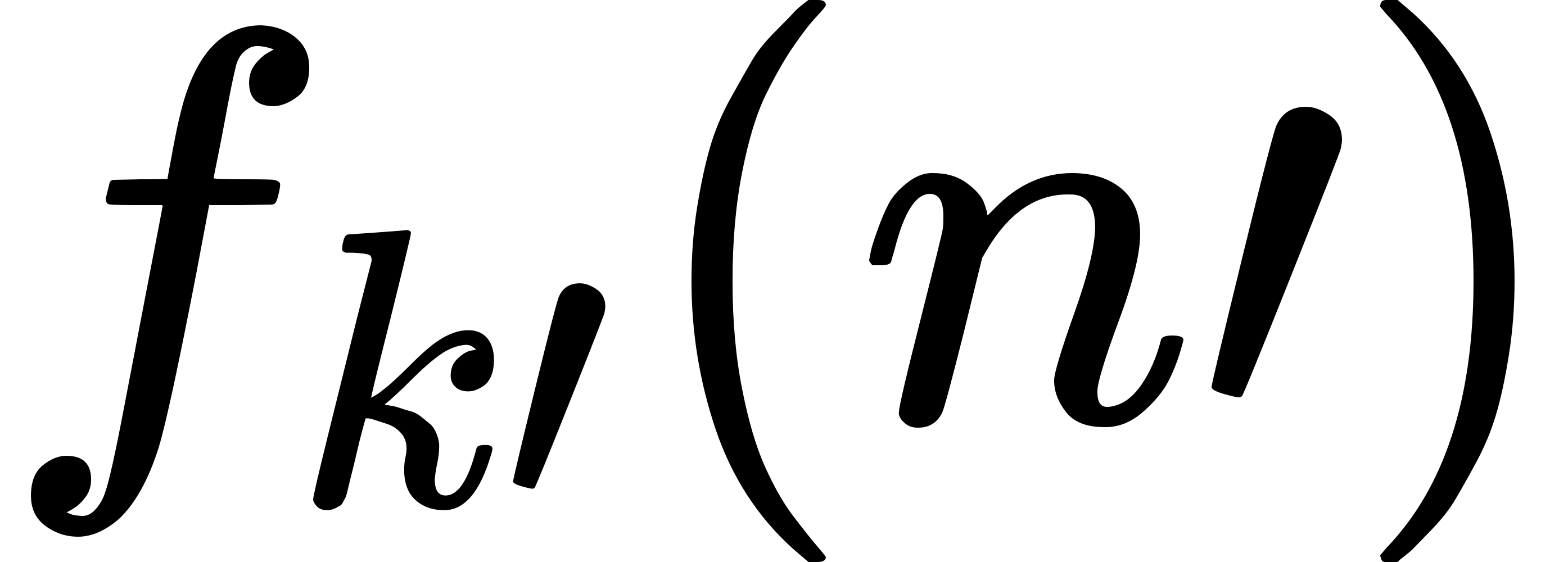 .
.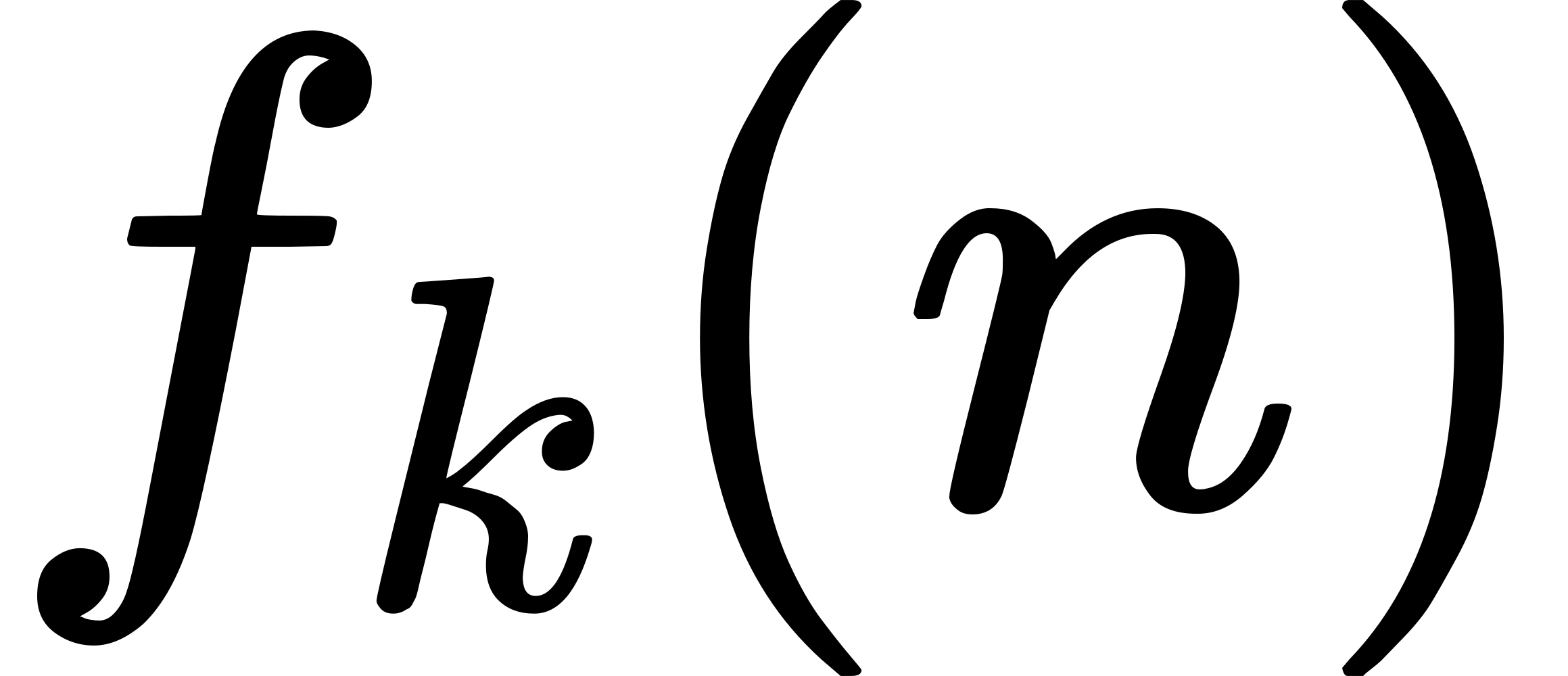 .
.
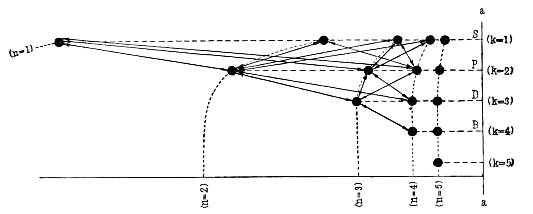
 states correspond to
the variable term in the "Bergmann" series (fundamental series), in
which transitions take place to the first state in the
states correspond to
the variable term in the "Bergmann" series (fundamental series), in
which transitions take place to the first state in the 
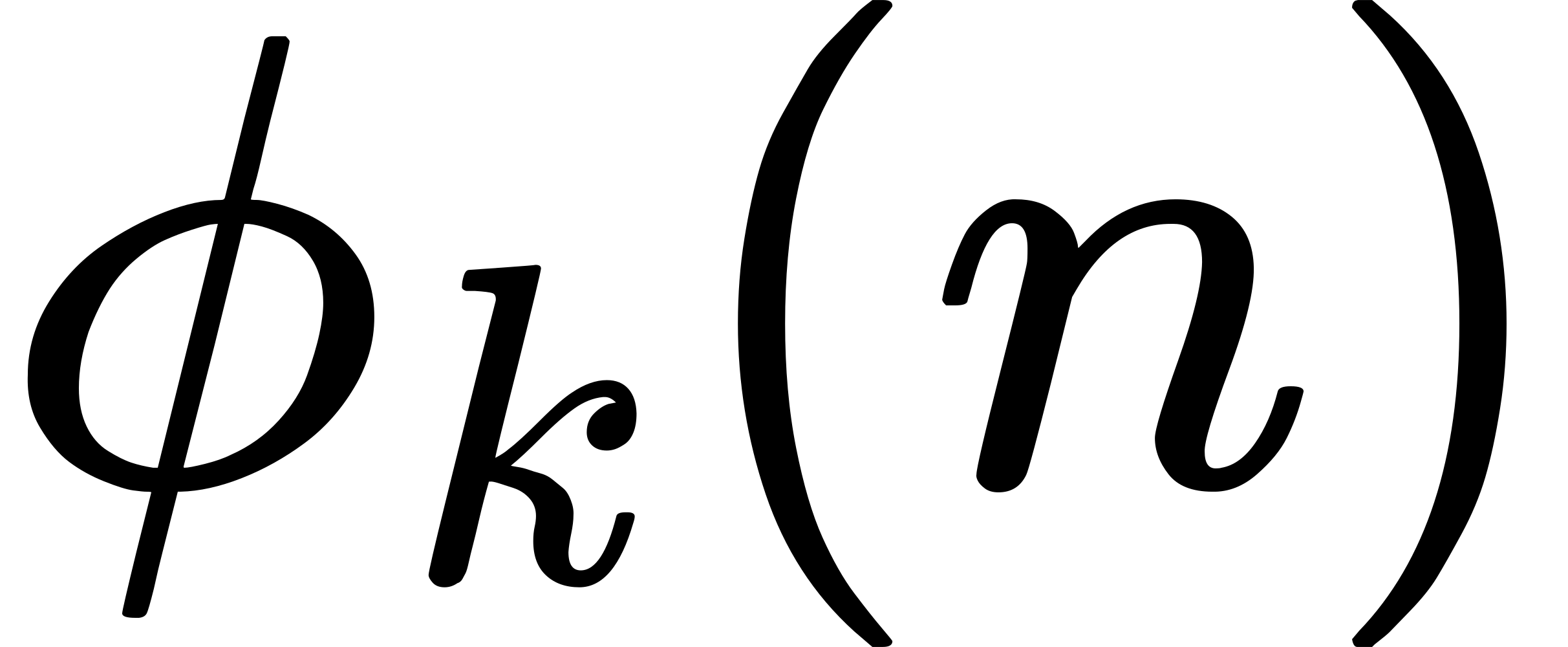 represents a function which converges to unity
for large values of
represents a function which converges to unity
for large values of 
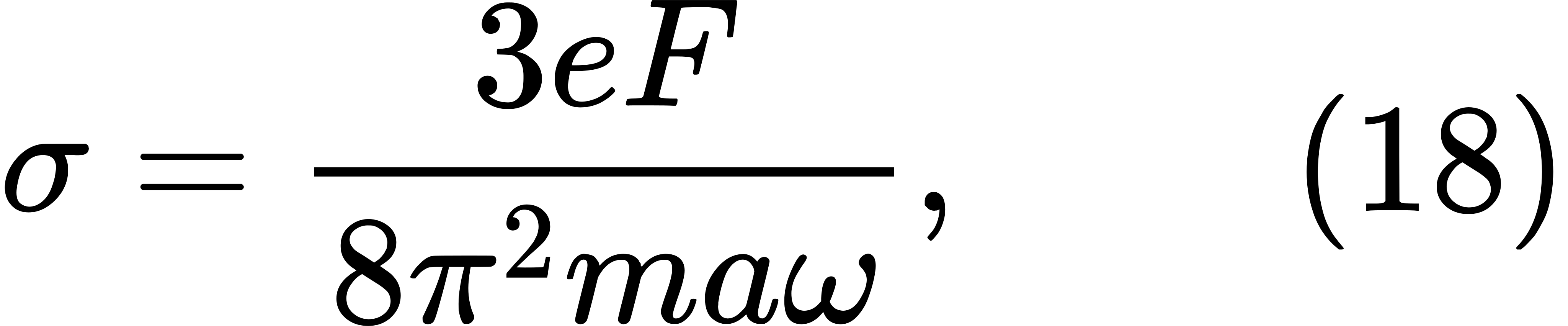
 is the intensity of the external electric field. From
analogy with the fixation of the distinctive energy values of a Planck
oscillator we must therefore expect that the energy difference between
two different states, corresponding to the same stationary state of the
unperturbed system, will simply be equal to a whole multiple of the
product of
is the intensity of the external electric field. From
analogy with the fixation of the distinctive energy values of a Planck
oscillator we must therefore expect that the energy difference between
two different states, corresponding to the same stationary state of the
unperturbed system, will simply be equal to a whole multiple of the
product of  of the perturbations. We are
therefore immediately led to the following expression for the energy of
the stationary states of the perturbed system,
of the perturbations. We are
therefore immediately led to the following expression for the energy of
the stationary states of the perturbed system,

 depends only upon the number
 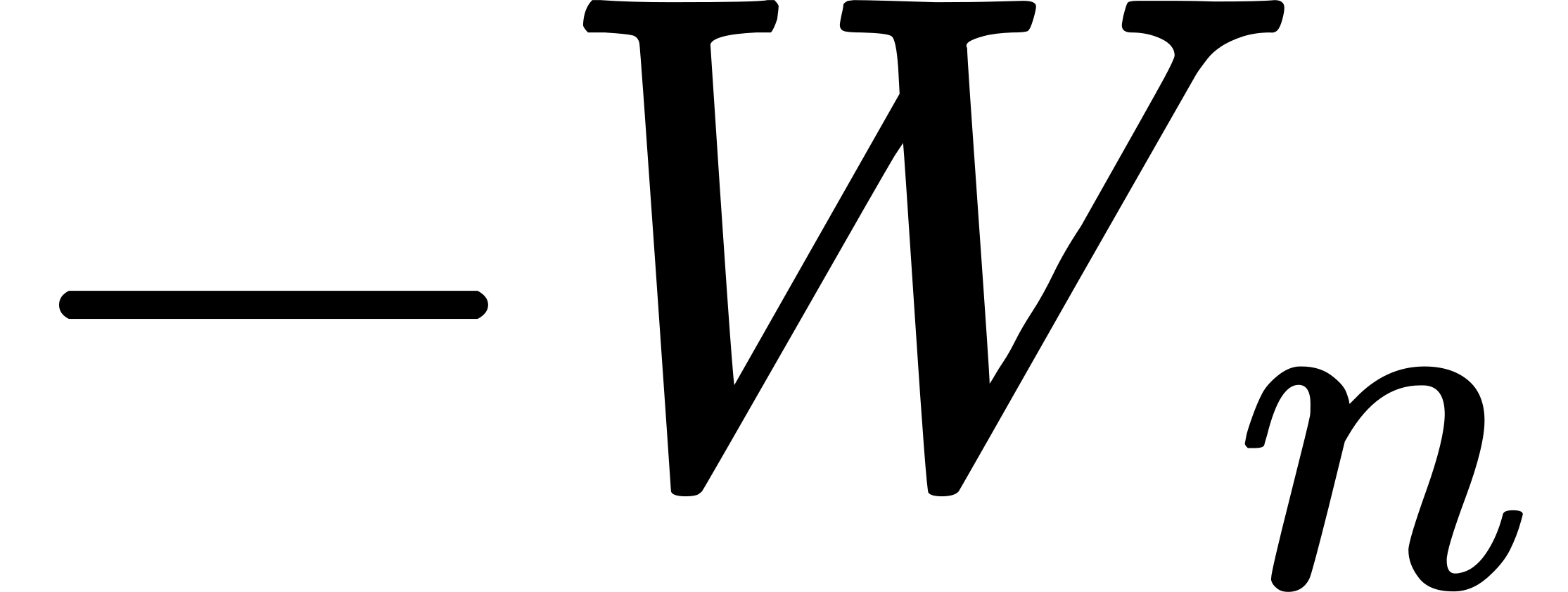 of the
 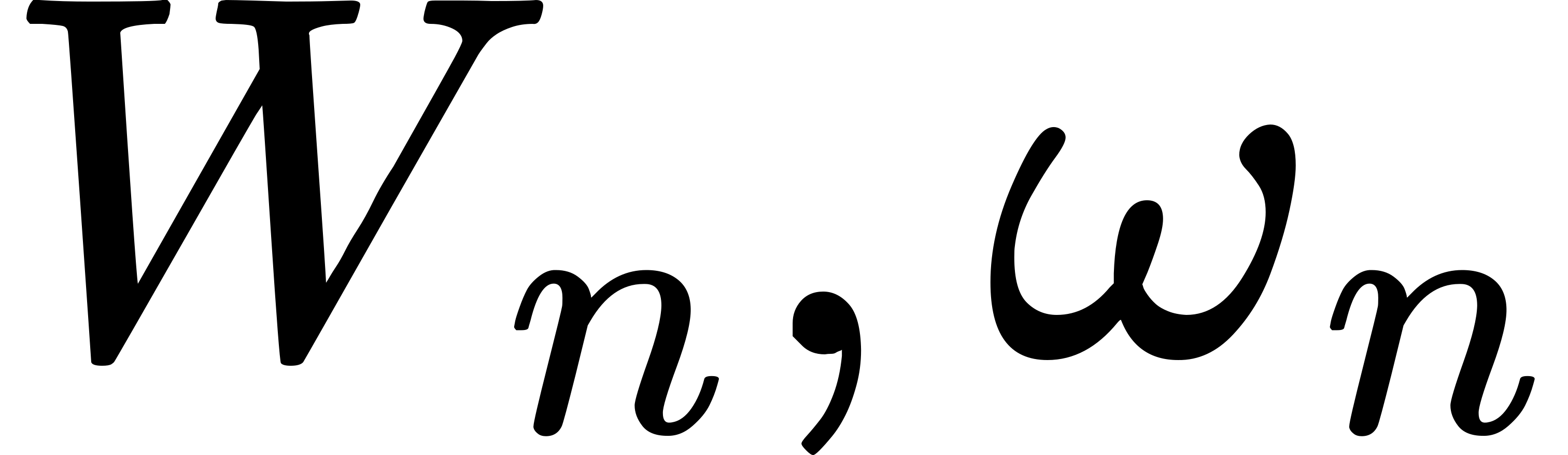 and
and 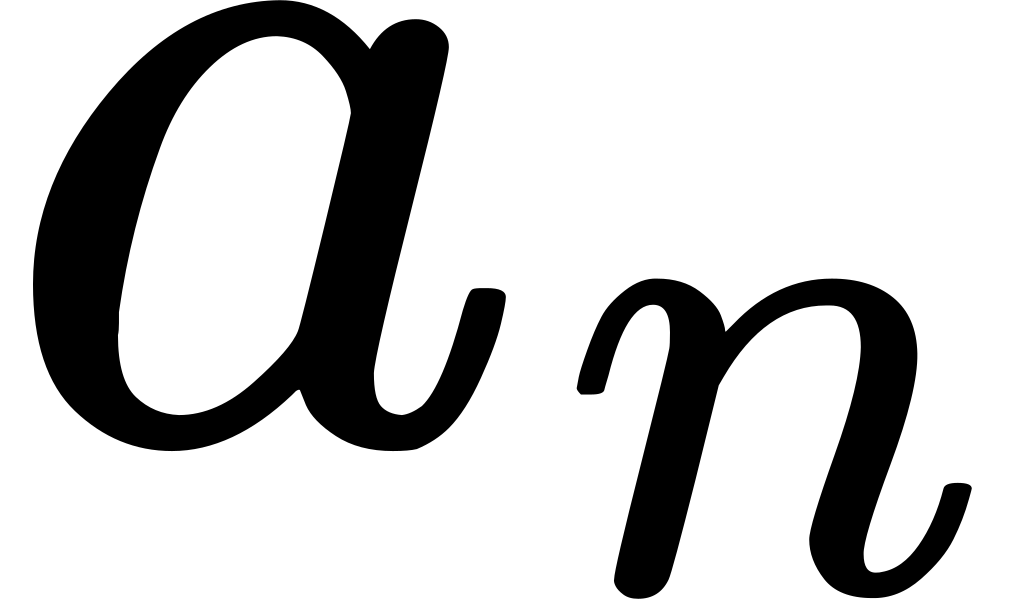 given by (17) in formula (19) we get

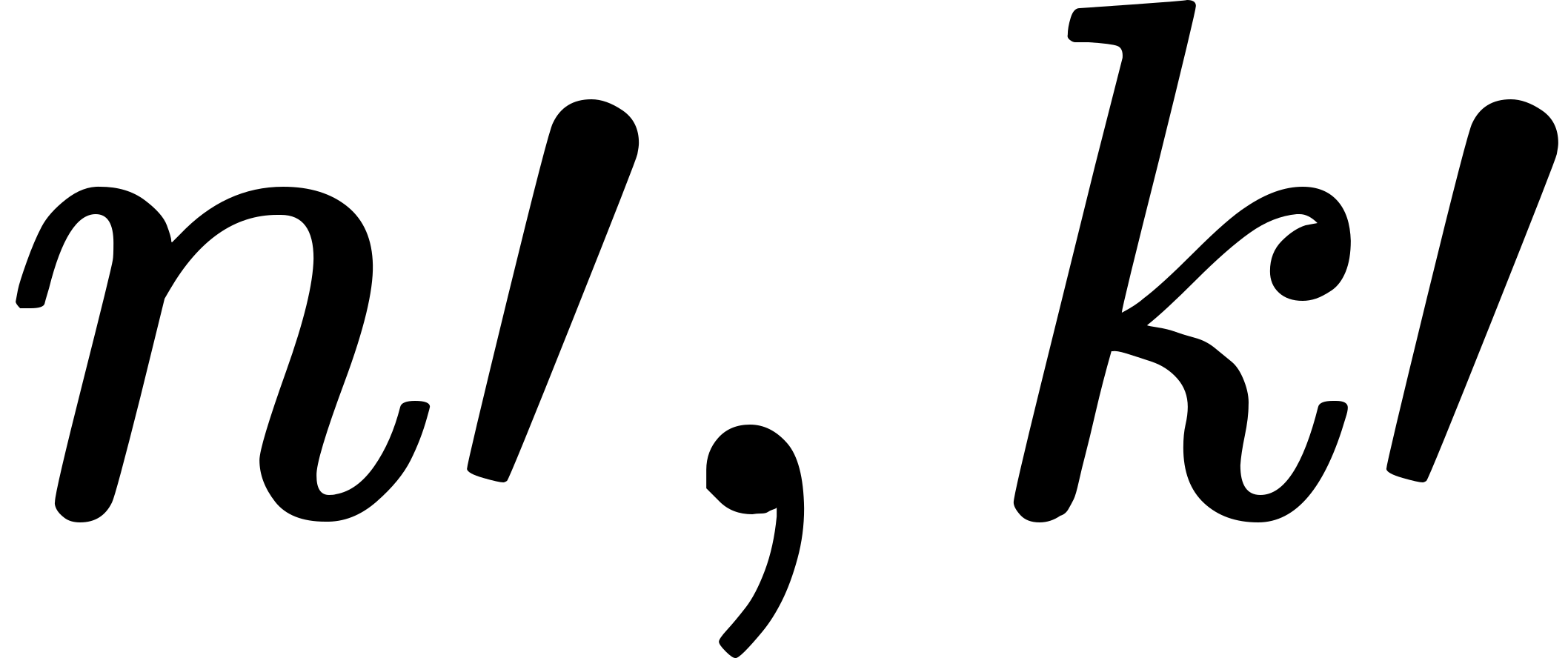 and
and 


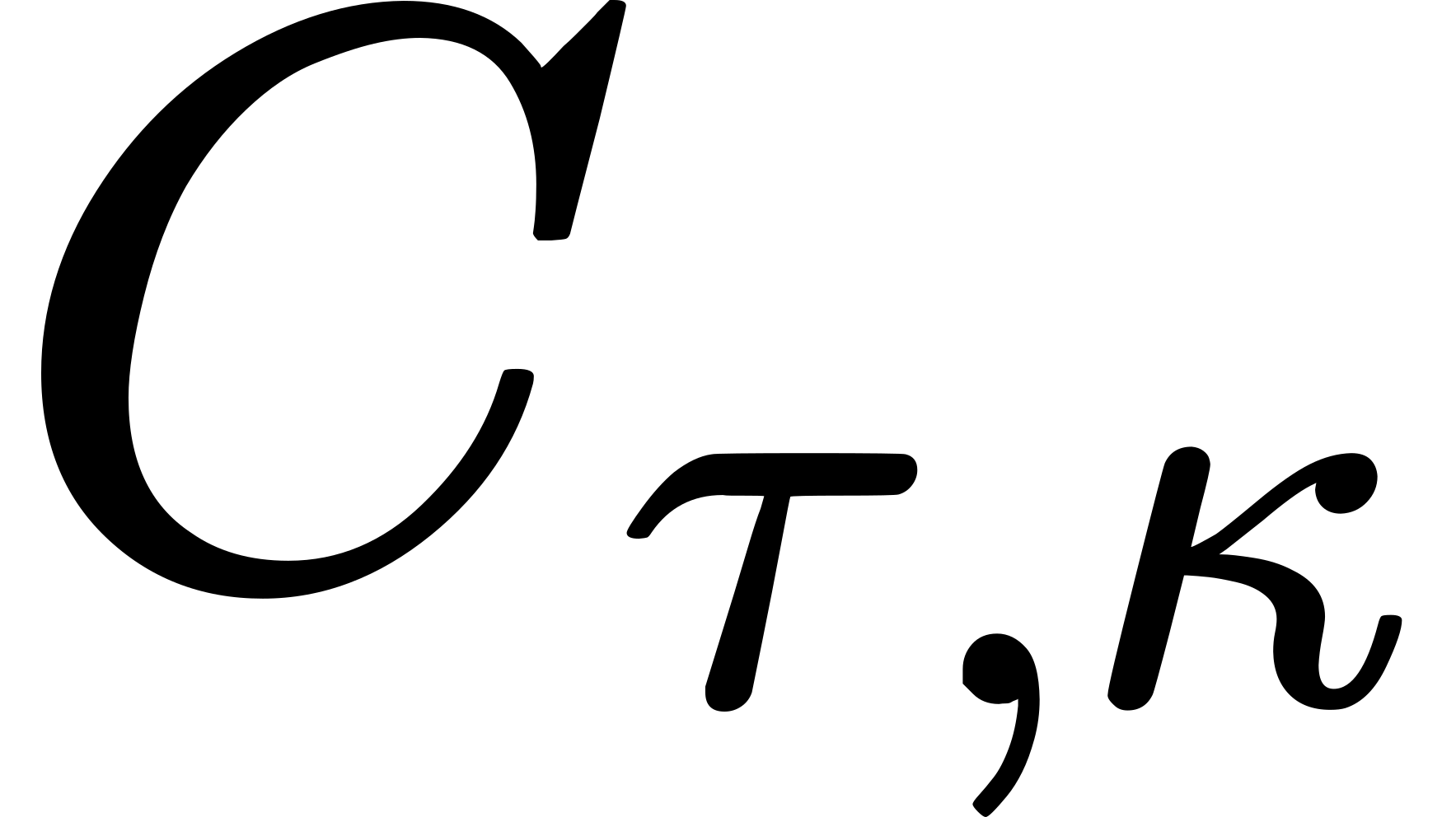 and
and 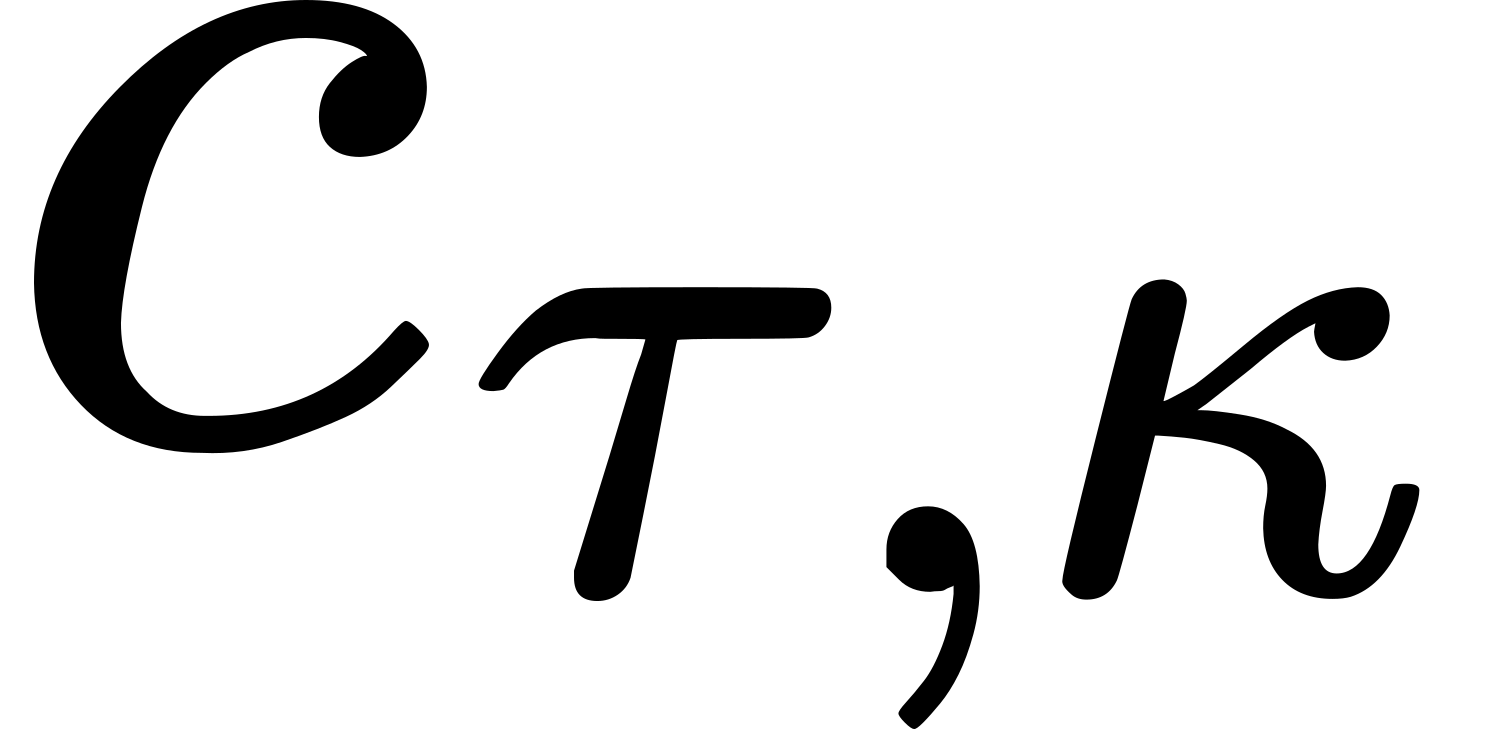 are
constants. The summation is to be extended over all integral values for
are
constants. The summation is to be extended over all integral values for
 .
. ,
,
 .
. is an even
number corresponds to a linear oscillation parallel to the direction of
the electric field, while each component for which
is an even
number corresponds to a linear oscillation parallel to the direction of
the electric field, while each component for which  is even would give rise to
a component with an electric vector parallel to the field, while
a transition for which
is even would give rise to
a component with an electric vector parallel to the field, while
a transition for which 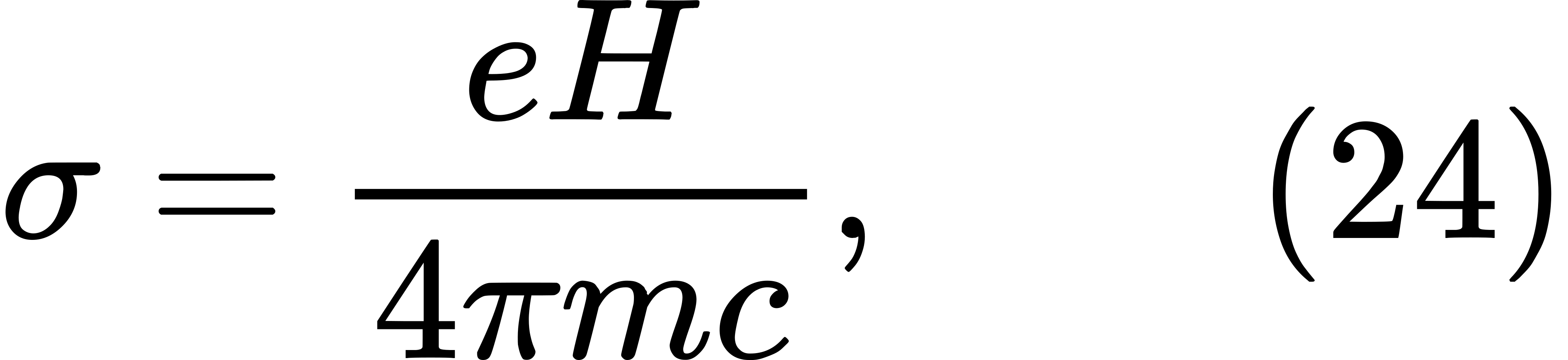
 is the intensity of the field and
  splits up into three harmonic components owing to
the uniform rotation of the orbit. Of these one is rectilinear with
frequency
splits up into three harmonic components owing to
the uniform rotation of the orbit. Of these one is rectilinear with
frequency 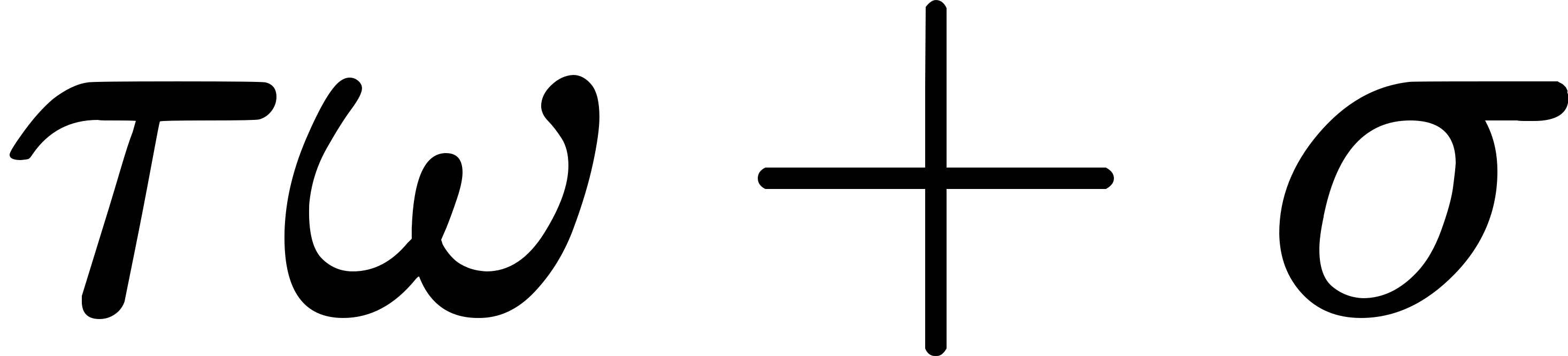 and
and
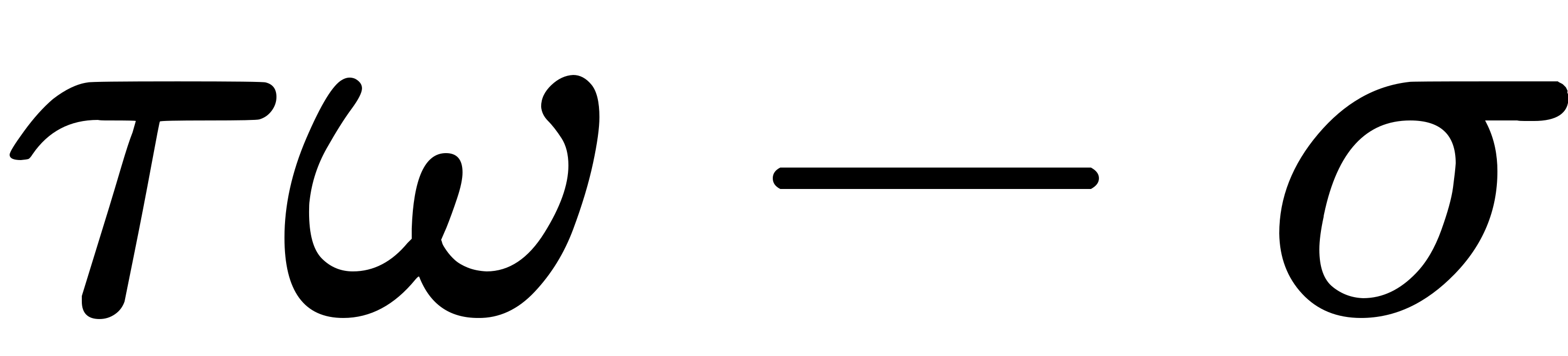 oscillating in opposite directions in a
plane perpendicular to the direction of the field. Consequently the
motion represented by formula (22) contains no components for which
oscillating in opposite directions in a
plane perpendicular to the direction of the field. Consequently the
motion represented by formula (22) contains no components for which
 as the original hydrogen line, the electric vector will oscillate
parallel with the field. For the second type, corresponding to the
circular components,
as the original hydrogen line, the electric vector will oscillate
parallel with the field. For the second type, corresponding to the
circular components, 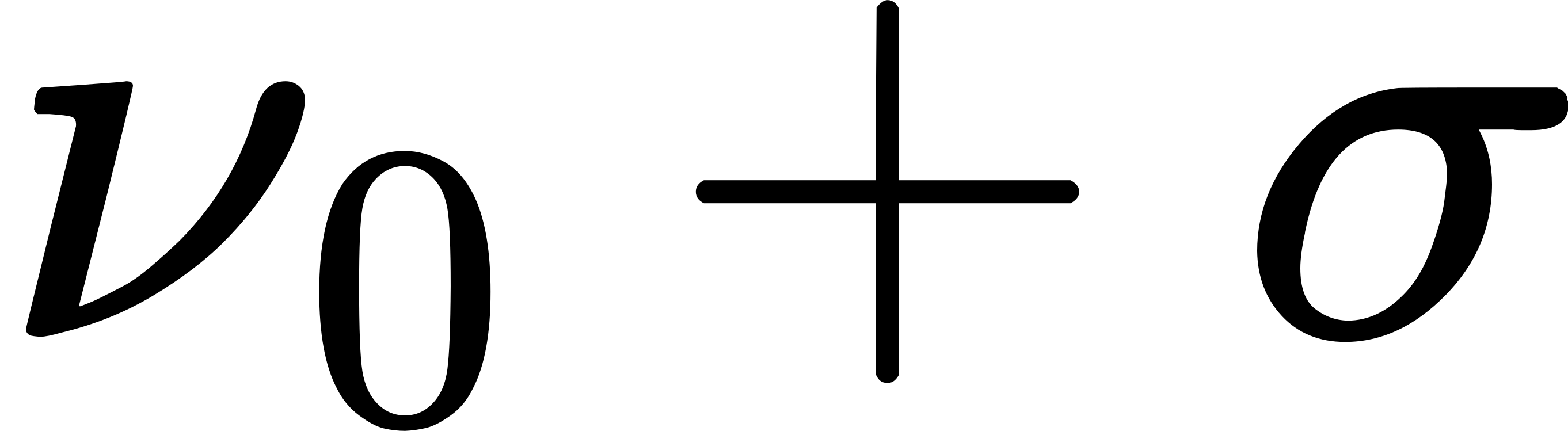 and
and 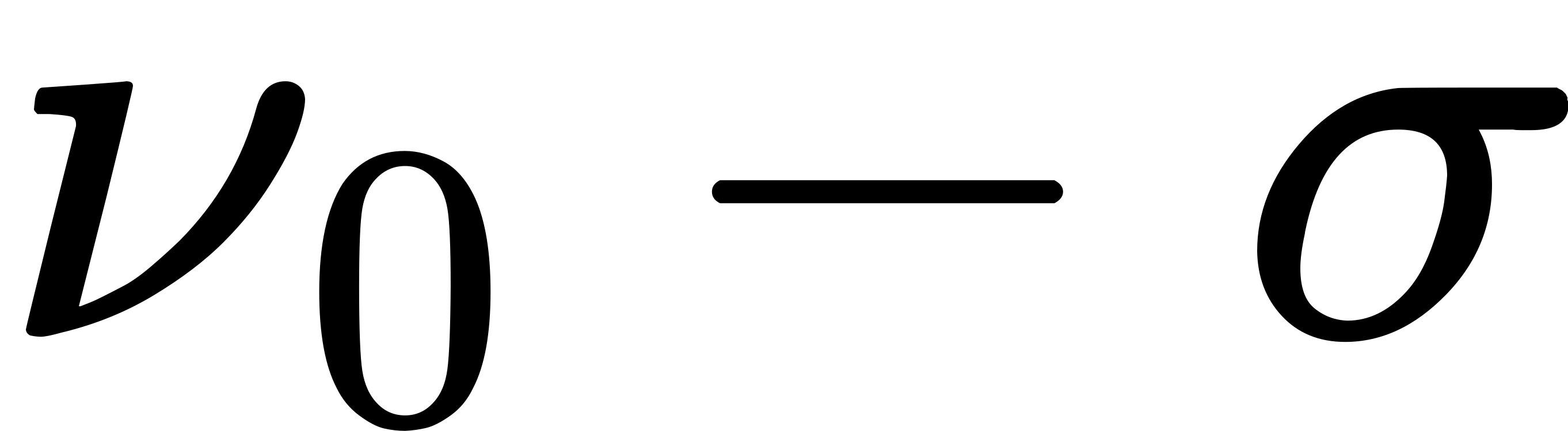 respectively.
These results agree with those of the familiar Lorentz theory. The
similarity in the two theories is remarkable, when we recall the
fundamental difference between the ideas of the quantum theory and the
ordinary theories of radiation.
respectively.
These results agree with those of the familiar Lorentz theory. The
similarity in the two theories is remarkable, when we recall the
fundamental difference between the ideas of the quantum theory and the
ordinary theories of radiation.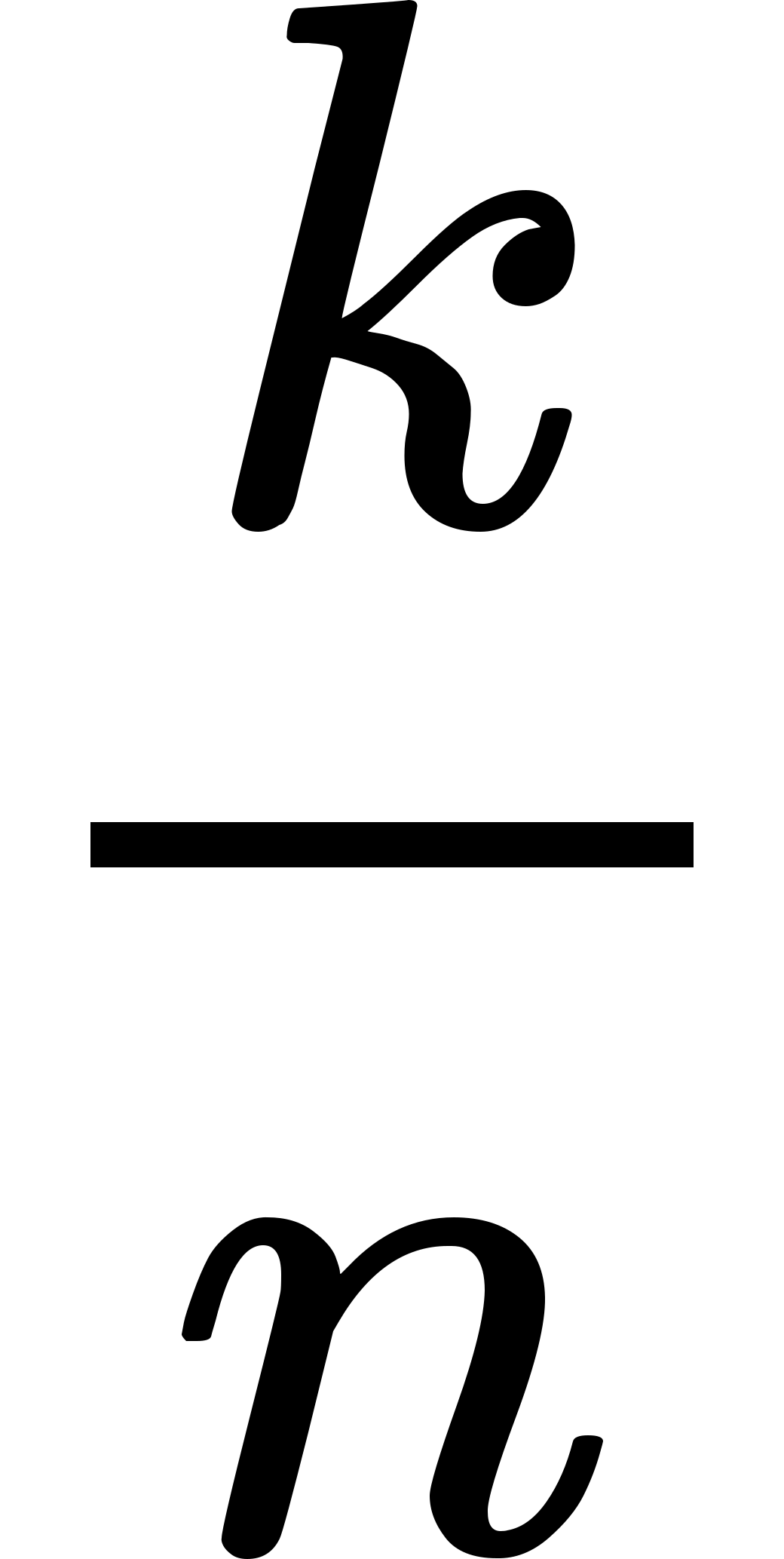 times half the major axis of the orbit. In the case of a magnetic
field it is found that the quantity which determines the change of
energy of the system is the area of the projection of the orbit upon a
plane perpendicular to the magnetic force. In the various stationary
states this area is equal to
times half the major axis of the orbit. In the case of a magnetic
field it is found that the quantity which determines the change of
energy of the system is the area of the projection of the orbit upon a
plane perpendicular to the magnetic force. In the various stationary
states this area is equal to 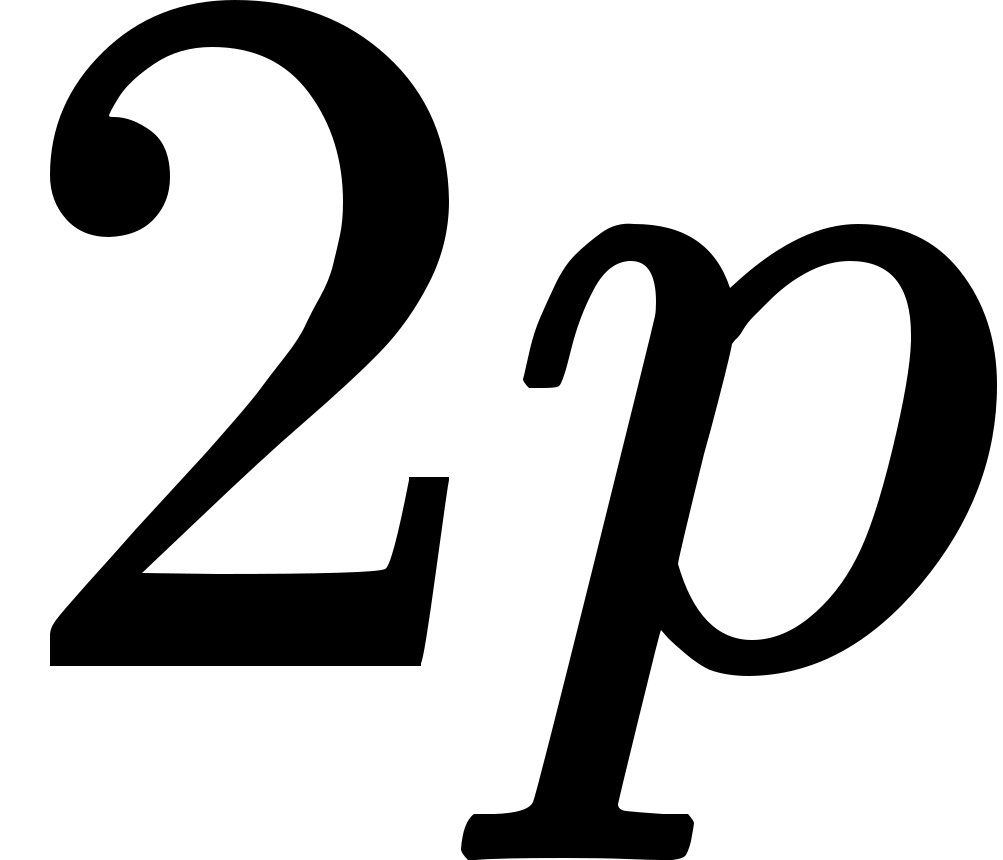 of the elliptical orbit is given by an
expression of exactly the same form as that which gives the major axis
of the elliptical orbit is given by an
expression of exactly the same form as that which gives the major axis
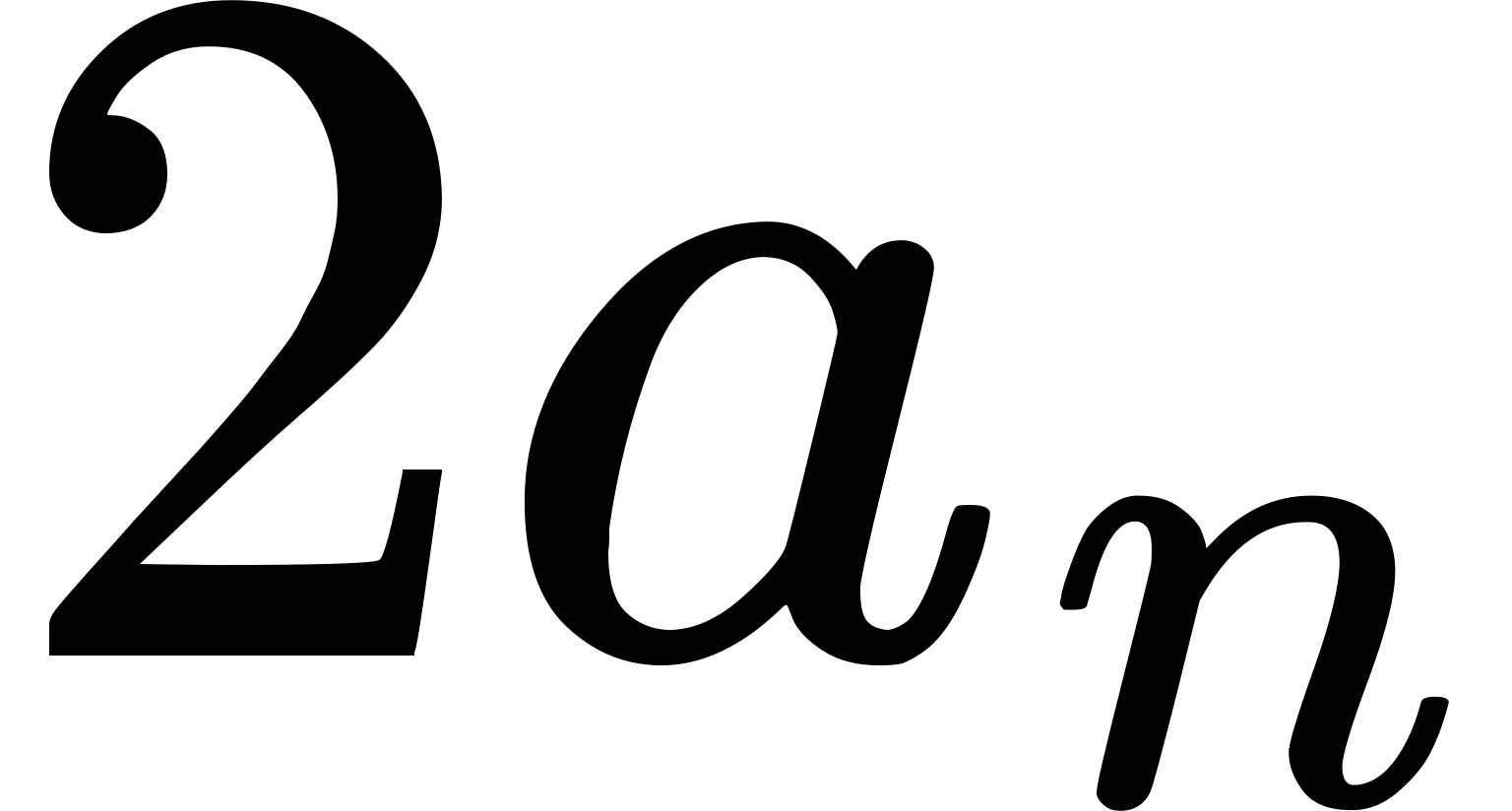 in (17) is that
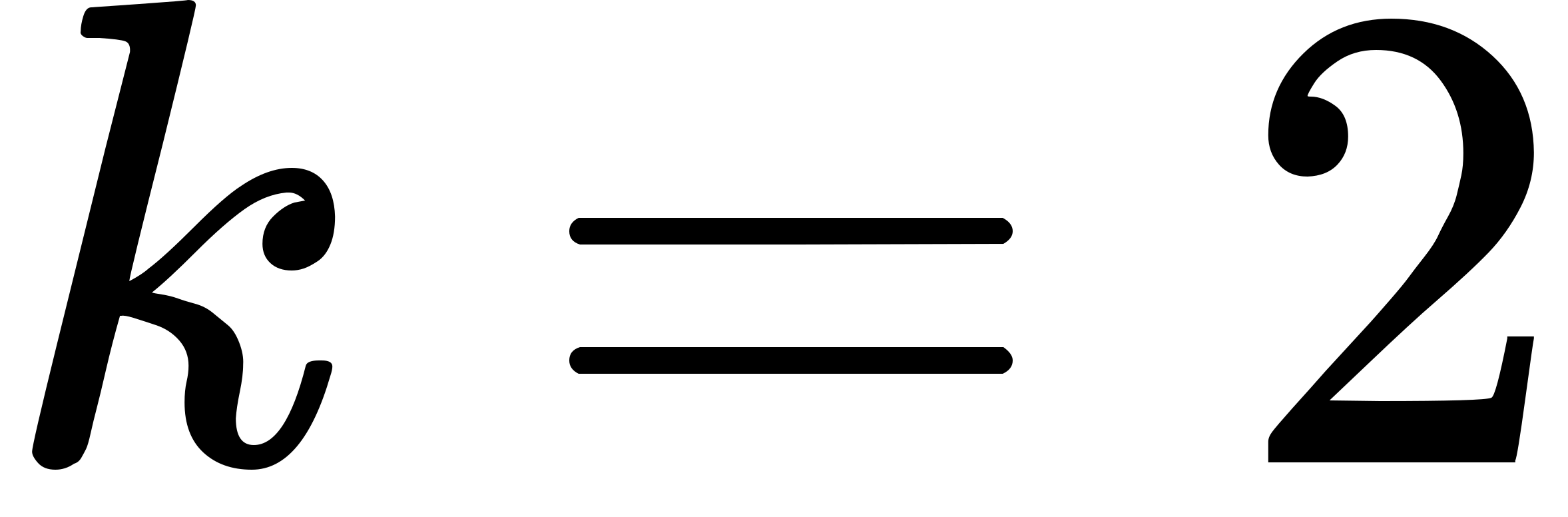 ,
, or
or  .
. and the angular momentum
  of the
radiation emitted during a certain time are connected by the relation
of the
radiation emitted during a certain time are connected by the relation

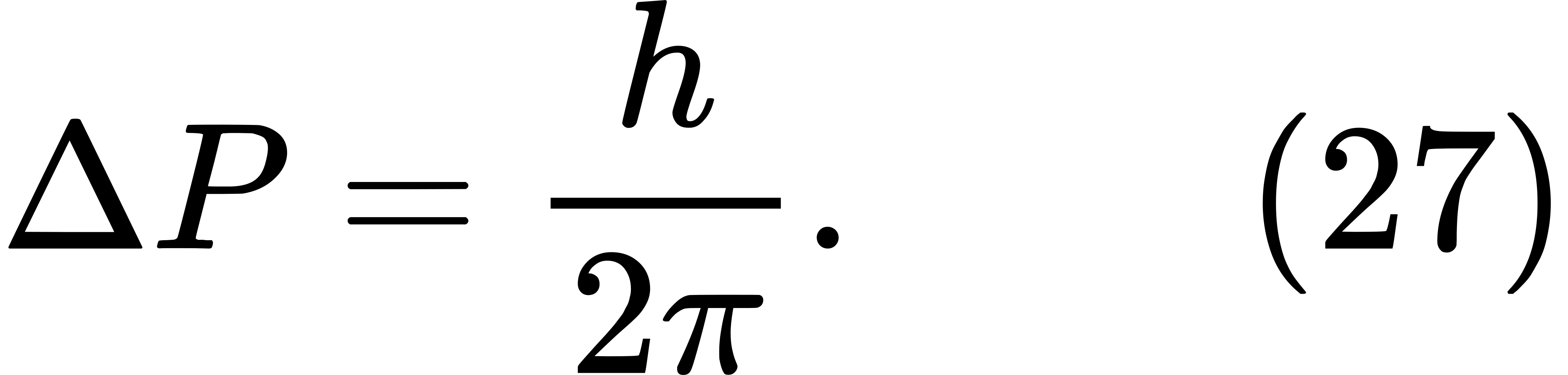
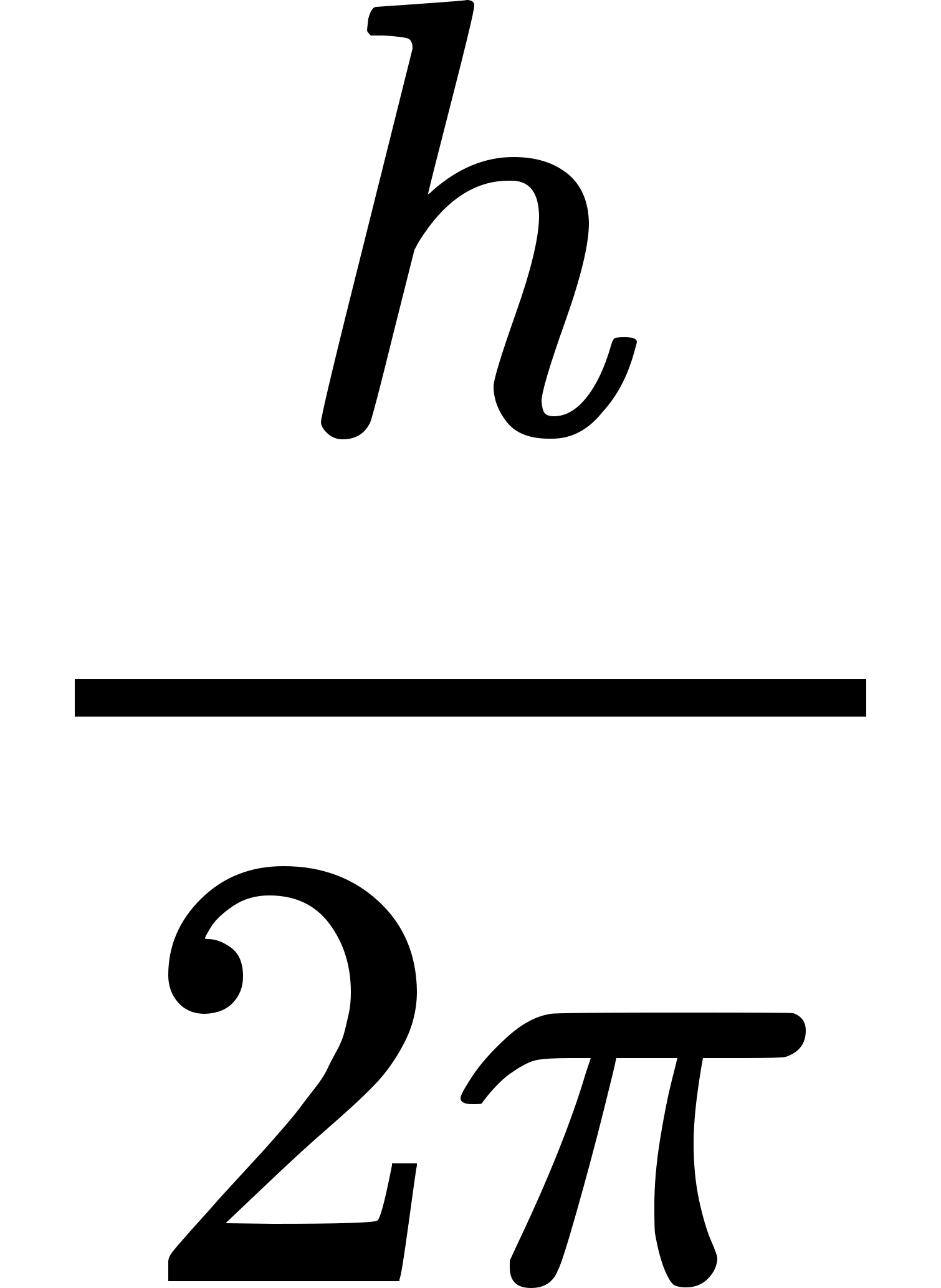 ,
,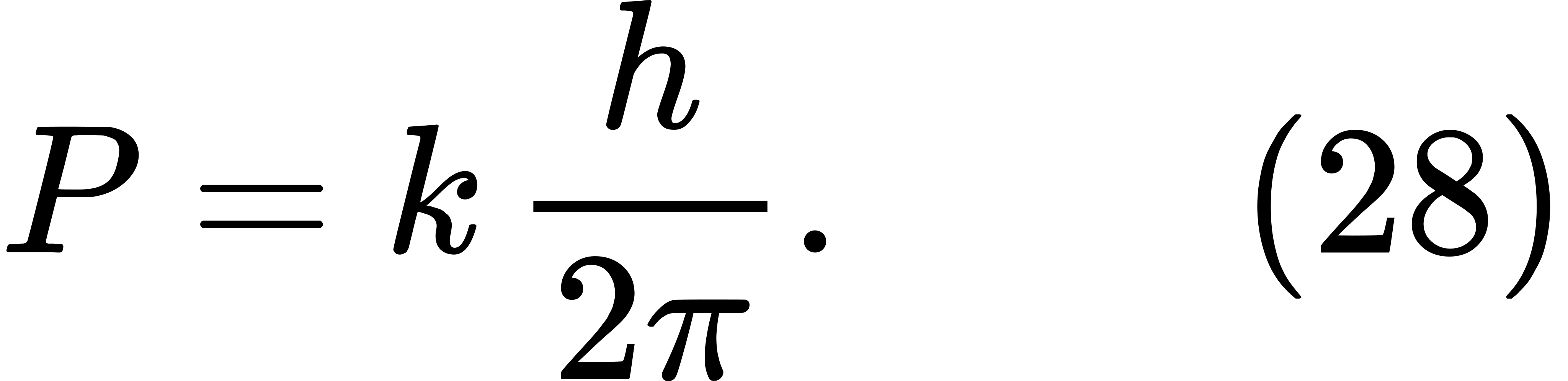
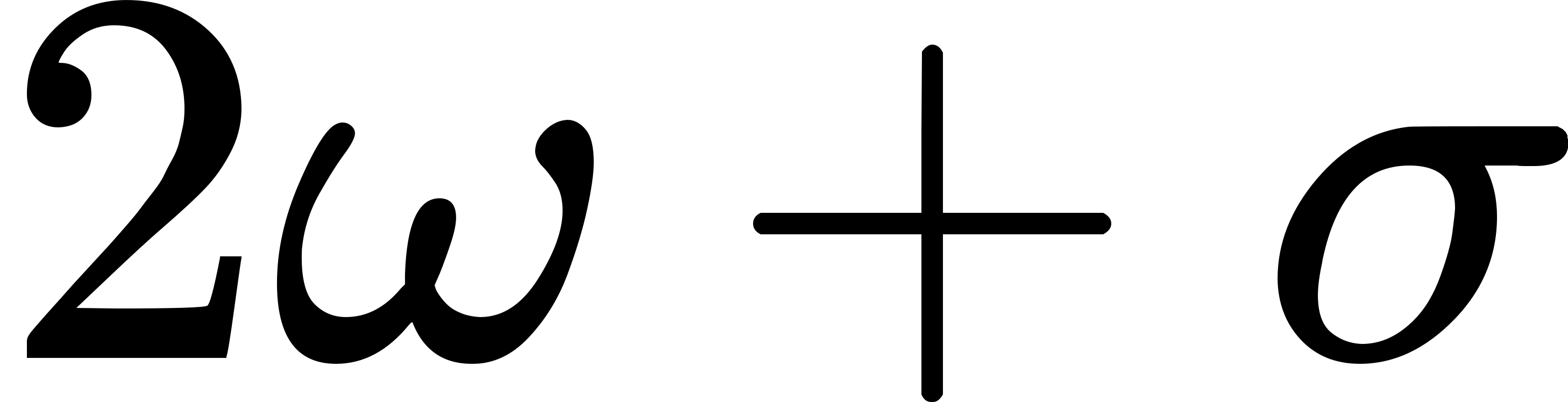 ,
, and
and  ,
,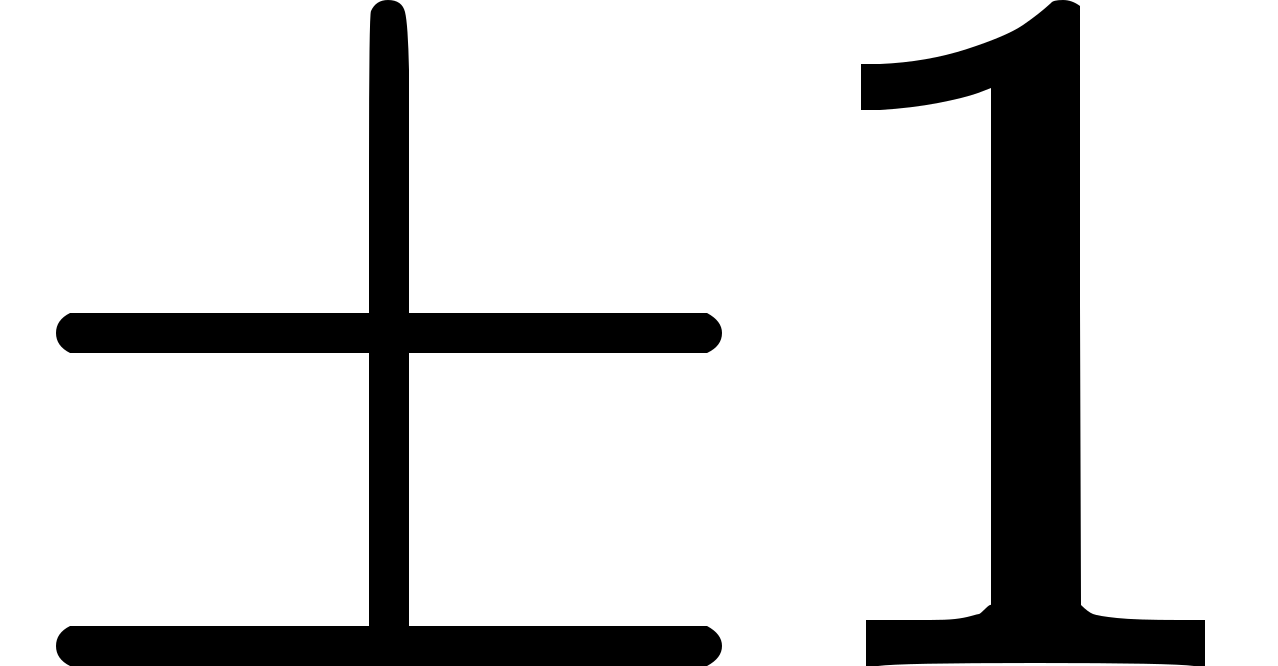 .
.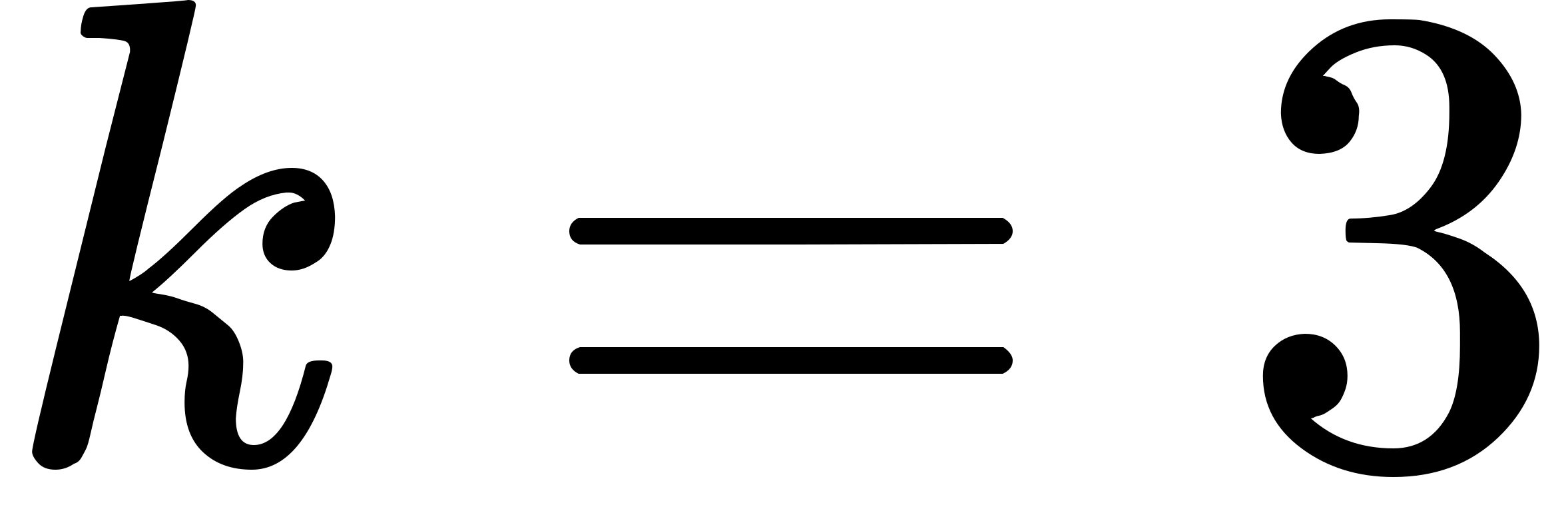 )
)

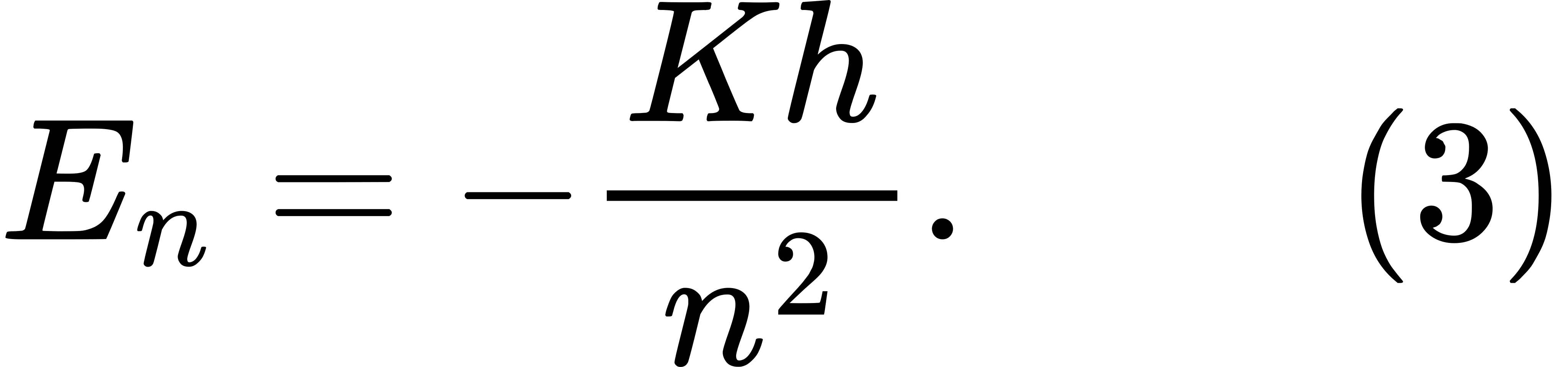
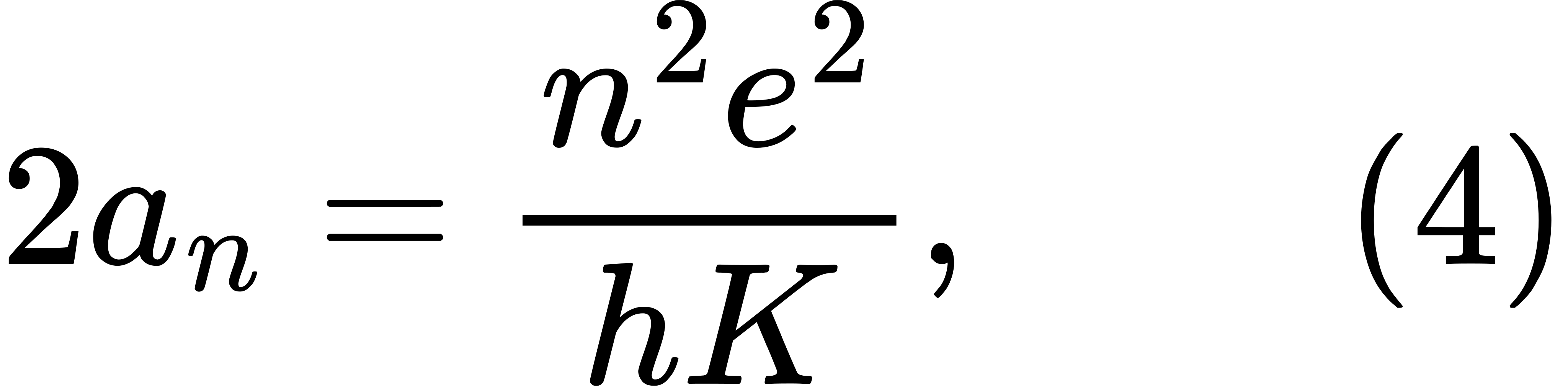

 ,
,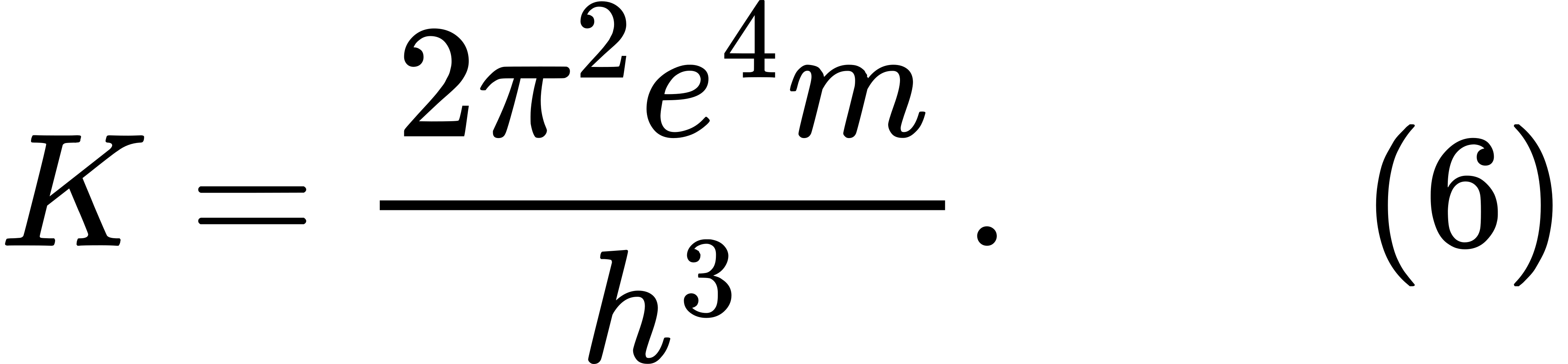
 which corresponds to an atom consisting of an electron
revolving around a nucleus with a double charge, we get values for the
energies in the stationary states, which are four times larger than
the energies in the corresponding states of the hydrogen atom, and we
obtain the following formula for the spectrum which would be emitted by
such an atom:
which corresponds to an atom consisting of an electron
revolving around a nucleus with a double charge, we get values for the
energies in the stationary states, which are four times larger than
the energies in the corresponding states of the hydrogen atom, and we
obtain the following formula for the spectrum which would be emitted by
such an atom:


 the
atomic number. The great significance of this discovery lies in the
fact that it would seem firmly to establish the view that this atomic
number is equal to the number of electrons in the atom. This assumption
had already been used as a basis for work on atomic structure and was
first stated by van den Broek. While the significance of this aspect of
Moseley's discovery was at once clear to all, it has on the other hand
been more difficult to understand the very great similarity between
the spectrum of hydrogen and the X-ray spectra. This similarity is
shown, not only by the lines of the
the
atomic number. The great significance of this discovery lies in the
fact that it would seem firmly to establish the view that this atomic
number is equal to the number of electrons in the atom. This assumption
had already been used as a basis for work on atomic structure and was
first stated by van den Broek. While the significance of this aspect of
Moseley's discovery was at once clear to all, it has on the other hand
been more difficult to understand the very great similarity between
the spectrum of hydrogen and the X-ray spectra. This similarity is
shown, not only by the lines of the  group may be represented by a formula which with a simplification
similar to that employed in formula (8) can be written
group may be represented by a formula which with a simplification
similar to that employed in formula (8) can be written

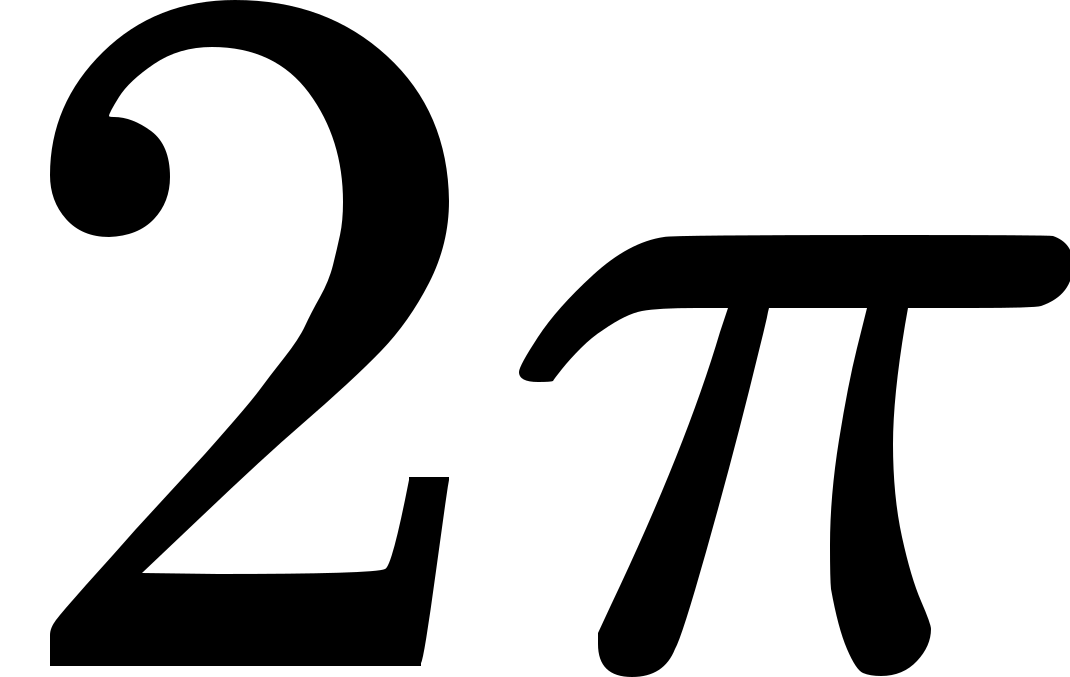 .
.

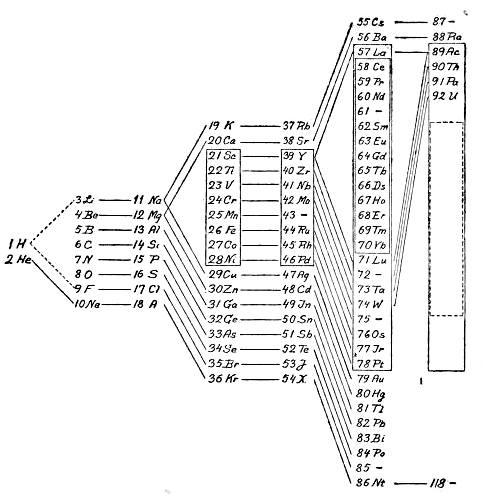

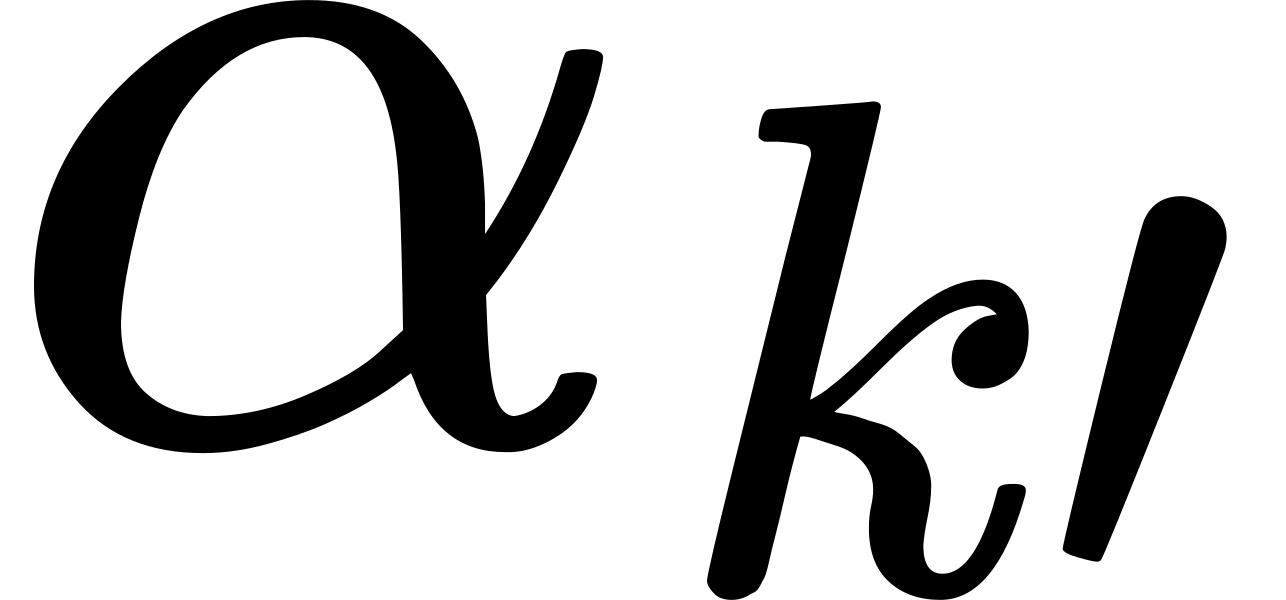 and
and  are two constants belonging to a set characteristic of the element. A
spectrum with a structure of this kind is, like the hydrogen spectrum,
called a series spectrum, since the lines can be arranged into series
in which the frequencies converge to definite limiting values. These
series are for example represented by formula (12) if, using two
definite constants for
are two constants belonging to a set characteristic of the element. A
spectrum with a structure of this kind is, like the hydrogen spectrum,
called a series spectrum, since the lines can be arranged into series
in which the frequencies converge to definite limiting values. These
series are for example represented by formula (12) if, using two
definite constants for  are not considered as constants, but as representatives
of a set of series of numbers
are not considered as constants, but as representatives
of a set of series of numbers 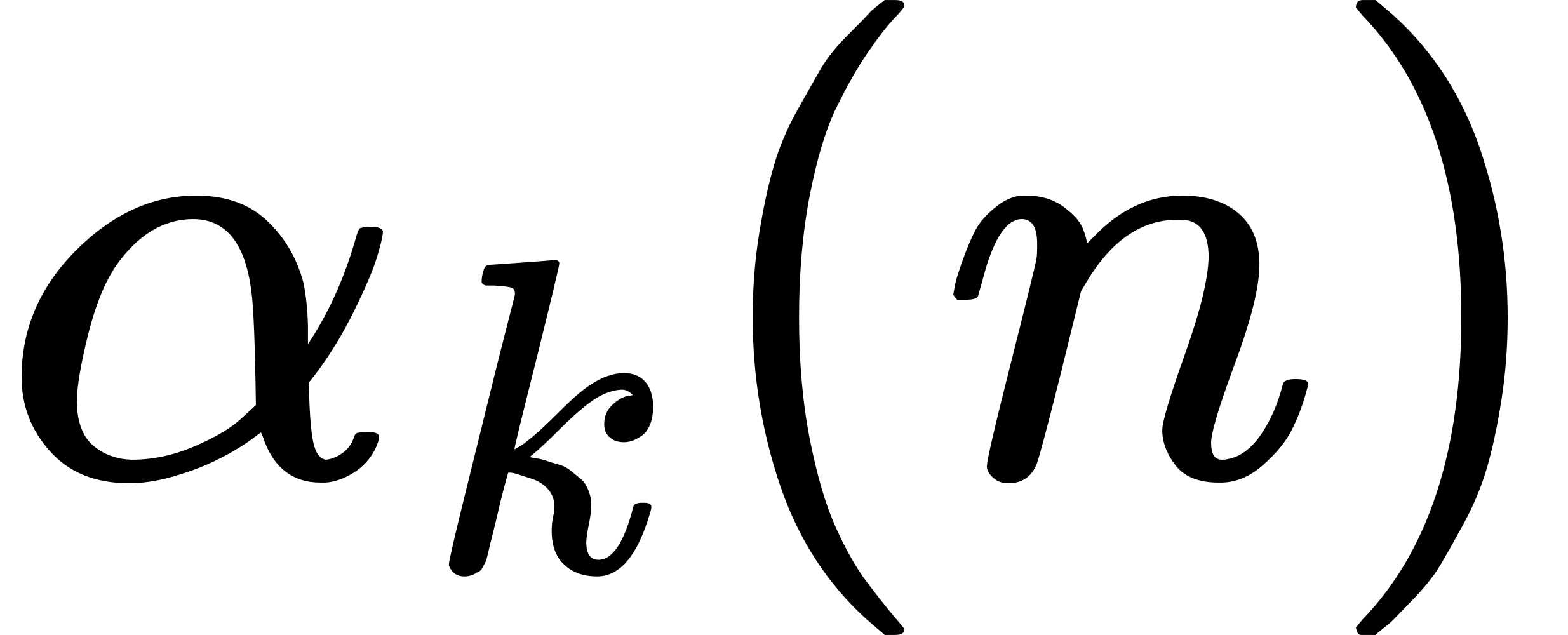 characteristic of the
element, whose values for increasing
characteristic of the
element, whose values for increasing 
 .
.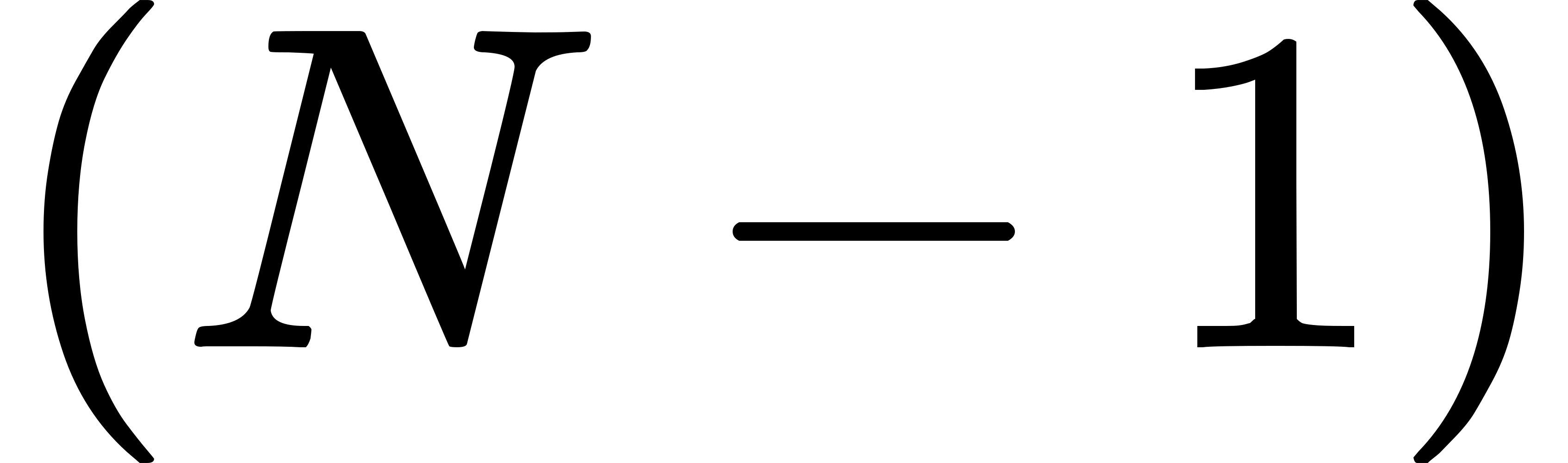 th electron. In these
cases the field of force in which the electron moves will be much
the same as that surrounding the nucleus of a hydrogen or helium atom
respectively, at least in the earlier stages of the binding process,
where during the greater part of its revolution it moves at a distance
from the nucleus which is large in proportion to the dimensions of the
orbits of the electrons previously bound. From analogy with formula (3)
giving the stationary states of the hydrogen atom, we shall therefore
assume that the numerical value of the expression on the right-hand
side of (13) will be equal to the work required to remove the last
captured electron from the atom, the binding of which gives rise to the
arc spectrum of the element.
th electron. In these
cases the field of force in which the electron moves will be much
the same as that surrounding the nucleus of a hydrogen or helium atom
respectively, at least in the earlier stages of the binding process,
where during the greater part of its revolution it moves at a distance
from the nucleus which is large in proportion to the dimensions of the
orbits of the electrons previously bound. From analogy with formula (3)
giving the stationary states of the hydrogen atom, we shall therefore
assume that the numerical value of the expression on the right-hand
side of (13) will be equal to the work required to remove the last
captured electron from the atom, the binding of which gives rise to the
arc spectrum of the element.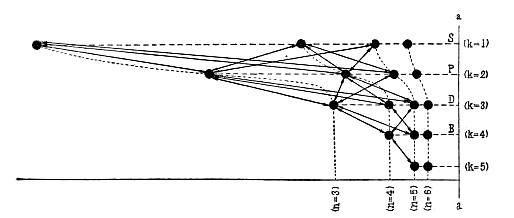
 .
. ,
, .
.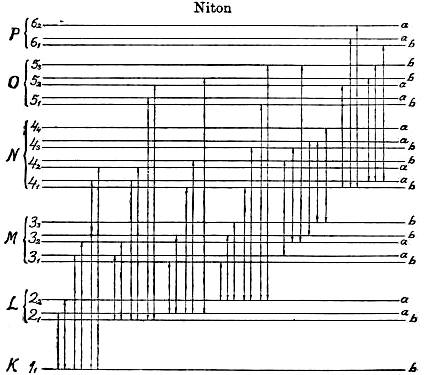
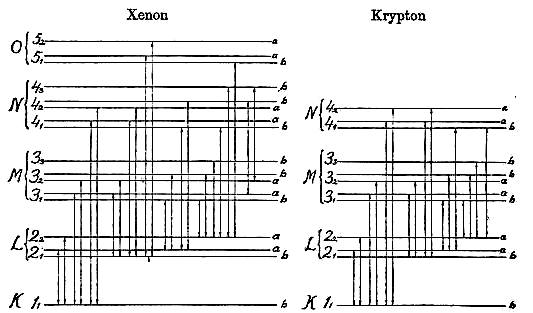
 and
and  refer to the rules of combination which I
mentioned. According to these rules the possibility of combination is
limited (1) by the exclusion of combinations, for which
refer to the rules of combination which I
mentioned. According to these rules the possibility of combination is
limited (1) by the exclusion of combinations, for which