A complex full-page chart, ‘TABULAR GEOLOGICAL PROFILE’, appeared
as p. 3, in mid-paragraph, and has been moved slightly forward.
It is presented here as a single image. The
link provided below the chart will direct the reader to a text
rendition, found at the end of the text.
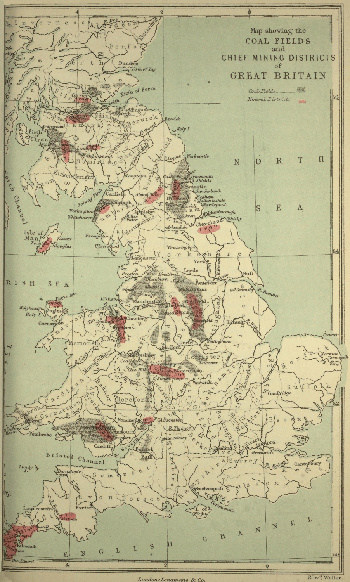
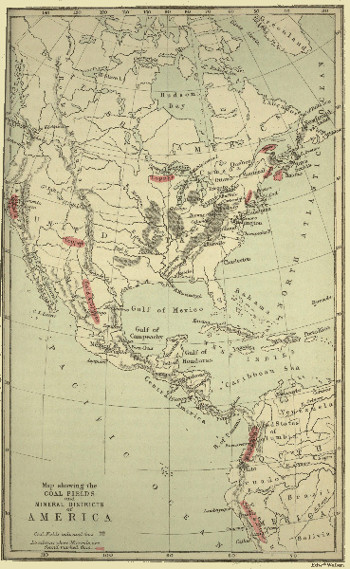
There are also a number of large maps. Each one is
represented in the text by reduced size version, with a [Larger view] link
associated with it. This can be used to access a larger, more useful image.
In general, the position of illustrations have been adjusted slightly,
where necessary, to avoid falling in mid-paragraph.
Minor errors in punctuation and formatting have been silently
corrected. Please see the transcriber’s note at the end of this
text for details regarding the handling of any textual issues
encountered during its preparation.
THE
SUBTERRANEAN WORLD.
LONDON: PRINTED BY
SPOTTISWOODE AND CO., NEW-STREET SQUARE
AND PARLIAMENT STREET
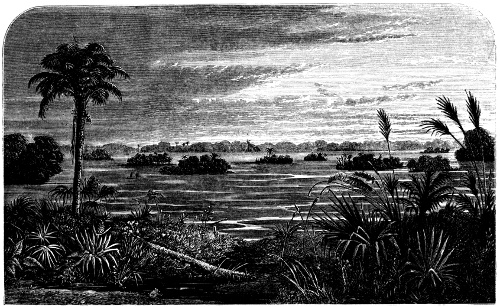
CARBONIFEROUS FOREST, CARBONIFEROUS PERIOD.
BY
DR. GEORGE HARTWIG,
AUTHOR OF
‘THE SEA AND ITS LIVING WONDERS,’ ‘THE TROPICAL WORLD,’ ‘THE POLAR WORLD,’
AND ‘THE HARMONIES OF NATURE.’
WITH THREE MAPS AND NUMEROUS ENGRAVINGS ON WOOD.
NEW YORK:
SCRIBNER, WELFORD, AND CO.
1871.
PREFACE.
v
Nature displays her wonders not only in the
starry heavens or in the boundless variety of
animal and vegetable life on the surface of our earth.
In the dark regions underground she likewise shows
us much that is remarkable or beautiful, or carries
on gigantic operations, which are sometimes beneficent
and sometimes disastrous to mankind.
There lie concealed the mysterious laboratories of
fire, which reveal to us their existence in earthquakes
and volcanic explosions. There, in successive strata,
repose the remains of extinct animals and plants.
There many a wonderful cavern may be seen, with its
fantastic stalactites, its rushing waters, and its noble
halls. There have been deposited the rich stores of
mineral wealth—the metals, the coals, the salt, the
sulphur, &c.—without whose aid man would never
have been more than a savage.
The aim of the present work has been to describe the
wonders of this hidden world in their various relations
vito man, now raising him to wealth, and now dooming
him to destruction.
The author trusts that he may have succeeded in
giving a sketch of the phenomena resulting from the
action of subterranean forces, which, with his account
of the wonders of the sea, of the tropics, and of the
frozen regions, may impart to the reader a fair idea of
the history and present condition of the wonderful
world in which we live.
Salon, near Ludwigsburg:
July 6, 1871.
CONTENTS.
vii
CHAPTER I.
GEOLOGICAL REVOLUTIONS.
The Eternal Strife between Water and Fire—Strata of Aqueous Origin—Tabular View of their Chronological Succession—Enormous Time required for their Formation—Igneous Action—Metamorphic Rocks—Upheaval and Depression—-Fossils—Uninterrupted Succession of Organic Life
General Remarks—Eozoon Canadense—Trilobites—Brachiopods—Pterichthys Milleri—Oldest Reptiles—Wonderful Preservation of Colour in Petrified Shells—Primæval Corals and Sponges—Sea-lilies—Orthoceratites and Ammonites—-Belemnites—Ichthyosaurus and Plesiosaurus—Pterodactyli—Iguanodon—Tertiary Quadrupeds—Dinotherium—Colossochelys Atlas—Megatherium—Mylodon—Glyptodon—Mammoth—Mastodon—Sivatherium Giganteum—Fossil Ripple-marks, Rain-drops, and Footprints—Harmony has reigned from the beginning
Zone of invariable Temperature—Increasing Temperature of the Earth at a greater Depth—Proofs found in Mines and Artesian Wells, in Hot Springs and Volcanic Eruptions—The whole Earth probably at one time a fluid mass
Oscillations of the Earth’s Surface taking place in the present day—First ascertained in Sweden—Examples of Contemporaneous Upheaval and Depression in France and England—Probable Causes of the Phenomenon
Subterranean Distribution of the Waters—Admirable Provisions of Nature—Hydrostatic Laws regulating the Flow of Springs—Thermal Springs—Intermittent Springs—The Geysir—Bunsen’s Theory—Artesian Wells—Le Puits de Grenelle—Deep Borings—Various Uses of Artesian Wells—Artesian Wells in Venice and in the Desert of Sahara
Volcanic Mountains—Extinct and active Craters—Their Size—Dangerous Crater-explorations—Dr. Judd in the Kilauea Pit—Extinct Craters—Their Beauty—The Crater of Mount Vultur in Apulia—Volcanoes still constantly forming—Jorullo and Isalco—Submarine Volcanoes—Sabrina and Graham’s Island—Santorin—Number of Volcanoes—Their Distribution—Volcanoes in a constant state of eruption—Stromboli—Fumaroles—The Lava-lakes of Kilauea—Volcanic Paroxysms—Column of Smoke and Ashes—Detonations—Explosion of Cones—Disastrous Effects of Showers of Ashes and Lapilli—Mud Streams—Fish disgorged from Volcanic Caverns—Eruptions of Lava—Parasitic Cones—Phenomena attending the Flow of a Lava Stream—Baron Papalardo—Meeting of Lava and Water—Scoriæ—Lava and Ice—Vast Dimensions of several Lava Streams—Scenes of Desolation—Volcanoes considered as Safety-valves—Probable Causes of Volcanoes
State of Vesuvius before the eruption in the year 79 A.C.—Spartacus—Premonitory Earthquakes—Letter of Pliny the Younger to Tacitus, relating the death of his uncle, Pliny the Elder—Benevolence of the Emperor Titus—Herculaneum and Pompeii buried under a muddy alluvium—Herculaneum first discovered in 1713
Carbonic-acid Springs—Grotto del Cane—The Valley of Death in Java—Exaggerated Descriptions—Carburetted Hydrogen Springs—The Holy Fires of Baku—Description of the Temple—Mud Volcanoes—The Macaluba in Sicily—Crimean Mud Volcanoes—Volcanic Origin of Mud Volcanoes
Extent of Misery inflicted by great Earthquakes—Earthquake Regions—Earthquakes in England—Great Number of Earthquakes—Vertical and Undulatory Shocks—Warnings of Earthquakes—Sounds attending Earthquakes—Remarkable Displacements of Objects—Extent and Force of Seismic Wave Motion—Effects of Earthquakes on the Sea—Enormous Waves on Coasts—Oscillations of the Ocean—Fissures, Landslips, and shattering Falls of Rock caused by Earthquakes—Causes of Earthquakes—Probable Depth of Focus—Opinions of Sir Charles Lyell and Mr. Poulett Scrope—Impressions produced on Man and Animals by Earthquakes
A dreadful All Saints’ Day—The Victims of a Minute—Report of an Eye-witness—Conflagration—Banditti—Pombal brings Chaos into Order—Intrigues of the Jesuits—Damages caused by the Earthquake in other places; at Cadiz; in Barbary—Widespread Alarm—Remarks of Goethe on the Earthquake
Igneous and Aqueous Causes of Landslips—Fall of the Diablerets in 1714 and 1749—Escape of a Peasant from his living Tomb—Vitaliano Donati on the Fall of a Mountain near Sallenches—The Destruction of Goldau in 1806—Wonderful Preservation of a Child—Burial of Velleja and Tauretunum, of Plürs and Scilano—Landslip near Axmouth in Dorsetshire—Falling in of Cavern-roofs—Dollinas and Jamas in Carniola and Dalmatia—Bursting of Bogs—Crateriform Hollows in the Eifel
Their various Forms—Natural Tunnels—The Ventanillas of Gualgayoc—Eimeo—Torgatten—Hole in the Mürtschenstock—The Trebich Cave—Grotto of Antiparos—Vast Dimensions of the Cave of Adelsberg and of the Mammoth Cave—Discovery of Baumann’s Cave—Limestone Caves—Causes of their Excavation—Stalactites and Stalagmites—Their Origin—Variety of Forms—Marine Caves—Shetland—Fingal’s Cave—The Azure Cave—Cave under Bonifacio—Grotta di Nettuno, near Syracuse—The Bufador of Papa Luna—Volcanic Caves—The Fossa della Palomba—Caves of San Miguel—The Surtshellir
The Fountain of Vaucluse—The Fontaine-sans-fond—The Katabothra in Morea—Subterranean Rivers in Carniola—Subterranean Navigation of the Poik in the Cave of Planina—‘The Stalactital Paradise’—The Piuka Jama
Subterranean Vegetation—Fungi—Enormous Fungus in a Tunnel near Doncaster—Artificial Mushroom-beds near Paris—Subterranean Animals—The Guacharo—Wholesale Slaughter—Insects in the Cave of Adelsberg—The Leptodirus and the Blothrus—The Stalita tænaria—The Olm or Proteus—The Lake of Cirknitz—The Archduke Ferdinand and Charon—The Blind Rat and the Blind Fish of the Mammoth Cave
The Cave of Adullam—Mahomet in the Cave of Thaur—The Cave of Longara—The Cave of Egg—The Caves of Rathlin—The Cave of Yeermalik—The Caves of Grenada—Aben Aboo, the Morisco King—The Caves of Gortyna and Melidoni—Atrocities of French Warfare in Algeria—The Caves of the Dahra—The Cave of Shelas—St. Arnaud
St. Paul of Thebes—St. Anthony—His visit to Alexandria, and death—Numerous Cave Hermits in the East—St. Benedict in the Cave of Subiaco—St. Cuthbert—St. Beatus—Rock Temples of Kanara—The Wonders of Ellora—Ipsamboul—Rock Churches of Lalibala in Abyssinia—The Cave of Trophonios—The Grotto of St. Rosolia near Palermo—The Chapel of Agios Niketas in Greece—The Chapel of Oberstein on the Nahe—The repentant fratricide
Ice-caves of St. Georges and St. Livres—Beautiful Ice-stalagmites in the Cave of La Baume—The Schafloch—Ice Cataract in the Upper Glacière of St. Livres—Ice Cavern of Eisenerz—The Cave of Yeermalik—Volcanic Ice-caves—Æolian Caverns of Terni—Causes of the low temperature of Ice-caves
Biban-el-Moluk, the Royal Tombs of Thebes—The Roman Catacombs—Their Extent—Their Mode of Excavation—Touching Sepulchral Inscriptions—Antony Bosio, the Columbus of the Catacombs—The Cavaliere di Rossi—The Catacombs of Naples and Syracuse—The Catacombs of Paris
The Peat Mosses of Denmark—Shell-Mounds—Swiss Lacustrine Dwellings—Ancient Mounds in the Valley of the Mississippi—The Caves in the Valley of the Meuse—Dr. Schmerling—Human Skulls in the Cave of Engis—Explorations of Sir Charles Lyell in the Cave of Engihoul—Caverns of Brixham—Caves of Gower—The Sepulchral Grotto of Aurignac—Flint Implements discovered in the Valley of the Somme—Gray’s Inn Lane an ancient Hunting-Ground for Mammoths
xiiPerils of the Miner’s Life—Number of Casualties in British and Foreign Coal Mines—Life in a Mine—Occurrence of Ores—Extent and Depth of Metallic Veins—Mines frequently discovered by Chance—The Divining Rod—Experimental Borings—Stirring Emotions during their Progress—Sinking of Shafts—Precautions against Influx of Water—Expense—Shaft Accidents—Various Methods of working Mineral Substances—Working in Direct and Reverse Steps—Working by Transverse Attacks—Open Quarry Workings—Pillar and Stall System—Long Wall System—Dangerous Extraction of Pillars—Mining Implements—Blasting—Heroes in Humble Life—Firing in the Mine of Rammelsberg—Transport of Minerals Underground—Modern Improvements—Various Modes of Descent—Corfs—Wonderful Preservation of a Girl at Fahlun—The Loop—Safety Cage—Man Machines—Timbering and Walling of Galleries—Drainage by Adit Levels—Remarkable Adits—The Great Cornish Adit—The Georg Stollen in the Hartz—The Ernst August Stollen—Steam Pumps—Drowning of Mines—Irruption of the Sea into Workington Colliery—Hubert Goffin—Irruption of the River Garnock into a Mine—Ventilation of Mines—Upcast Shafts—Fire Damp—Dreadful Explosions—The Safety Lamp—The Choke Damp—Conflagrations of Mines—The Burning Hill in Staffordshire
The Golden Fleece—Golden Statues in ancient Temples—A Free-thinking Soldier—Treasures of ancient Monarchs—First Gold Coins—Ophir—Spanish Gold Mines—Bohemian Gold Mines—Discovery of America—Siberian Gold Mines—California—Marshall—Rush to the Placers—Discovery of Gold in Australia—The Chinaman’s Hole—New El Dorados—Alluvial Gold Deposits in California and Australia—Washing—Quartz-crushing
Its ancient Discovery—Its Uses among the luxurious Romans—The Mines of Laurium—Silver Mines of Bohemia, Saxony, and Hungary—Colossal Nuggets—Silver Ores—Silver Production of Europe—Mexican Silver Mines—The Veta Madre of Guanaxuato—The Conde de la Valenciana—Zacatecas and Catorce—Adventures of a Steam Engine—La Bolsa de Dios Padre—The Conde de la Regia—Ill-fated English Companies—Indian Carriers—The Dressing of Silver Ores—Amalgamating Process—Enormous Production of Mexican Mines—Potosi—Cerro de Pasco—Gualgayoc—The Mine of Salcedo—Hostility of the Indians—The Monk’s Rosary—Chilian Mines—The Comstock Lode
Its valuable Qualities—English Copper Mines—Their comparatively recent Importance—Dreary Aspect of the Cornwall Copper Country—Botallack—Submarine Copper Mines—A Blind Miner—Swansea—Smelting Process—The Mines of Fahlun—their Ancient Records—Alten Fjord—Drontheim—The Mines of Röraas—The Mines of Mansfeldt—Lake Superior—Mysterious Discoveries—Burra Burra—Remarkable Instances of Good Fortune in Copper Mining
Tin known from the most remote antiquity—Phœnician Traders—The Cassiterides—Diodorus Siculus—His account of the Cornish Tin Trade—The Age of Bronze—Valuable Qualities of Tin—Tin Countries—Cornish Tin Lodes—Tin Streams—Wheal Vor—A Subterranean Blacksmith—Huel Wherry, a Tin Mine under the Sea—Carclaze Tin Mine—Dressing of Tin Ores—Smelting—The Cornish Miner
Iron the most valuable of Metals—Its wide Diffusion over the Earth—Meteoric Iron—Iron very anciently known—Extension of its Uses in Modern Times—British Iron Production—Causes of its Rise—Hot Blast—Puddling—Coal Smelting—The Cleveland District—Rapid Rise of Middlesborough—British Iron Ores—Production of Foreign Countries—The Magnetic Mountain in Russia—The Eisenerz Mountain in Styria—Dannemora—Elba—The United States—The Pilot Knob—The Cerro del Mercado
Its Properties and extensive Uses—Alston Moor—Belgian Lead Mines—Galena in America—Extraction of Silver from Lead Ores—Pattinson’s Process—A great part of our wealth is due to the laboratory
Not considered as a true Metal by the Ancients—Its Properties and Uses—Almaden—Formerly worked by Convicts—Diseases of the Miners—Idria—Its Discovery—Conflagration of the Mine—Its Produce—Huancavelica—New Almaden
Zinc—The Ores, but not the Metal, known to the Ancients—Rapid increase of its Production—Chief Zinc-producing Countries—Platinum—Antimony—Bismuth—Cobalt and Nickel—Wolfram—Arsenic—Chrome—Manganese—Cadmium—Titanium—Molybdenum—Aluminium—Aluminium Bronze—Magnesium—Sodium—Palladium—Rhodium—Thallium
The Age of Coal—Plants of the Carboniferous Age—Hugh Miller’s Description of a Coal Forest—Vast Time required for the Formation of the Coal-fields—Derangements and Dislocations—Faults—Their Disadvantages and Advantages—Bituminous Coals—Anthracites—Our Black Diamonds—Advantageous Position of our Coal-Mines—The South Welsh Coal-field—Great Central and Manchester Coal-fields—The Whitehaven Basin and the Dudley Area—Newcastle and Durham Coal-fields—Costly Winnings—A Ball in a Coal-pit—Submarine Coal Mines—Newcastle—View from Tynemouth Priory—Hewers—Cutting Machines—Putters—Onsetters—Shifters—Trapper-boys—George Stephenson—Rise of Coal Production—Probable Duration of our Supply—Prussian Coal Mines—Belgian Coal Mines—Coal Mines in various other countries—Maunch Chunck
Formation of Petroleum—Enormous Production of the Pennsylvanian Wells—Asphalte used by the Ancients—Asphalte Pavements—The Pitch Lake of Trinidad—Jet—Its Manufacture in Whitby
Geological Position of Rock Salt—Mines of Northwich—Their immense Excavations—Droitwich and Stoke—Wieliczka—Berchtesgaden and Reichenhall—Admirable Machinery—Stassfurt—Processes employed in the Manufacture of Salt—Origin of Rock-salt Deposits
Sulphur Mines of Sicily—Conflagration of a Sulphur Mine—The Solfataras of Krisuvick—Iwogasima in Japan—Solfatara of Puzzuoli—Crater of Teneriffe—Alaghez—Büdöshegy in Transylvania—Sulphur from the Throat of Popocatepetl—Sulphurous Springs—Pyrites—Mines of San Domingo in Portugal—The Baron of Pommorão
Various Modes of its Collection on the Prussian Coast—What is Amber?—The extinct Amber Tree—Insects of the Miocene Period inclosed in Amber—Formidable Spiders—Ancient and Modern Trade in Amber
Carrara—The Pentelikon—The Parian Quarries—Rosso antico and Verde antico—The Porphyry of Elfdal—The Gypsum of Montmartre—The Alabaster of Volterra—The Slate Quarries of Wales—‘Princesses’ and ‘Duchesses’—‘Ladies’ and ‘Fat Ladies’—St. Peter’s Mount near Maestricht—Egyptian Quarries—Haggar Silsilis—The Latomiæ of Syracuse—A Triumph of Poetry
Diamonds—Diamond Cutting—Rose Diamonds—Brilliants—The Diamond District in Brazil—Diamond Lavras—The great Russian Diamond—The Regent—The Koh-i-Noor—Its History—The Star of the South—Diamonds used for Industrial Purposes—The Oriental Ruby and Sapphire—The Spinel—The Chrysoberyl—The Emerald—The Beryl—The Zircon—The Topaz—The Oriental Turquoise—The Garnet—Lapis Lazuli—The Noble Opal—Inferior Precious Stones—The Agate-Cutters of Oberstein—Rock Crystal—The Rock-crystal Grotto of the Galenstock
The Eternal Strife between Water and Fire—Strata of Aqueous Origin—Tabular
View of their Chronological Succession—Enormous Time required for their
Formation—Igneous Action—Metamorphic Rocks—Upheaval and Depression—Fossils—Uninterrupted
Succession of Organic Life.
Geology teaches us that, from times of the remoteness
of which the human mind can form no conception, the
surface of the earth has been the scene of perpetual change,
resulting from the action and counter-action of two mighty
agents—water and subterranean heat.
Ever since the first separation between the dry land and
the sea took place, the breakers of a turbulent ocean, the
tides and currents, the torrents and rivers, the expansive
power of ice, which is able to split the hardest rock, and the
grinding force of the glacier, have been constantly wearing
away the coasts and the mountains, and transporting
the spoils of continents and islands from a higher to a
lower level.
During our short historical period of three or four thousand
years, the waters, in spite of their restless activity and
the considerable local changes effected by their means, have
indeed produced no marked alteration in the great outlines
of the sea and land; but when we consider that their influence
has extended over countless ages, we can no longer
wonder at the enormous thickness of the stratified rocks of
aqueous origin which, superposed one above the other in
successive layers, constitute by far the greater part of the
earth-rind.
Our knowledge of these sedimentary formations is indeed
as yet but incomplete, for large portions of the surface of the
globe have never yet been scientifically explored; but a
2careful examination and comparison of the various strata
composing the rocky foundations of numerous countries, have
already enabled the geologist to classify them into the
following chronological systems or groups, arranged in an
ascending series, or beginning with the oldest.
1. Laurentian, named from its discovery northward of the River St. Lawrence in Canada.
2. Cambrian 3. Silurian 4. Devonian
}
These three groups owe their name to their occurrence in Wales and Devonshire, where they were first scientifically explored.
5. Carboniferous. In this group the most important coal-fields are found.
6. Permian, from the Russian province of Permia.
7. Triassic.
8. Lias.
9. Oolite.
10. Cretaceous.
11. Tertiary: subdivided into Eocene, Miocene, and Pliocene.
12. Recent marine and lacustrine strata.
Each of these systems consists again of numerous sections
and alternate layers, sometimes of marine, sometimes of
freshwater formation, the mere naming of which would
fill several pages.
When we reflect that the Laurentian system alone has a
thickness of 30,000 feet; that many of the numerous subdivisions
of the Triassic or Oolitic group are 600, 800, or
even several thousand feet thick, and that each of these
enormous sedimentary formations owes its existence to the
disintegration of pre-existing mountain masses—we can
form at least a faint notion of the enormous time which the
whole system required for its completion.
Had the levelling power of water never met with an antagonistic
force, there can be no doubt that the last remains of the
dry land, supposing it could ever have risen above the ocean,
must long since have been swept into the sea. But while
water has been constantly tending to reduce the irregularities
of the earth’s surface to one dull level, the expansive force
of subterranean heat has been no less unceasingly active in
4restoring the unevenness of the external crust by the ejection
or protrusion of new masses of stone (porphyry, trachyte,
basalt, lava, &c.), and by the consequent disturbance, in a
variety of ways, of the stratified rocks.
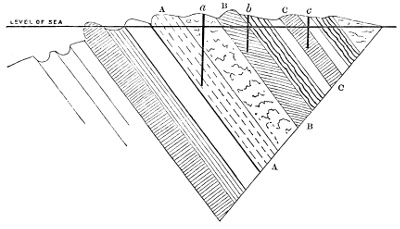
AQUEOUS STRATA DISTURBED BY IGNEOUS FORMATIONS.
B C D, aqueous strata, originally horizontal, raised by protrusion of A, granitic rock.
Plutonic and volcanic eruptions and upheavings, in their
reaction against the levelling tendencies of water, have in
many places deranged, broken, fractured, contorted, or
raised strata deposited in horizontal layers at the bottom of
the sea, or of large inland lakes. Sometimes a huge mass of
crystalline rock, glowing from the furnaces of the deep, has,
by its irresistible expansion, slowly forced its way through
the superincumbent sedimentary formations, which, yielding
to the pressure from below, now form vast mountain slopes,
or vertical rock walls, or have even been so totally inverted
that strata of a more ancient formation now overlie those of
more modern date, and excite the wonder of the puzzled
geologist.
Sometimes, also, volcanic eruptions, repeated through a
long lapse of ages and constantly accumulating lavas and
cinders, have at length piled up large islands, such as Iceland
or Madeira, which now raise their summits thousands
of feet above the ocean.
But subterranean fire, and its assistant, steam, have not
only produced vast mechanical changes; they have also been
the frequent causes of great chymical metamorphoses in the
rocks subjected to their action. To the calcining, decomposing,
and vapour-generating effects of heat, we trace the origin of
the marble of Carrara, of alabaster, of gypsum, and all those
5various species of stone which geologists include under the
name of metamorphic rocks.
Besides the more paroxysmal and violent revolutions
resulting from the action of subterranean fire, we find that
the earth-rind has at all times been subject to slow oscillatory
movements of upheaval and subsidence, frequently alternating
on the same spot with long periods of rest. The greater part of
the actual dry land has been deep sea, and then again land
and ocean many times in succession; and doubtless the actual
sea bottom would exhibit similar alternations were we able to
explore it. The same materials have repeatedly been exposed
to all these changes—now raised or poured out by
subterraneansubterranean fires, and then again swept away by the
waters; now changed from solid rock into sand and mud,
and then again converted, by pressure or heat, into solid rock.
Thus the history of the earth-rind opens to us a vista into
time no less grand and magnificent than the vista into space
afforded by the contemplation of the starry heavens.
The oldest and the newest stratified rocks are composed
of the same mineral substances; for clay, sandstone, and
limestone occur in the Silurian and in the Carboniferous
formation; in the Cretaceous and Triassic systems; in the
Tertiary and in the Alluvial deposits, which have immediately
preceded the present epoch.
Where then, it may be asked, does the geologist find a
chronological guide to lead him through the vast series of
strata which, in the course of countless ages, have been
deposited in the water? How is he able to distinguish the
boundaries of the various periods of creation? Where are
the precise indications which enable him to decipher the
enigmas which the endless feuds of fire and water have
written in the annals of our globe?
The fossil remains of animals and plants wonderfully
furnish the guidance which he needs. The corals and
shells, the ferns and conifera, the teeth and bones found in
the various strata of the earth-rind are the landmarks which
point out to him his way through the labyrinth of the primitive
ages of our globe, as the compass directs the mariner
over the pathless sea. Every leading fossil has its fixed
chronological character, and thus the age of the formation
6in which it occurs may be ascertained, and its place determined
in the geological scale. It would, however, be erroneous
to suppose that each successive formation has been
the seat of a totally distinct creation, and that the organic
remains found in one particular stratum are separated by an
impassable barrier from those which characterise the preceding
or following sedimentary deposits.
As on the surface of the earth or along the shores of the
sea, each land or each coast has not only its peculiar plants or
animals, but also harbours many of the organic forms of the
neighbouring countries or conterminous shores; as the tropical
organisations gradually pass into those of the temperate zones,
and these again merge into those of the polar regions, so also
the stream of life has from the first flowed uninterruptedly,
in gradually changing forms, through every following age.
New genera and species have arisen, and others have disappeared,
some after a comparatively short duration, others
after having outlasted several formations; but every extinct
form has but made way for others, and thus each period has
not only witnessed the decay of many previously flourishing
genera and species, but has also marked a new creation.
No doubt the numerous local disturbances above mentioned
have frequently broken the chain of created beings; but a
gradual progress from related to related forms, a continuous
development from lower to more highly organised species,
genera, orders, and classes, has from the beginning been
the general and constant law of organic life. Universal
destructions of existing forms, revolutions covering the whole
surface of the earth with ruin, have most assuredly never
occurred in the annals of our globe.
Nor must it be supposed that the whole scale of sedimentary
formations is to be found superimposed in one spot;
for as in our times new strata are chiefly growing at the
mouths of rivers, or where submarine currents deposit at the
bottom of the ocean the fine mud or sand which is conveyed
into the sea by the disintegration of distant mountain chains,
so also from the beginning each stratum could only have
been deposited in similar localities; and while it was slowly
increasing, and not seldom acquiring colossal dimensions in
some parts of the globe, others remained comparatively but
7little altered, until new oscillatory movements produced a
change in their former position, and opening new paths to
the rolling waters, here set bounds to the progress of one
formation, and there favoured the deposition of another.
A complete study of all the various transformations by fire
or water which the surface of our earth has undergone would
require an elaborate treatise of geology, and lies far beyond
the scope or the pretensions of a popular volume which is
chiefly devoted to the description of caves and mines. But
I should be neglecting some of the most interesting features
of the subterranean world, were I to omit all mention of the
fossils imbedded in its various strata; of its internal heat;
of the upheavals and subsidences which have played so conspicuous
a part in the history of the earth-rind, and are still
proceeding at the present day; of the water percolating or
flowing beneath the earth’s crust, and finally of the volcanoes
and earthquakes, which prove to us that the ancient subterranean
fires, far from being extinct, are still as powerful
as ever in remodelling its surface.
CHAPTER II. FOSSILS.
8
General Remarks—Eozoon Canadense—Trilobites—Brachiopods—Pterichthys
Milleri—Oldest Reptiles—Wonderful Preservation of Colour in Petrified
Shells—Primæval Corals and Sponges—Sea-lilies—Orthoceratites and
Ammonites—Belemnites—Ichthyosaurus and Plesiosaurus—Pterodactyli—Iguanodon—Tertiary
Quadrupeds—Dinotherium—Colossochelys
Atlas—Megatherium—Mylodon—Glyptodon—Mammoth—Mastodon—Sivatherium
Giganteum—Fossil Ripple-marks, Rain-drops, and Footprints—Harmony has
reigned from the beginning.
The fossil remains of plants and animals, which have
successively flourished, and passed away since the first
dawn of organic life, occupy a prominent place among the
wonders of the subterranean world. A medal that has survived
the ruin of empires is no doubt a venerable relic, but
it seems to have been struck but yesterday when compared
with a shell or a leaf that has been buried millions of years
ago in the drift of the primeval ocean, and now serves the
geologist as a waymark through the past epochs of the
earth’s history.
AMMONITES HENLEYI (MIDDLE LIAS).
If we examine the condition in which the fossils have
been preserved in the strata successively deposited on the
surface of our globe, we find that in general only parts of
the original plant or animal have escaped destruction, and
in these fragments also the primitive substance has often
been replaced by other materials, so that only their form or
their impression has triumphed over time. While soft and
delicate textures have either been utterly swept away, or could
only be preserved under the rarest circumstances (as, for
instance, the insects and flowers inclosed in amber), a greater
degree of hardness or solidity naturally gave a better chance
of escaping destruction. Thus among plants the most frequent
fossil-remains are furnished by stems, roots, branches,
9fruit-stones, leaves; and, among animals, by corals, shells,
calcareous crusts, teeth, scales, and bones. But the few
memorials that have thus survived the lapse of ages enable
us to form some idea of the multitudes that have entirely
perished; and the petrified shell of the Ammonite, or the
jointed arms of the Encrinite, are proofs of the existence of
the world of tiny beings which served them for their nourishment
and have been utterly swept away. If we consider
that the number of all the known species of fossil plants
hardly amounts to 3,000, while the Flora of the present day,
as far as it has been examined by systematical botanists,
numbers at least 250,000 species; that the host of living
insects is probably still more numerous, although not much
more than 1,500 extinct species of this class are known to us;
and that, finally, the remains of all the extinct crustaceous
fishes, reptiles, and warm-blooded animals are far outnumbered
by the species actually living—we may form some idea
of the vast multitudes that have left no trace behind, and
whose total loss will for ever confine within narrow limits our
knowledge of the past phases of organic creation. This loss
appears still greater when we consider the enormous extent
of time during which the fossils known to us have successively
existed, and that a part only of the comparatively small number
of the orders, genera, and species to which they belong
existed at one and the same epoch. But as, owing to the
hard texture and mode of life which are so eminently favourable
for the preservation of shells, we have been enabled to
collect about 11,000 fossil species, a number not much
10inferior to that of the molluscs of the present day, we may
justly conclude that the more perishable forms of life, of
which, consequently, fewer vestiges have been preserved,
were comparatively as numerous, and that ever since the
first dawn of organic life our earth has borne an immense
variety of plants and animals.
Though comparatively but few species have been preserved,
yet sometimes the accumulation of fossil remains is truly
astonishing. In the carboniferous strata we not seldom find
more than one hundred beds of coal interstratified with
sandstones, shales, and limestones, and extending for miles
and miles in every direction. How luxuriant must have
been the growth of the forests that could produce masses
such as these, and what countless multitudes of herbivorous
insects must have fed upon their foliage or afforded food to
carnivorous hordes scarcely less numerous than themselves!
The remains of corals, encrinites, and shells often form the
greater part of whole mountain ranges, and, what is still
more remarkable, mighty strata of limestone or flint are not
seldom almost entirely composed of the aggregated remains
of microscopical animals.
After these remarks on fossils in general, I will now
briefly point out some of the most striking of the species so
preserved to us as they successively appeared upon the stage
of life.
In the Lower Laurentian Rocks, the most ancient strata
known, only one fossil has hitherto been found. The Eozoon
canadense, as it has been called, belonged to the Rhizopods,
which occupy about the lowest grade in the scale of animal
existence. Its massive skeletons, composed of innumerable
cells, would seem to have extended themselves over submarine
rocks, their base upwards of twelve inches in width and their
thickness from four to six inches. Such is the antiquity of
the Eozoon that the distance of time which separated it
from the Trilobites of the Cambrian formation may be equal
to the vast period which elapsed between these and the Tertiary
ages. In other words, it is beyond our imagination to
conceive.
TRILOBITE.
MAGNIFIED EYE OF TRILOBITE.
In the next following Cambrian formation we find, besides
some zoophytes and shells, a number of Trilobites, which,
11however, appear to have been most abundant in the Silurian
seas, where they probably swarmed as abundantly as the
crabs and shrimps in the waters of the present age. Few
fossils are more curious than these strange crustaceans,
which so widely differ from their modern relatives. The
jointed carapace is divided into three lobes, the middle prominent
one forming the axis of the body, while the lateral
ones were free appendages, under which the soft membranaceous
swimming feet were concealed. Large eyes, resembling
those of a dragon-fly, projected from the odd crescent-shaped
head, and, being composed of many hundred spherical facets,
commanded a wide view of the horizon. Provided with such
complicated organs of vision, the helpless animal could betimes
perceive the approaching enemy, or more easily espy
its prey, consisting, most likely, of the smaller marine annelides
or molluscs. From the structure of these remarkable
eyes we may conclude that the waters of the old Cambrian
or Silurian Ocean were as limpid as those of the present
seas, and that the natural relations of light to the eye and of
the eye to light cannot have greatly changed since that
period. Many, if not all, of the Trilobites were capable of
rolling themselves up into a ball, like wood-lice; and accordingly
it is found that in many of them the contour of
the head and tail is so constructed that they fit accurately
when rolled up. Most probably the Trilobites either swam
in an inverted position, the belly upwards, or crawled slowly
12along at the bottom of the shallow coast waters, where they
lived gregariously in vast numbers.
PTERYGOTUS ACUMINATUS (EURYPTERID).
SPIRIFER PRINCEPS (BRACHIOPOD).
Contemporaneous with the Trilobites were the Eurypterids,
which vary from one foot to five or six feet in length. One
of the most striking characteristics of this remarkable order
of crustaceans is the formidable pair of pincers with which
they were armed. As their whole structure shows them to
have been active swimmers, they must have made considerable
havoc among the smaller fry of the Devonian and
Silurian seas.
Then also abounded in hundreds of species the Brachiopods,
a class of molluscs now but feebly represented by a scanty
remnant. The greater part of the interior of the shell, consisting
of two unequal valves, is occupied with branching
13arms, furnished with cilia, which cause a constant current
to flow towards the mouth of the mollusc, and thus provide
for its nourishment. The arms, as in the family of the
Spiriferidæ, are sometimes supported by calcareous skeletons,
arranged like loops or spirals.
Some Brachiopods are attached to stones, like oysters;
in others the larger valve is perforated, and a sinewy kind of
foot, passing through the aperture, serves as a holdfast to
the animal.
Most of these helpless creatures did not survive the Carboniferous
period, but the Terebratulæ, which still have their
representatives in the modern seas, existed even then, so
that their genealogical tree may justly boast of a very high
antiquity.
The fishes, of which the oldest known specimen has been
found in the Upper Silurian group (Lower Ludlow), become
more frequent in the next following Devonian epoch, where
they appear in a variety of wonderful forms, widely different
from those of the present day. While in nearly all the
existing fishes the scales are flexible, and generally either of
a more or less circular form (cycloid), as in the salmon,
herring, roach, &c., or provided with comb-like teeth, projecting
from the posterior margin (ctenoid), as in the sole or
perch, the fishes of the Devonian, Permian, and Carboniferous
periods were decked with hard bony scales, either covered
with a brilliant enamel, as in our sturgeons (ganoid), and
arranged in regular rows, the posterior edges of each slightly
overlapping the anterior ones of the next, or irregular in
their shape, and separately imbedded in the skin (placoid),
as in the sharks and rays of the present day. With rare
exceptions their skeleton was cartilaginous; but the less perfect
ossification of their bones was amply compensated by the
solid texture of their enamelled coat of mail, which afforded
them a better protection against enemies and injuries from
without than is possessed by any bony-skeletoned fish of our
days. They were, in fact, comparatively as well prepared
for a hostile encounter as an ancient knight in armour, or as
one of our modern iron-plated war ships. One of the most
remarkable of these mail-clad Ganoids was the Pterichthys
Milleri of the Old Red Sandstone of Scotland. In most of
14our fishes the pectoral fins are but weakly developed; here
they constitute real arms, moved by strong muscles, and
resembling the paddle of the turtle.
PTERICHTHYS MILLERI—RESTORED. (OLD RED SANDSTONE OF SCOTLAND.)
Besides the enormous masses of vegetable matter which
distinguish the Carboniferous period, the stone beds of that
formation likewise contain a vast number of animal remains.
From the reptiles and fishes down to the corals and sponges,
many new families, genera, and species crowd upon the
scene, while many of the previously flourishing races have
either entirely disappeared, or are evidently declining. Thus
the Trilobites, formerly so numerous, are reduced to a few
species in the Carboniferous period, and vanish towards its
close.
In 1847 the oldest known reptiles were found in the coal
field of Saarbrück, in the centre of spheroidal concretions of
15clay iron-stone, which not only faithfully preserved the
skulls, teeth, and the greater portions of the skeletons of these
ancient lizards, but even a large part of their skin, consisting
of long, narrow, wedge-shaped, tile-like, and horny
scales, arranged in rows. What a lesson for human pride!
The pyramid of the Pharaoh Cheops, reared by the labour of
thousands of slaves, has been unable to preserve his remains
from spoliation even for the short space of a few thousand
years, and here a vile reptile has been safely imbedded in a
sarcophagus of iron ore during the vast period of many
geological formations.
Still more recently (1854) other wonders have been brought
to light in the clay iron-stone of Saarbrück. The wing of a
grasshopper, with all its nerves as distinctly marked as if
the creature had been hopping about but yesterday, some
white ants or termites (now confined to the warmer regions
of the globe), a beetle, and several cockroaches, give us some
idea of the insects that lived at the time when our coal-beds
were forming. Another highly interesting circumstance, relating
to the fossils of that distant period, is that in several of
them the patterns of their colouring have been preserved. Thus
Terebratula hastata often retains the marks of the original
coloured stripes which ornamented the living shell. In
Aviculopecten sublobatus dark stripes alternate with a light
ground, and wavy blotches are displayed in Pleurotomaria
carinata. From these facts Professor Forbes inferred that
the depth of the seas in which the Mountain Limestone was
formed did not exceed fifty fathoms, as in the existing seas
the Testacea, which have shells and well-defined patterns,
rarely inhabit a greater depth.
The Magnesian Limestone or Permian group is remarkable
chiefly for the vast number of fishes that have been found in
some of its members, such as the marl slate of Durham and the
Kupferschiefer, or copper slate, of Thuringia. From the curved
form of their impressions, as if they had been spasmodically
contracted, the fossil fish of the latter locality are supposed to
have perished by a sudden death before they sank down into
the mud in which they were entombed. Probably the copper
which impregnates the stratum in which they occur is connected
with this phenomenon. Mighty volcanic eruptions
16corrupted the water with poisonous metallic salts, and destroyed
in a short time whole legions of its finny inhabitants.
VENTRICULITES—FOSSIL SPONGE (CHALK).
From the earliest ages the corals play a conspicuous part
in fossil history; and as in our days we find them encircling
islands and fringing continents with huge ramparts of limestone,
so many an ancient reef, now far inland, and raised
several thousand feet above the level of the sea, bears witness
to the vast terrestrial changes that have taken place since it
was first piled up by the growth of countless zoophytes.
With regard to the dimensions of the fossil corals we do
not find that any of them exceeded in size their modern
relatives; but their construction was widely different.
17The fossil sponges of the primitive seas are likewise very
unlike those of the present day.
Thus in all the ancient strata we find abundant spongidæ
with a stony skeleton, while all the modern sponges possess
a horny frame. The Petrospongidæ, or stone sponges, which
have long since disappeared, are frequently shapeless masses;
but a large number are cup-shaped, with a central tubular
cavity, lined, as well as the outer surface, with pores more or
less regularly arranged.
ENCRINUS LILIIFORMIS. (Muschelkalk, Germany.)
PENTACRINUS BRIAREUS.
The Crinoids, or Sea-lilies, now almost entirely extinct, were
extremely common in the primeval seas. Unlike our modern
sea-stars, to which they are allies, they did not move about
18freely from place to place, but were affixed, like flowers, to a
slender flexible stalk, composed of numerous calcareous joints
connected together by a fleshy coat. The Carboniferous
Mountain Limestone is loaded with their remains, and the
Encrinus liliiformis is one of the leading fossils of the Muschelkalk
of the Triassic group. The Pentacrinus briareus is
of more modern date, and occurs in tangled masses, forming
thin beds of considerable extent in the Lower Lias. This
beautiful Crinoid, with its innumerable tentacular arms,
appears to have been frequently attached to the drift wood
of the Liassic sea, like the floating barnacles of the present
day. In the still more recent Chalk group is found a remarkable
form of star-fish, the Marsupites ornatus, which
resembles in all respects the Crinoids,
except that it is not and never was
provided with a stem. It seems to
have been rolled lazily to and fro, by
the influence of the waves, at the bottom
of the sea, and to have been anchored in
its place by the action of gravity alone.
MARSUPITES ORNATUS. CHALK.
Of all the changes that have taken
place in organic life, none perhaps are
more remarkable than the transformations
which the Cephalopod molluscs have
undergone during the various geological
eras. In the more ancient Palæozoic seas
flourished the Orthoceratites, or straight-chambered
shells, resembling a nautilus
uncoiled. In the Carboniferous
ages the Goniatites acquired their highest development.
These shells were spirally wound, having the lobes of the
chambers free from lateral denticulations or crenatures, so as
to form continuous and uninterrupted outlines.
Both Orthoceratites and Goniatites disappear in the
Triassic times, and are replaced by hosts of Ammonites, which
successively flourished in more than 600 species, and are
characterised by an external siphon and chambers of complicated,
often foliated, pattern. This foliated structure gives
a remarkable character to the intersection of the chamber
partitions with the shell, and must have added greatly to the
19strength of the shell, which was always delicate and often
very beautiful. The Ammonites, which made their first
appearance towards the end of the Triassic period, abounded
in the Oolitic and Cretaceous periods, and were replaced by
new forms before the Tertiary beds were deposited. Among
these we find the Ancyloceras gigas, which may be regarded
as an Ammonite partially unrolled, and the Turrilites tuberculatus,
which has the form and peculiar symmetry of a
univalve shell.
TURRILITES TUBERCULATUS.
RESTORED BELEMNITE.
In several of the older rocks, especially the Lias and Oolite,
Belemnites are frequently met with. These singular dart- or
arrow-shaped fossils were supposed by the ancients to be the
thunderbolts of Jove, but are now known to be the petrified
internal bones of a race of voracious cuttle-fishes, whose
importance in the Oolitic or Cretaceous Seas may be judged
of by the frequency of their remains and the 120 species that
have been hitherto discovered.
Belemnites two feet long have been found, so that, to judge
by analogies, the animals to which they belonged as cuttle-bones
20must have measured eighteen or twenty feet from end
to end. Provided with prehensile hooks on their long arms,
and with a formidable parrot-like bill, these huge creatures
must have proved most dangerous antagonists, even to the
well-protected fishes that lived in the same seas. But of all
the denizens of the Mesozoic Ocean none were more powerful
than the large marine or enaliosaurian reptiles, which, flourishing
throughout the whole of the Triassic period, were lords
of all they surveyed down to the end of the Cretaceous
epoch. First among these monsters appears the gigantic
Ichthyosaurus, which has been found no less than forty feet
long—a creature half fish, half lizard, and combining, in
strange juxtaposition, the snout of the porpoise, the teeth of
the crocodile, and the paddles of the whale. But the most
remarkable of its features is the eye, surpassing a man’s head
in size, and wonderfully adapted for vision both far and
near.
ICHTHYOSAURUS COMMUNIS.
PLESIOSAURUS DOLICHODEIRUS. (British Museum—Found in the Lias of Street, near Glastonbury.)
In the quarries of Caen in Normandy, at Lyme Regis in
Dorsetshire, and particularly at Kloster Banz in Franconia,
where the largest known specimen has been discovered, entire
skeletons of the formidable Ichthyosaurus have been exhumed
from the Liassic shale—memorials of the ages long
since past, when lands now far removed from the ocean still
lay at the bottom of the sea, and formed the domain of
gigantic lizards. The enormous jaw-bones of the Ichthyosauri,
which in the full-grown animal could be opened seven
feet wide, were armed along their whole length with powerful
conical teeth, showing them to have been carnivorous, and
the half-digested remains of fishes and reptiles found within
their skeletons indicate the precise nature of their food. The
size of the swallowed object proves also that the cavity of
21the stomach must have corresponded with the wide opening
of the jaws. Thus powerfully equipped for offensive warfare;
excellent swimmers from their compressed cuneiform trunk,
their long broad paddles, and their stout vertical tail-fin;
provided, moreover, with
eyes capable of piercing
the dim light of the
ocean depths, they must
have been formidable
indeed to the contemporaneous
fishes.
The Ichthyosaurus
was admirably formed
for cleaving the waves
of an agitated sea; but
the Plesiosaurus was
equally well organised
for pursuing its prey in
shallow creeks and bays
defended from heavy
breakers. Its long
swan-like neck no doubt
enabled it to drag many
a victim from its hiding-place.
While these
huge lizards were the
terror of the seas, the
Pterodactyles, a race of
winged lizards, armed
with long jaws and
sharp teeth, hovered in
the air. With the exception
of the greatly
elongated fifth finger,
to which, as well as to the whole length of the arm and
body, the membranous wing or organ of flight was attached,
the fingers of this strange animal were provided with sharp
claws, so that it was probably enabled, like the bat, to suspend
itself from precipitous rock-walls.
It is a remarkable fact, that, whereas the Pterodactyles of
22the older Lias beds did not exceed ten or twelve inches in
length, the later forms, found fossil in the Greensand and
Wealden beds of the Lower Cretaceous formation, must have
been at least 16½ feet long. That these reptiles were not
the only vertebrated animals capable of hovering in the air
at the time when the huge Ichthyosaurus was lord of the
seas, is proved by a bird about the size of a rook, which was
discovered in 1862, in the lithographic slate of Solenhofen
in Bavaria, a stone-bed belonging to the period of the Upper
Oolite. The skeleton of this valuable specimen, now in the
British Museum, is almost entire, with the exception of the
head, and retains even its feathers. Still older fossil mammalia
have been found near Stuttgard, in the uppermost bed of
the Triassic deposits, and in the Lower Oolite of Oxfordshire.
These interesting remains, which carry back the existence of
the mammals to a very remote period, belong to small
marsupial, or opossum-like, animals. The jaws, which are the
principal parts preserved, are exceedingly minute, and remarkable
for the number and distribution of their teeth,
which prove them to have been either insectivorous or
rodent.
The remains of the Ichthyosauri and Plesiosauri occur
chiefly in the Liassic group, but the more recent Cretaceous
(Wealden) formation is distinguished by the presence of still
more enormous land saurians. On their massive legs and
unwieldy feet these monsters stood much higher than any
reptile of our days, and resembled in bulk and stature the
elephants of the present world.
The carnivorous Megalosaurus (for its sharply serrated
teeth indicate this mode of life) appears to have preceded
the gigantic Iguanodon, whose dentition denotes a vegetable
food. Like the giant sloths of South America—the Megatherium
and the Mylodon—the Iguanodon was provided
with a long prehensile tongue and fleshy lips to seize the
leaves and branches on which it fed. Professor Owen estimates
its probable length at between fifty and sixty feet,
and to judge by the proportions of its extremities, and particularly
of its huge feet, it must have exceeded the bulk of
the elephant eightfold.
During the following Upper Cretaceous epoch flourished
23the Mosasaurus, a marine saurian, first discovered in the
quarries of St. Peter’s Mount, near Maestricht,[1] and supposed
to have been twenty-four feet in length. But the supremacy
of the reptiles was now drawing to its close, and in the
Tertiary period we at length see the Mammalia assume a
prominent place on the scene of life. The oldest of these
tertiary quadrupeds differ so widely from those of the present
day as to form distinct genera. The Palæotheriums, for
instance, of which there are seventeen species, varying in
dimensions from the size of a rhinoceros to that of a hog,
combine in their skeleton many of the characters of the
tapir, the rhinoceros, and the horse, while the Anoplotheriums,
whose size varied from that of a hare to that of a
dwarf ass, resembled in some respects the rhinoceros and
the horse, and in others the hippopotamus, the hog, and the
camel.
In the Miocene epoch many of these more ancient quadrupeds
no longer appear upon the scene, while others still
flourish in its upper period along with still existing genera,
and with forms long since extinct, such as the Dinotherium.
This huge animal is particularly remarkable for its two large
and heavy tusks, placed at the extremity of the lower jaw, and
curved downwards like those in the upper jaw of the walrus.
It was formerly supposed to be an herbivorous cretacean, and
to have used its anterior limbs principally in the act of
digging for roots. The remains on which these speculations
were founded were the huge jaws and shoulder-blade discovered
at Epplesheim in Hesse Darmstadt; but an immense
pelvis of the animal, measuring six feet in breadth and four
and a quarter feet in height, discovered by Father Sanno Solaro,
in the department of the Haute Garonne, proves that this
supposed aquatic pachyderm was a gigantic marsupial, and
that the dependent trunks of the unwieldy animal, instead of
serving the purpose of anchoring it to the banks of rivers,
answered the more homely, but equally important office, of
lifting the young into the maternal pouch. ‘The remarkable
history of the successive discovery of its bones,’ says Professor
Haughton, ‘and the change of views consequent thereupon,
should teach geologists modesty in the expression of
24their opinion.’ During this period also flourished in India,
along with many other strange forms of life, the Colossochelys
Atlas, a tortoise of the most gigantic proportions, measuring,
probably, nearly twenty feet on the curve of the carapace,
and dwarfing into insignificance the great Indian tortoise of
the present day.
The nearer we approach our own times, the greater becomes
the proportion of still existing genera and species; and
it is remarkable that as early as the Pliocene epoch we find
a geographical distribution of mammalian life analogous
to that which now characterises the various regions of the
earth.
Thus the fossil monkeys of South America have the
nostrils wide apart like all the existing simiæ of the new
world, and fossil monkeys with approximated nostrils, the
characteristic mark of all the old world quadrumana, are
exclusively found in Asia and in Europe, where now a small
species of monkey is confined to the Rock of Gibraltar, but
where, in the Upper Miocene times, large long-armed apes,
equalling man in stature, lived in the oak forests of France.
Thus also South America, where alone sloths and armadilloes
exist at the present day, is the only part of the world where,
in the younger tertiary rocks, the remains of analogous
mammals—the Megatherium, the Mylodon, and the Glyptodon—have
been found.
The Mylodon was a colossal sloth, eleven feet long and
with a corresponding girth. When we consider the huge
size of the pelvis and the massiveness of the limbs, we must
needs conclude that Professor Owen could not possibly have
given the unwieldy animal a more appropriate surname than
that of robustus.
The Megatherium was of still larger size. Its length was
as much as eighteen feet, the breadth of its pelvis was six
feet, and the tail, where it was attached to the body, must
have measured six feet in circumference. The thigh bone
was nearly three times as great as that of the largest known
elephant, the bones of the instep and those of the foot being
also of corresponding size. The general proportions both of
the Megatherium and Mylodon resembled those of the elephant,
the body being relatively as large, the legs shorter
25and thicker, and the neck very little longer. The Megatherium
may have had a short proboscis, but the Mylodon
exhibits no mark of such contrivance.
It is evident, from the bulk and construction of these huge
animals, that they did not, like the sloths of the present day,
crawl along the under side of the boughs till they had
reached a commodious feeding place, but that, firmly seated
on the strong tripod of their two hind legs and powerful
tail, they uprooted trees or wrenched off branches with their
fore limbs, which were well adapted for grasping the trunk
or larger branches of a tree. The long and powerful claws
were also, no doubt, useful in the preliminary process of
scratching away the soil from the roots of the trees to be
prostrated. This task accomplished, the long and curved
fore claws would next be applied to the opposite sides of the
loosened trunk. ‘The tree being thus partly undermined and
firmly grappled with, the muscles of the trunk, the pelvis,
and hind limbs, animated by the nervous influence of the
unusually large spinal cord, would combine their forces
with those of the anterior members in the efforts at prostration.
If now we picture to ourselves the massive frame of
the Megatherium, convulsed with the mighty wrestling,
every vibrating fibre reacting upon its bony attachment with
a force which the sharp and strong crests and apophyses
loudly bespeak, we may suppose that that tree must have
been strong indeed which, rocked to and fro, to right and
left, in such an embrace, could long withstand the efforts of
its ponderous assailant.’
GLYPTODON CLAVIPES.
The Glyptodon, a colossal armadillo of the size of an
26ox, was covered with a thick heavy tessellated bony armour,
which, when detached from the body, resembled the section
of a large cask. This harness measured on its curve from
head to tail at least six feet, and four feet from side to side,
so that a Laplander might have squatted comfortably under
its roof.
In the superficial deposits of diluvial drift, in Germany
and England, in Italy and Spain, in Northern Asia as well
as in North America, between the latitudes of 40° and 75°,
the bones of the large extinct Pachyderms have been found,
and become more and more abundant as we approach the
ice-bound regions within the Arctic Circle. The Siberian
tundras, and the islands in the Polar Sea beyond, are, above
all, so rich in the fossil remains of the Mammoth, or
primitive elephant, that its tusks form a not unimportant
branch of commerce. From the presence of so large an
animal in treeless wilds, where now only small rodents or
their persecutors, the Arctic fox and snow owl, find the
means of subsistence, it has been inferred that Siberia must
in those times have enjoyed a tropical climate; but many
weighty arguments have been arrayed against this opinion.
The musk-ox, it is well known, prefers the stinted herbage
of the Arctic regions, while the allied buffalo can only thrive
in a warm country, and different species of bears are found
in all zones; so also the primitive elephant was formed for
a temperate or cold climate. Instead of being naked, like
his living Asiatic and African relations, the Mammoth was
covered with a warm clothing, well fitted to brave a low
temperature, a fact sufficiently proved by the carcass of one
of these animals which was found, in the year 1803, imbedded
in a mass of ice on the bank of the Lena in latitude
70°. Its skin was covered first with black bristles, thicker
than horse-hair, from twelve to sixteen inches in length,
secondly with hair of a reddish-brown colour, about four
inches long, and thirdly with wool of the same colour as
the hair, about an inch in length.
The discoveries of Middendorff on the banks of the Taymur
likewise show that in those times the climate of Siberia was
by no means tropical, for in latitude 75° 15′ he found the
trunk of a larch imbedded with the bones of a Mammoth in
27an alluvial stratum fifteen feet above the level of the sea.
Fragments of pine leaves have likewise been extracted from
cavities in the molar teeth of a fossil rhinoceros, discovered
on the banks of the Wiljui, in latitude 64°. The numerous
land and freshwater shells accompanying the Mammoth in
the highest latitudes are also, almost without exception,
identical with those now existing in Siberia.
The Mastodon, though not uncommon among the fossils
of the old world, is more abundantly found in North America.
The molar teeth of this huge animal, whose grinding surfaces
had their crowns studded with conical eminences, more or
less resembling the teats of a cow, differed greatly from the
flat-crowned grinders of the Mammoth; but both had twenty
ribs like the living elephant, and must have been similar in
size and general appearance. The body of the Mastodon
would seem to have been longer, its limbs thicker and
shorter, and, perhaps, its form, on the whole, rather
approaching that of the hippopotamus, which it probably
resembled also in some of its habits. Its mouth was broader
than that of the elephant, and although it was certainly
provided with a long trunk, it must have lived on soft
succulent food, and it seems to have rarely left the marshes
and muddy ponds, in which it would find ample food.
The most complete, and probably the largest, specimen of
the Mastodon ever found was exhumed in 1845, in the town
of Newbury, New York, the length of the skeleton being
twenty-five feet, and its height twelve feet. From another
specimen, found in the same year, in Warren County, New
Jersey, the clay in the interior within the ribs, just where
the contents of the stomach might naturally have been
looked for, furnished some bushels of vegetable substance.
A microscopic examination proved this matter to consist of
pieces of small twigs of a coniferous tree of the cypress
family, probably the young shoots of the white cedar (Thuja
occidentalis) which is still a native of North America.
This interesting discovery likewise proves that the climate
of North America was then, like that of Siberia, not very
different from that of the present day.
The most remarkable of the fossil Ruminants are found
among the deer tribe. The largest of these is the Sivatherium
28giganteum, discovered in the Tertiary beds of the sub-Himalayan
hills. It was a deer with four horns, and, to
judge by the size of its bones, must have exceeded the
elephant in its dimensions. Near this huge ‘antlered
monarch of the waste’ the extinct Cervus megaceros, found
in the bogs and shallow marls of Ireland, appears as a mere
dwarf, in spite of its large branching palmate horns, often
weighing eighty pounds, and a corresponding stature far
exceeding that of our modern deer.
The colossal size of many of the extinct plants and animals
might seem to favour the belief that organic life has degenerated
from its former powers; but a survey of existing
creation soon proves the vital principle to be as strong and
flourishing as ever.
No fossil tree has yet been found to equal the towering
height of the huge Sequoias and Wellingtonias of California;
and though the Horsetails and Clubmosses of the Carboniferous
ages may well be called colossal when compared with
their diminutive representatives of the present day, yet their
height by no means exceeded that of the tall bamboo of
India. No fossil bivalve is as large as the Tridacna of the
tropical seas; and though our nautilus is a mere pigmy when
compared with many of the Ammonites, our naked cuttlefishes
are probably as bulky as those of any of the former
geological formations. The living crustaceans and fishes are
not inferior to their predecessors in size, and though the
giant saurians of the past were much larger than our
crocodiles, yet they do not completely dwarf them by comparison.
The extinct Dinornis[2] far surpassed the ostrich in
size, but the Mammoth and the Mastodon find their equal in
our elephant; and though the sloths of the present day are
mere pigmies when compared with the Megatherium, yet no
extinct mammal attains the size of the Greenland whale.
The perfect preservation of so many fossil remains of
animals and plants, which enables us to trace the progress
of organic life on earth from one vast epoch to another, is
surely wonderful enough; but we must consider it as a still
greater wonder that phenomena usually so evanescent as
foot-prints, ripple-marks, and rain-prints should in some
29cases have been permanently engraved in stone, and appear
as distinct after millions of years as if their traces had been
left but yesterday. All these marks were at first printed on
soft argillaceous mud, on the sea-shore, or on the borders of
lakes and rivers, which retained them as they became dry.
Sand or clay having then been drifted into the mould by the
wind, or deposited in its cavity by the next tide, a permanent
cast was made, indented in the lower stratum and standing
out in relief on the upper one.
Thus rain-drops on greenish slates of the Coal period, with
several worm tracks, such as usually accompany rain-marks
on the recent mud of modern beaches, have been discovered
near Sydney, in Cape Breton. As the drops resemble in their
average size those which now fall from the clouds, we may
presume that the atmosphere of the Carboniferous period
corresponded in density with that now investing the globe,
and that different currents of air varied then as now in
temperature, so as, by their mixture, to give rise to the
condensation of aqueous vapour.
In like manner it has been possible to detect the footprints
of reptiles, even in shales as old as the Cambrian
formation, and to follow their trail as they walked or crawled
along.
In the Upper New Red Sandstone (Lower Trias), near
Hildburghausen, in Saxony, a strange unknown animal,
supposed to belong to the frog order, has left foot-prints
bearing a striking resemblance to the impressions made by
a human hand; and in the still older red sandstone of
Connecticut, a gigantic bird has marked a foot four times
larger than that of the ostrich. It existed long before the
Ichthyosaurus was seen on earth, and yet by a singular
chance its traces, printed on a foundation proverbially unstable,
have outlived the wreck of so many ages.
However brief and defective the foregoing review of the
fossil world may have been, it has still sufficed to point out
the existence on our planet of so many habitable surfaces,
each distinct in time, and peopled with its peculiar races of
aquatic and terrestrial beings, all admirably fitted for the
new states of the globe as they arose, or they would not
30have increased and multiplied and endured for indefinite
periods.
‘The proofs now accumulated,’ says Sir Charles Lyell, ‘of
the close analogy between extinct and recent species are
such as to leave no doubt on the mind that the same
harmony of parts and beauty of contrivance which we admire
in the living creation has equally characterised the organic
world at remote periods. Thus, as we increase our knowledge
of the inexhaustible variety displayed in living nature, our
admiration is multiplied by the reflection that it is only the
last of a great series of pre-existing creations, of which we
cannot estimate the number or limit in times past.’
CHAPTER III. SUBTERRANEAN HEAT.
31
Zone of invariable Temperature—Increasing Temperature of the Earth at a
greater Depth—Proofs found in Mines and Artesian Wells, in Hot Springs
and Volcanic Eruptions—The whole Earth probably at one time a fluid
mass.
Born neither to soar into the air, nor to inhabit the
deep waters, nor to pass his life in subterranean darkness,
man is unable to depart to any considerable distance
from the earth’s surface. If he ascends in a balloon, he soon
reaches the limits where the rarefied atmosphere renders
breathing impossible; a few thousand feet limit his efforts
to pierce the earth’s crust; and should he be cast out into
the sea, he is soon drowned. But beyond the limits to which
his body is confined, his mind soars into space, and plunging
into the unknown interior of our globe, seeks to unravel the
mystery of its formation. In the following pages I purpose
briefly to point out the circumstances which guide him in
his speculations, and enable him to roam, at least in spirit,
through the profound abysses of the subterranean world.
As we all know, the temperature of the atmosphere soon
communicates its changes to the surface of the earth; and
our meadows, which when warmed by the rays of the sun
are green and covered with flowers, harden in winter into a
lifeless plain. But the influence of the sun’s heat upon the
soil is merely superficial, so that in the temperate zones the
annual fluctuations of the thermometer are no longer perceptible
at a depth of from 60 to 80 feet.
Thus, in the cellars of the Parisian observatory, a thermometer,
placed many years ago 86 feet below the surface,
invariably indicates +11°7 Celsius; the summer above may
be ever so intensely hot, or the winter ever so cold, the
32column of mercury never deviates a hair’s breadth from the
height it has once attained. Below these limits the warmth
of the earth gradually increases—a fact placed beyond all
doubt by the innumerable observations that have been made in
mines, and during the boring of Artesian wells. For wherever
sinkings have been made, a rising of the thermometer has
always been found to take place as the auger penetrates to a
greater depth below the surface. Thus, to cite but a few
examples, the temperature of the Artesian well of Grenelle in
Paris, which, at a depth of 917 French feet, amounted to
+22°2 C., increased at the depth of 1,555 feet to +26°43, and
the water, which now gashes forth from the depth of 1,684
feet, constantly maintains the same lukewarm temperature of
+27°70.
During the boring of the well of Neusalzwerk, in Westphalia,
the temperature rose at the various depths of 580,
1,285, and 1,935 feet from +19°7 C. to +27°5 and +31°4,
until, finally, when the depth of 2,144 feet was attained, the
saline spring issued forth with a constant temperature of
+33°6. As from the experience acquired in mines and
Artesian wells, the temperature is found to increase by one
degree for about every successive 80 or 100 feet, the
internal warmth of the earth, supposing it to increase in the
same proportion towards the centre, would, at the depth of
10,000 feet, be equal to that of boiling water, and at that of
80 or 100 miles sufficiently great to melt the hardest rock.
Whether this steady increase really takes place is of course
only matter of conjecture; but the history of hot springs
and volcanic eruptions shows us that everywhere a very high
degree of heat exists at considerable depths below the
surface.
Most springs in the temperate zone, without being warm
in a remarkable degree, still possess a higher temperature
than the average warmth of the air in the locality where
they gush forth, while in the tropical zone they are frequently
cooler—a proof that in both cases they issue from a
depth independent of the fluctuating atmospherical influences
of the surface. While these cool or cold springs, spread in
immense numbers over the earth, attest the existence everywhere
of a subterranean source of heat, the warm and hot
33springs remind us of its intensity at more considerable
depths. These thermal sources are confined to no climate, for
in the cold land of the Tschuktschi, where the soil must be
perpetually frozen to a depth of several hundred feet, boiling
water is found to gush forth, as well as in the tropical Feejee
Islands.
The hot springs, though of frequent occurrence in all
parts of the world, are not the only or principal vents of
subterranean heat. Far greater quantities of caloric are
constantly pouring forth from the numerous volcanoes and
solfataras, which are likewise distributed all over the surface
of the globe. The violent convulsions which attend every
outflow of lava are proofs that these torrents of liquid stone
must have been forced upwards from a far greater depth
than the water of the hot springs. The temperature
necessary for their production likewise points to this fact,
for to melt stones a heat of at least 2,000°C. is required.
But volcanoes, like hot springs, are found in every zone;
beyond the Arctic Circle, as well as in the most southern
land attained by Sir James Ross in his memorable voyage.
They line the coasts of the Pacific, as well as those of the
Sea of Kamtschatka. They desolate Iceland, as they devoured
Pompeii and Herculaneum; and everywhere they
pour forth the same masses of fluid stone; so that the
geologist is not able to distinguish the lavas of the Andes
chain from those of Etna or Vesuvius. But phenomena so
much alike in character, common to all parts of the globe,
can hardly be dependent upon mere local circumstances, and
speak loudly in favour of the theory which supposes our
earth to have been at one time a ball of liquid fire.
Wandering through space during a course of unnumbered
ages, this huge mass of molten stones and metals gradually
cooled, and at length got covered with a solid crust, below
which the ancient furnaces are still burning, and striving to
burst their fetters. Well may we say with Horace—
‘Incedimus per ignes
Suppositos cineri doloso.’
CHAPTER IV. SUBTERRANEAN UPHEAVALS AND DEPRESSIONS.
34
Oscillations of the Earth’s Surface taking place in the present day—First
ascertained in Sweden—Examples of Contemporaneous Upheaval and Depression
in France and England—Probable Causes of the Phenomenon.
While the sea and the atmospheric ocean are subject to
perpetual fluctuations, and the poet justly compares
the uncertain tenure of human prosperity with the restless
wave or the inconstant wind, the solid earth is generally
regarded as the emblem of stability. But an examination
of the various strata of aqueous origin which constitute by
far the greater part of the actual dry land soon shows the
fallacy of this opinion.
The fossils of marine origin which occur in so many of our
oldest rocks, now situated far above the level of the ocean,
must necessarily have been raised from the deep. On the
towering Andes, fifteen thousand feet above the tide-marks
of the Pacific, the geologist finds sea-shells imbedded in the
rock, and high above the snow-line the chamois-hunter of
the Alps wonders at the sight of spirally-wound Ammonites
that once enjoyed life at the bottom of the Liassic Sea. In
strata of a more modern date, we find, on the banks of the
river Senegal, far inland, large deposits of the Arca senilis, a
mollusc still living on the neighbouring coast. On the
borders of Loch Lomond, twenty feet above the level of the
sea, shells of the edible cockle and sea-urchin repose in a layer
of brown clay, and the banks of the Forth and of the Clyde,
thirty feet higher than the storm tides, inclose remains of
common shells of the present period, such as the oyster, the
mussel, and the limpet. Along the shores of the Mediterranean,
at Monte Video and at Valparaiso, in the isles of
the Pacific and at the Cape, in California and Haiti, we meet
35with similar instances of elevation, which, though geologically
recent, may yet be of a sufficiently ancient date to have
preceded the appearance of man on earth. But proofs are
not wanting that the upheaving power which has wrought
so many changes in the past is still actively employed in
remodelling the surface of the earth.
This important geological fact was first ascertained on the
coast of Sweden, where the peculiar configuration of the shore
makes it easy to appreciate slight changes in the relative
level of land and water. For the continent is fringed with
countless rocky islands, called the ‘skär,’ within which boats
and small vessels sail in smooth water even when the sea
without is strongly agitated. But the navigation is very
intricate, and the pilot must possess a perfect knowledge of
the breadth and depth of every narrow channel, and the
position of innumerable sunken rocks. On such a coast even
a slight change of level could not fail to become known to
the mariner, and to attract the attention of the learned, as
soon as the book of nature began to be more accurately
studied.
Early in the last century the Swedish naturalist Celsius
collected numerous observations, all pointing to the fact of a
slow elevation of the land. Rocks both on the shore of the
Baltic and the German Ocean, known to have been once sunken
reefs, were in his time above water; small islands in the Gulf
of Bothnia had been joined to the continent, and old fishing
grounds deserted, as being too shallow or entirely dried up.
These changes of level, which he estimated at about three feet
in a century, Celsius attributed to a sinking of the waters of
the Baltic, owing possibly to the channel, by which it discharges
its surplus waters into the Atlantic, having been
gradually widened and deepened by the waves and currents.
But the lowering of level would in that case have been
uniform and universal over that inland sea, and the waters
could not have sunk at Torneo while they retained their
former level at Copenhagen, Wismar, Stralsund, and other
towns which are now as close to the water’s edge as at the
time of their foundation. Playfair (1802) and Leopold von
Buch (1807) first attributed the change of level to the slow
and insensible rising of the land, and the subsequent investigations
36of Sir Charles Lyell in 1834 have placed the fact
beyond a doubt.
The attention of geologists having once been directed to
the partial upheaval of the Scandinavian peninsula, similar
facts were soon pointed out in other countries. At Bourgneuf,
near La Rochelle, the remains of a ship wrecked on an
oyster bank in the year 1752, now lie in a cultivated field,
fifteen feet above the level of the sea; and, within a period of
twenty-five years the parish has gained at least 1,500 acres,
a very acceptable gift of the subterranean plutonic power.
Port Bahaud, where formerly the Dutchmen used to take
in cargoes of salt, is now 9,000 feet from the sea, and the
Island of Olonne is at present surrounded only by swamps
and meadows. These and similar phenomena, such as the
constant rise of the chalk cliffs at Marennes, cannot possibly
be explained by recent driftings, but evidently proceed from
a slow upheaval of the coasts and the adjacent sea-bed.
On the opposite shores of the Atlantic, we find Newfoundland
undergoing a similar process of elevation; for cliffs
over which, thirty or forty years ago, schooners used to sail
with perfect safety, are now quite close to the surface; and
in the Pacific the depth of the channel leading to the port of
Honolulu is gradually decreasing from the same cause.
While many coasts thus show signs of progressive elevation,
others afford no less striking proofs of subsidence, frequently
in close proximity to regions of upheaval.
Thus on the south-west coast of England, in Cornwall,
Devon, and Somerset, submarine forests, consisting of the
species still flourishing in the neighbourhood, are of such
frequent occurrence that, according to Sir Henry de la Beche,
‘it is difficult not to find traces of them at the mouths of all
the numerous valleys which open upon the sea.’ Sometimes
they are covered with mud or sand, and generally the roots
are found in the situation where they originally grew, while
the trunks have been horizontally levelled. At Bann Bridge,
specimens of ancient Roman pottery have been discovered
twelve feet below the level of the sea, and the remains of an
old Roman road, now submerged six feet deep, prove that the
subsidence of the land has been going on since the times of
Julius Cæsar and Agricola.
37On the east coast the phenomenon is still more striking,
particularly in the Wash, that shallow bay between Lincolnshire
and Norfolk on whose opposite shores a submarine
forest extends, the trunks and stubbles of which become
apparent at ebb-tide. On the coasts of Normandy and
Brittany we likewise find traces of depression, pointing to
some future time when perhaps many a bluff headland, now
boldly fronting the ocean, may have disappeared beneath the
waves.
Huts of the Esquimaux and of the early Danish colonists
on the coast of Greenland, now submerged at high tide,
could not possibly have been originally constructed in so
inconvenient a situation; and at Puynipet, in the South Sea,
habitations sunk beneath the water likewise prove a gradual
subsidence of the land.
On many coasts and islands modern scientific explorers
have hewn marks in the rock, to enable future generations
to judge of the changes which are slowly but surely altering
the configuration of the land and tracing new boundaries to
the ocean. Had our forefathers left us similar memorials,
we should know much more about the oscillatory movements
of the earth-rind than we know now; but, unfortunately,
experimental natural philosophy is but of recent date, and
the marks chiselled out upon the Swedish rocks in the years
1731 and 1752 are the earliest records by which the chronological
progress of elevation or subsidence can be distinctly
ascertained.
This phenomenon, which has played so important a part
in the physical annals of our globe, having once been accurately
determined, enables the geologist to explain many
facts for which, before it became known, it was impossible to
account.
We now need not wonder at seeing sea-shells imbedded in
the highest mountains or buried hundreds of fathoms under
the ground, at alternating layers of marine and sweet-water
deposits being frequently storied one above the other, or at
originally horizontal strata being now found at every possible
angle of inclination.
The imperceptible slowness with which many of these vast
changes are actually taking place warrants the inference that
38violent volcanic revolutions have no doubt been far less
instrumental in moulding the earth-rind to its present form
than the slow oscillatory movements of elevation and depression
which from time immemorial have been constantly
altering its surface.
The causes of these oscillatory movements are still very
imperfectly known, though a probable hypothesis attributes
them to the expansion by increased temperature of extensive
deep-seated masses of matter. As the elevation of some
tracts seems to coincide with the proportionate depression of
others at a greater or less distance, these alternating
upheavals and subsidences may possibly be the result rather
of the lateral shifting of the flow of heat from one mass of
subterranean matter to a neighbouring mass than of its
positive increase on the whole. ‘Such a lateral diversion of
the outward flow of heat,’ says Mr. Poulett Scrope, ‘we may
presume to be caused by the deposition over certain areas
of thick newly-formed beds of any matter imperfectly conducting
heat, like sedimentary sands, gravels, clays, shales,
or calcareous mud, by which the outward transmission of
heat being checked, it must accumulate beneath, while a portion
of it will pass off laterally to augment the temperature
of mineral matter in neighbouring areas; just as the water of
a spring, if its usual issue is blocked up, will accumulate in
the fissures or pores of the rock containing it, until it finds
a vent on either side and at a higher level. Owing to this
increase, the resistance opposed by the overlying rocks in
that quarter may be sooner or later overcome, and their
elevation brought about, through the dilatation of the
mineral matter beneath.’
CHAPTER V. SUBTERRANEAN WATERS AND ARTESIAN WELLS.
39
Subterranean Distribution of the Waters—Admirable Provisions of Nature—Hydrostatic
Laws regulating the Flow of Springs—Thermal Springs—Intermittent
Springs—The Geysir—Bunsen’s Theory—Artesian Wells—Le Puits
de Grenelle—Deep Borings—Various Uses of Artesian Wells—Artesian Wells
in Venice and in the Desert of Sahara.
In every zone the evaporating power of the sun raises from
the surface of the ocean vapours, which hover in the air
until, condensed by cold, they descend in rain upon the
earth. Here part of them are soon restored to the sea by
the swollen rivers; another part is once more volatilised; but
by far the larger quantity finds its slow way into the bowels
of the earth, where it serves for the perennial supply of wells
and springs.
The distribution of these subterranean waters, and the
simple laws which regulate their circulation, afford us one
of the most interesting glimpses into the physical economy
of our globe. We know that the greater part of the earth’s
surface is composed of stratified rocks, or alternate beds of
impermeable clay and porous limestone or sand, which were
originally deposited in horizontal layers, but have since been
more or less displaced and set on edge by upheaving forces.
Wherever permeable beds of limestone or sand crop out on
the surface of the land, the residuary portions of rain-water
which are not disposed of by floods or by evaporation, must
necessarily penetrate into the pores and fissures, and descend
lower and lower, until they finally reach an impermeable
stratum which forbids their further progress to a greater
depth.
The granite, gneiss, porphyry, lava, and other unstratified
and crystalline rocks of igneous origin, which cover about a
40third part of the habitable globe, are likewise intersected by
innumerable fissures and interstices, which, in a similar
manner, collect and transmit rain-water.
Thus the plutonic or volcanic forces which have gradually
moulded the dry land into its present form have also
provided it with the necessary filters, drains, reservoirs, and
conduits, for the constant replenishment of springs, brooks,
and rivers. As every porous layer is more or less saturated
with moisture, the stratified rocks are frequently traversed
at various depths by distinct sheets of water, or rather, in
most cases, by permanently drenched or waterlogged sheets
of chalk or sand. Thus, in a boring undertaken in search of
coal at St. Nicolas d’Aliermont, near Dieppe, no less than
seven very abundant aquiferous layers or beds of stone were
met with from about 75 to 1,000 feet below the surface.
In an Artesian boring at Paris, five distinct sheets of water,
each of them capable of ascension, were ascertained; and
similar perforations executed in the United States, and other
countries, have in the same manner traversed successive
stages of aqueous deposits.
Thus there can be no doubt that vast quantities of water
are everywhere accumulated in the porous strata of which a
great part of the superficial earth-rind is composed, the
rapidity with which they circulate varying of course with the
amount of hydrostatic pressure to which they are subjected,
and the more or less porous and permeable nature of the
beds through which they percolate. Were the ground we
stand on composed of transparent crystal, and the subterranean
water-courses tinged with some vivid colour, we
should then see the upper earth-crust traversed in every
direction by aqueous veins, and frequently as saturated with
water as the internal parts of our body are with blood. But
Nature not only perennially feeds our springs and brooks
from the inexhaustible fountains of the deep; it is also one
of her infinitely wise provisions that the same water which,
if placed in casks or open tanks, becomes putrid, continues
fresh so long as it remains in the cavities and interstices of
the terrestrial strata. While filtering through the earth, it
is generally cleansed of all the organic substances whose
decay would inevitably taint its purity, and comes forth
41salubrious and refreshing, a source of health and enjoyment
to the whole animal creation.
The extreme limits to which the waters descend into the
earth of course escape our direct observation, as the lowest
point to which the subterranean regions have been probed
is less than 2,000 or 2,500 feet below the level of the sea; but
as we know from the formation of many basins that the
strata of which they are composed attain in many cases a
thickness of from 20,000 to 30,000 feet, there can hardly be
a doubt that they are permeated by water to an equal depth.
As steam plays so great a part in volcanic phenomena, the
seat or effective cause of which must needs be sought for at
an immense distance below the surface of the earth, we have
another proof of the vast depth to which the subterranean
migrations of water are able to attain.
After this brief glimpse into the reservoirs of the deep, we
have to ascertain the power which raises their liquid contents
and forces them to reappear upon the surface of the earth.
If we pour water into a tube, bent in the form of the letter U,
it will rise to an equal level in both branches. We will now
suppose that the left branch of the tube opens at the top into
a vast reservoir, which is able to keep it constantly filled, and
that the right branch is cut off near the bottom, so that only
a small vertical piece remains. The pressure of the water
column in the left branch will in this case force the liquid
to gush out of the orifice of the shortened right branch
to the level which it occupied while the branch was still
entire.
These two hydrostatic laws, or rather these two modifications
of the same law, have been frequently put to practical
uses, as, for instance, in the communicating tubes which distribute
the waters of an elevated source or reservoir to the
various districts of a town, or in the subterranean conduits
which serve to create fountains, such as those of Versailles
or the Crystal Palace.
When the Romans intended to lead water from one hill to
another, they constructed, at a vast expense, magnificent aqueducts
across the intermediate valley; but the Turks, whom we
look upon as ignorant barbarians, obtain the same result in
a much more economical manner, and in this respect far
42surpass the ancients, who, had they been better acquainted
with the first principles of hydrostatics, would indeed have
left us fewer specimens of their architectural skill, but would
at the same time have saved themselves a great deal of unnecessary
expense.
Down the slope of the hill from which the water is to be
conducted, the Turks lay a tube of brick or metal, which,
crossing the valley, moulds itself to its different inflections,
and ultimately ascends the declivity of the hill on the
opposite side, where, in virtue of the law above cited, the
water rises as high as on that from which it descended. If
we suppose the descending branch of the tube to be prolonged
only as far as the level of the valley, with a superficial
orifice, then the liquid will of course gush forth in a vertical
column, and form a jet d’eau, or fountain, its height being
determined by the elevation of the sheet of water by which
it is fed, and the consequent degree of pressure which acts
upon it. This is the principle on which all artificial fountains
are constructed. The conduit, for instance, which feeds
the grand fountain of the Tuileries receives its water from
a reservoir situated on the heights of Chaillot.
Whatever the form of the tube may be in which the liquid
is contained, the simple hydrostatic law which regulates its
level remains unmodified. Let the tube be circular, elliptic,
or square, with a single orifice or with many—let it be open
or choked with pebbles or permeable sand—in every case the
water will invariably rise to the same height, provided the
tube be perfectly water-tight; or else gush forth wherever
it finds an opening below the highest level.
This hydrostatic principle so perfectly illustrates the origin
of springs, that it is almost superfluous to enter into any
further details on the subject.
When we consider that porous or absorbent strata, alternating
with impermeable strata, frequently crop out on
the back or on the slope of hills or mountains, and then,
having reached their base, extend horizontally beneath the
plain, there can be no doubt that they are placed in the
same hydrostatic conditions as ordinary water-conducting
tubes, and that wherever any fissure or opening occurs in
the superincumbent impervious strata at any point below
43the highest level of the water, springs must necessarily be
formed.
As the same strata often extend over many hundreds of
miles, we cannot wonder that sources frequently issue from
the centre of immense plains, for the hydrostatic pressure
which causes them to gush forth may have its seat at a
very considerable distance.
As the waters by which the springs are fed have often vast
subterranean journeys to perform, their temperature is naturally
independent of that of the seasons or of the changes
of the atmosphere. Thus, cold springs occur in a tropical
climate, when their subterranean channels descend from high
mountains, and boiling sources gush forth in the Arctic
regions when forced upwards from a considerable depth.
While the waters filter through the earth, they also
naturally dissolve a variety of substances, and hence all
springs are more or less impregnated with extraneous
particles. But many of them, particularly such as are of a
higher temperature, contain either a larger quantity or so
peculiar a combination of mineral substances as to acquire
medicinal virtues of the highest order.
The geological phenomena which favour the production of
thermal springs are extremely interesting, and point to a
deep-seated origin. By far the greater number of these
fountains arise near the scene of some great subterranean
disturbance, either connected with volcanic action, or with
the elevation of a chain of mountains, or lastly by cliffs and
fissures caused by disruption. Thus the thermal springs of
Matlock and Bath accompany great natural fissures in the
mountain limestone, and the hot springs of Wiesbaden and
Ems, of Carlsbad and Toeplitz, all lie contiguous to remarkable
dislocations, or to great lines of elevation, or to the neighbourhood
of a volcanic focus.
One of the most remarkable phenomena of thermal springs
is the constant invariableness of their temperature and their
mineral impregnation. During the last fifty or sixty years,
ever since accurate thermometrical observations and chemical
analyses have been made, the most celebrated mineral
sources of Germany have been found to contain the same
proportion of mineral substances. This is truly astonishing
44when we consider that the latter are merely dissolved by
the waters while passing through the bowels of the earth,
and that a considerable number of them are frequently found
together in the same source.
Another remarkable fact is, that, even in countries exposed
to violent and frequent earthquakes, so many subterranean
watercourses have remained unaltered for 2,000 years at
least. The sources of Greece still flow apparently as in the
times of Hellenic antiquity. The spring of Erasinos, two
leagues south of Argos, on the declivity of the Chaonian
mountains, is mentioned by Herodotus. At Delphi the
Cassotis (now Wells of Saint Nicholas) still flow under the
ruins of the temple of Apollo, and the hot baths of Aidepsos
still exist in which Sylla bathed during the Mithridatic war.
Many springs exhibit the singular phenomenon of an
intermittence which is independent of the quantity of rain
falling in the district, or of the flux and reflux of the tide
in a neighbouring river. In many cases the simple and well-known
hydrostatical law exemplified in the common siphon[3]
affords a very ready and sufficient explanation of the phenomenon.
In the annexed diagram the vessel a communicates, by a
tube c, with the siphon tube b, and it is manifest that
when the water in a rises above the level of the top of b, it
45will begin to flow over and escape, as at d. But as soon as
this is the case the tube b begins to act as a siphon, and
draws off all the water in a, so that if a constant supply is
poured into a, but at a rate slower than the rate of the discharge
at d, there will be an intermittent discharge, the
interval depending on the relation of the rate of filling to
that of emptying.
SECTION OF AN INTERMITTENT SPRING.
The case of a subterranean cavity in a limestone rock,
slowly fed by drainage from the cracks and fissures of the
rock above, and communicating at a distant point with the
surface by a bent or siphon tube, is evidently strictly analogous.
GEYSIRS OF ICELAND.
Iceland, pre-eminently the land of volcanic wonders, possesses
in the Great Geysir the most remarkable intermittent
fountain in the world. ‘At the foot of the Laugarfjall hill,
in a green plain, through which several rivers meander like
threads of silver, and where chains of dark-coloured mountains,
overtopped here and there by distant snow-peaks,
form a grand but melancholy picture, dense volumes of steam
indicate from afar the site of a whole system of thermal
springs congregated on a small piece of ground not exceeding
twelve acres in extent. In any other spot the smallest of
these boiling fountains would arrest the traveller’s attention,
but here his whole mind is absorbed by the Great Geysir.
In the course of countless ages, this monarch of springs has
formed out of the silica which it deposits a mound which
rises to about thirty feet above the general surface of the
46plain, and slopes on all sides, to the distance of a hundred
feet or thereabouts, from the border of a large circular basin
situated in its centre, and measuring about fifty-six feet in
the greatest diameter and fifty-two feet in the narrowest.
In the middle of this basin, forming as it were a gigantic
funnel, there is a pipe or tube, which at its opening in the
basin is eighteen or sixteen feet in diameter, but narrows
considerably at a little distance from the mouth, and then
appears to be not more than ten or twelve feet in diameter.
It has been probed to a depth of seventy feet, but it is more
than probable that hidden channels ramify further into the
bowels of the earth. The sides of the tube are smoothly
polished, and so hard that it is not possible to strike off a
piece of it with a hammer. Generally the whole basin is
found filled up to the brim with sea-green water as pure
as crystal, and of a temperature of from 180° to 190°.
Astonished at the placid tranquillity of the pool, the traveller
can hardly believe that he is really standing on the brink of
the far-famed Geysir; but suddenly a subterranean thunder
is heard, the ground trembles under his feet, the water in
the basin begins to simmer, and large bubbles of steam rise
from the tube and burst on reaching the surface, throwing
up small jets of spray to the height of several feet. Every
47instant he expects to witness the grand spectacle which has
chiefly induced him to visit this northern land; but soon the
basin becomes tranquil as before, and the dense vapours
produced by the ebullition are wafted away by the breeze.
These smaller eruptions are regularly repeated every eighty
or ninety minutes, but frequently the traveller is obliged to
wait a whole day or even longer before he sees the whole
power of the Geysir. A detonation louder than usual precedes
one of these grand eruptions; the water in the basin
is violently agitated; the tube boils vehemently; and suddenly
a magnificent column of water, clothed in vapour of a
dazzling whiteness, shoots up into the air with immense
impetuosity, to the height of eighty or ninety feet, and, radiating
at its apex, showers water and steam in every direction.
A second eruption and a third rapidly follow, and after a
few minutes the fairy spectacle has passed away like a fantastic
vision. The basin is now completely dried up, and on
looking down into the shaft, the traveller is astonished to
see the water about six feet from the rim, and as tranquil as
in an ordinary well. After about thirty or forty minutes it
again begins to rise, and after a few hours reaches the brim
of the basin. Soon the subterranean thunder, the shaking
of the ground, the simmering above the tube begin again—a
new gigantic explosion takes place, to be followed by a
new period of rest—and thus this wonderful play of nature
goes on, day after day, year after year, and century after
century. The mound of the Geysir bears witness to its
immense antiquity, as its water contains but a minute
portion of silica.’[4]
The explanation of these wonderful phenomena has exercised
the ingenuity of many natural philosophers; but Professor
Bunsen’s theory seems the most plausible. Having
first ascertained, by experiment, that the water at the mouth
of the tube has a temperature, corresponding to the pressure
of the atmosphere, of about 212° F., he found it much hotter
at a certain depth below; a thermometer, suspended by a
string in the pipe, rising to 266° F., or no less than 48° above
the boiling point. By letting down stones, suspended by
strings, to various depths, he next came to the conclusion
48that the tube itself is the main seat or focus of the mechanical
power which forces the huge water column upwards.
For the stones which were sunk, to greater distances from
the surface were not cast up again when the next eruption
of the Geysir took place, whereas those nearer the mouth
of the tube were ejected to a considerable height by the
ascending water-column. Other experiments also were made,
tending to demonstrate the singular fact that there is often
scarcely any motion below when a violent rush of steam and
water is taking place above. It seems that when a lofty
column of water possesses a temperature increasing with the
depth, any slight ebullition, or disturbance of equilibrium,
in the upper portion may first force up water into the basin,
and then cause it to flow over the edge. A lower portion,
thus suddenly relieved of part of its pressure, expands, and
is converted into vapour more rapidly than the first, owing
to its greater heat. This allows the next subjacent stratum,
which is much hotter, to rise and flash into a gaseous form;
and this process goes on till the ebullition has descended
from the middle to near the bottom of the funnel.[5]
In many geological basins, the deep subterranean waters
are frequently inclosed over a surface of many square miles
between impermeable beds of clay or hard rock, which nowhere
permit them to escape; but if a hole be bored deep
enough to reach a permeable bed, it is evident that they
will then gush forth more or less violently, according to the
degree of hydrostatic pressure which acts upon them. This
is the simple theory of the Artesian Wells, so called from
the French province of Artois, where, as far back as the
beginning of the twelfth century, springs of water were artificially
obtained by perforating the soil to a certain depth in
places where no indication of springs existed at the surface.
The barbarous inhabitants of the Sahara seem, however, to
have long preceded the Artesians in the art of sinking deep
wells, for Olympiodorus, a writer who flourished at Alexandria
about the middle of the sixth century, mentions pits
sunk in the oasis to the depth of 200 or 300 yards, and
pouring forth streams of water, used for irrigation.
49By the aid of geological science, and of greater mechanical
skill, Artesian borings[6] are at present frequently undertaken
in civilised countries, wherever the nature of the ground
promises success, and the want of water is sufficiently great
to warrant the attempt. Sometimes the water is reached
at a moderate distance from the surface, but not seldom it
has been found necessary to bore to a depth of 200 or
300 fathoms. Often efforts, even on this large scale, have
proved vain, and the work has been abandoned in despair.
One of the most remarkable instances on record of a successful
sinking for water is that of the Artesian well of
Grenelle, one of the Parisian suburbs.
POROUS STRATA. ARTESIAN WELL SUNK IN THE LONDON BASIN.
The work was begun with an auger of about a foot in diameter,
and the borings showed successively the alluvial soil
and subsoil, and the tertiary sands, gravels, clays, lignite, &c.,
until the chalk was reached. The work was then carried
on regularly through the hard upper chalk down to the
lower chalk with green grains, the dimension of the auger
being reduced at 500 feet to a nine-inch, and at 1,300 feet to
a six-inch aperture. When the calculated depth of 1,500 feet
had been reached, and as yet no result appeared, the Government
began to be disheartened. Still, upon the urgent representations
of the celebrated Arago, the sinking was continued,
until at length, at the depth of 1,800 feet, the auger, after a
50violent shock which made the ground tremble, suddenly
turned without an effort. ‘Either the auger is broken, or
we have gained our end,’ exclaimed the director of the work;
and a few moments after, a large column of water gushed
out of the orifice. It took more than seven years to accomplish
this grand work (1833–41), which was retarded by
numberless difficulties and accidents. About half-a-million
gallons of perfectly limpid water of a temperature of 82°
Fahr. are daily supplied by the Puits de Grenelle, and amply
repay its cost (362,432 fr. 65 centimes = 14,500l.).
The high temperature of Artesian springs, when rising
from considerable depths, has been turned to various practical
uses. Thus, near Canstadt, in Wurtemberg, several
mills are kept in work, during the severest cold of winter,
by means of the warm water of Artesian wells which has
been turned into the mill-ponds, and at Heilbronn several
proprietors save the expense of fuel by leading Artesian
water in pipes through their green-houses. In some
localities the pure and constantly temperate Artesian waters
are made use of for the cultivation of cress. The vigorous
growth of this salutary herb in the beds of rivulets, where
natural springs gush forth, gave the idea of this application,
which is so profitable that the cress nurseries of Erfurt
yield a produce of 12,000l. a year. Fish ponds have also
been improved by such warm springs being passed through
them.
Among the localities benefited by the boring of Artesian
wells, Venice deserves to be particularly noticed. Formerly
the City of the Doges had no other supply of water
but that which was conveyed by boats from the Brenta, or
obtained from the rain collected in cisterns. Hence the joy
of the inhabitants may be imagined, when, in 1846, an Artesian
boring in the Piazza San Paolo began to disgorge its
water at the rate of forty gallons per minute, and when other
undertakings of the same kind proved equally successful.
Wherever a well gushes forth in the Sahara, it brings life
into the wilderness; the date-tree flourishes as far as its
fertilising waters extend, and the wandering Arab changes
into a sedentary cultivator of the soil. Thus the boring of
Artesian wells on the desert confines of South Algeria has
51been the means of wonderful improvement, and if the French
have too often marked their dominion in Africa by a barbarous
oppression of the Arabs, they, in this respect at least, appear
in the more amiable light of public benefactors.
A boring apparatus was first landed at Philippeville in
April 1856, and conveyed with immense difficulty to the Oasis
Wad Rir at Tamerna. The work was begun in May, and on
the 19th of June, a spring, to which the grateful inhabitants
gave the name of the ‘Well of Peace,’ gushed forth. Soon
after another source was tapped at Tamelhat, in the Oasis
Temacen, and received the name of the ‘Well of God’s
blessing.’
The beneficent instrument of abundance was now conveyed
to the Oasis Sidi Rasched, fifteen miles beyond Tuggurt.
Here the auger had scarcely reached a depth of 120 feet
when a perfect stream gushed forth, which, according to the
praiseworthy Arab custom, received the name of the ‘Well
of Thanks.’ The opening of this wonderful source gave
rise to many touching scenes. The Arabs came in throngs
to witness the joyful spectacle: each of them poured
some of the water over his head, and the mothers bathed
their children in the gushing flood. An old scheik, unable
to conceal his emotion, fell down upon his knees, and shedding
tears of joy, fervently thanked God for having allowed him
to witness such a day.
The next triumph was the boring of four wells in the
desert of Morran, where previously no spring had existed.
In the full expectation of success, everything had been prepared
to turn this new source of wealth to immediate use,
and part of a nomadic tribe instantly settled on the spot,
and planted 1,200 date-trees. A dreary solitude was changed,
as if by magic, into a scene of busy life.
These few examples suffice to show the vast services which
Artesian wells are destined at some future time to render to
many of the arid regions of Africa. Both in the Sahara and
in the basin-shaped deserts, which extend, under various
names, from the Cape Colony to the neighbourhood of Lake
Ngami, there are, beyond all doubt, numberless spots where
water, the fertilising element, may be extracted from the
bowels of the earth.
52In the droughty plains of Australia also a vast sphere of
utility is reserved to the Artesian wells. Here, also, they will
subdue the desert, unite one coast to another by creating
stations in the wilderness, and, with every new source which
they call to life, promote both material progress and intellectual
improvement.
MIDDLE AND VALLEY LAKE CRATERS, MOUNT GAMBIER, SOUTH AUSTRALIA.
CHAPTER VI. VOLCANOES.
53
Volcanic Mountains—Extinct and Active Craters—Their Size—Dangerous Crater-explorations—Dr.
Judd in the Kilauea Pit—Extinct Craters—Their Beauty—The
Crater of Mount Vultur in Apulia—Volcanoes still constantly forming—Jorullo
and Isalco—Submarine Volcanoes—Sabrina and Graham’s Island—Santorin—Number
of Volcanoes—Their Distribution—Volcanoes in a constant
state of eruption—Stromboli—Fumaroles—The Lava Lakes in Kilauea—Volcanic
Paroxysms—Column of Smoke and Ashes—Detonations—Explosion of
Cones—Disastrous Effects of Showers of Ashes and Lapilli—Mud Streams—Fish
disgorged from Volcanic Caverns—Eruption of Lava—Parasitic Cones—Phenomena
attending the Flow of a Lava Stream—Baron Papalardo—Meeting
of Lava and Water—Scoriæ—Lava and Ice—Vast Dimensions of several Lava
Streams—Scenes of Desolation—Volcanoes considered as safety-valves—Probable
Causes of Volcanoes.
Volcanoes are vents which either have communicated,
or still communicate, by one or several chimney-like
canals or shafts, with a focus of subterranean fire, emitting,
or having once emitted, heated matter in a solid, semi-liquid,
or gaseous state. The first eruption of a volcano necessarily
leaves a mound of scoriæ and lava, while numerous
eruptions at length raise mountains, which are frequently of
an amazing extent and height. These mountains, which are
generally called volcanoes, though in reality they are
but an effect of volcanic action situated far beneath
their base, are called extinct when for many centuries they
have exhibited no signs of combustion—active, when, either
perpetually or from time to time, eruptions or exhalations of
lava, scoriæ, or gases take place from their summits, or from
vents in their sides. Their shape is generally that of a
more or less truncated cone; but while some, like Cotopaxi
or the Peak of Teneriffe, rise with abrupt declivities in the
shape of a sugar-loaf, others, like Mauna Loa in the island of
54Hawaii, gradually, and almost imperceptibly, ascend from a
vast base embracing many miles in circuit.
Their heights also vary greatly. While some, like Madana
in Santa Cruz, or Djebel Teir on the coast of the Red Sea,
scarcely raise their summits a few hundred feet above the
level of the ocean, others, like Chuquibamba (21,000 feet), or
Aconcagua (22,434 feet), hold a conspicuous rank among
mountains of the first class.
The summit of a volcano generally terminates in a central
cavity or crater, where the eruptive channel finds its vent.
Craters are sometimes regularly funnel-shaped, descending
with slanting sides to the eruptive mouth, but more commonly
they are surrounded with high precipitous rock-walls,
while their bottom forms a plain, which is frequently completely
horizontal, and sometimes of a considerable extent.
Its surface is rough and uneven, from the mounds of volcanic
sand, of scoriæ, or of hardened lava with which it is covered,
and generally exhibits a scene of dreadful desolation, rendered
still more impressive by the steam and smoke, which, as long
as the volcano continues in an active state, issue from its
crevices.
Within this plain, the eruptive orifice or mouth of the
volcano is almost universally surrounded by an elevation,
composed of ejected fragments of scoriæ thrown from the
vent. Such cones are forming constantly at Vesuvius, one
being no sooner destroyed by any great eruption, before
another begins to take shape and is enlarged, till often it
reaches a height of several hundred feet.
Thus the crater of an active volcano is the scene of perpetual
change—of a continual construction and re-construction,
and the sands of the sea do not afford a more striking
image of inconstancy.
The various craters are of very different dimensions. While
the chief crater of Stromboli has a diameter of only fifty feet,
that of Gunong Tenger, in Java, measures four miles from end
to end; and, though the depth of a crater rarely exceeds
1,000 or 1,500 feet, the spectator, standing on the brink of
the great crater of Popocatepetl, looks down into a gulf of
8,000 feet.
From the colossal dimensions of the larger craters, it may
55well be imagined that their aspect exhibits some of the sublimest
though most gloomy scenery in nature—the picture of
old Chaos with all its horrors.
The volcano Gunong Tjerimai, in Java, which rises to the
height of 9,000 feet, is covered with a dense vegetation up to
the crater’s brink. On emerging from the thicket, the
wanderer suddenly stands on the verge of an immense excavation
encircled with naked rocks. He is obliged to hold
himself by the branches of trees, or to stretch himself flat
upon the ground, so as to be able to look down into the
yawning gulf. The deep and inaccessible bottom of the
crater loses itself in misty obscurity, and glimmers indistinctly
through the vapours which are there slowly and
incessantly ascending from its mysterious depths. All is
desolate and silent, save when a solitary falcon, hovering
over the vast chasm, awakes with her discordant screech the
echoes of the precipice. Through a telescope may be seen, in
various parts of the huge crater walls, swarms of small swallows,
which have there built their nests, flying backwards
and forwards. The eye can detect no other signs of life, the
ear distinguish no other sound.
Humboldt describes the view down the crater of the Rucu-Pichincha—a
volcano which towers above the town of Quito to
a height of 15,000 feet—as the grandest he ever beheld during
all his long wanderings. Guided by an Indian, he ascended the
mountain in 1802, and after scaling, with great difficulty and
no small danger, its steep and rocky sides, he at length
looked down upon the black and dismal abyss, whence clouds
of sulphurous vapour were rising as from the gates of hell.
The descent into the crater of an active volcano is at all
times a difficult and hazardous enterprise, both from the
steepness of its encircling rock walls, and the suffocating
vapours rising from its bottom; but it is rare indeed that a
traveller has either the temerity or the good fortune to penetrate
as far as the very mouth of the eruptive channel, and to
gain a glimpse of its mysterious horrors. When M. Houel
visited Mount Etna in 1769, he ventured to scale the cone
of stones and ashes which had been thrown up in the centre
of the crater, where thirty years before there was only a
prodigious chasm or gulf. On ascending this mound, which
56emitted smoke from every pore, the adventurous traveller
sunk about mid-leg at every step, and was in constant terror
of being swallowed up. At last, when the summit was
reached, the looseness of the soil obliged him to throw himself
down flat upon the ground, that so he might be in less
danger of sinking, while at the same time the sulphurous
exhalations arising from the funnel-shaped cavity threatened
suffocation, and so irritated his lungs as to produce a very
troublesome and incessant cough. In this posture the traveller
viewed the wide unfathomable gulf in the middle of the
crater, but could discover nothing except a cloud of smoke,
which issued from a number of small apertures scattered all
around. From time to time dreadful sounds issued from the
bowels of the volcano, as if the roar of artillery were rebellowed
throughout all the hollows of the mountain. They
were no doubt occasioned by the explosions of pent-up gases
striking against the sides of these immense caverns, and multiplied
by their echoes in an extraordinary manner. After the
first unavoidable impression of terror had been overcome,
nothing could be more sublime than these awful sounds, which
seemed like a warning of Etna not to pry too deeply into
his secrets.
Dr. Judd, an American naturalist, who, in 1841, descended
into the crater of Kilauea, on Mauna Loa, in Hawaii, well-nigh
fell a victim to his curiosity. At that time, the smallest
of the two lava pools which boil at the bottom of that extraordinary
pit appeared almost inactive, giving out only vapours,
with an occasional jet of lava at its centre. Dr. Judd, considering
the quiet favourable for dipping up some of the
liquid with an iron ladle, descended for the purpose to a
narrow ledge bordering the pool. While he was preparing to
carry out his plans, his attention was excited by a sudden
sinking of its surface; the next instant it began to rise, and
then followed an explosion, throwing the lava higher than his
head. He had scarcely escaped from his dangerous situation,
the moment after, by the aid of a native, before the lava
boiled up, covered the place where he stood, and, flowing out
over the northern side, extended in a stream a mile wide to
a distance of more than a mile and a half!
In extinct volcanoes, the picture of desolation originally
57shown by their craters has not seldom been changed into
one of charming loveliness. Tall forest trees cover the
bottom of the Tofua crater in Upolu, one of the Samoan
group; and in the same island, a circular lake of crystal purity,
belted with a girdle of the richest green, has formed in the
depth of the Lanuto crater.
EXTINCT CRATER OF HALEAKALA.
The lakes of Averno near Naples, and of Bolsena, Bracciano,
and Ronciglione, likewise fill the hollows of extinct craters,
constituting scenes of surpassing beauty, rendered still more
impressive by the remembrance of the stormy past which preceded
their present epoch of tranquillity and peace. Mr.
Mallet describes, with glowing colours, the singular beauty of
the forest scenery around the two extinct craters of Mount
Vultur in Apulia, which time has converted into two deep
circular lakes.
‘I descend amongst aged trunks and overarching limbs, and
pass over masses of rounded lava-blocks and cemented lapilli.
All is quietude; the soft breeze of a quiet winter’s afternoon
fans across the embosomed water, from the early wheat-fields
and the furrowed acres of the opposite steep slopes, and brings
the gentle ripple lapping amongst the roots of the old hazels
at my feet.
‘Off before me, and to my left, crowning the slope, are the
grey ruins of some ancient church or castle, and far above me
to the right, nestled against the lava crags, behind and
58above it, standing out white and clear, I see the strong buttressed
mass of the monastery of St. Michael. How hard it
is to realise that this noble and lovely scene, full of every
leafy beauty, was once the innermost bowl of a volcano; that
every stone around me, now glorious in colour with moss
and lichen, sedum and geranium, was once a glowing mass,
vomited from out that fiery and undiscovered abyss, which
these placid waters now bury in their secret chambers.’
The line of demarcation between active and extinct volcanoes
is not easily drawn, as eruptions have sometimes
taken place after such long intervals of repose as to warrant
the belief that the vents from which they issued had long
since been completely obliterated. Thus, though nearly six
centuries have passed since the last eruption of Epomeo in
the island of Ischia, we are not entitled to suppose it extinct,
since nearly seventeen centuries elapsed between this last
explosion and the one which preceded it. Since the beginning
of the fourteenth century Vesuvius also enjoyed a long
rest of nearly three hundred years. During this time the
crater got covered with grass and shrubs, oak and chestnut
trees grew around it, and some warm pools of water alone
reminded the visitor of the former condition of the mountain,
when, suddenly, in December 1631, it resumed its ancient
activity, and seven streams of lava at once burst forth from
its subterranean furnaces.
While, in many volcanic districts, such as that of the Eifel
on the left bank of the Rhine, and of Auvergne, in Central
France, the once active subterranean fires have long since
been extinguished, and no eruption of lava has been recorded
during the whole period of the historic ages, new volcanoes,
situated at a considerable distance from all previously active
vents, have arisen from the bowels of the earth, almost within
the memory of living man. From the era of the discovery of
the New World to the middle of the last century, the country
between the mountains Toluca and Colima, in Mexico, had
remained undisturbed, and the space, now the site of Jorullo,
which is one hundred miles distant from each of the above-mentioned
volcanoes, was occupied by fertile fields of sugarcane
and indigo, and watered by two brooks. In the month
of June 1759, hollow sounds of an alarming nature were
59heard, and earthquakes succeeded each other for two months,
until, at the end of September, flames issued from the ground,
and fragments of burning rocks were thrown to prodigious
heights. Six volcanic cones, composed of scoriæ and fragmentary
lava, were formed on the line of a chasm, which ran
in the direction of N.E. to S.W. The least of the cones was
300 feet in height, and Jorullo, the central volcano, was
elevated 1,600 feet above the level of the plain. The ground
where now, in Central America, Isalco towers in proud
eminence, was formerly the seat of an estancia or cattle-estate.
Towards the end of the year 1769, the inhabitants
were frequently disturbed by subterranean rumblings and
shocks, which constantly increased in violence, until on
February 23, 1770, the earth opened, and pouring out
quantities of lava, ashes, and cinders gave birth to a new
volcanic mountain.
Besides those volcanic vents which are situated on the
dry land, there are others which, hidden beneath the surface
of the sea, reveal their existence by subaqueous eruptions.
Columns of fire and smoke are seen to rise from the discoloured
and agitated waters, and sometimes new islands
are gradually piled up by the masses of scoriæ and ashes
ejected from the mouth of the submarine volcano. In this
manner the island of Sabrina rose from the bottom of the
sea, near St. Michael’s in the Azores, in the year 1811; and
still more recently, in 1831, Graham’s Island was formed in the
Mediterranean, between the coast of Sicily and that projecting
part of the African coast where ancient Carthage stood.
Slight earthquake shocks preceded its appearance, then a
column of water like a water-spout, 60 feet high and 800 yards
in circumference, rose from the sea, and soon afterwards dense
volumes of steam, which ascended to the height of 1,800 feet.
Then a small island, a few feet high with a crater in its
centre, ejecting volcanic matter, and immense columns of
vapour, emerged from the agitated waters, and in a fortnight
swelled to the ample proportions of a height of 200 feet, and
a circumference of three miles. But both Sabrina and
Graham’s Island, being built of loose scoriæ, were soon corroded
by the waves, and their last traces have long since
disappeared under the surface of the ocean.
60Near Pondicherry, in India; near Iceland, in the Atlantic
Ocean; half a degree to the south of the equator in the prolongation
of a line drawn from St. Helena to Ascension;
near Juan Fernandez, &c., similar phenomena have occurred
within the last hundred years, but, probably, nowhere on
a grander scale than in the Aleutian Archipelago, where,
about thirty miles to the north of Unalaska, near the isle of
Umnack, a new island, now several thousand feet high and
two or three miles in circumference, was formed in 1796.
The whole bottom of the sea between this new creation of
the volcanic powers and Umnack has been raised by the
eruptive throes which gave it birth; and where Cook freely
sailed in 1778, numberless cliffs and reefs now obstruct the
passage of the mariner.
The famous subaqueous volcano which, in the year 186
before the Christian era, began its series of historically
recorded eruptions, by raising the islet of Hiera (the
‘Sacred’) in the centre of the Bay of Santorin, opened two
new vents in 1866. Amid a tremendous roar of steam and
the shooting up of prodigious masses of rock and ashes, two
islets were formed, which ultimately rose to the height of
60 and 200 feet. The eruption continued for many months,
to the delight and wonder of the numerous geologists who
came from all sides to witness the extraordinary spectacle.
Thus, in many parts of the ocean, we see the submarine volcanic
fires laying the foundations of new islands and archipelagos,
which, after repeated eruptions following each other
in the course of ages, will probably, like Iceland, extend over
a considerable space and become the seats of civilised man.
Map of the World Showing the Distribution of VOLCANOES & the Districts visited by EARTHQUAKES .li [Larger view] .li-
As a very considerable part of the globe has never yet
been scientifically explored, it is, of course, impossible to
determine the exact number of the extinct and active volcanoes
which are scattered over its surface. Werner gives a
list of 193 volcanoes, and Humboldt mentions 407, of which
225 are still in a state of activity. The newest computation
of Dr. Fuchs, of Heidelberg,[7] increases the number to a total
of 672, of which 270 are active. Future geographical discoveries
will, no doubt, make further additions to the list,
and show that at least through a thousand different vents
61the subterranean fires have, at various periods of the earth’s
history, piled up their cones of scoriæ and lava.
The volcanoes are very unequally distributed over the surface
of the globe, for, while in some parts they are thickly
clustered together in groups or rows, we find in other parts
vast areas of land without the least sign of volcanic action.
An almost uninterrupted range of volcanoes extends in a
sinuous line from the Gulf of Bengal, through the East
Indian Archipelago, the Moluccas, the Philippines, Formosa,
Japan, and the Kuriles, to Kamtschatka. This desolate
peninsula is particularly remarkable for the energy of its
subterranean fires, as Ermann mentions no less than twenty-one
active volcanoes, ranged in two parallel lines throughout
its whole length, and separated from each other by
a central range of mountains, containing a large and unknown
number of extinct craters.
In Java, where more than thirty volcanoes are more or
less active, the furnaces of the subterranean world are still
more concentrated and dreadful.
The immense mountain-chains which run parallel to the
western coasts of America are likewise crowned with numerous
volcanic peaks. Chili alone has fourteen active volcanoes,
Bolivia and Peru three, Quito eleven. In Central
America we find twenty-one volcanoes, which are chiefly
grouped near the Lake of Nicaragua, and to the west of the
town of Guatemala.
The peninsula of Aljaska, and the chain of the Aleütes,
possess no less than thirty-six volcanos, scattered over a
line about 700 miles long; and thus we find the eastern,
western, and northern boundaries of the Pacific encircled
with a girdle of volcanic vents, while the subterranean
fires have left the western shores of the Atlantic comparatively
undisturbed.
With the exception of Iceland, which is famous for the
widely devastating eruptions of its burning mountains, the
volcanic energies of Europe are at present limited to the
submarine crater of Santorin, and to the small area of Etna,
Vesuvius, and the Lipari Islands. But, situated in the
centre of the ancient seats of civilisation, and for so many
centuries the object of the naturalist’s researches, of the
62traveller’s curiosity, and of the poet’s song, they surpass
in renown all other volcanic regions in the world. Most
other volcanoes vent their fury over lands either so wild or
so remote that the history of their eruptions almost sounds
like a legend from another planet; but thousands of us have
visited Etna and Vesuvius, and the explosion of their rage
menaces towns and countries which classical remembrances
have almost invested with the interest of home.
Some volcanoes are in a continual state of eruption. Isalco,
born, as we have seen, in 1770, has remained ever since so
active as to deserve the name of the Faro (lighthouse) of San
Salvador. Its explosions occur regularly, at intervals of from
ten to twenty minutes, and throw up a dense smoke and
clouds of ashes and stones. These, as they fall, add to the
height and bulk of the cone, which is now about 2,500 feet
high. For more than two thousand years, the fires of
Stromboli have never been extinct, nor has it ever failed to
be a beacon to the mariner while sailing after nightfall
through the Tyrrhenian Sea. Mr. Poulett Scrope, who
visited Stromboli in 1820, and looked down from the edge of
the crater into the mouth of the volcano, some 300 feet
beneath him, found the phenomena precisely such as Spallanzani
described them in 1788. ‘Two rude openings show
themselves among the black chaotic rocks of scoriform lava
which form the floor of the crater. One, is to appearance,
empty, but from it there proceeds, at intervals of a few
minutes, a rush of vapour, with a roaring sound, like that of
a smelting furnace when the door is opened, but infinitely
louder. It lasts about a minute. Within the other aperture,
which is perhaps twenty feet in diameter, and but a few
yards distant, may be distinctly perceived a body of molten
matter, having a vivid glow even by day, approaching to
that of white heat, which rises and falls at intervals of from
ten to fifteen minutes. Each time that it reaches in its
rise the lip of the orifice, it opens at the centre, like a great
bubble bursting, and discharges upwards an explosive volume
of dense vapour, with a shower of fragments of incandescent
lava and ragged scoriæ, which rise to a height of several
hundred feet above the lip of the crater.’
The volcanoes of Masaya, near the lake of the same name
63in Nicaragua; of Sioa, in the Moluccas; and of Tofua, in the
Friendly Islands, are also, like Stromboli, in a state of permanent
eruption. But far more commonly the volcanoes burst
forth only from time to time in violent paroxysms, separated
from each other by longer phases of moderate activity,
during which their phenomena are confined to the exhalation
of vapours and gases, sometimes also to the ejection of scoriæ
or ashes; to the oscillations of lava rising or subsiding in the
shaft of the crater, to the gentle outflow of small streams of
lava from its eruptive cone, and to slight commotions of its
border. A continual or periodical exhalation of steam and
gases from the shaft of the crater or from chasms and fissures
in its bottom, is the commonest phenomenon shown by
an active volcano while in a state of tranquillity. Aqueous
vapours compose the chief part of these exhalations, and
along with other volatile substances, such as sulphuretted
hydrogen, sulphurous acid, muriatic acid, and carbonic acid,
form the steam-jets or fumaroles, which escape with a
hissing or roaring noise from all the crevices and chasms of
the crater, and, uniting as they ascend in a single vapour-cloud,
ultimately compose the lofty column of steam which
forms so conspicuous a feature in the picturesque beauty of
Etna or Vesuvius. High on the summit of Mauna Loa,
where all vegetation has long since ceased, the warm steam
of the fumaroles gives rise to a splendid growth of ferns in
crevices sheltered from the wind; and on the island of
Pantellaria, the shepherds, by laying brushwood before the
fumaroles, condense the steam, and thus procure a supply of
water for their goats.
The gentle fluctuations of lava in a crater while in a state
of moderate activity are nowhere exhibited on a grander
scale than in the pit of Kilauea on Mauna Loa. The
mountain rises so gradually as almost to resemble a plain,
and the crater appears like a vast gulf excavated in its
flanks. The traveller perceives his approach to it by a few
small clouds of steam, rising from fissures not far from his
path. While gazing for a second indication, he stands
unexpectedly upon the brink of the pit. A vast amphitheatre
seven miles and a half in circuit has opened to view.
Beneath a gray rocky precipice of 650 feet, a narrow plain
64of hardened lava extends, like a vast gallery, around the
whole interior. Within this gallery, below another similar
precipice of 340 feet, lies the bottom, a wide plain of bare
rock more than two miles in length. Here all is black
monotonous desolation, excepting certain spots of a blood-red
colour, which appear to be in constant yet gentle
agitation.
When Professor Dana visited Kilauea (December 1840),
he was surprised at the stillness of the scene. The incessant
motion in the blood-red pools was like that of a cauldron
in constant ebullition. The lava in each boiled with such
activity as to cause a rapid play of jets over its surface.
One pool, the largest of the three then in action, was
afterwards ascertained by survey to measure 1,500 feet in
one diameter and 1,000 in another; and this whole area
was boiling, as seemed from above, with nearly the mobility
of water. Still all went on quietly. Not a whisper was heard
from the fires below. White vapours rose in fleecy wreaths
from the pools and numerous fissures, and above the large
lake they collected into a broad canopy of clouds, not unlike
the snowy heaps or cumuli that lie near the horizon on a
clear day, though their fanciful shapes changed more rapidly.
On descending afterwards to the black ledge or gallery
at the verge of the lower pit, a half-smothered gurgling
sound was all that could be heard from the pools of lava.
Occasionally, there was a report like that of musketry, which
died away, and left the same murmuring sound, the stifled
mutterings of a boiling fluid.
Such was the scene by day—awful, melancholy, dismal—but
at night it assumed a character of indescribable sublimity.
The large cauldron, in place of its bloody glare, now
glowed with intense brilliancy, and the surface sparkled
with shifting points of dazzling light, occasioned by the jets
in constant play. The broad canopy of clouds above the
pit, which seemed to rest on a column of wreaths and curling
heaps of lighted vapour, and the amphitheatre of rocks
around the lower depths, were brightly illuminated from the
boiling lavas, while a lurid red tinged the distant parts of
the inclosing walls and threw their cavernous recesses into
deeper shades of darkness. Over this scene of restless fires
65and fiery vapours, the heavens by contrast seemed unnaturally
black, with only here and there a star, like a dim point
of light.
A paroxysmal eruption is generally announced by the
intensification of the phenomena above described. Slight
earthquakes are felt in the neighbourhood of the volcano,
and follow each other in more rapid succession and with
greater violence as the catastrophe draws near. A deep
noise like the rolling of thunder, or like the roar of distant
artillery, is heard under the ground; the white steam from
the crater ascends in denser clouds, which soon acquire a
darker tinge; and now the bottom of the crater suddenly
bursts with a terrific crash, and with the rapidity of lightning,
an immense column of black smoke shoots up into the
air, and, expanding at its upper end into a broad horizontal
canopy, assumes a shape which has been compared with that
of the Italian pine, the graceful tree of the South. As the
column of smoke spreads over the sky, it obscures the light
of the sun and changes day into night. Along with the
smoke, showers of glowing lava are cast high up into the air,
and, rising like rockets, either fall back into the crater or
rattle down the declivity of the cone.
At night the scene assumes a character of matchless
grandeur, when the column of smoke—or, more properly
speaking, of scoriæ, vapour, and impalpable dust—is illuminated
by the vivid light of the lava glowing in the crater
beneath. It then appears as an immense pillar of fire, rising
with steady majesty in the midst of the uproar of all the
elements, and ever and anon traversed by flashes of still
greater brilliancy from the masses of liquid lava hurled forth
by the volcano.
The detonations which accompany an eruption are sometimes
heard as single crashes, at others as a rolling thunder
or as a continuous roaring. They are frequently audible at
an astonishing distance, over areas of many thousand square
miles, and with such violence that they may be supposed to
proceed from the immediate neighbourhood. Thus, during
the eruption of Cosiguina in Nicaragua, which took place in
the year 1834, the detonations were heard as loud as a
thunderstorm in the neighbourhood of Kingston in Jamaica,
66and even at Santa Fé de Bogota, which is a thousand miles
distant from the volcano. With the increase of steam generated
during an eruption, the quantity of ejected scoriæ likewise
increases in an astonishing manner, so that the volcano’s
mouth resembles a constantly discharging mine of the most
gigantic dimensions.
The stones and ashes projected during a volcanic eruption
vary considerably in size, from blocks twelve or fifteen feet
in diameter to the finest dust. Both their immense quantity,
and the force with which they are hurled into the air, show
the utter insignificance of the strength displayed by the
most formidable engines invented by man when compared
with elementary power. Huge blocks are shot forth, as from
the cannon’s mouth, to a perpendicular elevation of 6,000 feet,
and La Condamine relates that in 1533 Cotopaxi hurled stones
of eight feet in diameter in an oblique direction to the
distance of seven miles. The lighter scoriæ, carried far
away by the winds, not seldom bury whole provinces under
a deluge of sand and ashes; and their disastrous effects,
spreading over an immense area, are frequently greater than
those of the lava-streams, whose destructive power is necessarily
confined to a narrower space. To cite but a few examples,
the rain of sand and ashes which in 1812 menaced the
Island of St. Vincent with the fate of Pompeii soon buried
every trace of vegetation, and the affrighted planters and
negroes fled to the town. But here also the black sand,
along with many larger stones, fell rattling like hail upon
the roofs of the houses, while at the same time a tremendous
subterranean thunder increased the horrors of the scene.
Even Barbadoes, though eighty miles from St. Vincent’s, was
covered with ashes. A black cloud, approaching from the
sea, brought with it such pitchy darkness that in the
rooms it was impossible to distinguish the windows, and a
white pocket-handkerchief could not be seen at a distance of
five inches.
The fall of ashes caused in April 1815 by the eruption of
the Temboro, in Sumbawa, not only devastated the greater
part of the island, but extended in a westerly direction to
Java, and to the north, as far as Celebes, with such an
intensity that it became perfectly dark at noon. The roofs
67of houses at the distance of forty miles were broken in by
the weight of the ashes that fell upon them. To the west
of Sumatra the surface of the sea was covered two feet deep
with a layer of floating pumice or scoriæ, through which
ships with difficulty forced their way.
By the terrific eruption of Cosiguina in the Gulf of
Fonseca, in Central America, in 1835, all the ground within a
radius of twenty-five miles was loaded with scoriæ and ashes
to the depth of ten feet and upwards, while the lightest and
finest ash was carried by the winds to places more than 700
miles distant. Eight leagues to the southward of the crater
the ashes covered the ground to the depth of three yards
and a half, destroying the woods and dwellings. Thousands
of cattle perished, their bodies being in many instances one
mass of scorched flesh. Deer and other wild animals sought
the towns for protection; birds and beasts were found
suffocated in the ashes, and the neighbouring streams were
strewed with dead fish.
When we consider the amazing quantity of stones and
ashes ejected in these and similar instances by volcanic
power, we cannot wonder that considerable mountains have
frequently been piled up by one single eruption. Thus in
the Bay of Baiæ near Naples, Monte Nuovo, a hill 440 feet
high, and with a base of more than a mile and a half in
circumference, formed, in less than twelve hours, on
September 29, 1538; and a few days gave birth to Monte
Minardo, near Bronte, on the slopes of Etna, which rises to
the still more considerable height of 700 feet. It would be
curious to calculate how many thousands of workmen, and
what length of time, man would need to raise mounds like
these, produced by an almost instantaneous effort of nature.
In other cases the expansive power of the elastic vapours,
which cast up these prodigious masses from the bowels of
the earth, is such as to blow to pieces the volcanic cone
through which it seeks its vent.
In Quito there is an ancient tradition that Capac Urcu,
which means ‘the chief,’ was once the highest volcano near
the equator, being higher than Chimborazo, but at the
beginning of the fifteenth century a prodigious eruption took
place which broke it down. The fragments of trachyte, says
68Mr. Boussingault, which once formed the conical summit of
this celebrated mountain, are at this day spread over the
plain. On August 11, 1772, the Pepandajan, in Java,
formerly one of the highest mountains of the island, broke
out in eruption; the inhabitants of the country around prepared
for flight, but, before they could escape, the greater
part of its summit was shivered to pieces and covered the
neighbourhood with its ruins, so that in the upper part of
the Gurat valley forty villages were completely buried.
During the dreadful eruption of 1815, the Temboro, in
Sumbawa, is said to have lost at least one-third of its height
from the explosion of its summit, and similar instances are
mentioned as having occurred among the volcanoes of
Japan.
In the year 1638 a colossal cone called the Peak, in the
Isle of Timor, one of the Moluccas, was entirely destroyed by
a paroxysmal explosion. The whole mountain, which was
before this continually active, and so high that its light was
visible, it is said, three hundred miles off, was blown up and
replaced by a concavity now containing a lake.
Again, according to M. Moreau de Jonnes, in 1718, on
March 6–7, at St. Vincent’s, one of the Leeward Isles, the
shock of a terrific earthquake was felt, and clouds of ashes
were driven into the air, with violent detonations, from a
mountain situated at the eastern end of the island. When
the eruption had ceased, it was found that the whole mountain
had disappeared like the baseless fabric of a dream.
The disastrous effects of the showers of sand, pumice, and
lapilli ejected by a volcanic eruption are increased by the
transporting power of water. The aqueous vapours which
are evolved so copiously from volcanic craters during eruptions,
and often for a long time subsequently to the discharge
of scoriæ and lava, are condensed as they ascend in the cold
atmosphere surrounding the high volcanic peak; and the
clouds thus formed, being in a state of high electrical tension,
give rise to terrific thunderstorms. The lightning flashes in
all directions from the black canopy overhanging the mountain,
the perpetually rolling thunder adds its loud voice to
the dreadful roar of the labouring volcano, while torrents of
rain, sweeping along the light dust and scoriæ which they
69carry down with them from the air, or meet with on their
way, produce currents of mud, often more dreaded than
streams of lava, from the far greater velocity with which
they move.
It not seldom happens that the eruptions of volcanoes
rising above the limits of perpetual snow are preceded or
accompanied by the rapid dissolution of the ice which clothes
their summits or their sides, owing to the high temperature
imparted to the whole mass of the mountain by the vast
conflict raging within. Thus in January 1803 one single
night sufficed to dissolve or sweep away the enormous bed of
snow which in times of rest covers the steep cone of
Cotopaxi (18,858 feet high), so that on the following morning
the dark mountain, divested of its brilliant robe, gave
warning to the affrighted neighbourhood of the terrific scenes
that were about to follow. The volcanoes of Iceland, which
mostly rise in the midst of vast fields of perpetual ice, frequently
exhibit this phenomenon. On October 17, 1758, the
eruptive labouring of Kötlingia gave birth to three enormous
torrents, which carried along with them such masses of
glacier fragments, sand, and stones as to cover a space fifty
miles long and twenty-five miles broad. Blocks of ice as
large as houses, and partly bearing immense pieces of stone
on their backs, were hurried along by the floods; and soon
after the eruption took place with a terrific noise.
A very singular phenomenon sometimes occurs in the
gigantic volcanoes of the Andes. By the infiltration of water
into the crevices of the trachytic rock of which they are
composed, the caverns situated at their declivities or at their
foot are gradually changed into subterranean lakes or ponds,
which frequently communicate by narrow apertures with the
Alpine brooks of the highlands of Quito. The fish from
these brooks live and multiply in these subterranean reservoirs
thus formed, and when the earthquakes which precede
every eruption of the Andes chain shake the whole mass
of the volcano, the caverns suddenly open and discharge
enormous quantities of water, mud, and small fish.
When in the night between the 19th and 20th of June
1698, the summit of Carguairazo (18,000 feet high) was blown
up, so that of the whole crater-rim but two enormous peaks
70remained, the inundated fields were covered, over a surface of
nearly fifty square miles, with fluid tuff and clay-mud enveloping
thousands of dead fish. Seven years before, the
malignant fever which prevailed in the mountain-town of
Ibarra to the north of Quito was attributed to the effluvia
arising from the putrid fish ejected by the volcano of Imbaburu.
Amidst all these terrible phenomena—the dreadful noise,
the quaking of the earth, the ejection of stones and ashes—which,
often continuing for weeks or months, shake the
deepest foundations of the volcano, fiery streams of liquid
lava gush forth sooner or later as from a vase that is boiling
over. Their appearance generally indicates the crisis of the
subterranean revolution, for the rage of the elements, which
until then had been constantly increasing, diminishes as
soon as the torrent has found an outlet. The lava rarely
issues from the summit crater of the mountain; much more
frequently it flows from a lateral rent in the volcano’s side,
which, weakened and dislocated in its texture by repeated
shocks, at length gives way to the immense pressure of the
lava column boiling within. From the vast size of these
eruptive rents, we may form some idea of the gigantic power
of the forces which give them birth.
Thus during the great eruption of Etna in 1669, the
south-east flank of the mountain was split open by an
enormous rent twelve miles long, at the bottom of which
incandescent lava was seen. The extreme length of the
fissure which gave lateral issue to the lava of Kilauea in
1840 was twenty-five miles, as could distinctly be traced
through the disturbance of the surface rocks above; and in
the terrific eruption of Skaptar Jökul, which devastated the
west coast of Iceland in 1783, lava gushed forth from
several vents along a fissure of not less than 100 miles in
length. In some cases the whole mass of the volcano has
been cleft in two. Vesuvius was thus rent in October 1822
by an enormous fissure broken across its cone in a direction
N.W.—S.E.
Here and there along the line of such a rent, cones of
eruption are thrown up in succession at points where the
gaseous matter obtains the freest access to the surface, and
71has power to force up lava and scoriæ. Few indeed, if any,
of the greater volcanic mountains are unattended by such
minor elevations, clustering about its sides like the satellites
of a planet. Professor Dana found Mauna Loa covered with
numerous parasitic cones, and Mr. Darwin counted several
thousands on one of the Gallapagos Islands. On the flanks
of Etna, according to Professor Sartorius von Waltershausen,
more than 700 of them are to be seen, almost all possessing
craters, and each marking the source of a current of lava.
Though they appear but trifling irregularities when viewed
from a distance as subordinate parts of so imposing and
colossal a mountain, many of them would nevertheless be
deemed hills of considerable height in almost any other
region. The double hill near Nicolosi, called Monte Rossi,
formed in 1669, is 450 feet high and two miles in circumference
at its base; and Monte Minardo, near Bronte, on
the east of the great volcano, is upwards of 700 feet in
height.[8]
‘On looking down from the lower borders of the desert
region of Etna,’ says Sir Charles Lyell, ‘these minor volcanoes,
which are most abundant in the woody region, present us
with one of the most delightful and characteristic scenes in
Europe. They afford every variety of height and size, and
are arranged in beautiful and picturesque groups. However
uniform they may appear when seen from the sea, or the
plains below, nothing can be more diversified than their
shape when we look from above into their craters, one side
of which, as we have seen, is generally broken down. There
are indeed, few objects in nature more picturesque than a
wooded volcanic crater. The cones situated in the higher
parts of the forest zone are chiefly clothed with lofty pines,
while those at a lower elevation are adorned with chestnuts,
oaks, and beech-trees.’
As the point where a lava-current finds a vent is often
situated at a considerable distance below the surface of the
liquid column in the internal chimney of the volcano, the
pressure from above not seldom causes the lava to spout
forth in a jet, until its level in the crater shaft has been
reduced to that of the newly-formed orifice. Thus, when
72Vesuvius was rent by the dreadful paroxysmal eruption of
1794, the lava was seen to shoot up in magnificent fountains
as it issued from the openings along the fissure.
Further on, the lava flows down the mountain’s side
according to the same laws which regulate the movements
of any other stream, whether of water, mud, or ice: more
rapidly down an abrupt declivity, slower where the slope is
more gradual; now accumulating in narrow ravines, then
spreading out in plains; sometimes rushing in fiery cascades
down precipices, and, where insurmountable obstacles
oppose its progress, not seldom breaking off into several
branches, each of which pursues its independent course.
At the point where it issues, the lava flows in perfect solution,
but, as its surface rapidly cools when exposed to the
air, it soon gets covered with scoriæ, which are dashed over
each other in wild confusion, by successive floods of liquid
stone, so as to resemble a stormy sea covered with ice-blocks.
But the liquefied stone not only hardens on its external surface;
it also becomes solid below, where it touches the
colder soil, so that the fluid lava literally moves along in a
crust of scoriæ, which lengthens in the same proportion as
the stream advances.
The movements of the lava-current are of course considerably
retarded by the formation of scoriæ, so that, unless where
a greater inclination of the soil gives it a new impulse, it flows
slower and slower. Thus the lava-stream which was ejected
by Etna during the great eruption of 1669, performed the
first thirteen Italian miles of its course in twenty days, or at
the average rate of 162 feet per hour, but required no less
than twenty-three days for the last two miles. While moving
on, its surface was in general a mass of solid rock; and
its mode of advancing, as is usual with lava streams, was by
the occasional fissuring of the solid walls. Yet, in spite of
the tardiness of its progress, the inhabitants of Catania
watched its advance with dismay, and rushed into the
churches to invoke the aid of the Madonna and the Saints.
One citizen only, a certain Baron Papalardo, relied more
upon his own efforts than upon supernatural assistance, and
set out with a party of fifty men, dressed in skins to protect
them from the heat, and armed with iron crows and hooks for
73the purpose of breaking open one of the solid walls of scoriæ
that flanked the liquid current, so as to divert it from the
menaced city. A passage was thus opened for a rivulet of
melted matter, which flowed in the direction of Paterno; but
the inhabitants of that town being alarmed for their safety,
took up arms against Papalardo, whose fifty workmen would
hardly have been able to cope with the powers of nature.
Thus, slowly but irresistibly, the lava advanced up to the
walls of Catania, which, being formed of huge Cyclopean
blocks, and no less than sixty feet high, at first stemmed the
fiery stream. But the glowing floods, pressing against the
rampart, rose higher and higher, and finally reaching its
summit, rushed over it in fiery cataracts, and destroying part
of the town, at length disgorged themselves into the sea,
where they formed a not inconsiderable promontory.
A truly gigantic conflict might naturally be expected from
the meeting of two such powerful and hostile bodies as fire
and water. This, however, is by no means the case, for as
soon as the lava enters the sea, the rapid evaporation of
the water that comes into immediate contact with it accelerates
the cooling of the surface and thickens the hard external
crust to such a degree that very soon all communication is
cut off between the water and the fiery mass. While the
lava continues to advance from the land, the crust of scoriæ
is prolonged in the same proportion, and should it be rent
here and there, steam is at once developed with such violence
as to prevent all further access of the water into the interior
of the fissures. Thus, Breislak informs us that, in 1794, the
eruption of a lava-stream into the Bay of Naples, near Torre
del Greco, took place with the greatest tranquillity, so that
he himself was able to observe the advancing of the lava into
the sea while seated in a boat immediately near it, without
being disturbed by explosions or any other violent phenomenon.
As the crust of scoriæ is so bad a conductor of heat, it
occasions a very slow cooling and hardening in the interior
of the lava-stream, forming as it were a vessel in which the
liquid fire can be retained and preserved for a long time.
When Elie de Beaumont visited the lava-stream of Etna,
nearly two years after its eruption in 1832, its interior was
74still so warm that he could not hold his finger in the hot
steam issuing from its crevices. It has also been proved, on
trustworthy evidence, that after twenty-five and thirty years,
many lava-streams of Etna still continued to emit heat and
steam; and after twenty-one years it was possible to light a
cigar in the crevices of the lava that issued from Jorullo in
1759.
Another extremely curious effect of the scoriæ being such
bad conductors of heat is, that masses of snow will remain
unmelted, though a lava-stream rolls over them. Thus, in
1787, the lava of Etna flowed over a large deposit of snow,
which, however, was by no means fully liquefied, but remained
for the greatest part entire, and gradually changed into a
granular and solid mass of ice. This was traced in 1828, by
the geologist Gemellaro, for a distance of several hundred
feet under the lava, and most likely still reposes under it as in
an ice-cellar. The cliffs which form the vast crater-ring of the
Isle of Deception, in the extreme Southern Atlantic, are likewise
composed of alternate layers of ice and lava. Probably
in both these cases the ice-beds had been covered before
the lava flowed over them, by a rain of scoriæ and volcanic
sand, which is so well known among the shepherds in the
higher regions of Etna as a bad conductor of caloric, that, to
obtain a supply of water for their herds during the summer,
they cover some snow a few inches deep with volcanic sand,
which entirely prevents the penetration of solar heat.
Most of the recent lava-streams evolve from all their fissures
and rents a quantity of vapour, so as to be dotted with
innumerable fumaroles, and to exhibit, as they flow along, a
smoking surface by day and a luminous one by night. At
first these fumaroles are so impetuous that they frequently
puff up the lava-crust around their orifices into little cones or
hillocks, consisting of blocks of scoriæ irregularly piled up
over each other, and from whose summit the vapours continue
to ascend. As the mass cools, they are naturally lessened
in numbers and in power; but in 1803 Humboldt still
saw fumaroles from twenty to thirty feet high, rising from
the small cones which covered by thousands the great lava-stream
of Jorullo of the year 1759.
The vast dimensions of single lava-streams give proof of
75the enormous powers which forced them out of the bowels
of the earth. The lava-stream of Vesuvius which destroyed
Torre del Greco in 1794, is 17,500 French feet long, and
when it reached the town was more than 2,000 feet wide and
forty feet deep. While this mighty mass of molten stone,
the volume of which has been reckoned at about 457 millions
of cubic feet, was descending towards the sea, another stream,
whose mass is computed at about one-half of that of the former,
was flowing in the direction of Mauro. This single
eruption has therefore furnished more than 685 millions of
cubic feet of lava, equal to a cube of 882 feet, in which at
least a dozen of the largest churches, palaces, and pyramids
on earth might conveniently find room. If to the solid lava
we add the astonishing quantities of scoriæ, sand, and ashes
thrown out by this same eruption, we may form some idea of
the masses of matter which were in this one instance ejected
from the interior of the earth.
The volume of the lava-stream which flowed from the volcano
of the Isle of Bourbon in the year 1787 is estimated at
2,526 millions of cubic feet; but even this astonishing ejection
of molten stone is surpassed by that which took place during
the eruption of Skaptar Jökull[9] in 1783, when the lava rolled
on to a length of fifty miles, and, on reaching the plain,
expanded into broad lakes, twelve and fifteen miles in
diameter and a hundred feet deep.
In the great eruption of Mauna Loa, which commenced
on the 30th of May 1840, the lava began to flow from a
small pit-crater called Avare, about six miles from Kilauea.
The light was seen at a distance, but, as there was no population
in that direction, it was supposed to proceed from a
jungle on fire. The next day another outbreak was perceived
farther towards the coast, and general alarm prevailed among
the natives, now aware of the impending catastrophe. Other
openings followed, and by Monday the 1st of June the large
flow had begun, which formed a continuous stream to the
sea, which it reached on the 3rd. This flood issued from
several fissures along its whole course, instead of being an
overflow of lava from a single opening; it started from an
76elevation of 1,244 feet, as determined by Captain Wilkes, at
a point twenty-two miles distant from the first outbreak, and
twelve from the shore. The scene of the flowing lava, as we
are told by those who saw it, was indescribably magnificent.
As it rolled along it swept away forests in its course, at times
parting and inclosing islets of earth and shrubbery, and at
other times undermining and bearing along masses of rock
and vegetation on its surface. Finally, it plunged into the
sea with loud detonations, and for three weeks continued to
disgorge itself with little abatement.
The light which it emitted converted night into day over
all eastern Hawaii. It was distinctly visible for more than
one hundred miles at sea, and at the distance of forty miles
fine print could be read at midnight. As previous to the
eruption, the whole vast pit of Kilauea had been filled to the
brim with the lava, which, bursting through the flanks of the
mountain, thus found a vent towards the sea, we have some
means of estimating the volume of the ejected masses in the
actual cubic contents of the emptied pit. The area of the lower
pit, as determined by the surveys of the American Exploring
Expedition, is equal to 38,500,000 square feet. Multiplying
this by 400 feet, the depth of the pit after the eruption, we
have 15,400,000,000 cubic feet for the solid contents of the
space occupied by lava before the eruption, and therefore the
actual amount of the material which flowed from Kilauea.
This is equivalent to a triangular range 800 feet high, two
miles long, and over a mile wide at base!
Though generally symptoms of violent disturbance, such as
shakings of the earth and loud thundering noises, precede
the eruption of lava, yet this is not always the case. Thus
the craters of Mount Kea have frequently disgorged their
masses of molten stone without such accompanying phenomena.
In 1843, when the volcano poured out a flood of
lava, reaching for twenty-five miles down its side, all took
place so quietly that persons at the foot of the mountain
were unaware of it, except from the glare of light after the
action had begun. Through its progress no sounds were
heard below, nor did it cause any perceptible vibrations,
except in the region of the outbreak, and there none of
much violence.
77The lava sometimes cools down with a smooth, solid, undulating
surface, marked with rope-like lines and concentric
folds, such as are seen on any densely viscid liquid if drawn
out as it hardens; but much more frequently it appears as
if shattered to a chaos of ruins. The fragments vary
from one to hundreds of cubic feet, or from a half-bushel
measure to a house of moderate size. They are of all shapes,
often in angular blocks, and sometimes in slabs, and are
horribly rough, having deep recesses everywhere among
them. The traveller shudders as his path leads him over a
lava-field, thus bristling with myriads of spikes, where the
least false step would precipitate him into the deep cavities,
among the jagged surfaces and edges. This scene of horrid
confusion often extends for miles in every direction, and,
viewed from its central part, the whole horizon around is
one wide waste of gray and black desolation, beyond the
power of words to describe.
The breaking up of a lava-field into chaotic masses evidently
proceeds from a temporary cessation, either complete
or partial, and a subsequent flow of a stream of lava. The
surface cools and hardens as soon as the stream slackens;
afterwards there is another heaving of the lava, and an
onward move, owing to a succeeding ejection or the removing
of an obstacle, and the motion breaks up the hardened crust,
piling the masses together, either in slabs or huge angular
fragments, according to the thickness to which the crust
had cooled. If the motion of a lava-stream be quite slow,
the cooling of the front of it may cause its cessation, thus
damming it up and holding it back, till the pressure from
gradual accumulation behind sweeps away the barrier.
It then flows on again, carrying on its surface masses of
the hardened crust—some, it may be, to sink and melt
again, but the larger portion to remain as a field of clinkers.
The breaking-up of the ice of some streams in spring gives
some idea of the manner in which the hardened masses of a
lava-field are piled up as it moves along; but to form a just
idea of the greatness of the effect, the mind must bring
before it a stream, not of the scanty limits of most rivers, but
one, not unfrequently, of several miles in breadth: besides,
in place of slabs of pure and clear ice, there should be substituted
78shaggy heaps of black scoriæ, and a depth or thickness
of many yards in place of a few inches.
Where volcanic mud-streams have flooded the land, or a
rain of ashes and light scoriæ has descended upon the
soil, its fertility may soon be restored under the influence of
a sunny sky; but as far as the lava reaches, a stony wilderness
often remains for ages, particularly in the colder regions of
the earth. Thus, though many of the lava-fields of Iceland
have existed long before the first Scandinavian colonists
settled in the land, their surface is generally as naked as
when they first issued from the volcano; and where signs of
vegetation may be seen among their fragments, the eye
finds nothing to relieve the horrid monotony of the scene
but spare patches of lichen and mosses, or here and there some
dwarf herb or shrub that hardly ventures to peep forth from
the crevice in which it has found a shelter. But in a milder
climate, such as that of Italy, and still more rapidly in the
torrid zone, the horrid nakedness of a lava-field undergoes a
more rapid transformation, provided a sufficient moisture
favours the growth of plants. The rains promote the decomposition
of the lava, and a rank vegetation succeeds, which
in its turn assists the work of decomposition, and thus
hastens the accumulation of soil. Ferns and grasses spring
up in the nooks and crevices, and finally the vine or the
taro flourish luxuriantly, for nothing can exceed the fertility
of a disintegrated lava-field.
Volcanoes have frequently been considered as safety-valves,
which, by affording a vent to subterranean vapours, preserve
the neighbouring regions from the far more disastrous and
wide-spreading effects of earthquakes; and facts are not
wanting which seem to justify this opinion. After the soil had
trembled for a long time throughout the whole of Syria, in
the Cyclades, and in Eubœa, the shocks suddenly ceased
when, in the plains near Chalcis, a stream of ‘glowing mud’
(lava from a crevice) issued from the bowels of the earth.
Strabo, who relates this incident, adds that ‘since the
craters of Etna have been opened, through which fire ascends,
the land on the sea-coast is less subject to earthquakes than
at the time when all vents on the surface were stopped up.’
Before the earthquake which destroyed the town of
79Riobamba, the smoke of the volcano of Pasto, which is 200
miles distant, disappeared. The Neapolitans and Sicilians
consider the eruptions of Vesuvius and Etna, or even a more
lively activity of these volcanoes, as a certain preservative
against devastating earthquakes, and we meet with the
same belief among the inhabitants of Quito and Peru. But
in many cases this fancied security has proved to be delusive,
as very violent earthquakes have not seldom been found to
accompany volcanic eruptions. The great Chilian earthquake
of 1835 coincided with an eruption of Antuco; and
the shocks which agitated all Kamtschatka and the long
chain of the Kurilian Islands, in 1737, occurred simultaneously
with an eruption of Klîutschewskaja Skopa.
Professor Dana doubts whether action so deep-seated as
that of the earthquake must be can often find relief in the
narrow channels of a volcano miles in length. He points
out the example of Mauna Loa, where lavas are frequently
poured out from the summit crater, at an elevation of more
than 10,000 feet above Kilauea, so that the latter, notwithstanding
its extent, the size of its great lakes of lava, and
the freedom of the incessant ebullition, is not a safety-valve
that can protect even its own immediate neighbourhood.
In his opinion volcanoes might more fitly be called indexes
of danger. They point out those portions of the globe which
are most subject to earthquakes, and are results of the same
causes that render a country liable to such convulsions.
The phenomena attending an eruption can leave no doubt
that below every active volcano a large subterranean cavity
must exist in which melted lava accumulates. The partisans of
the theory which supposes the earth to consist of a central
fluid mass with a solid shell resting upon it, attribute the
formation of volcanoes to rents or fissures in this crust through
which the lava is cast forth; but the local development of
heat by chemical action, or some other unknown cause, is
quite sufficient to account for the existence of fiery lakes imbedded
in a solid mass, and which, though insignificant when
compared with the surface of the globe, may still be large
enough to produce volcanic phenomena on the grandest scale.
The cause of the reaction of such a reservoir against the
surface of the earth must in all probability be sought for in
80the expansive force of steam; for when water, penetrating
through crevices or porous strata, comes in contact with
the heated subterranean mass, it is evident that the steam
thus generated must press upon the lava, and, when formed
in sufficient quantity, ultimately forces it up the duct of the
volcano. In other cases, we may suppose a continuous
column of lava mixed with liquid water raised to a red-hot,
or white-hot, temperature under the influence of pressure.
A disturbance of equilibrium may first bring on an eruption
near the surface, by the expansion and conversion into gas
of the entangled water, so as to lessen pressure. More
and more steam would then be liberated, bringing up with it
jets of liquid rock, and ultimately ejecting a continuous
stream of lava. Its force being spent, a period of rest succeeds,
until the conditions for a new outburst (accumulation
of steam and melted rock) are obtained, and another cycle of
similar changes is renewed. The important part which water
plays in volcanic action is moreover sufficiently proved by the
enormous quantity of steam which is poured forth during
every eruption, or is constantly escaping in the fumaroles of
a crater. The various gases (carbonic, muriatic, sulphurous)
which are likewise exhaled by volcanoes may also have been
rendered liquid by pressure at great depths, and may assist
the action of water in causing eruptive outbursts. The great
number of active volcanoes on sea-coasts and in islands likewise
points to the agency of water in volcanic operations;
and in the few cases where eruptive cones are situated far
inland, their situation on the borders of a lake, or their
cavernous and porous structure, accounts for the absorption
of a quantity of atmospheric water, sufficient for the production
of volcanic phenomena.
ERUPTION OF VESUVIUS, BAY OF NAPLES.
CHAPTER VII. DESTRUCTION OF HERCULANEUM AND POMPEII.
81
State of Vesuvius before the eruption in the year 79 A.C.—Spartacus—Premonitory
Earthquakes—Letter of Pliny the Younger to Tacitus, relating the death of his
Uncle, Pliny the Elder—Benevolence of the Emperor Titus—Herculaneum and
Pompeii buried under a muddy alluvium—Herculaneum first discovered in
1713.
Of all the volcanic eruptions recorded in history there is
none more celebrated than that which, on the 23rd of
August, A.D. 79, buried the towns of Herculaneum and Pompeii
under a deluge of mud and ashes. Many other eruptions
have no doubt been on a grander scale, or may have spread
ruin and desolation over a wider area, but never has a volcano,
awakening from the slumber of a thousand years, devastated
a more smiling paradise than the fields of happy
Campania, or buried more beautiful cities.
Before that terrible catastrophe, Mount Vesuvius, now constantly
smoking, even in times of rest, had, ever since the first
colonisation of South Italy by the Greeks, exhibited no signs
of volcanic activity. Even tradition knew of no previous disturbance.
No subterranean thunder, or sulphurous steams, or
cast-up ashes, gave token of the fires slumbering beneath its
basis; and the real nature of the apparently so peaceful
mountain could only be conjectured from the similarity of
its structure to other volcanoes, or from the ancient lava-streams
that furrowed its abrupt declivities. At that time
also its shape was very different from its present form, for
instead of two apices, it exhibited, from a distance, the regular
outlines of a sharply truncated cone. Plutarch relates
that rough rock walls, piled round its summit, and overgrown
with wild vines, inclosed the waste of the crater.
82When, in 73 B.C., Spartacus, with seventy of his comrades,
broke the fetters of an insupportable slavery, he found a
secure retreat in this natural stronghold, which could only be
scaled by a single narrow and difficult path. By degrees
10,000 fugitive slaves gathered round his standard, and Rome
began to tremble for her safety. The prætor Clodius led an
army against the rebels, and surrounded the mountain; but
Spartacus caused ropes to be made of the branches of wild
vines, by means of which he, with the boldest of his followers,
was let down from the rocks, where they were supposed to be
totally inaccessible, and, falling unawares upon the prætor,
put his troops to flight and took his camp. The declivities
of the mountain, thus become historically renowned, were
covered with the richest fields and vineyards, and at its foot,
along the beautiful Bay of Naples, lay the flourishing towns
of Herculaneum and Pompeii, the seats of luxury and refinement.
Who could, then, have imagined that this charming
scene was so soon to be disturbed in so terrible a manner,
and that the time was nigh when the ancient volcanic
channels, from which, in unknown ages, lava-streams and
ashes had so frequently broken forth, were once more to be
re-opened? The first sign which announced the awakening
energies of the volcano was an earthquake, which, in 63 A.D.
devastated the fertile regions of Campania. From that time
to the crowning disaster of 79, slight tremors of the earth
frequently occurred, until, finally, the dreadful eruption took
place which Pliny the Younger so vividly describes in his
celebrated letter to Tacitus.
‘My uncle,’ says the Roman, ‘was at Misenum, where he
commanded the fleet. On the 23rd of August, about one o’clock
in the afternoon, my mother informed him that a cloud of an
uncommon size and form was seen to arise. He had sunned
himself (according to the custom of the ancient Romans), and
taken his usual cold bath, then dined, and studied. He
asked for his sandals, and ascended an eminence, from which
the wonderful phenomenon could be plainly seen. The spot
from whence the cloud ascended, in a shape like that of an
Italian pine-tree, could not be ascertained on account of the
distance; its arising from Vesuvius only subsequently became
known.
83‘In some parts it was white, in others black and spotted,
from the ashes and stones which it carried along. To my
uncle, being a learned man, the phenomenon seemed important,
and worthy of a closer investigation. He ordered a
light ship to be got ready, and left it to my option to accompany
him. I answered that I preferred studying, and by
chance he himself had given me something to write. He
was on the point of leaving the house when he received a
letter from Resina, the inhabitants of which, alarmed at the
impending danger—the place lay at the foot of the mountain,
and escape was only possible by sea—begged him to help
them in their great distress. He now changed his plan, and
executed as a hero the undertaking to which he had been
prompted as a natural philosopher.
‘He ordered the galleys of war to set sail, and embarked
to bring help, not only to Resina, but to many other places
along the coast, which, on account of its loveliness, was very
densely peopled.
‘He hastens to the spot from which others are taking flight,
and steers in a direct line towards the seat of danger, so unconcerned
as to dictate his observations upon all the events
and changes of the catastrophe, as they passed before his
eyes.
‘Already ashes fell upon the ship, hotter and thicker on
approaching, as also pumice and other stones blackened and
burnt by fire. Suddenly a shallow bottom, and the masses
ejected by the eruption, rendered the coast inaccessible. He
hesitated for a moment whether he should sail back again,
but, soon resolved, said to the steersman who advised him to
do so, “Fortune favours the bold; steer towards the villa of
Pomponianus.” This friend resided at Stabiæ, on the opposite
side of the bay, where the danger, although as yet at some
distance, was still within sight, and menacing enough.
Pomponianus had therefore caused his effects to be conveyed
on board a ship, intent on flight so soon as the contrary wind
should have abated. As soon as my uncle, to whom it was
very favourable, has landed, he embraces, consoles, encourages
his terrified friend, takes a bath to relieve his fears by his
own confidence, and dines after the bath with perfect composure,
or, what is no less great, with a serene countenance.
84‘Meanwhile high columns of flame burst forth from Vesuvius
in various places, their brilliancy being increased by the
darkness of the night. My uncle, with the intention of relieving
apprehension, said that they proceeded from the villas
which, abandoned by their terrified proprietors and left a
prey to the flames, were now burning in solitude. He then
retired and slept soundly, for his attendants before the door
heard him fetch his breath, which, on account of his corpulence,
was deep and loud. But now the court, into which
the room opened, became filled to such a height with ashes
and pumice that by a longer delay he would not have been
able to leave it. They awaken him, he rises, and greets
Pomponianus and the others who had watched. They consult
together, whether to remain in the house or to flee into
the open air, for the ground trembled from the repeated and
violent shocks of the earth, and seemed to reel backwards
and forwards. On the other hand, they feared in the open
air the falling of the pumice-stones and cinders. On comparing
these two dangers, flight was chosen; and, as a protection
against the shower of stones, they covered their heads
with cushions. Everywhere else the day was already far
advanced, but the blackest night still reigned at Stabiæ.
Provided with torches, they resolved to seek the shore, in
order to ascertain whether they could venture to embark,
but the sea was found to be too wild and boisterous.
‘My uncle now lay down upon a carpet, and asked for
some cold water, of which he repeatedly drank. The flames
and their sulphurous odour drove away his companions, and
forced him to rise. Leaning on two slaves, he tried to move,
but immediately sank down again, suffocated as I believe by
the dense smoke, and by the closing of his larynx, which was
by nature weak, narrow, and subject to frequent spasms.
On the third morning after his death, the body was found
without any marks of violence, covered with the clothes he
had worn, and more like a person sleeping than a corpse.’
Thus perished, in his fifty-sixth year, one of the greatest
naturalists and noblest characters of ancient Rome, the
philosopher to whom we are indebted for the first general
description of the world—a work which, in spite of its numerous
imperfections and errors, is one of the most interesting
monuments of classical literature.
85When the rage of the volcanic powers had subsided, the
sun, now no longer obscured by clouds of ashes, shone upon
a scene of utter desolation, where nature, embellished by art,
had, but a few days before, appeared in all her loveliness.
The mountain itself had changed its form, and rose with
new peaks to the skies; a thick layer of stones and dust had
settled with the curse of sterility on the fields; thousands of
homeless wretches wandered about disconsolate, and three
towns—Pompeii, Herculaneum, Stabiæ—had disappeared to
be brought to light again in a wonderful manner after the
lapse of many centuries.
This great catastrophe gave the Emperor Titus a fine
opportunity for displaying the benevolence which entitled
him to be called ‘the delight of mankind.’ He immediately
hastened to the scene of destruction, appointed guardians of
consular rank to distribute among the needy survivors the
property of those who had perished without heirs; and
encouraged the weak-hearted, assisting them by liberal
donations, until a no less terrible misfortune recalled him to
Rome, where a fire, which laid almost half the town in ashes,
was followed by a plague, which, for some time, daily swept
away thousands.
It has often been asked how so many of the relics buried
in Herculaneum and Pompeii could have been so perfectly
preserved as to form a Museum of the Past for the admiration
and instruction of future ages. A stream of lava would
undoubtedly have consumed everything on its fiery track, but,
fortunately for posterity, it was not a flood of molten stone,
but a current of mud which overwhelmed the devoted cities.
We learn from history that a heavy shower of sand, pumice,
and lapilli was ejected by Vesuvius for eight successive days
and nights, in the year 79, accompanied by violent rains,
and thus all these volcanic matters were converted into mud-streams,
which, rushing down the sides of the mountain,
descended upon Herculaneum and Pompeii. This circumstance
satisfactorily explains how the interior of the buildings,
with all the underground vaults and cellars, was filled up,
and how all the objects they contained could be as perfectly
moulded as in a plaster cast by the muddy alluvium, which
subsequently hardened into pumice tuff. Hence this wonderful
86preservation of paintings, which, shielded from the
destructive influence of the atmosphere, still retained their
original freshness of colour when again brought to light
by a late generation; these rolls of papyrus which it has
been found possible to decipher; this perfect cast of a
woman’s form, with a child in her arms!
No lava has flowed over Pompeii since that city was buried,
but with Herculaneum the case is different. Although the
substance which fills the interior of the buildings in that
doomed city must have been introduced in a state of mud
like that found in similar situations in Pompeii, yet the
superincumbent mass differs wholly in composition and
thickness.
Herculaneum was situated several miles nearer to the
volcano, and has, therefore, been always more liable to be
covered, not only by showers of ashes, but by alluvium and
streams of lava. Accordingly, masses of both have accumulated
on each other above the ancient site of the city, to a
depth of nowhere less than 70, and in many places of 112
feet; while the depth of the bed of ashes under which
Pompeii lies buried seldom exceeds 12 or 14 feet above
the houses, and it is even said that the higher part of the
amphitheatre always projected above the surface.
Yet, strange to say, Herculaneum, though far more profoundly
hidden, was discovered before Pompeii, by the
accidental circumstance that a well sunk in 1713 came
right down upon the theatre where the statues of Hercules
and Cleopatra were found. Many others were afterwards
dug out and sent to France by the Prince of Elbeuf, who,
having married a Neapolitan princess, became proprietor of
the field under which the theatre lies buried. Further excavations
were, however, forbidden by Government, and only
resumed in 1736. But the difficulty of removing the large
masses of lava accumulated above the city, and the circumstance
of its partly lying under the modern towns of Portici
and Resina have confined the exploration of Herculaneum
within narrow limits. The large theatre alone is open for
inspection, and can be seen only by torchlight, so that its
dark galleries, cut through the tuff, are but seldom visited
by strangers; while no traveller leaves Naples without
87having wandered through the ruins of Pompeii, for Italy
hardly affords a more interesting sight than that of these
streets and forums, these theatres and temples, these houses
and villas, which require but the presence of their ancient
inhabitants to complete the picture of a Roman town, such
as it was eighteen hundred years ago.
CHAPTER VIII. GAS SPRINGS AND MUD VOLCANOES.
88
Carbonic-acid Springs—Grotto del Cane—The Valley of Death in Java—Exaggerated
Descriptions—Carburetted Hydrogen Springs—The Holy Fires of Baku—Description
of the Temple—Mud Volcanoes—The Macaluba in Sicily—Crimean
Mud Volcanoes—Volcanic Origin of Mud Volcanoes.
The numerous gas springs which in many countries are
evolved from an unknown depth, afford us a convincing
proof that the remarkable chemical transformations
of which we find so many traces in the past history of our
planet are still perpetually taking place in many of the
mysterious crevices and hollows of the earth-rind. In
Auvergne, the Vivarrais, the Eifel, and along the whole
basaltic range from the Rhine to the Riesengebirge in
Silesia, carbonic acid gas is exhaled in incredible quantities
from the vast laboratories of the subterranean world.
Professor Bischoff found that a single gas spring near
Burgbrohl daily produced 5,650 cubic feet of carbonic acid,
a quantity amounting in the course of a year to no less
than 262,000 pounds in weight; and, according to Bromeis,
the great Artesian spring at Nauheim evolves every minute
71 cubic feet of carbonic acid, equal to a weight of 5,000,000
pounds annually. If from these two instances we judge of
the produce of the many carbonic acid gas springs of
Germany, and if we farther extend our view to the rest of
the world, in many parts of which carbonic acid probably
escapes in still greater quantities, we can form some idea
of the geological importance of these springs, which also
exercise no small influence upon the organic world. For
the incalculable masses of carbonic acid which are thus
constantly pouring from subterranean vents into the atmospheric
ocean are again absorbed by millions of plants. They
89feed the forests and the fields; and thus these chemical
changes, which are incessantly but imperceptibly modifying
the earth-rind, ultimately tend to the advantage of man.
As a light dipped in carbonic acid gas is immediately
extinguished, and every animal inhaling it is liable to instant
suffocation, these properties are sometimes made use of for
cruel experiments, for which, among others, the insignificant
Grotto del Cane, in the kingdom of Naples—a cave or hole in
the side of a mountain near the Lake Agnano—has become
notorious. Some miserable dogs are thrust into the stratum
of fixed air which covers the bottom of the hole, and are
alternately almost choked and resuscitated to satisfy the
idle curiosity of tourists. Their violent efforts to escape,
when about to be plunged into the poisonous vapour, prove
the horrible cruelty of the practice.
The carbonic-acid springs in the glen of the Brohl, a small
rivulet flowing into the Rhine, near Andernach, are turned
to a better purpose, for the manufacture of white lead.
The famous ‘Valley of Death,’ or Poison Valley, in the
Island of Java, is nothing more than a funnel-shaped hollow,
measuring about 100 feet in diameter at the top, and with a
bare space in its centre fifteen feet broad and long, which is
frequently covered with a stratum of carbonic acid gas. The
sides of the hollow, and even the bottom, with the exception
of the above-mentioned naked spot, are everywhere clothed
with shrubbery, or even with forest trees.
The dead bodies of stags, tigers, wild boars, and birds are
said to have been frequently found in the hollow; but Dr.
Junghuhn, the author of a classical work on Java, saw in 1838
but one human corpse lying on its back in the centre of the
bare spot. It was still there in 1840, and but slightly decomposed.
In 1845 it had been removed, most likely by
some compassionate wanderers desirous of giving it a decent
burial, for not the slightest trace of the skeleton remained.
During the years 1838, 1840, and 1845 Junghuhn visited the
Valley of Death no less than thirteen times. When he last
saw it, the bodies of six wild hogs were lying at the bottom,
all more or less in a state of putrefaction. The crows that
were feasting upon their remains proved that a descent
might be effected without danger, for, on seeing them hopping
90about on the naked soil, even the Javanese entered the
circle without hesitation. Not a single trace of carbonic
acid was to be perceived, not even when the bold naturalist
stretched himself out upon the ground and drew his breath
in the crevices and rents with which it is furrowed. Probably
the gas never rises more than three feet above the
level of the soil, as at this height a luxuriant vegetation
begins.
This simple description of an accurate observer forms a
strange contrast to the gross exaggeration of other travellers,
whose accounts, copied in many hand-books, have puffed up
a phenomenon hardly superior to that of the Grotto del Cane
into something like an eighth wonder of the world. Loudon,
who in July 1830 visited the Pakamaran (as the natives call
the pit), swells its dimensions to a vast crater about half
a mile in circumference, thickly strewn with skeletons of
men, tigers, game, and birds of all kinds; and another
recent traveller goes so far as to give it an extent of twenty
miles.
Next to carbonic acid, but of far less general occurrence,
carburetted hydrogen, which gives rise to the wonderful
phenomenon of fiery springs, is the gas most frequently
evolved by volcanic spiracles.
Near Pietra Mala, between Bologna and Florence, on a
spot about twelve feet in diameter, several flames rise from
the earth, the largest of which ascends to a height of five
feet, and is seen burning at night with a pale yellow flame,
while its minor satellites around are blue tipped with white.
No doubt many a terrible legend is attached to this infernal
spectacle. Near Barigazzo, between Modena and Pistoja,
near the ruins of Velleji, and in many other parts of the
volcanic region of the Apennines, similar flames gush out of
the ground. The neat little town of Fredonia, in the State
of New York, on the eastern shore of Lake Erie, is lighted
by natural springs of carburetted hydrogen, which, being led
into a gasometer, feed the seventy or eighty lamps of the town.
The thrifty and practical Chinese, who have preceded us in
so many useful discoveries, have for centuries made a like
use of the many gaseous emanations in the provinces of
Yunnan, Szutschuan, Kuangsi, and Schansi, by leading the
91inflammable air in pipes, wherever they want it for lighting
or cooking.
But there is no place in the world more remarkable for its
burning springs than Baku, on the western coast of the
Caspian Sea, where the holy and eternal fires are worshipped
by the pious Parsees as the special symbol of the Almighty.
Like most of the cloisters and convents of the Orient,
which are exposed to the incursions of plundering hordes,
Aleschga, the temple dedicated to the worship of fire, is a
fortified square inclosing a large courtyard, and capable of
being defended from the terraced roof. The outer wall
forms at the same time the back of the cells, which front the
yard. Over the entrance gate, which is situated to the
north, rises a high bastion or tower, serving as an additional
defence, from the summit, of which the visitor enjoys after
sunset the fantastic view of the flames which, untarnished
by smoke, rise on all sides from rents and crevices in the
neighbouring steppe, and wave their bright summits to and
fro like tongues of fire. In the centre of the court stands
a square tower supported by four columns, and inclosing a
basin-like excavation, three or four feet in diameter, into
which the gas is conducted by a pipe from sources beyond
the walls of the temple. Four chimneys at the four corners
of the tower are fed in a similar manner. From the centre
of the tower rises a trident, called Thirsul. The Parsees
relate that the Devil once got possession of the earth, and
reigned with despotic fury. But man in his distress prayed
to the Almighty, and an angel came down and planted this
identical trident in the earth as a token that the dominion
of his Satanic Majesty had ceased. Round the court are
twenty-two cells, like those of a Catholic convent. They are
very small, and, with the exception of a ragged rug, wholly
without furniture; but each of them is provided with a
gas pipe, which can be opened or closed at pleasure, and
furnishes light and warmth to the inmate. Near the temple
a well has been dug fifty feet deep, in which the gas accumulates
in larger quantities. Koch (‘Wanderungen im Oriente,’
1843–4) tells us that he here enjoyed a sight more wonderful
and surprising than any he had ever witnessed before.
A carpet was spread over the mouth of the well to prevent
92the gas from escaping. After a few minutes, a priest seized
a bundle of brushwood, in which a piece of burning paper
had been stuck, and flung it into the well, after quickly
removing the carpet. The strangers had previously been
warned to keep at some distance, and the priest and his
assistants likewise ran off as fast as they could. About half
a minute after the fire-brand had been cast into the pit, a
terrific explosion took place, and a vast column of fire, in the
shape of an inverted cone (from the gas spreading out as
soon as it emerges from the pit), ascended to the skies.
How long the fires of Baku may have been burning is unknown,
but it is very probable that they did not exist before the
Christian era. No Greek or Roman author mentions them,
and it is not before the tenth century that Arab writers
take notice of Baku and its wonders. When the Sassanides
restored the religion of Zoroaster, the attention of
these fire-worshipping princes was naturally directed to a
place where fire gushes pure and unbidden from the earth.
They raised a temple on the spot, and thousands of pilgrims
wandered to the holy fires of Baku. But when the fanatical
Arabs overthrew the Persian Empire, times of persecution
and distress began for the Parsees; and still later they were
almost entirely extirpated by the hordes of Tamerlane.
During the last centuries fire-worshipping was again introduced
by the Indians, who, after the Sefides had ascended
the Persian throne, gradually settled in the Caspian provinces,
and whose number must have been considerable, as
travellers inform us that in the latter half of the seventeenth
century 200 rich Indian merchants were residing in the
town of Schemachi. But the anarchical times which followed
the usurpation of Nadir Schah forced most of these
Indians to leave their adopted country, and since then only
solitary pilgrims have found their way to Baku. But the
number even of these is constantly diminishing, although
the Russians, to whom the sanctuary now belongs, allow
them full freedom of access. When Koch was at Baku, he
found there only five Indians from Mooltan, whither the
majority would gladly have returned, had they but possessed
the necessary means. Their squalid appearance and tattered
raiment formed the strongest imaginable contrast to the
93splendour of the element they worshipped. Among them
was a Fakir, who had made a vow constantly to remain in
the same position absorbed in religious contemplation, and
who for sixteen years had never moved from the spot.
The burning springs gush out not only from the ground near
the temple and in other parts of the peninsula of Abscheron,
but even from the bottom of the neighbouring Caspian Sea;
and as Sir Charles Lyell saw carburetted hydrogen rise in
countless bubbles through the crystal waters above the falls
of the Niagara, and shoot up in bright flames at the approach
of a light, so Dr. Abich mentions a spot in the Gulf of
Baku where the inflammable gas issues with such force,
and in so great a quantity, from the bottom, which is there
three fathoms deep, that a small boat is in danger of being
overturned when coming too near it.
As gas springs most frequently occur in districts which
have been the former seats of volcanic action, and as similar
exhalations often arise from still active craters, they are
supposed by many geologists to be the last remaining traces
of an expiring volcanic energy. Bischoff considers the carbonic
acid of the German gas springs to be developed by
the decomposition of carbonate of lime by volcanic heat or
heated water.
A phenomenon which is sometimes found connected with
gas springs is that of the mud volcanoes, which may be
described as cones of a ductile, unctuous clay, formed by the
continued evolution of a sulphurous and inflammable gas,
spurting up waves and lumps of liquid mud. These remarkable
cauldrons are found in many parts of the world, in the
Island of Milo, in Italy, in Iceland, in India, about 120 miles
from the mouths of the Indus, on the coast of Arracan, in
Birmah, in Java, Columbia, Nicaragua, and Trinidad, but
probably nowhere on a grander scale than at either extremity
of the chain of the Caucasus, towards the Caspian on the
east and the Sea of Azof on the west, where in the peninsula
of Taman, and on the opposite coast of the Crimea, near
Kertsch, vast numbers of mud volcanoes are scattered, some
of them 250 feet high. Their operations have apparently
been going on for countless ages, and have covered a great
extent of land with their products.
94
MUD VOLCANOES OF TRINIDAD.
The Macaluba, in Sicily, which owes its name to the
Arabs, is the mud volcano most anciently known. It is
mentioned by Plato in his ‘Phædon,’ and has been described
by Strabo. It is situated five miles to the north of Girgenti,
on a hill of a conical shape, truncated at the top, and 150
feet high. The summit is a plain half a mile round, and the
whole surface is covered with thick mud. The depth of the
mud, which is supposed to be immense, is unknown. There
is not the slightest appearance of vegetation upon it. In the
rainy season the mud is much softened; the surface is even,
and there is a general ebullition over it, which is accompanied
with a very sensible rumbling noise. In the dry
season the mud acquires greater consistency, but its motion
still goes on. The plain assumes a form somewhat convex;
a number of little cones are thrown up, which rarely rise to
the height of two feet. Each of them has a crater, where
black mud is seen in constant agitation, and incessantly
emitting bubbles of air. With these the mud insensibly
rises, and as soon as the crater is full of it, it disgorges.
The residue sinks, and the cone has a free crater, until a new
emission takes place.
Such is the ordinary state of the Macaluba; but from
95time to time the hill becomes subject to alarming convulsions.
Slight earthquake shocks are felt at the distance of
two or three miles, accompanied with internal noises resembling
thunder. These increase for several days, and are
followed at last by a prodigious spout of mud, earth, and
stones, which rises two or three hundred feet in the air.
Similar paroxysmal explosions have been observed in the
Caucasian mud volcanoes. In February 1794, the Obu, in
the peninsula of Taman, had an eruption accompanied with
a dreadful noise, and an earthquake which radiated from
the cone, and was felt as far as Ekaterinodor, at a distance
of fifty-five leagues. At the beginning of the eruption
flames were seen, which rose to a prodigious height, and
lasted about half an hour. At the same time dense clouds
of smoke escaped from the crater, and mud and stones were
cast up to the height of 3,000 feet. Six streams of mud,
the largest of which was half a mile long, flowed from the
volcano, and their volume is said to have been equal to
twenty-two millions of cubic feet.
Violent eruptive symptoms accompanied the formation of
a new mud volcano in the vicinity of Baku on the Caspian.
On November 27, 1827, flames blazed up to an extraordinary
height for three hours, and continued for twenty hours more
to rise about three feet above a crater from which mud was
ejected. At another point in the same district, where flames
issued, fragments of rock, of large size, were hurled up into
the air and scattered around.
The phenomena exhibited by the Macaluba and other mud
cauldrons are certainly very distinct from those of true volcanoes,
since no scoriæ or lava or heated matters of any kind
are sent forth, the mud being described as cold when
emitted, although the gas, whose violent escape throws it up,
is sometimes ignited. Hence geologists commonly regard
these phenomena as entirely distinct from the volcanic, and
ascribe their origin to chemical action going on at no great
depth beneath the surface, among the constituents of certain
stratified matters; while other scientific authorities declare
them to be as much connected with internal igneous agency
as any other eruptive phenomena. Their occurrence in districts
96not remote from the sites of vast volcanic disturbance,
and their occasional violent paroxysms, certainly afford much
support to this view, and show that it is probably the same
power, in different degrees of energy, which casts up the
mud of the Macaluba and pours forth the lava-streams of
Cotopaxi.
CHAPTER IX. EARTHQUAKES.
97
Extent of Misery inflicted by great Earthquakes—Earthquake Regions—Earthquakes
in England—Great Number of Earthquakes—Vertical and undulatory
Shocks—Warnings of Earthquakes—Sounds attending Earthquakes—Remarkable
Displacements of Objects—Extent and Force of Seismic Wave Motion—Effects
of Earthquakes on the Sea—Enormous Waves on Coasts—Oscillations of
the Ocean—Fissures, Landslips, and shattering Falls of Rock caused by Earthquakes—Causes
of Earthquakes—Probable Depth of Focus—Opinions of Sir
Charles Lyell and Mr. Poulett Scrope—Impressions produced on Man and
Animals by Earthquakes.
Of all the destructive agencies of nature there is none to
equal the earthquake. The hurricane is comparatively
weak in its fury; the volcanic eruption generally confines its
rage to the neighbourhood of the labouring mountain, but
a great earthquake may cover a whole land with ruins.
The terrible subterranean revolution which convulsed all
Asia Minor and Syria in the reign of Tiberius, destroyed
twelve celebrated cities in a single night. The sun, which on
setting had gilded their temples and palaces with his parting
rays, beheld them prostrate on the following morning.
In A.D. 115 Antioch was the centre of a great commotion.
The city was full of soldiers under Trajan; heavy thunder,
excessive winds, and subterranean noises were heard; the
earth shook, the houses fell; the cries of people buried in
the ruins passed unheeded. The Emperor leaped from a
window, while mountains were broken and thrown down,
and rivers disappeared, and were replaced by others in a new
situation. Four centuries later (May 20, 526) the same
doomed city was totally subverted by an earthquake, when
it is reported that 250,000 persons perished.
Similar catastrophes, in which thousands and thousands of
victims were suddenly destroyed, have frequently occurred in
98Peru and Chili, in the West Indies and Central America, in
the Moluccas and Java, in the countries bordering on the
Mediterranean and the Red Sea; but a bare mention of the
loss of life conveys but a faint idea of the extent of misery
inflicted by one of those great earthquakes which mark with
an ominous shade many large tracts of the earth’s surface.
We must picture to ourselves the slow lingering death
which is the fate of many—some buried alive, others burnt
in the fire which almost invariably bursts out in a city where
hundreds of dwellings have suddenly been laid prostrate—the
numbers who escaped with loss of limbs or serious bodily
injuries, and the surviving multitude, suddenly reduced to
penury and want.
In the Calabrian earthquake of 1783, it is supposed that
about a fourth part of the inhabitants of Polistena and of
some other towns were buried alive, and might have been
saved had there been no want of hands; but in so general
a calamity, where each was occupied with his own misfortunes
or those of his family, help could seldom be procured.
‘It frequently happened,’ says Sir Charles Lyell, ‘that persons
in search of those most dear to them could hear their moans,
could recognise their voices, were certain of the exact spot
where they lay buried beneath their feet, yet could afford
them no succour. The piled mass resisted all their strength,
and rendered their efforts of no avail. At Terranuova four
Augustin monks, who had taken refuge in a vaulted sacristy,
the arch of which continued to support a vast pile of ruins,
made their cries heard for the space of four days. One only
of the brethren of the whole convent was saved, and of what
avail was his strength to remove the enormous weight of
rubbish which had overwhelmed his companions? He heard
their voices die away gradually, and when afterwards their
four corpses were disinterred, they were found clasped in each
other’s arms.’arms.’
Affecting narratives are preserved of mothers saved after
the fifth, sixth, and even seventh day of their interment,
when their infants or children had perished with hunger.
In his work on the great Neapolitan earthquake of 1857, Mr.
Mallet, from innumerable narratives of personal peril and
sad adventure, selects the distressing case of a noble family
99of Monte Murro, as affording a vivid picture of the terrors of
an earthquake night. Don Andrea del Fino, the owner of
one of the few houses in the city which escaped total destruction,
was with his wife in bed, his daughter sleeping in
an adjacent chamber on the principal floor. At the first
shock his wife, who was awake, leaped from bed, and immediately
after, a mass of the vaulting above came down, and
buried her sleeping husband. At the same moment, the
vault above their daughter’s room fell in upon her. From the
light and hollow construction of the vaults neither was at
once killed. The signora escaped by leaping from the front
window, she scarcely knew how. For more than two hours
she wandered, unnoticed, amongst the mass of terrified survivors
in the streets, before she could obtain aid from her
own tenants and dependants, to extricate her husband.
They got him out after more than eighteen hours’ entombment—alive,
indeed, but maimed and lame for life.
His daughter was dead. As he lay longing despairingly for
release from the rubbish, which a second shock, an hour
after the first, had so shaken and closed in around him that
he could scarcely breathe, he heard, but a few feet off, her
agonising cries and groans grow fainter and fainter, until at
last they died away. His wife, to whose devotion his own
life was owing, had escaped unhurt.
Unfortunately man too often vies with the brute forces of
nature to increase the horrors of a great earthquake. As
the arm of the law is paralysed by the general panic, thieves
and ruffians are not slow to avail themselves of their opportunity.
Thus in the Calabrian catastrophe of 1783, nothing
could be more atrocious than the conduct of the peasants,
who abandoned the farms and flocked in great numbers into
the towns—not to rescue their countrymen from a lingering
death, but to plunder. They dashed through the streets
amid tottering walls and clouds of dust, trampling beneath
their feet the bodies of the wounded and half buried, and
often stripping them, while yet living, of their clothes.
From the vast ruin and misery they entail, it is evident
that where earthquakes are frequent, there can never be
perfect security of property even under the best government;
and as the fruits collected by the labour of many years may
100be lost in an instant, the progress of civilisation and national
wealth must necessarily be retarded.
‘Earthquakes alone,’ says Mr. Darwin, ‘are sufficient to
destroy the prosperity of any country. If beneath England
the now inert subterranean forces should exert those powers
which most assuredly in former geological ages they have
exerted, how completely would the entire condition of the
land be changed! What would become of the lofty houses,
thickly packed cities, great manufactories, the beautiful
public and private edifices? If the new period of disturbance
were first to commence by some great earthquake in the dead
of the night, how terrific would be the carnage! England
would at once be bankrupt; all papers, records, and accounts
would from that moment be lost. Government, being unable
to collect the taxes, and failing to maintain its authority, the
hand of violence and rapine would remain uncontrolled. In
every large town famine would go forth, pestilence and death
following in its train.’
Fortunately the experience of many ages shows that the
regions subject to these terrible catastrophes are confined
to a comparatively small part of the surface of the globe.
Thus Southern Italy and Sicily; the tract embracing the
Canaries, the Azores, Portugal, and Morocco; Asia Minor,
Syria, and the Caucasus; the Arabian shore of the Red Sea;
the East Indian Archipelago; the West Indies, Nicaragua,
Quito, Peru, and Chili, are particularly liable to destructive
shocks.
But beyond these limits slighter earthquakes are of far
more common occurrence than is generally supposed, and
probably they leave no part of the world entirely undisturbed.
From the year 1821 to 1830 no less than 115 earthquakes
have been felt to the north of the Alps, and since the year
1089, 225 are cited in the annals of England. Some of
these earthquakes seem to have but just stopped at the point
when a slight increase of their force would have covered the
land with ruins. In 1574, on the 26th of February, between
five and six in the evening, an earthquake was felt at York,
Worcester, Hereford, Gloucester, and Bristol. Norton Chapel
was filled with worshippers; they were nearly all overthrown,
and fled in terror, thinking that the dead were unearthed or
101that the chapel was falling. Six years later, on the 6th of
April, at 6 P.M., all England was thrown into consternation.
The great bell at Westminster began to toll; the students
at the Temple started up from table and rushed into the
street, knives in hand; a part of the Temple Church fell,
and stones dropped from St. Paul’s. Two stones fell in
Christ’s Church, and crushed two persons. In rushing out
of the church many were lamed, and there was a shower
of chimneys in the streets. At Sandwich, the occurrence
was marked by the violence of the sea, which made ships
run foul of each other; and at Dover a part of the fortifications
fell with the rock which supported it.
On the 6th October 1863, a movement, though gentle
when compared to the preceding instances, was felt from
the English Channel to the Mersey, and from Hereford to
Leamington and Oxford. The Malvern range was about the
centre of the area, as it has often been before. Even in
alluvial Holland, six or eight slight earthquakes have been
felt during the last century. The industrious researches of
Kluge show that, during the eight years from 1850 to 1857,
no less than 4,620 earthquakes—a great proportion of which
(509) fell to the share of Southern Europe—have been noticed
in both hemispheres; and when we remember that a very
considerable part of the globe is still either totally unknown
or removed by the barbarous condition of its inhabitants
from all intercourse with the scientific world, and that, consequently,
the above list must necessarily be incomplete, it is
very probable that not a day passes without some agitation
of the surface of the earth in some place or other.
A violent earthquake almost always consists of several
shocks following each other in rapid succession. Sometimes
they are preceded by slighter vibrations; at other times they
suddenly convulse the land without any previous notice.
In most instances, each shock lasts but a few seconds; but this
is enough to ruin the work of ages. Three violent commotions
within five minutes destroyed the town of Caraccas
on March 26, 1812; and the earthquake which, in 1692,
desolated Jamaica lasted but three minutes. On January 11,
1839, two shocks within thirty seconds covered Martinique,
and the whole range of the Lesser Antilles, with ruins.
102But a violent earthquake, though itself but of short duration,
is generally followed by a series of secondary shocks, which
are repeated at gradually widening intervals and with decreasing
energy, so that if these subsequent tremors be
taken into account, it may often be said to last for weeks, or
even months. Thus, to cite but one instance, the earthquake
of October 21, 1766, destroyed the whole town of Cumana in
a few minutes, but during the following fourteen months the
earth was in a constant vibratory motion, and scarce an hour
passed without a shock being felt.
In countries where earthquakes are comparatively rare
(for instance in the south of Europe) the belief is very
general that oppressive heat, stillness of the air, and a misty
horizon are always forerunners of the phenomenon. But this
popular opinion is not confirmed by the experience of trustworthy
observers, who have lived for years in countries such
as Cumana, Quito, Peru, and Chili, where the ground
trembles frequently and violently. Humboldt experienced
earthquakes during every state of the weather, serene and
dry, rainy and stormy.
Brute animals, being more sensitive than men of the
slightest movement of the earth, are said to evince extraordinary
alarm, and it has been often observed that even the
dull hog shows symptoms of uneasiness previous to the
shock. During the great Neapolitan earthquake of 1857
an unusual halo-like light was seen in the sky before, and
not long before, the shock. Mr. Mallet was at first inclined
to look upon this notion as a superstitious tale; but, finding
it widely diffused in a country where communication is bad
and news travels slowly, no longer doubted that it was
founded on fact.[10] Conjectures would be useless as to its
nature, but future observation directed to the point may
determine whether some sort of auroral light may emanate
from the vast depths of rock formation under the enormous
tensions and compressions that must precede the final crash
and rupture; or whether volcanic action, going on in the
unseen depths below, may give rise to powerful disturbances
of electric equilibrium, and hence to the development of
103light; just as from volcanic mountains in eruption lightnings
continually flash from the huge volumes of steam and
floating ashes above the crater. Humboldt is also of opinion
that, though in general the revolutions which take place
below the surface of the earth are not announced beforehand
by any meteorological process, or a peculiar appearance of
the sky, it is not improbable that during violent shocks
some change may occur in the condition of the atmosphere.
Thus, during the earthquake in the Piedmontese valleys
of Pelis and Clusson, great alterations were observed in the
electrical tension of the atmosphere without any appearance
of a thunder-storm.
Earthquakes are generally attended with sounds, sometimes
like the howling of a storm, or the rumbling of subterranean
thunder, at others like the clashing of iron chains,
or as if a number of heavily laden waggons were rolling
rapidly over the pavement, or as if enormous masses of glass
were suddenly shivered to pieces. As solid bodies are excellent
conductors of sound (burnt clay, for instance, propagating
it ten or twelve times more rapidly than the air), the
subterranean noise may be heard at a vast distance from the
primary seat of the earthquake. In Caraccas, in the grass-plains
of Calabozo, and on the banks of the Rio Apure, which
falls into the Orinoco, a dreadful thunder-like sound was
everywhere heard on April 30, 1812, without any simultaneous
trembling of the earth, at the time when, at the
distance of 158 geographical miles, the volcano of St. Vincent,
in the Lesser Antilles, was pouring out of its crater a
mighty lava-stream. This was, according to distance, as if
an eruption of Vesuvius were heard in the north of France.
In the year 1744, during the great eruption of the volcano
Cotopaxi, a subterranean noise like the firing of cannon was
heard at Honda on the Magdalena river. But the crater
of Cotopaxi is 17,000 feet higher than Honda, and both
points, situated at a distance of 109 geographical miles, are
moreover separated by the colossal mountain masses of
Quito, Pasto, and Popayan, and by numberless ravines and
deep valleys. The sound was certainly transmitted, not
through the air, but through the earth, and must have proceeded
from a very considerable depth.
104But noise is not the necessary attendant of an earthquake,
for many instances are known in which the most violent
shocks have been completely noiseless. No subterranean
sounds were heard during the terrific earthquake which destroyed
Riobamba on February 4, 1797, and the same circumstance
is mentioned in the narratives of many of the Chilian
earthquakes.
The phenomenon of sound, when unaccompanied by any
perceptible vibration, makes a peculiarly deep impression on
the mind, even of those who have long inhabited a country
subject to frequent earthquakes. They tremble at the idea
of the catastrophe which may follow. A remarkable instance
of a long protracted noise without any trembling of the earth
occurred in 1784, at the wealthy mining town of Guanaxuato
in Mexico, where the rolling of subterranean thunder, with
now and then a louder crash, was heard for more than a
month, without the slightest shock, either on the surface
of the earth, or in the neighbouring silver mines, which are
1,500 feet deep. The noise was confined to a small space, so
that a few miles from the town it was no longer audible.
Never before had this phenomenon been known to occur
in the Mexican highlands, nor has it been repeated
since.
Earthquake shocks are either vertical or undulatory. A
vertical shock, which is felt immediately above the seat or
focus of the subterranean disturbance, causes a movement up
and down. Like an exploding mine, it frequently jerks
movable bodies high up into the air. Thus, during the
great earthquake of Riobamba, the bodies of many of the
inhabitants were thrown upon the hill of La Culla, which
rises to the height of several hundred feet at the other side
of the Lican torrent; and during the earthquake of Chili in
1837, a large mast, planted thirty feet deep in the ground at
Fort San Carlos, and propped with iron bars, was thrown
upwards, so that a round hole remained behind.
Although to the inhabitants of a shaken district the
undulatory wave or vibration of an earthquake appears to
radiate horizontally outwards from the spot on the surface
where it is first felt, the force does not really operate in a
horizontal direction, like a wave caused by a pebble on the
105surface of a pond; for at every point, except that immediately
above the focus of the shock, it comes up obliquely from
below, causing the ground to move forwards and then backwards
in a, more or less horizontal direction. As a ship,
yielding to the oscillatory movements of the waves, alternately
inclines to one side or the other, so, during the more
violent undulations of the soil, the objects on its surface are
momentarily moved from their vertical position, and often
considerably inclined towards the horizon. Thus during the
great earthquake which convulsed the valley of the MississippiMississippi
in 1811–12, Mr. Bringier, an engineer of New Orleans,
who was on horseback near New Madrid, where some of the
severest shocks were experienced, saw the trees bend as the
wave-motion of the earthquake passed under them, and
immediately afterwards recover their position. The transit
of the wave through the woods was marked by the crash of
countless branches, first heard on one side and then on the
other. It must have been awful to see the giants of the
forest thus move to and fro like a corn-field agitated by the
wind!
Very remarkable displacements of objects are not seldom
caused by earthquakes, such as the rotation of the blocks of
columns or the turning of statues on their pedestals.
At Lima, which, owing to its repeated destructions by
earthquakes, is properly a city of ruins, Professor Dana saw
two obelisks with the upper stone on each displaced and
turned round on its axis about fifteen degrees in a direction
from north to east. These rotations by earthquakes have
been attributed by some authors to an actual rotatory
movement in the earthquake vibration; but it has lately
been shown by Mr. Mallet that this hypothesis is untenable
and unnecessary, as a simple vibration back and forth is all
that is required to produce a rotatory motion in the stone of
a column, provided that stone be attached below more
strongly on one side of the centre than on the opposite.
The wave-motion of an earthquake sometimes spreads over
enormous spaces. The shocks of the earthquake of New
Granada which took place in the night from the 16th to
the 17th of June 1826, were noticed over a surface of 750,000
square miles. The earthquake of Valdivia (February 20,
1061835) was felt southwards on the distant island of Chiloe
to the north as far as Copiapo, in Mendoza to the east of
the Andes, and on the Island of Juan Fernandez, 300 miles
from the coast. Supposing these effects to have taken
place at corresponding distances in Europe, all the land
would have trembled from the North Sea to the Mediterranean,
and from Ireland to the centre of France.
It is evident that the extent and force of the wave-motion
of an earthquake must in a great measure depend upon the
nature of the rocks through which it is transmitted. It will
vibrate more easily through solid homogeneous masses, while
in alluvial deposits, or in a soil composed of sand and loose
conglomerate, its undulations will be propagated irregularly
and its effects be far more destructive. This is particularly
the case where the alluvial deposits repose on a substratum
of hard rock. Thus the devastations of the Calabrian earthquake
of 1783 were most apparent in the plain of Oppido, in
those parts where the newer tertiary strata rest upon granite.
The earthquake wave generally follows the direction of
mountain-chains, and but rarely crosses them. The great
Chilian earthquakes, which often propagate their vibrations
to distances of many hundred miles along the western foot
of the Andes, remain unfelt on their eastern border; while
the earthquakes along the shores of Venezuela, Caraccas,
and New Granada rarely transmit their vibrations beyond
the high mountain-chains which run parallel with the coast.
This is probably due to the numerous dislocations, rents,
and caverns which are produced by the elevation of the
mountain-chains, and necessarily serve as barriers to the
propagation of the earthquake wave.
Severe earthquakes are not seldom accompanied by a
violent agitation of the sea. First, at the instant of the
shock, the water swells high up on the beach with a gentle
motion, and then as quietly recedes; secondly, some time
afterwards, the whole body of the sea retires from the coast,
and then returns in waves of overwhelming force. The first
movement seems to be an immediate consequence of the
earthquake affecting differently a fluid and a solid, so that
their respective levels are slightly deranged; but the second
is a far more important phenomenon. ‘Some authors,’ says
107Mr. Darwin, ‘have attempted to explain it by supposing that
the sea retains its level, while the land oscillates upwards;
but surely the water close to the land, even on a rather steep
coast, would partake of the motion of the bottom; moreover,
similar movements of the sea have occurred at islands
far distant from the chief line of disturbance. I suspect
(but the subject is a very obscure one) that a wave, however
produced, first draws the water from the shore on which it is
advancing to break. I have observed that this happens with
the little waves from the paddles of a steamboat. From the
great wave not immediately following the earthquake, but
sometimes after the interval of even half-an-hour, and from
distant islands being affected similarly with the coasts near
the focus of the disturbance, it appears that the wave first
rises in the offing, and, as this is of general occurrence, the
cause must be general. I suspect we must look to the line
where the less disturbed waters of the deep ocean join the
water nearer the coast which has partaken of the movements
of the land, as the place where the great wave is first
generated; it would also appear that the wave is larger or
smaller according to the extent of shoal water which has
been agitated together with the bottom on which it rested.’
The following examples sufficiently prove that no storm,
however violent, is capable of raising such prodigious waves
as an earthquake.
In the year 1692 the town of Kingston in Jamaica was
almost totally destroyed by a huge earthquake wave. A
frigate which lay in port was carried forwards over the houses
and stranded in the middle of the town. In his ‘Principles
of Geology,’ Sir Charles Lyell relates that, during the Calabrian
earthquake of 1783 the Prince of Scilla had persuaded
a great part of his vassals to betake themselves to their
fishing boats for safety, and he himself had gone on board.
On the night of February 5, when some of the people were
sleeping in the boats, and others on a level plain slightly
elevated above the sea, the earth rocked and large masses of
rock were thrown down with a dreadful crash upon the plain.
Immediately afterwards the sea, rising more than twenty
feet above the level of this low tract, rolled foaming over it
and swept away the multitude. It then retreated, but soon
108rushed back again with greater violence, bringing back with
it some of the bodies it had carried away. At the same time
every boat was sunk or dashed against the beach, and some
of them were swept far inland. The aged prince was killed,
with 1,430 of his people.
After the earthquake which devastated the town of Lima
on the 28th of October 1746, the sea rose on the evening
of the same day eighty feet above its usual level in the
neighbouring Bay of Callao, overwhelmed the town, and
destroyed nearly all the inhabitants. Of the twenty-three
ships which were lying in the harbour at the time, nineteen
immediately sank, while the four others were thrown upon
the land at the distance of nearly a league.
Shortly after the shock which desolated Chili on the 20th of
February 1835, a great wave was seen from the distance of
three or four miles, approaching in the middle of the Bay of
Talcahuano with a smooth outline, but tearing up cottages and
trees along the shore, as it swept onwards with irresistible
force. At the head of the bay it broke in a fearful line of
white breakers, which rushed up to a height of twenty-three
vertical feet above the highest spring tides. Their force must
have been prodigious, for at the Fort a cannon with its
carriage, estimated at four tons in weight, was moved fifteen
feet inwards. The whole coast was strewed over with timber
and furniture, as if a thousand ships had been wrecked. As
Mr. Darwin walked along the shore, he observed that numerous
fragments of rock, which, from the marine productions
adhering to them, must recently have been lying in deep
water, had been cast up high on the beach. One of these
was six feet long, three broad, and two thick.
During the dreadful earthquake which in 1868 raised the
strip of land at the western foot of the Andes from Iburra
in Ecuador, to Iquique in Peru, 1,200 miles in length, the
receding sea uncovered the bay at Iquique to the depth of four
fathoms, and then, returning in an immense wave, a mass of
dark blue water, forty feet high, rushed over the already
ruined city, and swept away every trace of what had been a
town. One spectator, seeing the whole surface of the sea rise
like a mountain, ran for his life to the Pampa. The waves overtook
him. Fighting with the dark water, amidst wreck and
109ruin of every kind, carried back into the bay, and again thrown
back to the Pampa, wounded and half-naked, he crept for
safety into a hole of the sand, and waited sadly for the
dawn. At Arica, the British Vice-Consul, alarmed at the first
shock, rushed out of the house with his family, and made
for the high ground, in just terror of the expected sea-wave.
Through the ruined town, amidst dead and dying, half
stifled with dust, they reached rising ground, and, looking
back, saw a dreadful sequel—the sea rushed in and left not
a vestigevestige remaining of the lower part of Arica. Six vessels
were lost in the bay or tossed over rocks and houses; an
American gunboat was whirled away from her moorings, and
laid, without a broken spar or tarnished flag, high and dry
on the sand-hills, a quarter of a mile from the sea.
As might be expected from the movable nature of water,
the wave-motion of earthquakes is frequently propagated to
surprising distances over the sea. The Chilian earthquake
of 1835 produced oscillations of the ocean that made themselves
felt on the Sandwich Islands at a distance of 5,000
nautical miles. On Mauai, the sea retreated 120 feet, and
then suddenly returned with a tremendous wave that swept
away the trees and houses on the beach. In Hawaii, a
large congregation had assembled for divine service near
Byron’s Bay. Suddenly the water began to sink, so that
soon a great part of the harbour was laid dry. The spectators
hurried to the shore to admire the astonishing
spectacle, when a wave, rising twenty feet above the usual
tide-mark, inundated the land, destroyed sixty-six huts, and
drowned eleven of the islanders, though the best swimmers
in the world. So far from its starting-point did the South
American earthquake seek its victims. Fifteen hours and
a half after the great earthquake of Arica (1868) the water-wave
undulating over the vast Pacific was felt at Chatham
Islands, a distance of 6,300 miles, and an hour later at New
Zealand.
The enormous powers which come into action during a
great earthquake show themselves not only in the destruction
of edifices and the wide-spread ruin so produced,
but in the changes which they effect in the configuration
of the soil. Wherever masses of earth rest loosely
110upon a sloped surface of subjacent rock, or where steep
mountain crests overlie wet and unctuous beds of shale, or
where the rock itself is composed of coherent material, or
where river-banks are formed of precipitous masses of clays,
or where the corroding waters have undermined the ground,
the violent commotion caused by an earthquake cannot fail
to produce landslips, fissures, and falls of rock. In 1571, on
the 17th of February, the ground opened all at once at the
‘Wonder,’ near Putley, not far from Marcle in Herefordshire;
and a large part of the sloping surface of the hill—twenty-six
acres, it is said—descended with the trees and
sheep-folds, and continued in motion from Saturday to
Monday, masses of ground being turned round through half
a circle in their descent. This was a great landslip, said to
have been occasioned by an earthquake.
Earth-fissures were formerly supposed to be occasioned by
a stretching of the ground, occasioned by the wavy nature of
the shocks; but Mr. Mallet has shown that no earthquake
wave can possibly produce any such stretching, and considers
them as cases of small and incipient landslips caused
by the shaking downwards of a loose mass. His own observations
left no doubt in his mind that the descriptions, given by
the Neapolitan Academy in their Historical Account of the
Earthquake of 1783, of the earth-fissures therein produced,
and designated constantly by the pompous term ‘voragines,’
are gross exaggerations, and that the well-known Jamaica
earth-fissures, that were said to have opened and closed with
the wave, and to have bitten people in two, must be regarded
as audacious fables.
‘The vulgar mind, filled from infancy with superstitious
terrors as to “the things under the earth,” is seized at once
by the notion of these fissures of profound and fabulous depth
with fire and vapour of smoke issuing from within their
murky abysses; but they should cease to belong to science.’
Enormous landslips are sometimes occasioned by earthquakes,
but their extent depends less upon the power and
energy of the shock than upon the conditions of unstable
equilibrium presented by great masses of loose material,
through the configuration of the country. In consequence
of landslips or dislodgements of large masses of rock, alterations
111in the flow or distribution of the waters frequently
take place. Thus, brooks or rivers are not seldom dammed,
and temporary ponds or lakes created.
Permanent elevations of the land have been observed
after some earthquakes. Thus, after the violent shocks of
November 19, 1822, a great part of the coast of Chili was
found to be raised several feet above its previous level, and
after the great earthquake which occurred in New Zealand
in the night of January 23, 1855, a large tract of land was
found to be permanently upraised from one to nine feet.
Before the shock there had been no room to pass between
the sea and the base of a perpendicular cliff called Muka-Muka,
except for a short time at low water, and the herdsmen
were obliged to wait for low tide in order to drive their
cattle past the cliff. But immediately after the upheaval, a
gently sloping raised beach, more than 100 feet wide, was
laid dry, affording ample space at all states of the tide for
the passage of man and beast.
These permanent elevations have often been attributed to
the immediate agency of earthquakes; but Mr. Mallet proves
this assumption to be a fallacy, as the impulse of the earthquake
wave even right above the focus is utterly incapable of
raising the level of the land by a height much more than instrumentally
appreciable, and there is not the least evidence
that any part of even this elevation is permanent. That
earthquakes occur along with, and as part of, a train of other
circumstances which do produce permanent elevation occasionally,
and that earthquakes are probably always the signals that
the forces producing elevation are operative, is another
matter, with which that erroneous or loosely expressed view
should not be confounded.
The causes of earthquakes are still hidden in obscurity, and
probably will ever remain so, as these violent convulsions
originate at depths far below the reach of human observation.
Mr. Mallet came to the conclusion that the depth of the
original Calabrian shock in 1857 did not exceed seven or
eight miles, and deduces from all the facts known as to the
movements of earthquakes, that the subterranean points
where the shocks originate perhaps never exceed thirty
geographical miles, so that, even supposing the central
112nucleus of the earth to be fluid, they cannot possibly be due
to the reaction of the internal ocean of molten stone upon
the solid shell with which it is enveloped, but must have
their seat within the latter. The existence of reservoirs of
fused matter at various depths in the solid earth-rind is quite
sufficient to account for all seismic and volcanic phenomena;
for it is evident that whenever rain-water, or the waters of the
sea percolating through rocks, gain access to these subterranean
lakes of molten stone, steam must be generated, the
pressure of which will in many cases rend and dislocate the
incumbent masses.
‘During such movements,’ says Sir Charles Lyell, ‘fissures
may be formed and injected with gaseous or fluid matter,
which may sometimes fail to reach the surface, while at
other times it may be expelled through volcanic vents, stufas,
and hot springs. When the strain on the rocks has caused
them to split, or the roofs of pre-existing fissures or caverns
have been made to fall in, vibratory jars will be produced
and propagated in all directions, like waves of sound through
the crust of the earth, with varying velocity, according to the
violence of the original shock, and the density or elasticity of
the substance through which they pass. They will travel,
for example, faster through granite than through limestone,
and more rapidly through the latter than through wet clay,
but the rate will be uniform through the same homogeneous
medium.’
According to Mr. Poulett Scrope, the originating cause of
the earthquake must be sought in the expansion of some
deeply seated mass of mineral matter, owing to augmentation
of temperature or diminution of pressure. By this expansive
force, the solid rocks above are suddenly rent asunder, and
whether below the sea or not, their violent disruption produces
a jarring vibration, which is propagated on either side
through their continuous masses in undulatory pulsations.
Some geologists are of opinion that earthquakes are frequently
the result of the subsiding, sinking in, or cracking of
subterranean cavern roofs, in consequence of the pressure of
the superincumbent rocks. Small local earthquakes may be
explained by this theory; but terrible convulsions which
shake a whole continent evidently proceed from a far more
113formidable cause, and are more satisfactorily explained by
the agency of subterranean heat and elastic vapours.
If, even during an ordinary storm, the black clouds, the
howling of the wind, the flashes of lightning, and the loud
claps of thunder strike men and brutes with fear, we may
naturally expect to see terror carried to its highest pitch by
so dreadful a phenomenon as an earthquake. All creatures
living or burrowing under the earth—rats, mice, moles,
snakes—hastily creep forth from their subterranean abodes,
though many no doubt are gripped and suffocated by the
suddenly moved soil before they can effect their escape; the
crocodile, generally silent, like our little lizards, rushes out of
the river and runs bellowing into the woods; the hogs show
symptoms of uneasiness; the horses tremble; the oxen huddle
together; and the fowls run about with discordant cries. On
man, the phenomenon makes a peculiarly deep impression.
‘A bad earthquake,’ says Mr. Darwin, ‘at once destroys our
oldest associations. The earth, the very emblem of solidity,
has moved beneath our feet like a thin crust over a fluid.
One second of time has created in the mind a strange idea of
insecurity, which hours of reflection would not have produced.’
We can no longer trust the soil on which we stand,
and feel ourselves completely at the mercy of some unknown
destructive power, which at any moment, without forewarning,
can destroy our property or our lives. But as first
impressions are always the deepest, so habit renders man
callous even to the terrors of an ordinary earthquake.
In countries where slight shocks are of frequent occurrence,
almost every vestige of fear vanishes from the minds of the
natives, or of the strangers whom a long residence has
familiarised with the phenomenon.
On the rainless coast of Peru, thunderstorms and hail are
unknown. The thunder of the storm is there replaced by
the thunder which accompanies the earthquake. But the
frequent repetition of this subterranean tumult, and the
general belief that dangerous shocks occur only twice or
thrice in the course of a century, produce in Lima so great
an indifference towards slighter oscillations of the soil that
they hardly attract more attention than a hail-storm in
Northern Europe.
CHAPTER X. THE GREAT EARTHQUAKE OF LISBON.
114
A dreadful All Saints’ Day—The Victims of a Minute—Report of an Eye-witness—Conflagration—Banditti—Pombal
brings Order into Chaos—Intrigues of the
Jesuits—Damages caused by the Earthquake in other Places—at Cadiz—in
Barbary—Widespread Alarm—Remarks of Goethe on the Earthquake.
History exhibits few catastrophes more terrible than
that which was caused by the great earthquake which,
on November 1, 1755, levelled the town of Lisbon to the
dust. On other occasions, such as that of a siege, a famine,
or a plague, calamity approaches by degrees, giving its
victims time to measure its growth, and preparing them, as
it were, to sustain an increasing weight of misery; but here
destruction fell upon the devoted city with the rapidity of a
flash of lightning.
THE EARTHQUAKE AT LISBON IN 1755.
A bright sun shone over Lisbon on that fatal morning.
The weather was as mild and beautiful as on a fine summer’s
day in England, when, about forty minutes past nine, in the
morning, an earthquake shock, followed almost immediately
by another and another, brought down convents, churches,
palaces, and houses in one common ruin, and, at a very
moderate computation, occasioned the loss of thirty thousand
lives. ‘The shocking sight of the dead bodies,’ says an eye-witness
of the scene, ‘together with the shrieks and cries of
those who were half buried in the ruins, exceeds all description;
for the fear and consternation were so great that the
most resolute person durst not stay a moment to remove a
few stones off the friend he loved most, though many might
have been saved by so doing; but nothing was thought of
but self-preservation. Getting into open places, and into the
middle of streets, was the most probable security. Such as
were in the upper storeys of houses were, in general, more
115fortunate than those who attempted to escape by the doors;
for they were buried under the ruins with the greatest part
of the foot-passengers; such as were in equipages escaped
best, though their cattle and drivers suffered severely; but
those lost in houses and the streets are very unequal in
number to those that were buried in the ruins of churches;
for as it was a day of great devotion, and the time of celebrating
mass, all the churches in the city were vastly crowded;
and the number of churches here exceeds that of both
London and Westminster; and as the steeples are built
high, they mostly fell with the roof of the church, and the
stones are so large that few escaped.’[11]
Many of those who were not crushed or disabled by the
falling buildings fled to the Tagus, vainly hoping that they
might find there the safety which they had lost on land.
For, soon after the shock, the sea also came rushing in like
a torrent, though against wind and tide, and rising in an
enormous wave, overflowed its banks, devouring all it met
on its destructive path. Many large vessels sank at once;
others, torn from their anchors, disappeared in the vortex, or,
striking against each other, were shattered to pieces. A fine
new stone quay, where about three thousand persons had
assembled for safety, slipped into the river, and every one
was lost; nor did so much as a single body appear afterwards.
Had the misery ended here, it might in some degree have
admitted of redress; for, though lives could not be restored,
yet a great part of the immense riches that were in the
ruins might have been recovered; but a new calamity soon
put an end to such hopes, for, in about two hours after the
shock, fires broke out in three different parts of the city,
caused by the goods and the kitchen fires being all jumbled
together. About this time also, a fresh gale suddenly springing
up, made the fire rage with such violence that, at the
end of three days, the greatest part of the city was reduced
to ashes. What the earthquake had spared fell a prey to
the fire, and the flames consumed thousands of mutilated
victims, who, incapable of flight, lay half-buried in the ruins.
According to a popular report, which, true or not, shows
116the hatred in which the Holy Office was held, the Inquisition
was the first building that fell down, and probably more than
one inquisitor, who, in his life-time, had sent scores of Jews
or heretics to the stake, was now, in his turn, burnt alive.
As if the unshackled elements were not sufficient agents
of destruction, the prisons also cast forth their lawless
denizens, and a host of malefactors, rejoicing in the public
calamity which paralysed the arm of justice, added rapine
and murder to the miseries of the city.
More than 60,000 persons are supposed to have perished
in Lisbon from all these various causes. The total loss of
property was estimated at fifty millions of dollars, an enormous
sum for a small country, and in times when money
was far more valuable than at present. A few shocks sufficed
to destroy the treasures accumulated by the savings of
many generations.
The royal family was at this time residing in the small
palace of Belem, about a league out of town, and thus
escaped being buried among the ruins of the capital—a
fortunate occurrence in the midst of so many misfortunes;
for the anarchy that must have ensued from the destruction
of all authority would have filled the cup of misery to the
brim. As it was, Government seemed utterly incapable of
contending with a disaster of such colossal proportions.
‘What is to be done?’ said the helpless king to his minister
Carvalho, Marquis of Pombal, who, on entering the council-chamber,
found his sovereign vainly seeking for advice
among his weeping and irresolute courtiers: ‘how can we
alleviate the chastisement which Divine justice has imposed
upon us?’ ‘Sire! by burying the dead and taking care of
the living,’ was the ready answer of the great statesman,
whose noble bearing and confident mien at once restored
the king’s courage. From that moment José bestowed a
boundless confidence upon Pombal. Without losing a single
moment, the minister, invested with full powers, threw himself
into a carriage, and hastened with all speed to the scene
of destruction. Wherever his presence was most needed,
there was he sure to be found. For several days and nights
he never left his carriage, whence, incessantly active in his
efforts to reduce chaos to order, he issued no less than two
117hundred decrees, all bearing the stamp of a master-mind.
Troops from the provinces were summoned in all haste, and
concentrated round the capital, which no one was allowed to
leave without permission, so that the robbers, who had enriched
themselves with the plunder of palaces and churches,
were unable to escape with their spoils.
In all his numerous ordinances Carvalho neglected none
of the details necessary for insuring their practical utility,
writing many of them on his knees with a pencil, and sending
them, without loss of time, to the various officers charged
with their execution. His wise regulations for ensuring a
speedy supply and a regular distribution of provisions
averted famine. Great fears were entertained of pestilential
disorders, in consequence of the putrid exhalations of so
many corpses, which it was impossible to bury. To prevent
this additional misfortune, Carvalho induced the Patriarch
to give orders that the bodies of the dead should be cast into
the sea, with only such religious ceremonies as circumstances
permitted.
But the Jesuits, the mortal enemies of the enlightened
minister, did not lose this opportunity of intriguing against
him, and openly ascribed the catastrophe to the wrath of
God against an impious Government. Thus Pombal had not
only to cope with the disastrous effects of the earthquake,
but also with the venomous attacks of hypocritical bigots,
in spite of whose clamours he interdicted all public processions
and devotional exercises that were calculated still
further to inflame the excited minds of the populace.
Though Lisbon was the chief sufferer from the great
earthquake of 1755, the shocks which destroyed the capital
of Portugal proved disastrous in many other places, and
vibrated far and wide over a considerable portion of the
globe. St. Ubes was nearly swallowed up by the sudden
rising of the sea. At Cadiz the shocks were so violent that
the water in the cisterns washed backwards and forwards so
as to make a great froth upon it. No damage was done, on
account of the excessive strength of the buildings; but, about
an hour after, an immense wave, at least 60 feet higher than
common, was seen approaching from the sea. It broke
against the west part of the town, which is very rocky, and
118where, fortunately, the cliffs abated a great deal of its force.
At last it burst upon the walls, destroyed part of the fortifications,
and swept away huge pieces of cannon. The
strong causeway which connects the town with the Island
of Leon, was utterly destroyed, and more than fifty people
drowned that were on it at the time.
In Seville a number of houses were thrown down, and the
bells were set a-ringing in Malaga. In Italy, Germany, and
France, in Holland and in Sweden, in Great Britain and in
Ireland, the lakes and rivers were violently agitated. The
water in Loch Lomond rose suddenly and violently against
its banks, so that a large stone lying at some distance from
the shore, in shallow water, was moved from its place, and
carried to dry land, leaving a deep furrow in the ground
along which it had moved. At Kinsale, in Ireland, a great
body of water suddenly burst into the harbour, and with
such violence that it broke the cables of two vessels, each
moored with two anchors, and of several boats which lay
near the town. The vessels were whirled round several
times by an eddy formed in the water, and then hurried
back again with the same rapidity as before. London was
shaken, the midland counties disturbed, and one high cliff in
Yorkshire threw down its half-separated rocks. At Töplitz,
in Bohemia, between eleven and twelve o’clock, the mineral
waters increased so much in quantity that all the baths ran
over. About half an hour before, the spring grew turbid
and flowed muddy, and, having stopped entirely for nearly a
minute, broke forth again with prodigious violence, driving
before it a considerable quantity of reddish ochre. After
this, it became clear, and flowed as pure as before, but supplying
more water than usual, and that hotter and more
impregnated with its medicinal substances.
In Barbary, the earthquake was felt nearly as severely as
in Portugal. Great part of the city of Algiers was destroyed;
at Fez, Mequinez, and Morocco many houses were thrown
down, and numbers of persons were buried in the ruins. At
Tangiers and Sallee the waters rushed into the streets with
great violence, and when they retired they left behind them
a great quantity of fish.
Ships sailing on the distant Atlantic received such violent
119concussions that it seemed as if they had struck upon a rock,
and even America was disturbed.
At the Island of Antigua the sea rose to such a height as
had never been known before, and at Barbadoes a tremendous
wave overflowed the wharfs and rushed into the streets.
The remote Canadian lakes were seen to ebb and flow in an
extraordinary manner, and the Red Indian hunter felt the
last expiring pulsations of the great terrestrial shock which
a few hours before had overthrown the distant capital of
Portugal.
Such were the extraordinary effects of this terrible earthquake,
which extended over a space of not less than four
millions of square miles! Of the enormous sensation it
produced over all Europe, as well as of the deep impression
it made upon his own youthful mind, Goethe, then about six
years old, has given us a masterly account in his autobiography
(‘Dichtung und Wahrheit’).
‘For the first time,’ says the illustrious poet, ‘the boy’s
peace of mind was disturbed by an extraordinary event. On
November 1, 1755, the earthquake of Lisbon took place, and
spread consternation over a world which had long been
accustomed to tranquillity and peace. A large and splendid
capital, the seat of wealth and commerce, suddenly falls a
prey to the most terrible disaster. The earth shakes, the
sea rises, ships are dashed against each other, houses,
churches, and towers fall in; the king’s palace is partly
engulfed by the waves; the bursting earth seems to vomit
flames, for smoke and fire appear everywhere among the
ruins. Sixty thousand persons, but a moment before in the
enjoyment of a comfortable existence, are swept away, and
they are the most fortunate who no longer feel or remember
their misery. The flames continue to rage, along with a
host of criminals whom the catastrophe has set at liberty.
The unfortunate survivors are exposed to robbery, to murder,
to every act of violence; and thus on all sides Nature replaces
law by the reign of unfettered anarchy. Swifter than
the news could travel, the effects of the earthquake had
already spread over a wide extent of land; in many places
slighter commotions had been felt; mineral springs had
suddenly ceased to flow; and all these circumstances increased
120the general alarm when the terrible details of the catastrophe
became known. The pious were now not sparing of moral
reflexions, the philosophers of consolations, the clergy of
admonitions. Thus the attention of the world was for some
time concentrated upon this single topic, and the public,
excited by the misfortunes of strangers, began to feel an
increasing anxiety for its personal safety, as from all sides
intelligence came pouring in of the widely-extended effects of
the earthquake. The demon of fear has indeed, perhaps,
never spread terror so rapidly and so powerfully over the
earth. The boy who heard the subject frequently discussed
was not a little perplexed. God, the Creator and Preserver
of Heaven and Earth, whom the first article of faith represented
as supremely wise and merciful, appeared by no
means paternal while thus enveloping the just and the unjust
in indiscriminate ruin. It was in vain that his youthful
mind endeavoured to shake off these impressions, nor can
this be wondered at, as even the wise and the learned did
not agree in their opinions on the subject.’
CHAPTER XI. LANDSLIPS.
121
Igneous and Aqueous Causes of Landslips—Fall of the Diablerets in 1714 and
1749—Escape of a Peasant from his living Tomb—Vitaliano Donati on the Fall
of a Mountain near Sallenches—The Destruction of Goldau in 1806—Wonderful
Preservation of a Child—Burial of Velleja and Tauretunum, of Plürs and
Scilano—Landslip near Axmouth in Dorsetshire—Falling in of Cavern-roofs—Dollinas
and Jamas in Carniola and Dalmatia—Bursting of Bogs—Crateriform
Hollows in the Eifel.
Landslips, or sudden subsidences and displacements of
portions of land, result both from igneous and aqueous
causes.
Wherever cavities have been formed beneath the surface
of the earth, whether in consequence of volcanic eruptions or
by the erosive and dissolving action of subterranean waters,
the shock of an earthquake or the mere weight of the superincumbent
mass may cause the roof to fall in, or the superficial
ground, no longer sustained by its undermined foundations,
to slide away and sink to a lower level.
In mountainous regions it frequently occurs that the
foundations of a rock, undermined by filtering waters, give
way, and that huge masses of stone and earth, now no longer
reposing on a solid basis, are precipitated into the valley
below. More than once, the slipping or falling in of a mountain
has brought death and destruction upon the humble
dwellings of the Alpine peasants, and added many a mournful
page to their simple annals. Thus, in the years 1714 and
1749, large beds of stone were detached from the Diablerets, a
mountain stock between the cantons of Vaux and Valais, and
burying the meadows of Cheville and Leytron under a mound
of rubbish 300 feet deep, killed many herds and shepherds.
In the first of these catastrophes, the life of a peasant was
122preserved in a wonderful manner. An immense block came
toppling down close to his châlet and covered it like a shield,
so as to preserve it from being crushed by the following
débris, though piled up two hundred feet above it. Thus,
immured as it were in a living tomb, the unfortunate man
spent miserable weeks and months, subsisting on the stores
of cheese hoarded in his hut, without light and air, and
in constant fear that the rocks above his head might
give way and bury him under their ruins. With all the
energy of despair, he endeavoured to find his way out of the
mighty mound of rubbish, and at length, after incredible toil,
emerged into the open daylight. More like a spectre than
a human being, pale and emaciated, with torn clothes, and
covered with bruises, he knocked at the door of his house[12]
in the lower valley, where his wife and children, who had
already long reckoned him among the dead, were at first
terrified at his ghost-like appearance, and called in the
village pastor to convince them of his identity, before they
ventured to rejoice at his return.
On the road from Sallenches to Servoz, in the Valley of the
Arve, well known to all the visitors of Mont Blanc, may
be seen the ruins of a high mountain which collapsed in the
year 1751, causing so dreadful a crash and raising such
clouds of dust that the whole neighbourhood thought the
world was at an end. The black dust was taken for smoke;
flames had been seen darting about in the murky clouds, and
the report spread to Turin that a new Vesuvius had suddenly
opened its subterranean furnaces among the highest of the
Alpine mountains. The king, alarmed or interested at the
news, immediately sent the famous geologist Vitaliano
Donati to gather accurate information on the spot. Donati,
travelling night and day, with all the eagerness of a zealous
naturalist, arrived while the appalling phenomenon was still
in full activity.
‘The peasants,’ writes Donati to a friend, ‘had all fled
from the neighbourhood, and did not venture to approach
123the crashing mountain within a distance of two Italian miles.
The country around was covered with dust, which closely
resembled ashes, and had been carried by the wind to a
distance of five miles. I examined the dust, and found it to
consist of pulverised marble. I also attentively observed
the smoke, but could see no flames, nor could I perceive a
sulphurous smell; the water also of the rivulets and sources
showed no trace of sulphurous matter. This convinced me
at once that no volcanic eruption was taking place, and penetrating
into the cloud of dust which enveloped the mountain,
I advanced close to the scene of the commotion. I there
saw enormous rocks tumbling piecemeal into an abyss with
a dreadful noise, louder than the rolling of thunder or the
roar of heavy artillery, and distinctly saw that the smoke
was nothing but the dust rising from their fall.
‘Further investigations also showed me the cause of the
phenomenon, for I found the mountain to consist of horizontal
strata, the lowest being composed of a loose stone of a
slaty texture, while the upper ones, though of a more
compact nature, were rent with numerous crevices. On the
back of the mountain were three small lakes, the water of
which, penetrating through the fissures of the strata, had
gradually loosened their foundations. The snow, which had
fallen during the previous winter more abundantly than had
ever been known within the memory of man, hastened the
progress of destruction, and caused the fall of six hundred
million cubic feet of stone, which alone would have sufficed
to form a great mountain. Six shepherds, as many houses,
and a great number of cows and goats have been buried
under the ruins.
‘In my report to the king I have accurately described the
causes and effects of the catastrophe, and foretold its speedy
termination—a prediction which has been fully verified by
the event—and thus the new volcano has become extinct
almost as soon as its formation was announced.’
Fortunately, this grand convulsion of nature, which spread
consternation far and wide, caused the death of but a few
victims. The landslip of the Rufi or Rossberg, which, on September
2, 1806, devastated the lovely Vale of Goldau, and overwhelmed
four villages, with their rich pasture-grounds and
124gardens, was far more disastrous. The preceding years had
been unusually wet, the filtering waters had loosened the
Nagelfluh, or coarse conglomerate of which the mountain
is composed, and the rains having latterly been almost
continuous, a great part of the mountain, undermined by the
subterranean action of the waters, at length gave way and
was hurled into the valley below.
Early in the morning the shepherds who were tending
their herds on the mountains perceived fresh crevices in the
ground and on the rock walls. In many parts the turf
appeared as if turned up by a ploughshare, and a cracking
noise as if roots were violently snapped asunder was heard
in the neighbouring forest. From hour to hour, the rents,
the cracking, the rolling down of single stones increased,
until finally, at about five in the afternoon, a large chasm
opened in the flanks of the mountain, growing every instant
deeper, longer, and broader. Then from the opposite Righi
the forest might be seen to wave to and fro like a storm-tossed
sea, and the whole flank of the mountain to slide down
with a constantly increasing velocity, until finally hundreds of
millions of cubic feet of rock came sweeping down into
the valley with a noise as if the foundations of the earth
were giving way. The friction or clash of the huge stones,
hurled against each other in their fall, produced so intense
a heat that flames were seen to flash forth from the avalanche,
and the moisture with which they were saturated, being
suddenly changed into steam, caused explosions like those
from the crater of a volcano. Dense clouds of dust veiled
the scene of destruction, and it was not before they slowly
rolled away that the whole extent of the disaster became
visible. Where, but a few hours since, four prosperous
villages—Goldau, Busingen, Upper and Lower Röthen, and
Lowerz—had been gilded by the sun, and numerous herds
had been grazing on the rich pastures along the borders of
the lake of Lowerz, nothing was now to be seen but a desolate
chaos of rocks, beneath which 457 persons lay buried. From
this terrible disaster some wonderful escapes are recorded.
High on the slope of the Rossberg, lived Bläsi Mettler, with
his young wife Agatha. When, in the morning, the first
premonitory signs of the disaster appeared, and the labouring
125mountain began to raise its warning voice, the superstitious
peasant, fancying he heard the jubilee of demons, hastened
down to Arth, on the bank of the lake of Zug, and begged
the parish priest, with tears and lamentations, to accompany
him, and exorcise the evil spirits with a copious sprinkling
of holy water. While he was still speaking, the catastrophe
took place, and he now rushed back again to his hut, where
beyond all doubt his beloved wife and his only child, which
was but four weeks old, had found a premature grave.
Meanwhile Agatha had spent several anxious hours. She
was preparing her humble evening meal when the thundering
uproar and the shaking of the hut filled her with the
terrors of death. Seizing the infant, which lay awake in its
cradle, she crossed the threshold, while the soil under her
feet slid down into the valley. Escaping into the open air,
she looked back and saw her hut and a sea of huge stone
blocks roll down into the vale below, while the spot on which
she stood remained unmoved. In this situation she was
found by Bläsi, who, though a poor and ruined man, still
thanked God for the wonderful preservation of his family.
About a thousand feet lower down the mountain lived
Bläsi’s brother Bastian, who, when the mountain slipped, was
tending his herd on the opposite Righi. But his wife and
her two little children were in his hut when it was buried
beneath the stony avalanche. After the terrible commotion
had subsided, the relations of Frau Mettler, anxious to ascertain
her fate, hastened to the scene of desolation. The hut
had disappeared, the green Alpine meadow was covered with
a heap of ruins, but, not far from the former site of the humble
cottage, the youngest child lay quietly sleeping. At the
peril of his life, one of the infant’s relations clambered over
the ruins and rescued the little sleeper, who, unhurt amidst
the falling rafters of the hut and the ruins of the crumbling
mountain, had been carried away with the bed on which he
was reposing. On my last visit to Switzerland, I was informed
that Sebastian Meinhardt Mettler, the child thus
wonderfully saved, died in the year 1867, at the age of sixty-one.
Some of the victims who had been buried in the ruins of
the villages were dug out and restored to daylight; others,
126less fortunate, may have slowly perished, immured in a living
grave; but by far the greater number were no doubt suddenly
killed. The total number of those who were saved,
either by the assistance of their friends, or by a timely flight,
or by absence from their homes at the time of the disaster,
amounted to 220; but more than double that number perished,
and probably there was not one among the survivors who had
not to lament the loss of friends and kinsfolk.
This dreadful catastrophe also levied its tribute among the
strangers whom the beauties of Alpine scenery annually
attract to Switzerland. A party of tourists had left Arth
in the afternoon with the intention of spending the night
in Schwyz. Part of the company had already entered the ill-fated
village of Goldau, and the others were about to follow,
when suddenly the thundering roar of the sliding mountain
caused them to stop. Looking up and seeing rocks,
forests, huts, all rushing down in horrible confusion, they
instinctively ran back for their lives. The warning came
not one instant too soon, for close behind the spot where
they stopped panting for breath, the stones still fell
like hail. But their unfortunate companions, the wife and
daughter of Baron Diesbach, Colonel Victor von Steiger, and
some boys, whose tutor had been slowly following them with
the Baron, were buried beneath the ruins.
From the Righi the traveller still looks down upon the
avalanche of stones, and the flank of the Rossberg still
plainly shows the spot where, more than half a century ago,
the masses of rock now reposing in the valley detached
themselves from the mountain. But the beautifying hand
of vegetation has already done much to adorn the scene of
ruin. Green mosses have woven their soft carpet over the
naked stones, while grasses and flowers, and in some places
even shrubs and trees, have sprung up between them. The
tears also which once were shed over the victims of the
great catastrophe have long since been dried, and its last
witnesses have passed away to make room for a new generation,
who remember the mountain-slip which buried their
fathers only as a legend of the past.
This terrible disaster, however appalling through the far-spread
desolation it entailed, has yet been equalled or surpassed
127by others of a like nature. In the fifth century, the old
Roman town of Velleja was buried under the ruins of the
Ravinazzo Mountain, and the bones and coins dug out of its
ancient site prove that no time was left to the inhabitants
for flight. Tauretunum was once a flourishing Roman town,
situated on the south bank of the lake of Geneva, at the foot
of the Dent d’Oche. In 563 it was utterly destroyed by a
disruption of the overhanging mountain. The avalanche of
stones which at that time was hurled down upon the devoted
city is still visible as a promontory projecting far into the
lake, which is here at least 500 feet deep. The immense
wave caused by the rocky mass as it plunged into the water
inundated the opposite shore from Morges to Vevay, and
swept away every homestead that lay on its path.
In the night of September 4, 1618, the falling of the
Monte Conto, in the Vale of Chiavenna, so completely buried
the small town of Plürs and the village of Scilano, that of their
2,430 inhabitants but three remained alive, and but one
single house escaped the universal destruction. At present,
magnificent chestnut-trees grow upon the mound of
ruins and cast their shade over the graves of the long-forgotten
victims. Three villages, with their whole population,
were covered in the district of Treviso when the Piz mountain
fell in 1772; and the enormous masses of rock which in
1248 detached themselves from Mount Grenier, south of
Chambery in Savoy, buried five parishes, including the town
and church of Saint André, the ruin occupying an extent of
about nine square miles.
Sometimes the same village has been repeatedly destroyed
by mountain-slips. Thus excavations have shown that
Brienz, a hamlet built on the borders of the lake of the same
name, on a mound of accumulated ruins, has been twice
overwhelmed by a deluge of stones and mud, and twice
reconstructed.
It would be useless to multiply examples of the undermining
power of water. I will merely add that it is impossible
to wander through the valleys of Switzerland without being
struck by the sight of the sloping hillocks of rubbish piled
up against the foot of every gigantic rock wall, which in
many cases can only be attributed to that cause. Some
128are entirely overgrown with large firs, thus showing that
the last stony avalanche took place at a remote period;
others are desolate heaps of rubbish, which evidently prove
that the work of destruction is constantly going on, and that
the highest peaks will ultimately be levelled with the plain.
Over many a hamlet the sword of Damocles is continually
suspended in the shape of a precipitous rock-wall, or of a
forest-crowned mountain-brow. For years the undermining
waters are slowly and secretly at work, and then suddenly the
crisis takes place.
AXMOUTH LANDSLIP.
Were the history of the Andes or of the Himalayas as
familiar to us as that of the Alps, we should be able to relate
many like instances of disastrous mountain-slips. But the
high places of the earth do not alone bear witness to the
power of aqueous erosion, for wherever the soil is undermined,
it may be precipitated to a lower level. Thus, the phenomenon
is by no means uncommon in England, though rarely
occurring on so large a scale as in the landslip which took
place at Axmouth in Dorsetshire, on December 24, 1839.
‘The tract of downs ranging there along the coast,’ says Sir
Charles Lyell (‘Principles of Geology’), ‘is capped by chalk,
which rests on sandstone, beneath which is more than 100
129feet of loose sand, the whole of these masses reposing on
retentive beds of clay shelving towards the sea. Numerous
springs, issuing from the loose sand, have gradually removed
portions of it, and thus undermined the superstratum. In
1839, an excessively wet season had saturated all the rocks
with moisture, so as to increase the weight of the incumbent
mass, from which the support had already been withdrawn
by the action of springs. Thus, the superstrata were precipitated
into hollows prepared for them, and the adjacent
masses of partially undermined rock to which the motion was
communicated, were made to slide down, on a slippery basis
of watery sand, towards the sea. These causes gave rise to
a convulsion, which began on the morning of December 24,
with a crashing noise; and, on the evening of the same day,
fissures were seen opening in the ground, and the walls of
tenements rending and sinking, until a deep chasm or ravine
was formed, extending nearly three-quarters of a mile in
length, with a depth of from 100 to 150 feet, and a breadth
exceeding 240 feet. At the bottom of this deep gulf lie fragments
of the original surface, thrown together in the wildest
confusion. In consequence of lateral movements, the tract
intervening between the new fissure and the sea, including
the ancient undercliff, was fractured, and the whole line of
sea-cliff carried bodily forwards for many yards. This motion
of the sea-cliff produced a further effect, which may rank
among the most striking phenomena of this catastrophe.
The lateral pressure of the descending rocks urged the neighbouring
strata, extending beneath the shingle of the shore,
by their state of unnatural condensation, to burst upwards in a
line parallel to the coast, so that an elevated ridge, more than
a mile in length and rising more than forty feet, covered by a
confused assemblage of broken strata and immense blocks of
rock, invested with seaweed and corallines, and scattered over
with shells and starfish, and other productions of the deep,
forms an extended reef in front of the present range of cliffs.’
Landslips caused by the falling in of cavern roofs are nowhere
more common than in the cretaceous strata, which are
more liable than others to be undermined by the action of running
waters. In the vast chalk-range extending from Carinthia
to the Morea, they occur of all sizes, from a diameter of a few
130fathoms to one of many thousand feet, and are not seldom of
considerable depth. They are generally funnel-shaped, sometimes
elongated; and the bottom of the larger ones is generally
covered with villages, orchards, vineyards, or considerable
tracts of arable land. In Dalmatia, Carinthia, Carniola,
and Istria, where the country consists chiefly of arid plateaux
or mountain-chains, exposed to the dry north-easterly winds,
the cultivation of the soil is almost exclusively confined to
these depressions or dollinas, which, as a further protection
against the cutting blasts, are inclosed with walls of loose
stones.
Besides the funnel-shaped landslips or dollinas, there are
others with perpendicular sides like walls or shafts, which
are called jamas or mouths. One of these (near Breschiak)
descends to a depth of 384 feet. The hares seek a winter
refuge in the dollinas, and the jamas, as the favourite
resort of pigeons, are also called pigeon-holes or golubinas.
Many a pedestrian has lost his life by falling into a jama, particularly
in former times, when fewer precautions were taken
to protect the stranger against these treacherous precipices.
In the Jura Mountains there are also whole rows of cauldron-shaped
depressions; and in North Jutland, where the
chalk formation is likewise very extensive, a recent landslip
suddenly emptied the Norr Lake, which lost itself in subterranean
channels.
Effects very similar to those of an ordinary landslip are
sometimes produced by the bursting of a bog. On the
western confines of England and Scotland, the Solway Moss
occupies a flat area about seven miles in circumference. Its
surface is covered with grass and rushes, presenting a dry
crust and a fair appearance; but it shakes under the least
pressure, the bottom being unsound and semi-fluid. The
adventurous passenger therefore, who sometimes, in dry
seasons, traverses this treacherous waste, must pick his way
over the rushy tussocks as they appear before him, for
here the soil is firmest. If his foot slip, or if he venture to
move in any other part, it is possible he may sink never to
rise again.
On December 16, 1772, this quagmire, having been filled,
like a great sponge, with water, during heavy rains, swelled
131to an unusual height above the surrounding country, and
then burst. The turfy covering seemed for a time to act
like the skin of a bladder retaining the fluid within, till it
forced a passage for itself, when a stream of black half-consolidated
mud began at first to creep over the plain,
resembling in the slow rate of its progress an ordinary
lava-current. No lives were lost, but the deluge totally
overwhelmed some cottages, and covered 400 acres with a
mass of mud and vegetable matter, which in the lowest parts
of the submerged area was at least fifteen feet deep.
It may easily be imagined that in Ireland, the classic
land of bogs, such phenomena are not uncommon. In the
peat of Donegal an ancient log-cabin was found, in 1833, at
the depth of fourteen feet. The cabin was filled with peat,
and was surrounded by other huts, which were not examined.
Trunks and roots of trees, preserved in their natural position,
lay around these huts. There can be little doubt that we
have here one instance out of many in which villages have
been overwhelmed by the bursting of a moss.
In many volcanic regions we find circular cauldron-shaped
depressions in the earth’s surface, which might easily be
mistaken for land-slips, but which have in reality been
formed by explosive discharges of confined vapours. When
vents or fissures are produced by a paroxysm of volcanic
energy, we can easily understand how in some cases the
pent-up gases, finding a sudden outlet through some weaker
part of the surface, must act like a powder mine, and scattering
the rocks that surrounded the orifice, leave a deep hollow
behind as a memento of their fury. The depressions thus
caused bear a great resemblance to real craters, from which
they are, however, distinguished by the absence of a cone of
scoriæ and from their never having ejected lava.
These curious crateriform hollows are very common in the
Eifel, a volcanic region in Rhenish Prussia, where, probably
owing to the clayey nature of the soil, they have become
reservoirs of water, or Maare, as they are called by the
natives. Most of them still have small lakes at their bottom,
while others have been drained for the sake of cultivation, or
by the spontaneous rupture or erosion of their banks. Some
of them are of considerable dimensions, such as that of
132Meerfeld, the diameter of which falls very little short of a
mile; or the Pulvermaar of Gillenfeld, remarkable for the
extreme regularity of its magnificent oval basin.
Similar lakes or Maare occur in Auvergne, in Java, in the
Canary Islands, in New Zealand, and in the volcanic districts
of Italy. The beautiful lakes of Albano and Nemi, which
have been so often sung by ancient and modern poets, belong
to this class; but Fr. Hoffmann, a celebrated German geologist,
ascribes the origin of the former to a landslip caused by the
falling in of the roof of a vast subterranean cavern.
STALACTITE CAVERN AT AGGTELEK, HUNGARY: THE CAVE OF BORODLA.
CHAPTER XII. ON CAVES IN GENERAL.
133
Their various Forms—Natural Tunnels—The Ventanillas of Gualgayoc—Eimeo—Torgatten—Hole
in the Mürtschenstock—The Trebich Cave—Grotto of Antiparos—Vast
Dimensions of the Cave of Adelsberg and of the Mammoth
Cave—Discovery of Baumann’s Cave—Limestone Caves—Causes of their
Excavation—Stalactites and Stalagmites—Their Origin—Variety of Forms—Marine
Caves—Shetland—Fingal’s Cave—The Azure Cave—Cave under
Bonifacio—Grotta di Nettuno, near Syracuse—The Bufador of Papa Luna—Volcanic
Caves—The Fossa della Palomba—Caves of San Miguel—The
Surtshellir.
The natural excavations which abound in many mountain
chains, or on rocky shores washed by the stormy sea,
are extremely various in their forms. Many are mere rents
or crevices in the disruptured rocks; others wide vaults, not
seldom of hall or dome-like dimensions, or long and narrow
passages branching out in numerous ramifications. Not
seldom the same cave alternately expands into spacious
chambers, and then again contracts into narrow tunnels or
galleries. The walls of many are smooth and nearly parallel;
the sides of others are irregular and rugged. Many have
narrow entrances and swell at greater depths into majestic
proportions; while others open with wide portals, and gradually
diminish in size as they penetrate into the rock.
Sometimes an excavation pierces a mountain from side to
side like a natural tunnel, so as to allow a passage to the
light of day. Such, among others, are the numerous perforations
or windows (ventanillas) in the serrated bastions of
the rich silver mountain Gualgayoc in the Peruvian Andes,
or the opening through one of the high peaks of the romantic
island of Eimeo which rises within sight of Tahiti out of the
dark blue ocean. According to a popular tradition, this hole
owes its origin to Oro, the powerful god of war, who, having
134one day quarrelled with the minor god of Eimeo, hurled his
mighty spear at him over the sea. As even gods, when
losing their temper, are apt to miss their aim, the puny
delinquent escaped unhurt, while the dreadful lance flew like
a thunderbolt through the mountain, leaving the perforation
as a lasting memorial of its passage. In Europe we likewise
meet with several remarkable instances of such natural
tunnels. One of the most celebrated is the grotto of Torgatten
in Norway, which perforates a huge rock, 400 feet
above the level of the sea. Its proportions are truly colossal, as
it is no less than 900 feet long by from 80 to 100 feet broad;
and the arches of its vast portals measure respectively 200
and 120 feet. Its floor is nearly horizontal, and covered with
fine sand; its sides are smooth, as if they had been chiselled
by the hand of man. The sea, with its numberless cliffs
and white-crested breakers, appears through the immense
gallery as through the tube of a gigantic telescope, and in
fine sunny weather affords a spectacle of incomparable
beauty.
Whoever has visited the romantic lake of Wallenstädt, in
Switzerland, will have had his attention directed to a tunnel
near the summit of the almost inaccessible Mürtschenstock, a
favourite resort of the chamois. It is visible from the lake
near the hamlet of Mühlehorn, and, though of considerable
dimensions, appears to the eye like a mere speck of snow on
the huge grey rockwall, which towers to a height of 7,517
feet. From the 1st to the 3rd of February, at 2 o’clock in
the afternoon, the inhabitants of Mühlehorn see through this
aperture the disk of the sun for the first time after a long
winter.
In the structure of some caves a vertical direction predominates;
as, for instance, in the Trebich Cave, three
leagues from Trieste, which consists of several perpendicular
shafts, connected by narrow transversal passages, and descending
one after another, until finally, at a depth of
more than a thousand feet, the cavern terminates in a wide
vaulted space spanning a subterranean river. Such, also,
is the renowned Grotto of Antiparos, into which the visitor
is let down by a rope to a depth of about twenty fathoms.
After reaching a tolerably even platform, he is obliged to
135descend another precipice, and then to proceed over slippery
rocks until he finally reaches the terminal vault.
In most caverns, however, the chief direction is horizontal,
either on several planes, separated from each other by more
or less steep passages, or on a single level. The dimensions
of caves are as various as their forms. Many are small and
of inconsiderable depth—mere holes worn in the rock; while
others are of a truly astonishing size, and fatigue the
wondering spectator as he wanders through their lofty halls
or endless galleries. The famous Cave of Adelsberg in
Carniola has been explored to a distance of 1,243 fathoms
from the chief entrance; and in the Mammoth Cave in
Kentucky no less than 226 avenues branch out to the right
and left from the main gallery, so as to form a network of
subterranean passages and halls of various dimensions,
whose total length has been computed at about 160 miles!
As many caves are without any visible communication
with the external world, and the entrance of others is
frequently narrow, and concealed behind rocks in solitary
ravines on wild hill slopes or steep sea shores, far from the
busy haunts of man, we cannot wonder that chance has
frequently been instrumental in their discovery. Sometimes
a hunter pursuing a wild animal has been led to the hidden
cave in which it sought a refuge, or the workmen in a
quarry have been suddenly surprised at meeting with a
hollow in the rock, which opened an unexpected passage
into the bowels of the mountain. The digging of wells, of
cellars, of foundations, the boring for mines or Artesian
wells, has often revealed the existence of unknown subterranean
chambers; and so recently as 1868, one of the
finest known caverns, which already attracts a number of
delighted visitors, was discovered in the neighbourhood of
the thriving manufacturing town of Iserlohn in Westphalia,
on blasting a rock for the making of a railway. We may
thus infer that a vast number of caves must still be totally
unknown; many so situated that chance may one day lead
to their discovery; while others are hollowed out at such
vast depths in the earth-rind as to be for ever inaccessible
to man.
Even of those caves which have been objects of curiosity
136for centuries, many have still been by no means thoroughly
explored. In the year 1848 an American gentleman persuaded
the guides of Baumann’s Cave in the Harz Mountains
to accompany him on a voyage of discovery through
parts of the cavern hitherto untrodden by man. It was
no easy task to clamber over slippery rocks and deep
chasms yawning into black abysses; but curiosity and the
spirit of adventure kept leading them on from passage to
passage and vault to vault, when suddenly the lights began
to burn more dimly; and the glass of the guiding compass
having been accidentally broken warned them to retrace
their steps. They had been wandering for twenty-four
hours in the subterranean labyrinth, and after so long an
absence from the light of day, joyfully hailed the green hill
slope which decks that mysterious palace of the gnomes.
Franz Baumann, the first discoverer of the cavern, was less
fortunate. Its tortuous windings confused the expert and
intrepid miner, who lost his way in the recesses of the cave.
While seeking in vain for an outlet, his sparing light went
out. Three days he groped about in darkness, until at
length, worn out and exhausted, he was led by a wonderful
chance to the mouth of the cave. Before he died he had
yet sufficient strength briefly to mention the wonders he had
seen during his fatal expedition. His descendants still
enjoy the privilege of serving as guides to the visitors of the
cave, and never fail to relate the melancholy end of their ill-fated
forefather.
Grottoes and caves occur in every kind of rock, in lavas,
basalt, slate, and granite, as well as in limestone, dolomite,
and gypsum; for the volcanic powers are capable of rending
the hardest stone, and the foaming breakers of a turbulent
ocean meet with no cliff that is able ultimately to resist
their never-tiring assaults.
ENTRANCE TO THE CAVE OF ADELSBERG.
But, owing to their great fragility and to the solubility of
limestone (carbonate of lime) in water containing carbonic
acid, calcareous rocks are more liable than any others to
be shattered and undermined, both by volcanic and aqueous
causes. Its water readily absorbs carbonic acid gas. Every
drop of rain that falls upon the ground necessarily contains
some small portion of this gas, which, as we all know, is
137constantly mixed with the atmosphere, and thus becomes
a solvent for chalk; more particularly if the latter, as, for
instance, in the Karst Mountains of Carniola, contains some
proto-carbonate of iron, which, changing into an oxide when
in contact with water, yields its carbonic acid to the percolating
fluid, and consequently increases its solvent powers.
Hence every shower of rain that filters through the crevices
of a limestone rock wears away some part of its mass; and
if we consider the vast number of years over which these
138operations have extended, and add to their effects the transporting
powers of the waters on their progress through the
subterranean channels which they have excavated or enlarged,
we can easily comprehend how in the course of ages whole
mountains may be hollowed out.
As the streams that flow on the surface of the earth are
constantly altering their courses, thus also the subterranean
waters are ever active in excavating new channels in the
bosom of the rock. Finding at length new outlets on a
lower level, they abandon their ancient beds, and the explorer
now wanders dry-footed where once a foaming river
gushed along. The Cave of Adelsberg is a remarkable
example of the changes which the subterranean waters,
aided by time or by the disrupting power of earthquakes,
may thus bring about; for the Poik now flows beneath its
galleries in the same north-easterly direction, in a channel
which is for the greatest part unknown and inexplorable, so
that the dry cave of the present day must evidently have
been the old river-bed. But nowhere can be found such
perfect, unequivocal, and abundant proofs of the action of
running water in corroding and excavating new passages
in a soluble rock as in the huge Mammoth Cave. The
rough-hewn block in the quarry does not bear more distinct
proof of the hammer and the chisel of the workman than
these interminable galleries afford of its denuding and
dissolving power. At Niagara we see a vast chasm evidently
cut by water for seven miles, and still in progress; but we
cannot see beneath the cataract the water-worn surface, nor
the rounded angles of the precipice; while the frosts and
rains of countless winters have reduced the walls of the
chasm itself to a talus of crumbling and moss-grown rocks.
But in the Mammoth Cave we see a freshness and perfection
of surface such as can be found only where the destructive
agencies of meteoric causes are wholly absent. Here we
have the dry beds of subterranean rivers exactly as they
were left thousands of years ago by the streams which
flowed through them when Niagara was young. No angle
is less sharp, no groove or excavation less perfect, than it
was originally left when the waters were suddenly drained
off by cutting their way to some lower level. The very sand
139and rounded pebbles, which now pave the galleries and which
anciently formed the bed of the stream, have remained in
many of the more distant galleries untrodden even by the foot
of man. ‘The rush of ideas was strange and overpowering,’
says Professor Silliman, ‘as I stood in one of these before
unvisited avenues, in which the glow of a lamp had never
before shone, and considered the complex chain of phenomena
which were before me. There were the delicate
silicious forms of cyathophylli and encrinites protruding
from the softer limestone, which had yielded to the dissolving
power of the water; these carried me back to that
vast and desolate ocean in which they flourished, and were
entombed as the crystalline matrix was slowly cast around
them, mute chroniclers of a distant epoch. Then succeeded
the long periods of the upper secondary, and, these
past, the slow but resistless force of the contracting sphere
elevated and drained the rocky beds of the ancient ocean.
The action of the meteorological causes commenced, and
the dissolving power of fresh water, following the almost invisible
lines of structure in the rocks, began to hollow
out these winding paths slowly and yet surely.’ What a
lesson for the thoughtful spectator, and how vast a prospect
into the dark abysses of the past here unrolls itself before him!
After abandoning the vaults where they once collected
and formed a running stream, the waters, filtering through
the porous limestone, begin to ornament them with lustrous
petrifactions; for whether below or above the surface of the
earth, Nature ever loves to decorate her works. The
moisture, charged with carbonate of lime, evaporates or parts
with its free carbonic acid in coming into contact with the
air of the cave; the carbonate, now no longer held in solution,
precipitates and forms calcareous incrustations or excrescences,
which in course of time assume every variety of fantastic
shape, either hanging like icicles from the vault (stalactites),
or rising in columns (stalagmites) from the floor of
the cave where the dripping water deposited its spar. Sometimes
stalactites and stalagmites join as they continue to
grow in opposite directions, and ultimately form pillars which
appear to sustain the roof.
On considering the simple physical and chemical agencies
140which are at work in the formation of these beautiful productions—solution,
mechanical dripping, evaporation, and
precipitation—a great similarity might naturally be expected
in their forms; but here also Nature shows herself as a consummate
artist, and with the simplest means brings forth
an astonishing variety of effects. As among the leaves of a
forest there are not two perfectly alike, thus also every
stalactite differs from another; and the celebrated traveller
Kohl affirms that every stalactital cave has its peculiar
style or character of decoration. The causes to which stalactites
owe their existence are indeed everywhere the same, but
the circumstances under which the drops fall and evaporate
are so various that in each case some new shape is produced.
Thus all the infinite diversity of forms which we admire in
the corals and sponges of the seas, is wonderfully repeated
in the dark vaults of the subterranean world.
The variety and beauty of their colouring likewise contribute
to adorn these formations. They are generally
white, sometimes rivalling the purity of snow, and translucent,
even when of considerable thickness, but often also
green, brown, yellow, red, orange—a variety of tints which
produces the most pleasing effects, and is chiefly owing to
the metallic salts with which the water has been impregnated
while filtering through the calcareous rock.
All these wonderful plays of Nature, in which form and
colour contribute to delight the eye or to charm the fancy
of the spectator, are, however, still less interesting than the
reflections suggested by the slow growth of stalactites in
general, and the enormous size which some of them attain.
STALACTITAL CAVERN IN AUSTRALIA.
Inscriptions seventy or eighty years old appear covered
only with a thin translucent coat of sinter, and in the Cave
of Adelsberg names scratched in the walls more than six
centuries ago are still perfectly legible. How many ages
must, then, have passed before such colossal stalagmites could
have been formed as, for instance, in the Australian cavern
explored by Mr. Woods,[13] or in the Cave of Corneale, near
Trieste, where we find one of these formations measuring
fifty feet in circumference, and another rising thirty-five
feet above the ground, with a trunk as massive as that
141of an old oak. The ruins of Thebes, or the rock-temples of
Ipsamboul, appear almost as works of the present day when
compared with those amazing monuments of time. But,
while meditating on their colossal dimensions, the mind
is necessarily carried still further back, and wanders through
the countless ages which the filtering waters, collecting into
subterranean streams, required for hollowing out the vast
cavities on whose floor those gigantic stalagmites were subsequently
deposited. An epoch of still older date presents
itself when the limestone rocks, now pierced with vast stalactital
caverns, were first slowly forming at the bottom of
the primeval sea by the accumulation of countless exuviæ
of zoophytes, star-fishes, and foraminifera, and after growing
142into strata many hundred feet thick, were then forced upwards
by plutonic powers, and became portions of the dry
land. Nor is this the end of the vast perspective, for
changes still more remote loom in the fathomless distance.
The mind grows giddy while thus plunging into the abyss
of time, and, in spite of the ideas of sublimity awakened
by such meditations, feels a painful sense of its incapacity
to conceive a plan of such infinite extent.
While on land the running or filtering waters restlessly
pursue their work of excavation, the tumultuous waves of
the ocean impress on every rocky shore the seal of their
tremendous power. As, day after day, and year after year,
the billows strike against the cliffs that oppose their
progress, they undermine their foundations, scoop out wide
portals in their projecting headlands, and hollow out deep
caverns. Here also water appears as the beautifying
element, decorating inanimate nature with picturesque
forms; and the sea nowhere exhibits more romantic scenes
than on the bold coasts against which her waves have been
beating for many a millennium. During the calm ebb tide
seals are often seen sunning themselves at the entrance
of the oceanic grottoes, while cormorants stand before
them as guardians of the dark galleries beyond; the waves
murmur in softer strains, and the screeching sea-mew glides
with his silvery pinions through the tranquil air; but when
the stormy flood batters against the coast, the billows rush
into the caverns, scaring all animal life away, and no voice
is heard but that of the ocean.
Our coasts abound in beauties such as these, particularly
on the wild shores of Shetland or the stormy Hebrides—
‘Where rise no groves and where no gardens blow,
Where even the hardy heath scarce dares to grow;
But rocks on rocks, in mist and storm arrayed,
Stretch far to sea their giant colonnade.’—Scott.
Along the coast of the mainland of Shetland and the
neighbouring islets of Bressay and Noss, cape follows upon
cape, consisting of bold cliffs hollowed into caverns, or
divided into pillars and arches of fantastic appearance, by
the constant action of the waves. As the voyager passes
143the most northerly of these headlands, and turns into the
open sea, the scenes become yet more sublime. Rocks,
upwards of three or four hundred feet in height, present
themselves in colossal succession, sinking perpendicularly
into the sea, which is very deep, even within a few fathoms
of their base. All these huge precipices abound with caves,
many of which run much farther into the rock than the
boldest islander has ever ventured to penetrate. One of these
marine excavations, called ‘The Orkneyman’s Harbour,’
is remarkable for the circumstance of an Orkney vessel
having once run in there to escape a French privateer. Sir
Walter Scott, who visited this interesting spot, found the
entrance lofty enough to admit his six-oared boat without
striking the mast, but a sudden turn in the direction of the
cave would have consigned him to utter darkness if he had
gone in further. The dropping of the sea fowl and cormorants
into the water from the sides of the cavern, when
disturbed by his approach, had something in it wild and
terrible.
The shores of Caithness and of Sutherland, and of many
of the islets in the Highland seas, likewise exhibit many
wonderful specimens of the fantastic architecture of the
ocean; but pre-eminent above all in grandeur and renown is
Fingal’s Cave.
Sir Walter Scott, who twice visited this celebrated grotto
(in 1810 and 1814), pronounced it above all description
sublime. ‘The stupendous columns and side-walls, the
depth and strength of the ocean with which the cavern is
filled, the variety of tints formed by stalactites dropping
and petrifying between the pillars, and resembling a sort of
chasing of yellow or cream-coloured marble, filling the
interstices of the roof—the corresponding variety below,
where the ocean rolls over a red, and in some places a violet-coloured
rock, the basis of the basaltic pillars—the dreadful
noise of those august billows, so well corresponding with the
grandeur of the scene—are all circumstances elsewhere unparalleled.’
In the Azure Cave of Capri, the Mediterranean possesses
a marine grotto rivalling Fingal’s Cave in celebrity, and no
less wonderful in its peculiar style of beauty. As the roof of
144its narrow entrance rises only a few feet above the level of
the sea, it is probable that no human eye had ever been
delighted with its charms before 1826, when it was accidentally
discovered by two Prussian artists who were swimming
in the neighbourhood. After passing the low portal
the cave widens to grand proportions, 125 feet long and
145 feet broad, and except a small landing-place on a projecting
rock at the further end, its precipitous walls are on
all sides bathed by the influx of the waters, which, in that
sea, are so clear that the smallest objects may be distinctly
seen on the bottom of the deep basin, the most beautiful
bathing-place a mermaid might wish for. All the light that
enters the grotto must first penetrate the whole depth of the
waters before it can be reflected into the cave, and it thus
acquires so blue a tinge, from the large body of clear water
through which it has passed, that the walls of the cavern
are illumined by a radiance of the purest azure. Had Byron
known of the existence of this magic cave, Childe Harold
would surely have devoted some of his most brilliant stanzas
to its praise.
In many other parts of the Mediterranean the limestone
rocks that fringe its shores have been worn into magnificent
caverns, less singular, indeed, than the fairy grot of Capri, but
still of rare and wonderful beauty. Such, among others,
is the Antro di Nettuno, in the island of Sardinia, about
twelve miles from the small seaport of Alghero.[14]
Exceedingly picturesque caverns have also been worn by
the chafing waters in the chalk cliffs under Bonifacio, in the
island of Corsica. Their entrances festooned with hanging
boughs, they penetrate far into the interior of the rocks, and
the water percolating through their vaulted roofs has formed
stalactites of fantastic shapes. The boat glides through the
arched entrance, and the glaring sunshine without is replaced
by cool and grateful shade. Fishes are flitting in the clear
water; limpid streams oozing through the rocks form crystal
basins with pebbly bottoms; and the channels from the blue
sea, flowing over the chalk, become cerulean. Poetic fancy
has never pictured anything more enchanting than these
lovely caves.
145
CAVE UNDER BONIFACIO.
The rocky coast of Sicily is likewise hollowed out with
numerous marine grottoes, which, though rarely noticed by
travellers, may well be ranked amongst the greatest natural
beauties of the island. One of the most remarkable is the
Grotta di Nettuno, near Syracuse, which, in calm weather,
admits a boat to a considerable distance. Its rugged vaults
rise to a height of about twenty or thirty feet, and are
covered with stalactites wherever the water does not reach.
There is no landing-place, and throughout the whole cave
the water is as deep as in the open sea beyond. Nothing
can be more charming than to look back from the dark
recesses of the grotto upon the bright sunshine without, and
to listen to the soothing murmurs of the clear waves as they
ripple against the rocky walls. The atmosphere is so pure
in this delicious climate that not a trace of fog or mist
obscures even the remotest parts of the cave, and the serene
daylight falling through the entrance renders even its deepest
shadows translucent. Here a lover of nature might linger
for hours enjoying the most delicious coolness, and watching
the charming effects of light and shade in their ever-varying
play.
146On many rocky shores the ocean has worn out subterranean
channels in the cliffs, against which it has been beating for
ages, and then frequently emerges in water-spouts, or fountains,
from the opposite end. Thus in the Skerries, one of
the Shetland Islands, a deep chasm or inlet, which is open
overhead, is continued underground, and then again opens
to the sky in the middle of the island. When the tide is
high, the waves rise up through this inland aperture, with a
noise like the blowing of a whale.
Similar phenomena occur on the south side of the Mauritius,[15]
on the north coast of Newfoundland, near Huatulco
on the Mexican coast of the Pacific, and near Peniscola, in
Spain, where a cave, through whose roof at storm tides the
sea bursts with a terrific noise, has received the name of the
‘Bufador, or the water-spout of Pope Luna,’ the family name
of Benedict XIII., who, having been deposed by the Councils
of Pisa and Constance, retired to the small Spanish town
where he was born. As the chief occupation of the holy
father in exile was to vent a continuous torrent of curses
and excommunications upon his numerous enemies, it is
probable that this circumstance caused his name to be given
to the noisy but harmless Bufador.
Though water, aided by time, is probably the chief excavating
power, there can be no doubt that the action of
subterranean fire has likewise produced, and still produces,
many hollows in the hard crust of the earth. Wherever a
volcano has been piled up to the skies, the matter ejected
from its vents must necessarily have left a void behind, and
given rise to corresponding cavities in the space beneath.
The shock of an earthquake must frequently rend asunder
deep-seated rocks, and the slow upheaval of considerable
tracts of land can hardly be supposed to take place without
the formation of hollows and crevices.
When the lavas poured forth during an eruption are in a
liquid state, they do not form on cooling a compact homogeneous
mass, but generally exhibit a porous, spongy texture,
due to the bubbles of the vapour generated through, or
entangled in, their mass. These bubbles frequently unite in
147larger volumes, which, influenced by their elasticity and
inferior specific gravity, rise towards the surface of the lava
as it flows on, and, when sufficiently powerful, raise its crust
in dome-like or conical protuberances, which not seldom
burst open at the summit, or crack at the sides. The
hollows thus formed are often so large as to entitle them to
the name of caves.
According to Sir Charles Lyell, the sudden conversion into
steam of lakes or streams of water, overwhelmed by a fiery
current, may perhaps explain the formation of many of the
extensive underground passages or caverns which form a
common feature in the structure of a volcano. Great
volumes of vapour, thus produced, may force their way
through liquid lava, already coated over externally with a
solid crust, and may cause the sides of such passages, as they
harden, to assume a very irregular outline. The famous cave
on Etna, called the Fossa della Palomba, which opens near
Nicolosi, not far from Monte Rossi, has not improbably been
thus formed. After reaching the bottom of a hollow 625 feet
in circumference at its mouth, and 78 feet deep, the explorer
enters another dark cavity, and then others in succession,
sometimes descending precipices by means of ladders. At
length the vaults terminate in a great gallery ninety feet
long, and from fifteen to fifty feet broad, beyond which there
is still a passage never yet visited, so that the whole extent
of the Fossa remains unknown.
The volcanic caves of Punta Delgada in the Island of San
Miguel, one of the Azores, are still more grand. Their
entrance is through a narrow crevice, which soon, however,
expands into an enormous hall, whose vault even the strongest
torch-light is unable to illumine. In one spot, an opening
in the floor shows that the lava, which is here but a foot
thick, forms the roof of a second cave, situated below the
first, into which even the boldest explorer has never ventured,
but the noise of stones cast into the abyss proves it to be
of considerable size. The first-mentioned cave leads into
another, the width of which is estimated by Webster[16] at
120 feet; but the height he was unable to measure. Gradually
this cave becomes narrower and lower, until, about
148450 feet from the entrance, it terminates in a low vault.
Black lava stalactites everywhere hang down from the roof,
and the floor is so covered with sharp-sided blocks of the
same volcanic material that walking among them becomes
a task of the greatest difficulty.
While a lava-stream is flowing along, a slag-crust forms
on its surface, inclosing the internal fluid matter as in a
canal. But when the supply of fresh lava from the vent
diminishes or entirely ceases, the still liquid interior at the
central part of the current continuing for some time to flow
on, often leaves behind hollow gutters, arched over by a thin
and brittle roof—so thin sometimes as to yield to the weight
of a person stepping on them. Such vaulted roofs have
pseudo-stalactitic projections left by the subsidence of the
liquid, and are coated with a glossy varnish. Sometimes,
very large caverns are thus formed beneath the surface of a
lava-stream, and even rival in their extent and windings the
caves worn by water in limestone rocks. The famous Surtshellir,[17]
situated near Kalmanstunga in Iceland, is a remarkable
instance of a vast lava excavation owing its origin to
this cause. It has very appropriately been named after Surt,
the prince of darkness and fire, of the ancient Scandinavian
mythology; for this gloomy deity could not possibly have
chosen a fitter residence than its vast and dismal halls, once
glowing with subterranean fires, and now the seat of perpetual
darkness.
CHAPTER XIII. CAVE RIVERS.
149
The Fountain of Vaucluse—The Fontaine-sans-fond—The Katabothra in Morea—Subterranean
Rivers in Carniola—Subterranean Navigation of the Poik in the
Cave of Planina—‘The Stalactital Paradise’—The Piuka Jama.
Wherever large bodies of water gush forth in a rapid
stream from the bowels of the earth, they must either
have flowed through wide underground channels, or they
must come from extensive lake-like reservoirs, for the mere
drainage of a porous stratum is evidently incapable of accounting
for their production.
Thus the celebrated fountain of Vaucluse, near Avignon,
which has the volume and power of a river at its very source,
is undoubtedly fed by a subterranean sheet of water of
considerable extent. Even when least abundant, it pours
forth upwards of 13,000 cubic feet of water in a minute; and
after the country has been flooded with abundant rains, this
volume is increased fourfold. The environs of the fountain
are extremely picturesque, and justify the praises which have
been lavished upon it in the immortal strains of Petrarch.
It fills a large oval basin, vaulted by a spacious cave, and its
waters, which, when low, escape through subterranean channels
into the deep bed of the Sorgue, rise, when high, over
the rock-wall at the mouth of the grotto, and form a broad
cataract, rushing down with a dreadful noise.
Near Sable in Anjou, a source, or rather a pit from eighteen
to twenty-four feet in diameter, well known in the country
under the name of the Bottomless Fountain (Fontaine-sans-fond)
sometimes overflows its brink, and then casts forth a
large quantity of fish, so that it is evidently a mere aperture
in the vault of a large subterranean pool.
In the department of the Haute Saône, another pit, called
150the Frais Puits, presents a similar phenomenon. After
abundant rains, the water gushing forth from its mouth
inundates the neighbourhood, and on its retiring, pikes are
not seldom found scattered over the surface of the flooded
fields or meadows, a sure proof that the Puits must communicate
with a large subterranean cavity.
Nothing is more common in limestone districts than the
engulfment of rivers, which, after holding a subterranean
course of many miles, escape again by some new outlet.
The Guadiana loses itself in a flat country in the midst of an
immense savannah, and hence the Spaniards, when the magnificent
bridges of London or Paris are mentioned to them,
boastfully reply that they have one in Estramadura on which
more than a hundred thousand oxen graze at a time.
In the vast limestone formation which, under various
names, extends through Carinthia, Carniola, Istria, Dalmatia,
Albania, and Greece, the whole country is perforated like a
sponge by an intricate system of subterranean water-courses.
In the more elevated districts of the Morea there are many
deep land-locked valleys or basins inclosed on all sides by
mountains of cavernous limestone. When the torrents are
swollen by the rains, they rush from the surrounding heights
into these basins; but, instead of forming temporary lakes, as
would be the case in most other countries, they are swallowed
by chasms, which are sometimes situated in the middle of the
plain, constituting the bottom of the closed basin, but more
commonly at the foot of the surrounding escarpment of
limestone. During the dry season, which in Greece alternates
almost as distinctly as between the tropics with a period of
rain, these chasms are the favourite retreats of wild animals.
Sometimes, in the limestone formation, the same stream
repeatedly gushes forth from some cavernous recess, and then
again disappears. The caves of Adelsberg, Planina, and
Upper Laibach in Carniola are traversed by the same river,
which, losing its name every time it plunges into a new
subterranean channel, is called, first, the Poik, then the
Unz, and finally the Laibach. In the same manner the
Temenitz, an affluent of the Save, thrice disappears under
the earth, and thrice emerges as a new-born river with
another name.
151As far as these subterranean streams have been explored,
their course exhibits a wonderful variety of interesting underground
scenery. Sometimes they form high cataracts, leaping
over rocks so picturesquely grouped that, were they illumined
by the sun, and of more easy access, they would be admired
by numberless tourists; and not seldom they expand into
dark and melancholy lakes. Sometimes they with difficulty
force a passage through a chaos of rocks, and then again they
flow gently in a deep and even channel, so as to be navigable
to a considerable distance. Generally, not the least breath
of air sweeps over their placid waters, but sometimes their
surface is rippled by the wind pouring in through some unseen
chasm.
Among the bold explorers who have launched forth
their barques on unknown subterranean rivers, the late
Adolph Schmidl, of Vienna, holds a conspicuous rank. In
a canoe specially constructed for the purpose he trusted
himself to the dark streams of Carniola, which rewarded
his adventurous zeal with many a scene of incomparable
beauty, where the water-spirits and the gnomes seemed
to have rivalled each other in the work of decoration. To
give an idea of the difficulties and of the enjoyments of these
subterranean explorations, we will follow the intrepid naturalist
on his voyages of discovery through the famous Cave of
Planina, through which flows the Poik, a river which is
at all times deep enough to carry a boat. The course of the
navigation is stream-upwards, and consequently much safer
than would otherwise have been the case; but in many places
the rapidity of the current calls for great caution, and
considerable strength is needed to overcome its violence;
while at the same time great care must be taken to avoid
striking against the rocks that lie hidden under the water.
As far as the end of a magnificent dome, situated about 600
feet from its entrance, the cave can be traversed on foot; but
here the sullen stream, completely filling its whole width,
compels the explorer to trust to his canoe. When he has
passed a portal about eight fathoms high and half as broad,
with proportions as symmetrical as if it had been sculptured
by the hand of man, the thundering roar of a distant cataract
announces still grander scenes. The portal widens, and
152the astonished explorer suddenly emerges on a lake 250 feet
long and 150 feet broad, beyond which the cave is seen to
divide into two arms, giving passage to two streams, whose
confluent waters form the lake. This broad sheet of water
affords an imposing but melancholy sight. The walls of the
cave rise everywhere abruptly out of the water, with the
exception of one small landing-place opposite to the portal at
the foot of a projecting rock or promontory. Here and there
large masses of stalactite hang like petrified cascades from
the rocks, which are generally naked and black. The vault
is so high that the light of a few torches fails to pierce its
gloom, which is rendered still more impressive by the roar
of the waterfall in the left branch of the cavern.
As far as the lake, the cave is of comparatively easy access,
and has been repeatedly visited, but the subterranean course
of the two brooks beyond was first explored by Dr. Schmidl.
In the left or western branch of the cave, into which he
penetrated to a distance of more than a mile, his boat had to
be unloaded no less than eleven times on account of the reefs
that obstructed its passage, while the explorers, wading
through the water, dragged it over the shallows. Once even,
where the navigation was interrupted by large masses of
rock, under which the tumultuous waters disappear with a
dreadful roar, they were obliged to take the little shallop to
pieces, and to reconstruct it on the opposite side of the
mound. The navigable part of this western branch ends in
a circular dome, the floor of which is entirely filled with a
lake 180 feet long, and from 40 to 45 feet deep. On the
western bank of this lake, a chasm opens at the top of a
mound of rubbish, the only place where it is possible to land.
A violent gust of wind descends from this chasm, which,
sloping upwards, soon narrows to a small crevice, through
which the current of air sets in.
To a lateral gallery, opening beyond the mouth of the
chasm, Dr. Schmidl gave the name of ‘The Stalactital
Paradise,’ on account of the uncommon beauty of the spar-crystals
with which its walls were incrusted. It was the first
time that the foot of man had ever penetrated into this charming
laboratory of nature; no torch had ever soiled its brilliant
decorations; no profane hand had ever damaged its gem-like
153tapestry. Here whole groups of stalagmitic cones, of all
shapes and sizes, some like tiny icicles, others six feet high
and as thick as a man’s waist, rose from the ground, while
further on the brown wall formed a dark background, from
which projected in bold relief the colossal statue of a sceptered
king. Near the entrance stood a magnificent white
figure, which fancy might have supposed to be a cherub with
a flaming sword, menacing all those who should dare to
injure the wonders which he guarded.
‘“The Stalactical Paradise” remained intact,’ says Dr.
Schmidl.[18] ‘I begged my companions not to strike off the
smallest piece of spar as a memorial of our visit, and they
all joyfully consented. Our feet carefully avoided trampling
down any of its delicate ornaments; we left it with no other
memorial than our admiration of its beauty. The nymphs
of the grot will no doubt have pardoned us for having
intruded upon the sanctuary, where for countless centuries
they had reigned in undisturbed solitude and silence.’
The eastern branch of the cave, through which the main
stream flows, is much larger than the branch above described;
it is also easily navigated, as it contains but two reefs and a
small number of cliffs. On first ascending the stream, the
continually increasing roar of waters announces a considerable
waterfall. Enormous masses of stone, piled up by the
falling in of the roof, have blocked up and narrowed the bed
of the river to fifteen feet, and cause the stream to shoot down
in a broad sheet ten feet high. The cataract, madly rushing
over the jet-black rocks and casting up flakes of milk-white
foam, is very beautiful, and, when brightly illuminated, must
produce a truly magical effect.
Beyond the cataract the river flows for a short space in an
invisible channel, as its waters are completely hidden under
rocks. It was no easy task to carry the planks of the dismembered
boat over these rugged blocks of stone, but after
reconstructing it on the opposite side of the mound, and overcoming
the minor obstacles of a couple of reefs, the river was
found to flow in a deep channel between steep walls, and a
free navigation opened to a distance of at least a league and
a half.
154‘No description,’ said Dr. Schmidl, ‘can do justice to the
fascination of this subterranean voyage. In some parts the
roof is adorned with coral-shaped draperies of snow-white
stalactites, but generally the walls are mere black, naked
stone. Here and there sources gurgle down their sides, and,
along with the melancholy trickling of single drops of water
from the vault, alone break the silence of the dark interminable
cave. The breathless attention we bestowed on the
guidance of our boat and on the wonders that surrounded us
sealed our lips, and we glided silently along through the
dark waters, that now, for the first time since they began to
flow, reflected the glare of a torch.’
Throughout the whole distance of 1,140 fathoms beyond
the second reef, there is but one landing-place; everywhere
else the walls rise precipitously from the water. In some
parts the roof descends so low that the explorers were
obliged to lie down in the boat and to shove it along by
holding to the projections of the vault, which finally left but
a few inches’ space above the water, and thus opposed an
invincible obstacle to all further progress.
In another grotto—called the Piuka Jama—the Poik
again flows in the midst of the grandest subterranean
scenery. About a league to the north of Adelsberg, the
wanderer, after traversing a thicket of underwood, suddenly
finds himself on the brink of a yawning precipice, from the
bottom of which is heard distinctly the noise of a rushing
stream. The walls of the chasm are almost perpendicular,
except where a small ravine, overgrown with shrubs, leads to
an enormous rock, on which it is possible to stand, and, if
perfectly free from giddiness, to look down into the gulf
below, where the huge portal of a cave is seen to open.
From this rock, which projects over the abyss, the only
descent is by means of a rope or a rope-ladder. The bottom
of the pit is covered with large blocks of stone irregularly
piled up, and here one first sees the river rushing through
the cave from right to left. The Piuka Jama may thus be
compared to a window pierced through a vault overspanning
a subterranean stream. Clambering down a heap of rubbish,
the explorer at length stands upon the floor of the cave, and
reaches the bank of the Poik. Stream-upwards, about 300
155fathoms from the aperture, he meets with a rock gate, through
which the river rushes so violently that a boat can master
the current only when the water is unusually low.
After crossing this broad portal, the last faint traces of
daylight glimmering from the distant aperture in the Piuka
entirely disappear, and the scene suddenly changes. The
expanding cavern assumes the proportions of an imposing
dome. On its left side a mound has been formed by the falling
in of the roof; but every block of stone is completely covered
with calcareous incrustations of the purest white. From
the floor to the centre of the vault millions upon millions of
brilliant spars reflect the light: every hollow in the walls is
a cabinet of gems. The background of the dome completes
the beauty of the scene, and exhibits one of the most imposing
cavern decorations it is possible to imagine. A monstrous
pillar rises from its centre, forming two colossal
ogival portals. The larger one is on the left, and at its
entrance a mighty stalagmite, above twelve feet high, seems to
forbid intrusion. The pillar itself and the vaults of both the
portals are ornamented with the richest stalactital drapery.
When the river is swollen it rushes tumultuously through
both the gates, where now Dr. Schmidl found but a scanty
rill whispering and babbling among the stones.
CHAPTER XIV. SUBTERRANEAN LIFE.
156
Subterranean Vegetation—Fungi—Enormous Fungus in a Tunnel near Doncaster—Artificial
Mushroom-beds near Paris—Subterranean Animals—The Guacharo—Wholesale
Slaughter—Insects in the Cave of Adelsberg—The Leptodirus and
the Blothrus—The Stalita tænaria—The Olm or Proteus—The Lake of Cirknitz—The
Archduke Ferdinand and Charon—The Blind Rat and the Blind Fish
of the Mammoth Cave.
Of all the phenomena which attract the naturalist’s attention,
as he wanders over the surface of the earth, there
is none which makes a deeper impression on his mind than
the omnipresence of life. On the snow-clad cone of Chimborazo,
18,000 feet above the level of the sea, Humboldt found
butterflies and other winged insects, while, high over his
head, the condor was soaring in solitary majesty. At the
still greater elevation of 18,460 feet, at the Doonkiah Pass
in the Himalaya Mountains, Dr. Hooker plucked flowering
plants, and saw large flocks of wild geese winging their flight
above Kunchinjinga (22,750 feet) towards the unknown regions
of Central Asia. Thus man meets with life as far as
he is able to ascend, or as far as his sight plunges into the
atmospheric ocean. Besides the objects visible to his eye,
innumerable microscopical organisms pervade the realms of
air. According to Ehrenberg’s brilliant discovery, the impalpably
fine dust which, wafted by the Harmattan, often
falls on ships when hundreds of miles from the coast of
Africa, consists of agglomerations of silica-coated diatoms,
individually so small as to be invisible to the naked eye;
and everywhere numberless minute germs of future life—eggs
of insects and sporules of cryptogamic plants—well fitted by
cilia and feathery crowns for an aërial journey, float up and
down in the atmosphere; while the waters of ocean are
found, in like manner, filled with myriads of animated atoms.
157But organic life not only occupies those parts of our globe
which are accessible to solar light; it also dives profoundly
into the subterranean world, wherever rain, or the melted
snow, filtering through the porous earth, or through vents
and crevices, is able to penetrate into natural caverns or
artificial mines. For the combination of moisture, warmth,
and air is able to develop organic life even thousands of feet
below the surface of the earth; while light, though indispensable
to most creatures, would blight and destroy the
inhabitants of the subterranean vaults.
On surveying the flora of these dismal recesses, we find it
consisting exclusively of mushrooms or fungi, the lowest
forms of vegetation, which, shunning the light, love darkness
and damp. Their appearance in the caves is, as everywhere
else, dependent upon the existence of an organic basis, and
thus they are most commonly found germinating on pieces
of wood, particularly in a state of decomposition, which have
been conveyed into the caverns either through the agency of
man or by the influx of water. Species of a peculiarly luxuriant
growth are sometimes seen to spread over the neighbouring
stones, or apparently to spring from the rocky
ground, where, however, on closer inspection, vestiges of
decayed organic substances will generally be detected.
Thus vegetation in caves most commonly keeps pace with
the quantity of mouldering wood which they contain, and
flourishes not only near their entrance but in their deepest
recesses, as, for instance, in the Cave of Adelsberg, where, at
a distance of more than a thousand fathoms from its entrance,
the pegs which have been driven into the stalactital walls
for the purpose of measuring its length are covered with a
rich coat of fungi. Nothing can be more curious than to see
these plants, thriving and luxuriating in deep stillness and
gloom, under circumstances so alien to the ordinary conditions
of life. Among the fungi found in caves, many also
vegetate upon the surface of the earth exposed to the influence
of light, and not seldom degenerate into monstrous
forms in their less congenial subterranean abodes; but
many are the exclusive children of darkness. The Austrian
naturalist Scopoli published in 1772 the first exact description
of more than seventy subterranean fungi, collected
158chiefly in the mines of Schemnitz and Idria; and about
twenty years later Humboldt wrote his celebrated treatise
on the same subject.[19] Since then G. F. Hoffmann has described
the subterranean flora of the Harz Mountains;[20] and
latterly the botanists Welwitsch and Pokorny have examined
the caves of Carinthia, where they discovered no less than
eighteen species of fungi, among others the mouse-tail
mushroom (Agaricus myurus, Hoffm.), which is also found in
the Harz, and bears on a slender hairy stalk, more than a foot
long, a small hat, scarcely a quarter of an inch in diameter.
Some of these fungi are remarkable for their size (Thelephora
rubiginosa sanguinolenta), others for their elegance (Diderma
nigripes).
Some years ago a gigantic fungus, found growing from
the woodwork of a tunnel near Doncaster, afforded a striking
proof of the luxuriancy of subterranean vegetation. It
measured no less than fifteen feet in diameter, and was, in
its way, as great a curiosity as one of the colossal trees of
California.
Even the plants that flourish in the darkness of caves
have been rendered subservient to our use. The cultivation
of the edible mushroom in spacious caverns or ancient
quarries is practised to a great extent in the environs of
Paris, at Arcueil, Moulin de la Roche, and St. Germain, but
particularly at Montrouge, on the southern side of the city.
The mushroom-beds are entirely underground, seventy or
eighty feet below the surface, at a depth where the temperature
is nearly uniform all the year round. These extensive
catacombs, formed by long burrowing galleries, have no
opening but by a circular shaft, to be descended by clambering
down a perpendicular pole or mast, into the sides of
which large wooden pegs are fixed, at intervals of ten or
twelve inches, to rest the feet upon.
The baskets containing the ripe mushrooms are hoisted
from below by a pulley and rope. The compost in which
they grow consists of a white gritty earth, mixed with good
stable manure, and is moulded into narrow beds about twenty
inches high, ranged along the sides of the passages or galleries,
159and kept exquisitely neat and smooth. The mushroom
sporules are introduced to the beds either by flakes of earth
taken from an old bed, or else from a heap of decomposing
stable manure in which mushrooms have naturally been engendered.
The beds are covered with a layer of earth an
inch thick, the earth being merely the white rubbish left by
the stone-cutters above. They must be well watered, and
removed after two or three months, when their bearing
qualities are exhausted. In one of the caves at Montrouge
alone there are six or seven miles of mushroom-bedding, a
proof that this branch of industry is by no means unimportant.
While subterranean vegetation is exclusively confined to
mushrooms, animal life of almost every class has far more
abundant representatives, for plants are in general much
more dependent on the vivifying influence of light.
The various animals which are found dwelling in caves
may be subdivided into two groups; one, which, though preferring
darkness, and spending a great part of its existence
under the earth, yet often voluntarily seeks the light of
day, or at least wanders forth at night; while the other is
exclusively subterranean, and is never seen above the surface
of the earth, unless by chance or when driven up by violence.
To the first group belong most of the insectivorous and
rodent quadrupeds that dwell in self-made burrows, or pursue
a subterranean prey, such as the armadilloes and the moles.
The large family of the bats likewise love to sleep by day, or
to hibernate in warm and solitary caves, where they are
sometimes found in numbers as countless as the sea-birds
which flock round some rocky island of the north. When
Professor Silliman visited the Mammoth Cave (October 16,
1822), he everywhere saw them suspended in dense clusters
from the roofs, though a large number had not yet retired
into winter-quarters. In a small space, scarcely four or five
inches square, he counted no less than forty bats, and convinced
himself that at least one hundred and twenty find
room on a square foot, as they held not only by the surface
of the walls of their retreat, but by each other, one closely
crowding over another. Such clusters are found in the
interior of the cavern, which branches out in many directions
160as far as two miles from the entrance, so that a very superficial
survey allows them to be counted by millions. Who,
in these dismal regions, where no change of temperature
or of light announces the various seasons, tells them that
the reign of winter is past? who awakes them at the proper
time out of the deep sleep in which they remain plunged
for months? The same mysterious voice of instinct which
regulates the migrations of the birds and the wanderings of
the fishes, and which in this case, as in every other, is
equally wonderful and incomprehensible.
In the class of birds we find many cave-haunting species.
The pigeons like to nestle in grottoes, which also serve as
welcome retreats to the moping owl; and various swallows
and swifts breed chiefly in the darkness of caverns. One
of the most remarkable of these troglodytic birds is the
Guacharo, which inhabits a large cave in the Valley of Caripe,
near the town of Cumana, and of which an interesting
account has been given by Humboldt, who first introduced
it to the notice of Europe.
The Gueva del Guacharo is pierced in the vertical profile of
a rock, and the entrance is towards the south, forming a
noble vault eighty feet broad and seventy-two feet high. The
rock surmounting the cavern is covered with trees of gigantic
growth, and all the luxuriant profusion of an inter-tropical
vegetation. Plantain-leaved heliconias, and wondrous orchids,
the Praga palm, and tree arums, grow along the banks of
a river that flows out of the cave, while lianas, and a
variety of creeping plants, rocked to and fro by the wind,
form elegant festoons before its entrance. What a contrast
between this magnificently decorated portal and the gloomy
mouth of the Surtshellir, imbedded in the lava wildernesses
of Iceland? As the cave at first penetrates into the mountain
in a straight direction, the light of day does not disappear
for a considerable distance from the entrance, so that
visitors are able to go forward for about four hundred and
thirty feet without being obliged to light their torches; and
here, where light begins to fail, the hoarse cries of the nocturnal
birds are heard from afar.
The guacharo is of the size of the common fowl. Its hooked
bill is wide, like that of the goat-sucker, and furnished at the
161base with stiff hairs directed forwards. The plumage, like
that of most nocturnal birds, is sombre brownish grey, mixed
with black stripes and large white spots. The eyes are incapable
of bearing the light of day, and the wings are disproportionately
large, measuring not less than four feet and
a half from tip to tip. It quits the cavern only at nightfall,
especially when there is moonlight; and Humboldt remarks
that it is almost the only frugivorous nocturnal bird yet
known, for it does not prey upon insects like the goatsucker,
but feeds on very hard fruits, which its strong hooked
beak is well fitted to crack. The horrible noise made by
thousands of these birds in the dark recesses of the cavern can
be compared only to the wild shrieks of the sea-mews round
a solitary bird mountain, or to the deafening uproar of the
crows when assembled in vast flocks in the dark fir-forests
of the North. The clamour increases on advancing deeper
into the cave, the birds being disturbed by the torch-light;
and as those nestling in the side avenues of the cave begin
to utter their mournful cries when the first sink into silence,
it seems as if their troops were alternately complaining to
each other of the intruders. By fixing torches to the end of
long poles, the Indians, who serve as guides into the cavern,
show the nests of these birds, fifty or sixty feet above the
heads of the explorers, in funnel-shaped holes with which
the cavern roof is pierced like a sieve.
Once a year, about midsummer, the Guacharo Cavern is
entered by the Indians. Armed with poles they ransack the
greater part of the nests, while the old birds, uttering
lamentable cries, hover over the heads of the robbers. The
young which fall down are opened on the spot. The peritonæum
is found loaded with fat, and a layer of the same
substance reaches from the abdomen to the vent, forming a
kind of cushion between the birds’ legs. The European nocturnal
birds are meagre, as, instead of feasting on fruits and
oily kernels, they live upon the scanty produce of the chase;
while in the guacharo, as in our fattened geese, the accumulation
of fat is promoted by darkness and abundant food.
At the period above mentioned, which is known at Caripe as
the ‘oil harvest,’ huts are erected by the Indians with palm
leaves near the entrance, and even in the very porch of the
162cavern. There the fat of the young birds just killed is
melted in clay pots over a brushwood fire, and is said to be
very pure and of a good taste. Its small quantity, however,
is quite out of proportion to the numbers killed, as not more
than 150 or 160 jars of perfectly clear oil are collected from
the massacre of thousands.
The way into the interior of the cavern leads along the
banks of the small river which flows through its dark
recesses; but sometimes large masses of stalactites obstruct
the passage, and force the visitor to wade through the water,
which is, however, not more than two feet deep. As far as
1,458 feet from the entrance the cave maintains the same
direction, width, and height of sixty or seventy feet, so that it
would be difficult to find another mountain cavern of so regular
a formation. Humboldt had great difficulty in persuading
the natives to pass beyond the part of the cave which they
usually visit to collect the oil, as they believed its deeper
penetralia to be the abode of their ancestors’ spirits; but since
the great naturalist’s visit, they seem to have abandoned their
ancient superstitions, or to have acquired a greater courage in
facing the mysteries of the grotto, for, while they would only
accompany Humboldt as far as 236 fathoms into the interior
of the cave, later travellers, such as Codazzi and Beaupertuis,
have advanced with their guides to double the distance,
though without reaching its end. They found that beyond
the furthest point explored by Humboldt the cave loses its
regularity, and has its walls covered with stalactites. In the
embranchments of the grotto Codazzi found innumerable
birds. It was formerly supposed that the guacharo was
exclusively confined to this cave; latterly, however, it has
also been found in the province of Bogota.
The discovery of animals adapted for perpetual darkness
is but of modern date, and as the vast majority of caves have
not yet been thoroughly explored by zoologists, the number
of genera and species already known gives us reason to
believe that future investigations will add considerably to
their number. In the Adelsberg, Lueg, and Magdalena
grottoes, which form but an inconsiderable part of the
extensive cavernous regions of Carniola, seven exclusively
subterranean insects, one spider, two scorpionides, one
163millepede, two crustaceans, one snail, and one reptile—in all
fifteen different species of animals, belonging to no less than
six different classes—have been found.
LEPTODIRUS HOCHENWARTII.
Among these dwellers of the dark, warfare is as rife
as in the regions of light. Thus, in the recesses of the
Grotto of Adelsberg, the cavern beetle (Leptodirus Hochenwartii)
is persecuted and devoured by the scorpioniform
Blothrus spelæus, and by the eyeless spider (Stalita tænaria).
The black and brown Leptodirus discovered in the
Grotto of Adelsberg in 1831, by Count Hochenwart, is distinguished
by long and delicate antennæ and legs, and
comparatively small translucent and smooth elytra. The
unique specimen found at the time was unfortunately lost,
and although twenty-five florins were offered to the cavern
guides for one of these beetles, fourteen years passed before
it was re-discovered in the same cave. Since then other
collectors have been more fortunate, particularly Prince
Robert Khevenhüller, who, during his repeated visits to the
Cave of Adelsberg, captured no less than twenty specimens of
the Leptodirus.
Cautiously feeling its way with its long antennæ, the
beetle slowly ascends the damp stalactital columns, and accelerates
its movements at the approach of a light. The greater
number were found in the evening, thus giving reason for
supposing that the Leptodirus is a noctural beetle, although it
is hardly possible to conceive how the alternating influence of
night and day can still be felt in these regions of darkness.
The manner in which it is pursued by the eyeless Blothrus
(discovered in 1833, by Mr. F. Schmidt), has been several
times observed by Prince Khevenhüller. He once saw one
164of these cavern scorpions slowly crawling along, stretching
out its palpi in all directions, and evidently on the search.
He immediately guessed that the animal was engaged in a
hunting expedition, and soon found that he was not mistaken,
for a fine Leptodirus was crawling about four feet
higher on the opposite wall. For a long time the Prince
left the two insects undisturbed, until he had thoroughly
convinced himself that the movements of the Blothrus were
evidently regulated by those of the Leptodirus, and that the
former was, beyond all doubt, in pursuit of the beetle. A
Leptodirus having been thrown along with a Blothrus into a
phial, was immediately cut to pieces and devoured.
The eyeless cavern spider (Stalita tænaria), with
brownish palpæ and a snow-white abdomen, is not seldom
found in the hollows of the stalactites, lying in wait for
the unfortunate Leptodirus. On the surface of the earth
spiders are frequently obliged to fast for a very long time;
but in caverns where life is so sparingly distributed, the
patience of the Stalita must be exemplary, even among spiders.
Her appearance on the snow-white stalactital columns, where
she only becomes visible when illumined by the full light
of a taper,[21] is very striking. Like a vision, she sweeps
away in her ivory robe, accompanied by her increasing
shadow, until she finally disappears in the darkness.
THE PROTEUS AGUINUS.
But the largest and most interesting of all the European
cave animals is undoubtedly the Olm (Proteus anguinus;
Hypochthon). This enigmatic reptile was first found in the
famous Lake of Cirknitz, which, communicating with numerousnumerous
subterranean caves, alternately receives and loses its
waters through openings in the rock. After long and heavy
rains the floods, which the hidden vaults are no longer able
to contain, gush forth in foaming cataracts, and the lake,
which generally forms but a long and narrow channel, then
swells to at least three times its ordinary width. Sometimes,
after a long drought, the contrary takes place, and the whole
lake disappears under ground. Thus, from December 1833
to October 1834, not a trace of it was visible, so thoroughly
had it concealed itself in its subterranean reservoirs, where its
165fishes, secure from the persecutions of man, multiplied in a
remarkable manner. The Olm, which only casually comes to
the light of day, along with the overflowing waters of the Cirknitz
Lake, was first discovered in 1814, in one of its permanent
subterranean abodes. The Magdalena or ‘Black Grotto’
situated about a league to the north of Adelsberg, slants
abruptly into the bowels of the mountain. After a long and
difficult passage over blocks of stone or through soft mud, a
tranquil pool is at length reached, which rises or falls simultaneously
with the waters of the Poik, and proves, by this
reciprocal action, that, in all probability, all the numerous
grottoes and subterranean river channels of this so strangely
undermined country form but one vast and intricate network.
It was in this pool, which no light illumines and no wind ever
stirs, that numerous Protei were first discovered; but as hundreds
of specimens have since found their way to the cabinets
of naturalists, to be observed, dissected, or bottled up in
spirits, their number has very much decreased, and the time is
perhaps not far distant when they will be entirely extirpated
in the grotto, where from time immemorial they had enjoyed
an undisturbed security. The Proteus is one of those remarkable
reptiles which breathe at the same time through lungs
and gills, having on each side of the neck three rose-red
branchiæ, which it retains through life, as its lungs are but
imperfectly developed. It has a long, eel-like body with an
elongated head, a compressed tail, and four very short and
thin legs. The skin is flesh-coloured, and so translucent
that the liver and the heart, which beats about fifty times in
166a minute, can be distinctly seen underneath. In spite of its
apparent weakness, it is able to glide rapidly through the
water. Its four little legs remain immovable while swimming;
they are only used for creeping, and then in a very
imperfect manner. During rapid movements the gills swell
and assume a lively scarlet colour; when quiet, they collapse
and become white like the rest of the body. Sometimes the
animal raises its head above the water to breathe, but pulmonary
respiration evidently plays but a secondary part in
its economy, as it can only live a very short time out of the
water. The skeleton consists almost entirely of cartilage.
The eyes, two little black spots, lie buried under the skin,
and, as may well be imagined, are very imperfectly developed.
Although more than a thousand specimens have been observed,
yet but little is known about its mode of life, nor has
it been ascertained whether it is oviparous or brings forth live
young. In a captive state the Proteus is able to live for
several years without any apparent food; but on fastening a
small worm to the extremity of a thin stick, and holding it
under the water close to the head of the reptile, it shoots
rapidly towards it, swallows it with the same velocity, then
ejects it again, and repeats this manœuvre several times,
until it finally retains the morsel. The untiring zeal of the
German naturalists has discovered the Proteus in thirty-one
different caverns, and ascertained seven distinct species,
varying by their size, the form of the head, the position of
the eyes, and the colour of the skin. Six of these species
belong to the caverns of Carniola, and the seventh to those
of Dalmatia. Two different species never inhabit the same
cavern.
During the visit which the Archduke Ferdinand paid, in
1819, to the Magdalena Grotto, the most remarkable parts
of the cave were brilliantly illuminated, so as to produce a
magical effect. Charon’s boat, issuing from a dark recess,
came gliding along over the black surface of the pool. The
grim ferryman drew up his net before the august visitors, and
presented them with six Protei that had been entangled in
its meshes. Dr. Schmidl mentions part of the subterranean
river in the Planina Cave, 1,715 fathoms from the entrance,
as the spot where the Protei are most abundant. Near to a
167small cascade which the rivulet here forms over a reef, the
waters absolutely swarm with them, and the light-coloured
animals, darting about in all directions in the dark stream,
afford a strange and picturesque spectacle. As the cavern
is of most difficult access, they here enjoy a tranquillity
rarely disturbed, and no doubt they have many other still
more hidden retreats, to which man is incapable of penetrating.
The best method for transporting the Proteus is
now perfectly understood, and living specimens have been
conveyed as far as Russia, Hungary, and Scotland. All that
they need is a frequent supply of fresh water, and a careful
removal of all light. Their food need cause no trouble, as the
water contains all they require. It is recommended to lay a
piece of stalactite from their native grotto in the vase in which
they are transported. When resting or sleeping, they then
coil themselves round the stone, as if tenderly embracing it.
In this manner they have already been kept above five years
out of their caverns. The guides to the Grotto of Adelsberg
have always got a supply on hand, and sell them for about
two florins a-piece.
On turning our attention from the grottoes of Carniola to
those of the New World, we find, in the vast Mammoth Cave
in Kentucky, a no less interesting animal creation, which,
though different from that of the Austrian caverns, still shows
a certain family resemblance, and affords another proof that a
similarity of external circumstances always produces analogous
forms of organic life. Thus, the two blind beetles which
are found in the Mammoth Cave belong to the same genera
(Anophthalmus and Adelops) that have also their representatives
in the Grotto of Adelsberg. The largest insect is
here a species of cricket, with enormously long antennæ;
there are also two small white eyeless spiders and a few
crustaceans. The Mammoth Cave has no proteiform reptile
to boast of, but a peculiar blind rat and a peculiar blind fish.
The cavern rat, which is tolerably numerous, but which,
on account of its remarkable timidity, seldom shows itself,
differs from the common or Norway rat, by its bluish colour,
its white abdomen, neck, and feet, and its soft hair. It has
large black eyes, like those of a rabbit, but entirely destitute
of an iris, and uncommonly long whiskers, as if Nature had
168wished to indemnify it for the loss of sight by a more perfect
development of the sense of touch. Although the eyes of this
rat are large and brilliant, yet Professor Silliman convinced
himself of their perfect insensibility to light. All proof is
wanting that it ever visits the upper world.
BLIND FISH (AMBLYOPSIS SPELÆUS).
The blind fish (Amblyopsis spelæus) is now become tolerably
rare from its having been so frequently fished out of the
Lethe stream, as the subterranean river of the Mammoth Cave
is called. Many physiologists have already made it the subject
of their observations, and are generally of opinion that the
Amblyopsis was not originally blind, but that, having found
its way into the cave, it gradually lost its powers of vision.
The celebrated naturalist Agassiz, however, being perfectly
convinced that all animals existing in a wild state have been
created within their actual bounds with all the peculiarities
of structure which distinguish them at the present day, is of
opinion that the blind fish and all the other blind animals of
the Mammoth Cave are the aboriginal children of darkness,
and have at no time been connected with the world of light.
CHAPTER XV. CAVES AS PLACES OF REFUGE.
169
The Cave of Adullam—Mahomet in the Cave of Thaur—The Cave of Longara—The
Cave of Egg—The Caves of Rathlin—The Cave of Yeermalik—The Caves of
Granada—Aben Aboo, the Morisco king—The Caves of Gortyna and Melidoni—Atrocities
of French Warfare in Algeria—The Caves of the Dahra—The Cave
of Shelas—St. Arnaud.
In times of war or persecution, caverns have often served as
places of concealment. It was in the cave of Adullam
that David hid himself to escape from the fury of Saul; and
on the flight from Mecca to Medina, Mahomet and his disciple
Abu Bekr took refuge in a cave in Mount Thaur. They
left Mecca while it was yet dark, making their way on foot
by the light of the stars, and the day dawned as they found
themselves at the foot of the hill, about an hour’s distance
from the holy city. Scarcely were they within the cave
when they heard the sound of pursuit. Abu Bekr, though a
brave man, quaked with fear. ‘Our pursuers,’ said he, ‘are
many, and we are but two.’ ‘Nay,’ replied Mahomet, ‘there
is a third: God is with us!’
And here the Moslem writers relate a miracle dear to the
minds of true believers. By the time, say they, that his
pursuers, the Koreishites, reached the mouth of the cave, an
acacia-tree had sprung up before it, in the spreading branches
of which a pigeon had made its nest and laid its eggs, and
over the whole a spider had woven its web. When the
Koreishites beheld these signs of undisturbed quiet, they concluded
that no one could recently have entered the cavern,
so they turned away and pursued their search in another
direction.
But caverns have not always proved safe places of refuge,
and a barbarous enemy has often used them for the destruction
170of those who there vainly sought safety. Thus, in Palestine,
the Jews, who hid themselves with their wives and children in
deep caverns hollowed in the flanks of a precipitous mountain,
could not escape the satellites of Herod, who, let down from
above in large baskets or tubs, put these defenceless fugitives
to the sword. During the Gallic war Cæsar ordered his lieutenant
Crassus to wall up the mouths of the caves in which
the inhabitants of Aquitaine had sought a refuge, and many
of them were thus immured alive.
In the year 1510, when the French army, on its retreat
from Italy, was traversing the defiles of Piedmont, the rearguard,
commanded by the famous Chevalier Bayard, the good
knight ‘without fear or reproach,’ having halted at Longara,
the mercenaries, who formed a considerable part of his troops,
spread over the country, pillaging and destroying wherever
they went.
To escape from these savage bands, the nobles of the district
persuaded about two thousand of the peasantry to accompany
them, with their families and an abundant supply of provisions,
into the Cave of Longara, which forms a vast though
low vaulted hall, about 1,200 feet long and 300 feet broad, but
with an entrance so narrow that only a single person can
pass at a time. The mercenaries, having discovered the
secret of the cave, rushed to the spot, eager for pillage. The
unfortunate refugees vainly strove to soften the hearts of
these barbarians, but, finding all supplications vain, they took
courage from despair, and, favoured by the natural strength
of the cave, repelled the attack of the first banditti who
attempted to force an entrance.
The ruffians now returned to the charge in greater numbers;
but being still unable to accomplish their object, they
formed the diabolical plan of setting fire to a heap of hay,
straw, and greenwood, which they piled up before the mouth
of the grotto. The smoke penetrated into the cave and
in a short time the two thousand wretches it contained—mostly
women and children—were suffocated. Bayard,
enraged at this barbarous act, which sullied his own honour,
ordered the ringleaders to be seized and hanged before the
entrance of the cave.
While these malefactors were in the hands of the
171executioner, a lad of fourteen, the only survivor of the catastrophe,
was seen to crawl out of the grotto. Bayard ordered
every aid to be rendered him which his state required, and
could not refrain from tears while listening to his lamentable
tale. The boy related that when the smoke began to spread
in the cavern, the nobles, resolving to die at least like soldiers,
wanted to sally forth, sword in hand, but were prevented by
the peasants, who fell upon them and disarmed them, saying,
‘You have led us hither, and here with us you shall die!’
Thus, a few moments before a common doom was to destroy
both nobles and serfs, a horrible strife had arisen between
them in the darkness of the cave.
‘And thou, my friend,’ asked Bayard, ‘by what miracle
hast thou escaped death?’ ‘I had remarked,’ answered the
lad, ‘a feeble ray of daylight in a corner of the grotto, and
applied my mouth to the crevice through which it passed.
I soon fainted, but this small portion of fresh air preserved
my life. When I recovered my senses, I remembered
all that had passed, but I was alone, and it took me a long
time to crawl out of the grotto.’ ‘All thy companions,’
answered Bayard, ‘have been buried, by my orders, in consecrated
ground; and behold! there hang their assassins!’
Unfortunately the history of our land is tarnished with
similar deeds of atrocity.
A cave in the Isle of Egg, one of the Hebrides, has a very
narrow entrance, through which one can hardly creep on
knees and hands, but it rises steep and lofty within, and runs
into the bowels of the rock to the depth of 255 measured feet.
The rude and stony bottom of this cave is strewed with the
bones of men, women, and children, the sad relics of the
ancient inhabitants of the island, 200 in number, of whose
destruction the following story is related. ‘The Macdonalds, of
the Isle of Egg, a people dependent on Clanranald, had done
some injury to the Laird of Macleod. The tradition of the isle
says that it was by a personal attack on the chieftain, in
which his back was broken; but that of the other isles bears
that the injury was offered to two or three of the Macleods,
who, landing upon Egg, and behaving insolently towards the
islanders, were bound hand and foot, and turned adrift in a
boat, which the winds and waves safely conducted to Skye.
172To avenge the offence given, Macleod sailed with such a
body of men as rendered resistance hopeless. The natives,
fearing his vengeance, concealed themselves in the cavern;
and, after strict search, the Macleods went on board their
galleys, after doing what mischief they could, concluding
the inhabitants had left the isle. But next morning they
espied from their vessels a man upon the island, and, immediately
landing again, they traced his retreat, by means
of a light snow on the ground, to the cavern. Macleod
then summoned the subterraneous garrison, and demanded
that the inhabitants who had offended him should be delivered
up. This was peremptorily refused. The chieftain
thereupon caused his people to divert the course of a rill of
water, which, falling over the mouth of the cave, would have
prevented his purposed vengeance. He then kindled at the
entrance of the cavern a huge fire, and maintained it until
all within were destroyed by suffocation.’[22]
In the reign of Queen Elizabeth, a no less horrible deed
occurred during the campaign of Essex against the Irish
rebels. When the English forces entered Antrim, the Scots
of that county had sent their wives and children, their
aged and their sick, to the island of Rathlin for safety. Sir
John Norris was directed by the Earl to cross over and kill
all that he could find. The run up the Antrim coast was
rapidly and quietly accomplished. Before an alarm could be
given the English had landed close to the church which
bears Columba’s name. The castle was taken by storm,
and every soul in it—about two hundred—put to the sword.
It was then discovered that the greater part of the fugitives,
chiefly mothers and their little ones, were hidden in the
caves about the shores. ‘There was no remorse,’ says
Froude, ‘not even the faintest shadow of perception that the
occasion called for it. They were hunted out as if they had
been seals or otters, and all destroyed.’
When the barbarian Genghis Khan invaded Koondooz in
Central Asia, 700 men took refuge, with their wives and
families, in the cave of Yeermalik, and defended themselves
so valiantly that, after trying in vain to destroy them by fire,
173the invader built them in with huge natural blocks of stone,
and left them to die of hunger. In the year 1840, the cave
was visited by Captain Burslem and Lieutenant Sturt, probably
the only Europeans that ever entered its sepulchral
recesses, as the people in the neighbourhood believe it to be
the abode of Sheitan (the devil), and are as reluctant to guide
a stranger as to explore it themselves. The entrance is halfway
up a hill, and is fifty feet high, with about the same
breadth. Not far from the entrance the travellers found a
passage between two jagged rocks, possibly the remains of
Genghis Khan’s fatal wall, so narrow that they had some
difficulty in squeezing through, and then before long came to a
drop of sixteen feet, down which they were lowered by ropes.
Here they left two men to haul them up on their return, and
bade farewell to the light of day. The narrow path, which
led by the edge of a black abyss, sometimes over a flooring of
smooth ice for a few feet, widened gradually till they reached
a damp and dripping hall, so vast in size that the light of
their torches did not enable them to form any idea of its
size. In this colossal hall, or rather tomb, they found the
remains of the victims of Genghis Khan: hundreds of
skeletons in a perfectly undisturbed state—one, for instance,
still holding the skeletons of two infants in its long arms—while
some of the bodies had been preserved, and lay
shrivelled, like the mummies reposing in the sepulchral vault
of the Great St. Bernard.
In the dark history of Philip II. of Spain, one of the
darkest passages is that of the rebellion and final destruction
of the Moors of Granada. Driven to despair by an intolerable
tyranny, the unfortunate people at length rose in arms
against their oppressors; but all their bravery, aided by the
natural strength of their mountain fastnesses, failed to defend
them against the superior arms of their pitiless enemy.
Defeated in every encounter, driven from every stronghold,
thousands perished by famine or the sword, and those who
submitted were either condemned to a cruel death or exiled
from their native soil. Many were driven to seek a refuge
in the caves of the Alpujarras, south-east of Granada, and
of the bold sierras that stretch along the southern shores of
Spain. Their pursuers followed up the chase with the fierce
174glee of the hunter tracking the wild beast of the forest to his
lair. There they were huddled together, one or two hundred
frequently in the same cavern. It was not easy to detect
the hiding-place amidst the rocks and thickets which covered
up and concealed the entrance. But when it was detected,
it was no difficult matter to destroy the inmates. The green
bushes furnished the material for a smouldering fire, and
those within were soon suffocated by the smoke, or, rushing
out, threw themselves on the mercy of their pursuers. Some
were butchered on the spot; others were sent to the gibbet
or the galleys; while the greater part, with a fate scarcely
less terrible, were given up as the booty of the soldiers, and
sold into slavery.
Aben Aboo, the last chief of the insurgents, who had
hitherto eluded every attempt to seize him, but whose capture
was of more importance than that of any other of his nation,
had a narrow escape in one of these caverns not far from
Berchal, where he lay hid with a wife and two of his
daughters. The women were suffocated, with about seventy
other persons; but the Morisco chief succeeded in making his
escape through an aperture at the further end, which was
unknown to his enemies.
Unfortunately, the little king of the Alpujarras, as he was
contemptuously called by the Spaniards, was soon after
killed in another cavern by a traitor’s hand, and with him
fell the last hope of the Moriscos. His corpse, set astride on a
mule, and supported erect in the saddle by a wooden frame,
concealed beneath ample robes, was led in triumphal procession
through the streets of Granada, and then decapitated.
The body was given to the rabble, who, after dragging it
through the streets with scoffs and imprecations, committed
it to the flames, while the head, inclosed in a cage, was set
up over the gate which opened on the Alpujarras. There it
remained for many a year, no one venturing to remove it, for
on the cage was inscribed, ‘This is the head of the traitor
Aben Aboo. Let no one take it down, under pain of
death.’
The neighbourhood of Gortyna, in the island of Crete, has
become celebrated in modern times for a mountain-labyrinth,
with numerous and intricate passages, which exists in a valley
near it, and in which the myth of the Dædalean labyrinth
175was probably localised. During the revolutionary war
against the Turkish yoke (1822–1828) the Christian inhabitants
of the adjacent villages, for months together,
lived in this cavern, merely sallying out by day to till their
lands, or to gather their crops, when it was safe to do so.
Though the dark recesses of the cavern were not very
inviting abodes for human beings for any long period, yet
the sense of safety gave it, doubtless, a peculiar charm; for
no one could approach within range of the numerous
muskets pointed from masked loopholes at its entrance,
without being immediately shot down; nor could either
fire or smoke suffocate or dislodge its inmates, as the entrance
is in the side of a steep hill, 500 or 600 feet above the bed
of the wild valley in which it is situated, and thus is safe from
attack in every direction. History as well as tradition
states that, in all troubled times in Crete, the labyrinth
of Gortyna has been the retreat of the inhabitants of the
neighbourhood; but when Captain Spratt visited it in 1852,
its only inhabitants were bats, who, by their mode of hooking
on to each other, were hanging from the ceiling like clusters of
bees. Under good native guides, he spent nearly two hours in
threading its tortuous passages, which turn in so many ways
and have so many branches as to justify the conclusion that
a master hand must have directed the excavation. The
mark of the tool is seen upon every side of the avenues and
chambers, indicative of its artificial character.
Less fortunate than their brethren of Gortyna were the
unfortunate Cretans who, during the same war, took refuge
in the cave of Melidoni. In 1822, when Hussein Bey marched
against the neighbouring village, the inhabitants, to the
number of three hundred, repaired to the cave, taking with
them their valuables and provisions sufficient for six months.
The entrance is so narrow and steep that they were perfectly
secured against an attack, and the Turks in their first
attempt lost twenty-five men. Finding that they refused
submission on any terms, Hussein Bey ordered a quantity of
combustibles to be brought to the entrance and set on fire.
The smoke, rolling into the cavern in immense volumes,
drove the miserable fugitives into the remoter chambers,
where they lingered a little while longer, but were all
eventually suffocated. The Turks waited some days, but
176still did not dare to enter, and a Greek captive was finally
sent down on the promise of his life being spared. The
Turks then descended and plundered the bodies. A week
afterwards, three natives of the village stole into the cavern to
see what had become of their friends and relatives. It is
said that they were so overcome by the terrible spectacle
that two of them died within a few days. Years afterwards,
when the last vestiges of the insurrection had been suppressed,
the Archbishop of Crete blessed the cavern, making
it consecrated ground; and the bones of the victims were
gathered together and partially covered up, in the outer
chamber—a vast elliptical hall, about eighty feet in height,
and propped in the centre by an enormous stalactitic pillar.
On all sides the stalactites hang like fluted curtains from
the roof, here in broad sheeted masses, there dropping into
single sharp folds, but all on a scale of Titanic grandeur.
In this imposing and silent hall, under the black banners
of eternal Night, lay heaped the mouldering skulls and bones
of the poor Christians. They could not have had a more
appropriate sepulchre.
Such have been the atrocities of Turkish warfare within
the memory of living man; but French officers have in our
days emulated the cruelty of Ottoman commanders, and
shown that the nation which boasts of marching at the head
of civilisation has still retained much of its ancient Gallic
barbarism. When Marshal Pelissier filled with smoke
the crowded caves of the Dahra in 1844, and destroyed
many hundreds of Kabyls whose great crime it was to
defend their country against the French hordes, it has been
stated, as an excuse for this atrocity, that he left open some
of the entrances to the caves, and that he only resorted to
the smoke as a means of compelling the fugitives to come
out and surrender; but no such excuse can be pleaded
in favour of his successor, St. Arnaud. In the summer
of 1845,[23] this French commander received private information
that a body of Arabs had taken refuge in the
cave of Shelas. Thither he marched a body of troops.
Eleven of the fugitives came out and surrendered; but it
was known to St. Arnaud, though not to any other Frenchman,
177that five hundred men remained in the cave. All
these people Colonel St. Arnaud determined to kill, and at
the same time to keep the deed secret even from the troops
engaged in the operation, as the smoking of the Caves of the
Dahra had not greatly tended to raise France in the public
opinion of Europe. Except his brother and Marshal Bugeaud,
whose approval was the prize he sought, no one was to
know what he did. He contrived to execute both his purposes.
Thus he writes to his brother:—‘I had all the
apertures hermetically stopped up. I made one vast sepulchre.
No one went into the caverns; no one but myself
knew that under these there are 500 brigands who will
never again slaughter Frenchmen. A confidential report
has told all to the marshal, without terrible poetry or
imagery. Brother, no one is so good as I am by taste
and by nature. From the 8th to the 12th I have been ill,
but my conscience does not reproach me. I have done my
duty as a commander, and to-morrow I would do the same
over again; but I have taken a disgust to Africa.’ With
such nauseous sentiment wrote the man, ‘good by taste and
nature,’ who seven years later was to attach the memory of
his name to the bloody days of December, and to deal with
many a French republican as he had dealt with the Arabs.
CHAPTER XVI. HERMIT CAVES—ROCK TEMPLES—ROCK CHURCHES.
178
St. Paul of Thebes—St. Anthony—His Visit to Alexandria, and death—Numerous
Cave Hermits in the East—St. Benedict in the Cave of Subiaco—St. Cuthbert—St.
Beatus—Rock Temples of Kanara—The Wonders of Ellora—Ipsamboul—Rock
Churches of Lalibala in Abyssinia—The Cave of Trophonios—The Grotto
of St. Rosolia near Palermo—The Chapel of Agios Niketas in Greece—The
Chapel of Oberstein on the Nahe—The repentant fratricide.
The dim twilight of a forest, its leafy vaults, its majestic
silence, or its foliage moaning in the wind, are all apt
to strike the mind with a religious awe. But the solitude
and stillness of caverns is equally well adapted to awaken
feelings of devotion, and thus we find that contemplative minds
in every age, and of every creed, have found in them congenial
retreats. The Indian fakir and the Mahometan dervish
love the seclusion of the silent grotto, and here also the
Hebrew prophets not seldom enjoyed their ecstatic visions.
INDIAN ROCK-CUT TEMPLE: PORCH OF THE CHAITYA CAVE TEMPLE, AJUNTA.
There can be no doubt that, during the first ages of Christianity
many an unknown anchorite retired to some solitary
cave, as to a harbour of refuge from the rude contact of the
world; but the first hermit mentioned in ecclesiastical history
is St. Paul of Thebes, in Egypt, who, during the persecution
of Decius, in the middle of the third century, retreated to
the desert, where, dwelling in a cave, and living on the
fruits of trees, he reached his hundredth year. His friend
and disciple, St. Anthony, who first roused among his contemporaries
a wide-spread inclination for hermit seclusion,
plays a far more conspicuous part in the annals of the
Church. Born of wealthy Coptic peasants, this remarkable
man, at the age of twenty, divided his whole property among
the poor, and thenceforth devoted himself to a life of the
strictest ascetism. He retired first to a rock-cave in the
neighbourhood of his native village, and then to the more
distant ruins of a deserted castle, where he spent twenty
179years as a hermit. Meanwhile his reputation for sanctity
had spread throughout all Egypt, and numerous candidates
for a hermit life besought him to take them under his spiritual
care. He yielded to their entreaties, and soon the neighbouring
desert was crowded with the huts of zealous anchorites,
who revered him as their model. But he was surrounded
not only by these pious disciples; the worldly-minded
also came flocking to his cave for advice or assistance; for
the belief was general that, like the first Apostles, he was
gifted with the power of casting out devils and foretelling
future events. Anthony, thus disturbed in his solitary
meditations, resolved to bury himself still deeper in the
desert, and fled to a cave in the furthest parts of Egypt,
near a source shaded by a few date-palms. Here he hoped
to be able to live entirely for prayer and contemplation, but
his hopes proved vain, for, after a long search, his disciples
discovered his retreat, and again anchorites and worldlings
broke in upon his solitude. In his hundredth year he was
prevailed upon by St. Athanasius to visit Alexandria,
where, whenever he appeared, crowds gathered round him
to kiss the hem of his garment and to implore his blessing.
Even the Emperor Constantine the Great wrote to him; yet
so indifferent had he become to all worldly distinctions that
he could with difficulty be prevailed upon to have the letter
read to him. Thus, honoured by high and low, and yet avoiding
all honour, Anthony reached the patriarchal age of 105.
At the approach of death he begged two of his most beloved
disciples to conduct him to the wildest part of the desert.
Here he died in their arms, after having first made them
promise to keep the place of his burial secret, as he feared
that an undue reverence might be paid to his bones.
Anthony’s example was followed far and wide over the
eastern world. Whole colonies of hermits settled in the
desert of Thebes, near Lake Moeris, in Southern Palestine,
in Armenia, and Pontus. Their numbers amounted to
thousands, many living in rude huts, which they erected
with their own hands, while others found a congenial retreat
in the grottoes and rock-tombs which abound in many of the
countries where they dwelt.
From the East the spirit of monastic seclusion soon spread
180to Western Europe. St. Benedict, the founder of the order
which has rendered such signal service to learning during
the Middle Ages, spent three years in an inaccessible cave
near Subiaco, five leagues from Tivoli. Romanus, a monk
in a neighbouring convent, alone knew of his retreat, and
daily let down by a rope, from the top of the rock in which
the cave was situated, the small quantity of bread which he
needed for his subsistence. Here he was at length discovered
by some shepherds, who at first sight took him for a
wild beast, as he was clothed in skins, but soon discovered
that he was a saint by the wise lessons he gave them.
A similar longing for a life of pious seclusion induced
St. Cuthbert to quit the Convent of Lindisfarne, of which he
had been prior, and to seek a retreat in a grotto excavated by
his own hands, on one of the Farne Islands, on the coast of
Northumberland. An ox-hide, which he hung before its
entrance and turned towards the side whence the wind blew,
afforded a scanty shelter against the rigours of a northern
winter. But the fame of his sanctity spread over all
England, and numerous pilgrims resorted to his cave, to
profit by his advice, or to seek consolation in their troubles.
One day, when he had spent eight years in seclusion, the
king of Northumbria, attended by his principal nobles, landed
on Cuthbert’s island-rock to beg him to accept the episcopal
dignity of Durham, to which he had been elected. The holy
anchorite yielded, with many tears, and after an obstinate
resistance, for he was loth to accept duties which tore him
from his solitude. After two years he resigned his bishopric,
and returned to his beloved cave, where he shortly after died.
According to a popular legend the Entrochi, or calcareous
joints of the petrified Lily-Encrinites, which are found
among the rocks of the Farne Islands, are forged by his
spirit, and pass there by the name of ‘St. Cuthbert’s beads.’
While at this task, he is supposed to sit during the night
upon a certain rock, and to use another as his anvil.
‘Such tales had Whitby’s fishers told,
And said they might his shape behold,
And hear his anvil sound;
A deadened clang—a huge dim form,
Seen but, and heard, when gathering storm
And night was closing round.’—Marmion.
181The Beatenberg, situated on the northern side of the lake
of Thun, is named after a celebrated cave in which St.
Beatus, originally a British noble, who had come to preach
the Gospel to the wild men of the district, dwelt for many
years, and died at the advanced age of ninety. His relics remaining
there, his fête-day attracted such crowds of pilgrims
that reforming Berne sent two deputies in 1528 to carry off
the saint’s skull and bury it between the lakes of Thun and
Brienz; but still the pilgrimages continued, and at length, in
1566, the Protestant zeal of Berne went to the expense of a
wall, and thus effectually shut out the pilgrims, who, in
more modern times, have been profitably replaced by crowds
of tourists.
Both in the heathen and the Christian world, grottoes,
particularly such as had been hallowed by the lives of sainted
anchorites, have frequently been consecrated to divine service;
and to render them still more worthy of their destination,
the rude excavations of nature have not seldom been enlarged
and beautified with all the resources of art.
Among these subterranean places of worship, those of
India are deservedly renowned for their colossal size, and for
the vast labour bestowed upon the sculptures with which
they are adorned. A description of the famous rock-temples
of Kanara, in the island of Salsette, near Bombay, will give
the reader some idea of their magnificence.
The way leads over a narrow mountain-path, through a
jungle so dense that the traveller is obliged to quit his palanquin,
and to ascend on foot the steep acclivity, from which,
at some distance from the summit, the large temple overlooks
the country. This colossal work is hewn out of the solid rock,
ninety feet long and thirty-eight feet broad, with a corresponding
height, and forms an oblong square with a vaulted
roof. Two colossal rows of columns divide the hall into
three naves or avenues, and give it the form of an ancient
basilica.
As the Temple of Kanara served the Portuguese for some
time as a church, during their occupation of the small archipelago
of Bombay, the heathen sculptures which decorated
the interior have naturally been mostly destroyed. This is
the more to be regretted as the well-preserved and masterly-executed
182capitals of the mighty columns justify the belief
that their artistic merit must have been worthy of the grand
dimensions of the hall. The beautiful portico, however, is
still richly decorated. On each side a recess contains a
colossal, well-executed statue, and long inscriptions in unknown
characters are carved on the square pillars of the
entrance. The charms of a mysterious past thus add to the
interest of this beautiful monument, the work of an astonishing
patience and perseverance. The outer face of the portico,
as well as the vestibule extending before it, twenty-eight feet
deep, have been considerably injured by the ravages of time:
many stones have started from their joints, and a multitude
of creeping plants cling to the mouldering statues. Thus
the efforts of man to rear eternal monuments are vain; they
must necessarily yield to the living powers of nature.
Steps are hewn in the rock to the summit of the mountain,
and various intricate paths lead to smaller excavations, consisting
183mostly of two cells and a portico. Near each of them
is a well or basin, likewise hewn out of the rock, in which the
rain-water collects, affording a grateful beverage to the tired
wanderer. Many of these caves are larger and more perfect
than the others, and some in their general effect resemble
the great temple, although far inferior in size and decoration.
The whole aspect of this perforated mountain shows that
a complete cave-town, capable of containing several thousand
inhabitants, has been hollowed out in its flanks. The largest
excavation was, beyond a doubt, the chief temple. The smaller
caves, arranged according to the same plan, likewise served
for devotional purposes; and the rest were dwellings more or
less commodious and large according to the rank or means
of their possessors, or, what is still more likely, the abode of
pious Brahmans and their scholars at the time when India
was the cradle of arts and sciences, while the nations of
Europe were still plunged in barbarism.
From the summit of this wonderful mountain the spectator
enjoys a beautiful prospect. The island of Salsette lies
before him as if spread out on a map, affording a most
agreeable variety of rice-fields and cocoa-nut groves, of
villages and meadows, of woody hills and fruitful vales. The
surrounding mountains form a foreground of grey rocks,
dotted with trees, or excavated into dark grottoes, once the
abode of fakirs, but now the retreats of tigers, snakes, huge
bats, and enormous swarms of bees, while towards the south
the horizon is bounded by the island of Bombay, with its
forest of masts, towards the east by the mainland, towards
the north by Bassein and the neighbouring mountains, and
towards the south by the ocean. The enjoyment of the
picturesque scene is marred only by the many tigers which
infest the mountains, and frequently descend into the plain,
where they not only carry away sheep and oxen, but also
tear many a poor Hindoo to pieces.
The rock-temples of Kanara are rivalled by those of Elephanta,
Karli, and Ajunta, and far surpassed in magnificence
and extent by the excavations of Ellora, near the town and
fort of Dowlatabad, where a whole mountain of hard red
granite has been hollowed out into an immense range of
184highly ornamented grottoes and temples, fit for the residence
of a whole pantheon of deities, and for the reception of a
whole nation of pilgrims.
About three miles to the north of Madras, where the rock
touches the sea, navigators had long remarked some pillars
of stone rising from the water and covered with rude sculptures.
From these the spot received the name of the Seven
Pagodas. Most of them have since been destroyed by the
tides, and one only is still standing, though tottering to its
fall. These, however, were but the advanced posts of the
colossal excavations in the rocky wall behind; for here also
are seen large grottoes, porticoes, and temples, as at Ellora,
though of somewhat smaller proportions, and of less beautiful
execution. They are dedicated to the worship of Vishnu
and Siva, and covered with inscriptions. A whole rock-town,
or at least a vast sanctuary, thus lies concealed on this
solitary coast.
Similar cave-temples are met with in Cochin China, Birmah,
Malwah, and Ceylon, where the spacious rock-temple of
Dambool is deservedly celebrated for its antiquity, and for
its numerous statues of Buddha, in the varied attitudes of
exhortation and repose.
On the banks of the mysterious Nile we find rock-temples
rivalling those of India in colossal grandeur, and among
these Ipsamboul is pre-eminent in splendour.
‘After sailing for some hours,’ says Warburton,[25] ‘through
a country quite level on the eastern bank, we come upon a
precipitous rocky mountain, starting up so suddenly from
the river’s edge, that its very summits are reflected in the
water. We moored under a sand-bank, and, accompanied by
half-a-dozen of the crew with torches, approached this isolated
and stupendous rock. Yet even here the daring genius
of Ethiopian architecture ventured to enter into rivalry
with Nature’s greatness, and found her material in the very
mountains that seemed to bid defiance to her efforts.
‘On the face of the vertical cliff a recess is excavated to
the extent of about a hundred feet in width. From this
four gigantic figures stand out in very bold relief. Between
the two central stony giants, a lofty doorway opens into a
185vast hall, supported by square pillars, each the size of a
tower, and covered with hieroglyphics. Just enough painting
still glimmers faintly on these columns to show that they
were formerly covered with it; and the walls are carved
into historic figures in slight relief; these, as our torches
threw an uncertain glare over them, seemed to move and
become instinct with life.
‘This temple was dedicated to Athor, the lady of Aboccis
(the ancient name of Ipsamboul), who is represented within
under the form of the sacred bow. This was, however, a
mere “chapel of ease” to the great temple, excavated from a
loftier rock, about fifty yards distant. Between these two a
deep gorge once ran to the river, but this is now choked up
with sand, in whose burning waves we waded knee-deep to
the Temple of Osiris.
‘Here a space of about 100 feet in height is hewn from the
mountain; smooth, except for the reliefs. Along the summit
runs a frieze of little monkeys in long array, as if the architect
felt the absurdity of the whole business, or as Byron
sometimes finishes off a sublime sentence with a scoff.
Then succeeds a line of hieroglyphics and some faintly-carved
figures, also in relief, and then four colossal giants
that seem to guard the portal. They are seated on thrones
(which form, with themselves, part of the living rock), and
are about sixty feet high. One is quite perfect, admirably
cut, and the proportions admirably preserved; the second is
defaced as far as the knee; the third is buried in sand to
the waist; and the fourth has only the face and neck visible
above the desert’s sandy avalanche.
‘The doorway stands between the two central statues, and
is surmounted by the statue of Isis wearing the moon as a
turban.
‘On entering, the traveller finds himself in a temple, which
a few days’ work might restore to the state in which it was
left, just finished, three thousand years ago. The dry climate
and its extreme solitude have preserved its most delicate
details from injury; besides which it was hermetically sealed
by the desert for thousands of years, until Burckhardt discovered
it, and Mr. Hay cleared away its protecting sands.
‘A vast and gloomy hall, such as Eblis might have given
186Vathek audience in, receives you in passing from the flaming
sunshine into that shadowy portal. It is some time before
the eye can ascertain its dimensions through the imposing
gloom, but gradually there reveals itself, around and above
you, a vast aisle, with pillars formed of eight colossal giants,
upon whom the light of heaven has never shone. These
images of Osiris are backed by enormous pillars, behind
which run two great galleries; and in these torchlight alone
enabled us to peruse a series of sculptures in relief representing
the triumphs of Rameses the Second, or Sesostris.
The painting, which once enhanced the effect of these
spirited representations, is not dimmed, but crumbled away;
where it exists the colours are as vivid as ever.
‘This unequalled hall is one hundred feet in length, and
from it eight lesser chambers, all sculptured, open to the
right and left. Straight on is a low doorway opening into
a second hall of similar height, supported by four square
pillars, and within all is the adytum, wherein stands a
simple altar of the living rock in front of four large figures
seated on rocky thrones. This inner shrine is hewn at least
one hundred yards into the rock, and here, in the silent
depth of that great mountain, these awful idols, with their
mysterious altar of human sacrifice, looked very preadamitic
and imposing. They seemed to sit there waiting for some
great summons which should awaken and reanimate these
“kings of the earth, who lie in glory, every one in his own
house.”
‘We wandered through many chambers, in which the air
is so calm and undisturbed that the very smell of the torches
of the last explorers of these caverns was perceptible.’
In Abyssinia the rock-churches of Lalibala likewise give
proof of an ancient state of civilisation, strongly contrasting
with the barbarism of the present times.
Like the temples of Ellora, some of these curious structures
have been hollowed out of single blocks of stone left
standing in the centre of open courts excavated in the
bosom of the rock, while others are completely subterranean.
Though far inferior in magnificence and extent
to those wonderful edifices, they are yet very remarkable.
The courts, in which the three principal monolithic
187churches are respectively dedicated to our Saviour, to the
Holy Virgin, and to St. Emmanuel, communicate with each
other by narrow passages, the whole thus forming a continued
series of excavations. The Church of St. Emmanuel is
forty-eight feet long, thirty-two feet broad, and forty feet
high, but it is surpassed in size by the Church of the Holy
Virgin, where the rock-walls of the court are moreover perforated
with sepulchral vaults and with cells for the habitation
of monks. The town of Lalibala is situated in a
beautiful country, 7,000 feet above the level of the sea, on
the slope of the mighty Ascheten mountain, and commands a
prospect of Alpine magnificence. Though it is now reduced
to about 2,000 inhabitants, its eight rock-churches (five
monolithic and subaërial, three subterranean), prove that it
must once have been a place of considerable importance.
Divine service is still performed in all these churches, which
are the resort of numerous pilgrims, and to whose service
above 500 priests, monks, and nuns are attached.
Though ancient Greece has no such huge rock-temples to
boast of as India or Egypt, yet caverns played an important
part in her ancient religious history. ‘Before the old tribes
of Hellas erected temples to the divinities,’ says Porphyry, in
his treatise De Antro Nympharum, ‘they consecrated caves
and grottoes to their service; in the island of Crete to Zeus,
in Arcadia to Artemis and to Pan; in the isle of Naxos to
Dionysos.’
Caves were the site of some of the most celebrated
Grecian oracles. The tripod of the Delphian pythoness stood
over a subterranean hollow, from which the divine inspiration
was supposed to ascend; and pilgrims from all parts of
Hellas resorted to a cave in the neighbourhood of Lebadeia,
a city of Bœotia, and named after Trophonios, a mythical
personage who was supposed to have lived there for many
years, and was subsequently deified as an oracular god. Those
who repaired to this cave for information were required, after
passing some preparatory days in a chapel dedicated to
Fortune and to the ‘good genius,’ to anoint themselves with
oil, to bathe in a certain river, and to drink of the water of two
neighbouring springs called Lêthê and Mnêmosynê, the first
of which made them forgetful of the past, while the second
188fixed in their memory all they heard and saw in the
cavern. They were then clothed in a linen robe, took a
honeyed cake in their hands, and, after praying before an
ancient statue of Trophonios, descended into the subterranean
chamber by a narrow passage. Here it was that the
future was unfolded to them, either by visions or extraordinary
sounds. The return from the cave was by the same
passage, but the persons consulting were obliged to walk
backwards. They generally came out astonished, melancholy,
and dejected. The priests on their return placed them
on an elevated seat, called the seat of Mnêmosynê or remembrance,
and the broken sentences they uttered in their confused
state of mind were considered as the answer of the
oracle. They were then conducted to the chapel of the
‘good genius,’ where by degrees they recovered their usual
composure and cheerfulness. There can be no doubt that the
priests introduced themselves into the cave by secret passages,
and worked upon the excited imagination of their dupes
by terrible sounds and apparitions. During the palmy days
of the oracle, the neighbourhood of the Cave of Trophonios
was decorated with temples and statues; at present its very
site is uncertain.
Like ancient paganism, Christianity not seldom celebrates
her rites in caves hallowed by the memory of saints and
anchorites. A stately church rises over the Grotto of the
Nativity, at Bethlehem, and a magnificent pile has been constructed
at Jerusalem over the rock-tomb in which our
Saviour was buried. The grotto on Mount Carmel, to which
the prophet Elijah retreated from the world, is now dedicated
to divine worship, in the convent which bears his name; and
the cave in which John the Evangelist is said to have written
the Apocalypse during his exile in the island of Patmos has
also been converted into a chapel.
One of the most celebrated rock-churches is the grotto of
St. Rosolia, the patroness of Palermo. This illustrious lady
was niece to King William the Good, and, as the legends
inform us, no less remarkable for her beauty than for her
virtues, which made her the admiration of all Sicily. Never
was a princess more fitted to adorn society; but the world had
so few attractions for a spirit that could only breathe in the
189pure regions of piety, that, at the age of fifteen, she retired to
the solitary mountains, and, from the date of her disappearance,
in 1159, was never more heard of for about five hundred
years. The people thought she had been taken up to heaven,
as the fitting abode for her more than human perfections;
but in the year 1624, during the time of a dreadful plague, a
holy man had a vision that the saint’s bones were lying in a
cave near to the top of the Monte Pellegrino, and that if these
were taken up with due reverence and carried in procession
thrice round the walls of the city, they should immediately
be delivered from the scourge. The bones were accordingly
sought and found, thrice carried round the town, as the vision
had described, and the plague suddenly ceased. From that
time St. Rosolia was revered as the patron saint of Palermo,
and the remote cave where she probably spent many years of
her solitary life, became one of the most renowned sanctuaries
of the Catholic Church, and the resort of innumerable pilgrims.
The mountain is extremely high, and so steep that before the
discovery of St. Rosolia it was looked upon as almost inaccessible;
but a fine road, very properly termed La Scala, or the
stair, has been cut out in the rock, and leads from terrace to
terrace, over almost perpendicular precipices, to the entrance
of the holy grotto, which is situated near the very top of the
mountain, and commands a magnificent prospect. Within
two miles of the foot of the mountain, the eye discerns the city
of Palermo, with its beautiful villas and luxuriant gardens,
and then, taking a wider range, glances to the north, over
the dark blue sea bounded by the Lipari Islands and the ever-fuming
cone of Stromboli; while to the east a large portion of
Etna, although at the distance of almost the whole length of
Sicily, towers like a giant above the minor mountain chains.
A church and other buildings, forming a kind of court
yard, where some priests reside, appointed to watch over the
treasures of the place, and to receive the offerings of pilgrims
that visit them, have been erected round the grotto.
As may easily be imagined, the history of rock-chapels has
frequently been embellished with legendary tales. The chapel
of Agios Niketas (St. Nicholas) in Crete, is at present merely
a smoky-looking cave beneath a large detached mass of rock,
lying on the slope of an abrupt mountain; but there are still
190the remains of a building which once extended far beyond
the present limits. The roof of the cavern, although very
uneven, is also elaborately ornamented with paintings, representing
the remarkable events in the life of the Saviour
and of St. Nicholas, and showing that considerable cost and
artistic care have been bestowed upon it. Though it is now
abandoned, an event that is said to have happened about four
or five centuries ago gives this cave a special interest with the
natives. The church was crowded with Christians from the
adjacent villages on the eve of the festival of their patron
saint Agios Niketas, so as to be ready (as is usual with the
Greeks) for the matin service at daybreak. But the fires
which the assembled party had lighted near it had been
observed at sea by a Barbary corsair then cruising off the
island, and guided him to the spot, where, under the darkness
of the night, he landed his crew in a neighbouring cove.
Thus unobserved, they stole up to the church, and, finding it
full of the natives, closed the door and windows upon them,
and waited for day, the better to secure their captives for
embarkation. In this dreadful plight the unfortunate Cretans
raised their voices in a general prayer to Saint Niketas.
Their supplications were heard, for the priest soon after informed
them that the saint had shown him a way of escape—through
the back part of the cavern, by opening a small
aperture communicating with another cavern that led finally
out upon the mountain slope over the rock. Through this
aperture they all silently crept unseen and unheard by
the corsairs.
Another interesting legend is attached to a small rock-chapel
situated beneath the ruins of the ancient Castle of
Oberstein, on the Nahe. The Baron of Oberstein, having, in a
fit of jealousy, hurled his younger brother from the balcony of
the castle, fled from the scene of his crime. For years he
wandered, a wretched outcast, from land to land; but wherever
he went the curse of Cain was upon him, and left him
no rest by night or day. At length he came to Rome, to confess
his fratricide at the feet of the Sovereign Pontiff, who
comforted him with the assurance that he would recover his
lost peace by returning to Oberstein and excavating with his
own hands a rock-chapel for the interment of his brother on
the spot where he fell.
191Soon after the self-banished lord made his appearance at
Oberstein in a hermit’s garb, and set to work upon the hard
rock with indefatigable zeal. Never was labour performed
with better will, and such, consequently, was the progress
of the excavation that it seemed as if he were assisted by the
angels in his penitential task. At the expiration of four
years, the rock-chapel was completed, and the bones of the
murdered man were conveyed with great ceremony to the
tomb which had been prepared for their reception at the foot
of the altar. As soon as they were lowered into the grave,
the murderer bent over them; a smile of ineffable happiness
was seen to illumine his emaciated features, and he dropped
down dead upon the remains of his brother.
CHAPTER XVII. ICE-CAVES AND WIND-HOLES.
192
Ice-caves of St. Georges and St. Livres—Beautiful Ice-stalagmites in the Cave of
La Baume—The Schafloch—Ice Cataract in the Upper Glacière of St. Livres—Ice
Cavern of Eisenerz—The Cave of Yeermalik—Volcanic Ice-caves—Æolian
Caverns of Terni—Causes of the low temperature of Ice-caves.
Some caves, remarkable for an extremely low temperature
even in summer, form natural ice-cellars, though unconnected
with glaciers or snow mountains, and in latitudes and
at altitudes where ice could not under ordinary circumstances
be supposed to exist. Besides the interest attaching to these
natural curiosities, these ice-caves are sometimes lucrative
sources of revenue to their owners, or answer various purposes
of use or comfort.
In hot summers, when the supplies of the artificial ice-houses
fail in Geneva and Lausanne, the hotel-keepers have
recourse to the stores laid up for them by nature in the ice-caves
or glacières of St. Georges and St. Livres, situated in
the canton of Vaud, on the slope of the Jura. Other ice-caves
are made use of as dairies, or as storehouses for cheese; and
the quarries of Niedermendig, near the small town of Andernach,
on the Rhine, which are likewise remarkable for a
glacial temperature, serve as excellent beer-cellars.
To Mr. Browne, who has made them his special study, we
are indebted for an interesting account of the ice-caves of
France and Switzerland,[26] which, as may naturally be expected
in halls and galleries hung with drapery of transparent
silver, not seldom offer scenes of beauty rivalling the
most renowned stalactital grottoes.
LOWER GLACIÈRE OF ST. LIVRES.
In the Glacière of Grâce-Dieu, or La Baume, near Besançon,
193Mr. Browne was particularly struck with three large stalagmites
of ice rising in a line across the middle of the cave.
The central mass was remarkable only for its size, the girth
being sixty-six and a half feet at some distance from the ice-floor,
with which it blended; but nothing could be more strikingly
lovely than the stalagmite to its right, owing to the
good taste of some one, who had found that much ice was
wont to accumulate on that spot, and had accordingly fixed
the trunk of a small fir-tree, with the upper branches complete,
to receive the water from the corresponding fissure in
the roof. The consequence was that, while the actual tree
had vanished from sight under its crystal covering, the ice
with which it was incrusted showed every elegance of form
194which a mould so graceful could suggest, each twig of the
different boughs becoming, to all appearance, a solid bar of
frosted ice, from which complicated groups of icicles streamed
down. But the mass to the left was the grandest and most
beautiful of all. It consisted of two lofty heads, like weeping
willows in Carrara marble, with three or four others less
lofty, resembling a family group of lions’ heads in a subdued
attitude of grief, richly decked with icy manes. Similar
heads seemed to grow out here and there from the solid
sides of the huge mass, which measured seventy-six and a half
feet in girth about two feet from the floor. When this
column was looked at from the side removed from the entrance
to the cave, so that it stood in the centre of the light
which poured down the long slope from the outer world, the
transparency of the ice made the whole look as if it were set
in a narrow frame of impalpable liquid blue—the effect of
light penetrating through the mass at its extreme edges.
Other and no less striking beauties rewarded our subterranean
explorer on his visit to the Schafloch or Trou-aux-Moutons,
a vast ice-cave on the Rothhorn, in the canton of
Berne, which takes its name from the fact that, when a
sudden storm comes on, the sheep and goats make their way
to it for shelter, though never going so far as the spot
where the ice begins. On entering the cave the way lies
over a wild confusion of loose masses of stone, which soon,
however, begin to be intermingled with ice, until the latter
entirely hides the naked rock under a crystal mantle.
‘On either side of the cave was a grand column of ice,
forming the portal, as it were, through which we must pass
to further beauties. The ice-floor rose to meet these columns
in a graceful swelling curve, perfectly continuous, so that
the general effect was that of two columns whose roots expanded
and met in the middle of the cave. Convinced that
internal investigations would prove interesting, I began to
chop a hole in one of the pillars about two feet from the
ground, and having made an entrance sufficiently large, proceeded
to get into the cavity which presented itself. The
flooring of the dome-shaped grotto in which I found myself
was loose rock, at a level of about two feet below the surface
of the ice-floor, on which my guide Christian still stood. The
195dome itself was not high enough to allow me to stand upright,
and from the roof, principally from the central part,
a complex mass of delicate icicles passed down to the floor,
leaving a narrow burrowing passage round, which was itself
invaded by icicles from the lower part of the sloping roof,
and by stubborn stalagmites of ice rising from the floor.
The details of this central cluster of icicles, and, in fact, of
every portion of the interior of the strange grotto were exceedingly
lovely, and I crushed with much regret, on hands
and knees, through fair crystal forests and frozen dreams of
beauty. In making the tour of this grotto, contorting my
body like a snake, to get in and out among the ice-pillars,
and do as little damage as might be, I yet, with all my
care, was accompanied by the incessant shiver and clatter of
breaking and falling ice. Having squeezed myself out again
through the narrow hole, I now passed between the two
gigantic columns, and found that the sea of ice became still
broader and bolder, until we came to the edge of a glorious
ice-fall, round and smooth and perfectly unbroken, passing
down like the rapids of some river too deep for its surface to
be disturbed, and plunging majestically into a dark gulf, of
which we could see neither the roof nor the end.’
We will now follow Mr. Browne to the Upper Glacière of
St. Livres, where the interesting discovery was made that
the ice-stream which filled the cave, instead of terminating
with the wall of rock at its end, turned off to the right, and
was lost in darkness. By tying a candle to a long stick,
and thrusting it down the slope of ice, it was further found
that the stream passed down at a very steep incline, and
poured under a narrow and low arch in the wall of the cave,
beyond which nothing could be seen. Steps were now cut
down the slope by one of the party, who was carefully let
down, and, his work being completed, the others followed
him through the arch—a rather awkward undertaking, for,
on pushing through, their breasts were pressed on to the
ice, while their backs scraped against the rock which formed
the roof.
‘As soon as this trough was passed,’ says Mr. Browne,
‘the ice spread out like a fan, and finally landed us in a
second cavern, 72 feet long by 36 feet broad, to which this
196was the only entrance. The breadth of the fan at the
bottom was 27 feet, and near the archway a very striking
column poured from a vertical fissure in the wall, and joined
the main stream. The fissure was partially open to the
cave, and showed the solid round column within the rock:
this column measured 18½ feet in circumference, a little
below the point where it became free of the fissure, and it
had a stream of ice 22 feet long pouring from its base.
The peculiar structure of the ice gave the whole mass the
appearance of coursing down very rapidly, as if the water
had been frozen while thus moving, and had not therefore
ceased so to move.... At the farthest end of the cave,
a lofty dome opened up in the roof, beneath which a very
lovely cluster of columns had grouped itself, formed of clear
porcelain-like ice, and fretted and festooned with the utmost
delicacy, as if Andersen’s Ice Maiden had been there in one
of her amiable moods and had built herself a palace.’
ICE STREAMS IN THE UPPER GLACIÈRE OF ST. LIVRES.
In Upper Styria, the Frauenmauer Mountain, which overlooks
197the mining town of Eisenerz, contains a remarkable
ice-chamber, consisting of a grotto from thirty to forty
fathoms long, decked with ice-crystals, pillars of ice, and
cascades of the same material, the floor being composed of
ice as smooth as glass. In the summer pleasure parties
assemble in the cave, and amuse themselves with sliding
down its sloping ice-floors.
In his work on the Natural Wonders of the Austrian
Empire, the naturalist Sartori describes his visit to an
ice-cave on the Brandstein, a peak situated in the same
district, which thus appears to be rich in glacières. He
found crimpons necessary for descending the frozen snow,
which led from the entrance to the floor of the cave,
where he discovered pillars and capitals and pyramids of
ice of every possible shape and variety, as if the cave had
contained the ruins of a Gothic church or a fairy palace.
At the further end, after passing large cascades of ice, his
party reached a dark grey hole, which lighted up into blue
and green under the influence of the torches; they could
not discover the end of this hole, and the stones which they
rolled down into it seemed to go on for ever.
Other natural glacières are also mentioned as occurring in
Bohemia, Hungary, the Harz, in several places in North
America, and probably there are few mountainous regions
without them.
The Cave of Yermalik, already mentioned among the
silent retreats of nature which have been rendered infamous
by the cruelty of man, is likewise highly interesting as a
natural glacière. After leaving the roomy dome in which
they found the skeletons of the victims of Genghis Khan,
Captain Burslem and Lieutenant Sturt proceeded through
several low arches and smaller caves, and reached at length
a vast hall, in the centre of which was an enormous mass of
clear ice, smooth and polished as a mirror, and in the form
of a gigantic beehive, with its dome-shaped top just touching
the long icicles which depended from the jagged surface of the
rock. A small aperture led to the interior of this wonderful
congelation, which was divided into several compartments of
every fantastic shape. In some the glittering icicles hung
like curtains from the roof; in others, the vault was smooth
198as glass. Beautifully brilliant were the prismatic colours
reflected from the varied surface of the ice when the torches
flashed suddenly upon them as they passed from cave to
cave. Around, above, beneath, everything was of solid ice,
and being unable to stand on account of its slippery nature,
they slid, or rather glided mysteriously, along the glassy
surface of this hall of spells. In one of the largest compartments
the icicles had reached the floor, and gave the idea of
pillars supporting the roof.’roof.’[27]
Rocks of volcanic formation seem to afford favourable
opportunities for the congelation of water. Ice-caves are
found in Mount Etna, on the Peak of Teneriffe, and among
the lava-currents of Iceland.[28] Scrope visited one of these
natural glacières near the village of Roth, in the neighbourhood
of Andernach, on the Rhine. It formed the mouth of
a deep fissure in a current of basalt derived from an ancient
volcanic cone above it, and its floor was covered with a
crust of ice at the time of his visit, about noon on a very
hot day in August.
The phenomenon of wind-grottoes is analogous to that
of ice-caves, and not seldom associated with it. Here
cold currents of air, increasing in violence as the day
is hotter, are found to blow from the interstices of rocks.
One of the most celebrated of these Æolian caverns is
found near Terni in Italy. The entrance is closed by an
old gate, through the crevices of which the wind issues with
a rustling noise, while in the grotto itself the current is
sufficiently strong to extinguish a torch. The proprietors
of some neighbouring villas have put the phenomenon to an
ingenious use. Leaden pipes, branching out from the grotto,
convey on sultry summer days an agreeable coolness through
masks of gypsum with wide distended mouths, which are
fixed in the walls of the apartments.
The small town of Roquefort in France has been renowned
ever since the time of the Romans for the delicious flavour of
its cheese, which is said to owe its excellence to the cool
cellars in which it is matured. These are excavated on the
northern slope of a great chalk plateau, and communicate
with numerous fissures in the rock, from which air-currents
199stream forth of so low a temperature as to cause a thermometer
marking +23° R. in the shade, and in the external
atmosphere, to fall to +4° R. when exposed to their influence.
The cellars are so valuable that one, which cost 12,000
francs in construction, sold for 215,000 francs.
In times of ignorance, superstition could not fail to attach
its fables to the phenomenon of wind-grottoes. A cave near
Eisenach was supposed to be the seat of purgatory, and
popular credulity or terror willingly transformed the sounds
produced by the rushing air-currents into the wailings of
tormented souls.
Fortunately, modern science affords us a more satisfactory
explanation of the phenomenon. Pictet represents the case
of a cave with cold currents of air to be much the same as
that of a mine with a vertical shaft ending in a horizontal
gallery, of which one extremity is in communication with
the open air, at a point much lower, of course, than the
upper extremity of the shaft. The cave or wind-hole corresponds
to the horizontal gallery, and the various fissures in
the rock take the place of the vertical shaft, and communicate
freely with the external air. In summer the columns
of air contained in these fissures assume nearly the temperature
of the rock in which they rest—that is to say, the
mean temperature of the district; and therefore they are
heavier than the corresponding external columns of air
which terminate at the mouth of the cave. The consequence
is, that the heavy cool air descends from the
fissures, and streams out into the cave, appearing as a cold
current, and the hotter the day—that is, the lighter the
columns of external air—the more violent will be the disturbance
of equilibrium, and therefore the more palpable the
current.
The evaporation which takes place as the air-currents
descend through the moist rock-fissures likewise tends to
lower their temperature. Several naturalists have attempted
to explain the phenomena of ice-caves in a similar manner, as
being produced by cold currents still further refrigerated by
the evaporation caused in the moist and porous rocks through
which they pass. But to this theory there are weighty objections,
as in many ice-caves there is no current whatever, and
200in all the cases of cold air streams investigated or mentioned
by De Saussure, the lowest temperatures observed were still
considerably above the freezing-point, and consequently
incapable of converting water into ice.
Mr. Browne believes that, in many cases, the phenomenon
may be satisfactorily accounted for by the position and
surroundings of the caves in which it occurs; though, no
doubt, cold currents and evaporation may often have an
influence in maintaining the low temperature of ice-caves.
In every one of the fourteen natural glacières which he
visited, the level at which the ice was found was considerably
below the level at the entrance of the cave; so that, on ordinary
principles of gravitation, the heavy cold air within could
not be dislodged by the lighter warm summer air without.
Heat naturally spreads very slowly in a cave like this; and
even when some amount of heat does reach the ice, the latter
melts but slowly, for ice absorbs 60° C. in melting; and
thus when ice is once formed, it becomes a material guarantee
for the permanence of cold in the cave.
Another means for preventing the encroachments of the
hotter seasons is the dense covering of trees and shrubs,
which, in the case of many of the glacières, shields their
entrance or their roof from the rays of the sun, and thus
keeps off the effects of direct radiation. Mr. Browne found
all the glacières that came under his observation thus protected,
with the single exception of that of St. Georges,
where, in consequence of an incautious felling of wood immediately
near the mouth, trunks of trees had been laid
horizontally over it, to prevent the rays of the sun from
striking down on to the ice. He moreover invariably found
that the entrances to the caves were more or less sheltered
against all winds—a very important condition, as air-currents
from without would infallibly bring in heated air, in spite of
the specific weight of the cold air stored within. There can
be no doubt, too, that the large surfaces which are available
for evaporation have much to do with maintaining a somewhat
lower temperature than the mean temperature of the
place where the cave occurs. Another great advantage
which some glacières possess must be borne in mind, namely,
the collection of snow at the bottom of the pit in which the
201entrance lies. This snow absorbs, in the course of melting,
all the heat which strikes down by radiation, or is driven
down by accidental turns of the wind; and the snow water
thus forced into the cave will, at any rate, not seriously
injure the ice.
ENTRANCE TO THE GLACIÈRE OF ST. GEORGES.
It is easy to understand how, in caves thus protected
against the influence of summer heat, a great part of the
ice accumulated during the winter may be preserved, and
that, for an explanation of the phenomenon, it is by no
means necessary to have recourse to cold blasts descending
from the interior of the rock in which they are situated.
It is indeed a common belief that the ice-caves are colder
in summer than in winter, and consequently contain a
greater abundance of ice during the former season; but
this belief may well be considered as one of those popular
fallacies, which—though, by dint of repetition, they come to
be common articles of faith—have in fact no substantial
proofs to support them.
CHAPTER XVIII. ROCK TOMBS AND CATACOMBS.
202
Biban-el-Moluk, the Royal Tombs of Thebes—The Roman Catacombs—Their
Extent—Their Mode of Excavation—Touching Sepulchral Inscriptions—Antony
Bosio, the Columbus of the Catacombs—The Cavaliere di Rossi—The Catacombs
of Naples and Syracuse—The Catacombs of Paris.
The remoteness of caves and grottoes from the busy haunts
of life, their eternal silence and their nightly gloom,
have ever pointed them out as fit resting-places for the dead.
From the earliest times they have been used as sepulchral
vaults, and where nature neglected to hollow out the rock, it
has often been excavated for this purpose by the hand of
man.
Thus the Pharaohs of Egypt rested not in temples and
mausoleums reared in the heart of cities, but they chose the
desert-ravine for their sepulchre, and hid their tombs in deep
excavations in the earth.
A more impressive scene can hardly be imagined than that
which is afforded by these splendid memorials. Of all such
monuments which still mark the site of ancient Thebes,
perhaps none are more striking to the traveller than the
royal tombs—Biban-el-Moluk—which the pride of monarchs,
whose very name is now a mystery, excavated four thousand
years ago in the bosom of the Libyan mountains.
‘The next morning at daybreak,’ says Warburton,[29] ‘we
started for the Tombs of the Kings. I was mounted on a fine
horse, belonging to the sheikh of the village, and the cool air
of the morning, the rich prospect before us, and the cloudless
sky, all conspired to impart life and pleasure to my relaxed
and languid frame. I had been for a month almost confined
to my pallet by illness, and now, mounted on a gallant
203barb, sweeping across the desert, with the mountain breezes
breathing round me, I felt a glow of spirits and exhilaration
of mind and body to which I had been long a stranger. For
a couple of hours we continued along the plain, which was
partially covered with wavy corn, but flecked widely here
and there with desert tracts. Then we entered the gloomy
mountain gorges, through which the Theban monarchs
passed to their tombs. Our path lay through a narrow
defile, between precipitous cliffs of rubble and calcareous
strata, and some large boulders of coarse conglomerate lay
strewn along this desolate valley, in which no living thing of
earth or air ever met our view. The plains below may have
been, perhaps, once swarming with life and covered with
palaces; but the gloomy defile we were now traversing must
have ever been as they now are, lonely, lifeless, desolate—a
fit avenue to the tombs for which we were bound.
‘After five or six miles’ travel, our guide stopped at the
base of one of the precipices, and, laying his long spear
against the rock, proceeded to light his torches. There was
no entrance apparent at the distance of a few yards, nor was
this great tomb betrayed to the outer world by any visible
aperture, until discovered by Belzoni. This extraordinary
man seems to have been one of the few who have hit off in
life the lot for which Nature destined them. His sepulchral
instincts might have been matter of envy to the ghouls;
with such unerring certainty did he guess at the place containing
the embalmed corpses most worthy of his body-snatching
energies.
‘We descended by a steep path into this tomb, through a
doorway covered with hieroglyphics, and entered a corridor
that ran some hundred yards into the mountain. It was
about twenty feet square, and painted throughout most
elaborately in the manner of Raphael’s Loggia at the
Vatican, with little inferiority of skill or colouring. The
doorways were richly ornamented with figures of a larger
size, and over each was the winged globe or a huge scarabæus.
In allusion, probably, to the wanderings of the freed spirit,
almost all the larger emblems on these walls wore wings,
however incompatible with their usual vocations; boats,
globes, fishes, and suns, all were winged. On one of the
204corridors there is an allegory of the progress of the sun
through the hours, painted with great detail; the god of day
sits in a boat (in compliment to the Nile he lays aside his
chariot here), and steers through the hours of the day and
night, each of the latter being distinguished by a star.
The Nile in this, as in all other circumstances of Egyptian
life, figures as the most important element; even the blessed
souls for its sake assume the form of fishes, and swim about
with angelic fins in this River of Life. One gorgeous passage
makes way into another more gorgeous still, until you arrive
at a steep descent. At the base of this, perhaps 400 feet from
daylight, a doorway opens into a vaulted hall of noble proportions,
whose gloom considerably increases its apparent
size. Here the body of Osirei, father of Rameses the Second,
was laid about 3,200 years ago, in the beautiful alabaster
sarcophagus which Belzoni drew from hence, the reward
of his enterprise. Its poor occupant, who had taken such
pains to hide himself, was “undone” for the amusement of a
London conversazione.
‘There are numerous other tombs, all full of interest; but
as the reader who is interested in such things will consult
higher authorities than mine, I shall only add that the whole
circumstance of ancient Egyptian life, with all its vicissitudes,
may be read in pictures out of these extraordinary tombs,
from the birth, through all the joys and sorrows of life, to
the death, the lamentations over the corpse, the embalmer’s
operations, and finally the judgment and the immortality of
the soul. In one instance the Judge is measuring all men’s
good actions in a balance against a feather from an angel’s
wing; in another, a great serpent is being bound head and
foot, and cast into a pit; and there are many other proofs,
equally convincing, of the knowledge that this mysterious
people possessed of a future life and judgment.’
But not the kings alone; the illustrious, the wealthy, the
whole nation reposed in rock-tombs magnificently sculptured
or rudely excavated, according to the means of the defunct.
Behind the ruins of the stately temples of ancient Thebes,
which extend from Gourna to Medinet Abou, and fill the
narrow strip of desert between the inundated fields and the
foot of the mountains, lies an interminable necropolis, whose
205graves, like the cells of a bee-hive, one close to the other,
are hewn in the rocky ground of the plain, or in the slopes
of the neighbouring hills.
These grottoes, originally destined for sarcophagi and
mummies, are now occupied by fellahs and their herds, as they
were in the fifth and sixth century by pious anchorites; and,
being roomy and situated at a considerable height above the
plain, may be considered as the most healthy dwellings of
the country.
The oldest graves are hewn in the mountains; and at a
later period, when the rocky plain at their foot alone gave
room for these excavations, it gradually became invaded by
the dead. In the more splendid of these mausoleums, high
gates and walls inclosed deep courtyards, scooped out of the
rock, and from these long corridors led to subterranean
halls, profusely decorated with sculptures and paintings.
Similar cities of the dead were found in Upper Egypt,
near the cities of the living, wherever the adjoining rocks
allowed them to be excavated. Those of Syout—the ancient
Lycopolis, where along an extent of several miles the whole
declivity of the Libyan mountains is perforated with graves
rising in terraces to their very summit—of El Kab (Eileithyia),
of Assuan (Syene), of Madfuneh (Abydos), of Kan
(Antæopolis), and of a hundred other places, would in any
other country excite the wonder of the traveller; here, where
along the Nile one gigantic necropolis follows upon another,
they hardly attract any attention.
But the ancient Egyptians not only embalmed human
bodies and preserved them in rock-tombs, they also converted
into mummies the various animals to which they paid divine
homage, and deposited them in subterranean cavities. This
honour was paid to Apis, the ox-god, to the sacred Ibis, to
dogs, cats, and even to the repulsive crocodile.
Besides the Rome of the Cæsars and the Rome of the
Popes, there is a third Rome, scarcely less remarkable than
the other two. The two former, gilded by the warm sunbeam,
proudly rise above the banks of the Tiber with their
ruins, palaces, and churches, while the latter lies hidden
beneath the earth.
206
GALLERY WITH TOMBS.
From the cupola of St. Peter’s, the most favourable
station for a panoramic view of all the monuments and
buildings of the Eternal City, the eye is also best able to
embrace at one glance the general topography of the catacombs
or of subterranean Rome. Fifteen great consular
roads, over which the victorious legions once marched out to
subjugate the world, radiate from the centre of the town, and
furrow the arid Campagna, until they are finally lost in the
hazy distance. To the right and left of these causeways
the catacombs have been hollowed out in the depths of the
earth, and, though separated by the Tiber into two distinct
regions, yet their various subdivisions trace a vast circle, the
size of which may be measured by the circumference of the
town itself. To form some idea of their extent, we
must fancy an intricate wilderness of galleries and arched
alcoves with their layers of sarcophagi, one above another;
their lucernaria, for light or ventilation; their stairs, straight
or winding; and all this, not on one level only, but floor
beneath floor—one, two, three, four, five—hewn out on a labyrinthine,
207yet harmonious and economic plan. Network is
perhaps a feeble description of these vast and intricate
mazes; a spider’s web seen through the glass of a naturalist,
or rather four or five spiders’ webs, one within the other,
would seem a more fitting illustration.
Such is the immensity of this city of the dead that,
according to the opinion of those who have made themselves
best acquainted with all its subdivisions, their galleries,
supposing them ranged in a line, would form a street 900
miles long, and lined by no less than six millions of tombs!
So vast a necropolis would command attention in any
country, or as the memorial of any age, or of any part of the
human race; but to us the catacombs of Rome are doubly
interesting, as the mysterious crypts which served the first
confessors of our faith for the purposes of sepulture and sometimes
of concealment. Their extent at once precludes the idea
of their having been excavated in a clandestine manner, as
was at one time erroneously believed; and, moreover, history
tells us that, apart from some passing storms of persecution,
the Christians had as little reason as the Jews, their religious
ancestors, for making a secret of their faith, or of
their places of interment. From the times of the Apostles
their community constantly grew and multiplied throughout
the Roman world—in Rome especially, the centre of that
world—and there can be little doubt that from Nerva to the
middle of the reign of Marcus Aurelius (from 96 to about
166) and so onward to the great persecution under Decius (A.D.
249–256), the Christians, if exposed here and there and at
times to local persecutions, were growing in unchecked and
still expanding numbers. But as the living community
increased, so also must the number of its dead, a reverence
for whom was, among the survivors, not only a solemn duty
but a deep-rooted passion. The Christians not only inherited
from the Jews the ancient usage of interment, but
this respect for the dead was strengthened by the belief that
Christ had risen bodily from the grave, and that a bodily
resurrection was to be their own glorious privilege. Hence
the burning of the dead, customary among the wealthier
pagans, was to them a profanation; and as the body of the
slave was as holy as that of his master, it claimed the same
right of decent burial.
208But where was room for the spacious burial-places required
for so vast a community?
Within the walls of the city interment was very properly
forbidden by the law, and at a convenient distance beyond
its crowded precincts, large plots of ground could hardly be
obtained; but the formation of subterranean cemeteries on
a vast scale was greatly facilitated by the geological formation
of the land. Three different kinds of stone compose
the groundwork of the Roman campagna: the tufa litoide, as
hard and durable as granite, which furnished the materials
for the palaces and temples of the Cæsarian city; the
tufa granolare, which, though consistent enough to retain
the form given it by the excavators, cannot be hewn or
extracted in blocks, and the loose tufa friabile, or pozzuolana,
which has been extensively used from the earliest ages for
mortar or Roman cement. It is evident that neither the
hard lithoid nor the loose tuff were suitable for the excavation
of the catacombs, while this purpose could be admirably
attained in the courses of the granular tuff, which, though
not too hard to be worked, is yet solid enough to make walls
for long and intricate passages, to be hewn into arches
vaulting over deep recesses for the reception of coffins, and
to support floor below floor down to the utmost depth to
which the formation reaches.
Neither in the stone quarries nor in the sand-pits of
ancient Rome is there the slightest sign that they were ever
used for the purposes of sepulture, while in the granular tuff
not a yard seems to have been excavated except for the
making of tombs, which line the walls throughout their
prodigious length, as close to one another as the berths in
the sides of a ship. Though the most ancient catacombs
were excavated by the Jews, yet these excavations are of a
very limited extent when compared with those of Christian
origin, where, instead of the seven-branched candlestick and
other sacred emblems of the Jewish persuasion, every
ornament or inscription marked or painted upon the walls
bears witness to the faith of those who were deposited—to
use the peculiar and appropriate expression—within these
narrow cells. Everywhere we see Christian symbols only—the
horse, emblematic of strength in the faith; the hunted
209hare, of persecution; the dove and the cock, of the Christian
virtues of vigilance and meekness; the peacock and the
phœnix, of resurrection; the anchor, of hope in immortality;
the palm-leaf, of the martyr’s triumph over
death, and many others.
The sepulchral inscriptions are short and simple, but often
extremely tender and touching, recalling to memory, in a few
brief words, the innocence and purity of life, the beauty and
the wisdom, or the amiable, peace-loving character, of the
deceased. The pompous or desponding tone of the heathen
mortuary inscriptions disappears; the Christian ‘sleeps and
sleeps in peace.’ There is no sign of affectation or hypocrisy
in these simple epitaphs, and the ennobling influence of the
new creed upon the spirit of man is, perhaps, nowhere more
conspicuous than in the unostentatious inscriptions traced
upon the tombs of its first confessors.
The use of the catacombs for the various purposes of
interment, assembly, or concealment began, no doubt, with
the first persecution under Nero. Most of the inscriptions
however, bear the date of the fourth or fifth century, and
some are evidently of a much later period. When this
custom may have ceased is uncertain, but in the Middle
Ages the catacombs were entirely forgotten, and remained
blocked up, until towards the end of the sixteenth century,
when they were reopened and explored by the indefatigable
and courageous Antony Bosio, who devoted thirty-three
years of his life to this labour. During his frequent wanderings
through the Roman Campagna, this zealous archæologist
once found, to the left of the Appian Way, near to the
church of Sancta Maria in Palmis, a brick vault in a field
covered with rubbish. He immediately presumed it to be
the entrance of a catacomb, and descended through the
narrow opening. Fired with scientific ardour, he penetrated
further and further into recesses untrodden for centuries by
the foot of man. The passage soon became so narrow and
low as to oblige him to creep, but neither the difficulty of
the exploration, nor the fear of being crushed to death by
the crumbling stones, could restrain him; and thus, day
after day, he continued his perilous search, until, finally, a
210complete subterranean city revealed itself, although he could
not ascertain its limits, for, however far he might probe its
intricacies, new passages were still branching out on every
side, and the maze descended in several successive stories
deeper and deeper into the earth. After Bosio, other
archæologists have continued his researches, and in our days
the Cavaliere de Rossi—to whose indefatigable zeal is due,
amongst others, the discovery of the Catacomb of Callistus,
where many of the early popes have been entombed—has
all but completed the topography of subterranean Rome.
Besides the ancient metropolis of the world, several other
old Italian towns possess remarkable catacombs or subterranean
burial-places. Those of Naples, historically far less
interesting than those of Rome, are executed on a far more
spacious plan. They are situated not beneath the town
itself, but in a neighbouring mountain, where they have been
excavated to a distance of more than two miles. Large
galleries, eighteen feet broad, and fourteen or fifteen high,
branch out into a number of smaller passages, while the walls
on both sides are pierced, like those in Rome, with horizontal
sepulchral cavities, six, or even seven, one above the other.
The Catacombs of Syracuse, under the site of the ancient
Achradina, are the largest and best preserved known.
They are all excavated in the solid rock, and form lofty
vaults, very different from the narrow and dangerous burrows
of subterranean Rome. A broad gallery runs through the
whole of the labyrinth, and from this many other passages
of an inferior width branch out, leading to large circular
vaults with openings at the top for the admission of light.
Many of these have been closed, as they were equally
dangerous for the people in their neighbourhood and their
cattle, so that torches are necessary for visiting them.
Along the walls are a number of niches, which served as
sepulchres, so that these excavations, which originally were
quarries, and during the flourishing times of the city were
used by its vast population for various household purposes,
were ultimately converted into a city of the dead.
The Catacombs of Paris, though ancient as quarries, are
of a very modern date as places of sepulture. Until the
211end of the reign of Louis XVI. the principal burying-ground
of Paris had been the Cemetery of the Innocents, near the
church of the same name. Originally situated beyond the
walls of the town, it had in course of time been so surrounded
by the growing metropolis as to occupy its centre.
Here, during nearly ten centuries, numberless bodies had
been deposited, so that, from the malaria it engendered, it
became a constant source of danger to the living. At
length the cemetery became so intolerable a nuisance that
its suppression and conversion into a public market-place
was decreed in 1785.
The question now arose where the bones to be displaced
should be deposited, and, from their proximity to the town
and their extent, the ancient quarries were chosen as the
most favourable spot for a vast subterranean necropolis.
But these immense excavations, which, having been abandoned
for several centuries, had in many places fallen in,
needed a full year for repairs before they could be safely
used for their new purpose. At length, on April 7, 1787, they
were solemnly consecrated, and the same day the workmen
began to remove the bones from the Cemetery of the Innocents—an
operation which needed more than fifteen months
for its completion. Gradually many others of the ancient
cemeteries of Paris were in like manner removed to the
catacombs, so that they are said to contain the bones of
more than three millions of bodies. All these bones are
symmetrically piled up along the sides of the galleries; the
apophyses of the large thigh and arm bones are disposed in
front, so as to make a nearly uniform surface, interrupted
from space to space by a row of skulls. Some of the crypts
or sepulchral chambers are rather lugubriously decorated
with festoons or pyramids of skulls and cross-bones, and
many of the stone pillars which support the vaults have
likewise received ornaments of the same sexton taste. Sixty-three
staircases lead from different parts of the town into
the catacombs, and are used by the workmen and agents
appointed to take care of the subterranean necropolis; but
visitors are admitted only every three months by the entrance
at the Barrière du Maine. A descent of ninety steps brings
212them to a narrow gallery, which conducts them, after several
windings to the more roomy vaults where the bones are
deposited; and after wandering for some time among these
gloomy memorials which are piled up on either side, they
finally emerge into daylight through another gallery, similar
to the first. No doubt Paris affords many a more pleasant
ramble, but hardly one more interesting, or capable of making
a deeper impression on the mind.
CHAPTER XIX. CAVES CONTAINING REMAINS OF EXTINCT ANIMALS.
213
The Cave Hyena and the Cave Bear—The Cavern of Kirkdale—The Moa Caves
in New Zealand—Various Species of Moas—Their enormous size.
Besides their picturesque beauty or their solemn
grandeur, some caves are extremely interesting as
containing the bones of extinct quadrupeds or birds. Unrivalled
in point of antiquity by the oldest tombs erected by
man, they carry us back to times which, though of comparatively
recent date, are still so far removed from the
present day as almost to terrify the imagination—for how
many ages must have elapsed, and what changes of climate
must have taken place, since the hyena or the tiger inhabited
the grottoes of northern Europe?
In many cases the bones found in ossiferous caves must
have been washed into them by currents of water, or else
they may be the remains of animals that accidentally dropped
in through holes in the roof; but there can be no doubt that
frequently the caves in which the bones of extinct carniverous
animals have been found, served as their dens while
they were living. The abundance of bony dung associated
with the remains of the hyena, as well as the great number
of bones all belonging to one species which are frequently
found congregated in the same cave, is strongly confirmatory
of this opinion, no less than the circumstance that the walls
of several ossiferous caves, when deprived of their stalactital
covering, have been found smoothed or rounded off from the
frequent ingress and egress of their former inhabitants as they
squeezed themselves or dragged their prey through a narrow
passage. Besides, the hyenas and bears of the present day
frequently live in caves, thus justifying the inference that
their extinct predecessors had the same habit.
214The antiquity of many of the animal remains found in
caves is proved not only by their being dissimilar to existing
species, but by the manner in which they are entombed.
For ages they accumulated on the floor of the cave, often to
a considerable depth, mixed with mud or sand or fragments
of rock—then, when, from a change of level or some other
cause, the cavern became uninhabited, a thick crust of
stalagmite was slowly formed, and burying them all, as under
solid stone, preserved them undisturbed, until some accident
revealed their existence after a time the length of which
escapes all calculation. The dim vista into the past appears
still more shadowy in the case of the cavern discovered by
Dr. Schmerling at Choquier about two leagues from Liège,
where three distinct beds of stalagmite were found, and
between each of them a mass of breccia and mud, mixed
with quartz, pebbles, and in the three deposits the bones of
extinct quadrupeds!
Ossiferous caves have been found and examined in many
parts of the world: in France, in Belgium, chiefly in the
valleys of the Meuse and its tributaries; in Austria and
Hungary, in Germany and England.
It is remarkable that while the remains of a large and
extinct species of bear, although found in our caves, are much
more common on the Continent, the bones of the hyena form by
far the largest proportion of those obtained from the English
caverns. Thus under the incrustated floors of our rock-crevices
and hollows, we And the proofs that our island was once
inhabited by brutes which are now confined to Africa and the
adjacent parts of Asia. But the extinct hyena of England
was a much larger and more formidable animal than either
the striped hyena of Abyssinia or the spotted hyena of the
Cape, the latter of whom it most resembled. The abundance
of these animals, and the length of the period during which
they inhabited England, may be inferred from Dr. Buckland’s
account of the opening of the celebrated cavern of
Kirkdale.
‘The bottom of the cave, on first removing the mud, was
found to be strewed all over, like a dog-kennel, from one end
to the other, with hundreds of teeth and bones, and on some
of the bones marks could be traced, which, on applying one
215to the other, appeared exactly to fit the form of the canine
teeth of the hyena that occurred in the cave. Mr. Gibson
alone collected more than three hundred canine teeth of the
hyena, which must have belonged to at least seventy-five
individuals, and adding to these the similar teeth I have
seen in other collections, I cannot calculate the total number
of hyenas, of which there is evidence, at less than two or
three hundred.’
The grisly bear of the Rocky Mountains (Ursus ferox) is
the most ferocious of its race at the present day. It is about
nine feet long, and is said to attain the weight of 800 pounds.
Its strength is so prodigious that even the bison contends
with it in vain. But this huge and formidable animal was
surpassed in size and strength by the extinct bear (Ursus
spelaeus) which once inhabited the caverns of Europe, at a
time when vast and interminable forests covered the land,
and the Rhine and the Danube flowed through wastes like
those through which the Mackenzie or the Yenissei now find
their way to the ocean.
From the proportions of the molar teeth, and from some
peculiarities of appearance and wearing, it has been inferred
that this extinct species lived chiefly on vegetable food; but
its prodigious strength, and the huge canines with which its
jaws were armed, enabled it to cope with its contemporaries,
the large Auerox and the teichorhine rhinoceros, and to defend
itself successfully against the large lion or tiger whose remains
have also been found in the caverns of western
Europe, and which, if we may judge by the size of their
canine teeth, must have been more than a match for the
largest felides of the present day.
Besides the hyena and the bear, more than a hundred
species of extinct animals have been discovered in our
ossiferous caves. In those of Paviland, Glamorganshire,
bones of a primeval elephant have been found; and in that
of Wirksworth, Derbyshire, the almost entire skeleton of
a rhinoceros lay buried in a considerable mass of gravel
and osseous fragments. How the large creature came there
is a question that may well exercise the ingenuity of a
geologist.
Though in these and similar cases, the bone-caves have
216been found to contain the remains of animals very different
from those now existing in the same region, yet in general
they show a remarkable relationship, in the same land or
continent, between the dead and the living. Thus in the
caves of Brazil there are extinct species of all the thirty-two
genera, excepting four, of the terrestrial quadrupeds now
inhabiting the provinces in which the caves occur, such as
fossil ant-eaters, armadilloes, tapirs, peccaries, guanacoes,
opossums, and numerous South American gnawers, monkeys
and other animals.
CAVE IN DREAM LEAD MINE, NEAR WIRKSWORTH, DERBYSHIRE.
The kangaroo, as is well-known, is peculiar to Australia,
and caverns in that country have been described by Sir T.
Mitchell, containing fossil bones of a large extinct kangaroo.
A singular wingless bird, the Apteryx australis, is found
only in the wilds of the interior of New Zealand, where it
takes refuge in the clefts of rocks, hollow trees, or in deep
holes which it excavates in the ground. The caves of that
country show us that it was preceded by other wingless birds
of a gigantic structure—the Moas, by the side of which even
the ostriches of the present day would shrink into comparative
insignificance.
217These wonderful creatures would probably have remained
unknown to the present day, if, in 1839, the thigh-bone of a
Moa had not fallen by chance into the hands of Professor
Owen, who from this single fragment drew up a surprisingly
correct notice of the bird. This memoir, sent out to New
Zealand, gave a stimulus to further researches, and from
the larger quantity of the Moa’s bones now sent to England,
Professor Owen built up the beautiful skeleton which, along
with those of the Mylodon robustus, of the Mammoth, and of
the primeval stag, forms one of the most conspicuousconspicuous ornaments
of the splendid Museum in Lincoln’s Inn Fields.
But the reconstructive genius of our great palæontologist,
not satisfied with this triumph, has detected a whole group
of ostrich-like birds among the remnants of the past, which
the New Zealanders, who, as we may suppose, are no adepts
in comparative anatomy, all confound under the common
name of the Moa; and thus five species of Dinornis, the
Palaeopteryx, the Aptornis, and the comparatively small
Notornis, have been, as it were, resuscitated by a miracle of
science. A specimen of the last-named species of these
birds was caught alive in a remote, unfrequented part of the
south island of New Zealand in 1850 by some sealers, who,
ignorant of the value of their prize, killed and devoured it
as if it had been a common turkey. Fortunately, however,
the skin of this unique bird, the link between the living and
the dead, the last perhaps of a race coeval with the gigantic
Moas, was preserved from destruction.
The largest species of Moa (Dinornis robustus) must
have stood, when alive, about thirteen or fourteen feet high,
since Dr. Thomson saw a complete leg, which stood six
feet from the ground. Like the ostrich, this feathered giant
was incapable of flight, its rudimentary wings being unable
to raise it from the ground. It had three toes on each foot,
and tradition says that its feathers were beautiful and gaudy.
Portions of the eggs of the bird have been found among their
bones, of a sufficient size to estimate the probable size of a
whole egg, and the conclusion is that the hat of a full-grown
man would have been a proper-sized egg-cup for it. From
the structure of the toes, which were well adapted for digging
up roots, and from the traditional report that the Moas were
218in the habit of swallowing stones to promote digestion, it
may be concluded that they were herbivorous.
This is about as much as we know of the aspect and
habits of this colossal Struthionide, whose apparent confinement
to the small New Zealandic group is one of the
most curious enigmas of its history. As it is extremely improbable
that so gigantic a race was originally formed for so
narrow a sphere, we are led to believe that New Zealand is
but the remnant of a vast continent now whelmed under the
waves of the Pacific.
When the group was first peopled by the Maories, about
five hundred years ago, the Moas had already become excessively
rare, and the last of them seem to have perished
during the seventeenth century, though the New Zealanders
believe that some of them still live in the remote and unfrequented
wilds of their native land.
The bones of the various species of Moa have been
partly found in morasses, partly in the beds of mountain
torrents, but chiefly in various caves, which, no doubt, served
the living animals as dwellings or places of refuge.
One of these caverns, called by the New Zealanders ‘Te
Anaoteatua,’ or the Cave of the Spirit, was visited by Dr.
Thomson,[30] who describes it as very remarkable. It is
situated in the tertiary, extremely cavernous, and undermined
limestone mountain chain which extends along the west
coast of the northern island, and whose picturesque beauties
and natural curiosities are destined to occupy a conspicuous
place in some future guide-book. Its entrance, resembling
the gateway of an old castle, is concealed by a thick foliage of
shrubs, and a dark green creeper adheres to the limestone
rock and covers the opening. The cave extends in a tortuous
direction underneath the hill for upwards of a mile, and consists
of several different passages. From its roof and sides
numerous stalactites are hanging, some of them six feet
long, and composed of transparent calcareous spar, while
others have a red tint. In that part of the cave which Dr.
Thomson explored, there were three openings in the roof
at different places, each from ten to fifteen feet in circumference,
219through which light was seen streaming in, one
hundred and fifty feet above the head. Immediately below
these openings there were heaps of wood and débris washed
down from the surface; but these openings did not throw
much light into the cave, so that even during the day it
was perfectly dark. A subterranean stream of water runs
through part of it, and then disappears under the rock.
Before the introduction of Christianity, this cave was
held in the greatest terror by all New Zealanders, and no
one would have ventured to enter it; but as Moa bones fetch
a high price, the love of money at length conquered the superstitious
fears of some Christian natives, and their boldness
was rewarded by a tolerably rich harvest of bones, although
their search was made in a very hasty and imperfect
manner.
Another cave situated in the same neighbourhood, and
bearing the indigenous name of ‘Te Anaotemoa’ or the Cave
of the Moa, did not enjoy the privilege of spiritual protection,
and the Maories were in the habit of resorting to it to procure
the skulls of the Moas, to keep the powder which they
used for tattooing, and their long bones for the manufacture
of fish-hooks, before they became acquainted with the use of
iron.
The Cave of the Moa is in a limestone hill, with two openings,
one towards the north-east and the other towards the
south-west. The north-east opening has evidently been
caused by the falling in of the roof, and is apparently of no
great age; the south-west entrance is 14 feet high and 10
feet broad, and covered over with trees and bushes. The
cave is 165 feet long, the greatest breadth 28 feet, and the
height 60 feet. The roof is oval, and numerous stalactites
drop gracefully from it, giving a cathedral-like effect to the
whole. One part of the floor is covered over with calcareous
spar, another part with a large deposit of soft stalagmites,
and the part of the floor furthest distant from the south-west
opening is covered with earth, limestones, and mud, which
appear to have fallen down when the roof of the cave gave
way, which now forms the north-east opening. It is under
this earth, and the soft deposit of carbonate of lime, that the
Moas’ bones are found. Dr. Thomson got only four skulls
220in this cave, and the scarcity of them was accounted for by
their use in former days as powder-holders. There was
nothing to lead him to think that these bones had been deposited
in the cave by water, for he found a remnant of almost
every bone in the body, from the spine and the rings of the
trachea down to the last bone of the toes. The bones belonged
to the largest and also to the smaller species of Moas.
It would require several days’ labour of many men to clear
out the bottom of this cave properly, in order to see what
bones it contains; but, as far as Dr. Thomson saw, there were
no osseous remains of man or of any animals, except Moas,
in it, nor any marks of fire, sculpture, nor figures of any kind
on the walls of the cave.
There are, no doubt, many other grottoes and cavities containing
Moas’ bones in the islands, but they are carefully
kept secret by the natives, as, on account of the high price
paid for the bones, they may almost be regarded as small
gold-mines.
CHAPTER XX. SUBTERRANEAN RELICS OF PREHISTORIC MAN.
221
The Peat Mosses of Denmark—Shell Mounds—Swiss Lacustrine Dwellings—Ancient
Mounds in the Valley of the Mississippi—The Caves in the Valley of
the Meuse—Dr. Schmerling—Human Skulls in the Cave of Engis—Explorations
of Sir Charles Lyell in the Cave of Engihoul—Caverns of Brixham—Caves of
Gower—the Sepulchral Grotto of Aurignac—Flint Implements discovered in the
Valley of the Somme—Gray’s Inn Lane an ancient Hunting Ground for
Mammoths.
Among the various researches of geologists, there are
perhaps none of a more general interest than those
which relate to the antiquity of the human race. We would
gladly know whether those strata and caves which contain
so many relics of the past afford us also some insight into
the primitive condition of man—some indication of the times
when he first appeared upon the stage of life. Within the
last years many discoveries have been made which have
thrown light upon the subject, and proved that, though man,
geologically speaking, is of recent origin, and probably the
youngest born of creation, his ancestry still stretches back
at least as far as that remote period when the huge Mammoth
ranged over the north, when the cavern bear and the
cavern hyena tenanted the excavations of our limestone
hills, and the uncouth form of the rhinoceros brushed
through the dense primeval forests of our land. In the following
pages I intend briefly to point out some of the most
interesting of these discoveries.
The peat-mosses of Denmark, varying in depth from ten
to thirty feet, show their enormous antiquity by the changes
which have taken place in the vegetation of the land since
the first periods of their growth. At their lowest levels lie
thick prostrate trunks of the Scotch fir, which must once
222have grown on their margin, but which is not now, nor has
ever been in historical times, a native of the Danish isles.
At higher levels the pines disappear, and are supplanted by
the sessile variety of the common oak, while still higher
occurs the pedunculated variety of the same oak, now in its
turn almost superseded by the common beech. It is impossible
to calculate the number of ages needed to bring about
these vast changes in the forest scenery of Denmark—a very
moderate estimate carries them back seven thousand years—but
at every depth in the peat, and under all these various
trees, implements and other articles of human workmanship
have been found, which show that, since the appearance of
man, the fir and the oak have successively flourished and
disappeared.
In addition to the peat-mosses, the Danish ‘shell-mounds’
throw some light on the prehistoric ages of that northern
land. These mounds, or ‘refuse-heaps,’ consisting chiefly of
thousands of cast-away shells of the oyster, cockle, and other
molluscs of existing species, may be seen at certain points
along the shores of nearly all the Danish islands. The shells
are plentifully mixed up with the bones of various quadrupeds,
birds, and fishes, which served as the food of the savages by
whom the mounds were accumulated, while scattered all
through them are rude implements of stone, horn, wood, and
bone, with fragments of coarse pottery, mixed with charcoal
and cinders, but never any implements of bronze or of iron.
Similar refuse-heaps are found near the huts of many wild
nations of the present day, as, for instance, near the miserable
wigwams of the Fuegians, who live chiefly upon
limpets.
The most striking proof that the Danish refuse-heaps are
very old is derived from the character of their imbedded
shells. These, indeed, belong entirely to living species, but
the common eatable oyster is now unknown in the brackish
waters of the Baltic, and the eatable mussels, cockles, and
periwinkles, which in the refuse-heaps are as large as those
which grow in the open sea, now only attain a third of their
natural size. Hence we may confidently infer that in the days
when the savage inhabitants of the Danish coasts accumulated
these heaps, the ocean must have had freer access than
223now to the Baltic, and mixed its waters through broader
channels with those of that inland sea.
As in the peat-bogs the implements and weapons found
buried with the Scotch fir are all made of stone, whereas
those coinciding with the oak epoch are made of bronze, we
may farther conclude that the stone hatchets and knives of
the refuse-heaps likewise belong to the same distant period
when evergreen forests flourished in the Danish isles.
The ancient Swiss lacustrine dwellings, so frequently
mentioned of late years, afford us another highly interesting
glimpse into remote prehistoric ages. They seem first to
have attracted attention during the dry season of 1853–4,
when the lakes and rivers were unusually low, and when the
inhabitants of Meilen on the Lake of Zurich resolved to raise
the level of some ground, by throwing upon it the mud obtained
by dredging in the adjoining shallow water. During
these dredging operations they discovered a number of
wooden piles deeply driven into the bed of the lake, and,
among them, many stone instruments, fragments of rude
pottery, fishing gear, and the bones of various animals;
those which contained marrow being split open, in the same
way as those found in the Danish shell-mounds.[31]
The ruins thus unexpectedly brought to light were evidently
those of a village of unknown date, and since then
many other hill-dwellings (more than a hundred and fifty in
all) have been detected near the borders of the Swiss lakes,
at points where the depth of water does not exceed fifteen
feet. Such aquatic sites were probably selected as places of
safety, since they could be approached only by a narrow
bridge or by boats, and the water would serve for protection
alike against wild animals and human foes. The relative
age of the pile-dwellings is clearly illustrated by the nature
of the relics that lie scattered among their ruins. In some,
only bronze utensils or ornaments are found; in others all
the articles are of stone. The former, indicating an advance
in civilisation, are evidently of a more recent age, but, even
among the villages of the stone period, some are of later date
than others, as they exhibit signs of an improved state of the
224arts. Thus we have here a long perspective into an unknown
past, for even the bronze villages are probably of an age long
antecedent to the Roman period. The oldest stone settlements
are perhaps as old as the times of the Danish refuse-heaps;
but even among their ruins, some domesticated animals
occur, namely, the ox, sheep, goat, and dog, and the appearance
of three cereals indicates that the population had
already made some progress in the agricultural arts. Amber
ornaments, which could only have found their way from the
Baltic, as also hatchets and wedges of jade, of a kind not
occurring in Switzerland or in the adjoining parts of Europe,
and which some mineralogists would derive from the East,
prove the existence of an active commercial intercourse, even
at that early age, which the Swiss archæologists and geologists
carry back as far as 7,000 years.
In the basin of the Mississippi, and especially in the valley
of the Ohio and its tributaries, many large mounds have been
found, which have served in some cases for temples, in others
for outlook or defence, and in others for sepulture. Some
of these earthworks are on so grand a scale as to embrace
areas of fifty or a hundred acres within a simple inclosure;
and the solid contents of one mound are estimated at twenty
millions of cubic feet, equal to about one-fourth of the bulk
of the Great Pyramid of Egypt. From several of these
repositories pottery and ornamental sculpture have been
taken, as also weapons made of unpolished hornstone and
various articles in silver and copper. An active commercial
intercourse must have existed between the Ohio mound-builders
and the natives of distant regions, as mica from the
Alleghanies, sea-shells from the Gulf of Mexico, obsidian
from the Mexican mountains, and implements made of native
copper from Lake Superior, have been found among the
buried articles.
The extraordinary number of the mounds implies a long
period during which a settled agricultural population, considerably
advanced in the industrial arts, occupied the fertile
valleys or the alluvial plains in the basin of the Mississippi,
covered, since then, with vast forests, and tenanted by wild
hunters without any traditionary connexion with their more
civilised predecessors. The epoch when this people flourished,
225or the adverse circumstances which swept them away, are
all equally unknown; but the age and nature of the trees
found growing on some of their earthworks afford at least
some data for estimating the minimum of time which must
have passed since the mounds were abandoned.
Trunks, displaying eight hundred rings of annual growth,
have been cut down from them, and several generations of
trees must have lived and died before the mounds could have
been overspread with that variety of species which they
supported when the white man first set foot in the valley of
the Ohio. In a memoir on this subject, General Harrison,
who was skilled in woodcraft, observes that ‘beyond all doubt
no trees were allowed to grow so long as the earthworks
were in use; and when they were forsaken, the ground, like
all newly cleared ground in Ohio, would for a time be monopolised
by one or two species of tree, such as the yellow
locust and the black or white walnut. When the individuals
which were the first to get possession of the ground had died
out one after the other, they would in many cases, instead of
being replaced by the same species, be succeeded (by virtue
of the law which makes a rotation of crops profitable in agriculture)
by other kinds, till at last, after a great number of
centuries (several thousand years, perhaps), that remarkable
diversity of species characteristic of North America, and
far exceeding what is seen in European forests, would be
established.’
In all the cases hitherto mentioned, the remains or relics
of prehistoric man, however remote a date we may assign to
them, have been found associated with fossil shells and mammalia
of living species. In the instances I am now about to
relate, we advance a step further back, and find man the
contemporary either of extinct mammalia or such as could
now no longer exist in the lands where once they throve.
As the mere mention of the numerous caves in Belgium,
England, France, and Germany, in which human bones or
articles of human workmanship have been found embedded
along with the fossil remains of extinct animals, would tire
the reader’s patience, I select from the number a few which
have afforded the most convincing proofs of the antiquity of
man. The credit of having given the first impulse to these
226fruitful investigations is due to the late Dr. Schmerling, of
Liège, who, with untiring zeal, devoted several years of his
life to the exploring of the ossiferous caverns which border
the valley of the Meuse and its tributaries. To gain access
to many of the caves was in itself no easy task, as their
openings could be reached only by a rope tied to a tree; and
when we consider that, after these arduous preliminaries, Dr.
Schmerling had frequently to creep on all fours through contracted
passages leading to larger chambers, there to superintend
by torchlight, week after week, and year after year, the
workmen who were breaking through a stalagmitic crust as
hard as marble, in order to remove, piece by piece, the underlying
bone breccia nearly as hard, and that while thus directing
their labours he stood for hours with his feet in the mud,
and with water dripping from the roof on his head, in order
to mark the position and guard against the loss of each single
bone which they brought to light, we can scarcely praise too
highly his rare devotion to the cause of science.
Among these caverns thus laboriously explored, that of
Engis was found to contain the remains of at least three
human beings deeply buried under a thick floor of stalagmite.
The skull of one of these, who may have been a beauty
when the Meuse flowed at least fifty feet above its present
channel, was embedded by the side of a mammoth’s tooth.
Another skull was buried five feet deep in a breccia in which
the tooth of a rhinoceros, several bones of a horse, and some
of the reindeer, together with some ruminants, occurred. On
the right bank of the Meuse, on the opposite side of the river
to Engis, is the cavern of Engihoul, where likewise bones of
extinct animals, mingled with those of man, were observed to
abound; but with this difference, that whereas in the Engis
cave there were several human crania and but very few other
bones, in Engihoul there occurred numerous bones of the
extremities belonging to at least three human beings, and
only two small fragments of a cranium. None of the caves
examined by Schmerling contained an example of an entire
skeleton, and the bones were invariably so rolled and scattered
as to preclude all idea of their having been intentionally
buried on the spot. As no gnawed bones nor any coprolites
were found, he inferred that the caverns of the province of
227Liège had not been the den of wild beasts, but that their
organic and inorganic contents had been swept into them by
streams communicating with the surface of the country. In
1860 Sir Charles Lyell, on a visit to Liège, determined
still further to examine the Cave of Engihoul, into which
Schmerling had delved in 1831, and engaged some workmen
to break through the crust of stalagmite with the intention
of searching for bones in the undisturbed earth beneath.
Bones and teeth of the cave-bear were soon found, and, at the
depth of two feet below the crust of stalagmite, three fragments
of a human skull, and two perfect lower jaws with
teeth, all associated with the bones of bears, large pachyderms
and ruminants, and so precisely resembling these in colour
and state of preservation as to leave no doubt that man was
contemporary with the extinct animals.
Our English bone-caves have likewise afforded abundant
proofs of the antiquity of our race. In 1858 a new series of
caverns having been accidentally discovered near the sea at
Brixham, by the roof of one of them being broken through
in quarrying, the Royal Society resolved to have it scientifically
and thoroughly examined. The united length of the
galleries which were cleared out under the superintendence
of experienced geologists amounted to several hundred feet.
Their width never exceeded eight feet. They were sometimes
filled up to the roof with mud, but occasionally there was a
considerable space between the roof and floor. The numerous
fossils discovered during the progress of the excavations
were all numbered and labelled with reference to a journal in
which the geological position of each specimen was recorded
with scrupulous care.
As in many other bone-caverns, the underground passages
and channels were generally found floored with a layer of
stalagmite, varying in thickness from one to fifteen inches,
and next below occurred loam or bone-earth from two to
fifteen feet in thickness. In the latter were found remains
of the mammoth, of the cave-bear, of the cave-lion, and
other extinct mammalia. No human bones were obtained,
but many flint knives, chiefly from the lowest part of the bone-earth,
and one of the most perfect lay at the depth of thirteen
228feet from the surface, and was covered with bone-earth of
that thickness.
At one point in the overlying stalagmite a perfect reindeer’s
horn was found sticking, and in another an entire humerus of
the cave-bear—a convincing proof that both these animals
must have lived after the flint tools were manufactured, or
in other words that man in this district preceded the cave-bear.
‘A glance at the position of Windmill Hill, in which
the caverns are situated, and a brief survey of the valleys
which bound it on three sides, are enough to satisfy a geologist
that the drainage and geographical features of this
region have undergone great changes since the gravel and
bone-earth were carried by streams into the subterranean
cavities. Some worn pebbles of hematite, in particular, can
only have come from their nearest parent rock at a period
when the valleys immediately adjoining the caves were much
shallower than they now are. The reddish loam in which
the bones are embedded is such as may be seen on the surface
of limestone in the neighbourhood, but the currents
which were formerly charged with such mud must have run
at a level seventy-eight feet above that of the stream now
flowing in the same valley.’[32]
In 1861, Colonel Wood found, in a newly discovered cave
of the peninsula of Gower, in Glamorganshire, the remains of
two species of rhinoceros, R. teichorhinus and R. hemitœchus,
in an undisturbed deposit, in the lower part of which
were some well-shaped flint knives, evidently of human
workmanship. This is the first well-authenticated example
of the occurrence of human implements in connexion with
R. hemitœchus—the first proof that this extinct brute, elsewhere
the usual companion of the mammoth, has been coeval
with man.
In 1852, on the side of a hill near the small town of Aurignac
in the South of France, a sepulchral grotto was discovered
which, though unadorned and rude, is of the highest interest,
as in point of antiquity it surpasses all other burial-places
known, and leads us back to times long anterior to the oldest
traditions of our race. In that year a labourer observed that
rabbits, when hotly pursued by the sportsman, ran into a hole
229which they had burrowed in a talus of rubbish washed down
from the hill above. Expecting no doubt to ‘drag some
struggling savage into day’ he reached as far into the opening
as the length of his arm, and drew out, to his surprise,
one of the long bones of a human skeleton. His curiosity
being excited he then began to dig a trench through the
middle of the talus, and in a few hours found himself opposite
a large heavy slab of rock, placed vertically against the entrance.
Having removed this, he discovered on the other side
of it an arched cavity almost filled with bones, among which
were two entire skulls, which he recognised at once as human.
The good people of Aurignac, highly interested in the
discovery, flocked to the cave, and as they probably expressed
a wish to see the bones of what they supposed to be
their forefathers enjoy a Christian burial, the mayor ordered
these human relics to be removed from the lonely spot in
which they had so long reposed in peace, and to be re-interred
in the parish cemetery. But before this was done—having, as
a medical man, a knowledge of anatomy, though, as it seems,
a very imperfect idea of the ethnological value of the discovery—he
ascertained that the bones must have formed parts
of no less than seventeen skeletons of both sexes. Unfortunately,
the skulls were injured in the transfer, and the interment
was so negligently conducted that when, after the lapse
of eight years, M. Lartet visited Aurignac, even the place
could not be pointed out into which the skeletons had been
thrown.
The eminent antiquary, however, resolved systematically
to investigate the ground inside and outside the vault, and,
having obtained the assistance of some intelligent workmen,
made the following interesting discoveries, which amply rewarded
him for his trouble. Outside the grotto, he found a
layer of ashes and charcoal, about six inches thick, extending
over an area of six or seven square yards, and going no
further than the entrance of the cave, there being no cinders
or charcoal in the interior. Among the ashes were fragments
of sandstone, reddened by heat, which had once formed a
hearth, not fewer than a hundred flint articles, and knives,
projectiles, sling-stones, and chips. Here also lay scattered
the bones of various animals, some belonging to species
230extinct for thousands of years in France, such as the
mammoth, the Siberian rhinoceros, the reindeer, and the
gigantic Irish deer; and among these bones those which
had contained marrow were invariably split open, as if for
its extraction, many of them being also burnt. The spongy
parts, moreover, were wanting, having been eaten off and
gnawed after they were broken—the work, according to M.
Lartet, of hyenas, whose bones and coprolites were mixed
with the cinders and dispersed through the overlying soil.
These beasts of prey are supposed to have prowled about
the spot, and fed on such relics of the funeral feasts as
remained after the retreat of the human visitors.
In the cave itself, along with some detached human bones
which had escaped removal to the churchyard, were also found
the bones of animals and some rude works of art, flat pieces
of shell pierced through the middle as if for being strung into
a bracelet, and the carved tusk of a young boar, perforated
lengthwise as if for suspension as an ornament. The bones
of animals inside the vault differed in a remarkable manner
from those of the exterior, as none of them were broken,
gnawed, half-eaten, or burnt, like those which were found
lying among the ashes on the other side of the great slab
which formed the portal. They seemed also to have been
clothed with their flesh when buried in the layer of loose soil
strewed over the floor, as they were often observed to be in
juxtaposition, and in one spot all the bones of the leg of an
Ursus spelæus were lying together uninjured. When we
consider that it is still the custom of many savage tribes to
bury with the bodies of the dead pieces of meat, such as the
bear’s fat haunch, so that they may not lack food on their
long journey to the land of spirits, we gain a most interesting
glimpse into the life of prehistoric man, the contemporary of
the reindeer, the cave-bear, and the mammoth in the South
of France. Armed with flint weapons, he had established his
supremacy over the wild beasts of the forest. Rude and
ferocious as no doubt he was, he carefully preserved the
remains of his friends and kinsfolk, and performed funeral
feasts before the vaults in which their bodies were interred.
The lower parts of the Valley of the Somme, far above
Amiens and below Abbeville, as far as the sea, are covered
231with a bed of peat, in some places more than thirty feet thick.
Near the surface of these moor grounds Gallo-Roman remains
have been found, and, still deeper, Celtic weapons of the stone
period; but the thickness of the superincumbent vegetable
matter is far inferior to that of the underlying peat, so that
many thousands of years must necessarily have passed since
the first growth of that swampy vegetation. But, however
remote its age, it is still of later date than the adjoining or
underlying alluvial deposits of clay, gravel, and sand, which
cannot originally have ended abruptly as they do now, but
must have once been continuous further towards the centre
of the valley. A long time must necessarily have elapsed
between their deposition and subsequent denudation, and the
first growth of the peat. In the lowest, and consequently
oldest, of these beds, there has been found also a mixture of
freshwater and marine shells, bones of the primitive elephant
and teichorhine rhinoceros, and a number of flint implements
shaped by the hands of man. Thus we have here convincing
proofs that a race of savages inhabited the Valley of the
Somme long before it was scooped out to its present depth,
and when as yet not a trace existed of the thick bed of peat
which now covers its lower grounds, and required so many
thousand years for its formation.
Similar flint implements, in connexion with the bones of
extinct animals, have been disinterred from ancient drift
formations in many parts of England—in Surrey, Middlesex,
Kent, Bedfordshire, and Suffolk. In the British Museum
there is, among others, a flint spear-headed weapon which was
found with an elephant’s tooth near Gray’s Inn Lane in 1715.
When, according to the old myth, Evander led Æneas
over the site of future Rome, they saw the cattle grazing in
what was to be the Forum, and heard them bellowing among
the future dwellings of the rich senators and knights,
——‘passimque armenta videbant
Romanoque Foro et lautis mugire Carinis.’
The change thus pointed out by Virgil was far less than that
exemplified by these few relics of a time when possibly no
intervening sea separated Britain from the rest of the world.
CHAPTER XXI. TROGLODYTES OR CAVE-DWELLERS—CANNIBAL CAVES.
232
Cave Dwellings in the Val d’Ispica—The Sicanians—Cannibal Caves in South
Africa—The Rock City of the Themud—Legendary Tale of its Destruction.
Caves were probably the earliest habitations of primitive
man, the first rude shelter for which he had to do battle
with the hyena or the bear. As we have seen in the preceding
chapter, some of the oldest relics of his prehistoric
existence have been discovered in caves; and at a far later
period, when he had already made some progress in the arts,
we find many races still adhering to the subterranean dwellings
of their forefathers. Such a state of things may possibly
be indicated in the mythical stories of the Greek and
Trojan heroes, who, near the base of Mount Etna, are said
to have found caverns tenanted by the troglodytic tribe of
the Cyclops.
In another part of Sicily the old cave-dwellings of the
Val d’Ispica deservedly attract the antiquarian’s attention.
The vale is a narrow gorge, situated between Modica and
Spaccafurno; and throughout its whole length of about eight
Italian miles, the rock-walls on both sides are pierced with
innumerable grottoes, which at first sight might be taken
for the productions of nature, but on a closer inspection evidently
show that they are the work of man, and have been
originally excavated to serve as dwellings. The luxuriant
vegetation of the Val forms a pleasing contrast with the
naked sterility of the plain in which it is imbedded; a small
rivulet flows along the bottom, and irrigates wild fig-trees
and stately oleanders; on a higher level grow broad-leaved
acanthuses and wild artichokes, while thick festoons of
233cactus hang down from the top of the rocks and shade the
entrance of the grottoes. These are excavated at various
heights above the bottom of the vale, and often consist of two
or three stories, one above the other. A great part of the
rock-wall on the right bank of the brook has fallen in, and
exposes to sight the internal arrangement of the dwellings.
On the mounds of rubbish the visitor is able to ascend to
the entrances of the caves, which originally can have been
accessible only by ladders. The chambers are seldom more
than twenty feet deep and six feet high and broad. The
above-mentioned rock-slip has laid open, among others, a
dwelling of three stories, with flights of steps in a good state
of preservation, to which, on account of its superior dimensions,
the neighbouring peasants have given the name of
Castello d’Ispica, and which may have been the abode of a
chieftain.
Several mortar-like basins or troughs, hollowed in the rock,
evidently served for the pounding of corn, so that the inhabitants,
whoever they were, must have known at least some
of the arts of civilised life. A few of the rooms or burrows
(for their size hardly warrants a better name) are still tenanted
by shepherds, whose whole furniture consists of a kettle, a few
pots, and some skins to lie upon. Parthey, a learned German
traveller,[33] who visited many of the caves (the whole number
probably exceeding 1,500), nowhere found the least traces of
ornament about them; the doors and windows were mere
rough holes broken through the rock. Thus there can be no
doubt that the fragments of painted vases and sculptured
marble that have been found here and there in the caves
belong to a much later period, for a people sufficiently advanced
in the arts to paint vases and to chisel marble could
not possibly have been content with a mole-like existence.
If we seek to ascertain the probable age of this cavern city,
all circumstances combine to throw back its origin to a very
ancient date. The total want of artistic decoration at once
forbids us to assign these extensive but rude excavations to
one of the Greek tribes which successively founded colonies in
the island after expelling the aborigines from their ancestral
seats. In the Roman, the Saracenic, or some later period a
234band of fugitives might indeed have found a temporary
retreat in this remote vale, but could hardly have remained
concealed long enough to execute a work which evidently
required long years of undisturbed toil. Thus it has been
conjectured that these caves were the dwellings of the
ancient Sicanians, a people who became known to history
only when about to disappear for ever from the stage of the
world, having left no memorial of their existence save
perhaps these rude vestiges of an infant state of society.
We may justly presume that the aborigines of Malta, the
Balearic Islands, and Sardinia were likewise troglodytes
when the first foreign colonists landed on the shores of
these islands. And such, after the lapse of more than
thirty centuries, are the Sarde shepherds of the present day,
who frequently have no better dwellings than the caves of
the rocks.
In Southern Italy the traveller meets with traces of the
same primitive mode of life. Near a place called Iscalonga,
in the province of Basilicata Mr. Mallet found many inhabited
caves, excavated in dry tufa of extreme antiquity.
Some of the troglodytes came out to see him pass, and looked
savage and queer enough in their rough brown blanket-cloaks,
with peaked hoods and sheepskins.
Irrespective of climate, we at the present day find cave-dwellers
among the tribes of the frozen regions of the North
and the Arabs of the stony wastes bordering on the Red Sea,
in the Libyan deserts, and in the sandstone rocks of Southern
Africa, wherever nature has formed grottoes or the soft
material admits of an easy excavation.
Amongst the many interesting objects of the Transgariep
country are the celebrated cannibal caverns which extend
from the Moluta river to the Caledon river. Thirty years
ago they were inhabited by a race of men who, like the lion
or the panther, were the scourge of the whole neighbouring
country. Their mode of living was to send out hunting
parties, who would conceal themselves among the rocks and
bushes, and lie in ambush near roads, drifts, gardens, or
watering-places for the purpose of surprising and capturing
women, children, or travellers. The influence of the chieftain
Moshesh induced them to change their evil practices for a
235better mode of life, and they are now said to be an inoffensive
people of agriculturists and traders. When Mr. James Henry
Bowker visited the caves near the sources of the Caledon river,
in 1868, he met at one of them an old savage, one of the most
ill-looking ruffians he had ever beheld, who had formerly
assisted at the cooking and bone-picking of many a human victim,
and, like the Last Minstrel, seemed greatly to regret that
‘Old times were changed,
Old manners gone;’
and that
‘The bigots of the iron time
Had called his harmless life a crime.’
The largest cavern is situated amongst the mountains beyond
Thaba Bosigo, the residence of the old chief Moshesh,
about ten miles distant from the deserted missionary station
Cana. The entrance to this cavern is formed by the overhanging
cliff, and its arched and lofty roof is blackened with
the smoke and soot of the fires which served for the preparation
of many a horrible repast. At the further end of the
cave some rough irregular steps led up to a gloomy-looking
natural gallery where the victims not required for immediate
consumption were confined. The cannibals, consisting of
Betshuana and Kafir tribes, had the less excuse for their barbarity
as they inhabit a fine agricultural country, which likewise
abounds in game; but it is said that, having in a time of
famine been reduced to the horrible extremity of eating
human flesh, they acquired a taste for it, and continued to
relish it as a delicacy even in times of abundance. Though
they are now reported to be no longer cannibals, there is
reason to fear that they have not yet entirely abandoned their
diabolical way of living, for among the numerous bones
which strewed the floor of the cavern and had chiefly belonged
to children and young persons, Mr. Bowker found some that
could hardly have been there many months. The skull of a
child which lay before the mouth of the cavern afforded a
touching example of ‘life in death,’ for a little bulb had
sprung up from its cavity and covered it with a graceful tuft
of drooping leaves.
At the distance of a ten days’ journey from Medina on the
road of the pilgrim caravans from Damascus, lies the deserted
236rock-city of the Themud, where a whole people had hewn their
dwellings in the black rock, decorating the entrances with
small columns on both sides, and tracing numerous inscriptions
on the walls. No European traveller has ever visited
this curious spot, for the Bedouins render the neighbourhood
insecure, and the pilgrims to the holy cities allow no infidel
to accompany them on their journey. How the subterranean
city came to be deserted is still a secret of the past;
but probably its ruin must be traced back as far as the first
or second century of the Christian era, for Mahomet cites
it more than once in his Koran as a warning to all true
believers. According to the legend the prophet Saleh once
came to Themud to convert the idolatrous inhabitants to the
belief of the one true God. As a proof of his divine mission they
required a miracle to be performed, upon which the prophet,
raising his staff, struck the rock, which immediately opened
and gave passage to a she-camel with its young. But the
obdurate pagans, still persisting in their incredulity, killed
the camel, and the young would no doubt have shared its
mother’s fate, if it had not speedily retired into the rock
whence it had come forth. The sacrilegious crime of the
Themud did not long remain unpunished. A dreadful earthquake
destroyed them to the last man, and ever since the
place is cursed. When the caravan passes by, the pilgrims
raise loud shouts and hurry along as fast as they can, fearful
of their dromedaries becoming shy from the wailings of the
young camel, which is still supposed to exist in the rock.
CHAPTER XXII. TUNNELS.
237
Subterranean London—The Mont Cenis Tunnel—Its Length—Ingenious Boring
Apparatus—The Grotto of the Pausilippo—The Tomb of Virgil.
The most renowned subterranean works of previous ages
are generally of a religious character, as they have been
executed to serve either as resting-places for the dead, or as
temples in which gods or saints were worshipped. Thus the
rock-tombs of the Egyptian Pharaohs and the sacred grottoes
of India still bear witness to the feelings which conceived
and realised the idea of these stupendous excavations.
Our own times furnish no similar examples of underground
temples or mausoleums on a scale so grand as to command
the admiration of posterity. We neither scoop out whole
mountains nor deeply plunge into the entrails of the earth to
reverence the dead or to testify our devotion; our subterranean
labours all bear the stamp of practical utility. But
never yet has the genius of man executed such wondrous
excavations as those of the present day; and though the
purposes for which they are performed may seem commonplace
and prosaic when compared with the ideal aims of the
unknown artists who planned the Pharaonic rock-tombs, or
the temples of Ellora, yet the boldness of their conception
entitles them to rank among the grandest architectural
works, while the difficulty of their execution would have
appalled the most enterprising engineers of any age.
Modern London alone has more subterranean wonders to
boast of than all the capitals of the ancient world. As in
the human frame numberless vessels and nerves provide
for the circulation of the blood, and convey telegraphic
signals through every part, so in the vast body of our
238metropolis an amazing system of subterranean communication
carries off the sewerage of its millions of inhabitants,
provides them with light and water, conveys intelligence
from one end to the other of its enormous circuit almost with
the rapidity of thought, transports thousands of travellers
below the crowded streets, and, not satisfied with all these
achievements, opens passages under the broad river to which
it owes its boundless wealth.
BORING MACHINE IN THE TUNNEL, MONT CENIS.
But even the wonders of subterranean London, or of Paris—where
troops moving underground can march from one
fortified caserne to the other, so that, in a more literal sense
than Pompey, the rulers of France can say that they have but
to stamp upon the ground to make legions start up from the
soil—are surpassed by those which the railroad calls forth in
its triumphal progress through the world. The Alps themselves,
with their eternal snows, no longer oppose a barrier to
the locomotive; and we have lived to witness the completion
of the most gigantic tunnel ever yet devised by man. The
borer has slowly but indefatigably done its work in the
entrails of Mont Cenis, and the subterranean junction of
France and Italy has been at length achieved. The tunnel,
which pierces 12,201 metres, or nearly seven miles, of solid
239rock, opens on the Italian side at Bardonneche, 1,291 metres
(about 4,000 feet) above the level of the sea, and on the
French side at Modane, at a height of 1,163 metres. From
each opening the tunnel gently ascends towards its culminating
point in the centre of the mountain, so as to allow the
waters to drain off on either side. The direction of the
excavations was determined by trigonometrical measurement,
which of course required the nicest accuracy, as a deviation
of but half a centimetre on both sides would amount to no
less than 120 metres in the centre.
BORING MACHINE IN THE SECOND WORKING GALLERY, MONT CENIS TUNNEL.
For this purpose a signal was erected on the mountain
above the culminating point or the centre of the tunnel; and
opposite to each entrance, in the same longitudinal axis, a
large theodolite pointed to the above-mentioned signal and
towards a light in the interior of the tunnel, so that the
slightest deviation from the requisite direction was rendered
mathematically impossible.
The machines used in the drivage of the tunnel were worked
by means of compressed air. The comminuted rock produced
during the boring was continuously removed by a jet of water
240squirted into the hole by the machine—a precaution which
was found to be of great economy in the wear of the
tools. Under ordinary conditions the working speed was
about 200 strokes per minute, at which rate from eight to
ten holes, of 1·6 inches diameter and 35 inches deep, could
be bored in the shift of six hours. The tunnel is of an
section, 13 feet broad and 9¾ feet high; eight machines were
employed at one time; they were mounted on a wrought-iron
frame, which travelled on a railway, and could be removed to
a safe distance when the blasting took place. From 65 to 70
holes were bored in the face of the rock, and then loaded with
uniform charges, made up into cartridges, and primed with
fuses of different lengths, so as to explode in groups at definite
intervals. A horizontal series at about mid height was
first fired, then followed two vertical side rows, then a group
near the crown of the arch, and finally a horizontal series near
the floor. In this way the rock was blown down in nearly uniform
fragments of from six to eight inches in the side. At
first, owing to the hardness of the quartz-slate which had to
be pierced, the work went on very slowly; but at a greater
depth, the mountain was found to consist of limestone strata,
so that at length it advanced about thirteen feet per day.
The compressed air which set the borers in motion served
also for the ventilation of the tunnel, as every stroke of the
piston liberated sufficient pure air to drive back to a considerable
distance from the workmen the suffocating gases,
produced by the blasting, which otherwise would render
breathing impossible. Air-pumps placed before the entrance
finally conducted the fumes of the gunpowder or dynamite
into the open air. It is evident that the difference in
height of the two openings, and the gradual ascent towards
the centre, will insure a thorough ventilation. In the beginning
of September 1869 the Italian side of the tunnel,
which is 5,913 metres long, was completed, while on the
French side only 4,222 metres were accomplished and 2056
remained to be bored, and it was calculated that this gigantic
enterprise would most probably be terminated by the beginning
of 1871. It was, however, completed a few days
earlier.
When Louis Quatorze, that model of regal pomposity, succeeded
241in placing the crown of Spain on the head of his
grandson Philip of Anjou, he bid him grandiloquently farewell
with the words: ‘Go, my son! the Pyrenees no longer
exist.’ With more truth is our age able now to declare that
the Alps have ceased to be a barrier between nations.
There can be no doubt that the Mont Cenis tunnel will
soon be followed by similar undertakings, some probably on
a still grander scale. The governments of Italy, Switzerland,
and Germany have already decided upon piercing a tunnel
through the Mount St. Gothard. In winter the traveller
will no longer be obliged to ascend the solitudes of the
Schöllenen, to cross the Devil’s Bridge, and then, after traversing
the valley of Urseren, to pursue his perilous way up to
the summit of the pass, before a zigzag descent, along yawning
precipices, leads him into the sunny vale of the Ticino;
but at Göschenen on the north he will plunge at once into
the bowels of the mountain, and in an hour will suddenly
emerge at Airilo into the genial south. In early spring the
change of climate will be almost miraculous; on one side
winter still reigning supreme, the earth covered with deep
snow and the cold wind moaning through the leafless trees—and
then, after a short interval of darkness, the rich
vegetation of an Italian vale bursting forth in all its first
luxuriance, birds singing in the chestnut groves, and the
green meads enamelled with myriads of flowers.
It is curious to compare these stupendous works with the
most celebrated tunnel of ancient times, the Grotto of the
Pausilippo, near Naples, which serves as a passage for the
travellers who intend visiting Puzzuoli, Baiæ, or Cumæ,
without being obliged to ascend the mountain or to cross the
bay. It is about a mile long, from thirty to eighty feet high
and twenty-eight feet broad, so as to allow three carriages
to pass abreast. Twice a year, in February and October,
the last rays of the sun dart for a few minutes through the
whole length of the grotto; at all other times a speck of
gray uncertain light terminates the long and solemn perspective.
The origin of this celebrated grotto is unknown.
Some old chroniclers have imagined it as ancient as the
Trojan war; others attribute it to the mysterious race of the
Cimmerians.
242The Neapolitans attribute a more modern, though not
more certain, origin to their famous cavern, and most piously
believe it to have been formed by the enchantments of
Virgil, who, as Addison very justly observes, is better known
at Naples in his magical character than as the author of the
‘Æneid.’ This strange infatuation most probably arose from
the fact that the tomb, in which his ashes are supposed to
have been deposited, is situated above the grotto, and that,
according to popular tradition, it was guarded by those very
spirits who assisted in constructing the cave. King Robert, a
wise, though far from poetical, monarch, conducted his friend
Petrarch with great solemnity to the spot, and, pointing to
the entrance of the grotto, very gravely asked him whether
he did not adopt the general belief, and conclude that
this stupendous passage derived its origin from Virgil’s
powerful incantations.
‘When I had sat for some time,’ says Beckford,[34] ‘on a
loose stone immediately beneath the first gloomy arch of the
grotto, contemplating the dusky avenue, and trying to persuade
myself that it was hewn by the Cimmerians, I retreated,
without proceeding any further, and followed a narrow path
which led me, after some windings and turnings, along the
brink of the precipice, across a vineyard, to that retired nook
of the rocks which shelters Virgil’s tomb, most venerably
mossed over and more than half concealed by bushes and
vegetation. The clown who conducted me remained aloof at
awful distance whilst I sat communing with the manes of my
beloved poet, or straggled about the shrubbery which hangs
directly above the mouth of the grot.
‘Advancing to the edge of the rock, I saw crowds of people
and carriages, diminished by distance, issuing from the
bosom of the mountain, and disappearing almost as soon as
discovered in the windings of the road. Clambering high
above the cavern, I hazarded my neck on the top of one of
the pines, and looked contemptuously down on the race of
pigmies that were so busily moving to and fro. The sun was
fiercer than I could have wished, but the sea breezes fanned
me in my aërial situation, which commanded the grand
sweep of the bay, varied by convents, palaces, and gardens,
243mixed with huge masses of rock, and crowned by the stately
buildings of the Carthusians and fortress of St. Elmo. Add
a glittering blue sea to this perspective, with Caprea rising
from its bosom, and Vesuvius breathing forth a white column
of smoke into the æther, and you will then have a scene upon
which I gazed with delight for more than an hour, forgetting
that I was perched upon the head of a pine with nothing
but a frail branch to uphold me. However, I descended
alive, as Virgil’s genii, I am resolved to believe, were my
protectors.’
CHAPTER XXIII. ON MINES IN GENERAL.
244
Perils of the Miner’s Life—Number of Casualties in British and Foreign Coal
Mines—Life in a Mine—Occurrence of Ores—Extent and Depth of Metallic
Veins—Mines frequently discovered by Chance—The Divining Rod—Experimental
Borings—Stirring Emotions during their Progress—Sinking of Shafts—Precautions
against Influx of Water—Expense—Shaft Accidents—Various
Methods of working Mineral Substances—Working in Direct and Reverse Steps—Working
by Transverse Attacks—Open Quarry Workings—Pillar and Stall
System—Long Wall System—Dangerous Extraction of Pillars—Mining Implements—Blasting—Heroes
in Humble Life—Firing in the Mine of Rammelsberg—Transport
of Minerals Underground—Modern Improvements—Various
Modes of Descent—Corfs—Wonderful Preservation of a Girl at Fahlun—The
Loop—Safety Cage—Man Machines—Timbering and Walling of Galleries—Drainage
by Adit Levels—Remarkable Adits—The Great Cornish Adit—The
Georg Stollen in the Harz—The Ernst August Stollen—Steam Pumps—Drowning
of Mines—Irruption of the Sea into Workington Colliery—Hubert Goffin—Irruption
of the River Garnock into a Mine—Ventilation of Mines—Upcast
Shafts—Fire Damp—Dreadful Explosions—The Safety Lamp—The Choke
Damp—Conflagrations of Mines—The Burning Hill in Staffordshire.
Few metals are found in a native state, nor are they
commonly scattered in loose masses, nuggets, grains,
or scales over the surface of the earth. Hence the seeker’s
trouble is by no means confined to the task of gathering these
masses, or of separating them by washing from the alluvial
sand or gravel with which they are mixed; much more frequently
they are chemically combined with other substances
from which a far advanced state of science is alone able to
separate them, or deeply imbedded in subterranean mines,
often so difficult of access as to tax for their working all the
energies of man and all the resources of his metallurgic skill.
The labours of the miner require indeed no less courage and
presence of mind than those of the mariner. He no more
knows whether he shall ever return from the pit into which
he descends in the morning for his hard day’s work than the
245sailor knows whether he shall ever revisit the port which he
is leaving. He is perpetually at war with fire and earth,
with air and water, and this eternal strife levies a no less
heavy tribute of death and suffering than the storms of the
raging seas.
In the year 1867, 1,190 persons perished in our 3,192 collieries,
which employ a total of 333,116 workmen. Of these,
286 were killed by explosions; 449 by falls of rock; 211 by
other subterranean causes; 156 in the shafts; and 88 above
ground. In the same year, 293 lives were lost in the Prussian
collieries, where 102,773 workmen find employment. Of
these, 39 perished by fire-damp; 106 by fall of roof; 65 in
shafts; 74 by casualties under ground; and 9 by casualties
above ground. These melancholy lists may give us some idea
of the number of serious but non-fatal accidents which are
not mentioned in the official accounts. Every visitor to a
coal-mine will meet with many pit lads who have been
‘lamed’ (or injured) several times in a few years, and who
reckon events by the mournful chronology of their various
‘lamings.’ Collieries, as will be seen in the sequel, are indeed
peculiarly liable to frightful accidents; yet the number
of lives lost in the inspected ironstone mines of Great Britain,
in 1866, amounted to 81. Extending our view to the mines
of Austria and Russia, of France and Belgium, of Mexico and
Peru, &c., &c., where the same dangers cause, no doubt, an
equal amount of death or suffering, we may justly conclude
that not a day, probably not an hour, passes that does not
doom more than one miner to an untimely grave or to permanent
mutilation.
But if mining is attended with a lamentable amount of individual
suffering, the benefits derived from it by mankind in
general are so important that the whole fabric of modern
civilisation may be said to rest upon its basis.
Coal and the useful metals rule the world. Wherever they
occur in large masses they establish the prosperity of a
people on the surest foundations; and England is in a great
measure indebted for her high station among the nations of
the earth to the treasures hidden beneath her soil.
A large mine displays unquestionably some of the most
interesting scenes of human activity. The restless industry
246pervading its subterranean caves and galleries impresses the
visitor with feelings of wonder akin to those which he experiences
when he first sets foot on a man-of-war; and if he
feels giddy on seeing the sailor climb the loftiest masts, the
sight of the yawning abyss into which the miner undauntedly
descends seems terrible to his unaccustomed eye; and as he
penetrates further and further into the recesses of this
unknown world, his sensations are not rendered more
agreeable.
The intricate passages branching out into a mysterious
distance; the vaults and high halls faintly illumined here and
there by a glimmering lamp; the dark forms emerging every
now and then from some obscure recess, and then again
plunging into night, like demon shades; the clanking of
hammers, the rushing of waters, the creaking of wheels, the
monotonous sound of machinery, or the loud explosion which,
repeated by subterranean echoes, rolls like muttering thunder
from vault to vault, the oppressive air in the low galleries,
through which he can only move in a stooping position;
the fear of being crushed any moment by a falling rock, or
shivered to atoms by fire-damp combustion,—all combine to
produce an impression which can seldom be made by any
scenes above ground.
The admiration which this imposing spectacle necessarily
calls forth in his mind increases when he reflects how much
skill and experience was required, and how many improvements
and inventions had to be made, before mining could be
brought to its present state of perfection.
Ores sometimes occur, like coal, in layers or beds, running
parallel with the strata of the inclosing rocks, or in prodigious
irregular masses. Most commonly, however, they
are found in veins traversing the rocks in every conceivable
direction, and filling the crevices and chasms which former
terrestrial revolutions have rent in the hard stone. From the
wild and titanic powers that have here been at work, it may
easily be imagined how irregular the direction of these veins
must be, and under how many various forms they must appear.
Here they are horizontal, there vertical; here they form thin
layers, there they fill chasms several hundred feet thick.
Sometimes they split into several minor branches, or make
247abrupt bends, and frequently they have been rent, torn, or
displaced in every possible manner by subsequent revolutions.
Their length is as various as their thickness or their direction.
Some are short, while others traverse the rocks to a
distance of many miles. Thus the argentiferous veins in the
neighbourhood of Clausthal, in the Harz, are three leagues
long, and the famous Veta Madre, or chief lode of Guanaxuato
in Mexico, has been traced for a length of eight miles.
With regard to depth, the lower extremity of hardly a
single mineral bed or vein of any note has as yet been pointed
out, though many have been worked to a considerable depth.
Thus, one of the pits of St. Andreasberg, in the Harz, is 2,485
feet deep, though, on account of its high situation in the
mountains, not much more than 280 feet below the surface
of the sea, while, in the coal mines of Valenciennes and Liège,
the deepest shafts are sunk from 1,300 to 1,600 feet below
the level of the ocean. The shaft of the colliery of Sacrée
Madame, near Charleroi, is 800 yards deep, and that of
Dukinfield Colliery 2,050 feet.
The great difficulty of carrying on mining operations at
great depths will, probably, for ever prevent most metalliferous
veins from being followed to their origin in the bowels
of the earth; for while on high mountains the rarefaction of
the atmosphere prevents respiration, the increasing pressure
or impurity of the air at a depth of four or five thousand feet
below the level of the sea must necessarily hinder the free
expansion of the lungs. The weakness of our organisation
soon sets limits to our progress, whether we wish to rise into
the air or to penetrate into the interior of the earth; and it
is only on spiritual wings that we soar aloft to the stars, or
wander through the mysterious depths of our planet.
How have the ores been collected or precipitated in the
veins or strata where they are often found in such enormous
quantities? Partly they ascended as vapour from unknown
depths, and then were condensed in the crevices, mixing with
the gangue or the stones which filled the volcanic chasms; and
partly their solutions, of which the mineral springs of the
present day afford us so many examples, permeated the porous
rocks, and saturated them on cooling, or were forced to relinquish
their valuable contents by some more powerful chemical
248affinity. Thus, numberless years before man appeared upon
the stage of his future empire, the means were provided
without which it would never have been possible for him to
establish his dominion over the earth, and to make himself
master of the treasures it bears on its surface.
When we consider the frequent upheavings and subsidences
of the earth-rind and the denuding power of water, which,
in the long series of ages, cuts deep ravines into the mountains
and washes away whole strata, we cannot wonder that
many metalliferous veins emerge or crop out on the surface
of the earth, so that a fortunate chance sufficed for their
discovery. Thus, a poor Indian looking for wood first found
the rich deposits of silver that had so long been buried in
obscurity under the sterile soil of Copiapo in Chili (1632).
Partridges, in whose stomachs grains of gold were found, are
said to have led to the discovery of the rich mines of Kremnitz
and Schemnitz in Hungary; and Ramm, a huntsman of
the emperor Otho the Great, having bound his horse to a tree
in a forest near Goslar in the Harz Mountains, the fretful steed,
stamping with impatience and tearing up the soil, pointed
out the celebrated lode of the Rammelsberg, which is still
worked to the present day.
But if in these and similar instances the treasures of the
subterranean world have revealed themselves spontaneously
to man, in many other cases laborious and costly investigations
have been found necessary for their discovery.
As civilisation advanced, and the value of the metals, of
coal and salt, came to be more and more appreciated, nothing
could be more natural than the desire of no longer relying
upon the discoveries of chance or upon the mines bequeathed
by former ages, but of sounding the mysterious recesses of
the earth, and forcing her, by dint of patient exploration, to
reveal the riches she conceals under her surface.
Thus, as far back as the eleventh century, the divining rod
came into practice, and found full credence in a superstitious
age. A forked branch of the hazel-tree, cut during a peculiar
phase of the moon, was the means employed in Germany for
the discovery of buried treasures, of veins of metal, of deposits
of salt, or of subterranean sources. But the miraculous rod
did not indiscriminately show its powers in every hand; it
249was necessary to have been born in certain months, and soft
and warm—or, according to the modern expression, magnetic—fingers
were indispensable for handling it with effect. The
diviner possessing these necessary qualifications took hold of
the rod by its branches so that the stem into which they
united was directed upwards. On approaching the spot
where the sought-for treasure lay concealed, the magical rod
slowly turned towards it, until finally the stem had fully
changed its position and pointed vertically downwards. To
increase the solemnity of the scene, the wily conjurors generally
traced magical circles that were not to be passed, burnt
strong smelling herbs and spices, and uttered powerful charms
to disarm the enmity of the evil spirits that were supposed
to guard the hidden treasures.
At present, the divining-rod has lost its old reputation,
and more rational means are employed for the discovery of
mineral wealth. Relying on experience, tact, and geological
knowledge, the investigator carefully examines the country
where ores or coal are supposed to be concealed, and having
fixed upon an appropriate spot, has recourse either to experimental
digging or to boring for testing the truth of his
opinion. These expensive explorations, though often unsuccessful,
frequently prove highly remunerative, and many
a saline spring, or coal seam, or metallic vein would, without
their assistance, have remained unknown and unproductive.
Boring through hard stone is necessarily a very tedious
work, but as it proceeds it awakens not only in those who are
directly interested in its success, but in every intelligent witness,
all the stirring emotions of a game of chance. ‘Of all
branches of business,’ says Williams, a thoroughly devoted
miner—‘of all the experiments that a man of sensibility can be
engaged in, or attend to, there is, perhaps, none so amusing,
so engaging, and delightful as a successful trial upon the
vestigia, or appearances, of a seam of coal, or other mineral
discoveries. When you are attending the people who are
digging down or forward upon the vestige of the coal,
and the indications are increasing and still growing better
under your eye, the spirit of curiosity and attention is
awakened, and all the powers of expectation are elevated in
pleasing hopes of success. And when your wishes are at
250length actually fulfilled—when you have discovered a
good coal of sufficient thickness, and all circumstances are
favourable, the heart then triumphs with solid and satisfactory
joy.'
In a mining country like England, where the spirit of
enterprise is continually on the look-out for new sources of
profit, it may naturally be supposed that searches for coal
or metallic ore must be frequently undertaken. Thus in all
our mining districts there are professional master-borers, who
engage for a fixed price to drill the hardest rock to any depth
that may be required.[35] Their chief implements are boring-rods,
made of the best and most tenacious Swedish iron;
chisels fitted with screws, tipped with good steel, with
a face of two and a half to three and a quarter inches, and
generally eighteen inches in length; and a wimble, which
is a hollow iron instrument like an auger, whose cavity is
from six to ten inches in length, with an opening up at one
side, with partial overlap, the better to receive and hold
the chopped strata.
When the bore is intended to penetrate to a considerable
depth, a lofty triangle of wood is set above the bore-hole.
In boring, the lowermost rod is the chisel, which continually
operates on the rock or stratum. The uppermost rod terminates
in a stout ring, through which passes a cross-piece held
by two men in working, and which is also suspended to a
springing pole by a chain. One or more rods being pushed
into the ground, two men on a wooden stage take hold of a
cross stave at the end of the springing pole and work it
steadily up and down, while two men below, by means of
the cross-piece, at the same time heave the suspended rods a
few inches, and then allow them to fall by their own weight,
walking slowly round the hole. By these combined operations
251of chopping and scooping the workmen make slow but
sure way through whatever substance may be in contact with
the chisel. When the hole is too deep, and the added rods
become too heavy to be conveniently lifted by manual labour,
a brake or lever, or a horse-gin or steam-engine, is employed.
As the boring proceeds, it is also frequently necessary to
lower pipes into the hole made, to prevent the falling of
fragments from the sides of the cylinder.
PROCESS OF BORING.
When the position of a mineral vein is ascertained, its
direction known, and some reasonable conjecture made concerning
its extent, thickness, and value, measures must be taken
to obtain, by subterraneous excavation, the buried mineral,
and for this purpose vertical pits or shafts must be sunk,
and horizontal galleries, or, as they are sometimes called,
levels, must be driven, to prepare the way for its convenient
extraction, and at the same time to carry off, so far as may
be, the water which either rises into the mine from springs,
or drains into it from the surrounding strata. Some idea
may be formed of the extent of these works in many of
the more considerable mines, when we learn that the
total amount of sinking in the Consolidated Mines in
Cornwall is stated to amount to more than twelve miles
of perpendicular depth (including, of course, the winzes or
252underground shafts),
and that the horizontal
galleries extend to as
much as forty miles in
length. A mine like
this is, in fact, a large
subterranean town, with
numerous lanes and
avenues, passages and
thoroughfares.
SECTION OF A LEAD MINE IN CARDIGANSHIRE. a. Shafts. b. Levels.
In sinking a shaft,
danger is to be apprehended
both from the
falling in of loose and
incoherent strata, and
from the lateral springs,
which sometimes empty
themselves into the
workings to an extent
which it would at first
appear hopeless to contend
against. In such
cases there is no safety
to be obtained without
walling the shaft
with brick or stone, or
securing it by timber
or metal tubbing. For
this purpose many of
our coal pits were formerly
lined throughout
with three-inch
boards, nailed to a circular
wooden framework
called a crib, which was
firmly attached to the
sides of the pit at convenient
distances. But
this method, although it
has been known to keep
out a pressure of water
253equal to 100 pounds on the square inch, is not considered
so safe as the metal tubbing now adopted in all difficult
works. In comparatively solid ground the cast-iron tubs are
forced down the shaft, but in soft ground they sink by
their own weight. As they descend, fresh tubs are added,
until the work is finished. When we consider that, in
the coal-pits in the north of England, many shafts have a
diameter of as much as fifteen feet, that in some cases they
are sunk to a depth of nearly 300 fathoms, and that,
under the most favourable circumstances, even where tubbing
is not required to guard against the influx of springs,
it is necessary to line almost the whole of the interior with
bricks, to prevent the loose strata from falling or being
washed in, we cannot wonder that as much as 100,000l.
and ten years of labour have, in some cases, been expended
before the seam of coal has been reached that was to
repay all this vast outlay of capital and time. Unsightly
and filthy as such a shaft may be, it is in reality a great
triumph of architectural skill.
In most of our collieries one shaft serves for winding up
the coal, for the passage of the men up and down, for ventilation,
and for drainage by means of the engine-pumps. To
answer these various purposes it is subdivided or bratticed by
brick or wooden partitions into two, three, or four compartments;
but this arrangement is very defective, for the safety
of the workmen requires that in every large coal-pit, and
indeed in every mine, there should be at least two separate
shafts. When the partitions of the single shaft become
injured or burnt, which has not unfrequently been the
case, the ventilation of the pit may suddenly be deranged,
and many lives have thus been endangered. The obstruction
of a shaft by the breakage of an engine has
caused some of the most appalling tragedies in mining
history. On January 10, 1862, the beam of the pumping
engine broke at the Hartley Colliery in the Newcastle
coalfield, and striking, like a huge catapult, with its enormous
weight of forty tons, against the sides of the shaft as
it descended, accumulated an enormous mass of rubbish and
broken timbers at the depth of 138 yards from the surface.
Two hundred and four colliers were thus shut out from all
254hope of rescue, for no exertion could possibly remove, in time
enough to save them, the vast pile of ruins that obstructed
their escape to the upper world.
The methods of working, winning, or excavating mineral
substances naturally vary, according to the magnitude and
direction of the beds, lodes, or seams in which they are
contained. With a vein of moderate width, as soon as
the preparatory labours have brought the miners to the
point of the vein from which the ulterior workings are to
ramify, the first object is to divide the mass of ore into solid
rectangular compartments by means of oblong galleries,
generally pierced ten fathoms below one another, with pits
of communication opened up, thirty, forty, or fifty yards
asunder, which follow the slope of the vein. These galleries
and shafts are usually of the same breadth as the vein,
unless when it is very narrow, in which case it is necessary
to cut out a portion of the roof or the floor. Such
workings serve at once the purposes of mining, by affording
a portion of ore, and for the complete investigation of
the nature and riches of the vein, a certain extent of which
is thus prepared before removing the cubical masses. It is
proper to advance first of all in this manner to the greatest
distance from the central point which can be mined with
economy, and afterwards to remove the rectangular blocks
in working back to that point. This latter operation may
be carried on in two different ways, by attacking the ore
from above or from below. In either case the excavations
are disposed in steps, similar to a stair, upon their upper
or under side. The first is styled a working in direct or
descending steps; the second a working in reverse, or
ascending steps. By this method a number of miners are
able to proceed simultaneously without interfering with
each other.
In rich lodes and in the case of thick masses, the system
of working in large chambers or extensive excavations, or
by transverse attacks, is employed. Superficial deposits are
worked like open quarries.
In British practice, coal is generally worked on the post
(or pillar and stall) system, or on the long-wall system.
The pillar and stall principle is carried out in the working
255away of a certain portion of the coal as a first measure, and
in leaving the remainder in pillars, which are either to
serve permanently for the support of the roof, or to be at
some future time partially or totally removed. In the
North of England, where this system has been brought to perfection,
it is also named panel-work, because the whole area
is divided into quadrangular panels, each panel containing an
area of from eight to twelve acres, and round each panel is
at first left a solid wall of coal of from forty to fifty yards
thick. Through the panel walls roads and air-courses are
driven in order to work the coal contained within these
walls. Thus all the panels are connected together with the
shaft as to roads and ventilation, and each district or panel
has a particular name, so that any circumstance relating to
the details of the colliery can be readily referred to a specified
place.
PART OF A COLLIERY LAID OUT IN FOUR PANELS.
A.
Engine shaft: divided into three compartments, an engine pit and two coal pits.
F, G.
Two panels completed as to the first work.
B, C.
Dip head level.
D.
Panel, with the rooms a a in regular progress to the rise.
A, E.
The rise or crop gallery.
H.
Panel fully worked out.
K, K.
Panel walls.
By this plan, of which the above illustration gives a
256distinct idea, the pillars of a panel may be worked out at
any time most suitable for the economy of the mine, and the
loss of coal amounts to no more than about a tenth, instead
of a third or a half by the old methods.
When the pillars of a panel are to be worked out, the
most distant range is first attacked, and as the workmen cut
away the furthest pillars, props of wood are placed between
the pavement and the roof, within a few feet of each other,
as shown by the dots at I. This is continued till an area of
one hundred square yards is cleared of pillars. This operation
is termed ‘working the goaf.’ The only use of the prop-wood
is to prevent the stratum which forms the ceiling over the
workmen’s heads from falling down and killing them by its
splintery fragments. Experience has proved that before
proceeding to take away another set of pillars, it is necessary
to allow the last made goaf to fall. The workmen then
begin to draw out the props. This is a most hazardous
employment. Knocking down the more remote props one
after another, they quickly retreat under the protection of
the remaining props. Meanwhile the roof stratum begins
to break by the sides of the pillars and falls down in immense
pieces; while the workmen still persevere, boldly
drawing and retreating till every prop is removed. Nay,
should any props be so firmly fixed by the top pressure that
they will not give way to the blows of heavy mauls, they are
cut through with axes, the workmen making it a point of
honour to leave not a single prop in the goaf. If any props
are left, it causes an irregular subsidence of the strata, and
throws more pressure on the adjacent pillars. The miners
next proceed to cut away the pillars nearest to the sides of
the goaf, setting prop-wood, then drawing it, and retreating
as before, until every panel is removed excepting small portions
of pillars which require to be left under dangerous
stones, to protect the retreat of the workmen. While this
operation is going forward and the goaf extending, the
superincumbent strata, being exposed without support over a
larger area, break progressively higher up; and when strong
beds of sandstone are thus giving way, the noise of the rending
rocks is very peculiar and terrific; at one time loud and
sharp, at another hollow and deep. As the pillars of the
257panels are taken away, the panel walls are also worked
progressively backwards to the pit-bottom, so that only a
small portion of the coal is eventually lost.
When mines are fully worked, the main shaft is frequently
continued down to other seams of coal, which are
excavated in the same way as the first seam. In such cases
the workings communicate with each other by shafts called
‘staples,’ which are sunk at intervals between the seams of
coal.
GENERAL VIEW OF MINING OPERATIONS.
The principle of long-wall working (Shropshire and Derbyshire
method) is the extraction of all the available coal by
the single process of first working, maintaining the roads
by means of stone-walls or wooden props. This system is
applicable with advantage only to thin seams which lie near
to the surface, and in which the workings may be of a very
limited extent.
TOOLS USED BY MINERS IN CORNWALL. a. Pick. b. Gad. c. Shovel. d. Mallet. e. Borer. f. Claying-bar. g. Needle or nail. h. Scraper. i. Tamping-bar.
According to the various hardness of the minerals or of
the rocks in which they are embedded, different means and
implements for dividing the masses are employed. In loose
earth, sand, and clay, shovels and scrapers suffice; in gypsum,
coal, and rock-salt, the pick becomes necessary; in
258many hard slates, gads must be driven into the small openings
made with the point of the pick. In still harder stones,
forming the great majority of those which occur in veins
and strata, recourse must be had to the explosive power of
gunpowder, which is also largely employed in our coal-mines.
The tools used for this purpose are the borer, an
iron bar tipped with steel, formed like a thick chisel, which
is held by one man straight in the hole with constant
rotation on its axis, while another strikes the head of it with
the iron sledge or mallet; the scraper for clearing out the
hole from time to time; the claying-bar, a tapering iron
rod, which, after the introduction of some tenacious clay into
the cavity, is forced into it with great violence, and, condensing
the clay into all the crevices of the rock, secures the
dryness of the hole; and the nail, a small taper rod of
copper, which, after the charge has been introduced, is
inserted to reach the bottom of the hole, which is now ready
for tamping. For this purpose, any soft species of rock
free from flinty particles, which might provoke a premature
explosion, is introduced in small quantities at a time, and
rammed very hard by the tamping bar, which is held
steadily by one man and struck with a sledge by another.
The hole being thus filled, the nail is withdrawn by putting
a bar through its eye and striking it upwards. Thus a small
perforation or vent is left for the safety fuse, a woven
cylinder containing gunpowder, and protected by a coating
259of tar. The fire being applied, the men retire to a safe
distance.
Often, in order to lose as little time as possible, a number
of shots are fired together, so that the explosions, pouring
out their tongues of flame in rapid succession, and awakening
the subterranean echoes far and wide, afford a highly interesting
spectacle. But woe to the miner if he be too hasty
to return to his post, for it often happens that a treacherous
shot goes off several minutes after being lighted, and, exploding
in the face of the imprudent workman, disfigures
him for life, or kills him on the spot.
Accidents in blasting arise also from other causes, such
as a negligent handling of the powder while preparing
the charge, or some delay in retiring after the fuse has
been kindled. It was an incident of the latter kind which
some years back called forth the following instance of
heroism.
‘In a certain Cornish mine,’ says Thomas Carlyle,[36]
‘two miners, deep down in the shaft, were engaged
in putting in a shot for blasting; they had completed
their affair, and were about to give the signal for being
hoisted up. One at a time was all their coadjutor at the
top could manage, and the second was to kindle the match
and then mount with all speed. Now it chanced, while they
were still below, one of them thought the match too long,
tried to break it shorter, took a couple of stones, a flat and
a sharp, to cut it shorter, did cut it off the due length, but,
horrible to relate, kindled it at the same time, and both
were still below. Both shouted vehemently to the coadjutor
at the windlass, both sprang at the basket; the windlass-man
could not move it with them both. Here was a moment for
poor miner Jack and miner Will! Instant horrible death
hangs over both, when Will generously resigns himself.
“Go aloft, Jack, and sit down. Away! In one minute I
shall be in heaven!” Jack bounds aloft, the explosion
instantly follows, bruises his face as he looks over; he is
safe above ground; and poor Will? Descending eagerly,
they find poor Will, too, as if by miracle, buried under rocks
which had arched themselves over him, and little injured;
260he too is brought up safe; and all ends joyfully, say the
newspapers, which have duly specified the event.
‘Such a piece of manly promptitude and salutary human
heroism was worth investigating. It was investigated and
found to be accurate to the letter, with this addition and
explanation, that Will Verran, an honest, ignorant, good
man, entirely given up to Methodism, had been perfect in
the “faith of assurance;” certain that he should get to
heaven if he died, certain that Jack Roberts would not,
which had been the ground of his decision in that great
moment; for the rest that he much wished to learn reading
and writing, and find some way of life above ground instead
of below. By aid of the Misses Fox and the rest of that
family, a subscription (modest Anti-Hudson Testimonial)
was raised for this Methodist hero; he emerged into daylight
with fifty pounds in his pocket; did strenuously try, for
certain months, to learn reading and writing; found he
could not learn those arts, or either of them; took his
money and bought cows with it, wedding at the same time
some likely milkmaid.’
Several attempts have recently been made to diminish the
dangers of blasting, by substituting gun-cotton or nitroglycerine
for gunpowder; or by firing charges by means of
the electric battery, but hitherto without much success.
An enormous quantity of gunpowder is consumed for blasting
in many of the larger mines. In 1836, 64,000 pounds were
used in the Consolidated Mines in Cornwall, and 90,100
pounds in the Fowey Consolidated Copper Mines. The
total amount of gunpowder consumed in the Cornish and
Devonian Mines in the year 1837 reached 300 tons, which
cost 13,200l. This one item may serve to give some idea of
the enormous working expenses of a large mining concern.
Sometimes the rock is so tenacious as to render boring too
tedious and expensive an operation, and fire becomes necessary
for subduing the solidity of the stone. In this manner
the ancient mine of Rammelsberg, near Goslar, is forced to
yield its treasures, and whole forests are annually consumed
in order to loosen the hornstone and indestructible spar of
its metalliferous veins. Every Saturday morning the fire is
applied to the numerous piles of billets and faggots that have
261been distributed throughout the course of the week. Those
in the upper floors of exploitation are first burned, in order
that the inferior piles may not obstruct by their vitiated air
the combustion of the former. Thus at four o’clock in the
morning the fires are kindled in the upper ranges, and then
from pile to pile the firemen descend towards the lower
floor, which occupies them till three o’clock in the afternoon.
The vaults of Rammelsberg now afford a truly magnificent
spectacle. The rising flames, flickering against the walls of
the vaults, and ascending in broad sheets towards their roof;
the dense clouds of smoke rolling towards the air vents; the
crackling of the wood; the loud detonations of the stones
rent by the expansive force of heat from the primitive rock;
the lurid glare of the conflagration; the naked workmen
with their mighty stirring-poles, flitting like dark spirits
before the blazing pile; the intense heat, and the air loaded
to suffocation with sulphurous fumes,—all combine to produce
a picture worthy of Dante’s ‘Inferno.’ During the Sunday
the noxious vapours engendered by the conflagration have
time to disperse; and on the Monday morning the workmen
detach, with long forks of iron, the ores that have been
loosened by the flames.
The ore being extracted from its bed, it becomes necessary
to bring it to the light of day, an operation which is of course
of the greatest importance, and not seldom requires the aid of
complicated machinery, particularly in coal mines, where large
masses have to be conveyed as economically and speedily as
possible to the upper world.
A great improvement has been effected of late years in the
facility of transporting minerals underground, by the introduction
of small tramroads, and the saving of expense thus
effected sometimes amounts to one-half the former cost.
Many of our larger mines are provided with miles of this
subterranean railroad, and the advantage is greater, because
for the most part there is a slight descent from the workings
to the bottom of the shaft, to allow of a more complete
system of drainage than could otherwise be attained. But
frequently where the galleries are low, narrow, and crooked,
the carriage is still effected by means of sledges, barrows, or
little waggons, which are with difficulty dragged or pushed
262along, over planks or uneven and muddy roads; and sometimes
even the interior transport of the ore is executed on
the backs of men—a most disadvantageous practice, which
is gradually wearing out.
CONVEYANCE OF MINERALS UNDERGROUND.
In great mines, such as the coal and salt mines of Great
Britain, the salt mines of Wielitzka, the copper mines of
Fahlun, the lead mines of Alston Moor, horses have long
been introduced into the workings, to drag heavier waggons,
or a train of waggons attached to one another. In
some cases these animals are brought to the surface at stated
intervals, but generally when once let down the pit they for
ever bid adieu to the light of day. Strange to say, this unnatural
mode of existence, which would soon undermine the
vigour and spirits of man, agrees admirably well with their
health, of which the greatest care is taken, as their useful
services are duly appreciated by their owners. They are
abundantly fed with hay and oats of the best quality; their
stalls are large and well ventilated; and as they labour in a
mild and equable temperature, they remain free from many
complaints to which horses are liable. Their good condition
263and sleek, shining coats prove that they have no sentimental
longing for green fields or the bright sunshine. In a few of
the largest collieries it has been found advantageous to establish
underground stationary engines, which bring the trains
of waggons, by means of an endless rope, along the galleries
to the bottom of the shaft. In other mines, such as those of
Worsley in Lancashire, subterranean canals are cut, upon
which the mineral is transported in boats.
In the European mines, the ores are usually lifted from the
bottom of the shaft to the surface by steam-power, or horse-gins;
but in Spanish America, men, and even women, are
employed for this purpose. The steep ladders which they
ascend with heavy weights upon their backs, consist merely
of the thick trunks of fir-trees, into which, at intervals of
every ten or eleven inches, deep notches have been cut;
but these rude steps are mounted with perfect security and
ease by the sure-footed Indians.
In many European mines, where the workmen are let down
or raised by means of ropes, wire cables, or chains, they sometimes
sit on transverse round pieces of wood or in a kind of
chair, consisting of two strong leather belts, one of which serves
as a seat, and the other for supporting the back. In Wielitzka
ten of these chairs are attached to the cable at distances
of seven or eight feet one from another. The persons seated
in the uppermost and lowest chairs direct the descent, and
take great care to prevent the conveyance grazing against
the sides of the shaft, for were it to be hooked fast by a nail
or any other projection, a fall into a deep precipice of several
hundred feet would be the almost inevitable and fatal consequence.
The old method of descending into a colliery was
by a corf or strong basket, hooked on by a chain to the rope
that hung down the shaft. Stepping into this, the men
would swing down the dark hollow, gaily and readily, but not
always safely.
Thus, in the year 1835, in a colliery near Liège, seven
workmen were already seated in a corf that was about to
descend into the shaft, when one of their comrades, anxious
to seize the opportunity, came hurrying along, and, in spite
of all remonstrances, jumped into it; but the rope, unable to
bear the shock and the increased weight, suddenly snapped,
264and all eight were precipitated into the abyss, from which
not one of them came forth alive.
In the Swedish mines small barrels or tuns are generally
used as vehicles of descent, and the workmen are uncommonly
dexterous in preventing their little aërial skiff from
striking against the rugged rock-walls, when it would run
the danger of being wrecked. Women, and even children,
who find occupation in the mines, are often seen standing on
the narrow edge of one of these swinging, turning, or oscillating
tuns, with an arm slung round the rope; and such is the
power of habit that they will quietly knit where even a stout-nerved
man would be appalled by the frowning cliffs above
or the black abyss below.
In the year 1785 a girl, descending alone into the pit of
Fahlun, and unable to direct the tun, could not prevent it
from striking against a rock. Jerked out of her conveyance
by the violence of the shock, she fell upon a narrow ledge,
about one hundred feet from the bottom of the pit, to which
she clung with all the energy of despair. Her position was
indeed terrific, for the least motion would have precipitated
her into the dark grave which seemed to yawn for her reception,
and to have given her but a momentary respite in order
to make her feel more bitterly the pangs of approaching
death. Already her strength was giving way, already a
cloud swam before her eyes, when some bold miners, venturing
their own lives in the hazardous undertaking, succeeded
in rescuing her from her awful position, and snatching her
as it were from the very jaws of death.
Another method much adopted, and preferred by the pitmen
in our collieries, was passing down and up in the loop.
The pitman inserted one leg into a loop formed by curving
the terminal chain and hooking it back upon an upper link,
and then twined his arm tightly round the rope above. In
this way he descended through any depth, and, as he alleged,
with greater safety than in a bucket, out of which he might
be ejected, while nothing except the breaking of the rope
could harm him in loop.
At present the safety-cage is generally used. This is
simply a vertical railway carriage running down and up upon
guides, and thereby introducing into the shaft the improvements
265of the iron road. Into one of its square narrow compartments
two or three men crouch together, others get into
an upper compartment, and down the cage moves easily and
safely, the men needing only to take care that hands or
fingers do not hang beyond the edge, while four or five
minutes of easy motion carry them down a thousand or
fifteen hundred feet below the surface of the earth.
MINERS DESCENDING SHAFT IN OWEN’S SAFETY CAGE.
In many mines the workmen climb up and down the shafts
on fixed ladders, with landing-stages for resting; and it may
easily be imagined how severely their strength must be taxed
when, after their hard day’s labour, they have still to ascend
step by step a thousand or even two thousand feet, before
they can return to their families. Some of the Cornish mines
require a full hour to rise from the lowest depths to ‘grass,’
and besides this considerable loss of time, diseases of the
lungs and heart, which often terminate fatally, or prematurely
266make the miner an invalid, are the consequence of
these fatiguing journeys.
‘O thou grumbling clerk in London city,’ exclaims the
author of ‘Cornwall and its Mines,’[37] ‘whose daily fatigues only
extend to the ascent into and descent from the trim omnibus
that takes you to or from Peckham or Kennington! Only
think for a moment of travelling some four or five times the
height of St. Paul’s daily—before and after work! O thou
querulous socialist, demagogue, or artisan, who canst sit
in a comfortable coffee-house, under a flaming gas-light,
immediately before and after work—or in your own snug
parlour, by your own fireside or murmuring kettle—do but
think for a moment of the Cornish miner, and what he must
do before he can reach home or house! I fully believe that
the best cure for discontent and gloom in fortunate workmen
would be to put them upon the treadmill of a deep Cornish
mine—for a temporary treadmill it is.’
It had long been deemed of the utmost importance to
devise some easier mode of locomotion; but it was not till
1833 that the circumstance of two water-wheels having been
thrown out of work by the opening of the deep Georg Adit in
the Hartz mines suggested the idea of employing the pump-rods
for aiding the ascent of the miners. The trial was first
made with a portion of one hundred fathoms. This was
divided into twenty-two portions; and on each portion iron
steps were fixed, at intervals of four feet, while hand-holds
were fixed at convenient distances. A reciprocating motion
of four feet was given to each rod, and the miners stepped
to and fro from a bracket or ledge on one rod to the
parallel one on the other. As one rod is always descending
while the other is ascending, and vice versâ, it is easy to
understand how this alternate stepping on to the little platforms
must lead to the ascent or descent of the miner. At
the division between each two of the twenty-two portions,
there is a larger platform on which he may rest awhile; and
nothing is lost by his rest, for the reciprocal motion goes on,
and is ready again for his use when he is ready for it. This
first machine surpassed expectation. Short as the length of
ascent was, many invalids of the district were now able to
267resume their underground labours, as the fatigue of mounting
or descending was reduced, by the alternate action of the
machinery, to a mere easy lateral motion.
The advantages of this new method in saving both time
and power were so obvious that it was soon imitated in the
other deep metalliferous veins of the Hartz; and at present
power-ladders or man-engines of an improved construction,
such as the substitution of a single rod for the double
apparatus above described, are in very general use over the
Continent, whence they have passed in a modified form
into Cornwall, where they are worked by steam. In Fowey
Consols Mine the machine extends to a depth of 1,680 feet.
The rod is eight inches square, with twelve-inch platforms at
intervals of twelve feet; and there are stationary platforms
equidistant at the side of the shaft. When a miner is about
to descend the steps on a movable platform, the rod descends
and carries him down twelve feet; he steps upon a fixed
platform while the rod rises again; he then steps upon
another movable platform, and descends another twelve feet,
and so on to the bottom. In ascending, there is simply a
reversed process. It is a very interesting sight to witness
the ascent or descent of bodies of miners at certain hours of
the day and night. You see them passing each other in the
shafts, in a kind of zig-zag course, of as great regularity as
any zig-zag will permit. As one miner steps off the rod platform
to one fixed platform, another steps on to it from
another fixed platform on the other side. Thus there are two
streams of miners moving in opposite directions along the
same rod at the same time, and this curious spectacle is rendered
doubly pleasing when we consider how much distressing
toil has been alleviated by the employment of the man-engine.
Machinery constructed on the same principle has
been latterly adopted in the mines of Anzin, for transporting
the coal step by step to the surface; and it is evident that
when coal mines are worked at greater depths than at present,
ropes, however strong, will no longer be able to sustain
even their own weight, and the whole transport up and down
a shaft of perhaps 3,000 or 3,500 feet must be performed by
means of similar machines.
TIMBERING OF A MINE.
Wherever the excavated rock is not hard or solid enough
268to bear the superincumbent weight, the galleries of a mine
must necessarily be supported by timbering or walling.
Timbering is most used, frequently in the form represented
in the annexed woodcut; and when we consider how miles
upon miles of galleries are thus supported,
we can easily imagine that
whole forests must be engulfed in our
mines. It has been calculated that
for the total quantity of timber in use
for mining purposes in Cornwall, it
would require no less than 140 square
miles of forest of Norwegian pine,
averaging a growth of 120 years.
The expense thus incurred is enormous;
the cost for timber, duty free, in Cornish and Devon
mines, amounted in 1836 to 94,138l. and is probably still
larger at the present time. For timbering, no tree is more
esteemed than the larch or the Norwegian pine, on account
of its great durability in the wet; but whatever wood may
be employed, it is necessary to peel off the bark, experience
having shown that unless this is done the wood rots much
more easily, as the fibres of the rind attract a far greater
quantity of moisture than the smooth surface of the splint.
Like the potato and the grape, subterranean timbering
is exposed to the attacks of a fungus, producing what is
called dry-rot. The parasite germinates in the sap which
remains in the wood, or at least derives its nourishment
from it. Its vegetation is at first scarcely perceptible; but
soon its white fibres multiply, and form at length small
sponges on the surface. The decomposition of the wood now
advances with rapid strides, and terminates at last in the
total destruction of the ligneous fibres. Not satisfied with
depriving the roof of its support, the dry-rot likewise produces
a vitiation of the air, so that wherever timbering is
employed, it is reckoned among the great enemies of the mine
and of the miner. Many remedies have been recommended,
among which kyanizing, or saturating the wood with a solution
of corrosive sublimate, is one of the most efficacious,
though unfortunately too expensive to be of universal use.
Mushrooms of various kinds likewise flourish upon the moist
269surface of the spars, and various insects collect near this
parasitic vegetation.
TRANSVERSE SECTIONS OF WALLED DRAIN GALLERIES.
The timbering of a mine also affords very convenient lurking-places
to the numerous rats which are met with underground,
where they contrive to live upon the crumbs or offal
of the miners’ meals, or upon candle-ends and remains of
wicks. Not seldom the timbering of a gallery, weakened by
rot, gives way under the pressure of the roof, which falls in
with a tremendous crash, and sometimes buries the unfortunate
miner under its ruins. Another disadvantage attending
timbering is its liability to catch fire, and thus, wherever the
cost is not found too great, the chief galleries of a mine are
now usually constructed of stone.
Sometimes the two sides of a
gallery are lined with vertical
walls, and its roof is supported
by an ogival vault or an arch.
If the sides of the mine are
solid, a simple arch is sufficient
to sustain the roof; and at other
times the whole surface of a gallery is formed of a single
elliptic vault, the great axis of which is vertical, and the
bottom is surmounted by a wooden plank, under which the
waters run off.
DRAINAGE OF A MINE BY ADIT LEVELS. a. Shaft. b. Shallow adit. c. Deep adit. d. Mineral lode.
The miner is generally in a state of perpetual warfare with
the water, which threatens to inundate the scene of his
labours; and as in a leaky ship the pumps must be kept continually
working to prevent the vessel from sinking, so here
also perpetual efforts are necessary to keep off the encroachments
270of this never-tiring foe. When a mine is situated
above the level of a valley or of the neighbouring sea, its
drainage may be effected in a comparatively easy manner by
means of sloping galleries, dry-levels or adits, which in many
cases serve also for the transport of the ore or coal. In
some mines these drainage levels are executed on a truly
gigantic scale. Thus the Great Cornish Adit, which extends
through the large mining district of Gwennap, begins in the
valley above Carnon, and receives the branch adits of fifty
mines in the parish of Gwennap, forming excavations and
ramifications which have an aggregate extent of between
thirty and forty miles, and which are in some places 400 feet
below the surface of the ground. The longest branch is from
Cardrew mine, and is five and a half miles in length. This
great adit opens into the sea at Restronget Creek, and
empties its waters into Falmouth Harbour.
A similar great drain is Nent Force Level, in the north of
England, which drains the numerous mines in Alston Moor.
It consists of a stupendous aqueduct nine feet broad, and in
some places from sixteen to twenty feet high. For more
than three miles it passes under the course of the river Nent,
to Nentsbury engine-shaft, and is navigated underground by
long narrow boats. At the distance of a mile in the interior,
daylight is seen at its mouth like a star, and this star is continually
enlarging upon you until you find yourself in open
daylight. The ramifications of the Great Adit Levels of the
mines of Freiberg in Saxony have a total length of seventy-two
miles; but the most stupendous works of this description
are those in the district of Clausthal and Zellerfeld, in the
Hartz, where, as the mining operations have been carried on
deeper and deeper, adits have been successively driven below
adits. Four of these levels date from times previous to the
seventeenth century; but, as they were found insufficient,
the famous Georg Stollen was added to their number in
1777. This gigantic tunnel, which, piercing the hard rock,
required twenty-three years for its completion, is above five
miles long, and passes 900 feet below the church of Clausthal.
It serves the double purpose of a draining gallery and of a
navigable canal. The water is always kept at a height of
from fifty to sixty inches; and the boats, which carry about
271five tons, are propelled by means of a chain attached to the
vault, along which the boatmen drag or push them forward.
In this economical manner about 20,000 tons of ore
are annually brought to daylight. The boats are made and
repaired in a subterranean wharf, which, though far from
being one of the largest, may probably boast of being the
deepest.
Until 1851 the Georg Stollen answered all the purposes
for which it was constructed, but at the end of that period
the increased depth and extension of the mines rendered
necessary the addition of a new great adit level, which has
been named the ‘Ernst August Stollen,’ in honour of the late
king of Hanover. In spite of its vast dimensions, this
magnificent work, which is six and three-quarter miles long,
about ten feet high, and six and a half broad, required only
thirteen years for its completion, and may justly be considered
as one of the triumphs of modern engineering. The
excavation was begun simultaneously at ten different points,
and such was the admirable precision of the plans that all
the junctions of the different sections of the gallery fitted
accurately into each other.
Below the Ernst August Gallery (437 yards), the form of
the country allows no deeper adit level to be driven; but to
provide for the increasing vertical extension of the workings,
a new underground gallery, without any opening to the surface,
and at a depth of 262 yards below the former, is already
in contemplation. The water is to be raised to the Ernst
August Level by a special hydraulic machine placed in a
vertical shaft, which will serve at the same time for raising
the ore and for the passage of the miners. The expense is
calculated at about 60,000l. but will be amply repaid by the
new field of mineral wealth which it will open. Thus in the
Hartz one magnificent work is but the precursor of another.
When a mine is so situated that drainage galleries cannot
be established, engines must be employed for pumping up the
waters. Thus, in Cornwall, where most of the copper mines
open almost at the sea level, an enormous influx of water can
be kept in check only by an equally enormous steam-power.
In the United and Consolidated Mines between Truro and Redruth,
seven steam-pumps, working with the united strength
272of 2,000 horses, are kept constantly in motion, and raise
above 2,500,000 gallons of water in twenty-four hours.
In 1837 the whole quantity of water pumped out of the
earth by sixty Cornish engines attained the amazing aggregate
of close upon thirty-seven millions of tons; but since
then mining has been carried on more extensively and deeper,
and consequently additional steam-power has become necessary
to keep pace with the increasing waters.
‘Even to the eye of an observer who is practised in
machinery[38] of great magnitude, the first sight and the subsequent
examination of such engines is very gratifying. To
watch the labour of a giant would be interesting; but to see
the giant not only labouring at ease amidst his enormous
work but at the same time at the command of a child, who
should be able to stop him at any moment—this would be
doubly interesting. Such is the case with the great Cornish
engines, for even the largest of them may be stopped by a
child of ten or twelve years of age. Another peculiar feature,
too, of these engines is this, that they work with a quietness—or
absence of clash and clatter—which is in the inverse
ratio of their magnitude. The water makes a great rush in
the pumps, but the engine itself is calm and comparatively
noiseless—like a great mountain reposing in calm greatness
while a perpetual spring brawls at its feet.’
In the coal-fields of the North equally gigantic efforts
must be made to keep down the water.
In sinking to the coal at Dalton-le-Dale, eight or nine
miles from Durham, the borers penetrated the vast bed of
sand beneath the magnesian limestone, which appears to
contain the chief subterranean water-stores of the district.
In this case their outburst was truly terrific, amounting, on
June 1, 1840, to the enormous quantity of 3,285 gallons every
minute. To oppose this formidable enemy the spirited proprietors
of the mine at once proceeded to erect the necessary
steam-power for pumping off 3,000 or 4,000 gallons a
minute; but, the waters still increasing, it became necessary
to meet them with a double and treble force, so that finally
the floods had to be kept down by steam engines of an
273aggregate power equivalent to 1,584 horses and setting
twenty-seven sets of pumps in motion.
Sometimes the influx of water into a coal mine is so enormous
that no human contrivance can oppose it, and man is
obliged to give up the conflict in despair. During the progress
of the attempted winning of a pit at Haswell in the county
of Durham, the engine power erected pumped out the water
to the amount of 26,700 tons per day; but still the floods
came in, and at last won the victory.
From the same cause many collieries have been closed, of
late years, on the banks of the Tyne, and among these the
famous Wallsend Colliery, which has given its name to the
best kinds of coal.
The drowning of a coal mine not seldom occurs from the
irruption of water accumulated in old wastes or ancient
workings occupying a higher level in the vicinity. The
growing pressure of such a body of water upon the beds or
barriers below becomes enormous; and then the water, testing
every weak point of the body opposed to its escape, at length
unexpectedly rushes into the space which it finds open before
it. All the works below are completely filled, and the mines are
for a time rendered useless, or, it may be, for ever abandoned.
This was the cause, in 1815, of the celebrated accident at
Heaton, near Newcastle-on-Tyne, in which ninety lives were
lost. The water flowed from two adjoining old collieries
which had been abandoned seventy years before. A barrier
of six feet withstood a pressure of thirty fathoms of water.
But an irruption was aided at last by a natural fissure of the
rock, and the catastrophe followed before any adequate protection
could be interposed.
About thirty years later a tremendous calamity of the like
kind, after an outlay of 100,000l., totally ruined the Baghilt
coal mines, in Wales. The water came from adjoining mines,
which had been long abandoned.
If correct plans and descriptions of all the ancient workings
had been preserved, these accidents, which happen frequently,
might easily be prevented, as an exact knowledge of the
localities would enable the owners to leave sufficiently strong
barriers in parts where they are now often most inadequate.
Such is the importance of accurate mining records that
274thousands of pounds would be freely given at this moment
by many owners for a knowledge of old works of which no
plan exists and which no memory can now recall. Fortunately,
the legislature has now taken steps to introduce a
system of registration such as has already existed long ago
in Prussia, Austria, and Belgium, and which, at least, will
answer the purpose of obtaining greater security for the
future.
Sometimes an enormous fall of rain, descending on the
neighbouring country, finds its way into the mines through
fissures in the ground or by breaking through galleries, and
causes irreparable mischief; sometimes even a whole river
bursts into the works and ruins them for ever. Thus, in
1856, the South Tamar Consols, in Devonshire, was flooded
by the giving way of the bed of the Tamar, under which
the workings were carried.
Even the Sea has been known to take fatal vengeance for
the undermining of her domain.
Workington Colliery extended to the distance of 1,500
yards under the Irish Channel, and the workings, being driven
considerably to the rise, were brought at length within fifteen
fathoms of the bottom of the sea. The pillars of coal which
supported the overlying strata were hardly strong enough to
support the roof, but the imprudence of a manager eager to
produce a larger quantity of coal weakened even this insufficient
support by working it partly away. Heavy falls of the
roof, accompanied by discharges of salt water, gave repeated
warnings of the impending catastrophe, which took place
on July 30, 1837. So violent was the irruption that many
persons at a distance of hundreds of yards observed the
whirlpool commotion of the sea as it rushed into the gulf
beneath. Some few workmen near the shaft had time to
escape, but thirty-six men and boys and as many horses were
destroyed by the waters, which in a few hours entirely filled
the excavations, the extension of which had tasked the
labour of years.
The heroic devotion of a miner has invested with a more
than ordinary interest the inundation of the mine of Beaujonc,
near Liège, which took place on February 28, 1812.
One hundred and twenty-seven persons were in the pit when
275the waters burst in from some old workings. Thirty-five had
time to make their escape through the shaft; twenty-two
were drowned in their eagerness to reach it; the majority,
severed from the upper world by an impassable gulf, remained
behind. Hubert Goffin, the overman, could have ascended
in the tub; but, though the father of six children, his sense of
duty would not allow him to desert his post, and he resolved
to save all his men or to perish with them. As the rising
waters forced the prisoners to seek a higher level, the boys
burst out weeping and the boldest began to despair; but
Goffin revived their courage by reminding them that their
friends without would make every effort to save them. As
one day after another passed, the prisoners suffered all the
horrors of hunger, which some of them endeavoured to appease
by devouring the candles they had brought with them.
Others went to the water in the hopes of finding the body of
some drowned comrade. Two of the pitmen quarrelled, and
were on the point of coming to blows. ‘Let them fight,’ said
the others; ‘if one of them is killed we will eat him’—a declaration
which at once put an end to the dispute. To satisfy
their thirst they had nothing but the foul water of the pit.
Some made vows to all the saints, others complained in their
delirium that they had to wait for their meals. In the midst
of these scenes of horror, Goffin alone retained his courage,
and, exhorting, consoling, encouraging, and reproving on all
sides, appeared as the guardian angel of his despairing comrades.
Meanwhile every effort was being made from without to
bring them succour. Although as soon as the accident took
place the pumps were incessantly at work, the water had
risen to a height of 14 metres in the shaft on the following
morning, and as it was still rising there was reason to fear
that the captives, blocked up in a constantly narrowing
space, would soon be suffocated. It was resolved to strike a
gallery from the neighbouring pit of Mamouster to Beaujonc,
a distance of 175 metres. Unfortunately, only two
men could hew at a time, but such was the ardour with
which the work was prosecuted that on the morning of
March 4 a shout of triumph announced that the longed-for
communication was effected, and that the prisoners were
276alive. Crawling through the narrow passage, they were
wrapped up in woollen blankets and strengthened with soup
and wine before being hoisted to the surface. Goffin and his
son, a lad of twelve, were the last to leave the pit; as a brave
sea captain, after some great catastrophe, never thinks of his
own safety till he has satisfied himself of that of his men.
With the exception of those who were drowned immediately
after the accident took place, all were saved. The joy of some
families, the despair of others, may be imagined when the
final count was made. As a reward for Goffin’s admirable
conduct, he was decorated with the cross of the Legion of
Honour and received a pension of 600 francs. Nine years
later he was killed by an explosion of fire-damp, and thus
the hostile elements with which he had so long waged a successful
war triumphed over him at last.
The sudden irruption of an immense body of water into a
mine naturally causes a compression of the air in those
galleries which are cut off from all communication with
the shaft. This pressure, which may rise to three or
four atmospheres—or, in other words, may be three or
four times greater than that of the external air—not only
produces symptoms of suffocation and cerebral congestion
in the unfortunate miners who are exposed to it, but,
forcing its way through fissures in the roof or violently rupturing
it, sometimes produces the effect of an explosion of
gunpowder, throwing the earth to a distance, and even overturning
houses. One of the most interesting of the accidents
of this kind on record occurred in 1833, in an extensive Scotch
colliery, into which the waters of the river Garnock had broken
through a cavity in its bed. As the stream poured into the
mine the opening gradually enlarged, until at length the
whole body of the river plunged into the excavations beneath.
The river was affected by the tides, and this engulfment took
place at low water; but as the tide rose the sea entered with
prodigious force, until the whole workings, extending for many
miles, were completely filled. No sooner, however, had this
taken place, than the pressure of the water in the pits became
so great that the confined air, which had been forced back
into the high workings, burst through the surface of the earth
in a thousand places, and many acres of ground were seen to
277bubble up like the boiling of a cauldron. Great quantities of
sand and water were also thrown up, like showers of rain,
during a period of five hours, and an extensive tract of land
was laid waste.
Besides the danger of being crushed to death by a fall of
rock, or immured in a living tomb by an obstruction of the
shaft or an irruption of water, the miner has another, and often
still more formidable, enemy to encounter in the noxious gases
frequently evolved in coal-pits. Thus in all well-regulated
mines the greatest attention is paid to ventilation, so that no
part of the workings may be left without a proper supply of air.
In ordinary cases the natural currents, which set in different
directions through the shafts and galleries, may sufficiently
purify the atmosphere; but in the coal mines which are
peculiarly subject to the evolution of foul gases, artificial or
mechanical means must be resorted to for driving away the
hurtful vapours as quickly as they form. To establish a proper
air current, the usual method is to keep a large fire continually
burning at the bottom of one of the two shafts of
the pit, or of one of the two compartments of the single shaft,
and the difference of temperature thus caused between the
column of air of the upcast shaft and the downcast becomes
the motive power which impels or drags the air current in
obedience to it.[39] Yet this meets but half the difficulty; for
the air current, which naturally tends to the shortest passage,
must be forced to do its duty in every corner of the pit, and
not suffered to escape through the upcast shaft before it has
performed the longest circuit. For this purpose a great number
of mechanical contrivances are adopted, in the shape of
‘stoppings,’ of brick, or wood, or stone, all so placed as to divert
278and drive the air current into the several galleries of the pit,
and to make it perform every kind of complex movement, from
turning back upon its own right or left to turning over in a
somersault upon itself. The most curious and admirably
simple contrivance is that of splitting the air by means of a
wooden erection, which meets and cuts the current in two, and
sends one part on the one hand and another on the other hand.
In fact, what is commonly practised in minutely irrigating a
meadow is also effected in thoroughly airing a mine. We
may form some idea of the underground travels which the
air is thus obliged to perform, by being forced along from split
to split, when we hear that at Hetton Colliery the ventilating
current in the total equals no less than 196,000 cubic feet of
air per minute circulating through the mine at a velocity of
18 feet 3 inches per second.
The foul gases or damps evolved in mines are either heavy
or light. The most remarkable of the former is the choke-damp,
or black-damp, the name given by the miners to carbonic
acid gas. From its great specific gravity (1·527), this gas rests
on the floor of the mine and gradually accumulates, having
no tendency to escape beyond a slow mixture which takes place
with atmospheric air; while the light fire-damp, or carburetted
hydrogen, which, though not immediately fatal when
breathed, explodes on the slightest contact with flame, tends
to rise to the surface. The quantity of fire-damp which is
poured out into the workings of some mines is very considerable,
and constantly varying. Some seams of coal are much
more full of it than others, and in working these, which are
technically called fiery seams, it is not uncommon for a jet of
inflammable air to issue out at every hole made for the reception
of the gunpowder before blasting.
In the celebrated Wallsend Colliery, in an attempt made to
work the Bensham Seam (an attempt which ended in a fearful
accident), Mr. Buddle said, in evidence before a committee of
the House of Commons:—‘I simply drilled a hole into the
solid coal, stuck a tin pipe into the aperture, surrounded it
with clay, and lighted it. I had immediately a gas light.
The quantity evolved from the coal was such that in every one
of those places I had nothing to do but to apply a candle, and
then could set a thousand pipes on fire. The whole face of
the working was a gas-pipe from every pore of coal.’
279The force with which the gas escapes on some occasions
from clefts or joints is so great as to prove much previous
compression. These sudden outbursts are locally termed
blowers. Their issues and effects are surprising. In one
minute they have been known to foul the air to a distance of
300 yards, and their noise is described as like that of rushing
waters, or the roar of a blast furnace. They are not merely
dangerous from their inflammable vapours, but also from the
pieces of coal which their tension not seldom forces from the
roof, and whose fall maims or kills the unfortunate workmen
beneath.
The fire-damp is very liable to accumulate in old workings,
or goaves, which thus, unless completely isolated by stone and
mortar, become a highly dangerous neighbourhood to the other
parts of the mine. The immense quantity of gas evolved from
a goaf of about five acres in Wallsend old pit affords a striking
example of the danger of all such accumulations. A four-inch
metallic pipe was conducted from the bottom of the pit to the
surface of the ground and a few feet above it, when, a light
being applied, a hissing streamer of flame flashed forth and
burned night and day. The amount of gas thus drawn off
from the mine was at first computed at about 15,000 hogsheads
in twenty-four hours. Long did the little pipe continue to
pour out in streaming flame thousands upon thousands of
hogsheads of escaping fire-damp. The total issue might have
illuminated a little town.
The explosion of inflammable gas is the most fearful enemy
the collier has to encounter. Three or four cubic inches of
carburetted hydrogen, when ignited, produce a detonation like
that of a pistol-shot; half a cubic foot, enclosed in a bottle and
set fire to, shivers the bottle into fragments; hence we may
judge how terrific the effects must be when a blower pours
forth its thousands of cubic feet into the galleries of a mine,
and the careless approach of a light lets loose the demons of
destruction. The explosion of a large subterranean powder
magazine would not be more terrific. Often without a
moment’s warning the unfortunate pitman is scorched and
shrivelled to a blackened mass, or is literally shattered to
pieces against the rugged sides of the mine.
SAFETY LAMP.
It may easily be imagined that many efforts have been made,
280and many contrivances suggested, to disarm the fire-damp of
its terrors; but Sir Humphry Davy’s safety-lamp was the
first invention which successfully coped with it. The power of
the safety-lamp lies in the non-communication of explosions
through small apertures, and the discovery of this natural law,
as well as its practical application, is one of the greatest exploits
of Sir Humphry Davy. A cylinder an inch and a half in
diameter and seven inches long, formed of wire gauze, with
784 apertures to the square inch, surrounds
the light of the lamp. When the miner,
armed with this apparatus, enters an atmosphere
tainted with fire-damp, a light blue
flame fills the cylinder; but, as if chained by
some magic power, it is unable to transgress
its bounds; and as in our Zoological Gardens
we quietly view the beasts of the forest behind
their iron grating, so the miner looks calmly
upon his powerless foe.
Unfortunately, the negligence or the obstinate
and blind perversity of the miner too
often renders even this splendid invention
ineffectual.
The safety-lamp requires to be kept in
perfect order, and unless certain precautions
are taken while using it, it loses its protecting
power. Thus, although perfectly
secure when at rest, it seems certain that
the rapid motion communicated by the swing of the arm
during a hurried transit through the mine has in many
cases produced an explosion. Blowing out the lamp is
likewise attended with danger, as the flame is then easily
driven through the gauze, and, like a tiger escaping from
his den, may spread terror and havoc around; but the chief
cause of accidents consists in the small quantity of light
diffused by the safety-lamp, and the consequent dislike acquired
by the miners to its use.
Though in all well-regulated coal-pits one or several
workmen are exclusively employed in keeping the lamps
in the most perfect order, though they are handed to the
miners burning and well closed, and fines are imposed upon
281any attempt to remove the gauze, yet the best regulations
cannot possibly exclude the chance of accident resulting from
the almost inconceivable carelessness of men whose daily
tasks lead them into imminent danger. Thus it is a melancholy
but unquestionable fact that the number of accidents
from fire-damp since the introduction of the Davy lamp has
been many more in a given number of years than before that
invention. This has, no doubt, partly arisen from the larger
number of persons employed on the whole; but it is to be
feared that it has chiefly happened from dangerous portions
of a mine being taken into work which without the Davy
could not have been attempted, and partly also from the
extreme carelessness of the workmen in removing the wire
gauze.[40]
Unfortunately, the fatal effects of this rashness are not
confined to the foolhardy miner who thus casts away the
shield that preserves him from danger, but generally extend
to many of his innocent comrades. In the year 1856 an
explosion which took place in the Cymmer coal-pit killed 110
persons, and in the year 1857 170 workmen in the Lundshill
colliery were swept from life to death with the rapidity of
lightning. In the year 1858 the fire-damp levied a contribution
of 215 victims in the coal-pits of England, while in 1859
it was satisfied with 95. But in 1860, as if to make up for
this deficiency, it raged with double violence; for, after
having already claimed a tribute of 80 lives, the dreadful explosion
which took place in the Risca Colliery on December 1
destroyed no less than 142 men and boys. The fire-damp
explosion which occurred at the Oaks Colliery in 1866 swept
away the unprecedented number of 361 victims, and in the
same year 91 workmen perished from the same cause at
Talk-o’-th’-Hill Colliery.
In these dreadful catastrophes the most terrible agent of
destruction is not always the burning and concussion of the
actual blast of fire-damp, but the choke-damp which succeeds
282the explosion. For the carbon of the inflammable gas,
uniting with the oxygenoxygen of the air, produces that deadly
poison, carbonic acid gas, which, from the disturbed ventilation
of the pit, soon spreads far and wide through the
galleries; so that the poor colliers who are caught in an
exploded pit have two chances of death against them—one
from burning, and the other from suffocation. The effect of
death by the one gas or the other is very distinctly seen in the
countenances of the dead. The men killed by the fire-damp
are marked with burns and scorching, and their features are
more or less distorted or disfigured. On the other hand,
where men have been suffocated by choke-damp, their
features are placid and simply inanimate. The fragile and
faulty separations (whether doors or stoppings of any kind)
having been broken down, there is an end to a hope of safe
retreat even for men totally unharmed by the flames, for at
once the air takes the shortest course between the entrance
and exit, and leaves the shattered parts unventilated.
Whatever after-damp is then and there generated exerts its
effects in full, and those who cannot rush to the shaft are
suffocated. In the explosion at Risca it was declared by
the surgeon to the pit that of those who were killed no less
than seventy persons died from the effects of after-damp who
had not been near the fire. In the great Haswell explosion,
several years since, seventy-one deaths out of ninety-five
were occasioned by choke-damp; and at the explosion in the
Middle Dyffryn Pit in 1852 no less than seven-eighths of
the deaths proceeded from this cause. Persons of great
experience attribute at least seventy per cent. of the deaths
in fiery mines to after-damp, while some advance them even
to ninety per cent.
After relating so many frightful disasters, too frequently
caused by imprudence and rashness, it is a more pleasing task
to mention a few instances of warnings taken in time. At
Walker Colliery on the Tyne, in the year 1846, a huge mass of
coal weighing about eleven tons was forced from its bed, and
a great discharge of gas succeeded. Two men who were
furnished with Davy lamps were working where this discharge
took place; one of them had his lamp covered with
the falling coal, and the other had his extinguished. They
283groped their way to warn the other miners, and then all,
extinguishing their lamps as they went, safely escaped to the
bottom of the shaft, and were drawn up.
A few months after a second discharge from another part
of the same colliery took place. A bore-hole having been
made, a violent noise like the blowing off of steam was
heard, and a heavy discharge of gas filled the air courses for
a distance of 641 yards and over an area of 86,306 cubic feet.
At 400 yards from the point of efflux a mining officer met the
foul air, felt it blowing against him, saw the safety-lamp in
his hand enlarge its flame, and drew down the wick. Still
the gas continued to burn in his lamp for ten minutes,
making the wires red hot, and then the light went out—a
hint not lost on the owner, who quickly followed its example.
At a distance of 641 yards from the efflux of the gas he met
four men and boys whose lamps were rapidly reddening. At
once they had the self-possession to immerse them in water,
and thus escaped all danger of explosion.
The disastrous effects of the fire-damp are not confined to
the loss of human life; they are also extremely injurious to the
workings, tearing up galleries, shattering machinery, or even
setting fire to the mine—an accident which may also be
caused by spontaneous combustion[41] or by the negligence of
the workmen. These fires are often subdued by isolating the
burning coal seam, by means of dams or clay walls, or by
filling the mine with water; but not seldom they last for
years, and assume dimensions which mock all human efforts
to extinguish them.
At Brûlé, near St. Etienne, a coal mine has been on fire for
ages. The soil on the surface is barren and calcined, and
the dense sulphurous fumes, escaping from innumerable
crevices, give the country a complete volcanic aspect.
In the carboniferous basins of Staffordshire and of Saarbrück
and Silesia there are likewise coal mines which have
been on fire for a long period. At Zwickau in Saxony the
first accounts of one of these subterranean conflagrations
date as far back as the fifteenth century, and the fire still
284burns on. The hot vapours which rise from the surface have
since 1837 been put to an ingenious use. Conducted through
pipes into conservatories, they ripen the choicest fruits of the
south, and produce a tropical climate under a northern sky.
In a Staffordshire colliery which had been on fire for many
years, and which was called by the inhabitants Burning Hill,
it was noticed that the snow melted on reaching the ground,
and that the grass in the meadows was always green. Some
speculators conceived the idea of establishing a school of
horticulture on the spot, and imported colonial plants at a
heavy expense. These flourished for a time, but one day the
subterranean fire went out, and as the heat it had imparted
to the soil gradually diminished and departed, the exotic
vegetation likewise drooped and died.
CHAPTER XXIV. GOLD.
285
The Golden Fleece—Golden Statues in ancient Temples—A Free-thinking
Soldier—Treasures of ancient Monarchs—First Gold Coins—Ophir—Spanish
Gold Mines—Bohemian Gold Mines—Discovery of America—Siberian Gold
Mines—California—Marshall—Rush to the Placers—Discovery of Gold in
Australia—The Chinaman’s Hole—New Eldorados—Alluvial Gold Deposits in
California and Australia—Washing—Quartz-crushing.
Gold is probably the metal which has been longest known
to man. For as it is found only in the metallic state,
its weight and brilliancy most naturally have attracted
attention or awakened greed at a very early age. Thus
we read in the Bible that one of the rivers flowing from
Paradise ‘compasseth the whole land of Havilah, where
there is gold, and the gold of that land is good.’ Gold is also
mentioned among the riches of Abraham, and when the
patriarch’s servant met Rebekah at the fountain of Nahor, he
presented the damsel with a ‘golden earring of half a shekel
weight, and two bracelets for her hands of ten shekels
weight of gold,’ undoubtedly the first trinkets on record.
The mythical history of Greece has likewise been thought
to point to a very ancient knowledge of gold, and the story
of the search for the ‘Golden Fleece’ has by some been
explained as an expedition undertaken in quest of the metal;
for the use of sheepskins or woollen coverings, to collect and
retain the minutest particles of gold during the operation of
washing, is common in many auriferous countries. From
the great value which the ancient nations attached to its
possession, gold was largely used for the decoration of their
temples, and many of their idols were made of gold. Such,
among others, was the image of Belus, seated on a golden
throne in the great temple of Babylon; that of Apollo at
286Delphi, and the magnificent statue of the Olympian Zeus,
composed, by the hand of Phidias, of ivory and gold, and still
less remarkable for its costly materials than for the consummate
beauty of its workmanship.
Pliny relates that a massive golden statue of the goddess
Anaitis was taken by Marc Antony in his war against the
Parthians. The Emperor Augustus, dining one day at
Bononia with an old veteran who had taken part in the
campaign, asked him whether it was true that the sacrilegious
soldier who had first laid hands on the goddess had
been suddenly deprived of the use of his eyes and limbs, and
had thus miserably perished. ‘I myself am the man,’
answered the smiling host; ‘you are dining from off her thigh,
and to her am I indebted for all the plate in my possession.’
The wealth of monarchs was estimated less by the extent
of their domains than by the gold which they possessed,
and as each successive conqueror added to the spoils of vanquished
nations, the treasures accumulated by single despots
grew to an almost fabulous amount. Every schoolboy knows
that the vast treasures of Crœsus fell into the hands of
Cyrus, who, according to the rather questionable authority
of Pliny, acquired in Asia Minor no less than 24,000 pounds
weight of gold, without reckoning the vases and the wrought
metal. To this treasure his son Cambyses added the gold of
Egypt, and Darius Hystaspis the tribute of the frontier
nations of India. Thus the gold of almost the whole known
world was accumulated in one single hoard, which, after the
taking of Persepolis, fell into the hands of Alexander the
Great. Plutarch relates that 10,000 teams of mules and 500
camels were needed for the transport of this wealth to Susa,
where Alexander was cheated out of a great part of it by his
treasurer. Rome, the subsequent mistress of the world, naturally
absorbed the greater part of the riches of Tyre and
Carthage, of Asia and Egypt. Sixty-six years after the
third Punic war the public treasury contained 1,620,831
pounds weight of gold, and still greater wealth was accumulated
under the Cæsars. As the empire declined, the hoards
amassed in the times of its increasing power were once more
dispersed. A considerable part, however, found its way to
Constantinople, and after many a loss, caused by the repeated
287disasters of a thousand years, the remnant fell at length into
the hands of the victorious Turks.
The time when gold was first coined is unknown. The
oldest specimen in the Imperial Cabinet at Vienna is from
Cyzicus, a town of Mysia, and bears the date of the seventh
century before Christ; the next coin in point of antiquity is
Persian, and was probably struck under the reign of Cyrus.
According to Pliny, gold was first coined by the Romans in
the year 547 after the foundation of the city. During the
empire of the Chalifes Abuschafar-al-Monsur established a
mint at Bagdad, in which silver coins (dirhems) and gold
coins (dinars)[42] were struck. The Visigoths in Spain likewise
had golden coins; but in the other western mediæval
States they first appear, after a long interval, under Lewis
the Pious, son of Charlemagne, in Venice, in 1290; and in
Bohemia, under John of Luxembourg. The gold of the Carolingian
monarch probably proceeded from the spoils of the
old west Roman Empire; that of the Venetians (zecchins or
ducats) was, no doubt, obtained, like that of the Phœnicians
of old, by trading with the gold countries of Africa and of the
distant East. The Florentines, the rivals of Venice, likewise
obtained wealth by trade, and struck gold coins, which, from
their being stamped with a flower, the arms of Florence, were
called fiorini, or florins.
The coins of the kings of Bohemia were made from indigenous
gold. It is hardly necessary to remark that since
those times the use of gold coins has been constantly increasing
with the progress of trade and civilisation; but even now,
in many African and Asiatic countries which possess large
quantities of gold, no coins are struck, but the metal is
weighed, and thus serves as a medium of exchange, in the
same manner as in the times of Abraham or Jacob.
The countries from which the ancients obtained their chief
supply of gold were the Indian Highlands, Colchis, and
Africa. The seat of Ophir, which furnished this precious
metal to the Phœnician and Jewish traders, is unknown.
While some authorities place it on the east coast of Africa,
others fix its situation somewhere on the west coast of the
288Indian peninsula; and Humboldt is even of opinion that the
name had only a general signification, and that a voyage to
Ophir meant no more than a commercial expedition to any of
the coasts or isles of the Indian Ocean, just as at present we
speak of a voyage to the Levant or the West Indies. The
golden sands over which the Pactolus, a small river of
Lydia, rolled, gave rise, it has been said, to the wealth of
Crœsus.
The richest auriferous land in Europe was the Iberian
peninsula, which for centuries yielded a golden harvest, first
to the Carthaginians, then to the Romans, and at a still later
period to the Visigoths and the Moors. During the middle
ages Bohemia was renowned for its gold, and the accounts
that have reached us of the times when her auriferous
deposits first began to be extensively worked remind us of
the scenes which our own age has witnessed in California or
Australia. Bloody conflicts frequently arose between gold-diggers
and peasants because the former devastated the fields
and meadows and left them permanently sterile. Even now in
many parts of the country long ranges of sand hillocks and
rubbish mounds remain as memorials of the mediæval gold-diggers.
Frequent famines arose in the land, as many of the
inhabitants gave up agriculture for mining.
A new epoch in the history of gold began with the discovery
of America. We all know by what prodigies of
valour the Spaniards obtained possession of the treasures of
Montezuma and of the Peruvian Incas, and how frequently
acts of a fiendish cruelty, inspired by the love of gold, and
aggravated by a bloodthirsty fanaticism, tarnished the lustre
of their arms.
More recently, about the year 1836, rich deposits of auriferous
sand were discovered in Siberia, and soon raised the
frozen regions of the Jenisei to the rank of the first gold-producing
country in the world.[43] But the fame of the
Russian mines was soon eclipsed by the eventful discovery
of the Californian placers.
It was in January 1848, a short time after the incorporation
of the province with the United States, that one James
Marshall, who had contracted to build a saw-mill on the
289land of Captain Sutter, about sixty miles east of Sacramento,
discovered the glittering particles in the mud of the brook
on which he was at work. Trembling with excitement, he
hurried to his employer, and told his story. Captain Sutter
at first thought it was a fiction, or the wild dream of a
maniac; but his doubts were soon at an end when Marshall
laid on the table before him a few ounces of the shining
dust. The two agreed to keep the matter secret, and quietly
to share the golden harvest between them. But, as they
afterwards searched more narrowly, their eager gestures and
looks happened to be closely watched by a Mormon labourer
employed about the neighbourhood. He followed their
movements, and the secret was speedily divulged.
It appears that Marshall did not escape the ordinary lot
of discoverers, for a few years later he was wandering, poor
and homeless, over the land which was first indebted to him
for its enormous development.
The intelligence of the Californian gold treasures soon
spread over the world, and a wonderful flood of immigration
began into the newly-proclaimed Eldorado. An innumerable
crowd of adventurers from every part of the New World,
from the Sandwich Islands, from Europe, from Australia,
came pouring in over the Rocky Mountains, through Mexico,
round Cape Horn, or across the Pacific, all eager to seize
fortune in a bound or to perish in the attempt. Every week
dispatched its thousands to the diggings, and saw its
hundreds of successful adventurers return to dissipate their
earnings in the gambling saloons of the infant metropolis.
In less than ten years California numbered more than half a
million of inhabitants, and San Francisco, from an obscure
hamlet, had risen to the rank of one of the great commercial
emporiums of the world.
Science had little to do with the discovery of gold in
California; but the case was different in Australia. As early
as 1844 Sir Roderick Murchison directed attention to the
remarkable resemblance between the Australian cordillera
and the auriferous Uralian chain. Two years later, his surmises
about the hidden treasures of that distant colony were
confirmed by some samples of auriferous quartz sent to him
from Australia. Relying upon this fact, he advised some
290Cornish emigrants to choose Australia for their new home,
and to seek for gold among the débris of the primitive rocks.
His opinion having become known at Sydney, through the
newspapers, researches were made, which proved so far
successful that in 1848 gold was found in several places
in South Australia.
The first important discovery was, however, not made
before the year 1851, when Mr. Hargraves made known to
Government that rich gold deposits were situated to the
north-west of Bathurst, on the Summerhill and Lewis
rivulets, which flow into the Macquarie. When the
geological Government inspector arrived at Summerhill
Creek, on May 19, he found that about four hundred
persons had already assembled there, who, without any
other mining apparatus than a shovel and a simple
tin pot, gained, on an average, from one to two ounces of
gold daily.
Soon after, still richer deposits were found near the
Turon and the Meroo, two other branches of the Macquarie.
Here a native shepherd, in the service of Dr. Kerr,
found three quartz blocks, of which the largest contained
sixty pounds weight of pure gold. It may easily be supposed
that the whole neighbourhood became at once the
scene of active researches, which at first proved fruitless,
until at length a fourth quartz block was discovered, and
publicly sold for a thousand pounds. Other discoveries were
made within the bounds of New South Wales; but even the
richest of them were soon to be obscured by the treasures of
the neighbouring colony.
As late as 1836 Port Philip had remained an unknown
land, for it was not until then that its first settlers, attracted
by the richness of the pastures, arrived from Tasmania.
Soon a small town arose on the Yarra-Yarra, and, though
badly chosen as a port, Melbourne soon rose to importance.
In 1850 the district was made an independent colony, which
received the name of Victoria. Here the traders and sheep-drivers
now mourned over the news from Sydney. The best
workmen had already left for the gold-fields, and if the
exodus went on increasing, nothing remained for them but
to follow the example, or quietly to await the ruin of their
291hopes—a patience which agrees but little with the Anglo-Saxon
character.
To prevent the impending evil, a reward of 200 guineas
was immediately set upon the discovery of a gold-field within
120 miles from Melbourne, and soon after the world was
astonished by the intelligence of the fabulous riches of
Ballarat, at the source of the River Lea. The first consequence
of this discovery was that the towns of Geelong and
Melbourne, both not above sixty miles from Ballarat, were
immediately deserted by their inhabitants, and that, within
a few weeks, more than 3,000 gold-diggers had collected on
the spot, who were gaining, on an average, their ten or
twenty pounds a day. But here also there was no definite
resting-place, for new prospects of dazzling wealth constantly
allured the crowd to new and still more distant fields of
enterprise. Twenty thousand people, meeting with fair
success, would migrate in a day, abandon their claims, and
rush upon the new tract. The passions of human nature
were roused by one of the strongest of its instincts; and
madness and suicide, arising from excess of joy and wild
despair, were far from uncommon occurrences. The whole
order of society was inverted, and the labourer became of
more importance than the employer of labour. The scum
of the adjoining colonies boiled over and deluged the land
with vice and crime. Bush-ranging extended over every
portion of the country, and even the streets of Melbourne
became the scenes of robbery and murder. The diggers
were of all nations: Germans, French, Italians, American-Irish,
Californians, and Chinese—these last being the best
conducted of this motley population, who as early as 1860
numbered 50,000. To this strange people one of the most
remarkable of the Australian gold discoveries is due. The
immigration-tax, which had been vainly devised to check their
influx (for they are objects of the greatest antipathy to the
white gold-diggers), drove them to a surreptitious mode of
entering the colony; and, landing at Gurchen Bay in South
Australia, and taking a course thence over the frontier across
the Grampian ranges, they came upon a deposit of marvellous
richness, in the neighbourhood of Mount Ararat. In one of
292their first encampments, while picking up the roots of grass
and prying for gold, they found the celebrated ‘Chinaman’s
Hole,’ which yielded 3,000 ounces in a few hours. This led
to the greatest rush which had ever been known in the gold-fields,
for 60,000 people congregated there in a few weeks,
and before a month had elapsed an immense town was
systematically laid out. Shops, taverns and hotels, theatres
and billiard-rooms, sprang up in the desert, like the mystic
trees of Indian jugglers, and were quickly followed by a
daily mail and a daily newspaper. Thus, within the space of
two months, the magical power of gold converted a wild
mountain gorge into a teeming city, where frontages were
nearly as valuable as in the heart of London.
GOLD-WASHING IN AUSTRALIA.
The great social disorganisation which distinguished the
first few years of the Australian gold discoveries has long
since passed away, together with much of the excitement
natural to a transition state. Order now universally prevails,
and the occupations of life are pursued with as much
regularity as in the oldest States. The growth of the colony,
which scarcely thirty years since was a mere unknown waste,
is not the least marvellous of the many marvels that have
293been worked by gold. In the year 1851 the population of
the province was 77,345 persons, of whom 28,143 were
located in Melbourne. In 1860, it had already increased to
462,000, and probably the next few years will find it augmented
to a million, while Melbourne already rivals our larger
cities in size and wealth.
The wonderful discoveries in California and Australia
having made gold the all-absorbing topic of the day, it is
not surprising that new Eldorados were now eagerly sought
for wherever the geological formation of a country held out
the hope of similar treasures.
Fresh and highly-productive gold-fields have, within the
last few years, been opened in British Columbia, and, still
further to the north, in the Arctic wilds of the infant colony of
Stikeen. Numerous diggers are at work in New Zealand, and
in the deserts to the north of the Cape. A system of auriferous
veins has been discovered in North Wales; the county
of Sutherland, the Ultima Thule of our isle, claims to be
ranked among the gold-producing regions; and numerous
adventurers are on their way to the frozen deserts of
Lapland, where the glittering metal is said to abound in the
basin of the Ivalo.
At no former period of the world’s history has gold been
so eagerly sought for over such extensive areas in all parts
of the globe; never have larger quantities of the precious
metal been added to the accumulated hoards of ages. No
doubt this vast influx of wealth has in many cases been
productive of evil consequences; but its beneficial influence
upon the progress and happiness of mankind far outweighs
the injury it may too frequently have caused by rousing the
worst passions of our nature. An astonishing impetus has
already been given to commerce and industry; competence
and wealth have been diffused over many lands; deserts
have been transformed into growing empires; and a vast
continent, long despised as the convict’s prison, has been
raised in the social scale to a height almost commensurate
with its geographical importance.
The mineral formations in which gold originally occurs
are the crystalline primitive rocks, the compact transition
rocks, and the trachytic and trap rocks, which, by their
294disintegration have, in the course of ages, enriched large
alluvial tracts with particles of the precious metal. Torrents
and rivers washed them down from the heights, along with
the worthless rubbish of their original matrix, and finally
deposited them in the gulleys and ravines of the lower
grounds. Hence the alluvial territories have always been
the chief sources of auriferous wealth, and this circumstance
explains how countries which at one time abounded in gold
have long since ceased to be of importance. For the
comparative ease with which the metal could generally be
obtained by digging and washing, and the greed which
stimulated the researches of thousands, could not fail to
exhaust even the richest placers. No one now dreams of
searching for gold in the sands of the Pactolus or of the
Golden Tagus; no modern Argonaut sails to Colchis in
quest of the golden fleece; the fields of Bohemia are no
longer ransacked by gold-seekers; and a like fate probably
awaits many of our modern Eldorados.
A marked difference between the gold deposits of Australia
and California deserves to be noticed. The gold of California
is found in the midst of, or contiguous to, the existing
great mountain ranges, amidst regions of peaked, jagged,
irregular crests, and upheaved and distorted strata, the
undoubted effects of internal convulsions. It has not,
however, selected as its resting-place the smooth levels and
hanging slopes of the contiguous hills. The metal, ground
finer and finer as it is carried forward by the torrents that
year after year tear up the river-beds, finally settles in the
form of fine flakes or dust along the banks and at the
bottoms of the great streams of the country. Hence the
Californian diggers generally find the drifts of the precious
metal in the strata immediately under the surface, either
associated with the subsoil, or in the holes or ‘pockets’ of
water-worn rocks.
In Victoria the most prolific gold-fields are in regions
where the old formations are pierced by igneous rocks which
have flowed from extinct volcanoes; and some of the richest
alluvial deposits have been found on the pipe-clay bottom
of flat, wide-spread plains, or settled in great subterranean
gutters, under broad, elongated slopes, which the miner
295can reach only by sinking his shaft through stratum after
stratum, from fifty to three hundred feet down, before he
reaches the buried treasure. The inference necessarily is that
much of the gold-drift of Australia is of an earlier origin than
the deposits of California, which are the products of the
existing mountain ranges, and therefore will be exhausted
in a comparatively brief period.
In Victoria, not seldom three distinct auriferous deposits,
the result of successive upheavals and depressions, occur in
the same locality; and the miner finds, in the course of his
working, a first, second, and third bottom, the last being
always on the solid and unmoved palæozoic rock, from which
all the gold has been derived.
Rich as the auriferous drifts of the deep alluvial deposits
are frequently found to be, they must be within definite
limits, having been deposited by currents and the continuous
action of waves not far from the localities where the gold
was originally formed. But the alluvial gold of Victoria
and New South Wales is not confined to drifts and gutters.
There are hundreds, probably thousands, of square miles,
where the clay, earth, and sand are impregnated with gold
in sufficient quantities to pay well for washing. Besides
these deposits of incalculable wealth, there are vast reserves
of gold locked up in the great mountain ranges both of
Victoria and New South Wales, the hidden wealth of which
will eventually be brought to light by systematic mining.
As even the richest auriferous drift would be comparatively
worthless without the assistance of water, the diversion of a
running stream through a ‘placer’ is often one of the most
laborious undertakings of the gold-digger.
Pliny speaks of ‘the bringing of the rivers from the
mountains, in many instances for a hundred miles, for the
purpose of washing the débris,’ and this method of hydraulic
mining is now carried on in California on a stupendous scale.
Thus, north of Mariposa County, the thick deposits, often
semi-indurated, are now washed down by vast streams of
water (thrown by the pressure of a column of water of 150
feet), that do the work of running off the earth and gravel
and gathering the gold in an incredibly short time.
The ores of auriferous quartz are treated in a different
296way from the alluvial débris. After having been crushed
and pulverised by powerful machinery, the finely powdered
quartz is then treated with mercury, a method well known
to the ancients. This metal dissolves out the gold, producing
an amalgam, which, by straining and distillation,
yields the gold.
CHAPTER XXV. SILVER.
297
Its ancient Discovery—Its uses among the luxurious Romans—The Mines of
Laurium—Silver Mines of Bohemia, Saxony, and Hungary—Colossal Nuggets—Silver
Ores—Silver Production of Europe—Mexican Silver Mines—The Veta
Madre of Guanaxuato—The Conde de la Valenciana—Zacatecas and Catorce—Adventures
of a Steam-engine—La Bolsa de Dios Padre—The Conde de la
Regla—Ill-fated English Companies—Indian Carriers—The Dressing of Silver
Ores—Amalgamating Process—Enormous Production of Mexican Mines—Potosi—Cerro
de Pasco—Gualgayoc—The Mine of Salcedo—Hostility of the Indians—The
Monk’s Rosary—Chilian Mines—The Comstock Lode.
Like that of gold, the first discovery of silver precedes the
historic times, and must no doubt be sought for in the
remotest antiquity; for as it is not seldom found in a native
state, its brilliancy could not fail to attract attention at a
very early age. Veins of silver ore, moreover, not seldom
crop out on the surface, a circumstance which likewise
greatly facilitated the accidental discovery of the metal.
Thus Diodorus relates that streams of melted silver
flowed out of the calcined soil where some shepherds had
set fire to a forest in the Pyrenees. The cunning Phœnician
merchants, who were trading in the neighbourhood, bought
the metal for a trifle from the natives, who, ignorant of its
value, gladly exchanged it for some worthless trinkets.
Our earliest annals show us silver in common use among
the more polished nations of antiquity, both for ornamental
purposes and as a means of exchange. When we read in
the Bible that Abraham weighed to Ephron the Hittite ‘four
hundred shekels of silver, current money with the merchant’
for the purchase of the field of Machpelah, where Sarah was
buried, we cannot possibly doubt that, long before the
patriarch’s time, great quantities of silver must have circulated
among the traders of the East, and that even then it
belonged to the discoveries of ancient days.
298Homer describes the shields and helmets of his heroes
as inlaid with silver, and in Northern Asia silver ornaments
have been found in the tumuli of the Tschudi, a mysterious
people who have left no vestiges of their existence save
their tombs.
The Babylonian, Assyrian, and Persian monarchs imposed
large tributes of silver on the conquered nations of Asia,
and at a later period the treasures thus amassed by a long
line of despots came into the possession of Alexander the
Great, and finally of the Romans, who absorbed all the
riches of Carthage and the East. In the reign of Augustus,
the tables of the wealthy senators groaned under silver
dishes weighing from one hundred to five hundred pounds;
silver statues of their ancestors decorated their apartments,
and they not seldom performed their luxurious ablutions in
baths of silver. Mirrors of this metal were in frequent use
among a people to whom the art of applying a lustrous
amalgam to the back of a plate of glass was unknown.
The skill of the artist not seldom added an inestimable
value to the intrinsic worth of an embossed or chiselled
silver vase, and Pliny mentions several works of this kind
which enjoyed a world-wide celebrity.
The most ancient silver mines of which we have any historical
account were situated in the mountainous parts of
Chaldæa and in Spain. With the development of the Grecian
States, Eastern Europe also began to furnish its contingent.
Silver mines were discovered and worked in the Pangæan
Mountains, between Macedonia and Thrace, in the islands of
Siphnos and Cyprus. Athens derived a considerable part of
its revenue from the mines of Laurium in Attica. At first
the profits derived from this source were distributed among
the citizens, until Themistocles persuaded the general assembly
of the people to devote them to the construction of ships
of war. The battle of Salamis was won by the galleys built
with the money thus obtained, so that the silver mines
of Laurium have been the means of adding some of its
brightest pages to the history of Ancient Greece.
After the fall of the Roman Empire, the exhausted or
neglected mines of the East, and of the Iberian peninsula,
ceased to be the sources from which silver flowed over the
world.
299The riches amassed during ages of civilisation were now
scattered among barbarous hordes, or buried in the ruins of
cities destroyed by fire; and as no new influx replaced the
losses caused by accident or the slow wear of time, the precious
metals gradually became more rare and of increasing
value, until Germany began to open a new era in mining
history, and for a time to take the lead among the silver-producing
countries of the globe. The first discovery of this
metal in Bohemia dates back as far as the seventh century;
and in the tenth the Rammelsberg in the Hartz Mountains
began to yield its still unexhausted treasures. In the twelfth
century the silver mines of Saxony and Hungary were discovered,
and at a much later period those of Kongsberg in
Norway.
Many of these deposits are remarkable for the richness of
their ores, and for the large masses of native or crystallised
silver which they have sometimes yielded. From the mine
of Himmelsfürst, near Freiberg in Saxony, lumps or nuggets
weighing above a hundred pounds have more than once been
extracted. The largest single block ever known was discovered
at Schneeberg, in the Saxon Erzgebirge, in the year
1477. It consisted of silver-glance and native silver, and
measured no less than seven yards in length and three and
a half in width. On hearing of this magnificent prize, Duke
Albrecht of Saxony visited the mine, where he eat his dinner
from the block. Agricola Bermannus relates that, during
the repast, he exclaimed, ‘Frederick is a wealthy and powerful
emperor, but he has never dined from a table such as
this.’ The subsequent smelting of this wonderful mass produced
40,000 pounds of solid silver.
Large nuggets of solid silver have likewise been found at
Kongsberg. A block weighing 560 pounds, which was discovered
in 1666, is still preserved as a curiosity in the Copenhagen
Museum; and as a convincing proof that the ancient
riches of these northern mines are not yet exhausted, a still
larger block, weighing 750 pounds, was disinterred as late as
the year 1834.
Though native silver is found in many localities, our chief
supply of the precious metal is derived from the ores in which
it is found combined with other substances, such as silver-glance
300(sulphuret of silver); antimonial silver; red-silver
(sulphuret of silver and antimony); horn silver (chloride of
silver), &c. A considerable quantity is likewise obtained as an
accessory product from the lead mines, by separating it from
the galena or lead-glance, which usually contains a small
percentage of silver.
At present the mines of the Austro-Hungarian Empire,
which in the year 1851 produced 122,950 marks of silver,
are the richest in Europe. In Bohemia the mines of Birkenberg,
near Przibram, yield on an average 40,000 marks a year,
considerably more than the celebrated mine of Schemnitz in
Hungary, which in the year 1854 produced 26,064 marks.
Prussia obtains from her mines in the Hartz Mountains in
Nassau and the county of Mansfeld about 100,000 marks;
and the kingdom of Saxony, which, in proportion to its
small extent, holds the first rank among the silver-producing
countries of Europe, produces annually about 53,000 marks.
In Great Britain, silver is accessorily obtained from the lead
mines, to an amount of about 80,000 marks per annum.
France produces 26,800 marks, Sweden and Norway 6,000
marks, and Italy 4,500; while Spain, which in ancient times
enriched Tyre and Carthage with the rich produce of her
silver mines, yields at present but an insignificant quantity.
On adding together the various sums above mentioned, we
find that, exclusively of the Russian Empire, which obtains
the greater part of its silver (about 65,000 marks a year)
from the Altai Mountains in Siberia, the whole annual production
of Europe may be estimated at about 400,000 marks.
This quantity, large as it is, sinks into comparative insignificance
when compared with the enormous masses of silver
with which, ever since their discovery and conquest by Cortez
and Pizarro, Mexico and Peru have enriched the world.
The Mexican silver mines, which deserve a particular notice
from the immensity of their produce and the interesting
details with which their history abounds, are mostly situated
on the back or on the western slopes of the Cordillera of
Anahuac at elevations which sometimes approach the line of
perpetual snow. But little is known of their first history.
The lodes of Tasco and Pachuca appear to have been worked
soon after the conquest, and in 1548, twenty-eight years
301after the death of Montezuma, the mines of Zacatecas were
opened, though situated above 400 miles from the capital.
Muleteers travelling from Mexico to Zacatecas are said to
have discovered the silver mines of Guanaxuato.
Many of my readers will no doubt be surprised to hear
that the Mexican silver ores are generally poor. On an
average they contain only from three to four ounces of silver
per cwt., much less than the ores of Annaberg, Marienberg,
and other districts of Saxony. Their comparative poverty is,
however, amply redeemed by their abundance and the facility
with which they are worked.
After these preliminary remarks I will now briefly describe
the chief Mexican silver mines. The Sierra de Santa Rosa,
a group of porphyritic hills, rises in the centre of the province
of Guanaxuato. Partly arid and partly covered with the
evergreen oak, it attains an absolute height of from 8,000 to
9,000 feet; but, as the neighbouring plain is nearly 6,000 feet
above the sea, it hardly attracts the notice of the traveller
accustomed to the vast proportions of the Andes.
The southern slope of this porphyritic range is crossed by
the famous Veta Madre of Guanaxuato, the richest silver lode
as yet discovered in Mexico. This enormous vein, which
traverses the country for upwards of eight miles, with an
average width of from 120 to 135 feet, is, however, not productive
throughout its whole extent, but the ore occurs in
branches and bunches, leaving intermediate spaces of dead
and unproductive ground. Among the numerous mines that
have been opened along its course, the Valenciana exhibited,
at the beginning of the present century, the almost unparalleled
example of a mine which, during a period of more
than forty years, never yielded its proprietors less than an
annual income of from 80,000l. to 120,000l. The part of
the Veta in which it is situated had remained unexplored till
1760, when Obregon, a young Spaniard, began to work it,
with the assistance of some friends who advanced him the
necessary capital. In the year 1766 the diggings had reached
a depth of 240 feet, and the expenses were far greater than
the proceeds. But Obregon clung with the passionate ardour
of a gambler to the hazardous enterprise on which he had
staked all his hopes of fortune. In 1767 he entered into
302partnership with a small shopkeeper, Otero, who was destined
soon to share the fabulous riches that were about to reward
his perseverance. Already in the following year the produce
of the mine considerably increased, and in 1771 it began to
yield enormous masses of sulphuret of silver. From that
time till 1804, when Humboldt left Mexico, it never produced
less than 560,000l. worth of silver annually, and the
net profits of the partners amounted in some years to 240,000l.
Under the title of Conde de la Valenciana, Obregon maintained
the simple habits and the urbanity of character which
had distinguished him in poverty. When he began to work
his mine, the goats were feeding on the spot where ten years
later a thriving town of 8,000 souls had started into existence.
Guanaxuato, the capital of the State of the same name, is
indebted to the neighbourhood of the richest silver mines in
the world for its origin and prosperity. Inclosed in a narrow
valley, its houses rise in terraces one above the other; and
the contrast of the magnificent abodes of the rich mining
proprietors with the miserable huts of their dependants adds
to the singular appearance of the place. The Mexican miner
is, however, not so poor as his wretched dwelling might lead
us to suppose. In some measure he shares the fortunes of the
proprietors of the mines, as he is entitled to part of the ore;
so that when the vein is more than usually productive his
weekly profits may amount to as much as a hundred dollars.
Yet he never thinks of purchasing a piece of land, or of repairing
his hut, when favoured by fortune; but foolishly
squanders his money in drinking and gambling, and seldom
returns to his work before his last farthing has been spent.
The population of Guanaxuato naturally fluctuates with
the prosperity of the mines. In 1806 and 1807, when they
were in the highest state of activity, it amounted to 90,000
souls; during the wars of independence it sank to 20,000,
but since then it has again risen to 60,000.
Next to the mines of Guanaxuato those of Zacatecas are
distinguished by their richness. They are likewise situated
on the great central plateau of the Cordillera in a wild mountain
region whose forbidding aspect forms a strange contrast
to the riches concealed under its surface. In 1826 the
United Mexican and the Bolaños Company undertook the
303working of these mines; and two years after, the latter had
the good fortune to find an exceedingly rich vein, which up
to the year 1834 produced no less than 1,680,316 marks of
silver.
Before 1770 the populous district of Alamos de Catorce in
the State of San Luis de Potosi, was still a complete desert.
About this time a free negro, named Milagros, who made
a scant livelihood as an itinerant musician, having lost his
way, was obliged to pass the night in the forest. On the
following morning he found a few drops of silver on the spot
where he had made a fire, and, on a closer examination, discovered
the rich cropping out of a bed of argentiferous ores.
He lost no time in establishing the right of property which
he derived from his discovery, and opened the shaft Milagros,
which, in a few years, made him a wealthy man.
Soon after Don Barnabé de Zepeda discovered the chief
vein of Catorce—the Veta Madre—which continued to be
worked with great success until the revolution. This event
having proved as destructive to the draining machines of
Catorce as to those of Guanaxuato and Zacatecas, a contract
was made with an English house for the furnishing of a
steam-engine, the first ever seen in Mexico. It was landed
at Tampico in May 1822, but arrived at Alamos six months
later, as the carts which dragged the heavy piece of machinery
broke down every moment on the wretched roads which lead
to the central plateau on which the mines are situated. This,
however, was but the prelude of new difficulties; for as the
neighbouring forests could not furnish wood fit for the purpose,
it was necessary to order iron pump-tubes in England,
which did not arrive before 1826, so that the engine could
not be set to work until four years had passed after its arrival
in Mexico. The history of Catorce affords many remarkable
examples of good fortune; but as most of the rich mineros
(mine-proprietors) were men of low birth and without education,
they squandered their treasures as fast as they acquired
them. Medellin, the proprietor of the mine Dolores, once
spent 36,000 dollars on a christening party; and at times,
when the share of the hewers amounted to one-third of the
extracted ores, a common miner would stake two or three
thousand dollars on the issue of a cock-fight.
304Among the first settlers at Catorce was an ecclesiastic
named Flores, who bought for 700 dollars a newly-opened
mine, which received the significant name of ‘La Bolsa de
Dios Padre,’ or ‘God the Father’s Money-Bag.’
Never was a small capital more profitably invested, for, at
a depth of about twenty yards, a deposit of such enormous
richness was discovered that in less than three years the
profits of Padre Flores amounted to three millions and a half
of dollars.
The mines of Pachuca, Real del Monte, and Moran began
to be worked soon after the conquest. The Veta de la Biscayna,
the chief vein of the district, yielded immense profits
from the sixteenth to the beginning of the eighteenth century,
when, in consequence of insufficient drainage, the mines were
drowned. An enterprising hidalgo, Don José Bustamente,
then began to drive a draining gallery, 7,000 feet long,
which, however, was only finished after his death by his
partner, Don Pedro Terreros, a merchant of Queretaro. Its
immense cost was amply repaid, for Terreros extracted no
less than fifteen millions of dollars from the mine, and was
ennobled under the title of Conde de la Regla. His liberality
was worthy of his wealth, for besides a gift of two ships of
the line—one of them of 112 guns—to King Charles III. of
Spain, he lent the court of Madrid a million of dollars, which,
it is almost superfluous to remark, were never repaid. He
built the enormous factories of La Regla at a cost of more
than 400,000l., and left his children a property rivalling that
of the Conde de la Valenciana. Since 1774, however, the
profits of the Biscayna, which was now worked 300 feet below
the adit, began to diminish; for though it still continued to
yield enormous quantities of ore, the water flowed in so
abundantly that twenty-eight baritels,[44] each requiring forty
horses, and worked at an expense of 2,000l. per week, was
incapable of mastering it. At the death of the old Conde
the works were abandoned, until 1791, when his heirs once
more set all the baritels in motion; but the proceeds not
covering the expenses, the works were again abandoned.
In the year 1824, when the frenzy of mining speculations
305was at its height, a company was formed in London, with a
capital of 400,000l., for the purpose of working the mine of
Tlalpujahua, in the State of Mejoacan, which had long since
been abandoned. Without any accurate information, a number
of supervisors and workmen were sent to the spot in 1825,
when they found all the mines under water. Yet, in spite
of this rather unpromising state of affairs, the company, not
satisfied with its first acquisitions, entered into new engagements,
so that at the end of 1825 it had contracted for no
less than eighty mines, for which it bound itself to pay the
proprietors annuities amounting to more than 50,000 dollars
during the first three years. Operations were now begun in
many places at once, but every one of them ended in disappointment;
and in 1828 the company, after spending every
farthing of its capital, vanished into ‘airy nothing,’ abandoning
the mines to their original proprietors, and leaving the
ill-fated shareholders to mourn over their credulity and folly.
Subsequently another English company undertook the
working of the mines of Real del Monte, and after spending no
less than 15,381,633 dollars, against a produce of 10,481,475
dollars, was dissolved in 1848. Mr. Buchan now undertook the
management for a Mexican company, and almost immediately
struck the great Rosario vein, which opened a long career of
prosperity, and yielded a profit of a million of dollars in 1867.
Every fortnight a conducta, or escort, of one hundred and fifty
armed men[45] conveys the silver, in bars of seventy pounds,
inclosed in an iron safe, to the capital.
It would be vain to seek in the Mexican mines for the
scientific arrangement which is to be found in most of the
English or German subterranean workings. One of their
chief faults consists in a want of communication between
their various parts, so that they resemble those ill-arranged
houses where, to go from one room to another, one is
obliged to traverse long and crooked passages. Hence the
impossibility of introducing in most of the mines an economical
transport by means of tramroads and waggons, and
hence also the necessity of conveying the ore to the surface
by human labour. The native Indians, however, are admirable
306carriers, for they will climb steep ladders, with 240
to 380 pounds, and perform this hard work for six hours
consecutively. Their muscular strength seemed truly astonishing
to Humboldt, who, though having no weight to
carry but his own, felt himself utterly exhausted after ascending
from a deep mine.
Most of the Mexican silver is extracted from the ores by
the process of amalgamation. For this purpose the ore is
first crushed either by rollers, or, more generally, by stamps,
called in Mexico molinos, which in principle resemble those
used in the tin mines of Cornwall, but are not so powerful,
and are worked either by water-power or by mules.
STAMPING MILL.
The crushed ores are then conveyed to the arrastres, or
grinding-mills, which are usually arranged in rows in a
large gallery or shed. The ore, having been brought into a
finely divided state, is next allowed to run out of the arrastre
into shallow tanks or reservoirs, where it remains exposed
to the sun until it has the appearance of thick mud, and in
this state the process is proceeded with. The lama, as it
is called, or slime, is now laid out on the patio, or amalgamation
floor (which is in some places boarded, and in others
paved with flat stones), in large masses called tortas, from
forty to fifty feet in diameter, and about a foot thick; and
so extensive are the floors that a large number of these
tortas are seen in progress at the same time. When the
ore has been laid out in masses on the patio, the operations
necessary to produce the chemical changes commence. The
307first ingredient introduced is salt, in the proportion of fifty
pounds to every ton of ore, and a number of mules are made
to tread it, so that it may be dissolved in the water and
intimately blended with the mass. On the following day
another ingredient is introduced, called in Mexico magistral.
It is common copper-pyrites, or sulphide of copper and iron,
pulverised and calcined, which converts it into a sulphate.
About twenty-five pounds of this magistral are added for
every ton of ore in the torta, and the mules are again put in,
and tread the mass for several hours. Chemical action now
commences, and new combinations between the decomposed
mineral substances are in progress. Quicksilver is then
introduced, being spread over the torta in very small
particles, which is effected by passing it through a coarse
cloth. The quantity required is six times the estimated
weight of the silver contained in the ore.
GRINDING MILL.
The quicksilver being spread over the surface, the mules
are once more put in, and tread the whole until it is well
mixed. Great skill is now required to watch the progress
308of the amalgamation, and to decide whether any one of the
ingredients that have been added to the ore is in deficiency
or excess.
The amalgamating process being at length ended, the
mass is washed in large vats, through which streams of water
are made to pass, so as to drive away the lighter particles of
the mud and to leave the heavy amalgam at the bottom of the
tub. After being strained through the strong canvas bottom
of a leathern bag, in order to separate the superfluous
mercury, the amalgam is finally heated in large retorts,
when the quicksilver is volatilised and the pure silver remains
behind. As a considerable quantity of mercury is thus
lost, this metal has always had a great influence on the
working of the Mexican mines. When, in times of war, the
importation of quicksilver from Europe was stopped, thus
causing a considerable increase in its price, the ores
accumulated in the magazines, as their poverty made it
impossible to meet the additional expense; and then it not
unfrequently happened that proprietors, possessing ores to
the amount of several millions of dollars, were unable to pay
their current expenses. In the last century, the Mexican
mines annually required sixteen thousand hundredweight of
mercury, which was furnished chiefly by the mines of
Almaden, Huancavelica, and Idria. The sale of mercury to
the various mining proprietors was a Government monopoly.
The quantity of silver produced by the Mexican mines in
110 years, ending with the first year of the present century,
amounted to about ninety-eight millions of pounds troy, and
the total value of the gold and silver produced from 1689 to
1803 to about 285 millions of pounds sterling.
The production was most abundant in the years 1805,
1806, and 1809, when it reached the sum of twenty-six and
twenty-seven millions of dollars. It then fell enormously
during the revolutionary wars; but the English mining mania
of 1824 having furnished the necessary capital for the re-opening
of a large number of mines, it again gradually rose, and
even reached during some years the rate of its most flourishing
period. But it never amounted to one-third of the value
which is now annually extracted from our coal mines; and
while the latter open new and unbounded sources of wealth
309by the activity they communicate to numberless branches
of industry, Mexico—a prey to bigotry, ignorance, anarchy,
and sloth—remains, in spite of her silver mines, as poor and
as barbarous as ever.
In South America, the mines of Potosi, Cerro di Pasco,
and Gualgayoc, are the most renowned for their richness.
In 1545, an Indian, while pursuing some deer along the
declivity of a steep mountain, took hold of a shrub, the
roots of which, giving way, brought to view a mass of silver,
the first discovery of the riches which have rendered Potosi
the proverbial symbol of wealth. The Indian, wisely concealing
his good fortune, repeatedly visited the mine, but
his improved circumstances having been remarked by
one of his countrymen, he was obliged to take him into the
secret. Unfortunately a quarrel ensued, and the faithless
confidant betrayed it to his master, Don José Villaroel, a
Spaniard, whose extraordinary success in working the mines
soon drew the attention of all America to the wild Cerro di
Potosi. A town of 100,000 inhabitants soon rose in the
desert, in spite of the wintry inclemency of the climate
(12,842 feet above the level of the sea) and of the fabulous
prices of provisions, as all the necessaries of life had to be
conveyed from a vast distance over the pathless mountains.
But if living in Potosi was extravagantly dear, Mammon
took care to provide his votaries with the necessary means;
for the treasures which were here extracted from the bosom
of the earth seem rather to belong to the world of Oriental
romance than to that of sober reality. According to Humboldt,
the mountain of Potosi, whose topmost mine is situated
15,384 feet above the level of the sea—considerably
higher than the eternal snows of the summit of Mont Blanc—produced
from 1545 to 1803 no less than 230,000,000l.,
besides the silver which was not registered, or had been
carried off by fraud, and which may probably have amounted
to as much again. During the period of their greatest
prosperity—from 1585 to 1606—when they annually yielded
882,000 marks of silver, 15,000 Indians were occupied in the
mines of Potosi. At present, however, their produce, though
still considerable, has diminished to one-eighth, and the
population of the town has shrunk in the same proportion.
310The ores were at first reduced in a very imperfect manner,
according to the old Indian method. On the mountains
surrounding the town of Potosi, wherever the wind blew
with sufficient force, portable smelting ovens of clay, in which
numerous holes kept up a strong current of air, received
alternate layers of ore and charcoal, and the lively blast
soon separated the metal from the dross. The first travellers
in the Cordillera describe with enthusiasm the magnificent
aspect of more than 6,000 fires, which every evening blazed
on the mountain crests of Potosi. Amalgamation was first
introduced about the year 1571.
On the bleak Puna, or high table-land between the
parallel chains of the Cordillera and the Andes, is situated
the famous mining town of Pasco. Surrounded by a
crescent of steep and naked rocks, its straggling buildings
extend over an uneven ground, bordered by small marshes
and lagunes. The shivering traveller, descending from the
windy heights, is at first agreeably surprised by the sight
of a large town in the midst of these dreary solitudes; but
a nearer inspection of its narrow crooked streets, and of
its miserable huts, with here and there a stately mansion,
soon dissipates the fancies he may have formed at a distance.
The wild, forbidding aspect of the neighbourhood, and the
rigorous climate, only a short day’s journey from the loveliest
valleys, prove the greatness of the subterranean treasures
which could induce so large a population to settle in
so harsh a region.
The mines of Pasco, like those of Potosi, were discovered,
it is said, by an Indian shepherd, who, accidentally lighting
a fire where the ores cropped out, found silver among the
ashes. There are two chief lodes, with numerous branches,
so that the whole neighbourhood may be considered as
resting on a subterranean network of silver. The entrances
to most of the mines are situated in the town itself; and,
as every proprietor thinks only of his present profits, they
are worked in so slovenly a manner that they frequently fall
in. Tschudi, who visited some of the deepest of them, always
thought himself extremely fortunate when, after descending
on half-rotten steps or by mouldering ropes and rusty chains,
he returned again to daylight without accident, and mentions
311an instance where three hundred workmen were buried in
the ruins of a mine, in which the necessary props had been
shamefully neglected.
When a mine is very productive, it is said to be in ‘boya;’
and when such periods of affluence take place in several of the
mines at once, the population of Pasco sometimes increases
to double or treble the usual number. The Peruvian miners
are no less dishonest than their fellow-workmen in Mexico,
and equally cunning in robbing their employers. On the other
hand their patience and perseverance are unrivalled. Satisfied
with the coarsest food, and with a still more miserable hut,
they undergo an amount of bodily toil which no European
could endure. Their only solace is the chewing of Coca, the
mysterious plant to which they ascribe such wonderfully
stimulating powers, and which has at length begun to awaken
the curiosity of European chemists and naturalists.[46] When
a ‘boya’ raises their earnings to a considerable sum, they
spend it in drunkenness, and never think of returning to
their work until their last farthing or their last credit is
exhausted. The mineros, or proprietors of the mines, are
almost equally uncivilised. Passionately devoted to gambling
and mining speculations, they are commonly deeply in
debt to the capitalists of Lima, who advance them money at
the rate of 100 and 120 per cent.; and when a ‘boya’ favours
them, this sudden increase of wealth is merely the prelude
of new embarrassment.
According to law, all the produce of the silver mines should
be sent to the Callana or Government smelting-house; but
in order to avoid the heavy duties levied by the State, vast
quantities are smuggled to the coast. The annual produce
registered at the Callana amounts to about 300,000 marks,
but perhaps as much again is exported in a clandestine
manner. Besides the mines of Pasco, Peru possesses many
others of considerable value, situated chiefly in the provinces
of Pataz, Huamanchuco, Caxamarca, and Gualgayoc.
The famous Cerro de San Fernando de Gualgayoc, fourteen
leagues from the town of Caxamarca, is an isolated mountain
traversed by numberless veins of silver. Its summit is sharply
312serrated by a multitude of tower-like or pyramidal pinnacles,
and its steep sides are not only pierced by several hundred
galleries for the extraction of the ores, but also by many natural
openings or caverns, through which the dark blue sky is
visible to the spectator standing at the foot of the mountain.
The singularity of aspect is increased by the numberless
huts, sticking like nests to the slopes of the fortress-like
mountain wherever a ledge allowed them to be constructed.
During the first thirty years after the discovery of the mines
from 1771 to 1802, they yielded considerably more than
thirty-two millions of dollars, and are still very productive.
One of the most celebrated silver mines of Peru was that of
Salcedo, renowned alike for its richness and for the tragical
end of its possessor. Don José Salcedo, a poor Spaniard who
had settled in Puno, fell in love with an Indian girl, whose
mother, on condition of his marrying her daughter, revealed
to him the existence of a rich silver lode. The fame of
Salcedo’s wealth spread far and wide, and excited the envy of
Count Lemos, the viceroy, who sought to obtain possession
of the mine. As the good-natured and liberal Salcedo had
become very popular among the Indians, this circumstance
was made use of by the rapacious viceroy to accuse him of
fomenting among the natives a spirit of rebellion against
the Spanish yoke. He was cast into a dungeon, and the
obsequious judges condemned him to death.
While in prison Salcedo begged the viceroy to submit the
case to the high court of justice at Madrid, and to allow him
to appeal to the mercy of the king. At the same time he
offered, as an acknowledgment for this favour, to give the
viceroy daily a bar of silver, from the day the ship left the
port of Callao to its return from Europe. If we consider that
in those times a journey from Peru to Spain and back required
at least from twelve to sixteen months, we may form some idea
of Salcedo’s wealth. The viceroy, however, would not listen to
the proposal, the very brilliancy of which probably inflamed
still more his cupidity, and he ordered Salcedo to be hung.
But his cruelty met with the disappointment it deserved; for
when it became known that nothing could save Salcedo, his
Indian friends destroyed the works of the mine, and so carefully
concealed the entrance that it has remained undiscovered
313to the present day. After performing this work of
retribution, the Indians dispersed, and neither promises nor
tortures could wring the secret from those that were caught.
Though the mines of Peru have yielded and still yield vast
quantities of silver, yet probably only a few of the richest lodes
are worked; for the Indians, to whom other lodes are well
known, will never reveal their existence to the white men.
They know by experience how small a benefit they derive
from the mines, which are to them but a source of severe
labour. Thus they prefer leaving the treasures of the earth
undisturbed, or use them only in cases of extreme necessity.
In many provinces undoubted proofs exist that the richest
silver mines are secretly worked by the Indians, but all efforts
to discover them have proved fruitless.
A Franciscan monk at Huancayo, a desperate gambler and
almost always in want of money, had by his friendly manners
gained the goodwill of the Indians. One day, after a severe
loss, he bitterly complained of his distress to one of his Indian
friends. After some hesitation the man promised to assist him,
and brought him on the following evening a bag full of rich
silver ores. This gift he repeated several times. But the
monk, greedy after more, begged the Indian to show him the
mine—a request which, after repeated refusals, was at length
reluctantly granted. On the appointed night, the Indian, with
two of his comrades, came to the Franciscan’s dwelling, took
him on his shoulders, after first carefully blindfolding him, and
carried him, alternately with his friends, a distance of several
leagues into the mountains. Here they halted, and the Franciscan’s
bandage having been removed, he found himself in a
subterranean gallery, where the richest silver ores sparkled
from the walls. After feasting on the grateful sight and
filling his pockets, he was carried back again in the same way.
On his return he secretly loosened the string of his rosary,
and let a bead drop from time to time, hoping by this means
to be able to find the mine. But, on the following morning,
as he was about to reconnoitre, his Indian friend knocked
at the door, and saying, ‘Father, thou hast lost thy rosary!’
brought him a whole handful of the loose beads.
In 1850 the mines in the province of Copiapo in Chili
yielded 335,000 marks of silver, nearly as much as the entire
314production of Europe, and the State of Nevada in North
America bids fair to rival the riches of Peru. The ores
are found on the eastern slopes of the Sierra Nevada, in the
region of the Carson River, and have since 1859 attracted a
stream of emigrants to the Washoe Mine. At the present
time they annually produce about 16,000,000 dollars of
silver, chiefly from the Comstock Lode, which may be ranked
among the richest mineral deposits ever encountered in the
history of mining enterprise.
Thus we find veins and deposits of silver ore scattered
throughout almost the entire length of America; and no
doubt many an unknown Potosi still lies concealed in the
lonely ravines or on the bleak sides of the Andes, awaiting
but some fortunate discoverer to astonish the world with its
treasures.
CHAPTER XXVI. COPPER.
315
Its valuable Qualities—English Copper Mines—Their comparatively recent Importance—Dreary
Aspect of the Cornwall Copper Country—Botallack—Submarine
Copper Mines—A Blind Miner—Swansea—Smelting Process—The Mines
of Fahlun—Their Ancient Records—Alten Fjord—Drontheim—The Mines of
Rivaas—The Mines of Mansfeldt—Lake Superior—Mysterious Discoveries—Burra
Burra—Remarkable Instances of Good Fortune in Copper Mining.
Copper derives its name from the island of Cyprus, where
it was extensively mined and smelted by the Greeks;
but its first discovery is of much more ancient date, and
loses itself in the darkness of the prehistoric ages. Weapons
and tools of bronze—its alloy with tin—have been found
both in the tumuli of extinct nations and in the lacustrine
dwellings of the Swiss lakes, erected by an unknown people
in unknown times. Among the Egyptians, the Greeks, and
Etrurians, copper was in immemorial use, and the ancient
Celtic nations fought their battles with copper or brazen
swords, and felled the trees for the construction of their rude
hovels with axes of the same metal.
As in many parts of the world native copper is found
scattered over the surface of the earth in large lumps or
masses, it naturally attracted the attention of barbarous
tribes much sooner than iron, which very rarely occurs in the
native state; and some fortunate chance or lucky experiment
having shown that, when rendered malleable by heat, it could
easily be hammered into any convenient shape, it soon
became, and has ever since remained, one of the most valuable
metals. Forming important compounds with tin (bronze)
and zinc (brass), remarkably incorrodible as compared with
iron, and nearly as tenacious in structure, but not so hard,
it is recommended by its qualities for a variety of uses, and
316its consumption everywhere increases with the progress of
civilization and the extension of commerce. Fortunately
copper is of such common occurrence that a mere enumeration
of the localities where it is found would swell into a long
and tedious list; it is enough to state that rich copper mines
exist both in the Old World and the New, and promise an
inexhaustible supply to the most distant generations.
In Europe England is the chief copper-producing country.
Rich mines have been discovered and worked in Anglesey,
Shropshire, Cheshire, and Staffordshire, in the counties of
Wicklow, Cork, and Waterford; but by far the largest
quantity is supplied by Cornwall and Devon.
‘The history of Cornish copper,’ says Mr. Warner, ‘is as
a mushroom of last night compared with that of tin. Lying
deep below the surface of the earth, it would be concealed
from the inquiries of human industry till such time as
natural philosophy had made considerable progress, and
the mechanical arts had reached their present state of perfection;
for notwithstanding tin in Cornwall seldom runs
deeper than fifty fathoms below the surface, good copper is
seldom found at a less depth than that. Accordingly we do
not find that any regular researches were made for copper
ores in Cornwall till the latter end of the fifteenth century,
when a few adventurers worked in an imperfect manner some
insignificant mines. Half a century afterwards, in the reign
of Elizabeth, though the product of the mines would
naturally be greater than before, yet little advantage seems
to have been derived to the country at large from the
working of its copper. Writers hint at the mystery made of
its uses by the merchants. In the next reign, however, all
mystery was dispersed, the mines were inspected, their value
determined, and a system was introduced of working them to
greater advantage.’
Yet so wretched was the knowledge of mineralogy before
1712 that the yellow copper ore, at present so highly valued,
was considered of no importance and cast aside as worthless
rubbish. Since the reign of George I. there has been so
much improvement that, next to iron and coal, copper is
now the most important of our mineral products.
The chief Cornish copper mines are situated in the districts
317of Camborne, Redruth, and Gwennap, which are about the
dreariest of all British wildernesses. Few trees are to be
seen, few fields; furze and wild berries form the chief
vegetation of the niggard soil. Blocks upon blocks of stone
are scattered over these desolate moorlands, that have been
excavated, dug into hillocks, disturbed and turned over and
over again, sometimes by the primeval stream-works of the
old men or ancient miners, sometimes by more modern labour
in search of metallic wealth. Off the roads these districts
are utterly impervious on wheels or on horseback, and the
traveller can only walk, or rather flounder, over them by
jumping from patch to patch of firmer land. Yet this
scene of apparent poverty is in reality one of the very
richest portions of the kingdom, and conceals more wealth
beneath its sterile surface than has ever been produced by a
similar extent of the fairest fields and pastures.
THE BOTALLACK MINE, CORNWALL.
The bluff promontory of Botallack, not far from Cape
Cornwall, conceals in its rocky entrails a copper mine, the
most singularly placed, probably, of any mine in the world,
for nowhere do the triumphs of industry appear in more
picturesque connection with the magnificent scenery of the
318ocean. The metalliferous veins running along the cliffs into
the sea vainly concealed themselves beneath the swelling
surge; in vain a huge barrier of rocks seemed to render them
inaccessible to the miner, as soon as it became known that
here, buried under the ocean, lay treasures that would
amply repay the cost and labour expended, and the danger
encountered in seeking for them.
To those who stand below the cliff and look up from the
sea, the view is fearfully grand, and remarkable for the combination
of the wonders of art with the wonders of nature.
The separate parts of an enormous steam-engine had to be
lowered 200 feet down the almost perpendicular precipice,
and a tram-road runs right up the face of the cliff. Lofty
chimneys, pouring out dense volumes of black smoke, are seen
perched on the verge and even on the ledges of a tremendous
precipice, and the miner has built his hut over the sea-bird’s
roost. All these constructions seem at the mercy of every
storm, and to the beholder from beneath they almost appear
suspended in the air and tottering to their fall.
On one side of the cliff tall ladders scale the rock; but he
must have strong nerves who can tread them fearlessly, the
sea roaring under him and flinging its raging spray after
him as he ascends, while in other parts mules and their
riders may be seen trotting up and down the rocky tracks
which the pedestrian visitor would scarcely dare to pass. A
strange and restless life pervades a scene which nature
seemed to have for ever removed far from the busy haunts of
man.
A visit to this remarkable mine leaves an ineradicable
impression on the mind. Descending ladder after ladder, and
passing on from gallery to gallery, stepping over rough stones
and awkward holes, now stooping down under masses of overhanging
rock, and now climbing over stony projections
beneath your feet, you are at length informed that you are
vertically 120 feet below the sea-level, and horizontally 480
feet under the bottom of the ocean or beyond low-water mark,
while still deeper down human beings are hewing the hard
rock. The brine oozes through the metallic ceiling, and the
sound of distant waters falls faintly upon the ear.
There are other submarine mines in the neighbourhood of
319Botallack. In Little Bounds and Wheal Cock the hardihood
of the miners tempted them to follow the ore upwards, even
to the sea; but the openings made were very small, and, the
rock being extremely hard, a covering of wood and cement
in the former, and a small plug in the latter mine, sufficed to
exclude the water, and protected the workmen from the fatal
consequences of their rashness. ‘In all these, and in Wheal
Edward and Levant,’ says Mr. Henwood,[47] ‘I have heard the
dashing of the billows and the grating of the shingle overhead
even in calm weather. I was once, however, underground in
Wheal Cock during a storm. At the extremity of the level
seaward, some eighty or one hundred fathoms from the shore,
little could be heard of its effects, except at intervals, when
the reflux of some unusually large wave projected a pebble
outward, bounding and rolling over the rocky bottom. But
when standing beneath the base of the cliff, and in that part
of the mine where but nine feet of the rock stood between us
and the ocean, the heavy roll of the large boulders, the ceaseless
grinding of the pebbles, the fierce thundering of the
billows, with the crackling and boiling as they rebounded,
placed a tempest in its most appalling form too vividly before
me ever to be forgotten. More than once, doubting the protection
of our working shield, we retreated in affright, and
it was only after repeated trials that we had confidence to
pursue our investigations.’
It seems that at times of great storms, even the miners,
accustomed for years to these submarine caverns, have been
terrified by the roaring of the sea. They have heard, as it
were, mountain dashing against mountain, or as if all the
artillery of England was booming over their heads. Yet their
roof of rock, thin as it is in some parts, has hitherto shielded
them against the sea, and will no doubt continue to defend
them against it. On leaving these wonderful submarine
excavations, the scenery of the upper world appears doubly
beautiful.
The ‘Traveller Underground’[48] tells us a remarkable story
of a blind man who once worked in Botallack, and continued
his perilous toils underground for a long period, from the
320dread of being compelled to accept parish relief. By the
fruits of his labour he supported a family of nine children,
and such was his marvellous recollection of every turning and
winding of the mine that he became a guide to his fellow-labourers
if by any accident their lights were extinguished.
On being discharged from this employment (and they must
truly have had rocky hearts who did discharge him), this
poor blind man soon afterwards met his death in a melancholy
manner. Being engaged as attendant on some brick-layers,
who were building a house at St. Ives, he had to
carry the hods of mortar up to the scaffolding. Stepping
too far back from a platform, he fell, and died almost immediately.
The chief copper ores of Cornwall are the bisulphuret (containing
nearly equal parts of copper, sulphur, and iron), the
sulphuret, or grey ore of the miners (containing more than 79
per cent. of copper), and the black ore, an almost pure oxide;
but when extracted from the mine, these ores are generally
so mixed up with impurities that their average contents do
not amount to more than 2½ or 3½ per cent. They have consequently
to undergo various processes of picking, crushing,
sorting, and washing, before they are rendered saleable and
fit for export to the smelting works of Swansea, the grand
emporium for copper. The reason why they are not smelted
on the spot is that the fuel needed is more bulky than the ore,
and it is cheaper to bring the copper of Cornwall to the coal of
South Wales than to take the coal to the copper. In Swansea—but
half a century ago a mere hamlet, and now a flourishing
town of 36,000 inhabitants—we find all the conditions
needed for the development of a vast industry. Coal and
water-power in inexhaustible abundance, excellent roads
and railroads, the nearness of the sea, canals which allow
vessels of considerable burden to load and unload close to the
smelting huts, so that their high masts rise alongside of the
towering chimneys—these are the natural and artificial
advantages to which Swansea owes its rank as the first
copper manufacturing town in the world.
For, not satisfied with the abundant ores of Great Britain,
its smelting works seek their materials in almost every copper-producing
country of the globe. The rich ores of Chili and
321Australia, of Cuba and North America, of Norway and
Tuscany, all find their way to Swansea, which re-exports
the metal to every part of the world.
Vivian’s works, the most important of the establishments
of Swansea, are situated in a vale a couple of miles from the
town. A maritime canal enables brigs to sail at high tide
up to the smelting furnaces, whence a second canal leads to
the coal-pits, ascending the hill by a succession of locks.
Although in the building of this huge factory not a thought
was given to grace or beauty of form, utility being the sole
aim in view, still its vast extent leaves on the mind a certain
impression of grandeur.
The whole smelting process is carried on in reverberatory
furnaces.[49] In order to disengage the sulphur and other
volatile impurities, the ore is first roasted in at least sixteen
of these powerful ovens, each of which holds forty hundredweight,
and performs its office in six hours. The smoke of
all these furnaces collects in a huge chimney, which, after
climbing the hill for about six hundred feet, ends in a mighty
column two hundred feet high. The roasted ores are then
mixed with a certain proportion of fluor spar, and smelted in
twenty smaller reverberatory furnaces. A ton is introduced
at a time, and in each oven seven tons can be smelted in
twenty-four hours. It would lead me too far were I to enter
into more minute details. I will therefore briefly state that
the copper is still obliged to pass four times through differently
constructed furnaces before it is sufficiently pure to be rolled
into sheets or to be granulated, a condition in which it is used
for the fabrication of brass, as it then presents more surface to
the action of the zinc, and combines with it more readily. To
produce this granulation, the metal is poured into a large ladle
pierced with holes, and placed above a cistern filled with water,
which must be hot or cold according to the form of the grains
required. When it is hot, round grains are obtained, analogous
to lead shot, and the copper in this state is called bean
shot. When the melted copper falls into cold water perpetually
322renewed, the granulations are irregular, thin, and
ramified, constituting feathered shot.
The process of preparing the copper does not present the
bustle and activity nor the glare and brilliancy of an ironwork.
The smoke and vapour disengaged from the ore are of the most
noxious and disagreeable kind, and impart to the whole neighbourhood
a singularly gloomy character. The stunted vegetation
is so kept down by it that there are no trees, and,
instead of grass, a dry, yellow, sickly growth of chamomile
barely covers the ground. When viewed from a neighbouring
eminence at night, the livid glare from the chimneys, the
rolling white clouds of smoke which fill up the valley beneath,
the desolate-looking heaps of slag, and the pungent sulphurous
vapours remind the spectator of
‘The dismal situation, waste and wild,
The dungeon horrible on all sides round,’
where Satan lay weltering after his fall from heaven.
After England, Sweden, Germany, and Russia take the
lead among the copper-producing countries of Europe.
The mines of Fahlun in Dalecarlia are no less remarkable
for their picturesque appearance than the celebrated iron
mines of Dannemora in the same province. A vast pit,
1,200 feet long, 600 feet broad, and above 180 feet deep,
with precipitous, sometimes vertical, and occasionally even
overhanging walls, opens before the spectator, who might
fancy himself standing on the brink of an enormous crater.
‘The aspect of this deep chasm,’ says Professor Haussmann,[50]
‘affords a desolate picture of ruin caused by improvidence and
waste, as it owes its origin to the successive fallings in of subterranean
excavations carelessly widened and left without
sufficient supports. From the vast mounds of rubbish accumulated
at the bottom of the pit, remnants of ancient shafts,
formed of thick beams of wood, are seen protruding, but
these show only a part of the devastation produced by the
great falling in which took place in the year 1678. On the
northern side of the pit is a broad and convenient wooden
staircase, by which not only the miners, but also the horses
used for working the subterranean machinery, descend to
323the bottom. Thence it gradually winds underground to a
depth of 177 fathoms.’
As is generally the case in Sweden, the ore of Fahlun forms
considerable masses, the chief being a vast reniform lump
1,200 feet long and 600 broad at its upper surface, and gradually
narrowing as it descends. Near this gigantic stock are
situated similar deposits, which though of smaller dimensions
are still very considerable. From the copper pyrites being deposited
chiefly on the circumference or the outer shell of these
reniform masses, which are themselves of extremely irregular
outline, the mining operations are carried on with great difficulty,
and exhibit a perfect labyrinth of crooked and winding
galleries, situated at various depths, and supported by pillars
or sometimes by walls—a peculiarity which explains the
successive fallings in that have formed the enormous pit of
Fahlun. The mine has been worked from time immemorial,
and is said to have been known even before the Christian era.
The oldest document extant bears the date of the year 1347,
and contains the privileges granted to the proprietors of the
mine by King Olaus Smek; but still more ancient documents
are mentioned, among others a purchase-deed of the year 1200.
As the ores are poor, their abundance alone renders the working
of the mine profitable; but Fahlun has seen its best days
and is doomed to a gradual decline. During its greatest
prosperity it is said to have yielded 5,000 tons of copper
annually, but in 1866 it furnished no more that 600 tons,
or about one-third of the entire production of Sweden.
In 1719 a body, preserved from corruption by the vitriolic
water with which it had been saturated, was found in an
abandoned part of the Fahlun mines. When it had been
brought up to the surface, the whole neighbourhood flocked
together to see it; but nobody could recognise a lost friend
or kinsman in its young and handsome features. At length
an old woman, more than 80 years of age, approached with
tottering steps, and casting a glance on the corpse, uttered a
piercing shriek and fell senseless on the ground. She had
instantly recognised her affianced lover, who had mysteriously
disappeared more than sixty years previously, but whose image
she still bore in her faithful memory. As he was not employed
in the mines, no search had been made for him underground
324at the time. Most probably he had fallen, by some
accident, into one of the numerous crevices by which the
surface of the mines is traversed. Thus the tottering woman,
weighed down with the double burden of infirmity and age,
saw once more the face of her lover as she had looked upon
it in the days of her youth.
In the sister kingdom of Norway, which produces annually
about 480 tons of copper, the mines of the Alten Fjord are
remarkable for their high northern situation (in 70° N. Lat.,
beyond the Arctic Circle). A piece of copper ore found by
a Lap woman in 1825 fell accidentally into the hands of
Mr. Crowe, an English merchant in Hammerfest, who
immediately took measures for obtaining a privilege from
Government for the working of a mine. All preliminaries
being arranged, he set off for London, where he founded a
company with a capital of 75,000l. When Marmier visited
the Alten Fjord in 1842, more than 1,100 workmen were employed
in these most northerly mining works of the world;
but probably the number has since decreased.
Although Drontheim or Tronyem is renowned in Norse
history as the seat of many kings, yet the town seems as if
built but yesterday. Repeated conflagrations have often reduced
its wooden houses to ashes. The choir of the ancient
cathedral, the finest edifice ever built in so high a latitude,
is the only remaining memorial of old Tronyem; but the
modern city is remarkably clean and well built, and gives
evidence, by its outward appearance, of the prosperity of its
citizens, which is partly owing to the fish-trade and partly to
the neighbouring copper-mines of Röraas. The tall chimneys
of the smelting huts and other manufactories founded on
the mineral riches of the country show that the spirit of
trade is perfectly awake in the old capital of Saint Olaus, and
that the abode of the ancient sea-kings is none the worse
for having abandoned piracy for the more homely pursuits of
modern commerce. The copper ores, which were first discovered
in 1644, occur in the Röraas Mountains in extensive
veins. The entrance, which resembles the mouth of a cave
and leads into the mine by a gradual descent, is so broad
that carts laden with ore and drawn by horses can freely
pass in and out. When Professor Haussmann, of Göttingen,
325visited the mine, long stalactites of ice hung from the roof
of the entrance and covered its rugged walls with crystal
drapery. The lights of the numerous workmen who opened
the march made the ice glitter with all the colours of the
rainbow, and then, as they went onward, illuminated the broad
galleries, propped by mighty pillars, and branching into
gloomy recesses. At length they halted, and all at once, on a
given signal, the brilliant illumination was changed into the
deepest darkness. A deathlike stillness now reigned in the
vault, when suddenly a flash of lightning blazed through the
gloom, a loud clap of thunder instantly followed, and, with
crash on crash, the explosions of many charges of blasting
powder shook the walls of the neighbouring galleries. After
the last shot was fired, the torches were relit, and joyously
exchanging the usual salutation of German miners: ‘Glück
auf!’[51] the company moved on. ‘I cannot find words,’ says the
Professor, in whose honour the impressive scene had been
arranged, ‘to express the pleasure I felt at this cordial reception
given me in the high north by men unknown to me a
few days since. It confirmed the experience I had already
so often made before, that probably no profession so soon
produces a friendly and intimate connexion between strangers
as that of the miner.’
The copper production of Germany is about equal in
amount to that of the Scandinavian kingdoms. The Rammelsberg,[B]
near Goslar in the Hartz, which has been worked
ever since the year 968, is probably the oldest mine in
Europe. The famous copper mines of the county of Mansfeldt
in Prussia afford a striking example of the success
obtainable in mining operations by perseverance and a wise
economy. The whole thickness of the cupriferous bed of
bituminous shale is no more than from eight to sixteen
inches; but as the ore, though poor, contains a small quantity
of silver, this circumstance, assisted by good management
and the application of science, has not only rendered it
possible to work the mines for many centuries, but to render
them so flourishing that in 1852 they produced 1,350 tons of
copper and 31,800 marks of silver, leaving a net profit of
326more than 20,000l. The hewers are obliged to perform their
labour in galleries not more than twenty-two or twenty-eight
inches high, the narrowest limits within which a man can
possibly move and work. The boys who transport the ore
slide or creep with a truly wonderful rapidity along the floor,
dragging after them, by means of a sling attached to their
foot, a waggon loaded with as much as five hundredweight of
ore. The hewer’s wages for seven hours of this hard work
are no more than two shillings; yet the miners look very
healthy and cheerful, a remarkable proof of the wonderful
effects of habit.
The vast empire of Russia produces about 5,000 tons of
copper annually, chiefly from the mines of the Ural, belonging
to Prince Demidoff; but a large proportion is furnished by
the Asiatic mines of the Altaï and of Nertschinsk in Transbaikalia.
New deposits have lately been discovered in the
land of the Kirghise, near the Irtysch; and, as the ores are
exceedingly rich, and coal is found near them, they will, no
doubt, become valuable in time.
During the last twenty years America has far exceeded
Europe in the production of copper. The inexhaustible mines
of Chili extend along the whole coast of the republic, and
are generally situated within a convenient distance from the
sea and near the best ports of the Pacific, such as Caldera,
Coquimbo, and Valparaiso. Originally the ores were all
sent to Europe to be smelted; but since 1865 the discovery
of coal near various parts of the coast has encouraged the
establishment of numerous smelting furnaces, so that Chili
now exports no less than from 40,000 to 45,000 tons of
metallic copper, besides furnishing large quantities of ore to
the smelting works of Swansea.
After Chili no country has made such rapid strides in
copper-mining as the United States. The primeval forests
of Northern Michigan and Wisconsin would probably still be
the undisputed domain of the Indian hunter if the mineral
treasures of the soil had not been a prize too valuable to
escape the notice of our wealth-seeking age. Soon after
the first settlement of the French in Canada some bold
adventurers had indeed penetrated as far as the distant
shores of Lake Superior, and given wonderful accounts of
327the large masses of copper which they had seen scattered
over the country; but the want of all means of
communication hindered for a long time the advance of the
miner.
The Chippeways, who for centuries had occupied the banks
of the lake, where, like all other Indian tribes, they spent their
time in hunting and fishing, never thought of availing themselves
of the mineral riches of their territory. They indeed
picked up now and then some pieces of copper, and sold them
as curiosities to the fur-dealers with whom they traded; but
they were still far too uncivilized to seek in the neighbouring
hills for deposits of the valuable metal. Their traditions give
no account of their first settlement in the country; they
believed themselves to be aboriginals. Thus, when at length
the land came to be geologically surveyed, the discovery of
extensive prehistoric mining works created no small astonishment.
These relics of an unknown people, whose existence
and disappearance is one of the most interesting enigmas
of ancient American history, are chiefly situated on the hill-crests
of Isle Royale and in the Ontanagon district, where
they may be traced for miles. Trees, many hundred years
old, now grow in the hollows laboriously excavated by that
extinct race in the hard rock with tools of stone or copper.
Shafts, twenty or thirty feet deep, sunk in the hardest greenstone,
have been discovered after felling the trees and removing
the rubbish which, in the course of time, had been
accumulated in the cavities. In many the old tools were
found which served to excavate them—stone hammers of
various sizes, or chisels of artificially hardened copper. On the
hill behind the Minnesota Pit a mass of copper several tons
in weight was found placed on wooden rollers, which proved
that those unknown miners must have possessed a considerable
mechanical knowledge, without which it would have been
impossible to remove such heavy masses. In some galleries
copper blocks were discovered from which pieces had been
chiselled off, and the whole of the works gave proofs of a skill
and persevering industry quite foreign to the unsettled habits
of the wild and indolent race of hunters which, as far as
memory reached, had occupied these distant regions.
Although the expeditions of General Cass in 1819 and of
328Major Long in 1823 had drawn public attention to the copper
of Lake Superior, still twenty years more passed before they
became the object of mining speculations, which at once
rose to a feverish height. Numerous companies were started
in 1843, and mines were opened in many hundred places at
once. The natural consequence of this copper mania was
disappointment in most cases, and in 1847 the greater number
of the mines, which had been opened with the most extravagant
expectations, were abandoned. A few companies only
withstood the crisis, and ultimately proved so remarkably
successful as fully to retrieve the lost credit of the copper
country, the annual yield of which at the present time is
about 10,000 tons, and consequently nearly equals that of
Cornwall.
The copper occurs in the native state in veins intersecting
the trap and sandstone, but also in scattered superficial
masses along the chain of hills which extends from the
western to the north-eastern extremity of Lake Superior.
In no known locality have such large masses of copper been
found. An enormous block was discovered in February 1857
in the Minnesota mine. It was forty-five feet in length,
twenty-two feet at the greatest width, and the thickest part
was more than eight feet. It contained over ninety per
cent. of copper, and weighed about 420 tons. A still more prodigious
mass, sixty-five feet long, thirty-two feet broad, and
four feet thick, was found in 1869. This king of copper
nuggets weighed no less than 1,000 tons, and was worth
80,000l., or more than the greatest lump of gold that ever
came to light in Australia or California.
Rich copper mines have likewise been discovered in the
States of Maryland, Pennsylvania, Massachusetts, and New
York, but chiefly in California, where since 1861 the small
town of Copperopolis[52] has risen into importance. More
than 30,000 tons of Californian copper ores (chiefly sulphurets)
are now annually exported to the smelting-houses of the
bay of Boston, which are likewise supplied by the ores of
Chili and Canada, and form a new Swansea on the opposite
shore of the Atlantic. The whole annual production of the
329United States at present exceeds 20,000 tons of metallic
copper, mostly consumed in the country.
The mines of Cuba, which were very important, have
latterly fallen off; but in 1866 the exportation to Swansea
still amounted to 11,254 tons of ore.
Among the rich copper countries of the world I have
finally to mention South Australia, New South Wales, and
Victoria. The most extraordinary copper mine of modern
times for produce is that of Burra-Burra in South Australia.
It was started in September 1845, with a capital of 12,000l.,
subscribed by a few merchants and traders of Adelaide, and in
the following five years yielded no less than 56,428 tons of
ore, worth 738,108l. The gold discoveries momentarily put
a stop to its prosperity; but of late years the works have
been resumed, and other rich mines have been opened, so that
copper will long remain one of the staple productions of
Australia.
The history of some of our copper mines affords examples
of good fortune no less remarkable than those which
we find mentioned in the annals of the Mexican silver-mining.
Tresavean Copper Mine, within a walk of Redruth, had
once or twice been abandoned as a failure. At length it was
taken up by parties who persevered in exploring it, and succeeded
in discovering its wealth by an outlay of little more
than 1,000l. From 1838 to 1843 the profits averaged 30,693l.
per annum, and in 1833 630l. were divided per share, or in
all 60,480l. upon ninety-nine shares, each share having about
20l. paid up, so that in one year the profits surpassed more
than thirty times the capital invested.
Old Crinnis Copper Mine, near St. Austell, was in 1808
abandoned, after repeated failures, and declared by the best
miners of the day to be not worth ‘a pipe of tobacco.’ In
1809 Mr. Joshua Rowe, of Torpoint, and some co-adventurers,
notwithstanding the general contempt for the mine, began
working it again. As it still remained poor, the adventurers
dropped off one by one, leaving the entire cost of working
upon Mr. Rowe, who, after laying out a few additional
hundreds, was rewarded by the discovery of a rich mass of ore
at about ten fathoms from the surface. Upon this becoming
330known, the old adventurers again claimed their shares;
but Mr. Rowe resisted their unjust pretentions and won his
lawsuit. In the short space of four years and a half, this
mine made a clear profit of 168,000l., besides paying 20,000l.
for law expenses.
Another instance of remarkable success is afforded by the
Devon Great Consols Mines, which were opened in the year
1844. The capital of the company which undertook their
working was parted into 1,024 shares, with 1l. paid on each
share. In the same year by November a rich copper lode
was cut, and the profits paid working expenses without call.
The lodes soon began to turn out so rich that in the six
years between the dates of 1844 and of 1850 the company
extracted and sold copper ores to the amount of 600,000l.
After paying all expenses, the shareholders received about
207,000l., or more than 200l. per share on 1l. paid. No more
was called, and thus an average annual dividend of 35l.,
equivalent to 3,500 per cent., fell to the lot of each share.
Such instances, however, of good fortune are very rare,
for mining in Cornwall, as elsewhere, is much more frequently
attended with disappointment and loss. Sometimes an
apparently rich produce is absorbed by still greater expenses,
or veins very promising when first opened fall off below, and
occasion immense loss to the adventurers. A sudden fall in
the price of the metal is alone sufficient to render many of
the poorer mines perfectly worthless for a long time.[53] Hence
nothing can be more hazardous than to invest capital in a
mining concern; and if Shakespeare had foreseen the delusions
of modern speculations in concerns of this kind, he could
not more truly have characterised them than by saying—
‘The earth hath bubbles as the water hath,
And these are of them.’
Yet the hope of suddenly getting rich, and the very risks
331and daring attending all mining undertakings, have an
almost magical attraction; and, in spite of numberless instances
of loss or ruin, there will probably never be a want
of speculators willing to embark their fortunes on this unstable
foundation.
CHAPTER XXVII. TIN.
332
Tin known from the most remote antiquity—Phœnician Traders—The Cassiterides—Diodorus
Siculus—His Account of the Cornish Tin Trade—The Age
of Bronze—Valuable Qualities of Tin—Tin Countries—Cornish Tin Lodes—Tin
Streams—Wheal Vor—A Subterranean Blacksmith—Huel Wherry, a
Tin Mine under the Sea—Carclaze Tin Mine—Dressing of Tin Ores—Smelting—The
Cornish Miner.
Tin is one of the metals most anciently known to man.
Its first discovery is hidden, like that of silver, gold,
copper, and iron, in complete obscurity, for even the names
of the nations which first made use of it are not known.
Axes and lances, sickles and fishhooks of bronze—the well-known
alloy of copper and tin—occur among the ruins of
the ancient lacustrine habitations of Switzerland, and the tin
of these bronze utensils could only be obtained by commerce
from countries far remote, where it must, doubtless, have been
known for many ages, before it found its way into the heart
of Central Europe. Thus a few bronze implements picked up
among other rubbish in the muddy bed of an Helvetian lake
open a long vista into the obscure history of primitive man.
On turning from Europe to the East we find other proofs
that tin has been known from the most remote antiquity.
It is mentioned in the Book of Numbers (xxxi. 22) among
the spoil which the children of Israel gained by their victory
over the Midianites; and Ezekiel, in his prophetic warning
to the Tyrians, enumerates tin as forming part of their riches.
ST. MICHAEL’S MOUNT, CORNWALL.
It is frequently noticed by Homer as a substance used for
architectural ornaments or for the embellishment of the
armour of his heroes, and its Greek name ‘Kassiteros,’ which
evidently represents the Sanscrit ‘Kastira,’ leaves no doubt
as to the part of the world from which it was first obtained.
333The tin which, in times unrecorded by chronology, served
for the consumption of Western Asia, Egypt, and Greece, was
supplied by the mines of India to the Phœnician traders, who
conveyed it, either by land to Babylon, or by water to the
ports of the Red Sea. At a much later period that great
merchant people extended their maritime expeditions to the
West, and sailing along the Atlantic coast of Gaul, ultimately
discovered Cornwall, which afforded them a new and inexhaustible
supply of tin. With the jealous spirit of trade, they
long made a profound secret of its position; but about 450
years before Christ, Herodotus speaks of the Cassiterides, or
tin islands, which some have supposed to be Britain. Four
centuries later Diodorus Siculus, who lived in the times of
Julius Cæsar and Augustus, gives us an interesting account of
the ancient tin trade of Britain. ‘The inhabitants of that
extremity of Britain which is called Bolerion’ (probably
Land’s End), says the historian whose narrative is the more
deserving of attention as we are told that he visited all the
places he mentions: ‘both excel in hospitality and also, by
reason of their intercourse with foreign merchants, they are
334civilized in their mode of life. These prepare the tin, working
very skilfully the earth which produces it. The ground
is rocky, but it has in it earthy veins, the produce of which is
brought down and melted and purified. Then, when they
have cast it into the form of cubes, they carry it to a certain
island adjoining to Britain and called Iktis (probably St.
Michael’s Mount). During the recess of the tide the intervening
space is left dry, and they carry over abundance of tin
to this place on their carts; and it is something peculiar that
happens to the islands in these parts lying between Europe
and Britain, for at full tide, the intervening passage being
overflowed, they appear islands, but when the sea returns a
large space is left dry and they are seen as peninsulas. From
hence, then, the traders purchase the tin of the natives and
transport it into Gaul, and finally, travelling through Gaul
on foot, in about thirty days they bring their burdens on
horseback to the river Rhone.’ Thus we learn from an
authentic source how the tin of Cornwall found its way to
Italy in the times of the first Roman Emperors; but long
before that period the wild inhabitants of Cornwall must
have discovered the use of the metallic treasures of their
barren soil and the way to barter them for the commodities
of the rude tribes of their own island or of the neighbouring
nations of Gaul.
When we consider the various and important uses to which
tin may be applied, we cannot wonder at its importance in
the commerce of the ancient world. The discovery of bronze
marks one of the great epochs in the progress of human
civilization, and the nations that could command its use
became at once superior, in peace and war, to the tribes who
had only flint spear-heads for their defence or flint hatchets
for the construction of their huts. At a later period, when
iron gradually supplanted the use of bronze for many purposes,
tin still continued to be highly esteemed for its many
excellent qualities. Possessing a lustre but little inferior to
that of silver, it is not soon tarnished, and not only retains
its metallic brilliancy a long time, but when lost easily recovers
it. Under the hammer it is extended into leaves called
tin-foil, which are about one-thousandth of an inch thick,
and might easily be beaten into one-half that thickness if
335the purposes of trade required it. The application of tin to
the coating of other metals has been carried to great perfection,
and it forms the chief ingredient in various kinds of
pewter and other white metallic alloys, such as Britannia
metal, which are manufactured into domestic utensils by
casting, stamping, and other ingenious processes. Tin is
the substance which, coated with quicksilver, makes the reflecting
surface of glass mirrors. It is also very important
in dyeing processes, as its solutions in nitric, muriatic, and
other acids gives a degree of permanency and brilliancy to
several colours not to be obtained by the use of other
mordants. A compound of tin with gold gives the fine
crimson and purple colours to stained glass and artificial
gems, and enamel is produced by the fusion of oxide of tin
with the materials of plate glass.
There are only two ores of tin—the peroxide, or tinstone,
and the pyrites, or stannine. The former alone occurs in
sufficient abundance for metallurgic purposes, and has been
found in few countries in a workable quantity. In Asia
its richest deposits occur in Sumatra, the peninsula of
Malacca, and some smaller islands, particularly Banca and
Billiton. The stanniferous region in this part of Asia
extends from 20° N. Lat. to 5° S. Lat., and in many places
the ore is found in such quantities in the alluvial grounds
as to be separated in the easiest manner, by washing or
‘streaming,’ from the gravel or sand with which it is mixed.
The facility with which it is obtained renders its cost of extraction
so small that large quantities find their way to the
European markets. In 1866 the mines of Banca furnished
5,362 tons of tin, and those of the Sound 5,254 tons of the
same metal. The port of London alone received 4,400 tons of
tin from these two sources. In consequence of the constantly
increasing importation from the Malay countries, the price of
the metal has been constantly decreasing since 1856, so that
the ton of ore, which at that time was worth 70l., now fetches
no more than 48l. Unfortunately these low prices have
materially injured the prosperity of our Cornish mines, which
from year to year find it more difficult to compete with Banca
and Billiton. Their production, however, still continues to
be immense, for in 1866 they yielded 15,080 tons of ore, from
336which 9,990 tons of metal were extracted. This quantity is
greater than that of any preceding year; and as many of the
deep mines of Cornwall are changing from copper into tin
ore, increased supplies will be obtained to meet any demand.
Compared with this vast production, that of Saxony
(seventy-six tons), Bohemia (twenty-one tons), Spain, and
France is so insignificant as to be hardly worth mentioning;
but our Australian possessions have lately increased the
small number of tin-producing countries, and give promise
of future importance.
Both Cornwall and Devon possess tin mines, which, however,
are most important in the county
‘Where England, stretched towards the setting sun,
Narrow and long, o’erlooks the western wave.’—Cowper.
The undulating surface of this arid peninsula, which, being
remarkable neither for agricultural nor foreign commerce,
has been celebrated since the remotest ages for the mineral
riches concealed beneath its barren soil, consists almost exclusively
of slaty transition rocks or killas, traversed or intersected
by a central granitic range and by dykes of porphyry
or elvan which cut the slate and granite, occasionally traversing
both in one continuous body of rock, somewhat in the
manner of trap-dykes, and evidently of a later formation.
The lodes or mineral veins traverse the granite, the slate, and
the elvan indiscriminately, but they occur more especially
at the junction of granite and slate. They have commonly
one prevailing direction, but they invariably throw off into
the containing rock ‘shoots, strings, and branches,’ often in
such abundance that, instead of one main lode, called a
champion lode, the whole is an irregular network of veins.
It is not at all certain that the same lode has ever been
traced for more than a mile in length. Very often the lode
first discovered dwindles to a mere line, whilst some of its
offshoots swell out, enlarge, and rival, or even surpass, both in
size and richness, the veins from which they have separated.
The metalliferous or valuable contents of a lode generally
bear but a small proportion to its unprofitable parts. Instead
of forming uniform lines of metal or pure ore, running
throughout the whole extent of the vein, they generally occur
in what the miners term bunches, or in patches of various
337sizes and shapes. These very rarely occupy the whole space
between the walls or containing sides of the lode, but they are
mixed up with a variety of other substances, the chief of
which is quartz.
Sometimes a lode is filled with a compact and perfectly
solid mass; at other times it abounds in cavities which may
occur in any one of the ingredients and also of any size, from
those of the hollows of a honeycomb to hollows of several
fathoms in length and depth.
In many lodes tin is found associated with copper, and
frequently above the latter, so that the upper part of many a
copper lode has been worked as a tin lode.
The veins of Cornwall have no determinate size, being
sometimes very narrow, and at others exceeding several
fathoms in width; sometimes they extend to a great length
and depth, at others they end after a short course. They
vary so in breadth that in the same lode one part may consist
of a mere line between the opposing walls, while another swells
to a width of from thirty to forty feet. These great changes,
however, seldom happen within several fathoms of each
other. Lodes which yield both tin and copper in mixture
are considerably larger than those which yield each metal
singly. It is also a general fact that the lodes diminish in
breadth in proportion to their depth. The richest tin ores
are more commonly found between forty and sixty fathoms
deep; but in some instances, as in Dolcoath mine, the depth
of 200 fathoms has been attained without exhausting the
supply, and Tresavean mine has been worked to great profit
at more than 320 fathoms from the surface. Tin veins are
considered to be good working when only three inches wide,
provided the ore be good for its width.
Besides being contained in lodes, tin is also found in
alluvial beds, probably resulting from the disintegration of
the former during a long series of ages. This stream-tin, as
it is called, is met with either in a pulverized sandy state in
separate stones, called shodes, or in a continued course of
stones, which are sometimes found together in large numbers,
and occur at depths varying from one to fifty feet. This
course is called a stream, and when rich in ore was formerly
called Beauheyl, which is a Cornish word signifying a ‘living
338stream.’ In the same figurative style, when the stone was
but lightly impregnated with tin, it was said to be ‘just
alive,’ and dead when it contained no metal.
Tin streams of irregular breadth, though seldom less than
a fathom, are often scattered in different quantities over the
whole breadths of the moor bottoms or valleys in which they
are found. As the confluence of rivers makes a flood, so the
meeting of tin-streams makes what is called a rich ‘floor of
tin.’ The ore, being thus disseminated both in the alluvium
which covers the gentle slopes of the hills, and in that which
fills the valleys winding round their base, is easily obtained
by conveying over its bed a stream of water, which, by washing
away the lighter matter, leaves the heavy ore to be picked
up where the operation has been performed.
There can be no doubt that this was the oldest method of
tin-getting, and the abundant traces of ancient stream-works
which are to be seen from Dartmoor to the Land’s End give
proof of the great accumulation which must have been
formerly worked out by this method. In the course of ages
most of these alluvial deposits have been exhausted, and
where, thirty or forty centuries ago, large quantities of tin
ore were superficially gathered with little ingenuity and
labour, the miner is now obliged to descend many a fathom
deep into the bowels of the earth and work his slow way
through the hard rock.
Yet, after so many centuries of research and extraction, tin-streaming
is still carried on in several places, as, for instance,
at Carnon, north of Falmouth, where a long line of stream-works
extends down the valley. The ore, mixed with rounded
pieces of slate, granite, and quartz, lies buried about fifty
feet from the surface, beneath the bottom of an estuary,
where trees are discovered in their place of growth, together
with human skulls and the remains of deer, amidst the vegetable
accumulation which immediately covers the stanniferous
beds. Thus ruins are here piled up above ruins.
In 1866 the number of tin mines in activity amounted to
139 in Cornwall and to 26 in Devonshire. In 1852 the most
important works were Balleswidden, Great Polgarth, Pollberro,
and Drake Wall; but, as nothing is more fluctuating than the
fortunes of mines, others have probably taken the lead since
that period.
339Wheal Vor, in the parish of Breage, three miles from
Helston, may be cited as a conspicuous example of the
changes of fortune so frequent in the annals of Cornish
mining. Twenty-five years ago it was considered the richest
tin mine in Cornwall. More than 200,000l. profit had been
divided among the shareholders. In 1843 there were fifteen
engines at work on this extensive sett, which had the appearance
of a town, and the machinery was valued at 100,000l.
Here was put up the first steam-engine ever erected in Cornwall,
between the years 1710 and 1714. The lode from which
the chief part of the ore was raised was still productive in
1843, when the mine employed 1,200 persons, and the
monthly cost of working had been, some years before 1843,
about 12,000l. per month. The mine, however, became less
profitable, and, wearing out by degrees, finally stopped.
There was formerly a blacksmith’s forge at the bottom of
this mine, in full operation at 1,470 feet below the surface of
the earth. All the miners’ tools were steeled, sharpened, and
repaired, and bucket-rods cut and welded in this subterranean
smithy, which was clear and free from dust, smoke, and sulphur,
and did not in the least annoy the miners. Within
the last few years the mine has been resuscitated with a
capital of 200,000l.; but, as the shares have fallen from 40l.
to 8l., the attempt seems to have been far from profitable.
The history of the rise and fall of Huel Wherry,[54] a tin
mine which was opened, more than a century ago, in the midst
of the sea, near the town of Penzance, is too interesting to
be passed over in silence. In this place a gravelly bottom
was left bare at low water. Here a multitude of small veins
of tin ore crossed each other in every direction through elvan
rocks, and were worked whenever the sea, the tide, and the
season would permit, until the depth became unmanageable.
About the year 1778 Thomas Curtis, a poor miner, was bold
enough to renew the attempt. The distance of the shoal
from the neighbouring beach at high water is about 120
fathoms, and this distance, in consequence of the shallowness
of the beach, is not materially lessened at low water. It is
calculated that the surface of the rock is covered about ten
months in the year, and that the depth of the water upon it
340at spring tide is nineteen feet. A very great surf is caused,
even in the summer, by the prevailing winds, while in winter
the sea bursts over the rock in such a manner as to render
useless all attempts to carry on mining operations. Yet all
these difficulties had to be overcome by a poor uneducated
man. As the work could be prosecuted only during the short
time the rock appeared above water—a time still further
abridged by the necessity of previously emptying the excavation
already made—three summers were spent in sinking
the pump-shaft, which was a work of mere bodily labour. A
frame of boards, made watertight by pitch and oakum, and
carried up to a sufficient height above the spring tide, was
then applied to the mouth of the shaft. To support this
boarded turret—which was twenty feet high above the rock,
and two feet one inch square—against the violence of the
surge, eight stout bars were applied, in an inclined direction,
to its sides, four of them below, and four, of an extraordinary
length and thickness, above. A platform of boards
was then lashed round the top of the turret, supported
by four poles, which were firmly connected with these
rods. Lastly, upon this platform was fixed a windlass for
four men.
By such an erection it was expected that the miners would
be enabled to pursue their operations at all times, even during
the winter months, whenever the weather was not particularly
unfavourable. But as soon as the excavation was
carried, to some extent, in a lateral direction, the hope was
disappointed, for the sea water penetrated through the fissures
of the rock, and, in proportion as the workings became enlarged,
the labour of raising the ore to the mouth of the shaft
increased. To add to all this, it was found impossible to
prevent the water from forcing its way through the shaft
during the winter months, or, on account of the swell and
surf, to remove the tin-stone from the rock to the beach opposite.
Hence the whole winter was a period of inaction, and
the regular working of the mine could not be resumed before
April. Nevertheless, the short interval which was still allowed
for labour below ground was sufficient to reward the bold and
persevering projector.
The close of this wonderful mine, from which many thousand
341pounds worth of tin was raised, was as romantic as its commencement.
An American vessel broke from its anchorage
in Gwavus Lake, and, striking against the stage, demolished
the machinery, and thus put an end to an adventure which,
both in ingenuity and success, was in all probability unequalled
in any country.
This wonderful mine was worked again a few years since;
but, although a very large sum of money was expended, and
it had all the advantage of improved machinery, yet it failed
to be a profitable adventure, and was eventually abandoned.
The Carclaze tin-mine, near the town of St. Austell, though
unimportant with regard to its produce, deserves to be noticed
for its picturesque appearance and the manner in which it is
worked. It consists of a large open excavation, of a mile in
circuit and from twenty to thirty fathoms in depth, looking
more like a vast natural crater thanthan a hollow made by human
hands; and for hours the visitor might traverse the dreary
and barren hilly common in which it is situated without
suspecting that a mine is close at hand. No engine-house
and chimney towering aloft announces it from afar; the
whole business is confined to the interior of the punch-bowl
hollow. Every detail of the works is here exposed to view,
and it would seem as if a complete mine had been turned
inside out for the benefit of timid travellers, who would wish
to see the various operations of mining without the risk of a
descent below the surface.
The walls of this vast hollow or crater are almost perpendicular,
and the view from the ridge of the precipice, into
which but few footpaths descend, is rendered interesting by
the fantastic shape of the rocks, worn or hewn into a thousand
grotesque forms by the action of the waters or the pickaxe
of the miner; by the enormous number of holes and hollows
resulting from ancient excavations; by the white colour of
the granite, veined with the darker metalliferous streaks;
by the water-wheels at the bottom, which, worked by streams
from the neighbouring commons, propel the machinery for
crushing the stones, loosened by the water as it flows down
the sides of the cavity; and by the men, women, and children,
scattered over the works. The ore is obtained without
much difficulty, and is easily separated from the friable and
342decomposed granite, in which it is embedded, by repeated
washings in the streams that are made to flow out at the
bottom of the mine through a channel or tunnel, and which
carry away the soft growan or granite by their rapid current,
while the heavier metalliferous substances are precipitated.
As the ores are very poor, not even containing one per
cent. of tin, Carclaze, which has been already worked for
many centuries, would long since have been abandoned but
for the abundance of the ores and the comparatively small
expense of their extraction.
The dressing of the tin ores, or the process by which they are
separated as far as possible from the earthy impurities which
are mixed up with them, and are generally much lighter,
begins with cleaning and sorting, and then goes on to washing
and stamping, and finally to calcination in the burning-house
and to smelting.
The tin ores of Cornwall and Devonshire are all reduced
within the counties where they are mined, as the law prohibits
their exportation—a most absurd and antiquated
regulation, which, however, in this case is not injurious to
private interests, as the vessels which bring the fuel from
Wales for the smelting furnaces return to Swansea and Neath
laden with copper ores. The smelting works, not exceeding
seven or eight in number, belong generally not to the proprietors
of the mines, but to other parties, who purchase the
ore from the proprietors.
The smelting is effected by two different methods, which
may be briefly described by stating that, by the first and
most common, the ore, mixed with culm, is exposed to heat
upon the hearth of a reverberating furnace, in which pit coal
is used as fuel; while by the second method, which is applied
merely to stream-tin, and which is followed in order to
obtain tin of the finest quality, the ore is fused in a blast-furnace
called a blowing-house, in which wood fuel or charcoal
is used. The melted tin runs off from the furnace into an open
basin, whence it flows into a large vessel, where it is allowed
to settle. The scoriæ are skimmed off, and the subsequent
operations consist of refining by allowing the mass of the
metal to rest, then submitting the upper and pure portion to
the refining basin, and remelting the lower part. In order
343to convert the blocks into grain-tin, they are heated until
they become brittle, and made to fall from a considerable
height in a semi-fluid state, thus producing an agglomerated
mass of elongated grains.
The number of persons that find occupation in and about
the Cornish and Devonian tin mines may amount to about
20,000. The wages are, on an average, much inferior to those
of the pitmen and pitlads in the northern coal-fields; but,
on the other hand, the Cornish miner is exempt from many
evils to which the northern miners are subject. He has
not to fear the fatal fire-damp, and can sit at ease and hear
or read of explosions that have destroyed hundreds in a few
minutes.
His intellectual superiority to the agricultural labourer
may be at once inferred from the nature of his pursuits. The
latter plods on through life like a mere human machine, and,
as he is never thrown on his own resources in the progress
of his monotonous occupations, his stock of ideas remains
scanty and confined. But the Cornish miner is the reverse
of all this. He is engaged mostly in work requiring the exercise
of the mind. He is constantly taking a new ‘pitch’[55]
in a new situation, where his judgment is called into action.
His wages are not the stinted recompense of half-emancipated
serfdom; but they arise from contract, and depend upon some
degree of skill and knowledge. In fact the chances of the
lode keep expectation constantly awake, and thus:—
‘Hope reigns triumphant in the miner’s breast,
Who never is, but always to be blest.’
If he is at all imaginative, golden dreams enliven the darkness
of his underground labour. He is in fact a kind of
subterranean stock-jobber, and ‘settling day’ is as anxious a
344time for the humble tributer at the Land’s End as for the
bold speculator of the Stock Exchange.
When not exhausted after his hard day’s labour, the miner
frequently cultivates a small patch of land. Many have
tolerable gardens, and some are able to perform their own
carpentry, while, if near the coast, others are expert fishermen.
CHAPTER XXVIII. IRON.
345
Iron the most valuable of Metals—Its wide Diffusion over the Earth—Meteoric
Iron—Iron very anciently known—Extension of its Uses in Modern Times—British
Iron Production—Causes of its Rise—Hot Blast—Puddling—Coal-smelting—The
Cleveland District—Rapid Rise of Middlesborough—British Iron Ores—Production
of Foreign Countries—The Magnetic Mountain in Russia—The
Eisenerz Mountain in Styria—Dannemora—Elba—The United States—The Pilot
Knob—The Cerro del Mercado.
As an instrument of civilisation iron is the most valuable
and the most indispensable of all mineral substances.
Even coal is of inferior importance to the welfare of
mankind, for iron may be obtained without its aid, while
coal could not possibly be extracted from the bowels of the
earth without the assistance of iron. Hard and malleable,
tenacious and ductile, endowed with the singular property
of welding, which is found in no other metal except platinum,
and acquiring new qualities by its conversion into steel, it
accommodates itself to all our wants and even to our
caprices, so that no other metal has such various and extensive
uses. It clothes our war ships with a case of
impenetrable armour, and sets the finest watch in motion; it
provides the sempstress with her needle, and guides the
mariner over the ocean; it furnishes the husbandman with
his ploughshare, and the soldier with his sword; it concentrates
in the steam-engine the sinews of a thousand horses,
and mocks on the railroad the fleetness of the swiftest
courser. It is, in one word, the embodiment of power, the
chief agent of all social progress.
‘Were the use of iron lost among us,’ says the illustrious
Locke, ‘we should, in a few ages, be unavoidably reduced to
the wants and ignorance of the ancient savage Americans;’
346nor will this view be deemed extravagant if we reflect that,
but for iron, man would be virtually without tools, since it is
almost the only metal capable of taking a sharp edge and
keeping it.
The bounty of the Creator, which bestowed on man this
inestimable gift, has also provided for its wider diffusion over
the earth than is the case with any other of the useful
metals. Few mineral substances or stones are without an
admixture of it. Sands, clays, the waters of rivers or
springs, are scarcely ever perfectly free from iron, while
animal and vegetable substances likewise afford it in the
residues which they leave after incineration. Its mines
may truly be said to be inexhaustible; in some its ores
occur in compact masses of extraordinary magnitude, in
others they spread in vast strata or extend in veins of a
prodigious length.
Yet, in spite of its wide diffusion, the extraction of iron
from its ores generally requires so much metallurgic skill
that its use would probably have remained undiscovered by
the ancients if Providence had not in a wonderful manner
revealed, as it were, its existence to mankind.
All iron of a terrestrial origin is combined with other
substances, which conceal its true nature from the uninitiated
eye, and from which it is with difficulty separated;
but here and there, scattered over the surface of the earth,
are found solitary masses of metallic iron, which, having
fallen from the skies, may truly be called erratic boulders
from another world. The idea of their having dropped from
the clouds was long ridiculed by the learned; but their fall
has been so often observed, and so circumstantially recorded
in the annals of almost every age, that scepticism has been
obliged to yield to the weight of accumulated evidence, and
science no longer doubts their meteoric origin. Nothing
can be more interesting than these mysterious heralds from
the distant fields of ether, which, after wandering through
space for countless ages, have at length been brought within
the sphere of attraction of our planet, and, alighting on its
surface, afford us tangible proofs that many of the substances
of which our earth is composed—iron, nickel, silex,
&c., &c.—exist beyond its limits, and that most probably our
347whole solar system is constructed of the same materials as
our globe.
But meteoric iron—which sometimes occurs in enormous
masses[56]—is more than a mere object of curiosity, for it has
had a most important influence on the progress of the
human race. On such a mass undoubtedly the first smith
exercised his skill, and it was this which first made mankind
acquainted with a metal more valuable than copper or gold.
As we see from the example of the Esquimaux, whom
Captain Ross (1819) found in possession of knives and
harpoons which they had made from masses of meteoric
iron, the discovery was probably made at a very remote
period, while man was still in the savage state; but iron
having once become known, the desire to obtain it in larger
quantities from other sources naturally grew with the progress
of civilisation, and gradually led to the knowledge of
its ores and of the art of utilising them. Thus there can
hardly be a doubt that iron-smelting was practised long
before historic times. In India and China the origin of its
use loses itself in the remotest antiquity; and the imposing
monuments of ancient Egypt, many of which are at least
five thousand years old, could not possibly have been
erected without the aid of iron. In the Book of Deuteronomy
(iv. 20) the land of Egypt is compared to an iron-furnace—a
figurative expression which shows that even
at that early period iron-smelting must have been a well-known
branch of industry.
The iron weapons found in the lacustrine dwellings of
Switzerland likewise point to a very ancient use of iron in
Central Europe, no less than the fact mentioned by Cæsar,
that during the siege of Avaricum (Bourges) the works
erected by the Romans for taking the town were repeatedly
destroyed by the subterranean galleries of the besieged, who,
as the conqueror relates, were accustomed to such underground
labour from their habitually working in iron-mines,
an industry which, to judge from this passage, must even
then have been of ancient date in Gaul.
348For many ages the uses of iron remained chiefly confined
to the instruments of agriculture and of war—to the ploughshare
and the sword. With the progress of civilisation its
employment extended to many purposes unknown before;
and in our times the construction of ships and buildings, of
railroads and bridges, absorbs quantities which would have
appeared incredible almost within the memory of living man.
Hence the manufacture of iron has made more rapid progress
since the beginning of the present century than in any
former period of the world’s history, and even the present
immense production scarcely keeps pace with a demand to
which it is not easy to assign a limit.
Among the iron-producing countries of the globe Great
Britain occupies by far the first rank, and there is every
reason to believe that it will long continue to maintain it.
The British ores, indeed, are generally poor, as clay, silica,
phosphorus, and a variety of impurities which are with difficulty
separated from the metal, enter into the composition of
those which supply the greatest part of our iron; but this deficiency
is more than counterbalanced by many advantages.
Most of the British iron mines are situated in those districts
where coal is cheapest, the ore being often even raised from
the same pit as that from which the coal is extracted. Limestone,
the necessary flux, is at hand, while fire-clay, no unimportant
article in the building of the furnaces, on whose
long-continued working so much depends, is found in the
same ground as the ore itself. The largest and most complete
manufactories have long been established in the most
convenient places. With an almost unlimited amount of
capital, the most perfect and the cheapest communication
by water is open to all parts of the world; and the further
processes which the metal has to undergo are performed at
once on the spot in the best manner and at the smallest
possible expense. No other land can boast of equal or
greater facilities for the production of an unlimited quantity
of cheap iron, so that, even with the assistance of heavy
protective duties, most of the iron-producing countries of
Europe find it difficult to compete in their own markets with
the produce of Great Britain.
The art of making iron in this country is of very ancient
349though of unascertained date. It was probably found by the
Romans in a far advanced state. It certainly was carried on
by them subsequently to a great extent—a fact proved by the
immense beds of iron cinders discovered in the Forest of Dean;
nor has it ever been discontinued by the other races who
in succession have held sway in the island. But, though of
such ancient origin, and enjoying so many natural advantages,
our iron manufacture remained confined within very
narrow limits so long as the ore was exclusively smelted by
means of charcoal made from wood. The manufacture was
even for some time partially prohibited in England, the consumption
of wood-charcoal in the process of smelting being
so great as to create apprehensions that, if care were not
taken of the remaining forests, enough timber would not be
left to supply the wants of the navy. It seems almost incredible
in our days that Acts were passed in the reigns of
Elizabeth and James forbidding the felling of timber for the
smelting of iron, except in certain districts of Kent, Sussex,
and Surrey, then the principal seats of the manufacture,
and even there the erection of new works was expressly forbidden.
Attention was then directed to the smelting of ironstone
by means of pit coal. Amongst others, Lord Dudley gallantly
struggled to establish a manufactory in the neighbourhood
of Stourbridge, and partially succeeded; but what with
riots among the ironworkers, who destroyed his works, and
the wars of the Great Rebellion, which ruined his fortune, he
reaped no advantage from his enterprise. Nothing contributed
to arrest the decline in this branch of trade, and towards
the middle of last century the number of furnaces, which in
the reign of James I. had amounted to 300, fell off to 59, the
total make of which amounted to not more than 17,350 tons,
being an average of 294 tons per annum for each furnace, a
quantity very little exceeding that sometimes made in a
single week in some of the huge furnaces in Wales in the
present day. The partial use of pit coal in the process of
smelting was revived in Coalbrookdale, in Shropshire, about
1713. The chief difficulty was to keep the coal in a state of
combustion sufficiently intense for the purpose of smelting
the ore; the hand-worked bellows, or the more powerful
350water movement, which produced blast enough for charcoal,
having comparatively little effect upon coal.
This obstacle was finally overcome through the perseverance
and enterprise of Dr. John Roebuck (a physician in Birmingham,
and grandfather of the late distinguished member for
Sheffield), who, seeking for more economical methods of
smelting iron ore than those then in use, founded in 1759
the now celebrated Carron Works, where John Smeaton,
the illustrious architect of the Eddystone lighthouse,
first introduced (1760) a new contrivance for throwing
a powerful and constant blast into the furnace. By means
of a forcing pump, a large column of air, of triple or quadruple
density to that which had been previously obtained,
could now be poured into the furnace; and effects equivalent
to this great improvement followed. The same smelting
oven that formerly yielded ten or twelve tons weekly now
sometimes produced forty tons in the same period; and such
was the impulse given to the trade by this unexpected success
of a powerful blast with pit coal that in 1788 the manufacture
of pig-iron in England, Wales, and Scotland amounted
to 68,300 tons, being an increase of 50,950 tons on the
quantity manufactured previous to the introduction of pit
coal.
In 1782 Mr. Cort, after many years of experiments, discovered
the means of converting cast or pig-iron into malleable
iron by a process which was at once sure, rapid, and economical.
The iron is remelted in a puddling furnace, as it is
called, which is heated with raw coal, and there, by a series
of operations, the object of which is to give the iron malleability
and toughness by expelling the carbon, it is manipulated
until it acquires the consistency of a solid white-hot ball.
In this shape it is subjected to the action of an enormous
hammer, by which the coarser parts are beaten from it, and
it is formed into the shape of thick short bars, called blooms
or slabs. While still red-hot it is passed through a series of
grooved rollers, till it is drawn out into a long bar, the exact
dimensions of which are regulated by the requirements of
the manufacture for which it is destined. The bars thus made
are technically called puddled bars, and considered as half-manufactured
iron. To refine them into merchant-iron, they
351are again submitted to the action of fire, and, when hot
enough, are welded together and formed into the various
denominations of bars, rods, hoops, sheets, or plates. Mr.
Cort’s discovery, though of immense importance, would yet
have proved of comparatively small value without the aid of
the double-power steam-engine, which was about the same
time invented by James Watt, and supplied the power which
was needed to give our iron-works their full development.
Hitherto the ‘top measures’ only of the mineral had been
worked, and generally on ‘the rise of the mine,’ where the
water would not lie, or those strata favourably situated on
the side of a hill where levels could be driven in and the
water released. Water was the great enemy in the pits, and
even in shallow workings it often accumulated faster than a
gin turned by horse-power could bring it to the surface.
By the new agency of steam the deepest pits were drained,
and materials were drawn up from the bowels of the earth
in a quantity and with a rapidity and security hitherto unknown.
By the same means that prodigious blast was
obtained for the furnaces to which all subsequent improvements
of the manufacture owe their origin. Instead of the
rude machinery of waterwheels and bellows, huge engines
of enormous power forced an immense volume of air through
several small tuyeres or tubes so disposed at the lower part
of the furnaces that in each portion of the ignited mass an
equally diffused blast might raise an equal intensity of heat.
Furnaces of greater height and much larger capacity than
any hitherto known were erected, and in its general aspect
the iron manufacture assumed very much the appearance
which it maintains at the present day.
BLAST FURNACE. a. Tuyeres.
Most readers are aware[57] that the flaming towers which
give such an unearthly effect at night to what is called the
Black Country, round Wolverhampton, are iron furnaces, and
that the projecting circular galleries which surround their
tops are contrived for pouring down their capacious throats,
by apertures placed at equal distances, an equable and regular
supply of the materials with which they are fed. Besides
the iron-stone and the fuel, there is needed a third substance,
which is called ‘a flux,’ because it forms a fusible compound
352with the earthy matter of the mineral. When we are acquainted
with the foreign matter in combination with the
ore, chemistry tells us what substance we ought to add for
the purpose of eliminating the metal. Among the wonderful
provisions of nature for the convenience of man, none is
more remarkable than that by which many substances are
fusible in conjunction at a temperature which either could
resist separately. The British ores are for the most part
argillaceous, that is to say, they are combined with what, in
its general character and appearance, resembles clay. To
all such limestone in due proportion must be added; but if
the earthy matter consists of lime, clay is the proper flux.
In either case the foreign matter and the flux are fused into one
substance. The liberated iron sinks downwards, and having
now itself become fusible by the combination of carbon, with
which it has been impregnated by the fuel, it melts as it
reaches the point of fusion, and settles down in the lowest part
of the furnace, otherwise called the hearth. It is followed by
the scoria, slag, or ‘cinder’ (as it is always called in the
trade), composed of the flux, the foreign matter of the ores,
and the ashes of the fuel, which are now in a vitrified state;
353and this artificial lava, being of much less specific gravity,
rests on the surface of the iron and protects it from the action
of the blast. The furnace is ‘continued in blast,’ that is to
say, in full operation, and must be fed equably and constantly
night and day, till the manufacturer thinks fit to blow it
out, either for the purpose of repairing it, or of reducing his
make of iron. At certain intervals, generally twice in the
twenty-four hours, the furnace is tapped; that is to say,
the stoppage of sand which closes an orifice at the bottom
is knocked away, the liquefied metal rushes out, and is guided
successively into moulds of sand in the form of short thick
bars, which, by a rude metaphor, as old as the invention of
casting, are called ‘pigs,’ while the main channel down
which the red-hot torrent flows is called the ‘sow.’
The invention of the hot blast gave a new and mighty impulse
to the production of iron. Though Mr. Scrivenor[58]
mentions the remarkable fact that in the furnaces of Peru a
contrivance has been noticed for letting the air pass over hot
coals, and thus become heated in its passage to the fire, yet
it was personal observation, and not archæological research,
that, in 1829, suggested to Mr. Neilson, of the Clyde Iron
Works, the possibility of economising fuel by substituting hot
for cold air in blowing his furnaces. Before this important
discovery more than eight tons of coke had been required to
produce one ton of pig-iron; but on heating the blast, previously
to its entering the smelting-oven, to a temperature of
300° F., it was found that a saving of two and a half tons of
coal could be made on every ton of iron, and on raising it to
the temperature of 600° F.—a heat somewhat more than sufficient
to melt lead—a still more considerable saving of fuel
was effected, while at the same time the important discovery
was made that at this high temperature bituminous and even
anthracitic coal might be used instead of coke. Another
advantage was that the same steam power now sufficed for
applying the blast to four furnaces which had formerly been
required for three; and the total result of the improvement
was a saving of 72 per cent. of fuel. Thus we have here
another instance of the important results that may be gained
354from a single good idea when worked out by clever practical
men, for the hot blast has most assuredly increased the wealth
of England by many millions a year!
Another circumstance likewise tended considerably to increase
the production of pig-iron. It was found that the hot
blast not only had power sufficient to produce in the raw
coal the requisite intensity of heat, but also to expel from it,
to a certain extent, the sulphur, which injured the quality of
the iron, and thus a great economy in labour as well as in the
quantity of fuel was effected. Since then the black-band, an
iron-stone found in great quantities in Scotland, and also, to
a less extent, in Wales, but not readily convertible into iron
by the old methods, and also the Northamptonshire and the
Cleveland ores, discoveries of a later date and of an incalculable
extent, have been made by the hot blast to yield their
iron in great abundance.
The power of using the black-band alone in the furnace,
and not, as before the introduction of the hot blast, in
small quantities only, and combined with other ores, constituted
a new era in the manufacture of iron, and gave
to Scotland, till then an iron-making district of little
importance,[59] the pre-eminence over all others for the production
of soft fluid iron, best suited to ordinary founding
purposes.
The Cleveland district, formerly unknown in metallurgy, is
now the seat of a vast industry, keeping more than a hundred
furnaces in blast.
The head-quarters of this new iron-country are established
at Middlesborough, on whose site there existed but one house
in 1829, but which in 1861 had grown into a town of 24,000
inhabitants, and still increases at the rate of 1,000 a year.
Branch railways bring the stone here for smelting from all
the neighbouring quarries, and the dense cloud of smoke that
hangs over the place serves as a land-mark, not only from
the high ground of Yorkshire, but even from some parts of
Westmoreland.
355But Middlesborough, ‘the youngest child of England’s
enterprise’ as it has been called by Mr. Gladstone, is by no
means one of the loveliest of her offspring. Scarcely a blade
of grass and not a single tree relieves the dull monotony of its
dreary streets of small houses, darkened by perpetual smoke,
which, as the wind sways it, affords, at rare intervals, glimpses
of distant hills or of the Tees, serving only to make the prison
of a town more gloomy. Mines and furnaces have also
been established in other parts of the district—in Rhosdale, at
Grosmont near Whitby, and elsewhere—and not a year passes
without the opening of new veins and the rising of new
smoke-clouds amid the lovely dales of north-western Yorkshire.
The iron which eventually finds its way to Middlesborough
is sent thence to every part of the world. Its
quality is essentially inferior to that derived from the coal-measures;
but for ordinary purposes, and for mixing with the
finer classes, it is of great value. Looking to the future, we
cannot doubt that the Middlesborough district is destined
to have no rival in any part of the world, for even now
its works compete in magnitude with those of our old iron
fields.
A material which had hitherto been thrown away was
also, by the agency of the hot blast, made available for the
purposes of the iron master. The ‘tap cinder,’ or refuse of
the puddling furnace, which is not to be confounded with the
cinder of the blast furnace, contains a considerable percentage
of metal, and when thrown again into the furnace greatly
increases the yield, though it proportionally deteriorates the
quality of the iron. The results of all these successive discoveries
and innovations, aided by the facilities of transport
afforded by canals and railroads, are truly astonishing.
The make of iron which, on the introduction of steam, had
suddenly risen to nearly 50,000 tons per annum, reached
125,000 in 1796, and in 1806 had advanced to nearly
260,000. In 1825 the make was nearly 600,000 tons; in
1840 it amounted to 1,300,000 tons; and in 1854 to
2,700,000 tons. In 1865 it reached the enormous figure of
4,819,254 tons—as much as the combined production of
Continental Europe and the United States; and there is
356little doubt that the present yield does not fall much short
of 6,000,000 tons! A similar colossal expansion is without a
parallel in the annals of metallurgic industry.
The chief districts which furnish this incredible quantity
of iron are situated in Yorkshire, South Wales, Staffordshire,
Durham, Lancashire, Cumberland, Shropshire, Derbyshire,
and the West of Scotland.
The number of furnaces in blast in 1865 were, in England
376, distributed over 176 iron-works; in Wales 135, distributed
over 49 works; and in Scotland 141, over 32.
To supply these furnaces there were raised 9,910,045
tons of ore, the estimated value of which at the place
of production was 3,324,804l., that of the pig-iron, at
the mean average cost at the place of production, being
12,048,133l.
Of the iron-stone, 1,384,500 tons were argillaceous
carbonate from the coal-measures of Staffordshire and
Worcestershire; 3,166,000 tons from the Yorkshire mines;
nearly 1,500,000 tons from the coal-measures of North andand
South Wales, and 1,500,000 tons argillaceous carbonate
from Scotland.
Of the red hematites of Whitehaven and Ulverstone,
which consist almost entirely of peroxide of iron, and are
reckoned among our best ores, 214,433 tons were smelted at
the spot, and 937,386 tons exported for the supply of
Staffordshire, South Wales, and other districts.
The brown hematite (brown oxide of iron) of the Forest
of Dean, where the ore exists in almost unlimited quantity,
is raised exclusively for shipment to the iron-works of South
Wales. Though not rich, yet, from the great masses in
which it is found, its cost of production is very low.
The finest iron ores, such as the black oxide or magnetite,
specular iron, and spathose iron, or sphærosiderite, which
furnish the best kinds of iron, are unfortunately but of
rare occurrence in Great Britain.
As we see by the following table[60] of the production of
cast iron in the chief European mining States—
357
Countries
Years
Tons
Years
Tons
Great Britain
1840
1,400,000
1865
4,527,000
France
1845
271,000
1864
1,213,000
Prussia
1835
32,800
1865
772,000
Belgium
1845
134,500
1864
450,000
Russia
1838
171,000
1865
278,000
Austria
1835
200,000
1865
259,000
Sweden
1835
97,500
1865
227,000
Spain
1850
26,000
1865
48,000
Italy
1838
20,000
1865
27,000
France occupied the next rank to Great Britain in 1864;
but since 1866 Prussia, besides the rapid development of the
iron industry in Westphalia and the Rhenish provinces,
has acquired new and valuable mines by the annexation of
Hanover and Nassau. Her production had consequently
risen to 1,000,000 tons in 1868, and probably the time is
not far distant when she will have outstripped France.
Nassau possesses inexhaustible supplies of specular iron ore
of a remarkable purity, which not only feed the blast furnaces
of Westphalia, but are also largely exported to England.
In proportion to the smallness of her territory Belgium
rivals Great Britain in the production of iron, supplied exclusively
by the brown oxide (brown hematite), and surpasses
the vast empire of the Czar.
But Russia has the advantage over all the countries previously
mentioned of possessing inexhaustible deposits of
magnetic iron ore (magnetic loadstone—magnetite) which
affords bar-iron of the very best quality; and though hitherto
the immense distances which separate the mines from the
larger centres of consumption have retarded the progress of
the iron manufacture, the construction of railroads is gradually
overcoming these obstacles, and possibly even the now
unworked Siberian mines of the Altaï and of Transbaikalia,
where coal is found along with iron, may acquire importance
at a not far distant time. At present the chain of the Oural
(Permia and Orenburg) furnishes nine-tenths of all the iron
produced in the empire. The most remarkable of the Ouralian
mines is the famous magnetic mountain Wissokaja Gora,
in the neighbourhood of Nishne-Tagilsk, which Peter the
Great bestowed in 1702 on the armourer Nikita Demidoff of
Tula, along with a vast extent of forests and arable land.
358This magnetic mountain or hill, which is 300 fathoms long,
250 broad, and 240 feet high, rises from the midst of a
plain, in the form of a broad, flat eminence. It consists
almost entirely of pure magnetic iron ore, and is worked
like an open quarry; but, on account of its hardness,
the ore requires to be blasted with powder. Although
many millions of tons have been extracted from it since
it first came into the possession of the Demidoff family, it
may easily be imagined that a mass of at least 600,000,000
cubic feet of iron-ore is not easily removed, and will outlast
the labours of many generations. The quantity of cast-iron
annually produced amounts to 25,500 tons, which is converted,
partly at Nishne-Tagilsk and partly in the neighbouring
forges, into bar-iron, anchors, kettles, scythes, nails, wire, &c.
The excellent quality of the iron allows it to be rolled into
very thin plates, which are frequently made use of in Russia
for the roofing of houses, and are also manufactured at
Nishne-Tagilsk into lacquered wares, which find a ready sale
throughout the whole of European and Asiatic Russia.
The iron-working industry of Austria has its chief seats in
Styria, Carinthia, Transylvania, and Bohemia, and, though out
of proportion with the vast natural resources of the empire,
has of late made rapid progress. The ores, which are of an
excellent quality, are mostly smelted with charcoal, as they
are generally situated at a great distance from the coal
mines. The Noric or Styrian iron has enjoyed an excellent
reputation ever since the time of the Romans, when the
imperial manufactory of Laureacum on the Danube supplied
the legions with swords and javelins.
In a pass of the Styrian Alps, between the valleys of the
Mur and the Enns, lies one of the most remarkable iron mines
in the world, the famous Erzberg or iron-mountain, which
rises to a height of 3,000 feet, and whose summit and sides
are almost everywhere coated with a thick mantle of the
richest ore. Authentic records show that it has been worked
ever since the year 712; and probably the Romans derived a
part of their Noric iron from this source, as the ore is not
here concealed in the bowels of the earth, but crops out on
the surface, near a mountain pass which was undoubtedly
known to them. As at Nishne-Tagilsk, the ore thus conveniently
359situated is quarried from the mountain, and thus
in course of time extensive excavations or grottoes have
been formed all over its surface, affording a most interesting
spectacle. The bottom of these iron-stone pits is irregularly
strewn with large blocks of ore through which wind
narrow footpaths. Roads lead from one pit to the other,
and close by are situated the small huts in each of which ten
or twenty of the miners sleep as long as the working season
lasts, for their families generally live lower down in the
deeper valleys. On the top of the mountain stands a colossal
crucifix of iron, near which an annual thanksgiving feast
is celebrated. Though the mines are easily worked, the
conveyance of their produce to the smelting-ovens of Eisenerz
and Vordernberg is a matter of much greater difficulty,
and requires numerous tram-roads, galleries, and shafts,
through which the ore is precipitated from a higher to a
lower level. At the foot of the mountain they all unite in
one main shaft, which leads into a gallery ornamented with
a monumental gate. Thus the whole of the Erzberg is
covered with various machines, pits, horizontal and vertical
galleries, tunnels, and roads, and represents as it were a mine
turned inside out, where all the operations which are elsewhere
performed underground are, as at the Carclaze tin-mine in
Cornwall, exposed to the open day. Here, instead of dirty
and dangerous ladders, convenient footpaths, bordered with
trees and illumined by the sun, lead from gallery to gallery
and from pit to pit, and instead of being confined in dismal
passages, the miner enjoys magnificent views of the grandest
Alpine scenery. The annual produce of the Erzberg amounts
to 25,000 tons of excellent iron, as the ore (sparry iron,
carbonate of iron, sphærosiderite) is nearly as pure as the
magnetic iron-stone of Russia, and affords natural steel
with the greatest facility. The railroad now being built
in Styria will no doubt greatly increase this production,
which might be continued for many thousand years without
exhausting the vast mineral wealth which Nature has here
deposited.
Though Sweden furnishes but an insignificant quantity of
iron when measured by an English scale, yet, in point of
quality, its produce is unrivalled in the world. The purest
360iron-ores (magnetic iron-stone) abound in the mountain
chains which traverse the kingdom, and immense forests
afford almost inexhaustible supplies of charcoal for their
smelting, so that hitherto the want of roads has alone prevented
the production of iron from attaining dimensions equal
to the natural resources of the country. Many of the richest
mines, particularly in the more northern provinces, have never
yet been worked, as for instance the enormous mounds of
magnetic iron-ore at Gellivara (67° N. lat.) in Swedish Lapland,
beyond the Arctic circle, which, from their situation in a polar
desert, have hitherto been totally useless. In 1865 an attempt
was made to utilize them by means of a railroad and
the canalization of the river Luleo, but after a heavy expense
the works were finally abandoned.
Thus the manufacture of iron, which, under more favourable
circumstances, would reach as far as its ores extend, is confined
to Dalecarlia, the more central provinces of Kopperberg,
Wermland, and Upsala, where the celebrated mines of
Dannemora, which furnish the fine Oeregrund iron, largely
imported into England for the manufacture of steel, deserve
our particular notice, both for their ancient renown and
their wild and colossal grandeur. An excellent road leads
from the famous university town of Upsala to Old Upsala,
old and hoary in the fullest sense of the word, for its church
dates from the Pagan times, and close by rise three tumuli
which, according to popular tradition, contain the remains
of no less important personages than Odin, Thor, and the
divine Freya.
Further on towards the north-east, six geographical miles
from Upsala, lie the iron-works of Oesterby, remarkable for
their beautiful situation in a natural park of forests and lakes,
and thence half an hour’s walk over the plain brings one to
the far-famed pit of Dannemora.
The country around is perfectly level, a succession of pine-woods
and open grounds, and no sign announces the vicinity
of the mine, until at length the traveller sees a few huts and
some machines for lifting the ore, and then suddenly stands
on the brink of an enormous pit, or rather of a vast crater,
whose black and precipitous walls inclose an area of at least
a mile in circumference. On looking down into the abyss,
361which descends to a depth of 450 feet, and is here and there
enlivened with patches of perennial snow, he perceives along
its black walls the still blacker entrances to labyrinthine caves
fringed in some parts with long stalactites of ice of aquamarine
transparency and colour. From some of these hollows the
flames of piles of fir-wood are seen to creep along the hard rock
which they are to soften, and the deep gulf is animated by
troops of miners, the distant clang of whose hammers, closely
resembling the clicking of a number of clocks, forms a strange
concert with the creaking noise of the machinery. Attracted
by the novelty of the interesting sight, the eye wanders from
one object to another, and time steals on rapidly and unperceived—when
suddenly a bell tolls, and the scene as
suddenly changes.
It is noon, and the tuns, which before were hauled up from
the deep laden with ore, are now seen ascending with a
living freight—men, women, and children—standing quite
unconcernedly on the narrow edge of the tub, and holding
with one hand the chain to which it is attached.
Soon a deathlike silence reigns in the pit—a striking contrast
with the noise and life it erewhile displayed—and now
loud shouts are heard, warning all those who may have
remained behind that the battery prepared during the
previous working hours is about to explode. Again a profound
silence—and then loud thunder bursts forth, with many
an echo, from the depth of the abyss.
For several minutes the whole neighbourhood trembles as
if shaken by an earthquake. Through the black clouds of
smoke which ascend from the gulf, pieces of stone or ore are
hurled upwards, frequently far beyond the brink of the pit,
and most of the detonations are followed by the crash of the
falling fragments rent by the explosion from the mother-rock.
For many centuries this remarkable mine has afforded
employment to many hundreds of workmen, without showing
any signs of exhaustion, for its mighty mass of magnetic iron-ore
descends to an unknown depth and seems to be practically
inexhaustible.
Though the mineral resources of Spain are immense, yet
its iron-industry is so little developed that more than two-thirds
362of the excellent ores of Biscay, instead of being smelted
in the country, are exported to France and England.
In Italy the red oxide and magnetic iron-stone mines of
Elba have been celebrated since the remotest antiquity, but,
from the want of fuel on the island, their entire produce,
which amounts to about 100,000 tons, is exported to the coast
of Italy, to France, and to England. The principal mines are
situated on the slope of a steep mountain fronting the sea,
and are divided by horizontal terraces into five stories or huge
steps communicating with each other by means of oblique
roads, on which carts convey the ores to the shore. Though
worked for more than 2,000 years, the mines, which occupy
about 700 workmen, are apparently able to supply the wants
of the remotest posterity.
On turning to America we find the United States making
gigantic strides in the extension of their iron manufacture,
which has risen from 347,000 tons in 1840 to 1,200,000 tons
in 1864; and as here none of the elements of progress are
wanting—a boundless mineral wealth, liberal institutions,
which allow the freest scope to individual energy, and an
unrivalled spirit of enterprise—there can hardly be a doubt
that finally the United States must become the first iron-country
in the world. The masses of magnetic iron-stone
and red oxide which extend along Lake Superior, over a
length of 120 miles and a breadth of from five to thirty, would
alone suffice to provide for the wants of the whole of the
human race for many thousands of years. They only began
to be worked in 1849; and in 1866 the railroad which leads
from the mines transported 204,454 tons of ore.
The thriving town of Marquette, the central point of this
new seat of industry, was, scarcely twenty years ago, a complete
wilderness, where the Red Indian pursued the beasts of
the forest, unconscious that the treasures concealed beneath
his natal soil would one day be the cause of his expulsion
from the hunting-grounds of his fathers.
The State of Missouri possesses two ‘iron-mountains’ similar
to the magnetic mountain of the Demidoff: one of them
called Pilot Knob is 600 feet high, the other 220. An immense
mass of magnetic oxide has also been discovered in California,
near the northern extremity of the Sierra Nevada. But though
363iron is found in abundance in many parts of the Union,
(Tennessee, North and South Carolina, Georgia, &c.), the
States of New York and Pennsylvania produce by far the
greatest quantity.
Brazil and the island of Cuba likewise contain vast deposits
of the richest iron-ores; and in Mexico we find the famous
Cerro del Mercado, an iron-mountain 633 feet high, which
rises in grotesque form from the valley of Durango. This
wonderful mound has been calculated to contain 3,244,000,000
cubic feet, or 454,000,000 tons, of magnetic iron ore, capable
of yielding 290,000,000 tons of cast iron, or more than fifty
times the annual production of Great Britain! A more industrious
and civilised race would here find a boundless
field for profitable employment; but the indolent Mexican,
steeped in ignorance and falling from one revolution into
another, still leaves these treasures almost untouched, and,
neglecting the vast resources of his country, draws nearly
his whole supply of iron from the distant forges of Great
Britain.
CHAPTER XXIX. LEAD.
364
Its Properties and extensive Uses—Alston Moor—Belgian Lead Mines—Galena
in America—Extraction of Silver from Lead Ores—Pattinson’s Process—A
great part of our wealth is due to the laboratory.
Lead was but little prized by the ancients, who, unacquainted
with gunpowder, needed no bullets for war
or for the chase. The history of its first discovery is lost in
obscurity, but it probably became known much later than
copper or tin, as less metallurgic skill is required for the
smelting of the cupreous or stanniferous ores than for the
reduction of galena or sulphide of lead, which is the most
abundant of the plumbiferous ores, and may indeed be
regarded as the only commercial ore of any value, if we
except the carbonates, which are probably formed by its
decomposition.
Lead, however, is mentioned both in the Book of Job and
in the fourth book of Moses, ‘Oh! that my words were
graven with an iron pen on tablets of lead,’ exclaims the
long-suffering patriarch, and the legislator of the Jews
commands his people to ‘make go through the fire, gold,
silver, brass, tin, and lead, and everything that may abide
it.’ The Phœnicians, who provided Greece and Egypt with
Spanish lead, frequently made use of this metal to increase
the weight of their anchors; and Herodotus, describing a
bridge in Babylon, mentions that its stones were fastened
with clasps of iron soldered with lead. The physical
properties of this metal qualify it for a great variety of
uses. As it is but little altered by exposure to air or water,
it makes excellent pump-tubes and rain-gutters; while its
considerable weight, its softness, its flexibility, and the
365facility with which it melts at a comparatively low temperature
render it an invaluable material for the soldier’s
bullet or the huntsman’s shot. Combined with oxygen it
forms the pigment called red-lead, or minium, and united
with carbonic acid white-lead, or ceruse, which is still more
frequently used in painting.
In the manufacture of glass and crystal it plays an
important part, as it forms one of the chief ingredients of
flint-glass and crown-glass, of which, as is well known, the
achromatic lenses are made which have so wonderfully
improved the distinctness of our telescopes. United with
tin it forms an alloy which is more fusible than either metal
alone, and which is consequently used as a solder by the
plumbers, while with antimony it combines into a hard mass
which serves to make letters for the printing-press. All
these various uses absorb immense quantities of lead, and
render it one of the most valuable products of the subterranean
world.
Among the lead mines of Europe we find the first rank
occupied by those of Spain, which in 1863 furnished the
enormous mass of 309,940 tons of galena. The principal
mines are situated in Guipuzcoa, Catalonia, Arragon, the
Sierra Morena, and, above all, in the mountain chain of the
Alpujarras, where the rocks of the Sierra Gador are everywhere
traversed by veins of galena. The production of
North Germany is also very considerable. In 1865 Prussia
furnished 57,808 tons of galena, and the Hanoverian Hartz
Mountains, which produced 101,411 tons in 1864, and now
belong to the same monarchy, have raised its previous production
to a threefold amount.
The chief lead mines of England are situated near Alston
Moor, where the three counties of Northumberland, Durham,
and Cumberland meet together. The lofty hills of the
district, bare of wood and almost wholly covered with marshy
heaths, are intersected by the valleys through which run the
Tyne, the Wear, and the Tees, with their numerous branches.
The country, though little frequented by tourists, is wild and
picturesque; but the deep gorges with which it is furrowed
have more than a mere romantic interest, for they lay open
to view numerous veins of ore, and direct the operations of
366the miner to the places where it is sufficiently abundant to
reward his toil. The town of Alston, the mining centre of
the district, is beautifully situated close to the river Tyne,
which, about five miles above it, ascends, between lofty hills,
to the foot of Cross Fell, this picturesque mountain giving a
character of considerable grandeur to the surrounding scenery.
The mines of the Alston Moor district produce annually about
25,000 tons of lead. The waters are drawn off by long adit
levels, and the ores are dragged out by horses to the day.
This region extends southward to the Yorkshire valleys of
Swaledale, Arkendale, and to Grassington, where numerous
lead mines are worked under very similar circumstances. The
Yorkshire mines yielded in 1856 8,986 tons of lead.
Another important lead district lies in the northern part of
Derbyshire, in the hilly country of the neighbourhood of the
Peak, so well known and so often visited for its picturesque
beauty. The mines of Derbyshire, which yield annually 5,000
tons of lead, are getting exhausted; they are very numerous,
but in general inconsiderable.
Next to Alston Moor the lead mines of Flintshire and Denbighshire
are the most productive, furnishing annually nearly
6,000 tons of lead. An important group of veins of lead
occurs in the slaty rocks of Cardiganshire and Montgomeryshire,
all of which have an E.W. direction; although so far
from parallel that they often meet, and frequently form at
such points of intersection ‘courses’ of ore. Some of these
mines were very profitably worked in the seventeenth century,
and during the last thirty years several of them have been
highly productive.
There are considerable lead mines in the south of Scotland,
at Wanlockhead and Leadhills in Lanarkshire; and those
of Strontian, in Argyleshire, likewise deserve to be noticed.
The Isle of Man has two important lead mines, the Foxdale
and Laxey, the former remarkable for the great size of
its main lode. The elevated tracts of Wicklow likewise
contain some valuable lead mines, at Luganure and Glenmalure.
In 1866 the total produce of our lead mines
amounted to 91,047 tons of galena, which yielded 67,390
tons of metal.
The island of Sardinia, already renowned among the
367ancients for its rich lead mines, produces about 15,000 tons,
or nearly as much as France, where however the extraction
of galena has of late years made considerable progress.
Belgium, which in 1841 produced no more than 34 tons,
raised in 1864 no less than 16,780 tons, chiefly from the
mines of Bleyberg-à-Montzen, situated in the carboniferous
limestone near Verviers. To render these rich deposits
available, vast difficulties had to be surmounted by the united
powers of enterprise, capital, and engineering skill. Rivers
and brooks, diverted from their ancient course, were made to
flow through new water-tight channels, and such is the
amount of drainage required in that aquiferous region that
engines of two thousand horse-power have to raise from a
depth of 360 feet a daily quantity of 800,000 cubic feet of
water.
In Greece the immense mounds of scoriæ accumulated
near the ancient silver mines of Laurium, have been found
to contain about ten per cent. of lead. Their total mass is
estimated at no less than 3,000,000 tons, and they afford
a convincing proof both of the importance of the ancient
silver production of Attica, and of the imperfection of the
old Athenian mining operations. A French company has
lately been formed for smelting this prodigious accumulation
of scoriæ, once cast aside as rubbish.
In Siberia the famous lead mines of Nertschinsk, where
many an unfortunate exile is doomed to end his days, are
worked merely for the silver contained in them.
In South America, the Chilian lead mine of Mina Grande,
near Coquimbo, is renowned for its extreme richness, and
Brazil has considerable veins of galena, in the province of
Minas Geraes; but probably the United States of North
America (Wisconsin, Arkansas, Iowa, Illinois), possess the
largest galena deposits in the world. In Wisconsin, they
extend all over a vast territory of more than 4,000 square
miles. As yet the works are conducted in the most negligent
manner, by a crowd of adventurers. In winter, when the
air in the pits is more salubrious, and agricultural labour
ceases, needy farmers, bankrupt traders, and thriftless artisans
flock from all parts to the lead country for the purpose of
repairing their broken fortunes. In summer when malaria
368renders the pits extremely unhealthy, this nomadic population
melts away like chaff before the wind. Yet, in spite of the
rough mode of extraction which prevails in the American
lead country, the mines of Iowa, Wisconsin, and Illinois
yielded about 20,000 tons of lead in 1866, and their produce
is constantly increasing.
In all lead mines, the galena often occurs in pieces so
large that they do not require to be separated from the veinstone
by the processes of stamping and washing. They are
then called pure ores, and the most simple preparation is
sufficient to prepare them for the smelting furnace. When
the ore has been picked and so far prepared, it is first
roasted or heated in a reverberatory furnace, an operation
which causes the oxygen of the air to combine with the
two elementary bodies of which galena is composed. After
undergoing this chemical change, the ore is now mixed with
coke, charcoal, or peat, and reduced by smelting in a small
blast furnace of a peculiar kind. Under the influence of
heat, the carbon of the coal, uniting with the oxygen of the
ore, flies off in the form of carbonic acid gas, while the
metallic lead, which in the finer ores amounts to 70 or 80
per cent., sinks to the bottom of the furnace. Almost all the
varieties of galena contain a greater or less proportion of
silver, which it is often found worth while to separate from
them. This process is at present effected according to a
most ingenious method, founded on the circumstance first
noticed in the year 1829, by the late H. L. Pattinson, of
Newcastle-on-Tyne, that when lead containing silver is
melted in a suitable vessel, afterwards slowly allowed to cool,
and at the same time kept constantly stirred at a certain
temperature near the melting point of lead, crystals begin
to form. These, as rapidly as they are produced, sink to the
bottom, and on being removed are found to contain much
less silver than the lead originally melted. The still fluid
portion, from which the crystals have been removed, will at
the same time be proportionally enriched. By repeated
meltings and crystallisations in a series of cast-iron pots
with fire-places beneath, the workman is thus able to deprive
almost entirely of its silver by far the largest portion of
the lead operated upon, while the remainder becomes an
369exceedingly rich alloy of both metals, so as to contain fifty
times its original proportion of silver. This rich lead is
subsequently exposed in a refining furnace to a strong blast
of air at a high temperature, fresh supplies of lead being
constantly introduced as the operation proceeds. By this
means the lead becomes rapidly oxidized and converted into
litharge, which partly runs off in the fluid state, and is
partly (about 10 per cent.) lost by sublimation, while the
silver forms a cake at the bottom of the cupel. The
brightening of the silver, which lustrously shines forth at the
moment of the separation of the last traces of lead, indicates
the precise period at which the operation should be ended,
and the blast is then turned off and the fire removed from
the grate. Before the introduction of Pattinson’s ingenious
process, the separation of the silver from the lead was
attended with a much greater loss of the latter metal, as
greater quantities had to be cupelled to effect the same result.
The economy obtained amounts to no less than 98 per cent.;
for where formerly 100 cwt. of lead were lost by sublimation,
the same quantity of silver is now obtained with a loss of no
more than 2 cwt., and at the same time with a considerable
saving of fuel.
Ores very poor in silver, as for instance those of Alston
Moor or Derbyshire, which formerly could not be profitably
cupelled, are now advantageously treated by the Pattinson
process. This is but one example of the valuable practical
results which may be obtained from a single scientific discovery.
But chemistry has introduced thousands of similar
technical improvements in almost all branches of manufacturing
industry, and were we to add together the profits thus
obtained, we should find that a great part of our wealth is
due to the laboratory.
CHAPTER XXX. MERCURY.
370
Not considered as a true Metal by the Ancients—Its Properties and Uses—Almaden—Formerly
worked by Convicts—Diseases of the Miners—Idria—Its
Discovery—Conflagration of the Mine—Its Produce—Huancavelica—New
Almaden.
Among the metals known to antiquity mercury was the
last discovered. It is mentioned neither in the Bible
nor in Homer, who accurately, though briefly, describes the
characters and uses of all the other ancient metals; but we
learn from the works of Aristotle that its discovery must have
preceded the times of Alexander the Great.
From its always remaining fluid in the temperate climates
of the earth, it was, however, not considered as a true metal;
for the ancients had no means of ascertaining that at the low
temperature of -39° Fahr.-39° Fahr., it becomes malleable and assumes
the solid form. The Greeks called it Hydrargyros or water-silver,
from its fluidity and argentine colour; the Romans,
‘argentum vivum,’ or live silver, from which our ‘quicksilver’
has been derived, and in the Middle Ages the alchemists
gave it the planetary name of Mercury, which has
been generally adopted in modern scientific language.
At a very early age cinnabar (sulphide of mercury), the
beautiful scarlet ore from which it is chiefly obtained, was
employed by the ancients as a colouring material for imparting
a florid complexion to triumphant generals or to
guests at the festive board. The extent to which this cosmetic
was used may be inferred from the facts mentioned
by Pliny, that the Greeks imported red cinnabar from
Almaden 700 years before the Christian era, and that Rome
in his time received 700,000 pounds from the same mines.
371As the alchemists considered quicksilver as the fittest
substance for transmutation into gold, it became the subject
of innumerable experiments; and though these manipulations
had not the desired effect, they accidentally led
to the discovery of several of its combinations, which soon
became known as powerful medicines. But it was reserved
for modern times to appreciate and understand the full
importance of mercury, and to extend the field of its utility
to a variety of uses unknown to former ages.
Alloyed with tin-foil, it forms the reflecting surface of
looking-glasses; and by its ready solution of gold and silver,
and subsequent dissipation by a moderate heat, it becomes
the great instrument of the arts of gilding and silvering
copper and brass. The same property makes it available in
extracting these precious metals from their ores. To science
it is a substance of paramount value. Its great density, and
its regular rate of extension and contraction by increase and
diminution of temperature, give it the preference over all
liquids for filling barometer and thermometer tubes, so that
without mercury we should know but little indeed about the
laws of caloric and of atmospherical pressure. In chemistry
it furnishes the only means of collecting and manipulating, in
the pneumatic trough, such gaseous bodies as are condensible
over water. To its aid, in this respect, the modern advancement
of chemical discovery is pre-eminently due, and without
its assistance many a branch of industry which now greatly
adds to the wealth of the nation could never have existed.
Mercury does not rank among those metals which are
copiously disseminated over the surface of the earth. Considerable
deposits or veins of even its commonest and most
abundant ores (red cinnabar; hepatic cinnabar) are confined
to a few spots, and all Europe possesses but two important
quicksilver mines—at Almaden in Spain, and Idria in Carniola.
The Sierra Morena or the Black Mountains in the Iberian
Peninsula, so well known as the scene of the exploits of Don
Quixote, are no less renowned in the mining world for their
subterranean riches, among which the famous quicksilver
mines of Almaden del Azogue hold a conspicuous rank.
This small town of about 10,000 inhabitants is situated on
the northern border of the above-mentioned mountain chain,
372at the south-western extremity of the province of New
Castile, and, unlike most other Spanish cities, affords the
pleasing sight of well-built houses and clean and regular
streets. As is generally the case in mining districts, the
neighbourhood is sterile, but picturesque, and from the neighbouring
mountains magnificent prospects open on every
side.
The mines of Almaden, after having been the property of
the religious knights of Calatrava, who had assisted in expelling
the Moors, were farmed off to the Fuggers, the
celebrated merchant princes of Augsburg, whose descendants
still rank among the high aristocracy of Germany. Afterwards,
from the date of 1645 till the present time, they have
either been worked on Government account or farmed off to
private companies. A visit to these celebrated mines is
highly interesting. A spacious tunnel or gallery, completely
walled with solid masonry, leads into the bosom of the
mountain and branches out at its extremity into several
galleries hewn in the slate which forms the matrix of the
vein. One of these galleries conducts to the Boveda de
Santa Clara, a vast circular hall in which formerly stood a
horse-gin, for raising the ore to the surface. At present,
however, this work is performed through a shaft which
descends to the lowest level of the mine. From another
gallery convenient stairs lead down to the first working level
of the mine, and thence short ladders to the deeper stories.
The shafts are wide, the galleries high enough to allow one
to walk upright through them. The upper stories are almost
thoroughly dry, the lower ones humid; the water, however,
is easily removed by hand-pumps, which raise it from story
to story into a large subterranean reservoir, emptied once a
week by a steam-engine of fifty-four horse-power. The veins
are so extremely rich that, though they have been worked
pretty constantly during so many centuries, the mines have
hardly reached the depth of 1,140 feet. The lode actually
under exploration is from fourteen to sixteen yards thick,
and it becomes thicker still at the crossing of the veins. Its
present annual produce amounts to about 80,000 cwt.
of pure mercury. The ore presents a beautiful sight in the
galleries where it is worked, on account of the dark red
373glittering colour of the cinnabar, which is sometimes earthy
and sometimes forms compact crystalline masses, or fine
crystals mixed with calcareous spar. Often when a hewer
detaches a block of ore with his pickaxe, quicksilver masses of
the size of a pigeon’s egg roll from a crevice in which they were
lodged, and, leaping along the floor, divide into thousands
of small drops. This, however, is no loss, for all the rubbish
which accumulates in the galleries is carefully collected.
The ores are treated in thirteen double distillatory furnaces,
called alodels, and yield only ten per cent. upon an average.
But the analysis of the ores leaves no doubt that the barbarous
apparatus employed in its sublimation causes a loss of nearly
one-half of the quicksilver, which is dispersed in the air, to
the great injury of the workmen’s health. This apparatus
has remained without any material change for the better
since the days of the Moorish dominion in Spain. The
furnaces are heated with brushwood, particularly with the
resinous branches of the Cistus ladaniferus, which grows over
the greatest part of the surrounding mountains. This dark
evergreen shrub often extends over many miles of ground,
and when in flower covers the hills with a beautiful snow-white
carpet.
Formerly only criminals condemned to hard labour for life
were employed to work in the mines of Almaden. At sunrise
they were conducted from a prison, which still exists, through
a subterranean passage into the mines, where they were
obliged to toil till evening, when they were led back again
to their dungeons, so that they never saw the light of day.
After a few years these poor wretches generally died from
inhaling the poisonous vapours of the mercury. Reduced to
despair, they set fire, at the beginning of the last century, to
the galleries, which were then constructed of wood, and
thus rendered the mining operations impossible for many
years. Since then only free miners are employed, who are
well paid, and not allowed to work longer than six hours a
day. Most of them, however, die at an early age, between
thirty and forty, and those who live longer are affected by a
spasmodic trembling, so as to be unable to keep a limb
quiet.
After the mines of Almaden those of Idria in Carniola are
374the richest in Europe. This neat little town lies in one of
the largest and most picturesqe basins of the Julian Alps.
The gigantic and naked rock walls which inclose the sequestered
valley are only partially decked along their summits
with clumps of firs; but lower down the slopes are covered
with beautiful meadows and forests, and here and there on
the projecting spurs of the mountains stand picturesque
chapels, which serve to heighten the beauties of the magnificent
panorama.
Chance—to which man owes so much both of good and evil—also
led to the discovery of the subterranean treasures of
Idria. In the year 1497 a peasant found, in a tub which he
had placed under a brook, some drops of a heavy liquid
shining like silver. Although quite ignorant of the value of
his discovery, he still was cunning enough to carry them to
a goldsmith without mentioning the place where he had
found them. At length a man named Anderlein, having
promised him a handsome reward, became master of the secret,
and associating himself with several wealthy persons, began
to work the mine. After several years the property passed
into the hands of a company of goldsmiths of Salzburg and
Augsburg, which derived such profits from the mine as to
excite the greed of the neighbouring Venetians, who in the
year 1510 forcibly drove away the Germans, but were soon
after expelled by the Emperor Maximilian, who, as soon as he
heard of this insolent attack, sent some troops into the
forest of Idria and restored it to its rightful owners. In 1578
the mine was incorporated among the domains of the State,
and began to be worked with greater regularity.
The entrance lies to the south of the town, on the slope of
a small hill projecting from the circular zone of mountains
which gird the basin. The visitor may either descend, in less
than five minutes, to the bottom of the pit, through a perpendicular
shaft, in one of the large tubs which serve to raise
the ore, or he may make use of convenient stairs. Here and
there are landing-places, whence galleries lead to the various
fields or stories of the mine, the lowest of which is 145 fathoms
under ground. The vein, however, descends much further, to
an unknown depth, and its horizontal extent has likewise not
yet been measured.
375As the limestone in which the ores are imbedded does
not form a solid compact mass, but is of a loose nature, most
of the galleries had, from the very beginning of the mining
operations, to be artificially propped. Until the end of the
last century wooden beams were chiefly used for this purpose—a
construction which frequently gave rise to fearful fires.
Thus on March 16, 1803, the workmen saw a thick smoke
issuing from several of the deepest galleries. It rose higher
and higher, and spread through the upper galleries of the
mine. No fire was to be seen, no sound of flames was to be
heard, yet there could be no doubt that the mine was burning.
Some of the workmen boldly undertook to descend to
the scene of the fire, but in vain; they were obliged to flee
before their enemy, for the smoke was not only dense and suffocating,
but so impregnated with poisonous vapours that no
living being could exist within its reach. An attempt was
now made to smother the fire by shutting out the air. All the
galleries were blocked as near as possible to the supposed seat
of the fire, as well as the two shafts which led to the upper
world. The mine remained thus closed during five weeks,
but to no purpose; for when it was reopened, the fire burst
forth more furiously than before. The flames now howled
fearfully from the bottom of the pit, and the mercurial and
sulphurous fumes which rose from it threatened instant
death to anyone who should be rash enough to approach
them. The director of the mine now resolved to flood the
works as a last resource against the ravages of fire. A river
was turned into the perpendicular shaft, and ran during two
days and three nights into the pit. On the first day there
was no perceptible effect, but on the second—whether it were
that the vapours produced by the meeting of the antagonistic
elements were striving for an outlet, or that new inflammable
gases had been formed—a most terrific explosion took place,
which made the whole mountain tremble as if shaken by an
earthquake. The huts close to the opening of the shaft were
rent to pieces, the stone houses at the foot or on the slopes of
the hill fell in with a tremendous crash, and the inhabitants
of Idria, fancying the day of judgment had arrived, fled in
terror to the hills.
In the mine itself the explosion was afterwards found to
376have torn up the galleries, to have burst the vaulted roofs,
and to have hurled away the stairs. But the victory was
now won. The vapour gradually drew off, and after a few
weeks it was possible once more to descend into the pit.
Two full years, however, passed before the water was fully
pumped out into the Idriza, where it poisoned all the fishes,
with the exception of the eels, who, it seems, are proof
against everything except roasting or boiling. Even after
all the water had been removed, it was still found impossible
to work in the mines, partly from the heat, but chiefly on
account of the venomous fumes, which soon produced all the
symptoms of mercurial disease.
In order to stimulate almost superhuman exertions, an
exorbitant salary was offered to all those who should venture
to explore the most dangerous passages, and gather the
quicksilver, which in some places had collected in considerable
masses. But many paid for their greed with their lives, and
for many months afterwards the air remained so noxious
that the ordinary mining works could not possibly be carried
on. To prevent similar accidents for the future, and also on
account of the increasing scarcity of wood, the galleries have
since then been walled with stone; but when we consider
that the whole length of the subterranean passages amounts
to no less than fifty miles, we cannot wonder that many of
them are still propped with wood, and that as recently as
1846 fire raged in the mine, which was again quenched by
putting part of it under water.
The stone galleries are vaulted, and of a masterly construction,
seven feet high and six feet broad. The cost is
less than one would suppose, as the progress of the mining
operations furnishes the necessary materials.
The temperature in many galleries is equal to that of a
conservatory; and if a floral hall, bathed in light and filled
with delicious odours, is felt to be disagreeably hot, the
warmth of the air is naturally far more intolerable in dismal
excavations, where the workman pursues his laborious task
by the weak glimmering of a lamp, and in an atmosphere
full of deadly vapours.
Here, as in Almaden, a premature old age is the lot of
the unhappy miners, who while young tremble like old
377men. Yet some attain a tolerably good old age, and he who
reaches his forty-fifth year with trembling limbs is said to
get accustomed to the effects of the poison, and may then
live, or rather vegetate, till sixty or seventy.
Scarcely any animals live in the mines of Idria. Even
spiders cannot long resist the noxious atmosphere. Rats,
however, formerly existed there in considerable numbers, but
have almost entirely disappeared since the last fire, which
proved too much even for them. In some parts of the mine
the mercury is inclosed in the clay-slate in extremely fine
globules, so as scarcely to be visible to the naked eye; but
on removing the ore many of them fall out and collect on
the floor, in larger drops or small pools, which are carefully
gathered in leather pouches or bags. By far the greatest part
of the mercury of Idria, however, is combined with sulphur,
and is obtained by distilling the ore in vast furnaces.
It may easily be imagined that the carriage of a liquid body
of the weight of mercury requires the greatest care. The old
mode of packing, still partly in use, is in sheep-skins, which
can acquire the necessary firmness only by being tanned with
alum, and are attentively examined before being used. After
having been filled, the sack is first tried on a wooden table,
and, having successfully stood the ordeal of severe pressing
and punching, is enclosed in a second skin. Two of these
packages, each containing forty-one pounds and a few ounces,
are then placed in a small cask, and three of these in a
square box. But as, in spite of all these precautions, the
sacks will sometimes burst, the mercury is now frequently
transported in large iron bottles, the stoppers of which are
firmly screwed down by means of a machine invented for
the purpose. All the quicksilver packed up in this manner
is sent to Trieste, and thence chiefly to England, while that
which is destined for Vienna and Germany is exported in
sacks.
In the years 1856, 1857, and 1858, 4,570, 7,178, and 4,331
hundredweight of mercury were produced in Idria, and sold
at an average price of one hundred florins. In 1850 mercury
was worth two hundred and fifty florins the hundredweight,
and thus we see how detrimental the competition of California
has been to the Austrian treasury, which, in its chronic
378state of atrophy, is little able to bear any diminution of
revenue.
A great part of the produce of the mines—about 1,000
hundredweight—is manufactured into cinnabar in Idria,
which supplies almost all Europe with this splendid red
colouring matter. All the other European quicksilver veins,
in Tyrol, Bohemia, Hungary, and the Bavarian Palatinate, are
utterly insignificant when compared with Almaden and Idria,
as none of them produce more than a few hundredweight.
But even Almaden and Idria have lost much of their
former importance since the discovery of the rich mines of
New Almaden in California, which in 1865 yielded 4,000
hundredweight of mercury. As the uses of mercury are few,
the falling off in price has been the consequence. But
the greater cheapness of mercury has had a most favourable
influence on the production of silver in Mexico, Peru,
Bolivia, &c., as many of the poorer ores can now be profitably
worked; and thus California, which by its gold placers threatened
to disturb the relative value of the two precious metals,
has, by promoting at the same time the production of silver,
largely helped to maintain the former equilibrium and to
relieve the fears of many political economists.
It is a remarkable circumstance that, while Europe has for
the last three centuries received almost all its silver from
America, Mexico and Peru were all the time dependent upon
the old world for the mercury without which Potosi and
Guanaxuato would have been comparatively unproductive.
Quicksilver, it is true, had been found here and there, but the
only mine of importance was that of Huancavelica in Peru,
the discovery of which in the year 1567 is attributed to the
Indian Gonzalo Navincopa, though, according to Humboldt, it
was already known to the Incas, who made use of cinnabar to
paint their cheeks, as Roman senators and Athenian archons
had done before them. Here, at a height surpassing that of
the Peak of Teneriffe by 1,500 feet, from 4,000 to 6,000 cwt.
of quicksilver were annually obtained, until the folly of a
director ruined the chief mine. Ever since 1780 Huancavelica
had with difficulty supplied the growing wants of the
Peruvian silver mines, for at a greater depth the ore was
found to be mixed with sulphuret of arsenic, which greatly
379deteriorated its quality. As the lode forms an enormous mass,
strong pillars had been left standing to support the roof, and
these props the above-mentioned director had the improvident
temerity to remove, in order to increase the produce of the
mine. What anyone with a little experience or common-sense
might have foreseen, took place. The rock, deprived of its
supports, gave way, the roof fell in with a tremendous crash,
and the mine was ruined—a memorable warning against the
greed which, snapping at a shadow, loses the substance.
CHAPTER XXXI. THE NEW METALS.
380
Zinc—The Ores, but not the Metal, known to the Ancients—Rapid Increase of its
Production—Chief Zinc-producing Countries—Platinum—Antimony—Bismuth—Cobalt
and Nickel—Wolfram—Arsenic—Chrome—Manganese—Cadmium—Titanium—Molybdenum—Aluminium—Aluminium
Bronze—Magnesium—Sodium—Palladium—Rhodium—Thallium.
The metals known to the ancients were either such as
occur in a native state and whose lustre must attract
even the attention of the savage, or such as are easily extracted
from their ores by the simple agency of fire and
carbon, and consequently require no complicated metallurgic
treatment. Their number is limited to the seven substances
described in the preceding chapters; but the art of the modern
chemist has greatly extended our knowledge of metals, and
revealed to us the existence of no less that fifty-six of these
elementary bodies.
Some have been found to lurk under the obscure disguise
of alkaline and earthy matters, such as clay and chalk, magnesia
and sand, soda and potash; others have been discovered
in the water of mineral springs, or under the brilliant mask
of precious stones. Most of these were unknown before the
beginning of the present century, nor can there be a doubt
that future researches will make us acquainted with many
metals whose existence is still a secret to mankind.
Most of these new metals are as yet mere objects of
curiosity, either from their rarity or the great difficulty and
cost of their production; but some of them are already of considerable
use, and within the last fifty years zinc has obtained
a rank among the most important products of the mineral
world. Calamine, the chief ore which provides us with this
metal, was indeed known to the ancients, who by smelting it
381with copper ores obtained an alloy similar to our brass;[61]
but the metal itself seems to have been first discovered by
the famous alchemist Bombastus Paracelsus, who flourished
towards the end of the fifteenth century. Zinc, however,
remained unnoticed as a useful metal until the year 1805,
when Hobson and Sylvester’s discovery that it is malleable
at a temperature of 300° F., and can then be worked to
any shape with great facility, caused it to replace lead for
many purposes, in which its hardness and other valuable
qualities render it superior. As it is very easily extended
into thin sheets, and combines the advantages of lightness,
salubrity, and durability, it is frequently used for the roofing
of houses and for the sheathing of ships. Many of our
domestic utensils, particularly those which serve for the
holding of liquids, are now made of zinc. Large quantities
are moulded into architectural ornaments; and the splendid
white colour of the oxide of zinc has made it a triumphant
rival of ceruse, or white-lead. To provide for so many uses,
the production of zinc has in a short time made strides
without a parallel in the history of metals. While before
1808 from 150 to 200 tons sufficed for the annual consumption
of Europe, more than 110,000 tons are now required, so
that in little more than half a century the demand has increased
more than five hundred times, and a metal previously
almost unnoticed is now produced in masses worth
several millions of pounds.
The chief zinc-producing countries of Europe are Prussia
and Belgium. The Prussian mines, which in 1866 yielded
1,204,419 hundredweight, or about 60,000 tons, are situated
in Silesia, Westphalia, and the Rhenish provinces. In the
same year Belgium produced 35,500 tons, chiefly from the
mines of the Vieille Montagne, near Aix-la-Chapelle, where
calamine occurs in a large mass, imbedded in chalk, and is
worked like an open quarry.
In England calamine is, next to galena, the most important
ore obtained from the Derbyshire mines, and of late years
large quantities of blende or sulphuret of zinc—an ore which,
382on account of the special difficulties offered by its treatment,
had hitherto been neglected—are likewise furnished by the
Isle of Man, Denbighshire, Flintshire, and Cornwall.
In 1864 our entire production of zinc amounted to no
more than 4,040 tons; but since that period it has been
considerably increased by the importation of immense
quantities of Sardinian, Swedish, and Spanish ores, which
are for the most part reduced in the works of Messrs. Vivian,
at Swansea.
For many years the United States depended upon Europe
for their whole supply of zinc; but as nature seems to have
denied none of her mineral riches to the great republic, the
discovery of immense deposits of calamine and blende in the
state of Tennessee has enabled them to compete successfully
with foreign produce, and the works of Leehigh and Lasalle
now furnish a large proportion of the zinc consumed in the
country.
Platinum, the heaviest body in nature, was first discovered
by the Spaniards, in the gold mines of Darien, probably in
the first half of the sixteenth century;[62] but as it remained
infusible in the strongest heat, and no method was known
for purifying its ore, in which it is remarkably combined with
six or even seven other metals, it continued for a long time
to be a mere object of curiosity. In 1772 Count Sickingen
discovered that it can be welded like iron when urged to a
white heat, and first succeeded in producing platinum wire
and platinum leaves. A few years after the celebrated
Swedish chemist, Bergmann, isolated it from the metallic
substances associated with its ore, and proved it to be a
peculiar metal.
Platinum is found in almost all the auriferous districts of
the globe, but generally in such small quantities as not to be
worth the collecting. Kuschwa Goroblagodat and Nishne-Tagilsk,
in the Ural, furnish annually about eight hundred
hundredweight, which is nearly ten times the amount from
Brazil, Columbia, St. Domingo, and Borneo. But, in spite
of this scanty production, its discovery must be considered as
one of the most important conquests which science has made
in the material world, as its perfect infusibility, its hardness,
383its unalterability by air and water, and its property of withstanding
the action of the most corrosive simple acids,
render it an invaluable material for the fabrication of various
chemical vessels, without whose assistance many important
discoveries could not possibly have been made. To the
manufacturers of sulphuric acid large retorts of platinum are
indispensable for concentrating this highly corrosive fluid,
which devours every other metallic vase with which it comes
in contact. The price of platinum is intermediate between
that of gold and silver.
The ores of Antimony played a great part in the labours of
the alchemists, but the metal is first mentioned in the works
of Basilius Valentinus, who flourished during the second
half of the fifteenth century. It is used chiefly in several
important alloys. Combined with lead it constitutes type-metal,
and united with lead and tin it is employed for making
Britannia metal, and the plates on which music is engraved.
Nearly all the antimony of commerce is furnished by the grey
sulphuret (stibnite), which occurs in Hungary, Saxony,
South America, and Australia. Though Cornwall produces
a considerable quantity of antimonial ore, our chief supply
is derived from Singapore, the emporium of the various mines
of Borneo and other parts of the Malayan Archipelago.
The grey antimony ore was employed by the ancients for
colouring the hair and the eyebrows, and for staining the
upper and under edges of the eyelids—a practice still in
use among Oriental nations for the purpose of increasing
the apparent size of the eye. According to Dioscorides, it
was prepared for this purpose by inclosing it in a lump of
dough, and then burning it in the coals till it was reduced
to a cinder. It was then extinguished with milk and wine,
and again placed upon coals and blown until it was ignited,
after which the heat was discontinued, lest, as Pliny says,
‘plumbum fiat’—it become lead. It hence appears that the
metal antimony was occasionally seen by the ancients, though
not distinguished from lead.
Bismuth, a metal of a dull silver-white colour, inclining
to red, is first mentioned in the writings of the alchemists of
the Middle Ages. It is almost exclusively furnished by the
mines of Schneeberg in Saxony, where it is generally found
384in a native state. On account of its great fusibility and
brittleness it is seldom used alone; but associated with
other metals it forms several valuable alloys.
In the Middle Ages the Saxon and Bohemian miners believed
all those ores from which, in spite of their promising
appearance, they were unable to extract a useful metal, to be
a work of the gnomes mocking the industry of man. Some
of these ores they called Kobold—an opprobrious name given
to these evil subterranean spirits, who were supposed to be of
dwarfish stature and intense ugliness; others Nickel—a
name probably of the same meaning as our old Nick. The
progress of metallurgic industry has fully exculpated the
gnomes of all evil intentions, for the last century succeeded
in extracting the metals Cobalt and Nickel from those rebellious
ores. Cobalt, though as yet but rarely employed, gives
promise of some future importance, as it appears to be
extremely tenacious. A wire made of pure cobalt will
carry nearly double the weight that an iron wire of the same
thickness will do.
The cobalt ores, which impart a magnificent blue colour to
glass, have lost much of their importance as pigments since
the discovery of artificial ultramarine, while the nickel ores
which usually accompany them, and were formerly thrown
away as rubbish, have become valuable, since the metal
which they contain has found some important uses. The
small coin of Belgium and Switzerland is now made of nickel
instead of copper, and large quantities are employed in the
fabrication of German silver, or Argentine plate, an alloy of
copper, nickel, and zinc, which, from its hardness and brilliant
white colour, furnishes an excellent material for tablespoons
and forks. Both the nickel and cobalt ores are produced
chiefly by Sweden, Norway, and Germany; our own mines
furnish but insignificant quantities. In the United States
the Camden works (New Jersey) now produce nickel at the
rate of 150,000 pounds a year.
Tungsten, a metal discovered in 1783 by two Spanish
chemists, the brothers Juan and Fausto d’Elhujar, in a black
mineral called wolfram, which frequently occurs along with
tin ores in Cornwall (where it is known under the names of
cal, or callen, and gossan), Saxony, Austria, &c., is in its
385isolated state a mere object of scientific curiosity, but when
melted with cast steel or even with iron only, in the proportion
of from two to five per cent., it produces a steel which is
very hard and fine-grained, and for tenacity and density is
superior to any other steel made. Hence wolfram-steel,
which is now coming extensively into use in Germany, makes
the best knives and razors; but, unfortunately, the rarity and
high price of wolfram confine its production within narrow
limits. Several of the tungstates, or salts of tungsten, are used
as pigments; and the tungstate of soda has the highly
valuable property of rendering fabrics uninflammable, and
thus furnishes a means for preventing the accidents which
constantly occur from the burning of ladies’ dresses.
Albert the Great, a famous alchemist of the thirteenth
century, is supposed to have been the discoverer of Arsenic,
a tin-white metal, which, however, soon loses its brilliancy
when exposed to the air, and turns black. From its poisonous
qualities it is only used in some unimportant alloys which
serve for the manufacture of insignificant articles, such as
buttons or buckles. Some of its ores and combinations, which,
from their lively yellow, green, and red colour, would otherwise
have been valuable pigments, are likewise for the same
reason seldom used. A great number of copper, nickel, lead,
cobalt, zinc, and iron ores contain some arsenic; but this
dangerous substance is obtained chiefly from the common
arsenical pyrites (Mispickel—sulphuret of iron and arsenic),
which occurs in Cornwall and Devonshire. The whole supply
of arsenical ores amounted in 1866 to about 2,610 tons, of
which England and Prussia furnished the greater part.
The metal Uranium, discovered in 1789 by the celebrated
Klaproth, in a black heavy mineral, called Pechblende
(pitch-blende), occurring in the mines of the Erzgebirge, is
not used as such, but is very valuable in porcelain-painting,
as it affords a beautiful orange colour in the enamelling fire,
and a black colour in that in which the porcelain is baked.
A laboratory has been opened at Joachimsthal, where the
ore is converted into uranate of soda for this purpose.
Chrome, like cobalt, is used chiefly as a pigment. Several
of its salts are splendid yellow colouring matters, and its
oxide imparts the finest green tints to porcelain. The metal
386itself, which was discovered by Vauquelin in 1797, is, as
yet, an object of interest only to the chemist, but may one
day become important, as in its pure state it is very hard,
unalterable by air and water, and even less fusible than
platina. Most of its ores belong to the rarer minerals, and
but one, chrome-iron, occurs in sufficient abundance for industrial
purposes. It is found in Hungary, in Norway (which
annually exports about 16,000 tons to Hamburg and Holland),
in Siberia, and in large quantities in Maryland and Pennsylvania.
The ore employed in England is obtained mostly
from Baltimore, Drontheim, and the Shetland Isles, and
amounts to about 2,000 tons annually.
Manganese is likewise a metal which has not yet left the
domain of the laboratory, but some of its ores are of considerable
and increasing importance. The grey and black
oxides of manganese are largely used for the manufacture
of the chloride of lime, a substance well known for its bleaching
properties. They also serve in the fabrication of flint-glass,
as a means for correcting the green tinge which it is
apt to derive from iron, and are employed in the manufacture
of various kinds of steel. The ores of manganese are chiefly
provided by the mines of Nassau, which in 1864 yielded
14,460 tons, and of Huelva in Spain, which furnished 24,430
tons in 1865. Our Cornish mines likewise produce considerable
quantities, but are still far from being able to supply
the wants of our colossal industry, which, in 1866, required
the importation of no less than 48,700 tons of oxide of
manganese from foreign countries.
Cadmium, which accompanies most of the zinc ores, was
discovered by Stromeyer in 1818. Its sulphuret affords a fine
yellow pigment; but the metal itself, which has the colour
and lustre of tin, and is very fusible and ductile, has no
commercial value.
Rutile, a red-brown mineral, occurring in small quantities
in the Alps, Norway, and many other localities, where it is
generally found in crystals, imbedded in quartz, was found
by Klaproth, in 1795, to be the oxide of a peculiar metal
which, according to the old fashion of giving mythological
names to new planets and metals, obtained the name of
Titanium. The metal, which has a copper-red colour, has not
387hitherto been applied to use; but rutile is employed as a
yellow colour in painting porcelain, and also for giving the
requisite tint to artificial teeth.
Like Titanium, the metal Molybdenum, discovered by
Hjelm in 1782, is as yet interesting only in a scientific
point of view; but one of its salts is used by the cotton-printers
as a valuable colouring matter, and another is indispensable
as a re-agent in many chemical researches.
Thus more than one of the modern metals has already become
an important object to the porcelain-painter or the dyer.
Aluminium, the metal which Sir H. Davy discovered in
clay or alumina, and of which the purest native oxides are
the varieties of corundum (oriental ruby, sapphire, &c.), has
of late become of technical importance, and though the cost
of its production is very great, as a pound of aluminium is
worth about 4l., yet it already serves for many purposes.
Its silvery lustre and perfect unalterability by atmospherical
influences render it an excellent material for objects of art
and ornament, and from its low specific gravity (256⁄100) it
makes excellent tubes for telescopes and opera-glasses,
which when composed of any other metal are of a fatiguing
weight. Even culinary vases have already been made of
aluminium, for, besides its perfect innocuousness, it cools very
slowly when heated, and greasy substances do not adhere to it.
Its high price is the only obstacle which has hitherto limited
its uses. With copper it forms an alloy (aluminium-bronze)
discovered by Dr. John Percy, which possesses the hardness,
tenacity, and malleability of iron without its liability to rust,
and consequently has already found numerous applications.
The beautiful gold colour of this alloy makes it a valuable
material for the fabrication of the vases and ornaments used
in Catholic churches, and a recent decree of the Pope has
authorised its employment for this purpose.
Magnesium, the metallic basis of magnesia, a native earth
widely disseminated in the mineral kingdom, and forming a
constituent part of whole mountain chains, had ever since its
discovery by Sir Humphry Davy been a mere object of
curiosity, when a few years ago, Mr. Sonstadt, an English
chemist, succeeded in producing it in larger quantities. Its
silvery brilliancy, hardness, and ductility, its low specific
388gravity, and unalterability by air and water, are qualities
which will probably lead to an extensive employment when a
cheaper method of production shall have been discovered;
but even now it has found a highly interesting use. It is so
easily inflammable that a wire of considerable thickness can
be ignited in the flame of a candle, and the light evolved by
the combustion is of almost solar intensity. In lighthouses
it serves to guide the mariner in his course; it lights up the
obscurest recesses of stalactital caverns, and with its assistance
the photographer no longer depends upon the sun, and
reveals to us the hidden paintings and sculptures of rock-tombs
and temples as distinctly as if they were exposed to
the light of day.
Sodium, the metallic basis of soda, was discovered by Sir
Humphry Davy in 1807. It is lighter than water, and white
and lustrous as silver; but exposure to air almost immediately
converts it into soda. Thus it can never become directly
useful, like aluminium or magnesium; but being indispensable
for reducing the ores of these two metals, it renders
important indirect services, and is consequently produced in
considerable quantities.
Palladium, one of the hardest and heaviest of metals, is of
a steel grey colour, passing into silver white. Its alloy with
silver, which has the valuable property of not tarnishing in
air, is eminently fitted for the manufacture of delicate scientific
instruments. The Wollaston medal, given by the Geological
Society, is, in honour of its discoverer, made of palladium,
which is considerably dearer than gold.
In 1804, the same eminent philosopher discovered another
metal in native platina, to which he gave the name of Rhodium.
Mixed with steel in the proportion of one to fifty, rhodium
produces an excellent metal for making the sharpest cutting
instruments, and a mixture of equal parts of rhodium and
steel makes the best telescopic mirrors, as it is not liable to
be tarnished. It is also employed for making the unalterable
nibs of the so-called rhodium pens.
Thallium, though one of the newest metals, as it was
discovered by Mr. Crookes as recently as 1861, already bids
fair to render some important services. It imparts to optical
glasses a considerable density and dispersive power, and
389should no other use be found for it, this alone would render
it a valuable acquisition.
Such is the brief history of those new metals which have
already found a useful employment in the industrial arts.
It throws a vivid light upon the rapid progress of modern
chemistry, for the very existence of most of them was undreamt
of at the beginning of the present century, and their
discovery could be attained only by an amount of analytical
knowledge beyond the scope of any previous age. On witnessing
these triumphs of science we may well ask where
they will end, and when the goal will be reached beyond
which it will be impossible for the human intellect to
penetrate?
CHAPTER XXXII. COAL.
390
The Age of Coal—Plants of the Carboniferous Age—Hugh Miller’s Description of
a Coal Forest—Vast Time required for the Formation of the Coal-fields—Derangements
and Dislocations—Faults—Their Disadvantages and Advantages—Bituminous
Coals—Anthracites—Our Black Diamonds—Advantageous Position of
our Coal Mines—The South Welsh Coal-field—Great Central and Manchester
Coal-fields—The Whitehaven Basin and the Dudley Area—Newcastle and Durham
Coal-fields—Costly Winnings—A Ball in a Coal-pit—Submarine Coal Mines—Newcastle
View from Tynemouth Priory—Hewers—Cutting Machines—Putters—Onsetters— Shifters—Trapper
Boys—George Stephenson—Rise of
Coal Production—Probable Duration of our Supply—Prussian Coal Mines—Belgian—Coal
Mines in various other countries—Maunch Chunck.
The history of the primitive races of mankind, as far as we
are able to trace it in the few relics that have survived
their existence, shows us that an age of stone was followed
by one of bronze, which in its turn was succeeded by one of
iron. The Golden Age has probably never existed but in the
fancy of poets who sought in the land of dreams a compensation
for the deficiencies of the real world; and there can
be no doubt that, despite California and Australia, our own
times are as far from realising the pleasing vision as any
before them.
But a title to which they have a better claim is founded
upon the vast use of the mineral fuel without which the
glorious inventions of Watt and Stephenson would have
been comparatively vain; and whoever has attentively examined
the foundations of our industry, our commerce, our
wealth, and our civilisation will hardly deny that we live in
what may justly be termed the Age of Coal.
This mineral, the importance of which in the political
economy of the leading nations of the globe can hardly be
overrated, is also one of surpassing interest in a geological
391point of view, for the history of its formation is one of the
great marvels of the subterranean world.
PECOPTERIS ADIANTOIDES.
SPHENOPTERIS AFFINIS.
The plants whose growth and decay originally furnished
the materials of which our black coal[63] is composed, flourished
in that far distant period when as yet no bird or mammalian
quadruped had made its appearance, when even the gigantic
Ichthyosaurus was not yet born, and the progress of organic
life had not advanced beyond the creation of some uncouth
reptiles or strangely formed fishes. From the vast space of
time which separates us from the carboniferous age, it may
easily be imagined that the state of the vegetable world was
then extremely different from that now prevailing. The
vegetable remains which constitute coal have generally
been so transformed as to afford no trace of their original
texture; yet the distinct plants found here and there
preserved in the mass, and which amount to about five
hundred species, plainly bear the character of a swampy
vegetation, and show that they must have grown in submerged,
or at least extremely humid, situations. They
392consist chiefly of ferns, of Lepidodendra, allied to the club-mosses
of the present day, of a few coniferous trees, the
woody structure of some of them showing that they were
393related to the Araucarian division of pines, more than to any
of our common European firs; of some large ‘horsetails,’ and
of Sigillariæ and Calamites, that seem to have been distinct
from all tribes of now existing plants. Scanty as are these
relics of an extinct world, they yet allow the fancy to reconstruct
the forests of which they formed a part, and to
wander through those dismal woods where generations after
generations of arborescent ferns and moor-plants flourished
and decayed for the use of beings that were to appear
millions of years later upon the stage of life.
LEPIDODENDRON ELEGANS.
ASTEROPHYLLITES COMOSA.
SIGILLARIA OCULATA.
CALAMITES NODOSUS.
The following description by Hugh Miller will assist our
fancy in roaming among the primeval thickets from which
coal was formed: ‘We have before us a low shore, covered
with a dense vegetation. Huge trees of wonderful form stand
out far into the water. There seems no intervening beach. A
thick hedge of reeds, tall as the masts of pinnaces, runs along
the deeper bays, like water-flags at the edge of a lake. A river
of vast volume comes rolling from the interior, darkening the
water for leagues with its slime and mud, and bearing with
it to the open sea reeds and ferns and cones of the pine, and
394immense floats of leaves, and now and then some bulky tree
undermined and uprooted by the current. We near the
coast, and now enter the opening of the stream. A scarce
penetrable phalanx of reeds, that attain to the height and
wellnigh to the bulk of forest trees, is ranged on either
hand. The bright and glossy stems seem rodded like Gothic
columns; the pointed leaves stand out green at every joint,
tier above tier, each tier resembling a coronal wreath, or an
ancient crown with the rays turned outwards, and we see
atop what may be either large spikes or catkins. What
strange forms of vegetable life appear in the forest behind!
Can that be a club-moss that raises its slender height for
more than fifty feet from the soil? Or can these tall palm-like
trees be actually ferns, and these spreading branches
mere fronds? And then these gigantic reeds! are they not
mere varieties of the common horsetail of our bogs and
marshes, magnified some sixty or a hundred times? Have
we arrived at some such country as the continent visited by
Gulliver, in which he found thickets of weeds and grass
tall as woods of twenty years’ growth, and lost himself amid
a forest of corn fifty feet in height? The lesser vegetation
of our own country, its reeds, mosses, and ferns, seems here
as if viewed through a microscope, the dwarfs have sprung
up into giants, and yet there appears to be no proportional
increase in size among what are unequivocally its trees.
Yonder is a group of what seem to be pines—tall and bulky,
’tis true, but neither taller nor bulkier than the pines of
Norway and America. There is an amazing luxuriance of
growth all around us. Scarce can the current make way
through the thickets of aquatic plants that rise thick from
the muddy bottom; and though the sunshine falls bright on
the upper boughs of the tangled forest beyond, not a ray
penetrates the more than twilight gloom that broods over the
marshy platform below. The rank steam of decaying vegetation
forms a thick blue haze, that partially obscures the
underwood. Deadly lakes of carbonic acid gas have accumulated
in the hollows; there is a silence all around, uninterrupted
save by the sudden splash of some reptile fish that
has risen to the surface in pursuit of its prey, or when a
sudden breeze stirs the hot air, and shakes the fronds of
395the giant ferns, or the catkins of the reeds. The wide continent
before us is a continent devoid of animal life, save
that its pools and rivers abound in fish and mollusca, and
that millions and tens of millions of the infusory tribes swarm
in the bogs and marshes. Here and there, too, an insect of
strange form flutters among the leaves. It is more than
probable that no creature furnished with lungs of the more
perfect construction could have breathed the atmosphere of
this early period and have lived.’
As coal seams have been discovered as far to the north as
Greenland, Melville Island, and Spitzbergen, where now no
trees will grow, it has been inferred that, in the primeval
ages which witnessed their birth, a tropical climate must
have reigned over the whole surface of the earth; but the
vegetation of arborescent ferns does not necessarily imply
a very warm climate, as such plants are found to flourish in
New Zealand, together with many conifers and club-mosses,
so that a forest in that temperate country may make a nearer
approach to the carboniferous vegetation than any other now
existing on the globe. So much is certain, that a very
different distribution of sea and land must in those times
have mitigated the severity of the Arctic winter, or, perhaps,
as Professor Oswald Heer conjectures, our solar system may
then have rolled through a space more densely clustered with
stars, whose radiant heat gave to our earth the advantage of
a mild climate, even at the poles.
The space of time required for the formation of the coal-fields
is as immeasurable as the distance that separates us
from Sirius. We know by experience how thin the sheet
of humus is which the annual leaf-fall of our trees, or the
yearly decay of our moor-plants, leaves behind, and how
many decenniums must elapse before one single inch of solid
mould is formed. But there are many coal strata eight, ten,
or even forty or fifty feet thick; and if we consider besides
the mighty pressure of the superincumbent rocks which store
them in the smallest compass, we cannot possibly doubt that
one such stratum must have required thousands of years for
its formation. Our wonder increases when we reflect that
in many coal-measures (the series of beds intimately associated
with the seams of coal) no less than a hundred thick
396and thin seams of coal alternate with layers of sandstone and
shale, so that the reckoning would swell to millions were we
able to fathom the ages of their successive growth.
It may well be asked how such vast masses of vegetable
origin, which required the sun’s light for their formation,
came thus to be incased in stone thousands of feet beneath
the surface of the earth? More than one theory has been
advanced to solve this difficult problem, which can hardly be
explained in any other manner than by a general, slowly
progressing subsidence of the humid lowlands, alternating
with periods of rest. Fancy a wide delta land, similar to
Egypt or the Netherlands, covered with luxuriant forests,
whose spoils, accumulating where they fall, form in the course
of centuries a thick stratum of vegetable matter. This land
then sinks, suddenly or gradually, under water, many a
fathom deep, and remains there perhaps for ten thousand
years, till a vast deposit is formed of sandstone and shale,
brought down from the highlands by the rivers that come
rolling from the interior, the pressure of which, aided by water,
converts the stratum of wood into coal. By this deposit
the bottom is gradually filled up, and the bay again converted
into marsh or meadow, upon which again vegetation
flourishes for a thousand years till the materials of a second
bed of coal are collected. A third submergence takes place,
rocky strata are again deposited, the water again shoals into
land capable of bearing plants, a third period of forests
commences, and continues till the mass of vegetable matter
destined to form a new bed of coal is accumulated. It is
unnecessary to pursue the series any further; let it suffice to
say that in this manner coal followed upon sand, or sand upon
coal, till in the carboniferous basin of Nova Scotia, for instance,
a vertical subsidence of three miles was gradually
filled up by the waste swept down from the higher lands, or
by the accumulation of vegetable matter.
Great as are these changes of level, they do not indicate
any more considerable or violent perturbations than those
which take place at the present day, either from earthquakes
or from slow oscillations of the soil. Large areas in the
Pacific and elsewhere are known to be actually subsiding
at the rate of three or four feet in the century, and when
397measured on the scale of geological time, the depression
which sunk the first carboniferous forests of South Wales or
Nova Scotia to the depth of ten or twenty thousand feet,
probably proceeded at the same slow rate. Adding to these
vast epochs of gradual subsidence the long periods of rest
which intervened between them, it is perhaps no exaggeration
to affirm that several millions of years may have been
required for the formation of a coal-field such as that of
Saarbrücken or South Wales. The fossil remains inclosed
in the various layers of the carboniferous beds alone suffice
to prove the immensity of time required for their accumulation,
for the species of ferns or lycopods imbedded in the
lower seams of a coal-field are found gradually to disappear
in the higher ones, while new species are continually appearing
on rising in the series, until, finally, the plants of
the older seams have completely made way for newer forms.
Thus the coal formation has, during the vast ages of its
growth, changed more than once the aspect of its flora, and
the plants which flourished in its youth had long since disappeared
from the earth when it approached its end.
COAL-BEDS RENDERED AVAILABLE BY ELEVATION. abc, shafts. A B C, coal-beds.
Although all coal-fields must have originally been formed
in horizontal or slightly undulating situations, yet in many
cases they have undergone enormous derangements or dislocations
from subsequent terrestrial changes; and to this
circumstance is mainly due their utility to man. Had they
been permitted to remain in their primitive geological position,
398we probably should never have enjoyed the benefit of the
coal, because it would have been too deep for our reach.
We might have known it to be there, but it would have been
beyond our power to pierce a mile or two into the earth.
But, by a wonderful and merciful providence, the oscillations
to which the earth-rind is subject, have frequently upheaved
them enormously out of their original positions; and the
elevated portions having often been denuded by water, large
patches of coal have thus been rendered available to man.
The various subterranean changes which have acted upon
the coal-fields during the course of unnumbered ages have
not only raised or sunk, but frequently dislocated, contorted,
ruptured, or broken them up in a most extraordinary manner.
In the coal-field near Mons, in Belgium, for instance, a
vast lateral pressure has curved the strata again and again,
and even folded them four or five times into zigzag bendings,
so that on sinking a shaft the same continuous layer of coal
is cut through several times.
SECTION OF COAL-FIELD SOUTH OF MALMESBURY.
1. Old red sandstone.
2. Mountain limestone.
3. Millstone grit.
4. Coal seams.
5. Coarse sandstone.
6. New red sandstone.
7. Lias.
8. Inferior oolite.
9. Great oolite.
10. Corn brash and
forest marl.
Frequently a concave form has been the result of these
terrestrial revolutions, and hence coal-fields are often called
coal-basins. Thus, in the coal-field south of Malmesbury, the
strata appear to dip from the surface, and rise again to it
after attaining a certain depth, so that a section of them
suggests the idea of a boat or basin.
Very commonly one portion of a continuous stratum or
series of strata has been broken away from the rest, and has
been displaced, either by elevation or depression, or shifting
on one side, for various distances. The amount of displacement
is sometimes only a few inches, and at other times
399several hundred fathoms, and the extent may be twenty yards
or twenty miles.
We may easily conceive the difficulties which these disruptions
frequently throw in the way of the miner, who
in following what he considers a valuable seam of coal is
suddenly stopped by coming in contact with a fault, a
trouble, or a slip, as these phenomena are expressively called,
and finds the coal shifted several yards above or below, or
even completely lost. On the other hand, the miner, thus
provokingly stopped in his labours, must not forget that it
is perhaps owing to the very shifts he complains of that
the outcrop of the coal has occurred at all in his neighbourhood,
and that the coal is workable throughout a very large
portion of the district in which he is interested.
A most important advantage is also derived from the
existence of these numerous faults in coal strata; namely,
that they intersect a large field of coal in all directions, and
by the clayey contents which fill up the cracks accompanyingaccompanying
minor faults, they become natural coffer-dams, which
prevent the body of water accumulated in one part of the
field from flowing into any opening which might be made in
it in another part. A remarkable instance of the advantage
arising from the presence of a great line of fault occurred in
the year 1825 at Gosforth, near Newcastle, where a shaft was
dug on the wet side of what is locally termed the Great Ninety
Fathom Dyke, which there intersects the coal-field. The
workings were immediately inundated with water, and it was
found necessary to abandon them. Another shaft, however,
was sunk on the other side of the dyke, only a few yards
from the former, and in this they descended nearly 200
fathoms, or 1,200 feet, without any hindrance from the
water.
The separation of a coal-field into small areas by dykes or
faults is likewise very beneficial in case of fire in a coal-pit,
for in this case the combustion is prevented from spreading
widely, and destroying, as it otherwise would, the whole of
the ignited seam.
‘The natural disposition of coal in detached portions,’ says
the author of an excellent article in the Edinburgh Review,[64]400‘is not simply a phenomenon of geology, but it also bears
upon national considerations. It is remarkable that this
natural disposition is that which renders the fuel most accessible
and most easily mined. Were the coal situated at
its normal geological depth, that is, supposing the strata to be
all horizontal and undisturbed or upheaved (sic), it would be
far below human reach. Were it deposited continuously in
one even superficial layer, it would have been too readily,
and therefore too quickly mined, and all the superior qualities
would be wrought out, and only the inferior left; but as it
now lies, it is broken up by geological disturbances into
separate portions, each defined and limited in area, each
sufficiently accessible to bring it within man’s reach and
labour, each manageable by mechanical arrangements, and
each capable of gradual excavation without being subject
to sudden exhaustion. Selfish plundering is partly prevented
by natural barriers, and we are warned against reckless waste
by the comparative thinness of coal-seams, as well as by the
ever-augmenting difficulty of working them at increased
depths. By the separation of seams one from another, and
by varied intervals of waste sandstones and shales, such
a measured rate of mining is necessitated as precludes us
from entirely robbing posterity of the most valuable mineral
fuel, while the fuel itself is preserved from those extended
fractures and crumblings and falls which would certainly be
the consequence of largely mining the best bituminous coal,
were it aggregated into one vast mass. In fact, by an
evident exercise of forethought and benevolence in the Great
Author of all our blessings, our invaluable fuel has been
stored up for us in deposits the most compendious, the most
accessible, yet the least exhaustible, and has been locally
distributed into the most convenient situations. Our coal-fields
are, in fact, so many bituminous banks, in which there
is abundance for an adequate currency, but against any
sudden run upon them nature has interposed numerous
checks, by locking up whole reserves of the precious fuel in
the bank cellar, under the invincible protection of ponderous
stone-beds.’
If we examine the nature of the mineral fuel thus provided
for us in the bowels of the earth, we find a number
of varieties greatly differing from each other in chemical
401composition and in combustible value. Thus the anthracites
or non-bituminous coals, which contain from eighty-five to
ninety-seven per cent. of pure carbon, are not easily ignited,
and yield no flame and but little or no smoke.
Map showing the COAL FIELDS and CHIEF MINING DISTRICTS of GREAT BRITAIN [Larger view]
The bituminous coals, on the contrary, contain a large proportion
of volatile matter, amounting to as much as thirty,
forty, or fifty per cent., and are consequently very inflammable,
burning with a bright flame, considerable smoke, and
a penetrating odour.
But as Nature in general does not love those sharp divisions
to which theorists are so partial, thus also there is no fixed
boundary between these two classes of mineral fuel; and we
find an uninterrupted series of intermediate qualities between
pure anthracite and the fattest coal.
It may be remarked that if coal were of one uniform
chemical composition, its utility would be confined within
narrower limits, as the bituminous, semi-bituminous, and
anthracital varieties have each their distinguishing properties
which adapt each to special uses. Some kinds, from
their richness in volatile bituminous matter, are excellent
for the manufacture of illuminating gas, while, from their
smaller proportion of carbon, they could hardly be used for
the making of iron; and the anthracites, which yield little
or no gas, are very serviceable for smelting or domestic
purposes.
It appears from the researches of modern chemistry that
the different varieties of coal are due to the progress of decomposition
which wood and vegetable matter undergo when
buried in the earth, exposed to moisture, and partially or
entirely excluded from the air. Slowly evolving carbonic
acid gas, and thus parting with a portion of their original
oxygen, they become gradually converted into lignite or
wood-coal, which contains a larger proportion of hydrogen
than wood does. A continuance of decomposition changes
this lignite into common or bituminous coal, chiefly by the
discharge of carburetted hydrogen, or the gas by which we
illuminate our streets and houses; and bituminous coal still
continuing to evolve its volatile matter, not only after its
being covered with strata thousands of feet in thickness, but
even to the present day (as the fire-damp sufficiently proves)
402is thus ultimately transformed into anthracite, to which the
various names of splint-coal, glance-coal, hard-coal, and
culm have been given.
When we consider the manner in which coal has been
formed in swampy lowlands, or more particularly in river-deltas,
which gradually subsided to a considerable depth
beneath the level of the sea, we cannot wonder that, when
compared with the whole extent of the globe, the area of the
coal-fields is extremely limited, and confined to but a few
favoured countries. In our times delta lands occupy but a
small part of the continents and large islands, and there is
no reason to suppose that they were more considerable
during the carboniferous age, or at any other epoch. Besides,
many of the ancient deltas, probably, never subsided
at all, so that no coal could be formed on their site; and
others, where coal strata were gradually piled up, may still
be whelmed beneath the sea awaiting some future upheaval
to become serviceable to future generations of man.
After the preliminary remarks on coal and the coal
formation in general, I will now briefly describe the chief
coal-producing countries of the globe. First on the list
stands Great Britain, whose pre-eminence in industry and
commerce is entirely founded on her vast deposits of coal.
It is this invaluable mineral which sets those countless
steam-engines in motion that perform the labours of a
hundred millions of men; which spins and weaves the cotton
of America, the silk of China, the wool of Australia, and the
flax of Belgium into that amazing variety of tissues that
serve to clothe almost all the nations of the globe; and which
finally produces a greater quantity of the cheapest iron than
the combined efforts of all the world. Thus our coals may
well be called our black diamonds, and the comparison is
indeed paying the latter too high a compliment, for larger
masses of diamonds would be utterly worthless, while, by means
of our coal, we are able to enjoy the produce of every zone.
Not only do our fifty-one coal-fields surpass in magnitude
those which are disseminated over a far greater territory
in Germany, Belgium, and France; but their local distribution
and geological formation are as favourable as could
possibly be wished. Furthest north we see the considerable
403deposits of Scotland extending from the coast of Fife to the
valley of the Clyde. It is to them that Glasgow owes its
half-a-million of inhabitants, and a wealth far surpassing
that of all Scotland under the reign of ‘bonnie’ Queen
Mary. In England, north of the Trent, along the Wear
and Tyne, and even extending far beneath the sea, we have
the coal-fields of Northumberland and Durham, with Cumberland
and those of Yorkshire, Nottinghamshire, and
Derbyshire. After these comes the large field of Lancashire,
or, as it is sometimes named, the Manchester Coal-field.
Looking to the central districts, we see the coals of North
and South Staffordshire and of Leicestershire. In the
north-west we have the field of North Wales; in the more
central west, the deposits of the Plain of Shrewsbury, Coalbrook
Dale, and the Clee Hills; and in the south-west, the
great coal-field of South Wales, and the minor ones of the
Forest of Dean, of Somersetshire, and of Gloucestershire.
COAL BASIN OF CLACKMANNANSHIRE. a, b. Coal seams. c. Limestone strata. x, y. Slips.
The inspection of a good geological map shows us at once
how advantageously for commerce these several coal-stores
are distributed. Every large coal-field in England and
Scotland is hardly ever distant more than thirty miles from
the next, so that from the Clyde to Somersetshire the whole
interior of the country can easily, by means of canals and
railroads, be provided with fuel. The east and west coasts
of the land are nowhere above fifty miles from a coal-field;
and even the most remote localities in the three kingdoms
are able to provide themselves from distances within 150
miles.
But it is chiefly the neighbourhood of the sea which gives
such an incomparable value to our most important coal-fields;
as, thanks to this advantageous situation, which none
of the French, Belgian, and German coal-fields possess,
Great Britain is enabled to provide not only her own coast-towns,
404but almost all the sea-ports in the world, with a cheaper
fuel than can be produced in their own country. Even in
Ostend, Belgian coal, rendered dear by canal transport, is
unable to compete with that which is brought over sea from
England; and Hamburg provides herself with fuel from
Newcastle and Hartlepool, and not from the coal-fields of
Saxony and Westphalia.
Coal is found in seventeen counties in Ireland, over an area
of about 3,000 square miles. Yet, notwithstanding this
great abundance of coal which the country possesses, and
which is distributed throughout almost all parts of the island,
from Limerick to Antrim, her capital and chief cities and
ports have hitherto depended upon Great Britain for their
supplies of mineral fuel, both for domestic and for manufacturing
purposes. To those who are unacquainted with the
actual circumstances, it appears scarcely credible that this
fine country has made so little use of the coal which has
been so bountifully bestowed upon her. Among other causes
not political, which perpetuate this state of things, is the
extraordinary facility and cheapness with which the ports of
Ireland can be supplied from the great western coal-fields of
Great Britain. The excellence, abundance, and cheapness of
peat, which is not only the common fuel of the poor in the
interior, and, indeed, of all classes in some districts, but is
also brought in barges by the great canal, and consumed to
a considerable amount in the capital itself, is another reason
why the Irish coal-mines have, as yet, been so little worked.
When we consider the vast importance of coal, we cannot
wonder at the paramount influence which it has exercised
over the distribution of our population in modern times.
While Salisbury, Winchester, and Canterbury—important
towns of mediæval England—are reduced to atrophy from
the distance and absence of coal-fields, Newcastle, Leeds,
Manchester, Sheffield, Birmingham, Glasgow, and a host
of other flourishing towns may truly be said to be built on
coal.
Where there are large coal-fields there is life and a prospect
of almost unlimited prosperity, for they are sure to
attract machinery and man. Take a geological map of a
new and thinly-populated country; and if it be marked with
405coal-fields the spots where large cities will exist hereafter
may be safely determined.
A more detailed examination of the chief coal-fields of
England shows us the immensity of the mineral riches which
are here still hoarded up for the benefit of future generations.
The superficial extent of the South Welsh coal-fields is
about a thousand square miles. On its northern wing we
find on an average twenty-one coal bands, forming an aggregate
thickness of eighty and a half feet. In some parts of
the south wing there are even as many as thirty-three bands
of an aggregate thickness of one hundred and four feet of
pure coal, so that the average depth of the field may be estimated
at ninety-two feet.
Numerous transversal valleys intersect this magnificent
coal-field, and afford the easiest means of working it in every
depth. They also facilitate the transport of the coal on the
canals and railroads which lead along their bottom or along
their slopes to the harbours of the Bristol Channel. In the
chapters on iron and copper, I have had occasion to describe
the gigantic industries, founded on these natural advantages,
which have raised South Wales from being one of the most
insignificant into one of the most important provinces of
the empire.
All the coals of this basin are so rich in carbon as to yield
from seventy to ninety per cent. of coke. They are either
anthracites or only semi-bituminous, and are consequently
not suitable for making gas, nor are they much liked for
burning in open fire-places, as they do not emit a genial
flame. On the other hand, the semi-bituminous Welsh coal
is invaluable for burning in steam-engines, for it has been
proved to generate one-quarter more steam than any other kind
of English coal. One of its properties—by no means unimportant—is
its non-liability to spontaneous combustion, which,
it is well known, occasionally takes place with bituminous
coals, and by which vessels have been lost at sea, and warehouses
ignited on land. The value of the Welsh steam or
slightly bituminous coal is enhanced by its quality of burning
almost without smoke, a property hitherto slightly appreciated,
but the importance of which in time of war is evident.
406Steamers burning the fat, bituminous coal can be tracked at
sea at least seventy miles, before their hulls become visible,
by the dense columns of black smoke pouring out of their
pipes or chimneys, and trailing along the horizon. It is a
complete tell-tale of their whereabouts, which is not the case
with vessels burning Welsh or anthracital coal. From its
compactness and density, the latter has likewise great advantages
in point of stowage space over the ordinary weak
bituminous coals. For long voyages this concentration of
power and economy of space may easily be appreciated.
From its great superiority over other kinds, Welsh coal has
been exclusively used for some time past by the French
Government, and it is also employed in England by all the
chief mail packet companies.
Coal is not exported from the South Wales basin as much
as from some other fields, owing to the enormous requirements
of the large iron works, most of which consume as
much as can be supplied by their collieries. Every week,
however, sees increased supplies of Welsh coal thrown into the
London market, and every year fresh collieries are opened to
meet the demand. The total number of pits in South Wales
in 1865 was four hundred and eighteen, which produced
between seven and eight million tons annually. The New
Navigation Pit at Mountain Ash may be cited as an example
of the grand scale on which the most important of these
workings are conducted. The shaft is eighteen feet in diameter
inside the walling, and divided into four compartments,
two of which are for the drawing of coal, one for
sending the workmen up and down, and the fourth for the
drainage. Notwithstanding the great depth of three hundred
and seventy yards, a carriage containing two half-tons of
coal can be wound up in one minute, and the whole colliery
is estimated to supply more than one thousand tons a day.
The mineral property extends over an area of seven miles
long by three miles in width, covering from four thousand
to five thousand acres of four-foot coal. From this one case
the reader may form a slight estimate of the boundless resources
of the whole basin.
The Great Central Coal-field, which ranges through South
Yorkshire, Nottinghamshire, and Derbyshire, has a superficial
407extent of about one thousand square miles. In character it
is closely allied to that of Newcastle, and is considered by
some geologists to be a re-emergence of the same strata from
beneath the covering of the magnesian limestone under which
they suppose it to be concealed through the intervening
space. It extends a little from the north-east of Leeds
nearly to Derby, a distance of more than sixty-five miles.
Its greatest width—twenty-three miles—is on the north,
reaching nearly to Halifax on the west. On the south it
extends towards the east to Nottingham, and is there about
twelve miles wide. Though possessing some fine coal-seams,
it is of far inferior importance to the Manchester or South
Lancashire Coal-field, from which it is separated by a lofty
chain of hills. This highly valuable basin, which extends
over about five hundred and fifty square miles, begins in the
north-west of Derbyshire, and continues thence to the south-west
part of Lancashire, forming an area somewhat in the
shape of a crescent, having Manchester nearly in the centre.
DUDLEY COAL-FIELD. 1. Limestone strata. 2. Coal.
Of the smaller coal-fields, the most important are the
Whitehaven basin (one hundred and twenty square miles)
and the Dudley or South Staffordshire area (ninety square
miles) which is particularly valuable for the extensive iron
works which it maintains. One portion of this coal-field is
distinguished by the presence of one continuous bed of coal
thirty feet thick, which for British coal is astonishing; and
this mass extends seven miles in length and four in breadth.
In this favoured district coal-seams five or six feet thick are
called thin seams; in Newcastle they would be called thick
seams.
Though not so extensive as the South Welsh area, the
coal-fields of Newcastle and Durham are of far more ancient
celebrity. Their produce is chiefly shipped on the Tyne,
Wear, and Tees, small rivers hardly traceable on a map of
the world, and yet far more important to commerce than the
408mighty Orinoco or the thousand-armed Amazon. This magnificent
coal area is bounded on the north by the river Coquet,
and extends southward nearly as far as Hartlepool, a distance
of about forty-eight miles. Its extreme breadth is about
twenty-four miles, and the whole superficial extent may
amount to about eight hundred square miles.
There are in all about fifty-seven different seams of coal in
the Great Northern Coal-field, varying in thickness from an
inch to five feet five inches and six feet, and comprising an
aggregate of about seventy-six feet of coal.
The pits are established chiefly with reference to one or
more of the three following seams. The most valuable is
called the High Main Seam, and is about six feet thick. The
next in value is the Bensham Seam, about three feet thick,
which is remarkable for its excellent quality as a domestic
coal, and for the enormous quantity of gas evolved from it in
the mine. The Hutton or Low Main Seam, averaging from
three feet six inches to five feet nine inches, is likewise of
very good quality, and is extensively worked. It must, however,
be remarked that the same seam of coal is not generally
valuable in all places. Thus the High Main, which furnishes
excellent coal on the Tyne, becomes injured as it proceeds in
a south-easterly direction by being intermixed with a band
of coal of inferior quality containing iron pyrites, &c.
The Newcastle Coal-field is generally worked at a great
depth, an expense of upwards of 50,000l. having in some
instances been incurred before the seam of coal was reached
which was to reward all this vast outlay and labour. The
most remarkable and enterprising work of this kind on
record is a sinking at Monk Wearmouth Colliery near
Sunderland. After piercing the superincumbent beds of
magnesian limestone and lower new red sandstone, the coal
strata were reached at a depth of three hundred and thirty
feet; but at the same time a spring was tapped which poured
water into the workings at the rate of three thousand
gallons per minute. This fearful influx was kept under by a
steam-engine of two hundred horse-power, and the work was
made sure by strong metal tubbing, and carried on successfully,
though not without extreme difficulty. On entering the
coal measures, however, a new and unexpected check was
409experienced in the extra thickness of the uppermost coal
strata, for which no calculation had been made, and the
difficulties were increased when at the depth of one thousand
feet a fresh feeder or spring of water was tapped. Additional
expense and great loss of time were thus caused; but the proprietors
persevered with real Anglo-Saxon pertinacity, undaunted
by the apparently hopeless nature of the undertaking,
and by the fearful expenses incurred. Success crowned their
efforts, and finally, at a depth of 1,710 feet, the Hutton seam
of coal was reached, at a cost which, including the necessary
preliminary operations, could not have been less than 100,000l.
Another remarkable and costly piece of mining was that of
Gosforth Colliery, which lies about three miles north from
Newcastle, on the west bank of a romantic ‘dean’ or little
valley, through which the Ouseburn winds its way to the Tyne.
The sinking was commenced in 1825, and the coal was won
on Saturday, January 31, 1829. The High Main coal was
reached at twenty-five fathoms below the surface, but near
its first appearance the seam was thrown down in an inclined
direction by the great Ninety Fathom Dyke which
there intersects the coal-field. Hence it became necessary
to sink the shaft to the depth of 181 fathoms, in order to
come at the level of the lower range of coal. This having
been accomplished, a horizontal drift 700 yards long was
worked through the face of the dyke to the seam of coal a
little above its junction with the dyke. A great part of this
excavation had to be made through solid rock. To celebrate
the completion of this remarkable work, a grand subterranean
ball was given at the very place of triumph, 1,100
feet below the surface of the earth. As the guests arrived
at the bottom of the shaft they went to the end of the drift
to the face of the coal, where each person hewed a piece of
coal as a memento of the day, and then returned to the ball-room,
which was brilliantly lit up, and where born-and-bred
ladies joined in a general dance with born-and-bred pitmen’s
daughters. Between 200 and 300 persons were present, nearly
one-half of them belonging to the fair sex. It must be remembered
that the pit had not been worked, so that no smoke and
dust exuded from its mouth or defiled the ball-room.
Some of the older coal-pits, where excavations have been
410going on perhaps for a century or more, may be likened to
large subterranean cities. The galleries of St. Hilda Colliery,
near South Shields, are full seventy miles long; and Killingworth
pits are said, on good authority, to have nearly one
hundred and sixty miles of gallery excavation.
In some parts the operations of the collier have encroached
upon the domains of the ocean. At the Howgill pits, for
instance, west of Whitehaven, the excavations have been
carried more than 1,000 yards under the sea, and about 600
feet below its bottom. But the most remarkable marine
colliery which Great Britain has ever possessed was situated
at Borrowstounness. The coal was found to continue under
the bed of the sea in this place, and the colliers had the
courage to work it half a mile from the shore, where there was
an entry that went down into the submarine coal-pit. This
was made into a kind of round quay, built so as to keep out
the tide which flowed there twelve feet. Here the coals were
laid, and a ship of that draught of water could lay her side
to the quay and take in the coal. This wonderful pit, which
belonged to the Earl of Kincardine’s family, continued to be
wrought many years to the great profit of the owners, and
the astonishment of all that saw it; but at last an unexpected
high tide drowned the whole at once, together with
the labourers who were at work. ‘While,’ says the French
geologist, Faujas de Saint Fond (who visited this remarkable
mine about the end of the last century), ‘the pitmen, by the
dismal shine of their lamps, make the deep caverns resound
with the blows of their pickaxes, ships driven by a fair wind
sail over their heads, and the sailors, rejoicing at the beautiful
weather, express their joy in songs: at another time a storm
arises; the horizon is in flames, the thunder roars, the sea
rages, the boldest tremble; then the pitmen, unconscious of
the terrible scene, calmly pursue their labours, and think
with pleasure of their homes, while the ship above is shattered
to pieces and sinks; unfortunately, but too faithful a picture
of the daily changes of human life.’
Map showing the COAL FIELDS and MINERAL DISTRICTS of AMERICA [Larger view]
Nowhere in the world, perhaps, does human activity display
a more restless energy than on the site of the Newcastle Coal-field,
where, night and day, successive trains heaped with the
black diamonds of England speed along far-stretching railways,
412and hurry down to river and ocean, until they are
unloaded and their contents shipped by machinery. Steam-engines
are unceasingly at work drawing coals and pumping
out water. Thousands of men are underneath our feet cutting
down the coal by severe and peculiar labour, while
thousands above are receiving the loads and speeding them
forwards.
‘Go where you will, there is a network of small railways,
leading from pit to pit in hopeless intricacy, but all having
a common terminus on the river’s bank or the ocean’s shore.
Go where you will, tall chimneys rise up before you, and here
and there a low line of black sheds, flanked by chimneys of
aspiring altitude, indicates that you are arriving at a colliery.
As you draw nearer, men and boys of blackest hue pass you
and peer at you with inquiring glances. Now trains of coal-waggons
rush by more frequently, noises of the most discordant
character increase, and you know that you are at
the pit’s mouth, when you behold two gigantic wooden arms
slanting upwards, upon which are mounted the pulleys and
wheels that carry the huge flat wire ropes of the shaft.
For a moment the wheels do not revolve—no load is ascending
or descending—but the next minute they turn rapidly,
and up comes the load of coals or human beings to the surface.
Perhaps the most impressive sight is a large colliery
fully engaged at nightwork, with burning crates of coal
suspended all around; and after this a view from some neighbouring
eminence of all the far-flaming waste coal-heaps,
burning up the accumulation of waste and small coal
not worth carriage, ever added to the ever-consuming
mound, until the whole district appears like the active crater
of some enormous volcano.’[65]
The banks of the Tyne are in many places very high and
precipitous, and consequently render peculiar contrivances
necessary for the shipping of the coals. The means used
for this purpose are various: sometimes inclined tunnels,
through which the train of waggons is lowered in chains to
the water; sometimes slopes, along which the coals are
shovelled into the ship, or still better, the ingenious
413mechanism of which William Howitt gives us the following
description:—
‘As you advance over the plain you see a whole train of
waggons loaded with coal, careering by themselves without
horse, without steam-engine, without man, except that there
sits one behind, who, instead of endeavouring to propel these
mad waggons on their way, seems labouring hopelessly by
his weight to detain them.
‘But what is your amazement when you come in sight of
the river Tyne, and see these waggons still careering on
to the very brink of the water!—to see a railway carried
from the high bank, and supported on tall piles, horizontally,
above the surface of the river, and to some distance into it,
as if to allow those vagabond trains of waggons to run right
off, and dash themselves down into the river!
SHIPPING COAL.
‘There they go, all mad together! Another moment, and
they will shoot over the end of the lofty railway, and go
headlong into the Tyne, helter-skelter. But behold! these
creatures are not so mad as you imagine them. They are
instinct with sense; they have a principle of self-preservation,
as well as of speed, in them. See, as they draw near
the river they pause, they stop! one by one they detach
themselves; and as one devoted waggon runs on, like a
victim given up for the salvation of the rest, to perform a
wild summersault into the water below, what do we see?
414It is caught! A pair of gigantic arms separate themselves
from the end of the railway. They catch the waggon, they
hold it suspended in the air, they let it softly and gently
descend—and whither? Into the water? No; we see now
that a ship already lies below the end of the railway. The
waggon descends to it; a man standing there strikes a bolt,
the bottom falls, and the coals which it contains are nicely
deposited in the hold of the vessel. Up, again, soars the
empty waggon in that pair of gigantic arms. It reaches the
railway; it glides like a black swan into its native lake upon
it; and away it goes, as of its own accord, to a distance, to
await its brethren, who successively perform the same exploit,
and then joining it, all scamper back again as hard as
they can over the plain to the distant pit.’
The produce of the collieries situated further up the Tyne,
where the river is no longer navigable by sea-going craft, is
conveyed in a kind of oval vessels, called keels, to the port
of Newcastle, or its out-stations, North and South Shields,
where it is discharged into larger ships.
Newcastle may well be called the capital of King Coal.
Once a town of military importance, as the old, grim-looking
donjon-keep of Robert Curthose, the son of the Conqueror,
still testifies, it entirely owes its modern importance to the
treasures of coal adjacent to its walls. Its quays, black and
sooty as the mineral on which its prosperity is founded, are
lined with a dense row of counting-houses, and before them
in the river still denser rows of colliers lie at anchor; while
between both ebbs and flows a black-looking crowd—for all
here wear the livery of the article to which all owe their
bread. Some idea may be formed of the vast activity waving
to and fro in this chief artery of the coal trade, from the
fact that the annual arrivals in the Tyne are not less than
13,000 or 14,000, 10,000 of which are on account of the
coal trade.
Sunderland, the great port of the river Wear, where
annually more than 10,000 cargoes of coal are shipped to all
ports of the world; Hartlepool, a town of modern date with
magnificent docks; Stockton-on-Tees, and a number of
minor places of shipment on the coast, likewise owe their
prosperity to coal, so that probably no other article of trade
415gives constant employment to so many vessels within so
confined a territory.
From Tynemouth Priory, a ruin romantically situated on
a bold promontory, the visitor frequently enjoys a magnificent
marine picture; for when, after long-continued easterly
gales, the wind changes to a westerly breeze, many hundred
vessels—mostly colliers—put to sea together in a single tide,
and distribute themselves over the ocean with their prows
turned in almost every direction, some southward and coast-wise,
for English ports, for the Channel, and for the southern
countries of Europe; others, northward for Scotland and the
Norwegian coast; and others, again, due east, for Denmark
and the Baltic—all sinking deep in the water, weighed down
by that mineral fuel which is more valuable for England
than if it were replaced by the mines of Mexico or the diggings
of Australia.
Yet a few years, and probably the dingy and crawling
craft, which perform the chief part in this animated scene,
will be abolished. Clipper screw steamers are rapidly taking
their place, and the railroads daily transport a greater proportion
of the seven or eight million tons of coal which
are annually devoured by our huge metropolis.
Before quitting the Northern coal districts, a few words
may be added on the swarthy population whose labours
bring their subterranean riches to the light. The chief
underground workmen are the hewers, who either remove
the coal with pickaxes, or sometimes blast it with powder.
To hew well is a work of skill as well as of strength, and
men must be early practised in it to earn high wages by
piece-work. In tolerably thick seams of coal of five and six
feet and upwards, hewing is more a work of strength than
skill; but in the narrower seams skill predominates. In
these the arm is confined, the blow is shortened, the pick
is impeded. To gain space by adaptation of position, you
may see one hewer kneeling down on one or both knees,
another squatting, another stooping or bending double, and
occasionally one or more lying on their sides or on their
backs, picking and pegging away at the seam above them.
If the seam be hard as well as thin, and the man’s position
confined, it is manifest that he cannot get his strength to
416bear in full, or his full measure of coals. In such cases he
is bathed in perspiration, in a state of semi-nudity, enveloped
in floating and clinging coal-dust. If to this we add the
very faint light imparted by the Davy lamps, the constantly
thickening atmosphere, the exhalations from living beings,
exaggerated by heat, and not diminished by any free current
of air, and remember that eight hours is the usual day’s
work of the hewer, we must surely confess that few men
have their strength more hardly tasked, or earn their bread
in a more laborious manner.
COAL HEWERS AT WORK.
To relieve this arduous toil, coal-cutting machines have
lately been devised, which are worked either by steam or by
compressed air, and will probably in time perform a great
part of the hewer’s labour, as those already in employment
appear to be well adapted to the purpose for which they are
contrived, and further improvements in their construction
will no doubt be introduced. Coal-cutting machines, which
act either by picking or gouging, have been found to work
more economically than manual labour, while at the same
time much less coal is destroyed and reduced to slack. A
matter of still more importance is the diminished risk to
the persons and lives of the employed, who, when working in
417a constrained position, and consequently unable to relieve
themselves from the fall of a superincumbent mass of coal,
are frequently crushed to death. The application of
machinery to cutting coal gives another advantage of
national importance, as, by enabling the working to be
carried into the deeper seams of coal which lie at so high a
temperature as to present serious or insurmountable difficulty
to handwork, it will render available to posterity new
and hitherto inaccessible stores of coal.
The hewers may possibly fear to be thrown out of employment
by its introduction on an extensive scale; but as it will
relieve them from their most irksome drudgery, and allow
them to reserve their strength for less injurious trial, they
cannot but be thankful for the aid which it affords them.
They are usually paid according to the number of baskets
or tubs they are able to fill. These are then conveyed by
the putters through the smaller or lower galleries of the pit
to the headways, where they are hoisted by the crow-men
upon the rolleys or waggons for transporting the coals from
the crow to the shaft. The roads along which the rolleys
are driven are made sufficiently high for an ordinary horse
by cutting away the roof or the floor. Some of them are
two miles long, and are kept in repair by a rolley-wayman.
Where tubs are used for the conveyance of coal the whole
way, no crow is necessary, but a lad, termed a ‘flatman,’ who
links the tubs together at the level or the flat.
Next to the hewers, the putters are the hardest labourers
in the pit; and in some places their labour is even harder,
for it is no easy matter to push corfs or tubs, weighing from
six to ten hundredweight, along galleries which are often
but three or four feet high, where the heat not seldom
averages about 78° Fahr., and in consequence of the increased
pressure of the air, water boils at 220°. The term
‘putter’ includes the specific distinctions of the ‘headsman,’
‘half-marrow,’ and the ‘foal.’ Where full tubs or baskets
are to be pushed along the rails from the hewers to the crow
and the rolley-drivers, the headsmen take the chief part; a
half-marrow goes at each end of the train alternately with
another half-marrow; while a foal always precedes the train.
At the bottom of the shaft the ‘onsetters’ are stationed, who
418attach the tubs to the ropes which hoist them to the surface.
Besides these various classes of workmen, we find the
‘shifters,’ who keep the galleries in repair, and the little
‘trapper-boys,’ whose duty it is to open the ventilating-doors
whenever they hear the drivers or trains of coal-waggons
coming on one side or the other. Their task, though humble,
tedious, and requiring the least amount of intelligence, is
of great importance, as the numerous doors which they
guard must remain open only long enough for the passage of
the trains, and must then be closed again immediately, or
the current of air needed to ventilate the mine would be
diverted in its course. It is hardly possible to imagine a
more joyless childhood than that of these little fellows, condemned
to sit in solitary gloom during the greater part of
the day, and only comforted by the sudden shout or song of
a team-driver, approaching with his train of waggons, and
demanding the opening of the door.
Besides the workers underground, a number of labourers
or artisans are constantly employed above pit, from the
‘banksmen,’ whose duty it is to see all things living and
lifeless up and down the shaft, to the ‘staithmen,’ who
attend to the staith or shipping place of coals. Many find
constant occupation in the raff-yard, where old waggons,
ironwork, and woodwork are duly hospitalled and refitted
for fresh duty.
The daily work of the mine is conducted according to the
strictest discipline. The ‘resident viewer’ is supreme, and
has subordinate viewers, overseers, and wastemen, lamp-keepers,
and other officers, who have each their departments,
and discharge their duties assiduously.
Thus a first-rate northern colliery establishment—where a
total of more than five hundred persons are variously employed—resembles
a little community in itself. Men of all educations,
arts, grades, and duties, and males of almost all ages,
from ten years, are here; men, too, of all appearances—from
the gentlemanly viewer to the doubtful wasteman, and from
the underground workers-in-chief—the hewers—to the
humble trapper-boys.
The peculiar nature of his underground occupations,
which condemns the pitman, while working, to a position of
419great restraint, and taxes the limbs and muscles in a very
unequal manner, naturally influences his outward appearance,
so that he can be easily distinguished from every other
operative.
His stature is diminutive, his figure disproportioned and
misshapen; his legs being much bowed, and his chest protruding
like that of a pigeon. His arms are long, and oddly
suspended. His countenance is not less strange than his
figure, his cheeks being generally hollow, his brow overhanging,
his cheekbones high, his forehead low and retreating,
his complexion pallid. Many of these bodily
peculiarities or malformations are probably hereditary.
Pitmen have always lived in communities; they have associated
only among themselves, and have thus acquired
peculiar habits and ideas. They almost invariably intermarry,
and it is not uncommon in their marriages to
commingle the blood of the same family. They have thus
transmitted natural and accidental defects through a long
series of generations, and may now be regarded in the light
of a distinct race of beings. In spite of the general march
of intelligence, their education is still very imperfect, and
they are just emerging from the greatest possible moral and
intellectual darkness—an improvement due mainly to the
Wesleyan Methodists. The untiring labours of this religious
sect not only imparted to the colliery population in
the North of England a higher tone of moral feeling, but in
their efforts to instil religious principles into their minds,
afforded them, through Sunday-schools, a slight amount of
education and an imperfect capability of reading. These
first seeds of improvement will, it is hoped, gradually ripen
into fruit, and oppose a strong barrier to the prominent
vices of colliers—gambling and intemperance.
A lack of mental and personal openness and boldness, a
great inclination to injury and theft, the grossest superstition,
and a want of the commonest economy and forethought,
are likewise faults which are said to be very common among
them. Deception is so much a practice with them that they
deceive when no earthly advantage can be obtained from
their dishonesty.
Oh the other hand, the proofs of filial affection which
420they exhibit, and the noble feelings and heroism which they
display when explosions or accidents take place, prove that
the groundwork of their character is good, and merely requires
the influence of a better education to remove a great
part of the blemishes which ignorance has engrafted upon
an originally wholesome stock. Under every disadvantage,
several eminent men have sprung from their class. Thomas
Bewick, the celebrated wood-engraver, was early immured in
pits; the late celebrated mathematician, Dr. Hutton, was
originally a hewer of coal; Professor Hann, of King’s
College, in London, was a boy working underground in a
northern colliery; and George Stephenson, the illustrious
engineer whose wonderful inventions have revolutionised
the world, and who, after the lapse of many ages, will still
be reckoned among England’s most illustrious sons, began
life as a trapper.
Though the use of coal was already known to the ancient
Britons, yet the first public notice of the mineral is mentioned
by Hume to have been in the time of Henry III.,
who, in the year 1272, granted a licence to dig coals to the
town of Newcastle. Somewhat later in 1291, the abbot and
monastery of Dunfermline in Scotland obtained a similar grant.
The first coal is said to have been brought to London about the
year 1305, where it was used only by smiths, dyers, and
soap-boilers. The smoke, which was supposed to be injurious
to health, caused great annoyance to the wealthier inhabitants
of the city, so that in 1316 its use was prohibited by a
decree of Edward I. This ordinance seems, however, to
have been but little attended to; for a few years later inspectors
were named to levy fines in case of its non-observance,
and if these proved ineffectual, to demolish the fireplaces
arranged for the burning of coal. The complaints
against this fuel continued several centuries, for as late as
1661 King Charles II. was prayed to remedy the nuisance
by banishing from town manufacturers who required large
quantities of coal.
Yet, in spite of all the interdictions, complaints, and
prejudices arrayed against it, coal continued to grow in use;
for as early as 1615, Newcastle gave employment to about
four hundred vessels, one-half of which number supplied the
421demands of London. French ships even then fetched coals
in that port, and the Hanse towns conveyed them to
Flanders.
About the middle of the seventeenth century the coal
trade, notwithstanding an increase of price, required nine
hundred vessels; and fifty years later, half a million of tons
were exported from Newcastle, requiring fourteen hundred
vessels for their carriage. During the eighteenth century
the northern coal trade constantly increased with the steady
growth of London, which in 1770, although not possessing
one-sixth of its present population, already consumed seven
hundred thousand tons; and it would have been impossible
for the collieries to satisfy the constantly growing demand
if the invention of the steam-engine had not lent its powerful
aid to raise larger quantities of coal from a greater depth,
and to drain many works which otherwise would have been
deluged with water.
The other English coal-fields began to be worked at a
much later period than that of Newcastle, but rapidly grew
in importance with the vast increase of our manufactories
and smelting furnaces.
The extraction of coal is indeed constantly increasing
at a truly gigantic rate. Thus, in 1845 our whole annual
production was rated at thirty-five millions of tons; in 1859
it amounted, according to trustworthy returns, to sixty-eight
millions; in 1865 it had advanced to ninety-six
million tons; and now probably exceeds one hundred million
tons—a mass so enormous that with it a girdle of coal three
feet wide, and about seven high, might be put round the
earth.
The question of the duration of our coal-fields is evidently
one of great national interest. It has of late excited the
attention both of statesmen and philosophers, but unfortunately
it is more easily put than answered. While some
authorities give us the cheering assurance that we have
enough to last us for the next two thousand years at least,
others limit our supply to three or four centuries, or assign
even a couple of hundred years as the period when our
descendants will have to seek their coals in the mines of
other countries. The quantity of fuel left in the Newcastle
422basin—the most anciently worked of our coal-fields—was
estimated by Mr. Hall, in 1854, at 5,121,888,956 tons.
Dividing this total by 20,000,000 of tons as the present
annual consumption, the future supplies of this famous coal-field
would thus be limited to about two hundred and fifty
years—a very short period in the history of a nation. The
immense consumption of coal in the iron furnaces and
foundries of Staffordshire will probably lead to an exhaustion
of that coal-field even before Northumberland and
Durham, for its area is scarcely more than one-half of the
area of the Northern Coal-field. It has, indeed, one very
thick seam of coal of from thirty to forty feet, but this will
not alone compensate the difference. The coal-fields of
Yorkshire, Lancashire, and Derbyshire, situated amongst
the numerous iron-works and manufactories, as well as large
populations, justify a similar prophecy; but, on the other
hand, better prospects are held out by the great coal-field of
South Wales.
After deducting the coal practically unattainable from its
depth, sixty thousand millions of tons may be considered a
liberal estimate of the available mass. At the present rate
of extraction (ten millions of tons) this would give a supply
for the next six thousand years; but supposing the other
sources to fail, the extraction of coal from the South Wales
basin would of course be increased to such an extent as to
limit its duration to six or seven centuries. It may be
remarked that the largest estimates of future coal supply
are based on the assumption that mines may be worked at
a depth of four or five thousand feet; but this is very problematical.
Mechanical skill may indeed pierce shafts to
this depth, or even deeper; but the increase of temperature
which is raised by one degree for about every successive
seventy feet, along with the increasing density of the air,
must ever oppose insuperable obstacles to human labour at
such a distance below the level of the sea. To the natural
heat and density arising from depth must be added the
corruptions arising from human perspiration, which are
constantly on the increase during working hours in working
places. ‘We speak,’ says the author of an excellent article
423in the Quarterly Review,[66] ‘from some brief personal
experience of what these things are at a depth of nearly
eighteen hundred feet, where the actual temperature varied
from eighty-five to eighty-six and a half degrees. Such
experience is necessary to qualify any man to judge of the
vertical limit of human labour, and we hesitate to fix it at
more than two thousand five hundred feet, and should fix it
at that depth only for the hardiest of hewers and haulers
of coal.’
The pressure of superincumbent strata, which renders the
upholding of the roof, even at fourteen or fifteen hundred
feet, a problem of ceaseless anxiety and expense, must also
be taken into account. At depths much exceeding two
thousand feet, it is very doubtful if the roofs could be securely
upheld except at such an outlay as would considerably raise
the cost of extraction, while the coal itself would be more
and more dense, and therefore more and more difficult to
dislodge. For these various reasons, all the strata of coal
situated below the depth of two thousand five hundred feet,
or at the very utmost three thousand feet, may be considered
as practically unworkable; and thus sober-minded
calculators, on comparing the available solid contents of our
coal-fields with the rate of extraction, have come to the conclusion
that a thousand years is the maximum of the probable
future supply of England and Wales. Adding to this
the Scotch and Irish coal, which are not included in the
estimate, and swelling our account with lignite and peat, we
have at any rate sufficient materials for keeping our fires
burning for a good time to come, and may safely leave all
desponding views on the subject to distant generations.
Next to England, no European country has so rapidly
increased its coal production as the German empire, where,
thanks to the railroads, the consumption of mineral fuel
is yearly extending over a wider range, and gradually
supplanting in many localities the use of wood. The
official tables inform us that in 1866, 432,594,926 cwt. of
black coal, and 130,661,182 cwt. of lignite—together, about
28 million tons—were produced, a mass considerably greater
than the joint production of France and Belgium, and equal
424to about seven twenty-fifths of the production of England.
The chief coal-fields are those of Upper Silesia, of the Ruhr,
of the Saar, of Waldenburg (in Lower Silesia), of Dresden
and Zwickau (in Saxony), of Aachen (Aix-la-Chapelle), Ibbenburen,
and Minden, which not only supply the greater part
of Germany, but also yield a considerable exportation to
France, Switzerland, and Holland.
The German ports on the North Sea and the Baltic
still largely consume British coal, which, however, has
been entirely driven from the Rhine; and Berlin, which in
1860 burnt 202,970 tons of English coal, consumed little
more than one-half that quantity (123,401 tons) in 1865, in
spite of a considerable increase of population; while at the
same time the consumption of coal from Upper Silesia
increased from 61,700 to 323,712 tons.
The small but thriving kingdom of Belgium, where the
collieries of Liège, Namur, and Hainaut give rise to a commercial
activity unequalled on the Continent, occupies the
third rank among the coal countries of Europe, its production
in 1863 having amounted to 10,500,000 tons.
The provinces of Namur and Liège consume almost all
the coal they produce, while Mons and Charleroi, in Hainaut,
export more than three millions of tons to France.
This country, which, in 1862, produced 9,400,000 tons of
coal, requires at least 16,000,000 for its consumption, and
imports the difference from Belgium, England, and Germany.
The chief coal-basins are situated in the departments of the
Loire, du Nord, Saône-et-Loire, and Gard, which furnish
about seven-eighths of the whole production. Austria,
whose principal coal mines are situated in Bohemia, produces
about 3,500,000 tons. Spain possesses magnificent
coal-fields in the Asturias and Santanders, but as yet they
have been but little worked.
Besides the coal-basins of the mother country, Britain is
richly provided with coals in many of her colonies. In New
South Wales and Tasmania, in Labuan and Farther India,
in Hindostan and New Zealand, in British Columbia and
Honduras, valuable basins or seams of coal have been
discovered; and a magnificent coal-field, far surpassing
in magnitude those of the British Islands, extends from
425Newfoundland, by Cape Breton, Prince Edward Island,
and Nova Scotia, across a large portion of New Brunswick.
Thus far it has been but little worked, in countries but
thinly peopled, and covered for the most part with boundless
forests; but as from its general proximity to the sea it offers
every advantage for mining operations, a brilliant future
may safely be predicted for the lands it underlies.
The coal-fields of the United States are of still more ample
proportions, as they surpass in extent all the known coal-basins
of the world besides. Beyond the Alleghany Mountains
we find the magnificent Appalachian Coal-field, traversing
eight of the principal States in the American Union,
from the northern frontiers of Pennsylvania to Alabama, and
covering a space of about sixty-five thousand square miles.
Of scarcely inferior extent are the vast coal-fields of
Indiana, Illinois, and Kentucky, which nearly equal in magnitude
the whole of England; and another smaller but highly
important coal region is situated between the lakes Erie,
Huron, and Michigan, not to mention the minor coal-basins
scattered here and there from Texas to Missouri, and from
New York to Maine.
As yet, the Americans have not derived full benefit from
their extraordinary coal deposits; but the possession of
so vast an accumulation of power allows us to predict a
future of almost boundless enterprise and production for that
wonderful country.
While in most of our coal-seams deep shafts have to be sunk
to obtain the coal, and steam power has to be constantly
employed to prevent its submersion, the Appalachian Coal-field
is intersected by three great navigable rivers, the
Monongahela, the Alleghany, and the Ohio, all of which lay
open on their banks the level seams of coal. At Brownhill,
on the first of these rivers, the main seam of bituminous coal,
ten feet thick, breaks out in the steep cliff at the water’s
edge. Horizontal galleries may be driven everywhere at very
slight expense, and so worked as to drain themselves, while
the cars laden with coal, and attached to each other, glide
down on a railway so as to deliver their burden into barges
moored to the river’s bank. The same seam may be followed
the whole way to Pittsburg, fifty miles distant. Being
426nearly horizontal, it crops out, as the river descends, at a
continually increasing, but never at an inconvenient, height
above the Monongahela. Besides this main seam, another
layer of workable coal, six feet thick, breaks out on the slope
of the hills at a greater height. Here almost every proprietor
can open a coal pit on his own land, and the stratification
being very regular, he may calculate with precision
the depth at which coal may be won.
One of the most remarkable collieries in the world is that
of Maunch Chunk (or the Bear Mountain) in Pennsylvania,
where an enormous bed of anthracitic coal, nearly sixty feet
thick, and probably caused by the doubling back of a twenty-eight
feet seam upon itself, is quarried in the open air;
the overlying sandstone, forty feet thick, having been removed
bodily from the top of the hill, which, to use the
miners’ expression, has been ‘scalped.’
CHAPTER XXXIII. BITUMINOUS SUBSTANCES.
427
Formation of Petroleum—Enormous Production of the Pennsylvanian Wells—Asphalte
used by the Ancients—Asphalte Pavements—The Pitch Lake of
Trinidad—Jet—Its Manufacture in Whitby.
The class of bituminous minerals exhibits a long series of
inflammable substances, which are supposed to be derived
from the decomposition of organic matter in the rocks containing
them. Some (Petroleum—Rock-naphtha) issue in a
fluid state from the earth, while others pass by insensible
gradations from petroleum into pittasphalte or maltha (viscid
bitumen), and the latter as insensibly into the solid form of
asphalte. Certain bitumens, again, differ but slightly in composition
from bituminous coals, so that it is, in reality, very
difficult to draw a decided line between them. Hence it is
highly probable that in petroleum we see the product of a
primeval vegetation which, under the influence of chemical
change and heat, has partly assumed a liquid form, and
oozing from the deep-seated strata in which it was confined
by terrestrial revolution, now permeates the superficial rocks,
or exists collected in subterranean cavities, whence it issues
in jets and fountains whenever an outlet is made by boring.
Petroleum springs have been known for many ages in
Burmah, where there are about one hundred wells from one
hundred and eighty to three hundred and six feet deep, each
lined with horizontal tubes, but not all now worked; at Baku,
in the neighbourhood of the holy fires, already mentioned;
near the village of Amiano, in Parma, whence enough was formerly
obtained to light the streets of Genoa; at Zante, one of
the Ionian islands, which has furnished oil for more than two
thousand years, its petroleum spring having been mentioned
428by Herodotus; at Agrigentum, in Sicily, which, according to
Pliny, furnished a mineral oil that was collected and used for
burning in lamps; on the banks of the Kuban, and many
other localities; but it is only since the discovery of the immense
sources of supply in the north-eastern States of America
and in Canada that petroleum has become not only an
article of the greatest commercial importance, but a blessing
to millions in all parts of the world. It gladdens the long
winter evenings of the Icelandic peasant, and enlivens the hut
of the Australian settler; it has found its way into the remotest
glens of the Alps, and to the distant sea-ports of
China. No wonder that its economical and cheerful light
has caused its consumption to increase with a rapidity almost
without a precedent in the annals of commerce. Though
scarcely ten years have passed since the American wells
first began to pour forth their streams of oil, no less than
670,000,000 gallons were exported in 1866 from the ports
of Philadelphia and New York. One-third of this enormous
quantity found its way to England; one-fifth to the port of
Antwerp, its chief staple place for Western Germany and
the North of France; the remainder was distributed among
all the sea-ports of the world from Hamburg to Hong Kong,
and from the Cape to Valparaiso. When we reflect that
this amazing mass of liquid bitumen, which formed the cargo
of no less than seven hundred and thirty-one large vessels,
must necessarily be increased from year to year to meet a
constantly increasing demand, it might almost be feared
that, in spite of the prodigality of nature, its subterranean
reservoirs must one day be exhausted.
Asphalte, a mineral pitch of a deep black colour and a conchoidal
brilliant fracture, is frequently found swimming on the
surface of the Lake Asphaltites, or Dead Sea, in Judæa, which
receives its name from the circumstance. It also occurs in
many parts of Egypt, where it was used for embalming. The
ancients also frequently employed it, combined with lime, in
their buildings. Not only do we find the ruined walls of
temples and palaces in the East with the stones cemented
with this material, but some of the old Roman castles in
this country are found to hold bitumen in the cement by
which their stones are secured.
429‘It is a remarkable fact,’ says the late Dr. Ure, ‘that the
substance thus employed in the earliest constructions upon
record, should for so many thousand years have fallen well-nigh
into disuse among civilised nations; for there is certainly
no class of minerals so well fitted as the bituminous, by their
plasticity, fusibility, tenacity, adhesiveness to surfaces, impenetrability
by water, and unchangeableness in the atmosphere,
to enter into the composition of terraces, foot pavements,
roofs, and every kind of hydraulic work. Bitumen,
combined with calcareous earth, forms a compact semi-elastic
solid, which is not liable to suffer injury by the greatest
alternations of frost and thaw, which often disintegrate in a
few years the hardest stone, nor can it be ground to dust
and worn away by the attrition of the feet of men and animals,
as sandstone, flags, and even blocks of granite are. An
asphalte pavement rightly tempered in tenacity, solidity, and
elasticity, seems to be incapable of suffering abrasion in the
most crowded thoroughfares; a fact exemplified of late in a
few places in London, but much more extensively and for a
much longer time in Paris.’ Many of the asphalte pavements
made in England have, indeed, proved failures; but as the
proper proportions of the respective ingredients may not have
been maintained, further trials are advisable. At present,
although bitumen is employed, and with seeming advantage,
as a cement between paving-stones, its use in the formation
of foot pavement has been confined within narrow limits.
In Europe, the most extensive mine of asphaltic rock is
undoubtedly that of the Val de Travers in the canton of Neufchâtel;
but the most remarkable deposit of bitumen in the
world is the celebrated Great Pitch Lake in the island of
Trinidad. With regard to its formation, Sir Charles Lyell
remarks that the Orinoco, which discharges its vast volume
of water right opposite to the island, has for ages been rolling
down great quantities of woody and vegetable bodies into the
surrounding sea, where, by the influence of currents and
eddies, they may be arrested and accumulated in particular
places. The frequent occurrence of earthquakes and other
indications of volcanic action in these parts lends countenance
to the opinion that these vegetable substances may have
undergone, by the agency of subterranean fire, those transformations
430or chemical changes which produce petroleum;
and this may, by the same causes, be forced up to the surface,
where, by exposure to the air, it becomes inspissated, and
forms the different varieties of pure and earthy pitch or
asphaltum so abundant in the island. The Pitch Lake is
a mile and a half in circumference; the bitumen is solid and
cold near the shores, but gradually increases in temperature
and softness towards the centre, where it is boiling. The
solidified bitumen appears as if it had cooled as the surface
boiled in large bubbles. The ascent from the lake to the sea,
a distance of three-quarters of a mile, is covered with a
hardened pitch, on which trees and vegetables flourish, and
the best pine-apples in the West Indies, called black pines,
grow wild. As the Trinidad pitch has been found by
chemical analysis to be an excellent material for the making
of gas, it will probably become an important article of commerce.
The wonder is that it has been so long neglected.
THE PITCH LAKE, TRINIDAD. WEST INDIES. (From an Original Sketch.)
Though Jet is frequently considered to be wood in a high
state of bituminisation, yet the fact that we find this beautiful
substance surrounding fossils, and casing adventitious
masses of stone, seems to show that a liquid, or, at all events,
a plastic condition must at one time have prevailed in its
formation. This opinion is further strengthened by the
circumstance that petroleum strongly impregnates the rock
in which it is found, giving out a strong odour when it is
exposed to the air.
Jet occurs chiefly in the neighbourhood of Whitby in
Yorkshire, the estates of Lord Mulgrave being especially
productive. The jet miner searches with great care the
slaty rocks, and finding the jet spread out, often in extreme
thinness, between the laminations of the rock, he follows it
with great care, and is frequently rewarded by its thickening
out to two or three inches.
The art of working jet is of very ancient date in this
country, for the Romans certainly employed it for ornamental
purposes, and probably found it in use among the
Britons whom they conquered. Lionel Charlton, in the
‘History of Whitby,’ says that in one of the Roman tumuli,
lying close to the jaw-bone, he found the earring of a lady
having the form of a heart, with a hole in the upper end for
431suspension from the ear. There exists no doubt that, when
the Abbey of Whitby was the seat of learning and the resort
of pilgrims, jet-rosaries and crosses were common. The
manufacture was carried on till the time of Elizabeth, when
it seems to have ceased suddenly, and was not resumed till
the year 1800, when Robert Jefferson, a painter, and John
Carter made beads and crosses with files and knives. A
stranger coming to Whitby, and seeing them working in this
rude way, advised them to try to turn it; they followed his
advice, and found it answer. Several more then joined them,
and the trade has been gradually increasing since; so that at
present the total annual value of the mourning ornaments
made at Whitby and Scarborough amounts to no less than
125,000l. About 250 men and boys are employed in searching
for jet, and between 600 and 700 are engaged in its
manufacture.
CHAPTER XXXIV. SALT.
432
Geological Position of Rock Salt—Mines of Northwich—Their immense Excavations—Droitwich
and Stoke—Wieliczka—Berchtesgaden and Reichenhall—Admirable
Machinery—Stassfurt—Processes employed in the Manufacture of
Salt—Origin of Rock-salt Deposits.
Common salt is so necessary to man, and of such vast
importance to the manufacturer and agriculturist, that
the processes by which it is obtained are justly reckoned
among the chief branches of industry.
In many of the warmer countries of the globe it is procured
simply by the evaporation of sea-water in shallow lagoons;
in others, it gushes forth in briny springs, or occurs in inland
lakes, pools, and marshes, or is extracted in the solid
form of rock-salt from the bosom of the earth.
The geological position of rock-salt is very variable; it is
found in all sedimentary formations, and is generally interstratified
with gypsum, and associated with beds of clay. In
England its chief deposits occur in the new red sandstone in
the region around Northwich, in Cheshire. They consist of
two beds, which are not less than one hundred feet thick,
and are supposed to constitute large insulated masses about
a mile and a half long and nearly 1,300 yards broad. The
uppermost bed occurs at seventy-five feet beneath the surface,
and is separated from the lower mass by layers of indurated
clay, thirty-one and a half feet thick, with veins of rock-salt
running between them. Hitherto only the lower bed has
been worked, for the upper deposits are of inferior purity.
These valuable mines were accidentally discovered in 1670
during an unsuccessful sinking for coal; and as ever since
that time they have furnished a constantly increasing quantity
433of salt, amounting during the last few years to more than
800,000 tons, the vastness of the excavations may easily
be imagined. To support the roof, which is about twenty
feet above the floor, and extends in some cases over several
acres, huge pillars not less than fifteen feet thick have been
left standing at irregular intervals, thus forming immense
rows of galleries, which even when illuminated by thousands
of lights are lost in a dim and endless perspective,
which may well remind the spectator of the fabled Hall of
Eblis.
As the salt is detached from the rock by blasting, the
grandeur of the scene is not a little heightened by the frequent
explosions re-echoing through the spacious vaults, and
booming like thunder from some dark and distant gallery.
For the transport of the salt underground, the roomy passages
are traversed in every direction by tram-roads, on
which waggons drawn by horses easily convey it from the
place of extraction to the bottom of the shaft. The chief
part of the Cheshire salt (both fossil and rock) manufactured
is sent by the river Weever to Liverpool. As it is rarely
found of sufficient purity for immediate use, it is first dissolved
in water, and afterwards reduced to a crystalline state
by evaporating the solution. The necessary coals are mostly
brought by canal from the neighbourhood of St. Helens, and
salt taken as a return freight; so that, as in a clock-work
where one wheel catches into another, nothing is wanting to
render its manufacture as economical as possible.
Among the mineral treasures which nature has so prodigally
bestowed upon Great Britain, the salt-mines of Cheshire
hold a conspicuous rank, as they not only provide chiefly for
our own vast consumption, but also for that of many other
countries. In 1864 the salt exports amounted to 596,063
tons, the total value being 281,443l. About one-third of this
immense quantity (183,097 tons) found its way to the British
East Indies, 72,201 tons to Russia, and 86,208 tons to the
United States.
Next in importance to the Cheshire mines are the brine-pits
of Droitwich and Stoke, in Worcestershire, the former
of which are said to have been worked in the time of the
Romans, and now chiefly supply the London market. In
4341865 their produce amounted to 185,000 tons, of which about
40,000 were exported.
At Droitwich the borings are only 175 feet deep, and so
abundant is the supply of brine that, if the pumps cease
working, it speedily rises to within nine feet of the surface,
and if left unremoved, soon overflows.
The most renowned salt-mines on the continent of Europe
are undoubtedly those of Wieliczka, a small town of about
6,000 inhabitants, situated to the south of Cracow, in a fruitful
valley on the northern borders of the Carpathian mountains.
‘After descending 210 feet,’ says Mr. Bayard Taylor, an
American traveller who visited them a few years ago, ‘we
saw the first veins of rock-salt in a bed of clay and crumbled
sandstone. Thirty feet more, and we were in a world of
salt. Level galleries branched off from the foot of the staircase;
overhead, a ceiling of solid salt, under foot a floor of
salt, and on either side gray walls of salt, sparkling here and
there with minute crystals. Lights glimmered ahead, and
on turning a corner we came upon a gang of workmen, some
hacking away at the solid floor, others trundling wheelbarrows
full of the precious cubes. Here was the chapel of
St. Anthony—the oldest in the mines—a Byzantine excavation,
supported by columns, with altar, crucifix, and life-size
statues of saints, apparently in black marble, but all as salt
as Lot’s wife, as I discovered by putting my tongue to the
nose of John the Baptist. The humid air of this upper story
of the mines has damaged some of the saints. Francis,
especially, is running away like a dip candle, and all of his
head is gone except his chin. The limbs of Joseph are
dropping off as if he had the Norwegian leprosy, and Lawrence
has deeper scars than his gridiron could have made,
running up and down his back. A Bengal light, burnt at
the altar, brought into sudden life this strange temple, which
presently vanished into utter darkness, as if it had never been.
‘I cannot follow, step by step, our journey of two hours
through the labyrinths of this wonderful mine. It is a bewildering
maze of galleries, grand halls, staircases, and
vaulted chambers, where one soon loses all sense of distance
or direction, and drifts along blindly in the wake of his conductor.
Everything was solid salt except where great piers
435of hewn logs had been built up to support some threatening
roof, or vast chasms, left in quarrying, had been bridged
across. As we descended to lower regions, the air became
more dry and agreeable, and the saline walls more pure and
brilliant. One hall, 108 feet in length, resembled a Grecian
theatre, the traces of blocks taken out in regular layers
representing the seats for the spectators. Out of this single
hall 1,000,000 cwt. of salt had been taken, or enough to
supply the 40,000,000 inhabitants of Austria for one year.
‘Two obelisks of salt commemorated the visit of Francis I.
and his Empress in another spacious, irregular vault, through
which we passed by means of a wooden bridge, resting on
piers of the crystalline rock. After we had descended to the
bottom of this chamber, a boy ran along the bridge above
with a burning Bengal-light, throwing flashes of blue lustre
on the obelisks, on the scarred walls, vast arches, the entrances
to deeper halls, and the far roof, fretted with the
picks of the workmen. The effect was truly magical. Presently
we entered another and loftier chamber, yawning
downwards like the mouth of hell, with cavernous tunnels
opening out of the further end. In these tunnels the workmen,
half naked, with torches in their hands, wild cries,
fireworks, and the firing of guns (which here so reverberates
in the imprisoned air that one can feel every wave of sound),
give a rough representation of the infernal regions, for the
benefit of the crowned heads who visit the mines. A little
further, we struck upon a lake four fathoms deep, upon which
we embarked in a heavy, square boat, and entered a gloomy
tunnel, over the entrance of which was inscribed (in salt
letters) “Good luck to you!” Midway in the tunnel, the halls
at either ends were suddenly illuminated, and a crash, as of
a hundred cannon bellowing through the hollow vaults,
shook the air and water in such wise that our boat had not
ceased trembling when we landed in the further hall. A
tablet inscribed “Heartily welcome!” saluted us on landing.
Finally, at the depth of 450 feet, our journey ceased, although
we were but half way to the bottom. The remainder is a
wilderness of shafts, galleries, and smaller chambers, the
extent of which we could only conjecture. We then returned
through scores of tortuous passages to some vaults, where a lot
436of gnomes, naked to the hips, were busy with pick, mallet, and
wedge, blocking out and separating the solid pavement. The
process is quite primitive, scarcely differing from that of the
ancient Egyptians in quarrying granite. The blocks are
first marked out on the surface by a series of grooves; one
side is then deepened to the required thickness, and wedges
being inserted under the block, it is soon split off.
‘The number of workmen employed in the mines is 1,500,
all of whom belong to the ‘upper crust,’—that is, they live
on the outside of the world. They are divided into gangs,
and relieve each other every six hours. Each gang quarries
out, on an average, a little more than 1,000 cwt. of salt in
that space of time, making the annual yield 1,500,000 cwt.!
‘The men we saw were fine, muscular, healthy-looking
fellows; and the officer, in answer to my questions, stated
that their sanitary condition was quite equal to that of field
labourers. He explicitly denied the ridiculous story of men
having been born in these mines, and having gone through
life without ever mounting to the upper world.’
As far as explored, the salt-bed occupies a space of 9,000
feet in length and 4,000 in width, and consists of five successive
stages or stockwerke, separated from each other by
intervening strata of from 100 to 150 feet in thickness, and
reaching to a depth of 1,500 feet. Notwithstanding the
immense amount of salt already quarried from this wonderful
deposit, which, according to authentic records, has been
worked ever since the twelfth century, and perhaps even much
earlier, it is estimated that, at the present rate of exploitation,
the known supply cannot be exhausted under 300 years.
It is a remarkable circumstance that sources of sweet
water are found in the mines in close proximity to the salt,
a circumstance which is owing to the latter not forming a
continuous stratum, but being imbedded in large nests or
insular masses in the tertiary clay of the mountain, so that
in several places the water filtering from the top is able to
gush forth in the subterranean galleries without any saline
admixture.
In the summer of 1868 a serious accident happened to the
mines of Wieliczka, which at one time was supposed to
threaten their total destruction. In the hope of discovering
437valuable potash salts, such as occur at Stassfurt, in the
vicinity of the rock-salt, a boring was imprudently attempted
at a great depth, through a contiguous aquiferous stratum,
and the consequence was that, instead of meeting with the
expected result, a powerful spring was tapped, which, pouring
forth an immense volume of water, filled the lower
galleries. The inhabitants of the village of Wieliczka, which
is situated above the mines, were terrified. They not only
feared for the ruin of the mine, which afforded them their
chief means of subsistence, but dreaded also the falling in of
their houses, in consequence of the melting of the salt-pillars
which upheld the flooded galleries.
Fortunately their fears proved to be exaggerated, as the
inundation, which remained confined to the lower galleries, is
now being rapidly brought under by means of powerful steam
pumps, and measures have been taken for blocking up the
spring. Even supposing the water to have continued pouring
in with undiminished force, and without any effort being
made to drain it off, the excavations are so vast that it would
have taken many years to fill them.
Besides the mines of Wieliczka, Austria possesses many
other considerable deposits of rock-salt in Gallicia (Bochnia),
Hungary, and Transylvania. In Salzburg (Ischl, Halstadt
Hall), Tyrol, and the neighbouring mines of Berchtesgaden,
in Bavaria, the salt does not occur in large solid masses, fit
to be at once extracted from the bosom of the earth, but
imbues masses of gypsum and anhydrite, which become
quite light and porous when the salt has been removed by
water. As it would be too expensive to remove this compound,
an ingenious method has been contrived for introducing
water into the mines from above, and drawing it off
again through an adit or lower gallery as soon as it is saturated
with salt.
The brine thus obtained at Berchtesgaden is then conveyed,
by means of pipes or conduits, to Reichenhall and Rosenhain,
where the necessary fuel for its evaporation is near at
hand. The distance from Berchtesgaden to Rosenhain is no
less than thirty leagues; and between both places many
high mountains, steep rocks, and narrow gorges intervene.
The works which lead the brine over this distance, and
438through all these natural obstacles, may therefore justly be
considered as a masterpiece of mechanical skill. As the pipes
must often ascend mountains, the highest elevation above
the pit being 1,218 feet, and then again slant down into
ravines; as in many parts rocks had to be levelled and
forests cut down for the purpose of laying them, and as they
are subject to frequent damage in a severe climate, it may
easily be imagined that the greatest engineering power was
required for the execution of so grand a work.
Hydraulic machines serve to raise the brine over the
mountains, and the water-power of the rivulets descending
from the heights is used for forcing it upwards. The contrivance
is so admirable that the small machine at Berchtesgaden
raises 270 cwt. of brine to a height of 311 feet by
means of an equal weight of water descending from a height
of 375 feet. In some parts the tubes of this colossal duct
run along the high road, in others tunnels have been pierced
to shorten the distance.
Thus the Alpine rock-salt requires much ingenuity to be
rendered productive, while in other parts we find rock-salt
cropping out on the surface of the earth, so as to be
very easily worked. The soil of many extensive wastes in
Asia and Africa is covered and impregnated with salt,
which has never been inclosed by superimposed deposits.
Near Lake Oroomiah, in Persia, it forms hills and extensive
plains, and it abounds in the neighbourhood of the
Caspian Sea.
In the valley of Cardona in the Pyrenees two thick masses
of rock-salt, apparently united at their bases, make their
appearance on one of the slopes of the hill. One of the beds,
or rather masses, has been worked, and measures about 130
yards by 250, but its depth has not been determined. It
consists of salt in a laminated condition and with confused
crystallisation. That part which is exposed is composed of
eight beds, nearly horizontal, and having a total thickness of
fifteen feet, but the beds are separated from one another by
red and variegated marls and gypsum. The second mass
not worked appears to be unstratified, but in other respects
resembles the former; and this portion, where it has been
exposed to the action of the weather, is steeply scarped and
439bristles with needlelike points, so that its appearance has
been compared to that of a glacier.
The rock-salt deposit of Ilezk, about fifty miles to the
south of Orenburg, in Russia, is still more remarkable. On
the sides of a crater-like pit, which has been dug into the
mass where it most nearly approaches the surface, the rock-salt
is seen standing in perpendicular walls. On the west
side of the gap a convenient staircase leads to the bottom.
The salt is hewn in large square blocks, which are afterwards
sawn into smaller pieces of eighty-five pounds. The regular
annual produce is fixed by Government at 700,000 pud,
or about 10,000 tons, of which part is furnished gratuitously
to the neighbouring Kirghise hordes, who no doubt are
made to pay dearly for their salt in some other manner.
The labours in the mine are only carried on during the
summer, and begin by pumping out the water which has
settled at the bottom of the pit from the melting snow;
while the transport to the next river by means of sledges
takes place during the winter. Were this mine situated in
a less barbarous or more accessible country, it might easily
rival, or even surpass, the produce of Cheshire. To the
south of the pit, where the regular mining operations, such
as they are, take place, a great number of old pits or holes
may be seen, in which the Cossacks, Baschkirs, and Kirghise
used to provide themselves with salt before Government
undertook the regular working of the mine in 1754. These
pits, some of which are sixty feet square, and from six to
eight feet deep, are generally full of a saturated brine of a
brownish colour, and are made use of for bathing by the
Kirghise, who justly consider them as an excellent remedy for
many diseases.
Before 1856 all the salt produced in Prussia was obtained
from brine springs, but since that time enormous beds
of rock-salt have been discovered in various parts of the
kingdom. Those of Stassfurt, near Magdeburg, produced
2,256,000 cwt. in 1866, part of which was exported into
foreign countries, through the ports of Lubeck and Hamburg.
But the mines of Stassfurt, besides rock-salt, contain
also an inexhaustible quantity of highly valuable potash salts,
which are largely used for agricultural purposes, and supply the
440wants of the numerous chemical manufactories which have
rapidly converted an obscure hamlet into a flourishing seat
of industry. At Speerenberg, about twenty miles to the
south of Berlin, the earth-borer has pierced through an
enormous deposit of rock-salt, more than two thousand feet
thick, and at Segeberg, in the province of Sleswig-Holstein,
a shaft is now being sunk into a rich bed of rock-salt,
recently discovered.
The method of preparing the rock-salt, and the processes
employed in manufacturing salt from brine springs, are
nearly the same in all salt-works. The first process is to
obtain a proper strength of brine, either by saturating fresh
water with the salt that has been brought up from the mine,
or pumping up the salt water from springs that have become
saturated by passing through saliferous beds. The brine
obtained in a clear state is put into evaporating pans and
brought as quickly as possible to a boiling heat (in the case
of strong brine 226° F.), when a skin is formed on the surface,
consisting chiefly of impurities. This is taken off, and
either thrown away or used for agricultural purposes, and
the first crystals which form are likewise raked away and
thrown aside as of little value. The heat is then kept up
to the boiling point for about eight hours, during which
time evaporation goes on steadily, the liquid gradually
diminishing, and the salt being deposited; it is then raked
out, put into moulds, and placed in a drying stove, to render
it perfectly dry and ready for sale.
When salt is to be prepared from the weak brines which
are of common occurrence in France and Germany, the brine
is concentrated by natural evaporation previous to the more
costly application of artificial heat. Having been first raised
by pumps, it is then allowed to trickle in a continuous
stream down the surface of bundles of thorns exposed to the
sun and wind, and built up in regular walls between parallel
wooden frames. These evaporating works (Gradirwerke or
graduation-houses) are frequently of an immense extent.
At Salza, near Schönebeck, for instance, the graduation-house
is 5,817 feet long, the thorn walls are from 33 to
52 feet high in different parts, and present a total surface
of 25,000 feet. According to the weakness of the brine it
441must be the more frequently pumped up and made to flow
down repeatedly over the thorns in different compartments
of the building. An immense quantity of fuel is saved by
this economical mode of evaporation.
The origin of rock-salt deposits is one of the most interesting
geological questions. According to some authorities,
they were the result of igneous agency, while others are
of opinion that in every case they have been deposited from
solution in water. Their usual occurrence in lenticular or
irregularly-shaped beds, having a great horizontal extension,
favours the aqueous theory, for masses protruded upwards,
or sublimated by volcanic power, are generally found to
occupy vertical fissures. To account for their formation we
must suppose a sea such as the Mediterranean cut off by an
elevation of the land at its mouth from its previous communication
with the ocean, and gradually losing more water
by evaporation than it receives by rain and rivers. As thus
the amount of salt which it holds dissolved increases, deposits
of rock-salt will ultimately form at the bottom of its
deepest parts, and subsequent changes in the earth’s surface
may then either conceal them under superincumbent strata,
as at Northwich, or leave them exposed, as in many of the
African or Asiatic wastes.
CHAPTER XXXV. SULPHUR.
442
Sulphur Mines of Sicily—Conflagration of a Sulphur Mine—The Solfataras
of Krisuvick—Iwogasima in Japan—Solfatara of Puzzuoli—Crater of Teneriffe—Alaghez—Büdöshegy
in Transylvania—Sulphur from the Throat of Popocatepetl—Sulphurous
Springs—Pyrites—Mines of San Domingos in Portugal—The
Baron of Pommorão.
Though in every volcanic region of the globe sulphurous
exhalations arise from a great number of craters or solfataras,
yet sulphur is but rarely found in sufficient quantities
to remunerate the miner’s toil. In this respect the island of
Sicily is unrivalled, for no other country possesses such masses
of this valuable, and in many cases indispensable, mineral.
The numerous sulphur pits of Sicily, which occur in crevices
or hollows over a space of 150 geographical miles, are situated
chiefly in the southern part of the island, in the districts
between the sea-border of the province of Girgenti and the
mountains of Etna, Mannaro, Castro Giovanni, and Catolica.
They are no doubt the produce of a vast volcanic action
which took place about the beginning of the tertiary period,
when the sulphurous fumes, rising through countless clefts
or fumaroles from the mysterious furnaces of the deep, condensed
in the chalk and clay grounds of the superficial
strata.
In former times, as long as the chief use of sulphur was
confined to the fabrication of gunpowder, its production
was comparatively insignificant; but since the manufacture
of sulphuric acid has become a branch of industry of continually
increasing importance, sulphur, the ingredient
necessary to its formation, has considerably risen in value,
and now constitutes the chief article of Sicilian exportation.
443Girgenti, the most important town on the south coast of
the island, though its dirty miserable streets and its 15,000
inhabitants form a melancholy contrast to the wealth and
luxury of ancient Agrigentum, within whose lofty walls a
population of 800,000 souls is said to have existed, owes to
the increase of the sulphur trade the slight dawn of prosperity
which has enlivened it during these latter years.
All the sulphur-pits in the south-west of the island send
their produce to the port of Girgenti, and on every road one
meets with long files of mules and asses loaded with sacks of
sulphur.
The grape disease, against which this mineral is everywhere
used in France and Italy as the only successful remedy,
has given a new impulse to the sulphur trade by raising the
price to about three times its former value. The merchants
of Girgenti did not neglect this opportunity for making their
fortunes, for as soon as the grape disease became a national
calamity for the chief wine-producing countries, they bought
up large tracts of sulphur-grounds, and thus acquired considerable
wealth.
A visit paid by Dr. Häckel[67] in 1859 to the sulphur pits
near Girgenti proves that mining operations in Sicily are
still in the primitive condition described by all former travellers.
Not even our commonest improvements are known;
the pickaxe and the spade are almost the only implements
employed, and with these the earth is excavated in the most
slovenly manner, wherever a vein promises to be productive.
The materials thus loosened from the rock are carried out of
the mine in baskets and thrown into large heaps, from which
the sulphur is extracted in the following wasteful manner.
The conical mounds are covered with a mantle of moist clay,
in which some openings are left for the emission of the
smoke, and set fire to at the bottom. The melted sulphur
collects in grooves or channels, and flows into square forms,
where it congeals into a solid mass. This method, which is
said to have been first introduced by the Saracens, causes, of
course, a great loss of sulphur; but distilling ovens heated by
coal have been found too expensive to answer. Dr. Häckel
444traversed one of the longest excavations, which was sometimes
so narrow that he could only with difficulty pass, and
then expanded into high vaults whose roof was ornamented
with beautiful crystals of celestine and gypsum. The workmen
were completely naked, on account of the oppressive
heat which reigns in these pits; and their dark brown skins,
sprinkled with light yellow sulphur dust, gave them a very
strange and savage appearance. Most of the inhabitants of
Girgenti are at present employed in the sulphur mines, and
comparatively few are engaged in cultivating the beautiful
gardens and fields that extend from the foot of the town to
the sea, and occupy the site where once the ancient city of
Agrigentum rose from the shore to the terraced hills which
are still crowned with the ruins of her colossal temples.
On an average, the sulphur-ores of Sicily yield about
sixteen per cent. of brimstone, and the quantity annually
produced has increased from 94,985 tons in 1851 to 184,173
tons in 1866. Besides Girgenti, the chief ports from which
sulphur is exported are those of Licata, Terranova, SiculianaSiculiana,
Palermo, Messina, and Catania.
One of the most remarkable events in the history of
Sicilian sulphur mines occurred during the last century in
the solfatara of Sommatino. This celebrated pit, which is
situated on the precipitous right bank of the Salso Valley,
took fire in 1787, through the negligence of the workmen,
and as may easily be imagined from the inflammable nature
of the materials, the conflagration caused the complete abandonment
of the pit. After two years, however, during which
the fire raged incessantly, the mountain suddenly burst
asunder on its south-eastern flank, and a stream of melted
sulphur, gushing forth from the cleft, precipitated itself
into the neighbouring river. This phenomenon, which was
evidently caused by Nature having performed on a vast
scale an operation similar to that by which the sulphur is
usually extracted from the ore, produced a mass of the purest
brimstone, amounting to more than 40,000 tons, so that
the owners of the pit, who had given up their property
as totally lost, became enriched by the very circumstance
which had seemed to menace them with utter ruin.
Next to the sulphur mines of Sicily, those of Teruel and
445Lorca, in Spain, which in 1862 furnished 12,639 tons, are
the most considerable in Europe. The mines of Perticara di
Talamella, in Italy, annually yield about 4,000 tons; and the
Austrian sulphur pits of Swoszowice, near Cracovia, and of
Radoboy, in Croatia, produced 1,867 tons in 1865.
In all these mines the sulphur has been deposited or condensed
in times long past, undoubtedly in the same manner
as it is formed in the solfataras of the present day, where
the decomposition of the volanic gases on reaching the
atmosphere causes the precipitation of sulphur.
Most of these still active solfataras are unproductive in a
commercial sense, either from their inaccessible position in
the crater basins of enormous volcanoes, or from their situation
in remote deserts, or from the small quantities of the
mineral forming on their surface.
The solfataras of Krisuvick in Iceland, for instance, are
separated from the nearest ports by such rugged lava-fields
as to render the cost of transport an almost insurmountable
obstacle to their being worked with profit. But though
undeserving of the mercantile speculator’s attention, these
northern sulphur pits rank among the most striking natural
wonders of Iceland.[68]
The remote solfataras of Japan afford a more abundant
supply. ‘The sulphur,’ says Kämpfer, in his history of that
singular country, ‘is the produce of a small island which,
from the great quantity it affords of this substance, is called
“Iwogasima,” or the Sulphur Island. It is not above a
hundred years since the natives first ventured to explore
that desert spot, which, from the smoke rising from its
surface, was previously supposed to be the abode of demons.
At length a bold adventurer obtained leave to visit the
dreaded island. He chose fifty resolute men to accompany
him on his hazardous expedition, and on landing found,
instead of the fiends he expected to encounter, a volcanic
soil, covered in many parts with thick deposits of sulphur,
and emitting dense volumes of smoke from countless fumaroles.
Ever since that time the island yields a considerable
revenue to the Prince of Satzuma.’
One of the most celebrated solfataras is that of Puzzuoli,
446near Naples. It may be considered as a nearly extinguished
crater, and appears, by the accounts of Strabo and others, to
have been before the Christian era in very much its present
state, giving vent continually to aqueous vapours, together
with sulphureous and muriatic acid gases, like those evolved
by Vesuvius. This remarkable spot has attracted the attention
of naturalists and poets since the remotest antiquity,
and Homer mentions it in his immortal narrative of the
peregrinations of Ulysses. The process for the separation of
the sulphur, which is condensed in considerable quantities
amongst the gravel collected in the circle which forms the
interior of the crater, is conducted in the following manner.
The mixture of sulphur and gravel is dug up and submitted
to distillation, to extract the sulphur; the gravel is then
returned to its original place, and in the course of about
thirty years is again so rich in sulphur as to serve for the
same process once more.
‘The crater of the Peak of Teneriffe,’ says Leopold von
Buch, ‘is now but an immense solfatara. The sulphureous
vapours which escape from every part of the vast cauldron,
decompose the rock, convert it into white clay, and cover it
in many places with beautiful crystals of sulphur. By this
constant chemical action, the soil towards the centre of the
crater has been rendered so soft that in many places great
caution is necessary to avoid sinking into the yielding mass,
which has a temperature higher than that of boiling water.’
A remarkable sulphur formation occurs on the rocks surrounding
the crater of the volcano Alaghez, situated in
Northern Armenia. The sulphur is precipitated in thick
crusts on their walls, and as the summit of the crater is inaccessible,
the people of the neighbourhood, in order to
collect the sulphur, fire at it with musket balls, and pick up
the fragments thus detached.
Close beneath the summit of the Patuka, in Java, is a
circular lake about fifteen hundred feet in diameter. The borders
are covered with a rich vegetation; the water is clear
and colourless, but appears yellowish from the reflection of
the sulphur which covers the whole bottom of the lake. In
1818 Reinwardt found in this piece of water an islet completely
composed of sulphur.
447After the eruption of the Tashem Idjem, another Javanese
volcano, in 1796, such quantities of sulphur were formed that
several hundred shiploads could be gathered and exported
as the produce of this single volcanic paroxysm.
The mountain Büdöshegy, in Transylvania, exhibits the
remarkable phenomenon of sulphur caves. On entering one of
these vast subterranean crevices, incrustations of sulphur are
seen to cover the lower part of the walls; but respiration is
still easy and free. On advancing a few steps the air
acquires a sharp acidulous taste, and the feet begin to feel a
warmth which gradually increases to an intolerable heat.
On advancing still further the lights are extinguished. A
speedy retreat is necessary, and imprudent visitors have been
known to pay for their curiosity with their lives.
In the island of Milo there are likewise numerous caverns
the walls of which are incrusted with sulphur and alum.
A visit to these grottoes, which annually yield about five
hundred tons of pure sulphur, is not without danger from
the suffocating fumes that issue from their crevices.
Some of the Arabian volcanoes also produce considerable
quantities of sulphur, such as the Dufan, which is called
Djebel-el-Kebril, or ‘Sulphur Mountain’ by the Arabs, and
is mentioned in the writings of Herodotus.
Though the craters of volcanoes are generally almost
inaccessible, yet history mentions a curious instance where
the most extraordinary exertions were made for collecting
sulphur above the regions of perpetual snow. During the
wondrous campaign which ended in the overthrow of the
empire of Montezuma, Cortez, being in want of powder, sent
a party under Francisco Montaño, a cavalier of determined
resolution, to gather sulphur from the smoking throat of
Popocatepetl, which rises, with its silvery sheet of everlasting
snow, to the height of 17,852 feet above the level of the sea.
After traversing the lower region, which was clothed with a
dense forest, so thickly matted that in some places it was
scarcely possible to penetrate it, the track of the Spaniards
opened on a black surface of glazed volcanic sand and of
lava, the broken fragments of which, arrested in its boiling
process in a thousand fantastic forms, opposed continual
impediments to their advance. They now came to the limits
448of perpetual snow, where new difficulties presented themselves,
as the treacherous ice gave an imperfect footing, and
a false step might precipitate them into the frozen chasms
that yawned around. To increase their distress respiration
in these aërial regions became so difficult that every effort
was attended with sharp pains in the head and limbs. At
length they reached the edge of the crater, which presented
an irregular ellipse at its mouth more than a league in circumference.
A lurid flame burned gloomily at the bottom,
sending up a sulphurous steam, which, cooling as it rose,
was precipitated on the walls of the cavity. The party cast
lots, and it fell on Montaño himself to descend in a basket
into this hideous abyss, into which he was lowered by his
companions to the depth of four hundred feet! This was
repeated several times, till the adventurous cavalier had collected
a sufficient quantity of sulphur for the wants of
the army.
Many mineral springs owe their medicinal properties to
the hydrosulphuric acid which they contain, and whose decomposition
frequently gives rise to the formation of sulphur.
When the large marble slab which covers the imperial
source at Aix-la-Chapelle is removed at the end of every
twenty years, about two hundred pounds of sulphur are
collected from the walls above the spring.
Combinations of sulphur with metals, particularly with
iron and copper (pyrites), occur in much more considerable
masses and in a far greater number of localities than the
pure uncombined mineral. Formerly the sulphides of iron
(52½ per cent. sulphur, 47½ per cent. iron) and copper
served only for the fabrication of vitriol and alum; but since
the progress of chemical science has allowed them to be profitably
used for the manufacture of sulphuric acid, they have
acquired a far greater importance. Our own mines, which are
situated chiefly in the county of Wicklow, produced in 1866
at least 135,000 tons of iron pyrites, besides which an additional
quantity of about 100,000 tons was imported from
other countries.
In Southern Spain the mines of cupriferous pyrites—particularly
in the province of Huelva, and in the Sierra de
Tharsis, which on account of the copper they contain were
449already worked in times anterior to the Roman occupation,
and give proof of their ancient importance by the vast dimensions
of their excavations—produced in 1863 no less than
246,137 tons. In Portugal the mines of San Domingos, in
the province of Alentejo, likewise afford a remarkable
example of the mining industry of the Romans, in the ancient
adit which served for draining the works. They merely
used the ores that were richest in copper, and rejected the
poorer qualities, which form the immense mounds of scoriæ
round the mouth of the excavations. After having been
abandoned for many centuries the mines of San Domingos
are once more diligently worked. Their newly acquired importance
is due chiefly to the enterprise of Mr. James
Mason, now Baron of Pommorão. A railroad nine miles long
unites the mine with the left bank of the Guadiana, which has
been rendered navigable for larger vessels for a length of ten
miles. Moreover the port of Pommorão has been excavated
in the steep bank of the river for the convenient shipping of
the pyrites. Before 1858 a solitary hermitage was the only
dwelling at San Domingos, which is now a thriving village
of five hundred houses, with a handsome church and a railroad
station. The number of the workmen employed in 1866
amounted to two thousand, and large works were being
erected for the separation of the copper. In 1859 the produce
of these mines amounted to 7,887 tons, and in 1866 it
had already risen to 167,028 tons, which formed the cargo
of 544 ships. Such are the wonderful changes which can
be brought about when the right man finds the right place
for the employment of his energies. France produced in
1866 about 100,000 tons of pyrites, Prussia 38,248 tons, and
Belgium 28,956 tons, so that the total production of Europe
now probably amounts to more than a million tons. In
Canada the ore of a vast deposit of pyrites is exported to
the United States, where it serves for the fabrication of
sulphuric acid. Thus a substance scarcely noticed twenty
years ago has become an important article of commerce in
both hemispheres.
CHAPTER XXXVI. AMBER.
450
Various Modes of its Collection on the Prussian Coast—What is Amber?—The
extinct Amber Tree—Insects of the Miocene Period inclosed in Amber—Formidable
Spiders—Ancient and Modern Trade in Amber.
Amber is a resinous substance, the produce of extinct
forests that now lie buried in the earth or under the
bottom of the sea.
It is found abundantly on the Prussian coast of the Baltic,
where it is collected in many ways. After stormy weather
it is frequently cast ashore by the surf, or remains floating
on the water. The amber-fishers, clothed in leather dresses,
then wade into the sea, and secure the amber with bag-nets,
hung at the ends of long poles. They conclude that much
amber has been detached from its bed when they discover
many pieces of lignite floating about. In some parts the
faces of the precipitous cliffs along the shore are explored in
boats, and masses of loose earth or rock, supposed to contain
the object of search, are detached with long poles having iron
hooks at their ends. It is also dredged for on an extensive
scale at the bottom of the Frische and Curische Haffs, and
further inland large quantities are dug up out of the earth.
That which is washed ashore generally consists of small
pieces, more or less damaged, while the specimens obtained
by digging or dredging are frequently of large size and of a
tuberous form, so that, though inferior in quantity to the
former, their value is probably ten times greater.
Digging for amber is a favourite pursuit of the peasantry;
and though in many cases it proves unsuccessful, yet sometimes
it is highly remunerative. Near the village Kowall, a
few miles from Dantzig, avenues of trees were planted a few
451years back along the high road. On digging one of the
holes destined for their reception, a rich amber nest was
found. Favourable signs induced the landowner to persevere
in digging, and at length, at a depth of about thirty feet, such
rich deposits of amber were found as enabled him to pay off
all the mortgages on his estate.
The territories where amber is found extend over Pomerania
and East and West Prussia, as far as Lithuania and Poland,
but chiefly in the former provinces, where it is found almost
uniformly in separate nodules in the sand, clay, or fragments
of lignite of the upper tertiary and alluvial formations. It
also occurs in the beds of streams, and in the sand-banks of
rivers. How far its seat may extend under the Baltic is of
course unknown. Amber is likewise met with on the coast
of Denmark and Sweden, in Gallicia and Moravia, near
Christiania in Norway, and in Switzerland, near Basle. It
is occasionally found in the gravel-pits near London, and
specimens have been dug up in Hyde Park. At Aldborough,
after a raking tide, it is thrown on the beach in considerable
quantities, along with masses of jet.
On the Sicilian coast, near the mouth of the River Giaretta,
many pieces of a peculiar blue tinge are collected and sent to
Catania to be cut and polished.
Single pieces and even large deposits of amber are said to
have been discovered on the coasts of the Caspian Sea, in
Siberia, Kamtschatka, and China, in North America and
Madagascar. These accounts, however, require confirmation,
as several other fossil or non-fossil resinous substances so
strongly resemble amber as to have deceived even well-informed
naturalists.
What is this substance, and how has it been produced?
There is now no longer any doubt that, like other vegetable
resins, it has been secreted by trees which have long since
disappeared from the surface of the earth, but once formed
extensive forests on the islands or shores of the vast sea
which at that time covered the plains of Northern Europe
as far as the foot of the Ouralian chain.
How those islands disappeared, and how those primeval
forests came to be buried under land and sea, becomes
apparent from the changes that have taken place in the
452South Baltic lands since the last two thousand years in consequence
of partial upheavings and subsidences. According
to the oldest Prussian chronicler, Peter of Duesburg, whose
narrative begins with the year 1226, the waves of the Baltic
at that time reached as far as the present town of Kulm,
and a century later vessels sailed as far as Thorn. The
present delta of the Vistula was a shallow morass, dotted here
and there with a flat island, and continued in that state
until towards the end of the thirteenth century, when dykes,
raised by the industry of man, prevented the constantly
recurring inundations of the river, and converted gloomy
swamps into fertile meadows.
In other parts we find the sea incroaching upon the land.
Since the times of the Teutonic Order a whole province between
Pillau and Balga has been submerged by the floods of
the Frische Haff; and the first Christian church in Prussia,
originally built five miles from the sea, now stands close to
the shore. Dense fir-forests rose in gloomy monotony, but a
thousand years back, where now the Baltic rolls its waters;
and where at that time ships lay at anchor we now find
hillocks of sand. After such changes in comparatively so
short a time, we cannot wonder that the islands of the amber
period should have been replaced by other lands and another
sea.
We are indebted for the first accurate observations on the
nature of the amber-tree to Professor Goeppert, who proved,
by the microscopical examination of the cells of fossil pieces
of wood that were veined or streaked with amber, and thus
evidently had secreted the resin, that they proceeded from
several coniferæ, belonging to the extinct genus Pinites.
In many of our pines and firs we frequently find between
the annual rings crevices or interstices filled with resinous
matter, but far less abundantly than in the amber-trees.
The only existing coniferous plant that can in any way be
compared to them is the Dammara australis, of New Zealand,
at the base of whose trunk masses of resin, weighing twenty
or thirty pounds, are frequently found. In Brazil Von
Martius often saw similar lumps at the foot of the copal-tree,
which dropping from the trunk had collected in considerable
masses between the roots, thus showing that the
453large rounded or globular pieces of amber must have been
formed in the same manner, while the thin and flat straight
or cupuliform pieces were moulded upon the rind, or between
the annual rings of the tree.
When we consider the abundant secretion of the amber-trees,
and the numberless ages during which they may have
flourished, we cannot wonder that, since the oldest historic
times, every violent storm which stirs up the ancient forest-grounds
at the bottom of the Baltic casts the valuable fossil
ashore, and that in all probability future generations will
still be able to collect it in undiminished quantities.
Interesting in itself, amber acquires a still greater scientific
importance through the remains of extinct plants and
animals which are found imbedded in its substance, as in a
transparent shrine. As, in
the present day, many a
luckless fly is caught in
the recently secreted resins
of the coniferæ and hymeneæ,
thus also amber, while
still in a semi-fluid state,
became the tomb of numerous
insects and spiders.
So wonderful is their preservation
that they seem
to have lived but yesterday,
and yet how many millenniums
may since have
passed away; for although the amber formation belongs to
the miocene period, and is consequently of modern date when
compared with the forests of the coal-formation, we still are
separated from it by a vast series of ages.
INSECTS OR VEGETABLE SUBSTANCES ENCLOSED IN AMBER.
The extinct organic world which is thus beautifully revealed
to us so greatly resembled the present vegetable
and animal creation that, on a superficial examination of
the fossil remains contained in a rich amber collection, one
would hardly suppose them to be anything very uncommon.
The unlearned observer who connects the idea of a past
world with grotesque or gigantic forms, shakes his head with
an incredulous smile, and thinks that he has often seen
454similar flowers blooming in the fields, or met with similar
insects in the forest. Even the naturalist is uncertain, until
a closer inspection teaches him that each of these so wonderfully
preserved plants or animals possesses some distinct
characteristics which widely distinguish it from the analogous
forms of the present day.
Of the plants of the coal period we find not a single one
existing in the Amber Forest; the vegetation is much more
complicated and various in its aspect; and the numerous
coniferæ indicate a climate similar to that of the present
northern regions. But arboreal growth was by no means
confined to the coniferæ, for evergreen oaks and poplars
flourished along with them.
Heath plants, chiefly belonging to genera similar to
Andromeda, Kalmia, Rhododendrum, Ledum, and Vaccinium,
as testified by numerous leaves, formed the underwood of
these forests, a vegetation similar in character to that of the
Alleghany Mountains.
The deep shade of these primitive woods prevented the
evaporation of water, the ground remained damp and swampy,
and the mouldering leaves produced a thick layer of humus,
on which flourished, no doubt, a dense cryptogamous vegetation,
as well-preserved ferns, mosses, lichens, confervæ, and
small mushrooms, partly growing as parasites on dead insects,
sufficiently testify.
But the vegetable remains of that ancient period are far
surpassed in variety and number by the embalmed relics of
the animal creation. Among 2,000 specimens of insects
collected by Dr. Berendt, to whom we owe the best monograph
on amber, this naturalist found more than 800
different species.
Flies, phryganeæ, and other neuroptera, crustacea, millepedes
and spiders, blattidæ in every phase of development,
beetles, bees, and a large variety of ants, show a great similarity
to the insect life of the present day, and justify the conclusion
that the contemporaneous animal forms, whose size
or peculiar habitat prevented their being embalmed in amber,
were comparatively no less abundant.
Whether man already existed at the time of the amber-formation
is a question which, of course, could only be
455thoroughly settled by the discovery of some specimen of
human workmanship imbedded in the fossilised resin. At all
events, the amber-rings of rude workmanship which have
been found at a considerable depth below the surface of the
earth, along with rough pieces, sufficiently prove that man
must have been a very old inhabitant of the Baltic regions,
for those remarkable specimens of his unskilled industry
have evidently preceded the catastrophe which buried the
rough amber under the earth, and must have been exposed
for the same lapse of time to the influences of the soil, as
they are all found covered with the same dull and damaged
crust.
That birds enlivened the amber-forest might well have
been supposed, as there was no want of fruits and mealy
seeds for their subsistence; but their existence is proved
beyond all doubt by a feather which Dr. Berendt discovered
in a piece of pale yellow transparent amber. To what bird
may this remarkable relic of the past have belonged, and
when may the wing to which it was attached while living
have cleaved the air?
No fish or reptile has ever yet been found in amber,
however frequently fraud may have attempted to imbed
them in a resinous case for the deception of ignorance. It
is, indeed, hardly conceivable that the finny and agile inhabitants
of the waters could ever have allowed themselves
to be caught in the resins of a terrestrial forest, though some
small and less active reptiles may occasionally have been
entrapped.
Of all the insects and spiders, and the more rare crustaceans
inclosed in amber, not a single specimen belongs to a
species of the present time; but though the species have
disappeared, almost all the animals of those primitive woods,
as far as they are known, belong to genera of the present
time, so that upon the whole the proportion of the still
flourishing genera to such as are extinct is as eight to one.
It is remarkable that, along with many specimens similar
to the present indigenous types, some are found with a tropical
character, whose representatives are at present existing
in the Brazilian forests, while others are completely without
any analogous forms in the present creation; as, for instance,
456those strange Arachnidans, the Archæi, which, armed with
toothed mandibles longer than the head, and provided with
strong raptorial claws, must have been most formidable
enemies to the contemporaneous insects.
Amber was held in high estimation by the nations of
antiquity, and reckoned among the gems on account of its
rarity and value. Ornaments made of this substance have
been found among the vestiges of the lacustrine dwellings of
Switzerland, and afford a convincing proof that even in prehistoric
times it was an article of commerce. Many centuries
before the Christian era the Phœnician navigators purchased
amber from the German tribes on the coast of the North Sea,
these, in their turn, having obtained it, probably by barter,
from the Baltic lands. Thus from hand to hand the beautiful
fossil resin found its way to the courts of the Indian
princes on the Ganges, and of the Persian kings in Susa and
Persepolis. According to Barth[69] the search for the Amber
Land was most probably the aim of the journey which the
celebrated traveller Pytheas of Massilia undertook 330 years
before Christ, in the times of Alexander the Great.
Plato and Aristotle, Herodotus and Æschylus, have described
and lauded in prose and verse the wonderful properties
of amber, which was not only highly valued for its beauty,
its aromatic smell, and its electro-magnetic power, but also
for the medicinal virtues ascribed to it by a credulous age.
Under Nero the wealthy Roman senators and knights
lavished immense sums on decorating the seats and tables,
the doors and columns, of their state-rooms with amber,
ivory, and tortoiseshell; and even at a later period, under
Theodosius the Great, when the declining empire was already
verging to its fall, large quantities still continued to be
imported from Germany.
Though no longer so highly prized as by the ancients,
amber still continues to be a source of considerable profit to
the Baltic provinces. Almost all the amber collected
throughout the land finds its way to the seaports of Königsberg
and Dantzig, where it is sorted according to its size
and quality. Good round pieces of a shape fit to be worked
457into ornaments, and weighing about half an ounce, are worth
from nine to ten dollars per pound; a good piece of a pound
weight fetches as much as fifty dollars; and first-rate
specimens of a still more considerable size, and faultless in
form and colour, are worth at least one hundred dollars, or
even more, per pound. A mass weighing thirteen pounds
has been found, the value of which at Constantinople was
said to be no less than 30,000 dollars. Smaller pieces from
the size of a bean to that of a pea, such as are fit for the
beads of necklaces or rosaries, are valued at from two to four
shillings per pound, and the grit or amber rubbish which is
used for varnishing, fumigating, or the manufacture of oil
and acid of amber, is worth no more than from three to
eighteen pence. It is much to be regretted that amber,
when melted or dissolved, is incapable of coalescing into
larger masses with the retention of all its former qualities,
as then its value would be considerably greater. Large
amber vases would then ornament the apartments of the
wealthy, and the corpses of the illustrious dead might repose
in transparent shrines, and their features be preserved from
decay for many ages.
The trade in rough amber is almost exclusively in the
hands of the Jews, who purchase it from the amber-fishers,
or are interested in the diggings which are made on most
of the littoral estates. Through the agency of the smaller
collectors, it is then concentrated in the hands of the rich
traders, who sell or export it in larger assortments.
The best qualities only of translucent, milky, or semi-opaque
amber find a ready sale in the Oriental market,
where they are almost exclusively used for making the
mouth-pieces to pipes, and these form an essential constituent
of the Turkish tschibouque; for there is a current belief
among the Eastern nations that amber is incapable of transmitting
infection.
Every Turkish pasha sets his pride on a rich collection of
pipes, as it is the hospitable custom of the Orient to offer a
cup of coffee and a hookah or tschibouque to a stranger; and
this fashion is of no small importance to the amber-dealers
of the Baltic. A somewhat inferior quality is sent by way
458of Copenhagen and London to China, Japan, and to the East
and West Indies.
Russia also consumes a considerable quantity of amber,
which is very elegantly turned or manufactured in St. Petersburg
and Polangen, and thence finds its way over the whole
empire. Here, as among the Turks, only the translucent
and perfectly opaque white qualities are esteemed; the latter
being chiefly employed for the manufacture of the calculating
tables which are commonly used by the Russian merchants.
Necklaces of transparent amber are in great request among
the peasantry of Hanover and Brunswick, where strings of
pale-coloured crystalline beads weighing from half a pound
to a pound are worth from fifty to sixty dollars.
Amber of a deeper colour and of a rounded form is chiefly
exported to Spain, France, and Italy.
Thus each country chooses according to its taste among
the abundant amber-masses which extinct forests furnish to
the inhabitants of the Baltic coast-lands, and which trade,
through a hundred known and unknown channels, scatters
over the whole surface of the globe.
CHAPTER XXXVII. MISCELLANEOUS MINERAL SUBSTANCES USED IN THE INDUSTRIAL ARTS.
459
Alum—Alum Mines of Tolfa—Borax—The Suffioni in the Florentine Lagoons—China
Clay: how formed?—Its Manufacture in Cornwall—Plumbago—Emery—Tripolite.
Alum, a double salt, consisting of sulphate of alumina
(the peculiar earth of clay) and sulphate of potash, or
sulphate of alumina and sulphate of ammonia, was known to
the ancients, who used it in medicine, as it is now used, and
also as a mordant in dyeing, as at the present day. Their
alum was chiefly a natural production, which was best
and most abundantly obtained in Egypt. In later times
Phocis, Lesbos, and other places supplied the Turks with
alum for their magnificent Turkey red; and the Genoese
merchants imported large quantities from the Levant into
Western Europe for the dyers of red cloth. In 1459 Bartholomew
Perdix, a Genoese merchant who had been in Syria,
observed a stone suitable for alum in the Island of Ischia,
and burning it with a good result, was the first who introduced
the manufacture into Europe. About the same time
John di Castro learnt the method at Constantinople, and
manufactured alum at Tolfa. This discovery of the mineral
near Civita Vecchia was considered so important by John di
Castro that he announced it to the Pope as a great victory
over the Turks, who annually took from the Christians
300,000 pieces of gold for their dyed wool. The manufacture
of alum was then made a monopoly of the Papacy; and instead
of buying it as before from the East, it was considered
a Christian duty to obtain it only from the States of the
Church. With the progress of Protestantism, however, the
460manufacture began to spread to other countries. Hesse-Cassel
began to make alum in 1554, and in 1600 alum slate
was found near Whitby in Yorkshire.
Alum-stone is a rare mineral, which contains all the
elements of the salt, but mixed with other matters from
which it must be freed. For this purpose it is first calcined,
then exposed to the weather, in heaps from two to three feet
high, which are continually kept moist by sprinkling them
with water. As the water combines with the alum, the
stones crumble down and fall eventually into a pasty mass,
which must be lixiviated with warm water, and allowed to
settle in a large cistern. The clear liquor on the surface,
being drawn off, is to be evaporated and then crystallised. A
second crystallisation finishes the process, and furnishes a
marketable article. Thus the Roman alum is made; but its
production being far from enough for the supply of the
world, the greater portion of the alum found in British
commerce is made from alum-slate and analogous minerals,
which contain only the elements of two of the constituents,
namely, clay and sulphur, and to which, therefore, the alkaline
ingredient must be added.
Borax, or Borate of Soda, is a substance extensively used
in the glazes of porcelain, and recently in the making of the
most brilliant crystal when combined with oxide of zinc.
Formerly its chief supply was obtained under the name of
Tincal, from Thibet, where the crude product was dug in
masses from the edges and shallow parts of a salt lake; and,
in the course of a short time, the holes thus made were again
filled. Crude borax is also found in China, Persia, the
Island of Ceylon, and in South America; but at present by
far the largest quantity used in commerce is derived from
the lagoons of Tuscany, where vapours charged with a minute
quantity of boracic acid rise from volcanic vents.
Before the discovery of this acid, in the time of the Grand
Duke Leopold I., by the chemist Hoefer, the fetid odour
developed by the accompanying sulphuretted hydrogen gas,
and the disruptions of the ground occasioned by the appearance
of new suffioni or vents of vapour, had made the superstitious
natives regard them as a diabolical scourge, which
they vainly sought to remove by priestly exorcisms; but since
4611818 the skill, or rather the industrial genius, of Count
Larderel, originally a simple wandering merchant, has rendered
these once abhorred fugitive vapours a source of prosperity
to the country, and were they to cease, all the saints
of the calendar would be invoked for their return.
By a most ingenious contrivance the waters which have
been impregnated by the volcanic steams are concentrated
in leaden reservoirs by the heat of the vapours themselves.
The liquid, after having filled the first compartment, is
diffused very gradually into the second, then into the third,
and successively to the last, where it reaches such a state of
concentration that it deposits the crystallised acid, which the
workmen immediately remove by means of wooden scrapers.
As this mode of gradual concentration requires very few
hands and no artificial heat, a circumstance of great importance
in a country without fuel, it may almost be said that
the acid is obtained without expense. The produce of
the lagoons amounts to more than 2,000 tons annually.
China-clay, or kaolin, a substance largely used for the
fabrication of porcelain and in paper-making, is quarried
from amidst the granitic masses of Dartmoor and Cornwall.
It results from the decomposition of felspar, the chief constituent
of granite, and is thus, to a certain point, provided
by Nature. As it is, however, mixed with many grosser
particles, it requires repeated washings in a series of small
pits or tanks, until finally the water, still holding in suspension
the finer and purer china-clay, is admitted into
larger ponds. Here the clay is gradually deposited, and the
clear water on the surface is from time to time discharged
by plug-holes on one side of the pond. This process is continued
until by repeated accumulations the ponds are filled.
The clay is then removed to large pans about a foot and a
half in depth, where it remains exposed to the air until it is
nearly dry--a tedious operation in our damp climate, as
during the winter at least eight months are necessary, whilst
during the summer less than half the time suffices.
When the clay is in a fit state it is cut into oblong masses
and carried to the drying-house, a shed the sides of which
are open wooden frames constructed in the usual way for
keeping off the rain, but admitting the free passage of the
462air. The clay thus prepared is next scraped perfectly clean,
and is then packed up into casks and carried to one of the
adjacent ports, to be shipped for the potteries or the paper
manufactories. It is of a beautiful and uniform whiteness,
and is perfectly smooth and soft to the touch.
China-clay is an important article of commerce. The average
annual production of Cornwall and Devonshire amounts
to 105,000 tons, and it is reckoned that more than 200,000l.
is annually spent in Cornwall in obtaining and preparing it.
As in our times no branch of industry remains unimproved,
a machine has recently been invented which greatly
accelerates the drying. The lumps of china-clay are placed
in the compartments of the drying machine, and the whole
is then rotated with great velocity. Thus the water is
thrown off by the operation of the centrifugal force, and two
tons of clay can be dried in five minutes.
The remarkable contrast between the extreme hardness
and softness of the same primitive rock is a curiosity of
geology well worth notice. ‘A stone,’ says the author of
‘Cornwall and its Mines,’ ‘is primevally fused and cooled into
as hard a substance as nature affords; so hard that it paves
our streets in long enduring slabs and blocks. Tens of
thousands of feet passing daily over it make no impression
upon it. Years of travel only see it smooth and shining.
The men who pass over it pass away, but it is still durable
and unsoftened. Halls and mansions, clubs and palaces,
are built of it, and it endures unmarked by Time’s devouring
tooth. Is it not adamantine? But lo! what is that elegant
cup from which you are sipping your tea? It is of Worcestershire
china, fine and almost pellucid. Well, it is made
out of the soft ruins of that very granite whose endurance is
proverbial. How remarkable that the best types of firmness
and fragility should be found in the same stone! What the
immense billows of the Atlantic are now beating upon, at the
Land’s End, without effect, that very substance has been
found in such a friable natural condition as to be finally
moulded into that vase which stands, elegant and admired,
upon your mantelpiece, and which one puff of wind, or one
whirl of a lady’s silk dress, would dash down into innumerable
and unmendable fragments.’
463Valuable kaolins are likewise found in China and Japan,
in Saxony and France; but the production is nowhere so
extensive as in Cornwall.
The best quality of Plumbago, graphite, or black-lead,
from which the finest lead-pencils were made, was formerly
abundantly supplied by the mine of Borrowdale in Cumberland.
At one time as much as 100,000l. was realised in a
year, the plumbago selling at forty-five shillings per pound.
Its high value, however, proved a source of loss to the proprietors,
for robbery found here a most profitable field. Even
the guard stationed over it by the owners was of little avail
against determined thieves, for about a century ago a body
of miners broke into the mines by main force, and held possession
of it for a considerable time. The treasure was then
protected by a building consisting of four rooms upon the
ground floor, and immediately under one of them is the
opening, secured by a trapdoor, through which alone workmen
could enter the interior of the mountain. The mine
has now, however, not been worked for many years. Its
‘nests’ of plumbago seem to be exhausted, and it is no longer
an object capable of exciting greed, or worthy of anxious
protection. At present the mines of Batougal, near Irkutsk
in East Siberia, furnish large quantities of graphite of the
very best quality; and the plumbago from Ceylon is likewise
highly esteemed. Inferior qualities--employed for counteracting
friction between rubbing surfaces of wood or metal,
for making crucibles and portable furnaces, for giving a
gloss to the surface of cast iron, &c. &c.--are supplied by
Lower Austria, Bohemia, Bavaria, Ticonderago in the State
of New York, New Jersey, Arendal in Norway, Finland,
&c. &c.
The name black-lead applied to plumbago, from its resembling
lead in its external appearance, is very inappropriate,
as not a particle of that metal enters into its composition.
Plumbago might indeed more justly be called black-diamond,
for, consisting, in its pure state, of carbon, it is consequently
but another form of the chief of precious stones.
The beautiful oriental ruby has likewise a humble cousin
among the useful minerals, as it is identical in composition
with Emery, which, since the remotest antiquity, has been
464employed for the grinding of metals and glass. Emery was
formerly almost exclusively furnished by the island of Naxos;
but since 1847 new mines have been discovered in some other
isles of the Grecian Archipelago, and in the neighbourhood
of Smyrna, from which place it is now imported in large
quantities. In 1850 the total production of the East
amounted to 1,500 tons. In 1864 a considerable mine of
emery was discovered at Chester (Hampden County, Massachusetts),
and as might be expected in a country where none
of the gifts of nature are allowed to be wasted, already provides
for the wants of all the manufactories of the United
States.
Tripolite, a mineral related to the precious opal, as it
consists almost entirely of silica, is likewise used for polishing
stones, metals, and glasses. Its composition is truly
remarkable, as it is actually formed of the exuviæ, or
rather the flinty envelopes of diatoms, which belong to the
minutest forms of vegetable life. They are recognised with
such distinctness in the microscope that the analogies between
them and living species may be readily traced, and in
many cases there are no appreciable differences between the
living and the petrified. As every cubic inch of tripolite
contains millions of these exuviæ, and the stone not seldom
occurs in deposits often many miles in area, imagination is
at a loss to conceive the innumerable multitudes of organised
atoms whose flinty remains have been piled up in these masses
of hard rock.
CHAPTER XXXVIII. CELEBRATED QUARRIES.
465
Carrara—The Pentelikon—The Parian Quarries—Rosso antico and Verde antico—The
Porphyry of Elfdal—The Gypsum of Montmartre—The Alabaster of Volterra—The
Slate Quarries of Wales—‘Princesses’ and ‘Duchesses’—‘Ladies’
and ‘Fat Ladies’—St. Peter’s Mount near Maestricht—Egyptian Quarries—Haggar
Silsilis—The Latomiæ of Syracuse—A Triumph of Poetry.
Besides metals, and the various minerals mentioned in
the previous chapter, the solid earth-rind furnishes an
inexhaustible supply of marbles, slates, and stones for
building or paving; and their extraction occupies a vast
number of industrious hands.
In a popular work on geology, published some years ago,
Mr. Burat informs us that about 70,000 persons were employed
in the 18,000 more or less important quarries at that
time worked in France, and that the produce of their labour
amounted to a value of more than 2,000,000l.
There can be no doubt that the quarries of England or
Germany are at least equally productive, and thus a very
moderate estimate leads us to the conclusion that the
quarries of Europe, from those which furnish the costliest
marble to those which yield the commonest building-stone,
employ at least half a million of workmen, and produce an
annual value of no less than 12,000,000l., a sum which is
probably doubled or trebled before the heavy materials can
be placed in the hands of the consumer. A land ribbed with
stone, like England, has therefore a considerable advantage
over a flat alluvial plain, like Holland, as it possesses in its
rocky foundations a source of wealth which nature has denied
to the latter.
Though several other stones, such as granite and porphyry,
466are susceptible of a fine polished surface, and serve for the
decoration of palaces and churches, yet marble or pure
compact limestone is chiefly used for ornamental purposes,
both on account of its beautifully variegated tints, and its
inferior hardness, which allows it to be more easily worked.
Our Derbyshire and Devonshire quarries supply a great
variety of richly coloured marbles; but the best material
for the sculptor is supplied by the limestone mountains
of Carrara, which furnish a homogeneous marble of the
purest white, with a fine granular texture, resembling
that of loaf sugar. These far-famed quarries, which were
worked by the ancients, having been opened in the time
of Julius Cæsar, are situated between Spezzia and Lucca,
in the Alpe Apuana, a small mountain-group no less remarkable
for its bold and sharp outlines than for its
almost total isolation from the monotonous chain of the
Apennines, from which it is separated by a wide semicircular
plain. Where the Alpe Apuana faces the sea, it is
chiefly formed of magnesian and glimmer slate, in which
large masses of limestone are imbedded; but the more inland
part of the group belongs entirely to the limestone formation,
and abounds in romantic scenery and noble peaks
towering to a height of six thousand feet above the level
of the sea. Towards its north-western extremity rises
Monte Sacro (5,200 feet in height), the famous marble
mountain on whose slopes are scattered the quarries to
which the small town of Carrara owes its ancient and world-wide
celebrity.
The quarries themselves by no means afford an imposing
sight, as they are mostly small, and very badly worked; but
it is interesting to watch the transport of the huge blocks of
superb material from the various glens in which the quarries
are situated, while the numerous water-mills for cutting or
polishing the marble enliven the whole neighbourhood.
In the town of Carrara numerous sculptors are constantly
employed in rough-hewing the marble into various forms,
such as capitals, friezes, busts, &c., &c., in order to diminish
the cost of transport, or to discover faults in the stone before
it is shipped. There are also shops where marble trinkets or
ornaments are exposed for sale; but Florence, Leghorn, and
467Genoa are the chief dépôts of ready-made marble articles,
such as vases, urns, sculptured chimney-pieces, and copies of
renowned statues. Different kinds of fruit are also executed
in marble, and with the aid of colour made to imitate nature
so closely as to deceive the eye.
In Carrara the inferior qualities of marble are used for
building and paving, as it is here the cheapest material. The
window and door frames, the flooring and the chimney slabs,
in even the meanest houses, are made of marble, and form a
striking contrast to the squalid poverty of the remainder of
the furniture.
The quarries which furnished the material for the finest
works of the Grecian chisel partake of the interest which
attaches to every vestige of ancient art.
About eight miles to the north of Athens rises the Pentelikon,
or Mount Penteles, from whose flanks was excavated
the marble that served for the construction of the Parthenon,
of the Temple of the Olympian Zeus, and of the other matchless
edifices of the Athenian Acropolis. No other quarries
in the world can boast of their material having undergone a
more beautiful transformation, for never has marble been
more highly ennobled than by the genius of Pheidias! The
ancient roads ascending from the foot of the mountain to
the quarries still show the traces of the sledges on which
were transported the huge blocks of more than twenty tons
in weight that now lie scattered among the ruins of the
Acropolis.
On the summit of the Pentelikon the Athenians had placed
a statue of Pallas Athene, that the goddess might overlook
the land devoted to her worship. Here, from a height
of 3,500 feet, she looked down upon the plain of Marathon,
and many other spots of everlasting renown; but the outlines
of the prospect are monotonous and naked, and require
for their embellishment the beautifying remembrances of the
past.
Mount Marpena, in the island of Paros, furnished the most
renowned statuary marble of ancient times. It was called
Lychnites because its quarries were worked by lamp-light, in
deep, minelike excavations; and the difficulty and cost of its
extraction show how highly it was prized. It has a yellowish
468white colour and a texture composed of fine shining scales
lying in all directions. The celebrated Arundelian marbles
at Oxford consist of Parian marble, as does also the Medicean
Venus. More than twenty centuries have elapsed since the
Parian quarries were abandoned in consequence of the decay
of Grecian art; but in our enterprising days a company has
been formed (1857) for working the beautiful marble which
has been recently discovered near St. Minas, not far from the
site of the ancient quarries, and is said to be superior not
only to that of Carrara but even to the renowned Lychnites
of the ancients.
The quarries which in olden times furnished the beautifully
coloured marbles called Rosso antico and Verde antico had
likewise for many centuries been abandoned and totally forgotten.
In 1846 they were rediscovered on the island of
Tino and in the Maina by Professor Siegel, who soon after
undertook to work them, and has furnished, among others, a
large number of the beautiful columns of Rosso antico which
decorate the interior of the court of the basilica of St. Paul’s
in Rome. The hammer of the quarryman once more resounds
in the wilds of the Taygetos, and the lawless robber
of the Maina already feels the beneficial influence of industry.
On the slopes of the mountains which bound the impetuous
Oesterdal Elbe in Sweden, in a wild and desolate country,
where the poverty of the people is so great that they frequently
grind the bark of fir-trees to mix it with their bread,
are situated the finest quarries of porphyry which Europe
possesses. This beautiful stone, which attracts the eye even
in its unpolished state, consists of a red-brown or blood-red
mass, in which numerous small flesh-coloured felspar pieces
are embedded. After having been rough-hewn on the spot,
the blocks are transported to the neighbouring works of
Elfdal, where they are cut and polished into slabs, vases,
chimney-pieces, and other articles fit for the decoration of
palaces. The contrast is most striking when, after having
traversed the barren neighbourhood, and still deeply impressed
with the sight of poverty and distress on his
road, the traveller suddenly finds himself before a group
of handsome buildings which at once bear witness to the
activity within.
469Besides the red porphyry of Elfdal, that of the Altai
Mountains in Asia deserves to be noticed. It consists of a
brown-red mass with snow-white crystals, and is capable of a
very fine polish. The quarries are situated on the face of a
high rock on the left bank of the Kurgun, one of the wildest
mountain streams of the Altai, about one hundred miles from
the town of Kolywansk, where it is cut and polished.
Gypsum, or sulphate of lime, and the peculiar form of that
mineral called Alabaster, are substances of considerable importance
in the arts. Rendered more valuable by a slight
admixture of carbonate of lime, the gypsum of Montmartre,
near Paris, has long been celebrated for its excellence as a
cement or stucco. It is found resting on a limestone of
marine origin, and in some places appears immediately
beneath the vegetable soil, so that it can be readily and conveniently
worked without having recourse to subterranean
excavation. These quarries furnish the whole of northern
France with the well-known plaster of Paris, and the value
of their annual produce amounts to not less than 100,000l.
When sulphate of lime or gypsum assumes the opaque,
consistent, and semi-transparent form of alabaster, it is
worked like marble. The pure white and harder varieties
are usually employed for the sculpture of statues and busts;
while the softer kinds are cut into vases, boxes, lamps, and
other ornamental objects. The alabaster quarries in the
neighbourhood of the ancient Etruscan town of Volterra are
the most famous in Europe, and have afforded employment
for many centuries to her industrious population. Volterra
exports her beautiful produce to all parts of the world, even
as far as the interior of China. Beggary is here unknown (a
rare case in Italy), for even women and children are all
employed in cutting, sawing, rasping, or filing alabaster. In
the remotest antiquity, when the city was still called Volathri
or Volaterræ, this industry was practised within her
walls, and a collection of sepulchral urns and other works of
Etruscan art contained in the town-hall bears testimony to
her ancient skill. Now, however, art seems to have degenerated
into mere manufacturing ability; the statues and
other objects are almost always repetitions of the same
models, and but very rarely some speculative person introduces
470a novelty, for the purpose of obtaining a somewhat higher
price for his wares.
FENRHYN SLATE QUARRY, NORTH WALES.
Great Britain possesses apparently inexhaustible quantities
of alabaster in the red marl formation in the neighbourhood
of Derby, where it has been worked for many
centuries. The great bulk of it is used for making plaster
of Paris, and as a manure, or as the basis of many kinds of
cements. For these common industrial purposes it is worked
by mining underground, and the stone is blasted by gunpowder;
but this shakes it so much as to render it unfit for
works of ornament, to procure blocks for which it is necessary
to have an open quarry. By removing the superincumbent
marl, and laying bare a large surface of the rock, the
alabaster, being very irregular in form, and jutting out in
several parts, can be sawn out in blocks of a considerable size
and comparatively sound. This stone, when preserved from
the action of water, which soon decomposes it, is extremely
durable, as may be seen in churches all over this
country, where monumental effigies many centuries old are
still as perfect as when they proceeded from the sculptor’s
chisel. The Derbyshire alabaster, commonly called Derbyshire
spar, gives employment to a good many hands in
forming it into useful and ornamental articles. Another
kind of alabaster also found in Derbyshire is crystallised in
long needlelike silky fibres, which, being susceptible of a
high polish and quite lustrous, is used for making necklaces,
bracelets, brooches, and other small articles.
Besides her inexhaustible coal, iron, and lead mines,
Wales possesses in her slate quarries a great source of
mineral wealth. For this article, which many would suppose
to be but of secondary importance, is here found in such
abundance and perfection as to command a ready market
all over the world. Thus, in North Wales the face of the
mountains is everywhere dotted or scarred with slate
quarries, of which by far the most important and largest
are those of Llandegui, six miles from Bangor, in which
more than three thousand persons are employed. This
circumstance alone will give an idea of their extent,
but still more their having their own harbour, Port
Penrhyn, which holds vessels of from 300 to 400 tons,
471and whence slates are sent not only to all parts of Great
Britain, but even to North America. The cost of the inclined
planes and railroads which serve to transport the
slates from the quarries to the port is said to have amounted
to 170,000l. The masses of slate are either detached from
the rock by blasting, or by wedges and crowbars. They are
then shaped on the spot into the various forms for which
they are destined to be used.
Though the quarries of Llandegui are unrivalled, yet
there are others which give employment to workmen whose
numbers range from a thousand to fifteen hundred. In
those that export their produce by way of Carnarvon, which
owes its prosperity almost entirely to this branch of industry,
about 2,300 men were employed in the year 1842, and since
then their number has very much increased. Walking on
the handsome new quay of the town, the visitor everywhere
sees slates ready for shipment in the numerous small vessels
which crowd the picturesque harbour. They are heaped up
and arranged or sorted in large regular piles according to
their dimensions or quality, the ‘ladies’ and ‘fat ladies’
apart, as also the ‘countesses,’ ‘marchionesses,’ ‘princesses,’
‘duchesses,’ and ‘queens,’ for by these aristocratic names the
slate merchants distinguish the various sizes of the humble
article they deal in.
Kohl, the celebrated traveller, remarks that, whenever a
new branch of industry springs up in England, a number of
active hands and inventive heads set to work to extend its
application. This was also the case with the Welsh slates,
when, about half a century ago, they first began to attract the
notice of the commercial world. A polish was soon invented
in London which gave them the appearance of the finest
black marble. As they are easily worked with the aid of a
turning lathe, they can thus be used for the manufacture of
many useful and ornamental articles, which have all the
lustre of ebony, and may be obtained at a much cheaper
rate.
The quarries of St. Peter’s Mount, near Maestricht in
the Netherlands, are probably the most extensive in Europe.
For the white tufaceous limestone of the mountain has been
used from time immemorial both for building and manuring,
472and the enormous extent of its caverns is perhaps even
owing in a greater measure to the agriculturist than to the
architect. And yet St. Peter’s Mount, situated near a town
of moderate extent, would hardly have been excavated
beyond the limits of a common quarry if the broad Meuse,
flowing at its foot, had not opened towards Holland an
almost unlimited market for its produce. Sure of being able
to dispose of all the materials they can possibly extract from
the earth, the quarrymen of the neighbourhood are thus
yearly adding new passages to the labyrinths at which so many
generations of their forefathers have toiled from age to age.
In spring and summer they are mostly occupied with
agricultural pursuits, and then but rarely leave the light of
day to burrow in the entrails of the earth by the dismal
‘sheen’ of smoky lamps; but as soon as the approach of
winter puts a stop to the labours of the field, they descend
into the cavities of the mountain, and begin to excavate the
vast mounds of stone or grit which are to be shipped in the
following spring.
Accompanied by a guide, the stranger enters these
amazing quarries, that extend for miles into the interior of
the mountain, and is soon lost in wonder at their endless
passages, perpetually crossing each other to the right and
left, and ending in utter darkness. The dismal grandeur of
these dark regions is increased by their awful silence, for
but rarely a drop of water falls from the vaults into a small
pool below, and even the voice of man dies away without
awakening an echo.
But in order to make one feel the full impression of night
and silence, the guide, after penetrating to some distance
into the interior of the cave, extinguishes his torch. A
strange sensation of awe then creeps over the boldest heart,
and by an almost irresistible instinct the stranger seeks the
nearest wall, as if to convince himself that he has at least
the sense of touch to depend upon where the eye vainly seeks
for the least ray of light, and the ear as vainly listens for a
sound. Then also he feels how dreadful must have been the
agonies of the despairing wretches who, having lost their
way in these dark labyrinths, prayed and wept and shouted
in vain, until their last groans died away unheard.
473It has not seldom happened that persons have hopelessly
strayed about in these vast caverns, and there slowly perished,
while but a few fathoms above the labourer was driving his
plough forward or the reaper singing his evening song.
In several parts of the caverns an inscription on the walls
points out where and under what circumstances a corpse
has been found, or a few traces of black chalk give a rude
portrait of the victim. Here we read the short story of a
workman who, losing his way, roamed about till the last
glimmer from his torch died out in his burnt fingers; there
that of another whose lamp by some chance was overturned,
and who, plunged in sudden darkness, was no longer able to
find his way out of some remote passage.
The French geologist, Faujas de Saint-Fond, who, in the
year 1798 minutely explored the Mount, relates that one
day the torches that were carried before him discovered at
some distance a dark object stretched out upon the floor,
which on a closer inspection proved to be a corpse. It
was a shrivelled mummy, completely dressed, the hat lying
close to the head, the shoes separated from the feet, and
a rosary in its hand. From the dress Faujas conjectured
it to be the body of a workman, and perhaps more than
half a century might have passed since the poor man died
in the quarry which had probably given him bread for
many a year. The dry air, and the total absence of insects
in these subterranean vaults, explained the mummy-like
preservation of the corpse.
In the year 1640 four Franciscan monks resolved, for the
greater glory of God and of their tutelary saint, to construct
a chapel in a deserted part of the caverns. Taking with them
a thick pack of thread, they attached one end of it to a spot
where the trodden path ceased, and penetrating deeper and
deeper into the unknown vaults as long as their thread lasted,
finally came to a larger cavity or hall, which had probably
not been visited for centuries, but which in consequence
of their misfortune has since become one of the show-places
of the quarry. At the entrance one of them drew with a
piece of coal a still existing sketch of his convent on the
wall, and wrote underneath the date of the discovery which
was to be so fatal to him and his companions. What must
474have been their dismay when, wishing to retrace their steps,
they discovered that, by some accident, the thread which
alone could lead them out of the labyrinth had been
severed, and that they were left without guide or compass
in the inextricable maze of the caverns. The prior,
alarmed at their prolonged absence, and knowing that
they had visited the quarries, ordered them to be sought
for. But such is the vast extent of the excavations that
it was only after seven days that their corpses were
found, lying closely together, their faces downwards and
their hands folded, as if their last moments had been spent
in prayer.
The caverns of St. Peter’s Mount, generally devoted only
to the pacific labours of the quarryman or to unbroken
silence, have once been the scene of a bloody fight; and as
the quiet waters of the Todtensee, on the heights of the
Grimsel, have witnessed a sanguinary battle between the
French and the Russians, so these subterranean vaults have
once resounded with the din of fire-arms and the shouts
of embittered enemies.
During the siege above mentioned, which brought
Maestricht into the power of the French Republic, some
sharpshooters of the besieging army took up their position
in the quarries. The Austrians, who occupied Fort St.
Pierre, on the back of the mountain, and had already made
several successful sorties, formed the plan of penetrating
into the caverns from the interior of the fort, in the hope of
surprising the enemy who occupied their entrances. But as
the torches which lighted their silent march betrayed their
intentions, the Frenchmen cautiously and slowly advanced
upon them, surprised them with a sudden volley of musketry,
and drove back into the depths of the caverns all those who
were not made prisoners or killed.
To the geologist the quarries of St. Peter’s are particularly
interesting, as the calcareous tuff of which they are composed
is extremely rich in valuable petrifactions. Here, among
others, was found, in 1770, the famous skull of the Mososaurus
Hoffmanni, a giant lizard twenty feet long, which before
the discovery of the still more colossal Ichthyosauri in
England and Bavaria was considered as the most remarkable
475fossil known, and now forms one of the chief ornaments
of the Museum of the Jardin des Plantes in Paris.
There are no subterranean animals peculiar to the caverns
of St. Peter’s, such as have been found in large natural caves;
but foxes and martens not seldom find here a secure retreat,
and many a bat hibernates in their warm recesses.
Near the small village El Massara, which, like all the
hamlets on the Nile, stands in a grove of date-palms, are
situated the quarries which furnished materials for the temples
and pyramids of Memphis. After having first traversed
a wide plain of sand, the visitor reaches the foot of the
Mokattam mountain. Here the ground is everywhere covered
with enormous heaps of rubbish from the quarries, which look
more like an attempt to cut the whole mountain into blocks
and carry it away than simple excavations for building
materials. At first sight the traveller might indeed almost
fancy that all the eighteen thousand towns of ancient Egypt
must have been dug out of these stupendous excavations.
Here he may see the mountain cut through from top to bottom,
and open spaces as large as the squares of a great capital
on a level with the plain, while there the rock has been hollowed
out into enormous halls, their roofs reposing on titanic
pilasters. In one spot the rocky wall has been cut rectangularly,
after which it runs parallel to the river for a distance
of about fifteen hundred feet, and then again projects
at a right angle towards the plain, so that in the space
between the wings there would be room enough for a small
town, yet all the stone which once filled this vast cavity has
been sawn from the rock and carried over the Nile. Here
and there enormous masses of stone, like those which in
winter roll from the high Alps into the valleys, have fallen
from the overhanging rock. Many bear evident traces that
the hand of man originally severed them from the mountain;
but their size was such as to baffle even the perseverance and
mechanical skill of the Egyptians. No power could remove
them from the spot, and thus they remained to be worn away
by time, which as yet, however, has hardly left a trace of
its passage upon their chiselled sides.
From the mounds of rubbish that lie before the openings
of the quarries there is a magnificent view of the long line of
476pyramids which mark, to the west, the extreme limits of the
fertile land. Here, indeed, is a place for meditation, for
nowhere do stones preach a more impressive sermon!
The quarries of Haggar Silsilis, in a wild mountainous
country between Assuan and Edfu, are on a still grander
scale. Passages as broad as streets, running on both sides
between walls fifty or sixty feet high, now stretching straight
forward, now curving, extend from the eastern bank of the
river into the heart of the mountain, where spaces have
been hollowed out large enough to embrace the Roman
Colosseum! To the north numberless Cyclopean caverns
have been hewn out, and enormous colonnades stretch along
the foot of the mountain. The rough-hewn irregular roof
rests upon immense square, or many-sided, pillars, frequently
eighty or a hundred feet in circumference. Enormous
blocks, already completely separated from the rock, rest
on smaller ones, ready to be transported, while in other parts
the labours of the quarrymen were suddenly arrested by the
invasion of the foreign conqueror who put a stop to the
dominion of the priests. The Bedouin, astonished at these vast
works, so alien to his roving habits, exclaims at their aspect,
with a wondering mien, ‘Wallah! if these unbelievers had
lived until now, they would have carried away the whole
mountain and levelled it with the ground!’
Syracuse, the proud city that vied with Rome itself, and
the remembrance of whose magnificence and glory, both in
arts and arms, will live as long as classical literature, is now
reduced to a heap of rubbish, for her remains deserve not the
name of a city. But though even her ruins have mostly disappeared,
‘etiam periere ruinæ,’ yet the vast quarries which
furnished the materials for her palaces and temples still bear
witness to her ancient grandeur.
The Latomiæ of the Capuchins, thus named from a convent
of that order, situated on the rock above, now form a
noble subterranean garden, one of the most romantic and
beautiful spots imaginable. Most of it is about one hundred
feet below the level of the earth, and of an incredible extent.
The whole is hewn out of a rock as hard as marble, composed
of a concretion of shells, gravel, and other marine
bodies. The bottom of this immense quarry, from which pro
477bably the greatest part of Syracuse was built, is now covered
with an exceedingly rich soil; and as no wind from any point
of the compass can touch it, it is filled with a great variety
of the finest shrubs and fruit-trees, which bear with prodigal
luxuriance, and are never blasted. The oranges, citrons,
pomegranates, and figs are all of a remarkable size, and, frequently
growing out of the hard rock, where there is no
visible soil, exhibit a very uncommon and pleasing appearance.
This quarry is the same that Cicero eloquently describes
as the vast and magnificent work of the kings and
tyrants of ancient Syracuse, hewn out of the rock to a prodigious
depth. It also served as a prison for the Athenian
soldiers that were made captives during the Peloponnesian
war, and even now these vast excavations might be used for
a similar purpose, as their high and overhanging walls forbid
the possibility of escape, and ten men would be able to
guard ten thousand without danger. Yet the genius of
Euripides liberated many of his countrymen from this deep
pit of bondage, for happening to sing a chorus of one of
his immortal tragedies, they moved the tyrant to restore
them to liberty, in honour of their illustrious fellow-citizen.
Never has a more grateful offering been awarded to a poet’s
genius, and never has the magical power of the Muses
celebrated a nobler triumph.
CHAPTER XXXIX. PRECIOUS STONES.
478
Diamonds--Diamond Cutting--Rose Diamonds--Brilliants--The Diamond District
in Brazil--Diamond Lavras--The great Russian Diamond--The Regent--The
Koh-i-Noor--Its History--The Star of the South--Diamonds used for Industrial
Purposes--The Oriental Ruby and Sapphire--The Spinel--The Chrysoberyl--The
Emerald--The Beryl--The Zircon--The Topaz--The Oriental Turquoise--The
Garnet--Lapis Lazuli--The Noble Opal--Inferior Precious Stones--The
Agate-Cutters of Oberstein--Rock Crystal--The Rock-crystal Grotto of the
Galenstock.
In former ages superstition ascribed a strange mysterious
power to precious stones. Gems of conspicuous size or
lustre were supposed to confer health and prosperity on their
owners, to preserve them in the midst of the most appalling
dangers, or even to give them a command over the world of
spirits.
The crucible of modern chemistry has, indeed, effectually
dispelled these illusions of a poetic fancy; but the precious
stones have lost nothing in value by their nature being
better known. They are still the favourite and most costly
ornaments of wealth and beauty, and they still deservedly
rank among the wonders of creation. For surely no fabled
talismanic virtues can be more worthy of admiration than
that natural power which in the secret laboratories of the
subterranean world has caused their atoms to unite in lustrous
crystals, and imparted to such vulgar materials as
carbon, clay, or sand the gorgeous reflections of the rainbow
or the glorious colours of the setting sun.
The diamond, it is almost unnecessary to say, is the chief
of precious stones, none other equalling it in brilliancy and
refractive energy. Although generally colourless, like pure
rock-crystal, yet it is also found of every variety of tint, from
a roseate hue to crimson red, or from a pale yellow to dark
479green and blue, or even black. Colourless diamonds are in
general most highly esteemed, but coloured stones are sometimes
of an exquisite beauty, and of corresponding value.
Blue is an exceedingly rare colour, and one of this shade,
the celebrated Hope diamond, which weighs forty-four and a
half carats,[70] and unites the charming colour of the sapphire
with the prismatic fire of the diamond, is valued at 25,000l.
As the rough stones are rarely found with an even or transparent
surface, the assistance of art is required to develop
their full beauty. The diamond, being by far the hardest of
all substances, can only be cut and polished by itself. Hence
the lapidaries begin their operations by rubbing several diamonds
against each other while rough, after having first
glued them to the ends of two wooden blocks thick enough
to be held in the hand. It is the powder thus rubbed off
the stones, and received in a little box for the purpose, that
serves to grind and polish them.
The process of diamond-cutting is effected by a horizontal
iron plate of about ten inches’ diameter, called a schyf or
mill, which revolves from two thousand to three thousand
times per minute, and is sprinkled over with diamond dust
mixed with oil of olives. The diamond is fixed in a ball of
pewter at the end of an arm resting upon the table on which
the plate revolves; the other end, at which the ball containing
the diamond is fixed, is pressed upon the wheel by
movable weights at the discretion of the workman.
The method of cutting and polishing diamonds was unknown
in Europe before the fifteenth century, but appears to
have been practised long before in India, though in a rude
manner. The original facetting of the Koh-i-Noor was the
work of an unknown and prehistoric age.
The diamonds which were employed as ornaments before
that period, as for instance the four large stones which enrich
the clasp of the imperial mantle of Charlemagne, as now
preserved in Paris, remained in their rough and uncut state.
The invention is ascribed to Louis von Berguen, a native of
Bruges, then the great emporium of Western trade and luxury,
who in the year 1476 cut the fine diamond of Charles the
Bold; and ever since that time Antwerp and Amsterdam
480have maintained the first rank in the practice of an art
which might be supposed to have a more appropriate seat in
London or Paris, the centres of modern wealth and fashion.
Diamonds are generally cut either as rose diamonds or as
brilliants. The rose diamond is flat beneath, while the upper
face rises into a dome, and is cut into facets. The brilliant,
which is always three times as thick as the rose diamond, is
likewise cut into facets, but so as to form two pyramids rising
from a common central base or girdle. Each pyramid is
truncated at the top by a section parallel to the girdle, which
cuts off 5⁄18 of the whole height from the upper one, and 1⁄18
from the lower one. The superior and larger plane thus produced
is called the table; and the inferior and smaller one is
called the collet. Although the rose diamond projects bright
beams of light in more extensive proportion often than the
brilliant, yet the latter shows an incomparably greater play,
from the difference of its cutting. In executing this there are
formed thirty-two faces of different figures, and inclined at
different angles all round the table on the upper side of the
stone, while on the under side twenty-four other faces are
made round the small table. It is essential that the faces of
the top and the bottom shall correspond together in sufficiently
exact proportions to multiply the reflections and refractions,
so as to produce the gorgeous display of prismatic colours
which renders the brilliant so pre-eminently beautiful.
From the hardness of the diamond, its cutting is a very
tedious and expensive operation, requiring more time in the
proportion of fifty to one than the cutting of the sapphire,
which comes next to it in hardness.
Experiment has determined that the diamond consists of
pure carbon, so that the same substance which in its common
black state is utterly worthless in very small quantities,
becomes the most costly of precious stones, when it makes its
appearance in the crystalline form. Already Newton, by
observing the extraordinary refractive power of the diamond,
had been led to place it among combustibles; but Cosmo III.,
Grand Duke of Tuscany, was the first who proved the truth
of this bold conjecture by actual observation. He exposed
diamonds to the heat of the powerful burning glass of
Tschîrnhausen, and saw them vanish in a few moments into
481air. The formation of the diamond in nature is one of the
many problems which ‘our philosophy’ has not yet enabled us
to solve. Time is an element which enters largely into
nature’s works; she occupies a thousand or even thousands
of years to produce a result, while man in his experiments is
confined to a few years at most.
The most anciently renowned diamond districts are
situated in the Indian peninsula, in the kingdoms of Golconda
and Visapour, extending from Cape Comorin to Bengal,
at the foot of a chain of mountains called the Orixa,
which appear to belong to the trap-rock formation. Tavernier
describes them as giving employment to thousands of workmen,
but they seem now to be all but exhausted.
We are but little acquainted with the diamond mines of
Landak in Borneo, though Ida Pfeiffer, on her second voyage
round the world, obtained permission to visit them, a favour
but rarely accorded to strangers by the suspicious potentate
to whom they belong. So much is certain, that very few
stones from this quarter find their way to the civilised world,
which at present draws its chief supplies from the mines of
Serro do Frio and Sincora in Brazil.
When diamonds were first found in the Serro do Frio,
about the beginning of the last century, the real value of
the glittering crystals was so little known that they were
made use of as card-marks by the planters of the neighbourhood.
An inspector of mines, who had been some time in
India, was the first who discovered their true nature. Wisely
keeping his secret to himself, he collected a large quantity
of them, and escaped with his treasure to Europe. In 1729,
the governor of Brazil, Don Lourenço de Almeida, sent some
of the transparent stones of the Serro to the court of Lisbon
with the remark that he supposed them to be diamonds, and
thus the attention of Government was at length attracted to
their value. By a decree of the 8th of February, 1730, the
diamond district was placed under the rule of an Intendant,
armed with the most arbitrary powers. Not only all
strangers were carefully excluded from its limits, but not
even a Portuguese or a Brazilian was allowed to tread its
forbidden ground without a special permission; its population
was limited to a scanty number, nor durst the foundation
482of a new house be laid unless in the presence of magistrates
and mining inspectors. A system of secret delations was
introduced worthy of the worst times of the Inquisition, and
many an innocent person was banished, imprisoned, or
transported to Africa, without even knowing his accuser, or
the trespass laid to his charge. In one word despotism
seemed to have exhausted all her inventive powers for the
purpose of securing to the Crown the monopoly of the costliest
gem on earth.
But in spite of every precaution, it was impossible to put
down the contraband trade in diamonds. The audacity
of the smugglers increased with the obstacles placed
in their way, so that a far more considerable quantity of
diamonds was secretly sold and exported than ever came into
the hands of Government. Traversing the deep forests on
almost inaccessible mountain paths, the bold free-traders met,
at some place of appointment, the negroes who had been
able to secrete some of the precious stones, and paid them
a trifle for diamonds which beyond the limits of the district
were worth at least twenty times the price given. Sometimes
even the smugglers searched for diamonds themselves
in the unfrequented wilderness. While some were washing
the sands, others kept watch upon an eminence, and gave
notice of the approach of the soldiers, who were constantly
patrolling the district.
The heaviest penalties could not prevent the inhabitants
of the Serra from defrauding the Crown, and Herr von
Tschudi (‘Travels in South America in 1857–1861’) was
told many amusing instances of their smuggling contrivances.
One of them had concealed a diamond of twenty-five carats
in the handle of his riding whip, for which purpose he had
practised for many weeks the art of plaiting the thin leather
straps which covered it, and another had secreted his precious
stones in a kettle with a double bottom.
When the Brazils became an independent country, the
monopoly of the diamond trade was abandoned by the new
Government, and any speculator was allowed to search for
diamonds on payment of a slight duty. The precious stones
are found chiefly in alluvial deposits (Cascalho virgem), in
the beds of torrents, or along low river-banks, and frequently
483large quantities of overlying rubbish. (Cascalho bravo) have
to be removed before the diamond-bed can be reached. The
mining labours are generally performed by slaves, though
some of the poorer miners, or Faiscadores, have no other
assistance but that of their own families. The work varies
with the seasons. During the dry period of the year the
cascalho is removed from the beds of the desiccated brooks,
and dams are raised or canals dug for the purpose of turning
off the stream into another channel, while the wet season is
made use of for washing the sands. While this operation is
going on, an overseer, seated on a high chair, keeps a sharp
look-out upon the negroes; but in spite of all his attention,
and of the severe punishments that await them in case of
discovery, they know how to secrete many a diamond, by
rapidly throwing it into their mouth, and concealing it
under their tongue or swallowing it. In the Portuguese
times an Intendant, complaining to the overseers of the
frequency of theft, accused them of negligence, but was told
that no vigilance in the world could prevent it. To convince
himself of the fact, he ordered a negro who enjoyed the reputation
of being a most expert hand at secreting diamonds to
be brought before him, and placing a small stone in a heap
of sand, promised him his liberty in case he should succeed
in appropriating the stone without being detected. The
negro began to wash the sand according to the usual method,
while the Intendant was observing him all the time with the
eyes of a lynx. After a few minutes he asked the slave
whether he had found the stone. ‘If the word of a white
man can be trusted,’ answered the black, ‘I am from this
moment free;’ and taking the diamond out of his mouth,
he handed it to the Intendant.
The negroes employed in the diamond washings are
generally hired by the miners at so many milrees a week.
Although their labour is very severe, they generally prefer it
to any other, as on Sundays and Feast-days they are allowed
to search on their own account (of course in places not previously
occupied), and have, moreover, an opportunity of
stealing diamonds.
The profits thus lawfully or unlawfully made they generally
spend in drinking, a slave but very rarely saving
484money for the purpose of purchasing his freedom. In
the Portuguese times, while the mines were still worked on
account of Government, a negro who was fortunate enough
to find a stone weighing an oitava (17½ carats) was at once
rewarded with his liberty; at present only small rewards
are given. Formerly most diamonds were found in the
district of Tejuco, the capital of which received in 1831
the significant name of Diamantina; but in 1844 new mines
were discovered in the Serro do Sincora, in the province
of Bahia, whose richness eclipses that of the most brilliant
times of Tejuco.
The total produce of Brazil is estimated at about 300,000
carats, annually worth on the spot from 300 to 500 milrees
the oitava (17½ carats). The miners rarely make a fortune,
as their expenses are very great; the chief profits of the
diamond trade fall to the share of the merchants, who
purchase the stones in the mining districts and then sort
and export them. The price of diamonds is subject to
considerable fluctuations, which, proceeding from the markets
of London, Paris, and Amsterdam, are most sensibly felt
in the diamond districts, for the great European houses in
whose hands the trade of the rough stones is concentrated,
and who dispose of considerable capital, are able to wait for
better times, while the small Brazilian trader or miner is
soon obliged, for want of money, to sell his stones at any
price. After the breaking out of the Crimean war, diamonds
were very much depreciated at Diamantina. They were
offered for sale at absurdly low prices, and even then a
purchaser was rarely to be found. The market improved
very slowly; but when the war was at an end, the prices
once more rose to a height which had never been known
before. The commercial crisis in North America and Europe
at the end of 1857, and in the beginning of 1858, caused a
new reaction, the effects of which Tschudi was able to note
during his stay at Diamantina. ‘Good ware’ (fazenda
regular e boa), consisting of stones averaging a vintem[71] in
485weight, which a few months before had been paid with 500
milrees the oitava, were now offered for 300. A stone of six
vintems was sold in March 1858 for 170 milrees; six months
before it would have been worth 240 or 260.
While the price of the smaller stones of about a vintem or
less is regulated by the exporters in Rio, conjointly with the
European houses, fancy prices are asked at Diamantina for
larger stones of several carats. A fine diamond of an oitava
sells for about three contos of rees (360l.), and one of two
oitavas, or thirty-five carats, is often sold on the spot for ten
to twelve contos (1200l.-1440l.).
During the last thirty years, diamonds have risen about
forty per cent. in price in Europe, a natural consequence of
the increase of wealth and luxury while the supply of the article
continues to be limited. As, however, many large stones
have recently been found in South Africa, and Australia
now adds the diamond to her many sources of natural
wealth, its value will probably once more decline.
When cut and polished, a brilliant of the first or purest
water in England, weighing one carat, is valued at 12l.,
a rose diamond of the same weight at 8l., while the value
of all those of a larger size is calculated by multiplying
the square of the weight in carats by twelve or eight, except
for those exceeding twenty carats, the price of which
increases at a much more rapid rate. The enormous value
ascribed to large diamonds is, however, merely fanciful, for
they are worth neither more nor less than what purchasers
may be inclined or able to give for them. According to
the above valuation, stones weighing 100 carats would be
worth at least (100 × 100 = 10,000 × 12) 120,000l.; a sum
which has probably never yet been paid for a diamond of
that weight. A very trifling spot or flaw of any kind lowers
exceedingly the commercial value of a diamond. The number
of large diamonds is very small. Among ten thousand
stones, the Brazilian mines furnish but one that weighs ten
carats; diamonds above twenty carats are very rare, and in
all Europe there are but five diamonds of more than one
hundred carats.
486The largest of these is the magnificent gem of the first
water, without fault or blemish, which sparkles in the Imperial
sceptre of Russia. It weighs 194¾ carats; its largest
diameter is one inch three lines and a half; its height ten
lines. It is of East Indian origin, and once figured with
another similar stone in the throne of Nadir Shah. When
this tyrant was murdered, it was stolen, and ultimately came
into the possession of an American merchant named Schafrass,
who purchased it with several other valuable stones of
an Afghan chieftain in Bagdad, for the round sum of 50,000
piasters. In 1772 the Empress Catharine II. bought the
diamond of Schafrass, who had meanwhile settled in Amsterdam,
for 450,000 silver roubles and a patent of nobility.
Of somewhat smaller size, but of unparallelled beauty, is
the magnificent diamond called the Pitt or Regent, which
Mr. Pitt, grandfather of the famous Lord Chatham, into
whose possession it had come while governor of Madras,
sold to the Duke of Orleans, Regent of France, for 135,000l.
having himself paid 12,500l. for it to Tamohund, the most
famous native dealer in India. It originally weighed 410
carats, but has been reduced to 136¾ by cutting it into a
brilliant—an operation which is said to have lasted two years.
It is now the first among the jewels belonging to the French
Government; Napoleon used to wear it in the hilt of his sword.
During the five years the stone remained in his possession,
Governor Pitt is said to have lived in such constant dread of
having it stolen, that he never made known beforehand the
day of his coming to town, nor slept two nights following in
the same house. If this story be true, great indeed must
have been his relief when he parted with his gem, which,
though small in weight, was to him a true millstone in
anxiety.
The diamond of the Grand Duke of Tuscany, which
weighs 139½ carats, and is consequently a trifle larger than
the Regent, once belonged to Charles the Bold of Burgundy,
and at the battle of Nancy fell into the hands of an ignorant
trooper, who plucked the gem from the helmet of the
unfortunate duke and sold it for a crown. At a later period
it came into the possession of the Court of Tuscany, and is
now the first crown jewel of the Emperor of Austria.
487The most celebrated diamond in the world is undoubtedly
the Koh-i-Noor, or ‘mountain of light,’ which, according to
Hindu legend, was worn by one of the heroes of the Great
War which took place about four thousand years ago, and
which forms the subject of the epic poem the Maha-Bhârata.
After numberless vicissitudes and peregrinations, we find it
in the possession of the Grand Moguls, and in 1739 in that
of Nadir Shah, who, on his occupation of Delhi, compelled
Mohammed Shah, the great-grandson of Aurungzeb, to give
up to him all the valuables contained in the imperial treasury.
According to the family and popular tradition, Mohammed
Shah was imprudent enough to wear the Koh-i-Noor in front
of his turban at his interview with his conqueror, who being
‘the mildest-mannered man
With all true breeding of a gentleman,’
insisted on exchanging turbans in proof of his regard; and
is said to have bestowed upon the diamond thus politely
annexed the name of Koh-i-Noor. After the fall of his
dynasty, the stone became the property of Ahmed Shah, the
founder of the Abdali dynasty of Kabul, and, when Mr.
Elphinstone was at Peshawur, was worn by his successor
Shah Shuja, on his arm. When Shah Shuja was driven
from Kabul, he became the nominal guest and actual
prisoner of Runjeet Singh, who, following the good example
of Nadir Shah, gently persuaded his protegé to part with his
diamond for the revenues of three villages, not one rupee of
which he ever realised. ‘By what do you estimate its
value?’ asked the Sikh Maharajah of his victim, as the
surrendered Koh-i-Noor lay on the arm of his new master.
‘By its good luck,‘ said Shah Shuja, ‘for it hath ever
been his who hath conquered his enemies.’
Subsequent events fully proved the truth of this remark,
for when the Punjab was annexed by the British Government,
it was stipulated among other conditions that the Koh-i-Noor
should be presented to the Queen of England. But in
spite of its promising name, the ‘Mountain of Light’ was
but of inferior lustre, for the Orientals are mere bunglers
in the art of diamond-cutting, and lay greater weight upon
the size than upon the brilliancy of a jewel. Hence it
488was resolved to have it recut by the most skilful Amsterdam
lapidaries, who came over to England for the purpose. The
operation, which was performed with the assistance of a
small steam-engine, and cost no less than 5,000l., was
perfectly successful; and though the Koh-i-Noor, which
formerly weighed 186¼ carats, has been reduced by its
conversion into a brilliant of 1023⁄16 carats, it has gained
so much in lustre that it now fully deserves the name
assigned to it by the hyperbolical phraseology of the
East.
All these large diamonds originally came from India; but
latterly they have been rivalled by a stone of Brazilian origin,
originally weighing 254½ carats, but reduced by cutting to
125, which has received the poetical name of ‘Estrella do
Sul’ or Star of the South. It is a singular fact that as yet
this beautiful gem has brought good luck to none of its possessors.
An old negro woman accidentally found it in a
diamond mine at the Rio da Bagagem, in Minas Geraes,
among a heap of pebbles that had been previously washed.
She gave it to her master, who did not even reward her with
her liberty, and superstition has traced all the ill-luck attached
to the stone to that ungenerous act. The first proprietor of
the diamond was a needy man, who for a trifling sum had
been allowed by the proprietor of the mine to search for stones
with the few slaves he possessed. The proprietor now claimed
the diamond, alleging that it had not been found on the
premises hired by the former; and a law suit, profitable of
course to none but the lawyers, was the consequence. To
be able to defend his cause, the possessor of the stone
pawned it to the Brazilian Bank for about 8,000l., for
which he had to pay fifteen per cent. commission and a
high interest.
The law suit, as may naturally be supposed, lasted so long
that the man died before it was decided, and but a very small
sum of money remained to his widow. After passing through
several hands, the stone was purchased at Rio for a million of
francs, by a Dutch jeweller, who, to make up this considerable
sum, was obliged to borrow money at the usual high
interest of the place. He took the stone with him to Amsterdam,
where it was cut, at an expense of about 4,000l.489The great desideratum now was to find a purchaser for
the magnificent jewel, which, however, did not prove of
the first water. It was offered for sale to several crowned
heads, and no princely bridal was allowed to pass without
an attempt to dispose of the ‘Star of the South;’ but
all efforts proved fruitless, for it seems that the monarchs of
our days are of opinion that the exorbitant sums formerly
paid for diamonds of an uncommon size may be invested in a
much more profitable manner. The unfortunate speculator
died of a broken heart. By the latest accounts the stone
is still in Paris, held in pawn by a commercial house, which
most probably will keep it, as the accumulated interest of
years must of course absorb its whole value.
The uncut stone belonging to the King of Portugal, and
weighing 1,680 carats, is now well known to be not, as was
supposed, the greatest diamond in the world, but a mere
white topaz. The quality of another stone of 138½ carats,
found near the Rio Abaete in 1791, and likewise in the Portuguese
treasury, has not been determined. So much, however,
is certain, that the Portuguese Crown possesses (or
possessed a few years ago) the richest collection of diamonds
in the world, the value of which was estimated at about
3,000,000l.(?) Of all the stones annually sent to Lisbon
by the General Intendant of the diamond districts, the king
selected the largest and finest for the royal treasury, and the
others were sold. When King Joao VI. returned in 1821
from Brazil to Portugal, he carried along with him almost
as many diamonds as Voltaire’s Candide on his escape from
Eldorado. The jewels were deposited in sealed bags in the
vaults of the Lisbon Bank, where they remained forty years
as a dead capital. In 1863 it was at length very wisely
resolved, with the consent of the Cortes, to sell these rough
diamonds, and to invest the proceeds for the benefit of the
civil list.
Though diamonds are usually washed out from the soil,
yet they also generally occur in regions that afford a laminated
granular quartz rock, called Itacolumite, which in thin
slabs is translucent and more or less flexible. This rock
occurs in the mines of Brazil and the Urals, and also in
Georgia and North Carolina, where a few diamonds have been
490found. Before taking leave of the prince of gems, I will
not omit mentioning that it is not only the costliest of
all ornaments, but serves also for several more humble
though more useful purposes, as for cutting glass by the
glazier, and all kinds of hard stones by the lapidary.
Small drills are made either of imperfect diamonds, or
of fragments split off from good stones in their manufacture
for jewelling. They are used for drilling small holes
in rubies and other hard stones, for piercing holes in china
where rivets are to be inserted, or in any other vitreous
substance, however hard. Diamonds have also been recently
used for arming the end of the borer in a new rock-boring
machine, for scooping out holes in the hardest rocks, such
as granite and porphyry. The use of diamond dust within
a few years has increased very materially with the increased
demand for all articles wrought by it, such as cameos and
intaglios.
The mineral substance that ranks next to the diamond,
whether we estimate it by its hardness, the splendour of its
colour, or its rareness, is that called by the mineralogists
Corundum. It consists of pure crystallised alumina (the
oxide of the now well-known metal aluminium), variously
tinted by the addition of small quantities of iron or chromium.
To this class belong the ruby, the sapphire, the topaz, the
emerald, the amethyst, and other stones of gorgeous colour,
distinguished by the epithet ‘oriental’ prefixed to the name.
The Oriental Ruby, or Red Sapphire, is the red stone par
excellence of jewellery, and, from its fiery lustre, probably
identical with the carbuncle of Pliny, and the anthrax or
‘burning coal’ of Theophrastus. Its finest colour is a most
rich and lovely crimson, known as the pigeon’s blood tint; but
its scarlet tints are also most beautiful. The red rays of the
prism falling on a ruby produce a charming effect. Pegu
is the land of rubies, and Australia now likewise furnishes
stones of excellent quality. A perfect ruby above three
and a half carats is more valuable than a diamond of the
same weight. If it weigh one carat it is worth ten guineas;
two carats, forty guineas; three carats, one hundred and fifty
guineas; six carats, above one thousand guineas. The
largest oriental ruby known to be in the world was brought
491from China to Prince Gagarin, Governor of Siberia. It came
afterwards into the possession of Prince Menschikoff, and is
now a jewel in the imperial crown of Russia.
The blue variety of the corundum is the Oriental Sapphire
of the jeweller. There is one hue of it of a soft pure azure,
distinguished from the commoner kinds by its retaining its
fine blue even by candlelight, when an ordinary sapphire
looks purple or black. Unlike the ruby, it occurs in specimens
of a considerable size. A good blue stone of ten carats
is valued at fifty guineas. If it weighs twenty carats its
value is two hundred guineas, but under ten carats the price
may be estimated by multiplying the square of its weight in
carats into half a guinea; thus one of four carats would be
worth eight guineas. A sapphire of a barbel-blue colour,
weighing six carats, was disposed of in Paris by public sale
for 70l.; and another of an indigo blue, weighing 6 carats
and 3 grains, brought 60l., both of which sums much exceed
what the preceding rule assigns, from which we may
perceive how far fancy may go in such matters.
The Spinels, whose transparent and more precious forms
consist essentially of alumina combined with magnesia, and
tinted perhaps with iron, include two resplendent stones, the
Spinel Ruby, a scarlet variety of considerable fire and of rich
colour, and the Balais or Balass Ruby, thus called from one
of the most celebrated localities of the spinel in former times,
namely Beloochistan or Balastan. The latter is of a delicate
and rarely deep rose-colour, showing a blue tint when looked
through, and a redder one when it is looked at. Both of
these minerals are termed rubies by the jewellers, and the
deeper-tinted kinds are sometimes sold for the true stone.
In fact, nearly all the large and famous gems that pass under
the name of rubies belong to this species, as for instance the
ancient ruby in the crown of England, which was presented
to Edward the Black Prince by Don Pedro the Cruel, and
the enormous stone, time-honoured in Indian tradition, that
came along with the Koh-i-Noor into Her Majesty’s possession.
Such was the superstitious value attached to it by its
former proprietor, Runjeet Singh, that he would sooner have
lost a province than this stone. When the weight of a good
492spinel exceeds four carats, it is said to be valued at half the
price of a diamond of the same weight.
The Chrysoberyl, called also by the jewellers the Oriental
Chrysolite, is a stone of almost adamantine lustre and transparence.
It is a compound of alumina and the rare oxide
glucina, a constituent of the beryl. It has usually a peculiar,
sometimes a very delicate greenish yellow or primrose colour,
and is then one of the most beautiful of gems. The finer
specimens are from Brazil.
The Emerald and the Beryl are one and the same mineral—a
silicate of alumina and glucina, which owes to a small
trace of iron its blue, pink, or yellow tints, or else to
a little chromium the transcendent green which characterises
it as the emerald. The colour of this beautiful gem is so
pleasant to the eye that the ancients attributed to it the
power of strengthening and relieving the sight when fatigued
by previous exertions. Both from its beauty and rareness
they held it in high estimation, and Pliny ranks the emerald
in value immediately after the diamond and the oriental
pearl. In the Egyptian tombs real emeralds are sometimes
found as the ornaments of regal mummies, and they have
not seldom been discovered among the ruins of Rome, or at
Herculaneum and Pompeii. Scythia, Bactria, and Egypt
were renowned among the ancients as the countries which
furnished the most beautiful emeralds. At present these
precious stones are obtained chiefly from New Granada and
Siberia, in which latter country they occur of much larger
size, but of less beauty, and consequently far inferior value.
The first Siberian emeralds were discovered in the year 1831,
in the neighbourhood of Catharinenburg, by some peasants,
while making tar, and other mines were opened in 1834 ten
versts distant from the former. Here was found an enormous
stone, fourteen inches long and twelve broad, and weighing
16¾ lbs. troy, and another superb specimen consisting of
twenty crystals, from half an inch to five inches long, and as
much as two inches thick, embedded in a matrix of mica-schist.
Both these monstrous gems now rank among the
chief ornaments of the Imperial Mineralogical Cabinet.
When the Spaniards conquered Peru, they found many
493beautiful emeralds in the possession of the natives. The
largest of these stones, about the size of an ostrich egg, was
adored as a god in one of the temples, and other emeralds of
a smaller size placed around it were honoured as its children.
In their blind fanaticism, the otherwise greedy Spaniards
shivered the god and his family to pieces, but it is more
than probable that the wisest of the band quietly picked up
the fragments and afterwards disposed of them to advantage.
The finest stones used to be found in the valley of Manta;
but the Indians kept the mines secret, to avoid being obliged
to work in them, or perhaps out of hatred against their
oppressors. At present, the American emeralds are chiefly
obtained from the valley of Tunka, in the province of Santa
Fé de Bogota, in New Granada.
The price of emeralds varies considerably, according to
their purity, the beauty of their colour, their lustre, and their
size. Before the discovery of America, they were uncommonly
dear, all knowledge of the old mines having been
lost, so that the emeralds still used as ornaments were all
ancient. Afterwards their value decreased, when a greater
quantity was imported from Peru; but recently they have
again risen in price, as America at present furnishes but few
good stones. A splendid specimen in the possession of Mr.
Hope, weighing six ounces, cost 500l.; another fine American
emerald belonging to the Duke of Devonshire is two inches
long, and weighs above eight ounces, but, owing to flaws, it
is but partially fit for jewellery.
The Beryl, which exhibits every gradation of tint, from a
pale azure blue to a fine mountain green, and also occurs in
a pale orange yellow variety, is found in great perfection at
Oduntschilon and Mursinsk in Siberia. A beautifully clear
crystal, ten inches long, discovered in the latter locality
in 1828, and forming part of the mineralogical museum
at Petersburg, is valued at 8,000l. Formerly Brazil and
Cangayum in the Deccan were in much repute as fields in
which the beryl was found, and many a brilliant little stone
has been furnished by the Mourne Mountains in Ireland.
The Zircon consists of the mixed oxides of silicon and of
the rare element zirconium, and is one of the heaviest and
most lustrous of gem-stones. Its colourless variety is the
494nearest match in brilliancy and refractive energy for the
diamond, while the deep orange-tinted red zircon is that
transcendent gem, the true hyacinth, which makes a very
superb ring-stone.
The Topaz, a silicate of alumina and fluorine, is found
chiefly in Siberia, Brazil, and Saxony, and is also met with
in the granitic detritus of Cairngorm in Aberdeenshire. The
colourless Brazilian variety (Pingo d’agoa, or waterdrop) surpasses
rock-crystal in purity and refractive power, and being
of the same weight as the diamond, is sometimes mistaken
for it. The pale yellow topaz when heated in a crucible
assumes a rose-red colour, and is then called by the jewellers
ruby of Brazil. The Saxon topaz, on the other hand, becomes
white when exposed to heat, and thus deprived of colour is
sold for the diamond. In ancient times the topaz was highly
esteemed; but, in spite of its beauty, it is not now considered
of very great value, from its being too frequently found, and
is sold in the rough for about forty shillings per pound.
When of a beautiful ‘forget-me-not’ blue, and above the
size of a pea, the Oriental Turquoise, which in inferior
specimens is but of little value, fetches a considerable price,
so that fine stones of about half an inch in length are worth
15l. or 20l. The turquoise, which consists of phosphate of
alumina coloured by oxide of copper, occurs chiefly in the
mountainous range of Persia, whence it is brought by the
merchants of Bochara to Moskau; but the Shah is said to
retain for his own use all the larger and finely tinted
specimens.
Major Macdonald gives the following account of a new
field for the turquoise which he discovered in Arabia
Petræa. ‘In the year 1849, during my travels in Arabia in
search of antiquities, I was led to examine a very lofty range
of mountains, composed of iron sandstone, many days’ journey
in the desert; and whilst descending a mountain of about
six thousand feet high, by a deep and precipitous gorge,
which in the winter time served to carry off the water, I
found a bed of gravel, where I perceived a great many small
blue objects mixed with the other stones; on collecting them
I found they were turquoises of the finest colour and quality.
On continuing my researches through the entire range of
495mountains, I discovered many valuable deposits of the same
stones, some quite pure in pebbles, and others in the matrix.
The action of the weather gradually loosens them from the
rock, and they are rolled into the ravines, and, in the winter
season, mixed up by the torrents with beds of gravel, where
they are found.’
The Occidental or Bone Turquoise, which has generally but
one-fourth of the value of the oriental, is said to be fossil
bones or teeth, coloured with oxide of copper.
The Garnet, a silicate of some base which may be lime,
magnesia, oxide of iron, or chromium, is in its finer specimens
one of the most beautiful coloured products of nature’s laboratory.
By jewellers the garnets are classed as Syrian,
Bohemian, or Cingalese, rather from their relative value and
fineness than with any reference to the country from which
they are supposed to have been brought. Those most esteemed
are called Syrian garnets, not because they come from
Syria, but after Syrian, the capital of Pegu, which city was
formerly the chief mart for the finest garnets. Their colour
is violet purple, which in some rare instances vies with that
of the finest oriental amethyst; but it may be distinguished
from the latter by acquiring an orange tint by candlelight.
The Bohemian garnet is generally of a dull poppy-red
colour, with a very perceptible hyacinth orange tint, when
held between the eye and the light. When the colour is a
full crimson, it is called pyrope or fire-garnet, a stone of
considerable value when perfect and of large size. Garnet
is easily worked, and when facet-cut is nearly always (on
account of the depth of its colour) formed into thin tables,
which are sometimes concave or hollowed out on the under
side. Cut stones of this latter kind, when skilfully set, with
a bright silver foil, have often been sold as rubies.
Though Lapis Lazuli, a silicate of soda, lime, and alumina,
with the sulphide of iron and sodium in minute quantities,
is without transparency, and without much lustre, yet its
beautiful azure-blue tints, often interspersed with yellow
specks, and veins of iron pyrites, which, from their brilliant
appearance in the comparatively dull blue stone, might
easily be mistaken for gold, entitle it to be ranked among
the semi-precious stones. The finest quality, which sells in
496the mass for 30l. per pound, is used for jewellery, and
for making costly vases and ornamental furniture. Lapis
lazuli was also the source from which the beautiful pigment
ultramarine was obtained; but this colour is now prepared
artificially at a very cheap rate. This beautiful mineral is
found in crystalline limestone of a greyish colour on the
banks of the Indus, and in granite in Persia, China, and
Siberia.
In the long list of the crystalline or hyaline quartzes, consisting
of silex or silica in various degrees of purity, there is
but one variety, the Noble Opal, that ranks among precious
stones of the first quality. In this beautiful gem, minute
fissures are apparently striated with microscopic lines, which,
diffracting the light, flash out rainbow tints of the purest
and most brilliant hues. The Noble Opal, which is one of the
favourite jewels of modern times, was no less highly esteemed
by the ancients, ‘for in this stone,’ says Pliny, ‘we admire
the fire of the ruby, the brilliant purple of the amethyst, the
lustrous green of the emerald, all shining together in a wonderful
mixture.’ For the sake of a magnificent opal, set in
a ring, and valued at 20,000l. of our money, the senator
Nonius was exiled by Mark Antony. He might have escaped
banishment by presenting his opal to the covetous
triumvir; but he preferred exile with his gem to staying in
Rome without it.
The Precious Opal is so rare a stone that, with all our
mining enterprise and geological research, we know of only
two certain localities for it, namely, in Hungary and in
Mexico, though some specimens are said to have been found
in the province of Honduras and in the stormy Feroe Islands.
The opal mines of Hungary, situated at Czernewitza, in the
county of Saros, belong to the Crown, and are at present
farmed by Herr Goldschmidt of Vienna, for 10,000 florins
annually. About 150 workmen are employed, and as good
stones occur but rarely, and are of a corresponding value, it
may easily be imagined that, what with the constant fear of
being robbed, and that of not being able to cover his expenses,
poor Herr Goldschmidt is no less to be pitied than Governor
Pitt while in possession of his diamond.
The finest and largest opal in the world is in the Imperial
497Mineralogical Cabinet in Vienna. It has the most magnificent
play of colours, chiefly green and red, weighs seventeen
ounces, and is irregularly cut, so as not to diminish the mass.
An Amsterdam jeweller is said to have offered half a million
of florins for this unique gem. Unfortunately, its large size
prevents its being used as an ornament, as for this purpose
it would have to be cut to pieces, which would be an unpardonable
piece of Vandalism.
Their relative beauty increases the value of opals so
considerably that fine stones of a moderate bulk have, in
modern times, been frequently sold at the price of diamonds
of equal size. The so-called ‘Mountain of Light,’ an
Hungarian opal in the Great Exhibition of 1851, weighed
526½ carats, and was estimated at 4,000l. The black opals,
which allow the red fire of the ruby to flash out from the
dark ground-colour of the stone, are also highly esteemed.
Besides the commoner varieties of opal, such as semi-opal,
opal jasper, wood opal, different kinds of quartz crystal, including
amethyst, Cairngorm stone, and a long and beautiful
array of jaspers and chalcedonies, such as agate, onyx, sard,
plasma, and chrysoprase, may be placed in a list of stones of
the second degree in point of value, if that value be estimated
by rarity and price.
The cutting, or grinding and polishing of most of these
stones, which are commonly comprised under the name of
agates, is chiefly carried on in the small towns of Oberstein
and Idar, situated in the picturesque valley through which
the rapid Idar flows into the Nahe, a tributary of the Rhine.
The sterile soil yields but a scanty produce, but the neighbouring
hills abound in chalcedonies, which afford the people
an ample indemnityindemnity for the barrenness of their land. As
early as the fourteenth century, the art of agate-cutting was
introduced into this remote valley, from Italy, where it had
long been practised; but for a long time the trade was conducted
in a very rude manner. The workmen themselves
undertook the sale of their ware, and wandered as pedlars
to the neighbouring castles or towns, where they could hope
to dispose of their agates to the best advantage. It was not
before the middle of the last century that the industry of
Oberstein made a considerable progress. Gold and silversmiths
498settled in the small town to set the stones as they
came out of the hands of the grinders, and gradually a more
wealthy class of traders was formed, who undertook long
voyages, and extended their operations to distant countries.
The fairs of Frankfort and Leipzig were regularly attended
by the merchants of Oberstein and Idar, and some of them
even ventured as far as Smyrna or Archangel. The taste
and the ability of the workmen improved as their market
extended, but now the want of the raw material began to be
felt. The neighbouring hills were no longer able to meet
the demand, the stones continually rose in price, the better
qualities could hardly be procured, and thus the agate manufactory
was menaced with decline, when a fortunate circumstance
gave it a new impulse.
Some of the inhabitants of Idar who in 1827 had emigrated
to Brazil discovered in their new home an inexhaustible
supply of stones. Enormous masses of chalcedony
were found scattered as boulders near the banks of some
rivers or disseminated in the plains, and could be sent as
ballast at a trifling expense across the ocean. Thus almost
all the rough material that Oberstein needs comes at present
from Brazil or even India, and only the rarer varieties of
agate-jaspis are at present collected in the neighbourhood of
Idar. In possession of the best materials, supplied by a
number of localities, and comprising all imaginable varieties
of chalcedony—carnelion, plasma, heliotrope, jaspis, rock-crystal,
amethyst, topaz, lapis lazuli, malachite—and commanding
a market which extends further and further over
the globe, the prosperity of Oberstein and Idar steadily increases.
One hundred and eighty-three water-mills (with 724
large grinding-stones), situated along the romantic Idar, give
employment to about 3,000 workmen, and the value of the
manufactured stones amounts to at least 220,000l. annually.
No stones are so porous or so easily coloured by artificial
means as the varieties of chalcedony. In ancient times the
onyxes from the Nerbudda were ‘baked in ovens,’ and to
this day, in the neighbourhood of Brooch, the nodules of
onyx dug in the dry season from the beds of torrents are
packed in earthen pots with dry goat’s-dung, which is set
on fire. By this baking process the grey or dark green iron
499hydrate which permeates their pores and gives them a dull
colour is changed into the red oxyde, which imparts to the
improved stones rich hues of orange and hyacinthine red,
and the more ornamental of the mottled onyxes that come
from Cambay are those thus artificially beautified.
The art of baking and colouring is now fully understood in
Oberstein. Some agates consist of impermeable white bands
or layers alternating with others of a grey or dull colour, and
of a porous nature. When placed in honey and exposed to
a moderate heat for eight or ten days, the saccharine matter
penetrates into the microscopical pores. Then the stones are
boiled in sulphuric acid, which, carbonising the honey, imparts
a deep black colour to the porous layers which it had
permeated, and by thus setting-off the white layers to the
best advantage, changes a previously almost worthless stone
into a beautiful onyx or sardonyx. An Italian who came to
Oberstein to buy rough agates for the cameo-cutters of Rome
made the Germans acquainted with this method, which had
long been practised by his countrymen. By other chemical
processes, some of which are generally known, while others
are kept a secret, rich yellow, or apple-green, or blue tints
are imparted by the agate-dealers of Oberstein to the rough
produce of nature. A description of all the varieties of quartz
used for ornamental purposes would lead me too far; but a
few words on rock-crystal may not be uninteresting.
This beautiful mineral occurs in many varieties, such as
the violet, rock-crystal, or amethyst, the most beautiful specimens
of which are procured from India, Ceylon, and Persia;
the false topaz when yellow, the morion when black, the
smoky quartz when smoke-brown. The limpid and colourless
kinds are often called Bristol or Irish diamonds, after
the various localities in which they are found. Rock-crystal
frequently occurs in the Alps, as is well known to
every traveller in Switzerland. Small rock-crystals have
hardly any value, but considerable prices are paid for very
large specimens, which are accordingly much sought for by
chamois-hunters and goatherds. About a century since a
quartz cave was opened at Zinken, which afforded 1,000 cwt.
of rock-crystal, and at that early period brought 300,000
dollars. One crystal weighed 800 pounds.
500In 1867 a party of tourists, descending from the solitudes
of the Galenstock, discovered, in a band of white quartz traversing
a precipitous rock-wall about a hundred feet above
the Tiefen Glacier, some dark spots which the guide, Peter
Sulzer, of Guttannen, declared to be cavities in which undoubtedly
rock-crystals would be found. The weather being
unpropitious, no search was made at the time; but a few
weeks after Sulzer and his son revisited the spot, and after
having clambered up to the holes with great difficulty, found
that they communicated with a dark cavity, from which the
intrepid explorers extracted some pieces of black rock-crystal
with the curved handles of their alpenstocks.
In the August of the following year the Sulzers, accompanied
by a few friends from Guttannen, to whom they had
imparted the secret, made a more decisive attempt to force
their way into the cave, by widening the entrance with gunpowder.
To clamber and maintain one’s position on a
nearly vertical rock on ledges only a few inches broad is at
all times a matter of no small difficulty; but this difficulty
is very much increased when at the same time the hammer
and other implements for blasting are to be handled. The
weather was also very bad, and every now and then a dreadful
gust of wind threatened to hurl the hardy adventurers
from the rock upon the glacier. Hail and rain stiffened
their limbs; and thus they passed a miserable night closely
huddled together on a narrow projection before the cavity.
Wet to the skin, and their teeth chattering with cold, they
resumed their labours on the following morning, and at length
sufficiently widened the entrance to open a passage into a
cave which was found to penetrate to a considerable depth
into the mountain. The cave was filled nearly up to its roof
with a mound consisting of pieces of granite and quartz
mixed with chlorite sand; but here and there, imbedded in
the rubbish, glistened the large planes of jet black morions
which showed that their toil had not been fruitless. Originally
the crystals had grown from the sides or the roof of the
cave; and who can tell the ages that were required for their
formation, or the mysterious circumstances that favoured
their growth?—then at an equally unknown time the concussion
of an earthquake, or maybe their own weight, had
501detached them from the rock to which they clung, and precipitated
them upon the floor. Upon the whole more than a
thousand large crystals were found in the cave, many of them
weighing from fifty pounds to more than three cwt.
After the first explorers had collected about a ton, the
whole able-bodied population of Guttannen, provided with
hammers, spades, ropes, baskets, and trucks, came forth to
carry away the remainder. As the report had spread that
the Canton of Uri, on whose territory the cave was situated,
intended to stop their proceedings, they worked night and
day with feverish haste, and in the space of a week had entirely
stripped it of its treasures, which were partly conveyed
to the new Furca Road, and partly transported over the glaciers
to the Grimsel. One of the party fell into a crevice
with a crystal of a hundred pounds upon his back, but extricated
himself, though he was obliged to abandon his prize.
Thus when the authorities from Uri made their appearance
on the spot nearly all the crystals had been removed out of
their reach. Seven of the finest specimens, each rejoicing in
an individual name, like the mammoth-trees of America, now
form a magnificent group in the museum of Berne, to which
they were sold for 8,000 francs. The ‘king,’ 32 inches high
and 3 feet in circumference, weighs 255 pounds; the 'grandfather,’
though of inferior height, makes up for this deficiency
by a superior girth, and weighs 276 pounds. Many other
fine crystals were sold to various museums and private collections
for six or seven francs per pound, so that Sulzer’s
discovery will long be gratefully remembered in the annals
of the poor village of Guttannen.
INDEX.
1002
Aben Aboo, last Morisco chief of Granada, his end, 174
Abraham, his purchase of the field of Machpelah with silver money, 297
3. A siphon, as is well known, is a bent tube, having one leg longer than the
other. When this tube is filled with any liquid, and the shorter end is immersed
in a vessel containing liquid of the same kind, the weight of the column in the
longer leg will cause the liquid to begin to run out, and it will continue running
till the vessel is emptied. This arises from the pressure of air on the exposed
surface of fluid, forcing it up through the tube to prevent vacuum, which would
otherwise be formed at the highest point; and the extreme limit of length at
which the siphon will act is therefore determined by the height of a column of the
fluid equal to the pressure of the atmosphere (fifteen pounds on the square inch).
The limit in the case of water is something more than thirty feet.
9. A detailed account of this eruption, one of the most dreadful on record, is
given in ‘The Polar World,’ chap. vi. p. 81.
10. Mallet, ‘The Great Neapolitan Earthquake of 1857,’ vol. i. p. 323.
11. Philosophical Transactions, vol. xlix. part i. p. 404.
12. It is almost superfluous to mention that in the Alps many of the peasants
lead a migratory existence. During the summer they ascend, with their herds,
into the higher valleys, where they remain, separated from their families, until the
first night-frosts force them to return to their homes on a lower level.
35. In the North of England the prices of boring in the ordinary strata of that
coal-field are as follows:—
s.
d.
First five fathoms
5
6 per fathom.
Second five ”
11
0 ”
Third five ”
16
6 ”
Fourth five ”
22
0 ”
and so increasing 5s. 6d. per fathom on each succeeding depth of five fathoms. In
boring through very hard strata the prices are from 80 to 100 per cent. higher.
39. Mr. Samuel Plimsoll (‘Letters on the Iron Trade,’ Times, February 10, 1868)
informs us that in the Belgian coal mines the ventilation is carried on in a more
economical and effective manner. Here no furnaces are lighted at the bottom of
the upcast, because one-twentieth of the coal required for a furnace will make steam
for an engine to work fans which act somewhat in the manner of huge paddle-wheels
in steam-ships, and by rapid rotation over the shaft produce a draught
which the incoming air rushes to meet, and thus powerfully promote ventilation.
These fans they can work and control, and are therefore independent of those
atmospheric influences to which some of our greatest calamities have been ascribed—the
damp, heavy atmosphere of early winter. In the great colliery of Sacrée
Madame, near Charleroi, one of these fans will draw 34,000 cubic metres (about
918,000 cubic feet) per minute.
40. Recent improvements have done much to render the Davy lamp a more perfect
instrument of safety. These more or less insure increased illumination, prevention
of bad usage by locking, and more perfect combustion. By an ingenious
contrivance, one of these improved lamps cannot be opened without previous
extinguishment.
41. Experience has proved that when sulphuret of iron undergoes a chemical
change into vitriol it disengages a sufficient quantity of heat to set fire to the
coal with which it is often found mixed.
42. These names were borrowed from the Greek Drachma and the Latin Denarius.
44. A very primitive contrivance for raising the water in skin bags.
45. Illustrated London News, No. 1477, Saturday, April 11, 1868.
46. The seventeenth chapter of ‘The Tropical World’ is devoted to the Erythroxylon
Coca.
47. ‘Transactions of the Royal Geological Society of Cornwall,’ vol. v. p. 11.
48. ‘Cornwall, its Mines and Miners.’ London, 1860.
49. A reverberatory furnace is a furnace in which intense heat is produced by a
flame which, while passing through a furnace, reverberates from the roof over the
substance to be fused, the draught being created by means of a lofty chimney.
51. ‘Good luck upwards!’ or ‘A happy return to daylight.’
52. This hybrid name, a vile compound of English and Greek, is enough to excite
the wrath of a philologist.
53. Since the discovery of the rich North American and Chilian mines the price
of copper has fallen about 30 per cent. The consequence has been a great diminution
of our copper production. Thus Cornwall and Devonshire, which in 1856
yielded 206,177 tons of copper ore, worth 1,241,835l., saw their produce gradually
diminish from that time, and in 1865 furnished no more than 159,409 tons, worth
only 753,427l. In 1856 the mean average price of copper was 123l. per ton; in
1865 it was no more than 94l. 7s.
55. The lodes in the Cornish tin and copper mines are divided by shafts and
galleries into rectangular compartments, called ‘pitches.’ These are open to the
inspection of all the labouring miners in the county, and, by an admirable system,
each ‘pitch’ is let by public competition, for two months, to two or four or more
miners, who may work it as they choose. These men agree to break the ores,
wheel them, raise them to the surface, and bring them (if desired) into a fit condition
for the market. The ores so raised are sold every week, and the miner
immediately receives his tribute, or percentage for which he agreed to work. The
sinking of shafts and the driving of levels is paid by tut-work, or task work, at so
much per fathom.
56. The weight of the mass found at Otumpa, in the Gran Chaco Gualamba, in
South America, by Don Rubin de Celis (1783) was estimated at about fifteen tons.
A piece from this mass, weighing 1,400 pounds, is now in the British Museum.
59. The metal was formerly so scarce in their country that in the times of the
Edwards the Scotch were accustomed to make predatory incursions into England
for the sake of the iron they could carry off. Now they not only manufacture
sufficient for their own use, but actually export above half-a-million tons.
60. From the official reports of the International Jury of the Universal Exhibition
of 1867 in Paris.
61. A coin of Nero, analysed by Arthur Phillips, was found to consist of 81·07
per cent. copper, 1·06 tin, and 17·73 zinc; another, of Hadrian, of 85·78 copper,
1·19 tin, 1·81 lead, 6·43 zinc, and 0·74 iron.
62. Kopp, ‘Geschichte der Chemie,’ vol. iv. p.221.
63. Lignite, or brown coal, is of more modern origin.
71. In the Brazilian diamond trade, the oitava (17½ carats) is considered as the
unity of weight. It is subdivided into 4 quartas or 32 vintems; the vintem is
equal to 218⁄100 grains. Stones of half a vintem still pass as good ware (fazenda
ainda boa), when well-shaped and colourless. Middling ware (fazenda mediana)
consists of from 64 to 100 stones to the oitava, while all below that weight is
sold as refuse.
Works by the same Author.
THE SEA AND ITS LIVING WONDERS. With several hundred Wood Engravings; and an entirely New Series of Illustrations in Chromoxylography,
representing the most Interesting Objects described in the Work, from Original
Drawings by Henry Noel Humphreys. Third English Copyright Edition. 8vo. price 21s.
‘Dr. Hartwig’s volume is a perfect model of the
popular treatment of a large subject. It is at once
full, clear, concise, and attractive; and it possesses
the merit, absolutely unique as far as our experience
goes in works of this kind, of being readable from
end to end. Though closely packed with details—sufficiently
so indeed to be a good, though of course
not an exhaustive, book of reference for practical
use—these are so well selected and arranged, so
concisely related, and so carefully subordinated to
general views, that they never produce any sensation
of weariness, monotony, or confusion. There are
some admirable chromoxylographs, and an infinitude
of excellent woodcuts scattered up and down
the pages with a profuse hand. In short, the Sea has
received from Dr. Hartwig a recommendation to
public attention which can scarcely perhaps increase
its popularity, but which will certainly enable many
of its admirers to regard it with a more enlarged
and intelligent admiration. The title, large as it is,
does the work some injustice, for we are apt to
forget the Sea itself in the Living Wonders which it
nourishes; and we scarcely include, in our conception
of life, the vegetation of the ocean. This,
however, is no fault of Dr. Hartwig’s; for he fairly
exhausts his subject. The first seventy pages are
devoted to a very clear account of the general
features of the sea. Its extent and depth and colour,
its coast-line and currents, the height and velocity
of its waves, the theory of its tides, the mighty
circulation whereby the life-currents of the earth
rise in evaporation from the ocean surface, are dispersed
through the upper regions of the air, are
condensed in rain, and, trickling through the soil,
return in rivers to their native reservoir, are all set
forth with great skill and beauty of language. Dr.
Hartwig then passes on to the inhabitants of the
sea. First come the “hugest of living things,” the
Cetaceans, with their kindred the seals and walruses—animals
which in their anatomy and habits
form a curious link between the tribes of earth and
1024water, and in their vast size and outlandish forms
seem, at least in fancy, to connect the present age
with distant geological periods.... Penguins and
auks and albatrosses next come under our notice:
then turtles, the only modern representatives of
the ancient saurians; then follows a description of
many of the more curious fishes—among which we
notice some singular creatures with fins and tails
and gills, which can not only live for days out of
water, but actually creep up trees and catch insects.
Crabs and barnacles, worms and molluscs, star-fishes,
sea-urchins, coral-polyps, and our familiar
friends the sea-anemones, all come in for their fair
share of attention. Even the microscopic foraminifera
and diatomaceæ are included: one chapter is
given to marine plants, and another to the primitive
ocean; while the whole is appropriately closed with
a brief sketch of the progress of maritime discovery.
And all this is packed into an elegant volume of
400 pages. Never, surely, was such a mine of information
presented in so pleasing a shape. Dr.
Hartwig has skimmed the very cream of marine
science, and thrown all its daintiest morsels into a
single attractive dish.’
Guardian, First Notice.
‘This is the third edition, considerably enlarged,
of the first and best of Dr. Hartwig’s beautiful and
popular volumes on natural history. The size of
the book is increased by a hundred pages; a good
deal of it is remoulded; two whole new chapters
have been added, one on Marine Caves, the other on
Marine Constructions, such as Lighthouses and
Breakwaters; some of the old illustrations have
disappeared, but their place has been supplied by
more and better; so that the new edition really
amounts to a recasting of the entire book. It was a
very good book before; it is better and more
complete now. Whether we regard the letterpress
or the numerous illustrations, it takes a rank second
to none among ornamental and popular books of
science.’ Guardian, Second Notice.
THE TROPICAL WORLD: a Popular Scientific Account of
the Natural History of the Animal and Vegetable Kingdoms and the Equatorial Regions. With
8 Chromoxylographic Plates and about 800 Woodcuts. 8vo. price 21s.
‘This work well deserves popularity, and is just
the book to interest young persons who have the
sense to perceive that the truths of nature are not
only stranger but far more profitable than some
fictions. All that intelligent women and children
desire to know about the tropics will be found
here—the aspects of nature, the rivers and coasts,
the great sandy deserts, the gigantic vegetation,
and the animal denizens from insects to apes; but
excluding the tropical varieties of man.’
Medical TimesandGazette.
‘Dr. Hartwig has followed up his admirable
book on the Sea by another, not less admirable, on
the Tropical World. The same wide erudition, vivid
powers of description, and happy intermixture of
popular and scientific treatment are displayed in it;
and its pages are adorned by the same profusion of
elegant illustration. Within the tropics Nature
revels in her wildest luxuriance: bird, beast,
reptile, and plant take there strange forms and
colours, or attain unusual magnitude. Dr. Hartwig
has steeped his pen in the glowing atmosphere of
the tropics; and with it, as with a wand, he leads
us through successive regions of a sunny fairyland
teeming with beautiful natural objects in inexhaustible
variety, changeful and brilliant as the
effulgent landscapes amid which they flourish.’
Guardian.
‘The tropics give us something like a picture of
the antediluvian world. The heat and moisture,
with the consequent luxuriance of vegetation in
tangled overgrowth, the violence of the storms, and
the ferocity and hideousness of many animal forms,
mark out these equatorial regions as very striking,
very picturesque, very interesting, but not very
1025agreeable as a residence. Unless we are young,
robust, and adventurous, it is pleasanter to read of
such regions in our milder Europe, and to visit them
in imagination, following the adventures of others.
And this journey Dr. Hartwig enables us to make
through his excellent compilation.... We have
indicated the nature of Dr. Hartwig’s book, and
have only to add that it is compiled with great skill,
and written in a clear and agreeable style. It is
seldom that we have occasion to notice a more
satisfactory work of the class to which it belongs.’
Saturday Review.
‘We ought not to conclude these gleanings without
a brief notice of Dr. Hartwig’s popular book.
There are those who look with contempt on popular
science of all kinds, and regard with undisguised
aversion such compilations as the one before us.
We do not share these feelings in the least degree;
on the contrary, we welcome most heartily such
introductions to the study of natural history.
True, they may be sometimes of little scientific
value, but they are very useful stepping-stones to
something more solid. They are more especially
intended for the young, but those of mature years
may derive much profit by a perusal of many of
these works, and even the naturalist may read them
with pleasure and instruction. The numerous
beautifully illustrated and carefully compiled works
on natural history, such as the Tropical World,
together with the Sea and its Living Wonders, by the
same writer, and several others which have appeared
within the last few years, are an encouraging sign of
the growing interest which the rising generation
takes in the study of the great Creator’s works,
and we heartily wish them Godspeed.’
Quarterly Review.
Works by the same Author.
THE HARMONIES OF NATURE,
OR THE UNITY OF CREATION.
With 8 full-page Engravings on Wood, from Original Designs by
F. W. Keyl, and about 200 Woodcuts in the Text.
8vo. price 18s.
1026‘As a sort of abridged Kosmos brought down
so as to include the latest discoveries of science,
Dr. Hartwig’s Harmonies of Nature is admirable
for the view it gives of the order of nature as we
can at present conceive it. Such a work enlarges
and clears our conception of the universe, and
we can heartily commend both the ability with
which the facts are elucidated and the reverential
spirit with which they are treated.’
Globe.
‘Dr. Hartwig’s book at first looks like a system
of natural history: it swarms with woodcuts
of zoology and comparative anatomy. But it
properly belongs to general psychology; for its
object is comparison and deduction, and a view
of the chain of being, which ... after some
general cosmogony, begins at the lowest phases
of vegetable life and ends with man.... The
book is very interesting, and fills a very useful
place.’
Athenæum.
‘The nature of Dr. Hartwig’s Harmonies of
Nature will perhaps be better understood if we
call it a popularised Kosmos. Beginning with
the starry heavens, the Author leads us through
air and ocean, and shows in broad outline how
material nature is adapted to the organic life
which fills it. He then traces out the ascending
grades of organic life itself from plants to sponges
and jelly-fishes, and from them up through molluscs,
1027insects, fishes, birds, and mammals, to man
himself, the crown of all. This great outline is
filled up with sufficient detail to give it substance
and interest. It is traced with a flowing and expressive
pen, and illustrated by an elegant and
abundant pencil. Those who have seen Dr.
Hartwig’s former works will be satisfied to
know that this is no unworthy companion to
them.’
Guardian.
‘The Harmonies of Nature will add to its
Author’s well-deserved reputation as the most
correct and philosophic as well as the most entertaining
writer of the day on popular natural
history. Unlike most of the compilers of this
class of works, Dr. Hartwig has a very extensive
knowledge of his subject, a knowledge sufficient
to enable him to present to his readers a
well-arranged work, that may be read with profit
as well as with pleasure. The object of the work
is to point out and illustrate the unity of plan
which prevails throughout creation.... Compared
with the popular natural histories current
in France and England, the works of Dr. Hartwig
are of much higher excellence; and for those
readers who desire to know something about
physical science without becoming painful and
diligent students, no volume can be recommended
as more delightful than the Harmonies of Nature.’
TheField.
THE POLAR WORLD;
A POPULAR DESCRIPTION OF MAN AND NATURE IN THE ARCTIC
AND ANTARCTIC REGIONS OF THE GLOBE.
With 8 Chromoxylographic Plates, 3 Maps, and 85 Woodcuts.
8vo. price 21s.
1028‘The appearance of Dr. Hartwig’s book at
this time is very opportune. There is every
reason to believe that public attention will be
directed during the next ten or fifteen years to
the Polar regions and the contemplated expeditions
to them. Whether or not the suggestions
are carried out which were made at the recent
meeting of the Geographical Society for an educating
trial trip to the Arctic coast, there can be
no doubt that there will be an expedition in 1881-1882
for the purpose of observing the transit
of Venus in the Antarctic Seas. Sabrina Land
and Possession Island are spoken of as suitable
stations for the observations. Most readers
would have to refer to their maps, or to almost
forgotten books of Antarctic travel to make
themselves acquainted with those localities.
Dr. Hartwig’s volume gives maps, description,
and history of all that is known concerning these
icy regions in a few compendious pages....
Like Dr. Hartwig’s former works, the Polar
World is a model of interesting and authentic
1029compilation. Starting from Iceland, he takes
us round the lands which circle about the North
Pole, describing their natural features, the people
who inhabit them, the birds, beasts, and
fishes, and the scanty vegetation, which is frequently
little more than varieties of mosses and
lichens. The same plan is followed in the regions
of the South Pole. In his treatment of all these
subjects the Author combines the qualities of a
clever historian, a well-informed geographer, and
a correct naturalist. Gathering up all the information
supplied by numerous explorers, he
has presented to us the result in a beautifully
illustrated volume, containing a clear, concise,
and faithful description of man and nature in
high latitudes. The work will be exceedingly
useful as well as interesting to the naturalist, as
nearly every chapter in it contains careful accounts
of the animals peculiar to the regions
described.... The Polar World will add
greatly to the already well-deserved reputation
of the Author.’
LandandWater.
London: LONGMANS and CO. Paternoster Row.
Transcriber’s Note
At 370.16, the freezing point of mercury is given as ‘-39° Fahr.’, which
should be -39° Celsius.
At 198.9>, the paragraph ending ‘pillars supporting the roof’, includes
a single closing quote, the opening of which is either missing, or it is itself
a mistake. Given the wording of the paragraph, it is likely the latter.
Errors deemed most likely to be the printer’s have been corrected, and
are noted here. The references are to the page and line in the original, or
where two columns were employed, the page, column, and line. Where the spelling
of index entries disagree with their references in the text, they have been
corrected.
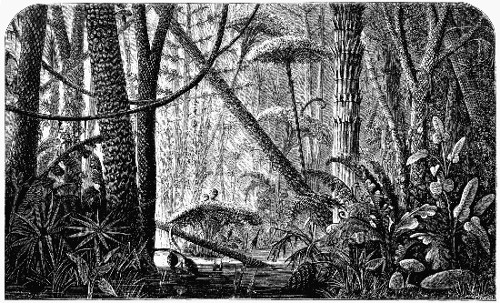
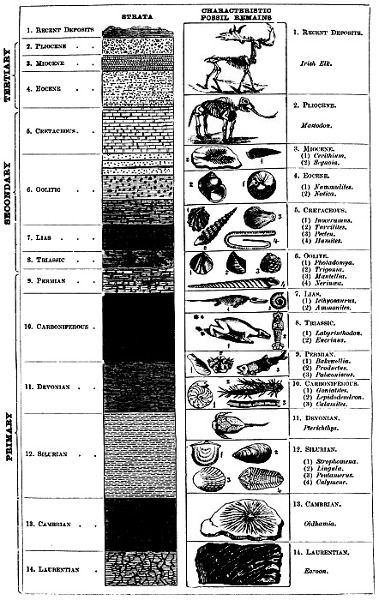





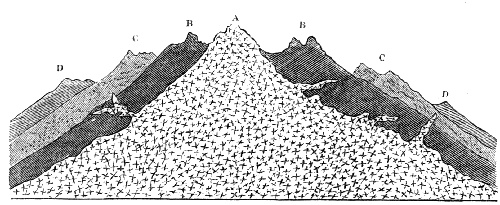
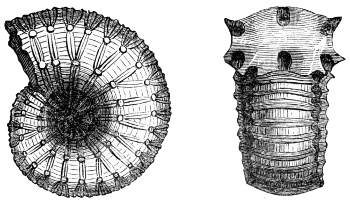
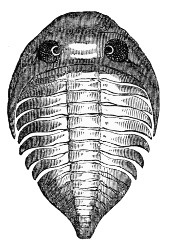
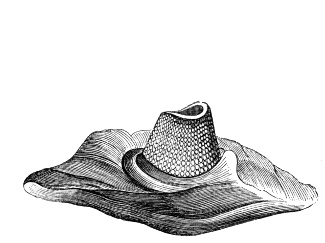
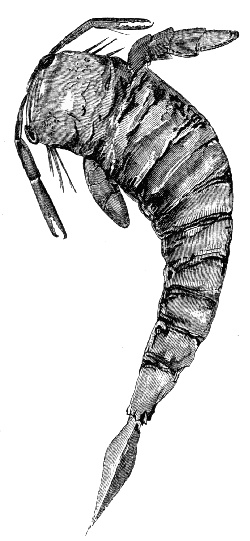
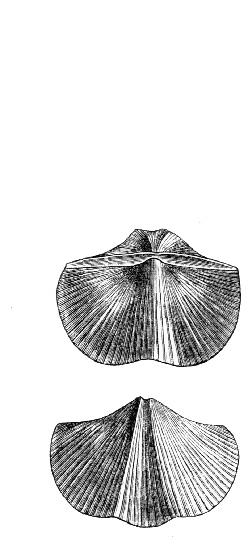
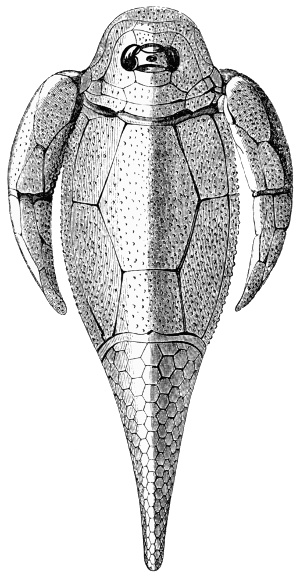
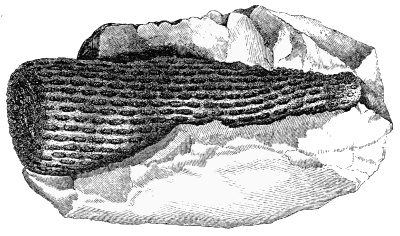
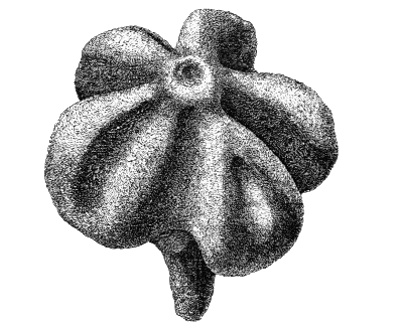
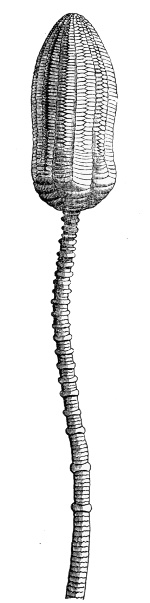
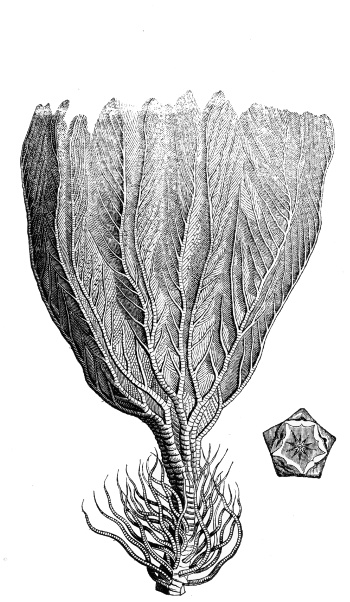
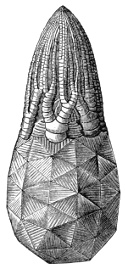
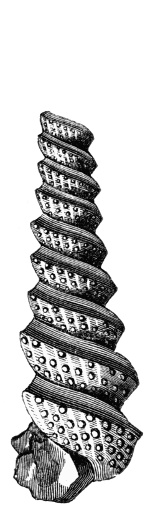
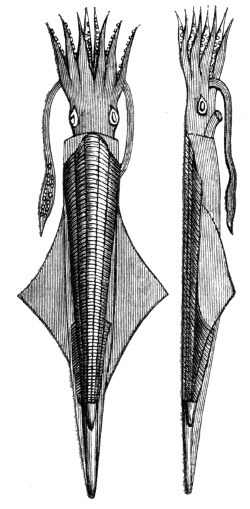
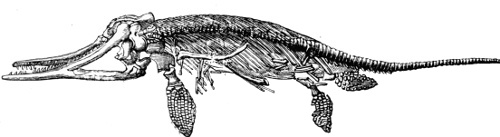
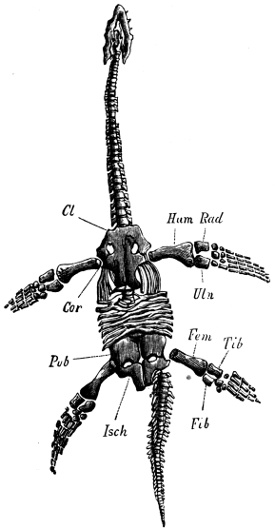
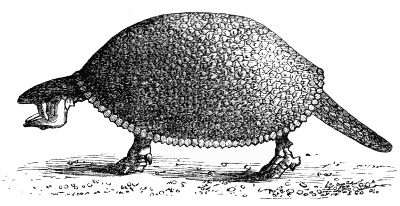
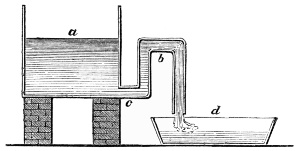
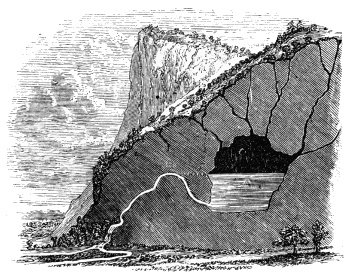
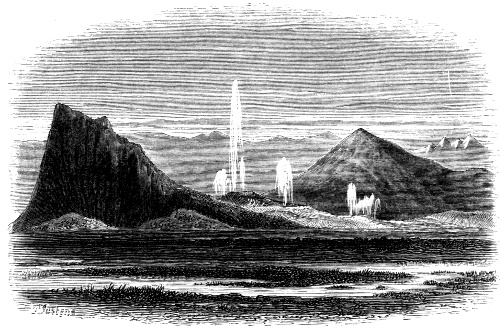
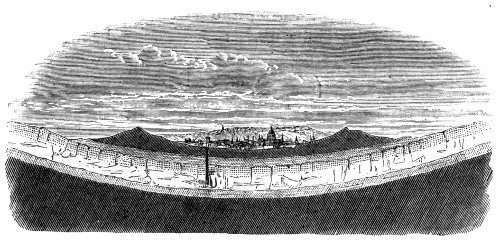
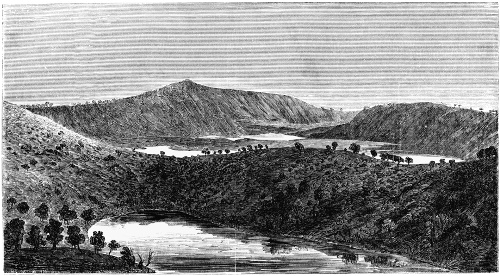
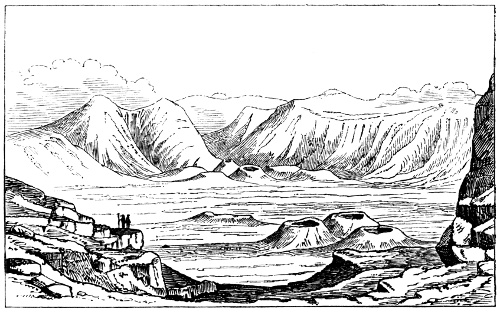
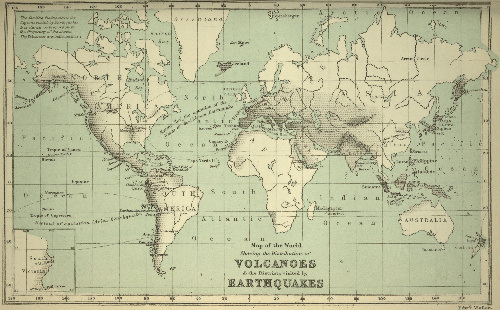
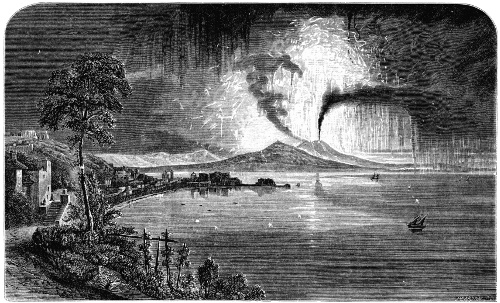
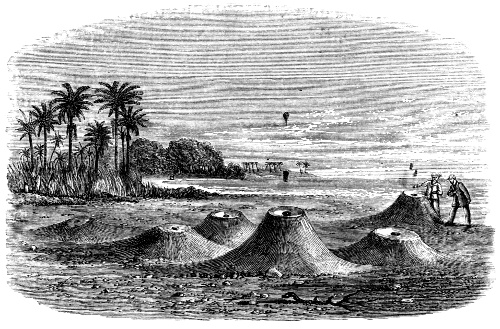
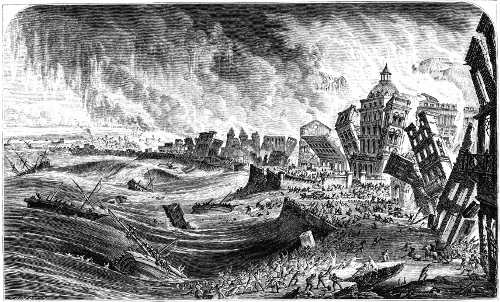
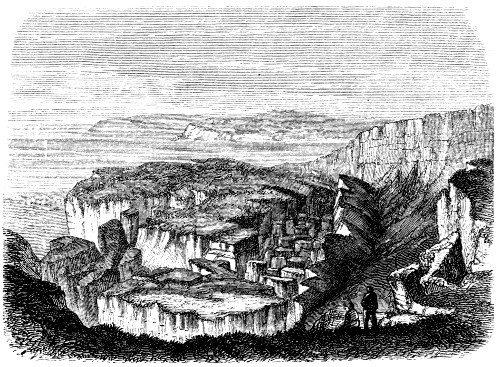
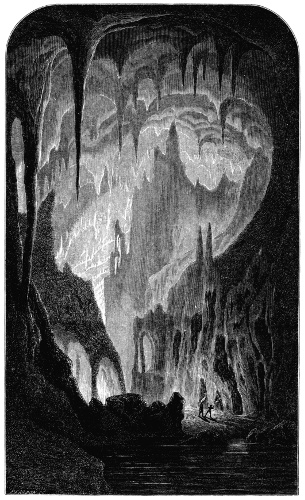
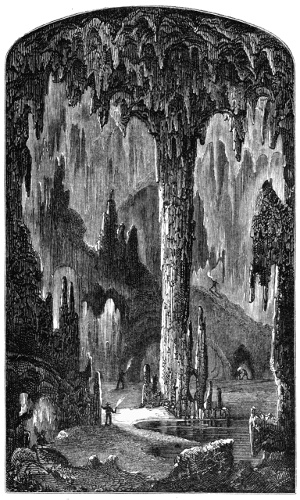
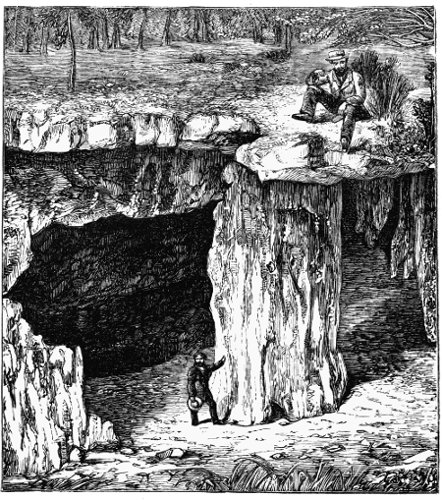
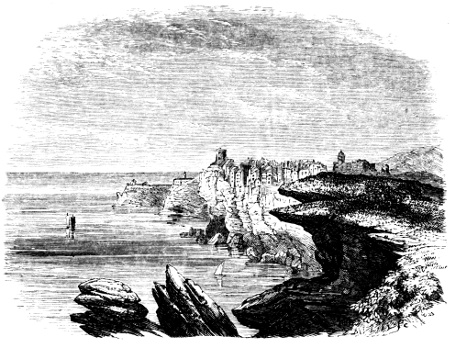
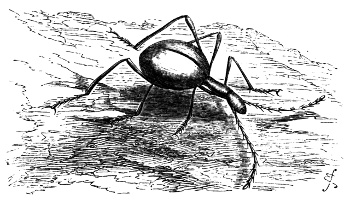
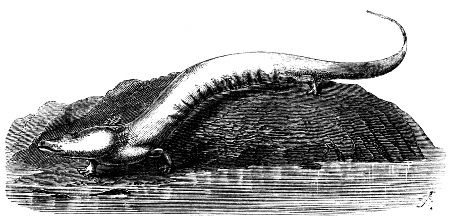
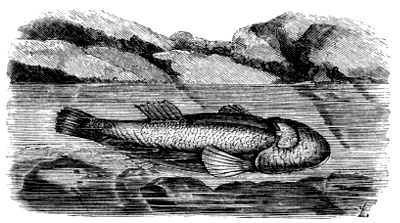
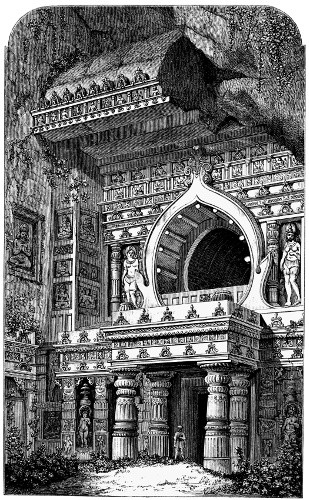
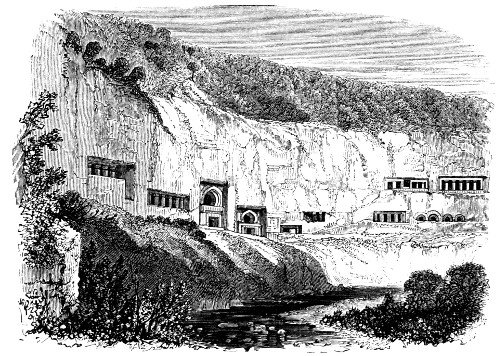
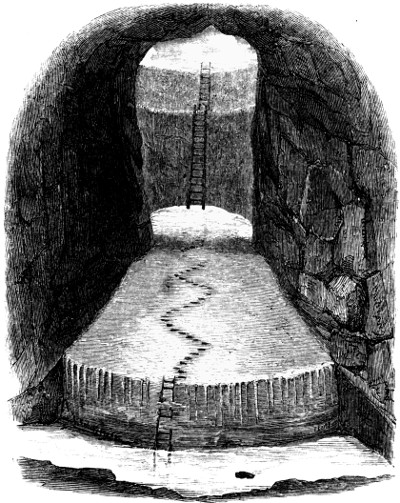
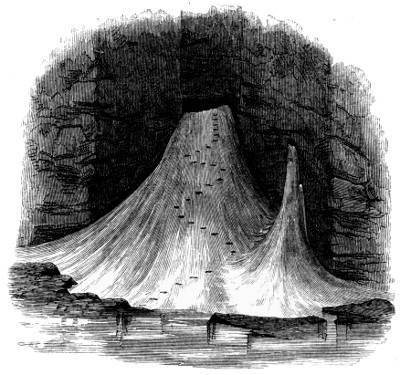
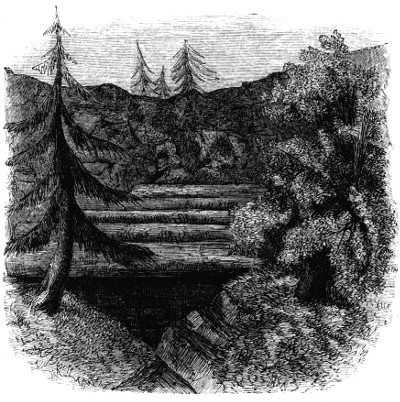
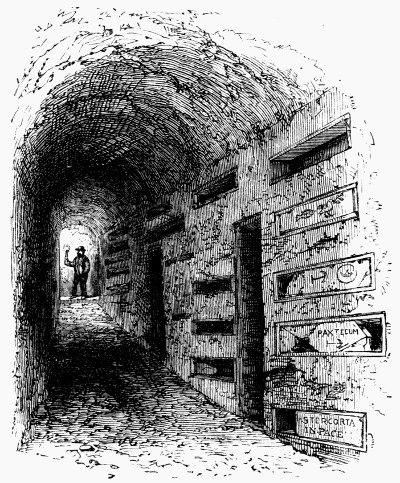
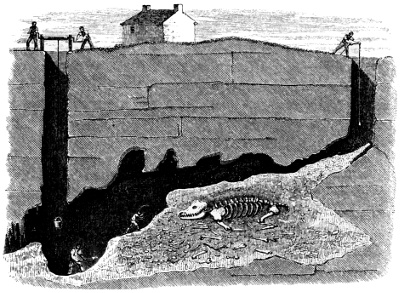
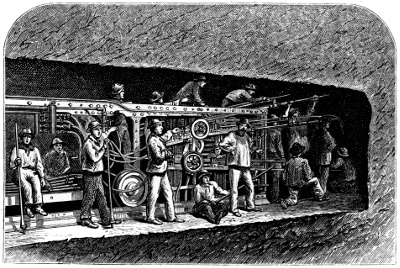
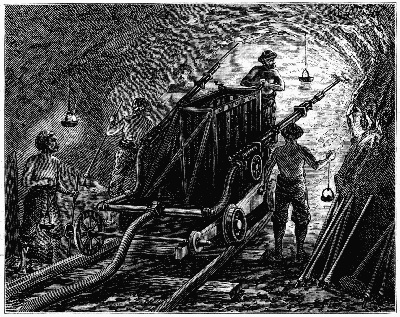
 section, 13 feet broad and 9¾ feet high; eight machines were
employed at one time; they were mounted on a wrought-iron
frame, which travelled on a railway, and could be removed to
a safe distance when the blasting took place. From 65 to 70
holes were bored in the face of the rock, and then loaded with
uniform charges, made up into cartridges, and primed with
fuses of different lengths, so as to explode in groups at definite
intervals. A horizontal series at about mid height was
first fired, then followed two vertical side rows, then a group
near the crown of the arch, and finally a horizontal series near
the floor. In this way the rock was blown down in nearly uniform
fragments of from six to eight inches in the side. At
first, owing to the hardness of the quartz-slate which had to
be pierced, the work went on very slowly; but at a greater
depth, the mountain was found to consist of limestone strata,
so that at length it advanced about thirteen feet per day.