By James Mortimer.
French
judicial
annals are
rich in
strange
and romantic
episodes, but there are
few narratives so replete
with pathetic interest
as the story of Gabrielle
de Launay, a lady
whose cause was tried
before the High Court of Paris about the
middle of the eighteenth century, and
created a profound sensation throughout
France at that epoch.
Mademoiselle de Launay was the only
child of an eminent judge of Toulouse,
where Gabrielle was born about the year
1730. M. de Launay, as the President of
the Civil Tribunal of Toulouse, occupied a
position of distinction, to which he was
additionally entitled as a member of one of
the leading families of the province. Between
himself and the son of the late
General de Serres, a deceased friend of the
President de Launay, there existed an
intimacy which gave colour to the belief
entertained in the most exclusive social
circles of Toulouse that young Captain
Maurice de Serres was selected to be the
future husband of the judge's beautiful
daughter, then in her eighteenth year,
whilst Maurice was nine years her senior.
The birth and fortune of the two young
people were equally in harmony, and the
match thus appeared in every way suitable.
The surmises of the gossips were shortly
confirmed by the formal announcement of
the betrothal, and Maurice was on the
point of asking the approval of his widowed
mother, who resided in Paris, when an
incident occurred which threatened to dash
the cup of happiness from his lips. An
official letter from the Minister of War
reached Captain de Serres, instructing him,
with all despatch, to rejoin his regiment,
suddenly ordered abroad on active service
in the far East.
The next morning, at an early hour, the
young officer presented himself at the
residence of President de Launay, greatly
to the surprise of the worthy judge and his
daughter, to whom he despairingly imparted
the untoward tidings. The grief of
Maurice and Gabrielle at the prospect of
their sudden separation, for a long and uncertain
period, was poignant in the extreme,
and M. de Launay was himself profoundly
distressed by this unexpected blow to his
projects for his only child's happiness.
After the first outburst, Maurice entreated
the President to hasten the marriage and
permit Gabrielle to accompany her husband
to the Indies, if she would consent to undertake
the voyage. Gabrielle joined her
prayers to her lover's, but her father refused
absolutely to listen to the proposal. Apart
from his reluctance to part from his child
for an indefinite term, the good President
pointed out to the young man the hardships
of a voyage to the most distant quarter of
the globe, and the danger of exposure to a
climate then regarded as fatal to many
Europeans.
"Suppose Gabrielle, young as she is,
were to sicken and die thousands of miles
from her native land," said the President;
"could you ever recover from the consequences
of your rash imprudence, or could
I forgive myself for my own weakness and
folly?"
"Then, sir," exclaimed Maurice, passionately,
"I only know of one alternative.
I will at once resign my commission, and
adopt a new profession—I care not what,
so that it shall not separate me from the
woman I love."
M. de Launay shook his head, and, with
a grave smile, replied that such an act
would be unworthy of a French soldier and
a scion of the noble house of de Serres. As
a last resort, Maurice implored the President
to sanction the immediate celebration
of the marriage, with the understanding
that Gabrielle should remain under her
father's protection until her husband's return
from foreign service, which, he anticipated,
would be in about two years. To
this request, also, M. de Launay returned
an inflexible negative, without vouchsafing
any reason, except that such was his decision.
Finding all his efforts vain, Maurice
resigned himself to the inevitable, whilst
Gabrielle sadly prepared to obey the command
of one to whose behests she had ever
yielded a dutiful submission, comforting
herself, perchance, with the secret hope
that her love and fidelity to Maurice would
be more cherished, and invested with a
greater heroism in his eyes, after two long,
weary years of trial and separation.
In maintaining an attitude of firmness
throughout the dilemma in which he had
been placed by the inconsiderate passion of
the young officer, M. de Launay manifested
the possession of
all the wisdom
requisite in dealing
with a difficult
problem;
but in adhering
strictly to the
French custom of
decorously assisting
at all interviews
between
unmarried young
people of opposite
sexes, and in
failing to leave
the lovers together
alone for
a short time, the
President showed
a deplorable want
of knowledge of
the human heart.
The thought did
not occur to him
that a few tears,
kisses, and vows
of constancy
would go far towards
reconciling
Maurice and Gabrielle
to the
sweet sorrow of
parting, and that
with these innocent
crumbs of
comfort the parental presence is totally
uncongenial. Never in the history of
love has it been deemed admissible that
there should be witnesses to the tender
words of farewell, the fond look in each
other's eyes, the soft pressure of each other's
hands, the whispered oath of eternal
fidelity, and the many mysterious nothings
which at such times are held sacred. Oblivious
of these delicate considerations, the
worthy President gave the young people
no opportunity for a leave-taking which
would have been to them a relief and a
precious souvenir. Their parting was one
of silence and dejection, but at the last
moment Maurice found means to murmur
in Gabrielle's ear, "I will be in the garden
at midnight, under your window; meet
me there to say good-bye." She spoke no
word of reply, but a glance at her face
assured him that his prayer had been heard
and granted. With a tranquil smile, he
bade farewell to the President, who again
betrayed a sad lack of penetration in
accompanying
him to the gate,
without the remotest
suspicion
that a clandestine
midnight
meeting of the
lovers had been
planned under
his own eyes, and
that the young
officer's sudden
composure arose
from a joy he
found it difficult
to conceal.
To both the
lovers the hours
seemed leaden
indeed, until
night came. At
last, the church
clock of Toulouse
chimed three-quarters
past
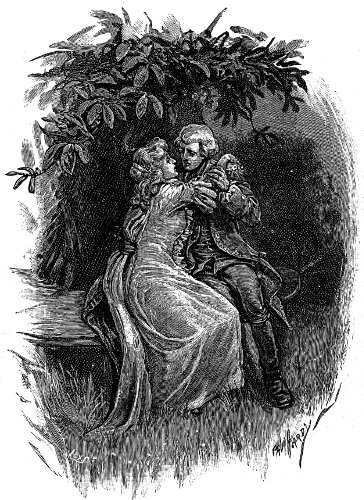
eleven, and Gabrielle
stole
tremblingly down
to the garden.
The night was
dark, and not a
sound could the
young girl hear but the tumultuous beating
of her own heart, as she gently withdrew the
bolts from the outer door and stepped lightly
upon the soft green sward. Filled with dread
of the consequences which might ensue if
her secret meeting with Maurice should be
discovered by her father, the poor child's
remorse for her act of disobedience, as she
regarded it, caused her to pause more than
once, undecided whether to keep her tacit
promise, or to creep back swiftly to her
chamber. Before she could adopt the course
dictated by prudence and submission to her
father's will, she heard a light step behind
her, and in another instant she was clasped
in her lover's arms. Gently releasing herself,
she placed her hand in his, and led
him to a low bench close by, under the
shadow of a tree. Seated side by side, they
spoke in low whispers of their approaching
separation and of their mutual sorrow during
Maurice's long absence from France. They
talked of their occupations, and of the
expedients each would adopt to make
the time seem less wearisome. They
arranged the employment of every day, and
fixed the hours when each should breathe
the other's name, and thus know that they
were in communion of thought, though
thousands of miles of ocean rolled between
them, forgetting that in widely different
climes the day to one would be night to the
other. Then, perhaps, this geographical
obstacle occurred to them, and they triumphantly
vanquished it by promising to think
of each other always, awake by day and in
dreams by night, which would be the surest
method of never being absent for an instant
from each other's meditations.
In these lover-like communings the night
sped quickly, and over the tree-tops came
the silver streaks in the clouds which herald
the approach of dawn. They knew that
their remaining time must now be short, and
for a while they spoke no words. Still they
sat side by side upon the bench, Maurice
holding Gabrielle's hand folded within his
own. Motionless, and with her head leaning
forward, she wept in silence, tears of
mingled joy and anguish. Maurice felt a
strange thrill of rapture in his heart as he
gazed in the sweet face of his beautiful betrothed,
illumined by the soft rays of the
moon, and as if seized with a sudden impulse,
he fell upon his knees before her.
"Do you love me, dearest?" he murmured
in trembling accents.
"God is my witness," she answered gently,
"that I love you better than aught else on
earth."
As if startled by the danger of discovery
to which they were becoming every instant
more and more exposed, the young man
sprang hastily to his feet, clasped her in his
arms, and kissed her passionately.
"Farewell, my own true love," he said
softly. "Farewell until we meet again."
"Must you then leave me?"
"Alas, yes!"
She feared that her own gentleness and
calmness at the supreme moment of parting
would seem cold and tame in contrast with
his exaltation, and, throwing her arms
around his neck, she cried—
"Kiss me once more, Maurice; once
more!"
Again he pressed his burning lips to
hers in one long, last embrace.
"Farewell, Maurice," she sighed. "I
feel that, if I were in my shroud, your kiss
would recall me back to life!"
And with these prophetic words ringing
strangely in his ears, he turned, and fled
from her presence.
Four long and eventful years had passed
since the lovers' clandestine parting, when
Captain de Serres again set foot on the soil
of his native land. The transport which
brought a portion of his regiment home
entered the harbour of Brest early one
bright morning in June, and Maurice the
same day set out for Paris, his first thought
being to embrace his widowed mother, whom
he idolised. He had taken the precaution
to send her previous intelligence of his return
to France, and of his safety, for the
poor lady, during nearly two years, had
mourned her only son as dead. Of his
betrothal to Mademoiselle de Launay she
had never known, though she knew of the
President by name as one of her late
husband's early friends.
When Maurice arrived in Paris, on the
second morning after his departure from
Brest, and it was vouchsafed to his mother
to clasp in her arms the son she had
thought gone from her for ever, her joy
can only be pictured by those to whom it
has been given to taste an unhoped-for
happiness. Maurice, too, was happy; but
still, after the first emotions of such a
meeting, Madame de Serres' keenly observant
glance detected in her son's face a
strange expression of melancholy, and an
air of abstraction in his replies to her
anxious questions, which at once aroused
all her solicitude. Alarmed at his singular
demeanour, she tenderly pressed him to
confide to her the cause of his sadness, that
she might at least attempt to soothe and
console him.
"It is nothing, mother," he said, with
an effort to smile, "merely a childish folly,
of which a man should be ashamed; but
since you imagine that there is some serious
cause for my ill-timed depression, I must
do my best to reassure you, though I fear
you will only laugh at me."
"No, no, my son, I shall not laugh,
whatever it may be," replied Madame de
Serres. "Explain yourself fully, Maurice,
and trust my good sense to make all due
allowances."
"Very well, mother," was the answer,
"you shall know the exact truth. On my
way home this morning, I passed before
the church of St. Roch, the entire front of
which was heavily hung with black, and
decorated for the funeral of some person of
note. Such a
circumstance, I
am aware, is of
every-day occurrence
in Paris,
and would not
likely attract the
attention of an
indifferent passerby.
But upon
me the sight of
those mournful
preparations had
a strange and
mystic effect,
which seemed to
chill my blood,
and imbued me
with a presentiment
of evil. I
feared—ah! you
are smiling at my
superstitious
weakness, and
you are right.
But three years
of captivity and
horrible sufferings
have so unstrung
me that
my restoration to
liberty and home
seems a miraculous
dream, and I
tremble to awake lest I should indeed find
it to be only a vision after all."
"My dear Maurice," said his mother, imprinting
a kiss on his brow, "let this convince
you that it is no dream. The feelings
you have described to me I can well understand,
and they prove that you cling
strongly to your recovered happiness, since
you tremble lest it may again be snatched
from you by relentless destiny. You must
try to forget the trials of the past, and
accustom yourself to the present, as if you
had never known what it is to suffer. As
for your mournful impression at the sight
of a church hung with black, you have been
so long absent from France that a very
ordinary occurrence seems invested with a
significance it really does not possess, except
for those who have sustained the loss of a
dear relative or friend. The funeral decorations
you saw this morning were no
doubt in honour of the young and beautiful
Madame du Bourg, wife of the President
du Bourg, chief judge of the Civil Tribunal
of Paris."
"The beautiful
Madame du
Bourg?" repeated
the young
officer, inquiringly.
"Was the
fame of her
beauty, then, so
universal as to
become proverbial?"
"Yes, poor
young creature,"
replied Madame
de Serres,
"though she had
only resided in
Paris since her
union with the
President du
Bourg, about
eighteen months
ago. Her husband
was nearly
thirty years her
senior, and the
unhappy lady
died after an illness
of only two
days, so I was informed
yesterday,
leaving an
infant six months
old. The unfortunate
lady herself was scarcely more than
a child, and, before her marriage, was the
belle of Toulouse, Mademoiselle Gabrielle
de Launay."
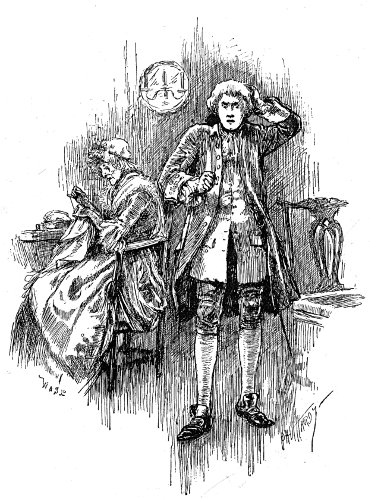
This disclosure, so simple and so brusque,
of a terrible calamity to him, did not at
once penetrate sharply and clearly the
mind of Maurice de Serres. He was so
utterly unprepared for the blow that for a
moment he was unable to realise the disastrous
news thus unconsciously imparted to
him by his mother. He gazed at her with
the air of a man who had not fully grasped
the meaning of the words she had spoken,
and asked her to repeat them. Then
Madame de Serres, remembering that her
son had been stationed at Toulouse a few
years previously, and might consequently
have met the President de Launay and his
daughter, framed an evasive reply; but the
instant she again named Mademoiselle de
Launay, and reverted to the story of her
sudden death, Maurice fell, with a cry of
anguish, at his mother's feet, as though
struck by a mortal wound—a livid pallor
overspread his features, his breathing was
that of a man struggling against suffocation,
and he might have died, had not a flood of
tears come to his relief.
In this critical emergency Madame de
Serres fortunately retained her presence of
mind, and with the ingenuity of maternal
instinct, she found means to alleviate the
violent grief of her son. With his head
pillowed upon her bosom, she talked to him
of his lost bride, divining all that had
occurred without a word of explanation
from Maurice, and gently reproaching him
for having failed to tell her, his mother, the
story of his love. She found means to
reconcile him to the death of Gabrielle—that,
he said, was the will of God—but how
could he ever forget the broken vow, or
forgive the perfidy of her who had called
Heaven to witness her promise of fidelity?
Then, with admirable tact and delicacy, his
mother recalled to his mind his capture by
the enemy, and the official report of his
death, which, no doubt, had reached
Toulouse, and had left Mademoiselle de
Launay no resource but resignation to the
decree of Providence. Probably, she said,
after a long resistance and many tears, the
unhappy girl had at last yielded an unwilling
obedience to her father's commands,
and had consented to a marriage of convenience,
in which her affections had borne
no part. And so natural and plausible was
this theory, that in devising these simple
motives in mitigation of Gabrielle's conduct,
Madame de Serres told her son the
exact truth. Finally, she poured balm into
his heart by asking him to consider whether
the real cause of Mademoiselle de Launay's
early death might not have been sorrow for
Maurice's loss, and the bitter wretchedness
of her forced marriage with a husband
whom she could never love?
These wise arguments were, indeed, not
without soothing effect. At all events, after
listening to his mother's words for some
time, he became more calm, though a keen
observer would have divined that his
silence was not that of resignation, but the
refuge of a mind which conceives a desperate
project, weighs its possibility, and resolves
upon carrying it into immediate execution.
Madame de Serres watched with deep
anxiety the expression of her son's face,
and, had he once raised his eyes despairingly
to hers, she might have read in them a
determination to put an end to his life. But
she never suspected him of harbouring any
design so terrible, and when he entreated
that he might be left alone, she acquiesced
without hesitation.
Towards nightfall she had the satisfaction
of seeing him rejoin her, apparently almost
restored to tranquillity. In her presence,
and without disguise or concealment, he
provided himself with a considerable sum
in gold, kissed her, and left the house without
uttering a word, nor did Madame de
Serres ask for an explanation, or seek to
detain him. It was quite dark when
Maurice sallied forth into the street, and
walked rapidly in the direction of the Rue
St. Honoré. On reaching the church of
St. Roch, he lost no time in finding the
sacristan, and inquired the name of the
place where Madame du Bourg had been
buried that morning. The information was
supplied to him without hesitation, and he
set off immediately for the designated
cemetery. On arriving at the gates, he
found them closed for the night, and experienced
some difficulty in rousing the
janitor, who was asleep in his lodge. After
some demur, the man opened the door to
his nocturnal visitor, and inquired his
business.
"Let me come in," said Captain de
Serres, "and I will tell you."
Seeing before him a young man of
aristocratic mien and appearance, the grave-digger,
whose curiosity was now fairly
aroused, offered no further objection, and
showed the way to a little room on the
ground floor of the lodge.
"Be seated, sir," he said, civilly, placing
a chair. "You are, perhaps, fatigued with
your walk."
"No," replied the young officer; "there
is no time to be lost."
Then, to the terror and amazement of
the grave-digger, Maurice, placing in his
trembling hands more gold than he had ever
before seen in his whole life, implored him to
accept it as a reward for committing an act
of sacrilege—a crime then punishable with
death. Maurice entreated him to remove
the earth from the grave he had filled that
day, to exhume the corpse of Madame du
Bourg, and to break open the coffin which
covered the remains of that most unhappy
lady, that he, Maurice de Serres, her
affianced husband, might look once again
upon the woman he had so passionately
loved.
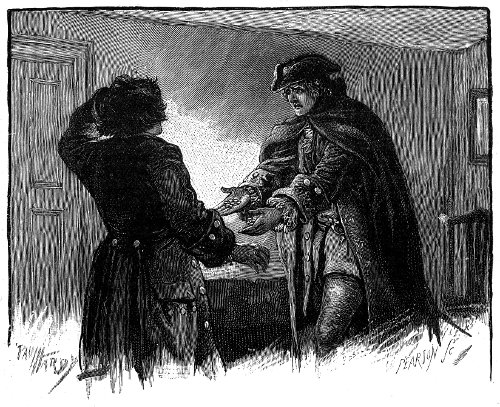
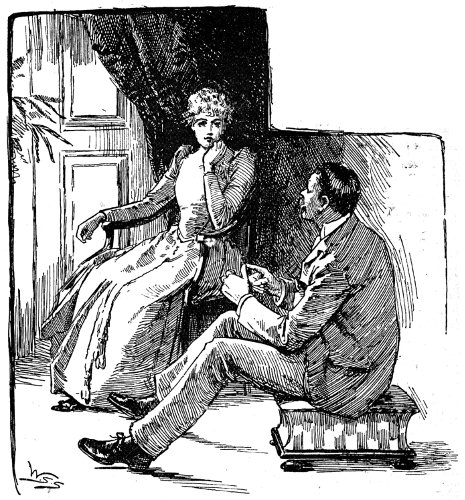
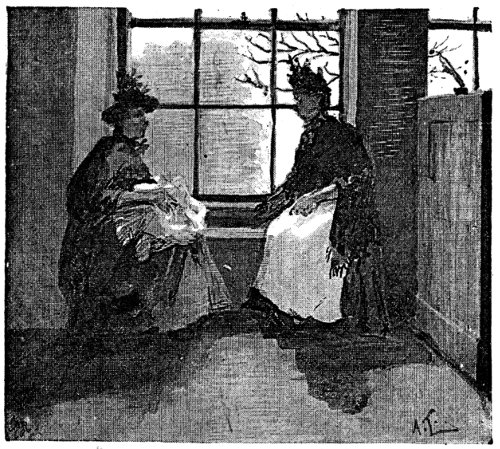
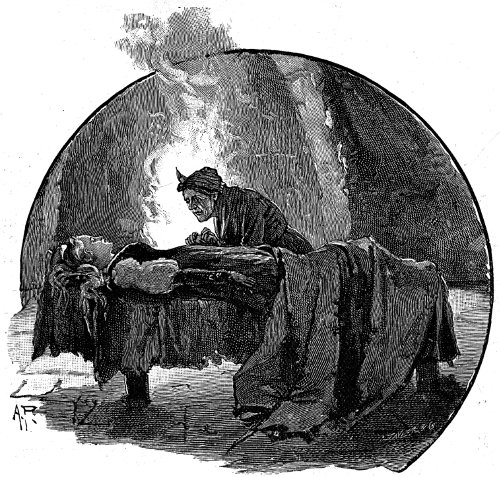
MAURICE AND THE GRAVE-DIGGER.
Then ensued a long and painful discussion,
for the glittering heap of gold, pressed upon
the poor man by his tempter, did not succeed
in overcoming either the fears or the
scruples of the honest grave-digger. To
the distracted young officer it was a maddening
blow to find that the cupidity upon
which he had counted to vanquish the
obstacles in his way had no existence, or if
it had, was less powerful than the grave-digger's
dread of the consequences. Maurice
gave full vent to his despair and his tears
so moved the heart of the poor man, at
whose feet he grovelled in agony, that out
of the commiseration he succeeded in inspiring
came a consent which neither gold
nor entreaties had been able to obtain.
"Come!" said the grave-digger; "if it
must be so, follow me!"
He led the way to the dark and silent
cemetery, armed with a spade, a coil of
rope, and a thick chisel, Maurice carrying
his companion's lantern. Stumbling over
many a mound of earth, they at last reached
the grave in which the dead woman had
been buried only a few hours previously.
Taking off his jacket, the grave-digger set
to work, without uttering a single syllable.
In an hour, which to Maurice seemed years
of torture, the hollow sound of the spade
striking the top of the coffin told them that
their sacrilegious task was nearly accomplished.
A few moments more, and the
united efforts of the two men had succeeded
in raising the coffin to the surface. Maurice
whispered to the man to remove the lid
without noise, but as may well be imagined,
such an injunction was needless. Proceeding
with the utmost silence and precaution,
the grave-digger was not long in loosening
the fastenings of the coffin. Then, having
now recovered his customary coolness and
self-command, he sat down quietly upon
a neighbouring tombstone, and mutely
motioned to Maurice, who stood gazing at
the corpse, as if petrified by the horrible
sight. Finding the young man still remained
immovable, the grave-digger pointed
with his long, bony finger, to the still,
white object, and muttered, "Look, 'tis
she!"
But Maurice made no response, and
appeared no longer to remember why he
was there, nor the crime he had instigated.
He heard not the words of his companion,
his gaze was fixed upon vacancy, the
breath seemed to leave him, and he would
have fallen to the ground, had not the
other, alarmed at this strange lethargy,
seized the young man's arm, and again
whispered "Look!" Then slowly lifting
the shroud from the face of the corpse,
he added, "Convince yourself. Is it this
lady?"
At this instant the moon burst forth
from behind the clouds, and its pale, mysterious
light fell full upon the lineaments of
her whom Maurice had idolised, and for
whose sake he had
committed this horrible
deed. Her features
bore still the
sad, sweet expression
he knew so well; the
colour of her cheeks
had lost little of its
rosy tint, and, though
her eyes were closed,
her lips were half
parted, as if about to
speak.
Flinging himself
upon his knees beside
the body, Maurice
wept tears which
brought his anguish
some relief. With
passionate sobs he recalled
the story of
their love, of their
young hopes, of their
betrothal, and of their
sudden and piteous
separation, and he
bitterly reproached
himself for having
yielded obedience to
her father's commands,
and left her to
be sacrificed a victim
to that father's unbending
will.
As he spoke he gently raised her in his
arms and looked closely in her face. At
that instant memory brought back to him
her parting words, years before, when, as
they said farewell, he had pressed his lips
to hers. The scene flashed across his
brain with the rapidity of lightning, and,
as if urged by some sudden inspiration,
he stooped and kissed her, as he
had kissed her on that too well remembered
night.
No sooner had his lips touched hers than
he uttered a terrible cry, and rose to his
feet, trembling convulsively. Then, with
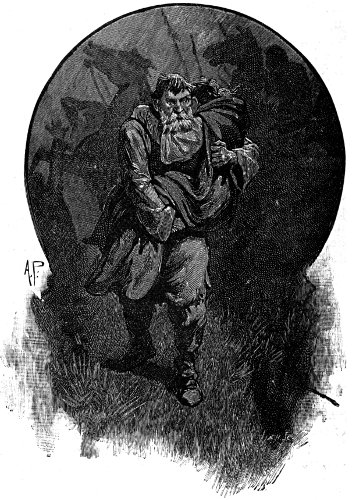
a wild laugh, he seized the body, and before
the astonished grave-digger could interpose,
the young officer fled from the spot with
his burden in his arms, springing over the
graves, and threading his rapid course
among the tombs, as if the weight he bore
were no more encumbrance to his flight
than a flake of falling snow. With almost
supernatural force and rapidity the madman,
as the amazed and bewildered grave-digger
now felt assured he was, made good
his escape, like a tiger carrying off his prey.
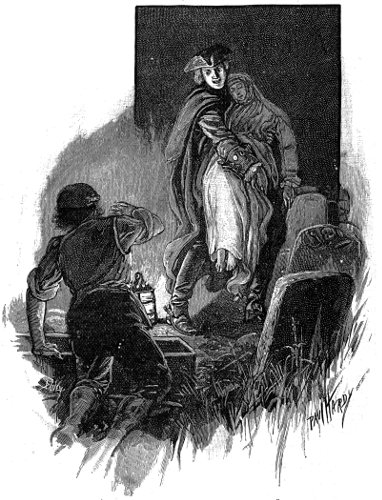
"WITH A WILD LAUGH HE SEIZED THE BODY."
Seeing that pursuit was useless—even if
he had contemplated such a course—the
poor man hastened to remove the evidence
of the sacrilege in which he had played so
prominent a part. Lowering the empty
coffin into the open grave, he rapidly threw
in the earth, and in a short time the spot
showed no trace of having been disturbed
since the interment of the preceding morning.
Then the grave-digger gathered
together the implements of his trade and
stole back to his lodge, muttering imprecations
upon his mad visitor, and upon himself
for having assisted in committing a
crime fraught with such formidable danger
to its perpetrators, should the horrible deed
ever be brought to light.
Nearly five years had passed away since
that eventful night, and, during that long
period, nothing had occurred to revive the
fears of the conscience-stricken grave-digger,
or to give rise to his misgivings that the theft
of Madame du Bourg's corpse might by
some means be discovered. In fact, after
carefully weighing all the circumstances,
he had finally come to the conclusion
that he had been the victim of a conspiracy
hatched by medical students, one
having played the principal part in the
abominable transaction, and the other or
others waiting outside the cemetery to assist
in making off with the "subject," should
the nefarious plot succeed. The students
(if this hypothesis were correct) would never
betray the secret, for obvious reasons; and
so long a time having now elapsed since the
burial of the unhappy lady, the contingency
of an authorised exhumation for any cause
whatever became daily more and more
remote.
On All Souls' Day the bereaved husband
came regularly each year to pray at his dead
wife's tomb, and each year the grave-digger
observed him with feelings of remorse,
as if it were adding to his weight of
guilt in standing near while the worthy
President du Bourg knelt reverently beside
the mound beneath which was buried only
an empty coffin. The sight of this futile
annual pilgrimage possessed for the repentant
grave-digger a fascination impossible to
resist, and amongst all the mourners who
visited the cemetery on that solemn day,
he took note of none save M. du Bourg,
before whom he more than once felt
tempted to throw himself and confess all.
When the anniversary came round again,
the grave-digger stationed himself at his
usual post of observation, and saw the
President draw near to his wife's tomb,
over which he immediately bent in prayer.
Both he and the contrite grave-digger were
so deeply absorbed in thought that they
did not notice the approach of a woman,
who uttered a suppressed cry as she caught
sight of the recumbent figure. Turning involuntarily
and looking quickly up, M. du
Bourg instantly recognised, in the person
who had interrupted his meditations, no
other than the wife whose death he had
mourned so long. The grave-digger also
remembered well the pale, beautiful face,
from which he had removed the shroud
five years before, and he instantly fell to the
ground, insensible. But before the startled
husband could recover from his amazement,
Gabrielle, for it was she, swept past him
like the wind and was gone. Following
her retreating form in the distance, the
President reached the cemetery gates in
time to see her leap into a carriage with
emblazoned panels, which, before he could
reach the spot, was driven rapidly away
towards the centre of Paris. M. du Bourg
then returned to the place where he had
seen the grave-digger fall in a swoon,
hoping to derive some information from
the stranger who had been thus terror-struck
at sight of the unexpected apparition,
but the man had been already carried to
his lodge, and died an hour afterwards
without recovering consciousness.
Losing no time, the President addressed
himself to the Lieutenant-General of Police,
by whom inquiries were set on foot without
delay, and it was speedily established that
the carriage, which many persons had observed
in waiting at the cemetery gates,
bore the arms of the noble house of de
Serres. As M. du Bourg was aware of his
late wife's early attachment to the young
officer whose death abroad had been
officially reported a few months previous to
her marriage, the motive of her disappearance,
if she were still alive, was clearly explained.
But the mystery of her existence
five years after her supposed death and
burial must now be immediately unravelled.
By order of the authorities, the grave in
which Madame du Bourg had been interred
was opened, and the empty, broken coffin
was found. This discovery fully confirmed
the suspicions of the President du Bourg,
and prompted him in the course he now
resolved to pursue.
Meanwhile Madame Julie de Serres, the
young and lovely wife whom Captain
Maurice de Serres had married abroad five
years previously, and now brought to Paris
for the first time, returned that day to her
husband's house in a state of the utmost
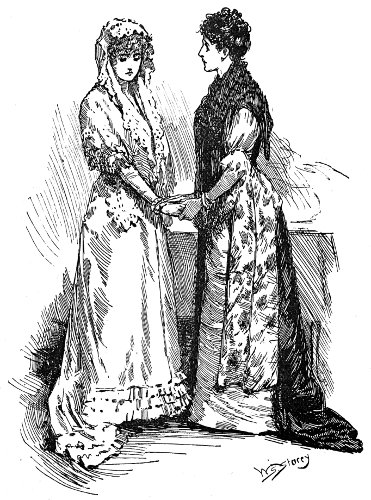
alarm and agitation. Pale and trembling,
she begged to be conducted to
Maurice, and the pair remained
closeted together for several hours.
At last, in outward semblance perfectly
calm, she rejoined the Countess,
her husband's
mother, and from that
day resumed the ordinary
current of life
as though nothing had
arisen to mar its serenity.
About a fortnight
had elapsed since the
occurrences above related,
and the incident
in the cemetery appeared
to have been
forgotten, or if remembered
by the chance
witnesses of the scene,
it was generally supposed
that the mysterious
lady who had
been seen by M. du
Bourg merely bore a
fortuitous resemblance
to the President's deceased
wife. But during
these few days, aided by all the power
in the hands of the Lieutenant-General
of Police, M. du Bourg instituted a
searching and systematic investigation,
firmly resolved as he was to know the
truth. Without in the least suspecting
that their every movement was watched,
Captain de Serres and his wife were
surrounded with spies, who rendered a
daily report of their minutest actions.
Maurice having come to the conclusion that
it would be imprudent to leave Paris, there
was no difficulty in keeping him under
constant observation. Setting to work like
an experienced lawyer, M. du Bourg rapidly
collected evidence of the greatest importance.
Through the Minister of War, he
ascertained the exact date of Captain de
Serres' return to France, after his captivity
and supposed death in the Indies. At the
passport office he found out the day of the
young officer's departure shortly after his
arrival in Paris. The postillions whom he
had employed on his journey to Havre
were discovered and interrogated. From
them it was elicited that the traveller had
been accompanied to the coast by a lady
closely veiled, who never left the carriage
until the pair reached their destination.
The name of the vessel in which M. de
Serres and a lady inscribed as his cousin
had taken passage to South America was
ferreted out, and the ship's journal was
brought to Paris.
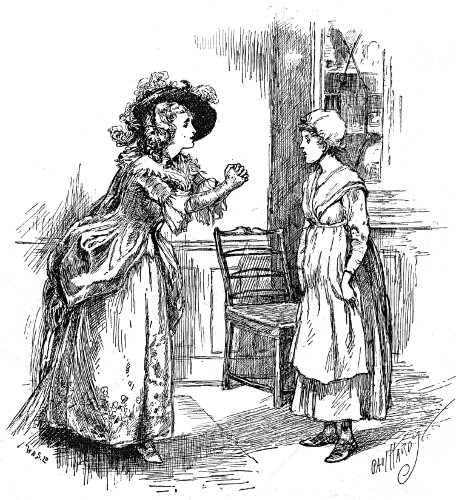
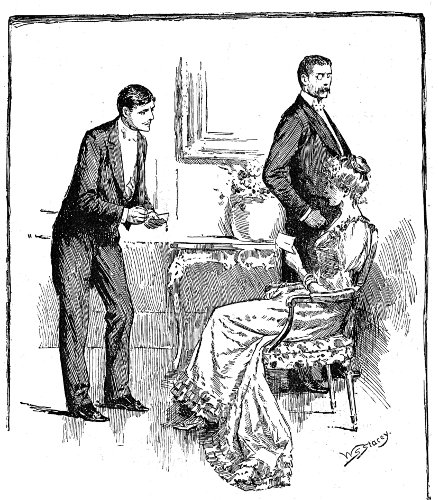
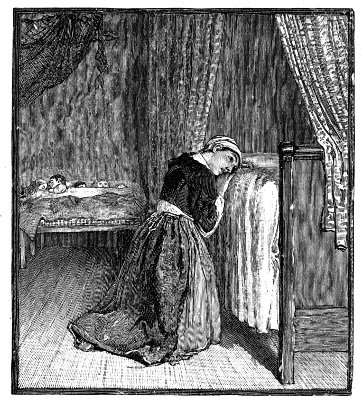
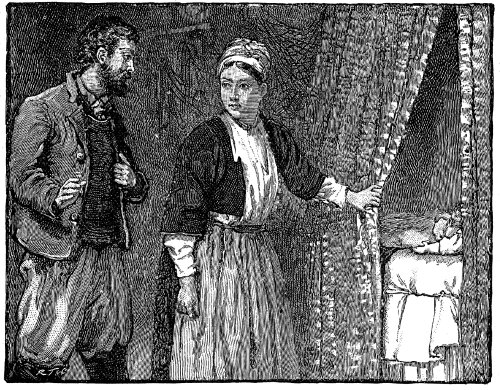
"SHE BEGGED TO BE CONDUCTED TO MAURICE."
Armed with these formidable proofs, the
President du Bourg demanded from the
High Court of Paris the dissolution of the
illegal marriage between Captain Maurice
de Serres and the pretended Julie de
Serres, who, as M. du. Bourg solemnly
declared, was Gabrielle du Bourg, his lawful
wife.
The extraordinary novelty of this cause
created an immense sensation throughout
Europe, and pamphlets were exchanged by
the faculty, some maintaining that a prolonged
trance had given rise to the belief
in the apparent death of Madame du Bourg,
whilst others as stoutly affirmed that resuscitation
under such circumstances was an
absolute impossibility. This latter theory
secured the majority of partisans amongst
medical men, and after calculating the
number of hours which it was stated that
Madame du Bourg had continued to exist
in her grave, the fact was conclusively
established that no case of a similar
lethargy had ever previously been recorded.
M. de Serres himself expressed the most
profound and unaffected pity for his adversary,
and acknowledged that when he had
first met the lady who now bore his name,
her marvellous likeness to Gabrielle de
Launay had struck him with awe and
amazement. This declaration was made
with such evident sincerity that it carried
conviction to the minds of all who heard it,
and few doubted but that the President du
Bourg had either lost his reason or was the instigator
of a corrupt and knavish conspiracy.
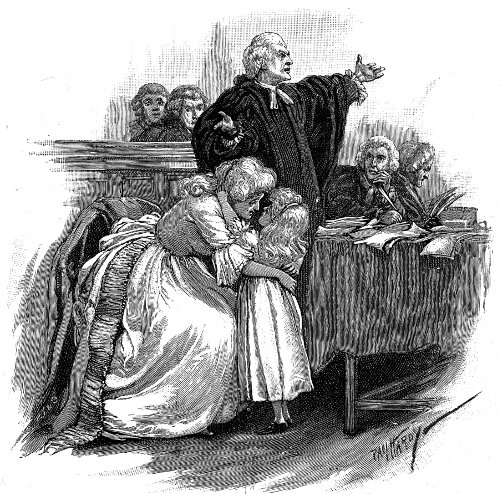
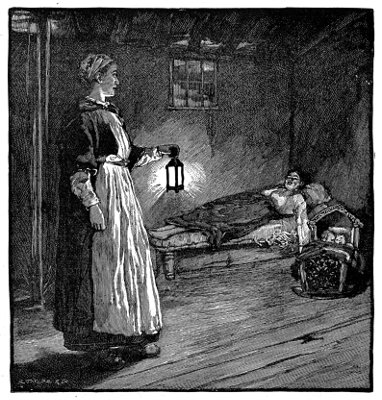
"MAMMA, WON'T YOU KISS ME?"
In due course the hearing of this extraordinary
suit came before the high tribunal
of Paris, and Madame Julie de Serres was
summoned to appear in court, and answer
the questions of the judges. She
was confronted with M. du Bourg,
and was surprised and indignant at his
pretensions. The father of Gabrielle de
Launay came from Toulouse, and burst
into tears at the sight of one who bore so
wondrous a resemblance to his dead daughter;
nor could he find words in which to
address the lady who seemed the living
image of his only child, and who calmly
denied all knowledge of him. The judges,
in much perplexity, looked at each other
in troubled silence and indecision. Madame
de Serres, in simple language, told the story
of her entire life. She was an orphan, she
said, born in South America, of a French
father and a Spanish mother, and had never
left her native country until her marriage.
The legal certificate was produced, attesting
the marriage of Maurice de Serres and
Julie de Nerval, and, with other formal
documents, was laid before the court. After
hearing the pleas of the distinguished advocates
engaged on both sides, the judges
consulted together for a short time, and
announced that their decision would be
given at the next sitting of the tribunal.
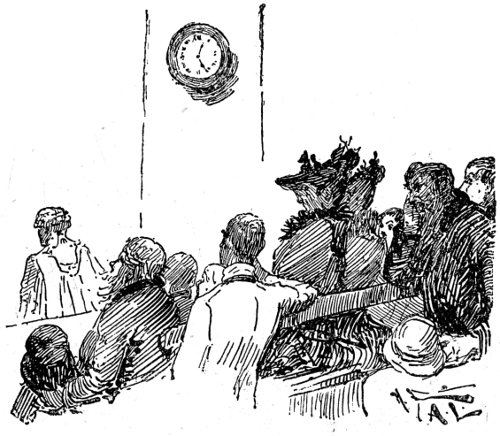
On the following day the court was
crowded to excess, and it was rumoured
amongst the many ladies and gentlemen of
position who were present that a majority
of the judges were so thoroughly convinced
of the preposterous character of the President
du Bourg's claim as to render certain
a decree in favour of Captain de Serres
and his wife. Amidst a sympathetic silence—for
popular opinion was almost unanimously
enlisted on the side of the defendants
in this unprecedented case—the
President of the High Court commenced
in a grave voice the delivery of the judgment,
when suddenly M. du Bourg, who
had not been present at the commencement
of that day's proceedings, entered the
court, leading by the hand a little girl of
five or six summers. At this moment
Madame de Serres, her face lighted up with
a smile of exultation, was seated by the side
of her advocate, directly in front of the
Bench, and in full view of the public. Conversing
in animated tones with her counsel,
she did not observe the entrance of M. du
Bourg; but in a moment a tiny hand was
placed in her own, and a child's soft voice
said timidly—
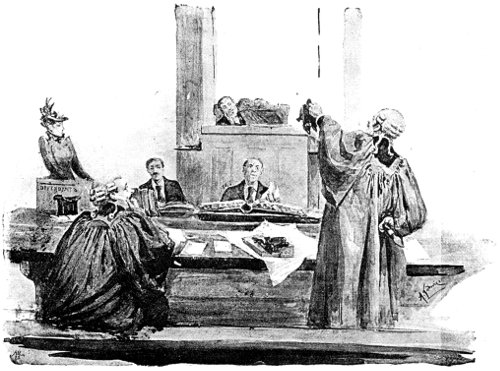
"Mamma, won't you kiss me?"
Madame de Serres turned quickly, uttered
a sharp cry, and, clasping the child in her
arms, covered it with tears and caresses.
The daughter and wife had complete control
over the emotions of Nature, but the
mother's heart had not the strength to resist
the sudden strain.
From that moment the case before the
court, and still undecided, assumed a totally
different aspect. Springing to his feet in
an instant, the advocate of the unhappy
lady unhesitatingly proclaimed the identity
of his client, and now called upon the
judges to annul her marriage with M. du
Bourg, which had been dissolved, he declared
solemnly, by the hand of death.
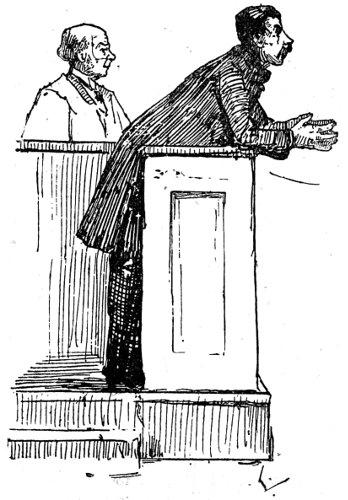
Turning towards M. du Bourg, he exclaimed
with fiery eloquence—
"Sir, you have no right to demand from
the earth the body you have consigned to the
grave. Leave this woman to him by whose
act, and by whose act alone, she lives. Her
existence belongs to him, and you can only
claim a corpse."
Had the brilliant advocate been pleading
the cause of a beautiful woman before a
modern Parisian jury, he might have indulged
some hope of success, but a hundred
and fifty years ago the law of France was
not swayed by sentiment. The judges were
unmoved by this vehement outburst, and
prepared to alter their decree in conformity
with the facts elicited through the presence
of the child. The wretched wife and
mother then entreated permission to spend
the remainder of her days in the seclusion
of a convent. This, too, was refused, and
she was formally condemned to return to
the house of her first husband.
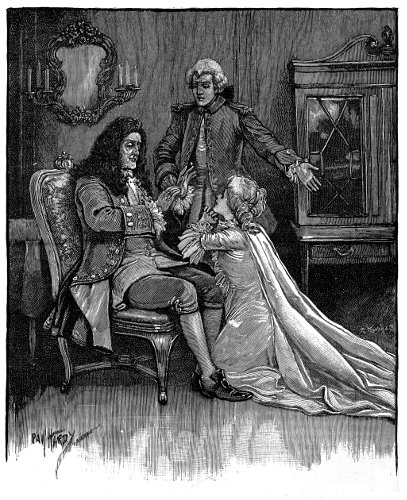
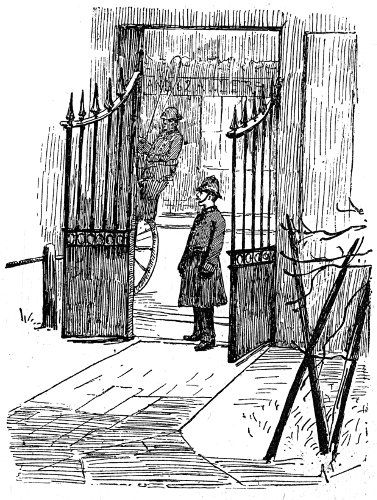
Two days after this judgment had been
rendered, she obeyed. The gates swung
wide open before her, and, dressed in white,
pale and weeping, she entered the great hall,
where the President du Bourg, surrounded
by his entire household, stood awaiting her
arrival.
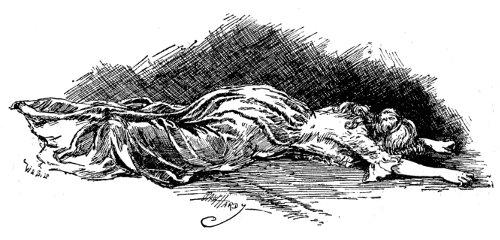
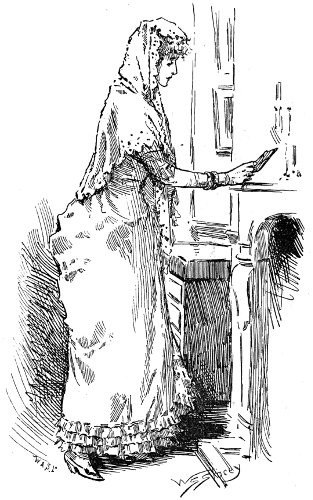
Approaching him, and pressing a phial
to her lips, she gasped forth the words, "I
restore to you what you lost"—and fell
dead at his feet, poisoned.
The same night, despite his devoted
mother's efforts to save him, Captain du
Serres died by his own hand.