On the magic carpet of Bagdad the fortunate
travelers of a fabulous age were transported
to their destination, over valley, river, and mountain
with a certainty and dispatch that has been
unparalleled in the annals of passenger transportation.
But the magic carpet, despite the generous
measure of its service, seems to have been lost to
following generations, and only its reputation,
doubtless somewhat amplified by the telling, remains
to set a high standard to succeeding transportation
enterprises.
Service is a much-used and a much-abused word.
It has manifold significance. It may be a personal
thing and carry the conscientious effort of individuals
eager to do for others offices which they
desire performed; it may be purely mechanical and
consist only in the provision of the "ways and
means" to secure a desired end. It may be a combination
of both; a system or organization instituted
for the accomplishment of a duty or work beneficial
to a community. A great railroad affords such
a service. Greater in its scope than any railroad,
the Pullman Company provides a more vast, intricate,
and complete service to the people of the
United States, a service unequaled in all the world.
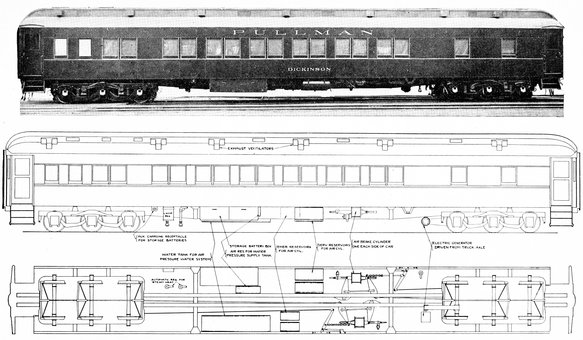
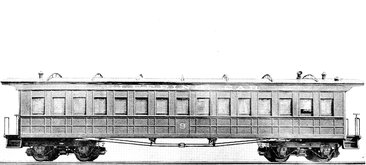
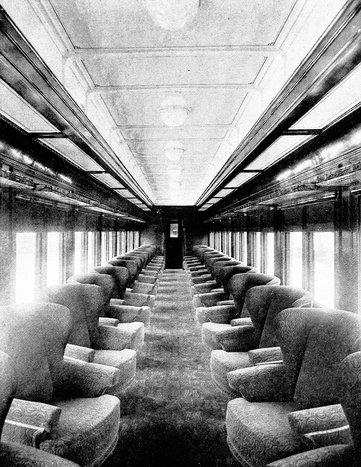
Pullman sleeping car, latest design, with outline drawing showing how the car is supplied with light,
water, and heat
A study of the scope and ramifications of the
Pullman operations deserves more than passing comment;
it is of interest to everyone, for everyone is
to some degree a traveler; an actual or a potential
Pullman patron. In preceding chapters has been
traced the story of passenger transportation in
America; how the first railroads offered communication
only between a few closely related cities, and
how later the growth of the railroads brought into
direct communication practically every village and
metropolis throughout the land. Then came the
time when the inadequacy of such complete but disconnected
service struck the imagination of a man
who saw the endless miles of track of countless railroads
bound together by a supplemental system to
which all railroads contributed and from which they
profited, and by which, most of all, the public would
enjoy a service of a scope which could otherwise only
be attained by an actual combination of these railroads
into a single company. But the vision of the
founder of the Pullman Company did not stop at
the idea of a unified system. He had not only seen
the discomfort and inconvenience of countless
changes from one train to another at railroad junctions
and the midnight gatherings on the station
platform; he had seen in tired eyes the fatigue of
sleeplessness; he had seen in the preponderance of
male passengers the lack of a protection sufficient to
permit the free travel of unescorted women; he had
realized, and his realization ranks high with the
thoughts of the world's innovators, that travel was
a hardship and that it could be made a pleasure.
With the realization constantly before him that
the most perfect service could be given only by the
most radically improved equipment and the widest
extension of this company's activities, Mr. Pullman
identified the early years of organization with a
development of the passenger car to a degree of comfort,
convenience, safety, and luxury that passed
popular comprehension. Nothing was too good for
the Pullman car; too much money could not be
invested in it. Hand in hand with this development
of the mechanical side of service he developed
its extension throughout the country, by means of
which it might be put into the hands of the greatest
number of people for their greater convenience.
Never has history more completely justified a business
that from its character must be to a certain
extent a monopoly. Never has competition more
promptly yielded to unification.
It is natural to think of the Pullman Company
as housed in some miraculous manner in the cars
which it operates, as a company which expends its
restless existence in untiring travel from state to
state. But, as a matter of fact, the vast organization
which makes possible the movement of the
seventy-five hundred cars which comprise the present
equipment holds an interest secondary only to the
actual operation of the cars themselves.
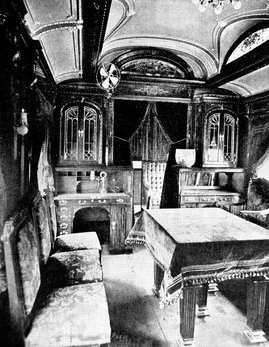
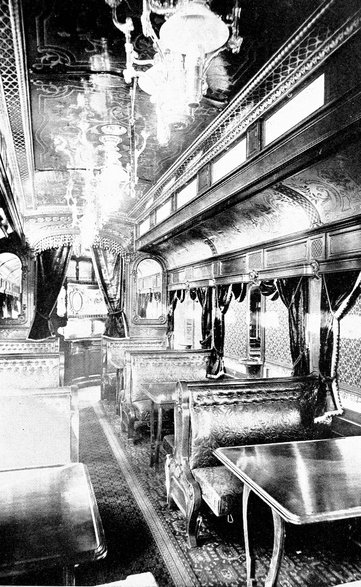
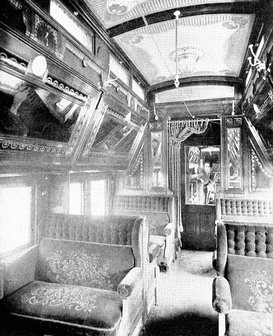
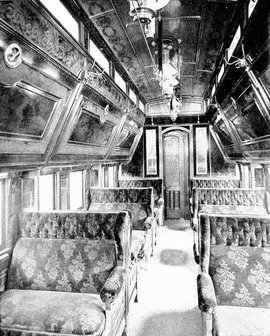
Front end of a dining room in a private car
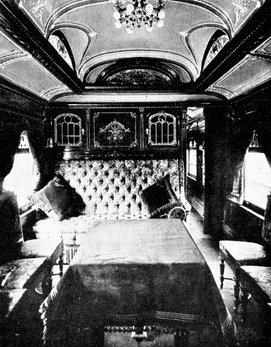
Rear end of the same dining room
There was a day when the run from Albany to
Schenectady was the longest continuous railroad
ride that a traveler might take. Today it is possible
to travel in a Pullman car without change from
Washington, D. C., to San Francisco, a distance of
3,625 miles, requiring one hundred and eighteen
hours, or approximately five days.
But distance is not alone characteristic of Pullman
service; equal attention is given to shorter
"hauls." From Greensboro to Raleigh, North
Carolina, for instance, a distance of only eighty-one
miles, Pullman sleeping cars are regularly operated.
Here, as in many other instances, arrangements exist
whereby the passengers may retire early in the evening
while the car is at rest on a siding in the station,
and arise at a reasonable hour in the morning. By
such service hotel accommodations are practically
afforded and it becomes possible for the travelers to
have a whole day for pleasure or business at one
place, spend a night in which a hundred or five
hundred miles are traversed, and arrive without
fatigue at another place the following morning.
The hotel desk corresponds to the ticket office of
the Pullman Company. Imagine a hotel with
260,000 beds and 2,950 office desks, and a total
registration of 26,000,000 people each year. This
is what the Pullman Company does, however, and
incidentally it does it often at a mile a minute and
in every state in the Union. The 2,950 offices
where Pullman berths, seats, drawing rooms or compartments
may be purchased include Quebec,
Winnipeg, Manitoba, and Vancouver on the north;
San Diego, El Paso, New Orleans, Key West, and
Havana on the south; San Francisco on the west,
and the seaboard towns of Maine on the east.
Under normal conditions the southern limit is still
further extended to fifty-six additional offices in the
Republic of Mexico, as far south as Salina Cruz on
the Gulf of Tehuantepec, and approximately two
hundred miles from the boundary between Mexico
and Guatemala, Central America.
The longest distance which it is possible to travel
with a single Pullman ticket is from Portland,
Maine, to San Francisco, by the way of Washington,
D. C., New Orleans and Los Angeles. This
cannot be done, however, in one sleeper, and changes
must be made at New York and Washington.
But a brief consideration of the perfect organization
necessary to provide such continuous passage
with berths reserved at each point of change
by the mere purchase of a ticket at the starting point,
grants to the Pullman Company a measure of credit
due. In actual mileage the distance covered by this
trip is 4,199.
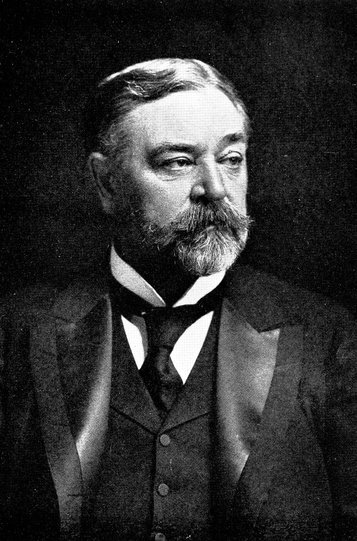
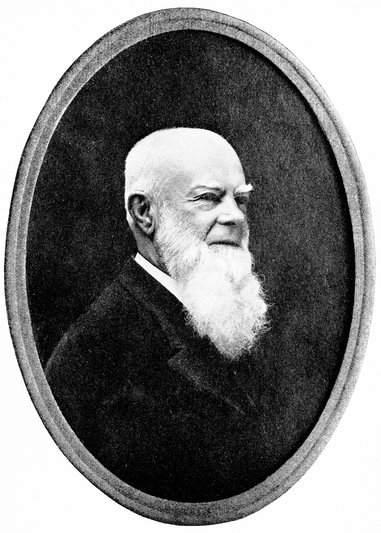
ROBERT T. LINCOLN
President of the Pullman Company from 1897 to 1911
As a rule the berths in sleeping cars and seats in
parlor cars are on sale at the terminals of the different
lines, but to provide facilities at intermediate
points where the demand is sufficient to justify it, a
limited number of sections are assigned for sale at
such stations and tickets may be purchased from
them on application. At stations of less importance
and where the demand is not sufficient to assign any
definite space, an arrangement exists whereby the
vacant accommodations are telegraphed by ticket
agents or conductors from point to point in order to
accommodate passengers taking the trains at such
stations. It is also possible and a very common
practice to purchase a single sleeping car ticket
between stations a great distance apart—for
instance, between Boston, New York, Philadelphia,
and Washington, to Los Angeles, San Francisco,
Portland, and Seattle, via any of the ordinary
routes of travel, by sufficient notice to the ticket
agent to enable his reserving the accommodations,
and it is also possible to purchase under similar conditions
a sleeping car ticket in Havana, Cuba, for
a berth, section, or drawing room from Key West,
Florida, to Seattle, Washington, a distance of 3,923
miles, taking one hundred and thirty-three hours;
not, however, without change, but in connecting
cars, giving continuous sleeping car service over
various routes.
During the year 1916, 16,398,450 tickets of
various forms were printed in Chicago and distributed
to the various ticket offices, and in addition,
8,150,000 cash-fare tickets or checks were issued by
conductors to travelers purchasing on the train.
In addition to offices where tickets may be purchased,
arrangements exist in many thousands of
smaller points whereby the public may secure sleeping-car
accommodations by application to the station
agent or other representative of the railroad company,
who will arrange by telephone, telegraph, or
letter the desired space to be called for, with a
reasonable time at a designated point.
In order to extend to the public every courtesy
consistent with lawful requirements and good business
principles, the Pullman Company endeavors to
provide prompt and careful attention to all requests
for refund of fares where service paid for is not
furnished, whether through the acts of its agents or
employees or the passenger, or due to interruption
of traffic.
Applications of this nature are usually made to
the company's general offices in Chicago, but when
this is not convenient, a report made to the company's
representative in any of the important cities
throughout the country is forwarded to the central
offices and receives the most careful consideration.
It would seem of interest in this connection to
state that during the year 1916, 53,743 applications,
amounting to $152,446.00, were received for refund
of fares, an average of one hundred and seventy-nine
for each working day. Of the total number
received 48,025 were considered favorably and
paid, indicating the liberal policy of the company
in such matters. Regardless of the amount involved,
great or small, it is necessary that each case be considered
on its individual merits, and the result
determined with due regard to fairness to the passenger
and the company, and not conflicting with
legal necessities.
Probably seventy-five per cent of these requests
for refunds are occasioned by passengers changing
their plans or missing their train. Most frequent is
the reason given that the wife has packed the tickets
in the trunk, that the cab or taxi broke down, or
that the last act of the theater caused unrealized
delay. Often the tickets are lost, and not infrequently
they are turned in by others for refund.
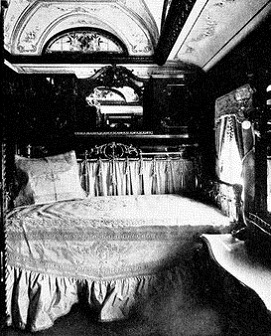
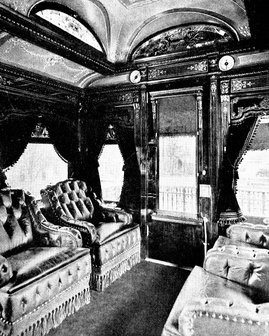
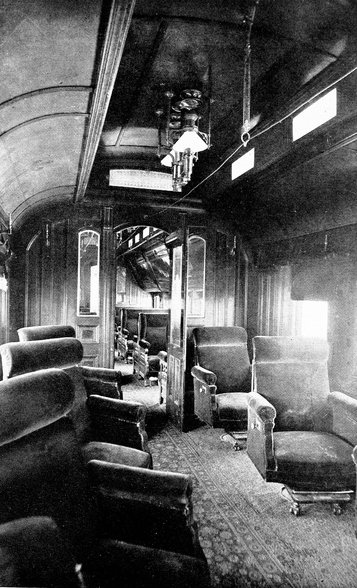
Bedroom and observation section of a costly private car.
This car represents the apotheosis of railroad travel
But one of the most convenient features of the
Pullman service is the ease with which the traveler
may reserve in advance accommodations on the
train which he intends to take. In the ordinary
railway coach it is a rule of "first come, first served"
and the late arrival is often obliged to take a seat
with a stranger. By the Pullman system, however,
a call over the telephone or a stop at the local ticket
office is all that is necessary to make as definite
reservation of space as for a theater, and the traveler
is wroth indeed when in rare instances a slip occurs
and he finds his seat or berth has not been held for
him and has been sold to another.
Naturally so general a convenience has led to
rank abuses from which the passengers invariably
suffer. Chief among them is the practice of hotel
clerks and porters, especially in large cities and at
summer and winter resorts, to reserve far in advance
all the desirable Pullman accommodations on popular
trains in the names of supposititious travelers
whom they claim to represent, and later sell these
tickets to the hotel guests at a premium or for the tip
which invariably follows.
By such practice the distribution of space is placed
in the hands of outside parties, out of the control
of the railroads or the Pullman Company, and the
traveler is obliged to look to these irresponsible
individuals for his accommodations. In addition,
the tip or extra fee increases the cost of the ticket,
errors in "duplicate sales" are made more frequent,
and a critical and unfriendly feeling is created in
the mind of the passenger who has been unable to
secure a "lower" on early application at the ticket
office, but was able perhaps to secure one at train
time from the unused tickets turned in by hotel
porters. Naturally the feeling is created that the
railroad or Pullman agents are holding back space
for a tip or a favorite, and "playing favorites" is
never popular with the public.
There are several good stories told of the action
of the Pullman Company in cases where they "had
the goods" on the offending hotel porters. As the
company is in no sense required by law to make
refund, but does so only for a convenience to its
patrons, it is possible to refuse to make a refund if
the case justifies the action. At a popular watering
place an enterprising hotel employee figured out
that on the day following Easter a large number of
guests would leave on a certain popular train.
Accordingly, like the theater "scalper," he purchased
outright a large block of tickets on this train, in fact,
every lower on the two Pullman sleepers. Fortunately
the local agent of the company sensed that
there was something "rotten in the state of Denmark"
and made provision for two additional sleepers
beyond the usual two which travel warranted.
Being able to secure satisfactory accommodations
direct from the agent the passengers failed to patronize
the hotel porter's be-tipped and premiumed
wares, and he, "stuck with the goods," tried a few
days later to throw them back for refund on the
Pullman Company. Their refusal cost him an even
hundred dollars and broke up a peculiarly bad condition
in that particular locality.
Many, indeed, are the difficulties attending the
operation of a system of such magnitude, and it is
only by a consideration of these difficulties that the
true wonder of a service so nearly perfect can be
appreciated.
The operation of a system of such magnitude as
the Pullman Company necessitates an operating
organization letter perfect in its detail. Such an
organization cannot be built to order; it must be a
development, the result of years of wearying experience
and costly experiment. In the introduction to
the official book of instruction provided to car
employees of the company, occurs, above the signature
of the general superintendent, this sentence:
"The most important feature to be observed at all
times is to satisfy and please passengers." It is an
apparently simple commission, a natural expression
of desire, but a brief investigation of the requirements
necessary "to satisfy and please" twenty-six
million passengers, traveling rapidly from place to
place, from north to south and from coast to coast,
regardless of climate or locality, discloses a service
and machinery for the carrying out of that service
complete beyond the realization of the most discerning
traveler.
To comprehend more clearly the details of this
nation-wide service it must be considered in its two
aspects—the material equipment which the operation
of the cars requires, and the personal service
afforded by the employees of the company. To give
this service 7,500 cars of the Pullman Company are
operated over one hundred and thirty-seven railroads,
or a total of 223,489 miles of track, reaching
practically every point in the country from which
or to which a person might desire to travel. To
operate these cars an army of over ten thousand car
employees are required, while seven thousand more
are employed to keep the cars in repair, and maintain
them in a clean and sanitary condition.
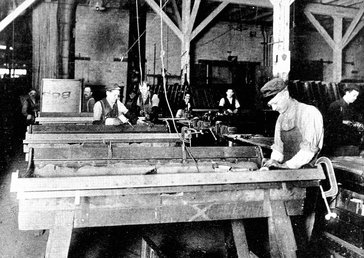
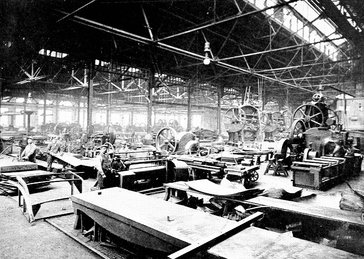
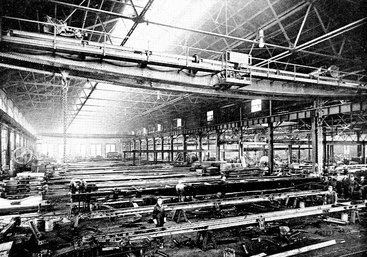
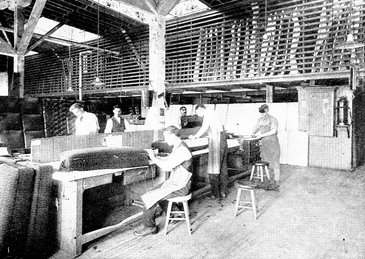
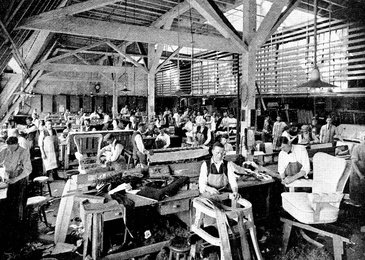
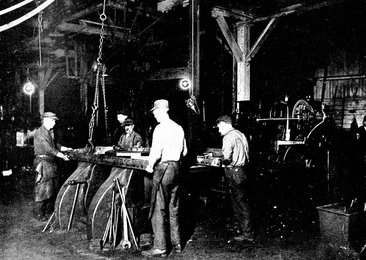
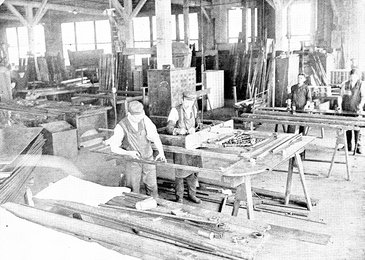
The Pullman Company maintains, in addition to
the great plant at Pullman, six repair shops situated
at various convenient points throughout the country
where cars are repaired and maintained in good condition.
In 1916, a total of 5,115 cars were repaired
at these various shops at a cost of over five million
dollars. Only by such rigid maintenance can the
cars be kept in the almost invariably excellent condition
in which they are found by the public.
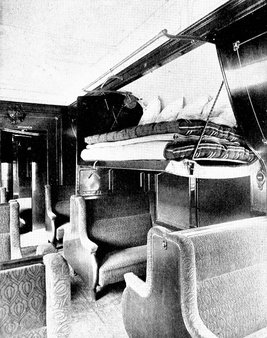
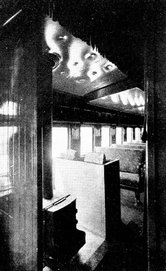
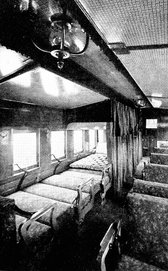
Modern Pullman steel sleeping car, ready to be
made up for the night
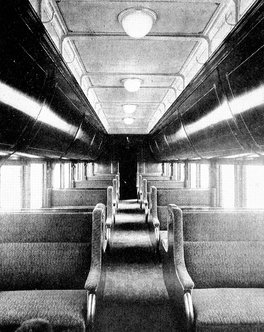
Modern Pullman steel sleeping car during
the day
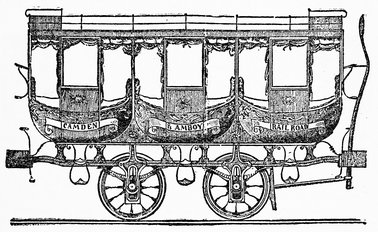
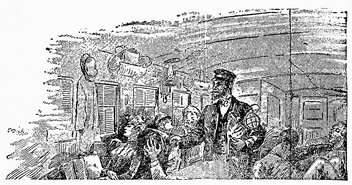
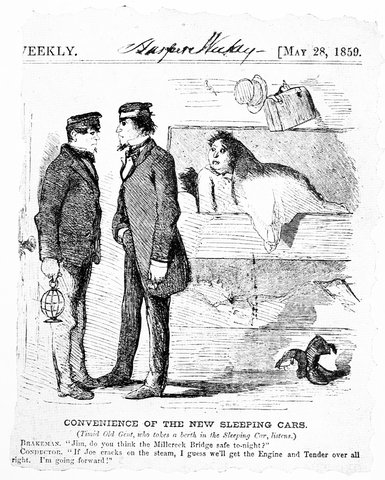
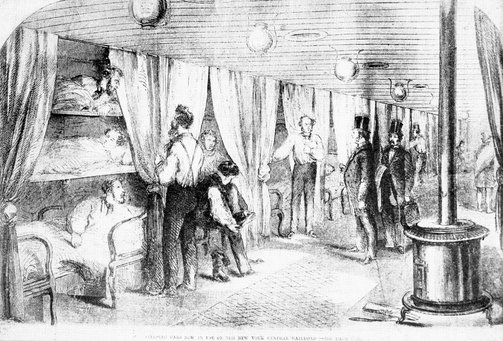
Years ago the wearied traveler wrapped his great
coat about him for his midnight journey. Later a
few "sleeping" cars of primitive construction provided
sheets and blankets which were stored in a
cupboard in the end of the car. As these were
washed only at irregular intervals, it was a lucky
passenger who found clean linen for his bed, and
if he did not make up the bed himself, it was the
brakeman who provided this domestic service. Naturally
no one thought of undressing for the night,
and when the Pullman car was first introduced it
was necessary to print on the back of the tickets and
in the employees' rules book the warning that passengers
must not retire with their boots on.
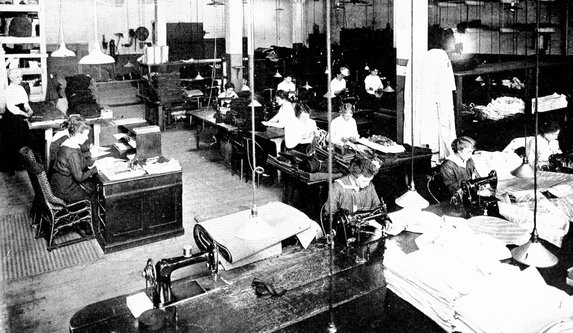
Today the Pullman Company to provide clean
linen nightly for each passenger, keeps on hand
1,858,178 sheets, which are valued at $980,553.00,
and 1,403,354 pillow slips worth $186,475.00. In
the twelve months ending April 27, 1916, over two
hundred thousand sheets, valued at over one hundred
thousand dollars, and nearly two hundred thousand
pillow cases, valued at over twenty thousand dollars,
were condemned. And during the same period
108,492,359 pieces of linen, including both sheets
and pillow cases were washed and ironed. In the
matter of condemnation, it is interesting to learn
that the slightest tear or stain is considered sufficient
cause. These figures are staggering in their immensity,
but even more amazing is the system by which
these articles are provided, changed, washed,
returned in traveling hotels, at times hundreds of
miles removed from the nearest supply station.
In the oldtime washroom a roller towel gave satisfaction
to travelers less particular than those of the
present day. But now how things have changed.
Two million seven hundred thousand towels are
needed to supply an ever increasing demand. Three
hundred and twenty-five thousand dollars was their
cost and each year seventy million towels is the
laundry order. When Brown has shaved in the
men's washroom in good American style, he will
probably wipe his razor on a towel. It is not his
custom at home, but the traveler seems to have
scant respect for property. That one little cut will
destroy the towel for future service. Pullman towels
rarely have a chance to wear out. Over a hundred
thousand a year are condemned chiefly because of
such usage, and, sad to relate, each year over half
a million are "lost." A Pullman towel is a handy
wrapping for a pair of shoes, but the annual lost
charge amounts to nearly seventy thousand dollars.
It is a charge that must be accepted by the company.
It will not do to question a passenger's integrity.
All told, the investment by the Pullman Company
in car linen amounts to $1,856,708.00,
representing 6,597,714 separate pieces. And this
is only for sleeping and parlor cars and a relatively
small number of buffet and private cars, for the
company no longer operates the diners. To provide
new linen to replace the lost and condemned costs
an annual sum of over four hundred thousand
dollars.
But the quantities and the cost of other articles
which the company provides are even more impressive.
These, for the most part, are expressions of
Pullman service over and above the service itself,
but it is unquestionably true that by such "over and
above" service is the whole service most truly
judged. Who would think, for instance, that in one
year 5,819,656 women's hats were protected against
dust by paper bags provided by the porters. And
yet these paper bags represented a total cost of
$14,549.00. Smokers in the same period consumed
two million boxes of matches, and over forty-two
million drinking cups costing nearly eighty thousand
dollars gave the modern touch of sanitation to the
water coolers. Soap would naturally be considered
an essential part of the service, but a soap bill for
one year of sixty thousand dollars is a large order
for cleanliness. So, too, is the sum of $20,000 for
hair brushes and a third of that amount for combs.
Back in the dark ages of blissful ignorance of
germs, railroad coaches were hallowed breeding
places for sickness. But times have changed, and
today it is a pretty safe remark to make that the
Pullman car is more healthful than almost any place
where people frequently congregate. It does not
take many gray hairs to remember the days of sleeping
cars furnished with heavy carpets tacked to
wooden floors, of stuffy hangings, and plush
upholstery, of fancy woodwork rife with cracks and
crannies, and of washrooms and toilets that no
amount of cleaning could ever maintain entirely
innocuous.
It is difficult to enumerate the countless little
details that are constantly incorporated into Pullman
car construction. The berth light has been
frequently changed to embody some new idea to
improve its convenience and efficiency. The coat
hanger, and the mirror in the upper berth are minor
details, but their convenience is attested by their
constant use by passengers. In the washrooms the
design of the wash basins has been frequently
altered to afford a more convenient resting place
for the toilet articles unpacked from the traveler's
bag. Even the location of a coat hook receives a
consideration that would perhaps seem exaggerated
to the casual outsider. Double curtains are now
provided on the newer cars, one set for the lower
and another set for the upper berth.
Once a month a Committee on Standards, composed
of the higher officials of the company, meets
at the big plant at Pullman. On a track near the
main entrance, stands a car in which every practical
suggestion has been incorporated for the inspection
of the committee. Some of these suggestions are
quickly eliminated by their experienced verdict;
others, possessing apparent worthiness, are passed
and are later incorporated in the construction of
the next cars manufactured, when the public will
become the final judge. Many of these improvements
are of a technical character, and primarily
affect the construction of the cars; others are of a
more directly personal nature and contribute more
to the comfort and convenience of the traveler. All
that are passed by the committee serve to place
still higher the standard that for fifty years has
been constantly uplifted by the company.
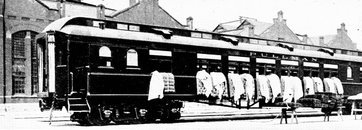
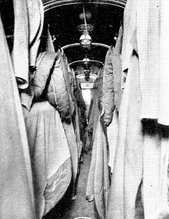
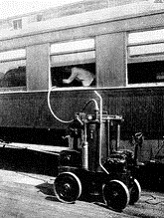
At the end of its journey
the Pullman car is thoroughly
cleaned and disinfected. The
first picture on this page
shows the bedding being
given a sun bath. The
next, the appearance of the
car when ready for fumigation,
and the two illustrations
at the bottom, the
vacuum machine at work.
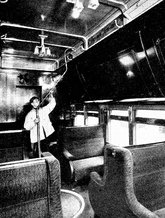
As a car-building material wood has had its day,
and the concrete floor of the Pullman car is tacit
tribute to the sanitary properties of a widely used
material. On the floor of concrete the familiar
green carpet is lightly stretched to be easily removed
at the journey's end, and after the floor has been
thoroughly scrubbed, returned after a complete
cleansing with vacuum cleaners. Instead of insanitary
woodwork, the smooth surfaces of steel which
form the interior of the car offer no lurking place
for germs, and soap and water at frequent and
regular intervals maintain a high degree of cleanliness.
Of course, the porter with his portable vacuum
cleaners and his dustcloth, can keep the car tidy en
route, but the real cleaning comes when the trip is
over and a gang of professional workers with every
appliance to serve this end attacks the cars. Then
not only are the carpets renovated but the prying
nozzles of powerful vacuum cleaners suck up every
particle of dust from seats, berths and cushions.
Each mattress is given similar treatment, and mattresses
and pillows are hung in the open air for the
action of that greatest of all purifiers, the sun.
Blankets are given a similar treatment. Water
coolers are cleaned and sterilized with steam. In
fact, nothing that could harbor a speck of dust is
neglected.
The slight, acrid odor sometimes noticeable in a
Pullman car at the beginning of a run is caused by
the disinfectants which are liberally employed. A
jug of disinfectant solution is a part of the equipment
of every car and this is used for all car washing
and particularly on the floors and in the toilet and
washrooms.
To protect still further the health of the passengers,
the cars are regularly fumigated with a gas
which kills all disease-producing bacteria. Whenever
a car has carried a sick person it is fumigated
as soon as it is vacated, in addition to the regular
monthly, weekly, or other schedule of fumigation
for various lines and terminals. In order that the
district offices may be promptly informed as to the
necessity of this extra fumigation, the conductor is
required to note on his inspection report the fact
that a sick passenger has been carried, and the car
is immediately taken out of service and thoroughly
cleaned and fumigated. Moreover, if space occupied
by a sick passenger is vacated en route, it must
not be resold until the car has reached its terminal
and has been fumigated.
To provide the necessary facilities for car cleaning,
the company maintains a cleaning force in
two hundred and twenty-five principal yards, and,
in addition, at one hundred and fifty-eight outlying
points. These yards require the service of over four
thousand cleaners.
Stationed throughout the United States, in nearly
every city of prominence, are six superintendents,
thirty-nine district superintendents and thirty agents.
These men each week make personal inspection of
cars in operation with the sole purpose of keeping
the service up to the highest standard. In addition,
a corps of electrical and mechanical inspectors constantly
inspect and test the cars and their devices,
at various places, and another corps of local inspectors
carefully examine every departing and every
incoming train with particular attention to the
appearance and deportment of the car employees and
the apparatus for heating, lighting and water.
The Pullman Company is today the greatest single
employer of colored labor in the world. Trained as
a race by years of personal service in various
capacities, and by nature adapted faithfully to
perform their duties under circumstances which
necessitate unfailing good nature, solicitude, and
faithfulness, the Pullman porters occupy a unique
place in the great fields of employment. There are
porters who for over forty years have been employed
by the company, and of all the porters employed, an
army of nearly eight thousand, twenty-five per cent
have been for over ten years in continuous service.
The reputation of any company depends in a large
measure on the character of its employees, and particularly
in those concerns which render a personal
service to the general public is it necessary that the
standards of the employees be exceptionally high.
Such standards of personal service cannot be quickly
developed; they can be achieved only through years
of experience and the close personal study of the
wide range of requirements of those who are to be
served.
To inspire in the car employees, conductors as
well as porters, the ambition to satisfy and please
the passenger, rewards of extra pay are made for
unblemished records of courtesy; pensions are provided
for the years that follow their retirement from
active service; provision is made for sick relief, and
at regular intervals increases in pay are awarded
with respect to the number of years of continuous
and satisfactory employment.
One characteristic of the Pullman business that is
peculiarly significant is the average length of service
of the employees. In a general way it may truly
be said that from the car porter to the highest official
every man who enters the business enters it as a life
work. In most lines of business there is a variety
of concerns operating along similar lines, and it is
a natural step for a man to pass up from one company
to another. But the unique position held by
the Pullman Company has eliminated such a situation,
and a man entering its employ looks forward
to a personal development in this one concern.
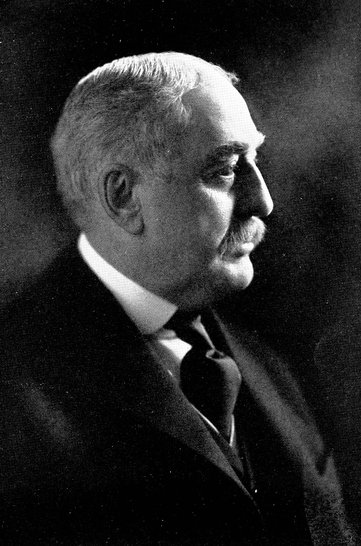
JOHN S. RUNNELLS
President of the Pullman Company
During the half-century which has seen the sure
and perfect development of this vast and complicated
organization it is but natural to expect among
the names of those who have guided its destiny many
that must rank high in the business history of the
country. A glance at the list of past and present
Directors of the company confirms the expectation.
Here are the names of men who have found high
places in a variety of business activities not only in
Chicago but in other great cities. The list includes:
- George M. Pullman
- John Crerar
- Norman Williams
- Robert Harris
- Thomas A. Scott
- Amos T. Hall
- C. G. Hammond
- J. P. Morgan
- Marshall Field
- J. W. Doane
- H. C. Hulbert
- O. S. A. Sprague
- Henry R. Reed
- Norman B. Ream
- William K. Vanderbilt
- John S. Runnells
- Frederick W. Vanderbilt
- W. Seward Webb
- Robert T. Lincoln
- Frank O. Lowden
- John J. Mitchell
- Chauncey Keep
- George F. Baker
- John A. Spoor
In this same period but three men have occupied
the office of president: George M. Pullman, the
founder of the company, who held office from 1867,
the year of incorporation, until his death in 1897,
and Robert T. Lincoln until 1911, when John S.
Runnells, the present president, was elected.
Pullman service has revolutionized the method of
travel. Night has been abolished, the sense of distance
has been annihilated; fatigue has been reduced
to a minimum. In the oldest districts of the east,
along the valleys of western rivers, on the wide-spread
plains, among the remote peaks of the Rockies,
in the deserts of the great southwest, the Pullman
car, served by the same trained employees, furnishes
the same comforts, and gives the same nights' repose.
Improved each year in its mechanical construction,
amplified in its service, better served by its attendants,
it has set a high standard to the world in the
development of railway travel, and in the fifty years
of its development it has contributed more to the
safety, comfort, convenience, and luxury of travelers
than any other similar contribution that has been
given to mankind.