A
Aberration of light, 503–512;
and the apparent movements of stars, 504, 507;
Bradley's discoveries, 503;
causes, 507–511;
circles of stars, 505–507;
dependent upon the velocity of light, 511;
effect on Draco, 505;
telescopic investigation, 510
Achromatic combination of glasses, 11
Adams, Professor J.C., and the discovery of Neptune, 324–327, 330–332;
and the Ellipse of the Leonids, 386
Aërolite, the Chaco, 398;
the Orgueil, 399
Airy, Sir George, 325
Alban Mount Meteorites, the, 393
Alcor, 438
Aldebaran, 209, 418, 419;
spectrum of, 480;
value of velocity of, 484
Algol, 485, 487
Almagest, the, 7
Alphonsus, 92
Alps, the great valley of the (lunar), 88
Altair, 424
Aluminium in the Sun, 50
Ancients, astronomy of the, 2–7
Andrews, Professor, and basaltic formation at Giant's Causeway, 407
Andromeda, 414;
nebula in, 469, 489
Andromedes, The, shooting star shower, and Biela's comet, 390
Antares, 423
Apennines (lunar), 83
Aphelion, 163
Aquarius, 215, 413
Aquila, or the Eagle, 424
Arago, 326
Archimedes, 88
Arcturus, 358, 480;
value of velocity of, 484
Argelander's Catalogue of Stars, 431, 476
Argus, 481
Ariel, 309, 559
Aristarchus, 90
Aristillus, 88
Aristotle, lunar crater named after him, 88;
credulity respecting his writings, 267;
the Moon and the tides and, 535
Asteroids, 229–244
Astrea, 328
Astronomers of Nineveh, 156
Astronomical quantities, 558
Astronomy, ancient, 2–7;
Galileo's achievements in, 10;
the first phenomenon of, 2
Athenæum, the, and Sir John Herschel's letter on Adams's share in the discovery of Neptune, 330
Atmosphere, height of the Earth's, 100
Attraction, between the Moon and the Earth, 75;
between the planets, 148;
between the Sun and the planets, 144, 148;
of Jupiter, 248, 249;
producing precession, 498
Auriga, 414, 489
Aurora borealis, 42
Autolycus, 88
Auwers and star distances, 449;
and the irregularity in movement of Sirius, 427
Axis, Polar, 196, 497;
precession and nutation of the Earth's, 492–502
B
Backlund, and Encke's comet, 349, 351
Barnard, Professor E.E., and Saturn, 271, 278, 282;
and Titan, 294;
and the comet of 1892, 355;
and the Milky Way, 475
Beehive, the, 422
Belopolsky, M., and Binaries, 487, 488
Benares meteorite, the, 392
Bessel, and Bradley, 501;
and the distance of 61 Cygni, 446, 448, 449;
and the distances of stars, 442;
and the irregular movements of Sirius, 426;
receives gold medal of Royal Astronomical Society, 442
Betelgeuze, 209, 418, 419, 482;
value of velocity of, 484
Biela's comet, and Sir John
Herschel, 357;
and the Andromedes, 390
Binaries, spectroscopic, 487
Binocular glass, 27
Biot and the L'Aigle meteorites, 392
Bode's law, 230;
list of double stars, 435
Bond, Professor, and Saturn's satellites, 296;
and the nebula in Orion, 469;
and the third ring of Saturn, 280
Boötes, 422
Bradley, and nutation, 501;
and the aberration of light, 503;
his observations of Uranus, 312
Bredichin, Professor, and the tails of comets, 365, 366, 367
Breitenbach iron, the, 397
Bristol Channel, tides in the, 538
Brünnow, Dr., observations on the parallax of 61 Cygni, 449
Burial of Sir John Moore, 72
Burnham, Mr., and the orbit of Sirius, 427;
his additions to the known number of double stars, 439
Butler, Bishop, and probability, 460
Butsura meteorite, 397
C
Cadmium in the Sun, 50
Calais, tides at, 536
Calcium in the Sun, 50
Campbell, Mr., and Argus, 481;
and Mars, 223
Canals on Mars, 220
Cancri 20, 154
Cancri, ζ, 154
Cancri, θ, 154
Canis major, 419
Canopus, 422
Cape Observatory, 27
Capella, 414, 480, 487
Carboniferous period, 518
Cardiff, tides at, 538
Cassini, J.D., and double stars, 434;
and Saturn's satellites, 294;
and the rings of Saturn, 278
Cassiopeia, 412
Castor, 420, 487;
a binary star, 437;
revolution of, 437
Catalogues of stars, 310, 311;
Messier's, 529
Catharina, 92
Centauri, α, 422;
Dr. Gill's observations of, 451;
Henderson's measurement of distance of, 442, 451
Ceres, 231, 232, 238;
and meteorites, 404, 405
Chaco meteorite, the, 398
Chacornac, and the lunar crater Schickard, 90
Challenger, the cruise of the, and magnetic particles in the Atlantic, 408
Challis, Professor, 326;
his search for Neptune, 327, 328, 331, 332
Chandler, Mr., and Algol, 485
Charles's Wain, 28
Chepstow, tides at, 538
Chéseaux, discoverer of comet of 1744, 367
Chicago, telescope at Yerkes Observatory, 16
Chladni and the meteorite of Siberia, 392
Chromium in the Sun, 50
Chromosphere, the, 54
Chronometers tested by the Moon, 80
Clairaut and the attraction of planets on comets, 342, 343
Clavius, 91;
and Jupiter's satellites, 267
Clock, astronomical, 23
Clusters, star, 461–464
Cobalt in the Sun, 50
Coggia's comet, 1874, 337
Colour of light and indication of its source, 46
Colours, the seven primary, 45
Columbiad, the, 401
Columbus, 7
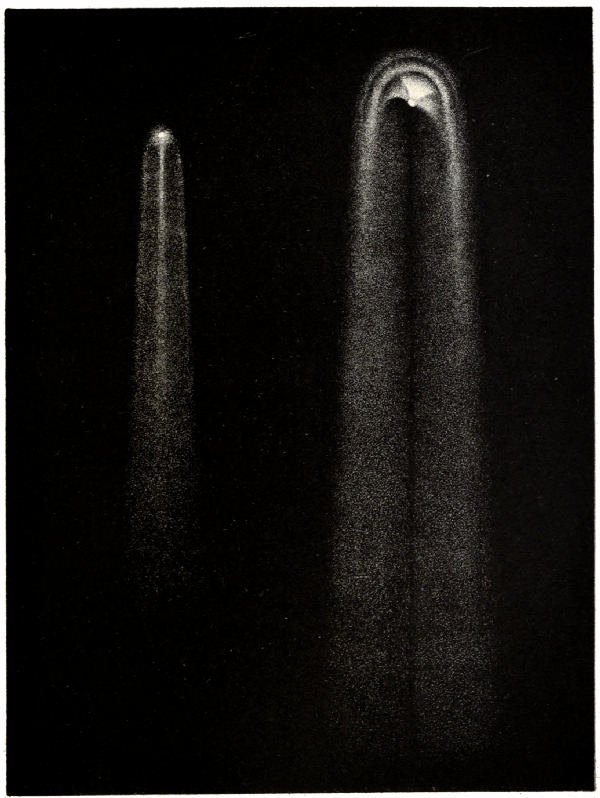
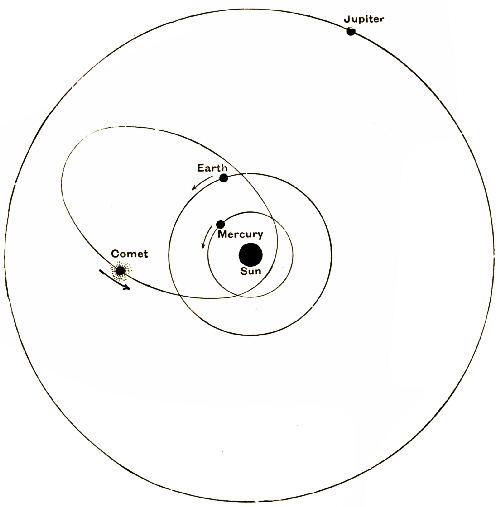
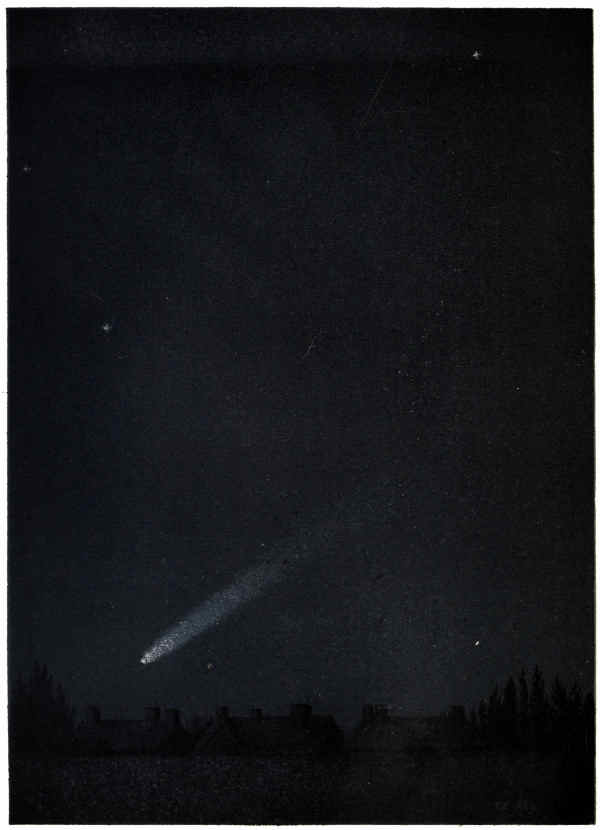
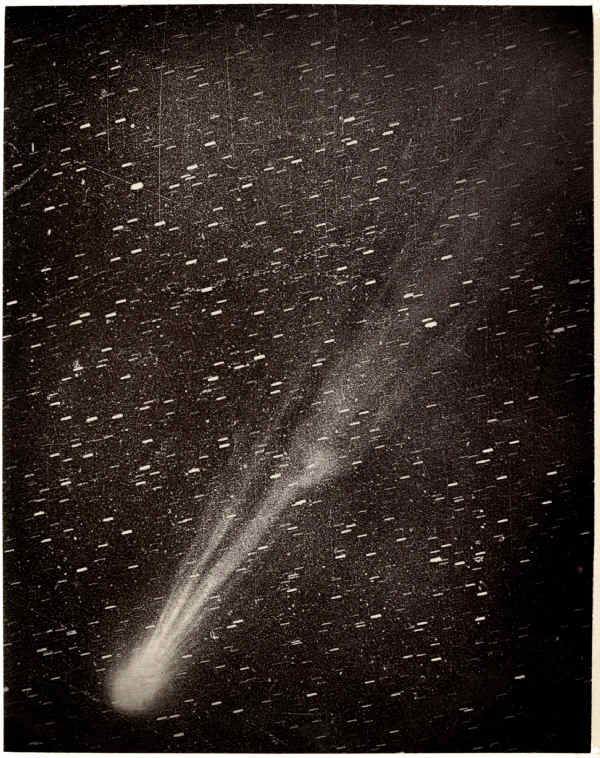
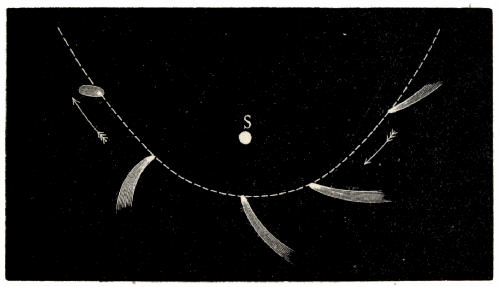
Comets, 112, 149, 250, 336;
and the spectroscope, 355;
attraction from planets, 342, 360;
Biela's, 357;
Biela's and the Andromedes, 390;
Clairaut's investigations, 342, 343;
Coggia's, 337;
Common's (1882), 354;
connection of, with shooting star showers, 388;
constitution of, 336;
containing sodium and iron, 356;
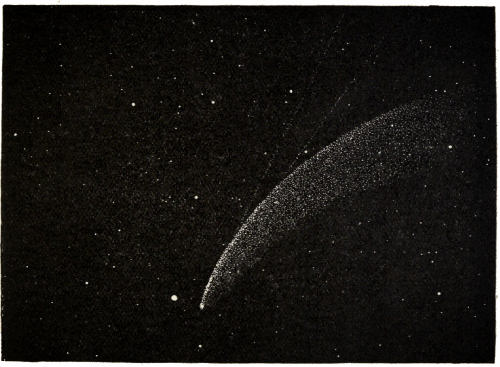
Donati's (1858), 353, 358, 366;
eccentricity of, 360;
Encke's, 344–352;
existence of carbon in, 356, 367;
gravitation and, 343, 348;
Halley's investigations about, 341–344;
head or nucleus of, 337;
Lexell's, 370;
mass of, 359;
movements of, 336;
Newton's explanations of, 338;
non-periodic, 353–356;
of 1531, 341;
of 1607, 341;
of 1681, 338, 339;
of 1682, 341;
of 1744 (Chéseaux's), 367;
of 1818, 345;
of 1843, 352;
of 1866, 388;
of 1874, 337;
of 1892, 355;
origin of, 369;
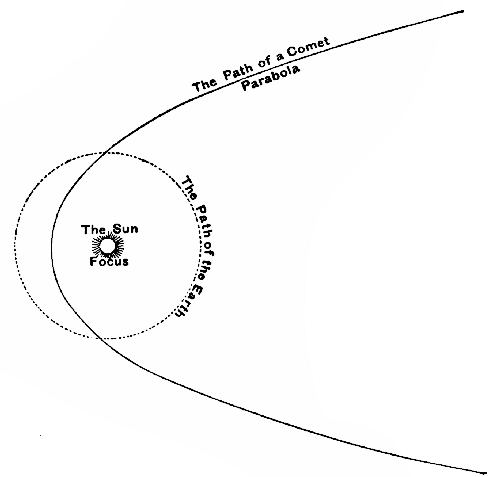
parabolic orbits of, 338–340, 360;
periodic return of, 338–341;
shape of, 336;
size of, 337;
tailless, 370;
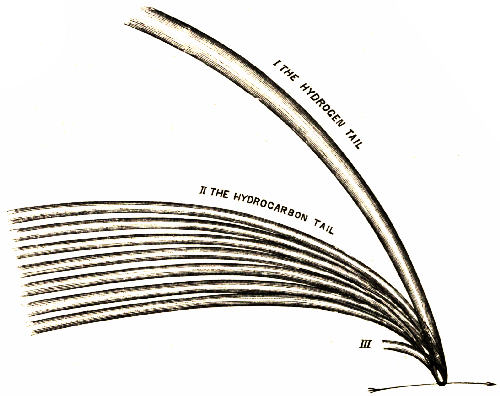
tails of, 337, 361;
Bredichin's researches, 365;
Chéseaux's, 367;
composition of, 365, 369;
condensation of, 369;
electricity and, 368;
gradual growth of, 363;
law of direction of, 362;
repelled by the Sun, 364;
repulsive force of, 364, 368;
various types of, 365;
Tebbutt's (1881), 353;
tenuity of, 357
Common, Dr., constructor of reflectors, 21;
and the comet of 1882, 354;
and the nebula in Orion, 469
Cook, Captain, and the transit of Venus, 184
Copeland, Dr., and Schmidt's star, 489;
and the lunar crater, Tycho, 92;
and the spectra of nebula, 473;
and the transit of Venus, 189
Copernicus and Mercury, 156;
confirmation of his theory by the discovery of Jupiter's satellites, 267;
his theory of astronomy, 7;
lunar crater called after him, 89
Copper in the Sun, 50
Cor scorpionis, 423
Corona Borealis, 423, 488
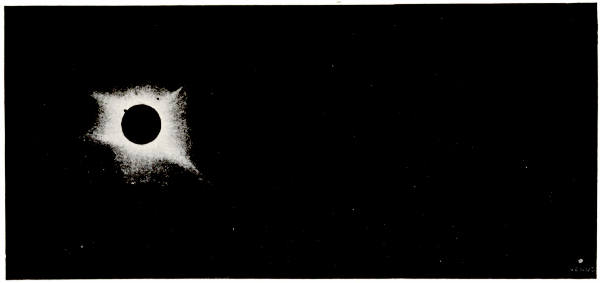
Corona of Sun, during an eclipse, 62–64, 151
Coronium, 64
Cotopaxi and meteorites, 401
Crab, the, 422
Crabtree, and the transit of Venus, 180
Crape ring of Saturn, 281
Craters in the Moon, 83–85, 87–98
Critical velocity, 103, 104, 237
Crown, the, 423
Cryptograph of Huyghens, the, 277
Cygni, β, 439
Cygni 61, annual parallax of, 450;
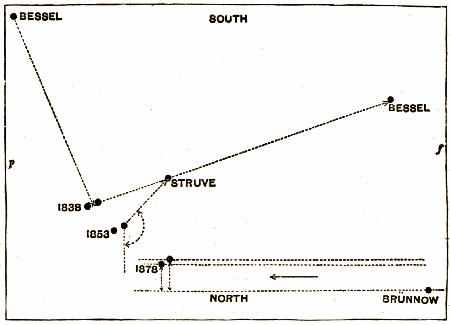
Bessel's measurement of distance of, 442, 446, 447;
Brünnow's observations of, 449;
distance from the Sun of, 452;
disturbing influence of, 452;
double, 446;
Professor A. Hall's measurement of, 449;
Professor Pritchard's photographic researches concerning, 449;
proper motion of, 446;
Struve's observations of, 448, 449;
velocity of, 452
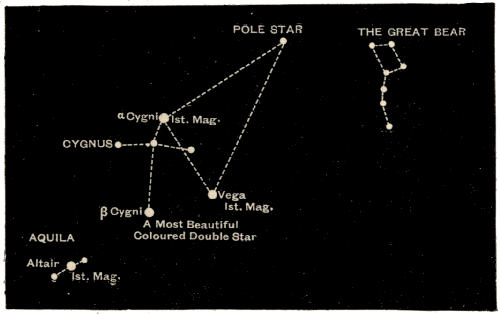
Cygnus, 424
Cyrillus, 92
Cysat, and the Belt of Orion, 467
D
D line in solar spectrum, 48
Darwin, Professor G.H., and tidal evolution, 531
Dawes, Professor, and Saturn's third ring, 281
Day, length of, and the Moon, 542;
and the tides, 541
Deimos, 226, 558
Denebola, 423
Diffraction, 56
Dione, 559
Dispersion of colours, 47
Distances, astronomical, 558, 559
Doerfel, and comets, 339
Dog star (see Sirius)
Dog, the Little, 420
Donati's comet, 353, 358;
tails, 366
Double stars, 434–440
D Q, 236
Draco, nebula in, 470
Dragon, the, 415
Draper, Professor, and the nebula in Orion, 469
Dunsink Observatory, 12, 184, 447, 449
Dynamical stability, 547;
theory of Newton, 214
Dynamics and the Earth-Moon system, 546
Dynamics, Galileo the founder of, 10
E
Eagle, the, 424
Earth, The, ancient ideas respecting, 3;
annual movement of, and the apparent movement of the stars, 507, 512;
attraction of Jupiter, 319;
attraction of on Encke's comet, 350;
attraction of, on the Leonids, 386;
attraction of Saturn, 319;
attraction of the Moon, 75, 497;
attraction of the Sun, 496;
axial rotation of, 558;
carboniferous period on, 518;
change of climate on, 518;
composition of, 496;
contact of atmosphere of, with meteors, 377–379;
density of, 558;
diameter of, 558;
distance of, from Mars, 213;
distance of, from the Moon, 73, 558;
distance of, from the Sun, 31, 114, 184, 240, 265, 351, 512, 558;
energy from rotation of, 540;
formerly a molten globe, 200, 201;
geological records and, 517;
glacial period on, 518;
gravitation and, 204, 206, 207, 497;
heat in the interior of, 94, 197, 198, 251, 514;
how it is measured, 193–196;
its mass increasing owing to the fall of meteoric matter, 408;
its oceans once vapour, 251;
once in immediate proximity to the Moon, 542;
orbit of, 114;
orbit of, its elliptic form, 139;
path of deranged by Venus and Mars, 319;
periodic time of, 558;
plane of orbit of, 309;
polar axis of, 196, 492–502;
position of, relatively to the Sun and the Moon, 76, 77;
precession and nutation of axis of, 492–502;
radius of, 193, 512;
rotation of, 75, 196, 200, 494, 496;
shape of, 192, 195, 197, 201, 207;
size of, compared with Jupiter, 119,
and with other planets, 119;
size and weight of, compared with those of the Sun, 30,
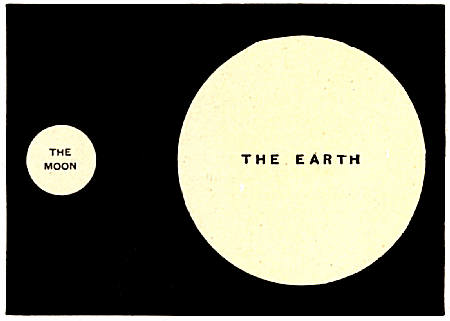
and Moon, 74, 75;
velocity of, 115, 139, 146, 512,
and periodic time, 143;
volcanic outbreaks on, 197,
and the origin of meteorites, 405;
weight of, 202, 248,
as compared with Saturn, 271, 272
Earthquakes, astronomical instruments disturbed by, 24
Eccentricity of planetary ellipses, 136, 211
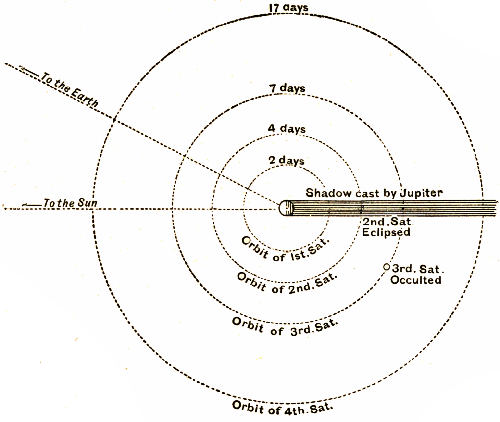
Eclipse of Jupiter's satellites, 261, 262, 265–267
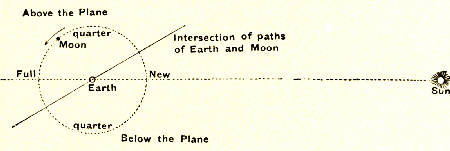
Ellipse of the Moon, 77–80;
of the Sun, 53
Eclipses, ancient explanations of, 6;
calculations of the recurrence of, 79, 80
Ecliptic, the, 5, 233;
Pole of the, 493, 500, 505
Electric Light, the, 44
Ellipse, the, 136;
eccentricity of, 137;
focus of, 137;
Kepler's discoveries respecting, 136, 138, 142–144, 505;
the form which the orbit of a planet takes, 136;
the parallactic, 444;
variety of form of, 139
Enceladus, 559
Encke, and the distance of the Sun from the Earth, 147, 184;
his comet, 344–352
Encke's comet, 344–352;
approach to Jupiter of, 349;
and Mercury, 349;
and the Sun, 346;
diminution in periodic time of, 351;
distance from Mercury of, 347;
disturbed by the Earth, 350,
and by Mercury, 348;
irregularities of, 347, 351;
orbit of, 346;
periodical return of, 351;
Von Asten's calculations concerning, 349–350
Energy supplying the tides, 539
Ensisheim meteorite, the, 393
Equatorial diameter, 196, 497;
telescope, 14
Eratosthenes, 89
Eros, 236
Eruptions, 197
Evening star, 109, 169
Eye, structure of the, 10
F
Faculæ of the Sun, 37
Fire ball of 1869, 375
Fire balls, 374
"Fixed" stars, 503
Flamsteed, first Astronomer-Royal, 311;
his Historia Cœlestis, 311
Focus of planetary ellipse, 137–139
Fomalhaut, 413
Fraunhofer, 478
Fraunhofer lines, 48
Fundy, Bay of, tides in, 538
G
Galileo, achievements of, 10;
and Jupiter's satellites, 267;
and Saturn's rings, 273, 274;
and the Pleiades, 418
Galle, Dr., and Neptune, 328–330
Gassendi, and the transit of Mercury, 164;
and the transit of Venus, 178;
lunar crater named after him, 90
Gauss, and the minor planet Ceres, 232
Gemini, constellation of, 303, 420
Geminids, the, 400
Geologists and the lapse of time, 453
Geometers, Oriental, 5
Geometry, cultivation by the ancients of, 6
George III. and Sir W. Herschel, 299, 306
Giant's Causeway, 407
Gill, Dr. D., 27;
and Juno, 243;
and the minor planets, 242;
and the parallax of α Centauri, 451;
and the parallax of Mars, 214
Glacial period, 518
Gravitation, law of, 122–149;
and binary stars, 437;
and precession, 497;
and the Earth's axis, 495, 497, 499;
and the parabolic path of comets, 340;
and the periodical return of comets, 343;
and the weight of the Earth, 203, 204;
illustrated by experiments, 123, 124, 127, 129–132;
its discovery aided by lunar observations, 108, 125;
its influence on the satellites, 149;
its influence on stars, 149;
its influence on tides, 149;
Le Verrier's triumphant proof of, 330;
Newton's discoveries, 125, 126, 147;
on the Moon, 96;
universality amongst the heavenly bodies, 128, 373
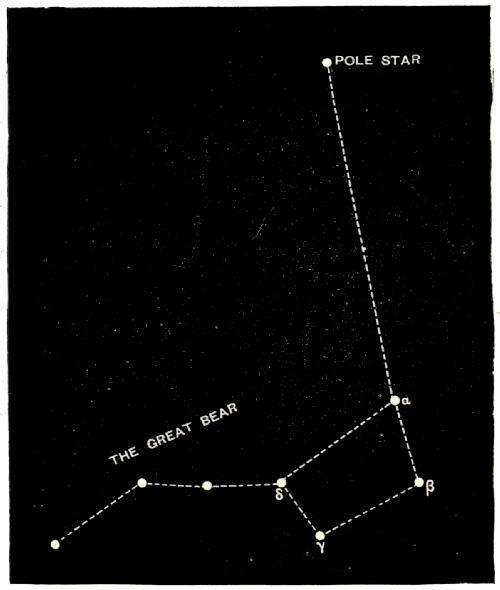
Great Bear, 27, 28, 241;
configuration, 410;
double star in the, 438;
positions of, 409, 411
Green, Mr., and Mars, 220
Greenwich Observatory, 26, 311
Griffiths, Mr., and Jupiter, 252
Grimaldi, 90
Grubb, Sir Howard, 14
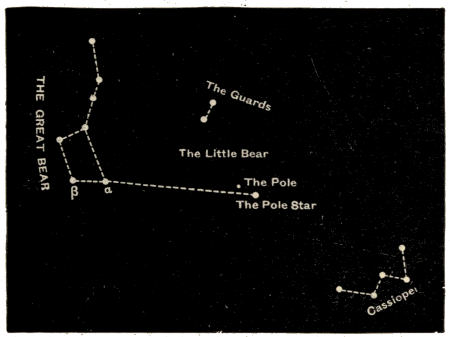
"Guards," the, 412
Gulliver's Travels and the satellites of Mars, 228
H
Hadley's observations of Saturn, 282
Hall, Professor Asaph, and the satellites of Mars, 225
Halley, and the periodicity of comets, 341–343;
and the transit of Venus, 180
Heat, bearings on astronomy, 513;
in the interior of the Earth, 197–199, 514;
of the Sun, 515–526
Heliometer, the, 243
Helium, 55
Henderson, and the distance of α Centauri, 442, 451
Hercules, star cluster in, 269, 462
Herodotus (lunar crater), 90
Herschel, Caroline, 299, 465
Herschel, Sir John, address to British Association, 328;
address on the presentation of gold medal to Bessel, 443;
and Biela's comet, 357;
and nebulæ, 464;
letter to Athenœum on Adams's share in the discovery of Neptune, 330
Herschel, Sir W., and double stars, 435, 436;
and Saturn, 279;
and Saturn's satellites, 295;
and the Empress Catherine, 301;
and the movement of solar system towards Lyra, 457;
discovery of satellite of Uranus by, 308, 309;
discovery of Uranus by, 305, 308;
early life of, 299;
friendship with Sir W. Watson of 302;
he makes his own telescopes, 301;
"King's Astronomer," 307;
method of making his telescopes, 302;
musical talent of, 299;
organist of Octagon Chapel, Bath, 300;
pardon for desertion from George III., 299;
passion for astronomy of, 300, 301;
relinquishes musical profession, 307;
sidereal aggregation theory of, 529;
study of the nebulæ by, 464–465, 529
Herschelian telescope, 19
Historia Cœlestis, 311
Hœdi, the, 414
Holmes's, Mr., comet (1892), 355
Horrocks, and the transit of Venus, 179
Howard, Mr., and the Benares meteorite, 392
Huggins, Sir W., 479, 483;
and nebulæ, 472
Huyghens, and Saturn's rings, 275–278;
discovers first satellite of Saturn, 293
Hyades, the, 419
Hydrogen in Sirius and Vega, 479;
in the Sun, 50
Hyginus, 93
Hyperion, 559
I
Iapetus, 559
Iberians, the, 3
Inquisition, the, and Galileo, 10
Iris, 242
Iron, dust in the Arctic regions, 408;
in the Sun, 50;
of meteorites, the, 396;
spectrum of, 50
J
Janssen, M., 34, 53;
and the transit of Venus, 177
Juno, 233, 238
Jupiter, ancient study of, 6;
and the Leonids, 386;
attraction of, 248;
axial rotation of, 558;
belts of, 252;
brilliancy of, 257;
composition of, 250;
covered with an atmosphere of clouds, 253, 254;
density of, 558;
diameter of, 247, 558;
distance from the Earth of, 110, 111;
distance from the Sun of, 246, 558;
habitability of, 257;
heat received from the Sun by, 256;
internal heat of, 252, 256, 515;
lack of permanent features of, 253;
lack of solidity of, 248, 253, 254;
moment of momentum of, 554, 555;
occultation of, 255;
orbit of, 114, 115, 246;
path of, perturbed by the attraction of Saturn, 316;
periodic time of, 558;
a planet, or "wanderer," 111;
red spot in 1878, 253;
revolution of, 246;
rotation of, 201, 202;
satellites of, 247, 249, 257–261, 265, 559;
satellites of, and gravitation, 266;
satellites of, and the Copernican theory, 267;
shadow from satellites of, 257;
shape of, 201, 202, 247, 252;
size of, compared with the Earth, 19, 246, 248,
and other planets, 114;
and the Sun, 114;
storms on, 256;
tides on, 555;
weight of, 248, 250,
and Encke's comet, 350
K
Keeler, Professor, and Saturn's ring, 288
Kempf, Dr., and the Sun's velocity, 484
Kepler, and comets, 360;
and laws of planetary motion, 10;
and meteors, 386;
and the orbit of Mars, 209;
explanation of his laws, 147, 148, 533;
his discovery of the shape of the planetary orbits, 136, 138;
his first planetary law, 138;
lunar crater called after him, 90;
prediction of the transit of Venus and Mercury, 163, 178;
second law, 141;
third law, 142
Kids, the, 414
Kirchhoff, and spectrum analysis, 478
Kirkwood, Professor, and the movements of Saturn's satellites, 296
Klinkerfues, Professor, 390
L
Lagrange, and the theory of planetary perturbation, 320–322;
his assumption of planetary rigidity, 531
L'Aigle meteorites, the, 392
Lalande, and Neptune, 332, 333
Landscapes, lunar, 98
Lane, Mr. J. Homer, 522
Laplace, and the nebular theory, 526;
and the satellites of Jupiter, 266;
and the theory of planetary perturbation, 320
Lassell, Mr., and Saturn's eighth satellite, 296;
discovers Neptune's satellite, 334
Law of gravitation (see Gravitation)
Laws of Planetary Motion (see Planetary Motion)
Lead in the Sun, 50
Ledger, Mr., and Mercury, 163
Leibnitz, lunar mountains named after him, 93
Lemonnier, and Uranus, 312
Leo, and shooting stars, 380, 420
Leonids, attractions of planets on, 386;
breadth of stream of, 387;
change of shape of, 383;
decrease of, 385;
enormous number of, 382;
historical records, 383;
length of stream of, 387;
Le Verrier, and the cause of their introduction into the solar system, 388;
meteor shoal of, 382;
periodic return of, 382;
their connection with comets and Professor, Schiaparelli, 388
Leonis γ, value of velocity of, 484
Leverage by equatorial protuberance, 498
Le Verrier, and Mars, 214;
and the discovery of Neptune, 324–332;
and the introduction of the Leonids into the solar system, 388;
and the weight of Mercury, 349
Lexell's comet, 370
Libration, 84
Lick Observatory, 16
Light, aberration of, 503–512;
velocity of, 261, 262, 265, 505, 512
Linné, 87, 94
Lion, the, 420, 421
Little Bear, the, 412
Little Dog, the, 420
Livy, and meteorites, 393
Lloyd, Provost, 407
Lockyer, Sir Norman, and Betelgeuze, 482;
and solar light, 52
London, tides at, 538
Louvain, F. Terby, and Titan, 295
Lowell, Mr., and Mercury, 165
Lunar tides, 548, 549
Lyra, motion of solar system towards, 459
Lyre, the, 424;
Nebula in, 469
Lyrids, the, 400
M
Mädler, and the lunar craters, 88, 90, 91
Magellanic clouds, 463
Magnesium, colour of flame from, 46;
in the Sun, 50
Magnetism, connection with Sun spots, 42
Manganese in the Sun, 50
Maraldi, and the rings of Saturn, 279
Mare crisium, 83;
fœcunditatis, 83;
humorum, 83;
imbrium, 83, 98;
nectaris 83;
nubium, 83;
serenitatis, 83;
tranquillitatis, 83;
vaporum, 83
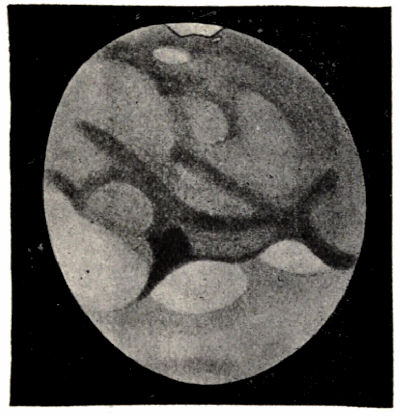
Mars, ancient study of, 6;
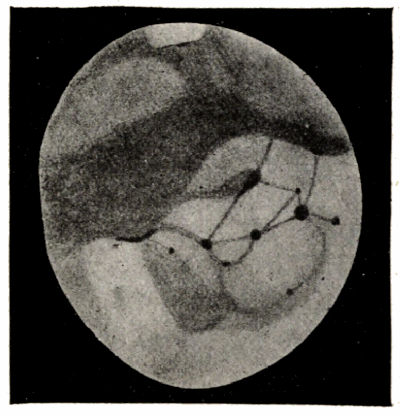
appearance of, through the telescope, 218;
atmosphere of, 222;
axial rotation of, 558;
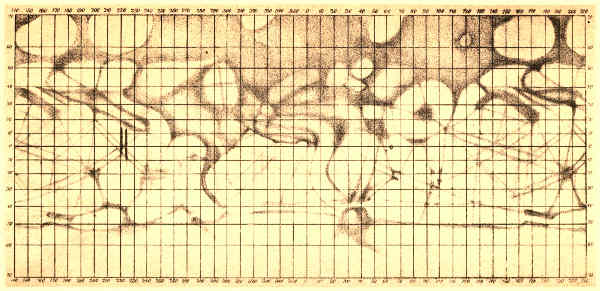
canals on, 220;
density of, 558;
diameter of, 558;
distance, from the Earth of, 213;
distance from the Sun of, 213, 558;
gravitation on, 225;
Le Verrier's discovery of, 214;
life improbable on, 224;
marking on, 218;
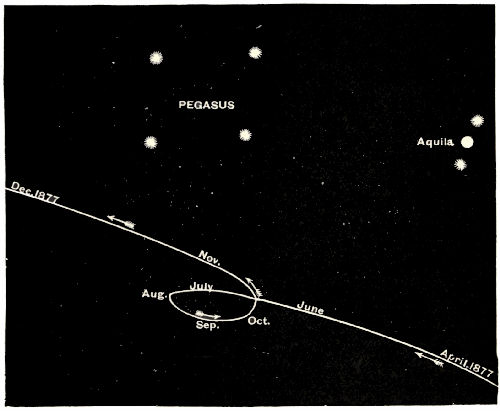
movements of, 211–213;
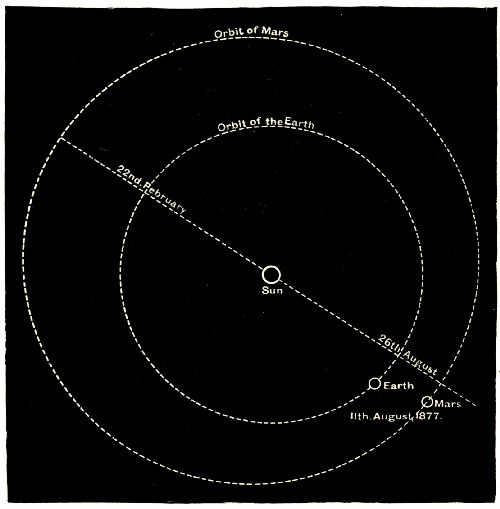
opposition of, 209–211;
orbit of, 116, 209, 210, 213;
orbit of, and the laws of Kepler, 209;
parallax (1877), and Dr. D. Gill, 214;
periodic time of, 558;
a planet or "wanderer," 111;
"Polar Caps" on, 218, 219;
proximity to the Earth of, 110;
rising and setting of, 209;
rotation of, 218;
satellites of, 225–228, 558;
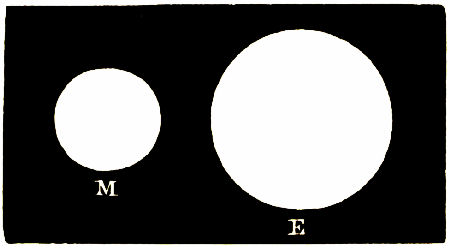
size of compared with other planets, 116, 216;
tides on, 551;
water and ice on, 219, 224
Maximilian, Emperor, 393
Mayer, Tobias, and Uranus, 312
Measurement of the Earth, 193–196
Mediterranean, tides in the, 537
Mercury, ancient study of, 6;
antiquity of its discovery, 155–157;
atmosphere of, 166;
attraction on comets of, 347;
climate of, 163;
comparative proximity to the Earth of, 111;
composition of, 160;
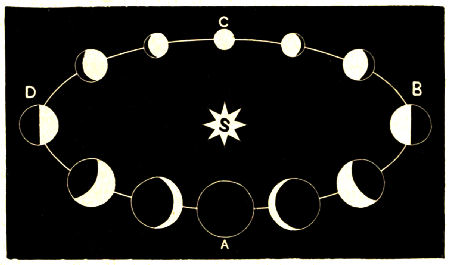
crescent-shaped, 160;
density of, 558;
diameter of, 558;
distance from the Sun of, 151, 558;
habitability of, 163;
movement of, 160, 161;
its elliptic form, 139, 161;
orbit of, 114;
period of revolution of, 161;
periodic appearances of, 158;
periodic time of, 558;
perturbations of, 350;
a planet or "wanderer," 111;
revolution of, 165;
rotation of, and Professor Schiaparelli, 165;
size of, compared with other planets, 116;
surface of, 162;
transit of, 152;
transit of, and Gassendi's observations, 164;
transit of, predicted by Kepler, 163;
velocity of, 162;
weight of, 166, 349
Meridian circle, 22, 24
Messier's Catalogue of Stars, 529
Meteors (see Stars, shooting)
Meteorites, 391;
Alban Mount, 393;
ancient accounts, 392, 393;
Benares, 392;
Butsura, 397;
Chaco, 398;
characteristics of, 397;
Chladni's account of discovery in Siberia, 392;
composition of, 397–399;
Ensisheim (1492), 393;
Hindoo account of, 391;
L'Aigle, 392;
not connected with comets, 400;
not connected with star showers, 400;
Orgueil, 399;
origin, 400–408;
Ovifak, 407;
Rowton, 395–396;
Wold Cottage, 392
Micrometer, 86
Milky Way, 462–3, 474–6
Mimas, 559
Minor planets, 229–244
Mira Ceti, 430, 482
Mizar, 438, 486
Moment of momentum, the, 552–554
Month of one day, 547
Moon, The, absence of air on, 85, 99;
absence of heat on, 95;
agent in causing the tides, 70, 535–537;
ancient discoveries respecting, 5;
apparent size of, 73;
attraction to the Earth of, 75;
brightness of, as compared with that of the Sun, 71;
changes during the month of, 71, 74;
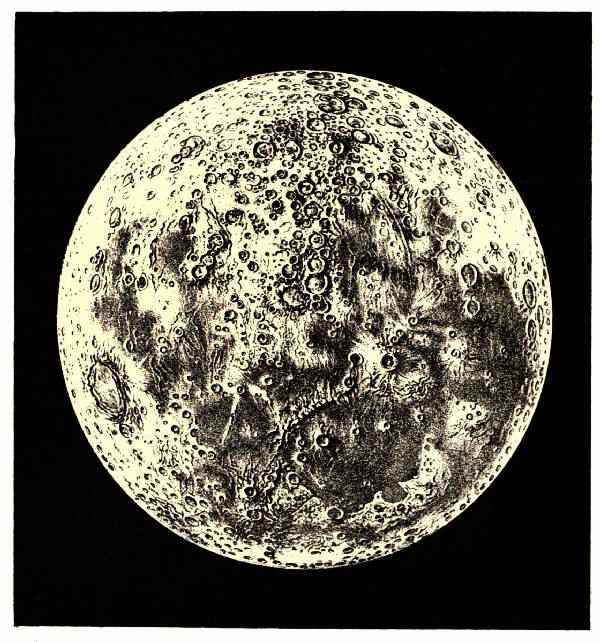
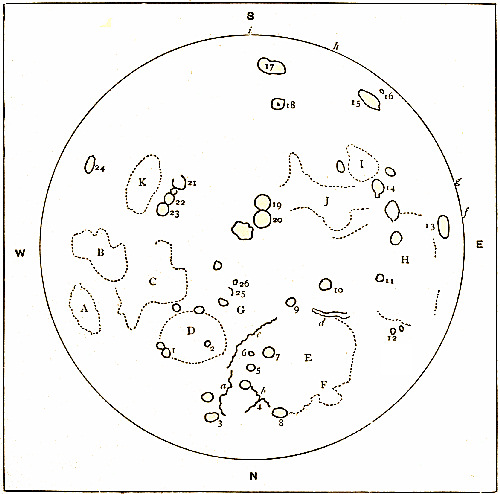
chart of surface of, 81;
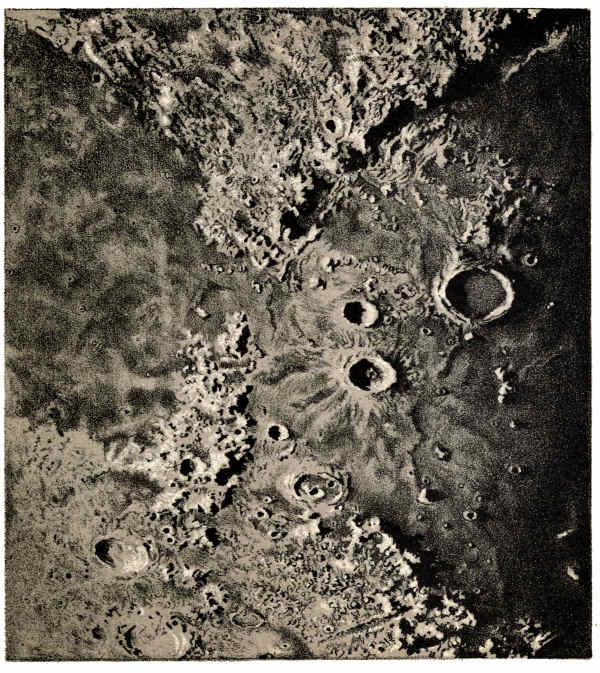
craters on, 83, 84, 87–98, 514;
density of, 558;
diameter of, 558;
distance from the Earth of, 73, 75, 568;
eclipses of, 6, 77–80;
illustration of the law of gravitation, 96, 131, 133;
landscapes on, 98;
life impossible on, 99;
measuring heights of mountains, etc., of, 85, 86;
micrometer, 86; motion of, 75;
mountains on, 83, 85, 88, 89, 91, 93;
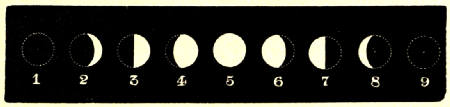
phases of, 71, 76;
plane of orbit of, 310, 500, 501;
poets and artists and, 72;
pole, 500;
possibility of ejecting meteorites, 402;
possibly fractured off from the earth, 543;
prehistoric tides on, 548, 549;
produces precession, 497–499;
proximity to the Earth of, 73, 75;
receding from the Earth, 545;
relative position of with regard to the Earth and the Sun, 76, 77;
revolution of, round the Earth, 75, 76, 558;
"seas" on, 82, 83;
shadows of, 85;
size of, compared with that of the Earth, 74;
test for chronometers, a, 80;
thraldom of terrestrial tides, 549;
waterless, 100;
weather not a affected by the phases of, 82;
weight of, 74
Motion, laws of planetary, 138, 141, 142, 147, 148
Mountains of the Moon, 83, 85, 93
N
Nasmyth, Mr., and the formation of lunar craters, 95
Natural History Museum, meteorites, 394
Nautical Almanack, 189
Neap Tides, 538
Nebula, in Andromeda, 469;
annular, in Lyra, 469;
in Orion, 269, 461, 466–469;
colour of, 468;
magnitude of, 468;
nature of, 467;
planetary, in Draco, 470;
simplest type of a, 528;
various grades of, 528
Nebulæ, 464–472;
condensation, 528;
distances of, 464;
double, 470;
Herschel's labours respecting, 464–465, 528, 529;
number of, 466;
planetary, 470;
self-luminous, 464;
smallest greater than the Sun, 464;
spiral, 470
Nebular theory, the, 526
Neptune, 112;
Adams's researches, 324–326, 332;
Challis's observations of, 326–328;
density of, 558;
diameter of, 333, 558;
disc of, 332;
discovery (1846) of, 315;
distance from the Sun of, 334, 558;
Lalande's observations of, 332, 333;
Le Verrier's calculations, 324–332;
moment of momentum of, 554;
orbit of, 117;
periodic time of, 558;
revolution of, 334;
rotation of uncertain, 333;
satellite of, discovered by Mr. Lassell, 559;
size of, compared with other planets, 119;
vaporous atmosphere of, 333;
weight of, 333
Newall, Mr. H.F., and Capella, 487;
and the values of velocity of stars, 483
Newcomb, Professor, 9, 264, 267, 522
Newton, Professor, and meteoric showers, 377, 384
Newton, Sir Isaac, discovery of gravitation verified Kepler's laws, 144;
dynamical theory, 214;
illustrations of his teaching, 144–147;
law of gravitation and, 125, 126, 537;
parabolic path of comets and, 338–340;
reflecting telescope, 19;
weight of the Earth and, 203
Nickel in the Sun, 50
Nineveh, astronomers of, 156
Nordenskjöld, and the Ovifak meteorite, 407
Nova Cygni, 431;
brilliancy of, 454;
decline of, 455;
distance of, 456;
parallax of, 455
November meteors, 376, 377, 379
Nutation, and Bradley, 501
O
Oberon, 309, 559
Object-glasses, 11, 12, 14, 16, 19
Observatories, 9–28
Observatory, Cape of Good Hope, 27;
Dunsink, 12, 184;
Greenwich, 26, 314;
Lick, 16;
Paris, 22;
Uraniborg, 10;
Vienna, 14;
Washington, 226;
Yerkes, 16
Occultation, 102, 215
Oceanus Procellarum, 83
Opera-glass, 27, 28
Opposition of Mars, 209
Orbital moment of momentum, 552
Orbits of planets, 114, 115, 117;
dimensions, 139–143;
elliptical form, 138–140;
minor planets, 232, 234, 239;
not exactly circles, 135;
of satellites of Uranus, 310;
Sun the common focus, 139
Orgueil meteorite, the, 399
Orion, 4, 418
Orion, belt of, 418, 467;
brilliancy of, 418;
nebula in, 269, 461, 466–469
Orionis, α, 418, 482
Orionis, θ, a multiple star, 318, 467
Ovifak meteorite, the, 407
P
Palisa and the minor planets, 234
Pallas, 233, 238
Parabolic path of comets, 338–340
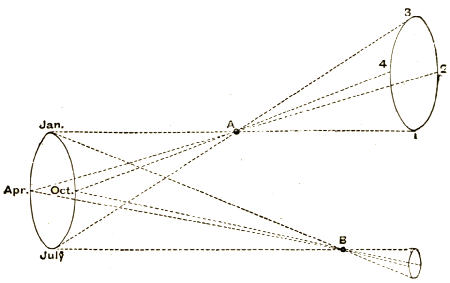
Parallactic ellipse, 444
Parallax, 181, 182, 214, 443;
of stars, 507
Paris telescope, 22, 23
Pegasus, great square of, 413, 414
Peg-top, the, and the rotation of the Earth, 494
Pendulum for determining the force of the Earth's attraction, 205
Penumbra of Sun-spot, 51
Perihelion, 163
Periodic times of planets, 139–143, 558
Periodicity of Sun-spots, 41
Perseids, 400
Perseus, 415, 416, 429;
sword-handle, 462
Perturbation, planetary, 317–324, 346
Perturbations, theory of, 296
Petavius, 93
Peters, Professor, and charts of minor planets, 234;
and the derangement of Sirius, 427
Phases of the Moon, 71, 76
Phobos, 226, 551, 558
Photography, and practical astronomy, 25;
and the distance of 61 Cygni, 449;
Dr. Roberts and the nebula in Andromeda, 469;
Mr. Common and the nebula in Orion, 469;
Sir W. Huggins and the spectra of nebulæ, 473
Photosphere, the, 37, 54
Physical nature of the stars, 477
Piazzi, discoverer of the first known minor planet, 203
Pickering, Professor, 218, 220, 255, 265;
and Betelgeuze, 482;
and planetary nebulæ, 474;
and Saturn's satellites, 296;
and spectroscopic binaries, 486, 487
Pico, 89
Planetary motion, Kepler's laws of, 138, 141, 142, 147, 148
Planetary nebulæ, 470
Planetary perturbation, 317–324
Planets, ancient ideas respecting, 2, 6;
approximate number of, 112;
attract each other, 148, 317;
attracted by comets,360;
Bode's law, 230;
comparative sizes of, 118, 119;
distance of, from the Earth, 109–111;
distance of, from the Sun, 558;
how distinguished from stars, 111;
irregularity of motions of, 317–324;
Lagrange's theory of rigidity of, 531;
light of, derived from the Sun, 113;
minor, 229–244;
orbits of the four giant, 117;
orbits of the four interior, 114;
orbits have their focus in the centre of the Sun, 139;
orbits not exactly circles, 135;
orbits take the form of an ellipse, 136–138;
origin of, as suggested by the nebular theory, 526;
periodic times of, 139–143, 558;
relative distances of, 229;
uniformity of direction in their revolution, 120, 322;
velocity of, 139–142, 144, 146, 237
Plato (lunar crater), 89
Pleiades, 241, 416;
invisible in the summer, 416
Pliny, the tides and the Moon, 535
Plough, the, 28
Pogson, Mr., 390
Pointers in the Great Bear, 28, 411
Polar axis, 196
Polar caps on Mars, 218, 219
Pole, the, distance of from Pole Star lessening, 494;
elevation of, 195;
movement of, 492;
near α Draconis, 494;
near Vega or α Lyra, 494
Pole Star, 194;
belongs to the Little Bear, 412;
distance of, from the pole of the heavens, 412, 492, 494;
position of, 411;
slow motion of, 412
Pollux, 420, 480;
value of velocity of, 484
Pons, and the comet of 1818, 345
Posidonius, 87
Potassium in the Sun, 50
Præsepe, 422
Precession and nutation of the Earth's axis, 492–502
Proctor, and the stars in Argelander's atlas, 476
Prism, the, 45;
its analysing power, 46
Pritchard, Professor, stellar photographic researches of, 449
Procyon, 420;
value of velocity of, 484
Prominences on the Sun, 53–59
Ptolemy, his theory of astronomy, 6;
lunar crater named after him, 92
Q
Quarantids, the, 400
R
Radius of the Earth, 193, 512
Rainbow, the, 45
Ram, the, 420
Reflectors, 19, 21, 25
Refraction by the prism, 45
Refractors, 11, 14, 16
Regulus, 421, 479
Reservoir formed from tidal water, 538
Retina, the, and the telescope, 10, 11
Rhea, 559
Rigel, 418, 420, 480
Rigidity of the planets, 532, 533
Roberts, Dr. Isaac, and the nebula in Andromeda, 469;
and the nebula in Orion, 469
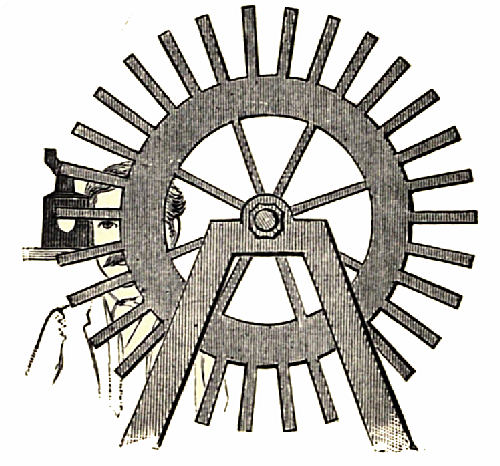
Roemer, and the velocity of light, 261
Romance, planet of, 151–154
Rosse telescope, the, 19, 20, 468, 470
Rotational moment of momentum, 553
Rowland, Professor, and spectral lines, 491
Rowton Siderite, 395
Royal Astronomical Society and Bessel, 442
S
Sappho, 242
Satellites of Jupiter, 249, 250, 257–261, 266, 559;
confirmation of the Copernican theory, 267
Satellites of Mars, 209, 225–228, 551, 558
Satellites of Neptune, 334, 559
Satellites of Saturn, 559;
Bond's discoveries, 296;
Cassini's discoveries, 294;
distances, 559;
Herschel's discoveries, 295;
Huyghens' discovery, 293;
Kirkwood's deduction, 296;
Lassell's deduction, 296;
movements, 296;
origin as suggested by the nebular theory, 526
Satellites of Uranus, 308, 309, 310, 559
Saturn, ancient study of, 6;
attraction on Uranus, 322;
axial rotation of, 558;
beauty of, 209;
comparative proximity to the Earth of, 110;
density of, 558;
diameter of, 271, 558;
distance of, from the Sun, 268, 271, 558;
elliptic path of, 271;
gravitation paramount, 283;
internal heat of, 272, 515;
Leonids and, 386;
low density of, 272;
moment of momentum of, 554;
motion of, 271;
orbit of, 117, 118;
path of, perturbed by the attraction of Jupiter, 316;
periodic time of, 558;
period of revolution of, 269;
picturesqueness of, 291;
position of, in the solar system, 269;
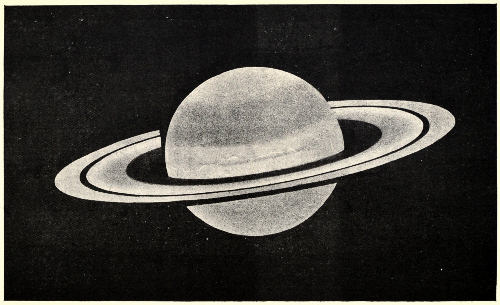
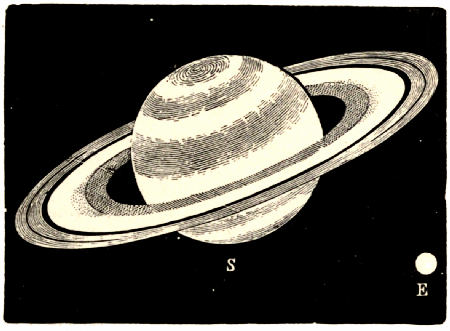
rings of, 269;
rings, Bonds discovery, 280;
rings, Cassini's discovery, 278;
rings, consistency, 286;
rings, Dawes's discovery, 281;
rings, Galileo's discovery, 273, 274;
rings, Hadley's observations, 282;
rings, Herschel's researches, 279;
rings, Huyghens' discovery, 275–278;
rings, Keeler's measurement of the rotation, 288;
rings, Maraldi's researches, 279;
rings, rotation of, 285, 288;
rings, spectrum of, 291;
rings, Trouvelot's drawing, 278;
satellites of, 293, 294, 295, 296, 559;
size of, compared with other planets, 119, 269, 272;
spectrum of, 291;
unequal in appearance to Mars and Venus, 269;
velocity of, 271;
weight of, compared with the Earth, 272
Savary and binary stars, 436
Schaeberle, Mr., and Mars, 224
Scheiner, and the values of velocity of stars, 483;
observations on Sun-spots, 36
Schiaparelli, Professor, and Mars, 220;
and the connection between shooting-star showers and comets, 388;
and the rotation of Mercury, 165
Schickard, 90
Schmidt, and Nova Cygni, 454, 489;
and the crater Linné, 87;
and the Leibnitz Mountains, 93
Schröter, and the crater Posidonius, 87
Schwabe, and Sun-spots, 40
Seas in the Moon, 82
Secchi, and stellar spectra, 479
Shoal of shooting stars, 377;
dimensions, 377
Shooting stars (see Stars, shooting)
Sickle, the, 421
Sidereal aggregation theory of Sir W. Herschel, 529
Siderite, Rowton, 395
Sinus Iridum, 83
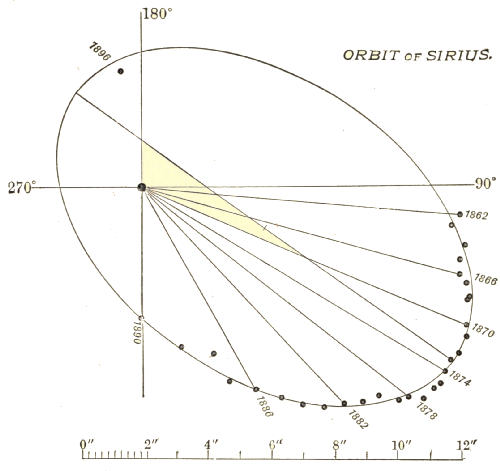
Sirius, change in position of, 425;
companion of, 427, 428;
exceptional lustre of, 110;
irregularities of movement of, 426;
larger than the Sun, 110;
most brilliant star, 419;
periodical appearances of, 157;
proper motion of, 425;
spectrum of, 479;
velocity of, 426;
weight of, 427
Smyth, Professor C.P., 493
Sodium, colour of flame from, 49;
in the Sun, 50
Solar corona, prominences etc. (see under Sun)
Solar system, 107–121;
Copernican exposition of the, 7;
influence of gravitation on, 149;
information respecting, obtained by observing the transit of Venus, 174;
island in the universe, 121;
minor planets, 229–244;
moment of momentum, 554;
movement of, towards Lyra, 457;
origin of, as suggested by the nebular theory, 526;
position of Saturn and Uranus in, 297, 305
South, Sir James, 12
Spectra of stars, 479
Spectro-heliograph, 58
Spectroscope, 43–56;
detection of iron in the Sun by the, 50
Spectroscopic binaries, 487
Spectrum analysis, 47;
dark lines, 49, 50;
gaseous nebulæ, 474;
line D, 48, 49
Speculum, the Rosse, 20
Spica, 423, 487
Spider-threads for adjusting the micrometer, 86;
for sighting telescopes, 22
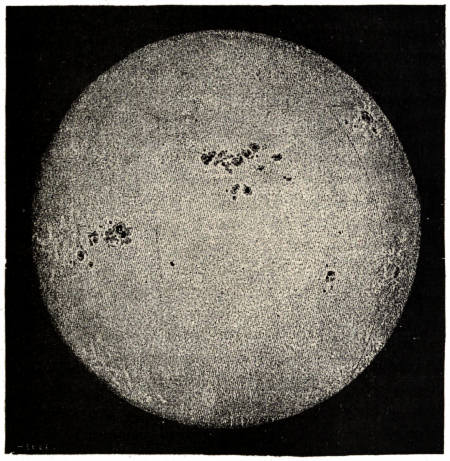
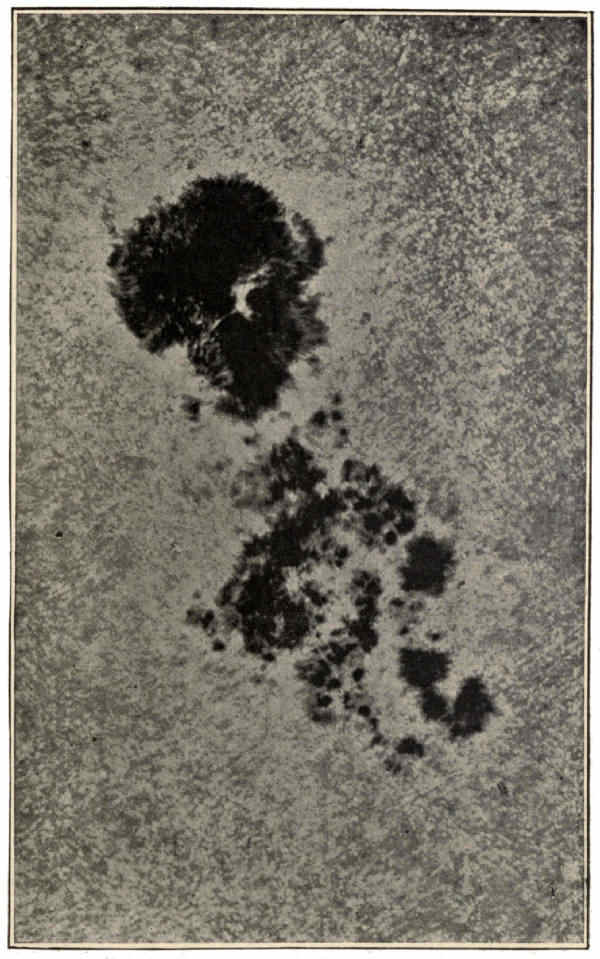
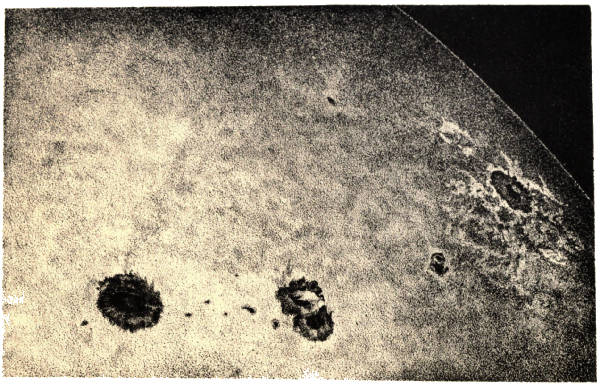
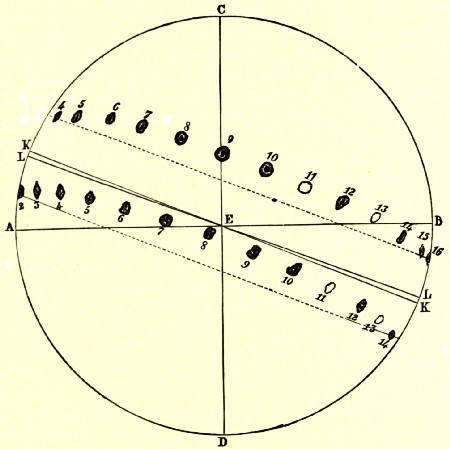
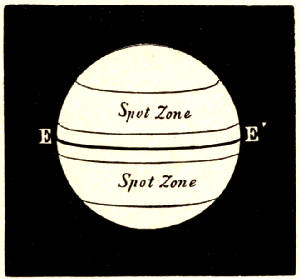
Spots on the Sun, 36–43;
connection with magnetism, 42;
cycles, 41;
duration, 41;
epochs of maximum, 42;
motion, 36;
period of revolution, 40;
Scheiner's observations, 36;
zones in which they occur, 39
Star clusters, 461–464;
in Hercules, 462;
in Perseus, 462
Stars, apparent movements due to precession, nutation, and aberration, 504;
approximate number of, 28;
attraction inappreciable, 316;
catalogues of, 310, 311, 409, 431;
charts of, 325, 328;
circular movement of, 505–507
Stars, distances of, 441;
Bessel's labours, 442–449;
Henderson's labours, 442;
method of measuring, 443–445;
Struve's work, 442, 448, 449;
parallactic ellipse, 444–449
Stars, double, 434;
Bode's list, 435;
Burnham's additions, 439;
Cassini, 434;
Herschel, 435, 436;
measurement, 435, 436;
revolution, 436;
Savary, 436;
shape of orbit, 436;
variation in colour, 438
Stars, elliptic movement of, 506;
gravitation and, 149;
how distinguished from planets, 111;
physical nature of, 477;
probability of their possessing a planetary system, 121;
real and apparent movements of, 504;
really suns, 32, 121
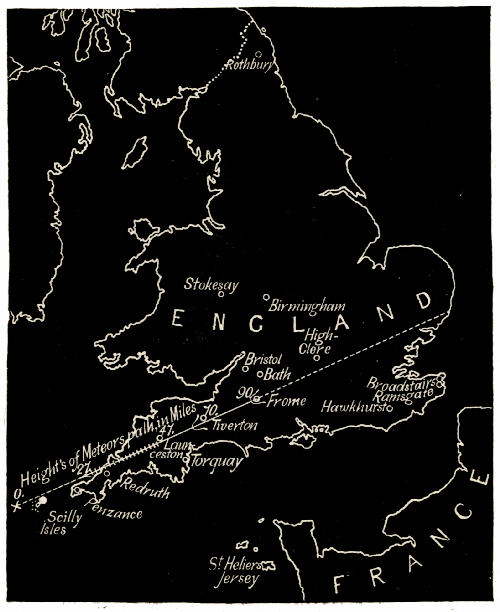
Stars, shooting, attractions of the planets, 386;
connection with comets, 388–390;
countless in number, 372;
dimensions of shoal, 377;
features of, 373;
length of orbit, 387;
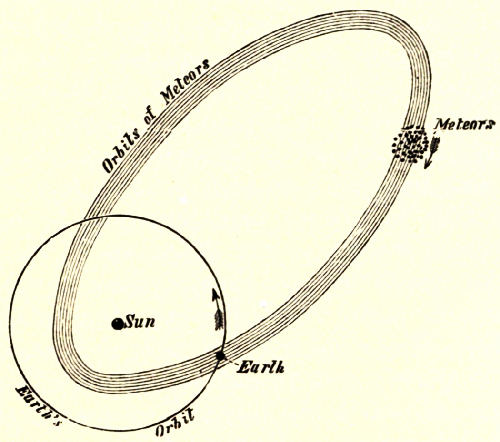
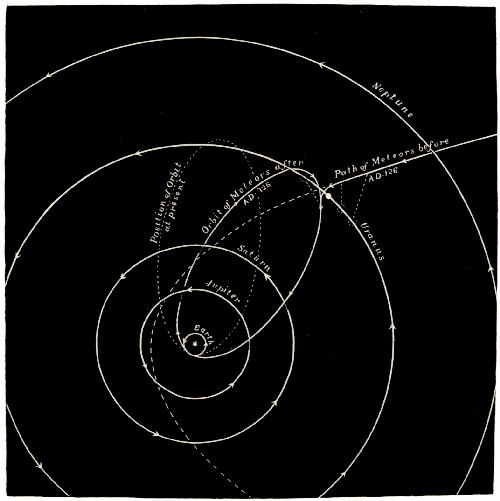
orbit, 378;
orbit, gradual change, 386;
period of revolution, 384;
periodic return, 378, 379;
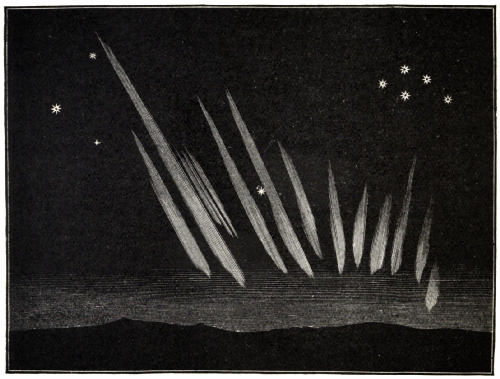
shower of November, 1866, 377, 379–380;
shower of November, 1866, and Professor Adams, 384, 386;
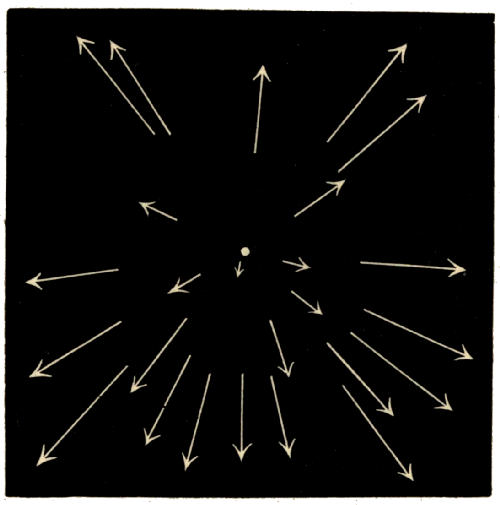
shower of November, 1866, radiation of tracks from Leo, 380;
shower of November, 1872, 389;
showers, 376;
showers and Professor Newton, 377;
track, 377;
transformed into vapour by friction with the Earth's atmosphere, 374, 376;
velocity, 373, 386
Stars, spectra of, 479;
teaching of ancients respecting, 3;
temperature of, 515;
temporary, 430, 488;
values of velocity of, 484;
variable, 429
Stoney, Dr. G.J., 387
Strontium, flame from, 46;
in the Sun, 50
Struve, Otto, and the distance of Vega, 442, 447;
and the distance of 61 Cygni, 448, 449
Sun, The, and the velocity of light, 265;
apparent size of, as seen from the planets, 117, 118;
as a star, 32;
axial rotation of, 558;
compared with the Earth, 29;
connection of, with the seasons, 4;
corona of, during eclipse, 62–64;
density of, 65, 558;
diameter of, 558;
distance of, from Mars, 213;
distance of, from Saturn, 271;
distance of, from the Earth, 31, 114, 184, 240, 558;
eclipse of, 6, 53;
ellipticity of, 558;
faculæ on surface of, 37;
focus of planets' orbits, 138;
gradually parting with its heat, 95;
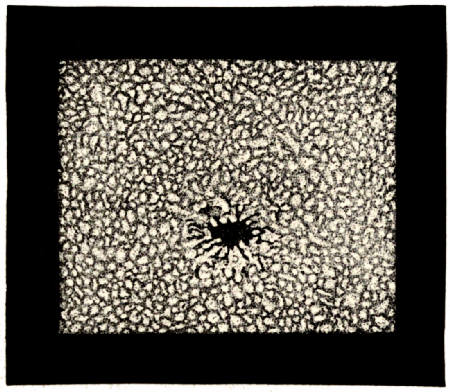
granules on surface of, 34;
heat of, and its sources, 515–526;
heat of, thrown on Jupiter, 256;
minor planets and, 240;
movement of, towards Lyra, 457;
nebular theory of its heat, 526;
photographed, 34;
precession of the Earth's axis, 497;
prominences of, 53–59;
relation of, to the Moon, 71;
rising and setting of, 2;
rotation of, 40, 201;
size of, 29;
spectrum of, 48;
spots on, 36–43;
spots, connection with magnetism, 42;
storms and convulsions on, 42, 43;
surface of, gaseous matter, 34;
surface of, mottled, 34;
teaching of early astronomers concerning, 3–7;
temperature of, 30, 31, 516;
texture of, 34;
tides on, 530;
velocity of, 484;
weight of, compared with Jupiter, 250, 350;
zodiacal light and, 67;
zones on the surface of, 39
Sunbeam, revelations of a, 44
Swan, the, 424, 439, 445
Sword-handle of Perseus, 462
Syrtis major, 222
T
Taurus, constellation of, 231, 419
Tebbutt's comet, 353
Telescope, construction of the first, 10;
equatorial (Dunsink), 12–14, 185;
Greenwich, 26;
Herschelian, 19;
Lick, 16, 19;
Paris, 22, 23;
reflecting, 19, 21;
refracting, 11, 14;
Rosse, 19, 20, 468, 470;
sighting of a, 23;
structure of the eye illustrates the principle of the, 10;
Vienna, 14–16;
Washington, 226;
Yerkes, 16
Temporary stars, 430, 488
Tethys, 559
Theophilus, 92
Tides, The, actual energy derived from the Earth, 539;
affected by the law of gravitation, 149, 535;
affected by the Moon, 70, 535–537;
at Bay of Fundy, 538;
at Cardiff, 538;
at Chepstow, 538;
at London, 538;
at St. Helena, 538;
excited by the Sun, 537;
formation of currents, 538;
in Bristol Channel, 538;
in Mediterranean, 537;
in mid-ocean, 538;
Jupiter and, 552;
length of the day and, 541;
lunar, 548, 549;
moment of momentum and, 552;
neap, 537;
rotation of the Earth, and revolution of the Moon, 549;
satellites of Mars, 551;
solar, 550;
spring, 537;
variations in, 538;
waste of water power, 538;
work effected, 539
Tin in the Sun, 50
Titan, 294, 295, 559
Titania, 309, 559
Transit of Mercury, 152, 163, 164
Transit of Venus, 152;
Captain Cook, 184;
Copeland's observations of, 189;
Crabtree's observations of, 180;
Gassendi's observations of, 178;
Halley's method, 180, 181;
Horrocks' observations of, 179, 180;
importance of, 173;
Kepler's prediction of, 163;
observations of, at Dunsink, 184–188
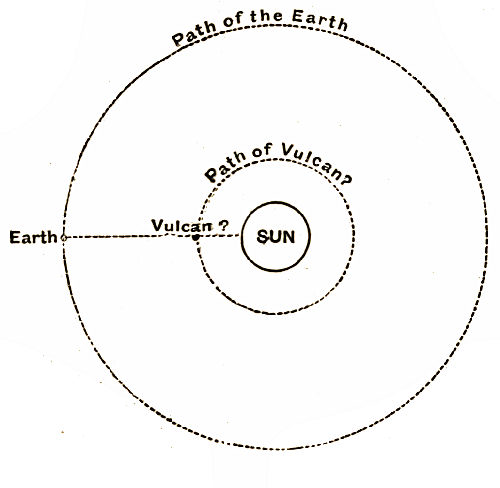
Transit of Vulcan, 152–153
Triesnecker, 84, 93
Trouvelot, Mr. L., and Saturn's rings, 278
Tschermak, and the origin of meteorites, 400, 401
Tycho (lunar crater), 91
Tycho Brahe, and the Observatory of Uraniborg, 9, 10, 430
U
Umbra of Sun-spot, 51
Umbriel, 309, 559
Unstable dynamical equilibrium, 543
Uraniborg, Observatory of, 10
Uranus, 112;
attraction of Saturn, 322;
Bradley's observations of, 312;
composition of, 308;
density of, 558;
diameter of, 308, 558;
diameter of orbit of, 305;
disc of, 308;
discovery of, by Herschel, 305, 308;
distance from Sun of, 558;
ellipse of, 313;
first taken for a comet, 304;
Flamsteed's observations of, 311, 312;
formerly regarded as a star, 311, 312;
investigations to discover a planet outside the orbit, 323–324;
irregular motion of, 314, 323;
Lemonnier's observations of, 312;
Leonids and, 386;
Mayer's observations of, 312;
moment of momentum of, 554;
orbit of, 117, 310;
periodic time of, 558;
period of revolution of, 312;
rotation of, 308;
satellites of, 559;
satellites, discovery by Herschel, 308;
satellites, movement nearly circular, 309;
satellites, periodical movements, 309;
satellites, plane of orbits, 309, 310;
size of compared with the Earth, 308;
and with other planets, 119;
subject to another attraction besides the Sun, 314
Ursa major (see Great Bear)
V
Variable Stars, 429
Vega, 414, 423, 424, 479;
Struve's measurement of, 442
Velocity, of light, 261, 262, 265;
of light, laws dependent upon, 511;
of planets, 140–143, 146, 237;
of stars, values of, 483–4
Venus, ancient study of, 6;
aspects of, 171;
atmosphere of, 189;
brilliancy of, 168;
density of, 558;
diameter of, 191, 558;
distance of, from the Sun, 191, 558;
habitability of, 173;
movement of, 168;
neighbour to the Earth, 109;
orbit of, 114, 135;
orbit form of, 139, 191;
periodic time of, 558;
a planet or "wanderer," 111;
rotation of, 191;
shape of, 169;
size of, compared with other planets, 116, 169;
surface of, 171;
transit of, 152, 176–190;
transit, importance of, 173;
transit predicted by Kepler, 163;
velocity and periodic time of, 142, 143, 191;
view of the ancients about, 157
Vesta, 233, 238
Victoria, 242
Vienna telescope, 14–16
Virgo, 423
Vogel and Algol, 485;
and Spica, 486, 487;
and the spectra of the stars, 479, 483
Volcanic origin of meteorites, 400;
outbreaks on the Earth, 197
Von Asten and Encke's comet, 349, 350;
and the distance of the Sun, 351;
and the weight of Mercury, 166
Vortex rings, 469
Vulcan, 152, 153;
and the Sun, 3
W
Wargentin, 90
Watson, Professor, and Mercury, 154
Watson, Sir William, friendship with Herschel, 302
Wave-lengths, 60
Weather, not affected by the Moon, 82
Wilson, Mr. W.E., and the nebula in Orion, 469
Witt, Herr G., and Eros, 236
Wold Cottage meteorite, the, 392
Wright, Thomas, and the Milky Way, 474
Y
"Year of Stars," the, 377
Yerkes Observatory, Chicago, 16
Young, Professor, account of a marvellous Sun-prominence, 42;
and Sun-spots, 38;
observations on magnetic storms, 39
Z
Zeeman, Dr., and spectral lines, 491
Zinc in the Sun, 50
Zodiac, the, 5
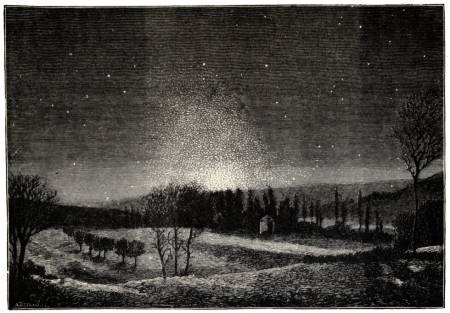
Zodiacal light, 67
Zone of minor planets, 234