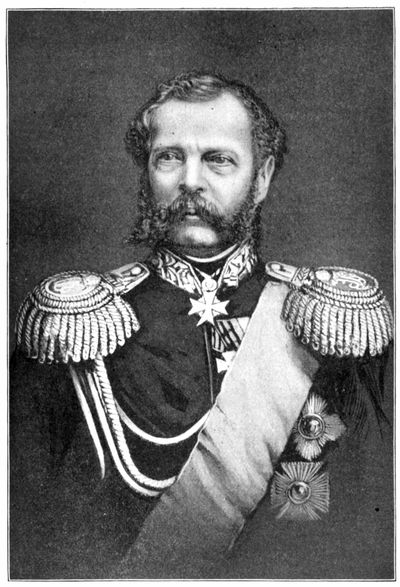
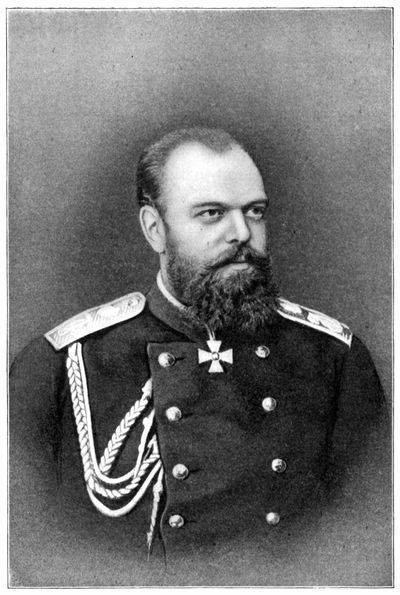
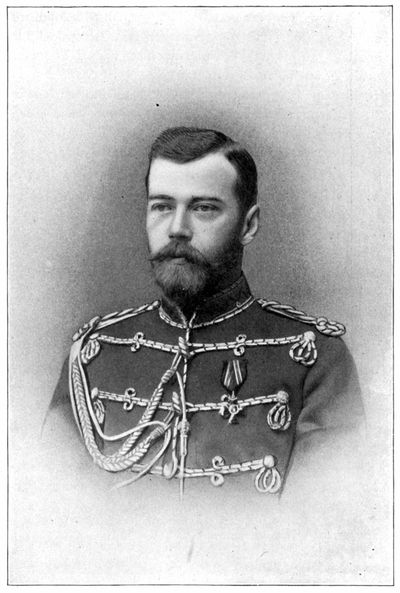
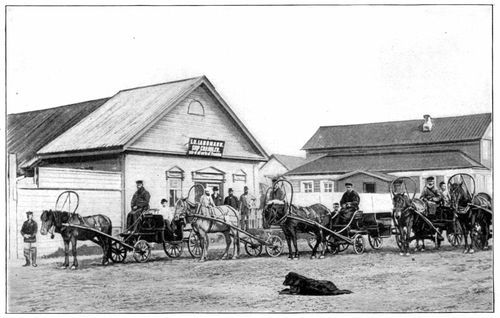
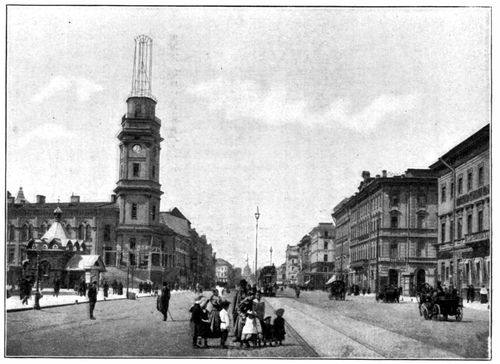
Alexander II was thirty-seven years old when he succeeded to the
throne. The war oppressed Russia, and he felt that peace must be
concluded. But Russian diplomacy loves the tortuous path. The first
proclamation of the czar announced that he promised "to accomplish the
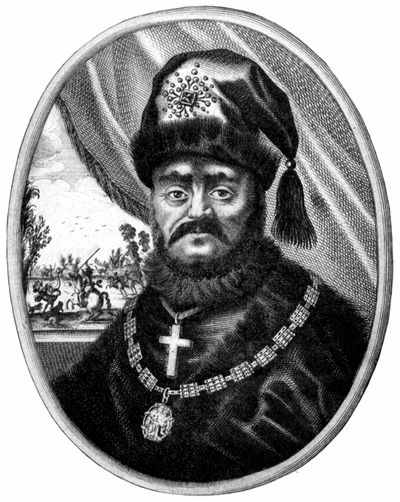
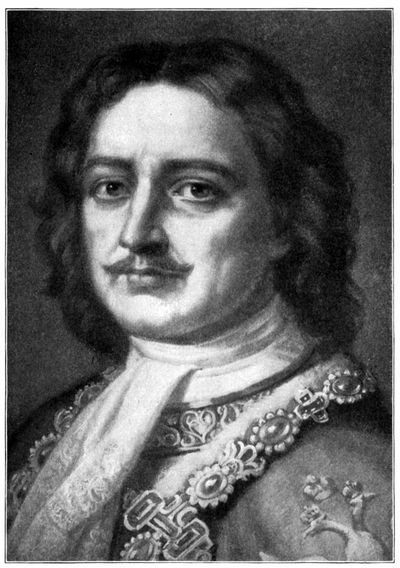
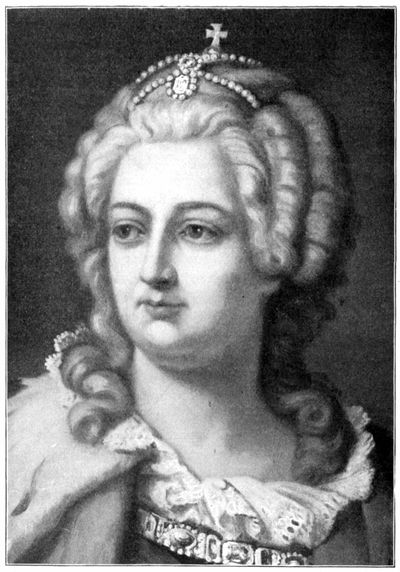
plans and desires of our illustrious predecessors, Peter, Catherine,
Alexander the Well-beloved, and our father of imperishable memory." It
was hoped that this would cause the other powers to propose peace, on
account of the expense of the war. Indeed, a conference was proposed
and took place at Vienna, but the demands of the allies were not so
modest as Russia expected; hence the war continued, and with it the
siege of Sebastopol.
The Danube territory was lost to Russia since, on the 2d December
1854, Austria had undertaken to defend it, and Prussia had agreed to
help Austria. But Sebastopol was stubbornly defended. In the latter
part of August 1855, 874 guns vomited death and destruction upon the
doomed city where the Russians lost 18,000 men. The French had dug
fifty miles of trenches during the 366 days of the siege, and 4,100
feet of mines before a single bastion. In one day 70,000 bombs and
shells were fired into the town. On the 8th of September the
assault was ordered, and Sebastopol fell.
Again Russia tried what boasting would effect. Gortchakof declared to
whoever chose to believe him that he would not voluntarily abandon the
country where Saint Vladimir had received baptism, and the official
newspaper announced that the war was now becoming serious, and that
Sebastopol being destroyed, a stronger fortress would be built. This
meant that Russia was anxious to secure favorable terms. The war had
cost 250,000 men, and Russia's credit at home was in a bad condition.
Austria offered the basis of an agreement which was accepted by
Russia, and on the 25th of February, 1856, a Congress met at Paris.
Five days later the Treaty of Paris was signed. Russia renounced the
right of protecting the Christians in the Danubian principalities, and
restored the delta of that river. The Black Sea was opened to merchant
vessels of all nations, but closed to all warships, and no arsenals
were to be constructed on its shores. The sultan agreed to renew the
privileges of his Christian subjects, but with the understanding that
the powers should not find cause to interfere. It was a hard blow to
Russia's prestige, and indefinitely postponed the execution of making
of Russia the restored Eastern Roman Empire.
Alexander, in many respects, was the opposite of his father; he seemed
more like his uncle in his younger days when he earned the surname of
Well-beloved. It may be, however, that Alexander was but the executor
of his father's instructions, after doubt began to torture him. It is
known that Nicholas had seriously considered the
emancipation of the serfs. Alexander took it up in earnest. There were
two serious difficulties, namely, the compensation to be allowed to
the serf owners, and the extent of the soil to be allotted to the
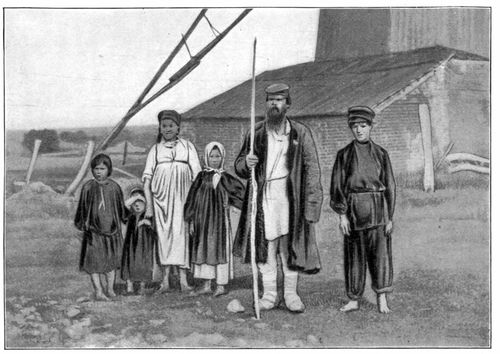
serfs. It must be remembered that, although the peasant had become
resigned to serve the landowner, his proverb: "Our backs are the
owner's, but the soil is our own," showed how stubbornly he held to
the conviction that it was his own land which he cultivated, however
little profit he derived from his toil. For once the tchinovnik dared
not interfere; public opinion had so strongly condemned their
incompetence and dishonesty that the Russian official was glad to
efface himself; the landowners, on the other hand, showed little
enthusiasm. They knew what their revenues were, but not what they
would be under altered circumstances.
Soon after the Treaty of Paris had restored peace, Alexander addressed
his "faithful nobles" at Moscow, inviting them to consult about the
proper measures to be taken with the view to emancipation. When this
produced no results, he appointed a Committee, "for the amelioration
of the condition of the peasants." The nobles of Poland, seeing what
was coming, declared themselves ready to emancipate their serfs. The
czar gave his consent and the ukase containing it was sent to all the
governors and marshals of the nobility "for your information," and
also "for your instruction if the nobles under your administration
should express the same intention as those of the three Lithuanian
governments."
The press supported the czar, and for that reason was allowed an
unusual freedom of expression. The plan was formed to
reconstruct and strengthen the national mir. This was favored by a
number of large landowners who saw in this plan the beginning of
constitutional liberty. The czar directed that committees be appointed
to examine the scheme.
There were at this time 47,000,000 serfs, of whom 21,000,000 belonged
to private landowners, 1,400,000 were domestic servants, and the rest
Crown peasants who possessed greater privileges and enjoyed some
degree of self-government. Their local affairs were administered by
the mir and an elected council with an elder as executive. They were
judged by elected courts, that is juries, either in the mir court or
in that of the volost (district).
Forty-six committees composed of 1,336 land and serf-owners, assembled
to discuss the future of 22,500,000 serfs and of 120,000 owners. These
committees declared in favor of emancipation, but could not agree upon
the allowance of acreage or the indemnity to the owners. Another
committee of twelve was appointed, presided over by the czar, but
there Alexander met considerable passive opposition. The czar made a
journey through the provinces, where he appealed to the nobles,
warning them that "reforms came better from above than below." After
his return another committee superior in authority to the one existing
and composed of friends of emancipation was called. Its members,
inspired by the czar, drafted laws whereby emancipation was to proceed
at once, and stringent laws were made to prevent the free peasant from
again becoming a serf, and to make of him a proprietor upon payment of
an indemnity. On the 3d of March, 1861, the emancipation ukase was
published.
The scheme, as is evident, was fraught with difficulty. A
stroke of the pen by the hand of the czar could set free millions of
serfs, but all the czar's power stopped short of endowing the serf
with the dignity and responsibility, which are the freeman's
birthright. For more than a century and a half, the moujik had been a
beast of burden, toiling as he was bid, and finding recreation only in
besotting himself with strong drink whenever he could find the means
to indulge. Mental faculties, save such as are inseparable from animal
instinct, had lain dormant; moral perception was limited between the
knout on one side, and gross superstition on the other. Could such a
being be intrusted with life and property? When the serf, brutalized
by generations of oppression, should come to understand that he was
free to do as he pleased, and that the hovel where he and his brood
were styed was his to do with as he pleased, what could he be expected
to do? Would he not seize the opportunity to indulge in his favorite
craving, and, having sold his property, swell the army of homeless
vagabonds?
The mir was the only means to prevent this, and mir meant serfdom
under another name. The landowners disposed of their land, or of so
much as was required to support the peasants, not to individuals but
to the mir. To indemnify the owners, the mir could secure a loan
whereby the debt was transferred from the owner to the government, and
the mir was responsible for its payment as well as for the taxes. The
moujik, as part of the mir, was responsible to the community for his
share of the debt, and was not allowed to leave his village without a
written permission from the starost or elder. He was, therefore,
in a worse position than before the emancipation because in
time of distress it was his lord's interest to support him, whereas
after it he had to deal with a soulless government that demanded the
taxes regardless of circumstances. The mir might succeed so long as
the peasant remained in a state of tutelage; education only could lift
him out of this,—but this means was not considered by the government.
But whatever may have been Alexander's intentions, the men charged
with their execution had no sympathy with the moujik. The question
never occurred to them: How shall we raise the peasant from his
degradation? The problem before them was, how he should be made to
support the State, as he had done before. The Russian statesmen had no
conception of the truth that the wealth of a State is gauged by the
prosperity of the people.
As to the serf, he did not consider that a boon had been bestowed upon
him. The soil and the hovel were his, descended to him from his
forbears! Why, then, should he pay for them? He clung to this idea
with all the stubbornness implanted by a sense of justice upon a
limited intelligence. It had been hammered into his head that the
Little Father at St. Petersburg was conferring a favor upon him, and
this was within his limited conception; but when he heard what the
favor was, the only solution which his cunning brain could devise was
that the nobles had cheated the czar, or that there had been some
juggling with the ukase. Thus grave disturbances occurred. In one
district, that of Kazan, 10,000 men rose at the call of the moujik
Petrof, who promised them the real article of liberty. Troops were
called out and a hundred peasants besides Petrof were shot.
Similar disturbances occurred in other provinces. The poor moujik did
not know that he was saddled with a debt which neither he nor his
children could hope to pay; but he did know that he was charged with a
debt which he had not incurred.
Nevertheless, the emancipation was a step forward. Under the liberal
impulse then rushing irresistibly over Russia's broad level the upper
classes clamored for reforms. They asked for the re-establishment of
the douma as the beginning of a constitutional government, but the
czar was not prepared to grant this, and he was right because under
existing circumstances the peasants would have to be
disfranchized,—and there is small choice between an autocracy and an
oligarchy.
It is to be regretted that the reforms in the judicial system,
introduced by Alexander in the ukases of 1862 to 1865, have since been
rescinded. Secret examinations were displaced by open sessions of the
courts, and criminal cases were decided by juries; the police was
forbidden to examine the accused, which duty was placed into the hands
of a qualified judge. Appeals could be taken to a higher court, and
the Senate acted as a Supreme Court in the last resort. Apart from
this system was the justice of the peace who adjudged ordinary police
cases, acted as an arbitrator, and decided civil suits when the amount
involved did not exceed 500 rubles ($250). No appeal could be taken in
cases involving less than thirty rubles in civil suits, or fifteen
rubles or three days' prison in police offenses. If an appeal was
taken the case was brought, not before a higher court, but before the
collective justices of the peace of the district, whose
verdict could be set aside only by the Senate.
The Russian goubernii, governments, were divided into districts
(ouiezdi). The imperial ukase of 1864, created zemstvos or
district assemblies composed of representatives of the landed
proprietors or gentlemen; or rural communes or mirs, and of the towns.
These representatives were elected every three years. The assembly
appointed an executive committee which is in permanent session, but
the zemstvo assembles once a year. Its duties are strictly limited to
local affairs, such as keeping roads and bridges in repair; to watch
over education and sanitation, to report on the condition of the
harvest, and to guard against the occurrence of famine. Above the
district zemstvo is the goubernkoé zemstvo or provincial assembly,
whose members are elected from the district zemstvos. Its duties
embrace the estimate of the provincial budget, and a general
supervision over the districts.
Alexander was kindly disposed and meant to do well. He showed it by
removing the barriers erected by his father between Russia and western
Europe. Foreigners in Russia were granted civil rights, and Russians
were allowed to travel abroad. The universities were relieved of
restraints and Jews who had learned a trade could settle where they
pleased. All these reforms were so many promises of a new era for
Russia.
Alexander soon found out that his concessions only served to create
demands for more. The trouble began in Poland, where the news of
Nicholas' death was received with relief, if not with joy. Great hopes
were entertained from the new czar; besides, the Europe of
1855 was very different from that of 1825: monarchs had learned the
lesson that the people possessed inalienable rights. Italy had shaken
off the encumbrance of a number of princelings,—and was the better
for it; Austria had been compelled to grant self-government to its
Hungarian subjects; why, then, should Poland despair of recovering its
independence?
It was Poland's greatest misfortune that her best sons were always
divided in opinion; many of them, moreover, thought that Poland's
cause should command the sacrifices of every people. They forgot that
their country owed its downfall to itself and that, whereas people
might express their sympathy, it cannot be expected that they shall
neglect their own business for the sake of other people. Some of the
leaders expected that the czar would grant them self-government, and
Alexander might have done so after some time; but others demanded not
only independence but that Russia should restore the parts which she
had owned for so many years that they had become parts of the empire.
The czar dared not grant such a request, because it would have
produced a revolution in Russia, besides a war with Austria and
Prussia, since those powers owned part of Poland. He was, however,
willing to grant important concessions and did so. In February 1863,
an insurrection broke out, and Russian troops were dispatched to
subdue it. The Russians acted with great cruelty, so that England,
France, and Austria protested on the 17th of June. Russia, knowing
that Prussia would come to her assistance paid no attention, and in
1866, Russian Poland became a part of Russia. The Russian
language displaced the Polish, and Poland is no longer even a name; it
is a memory and a warning,—nothing more.
Quite different was Alexander's treatment of Finland. In 1863, he
convoked the Diet of that grand dukedom, where nobility and people
appreciated the degree of liberty which they enjoyed. The government
did not interfere with the national language or religion, but took
measures that neither should spread in Russia.
Alexander's concessions raised the expectation of a constitution among
those who knew what the word implies, including the students at the
universities. These institutions were closed. The provincial zemstvos
exceeded their authority. That of Tver demanded the convocation of the
three Estates; that at Toula discussed a national assembly. Was it
Alexander or his court and ministers who bore the responsibility for
the suppressive means that were employed? It may be that the attempts
upon his life, by Karakozof in 1866, and by the Pole Berezofski at
Paris in 1867, embittered him. But his kindly feeling and love for his
people, taken in conjunction with a later event, warrant the belief
that he was ignorant.
NIHILISM.
Prussia's behavior during the Polish insurrection brought her into a
close friendship with Russia. The result was seen when Austria and
Prussia, in 1864, invaded the German provinces of Denmark, when Russia
prevented intervention, and Denmark lost the two provinces by the
Treaty of Vienna, October 30, 1864. Soon after Prussia and Austria
quarreled about the spoils. The countries of South Germany supported
Austria. War began on June 18, 1866, and little over two months later,
on August 23, 1866, it ended by the Peace of Prague, which gave to
Prussia Hanover, Schleswig-Holstein, Hesse, Nassau, and the city of
Frankfort. Prussia did not annex Wurtemburg in compliment to the czar,
who was related to its king by marriage.
If Russia looked carelessly upon Prussia's growth, not so Napoleon III
of France. He saw in it a threat, and to offset Prussia's increase of
power, tried to secure other territory. It was evident that nothing
but a pretext was needed to bring on war. It was found, and Napoleon
declared war on July 15, 1870. Once again it was Alexander who
protected Prussia on the east, by threatening Austria which would
gladly have seized the opportunity to avenge 1866. As a
consequence France had to fight the whole of Germany; and Russia
seized the opportunity for repudiating the treaty of Paris of 1856,
which forbade the construction of arsenals on the coast of the Black
Sea and did not permit any war vessels in it. None of the powers felt
any inclination to fight Russia single-handed, but Prussia proposed a
conference, which was held at London. The result was that Russia was
left free in the Black Sea, but the sultan has the right to close the
Dardanelles to warships.
On January 18, 1871, the King of Prussia became German Emperor, and in
the following year the Emperor of Russia, the Emperor of Austria, and
the German Emperor met at Vienna, with the result that an alliance was
concluded among the three powers.
In 1867 Russia resolved to dispose of its possessions on the western
hemisphere by selling Alaska, a territory covering 590,884 square
miles, to the United States. In the same year a Slavophil Congress was
held at Moscow with the czar's approval. The object was said to be to
unite all the nations of Slav origin by a bond of friendship; but the
real purpose was to bring them under the rule of the czar. This was
apparent when it was resolved to send emissaries among the Slavs under
Turkish rule. They met with encouragement in Montenegro, Bulgaria,
Bosnia, and Herzegovina. General Ignatieff, the Russian ambassador at
Constantinople, thought that this might be the means to bring about
the longed-for annexation of the old Czargrad. He worked upon the
Turkish subjects belonging to the Greek Church, but showed his hand
when, under his decision, the Bulgarians were released from
the authority of the Patriarch of Constantinople. In 1875, the
Bulgarian Christians rose against the Turkish tax-farmers. The revolt
was fanned by the Russian emissaries, and it spread to Servia and
Montenegro. Ignatieff did not think that the time was ripe and
interfered; but he threatened the Sultan with European intervention
and Abdul Aziz granted the insurgents the privileges enjoyed by the
Christians in Turkey.
Austria looked with apprehension upon the increasing influence of
Russia in Turkey, and suggested drastic reforms in a note addressed to
the powers on December 30, 1875. It was approved and presented to the
sultan by the five great European powers. Abdul Aziz quietly accepted
it. This was not what the Russian Slavophils expected, and they
incited the Servians to revolt. A religious insurrection followed
which was put down by the Turks with such cruelty that it aroused
universal indignation in Europe, especially in Russia. In
Constantinople the Turks were indignant at the sultan's evident fear
of Ignatieff. The situation became so alarming that Great Britain
assembled a fleet in Besika Bay. The triple alliance, Russia, Austria
and Prussia, demanded of the sultan an armistice and the execution of
reforms under foreign supervision. The situation changed by a
revolution in Turkey on May 29, 1876, when Abdul Aziz was assassinated
and succeeded by his nephew Murad V.
Russia felt that war was inevitable and approached Austria with
proposals to take joint action. The reply was that Austria could not
permit the creation of a Slav state on the frontier and that, if any
changes were made in the Balkans, Austria must receive
compensation. This was admitted by Russia. A number of Russian
officers took service in Servia, among them General Chernaiev, who had
gained distinction in Central Asia. Montenegro declared war against
Turkey on July 2, 1876.
On the 31st of August, of the same year, Sultan Murad V was deposed,
and his half-brother became sultan as Abdul Hamid II. Meanwhile the
Turks were victorious, and on September, 17, the Servians asked for an
armistice.
The reports of Turkish atrocities aroused great indignation in Great
Britain; its government was forced to join the other great powers in a
note to the sultan demanding reforms. Abdul Hamid made vague promises
but when the Servians, trusting to intervention, again took up arms,
they were badly defeated and a great number of Russian officers were
killed. The czar was forced to interfere. On October 31, he demanded
an armistice of six weeks, to which Abdul Hamid replied that he would
make it six months. This was declined because it would keep the
Servians too long in suspense, and the war continued. In the beginning
of November Chernaiev admitted that the Slav cause was lost unless
foreign help came.
Alexander was really concerned in seeking a peaceable solution, but
his high officers were equally earnest in preventing it. Ignatieff, at
Constantinople, was especially active with every means at his
disposal. Alexander suggested a European conference but before it
assembled he declared publicly at Moscow (Nov. 10), that, anxious as
he was to avoid the shedding of Russian blood, he would act
alone to support his brethren in race and religion unless the
conference brought relief.
The representatives of the powers met at Constantinople on the 5th of
December, 1876. The sultan, a man of rare ability and cunning, knew
that Turkey's disintegration was discussed in its own capital. He did
not object, but made one of the reform party his Grand Vizier, and
astonished the world by proclaiming a constitution on December 25.
The conference concluded its deliberations, and presented its
conclusions to the sultan who agreed to submit them to the National
Assembly, which was to meet in March, 1877. Abdul Hamid was wise. He
made the first legislature Turkey ever had,—and he had firmly
resolved that it should also be the last,—responsible for whatever
might happen. The session was brief, but long enough to refuse the
conditions imposed by the powers.
Alexander demanded that the sultan make peace with Montenegro which
was declined. On the 24th of April the czar declared war. England
protested against Russia's independent action, but 250,000 men crossed
the Turkish frontier. The principal incident was the siege and fall of
Plevna (July 20—Dec. 10, 1877), under Osman Pasha. The surrender of
this brave Turk alarmed England, which, however, did not grant
Turkey's appeal for intervention. It was at the battle of Senova, Jan.
9, 1878, when he captured 27,000 prisoners and 43 Krupp guns, that
Skobelef won fame. On January 23, Constantinople was at the czar's
mercy.
But this awoke England. On February 13, the British fleet
passed through the Dardanelles without obtaining the sultan's consent,
and thereby ruined Russia's schemes. In vain did its government
complain of the violation of the Treaty of Paris; before the czar
could make good his threat that he would occupy Constantinople,—the
object of the Russian's most fervid hope,—a fleet of British
ironclads prevented its consummation.
Peace negotiations were opened at San Stefano, when Russia imposed
exaggerated demands which the cunning sultan hastened to grant,
convinced that the other powers would prevent their execution. He was
right. Great Britain, Austria, and Turkey entered into an alliance.
England sent for Indian troops to occupy Malta, and called out the
reserves. The war had cost Russia $600,000,000 and 90,000 men, and she
was not in a condition to fight the three powers. Thus, for the second
time, Czargrad slipped out of Russia's clutches, and each time she
owed the disappointment to Great Britain.
The Balkan question was settled at the Congress at Berlin which opened
on June 13, 1878, and finished its sessions a month later. Turkey
ceded to Russia a part of Bessarabia, and in Asia, Kars, Ardahan, and
Batoum. This ending of the war, so different from what was expected by
the Slavophils, caused great dissatisfaction in Russia, and the czar
dissolved all Slavophil committees. This gained him the dislike of the
high officers and of the tchinovnik.
The absurd and dangerous doctrine of nihilism, that is, the
destruction of everything that constitutes society, penetrated into
Russia by way of Germany. At first it was nothing but a
theory, fascinating for young and inexperienced people such as
students of the universities who, unless properly guided, are apt to
adopt any idea that appeals to the generous sentiments of youth. In
1864, an exile named Bakunin escaped from Siberia, and made his way to
London where he secured employment on the Kolokol or "Bell," a
revolutionary paper published in Russia which was smuggled over the
frontier and scattered broadcast in the czar's domains. Under
Bakunin's influence this paper became hostile to society, and preached
nihilism. In 1869, a Congress of Nihilists was held at Basel,
Switzerland; Bakunin proposed to create an International Committee of
active workers.
Soon unmistakable signs of trouble appeared in Russia, but the
government was on the alert and took strong means of suppression.
Nicholas I, the man with the iron will, had sent an average number of
9,000 persons annually to Siberia; this number under Alexander the
Liberator increased to from 16,000 to 20,000. Bakunin urged his
followers to "go among the people," and a host of young persons, male
and female, many of them belonging to the wealthy classes, adopted the
life of the moujik in the villages. But the Russian peasant possesses
a degree of cunning which shows his dormant intelligence, and
suspected the motives of those who said they wanted to benefit him,
and this, added to his real affection for the czar, rendered the
attempt of the nihilists a failure. The Russian peasant dreads a
change in his condition, because experience has taught him that it
will end to his disadvantage. In 1876 there were still 2,000,000
peasants who preferred serfdom.
The Turkish war, when the government was occupied elsewhere,
afforded an opportunity which was not neglected by the nihilists. On a
July night of the year 1877, fifteen young men met in the forest near
Litepsk, and formed a conspiracy against all existing institutions.
Two papers, The Popular Will and The Black Partition advised
assassination as the means to gain their object. We may judge of
conditions in Russia from knowing that many good and wealthy people
made contributions, well aware that arrest and punishment would follow
if the secret police should hear of it. In October, 1877, 253
nihilists were arrested, and 160 were convicted at the trial. In
February, 1878, General Trepof, Governor of St. Petersburg was openly
accused in the papers of gross cruelty toward a prisoner, and Vera
Zazulich, a young woman, sought to kill him. She was arrested,
tried,—and acquitted, much to the disgust of the authorities who made
every effort to re-arrest her. Then began a reign of terror. Officials
were condemned to death by an "Executive Committee," composed of
members whose names were unknown. The police did not know whom to
suspect, and therefore suspected everybody, and no one was safe. Often
the condemned officer was warned of his doom by letter or paper, but
the messenger could not be found. In April, the president of the Kief
University was dangerously wounded, and a police officer was stabbed
in public. In August, General Mezensof, Chief of the dreaded Secret
Police, was killed, and when the government abolished trial by jury in
favor of a military court, it seemed as if the public took the part of
the terrorists. These men grew bolder. On the 22d of
February, 1878, Prince Krapotkine, the Governor of Kharkof, was shot,
and his death sentence was found posted in many cities. On the
following 7th of March, Colonel Knoop of the Odessa police, was
killed, and as a climax, on the 14th of April a school-teacher named
Solovief fired a pistol at the czar. Not satisfied with assassination,
the terrorists resorted to incendiarism at Moscow, Nishni Novgorod,
and other cities, and there were riots at Rostof. In April, 1878, the
government proclaimed martial law, and the most renowned generals,
Melikof, Gourko, Todleben, and others were appointed governors with
unlimited authority. At St. Petersburg the dvorniks or house
janitors were directed to spy upon the residents and to report their
movements to the secret police. Executions, imprisonment, and exile
multiplied until it seemed as if the government wished to terrify the
terrorists.
Still the situation went from bad to worse. On December 1, 1879, as
the imperial train was entering Moscow, it was wrecked by a mine.
Alexander escaped because he had traveled in an earlier section. Three
days later the "Executive Committee" issued a proclamation excusing
the attempt and announcing that the czar had been condemned to death.
On February 17, 1880, an explosion of dynamite in the guard room of
the Winter Palace, just beneath the imperial dining-room, killed and
maimed a large number of soldiers, but the imperial family escaped by
a hair's breadth, as the czar had not entered the room. On the 24th of
the same month Louis Melikof was placed in charge of the city of St.
Petersburg, and eight days later there was an attempt upon his life.
There was a panic in the capital, when a nihilist
proclamation announced that these attempts would cease, provided the
czar would renounce his autocracy and "leave the task of establishing
social reforms to an assembly representing the entire Russian people."
Whatever may have been his motive, Melikof urged the czar to try what
conciliation would effect. Upon his advice, a large number of exiles
in Siberia were pardoned, and persons imprisoned for political
offenses were released. About 2,000 students expelled from the
universities were readmitted, and in several cases the death sentence
pronounced against nihilists was commuted. Only two men out of the
sixteen convicted of the attempt to blow up the Winter Palace, were
executed. The effect of this new policy was so satisfactory, that on
the 18th of August, 1880, the czar revoked the ukase of February 24,
and Melikof was appointed as Minister of the Interior. He advised the
czar to grant a constitution, and in February 1881, placed before
Alexander a plan to effect this important change gradually. It was
discussed in the Council of State. The majority approved, but a bitter
opposition was manifested by the other members. The czar himself was
in favor of it, but the persons with whom he came into daily contact
caused him to hesitate. He told Melikof that he would give his final
decision on March 12.
On that day he had not made up his mind, but on the 13th, he ordered
that Melikof's scheme should become a law, and that it be published in
the Official Gazette. That afternoon, as he was returning from his
usual drive, and his carriage was passing between the Catherine Canal
and Michael's Garden, a bomb was thrown under his carriage
and exploded, killing or wounding a number of the guard, but Alexander
was unhurt. He was hurrying to assist the wounded, when another bomb
exploded near him and he was dreadfully mangled. He regained
consciousness for a moment while his attendants were bearing him to
the palace, but died at 3.30 P.M., without having spoken a word.
A man named Rissakof, said to be a nihilist, was arrested for throwing
the bomb; but there were ugly rumors that the assassination was
committed under the direction of parties interested in maintaining an
autocratic government at all risks. Owing to the secret proceedings in
Russian courts, the murder of Alexander the Liberator still remains a
mystery.
Alexander III