“Don’t stop (I say) to explain that Hebe was (for once) the
legitimate daughter of Zeus and, as such, had the privilege to draw
wine for the Gods. Don’t even stop, just yet, to explain who the
Gods were. Don’t discourse on amber, otherwise ambergris; don’t
explain that ‘gris’ in this connection doesn’t mean ‘grease’; don’t
trace it through the Arabic into Noah’s Ark; don’t prove its electrical
properties by tearing up paper into little bits and attracting them
with the mouth-piece of your pipe rubbed on your sleeve. Don’t
insist philologically that when every shepherd ‘tells his tale’ he is not
relating an anecdote but simply keeping ‘tally’ of his flock. Just go
on reading, as well as you can, and be sure that when the children
get the thrill of the story, for which you wait, they will be asking
more questions, and pertinent ones, than you are able to answer.”—(“On
the Art of Reading for Children,” by Sir Arthur Quiller-Couch.)
“How the Present Came From the Past,” by Margaret E. Wells,
Volume I.
How earliest man learned to make tools and build homes, and the
stories he told about the fire-makers, the sun and the frost. A simple,
illustrated account of these things for children.
“The Story of Ab,” by Stanley Waterloo.
A romantic tale of the time of the cave-man. (A much simplified
edition of this for little children is “Ab, the Cave Man” adapted by
William Lewis Nida.)
“Industrial and Social History Series,” by Katharine E. Dopp.
“The Tree Dwellers—The Age of Fear”
“The Early Cave-Men—The Age of Combat”
“The Later Cave-Men—The Age of the Chase”
“The Early Sea People—First Steps in the Conquest of the Waters”
“The Tent-Dwellers—The Early Fishing Men”
Very simple stories of the way in which man learned how to make
pottery, how to weave and spin, and how to conquer land and sea.
“Ancient Man,” written and drawn and done into colour by Hendrik
Willem van Loon.
The beginning of civilisations pictured and written in a new and
fascinating fashion, with story maps showing exactly what happened in
all parts of the world. A book for children of all ages.
“The Civilisation of the Ancient Egyptians,” by A. Bothwell Gosse.
“No country possesses so many wonders, and has such a number
of works which defy description.” An excellent, profusely illustrated
account of the domestic life, amusements, art, religion and occupations
of these wonderful people.
“How the Present Came From the Past,” by Margaret E. Wells,
Volume II.
What the Egyptians, the Babylonians, the Assyrians and the
Persians contributed to civilisation. This is brief and simple and may
be used as a first book on the subject.
“Stories of Egyptian Gods and Heroes,” by F. H. Brooksbank.
The beliefs of the Egyptians, the legend of Isis and Osiris, the
builders of the Pyramids and the Temples, the Riddle of the Sphinx, all
add to the fascination of this romantic picture of Egypt.
“Wonder Tales of the Ancient World,” by Rev. James Baikie.
Tales of the Wizards, Tales of Travel and Adventure, and Legends
of the Gods all gathered from ancient Egyptian literature.
“Ancient Assyria,” by Rev. James Baikie.
Which tells of a city 2800 years ago with a street lined with beautiful
enamelled reliefs, and with libraries of clay.
“The Bible for Young People,” arranged from the King James version,
with twenty-four full page illustrations from old masters.
“Old, Old Tales From the Old, Old Book,” by Nora Archibald Smith.
“Written in the East these characters live forever in the West—they
pervade the world.” A good rendering of the Old Testament.
“The Jewish Fairy Book,” translated and adapted by Gerald Friedlander.
Stories of great nobility and beauty from the Talmud and the old
Jewish chap-books.
“Eastern Stories and Legends,” by Marie L. Shedlock.
“The soldiers of Alexander who had settled in the East, wandering
merchants of many nations and climes, crusading knights and hermits
brought these Buddha Stories from the East to the West.”
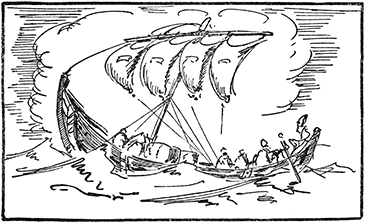
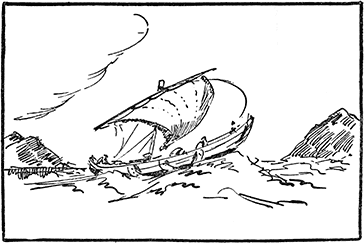
“The Story of the Golden Age,” by James Baldwin.
Some of the most beautiful of the old Greek myths woven into the
story of the Odyssey make this book a good introduction to the glories
of the Golden Age.
“A Wonder Book and Tanglewood Tales,” by Nathaniel Hawthorne,
with pictures by Maxfield Parrish.
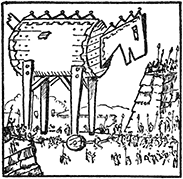
“The Adventures of Odysseus and the Tale of Troy,” by Padraic
Colum, presented by Willy Pogany.
An attractive, poetically rendered account of “the world’s greatest
story.”
“The Story of Rome,” by Mary Macgregor, with twenty plates in
colour.
Attractively illustrated and simply presented story of Rome from
the earliest times to the death of Augustus.
“Plutarch’s Lives for Boys and Girls,” retold by W. H. Weston.
“The Lays of Ancient Rome,” by Lord Macaulay.
“The early history of Rome is indeed far more poetical than anything
else in Latin Literature.”
“Children of the Dawn,” by Elsie Finnemore Buckley.
Old Greek tales of love, adventure, heroism, skill, achievement, or
defeat exceptionally well told. Especially recommended for girls.
“The Heroes; or, Greek Fairy Tales for My Children,” by Charles
Kingsley.
“The Story of Greece,” by Mary Macgregor, with nineteen plates in
colour by Walter Crane.
Attractively illustrated and simply presented—a good book to
begin on.
“The Story of Jesus,” pictures from paintings by Giotto, Fra Angelico,
Duccio, Ghirlandais, and Barnja-da-Siena. Descriptive text
from the New Testament, selected and arranged by Ethel Natalie
Dana.
A beautiful book and a beautiful way to present the Christ Story.
“A Child’s Book of Saints,” by William Canton.
Sympathetically told and charmingly written stories of men and
women whose faith brought about strange miracles, and whose goodness
to man and beast set the world wondering.
“The Seven Champions of Christendom,” edited by F. J. H. Darton.
How the knights of old—St. George of England, St. Denis of
France, St. James of Spain, and others—fought with enchanters and
evil spirits to preserve the Kingdom of God. Fine old romances interestingly
told for children.
“Stories From the Christian East,” by Stephen Gaselee.
Unusual stories which have been translated from the Coptic, the
Greek, the Latin and the Ethiopic.
“Jerusalem and the Crusades,” by Estelle Blyth, with eight plates in
colour.
Historical stories telling how children and priests, hermits and
knights all strove to keep the Cross in the East.
“Stories of Norse Heroes From the Eddas and Sagas,” retold by E. M.
Wilmot-Buxton.
These are tales which the Northmen tell concerning the wisdom of
All-Father Odin, and how all things began and how they ended. A
good book for all children, and for story-tellers.
“The Story of Siegfried,” by James Baldwin.
A good introduction to this Northern hero whose strange and
daring deeds fill the pages of the old sagas.
“The Story of King Arthur and His Knights,” written and illustrated
by Howard Pyle.
This, and the companion volumes, “The Story of the Champions of
the Round Table,” “The Story of Sir Launcelot and His Companions,”
“The Story of the Grail and the Passing of Arthur,” form an incomparable
collection for children.
“The Boy’s King Arthur,” edited by Sidney Lanier, illustrated by N.
C. Wyeth.
A very good rendering of Malory’s King Arthur, made especially
attractive by the coloured illustrations.
“Irish Fairy Tales,” by James Stephens, illustrated by Arthur Rackham.
Beautifully pictured and poetically told legends of Ireland’s epic
hero Fionn. A book for the boy or girl who loves the old romances,
and a book for story-telling or reading aloud.
“Stories of Charlemagne and the Twelve Peers of France,” by A. J.
Church.
Stories from the old French and English chronicles showing the
romantic glamour surrounding the great Charlemagne and his crusading
knights.
“The Merry Adventures of Robin Hood,” written and illustrated by
Howard Pyle.
Both in picture and in story this book holds first place in the hearts
of children.
“A Book of Ballad Stories,” by Mary Macleod.
Good prose versions of some of the famous old ballads sung by the
minstrels of England and Scotland.
“The Story of Roland,” by James Baldwin.
“There is, in short, no country in Europe, and no language, in
which the exploits of Charlemagne and Roland have not at some time
been recounted and sung.” This book will serve as a good introduction
to a fine heroic character.
“The Boy’s Froissart,” being Sir John Froissart’s Chronicles of Adventure,
Battle, and Custom in England, France, Spain.
“Froissart sets the boy’s mind upon manhood and the man’s mind
upon boyhood.” An invaluable background for the future study of
history.
“The Boy’s Percy,” being old ballads of War, Adventure and Love
from Percy’s Reliques of Ancient English Poetry, edited by
Sidney Lanier.
“He who walks in the way these following ballads point, will be
manful in necessary fight, loyal in love, generous to the poor, tender in
the household, prudent in living, merry upon occasion, and honest in
all things.”
“Tales of the Canterbury Pilgrims,” retold from Chaucer and others
by E. J. H. Darton.
“Sometimes a pilgrimage seemed nothing but an excuse for a
lively and pleasant holiday, and the travellers often made themselves
very merry on the road, with their jests and songs, and their flutes
and fiddles and bagpipes.” A good prose version much enjoyed by boys
and girls.
“Joan of Arc,” written and illustrated by M. Boutet de Monvel.
A very fine interpretation of the life of this great heroine. A book
to be owned by every boy and girl.
“When Knights Were Bold,” by Eva March Tappan.
Telling of the training of a knight, of the daily life in a castle, of
pilgrimages and crusades, of merchant guilds, of schools and literature,
in short, a full picture of life in the days of chivalry. A good
book to supplement the romantic stories of the time.
“A Book of Discovery,” by M. B. Synge, fully illustrated from authentic
sources and with maps.
A thoroughly fascinating book about the world’s exploration from
the earliest times to the discovery of the South Pole. A book to be
owned by older boys and girls who like true tales of adventure.
“A Short History of Discovery From the Earliest Times to the Founding
of the Colonies on the American Continent,” written and
done into colour by Hendrik Willem van Loon.
“Dear Children: History is the most fascinating and entertaining
and instructive of arts.” A book to delight children of all ages.
“The Story of Marco Polo,” by Noah Brooks.
“Olaf the Glorious,” by Robert Leighton.
An historical story of the Viking age.
“The Conquerors of Mexico,” retold from Prescott’s “Conquest of
Mexico,” by Henry Gilbert.
“The Conquerors of Peru,” retold from Prescott’s “Conquest of Peru,”
by Henry Gilbert.
“Vikings of the Pacific,” by A. C. Laut.
Adventures of Bering the Dane; the outlaw hunters of Russia;
Benyowsky, the Polish pirate; Cook and Vancouver; Drake, and other
soldiers of fortune on the West Coast of America.
“The Argonauts of Faith,” by Basil Mathews.
The Adventures of the “Mayflower” Pilgrims.
“Pathfinders of the West,” by A. C. Laut.
The thrilling story of the adventures of the men who discovered the
great Northwest.
“Beyond the Old Frontier,” by George Bird Grinnell.
Adventures of Indian Fighters, Hunters, and Fur-Traders on the
Pacific Coast.
“A History of Travel in America,” by Seymour Dunbar, illustrated
from old woodcuts and engravings. 4 volumes.
An interesting book for children who wish to understand the problems
and difficulties their grandfathers had in the conquest of the West.
This is a standard book upon the subject of early travel, but is so
readable as to be of interest to older children.
“The Golden Book of the Dutch Navigators,” by Hendrik Willem van
Loon. Fully illustrated from old prints.
“Gabriel and the Hour Book,” by Evaleen Stein.
How a boy learned from the monks how to grind and mix the colours
for illuminating the beautiful hand-printed books of the time and how
he himself made books that are now treasured in the museums of France
and England.
“Historic Inventions,” by Rupert S. Holland.
Stories of the invention of printing, the steam-engine, the spinning-jenny,
the safety-lamp, the sewing machine, electric light, and other
wonders of mechanism.
“A History of Everyday Things in England,” written and illustrated
by Marjorie and C. V. B. Quennell. 2 Volumes.
A most fascinating book, profusely illustrated in black and white
and in colour, giving a vivid picture of life in England from 1066-1799.
It tells of wars and of home-life, of amusements and occupations, of
art and literature, of science and invention. A book to be owned by
every boy and girl.
“First Steps in the Enjoyment of Pictures,” by Maude I. G. Oliver.
A book designed to help children in their appreciation of art by giving
them technical knowledge of the media, the draughtsmanship, the
composition and the technique of well-known American pictures.
“Knights of Art,” by Amy Steedman.
Stories of Italian Painters. Attractively illustrated in colour from
old masters.
“Masters of Music,” by Anna Alice Chapin.
“Story Lives of Men of Science,” by F. J. Rowbotham.
“All About Treasures of the Earth,” by Frederick A. Talbot.
A book that tells many interesting things about coal, salt, iron,
rare metals and precious stones.
“The Boys’ Book of New Inventions,” by Harry E. Maule.
An account of the machines and mechanical processes that are
making the history of our time more dramatic than that of any other
age since the world began.
“Masters of Space,” by Walter Kellogg Towers.
Stories of the wonders of telegraphing through the air and beneath
the sea with signals, and of speaking across continents.
“All About Railways,” by F. S. Hartnell.
“The Man-of-War, What She Has Done and What She Is Doing,”
by Commander E. Hamilton Currey.
True stories about galleys and pirate ships, about the Spanish
Main and famous frigates, and about slave-hunting expeditions in the
days of old.
“The Land of Fair Play,” by Geoffrey Parsons.
“This book aims to make clear the great, unseen services that
America renders each of us, and the active devotion each of us must
yield in return for America to endure.” An excellent book on our
government for boys and girls.
“The American Idea as Expounded by American Statesmen,” compiled
by Joseph B. Gilder.
A good collection, including The Declaration of Independence, The
Constitution of the United States, the Monroe Doctrine, and the
famous speeches of Washington, Lincoln, Webster and Roosevelt.
“The Making of an American,” by Jacob A. Riis.
The true story of a Danish boy who became one of America’s finest
citizens.
“The Promised Land,” by Mary Antin.
A true story about a little immigrant. “Before we came, the New
World knew not the Old; but since we have begun to come, the
Young World has taken the Old by the hand, and the two are learning
to march side by side, seeking a common destiny.”
(The colourful and graphic pictures make these histories beloved by
all children whether they read the text or not.)
“Voyages et Glorieuses Découvertes des Grands Navigateurs et Explorateurs
Français, illustré par Edy Segrand.”
“Collection d’Albums Historiques.”
Louis XI, texte de Georges Montorgueil, aquarelles de Job.
François I, texte de G. Gustave Toudouze, aquarelles de Job.
Henri IV, texte de Georges Montorgueil, aquarelles de H. Vogel.
Richelieu, texte de Th. Cahu, aquarelles de Maurice Leloir.
Le Roy Soleil, texte de Gustave Toudouze, aquarelles de Maurice
Leloir.
Bonaparte, texte de Georges Montorgueil, aquarelles de Job.
“Fabliaux et Contes du Moyen-Age”; illustrations de A. Robida.





 came to stand for a single letter, the
letter S. A short sentence will show you what I mean. Here
is a modern English sentence as it would have been written in
hieroglyphics.
came to stand for a single letter, the
letter S. A short sentence will show you what I mean. Here
is a modern English sentence as it would have been written in
hieroglyphics. 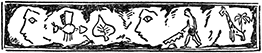
 either means one of these two round objects
in your head, which allow you to see or it means “I,” the person
who is talking.
either means one of these two round objects
in your head, which allow you to see or it means “I,” the person
who is talking. is either an insect which gathers honey, or it
represents the verb “to be” which means to exist. Again, it
may be the first part of a verb like “be-come” or “be-have.”
In this particular instance it is followed by
is either an insect which gathers honey, or it
represents the verb “to be” which means to exist. Again, it
may be the first part of a verb like “be-come” or “be-have.”
In this particular instance it is followed by  which
means a “leaf” or “leave” or “lieve” (the sound of all three
words is the same).
which
means a “leaf” or “leave” or “lieve” (the sound of all three
words is the same). . It is a giraffe.
It is part of the old sign-language out of which the hieroglyphics
developed.
. It is a giraffe.
It is part of the old sign-language out of which the hieroglyphics
developed.

 . This sign however was too
cumbersome and after a short while when the meaning of
“heaven” was added to that of star the picture was simplified
in this way
. This sign however was too
cumbersome and after a short while when the meaning of
“heaven” was added to that of star the picture was simplified
in this way  which made it even more of a puzzle.
In the same way an ox changed from
which made it even more of a puzzle.
In the same way an ox changed from  into
into  and a fish changed from
  into
into  . The sun
was originally a plain circle
. The sun
was originally a plain circle  and became
  .
If we were using the Sumerian script today we would make an
.
If we were using the Sumerian script today we would make an
 look like
  . This system of writing down our
ideas looks rather complicated but for more than thirty centuries
it was used by the Sumerians and the Babylonians and
the Assyrians and the Persians and all the different races
which forced their way into the fertile valley.
. This system of writing down our
ideas looks rather complicated but for more than thirty centuries
it was used by the Sumerians and the Babylonians and
the Assyrians and the Persians and all the different races
which forced their way into the fertile valley.