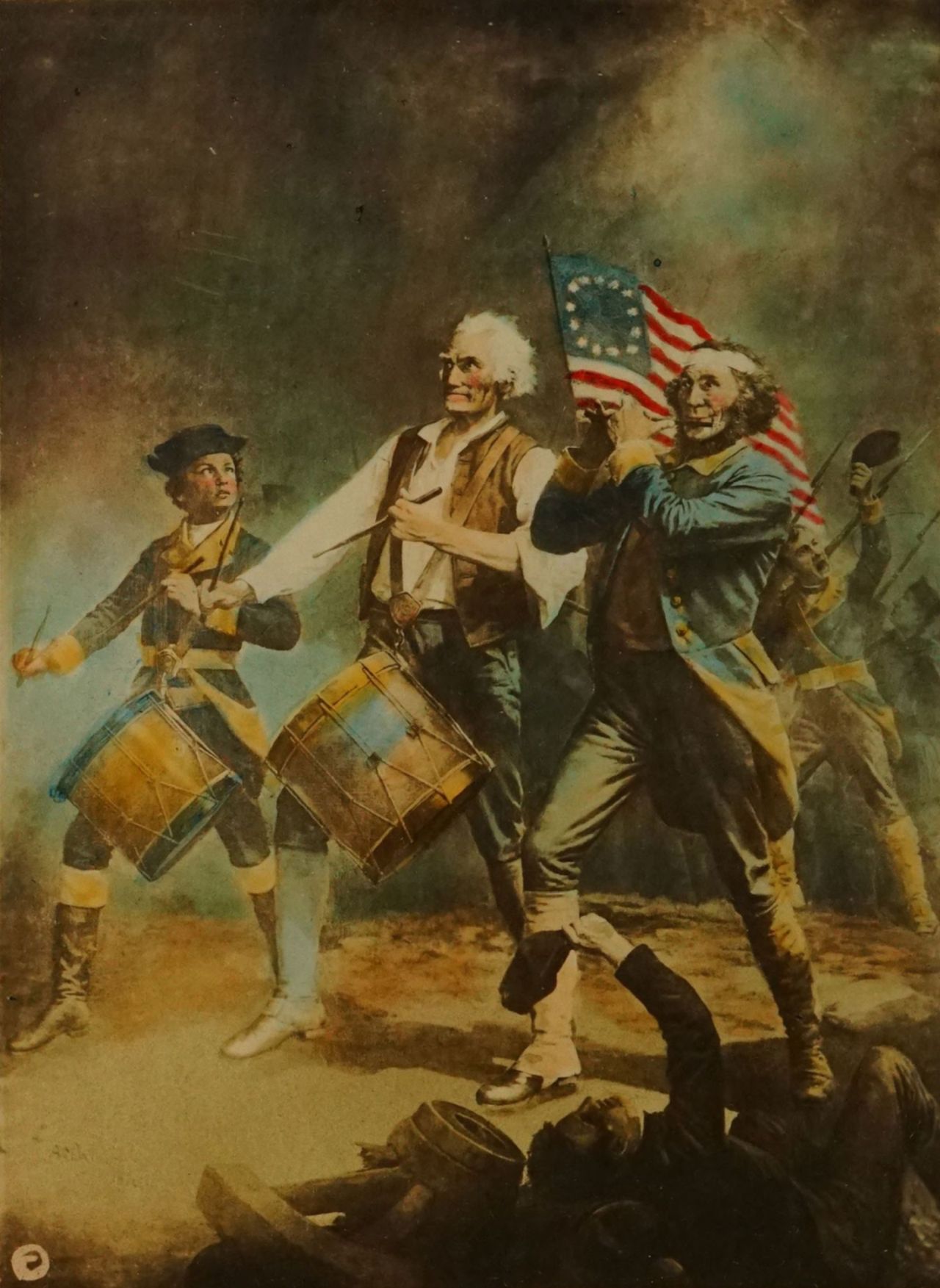
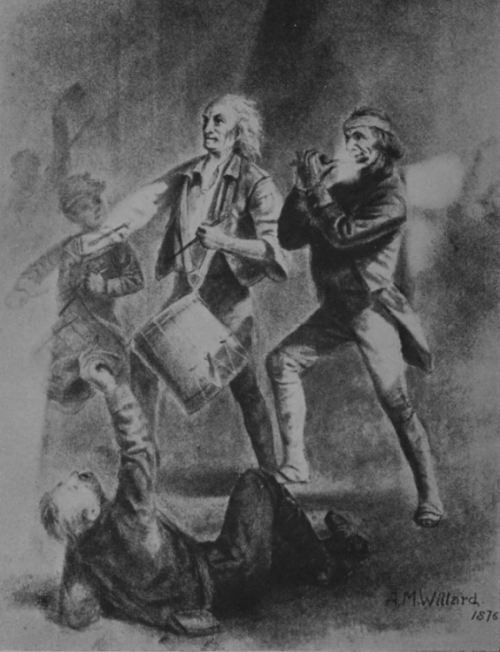
“The Spirit of ’76” is the best known
painting produced by an American, and
at the same time one of the most inspiring
works of art ever issued in America. It
may not conform to any orthodox school
of painting or possess the fine points of
technique that some critics demand, but
as an inspiration of patriotism, I doubt if
any painting has had as wide and continuous
influence as “The Spirit of ’76.” It
has been reproduced in one form and another
millions of times, by almost every
available process—chromo-lithography,
steel-engraving, half-tone, and the various
color processes. It is perhaps available
in more homes than any other American
painting, either framed or in magazines,
printed books, school histories, calendars,
posters, etc. Many a patriotic parade has
included the famous trio of this painting.
Although the painting is so universally
known, it is surprising that so little authentic
printed material is available
either on the artist himself or the story of
the creation of this, his most celebrated
work.
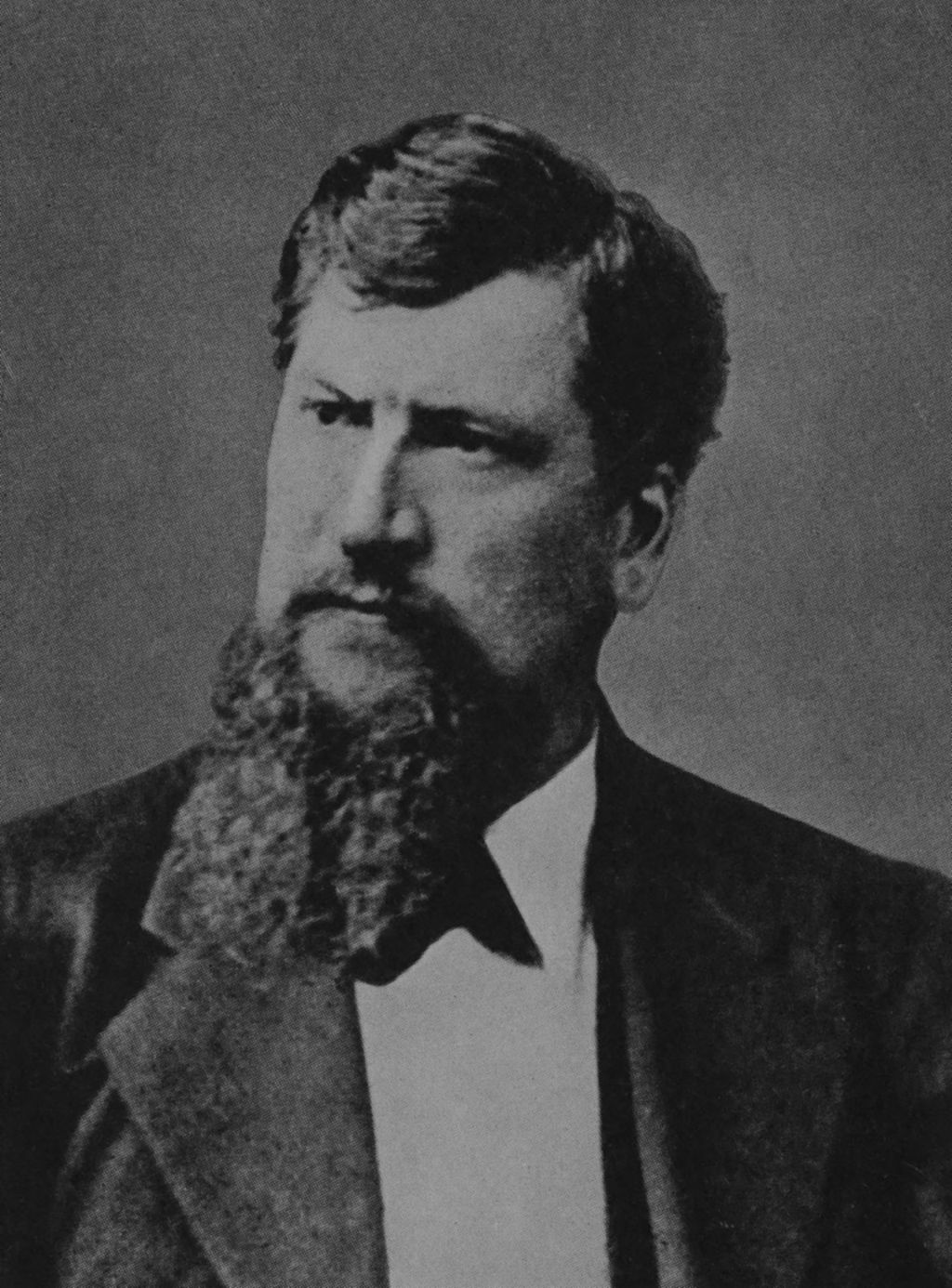
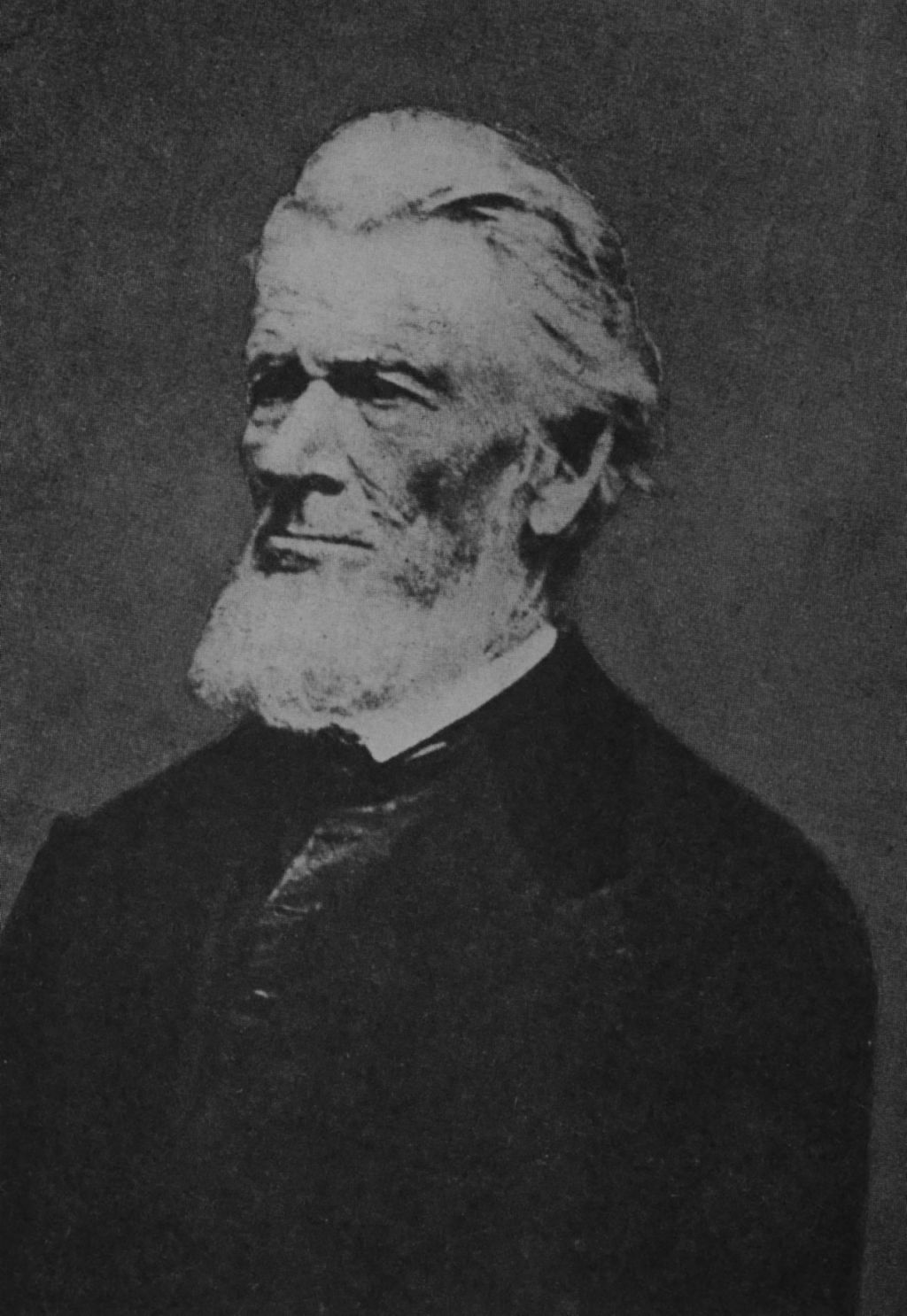
Archibald M. Willard, the painter of
“The Spirit of ’76” was born in Bedford,
Ohio, August 22, 1836. His father, the
Reverend Samuel Willard, was a Baptist
minister and a Vermonter. In the home
was grandfather Willard, between whom
and the young artist there grew to be a
strong bond of understanding and sympathy.
The grandfather, a relative of
General Stark and a soldier of the Revolutionary
War, was one of the Green
Mountain boys who was at the surrender
of General Burgoyne. Grandfather and
grandson spent much time together in
rambles through the then picturesque
Bedford glens. The rugged surroundings
appealed to young Willard’s artistic
sense. The old man figured often in the
boy’s cartoons. Many a tree was stripped
of its outer bark to produce a smooth
surface upon which with red chalk and
charred embers the young artist produced
savages of hideous mien. As frequently
happens with young artists, young Willard,
did not receive much encouragement
from the Willard family, perhaps because
every smooth surface of wall, barn-door,
board fence, etc., bore evidence to
the budding genius.
For varying periods, the family were
located at Kent, Salem, Aurora, Mantua,
and La Grange. When Willard was a
lad of seventeen, the family moved to
Wellington, Lorain county, Ohio. At the
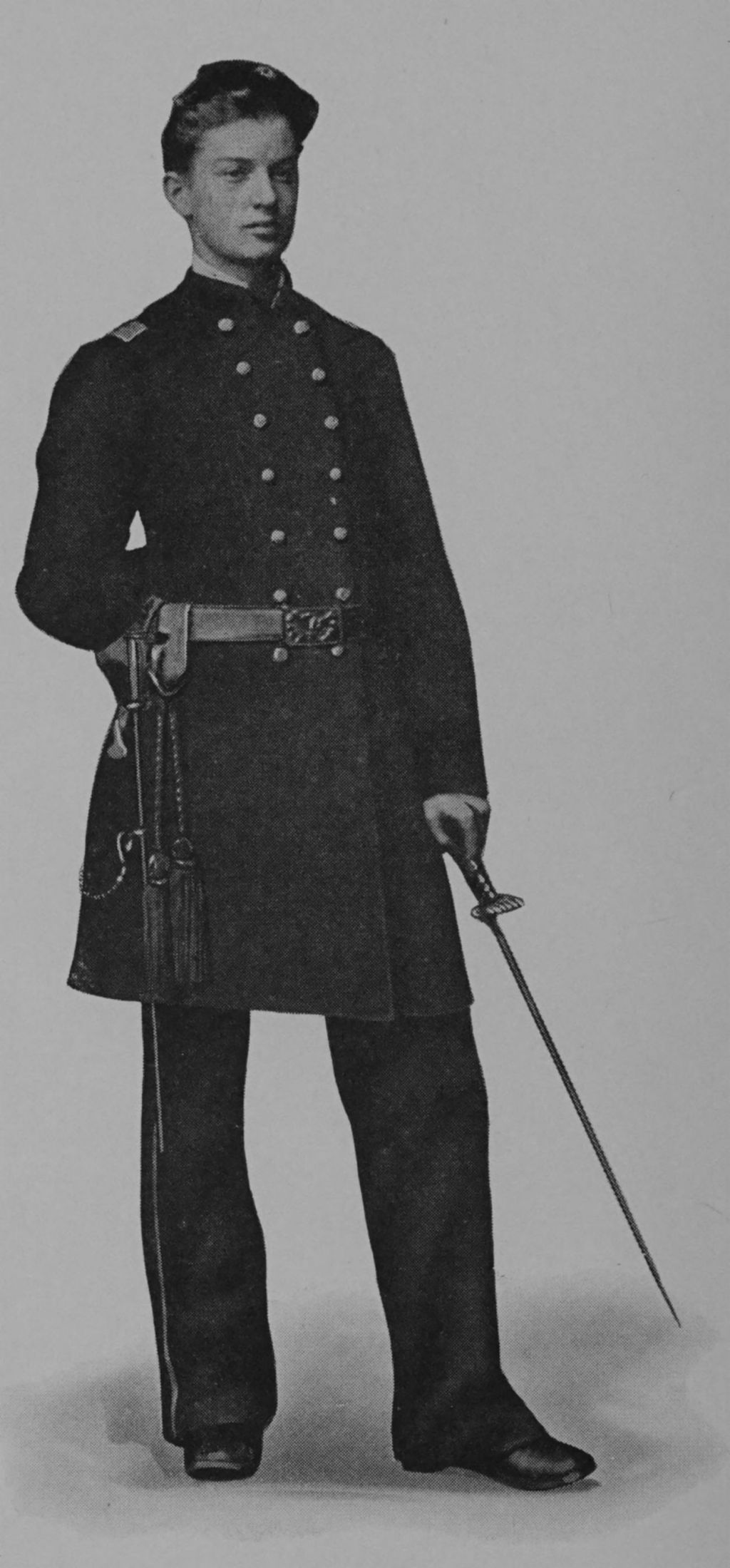
outbreak of the Civil War, Willard enlisted
in the Eighty-sixth Ohio Regiment.
While with his regiment at Cumberland
Gap, he painted several pictures of the
surrounding country. These were photographed
and many of the photographs
were sold to his comrades.
With the close of the Civil War, Archibald
M. Willard, then a sturdy young
man, returned to Wellington, together
with his close companion, Hugh Mosher.
Both had served faithfully and well.
Willard had become a non-commissioned
officer. He secured employment in the
shop of E. S. Tripp, a wheelwright and
wagon-maker. The old shop still stands
at Wellington. Willard’s original job
was to paint the wagons. From the mere
painting of the wagons he gradually
passed to decorating the wagons artistically,
and finally to decorating, with woodland
and animal scenes, a number of
gaudy circus chariots. He did this work
so artistically that “Tripp’s wagons” became
known all over that part of the
country. There was coöperation between
the two men, for apart from the artistic
painting, the wagons themselves were
sturdily and well-built. Willard’s artistic
temperament carried him beyond mere
commercial painting. He began painting
pictures on the wagon boxes. These
were so well executed that they created
much comment. He gradually became so
elaborate in these, that his employer, Mr.
Tripp, had to restrain him. Undoubtedly
the interest created by these paintings sold
many a wagon for their builder and advertised
him in a most unusual way. If
any of these Willard-decorated-Tripp-wagons
were now available, they would
bring a price far in excess of the cost of
the wagons themselves.
While working at his trade as wagon
painter, Willard devoted all his spare
time, energy, and what little money he
could save to the study of painting on
canvas. He had a very decided sense of
humor and nearly all of his earlier subjects
are of a humorous character. It was
early in the seventies that he painted the
first two pictures from which he received
compensation. These were the outcome
of a request by his employer’s daughter
asking him to paint a picture for her.
“Pluck number One” was the result. It
depicts a dog hitched to a little wagon, a
boy driving, and his baby sister in the
wagon with him. The dog takes off the
road in chase of a rabbit, and the little
boy desperately trying to stop him. A
wreck follows where the rabbit jumps a
log, but the youthful occupant clinging
to the lines, and the little sister, escapes
unhurt.
In Cleveland at this time was a photographer
and art dealer named J. F.
Ryder. This painting came to his attention
with other early productions by Willard.
The astute Ryder quickly recognized
the quaint humor and natural
ability displayed in these early pictures.
Willard thereupon painted a sequel to
“Pluck” which he entitled “Pluck number
Two.” Mr. Ryder had these two
paintings reproduced in color by chromo-lithography.
They became two of the
most popular pictures of their day. They
sold at ten dollars the pair. Many thousands
were sold. This proved to be the
beginning of a long and profitable business
acquaintance and lasting friendship
between Willard and Ryder. The proceeds
from the sale of these pictures permitted
Willard to take an art course in
the studio of J. D. Eaton, of New York.
This was in 1873.
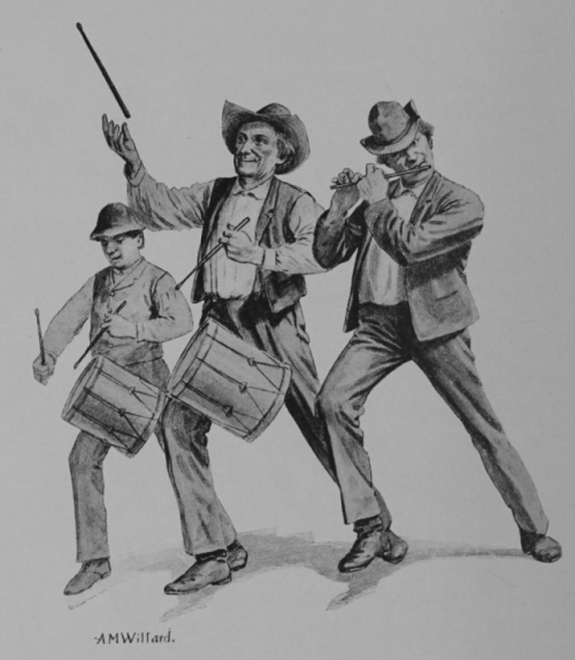
“Yankee Doodle”
Willard’s original conception for the humorous painting
submitted to J. F. Ryder. From this, the “Spirit of ’76,”
with its far-reaching inspiration, was finally evolved
Following this, Willard painted among
other things a picture which he called
“Yankee Doodle.” It was an ordinary
sized canvas and delineated a Fourth of
July celebration in a country village. An
old man in the center beating a drum,
with a younger man on each side, the one
with a drum, the other with a fife. The
surroundings and background were rural.
This painting was finished a few months
prior to the opening of the Centennial Exposition
of 1876 at Philadelphia. When
Mr. Ryder saw the picture, he immediately
conceived the idea of changing the
subject from humorous to patriotic, and
Willard concurred in the idea.
Contrary to a rather general belief,
“The Spirit of ’76” was not painted for
exhibition at the Centennial. At that
period there was a general and widespread
spirit of patriotism and the days
of the Revolutionary War were especially
before the people of this country. Mr.
Ryder had this prominently in mind and
for this reason he suggested to Willard
the painting of this picture that reproductions
therefrom might be made and a
large number of these reproductions
sold generally throughout the country
and particularly at the Centennial. It
was not sent to the Centennial until many
of these colored reproductions had been
distributed, and a large popular interest
in the painting had arisen. It was then,
on special request made by those in charge
of the Centennial that the original painting
itself was sent to the Exposition.
Mr. Ryder suggested that the title be
“Yankee Doodle” and under this title
“The Spirit of ’76” was at first known.
He left the conception and development
of the painting to Willard’s imagination.
At that early period after the Civil
War, when the training days of the
militia system had practically gone to
pieces, the various companies were expected
to go into camp for three days
each year. These days had become a
neighborhood picnic. Uniforms were
seldom in evidence. There were few
guns or swords. There were, however,
always the flag, the fife, and the drum.
Willard had this idea prominently before
him. He slashed into outline various
charcoal attempts, but the lines would not
fall or respond as he wanted them to. The
real idea as to what Yankee Doodle and
the men who fifed it and drummed it,
stood for, eventually began to thrust itself
persistently into the pencil points. Willard
daily became more enthused over the
patriotic features to be delineated. His
early days of marching and fighting under
the stars and stripes helped greatly in
stirring his patriotic enthusiasm, which
later was put upon and filled the completed
canvas.
While Willard was engaged in painting
this picture, his father, who was posing
as his central figure, became critically
ill. He did not live to see the finished
painting. When Willard was told that
his father was soon to pass away, all
thoughts of a humorous picture faded
from his mind. He decided to paint his
father as he really was.
After Willard became acquainted with
Mr. Ryder, at Ryder’s suggestion, Willard
moved to Cleveland. He used as a
studio, a small room on the fourth floor
of what used to be the Union National
Bank Building located at Euclid Avenue
and what was then Hickox Alley, Cleveland,
Ohio. From this time on Willard
spent almost his entire life in Cleveland.
This little studio had a northern exposure,
and he was artist enough, even
then, to realize the value of the northern
light. His canvas when stretched was
taller than himself. His idea had become
a big one and nothing but life-size would
do for the figures to be used. He followed
the general idea of his first picture,
“Yankee Doodle or a Fourth of July Celebration”
but the spirit of the whole was
changed. The old man in the center was
Willard’s own father, a tall, straight,
powerful man, with flowing white locks
yet the figure of a man of thirty, without
coat, bare-headed, his white hair blowing
in the breeze, his shirt sleeves loose,
marching forward with a step as firm and
unhesitating as the grim and determined
look on his face. The face of the old man
shows features which could be kind, but
now set like flint in the face of the enemy—filled
with the courage of a man who has
put character, and thought, and prayer
into the music through which he utters
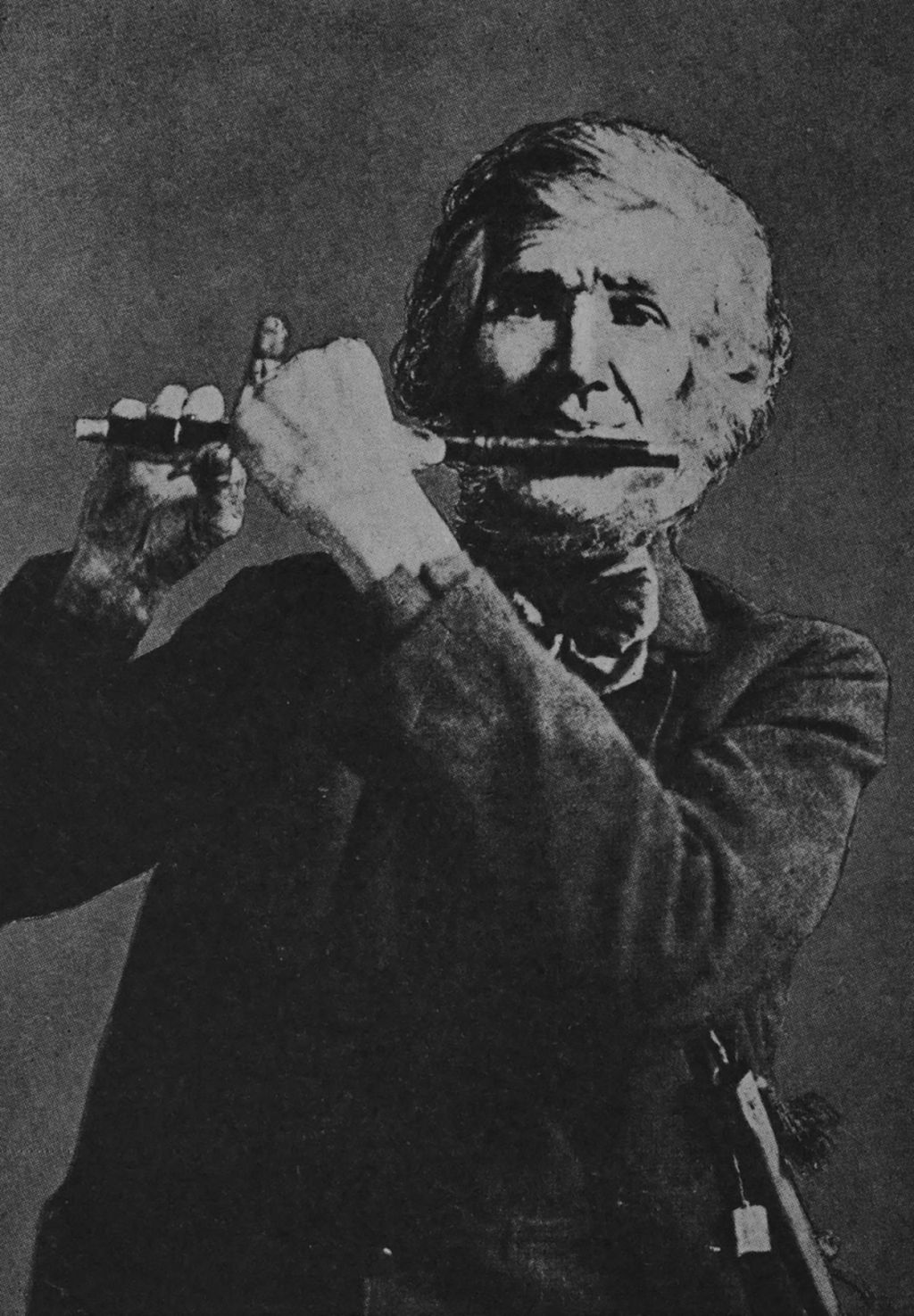
his patriotic purpose. Perhaps there is a
bit of humor in the figure of the fifer—it
could not be otherwise—for it is a portrait
of the fifer of Wellington, Hugh
Mosher. While depicting his humorous
face with its puckered mouth, there is the
same air of determination in the figure,
the eyes, and the forward step, that so
mark the picture of the old man. In these
characters one sees the spirit of men who
will stand and play until they die, or by
their contagious heroism will turn the
tide of battle.
As already stated, for the first few
years the painting was known under the
title of “Yankee Doodle.” While the picture
was on exhibition in Boston, Mr.
Brainerd, who had charge of the exhibition,
suggested changing the title to
“Yankee Doodle, or the Spirit of ’76.”
This suggestion was made because at that
time in Boston there was a public character,
a half-wit, who was commonly
known about the city as “Yankee Doodle.”
In some curious way, the painting
and this half-wit were being confused in
the public mind. This change of title
was adopted. Finally “Yankee Doodle”
was dropped entirely and the painting
has since been known under the title of
“The Spirit of ’76.”