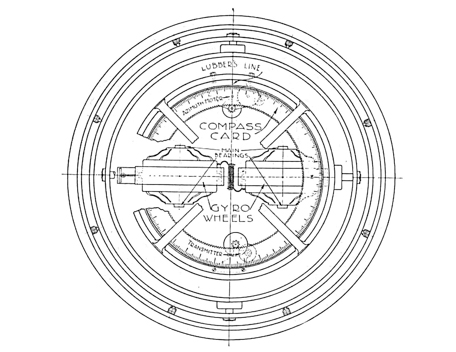
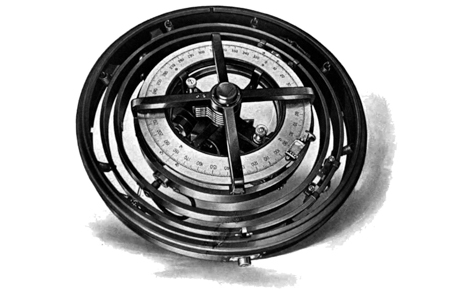
The Sperry Gyro-Compass, by The Sperry Gyroscope Co.


Copyright, 1920
THE SPERRY GYROSCOPE COMPANY
BROOKLYN, N. Y., U. S. A.
DESIGNED, ENGRAVED
AND PRINTED BY

ROBERT L. STILLSON
COMPANY NEW YORK
THE
SPERRY
GYROSCOPE
CO.
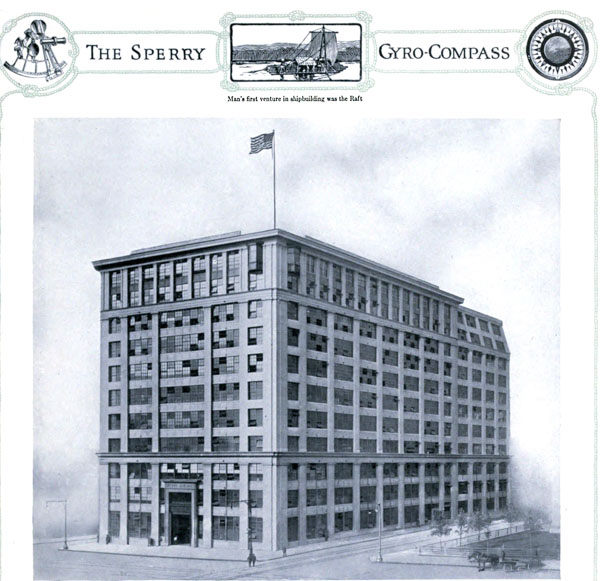
MAIN OFFICE AND FACTORY
MANHATTAN BRIDGE PLAZA.
BROOKLYN, N.Y.
THE SPERRY GYROSCOPE COMPANY
Boston, Mass.
60 VIRGINIA STREET
Great Lakes District
828 GUARDIAN BUILDING
Cleveland, Ohio
San Francisco, Cal.
52 DAVIS STREET
Main European Office: THE SPERRY GYROSCOPE COMPANY, Ltd., 15 Victoria
Street, London, S. W. 1
—REPRESENTATIVES—
| France | Holland | Norway |
|---|---|---|
| COMTE A. DeCHAMBURE 37, Rue Bergere Paris |
TECHNISCH BUREAU VAN LEENT Nassaukade 17 Ryswyk |
OTTO PLATOU Skovveien 39 Christiania |
| Italy | Japan | |
| GEORGES BREITTMAYER 20, Rue Taitbout Paris |
F. P. CAMPERIO Via Bagutta 24 Milan |
MITSUI & CO., LTD. Tokyo |
| Sweden | ||
| F. J. DELVES 20, Rue Taitbout Paris |
GRAHAM BROS. Stockholm |
MITSUBISHI ZOSEN KAISHA, LTD. Tokyo (For Ship Stabilizer) |
| Spain | Denmark | Chili, Peru & Bolivia |
| F. WEYDMANN Victoria 2 Madrid |
C. KNUDSEN 11 Kobmagagade Copenhagen |
WESSEL DUVAL & CO. 25 Broad Street New York |