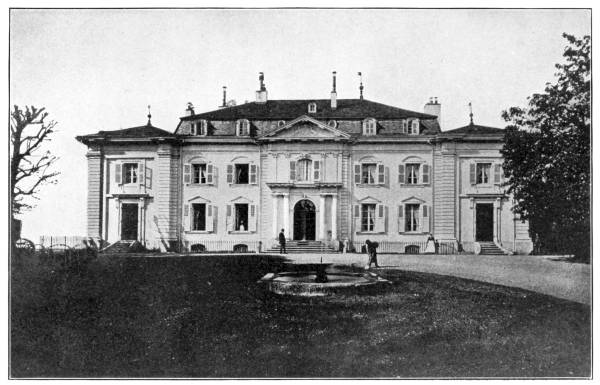
THE house stands by itself in a commanding situation on the Avenue de
Collanges. It is of dark stone, with bay windows. The front door
seemed to me, architecturally, unusually well-proportioned. It was
reached by a long flight of steps. It belonged to an old Lausanne
family who were good enough to rent it completely furnished. I
noticed, in the library, shelves full of interesting books bound in
vellum. Interesting? Well, I doubt if I should care to read many of
them—they are in Latin for the most part. How in the world could men
in those old days induce printers to manufacture such stately tomes
filled with so much wasted learning, on hand-made paper?
I suppose it was characteristic of me to be attracted first of all by
the library, but, as soon as I got to my own room, I went to the
window—I confess it, the tears came to my eyes! It must be a dream.
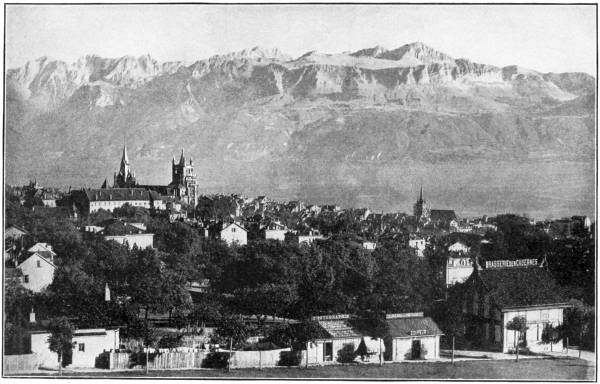
I recognize the cathedral with its massive Gothic tower and its
slender spire and over the house-tops, far below, four hundred feet
below, gleams the azure lake, and beyond rise the mountains. A
steamboat cuts a silvery furrow through the blue, and a pearly cloud
clings to the side of—yes, it must be La Dent du Midi! Below me, for
the most part, lies Lausanne. I shall have plenty of time to know it
thoroughly, and never, never shall I tire of that view from my
chamber-window, looking off across the azure lake.
So absorbed was I in my contemplation that I had not realized how near
luncheon-time it was. My trunk was at hand, unstrapped, and I quickly
changed from ship and automobile costume into somewhat more formal
dress. I was still looking out of the window with my collar in my hand
when a miniature cyclone burst open the door. Yes, it was my nephew
and namesake with the twin girls, blue-eyed Ethel and blue-eyed
Barbara, who came to sweep me down with them to luncheon. How
friendly, how gay, how excited, they were to see their Oncle
Américain! We became great friends on the spot!
How delightful it is, after weeks of desultory meals at restaurants
and hotels, to sit once more at a well-ordered home table! The
dining-room was a large, stately apartment, with wide window-recesses.
There was fine stained glass in the windows. A number of admirable
chamois heads with symmetrical horns were attached to the walls. In
one corner stood a superb example of the ancient pottery stoves. It
was of white and blue faïence à émail stannifère with gaily painted
flowers in the four corner vases. An inscription informed those that
could read the quaint lettering that it was made at Winterthür in
1647. How many generations of men it had warmed and comforted! How
many happy families had gathered about its huge flanks! What stories
it might relate of the days of yore! In spite of its artistic and
antiquarian charm, however, it does not compare to the old New England
or English open fireplace with fire-dogs supporting great logs of
flaming wood which, as they burn down, turn into visions of rose-red
palaces. I wonder how many of these old stoves are to be found in
Switzerland. The art of making them is said to have been brought from
Germany, but it soon acquired an individuality of its own. I am told
that there are superb specimens of them in the various museums. The
stannifer enamel is made by including some of the oxide of tin in the
biscuit. It makes the enamel opaque.
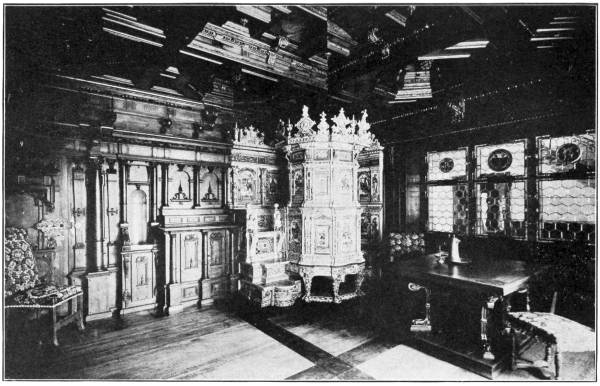
A WINTERTHUR STOVE.
After luncheon Will asked me if I would like to go over to the
University, where he said he had a little business. I was very glad to
do so. The Avenue de Collanges passes by the Free Theological
Institute, the Ecole de Saint Roche, and, after joining with the Rue
Neuve, leads into the Place de la Riponne, facing which stands the
Palais de Rumine in which are the offices of the University.
After the Reformed Church was established in Lausanne there was a
great demand for ministers, and a sort of theological school was
founded in 1536. Pierre Viret, a tailor’s son, was active in this
work. The famous Konrad von Gesner, the following year, became
professor of Greek there, though he was only twenty-one. He won his
great reputation as a zoölogist and botanist. An indefatigable
investigator, he published no less than seventy-two works and left
eighteen partly completed. They covered medicine, mineralogy and
philology, as well as botany. He collected more than five hundred
different plants which the ancients knew nothing about.
Another of the early professors was Theodore de Bèze. I remembered
seeing his name on my Greek Testament but I had forgotten what an
interesting character he was. It is a tremendous change from being a
dissipated cavalier at the court of François I, writing witty and
improper verses, to teaching Greek and morals at Lausanne; but it was
brought about by an illness which made him see a great light. While
teaching at Lausanne he wrote a Biblical drama, entitled, “Abraham’s
Sacrifice.” I am sorry to say he approved of the sacrifice of
Servetus. He was at Lausanne for ten years and then was called to
Geneva, where he became Calvin’s right-hand man and ultimately
succeeded him. I wonder if he kept a copy of his early verses and read
them over with mingled feelings.
It is rather odd that one of Bèze’s successors, Alexandre Rodolphe
Vinet, who is regarded in Lausanne as the greatest of all her
professors, had a somewhat similar experience. He, too, was gay and
dissipated and wrote rollicking verses when he was a young man; he,
like old Omar, urged his friends to empty the wine-cup (or rather the
bottle, as it rhymed better) and let destiny go hang: “The god that
watches o’er the trellis is now our only reigning king.” Perhaps,
later, he may have found a hidden spiritual meaning in his
references. Ascetics converted from rather free living have been
known thus to argue. Vinet, Will told me, began by teaching theology;
but he demanded greater freedom of utterance than the directors of the
Academy were prepared to allow. He detested the Revivalists and called
them lunatics. He opposed any established church. He was simply ahead
of his day. He was a brilliant preacher, and his lectures on
literature were highly enjoyed; but, after the Revolution of 1845, he
was obliged to resign. Two years later he died. He, too, wrote many
valuable books, mostly theological works, half a dozen of which have
been translated into English.
Talking about these early days, we had reached the Palais Rumine, that
monument of Russian generosity—a new building—one might call it
almost a parvenu building—compared with the old Gothic cathedral,
only a few steps farther on.
In a way, however, the cathedral is even later than the palace,
because its restoration, in accordance with plans designed by the
famous French architect, Viollet-le-Duc, was not completed until 1906,
two years after the other building was dedicated to its present uses.
The palace, which was built from the fifteen hundred thousand francs
left by Gavriil Riumin (to spell the name in the Russian way),
contains the various offices of the University, as well as picture
galleries and museums.
“So this is the famous University of Lausanne,” I exclaimed, as we
entered the learned portal.
“It has been a University for only about a quarter of a century,”
remarked Will. “Gibbon and others wanted the Academy raised to a
University more than a hundred years ago; but there seemed to be some
prejudice against it. Its various schools were added at intervals.
There has been a Special Industrial School ‘of Public Works and
Constructions’ for about sixty years. In 1873 a school of pharmacy was
started, and in 1888, when the Academy became a full-fledged
University, it established a medical school. Theology still stands
first; then come the schools of letters, of law, of science, of
pedagogy, and of chemistry. Instruction is given in design, fencing,
riding and gymnastics, and the University grants three degrees, the
baccalaureate, the licentiate and the doctorate. It has an excellent
library.”
“My errand will take me only a moment,” he added. “It is too fine a
day to waste indoors; we shall have plenty of times when the
atmosphere is not so clear, for the museums and the cathedral. I
propose we stretch our legs by walking up to the Signal. Are you fit
for such a climb?”
“What do you take me for?” I asked, with a fine show of indignation.
“It is only about four hundred feet above where we are now.”
I had not studied the guide-book for nothing.
There may be a great exhilaration and excitement and delight in
climbing to the top of lofty mountains, but, when one has achieved the
summit, even if the view be not cut off by clouds, the distances are
so enormous that for poor mortal eyes the result is most
unsatisfactory. Huddled together, peak with peak, an indistinguishable
mass, lie other mountains and ranges of mountains, with bottomless
valleys; the effect is as unsatisfactory as the air is rare. One can
see nothing clearly; one is out of one’s element, so to speak; one can
hardly breathe.
But from a height of a thousand feet, or so, one gets a comprehensive
view of the world; one can distinguish the habitations of men; their
farms and fields are marked off with fences; the rivers and brooks are
not voiceless. It is a satisfying experience. Such is the impression
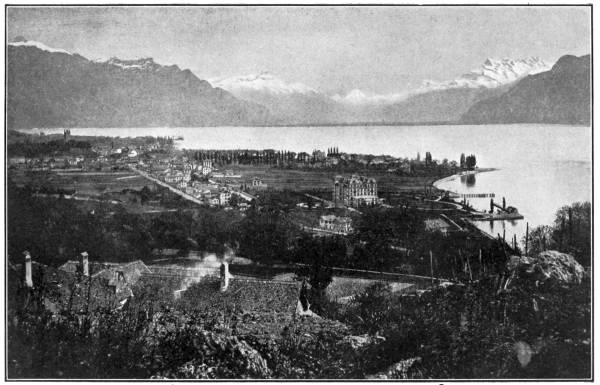
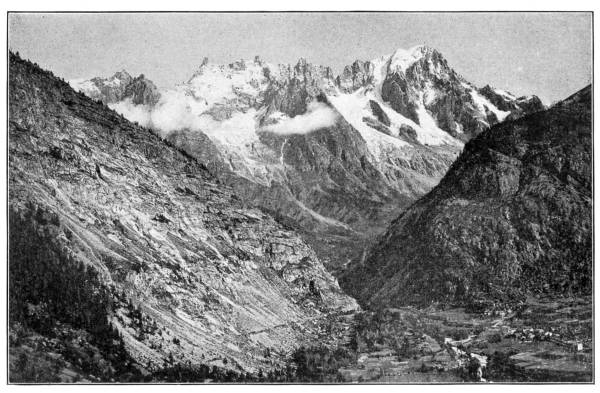
that I got from the top of the Signal. The city is fascinating, seen
from above. There is the great bulk of the cathedral with its massive
tower and the tall slender spire; the red roofs of innumerable houses;
chimneys of factories in the lower town; then the exquisite lake; and,
beyond it, the singularly silent and solemn masses of Les Diablerets,
Le Grand Muveran and the jagged teeth of the Savoy Mountains, biting
into the sky. They are so high that they shut off the grand bulk of
Mont Blanc. It was certainly most thoughtful of my Lord Rhône to pause
in the great valley and make a sky-blue lake for the delectation of
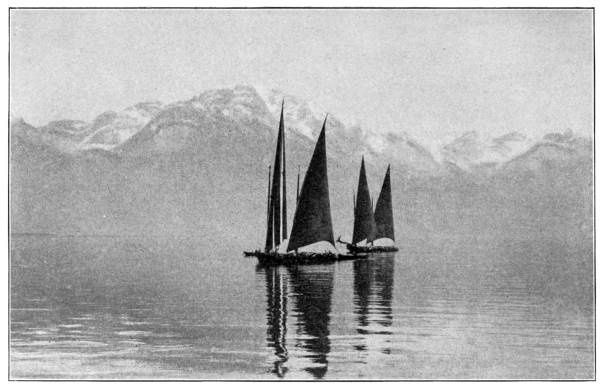
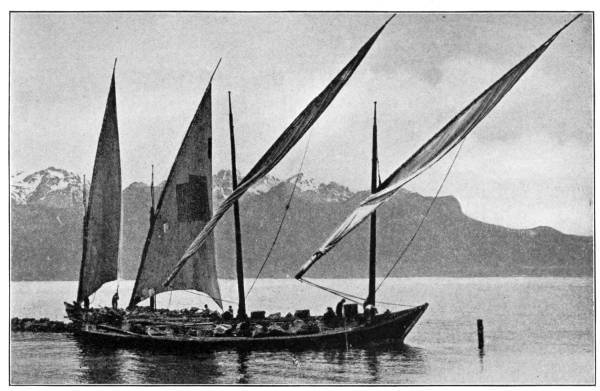
mortals! Like swans with raised wings are the sail-boats. How far the
wake made by that excursion steamboat extends across the placid water;
it is curved like a scimetar of damascened steel!
“What a host of hotels!” I exclaimed. “I wonder how many foreigners
are staying at Lausanne.”
“There must be five or six thousand regular residents from other parts
of the world, besides the multitude of transients; Lausanne is a
convenient stopping-place for several routes, to say nothing of the
Simplon Tunnel line to Italy. There are probably fourteen hundred
students at the University, and half of that number are Germans,
Russians and Poles. The German Minister of Public Instruction permits
students of the Empire to spend the first three semesters at certain
of the Swiss universities. But a suspicion arose in some Vaterland
circles that these young men were being corrupted by Russian
radicalism and Vaudois democracy—undermining their monarchical
principles. There was also some jealousy, especially in the Law
School. Herr Kuhlenbeck and Herr Vleuten were the so-called treaty
professors, and the fees were not equally distributed. The Rundschau
charged that young men learned socialism.
“It has always seemed to me an excellent notion to exchange students,
just as we are beginning to exchange professors. It might serve to
undermine narrow, sectional patriotism, but it would teach a broader,
world patriotism.”
The view back of Lausanne also claimed my attention.
“These heights of Jorat,” said Will, “are rather interesting
geologically. It seems to be a sort of subsidiary wave, filling the
space between the Jura and the Alps; but it has an individuality of
its own. It was always covered with great sombre forests which gave it
a melancholy aspect. The basis of the soil is sandstone, covered with
pudding-stone. The ridge is all cut up with deep valleys. I have heard
it said that the inhabitants had quite distinguishing characteristics
and I don’t know why the people who live on some particular soil
should not develop in their own way, just as the trees and plants and
even the animals do. The stature diminishes as men inhabit higher and
higher altitudes. The Swiss of the plains are generally rather heavy
and slow, serious and solid. In the same way the people who live along
the Jorat ought to be self-contained, close-mouthed, rather sad in
temperament, perhaps uncertain in their movements, like the brook, the
Nozon, which can’t quite make up its mind whether to flow to the
Mediterranean by way of the Rhône or to the German Ocean by way of the
Rhine.”
“It used to be a pretty important region, I should judge,” said I,
“from all I have read of Swiss history. One flood of invasion after
another dashed up against its walls and poured through its valleys.”
“It was, indeed. Some day I will show you the old tower which was
called the Eye of Helvetia because it looked down and guarded the
chief routes south and north, which crossed at its feet. It can be
seen on a clear day from the top of Mont Pélerin. Then there is the
tower of Gourze, where Queen Berthe took refuge when the Huns came
sweeping over this land. Lausanne itself, as it is now, is a proof of
the old invasions; it used to stand on the very shores of the lake,
but, when the Allemanni came, the inhabitants took refuge in the
heights.”
“I think this is a charming view, but, do you know, to me its greatest
charm is in the signs of a flourishing population. See the church
spires picturesquely rising above clumps of trees, and, here and
there, the tiled roofs of some old château—of course I do not know
them from one another, but I know the names of several—Moléson,
Corcelles, Ropraz, Ussières, Chatélard, Hermenches.”
Several of these my nephew and I afterwards visited. I recall with
delight our trip to the Château de Ropraz, where once lived the
wonderfully gifted Renée de Marsens. It now belongs to the family of
Desmeules. Near it, on a hill, lies the little village, the church of
which was reconstructed in 1761, though its interior still preserves
its venerable, archaic appearance. A grille surmounted by the Clavel
arms separates the nave from the choir. There are tombs with Latin
inscriptions, and on the walls are escutcheons painted with the arms
of the old seigneurs. They still show the benches reserved for the
masters of the château, flanked by two chairs with copper plates
signifying that they are the “Place du Commandant” and the “Place du
Chef de la Justice.” Seats were provided for visiting strangers and
also for the domestics of the château. On the front of the pulpit is a
panneau of carved wood bearing the words Soli Deo Gloria.
Renée, after her father’s fortune was lost, failed to make a suitable
marriage, but she lived in Lausanne until 1848, and people used to go
to call on her. They loved her for the brilliancy of her mind and her
exquisite old-fashioned politeness. She knew Voltaire and all the
great men of his time.
Another of the châteaux which we mentioned but were not certain that
we could see was that of l’Isle, situated at the base of Mont Tendre
in the valley of the Venoge. To this, also, we made an excursion one
afternoon. It must have been splendid in its first equipment. It was
built for Lieutenant Charles de Chandieu on plans furnished by the
great French architect, François Mansard, whose memory is preserved in
thousands of American roofs. In its day it was surrounded by a fine
park. One room was furnished with Gobelin tapestries, brilliant with
classic designs. Other rooms had tapestries with panels of verdure in
the style of the Seventeenth Century. The salon was floored with
marble (“the marble halls” which one might dream of dwelling in) and
hung with crimson damask, setting forth the family portraits and the
painted panels. On the mantels were round clocks of gilt bronze, while
huge mirrors, resting on carved consoles, reflected the brilliant
companies that gathered there to dance or play. There was an abundance
of high-backed armchairs and sofas, or as they called them, canapés,
upholstered in velvet, commodes in ebony adorned with copper, and
marquetry secretaries.
On the ground floor there was a great ballroom hung with splendid
Cordovan leather. As it had a large organ it was probably used as a
chapel, for the family was musical and several of the ladies of the
Chandieu family composed psalms—Will called them chants-Dieu, which
was not bad.
From the entrance-hall a splendid stairway, still well-preserved, with
its wrought-iron railing led up to the sleeping-rooms, which were
furnished with great beds à la duchesse with satin baldaquins. Among
the treasures was a beautiful chest of marquetry bearing the
coat-of-arms quartered; it was a marriage-gift. Another, dated 1622,
came from the Seigneur de Bretigny.
In front was a terrace with steps at the left leading down to the
water. On each side of the stately main entrance, which reached to the
roof, well adorned with chimneys, were three generous windows on each
floor. In front there was a wide and beautifully kept lawn. The
property was sold in 1810 for one hundred and seventy thousand francs.
It came into the hands of Jacques-Daniel Cornaz, who, in 1877, sold it
again for two hundred thousand. It now belongs to the Commune and is
used for the écoles séculaires. The wall that once surrounded it has
disappeared and the prosperous farms once attached to it were sold.
There is nothing in the literature of domestic life more fascinating
than the diary and letters of Catherine de Chandieu, who married
Salomon de Charrière de Sévery. They inherited the charming estate of
Mex with its châteaux, and one of them, with a queer-shaped apex at
each corner and a fascinating piazza, became their summer home.
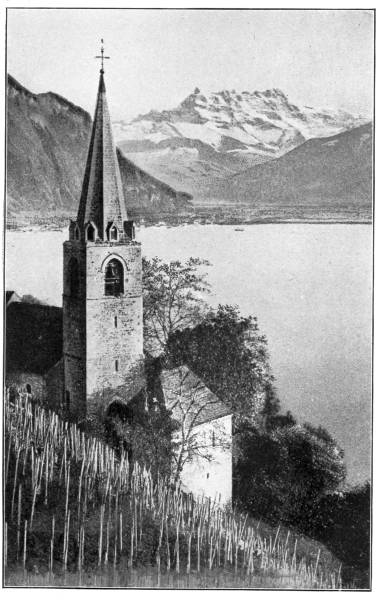
Another of these fine old places was the Château de Saint-Barthélemy,
which belonged to the Lessert family for three or four generations;
then came into the possession of the famous Karl Viktor von
Bonstetten, the author and diplomat, and was bought in 1909 by M.
Gaston de Cerjat. In the hall hung pictures of several French kings,
probably presented because of diplomatic services. Many of these old
manor-houses on the shores of the Lakes of Geneva and of Neuchâtel
have come into the possession of wealthy foreigners who have
modernized them; others are now asylums, or schools, or
boarding-houses.
But in those days they were filled with a cultivated and hospitable
gentry who were always paying and receiving visits.
Really there is no end to the romance of these old houses; yet,
curiously enough, most of them were carefully set down in little
valleys which protected them from cold winds, but also from the
magnificent views which they might have had. Even when they were on
hills, trees were so planted as to hide the enchanting landscape, the
lake and the gleaming mountains. Albrecht von Haller, the Bernese poet
and novelist, Charles de Bonnet of Geneva, and Rousseau at Paris,
“lifted the veil from the mountains” and made the world realize that
the lake was something else than a trout-pond.
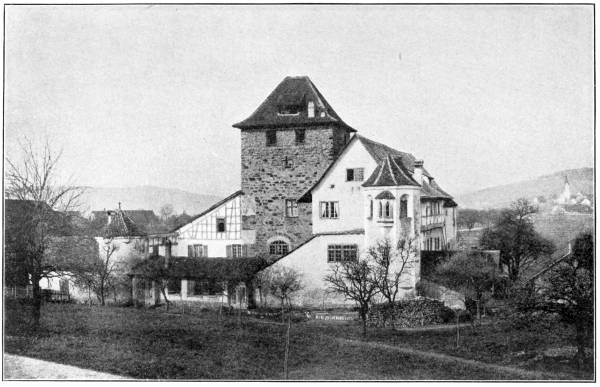
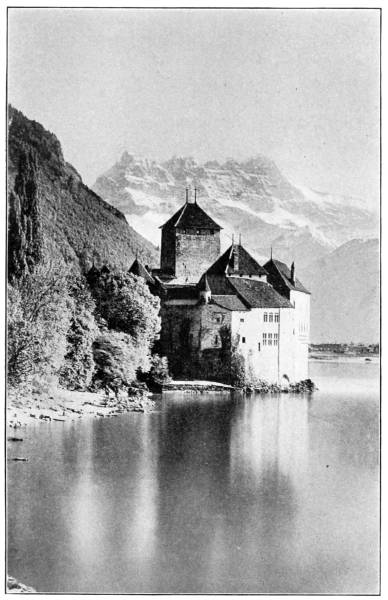
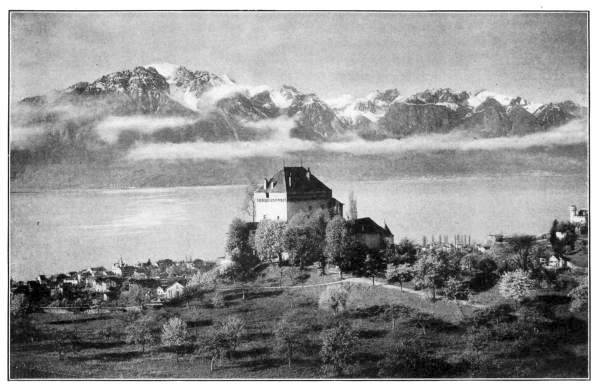
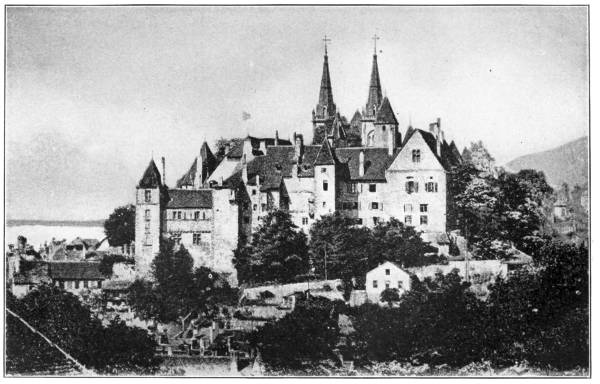
A SWISS CHÂTEAU.
It was time for us to be getting back. While we were on Le Signal some
aerial Penelope had woven a web of delicate cloud and spread it out
half-way up the Savoy Mountains across the lake; everything had
changed as everything will in a brief half-hour. There were different
gorges catching sunbeams, and tossing out shadows; there was another
tint of violet over the waters. I suggested a plan for describing
mountain views. It was to gather together all the adjectives that
would be appropriate—high, lofty, massive, portentous, frowning,
cloud-capped, craggy, granitic, basaltic, snow-crowned, delectable and
so on, just as Lord Timothy Dexter did with his punctuation-marks,
delegating them to the end of his “Pickle for the Knowing Ones,” so
that people might “pepper and salt” it as they pleased. If I wrote a
book about Switzerland—that is, if I find that my impressions, jotted
down like a diary, are worth publishing, I mean to add an appendix to
contain a sort of armory of well-fitting adjectives and epithets for
the use of travellers and sentimental young persons. In this way I may
be recognized as a benefactor and philanthropist.
“Do you know what is the origin of the name, Lausanne?” asked Will,
arousing me from a revery caused by the compelling beauty of those
gem-like peaks, that rippling ridge of violet-edged magnificences that
loomed above the glorious carpet of the lake. The pedigree of names is
always interesting to me. Philology has always been a hobby of mine.
“Why, yes,” said I, “that is an easy one. It comes from the former
name of the river, Flon. The Romans used to call the settlement here
Lousonna. Almost all names of rivers have the primitive word meaning
water, or flow, hidden in them. The Aa, the Awe, the Au, the Ouse, the
Oise, the Aach and the English Avon, and a lot more, come from the Old
High German aha, and that is nothing but the Latin aqua. The Greek
hudor is seen in the Oder, the Adour, the Thur, the Dranse and even
in the Portuguese Douro; and the Greek rheo, ‘I flow,’ is in the
Rhine and the Rhône and the Reuss and in the Rye.”
“So I suppose you derive Lausanne from the French l’eau.”
As I passed in silent contempt such an atrocious joke as that, he
seized the opportunity to tell me about the Frenchman who had some
unpleasant associations with the inhabitants and declared it was
derived from les ânes—the asses.
“From all I have read about them,” I replied, “they must have been a
pretty narrow-minded, bigoted set of people here. Way back in 1361 an
old sow was tried and condemned to be hanged for killing a child; and
about the middle of the next century a cock was publicly burned for
having laid a basilisk’s egg. One of the worthy bishops of
Lausanne,—did you ever hear?—went down to the shores of the lake and
recited prayers against the bloodsuckers that were killing the
salmon.”
“Was that any more superstitious than for present-day ministers to
pray for rain?”
“I suppose not; only it seems more trivial,” I replied absently, as I
gazed down upon the housetops. “I did not realize Lausanne was so
large.”
“The city is growing, Uncle. Toward the south and the west you can see
how it is spreading out. There is something tragic to me in the
outstretch of a city. It is like the conquest of a lava-flow, such as
I once saw on the side of Kilauea, in the Hawaiian Islands; it cuts
off the trees, it sweeps away the natural beauties. Lausanne has
trebled its population in fifty years. It must have been much more
picturesque when Gibbon lived here. For almost eighty years they have
been levelling off the hills. It took five years to build the big
bridge which Adrien Pichard began, but did not live to finish. The
bridge of Chauderon has been built less than ten years.”
“They must have had a tremendous lot of filling to do.”
“They certainly have, and they have given us fine streets and
squares—especially those of La Riponne and Saint-François. It was too
bad they destroyed the house of the good Deyverdun, where Gibbon spent
the happiest days of his life. It had too many associations with the
historic past of Lausanne. They ought to have kept the whole five
acres as a city park. What is a post office or a hotel, even if it is
named after a man, compared to the rooms in which he worked, the very
roof that sheltered him?”
“We have still time enough,” said I, consulting the elevation of the
sun; “let us go down by way of the cathedral. I should like to see it
in the afternoon light.”
“We can take the funiculaire down; that will get us there quicker.”
We did so, and then the Rue l’Industrie brought us, by way of the Rue
Menthon, to the edifice itself.
“I want you to notice the stone of which the cathedral is built,” said
Will.
“Yes, it’s sandstone.”
“It is called Lausanne stone. A good many of the old houses are built
of it, and it came from just one quarry, now exhausted, I believe. It
seems to have run very unevenly. Some of the big columns are badly
eaten by the tooth of time; in others the details are just as fresh as
if they had been done yesterday. Notice those quaint little figures
kneeling and flying in the ogives of the portal; some are intact,
others look as if mice had gnawed them. It is just the same with some
of the fine old houses; one will be shabby and dilapidated; the very
next will be well-preserved.”
“I think it is a rather attractive colour—that greyish-green with the
bluish shadows.”
We stood for a while outside and looked up at the mighty walls and the
noble portal. We walked round on the terrace from which one gets such
a glorious view.
There is something solemn and almost disquieting in a religious
edifice which has witnessed so many changes during a thousand years.
Its very existence is a curious and pathetic commentary on the
superstitions of men. Westerners, interpreting literally the
symbolism of the Orient, believed that the world would come to an end
at the end of the first millennium. It was a terrible, crushing fear
in many men’s minds. When the dreaded climacteric had passed and
nothing happened, and the steady old world went on turning just as it
had, the pious resolved to express their gratitude by erecting a
shrine to the Virgin Mother of God. Before it was completed its
founder was assassinated. In the thirteenth century it was thrice
devastated by fires which were attributed by the superstitious to the
anger of God at the sins of the clergy and of the people. The statue
of the Virgin escaped destruction and the church was rebuilt between
1235 and 1275. When it was consecrated, in October, 1275, Pope Gregory
X, with the Emperor, Rudolf of Hapsburg, his wife and their eight
children, and a brilliant crowd of notables, cardinals, dukes, princes
and vassals of every degree, were present. The great entrance on the
west was completed in the fifteenth century. The nave is three hundred
and fifty-two feet long; its width is one hundred and fifty feet and
it is divided into eight aisles. There are seventy windows and about a
thousand columns, many of them curiously carved.
The well-known Gate of the Apostles is in the south transept. It
commemorates only seven of them, though why that invidious distinction
should have been made no one knows. Old Testament characters fill up
the quota. These worthies stand on bowed and cowed demons or other
enemies of the Faith.
In the south wall is the famous rose-window, containing
representations of the sun and the moon, the seasons and the months,
the signs of the zodiac and the sacred rivers of Paradise, and quaint
and curious wild beasts which probably are visual traditions of the
antidiluvian monsters that once inhabited the earth, and were still
supposed to dwell in unexplored places.
The vaulting of the nave is sixty-two feet high. It gave plenty of
room for the two galleries which once surmounted the elaborately
carved façade. One of them was called the Monks’ Garden, because it
was covered with soil and filled with brilliant flowers.
Back of the choir is a semicircular colonnade. The amount of detail
lavished on the various columns is a silent witness of the cheapness
of skilled labour and of the time people had to spend. The carved
choir stalls, completed in 1506, were somehow spared by the vandal
iconoclasts of the Reformation; but thirty years later Bern, when
taking possession of Lausanne, carried off eighteen wagon-loads of
paintings, solid gold and silver statues, rich vestments, tapestries,
and all the enormous wealth contributed to the treasures of the
church.
We were fortunate to find the cathedral still open, and in the golden
afternoon light we slowly strolled through the silent fane—the word
fane always sounds well. We paused in front of the various historic
tombs. Especially interesting was that dedicated to the memory of Otho
de Grandson, who, having been charged with having instigated the
murder of Amadée VII, was obliged to enter into a judicial duel with
Gérard d’Estavayer, the brother of the fair Catherine d’Estavayer whom
he expected to marry.
Gérard apparently stirred up great hatred against him. Otho had in his
favour the Colombiers, the Lasarraz, the Corsonex, and the Rougemonts;
while with Gérard were the Barons de Bussy, de Bonvillar, de Bellens,
de Wuisternens, de Blonay and, especially, representatives of the
powerful family of d’Illens whose great, square castle is still
pointed out, beetling over the Sarine opposite Arconciel. These men
were probably jealous of Otho. His friends wore a knot of ribbons on
the tip of their pointed shoes, while his enemies carried a little
rake over their shoulders.
Otho shouted out his challenge to Gérard: “You lie and have lied every
time you have accused me. I swear it by God, by Saint Anne and by the
Holy Rood. But come on! I will defend myself and I will so press
forward that my honour will be splendidly preserved. But you shall be
esteemed as a liar.”
So Otho made the sign of the Cross and threw down the battle-gage.
But, although he was undoubtedly innocent, the battle went against
him. His effigy is still to be seen in the cathedral. The hands
resting on a stone cushion are missing but this probably was due to
some accident and not to any symbolism. This all happened about a
hundred years before Columbus discovered America—in 1398.
Here, too, lies buried, under a monument by Bartolini, Henrietta, the
first wife of Lord Stratford de Redcliffe, minister from England to
Switzerland. She died in 1818.
There are monuments also commemorating the Princess Orlova, who was
poisoned by Catharine II of Russia, and Duc Amadée VIII, who caused
Savoy to be erected into a duchy and became Pope Felix V in 1439,
after he had lived for a while in a hermitage on the other shore of
the lake. He is not buried in the cathedral but his intimate
connection with the history of Lausanne is properly memorialized by
his monument.
A city is like an iceberg. Its pinnacles and buttresses tower aloft
and glitter in the sun; it seems built to last for ever. But it is not
so; its walls melt and flow away and are put to other uses. A temple
changes into a palace, and a fortification is torn down to make a
park. Where are the fifty chapels that once flanked Notre Dame de
Lausanne? Where is the fortified monastery of Saint Francis? Where is
the lofty tower of La Grotte, and the moat in which it was reflected?
A great pageant took place in the cathedral in 1476. After Charles the
Bold, Duke of Burgundy, had been defeated at Grandson, he collected
what remained of his army of 50,000 men, and encamped in the plains of
Le Loup. Then on Easter Sunday, he attended high mass. The cathedral
was lavishly decorated and a brilliant throng “assisted” at the
ceremonies. The Duchess Yolande of Savoy came from Geneva, bringing
her whole court and an escort of three thousand horsemen. The Pope’s
legate and the emperor’s ambassadors brought their followers, while
representatives of other courts were on hand, for the occasion was
made memorable by the proclamation of peace between the duke and the
emperor. There was a great clanging of bells and fanfare of trumpets
and the whole city was overrun with soldiers. The commissary
department was strained to feed such multitudes. It is said that an
English knight, serving in the duke’s army, was reduced to eating
gold; at any rate his skull was found some years ago with a rose noble
tightly clenched between its teeth!
A few months later the battle of Morat was fought; the duke was
defeated and Lausanne was doubly sacked, first by the Comte de Gruyère
and, a few hours later, by his allies, the Bernese troops, who spared
neither public nor private edifices.
Just sixty years later Lausanne fell definitely into the hands of the
Bernese, and they, by what seems an almost incredible revival of the
judicial duel—only with spiritual instead of carnal weapons—ordered
a public dispute on religion to decide whether Catholicism or
Protestantism should be the religion of the city.
The comedian of the occasion seems to have been the lively Dr.
Blancherose, who was constantly interrupting and interpolating
irrelevant remarks, to the annoyance of the other disputants and to
the amusement of the audience which packed the cathedral. On one
occasion he declared that the word cephas was Greek and meant head;
Viret replied that it was a Syriac word and meant stone. The Pope
could have well dispensed with such an advocate.
The superiority of the Protestant debaters resulted in converting some
of the opposite party, and the establishment of the Academy of
Lausanne was the direct outcome of this debate, which was declared in
all respects favourable to the Reformers.
The day after the decision was rendered, a crowd of bigots broke into
the cathedral, overturned the altars and the crucifix, and desecrated
the image of the Virgin. Workmen were paid for fifteen days at the
rate of four and one sixth sous a day to clear Notre Dame of its
altar-stones. And yet Jean François Naegueli (or Nägeli), when he took
possession of Lausanne, had promised to protect the two Christian
faiths.
It is a question whether one would rather live in those days under the
easy-going régime of the superstitious Catholics or under that of the
stern, forbidding bigotry of the Protestants. Geneva could not endure
the latter and banished Farel and Calvin two years later; but back
they came and established the tyranny more solidly than ever. Calvin
drove Castellio out of Geneva, caused Jacques Gruet to be tortured and
put to death, mainly because he danced at a wedding and wore
new-fangled breeches, and had Servetus burned at the stake. It was a
cruel age.
A cloud evidently passed over the face of the sun; the colours in the
great rose window grew almost pallid. We left the church and again
stood on the terrace.
“We are just about one hundred and fifty-two meters above the lake,”
said Will. “Do you know, in the harbour of Geneva there are two big
rocks which the early inhabitants of this region used to worship. They
are granite, or protogen, and must have been brought down from some
distant mountain, probably from the Saint-Bernard, by a glacier. In
the old Roman days they were worshipped. On the top of one of them is
a bronze plaque, put there in 1820 by General Dufour, and regarded as
the standard, or rather the base, for all Swiss hypsometry. If you
want to know how high above the level of the sea the Dent du Midi is,
you will find it on the map ‘R. P. N.’ plus its height above the
plaque. For instance the Cathedral here is R. P. N. plus a little more
than one hundred and fifty-two meters. But the queer thing is that no
two people who have tried to correct or verify General Dufour’s
reckoning of the height of the plaque have been able to agree. General
Dufour made it a fraction over three hundred and seventy-six meters
and a half, which would give the level of the lake as three hundred
and seventy-five meters; but it has since been corrected to a bit less
than three hundred and seventy-three meters—a loss of almost ten
feet.”
“What does that mean—that the scientists blundered?”
“It looks to me as if the whole level of the valley had perhaps
settled. Every one knows that it is changing all the time—but come
on, I want you to see the cathedral from the Place de Saint Laurent.
It isn’t far from here.”
When we got there Will stopped and said:
“There! Isn’t that worth coming for? I wonder if there is any other
cathedral in the world that has a more magnificent site.”
We paused for some time, looking up at its solid bulk, which seemed
to touch the gathering clouds.
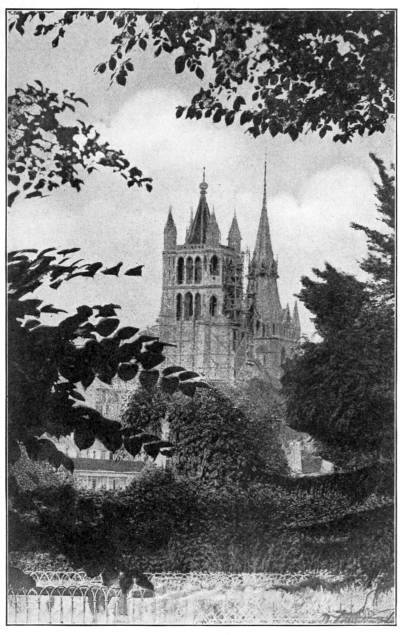
THE CATHEDRAL, LAUSANNE.
“I brought you here especially,” continued Will, “because one of
Switzerland’s few poets praises its aspect from this spot. He says
something like this: ‘It is a great crag fixt there. Contemplate it
when heavy clouds are passing over. Standing below it and letting your
eye follow the radiant field which creeps up to its flanks, you
imagine that it grows larger amid the wild clouds which it tears as
they fly over, leaving it unshaken. You might believe yourself in some
Alpine valley, over which towers a solitary peak while around it
cluster the mists driven by the wind.’ He grows still more
enthusiastic at the beauty of it when the chestnut-trees are in bloom,
contrasting with the violet roofs below and surrounded by the azure
aureole of the lake and the mountains and he speaks of its ‘graceful
energy’ against the golden background.”
“Who is the poet?” I asked.
“Oh, Juste Olivier. I will introduce you to him some day—I mean to
his works. He himself died in 1876, if I am not mistaken. I have the
two volumes which his friends edited as a sort of memorial to him.”
“I didn’t suppose there were any Swiss poets—I mean great Swiss
poets. Of course I know Hebel—”
“Yes, back in Gibbon’s time, the society founded by his friend
Deyverdun discussed the question, ‘Why hasn’t the Pays de Vaud
produced any poets?’ Juste Olivier deliberately set to work to fill
the gap.”
“Did he succeed? He is not much known outside of Switzerland, is he?”
“Probably not; you shall see for yourself. But I remember one stanza
on Liberty which has a fine swing to it—
“‘La Liberté depuis les anciens ages
Jusqu’à ceux où flottent nos destins
Aime à poser ses pieds nus et sauvages
Sur les gazons qu’ombragent nos sapins.
Là, sa voix forte éclate et s’associe
Avec la foudre et ses roulements sourds.
Nous qui t’aimons, Helvétie, Helvétie,
Nous qui t’aimons, nous t’aimerons toujours.’
“That is a fine figure—Liberty loving to set her foot on the soil
shaded by the Swiss pines,—and so is that of Helvetia mingling her
voice with the rolling of the thunder. That stanza has been praised as
one of the finest of the century.”
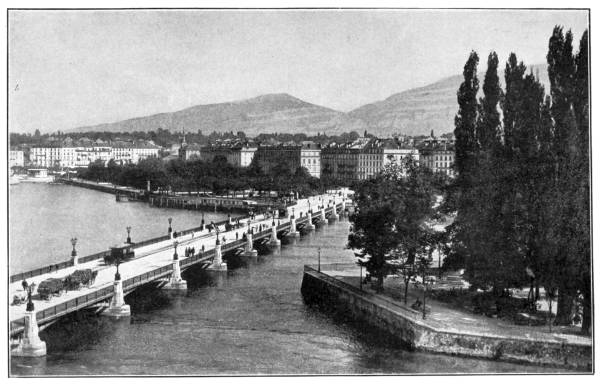
As we leisurely strolled homeward my nephew called my attention to the
northern slope of the Flon, just beyond the magnificent bridge,
Chauderon-Montbénon. “That,” he remarked, “is called Boston.”
“Why is that?”
“I don’t know, unless to commemorate the fact that Lausanne is built
on three hills. The north part was called La Cité, that to the south
was le Bourg—the Rue du Bourg was the court end of the town, and had
especial privileges—and the western side was called Saint-Laurent. It
was only a little town when Gibbon came here to live; but it had
unusually good society and there was a great deal of wealth, as you
can imagine from the fine old houses.”
“Where did they get their money?”
“A good many of them through fortunate speculation. The men used to
seek service in foreign countries. It is surprising how many of them
became tutors to royal or princely families, or, if they were trained
in the profession of arms, got commissions as officers in Russia,
France, Spain and Holland. Some of them even went to India and
America. A good many of them returned, if they returned at all, with
handsome fortunes.”
“Isn’t it strange that a country which is always supposed to stand for
liberty and patriotism should, next the Hessians, furnish the very
best type of the mercenary! For a hundred years the French kings had
to protect themselves with a Swiss guard, and the Pope’s fence of
six-footers have been recruited from Lucerne and the Inner Cantons
during more than four centuries.”
“Do you remember what Rousseau said about mercenary military service?
It runs something like this: ‘I think every one owes his life to his
country; but it is wrong to go over to princes who have no claim on
you, and still worse to sell yourself and turn the noblest profession
in the world into that of a vile mercenary.’ But Lausanne’s best
contribution to foreign countries was education. The Academy, or
college as they used to call it, attracted many people from abroad.
Ever since it was founded—and the Protestants deserve that credit—it
provided remarkably good professors and lecturers. The old families
that had country estates got into the habit of spending their winters
in town. They were wonderfully interrelated and many of them, through
marriage, had several baronies. They were enormously proud of their
titles and position. I have recently been reading Rousseau—especially
his ‘Nouvelle Héloïse’—you know about a year ago they were
celebrating the two hundredth anniversary of his birth,—and I was
struck with what he makes My Lord Edward Bomston say about the petty
aristocracy of this Pays de Vaud: ‘Why does this noblesse of which you
are so proud claim such honors? What does it do for the glory of the
country or for the happiness of the human race? Mortal enemy of laws
and of liberty, what has it ever produced except tyrannical power and
the oppression of the people? Do you dare in a republic boast of a
condition destructive of the virtues and of humanity, a condition
which produces slavery and makes one blush at being a man?’”
“It seems to have been a regular feudalism.”
“It was. Gibbon was much struck by the unfairness of the régime which
obtained in his day, and he speaks somewhere of three hundred families
born to command and of a hundred thousand, of equally decent descent,
doomed to subjection. They used to have a queer custom here, for a
man, when he married, to add the wife’s name to his own....”
“Just as in Spain,” I interpolated.
“Yes, only hyphenated. They worked the particle de to death. As
almost every one of the great families was related more or less
closely to every other, and the estates were constantly passing from
one branch to another, a man would at one time be Baron de
Something-or-other, and the next year, perhaps, would appear with
quite a different appellation. For instance, there was Madame
Secretan, whose family name was taken from the Seigneurie
d’Arnex-sur-Orbe. Antoine d’Arnay—he spelt his name phonetically—was
Seigneur de Montagny-la-Corbe, co-seigneur de Luxurier, Seigneur de
Saint-Martin-du-Chêne and Seigneur de Mollondin. And the husband of
the famous Madame de Warens appears under several aliases. It is very
confusing.
“When the nobles returned with hundreds of thousands of francs,” he
added, “they spent their money royally. Many of these houses are
filled with splendid carved furniture and tapestries. As long as Bern
was suzerain of Vaud, and governed it, there was small chance for
Government service and this state of things led to a peculiar
atmosphere—one of frivolity and pleasure-seeking. The men hadn’t
anything to do except to amuse themselves and few were the years when
some foreign prince was not studying here and spending any amount of
money in dinners and dances.”
“Yes,” said I, “considering that Lausanne was in the very centre of
Calvinism, it must have been pretty gay. I suppose the influence of
France was even stronger than that of Geneva or Bern.”
By this time we had reached our own street and were climbing the
flight of steps that led to the handsomely arched portal.