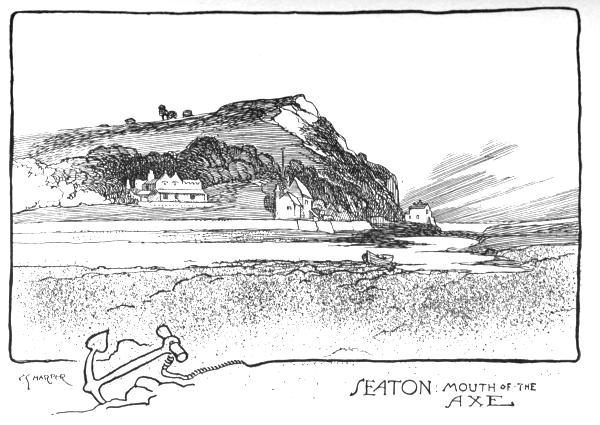
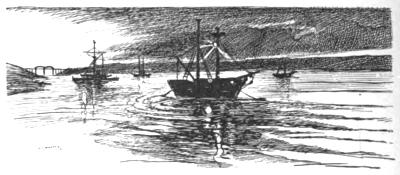
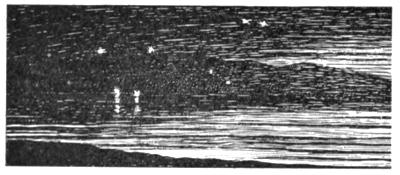
It is quite a narrow passage across the Kingsbridge
River to Salcombe, and shut in majestically by
dark rocks and a winding channel. The little
town dabbles its feet in the deep water of this
arm of the sea, and is in every way a fishy and
marine place; but, unless you are lodged in one
or other of the houses that rise sheer from the
water, it is little or nothing of the sea you will get
a sight of. Only from the two narrow alleys leading
to the ferry stairs, or down the infrequent passages
on to littery quays, is any outlook possible; and
it is quite a mile before the jealously walled-in
villas and estates of the outskirts cease and one
comes to the little bay of South Sands. The
naturally uncomfortable physical circumstances
of Salcombe, which has no foreshore for the visitor,
no pier, and no seats anywhere, are jealously
preserved in all their rigours by the luxurious
villadom of the place, which has hitherto succeeded
in keeping the railway out, and would, if it were
possible, put a ring-fence around the neighbourhood
and exclude every one but those who are
necessary to minister to their wants. Salcombe
is probably the most exclusive place on this, or
any other coast, and its exclusiveness is, singularly
enough, shared by all classes in the place. Here
is a literally reproduced conversation that enforces
the point.
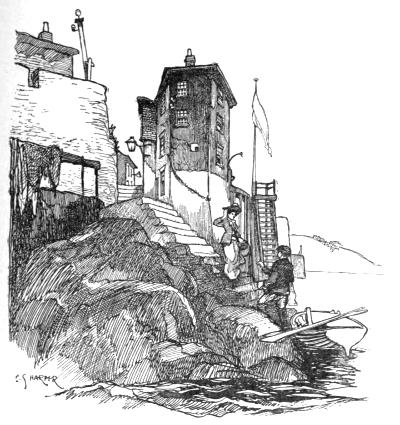
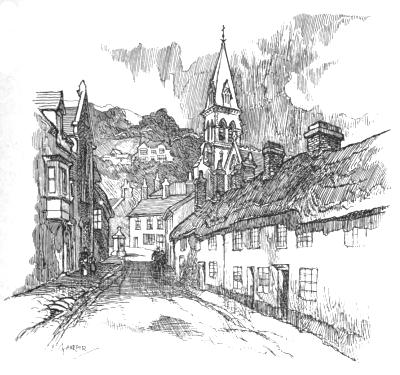
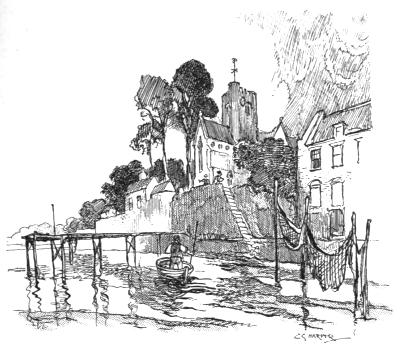
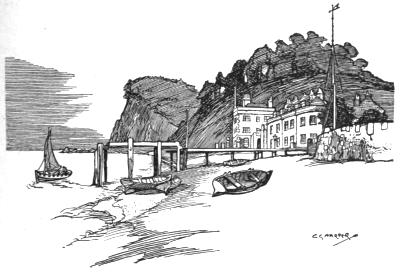
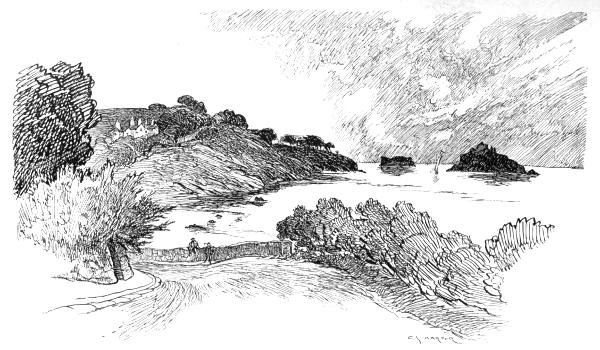
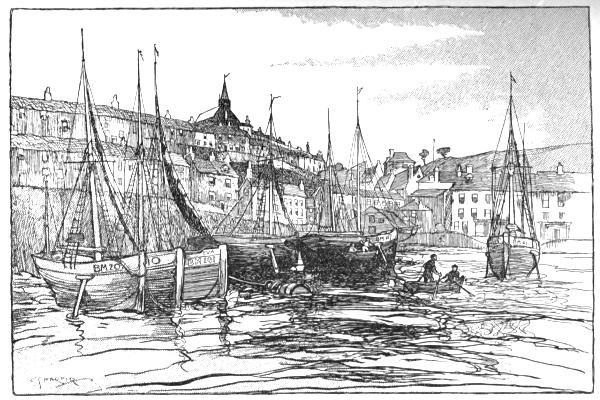
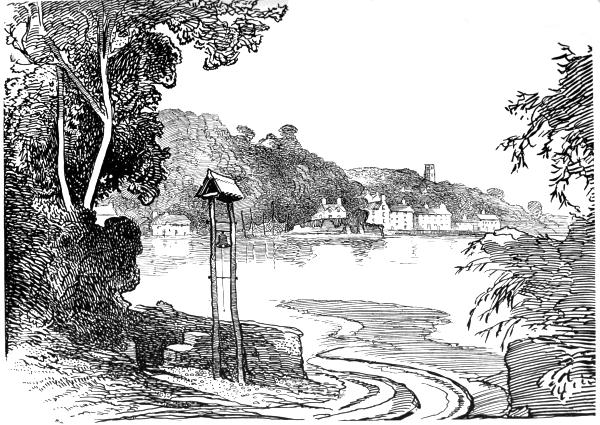
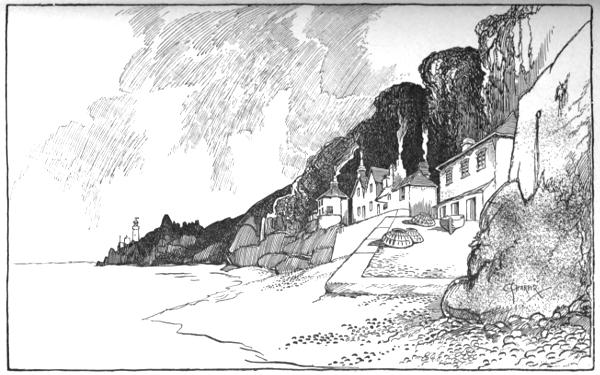
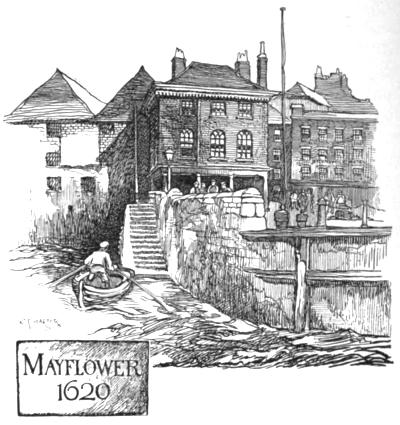
THE FERRY SLIP, SALCOMBE.
“Why, ’tes like this yur, ye see, Salcombe
don’ want no railway; we’m martel glad, I zhuree,
’ur didden coom no furder’n Kingsbridge, an’
them as wants et now’d be main zorry et ever
comed, ef’t du coom. Some on ’em wrote their
names down on what they carled a petition for
et. That old feller nex’ door to me was one on
’em. ‘Aw, yo’ ole fule,’ I ses, friendly like, ‘what
av’ee dued now; baintee zatisfied tu be left
peaceable? Why, yo’ must be maazed; vair
zillee, fer zure. Scralee out yer name to-rights,’
ses I; ‘us-uns, don’ wan’ no railways yur.’”
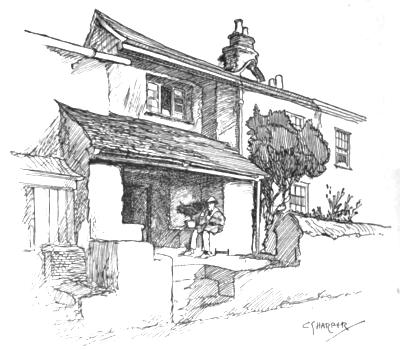
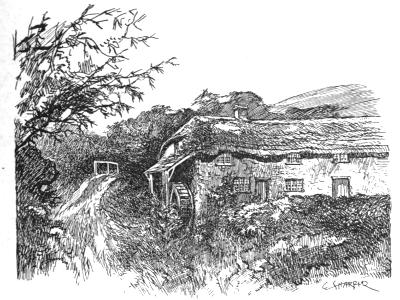
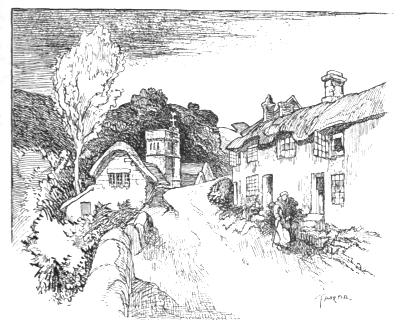
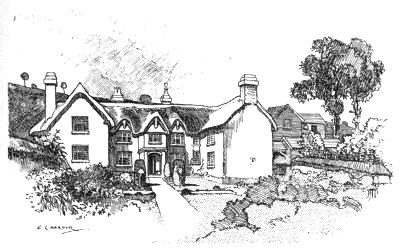
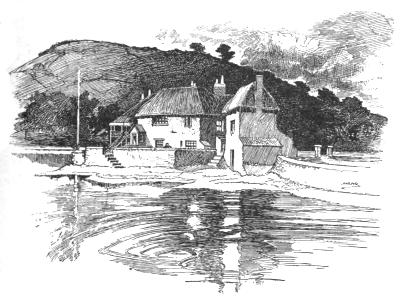
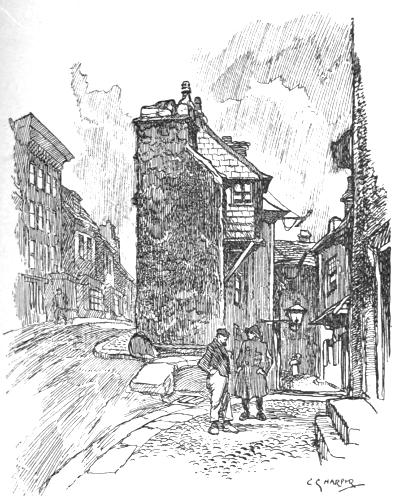
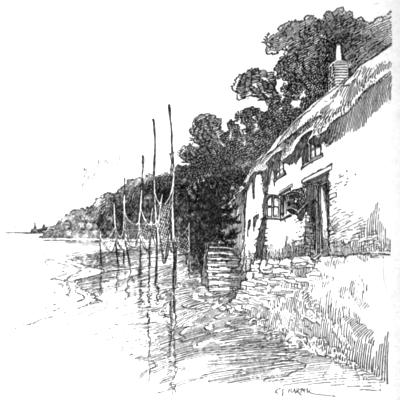
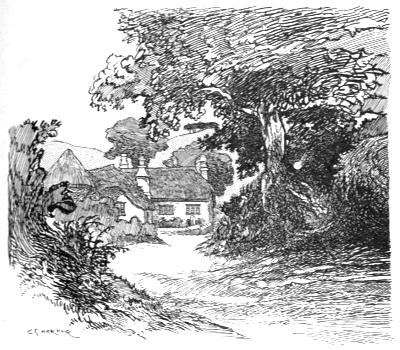
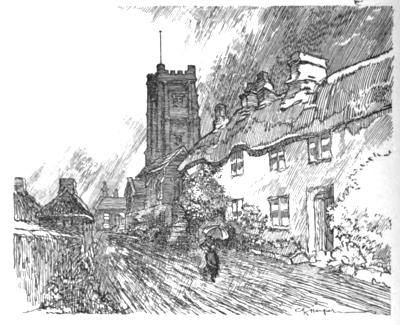
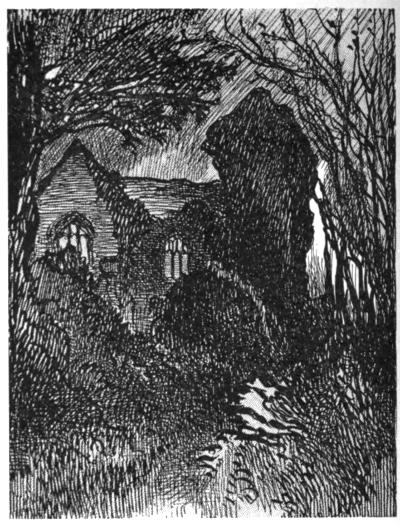
AN OLD COTTAGE, SALCOMBE.
“And the railway has been abandoned, then?”
“Zim zo: leastways we’m niver yurd nuthin’
more on’t.”
“But why object to a railway: it would
bring more people? Look how prosperous Kingsbridge
has become since the railway was opened.”
“Aw, my dear sawl, ther’s no livin’ fer poor
vo’k wher’ ther’s a railway. It doubles yer rent
an’ the price of yer food, an’ all the gentry goes
away, an’ all them as cooms into the place on
business, an’ usen’d be able to git out’n it agen
in a hurry, why, they’m off agen same arternoon.”
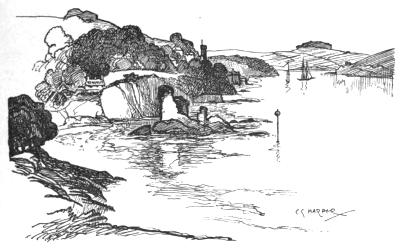
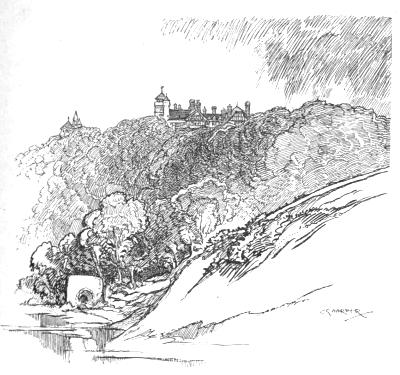
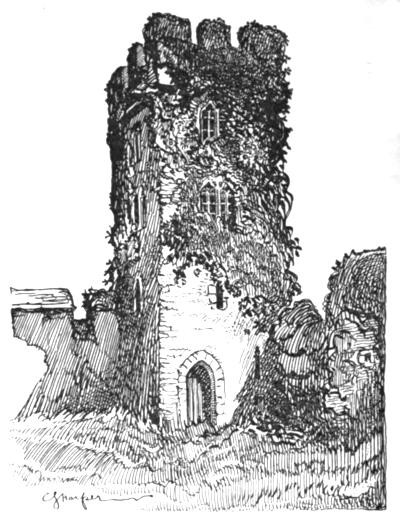
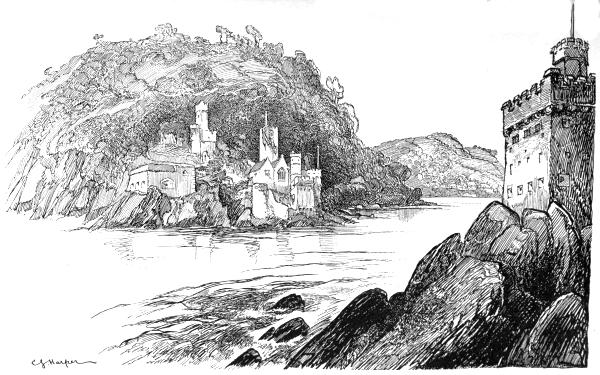
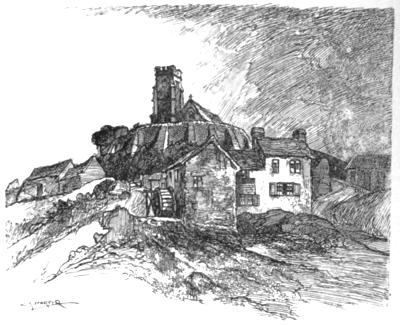
SALCOMBE CASTLE.
And that’s true enough, as Kingsbridge has
discovered. Meanwhile, Salcombe remains a place
which may not inaptly be compared with a lobster
pot or a beetle-trap. It is not difficult to enter,
but it is difficult to leave, unless you are prepared
to hoof it, as many a commercial traveller knows.
Touch is kept with the outer world by means
of an omnibus to Kingsbridge and by a steamer
plying up and down the river; and sometimes the
Kingsbridge Packet voyages out to sea, and
comes at last to a safe haven in Plymouth Barbican
after having casually taken ground on a mud-bank
or two down the river. The Kingsbridge
Packet is not precisely a liner, and is indeed a
cargo-boat which does not even disdain potatoes
and live sheep.
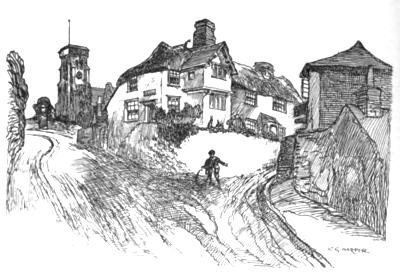
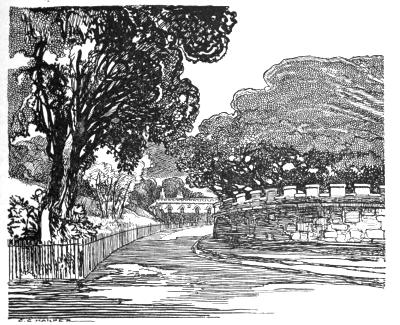
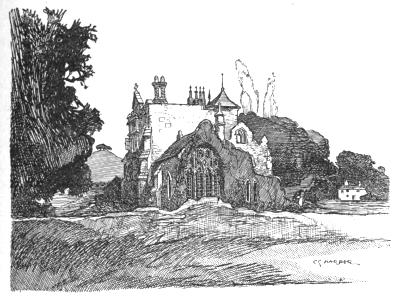
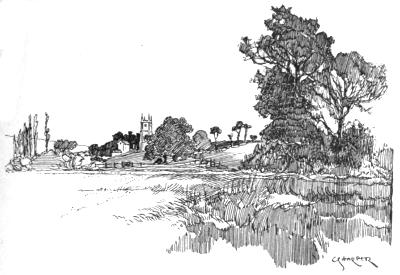
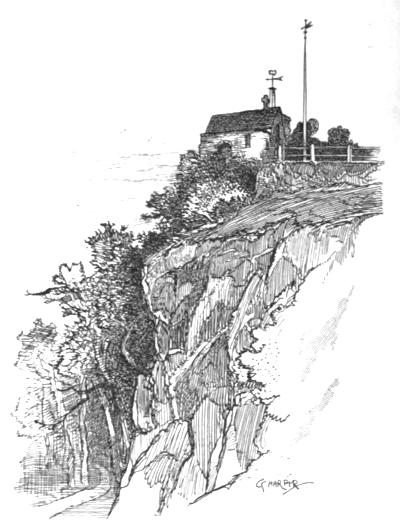
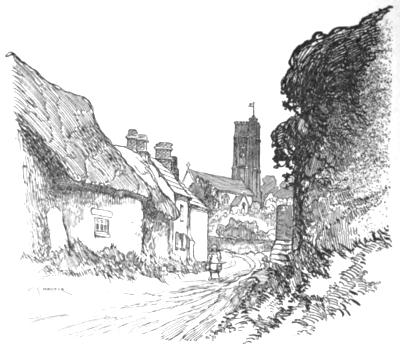
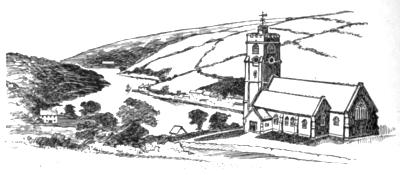
SALCOMBE CHURCH.
“Kingsbridge River” is altogether a misnomer.
It is a five-mile long inlet of the sea, with numerous
subsidiary creeks winding between the hills. The
scenery is rendered comparatively desolate by
the lack of woods, and it is of a peculiar solitude.
Kingsbridge town itself sits at the head of the
creek, and is a thriving little place. The villages
of Charleton, Frogmore, and South Pool stand on
their respective creeks.
Salcombe is not a little proud of its literary
association with Froude, who entertained Tennyson
at his residence, Woodcot, toward the close of
their respective careers, and it is a cherished article
of faith that the Poet Laureate here received the
inspiration of his “Crossing the Bar.” Froude
himself sleeps in the cemetery on the hill-top,
where his epitaph may be read with interest:—
In Memory of
James Anthony Froude, M.A.,
Regius Professor of
Modern History, Oxford.
Son of the Rev. R. H. Froude,
late Archdeacon of Totnes.
Born at Dartington
April 23, 1818,
Died at Salcombe,
October 20, 1894.
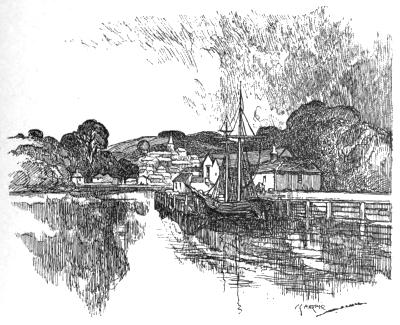
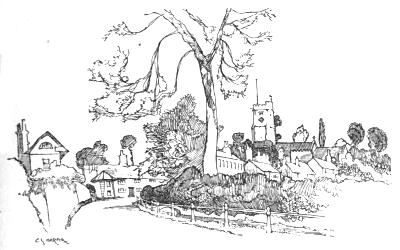
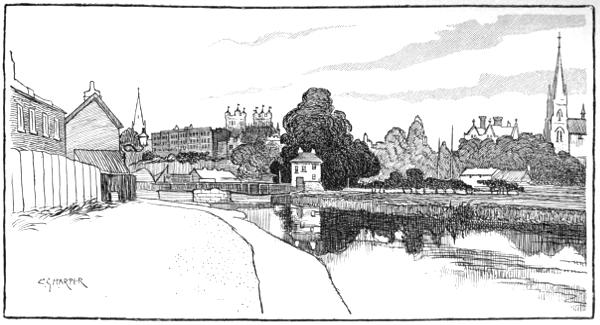
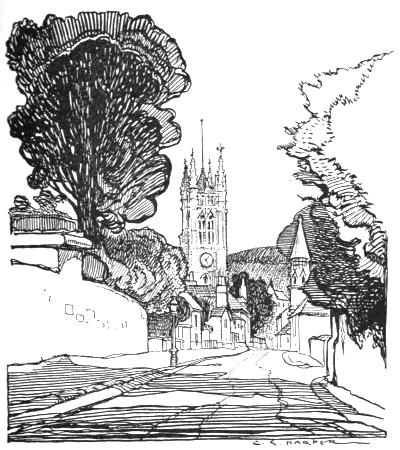
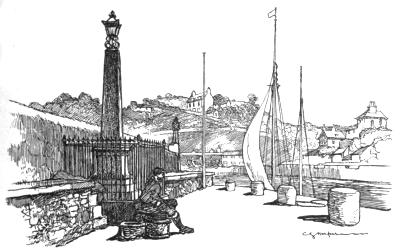
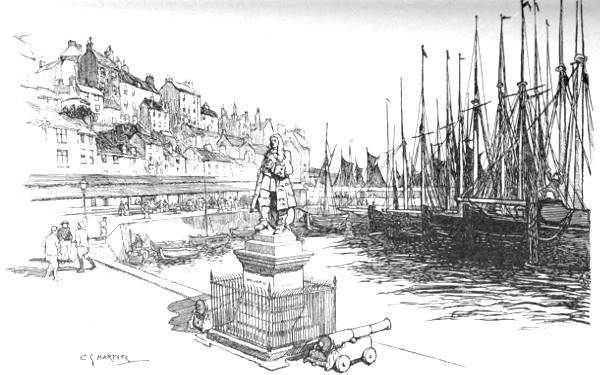
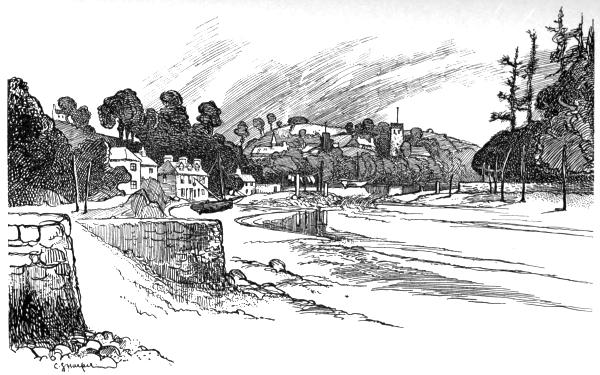
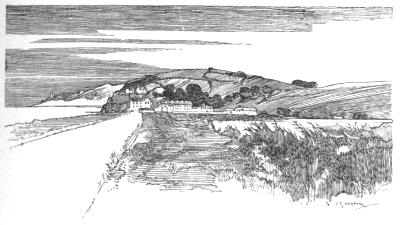
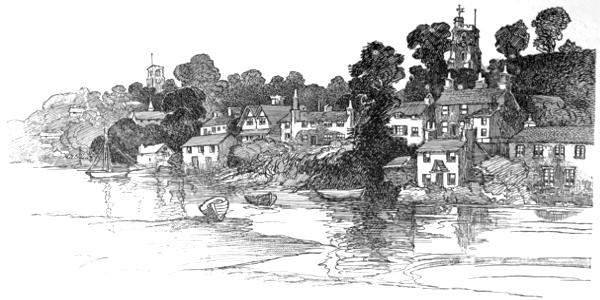
KINGSBRIDGE.
He drew a picture of Carlyle which hero-worshippers
have bitterly resented, but a picture
that shows the man, alike in his strength and his
weakness; that makes him just human, instead
of the infallible philosopher, superior to all littlenesses
and prejudices, of a growing tradition.
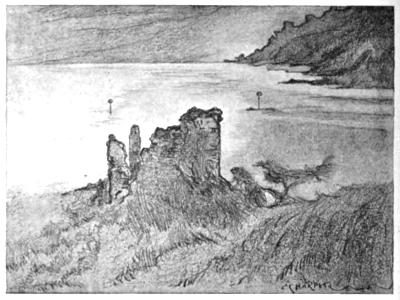
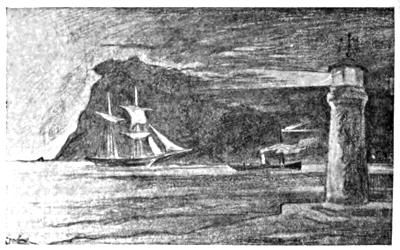
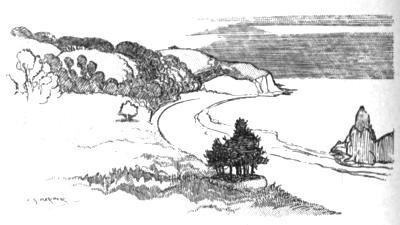
SALCOMBE CASTLE.
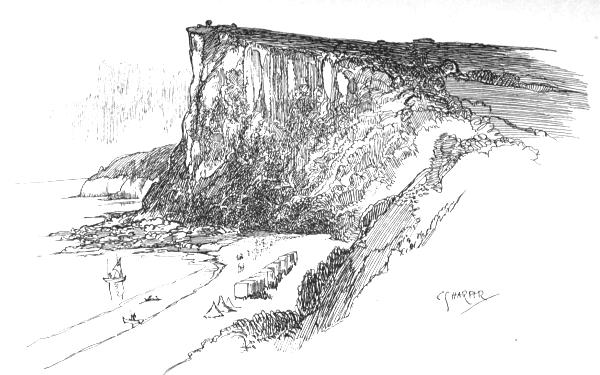
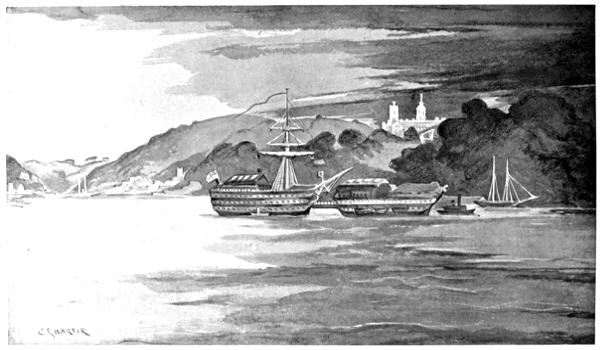
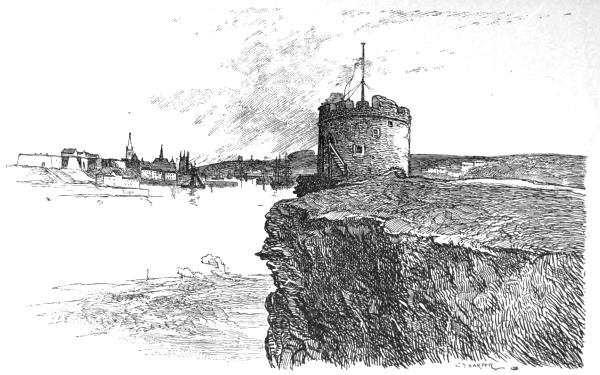
Salcombe Castle, or Fort Charles, situated on
a rocky islet off South Sands, was a ruinous
mediæval tower in the time of the Cromwellian
wars, but the perfervid loyalty of the West repaired
it and fortified the place with cannon, throwing in
an armed garrison, fully provisioned, at a cost,
as the surviving accounts state, of £3,196 14s. 6d.
During a four months’ bombardment in 1646,
in which the gunners were such extravagantly
bad marksmen that only one person on each side
was killed, Sir Edmund Fortescue held the fort,
and then, only through some doubts of the loyalty
of members of his garrison, capitulated and
marched out, with guns firing, drums beating,
and colours flying, to the seclusion of his own
mansion at Fallapit. The bravado of this capitulation
was more fatal than the siege, for three
persons were accidentally shot.
If the landowners of Salcombe had their way
it is little of the coast scenery hereabouts the
public would see. Of late years the grassy summit
of the cliffs looking upon Salcombe Castle has
been enclosed and planted, and now, passing the
inlet of South Sands, and coming to Splatt’s Cove,
a notice-board beside the path announces that
“by the order of Ford’s Trustees” there is no
right of way. My own advice to those who are
confronted with notices such as this is, enter if
you wish; and in this instance the Salcombe
Urban District Council have given the lie direct
to the impudent contention of the Trustees, and
have erected a prominent notice of their own,
side by side with the other, stating that, notwithstanding
this warning, a right of way does exist.
Changeful has been the policy here. A former
Earl of Devon, resident at the Moult, caused the
Courtenay Walk to be cut midway up the once-inaccessible
face of the cliffs round to Bolt Head,
or, to speak by the card, “The Bolt.” And now,
passing the mutually destructive notices above
Splatt’s Cove, and under a recently built hotel,
we find the entrance to that walk flanked with
offensively worded injunctions to keep to the
path; by which it is abundantly evident that the
present owner would dearly like to close it altogether.
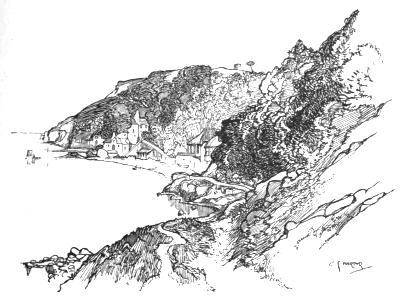
Here stands, or clings, a modern villa,
on the edge of the sloping cliff, with a little terrace
down below, like a tiny gun-platform.
The Walk begins by burrowing through a
stunted wood, that looks romantic enough to be
pixie-haunted. And, by the same token, the
foxglove grows abundantly in its shade, so the
pixies must needs foregather here; for the foxglove
provides gloves for the little “folk” and has
nothing at all to do with foxes. They are the
splendidest gloves you ever saw, much superior
to the best gants de suéde that ever were, and
neither Fownes nor Dent and Allcroft have ever
made anything like them. That is quite certain.
And if you come here at midnight and turn round
three times and say “willie-willie wiskins,” you
will see—what you will see. I can say no more
than that, because whoso gives away the secrets
of the little folk is lost.
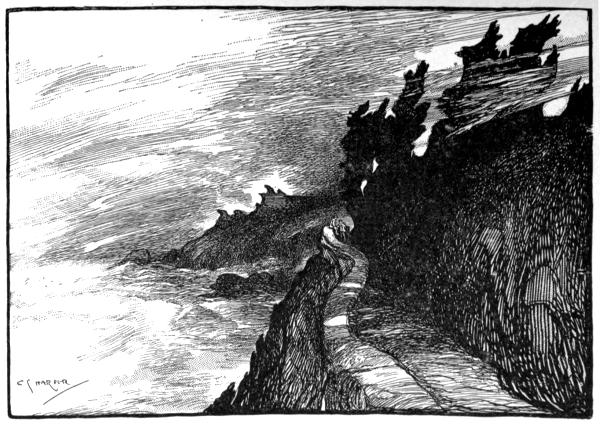
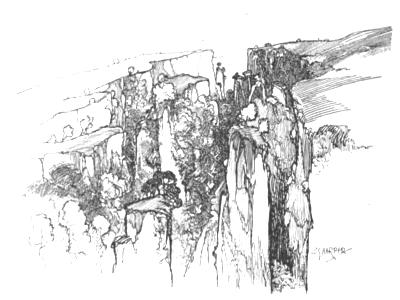
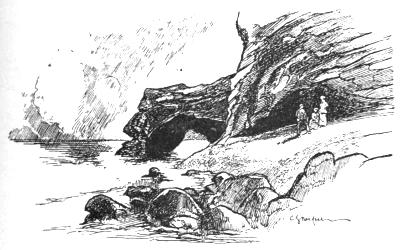
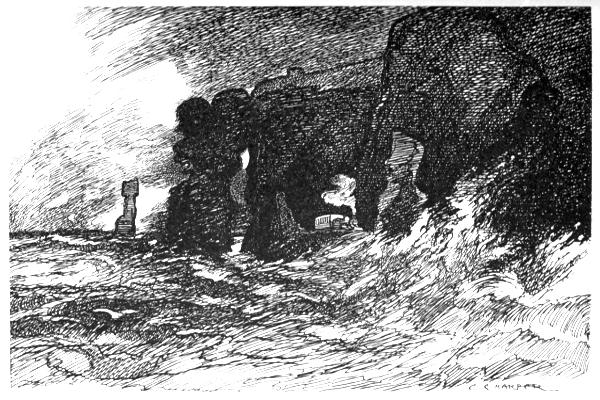
THE PINNACLES, BOLT HEAD.
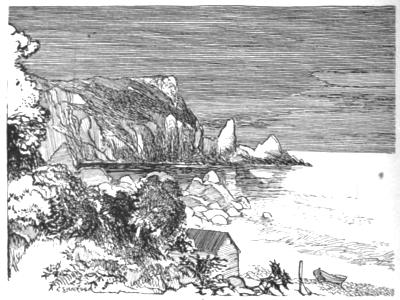
Beyond the wood you come to very weird
scenery indeed, along the boulderesque footpath,
with bracken and hoar rock intermingled, and
the blue sea below on the left and great grey spires
of cliff overhead on the right, splashed with lichens
red, golden, tawny, pallid green—all colours.
Then rise in front of you the Pinnacles. You see
at once, when you are come in sight of them, that
you are come by quick change from the territory
of the little folk into some Arthuresque land of
the giants, for the great fantastic pinnacles are in
twisted and contorted forms that suggest having
originally been fashioned when warm and plastic
by some Titan hand.
The slaty stratification of the surrounding
rocks lends itself to the most outlandish horrent
shapes of monstrous jibing faces, anvils, halberds,
battle axes, and the likeness of a perfect armoury
of magic weapons of offence, taking their most
uncanny guise in the ragged mists that almost
always enwrap and cling about The Bolt.
It seems that, contrary to general belief, this
headland, of which these Pinnacles are the culminating
point, is not the real Bolt Head. It is
the further point, across the intervening valley,
where the explorer finds the coastguard path
die away, and himself perilously walking on the
treacherous grassy slopes, where a slip will conduct
at express speed on to some particularly sharp
and cruel-looking rocks. It is like an inferno
down there, in the sense that the descent is fatally
easy, and to retrace one’s steps—or rather, flight—impossible.
It is here that, warily shirking the
point, you wish you hadn’t come; that you were
a goat or a chamois, or, at the very least of it, that
you had spikes in the soles of your shoes.
But they are lovely, as well as awe-inspiring,
glimpses down there, sheer into the sea, where the
cliff-walls are as black as coal and the sea now a
dark, now a light green, here and there ringing
a half-submerged rock with creamy foam. Hollow
sound the surges in those cavernous depths, and
reverberant the cries of the seagulls. Such is the
extremity of the real Bolt, out yonder.
The descent from the Pinnacles leads down
into a solitary valley, with towering fantastic
rocks on the one side and the sea on the other. A
deserted cottage standing near the sea emphasises
the loneliness. The cottage has a story, for it
was built to house the submarine cable from Brest,
landed here in May 1870. Here, thank goodness,
you plunge out of the over-civilisation of to-day,
and, leaving hotels behind, come for a space into
something of the rural England of sixty years
since. Here, where nature is so beautiful and
the littlenesses of towns are left behind, one can
understand something of that latter-day portent,
Anarchism, which, in this close touch with mother
earth, reveals itself as a divine discontent with
lovely things exploited and degraded, rather than
the bogey of statesmen and sociologists.
Stair Hole Bottom they call this valley. It is
carpeted with bracken; a little peaty stream
comes oozing along in boggy places, or purling,
as from the lip of a jug, over scattered boulders,
overhung by the nodding foxglove. It is, in a
word, Cornish, rather than Devonian, and, as
commonly is the case in Cornwall, you have to
pick your way among the chancy places, for lack
of road or path.
Looking back, the Pinnacles show fitfully
through the mist, the hole through them, like an
All-seeing Eye, glowering darkly as the mists close
in, or lightening, with a tinge of beneficence, in
the sun.
On those moist, hot, steamy Devonshire days,
when the mist, condensed off the sea, rolls like
smoke over the rocky ledges, you look over the
cliffs’ edge into a pillowy whiteness, which, for
all you may discover, is the next field, or a sheer
drop of three hundred feet on to a rocky beach.
But through the smother, like a warning cry, comes
dully the turmoil of the waves, the husky voice
of the sea, sounding to the unromantic Londoner
like the roaring of the traffic in his native streets,
as heard from one of the metropolitan parks.
The coastguard path is rugged and perilous,
and the whitened stones of it are apt to fail one
at critical moments, like moral resolutions in the
pathway of life. Sometimes they are not there
at all, and in some spots they are so overgrown
with bracken that you barge into them unawares,
with painful results.
Up at Clewer signal station, where the coastguard,
outside his tiny whitewashed hut, does
incomprehensible things with strings of flags,
the wild growths of these downs run riot, kept
in subjection only by the winds, which have
imposed the oddest shapes upon them. The
gorse-bushes have been buffeted by them into
closely compacted hummocky figures, the heather
is disposed in hemispherical groups, the brambles,
turn in upon themselves in a way the free-born
hedgerow bramble would despise, and only the
bracken, which is a summer growth and, like the
grass of the field, here to-day and gone to-morrow,
is independent and upstanding. The beautiful
bracken! Come here in July, and you will think
all the strawberries in the world are on t’other
side of the next shoulder of hill; for in that month
the bracken has a perfume like that of the ripest
and choicest and sweetest strawberries ever grown.
There are rabbits on these uplands, as with a
painful wrench of the ankle you are not unlikely
to discover, when your foot plunges unexpectedly
into one of their burrows. There are moles, too,
evidently, and slow-worms wriggle plentifully
across the path.
And thus, now up, now down and around, with
the perspiration streaming from you in the still,
close hollows, and drying off on the breezy heights,
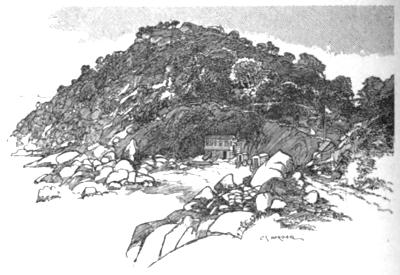
you come by astonishing rocks down to a little
sandy rock-girt cove, solitary, without even a
Man Friday’s footprints on the yellow sand,
through which a little stream trickles. But
though no human footprint may be seen, the
sands are patterned by the thousand with the
broad-arrow prints of the gulls’ feet, as though the
War Office had descended upon the place and
thus prodigally marked it for its ownest own.
One could and two could even better—go
a-Robinson-Crusoeing here very comfortably for
awhile in the summer, with the aid of a tent,
despite the unlovely name of the place, which is
Sewer Mill Cove.
What’s in a name? Not much here, at any
rate, for it has really nothing to do with drains.
There are several “sewer” farms in the neighbourhood,
east and west, and the district in general is
called “The Sewers”: the name deriving from
the Anglo-Saxon description of the folk living
here, the “Sæware,” the sea-folk, as distinguished
from those who, living a little more inland, obtained
their livelihood from the land. The process
by which the place took its name is not an unusual
one; and Canterbury—the “burgh of the Kent-ware,”
or Kentish folk—may be taken as a
prominent and familiar instance.
Sewer Mill Cove was the scene in 1885 of one
of the many wrecks that have made this coast
dreaded by mariners, for then the Hallowe’en
teaship was cast away here, fortunately without
loss of life.
The downs here, at the summit of the cliffs
between this and Hope, are those of Bolberry,
whence comes, some consider, the name of Bolt
Head. Heather clothes them and the cliff-tops
with a more than imperial magnificence. Imperial
mantles are poor things and tawdry beside such
purple splendour. If Solomon in all his glory
were not arrayed like the lilies of the field, certainly
no emperor has ever attained to the
gorgeousness of the heather.
It is an untameable wilderness on these heights,
for the land is of such negative quality that it
is worth no farmer’s while to touch it, and moreover,
great fissures and holes, like those of earthquakes,
partly masked by undergrowth, exist
here. The country people speak of them as
Ralph’s Pits, Vincent Pits, Rotten Pits. Ralph,
they tell you, was a smuggler, and that is the
closest touch you can make to him. Ralph is as
insubstantial as the mists that come streaking
over the downs.
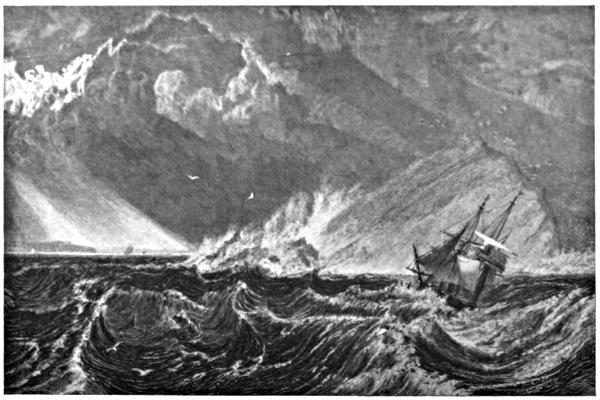
Now we come to Bolt Tail and the signal-station,
overlooking Ramilies Cove, where the
Ramilies man-o’-war was wrecked in 1760. Seven
hundred and eight of the seven hundred and thirty
four men on board perished. Down below lies Hope
village, in its tiny cove, where an island can be seen
in the making; a great mass of rock dividing the
cove in two being joined to the mainland only by
strips of sand and heaps of tumbled boulders. It
was here that one of the many ships of the Spanish
Armada was wrecked: so many ships and so
many wrecks that the pen revolts from writing
about them, even as the London apprentices
revolted, in the centuries gone by, against salmon
every day. These Spanish Armada ships are the
“salmon every day,” or the toujours perdrix, if
you like to put it in terms of a surfeit of game, of
the historian of the coasts. Scarce a cove but
they dashed their stout timbers to pieces upon
its rocks, and those beaches are few that have no
legends of silver ingots, pieces of eight, moidores,
doubloons, dollars, and all the glittering galaxy
of treasure-trove deriving from such a romantic
source; but devil a dollar has rewarded the quest
of this pilgrim, errant with the best will to it.
Then, if you have faith, you may see in every
dark-featured Devonian a descendant from a
captured or shipwrecked Don. There are the
names of Miggs and Jenny (among others), which
may, or again may not, derive from Miguel and
Jeronimo, and Cantrell has been recognised as
a debased form of Alcantara, but ’tis a far cry.
Here, at any rate, we know the name and rating
of the Spanish vessel. She was the hospital-ship
St. Peter the Great, and was on her way home,
after having, in flight from Drake and his fellows,
circumnavigated Great Britain. One hundred and
fifty of the one hundred and ninety aboard of her
were saved; and possibly the Delmers, the Jaggers,
and the Murrens to be met with are descendants
of that crew.
Hope is just bidding “good day t’ye” to the
old immemorial times, when it was just a hamlet
of crabbers and lobster-catchers and the like,
for villas and bungalows are putting the old
cottages of cob and rock to shame, and they are
becoming, although still a small community, as
up-to-date as you please, or you don’t please.
No longer, I think, is the once-famous “White
Ale” of South Devon made or sold at Hope,
or even at Kingsbridge; once, in some sort, the
metropolis of its brewing. But we need not
regret the disappearance of this heady nastiness,
which was not in the least like ale, and more nearly
resembled that extremely potent and convivial
compound, “egg-flip,” than anything else. But
“White Ale” had a great and an ancient reputation,
and was described a couple of centuries
ago as “the nappiest ale that can be drunk.”
It was held to be the “ancient and peculiar drink
of the Britons and Englishmen, and the wholesomest,
whereby many in elder times lived a
hundred years.”
If we can frame to believe that, then the
disappearance of it is something like a national
disaster; but it may well be supposed that although
the numbers of police-court cases would
sensibly increase with the re-introduction of
“White Ale,” those of centenarians would not.
The composition of this tipple, which is really
grey, seems to be milk, gin, and spice, and, bottled,
it blows off in hot weather like a high-pressure
boiler.