JANUARIE · AEGLOGA PRIMA — FEBRUARIE · AEGLOGA SECUNDA — MARCH · AEGLOGA TERTIA — APRIL · AEGLOGA QUARTA — MAY · AEGLOGA QUINTA — JUNE · AEGLOGA SEXTA — JULY · AEGLOGA SEPTIMA — AUGUST · AEGLOGA OCTAVA — SEPTEMBER · AEGLOGA NONA — OCTOBER · AEGLOGA DECIMA — NOVEMBER · AEGLOGA UNDECIMA — DECEMBER · AEGLOGA DUODECIMA
JANUARIE. ÆGLOGA PRIMA. ARGUMENT.
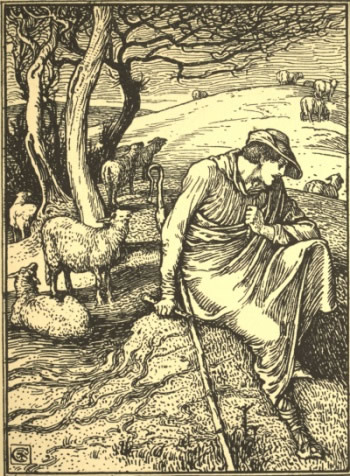
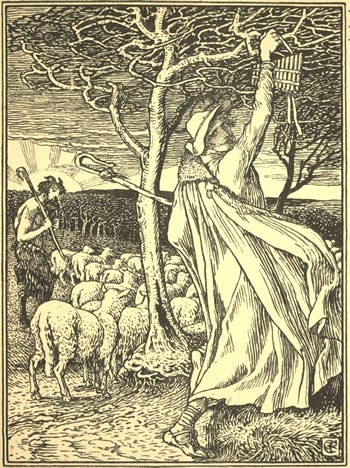
In this first Æglogue Colin Clout, a shepheard's boy, complaineth himself of his unfortunate love, being but newly (as seemeth)
enamoured of a country lass called Rosalind: with which strong affection being very sore travailed, he compareth his careful case to the sad
season of the year, to the frosty ground, to the frozen trees, and to his own winter-beaten flock. And lastly, finding himself robbed of all
former pleasance and delight, he breaketh his pipe in pieces, and casteth himself to the ground.
FEBRUARIE. ÆGLOGA SECUNDA. ARGUMENT.
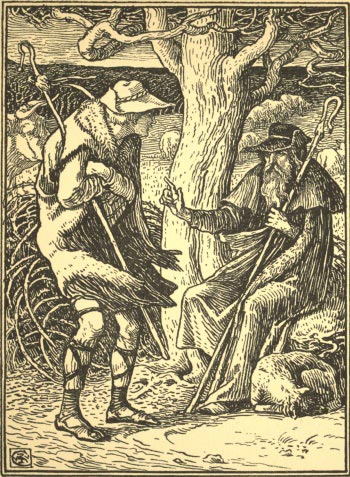
This Æglogue is rather moral and general than bent to any secret or particular purpose. It specially containeth
a discourse of old age, in the person of Thenot, an old shepheard, who, for his crookedness and unlustiness, is scorned of Cuddie,
an unhappy herdman's boy. The matter very well accordeth with the season of the moneth, the year now drooping, and as it were drawing
to his last age. For as in this time of year, so then in our bodies, there is a dry and withering cold, which congealeth the curdled
blood, and freezeth the weather-beaten flesh, with storms of Fortune and hoar-frosts of Care. To which purpose the old man telleth a
tale of the Oak and the Brier, so lively, and so feelingly, as, if the thing were set forth in some picture before our eyes, more plainly
could not appear.
MARCH. ÆGLOGA TERTIA. ARGUMENT.
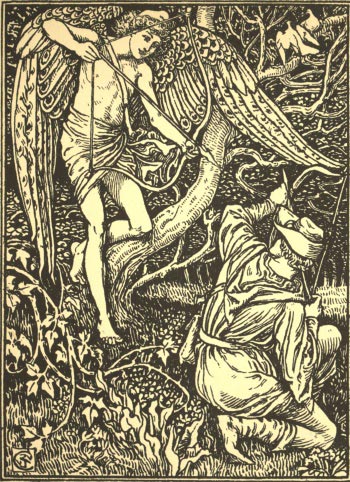
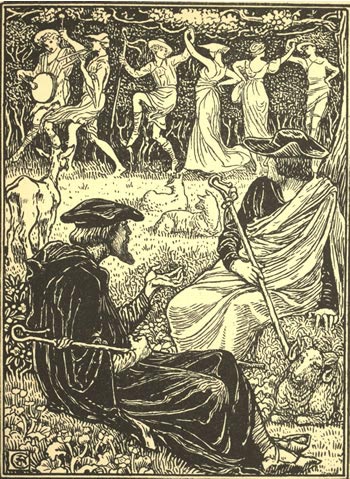
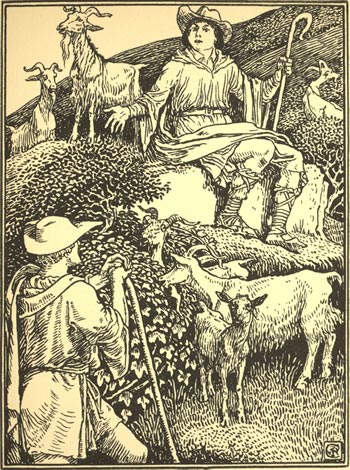
In this Æglogue two Shepheards' Boys, taking occasion of the season, begin to make purpose of love, and other pleasance
which to springtime is most agreeable. The special meaning hereof is, to give certain marks and tokens, to know Cupid the poets' god of
Love. But more particularly, I think, in the person of Thomalin, is meant some secret friend, who scorned Love and his knights so long,
till at length himself was entangled, and unwares wounded with the dart of some beautiful regard, which is Cupid's arrow.
APRIL. ÆGLOGA QUARTA. ARGUMENT.
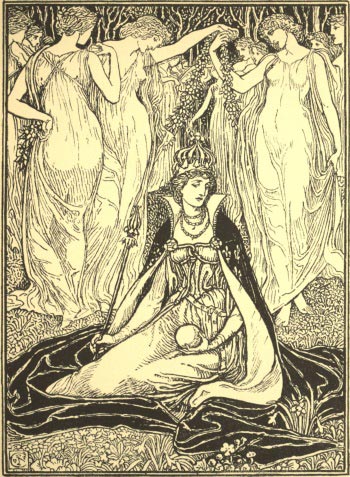
This Æglogue is purposely intended to the honour and praise of our most gracious sovereign, Queen Elizabeth.
The speakers hereof be Hobbinol and Thenot, two shepheards: the which Hobbinol, being beforementioned greatly to have loved Colin,
is here set forth more largely, complaining him of that boy's great misadventure in love; whereby his mind was alienated and withdrawn
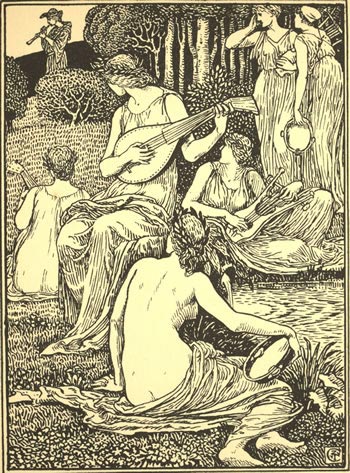
not only from him, who most loved him, but also from all former delights and studies, as well in pleasant piping, as cunning rhyming and
singing, and other his laudable exercises. Whereby he taketh occasion, for proof of his more excellency and skill in poetry, to record a
song, which the said Colin sometime made in honour of her Majesty, whom abruptly he termeth Elisa.
MAY. ÆGLOGA QUINTA. ARGUMENT.
In this fifth Æglogue, under the person of two shepheards, Piers and
Palinode, be represented two forms of Pastors or Ministers, or the
Protestant and the Catholic; whose chief talk standeth in reasoning,
whether the life of the one must be like the other; with whom having
shewed, that it is dangerous to maintain any fellowship, or give too
much credit to their colourable and feigned good-will, he telleth him a
tale of the Fox, that, by such a counterpoint of craftiness, deceived
and devoured the credulous Kid.
JUNE. ÆGLOGA SEXTA. ARGUMENT.
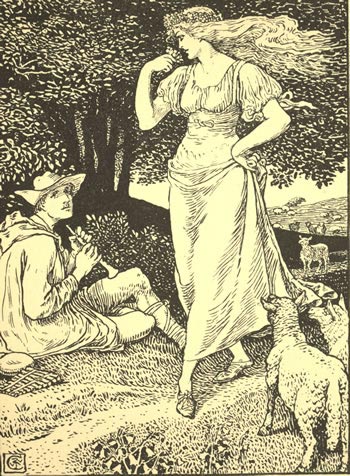
This Æglogue is wholly vowed to the complaining of Colin's ill success
in his love. For being (as is aforesaid) enamoured of a country lass
Rosalind, and having (as seemeth) found place in her heart, he lamenteth
to his dear friend Hobbinol, that he is now forsaken unfaithfully, and
in his stead Menalcas, another shepheard, received disloyally. And this
is the whole Argument of this Æglogue.
JULY. ÆGLOGA SEPTIMA. ARGUMENT.
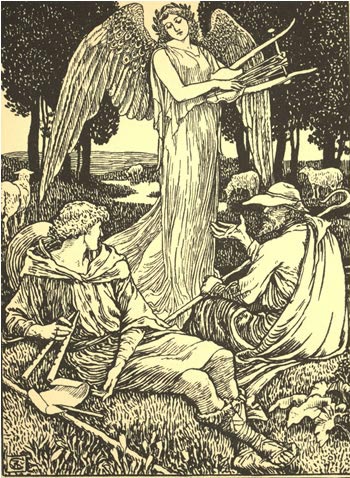
This Æglogue is made in the honour and commendation of good shepheards,
and to the shame and dispraise of proud and ambitious pastors: such as
Morrell is here imagined to be.
AUGUST. ÆGLOGA OCTAVA. ARGUMENT.
In this Æglogue is set forth a delectable controversy, made in imitation
of that in Theocritus: whereto also Virgil fashioned his third and
seventh Æglogue. They chose for umpire of their strife, Cuddy, a
neat-herd's boy; who, having ended their cause, reciteth also himself a
proper song, whereof Colin he saith was author.
SEPTEMBER. ÆGLOGA NONA. ARGUMENT.
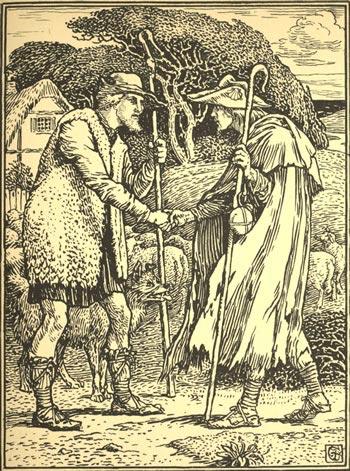
Herein Diggon Davie is devised to be a shepheard that, in hope of more
gain, drove his sheep into a far country. The abuses whereof, and loose
living of Popish prelates, by occasion of Hobbinol's demand, he
discourseth at large.
OCTOBER. ÆGLOGA DECIMA. ARGUMENT.
In Cuddie is set out the perfect pattern of a Poet, which, finding no
maintenance of his state and studies, complaineth of the contempt of
Poetry, and the causes thereof: specially having been in all ages, and
even amongst the most barbarous, always of singular account and honour,
and being indeed so worthy and commendable an art; or rather no art, but
a divine gift and heavenly instinct not to be gotten by labour and
learning, but adorned with both; and poured into the wit by a certain
Enthousiasmos and celestial inspiration, as the Author hereof elsewhere
at large discourseth in his book called The English Poet, which book
being lately come to my hands, I mind also by God's grace, upon further
advisement, to publish.
NOVEMBER. ÆGLOGA UNDECIMA. ARGUMENT.
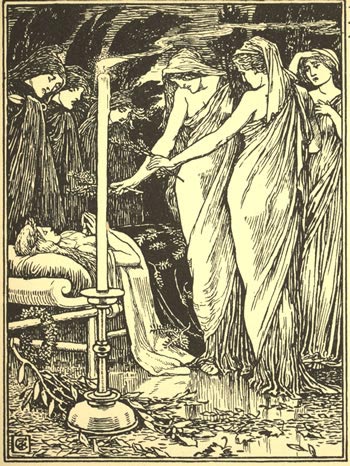
In this xi. Æglogue he bewaileth the death of some maiden of great
blood, whom he calleth Dido. The personage is secret, and to me
altogether unknown, albeit of himself I often required the same. This
Æglogue is made in imitation of Marot his song, which he made upon the
death of Loyes the French Queen; but far passing his reach, and in mine
opinion all other the Æglogues of this Book.
DECEMBER. ÆGLOGA DUODECIMA
21. ARGUMENT.
This Æglogue (even as the first began) is ended with a complaint of
Colin to god Pan; wherein, as weary of his former ways, he proportioned
his life to the four seasons of the year; comparing his youth to the
spring time, when he was fresh and free from love's folly. His manhood
to the summer, which, he saith, was consumed with great heat and
excessive drouth, caused through a comet or blazing star, by which he
meaneth love; which passion is commonly compared to such flames and
immoderate heat. His ripest years he resembleth to an unseasonable
harvest, wherein the fruits fall ere they be ripe. His latter age to
winter's chill and frosty season, now drawing near to his last end.