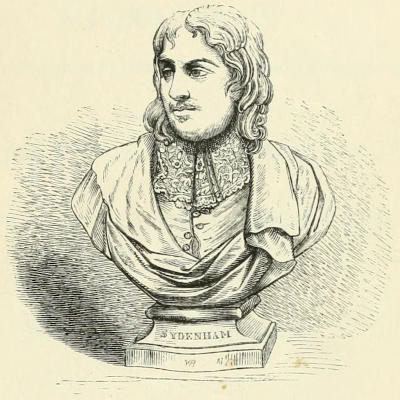
PAULUS ÆGINETA. — BOOK FOURTH. — SECT. I.—ON ELEPHANTIASIS. — SECT. II.—ON LEPROSY AND PSORA. — SECT. III.—ON LICHEN. — SECT. IV.—ON PRURITUS, OR PRURIGO. — SECT. V.—ON LEUCE. — SECT. VI.—ON WHITE AND BLACK ALPHI. — SECT. VII.—ON STIGMATA, FROM THE WORKS OF ARCHIGENES. — SECT. VIII.—ON EXANTHEMATA. — SECT. IX.—ON EPINYCTIDES. — SECT. X.—ON PHLYCTÆNÆ OR BULLÆ. — SECT. XI.—ON BURNS. — SECT. XII.—FOR THOSE BEATEN WITH SCOURGES. — SECT. XIII.—TO MAKE HAIRS GROW ON A PART THAT HAS BEEN BURNT. — SECT. XIV.—FOR EXCORIATIONS. — SECT. XV.—FOR MYRMECIA AND ACROCHORDON. — SECT. XVI.—ON GANGLION. — SECT. XVII.—ON PHLEGMON. — SECT. XVIII.—ON EXTERNAL ABSCESSES. — SECT. XIX.—ON GANGRENE AND SPHACELUS. — SECT. XX.—ON HERPES. — SECT. XXI.—FOR ERYSIPELAS. — SECT. XXII.—ON PHYMA, BUBO, AND PHYGETHLON. — SECT. XXIII.—ON FURUNCULUS. — SECT. XXIV.—ON TERMINTHUS. — SECT. XXV.—ON CARBUNCLE OR ANTHRAX. — SECT. XXVI.—ON CANCERS. — SECT. XXVII.—ON ŒDEMA. — SECT. XXVIII.—ON EMPHYSEMA. — SECT. XXIX.—FOR SPRAINS AND CONTUSIONS. — SECT. XXX.—ON CONTUSIONS OF THE FLESH AND ECCHYMOSIS. — SECT. XXXI.—ON RUPTURE AND TEARING OF THE FLESH. — SECT. XXXII.—ON SCIRRHUS. — SECT. XXXIII.—ON STRUMA OR SCROFULA. — SECT. XXXIV.—ON STEATOMA, ATHEROMA, AND MELICERIS. — SECT. XXXV.—OF FAVI. — SECT. XXXVI.—ON THE SIMPLE ULCER. — SECT. XXXVII.—ON AGGLUTINANTS. — SECT. XXXVIII.—ON PAINFUL AND INFLAMMATORY SORES. — SECT. XXXIX.—ON UNCONCOCTED ULCERS, AND SUCH AS HAVE NOT SUPPURATED. — SECT. XL.—ON HOLLOW ULCERS. — SECT. XLI.—MEDICINES FOR CLEANSING FOUL ULCERS. — SECT. XLII.—FOR WORMS IN ULCERS. — SECT. XLIII.—ON FUNGOUS ULCERS. — SECT. XLIV.—ON SPREADING ULCERS, PUTRID ULCERS, AND PHAGEDÆNA. — SECT. XLV.—ON ULCERS REQUIRING CICATRIZATION. — SECT. XLVI.—ON THE MALIGNANT ULCERS CALLED CHIRONIAN AND TELEPHIAN. — SECT. XLVII.—FOR BLACK CICATRICES. — SECT. XLVIII.—ON SINUOUS ULCERS. — SECT. XLIX.—ON FISTULA. — SECT. L.—FOR SORES WHICH BREAK OUT AGAIN. — SECT. LI.—ON ULCERS IN THE JOINTS. — SECT. LII.—THOSE THINGS WHICH EXTRACT SHAFTS, JAVELINS, THORNS, AND THE LIKE. — SECT. LIII.—ON HEMORRHAGE FROM VEINS AND ARTERIES. — SECT. LIV.—ON WOUNDS OF THE NERVES. — SECT. LV.—ON ANCYLOSIS. — SECT. LVI.—ON RELAXATION OF THE JOINTS. — SECT. LVII.—ON WORMS. — SECT. LVIII.—ON ASCARIDES. — SECT. LIX.—ON DRACUNCULUS, OR THE GUINEA-WORM.
Well, in my opinion, did Aretæus the Cappadocian say, that
the power of remedies ought to be greater than those of diseases;
and that for this reason elephantiasis is incurable, because
it is impossible to find a medicine more powerful than it.
For if cancer, which is, as it were, an elephantiasis in a particular
part, is ranked among the incurable diseases by Hippocrates
himself, how much more is not elephantiasis incurable, which
is, as it were, a cancer of the whole body? But the black
bile from which this affection is formed, having a double origin,
(for it arises either from the melancholic and feculent part, and,
as it were, dregs of the blood, or from yellow bile, both being
overheated); the first variety of the black bile produces the
reddish elephantiasis, which is the more mild, or to speak more
truly, less malignant variety; the others which are more malignant,
being accompanied with ulceration of the whole body
and falling off of the extremities, are produced by the latter
variety, or that from yellow bile overheated. Wherefore, those
who are already overpowered by the disease, must be abandoned;
but when the affection is in its commencement, so as
that none of the extremities has fallen off, nor the surface of
the body become ulcerated, nor the hard swellings appeared,
and the face merely appears foul, but not altogether unseemly,
we must attempt the cure. For not a few, by merely burning
the head, have prevented many who were beginning to be
affected from being overpowered by this disease. Wherefore,
at the commencement of the disorder, we must have recourse
to venesection repeatedly, more especially if in spring, when
the complaint is most apt to occur, and has its exacerbations.
After an interval of a few days, say nine or ten, we may purge
them with the pottage of colocynth, not once only but frequently,
proportioning the dose of the medicine to its strength.
Purging with hiera also suits well with them. After the interval
of about ten days again, we must give them the vinegar of
divided milk, not in less quantity than three heminæ, nor in
greater than five, and on the following days they are to be supported
with milk that is not divided into parts, or new-drawn
milk; by which means, if the affection yield, the same food
may be continued; but if it remains in the same state, after
eating acrid things, they must be made to vomit with radishes
and frumentaceous articles of food. After these things, purging
with white hellebore is proper, twice if possible when in spring,
but once only if in autumn. Those, however, who are thoroughly
overpowered by the complaint, must be neither bled
nor put on a course of hellebore. For neither can a translation
of the disease from the superficies to the inner parts, nor
a diminution of the offending matter, be any longer accomplished
by these means; but the matter is to be determined to
the stomach and bowels, and alteratives (metasyncritica), used
to dry and constrict the skin. Dry-cupping is also to be applied
over the mouth of the stomach and to the hypochondria, and
dropaces used to the same places; but after a short interval,
the same process is to be repeated, beginning by purging with
hiera, and omitting the venesection, which would prove rather
deleterious than beneficial. This process is to be repeated three
or four times in a year, more especially in the seasons of spring
and autumn. The draughts before meals, most suitable for
them, are a cyathus of vinegar, with a cyathus of cedria, and
two cyathi of the juice of unripe cabbage—they are given
mixed together, morning and evening; or, the dried leaves of
the herb ironwort, to the amount of a drachm in one cyathus
of wine; or, a drachm of hartshorn and a cyathus of the vinegar
of squills, is given after the morning walk every day; and
other things are to be administered at the same season, such
as drs. v of washed squills in honied water, or in honey, as a
linctus; or Cyrenaic juice, to the amount of a bitter vetch,
mixed with honey and butter; or, dr. ss of the shavings of
hartshorn, with two cyathi of wine; or, drs. iij of Æthiopian
cumin, with honey, as a linctus. But a more suitable remedy
is a drachm of the theriac trochisk, triturated in a cyathus of
fine wine, and drunk; and a drachm of the trochisk of squills
may in like manner be taken in a draught. And they praise
the juice of calamint as a most effectual remedy when drunk,
and say that the dose to commence with is three cyathi, which
may be increased to six. But of all others the theriac of vipers
is the most effectual remedy, both in a draught and when rubbed
in externally. But where plenty of these animals can be procured,
nothing answers so well as eating the flesh of the vipers
boiled in white broth, with much water, salts, leeks, and dill,
to the separation of their back-bones, their head and tail being
first cut off to the extent of four fingers’ breadth, and their
entrails and skin taken away. And theriac salts are in the
same celebrity when taken with other food. By using them
thus, it happens that the scales, or, as it were, the bark, falls
off from the skin.
The regimen is to be as follows: After sleep, having been
first rubbed, and the bowels evacuated, let the patient have
recourse to gestation and vociferation, then to friction and gymnastic
exercises of all kinds, partly by leaping, but more especially
by using the halcteres and leather bag. Having wiped
off the sweat, let him be rubbed with the grease of a boar, of
a wolf, of a goat, or of some winged animal, or with fresh butter;
and after a short interval let him bathe, having his body
anointed with the juice of fenugreek, of ptisan, or with a little
ammoniac dissolved in vinegar. After the bath, having got
his body wiped, let him anoint with the oil of lentisk, of wild
vine, or of myrtles; and with a little wine, containing alum
and ammoniac, so as to be of the thickness of the sordes of
baths. Having had his body rubbed again with soft rags, let
him rest for half an hour, after which, having drunk water,
let him make himself vomit by putting his fingers or a feather
down his throat. Having vomited, let him drink the wine of
wormwood or of marjoram. The food should be barley bread,
or a cake of dried barley flour, and of potherbs, the beet, the
lettuce, the radish, leeks, and cabbage sweetened in two waters,
and capers. Of sea animals, he may take oysters, pelorides,
urchin, all shell fishes, limpets boiled with beets, and old pickle
in place of medicine. But let him abstain from wine during
the whole continuance of the complaint, and from venery; only
he may take a little thin watery wine at the time of his recovery
from the purging, at which season all acrid substances
must be abstained from, except condiments. Give him ptisan,
eggs and chondrus, milk and honey, with bread, mallows, dock,
skirret, and fishes with tender flesh; and of fowls, those which
contain wholesome juices; and of fruits, the fig, grape, and raisins:
but of sweetmeats, those which are prepared from pine kernels,
toasted almonds, or bastard saffron. He may take food twice
a day, as it is injurious to subsist upon one meal. After taking
care of the internal parts, let him use detergent ointments
(smegmata) in the bath, from the decoction of beet, or of
fenugreek with aphronitrum, soap, or myrobolan, and sometimes
apply depilatories. Purslain triturated with vinegar is detergent
and also the slender houseleek, and the roots of dock boiled in
vinegar, and alum with salts, and red arsenic in equal proportions
with wine and oil of lentisk. Also the composition for
alphos, consisting of alcyonium, nitre, myrtle, sulphur, and the
dried leaves of the wild fig, being rubbed in dry with vinegar;
and that from the burnt shell of the cuttle-fish, and pumice,
nitre, and burnt Cimolian earth, gum, unripe galls in equal
quantity, sprinkled dry, or rubbed in with vinegar. And this
one is admirable: Of the roots of dock a bunch to the amount
of a handful, of natron, dr. xl; of frankincense, dr. xxv; of sulphur,
dr. xxv; it is rubbed in with Egyptian vinegar. And
this one is efficacious: Of arsenic, dr. x; of sulphur vivum, dr. viii;
of costus, dr. xii; of quicklime, dr. iv; of wax, dr. iv; of dried
bay berries, dr. xii; these things are mixed with the juice of
white poplar leaves, or with a thick decoction, and they are
rubbed in, having the consistence of honey.—Another: Two
fasciculi of the roots of dock are to be boiled in vinegar, pounded
in a mortar and triturated, then of alcyonium, lb. j; of aphronitrum,
oz. viij; of sulphur vivum, lb. j; of the burnt shells of
cockles, oz. iv; of chamæleon with its roots, oz. iv; these things
are pounded together until they are of the consistence of the
sordes of the baths, and are then rubbed in often in the sun,
if summer, but if winter, in the bath, until it occasions sweating.
And the dry smegma of Æsculapius would agree excellently
with these cases, and all the smegmata about to be described,
even unto those for alphos, and also those now mentioned, are
applicable for those complaints. And the tumid excrescences,
whether inflammatory or ulcerous, are to be rubbed with Indian
buckthorn: or horned poppy, or aloe, or the Andronian trochisk,
or that of Polyides; and let cataplasms be applied of chondrus
with the juice of knot-grass or plantain; or of pellitory of the
wall, triturated; and the leaves of the green Melisian herb,
when pounded with axunge and applied, are wonderfully efficacious,
for they redden the parts, but the redness is easily repressed
by the application of bread; or of the cerate made from
almond oil. By this means their natural colour is restored.
When the parts are ulcerated, plasters are suitable: that from
diphryges, and the apple one with wine, that called coracium,
that made from oxymel, the Andronian trochisk, pompholyx and
calamine. It is a symptom that the whole disease is becoming
more moderate when the first ulcers are cicatrized. For the
dyspnœa of persons labouring under elephantiasis give a draught
of five or six slaters in three cyathi of honied water. And
some of the general remedies described for dyspnœa will be applicable
for them. Of the natural baths we must select, as
being most particularly useful, the aluminous and chalybeate,
and if possible, such as are cold. It is also particularly serviceable
to drink them. And the use of the sand of the sea-shore
has the same effect, and so have all the sudorifics. But
since this affection is one of those which are easily communicable,
no less so than the plague, they are to be removed as far
as possible from cities, and lodged in inland and cold situations,
where there are few inhabitants, if this can be accomplished;
for so they may descend from thence to surrounding places.
This is proper partly on their own account and also on account
of those whom they might come in contact with. For they
themselves will thus enjoy the use of a more commodious air,
and they will not communicate the evil to others.
Commentary. Consult Lucretius (vi, 1112); Celsus (iii, 25);
Pliny (Hist. Nat. xxvi, 5); Scribonius Largus (102); Cælius
Aurelianus (Pass. Tard. iv, 1); Marcellus (De Med. xix);
Serenus Samonicus (11); Octavius Horatianus (i, 32); Isidorus
(Orig. iv, 8); Vegetius (Mulom. i, 9); Aretæus (Curat. Morb.
Chron. ii, 13); Plutarch (Symp. viii, Quest. 9); Galen (ad
Glauc. ii, 10; de Causis Morb. 7); Oribasius (Morb. Curat.
iii, 62; Synops. vii, 5); Pseudo Dioscorides (Euporist. i, 105);
Aëtius (xiii, 120); Actuarius (Meth. Med. ii, 11, and iv, 15);
Nonnus (Epit. 233); Psellus (op. medicum); Leo (vii);
Myrepsus (De Med. comp.); Avicenna (iv, 3, 3, 1); Serapion
(v, 14); Avenzoar (ii, 7, 12, 26); Albucasis (Chirurg. i, 49);
Haly Abbas (Theor. viii, 15, Pract. iv, 3, ix, 69); Alsaharavius
(Pract. xxxi, 2); Rhases (ad Mansor, v, 35, ix, 93, Contin.
xxxv, 26.)
We owe the earliest notice which we have of this disease to
the poet Lucretius, who briefly mentions it in the following
lines:
“Est elephas morbus qui propter flumina Nili
Gignitur Ægypto in mediâ neque præterea usquam.”
Celsus says that elephantiasis is a chronic disease, almost
unknown in Italy, but very common in certain countries. He
calls it an affection of the whole body, even of the bones. The
upper part of the body is covered with frequent spots and tumours,
the redness gradually changes to black, the skin is
thickened, and covered with hard asperities like scales; the
body wastes, but the face, legs, and feet swell; and when the
disease is protracted, the fingers and toes become buried in
the swelling, and a slight fever comes on, which finishes the
patient’s sufferings. Such is his description of the disease.
His treatment consists in bleeding at the commencement, abstinence,
then supporting the strength, purging, exercise, sudorifics,
and friction. Baths are to be rarely used; fatty, glutinous,
and flatulent articles of food are to be avoided, but wine
is to be allowed, except at the beginning. The body is to be
rubbed with pounded plantain.
According to Pliny, elephantiasis was never known in Italy
until the days of Pompey the Great, when it was imported from
Egypt, and raged for a time, but soon became extinct. He
describes it as affecting the face in particular with hard, rough,
black maculæ, which sometimes spread to the bones, the toes
and fingers being swelled.
Serenus Samonicus, who is said to have flourished about the
beginning of the third century, thus describes the disease:
“Est elephas morbus tristi quoque nomine dirus,
Non solum turpans infandis ora papillis,
Sed cito præcipitans funesto fata venino.”
His remedies are the juice of the bark of the juniper, the
ashes and blood of the weasel, mint, and various external applications,
consisting of ceruse, Egyptian paper, roses, &c.
Scribonius Largus recommends sulphur with common oil for
lepra, “et quam elephantiam dicunt,” but he gives no description
of the latter.
It is greatly to be lamented that Cælius Aurelianus’ account
of elephantiasis has come down to us in an imperfect state.
His description is entirely lost, and his detail of the treatment
is in a mutilated state. It appears, however, that his views were
similar to those of Celsus, and that he considered it to be a
malignant disease, affecting principally the skin. He approves
of rubbing stimulant ointments into the skin, and of using medicinal
baths, especially the aluminous and chalybeate. When
the applications produce ulceration of the skin, he directs us
to treat it upon general principles. He makes mention of
vomiting by radishes, and latterly by means of the white hellebore.
He approves of a sea voyage and change of scene. He
says the first author who described elephantiasis was Themison,
the same person that is damned to everlasting fame in one of
the lines of Juvenal: “Quot Themison agros autumno occiderit
uno.” (Sat. x, 221.) If this statement be correct, it is clear
that Celsus cannot be of so early a date as is generally believed,
that is to say, the Augustan age, for Themison flourished towards
the end of the first century, P. C. He was the founder
of the Methodical sect. Cælius also blames Themison for recommending
bleeding and vomiting unseasonably, and disapproves
of his directions respecting the applications to the skin.
It appears that he also disapproved of the theriac of vipers, and
of giving to drink water in which red-hot iron had been extinguished.
There can be no doubt, from the circumstances which
he mentions, that the disease was thought contagious in his time.
Octavius Horatianus, who lived under the emperor Valentinian,
gives a pretty full detail of the treatment, but his description of
the symptoms is defective. He makes mention, however, of
maculæ, which affect principally the face; he contends that the
whole system is attacked with the disease, and that the flesh
is corrupted. His remedies are much the same as those recommended
by the other authorities, namely, bleeding, purging,
vomiting, the theriac of vipers, and rubbing with the usual applications
for scabies. He also speaks favorably of the natural
and the sea-water baths.
Marcellus the Emperic, who is supposed to have flourished in
the reign of Theodosius, recommends, like Serenus, mint,
juniper, and mezereon, for elephantiasis. He describes it as
being attended with hard excrescences of the extremities, eruptions
on the face, and disease of the bones. He speaks of its
being endemic in Ægypt.
The disease, elephantiasis, according to Isidorus, is so called
from its resemblance to the elephant. The skin in it is hard
and rough, from which it gets its appellation, because the surface
of the patient’s body resembles that of an elephant; or because
it is a mighty affection, as the elephant is one of the
largest of animals.
Vegetius, the great ancient authority on veterinary surgery,
describes elephantiasis as it affects cattle. The symptoms are
hardness and roughness of the skin, squamæ, eruptions on the
feet and head, and a fetid discharge from the nose. He approves
of bleeding, and the other means recommended by the
regular surgeons.
We shall next give the descriptions of the Greek authorities.
Aretæus gives a most elaborate but surely somewhat overstrained
description of elephas, which he paints in colours the
most hideous and disgusting. We shall endeavour to convey
to the reader an idea of his sketch, stripping his picture of its
flowery ornaments, and contracting its bulk. The disease is
called elephas, he says, from its magnitude, leontium or morbus
leoninus, from the supposed resemblance of the eyebrows to
those of the lion; and satyriasis, from the venereal desires with
which it is attended. The disease is described as escaping notice
at first, being deep-seated and preying upon the vitals, but
afterwards it is determined to the superficies, commencing sometimes
with the face, and at other times with the extremities.
The belly is dry, because, as he ingeniously remarks, the distribution
of the food is performed regularly, and the vitiated
parts strongly attract the chyle to them as a pabulum to the
disease. There are large callous eminences on the skin, and the
veins appear enlarged, owing to a thickening of the vessels and
not to a plethora of blood. The hairs of the head, pubes, and
other parts of the body, drop off. The face in particular is affected
with callous tubercles or warts, and it is not uncommon
for the tongue, and most parts of the body, to be also covered
with them. The eyebrows are thickened, stripped of their
hair, and hang down like those of the lion. The general appearance
of the skin, covered as it is with hard tubercles, and
intersected with deep fissures, is said to bear some resemblance
to that of the elephant. Sometimes particular members, such
as the nose, feet, fingers, the whole hand, or the pudenda, will die
and drop off; and it is not uncommon for incurable ulcers to break
forth on different parts of the body. Dyspnœa, and a sense of
suffocation, are occasionally present. He says, it is dangerous
to have any intercourse with persons labouring under the disease,
no less so than in the case of the plague, as both are
readily communicated by respiration. He directs us, at the
commencement, to abstract blood freely, because blood is the
pabulum morbi. He recommends us to purge with hiera, and
to procure vomiting by radishes, but more particularly by the
white hellebore, upon which he bestows a glowing and eloquent
eulogy. Like our author, he approves of the theriac of vipers.
He makes mention of many external applications of a detergent
nature, and in particular praises a soap used by the Celts for
cleaning their clothes. He also commends natron, alcyonium,
sulphur, alum, ammoniac with vinegar, and the like, for the
same purpose. When the flesh is livid, he directs us previously
to make deep incisions in it. The diet is to be plain and digestible;
sulphureous baths are to be used: the patient is to
swim frequently in sea-water, to take a sea voyage, and otherwise
not neglect suitable exercise.
Plutarch informs us that it was disputed in his time whether
or not elephantiasis was a new complaint.
Galen, as far as we can recollect, has nowhere treated very particularly
of elephantiasis, but in his work ‘De Causis Morborum’
he has briefly mentioned that in this disease the nose becomes
flattened, the lips thick, and the ears extenuated, the whole appearance
resembling that of a satyr: and in his work entitled
‘De Curatione ad Glauconem’ he ranks elephantiasis with cancerous
swellings, and says that the disease is common about Alexandria,
owing to the heat of the place and the food of the inhabitants,
which consists principally of lentils, snails, pickles, the flesh of
asses, and the like, all which things have a tendency to engender
the melancholic humour. The temperature of the place likewise,
he shrewdly remarks, determines the superfluities of the
system to the skin. He recommends the treatment which we
have already had occasion to mention, namely, bleeding, purging,
and the theriac of vipers. In the ‘Isagoge,’ the black and white
hellebores are particularly commended. Galen elsewhere calls it
contagious. (Lib. ii, Simpl. de carne viperæ.)
Oribasius gives no description of the disease, but briefly recommends
the theriac of vipers, and in certain cases purging
and bleeding for the cure of it.
The account given by Aëtius is principally taken from Archigenes,
and is very circumstantial. The disease, he remarks,
has been called by the several names of elephantiasis, leontiasis,
and satyriasis. Suspicions, he says, have been entertained of
its being contagious, and he is of opinion that it is unsafe to
hold intercourse with those who are ill of the disease, as the air
becomes contaminated by the effluvia from their sores, and by
their respiration. The disease, he says, is insidious, for it begins
in a concealed manner internally, and does not make its
appearance on the skin until it is confirmed. Men are more
subject to it than women, and intemperate climates predispose
to it. The first symptoms of the disease are torpor, slow respiration,
constipated bowels, urine like that of cattle, continued
eructations, and strong venereal appetites; and when it is determined
to the skin, the cheeks and chin become thickened and
of a livid colour, the veins below the tongue are varicose, and
eminences are formed all over the body, but especially on the
forehead and chin. The body becomes increased in bulk, and
is borne down by an intolerable sense of heaviness. Those affected
with it become pusillanimous, and shun the haunts of
men. Though the disease, when confirmed, is of the most
hopeless description, he forbids us to abandon the sick at the
commencement. His treatment is almost the same as our
author’s: venesection at the beginning, purging with colocynth
or hiera, and vomiting with radishes or white hellebore. Some,
he says, having remarked that eunuchs escaped taking this complaint,
have castrated themselves as a preventive. He makes
mention of all the medicinal substances recommended by our
author, namely, iron-wort, Cyrenaic juice, the theriac of vipers,
&c. For the cutaneous affections he recommends a great many
external applications, containing white hellebore, sulphur, rue,
natron, aloes, and even arsenic. He also speaks of cataplasms,
depilatories, and detergent ointments. He is very particular in
directing that the diet be light and wholesome.
Actuarius calls elephantiasis a cancer of the whole body,
which preys upon all the flesh, and derives its origin from black
bile corroding everything like fire. The first symptoms of it
are a falling off of the hairs of the eyebrows and chin, tumours
on the face, an alteration of the appearance of the eyes, a change
of the voice, turgidity of the sublingual veins, and afterwards
cutaneous eruptions of an intractable nature. He then states
that elephantiasis, lepra, psora, and impetigo are diseases of
different gradations of malignity. In another place he has
given the treatment, which is exactly the same as that recommended
by Aretæus, namely, bleeding, purging with hellebore,
detergent and desiccative applications to the skin, &c.
Some applications, seemingly of little efficacy, are recommended
for elephantiasis in the ‘Euporista’ of the Pseudo-Dioscorides.
Nonnus, as usual, abridges our author’s detail of the treatment,
and omits the description. He says it arises from a
melancholic humour, which corrodes the extremities. According
to Psellus, the disease is produced by melancholy adust and
the lees of putrid blood.
The account of elephantiasis given by Leo is brief and imperfect.
The disease, he says, is produced by a melancholic
humour, which has become putrid, and corrodes the extremities.
It is, he adds, almost incurable, but may be benefited
by purging with the dodder of thyme, by the theriac, and burning
the head at the bregma. The affection, he says, is also
called satyriasmus.
Myrepsus merely mentions some of the common remedies
for elephantiasis, such as arsenic, turpentine, litharge, &c. He
gives no description of the disease.
We now proceed to the Arabians.
Avicenna gives a very circumstantial account of elephantiasis,
under the name of juzam or judam, which his translator
renders by lepra. He calls it a cancer of the whole body,
which arises from black bile, and is sometimes attended with
ulceration, and is sometimes without it. The disease, he says,
is contagious: it is produced by living upon the flesh of asses,
lentils, &c., and is endemic in Alexandria. It is sometimes
called leonina, because the face assumes the stern appearance
of the lion’s. He states that, although it begins internally, its
first symptoms are manifested on the extremities. He then
describes minutely the symptoms, namely, redness of the face,
inclining to lividity; falling off of the hairs, enlargement of the
veins, affection of the breathing, thickening, and discoloration
of the lips; and afterwards ulceration of different parts of the
body, corrosion of the cartilages of the nose, then falling off of the
nose and extremities, loss of voice, &c. The treatment he gives
with great minuteness, but as it is little different from that of
the Greeks, we need scarcely enter upon it. Suffice it to say
that he mentions early bleeding, purging with hellebore, colocynth,
scammony, &c.; the theriac of vipers, the application
of the cautery to the head, and so forth. Enough has been
said to show that this description applies to the elephantiasis of
the Greeks. Considerable confusion, however, has arisen in
consequence of his translator applying the term elephantia to a
very different disease, namely, to an enlargement of the leg
with varicose veins, now generally known by the name of the
Barbadoes leg. This complaint he directs to be treated at first
with local bleeding and astringents; but when ulceration takes
place, it is to be remedied only by amputation.
Serapion, in like manner, describes the elephantiasis of the
Greeks by the name of lepra. The face, he says, is swelled,
livid, and covered with hard pustules, the hairs of the eyebrows
fall off, the whole aspect becomes hideous, the voice is changed,
the perspiration becomes vitiated, and ulceration seizes different
parts of the body. The disease, he says, takes its origin from
the liver, in which the office of sanguification is improperly performed.
His remedies are bleeding, hellebore, the theriac, &c.
Avenzoar describes the lepra as a cancer arising from contact
with other lepers, or from unwholesome food. He recommends
to purge away the melancholic humour with scammony, colocynth,
black hellebore, &c. The elephantia he describes as a
disease in which the leg is swelled like the leg of an elephant.
He considers it almost incurable.
Albucasis gives an account of the operation of burning the
head for lepra, i.e. the elephantiasis of the Greeks.
The translator of Haly Abbas, namely, Stephanus Antiochensis,
who says he wrote about the year 1127, describes the
disease which we have been treating of by the name of elephantia.
Like the others, Haly represents it to be a general cancer
arising from black bile. He says it proves contagious by respiration.
Among the symptoms, he mentions falling off of the
ciliary and superciliary hairs, dryness of the nose, which sometimes
falls in; in short, he enumerates the same symptoms as
the preceding authorities. For the cure he directs us to bleed
from the arteries behind the ears, those of the temples, or from
a vein in the arm; to give emetics, such as hellebore; to avoid
cold; to apply cupping-instruments to the scrobiculus cordis;
to administer the theriac, &c. He recommends externally
decoctions of beans and vetches at first; and afterwards stimulant
lotions, containing arsenic, sulphur, quicklime, and so forth.
He also applies the term elephantia, and sometimes elephas, to
the swelled leg, which he considers to be a species of varix.
Alsaharavius describes four varieties of lepra, namely, the
leonina, elephantia, serpentina, and vulpina. The disease, he
says, may be contracted, 1st, by an hereditary taint; 2d, by
the use of corrupted food, such as the flesh of buck-goats,
cows, &c.; 3d, by contagion, through the medium of the respiration.
He describes all the gradations of the disease with
greater minuteness than any other ancient author. In its last
stage, he says, the nose falls in, the hairs drop off, the voice is
lost, ulcers break out on the skin, the extremities mortify and
fall away, and the breath is fetid. His treatment varies according
to the circumstances of the case, but, upon the whole,
it is scarcely at all different from that of the others. By
the name of elephantia he also describes the swelled leg,
which he pronounces to be a very intractable disease. He
directs us, however, to have recourse to bleeding, melanogogues,
abstinence from gross food, emetics, and various external applications
of a stimulant nature, among which he mentions burying
the leg in hot sand.
The translator of Rhases also applies the term lepra to the
elephantiasis of the Greeks. The colour of the eye, he says, is
changed, the voice becomes rough, the face is swelled, like a
bladder, and red with nodes, the hairs fall off, and the extremities
at last become swelled and ulcerated. There is nothing
peculiar in his treatment. He describes, likewise, the swelled
leg by the name of elephantia or elephas. He says that, when
tubercles arise on it, it is utterly incurable; but that when
simply enlarged, it may be remedied by bleeding in the arm,
cupping, emetics, attenuant food, and the like. In his
‘Continens,’ he calls the lepra (elephantiasis) hereditary and
contagious. He says, it is a general cancer, arising from black
bile. For the swelled leg he recommends, as in his other work,
bloodletting and emetics, with stimulant applications, containing
pearlashes, sulphur, &c., and also tight bandages.
Such is the history of elephantiasis given by ancient authors.
The earlier of our modern writers on medicine, describe
elephantiasis as a species of lepra, of which they enumerate
four varieties, namely, elephantia, leonina, alopecia, and tyria.
This arrangement is evidently taken from Alsaharavius. Such
is the account which Platiarius gives of these diseases. In
like manner, the Pseudo-Macer ranks elephantiasis with lepra:
“Est lepræ species elephantiasisque vocatur,” &c. Upon this
passage Cornarius makes the following annotation: “Vulgus
medicorum Arabas in hoc secuti lepram cum elephantiasi confundunt.
Immo lepram pro elephantiasi accipiunt.”
Guido de Cauliaco’s account of the disease is also nearly the
same as that of Alsaharavius. He states decidedly that the
disease is contagious, and recommends bleeding, purging, the
actual cautery, the theriac of vipers. (vi, 1.) Rogerius remarks
that the disease is contracted per coitum. (i, 15.) And here,
by the way, we may be permitted to state that we have long
been convinced that the syphilis of modern times is a modified
form of the ancient elephantiasis. This opinion is maintained
by several of the writers of the Aphrodisiacus, and also by the
learned Sprengel, who gives a very interesting disquisition on
Syphilis in his ‘History of Medicine.’
It appears that the disease in its ancient form is still prevalent
in certain parts of the world; as, for example, in the Sardinian
States, where it is still looked upon as being both contagious
and hereditary. It is also endemic in Norway: nay,
it is reported to have broken forth with all its ancient character
in the province of New Brunswick. In the East, elephantiasis
and leontiasis are still considered as aggravated forms of leprosy.
(See Heber’s Travels, ii, 50; and Niebuhr’s Travels, xxvii, 11.)
We may be allowed to add, in conclusion, that a great mass of
misapprehension has prevailed in modern times regarding the
elephantiasis of the Greeks and Arabians. We trust the above
sketch will remove the difficulties which formerly beset this
subject.
Both these affections consist of an asperity of the skin, with
pruritus or wasting of the body, having their origin from a melancholic
humour. But leprosy spreads over the skin more
deeply in a circular form, throwing out scales which resemble
those of fishes. But psora is more superficial and variously
figured, and throws out furfuraceous bodies. In these cases
we must premise venesection when the body appears more than
usually plethoric; but, if not, we must by all means purge with
those things which evacuate black bile. Externally we may
use in common either of the hellebores; and have washed lime
dried, and, when going to use it, we may dilute it in water
until it attain the thickness of the wrestler’s sordes, and anoint.—Another:
Of sage, of the tears of Æthiopian olive, of each,
dr. viij; of the bark of capper’s root, of gum, of each, dr. xiij;
anoint with vinegar, in the sun. Anemone, when applied, and
the root of the white vine particularly, remove psora. But the
following are compound remedies: Of the flour of darnel, one
chœnix; of the white cardamom, dr. iv; of the scum of natron,
dr. j; of copperas, dr. viij; of the middle roots of asphodel, dr. iv;
having triturated them in vinegar, and made of the thickness
of a cerate, anoint, having first applied nitre to the part; and
having removed it, (which do about the third day,) and washed
with cold water, again anoint.—Another: Of the juice of kings’
spears’ roots, oz. vj; of sulphur vivum, of manna, of each, dr. x;
of natron, dr. viij; anoint, mixing with vinegar. The following
simple remedies are particularly applicable for psora: Stavesacre,
bitter lupins, cardamom with vinegar, the root of lily with
honey, turpentine rosin, sulphur, chick peas, goat’s dung; and
these compound ones—mix equal parts of chalcitis and misy
with wine, and anoint the more humid kinds of psora.—Another:
Boil the tender leaves of rose-bay in a sextarius of
oil until they are dried, and, throwing away the leaves, add to
the oil oz. iij of white wax, and, after it is dissolved, cool and
sprinkle upon it oz. j of sulphur vivum, and anoint in the sun
or in the bath. Some boil also squills with the rose-bay.—Another:
Of diachylon, oz. ij; of wax, oz. ij; of oil of roses, oz. j;
of litharge, oz. iij; of ceruse, oz. iij; of liquid pitch, oz. vj; of the
dross of silver, oz. ij; of siricum, oz. ij; of vinegar, what will be
sufficient for the trituration of the dry things.—Another: Of
ceruse, oz. ss; of starch, oz. ss; of lead, oz. j; of red lotuses, or
of alkanet, oz. ij; of wax, oz. vj; of oil of roses, oz. ix; boil the
alkanet properly with the oil of roses, and then add the other
things.—Another: Take ten eggs, or as many as are required,
and having macerated in the most acrid vinegar until their shell
become tender; boil in the vinegar the yelks of them; having
triturated with rose-oil and what remains of the vinegar a
moderate quantity of litharge, anoint, when of the consistence
of the sordes of oil in baths.—Another: Three yelks of eggs
out of vinegar; of rose-oil, oz. vj; of sulphur vivum, oz. iij; having
triturated the yelks of the eggs and the sulphur with the vinegar,
add the cerate. And litharge triturated with vinegar and
rose oil, until it be of the consistence of a plaster, cleanses the
most acrid kinds of psora; and the detergent ointments from
dock, and the most of those for elephantiasis, answer well in
general with leprosy and psora.
Commentary. See Hippocrates (de Usu Humidorum, Epidem. ii); Galen.
(Meth. Med. xiv; de Causis Sympt. iii, 6; et alibi); Oribasius
(Morb. Curat, iii, 58); Aëtius (xiii, 134); Actuarius (Meth.
Med. ii, 11); Nonnus (Epit. 234); Pseudo-Dioscor. (Euporist.
i, 128); Leo (vii, 15, 18); Pollux (Onomasticon, iv, 9); Æschylus
(Choeph. 274); Alexander Aphrodisiensis (Prob. i, 146, and
ii, 42); Celsus (v, 28); Scribonius Largus; Octavius Horatianus
(i, 31); Serenus Samonicus; Marcellus (de Med. xix); Isidorus
(Orig. iv, 8); Psellus (op. Medicum); Vegetius (Mulom. iii, 71);
Geopon. (xviii, 15); Serapion (v, 2); Avicenna (iv, 7, 2, 9);
Avenzoar (ii, 7, 4); Haly Abbas (Theor. viii, 16; Pract. iv, 4);
Alsaharavius (xxxi, 1, 2, 3, 4); Rhases (ad Mansor. v, 31 et
seq.; Divis. 117, et seq.); Contin. (xxxvi.)
As in the preceding chapter, we shall here give a separate
account of the views of the Greeks, Latins, and Arabians, beginning,
in this instance, with the Greeks.
Hippocrates makes only casual mention of these diseases,
and has nowhere marked their distinguishing characters. In
one place he calls leprosy a blemish rather than a disease; and
in another he remarks that some varieties of it itch before rain.
He speaks of vinegar, and of lime and water as remedies for it.
It is proper to apprize the reader that the two works quoted
above from the Hippocratic Collection are, most probably, not
genuine.
Galen also is very deficient on the subject of lepra, having
nowhere given a complete description of it, although he notices
it incidentally in many parts of his works. In one place he
calls elephas, leuce, and alphos cognate affections. Alphos,
he says, is much more superficial than leuce. In another, he
attributes these complaints to the melancholic humour which
becomes fixed in the skin. In the ‘Isagogue,’ which, however,
seems not to be a genuine work of his, it is said that lepra is an
affection of the skin, which becomes whiter and rougher than
natural, the roughness resembling that from prominent psydracia.
Psora is said to partake more of the nature of ulceration.
Both are represented as arising from a saltish phlegm,
and as being cured by phlegmagogues, and ointments rubbed
into the skin. It is also stated that leuce is distinguished from
lepra by there being no roughness of the skin in the former
disease. In another place he mentions psora as a disease most
inveterate to cure. (Facult. Natur. i, 13.)
Oribasius thus distinguishes leuce, alphos, melas, lepra, and
psora from one another. Leuce is occasioned by a pituitous
and viscid blood, which, in process of time, renders the colour
white. Alphos arises in like manner, but the superficial skin
only is affected, and not the whole flesh. When a pituitous
humour is the cause of the complaint, it puts on the appearance
of alphos, and when the melancholic, of melas. Lepra affects
mostly the deep-seated parts, and psora the superficial. For all
these complaints he recommends a mixture of lime and water
and some other such things.
In the ‘Euporista,’ generally ascribed to Dioscorides, there
is given a long list of medicinal articles for lepra, such as the
flour of darnel with sulphur, hellebore with vinegar, verdigris,
cantharides, &c.
Aëtius, copying from Archigenes, thus marks the difference
between lepra and its cognate diseases. Lepra differs from
leuce and alphos, inasmuch as lepra is distinguished by roughness
and a sense of itching, and yet the skin only is affected, and
when it is removed, the flesh below is discovered to be sound;
but in leuce, the flesh below assumes an unnatural degree of
whiteness, while the surface of the part is very smooth, and
when rubbed it soon becomes red, especially in those who are
readily cured; and alphos is altogether superficial, having the
appearance of a scale fastened to the skin. Lepra differs from
psora, inasmuch as in psora the substances which appear on the
skin are of a furfuraceous nature, while in lepra they resemble
the scales of a large fish. He omits the constitutional treatment
so judiciously stated by our author, but his local applications
are little different. They contain hellebore, sulphur, misy,
verdigris, liquid pitch, cantharides, natron, copperas, myrrh,
galls, vinegar, &c., mixed in various proportions.
Actuarius states that lepra is next to elephantia in malignity,
and that it is distinguished from psora by spreading deeper and
having scales of a circular shape like those of fishes; whereas,
psora is more superficial, and its scales are furfuraceous and of
no determinate shape. Both are attended with asperity of
the skin, and itching. Leuce holds the same place to alphos
that lepra does to psora, that is to say, leuce is more deep-seated,
and affects the colour of the hair, while alphos is more superficial,
and the hair is in general unchanged. For all these
affections he recommends an application containing copperas,
black hellebore, arsenic, and cantharides, mixed with oil, cedar
resin, or rose oil.
Psellus states correctly that the scales in leprosy assume a
circular shape.
Nonnus marks the distinction between these diseases very
accurately. Lepra arises from a corroding humour, and hence
scales fall from the surface of the skin, and it is attended with
pruritus. But lepra is more deep-seated, and affects the skin
circularly; whereas psora is more superficial and variously
figured. Leuce and alphos albus and niger, he says, are allied;
but leuce is deeper seated, so as to change the colour of the
hairs, whereas the alphi are more superficial affections.
Pollux, like most of the others, states that in leuce, when
the skin is pricked, it does not bleed, and that the disease is
difficult to cure. Alphos and melas, he says, are easily cured.
Although Myrepsus has not described these diseases, he gives
prescriptions for various compositions to remove them. The
most active ingredients in them are hellebore, natron, sulphur,
quicksilver, sal ammoniac, quicklime, bay-berries, &c.
Alexander Aphrodisiensis mentions psora among the contagious
diseases, but says that lepra and leuce are not contagious.
Chrysostom alludes to the common opinion that psora is a
contagious disease. The poet Æschylus gives a short description
of leprosy in his ‘Chöepheræ’ by the name of lichenes. (l. 277.)
Celsus nowhere uses the terms lepra and psora, and therefore
there is considerable difficulty in comparing his account of these
cutaneous affections with the descriptions of the Greeks. Alphos,
melas, and leuce, he describes very intelligibly, connecting them
together by the generic term of vitiligo. We shall give his
own characteristic description of these diseases:—“Ἄλφος vocatur
ubi color albus est, fere subasper, et non continuus, et
quædam quasi guttæ dispersæ esse videantur: interdum etiam
latius, et cum quibusdum intermissionibus serpit. Μέλας
colore ab hoc differt quia niger est et umbræ similis: cætera
eadem sunt. Leuce habet quiddam simile alpho, sed magis
albida est et altius descendit; in eâque albi pili sunt, et lanugini
similes. Priora curationem non deficillimam recipiunt: ultimum
vix unquam sanescit.” Another class of cutaneous affections
he connects by the generic term of impetigo, and it is to be remarked
that they are all squamous diseases, and not pustular,
like the complaints to which Drs. Willan and Bateman have
applied the term. His second species of impetigo (as Bateman
remarks) appears to be the psora of the Greeks:—“Alterum
genus pejus est, simile papulæ feræ, sed asperius rubicandiusque,
figuras varias habens: squamulæ ex summâ cute discedunt,
rosio major est, celerius et latius procedit, certioribusque etiam
quam prior temporibus et fit et desinit. Rubra cognominatur.”
His third species bears some resemblance to the lepra nigricans
of Willan and Bateman:—“Tertia etiamnum deterior est:
nam et crassior est et durior, et magis tumet, in summâ cute finditur,
et vehementius rodit, ipsa quoque squamosa sed nigra, &c.
Nigræ cognomen est.” His account of the fourth species seems
to refer to the lepra vulgaris:—“Quartum genus est quod curationem
omnino non recipit distans colore: nam sub-albidum est
et recenti cicatrici simile: squamulas habet pallidas, quasdam subalbidas,
quasdam lenticulæ similes: quibus demptis nonunquam
profluit sanguis.” For all these diseases he recommends
a composition containing sulphur, natron, and rosin.
Scribonius Largus describes several compositions, “ad lepram,
quæ quasi impetigo est cum prurigine cutis,” and for scabies.
They contain sulphur, Æthiopian cumin, vinegar, frankincense.
Serenus Samonicus makes mention of a few popular remedies
for scabies, prurigo, and papulæ, but he gives no description
of these complaints.
Octavius Horatianus recommends for scabies (meaning, we
suppose, the psora of the Greeks,) bleeding, purging, frequent
baths, and external applications containing natron, frankincense,
and sulphur. He does not mention lepra by name, nor does
he seem to allude to it at all.
Marcellus recommends for lepra a composition containing
equal parts of natron, frankincense, litharge, and sulphur
pounded with vinegar.
Vegetius says that the scabies of cattle “contagiosa est et
transit in plures.” Probably Virgil alludes to the scab of sheep
in this line: “Nec mala vicini pecoris contagia lædant.” (Ecl. i.)
He mentions, as remedies for it, sulphur, litharge, pitch, hellebore,
&c. (Georg. iii, 449.) See also Geopon. (xvi, 18, xviii, 15);
Columella (viii, 5); and Gratius (Cyneget. 412).
Isidorus gives the following definitions of the complaints we
have been treating of: “Lepra vero cutis asperitas squammosa
lepidi similis unde nomen accepit: cujus color nunc in nigridinem
vertitur, nunc in alborem, nunc in ruborem. Scabies
tenuis asperitas et squammata est. Impetigo est sicca scabies;
prominens a corpore cum asperitate et rotunditate formæ.
Hanc vulgus sarnam appellat.”
Justin applies the terms vitiligo and scabies to the diseases
treated of in this chapter. See Hist. (xxxvi, 2.) We now
turn to the Arabians.
In the Latin translation of Serapion, lepra and psora are described
under the generic term of “impetigines in quibus excoriatur
et scinditur cutis;” but they are further distinguished
from one another by the specific titles of albaras nigra and
pruritus. The former is characterized as arising from the melancholic
humour, and as casting off round scales. The latter
is said to consist of pustules, which appear on different parts of
the body, are variously figured, and cast off furfuraceous scales.
The leuce is described by the name of baras, as arising from
viscid, pituitous blood, and being produced by a defect of the
assimilative faculty. In it the flesh itself is said to be changed
to a white colour. If, when pricked with the head of a needle
it bleeds, there is a probability of cure; but if it does not bleed,
it is incurable. The two alphi are described by the names of
morphea alba and nigra. The morphea alba resembles the
white albaras (leuce) only that in the latter the affection of the
skin is more deep-seated, and the hairs in it are turned to a
white colour; but in morphea the only change is in the external
appearance of the skin. The morphea nigra (melas?) is said
to resemble the albaras nigra (lepra nigricans?) only that it is
more superficial.
In the Latin translation of Avicenna by Bullonensis, alphos
albus and niger are distinguished by the names of morphea alba
(or alguada), and morphea nigra; leuce by that of albaras; and
lepra by those of albaras nigra and impetigo excorticativa. The
specific differences between them are stated with great precision.
The morpheæ are superficial affections of the skin, but the
albaras affects also the flesh, penetrating sometimes down to the
bone. All these diseases are said to arise from a weakness of
the assimilative faculty. In the albaras nigra, or leprosy, the
skin is said to be covered with scales, like those of a fish. Like
the authorities formerly quoted, Avicenna states that in alguada
(alphos albus) the hairs do not change their colour, but that
they do so in albaras. The puncture of a needle likewise extracts
blood from the guada, but not from the baras.
Avenzoar makes mention of the morphea alba and nigra, but
has not described them particularly. These authors seem to
have treated lepra and psora like the Greeks, by bleeding, melanogogues,
and abstergent applications to the skin, such as the
two hellebores, lime, lupines, &c.
In the translation of Haly Abbas, leuce is correctly described
by the name of lepra. It is represented as a whiteness sometimes
affecting the whole body, and it is said to be occasioned
by debility of the assimilative faculty. When the hairs are
white, and the skin does not bleed when pricked with a lancet or
needle, the disease is incurable. Alphos albus is described by
the name of morphea alba, and is distinguished from the former
by the whiteness being more superficial, and the colour of the
hairs remaining unchanged. In the morphea nigra, that is to
say the alphos niger, the colour is said to be black, owing to
the prevalence of black bile, and if rubbed a furfuraceous scale
falls off, and it becomes red. The lepra nigricans is described
by the names of impetigo and sarpedo, as an asperity of the
skin, inclining to blackness or redness, and terminating in
round scales, like those of fishes. For the cure of lepra, he
directs us to abstain from all articles of food which engender
phlegm, to take hiera of colocynth, with pepper, &c., and also
the theriac of vipers, and various other internal medicines. He
recommends various external applications, containing sulphur,
arsenic, hellebore, spurge, &c.
Alsaharavius describes three varieties of morphea. 1st. The
morphea terrestris, which is attended with furfuraceous scales
on the skin, and tingling. This is evidently the psora of the
Greeks. 2d. The morphea alba, which consists of a more superficial
whiteness of the skin than the albaras (leuce): this is the
alphos albus. 3d. The morphea nigra, is like the former, only
that the colour is black. This must be the alphos niger. All
these affections he treats upon much the same principles as the
Greeks, namely, by evacuants, and stimulant applications to the
skin, such as sulphur, hellebore, &c. Albaras he describes as a
deep-seated whiteness of the skin, and directs us to prick the
skin with a needle, and if it does not bleed the disease is to be
set down as incurable. This, of course, is the leuce of the Greeks.
He treats it upon much the same principles as the morpheæ.
He appears not to make any distinction between the leuce and
the lepra.
Rhases describes the lepra of the Greeks by the term impetigo;
alphos albus by that of morphea alba; alphos niger by that of
morphea nigra; and leuce by that of albaras. There is nothing
very particular in his treatment of leprosy. It may be worth
while to mention, however, that he strongly recommends leeches
to the affected part, at the commencement. Scabies, he says,
is formed by a salt diet, old wine, and neglect of the bath. For
the cure of it, he recommends bleeding, purging, and various
external applications, some of which contain quicksilver, nitre,
vinegar, and the like. In his ‘Continens’ he gives a full account
of these diseases, upon the authority of preceding writers. He
gives the names of baras to lepra, and morphea alba to alphos.
He recommends stimulant applications containing cantharides,
nitre, with vinegar, &c. He says that he had found a mixture
of sal ammoniac and oil of eggs an excellent application.
It will be remarked that the leuce of the Greeks, the leuce
and fourth species of impetigo of Celsus, and the albaras of
most of the Arabians, are the same as the lepra vulgaris of
Drs. Willan and Bateman; that the alphos of most of the Greek
authorities and of Celsus, and the morphea alba of most of the
Arabians, correspond to the lepra alphoides of our English nosologists;
that the melas, alphos niger, and common lepra of
the Greeks, Celsus’ third species of impetigo and his melas,
and the morphea nigra and impetigo of most of the Arabian
translators, apply to the lepra nigricans of our modern arrangement;
and that the psora of the Greeks, Celsus’ second species
of impetigo, and the scabies of Octavius Horatianus, and of most
of the Arabian translators, comprehend both the psoriasis and
scabies of Willan and Bateman.
Since many of the ancient authorities speak of scabies as
being infectious, they must have applied the term to the true
itch, with which it is not likely, as Rayer maintains, that they
were wholly unacquainted.
The earlier modern writers, such as those of the Schola
Salernitana, Platearius, Guy of Cauliac, and Lanfrancus, jumble
together the Latin and Arabian names, so as to produce no
ordinary degree of confusion. Guy of Cauliac, indeed, maintains
that there is little necessity for distinguishing lepra, alphos,
melas, impetigo, gutta rosacea, and such like cutaneous complaints
from one another, as they are all varieties of the same
disease. Lanfrancus, however, is of a different opinion. (i, 3, 6.)
Lichen is formed by the mixture of a thin and acrid ichor
with other gross humours, and passes readily into leprosy and
psora; wherefore it requires to be treated by the most desiccative
applications. After general depletion, if necessary, the following
simple medicines will be proper: chick-peas, hellebore,
the urchin which dwells among rocks, pitch mixed with cerate
and rosin, the dung of the land crocodile, that of starlings fed
solely upon rice. And many have cured the complaint when
occurring on the chin, or other parts of the body, by this application
alone: take several grains of wheat and place upon a
stithy red-hot, and taking the fluid which flows from them while
yet warm, anoint the part affected with lichen. The lichen of
children is to be rubbed frequently with human saliva. The
gum of the plum tree, when rubbed in, is beneficial in these
cases. When the complaint is protracted, the leaves of the
chaste tree, triturated with vinegar, are to be applied, or the
leaves of capers in like manner. The following are compound
applications: Dissolve sulphur with rosemary in vinegar, or with
ammoniac, and anoint. A trochisk for lichen: Of artificers’
glue, dr. iv; of frankincense, dr. iij; of vinegar half a cyathus;
dissolve in vinegar, and anoint.—Another: Of chalcitis, of gum,
of each, dr. viij; of sulphur vivum, of misy, of each, dr. vj; of
the flakes of copper, of acacia, of each, dr. ij; anoint with
vinegar.—Another: Of sulphur vivum, of spuma nitri, of
each, dr. iv; of the seeds of rosemary, lx; triturate with vinegar,
and anoint only the part which is affected, not touching the
sound skin. When dry, wash it away with cold water.—Another:
Of white hellebore, dr. viij; of the flour of lupines,
of burnt shell-fishes called buccina, of natron, of each, one
chœnix; rub with it dry. They call that variety of lichen
agrius which is nowise remedied by moderately desiccative applications,
and is exacerbated by more acrid ones. These cases
are therefore to be treated by applications which are sufficiently
strong, without being pungent, such as this: of horned poppy,
of frankincense, of alcyonium, of bitumen, of sulphur, of gum,
of each, oz. j; anoint with vinegar. Boil African pitch with
vinegar, and, when dissolved, anoint.—Another, for lichen and
prurigo: Of copperas, of sulphur vivum, of natron, of frankincense,
equal parts; use for lichen with vinegar, and for prurigo
with wine.—Another, for lichen: Of ammoniac perfume,
of the flour of bitter vetch, of the flour of lupines, equal parts;
add to vinegar.
Commentary. See Hippocrates (de Humor., de Affect.);
Galen. (Isagoge, de Med. sec. loc. v); Oribasius (Morb. Curat.
iii, 59); Aëtius (viii, 16); Actuarius (Meth. Med. ii, 11);
Marcellus (19); Nonnus (236); Celsus (v, 28); Pliny (H. N.
xxvi, 2); Serapion (v, 2); Avicenna (iv, 7, 3, 3); Alsaharavius
(Pract. xxxi, 7); Rhases (Divis. 117); Haly Abbas (Pract. iv, 10.)
Dr. Bateman states, that the exact acceptation of the
term lichen cannot well be ascertained from the writings of
Hippocrates; but Dr. Willan affirms that he restricted it to a
papular eruption on the skin.
In the ‘Isagoge,’ usually ascribed to Galen, two varieties
are described, the lichen mitis, and the lichen agrius, in both of
which scales are formed upon the skin, which appear almost
ulcerated when they are removed. They are to be cured by
cholagogues internally, and liniments externally.
Galen remarks the tendency of the disease to pass into lepra
and scabies. To prevent this, he directs desiccative and detergent
applications, for the preparation of which he gives various
prescriptions. One of these, which bears the name of Pamphilus,
is a powerful escharotic, composed of orpiment, realgar, burnt
copper, and cantharides. (Med. sec. loc. v.) He says it affects
principally the chin, but is apt to spread over the face.
Oribasius, Aëtius, Actuarius, and Nonnus, treat of the complaint
in nearly the same terms as our author. Their translators
improperly render it by impetigo. Leo ascribes the
origin of the disease to hot and corrupted blood.
Celsus describes the lichen of the Greeks by the name of
papula, of which he mentions two varieties. In the first, he
says, the skin is merely roughened by small pustules, is reddened
and slightly corroded; the middle is somewhat smoother, and
it spreads slowly, generally in a round shape. This description
would seem to apply to the lichen circumscriptus of Drs. Bateman
and Willan, although the latter author thinks that it possessed
a wider signification. The second variety, he says, is called
ἀγρία by the Greeks, and in it the skin is more rough, red, and
corroded. The more it departs from the circular form the less
tractable is it, and, unless removed, it is said to pass into impetigo.
From this account it is clear that the lichen of the
Greeks, in its original form, was different from impetigo. Celsus
recommends friction with the saliva of a fasting person, and
also mentions a composition containing natron, frankincense,
sulphur, &c.
The translator of Serapion improperly renders the name of
this affection by the term impetigo. His remedies are nearly
the same as our author’s, namely, the saliva of a person fasting,
compositions containing hellebore, natron, the ashes of starlings,
&c.
In the translation of Avicenna it is likewise described by the
name of impetigo. It is called a species of dry achor, by which
is no doubt meant papula. It is stated that it has a tendency
to pass into lepra or psora. The remedies which are recommended
are human saliva, the chaste tree, capers, leeches
(which are not mentioned by the Greeks), likewise gum arabic
dissolved in vinegar, mustard and vinegar, salt water, the roots
of king’s spear, &c. Haly Abbas recommends stimulant liniments
of a similar kind.
Rhases briefly recommends lotions of vinegar and ammoniac,
and, when it becomes inveterate, leeches, strong friction, &c.
His translator also misapplies the term impetigo to it.
The lichen appears to be the cutaneous complaint which
Alsaharavius describes by the name of alcoab. He represents
it as a superficial ulceration, and mentions four species of it.
Dr. Willan confirms the statement of the ancient authorities,
that the disease has a tendency to pass into lepra and psora.
The species called lichen tropicus by Dr. Willan, seems to be the
hidroa of Hippocrates (Aph. iii, 21); the sudamen of Pliny
(xxiii, 45); one of the essere of Haly Abbas (Theor. viii, 17);
one of the alsara of Alsaharavius (Pract. xxx, 8); and the hasef
of Avicenna (iv, 7, 3, 8). See also Galen’s ‘Commentary’
(v, 261); ed. Basil. Galen says it is attended with pruritus,
asperity, and ulceration. Avicenna and Rhases particularly
commend bleeding, cleansing the skin, and the cold bath.
Most of Rhases’ authorities in his ‘Continens,’ recommend for
the asaf, or sudamen, cooling and astringent applications, containing
roses, myrtles, galls, sandals, camphor, and the like.
They attribute the complaint to profuse perspiration. In certain
cases, Rhases directs us to allay the pruritus or tingling, with
hot water and the flesh of melons. He also approves of purging
with tamarinds and myrobalans. (Cont. xxxvi.) See also
ad Mansor. (v, 30). Mercurialis is of opinion that Virgil alludes
to the sudamina in the following lines:
“Verum etiam invisos si quis tentarat amictus,
Ardentes papulæ atque immundus olentia sudor
Membra sequebatur.”
We shall briefly notice in this place the singular disease of
the face which prevailed in the Roman empire during the reign
of Tiberius, called mentagra by Pliny, in his curious description
of it, but which he says was named lichenes by some. He represents
it as a contagious disease, which was readily propagated
by kissing. It attacked principally the higher class, the lower
and middle ranks and women having generally escaped it. The
seat of it was commonly the chin, but it sometimes spread over
the whole face, and affected even the neck, breast, and hands.
The only means of cure was burning with caustics down to the
bone. (H. N. xxxvii; see also Marcellus, 19.) We are inclined
to think that it must have been some variety of elephantiasis.
Modern authorities have ranked it under sycosis, but it would
appear to have been a much more intractable disease. The
sycosis is distinctly described by Celsus, among the diseases of
the hairy parts. He recommends for it elaterium, linseed, or
figs boiled in water, &c. (vi, 3.)
The prurigo occurring in old age is not to be thoroughly
cured, but may be alleviated by the remedies mentioned below:
but that which arises from a cacochymy in other ages, is to be
cured by evacuation, being formed by a bilious or pituitous
humour that has become putrid, or by a saltish one. It is
known by attending to the age, temperament, diet, season of
the year, situation, and the like. If, therefore, it appear to
prevail in the blood contained in the veins, we must begin with
venesection; but if it offend rather by its quality, we must
evacuate it by corresponding medicines, and turn our attention
to external applications. Wherefore we must use the bath at
all times before a meal; and sometimes, after eating a little, it
may be used a second time, for the affection is of difficult humectation.
They are to be rubbed with the decoction of fenugreek,
or of beet, or of barley-meal, or of wild or of garden
mallows, or of ptisan; and along with these may be joined the
flour of beans, or of lupines, or of myrobalan (ben), or of the
detergent ointment called peponaton. If it is protracted, we
may use the bath in like manner, and foment with the decoction
of sage, of tamarisk, of the herb mercury, of marjoram, of
pennyroyal, of bay berries, of the root of the wild cucumber,
of capers, of strained ley, of vinegar and brine; and then the
parts are to be sprinkled with dried natron, or with the lees of
vinegar, or with the composition containing of spuma nitri
one sextarius, of rosemary, of sulphur vivum, of each, lb. j,
of cimolian earth, lb. ss; or this: of aphronitrum, of sulphur
vivum, of burnt alcyonium, equal parts; to be used dry, or with
some of the decoctions already mentioned; and, if you please,
sprinkle some dried hellebore, without grease. But rub in
with vinegar and oil, stavesacre pulverized, or sulphur, or red
arsenic, or all together; or mustard, with the refuse of expressed
myrobalan, and vinegar and oil; or with snails burnt and triturated
with honey or the roots of dock, or the detergent ointments
prepared from them, as described under the head of
Elephantiasis; or with some of the applications for scabies.
If the parts become ulcerated, use the plaster called parygron,
or that prepared from pompholyx; or melt oz. j of wax in a
cyathus of oil of privet, and sprinkle upon it of sulphur vivum oz. j.
Another application for prurigo: Of large nuts in a rancid
state, oz. j; of sulphur, oz. j; triturate with the juice of parsley,
and use in the bath with much friction. This alone has proved
sufficient for the cure of many cases of scabies and prurigo;
and green parsley by itself, when pounded and rubbed in while
the patient is in the bath, has been of great service: and in
like manner, pellitory of the wall and maple rosin dissolved
with rose oil, and rubbed in.—Another: Bruise three ounces
of pure and very white rice, and, having strained, triturate with
strong vinegar until it become of the thickness of the sordes
of the oil in baths; and adding separately of sulphur vivum
pulverized, oz. j; and mixing properly, use in the bath with
much friction. When there is a greater redundance of humours,
it will be better to mix the ingredients in equal proportions.
Commentary. See Hippocrates (Aphor. iii, 31); Galen
(Comment. et alibi); Oribasius (Morb. Curat. iii, 22); Aëtius
(xiv, 20); Actuarius (Meth. Med. ii, 11); Nonnus (237);
Alexander Aphrodisiensis (Probl. i, 24); Myrepsus (pluries);
Pliny (xxviii, 5); Octavius Horatianus (i, 31); Marcellus
(de Med. 4); Isidorus (Orig. iv, 8); Serapion (v, 6); Avicenna
(iv, 7, 3, 6); Haly Abbas (Theor. viii, 17, and Pract. iv, 6);
Alsaharavius (Pract. xxxi, 5); Rhases (Divis. 121); Avenzoar
(ii, 7, 2.)
The prurigo of Dr. Willan is here distinctly described, and
a suitable method of treatment recommended.
Hippocrates remarks that prurigo is common in old age.
The reason which Galen assigns for this is, that the superfluities
of the system are then not properly discharged by the skin.
He says in another place, that pruritus may either be produced
by external substances, such as nettles, squills, &c., or it may
arise from indigestion and the neglect of cleanliness.
Oribasius gives an account of the disease not very different
from our author’s. Among other applications, he recommends
one consisting of opium mixed with liquid cerate.
Aëtius speaks highly of the sulphureous bath for the cure of
this disease.
Actuarius characterizes the disease very well, when he says
that it is allied to lichen, and that when rubbed either nothing
runs from the place, or some slight humidity of various colour
and consistence. He assigns, as a reason for its frequency in
old age, that the pores of the skin then get constricted.
Alexander Aphrodisiensis assigns, as the reason why the
warm bath proves useful in cases of pruritus, that it dispels the
phlegm, which is the cause of the complaint.
Celsus gives a particular account of scabies, but says nothing
of prurigo.
Octavius Horatianus recommends us, when the patient is
young, to bleed, purge, and use baths medicated with frankincense,
natron and sulphur. He also says that the cold bath, and
friction with the oil of roses, myrtles, &c., will do much good.
Isidorus uses the term prurigo: “Prurigo vocatur perurendo
et ardendo.” Marcellus also uses this term, and recommends
much the same substances as the others.
This affection is clearly described by the Arabians, and is
rendered pruritus by most of their translators. Serapion recommends
us, if there is a sanguineous plethora, to bleed, and
then to purge with myrobalans, colocynth, and black hellebore,
and along with these the warm bath is to be used, and the
liniments for removing the pruritus, containing vinegar, roses,
nitre, &c. The prurigo senilis he pronounces to be incurable.
Rhases and Avicenna recommend similar remedies. They treat
of prurigo and scabies together, and there is no doubt of their
alliance. Hence Bateman says that prurigo, when neglected,
terminates in scabies. Haly Abbas says that scabies and prurigo
arise from a saltish phlegm. Scabies, he says, consists of reddish
pustules, which appear most frequently between the fingers and
upon the arms. Prurigo, he adds, is apt to run into scabies.
He recommends, as a lotion, vinegar with rose-oil, the use of
the warm-bath, and other remedies like those of our author.
Alsaharavius says that the disease arises from debility of the
expulsive faculty of the body or constriction of the pores. He
praises highly the hot bath. Avenzoar states that pruritus
arises from bile or a sharpness of the blood.
Our author has omitted to treat of phthiriasis, for an account
of which see in particular Cælius Aurelianus (de Tard. Pass. iv, 2);
also, Aristot. (Hist. An. v, 32); Galen (de Comp. Med. sec.
loc. i, 8); Pliny (Hist. Nat. xxvi, 86); Haly Abbas (Pract. iv,
7); Plutarchus (in Vitâ Syllæ.) The authorities quoted by
Rhases recommend compositions consisting of stavesacre, white
hellebore, arsenic, nitre, sulphur, sublimed mercury, and the
like. (Contin. xxxvi.) Antiochus, Herod of Judæa, Philip II
of Spain, and many other celebrated personages, are said to
have died of phthiriasis. Virey accounts for the disease in the
following manner: “Il est, en effet, tel tempérament muqueux,
telle dégénération des humeurs lymphatiques, dans le phthiriasis
ou la maladie pédiculaire, que ces insectes y trouvent une
pâture inépuisable, qu’ils se propagent avec une extrême exubérance
sous le peau, pénétrent dans le tissu cellulaire, et
établissent d’énormes colonies parmi les ulcères qu’ils y forment.”
(Hist. des Mœurs des Anim. ii, 207.) Aldrovandi gives a
very full history of phthiriasis. (De Insectis, v.)
Leuce is a change of the skin to a white colour, occasioned
by a viscid and glutinous phlegm. Since all the kinds of leuce
are not curable, you may form a diagnosis of it in this manner.
Pierce the leuce superficially, not deeper than the skin, with a
needle, and if blood flow, the complaint may be cured; but if
a milky moisture be discharged, it is incurable. Or, rub it with
a rough woollen rag, and if the part become red, the complaint
may be cured; but if it remain of the same colour, it cannot
be cured. And those kinds which attack a great part of the
body are to be supposed more difficult to cure than those which
are confined to a small space, and old cases than recent. Some,
therefore, in leuce, have approved of burning by iron, consisting
simply of the application of heat. Others, dreading the pain
of burning, and the scar arising from it, as being no less unseemly
than leuce itself, have had recourse to escharotic medicines,
such as they say will produce a scar of the natural colour.
Others rejecting all these things on account of the difficulty of
their application, have used dyes (paying more consideration to
the deception than the utility which they produce,) which are,
of all others, the most to be rejected, owing to the speedy renewal
of the affection. We must use, then, the under-mentioned
remedial powers: Of adarce, of rosemary seed, of sulphur vivum,
of each, equal parts; bruise and strain singly, and then, having
triturated together for a sufficient number of days, anoint in
the sun, but not in great quantity, lest the skin be ulcerated;
and, after some time, a little hellebore and galls may be added
in like manner.—Another: Macerate the tops of the black fig
in vinegar, and having triturated, mix equal parts of aphronitrum,
sulphur vivum, and the fruit of tamarisk, and having
rubbed natron into the part, anoint and expose to the sun,
taking care lest an ulcer be produced. But Archigenes having
mixed a sufficiency of quicklime with fig-leaves, used them in
like manner: or, he says, having rubbed the leuce with white
hellebore until the part perspire and become of the same colour
as the rest of the body, anoint with sinopis or melian earth;
or, having perforated them with needles until they bleed, anoint
with sinopis in vinegar; or, having first rubbed them as formerly
said, anoint with the fresh juice of figs, or rub in so much with
the leaves of it.
Commentary. In the second Section we have stated so
fully the nature of the leuce, and the difference between it and
its cognate affections, that it will be unnecessary for us now
to resume the subject. It is there mentioned that leuce is
Celsus’ third species of vitiligo, and the baras of all the Arabian
translators, with the exception of Stephanus Antiochensis, the
translator of Haly Abbas, who applies the term lepra to it. It
was therefore the white species of leprosy. All the medical
authorities represent it as an intractable disease, not only the
cuticle being altered in structure, but also the flesh below, and
even the hairs, having undergone a change of colour. All
direct us to prick the skin with a needle, and, if it bleed, the
cure is to be attempted; but if a slight colourless fluid issue
from it, the case is to be abandoned as hopeless. They consider
it as arising from debility of the assimilative faculty of
the part which can no longer convert the nutritive juices into
their proper consistence. All recommend nearly the same
treatment. The diet is to be regulated with a strict abstinence
from gross food; if there be plethora, venesection is to be premised;
then drastic purgatives and emetics are to be given,
and the parts affected are to be rubbed with stimulant and
caustic applications, containing hellebore, nitre, sulphur, misy,
red arsenic, &c., or even the actual cautery may be applied.
In short, all treat the disease in nearly the same manner as
our author. (See in particular Serapion and Avicenna.)
Aristotle, we believe, is the first Greek writer who makes
mention of leuce. He calls it a disease in which all the hairs
of the body turn white. (Hist. Nat. iii, 11.)
“The snow-white leprosy” of the ancient Jews was the leuce
of the Greeks. Moses describes very correctly the method of
distinguishing it from the alphos and melas; (Leviticus, c. xiii.)
The symptoms of leuce are given in the 3d verse; of the alphos
in the 4th; of the melas in the 6th. He calls it contagious,
which might lead us to suspect that elephantiasis was mixed
up with the leprosy of the Jews. This opinion is further confirmed
from what is mentioned by Josephus of its being said
that his countrymen were driven out of Egypt because they
were affected with leprosy. (See also Justin. xxxvi, 20, and
Tacit. Hist. v, 3.) Now we know that elephantiasis was endemial
in that country. (See chap. i.) The English translation of this
chapter is very inaccurate, the translators having evidently failed
to recognize the nice distinction between cognate diseases, laid
down by the Jewish legislator.
Leuce is still common in tropical climates. Negroes affected
with it are called Albinos. It is merely an aggravated
variety of the Lepra vulgaris.
The formation of alphos is similar to that of leuce, but the
latter produces a deep change of the skin, so that the hairs
grow of a similar colour, whilst the alphi affect the skin superficially,
except that when continued, they extend more deeply,
so that the hairs grow white, owing to the humour which causes
it. From the pituitous humour then they are produced white,
but black from the melancholic. Wherefore, a common application
for both is washed lime dissolved in water, or, the root of
dracunculus applied with vinegar; in like manner, either species
of hellebore, the decoction of bitter lupines poured on the part,
and their flour when applied as a cataplasm with vinegar or
oxymel, the bark of the root of capers with vinegar, the root
of lily with honey, onions with vinegar rubbed into the part
in the sun, the dung of the land crocodile, and in like manner,
that of starlings, when they are fed solely upon rice, and
the burnt shells of the cuttle-fish. The following is a compound
application: of alcyonium, of natron, of each, oz. ij; of
white hellebore, of sulphur vivum, of each, oz. j; and some
also add the burnt lees of wine.—Another: Of sulphur vivum,
of the spuma nitri, of each, dr. iv; rosemary seeds, vij; triturate
with vinegar. But rub only the part affected with
alphos, not touching the unaffected parts, and when dry, wash
with cold water.—Another: Of the flour of lupines, of buccina,
and natron, of each, a chænix; of white hellebore, dr.
viij; rub with it in a dry state.—Another: Of the flour of
bitter vetches, lb. ij; of the seeds of rocket, of bitter almonds,
of the root of the wild cucumber, of each, lb. j; triturate with
wine and honey and anoint, and after an interval of an hour
wipe it away with a sponge. It applies also for freckles, warts,
and other spots on the skin.
A tried remedy for white alphos: of sulphur vivum, ii sextarii,
of quicklime whitened, oz. iv; five whites of eggs, of
nard-oil and vinegar, a small quantity. The sulphur is first
pounded, then we add to it the oil of nard, and again triturate;
then the vinegar is poured in, and the mixture is again
triturated. But the quicklime is to be washed separately, once,
twice, and thrice, and then we add it to the sulphur with the
white of the eggs and triturate; and we pour out the collected
fluid; but leaving a small quantity so that the ointment may
admit of anointing, we use it thus.—Another tried remedy:
Take sulphur vivum, dried fig leaves, aphronitrum, alcyonium,
Cimolian earth, and myrtle, use with vinegar.—Another of
Archigenes: Rub in equal parts of fig leaves dried in the
shade, of sulphur, and of alum with vinegar, or of fig leaves,
dr. iv; of nitre, dr. ij; of burnt alcyonium, dr. ij; anoint
with vinegar in the bath. But red arsenic with one half of
sulphur is excellent for removing the black alphos; thus
having cleansed the part with natron, anoint with it in the
sun. For white alphos: of copperas, of verdigris equal parts,
of natron the double, rub without fat: or, of rosemary seeds, of
sulphur vivum, of adarce, equal parts; triturate with vinegar,
rub, and anoint; but when it is dry, bathe by rubbing. This
applies also to the white species.
Commentary. We have again to refer the reader to the
second chapter for an account of these complaints, and an exposition
of the differences between them and the affections to
which they are allied. It will be seen that they are varieties
of the genus vitiligo of Celsus, and that they bear a near resemblance
to leuce, from which they are chiefly distinguished
as being mere superficial affections of the skin. The Arabians
treat of them under the names of morphea alba and nigra.
Dr. Willan makes them to be varieties of lepra, in which opinion
we fully coincide with him.
The description of the two diseases by Actuarius is so precise
that we shall give it in lieu of all the others. The alphi, he
says, are superficial, but sometimes extend in depth, so that
the hairs appear of the same colour. The white species is tried
as to the depth it has spread, by being pricked moderately with
a needle; when blood flows though the needle has only penetrated
the skin, the disease is curable, but if the discharge be
milky it is incurable, inasmuch as the flesh is converted into
the disease. Others, he adds, rub the part with rough towels,
and if it become red they have good hopes, but if it remain of
the same colour they abandon all hopes of recovery. They are
of a more aggravated nature when they affect different parts of
the body and are inveterate. The alphi, he says, are generally
milder than leuce, and can be cured by gentler means, but when
they become inveterate they require similar treatment. The
difference between the white and the black alphos is produced
by the colour of the prevailing humour.
There is scarcely any difference of opinion among the authorities
respecting the general plan of treatment. Haly Abbas
has correctly remarked, that the alphi are to be cured by the
same sort of remedies as lepra (leuce?) only that they do not
require so strong applications. The Arabians greatly commend
their myrobalans with ginger, mastich, parsley, &c. Their internal
applications are powerful detergents and escharotics, such
as hellebore, natron, sulphur, vinegar, arsenic, copperas, &c.
Celsus says nothing of internal remedies, but recommends external
applications of a stimulant nature, containing sulphur,
alum, nitre, frankincense, alcyonium, &c. In the ‘Isagoge’
it is said that all these complaints are to be cured by phlegmagogues,
and by abstergent applications externally.
Guy of Cauliac, and the other medical authorities of that age,
describe these diseases by the names of Morphea alba and
M. nigra. They recommend applications containing sulphur,
alum, natron, arsenic, and the like. As usual they are the
mere copyists of the Arabians.
You may remove stigmata by rubbing in that which sticks
to a chamber-pot, along with the most acrid vinegar, or rub of
quicklime, p. j; of red natron toasted, p. ss; with water, in
the sun: but when it ulcerates let it be healed like an ulcer.
But Crito says, for stigmata, having first scrubbed the part
with nitre (soda), cover it with an application of turpentine;
then having bound it, let it remain for six days, and on the
seventh perforate the stigma with a needle, and having wiped
away the blood with a sponge, after a little time rub with
some powdered salt. Then, having applied the medicine, allow
it to remain for five days. It is this: of frankincense, of
natron, of the lye of quicklime, of wax, of each, dr. iv; of
honey, dr. viij; having loosed it, you will find the blackness
upon the application.—Another ointment: Of pepper, dr. ij;
of rue, dr. iv; of realgar, dr. iv; of orpiment, dr. j; of honey,
q. s. Anoint with it, have previously scrubbed the part with
natron, and done otherwise in like manner as for the former.
Taking it away after three days, and cleaning away the blackness,
anoint with it again; for, he says, it removes the complaint
in twenty days, without ulceration or cicatrix.—Another
called Criticum: Of frankincense, dr. iv; of nitre, dr. ij; of
copperas, dr. iv; of wax, dr. vj; of pepper, dr. iij; of lime,
dr. iij; of thapsia, dr. iij; of orpiment, dr. iss; of realgar,
dr. iij; of honey, q. s; use as the former. Oribasius says,
that crowfoot (ranunculus) if applied, or the leaves of capers,
take away the marks. But if they be deep seated upon only a
small extent of skin, form an eschar by a cold cautery, and
thus remove them.
Commentary. Consult Aëtius (viii, 12); Actuarius (Meth.
Med. vi, 8); Scribonius Largus (§ 231); Avicenna (iv, 7, 2, 7);
Pseudo-Dioscor. (Eupor. i, 116.)
Aëtius explains that by stigmata are meant the marks of injuries
on the face or any part of the body. To eradicate them
he recommends compositions containing quicklime, natron,
arsenic, &c.
The Pseudo-Dioscorides recommends the ranunculus, the
juice of the leaves of capers, or that of mandragora, &c.
Actuarius copies from our author.
Scribonius Largus mentions a composition containing garlic,
cantharides, sulphur, chalcitis, &c.
Avicenna recommends friction with natron and the other
substances mentioned by our author.
Dr. Willan defines the stigma, “a small speck on the skin,
occasioning no elevation of the cuticle.” The ancient authorities,
it will be perceived, apply the term in a wider sense.
Exanthemata are formed by thick humours impacted in the
skin, and more especially if the cuticle be thick. In these
cases, then, even if the humours are deep-seated, they must be
first purged away; for unless you do this in the first place,
before attempting to dispel them, you will only impact them
the more firmly, instead of evacuating them by the skin. But
if the deep-seated parts be free from crudities, you may evacuate
the humours by the skin, and not produce revulsion of
them to a distance, which is the case, if you attempt to evacuate
them by the belly or emetics. But the cure of humours fixed
in the skin, is to be accomplished by fomentations and calefacients,
more especially when the exanthemata happen to be
broad, for these are formed by a cold and thick humour.
Wherefore, take of the tender leaves of bay, of manna, and of
rue equal parts, triturate together, and dissolving frankincense
in honey, anoint with it; or, having boiled and pounded tender
beet, apply as a cataplasm; or, take of wax, dr. viij; of
sulphur the same quantity; of salt, dr. vj; triturate them dry,
and having poured on them half a cyathus of oil, boil all together,
and use the plaster that is formed. But one must attentively
sit by while the boiling is going on. It is a very
excellent medicine.
Commentary. See Hippocrates (Epidem. et alibi); Galen
(Meth. Med. v); Alexander (i, 5); Oribasius (Synops. vii, 7);
Morb. Curat. (iii, 21); Aëtius (v, 129); Actuarius (Meth. Med.
ii, 11; i, 23); Celsus (v, 28); Pseudo-Dioscor. (Euporist. i, 106);
Haly Abbas (Theor. viii, 17; Pract. iv, 8).
As stated in another place, the Greeks used the term exanthema
in a much laxer signification than it is applied in Dr.
Willan’s ‘System of Cutaneous Diseases.’ Hippocrates in particular
may be mentioned as applying it to various classes of
these affections. Alexander describes the exanthemata of the
head as superficial ulcerations, which are red and rough. Does
he allude to porrigo? He recommends for the cure of them
a composition of litharge, ceruse, alum, the green leaves of rue,
vinegar, and myrtle oil.
Galen says that exanthemata is a term applied by some to
all ulcerative and rough affections of the skin, which, according
to Archigenes, stand in need of desiccative applications. In
another place he mentions the exanthemata as a common
symptom of the plague. Aëtius in like manner gives from
Herodotus an interesting account of fevers which are accompanied
with exanthemata. Both have been supposed to allude
to the smallpox, but we agree with Dr. Willan, that this interpretation
of their descriptions is altogether fanciful.
Our author follows Oribasius closely.
According to Actuarius exanthemata, properly speaking, are
produced by thick humours either formed in the skin or in the
whole body, and being detained by the density of the epidermis.
Celsus describes the exanthemata under the generic term
pustulæ. His words are: “Earum plura genera sunt. Nam
modo circa totum corpus partemve asperitudo quædam fit, similis
iis pustulis, quæ ex urticâ, vel ex sudore nascuntur: ἐξανθήματα
Græci vocant. Eæque modo rubent, modo colorem cutis non
excedunt.” For pustules of all kinds he recommends exercise,
restricted diet, and abstinence from all things of an acrid and
attenuant nature, which regimen is likewise to be enforced upon
the nurse, if the child be at the breast. If the patient be
strong, he is also to be put into the hot bath, and rubbed with
natron and a mixture of wine and oil. If this treatment does
not succeed lentils are to be applied, especially if the pustules
be large; and after the outer skin has been removed they are
to be treated with gentle applications. Such is the plan of
cure recommended by the great Roman authority. His directions
respecting the diet are particularly important, and appear
to be quite in accordance with the practice of the modern physicians,
who recommend the half-starving system in all such
complaints.
For red exanthemata the Pseudo-Dioscorides recommends
ceruse with oil of bays and sulphur, pure bark with wax, &c.
The exanthemata are described by the name of pustulæ parvæ
in most of the translations of the Arabians. The exanthemata
is, we think, the first species of Serie described by Haly Abbas.
For the opinions of Alsaharavius and Haly Abbas about the
exanthemata of infancy, see Book i, 6.
Dr. Willan thinks that the nettle-rash was comprehended
under the term exanthemata. He is also of opinion that the
benat noctis of Avicenna is the nettle-rash. It would appear,
however, that the benat noctis was the same as the sera or
epinyctis. See Rhases (Cont. xxxvi, 2). The symptoms of it
are said to be itching, roughness of the skin, and small eruptions
attacking the patient during the night.
Thucydides, Hippocrates, and Galen mention exanthemata
as a common symptom of the plague.
We may take the present occasion to mention that none of
the Greek or Latin authorities has given any distinct account
of purpura. Avicenna has briefly described it in its chronic
form. (iv, 3, 1, 8).
Epinyctides are small ulcers breaking out spontaneously on
the skin, in the form of bullæ, reddish, and when broken, discharging
a bloody ichor. These are not very troublesome
during the day, but at night, they are more painful than the
smallness of the ulcer would bespeak. Wherefore, having dissolved
the juice of laserwort in water, apply it; for it is desiccative
without being pungent; or, having levigated hemlock,
apply it; or crude cabbage with water, or triturate parsley
with polenta, and apply; or, triturate the leaves of henbane
with honey, and apply; or, strychnos by itself, and with the
green coriander; or, use the leaves of olives boiled with water;
or, having triturated raisins deprived of their stones, and spread
them upon a splenium or oblong pledget, apply; or triturate
maiden-hair with honey. They must avoid all acrid, acid, and
saltish things, also fomentations, baths, and insolation.
Commentary. Celsus (v, 28); Aëtius (xiv, 61); Oribasius
(Morb. Curat. iii, 54); Actuarius (Meth. Med. ii, 11; vi, 8);
Pollux (Onomasticon iv, 24); Avicenna (iv, 3, 1, 13); Serapion
(v, 8); Haly Abbas (Theor. viii, 17); Pract. (iv, 8);
Rhases (Divis. i, 122.)
Celsus describes the epinyctis as a bad species of pustule,
somewhat livid or red, about the size of a bean, very painful
and inflamed, and coming on principally at night, whence it
derives its name. Persons of all ages, even infants at the
breast, are subject to it, and in treating them he directs the
regimen of the nurse to be properly attended to. In laying
down the rules of treatment he puts particular stress upon the
hot bath.
Aëtius, Oribasius, and Actuarius treat of it as our author.
Pollux defines it to be a vesicle of a palish colour, somewhat
humid and bloody, and forming about the legs and feet in the
night.
The Arabians give a similar account of epinyctis, under the
names of Sare, Serie, and Essere. Thus Serapion recommends
bleeding if required by the general symptoms, purging with
myrobalans and prunes; and external applications, containing
sumach, savin, &c. Haly Abbas, who describes it as one of
his serie, approves of much the same treatment. Avicenna
and Rhases in like manner recommend bleeding, gentle purgatives,
cooling lotions, and the tepid bath. Rhases, in his
‘Continens,’ applies the directions given in this chapter by
Paulus to the treatment of the cutaneous disease, which he
calls sera. This establishes their identity (xxxvi, 6.) As
stated in the preceding chapter, the epinyctis is also the “benat
noctis,” i. e. “filia noctis” of the Arabians. Marcus Aurelius
Severinus, therefore, is mistaken in distinguishing between the
epinyctis and the benat noctis. Ingrassius admits their identity.
Fracastorius gives the following account of this affection:
“Si inflammata et accensa sit cholera, pustulam illam facit,
quæ ἐπινυκτις vocatur, quod sæpissime noctu nascatur,
Arabes Essere appellant.” (De Morb. Cont. ii, 15.) Both
Lorry and Rayer confess themselves unable to determine what
the epinyctis of the ancients was. It would appear to have
been some peculiar species of eczema, now extinct. It must
have been a more formidable disease than the nettle-rash,
which certain modern authorities have taken for the epinyctis
of the ancients.
As Bullæ when they burst spontaneously are attended with
acute pain, it is proper to perforate at their under part with
a sharp needle, and then to squeeze out the humour gently,
suffering the skin which covers it to remain. And if the
wound should close up and the bullæ fill up, it is to be evacuated
again in like manner, and pressed out; and the incumbent
skin is to be kept pressed down until the ulcer below be
healed. Before the bullæ break, apply boiled lentils triturated
with water; or, the shoots of pomegranate, having been warmed
upon hot coals, are to be applied, so as to burn the parts.
But if they burst and form an ulcer, having melted axunge,
and mixed levigated litharge, put into a linen cloth, and apply;
or, having boiled the root of lily in water, triturate it with
cerate, and apply.
For epinyctis and phlyctæna. Having triturated equal portions
of litharge and sulphur vivum with vinegar and myrtle-oil, until
it become of the thickness of the sordes of baths, rub with oil
and wine. For hot eruptions, warm papulæ, achores, incipient
furunculus, and burns, the composition of plumbago, and that
from eggs is applicable.
Commentary. See Aëtius (xiv, 63); Oribasius (Morb.
Curat. iii, 23); Actuarius (Meth. Med. vi, 8); Avicenna (iii, 3, 1, 11.)
This appears to be the pompholyx of Drs. Willan and
Bateman. Aëtius remarks, that the disease principally attacks
women whose menses are obstructed. (Bateman says, “it
seems to affect only women.”) He recommends emmenagogues,
laxatives, and diuretics, and forbids all acrid things.
Our author copies the whole from Oribasius. Actuarius
recommends nearly the same applications.
Celsus describes the phlyctænæ as a variety of the pustulæ.
There is nothing particular in the treatment recommended by
Avicenna.
Thucydides mentions small phlyctænæ and ulcers among the
symptoms of the plague of Athens. (De Bello Pelopon. ii.)
Hippocrates gives the name of pemphyx to the cutaneous eruption,
by which the plague of Athens was distinguished. (Epidem.
vi.) See Galen’s Comment. (v, 453, ed. Basil.) Procopius
also takes notice of black phlyctænæ among the symptoms of
the great plague which raged in the reign of Justinian (Pers. ii.)
See also Diodorus Siculus (Biblioth. xiv.) Some suppose,
however, that by phlyctænæ were meant petechie. See Prælect.
Marc. p. 301.
Burnt parts require applications which are moderately detergent,
without being decidedly heating or cooling. Wherefore,
Chian, Cimolian, Cretan, and every light earth, when
rubbed in with vinegar not very acrid, or mixed with water,
are excellent applications, and prevent blisters from forming;
also a whole raw egg immediately applied upon soft wool, for
it cools moderately, and dries without being stimulant. And
anoint the part with black ink, or with frankincense dissolved
in water, or use a cataplasm of boiled lentils, or of tares. For
burning with hot water, before blisters arise, pour frequently
on the part the brine of pickled olives, or apply olives themselves
triturated with polenta; or, triturate stone-alum with
vinegar, and rub it in; or, anoint with bull’s gall dissolved
with much water; or, pour on the part strained ley with sauce
of pickles, or brine; or, triturate the bulbous roots of lilies,
hyacinths, or narcissi with rose-oil, and having made it of the
consistence of the sordes of oil in baths, anoint with it. But
Marcellus gives the following composition: having smeared
a rag with honey, and wrapped it around barley, burn it,
and mix of the ashes, dr. viij; of ceruse, dr. iv; of butter, dr.
viij; of wax, dr. xvj; of goat’s fat, dr. xvj; of rose-oil, dr. xvj.
For burnt parts already blistered, having triturated sumach
and polenta with vinegar, apply it; or, mix quicklime with
cerate, put it on a rag, and apply. And the medicine called
Sphæria is applicable in such cases. The parts which are
ulcerated, may be covered with pounded leeks; or, triturate
purslain with polenta, and apply; or, put pigeon’s dung into
a rag of linen, burn it, and mix the ashes with oil, and use;
(this is an excellent application:) also the bark of pine and of
spruce fir, or dried maiden-hair levigated, or the burnt leaves
of myrtle, are to be triturated and sprinkled upon the part.
Each of these things answers well, when applied with cerate.
But a good application is formed by triturating together of the
dried roots of the red alkanet, oz. iv; of white wax, oz. ix; of
rose-oil, oz. xviij; and also that made of ceruse, with a small
quantity of stag’s marrow.
Commentary. See Hippocrates (de Ulceribus.) Celsus
(v, 27); Galen (de Simpl. Med. et alibi.) Aëtius (xiv, 64);
Pseudo-Dioscor. (Euporist. i, 178); Actuarius (Meth. Med.
vi, 6, 8); Nonnus (240); Serapion (v, 11); Avicenna (iv, 4,
2, 12); Haly Abbas (Pract. 4, 25); Alsaharavius (xxix, 2, 8);
Rhases (Antid. i, 27); (ad Mansor. vii, 18); (Div. i, 136.)
The author of the Hippocratic treatise referred to above, recommends
various applications to burns, such as old axunge
rubbed into the part, and the root of squills applied above; or
a mixture of old axunge, rosin, and bitumen, spread upon a
rag and heated at the fire; or the roots of the ilex boiled in
white wine at a gentle fire until it be of the consistence
of a liniment.
Dioscorides, Avicenna, and Galen, agree in praising Cimolian
earth as an application to recent burns. Galen says that copperas,
especially when dissolved in vinegar, forms an excellent
application for the ulcers occasioned by burning.
Aëtius treats burns upon nearly the same principles as our
author. When blisters rise he forbids an early opening to be
made in them. As an application to them he recommends
alum with water and the white of an egg. Some of his applications
can only be supposed proper for the foul ulcers left
by burning. Such is that consisting of verdigris and litharge,
pounded with wine and oil. For healing ulcers he recommends
a composition containing ceruse, litharge, toasted barley
pounded, wax, and rose or myrtle oil.
In the ‘Euporista’ Cimolian earth, litharge and oil, and
many other applications are recommended.
Actuarius recommends a composition of litharge, ceruse,
wax, turpentine, and some other articles of less importance.
We need scarcely mention how much the oil of turpentine has
been used of late in such cases. He praises such things as are
moderately astringent, such as alum dissolved in vinegar, &c.
Celsus recommends at first such things as are, “mediocriter
exedentia reprimentiaque,” and afterwards articles of a soothing
nature. To the former class belong the farina of lentils and
honey; myrrh with urine, or the Cimolian chalk, with the bark
of frankincense; and to the latter belong all fatty applications,
and such things as contain the dross of lead and the yelks of
eggs. He also mentions turpentine rosin, as an application to
foul ulcers from burning.
Serapion, like our author, recommends applications which
are moderately detergent, and neither very calefacient nor refrigerant.
He gives the following directions for making a
preparation from lime. Take of lime, seven times washed in
sweet water and dried, oz. viij; of wax, oz. ij; of oil of roses, oz. vj:
let the wax be melted along with the oil, and well mixed with
lime. This is to be rubbed into the part. He also gives a
prescription for preparing a mixture of lime-water and oil,
exactly similar to that which is now used in cases of burns. (vii, 28.)
Avicenna, with his usual accuracy, lays down very particular
rules for the treatment of burns. To prevent blisters from
rising he recommends cooling things; when the burning is occasioned
by hot water, he directs us to apply sandals, rose-water,
and camphor: or a cloth dipped in congealed water is
to be kept constantly applied, and it will prevent blisters from
rising. Most of the applications recommended by our author
are also mentioned by him. Haly Abbas directs us to apply
a cloth cooled in rose-water. He also speaks of the ointment
of lime and rose-oil, mentioned above. When the burning is
not severe, Alsaharavius directs us in the first place to wash the
part with vinegar and salt, and then to sprinkle upon it the
flour of barley or of oats. Then if blisters do not rise, but
there is a sensation of burning in the part, he recommends us
to apply cloths dipped in cold water, rose-water, or snow-water,
which are to be changed frequently. Afterwards some emollient
applications, such as the white of an egg, with gum arabic
is to be used. When the burning is more severe, he recommends
us to bleed and use a cooling application, such as the
brain of a sheep, the white of an egg mixed with rose-oil, or an
ointment made of white wax and rose-oil. He also makes
mention of the application from lime. Rhases recommends an
ointment containing ceruse, camphor, opium, &c. Like Avicenna,
he directs us to apply at first a cloth wetted in cold water, or in
rose-water, which has been cooled with snow. If the burning
be extensive he recommends venesection, with a cooling and
attenuant diet. When the pain is great he directs us to apply
the yelks of eggs mixed with rose-oil. When a large ulcer is
formed, he directs us to dress it with the ointment of lime, described
above. He also approves of a white ointment, consisting
of ceruse, oil of roses, and wax. In his ‘Continens,’
he relates a case of severe burning, which he treated with liniments
composed of sandals, camphor, and roses; a cloth
wetted in snow-water being applied externally to it. He approves
of opening the blisters. To prevent them from forming,
he recommends strongly an astringent collyrium of galls. Like
many of the other authorities, he recommends Cimolian earth
very much. The applications recommended by Haly Abbas
are of a refrigerant and cooling nature, such as Armenian
earth in vinegar, the white of an egg, ceruse, &c.
The earlier modern authors treat burns upon the plan laid down
by the ancients, more especially the Arabians. Thus Guy, of Cauliac,
recommends us in cases of extensive burning to have recourse
to venesection, along with a cooling and attenuant regimen.
As a local application, he recommends a cloth wetted in rose-oil
congealed in snow, and afterwards cooling ointments containing
ceruse, litharge, and the like. He approves of opening the blisters,
of afterwards dressing the part with desiccative remedies,
such as the ointment of lime, seven times slaked. (Tr. vi, Doct. C. 6.)
Take of ceruse and litharge equal parts, of wax four parts,
use as a plaster with the oleum susinum, or rose-oil; but on
the first day use the susinum separately; or, of saffron, dr. j;
of tragacanth, dr. j; unite with them a whole egg, without the
shell, and use. For those who have been scourged, the skin
of a sheep newly taken off, when applied while yet warm, of
all remedies cures the soonest, effecting this purpose in a day
and a night.
Commentary. See Aëtius (xiv, 62); Avicenna (iv, 4, 2, 7);
Haly Abbas (Pract. iv, 26); Alsaharavius (Pract. xxxi, 2, 1);
Rhases (Contin. xxviii.)
Aëtius gives similar directions. The following is said to be
an excellent application for the stripes of a whip: mix washed
lime with raw eggs, and add some rose cerate. Aëtius, Galen,
Nonnus, Avicenna, Rhases, Haly Abbas, and Alsaharavius join
our author in recommending the fresh skin of a newly-killed
sheep as an application in such cases. Alsaharavius recommends
an ointment containing white wax, rose-oil, and ceruse,
when the wounds are deep; when there is any apprehension
of heat and inflammation, and more especially if the patient be
plethoric, he approves of venesection. When on the other
hand the patient is weak, and is in danger of falling into a
state of syncope, he recommends musk and wine to be administered.
When there is much appearance of ecchymosis he
speaks of scarifying the part after the heat is gone. Rhases
recommends a composition of ceruse, litharge, wax, and rose-oil,
as a general application.
Most of the applications recommended by Bertapalia contain
litharge, ceruse, tutty, wax, and oil. (De Ulceribus, 16.) The
other earlier medical authors of modern times likewise follow
the ancients in this case.
Hairs grow on a burnt part if you apply fig leaves boiled in
a pot with cerate, in the form of a plaster; or, of dried fig,
dr. viij; of marjoram, dr. j; triturate with oil to the thickness
of a cerate, and use; or, of gypsum, dr. c; of squama æris,
dr. j; form trochisks with water, and keep. When going to
use, mix one part with eight parts of cerate.
Commentary. The Arabians mention various things which
were supposed to be possessed of the property of making hairs
grow; such as turpentine, spikenard, thapsia, &c.
For excoriated surfaces and superficial ulcers, at first use
astringents, such as wine, or vinegar and brine, and afterwards
such plasters as contain fat and promote cicatrization, and the
most delicate of the white plasters. This is particularly applicable:
of ceruse, p. j; of ammoniac, p. ss; of myrtle-oil, q. s;
having triturated the ammoniac in water, mix the ceruse, adding
the myrtle-oil, and use in an oily state: or, mix the squama
æris with gypsum, and having triturated with myrtle-oil, use:
or, having triturated Cimolian earth and litharge with wine,
and the oleum ricini, or myrtle-oil, use.
For excoriations, intertrigo, chronic ulcers, and old and tender
skin. Of golden-coloured litharge, dr. lx; of wax, dr. xx; of
dried pitch rosin, dr. xij; of oil, iss cyathus: having boiled
the litharge and the oil, add the other things, and having
agitated it with a spatula, or softened it in a mortar, use. Skin
which has been torn away, ought not to be cut from the sores,
but it ought to be laid on, and the medicine applied; for thus
they coalesce, even if it is black. When stripped of the skin,
the cicatrization is difficult, the ulcer being irritated and rendered
foul. Excoriated parts are preserved from inflammation
by the application of red sumach, triturated with honey, or
with the hair of sweet flag burnt and applied with honey.
An anodyne for excoriations, sores from stripes, and contusions
of the joints. Of litharge, of ceruse, of each, oz. j; of wax, oz.
vj; of pure oil or rose-oil, lb. iss; of starch, oz. ij. The
composition called pelarium, from the dross of silver, produces
the same effects, and that from eggs in like manner.
Commentary. See Oribasius (Morb. Curat. iii, 18); Aëtius
(xiv, 66, 67); Scribonius Largus (88); Marcellus (De Med.);
Avicenna (iv, 4, 2, 9); Haly Abbas (Pract. iv, 10); Rhases
(ad Mansor. vi, 18.)
Our author copies closely from Oribasius.
Aëtius recommends as a good application for intertrigo occasioned
by the friction of shoes, the warm liver of a pig or
lamb, or unwashed wool. Here he follows Dioscorides (ii, 37.)
He also makes mention of several cooling applications, containing
ceruse, litharge, the dross of lead, &c.
Scribonius Largus recommends an ointment containing
litharge, ceruse, the flour of frankincense, alum, axunge, old
austere wine, roses, and sour oil.
Marcellus also recommends litharge for intertrigo.
The Arabians treat these cases similarly. Thus Avicenna
agrees with Aëtius in recommending the liver, and the ointment
containing ceruse, &c. For bruised parts he recommends
astringents; such as galls, acacia, &c.
To relieve the heat and irritation occasioned by riding, or
any such cause, Rhases directs us to apply a cloth dipped in
rose-water properly cooled, he means, perhaps, with ice. After
the heat and pain have been removed, an ointment of ceruse,
or litharge is to be applied. Blisters produced by walking are
to be opened and then washed with rose-water; and afterwards
they are to be dressed with an astringent application, containing
Armenian bole, galls, pomegranate flowers, or the like.
Each of these is a small rising of the skin, of a callous
nature, and for the most part circular; but the myrmecia have
a broad base, and when rubbed, convey a sensation like the
bites of ants. But the acrochordon has a narrow base so as
to seem to hang, resembling the extremity of a cord. Wherefore,
elaterium with salts, when applied, removes these swellings;
and frankincense with vinegar, green figs with vinegar,
flour and natron, the juice of the fig rubbed in, and in like
manner, that of the spurge, the pickled head of picarel burnt,
verdigris burnt with sulphur vivum, the leaves of basil with
copperas; that which flows from green vine shoots when burning,
sheep’s dung with vinegar, a buck-goat’s gall when rubbed
in, the fruit of the large sun-flower, when applied with wine,
rue with natron and pepper, natron with the urine of a youth
not come to puberty, the dung of an ox of the herd in vinegar.
Commentary. See Celsus (v, 28); Galen (Meth. Med. xiv);
Aëtius (xiv, 4); Oribasius (Morb. Curat. iii, 55); Actuarius
(Meth. Med. vi, 8); Pollux (Onomast. iv); Avicenna (iv, 3, 1,
6); Rhases (Divis i, 131, et seq.; ad Mansor. vii, 15, 16.)
Celsus defines these tumours in the following terms: “Ἀκροχορδόνα
Græci vocant, ubi sub cute coit aliquid durius, et interdum
paulo asperius, coloris ejusdem: infra tenue, ad cutem
latius: idque modicum est quia raro fabæ magnitudinem excedunt.
Vix unum tantum eodem tempore nascitur; sed fere
plura, maximeque in pueris; eaque nonnunquam subito desinunt;
nonnunquam mediocrem inflammationem excitant; sub
quâ etiam in pus convertuntur.” He then describes the
θύμιον to be about the size of an Ægyptian bean, and of the
colour of thyme. He adds: “Μυρμήκια autem vocantur humiliora
thymio durioraque: quæ radices altius exigunt, majoremque
dolorem movent: infra lata, supra autem tenuia; minus
sanguinis mittunt; magnitudine vix unquam lupini modum
excedunt. Nascuntur ea quoque aut in palmis aut in inferioribus
partibus pedum.” The acrochordon, he says, if cut out, leaves
no roots, and does not grow again. This is not the case with
the myrmecia. For it he recommends an application consisting
of alum and red arsenic.
Galen describes minutely the method of extracting these
tumours; but that belongs more properly to the surgical part
of this work.
Applications containing arsenic, chalcitis, quicklime, elaterium,
sulphur, and alum are mentioned by Oribasius and
Aëtius. See in like manner the ‘Euporista’ of the Pseudo-Dioscorides.
The myrmecia is generally rendered formicaria by the Latin
translators of the Greek medical authors, and formica miliaris
by those of the Arabians. Avicenna seems to confound
the myrmecia with the herpes.
Pollux defines the thymus, or thymium, to be an excrescence
about the pudenda, anus, fingers, or face, of a red colour,
rough, bloody, and not difficult to remove. The acrochordon,
he says, is white at the root, and it gets enlarged at the extremity.
The myrmecia he defines to be a hard, rough excrescence
of a callous nature, but bloody at its extremity.
The acrochordon is thus described by an intelligent modern
author: “Est verruca subcutanea durior et asperior, callosa,
atque plerumque teres, cute concolor, in basi tenuis, summitatis
vero latioris, fabæ magnitudinem raro excedens, juniores maxime
infestans.” (Mangeti Bibl. Chirurg. i, 72.) The terms thymus,
myrmecia, and acrochordon, have now fallen into disuse.
Ganglion is a round tumour of a nerve (tendon?) arising
from a blow or pressure, in many parts of the body, but particularly
in those parts which are moved, such as the extremities
of the hands and feet. In this case, says Archigenes,
apply quick lime with the grease of geese and turpentine. But
Poles uses the medicine from agate stone, and Oribasius the
following: of ceruse, of pine rosin, of old oil, of each, oz. j;
of ammoniac perfume, of galbanum, of each, oz. j; of wax, oz.
iv; or, he says, apply a thick plate of lead, like the vertebræ,
and larger than the ganglion, and bind it on; for by its weight
this dissolves it in process of time. This we have used.
Commentary. See Hippocrates (De Artic. xxvi); Galen
(Comment., de Med. Simpl. ix); Celsus (vii, 6); Oribasius (De
Virt. simpl. ii, in voce Plumbum); Aëtius (xv, 9); Actuarius
(Meth. Med. ii, 11); Avicenna (iv, 3, 2, 6); Albucasis (Chirurg.
ii, 50); Rhases (ad Mansor. vii, 15: Contin. xxviii.)
Hippocrates points out the danger of opening these tumours
indiscriminately. They consist, as Galen remarks, of a viscid
and mucous fluid. Galen and Oribasius agree with our author
in directing a piece of lead to be bound upon the ganglion.
Nearly the same plan of treatment is recommended by Aëtius,
who directs us to bind a piece of lead upon the tumour, and
after some days to remove it, when the ganglion will be found
much softened; it is then to be squeezed firmly between the
thumb and the fingers, by which means it will be speedily dissolved.
Albucasis approves of extirpating the tumour, unless it
be seated near a joint. Rhases as usual collects the opinions
of all preceding authorities. Antyllus, he says, directed the
surgeon to break the sack, or to bind a heavy plate over it, or
to extract it by the knife. When an operation is attempted,
he recommends that the surgeon be sure that he has removed
the whole sac. He relates a case in which the swelling was
dissolved by an application containing mustard.
In general, we call all those swellings phlegmons which are
red and painful, and accompanied with heat; some diversity of
their nature arising from the cause which occasions them.
For when good blood and of moderate consistence rushes abundantly
to a part and from its quantity becomes seated in it,
the disease is that which is properly called phlegmon; but
when yellow bile is seated in a part, it is called herpes;
and when blood and yellow bile together are collected in a
part, erysipelas is formed; but when in this case the blood is
hot and thick, it usually gives rise to carbuncle. Wherefore,
we shall begin with what is properly called phlegmon, which
occurs in many cases, being a swelling which is red, painful,
elastic, and hot, deriving its origin, as I said, from good blood
which is sometimes collected from the whole body, and sometimes
is formed abundantly in the part itself, so that it cannot
be contained in the vessels, but escapes from them in the form
of vapour into the surrounding cavities. And this affection
supervenes upon wounds, fractures, ulcers, and many other
causes. When therefore a part becomes inflamed without any
obvious cause preceding it, the whole body sending a defluxion
to the part, we must evacuate the general system by venesection,
and apply to the part embrocations and cataplasms, not
such as are of a heating and moistening nature, but such as
are calculated to repel the fluid, which is flowing to the part,
and evacuate that which is already contained in it. Apply,
therefore, a cataplasm of house-leek, and of the bark of the
pomegranate tree boiled in wine, with sumach and polenta:
when the pain is not violent, this or such like applications are
to be used; but when there is a defluxion to the part with
greater pain, then cataplasms of hot water and oil, or of polenta,
must not be applied (for all these are inimical to such
defluxions); but the vehemence of the pain is to be allayed by
that which is composed from musk, rose-oil, and a little wax,
with unwashed wool containing much grease: these things are
to be prepared and applied cold in summer, but tepid if in winter,
so that the parts above the affected places be covered with
a sponge soaked in austere wine or cold oxycrate. But we
must add to the cataplasms such herbs as are proper for the
purpose required. Pellitory of the wall, therefore, is applicable
to every phlegmon at the commencement, and while on the
increase; and in like manner, horned poppy, orach, mallows,
lettuce, and gourd, when applied on hot parts. Both kinds of
caltrops (tribuli) are applicable to inflammatory defluxions, and
the cabbage to such as are hard. When a change is thereby
effected, and no pus falls into the part, you may accomplish
the cure by means of the plaster from chalcitis, or some of
those plasters of a similar nature, which apply to defluxions;
but clean wool soaked in austere wine is to be put externally
to the medicine. In this manner you may cure phlegmons
from defluxion. But such as are occasioned by any external
cause will not be injured by moistening and heating applications,
and if necessity require, you may scarify them with advantage.
But in phlegmons arising from defluxion, scarification,
more especially at the commencement, may become the
cause of much mischief to the patient.
Commentary. See Galen (ad Glauc. ii); de Different.
Morb. (12); Meth. Med. (xiii, 2); Celsus (iii, 10); Oribasius
(Morb. Curat. iii. 41); Aëtius (xiv. 31); Leo (vii, 4); Actuarius
(Meth. Med. ii, 12); Avicenna (iv, 3, 1, 2); Serapion (v, 22);
Haly Abbas (Theor. viii, 9; Pract. iii, 27); Alsaharavius
(Pract. xxix, 2); Rhases (Divis. 126, and Contin. xxvii.)
Galen explains that the term phlegmone is used either to
signify inflammations in general, or a red, resisting, and painful
tumour in particular. It is here used in the latter acceptation.
He says, when a defluxion of blood of good quality and
of moderate consistence takes place to a part, and from its
quantity becomes fixed in it, the person is seized with a violent
pain, unless the part be very insensible; it is also accompanied
with a deep-seated throbbing; it seems stretched and broken;
there is a sensation of increased heat, so that the part feels as
if it were burnt and desires cooling; there is a florid redness as
in those who have been in the bath, or have been warmed at
the fire, and by other means. This affection, he says, gets the
generic appellation of phlegmone, or inflammation. He enumerates
many causes of it, such as bruises, fractures, and dislocations;
but even without these, he adds, it may arise from
the veins being immoderately distended with humours, and the
superfluity being cast off upon a part fitted to receive them at
the time. Such a part, from some cause or other, happens
to be weaker, or more lax, or more calculated to attract,
or is more inactive than the other parts of the body. He lays
it down as a general principle, that the cure of such affections
is to be accomplished by evacuation. Reason and experience,
he adds, teach us that the general system is to be
evacuated by the suitable means, and the inflamed part by embrocations
and cataplasms of a repellent nature, and such as
are calculated to give tone and strength to it. Such are his
general principles of treatment. His particular remedies we
need not mention, as in fact our author’s are entirely borrowed
from him. Oribasius, Aëtius, Actuarius, and Nonnus, in like
manner, borrow from him everything which they advance
upon this subject.
Celsus does not treat of phlegmon in particular, but he has
given an excellent account of inflammation in general. His
definition of inflammation is singularly appropriate: “Notæ
inflammationis sunt quatuor, rubor, et tumor, cum calore et
dolore.” Isidorus attempts the same not so successfully:
“Phlegmone est fervor cum extensione et dolore; sive est inquietudo
cum rubore, et dolore, et extensione, et duritie, et
vastitate: quæ quum cæperit fieri, inquietudo et febris insequitur.”
Avicenna gives a clear and comprehensive exposition of the
doctrines of the Greeks, but supplies no new information. He
is at pains to explain that the term phlegmon applies generally
to every inflamed part; and also to a hot aposteme in particular.
He joins Galen in recommending a free incision when it
is apprehended that the member in which it is seated will become
corrupted. Serapion’s treatment is nowise dissimilar.
A phlegmon, says Haly Abbas, is a sanguineous collection,
arising either from an external cause, such as a bruise, a blow,
a wound, or the like, or from an internal cause, namely, a defluxion
upon the part. He attributes the collection which takes
place in a part to its debility, which makes it unable to cast off
the load which is thrown upon it. When seated in a vascular
part, phlegmon, he says, is attended with a throbbing pain.
He approves of free and bold incisions. Alsaharavius treats
of phlegmon at great length, but there is nothing original in
his views. Rhases recommends at first bleeding, purging, and
applications of a cooling and astringent nature. But when
suppuration has commenced he properly forbids depletion, lest
it only protract this process. He remarks that phlegmons are
often occasioned by disorder of the stomach, and the use of too
much food and drink. He recommends in general maturative
applications, to which, if necessary, narcotics may be added.
If it appear to you impossible to prevent suppuration, boil
bread in water and oil, and apply it as a cataplasm; or apply
barley flour prepared in like manner; and bathe the part with
an infusion of marshmallows. But when the swelling is
difficult, either to convert into pus or to dissipate, you may
use a cataplasm of dried figs. But sweet and fat figs are to
be dissolved by boiling in water, and made like thin honey,
and barley flour added to it. And if the swelling is resolved
but imperfectly, you may boil with the figs hyssop or marjoram;
or, if you wish to increase its strength, add salts to
the decoction. But you must attend that the part be not
dried too much, for thus will it be rendered hard. If you
perceive any such thing, you must boil with the water the root
of wild cucumber, or of marshmallows, or of bryony. But
the root of the dracunculus is stronger than these and more
discutient; and the medicine formed from the dracunculus itself
is very discutient. Sometimes, therefore, you may apply decoctions
of these things alone; but at other times you may add
dried figs, and mix polenta with fat. And the oil of dill is discutient,
and adapted for concocting crude humours, and unconcocted
swellings. And pitch, more especially the liquid, concocts
all hard and unconcocted swellings, when added to the
cataplasms. A compound medicine for procuring the discharge
of the concocted matter of abscesses, so that often the pus is
found on the pledget; and for thoroughly discussing what is
not concocted: of pyrites, of levigated ammoniac, of each, dr.
xij; of the flour of beans, dr. vj; add to liquid pitch, and
spread upon skin, and apply. But do not take away the
pledget until it fall off spontaneously. The medicine must
not be prepared long beforehand, as it soon becomes dry.
When the tumour is no wise dissipated by these means, and
matter falls into it, it is to be opened, and the matter evacuated,
taking care not to apply to it water or oil; or, if it be
necessary to clean the sore, it must be done with honied water,
oxycrate, wine, and wine and honey; and if it become inflamed,
the cataplasm of lentils is to be applied; but if it is
not inflamed, we may use some of the plasters to such openings,
more especially that from chalcitis; but apply to them
sponge or wool soaked in austere wine. But to the wound
itself, do not apply any of the oily ointments, such as the
tetrapharmacon, for it stands much in need of being dried.
Those things which open abscesses. Since some persons will
not endure to have abscesses opened with iron, we must endeavour
to have recourse to epispastic medicines. Having
triturated the root of narcissus in honied water, boil it with
oil of iris, and apply; or, having triturated the tender root of
calamus, and if it be hard, boil it in honied water, and apply;
or, use a cataplasm of birthwort and honey. But equal parts
of dry pitch and Cretan bee-glue, produce the rupture of abscesses
and promote cicatrization.
The Dionysian plaster, a wonderful epispastic application for
abscesses, to the breasts and to buboes, dissipating by the insensible
pores. Of old oil, of water, of each, lb. j; having boiled the
oil and water for a little time, add of aphronitrum, oz. vj; of
misy, oz. j or ij; and boil until it does not stain the finger;
then add of the manna of frankincense, of wax, of turpentine,
of each, oz. vj.
For abscesses of the nervous parts. Of wax, of colophonian
rosin, of butter, of each, lb. j; of dry pitch, of honey, of each,
lb. ij, oz. vj; of verdigris, oz. iij; of bird lime, q. s.—Another,
an epispastic: Of ammoniac perfume, oz. vj; of wax, of turpentine,
of each, oz. iv; of sulphur vivum, oz. iij; of natron,
oz. iij; and the application called smilium, and that from garlic
are strongly calculated to promote the breaking of abscesses
already formed. But that which consists of the juice of linseed
dissipates, changes, and bursts abscesses most aptly. For
the milder sorts of abscesses, those also which were mentioned
for parotis will apply. These observations apply to an abscess
following phlegmon. But, Galen says, that an abscess will
sometimes take place without being preceded by inflammation,
in which case, it has its origin from good blood. For at the
commencement, he says, owing to some humour, excoriation
takes place, and in process of time, the containing parts are
separated from those below. And, therefore, when opened,
they appear to contain within them all kinds of fluid and solid
bodies. For, bodies resembling dung, urine, thrombus, a honey
or mucus-like humour, bones, nails, and hairs, have been
found in abscesses. And even animals have been found very
like to those which derive their origin from putrefaction. Nay,
they affirm that, more particularly in chronic abscesses from
metastasis, bodies have been formed resembling stones, sand,
shells, wood, coals, clay, the sordes of the oil of baths, the lees
of oil, and the lees of wine. Wherefore, we shall now give a
succinct account of abscesses, more especially such as are seated
in the external parts of the body, and those which do not
admit of resolution by medicines. An abscess, then, is a corruption
and change of the flesh or fleshy parts, such as muscles,
veins, and arteries. Of them, some are contained in a cyst,
as atheroma, steatoma, and meliceris, and others are formed
without a cyst, and are properly called by the generic name,
and of them we have now to treat. The formation of an abscess
then is most commonly preceded by inflammation, as we
have stated, but sometimes it arises at once originally, as we
have just now mentioned. An abscess, then, is attended with
strong heat of the place, the swelling becomes greater and
more red than formerly, and is hard, with a pungent pain,
throbbing, and weight, so that it seems as if something were
suspended from the part. And if the part be a vital one,
fever supervenes with irregular rigors, and the pain and fever
are greatest at night. Sometimes too a bubo is formed in the
neighbouring glands. When the abscess is fairly formed, the
most of these symptoms are diminished, the pungent pain becomes
itchy and somewhat dull, the swelling is more sharpened
into an acute point, is soft and yielding to the touch, and the
skin at the top is separated; I speak with regard to those that
burst externally. If therefore, it has burst spontaneously, or
from medicines, it is to be cured by means of pledgets spread
with ointment, the pus being evacuated by degrees; but if not,
it is to be opened in the manner to be described in the surgical
part of the work.
Commentary. All the writers referred to in the last Chapter
may be consulted on the treatment of abscesses. See especially
Aëtius. He recommends when suppuration is not taking
place properly to apply barley meal, or bread boiled in the decoction
of figs, to which if necessary may be added nitre, turpentine,
or the like. When suppuration takes place, the abscess
is to be opened where the skin is thinnest. (See Book 6.)
The incision is to be made long and narrow, and if any putrid
substance appear it is to be cut out. The opening is to be
sprinkled with frankincense and suitable pledgets applied. When
the neighbouring parts are inflamed a cataplasm will be the
most proper application. When the ulcer is foul, turpentine
and honey will serve for cleaning it; or applications containing
verdigris may be used for the same purpose. After the ulcer
is cleaned, first incarnants and afterwards incrassants are to be
applied. For producing rupture of the abscess, he recommends
various applications, such as ammoniac, and nitre triturated with
vinegar, and the like. This account, however, is mostly taken
from Galen.
The treatment recommended by Celsus is nearly the same
in principle. At first if the part be soft he recommends applications
of a repellent and cooling nature: but if it is hard he
directs us to use applications which digest and produce resolution,
such as dried figs pounded. To such applications may be added
equal proportions of ammoniac, galbanum, bees-glue, and birdlime,
with somewhat less than one half of myrrh. The plasters
and malagmata for this purpose are likewise to be applied.
When these applications do not produce resolution, we must
conclude, he says, that the abscess will ripen. The symptoms
of an unripe abscess are strong motion of the arteries, weight,
distension, pain, redness, and hardness; to which are to be
added horror and fever if the abscess be large. When there is
a remission of these symptoms, and the part becomes itchy, and
somewhat livid or white, the suppuration is ripe, and the matter
is to be let out by medicines or iron. Unless the opening be
large he properly forbids tents or pledgets to be put into it. When
these are used, however, lentils and honey, or pomegranate rind
boiled in wine are to be applied over them. Whatever is applied
must not be tightly bound.
The Arabians mention a variety of applications for producing
the rupture of abscesses. (See in particular Avicenna and
Rhases.) Thus, they recommend a plaster consisting of cantharides
and old oil. Some of their applications contain nitre,
quicklime, and arsenic. Such a composition, by producing a
slough, would no doubt effect the purpose for which it was intended.
Haly Abbas recommends a poultice made of leaven,
boiled figs, and the seeds of rosemary. He speaks of onions as
an application to indolent abscesses. Alsaharavius treats of
abscesses at great length.
By abscesses of the nervous parts it will be readily understood
that our author does not mean that they are seated in
what are now properly called nerves, but in tendinous and
membranous parts, for all these were comprehended under the
name of nerves by the older writers, namely, Hippocrates, Plato,
and Aristotle. Galen pointed out clearly the distinction between
these parts, but the term is often used in its old and
popular acceptation by the writers subsequent to him.
The account which our author gives of deep-seated abscesses
is highly interesting, but is mostly borrowed from Galen
(ad Glauc. ii.) Rhases, in his ‘Continens’ (xxvii), gives an
interesting outline of the opinions of all preceding authorities,
with some ingenious observations of his own. When there is any
hope of producing resolution he approves of scarifications. When
the pain is violent he recommends hot and humid applications
with the addition of narcotics. After the abscess has been
opened with the knife, he says that desiccative applications are
indicated, and not ointments containing wax or oil. He describes
the leaven cataplasm, and others of a similar nature. He
gives Antyllus’ directions for opening abscesses. Abscesses in
the limbs are to be opened by a straight incision, but those
about the ancles by a circular, as they are apt to terminate in
fistulæ. He recommends it to be made at the lower part of the
abscess, but mentions that Galen prefers the thinnest part.
When the inflammation is neither resolved nor converted
into pus, it often passes into gangrene and sphacelus, of which
we shall now treat. Wherefore, we give the name of gangrene
to mortifications arising from the violence of the inflammation,
when they are not yet formed but forming; and if such a state
is not speedily cured, the affected part readily dies, and the
disease seizing upon the surrounding parts, kills the person.
But when the parts thus affected become totally insensible,
the affection is no longer called gangrene, but sphacelus. This
affection happens also to the bones when the flesh that surrounds
them engendering noxious humours impregnates the
bones therewith, and causes them to putrefy. When, therefore,
the part is completely mortified, it must be speedily cut
away, where it joins the sound part. Gangrene is to be cured
by evacuating as much as possible of the blood in the affected
part; and we may either procure the discharge of the corrupted
blood by opening a vein, when the vein of the part is large, or
we may divide the whole skin by many and deep incisions, so
that the blood may be permitted to escape; and we may apply
some of the medicines suitable to mortifications. These are,
the flour of tares, or of darnels, or of beans with oxymel.
When wishing to apply stronger ones we may add salts, or use
the trochisk of Andron, or the like. Old walnuts are good
applications for gangrene. The nettle also cleans them, and
the juice of spurge, when applied in season and in proper
quantity. The decoction of bitter lupines, poured on the part,
is also beneficial. Some after the incision, for the sake of
security, apply the cautery, in which cases we must use salt
with leeks: afterwards, in order to remove the eschar, we may
apply a cataplasm of bread, or of barley, or of wheaten flour
boiled in water and oil; or the dry cephalic powder with honey,
and the tetrapharmacon; and that called the Macedonian may
be used. The eschars may be properly removed by bread triturated
with parsley, or basil, or by iris, panacea, or birthwort,
or by the sweet-flag with honey, or by frankincense. And the
medicine of Machærion takes away the eschars in a proper
manner, and the iris spread upon pledgets with honey; but
in soft bodies the flour of tares, with honey, is sufficient.
From the works of Oribasius, for gangrene. Of scraped
verdigris, of vermilion, of stone alum, equal parts; triturate in
water and anoint. The flour of darnel, with radish and salts,
and sometimes with vinegar, will, when applied as a cataplasm,
be proper for the scarified parts; also dried grapes deprived of
their stones with the bark, and with salts and oxymel; the
inner parts of walnuts, and myrtle leaves boiled in wine and
triturated with honey. Radish, with vinegar, breaks the
eschars even to the bone.
Commentary. See the authors referred to in the 17th
Section.
Paulus copies freely from Oribasius (Synops. vii, 27.) Upon
comparing Oribasius with our author we have ventured to give
an interpretation of the last sentence not justified by the text
as it now stands, and at variance with the translation of
Cornarius. Oribasius does not say that the flour of darnel will
scarify the parts (how could he?) but that it will be a proper
application after the parts are scarified.
Galen (ad Glauc. and Comment. in Hippocr. App. vii. 50,) is
the great ancient authority on mortification, and from him
Oribasius, Aëtius, Paulus, and all the subsequent writers on
this subject have copied. He lays it down as the great rule of
treatment, to evacuate the blood which is impacted in the part
and prevents the diastole of the arteries. To accomplish this
end he directs free incisions to be made, after which the actual
cautery is to be applied, at the line of separation between the
sound and diseased parts.
Celsus is a strong advocate for this practice, which has been
revived lately and is much used in France. (See Encyclopédie
Méthiodique, art. Gangrène, and Cross’s Sketches of the Medical
Schools in Paris.) He states, however, that when the disease
goes on spreading, amputation of the mortified limb is the
“auxilium unicum.” At the commencement he approves of
venesection, if the strength permit, and of a restricted diet;
and, afterwards, astringent food and drink are to be given.
He also recommends, for gangrene, applications containing
arsenic, quicklime, chalcitis, and the like (v, 22.)
The practice of the Arabians is little or nothing different
from that of the Greeks. Avicenna at the commencement
approves of Armenian bole and terra sigillata with vinegar; but
if these have not the effect he directs us to empty the part by
scarifications, leeches, or opening the veins which lead to it.
He then recommends us to apply the flour of beans and the
other remedies mentioned by the Greeks. When the disease
proceeds, free incisions and the actual cautery must be had
recourse to. Alsaharavius recommends us to bleed at first, if
the strength permit; then to use powerful caustics and escharotics
such as arsenic, quicklime, and sublimed quicksilver; or
if these do not succeed, the actual cautery. He approves of
early incisions, and of amputation, if the mortification spread.
He describes a species of gangrene which seizes the hand and
spreads upwards; and relates a case of it in which he refused
to amputate for fear of hemorrhage. The same case is related
by Albucasis, which certainly amounts to a strong presumptive
proof that Alsaharavius was the same person as Albucasis.
Rhases inculcates in the strongest terms that when an inflammation
threatens to terminate in mortification, it is to be treated
by scarifications, stimulant applications, and the cautery.
The earlier modern surgeons followed the ancient practice of
applying the cautery in cases of gangrene.
When yellow bile, unmixed with any other humour is fixed
in a part, the affection is called herpes: but if it is thicker and
rather acrid it ulcerates the whole skin as far as the subjacent
flesh, and is called herpes exedens; but if it is thin, less acrid
and hot, it raises small blisters on the surface of the skin like
millet-seeds, and hence has been called herpes miliaris. According
to Oribasius, a mixture of phlegm, with yellow bile, produces
the herpes miliaris. Wherefore we may evacuate the whole
body with cholagogue medicines, and apply cooling and desiccant
things to the affected part. At the commencement,
therefore, we may apply cataplasms from vine shoots, bramble,
and plantain; but afterwards we may add lentil to them, sometimes
with honey and polenta. And the cataplasm recommended
for phlegmons from defluxion may be applied without
the house-leek. But ulcerated parts are to be rubbed with
trochisks dissolved in must, or in a thin and austere wine, not very
old, or in a watery oxycrate. Administer also horned poppy, and
similar things in water; and when these do not prove effectual,
vinegar may be added. But wine diluted with the juice of
plantain or strychnos is of great service, or linseed bruised and
boiled in wine and oil may be applied; or Cimolian earth,
mixed with the juice of strychnos may be applied by anointing:
and take of litharge, oz. iv; of the juice of leeks, vij cyathi,
and of the juice of beet an equal quantity, triturate and anoint.
But when these ulcers have become chronic, the trochisk of
Musa and that of Andron will be convenient applications.—Another:
For herpes phlyctænodes: having triturated the dross
of lead in austere wine and anointed with it, apply above it
beet leaves boiled in wine, or of wax, oz. iv; of myrtle oil,
oz. xvj; of the dross of lead, oz. iv; anoint with one half of
wine. When it has stopped from spreading, use the cerate
from the dross; or apply boiled lentil with honey. For herpes,
under the skin, mix the dross of lead with the juice of levigated
rue, or myrtle cerate, instead of the rue.—Another: Of old
unwashed wool wrapped round a dead pine and burnt, dr. xij ss;
of wax, dr. xxv; of the dross of lead half an acetabulum; of
goat’s tallow cured and washed in water, dr. xxxj; of myrtle
oil, oz. v.—Another: To those which spread rapidly: of the
rind of the sweet pomegranate, dr. vj; of litharge, dr. vj; of
unwashed wool about a dead pine and burnt, dr. iij; of wax,
dr. xij; of ceruse, dr. viij; of fissile alum, dr. j; add to wine
and myrtle oil.
Commentary. The writers on phlegmon treat immediately
afterwards of herpes and erysipelas. Fabricius ab Aquapendente,
Dr. Bateman, and most of our modern authorities on
this subject, are of opinion that the ignis sacer of Celsus and
the other Latin authors was herpes. Scribonius Largus, however,
distinguishes the ignis sacer from zona, which, he says, was
called herpes by the Greeks. The ignis sacer of Octavius
Horatianus likewise appears to be erysipelas. And Isidorus
states decidedly that the ignis sacer was erysipelas:—“Erysipelas
est quam Latini sacrum ignem appellant, id est, execrandum,
per antiphrasin. Siquidem in superficie rubore
flammeo cutes rubescunt. Tunc mutuo rubore quasi ab igne
vicina invaduntur loca ita est etiam febris excitatur.” (See a
learned dissertation on the ignus sacer in Burman’s edition of
Serenus Samonicus, ‘Poet. Latini Minores.’ ii, 335.) Having
thus stated the doubts which prevail respecting the ignis sacer
of the ancients, we shall return to Celsus’s account of it, which
certainly, as already mentioned, seems to apply to herpes. He
describes two varieties of it. The first is reddish, or a mixture
of redness and paleness, and in it the skin is covered with a
great number of small pustules. The disease spreads, the part first
affected either healing, or becoming ulcerated from the rupture of
the pustules and discharging a humour intermediate between sanies
and pus. The breast and sides are mentioned as being frequently
the seat of this complaint, and hence Bateman concludes
that it is the herpes zoster. The second variety is described
as consisting of a superficial ulceration of the skin, broad,
somewhat livid, but unequal; the middle part healing as the
extremities spread, and the part about to become affected becoming
swelled, hard, and of a colour compounded of black and
red. It affects principally old and cachectic persons, especially
their legs. We cannot understand what could have led Dr.
Bateman to think that this is the same as the herpes circinatus
of his arrangement. Rayer rather supposes it to be the dartre
squameuse centrifuge Alibert. His general treatment consists of
abstinence, opening the belly, food intermediate between the
glutinous and saltish, and if there is no fever, exercise, austere
wine, and the like. The ulcers (vesicles?) are to be washed
with hot water, or, if they spread, with hot wine; they are then
to be opened with a needle, and dressed with applications for
eating away putrid flesh. When the sore is cleaned, gentle
applications are to be used.
For the zona or herpes, Scribonius Largus recommends
applications containing alum, galls, chalcitis, misy, quicklime,
&c.
Pollux defines herpes to be inflammatory and pungent pustules,
which spread most commonly about the neck, but sometimes
affect also the hands and feet.
Galen gives a very full account of the nature and treatment
of herpes. According to him the complaint arises from yellow
bile separated from the blood and fixed in a part. When it is
thickish it ulcerates the skin down to the bone, and forms the
disease called by Hippocrates herpes exedens. But if thinner,
it only burns as it were the surface, when it is called by the
generic term of herpes. Of the other two varieties, the one,
as has been said, is called exedens, and the other miliaris, because
it is attended with many small bullæ (phlyctænæ) like millet-seeds.
As our author’s treatment is entirely derived from him
we shall not enter into any detailed exposition of his practice.
We may mention, however, that he decidedly recommends purgatives
for proper herpes. When the ulceration is of a malignant
nature and attended with putridity it requires the most
acrid medicines, and such as in power resemble fire, namely,
misy, chalcitis, arsenic, quicklime, and sandarach. For, he
adds, these medicines burn like fire, and often when they fail,
we must have recourse to fire itself.
Aëtius gives an accurate account of herpes, but it is professedly
borrowed from Galen. Like him he divides the disease
into three varieties, the herpes proprius, the herpes exedens, and
the herpes miliaris, the last being characterized by an eruption
of vesicles (phlyctænæ). We shall here notice what Dr.
Bateman says respecting this division of herpes:—“The ancient
division of herpes into three varieties, miliary (κεγχρίας),
vesicular (φλυκταινώδης), and eroding (ἐσθιόμενος), may be properly
discarded, for there appears to be no essential difference
between the first two, which differ only in respect to the size of
the vesicles.” This is evidently an incorrect account of the
ancient division, in which no distinction was made between the
herpes miliaris and the herpes phlyctænodes.
Palladius makes mention of only two varieties of the disease,
namely, the proper, and the eroding herpes. (De Febribus 2.)
Leo briefly refers to Galen’s account of the disease (vii, 3.)
Actuarius mentions only the proper herpes, and the herpes
miliaris. This is, perhaps the best division of any, as the
herpes exedens is evidently a disease of a very different nature
from the other varieties.
The Pseudo-Dioscorides recommends strong stimulant applications
containing sori, misy, sulphur, onions, &c.
Avicenna seems to confound herpes with myrmecia, which
detracts from the value of his account of it. (iv, 3, 1, 7.)
Rhases describes separately the formica miliaris or herpes
miliaris, and the herpes esthiomenos or exedens. For the former
he recommends astringent applications, for the latter strong
caustics. In his ‘Continens’ he directs the herpes miliaris to
be treated with cholagogues and astringent applications.
Serapion in like manner describes two varieties of the disease,
but his account of it contains nothing particularly interesting.
Haly Abbas adopts the division laid down by Galen (Theor.
viii, 10.) His treatment also is quite similar (Pract. iii, 29.)
In the translation of Alsaharavius the three varieties are
described by the names of formica or erysipelas muscina, formica
corrosiva (herpes exedens?), and formica miliaris. He
describes the formica corrosiva as being a dangerous complaint,
spreading deeper and deeper. His treatment, although amply
detailed, contains nothing remarkable (Pract. xxix, 9.)
The earlier modern writers on medicine being the servile
copyists of the Arabians, describe herpes by the name of
formica, as a disease nearly allied to erysipelas, and like it
arising from corrupted bile. See Guy of Cauliac (ii, 1), and
Theoderic (iii, 16). For the herpes esthiomenos or lupus they
recommend the application of arsenic or the actual cautery.
Galen, giving the name of erysipelas, more especially to the
swelling formed of a hot and thin blood, to that which is formed
of both blood and bile, he applies an appellation from the prevailing
humour, calling it erysipelatous inflammation when blood
prevails, and inflammatory erysipelas when yellow bile prevails.
But in general the swelling formed of hot blood and bile is
called by him erysipelas. Whatever division we adopt, it will
make no great difference as to the treatment. But it is proper
to know that erysipelas is a most dangerous disease, more particularly
about the head; so that if active treatment be not
resorted to, it will sometimes prove fatal to the patients by
suffocation. At its first appearance then we must open a vein
at the elbow, especially the humeral, or, if it cannot be seen,
any one that appears. But if any thing prohibit venesection
we must have recourse to purging by cholagogue medicines.
The same treatment may be applied to erysipelas of other
parts, or we may administer strong clysters. And we are to
rub the parts affected by erysipelas with cooling things, in order
to repel the defluxion, and with moderately heating and moistening
things so as to dissipate that which is collected, before
the parts become livid or black; but the parts which are anointed
are to be kept constantly in a wet state, by frequently changing
the applications, which may be done by cleansing them with
soaked sponges: for the heat of the part by converting them
into vapour soon renders it dry. As I have said, erysipelas at
the beginning requires such things as are cooling and moistening,
without astringency; such as house-leek, purslain, and
fleawort; the marsh lentil, endive, and gourd; the nightshade,
henbane, lettuce, and horned poppy. And parsley, and the
leaves of rhamnus by themselves, and made into a cataplasm
with bread, are proper applications; also cerates used with very
cold water; but we may mix with them some opium, the juice
of poppy, cicuta, and mandragora, and thus form them into
compound applications. And a cerate may be made of white
wax mixed with four parts of rose-oil, prepared from the oil of
unripe olives without salts, the ingredients being pounded in a
mortar, and as much cold water poured in as it can receive.
But if you add a little thin and transparent vinegar, you will
render the medicine still better: but polenta, with some of the
aforementioned cooling herbs, cool very properly, and fat dates
with any of them. And the part may be anointed with ceruse,
Cimolian, or potter’s earth, with the juice of strychnos, or
litharge with rose-oil, or chalcitis with oil and must; or ceruse,
with vinegar and buckthorn; or acacia, with vinegar. When
the effervescence subsides we may use these simple applications,
native sulphur and mint, with vinegar and rose-oil; or rue with
worm-wood; vinegar and oil, or litharge with the juice of leeks
and beet; or compound ones, as this trochisk, more especially
to the head: of litharge, of ceruse, of saffron, of native sulphur,
of opium with must; and in common, for all parts, of Sinopic
vermilion, of chalcitis, of roasted misy, of verdigris, of copperas,
of fissile alum equal parts, use with vinegar.—Another:
Of native sulphur, of ceruse, of opium, of acacia equal parts;
use with vinegar. A cataplasm for erysipelas, herpes, abscess,
parotis, and burning: of the tender leaves of fresh marsh-mallows,
lb. j; having boiled in water and oil, triturate properly,
and adding of rose-oil, oz. iv; of litharge, of ceruse, of each,
oz. iiss; triturate again with the juice of coriander, or of house-leek,
or of strychnos, then adding crumbs of bread so as to
form a plaster, apply it. And use this plaster: of oleum cicinum,
i. e. castor-oil, lb. j; of oil of myrrh, lb. j; of wax, oz. v; of
litharge, oz. iv; of scraped verdigris, oz. ij; the verdigris and
litharge are to be triturated with vinegar. A cerate for erysipelas
and burns: of white wax, oz. iv; of rose-oil, oz. iij; six
eggs, of pellitory of the wall, oz. iv. When the inflammation
ceases or becomes chronic, before the part becomes livid, apply
a cataplasm of raw barley-meal; but if it has already become
livid, incisions must be made in the part, and cataplasms moreover
applied, and hot sweet water poured on it, and sometimes
sea-water or brine; and sometimes these ingredients are to be
mixed with the cataplasm, and then we must use the aforesaid
compound medicines with caution: for should these symptoms
continue, a transition to suppuration or mortification takes place.
Commentary. Hippocrates in his ‘Prognostics’ has stated
the danger of an erysipelas being translated to an internal part.
He also states that gangrene supervening upon erysipelas is
dangerous. He has not, however, given any very particular account
of the disease. In one of his aphorisms he states that cold
is useful in erysipelas when not ulcerated, but prejudicial when
it is ulcerated. His commentators, Theophilus and Damascius,
confirm this statement. (Scholia in Hip. et Galen, ii, 456).
Celsus recommends bleeding if the strength permit, and
then repellent and refrigerant applications, especially ceruse
with the juice of solanum (nightshade), or Cimolian earth with
river water, and the like. When refrigerants fail to produce
the effect, sulphur, ceruse, and saffron are to be pounded with
wine and applied. If the part become putrid he directs us to
use corrosive applications or the actual cautery. Afterwards
the sore is to be cleansed with honey and rosin, and treated
upon general principles.
We have stated in the preceding Section that the ignis sacer
of Scribonius Largus is not herpes. That it was erysipelas
seems probable from the similarity between his applications for
it and those which Celsus and the other authorities recommend
for erysipelas. Thus for ignis sacer he recommends Cimolian
chalk, diluted with the juice of solanum, or the solanum by
itself, or with bread; or a mixture of sulphur vivum, ceruse,
and litharge.
We may remark further in this place that the ignis sacer, or
St. Anthony’s fire of the middle ages, would appear to have
been some variety of erysipelas.
Galen’s account of erysipelas is particularly deserving of
attention. In the 14th Book of his ‘Meth. Med.,’ he is at
pains to state the nature of the disease, and the difference between
it and phlegmon. The common symptoms of both are
heat and swelling. But they differ, first and principally in
colour, which is red in phlegmon, but pale or yellow, or a compound
of both, in erysipelas. Throbbing is also a characteristic
symptom of a great phlegmon, for it is deep-seated, whereas
erysipelas is rather in the skin. Erysipelas, he pointedly inculcates,
is occasioned by a bilious humour. This humour
being thin, readily passes the fleshy and rare parts, and flows
to the skin, where, unless it be particularly watery, it is unable
to pass the pores, and, consequently, is retained. When things,
indeed, are in their natural state, this bitter bile passes through
the pores of the skin by the insensible perspiration, but when
it is either too abundant or thicker than usual, it is retained by
the skin, which it inflames and causes to swell: hence the
reason why erysipelas chiefly affects the skin or the prolongation
of it which lines the internal cavities. He states that the
great indication of cure is refrigeration or cooling, but that
there is danger of carrying this plan too far, lest the humour
should be driven to some vital part: wherefore cooling applications
are to be used until the part change its colour, but are
not to be continued until it become black or livid. It is necessary,
therefore, as soon as a change of colour in the affected
part is remarked, to exchange them for those of a contrary
nature. His cooling applications consist of strychnos (solanum?)
and the other articles mentioned by our author. When the
part becomes livid, he directs us to make incisions, and afterwards
to apply cataplasms and fomentations with hot water, to
which salt or vinegar may sometimes be added. It is only at
this time that quicklime may safely be added to the applications;
for it would prove highly prejudicial at first. With
respect to the general treatment, he approves strongly of cholagogues,
but does not think bleeding necessary in ordinary cases.
When erysipelas arises from ulcers or any obvious causes, he
recommends scarifications and cataplasms of barley flour. He
recommends much the same plan of treatment in his ‘Therapeut.
ad Glauc.’ ii. He speaks highly of early incisions.
Aëtius, as he professes, merely copies from Galen.
Oribasius recommends, at first, such things as are cooling
without astringency; namely, henbane, nightshade, &c. When
the inflammation subsides, he directs us, before the part becomes
livid, to apply a cataplasm of barley flour; but when it does
become livid, he recommends free incisions, and afterwards
cataplasms and fomentations with fresh water, or water with
salt and brine.
Actuarius states the danger of carrying refrigerant and repellent
applications too far, and recommends something discutient
to be added to them.
Octavius Horatianus approves of bleeding (unless contra-indicated
by the want of strength), and of cholagogues, with free
incisions and fomentations.
Avicenna states that bleeding in general does no good, unless
the humour be seated between the two skins. He approves
most of cholagogues and of applications strongly refrigerant;
only he cautions us not to carry this plan too far, lest the disease
be determined to an internal part, or terminate in gangrene.
Serapion treats of the disease very accurately by the name
of al massire, but in nearly the same terms as Galen. He
approves decidedly of cooling and repellent applications at the
commencement. Serapion and Avicenna notice the eruption
of bullæ in erysipelas.
Haly Abbas directs us, when erysipelas is not attended with
swelling, to use cooling and repellent applications to the part,
and to administer gentle cholagogues, such as myrobalans, tamarinds,
and prunes. But if swelling be present, and if there
is nothing to contra-indicate venesection, he recommends us to
bleed and apply cataplasms.
Alsaharavius describes three varieties of erysipelas; namely,
the erysipelas properly so called, the ignis Persicus, and the
erysipelas inflativa. The first variety, he says, is attended
solely with redness of the cuticle. It is to be treated by bleeding,
purging, and local applications of a cooling and humid
nature. In the ignis Persicus, the heat and redness are strong,
and black blisters rise on the part. It is to be treated by
bleeding at the commencement, and scarifications. The erysipelas
inflativa arises with a sudden swelling, and blisters, like
those produced by fire. It is to be treated by bleeding and
cooling applications, containing ceruse, litharge, &c. The ignis
Persicus would appear to have been some variety of anthrax,
or the malignant pustule.
None of the ancient authorities express themselves so decidedly
favorable to bleeding as Rhases. Like the others, he
attributes it to heated bile. He, and most of the authors
quoted by him in his ‘Continens,’ approve of cooling applications,
but he cautions against carrying this practice too far.
He remarks that vesicles like those from burning often arise
on the part.
Fabricius ab Aquapendente is a strong advocate for the
ancient theory, of which he gives a full explanation. The system,
he says, being loaded with vitiated bile, the more important
organs cast it off: it is, therefore, sent outwardly, and is detained
by the cuticle when its pores are obstructed. He attempts
to reconcile the contrary opinions of the ancients with
regard to venesection. He himself approves decidedly of bleeding
when the disease is seated in the head or neck.
None of the ancient authorities seem to have entertained
the same apprehensions as most of the moderns do against
liquid applications in cases of erysipelas. When this prejudice
became general we do not exactly know. Heister mentions that,
in his days, some surgeons disapproved of liquid applications,
but, as he thought, without any good reason. He himself recommends
camphorated spirit of wine. The earlier modern
surgeons, as, for example, Brunus and Theodoricus, decidedly
recommend cold applications at the commencement. When the
disease is not thereby resolved, they direct us to have recourse
to leeches and scarifications. They approve much of cholagogue
purgatives, but do not recommend bleeding unless inflammatory
symptoms run high.
According to Galen, phyma, bubo, and phygethlon, are affections
of the glands: bubo being an inflammation of a gland;
phygethlon, an inflammatory erysipelas, or an erysipelatous inflammation
of a gland; and phyma, an inflammation of a
gland passing rapidly into suppuration. But, according to
others, all tumours of the nature of apostemes, which arise in
any part of the body, are called phymata. For Hippocrates
says, “Those in whose urethra phymata form are relieved when
they suppurate and burst.” Wherefore those buboes which
are occasioned by accidents, either ulcers or pains, are not dangerous;
but those which occur in fevers, more especially in the
pestilential, are of a very bad description, whether they are
formed in the groins, the armpits, or neck. But those of the
first kind, as is the case in every other inflammation, we must
endeavour to put back with cooling and astringent applications,
either applying a sponge out of oxycrate, or wool out of wine
and raw oil, or oil of roses, or oil of apples, or oil of lentisk,
or oil of myrtles; and then we are to apply diaphoretics. But
if the whole body is plethoric, it is to be evacuated. If free
from superfluities, we must manage the ulcer arising from it
in the manner to be described when treating of ulcers. When
the gland is in a state of inflammation, it is to be mitigated by
wool soaked in some of the emollient oils, and the whole limb
is to be wrapped therewith. When the tumour has suppurated,
we must not be in haste to open it, but endeavour to dissipate
it by the medicines in the form of cerates, such as that prepared
from apyranon, and that from herbs called botanica.
When resolution is not thereby accomplished, we must forward
the rupture as in the other abscesses, and cure it in like manner
as them. In those buboes which arise in fevers or from
a collection of humours, we must abstain from all repellents,
lest the matter should be repelled and regurgitate to the deep-seated
parts; but we must begin at once with discutients.
When nothing prohibits, such as the age or strength of the
patient, venesection from the arm is to be had recourse to, and
fomentations applied to the part, either from the decoction of
camomile, or of dill, or of some such; but the materials of the
other applications may be transferred from our account, in
the Third Book, concerning parotis, and from what has been
lately delivered, more especially respecting phlegmons. And
in like manner the cure of phygethlon may be learned from
what has been stated respecting them and erysipelas. But the
herb aster atticus, which, on this account, they call bubonium,
not only in the form of a cataplasm, but also when bound round
the part as an amulet, is believed to be of use for buboes.
Phymata may be discussed by the following applications in particular:
maiden-hair; orache; pellitory of the wall; the root
of marsh-mallows, boiled in wine; ammoniac, softened with
honey, and applied; birdlime, with the rosin cerate. But bee-glue,
bitter lupins applied with vinegar, the root of the wild
cucumber added to turpentine, and in like manner root of
capers, and nitre with leaven, or figs, promote the rupture of
these tumours.
Commentary. The account here given of these glandular
inflammations is taken from Galen (ad Glauc. ii.) See also
‘de Tumoribus’ and ‘Comment. in Hippocrat. Epid.’ vi.
Celsus describes phyma as resembling furunculus, but as
being larger, and turning to pus. According to Rayer, his
description of phyma applies better to the boil than his account
of anthrax. (Malad. de la Peau, p. 229.) The phygethlon, he
says, is a tumour not high, but broad, and containing something
resembling a pustule. It occurs mostly in the armpits, neck,
or groins. He proposes applications of a repellent and refrigerant
nature; but if the swelling is hard, digestives must be
had recourse to, such as dried figs bruised, &c. He also recommends
a composition of sal ammoniac, galbanum, bee-glue,
and mistletoe, with a small proportion of myrrh. His treatment
is considerably different from our author’s. When matter is
formed, he directs us to let it out by medicines or the lancet, but
he decidedly forbids the use of cerates. In another place, however,
he recommends an application containing lime, spuma
nitri, round pepper, galbanum, and salt mixed with rose cerate.
Scribonius Largus recommends a malagma containing pitch,
aphronitum, pine-rosin, wax, bay-berries, axunge, ammoniac,
Illyrian iris, galbanum, and white pepper, for discussing phygethlon.
Oribasius and Actuarius mark the distinction between these
affections in the same terms as Galen, and direct us to treat them
with emollient, concoctive, and discutient applications. For
concocting phymata, the Pseudo-Dioscorides recommends
southernwood, boiled with raw barley flour; figs, boiled with
yeast, &c.; and for breaking them, the juice of thapsia, with
sulphur; cantharides, mixed with turpentine, &c. (Euporist, i,
156.)
Nonnus’ account is mostly abridged from our author’s. Thus,
he recommends at first venesection, and sponges squeezed out
of oxycrate and the like; then digestives are to be applied; and
afterwards cataplasms and such things as will favour the rupture
of the abscess, namely, compositions containing bee-glue, bitter
lupins, vinegar, nitre, yeast, or figs and pitch.
Avicenna describes these affections by the name of althaum.
It is remarked by his translator that the Arabian recommends
the same medicines as Paulus, but neglects the distinction which
the latter properly makes between the bubo when attended
with pestilential fever and when without it.
The phyma seems to have been merely an acute inflammation
of a gland, terminating in suppuration. The phygethlon
was an erysipelatous inflammation of a gland. These complaints
are well defined and described by Fabricius ab Aquapendente
(1, i, 23.) Dr. Willan uses the term phyma in a different sense
from that of our author. The term occurs in Marcus Antoninus
(ii, 16), where see the note of Gataker.
Furunculus is an apostematous swelling, formed of thick
humours in the fleshy parts of the body most especially; being
mild when it is formed in the skin only, but of a malignant character
when it rises up from a deep-seated part. Furunculus
may be discussed and concocted by wheat, chewed and applied;
by Egyptian mastic; by raisins, deprived of their stones, and
triturated with salts, and applied—(this either discusses or
breaks the swelling); or apply dried figs boiled in hydromel;
or rosin may be mixed with the figs and applied; or the figs
themselves, when they are fat, may be split open and applied; or
leaven with nitre; or linseed with honey; or the leaves of
henbane, triturated with butter: of compound applications, that
which is prepared from leaven and fine flour, and that which is
particularly named Dothienicon, are very applicable. Foment
with soft sponges frequently dipped in hot water, and then
apply the medicines.
Commentary. In this and the two following Sections, see
the authorities on phlegmon.
The furunculus, according to Galen, is an inflammatory
affection which is of a malignant nature when deep-seated, and
differs from phyma only in hardness. (De Tumoribus.)
Furunculus, says Celsus, is an acute tubercle, attended with
inflammation and pain, more especially when converted into
pus. After it has been opened, and the pus discharged, there
appears part of the flesh below converted into pus and part corrupted,
of a whitish or reddish colour, which they call the ventricle
or belly of the furunculus. He says that the disease is
not attended with danger, and that medicines are necessary
solely for removing it the more expeditiously. For this purpose
he particularly commends galbanum. If repellent applications
do not succeed, suppurative ones may be used; and, failing
these, rosin or leaven. When pus is formed, no further treatment
is required. According to Rayer, Celsus’ description of
furunculus applies to the malignant pustule and not to the boil.
(Malad. de la Peau, 233.)
The simple remedies recommended by our author are borrowed
from Oribasius.
It is to be remarked that Galen, Celsus, Pliny (Nat. Hist.
xxiii, 7), Octavius Horatianus, and Avicenna concur in recommending
figs for furunculus or the boil. It was with a lump
of figs that the prophet Isaiah cured Hezekiah’s boil.
Avicenna and Rhases treat furunculus judiciously by bleeding
and purging, which prevent the formation of a large abscess.
When there is throbbing in the tumour, they direct us to use
maturative applications. When it is ripe, and does not break
readily, they recommend us to open it. Haly Abbas says, that
boils arise from gross and depraved humours. (Theor. viii, 11.)
Alsaharavius also ascribes them to a full and unwholesome diet.
He mentions that he often succeeded in stopping the formation
of the furunculus by cauterizing it with a piece of myrtle or any
other wood. When the pain is violent, he recommends an
application of the leaves of henbane and poppies with the yelk
of an egg. When the boil is indolent, he approves of a stimulant
plaster. (Pract. xxix, 4.)
Oribasius says, that terminthus is a species of phyma, but
that a dark bulla lies over it, which having burst, the part
below appears as if excoriated, and when it is divided, the pus
is found. But Dioscorides of Alexandria says, “Terminthi
are eminences formed in the skin, round, of a dark green
colour, like the fruit of turpentine.” These, therefore, are to
be cured like other phymatous swellings, by applying the
remedies there described.
Commentary. Aëtius gives the same account of terminthus,
which is a species of phyma. See Hippocrat. (Epidem. ii, 11;
de Humor. xi, 1); Galen (Comment. in Epidem.); Oribasius
(Synops. vii, 136.) Avicenna describes these affections by the
name of albothin (iv, 7, 3, 1.) He says that they are ulcers
produced by black bile; that they appear upon the leg, and are
of the same nature as varices.
The terminthus would appear to have been the cutaneous
disease to which Willan applied the name of ecthyma.
When the blood having become more melancholic than natural,
ferments and fixes in a part, the diseases called carbuncles
are formed, which are sloughy ulcers, for the most part beginning
with bullæ, like burnt parts, but sometimes without them;
and the patients at first rub the part for its itchiness, whether
one bulla is formed or several small ones, like millets, which,
having burst, a sloughy ulcer takes place, resembling those
occasioned by cauteries, the eschar being sometimes of a
cineritious colour and sometimes black, along with its being
fixed to the base, and in a certain manner nailed to it, and it
spreads at the same time, the surrounding flesh is in a fiery
state, black in the colour, and shining like bitumen and pitch.
Such is the true black bile. But carbuncles that form in the
flesh are speedily circumscribed; whereas those which take
place in membranes or nerves remain long, and affect sympathetically
the parts below, so as to give origin to erysipelatous
inflammations. Not a few terminate in suppuration, and most
cases are attended with fever.
Carbuncles also sometimes arise from epidemic causes. We
must treat them, unless they are very small, by venesection, carrying
evacuation as far as to occasion deliquium animi; and after
venesection it will not be improper to make deep scarifications
in the part, on account of the thickness of the humour. To
the affected part we may apply such things as are moderately
repellent and discutient, as the cataplasm of plantain and boiled
lentil, receiving the tender part of bread baked in an earthen
pan, neither very fine nor foul; and above the ulcer we must
put some of the strong applications, such as those of Andron,
of Polyides, and of Pasion, mixing them with must, until they
are of the consistence of the sordes of oil in baths. And so
also the dry Massaleotic powder, which may be diluted in like
manner. And the root of dracunculus, or of birthwort, or the
juice of laserwort, or the Cyrenaic juice may be properly rubbed
in, each of these with vinegar. Cases of an erysipelatous
nature may be anointed with the applications for erysipelas;
but those parts which are suspected of being sympathetically
affected are to be wrapped in unwashed wool, out of wine and
oil. When the inflammation abates, we must apply to the
carbuncles the cephalic cerates spread upon pledgets. That
from herbs is an excellent one, and that from natron, and the
dry application for spreading ulcers, separately and with rose-oil.
When the hardness remains, we must use the one from
apples ascribed to Serapion. But we must hasten the suppuration
of the carbuncles as much as possible, by changing the
cataplasms and medicines twice during the day, and once
during the night. In order to root out the carbuncles, and
free them from their attachments to the surrounding parts,
having divided sour pomegranates, boil in vinegar, and when
softened, triturate, put into a linen rag, and apply. When
dried, let them be moistened with vinegar. The carbuncle is
made to suppurate and burst, by the inner part of old walnuts,
or even of that which is not old, and by the leaves and shoots
of cypress, or by its young and tender balls (pilulæ), with
barley-flour; by raisins deprived of their stones; by dried
figs boiled in wine; by the flowers of horned poppy; by the
juice of laserwort, with rue and some honey; by liquid pitch
with raisins and axunge.
An excellent application for carbuncles. Of litharge, lb. j;
of old oil, lb. j; of arsenic, oz. j; boil the oil and litharge
until they do not stain, and taking them off the fire, add the
arsenic, and then boil it until it become black, and having
levigated it in a mortar, use upon pledgets.
For gangrene, old ulcers, those called chironia, strumous
ulcers, and the gout: it is a most admirable application for
carbuncle, particularly in the eyelids. Of opium, of acacia,
of toasted misy, of flakes of copper, of each, dr. ij; of copperas,
dr. j; of the seed of henbane, dr. j; triturate in water,
and use. They say also that the ointment called tetrapharmacon,
having a fifth part of frankincense, is an excellent application.
But for carbuncles in the pudenda, take of chalcitis, of copperas,
of each, dr. viij; of aphronitrum, dr. ij; triturate with
water, and use. Sheep’s dung roasted with honey is also a
good remedy. In Alexandria they use the green serapias,
which is also called orchis and triorchis, with crumbs of bread,
as a cataplasm for carbuncles and all sloughy ulcers; and when
the eschar falls off, they cure them as a common ulcer.
Commentary. The carbuncle is briefly treated of by Hippocrates
(Epidem. ii, 1), and is frequently mentioned by him
as a symptom of the pestilential fever. (Epidem. iii.)
Celsus gives a very minute description of carbuncle. With
regard to the treatment, nothing, he says, answers so well as
immediate burning, which produces no pain, as the flesh is
dead. The sore is to be treated like other burnt parts. Under
the use of eroding applications a crust is formed, which, being
removed from the living flesh, carries all the corrupted parts
along with it, and leaves a clean cavity, which is to be filled
up by incarnants. When the disease is superficial, corrosive or
caustic substances may be substituted, of such a degree of
strength as to produce a separation between the dead and
sound flesh. But if these applications fail, recourse must be
had to burning. He recommends abstinence from food and
wine at the commencement, and directs water to be given freely,
especially if fever be present.
Pliny gives an indistinct account of an epidemical anthrax,
which, he says, prevailed in the province of Narbonne. (Nat.
Hist. xxvi, 4.)
Galen ascribes the carbuncle to a defluxion of hot, black,
and thick blood, which gives rise to blisters, ulcers, and eschars.
He directs us to apply to the eschars those medicines the properties
of which resemble fire, such as misy, chalcitis, arsenic,
quicklime, and sandarach. His particular remedies are quite
similar to our author’s. (Meth. Med. xiv), and (ad Glauc. ii.)
He mentions the carbuncle as a very unfavorable symptom of
the plague. (Epidem. iii, and de Diff. Febr. i, 6.)
The account of the carbuncle given by Aëtius is full and
accurate, but is entirely derived from Galen. Oribasius,
Actuarius, and Nonnus also repeat his doctrines. Actuarius
says that the disease is occasioned by melancholic blood overheated.
This is much the same as Galen’s theory.
Octavius Horatianus recommends bleeding at the commencement,
and external applications of an acrid and caustic nature,
or the actual cautery itself. When danger is apprehended from
a hot cautery, he directs us to use a cold one.
In the Latin translation of Avicenna the carbuncle is described
by the names of pruna and ignis Persicus. It was
called pruna from a black slough which is formed in it,
resembling a burnt coal. His account of the disease is ample,
but mostly copied from Galen and his successors. Rhases
approves of venesection at the beginning, and of the actual
cautery. He also recommends an application containing mustard
and figs. Alsaharavius describes the varieties of anthrax
by the names of alcubam and alcoasat. (Pract. xxix, 12.) At
the commencement, he approves of general bleeding and leeches,
and afterwards of refrigerant and analeptic medicines, to obviate
the tendency to sinking. When these things do not succeed,
he directs us to use powerful caustics or the actual cautery.
Serapion, like Avicenna, describes it under the name of the
ignis Persicus.
Procopius mentions the anthrax as one of the symptoms of
the great plague which he describes. (Persica, ii.)
For the carbunculus or anthrax, Brunus and the other writers
of that age recommend, at first, bleeding and restricted diet, with
maturative applications, such as figs and mustard, or the yeast
cataplasm, with oil and salt. When the part becomes black,
Theodoricus directs us to have recourse to the actual cautery.
(iii, 12.) Municks rather disapproves both of purging and
bleeding, but strongly commends the actual cautery, which he
greatly prefers to the potential. (Chirurg. i.) Vigierius, however,
prefers a paste made from quicklime and soap. V. Manget.
(Bibl. Chirurg. i, 374.) The learned Schelhammer speaks
favorably both of the potential and the actual cautery. (De
Humoribus.)
Cancer occurs in every part of the body; for it takes place
in the eyes and uterus (as we have stated when treating of
those parts), and in most other parts of the body; but it
is more particularly frequent in the breasts of women, because
owing to their laxity, they readily admit the thick humours
which occasion it. For cancers are formed by black bile overheated;
and if particularly acrid, it is attended with ulceration.
On this account, they are darker than phlegmons, without
being attended with the same degree of heat. The veins are
filled and stretched around like the feet of the animal called
cancer (crab), and hence the disease has got its appellation.
But some say that it is so called because it adheres to any
part which it seizes upon in an obstinate manner like the
crab. Owing to the thickness of the humour which occasions
it, cancer is an incurable disease, for it can neither be repelled
nor discussed; not yielding to purging of the whole body, resisting
the milder applications, and being exasperated by the
stronger ones. It may be possible, however, to prevent incipient
cancers from increasing, by evacuating the melancholic
humour before it becomes fixed in the part. We may evacuate,
first, if nothing prohibit, by venesection, and afterwards
by purging at the commencement, with the simpler purgatives,
such as giving dodder of thyme to the amount of oz. ivss; in
whey or honied water, and afterwards hiera, containing the
black hellebore.
The juice of strychnos may be applied to the ulcerated
parts without exciting pain, a linen rag being folded and wetted
in it, and laid on; but externally to this, we must apply soft
wool, which also has been soaked in the juice, and care must
be taken that they do not become dry, by frequently pouring
on some of the juice. In all carcinomatous ulcers of a chronic
nature, one may use the preparation from pompholyx; and
those remedies which were mentioned in the Third Book for
cancers in the womb may be applied with advantage.
For carcinomatous and malignant ulcers, for rugose ulcers on
the fundament, and for inflammations on the pudenda, testicles,
and breasts. In a leaden mortar, and with a leaden pestle,
having triturated the Lemnian earth with oxycrate and honied
water or milk, so that it become black, or having triturated
rose-oil, or the oil of unripe olives, or the juice of house-leek,
or that of wall-pennywort, or of lettuce, or of fleawort, or of
unripe grapes in like manner, anoint with them. The patient’s
diet should consist principally of the juice of ptisan and
the whey of milk, and from among pot herbs, of mallows,
orache, blite, and gourd, of the fishes which live among rocks,
and of all kinds of fowls, except those that live in marshes.
From Archigenes, for carcinomatous and malignant ulcers.
Levigate equal parts of burnt river crabs and calamine, and
sprinkle or apply the ashes of crabs with cerate; or apply the
seed of hedge mustard triturated with honey.
Commentary. See Hippocrates (Epidem. v); Galen (de
Tumoribus; Meth. Med. xiv; Therap. ad Glauc. ii); Celsus
(v, 28); Scribonius Largus; Aëtius (xvi, 43); Oribasius (Morb.
Curat. iii, 28); Actuarius (Meth. Med. iv, 16); Avicenna (iv,
3, 2, 15); Serapion (v, 24); Alsaharavius (Pract. xxix, 1, 16);
Avenzoar (ii, 7, 27); Haly Abbas (Pract. iii, 32); Rhases (ad
Mansor. vii, 9; Contin. xxvii.)
Hippocrates relates a fatal case of cancer in the breast, attended
with a sanious discharge, but he does not explain the
nature of the treatment.
Our author’s description of cancer is abridged from Galen
(de Tumor. l. c.) The treatment is derived from the 14th
Book of the ‘Meth. Med.’ He recommends melanogogues to
remove the material cause of the disease. In external applications
he places little confidence, but prefers those prepared from
metallic substances which have been burnt and washed. The
only chance of a radical cure consists, he says, in making a
complete excision of the part; but in doing this he forbids us
to secure the arteries with ligatures, as they will occasion a
recurrence of the disease. The part, he says, is loaded with a
thick, black, or recrementitious blood. When the cancer is
ulcerated, he disapproves of cutting and burning.
Celsus describes carcinoma as an immovable and unequal
tumour, attended with swelling of the veins, which are pale or
livid. His account of the treatment is so important that it
deserves to be given in his own words: “Quidam usi sunt medicamentis
adurentibus; quidam ferro adusserunt; quidam
scalpello exciderunt: neque ulla unquam medicina profuit; sed
adusta, protinus concitata sunt, et increverunt donec occiderent;
excisa, etiam post inductam cicatricem, tamen reverterunt, et
causam mortis attulerunt: cum interim plerique nullam vim
adhibendo, qua tollere id malum tentent, sed imponendo tantum
lenia medicamenta quæ quasi blandiantur, quo minus ad ultimam
senectutem perveniant, non prohibeantur.” In another
place, however, he recommends compositions containing arsenic,
copperas, cantharides, galls, &c. (v, 22.) He makes a distinction
between the cacoethes, or malignant tumour, and the true carcinoma,
but says that the difference between them is to be recognized
only “tempore et experimento.” He marks the gradations of malignant
disease with singular precision: first, there is cacoethes;
then carcinoma without ulceration; and last, there is the fungated
ulcer. (The reading in the edition of Milligan is a great
improvement.) In doubtful cases he directs us, first to apply
caustics or heating medicines, and, if the disease is alleviated,
to proceed to the scalpel or burning, according to circumstances;
but if it is exacerbated, we are to conclude that it is of a carcinomatous
nature, and must abstain from all acrid and vehement
applications.
Scribonius Largus recommends for all malignant ulcers, even
such as are cancerous, an application consisting of arsenic, p. vj;
of squama æris, p. iij; of elaterium, p. j; of burnt paper, p. iij.
Aëtius gives from Archigenes and Leonidas an interesting
account of the disease, which he divides into ulcerated cancer,
and cancer without ulceration. He describes the disease in
the female breast as consisting of a large tumour which is unequal
and resisting, extending its roots far, and being attended
with varicose veins: its colour is either cineritious, verging to
redness or livid; it appears soft, but is in reality very hard; is
accompanied with a pungent pain, and gives rise to malignant
phlegmons in the armpits. The pains shoot to the clavicle
and scapula. An ulcerated cancer, he says, goes on corroding
and spreading deeper, nor can it be stopped; it discharges a sanies
of an abominable smell, and is aggravated by medicines and
handling. The disease he considers as generally incurable.
His surgical treatment will be stated in the Sixth Book. He
recommends purging with hiera and the theric, Mithridatic
antidote, &c. Apparently, in order to mitigate the violence
of the pains, he directs us to make an application containing
equal portions of plantain, poppy heads, the seed of the wort,
and other things of the like kind. For ulcerated cancer he
recommends emollient epithemes, such as the one containing
litharge, axunge, white wax, oil, and the yelks of eggs.
Oribasius and Actuarius supply nothing of importance that
is not to be found in our author. Nonnus, according to
Sprengel, is the only ancient author who attributes cancerous
ulcerations to acrimony of the bile. But Nonnus merely
copies the words of our author.
The Arabians agree with the Greeks in representing the
disease as being produced by black bile. They were, no doubt,
led to form this opinion from remarking that the blood in the
part is thick and black, which they considered owing to its not
being properly purged of its recrementitious sediment. The
moderns deride this theory, but they have substituted nothing
satisfactory in its stead. Van Swieten thinks more favorably
of the ancient doctrines. (Comment. § 485.) Avicenna speaks
highly of a milk diet. Serapion likewise approves of milk deprived
of its butter, and of a vegetable diet. He speaks of no
other treatment as being likely to prove remediable, with the
exception of excision and the cautery. Haly Abbas rather approves
of excision when the disease is seated in a part which
admits of this operation. However, like Galen, he disapproves
of tying the arteries. The characteristic symptoms of the disease,
he says, are a stony hardness and distension. The account
given by Alsaharavius is nothing different. Rhases has
little confidence in excision. After ulceration has taken place
he approves of using a cooling application, containing ceruse,
tutty, rose-oil, the juice of nightshade, and some other such
things of a cold nature. He mentions a case of cancer of the
breast, in which the whole mamma was extirpated, but the disease
returned on the other side. One of his authorities,
Antyllus, describes the cancerous sore as having a tendency to
spread inwards, its edges being thick, large, and everted, and
the discharge thin and acrid. When the disease cannot be
got completely extirpated, he forbids us to meddle with it.
Theodoricus and all the earlier modern writers on medicine,
call the cancer by the name of apostema melancholicum, and
recommend the same treatment for it as the Greeks and
Arabians.
Having treated of swellings formed by hot humours, we
shall now treat of those from the opposite, beginning with the
œdema. For as erysipelas is formed by a bilious humour, so
is œdema by a pituitous, being a loose swelling devoid of pain.
We are aware also, that œdematous swellings occur in the
feet, in dropsical affections, in phthisis, and in cachexia, but
in them the œdema is a symptom of the complaint under which
the person is labouring, and requires no very particular treatment;
for it will be sufficient in general to rub the limbs
sometimes with vinegar and rose-oil, and sometimes with oil
and salts, or the salts may be added to the vinegar and rose-oil.
When the œdema is occasioned by a pituitous humour
being determined to the part, a sponge soaked in oxycrate
may be properly applied with a bandage loosely put on, beginning
below and terminating above. The sponge ought
to be new, but if such a one is not at hand, that which
is may be cleaned with natron, or more especially with what
is called strained lye. If the swelling do not thereby subside,
we may mix some alum. And a very convenient application
is a tender wick of a lamp, soaked in such a fluid, and applied.
A good remedy also is horned poppy. When the œdema has
become chronic, having first anointed the part with oil, and
then applied a sponge out of lye, bind it firmly, and you will
effect a cure. Every kind of earth discusses and represses
œdematous swellings, more especially the Ægyptian, and also
the matured woad.
Commentary. See Galen (ad Glauc. ii; de Tumoribus);
Aëtius (xv, 1); Oribasius (Morb. Curat. iii, 51); Leo. (vii, 5);
Actuarius (Meth. Med. iv, 16); Nonnus (251); Serapion (v, 23);
Avicenna (iv, 3, 2); Haly Abbas (Theor. viii, 11; Pract. iii, 30);
Alsaharavius (xxix, 13); Rhases (ad Mansor. vii, 12.)
Our author’s account of this disease is taken from Galen,
Oribasius, Aëtius, and, in fact, all the Greek, Latin, and
Arabian authorities adopt his views, without any material alteration.
They all concur in recommending cooling and astringent
applications, with suitable bandages; and, in certain cases,
friction. Rhases recommends that the limb should be buried
in heated sand. He also approves of various cooling and
astringent applications with bandages. In the translation of
Alsaharavius, the œdema is described by the name of apostema
flegmaticum; in those of Avicenna, Haly Abbas, and Serapion,
by that of undemia. The celebrated Paracelsus used the term
undemia for œdema. In some late works we have seen it
stated that the undemia was a species of erysipelas, but this
is evidently a mistake.
Emphysema is formed by a flatulent spirit, collected sometimes
under the skin, sometimes under the periosteum, or the
membranes which surround the muscles. And it is also
sometimes collected in the stomach and intestines, or between
them and the peritoneum, in those kinds of dropsy which are
called tympanitic; and it differs from œdema in this, that the
parts do not pit upon pressure like it, and that it sounds like
a drum. The density of the body co-operates in preventing
the flatus from being dissipated, at the same time that the
flatus also is of a thick nature. Wherefore, the indication of
cure is to rarefy the body, and attenuate the thick air; which
is to be accomplished by means of attenuant and heating
remedies. When the complaint is seated in the stomach and
intestines, this is to be brought about by a fine oil, having rue,
cumin, or parsley seed boiled in it. And sometimes a large
cupping instrument without scarificators, applied two or three
times to the navel, will discuss it. When the muscles from
contusion are inflated, so as to sound like an emphysema, the
parts will not bear very heating and acrid applications. Wherefore,
at the commencement, we must use paregorics liberally,
and, when the disease is on the decline, discutients. Thus
we may use sodden must with a small quantity of oil, applying
them warm upon unwashed wool, or mixing the cerate of unwashed
wool. And we must take care that the heat be preserved,
for it is not expedient that the part be cooled. When
the patient has been soothed, we are to mix vinegar and nitre
or aphronitrum, and afterwards some lye; and lastly, we may
use discutient plasters, for the removal of the complaint such
as the following: having boiled the sordes of the oil used in
baths, strain it first, so that it may become pure, and again
throw it into the pot, and having triturated slaked lime like
flour, sprinkle until it become of the consistence of clay, and
use. A still more effectual application is the compound medicine
from sycomores.
Commentary. See Galen (Meth. Med. xiv); (Therap. ad
Glauc. ii); Aëtius (xv, 2); Oribasius (Synop. vii); Actuarius
(Meth. Med. ii, 12); Nonnus (252); Scribonius Largus (§ 119);
Avicenna (iv, 3, 2, 20); Serapion (v, 23); Alsaharavius (Pract.
xxix, § 1, 14); Rhases (Divis. 127, Cont. xxvii.)
Our author has copied closely from Galen. The great indications
of cure, as laid down by him and acknowledged by
all subsequent authorities, are to rarefy the containing parts
and attenuate the spirit. By spirit, as we stated in another
place, the ancients meant a thick air or gas. The indications
which we have mentioned are best fulfilled by friction with oils,
in which calefacient medicines, such as cumin, parsley, anise,
and the like, have been boiled. When, however, any inflammation
is suspected, he properly forbids us to use acrid or
heating medicines. When the pain of the bowels is violent
in cases of tympanites, he allows medicines containing opium,
which are to be given by the mouth if the small intestines be
affected, but are to be administered in a clyster if the large intestines
be the seat of the disease. When the disease is in a
muscular part, he directs us to use a combination of attenuants
and emollients. In certain cases he recommends dry-cupping.
Oribasius, Aëtius, Actuarius, and Nonnus, adopt the views of
Galen, without any alteration.
For tympanites, Scribonius recommends cumin internally.
Avicenna, like our author, in ordinary cases recommends
combinations of attenuants and calefacients, dry-cupping and
the like, for dispelling the spirit; but when the disease arises
from contusion of the muscles, he directs us to use resolvents
and paregorics. Serapion approves of similar treatment.
Alsaharavius recommends attenuant and calefacient remedies
externally and internally. In the translation of his works,
the disease is called inflatio. Rhases recommends friction
with calefacient oils; he remarks that the disease occurs most
commonly in the stomach and intestines. He calls it by the
name of apostema inflatum.
Sprains of the joints and contusions are remedied by unwashed
wool, or a sponge soaked in vinegar and oil, and applied;
by the tender parts of boiled bulbous roots with honey,
by the leaves of the chaste tree, salts, and roasted nitre, triturated
with cerate. The affusion of sweet water, or of hot sea
water, may be used. But after the inflammation and pains
have subsided, apply rubbing to the sprained parts.
Commentary. See Aëtius (xiv, 71); Oribasius (Synops. vii, 14);
Actuarius (Meth. Med. ii, 35); Scribonius Largus (§ 209);
Rhases (Divis. i, 140.)
Aëtius makes mention of all the remedies recommended by
our author, with the exception of the affusion of water; which,
however, is a method of treatment deserving of attention.
Oribasius mentions particularly the affusion of hot sea water.
Scribonius Largus recommends a plaster containing litharge,
alum, ærugo, ammoniac, &c. Rhases directs us to use attenuant
ointments, sedative plasters, and loose bandages, with rest.
The flesh being bruised by some weight falling upon it,
and the small veins in it being ruptured, blood is poured out
from them by exhalation, and collecting under the skin, is
called ecchymoma. When the skin is not divided, a soft
yielding tumour is the consequence; it is pale, and for the
most part unattended with pain. Our object, therefore, is to
discuss the contained blood, and that quickly, before it become
black; and at first, astringents are to be mixed with the discutients,
because the bruised coats of the veins stand in need
of condensation. After these things, we must use those applications
which are merely discutient without astringency.
And by scarifying the ecchymomata at the commencement,
we may thus apply the subsequent treatment. For chronic
cases of ecchymoma, radish in the form of a cataplasm is a
suitable remedy, but it must be taken away when it becomes
pungent; or a cataplasm of the juice of radish with crumbs of
bread, may be applied. The diseases called hypopion and
hyposphagma, are species of ecchymosis, and also the effusion
of blood below the nail from a blow; of these, the first two
are treated of in their proper places in the Third Book; and
the affection of the nail will be handled in the Surgical part of
the work.
Commentary. This is taken almost word for word from
Oribasius (Synops. vii, 14); Aëtius directs us to scarify the
part affected with ecchymosis, and then to apply to it the inside
of citrons (xiv, 68.)
Avicenna approves of scarifications, provided the extravasated
blood cannot be got otherwise removed. (iv, 4, 2, 3.)
Rupture is altogether attended with ecchymosis. It is
cured by medicines which are moderately heating, as the
acopon from black poplars, and such as resemble it. But
when the rupture is deep-seated, we must have recourse to
such remedies as are more acrid and cutting. The use of the
cupping instrument is likewise beneficial to them. Should
therefore the whole ecchymosis be discussed, the separated
flesh readily unites; but if it continue a long time, and sordes
form under it, the ruptured flesh can no longer unite; and we
must only apply the lips together, so that a small occasion
may readily separate them, and that the intermediate space
may be filled with some moisture, and in a certain manner an
ecchymosis may be formed as at the commencement, except
that it is sooner discussed, as containing a thin humour, whereas
that at the commencement was formed of blood. Vulsion
takes place when certain fibres are torn asunder, and it only
requires soothing applications until the pain is removed; for
they cannot be made to coalesce. Wherefore, the round
birthwort, if any, is a convenient application to ruptured
and torn parts; and in like manner, the root of the large
centaury, and the juice of it, rhubarb, costus, and bdellium,
drunk with oxymel.
Commentary. These remarks are taken from Aëtius (xiv,
69, 70); or Oribasius (Synops. vii, 14); and they are copied
by Nonnus (Epit. 254); and Actuarius (Meth. Med. iv, 16.)
The Arabians treat these accidents upon exactly the same
principles. See in particular Avicenna, as quoted in the preceding
section.
Genuine scirrhus is a preternatural swelling, hard and devoid
of sensibility; but that which is not genuine is only attended
with diminished sensibility. That which is wholly insensible,
then, is utterly incurable; but that which is attended only
with diminished sensibility is not incurable, and yet it is not
easily cured, for it is occasioned by a viscid and thick humour,
which is fixed in the hardened parts, so as to be difficult to
get discharged. Sometimes, then, the scirrhus is the original
complaint, and goes on to increase; but for the most part, it
is occasioned by the physicians applying too cooling and astringent
remedies to erysipelas and phlegmon.
If one, therefore, apply strongly discutient medicines to
indurations of the body, one will indeed produce a visible
diminution of the scirrhus in a short time, but will leave the
remainder of the complaint in an incurable state; for the thin
moisture being dissipated, what remains is rendered dry and
hard as a stone. The discutient application, then, ought to
be in a certain degree emollient, without possessing manifestly
heating and desiccant qualities. Such are all kinds of marrow,
more especially that of a stag or of a calf, and the grease of a
lion, of a panther, or of bears, or of a bull, and among birds,
that of geese, of domestic fowls, or of pheasants: but that of
bucks and he-goats is drier. And to these may be added,
ammoniac perfume, bdellium, more especially the Scythian,
the humid and fatty storax, and the Egyptian mastich. To
all other parts of the body, when in a scirrhous state, these
things may be applied singly, and in composition; but for
tendons and ligaments, we are to dissolve in the strongest
vinegar some stone that has been heated in the fire. If possible,
the one to be used should be pyrites, or if not it, the
lapis molaris or millstone. In this, therefore, the affected part
is to be moved, so that it may receive the vapour which arises
from it; and afterwards, an emollient medicine is to be applied.
A thin oil then, and not water, is to be poured on the
part, by all means once a day, and sometimes one may boil in
the oil the root of marshmallows, or of wild cucumber. The
patients ought to abstain from the use of the bath, at least
from the frequent use of it. But when the scirrhus is moderately
softened, the softest ammoniac is to be dissolved in very
strong vinegar, and the part rubbed with it for several days in
succession; after which, we must again have recourse to an
emollient application, having the fattest galbanum and opoponax
added to it. Such are that from bacon, that ascribed to
Amythaon, and those which we are about to describe for scrofula.
Commentary. See Galen (De Tumoribus; Meth. Med.
xiv; Therap. ad Glauc. ii); Oribasius (Synops. vii, 34); Aëtius
(xv, 3, 4); Leo (vii, 4); Actuarius (Meth. Med. iv, 16);
Serapion (v, 23); Avicenna (iv, 3, 2, 12); Haly Abbas (Pract.
iii, 31); Alsaharavius (xxix, 1, 15); Rhases (Antid. i, Cont.
xxvii, Antidot. i.)
This section is entirely taken from Galen (Ther. ad Glauc.
l. c.) Galen’s account, however, is somewhat fuller than our
author’s, and contains a case treated upon the principles which
he lays down. It was a case of hard swelling in the thigh,
arising from an erysipelas which had been improperly treated
by astringent and cooling applications. Galen informs us that
he began by pouring upon the limb an attenuant oil, namely,
the Sabine; after which he caused it to be rubbed with marrows
and fats medicated with bdellium, mastich, ammoniac perfume,
and the like. After this he bathed the whole limb with a solution
of ammoniac in very acrid vinegar. When the swelling had
been lessened, but not completely removed by these means, he
afterwards applied one of the pitch medicines, and at length
effected a cure. In another place he states that scirrhus is
sometimes allied to cancer.
Oribasius likewise recommends a combination of emollients
with discutients; and Actuarius approves of the same practice.
Aëtius has a valuable chapter upon this subject. Besides
the articles mentioned by our author, he recommends various
rosins, turpentine, frankincense, and the like. He forbids the
use of aluminous, sulphureous, and chalybeate baths. For
indurations of tendons he recommends things possessed of attenuant
and cutting properties combined with emollients, such
as ammoniac dissolved in vinegar with melons.
The Arabians treat of scirrhus in much the same terms as
the Greeks. Avicenna properly directs us to bleed when
there is congestion of black blood in the part, and afterwards
to use applications of a solvent and emollient nature. He and
Serapion mention the same identical remedies as those of
Paulus. For dissolving hard tumours he recommends an oil
containing fenugreek, cyperus, and aromatic reed. Haly Abbas
ascribes the formation of scirrhus to the same causes as our
author, and recommends relaxant and emollient applications.
Alsaharavius directs us to procure evacuations of black bile,
and gives prescriptions for various emollient and discutient
applications. When the usual remedies do not succeed, he
advises recourse to be had to the operation. Rhases divides
scirrhus into two varieties, that accompanied with sensibility,
and that which is insensible. He mentions that Antyllus
approved of extirpation and the actual cautery when the disease
is of a corroding and cancerous nature.
Strumæ are indurated glands forming principally in the
neck, armpits, and groins. Their general treatment therefore
is the same as that for scirrhus, but in particular the flour of
bitter lupines is to be boiled in oxymel and applied (this also
answers with phyma;) or apply cows’ dung boiled in vinegar.
This discusses all indurated swellings. But strumæ may be
properly discussed by means of quicklime mixed with honey,
the sordes of baths, oil, or axunge; or, equal parts of quicklime
and natron, and four times the quantity of cardamom
and fenugreek may be boiled with honey for an emollient
ointment and applied. This one discusses hard strumæ, and
produces the rupture of suppurated swellings; the flour of
darnel boiled with pigeon’s dung, or linseed and wine: or,
green olives, either wild or cultivated; or, the white cardamus
triturated with liquid pitch and made into an emollient ointment
may be applied; or, the ashes of the dried root of the
wild cucumber, and the burnt dried leaves of the bay, may be
mixed with turpentine and applied; or, equal parts of stavesacre
and of natron, with double the quantity of rocket may be
applied, with rosin; or, goats’ or cows’ dung boiled in vinegar;
or, the flour of bitter vetches soaked in the urine of a young
person not come to manhood, and added to melted pitch, wax
and oil; or, a dead snake may be thrown into a pot, and
being covered over with gypsum, it is to be put into a furnace,
the ashes of it mixed with equal parts of fenugreek, and then
added to honey and used. And the composition from asps is
an admirable one, also that from fullers’ herb, that from the
wild cucumber and that from cedar rosin. The following one
produces suppuration, or resolution of strumæ: Of myrrh,
dr. x; of ammoniac perfume, dr. ij; of the mistletoe of oaks,
dr. viij; of galbanum, dr. iv; of bee-glue, dr. j; pound in a
mortar.
For strumæ and hardness of the breasts. Of wrought birdlime,
of dry rosin, of wax, of each lb. j; of galbanum, oz. iij.
For strumæ ulcerated and not ulcerated. Of wax, of pine
rosin, of axunge not salted, of horehound, of scraped birdlime,
of each oz. vj.
An application for strumæ. Of old oil, lb. ij; of wax, lb. j;
of colophonian rosin, oz. iv; of natron, oz. iv; the heads of
garlic xij. Take away the cloves (nuclei) of the garlic, macerate
in oil for three days, then having boiled until they are
softened, throw them away, and melt in the oil those ingredients
which are soluble, and after they are taken off the fire
sprinkle on it levigated natron. It also breaks apostemes.—Another:
Of the ashes of figs, oz. ij; of fissile alum, oz. j; of
aphronitrum, oz. j; of liquid pitch, oz. vij.
A septic application for scrofula. Of fissile alum, of
realgar, of each, dr. iv; of the flakes of copper, dr. j; of orpiment,
dr. j; sprinkle the strumæ with it in a dry state; but if
they are of a cancerous nature, mix with rose oil and use twice
a day.
Commentary. See Hippocrates (De Glandulis); Galen
(Meth. Med. xiv, 11); Oribasius (Synops. vii, 29); Aëtius (xv,
5); Actuarius (Meth. Med. iv, 16); Nonnus (Epit. 124);
Celsus (v, 18); Scribonius Largus (153); Myrepsus (56);
Marcellus (36); Serapion (v, 25); Avicenna (iv, 3, 2, 10);
Albucasis (Chirurg. ii, 42); Alsaharavius (Pract. xxix, 1, 23);
Haly Abbas (Pract. iii, 33); Rhases (ad Mansor. vii. 8; Cont.
xxvii); Avenzoar (i, 10, 10.)
Hippocrates mentions struma as being one of the worst
diseases of the neck, originating in inflammation, and being
produced by a pituitous and indolent defluxion.
Galen directs us when scrofulous glands are not situated
near large vessels to extract them with the knife, or consume
them with septic applications. In another place he relates a
case in which an imprudent surgeon, while removing a scrofulous
gland of the neck, cut the recurrent nerves, and thereby
occasioned loss of speech. (De Loc. Aff. i, 6.) For an account
of the operation see the Sixth Book.
Part only of our author’s applications are derived from
Oribasius.
A very minute account of these complaints is given by
Aëtius. He divides strumæ into the mild and the malignant.
The mild are without inflammation or pain, and are attended
with a moderate degree of hardness; the malignant are accompanied
with inflammation, and a throbbing pain, feel unequal,
have enlarged veins, and are exacerbated by handling or medicines.
The latter are said to be incurable. He mentions,
upon the authority of Leonidas, the accident related by Galen.
He approves, however, of the operation in general. Incipient
strumæ, he states, may be discussed like scirrhi, by a combination
of emollients with discutients. He gives a long list of
prescriptions for removing scrofulous tumours. One of them
contains arsenic mixed with the fat of a goat or ox. With
regard to the general treatment, he recommends laxatives, restricted
diet, emetics, and the theriac.
Actuarius and Nonnus, as usual, borrow from our author.
Celsus remarks that strumæ occur most frequently in the
neck, armpits, groins, sides, and the female breasts. He represents
them as indolent affections of the glands, which come
slowly to maturity and prove very troublesome to the physician.
Some, he says, give white hellebore in these cases, and
use applications for bringing them forward or for discussing
them. Others have recourse to caustics, and when the eschar
is removed, they heal the ulcer upon general principles. When
the sore becomes clean he recommends exercise and a nourishing
diet.
Scribonius Largus, Marcellus, and Myrepsus give nearly
the same prescriptions as our author. Arsenic is an ingredient
in the septic applications of Myrepsus.
Avicenna recommends emetics, phlegmagogues, bleeding in
the arm, attenuant food, and avoiding all gross things and
repletion. As a discutient he and Serapion commend the
diachylon plaster. Haly Abbas likewise mentions this application,
and also directs the swellings to be burnt with caustics.
Alsaharavius briefly recommends excision or burning. Serapion
evidently copies from our author. Avenzoar gives a very full
account of scrofulous swellings, which, he says, are formed in
general of a gross and viscid phlegm. Except in very particular
cases he disapproves of bleeding. He approves in general
of discutient applications; but when the swelling tends to
suppuration, he directs us to promote it; and when pus is
fairly formed he recommends us to let it out, but cautions the
surgeon not to attempt this operation unless he has a practical
acquaintance with anatomy, lest he wound any of the veins,
arteries, or nerves.
Rhases forbids the knife when the scrofula is in the neck
or deep seated. In certain cases he approves of destroying
the tunic with septic applications.
Brunus, and the other surgical writers of that age, in imitation
of the Arabian authorities, direct scrofulous tumours to
be treated with discutients, excision, or septics. A discutient
ointment recommended by Brunus consists of litharge, common
oil, and the juice of melons and fenugreek. His septic medicine
is a mixture of arsenic and quicklime, which is to be applied
with honey. (Chirurg. Minor. 19.)
These things belong to the class of apostemes, as we said
when treating of them, and each receives its peculiar appellation
from the substance contained in the tumour. Thus one
of them is like fat, another like honey, and the third like pap.
The indication of cure in them all is to discuss the contents,
produce the putrefaction of them, or to cut them out. Some
tumours fall under all these three indications of cure, namely,
those which contain a thin fluid, as the meliceris; others come
under two of them only, as the atheroma, for it can only be
cured by excision or putrefaction. But the steotoma admits of no
cure except by a surgical operation, for it can neither be discussed
nor made to putrefy. The diagnosis of each of these may be
found in the Surgical part of the work, while the materials of
which the discutients are formed are mentioned under the head
of scrofula. This application is peculiarly adapted for discussing
meliceris: Twenty raisins without their stones; of squama
æris, dr. iij; having first fomented, apply.—Another: Of
Cretan cistus, of bdellium, of galbanum, of ammoniæ perfume,
of bee-glue, of turpentine, equal parts; to be pounded together
in a mortar. It applies to scrofula, parotis, furunculus, and
phyma. But Archigenes applies to meliceris aphronitrum, and
double the quantity of hellebore, with hard cerate. But septics
cannot be applied while the skin remains entire; we must
therefore in the first place lay bare the meliceris, atheroma, or
strumæ, with caustic medicines, of which the most simple is
that consisting of quicklime (calx viva,) soap, and strained lye.
The following one is more complex, and admits of being kept:
Of calx viva, dr. iv; of red natron toasted, of burnt lees of
wine, of each, dr. ij; of vermilion, dr. j; triturate in lye; and
having made it of the consistence of liquid honey, boil three
times, until it is of the proper thickness, and lay it up in a
leaden vessel, pouring in some lye, so that it may not quickly
become dry. It applies to acrochordon, myrmecia, pterygium,
clavus, callus, and excrescences of the gums. The lees of wine
should not be older than two months. Anoint the skin with
this, and when it begins to dry clean it away with a sponge,
and anoint again; and when the skin becomes black, wash
away again, and use escharotics. When the eschars fall off,
apply the septic medicines. A septic application which is not
irritating: Of squama æris, dr. iv; of realgar, dr. ij; of black
hellebore, dr. ij; use with rose oil.—Another: Of squama
æris, of realgar, of nettle seeds toasted, equal parts; use with
rose oil.—Another: Of burnt sea-urchins, of the shell of the
cuttle fish, of arsenic, equal parts; use with rose oil, but rub
all the parts around with cerate and oil. This also is a good
application: Of quicklime, p. ij; of chalcitis, p. j; of arsenic,
p. j.
Commentary. See most of the authorities referred to in
the preceding section.
Our author’s definitions seem to be taken from Galen. (De
Tumoribus and Meth. Med. xiv.) Galen states that the steatoma
is to be cured solely by a surgical operation; that the
meliceris may be treated by discutients, septics, or excision
with the knife; and that the atheroma admits only of excision,
or the application of septics.
Aëtius may be referred to as an interesting authority upon
this subject. The steatoma, he says, is a preternatural tumour,
free from discoloration, and soft to the touch. He recommends
excision for it. The contents of the atheroma consist
of a pultaceous substance surrounded by a membranous tunic,
within which are also sometimes found hairs; nay, Philoxenus
affirms that he had found animals like gnats and flies. The
meliceris also has a membranous coat, and its contents resemble
honey. He approves also of the surgical operation for the
meliceris and atheroma, but permits to attempt their reduction
by means of discutients consisting of such ingredients as ammoniac,
ceruse, turpentine, galbanum, vinegar, &c. He makes
no mention of septics; indeed arsenic does not enter into any
of his compositions.
Oribasius and Actuarius lay down the same rules of treatment
as our author. Nonnus as usual epitomises him with
some slight alterations. The active ingredients in one of his
septic applications are sandarach and hellebore. Leo is brief
and indistinct.
Celsus marks the differences of these tumours with his characteristic
terseness and precision: “Atheromati subest quasi tenuis
pulticula: meliceridi liquidior humor; ideoque pressus fluit:
steatomati pingue quiddam.” He recommends excision. (vii, 6.)
Avicenna’s plan of treatment is so like our author’s, that
we need not give it in detail. The steatoma is to be removed
solely by an operation. For the two others he permits the use
of septic applications, such as arsenic, quicklime, hellebore, the
lees of wine, &c. Haly’s definitions are similar to those of
our author, and he recommends either excision or the use of
septics, such as vitriol. The treatment laid down by Alsaharavius
is quite the same. In the barbarous translation of his works
they are called by the names of alsahamia, asalia, and accida.
(Pract. xxix, 1, 22.)
Vegetius, the veterinary surgeon, describes these tumours as
they appear in cattle. He directs them to be treated by excision.
(Mulom. ii, 30.)
It will be remarked from the text, that the ancients were
well acquainted with the caustic powers of the calx cum kali.
In fact, our author in this section has given a prescription for
the paste now commonly used for forming issues.
It appears from the works of Fabricius of Aquapendente,
that the practice of treating atheroma and meliceris by septic
applications was sufficiently common in his time. Andreas
Laurentius approves of removing scrofulous tumours in this way
when they are deep-seated and have a broad base. He thus
enumerates the septics used in his age: “Secundo extrahi
potest struma caustico, nunc affixo in ejus medio candente
ferro, nunc admotis erodentibus et putrefacientibus ut sandaraca,
arsenico, argento liquido usto, oleo quod ex atramento
sutorio igne elicitur, calce non extincta cum sapone, axungia
porcina cum argenti sublimati portiuncula, pulvere mercurii,
erinaceorum cumbustorum, testæ sæpiæ, auripigmenti.” He
also recommends us to tie the base of the tumour with a thread
wet in a solution of arsenic (De strum. nat.) The treatment of
atheroma by caustics is well described in the ‘Bibliotheca
Chirurgica’ of Manget.
The favus is a swelling on the skin, having perforations
through which a honey-like fluid is discharged. Wherefore
dried grapes with rue are to be applied to it; or, the tender
leaves of the fig tree with honey; or, cresses with linseed in
honey; or, the root of the garden cucumber with honey; or,
sulphur vivum with cerate or turpentine. You may vary the
treatment of favi by transferring hither what is said in the
Third Book regarding achores.
Commentary. Alexander states that the favus resembles
the achores, differing from them solely in magnitude: for the
openings of the pores by which the fluid escapes resemble the
combs of bees, whence it takes it appellation; but in achores
we cannot see the pores by which the fluid issues.
Aëtius gives a similar description of the complaint, which,
he says, mostly attacks muscular parts, as the limbs, soles of
the feet, over the sixth vertebra of the neck, and the sides.
When it attacks the head, he says, it sometimes spreads to the
skull. In this case he directs us to treat it with acrid applications,
and even the actual cautery. For incipient favus he
recommends an application consisting of sulphur, barley flour
and meal.
Nonnus recommends the following application: of litharge,
dr. ij; of alum, dr. iij; of the leaves of rue, dr. ij; of wine
and rose-oil, q. s.
Celsus’s description is so important, that we shall give a
considerable part of it in his own language. He mentions two
species of the favus, or κήριον. “Alterum est subalbidum, furunculo
simile; sed majus, et cum dolore majore: quod ubi
maturescit, habet foramina, per quæ fertur humor glutinosus
et purulentus; nec tamen ad justam maturitatem pervenit. Si
divisum est, multo plus intus corrupti, quam in furunculo, apparet,
altiusque descendit. Raro fit nisi in capillis. Alterum
est minus, super corpus eminens, durum, latum, subviride, subpallidum,
magis exulceratum; siquidem ad singulorum pilorum
radices foramina sunt, per quæ fertur humor glutinosus, subpallidus,
crassitudinem mellis, aut visci referens, interdum olei:
si inciditur, viridis intra caro apparet. Dolor autem, et inflammatio
ingens est, adeo ut acutam quoque febrem movere
consuerint.” For the second species he recommends as external
applications a dried fig, linseed boiled in mulse, and emollient
plasters. To the other he also directs us to make applications
containing figs, turpentine, rosin, &c. But when these have not
the effect, he recommends us to cut the fungous excrescences
down to the sound flesh, and then to dress the sore upon general
principles. (v. 28.) The above account of an affection of the
scalp, which we have often met with in practice, is the most
accurate to be found in any author ancient or modern. We
are even in doubt whether the complaint be at all noticed in
modern works on surgery. It is not to be confounded with the
Porrigo favosa, or Porrigo scutulata, of Dr. Bateman.
Avicenna’s description of the achor and favus is far from
distinct. (iv, 7, 3, 1.) The favi appear to be the pustulæ capitis
quæ dicuntur alsahafa of Alsaharavius. (Pract. i, 11.) His
description, however, is by no means distinct. He approves
of general evacuants, and local applications of a stimulant
nature, such as sulphur, mercury, birthwort, &c. Serapion
has not described the favus very accurately, but he has given
a full account of the treatment. He properly forbids strong
applications at first. (i, 3.) Rhases recommends much the same
applications as Serapion. (Ad Mansor. v, 16.)
Since a simple ulcer is merely a division, if one will bring
together the parts which are separated, and apply a circular
bandage around, the divided parts will adhere together without
more ado. It is necessary, however, when at one of its lips
the ulcer is everted obliquely, to begin the bandaging there,
and turn it to the opposite side. When it is deranged both
ways, it will be proper to use a double-headed bandage, and
thus to bring the lips together; for when nothing has fallen
between the lips, such as a hair, or a sand, or oil, or filth, or
the like, the ulcer will adhere completely. When the ulcer is
large, so that the separated parts cannot be completely brought
together by the aforesaid bandaging, they are to be first united
with sutures, and then bandages are to be thus applied, and
those remedies used which are called agglutinants, which have
the power of drying and consuming the collected moisture, and
prevent more from flowing to the part.
Commentary. On ulcers the following ancient authors may
be consulted: Hippocrates (De Ulceribus); Galen (Meth.
Med. iii, & iv); Oribasius (Synops. vii); Aëtius (xiv); Actuarius
(Meth. Med. iv, 16); Nonnus (Epit. 259); Pliny (H. N. xxxii,
44); Celsus (v); Octavius Horatianus (i, 19, 20); Scribonius
Largus (94); Avicenna (iv, 4, 1, 2, 3); Serapion (vii, 28);
Averrhoes (Collig. vii, 32); Haly Abbas (Pract. iv, 18);
Alsaharavius (Tract. xxix, 2, 2); Rhases (Ad Mansor. vii, 3;
Divis. i, 138; Contin. xxviii.)
The author of the Hippocratic treatise quoted above particularly
praises wine as a lotion for ulcers; and we may mention
that Dr. Hosack, an intelligent American writer, states it
as his opinion, that the surgeons of the present day might
learn from him an important lesson upon its utility in such
cases. He condemns the use of oils and fat.
Of all authors, ancient or modern, Galen has laid down the
principles upon which ulcers ought to be treated with the
greatest precision. He defines an ulcer to be, “a solution of
continuity,” a definition evidently very comprehensive, and
including wounds as well as cases of spontaneous ulceration.
His directions for the treatment of a simple ulcer or fresh
wound are similar to those of our author; that is to say, he
directs us to bring the lips of it together, and secure them
with a bandage, or, if that is not sufficient, by sutures or clasps.
Wine he pronounces to be the best of all applications to ulcers,
in as far as they are ulcers.
Our author copies very closely from Oribasius.
In applying the bandage, Aëtius directs us to begin above
the sore if only one simple bandage is to be used, but if two
are necessary, as in fractures, he recommends us to begin at the
ulcer and proceed upwards, and in like manner to begin again at
the ulcer and roll downwards. He forbids us to loose the
bandages oftener than every alternate day; and directs us not to
apply water to the ulcer, but to remove the sanies with a soft,
dry linen cloth.
Celsus describes very accurately the treatment of a recent
wound or simple ulcer. He approves, according to circumstances,
of bandages, clasps, or sutures, and his directions respecting
the application of them are highly important, but too long
for our limits. After the sore is dressed he directs us to
apply over it a sponge soaked in vinegar, or, if that cannot be
borne, in wine or cold water. This practice is deserving of
imitation. He says afterwards: “Optimum etiam medicamentum
quies est: moveri et ambulare nisi sanis alienum.”
Octavius Horatianus directs us to avoid the bath, the fire,
the sun, cold air, loud cries, intoxication, venery, and passion,
lest these should occasion a rupture of the parts which had
adhered.
Avicenna with his usual good sense gives judicious directions
for the treatment of simple ulcers, but his principles are
nearly the same as those laid down by Galen. He defines an
ulcer to be “a solution of continuity, attended with a discharge
of sanies or pus.” This seems to be an unexceptionable definition.
He forbids all oily and watery applications, and recommends
us to observe that no body intervene between the
lips of the wound when the bandage is applied. Rhases gives
similar directions. He condemns the practice of those who
put oil into a wound, and who allow the patient to take wine
and heating food. Averrhoes lays down similar rules with considerable
precision. Haly Abbas and Alsaharavius follow the
practice of Galen without the slightest alteration.
Considerable difference of opinion has prevailed respecting
the nature of the clasps (Fibulæ ἄγκτηρες) recommended by
Celsus and other ancient authorities. Rhodius and Le Clerc
maintain that no more was meant than a simple interrupted
suture, but to this opinion we cannot subscribe. (See Le Clerc,
Hist. de la Méd. iv, 2, 5, and Fabricius of Aquapendente
Œuvres Chirurg. ii, 108.) They would appear to have been
metallic clasps of a peculiar construction.
Oak leaves applied, and those of the willow and cabbage;
the fruit, leaves, and bark of the mezereon, and the juice of
the more austere plantain, papyrus soaked in oxycrate or wine,
and wrapped round in a circular manner. The following are
agglutinants of fresh wounds: the leaves of the pine and
spruce fir, and their fresh bark wrapped round like a bandage,
with water, oxycrate, or wine; and new cheese pounded. But
we must apply externally the leaves of dock, or of vine, or of
beet, or of lettuce. But cheese made of acid milk cures even
the larger sores; and the wild pears repress the discharge.
The horse-tail (Hippuris) may be applied with advantage, even
if the tendons are divided asunder; and the matured woad
may be used to indurated bodies even when they occur in the
heads of muscles. The leaves and shoots of cypress, and its
recent and soft balls (pilulæ) may be applied to indurated
parts, but we must mix with it some of the fine dust taken
from a wall near a mill. Myrrh rubbed with water, or frankincense
and earth worms, agglutinate even the divisions of
tendons; also, cinquefoil leaves with honey, and garlic burnt
and applied. Old ulcers again are remedied by barley burnt
with cerate, and by ceruse with a quadruple quantity of myrtle
cerate. For ulcers on the head sprinkle dried myrrh, and do
not moisten it, for it will speedily produce adhesion. Or,
having triturated dried aloes or birthwort, and having boiled it
with honey in wine until it is of a proper consistence, spread
upon a pledget and apply it. Of the compound agglutinants
are those called the Barbarous, the Golden, that ascribed
to Nicolaus, that from willows and dittany, and others of a
similar nature, which can produce the adhesion even of very
large sores.
Commentary. Celsus gives the following list: glutinant
vulnus, myrrha, thus, gummi, præcipueque acanthinum, psyllium,
tragacantha, cardamomum, bulbi, lini semen, nasturtium, ovi
album, gluten, ichthyocolla, vitis alba, contusæ cum testis suis
cochleæ, mel coctum, spongia, vel ex aquâ frigidâ, vel ex vino,
vel ex aceto expressa, ex iisdem lana succida: si levis plaga est
etiam aranea.
Our author’s list is copied from Oribasius. Aëtius has a
long chapter on the composition of applications for agglutinating
fresh wounds. The ingredients of them are most various:
sumach, litharge, wax, galbanum, bee-glue, turpentine, alum,
chalcitis, &c. Actuarius merely extracts a few articles from
our author’s list.
Avicenna’s list scarcely differs in any one particular from
our author’s, and nearly the same may be said of Haly’s. Isaac
(ap. Rhasis Contin. xxviii) particularly commends bdellium and
myrrh, with honey and wine.
Galen has explained at considerable length the principles
upon which these applications should be used. Agglutinants,
he remarks, are austere and astringent medicines, being such
as occasion a contraction and condensation of the fleshy fibres;
and they must not possess detergent properties. They are
principally applicable in the case of plane ulcers, that is to say,
ulcers without loss of substance. (See Meth. Med. iii.)
To painful and inflamed wounds desiccant and anti-inflammatory
remedies must be applied. Of liquid remedies the best
is wine, but oxycrate is also a good remedy. But if the ulcer
is foul as well as inflamed, much diluted hydromel may be
used. Of dry medicines, those in general will apply which are
mentioned for phlegmons, except such as are oily and acrid.
This is a particularly excellent one: Having boiled the sweet
pomegranate in wine and pounded, apply it. This is an admirable
application and much used, for it applies to ulcers of the
head, and those of the privy parts, and to very painful sores
on all parts of the body, and to inflammations of the eyes.
But if the erysipelas or the like attack an ulcer, we must have
recourse to the remedies described for them.
Commentary. Hippocrates gives a long list of applications
for inflamed sores. We have mentioned above that wine was
one of his favorite remedies. If erysipelas come on, he directs
us to purge either upwards or downwards.
Galen explains general principles. Our author copies closely
from Oribasius.
Avicenna and Rhases agree with Paulus in approving of
cooling or desiccative applications, such as a decoction of sweet
pomegranate in Pontic wine. This application is recommended
by Haly Abbas, who also mentions a cataplasm containing
opium.
Recent ulcers, and such as being in an inflammatory state
have not suppurated, may be digested and made to suppurate
by these things: of simple things, tepid water poured on them,
wheat flour, or chondrus, or bread, or glue for books, applied
with turpentine, wax, saffron, frankincense, pitch, rose oil,
axunge, or the fat of calves; but the compound application called
tetrapharmacon may be applied upon a pledget mixed with
rose oil. Old and callous ulcers are concocted by these simple
medicines: the dried grape, storax, galbanum, myrrh, Cretan
cistus, pitch, rosin, butter, Egyptian mastich and unwashed
wool; and by these compound ones: Galen’s plaster without
wax, dissolved in oil of ricinus, and applied upon a pledget
with old oil, or oleum ricini; and in like manner those called
dichromos and basilicon, and the like.
Commentary. Celsus’s list is not very different from our
author’s: Concoquunt et movent pus, nardum, myrrha, costum,
balsamum, galbanum, propolis, styrax, thuris et fuligo et cortex,
bitumen, pix, sulphur, resina, sevum, adeps, oleum. These
articles furnish the ingredients of most of our modern applications.
For further information respecting each article, the
reader is referred to Dioscorides, Galen, and Serapion.
The hollow ulcer requires the filling up of the deficient flesh,
the materiel of which is a moderate quantity of good blood.
Wherefore we procure a moderate supply of it by a sufficiency
of food, and produce a proper temperament of the sore by food
of wholesome juices, and a suitable temperament of the part in
which the sore is seated. With regard to the discharge, that
which is thin renders the sore more humid, and that which is
thicker makes the sordes adhere to it; on that account it
requires applications that are moderately desiccant and detergent;
such as frankincense, the flour of barley, that of beans
and tares, iris, birthwort, calamine, panax, and pompholyx.
When one incarnative remedy does not answer another must
be tried. But if the sordes of the ulcer appear greater, and
the ulcer more humid, it is to be understood that the medicine
has not dried properly, and its powers are to be increased by
a mixture of honey. If it is clean, but with less moisture
than natural, the medicine has dried more than was proper,
and we must apply a cerate mixed with more oil. It sometimes
happens when the application is too strong, that the flesh
is melted down, so that the ulcer appears foul and moist, like
those which have been imperfectly dried; but that from the
melting of the flesh becomes more hollow, its lips are callous,
and it is red and inflamed; and sometimes the patient has
very acute pain. But the other, which arises from the
applications being less desiccant than proper, is attended with
none of these characters. Wherefore the caries of wood, more
especially of such as is possessed of a moderate degree of
astringent and detergent qualities, as that of the elm, purges
and incarnates clean ulcers; or anemone may be applied for
the same purpose. Having shaven down the bark of the pine
and pounded it with cerate, and rubbed it upon pledgets, apply
it to hollow ulcers, more especially to such as are recent, for it
will fill them. The compound medicines for ulcers which are
clean, are, that from snails, that ascribed to Manetho from the
lees of wine, that from aloes, the dry powder called meletera,
that containing equal parts of starch, of manna, of halica, and
of tares; and in like manner, the composition from frankincense
and that called aphroditarium. But when the ulcers are
fouler the powders called cephalic are to be applied, and of
those applications that are made upon pledgets, that called
trophos, the isis and the athena, and that from distaff-thistle
(atractylis,) and moreover that called Italicum, and any others
of tried efficacy.
Commentary. The resemblance here pointed out between
an ulcer too strongly stimulated and one too little is highly
deserving of attention. Our author appears to have borrowed
his description from Oribasius, who however abridges it from
Galen. Galen and Aëtius give a somewhat fuller account than
our author, but their principles of treatment are the same.
They remark that frankincense in humid intemperaments engenders
flesh, but in dry ones only pus. Pompholyx burnt
and washed; calamine and the shells of oysters are said to be
incarnant and dissiccant without pungency. Galen inculcates
that the greatest difficulty in treating these ulcers, is to find out
the nature of the intemperament of the part, and correct it.
Celsus gives the following list of incarnants: Carnem alit
et ulcus implet resina pinea, ochra attice, vel asterace, cera,
butyrum. He recommends the use of hot water; an application
consisting of butter, roses, and a small portion of honey;
or the tetrapharmacum with roses. He approves of giving
wholesome and nutritious food, such as fowls, venison, pork,
and even wine. The list of the Pseudo-Dioscorides contains
nearly the same articles as that of Celsus. (Euporist. i, 186.)
Octavius Horatianus recommends a composition of equal
parts of honey, turpentine, rosin, and wax, melted in a vessel;
or a mixture of powdered rosin, wax, and fat.
Scribonius Largus recommends basilicon, and a composition
consisting of calf’s marrow, the fat of geese, butter, stag’s marrow,
wax, turpentine, honey, and roses.
Avicenna remarks, that in treating hollow ulcers we must
not use very desiccative applications, as they dry up the fluids
which are necessary for forming flesh; nor for the same reason,
very astringent applications, nor abstergents of any greater
strength than to remove the sordes. Rhases recommends a
mixture of equal parts of olibanum, aloes, sarcocolla, and dragon’s
blood. Camphor is an ingredient in one of his incarnative
applications. Alsaharavius makes mention of an application
from olibanum, like that of Rhases.
All the ancient authors say that round ulcers are more difficult
to heal than those of any other shape; and Cassius Medicus
and Alexander Aphrodisiensis assign various reasons for
this, the most probable of which seems to be, that in this case
the sound parts are further removed than in any other.
Apollonius Dyscolus states that ulcers are prevented from
healing by pregnancy, by disease of the spleen, and by varicose
veins. (Histor. Mirab. 42.)
Foul ulcers, whether hollow or level with the surface, may
be properly cleansed by birthwort in honey, turpentine with an
equal portion of rose oil and honey, or instead of rose oil butter
may be substituted, with Illyrian iris and honey; and by pickled
olives applied. To nervous parts, turpentine melted with
butter may be applied. When the sores are very foul and
spreading, horehound with honey is a good application, which
removes the eschars. The following are compound applications:
Of boiled lees of oil, of scummed honey, of the species
of alum called phormion, equal parts.—Another: Of the dried
serapias, called also triorchis, of Illyrian iris, of dried horehound,
of birthwort, of each, dr. viij; of the flour of tares,
dr. x; use in a powder and with honey. And for foul ulcers
the Egyptian cerate is useful, also those from salts when
melted, the Indian, that called athena, the green plasters
diluted, the powder of dried pumice stone, those from tares,
the trochisk called melanchlorus, and in like manner that
called criogenes.
Commentary. The following are the most important articles
in Celsus’s long list of substances for cleansing ulcers: Purgant,
ærugo, auripigmentum, quod ἄρσένικον a Græcis nominatur;
(huic autem et sandarachæ in omnia eadem vis, sed validior
est) squama æris, thus, resina, et pinea, et terebinthina liquida,
misy, chalcitis, galla, sulphur, pix, oleum, ruta, ammoniacum,
&c. Hippocrates makes mention of many of these, namely,
arsenic, verdigris, flowers of copper, frankincense, myrrh, hellebore,
&c.
Scribonius Largus recommends honey, Illyrian iris, and a
compound application containing arsenic, scales of copper, elaterium,
and burnt paper.
One may find in Galen and Aëtius many compound applications,
but as they are all formed from much the same ingredients
as those of our author, it will be unnecessary to take
further notice of them. Aëtius commends a combination of
turpentine and honey.
Avicenna and Haly Abbas recommend the same applications
as our author. They make no mention of arsenic. Alsaharavius
gives very particular directions for treating these ulcers; when
the edges are hard, he directs us to rub them until they become
red, or to cut them off and apply to the sore the green
ointment; and when the ulcer is covered with much sordes,
he recommends us to dress it with the Egyptian ointment.
Rhases mentions antimony as an excellent application for
cleansing foul ulcers. He properly recommends us to consider
whether the foulness of the ulcer be the effect of too much or
too little stimulation. He relates a case of the former description,
in which the sore got worse under the application of the
green ointment. (Cont. xxviii.)
For worms which form in ulcers, the first thing to be done
is to stop the humidity and the putrefaction which occasion
them. Worms may be killed by all the things in general
which are described for those in the ear. But for those which
form in ulcers Archigenes says, mix equal parts of ceruse and
poley with liquid pitch, and anoint with it.
Commentary. Aëtius recommends dried plantain, the ashes
of the wood of figs, and the juice of calamint. Galen and
Avicenna also mention calamint.
Pliny mentions the gall of frogs.
The fungous flesh of ulcers is to be removed by medicines
which are powerfully desiccant, such as diphryges sprinkled
upon it, the squama æris, all the testacea burnt, both the
echini (the hedgehog and sea-urchin,) burnt entire. But the
following things are moderately cleansing, and repress the
fungous flesh: the flower of the Asian stone, and still more
powerful than it, the sori and chrysocolla, chalcitis and misy
(when burnt they are less caustic,) and the flos æris in like
manner; but verdigris is the most powerful of all. Salts,
when burnt, consume the foul flesh, and in like manner
charpie that has been soaked in strong brine and dried, consumes
fungous flesh that is moderately large. But verdigris
with the squama æris is powerfully repressing. Of the compound
applications the powder called rhodium, and the psarum,
and that named yellow, repress fungous growth without being
pungent. But the trochisks called phaustiani, when levigated
and sprinkled on the sore, and the dry medicine (or powder)
called heliocaes, make fungous flesh slough off to the bottom.
But the application consisting of equal parts of calx viva,
squama æris and manna, answers with fungous flesh; with
honey it cleanses such as resemble a mushroom, and with
cerate it proves incarnating.
A powder for keeping down fungous flesh: Of litharge, of
chalcitis, of verdigris, of plumbago, equal parts.—Another,
which represses strongly without being pungent, and applies
also to spreading ulcers, and more especially the epulis of the
gums, and whitens the teeth: Of quicklime, lb. j; of arsenic,
oz. vj; having triturated the dried arsenic with water, add the
lime washed like calamine, and, having rubbed them together
dry and use. And of the trochisks, that called pantolmios,
and those described for polypus, are excellent for repressing
fungus in ulcers. But the green plasters, more especially the
one from Cappadocian salts, and in like manner the isis, are
most effectual in preventing fungous flesh in ulcers.
Commentary. The powerful applications mentioned by our
author will be found amply sufficient to fulfil every intention
in conducting the treatment of these ulcers. Many of them
are mentioned by Hippocrates.
Galen lays it down as a rule that these fungous excrescences
are to be repressed by powerfully desiccative substances, such
as misy, chalcitis, or more especially verdigris; when burnt
and washed they become mild detergents. (Meth. Med. iii.)
Aëtius gives many useful prescriptions for such preparations,
but they are entirely formed of the ingredients which enter into
those of our author.
Celsus gives a long list of caustics highly applicable in such
cases: Adurunt, auripigmentum, atramentum sutorium, chalcitis,
misy, ærugo, calx, charta combusta, sal, squama æris,
veratrum et album et nigrum, cantharides, sandaracha, alumen
scissile, &c. Pliny speaks of a composition of unwashed wool,
with barley flour, and verdigris.
Octavius Horatianus recommends the Phrygian stone pulverized,
and a powder consisting of the recrementum plumbi, verdigris,
aloe, and quicklime.
Rhases and Avicenna copy from our author. Haly Abbas
speaks of removing the superfluous flesh with an instrument.
Spreading and putrid ulcers are to be bathed with vinegar
and oxycrate, an astringent wine, cold water, sea-water, or the
decoction of lentil, of pomegranate rind, of the flowers of the
wild pomegranate, of lentisk, of myrtles, of Egyptian thorn,
or some other astringent and desiccant medicine. Cataplasms
are to be applied to them of the flower of tares and liquid
alum, the inner part of bread made of similago, an old goby
fish, or some other old pickle, unwashed flesh, and liquid turpentine;
these things are to be all pounded together in equal
proportions. Or the parts may be anointed with equal proportions
of birthwort, and the juice of the leaves of the Palma
Christi, and half the quantity of verdigris, made with water to
the thickness of honey; but if the eschar is not removed an
equal proportion of elaterium is to be mixed with the verdigris.
For putrid ulcers sori levigated and sprinkled on them is an
effectual remedy, and above is to be put dried charpie; or the
round birthwort and galls in equal quantities may be rubbed
in with oil; or the root of the wild cucumber, or of cabbage,
or of beet, or the leaves of dock are to be bound in a piece of
linen, and put into ashes; when they are softened triturate
with salt and apply; they will cleanse powerfully. Or apply
green olive leaves boiled in wine with honey; or apply chalcitis,
or parsley seed levigated, or apply linseed triturated with
copperas, or use an application of thyme, dried grapes and
boiled figs, or of fig leaves triturated with honey; or of nitre,
cumin, and fine flour with honey; or of the root of the wild
cucumber, or of squill boiled with honey; or of sori, dr. xij; of
chalcitis, dr. x; of misy, dr. iv; triturate with half an hemina of
the strongest vinegar until it is dried, and taking it off use by
dipping a specillum in it, and rubbing it over the ulcer, and
placing above it a double pledget out of wine and oil. But if
it is inflamed apply henbane with polenta, or cabbage with
honey.
For putrid and spreading ulcers on all parts of the body.—Of
quicklime, of chalcitis, of each dr. ij; of arsenic, dr. j. This
may be used for pterygia of the fingers, for phagedæna and carbuncle,
with honey if on the genital organs, but dry if on any
other part of the body. Above apply an oblong pledget with
rosin.
An universally applicable powder for all spreading sores, and
those of the mouth, for hemorrhages, and for repressing fungous
flesh. Of chalcitis, of misy, of both in a crude state, dr. xx;
of squama ferri, dr. vj; of immature galls, dr. viij.
For spreading and putrid sores. Of salts, dr. ij; of any
species of alum which has been burnt, dr. j; of squama æris,
of burnt pumice stone, equal quantities. Scraped verdigris,
with burnt misy mixed with liquid pitch; and the flakes of
iron with oil also answer well.
For spreading ulcers of the pudendum. These things will
apply to them, and also the composition called meliterium, the
powder of the wild myrtle, and that from paper; also the composition
from oxymel called coracion, the trochisk of Andron
and the like, will answer with all spreading ulcers. The same
things also apply with phagedæna; for phagedæna is an ulcer
that spreads by eating.
For foul and fetid ulcers. The Lemnium sigillum (Lemnian
earth) mixed with vinegar, oxymel, oxycrate, or wine, until it
is of the consistence of clay, may be rubbed on them with
advantage; or the leaves of cypress, its shoots, and tender
balls (pilulæ), or the ashes of dried gourd burnt, or of the
burnt bark of the plane tree, or of burnt dill in like manner,
or of foul wool burnt, or of plaintain; also woad by itself or
with polenta, or the dried root of hog’s fennel.
Commentary. It will be remarked that the milder applications
mentioned in this section are all powerful desiccants
and astringents. Most of them are mentioned by Dioscorides
as possessing these properties.
Galen recommends the compound applications mentioned
by our author, containing verdigris, squama æris, &c.
For these spreading and putrid sores Aëtius, among other
prescriptions, gives one which would no doubt be applicable in
the worst cases: “Of crude misy, of crude chalcitis, ā dr. viij;
of ochre, dr. iij; of sandarach, dr. iv; of quicklime, dr. ij; of the
scales of copper, of alum, ā dr. ij; of diphryges dr. iij; m.”
These caustic and escharotic medicines enter into the composition
of many of his applications. Some of them contain astringents
and desiccants, such as sumach, galls, alum, fossil
salts, frankincense, calamine, birthwort, pomegranate rind, &c.
In short the ingredients in his applications correspond with
Celsus’s list of corrosive substances: Rodunt, alumen liquidum,
sed magis rotundum, ærugo, chalcitis, misy, squama æris,
sed magis rubri, æs combustum, sandaracha, galla, thus, auripigmentum,
calx, nitrum et spuma ejus, alcyonium, resina,
squama ferri, atrumentum sutorium, veratrum, &c.
The other authorities give only combinations of these substances;
for a full account of which preparations we refer the
reader to Galen. (Med. sec. gen. iv.)
Octavius Horatianus recommends lentils boiled and mixed
with honey; the leaves of cabbage, coriander, or ivy, all mixed
with honey.
The Arabians, although they supply nothing new, add their
authority in confirmation of the remedial virtues which the
Greeks assigned to the substances mentioned above. Avicenna
and Rhases recommend arsenic, copperas, misy, sori, chalcitis,
flos æris, quicklime, alum, galls, ammoniac, the trochisk of
Andron, &c. When a part becomes black and putrid, Haly
Abbas directs us to open a vein leading to it, if the age and
state of the patient permit, and afterwards to apply odoriferous
things, such as camphor, &c.
By drying and constringing the flesh of ulcers requiring
cicatrization to such a degree as not only to dissipate the preternatural
superfluity, but also to touch upon that which is in
its natural state, we may render the surface of the sore like
skin, and make the ulcer cicatrize. This is promoted by immature
galls, the moderately desiccant bark of pomegranate,
and whatever else is desiccant without being possessed of pungent
astringency. And such things as these promote cicatrization:
myrrh, litharge, and oysters if burnt, for they must be
sprinkled on the sore dry. And these things often produce
cicatrization: pine bark with myrtle cerate, ivy flowers with
cerate, the root of the lily with rose-oil, dried pine-rosin, burnt
pumice stone, the flakes of copper; they are to be used in
equal proportions dry. The following also repress: mix a
small quantity of manna and of diphryges with levigated
pumice, and use; or of litharge p. j; of diphryges p. ss, apply
on a pledget with cerate. Birdlime with frankincense cicatrizes
old ulcers, also verdigris with an equal portion of diphryges
and with myrtle cerate, or the small centaury applied
fresh. To the more humid apply the root of cypress. To
those about the anus and pudendum, more particularly if inflamed,
use levigated aloes, either in a dry state or with water,
or squama æris; or soften chrysocolla in the sun with wax, and
apply.
A dry application for producing cicatrization. Of oysters,
dr. xij; of manna, dr. vj; of calamine, dr. iv. It applies also
to spreading sores.—Another: Of birthwort, dr. vj; of pine
bark, dr. vj; of manna, dr. vj; of pumice, dr. iv; of Colophonian
rosin, dr. iv; of iris, dr. iv.—Another: Of hart’s horn
burnt, dr. iv; of pine-bark, oz. vj: of ceruse, oz. iv; of scraped
verdigris, oz. ix; of calamine, dr. xviij.—Another: Of the
flowers of pomegranate, of copperas, of each, dr. xvj; of squama
æris, of fissile alum, of each dr. viij; of galls, dr. j.—Another:
Of ceruse, of litharge, of each, oz. viij; of the dross of lead, of
galls, of dried myrrh, of each, dr. iv.
A cicatrizing application. Take of fissile alum, oz. j; and
having levigated it, macerate in a sextarius of water: when
dissolved in the water soak pledgets in it, and having dried
them apply.
A plaster for cicatrizing the more simple ulcers. Of wax,
dr. xl; of litharge, dr. xxxv; of diphryges, dr. viij; of myrtle-oil,
half a hemina. The plaster called phœnicinum, that from
calamine, the myrsinatum, and the like, are also applicable in
such cases. For ulcers of difficult cicatrization: Of wax, of
myrtle-oil, of each, dr. vj; of calamine, oz. vj; of lead, of
frankincense, of each, dr. ij; of fissile alum, of burnt copper,
of each, oz. j; of scraped verdigris, dr. ij; dissolve them singly.
For chronic ulcers, and such as are of difficult cicatrization:
Of calamine, dr. viij; of chrysocolla, dr. viij; of fissile alum,
dr. viij; of verdigris, of the flakes of copper, of each, dr. j; of
pine-rosin, dr. xl; of wax, dr. c; of myrtle-oil, q. s.—Another:
Of wax, of pine-rosin, of each, oz. vj; of calamine, oz. vj; of
crude chalcitis, oz. iij; of myrtle-oil, q. s. The calamine and
the chalcitis are to be triturated with wine during the season
of the dog-star; use it upon a broad compress, and apply above
it a pledget and sponge out of wine.—Another: Of burnt
copper, oz. ij; of fissile alum, oz. ij; of sal ammoniac, dr. ij;
of wax, oz. vj; of Colophonian rosin, oz. vj; of myrtle-oil, oz.
ij; the dry things are to be triturated in the vinegar in the
sun for twenty days, and when it becomes of the consistence
of honey, having melted the wax, mix it and soften. The medicine
from pumice-stone, the isis, and the like, are also applicable
in such cases.
Commentary. Celsus gives the following list of the more
active articles of this class: Crustas ulceribus tanquam igne
adustis inducunt, præcipue, chalcitis, utique si cocta est, flos
æris, ærugo, auripigmentum, misy, et id quoque magis coctum.
For a variety of applications suitable to this class of ulcers,
we refer the reader to Galen’s 4th book of ‘De Med. sec. gen.’
The ingredients of them are powerfully desiccative, astringent,
and escharotic. Many of our author’s prescriptions will be
recognized in it. For an account of the isis, and the other
compound medicines mentioned towards the end of this section,
we refer the reader to Galen (l. c.) and to the Seventh Book
of this work. Galen, in another place, and after him Aëtius,
give the following important directions for the use of these
applications. The ulcers to which this mode of treatment is
applicable, being very foul and filled with a vitiated discharge,
are first to be wiped clean with a soft linen cloth, and then the
cavity of them is to be filled with the medicine, and a splenium
(oblong compress) applied externally. Then having put a piece
of linen above the splenium and bound it on, we are to place
over it a sponge squeezed out of cold water or wine, endeavouring
to keep the sponge cold during the whole time of the
treatment, which may easily be done by pouring cold water
upon it without loosing the bandages. They are not be removed
until the third day. Galen states that the articles
which answer best in such applications are galls, pomegranate-rind,
alum, chalcitis, misy, and the like.
A similar mode of treatment, without any material alteration,
is described by the Arabians. Haly Abbas remarks,
that cicatrizing medicines are powerfully desiccative with some
astringency, such as galls, alum, and the like.
Old ulcers which are difficult to get cicatrized are called
chironian, as if requiring Chiron himself to cure them; and
telephian, from Telephus having long laboured under such a
sore. We must attend then whether the whole body being
in a state of cacochymy, sends such defluxions to the ulcer,
and the prevailing humour is to be evacuated by appropriate
remedies. Or if it is a varix which sends these humours to
the legs, the ulcer being in it, it is to be cured as will be
described in the Surgical part of this work; or the humours
are to be evacuated by venesection, taking away blood frequently,
and then using topical applications which have the
property of extirpating the disease without being pungent.
These therefore are simple applications; those from pumice and
diphryges, and flakes of copper, verdigris, and lime moderately
washed; sprinkle fissile alum levigated, or of unwashed wool,
dr. iv; of dried grapes, dr. iv; of natron, dr. ij; having previously
anointed with honey, sprinkle of flakes of copper, dr.
x; of alum, dr. ij; and having softened in the sun with dr. x
of wax, apply.
These are compound medicines. A plaster for chironia. Of
ceruse, oz. viij; of fissile alum, oz. ij; of the flakes of copper,
dr. ij; of sal ammoniac, of frankincense, of scraped verdigris,
of pomegranate rind, of each, oz. ij; of quicklime, oz. j; of
wax, lb. j; of myrtle-oil, lb. j. ss; triturate the dry things with
wine. At first it removes callus; and it is laid by and kept,
and at last when used, being softened with myrtle-oil, it cicatrizes.—Another:
Of litharge, lb. j; of oil, lb. ij; of black
chamæleon, of the roots of birthwort, of immature galls, of each,
oz. j; of galbanum, of ammoniac perfume, of frankincense, of
each, oz. ij; prepare, stirring with the roots of green reeds.
From Archigenes, for chironia, and malignant ulcers in the
legs and breast, for struma, and parotis. Of the fat of an ox
lb. iij; of turpentine, oz. v; of manna, oz. vij: of the earth
called sarda which painters use, oz. v: having put the soluble and
dry articles together and melted, use.—Another, of Archigenes:
Of wax, oz. iv; of oil of unripe olives, of manna of frankincense,
of diphryges, of the flakes of copper, of each, dr. iv; having
triturated the powder with vinegar, and made of the thickness
of honey, mix with the cerate, and use upon a pledget.—Another,
for the malignant ulcers of women, and of other persons
having a soft skin: Of Tuscan wax, dr. viij; of bulls’ fat, of turpentine,
of burnt lead, and of pepper, of each, dr. j; use on a
pledget with rose-oil or myrtle-oil.
Commentary. Celsus describes the chironian ulcer as being
large, and having hard, callous, and swelled edges, with a
copious discharge of thin sanies. It is attended with no inflammation,
the pain is moderate, it does not spread, and therefore
it is not dangerous, although not readily cured. Sometimes,
he says, it becomes covered with a thin cicatrix, and then again
the ulcer breaks out. It occurs mostly in the feet and legs.
From this description it is evident that by the chironian ulcer
Celsus meant merely an ill-conditioned ulcer, and that he distinguished
between it and the cacoethes, or malignant ulcer,
which last he held to be nearly allied to the carcinoma. However,
most of the Greek authors apply the term malignant to
the chironian ulcer. For the cure of it Celsus recommends an
application consisting of squama æris, lead burnt and washed,
calamine, wax, and a small quantity of roses.
Galen furnishes us with an account of the manner in which
Thessalus the Methodist proposed to cure all chironian and
malignant ulcers. Thessalus lays it down as a rule for the
treatment of all sores which are difficult to cure, or which
break out again when healed, to remove the exciting cause,
whether local or constitutional, by means of proper alteratives.
He adds: “In cases of chronic ulcers which cannot be got
healed, we must remove the parts which prevent adhesion, and
convert the sore into the state of a recent ulcer; and then
having allayed the inflammation proceed accordingly. Those
sores which heal up and break out again during their exacerbations,
and when ulcerated, are to be cured like recent inflammations
by soothing applications until the irritation subside,
after which cicatrizing applications are to be used, and
then the surrounding parts are to be covered with a malagma
of mustard, or some other rubefacient and alterative, to remove
the indolence. If this is not sufficient, we must attend to the
general health, attempting to effect a change of the system by
repeated exercise, gestation, a diet increased or diminished
according to circumstances, and at the commencement by administering
an emetic of radishes, or even the white hellebore.”
(Galen, Meth. Med. iv.) Although Galen, who all along displays
a strong hostility to the Thessalian asses, (so he calls the
Methodists,) has animadverted in severe terms upon the rules
here laid down, they would appear to be highly proper and ingenious.
Galen in another place (Med. sec. gen. iv) gives
from Asclepiades, Andromachus, and others, a great collection
of applications for chironian, malignant, and indolent ulcers.
One by Asclepiades consists of the scales of copper, scraped verdigris,
wax, and larch rosin. Others by Andromachus contain
sori, misy, chalcitis, verdigris, alum, turpentine-rosin, and
the like, mixed with wax. Hippocrates directs us to treat a
callous ulcer by applying to it septic medicines to make the
hard parts slough off, after which the edges are to be brought
together. (De locis in homine.)
The directions of Aëtius, more especially respecting the constitutional
treatment, are highly important. In cases where
there is a redundance of blood he recommends venesection, in
others both purging and bleeding; and in certain cases he
directs us to pay attention to the state of the liver and spleen.
He relates a case of an ulcer on the hand, which he cured by
opening a vein leading to it. He also directs us to scarify or
cut off the callous edges of the ulcer. He gives various prescriptions
for sores of this description, containing verdigris,
sori, chalcitis, burnt copper, alum, &c.
Octavius Horatianus recommends a plaster consisting of
equal parts of chalcitis, wax, and alum. For phagedænæ Pliny
mentions an old shad-fish triturated with sandarach. (H. N.
xxxii, 44.)
The Arabians treat of these ulcers very fully. Avicenna in
particular gives very proper directions for the constitutional
treatment. When the state of the ulcer is occasioned by an
intemperament, it is to be corrected, and if the blood is deficient
in quantity or quality, this is to be remedied by a proper
diet; and when on the contrary it is connected with plethora,
venesection is to be had recourse to, and if the veins leading
to it are varicose, it may be proper to open them. When the
sore is kept from healing by a spiculum of bone, we are to cut
down and remove it. His applications consist of the same
ingredients as those used by the Greeks, namely, the flower of
copper, copperas, alum, ceruse, lime, arsenic, &c., mixed with
wax and oil. The directions given by Rhases are less circumstantial,
but to the same purpose. He particularly directs us to
remove the callous edges by friction, scarifications, and septics.
He speaks of turpentine as an excellent addition to other ointment.
(Contin. xxviii.) He mentions that in case of malignant
ulcer on the leg connected with varix, Galen opened the
enlarged vein.
The cacoethes of Celsus was evidently the disease called noli
me tangere by Theodoricus; a very absurd appellation, which
however has been retained to the present day. Celsus has
pointed out its resemblance to carcinoma, and recommended
the only mode of treatment which ever does any good in these
cases, namely, the application of septics, such as arsenic, quicklime,
&c., or the actual cautery. As our limits will not permit
us to enlarge further on this subject at present, we must be content
with referring to No. 108 of the ‘Edinburgh Medical and
Surgical Journal,’ where we have given a full exposition of the
ancient principles of treatment. (See also the Commentary on
s. xxvi of this Book.)
Let the root of the white and black bryony be boiled in oil until
they are reduced to the state of juice, and the oil applied will
take away black scars; and so in like manner calamint boiled
in wine, and litharge washed with white rose-oil. But the scars
from lichen, and all other kinds are made like the other skin
by anointing them with the fat of asses; or the seed of rocket
triturated with the gall of a goat, of an ox, and of a sheep may
be rubbed in with litharge; or a lamb’s foot burnt may be triturated
with austere wine for the same purpose; or, ammoniac
perfume may be rubbed in with swines’ gall. These are compound
applications: Of litharge, of mint, of frankincense, equal
parts with honey.—Another: of natron, of ammoniac perfume,
of sulphur vivum, of myrrh, equal parts; having triturated with
vinegar, white wine, or water, rub in but a very little, so as not
to produce an ulcer.—Another: Of Cimolian earth, of pigeons’
dung, of soap, of frankincense, equal parts with vinegar. A
detergent ointment for black scars: Of Cimolian earth, dr. xiij;
of aphronitrum, dr. v; of white hellebore, dr. v; of the greasy
dregs of nut-ben, dr. iv; scrub with it while in the bath.
Commentary. Avicenna condenses all the information
contained in the authors who preceded him. He sets out with
stating that the class of medicines which are applicable in such
cases are the abstergents; of which he enumerates verdigris,
stavesacre, the scales of copper, and even arsenic. Among the
less active ingredients he mentions, like our author, the fat of
asses. We need not give extracts from the other authorities,
as no one has treated of this case so fully as Avicenna.
When the skin adjacent to an ulcer is not united with the
parts below, we call such a complaint a sinus. When, therefore,
the sinus extends upwards, the ichor readily flows out
from the sore, and adhesion easily takes place; but when it
extends downwards the ichor by remaining within corrodes the
continuous parts, and unless you first make an incision for its
discharge, you will be able to effect nothing; for the sores can
neither be incarnated nor the parts made to unite. But if the
sinus is in any of the limbs, as the arms or legs, one may produce
adhesion without a counter-division by putting the limb
in a declining position. Thus when the sinus is in the arm,
and the mouth of the sore is near the elbow, by placing the
hand in an elevated position, you will render the discharge from
the ulcer below easy. And when the sinus is in the thigh,
and has its outlet near the knee, you must make the position
declining by putting a soft pillow below the back part of the
knee, so that the groin may be in a lower position than the
knee; and if the sinus does not require incarnation, forthwith
by means of a straight and hollow pipe having a bladder attached
to it, syringe it with honey so diluted with water that one could
drink it, in order to clear away the ichor from the sinus. For
promoting adhesion when about to take place, do it with wine,
or wine and honey, and then proceed to the agglutinating medicine.
But if the sinus being hollow requires incarnation,
first inject a little of the composition from dried paper with
much rose-oil, then plug up the mouth of it with charpie, and
afterwards the plaster of iris, or of Machærion, or of some such,
may be melted with liquid rose-cerate, and injected in like
manner. If the sinus is moderately incarnated you may apply
some of the agglutinating medicines, as if you were curing a case
of recent bloody wound. Such are those called the barbarous,
dichromos, and gilvus; and more especially that prepared from
the oil of palma Christi and the metals without wax which is
called the dun plaster of Galen, is applicable. After the application
of the medicine, a recent sponge out of wine and honey,
or wine alone, is to be put on particularly in a soft manner,
and the bandaging is to commence at the bottom of the sinus
and end at its orifice. The folds of the bandage should bind
the bottom of the sinus firmly, yet so as not to occasion pain,
but ought to be gradually relaxed towards its orifice; and the
plaster which is put on should be so cut as to leave an opening
at the orifice for the escape of the matter, but another small
plaster of the same materials should be applied to it in a loose
state, so as to favour the discharge. This is to be left on till
the bandages are loosed, which is to be done on the third day,
when they are to be taken off and changed, but the application
along the sinus is to be left. You may judge whether the
bottom of the sinus has adhered, from observing if the matter
be small and well concocted, or if there be no discharge at all;
and moreover if there be no sensible pain along the sinus nor
swelling, but the whole part is contracted, dry, and free from
pain. But if you see a little well concocted pus at the orifice,
you may still more confidently entertain good hopes. If on
the second or third day a thin ichor be discharged from the
sinus, you need not despair that adhesion has taken place, for
often the strength of the medicine squeezes out from the parts
below a thin fluid, which being discharged the parts become
dry and adhere. But if on the third or fourth day from the
commencement the matter appear unconcocted as it runs from
the opening, you may be sure that the sinus has not adhered,
and you must persevere with the same application. When
owing to the moisture of the part it falls off, as is not unlikely,
it will not be improper to make some change in the medicine
itself.
On sinuous ulcers with a thin covering of skin. When the
abscess is too long opened, owing either to the unskilfulness of
the surgeon, or the timidity of the patient, the skin which lies
over it becomes thin and ragged, and it cannot be removed,
then after the syringing which has been described, we must
have recourse to an agglutinating application of a humid consistence,
but of desiccative properties, such as that from chalcitis
called phœnicinum, diluted with old oil, so as neither to be very
hard nor of such a consistence as not to stain the finger; and
afterwards it is to be mixed with moderately old wine, and applied
in a circular form with corresponding bandaging. To
skin in this ragged state honey, as was said, is not one of the
least proper applications when boiled to the consistence of a
plaster and applied. It will be better, however, if after spreading
it on the rag you sprinkle over it from a sieve some myrrh
finely pulverized, or aloes, or frankincense, or all of these together.
I have also found the lesser centaury a wonderful application
for the same purpose; next to it is comfrey, after which
is the root of the Illyrian iris, and after these is the flour of
tares. Sometimes during the process of boiling we sprinkle
these upon the honey when the vessel is about to be taken off
from the fire. It is better, however, to do so after it is taken
off, and then it is to be stirred about, and when it becomes
tepid applied to the sinus, and bandaged as aforesaid.
Commentary. Similar directions are given by Galen and
Aëtius, but upon the whole those of our author are superior;
and as those of the other two supply no additional information,
it will be unnecessary to multiply extracts from them. (See
Galen, Therap. ad Glauc. ii.)
Actuarius, in like manner, briefly directs that unless the
sinus open downwards, it shall be cut open and dressed with
an agglutinative application. You may think well of the case,
he adds, when the part is dry and free from pain, or when only
a little well-concocted pus is discharged from it.
In the translations of the Arabians, the sinus is described
by the names of absconsio and caverna. Avicenna states that
the sinus differs from the fistula in having a larger cavity, and
its edges not being indurated. He lays down very correct
rules of treatment, but they are all copied from Galen. Thus
he directs, when the orifice of the sore is above the cavity of
the sinus, that it should be cut open; or, if this cannot be
conveniently accomplished, he recommends us to introduce a
tent smeared with some incarnant or detergent application.
Upon the authority of Dioscorides he recommends the lesser
centaury in such cases. His directions for the application of
the bandages are similar to those of our author.
Celsus, and other of the ancient authorities, do not treat of
the sinus separately from the fistula.
Fistula is a callous sinus formed for the most part from abscesses,
and deriving its appellation from the pipes of reeds
(fistulæ). If, therefore, it terminate with a bone, it cannot be
cured without a surgical operation, unless in process of time a
scale of the bone come off spontaneously. But if it does not
terminate with a bone, it is to be cured by the applications for
removing callosities, and the agglutinative medicines. The
applications for removing callosities are such as these: the root
of spondylium scraped around and applied removes the callus
of fistulæ. And in like manner black hellebore applied removes
the callus in two or three days; also lees of oil boiled and injected;
sori in a crude state, or burnt and injected with some
diluted wine, or sori and crocomagma with hydromel. Or
make collyria by mixing elaterium with turpentine, and apply.
Or syringe with the juice of the root of laserwort. This melts
down the callus: of verdigris, dr. xij; of ammoniac, dr. ij;
mix with vinegar, and form into an oblong collyrium.
A collyrium which I use for removing the callosities of fistulæ.
Mix with vinegar equal parts of ammoniac perfume, of copperas,
of verdigris, of misy, of chalcitis, and of gum.—Another, from
the surgical works of Heliodorus: Of calamine, of misy, of copperas,
of burnt copper, of gum, of each, dr. iv; of crude chalcitis,
dr. iij; mix with the urine of a young person not come
to manhood, and form collyria. Put this collyrium into the
fistula, and apply externally the inner part of bread soaked in
water, changing it until the inflammation subside, and the
eschar fall off.—Another, which I received in Alexandria: Of
the roots of alkanet, of toasted misy, of chalcitis, of verdigris,
of fissile alum, of copperas, of aloes, of each, oz. j; triturate
along with fine cantharides in vinegar, and make collyria.—Another:
Of copperas, dr. ij; of chalcitis, of verdigris, of each,
dr. j; mix with ammoniac and use, and when the callus is
thrown off, cleanse with verdigris and eight times the quantity
of the purest honied water; but after the discharge of the
callus, incarnants must be used. An incarnative collyrium:
of aloes, of myrrh, of ammoniac, of the cinders of egg shells,
equal parts; having triturated with water form collyria, and
apply.—Another: Of myrrh, of aloes, of frankincense, of pomegranate
rind, equal parts, mix with water; but some use bull’s
gall. The oil of unripe olives is incarnative when injected. I
knew a person who injected cedar-rosin into fistulæ, and succeeded
surprisingly. After it is incarnated we must have recourse
to the agglutinative medicine, according to the plan
described for other sinuses. “When the fistula is narrow and
long,” says Galen, “and does not appear to me to contain
callus internally, but only sordes, I first inject lye into it, and
then allowing it to remain in the fistula until I expect that the
sordes has fallen completely off, I afterwards apply the medicine.”
It was the one from the oil of palma Christi, mentioned
above.
Commentary. We shall have occasion to refer to the
Hippocratic treatise ‘De Fistulis,’ in the Sixth Book.
Celsus treats of fistulæ with more than his wonted minuteness.
This is his definition: “Id nomen est ulceri alto,
angusto, calloso.” He has described all the complications of it
with great accuracy. He directs us to commence by making
an inspection with a probe or sound, so as to ascertain the
state of the parts and of the discharge. If a soft body is felt
at the bottom, we conclude that the fistula terminates in the
flesh, but if a hard one is felt, we know that it ends with a
bone. If the probe slide readily over the bone, it is free from
caries, but if it does not so, and yet no inequalities are felt on
it, caries has taken place, but it is still smooth: if it feel
unequal and rough, the bone is eaten with caries. For a simple
and recent fistula, not deep-seated or in a joint, the plaster
for recent wounds will be sufficient, provided salt, or alum, or
the scales of copper, or verdigris, or any of the other metals,
be added to it. The application is to be made upon a piece
of linen, and a sponge soaked in vinegar is to be put over it,
and is to be removed on the fifth day. The patient must live
upon nutritious food. If the fistula is at a distance from the
præcordia, emetics with radishes are said by him to be proper.
When the fistula is old it becomes callous, and requires stronger
applications, containing such ingredients as calamine, atramentum
sutorium, verdigris, galls, lime, orpiment, or realgur. He
mentions as a very ready application a solution of ammoniac
in vinegar, with some verdigris added to it. However, he remarks,
any other caustic will accomplish the same purpose.
If the fistula is long and transverse, an incision is to be made
at its commencement, after which the collyrium may be applied.
When the fistula is double, or consists of still more passages,
he recommends us to blow in with a writing pen the medicines
in the form of powder, or to apply them dissolved in wine,
mulse, or vinegar. But whatever the internal dressing be, he
recommends us to apply on the outside of it something of a
refrigerant and repressing nature, as the parts around are generally
affected with inflammation. When the dressings are removed
the fistula is to be syringed with wine if the discharge
of the pus is copious, with vinegar if its edges are callous, but
with mulse, or a decoction of tares, if the passage be clean.
By the means we have been describing it will generally happen,
he says, that the inner coat of the fistula will slough off, and
leave the ulcer in a clean state. Agglutinants are then to be
applied, especially a sponge smeared with boiled honey. When
the sides of the fistula are clean there need be no apprehension
lest they do not adhere, since, he remarks, we often see in
ulcerations of the fingers that without great care one finger is
apt to adhere to another.
In the ‘Euporista’ of the Pseudo-Dioscorides, it is recommended
first to dilate the fistula with a piece of sponge, and
then to use a stimulant application containing verdigris, ammoniac,
&c.
Aëtius gives an excellent account of fistula, but it is mostly
borrowed from Galen. We can afford room only for a few
extracts. When a fistula extends obliquely, nothing can be
done without making a free incision, for which purpose he
directs us to introduce a sound and cut along it. His directions
for examining into the nature of a fistula are such as
ample experience alone could have dictated. He seems to be
decidedly of opinion that, except in cases of a recent fistula, or
when it is not deep-seated, an incision ought always to be made
at first; after which applications for removing the callus may
be used. When, however, the patient refuses to submit to an
operation, and the case is recent, the cure may be attempted
by means of escharotics and incarnants, such as verdigris, misy,
alum, &c., mixed with frankincense, aloes, and myrrh.
Oribasius briefly recommends white hellebore, a mixture of
equal parts of verdigris and ammoniac, and a few other such
articles, as applications for fistulæ.
Scribonius Largus mentions several compound applications
containing misy, chalcitis, verdigris, alum, &c.
Marcellus gives one consisting of ceruse, ammoniac, and oil.
Actuarius gives a brief but distinct account of the nature
and treatment of fistula, but it is taken almost entire from our
author.
Avicenna inculcates that a fistula is only to be cured by a
free incision, or by removing the callous sides of it by burning
with fire or caustic medicines, such as arsenic, ammoniac, sulphur,
the flour of copper, or mercury. This in fact is the sum
of the medical practice in such cases. There is nothing particularly
interesting in Haly Abbas. Alsaharavius truly states
that a diseased bone is the common cause of fistulous ulcers
not healing, and inculcates that in this case there can be no
hope of recovery until the carious portion be removed. Rhases,
upon the authority of the celebrated Antyllus, directs us to use
corrosive applications when a fistula cannot be operated upon
with the scalpel. He intimates that this is particularly the
case when the disease is seated in the groins.
The earlier modern surgeons, such as Gulielmus de Saliceto,
Arnoldus, Rogerius, Rolandus, and Guy of Cauliac, in imitation
of the Arabians, direct fistula to be treated by the application
of septics, the actual cautery, or incision. Rogerius
recommends a tent spread with quicklime and soap, or with
arsenic. Guy of Cauliac, like Avicenna, speaks favorably of
sublimed quicksilver or corrosive sublimate.
Some sores which have become cicatrized, often after no long
time become inflamed and break out again; for a bone being
diseased, sometimes the flesh which covers it heals up readily
and appears sound, but in a short time a strong defluxion taking
place from the corrupted bone below, inflammation supervenes,
and pus is formed which corrodes the cicatrix. What
then is the cure of such ulcers? Dry the diseased bone to
such a degree that it may exfoliate. But the diseased part of
the bone may easily be brought up if you apply a cataplasm,
consisting of fig leaves triturated with fine dried barley flour
and wine. Or you may apply equal parts of the reed of henbane
and of copperas triturated together. The root of hog’s-fennel
speedily removes the laminæ of bones.
Commentary. This chapter is copied from Aëtius, who
gives some additional prescriptions, such as one consisting of
the scales of copper, frankincense, alum, sal ammoniac, pomegranate
rind, and ceruse, with or without cerate; and another
consisting of red arsenic finely triturated with bear’s fat.
Avicenna recommends strong attractive applications, such as
a plaster of the leaves of the black poppy with fig leaves; and
another containing the atramentum sutorium (sulphate of
copper.)
The joints being drier than the fleshy parts, they therefore
require when ulcerated more desiccative applications. Wherefore
the trochisk of Polyides, when rubbed with wine until of
the consistence of the sordes of baths, is an excellent application;
and in like manner all equally desiccative medicines.
And we have seen them benefited by bathing with sea-water
and brine frequently. Wherefore we must use the most desiccative
applications to the joints.
Commentary. This is copied from Oribasius. (Synops. vii, 19.)
Javelins, reeds, and shafts, and thorns, are extracted by the
two pimpernels, the round birthwort, ammoniac with honey,
the fruit of henbane triturated and sprinkled upon the part.
Mix the pounded root of calamus with honey, put it into a piece
of linen, and use in great quantity; it will speedily extract
them.
Commentary. This subject will be more fully treated of
in the Sixth Book.
Our author copies from Oribasius. (Synops. vii, 17.)
Most of the articles here enumerated are mentioned by Dioscorides
as possessing strongly attractive properties. Avicenna,
Rhases, and Haly Abbas, speak of similar articles, without any
new remedies of consequence. See in particular Haly. (Pract.
iv, 24.)
The applications mentioned by Pliny are ridiculous. (H. N.
xxx, 42, and xxxii, 43.)
In cases of hemorrhage from parts, the contrary position to
that for sinuses will be the proper one, that is to say, the upright,
but that must not be in too great a degree, for there is
danger of pain being excited, and of the blood bursting forth
from the vessel again; for nothing produces hemorrhage and
increases inflammation more than pain. Wherefore apply your
finger immediately to the part from which the blood flows, putting
it gently upon the orifice of the opening in the vessel, and
pressing it so as not to excite pain, for by this means you will
restrain the bleeding, and block up the opening with a thrombus,
and should the bleeding vessel be deep-seated you will
thereby ascertain most correctly its situation and magnitude,
and whether it be an artery or a vein. After this, if the vessel
be small we must use some of the styptics. The best of
these are the obstruents, composed of roasted rosin, of fine flour
of wheat, and of gypsum, and such like, mixed up with the
white of an egg and applied upon the down of a hare. When
the vessel is large seize it with a hook, stretch and twist it
moderately. When the bleeding is stopped, endeavour if it is
a vein to restrain the blood without a ligature, by the same
medicines. But if it is an artery, one of two things must be
done, either apply a ligature around it, or cut the vessel asunder,
by which means you will restrain the blood. Sometimes, too,
we are obliged to apply a ligature to large veins, and also occasionally
to cut them asunder transversely. We are sometimes
driven to this necessity with regard to veins which arise from
a deep-seated place, more especially when they run through a
narrow passage or important parts, for thus the portions will
be retracted on either side, and the wound will be blocked up
and covered by the parts above it. But the safer practice is
to do both these things, applying a ligature to the root of the
vessel and then dividing it. Having done these things, the
wound is to be incarnated as quickly as possible, before the
ligature slip from the vessel. For if it is not speedily incarnated,
but the emptied portion is dilated, the disease called
aneurism is formed. You may know whether it is a vein or
an artery that pours forth the blood, from this, that the blood
of an artery is brighter and thinner, and is evacuated by
pulsations, whereas that of the vein is blacker and without
pulsation.
The most excellent of all the incarnative medicines which we
know, is that used with safety for hemorrhages from the meninges
of the brain, and which may be used in wounds of the
neck, even for those of the jugular veins; for it will restrain
the bleeding from them without a ligature. It contains of the fattest
frankincense, p. j; and of aloes, when applied to soft bodies,
p. ss; but when too hard, an equal quantity, and instead of the
frankincense manna is to be substituted. These are to be
mixed with the white of an egg until they become of the consistence
of honey, when it is to be applied upon the soft down
of a hare to the vessel and the whole wound; and a bandage
is to be put on externally, the first four or five turns of which
we are to make upon the bleeding vessel, and from thence extend
to the root of it. Then having loosed it on the third day,
if the medicine should still be properly applied to the wound,
we are to put on another one all around, soaking it, as it were,
and then bandaging. But if the first pledget come away of
itself, the finger is to be pressed gently upon the root of the
vessel, so as to prevent all discharge, and it is to be removed
softly and another pledget applied. Thus it is to be treated
until the vessel heal up, the upright posture being still preserved,
but so as not to excite pain. Those things which form
sloughs render the part more exposed than it was naturally,
owing to the falling off of the sloughs; for in many cases a
hemorrhage which can hardly be restrained supervenes upon the
falling off of the sloughs. And yet we must have recourse to
them when a great necessity compels us. A great necessity for
using escharotics, or cauteries with fire, occurs when the bleeding
proceeds from the vessels being corroded by mortification;
and indeed, when in such affections we cut off the whole mortified
part, it is safer to burn, as it were, its root, or to use
escharotic medicines. This happens more especially upon the
pudendum and fundament. The object of escharotics is to produce
heat with astringency, as in chalcitis, misy, and copperas.
Those from quicklime are stronger indeed, but owing to the
want of astringency in the lime, the eschars from them fall
sooner away; but it is better that they should remain longer,
for thus will flesh have time to form previously at their root,
and become as it were a cover to the vessels. In such cases
of hemorrhage matured woad (isatis sativa) when sprinkled upon
the part is excellent for restraining the bleeding, or burnt galls,
but they must first be heated in the fire, and extinguished in
vinegar or wine. The following Simples stop hemorrhages:
Aloes, frankincense, manna, Samian earth, the rust of iron, the
ashes of burnt wool finely powdered, the dung of an ass or of a
horse, a small quantity of bitumen, pomegranate-rind, diphryges,
galls, dried myrtle, all kinds of alum whether crude or burnt,
roasted rosin, the bark or green leaves of the vine, and the down
of the peels of the plane tree, more especially when the vessels
throw off their crusts. In particular, hemorrhage from the
nostril is to be restrained by the application of the fruit of the
sharp rush, the juice of nettle leaves, chalcitis, burnt anthyllis,
the down of a hare, the middle part of a ferule when burnt
with vinegar, an ass’s dung dry or moist, the juice of leeks
with frankincense applied upon lamp-wick. The following are
compositions for restraining all kinds of hemorrhage: Having
soaked a fresh sponge in liquid pitch, and smeared it with bitumen,
burn it in a new pot. Mix together of the ashes of it, p. ij;
of lead, p. j; of antimony, p. j.—Another: Sprinkle on the
part equal quantities of the manna of frankincense, and sulphur
vivum.—Another: Of chalcitis, dr. viij; of frankincense, or of
its manna, dr. xvj; of roasted rosin, dr. viij; of burnt gypsum,
dr. viij.—Another, an escharotic styptic: Of chalcitis, of burnt
copper, of copperas, of roasted misy, equal parts. And the
medicine called the Rhodian, and that called the yellow, are
excellent styptics.
Commentary. See Celsus (v, 26); Galen (Meth. Med. v,
et alibi); Oribasius (Med. Collect. x, 22; Morb. Curat. iii, 36;
Synops. vii, 20); Aëtius (xiv, 51); Actuarius (Meth. Med. vi, 4);
Palladius (Comment. in Hippocr. Epidem. ed Dietz, ii, 189);
Albucasis (Chirurg. i, 58); Avicenna (iv, 4, 2,16); Averrhoes (in
Avicennæ Cantic. ii, 2, and Collig. vii, 23); Serapion (v, 16);
Haly Abbas (Pract. iv, 21); Rhases (Divis. i, 139; Contin.
xxviii.)
Contrary to what is often stated in modern works on surgery,
the ancients appear to have been very well acquainted
with the proper treatment of hemorrhage. Celsus directs us
when a dangerous hemorrhage is apprehended from a wound,
to fill it up with dry pledgets, then to apply a sponge
squeezed out of cold water, and to make pressure with the hand.
If the bleeding does not stop, he directs us to change the
pledgets often, and if dry ones do not answer to soak them in
vinegar. For fear of inflammation he recommends us not to use
caustics and escharotics except in urgent cases. When all other
means fail, he directs us to seize upon the vessels (venæ) which
pour forth the blood, and having tied them in two places about
the wound, to cut them asunder, so that they may contract and
still have their mouths shut up. If circumstances prevent this
from being done, they are to be burnt with a red-hot iron.
He also speaks of stopping bleeding by revulsion, as for example,
by applying a cupping-instrument to the hindhead for
bleeding in the forehead.
Galen has treated of this subject at great length in the Fifth
Book of the ‘Meth. Med.’ When blood is discharged from a
wounded artery, he directs us to apply a finger to the orifice of
the vessel firmly, yet so as not to occasion pain, and thus a
thrombus will be formed that will stop the flow of blood. When
the vessel is deep-seated he advises us to examine accurately
into its situation and size, and to ascertain whether it be an
artery or vein; after which it is to be seized with a hook and
twisted moderately. If the flow of blood is not stopped thereby,
he recommends us, if the vessel is a vein, to endeavour to
restrain it without a ligature by means of styptics, or things of
an obstruent nature, such as roasted rosin, the fine down of
wheaten flour, gypsum, and the like. But if the vessel is an
artery, he says, one of two things must be done,—either a ligature
must be applied to it, or it must be cut across. He
adds, we are even obliged sometimes to apply a ligature to
large veins and cut them across. From this extract of Galen’s
practice, it will be readily perceived how much our author is
indebted to him. He makes mention of the ligature in many
other parts of his works. He also recommends the actual
cautery.
To stop bleeding, Oribasius directs, in the first place, cooling
and astringent applications to be used, and if these do not
succeed, caustics, such as misy, chalcitis, copperas, or the actual
cautery. Upon the whole, his account of hemorrhage is nearly
the same as our author’s, only he says nothing of the ligature.
Aëtius treats of this subject in the same terms as Galen, recommending
the ligature under the circumstances mentioned
by him. Some of his styptics are powerful escharotics and
astringents, such as copperas, chalcitis, alum, galls, quicklime,
rosin, and frankincense. He informs us that Ammonius, the
famous Alexandrian lithomist, used a composition of arsenic,
sandarach, chalcitis, and quicklime.
Actuarius recommends a composition containing burnt copper,
chalcitis, galls, frankincense, &c.
Palladius, in his Commentary on the ‘Epidemics’ of Hippocrates,
treating of hemorrhage says, we often stop the bleeding
by applying a ligature to the divided vessel.
Albucasis mentions four methods of stopping the discharge
of blood from an artery: 1, by the cautery; 2, by dividing
the artery across; 3, by using the ligature; 4, by styptics
applied upon a bolster or compress, and tightly bandaged.
Averrhoes recommends to stop bleeding by styptics, the cautery,
or the ligature. He says distinctly, that when the bleeding
cannot be stopped, the artery or vein is to be secured with
a thread.
Avicenna treats of all the modes of stopping hemorrhage with
singular accuracy, but at so great length that we can only afford
room for a few remarks. He recommends stupefying things,
cold water, exposure to cold, escharotics, and the actual cautery.
He also directs in extreme cases the vessel to be cut
across, or a ligature to be applied, namely, a flaxen thread.
His description of the process of taking up and tying an
artery has quite a modern complexion. He also recommends
the application of a compress with tight bandaging when the
ligature cannot be applied.
Rhases makes mention of the cautery, of the application of
snow, of the ligature, of styptics, and of cutting the vessel
across. He mentions that Galen in certain cases approved
of two ligatures, as it sometimes happens that the inferior portion
will pour forth blood. He further speaks of his having
occasionally used two or three ligatures for the sake of greater
security. He also mentions torsion of the artery.
Haly Abbas gives an interesting account of hemorrhage, and
makes mention of bandages and the ligature. He and Serapion
agree in recommending strongly as a styptic a mixture of one
part of frankincense, with a half part of aloes, applied upon the
down of a hare. This is the application called the plaster of
Galen, and is much recommended by Zacutus Lusitanus (Pract.
Admin. i, 85), by Scultet (Arsinal de Chirurg. Tab. 33), by
Brunus (Chirurg. Maj. i, 12), and Lanfrancus (Chir. parva. 5.)
The early modern writers on surgery make mention of all
the ancient methods of stopping hemorrhage. Guy of Cauliac
recommends the ligature upon the authority of Galen and
Avicenna (iii, 1, 3.) It is also recommended by Brunus
(i, 12), Theodoricus (i, 13), Rolandus (ii, 1), and Lanfrancus
(iii, 1, 9.) It appears, therefore, that the use of the ligature
for stopping hemorrhages was well understood by the ancients,
and had never been lost sight of even in the darkest ages.
When the nerves are wounded or pricked, they experience
great inflammation and pain owing to their great sensibility;
and therefore fever and convulsions supervene upon them, and
in some cases delirium, owing to the continuity of the nerves
with the brain. And sometimes phlegmons and abscesses form
in the other parts adjacent to the wound, arising from the
wounded nerve, owing to their continuity with it. Wherefore
we must preserve the wound of the skin from adhering, that
the ichor may escape by it. And in punctures, if they appear
blind, the part must be divided by two incisions intersecting
one another. With regard to the treatment, if the body is
plethoric, and the inflammation strong, it will be proper to begin
with venesection; and when the body appears to be in a state
of cacochymy, purging must also be had recourse to. We must
apply to the wound medicines for allaying pain, and for increasing
the discharge, more especially if the cross incisions have not
been practised. It is necessary to know that warm water, which
is most applicable to other inflammations, is inimical in these
cases, and it is better to bathe the part with a thin oil which
has no astringency and is warm to the feeling; for nothing
either very cold or very hot can be applied without detriment.
Of medicines turpentine-rosin is beneficial by itself in the case of
children, women, and persons of tender flesh, but softened with
euphorbium for those of a firmer fibre; and if it become too
hard it is to be mixed with some of the thinner oils. To nerves
in a state of inflammation and mortifications, we may use cataplasms
consisting of the flour of barley or of beans, or by
boiling that of tares in trained lye with oxymel. But without
boiling we may use the following cerate for punctures: of
wax, oz. iij; of euphorbium, oz. j; or of pigeon’s dung; for
harder parts, of oil, oz. ij; and sometimes of turpentine, oz. j.
When you wish to give the medicine the form of a plaster, you
may add to the preparation from euphorbium, of wax, of boiled
rosin, of oil, and of fat pitch, of each, oz. vj; but you will make
it better by substituting the fattest bee-glue instead of the
rosin. The following is a good remedy for punctured nerves,
applying also to persons bitten by mad animals: Of vinegar one
sextarius, of fat pitch, lb. j; of opoponax, oz. iij; having dissolved
the opoponax in the vinegar triturate it more, and having
melted the pitch, boil. This medicine is applicable to
punctures of the nerves not allowing the mouth of the
puncture to close up, as in the case of persons bitten by
rabid animals it does not permit the wound to cicatrize. But
it answers only with hard bodies, and when you wish to apply
it to the punctures of children, or of persons of soft skin, you
must melt it in some discutient article such as the oil of marjoram,
of opobalsam, or old oil.—Another suitable application
is basilicon with the addition of natron, or quicklime, or euphorbium,
or sulphur vivum, or wild pigeon’s dung, or opoponax,
or sagapene, or Cyrenaic juice, or castor, adding to a pound of
the ointment an ounce of one of these medicines. It answers
well for wounds of nerves, and more especially punctures. And
in the country when one is not supplied with any other medicines,
one may apply fresh and fat bee-glue to the wound, or
leaven more especially if old, by itself or mixed with bee-glue,
or with the juice of tithymal. But cataplasms may be applied
made of oxymel, or of strained lye, with the flour of beans, or
of tares, or of chick-peas, or of bitter lupines, or of barley, or
of the flour of polenta, not only when in a state of inflammation,
but they may be used from the commencement. But relaxing
cataplasms are to be entirely rejected for wounds of
nerves. If the nerve is not cut, but laid bare by a wound, the
surrounding skin being divided so that the nerve appears naked,
and is wounded longitudingly and not transversely, we must
use none of the afore-mentioned from euphorbium, nor any
thus acrid, for the nerve being bare will not bear their power
which is strong, but one may use lime that has been washed
often in the warm season mixed with much honey. The preparation
from pompholyx, and that from honey melted with
much rose-oil, are also excellent ones. But these things must
not touch the wound, for the nerve is sensitive, of a cold temperament,
and continuous with the most important part. And
neither is it proper to bathe such an ulcer with oil, for it will
make it become foul, and we must only wipe away the ichor
with soft wool wrapped about a probe. When all things
succeed agreeably to our wish, there will be no danger in
fomenting with must. For stronger persons the trochisk of
Polyides with sodden must may be used upon a warm pledget.
After the exposed nerve has been covered over, we must apply
externally pledgets, with some of those things which are fitting
for narrow wounds, such as that from euphorbium, or that from
pigeon’s dung, taking in also much of the sound parts. When
the wound is transverse there is greater danger of convulsions,
but everything relating to the cure is in this case the same,
except that while the wound is recent some have used sutures
and certain of the agglutinative applications; but the sutures
must not be applied very superficially lest the part below remain
ununited, but more deeply, taking care however that the nerve
be not punctured by the needle. It is to be known once for
all, that in wounds of the nerves the medicine which cures
punctures being of a bitter nature, it is not possible to cure
with it the division of the nerve, as the parts cannot endure
pungency and inflammation. And neither does the medicine
which cures incisions answer with punctures. For its strength
does not reach the bottom of it, the incision of the skin being
narrow. A spare diet is to be allowed, and a soft couch; and
warm oil is to be applied to the armpits, head, and neck; but
when the wound is in the leg, the medicine is to be applied to
the groins, pubes, and the parts there. Baths, until the inflammation
is on the decline, are to be abstained from, water
not agreeing with these wounds, as we have said. But since
some from habit cannot bear to want the bath, if the wounded
part be the hand it must not, if possible, be wet in hot water, and
still less in cold; but when the wound is in the foot, since it
is impossible to preserve it from being wet, when about to go
into the bath apply to the wounded part some of the plasters,
and externally a compress consisting of many folds and moistened
with oil; and again external to that a linen bandage; and
after having done these things when the person affected is about
to take his seat in the bath pour oil once more upon the bandage.
When he comes out of the bath take away all those applications,
and have recourse to the treatment described above.
When there is only contusion of the nerve, if along with it there
be contusion of the skin and ulceration, the cataplasm of the
flour of beans and of oxymel will be a fit one, but you may add
sometimes the flour of tares, and some iris; and when the contusion
is attended with pain, you may mix a little liquid pitch
with it. If there be no contusion of the skin, it will be more
discutient to bathe frequently with an oil of a heating nature,
I mean that of dill, of rue, of iris, or of marjoram. When
the whole nerve is cut asunder no danger will result from
it, but the part will be mutilated; and the treatment is to be
conducted as in the case of other ulcers. The treatment of
the wounds of nerves by simples is sufficient for accomplishing
the whole cure, but some are in the practice of using compound
applications in such cases, as the plaster from metals, those
called barbarous, and the cissinum, that from groundsel, the melanchlorum,
the indicum, harmonica, and athena, the composition
of which, and the manner of using them you will find
described in the Seventh Book. And since some very wealthy
people are fond of using expensive applications to wounds of
the nerves, Galen has described the following for punctures of
the nerves: Of cinnamon, oz. j; of dittany, oz. j; of marum,
oz. j; of amaracus, dr. ij; of wax, oz. viij; of opobalsam, oz. x;
of turpentine, oz. x.—Another: of cyrenaic juice, oz. j; of
wax, oz. iij; of opobalsam, oz. xij. This is an application for
exposed nerves: Of wax used for ointments, oz. iij; of the ointment
called spicatum, or foliatum, or that of nard, oz. xij; of
washed pompholyx, oz. j; of spikenard, oz. j; of amomum, oz. j;
of the leaf (malabathrum), oz. j. And these, Galen says, are
superlatively excellent.
Commentary. Galen has devoted a whole book of his work
‘De Med. sec. genera’ to the consideration of wounds of tendons,
membranes, ligaments, and nerves properly called, and
he also treats of them more generally in the sixth book of his
work ‘Meth. Med.’ He professes to have had ample experience
in the treatment of these cases while attending wounded
gladiators. As our author has given a very comprehensive
abstract of Galen’s principles of cure, it will be unnecessary for
us to enter into any minute detail of them. He states very
decidedly that cold applications, especially cold water, are highly
dangerous, and inculcates that calefacient oils are the most proper
applications. He particularly praises oils medicated with
spurge, or sagapene, or turpentine-rosin. They are to be applied
upon soft wool. In certain cases, he says, I have mixed
the powerfully desiccant substances, such as quicklime, misy,
chalcitis, pompholyx, arsenic, and sandarach, with the oils or
cerates. When tendons are cut across he directs us to unite
the ends together by sutures. Wounds of membranes and
ligaments are said to be less dangerous than those of tendons.
In general he further recommends either bloodletting or
purging.
Oribasius, Aëtius, and, in short, all the subsequent authorities,
like our author, copy everything from Galen. As a specimen
we shall give an abstract of the method of treatment
recommended by Octavius Horatianus, who, it is probable, belonged
to the Methodical sect. He commences with stating
that wounds of nervous parts are in general very dangerous,
and recommends applications of a digestive nature to avert the
violent symptoms and pains. In such cases he directs us to
bleed and purge, forbids all fomentations of warm water, but
approves of those made with tepid oil, after which dressings
composed of turpentine-rosin, either by itself or with some
sponge, are to be applied. But for women and children of a
delicate frame he recommends turpentine alone; for others,
however, he recommends turpentine with spurge and oil, to
which occasionally may be added bee-glue, sagapene, assafœtida,
and opoponax. He also from personal experience speaks favorably
of an application prepared from lime washed in water,
spurge, sulphur, turpentine, wax, and pitch. He mentions
other preparations from rosin, spurge, with oil and sea water.
The Arabians copy from Galen very closely. Thus Avicenna
condemns cold applications, and recommends calefacient ones.
He approves of sutures when the tendons are cut asunder.
Haly Abbas cautions against cold water, and particularly commends
wool dipped in hot oil of violets. When spasm (tetanus)
supervenes owing to the wound of a nerve, he directs us to
divide it asunder lest the affection of it spread to the brain and
prove fatal. Rhases also forbids all relaxing applications. He
commends hot stimulant oils, and basilicon mixed with spurge,
natron, lime, assafœtida, castor, &c.
Gulielmus de Saliceto, Guido de Cauliaco, Severinus, and
Lanfrancus in laying down the treatment of wounded nerves
and tendons, follow closely the principles delivered by their
Arabian masters. They approved of sutures when the tendon
is cut across.
Contractions of joints arising from impacted humours, or
some nervous tension, we are accustomed to call ancylæ and
ancylosis, which cases require emollient and relaxing applications.
Wherefore, in general, those things recommended for
scirrhous parts, but still more particularly the applications to
paralysed members will be proper, and more especially pouring
upon the part water and oil, in which linseed, fenugreek, marshmallows,
bay, the root of the wild cucumber, and the Sicyonian
oil itself, have been boiled. After bathing we may apply first
the more simple acopa, such as that from poplar, that from fir,
the one called bromium, that ascribed to Basilius, and the
pyxis; and after these the Aristophanian, and that ascribed to
Azanites. But the strongest are those called lysoponium and
varium. Of plasters, that ascribed to Amathaon, and the
anicetum. This is a most excellent one: Of bdellium, of
calves’ fat, of ammoniac perfume, of Illyrian iris, of each, dr.
xvj; of opoponax, of galbanum, of the seeds of rosemary, of
storax, of frankincense, of each, dr. viij; of pepper, clx grains;
of wax, lb. ss.; of turpentine-rosin, lb. ss.; of the lees of the
oil of iris, q. s.; of wine, q. s.; the medicine is pounded. It
forms a good acopum when diluted with oil of iris, of privet, or
of bay. Intermediate between the acopa and plasters is the
preparation from bacon called polymigmaton. The acopa are
to be used with soft and continued friction, along with gentle
attempts to bend and stretch the affected joint.
Commentary. The principles of treatment here laid down
are the same as those inculcated by all the other authorities.
For a complete account of the formation of malagmata, we refer
the reader to Galen (Med. sec. gen. vii), and to Aëtius (xii, 42.)
Actuarius recommends an acopum composed of old oil, the
oils of bay, iris, and storax, with turpentine, spurge, castor,
ammoniac, pepper, opoponax, galbanum, and stag’s marrow.
He remarks that emollient and relaxing medicines are indicated.
(iv, 16.)
Celsus recommends, “ad recenti vulnere contractos articulos,
quas ἀγκυλας Græci nominant,” a malagma consisting of frankincense,
rosin, galbanum, ammoniac, and bdellium, with wax.
(v, 18.) Avicenna makes mention of a similar one. Scribonius
Largus gives a prescription for ancylosis consisting of bdellium,
opoponax, ammoniac, galbanum, calves’ fat, &c. (civ.)
The joints often become relaxed from protracted febrile complaints,
and from colic, and paralytic affections, especially when
a hot and humid intemperament seizes them; and hence the
motion of the joint is impeded. In these cases the juice of
acacia mixed with water may be poured upon the part; or a
decoction of bramble, of myrtle, of lentisk, or of the bark of
elm roots will answer well; or the rind of pomegranate may be
formed into a cataplasm, or myrtle leaves with myrtle ointment
may be applied. For the ligaments require to be strengthened
by astringent and desiccative powers; and such applications
are therefore to be made to the joints, as that from willows,
that called oxyrum, and the phœnicinum, with the addition of
an astringent wine or vinegar. Some imagining that the weakness
of the joints proceeds from cold, and having had recourse
to more heating remedies, have only increased the mischief.
Commentary. Our author has correctly stated that relaxation
of the joints is to be cured by astringent desiccant applications.
Aëtius makes mention of the simple articles enumerated
here (xiv, 72), and Oribasius recommends a few of the
same. (Synops. vii, 23.) Our author is much fuller than
Oribasius on this head. (Ibid.)
There are three different sorts of worms, the round, the broad,
and thirdly, those called ascarides. They are all the offspring
of crude and thick pituitous matters with a suitable putrefaction,
such matters collect in children, and others who take too
much food. But they do not grow from hot, acrid, or melancholic
humours; for these being too strong for nutrition, are
inapt for the generation of worms; and, on the contrary, bilious
superfluities are particularly destructive of them. Or if at any
time yellow bile be discharged along with worms, either downwards
or by vomiting, you may be sure that they have been
formed in the intestines, whereas the bilious humour had been
collected at the mouth of the stomach, or in some other part.
We shall now describe the form, generation, situation, diagnosis,
and cure of each variety, beginning with the round.
Of the round worms. The form of the round worms must
be known to everybody, because they are more common than
any of the others. They are generated principally in the small
intestines, and are very prevalent in the stomach; wherefore
they are often discharged by the mouth, and sometimes by the
nose. They are most common in children, more especially in
fever. For they are formed about the commencement of fevers
from a corruption of the matters; at their acme from the malignant
nature of the disease; and during the decline from a
change of the whole system to a better state. Wherefore
Hippocrates says, “it is a good symptom when round worms
are evacuated at the crisis of the disease, and these speedily
die.” Those who have round worms experience pain of the
intestines and stomach, small dry tickling cough, and in some
cases hiccough, sleep with palpitations and irregular startings;
and some start from their sleep with a scream, and again fall
over asleep. The pulse is unequal, and the fever has irregular
exacerbations, making its attacks with coldness of the joints,
and coming on three and sometimes four times in the day or
night without any stated form. Children have mastication and
projection of the tongue without cause, and grinding of the
teeth; they shut their eyes and wish to remain silent, and are
offended when disturbed. Their eyes appear bloody, their
cheeks red, and again change to pale. But these things occur
at intervals in a short time. Sometimes the worms crawling
up to the stomach occasion nausea, gnawing pain, and anorexia
to the patients. When forced to take food they can scarcely
swallow for nausea, or they vomit what they have taken, or
their bowels are loose with corruption of the food, or are inflated
like a bladder; but the rest of the body is wasted in an unaccountable
manner, there being neither famine nor any extraordinary
evacuation. But one must not expect to find all
these symptoms in all cases, but certain ones, according to prevailing
circumstances, and occasionally the most of them.
These symptoms occur from the animals turning themselves
about in the intestines and biting them, and the febrile heat
raising noxious vapours to the brain from putrid humours collected
in the belly, in which case we must sometimes pay attention
alike both to the fever and the worms, and sometimes we
must bestow little attention to the fever, and direct our efforts
to remove the worms from the body. Many having neglected
them have been eaten through by them, and have died convulsed.
And others say that they have seen them come out
from the groins of the patient. You may remove them from
the body by killing them, and you may kill them principally by
using bitter remedies. When both the treatment of the fever
and of the worms is common, the simple remedies will be proper.
Wherefore the patients must first drink a decoction of
camomile, and of the fruit of the sebesten plum, or these medicines
themselves may be given boiled. We may also give
the juice of endive, or coriander seed, triturated with hot water
or with oxycrate; or a decoction of the herb mouse-ear, or the
shavings of hart’s horn, or sinopic vermilion finely levigated.
And they may swallow by degrees two spoonfuls of the oil of
bitter unripe olives, for by its bitterness it kills them, and by
its lubricity it drags them along and evacuates them with the
fæces. When inflammation and distension of the intestines are
present, we must have recourse to a cataplasm of linseed and
of the flower of lupines, and of wormwood, and of the roots of
bryony in hydromel, or pour upon the hypochondria the oil of
camomile, wine, and the infusions of the fruit of wormwood
and aloes. When the fevers are not very troublesome we may
mix with the sebesten plums some mint, and give them: and
when there is no fever we may administer the more drastic
medicines, such as the decoction of seriphum, or of calamint, or
of fern, or the seed of cardamon, or a decoction of the root of
acid pomegranate reduced to one third, or of toasted cumin,
and of tawny-coloured natron, of each, scr. iij; or wormseed,
or southernwood, or both made into pills with honey, or scr. iij
of bitter lupines, or the levigated seed of cabbage or of rocket,
or wormwood which is often sufficient alone. We may give of
washed aloes to the amount of scr. iij; which is one of our
most celebrated remedies; but to stronger persons we may give
them unwashed. And since children will not take the aloes from
a cup, they are to be secured upon their back, and their mouth
being forced open by a spoon, we are to inject in spite of them
the aloes by means of a syringe having a strong pipe, throwing
it in as far as possible. This is an admirable method with
children who can hardly be prevailed upon to take medicines,
and in this way we may often inject soup in cases of anorexia.
And cyphi and masuaphium may be properly administered, and
burnt hart’s horn with pepper in honey or oxymel; and we
may also endeavour to give the other medicines in oxymel.
But the vinegar of squills will be still better, especially when
given to adults. Or mustard with oil and vinegar may be
given to the amount of a spoonful. Those whose bowels are
troubled with a flux owing to worms may take a potion of the
juice of plantain, or the plaintain itself may be given in a dry
state, for it is of use both for the flux and the worms. We
may apply to them cataplasms of crude barley flour, of fern, of
wormwood, of the flower of lupines, of wormseed, and of southernwood,
and likewise pomegranate rind, acacia, galls, and the
flowers of the wild pomegranate are to be mixed with them.
And since many people often loathe bitter draughts, we may
give of those we have mentioned, such as are not decidedly
bitter, and in addition, ground pine and horehound, elecampane,
bay berries, cassia, thyme, pennyroyal, carpesium, cyperus,
polypody, iris, bastard-saffron, madder, Egyptian thorn, with
an equal quantity of pepper, to the amount of scr. vj, to a
decoction of mint, the juice of the root of mulberry, or the decoction
of stone parsley, or of other aromatic seeds. Externally
we may use aloes with the oil of apples and wine. This also
whets the appetite, which is a thing to be much attended to.
With the aloes we may often mix wormwood; or the navel may
be filled with bull’s gall along with some of the bitters formerly
mentioned; or the oil of rose-bay may be constantly rubbed
in, or cedar-pitch may be applied alone and along with cerate
to the whole belly; or dried pitch may be levigated and sprinkled
on it; or it may be anointed with mint and gith in rose-oil;
or we may mix with them the decoction of seriphum; or we
may triturate peach leaves and apply. We may use stag’s
marrow in the form of an ointment to the navel, pubes, and
loins; and, if necessary, we may apply the cerate of aloes, of
wormwood, of the flour of lupines, of seriphum, of gith, of each,
scr. vj; of wax, oz. jss; of oil of camomile q. s.; triturate the
powders with bull’s gall. We may give them frequent injections
of honied water, that the worms may be attracted downwards
by the sweetness of the honey. But if they putrefy in the deep-seated
parts, and are not discharged, but on the contrary raise
effluvia, we must evacuate them by giving aloes, or the medicine
called picra, prepared from it. In certain cases a moderate
evacuation, by means of a suppository, is not unuseful to them.
Of the broad worm (tænia). The broad worm is (if I may
say so) a conversion of the membrane which lines the inside of
the intestine into a living body, which is often either discharged
whole, when its size appears incredible to be seen; or it is evacuated
in parts; but when loosed from its attachment it does
not form again. It occurs most frequently without fever, but
sometimes in fever after a protracted disease, when it brings on
constant gnawing pains of the stomach, and an insatiable desire
of food; for the animal which is formed in the intestines seize
the food lying there, so that another supply is straightway required,
and, if not furnished with it, the worm will bite the
bowels. It is accompanied with emaciation of the body and
loss of strength, with anomalous symptoms: but the most unerring
symptom is when certain substances, like the seed of
gourd, are discharged with the fæces. The cure resembles that
of the former kind; taking the bitter draughts, eating garlic,
drinking or injecting a decoction of fern, or of centaury, or of
calamint, of dittany, or of pennyroyal. And we may also
inject brine. The patient may also drink this potion, which is
not unserviceable to those who are troubled with other worms,
if they happen to have fever: Of red natron, of pepper, of cardamom,
equal parts: the dose is gr. iij, with wine or hot water.—Another,
a linctus: Of pepper, of pure bay berries, of Ethiopian
cumin, of mastich, equal parts; of honey, q. s.; the dose is a
spoonful taken in the morning and at bedtime. But if you
wish to make it stronger, add an equal part of red natron.—Another:
Of elecampane, of ammoniac perfume, of pepper,
(in another formula, of fern,) of each, dr. v, with hot oxymel;
and after an interval give adults one or two drachms of euphorbium
in a draught.—Another: Of fern, an acetabulum; of
natron, dr. ij; give it in a hemina of water, but it will be better
if a little scammony be added to it.—Another: Of the bark of
the roots of sour pomegranate stripped of its rind above, dr. iv;
of pepper, dr. iv; of cardamom, dr. vj; of horehound, dr. ij; give
it in honey to the patient after he has previously eaten of garlic,
until the affection is completely removed. Give also of theriac,
when not prevented by strong fever.
Ascarides, as we formerly mentioned, are a kind of intestinal
worms resembling earth-worms, being formed about the extremity
of the rectum and the beginning of the sphincter ani,
and occasioning a great itching of the parts. This species is
formed by bad diet, cold, and indigestion of the food. Wherefore
they are to be discharged, in children, by suppositories of
honey with a moderate quantity of salts or natron; but in adults
by acrid brine, or a decoction of centaury with natron and
honey, or of colocynth, or of wormwood, or of chamæleon, or
of alkanet, or of bastard saffron, or of hyssop, or of pennyroyal,
or of calamint, or of lupines. After the injections we may
anoint the rectum with these simples: Acacia, or hypocistis with
natron, or Syriac sumach with liquid alum; and in those which
are bound, with Lemnian earth in wine, and with these compound
medicines, the trochisk of Andron and the like. And we
may give them an injection of cedar-rosin with a syringe having
many perforations, such as those used for the uterus; or salted
flesh is to be adapted to the part and secured with a bandage,
as long as it can be allowed to remain, and changed often. In
general all those infested with worms derive benefit from fumigations
with the hairs of ichneumon. The food should contain
wholesome juices, and such as are easily distributed over the
system, neither increasing the cause which engenders the worms,
nor allowing the strength to sink; and on that account we may
give some diluted wine. And we must give food frequently on
that account, and in order that the worms may not bite the intestines
for want of their food. The best time for taking food
is when the worms are full. If there be a defluxion of the belly
you may be sure that the worms are on the increase, the food
not being properly distributed, and we are to give soups with a
mixture of astringents, such as pears, apples, and pomegranates,
more especially such as are acid; and we may apply to the belly,
externally, astringent remedies as mentioned above.
Commentary. On this curious subject consult Hippocrates
(Aphor. iii, 26; De Morbis, iv, 27); Aristotle (H. A. v, 9);
Celsus (iv, 17); Cælius Aurelianus (Pass. Tard. iv, 8); Scribonius
Largus (36); Serenus Samonicus; Marcellus (31); Octavius
Horatianus (ii, 30); Dioscorides (pluries); Galen (Meth. Med.
xiv; Isagoge;) Aëtius (ix, 39); Oribasius (Morb. Curat. iv,
90); Actuarius (Meth. Med. i, 21); Nonnus (172); Myrepsus
(8); Avicenna (iii, 16, 5); Serapion (iii, 30); Averrhoes (Collig.
vii, 37); Avenzoar (ii, 7, 22); Haly Abbas (Theor. viii, 28;
Pract. vii, 29); Alsaharavius (Pract. xvii, 2, 9); Rhases (Divis.
169; Contin. xxvi); Alexandri Tralliani Epistola ap. Alb. Fabricii
Bibl. Græc. xii, 602, and ed. Ideler, 1842.
Hippocrates states that the round and broad lumbrici are
often passed with the first discharges from the bowels of children.
This is a fact very difficult to account for. When, and
how did the seed of the worm get access to the belly of the
child? He rejects the opinion that the rings of the broad lumbricus
(tænia) which are passed from the bowels are its offspring.
He says it does not occasion death, but continues to live as
long as the man lives.
Aristotle divides intestinal worms into the lumbrici teretes,
the l. lati, and ascarides. He remarks that the broad produce
something resembling the seeds of the gourd. He believed
in spontaneous generation.
The pomegranate seems to have been a popular remedy for
intestinal worms. Cato the Censor gives directions for medicating
wine by the addition of pomegranate and fennel, of
which, he says, “Id vinum tinias perpurgat et lumbricos, si
sic concinnes.” (De re rust. 127.)
Celsus treats of the lumbrici lati and teretes. For the cure
of the former he recommends a draught containing lupine and
the bark of mulberry, with the addition of hyssop, pepper, or
scammony. He also recommends emetics with garlic, or pomegranate
rind with some nitre. For the teretes he recommends
the same, and also the seed of nettle, or of cabbage, or mint,
or wormwood, or hyssop with mead, or the seed of cresses with
vinegar. He advises, likewise, to eat garlic, and use clysters of oil.
Scribonius Largus directs first garlic and old soft cheese to
be eaten, and then Macedonian fern to be taken with honey.
After four hours a mixture of aloes and scammony with honied
water is to be given, and a clyster of warm water administered.
He also recommends wormseed and the shavings of hart’s horn.
Marcellus mentions the same remedies.
Serenus Samonicus recommends hartshorn, calamint, garlic,
southernwood, coriander, pennyroyal, horehound, &c.
The beginning of the chapter of Cælius Aurelianus on lumbici
unfortunately is lost. He mentions the usual symptoms
which accompany them, namely, occasional deliquium, agitation,
grinding of the teeth, change of colour, convulsions, &c.
Worms are discharged by the mouth or anus, sometimes single,
and at other times in great numbers rolled up in a ball;
sometimes dead, and at other times alive; and they are of
various colours. For ascarides he recommends when there is
inflammation of the rectum an injection of oil, to which may
sometimes be joined a decoction of wormwood and centaury.
But if bloody scrapings of the bowels are discharged, he directs
us to give a decoction of pomegranate-rind, and, if the complaint
continue, equal parts of burnt paper and of arsenic, to
the amount of six drs., with the infusion of plantain. Surely
there must be some mistake as to the amount of the dose, for
so great a quantity could not be injected with safety. When
there is putrefaction he recommends an injection of salt water,
with other suitable remedies. When complicated with any
other disorder he properly directs us to pay attention to it; after
which the animals may readily be discharged by drinking oil,
or a decoction of sebesten plums (myxæ), or of liquorice: these
things, he says, will obviate constriction and swelling, while by
lubricating the bowels they will promote the discharge of the
worms. When complicated with relaxation he recommends
astringents externally and internally, such as vinegar with
honey, lupine, the shavings of hart’s horn, &c. Sometimes, he
says, in order to expel them we must have recourse to acrid
substances, such as onions, garlic, mustard, cresses, cardamus,
assafœtida dissolved in vinegar, wormwood, &c. In stating the
detail of the treatment he mentions various other anthelmintics,
such as the hiera of aloes, gentian, mulberries, squills,
spurge, alkanet, colocynth, and scammony. All these things
may be given by the mouth or in injections, with a considerable
admixture of oil. For the lumbricus latus he directs, first,
an emetic of oil, and next day a clyster with nitre or salt.
Saltish things are also to be given in drink, with liquorice, or
scammony, or polypody, &c. When the animals are discharged,
to prevent a renewal of the complaint, he recommends friction,
vomiting, acrid food, calefacient plasters, sinapisms, paroptesis,
and the like.
Pliny recommends the ashes of hart’s horn for tænia. (H. N.
xxviii, 59.)
Dioscorides ascribes anthelminthic properties to various acrid
and bitter substances, such as garlic, cresses, fern, gith, mulberry,
pomegranate rind, lupine, cabbage, nettle, hyssop, mint,
calamint, wormwood, wormseed, rue, coriander, thyme, &c.
Similar remedies are recommended in the ‘Euporista,’ which
is falsely ascribed to him.
Galen mentions that bitters in general are destructive of intestinal
worms. The teres, he adds, is killed by the absinthium;
but the latus and ascaris require stronger medicines,
such as the filix. The author of the ‘Isagoge,’ a work generally
ascribed to Galen, divides intestinal worms into the broad,
the round, and the ascarides. The round are about the length
of a span or somewhat more, especially such as are formed about
the stomach. The ascarides are short, and form in the rectum.
The broad, called also fasciæ or tæniæ, from their resemblance
to tape, are said to be sometimes the length of the intestines.
The round are most common in children, the ascarides before
manhood; and these are difficult to remove except by bitters,
elecampane, and acrid food.
Oribasius treats briefly of lumbrici, recommending for the
l. rotundus, southernwood, wormwood, calamint, gith, &c., taken
internally or applied outwardly; for ascarides, the juice of calamint,
and cedar rosin, in like manner; and for the tænia the bark
of the root of mulberry, and the roots of fern in honied water,
and also the root of the white chamæleon and costus.
Aëtius gives a full and accurate detail of the symptoms and
treatment of lumbrici, but as his remedies are much the same
as our author’s, it will be unnecessary to deliver any account of
them. He remarks, that anthelminthics either kill worms by
their acrimony, or remove them by their bitterness, or irritate
them so as to expel them, or by lubricating the parts facilitate
the expulsion of them.
Actuarius gives a sensible account of the formation of worms,
which he ascribes to putrefaction or indigestion. White worms,
he says, are the product of indigestion, but the red, and those
of any other colour, arise from putrefaction.
Nonnus merely abridges our author’s account of this subject.
The ingredients in the compositions recommended by
Myrepsus, are such as aloes, scammony, southernwood, and
bitter almonds.
Octavius Horatianus gives a good account of worms, but it
contains scarcely anything that is not to be found in our author’s.
He says, that from long experience he had great confidence
in a purgative draught consisting of scammony, the
ashes of burnt peas, euphorbium, and nitre, given in sweet
wine. But garlic, and other acrid things, are to be first eaten.
The Epistle of Alexander Trallian on worms, first published
by Hieronymus Mercurialis, and afterwards by Albertus
Fabricius, and again lately by Ideler, contains an interesting
exposition of the ancient views on this subject. He divides
intestinal worms into three genera: the ascaris, the strongylus
or round, and the latus or broad. He remarks that the small
worms (ascarides) are generally found in the large intestines, the
round in the small intestines, and hence they are often vomited
up; while the broad worms (tænia) are sometimes as long as
the intestines, some having been discharged sixteen feet in
length. He states that they are engendered by corruption of
the food, and putrefaction of crude humours. He lays down
at great length the plan of treatment, which he varies according
as they are with or without fever. His remedies consist
of cathartic, acrid, oily, acid, and bitter substances. Of purgatives
he mentions aloes, scammony, and hellebore; of acrid
articles, garlic, cresses, and the like; of oily medicines, the oil
of roses, castor oil (oleum ricini), and common oil boiled with
rue; of acids, salt and nitre (soda); and of bitters, southernwood,
wormwood, hyssop, fennel, and the like. For the expulsion
of the strongylus he speaks favorably of a decoction of
gagate stone (jet). For ascarides and lumbrici he recommends
a lavement prepared from juniper. He concludes his treatise by
stating that “ten thousand” other things had been recommended
as anthelminthics by the ancients.
Avicenna in his account of worms condenses all the information
contained in the Greek authors, but we do not find that he
supplies anything new. He in particular copies freely from
Aëtius and our author. The same may be said of Serapion,
who recommends wormwood, bitter lupines, calamint, peach
leaves, cabbage, onions, thyme, colocynth, &c. Averrhoes says
that the lumbrici in general are removed by bitters, such as
wormwood or wormseed, but that the cucurbitini (tæniæ) require
strong medicines. Of the pineæ nuces he says, “Occidunt
vermes qui sunt in ventre.” (Collig. v, 42.) Probably this
hint may have led to the use of turpentines for the cure of
tænia. Avenzoar attributes the formation of worms to ill-digested
food in the stomach, and recommends much the same
remedies as the Greeks. Haly Abbas describes the three species
of worms, and details the symptoms of them. He remarks
that these animals are to be killed by medicines of a hot and
dry nature, such as bitters. He recommends wormwood, fern,
and the like, pounded with honey, vinegar, &c. The remedies
mentioned by Alsaharavius are oils, bitters, and drastic purgatives.
He treats of lumbrici very fully. Rhases recommends
in general terms bitters; for the round, wormwood, for the
broad, (tæniæ, called by him semina cucurbita) seriphium, bitter
lupines, narcissus, &c. And for the ascarides he directs us to
apply a suppository of wool dipped in the gall of a bull. He
remarks that they occur most frequently in autumn, being engendered
by fruit. He states correctly that they often bring
on epilepsy, and looseness of the bowels. He much commends
the oil of unripe olives.
Vegetius recommends nearly the same medicines for removing
the vermes of cattle as those already mentioned, namely,
wormwood, cresses, coriander, fenugreek, and the like, boiled in
oil, and administered by the mouth and in clysters. (Mulom.
i, 44; see also Columella vi, 25.)
According to Michaelis and Sprengel the ancient Brahmins
were acquainted with the anthelminthic properties of the dolichos
pruriens.
We have stated above that the most celebrated of the ancient
savans believed in the spontaneous generation of animals. This
doctrine, although generally rejected at the present time, has
been advocated by many modern naturalists of great eminence,
such as Baron Buffon and Professor Rudolphi. Virey gives a
very impartial statement of the arguments for and against this
physiological doctrine. (See Hist. des Mœurs et de l’Instinct
des Animaux, ii, 121.) Mr. Madden, the traveller, relates that
the bark of the pomegranate is still considered in the east as a
specific, not only for ascarides, but also for the tape-worm. He
says, “I have rarely seen it fail in the cure of tænia. They
make a decoction of two oz. of the fresh bark in a pint of water,
this they drink daily till the worm is expelled, which it generally
is the third day.” (Travels in Egypt, ii, 371.)
In India and the upper parts of Egypt a class of worms
called dracunculi, resembling the intestinal, are formed in the
muscular parts of the body, such as the anus, thighs, legs, and
in the sides of children, under the skin; and they move in a
perceptible manner. Then in process of time at the extremity
of the dracunculus matter is formed in the part, and the skin
being opened the head of the dracunculus comes forth. But
if the worm be dragged it occasions pains, and particularly
when it breaks. Wherefore some say that it is proper to fix a
piece of lead to the worm in order that its discharge may not
take place at once, but gradually with the weight of the lead.
Some disapproving of this practice, inasmuch as the worm is
apt to break with the weight of the lead and occasion violent
pains, direct the part to be put into hot water, in order that
the dracunculus being warmed may come forward, when it is
to be seized with the fingers and dragged forth by degrees.
But Soranus is of opinion that the dracunculus is not an animal
originally, but a nervous concretion, which has only the appearance
of moving. Whether this or the former be the true
account of the matter, it appears to Soranus, Leonides, and
others, that they are to be treated with the affusion of warm
water, and digestive cataplasms made of honied water and the
flour of wheat or barley; and they approve of sometimes using
a plaster possessed of similar properties. Wherefore that from
bay-berries, and the one from honey are proper. For by the
use of these the dracunculus or concretion dies and falls out.
But when suppuration takes place, if it does not fall out, the
skin is to be divided, and the part being laid open, that which
is contained in it is to be taken out, when a tent is to be put
into the skin, and then the treatment for suppurations is to be
applied.
Commentary. The following authors treat of the vena
medinensis, or dracunculus, now generally called the Guinea
worm: Galen (De Loc. Affect. vi, 3; Isagoge;) Aëtius (xiv, 85);
Pollux (Onomast. iv); Plutarch (Symp. viii, 9); Theophrastus
(H. P. ix); Actuarius (Meth. Med. vi, 8; iv, 16); Avicenna (iv,
3, 2, 21); Avenzoar (ii, 3, 20); Haly Abbas (Theor. viii, 18);
Alsaharavius (Pr. xxviii, 12); Rhases (ad Mansor. vii, 24; Cont.
xxvi.)
Galen admits that he had never seen the dracunculus, and
that therefore he could not be positive respecting its origin
and nature. He had known many persons, however, who had
seen it, and was inclined to believe that it is of a nervous nature,
and resembles lumbrici only in colour and thickness. The
author of the Isagoge states that dracunculi resemble varices,
and that when they project or move about they occasion great
pain, and are to be removed by making an incision of the skin
as for varices.
Plutarch briefly mentions the dracunculus as being a disease
which had newly attacked the inhabitants of the country adjoining
the Red Sea.
Aëtius professes to derive his account of the dracunculus
from Leonides. He says, like our author, that it is formed most
commonly in the legs and muscular parts of the arms in India
and Ethiopia, and that the generation of it is not dissimilar to
that of intestinal worms. He adds, that in process of time
suppuration takes place at the end of the worm, when an opening
is made in the flesh, and the head of the dracunculus protrudes.
If dragged out considerable disturbance is produced,
especially if the worm should be broken, for what remains occasions
the most excruciating pains. He directs us, therefore,
to put a ligature round the arm, and to tighten it every day so
that the dracunculus may come forth by degrees without breaking.
The part is to be washed with honied water, with oil in
which wormwood or southernwood has been boiled, or with some
such anthelminthic decoction; but all acrid things are to be
avoided for fear of inflammation. He recommends us to forward
suppuration by means of maturative cataplasms, and the other
means mentioned by our author.
Pollux calls the dracunculus a piece of corrupted nerve which
sometimes comes from the sores of Ethiopians, but seldom
troubles other people.
Actuarius, like our author, mentions that the dracunculi
occur most commonly in the region above Egypt, being generally
formed in the muscular parts, and that in process of time
the part becomes livid and suppurates. They are killed, he
adds, by bitter and acrid things.
Avicenna comprehends in his account whatever information
could be gleaned from preceding writers. He says the dracunculus
is called vena medine, from Medine, the name of the
country where it is most prevalent. It occasions a blister in
the part which bursts, when a red and somewhat blackish substance
protrudes and gradually increases in length. He directs
us to correct the habit which gives rise to it by baths, humid
food, and the like. His treatment is similar to that of Aëtius
and our author, namely, binding a ligature round the arm,
fastening a piece of lead to the worm, using fomentations of
warm water, and the like.
Haly Abbas mentions the vena as being a worm which forms
principally in the legs of the inhabitants of warm countries,
such as India, Egypt, Ethiopia, and Lybia.
Avenzoar says that the complaint most commonly attacks
negroes, being formed by gross humours, for dispelling which
he recommends internally various sharp and acrid medicines,
such as squills, nettles, colocynth, &c. He further directs a
piece of lead to be bound firmly over the worm so that it may
be made to crawl out gradually, which, however, he says, will
not be accomplished in less time than a year.
Alsaharavius states the danger of breaking the worm (vena).
He recommends the same treatment as Avicenna. The conclusion
of his chapter on the dracunculus decides him to be the
same person as Albucasis.
Albucasis recommends us to fasten to the end of the animal
a piece of lead from one to two drs. in weight, and thereby to
extract it gradually. He says that in some cases the animal
is as long as fifteen palms, nay, that he had seen one twenty
palms long.
Rhases says that the dracunculus takes place in hot and
squalid bodies, and is formed by the use of potherbs and fruits.
He recommends gradually increased doses of aloes, and when
the animal protrudes it is to be wrapped round a leaden reed
one dr. in weight, so that it may be dragged out gradually.
He cautions us not to leave any part of it in the body. He
also approves of incision as described by our author. In his
‘Continens’ he collects the opinions of Galen, Paulus, and
others. He says that it forms most commonly in the bodies
of persons who bathe frequently, and drink much wine. He
says that he had seen it extracted by making free incisions.
See an interesting account of the guinea-worm in No. 66
of the ‘Edinburgh Medical and Surgical Journal,’ by Mr.
Scott, surgeon, Madras.
Bertapalia, Guy of Cauliac, and all the early modern writers
on medicine, repeat the ancient accounts of the vena civilis vel
medine. They direct us to extract it by attaching a small
piece of lead to its extremity. Ambrose Paré adopted Galen’s
notion, that it is corrupted animal matter; but Andry held
that it is a real animal. It appears, however, from some statements
which we have seen in the periodicals of the day, that
some of our English surgeons in the East Indies still advocate
the doctrine of Galen; but we are inclined to think that the
other opinion is the more correct one.
BOOK V. — SECT. I.—ON THE PRESERVATIVES FROM VENOMOUS ANIMALS IN GENERAL. — SECT. II.—THE GENERAL TREATMENT OF ALL PERSONS BITTEN OR STUNG BY ANY VENOMOUS ANIMAL. — SECT. III.—ON PERSONS BITTEN BY MAD DOGS, AND ON HYDROPHOBIA. — SECT. IV.—FOR THE BITES OF DOGS THAT ARE NOT MAD. — SECT. V.—ON WASPS AND BEES. — SECT. VI.—ON THE PHALANGIA, OR VENOMOUS SPIDERS. — SECT. VII.—ON THE BITE OF THE SPIDER. — SECT. VIII.—ON THE STING OF THE SCORPION. — SECT. IX.—ON THE LAND AND SEA SCOLOPENDRA. — SECT. X.—ON THE STELLIO OR SPOTTED LIZARD. — SECT. XI.—ON THE MUS ARANEUS OR SHREW-MOUSE. — SECT. XII.—ON VIPERS AND ECHIDNÆ. — SECT. XIII.—ON THE AMPHISBÆNA AND SCYTALA. — SECT. XIV.—ON THE DRYINUS. THE INTRODUCTION FROM GALEN. — SECT. XV.—ON THE HÆMORRHUS, PRESTER, OR DIPSAS. — SECT. XVI.—ON THE HYDRUS, OR WATER SERPENT. — SECT. XVII.—ON THE CENCHRINUS. — SECT. XVIII.—ON THE CERASTES AND ASP. — SECT. XIX.—ON THE BASILISK. — SECT. XX.—ON THE SEA PASTINACA AND MURÆNA. — SECT. XXI.—ON THE SEA-DRAGON. — SECT. XXII.—ON THE SEA-SCORPION. — SECT. XXIII.—THE PREPARATION OF THE BLOOD OF THE SEA-TORTOISE. — SECT. XXIV.—ON PERSONS BITTEN BY CROCODILES. — SECT. XXV.—ON PERSONS BITTEN BY A MAN. — SECT. XXVI.—ON POISONS. — SECT. XXVII.—ON THE PRESERVATIVES FROM POISONS. — SECT. XXVIII.—THE GENERAL TREATMENT OF THOSE WHO HAVE TAKEN ANY SORT OF DELETERIOUS SUBSTANCE. — SECT. XXIX.—A CATALOGUE OF SIMPLE DELETERIOUS SUBSTANCES. — SECT. XXX.—ON CANTHARIDES. — SECT. XXXI.—ON THE BUPRESTIS. — SECT. XXXII.—ON THE SALAMANDER. — SECT. XXXIII.—ON THE PITYOCAMPA, OR PINE-CATERPILLAR. — SECT. XXXIV.—ON THE SEA-HARE. — SECT. XXXV.—ON THE RED TOAD OR MARSH FROG. — SECT. XXXVI.—ON LEECHES. — SECT. XXXVII.—ON THE CHAMÆLEON. — SECT. XXXVIII.—ON HENBANE. — SECT. XXXIX.—ON CORIANDER. — SECT. XL.—ON PSYLLIUM OR FLEAWORT. — SECT. XLI.—ON CONIUM OR HEMLOCK. — SECT. XLII.—ON THE JUICE OF THE POPPY. — SECT. XLIII—ON THE JUICE OF THE CARPESIA. — SECT. XLIV.—ON MANDRAGORA OR MANDRAKE. — SECT. XLV.—ON ACONITUM OR WOLFSBANE. — SECT. XLVI.—ON IXIA. — SECT. XLVII.—ON EPHEMERON, OR MEADOW SAFFRON. — SECT. XLVIII.—ON THE SMILAX OR YEW. — SECT. XLIX.—ON THE STRYCHNOS FURIOSA, CALLED DORYCNIUM, BY SOME. — SECT. L.—ON THE SARDONIAN HERB. — SECT. LI.—ON THE HORNED POPPY. — SECT. LII.—ON PHARICUM. — SECT. LIII.—ON TOXICUM. — SECT. LIV.—ON MUSHROOMS. — SECT. LV.—ON BULLS’ BLOOD. — SECT. LVI.—ON COAGULATED MILK. — SECT. LVII.—ON HERACLEAN HONEY. — SECT. LVIII.—ON GYPSUM. — SECT. LIX.—ON CERUSE. — SECT. LX.—ON LIME, SANDARACH, AND ARSENIC. — SECT. LXI.—ON LITHARGE. — SECT. LXII.—ON LEAD. — SECT. LXIII.—ON MERCURY. — SECT. LXIV.—ON WHITE HELLEBORE, THAPSIA, ELATERIUM, BLACK AGARIC, WILD RUE, GITH, AND THE DOWN OF THE CACTOS. — SECT. LXV.—ON DOMESTIC ARTICLES, SUCH AS WINE AND COLD WATER. — APPENDIX TO BOOK V. — ON FEIGNED DISEASES, AND THE DETECTION OF THEM. — ON PROFESSIONAL IMPOSTORS.
In giving an account of animals which emit poisons we shall
begin with some general remarks upon them, treating of the
preservatives from them in the first place. If therefore a person
be compelled to sleep in places infested by venomous animals,
especially in such as salamanders, phalangia, or reptiles
abound, it will be proper to shut up their holes under ground
with garlic pounded in water, or some of the herbs about to be
mentioned; and to fumigate with hartshorn, the hoofs or hairs
of goats, gagate stone, bitumen, bdellium, galbanum, the shavings
of the cypress or cedar, gith, hog’s fennel, the leaves of the
chaste tree, calamint, sagapene, castor, the root of rosemary,
fleabane, or some of the strong-scented things. Gnats in particular
are driven away by fumigations with copperas, the seed
of wild gith, and of cumin in equal proportions, and by cows’
dung. In addition to these, frequent fires should be lighted,
for reptiles commonly flee from the light. A couch should be
prepared by strewing asphodel, calamint, chaste tree, pennyroyal,
poley, fleabane, and southernwood; or if it is not possible
to make a couch entirely of these, they should at least be
laid around the bed. Attention should be paid to such things
as are to be boiled, to the water, and wine vessels that they be
properly covered up. Fires for the purpose of cooking should
not be lighted under particular trees, more especially pitch trees
or pines, for salamanders and deadly caterpillars abound on
them, which being warmed by the heat of the fire fall upon the
victuals, or any other vessels which happen to be uncovered.
Those who wish to be particularly guarded, anoint their bodies
with a liquid cerate composed of wax, rose-oil, and a little galbanum,
and with a little of the shavings of hart’s horn, or
Ethiopian cumin. The leaves of mallows triturated with oil
when rubbed on the skin protect in an especial manner from
bees and wasps.
Commentary. The following is a list of the ancient authorities
on Toxicology:
Nicander (Theriaca et Alexipharmaca); Dioscorides (Liber
de Venenis); Celsus (v); Scribonius Largus (47, et seq.); Galen
(Ther. ad Pison.; Meth. Med., De Antid.); Aëtius (xiii); Pliny
(Hist. Nat. pluries); Oribasius (de Morb. Curat. iii); Solinus
(Polyhist. 40); Serenus Samonicus; Nonnus; Simeon Seth
(de Alimentis pluries); Actuarius (Meth. Med. v); Vegetius
(de Mulo-medicina, iii, 77); Avicenna (iv, 6); Rhases (ad
Mansor. viii, and Cont. xxxv); Haly Abbas (Pract. iv, Theor.
viii); Alsaharavius (Pract. xxx); Serapion (pluries); Anonymi
(Fragmentum apud Bernardi Reliq.) The work of Ælius
Promotus on Venomous Animals and Poisonous substances,
which exists in MS. in the Bibliotheca Vaticana, has never
been published as far as we know. It is quoted by Hieronymus
Mercurialis (Var. lect), and is noticed by Albertus
Fabricius (Bibl. Græc. xiii, 780.) Fabricius supposes it to be
the production of Æschrion Empiricus. It is proper to state
that whenever we quote the work, it is from the extracts given
in Schneider’s Annotations on Nicander.
It is to be borne in mind that the work on Poisons, usually
published as the production of Dioscorides, is not held to be
genuine by his latest editor, Sprengel; still, however, it is
acknowledged by all to be a work of considerable antiquity and
of great authority on the subject of ancient Toxicology. The
work ‘Euporistôn,’ which is also published with the works of
Dioscorides, is generally admitted not to be genuine. It contains,
however, some valuable matter on Toxicology and other
medical subjects.
These directions of our author for driving away reptiles
are mostly taken from Nicander, who recommends fumigations
with hartshorn, gagate-stones, sulphur, bitumen, galbanum,
juniper, and other such articles. (Ther. 35.) See also Dioscorides
(M. M.); Orpheus (de Lapidibus); Geopon. (xiii, 8); and
Nonnus (Epit. 261); also Aristot. (H. N. iv, 8); and Pliny
(H. N. x, 90).
Virgil makes mention of this practice:
“Disce et odoratam stabulis accendere cedrum,
Galbaneoque agitare graves nidore chelydros.”
See a long list of substances used in fumigations for driving
away serpents in Lucan. (Pharsal. ix, 916.) It is different from
that of Nicander and our author. For example: it contains
tamarix, costus, thapsos, &c. Arsenic occurs among the articles
mentioned by Rhases. (Cont. xxxv.) It is also mentioned in
the Geoponics (l. c.)
Nicander affirms, and it has been generally believed, that
human saliva proves destructive to serpents. Galen says that
it will kill the scorpion. Aristotle states, that it is destructive
to most venomous reptiles. (H. A. viii, 28.) Redi maintains
that this is an ancient error; but Andreas Laurentius declares
that he knew from experience that the human saliva is destructive
to serpents.
Nicander recommends a composition containing cedar-berries,
fleabane, sage, and other such articles for preserving the
body from venomous reptiles. Paxamus directs us to smear
the face with a composition made of the roasted flour of fenugreek,
with the juice of the wild mallows and oil. (Geopon.
xv, 6.) He says it preserves the face from the stings of bees
in particular.
The κώνωψ, here translated gnat, as it is in the English
version of the scriptures, (Matt. xxiii, 24,) is proved by
Bochart (Hierozoon. iii, 442); and by Harris (Nat. Hist. of
the Bible), from Aristotle, Plutarch, and others, to mean properly
a kind of insect that is bred in the lees of wine.
If a person happen to be bitten or stung by any venomous
animal he ought immediately to get the part sucked. The person
who sucks it should not be fasting, and he ought first to
rinse his mouth with wine and retain oil in it; and then, if
the part admits, it should be cupped with much heat, scarifying
also the surrounding parts; for the poison is forced back
out of the body along with the spirits and blood which are
drawn out. The part in which the wound is situated ought
also to be burnt and eschars formed on it, and amputation of
the extremities may then be seasonably practised if the animal
that inflicted the bite be of a deadly nature, such as the asp,
the cerastes, the viper, and the like: as Galen relates that a
certain vine-dresser being bitten by a viper, and knowing the
animal, immediately cut off the finger that was bitten with his
pruning hook, and was entirely freed from the danger. But if
the poison be already distributed over the body, venesection
ought to be had recourse to immediately, especially if the person
bitten be plethoric; and pepper and garlic given to eat
with the food, and strong wine to drink, whereby the system
will be filled with fresh vapours and a suitable heat. Afterwards
cataplasms are to be applied that can warm and stimulate
the bite, such as a mixture of the ashes of cabbage or of
fig with vinegar, or with the strained lye, or with the sauce of
pickle. Likewise onions may be mixed with polenta or bread,
and strong leeks with salts, or warm liquid pitch with salts, or
cedar-rosin, or goat’s dung. It will also be proper to pour
upon the parts hot vinegar in which calamint has been boiled,
or with vinegar and sea water, or with brine. We are to apply
to the part fowls, more especially hens, cut up and still warm,
or other such animals, for they absorb the poison and soothe
the pains. And we must have recourse to plasters, such as
that formed from salts, that from rosemary and adarce, and on
the whole such things as are of an acrid nature. And in general
all persons bitten or stung by any venomous animal
ought, unless the deep-seated parts are wholly unhurt, to take
in the first place potions containing endive, heath, or astragalus
with vinegar, or bitumen and Christ’s thorn in like manner,
or a decoction of Christ’s thorn; or two drachms of dried weasel
with wine, which is a cried-up remedy; or the blood of the
sea-tortoise, or a drachm of castor with diluted wine, or a drachm
of frankincense, or of Sicyonian root, or the juice of leeks, or
ground pine, or alsander, or cinnamon, or birthwort, or the
seed of the chaste tree, or cypress balls, or seseli, or pepper, or
the seed of trefoil, or bay berries, or river crabs roasted or
boiled. Use the following compound theriac.
A theriac for venomous animals, and deleterious substances,
and for persons bitten by vipers and scorpions. Of bryony, of
opoponax, of Illyrian iris, of the root of rosemary, of ginger, of
each, dr. iv; of birthwort, dr. v; of frankincense, of wild rue,
of each, dr. iij; of the flour of tares, dr. ij; form trochisks
with wine, and give three oboli with wine. Purging will also
be proper for them, with sudorifics, and taking the theriac of
vipers.
Commentary. These general directions are mostly taken
from Dioscorides, who is greatly indebted to Nicander. Neither
of them, however, makes mention of venesection among
his remedies.
The remedial means recommended by Dioscorides are scarification,
cupping, sucking, excision; and in extreme cases,
amputation; clysters, and acrid applications to the part in
order to clear out the venom; pure wine, must, or acrid substances
to extinguish it and counteract its effects; and finally
as adjuvants of these means, purging of the bowels, sweating,
and some other particular remedies as stated under their
proper heads.
The general remedies mentioned by Nicander are, sucking
the wound, applying cupping instruments to it, and afterwards
strong stimulants, hot irons, and leeches. He directs that the
person who sucks it should not be fasting; from which it may
be inferred that he had a correct idea that the vessels absorb
most readily when in an empty state. This physiological
doctrine was lately announced as a new discovery; but frequent
allusions to it are to be met with in the works of Galen, our
author, Avicenna, Avenzoar, Averrhoes, and Haly Abbas.
The dangers resulting from an empty state of the vessels,
whether produced by fasting or venesection, is well expressed by
Gorræus in his Preliminary Dissertation on the Alexipharmics
of Nicander: “Nec vero id tantum incommodi habet fames,
sed in multo majus periculum adducit hominem, quando et
venæ plurimum exinanitæ et cibum vehementer appetentes,
venenum avidius ad se pertrahunt et in intima viscera, cordisque
arcem immittunt.” “Quod si quis etiam abundare
videatur, et nihil eorum repugnet quæ sunt in venæsectione
observanda, sanguinem audacter mittamus, non quidem per
initia (sic enim in venas deleteria traherentur, a quibus omni
studio atque industriâ excludi debent) sed post vomitus alvique
dejectiones,” &c.
Serapion, contrary to most of the authorities, recommends
that the person who sucks a poisoned wound, should be in a
fasting state; but as he is a servile copyist from his predecessors,
it might be suspected that the text is in fault, if the
same directions were not given by Rabbi Moyses, with this
explanation: that a fasting person will perform this office with
more risk to himself, but with greater advantage to the patient,
than one who had taken food immediately beforehand. (De
Venenis, i, 1.) All this shows how well the ancient savans
were acquainted with the physiological fact, that the absorbent
powers of the vessels is in the inverse ratio of their state of
repletion.
Celsus recommends nearly the same general remedies as
Nicander. Thus he directs us in the first place to apply a
ligature round the limb, but not too tightly, for fear of occasioning
torpor; and then to extract the poison by sucking, or
by a cupping instrument along with scarifications. His local
applications are of a hot stimulant nature. As internal
remedies he recommends emetics, which may be supposed to
expel the poison from the system by the concussion which
they produce, and various articles of a calefacient nature,
such as wine and pepper; because, says he, “maxima pars
venenorum frigore interimit.”
Isidorus states in still more general terms that the poisons
act by oppressing the vital heat. He says, “Omne autem venenum
frigidum est, et ideo anima quæ ignea est, fugit venenum
frigidum.” He states, likewise, that poisons do not act
upon the system unless mixed with the blood: “Venenum
autem dictum eo quod per venas vadit. Infusa enim pestis
ejus per venas vegetatione aucta discurrit et animam extinguit.
Unde non potest venenum nocere nisi hominis tetigerit
sanguinem.” Lucanus: “Noxia serpentum est admixto sanguine
pestis.”
This, however, is an imperfect account of the action of poisons,
whether such as act by being introduced into the stomach,
or those that prove deleterious when applied to a wound.
Perhaps the classification given by Avicenna may be mentioned
as the most complete of any proposed by the ancient authorities.
He states that poisons act either by some certain quality,
or by their whole substance. Of the former class some are
corrosive and putrefactive, like the lepus marinus; some inflammatory
and calefacient, like euphorbium; some frigorific
and stupefying, like opium; some prove obstruent of the respiratory
passages, like litharge; some act with their whole substance,
as the wolf’s bane, and these are the most deleterious of
all. Of these some act upon one member in particular, as
cantharides upon the bladder, or the lepus marinus upon the
lungs, and some upon the whole body as opium. (iv, 6, 1.)
Schulze, in his ‘Toxicologia Veterum,’ has stated the ancient
arrangement somewhat differently, and we are at a loss to
think what authors he has followed. He says, the ancients
arranged poisons according to their properties into the frigorific
(ψυκτικὰ), corrosive (διαβιβρώσκυντα), and septic (σηπεδονώδη).
The frigorific, he properly remarks, are those substances now
called narcotics; to which class, as Galen mentions, the conium,
poppy, henbane, and mandrake belong. On the action of
narcotics, see section xliii. Galen remarks that the human
frame becomes habituated to bear the action of these medicines
without injury. He mentions the case of an old Attic
woman, who by little and little had accustomed herself to take
hemlock in any quantity. (De Simpl. iii.)
Avicenna states that the great indications of cure in all cases
of poisoning are to comfort and rouse the vital heat, and to
resolve (neutralize?) or expel the poison. When the poison is
distributed over the system, his remedies are venesection, purging,
and the like. He states decidedly that the proper time
for venesection is either when the poison is distributed over the
body, more especially when it is in a plethoric state, or when
the poison is a substance not likely to be absorbed. His other
remedies are such as expel the poison from the body, namely,
emetics and sudorifics, or such as prevent it from entering the
system, namely, ligatures to the extremities, prohibiting sleep,
applying cupping instruments, or leeches, sucking the wound,
amputation of the limb, using actual and potential cauteries,
and keeping the wound long open. Upon the whole the general
remedies recommended by him and the other Arabians are little
different from those of the Greeks, especially of Dioscorides,
who is the great authority upon theriacs.
Haly Abbas allows bleeding when the poison is distributed
over the body, and like the others also, makes mention of cupping
with heat and of amputation. He also joins in the general
praise of the theriac.
Alsaharavius recommends strong ligatures, cupping, and, in
urgent cases, amputation. He also approves of applying the
bodies of hens still warm. Serapion approves of bleeding under
the same circumstances as the others, and of the same general
treatment that they recommend. Rhases recommends sucking
and cupping the wound, and the application of stimulant
dressings, such as a plaster consisting of mustard, lime, and pitch.
He, and most of the ancient authorities on toxicology, recommend
salt as an application to the wound. Most of them also
join Dioscorides in recommending the application of caustic
leys. They also in general direct us to prevent sleep. The
ligature to prevent absorption is recommended by Rhases, as
it is in fact by most of the ancient authorities. As a matter of
course all of them speak highly of the theriac, and acquiesce
in Galen’s celebrated eulogy upon its virtues. (Ad Pison. ii,
457, ed. Basil.)
The Arabian authorities notice cursorily the treatment of poisoned
weapons of war, more especially of the Armenian arrows.
Galbanum and assafœtida administered internally, and applied
to the wounds in various forms, are the two articles which are
most generally approved of by them. They also recommend
sucking the wound, as in other cases of poisoning by a wound.
(See further, B. vi, 88.)
We have placed the account of persons bitten by mad dogs
before all the others because these animals are numerous and
domestic, and are frequently seized with madness; because the
complaint is difficult to guard against, and the danger inevitable,
unless one have recourse to many and suitable remedies.
Dogs for the most part become mad during violent heat, but
also, as Lycus says, sometimes in extreme cold. When mad
they shun drink and food, for they are thirsty but do not
drink, and for the most part they pant, hang their ears, and
emit much frothy saliva. Generally they utter no sounds, and
are as it were delirious, so that they do not recognize persons
with whom they are familiar. Wherefore they attack equally
without barking all animals, whether wild beasts or men, and
bite them. Their bite at first occasions nothing disagreeable
except the pain of the wound; but afterwards it brings on the
affection called hydrophobia, which makes its attack with convulsions,
redness of the whole body, but especially of the countenance,
sweating, and anxiety; and those affected shun water
when they see it, and some every fluid that is presented to
them. Some bark like dogs and bite those who approach them,
and so doing they occasion the same affection. The cause of
the other symptoms is obvious, being occasioned by the poison
affecting all the parts, but as to the dread of water some have
said that it is occasioned by inordinate dryness, as if the whole
fluids of the body had undergone a change. But Ruffus has
pronounced it to be a species of melancholy which affects them,
the poison putting on the nature of that humour in like manner
as we know other melancholic persons dreading some one
thing and some another; which reason accords also with those
who say that they think they see the image of the dog that bit
them in the water. Of persons falling into this affection we
know none who has been saved, except that we have learned
the histories of one or two cases, and these were of persons who
had been bitten, not by a mad dog, but by some person who
had been bitten and imparted the disease to them. But before
the affection has made its attack many, even of those who have
been bitten by a dog, have been saved. Wherefore we must begin
the treatment from thence. And since often from the attack of
hydrophobia having not yet come on (for most commonly it comes
on about the fortieth day, and in some cases after six months, nay,
instances are related of its coming on after seven years,) some
supposing that the dog who inflicted the bite was not mad, and
making haste to heal up the wound have thereby given rise to
the complaint. By the following experiment you may ascertain
whether the bite was inflicted by a mad dog or not: Pound
walnuts carefully and apply them to the wound, and next day
take and present them for food to a cock or hen. At first
indeed he will not touch them, but if he is compelled by hunger
to eat of them, observe, for if the dog that inflicted the
bite was not mad, then the fowl will live, but if mad he will
die next day; and then you must hasten to open the wound,
and after a few days repeat the same experiment; and when
the fowl does not die you may bring the wound to cicatrization,
inasmuch as the patient is then freed from danger. Oribasius
recommends this experiment: If from the symptoms which we
have mentioned we know for certain that the dog is mad, we
must have recourse to medicines for laying open the sore, the
principal of which is that from pitch, very acrid vinegar, and
opoponax, which is described accurately in the section on the
wounds of nervous parts. But if the person who has been
bitten has a tender skin, it is to be diluted with oil of iris, of
balsam, or the like; or having first fomented the sores, apply
a cataplasm of garlic. This also forms eschars. A dry escharotic
for persons bitten by mad dogs: Of fossile salts, dr. viij;
of chalcitis, dr. xvj; of squills, dr. xvj; of green rue, dr. iv;
of scraped verdigris, dr. iv; of the seed of horehound, dr. j;
use it at first dry that it may form an eschar, and then with
rose-oil that the eschars may fall off. Keep the parts from
cicatrizing for forty-two days at least. A cataplasm for persons
bitten by mad dogs, which keeps the mouth of the wound open:
Apply a cataplasm of onions with salts and rue, or of laserwort
with salts, or of old pickle, or of the cinders of burnt
wood with oil, or of garlic, or apply the leaves of the elder tree,
or mint, or baum, each with salts, or walnuts with onions, salts
and honey, or the ashes of figs mixed with cerate. Wash the
sore with a decoction of camomile in water, and the root of the
wild dock. But some burn the sore with heated irons. They
ought in the first place to get draughts of simple things, such
as buckthorn, wormwood, the juice of laserwort, germander, the
water germander, and poley. These are compound applications:
Of river crabs, of the shoots of the white vine burnt in
a vessel of copper or bronze two spoonfuls, of gentian root triturated
one spoonful, give to drink for forty days, with two
cyathi of old undiluted wine. Some add two spoonfuls of the
blood of the partridge. The crabs are to be taken when the
moon is on the increase before sun-rising. But to those who
do not drink it every day give a double doze, and sometimes a
triple. And the theriac from vipers may be given with advantage.
The patient is to be purged with the preparation from
the wild cucumber, which is to be given every day with the decoction
of sage, or with the Heraclean ironwort, which is also
called alysson. Some also give the liver of the dog that inflicted
the bite to eat. Such a diet is to be given as blunts and extinguishes
the power of the poison, and at the same time prevents
it from being carried deeper into the system. Both these
ends may be accomplished by drinking old sweet wine that is
both undiluted and strong, or milk, and in like manner by eating
garlic, onions, and leeks. But if from some hinderance at
the commencement the remedies which we have described have
been neglected, scarification, cupping, or burning the wound,
must not be had recourse to, because the poison has already
been carried to the deep-seated parts; but we must use the
remedies called metasyncritica, that is to say, when the attack
of hydrophobia has not come on. Purging with hiera and
divided milk is also to be had recourse to, with sudorifics; and
calefacient plasters, and sinapisms are to be applied to every
part of the body. But the most effectual of all remedies is a
course of hellebore frequently repeated.
Commentary. Aristotle is the first author who mentions
hydrophobia, but his account of it is remarkably incorrect, if
the text be not corrupted. He says, all animals that are bitten
by a rabid dog are affected with the disease except man;
and that the disease proves fatal to all animals but man. (H. A.
viii, 22.) But see the Annotations of Schneider. (l. c.) Ovid
ranks inveterate gout and hydrophobia among the incurable
diseases:
“Tollere nodosam nescit medicina podagram,
Nec formidatis auxiliatur aquis.”
Celsus, also, was well aware of the fatal nature of the disease,
for which he says the only remedy is to plunge the patient unexpectedly
into the cold bath, after which, to prevent convulsions,
he is to be put into warm oil. He also approves of
giving undiluted wine. As a preventive of the disease he directs
the wound to be cauterized. (v, 27.)
Pliny in like manner reckons the disease dangerous, and
mentions hellebore as a remedy for it. (H. N. viii, 63; xxix, 32.)
But without doubt the best account of hydrophobia contained
in any ancient author is that given by Cælius Aurelianus.
We shall now give a short abstract of it. He says the disease
may be produced not only by the bite, but likewise by the
breath of a rabid dog. This fact is mentioned by other authorities,
such as Aretæus (Morb. Acut. vii), and Vegetius
(Mulo. Med. iii, 84); and it is confirmed by modern writers,
as Gokel, Lister, Rhazouz, and others. He also relates the
case of a sempstress who fell into the disease from having sewed
a robe which had been torn by a mad dog. Similar cases
are related by Hildanus and Heister. He likewise states, what
is confirmed by the Arabian authorities, and also by modern
experience, that the disease may be brought on by the bite of
wolves, bears, leopards, horses, and asses. He mentions the
case of a person in whom it was occasioned by a wound inflicted
with the spurs of a cock while fighting. Sometimes, too, he
adds, it arises in the human subject without any manifest cause,
which also is confirmed by modern experience. We once saw
the horror of water in a case of Phrenitis. He mentions a singular
case of hydrophobia in a child which was affected with a
horror of its mother’s breast. His description of the symptoms,
if compared with modern descriptions (for example that
given by Dr. Goden in Hufeland’s ‘Journal,’ Jan. 1816), will
be found in every respect complete and accurate. Thus Cælius
says that the pulse is densus, parvus, inordinatus, and Goden
found it intermittent and irregular. Cælius says there is a
frequent desire of making water, which Goden found to be a
constant attendant of the disease. Cælius thought that the
stomach is more deranged than any other part, and Goden is
of opinion that the splanchnic nerves are particularly affected.
In short, Cælius maintained that it is an incendium nervorum;
and it appears from him that some of the ancient authorities
believed it an inflammatory affection, and treated it by bleeding.
He treats it upon much the same principles as Tetanus,
that is to say, his great object seems to have been to remove
constriction, and with this view he recommends friction with
tepid oil, venesection, and all remedies of a relaxant nature.
He also directs us to administer clysters of tepid water and oil;
and proposes to quench the thirst by forcing a cooling injection
up to the stomach; for which purpose pressure with the
hands is to be applied externally. He makes mention of the
internal administration of hellebore, but disapproves of it. The
use of white hellebore, however, is favorably mentioned by
Aëtius (vi, 24), by Actuarius (Meth. Med. vi, 11), by Theomnestus
(Geopon. xix, 3), by Dioscorides (ii, 3), by Alexander
Trallian (i, 15), and by Avicenna (iv, 6, 9.)
Galen, in his work on ‘Antidotes,’ gives prescriptions for
several compositions of this sort for the prevention and cure of
hydrophobia; and mentions the disease incidentally in several
parts of his works, but has nowhere given any description of
it. Dioscorides’ account of the symptoms, and his plan of
treatment are nearly the same as our author’s. He strongly
recommends the cautery.
The external application of the cautery is also commended
by Celsus, Galen, Pliny, Scribonius Largus, Aëtius, Actuarius,
Nonnus, Avicenna, Rhases, and Alsaharavius.
See a good account of hydrophobia in Haly Abbas (Theor.
viii, 20); and in Alsaharavius (Pract. xxx, 2, 30.) None of
the ancient authorities insists with so much earnestness as Haly
Abbas on the necessity of applying strong stimulants to the
wound, namely, the most acrid vinegar, copperas, and the like,
so as to keep up a discharge from it for a considerable time.
Rhases is a strong advocate for bleeding when the poison is
distributed over the system. (Cont. xxxv.)
Perhaps Alexander Aphrodisiensis is correct in stating that
the disease in the dog is a species of fever. (Problem.)
There is a sensible account of hydrophobia in a ‘Fragment’
of an anonymous Greek author, published in Bernard’s ‘Reliquiæ.’
The complaint is said to arise either from the bite of
a dog, or from humours engendered in the body. It is correctly
stated that persons affected with it dread all liquids, so
that at the bare mention of them they start up with a scream,
trembling, cold sweats, and chattering of the teeth. Among
other things cold applications over the stomach and chest are
recommended.
On the bites of dogs that are not rabid, as even in this case
they possess some poisonous quality, immediately sprinkle some
vinegar, and strike the bite with your hand spread out, and
then having rubbed nitre with vinegar, pour it from above upon
the part. Afterwards, having soaked a new piece of sponge in
vinegar or in the vinegar and nitre, apply it for three days, and
moisten it; for it will effect a complete cure. Or apply the flour
of tares mixed with oil, or new sponge, or unwashed wool soaked
in vinegar and oil may be applied; or triturate the leaves of bramble
with vinegar, and apply; or onions triturated with honey,
or equal parts of the hair of marjoram, of salt, and of onions
with honey; or black horehound, which they also call ballotes,
with salts. When the bites have already suppurated, apply
the flour of tares mixed with honey, for it is particularly applicable.
When they are inflamed anoint with litharge triturated
with water.
Commentary. See Rhases (ad Mansor. viii, 9; Cont. xxxv);
Haly Abbas (Pract. iv, 28); Alsaharavius (Pract. xxx, 2, 31).
Haly adopts the treatment laid down by our author. Alsaharavius
recommends a composition of fat, wax, pitch, and galbanum.
Those who have been stung by bees experience pain, redness,
and swelling in the wound, the surrounding parts become
tumefied, and the sting remains in the wound; and those stung
by wasps experience all the other symptoms, and that in an
aggravated degree, only the sting does not remain. Both
cases are remedied by rubbing the parts with clay, or cow’s
dung, or with the juice of figs, or with the triturated leaves of
sycamore, or of mallows; or by applying a cataplasm of barley
flour mixed with vinegar. Foment also with brine or sea-water.
Commentary. See a similar plan of treatment recommended
by Aëtius, Dioscorides, Nonnus, and Rhases. Simeon
Seth recommends the decoction of mallows, which appears to
have been a domestic remedy generally used in such cases. See
also Geopon. (xii, 12); and Pliny (H. N. xx). Virgil alludes to
this practice in a passage which has been often misunderstood.
(Georg. iv, 230.) Haly Abbas recommends cold water or snow,
also Armenian earth with vinegar, and other applications of the
same nature. (Pract. iv, 34.) Alsaharavius mentions the same
remedies as Haly, but expresses himself sceptical as to their
efficacy. (Pract. xxx, 2, 29.) Rhases, among other applications,
mentions a composition of camphor and vinegar; and another
containing opium, henbane, and camphor, to be used along with
a cloth moistened in snow-water. The Arabian writers on husbandry
also recommend the composition from mallows and oil,
as a preservative of the face and hands from the stings of
bees and wasps. (Casiri, Bibl. Arab. Hisp. 335.)
When a person has been bitten by a phalangion the part
itself appears red, and as if pricked by a sharp-pointed instrument,
but it does not swell, nor is it very warm, but it is moderately
red, cold, and itchy. Those who have been stung experience
a great sense of cold, trembling, heaviness of the body,
a cold sweat, constant pain, paleness, and a perpetual desire to
make water; in some cases there are dysuria, erection of the
genital member, humid eyes, and spasmodic distension about
the groins and thighs, a violent gnawing pain of the stomach,
loss of taste in the tongue, vomiting of water, or of substances
resembling webs, and sometimes these substances are discharged
by the urine or bowels. By going into hot water they are
freed from pain, but the pain returns again with violence. They
are relieved by the application of the ashes of figs mixed with
salts triturated in wine, or of the pounded root of the wild
pomegranate, or of birthwort with barley flour mixed with
vinegar. Bathe the ulcers with hot sea-water, or with the
decoction of baum, the leaves of which may also be applied.
Recourse must also be had frequently to baths, and potions
composed of these things, the seed of southernwood, dill, birthwort,
wild chick-peas, Ethiopian cumin, pounded cedar-berries,
the bark of the plane tree, the seed of the herb trefoil, the fruit
of tamarisk; give two drachms of each of these with one hemina
of wine, or a decoction of the green parts of cypress, or of its balls
mixed with wine. Some say that the river crab when reduced
to juice, with milk, and the seed of parsley, and given, removes
the mischief.
Commentary. Nicander describes several species of phalangia,
whose bites occasion a variety of symptoms, such as a
cold horror, tremblings of the limbs, and in some instances
tension of the genital members. On the phalangia, see Aristotle
(Hist. Anim. ix, 39); Xenophon (Memorab. i, 3); Pliny
(H. N. xix, 9, and xxix, 27); Ælian (H. A. xvii, 11); Solinus
(Polyhist. xvii); Phile. (66). The distinction between the
phalangia and common spiders is thus stated by Humelbergius:
“Araneorum primâ divisione duo genera sunt, unum eorum
qui innoxii sunt quos Græci arachnas, Latini araneos dicunt,
quorum etiam a Dioscoride duo genera recensentur, unum quod
holcon et lycon vocat, alterum vero dicit esse quod candidas,
tenues et densas telas operetur. Alterum genus est eorum qui
noxii sunt, quos et Græci et Latini phalangia vocant.” (Apud
Apuleium.)
Similar modes of treatment to that of our author are recommended
by Dioscorides (vi, 42); Celsus (v, 27); Nonnus
(270); Aëtius (xiii, 16); Actuarius (Meth. Med. vi, 10);
Haly Abbas (Theor. viii, 22); and Alsaharavius (Pract. xxx,
2, 26).
Sprengel allows that there is considerable difficulty in
determining the nature of the ancient phalangia. He attempts,
however, to refer the different species described by Nicander
to their proper names in the Linnæan classification. (Comment.
in Dioscoridem.)
Many modern authorities, for example, Gesner, Baglivi, and
Andreas Laurentius, have held that the Tarantula, so famous in
the annals of the Dancing Mania, was a species of the phalangium.
See further Hecker’s Epidem. 113. This seems to be
confirmed by Rhases calling a species of the phalangium by
the name of tarantula (Contin. xx and xxii); and, indeed,
Ardyen seems to settle the question that the tarantula is a
species of the phalangia. (De Venen. viii, 5.)
There is also a kind of spider, the sting of which occasions
intense pains about the middle of the hypochondrium, difficulty
of making water, erythema, and sometimes convulsions.
Those who are stung by such animals, are relieved by the
Theban wild cumin, the seed of the chaste-tree, and by
draughts from the leaves of the white poplar, or by applying
garlic alone, and taking full draughts of undiluted wine.
Commentary. For the sting of the spider, Celsus recommends
garlic mixed with rue and pounded in oil. (vi, 27.)
See also Pliny (H. N. xxix, 27); Haly Abbas (Pract. iv, 35);
Alsaharavius (Pract. xxx, 2, 24).
When one has been stung by a scorpion, the part immediately
begins to inflame, becoming hard, red, tense, and
painful, being seized at one time with heat, and at another
with cold; and when pain is an attendant symptom, it has
remissions and exacerbations. These symptoms are followed
by sweating, a sense of shivering, trembling, coldness of the
extremities, tumour of the groins, and erection of the genital
member: sometimes there is a discharge of flatus by the anus
with a loud noise, and horripilation, and a painful discoloration
on the skin, the pain resembling the prick of a needle. These
are immediately relieved by having the juice of the fig poured
into the wounds, and the scorpion which stung the person may
be pounded and applied to the bite; afterwards salts triturated
with linseed and the seed of marshmallows may be applied.
Native sulphur, mixed with rosin or turpentine, is also of service;
and in like manner, galbanum, spread out into the
shape of an oblong pledget and applied, or calamint pounded
and applied; and crude barley-flour prepared in wine and the
decoction of rue; and in like manner the pounded seed of the
herb trefoil may be applied with advantage. They may also
take propomata containing two drachms of birthwort, more
particularly of its bark with wine; or gentian pounded, or
pennyroyal properly boiled, and ten bay-berries bruised, and
calamint long boiled with oxycrate, and cyperus with wine;
and in like manner, rue, the juice of the fig, and laserwort, if
at hand; but otherwise we must use the Parthian juice. The
fruit of trefoil and the seed of basil-royal may be taken in a
draught with advantage. Silver immediately applied to the
wound has a wonderful effect. The benefit of all these may
be increased by the frequent use of the bath, copious perspirations,
and drinking strong or diluted wine. The following
compound propomata may be taken: Of sulphur vivum to the
size of an Egyptian bean, with eight grains of pepper in half
a hemina of wine, or the juice of laserwort triturated with
crabs in wine, or equal parts of gith, Ethiopian cumin, and
the seeds of the chaste-tree in wine.
For severe stings of scorpions and phalangia. Of the lees of
wine, dr. xvi; of pellitory, dr. iv; of the seed of wild rue, dr. iij;
of castor, of the seeds of rocket, of each, dr. ij; let them be
mixed with the blood of the sea-tortoise. The dose is four
oboli with wine, or three cyathi of unmixed vinegar.—Another:
Of pellitory, of birthwort, of each, oz. iv; of pepper, dr. ij; of
the juice of the laserwort, dr. j. The dose is the size of an
Egyptian bean.
Commentary. Nicander describes several species of the
scorpion. The white, he says, is innoxious. The red occasions
a fiery heat with restlessness and great thirst. The
black brings on inquietude, delirium, and laughter. The green
occasions chilliness with horror. The symptoms superinduced
by the other species are also detailed. (See Theriac. 775.)
Ælius Promotus gives a very circumstantial description of the
effects produced by the sting of the different species of scorpions,
but it would appear to be mostly taken from Galen and other
Greek authorities. On the nature of the scorpion, see further,
Pliny (H. N. xi, 25); and Ælian (vi, 20.)
On the medical treatment, see in particular Dioscorides (vi,
44); Aëtius (xiii, 19); Nonnus (269); Actuarius (Meth. Med.
vi, 10); Celsus (v, 27); Rhases (ad Mansor. viii, 3); Haly Abbas
(Theor. viii, 22, and Pract. iv, 33); Alsaharavius (Pract. xxx,
2, 20); Avicenna (iv, vi, 5.)
Galen gives a variety of prescriptions for the composition of
antidotes for the cure of persons stung by scorpions. The
following one may be taken as a specimen of them: Of birthwort,
dr. iv; of pepper, dr. ij; of opium, dr. j; of pellitory,
dr. iv; form into trochisks of the size of an Egyptian bean,
and give to swallow along with two cyathi of undiluted wine.
(De Antidot. ii.) Rhases gives another receipt of Galen’s for
the sting of the scorpion, viz. equal parts of opium and of the
seed of henbane given with honey. (Contin. xx, 24.)
On the use of venesection for the cure of the sting of the
scorpion, Celsus says, “Cognovi tamen medicos qui ab scorpione
ictis nihil aliud quam ex brachis sanguinem miserunt.” Rhases
has pointed out the proper time and circumstances which require
venesection: “When you have administered the theriac, and
the pain has subsided, if fever supervene, bleed the patient on
the following day in the morning, and give him barley-water
and diluent food.” The symptoms as detailed by Haly Abbas
are pain, swelling, hardness, and inflammation, which occasionally
superinduce asphyxy and epilepsy. He directs a
ligature to be put immediately around the member, and a
bruised scorpion to be applied to the wound. He also mentions
cataplasms with olive oil, and recommends the internal
use of wine either alone or with garlic. The treatment as given
by Alsaharavius is very similar. Dioscorides, Aëtius, Haly
Abbas, Alsaharavius, Actuarius, and Nonnus, omit to mention
venesection.
The veterinary surgeons recommend bleeding, scarifications,
and burning with red-hot irons. See Vegetius (Mulom. iii, 77,
and Geopon. xvi, 20.)
Sprengel remarks that Nicander’s division of scorpions is
adopted by modern naturalists. (Hist. de la Méd.) Conrad
Gesner gives a very elaborate dissertation on them. The
scorpio Europæus, L., is not venomous. The African, however,
is a very dangerous reptile. The inhabitants of Morocco, at
the present day, treat its bite with the ligature, the cautery, and
by applying the body of a dead scorpion to the wound. See
Jackson’s Morocco (108). The Arabian authorities describe a
highly venomous species of scorpion, which they call scorpius
rastellans, carrareti, and algreta. See in particular Rhases,
Haly Abbas, and Alsaharavius.
When one is bitten by a scolopendra the general symptoms
are lividity of the parts around the bite, and swelling; sometimes
it is of a feculent appearance, and sometimes, though
rarely, red; and a painful and ill-conditioned ulcer takes
place, beginning with the part that is bitten; and in addition
to these, there is a sensation of pruritus over the whole body.
Those bitten by the sea scolopendra in particular have a watery
and transparent swelling, whereas that occasioned by the land
scolopendra is red. It is proper therefore to apply to the
wound pounded salts, or levigated rue, or ashes mixed with
vinegar, or squills. Bathe the part with vinegar and brine;
but Archigenes directs it to be done with much hot oil, and
thus to apply the things formerly mentioned; and to administer
potions containing birthwort with wine, or wild thyme, or
calamint, or wild rue, or trefoil, or the juice of the root of
asphodel to the amount of half a hemina with wine.
Commentary. Nicander says, that the scolopendra has
two heads, and walks in both directions upon its many feet.
Avicenna admits that he was wholly unacquainted with it.
See in particular Ælian (H. A. iv, 22; and vii, 35.) Our
author and Actuarius copy almost every word from Dioscorides.
See also Aëtius (xiii, 15); Nonnus (272); Alsaharavius
(Pract. xxx, 2, 23); Avicenna (iv, vi, 3.) Avicenna calls them,
saculufudurni; and Alsaharavius, alhatrabay. Alsaharavius
approves of wine with birthwort, rue, mint, &c., internally;
and of salt, with honey, vinegar, &c., externally. The Pseudo-Dioscorides
recommends salt with vernix, pitch, and honey.
(Euporist. ii, 121.) We need have no hesitation in deciding with
Sprengel and the other authorities on this subject, that the land
scolopendra is the scolopendra morsitans, and the sea, the
aphrodite oculeata, L.
Those bitten by the spotted lizard experience intense pain
and lividity of the part, but are relieved by the immediate
application of cataplasms consisting of onions and garlic to the
wound; and some by eating these things and drinking undiluted
wine have been cured.
Commentary. That the galeotes and ascalabotes are but
different names for the same animal is evident from Aristophanes
(Nubes, 170, et seq.); and from the Scholiast’s note on Nicander
(Ther. 484.) Pliny says of the stellio: “Hunc Græci
coloten vocant et ascalaboten.” (H. N. xxix, 28.) On the
stellio, see further Bochart (Hieroz. ii, 510); Harris (Nat. Hist.
of the Bible, in the word spider); and Dr. Martyn on Virgil
(Georg. iv, 244.) All agree that it was a kind of lizard. In
short it is the lacerta stellio, L. A learned modern authority
says it is venomous in Greece, but innocuous in Sicily. He
describes it as resembling the lizard in shape, and the chamæleon
in nature. (Agricola de Anim. Subterran.)
Dioscorides does not treat of the stellio. Aëtius recommends
very nearly the same treatment as our author. (xiii, 12.)
Avicenna and Rhases direct us to get the wound sucked, to
put the patient into a warm bath and administer the theriac.
The harbæ of Avicenna is probably only a species of the stellio.
Alsahaya and alvesghe of Alsaharavius seem to have been
two species of stellio. (Pract. xxx, 2, 27.) He approves of the
same treatment as that recommended by Avicenna and Rhases.
When persons are bitten by the shrew-mouse, throbbing
pains supervene, erythema of every part pierced by a tooth,
blisters along the skin filled with an ichorous fluid, and all the
surrounding parts are livid; and if the skin be stripped off from
the blister, the ulcer appears white, owing to the skin being
torn into nervous membranes. In addition to these symptoms,
the mortified parts drop off, the disease extending like a
spreading ulcer; and besides tormina supervene, with dysuria
and the discharge of a cold fluid. They are relieved by the
application of galbanum in the form of an oblong pledget, by
itself, or triturated with vinegar, or of barley-flour mixed up
with oxymel. And the shrew-mouse itself which inflicted the
bite may be torn in pieces and applied, and pellitory may be
applied, or the boiled rind of the sweet pomegranate, or wild
mallows, or pounded garlic, or mustard triturated with vinegar;
and the parts may be bathed with warm brine, and then a
cataplasm of burnt barley with vinegar may be applied. They
may take propomata of southernwood boiled in wine, or sisymbrium,
or wild thyme, or rocket, or galbanum, or sage, or the
tender balls of cypress with oxymel, or pellitory with wine, or
the root of chameleon, or the rennet of a kid or of a lamb, or
gentian root, or vervain. These things may also be administered
in the form of a cataplasm. But some give in a potion
the shrew-mouse itself that inflicted the bite, having triturated
it with wine. This one also is effectual: Of myrrh, dr. vj; of
the bark of birthwort, dr. iv. To the bites of the shrew-mouse
and of the scolopendra apply salts with liquid pitch, or cedar-rosin
with honey, or garlic with the leaves of the fig-tree and
cumin, or the leaves of calamint, or barley with vinegar.
Commentary. Nicander says that the bite of the blind Mus
araneus is mortal. Our author’s plan of treatment is taken
from Dioscorides. Oribasius recommends garlic and cumin,
mixed with oil. (De Morb. Curat. iii, 70.) Aëtius says that
the Mus araneus is an animal resembling the weasel. His
plan of treatment is similar to our author’s. (xiii, 14.)
Isodorus says of it: “Mus araneus, cujus morsu aranea
moritur, est in Sardiniâ animal perexiguum, araneæ formâ, quæ
solifuga dicitur, eo quod diem fugiat.” (Orig. xii, 3.)
Vegetius, the veterinary surgeon, recommends garlic pounded
with nitre, or with salt and cumin. (Mulom. iii, 82.) See also
Columella (vi, 17); and Ælian (H. A. ii, 37.)
Most of the Arabians treat of this case in the same terms
as the Greeks.
Without doubt it is the sorix araneus, L. The accounts
which the ancients give of its venomous qualities are said by
Buffon and Sprengel to be exaggerated. Probably Agricola
states the matter correctly when he says, that the mus araneus
is venomous in warm climates, but innocent in cold. In size,
he says, it is nearly equal to a small weasel. (De Anim. Subter.)
When persons have been bitten by the viper or echidna, or
some such venomous animal, pain supervenes, at first of the
part which has been bitten, but afterwards of the whole body.
In the bite there appear two perforations at a little distance
from one another, from which there is a discharge of blood
and ichorous fluid, and afterwards of an oily one, but in all
cases of a poisonous fluid, which they affirm to be the poison of
the reptiles. Swelling comes on around the wound, which is
reddish and livid; there is paleness of the whole body, vertigo,
and resolution of the stomach, deliquium animi, and in some
cases bilious vomitings and dysuria. Around the bite blisters
arise, as from burning with fire, the disease spreads by extending
to the surrounding parts, and the gums discharge blood.
Trembling, heavy sleep, and a cold perspiration succeed these
symptoms. Those bitten by the echidna appear to escape with
less danger than those by the viper; and of these they run the
least risk who have previously taken food. In treating them
the most effectual remedy is eating garlic and drinking wine, so
that if one can endure this course he will not stand in need of any
other remedy. And let them eat also leeks, onions, and acrid
pickle. Some likewise give frogs prepared with sauce to eat.
The following things are effectual, each of which may be taken
with wine: the dried blood of the sea tortoise with wild cumin,
the rennet of a hare or a hind to the amount of three oboli, a
drachm of the dried testicle of a stag, a whole alkanet with the
slender leaves, which also some apply as an amulet. In like
manner the juice of leeks, to the amount of half a hemina, in
honied water, the juice of baum leaves, wild rue, the brains of
domestic fowls, the root of panacea boiled in wine, one drachm
of agaric, juniper berries, the root of asphodel, pounded pistachia,
the seed of the chaste tree, two drachms of dried weasel,
the root and juice of vipers’ bugloss, river and sea crabs alone
or with stavesacre, salts and poley, the root of birthwort with
equal parts of myrrh, gentian, and bay-berries mixed with honey.
The following is an admirable remedy of Oribasius for persons
bitten by vipers: Of anise, an acetabulum; of pepper, dr. iv;
of the bark of birthwort, of opium, of castor, and of myrrh, of
each, dr. j; triturate with must, and form to the size of a
Grecian bean, and give according to the patient’s strength in
three cyathi of diluted wine.—Another, from the works of
Lycus, a medicine for the bites of vipers: Of myrrh, of castor,
of pepper, of purslain, of each, dr. j; of the seed of dill, an
acetabulum; triturate in must, and give.—Another, from the
works of Archigenes: Pound carefully twenty crabs with a
sufficient quantity of wheaten flour in a mortar, and having
mixed some calamint and salt with it, form trochisks of it, and
dry. Use in a cataplasm with milk, and give one in a draught
with honied water. But, says he, if you have not river-crabs,
use sea-crabs. Goat’s dung applied externally to the wound
with wine is a powerful remedy; or bay-leaves boiled with oil,
or bay-berries, or calamint, heath, rue, parsley, southernwood,
galbanum on a pledget, green marjoram pounded; also young
fowls torn in pieces, and applied warm and frequently changed,
the flour of tares mixed with wine, the pounded bark of radish,
boiled squills, raw barley-flour in oxymel, the leaves of the wild
cucumber with fine polenta, the lees of wine in like manner with
fine polenta, rue with salts and honey, bran boiled in vinegar,
ashes with vinegar, cedar-pitch with salts, liquid pitch with
salts. Bathe also with the decoction of trefoil, or of pennyroyal,
or with vinegar and brine. When the blisters become
bloody let out their contents without taking off the skin, then
bathe with much water, and apply a cataplasm of boiled lentils
with honey till the cure is completed. The antidote of vipers
is particularly efficacious, both when taken in a draught and
applied externally.
Commentary. Most of the ancient authorities appear to
have considered the echidna the female viper; but, as will be
seen below, there is reason to suppose that it was a different
species altogether. It is the colubra of Celsus. (v, 27, 3.)
Our author’s description of the symptoms is closely copied
from Nicander, who also recommends similar treatment.
Dioscorides in like manner directs us to give wine, and various
articles of an acrid and calefacient nature, such as garlic,
onions, pepper, squills, &c. Archigenes (ap. Aëtium, xiii, 21)
affirms that eating garlic and drinking undiluted wine, constitute
the most effectual part of the treatment. Of course
these things were given upon general principles with the view
of supporting the strength and vital heat. Hence it may be
understood why the ancients reposed so much confidence in the
theriac of Andromachus, most of the ingredients of which were
stimulant, acrid, and calefacient substances. The body of the
viper, which entered into this famous composition, is said by a
modern authority on the Materia Medica, Moses Charras, to
contain a certain volatile oil. (See Book VII, sec. ii, of this
work.)
Avicenna delivers his plan of treatment at great length, enumerating
many Arabic substances, the nature of which cannot
now be easily determined. His general principles, however,
seem to have been much the same as those of our author. He
recommends in the first place the ligature, and cupping with
scarifications. Wine and the theriac are to be given unless
inflammatory symptoms come on, in which case the patient is
to be bled. (iv, 6.) In another place he praises the juice of
the citron as a remedy against the sting of the viper. Haly
Abbas recommends immediate amputation of the part when this
is practicable, and otherwise directs us to apply a ligature around
it, to make scarifications, and use stimulant applications, such
as onions, leeks, &c. Like most of the other authorities, he
recommends the theriac, and wine, with other stimulants, such
as pepper, birthwort, bay-berries, &c. In certain cases he
also approves of bleeding. (Pract. iv, 32.) Alsaharavius recommends
cupping, the ligature, and in short nearly the same
plan of treatment as Haly. (Pract. xxx, 2, 18.)
Garlic was used in common cases as a substitute for the
theriac, both internally and in cataplasms. (See, in particular,
Geopon. xii, 30.)
On the viper, see Ælian (H. A. x, 9); Phile (70); Galen
(Ther. ad Pison.) The ancient stories of the fatal copulation of
the male viper with the female, and of the loves of the muræna
and viper, are probably fabulous. (See De Pauw, apud Phile.)
The latter story is told by Aristotle (H. A. v, 10); Ælian (i, 50);
Oppian (Hal. i, 554); Pliny (ix, 23); Athenæus (vii); Achilles
Tatius (i.) One of Athenæus’s authorities, however, questions
the truth of it. (Deipn. l. c.)
According to Sprengel, the Asiatic ἐχίδνα is the coluber
Ægyptius; the ἔχις, probably the C. ammodytes; and the
European ἐχίδνα, the C. berus. (Comment. in Dioscor.)
It is clear, however, from Nicander’s description of the viper,
that the term ἔχις was applied to a considerable variety of venomous
snakes. It must not then be supposed to apply in all
cases to the coluber ammodytes. It is also certain, as will be
seen under their proper heads, that other serpents, to which
specific names were given, such as the cerastes, the hæmorrhus,
and the asp, were merely varieties of the vipera.
The seps is not treated of by the Greek authorities on Toxicology,
except Nicander, but is briefly noticed by the Arabian
under the name of famusus. Avicenna states that the treatment
of the viper applies to it. (iv. 6, 3, 48.) From the description
of it given by Nicander, it would appear to have been
a variety of the hæmorrhus. (See Theriac, 320, with the Commentary
of Eutecnius.)
The same symptoms follow their bites, and the same remedies
are applicable to them; therefore it is unnecessary to treat
of them particularly.
Commentary. Nicander says that the amphisbæna is a
small serpent with two heads, and small eyes. The scytala, he
says, is like the amphisbæna, but thicker and larger towards
the tail. Avicenna doubts whether the amphisbæna moves
both ways. He says it is a serpent of equal thickness at both
extremities, which probably gave rise to the supposition that it
had two heads. He calls it a snake of the fragile nature, which
description evidently points to the blind-worm. (See further,
Matthiolus, Comment. in Dioscor.) We suppose the altahban
and alhuidia of Alsaharavius are the amphisbæna and scytala.
(Pract. xxx, 2, 19.) He recommends general treatment, namely,
the ligature, cupping, scarifications, with cold water to drink.
Sprengel inclines to think that the scytala was the anguis
eryx. He makes the amphisbæna to be the anguis fragilis, L.;
he questions, however, the accuracy of the ancient accounts
respecting its venomous qualities. (Notæ in Dioscor.) But,
indeed, Aëtius states distinctly that these serpents are not venomous,
and that their sting merely occasions inflammation like
that of wasps and bees. (l. c.) Nicander also merely describes
these serpents, and says nothing about their being venomous.
The dryinus, that lives at the roots of oaks, is so pernicious
and destructive an animal, that if one tread on him he will
excoriate one’s foot, and great swelling will seize upon the whole
limbs; and, what is more wonderful, they say that if one attempt
to dress the wound, one’s hands will be excoriated; and
that if any person attempts in defence to kill the animal, he
emits such a stench as overpowers all other smells. When one
has been stung by the dryinus, tumefaction of the part takes
place with redness, and blisters on the surrounding parts, along
with a discharge of a watery ichor. These symptoms are followed
by cardialgia and tormina. Birthwort given as a draught
with wine is serviceable in these cases, and the herb trefoil, and
the root of asphodel, taken in like manner, and the fruit of all
kinds of oak triturated and taken in a draught. In like manner
the roots of the ilex pounded and applied to the part are
of use.
Commentary. Nicander says it is also called chelydros and
hydros. He makes a distinction between the chelydros and
the chersydros, but subsequent authorities confound them together.
(See below.) He says it inhabits lakes and marshy grounds,
feeding upon locusts and frogs. Its back is black, and its
smell fetid. The symptoms occasioned by its sting are livid
swelling, delirium, cutaneous pustules, dimness of vision, suppression
of urine, coma, singultus, and vomiting of blood or bile.
Haly Abbas calls it adresa, and says that it emits a fetid
smell, and brings on inflammatory redness with an aqueous discharge
from the wound. (Theor. viii, 21.) Avicenna calls it
kedusu duras. (iv, 6, 3.) Isidorus says, “Chelydros serpens
qui et chersydros dicitur quia et in terris et in aquis moratur.”
(Origines.)
Virgil translates Nicander’s account of this serpent into verses
of inimitable spirit and elegance. It will be remarked by the
curious reader that he mixes up together circumstances collected
from Nicander’s separate descriptions of the chelydros
and dryinus. (Georg, iii, 425.) Though critical emendation
of the text of ancient authors be foreign to the design of this
work, we cannot omit the present opportunity of stating that,
from a comparison of the descriptions given by the Greek and
Latin poets, we are inclined to think that the 434th line of
Virgil should run thus:
Sævit agris asperque siti atque exterritus œstro.
This is founded upon the 417th line of Nicander’s Theriacs.
It seems to be the chersydros which Dante alludes to in the
following verses:
“Come le rane innanzi alla nemica
Biscia per l’acqua si dileguan tutte,
Finch’ alla terra ciascuna s’ abbica.”
For an account of the hydrus, see the sixteenth section.
According to Sprengel, the dryinus is the coluber lebetinus.
(Notæ in Dios.)
Agricola finds fault with Lucan for distinguishing the chersydros
from the hydrus or natrix. He remarks that the boa
is a species of hydrus. (De Anim. sub.) They are now generally
held to be different. See, however, our commentary on
the sixteenth section.
Those bitten by the hæmorrhus experience violent pains, and
both longitudinal and lateral contractions of the porous parts
of the body, occasioned by the persistence of the pains. From
the bite there is a copious discharge of blood, and if there happen
to be a sore on any part of the body it bursts out and discharges
blood. The alvine evacuations likewise are bloody, and the
blood which is evacuated is thrombous. When they cough they
bring up blood from the lungs, and they die at last vomiting
blood irremediably. Those bitten by the dipsas experience
intolerable heat and intense thirst which is insatiable and unceasing,
so that they swallow copious draughts, and yet they
feel as if they had never drunk; and the whole system is affected,
as in dropsy, owing to constant ingestion of drink. Hence
the animal has been called prester, causon, and dipsas. By
most of the ancients those bitten by the hæmorrhus and dipsas
were given over as incurable. But if we have no particular
remedies for this reptile we ought to make trial of the general
applications, and immediately have recourse to scarifications
and burning, and, if the part permit, to amputation of the extremities.
Then acrid cataplasms may be applied. All kinds
of acrid food are also useful, especially that from pickles,
drinking undiluted wine, and using baths. These things are
to be applied perseveringly, and repeated at short intervals,
before the complaints make their attacks; for after they make
their appearance no advantage can be derived from medical aid.
We find these topical remedies described for their bites, namely,
for those of the dipsas, the powdered leaves of purslain with
vinegar, polenta, and bramble leaves powdered with honey, plantain,
hyssop, white garlic, leeks, rue, and nettle; and for those
of the hæmorrhus the same things, and, in addition, boiled vine
leaves triturated with honey. By the mouth the burnt head
of the animal itself may be taken in a draught, or garlic with
oil of iris. They may likewise eat dried grapes.
Commentary. According to Nicander, the hæmorrhus is
about a foot in length, of a black or fiery colour, with two
horns on its head, and eyes like those of locusts. The symptoms
brought on by its bite, as described by Nicander, appear
to have been very similar to those of the disease called purpura
hæmorrhagica, namely, a discharge of blood from the gums,
nose, ears, bladder, bowels, or any open sore. Ælian gives
exactly the same account of it. (H. A. xv, 13.)
It appears from Dioscorides that the dipsas was also sometimes
called prester and causon. (vi.) See also Ælian (H. A.
vi, 51.) Lucian and Isidorus, however, make a distinction between
the dipsas and prester. Lucian says that it resembles
the viper de dipsadibus. In fact the dipsas seems to have
belonged to the viper kind. (See Bochart, Hieroz. ii, 367.)
Galen states that he was informed by the Marsi, who made a
living in Rome by dealing in serpents, that the dipsades were
not a peculiar species of serpents, but a variety of the viper
found on the sea-shores of Africa. (De Simpl. x.) Isidorus
thus defines them: “Hæmorrhois aspis nuncupatur, eo quod sanguinem
sudet qui ab eo morsus fuerit: ita ut dissolutis venis,
quicquid vitæ est per sanguinem evocat.” “Dipsas genus est
aspidis quæ Latine situla quia quem memorderit siti perit.”
(Orig. xii, 4.) The effects produced upon the system by the
sting of the dipsas seem to have been of a highly inflammatory
nature. According to Nicander, it kindles a flame in the heart,
the lips become parched, and the person is seized with an unquenchable
thirst. These symptoms are strongly portrayed
by Lucan:
“Ecce subit virus tacitum, carpitque medullas
Ignis edax, calidâque accendit viscera tabe.
Ebibit humorem circum vitalia fusum
Pestis, et in sicco linguam torrere palato
Cæpit....
Ille vel in Tanaim missus, Rhodanumque, Padumque,
Arderet, Nilumque bibens per rura vagantem.
Accessit morti Libye,
factique[1] minorem
Famam Dipsas habet terris adjuta perastis.”
The Arabians give a similar description of its effects. Haly
Abbas says, that it occasions great heat and burning. Dioscorides
treats the wounds of the dipsas and hæmorrhus upon general
principles, namely, by the external application of cauteries and
cataplasms; and the internal administration of wine and acrid
food. Actuarius, in like manner, recommends undiluted wine
and acrid food, and also directs us to amputate the part, or
apply acrid cataplasms according to the degree of danger.
Most of the ancient authorities concur in recommending the
theriac; for an account of the modus operandi of which in
this case, see Alexander Aphrodisiensis (Prob. i, 152.)
We may mention that, after considering the descriptions
given by Nicander, his commentator Eutecnius, Galen, Actuarius,
and Avicenna, we are disposed to think that the text of
our author at the beginning of this section must be corrupt;
but we have not ventured to deviate from it, as we could not
hit upon a conjectural emendation to satisfy us. None of the
others mention contractions of the interstices or porous parts
of the body, and all state that there is a discharge of blood
from the pores of the skin. Now it is not probable that our
author should have omitted a symptom so striking as this cutaneous
hemorrhage, and substituted one which the others take
no notice of.
Sprengel makes the dipsas to be the coluber prester, and the
hæmorrhus the C. cerastes. That they were both vipers is
quite obvious from the ancient descriptions of them, and more
especially from the account of them given by Galen. (l. c.)
When a person has been bitten by a water serpent, the
wound becomes broad, large, and pale, and a black, copious,
and fetid discharge, as from a spreading ulcer, takes place, and
the cure of the mischief is accomplished only after a length of
time, and with difficulty. Wherefore powdered marjoram
mixed with water is to be applied to their bites, or oak ashes
mixed with oil, or barley-flour with melted honey is given to
drink, and birthwort to the amount of two drachms in diluted
wine, or two cyathi of oxycrate; and afterwards the juice of
horehound, or its decoction with wine, or wild cresses, or the
fruit of asphodel, or the flour or the seed of hog’s fennel, with
wine. A fresh honeycomb may also be eaten with vinegar.
Commentary. This section is taken almost word for word
from Dioscorides. The chersydros, says Nicander, is like the
asp, and its bite is followed by malignant symptoms. The
skin about the wound becomes parched and putrid, along with
heat and pains all over the body. Isidorus says of it: “Hydros
aquatilis serpens a quo icti obturgescunt.” (Orig. xii, 4.)
See also Pliny. (H. N. xxix, 22.) Haly Abbas says, it occasions
lividity of the part, from which a black fetid discharge
takes place. (Theor. viii, 21.)
Bochart makes this to have been the serpent which so
annoyed the children of Israel in the wilderness. (Hier.
ii, 421.)
According to Sprengel, it is the coluber natrix. (Notæ in
Dioscor.) Gesner and Dr. Milligan make it to have been the
coluber lutrix vel chersea, L. It is now generally held not to
be venomous. We have alluded in our commentary on the
fourteenth section to the confusion of the hydrus with the
dryinus. Schneider has a learned annotation on this subject
in his ‘Curæ posteriores’ to Nicander’s Theriacs, (l. 432.)
When a person is bitten by the cenchrinus, the bite is like
that of the echidna, mortification supervenes, and the flesh melts
away, having been previously swelled as in dropsy, and he
becomes lethargic and comatose. Erasistratus says that the
liver, bladder, and colon are affected; for upon dissection these
parts were found corrupted. Wherefore they are remedied by
a cataplasm composed of the fruit of lettuce with linseed, and
by pounded savory, and by wild rue, and by wild thyme triturated
with asphodel; and two drachms of the root of centaury
should be immediately given in a draught with three
cyathi of nine, or the root of birthwort in like manner, and so
also cresses and gentian.
Commentary. According to Nicander, the cenchrinus, called
also the lion, has a body of varied size, and marked with punctated
squamæ.
Dioscorides and Actuarius give exactly the same account of
this serpent as our author. Haly Abbas in like manner describes
it as occasioning mortification and putridity of the part.
(Theor. viii, 21.) Isidorus says of it, “Cenchris serpens in
flexuosis qui semper iter rectum efficit. De quo Lucanus: Et
semper recto lapsurus limite cenchris.”
Sprengel conjectures that it is a variety of the coluber berus,
or viper, which is highly probable. According to Belon, it is
three palms long, of the thickness of the little finger; of a cinereous
colour, with black spots. Aëtius makes it to be the same
as the acontias, which there can be no doubt was the same as
the jaculus of Lucan. Yet Lucan treats of the jaculus and
cenchris separately. (Phars. ix.)
According to Galen, there are three kinds of asps: that called
the land asp, the chelidonian, and the third the ptyas, which is
the most pernicious of all; for, stretching its neck, and measuring
a convenient distance, with great sagacity, it disgorges
the poison into the body. This is said to be the kind of asp
which Queen Cleopatra, when Augustus, having vanquished
Antony, wished to seize on her, took and applied to her left
breast, and being bitten by it she died very quickly. When a
person is bitten by the cerastes the part becomes tumefied, with
hardness and blisters, and from the bite there flows an ichor
which is sometimes black and sometimes pale, and like leeks;
the whole system becomes of a dark pale colour, with erection
of the privy member, and mental alienation; then dimness of
sight comes on, and they die at last convulsed, as in tetanus.
When a person is bitten by an asp, the bite resembles the prick
of a needle, being very small in appearance, and without tumefaction,
and it discharges blood not copiously but in small
quantity, and of a black colour. Straightway dimness of the
eyes seizes them, and various pains all over the body, which are
altogether slight, and not without enjoyment, supervene; wherefore
Nicander has properly said, “and without suffering dies
the man.” The colour is changed and becomes as green as
grass, there is a gnawing pain at the orifice of the stomach, the
forehead is constantly drawn upwards, the eyelids are moved
insensibly as in sleep, and with these symptoms death cuts off
the man before the third part of a day has passed over. In
both these cases speedy amputation of the extremities averts the
evil. Wherefore the bitten part is to be amputated without
delay, if possible, or the flesh is to be cut off immediately down
to the bone, in order that the poison may not pass through the
parts which are bitten and the adjacent ones. Then what
remains is to be seared by cauteries. For the poison of these,
like that of the basilisk and bull’s blood, quickly coagulates
the blood and spirits in the arteries.
Commentary. According to Nicander, the most pestiferous
asp is about an ell in length, its colour squalid, its eyes of a
drowsy appearance, and when it bites a person it leaves a very
small wound; neither swelling nor inflammation is perceived,
“and the man without pain sinks into a profound sleep.” This
is the serpent which Cleopatra despatched herself with. See
some curious remarks upon this event, and the nature of the
serpent in Galen (Ther. ad Pison.), from which our author
borrows his account of it.
Nicander says of the cerastes that it resembles the male
viper, only that the latter has no horns, whereas the former has
either two or four. Isidorus says of them, “Aspis vocata quod
morsu venena immittat et aspergat: ἱὸς enim Græci venenum
dicunt, et inde aspis quod morsu venenato interimat” (Orig.
xii, iv); and of the cerastes, “Cerastes serpens dictus eo quod
in capite cornua habeat similia arietum: sunt autem quadrigemina
cornicula, quorum ostentatione, veluti escâ illiciens
sollicitata animalia perimit.” (Ibid.) Harris says, “The shephephon
(Gen. xlix. 17) is probably the cerastes, a serpent of
the viper kind.” (Nat. Hist. of the Bible.) Bochart, however,
has proved that the shephephon signifies both the cerastes and
the hæmorrhus, which are very much alike, being both vipers.
(Hier. ii, 416.) Sprengel, in fact, makes the hæmorrhus to
be the same as the cerastes.
Our author’s treatment is principally taken from Dioscorides.
Aëtius, however, gives the fullest account of them. He says
the sting of the most fatal species of asp proves fatal in three
hours; and that those wounded by the cerastes generally live
nine days. He represents the asp as occasioning great coldness,
torpor, and at last convulsions. Besides the local remedies
applicable in all such cases, he recommends in an especial
manner vinegar, which is to be administered in great quantities.
Celsus thus explains the way in which vinegar proves efficacious
for counteracting the effect of a frigorific poison: “Credo
quoniam id (acetum) quamvis refrigerandi vim habet, tamen
habet etiam dissipandi. Quo fit ut terra respersa eo spumat.
Eadem ergo vi verisimile est spissescentem quoque intus humorem
hominis ab eo discuti, et sic dari sanitatem.”
The author of the work ‘Euporistôn,’ usually published with
those of Dioscorides, recommends, in the case of a person stung
by the asp, constant shaking, beating, and movement of the
whole body, with the affusion of hot salt water. (Euporist.
ii, 120.)
Pliny says the poison of an asp proves immediately fatal
when introduced into a fresh wound, more slowly when the
sore is old, and that it is perfectly innoxious when swallowed
by the mouth. (N. H. xxix, 18.)
The account which Avicenna gives of these serpents is mostly
taken from Aëtius and our author.
Agricola describes the asp to be four feet long, and of the
thickness of a spear. The cerastes, he says, in other respects
resembles a viper, except that it has two or four substances on
its head like horns.
Madden, a late traveller in the East, gives a different account
of the horned serpent (coluber cerastes); he says that of two
which he purchased from the Psylli one was a foot long, and
the other a foot and a half. A lancet smeared with the venom
of one of them killed a dog in three hours. The French naturalists
who attended the expedition to Egypt found a viper,
called hage by the inhabitants, which they held to be identical
with the asp of the ancients. We need have no hesitation
then in deciding that the coluber Ægyptiacus is the celebrated
asp of antiquity. That the cerastes was a variety of the asp
seems highly probable from the description which Nicander
gives of both. (Theriac 177 and 259.) See also Wilkinson’s
‘Thebes,’ p. 378. In fine, the asp and cerastes were merely
varieties of the common viper of Egypt.
This reptile seldom comes under the sight of men; but
Erasistratus says, when the basilisk bites one the wound becomes
of a faint golden colour, and he also says that three drachms
of castor taken in a draught proves a remedy in such cases,
and in like manner the juice of poppy; but we have had no
trial of these things.
Commentary. The basilisk, according to Nicander, has a
sharp body about three palms in length, of a bright yellow
colour, and is called the king of reptiles, because all the others
flee from his hiss. Pliny, Solinus, and most of the ancient
authorities seem to copy Nicander’s description of the basilisk.
The symptoms produced by his sting are said to be inflammation
of the whole body, lividity and putrefaction of the flesh.
(Theriac. l. c.) See also Galen (Ther. ad Pison.)
Avicenna states that the basilisk stupefies birds and other animals
which approach him. He relates the case of a soldier who
transfixed a basilisk with his spear, and the poison proved fatal
both to him and his horse, whose lip was accidentally wounded
with the spear. Lucan relates the case of a soldier in the
army of Cato, who having wounded a basilisk with a spear, and
having felt his hand affected with the poison, saved his life by
immediately cutting it off with his sword. (Phars. ix, 830.)
Similar histories are given by Pliny, Dioscorides, Actuarius,
and Isidorus. Solinus affirms that it proves fatal to all beasts,
birds, and vegetables.
For an explanation of the passages of scripture wherein
mention is made of the basilisk, see Bochart (Hier. ii, 339.)
Sprengel says: “Linnæus omnem fabulam (de Basilisco) ad
Lacertæ genus, capite cristato, Iguanæ proximum, reduxit.”
(Comment. in Dioscor.) M. l’Abbé Bonneterre also affirms
that the basilisk is not poisonous. (Encyc. Méthod.) It may
be doubted, however, if we be now acquainted with the basilisk
of the ancients. It would appear to us almost certain that the
ancient basilisk must have been either the cobra di capello, or
one of the serpents described by an intelligent traveller under
the names of buskah and el effah as being still found in
Morocco. (Jackson’s Account of Morocco, 109.) The former of
these, indeed, judging of it from the drawing which he gives
must be a variety of the cobra or coluber naja, L. We may
add that a very intelligent modern authority on the toxicology
of the ancients, Ardoyn, gives such a description of the
basilisk as applies very well to the cobra. The crown (corona)
on the head can refer to no other serpent than the hooded
snake. (De venenis, vi.) It is now well ascertained that the
cobra is indigenous in Africa.
In the case of sea animals, such as the fire-flaire and murene,
the diagnosis is obvious, for these fishes are well known. Those
who are bitten by them are remedied by four drops of the
juice of figs, or a little more, with three or four small branches
of wild thyme in a draught, and those things used for echidna.
Commentary. Nicander says that the sting of the pastinaca
occasions putridity in the flesh of a man who is wounded
by it, and that it proves fatal to a tree in like manner. The
same thing is asserted by Aëtius, Oppian, Phile, and Ælian.
Our author and Actuarius copy from Dioscorides.
Avicenna recommends an embrocation of hot vinegar, and
ointments composed of bay-leaves, oil of pellitory, and so forth;
and in like manner recommends various calefacient medicines
internally.
The murene of the ancients was that elegant species of eel
to which the scientific name of muræna helena is now applied.
It is rarely found on the British coasts but is common in the
Mediterranean. The pastinaca marina of the ancients, was
the raia pastinaca, L., i. q., trygon pastinaca, Cuvier, namely, the
sting-ray or fire-flaire. Sprengel affirms that its sting is not
venomous, as the ancients represent; but there can be no doubt
that it is capable of producing inflammation. See Yarrel (British
Fishes, ii, 588.) We may mention in this place that the account
of the copulation between the viper and the murene which is
given by Nicander, Oppian and other ancient authors, is held
to be fabulous by Andreas, the physician, as quoted by the
scholiast on Nicander. (Ad Theriac, 822.)
Rub the wound inflicted by the sea-dragon with lead, or
apply a cataplasm of pounded wild thyme, or of boiled lentil,
or of sulphur with vinegar, or the dragon itself may be torn in
pieces and applied. Wash the part with human urine, and
give potions of wormwood with diluted wine, or of sage, or of
fig branches steeped in sweet wine, or of the brains of the
fish itself.
Commentary. A great variety of remedies for the wound
of the sea-dragon are described by Nicander. For an account
of the draco, see Dioscorides (vi, 45); Aristotle (H. A. viii, 13);
Ælian (H. A. xiv, 12); Nonnus (276); Pliny (H. N. xxix, 20);
Aëtius (xiii, 39); Phile (80); Avicenna (iv, 6, 3.)
We need have no hesitation in referring the sea-dragon of
the ancients to the trachinus draco, L., Angl., the great weever
or sting-ball. This is agreed upon by all the best commentators,
as Rondelet, Artedi, Coray, and Sprengel. Fishermen
are still very apprehensive of its sting. See Yarrel (Brit.
Fishes, i, 25.)
The wound of the sea-scorpion is cured by a surmullet torn
in pieces and applied, by sulphur vivum rubbed with vinegar,
or by three bay-berries pounded and drunk.
Commentary. See Dioscor. (vi, 45); Nonnus (277); Aëtius
(xiii, 40); Athenæus (353, ed. Casaubon.); Avicenna (iv, 6, 3,
23.)
Bochart says of the sea scorpion: “Is cum terrestri nihil
habet commune præter venenatos aculeos, non in caudâ sed in
capite et toto corpore sparsos.” (Hierob. ii, 635.)
According to Sprengel, it is either the scorpæna scrofa or the
cottus scorpius Bloch. (Comment. in Dios.) It is a fish still
very much dreaded on account of its sharp spines. See Yarrel
(Br. Fishes, i, 76.)
The blood of the sea-tortoise is to be prepared for keeping
in this way. Having stretched the tortoise with its belly
upwards on a wooden or earthen vessel, cut off its head quickly,
and when its blood is coagulated, divide it into many parts
with a reed, put a sieve upon the vessel in place of a lid and
lay it up in the sun. When dried take it and use for bites of
vipers, as aforesaid; two drachms with one cyathus of vinegar,
on the second day four drachms with two cyathi of vinegar,
and on the third eight drachms with three cyathi of vinegar.
Commentary. This section is copied from Aëtius (xiii, 24.)
In our translation we have followed the text of Aëtius, that
of our author being manifestly corrupt.
For the bites of the crocodile apply levigated natron until
the ulcer be cleansed, then fill it with honey, butter, stag’s
marrow, or the fat of geese. But Galen says, that he has
known persons bitten by crocodiles manifestly relieved by the
application of the fat of the crocodiles themselves to the wounds.
Commentary. This case is more fully treated of by Aëtius
(xiii, 6.) His remedies are mostly of an acrid stimulant nature
such as misy, pickle, salts, myrrh, verdigris, &c. The application
recommended by our author upon the authority of
Galen is ascribed by Aëtius to Apollonius.
It will not be foreign to my subject along with venomous
animals also to treat of persons bitten by men, since the bites
inflicted by men are much more malignant than other ulcers,
more especially if the person who bit happens to be fasting,
or had previously eaten some pulse, particularly dried lentil.
Wherefore, the general remedies for poisonous animals may be
applied externally to the bite with advantage at the commencement,
with the exception of such as are very acrid and
caustic; in particular having first rubbed the bite with oil,
apply a cataplasm of the roots of hog’s fennel with honey, or
apply the flour of beans with oxycrate, and vinegar and rose
oil, sponging it frequently. And use the following plaster: Of
squama æris, of galbanum, of verdigris, of each, oz. j; of wax,
lb. j; of molybdæna, lb. ij; of oil, one sextarius. The molybdæna
being first boiled in the oil receives the verdigris and squama
æris, and when it thickens it receives the soluble substances.
When the inflammation subsides treat it as a common ulcer.
Commentary. Similar treatment is recommended by Aëtius
(xiii, 1); Apuleius (9, 2); Serenus (45); Pliny (H. N. xxviii, 4);
Oribasius (de Morb. Curat. iii, 71); Avicenna (iv, 6, 4); and
Haly Abbas (Pract. iv, 28.)
It may be proper to mention in this place that instances
have not been wanting in modern times to confirm the accounts
given by ancient authorities, of fatal effects being occasioned
by the bite of a man. See Hildanus (Chirurg. i); Forestus
(xxx, 12); Hoffman (Diss. de saliv. et op. morb. 5); Zacutus
Lusitanus (Prax. adm. iii, 84, 89.)
Having given a compendious account of venomous animals,
we shall next treat of deleterious substances, giving an exposition
of the simple ones, and detailing the symptoms of them
with their general and particular remedies. As to the compound
ones we leave them to be treated of by any person who
chooses; for some have described the compositions of certain
deadly medicines which are more likely to prove injurious than
beneficial to the reader. For neither are the exact symptoms
which occurred in those who took them described, by which a
suitable remedy might be found out; for the symptoms
varying according to the nature of the prevailing ingredient,
one might, from conjecture, vary the remedies accordingly.
Wherefore here again we must begin with the prophylactics.
Commentary. We now enter upon the consideration of
the second and most important division of toxicology; namely,
alexipharmics, which treats of poisonous substances taken inwardly.
All the writers on theriacs treat also of alexipharmics,
and of these the most ancient, and one of the most interesting,
is the Colophonian poet Nicander. Of the subsequent authors,
Dioscorides and Aëtius among the Greeks, and Avicenna and
Alsaharavius among the Arabians, are most particularly deserving
of notice.
Of the doctrine of poisonous substances, the most difficult
part is the prophylactic; because those who administer poisons
in a concealed manner, prepare them so as to deceive the most
skilful. Thus they take away the bitterness of deleterious
substances by mixing them with sweet things, and the fetid
smell by a mixture with aromatics. Sometimes in diseases,
while appearing to administer such things as wormwood,
southernwood, opoponax, and castor, for a beneficial purpose,
they mix poisons with them; or they give them in the food,
namely, in the harder and more complex articles, mixing the
poisons with them. Wherefore a person who entertains suspicions,
ought to avoid all prepared dishes and every intense
quality, such as sweetness, saltness, and acidity; and in particular
to take plenty of water, for when the appetite is satiated,
the particular qualities are afterwards easily detected. There
is likewise another efficacious mode of prophylaxis: for they
who suspect anything of this kind should take such things as
will blunt and take away the effect of the poisons, as dried
grapes with walnuts, rue, a lump of salt, and citrons. Let
them also take rape-seed to the amount of a drachm in wine,
or the leaves of calamint, or Lemnian earth, and twenty leaves
of rue, and they will not be hurt by any poison. And certain
antidotes taken with wine every day to the amount of an
Egyptian bean will protect completely, such as the one from
skink, that from blood, and the Mithridate, which king
Mithridates took every day as a preservative from deadly
poison; and being captured by the Romans, he drank twice of
a deadly poison, and not being able to despatch himself thereby,
he killed himself with his sword. And since people are sometimes
exposed to deleterious things accidentally in desert places
without design, if they happen to take up their abode under
certain trees, such as pines or firs, they ought to be on their
guard against deadly animals, which fall from them and the
roofs of houses, and keep the vessels in which their wine is
contained, and in which they boil victuals, well covered up, as
has been stated when treating of the preservatives from venomous
animals.
Commentary. Nearly the whole contents of this section
are taken from Dioscorides. (Præf.)
The account of the treatment given by Aëtius is somewhat
fuller than our author’s, but not materially different.
Avicenna makes mention of the same medicines as Dioscorides,
and says nothing of any other remedies.
Of the substances mentioned by our author, and the others
as preservatives from poisons, some are demulcents, and may
be supposed to act by obtunding the acrimony of poisons, such
as figs, walnuts, and rape-seed; some are simple absorbents,
such as Lemnian earth, which probably resembled red ochre,
and was also emetic: some are stimulants, such as rue, calamint,
and wine; and some are refrigerant acids, such as citrons,
which may be supposed to act as analeptics and restoratives.
Virgil mentions this property of the citron:
“Media fert tristes succos tardumque saporem
Felicis mali: quo non præsentius ullum,
Pocula si quando sævæ infecere novercæ
Miscueruntque herbas, et non innoxia verba,
Auxilium venit, ac membris agit atra venena.”
See in particular Simeon Seth (in voce Κιτρὰ); and Athen.
(Deip. ii.) Dr. Paris states that when a narcotic poison has
been ejected from the stomach, citrons or any fruit containing
a vegetable acid will produce the best effects. (See Pharmacologia
i, 254.)
If any persons have already taken some deadly poison with
the intention of despatching themselves, such as often happens
in life, or from the wicked design of others, if it be obvious to
us what substance has been taken, we can straightway apply
the suitable remedy, as will be described in the account of them.
But if the medicine is unknown to us, we must have recourse
immediately to such things as are generally applicable to those
who have taken any poison whatever; for to wait until the
consequent symptoms have come on, is to render the case
hopeless, since owing to the remedies being too long of being
applied such symptoms can hardly be removed: wherefore,
without delay, we must give warm oil by itself or with water,
and force them to vomit, or if oil is not at hand, butter with
hot water may be given, or a decoction of mallows, or of linseed,
or of spelt, or of fenugreek, or of nettle seed. For these things
will not only evacuate by vomiting, but will loosen the belly
and counteract the bad effects of the poisons, by blunting their
acrimony; and more especially oil will do this, as you may
ascertain clearly from the following consideration. For if you
wish to produce ulceration of the skin by means of cantharides,
quicklime, or some such acrid substance, and the body has
been previously rubbed with oil, no ulcers will take place, and
neither also can you astringe the body if previously rubbed
with oil. Besides, vomiting is not only useful by evacuating
the offending matter, but by showing the poison which had
been taken from its smell, particles, or colour. For by its
smell and bitterness poppy-juice is known; by their colour, ceruse
and gypsum; by their coagula, milk and fresh blood; by their
heavy smell and quality, the sea-hare and toad: so that by
these means we are enabled to have recourse to the remedies
which are suitable to each. With the oil may be mixed the
decoction of mallows, or the grease of geese, or broth prepared
from fat flesh or fowls, or the cinders of wood. Natron also
triturated with hydromel, much old wine, and those things
which are prepared from fat or butter are efficacious. Having
evacuated the contents of the stomach by emetics, we must
bring away whatever had passed into the intestines by a stimulant
clyster. After these things, we are to give milk to
drink, for whatever is noxious and deleterious will be readily
changed by it. We must also give those medicines which are
generally applicable to all such cases, among which are the
Lemnian vermilion, southernwood, agaric, hedge-mustard, the
root of eryngo, the seed of parsnip or of calamint, the Celtic
nard, castor, the inner part of green fennel-giant, the flowers
of nerium (called also rhododendron and rhododaphon), the
juice of leeks, laserwort or the juice thereof, sagapene, opoponax,
the juice and root of hog’s fennel, the long birthwort,
the seed of wild rue, the leaves of that species of cestrum,
called betony; of each of these a drachm may be taken in
wine. The decoction of poley and liquid pitch in a linctus
is also efficacious, and the aforesaid antidotes are excellent
remedies, especially the theriac from vipers. But they have
not the same power when taken after as before the poisonous
substances, for a dose which would have been sufficient, if
administered beforehand, to prevent any bad consequences,
must be given in a fourfold or fivefold quantity, in order to
prove effectual when administered afterwards, and that too
not once, but twice a day. For such is the opinion of the
celebrated Galen.
Commentary. Except the last two sentences the whole of
this section is copied from Dioscorides. Celsus’ directions, so
far as they go, are excellent: “Commodissimum est tamen,
ubi primum sensit aliquis, protinus oleo multo epoto vomere:
deinde, ubi præcordia exhausit, bibere antidotum; si id non
est, vel merum vinum.” The directions given by Aëtius are
to the same purpose as our author’s, but somewhat fuller. He
is particularly to be commended for the precision with which
he lays down the rules of treatment, when any organ happens
to be affected in an especial manner. Thus, if the poison
attack the bladder, he directs us to put the patient into a hip-bath
of oil or water, in which fenugreek, linseed, mallows, or
some such emollient herbs have been, boiled and to give him
to drink the decoction of some vegetable diuretic, such as
parsley, fennel, or spikenard. If the bladder be corroded he
directs us to give the seed of cucumber in diluted sweet wine.
In the same manner when the intestines are corroded the same
seed is to be given, and all heating articles are to be abstained
from. When the poison is determined to the skin, he recommends
the hip-bath of oil or water, friction with warm oil,
and the like, evidently with the intention of evacuating it from
the pores of the skin. Food of easy digestion, soups with
honey, tender fishes, and the like are to be given. When the
head is particularly affected he directs us to evacuate the
bowels with a clyster of linseed, marshmallows, and a decoction
of the root of the wild cucumber, after which sternutatories
and odoriferous things are to be applied to the nose.
Like our author, he strongly commends Lemnian earth with
wine as an excellent and speedy emetic. This remedy is also
mentioned by Avicenna. Galen assures us that he found it
an excellent emetic in various cases of poisoning. (Simpl. ix.)
It consists principally of silica, alumina, and oxyde of iron.
Avicenna directs us to give immediately as an emetic, oil of
sesame or olive oil, impregnated if possible with the virtues of
dill, and afterwards to use demulcents, such as the decoction
of linseed, melted butter and milk. These emetics are to be
followed by clysters, provided the mischief has spread downwards.
If the disorder continue, another emetic is to be given,
and draughts of milk repeated. When, after the emetic,
inflammation supervenes, he directs us to give snow-water,
or oil of roses, and to promote vomiting with them. When
the poison is ascertained to be of an inflammatory nature the
parts affected are to be cooled with camphor, rose-water, or
that of coriander; or these things are to be congealed in snow
and applied over the vital organs. If the poison is ascertained
to be of a sharp penetrating nature, medicines are to be given
to blunt its acrimony, such as milk, almond oil, melted butter,
&c. Bloodletting, if indicated, is to be performed. When the
poison is known to be of a stupefying nature, garlic is to be
given, or the theriac and assafœtida in undiluted wine. When
it is particularly deleterious, the cure is to be effected by
means of the mithridate, theriac, musk, and other aromatics.
He inculcates the necessity of preventing sleep and of rousing
by every possible means. The patient is to be covered with
aromatic cloths, the pit of his stomach is to be rubbed, his
face is to be fanned, his hair pulled, and in short, everything
is to be done to prevent him from sinking into a state of
stupor.
Haly Abbas recommends the same plan of treatment. When
the poison is discharged he recommends citrons, plums, and
the like, as restoratives. Rhases gives the following directions:
First, he says, produce vomiting with oil and water; then give
food of a nauseating nature to continue this operation; if the
bowels are inflamed give snow-water and rose-oil, and afterwards
provoke vomiting once more: administer the theriac,
rub the hands and feet, and when the poison appears to have
descended to the intestines give clysters. (Contin. l. c.) Rhases
and other of the Arabian authorities recommend the bezoar
stone as an antidote for poisons.
Of deleterious substances, the following animals are destructive:
cantharis, buprestis, salamander, pine-caterpillar, the
sea-hare, the toad, the mute marsh frog, and leeches when swallowed;
and, of seeds, the henbane, coriander, fleawort, hemlock,
and gith; of juices, meconium, opocarpasum, thapsia,
elaterium, and mandragora; of roots, chamæleon, wolfsbane,
thapsia, ixia, hellebore, black agaric, ephemeron, which some
call colchicum, because it grows in Colchis; of trees and potherbs,
smilax, which some call thymium, but the Romans called
taxus, the strychnus furiosa, which is called dorycnium, the
Sardoan herb, which is a species of ranunculus, horned poppy,
pharicum, toxicum, wild rue, and mushrooms; of animal productions,
fresh bull’s blood, coagulated milk, Heraclean honey;
of metals, gypsum, ceruse, lime, arsenic, sandarach, litharge,
adarce, lead, and that which is called mercury; and of domestic
articles, much wine taken at a draught after the bath, or must,
or cold water in like manner.
Commentary. Nicander, in his Alexipharmics, treats of
the following deleterious substances:—1, Aconitum, or wolfsbane;
2, Argenti spuma, or litharge; 3, Buprestis; 4, Cantharides;
5, Ceruse, or whitelead; 6, Conium, or hemlock; 7, Coriander;
8, Dorycnium (see below); 9, Ephemeron, or meadow
saffron; 10, Fungi, or poisonous mushrooms; 11, Hirudines,
or leeches; 12, Hyoscyamus, or henbane; 13, Ixias, probably a
species of chamæleon; 14, Coagulated milk; 15, The sea-hare;
16, Papaver, or poppy; 17, Pharicum, probably a composition
from agaric (see Schneider’s note); 18, the red toad and marsh
frog; 19, the salamander; 20, Bulls’ blood; 21, Taxus, or the
yew-tree; 22, Toxicum, not ascertained. See Avicenna.
The lists of poisonous substances treated of by Dioscorides,
Aëtius, and Actuarius are nearly the same as our author’s.
Those of Nonnus and Scribonius Largus are less numerous.
The Arabians treat of several substances, the nature of which
it is now difficult to determine. The catalogues of Avicenna
and Rhases are the fullest; those of Haly Abbas and Alsaharavius
scarcely contain so many articles; all of them, however,
contain several substances which are not treated of by the
Greek writers on toxicology. Among these we may just mention
that they treat of the gall of the viper, of the leopard, of
an animal called leunza (leæna?), of the shark, and also of
the extremity of the stag’s tail, and bad castor. The sweat of
different animals is also included in their lists.
The most grievous symptoms follow the administration of
cantharides, for almost from the mouth to the bladder the parts
are tormented with a gnawing pain. The taste resembles pitch
or cedar rosin, and the patients have inflammation of the right
hypochondrium, with dysuria, and frequently they pass blood
by urine, and sometimes it is discharged by the intestines, as
in dysentery: they fall into deliquium animi, nausea, and vertigo,
and at last they become delirious. The proper remedies
are vomiting with water and oil, drinking milk, taking four
drachms of Cimolian earth with honied water, pine kernels, the
seeds of cucumber, fat beef soup, or soup of geese or of mutton;
the flesh of fowls, lambs, sheep, or pigs, being tender and fat,
when boiled with linseed; much must; dr. iv of the bark of
rosemary; and after the food inject by clyster the juice of rice,
or of chondrus, or of spelt, or of ptisan, or of mallows, or of
linseed, or of marshmallows, or of fenugreek. And sometimes
having cleared out the intestine with honied water and nitre,
we may then inject these things, and afterwards allay the inflammation
with cataplasms of linseed and barley; for at first
these things are pernicious. Then we may have recourse to
baths of sweet water, and give the ointments of iris and of
roses in a draught.
Commentary. The symptoms occasioned by taking cantharides,
according to Nicander, are erosion of the whole intestinal
canal, ulceration of the bladder, affection of the chest, and
wild delirium. His remedies are emetics, such as fat, the oil
of iris with rue, or Samian aster, laxatives, milk in clysters or
taken by the mouth, and the decoction of vine-shoots with
honey. Dioscorides describes the symptoms in the same terms
as our author, and like him recommends emetics of oil and
emollient clysters, such as the decoction of linseed or of mallows.
Like our author, he disapproves of warm applications,
such as cataplasms and the hot bath at the commencement,
because by their heat they promote the distribution of the poison
over the system; but after a time they are useful, he says, by
allaying the pains and promoting the discharge of the poison
by the cutaneous perspiration. His other remedies being the
same as our author’s, we need not enumerate them. Galen
states that the wings and feet of cantharides prove useful for
removing the deleterious effects occasioned by taking their
bodies. His treatment otherwise, which is borrowed from
Asclepiades, is very similar to that of Dioscorides. He in particular
recommends the Lemnian earth, or terra sigillata, as an
emetic in this case. (De simpl. ix.) He also speaks favorably
of milk. (Ib. and de antidot. ii.) He approves very much of
animal and vegetable oils given in sweet wine or tepid water to
produce vomiting. Galen states decidedly that the viscus upon
which the action of cantharides is exerted is the bladder. (Ad
Pison.) The treatment recommended by Scribonius Largus is
little different. Aëtius, Oribasius, and Actuarius only copy
from Dioscorides, without suggesting any improvement. Avicenna
and Rhases mention that cantharides occasion inflammation
of the penis and erections. They agree with the Greeks
in recommending oily emetics, clysters of the same, and, what
we believe is an improvement which we owe to the Arabians,
injections of rose-oil into the bladder by means of a waxen tube
(flexible catheter). Rhases approves of bleeding, provided it be
long since the patient was bled, and violent pain be felt in the
region of the thighs, that is to say, if the urinary organs are
much affected. Haly Abbas mentions ardor urinæ, strangury,
and bloody urine among the symptoms, and recommends oil by
the mouth as an emetic and purgative, and by injection.
Alsaharavius mentions swelling of the penis, bloody urine, and
suppression thereof, and remarks that the same effects have
been sometimes brought on by the external application of cantharides,
in which case he recommends the tepid bath and
emollient fomentations. His treatment is like that of his other
countrymen; for example, he joins them in approving of injecting
rose-oil into the bladder.
It would appear that cantharides were sometimes used by
the ancients for the purpose of committing suicide. According
to Cicero, it was by this means that C. Carbo destroyed himself.
(Ad Familiar, ix, 21.)
Ambrose Paré, Matthiolus, and all the earlier modern writers
on toxicology, follow the treatment laid down by the ancients.
Notwithstanding the concurrent testimonies of all these authorities,
Professor Orfila, in the last edition of his ‘Toxicologie,’
and Dr. Christison, in his late work on ‘Poisons,’ affirm “that
oil is the reverse of an antidote.” Yet, in a case lately published,
the free administration of olive-oil was followed by
copious discharges, both upwards and downwards, of cantharides
mixed with the oil. (Edinb. Med. and Surg. Journ.
No. 104, p. 214.) And surely, if laxatives are to be administered
at all, oily ones are to be preferred, as producing least
irritation, and not being likely to be absorbed.
It can scarcely admit of dispute, that the mylabris cichorei
is the same as the ancient cantharis. It is still used in Turkey
and India for the composition of blistering plasters, being possessed
of much the same properties as the Spanish fly.
Those who have drunk of the buprestis experience a taste
resembling fetid natron, which is followed by violent pain of
the stomach and bowels; there is swelling of the abdomen, resembling
dropsy, and the skin of the whole body is distended,
the urine also being suppressed. They are relieved by the
same remedies as are given to those who have taken cantharides;
but they derive benefit in particular after evacuations by
vomiting and by the bowels, from taking dried figs, and drinking
the decoction of them with wine or milk, or a mixture of
wine and honey, and they may eat all kinds of pears, and take
a woman’s milk. When the violence of the disease has subsided
they may eat with advantage Theban palm-nuts boiled
in wine.
Commentary. Isidorus says of the buprestis, “animal est
in Italiâ parvum, simillimum scarabæo longipedi.” (Orig. xii,
8.) See also Ælian (H. A. vi, 35); Pliny (H. N. xxx. 10.) The
symptoms and treatment, as described by the other authorities,
are nearly the same as in our author’s description.
Among the remedies recommended by Nicander, the most
efficacious are milk and emetics of tepid oil. (Alex. 360.) The
Arabians do not treat of this article separately from cantharides,
unless it be the stuphe of Alsaharavius. (Pract. xxx, 2, 8.)
We can have no hesitation in holding that the buprestis of
the ancients was the lytta vesicatoria, or Spanish fly. See
Sprengel (Comment. in Dioscor.) and Schneider (ad Nicand.)
When a person has taken of salamander, inflammation of
the tongue supervenes, with difficulty of speech, trembling,
torpor, and ulceration. Certain parts of the body all around
become livid, so that often, if the medicine remain, they mortify
and drop off. In this case we should do the same things
as for cantharides; but more particularly we must administer
to them pine-rosin, or that of the pitch tree, or galbanum with
honey, or pine-kernels with a decoction of ground-pine, or
nettle-leaves boiled along with lilies in oil, the boiled eggs of
land or sea tortoise, soup of frogs, having the root of eryngo
boiled with them.
Commentary. The principal symptoms, as detailed by
Nicander, are inflammation of the tongue, torpor, tremblings,
aberration of mind, vibices, &c. He treats it like narcotic
poisons, with stimulants and attenuants, such as pine-rosin, the
leaves of ground-pine, nettle-seed mixed with the flour of tares,
&c. Dioscorides, Avicenna, and most of the authorities direct
us to treat this case of poisoning like that of cantharides;
Alsaharavius recommends emetics, draughts containing pine-seed,
honey, vinegar, wine, &c., with fat flesh. Oil and milk
are recommended by most of the authorities.
Avicenna says the salamander is a species of lizard. Aristotle
mentions the fabulous story of its being proof against fire as a
circumstance which was related. Pliny (H. N. x, 67), Ælian
(H. A. ii, 31), and Phile (c. 17) repeat it confidently. On
the other hand, Dioscorides affirms that the story is entirely
without foundation (ii, 56.)
It is the salamandra terrestris. Sprengel says it emits a
cold mucus, which may extinguish a small lire. (Notæ in Dios.
l. c.)
When pine-caterpillar is drunk, there is straightway pain of
the mouth and palate, strong inflammation of the tongue, pain of
the stomach and intestines, with a prurient sensation of tension;
and there is a fiery heat of the whole body, and anxiety.
Such cases are to be relieved in like manner as those who have
drunk cantharides; but in their case, instead of plain oil we
may substitute the ointment of apples.
Commentary. Our author, and indeed all the others, only
copy from Dioscorides.
Sprengel mentions several species of erucæ which infest
pine-trees, such as the leparis monacha, lasiocampa pini, &c.
(Notæ in Dioscor.) Virey remarks, that among the Romans
there was an express law forbidding the administration of the
hairy caterpillar of the pine, as it produces the most serious
symptoms, and even loss of life, by its hairs. (Hist. des Mœurs
des Anim.)
When the sea-hare has been drunk an ill-savoured taste, like
that of a fetid fish, supervenes, and after a time the bowels are
pained and the urine becomes obstructed, or if any is discharged
it is of a purple colour. They loathe and detest all kinds of
fishes, and have fetid perspirations mixed with blood. We
must give them therefore asses’ milk or must frequently, or a
decoction of the root and leaves of mallows, or the root of hogs-fennel
triturated with wine, or dr. j. of black hellebore, or of
the juice of scammony in honied water, and the warm blood of
a newly-killed goose, and river-crabs alone, if they can be borne,
may be given. It is a symptom of recovery when they can eat
fish.
Commentary. Nicander’s description of the symptoms is
like our author’s, and his remedies are hellebore, and scammony,
asses’ milk, &c. Haly Abbas recommends only emetics at first,
and afterwards milk. When there is continued oppression of
breathing he directs us to bleed and give the syrup of poppies.
(Pract. iv. 49.) Alsaharavius, like Nicander, depends principally
upon drastic purgatives, such as scammony and hellebore.
(See also Nonnus, 279.) Galen says it produces ulceration of
the lungs. (See Ther. ad Pison. and de Med. sec. gen. i.)
For an account of the lepus marinus, see Ælian (H. A. ii, 45;
ix, 51; xvi, 19); Pliny (H. N. ix, 48; xxxii, 1); Dioscorides
(ii, 20; vi, 34,); Philostratus (vi, 32); Phile (93). According
to Schneider, it is called chat marin in France.
Gorræus says it is a species of lizard, and resembles the land
hare only in colour. Sprengel inclines to think that it is
the aplysia depilans. See also Paris and Fonblanque (Méd.
Jurisprud. ii, 141.) Rondelet refers it to the class mollusca,
and gives a drawing of it. (De Piscibus, xvii.) Bellonius and
Gesner give the same account of it, and all agree respecting its
poisonous qualities. They describe it as being a mass of nearly
unorganized flesh. Virey says it has long appendages like the
ears of the hare, but which are its eyes.
When the red toad or marsh frog is taken, it brings on
swelling of the body, with intense paleness resembling the
colour of the box-tree; and dyspnœa supervenes with fœtor of
the mouth, hiccough, and sometimes an involuntary emission
of semen. They are easily remedied, however, after vomiting, by
taking a large draught of undiluted wine, and two drachms of
the root of sweet cane, or the same dose of cyperus. We
must also compel them to exercise themselves strenuously in
walking and running, on account of the torpor which is upon
them; and they ought to take the bath every day.
Commentary. Nicander says the bufo apricans superinduces
upon the body difficulty of breathing, fetid breath, and
colour like that of the thapsus; he means probably jaundice.
His remedies are, the flesh of frogs boiled or roasted, pitch
mixed with sweet wine and the spleen of a marsh frog. Pliny
says a decoction of marsh frogs in vinegar is an effectual
remedy in this case and against salamanders. (H.N. xxxii, 5.)
Dioscorides recommends emetics, wine, and active exercise.
Avicenna, Rhases, and Haly Abbas recommend nearly the
same treatment. Haly approves of friction, especially over the
stomach. (Pract. iv. 49.) See a learned dissertation on the Poisonous
Ranæ in Schneider’s Notes on Nicander (Alexipharm.);
see also Gorræus’ Commentary on the same. Schneider
inclines to think that it must have been the bufo cornutus.
Ælian states that when the blood of the phrynus is given
with wine, it proves a very fatal poison. (H. A. xvii, 12.) It
would appear from two passages in the Satires of Juvenal that
in his time criminal acts of poisoning were generally performed
by means of this substance. (See Sat. i, 510, and vi, 659.)
Paris and Fonblanque, however, deny that any species of toad
is poisonous. See also Pennant, (B. Z. iii, 17.) He calls the
Rana rubeta the natter-jack.
If leeches have been swallowed with water, and have stuck
to a part in deglutition, you may ascertain that this has happened
from the mouth of the stomach being, as it were, sucked and
bitten, which is a symptom of the leeches having been swallowed.
Sometimes florid blood is spit up by hawking when the leeches
have fixed to the windpipe. They may be rejected by swallowing
brine, or the leaves of beet with vinegar, or by drinking snow
with oxycrate. Let gargles of nitre (soda) with water be used,
and of copperas with vinegar. When they have stuck to the
throat, put the patient into a warm hip-bath and give him cold
water to hold in his mouth, and they will readily come to the
cold. Some give bugs to those who have swallowed leeches.
I, says Galen, by using garlic in such cases, have not stood in
need of bugs.
Commentary. Nicander judiciously recommends when
leeches have been swallowed to drink vinegar, to take ice or
snow, sea-water, fossil salt (sal gemmæ?), or salt prepared
from sea-water. Dioscorides treats the case like our author.
Celsus merely says, “acetum cum sale bibendum est.” Bugs
are recommended by Anatolius. (Geopon. xiii 17.)
Aaron, one of the authorities quoted by Rhases, directs us
to lay the patient in the sunshine and examine his throat carefully;
and if the leech can be detected to extract it with a
forceps. If this cannot be effected he recommends him to gargle
the throat with some bitter decoction or to swallow the same, if
the leech has descended to the stomach. He also directs him to
hold snow in the mouth. (Contin. vii.)
Avicenna recommends nearly the same plan of treatment,
and, like our author, mentions the following device in order to
get a leech extracted that is fixed in the gullet. The patient
is to go into a hot bath and hold cold water in his mouth, which
will have the effect of attracting the leech towards it. (iii, 9, 5.)
When a leech has fastened in the throat of a beast of burden
and cannot be got at by the hand, Columella directs hot oil to
be poured in by means of a pipe, or if it has passed into the
stomach, it is to be killed with hot vinegar. (vi, 18.) The vapour
from pounded bugs was also a popular remedy in such
cases. (Ibid. and Geopon. xiii, 17.)
When one has taken the black chamæleon intense gnawing
and pain supervene, and tremors with disturbance of the whole
body; then convulsions attack, with pituitous and frothy vomiting,
and in some cases hiccough with loss of speech, and distortion
of the countenance. A fatty decoction of wheat taken hot
will be applicable in such cases, and a sweet watery wine also
hot, vomits, drinking of milk, emollient clysters, and fomentations
by cataplasms. To that kind which occasions suffocation
and lividity, a draught of wormwood or of natron with oxymel
or of radishes will be proper, and also fomentations to the
hypochondrium.
Commentary. Dioscorides and Aëtius give a similar account
of the treatment and symptoms. On the chamæleon, see Apuleius
(de Herb. 109.) The black chamæleon treated of in this section
is the carthamus corymbosus. It is quite a different plant from
the white chamæleon which is treated of in the 46th section.
Hyoscyamos when drunk or eaten brings on disorder of mind
like that of persons in intoxication; but is easily cured, being
remedied by copious draughts of honied water and milk, especially
that of asses or, if not, of that of goats or cows, and
of the decoction of dried figs. Pine kernels are also serviceable
in such cases, and the seed of cucumber taken with must, and
salt wine with fresh axunge and must, and nettle-seed in like
manner, or natron with water will be proper, also succory, mustard,
cresses, radishes, onions, and garlic, each of these being
taken with wine. They must then be made to remain in a
state of rest in order that, like those who have drunk wine,
they may digest what they have taken.
Commentary. The description of the symptoms in Nicander’s
Alexipharmics is imperfect owing to an hiatus in the text. His
remedies are milk, fenugreek, nettle-seed, succory, cresses,
mustard, the heads of garlic, &c.
This section is taken from Dioscorides. Celsus recommends
hot water and milk, especially that of asses.
The description of the symptoms, as given by Aëtius, is
somewhat fuller than our author’s, but not otherwise different.
He and Scribonius Largus mention lividity of the members.
Alsaharavius says, it induces sleep, stupor, and coldness of the
extremities. Avicenna and Haly Abbas recommend the theriac
and antidote of Mithridates. Rhases speaks highly of milk.
(Contin. ult.)
The general remedies which they all recommend are emetics,
vinegar, milk, sweet wine, and at last, vegetable stimulants,
such as mustard and onions, and the theriac.
See an account of the different varieties of henbane known
to the ancients in Dioscor. (iv, 64.); Galen (Med. Simpl. viii);
Pliny (H. N. xxv, 4); and in Schulze (Toxicol. vet. 20.) See
also the Seventh Book of this work.
The Arabians, in this place, treat of another narcotic to which
they give the name of Derufitum or Darfion. See Avicenna
(iv, 6, 1, 4); Rhases (xxxix.)
Coriander from its smell cannot be mistaken. When drunk
it renders the voice thick, and brings on madness like that
from intoxication. Wherefore those who have taken it talk
obscenely, and the smell of the coriander is perceptible from
the whole body. They are relieved after the removal of the
poison by common oil or that of iris (as mentioned above), by
undiluted wine with wormwood and drank by itself; by eggs
emptied into one vessel and triturated with brine and swallowed;
and brine also may be drunk, and salt broth from a hen or a
goose, and sweet wine taken with lye.
Commentary. According to Nicander, the symptoms are
violent delirium, and great derangement of the mind, as in intoxication.
His remedies are principally emetics and wine,
the intention of giving which is quite obvious. Dioscorides
gives nearly the same account of the symptoms and treatment.
Galen (de Simp. Med. viii) attacks Dioscorides in the most
unmeasured terms for saying that the action of coriander is
frigorific, while, on the contrary, he maintains that it is calefacient.
Avicenna combats the reasoning of Galen and agrees with
Dioscorides; as do Apuleius among the Latins, and Alsaharavius
and Rhases among the Arabians. Pseudo-Macer calls it a cold
austere medicine.
With regard to the treatment, the Arabians recommend oily
emetics, with soda, pepper, salt, strong wine, &c. Avicenna (iii,
6, 2, 8); Rhases (Cont. xxi); Alsaharavius (Pract. xxx. 2.)
Schulze is satisfied that the corion or coriandrum of the
ancients was the same as our coriander. He appears, however,
to have rather overrated its deleterious properties. It is only
in particular states of the body that it proves at all injurious.
(Toxicol. vet. vii.) Sprengel also is satisfied as to the identity
of the ancient and modern coriander. (Comment. in Dios.)
Fleawort when drunk occasions coldness of the whole body
and torpor, with relaxation and lowness of spirits, which are relieved
by the same remedies as those given to persons who have
drunk coriander.
Commentary. All the authorities agree in representing its
effects as being similar to those produced by coriander. They
treat the case then upon general principles with wine, pepper,
and other such stimulants.
Schulze finds some difficulty in acknowledging that the
plantago psyllium, L. is the true psyllium of the ancients, and
yet he admits that no other plant has so good a claim to be
identified with it. We see no grounds for scepticism on this point.
Hemlock, when drunk, brings on vertigo and dimness of
vision, so that the person can no longer see even to a small
distance; there is hiccough, disorder of the mind, and coldness
of the extremities, and at last he is suffocated in convulsions,
the breath in the arteria aspera being stopped. At first,
therefore, as in other cases of poisoning, we must bring it up
by vomiting, and afterwards, by means of an injection, evacuate
whatever part had passed into the intestines; and then, as our
great remedy, we have recourse to undiluted wine, giving it at
intervals, during which we must administer the milk of cows
or of asses, or wormwood with pepper, wine, and castor; and
rue and mint, with wine, and a dram of cardamom or of storax;
or of pepper, with nettle-seeds in wine; or the tender leaves of
bay tree; and in like manner laserwort, or the juice thereof,
with common wine or must; and sweet wine drunk alone
answers well.
Commentary. Theophrastus seems to have been acquainted
with the sedative properties of hemlock, for he recommends
pepper and rosemary as antidotes to it. (H. P. ix, 24);
and Athen. (Deip. ii, 73.) The operation of this poison in
the case of Socrates is well described by Plato in his ‘Phædo.’
Socrates, after swallowing the poisoned cup, walked about
for a short time as he was directed by the executioner: when
he felt a sense of heaviness in his limbs he lay down on his
back; his feet and legs first lost their sensibility, and became
stiff and cold; and this state gradually extended upwards to the
heart, when he died convulsed.
The symptoms, according to Nicander, are dimness of sight,
vertigo, a sense of suffocation, coldness of the extremities, impeded
respiration, and death. His remedies are emetics of oil,
or undiluted wine, clysters of the same, and undiluted wine
taken by the mouth, with pepper, nettle, assafœtida, and the
like. Dioscorides, and all the other authorities, recommend
much the same treatment. Pliny and Aëtius mention lividity,
after death, as a symptom of poisoning by cicuta.
Theophrastus (H. P. vi, 2) and Pliny (H. N. xxv, 95) have
described the conium. Schulze is satisfied that it is the conium
maculatum, L., and in this opinion we fully agree with him.
He adds, that the ancients have made no mention of the
cicuta virosa.
Dioscorides and most of the others enumerate convulsions
among the symptoms. It will be remarked, that in the abstract
given above of the symptoms of poisoning by hemlock
in the case of Socrates, we have stated that the great philosopher
died convulsed. This we think the true interpretation of the
term used by Plato (ἐκινήθη), although it has not been so understood
by most of his interpreters. Dioscorides, in another
place, states somnolency, coma, stertor, lividity, torpor, coldness,
stupor, insensibility, and pruritus of the whole body,
as the common symptoms of poisoning by opium, mandragora,
or conium.
Schulze ranks, among ancient mistakes, the assertion of Galen,
that narcotic substances may, in some instances, become digested
and prove nutritive. But Dr. Christison says, that both
vegetable and animal poisons may become digested, of which
he gives an interesting example with regard to opium (On
Poisons, p. 52.)
When one has drunk of the juice of the poppy drowsiness
comes on, with coldness and intense itching, so that often
when the medicine takes effect such an itching comes on that
the person is roused from sleep thereby. The smell of the
medicine too is emitted from the whole body. The remedies
in such cases, after rejecting the substance taken by vomiting
with oil, and evacuating downwards by a stimulant clyster, are
oxymel drank with salts, or honey with warm rose-oil, and
much undiluted wine with wormwood and cinnamon, and warm
vinegar by itself, and natron with water, and marjoram with
lye, the seed of rue and pepper given with castor, and oxymel,
savory, or the decoction of marjoram with wine. We must
also rouse by aromatics, put the person into a hot bath, and
foment on account of the pruritus which supervenes; and after
the bath we may use fat broths, with wine or must. Marrow
also drunk with oil is useful.
Commentary. According to Nicander, the symptoms of poisoning
by poppy-juice are coldness of the extremities, eyes fixed,
heaviness of the eyelids, profuse and fetid perspiration, paleness,
swelling of the lip, relaxation of the under jaw, slow respiration,
cold breath, and the usual precursors of dissolution,
namely, distortion of the nostrils, lividity of the nails, and hollow
eyes. His remedies are emetics, such as the oil of iris or
of roses, wine and honey; hot drink and rousing the patient
by cries, striking his body in different places, and wrapping it
in cloths smeared with oil and hot wine, and the hot bath as
a restorative.
The symptoms mentioned by Dioscorides are lethargy, violent
pruritus, and the perspiration smelling of opium. His remedies
are the same as those of our author, namely, emetics at first,
then clysters, and afterwards wine and vinegar, with various
stimulant and strong-scented things; such as pepper, cinnamon,
castor, marjoram, &c. The patient is to be roused as directed
by Nicander; and baths and fomentations are to be used to
relieve the pruritus.
Galen relates the case of a person reduced to the last stage
of coldness, whom he saved by administering freely a strong,
light-coloured, and fragrant wine. Yet, he remarks correctly,
a small quantity of weak wine operates unfavorably by promoting
the distribution of the poison over the system. He,
in particular, recommends vomiting at first with wine and oil,
and afterwards strong clysters.
Aëtius mentions, among the symptoms, violent pruritus and
convulsions. None of the other Greek writers mention convulsions,
but, among the Arabians, Avicenna, Rhases, and
Alsaharavius, have mentioned them. Modern experience has
determined that they are an occasional, but not a frequent
symptom produced by the immoderate administration of opium.
Scribonius Largus directs us, after repeated vomiting, to
apply embrocations of vinegar and roses to the head, to rub
the feet, and to put sinapisms to them and the thighs. Simeon
Seth strongly recommends vinegar.
Haly Abbas and Alsaharavius, and, in short, all the Arabians
recommend nearly the same treatment; namely, emetics of oil
and water, or oil and wine, hot clysters, acrid and strong-scented
things, such as castor, assafœtida, savin, &c., and the
warm bath, friction, sternutatories, and every means calculated
to arouse, and to prevent sleep.
Serapion, Rhases, Avicenna, Haly Abbas, and Alsaharavius,
agree in stating that the smallest dose of opium which will
prove destructive to human life is two drachms. Modern authors
are not agreed as to the smallest quantity which may
prove fatal, but surely, as Dr. Christison remarks, Dr. Paris
has fixed the minimum dose too low, when he affirms that
four grains may be sufficient to produce this effect. On the
other hand, we should think that a smaller dose than that
mentioned by the Arabians might be sufficient to destroy life.
Perhaps the ancient opium may have been weaker than that
now in use.
It is worthy of remark, that most of the ancient authorities
recommend vinegar in cases of poisoning by opium, but we are
inclined to think that none of them administered it at the
commencement, nor until the poison had been removed from the
bowels. This practice agrees very well with the rule of treatment
laid down by Orfila, Paris, and Christison, who state
that vinegar is prejudicial, if given at first, by favouring the
solution of the poison, but proves useful afterwards by acting
as a restorative to the system.
None of the ancient authorities recommend venesection.
In another work we have thus explained the ancient theory
of the action of opium upon the human frame. “In order to
understand properly the ideas entertained by the ancients respecting
the modus operandi of opium, it will be necessary to
say a few words in explanation of their opinions upon certain
points of physiology. Aristotle taught that the prime cause of
all the operations of life is mind, and that the prime instrument
by which it performs them is heat, which, therefore, he denominates
the co-cause (συνάιτιον). He illustrates his meaning by
comparing the mind to the artificer, and heat to the wimble or
saw by which he performs his work. Having remarked, no
doubt, that the heart is the warmest part of the body, he appears
to have considered it as the spring which turns the whole machinery
of the animal frame, the brain and nerves deriving their
origin and influence from it. (I need scarcely mention how
well these ideas accord with the ingenious hypothesis lately advanced
by M. Serres.) Many facts, indeed, seem to point out
the supreme importance of the heart. It is, as the ancients
remarked, the primum movens et ultimum moriens; and, along
with its accessory organ, the lungs, it is evidently the part
which, in the higher classes of animals, renders them independent
of the many variations of heat and cold to which they are
subjected. It is this wonderful organ which, under the guidance
of the principle of life, preserves the heat of the body
unaltered in all the different gradations of temperature, from
more than 100 degrees above the boiling, to as many below the
freezing point of the thermometer. It seems, in fact, a real
Prometheus that steals the fire from heaven. The connexion
between heat and the vital actions is very apparent also in the
inferior animals, who are not provided with such an apparatus
for preserving an equability of temperature. Thus the zoophyta,
insecta, et vermes, with the loss of heat, lose also sensibility and
muscular energy, which they recover again when their heat is
restored. In this case it is evident that heat is the cause (or
at least the co-cause) of the vital actions, and not the vital
actions of heat. It has always appeared to me a striking fact,
illustrative of the great influence of heat over the vital actions,
that the strength of all animals is, bulk to bulk, proportionate
to the degree of their animal heat.
“This doctrine of the supreme authority of the heart, as being
the focus of heat, thus maintained by Aristotle, was eagerly
defended by the great Arabian commentator, Averrhoes, and
by his countryman, Avenzoar, who keenly attacked Galen for
having questioned its truth, and taught, as they represent, that
the brain is the leading organ in the animal frame. After
having, however, carefully ransacked every part of Galen’s works,
in which I could suppose it likely to meet with any allusion to
this doctrine, I am led to believe that these Arabians, in the
heat of controversy, have misrepresented the real opinion of
their master’s rival. Galen appears decidedly to have maintained
with Hippocrates—‘that there is in the body no one
beginning, but that all parts are alike, beginning and end: for
a circle has no beginning.’ Agreeably to this idea, Galen remarks,
that the brain cannot properly be said to derive its powers
from the heart, since an animal will run, breathe, and cry after
its heart has been taken out; nor can the heart be said properly
to derive its powers from the brain, since it will palpitate
and contract, after all communication with the brain is cut off,
nay, after it has been removed from the body. In so far, then,
the functions of the brain and the heart are independent of
one another. But the brain is dependent upon the heart
and its appendages for vital heat, without which it would be
unable to continue its functions; and the heart, on the other
hand, is dependent upon the brain for imparting nervous influence
to the respiratory organs, without which it could not
preserve its vital heat unaltered. Hence the mutual connexion
and sympathy of important organs—a doctrine much
insisted upon by ancient authors, and which bears some resemblance
to the theory lately advanced by Mr. Morgan and Dr.
Addison.
“We shall now have no difficulty in understanding the ideas
of the ancients regarding the operation of opium. Galen and
Avicenna believed that the poison exerts its primary influence
upon the heart, and impairs its vital heat. Of course they considered
its operation on the brain as secondary. They called
the action of narcotics frigorific or congealing, no doubt because
they remarked that it was attended with a diminution of vital
heat, and to this they attributed the loss of sensibility and
muscular energy. I leave it to the reader to judge whether
this theory or the modification of it lately proposed by Messrs.
Morgan and Addison be the more plausible.” (Edinburgh
Medical and Surgical Journal, No. 103.)
But although the ancient physiologists maintained that the
prime organs of the animal frame suffer sympathetically in cases
of poisoning, they did not hold, it will be remarked, that all
poisons exert their primary action on the nervous system. This
is the hypothesis lately advocated by Messrs. Morgan and
Addison, but which is, in fact, only a revival of that maintained
by Schulze in his ‘Toxicologia Veterum.’ He thus states his
theory of the action of poisons,—“Omnia symptomata et lethales
venenorum effectus hoc unum quam luculentissimè demonstrant,
ab omnibus venenis nervos ipsos graviter affligi. Nervea
igitur vis seu vitalis, a veneni stimulis commota, aut majori
impetu agit, aut prævalente veneni vehementia prorsus silet,
nexusque omnes sensorii communis cum reliquis nervis turbantur,
vitâ animali aut graviter periclitante, aut prorsus
interiturâ.” (Toxic. Vet. vii.) Dr. Mead also, in his last
edition of his work on Poisons, advocates this hypothesis.
It appears to us, however, that this theory, although very
simple and plausible, is somewhat too exclusive. And that there
are other modes by which poisons operate than through the brain
and nerves appears to be demonstrated by the fact now clearly
established, that poisons act upon vegetables as well as upon
animals. (V. Annales de Chimie, t. xxix.) Now as vegetables
are possessed of neither sensibility nor motion, it seems preposterous
to suppose that they have any nervous system.
Perhaps, then, we cannot do better than revert to the old
doctrine delivered by Alsaharavius. Sometimes, he says, poisons
act upon the heart, and thereby prove instantly fatal; sometimes
upon the liver, producing jaundice and phthisis; sometimes
upon the brain, when they occasion delirium; and sometimes
their action is local, giving rise to corruption and lividity
of the part. (Pract. xxx. 2, 18.)
That the primary action of narcotics is upon the heart appears
to us, upon the whole, the most probable theory hitherto advanced
upon the subject.
When the juice of carpesia is drunk it brings on heavy
sleep and acute suffocation. These are relieved by the same
remedies as those given to persons who have drunk hemlock.
Commentary. This section is taken, almost word for word,
from Dioscorides. Matthiolus confesses that he was quite unable
to determine what substance it was. (Comment. in Dioscor.
vi, 13.) It is doubtful whether the καρπήσιον of Galen and the
κάρπασον of Dioscorides be the same substance, and whether
either be the same as the ὀποκάρπασον. Sprengel can arrive
at no certain conclusion respecting it. Valerius Cordus supposed
it to be the piper longum.
When mandragora has been drunk, stupor immediately
comes on, with loss of strength, and a strong inclination to
sleep, so that the affection differs in nothing from that which
is called lethargy. Before any of these symptoms come on,
vomiting will be proper in this case; and afterwards honied
water, or natron and wormwood with must, or taken in a dulcified
wine, embrocations to the head with rose-oil and vinegar,
rousing by shaking the body, and by strong-smelling things,
pepper, mustard, castor, and rue pounded with vinegar, liquid
pitch, and the wicks of lamps lighted and extinguished, will be
proper. When they are difficult to rouse we may also apply
sternutatories, and have recourse to the general remedies in
such cases.
Commentary. Our author, as usual, follows Dioscorides.
Matthiolus, by the way, in his commentary, questions the propriety
of applying rose-oil and vinegar to the head, as these
things are of a cold nature, whereas stimulants and calefacients
are indicated. Perhaps these things, when poured from a height
upon the head, might prove restorative and stimulant. The
other Greek authorities however, as, for example, Aëtius and
Actuarius, approve of the practice. Alsaharavius recommends
emetics, and also directs us to pour vinegar and rose-oil on the
head, and to take vinegar in which hyssop and the like have
been boiled.
Rhases recommends vomiting by means of water, honey, and
fossil salt; after which sweet wine is to be given, and vinegar
and rose-oil poured upon the head; castor, pepper, and rue are
to be administered, along with sternutatories. He mentions,
however, that he knew an old medical man who cured a young
woman, who had fallen into a state of syncope, with flushing of
the face, after swallowing the apples of mandragora, by the
affusion of snow-water on her head. Avicenna properly directs
everything to be done to prevent sleep.
Schulze is satisfied that it is the atropa mandragora of Linnæus.
There seems no doubt, however, that the mandragora
of Theophrastus is the atropa belladonna; while the mandragora
mas of Dioscorides is the mandragora vernalis, Bertol.; and the
M. femina of the same, the mandragora autumnalis.
Theophrastus, Dioscorides, Galen, Athenæus, Aëtius, Suidas,
Hesychius, Apuleius, Pollux, and Frontinus, have made mention
of the hypnotic property of mandragora. It is singular
that it should now have fallen into neglect. It appears to
have been used as a medicine in the days of Shakespeare.
Iago says:
“Not poppy nor mandragora
Nor all the drowsy syrups of the world,
Shall ever medicine thee to that sweet sleep
Which thou owed’st yesterday.”
We will have occasion to treat of it in the Seventh Book.
Wolfsbane immediately after being drunk occasions a sensation
of sweetness on the tongue, with a little astringency;
vertigo supervenes, more especially when the person attempts to
rise up, and it brings on a watering of the eyes; there is
heaviness of the chest and abdomen, with eructation of much
flatus. In these cases the medicine must be brought up by
vomits, and the contents of the bowels evacuated by a clyster.
We must also give draughts from marjoram and rue, or from
horehound with wine, or from wormwood, or from rocket, or
from southernwood, or mezereon, or ground-pine. Opobalsam,
too, taken to the amount of one drachm, with wine, will likewise
answer with them; also the rennet of a kid, or of a hare, or of
a fawn, with vinegar, and the dross of iron, or iron itself, or
gold, or silver, may be dissolved in wine, and the liquid taken,
and lye with wine, and the broth of a boiled cock, or the broth
of fat flesh taken with wine. The ground-pine, which is said
to be a specific in Heraclea of Pontus, where wolfsbane grows,
is called holocleron, but ionia in Athens, and sideritis in Eubœa.
Commentary. The symptoms, as described by Nicander,
are astringency of the lips, palate, and gums, gnawing pains at
the stomach, singultus, flatulence, running from the eyes, double
vision, as from intoxication. His remedies seem to have been
principally emetics and calefacients. Thus he recommends a
handful of quicklime to be drunk with a hemina of wine, also
southernwood, spurge, ground-pine, marjoram, opobalsam, the
metallic preparations mentioned by our author, and the like.
The accounts of the treatment given by Dioscorides, Aëtius,
and Actuarius agree exactly with our author’s. Avicenna,
Rhases, and Haly Abbas, in like manner, recommend emetics,
clysters, and calefacient medicines internally.
Diogenes Laertius states, upon the authority of Eumelus the
historian, that Aristotle the philosopher despatched himself
with a draught of aconite. (Vita Aristot.) Pliny relates that
this poison proves fatal when applied to the genital organs of
women. (H. N. xxvii, 2.)
The ancients have described several varieties of aconite.
See Theophrastus (H. P. ix, 19); Pliny (H. N. xxv, 75); Schulze
(Toxicol, vet.); Schneider (in Nicand. Alexiphar.); and Sprengel
(Rei. Herb. Hist.) These modern authors in general are disposed
to think that it was the iris tuberosa. Sprengel, however,
in the notes to his edition of Dioscorides, is decided
that the second species of Dioscorides (Mat. Med. iv, 78) is the
aconitum napellus; but respecting the first species, he is in
great doubts. All agree that the aconitum of Theophrastus is
different from the A. of Dioscorides and the other toxicologists.
We may be permitted to add, that the symptoms of poisoning
by aconitum, as given by Nicander, agree so well with those
reported lately of cases of poisoning by the aconitum napellus,
that we cannot doubt their identity.
Ixia, which is also called ulophonon, when drunk has some
resemblance both in taste and smell to basil-royal. It brings
on strong inflammation of the tongue, and disorder of the mind;
it suppresses all the secretions, occasioning borborygmi and
rumbling, with deliquium animi; but there are no alvine evacuations.
After the greater part of the poison has been
brought up by vomiting, or evacuated by the bowels, they will
experience relief from drinking the decoction of wormwood,
with much wine, vinegar, or oxymel, or the seed of wild rue,
or the root of laserwort, and in the like manner the decoction of
tragoriganum with some of the aforementioned, or with milk;
or of turpentine, of nard, of castor, of laserwort, of each an obolus
in wine. The fruit also of the walnut triturated with wine will
be proper; or of rosin, of castor, and of rue, of each dr. j;
and in like manner of mezereon, dr. ij; of the juice of thapsia,
dr. ij, with honied water; and hot vinegar may be drunk by
itself.
Commentary. Nicander’s description of the symptoms is
very similar to that given by our author, and his treatment
seems to have been conducted upon the same principles;
namely, by administering emetics and purgatives at first, and,
afterwards, discutient and detergent medicines, to overcome
the viscid nature of the poison. Our author’s plan of treatment
differs in no material respect from that recommended by
Dioscorides, Aëtius, Actuarius, Avicenna, and Alsaharavius.
Avicenna described it by the name of aldabach; Alsaharavius,
by those of alfos, aldolia, i. e. arbor risi.
Apuleius make ixias, ulophonon, chamæleon, ocymoides, and
various cardui synonymes (109.) The ixias, according to
Gorræus, is a species of chamæleon, but what species cannot be
determined. (See, also, Schneider’s note on Nicander.) Matthiolus
calls it a glutinous substance, found in the root of the
chamæleon, or carline thistle. Schulze is decided that it was
a species of carlina (Toxicol. vet., 22.) See Harduin’s note
on Pliny (H. N. xxii, 21.) After mature consideration, we
have no difficulty in referring it to the carlina acaulis, or carline
thistle.
When one swallows ephemeron (which some call colchicum,
because it grows in Colchis, or bulbus silvestris), pruritus takes
place over the whole body, as if stung by nettle or squill; there
is a gnawing pain within, and great heat of the stomach, with
considerable heaviness; but when the affection gains strength,
blood is discharged from the bowels, mixed with the scrapings
thereof. The same remedies are to be applied as to those who
have drunk salamander, in vomits and clysters. But before
the medicine gain ground we must give a decoction of oak-leaves,
or of acorns, or of the rind of pomegranate, or of wild
thyme with milk, or the juice of bloodwort, or of vine-tops,
or of brambles, or of the medulla of fennel-giant,
or of myrtle berries, with wine; and when levigated myrtles
themselves are pounded and macerated in water, the liquor
thereof may be taken with advantage. And, in like manner,
the middle pellicle of the chesnuts, called Sardian, may be
taken with the aforesaid juices, and marjoram may be drunk
with lye. Those affected are manifestly relieved by drinking
hot cow’s milk, and retaining it in the mouth, so that they
who have plenty of it do not stand in need of any other
remedy.
Commentary. Our author’s detail of the symptoms is taken
entirely from Nicander, and his treatment also is mostly derived
from the same source. They seem to have depended principally
upon vegetable astringents, such as oak-bark, pomegranate-rind,
and chesnuts, for checking the hypercatharsis. Pliny,
like our author, strongly commends milk (H. N. xxvii, 33.)
Dioscorides recommends emetics, clysters, vegetable astringents,
and demulcents. Alsaharavius says, that hermodactylus occasions
pruritus of the whole body, swelling of the palate, pains
of the stomach, and the like. He recommends emetics, clysters,
cows’ milk, and vegetable astringents, such as acorns with
wine. This, it will be remarked, is similar to the account
which the Greeks give of the symptoms and treatment of
ephemeron, which is undoubtedly the colchicum autumnale;
and this circumstance tends strongly to prove the identity of
the ephemeron and the hermodactylus. We agree with Schulze,
Prosper Alpinus, and Humelbergius, that they were unquestionably
the same plant, notwithstanding that Sprengel, Matthiolus,
and Dr. Murray are of a different opinion. Dr. Paris
considers that there is no doubt of their identity. (See a
learned dissertation on the Ephemeron in a note by Schneider,
on Nicander’s Alexipharmics.) We shall only further add, in
this place, that the learned Ardoyn, in his elaborate work on
Poisons, contends, that there is no doubt of the identity of the
colchicum and the hermodactylus. We, in fact, are surprised
that this should have been ever questioned.
The tree called smilax is named thymium by some, and taxus
by the Romans. When drunk it brings on coldness of the whole
body, suffocation, and speedy death; the remedies for which
are all those things which are given to those who have drunk
of hemlock.
Commentary. The description of the symptoms and the
plan of treatment are borrowed from Nicander, or, rather,
copied direct from Dioscorides.
Different opinions have been entertained respecting the
poisonous nature of the yew. Haller, Bulliard, and others,
deny that it is poisonous; while Berkley, Ray, Matthiolus, and
others, affirm that it is. Orfila holds it to be a narcotic poison
(chap. iv, cl. 4.) We have known instances of its proving
fatal to cattle. The newspapers lately contained a melancholy
case of a boy poisoned by yew-berries at Winchester. Matthiolus
is not pleased with Dioscorides for making it to be a
frigorific medicine; but Orfila, it appears, gives it the same
character; that is to say, he holds it to be narcotic. Virgil
alludes to its poisonous qualities:
Sic tua Cyrnæas fugiant examina taxos.
See, also, Theophrastus (H. P. i, 5, and iii, 9); and Schulze
(Tox. vet. 17).
When one drinks of dorycnium, which some call strychnos
furiosa, there follows a sensation, as it were, of milk to the taste;
constant hiccough, watering of the tongue, and frequent ejection
of blood; and there are mucous discharges by the bowels, as
in dysenterical cases. They are to be remedied before any of
these symptoms supervene, by those things which are taken for
ephemeron, I mean emetics and clysters, and whatever else can
evacuate the substance which had been taken. Honied water
is a particularly good remedy; or the milk of asses or of goats
and sweet wine, in a tepid state, may be drunk with a small
quantity of anise. Bitter almonds also are proper, the boiled
breasts of fowls, all the shell-fish eaten raw and boiled, crabs
and crawfish, and the broth of them when drunk.
Commentary. Our author’s detail of symptoms is taken
mostly from Nicander, or, perhaps, direct from Dioscorides.
The poet’s plan of treatment seems to have been much the
same as that of Paulus. He omits, indeed, to make mention
of emetics and purgatives as being general remedies in all cases
of poisoning; but he recommends milk, must, and the crustacea,
such as the pinna, echinus, &c. The other authorities
supply nothing additional. Avicenna treats of it under the
name of uva vulpis stupefactiva mala; he copies from Dioscorides
(iv, 6; i, 7.)
There is considerable difficulty about the nature of the dorycnium.
Our author, Aëtius and Apuleius, make it to be
the same as the strychnos furiosa, which is generally held to
be either the solanum sodomeum, or the atropa belladonna.
On this subject, see Galen (de Med. sec. loc. x, 3); Pliny
(H. N. xxi, 105); Apuleius (de Herb., 22). Schulze affirms,
that none of the ancient poisons is so little known as the dorycnium.
He is undecided as to its nature, except that it
belonged to the diadelphous or leguminous plants, and he is
inclined to think that it was an astragalus. (Toxicol. Veterum,
2.) Sprengel inclines either to the convolvulus cneorus, L.,
or the con. dorycnium, L. But as far as we can see, the most
probable conjecture that can be made regarding it is, that it
was either the solanum sodomeum, or atropa belladonna.
The herb called the Sardonian is a species of ranunculus,
when drunk, or eaten, it brings on disorder of the intellect, and
convulsions with contraction of the lips, so as to exhibit the appearance
of laughter. From this affection that ill-omened expression,
the Sardonian laugh, took its rise. In these cases,
therefore, after vomiting, it will be proper to give honied water
and milk, with embrocations and lubrications of the whole
body, by calefacient remedies; and to have recourse to hot-baths
of hot oil and water, and to anoint properly and rub
them after the baths; and, upon the whole, to conduct the
treatment as for convulsions.
Commentary. Dioscorides and our author are perfectly
agreed as to the symptoms and treatment. Aëtius recommends,
likewise, castor with sweet wine. Solinus, like our
author, says that it brings on contractions of the muscles, and
the risus Sardonicus. Avicenna acknowledges his ignorance
of the nature and proper treatment of this herb, but supposes
that it belongs to the class of acute poisons. There seems,
however, no reason to doubt that it was a species of ranunculus.
Schulze makes it the ranunculus sceleratus, L., which
bears the English name of celery-leaved crowfoot; and we are
clearly of the same opinion, although Avicenna seems to make
a distinction between the Sardonian herb and the kebekengi,
or apium risus, which is the βατράχιον of Dioscorides. See
Alsaharavius (Pract. xxx, i, 39.)
Seeing that the species of poppy called the horned, when
eaten or drunk, brings on the same symptoms as the juice of
poppy, it is to be treated by the same remedies.
Commentary. Miller says that the glaucium is called horned
poppy because it is a species of poppy having husks resembling
horns. See some account of it in Apuleius (53.) Schulze
remarks that Dioscorides has described several varieties of the
poppy. 1, Papaver hortense; 2, P. opiiferum; 3, P. agreste;
4, P. rhæas; 5, P. ceratites sive corniculatum; 6, Hypecoum.
The fifth of these, or horned poppy, is the glaucium luteum,
Scop. Dioscorides gives a distinct description, but treats of it
as a medicine rather than as a poison. (M. M. iv, 66.) None
of the Arabians treat of it separate from opium.
The substance called pharicum in taste completely resembles
nard, and when drunk it brings on paralysis, with disorder
of the mind and convulsion. After evacuation by vomiting,
we must give the patient to drink, along with wine, some
wormwood, cinnamon, myrrh, or Celtic nard (which some call
saliunca), or of spikenard, dr. ij, or two oboli of myrrh mixed
with must or iris, and the flower of saffron with wine. The
head is to be shaven, and a cataplasm consisting of barley-flour,
with levigated rue and vinegar, is to be applied.
Commentary. Nicander, like our author, compares its
taste to that of spikenard, and says that it proves fatal in
one day, inducing delirium. He recommends the same internal
medicines, and also makes mention of applying a stimulant
cataplasm to the head, evidently with a view of relieving
the phrenitis. The other authorities recommend similar treatment.
There is great disagreement among the ancient writers on
toxicology respecting the nature of the pharicum. (See the notes
of Gorræus and Schneider on Nicander.) The former remarks
that many suppose it a species of nard. Dioscorides (Præf. vi)
and Galen (Antidot. ii) make it to be a herb. Scribonius
Largus, and Hesychius consider it to have been a compound
medicine. After balancing all the statements Schneider comes
to the conclusion, that most probably it was a composition from
agaric. Schulze is wholly undecided as to its nature. (Toxic.
Vet. 21.) Sprengel, in like manner, can come to no certain
conclusion respecting it. (Notæ in Dioscor. l. c.)
The toxicum seems to be so called because the barbarians
anointed their darts (τοξεύματα) with it. When a person has
drunk of it, inflammation of the lips and tongue comes on, also
irrestrainable madness leading to various fantasies, so that in
the treatment of them they are difficult to cure, and it is rare
that any of those who have drunk of it can be saved. However,
they are to be forcibly bound with ligatures, and compelled
to drink sweet wine with rose-oil, and to vomit. Turnip
seed, also, drunk with wine will be proper for them, and the
root of cinquefoil, the blood of a he or she-goat when taken,
oak bark, that of the beech or ilex triturated with milk; also
quinces when eaten, or triturated with pennyroyal and drunk
in water; and ammomum, and the fruit of balsam with wine.
But if any escape the danger they remain for a long time confined
to bed, and when they get out of it they spend the rest
of their lives in a state of timidity.
Commentary. The symptoms detailed by Nicander are much
the same as those enumerated by our author, namely, swelling
of the mouth and throat, with violent internal pains. His
remedies likewise are much the same, namely, forcing the patient,
after he is well secured, to drink wine until he vomit, and making
him take bruised apples, rose-oil, oil of iris, &c. He says,
that certain savage nations upon the Euphrates poisoned their
arrows with it, which rendered their wounds immedicable, occasioning
lividity and putrefaction. Dioscorides, Aëtius, Actuarius,
and, in short, all the ancient authorities, copy his account.
It is very difficult to determine the nature of the toxicum.
Theophrastus describes a species of calamus by the name of
toxicus. (H. P. iii, 12.) Avicenna, however, admits that he was
wholly unacquainted with its nature. (iv, 6; i, 29.) Some have
supposed, with considerable probability, that it was a preparation
from the rhus toxicodendron. Schulze is only decided
that it was a vegetable poison. (Tox. Vet. 19.) But it even
seems doubtful whether it was a simple or compound medicine,
and whether of an animal or vegetable nature. (See Schneider’s
note on Nicander’s Alexiph. 248.) Sprengel inclines to the
opinion that it was collected from the venom of serpents. (Notæ
in Dioscor.) All, however, is mere conjecture on this subject.
Of mushrooms, some prove deleterious from their general
nature, and some by the quantity taken. They all bring on
suffocation resembling choking. The general remedy which is
to be instantly applied is to compel the persons affected to
vomit by means of oil. They are also wonderfully relieved by
drinking of the lye from vine-shoots, or from the wood of the
wild pear with oxycrate, salts, or natron. And wild pears or
their leaves, if boiled with mushrooms, take away their suffocative
quality, and if eaten they prove beneficial. Hen’s dung,
drunk in oxycrate, proves beneficial to them; likewise a drachm
of birthwort, or of wormwood with wine, and honey when licked
or drunk with water; and baum with natron, or the root and
fruit of all-heal with wine, the burnt lees of wine with water,
and copperas with vinegar, radish, mustard, or cresses when
eaten. And since certain mushrooms having been tasted of
by venomous animals occasion not only suffocation but also
ulceration of the intestines, we must give in such cases plenty
of wormwood, and the decoction of figs, and of marjoram, and
honied water. Emetics, the hot hip-bath, and raw barley-flour
when applied to the hypochondria, will also be proper.
Commentary. Nicander mentions suffocation as the common
effect of taking mushrooms. His remedies are radishes,
rue, the flowers of copper, natron, mustard, lixivial ashes, &c.
Our author copies from Aëtius. Simeon Seth recommends
honey with tepid water, and a moderate quantity of natron.
Ruffus (ap. Oribas. Med. Collect, viii, 24) recommends clysters
of natron, wormwood, the juice of radish, and the decoction of
rue. Dioscorides recommends emetics of oil, natron, &c., and
afterwards vinegar and stimulant decoctions. Avicenna’s remedies
are nearly the same as those of our author. Alsaharavius
directs us to give at first emetics, and then calefacients, such as
pepper, cumin, wine, and, if necessary, the theriac. Haly Abbas,
in like manner, recommends emetics, and then wine with honey,
the theriac, &c. The symptoms, he says, are cold sweats, faintings,
and embarrassment of breathing. All the ancient authors
affirm that mushrooms act upon the organs of respiration, and
we remark that a sense of suffocation is generally mentioned
in the cases reported by modern writers.
For a full report of fungi, or mushrooms, see Dioscor. (iv, 53);
Pliny (H. N. xxii, 46); Schulze (Tox. Vet. 14); Sprengel
(Comment. in Dioscor.); Schweighaeuser (in Athen. Deipnos. ii,
59); Schneider (ad Nicand. Alex. 521). Diphilus, as quoted
by Athenæus, states that all mushrooms which are black, livid,
and hard, or which grow hard after being boiled, are of a deleterious
nature. He recommends us to give mulse, oxymel,
natron, and vinegar, so as to produce vomiting.
Dioscorides gives the following characters of poisonous fungi:
Such as grow near rusty nails, or putrid rags of cloth, or near
the lodging-place of reptiles, or by trees which have bad fruits,
are deleterious; such have a glutinous coagulum (membrane
adhering to the cap?) and when gathered soon become putrid
and melt away. (M. M. iv, 83). According to Sprengel, these
characters are not universally applicable (l. c.); but considering
the experience which the ancients had in the use of these articles,
they are no doubt generally so. The amanita muscaria,
the agaricus necator, and many other species, may be set down
as belonging to the ancient list of poisonous mushrooms.—Schulze,
who appears to have paid great attention to the subject,
enumerates the poisonous mushrooms of the ancients as
follows:—1, Agaricus muscarius; 2, Agaricus piperatus;
3, Agaricus emeticus; 4, Boletus versicolor; 5, Boletus laricis.
(Toxic. Vet. xiii, 5.)
The blood of a newly-killed bull brings on dyspnœa and
suffocation, obstructing the passages about the tonsils and the
parts concerned in deglutition with violent spasms; the tongue,
in such cases, is also found red; the teeth are stained, and there
are clots between them. In this case we must avoid giving a
vomit, because the grumous blood will be more firmly fastened
in the stomach by being raised upwards with the contractions.
We must give those things which are calculated to dissolve the
coagulated blood and loosen the belly; green figs, therefore,
are to be administered when filled with juice, along with oxycrate
and natron. All kinds of rennet are also proper with vinegar,
and the root of laserwort, with its juice in like manner; also
cabbage seed, the lye of figs, and the leaves of fleabane with
pepper, and the juice of bramble with vinegar. The bowels
are also to be evacuated. Those who are going to recover have
fetid and bloody discharges by the anus. Cataplasms, made
of barley-flour with honey, are also to be applied to the regions
of the stomach and bowels.
Commentary. Bulls’ blood being exceedingly viscid and
indigestible might prove deleterious by becoming quickly coagulated
in the stomach: we do not find any mention of it,
however, in modern works on toxicology. Themistocles is said
to have despatched himself with it. Nicander makes no mention
of emetics, and Dioscorides, like our author, condemns the
use of them. Nicander recommends almost the same identical
remedies as our author. It will be remarked that they are all
of a penetrating, attenuant, and solvent nature, such as wild
figs, natron, laserwort, the rennets of certain animals, &c.
Galen mentions the pernicious effects of coagulated blood in
the stomach, and recommends hot vinegar for it. (De Al. boni et
mali succi.) Ruffus (ap. Oribas. Med. Collect. viii, 24) recommends
clysters composed of natron, vinegar, the decoction of
cabbage, and of its seed, with vinegar.
The Arabians treat the case in a similar manner. Alsaharavius
directs us to give vinegar, natron, wine, and the like,
also diuretics, but he forbids the use of emetics.
Sprengel inclines to believe that bulls’ blood may prove deleterious,
if allowed to remain long in the stomach, by evolving
azotic gas. He therefore approves of the hot vinegar recommended
by Galen. (Comment. in Dios. 25.) Ardoyn states
that a large quantity of bulls’ blood taken into the stomach
may produce suffocation by stopping the action of the diaphragm.
(De Venen. iv, 23.)
Those who take a large draught of milk containing rennet,
experience a great feeling of suffocation from its becoming coagulated.
In treating them, we may give as an antidote rennet
with vinegar, compelling them often to drink of it; also the
dried leaves of calamint, and its juice in like manner, or the
roots of laserwort, or its juice with oxycrate, thyme with wine,
and the lye used by bonnet-makers; but nothing saltish must
be given, for thereby the milk becomes more firmly coagulated
and is converted into cheese. Neither must we make them
vomit, for thereby the coagula being lodged in the stomach will
produce suffocation.
Commentary. Gorræus, in his notes on Nicander, remarks
that milk only proves prejudicial when taken in great quantity,
immediately after the rennet has been added to it, and before
it has curdled. See also Matthiolus and Ardoyn (de Venenis).
Nicander recommends the same remedies as our author, namely,
such as are of a cutting and attenuant nature, as rennet, vinegar,
wine, lasewort, &c. Dioscorides forbids all saltish things.
Ruffus (ap. Oribas. Med. Col. viii, 24) recommends a clyster of
vinegar and natron, or asses’ milk with much salt. Celsus says,
with his accustomed brevity, “Si lac intus coit, aut passum, aut
coagulum, aut cum aceto laser.” See also Galen (l. c.) Haly
Abbas, Rhases, Avicenna and Alsaharavius also recommend
rennet with pepper, assafœtida, vinegar, &c. For bad milk
which has spoiled on the stomach, all the Arabian authorities
concur in recommending first an emetic of hydromel, and afterwards
wine with pepper.
Sprengel accounts for the deleterious effects of curdled milk
in the same manner as he does for those of bulls’ blood, and remarks,
that the acid contained in the rennet of certain animals
especially of hares, is well calculated for dissolving and evacuating
the coagulum (Comment. in Dioscor. l. c.)
The Arabian authorities treat, among the deleterious substances,
of flesh and fish which have been cooked and hung up
in a wet place until they have become unwholesome. When
eaten in this state, Rhases says they bring on violent vomiting
and purging, and may prove fatal unless the proper remedies
are applied. For these symptoms he recommends repeated
emetics and then purgatives; after which wine and pepper is
to be given; and, in the end, the remedies for poisonous mushrooms.
(Ad Mansor. viii, 27, 28.) See also Alsaharavius (Pract.
xxx, 2, 15); Haly Abbas (Pract. iv.) Haly Abbas recommends
vomiting by means of tepid water, oxymel, and salt.
They treat, in like manner, of rancid fruits; which they
state act as poisons when eaten in large quantity. For the
cure of these they recommend emetics, the rob of bitter grapes,
and medicines to whet the appetite. Rhases (ad Mansor. viii,
30); Avicenna (iv. 6; i, 30.)
Avenzoar relates, at considerable length, the history of a case
in which delirium and other bad symptoms had been brought
on and kept up by drinking out of a cup which had been poisoned
with some putrid meat. (i, 9, 9.)
Those who eat or drink the honey formed in Heraclea, of
Pontus, experience the same symptoms as they who have drunk
of wolfsbane, and the same remedies will be applicable. They
are readily relieved by drinking frequently of mulse, having
the leaves of rue mixed with it.
Commentary. This section is taken from Dioscorides.
Avicenna makes mention of a poisonous kind of honey produced
in Arabia, for which he applies much the same remedies
as those recommended by our author. (iv, 6; i, 32.)
The effects of Pontic honey in occasioning madness is mentioned
in the ‘Anabasis’ of Xenophon (iv, 8.) The same character
of it is given by Aristotle, Pliny, Diodorus Siculus, and
Ælian. Tournefort confirms the ancient accounts of its inebriating
effects. See Sprengel (ad Dioscor. ii, 103.)
Gypsum, when drunk, produces suffocation, by being converted
into stone; hence we must transfer the remedies applicable to
those who have taken mushrooms, giving them in this case, and
substituting the decoction of mallows for oil; for being of a
fatty nature it lubricates the parts, and prevents them from
being injured by the stony hardness of the gypsum. Oil, also,
in honied water is proper; and the decoction of figs, and the
lye of figs, or of the ashes of vine-shoots with much wine, and
marjoram, or thyme with lye or vinegar. Clysters are also
to be administered, consisting of must and the decoction of
mallows.
Commentary. Our author copies closely from Dioscorides.
Rhases and Avicenna treat this case upon much the same
principles as the Greeks, only they give scammony freely at
first, and if dysentery supervene they recommend the remedies
suitable for it. Aëtius, Dioscorides, and the other Greek authors,
although they approve of clysters, say nothing about
drastic purgatives. Avicenna says, gypsum in its action resembles
ceruse, but is even more powerful than it in inducing
strangulation. Haly Abbas says, gypsum occasions colic and
ileus with dryness of the mouth, suffocation, difficulty of making
urine, and so forth. He directs clysters at first, and afterwards
an electuary of pepper and mustard to be given. Alsaharavius
forbids emetics, recommends water mixed with honey, and olive-oil
for drink, also emollient clysters, and sweet wine.
For an account of gypsum, see Pliny (H. N. xxxvi, 59) and
Theophrastus (de Lapidibus.) Isidorus gives the following description
of it:—“Gypsi plura genera: omnium autem optimum,
lapis specularis: est enim signis ædificiorum, et coronis
gratissimus.” (Orig. xvi, 3.) The gypsum speculare was evidently
selenite, or crystallized sulphate of lime. See Matthiolus
(Com. in Dioscor.)
Dr. Kidd gives the following account of the varieties of the
ancient gypsum:—“It was, by the general description of it,
an earthy compound of lime; but the ancient naturalists seem
to apply it to sulphate of lime, the gypsum of the present day,
and sometimes to a calcined carbonate of lime, or quicklime,
which they called calx.” (Mineral. b. i, p. 70).
Sir John Hill gives a full account of the ancient gypsums
in his notes on Theophrastus (de Lapidibus.) “Gypsum,” he
says, “is nothing more than a selenite less elegant than the
rhomboidal or plated kinds.” There can be no doubt that the
γυψος διαφάνης of Philoponus (Com. in Aristot. de Anima. ii)
was pure selenite. It is singular that our recent authorities on
toxicology have not included gypsum in the list of poisonous
substances which they treat of, although there is good reason
to believe that the powder, if given in any great quantity, is
highly deleterious. We know for certain that gypsum, or stucco,
is often used for poisoning rats and mice. It is further deserving
of remark that all the earlier modern authorities on medicine,
down at least to the middle of the 16th century, treat of gypsum
as an active poison. All the ancient authorities, it will
be seen, represent it in this light. Pliny makes mention of a
case of suicide committed by means of gypsum (H. N. xxxvi, 24.)
Ceruse, owing to its colour, cannot be mistaken, and when
taken voluntarily it whitens the palate, tongue, and the intervals
between the teeth. It also brings on hiccup and cough, dryness
of the tongue, and coldness of the extremities, with disorder
of the intellect and difficulty of moving. In this case it
will be proper to give honied water or the decoction of figs, or
of mallows, or hot milk, or sesame triturated with wine, or the
lye of vine-shoots, or the oil of marjoram, or of iris; also the
bones of peaches, with a decoction of barley or frankincense,
or the gum of prunes, or the juice of the elm which is contained
in its follicles, along with tepid water; but let them immediately
vomit. The juice of thapsia will also be proper for them,
or three oboli of the juice of scammony, when drunk with
honied water.
Commentary. Nicander compares the colour of ceruse to
frothy milk. The symptoms of poisoning by it are constriction
of the palate and gums, asperity of the tongue, singultus, a dry
cough, nausea, heaviness of the head, unnatural vision, and
torpor. His remedies are emetics of oil, thin milk, decoctions
of mallows, sesame triturated with wine, prunes or elms, which
are to be given partly as emetics, and partly with the intention
of their being digested; for which purpose the patient is to be
put into the warm bath. See the Paraphrase of Eutecnius;
also Dioscorides, Aëtius, Avicenna, and Rhases, who recommend
similar treatment. Aëtius, like our author, directs us to give
scammony, evidently to counteract its astringency. Alsaharavius
recommends emetics of the decoction of figs with mead or
common oil, the infusion of wormwood as a diuretic, scammony
with hydromel, and hot milk. Rhases recommends emetics of
the decoctions of figs and oil, with drastic purgatives and diuretics.
(Ad Mansor. viii, and Contin. xx, 2.) Avicenna’s principles
of treatment are quite similar, that is to say, he trusts to
emetics, diuretics, and clysters, and prevents the patient from
sleeping. (iv, 6, 1.) Haly Abbas recommends an emetic consisting
of honey with hot water, vinegar and salt; he also gives diuretics,
such as the infusion of parsley, fennel, anise, and southernwood.
(Pract. iv.)
Dr. Alston says, “our white lead is certainly the ψιμύθιον of
Dioscorides and the cerussa of Pliny.” It was prepared by
exposing the carbonate of lead to the vapours of vinegar. See
Milligan (Ad Cels. p. 112.)
Lime, sandarach, and arsenic, when taken in a draught, bring
on pains of the stomach and bowels, with violent corrosion.
Wherefore we must administer all things of a diluent and solvent
nature, such things as will produce ready vomiting and lubricate
the bowels, as the juice of the marsh or common mallows, and
a decoction of linseed, or of spelt, or of rice, copious draughts
of milk and honied water, broths which are fatty and contain
wholesome juices.
Commentary. Nicander has not treated of poisoning by these
substances. Dioscorides, Aëtius, and Actuarius give almost the
same account of the symptoms and treatment as our author.
Their remedies are emetics, lubricants, and laxatives. The
Arabians copy their descriptions and follow their treatment.
Thus Alsaharavius directs these cases to be treated by giving
emetics of oily and fatty things, emollient clysters, and unctuous
articles, to prevent ulceration of the intestines. Avicenna
orders, in the first place, an emetic of warm water and oil, then
emollient decoctions, such as those of linseed and mallows, and
fat broths and milk. The cough is to be soothed by demulcents.
(iv, 6, 1.) Rhases states that quicklime and arsenic
occasion putrefaction of the intestines. (Cont. xxxvii. tr. 1.)
Galen, however, has stated that arsenic is not, properly speaking,
a septic, but a strong caustic. (De Simp. 1.)
However meagre this account of these important medicines
may appear, it will be seen, upon reference to the standard
works on toxicology, that the treatment at the present day
scarcely differs, in any one point, from the ancient mode of
practice. Emetics, demulcents, consisting of decoctions of
emollient herbs, or copious draughts of milk, laxatives and
clysters, form the present practice.
The ancient arsenicum, or auripigmentum, was orpiment;
the sandarach was realgar, or the orange-red sulphuret. Our
oxide of arsenic is a factitious substance, prepared by sublimation
from cobalt: it is much more deleterious than auripigmentum
or orpiment. Servitor and Avicenna have described the factitious
arsenic, or oxide of arsenic of the moderns. The Arabian
chemist Geber treats largely and ingeniously of orpiment,
which he holds to be closely allied to sulphur. He also speaks
of sublimed arsenic. (iii. 29.)
Litharge, when drunk, brings on heaviness of the stomach
and bowels, with intense tormina; sometimes by its weight it
wounds the intestines, occasions retention of urine and swelling
of the body, which becomes of a leaden hue, and assumes an
unseemly appearance. In such cases it will be proper, after
vomiting, to give the seed of the wild clary (horminum) to drink
with wine, three oboli of myrrh, wormwood, parsley-seed, pepper,
the flower of privet with wine, and the dried dung of wild pigeons,
with nard and wine.
Commentary. The symptoms which Nicander mentions as
being superinduced by litharge are borborygmi, pains resembling
those of ileus, retention of urine, and discoloration of
the skin. His remedies are carminatives, warm stimulants,
and diuretics, such as myrrh, clary, St. John’s-wort, hyssop,
pepper, hedge mustard taken in wine, the green shoots of
privet, and the fruit of pomegranate. Scribonius Largus recommends
emetics and calefacient medicines, such as pepper,
myrrh, parsley. The Arabians, namely, Rhases, Avicenna, and
Alsaharavius, concur in recommending emetics, drastic purgatives,
and calefacient medicines.
The ancient litharge was prepared like the modern. It is a
semi-vitrified peroxide of lead.
When a person has drunk the shavings of lead or its soil,
he experiences the same symptoms as those from litharge, and
is to be treated in the same manner.
Commentary. We need scarcely say that litharge is now ascertained
to be a preparation of lead. (See the preceding section.)
Most of the ancient authorities state, like our author, that the
symptoms and treatment of poisoning by lead and litharge are exactly
the same. It appears singular that it should be asserted in
some modern works on the materia medica that the ancients were
unacquainted with the deleterious properties of lead. Galen
even mentions that water conveyed in leaden pipes sometimes
proves deleterious by occasioning dysentery. (Med. sec. loc. vii.)
Aëtius makes the same observation. (xi, 45.) Palladius, the
writer on agriculture, speaks of it in the following terms:
“Ultima ratio est, plumbeis fistulis ducere, quæ aquas noxias
reddunt; nam cerusa plumbo creatur attrito, quæ corporibus
nocet humanis.” (ix, 11.) Vitruvius also mentions that water
impregnated with lead is deleterious. (Arch. viii.) Pliny notices
the deleterious effects of the exhalations from lead mines.
(H. N. xxxiv, 50.)
The Greek writers on toxicology do not treat of copper
as a poison; but the Arabians have done so in brief terms,
all agreeing in recommending the same treatment as in cases
of poisoning with arsenic. (See Avicenna, Rhases, Haly
Abbas, and Alsaharavius.) These authorities, likewise, lay
down in very succinct terms the treatment of poisoning by
iron, which they direct to be conducted upon general principles.
They in particular recommend laxative and demulcent
medicines. (See Avicenna iv, 6, 18.) As a slight novelty
in their practice we may mention that he recommends the
affusion of vinegar with oil of roses, violets, &c., upon the
head. Averrhoes recommends from ⅓ to 1 dr. of balsam.
(Coll. v.)
Mercury, when swallowed, brings on the same symptoms as
litharge, and the same remedies are to be used in this case.
A copious draught of milk seems to be beneficial, and vomiting
ought to be produced.
Commentary. Dioscorides, Galen, and Aëtius give the
same imperfect account of this important medicine and poison
as our author gives, and supply no additional information of any
importance. The Arabians were better acquainted with its
properties, having ascertained that it might be taken in its
metallic state with impunity. Rhases says, “I do not think
that any great harm will result from drinking mercury when it
is pure, unless it be pains in the stomach and intestines. It
afterwards passes out in its natural state, especially if the person
who swallowed it moves about. I gave a draught of it to
an ape, nor did I perceive any inconvenience arise from it, except,
as I have mentioned, that it appeared to be pained in its
belly, for it often bit it with its mouth, and grasped it with its
hands.” (Ad Mansor. viii, 42.)
Haly Abbas gives a similar account. Mercury, he says, in
its natural state, is not poisonous, and merely occasions some
tormina in the belly; but when killed (oxydised?) it is deleterious,
and is to be remedied by giving emetics of oil and dill,
and afterwards oily clysters, &c. (Pract. iv, 53.) See a similar
account in Avicenna (iv, 6, 1, 2.) Mercury that has been killed,
or sublimed, that is to say attenuated, produces, he says, grave
symptoms, such as pain of the bowels, a bloody flux, retention
of urine, and so forth. He recommends, after vomiting,
myrrh in wine, with honied water, &c.
Serapion mentions that fumigations with mercury are very
prejudicial by superinducing nervous affections and paralysis.
(De Simpl. 385.) Alsaharavius is, we believe, the only ancient
author who has mentioned that rubbing the body with mercury
occasions swelling of the mouth, tongue, and throat, with erosion
of those parts. He directs us to wash or gargle with the
decoction of dill, camomile, or mint. (Pract. xxx, 3.) Pliny
mentions milk as a remedy against gypsum, ceruse, sulphur,
and mercury. (H. N. xxviii.)
Not having access to the unpublished MSS. of the ancient
‘Scriptores Chemici,’ we cannot pretend to determine whether
or not they had acquired any considerable skill in analysing
and detecting poisonous substances. See an interesting account
of these mss. in Fabricii ‘Bibliotheca Græca,’ xiii, p. 747.
Consult also Vossius ‘De Naturâ Artium,’ v. 9; Sir William
Drummond’s Papers in the ‘Classical Journal’ on the Literature
of the Ancient Egyptians; and Doutens ‘Dec. de Modern.’
p. 176. The only original work on the chemistry of the
ancients which we have read with any attention is the ‘Chemia’
of Geber, which contains much curious information regarding
the metals, although nothing that suits our present purpose.
We must be guarded in the administration of certain medicinal
substances, which often occasion as great danger as poisons
themselves. Such are the following, namely, white hellebore,
thapsia, elaterium, and the black agaric, for these bring on either
suffocation or hypercatharsis, in which cases we may cure the
suffocation in the way described for mushrooms, and such like
substances, and stop the hypercatharsis by such things are as
calculated to suppress immoderate discharges. Likewise certain
substances which might seem not injurious to any considerable
degree, will sometimes occasion dangerous symptoms, and should
not be neglected. Such are the wild rue, gith, and the fresh
poppy, which are the flowers of the thorn called cactos. In
such cases the administration of a vomit alone relieves those
who have taken them.
Commentary. This section is taken from Dioscorides. Of
the pappus Actuarius says, like our author, that it is the flower
of the thorn called cactos, and that vomiting relieves those who
have taken it. (Meth. Med. v, 12.) See Avicenna (iv, 6, 1);
and Rhases (ad Mansor. viii, 49.) Alsaharavius directs us in
the case of hellebore to clear the stomach by emetics, and to
apply cooling plasters of citrons, apples, and roses. For the
wild rue he recommends emetics of oil, emollient clysters, and
the ashes of vine tops taken with water and vinegar.
In the Seventh Book we shall have occasion to state the
opinions which have been entertained respecting the helleborus
albus of the ancients. Schulze is very undecided. (Toxic.
vet. iv.) The thapsia he makes to be the same as the T.
fœtida of Linnæus. Theophrastus has described it (H. P. ix, 23).
Pliny says it occasions swelling of the body, with erysipelas.
(N. H. xiii, 43.)
We shall treat of the elaterium also in the Seventh Book.
Hippocrates uses the word as a general term for all drastic
purgatives, but by Dioscorides, and the subsequent writers on
the materia medica, it is applied to the fæcula of the momordica
elaterium.
The agaricus muscarius is a well-known poisonous mushroom.
Schulze properly remarks that its effects are narcotic;
and Dr. Christison places it in the class of narcotico-acrid
poisons. See sec. liv.
Schulze is much inclined to believe that the πήγανον ἄγριον
here treated of is the peganum harmala of Linnæus, a plant
intermediate between the ruta and melanthium. He is also
disposed to think that the melanthium of the ancients was the
nigella sativa, L. We are inclined to adopt this opinion from
the text of Avicenna. (iv, 6, 1, 16.) Sprengel agrees with
Anguillara and Dalechampius in opinion that the cactos was the
cynara cardunculus, L., or cardoon artichoke, a variety of the
C. scolymus. (Comment. in Dioscor.) Schweighaeuser inclines
to the opinion of Villebrun, the French translator of Athenæus,
who makes it to be the C. sylvestris latifolia, which he says
grows commonly in Sicily at the present day. (In Deipnos.
ii, 83.)
Under this head we may notice the treatment of poisoning
by gum euphorbium, and the spurges, of which no mention is
made by the Greek authorities on toxicology. For the Arabians,
see Avicenna (iv, 6, 1, 4, 5); Rhases (Contin. xx, 2; ad Mansor.
viii, 48); Alsaharavius (Pract. xxx, 1, 19.) The symptoms
as given by them all are, violent pain and heat in the primæ
viæ, with bloody discharges, and death, unless timely relief be
given. Their remedies are immediate vomiting with hot water
and oil, then administering demulcents, barley-water, and in
the end, the theriac. Galen and Haly Abbas, in their treatises
on the Theriac, recommend it in this case of poisoning.
The mezereon is not noticed by the Greeks or Romans
either as a poison nor as a medicinal substance. The Arabians
treat of it under both these heads. See Avicenna (iv, 6, 1);
Rhases (ad Mansor. viii, 53.) The symptoms as given by them
are violent vomiting and purging, for which they recommend
sweet milk, butter, juleps, in the first place, and in extreme
cases the theriac and sealed earth. The Arabian authorities
confound their mezereon with the chamæleon of the Greeks,
treated of in the thirty-seventh section of this book. The
dende of Avicenna and Serapion was the strychnos colubrinus,
according to Sprengel. (R. H. H. i, 250.)
Rhases classes the nux vomica along with the articles
treated of in this section. He recommends us in all these
cases to give warm water to promote the vomiting, and
render it easier, and if violent convulsions come on, he directs
the patient to be put into a warm bath, and anointed with hot
oils. (Ad Mansor. viii, 49.) Serapion treats of it in his Materia
Medica (163.) The Arabians also treat of the methel-nut.
We are unable to determine satisfactorily the nature of the
condisi, which is treated of by the Arabians, under the present
head. See Rhases (ad Mansor. viii, 49); Avicenna (iv,
6, 1, 16.) Alsaharavius calls it cundes. The symptoms, he
says, are dryness of the nose, throat, and palate, sneezing,
muttering delirium, pain of the stomach, and, unless speedy
relief be brought, death. (Pract. xxx, 1, 24.) Ardoyn mentions
that some referred it to the struthium; but the above
characters do not at all apply to the soapwort (saponaria officinalis,
L.), which is the στρόυθιον of Theophrastus and Dioscorides.
See further Sprengel (Comment. in Dioscor. i, 192.)
The sow-bread (cyclamen Europæum) is also treated of by the
Arabians under this head. See Avicenna (iv, 6, 1, 16); Rhases
(ad Mansor. viii, 59); Alsaharavius (Pract. xxx, 1, 24.) The
symptoms, according to Alsaharavius, are swelling of the throat,
and strong pain of the bowels. The sow-bread is treated of as
an article of the Materia Medica by Dioscorides (ii, 193.)
Dioscorides (M. M. iv, 82) does not reckon the oleander
(nerium oleander, L.) destructive to man, but the Arabians rank
it among the deleterious substances, of a heating and desiccant
nature; and recommend for it emetics, with the decoction of
fenugreek, figs with honey, and the like. See Avicenna (iv,
6, 18); Alsaharavius (Pract. xxx, 1, 27); Rhases (ad Mansor.
viii, 36.)
The anacardium, or Malacca bean, is treated of as a poison
by Rhases (Contin. xx, 2; ad Mansor. viii, 35); Avicenna (iv,
6, 1, 9); Alsaharavius (Pract. xxx, 1, 42); Haly Abbas (Pract.
iv, 50.) They all describe it as an irritant poison, and recommend
emetics of animal and vegetable oils, with demulcents, to
obviate the bad effects of it.
The apocynum, although not treated of by the ancient authorities
on toxicology, is described as a deleterious substance
by Dioscorides (Mat. Med. iv, 81); by Galen (De Simpl.);
and by Pliny (H. N. xxv, 83.) It appears to be the periploca
Græca, L.
Dioscorides and Pliny likewise reckon saffron, or the crocus
sativus, a deleterious plant. Its deleterious action is very
weak.
The atramentum sutorium, which was a solution of vitriol,
was used as a poison. See Cicero (ad Familiar. ix, 21.)
Cold water when drunk in a great quantity, and much
undiluted sweet wine, more especially after the bath, running,
or violent exercises, bring on suffocation and pains. In such
cases, venesection quickly had recourse to, and evacuation by
clysters, remove the impending danger.
Commentary. Galen says, “Some by taking an immoderate
draught of cold water have been instantly seized with
dyspnœa, convulsions, and tremors; in a word, their whole
nervous system has become affected.” (Meth. Med. ix, 5.)
Dioscorides, Aëtius, and Actuarius concur in recommending
the same mode of treatment as our author. The Arabians,
however, treat those who have taken a draught of cold water
unseasonably in a very different manner from the Greeks.
Thus Rhases and Avicenna recommend undiluted wine internally,
and the application of a plaster over the liver. The difference
between the practice of the Greeks and Arabians may
be thus accounted for. A large draught of cold drink may
either threaten to prove fatal at once by producing a violent impression
upon the nerves of the stomach, or it may superinduce
symptoms resembling those of gastritis. In the former case
the practice of the Arabians may seem most proper in order to
support the heat and powers of the system, whereas that of the
Greeks will be indicated when inflammatory symptoms have
come on; and, indeed, even the Arabians bled under these circumstances.
(Avicenna, iv, 61, 31.) For an immoderate draught
of pure wine which has been taken unseasonably, the Arabian
authorities concur with the Greek in recommending immediate
evacuation of the stomach and venesection, to which they add
cold water or whey, with troches of camphor. See in particular
Avicenna (iv, 6, 1, 31.)
As no better opportunity is likely to occur, we shall in this
place give a short notice of two subjects connected with medical
practice, which are entirely omitted by our author.
Galen, we believe, is the only ancient author who has treated
professedly of the detection of simulated diseases. He begins
his short treatise on this head with remarking, that persons
feign diseases from various motives, and that it is expected the
physicians should detect such impostures. That, for example,
inflammation, erysipelas, and œdema, when produced artificially,
ought to be distinguished from the same diseases when they originate
in constitutional causes. He adds, that hæmoptysis,
hæmatemesis, and bloody discharges from the bowels, are often
simulated. Hæmoptysis is simulated by opening a vein in the
gums, and sucking blood from it while one affects to cough.
Others, he says, affect dementia, fatuity, and insanity, all which
cases the vulgar expect that the physician should detect. Inward
pain, such as that of colic, he had often known to be
simulated, and relates briefly an interesting case in point. He
remarks, that experience and natural sagacity will enable a
man to expose all impositions of this nature. He gives a very
interesting account of the manner in which he detected the
nature of a swelling at the knee, that had been produced intentionally
by the juice of thapsia (thapsia garganica, deadly carrot?)
Feigned inward pains, he remarks, may often be distinguished
from the real by the aversion which the malingerer
discovers to swallow medicines, which he would be anxious to
have given him if he were actually in acute pain; and adds,
that the state of the pulse, and the other symptoms of intestinal
diseases, will assist in making the detection. (Quomodo
coarg. sint qui fing. se Ægrot. t. iii, 388, ed. Basil.)
Rhases has an interesting chapter on this head. The frauds
of impostors, he says, are more numerous than could be contained
in his whole work. Some of them, he adds, pretend to
be able to cure epilepsy, and having made a crucial incision in
the back part of the head, they extract from the wound something
which they hold in their hands, and thus impose upon
people. Others, in like manner, cause it to be believed that
they extract a small lizard by the nostrils. Some of these
characters, he says, make it be believed that they remove films
from the eye, by secretly introducing a small membrane into
the eye, and taking it out again. Others manage to create a
belief that they suck water from the ear with a reed. Others
also make it be believed that they extract worms from the ears
or teeth. Others practice a trick by which they obtain the
credit of extracting the ranula below the tongue. Why should
I mention those, he adds, who introduce pieces of bone into
wounds and ulcers, and afterwards extract them? He says, it
is not uncommon for these impostors to sound a man for the
stone, pretend to find one, perform the operation, and exhibit
a calculus which they themselves had introduced secretly into
the incision. Others pretend to cure piles, make incisions
about the anus, and form ulcers there which did not exist before.
Certain of them affect by scarifications and other means to
suck the vitreous humour from the hip-joint, while they exhibit
something of the kind which they themselves have introduced.
There are some who undertake to collect all the infirmities of
the body into one spot, and then extract them; for this pretended
object they raise an itching and violent heat in some
place by means of alkekengi (winter cherry); and having accomplished
this they exact a fee for removing the uneasiness from
the spot, which they do by anointing it with oil. There are
others who will make a man believe that he has swallowed
hairs, glass, or the like; and then tickling his throat with a
feather, and making him vomit, they exhibit the substance in
question as if it had been brought up. Thus, he adds, they
often do much mischief, and sometimes are guilty of culpable
homicide. He concludes by warning sensible people to be upon
their guard against such wretches. (Ad Mansor. vii. 27.)
BOOK VI. — SECT. I.—PREFACE TO THE SURGICAL PART. — SECT. II.—ON BURNING OF THE HEAD FOR OPHTHALMIA, DYSPNŒA, AND ELEPHANTIASIS. — SECT. III.—ON HYDROCEPHALUS. — SECT. IV.—ON ARTERIOTOMY. — SECT. V.—ON ANGIOLOGY, OR SECTION OF THE TEMPORAL VESSELS, AND ON BURNING THE SAME. — SECT. VI.—ON HYPOSPATHISMUS. — SECT. VII.—ON PERISCYPHISMUS. — SECT. VIII.—ON SUTURE OF THE UPPER EYELID, AND OTHER MODES OF OPERATING FOR TRICHIASIS. — SECT. IX.—ON BURNING OF THE EYELIDS BY MEDICINES. — SECT. X.—ON LAGOPHTHALMOS OR HARE-EYE. — SECT. XI.—ON THE SUTURE OF THE UNDER EYELID, AND THE BURNING OF IT BY MEDICINES. — SECT. XII.—ON ECTROPION, OR EVERSION OF THE LOWER EYELID. — SECT. XIII.—ON ANABROCHISMUS AND BURNING WITH IRON. — SECT. XIV.—ON HYDATIDS. — SECT. XV.—ON ADHESION OF THE EYELIDS. — SECT. XVI.—CHALAZIA OR TUMOURS RESEMBLING HAIL-STONES. — SECT. XVII.—ON ACROCHORDON AND ENCANTHIS. — SECT. XVIII.—ON PTERYGIA. — SECT. XIX.—ON STAPHYLOMA. — SECT. XX.—ON HYPOPYON OF THE EYE. — SECT. XXI.—ON CATARACTS. — SECT. XXII.—ON ÆGILOPS, OR FISTULA LACHRYMALIS. — SECT. XXIII.—ON IMPERFORATE MEATUS AUDITORIUS. — SECT. XXIV.—ON SUBSTANCES THAT HAVE FALLEN INTO THE MEATUS AUDITORIUS. — SECT. XXV.—ON POLYPUS. — SECT. XXVI.—ON MAIMED PARTS. — SECT. XXVII.—ON EPULIS AND PARULIS. — SECT. XXVIII.—ON THE EXTRACTION OF TEETH. — SECT. XXIX.—ON CONSTRICTION OF THE TONGUE, OR TONGUE-TIED PERSONS. — SECT. XXX.—ON ANTIADES, OR INDURATED TONSILS. — SECT. XXXI.—ON THE UVA. — SECT. XXXII.—ON THORNY SUBSTANCES FIXED IN THE PHARYNX. — SECT. XXXIII.—ON LARYNGOTOMY. — SECT. XXXIV.—ON ABSCESS. — SECT. XXXV.—ON STRUMÆ, OR SCROFULOUS GLANDS. — SECT. XXXVI.—ON STEATOMA, ATHEROMA, AND MELICERIS. — SECT. XXXVII.—ON ANEURISM. — SECT. XXXVIII.—ON BRONCHOCELE. — SECT. XXXIX.—ON GANGLION. — SECT. XL.—ON VENESECTION. — SECT. XLI.—ON CUPPING. — SECT. XLII.—ON BURNING THE ARMPIT. — SECT. XLIII.—ON PRETERNATURAL FINGERS, AND ON PERSONS HAVING SIX FINGERS. — SECT. XLIV.—ON THE OPERATION OF BURNING FOR EMPYEMA. — SECT. XLV.—ON CANCER. — SECT. XLVI.—ON MALE BREASTS RESEMBLING THE FEMALE. — SECT. XLVII.—ON BURNING OVER THE LIVER. — SECT. XLVIII.—ON BURNING OVER THE SPLEEN. — SECT. XLIX.—ON BURNING OVER THE STOMACH. — SECT. L.—ON DROPSIES. — SECT. LI.—ON EXOMPHALOS, OR PROLAPSUS OF THE NAVEL. — SECT. LII.—ON WOUNDS OF THE PERITONEUM, AND ON FALLING DOWN OF THE INTESTINE OR OMENTUM, WHERE GASTRORAPHÉ ALSO IS DESCRIBED: FROM THE WORKS OF GALEN. — SECT. LIII.—ON DEFICIENCY OF THE PREPUCE. — SECT. LIV.—ON HYPOSPADIÆUM, OR IMPERFORATE GLANS PENIS. — SECT. LV.—ON PHIMUS, OR PHIMOSIS. — SECT. LVI.—ON ADHESION OF THE PREPUCE TO THE GLANS. — SECT. LVII.—ON CIRCUMCISION. — SECT. LVIII.—OF THYMI ON THE PENIS. — SECT. LIX.—ON CATHETERISM, AND INJECTION OF THE BLADDER. — SECT. LX.—ON CALCULUS. — SECT. LXI.—ON THE PARTS ABOUT THE TESTICLES. — SECT. LXII.—ON HYDROCELE. — SECT. LXIII.—ON SARCOCELE AND TOPHI OF THE TESTICLES. — SECT. LXIV.—ON CIRSOCELE AND PNEUMATOCELE. — SECT. LXV.—ON ENTEROCELE, OR INTESTINAL HERNIA. — SECT. LXVI.—ON BUBONOCELE, OR INGUINAL HERNIA. — SECT. LXVII.—ON RHACOSIS, OR RELAXATION OF THE SCROTUM. — SECT. LXVIII.—ON CASTRATION. — SECT. LXIX.—ON HERMAPHRODITES. — SECT. LXX.—ON EXTIRPATION OF THE NYMPHA AND CAUDA PUDENDI. — SECT. LXXI.—ON THYMI, CONDYLOMATA, AND HEMORRHOIDS ABOUT THE FEMALE PARTS OF GENERATION. — SECT. LXXII.—ON IMPERFORATE PUDENDUM AND PHIMUS. — SECT. LXXIII.—ON ABSCESS OF THE WOMB. — SECT. LXXIV.—ON EMBRYULCIA AND EMBRYOTOMY. — SECT. LXXV.—ON RETENTION OF THE SECUNDINES. — SECT. LXXVI.—ON BURNING THE HIPS. — SECT. LXXVII.—ON FISTULÆ AND FAVI. — SECT. LXXVIII.—ON FISTULÆ IN ANO. — SECT. LXXIX.—ON HEMORRHOIDS OR PILES. — SECT. LXXX.—ON CONDYLOMATA OR EXCRESCENCES, AND FISSURES. — SECT. LXXXI.—ON IMPERFORATE ANUS. — SECT. LXXXII.—ON THE EXCISION OF VARICES. — SECT. LXXXIII.—ON THE DRACUNCULI OR GUINEA-WORMS. — SECT. LXXXIV.—ON AMPUTATION OF THE EXTREMITIES. — SECT. LXXXV.—ON PTERYGIA ABOUT THE NAILS. — SECT. LXXXVI.—ON A BRUISED NAIL. — SECT. LXXXVII.—ON CLAVI, MYRMECIA, AND ACROCHORDONES. — SECT. LXXXVIII.—ON THE EXTRACTION OF WEAPONS. — SECT. LXXXIX.—ON FRACTURES AND THEIR DIFFERENCES. — SECT. XC.—ON FRACTURES OF THE BONES OF THE HEAD. — SECT. XCI.—ON FRACTURE AND CONTUSION OF THE NOSE. — SECT. XCII.—ON FRACTURE OF THE LOWER JAW, AND CONTUSION OF THE EAR. — SECT. XCIII.—ON FRACTURE OF THE CLAVICLE. — SECT. XCXIV.—ON THE SCAPULA. — SECT. XCV.—ON THE BREAST-BONE. — SECT. XCVI.—ON THE RIBS. — SECT. XCVII.—ON THE BONES OF THE HIPS AND PUBES. — SECT. XCVIII.—ON THE VERTEBRÆ, SPINE OF THE BACK, AND OS SACRUM. — SECT. XCIX.—ON THE ARM. — SECT. C.—ON THE ULNA AND RADIUS. — SECT. CI.—ON THE HAND AND ITS FINGERS. — SECT. CII.—ON THE THIGH. — SECT. CIII.—ON THE PATELLA. — SECT. CIV.—ON THE LEG. — SECT. CV.—ON THE FOOT. — SECT. CVI.—ON THE ARRANGEMENT OF THE LIMB. — SECT. CVII.—ON FRACTURES COMPLICATED WITH A WOUND. — SECT. CVIII.—ON THE REDUNDANT CALLUS OF FRACTURES. — SECT. CIX.—ON DISTORTION FROM THE UNION BY CALLUS. — SECT. CX.—ON BONES WHICH HAVE NOT UNITED BY CALLUS. — SECT. CXI.—ON LUXATIONS. — SECT. CXII.—ON THE LOWER JAW. — SECT. CXIII.—ON THE CLAVICLE AND ACROMION. — SECT. CXIV.—ON DISLOCATION OF THE SHOULDER. — SECT. CXV.—ON THE ELBOW. — SECT. CXVI.—ON DISLOCATIONS AT THE WRIST AND FINGERS. — SECT. CXVII.—ON THE VERTEBRÆ OF THE SPINE. — SECT. CXVIII.—ON DISLOCATION AT THE HIP-JOINT. — SECT. CXIX.—ON DISLOCATION AT THE KNEE. — SECT. CXX.—ON DISLOCATION AT THE ANKLE, AND ALSO OF THE TOES. — SECT. CXXI.—ON DISLOCATIONS WITH A WOUND. — SECT. CXXII.—ON DISLOCATION COMPLICATED WITH FRACTURE.
Having divided the treatise on the surgical matters into
what relates to manual operations on the flesh, and the account
of fractures and dislocations of bones, we shall begin with what
relates to the flesh, observing there our accustomed brevity.
Beginning therefore, again with the upper parts, we shall first
give an account of the operations on the head, more particularly
of the burning of the vertex.
Commentary. This book contains the most complete system
of operative surgery which has come down to us from
ancient times. We shall have occasion also to refer frequently
to Celsus, who, in the last two books of his work, has treated
of surgical operations with considerable accuracy. Our author
appears to have been wholly unacquainted with him; but when
did a Greek writer ever acknowledge himself under obligations
to a Roman? Haly Abbas, in the 9th book of his ‘Practica,’
copies almost everything from Paulus. Albucasis gives more
original matter on surgery than any other Arabian author, and
yet, as will be seen from our commentary, he is indebted for
whole chapters to Paulus. In the ‘Continens’ of Rhases, that
precious repository of ancient opinions on medical subjects, if
there be any surgical information not to be found in our author,
it is mostly derived from Antyllus and Archigenes. As to the
other authorities, although we will occasionally have to explain
their opinions upon particular subjects, no one has treated of
surgery in a systematical manner; for even Avicenna, who treats
so fully of everything else connected with medicine, is defective
in his account of surgical operations; and the descriptions which
he does give of them are almost all borrowed from our author.
The account of fractures and dislocations given by Hippocrates
and his commentator Galen may be pronounced almost complete;
but the information which they supply upon most other
surgical subjects is scanty.
In ophthalmia, occasioned by a defluxion from above, and
in dyspnœa, produced by a redundance of a recrementitious
humour which is sent from the head down to the chest, and by
lodging there proves injurious to the parts contained in it, they
burn the middle of the head in this manner. Having first
shaven the parts about the vertex, they apply cauteries shaped
like olive-kernels and burn the skin down to the bone, scraping
the bone after the falling off of the eschar. Some by burning
even the bone itself make a small scale exfoliate from it, in order
to allow the humours of the head to perspire and be evacuated
the more readily; and for this purpose they keep the ulcer open
for some time and then allow it to cicatrize. In treating elephantiasis
some burn five eschars in the head, one anteriorly
above the part called the bregma; another, below this, a little
above the forehead, at the extremity of the hairs; another, at
the part called the occiput; two others at the parts called the
squamous plates, above the ears, one on the right side and
another on the left; and thus, by the removal of several scales,
they procure the evaporation and discharge of the collection of
thick humours in the deep-seated parts of the head, and prevent
the sight from being injured. They also apply another
cautery on the spleen, in order to remedy the prime organ in
the formation of the melancholic humour by the eschar formed
in the skin.
Commentary. See Hippocrates (de Visu); Aretæus (de
curat. Morb. Chron. i, 1); Celsus (iii, 23, and vi, 6); Cælius
Aurelianus (Morb. Acut. i, i, and Morb. Chron. i, 4); Aëtius
(vi, 50); Actuarius (Meth. Med. iii, 2); Rhases (Cont. xxvii, 1,
24); Albucasis (Chirurg. i); Mesue (de Ægr. Capitis); Avicenna
(iii, 1); Haly Abbas (Pract. ix, 69); Avenzoar (I, 9,
17).
The use of the actual cautery in surgical practice is often
alluded to by the classical authors. See a collection of these
passages in Dr. Blomfield’s edition of the ‘Agamemnon’ of
Æschylus (822.) Consult also Gataker’s ‘Marcus Antoninus’
(v. 193); and Boissonade’s ‘Anecdota Græca’ (vol. ii, p. 311.)
A very elaborate and sensible account of the use of the cautery
in the practice of surgery is given by Vegetius. (Malomed. i,
28.)
Hippocrates, or whoever was the author of the work referred
to above, applied the cautery to the head very freely in diseases
of the eyes and other complaints.
Aretæus directs us, in cases of cephalæa and epilepsy, to
perforate the bone as far as the diploe, and afterwards to burn
it until the dura mater is separated from the bone. He admits,
however, that it is a harsh remedy.
Celsus directs us, as an ultimum remedium in epileptic
cases, to form issues with a burning iron upon the occiput and
at the juncture of the first vertebra with the head.
Aëtius speaks of burning the head in nearly the same terms
as our author. He directs us to avoid the muscular parts.
Actuarius does the same.
Cælius Aurelianus, however, disapproves of this practice in
cases of cephalæa and epilepsy.
The Arabians were even more partial than the Greeks to
burning the head in these and other complaints. See in particular
Albucasis, whose description is very minute. In cases
of cephalæa he recommends the cautery to be applied to the
occiput, but cautions against touching the bone lest it produce
violent pain. He directs us to be careful to avoid muscles,
nerves, and arteries. Avicenna, Rhases, Mesue, and Haly Abbas
recommend the operation, in the most unqualified terms, as a
powerful remedy in the cases mentioned by our author. Avenzoar,
however, condemns the unguarded application of the
burning iron to the head.
Guido de Cauliaco recommends the cautery in cases of hydrocephalus
(ii, 2, 10). Brunus also applied it for hydrocephalus,
(ii, 17.) But see in particular Lanfrancus (III, iii, 18.)
Fabricius ab Aquapendente states that from the most ample
experience he had ascertained the good effects of applying the
cautery over the sutures of the skull in various complaints,
especially asthma, consumption, and all cold defluxions from
the head to the chest. He gives a full account of the operation.
(Œuvres Chirurg. ii, 1.) But see De Haën. (Rat. Méd.
t. iii, p. vi, c. 6.)
The hydrocephalic affection is so named from the peculiarity
of the fluid, it being of a watery consistence. It occurs in
infants, owing to their heads being improperly squeezed by
midwives during parturition, or from some other obscure cause;
or from the rupture of a vessel or vessels, and the extravasated
blood being converted into an inert fluid; or from rarefaction,
the matter exuding and lodging between the skin and the pericranium.
For the fluid is formed either between the pericranium
and the skin, or between the pericranium and the bone,
or between the bone and the meninx. In those cases, therefore,
in which the fluid is formed between the skin and the
pericranium, there is a soft tumour, all of one colour, and without
pain, accompanied with an elevated swelling, having only a
thin substance intervening between it and the fingers, readily
yielding and again resuming its form. When it is seated
between the pericranium and the bone, all the other appearances
are the same, but the swelling is harder, yields more
slowly, seems to be felt through thicker substances, and is
more painful. When the fluid is seated between the meninx
and the bone, there will still be a swelling, but not of so yielding
a nature, nor so easily felt, only it yields to the application
of strong pressure; for the bones of infants, being recently
formed, are of a more yielding nature; and this is more especially
the case when, owing to enlargement of the sutures,
the fluid escapes outwards. This is readily ascertained from
the circumstance, that by pressure of the fluid it retreats to
the deep-seated parts. In such cases the pain is greater, the
whole head is distended, the forehead projects outwards, the
eyes are fixed and shed tears frequently. In these cases we
reprobate any surgical interference, although some remove a
piece of the bone by trepanning, as will be described in the
section on fractures of the bones of the head. But if the
fluid be formed between the skin and the pericranium, and
the swelling be small, we may make one transverse incision
through the middle. But if the fluid is seated between the
pericranium and the bone, and the tumour is large, we make
two incisions intersecting one another in the middle; or if it
is still larger we may make three imitating the form of the
Greek letter Η. After the operation, having evacuated the
fluid and applied suitable compresses, we bind it up, and soak
it with wine and oil until the third day; after which, having
loosed the bandages, we may cure it by the application of
pledgets; or, if the bone is long of incarnating we may scrape
it lightly.
Commentary. See Hippocrates (de Morbis, ii, 15); Celsus
(iv, 2); Aëtius (vi, 1); Galeni (ut aiunt) Isagoge; Antyllus
(apud Nicetam); Avicenna (iii, 1; iv, 2); Avenzoar (I, 9, 17);
Albucasis (Chirurg. ii, 1); Haly Abbas (Pract. ix, 16); Rhases
(Contin. xxvii; and ad Mansor. ii, 25.)
Hippocrates gives an interesting account of water in the
brain, the symptoms of which, as described by him, are pain
in the opening of the head and temples, rigor, fever, double
vision, impatience of sounds, vomiting of phlegm, &c. He
recommends emetics, caputpurgia, and afterwards purgatives.
He also makes mention of hellebore and sternutatories, and
even directs us to perforate the skull, or, in other words, to
trephine it.
Celsus describes only the hydrocephalus externus. He recommends
us to use stimulant applications to the head, such
as sinapisms, and if this treatment does not succeed, he directs
us to use the scalpel. The case, otherwise, is to be treated
like dropsy, with sudorifics, exercise, friction, and diuretics.
Our author’s description is mostly abridged from Aëtius, who
gives an extract from Leonidas. Even when the fluid is collected
within the skull he directs us to let it out, provided it is
in such quantity as to occasion a separation of the suture.
The account of the disease, given by Antyllus, in the Collection
of Nicetas is nearly the same as our author’s. He speaks
favorably of the operation only in cases in which the water is
collected externally to the bone.
In the ‘Isagoge,’ generally ascribed to Galen, it is directed,
when the water is collected below the skin on the pericranium,
to evacuate it by making two or three straight incisions; and
when immediately below the bone, to perforate it; but the case
in which the fluid is seated between the membrane and the
brain is pronounced to be utterly incurable.
Rhases borrows his account mostly from Antyllus and our
author. Upon his own authority, however, he recommends
bandages with compresses. He also approves of applying the
actual cautery over the sutures. He further recommends friction
and burning the temporal veins.
Avicenna borrows freely from Aëtius and our author, and
supplies no new views of practice. When water is collected in
the anterior ventricles of the brain, Avenzoar, although in
general no advocate for the actual cautery, directs us to apply
it over the sutures.
Albucasis says that he had only known hydrocephalus internus
in infancy, and in every case it had proved fatal. However,
he describes the operation of evacuating the collection in
much the same terms as the Greeks. He warns the operator
to avoid wounding an artery, lest the evacuation of blood should
occasion immediate death. Alsaharavius mentions the frequent
occurrence of the disease in sheep. Haly’s treatment is the
same as our author’s.
The hydrocephalus externus is now scarcely mentioned, and
the existence of such a case has been even questioned. Van
Swieten allows the reality of it, but says that it is of rare occurrence.
(Comment. 1217.) We are disposed to think that
the cases described by our author must have been collections
of lymph, or pus occasioned by external injuries forming between
the integuments and the bone. Modern pathologists
admit the reality of collections of serum and pus between the
bone and the dura mater. We may further mention that the
earlier modern authorities approve of the cautery in the present
case. See Guido de Cauliaco (ii, 2, 10.)
The late Baron Larrey was a decided advocate for the
application of moxa in this complaint. Henricus Regius directs
us to evacuate the water slowly by making a small incision
and introducing a silver canula. (Animad. Medic. 13.)
Though recent experience does not give much encouragement
to the operation, it sometimes happens that it is attended with
success.
Fabricius gives the same account of these cases as the ancients.
(Œuv. Chir. ii. 22.)
In chronic defluxions of the eyes, and in the affection of
vertigo, we are in the practice of dividing the arteries behind
the ears. Having, therefore, shaven the hind part of the head,
and marked with the fingers the position of the artery, which
is easily discovered by its pulsation, and then having marked
out the line of an incision two fingers in length with black ink,
we cut down to the bone. When this does not succeed we
must measure a distance of three fingers’ breadth from the ears,
and then operate by making a transverse division of the artery
until blood flow per saltum, and the instrument strike the bone.
After a moderate evacuation of blood, the pericranium is to be
divided, lest it become inflamed from the distension; and having
scraped the bone we apply a wedge-like tent of linen to
the wounds, and accomplish the cure by pledgets. But if, after
all, the bone remain bare, we must have recourse to scraping
it in like manner.
Commentary. Our author’s description is mostly abridged
from Aëtius (vi, 90), who copies from Severus.
This operation is minutely described by Albucasis. (Chirurg.
ii, 2.) He directs us to shave the head, and rub the parts
behind the ears with a rough cloth until the arteries become
visible. The course of the vessels is to be marked with ink,
and they are to be divided with a sharp scalpel, the incision
penetrating down to the bone. He says, however, that if the
surgeon choose, he may introduce the scalpel below the vessel,
and cut upwards. The length of the incision is to be two fingers’
breadth. Blood, he remarks, springs from an artery per
saltum. About six ounces, more or less, may be taken.
The operation is likewise mentioned by Avicenna (Cantic. iv,)
and Averrhoes (in Cantic.); by Rhases (ad Mansor. vii, 21);
and is described in exactly the same terms as our author’s by
Haly Abbas. (Pract. ix, 4.)
In hemicrania and in chronic or acute defluxions, when the
eyes are affected with a hot and acrid defluxion, so as to occasion
heat of the temporal muscles with swelling, every one
approves of angiology for the cure of them. Having, therefore,
first shaven the hairs of the temples, and noted the part with
our fingers, we must use warm fomentations, and apply a bandage
round the neck; and, when the vessels become visible,
having marked their course with ink, we must draw the skin
aside with our left hand or the fingers of an assistant, and make
a superficial incision along the vessel; then cutting quite through,
and stretching the parts with hooks, and exposing the vessel by
means of the instruments used in operations on membranous
parts, we must raise it up when it is separated all around. If it be
small, having stretched and twisted it with a blind hook, we
may divide it through, so as to be able to seize upon part of it.
But if it be large, we must apply a double ligature under it
with a needle, either a piece of raw flax, or some other strong
thing; and, in the first place, making a straight opening into
the vessel with a scalpel used in venesection, and taking away
a moderate quantity of blood, we must tie the ligatures at both
extremities of the exposed vessel, and cutting the intermediate
part, we may remove it either immediately, or at the time of
loosing the dressings. Some, without dividing the vessels at
all, burn them to a sufficient depth with burning-irons shaped
like olive-kernels. After the operation we must use pledgets
of dry charpie, and put on an oblong compress (splenium) with
a bandage. After the removal of these dressings, we must accomplish
the cure by incarnating powders, applications on
pledgets, and cicatrizing remedies; the threads and ligatures
having previously dropped out from putrefaction.
Commentary. The author of the Hippocratic treatise
(de Morbis in Homine, c. 49) recommends us to open the temporal
veins for obstinate headaches; and, if this does not effect
a cure, he directs us to burn them.
Celsus describes both operations very distinctly. He directs
us to apply a ligature round the neck, so as to make the vessels
swell, and then, having marked the course of the vessels with
ink, to remove the ligature, and open the veins. When a
sufficient quantity of blood is discharged, the part is to be burnt
with slender irons cautiously about the temples, for fear of
wounding the temporal muscles, but more boldly between the
forehead and the vertex, so as to produce exfoliation of a scale
of the bone. He also speaks favorably of cutting the vessels
in the temples and upper part of the head. (vii, 7.)
Aëtius gives nearly the same description as our author.
The part which relates to the burning is taken from Leonidas
(vii, 93.)
Angiology is briefly described in the ‘Isagoge’ of Galen.
A minute description is given by Albucasis. He recommends
the operation as a remedy for inveterate cases of hemicrania,
catarrh, and cephalæa. He directs us to shave the hairs about
the temples, and to continue to do so until the artery appears.
It is known, he remarks, by its pulsation. When it does not
readily make its appearance, he recommends us to apply a cloth
round the patient’s head, and to rub the place with a rough
towel. Then, he says, take a scalpel, and make an incision so
as to lay bare the artery, which seize with a hook, and separate
from the surrounding parts, and if the vessel is small, cut out a
proper piece of it, and allow from three to six ounces of blood
to flow. But if the vessel is large, bind it in two places with
strong silk threads, or strips of raw cloth (alhohod), so that it
may not drop out before the wound is consolidated. Then cut
out the part between the two ligatures. He directs us to dress
the wound as recommended by our author. He also mentions
the operation of burning the temporal veins as being one that
is less serious than angiology. (Chirurg. ii, 3.)
Jesu Haly’s account of the operations of tying and burning
the temporal arteries is very distinct. (iii, 25.)
Haly Abbas describes the operations of cutting out and
burning the temporal vessels in nearly the same terms as our
author. (Pract. ix, 70.)
Rhases mentions that the celebrated Archigenes recommended
the temporal veins to be burnt for epilepsy. (Contin. i.)
The veterinary surgeons burnt the temporal veins in diseases
of cattle. See Vegetius (Mulomed. ii, 16.)
We are inclined to think that it was the temporal veins and not
the arteries which were cut out and burnt by the Greek surgeons
in this operation. It will be seen, however, that the Arabians
direct us to cut out a portion of the artery; at least this is
sufficiently clear in the description of Albucasis, for he states
decidedly that the vessel to be secured will be recognized by its
pulsation, and he further recommends us to apply beforehand
a ligature about the head, and not about the neck as directed
by our author, whereby it is obvious that the arteries and not
the veins would become distended; these observations apply
also to Jesu Haly’s description. As Celsus, like our author,
directs the ligature to be applied round the neck (cervix ante
modice deliganda est), we may suppose that his operation related
to the veins. From his using the word venæ indeed no
inference can be drawn, as he applies it indiscriminately to
arteries and veins. We are at a loss what to determine respecting
the description given by Haly Abbas, for although the
vessel that is secured be called arteria, the ligature or strip of
cloth is directed to be applied round the collum. Where the mistake
lies in this case we cannot venture to conjecture, and leave
it to be found out by some person who has access to the MS. of
the original. For our part we may exclaim with a celebrated
German scholar,—“Felices sæpe prædicavimus Bochartum,
Plempium, Celsium, Hydium, Casirium, quibus usus codicum
Arabicorum concessus erat.” (Sprengel, Rei Herbariæ Historia,
i, 239.)
Fabricius ab Aquapendente describes the operation as relating
to the veins (Œuv. Chir. ii, 3.) Tagliacozzi, however, seems
to refer it to the arteries. It thus appears that there is a good
deal of uncertainty regarding this ancient operation.
This surgical operation derived its name from the kind of
instrument used in it. We have recourse to it when a copious
and hot defluxion is determined to the eyes. The face is ruddy,
and about the forehead there is a sensation as of worms or
ants passing along it. Having therefore first shaven the hairs
about the forehead, we must permit the lower jaw to move, and
avoiding the place where the temporal muscles are seen to
act, we are to make three straight and parallel incisions on the
forehead, each having the length of two fingers, and descending
to the bone, and being at the distance of about three fingers’
breadth from one another. After the incision we apply the instrument
called hypospathister, and extend the division from the
left temple to the middle incision, dividing all the intermediate
substance along with the pericranium; then we push a spatula
from the middle one to the rest, and applying the point of a
sharp-pointed knife to the first division, so that its sharp side
may be turned to the flesh within the skin, and the blunt one
to the bone, we push it as far as the middle division, cutting
through all the vessels which descend from the head to the
eyes, but not comprehending the external skin. And again
we push it from the middle to the last incision, cutting through
the vessels in like manner. After a moderate evacuation
of blood, having squeezed out the coagula, and made three
twisted tents, we are to put one into each division, and applying
a compress soaked in water, we must secure it with a
bandage. Next day we bathe not only the ulcers, but likewise
the temporal muscles, and the ears with wine and oil, on
account of the inflammation; and on the third day having
removed the dressings, we must have recourse to copious affusion,
and afterwards complete the cure suitably with tents out
of basilicon dissolved in rose-oil.
Commentary. See Aëtius (vii, 92); Albucasis (Chirurg.
ii, 4); Haly Abbas (Pract. ix, 7.) This operation is better described
by our author than by any of the others. Celsus,
although he describes several grave operations for the relief of
defluxions on the eyes, makes no mention of it. Aëtius barely
alludes to it in general terms. It must have been a very formidable
operation, and for that reason perhaps, has been entirely
abandoned in moderate times. Even Albucasis speaks
of it as being an operation which was performed by the ancients;
from which language we may suppose that it had been
given up in his time. His description of it is evidently taken
from our author. Haly Abbas describes the operation very
distinctly. Three longitudinal incisions at the distance of
three fingers’ breadth from one another are to be made in the
forehead down to the bone, then a knife, or some such instrument,
is to be introduced so as to divide the parts between the
longitudinal incisions, sparing only the outer skin.
When many deep-seated vessels send a copious defluxion to
the eyes, we have recourse to the operation called periscyphismus.
These cases are attended with such symptoms as these: in the
first place you will find the patient’s eyes atrophied and small,
weak of sight, the canthi corroded, and the eyelids ulcerated,
the hairs falling off, with a discharge of very thin, acrid, and
hot tears; there is a deep-seated pain in the head of an acute
and violent character, and there is frequent sneezing. Having
first shaved the head as aforesaid, and avoiding the place where
the temporal muscles play, we make a transverse incision, beginning
at the left temple and ending at the other. The incision
must have its terminations where there are no muscles,
its direction being a little above the forehead, and we must
avoid the coronal suture. Leonidas directs the incision to be
made along the middle of the forehead. When the bone is laid
bare we may keep the parts asunder with tents and plenty of
pledgets, and bind the extremities of the division; and, as we
formerly stated, bathe with wine and oil. After loosing them,
if the inflammation is on the decline, we may scrape the bone
until it begin to incarnate, and accomplish the cure by a mode
of practice calculated to promote incarnation, using the incarnative
powders; among which is that containing of wheaten
flour, p. ij; of colophonian rosin, p. j; and that called the
cephalic, and those incarnatives prepared from pumice-stone.
For, when the skin is thickened by a dense cicatrix, and the
mouths of the vessels constricted, the defluxion is prevented
from being determined to the eyes as before.
Commentary. See Aëtius (vii, 93); Pseudo Galen (Isagoge);
Albucasis (Chirurg. ii, 5); Haly Abbas (Pract. ix, 18.)
It is evident that this operation is neither more nor less than
a complete division of the integuments of the head from temple
to temple; of course it must even have been more dangerous
than the operation treated of in the last section. Aëtius, Haly
Abbas, and Albucasis describe it in the same terms as our author.
The periscyphismus and hypospathismus are briefly
noticed in the ‘Isagoge.’
Fabricius ab Aquapendente treats of these operations among
those of the ancients, qui ne sont plus en usage (Œ. C. ii, iv);
even Tagliacozzi speaks of them as being cruel and dangerous.
However, a surgical operation, similar in principle, called the
“long issue of the scalp,” is still practised in certain hospitals
of Great Britain. See the ‘Transactions of the Provincial
Association,’ (vol. xi.)
Distichiasis is a preternatural growth of hairs, superadded
to the natural order of hairs of the eyelids; and derives its
origin from a defluxion, when there happens to be a flow upon
the part of a humour which is not pungent or acrid; for that
which is more acrid, saltish, or otherwise pungent, when it
lodges in these parts, consumes the natural series of hairs. For
this state then we sometimes have recourse to the suture of the
upper eyelid, and sometimes also for phalangosis when the eyelid
inclines inward, the phalanx or row of the hairs being inverted;
and sometimes for relaxation of the eyelid, when the natural
row of hairs hurts the ball of the eye. Having placed the patient
on a seat, either before us or on the left hand, we turn the
upper eyelid outwards, and, if it has long hairs, we take hold
of them between the index-finger and thumb of the left hand;
but if they are very short we push a needle having a thread,
through the middle of the tarsus from within outwards; then
stretching the eyelid with the left hand by means of his thread,
with the point of a scalpel held in the right hand, having folded
out the eyelid and everted it, behind the thread we make the
under-incision within the hairs which irritate the eye, extending
from the larger canthus to the smaller, along the tarsus. After
this subsection, having extracted the thread, and putting a small
compress under the thumb of the left hand, we stretch the eyebrow
upwards. Then arranging other small compresses on the
canthi at the extremities, we direct the assistant who stands
behind to stretch the eyelid by means of them. Then by means
of the scalpel used for sutures we make the first incision, called
the veruted (shaped like a verutum or short dart) a little
above the hairs, which are in their natural state, extending
from canthus to canthus, and penetrating only the depth of the
skin; and afterwards we perform the incision called the lunated,
beginning at the same place as the former, and carrying it upwards
to such a height as to comprehend the whole redundant
skin, and ending in like manner as it did. Thus the whole
skin comprehended within the incisions will have the shape of
a myrtle leaf, of which portion, having perforated the angle on
the right hand with a hook (tenaculum), we dissect away the
whole skin: then washing away the clots with a sponge, we
unite the lips of the incision by three or four sutures, beginning
at the middle, and passing the needle itself through the under-section.
The thread should be made of wool; and having cut
away the superfluity of the thread, not close to the sutures, but
so as to leave a superfluity of three fingers’ breadth, we stretch
this remainder along the forehead and fasten it by means of
any of the agglutinative plasters. But the hairs of the eyelid
are to be freed from the sutures with the point of a needle.
Such is the common and safe mode of performing this surgical
operation. Some avoid the dissection of the skin, and therefore
after the under-incision, having stretched the redundant
skin by means of the forceps used in operations on the eyelids,
they cut it off with a scalpel, and apply sutures as described
above. But if the irritation from the hairs is produced only
by a part of the eyelid, it will be proper to confine the operation
to that part. Then soaking the compresses in oxycrate, and
laying them on the part, we secure them with bandages, continuing
to moisten the dressings with diluted oxycrate until the
third day; after which we remove them, and cutting away the
superfluous parts of the threads, we anoint the eyelids either
with saffron, glaucium, or some of the anti-inflammatory collyria,
such as that formed of saffron and roses. But if the sutures
inflame, we apply some one of the softening plasters, and soothe
the eye by an injection of eggs mixed with milk. When the
ligatures slacken we cut and extract them. I know a certain
person who having made the dissection of the skin of the eyelid,
as mentioned above, did not have recourse to sutures, but
effected the cure with a healing ointment. For when the wound
cicatrised, the eyelid being somewhat contracted, forced the
hairs to incline outwards. In like manner, another person not
practising the dissection of the eyelid, nor the two external incisions,
but only making the under-incision, stretched with his
fingers or by a hook the fold of the eyelid, two reeds or plates
of the same length as the eyelid, and as broad as for venesection,
he twisted a ligature round it at both its extremities; and thus
the whole skin behind not being nourished, and on that account
being deprived of life, fell off within ten, or at most fifteen days
along with the reeds or plates, so as to leave scarcely any scar.
Commentary. On suture of the upper eyelid, and other
methods of operating for distichiasis, see Hippocrates (de Victu
acut. 66); Aëtius (vii, 71, 72); Celsus (vii, 7); Albucasis (Chir.
ii, 11); Rhases (Divis. i, 30; ad Mansor. ix, 26; Contin. ii, 3);
Avicenna (iii, iii, 3, 32); Avenzoar (i, 8, 6); Serapion (ii, 7);
Mesue (ii, 18); Jesu Hali (ii, 10); Canamusali (vi, 26); Haly
Abbas (Pract. ix, 19); Vegetius (Mulom. ii, 15.)
The description of the operation given by Aëtius from Leonidas
being nearly the same as that described by our author, we shall
confine ourselves to an abridged account of it, and merely make
a few remarks to illustrate the description of Paulus. In order
to facilitate the operation, he recommends the operator to have
two assistants instead of one, as directed by our author. He
also recommends him, in the first place, to mark with ink the
portion of skin which requires to be cut out. He then directs
him to make the under-incision, by which he seems to have
meant an incision within the ciliary hairs along the tarsus, and
extending from canthus to canthus. He recommends it to be
made pretty deep, and even in certain cases suggests the propriety
of making two under-incisions, one as above described
within the ciliary hairs, in order to relax the tarsus; and the
other upon the preternatural hairs. He next directs first a
transverse incision to be made along the eyelid above the ciliary
hairs, and then a lunated one beginning and ending like the
other, after which the skin, thus separated, is to be dissected
out. He recommends the edges to be united by means of five
sutures, one in the middle and two at each extremity of the incisions.
The other steps of the operation are exactly the same
as those described by our author, and cannot be misunderstood.
Hippocrates describes an operation for trichiasis, which
Heister thought the same as that recommended by Aëtius, but
the description is so obscure that we must confess our inability
to explain it.
Celsus describes three methods of cure for trichiasis. 1. By
burning the roots of the hairs. 2. The anabrochismus, which
will be explained in the 13th section. 3. The anarrhaphè or
suture, as described by Aëtius and our author. As the steps
of the operation described by him are almost exactly the same
as those of Aëtius, we need not dwell upon the explanation of
them. Lest, however, there should be any misapprehension about
the under-incision, we shall give his directions about it in his
own language: “præter hoc, in superiore palpebrâ sub pilis ipsis
incidenda linea est ut ab inferiore parte diducti pili sursum spectant;
idque si levis inclinatio est, solum satis est.” Instead of
five sutures, as directed by Aëtius, he recommends only three.
Albucasis states that there are four modes of curing trichiasis.
1. By the actual cautery. 2. By the potential cautery. 3. By
incision and the suture, which operation he describes at great
length. He directs us in the first place to evert the eyelid,
either by taking hold of the ciliary hairs, or by passing a needle,
armed with a hair, through the tarsus, and raising the eyelid
with it. He then, like the others, directs us to make the under-incision
within the ciliary hairs, from the greater canthus to the
smaller, to cut out the redundant skin of the eyelid, and unite
the surfaces with sutures. In short, his operation is exactly
the same as our author’s. He mentions, however, another method
of making the incision by elevating the redundant fold of
the skin with hooks or a trident, and cutting it off with a pair
of scissors. 4. The fourth method consists of making the under-incision,
as in the last operation, and then twisting the
redundant skin firmly about reeds or small pieces of wood
until it mortifies: after which the wound is to be cured upon
general principles.
Serapion’s account of the operation is defective, and need
not be particularly noticed. Canamasuli directs us to cut out
the hairs and burn the part with a cautery of gold.
Avicenna merely mentions, in very general terms, that the
cure may be accomplished by agglutinative applications, by the
cautery, or by excision.
Mesue briefly describes four modes of cure: 1. By means of
agglutinants. 2. By passing a needle, armed with a hair,
through the tarsus, as will be explained in the 13th section.
3. By plucking out the hairs and cauterising the part. 4. By
applying medicines calculated to prevent the renewal of the
hairs after they have been plucked out.
Jesu Hali’s description of these operations is very circumstantial;
he speaks of cutting out the piece of skin with a fine
pair of scissors.
Rhases states that the cure of trichiasis may be effected by
burning the roots of the hairs with a red-hot needle, or by
making the excision of the superfluous skin of the eyelid. He
also makes mention of the treatment by agglutinants. In his
great work, the ‘Continens,’ he briefly notices the four operations
described by Albucasis. He appears to have approved
very much of the burning. He also describes the operation
with the reeds or pieces of wood.
Avenzoar mentions four methods of curing inversion of the
ciliary hairs. 1. By everting the upper eyelid and securing it
with agglutinants until the roots of the hairs have been cauterised
with a rod of gold. This method he does not approve
of. 2. By extirpating the offending hairs and applying the
blood of a bat to the places from which they were torn. 3. By
making an excision of the superfluous skin of the eyelid, and
afterwards applying sutures. He alludes, we suppose, to the
operation of Aëtius. 4. By twisting the skin about small reeds or
tubes, in the manner described by our author and Albucasis.
Haly Abbas accurately describes the four following operations:
1. By excision and the suture. He directs the under-incision
not to be made deep. 2. By twisting the hairs into the fold
of a silk thread and flattening it to the forehead. 3. By the
actual cautery. 4. By the potential cautery.
We will give the description of the veterinary surgeon,
Vegetius, in his own words: “Non longe a pilis ab interiori
parte scalpello plagam dabis in cute palpebræ, post forficibus
per longum ad mensuram oculi fasciolam præcides, et impositis
fibulis consucs palpebram foris versus, ut oculus sine deformitate
recipiat visum et gratiam naturalem.”
It is to be remarked that Albucasis, Jesu Hali, and
Vegetius speak of cutting out the superfluous skin of the eyelid
with a pair of scissors, as was done by Scarpa.
All the ancient operations for trichiasis are described by
Guido de Cauliaco (vi, 2.) The mode of cure by twisting the
skin about small reeds until the parts slough is still generally
practised in China. The Chinese surgeons grasp the fold
between two slips of bamboo, which being tightly fastened at
their ends perform the office of a ligature.
The burning of the eyelids with caustic medicines was reprobated,
in a word, by all the ancients, lest the acrimony of
the application should prove injurious to the eyes; and because
when the burning was carried to too great an extent the
affection called lagophthalmos was produced, in which case the
eyelids cannot be shut, and the vision is apt to be injured by
everything that comes in the way. But since many who suffer
from the irritation of the ciliary hairs are not able to endure
even the name of the operation by suture, we are compelled
from necessity, against our will, to have recourse to
burning by medicine. The following is a composition of that
kind: of quicklime, p. ij; of Gallic or common soap, p. ij;
and some add of aphronitrum, p. iv. These things being
pounded with strained ley, or soap ley, or some other ley, as
that of figs or of oaks, and being mixed with the urine of a
young man not come to maturity, we apply to the eyelid, upon
the knob of a specillum, the part touched having the shape
of a myrtle leaf; and we burn to the extent comprehended in
the operation by suture. The skin being burnt at the first
application, we remove so much of it with a sponge, and apply
the medicine a second time, allowing it to remain until the
part blacken; and if it does not blacken we apply it a third
time. When the skin is blackened and the eschar also formed,
we must clean away the medicine and have recourse to bathing
and washing until the eschar drop off; after which it will be
proper to complete the cure by means of pledgets of charpie
and emollient collyria.
Commentary. None of the other authorities describe this
method of cure so minutely as our author, except Haly Abbas,
who evidently copies from him. (Pract. ix, 71.) Rhases and Albucasis,
however, also mention the operation. They direct us to
burn the part with a preparation of quicklime and soap, with
the addition of some caustic lixivia, or leys. These ancient
leys, or lixivian ashes, appear to have been preparations of
potass more or less pure. We need scarcely remark that these
applications must have resembled the caustic paste, now used
for forming issues. The method of treatment here described
is, in principle, much the same as that performed by Quadri
with sulphuric acid. A caustic paste very similar to that now
used is described by Guy of Caulico. (vii, 1.)
The strained ley, of which mention is made by Paulus, was
probably the same as the calx colata of Cælius Aurelianus.
(Tard. Pass, v, 1.) It appears to have been an impure preparation
of potass with the addition of some lime. It is the
same, we suppose, as the πρωτόστακτον mentioned in the
Third Book of this work. The calx colata would seem to have
been identical with the Vienna paste now used in the treatment
of varix. A composition for burning the eyelids, mentioned
by Jesu Hali, contains lime, prepared beans, nitre, and
sal ammoniac, formed into a paste with the water of soap and
pure myrrh. Jesu, however, does not much approve of this
method of treatment.
Those persons are said to have hare-eyes who have the eyelids
drawn upwards. This complaint arises either naturally or
from the cicatrix of a wound, and this may have occurred
spontaneously, or from the operations of the suture or burning
(as just mentioned) having been improperly performed; in
which case even a moderate relief can only be accomplished
when the eyelid is sufficiently thick. For we must divide the
cicatrix, and having separated the lips with a tent, use bandages
until the cure is completed, avoiding such things as are very
desiccative, and having recourse to those which are fatty and
relaxing, such as the juice of fenugreek poured on the part,
and the ointment prepared with four ingredients called basilicon,
applied on a tent.
Commentary. See Celsus (vii, 7); Aëtius (vii, 71); Albucasis
(Chirurg. ii, 13); Avicenna (iii, 3, 3, 12); Haly Abbas
(Pract. ix, 20); Rhases (Cont. ii, 4.)
Celsus directs us to make a lunated incision below the eyebrows,
the horns of the incision being turned downwards, and
care being taken not to wound the muscles. A tent or pledget
of lint is to be put into this incision to prevent the edges of it
from uniting. This simple operation is described in nearly
the same terms by Aëtius, Albucasis, Avicenna, Haly Abbas,
and Rhases.
Fabricius ab Aquapendente informs us that the operation
had fallen into disuse in his time. It is now sometimes practised.
See Scultet, (Arsen. de Chirurg. Tab. xxxiv, 8.)
The under eyelid is subject to the same complaints from
the ciliary hairs as the upper; for, when larger than natural,
it is everted; and it is subject likewise to phalangosis and
distichiasis. We must, therefore, perform the operation of the
suture in the same manner as for the upper eyelid, but in an
inverted order, beginning with the lunated incision on account
of the obstruction occasioned by the blood, and then making the
veruted. But the under-incision is to be omitted altogether,
because the lower eyelid, by its natural weight, is readily
everted. The rest of the treatment to be completed as in the
suture of the upper eyelid, except that the extremities of the
ligatures are not to be glued to the forehead. If in this case
the patient is averse to an operation, and prefers burning by
medicines, you have already got a description of this process.
Commentary. This section requires no commentary.
Ectropion of the under lid is occasioned by the same causes
as lagophthalmos of the upper, only that it does not occur
naturally, but arises sometimes from relaxation produced by
medicines possessed of this property, which have been applied
for inflammation; and sometimes the eversion is occasioned by
the suture or burning having been improperly performed.
Taking, therefore, a needle, armed with a double thread, we
perforate the fleshy mass, pushing it through from the left
canthus to the right, and then by means of the thread fastened
to both of its extremities, we stretch the skin with the needle,
and cut down upon it with a scalpel, removing the needle at
the same time. Then, if the eyelid resume its proper shape
and is turned inwards, this operation will be sufficient. But
if the eversion continue after the removal of the flesh, we apply
the back of the specillum to the divided eyelid; and on the
inside of the eyelid, having made two incisions, beginning at
the two angles of the incision formerly made, and terminating
in an acute point, and meeting together like the Greek Λ, we
remove this substance, so that its acute point may be below at
the eye, and the broad above at what is called the tarsus.
Afterwards we unite the separated parts with a needle containing
a woollen thread, being satisfied with two sutures.
But if the ectropion be occasioned by the operation of the
suture or burning we make a simple incision along the first
cicatrix below the hairs of the tarsi, and having separated its
lips, we fill up the wound with pledgets, using the same methods
as for lagophthalmos (except fomentations) until the parts
which have been stitched unite.
Commentary. See Aëtius (vii, 74); Celsus (vii, 7); Albucasis
(Chirurg. ii, 14); Haly Abbas (Pract. ix, 20.)
Aëtius gives a full account of the treatment of ectropion
from Demosthenes and Antyllus. When the disease is occasioned
by fungous flesh on the inner membrane of the eyelid,
he recommends us to burn it down with escharotics, such as
misy, chalcitis, &c. (See the Third Book.) He describes the
surgical operation in the following terms:—when the fleshy
excrescences are very large they are to be dissected out with
a scalpel, and the part touched with burnt copper or the like.
When the eversion is greater, he directs us to perform an
operation upon the inner part of the eyelid, making two incisions,
which unite below like the Greek letter Λ, and afterwards
dissecting out this lambdoid or triangular piece, and
along with it the flesh below, which, he remarks, is not cartilaginous
like the upper eyelid, but taking care to preserve
the skin untouched. The edges of the incisions are then
to be united by one suture at the eyelids. When the
ectropion is occasioned by an external cicatrix, we are to
operate upon the inner surface of the eyelid in the manner
just now described, only avoiding to make deep incisions, and
uniting the edges of the incisions as before directed. Then
stretching the cicatrix with a hook, and pushing a needle
armed with a double thread, under the thickened flesh from
the smaller canthus to the larger, we are to cut down upon the
needle and divide the thickened flesh. A pledget of lint is
then to be put into the external incision, and a compress,
moistened with cold water, applied with a bandage. He
directs us to avoid warm fomentations until the ligatures drop
out. When ectropion arises from the excrescence called encanthis,
he recommends us to dissect it out. When the disease
is occasioned by paralysis, or arises from too large a portion of
the eyelid having been cut out in the operation for entropion,
he pronounces it to be incurable. It is also said to be incurable
when occasioned by the sloughing of carbuncles.
Celsus says that ectropion arises either from an operation
for inversion improperly performed or from old age. In the
former case he directs us to make an incision like that for
lagophthalmos, only with this difference, that the horns of it
are to be turned to the jaws (maxillas) and not to the eye.
When it arises from old age he recommends us to burn the excrescence
with a slender piece of iron, and then to anoint it
with honey.
Albucasis describes the operation in nearly the same terms
as Aëtius. Thus, he directs us to pass a needle armed with
a double thread, below the fleshy excrescence from the left
canthus to the right, and stretching it by means of the threads
to cut it out with a broad scalpel. If this incision does not
relieve the eyelid, he directs us to take the specillum (radius)
and applying it to the incision, to evert the eyelid with it, and
then to make two incisions in the inner surface of the eyelid
so that they may meet at an angle below, like the Greek letter
Λ. Then this triangular portion is to be dissected out, and
the edges united by a suture with a woollen thread. When
the disease arises from a cicatrix he directs us to divide it, and
then to keep the lips of the wound separate by the application
of a pledget. He concludes with the remark that, as the
disease puts on various forms, a prudent surgeon will show his
skill by restoring the parts to their natural state.
Haly Abbas evidently borrows his description from Aëtius
or our author.
The operation here described is very similar to the one
practised by the late Sir William Adams. In the days of
Fabricius this operation was condemned as cruel and troublesome.
It will be remarked that the V operation of modern
times is a modification of the operation now described.
When the hairs which irritate the eye are not numerous,
but only one, two, or at most, three, close to one another, we
approve of the operation called anabrochismus. Taking, therefore,
a very slender needle, we pass through its ear (eye?) a
woman’s hair or a fine flaxen thread, and unite the two extremities
together in such a manner that the thread or hair which
is passed through may have a double loop; and we pass another
such thread or hair through the loop, and pushing the needle
through the tarsus where the preternatural hairs appear, we
introduce the hair or hairs into the loop by means of an ear-specillum,
and draw it upwards. And if the hair of the eyelash
be fixed in it, we draw up the loop; but if one or more,
fall out, we again, by means of the one at first introduced, draw
down the loop, and once more introducing a hair or hairs,
draw them upwards. But if there is only one slender hair
that irritates the eye we draw up another of the ciliary hairs
along with it, anointing them with gum or some other glutinous
substance, and bending them until they unite to the skin.
Some preferring burning to the operation of anabrochismus,
turn the eyelid outwards, and with a hair-forceps dragging
out the offending hair, if there is but one, or two, or three;
if there be as many, they apply a double-headed specillum, or
an ear-specillum, or some such small instrument heated, to the
place whence the hair or hairs were removed. For the skin
being thus constricted, no other hair is produced.
Commentary. We will give Celsus’s description of this
operation in his own words: “Quidam aiunt, acu transui
juxta pilos exteriorem partem palpebræ debere, eamque transmitti
duplicem capillum muliebrem ducentem, atque ubi acus
transiit, in ipsius capilli sinum, qua duplicatur, pilum esse
conjiciendum, et per eum in superiorem palpebræ partem
attrahendum, ibique corpori agglutinandum, et imponendum
medicamentum quo foramen glutinetur; sic enim fore, ut is
pilus in exteriorem partem postea spectet.” However, he does
not much approve of the operation. He also describes the
operation of cauterising the roots of the hairs. (vii, 7.)
Albucasis, Haly Abbas, and Rhases describe the operation
in much the same terms as Celsus and our author. Most of
the Arabian authorities, likewise, describe the operation of
burning the roots of the hairs by means of a specillum or any
such instrument. Canamusali gives a short account of both
operations, that is to say, the anabrochismus and burning the
roots of the hairs.
This operation is described by the earlier of the modern
writers on surgery. The agglutinative composition recommended
for this purpose by Guido de Cauliaco consists of
mastich, frankincense, aloes, sarcocol, and tragacanth, dissolved
in the white of an egg. (vi, ii.)
The hydatid is a fatty substance, naturally lodged under the
skin of the eyelid, which, in some persons, more especially in
children of a more humid temperament, increases until it become
the cause of disagreeable symptoms by encumbering
the eye, and thereby occasioning defluxions. The eyelids,
therefore, under the brows appear watery and cannot be raised
in a becoming manner; and if, when we press upon them
with our fingers, we separate the fingers, the intermediate space
swells up. They are most troubled with defluxions about day-break,
and cannot look direct against the rays of the sun, but
shed tears and are subject to continued ophthalmies. Wherefore,
having placed the patient in a proper position, we compress
the eyelid with the index and middle fingers a little
separated from one another, so as to form a collection of the
watery contents between the fingers, and direct the assistant,
who stands behind and holds the head, to stretch the eyelid
moderately at the middle of the brow; then taking a lancet
used for bleeding, we make a transverse incision through the
middle, not longer than that made in venesection, and of such
a depth as to divide the skin or even to touch the hydatid itself;
but this is to be done with due circumspection. For many
plunging the instrument too deep, have either divided the
cornea or wounded some muscle of the eyelid. If the hydatid
immediately appear, we draw it out, or if not, we again make
a slight incision. When it comes in sight we seize on it by
the fingers, with a soft cloth, and moving it hither and thither
and round about, we draw it out. After the removal of it we
soak a double compress in oxycrate, and bind it on the part.
Some apply levigated salts, upon the knob of a specillum, to
the incision, in order that if any part of the hydatid remain
it may be dissolved. After the removal, should there be no
inflammation, we accomplish the cure with collyria in the form
of liniments, or with lycium, horned poppy, or saffron. But
when there is inflammation we treat it with suitable cataplasms
and the other remedies.
Commentary. Celsus describes them by the name of vesicæ
pingues gravesque. It is clear that they are different from
the tumours to which modern surgeons apply the name. They
appear to have been encysted tumours, or perhaps enlargements
of the sebaceous glands. Celsus directs us to apply pressure
with two fingers, and the skin being stretched to make a
transverse incision, taking care not to wound the bladder or
cyst. The tumour is then to be seized with the fingers and
pulled out. He remarks that when the cyst is opened, and
its contents evacuated, it renders the operation more difficult.
When such a thing happens he recommends us to encourage
suppuration.
To this class of tumours we may perhaps refer the white
rough bodies resembling chalk-stones, on the inner surface of
the eyelid, which are described by Aëtius. He directs us to
evert the eyelid, and, making an incision along the vertex of
the tumour, to scoop it out with an earpick, and apply burnt
copper, finely triturated, to the part. When extracted outwardly
he recommends a dressing with tetrapharmacum.
(vii, 82.)
See Albucasis (Chirurg. ii, 10); Avicenna (iii, 3, 3, 18);
and Haly Abbas (Pract. ix, 21.) They evidently copy from
our author. Rhases professes to borrow his description of
the operation from Antyllus and Paulus. (Cont. ii, 3, 2.)
Fabricius ab Aquapendente, describes under the name of
hydatid, two kinds of encysted tumours, the contents of the one
being of a thick and heavy nature, and the other, an atheroma.
He approves of the ancient modes of operating. (O. L. ii, 9.)
Heister incorrectly calls them vesiculæ aquâ plenæ. (Ch. ii,
2, 9.) Tumours similar to those which we have here treated of
are described by Scarpa, in the third chapter of his work on
the Eye, and every practical surgeon must be familiar with them.
The upper eyelid undergoes adhesion sometimes to the
lower tarsus, sometimes to the tunica adnata, and sometimes
to the cornea itself. This disease obstructs the motions of the
eye. Wherefore, applying an ear-specillum to the broad margin
of the eyelid, or stretching it with a hook-like instrument,
we free the adhesion with the scalpel used in the operation for
pterygia, taking care that the cornea be not wounded, lest we
give rise to procidentia. After the incision, having bathed the
eye, we separate the eyelids with tents, lest adhesion again take
place, and applying wool, soaked in an egg, after the third day
we have recourse to attenuant and healing collyria.
Commentary. See Aëtius (vii, 66); Celsus (vii, 7); Albucasis
(Chirurg. ii, 15); Avenzoar (i, 8, 5); Avicenna (iii, 3,
8, 10); Haly Abbas (Pract. ix, 22); Alsaharavius (Pract. iv, 5);
Rhases (Cont. ii); Jesu Hali (ii, 7.)
The description given by Aëtius is exactly the same as our
author’s.
Celsus correctly remarks that the disease is the consequence
of neglected ulcers. He describes the operation in the following
terms:—“Igitur aversum specillum inserendum deducendæque
eo palpebræ sunt: deinde exigua penicilla interponenda,
donec exulceratio ejus loci finiatur.” He mentions that
Heraclides of Tarentum directed the eyelid to be dissected
from the white of the eye when there is adhesion between
them; but recommends us to do it cautiously with an averted
specillum (dos de la spathule, Fabr. d’Aquapen.), taking care
to wound the eyelid rather than the ball of the eye. Suitable
ointments are afterwards to be applied. Yet he says that he
never saw a case thus cured; and states, that Meges likewise
thought the disease incurable.
In order to understand the above description of Celsus it
may be useful to give from Fabricius some account of the
ancient specillum. “Il nous suffit scauvoir que specillum (qui
est le mot Latin de Celse) est un instrument long et rond, de
cuivre, d’argent, ou de plomb, duquel on sonde les fistules,
ayant un de ses bouts plus large, et l’autre plus étroit, en vulgaire
Italien stilo.” (Œuv. Chir. ii.) It was, therefore, a
sort of sound.
Avenzoar directs us to make the separation by means of a
golden rod or probe, and then to apply the white of an egg
broken with oil of roses and oil of almonds. When the eyelid
adheres to the white of the eye he advises us in like manner
to make the separation gently with a golden spatula, and then
to apply the oil of roses and of almonds. But the latter case,
he says, is difficult to cure.
Of the other Arabians, Albucasis and Haly Abbas evidently
copy the description of the operation given by Paulus; and
Rhases and Avicenna supply no additional information. Jesu
Hali’s description is accurate, but similar to that of Celsus.
The chalazion is a concretion of inert fluid in the eyelid.
If it occur on the external side of the eyelid, having divided
the outer part of the eyelid transversely with a scalpel, we
extract the chalazion with an ear-pick, or some such instrument,
and when the incision is large and the lips thereof separated,
we unite them with a suture, and have recourse to
some plaster. But if it be small we omit the suture and effect
the cure in the same manner otherwise. But if the chalazion
be internal, so as to appear through the cartilage, having turned
the eyelid outwards, and divided it transversely within, we extract
it and use an injection of salt water.
Commentary. Aëtius says that the contents of the chalazia,
in some cases, resemble the white of an egg. These he
directs us to open, and, having evacuated their fluid contents,
to touch the part with a powder consisting of verdigris, burnt
copper, and other such escharotics. When the contents are
harder he recommends complete excision, like our author.
(vii, 83.)
Celsus describes the mode of operating with his usual terseness:—“Hæc
incidi debent, si sub cute sunt, ab exteriore
parte, si sub cartilagine, ab interiore, dein scalpelli manubrio
deducenda ab integris partibus sunt.” (vii, 7.)
The descriptions of the operation given by Albucasis and
Haly Abbas, if not literally copied from our author, are altogether
to the same effect.
Rhases and Avicenna approve most of the treatment by medicines.
See Book Third. Jesu Hali directs us to avert the eyelid
and extract the tumour. Fabricius ab Aquapendente says
that the fluid contained in the chalazion (gresle) is “blanche
et transparente, en quelque façon comme de la gresle.” He
repeats the directions given by Celsus. (Œuv. Chir. ii, 11.)
The chalazion is evidently an encysted tumour of a soft nature,
and is not identical with the hordeolum, as Scarpa makes it
to be. The treatment here recommended is such as admits of
no improvement.
Acrochordon of the eyelid and that tumour at the greater
canthus called encanthis we seize with a flesh forceps, and
cutting them out with a scalpel, apply levigated chalcitis.
Commentary. The nature of the acrochordon is explained
in the Fourth Book.
Celsus, like our author, directs us to seize the encanthis with
a hook, and cut it out, taking care not to interfere with the
angle of the eyelid. He then recommends us to apply a
pledget sprinkled with calamine or atramentum sutorium (sulphate
of copper?) between the eyelids. (vii, 7.)
Aëtius recommends us either to use a forceps, or if the
tumour is large, to transfix it with a needle armed with a thread,
and to tie it at its base, and to twist the thread round it.
Albucasis and Haly Abbas evidently copy from our author.
Avenzoar prefers reducing the fleshy tumour with septics. Rhases
mentions that some recommend septics in cases of encanthis,
but he prefers excision. After the operation he recommends
squama æris to the part. (Cont. ii.) Jesu Hali directs us to
remove it with septics. (ii, 33.) It will be remarked that our
author’s operation is the same as that recommended by modern
authorities.
This disease is occasioned by a nervous (tendinous) membrane
beginning for the most part at the great canthus, and
gradually spreading inwards. It proves injurious to the eye
both by obstructing the motion of the ball, owing to the contractions
it produces, and because when it advances forwards it
covers the pupil. Those therefore which are thin and of a
white colour being easiest to cure, we operate upon in this
manner: having separated the eyelids, and seized upon the
pterygia with a hook-like instrument, having a small curvature,
we stretch it, and taking a needle having a horse-hair
and a strong flaxen thread in its ear (eye?), and a little bent
at the extremity, we transfix it through the middle of the pterygium,
and with the thread we bind the pterygium and raise
it upwards, while with the hair we separate and saw as it were
the part at the pupil away unto its extremity; but the remainder
of it at the great canthus we cut off from the base with
the scalpel used for the operation by suture, but leaving the
natural flesh of the canthus, lest there be a running of the eye
when it is taken away. Some stretching as aforesaid with a
thread, dissect away the whole pterygium with the instrument
called pterygotomos, taking care not to touch the cornea.
After the operation, having applied some levigated salts to the
part, we bind on it some wool dipped in an egg. After the
removal of this we inject into the eye salt water for a long
time. But if inflammation supervene we have recourse to the
remedies described for it.
Commentary. Celsus gives an excellent account of the
pterygium. He correctly states that the membrane generally
begins at the inner angle of the eye. His description of the
operation is very precise. The patient being properly seated,
the surgeon is to raise the membrane with a sharp hook somewhat
bent at the extremity, and is then to pass below it a
needle armed with a thread, the two ends of which he is to lay
hold of and separate the membranes everywhere from the ball
of the eye. The membrane is then to be cut out with a scalpel,
care being taken not to hurt the angle of the eye-lid. He
directs us to apply to the part a piece of sponge, or some wool,
or a pledget spread with honey. (vii, 7.)
Aëtius also describes the operation very correctly, but in the
same terms as our author; that is to say, he directs us to use
the needle armed with a flaxen thread and a horse-hair, and
afterwards to cut out the membrane, using the precautions
here mentioned. (vii, 60.)
Albucasis recommends the same mode of procedure as
Aëtius (Chirurg. ii, 16.) Haly gives similar directions. (Pract.
ix, 25.) Both caution us not to carry the incision too near
the inner canthus. Haly Abbas recommends the use of the scissors,
and not of the scalpel (in the translation read forficibus
and not forcipibus.)
Avicenna likewise recommends the scissors. (iii, 3, 2, 23.)
Rhases gives directions for passing a needle below the membrane,
and for cutting it off. He speaks of using a pair of
scissors. He mentions that he had seen a surgeon perform it
with a pen. (Divis. 25, and Cont. ii, 3.)
Jesu Hali directs us to operate either with a scalpel or pair
of scissors. (De Oculis ii, 38.)
The modern methods of treatment do not appear to differ in
principle from the ancient. Scarpa operates with a pair of scissors;
but Beer prefers the scalpel. Scarpa seems to approve of
the direction given by the ancient authors, not to carry the
incision too far towards the inner angle of the eye. See also
Fabricius ab Aquapendente (Œuv. Chir. ii, 18), and Brunus
(Chir. Mag. ii, 4.)
Staphyloma is an incurvation of the cornea, and of the tunica
choroides, arising from debility, and being produced sometimes
by a defluxion, and sometimes by ulceration. We operate
upon it not in order to restore the eyesight, for that is impossible,
but to moderate the patient’s deformity. Wherefore
having passed a needle from below upwards through the base
of the staphyloma, we are to push another needle, having a
double thread, from the canthus next the hand to the other,
through the base of the staphyloma; and the first needle remaining,
we cut the double of the thread, and tie part of the
staphyloma upwards and part downwards with the threads, and
then removing the needle we apply wool dipped in eggs. After
the removal of the dressings we soothe the eyes with emollient
injections until the ligatures fall off along with the staphyloma.
Commentary. Celsus thus describes the disease: “In ipso
autem oculo nonnunquam summa attolitur tunica, sive ruptis
intus membranis aliquibus, sive laxatis: et similes figura acino
fit: unde id σταφύλωμα Græci vocant.” He describes two methods
of cure: the first of which is by ligatures, as recommended
by our author; and the other consists in cutting from
the apex a circular portion equal in size to a lentil.
Scarpa and Guthrie concur in recommending the latter operations,
the merits of which, as they state, have not been generally
appreciated properly.
Aëtius directs us to introduce the cross threads, as recommended
by our author, and then to cut out the apex of the
tumour. He is at great pains in directing us to introduce the
threads obliquely, and not at right angles to one another. He
also recommends general bleeding and emollient fomentations,
(vii, 37.)
The operation with the ligatures is briefly described in the
‘Isagoge,’ generally ascribed to Galen.
Haly Abbas and Albucasis describe the operation with the
cross threads in nearly the same terms as our author. The
latter, however, makes mention of puncturing the apex of the
tumour after the application of the ligatures. Jesu Hali gives
nearly the same account of the operation.
Although Scarpa condemns in strong terms the use of the
needle and ligatures, this method of treatment is sanctioned
by the authority of Mr. Travers. This operation was approved
of by William of Saliceto.
Scultet explains the descriptions given by Celsus and Paulus,
but they are sufficiently plain of themselves. (Arsen. de
Chirurg. tab. 32.)
It will be perceived that the ancients applied the name staphyloma
to two distinct, or at least considerably different diseases,
namely, to enlargement with protrusion of the cornea,
and to prolapsus of the iris connected with ulceration of the
cornea. Heister, Wenzel, and other continental writers, use it
in the same sense as the ancients. Scarpa and our English oculists
apply it only to protrusion of the cornea, without ulceration.
Regarding hypopyon of the eyes it will be sufficient to deliver
Galen’s account, which is to this effect:—“A certain
oculist of our time, named Justus, cured many cases of hypopyon
by shaking the head. Placing them, therefore, erect
upon a chair, and grasping their head on both sides obliquely,
he shook them so that we could see clearly the pus descending
downwards; and, owing to the weight of the substance, it
remained below, although cataracts will not remain unless fixed
carefully.” And again, he says below, “oftentimes we evacuate
the pus freely by dividing the cornea a little above the place
where all the coats of the eye unite. This place is called by
some the iris, and by others the corona.” These are the words
of Galen in his work, ‘On the Method of Cure.’ After the
discharge of the pus, we clean the ulcer with injections of honied
water, or of the juice of fenugreek with the addition of some
honey, and then apply the other treatment conformably.
Commentary. Galen recommends three methods of treatment
for the cure of hypopyon; namely, by discutients, shaking,
and incision. (Meth. Méd. xiv.)
Aëtius, Albucasis, and Haly Abbas, like our author, are
advocates for shaking and incision. Neither of these methods
is now much in use, but both have had their advocates in
modern times.
The cataract is a collection of inert fluids upon the cornea
at the pupil, obstructing vision, or preventing distinct vision.
It arises most commonly from a congelation and weakness of
the visual spirit, and on that account the disease rather attacks
old persons, and those who are debilitated by protracted illness.
It is occasioned also by violent vomiting, a blow, and
many other causes. Those kinds of cataract which are but
commencing, as not being proper objects of surgery, have been
treated of in the Third Book. We shall now give the characters
of those which are fairly formed and have acquired consistence.
All those, therefore, who have cataract see the light
more or less, and by this we distinguish cataract from amaurosis
and glaucoma; for persons affected with these complaints
do not perceive the light at all. Wherefore, again, Galen well
instructs us as to the consistence and difference of cataracts and
which kinds ought to be operated upon. Having shut the eye
affected with the cataract, and with the large finger pressing
the eyelid to the eye, and moving it with pressure to this side
and that, then opening the eyelids and observing the cataract
in the eye; if it has not yet acquired consistence, a certain
flow takes place from the pressure of the finger, and at first it
appears broader, but straightway resumes its former figure and
magnitude. But in those which have acquired consistence no
change takes place as to breadth or figure from the pressure.
But since this appearance is common to those which are of
moderate consistence, and those which are over-compacted, we
distinguish these cases from one another by their colour. For
those which are of an iron, cœrulean, or leaden colour, are of
moderate consistence, and fit for couching; but those which
resemble gypsum and hailstones are over-compacted. After
ascertaining these circumstances, as directed by Galen, having
placed the patient opposite the light, but not in the sun, we
bind up carefully the sound eye, and having separated the lids
of the other, at the distance from the part called the iris towards
the small canthus, of about the size of the knob of the
specillum, we then with the point of the perforator mark the
place about to be perforated; and if it is the left eye we operate
with the right hand, or if the right eye with the left;
and turning round the point of the perforator, which is bent
at its extremity, we push it strongly through the part which
was marked out, until we come to an empty place. The depth
of the perforation should be as great as the distance of the
pupil from the iris. Wherefore, raising the perforator to the
apex of the cataract, (for the copper of it is seen through the
transparency of the cornea,) we push down the cataract to the
parts below, and if it is immediately carried downwards, we
rest for a little, but if it reascends we press it back again.
After the depression of the cataract we turn round the perforator
and extract it gently. After this, bathing with water
and injecting into the eye a little Cappadocian salts, we apply
externally some wool soaked in the white of an egg with rose-oil,
and bind it up, and at the same time bind up the sound
eye, that it may not move. Then lodging the patient in an
apartment below ground, we order him to remain in a state of
perfect rest, and upon a spare diet; and the bandages are to
be kept on, if nothing prevent, until the seventh day, after
which we loose them, and make trial of the sight by presenting
him with some object: but this we disapprove of during the
operation and immediately after it, lest by the intense exertion
the cataract reascend. If the inflammation become urgent we
loose the dressing before the seventh day, and must direct our
attention to it.
Commentary. See Celsus (vii, 7); Galen (Ars Medica,
35; Isagoge); Aëtius (vii, 53); Albucasis (Chirurg. ii, 23),
Canamusali (vi); Avenzoar (i, 8, 19); Mesue (de Ægr. Oculi;
15); Haly Abbas (Pract. ix, 28); Jesu Hali (Tract. de Oculis,
68); Avicenna (iii, 3, 4, 20); Rhases (ad Mansor. ix, 27, and
Cont. ii); Vegetius (Mulom. ii, 17.)
This disease is called suffusio by the Latins, and aqua by the
Arabians.
We have stated in our commentary on affections of the eye,
in the Third Book, that the ancients were aware that the crystalline
lens is the seat of one of the species of cataract. This
opinion is clearly delivered by Galen, Aëtius, Oribasius, Haly
Abbas, and some of the others. As a proof that this notion
prevailed generally, we will give the words of Psellus literally
translated: “Glaucoma is a grievous and incurable affection,
being a certain change of the crystalline humour, and
transmutation of its colour to a sea-green. The suffusion is a
concretion of the fluid between the cornea and crystalline humour.”
(Opus Medicum.) The other species then, as Psellus
states, was held to be a concretion between the crystalline lens
and the cornea. That such a disease, although of comparatively
rare occurrence, is sometimes met with seems undeniable.
Celsus lays it down as a rule, that when the suffusion is
small, immovable, and of the colour of sea-water, or of shining
iron, and if a small degree of light can be perceived at the
side, there is reason to hope well of the case. He forbids us to
operate until the disease has attained a proper consistence. He
directs us to place the patient opposite the operator, who is to
sit on a higher seat, while the patient’s head is firmly held by
an assistant. The sound eye is to be previously covered up
with wool. If the left eye is affected the operator must use
his right hand, and vice versa. A needle which is sharp and
not too slender is to be passed direct through the two coats at
a place intermediate between the temporal angle and the black
of the eye, and towards the middle of the cataract. When the
needle has perforated far enough, which is readily known by
the absence of resistance, it is to be gently turned so as gradually
to remove the cataract below the region of the pupil, and
this object being attained it is to be strongly pressed to the
lower part. If it remain there the operation is completed; but
if it return it is to be cut and torn by the needle into many
pieces, in which state they are easier depressed, and prove less
troublesome. The needle is then to be drawn out direct, and
soft wool smeared with the white of an egg, and other anti-inflammatory
applications are to be used. Quiet, restricted
diet, and soothing treatment will be proper.
Galen, in his ‘Ars Medica’ alludes to the operation, but
does not describe it.
Paulus is the only Greek author who describes the operation.
Sextus Platonicus, however, just mentions that the diseased
part is sometimes to be depressed with a specillum. (De
Medic. ex Animalibus.)
Mesue describes the operation of couching briefly, but nearly
in the same terms as our author. He directs us to put the
patient upon a spare diet, and to bleed him before the operation.
He recommends us to be careful to depress the cataract
(aqua) properly.
Albucasis describes the operation of Paulus very minutely,
and gives drawings of the couching-needles, called by him
almagda. The instrument is to be passed down into the eye
to as great a space as the pupil of the eye is distant from the
end of the black part called the corona. He says nothing of
tearing the cataract into pieces when it proves difficult to depress.
He mentions that he had heard of a certain oculist
who, it was said, sucked out the cataract through a small tube.
He adds, however, that he had never seen any person who performed
this operation, nor had read anything about it in the
works of the ancients.
Avenzoar briefly mentions that when a cataract cannot be
got discussed it must be depressed. He gives directions to press
it well down, but says nothing about tearing it into pieces. He
recommends retirement, abstinence, and rest afterwards.
Avicenna’s description is evidently copied from our author.
He also mentions that some surgeons open the lower part of
the cornea, and extract by it. However, he does not approve
much of this procedure.
Canamusali briefly mentions that cataract must sometimes
be removed by a surgical operation. When convulsions come
on after the operation he directs us to apply castor to the nose.
Rhases describes accurately the operations of couching, extracting,
and sucking out the cataract. He is the only ancient
author, except Celsus, who recommends the cataract to be
torn in pieces when it cannot be got properly depressed. He
mentions that the famous surgeon Antyllus practised extraction
by opening the lower part of the cornea. He also speaks
of a certain surgeon who sucked it out through a glass tube.
Haly Abbas describes distinctly the operation of couching,
but evidently copies from Paulus. He makes no mention, however,
of extraction, as far as we can discover, in any part of his
works. The operation of couching the cataract is minutely
described by Jesu Haly, but he makes no mention of extraction.
He was the son of Haly Abbas.
Sprengel, in his ‘History of Medicine,’ refers to Haly
Abbas as one of the ancient authorities who make mention of
the operation of extracting the cataract; but if this be the case
the edition from which they quote (Venetiis, 1492) must be
considerably different from the one with which we are acquainted.
(Lyon, 1523.) Haly forbids examinations of the eye after the
operation, to ascertain whether or not the patient has recovered
his sight.
We will give the description of Vegetius in his own language:
“Jumentum igitur pridie temperabis a cibo vel potu maximè
prohibebis, in loco molli elides caputque ejus et cervicem aptè
collocabis: ita patentem oculum facies ut claudere non possit:
deinde ab ipsâ fronte paracenterium inter tunicas oculares subjicito,
ne pupillam tangas, aut aliquid lædas interius. sed ipsum
album de superiori parte ubi hypochysis posita est, capitello paracenterii
deorsum deprimis ad palpebram inferiorem subtiliter.
Quod si depositum fuerit, non prius paracenterium eximas, nisi
clausum oculum penicello calido diutissime vaporaveris. solet
enim resilire. Quod si evenerit, reprimito, donec ita componatur
ut resilire non possit. Cum itaque intellexeris claritatem
pupillæ sine illo obstaculo hypochysis, tunc eximes ferrum, et
invenies animal videre.”
Sprengel affirms, but not quite correctly, as will be perceived
from the account of the ancient opinions given above, that it
was towards the beginning of the 18th century that it was first
discovered that the crystalline lens is the seat of the cataract.
Otherwise he gives an admirable history of the operation, in
which he does ample justice to the ingenuity and inventive
genius of the ancients. (Hist. de la Méd. xviii. 2.)
Fabricius’s description is altogether borrowed from the ancient
authors. (Œ. C. ii, 16.) Guy of Cauliac, and the other
surgical writers of that age, describe the operation in the same
terms as the ancients. Guy mentions the operation of sucking
out the cataract through a cannula, but does not approve of it.
(vi, 2.)
The ægilops is an apostematous swelling between the great
canthus and the nose; and it is an affection difficult to cure,
owing to the thinness of the bodies, and the fear of injuring
the eye by sympathy. If, therefore, the abscess burst at the
surface, we remove the whole protruberance as far as the
bone; and if the fistulous sore incline towards the cheek, we
must lay it all open, and if the bone be sound, we must scrape
it; but if diseased, we must burn it with cauteries, applying to
the eye a sponge soaked in cold water. Some, after the excision
of the flesh, use a perforator, and make a passage for the
fluid or matter to the nose; but we are contented with burning
alone, using the cauteries for ægilops, and burning down until
a lamina of bone drop off; and after the burning we have recourse
to lentils and honey, or to the application consisting of
pomegranate-rind with honey, and other such desiccative
remedies. If the ægilops incline to the canthus, and do not
tend at all towards the surface, then, with a lancet for the
operation on ptrygium, or one for bleeding, we may dissect
out the body between the canthus as far as the abscess, and
remove the deep-seated flesh, and have recourse to moderately
desiccative applications. Glass reduced to a fine powder is
wonderfully desiccative, and aloes with manna, in like manner.
The rest of the treatment of fistula lachrymalis we have delivered
in the Third Book.
Commentary. Celsus remarks that the ægilops is sometimes
of a carcinomatous nature, in which case he recommends
us not to interfere with it. He refers here, no doubt, to lupus,
which is of not uncommon occurrence near the inner angle of
the eye. In recent cases which are not of this kind, he directs
us to proceed in the following manner: the whole cavity of the
abscess, as in fistulæ, is to be laid open down to the bone,
which is to be burned with a red-hot iron, more especially if
the bone be carious. Others, he says, instead of the cautery,
use caustics, such as atramentum sutorium, chalcitis, or verdigris;
but these things, he adds, are more slow in their operation,
and less effectual. (vii, 7.)
When the bone is diseased the celebrated Archigenes recommends
it to be pierced with a slender perforator, or a hole is to
be burnt in it with a red-hot iron. He mentions that others
burned it by means of a funnel and melted lead. (Apud Galen.
sec. loc. v; and Rhases Contin. ii, 4.)
Aëtius gives a full and lengthy account of ægilops. He recommends
us to attempt the cure first with medicines (see
Book Third); and if these do not succeed, he directs us to open
the abscess freely, and apply to the fungous flesh medicines
possessed of strong stypticity, such as powdered glass, stone
alum, and the like. A pledget of lint is to be placed over the
medicines. When this method of practice does not succeed,
he recommends burning, and for this purpose directs us to
make a triangular incision in the flesh, and then to touch the
bone with a heated iron, so as to produce exfoliation. Alum
with turpentine is then to be applied to the bottom of the
sore. (vii, 77.)
When the disease does not yield to medicines, Albucasis
directs us to open the abscess freely, so as to make an outlet
for the matter, and expose the bone. If it is found to be
diseased, he recommends us to scrape it with an iron instrument,
and then to apply styptic and desiccative medicines to it.
When this treatment does not succeed, he directs us to perforate
the bone with a triangular instrument of iron. When air
issues from the nose by the opening we know, he says, that the
operation is completed.
For the cure of ægilops, Mesue recommends the removal of
all the diseased flesh by means of strong caustics, such as
arsenic, sal ammoniac, chalcitis, alum, &c. When the bone is
carious, he directs us to scrape off the carious part. Some, he
adds, perforate the bone; but the operation had not succeeded
well in his hands. He makes mention of the cautery in the
same terms as the others. (De Ægr. Oculi, 12.)
Jesu Hali approves decidedly of perforating the bone with a
specillum, or any suitable instrument. He also speaks favorably
of the actual cautery. (De Oculis, ii, 32.)
Haly Abbas directs us to lay open the swelling, and apply
the cautery. We have mentioned in another place that he was
acquainted with the lachrymal duct. (Pract. ix, 29, and ix, 72.)
It will be unnecessary to give a particular account of the
treatment recommended by Avicenna, as it does not differ from
that of Albucasis. According to circumstances he approves of
perforating the bone, and of applying the actual cautery to it.
He also speaks of introducing a thread into the lachrymal
passages and of using injections. (iii, 3, 2, 14.)
Avenzoar recommends compression and injections, but does
not describe the operation. He speaks of the matter passing
into the nose, from which it may be inferred that he also was
acquainted with the lachrymal duct. (i, 8, 10.)
Rhases likewise makes mention of the lachrymal duct. He
recommends us very particularly to make incisions down to the
bone, to perforate it, or to apply the actual cautery to it. He
makes mention also of escharotic applications containing arsenic,
quicklime, and vitriol. He relates a case of apostema lachrymale
in which he effected a cure by the ligature and friction.
(Contin. ii, 2.)
The practice of perforating the bone as recommended by
Albucasis, was approved of by Pott, and the use of the cautery
for this purpose is also supported by the high authority of
Scarpa. M. A. Severinus, Hildanus, and Garengoit, were likewise
advocates for the actual cautery. Fabricius seems to have
understood the disease very well, and treated it in the way recommended
by the ancients. (Œuv. Chirurg. ii, 21.)
Guy of Cauliac, Theodoricus, and Lanfrancus describe and
appear to have performed the ancient operations for the cure
of fistula lachrymalis.
This affection is sometimes congenital, being occasioned by
a membrane which blocks up the entrance into the ear; and it
is sometimes superficial and sometimes deep-seated. And it is
formed in after life by a preceding ulceration in the meatus;
for a growth of fungous flesh taking place blocks up the passage.
If, therefore, the membrane which obstructs the opening
be deep-seated, the attempt at cure is hazardous; and yet
we may try with some slender instrument to divide it, but if it
is superficial we divide it with a sharp knife, and if necessary
cut it out. If there be a fleshy excrescence it may be
dissected out with the scalpel used for the operation in pterygium,
or that used for polypus; then making a twisted tent of
the size of the meatus from a linen rag, we soak it in water,
and sprinkling it with levigated chalcitis, or some such powder,
we introduce it into the meatus to prevent the flesh from
growing again. Should inflammation come on we must soon
take it out. If there be a discharge of blood from the meatus
we may soak a sponge in cold water, and apply it along with
other appropriate remedies.
Commentary. Celsus describes this case with his usual
terseness: “Solet tamen evenire vel a primo natali die protinus,
vel postea factâ exulceratione, deinde per cicatricem aure
repletâ ut foramen in eo nullum sit, ideoque audiendi sensu
careat.” He directs us to make an examination with a sound
(specillum) in order to ascertain whether the membrane be superficial
or deep-seated, and in the latter case recommends us not to
interfere with it, but in the former, directs us to make an opening
by means of caustics, burning iron, or scalpel. (vii, 8.)
Albucasis describes the nature of the case and the operation
in nearly the same terms as Celsus and our author. If the
obstruction is occasioned by a superficial membrane he directs
us to perforate it with a slender instrument. If a fleshy excrescence
obstruct the passage he approves of seizing it with a
hook, and dissecting it out. If the obstruction be more deeply
seated he directs the membrane to be opened by means of a
heated iron, taking care not to hurt the nerves. It is to be
kept open with a tent. (Chirurg. ii, 7.)
Avicenna mostly borrows his account of the case from
Paulus. When the obstruction is occasioned by a fleshy excrescence
he directs it to be burnt down with arsenic or some
other escharotic. He also approves of perforating the membrane.
(iii, 4, 1, 17.)
The account given by Haly Abbas accords very well with
our author’s. (Pract. ix, 30.)
Fabricius ab Aquapendente describes correctly the treatment
recommended by the ancients. He admits that he had never
attempted to perforate the membrane when deep-seated. (Œuv.
Chirurg. ii, 41.)
Not only do stones fall into the meatus, but also glass,
beans, and the stones of carob nuts. Of these the stones and
glass retain their original magnitude, but the beans and stones
of carobs being swelled with the natural moisture of the body,
occasion very severe pains. They must therefore be extracted
by an earpick, a hook, or tweezers, or by using powerful shaking
of the head, while the ear is placed upon some circular
board. In like manner we extract bodies frequently by sucking
them through a reed; and do the like with water when it
falls into the ear, covering up the outside of the reed with wax
when it is applied to the ear in order that there may be no
outlet to the breath. Stones and such like bodies we extract by
wrapping wool around an earpick, and smearing it with turpentine-rosin,
or some glutinous substance and introducing it
gently into the meatus auditorius. If it does not yield we introduce
a sternutatory into the nose and close the mouth and
nostrils. If it yield to none of these, before inflammation,
convulsions, and dangerous symptoms supervene, we must bring
it away by a surgical operation. Wherefore, having placed
the patient in a proper position with his ear turned upwards,
at the base of the ear, behind what is called the lobe, we
make a small lunated incision, and with the circular part of
an earpick we extract the body which is lodged there. After
the extraction the wound is to be sewed up, and the cure
completed by the treatment applicable in cases of recent
wounds.
Commentary. See Celsus (vi, 7); Aëtius (vi, 87); Alexander
Trallianus (iii, 6); Oribasius (Loc. Affect. iv, 36, 39); Galen
(de Med. sec. loc. iii); Avicenna (iii, 5, 1, 23); Mesue (ii, 7, 8);
Serapion (ii, 12); Rhases (ad Mansor. ix, 36; Contin. iii);
Haly Abbas (Pract. ix, 31.)
Celsus gives nearly the same directions as our author, recommending
us to use wool wrapped round a specillum, and
smeared with turpentine-rosin, or a hook slightly bent, or an
ear-syringe, or sternutatories, or shaking the patient’s head.
The last-mentioned operation he directs us to execute in the
following manner: “Tabula quoque collocatur, media adhærens,
capitibus utrinque pendentibus, superque eam homo deligatur
in id latus versus, cujus auris eo modo laborat, sic, ut extra
tabulam non emineat: tum malleo caput tabulæ, quod a
pedibus est, feritur: atque ita concussa aure, id quod inest
excidet.”
The treatment recommended by Aëtius is exactly the same
as our author’s. Alexander and Oribasius also deliver similar
directions. However, Aëtius, Oribasius, Alexander, and our
author, copy from Galen, who in his turn acknowledges his
obligations to Archigenes and Appollonius. (De Comp. Med.
sec. loc. iii.)
Albucasis’s directions are so judicious that we regret our
limits do not allow of our giving them fully. For the extraction
of a piece of stone he recommends us among other means
to use a slender forceps, of which he gives a drawing. It resembles
the modern dissecting forceps. He also gives a drawing
of a hook slightly bent, which he commends; and also of
a brazen tube to be used for sucking out bodies. When other
means do not succeed, he directs us to make an incision at
the under part of the ear, having previously let blood in order
to avert inflammation and convulsions. Animals are to be
sucked out with a tube narrow below and wider externally, or
they are to be extracted with a forceps or hook. When these
means do not succeed, an oil, to which some substance destructive
of these animals has been added, is to be injected with an
instrument, of which he gives a drawing.
The reader may likewise consult Mesue with advantage.
Serapion also recommends the same remedies as the Greeks.
Avicenna supplies no new views. Haly recommends incision
when other means have failed.
Rhases directs us to pour tepid oil into the ear, and to put
the patient into a warm bath in order to lubricate and produce
relaxation. His translator, however, remarks that if the substance
lodged in the ear be a bean or a pea there may be
danger of the water occasioning a swelling of it.
The polypus is a preternatural tumour forming in the nose;
so called from its resemblance to a sea polypus, because it resembles
its flesh, and because, as the animal with its fibrils
resists those who would seize on it by catching at their hands,
so does this affection, in like manner, block up the nostrils,
occasioning inconvenience both in breathing and speaking.
Wherefore those kinds of polypi which are hard, unyielding,
somewhat livid and malignant, inasmuch as they partake of a
carcinomatous nature, are not to be meddled with; but such as
are more friable, spongy, insensible, and not malignant, are to
be subjected to a surgical operation. Having placed the person
on a seat exposed to the rays of the sun, and opened the nostrils
with the left hand, and holding in the right hand a polypus
scalpel, having its extremity shaped like a myrtle-leaf, we cut
around the polypus or sarcomatous tumour, applying the extremity
of the instrument to the parts where it adheres to the nose.
Afterwards, turning round the instrument, we bring out the
separated fleshy body with its concave part. And if we see that
the nasal passage is perfectly cleared, we proceed to the cure;
but if any part of the polypus be left behind, we take another
instrument for eradicating polypi, and, with the extremity
thereof, we bring away what remains by stretching, twisting,
and scraping it strongly. Malignant polypi we burn with cauteries,
knob-shaped; and, after the burning, we have recourse
to the treatment for burnt parts. After the operation, having
sponged the parts carefully, we inject oxycrate or wine into the
nose, and, if the fluid descend by the roof of the mouth to the
pharynx, the operation will have been rightly done; but if it
does not descend, it is clear that about the ethmoid bones, or
the upper parts of the nose, there are fleshy bodies which have
not been reached with the polypus instruments. Taking, then,
a thread moderately thick, like a cord, and having tied knots
upon it at the distance of two or three fingers’ breadths, we
introduce it into the opening of a double-headed specillum, and
we push the other extremity of the specillum upwards to the
ethmoid openings, passing it by the palate and mouth, and then
drawing it with both hands, we saw away, as it were, with the
knots the fleshy bodies. After the operation, we keep the opening
separate by means of a tent resembling the wick of a lamp; and
after the third day we consume whatever is left behind by the
trochisk of Musa or the like, and at the same time use desiccative
applications to the part. Afterwards, we have recourse to
epulotic trochisks, and, if necessary, during the whole treatment
we keep leaden tubes in the nose.
Commentary. For an account of the treatment by medicines
we refer to section xxiv of the Third Book.
The author of one of the Hippocratic treatises, according to
circumstances, recommends sawing it out, consuming it with
septics, tying it with a ligature, and burning it with a red-hot
iron. (De Morbis, ii.)
In the ‘Isagoge’ of Galen, it is merely recommended to cut
out the tumour, and to scrape its roots.
Celsus, like our author, recommends excision with a sharp
instrument of iron, and directs us to apply afterwards to the
part a tent smeared with some styptic. A proper dressing is then
to be applied for cleansing the sore. (vii, 10.)
Oribasius briefly mentions excision as a proper remedy when
medicines fail.
Albucasis describes minutely the operations of excision and
sawing out the tumour. Like our author, he directs us to seize
the tumour with a hook, to pull it down, and cut it out. If
any part remain, he recommends us to scrape it out with a slender
instrument, and then to apply styptics, such as vinegar, water,
or snow. The operation of sawing it out with a thick knotted
thread is minutely described by him. He also speaks of cauterizing
the part from which the tumour has been removed.
Mesue describes the process of sawing out the tumour, with
some slight differences. He recommends us to use three horse-hairs,
which, being tied together with knots, are to be introduced
into the nose with a leaden needle, and one end conveyed out
by the openings of the palate; and then, by pulling at both ends,
the tumour is to be sawed out.
Avicenna, Haly Abbas, and Rhases make mention of excision
and the process of sawing out the tumour. Rhases relates the
history of a case of polypus, unusually large, which he had seen
extracted in an hospital. He and Albucasis recommend the part
to be dressed with green ointment.
The veterinary surgeons appear to have depended principally
upon the actual cautery. See Vegetius (Mulom. ii, 38.)
The method of curing polypi of the nose, by sawing them out,
seems to have now fallen completely into disuse, whether deservedly
or not we cannot, from our own experience, venture to
decide. Fabricius ab Aquapendente disapproved of it; but he was
evidently much prejudiced in favour of the operation with a new
forceps of his own invention. (Œuv. Chir. ii, 24.) Sprengel informs
us that this method was practised by the surgeons of the
middle ages. It is described by Brunus (Chir. Mag. ii.)
Sprengel thus explains the other operation described by our
author: “Il se servait d’un instrument particulier auquel il
donnait le nom de σπάθιον πολυπικὸν et qui était garni à l’une
de ses extrémités d’un ciseau, κυκλίσκος” (Hist. de la Méd.
viii, 4.) Why does he substitute κυκλίσκος for κυαθίσκος?
That the instrument had a chisel (ciseau) at its extremity is
altogether improbable, and this supposition is unwarranted by
the context. Κυαθίσκος means the cup-like or concave end of
the instrument.
When the ears or the lips have been mutilated, we restore
them by first dissecting the skin below, and afterwards bringing
together the lips of the wounds; then removing the callous parts,
and afterwards sewing and glueing them together.
Commentary. This section is taken from Galen. (Meth.
Med. xiv.) See, also, the ‘Isagoge.’
Celsus’s observations are too minute and lengthy for our
limits. Suffice it to say, that he directs the edges to be pared,
and then united with sutures. (vii, 9.)
Rhases’ directions for the treatment of mutilated ears and
noses are to the same effect as our author’s. (Cont. xiv.) Similar
ones are given by Albucasis. He directs us to make the suture
either with needles, as in gastroraphe, or with a thread. (Chirurg.
ii, 26.)
Celsus has been supposed, but, as we think, incorrectly, to
touch on the operation for the hare-lip. (vii, 10, 6.) See Sprengel
(Hist. de la Méd.)
Epulis is a fleshy excrescence which forms upon the gums
beside one of the teeth; but parulis is an abscess which forms
near the gums. The epulis, then, we raise with a flesh forceps
or a hook, and cut out; but the parulis we divide circularly
and fill the incision with tents. I am aware that often when
opened only with the common lancet used for venesection and
the matter evacuated, the disease has ceased. After the operation
we give orders to gargle with wine, then with honied
water, and afterwards apply to the wound the Flowery powder,
until the cure is completed. But if mortification attack the
gums, and do not yield to the suitable applications, we must
burn the part with knob-shaped cauteries.
Commentary. Parulis is the gum-boil. Epulis is a soft
fleshy tumour which forms on the gums. Aëtius treats fully
of them. To the former he directs us to apply at first such
things as promote suppuration, after which it may either be
allowed to break of itself or may be opened with a lancet. Styptic
applications will then be proper. For the epulis he recommends
us at first to apply alum, verdigris, &c., and if these
have not the desired effect he directs us to cut it off with a
scalpel. (viii, 24, 25.)
Celsus treats of both at considerable length by the name of
parulides. For that species which corresponds to the gum-boil,
among other remedies, he recommends us to hold in the
mouth a decoction of figs, and directs to open it before it is
ripe, lest the matter should hurt the bone. Larger tumours
are to be cut out entire. (vi, 13.)
Haly Abbas recommends excision for the epulis, and to open
the parulis in due time with a lancet. (Pract. ix, 33.)
It appears to us that of all the ancient authorities Albucasis
lays down the best rules for treating the epulis. He directs us
to cut it out with a forceps and scalpel, and then to apply
styptic powders to the part, or if the tumour grow again, the
actual cautery. For our own part, we have generally found
that no permanent cure could be effected without the cautery.
See Chirurg. (ii, 28, and i, 22.)
It is unnecessary to detail the treatment recommended by
the other authorities.
Having scarified around the tooth down to the socket, we
must by degrees shake the teeth with a tooth-extractor, and
draw it out. But if it is carious we must first plug up the hole
with a small tent, that it may not break when compressed by
the instrument. After the extraction we may consume the
flesh that is left by sprinkling it with finely levigated salts, and
afterwards gargles of wine or oxycrate may be used until the
completion of the cure. And since sometimes supernumerary
teeth are formed, those that are fixed in the socket we must
scrape down with a graving-tool, but those that are not so
fixed we must extract with a tooth-extractor. If any tooth
grow to an unnatural size, or is broken, we may scrape away
the projecting or redundant part of it with a file. The laminæ
which unite to them we may remove as may appear proper,
with the concave part of a specillum, a raspatory, or a file.
Commentary. Cælius Aurelianus disapproves of extracting
teeth, except in cases of extreme necessity. Herophilus and
Heraclides Ponticus, he says, have related cases in which the
operation had proved fatal; and in modern times we hear sometimes
of such occurrences. (Pass. Tard. ii, 4.)
Celsus directs us, when the pains of toothache cannot be
got otherwise alleviated, to separate the gums from the tooth
by free scarifications, and then to shake it until it is loosened,
and forbids us to proceed rashly to perform extraction, for fear
of occasioning dislocation of the jaw-bone, or, if the tooth
belong to the upper jaw, of hurting the temples or eyes. If
loose, it is to be taken out with the hand, but otherwise with
a forceps, and, if eaten, the hole is to be filled with a tent, or
with lead, to prevent it from breaking during extraction. The
instrument is to be pulled direct, lest the spongy bone to which
the tooth is fixed should be broken. Of this accident occurring
there is, he adds, considerable danger; and not unfrequently
when the tooth is short and its roots long, the instrument
takes hold of a piece of bone and breaks it; in which
case he directs us to extract the broken piece with a pincers.
When the teeth are carious he directs us to scrape them, and
apply to them a mixture of the flowers of roses, galls, and
myrrh, and to hold undiluted wine in the mouth. When the
teeth are slackened by any accident, he directs us to fasten
them to the surrounding ones with a golden thread, and then
to hold some stringent decoction in the mouth. When in
young persons a second tooth appears before the first has fallen
out, he recommends us to scarify around the latter and pull it
out, and to endeavour to force the other gradually into its
proper place. Stumps of teeth are to be taken out with a
stump-extractor. (vii, 12.)
Scribonius Largus makes some ingenious observations on the
extraction of teeth, but disapproves of the operation, except
in extreme cases. (De Comp. Med. i, 10.)
Galen, and the medical authorities subsequent to him, direct
us to file down teeth when they are diseased and project, but
disapprove in general of extraction.
Albucasis is particularly full in treating of the operations on
the teeth. Like our author, he recommends us to perform
extraction by first making free scarifications, and then pulling
the tooth direct with a forceps, the patient’s head being held
between the knees of the operator. When the tooth is hollow
he directs us to stuff it beforehand with a tent of cloth. When
a piece of the alveolar process has been broken, he properly
recommends that it be taken out. He gives suitable directions
for filing down the teeth, and for fastening them with gold
threads. He gives drawings of instruments for extracting
roots. (Chir. ii, 30.)
The other Arabians describe the operation, but less precisely
than Albucasis. Haly’s directions are judicious. He recommends
the operator to use a forceps, and to stuff the tooth
when it is hollow. (Pract. ix, 31.)
The affection called ancyloglossus is sometimes congenital,
the membrane which fastens the tongue being originally harder
and more constricted than ordinary; but sometimes is acquired
from some hard cicatrix formed under it by ulceration. Those
therefore who have this affection naturally are distinguished by
being slow in beginning to speak, and by having the frænum
linguæ larger than its moderate size, and that without any
previous ulceration. When the complaint is occasioned by a
cicatrix it is easily recognised. Wherefore the patient is to be
placed on a proper seat, the tongue raised to the roof of the
mouth, and the membranous frænum cut transversely. But
if the curvature is occasioned by a cicatrix, we transfix the
callus with a hook and draw it upwards, and making a cross
incision free the bent part, taking care not to make deep incisions
of the parts; for hemorrhages which have been found
difficult to stop have thereby been occasioned. After the operation
the part is to be washed with cold water or oxycrate;
and after all these things the cure is to be completed with
relaxing and incarnative applications.
Commentary. Celsus thus describes the treatment in congenital
affections: “Horum extrema lingua vulsellâ prehendenda
est, sub eâque membrana incidenda, magnâ curâ habitâ, ne
venæ quæ juxta sunt, violentur et profusione sanguinis noceant.”
(vii, 12, 4.)
Aëtius’s plan of treatment is quite similar to our author’s.
(viii, 38.)
Albucasis gives a similar account of the operation. He
cautions against opening the artery below the tongue, for fear
of hemorrhage. Should this accident occur he directs the
surgeon to use the actual cautery. (Chirurg. ii, 34.)
Rhases recommends when the frænum extends to the tip of
the tongue that it be divided, so as to allow freedom of motion.
However, one of the authorities quoted by him directs us to
pass through the frænum a needle armed with a thread, which
is to be tightened so as to divide the intermediate space. He
recommends this method in order to obviate the fear of hemorrhage
from the incision. Rhases himself states that a
dangerous hemorrhage will result from opening the green veins
below the tongue. (Cont. vii, 1.)
Avicenna also recommends the operation with the ligature.
(iii, vi, 11.)
Haly Abbas describes very distinctly the operation of dividing
the frænum. (Pract. ix, 35.)
Alsaharavius mentions that the operation is sometimes necessary.
(Pract. ix, 35.)
As indurated glands are called strumæ, so the almonds of
the ears when inflamed, swelled, and as it were, dried, occasioning
difficulty of deglutition and of breathing, are called
antiades, from their being placed opposite one another. When
therefore they are inflamed we must not meddle with them;
but when the inflammation is considerably abated, we may
operate, more especially upon such as are white, contracted,
and have a narrow base. But those which are spongy, red,
and have a broad base, are apt to bleed. Wherefore, seating
the person in the light of the sun, and directing him to open
his mouth, while one assistant holds his head, and another
presses down the tongue to the lower jaw with a tongue spatula,
we take a hook (tenaculum) and perforate the tonsil with it,
and drag it outwards as much as we can without drawing its
membranes along with it; and then we cut it out by the root
with the scalpel suited to that hand, called ancylotomus, for
there are two such instruments, having opposite curvatures.
After the incision of one we may operate upon the other inversely
in the same manner. After the operation the patient
must gargle with cold water or oxycrate; and if any hemorrhage
come on he may use a tepid decoction of brambles, roses,
and myrtle-leaves; or if the blood flows copiously we must
give for a gargle the juice of plantain and comfrey, and the
trochisk from amber and the Lemnian earth, dissolved in oxycrate.
When the hemorrhage stops, the parts on the next day
may be anointed with the flower of roses, saffron, and starch
with milk, or with water, the white of an egg, or hydrorosatum.
When sordes collect about the ulcers, we may use injections
and linctuses made from honey.
Commentary. Celsus directs us when the tonsils are indurated
to scrape the membrane with the finger, and tear it out;
or, if this does not succeed, to seize the tumour with a hook
or tenaculum, and cut it out; then the wound is to be washed
with vinegar, and a styptic medicine applied to it. (vii, 12.)
Aëtius directs us to seize the tonsil with a hook and cut it
out at the middle. When cut out at the base, he remarks
there is danger of hemorrhage. (viii, 57.)
Albucasis directs us to make the patient sit with his head
on the operator’s bosom, and, while an assistant presses down
his tongue, the operator is to seize the indurated tonsil with a
hook, and drawing it out, to cut it off with a sharp instrument
resembling a forceps, or, in other words, with a pair of scissors.
He likewise gives a drawing of another instrument which consists
of a lunated piece of iron fixed to a handle. He relates
an interesting case in which he performed the operation. (ii, 36.)
Rhases, upon the authority of a surgeon called Ancilisius,
in the barbarous translation of his works, which probably is a
corruption of Antyllus, briefly describes this operation. He
directs us to open the mouth and take hold of the tonsils, the
fourth part of which may be cut off. He recommends us to
make the patient gargle with vinegar. He forbids the operation
when the tonsils are enlarged and red. (Contin. vii, 2.)
Haly Abbas (Pract. ix, 36,) and Mesue (de Ægr. Gutturis,
4,) describe the operation, but not so minutely as Albucasis.
Guido de Cauliaco copies the descriptions of Albucasis and
Haly Abbas. (c. vi, 2.)
The uvula being, as it were, the quill or plectrum of the organ
of speech is often the seat of defluxion from the head, and becoming
preternaturally enlarged, of a lengthened form and slender
shape, it is called columella; but when thick below and round it
is named uva, from its resemblance to a grape, as the other is so
called from its resemblance to a column. If, therefore, it
cannot be made to yield to general treatment,—I mean evacuations
by bleeding and purging,—nor to topical, such as astringents,
repellents, and discutients,—we must proceed to the
operation, lest, by its constant irritation, it bring on coughs,
sleeplessness, and even suffocation. Such, therefore, as are
contracted, round, not of a lengthened shape, bloody, or somewhat
black, we must decline operating upon; but those that
are slender, long, small at the extremity, loose, not very bloody,
but whitish, we must operate upon; for the inflammation of
them soon subsides. We must only take away as much of
the uva as exceeded its natural size; for the complete extirpation
of it proves greatly injurious to the parts about the
chest, and occasions the loss of voice. Wherefore, having
placed the patient on a seat in the rays of the sun, and directed
him to gape wide, we seize with the forceps adapted for this
purpose, or a common tenaculum, upon the redundant part and
drag it downward, and cut it out with the instrument called
staphylotomus, or the scalpel used in the operation for the
suture of the upper eyelid. After the operation the same
things are to be done as are recommended for angiology. But
since often, from the timidity of the patient, or the fear of the
hemorrhage, or the success attending the treatment by medicines,
he declines the operation by instruments, we may rather consume
it by means of a caustic medicine. Wherefore, taking
the caustic used for burning the eyelids, or some such, we are
to fill with it the hollows of the instrument called staphylocaustos,
and directing the patient to gape wide, and getting
the tongue pressed down with a tongue spatula, we open the
instrument sufficiently and grasp with it as much of the uva
as we cut off in the other operation. The medicine must
neither be of too liquid a consistence, lest it run down from
the uva improperly, and burn the adjoining parts (and, therefore,
we direct the patient not to swallow during the whole
operation of burning), nor very hard, that it may soon act upon
the uva. And if from one application the extremity of the
uva become black, this will be sufficient, but if not we must
use it again. During the whole time of its action the patient
must sit with his head bent forwards, in order that the saliva
which is melted down with the portions of the medicine may
flow from the mouth. The part becomes dead in one hour,
and falls off about the third or fourth day. After the burning,
having wrapped the index-finger round with soft wool or tow,
we wipe the parts about the uvula, or direct the patient to
gargle with water. But after this operation, and also that on
the tonsils, soothing fomentations from the oil of camomile are
to be applied around the neck, and in like manner we may use
gargles and liniments.
Commentary. It appears from the Hippocratic treatises that
excision of the uvula was sometimes performed in early times.
(Prognost. de Morbis, ii; De affect.)
Celsus recommends us not to meddle with the operation
when the uvula is red and enlarged, for fear of hemorrhage;
but when it is slender, sharp, and white, or when it is pale
and thick below, but slender above, it may be extirpated without
danger. For this purpose he merely directs us to seize
upon it with a forceps and cut it out. (vii, 12.)
Galen describes fully the operation by medicines, but says
nothing of excision. (De Med. sec. loc. vi.) Aëtius describes
the operation in nearly the same terms as our author. He
directs us to grasp the enlarged uvula with a forceps and cut
it off, using afterwards some astringent gargle. (viii, 44.)
Oribasius briefly mentions the operation, which he directs to
be performed with extreme circumspection. (Med. Collect.
xxiv, 10.)
Albucasis describes the operation similarly to the Greeks.
He directs the operator to get the patient’s tongue pressed
down by an assistant; when the operator is to seize upon the
uvula and cut off as much as is proper of it. He gives a
drawing of an instrument for the operation with caustic medicines.
(Chirurg. ii, 37.)
Avicenna’s description is to the same effect, but not so circumstantial.
(iii, 9, 15.) Mesue directs us to perform the
operation with a heated scalpel of gold. (De Ægr. Gutturis, 3.)
Rhases states that when the uvula is enlarged, but is not
red, the operation may be performed without danger. He mentions
that some preferred the actual or potential cautery, but
that he preferred excision. He describes, but not distinctly,
an instrument for applying the caustic medicines. He states
that loss of the entire uvula impairs the voice and exposes the
lungs to danger from cold. (Contin. vii; and Divis. i, 49.)
Thorns, or the bones of fishes, or other substances, are often
swallowed in eating, and fix in different places. Wherefore,
such as can be seen we are to extract with the forceps for that
purpose; but those which are lower down in the gullet we
must manage differently. Some are of opinion that the patient
ought to be made to swallow large morsels, such as the stalk
of lettuces, or pieces of bread; but others direct us to bind a
thread about a small piece of clean soft sponge and give it to
the patient to swallow, and then taking hold of the thread to
draw it up, and to do this frequently in order that the thorn
may get fixed in the sponge and be brought up. Leonidas
orders suppurative cataplasms to be applied, such as those
from raw barley-flour, in order that the part may be converted
into pus and the thorn fall out of its own accord. If we see
the patient at the time of swallowing, before digestion has
taken place in the stomach, and cannot perceive the substance
which is fixed, we may order him to vomit by pushing the
fingers or feathers down the throat, for sometimes the thing
which is fixed will be brought up with the matters that are
vomited.
Commentary. Our author’s directions are mostly taken
from Aëtius. (viii, 50.)
Albucasis repeats our author’s directions, and further recommends
us, when they fail, to introduce an instrument
made of lead, which he gives a drawing of, and either to extract
the substance or push it downwards. (Chirurg. ii, 38.)
A similar plan of treatment is recommended by Mesue (de
Ægr. Gutturis); by Avicenna (iii, 9, 43); and by Alsaharavius
(Pract. xii.) When a morsel of food sticks to the œsophagus,
Alsaharavius directs that the person should be struck on the
back, which will facilitate the descent of it. (6.)
The most famous surgeons have also described this operation.
Antyllus, therefore, says, “In cases of cynanche (as we will
explain under the head of Dietetics) we entirely disapprove of
this operation, because the incision is utterly unavailing when
all the arteries (the whole of the trachea?) and the lungs are
affected; but in inflammations about the mouth and palate,
and in cases of indurated tonsils which obstruct the mouth of
the windpipe as the trachea is unaffected, it will be proper to
have recourse to pharyngotomy, in order to avoid the risk of suffocation.
When, therefore, we engage in the operation we slit
open a part of the arteria aspera (for it is dangerous to divide the
whole) below the top of the windpipe, about the third or fourth
ring. For this is a convenient situation, as being free of flesh, and
because the vessels are placed at a distance from the part which
is divided. Wherefore, bending the patient’s head backwards,
so as to bring the windpipe better into view, we are to make
a transverse incision between two of the rings, so as that it
may not be the cartilage which is divided, but the membrane
connecting the cartilages. If one be more timid in operating, one
may first stretch the skin with a hook and divide it, and then,
removing the vessels aside, if they come in the way, make the
incision.” These are the words of Antyllus. We judge that
the windpipe has been opened from the air rushing through it
with a whizzing noise, and from the voice being lost. After
the urgency of the suffocation has passed over, we pare the lips
of the incision so as to make them raw surfaces again, and
then have recourse to sutures, but sew the skin only, without the
cartilage. Then we use the applications proper for bloody or
fresh wounds, but if it does not unite we must treat it with
incarnants. We must follow the same plan of treatment if
we should meet with the case of a person who had cut his own
throat from a wish to commit suicide.
Commentary. Aretæus makes mention of this operation
in such terms as proves that it must have been practised occasionally
in his time. He, however, does not approve of it,
at least in cases of angina. (De Curat. Morb. Acut. i, 7.)
Cælius Aurelianus says that Asclepiades performed the
operation in cases of cynanche; but he himself disapproves of
it. (De Morb. Acut. i, 7.) We may mention further in this
place that Avicenna, Avenzoar, Haly Abbas, Mesue, and Rhases
express themselves rather favorably of the operation in urgent
cases of cynanche. From the circumstance mentioned by Pollux
of cynanche, that it mostly attacks children, we are inclined to
think that the ancients meant the croup by it.
None of the Greek authorities, except our author, have left
a description of the operation. Psellus, however, mentions it
in such a manner as would lead us to infer that the operation
had not been lost sight of in his time, i. e. “Laryngotomy is a
certain surgical operation.”
Avicenna and Albucasis merely copy our author’s description,
and appear to have never seen the operation performed.
To show, however, that the windpipe may be opened without
occasioning death, Albucasis relates the case of a female who
cut her trachea while attempting to commit suicide; in which
case, by sewing up the wound, he effected a cure without difficulty.
(Chirurg. ii, 13.)
Rhases mentions that, in cases of cynanche which threaten
instant death, a certain physician, Ancilisius (Antyllus?) recommends
the surgeon to open the windpipe. His description of
the operation is as follows: The patient’s head being kept back
the skin is to be divided, and the sides of it separated by means
of threads, so as to expose the windpipe, which is to be opened
by making an incision in the membrane which connects two
of the rings together. After the abcess bursts the wound is
to be sewed up. (Cont. vii, 2.)
Haly Abbas likewise describes the operation accurately.
He directs us to make an incision in the skin, and to separate
the edges with hooks so as to expose the windpipe, which is to
be opened between two cartilages. (Pract. ix, 38.)
The modern history of the operation is given in Van
Sweiten’s Comment. (814); Mémoires de l’Acad. Royale (ii);
and Cooper’s Surgical Dictionary. See a complete history of
the operation by Sprengel. (Hist. de la Méd. 18, 6.) He says,
that Anthony Benivieni, a surgeon of Florence, is the first after
Antyllus who is known for certain to have performed the
operation.
That the abscess is a corruption and transmutation of the
flesh or fleshy parts, and what are its modes of formation, and
how many kinds of abcesses there are, we have sufficiently explained
in the Fourth Book. Now we have only to treat of
the operation upon it. If it be completely changed to pus,
which we ascertain from the pains, fever (if any was formerly
present), redness, pulsation, and the other symptoms of inflammation
being diminished, from the swelling assuming a
sharp point, and from pus being felt under the fingers upon
pressure, more especially if the abscess be superficial, in that
case we may proceed to the operation. But if it is not felt to
the touch, nor is elevated to a point, owing to its being deep-seated,
we must attend to the other symptoms before operating.
It is to be understood, however, that before the conversion to
pus is completed, we sometimes open abscesses when they are
unripe, on account of their being near joints or vital parts,
lest, by their continued putrefaction, a ligament or some necessary
part should be corrupted by it. And Hippocrates directs
us to open abscesses about the anus before they are completely
ripened, for fear of their perforating the intestine. In opening
them we must not, in all cases, make the incisions in the same
manner, but observe the natural lines—as on the face; and the
growth of the hairs—as on the head, and taking as much care
as possible not to occasion deformity. Straight incisions are
to be made in the legs, as in the muscles and tendons; and
nerves, arteries, and vital parts are to be avoided, taking care
of their safety by sometimes making a straight incision and
sometimes a transverse one into the abscess, according to the
circumstances of each case. When the abscesses are small we
make one incision, but when they are larger we make more,
always dividing the thinner parts, and those which are most
convenient for the escape of the matter. When the swelling
is much raised up to a point, unconcocted, thin, and devoid of
vitality, we must cut out a piece either like a triangle, or like
a myrtle leaf, or of some other angular figure, because the
circular is unfavorable to cicatrization. Those which are
not pointed we open by a simple incision, and when we find a
sinus, if the part is fleshy and the skin proper for uniting, we
only make such incisions into the part as will allow the matter
to be discharged; but if it be thin and very devoid of flesh
we make a simple incision along its whole length; and after
this simple incision, if the parts on each side appear thin and
not fleshy we must pare them off. After the operation, having
first sponged the part, if the abscess be small, and if only one
incision has been made, we may use a simple pledget, but if it
be large, and there be many incisions, we draw through them
a fillet which can be easily extracted; and when the part has
been cut out we fill it in like manner with lint. If a hemorrhage
take place we must use cold water or oxycrate, and if
the bleeding continue we may sprinkle upon the part finely
powdered chalcitis, which we may also have recourse to often
when the part is gangrenous and flaccid. In winter, and when
the parts are nervous, we may soak oblong pledgets in wine
and oil and apply them; and in summer, when the parts are
fleshy, we may soak these applications in water and oil, or in
the same cold wine and oil, and binding them, on the following
day we may bathe with the same fluids; but on the third day,
having loosed the dressings and sponged the parts, we may use
the application called tetrapharmacon on a pledget, and if
there be no inflammation present we may apply the same
wash for the preservation of the pledget; but if there be inflammation,
we must apply a digestive cataplasm, having first
poured water on the parts. When the inflammation abates
we may effect the cure by promoting suppuration and incarnation.
Sinuses are to be cured by agglutinative remedies, as
has been said, in the Fourth Book, on sinuses.
Commentary. All the authors quoted under this head in
the Fourth Book may be consulted.
Celsus is more than usually prolix in laying down the rules
for the surgical treatment of abcesses. Before the abscess
harden, he directs us to make incisions in the skin, and apply
a cupping instrument, in order to remove any symptoms of inflammation
which may have been present, or, in other words,
to procure resolution. Sometimes, however, as he explains,
the matter is collected in a cyst (tunica), in which case it is
not to be supposed that the contents of the abscess can be removed
by a cupping instrument. When the pus ripens it is
seldom proper to let it out if seated in the armpits, or groins;
nor when the collection is superficial, or in the flesh; and it is
better, as he prudently directs, to apply cataplasms until the
pus make an opening for itself. When it is judged necessary
to open an abscess, he recommends us, if not seated in a
nervous part, to perform the operation with a red-hot iron,
because a small opening made in this manner will remain
longer open. Abscesses in nervous parts are to be opened
with a scalpel. In making an incision, the form and size of
it are to be considered. In general the openings are to be
made as small as possible; but large sinuses require larger
incisions, and sometimes two or three are necessary: when the
skin is livid or diseased it sometimes must be cut off to further
the cure. In this case an opening is to be made of the shape
of a myrtle-leaf. When the pus is evacuated, if in the armpit
or groins, no pledget is to be used, but a sponge out of
wine is to be applied. In other places, a little honey is first
to be used; then agglutinative medicines; and above these
likewise, if necessary, a sponge squeezed out of wine. (vii, 2.)
The treatment of abscesses is fully explained by Galen.
(Therap. ad Glauc. ii.) He directs us, when an abscess is slow
of ripening, to make superficial scarifications in it, and afterwards
to apply a cataplasm of barley-meal.
Aëtius’s directions are, upon the whole, similar to our
author’s, but not quite so minute and precise. Like our
author, he directs us to make the incision long and narrow,
like a myrtle-leaf. The ancients were well aware that circular
sores are slow of healing; and the causes of this fact are
fully explained by Cassius and Alexander Aphrodisiensis.
Little additional information is to be obtained from the
other authorities. Albucasis directs us, when the abscess is
large, not to evacuate all its contents at once, lest it produce
dangerous prostration, especially if the patient be weak; for,
he remarks, the animal spirits will escape along with the pus.
Like our author, he forbids us to open abscesses until they are
ripe, unless seated near the anus, or some vital part. (Chirurg.
ii, 40.)
Haly Abbas justly remarks that if an abscess be opened
prematurely, the lips of it remain in an indurated state, and
prevent the sore from healing. But when seated near nerves
or ligaments, he advises not to wait until it is ripe. His
treatment upon the whole does not differ from our author’s.
(Pract. ix, 8.)
The method of opening abscesses, by means of caustic applications,
is described in the Fourth Book, 18.
The chœras, or scrofula, is an indurated gland, mostly forming
in the neck, armpits, and groins, deriving its name either
from a Greek word, signifying a species of rock, or from swine,
because they are fruitful animals, or because swine have swellings
of the neck. The strumæ are formed either on the anterior
part of the neck, or on either side of it, or on both, and they
consist of one, two, or more, all contained in their proper membranes,
like the steatoma, atheroma, and meliceris. Those, therefore,
which are painful to the touch, and on the application of
medicine, are of a malignant nature, are to be considered as
carcinomatous and it is obvious that they do not readily yield
to a surgical operation. But such as are mild to the touch
and the seasonable application of medicines, may be operated
upon in this manner. To such as are superficial and incline towards
the skin we use a simple section, and free them from the
surrounding bodies, and stretching the skin with hooks we flay
the lips of the incision, as we said in describing the operation
of angiology, and by degrees remove them entirely. But such
as are larger, having transfixed them with hooks, we raise up,
and dissecting away the skin from them in like manner, we must
free them entirely from the surrounding bodies, avoiding in
particular the carotid arteries and recurrent nerves. If any
divided vessel obscure the operation, we may include it in a
ligature, or cut it asunder, if not large. And when the base
of the scrofulous tumour runs out into a narrow point, we
may cut it away readily, and introducing the index finger search
if there be any other strumæ lying there, and remove them in
the same manner. But if we suspect that a large vessel or
vessels are situated at the bottom of the scrofulous tumour, we
need not cut it out from the base, but include it in a ligature,
so that it may fall off spontaneously in pieces without danger,
when we may effect the cure by the application of lint; but
if cut away at once we may unite the lips of the incisions. The
incisions are to be made direct, and if there be nothing redundant
we may immediately sew them up. But, if owing to
the size of the scrofulous swelling there be a redundancy of
skin, having cut away a part of it like a myrtle-leaf, we may
have recourse to sutures, and use the applications for recent
wounds.
Commentary. See all the authors referred to in the 34th
section of the Fourth Book.
Galen briefly recommends incision or septic applications.
He relates an unfortunate case in which an ignorant surgeon,
by cutting the recurrent nerve, occasioned loss of speech. (See
Meth. Méd. xvi; and Loc. Affect. i, 6.)
Aëtius gives a long extract from Leonidas on the treatment
of scrofula. His directions for dissecting out the tumours in
the neck are such as experience alone could have dictated. In
operating on the neck, he cautions us to avoid the jugular
veins, carotid arteries, and the nerves of speech, and with this
intention he recommends us rather to make the incisions longitudinal
than transverse. When the tumour is small a simple
incision, he says, will be sufficient; but if large, the skin is to
be cut in the form of a myrtle-leaf, and the lips of the incision
being stretched with hooks, the skin is to be separated from
the struma with the fingers and a scalpel; but the base of the
tumour is to be cut with great caution. He does not, like our
author, make any mention of the ligature. When there is a
discharge of blood he recommends styptics. (xv, 5.)
Celsus says nothing of the treatment by a surgical operation,
(v, 28.)
Haly Abbas, Avicenna, and most of the Arabian authorities
approve of excision, and describe the operation in much the same
terms as our author. Albucasis directs us when there is a
large vein at the bottom of the tumour to apply a ligature round
its root, and allow it to drop out by putrefaction. When the
contents of the tumour are fluid, he recommends us to open
it, and apply an ointment to consume the corrupted flesh; after
which incarnants and detergents are to be used. When scrofulous
tumours resist, the ordinary treatment, he directs us to
burn them with a red-hot iron.
These also belong to the class of abscesses, but differ from
them in this respect, that those which are properly called abscesses
are of an inflammatory nature, painful, and contain an
acrid and corroding fluid; neither are they surrounded by a
proper membrane or tunic. They differ from one another, in
as much as that which is contained in the steatoma is, as its
name implies, like suet; that which is in the atheroma is like
pap made from corn; while the fluid in the meliceris is like
honey. You may distinguish them from one another thus.
The steatoma is harder than the others, is unyielding to the
touch, and has a narrower base. The meliceris conveys to the
touch the sensation of a soft body, is slowly diffused, and soon
returns again to its shape. We operate upon them as upon
scrofulous tumours, by incision, dissection, sutures, and the rest
of the treatment, only avoiding to wound the membrane, lest
its fluid contents be poured out and obstruct the operation, and
lest a part of it should be left behind, which often occasions a
renewal of the complaint at the wrists, ankles, and the moveable
parts about joints, as a scrofulous tumour does in like
manner, if the whole or a part of it be left behind. If any
such thing be left it will be better not to sew up the wound,
but to consume the remainder with septic applications.
Commentary. We have given an explanation of the nature
of these tumours in the Fourth Book.
Galen states that the indications of cure in all these cases
are to discuss their contents, produce putrefaction of them,
or to cut them out. The steatoma, he remarks, being of a solid
nature, can be remedied only by an operation. (Meth. Méd. xiv.)
Celsus directs us, in extirpating steatomatous tumours, to
open the cyst and evacuate its contents; but recommends not
to wound the cyst of the others. Should the whole or part of
the cyst be unavoidably left behind, he directs suppurative applications
to be used. After the operation he directs us to
unite the lips of the wound by a clasp (fibula) and an agglutinative
medicine. (vii, 6.)
The surgical treatment of these tumours is very fully laid
down by Aëtius, in an extract from Leonidas; but his description
is so long that we cannot do justice to it within our narrow
limits. Like Celsus, he directs us to avoid wounding the tunics
which surround the atheroma and meliceris; but states that
this may be done in the case of the steatoma. He judiciously
directs the skin to be cut in the form of a myrtle-leaf. (xv, 7, 8.)
Albucasis directs us, in the first place, to prick the tumour,
in order to ascertain the nature of its contents. When they
are found to be fatty, he recommends us to cut it out by
making a crucial incision, and removing it with its cyst if
possible. When the cyst is wounded he directs us to dissect
it out in pieces, and to endeavour to leave no part of it behind.
He gives drawings of various instruments, namely, scalpels,
tenacula, and perforators, for dissecting out these tumours.
(ii, 45, 46.)
Rhases and Avicenna give very judicious directions for the
treatment of these tumours, but they scarcely differ at all from
those of Aëtius and our author. They recommend us to avoid
opening the cysts of the atheroma and meliceris, if possible;
but if any part remain they direct us to destroy it by septics.
(Contin. xxvii.)
Aneurism is a tumour soft to the touch and yielding to the
fingers, having its origin from blood and spirits. Galen says
“an artery having become anastomosed (i. e. dilated) the affection
is called an aneurism; it arises also from a wound of the same,
when the skin that lies over it is cicatrized, but the wound in
the artery remains, and neither unites nor is blocked up by
flesh. Such affections are recognised by the pulsation of arteries;
but, if compressed, the tumour disappears in so far, the
substance which forms it returning back into the arteries.”
Thus Galen.—But we distinguish them from one another in this
way: That formed from anastomosis of an artery appears longer,
is deep seated, and when pressed upon by the fingers, a sort of
sound is heard; whereas no noise is heard in the cases arising
from rupture, and these, moreover, are more rounded, and feel
superficial. Those therefore which form in the armpits, groin,
and neck, and those in other parts of the body, which are very
large, we must decline operating upon, on account of the largeness
of the vessels. But those which occur in the extremities,
the limbs, or the head, we operate upon thus. We make a
straight longitudinal incision in the skin, and then having separated
the lips with hooks, as we mentioned in the operation
of angiology, and having dissected away the skin, and separated
it with the instruments used for operations on membranes,
we lay bare the artery, and passing a needle under it, and tying
it with two ligatures, and having first divided the intermediate
part of the artery with a lancet used for bleeding, and evacuated
its contents, we have recourse to the suppurative treatment until
the falling off of the ligatures. If the aneurism be occasioned
by rupture of the artery, we must seize in the fingers along with
the skin as much as possible of the aneurism, and then below
what we hold in our hand we push a needle having a double
thread, and after it has passed through we cut the double, and
thus with the two threads we bind the tumour on this side
and on that, as we mentioned for staphyloma. If any apprehension
be entertained from the falling off of the ligatures,
we must push another needle entirely through, in the course
of the first, having in like manner a double thread, and, cutting
the noose into four pieces, we may bind the tumour. Or,
having opened the tumour in the middle, after the evacuation
of its contents, we cut away what is redundant of the skin,
leaving what is secured with the ligatures, and applying an
oblong compress soaked in wine and oil, we have recourse to
the treatment by lint.
Commentary. Galen, we believe, is the first author who
treats of aneurism. He states that he had known cases in
which an aneurism had been occasioned by a wound of the
artery at the bend of the arm in performing venesection. He
relates the case of a cure having been accomplished by the application
of a sponge with bandages. (Meth. Med. v, 7.) The passage
quoted by our author is from his work De Tumoribus (11.)
Aëtius gives a most interesting account of aneurism. He
states that it arises most frequently in women during labour,
owing to the breath being violently retained, but that it may
take place in any part of the body from a wound, as when an
unskilful surgeon in opening a vein at the bend of the arm,
opens an artery at the same time. It proceeds, he says, either
from rupture or dilatation, and its contents are blood and spirits.
The symptoms of an aneurism are a swelling of a smaller or
larger size, without change of colour, free from pain, of a spongy
softness, disappearing upon the pressure with the fingers, and
returning again when they are removed; this last symptom
being particularly characteristic of aneurism from dilatation. But
when it arises from a wound the tumour is not equally soft, as
the blood becomes coagulated. With regard to the treatment,
he declares that aneurisms in the neck and head ought not to
be interfered with; but when the disease arises at the bend of
the arm he directs us to proceed in the following manner. In
the first place having marked the course of the artery from the
armpit to the fore-arm, we are to make a simple incision, three
or four fingers’ breadth below the armpit along the inside of
the arm, where the artery is most superficial; and having laid
it bare and separated it from the surrounding parts, to seize
the artery with a blunt hook and bind it with two ligatures;
after which it is to be divided between them, and the wound
filled with fine frankincense, and a suitable pledget of lint
bound over it. The swelling at the bend of the arm may then
be opened without any fear of hemorrhage. When the coagula
have been cleared away the artery from which the blood was
discharged is to be seized with a hook, secured and divided
like the former; after which the wound is to be filled with fine
frankincense, and suppuration promoted. (xv, 10.)
Albucasis treats of aneurism in the following terms. When
an artery is divided, and the skin heals over it, a tumour frequently
is the consequence, and the same thing sometimes
happens from the wound of a vein. Aneurism of an artery is
characterized by a deep-seated tumour in the situation of an
artery, the swelling subsiding when pressed upon by the fingers,
and being attended with a hissing sound. When it arises from
the wound of a vein it is round and exposed. He adds, to
open such tumours, especially if seated in the armpits, groins,
and neck would be a fatal mistake. When the aneurism arises
from dilatation of the artery, we are to make a longitudinal incision,
and having dissected away the artery from the surrounding
parts, to pass below it a needle armed with a double
thread, and to tie the threads in two places as recommended
in angiology. The part between the two ligatures is then to
be divided and the blood evacuated. Suppurative applications
are then to be made, until the ligatures fall out; after which
suitable ointments are to be applied. If the disease arise from
the opening of a vein, we are to grasp as much as possible of the
tumour in the hand, to push a needle through it armed with
a double thread, when the aneurism is to be firmly bound with
the threads in the manner described in the operation for staphyloma.
When danger is apprehended from the falling out
of the threads, we are to introduce another needle armed with
another thread under the whole tumour at the opening made
by the first needle, and to tie the threads in four places. The
aneurism is then to be cut in its middle, and its contents evacuated,
when the superfluous skin is to be removed, and a compress
dipped in wine and oil applied. (Chirurg. ii, 49.) The
threads which he speaks of are meant to decussate one another
like the letter Χ. This part of his description is somewhat
obscure.
We need scarcely remark that the operation of Albucasis is
exactly the same as our author’s.
Rhases borrows his account of aneurism from Antyllus and
Paulus. The operation of Antyllus consisted of tying the artery
above and below the tumour, and then evacuating its contents.
(xiii, 7.) He states that when the disease occurs in the hams,
groins, or neck, it is dangerous to meddle with it, but that
when seated in the extremities it is easily cured. All the cases
in which he had known the artery to be opened during the
performance of venesection had terminated in aneurism, except
one in which a cure was effected by compression. (Cont. xxviii.)
Haly Abbas directs us when an artery has been wounded in
bleeding, to dissect away the parts about it, and having applied
a silk thread on each side of the wound, to divide the artery
in the middle. When an aneurism takes place he recommends
a plan of treatment similar to that recommended by Albucasis.
(Pract. ix, 45.)
Avicenna and Alsaharavius do not describe the operation.
Alsaharavius directs us when an artery has been opened in
bleeding at the arm, to attempt a cure by means of compresses
and tight bandages. (Pract. xxix, 11.)
It will be perceived from the foregoing account of the practice
recommended by Aëtius, that the ancient surgeons were
aware of the advantages of securing the artery above the
seat of the aneurism, as practised by the late Mr. John
Hunter, and that they actually had recourse to two ligatures
in the manner directed by Mr. Abernethy; but that they
afterwards opened the tumour and evacuated its contents, not
having yet learned from experience to trust to the absorbent
powers of the system. It will likewise be remarked that carotid,
axillary, and inguinal aneurisms were in ancient times
abandoned as incurable; so that modern surgery may undoubtedly
boast of having so far improved upon the practice of the
Greeks and Arabians.
Sprengel gives an interesting history of the operation for
aneurism. (Hist. de la Méd. xviii, 3.) According to him,
John de Vigo was the first who conceived the idea of curing
aneurism by compresses and styptics. This, however, is not
exactly true, for, as mentioned above, Galen, Rhases, and
Alsaharavius recommended compresses and bandages to prevent
aneurism after the accident which most commonly gives rise
to it.
A large round tumour forms on the neck from the inner
parts, whence it obtains the appellation of bronchocele, of
which there are two varieties, the steatomatous and the aneurismatical.
The aneurismatical we judge of from the symptoms of
aneurism, and abandon as hopeless, like all other aneurisms
which it is dangerous to meddle with, as is the case most especially
with those of the neck, owing to the size of the arteries.
The steatomatous we operate upon like steatomes in general,
distinguishing and avoiding the vessels, in the same manner
as we described for strumæ.
Commentary. The surgical operation for bronchocele is
described by Celsus. He says that its contents may be evacuated
by caustics, but that the knife is a more expeditious process
of cure. For this purpose he directs us to make a single incision
down to the cyst, and to dissect it from the surrounding
parts with the fingers. When its cyst cannot be removed he
recommends us to destroy it with caustic medicines. (vii, 13.)
Aëtius and Albucasis give exactly the same account of bronchocele
as our author.
The poet Juvenal alludes to the prevalence of bronchocele
among the people at the foot of the Alps. (Sat. xiii, 162.)
Pliny attributes it to the corruption of the water. (xi, 37.)
Rolandus, Guy of Cauliac, and other of the earlier modern
authorities, direct us to remove the tumour by means of two
cross setons.
A ganglion is a round tumour of a tendon, arising from a
blow or violent exercise, being formed most frequently about
the wrists, ankles, and the parts about a joint which are much
moved, but likewise in the other parts. It is attended with a
swelling, which is free from discoloration, unyielding, and
without pain, but if strongly pressed upon it has a dull feeling.
It is not deep-seated, but takes its origin under the skin, and
may be moved laterally, but cannot by any means be forced
forwards or backwards. Those then which form in the legs,
arms, and extremities it is not safe to cut out, for there is
danger lest the part be mutilated. But those about the head
or forehead we operate upon by dividing the skin with a scalpel,
and if the tumours be small, seizing them with a flesh
forceps and cutting them out by the roots. But if they are
larger, we transfix them with hooks, and remove them by dissecting
them from the skin, and uniting the lips with sutures,
complete the cure by the treatment applicable to fresh wounds.
Commentary. We have treated of ganglion in the Fourth
Book, and mentioned the principal authorities on the subject.
Hippocrates and most of the others forbid ganglia to be opened.
The hard tumour on the head, to which likewise he applies the
name, may safely be removed in the manner described by our
author. Albucasis repeats his directions. (Chirurg. ii, 50.)
Haly Abbas recommends discutients at first, and if these
have not the desired effect we are to strike the tumour with a
hard body so as to break its cyst. (ix, 10.)
Rhases recommends striking the tumour with a hammer,
binding a piece of lead on it, and excision. When excision is
practised he directs us to take pains to extirpate the cyst or
tunic which surrounds it. (Cont. xxviii.)
Although the mode of performing venesection be known to
everybody, yet, in order that no part of surgery may be
omitted, and for the sake of its technical distinctions, it must
not be overlooked by us. The first object then in venesection
is the evacuation of a fulness of blood. It has been shown
that fulness of blood is of a twofold nature: first, with regard
to the strength, although the veins do not appear full, in which
case those affected soon become weak and enervated, nature
not being able to support, as it were, the load; and second,
with regard to the containing vessels, as is seen in the parenchymatous
parts, in which case, although the strength seems
able to support the fulness without stress, the vessels sometimes
burst, and a spitting of blood or some other discharge
takes place. Plethora then as regards the strength may be
ascertained from the heaviness upon the body; and plethora
of the veins from their distension and from their appearing
full. In both cases evacuation is indicated; and, therefore,
if necessity require, you must bleed on the first attack of the
disease, waiting only for the digestion of the food in the
stomach, or the complete sanguification thereof in the liver.
But if on any account venesection has not been had recourse
to in the beginning, and has been postponed until after the
seventh day, there will be no impropriety of bleeding even
then when necessity requires it, and the strength does not
contra-indicate. But when about to let blood it is necessary
to ascertain that there be not a great obstruction of fæces in
the intestines, and, if there be, the bowels ought first to be
evacuated by an emollient clyster, lest the veins of the intestines
suck in the putrid matter of the excrements. Those requiring
the abstraction of blood from the presence of a disease
we may bleed at any season, avoiding only the acme of particular
paroxysms in fevers. But if it be a continual fever,
the morning is by all means the fittest season for the operation.
Those who require the evacuation of blood, not from the presence
of any disease, but as a preventive, will find the spring
the fittest season of the year. With regard to age, bleeding
must not be practised before the fourteenth, nor after the
seventieth year, unless some urgent necessity compel us.
And upon the whole we must avoid bleeding those persons
whose strength is reduced. In recent inflammations we must
make the evacuation from the opposite parts, but in chronic
from the adjoining. We abstract blood from many parts of the
body, but more especially from the inner part of the elbow. But
it is to be recollected that in general the artery lies below the
inner vein called the alar; that below the middle one (median)
there is a nerve; whereas the upper one, called also the humeral,
is free from all risk. In diseases of the head we open the
humeral, but in those below the neck, the alar. The median
is applicable in both cases. Wherefore we must tie a narrow
band around some muscular part of the arm, and having by
friction of the hands upon one another produced the necessary
fulness of the vein, we divide it transversely, but only along
its breadth; for larger incisions than this are difficult to heal,
whilst those which are very narrow occasion inflammations by
obstructing the passage of the thicker fluids. When we expect
to have to abstract blood again on the second, third, and sometimes
the fourth day, we must divide the vein more obliquely,
in order that by bending the arm the incision may be kept
open and not heal speedily. Such is the opinion of Antyllus.
The quantity of the evacuation must be determined by the
strength of the patient and the magnitude of the disease.
When, therefore, there is a humeral plethora, and the matter
is in a state of inflammation, we are to make our evacuations
to deliquium animi, provided the strength be firm, and the
patient does not swoon from an overflow of the humour upon the
stomach. Wherefore many at the commencement fall into
deliquium animi before a sufficient evacuation has taken place,
and, therefore, the deliquium must be judged of from the measure
of the evacuation. If there is a necessity for much evacuation,
and the strength is weak, we must husband the evacuation,
and making the first abstraction in small quantity, bleed
again, or even a third time, if required. We have recourse to
general evacuation not only when the body is in a plethoric
state (as Galen says), but on account of the magnitude of the
affection, when the general system is in a moderate state with
regard to the humours, as we do also in hemorrhage from the
nose or elsewhere, when although the discharge do not proceed
from plethora, we bleed from the opposite parts in order
to produce revulsion; and so also in violent inflammations, as
in colics and affections of the kidneys from calculi, ophthalmies,
and other such acute and urgent attacks; for the heat and
pain of the inflamed parts occasion a defluxion upon it, although
the general system be free from superfluities. In such
cases we must bleed more sparingly, proportioning the evacuation
particularly to the age and constitution of the patient,
and also taking into account the season, country, and habits of
the person affected. When there is a strong inflammation
near the vein which is opened, as in pleurisy and hepatitis, it
will be most proper to wait the change of the blood in colour
and consistence. Blood in inflammation is different from the
natural, since being excessively heated, if it was formerly crude,
it becomes ruddier and brighter; or if it was such before, it turns
black from being over-heated. Yet we must not in every case
wait for the change, but sometimes give over before this takes
place; for two reasons, either from the weakness of the patient’s
powers, which you may ascertain to have sunk by feeling the
pulse (for you will find it either unequal as to strength and
magnitude, or indistinct, the stream of the blood failing also
indicates that the strength is sunk), or from the malignity of
the inflammation; for sometimes it will not remit, but the constriction
continues strong. But if none of these circumstances
contra-indicate, and if the patient be in the vigour of age, we may
wait until a change takes place, especially if the atmosphere be
mild. But if the flow of blood stop before a sufficient evacuation
has taken place (this happens from fear, deliquium animi,
and coagulum, or too tight an application of the bandage), we
must attend to each of these causes, rousing from deliquium
with strong-scented things, slackening the bandage when too
tight, and a coagulum may be dissolved by pouring in oil, or
by rubbing it with the fingers. The rest of the apparatus for
phlebotomy is known to everybody. But these things apply
to venesection at the bend of the arm. When we would abstract
blood from the forehead as for headache, having first
used fomentations, we apply a bandage round the neck, placing
a finger over the windpipe to prevent suffocation, and when the
frontal vein is properly filled we divide it with the point of a
lancet or scalpel. In the same manner we may open the
external jugulars for chronic ophthalmy, producing a discharge
of blood with the concave part of the scalpel. The vessels also
below the tongue we open transversely for angina, but without
the application of any bandage. Some also open in like manner
the veins which appear in the great canthi, as for chronic
affections of the head or eyes, in which cases they also sometimes
rupture the vessels within the nostrils either by rubbing
them with the extremity of a specillum, or by tickling them
with rough substances. They also open those behind the ears
for the affections about the head; and those about the top of
the thighs, as in affections of the kidneys; and those in the
extremities they also open, after by the application of the ligatures
to the parts above, by friction in the case of the hands,
and walking in that of the feet, the vessels having become distended
with blood; in affections of the spleen opening the vessel
in particular between the small and middle finger of the
left hand, and in affections of the liver those of the right
hand; for the evacuation of the extremities, being from a
distance, occasions a more powerful revulsion. In ischiatic
diseases, and those of the uterus, they open the vein in the foot
above the inner toe.
Commentary. We have to regret that our limits prevent
us from doing more ample justice to the sound and enlarged
views of the ancient physicians on this subject, and we must be
content with making a few desultory observations and giving a
few extracts.
We have had occasion frequently to remark that Hippocrates
practised venesection freely in various diseases. He has left
no treatise, however, expressly on the subject.
Celsus says, that to let blood was no new discovery in his
day; but that blood might be let with advantage in almost
every disease was a discovery. He states it also as a recent
discovery that children, old men, and pregnant women might
be safely bled, the operation having been anciently proscribed
in all these cases. Yet, notwithstanding the authority of Celsus,
the prejudice against bleeding young and old persons seems to
have generally prevailed, for it will be perceived, that our
author, copying from Galen, forbids persons to be bled before
fourteen and after seventy, except in urgent cases. However,
Averrhoes mentions that his countryman Avenzoar had bled
a child only three years old with great success; and relates
further that he had known certain persons who had been bled
at the age of eighty. Celsus properly directs us to judge of a
patient’s ability to endure venesection from his strength, and
not from his tender or advanced age. He also acutely remarks
that there is a difference between a strong body and a fat, and
between a lean and a weak; for that a lean body contains most
blood, and a fat most flesh. (See also Arist. H. A. iii, 19.) Those,
therefore, who are lean bear depletion best, and the corpulent
suffer most from it. The strength of the body, therefore, is to be
estimated from the veins rather than from the general appearance.
When the nature of the disease indicates evacuation,
and the strength appears ill fitted to bear it, he advises us first
to give warning of the danger, and then to abstract blood; for,
he adds, “satius est remedium anceps experiri quam nullum.”
In general he forbids venesection when the stomach is loaded
with impurities; and upon this rule of practice all the ancient
authorities, we believe, agree with him. Thus, to give an example
from the Arabians, Averrhoes says, our famous physician,
Abumeron Avenzoar, states that venesection ought not to be
had recourse to until the body is purged, for the veins being
emptied of blood attract the crude superfluities. (Collig. vii, 1.)
This rule of practice is now too little attended to. In general
Celsus holds that the second or third day of a disease is the
fittest time for abstracting blood. He forbids bleeding upon
the very onset of a fever, which he says is enough to kill a
man outright. Upon the whole he approves of letting blood
as near as possible to the affected part. He admits, however,
that venesection may sometimes act by producing revulsion.
The operation, he remarks, although easy to a skilful person
may prove dangerous when performed by an unskilful one, as
a nerve or artery may be wounded. In securing the arm after
the operation he directs us to bind on the wound a compress
soaked in cold water. (ii, 10.)
Galen wrote three treatises on venesection, to which operation
he was very partial. They are: De venesectione adversus
Erasistratum; de venesectione adversus Erasistrateos in Româ;
and de curatione per venæ sectionem. These works are deserving
of great attention as containing many judicious observations and
rules of practice, but which are delivered at so great length
that we can scarcely venture even upon an abstract of them.
His principles of treatment, however, are nearly the same
as those of our author. He appears to have abstracted blood
in great quantities. Thus he mentions having seen six lib.
taken away in the course of a fever, and six heminæ at once
in a case of hæmoptysis. Now the hemina being somewhat
more than a half a pint, the quantity abstracted must have exceeded
three pints. He strenuously inculcates that venesection
proves useful by occasioning revulsion, and as a proof of this
he instances the beneficial effects produced by opening a vein
of the arm in cases of epistaxis. He practised bloodletting
occasionally in cases of dropsy, as we have mentioned under
that head. Bleeding from the arm he thinks prejudicial in
cases of amenorrhœa, as it causes a determination of blood to
the upper parts of the body, and, therefore, he directs us
rather to bleed at the ankle. He agrees with Celsus that lean
persons bear depletion better than such as are fat; and that
venesection is not to be performed when there are undigested
matters in the stomach. He states that persons in extreme
heat or cold do not bear bleeding. He mentions that in bleeding
from the basilic vein there is danger of wounding the
artery, that a nerve lies under the median; but that the
cephalic may be opened without danger.
Oribasius gives an interesting dissertation on venesection,
principally condensed from the works of Herodotus, Antyllus,
and Galen. (Med. Collect. vii.) Antyllus directs us when
going to bleed at the elbow to apply a ligature two fingers
broad round the arm, so as to produce a swelling of the veins;
and remarks that they are mistaken who affirm that the same
effect may be produced by applying the ligature below, for that
the veins will not then swell, even when the arm is fomented.
When going to bleed at the ankle he directs us to apply the
ligature above the knee; to put the limb into hot water, and
make the person walk about. When the blood does not flow
readily, he advises us to slacken the bandage if too tight; or if
the opening in the vein be covered with the skin, to turn the
arm into all positions until the opening of the vein and of the
skin correspond; and if it be too small, to enlarge it. When
fear retards the flow of the blood it will be of advantage, he
says, not to allow the patient to hear the sound of it. When
it stops from deliquium animi he advises us to lay the patient
in a reclining posture on a couch; to promote vomiting, and to
rouse by tight ligatures to the extremities, and by aromatics.
When a clot of blood obstructs the vein he directs us to squeeze
it out, or to dissolve it with oil or vinegar. When coldness of
the body, occasioned whether by the temperature of the air, or
the nature of the disease, prevents the flow of blood, he recommends
fomentations and frictions. When a piece of fat or
flesh blocks up the opening of the vein, he says there is no
remedy for it but to cut it out or push it aside. When the object
is to produce a sudden depletion he directs us to make a
large incision in the vein, but a small one when it is intended
to procure revulsion.
According to Drs. Freind and Milward, Alexander Trallian
is the first authority who recommends bleeding by opening the
jugulars. As far as we know this statement is correct.
Aëtius’s account of this subject is similar to our author’s, but
less copious. (iii, 10.)
Actuarius in like manner has many judicious remarks on
venesection, which our limits prevent us from giving to the
reader. He forbids venesection when any natural secretion is
increased, and this is in general a very proper rule, although,
as Galen and Avicenna remark, profuse sweatings are sometimes
remedied by bleeding. Bloodletting, he says, is contra-indicated
by crudities in the stomach, and a loose state of the
bowels. (Meth. Med. iii, 1.)
Little additional information is to be gleaned from the
Arabians. We have mentioned, however, that Averrhoes and
Avenzoar approved of venesection at a later and earlier period
of life than the Greeks permitted it.
Avicenna with his customary accuracy collects everything of
importance which had previously been written on the subject,
but makes hardly any addition to the ancient stock of information.
We can scarcely venture upon an abstract of his important
chapter on phlebotomy. We may just mention that as
a general rule he approves of bleeding after any accident. He
disapproves of bleeding both at the onset and the crisis of
a disease. In constitutions requiring bloodletting he holds
that spring is the best season for it. Even in cases in which
there is a deficiency of blood, but there is congestion in some
particular part, he permits blood to be abstracted, in order to
produce revulsion, the patient’s strength being recruited afterwards
by a nourishing diet. When the colour of the blood is
dark, and it is thick in consistence, a larger amount is to be
abstracted than when it is thin and of a light colour. He makes
the important remark, that bleeding sometimes kindles up a
fever. He forbids the bath immediately before the operation,
and food or exercise immediately afterwards. When a piece of
fat obstructs the flow of blood, he directs that it should be gently
pushed aside, but not cut out. (i, 4, 20.)
No author, ancient or modern, has described the modes of
performing venesection in all parts of the body more accurately
than Albucasis. Bleeding from the jugular vein he describes
in much the same way that it is now practised by veterinary
surgeons, namely, by placing a sort of scalpel, bent at the point,
which he calls fossorium, upon the vein, and striking the instrument
with a hammer, or some such body. He gives drawings
of variously-shaped lancets for opening the veins of the arm.
(Chirurg. ii, 97.)
The reader is also referred to Haly Abbas for a copious account
of the operation, and the circumstances under which it
may be performed. It is contra-indicated, he says, when the
bowels are loaded with vitiated fæces. He allows it to be performed
even after seventy years of age, provided the patient be
of a vigorous constitution. (Pract. ix, 2.)
Rhases, with admirable judgment, condenses all the information
supplied by preceding authorities, and mixes it up with his
own personal observations. He forbids us to give food immediately
after bleeding, as the empty veins will absorb the chyle
before it is properly digested, which will prove a pabulum of
disease. For the same reason, he, like the others, forbids bleeding
when the stomach is loaded with crudities, lest they should
be absorbed, and carried over the system. In retention of the
menses he directs us to open the saphena, or to apply a cupping
instrument to the ankle. When the disease is an acute attack
of inflammation, he recommends us to abstract blood fully from
an opposite part, so as to procure revulsion; but when it is a
chronic affection, he advises to take it from the part affected.
(Contin. xxviii.) He enjoins, as a prudent precaution in bleeding
a person who is intoxicated, to apply two bandages about the
arm, and to have proper attendants to restrain the bleeding,
which is often difficult to stop in such cases. (Ad Mansor.
vii, 21.)
The veterinary surgeons practised bleeding freely in the treatment
of the diseases of cattle. Vegetius, the great authority
on this subject, mentions that many persons bled their cattle
every year, in the spring. He adds, however, that the ancient
and more prudent authorities disapproved of indiscriminate
depletion. (Mulom. i, 22.)
We must not have recourse to cupping at the commencement
of complaints, nor when the body is in a plethoric state,
but when the general system has been evacuated, and when
there is no defluxion any longer to the part, and especially
when there is a necessity of removing, dislodging, and determining
something outwardly. Dry cupping then dissipates
flatulence, stops defluxions to the stomach, attracts blood to a
part, and stops it again, when determined to a part, if applied
to the opposite parts; and it also occasions a translation from
the deep-seated parts to the surface, and on the whole produces
a metastasis of the fluids, and an evacuation of the spirits.
But cupping with scarifications facilitates the evacuation of
the offending causes, which it manifestly brings from the deep-seated
parts; for it produces the discharge not only of blood
but of the other humours, and especially if applied with much
heat. And if we wish to make the abstraction from parts that
are fleshy, we must first scarify and then apply the cupping
instrument; but if the part is not fleshy, we must first have
recourse to dry cupping, and when the parts becomes swelled
up, we scarify and apply the cupping instrument again. If we
wish to make but a small evacuation we must be satisfied with
one incision, but if we wish much we must make several. And
if we apprehend that the contained blood is of a thinner consistence
we will make superficial scarifications, but if of a
thicker, deep-seated. When we wish to evacuate coagulated
blood, occasioned by a blow, we must be regulated as to the
depth of the incisions by the thickness of the skin above. Some
have devised an instrument for this purpose, by joining three
equal lancets together, so that by one application it may produce
three incisions, but we consider it inconvenient, and use
a simple lancet. Others have used cupping instruments of
glass, in order that the quantity of blood which is evacuated
may be seen; but those made of copper have a more powerful
attraction, as being able to endure a stronger fire, whereas
those of glass are apt to break. But such as draw out the
blood by sucking with the mouth through horns, evacuate less,
but do not dry, like those applied with fire. If necessary,
when we are about to apply the cupping instrument, having
placed the limb in an erect posture, we fasten it to the side;
for if we apply the lamp above when lying, the wick falling
upon the skin with the flame burns in a painful manner,
whereas there is no necessity for this. Sometimes the size
of the instrument is proportioned to the part on which it is
applied; and on that account there is a great variety of cupping
instruments with regard to smallness and greatness of
size. For the same reason, those which are made with longer
necks and broader bellies are possessed of a stronger power of
attraction. We must avoid applying the cupping instrument
near the breasts, for sometimes they fall into it, and swelling
greatly, render the removal difficult, and in that case sponges
out of hot water are to be applied round the cupping instrument,
which make it relax. But if even with this it do not
fall off we must perforate it.
Commentary. On this mode of abstracting blood, and of
altering its determination, the records of ancient surgery are
so full of information that our only difficulty lies in selection.
It appears that the father of medicine and his successors
practised cupping. (De Articulis, 49, and de Medico, 6.)
Celsus mentions two kinds of cupping instruments, the one
being made of horn, and the other of copper. Those of copper
were open at one end and shut at the other. Those of horn had
a larger opening at one end and a smaller at the other. A piece
of cloth was set on fire and thrown into the copper one, and its
mouth was then fitted to the body and pressed on until it fastened.
In applying the one made of horn, the air was exhausted
by sucking at the smaller end, which was then covered up with
wax, and in this state it would fasten to the part. He remarks
that when the part to which the instrument is applied had been
previously scarified, blood is discharged, but otherwise nothing
but spirits. He states that the principal use of the cupping
instrument is to remove any local affection when the general
constitution is sound. Upon the whole, he considers it to be
a safer but less efficacious remedy than venesection. Cupping,
he adds, is to be had recourse to in chronic diseases, in order
to remove any corrupted matter which may be seated in a part;
and in acute, when the strength will not allow of venesection.
(ii, 11.)
According to Galen, cupping is useful after evacuation, but
does not answer when there is plethora. In inflammation of
the brain and its membranes, therefore, he forbids cupping at
the commencement, and also in inflammation of other parts,
until the defluxion is stopped and the general system has been
evacuated; and states that the object of cupping in such diseases
is to move and determine the inflammatory particles outwards.
In general, he advises us not to apply the instrument
to the part affected, but to the adjacent part, with the view of
producing revulsion, de hirud. revuls. cucurb., &c. He likewise
gives an interesting account of leeches. He recommends
their tails to be clipped off when it is wished to abstract much
blood by means of a few leeches. (Ibid.)
Oribasius is the ancient author who discusses this subject at
the greatest length, and to him Paulus is principally indebted.
He mentions that cupping instruments are made of glass, horn,
or copper. Those of silver, he says, are to be rejected; those
of copper are in most general use; those of glass answer best
when we wish to see the quantity of blood that flows into the
instrument; and those of horn are to be applied to the head
because copper ones are difficult to remove; and besides, timid
persons are afraid of the flame in such cases. Those which are
made deep attract more strongly than such as are shallow; instruments
of the latter description are to be applied to the
head. Before using them he recommends us to warm the part
with fomentations and cataplasms. Upon the authority of
Herodotus he enumerates the beneficial effects which may be
derived from cupping; such as evacuating the matters fixed in
the part, diminishing inflammation, recalling the appetite,
strengthening the stomach, determining to the surface, provoking
menstruation, and so forth. (Med. Coll. vii.)
Aëtius gives a similar but less copious account of this subject.
(iii.)
Actuarius forbids us to apply cupping instruments until after
general evacuation, when, he says, they will be useful by producing
revulsion of the noxious humours. He also approves of
cupping for strengthening the stomach when it has lost its tone,
and to discuss flatulence in the bowels. (Meth. Med. iii, 4.)
Albucasis gives a most circumstantial and interesting account
of the methods of cupping every part of the body. He particularly
recommends cupping the nape of the neck in affections
of the brain and eyes. He gives a full account of dry cupping.
He recommends it to be applied when the disease is seated in
places which do not bear cupping with scarifications, such as
the region of the liver and spleen, the kidneys, the bowels, and
the joints affected with gout. In applying the instrument he
directs us either to create a flame in it, or to fill it with hot water.
He gives drawings of various instruments for cupping. (Chirurg.
ii, 98.) He also treats fully of leeching, which, however, he
recommends only in cases in which the cupping instrument
cannot be applied. When the bleeding continues longer than
is desired, he directs a piece of cloth soaked in cold water to
be applied to the place, or if that does not prove effectual,
styptics, such as galls, beans without their skins, and the like.
When the leeches will not take, the place is to be smeared
with fresh blood. When it is desired to make them drop off,
powdered aloes, salts, or ashes are to be sprinkled upon them.
(ii. 99.)
Haly Abbas gives an ample enumeration of the cases in
which cupping is applicable. He recommends it particularly
in such cases as do not admit of general bleeding, for ophthalmies,
cynanche, and in an especial manner for amenorrhœa,
when it is applied to the breasts.
The other Arabians, although some of them treat fully of
this subject, especially Avicenna and Rhases, yet give little additional
information. Rhases speaks of applying a glass or a
cupping instrument to draw off the blood after leeching. He
gives a full account of the different kinds of leeches. Before
applying them, some, he says, smear the part with blood and
some with milk. When they are too long of falling off he
directs us to sprinkle salt upon their mouths. He recommends
them to be kept in a vessel containing water herbs. (Cont.
xxviii.) When it is wished to abstract more blood after the
leeches have fallen off, Albucasis directs us to foment the part
with hot water, to rub it, and apply a cupping instrument to it.
When, on the contrary, it is wished to stop the discharge,
Avicenna recommends us to apply galls, lime, or other astringents,
to the part. For this purpose Albucasis likewise directs
us to apply a mass of beans deprived of their skins.
In dislocation at the joint of the shoulder, it sometimes happens
that the head of the arm falls out over and over again,
either from the prevalence of too much humidity, or because
the way is paved to it by its frequent occurrence. In this case
then we have recourse to burning. Wherefore, the patient
being laid on his back, or on the sound side, the skin at the
inner part of the armpit, where the dislocation mostly takes
place, is to be stretched between two fingers of the left hand,
or with hooks, and burnt with heated cauteries, of a slender
and oblong shape, until the cautery, being pushed through to
the other side, occasion the formation of two eschars at one
application. And if the distance between them is considerable,
having passed the head of a specillum through them, we make
another eschar in the middle by burning down until the cautery
reach the specillum. And Hippocrates wishes two other
eschars to be formed on each side of the middle one at the same
distance as they, so as to form a quadrangular figure. We must
not burn deeper than the skin, because nerves, glands, and other
substances, which may give rise to inflammation and disturbance,
lie below. The treatment may be conducted by
means of leeks applied with pounded salts, and the rest of
the treatment of eschars. Afterwards we may use the hand
cautiously.
Commentary. Hippocrates (as stated by our author) recommends
this operation for preventing the recurrence of dislocation
at the shoulder-joint: it is minutely described by him.
(De Artic. xi.) Albucasis describes the operation, but it will
be readily understood from our author’s account of it. (Chirurg.
i. 27.) It is described in like manner by Haly Abbas. (Pract.
ix. 73.)
Preternatural fingers are formed in the hand sometimes
near the thumbs, and sometimes near the little finger, but
rarely beside any of the others. Of preternatural fingers,
some are wholly fleshy, and others have bones in them, and
sometimes they have likewise nails. Of those having bones,
some derive their origin from a joint, having a common articulation
with some other finger; and some arise from the phalanx,
and these have no motion. The others sometimes have
motion. Now the excision of those which are fleshy is easy,
for we cut with a scalpel the preternatural finger all through.
But on those which have their origin from a joint the attempt
is more difficult. Of those which arise from the phalanx we
must first cut away the flesh all around to the bone, and as
to the bone itself we either chop it through with a chisel, or
remove it by sawing; and in the treatment we scrape and
cicatrize them as mentioned by us with regard to the wounds
of bones.
Commentary. Galen (de Diff. Morb. 4,) and Avicenna
(Cant. i, 2,) allude to the preternatural growth of fingers.
Haly Abbas describes the operation in the same terms as
our author. (Pract. ix, 39.) Rhases repeats our author’s description
of the method of treatment, and also mentions that of
Antyllus, which, however, is little or nothing different from
our author’s. Thus, he directs us first to make an incision of
the soft parts down to the bone, which is to be sawn across;
the skin is then to be united, and the part treated with agglutinants.
When the supernumerary finger grows from a joint
he directs us to make the separation cautiously; and if it grows
between two fingers, or contains a bone, he forbids it to be
amputated. (Cont. xxiv.)
Albucasis’s account of preternatural fingers is evidently
taken from our author. (Chirurg. ii, 91.) When there is a
preternatural adhesion of two fingers to one another, he directs
us to divide it with a scalpel, and introduce a pledget wetted in
the oil of roses, or a thin plate of lead between them, until the
parts heal. (Ibid.)
The most effectual remedy which has been discovered for
empyema is burning. Wherefore, the parts are to be burnt by
applying the root of the long birthwort soaked in oil, so as to
form eschars, one of which we must make between the junction
of the clavicles, having stretched the skin upwards; and two
small ones a little distance from the chin and remote from the
carotids; two of considerable size below the mammæ, between
the third and fourth ribs; two others between the fifth and
sixth, inclining a little backwards; another at the middle
of the sternum, and another above the mouth of the stomach,
and three behind, one at the middle of the back, and two
on each side of the spine, higher up than the eschar in the
back, and not very superficial. Others, as Leonidas says,
having passed a knobbed cautery, heated in the fire, through
the interstice between the ribs to the abscess, have carried
the burning down to the pus. Some have dared to operate
upon them by making a transverse incision, or one a little
obliquely in the skin, between the fifth and sixth ribs, then
perforating with a knife the membrane lining the ribs, and
thus evacuating the pus; but they and those who burn with
iron to a considerable depth either occasion immediate death,
the vital spirit being evacuated with the pus, or occasion incurable
fistulæ.
Commentary. Galen mentions the operation of burning
the chest for phthisis. (De Morb. Vulg.)
In phthisical complaints, which do not yield to ordinary
treatment, Celsus recommends the cautery to be applied in this
manner: One eschar is to be burnt with a red-hot iron under
the chin, another on the throat, two upon each breast, and two
under the scapulæ. They are to be kept open until the cough
is removed. (iii, 22.)
Aëtius directs us to burn the chest and neck much in the
same manner as recommended by our author. (viii, 73.)
This operation is described by Albucasis, who gives a drawing
of an instrument for performing it expeditiously. (Chirurg.
i, 26.) See also Rhases (Cont. ix.)
Haly Abbas recommends such an operation as that described
by Celsus and our author. He directs us to do it, not with
iron, but with the root of the long birthwort smeared with oil.
(Pract. ix, 74.) The use of the root of the birthwort (aristolochia)
as a cautery is also mentioned by Aëtius. (xii, 3.) Cornarius,
by the way, seems not to have been aware of this circumstance,
which has led him into a mistake in translating the
sentence where it is mentioned.
The practice of burning the chest in chronic diseases of the
lungs is strongly advocated by Caillot. (Elemens de Physiologie,
i.) It was tried by Dr. Mudge in his own person
with great success. (See Dr. M. Good’s ‘Study of Medicine,’
ii, 786.)
Our author, it will be remarked, disapproves of paracentesis
thoracis. This operation is recommended and described in
one of the Hippocratic treatises. (De Morbis, i, and ii.) It is
also mentioned in the ‘Isagoge’ of Galen. Rhases likewise
mentions it in brief terms. (Cont. iv, 3, and x.) Rhases
directs us to open the chest by a small orifice, that the matter
may be slowly evacuated. He mentions that Galen recommends
burning the chest, and also the operation of paracentesis
in such cases.
Cancer is an uneven swelling, rough, unseemly, darkish,
painful, and sometimes without ulceration (which Hippocrates
called also concealed cancer), and if operated upon, it becomes
worse, and sometimes with ulceration, for it derives its origin
from black bile, and spreads by erosion; forming in most
parts of the body, but more especially in the female uterus and
breasts. It has the veins stretched on all sides as the animal
the crab (cancer) has its feet, whence it derives its name.
Wherefore, the treatment of it by medicine has been sufficiently
delivered by us in the Fourth Book; and cancer of the
womb has been treated of in the Third. But since putrid
parts and such as are simply altered from their natural state
require amputation, cancers in the womb, indeed, it is neither
possible nor expedient to operate upon; but of those of the
external parts, and especially of the breasts, we have now to
explain the surgical treatment. Some, then, have consumed
the whole redundant matter by cauteries; but others first make
an excision of the whole breast, and then burn the place. But
Galen approves only of the excision, writing thus of the operation:
“If ever you attempt to cure cancer by an operation,
begin your evacuations by purging the melancholic humour,
and having cut away the whole affected part, so that not a root
of it be left, permit the blood to be discharged, and do not
speedily restrain it, but squeeze the surrounding veins so as to
force out the thick part of the blood, and then cure the wound
like other ulcers.” Such are the words of Galen. And other
malignant and putrid ulcers, such as phagedæna, gangrene,
and the like, must be treated in the same manner.
Commentary. Hippocrates forbids the surgeon from interfering
with occult cancers, that is to say, with such as have not
ulcerated, remarking that if healed the patient soon dies,
whereas, if let alone, he may live a long time. (Aph. vi, 38.)
Upon this his commentator, Theophilus, remarks that even if
the disease is eradicated by cutting or burning, many untoward
symptoms follow, and the strength of the patient does not
stand out. (Ed. Dietz. ii, 506.)
Celsus describes, we fear but too truly, the general result
of every known method of treating cancer. He says, some
use corrosive applications, some burning irons, and others
cut it out with the scalpel; but medicines are of no avail,
burning only exasperates the disease, and excision only removes
the part affected, for the disease immediately returns,
(v, 28.)
Galen’s sentiments are partly explained by our author. He
states, that the disease is curable only at its commencement.
When it has attained any considerable magnitude, he says, it
admits of no remedy without a surgical operation; and when
the tumour is cut out all around there is danger of hemorrhage,
which, if restrained by ligatures, may give rise to the disease
in the neighbouring parts, whereas, if cauteries be used to
burn the roots of the vessels no inconsiderable danger may
result from their application so near to the vital parts.
(Therap. ad Glauc. ii; Meth. Med. xiv; Isagoge.)
Aëtius gives from Leonidas the following description of the
operation on cancerous mammæ. Laying the patient in a
supine position, he says, I make an incision into the mammæ
above the cancer, and immediately apply a cautery until an
eschar be produced to stop the bleeding. I then make another
incision deep into the substance of the mamma, and again
burn the parts, and so proceed—first cutting and then burning
alternately, in order to restrain the bleeding. In this way
there is no danger of hemorrhage. After the amputation is
completed I again burn the parts until they are quite dry.
The first burnings are for the sake of the bleedings, and the
last with the intention of eradicating the disease. (xvi, 45.)
This operation, described in nearly the same words, occurs in
Soranus. (61.) He says, when the disease is scrofulous the
burning may be omitted. (Ibid.)
Avicenna mentions that after the excision of a cancerous
part the actual cautery may be required. And yet, he adds,
there may be danger from the burning provided the part
affected be near any vital organ. (iv, 3, 2.)
Rhases says, that they who make an incision into a cancerous
part merely produce ulceration thereof, unless it be so
seated that the disease can be completely removed and the
parts afterwards burned. (Ad Mansor. vii, 9.) In another
work he expresses himself rather favorably of excision and
burning. (Contin. xiii.)
Haly Abbas approves of the operation when the cancer is
seated in the mammæ or extremities. He recommends us to
allow the part to bleed until all the melancholic humour is
evacuated, and says nothing of the cautery or ligature. (Pract.
ix, 12.)
Albucasis says that he never saw a case of cancer cured
unless the tumour was small and recently formed. He directs
us, when the operation is attempted, to cut out the tumour by
the roots, and if the hemorrhage from any vein be profuse to
stop it by the cautery. (Chirurg. ii, 53.)
Serapion expresses himself rather diffidently of excision.
(v, 24.)
Soranus gives a full account of scirrhous breast distinct
from the cancerous. He states that when the whole breast is
scirrhous and adheres to the chest, the excision of the sound
parts from the diseased ought not to be attempted; but when
only the extremity of the breast, or only the half of it is
hardened, he approves of amputation without burning, there
being no danger of bleeding in this case as in cancer. (66.)
As at the season of puberty the breasts of females swell up,
so in like manner those of the males also swell to a certain
extent; but for the most part they subside again. In some
cases, however, having acquired a beginning they go on increasing,
owing to the formation of fat below. Wherefore, as
this deformity has the reproach of effeminacy, it is proper to
operate upon it. Having, therefore, made a lunated incision
below the breast, and dissected away the skin, we unite the
parts by sutures. But if, as in women, the breast incline
downward, owing perhaps to its magnitude, we make in it two
lunated incisions, meeting together at the extremities, so that
the smaller may be comprehended by the larger, and dissecting
away the intermediate skin, and removing the fat, we use
sutures in like manner. But if, through mistake, we should
cut away too little, we must again remove what is redundant,
and apply the remedies for fresh wounds.
Commentary. The description given by Albucasis is so
like our author’s that there can be no doubt of its being
borrowed from him. When there is a great redundance of fat
and flesh, he directs us to make two lunated incisions, the
larger comprehending the smaller, and having dissected away
the intermediate skin to unite the edges by sutures. (Chirurg.
ii, 47.)
Haly Abbas repeats the same description in almost the same
words. (Pract. ix, 40.)
Rhases recommends the operation upon the authority of
Antyllus and our author. (Contin. xiv.)
If the pain be attended with weight in those who have
abscess in the liver, it is an indication that the fleshy part of
the liver is affected; but if the pain be acute the matter is
rather in the coats, and we must burn the part thus:—Having
strongly heated slender, knobbed cauteries, we apply them
a little above the loins at the extremity of the liver, making
an eschar. But having burnt the whole skin and reached the
coat we must evacuate the pus: after the discharge of which,
having used lentils and honey, with the applications from honied
water, and things of an incarnative nature, we have afterwards
recourse to epulotics.
Commentary. In cases of hepatitis, which do not yield to
the usual remedies, the author of one of the Hippocratic
treatises advises us to burn the side with spindles of boxwood
dipped in oil, or with fungi. (De Morbis Internis.)
Aretæus directs us to open abscesses of the liver with
red-hot irons. (Morb. Chron. i, 13.) Celsus mentions that some
open abscesses of the liver with a scalpel, and some burn the
vomica. (iv, 8.) Cælius Aurelianus, however, disapproves of
this practice. (Pass. Tard. iii, 4.)
Albucasis describes the operation like our author, and gives
a drawing of a spear-shaped instrument for opening the vomica.
(Chirurg. ii, 30.) Haly’s description is quite similar. (Pract.
ix, 75.)
Having stretched the skin which lies over the spleen with
hooks, we burn it through by one application of a long ignited
cautery so as to form two eschars; and this we do three times
so that there may be six eschars formed altogether. But
Marcellus by using a trident or trident-shaped cautery formed
six eschars at one application.
Commentary. In cases of diseased spleen the Coan surgeons
burned eschars on the side affected. (Hippocr. de Affect. intern.
and de Affect. 5.)
Aëtius directs us to burn the eschar either with the actual
cautery or with caustics. (x, 12.) The ancients used an issue
paste, very like the modern, prepared from potass. See above
(s. 9.)
Avicenna recommends the same practice as the Greeks (iii,
15, 1); and so in like manner Haly Abbas (Pract. ix, 76);
Albucasis (Chirurg. i, 32); and Rhases (Contin. xx.)
Guido de Cauliaco repeats Albucasis’s description of the
process of burning the side in cases of scirrhous spleen. (ii, 2.)
In chronic defluxions of the stomach the moderns have recourse
to burning,—some with knobbed cauteries, forming
three eschars, one at the ensiform cartilage, and the other two
below, so as to make a triangle, the depth of the burning
being the thickness of the skin. Some form only one large
eschar at the mouth of the stomach. But others do not burn
with iron but with the substances called iscæ. The iscæ are
spongy bodies forming on oaks and walnuts, being mostly in
use with the barbarians. They allow the ulcers to remain
for some time without cicatrizing, and rather stimulate them
in order that by the great diaphoresis thereby occasioned, the
mouth of the stomach may be freed from the defluxions.
Commentary. Hippocrates, Galen, and Celsus say nothing
about burning over the stomach in affections of it. Aëtius’s
account is similar to our author’s. He calls the iscæ the
medullary part of the wood of walnuts. (vii, 91.) They are
mentioned likewise by Haly Abbas, who says they are called
ducanum in the Persian language. (Pract. ix, 77.) Albucasis
directs us to burn with iron. (Chirurg. i, 28.)
The formation of dropsical swellings, their varieties and
causes, how they are to be distinguished from one another, and
their treatment by medicine, having been explained in the Third
Book, and it having been there shown that ascites alone falls
under the province of surgery, we are now going to give an
account of it. Wherefore we must make the patient stand
erect; or if that cannot be done, we must cause him to be seated;
or if he be so weak that this cannot be done, we must abandon
the operation entirely. If then the man be standing erect we
give orders to the assistants standing behind to press with their
hands and push downwards the swelling to the pubes. Then
taking a sharp-pointed knife or lancet, if the dropsy is among
the intestines, in the perpendicular line of the navel, and about
three fingers’ breadth distance from it we divide the hypogastrium
as far as the peritoneum. But if the liver be primarily
affected we must make our incision on the left side of the navel;
or if the spleen, on the right, for we must not make an incision
in that part on which the patient is disposed to lie. And
having dissected with the point of the instrument the skin that
lies over it, we divide the peritoneum a little above the first incision
until the instrument comes to an empty space. After
this we introduce through the incision of the abdomen and peritoneum
a copper tube, having an opening like those of writing-pens,
and by this we must abstract the fluid in proportion to
the strength; feeling the pulse, and then removing the tube,
we stop the flow of the fluid, (for it will stop immediately from
the alteration of the incision,) and, for the sake of security, we
introduce a twisted tent into the incision of the abdominal parietes
alone; and having placed the man in a recumbent posture
and recruited him, we may next day again evacuate through the
tube a small quantity of fluid proportionate to his strength; and
thus, in like manner, until very little be left, avoiding, by all
means, a sudden evacuation. For some ignorant persons having
evacuated the vital spirit with the fluid have immediately killed
the patient. Some for the sake of greater security having
evacuated a small quantity of the fluid by the operation so as
to relieve the powers of the system from its great load, procure
the discharge of the remainder by hydragogue medicines, by
burying the patient in heated sand, by insolation, abstinence
from liquids, giving desiccative food; and they have recourse
likewise to burning over the stomach, liver, spleen, and hypogastrium;
and make five eschars about the navel, some by slender
cauteries of iron, and others by those substances called iscæ, or
some other such like material. And many have been rather
cured by this method alone, sometimes without paracentesis
having been had recourse to at all.
Commentary. Hippocrates declares in one of his Aphorisms,
that the sudden evacuation of the matter in empyema, or of the
water in dropsy, proves fatal. He speaks of evacuating the
fluid with an instrument called τρυπαντρωγλητήριον, which
Camper thinks must have been a kind of trochar.
Galen, in his Commentary on the Aphorisms of Hippocrates,
(vi, 7) remarks, that in his time the operation of paracentesis
was in general use, instead of burning. He states, however,
that he had seldom seen recovery take place after the operation.
(See in particular Meth. Med. xiv.)
Aristotle alludes to paracentesis near the conclusion of his
work on the ‘Generation of Animals.’
Cælius Aurelianus mentions that Erasistratus, Evenor, and
Thessalus were advocates for paracentesis, but that Asclepiades,
Themison, and Soranus disapproved of it. He himself approves
very much of the operation, and answers all the objections
which had been made to it. He says, it relieves the fulness
and difficulty of breathing, and prepares the parts for the action
of the remedies. He agrees, however, with the other authorities,
that a sudden evacuation of the water is attended with
danger. (Pass. Tard. iii, 8.)
Celsus gives a good description of the operation. Some, he
says, perform it at a spot four fingers’ breadth below the navel
in the left side; some do it at the navel; and some burn the
skin and then perforate the abdominal parietes. He directs
the operator to be careful not to wound a vessel. The size of
the point of the perforator, he says, should be the third part
of a finger’s breadth. After the perforation has been made, a
tube (canula) of lead or copper is to be introduced and the
water drawn off gradually. The whole is not to be removed
at one time, but a tent is to be introduced into the opening,
unless it was made with fire, to prevent it from healing too
soon. He speaks favorably of the operation, unless the patient
be much debilitated. (vii, 15; also ii, 10.)
Aëtius and most of the medical authors subsequent to Galen,
mention the operation of paracentesis, and approve of it.
Vegetius, the veterinary surgeon, recommends paracentesis
for the dropsy of cattle, when the swelling is not removed by
purging. (Mulom. iii, 25.)
Avicenna expresses himself rather unfavorably of paracentesis.
He says, it ought never to be attempted until every other remedy
has proved ineffectual, and unless the strength of the
patient be good, and he can endure exercise, abstinence from
drink, and restricted diet. His description of the operation is
taken from Paulus. (iii, 14; iv, 13.)
Serapion mentions the operation in very brief terms. (iv, 7.)
Albucasis’s description is very minute; but, upon the whole,
little different from our author’s as to the place of the incision
or the instruments with which it is to be performed. After
the perforation has been made in the manner directed by our
author, he recommends the introduction of a canula made of
silver, copper, or brass, and having a small hole at the bottom
and three in its sides; he advises us to evacuate only half the
water at first. He adds, that when the canula is removed the
skin will cover the opening in the abdominal muscles, and
thereby stop the discharge. The remaining part of the water
is to be removed afterwards, according to the strength of the
patient. (Chirurg. ii, 54.)
Haly Abbas does not in general approve of the operation.
He mentions, that he never saw it performed but once, and then
it did not save the patient. He adds, that Galen relates that
he only knew of one case in which it had proved successful.
He directs the incision to be made three fingers’ breadth, straight
below the navel, that is to say, in the linea alba; but if the
liver is diseased he recommends it to be made in the left side,
or if the spleen, in the right. (Pract. ix, 41).
Rhases gives Antyllus’s description of the operation, which,
however, is scarcely at all different from that of our author.
He directs us to make the assistants stand behind and compress
the sides of the abdomen, and, if possible, recommends to make
the patient sit on a bench. He directs us to make the incision
with a large needle below the navel, when the collection is connected
with disease of the intestines; but if from the liver, on
the left side; or if from the spleen, on the right. Like the
other authorities noticed above, he directs us to make the
opening of the peritoneum higher up than that of the skin. A
canula, made of copper, is then to be introduced into the opening.
If the pulse sink during the operation he advises us to
stop the discharge of the water. (Cont. xix.)
We have mentioned in our notes on Book Third, section 48,
that Hippocrates and Aëtius approved of scarifications at the
ankles. It appears that Archigenes also was an advocate for
this practice in dropsical cases.
Dropsy of the womb and hydatids thereof are correctly described
by Soranus. It seems to be now agreed that the dropsy
in this case is a species of large hydatid. (120.)
Protrusion of the navel takes place when the peritoneum
there is ruptured and prolapsed; or from the omentum, intestine,
and sometimes an inert fluid falling down upon the navel, sometimes
from hypertrophy of the flesh, and sometimes from a collection
of blood there, proceeding from the rupture of a vein or
artery, as in aneurisms; and sometimes the collection consists
not of blood, but of spirits only. If, then, the omentum be
protruded, there appears a swelling at the navel, which is free
from discoloration, soft to the touch, without pain, and uneven;
but if it is intestine in addition to the afore-mentioned symptoms,
there is greater inequality,—the tumour, when pressed by the
fingers, disappears, sometimes with borborygmi; and it is
increased by baths and straining. If its contents be a fluid,
the tumour is equally soft, not yielding to pressure, and is neither
diminished nor increased by it. If it consist of blood, in addition
to the afore-mentioned symptoms, the swelling is more
livid; but if it arise from hypertrophy of flesh, the tumour will
be harder, elastic, and will continue of the same size. Those occasioned
by flatulence are attended with softness, a certain sound
when tapped, and disappearance upon pressure. We must
operate then in this manner. Having placed the man in an
erect posture, we order him to press down at the same time that
he retains his breath; then, having marked the whole prominence
of the navel with black ink, we are to lay him on his back,
and dissect around the tumour with a scalpel, agreeably to the
marking; then, stretching the middle with a hook, we must
apply a thread or string around the part which is dissected, for
thus it will be prevented from falling down, when secured with
a knot. Then, at the top, having opened the constricted tumour,
we must introduce the index-finger, and search carefully lest
any fold of the intestine, or part of the omentum, be included
in the ligature; and if intestine be included, we must loosen the
fold of the thread, and push it inwards, but if it is omentum we
may draw it out, and cut off what is redundant of it, securing,
as is proper, with a thread, any vessel that may come in the way;
and then taking two needles, containing a plain thread, we
pass them through the scarified part in the form of the Greek
letter Χ, and cutting the doubles of the threads, as we mentioned
for aneurism, we make constriction with the four heads. After
the bodies secured by the ligatures have become putrid and
dropped off, we complete the cure by dressing the part with
pledgets, and strive to make the cicatrix particularly hollow.
Such is the operation when the part concerned is the intestine
or omentum. But if flesh, or fluid, or blood occasions the complaint,
having divided the middle of the tumour circularly, and
then removed whatever lies external to the peritoneum at the
navel, we perform the cure by incarnative applications. But
exomphalos arising from aneurism, or the presence of flatus, we
must abandon as hopeless, like other cases of aneurism.
Commentary. Celsus gives an interesting abstract of the
ancient opinions upon this subject, but as it differs but little
from our author’s description, we shall not dwell very particularly
upon it. He directs us to cure the disease either by passing
through the tumour a needle armed with two threads, in the
manner described for staphyloma, or to produce mortification of
the part by pressure between two rules. Some, he says, first
make an incision in the tumour, so as to be enabled to remove
with the greater facility whatever is protruded, but this he thinks
unnecessary, as it will be sufficient merely to return the prolapsed
substance, and apply a ligature round its base; after
which the outer part is to be destroyed by medicines or the
cautery. This operation, he adds, will be sufficient, whether
the contents of the hernial tumour be intestine, omentum, or
water. He intimates, however, that the operation is attended
with some danger, and that it is only to be performed between
the ages of seven and fourteen, and when the body is in a healthy
state. He forbids to interfere with scirrhous tumours. (vii, 14.)
The description of the operation given by Albucasis is very
minute, but is to the same effect as our author’s. (Chirurg. ii, 52.)
Rhases, in like manner, recommends us to pass a needle, armed
with two threads, through the tumour, and to secure it by a
crucial knot. He, Avicenna, and Haly Abbas evidently copy
our author’s description.
The operation with the ligature, as first described by Celsus,
was revived, with very slight modifications, by the celebrated
Desault, of Paris, but is now seldom practised.
How wounds of the peritoneum are to be treated is next to
be considered. If then the wound be small, so that the prolapsed
intestine being distended with air, cannot be restored to
its place, it will be necessary either to evacuate the flatus or
enlarge the wound. The former measure is the better, provided
one can accomplish it. But how may this be most probably
done? By removing the cause which occasions the
inflation of the intestine. But what is this? Congelation of
the surrounding air; so that the cure is to be performed by
heating. Wherefore, having soaked a soft sponge in hot
water, and then squeezed it out, foment the intestine therewith.
In the meantime let hot austere wine be prepared, for
it is more heating than water, and communicates strength to
the intestine. If, after having had recourse to all these things,
the intestine remain inflated, we must divide as much of the
peritoneum as the prolapsed intestine requires. The straight
instruments called syringotoma, used for operating upon fistulæ,
are very proper for this incision. A recumbent position of the
patient is the best when the wound is in the lower part; and
when in the right side, he may lie on the left, and when in the
left, on the right; and this is common both to great and small
wounds. But the replacement of the intestine into its proper
place when the wound is large, requires a skilful assistant. For
he must take hold of the wound externally with his hands, and
contract and compress it a little, so as to expose always a small
portion to the sewer, and also must compress moderately what
is sewed until the whole is sewed. What is the most proper
mode of performing the operation called gastroraphé, we must
next explain. Since the abdomen must be united with the
peritoneum, we have to begin by passing a needle through the
skin from without inwards; but when it has transfixed the skin
and the whole rectus muscle, passing by the adjacent peritoneum,
we must push the needle from within through the other
part of the peritoneum, and so hence from within outwards,
through the rest of the abdomen; and when it has passed out
we must push the needle again from without inwards through
this part of the abdomen, and, passing by the adjacent portion
of the peritoneum, and beginning again from the opposite side
of this membrane, perforate it from within outwards, and at the
same time all the other parts of the abdomen; then beginning
again from this, sew it with the opposite membrane, and afterwards
transmit it from the neighbouring skin outwards; and
do this repeatedly until the whole wound be sewed up. The
space between the sutures required to keep the under parts
together must be very small, but the interval between those
required to keep the skin from falling asunder need not be so
small. Excess in either respects must be avoided, and a medium
chosen between the two extremes. And a medium is
likewise to be observed as to the consistence of the thread, for
that which is too hard breaks the soft skin, and what is too
soft is itself first broken. In the same manner, passing the
needle too near the lips of the wound, occasions often a rupture
of the remainder which is too narrow. But if too much is
taken in, much of the skin remains ununited. These observations
apply to the treatment of all ulcers, but are more
especially to be observed in gastroraphé; and, as aforesaid, we
must act, forming a conjecture as to the adhesion of the peritoneum
with the abdomen, from the circumstance that the latter
being membraneous seldom adheres; or, as some do, by bringing
together the parts of the same kind; that is to say, peritoneum
to peritoneum, and abdomen to abdomen. Or, it may be done
thus: in the same manner as above, we must pass a needle
from the side of the abdomen nearest us, from without inwards,
and through it above; then passing both lips of the peritoneum,
we must again turn the needle from without inwards
through both lips of the peritoneum, and again turning it from
within outwards, pass it through the opposite part of the abdomen.
This mode differs from the common and vulgar one,
inasmuch as the needle is passed through the four lips at one
perforation, and exactly conceals the peritoneum within the
abdomen. The proper applications are those formed of the
same materials as the applications for recent wounds; but in
order that no vital part may be affected sympathetically, some
tender wool is to be dipped in moderately hot oil, and the whole
space between the groins and armpits wrapped in it. It will
be better, also, to evacuate the bowels by a clyster of warm oil.
But if any of the intestines be wounded, dark austere wine, in
a tepid state, should be injected, more especially if it be perforated
quite through. The large intestines are easily cured,
but the small ones with difficulty, and the jejunum is utterly
incurable, from the multitude of its convolutions and the magnitude
of its vessels, and owing to its coats being thin and
nervous; besides, it receives all the bile in an undiluted state,
and is nearest to the liver. The under and fleshy parts of the
stomach we may attempt to cure, for we may succeed, not only
because these parts are thicker, but because curative medicines
are more readily applied to them, owing to their situation. The
parts, however, about the mouth of the stomach and œsophagus
are affected by the medicines only in passing down; and the
exquisite sensibility of the mouth of the stomach is an obstacle
to the cure of wounds of it. When, from a rupture of the
peritoneum, the omentum is prolapsed, and either becomes livid
or black, the part anterior to the black portion may be included
in a ligature, for fear of hemorrhage, and then the part behind
the ligature is to be cut off, and the extremities of the ligature
allowed to hang from the under part of the sewed wound of the
abdomen, in order that they may readily escape when cast off
by the suppuration of the wound.
Commentary. The description of gastroraphé here given will
be sufficiently intelligible upon an attentive perusal. It is taken
from Galen. (Meth. Med. vi, 4.) By abdomen, in this place,
is to be understood the abdominal parietes, namely, the skin
and muscles. Galen explains that ἐπιγάστριον is used in this
sense.
Celsus gives a long description of a somewhat different method
of performing gastroraphé. He uses two needles. (vii, 16.)
Several modes of performing the operation are minutely described
by Albucasis. He relates the history of a case in which
he practised gastroraphé. (ii, 87.)
Haly Abbas recommends the warm bath, to facilitate reduction.
The method of performing gastroraphé which he directs,
is similar to the suture now practised upon dead bodies after
dissections. (Pract. ix, 43.)
Rhases describes various modes of gastroraphé. He speaks
of performing the operation with the string of a harp. (Cont.
xxviii.) That the strings of the ancient harp were made of the
guts of a sheep is clearly proved from the following passage
in the Odyssey of Homer:
ὡς ὁτ’ ἀνὴρ φορμίγγος ἐπιστάμενος καὶ ἀοιδῆς
ρηϊδίως ἐτάνυσσε νέῳ ἐπὶ κόλλοπι χορδὴν,
ἄψας ἀμφοτέρωθεν ἐυστρεφὲς ἔντερον οἶὸς.
The modes of gastroraphé described by Galen and Celsus are
explained and commented upon by Van Swieten (Comment.
cccxi), and by Fabricius ab Aquapendente. (Œuv. Chir. ii, 53.)
A complete history of the operation is given by Sprengel. (Hist.
de la Méd. xviii, 21.) Ambrose Paré performed the operation
exactly like Galen.
When there is a small deficiency in the skin of the penis,
some, in order to repair the deformity, have attempted a double
surgical operation; sometimes cutting the skin all round above
at the commencement of the penis, in order that by this solution
of continuity the skin may be drawn downwards until the
glans (as it is called) be covered; and sometimes with a scalpel
dissecting its inner surface from the root of the glans, and then
drawing it downwards, and surrounding the glans with a soft
ligature; but a piece of cloth must be interposed at the incision,
in order to prevent an adhesion of the prepuce to the
glans. Antyllus approves most of this method, of which he
gives a full description, but we have been content with a brief
outline, because it is rare that this surgical operation is required,
as the complaint neither occasions any defect of the functional
office, nor such deformity that one would choose to submit to
the hazard of an operation on account of it.
Commentary. Celsus describes the operation as follows:
“Cutis circa glandem prehenditur et extenditur, donec illam
ipsam condat; ibique deligatur: deinde, juxta pubem, in orbem
tergus inciditur, donec coles nudatur; magnâque curâ cavetur,
ne vel urinæ iter, vel venæ quæ ibi sunt, incidantur. Eo facto,
cutis ad vinculum inclinatur, nudaturque circa pubem velut
circulus; eoque linamenta dantur, ut caro increscat, et id impleat:
satisque velamenti supra latitudo plagæ præstat. Sed,
donec cicatrix sit, cinctum esse id debet: in medio tantum relicto
exiguo urinæ itinere.” (vii, 25.)
Rhases directs us to put a proper piece of lead upon the glans,
then to draw the prepuce over it, and secure it with a ligature,
having previously dissected it from the parts below, if necessary.
(Cont. xiv.) This is much the same as our author’s operation
for phimosis. See section lv.
The reader will find the ancient operation described by
Fabricius ab Aquapendente. (Œuv. Chirurg. ii, 61.)
In many children the glans is not perforated at birth, but
the meatus is situated under the part called canis, at the termination
of the glans. Hence they can neither make water
forwards unless they draw up the member to the pubes, nor
procreate, as the semen cannot be injected direct into the
uterus. In addition to these defects, the complaint occasions
no ordinary deformity. Wherefore, the simplest and least
dangerous mode of operation is that by amputation. Having
then placed the patient in a supine posture, we have to stretch
the glans forcibly with the fingers of the left hand, and then
with the point of a scalpel we are to amputate the glans at
the corona, not making the amputation obliquely, but carving
it, as it were, all round, so that an eminence may appear in
the middle resembling the glans. And since a hemorrhage
frequently takes place, we may stop it by styptics if possible,
but if not, we must have recourse to burning with slender
cauteries.
Commentary. Galen makes mention of this deformity. (De
usu Partium.) See also Theophilus. (De Fab. Hom. v, 22.)
Albucasis evidently transcribes our author’s description. The
part named canis (κυὼν) by our author is called finis capitis
virgæ in the translation of Albucasis, and finis coronæ in the
translation of Haly Abbas. (Pract. ix. 44.) We do not remember
to have seen the term κυὼν applied by any other medical
author to a part of membrum virile. Perhaps the proper word
is ἳς gent. ἱνὸς which is applied by Galen to a part of the
genital member. (Meth. Med. xiv. 16.)
Guido de Cauliaco directs us to make an opening with a
suitable instrument and introduce a canula of lead or wood.
(iv, 2.)
There are two causes of phimosis; for sometimes the prepuce
so covers the glans that it cannot be retracted; and sometimes
when drawn behind, it cannot be brought forward, which
last species is properly called paraphimosis. The first variety
is occasioned either from a cicatrix formed in the prepuce, or
from an adhesion by flesh. But the second variety takes
place in inflammations of the genital organs when the skin
being brought back, the glans swells, and it cannot longer
allow of being drawn forward. If it is the first species of phimosis
we may operate upon it in this manner. After having
placed the patient properly, and drawn the prepuce forwards,
and having fastened three or four hooks into its extremity and
giving them to assistants to hold, we direct them to stretch
and open it; and then if the external adhesion be from a
cicatrix, we divide the prepuce from the internal parts with
a lancet or sharp knife in three or four places, making the
divisions at the inner parts direct and equally distant from one
another. The prepuce at the glans is double, wherefore we
divide the mouth of the inner part; for having thus opened
the contraction formed by the cicatrix, we are enabled to retract
the prepuce. But if a preternatural adhesion of the
flesh of the internal parts occasion the phimosis we may make
scarifications in all the flesh, drawing back the prepuce and
scraping away the fleshy prominences between the incisions,
and afterwards apply a tube of lead to the whole glans, having
wrapped it in dried paper (papyrus), the tube having its opening
the same everywhere; for thus, by the application of the
tube, the prepuce, when brought forwards again, is prevented
from forming adhesions, being kept separate by the lead and
the paper wrapped round it; for by getting swelled with the
moisture it separates the skin still more. This we may do
whether we operate upon a phimosis occasioned by a cicatrix,
or one from a preternatural adhesion of flesh. But if the complaint
called paraphimosis take place, and become chronic, adhesions
take place, and the complaint is incurable, unless one
choose to submit to the operation for deficiency of prepuce.
But if it has not yet formed adhesions, we may make three, four,
or more direct incisions circularly, and having bathed with much
tepid oil, draw the prepuce outwards.
Commentary. Celsus describes the operation as follows:
“Subter a summâ orâ, cutis inciditur recta linea usque ad
frænum; atque ita superius tergus relaxatum, cedere retro
potest. Quod si parum sic profectum est, aut propter angustias,
aut propter duritiem tergoris, protinus triangula forma cutis ab
inferiore parte excidenda est, sic ut vertex ejus ad frænum, basis
in tergo extremo sit. Tum superdanda linamenta sunt alia
que medicamenta quæ ad sanitatem perducant. Necessarium
autem est, donec cicatrix sit, conquiescere: nam ambulatio,
atterendo ulcus sordidum reddit.” (vii, 25.)
Our author’s description of the operation for keeping the prepuce
separated from the glans, by means of a leaden tube, is
mostly taken from Galen. (Meth. Med. xiv, 16.)
When there has been a previous ulceration about the glans,
or prepuce, an adhesion of the one part to the other takes place.
We must, therefore, dissect around, as far as may be, endeavouring
to separate the adhesion with the point of a scalpel,
or of a polypus knife, and more especially to free the glans completely
from the prepuce, to which it adheres; but, if this be
found difficult, we must rather add of the glans to the prepuce
with which it is united, than contrariwise; for the prepuce,
being thin, is readily perforated. After the disengagement of
the adhesion, a thin cloth, dipped in cold water, is to be placed
between the glans and the prepuce, that no adhesion may again
take place, and the parts are to be healed with some astringent
wine.
Commentary. Albucasis describes the operation in exactly
the same terms. (Chirurg. ii, 56.)
We do not treat at present of those who are circumcised in
conformity to a heathen rite, but of those in whom the prepuce
has become black from some affection of the privy part. In
such cases, it becomes necessary to cut off the blackened portion
all around; and afterwards we must have recourse to the squama
æris, with honey, or to pomegranate-rind and tare, in the form
of those applications which are made upon a pledget. And if
there be a hemorrhage, we must use lunated cauteries, which
contribute to two good purposes: I mean the stoppage of the
bleeding and of the spreading sore. But if the whole glans be
consumed, having introduced a leaden tube into the urethra,
we direct the patients to make water through it.
Commentary. See a similar description in Albucasis.
(Chirurg. ii, 57.) Albucasis describes the mode of performing
the operation on boys, as a rite of the Jewish religion. He
directs the prepuce to be cut with a pair of scissors, and the part
allowed to bleed freely. From the manner in which he expresses
himself respecting the operation, there can be no doubt
that he was a Jew, and it is equally clear that our author was
a Pagan.
Fabricius ab Aquapendente describes a similar operation.
(Œuv. Chirurg. ii, 64.) Guido de Cauliaco directs us to draw
the prepuce forwards, and cut it off; after which the bleeding
is to be stopped with powders, or the cautery. (vi, 2.)
Thymi are fleshy excrescences, forming sometimes upon the
glans, and sometimes upon the prepuce; and some of them are
malignant, and some are not. Those which are of a mild nature
it will be proper to pare away with the edge of a scalpel, and
sprinkle the part with chalcitis; but when malignant, the part
must be burned after they are removed. If there be thymi on
both sides of the prepuce, some internal and others external, we
must not attempt all at the same time, lest by mistake we should
cut off the prepuce, which is thin; but we must first cut off the
internal, and, when they are healed, we may next attempt the
external. Some of the moderns effect a cure by cutting them
off with a pair of scissors, and by binding them with a horse-hair;
as, in like manner, some burn them with the cold cautery.
Commentary. Albucasis copies our author’s description.
(Chirurg. ii, 56.) When the tumour is of a malignant nature,
he particularly approves of using the actual cautery. These
intractable tumours on the genital member are now frequently
met with.
When the urine is suppressed in the bladder, owing to some
obstruction, such as a coagulum, or stones, or from any other
cause, we have recourse to catheterism for the removal of it.
Wherefore, taking a catheter proportionate to the age and sex we
prepare the instrument for use. The mode of preparation is
this: having bound a little wool round with a thread, and introduced
the thread with a sharp rush into the pipe of the
catheter, we adapt the wool to the opening at the head of the
catheter, and having cut off the projecting parts of the wool
with a pair of scissors, we put the catheter into oil. Having
then placed the patient on a convenient seat, and used fomentations,
if nothing prohibit, we take the catheter and introduce
it at first direct down to the base of the penis, then we must
draw the privy parts upwards to the umbilicus, (for at this
place there is a curvature of the passage,) and thus push the
instrument forwards. When in the perineum it approaches the
anus, we must bend the member with the instrument in it down
to its natural position, for from the perineum to the bladder the
passage is upwards; and we must push the instrument forwards
until it reach the cavity of the bladder. We afterwards take
out the thread fastened into the opening of the catheter, in order
that the urine being attracted by the wool may follow, as happens
in syphons. Such is the method of introducing the catheter.
But since we have often occasion to wash an ulcerated
bladder, if an ear-syringe be sufficient to throw in the injection
it may be used, and is to be introduced in the manner described
above. But if we cannot succeed with it we may fix a skin or
the bladder of an ox to the catheter, and throw in the injection
through its opening.
Commentary. Although we have treated succinctly of strangury
and retention of urine in the Third Book, it may be
proper, before explaining the ancient methods of introducing
the catheter, to give some further account of the causes of these
complaints, and the opinions entertained by the physiologists
with regard to the functional offices of the urinary organs.
Galen states that the bladder is possessed of two faculties, a
retentive and an expulsive, both of which arise from muscular
power; that the retentive resides in the neck of the bladder,
and is of the voluntary kind of powers; but that the expulsive
belongs to the class of natural or involuntary powers, being of
the same kind as the peristaltic faculty of the intestines. When
a person, then, makes water voluntarily, it is by suspending the
voluntary action of the sphincter vesicæ, that is to say, of the
retentive faculty of the bladder, whereby the expulsive or peristaltic
powers are brought into action, and the contents of the
bladder are thereby evacuated. He properly adds, however,
that this involuntary or expulsive faculty may be assisted by the
action of the voluntary muscles which surround the bladder,
especially the recti muscles of the abdomen. Retention of urine,
therefore, may arise from the loss of either of these faculties.
The expulsive faculty is most commonly lost, either from over-distension
of the bladder, as when its contents have been allowed
to accumulate too far, or from injury of the spinal marrow which
supplies it with nerves. Rhases remarks that when retention
of urine proceeds from debility of the expulsive faculty, the
bladder may be evacuated by merely making pressure above the
pubes.
According to Rhases, retention of urine arising from derangement
of the retentive faculty, that is to say, from its no longer
being under the control of the will, may be occasioned by inflammation,
by some swelling, such as a fleshy tumour forming in
the meatus urinarius, or by the presence of some foreign body,
such as a stone, a clot of blood, or the like. He alludes several
times to this fleshy tumour in the passage, by which he probably
means either an enlargement of the prostate gland, or stricture
of the urethra. He calls it a very intractable case. For a
fuller exposition of the ingenious speculations and opinions
stated above, see Galen (De Locis Affectis, iv, 4); Rhases
(Contin. i and xxiii.)
Celsus describes very accurately the operation of catheterism.
The tube or catheter, he says, should be made of copper, and the
male catheter ought to be somewhat bent, smooth, and neither too
large nor too small for the passage. The length of the largest
male catheter should be 15 inches, of the middle-sized 12, and
of the smallest 9; the largest female catheter should he 9, and
the smallest 6 inches. The patient is to be laid on his back,
and the surgeon standing by his right side, and holding the
penis in his left hand, is to introduce with his right the catheter
into the urinary passage; and when it reaches the neck of the
bladder, the instrument along with the penis is to be bent
downwards and introduced into the bladder. When the water is
evacuated the catheter is to be extracted. The female passage,
he remarks, is shorter, and is discovered by a sort of mammary
protuberance above the vagina, by which he evidently means
to describe the clitoris. The operation, he adds, in this case is
less difficult. (vii, 26.)
The operation is mentioned by Aëtius and other of the Greek
authorities, but none of them describe it fully but Paulus.
Albucasis recommends a catheter made of silver. His account
of the operation is evidently borrowed from our author.
He describes and gives a drawing of an instrument for throwing
injections of oil and water into the bladder when inflamed.
It is a tube of silver or copper having the bladder of a ram
attached to it. (Chirurg. ii, 59.)
Avicenna and Serapion mention the operation but do not
describe it minutely. Haly Abbas directs us to make the patient
sit and to pour warm water and oil upon the penis. This
is evidently recommended with a view of producing relaxation.
The ordinary steps of the operation are very properly described
by him. (Pract. ix, 45.)
Rhases gives a fuller account of catheterism, and all the circumstances
connected therewith, than any other ancient author.
He very properly forbids the catheter to be introduced when the
retention arises from inflammation at the neck of the bladder.
(Ad Mansor. ix, 73.) He first gives Antyllus’s description of the
operation, which is very accurate, but similar to our author’s.
He recommends us, before attempting the introduction of the
instrument, to put the patient into a warm bath, or to apply
hot fomentations to the parts. He then directs us to lubricate
the instrument with oil or thick mucilage, and to introduce it
into the passage until it arrives at the under extremity of the
penis, when it is to be gently pushed upwards in the direction
of the navel, turning it to one side or another according as it
encounters obstruction. He states that it is best to have the
openings of the catheter in its sides as they are less likely to be
obstructed by clots than when in the extremity. He also mentions
that he was sometimes in the practice of using a ductile
instrument of lead which accommodated itself to the passage.
Both Serapion and Rhases mention the operation of puncturing
the bladder. Rhases says that when there is retention
of the urine and the bladder is inflamed, if the case be urgent,
and there be reason to apprehend that the introduction of the
catheter would aggravate the symptoms, it may be proper to
make an incision in the perineum into the side of the bladder,
and to draw off the urine with a canula. Both add, however,
that there is danger of the wound not closing. (Cont. xxiii, 2.)
The ancients seem to have fancied that it was necessary to
fill up the internal cavity of the catheter with wool, or some
such substance, in order to produce a vacuum when drawn out,
believing that the catheter in this case acted upon the principle
of the syphon. See Alexander Aphrodisiensis (Prob. ii, 59.)
It is singular that they should have fallen into this mistake,
when Galen, as we have mentioned above, had so clearly explained
that the evacuation of the bladder is accomplished by
the action of its expulsive powers whenever its retentive faculty
is suspended or overcome. The earlier writers on surgery likewise
adopt the notion that the cavity of the instrument requires
to be filled up with wool. See Guido de Cauliaco (vi, 2.) They
describe stricture of the urethra under the names of hypersarcosis
and caruncula in meatu urinario. See Henricus Regius
(An. Med. 44.)
The cause of the formation of stones, and that in children
they are formed most readily in the bladder, and in adults in
the kidneys,—all this having been explained in another place,
we now proceed to the method of performing lithotomy, but
shall first give the symptoms of stones lodged in the bladder.
The patients then void urine of a watery consistence with a
sandy sediment; and from constant itching the member is now
relaxed and again stretched in an uncommon degree, because,
owing to the irritation, they are perpetually handling it, more
especially in the case of children. When the stone falls into
the neck of the bladder a sudden retention of urine takes place.
Of those cut for the stone, children to the age of fourteen are
the best subjects for the operation, on account of the softness
of their bodies: old men are difficult to cure because ulcers
of their bodies do not readily heal; and the intermediate ages
have an intermediate chance of recovery. And again, those
who have larger stones recover best because they have become
habituated to the inflammation, whereas those who have smaller
recover with difficulty for the opposite cause. These things
being so, when we proceed to the operation, we first have recourse
to shaking the patient, sometimes by means of assistants,
and sometimes by making him jump from a height, in
order that the stone may be forced down to the neck of the
bladder. We have then to place him sitting in an erect posture,
with his hands under his thighs, in order that the bladder
may be forced down into a small space. If then we ascertain
by feeling externally that the stone with the shaking has fallen
down to the perineum, we proceed immediately to the operation;
but if it has not descended, we must introduce the index
finger of the left hand well oiled, or, if an adult, the middle
also, into the anus, and with the fingers in a supine direction
we search with them for the stone, and, bringing it down gradually
to the neck of the bladder, we fix it there, pushing it
out with the finger or fingers when so fixed; and having given
directions to the assistant to press down the bladder with his
hands, and ordering another assistant to raise the testicles in
his right hand, and with the other to stretch the perineum to
the other side from that upon which the incision is to be made,
we take the instrument called a lithotome, and between the
anus and the testicles, not, however, in the middle of the perineum,
but on one side, towards the left buttock, we make an
oblique incision, cutting down direct upon the stone where it
protrudes, so that the external incision may be wider, but the
internal not larger than just to allow the stone to fall through
it. Sometimes, from the pressure of the finger or fingers at
the anus, the stone starts out readily at the same time that the
incision is made, without requiring extraction; but if it does
not start out of itself we must extract it with the forceps called the
stone-extractor. After the removal of the stone, having stopped
the bleeding by manna of frankincense and aloes, comfrey, misy,
and such like styptic powders, and having dipped wool or compresses
in wine and oil, we apply them; and also apply the bandages
for calculous diseases, namely, that having six legs. But if
there be any apprehension of hemorrhage we must apply a compress
which had been soaked in oxycrate, or water and rose-oil,
and placing the patient in a reclining posture, bathe the
parts frequently. After the third day, having loosed the bandages,
and poured much water and oil into the wound, we may
dress it with the ointment called tetrapharmacon (basilicon) on
a pledget, removing them and dressing often on account of the
acrimony of the urine. If inflammation come on, we must
have recourse to the cataplasms and fomentations proper for it.
And we may also inject into the bladder oil of roses, oil of camomile,
or butter, unless some inflammation prevent. In like
manner, if the sore become spreading, or otherwise malignant,
we must suit the applications to the state of it. When the
ulcer is freed from inflammation we may loose the dressings,
and use diachylon plaster to the groins and bottom of the belly.
During the whole time of the treatment, the thighs must be
bound together, which contributes to the cure with the other
remedies. If the stone, being small, fall into the penis, and
cannot be voided with the urine, we may draw the prepuce
strongly forwards, and bind it at the extremity of the glans.
We must next apply another ligature round the penis behind
the member, making the constriction at its extremity next
the bladder, and then make an incision down upon the stone,
and bending the penis we eject the stone, and undoing the
ligatures we clear away the coagula from the wound. The posterior
ligature is applied lest the calculus should retreat backwards,
and the anterior, in order that, when untied, after the
extraction of the stone, the skin of the prepuce may slide backwards
and cover the incision.
Commentary. We will now attempt to explain all the ancient
descriptions of lithotomy.
Hippocrates in his Oath binds his pupils not to perform this
operation, but to leave it to those who made it their business.
It appears then that in his days lithotomy was a separate branch
of the profession. Celsus is the earliest author who describes
lithotomy, although it is probable that he merely explained
the method of operating in Alexandria, the surgeons of which
city had acquired great celebrity in performing this operation.
He forbids the operation, except after every other remedy had
failed; and in children between the ages of nine and fourteen,
and in the season of spring. The patient is to be kept upon
a spare diet beforehand; and when the operation is about to be
performed, he is to be directed to walk, so as to bring down
the stone to the neck of the bladder, which is to be ascertained
by introducing a finger into the anus. Then a strong and
experienced person, sitting on a high seat, is to take the
patient and hold him secure, his buttocks being placed
upon the assistant’s knee, and his legs being drawn in and
his hands placed on them and held there. But if the patient
be strong he is to be held by two assistants, one on each side,
upon two seats placed beside one another, and they are to be
directed to press upon his shoulders with their breasts, so as to
force down the bladder. Two other assistants are to be at
hand, to prevent any risk of the former two losing their hold.
The surgeon having pared his nails, is to introduce gently first
the index and then the middle finger into the anus, whilst with
the right he makes pressure upon the abdomen, and in this way
the stone is to be secured at the neck of the bladder. The
shape of the stone is to be considered, and it is to be pressed
down so as to favour its exit. These matters being properly
arranged, a lunated incision is to be made over the neck of the
bladder near the anus down to the neck of the bladder, the
horns of the incision inclining a little towards the (left?) buttock;
then at that part where the incision is bent round (at
the curvature of the incision?) even under the skin, another
transverse incision is to be made, by which the neck is to be
opened, and the urinary passage dilated, the opening being somewhat
larger than the stone. When the stone is small it may
be propelled and drawn out by the fingers; but if large, it is
to be extracted by a hook or crotchet made for that purpose.
This hook is of a semi-circular form, smooth externally, and
rough on the inside. By the help of it the stone is to be
taken out dexterously, attention being paid to the shape of it.
He mentions that Ammonius the lithotomist was in the practice
of breaking down the stone into pieces when it was so large
that it could not be extracted without tearing the neck of the
bladder. He states that the operation is seldom required in
the case of females, but that if the stone be large it may sometimes
be necessary. The fingers are to be introduced into the
vagina, as they are into the rectum of males, and then, if the
patient be a girl, an incision is to be made under the left edge
(of the labia pudendi?); but if in an adult female, a transverse
incision is to be made on both sides between the urethra and
os pubis.
The above is but an abridgment of the Celsian description,
which, it must be admitted, is attended with considerable difficulties.
We shall give the passage in which he describes the
form and place of the incisions. “Incidi super vesicæ cervicem
juxta anum cutis plaga lunata usque ad cervicem vesicæ
debet, cornibus ad coxas spectantibus paulum: deinde eâ parte,
qua resima plaga est, etiamnum sub cute altera transversa
plaga facienda est, qua cervix aperiatur; donec urinæ iter pateat,
sic, ut plaga paulo major, quam calculus sit.” Sprengel
renders the words “cornibus ad coxas spectantibus paulum”
by “dont les angles regardant les aines;” but coxæ signifies
properly not the groins, but the nates, viz., the buttocks, or
perhaps the hips. (Celsus viii, 1.) In the English translation
of M. Foubert’s paper on Lithotomy, in the ‘Memoirs of the
French Academy of Surgery,’ these words are more correctly
rendered, “the extremities of which incision must be in some
measure directed towards the thighs.” Dr. Milligan, however,
in his edition of Celsus, proposes to read coxam, by which he
supposes that Celsus understood the coxa sinistra. He adds:
“hinc liquet, cornua plagæ Celsianæ, ut hodiernæ, coxam sinistram
respexisse.” We are inclined to adopt this conjecture, as
it makes the Celsian description agree with that of our author
and his Arabian copyists, all of whom direct the first incision
to be made towards the left nates. The words “qua resima
plaga est,” must signify, we suppose, the curvature in the
middle of the incision where the two horns unite. M. Foubert
reads “qua strictior ima plaga est,” but we suspect without
any proper authority from MSS.
We may be permitted to remark that the advantages of the
semi-lunar incision are pointed out by Bromfield, and the Celsian
operation was generally practised by the late Baron Dupuytren
of Paris.
Aëtius and other of the Greek authorities allude frequently
to the operation, but none of them describe it minutely except
Paulus. Our author’s statement, that there is less danger from
the extraction of large than of small stones, is at variance, we
believe, with modern experience. Aretæus states that small
stones are most easily extracted. He was, however, no advocate
for the operation at all, except in extreme cases. He speaks
of cutting “the neck of the bladder.” (Morb. Acut. Curat, ii, 9.)
Does he not allude to attempts at lithotrity in the following passage?—ὄυτε
γὰρ (λίθος μέγας) θρύπτεται, ἢ πόσι, ἤ φαρμάκῳ,
ἢ αμφιθρυπτοιτο, ὂυτε ἀσινέως τέμνεται. (Morb. Chron. ii, 4.)
Which passage may be thus translated: “when the stone is
large neither lithotrity, or lithotripsy, nor lithotomy, can be
practised safely.” Theophilus, in his ‘Commentary on the
Aphorisms of Hippocrates,’ states that in lithotomy it is not
the bladder, properly speaking, but the neck of the bladder,
which is muscular, that is cut.
We now proceed to the Arabians. Albucasis, after detailing
the symptoms in much the same terms as our author, goes on
to describe the operation as follows. Having cleared out the
bowels with a clyster, the patient is to be shaken so as to make
the stone descend, and he is then to be secured in the arms of
an assistant, with his hands under his nates. The surgeon is
then to press upon the perineum, and, if the stone be felt, the
operation is to be proceeded with; but otherwise, the index
finger of the left hand, if the patient be a child, and the
middle if an adult, is to be introduced into the anus, and the
stone is thereby to be gradually brought down to the neck of
the bladder. Having pushed it outwards to the place where
you mean to make your incision, an assistant is to be directed
to press down the bladder from above the pubes, while another
draws up the testicles with the one hand, and with the other
stretches the skin under them. Then with a proper scalpel the
operator is to make an incision between the anus and the testicles,
not in the middle, but towards the left nates, straight
upon the stone which is to be pressed out by the finger. Let
the incision be transverse (oblique?), large externally, but internally
of the size of the stone. If the stone does not then
start out, the operator must seize upon it with a forceps, or a
hook having a lunated extremity. If there be more than one
stone, the largest is to be extracted first, and then the others
may be easily removed. When the stone is large he directs
us to break it down with a forceps. His directions respecting
the treatment afterwards are similar to those of Paulus. When
the stone sticks in the urethra he recommends us to cut down
upon it. His description of the operation on women is likewise
similar to our author’s, but more circumstantial. Having
got a dexterous midwife, or some proper person to introduce
her finger into the rectum or vagina, and press the stone down
to the left hip, the operator is to make first a small incision
over it, and afterwards, by the help of a sound or specillum, it
is to be enlarged so as to allow a passage for the stone. (Chirurg.
ii, 60, 61.)
Avicenna’s description is nearly the same as that of Albucasis,
but not so minute. He directs the surgeon to introduce a
finger into the anus, if the patient be a male, but into the vagina
if a woman who is not a virgin, and to push the stone
outwards, so as to make it protrude. He is then to cut down
upon it, making an incision proportionate to the size of the
stone; but if the stone be very large, the incision must not be
made of the same size, but it is to be grasped in a forceps and
broken into pieces. If inflammation come on after the operation,
he recommends him to have recourse to clysters, the warm
bath, and venesection, and a piece of cloth dipped in oil of
roses and some vinegar is to be applied to the part. The bad
symptoms after the operation are said to be violent pain in the
part and under the navel, coldness of the extremities, prostration
of strength, loss of appetite, and, at last, singultus and
involuntary discharges from the bowels. (iii, xix, 1, 7.)
The description given by Haly Abbas being nearly the same
as that of Albucasis, need not be noticed here but very briefly.
He prefers performing the operation in infancy, but permits it
to be done at all ages. For the reason assigned by our author
he states that recovery is most likely to take place when the
stone is large. Like the others, he directs the surgeon to introduce
either the fore-finger alone, or it and the middle finger
into the anus, behind the stone, and to push it outwards, and
then the operator is to cut down upon it, making the incision
between the testes and the anus, yet not in the middle, but
towards the left side. When the incision is carried down to
the stone it will sometimes start out from the pressure of the
fingers in the anus; but otherwise, it is to be seized upon with
a forceps and extracted. If inflammation come on he recommends
us to apply a cataplasm, and to throw into the bladder
an injection consisting of oil of roses and of camomile, or of
melted butter. (Practic. ix, 46.)
Rhases gives from preceding authors several descriptions of
lithotomy, but as they closely resemble our author’s, we shall
treat of them only in a cursory manner. In his first description
he directs the surgeon to place the patient with his hands
fastened to his ankles so as to press down the bladder. When
the stone does not descend properly, so as to be felt externally,
he recommends him to introduce one or more fingers into the
rectum and push it outwards; and then while an assistant
draws up the testicles the operator is to make a transverse
(oblique?) incision, larger externally, but internally only of
such a size as to allow the stone to pass out. If the stone
does not come out readily it is to be extracted with an instrument,
and the hemorrhage checked with a composition of aloes,
frankincense, and vitriol. When the patient is a child he recommends
the operator to place him upon the knees of an
assistant, and to make pressure on the abdomen so as to force
down the bladder. He forbids the operation when the stone
cannot be brought down to the neck of the bladder. When
the stone is large he directs it to be broken into pieces before
extraction. His next description is taken from the celebrated
Antyllus, but as it scarcely differs at all from the preceding
one, we shall merely select a few remarks. When the stone
is smooth, round, and small, he directs the surgeon to push it
down to the neck of the bladder by means of a finger introduced
into the rectum, and to make an incision down upon it;
after which the stone is to be forced out. When pain supervenes
after the operation, he recommends him to place the
patient in a bath medicated with camomile, linseed, mallows,
&c.; or if it be summer, and there be any disposition to
hemorrhage, to place him in a vessel filled with strong vinegar.
When it is ascertained that there are clots of blood in the
bladder obstructing the urine, he directs the surgeon to introduce
a finger by the incision, and extract them gradually.
His next description is from an author named Sarad, whom
he frequently quotes in other parts of his works. He directs
the operator to introduce a finger into the rectum and push
the stone outwards to the left side of the perineum, removed
about the size of a grain of barley from the raphe (daram), and
then to make an incision into the neck of the bladder. He
afterwards gives a very circumstantial account of the operation
from another author called Athuriscus. He particularly directs
the operator to make an incision in the left side of the perineum
and to open the neck of the bladder, as a wound of the body of
the bladder seldom unites. When the stone is large he recommends
him to seize it with strong pincers and break it into
pieces. When a stone sticks in the urethra he directs him to
tie one ligature behind it and to secure the prepuce before the
glans with another, and then to cut down upon the stone.
He gives very minute directions about the after treatment, recommending
especially the removal of any clots which obstruct
the passage. (Cont. xxiii.)
The practice of lithotomy appears to have been reckoned a
disreputable occupation among the Arabians, for Avenzoar
mentions it as an operation which an upright and respectable
man would not witness, far less perform. (ii, 2, 7.)
As there are some doubts regarding the form of the incisions
in the ancient methods of performing lithotomy, we will now
give the words of some of the Arabian translators. Stephanus
Antiochensis, the translator of Haly Abbas, has the following
words: “Inter testes anumque finde et non in mediâ viâ sed in
sinistri lateris parte ab intestinis, sitque perallela fissura, et ab
exterioribus larga, ab interioribus non.” The translator of Albucasis
expresses himself thus: “Finde in eo quod est inter
anum et testiculos et non in medio, ad latus natis sinistræ: fiat
sectio transversa.” The following are the words of Avicenna’s
translator: “Cave ne scindas super commissuram quum sit
malum, commissura enim secundum veritatem est locus mortalis.
Amplius fac super ipsum (lapidem?) scissuram tendentem
ad transversum, studendo ut cadat scissura in collo vesicæ.”
The translator of Rhases expresses himself in the following
terms: “Scinde super lapidem cum instrumento camadan; et
scissura debet fieri transversa, et sit exterior caro larga et in
interiori vesicæ stricta.”
Yet notwithstanding all this we are inclined to think that
the incision was oblique and not transverse; for our author,
whom they all follow, directs us to make the incision oblique
(λοξὸς), and it is further clear that a transverse one would not
answer the purpose so well. No dependence can be put in
the accuracy of these barbarous translations. The language of
Stephanus Antiochensis is particularly obscure. Casiri justly
characterizes the translations of the Arabian authors as being
“perversiones potius quam versiones.” (Bibl. Hisp. Arab, i, 266.)
The ancient operation, with scarcely any alterations, is described
by the earlier modern writers on surgery. See Brunus
(Chirurg. Magna. ii, 17); and Guido de Cauliaco (Chir. vi, 2.)
They direct us to introduce a finger into the rectum and push
the stone outwards; then to make an incision down upon it
on the left side of the raphe. Brunus recommends a longitudinal
incision.
It appears that the ancient operation of lithotomy is still
practised with great success by the native doctors of Hindostan.
See ‘Transactions of the Medical and Physical Society of
Calcutta,’ vol. iv. An interesting case in point, related in the
‘Medical Gazette’ for Feb. 7, 1845, forms a valuable commentary
on the Celsian description of lithotomy. In the year 1827
Mr. Madden the traveller saw it performed in Tyre by an old
pilot on a boy of thirteen years of age. The case did well.
As contributing to the understanding of the operations on
herniæ, we shall premise a description of the parts about the
testicles. The testicle itself is a glandular and friable substance,
formed for the production of semen. The substances
called parastatæ and cremasteres, are processes from the membrane
of the spinal marrow, descending along with the arterial
vessels in the testicles, by which the semen is injected into the
pudendum; the spermatic vessels are veins from the vena cava
passing to the testicles in a convoluted manner, and by them
the testicles are nourished. The tunica vaginalis (erythroides or
elytroides?) is of a nervous nature; at the convex and anterior
part not adhering, but at the concave and posterior parts united
to the testicle, deriving its origin from the peritoneal coat.
This part, where it is united to the testicle, they call the posterior
adhesion. The darti are membranes connecting the external
skin to the tunica vaginalis, being united to it at the part where
it is united behind to the testicle. But that wrinkled skin
which forms an external covering to the testicles is called the
scrotum.
Commentary. Celsus gives a similar description of the
parts connected with the testicles. The testicles themselves,
he says, consist of medullary matter and possess no sensibility
of their own, but experience violent pains and inflammations
from the membrane which surrounds them. They hang from
the groins by nerves called cremasters by the Greeks, with
each of which descend two veins and arteries. These are
covered by a thin nervous white coat, without blood, called
elytroides by the Greeks. (This must be the tunica vaginalis
of modern anatomists.) Above it is a stronger tunic which
adheres strongly to the inner at its lower part, and is called
dartos by the Greeks. (This appears to be the cremaster muscle
of modern anatomists.) The veins, arteries, and nerves are surrounded
by many small membranes. (By these he seems to
have meant the fasciæ from the aponeurosis of the external
oblique muscle.) All these parts are covered by an external
investment called the scrotum. (vii, 18.)
Ruffus Ephesius says that the scrotum is a loose substance
in which the testicles are placed, being in particular fleshy externally;
that it consists of two tunics, the external being
corrugated and called dartos, and the internal being called
erythroides (elytroides?). The dartos and scrotum connect the
testicles to the parts above, but the erythroides (vaginalis?) is
united to and surrounds the testicle itself. (De Corporis
Humani partium appellationibus, ii.)
Oribasius describes the cremasters as being two muscles
which descend from the groins and surround the tunica vaginalis.
(Anatomica ex Galeno.) (This is very similar to
Cloquet’s description of them.)
Theophilus’s description unfortunately has come down to us
very incomplete. (De Fabricâ Hominis, v, ad finem.)
An inert fluid, collected about the parts which are enveloped
by the scrotum, and occasioning a marked swelling there, has
obtained this appellation. The fluid is, for the most part, collected
in the tunica vaginalis around the testicle, at its anterior
part; but the affection is sometimes, though rarely, formed externally
to the tunica vaginalis. Often, however, it is collected
in the proper tunic of the testicles, and surgeons call this affection
hydrocele of the tunica adnata. If the complaint is formed
from some preceding cause, such as weakness of the parts, the
blood brought there for the purpose of nourishment is converted
into an inert watery or serous substance. But if it is occasioned
by a blow, a sanguineous or feculent substance constitutes its
contents. The common symptom is a permanent swelling without
pain about the scrotum, not disappearing under any circumstances,
yet somewhat compressible when the collection is
small, but not at all compressible when it is large. When the
fluid is collected in the tunica vaginalis the swelling is globular,
but somewhat oblong like an egg; and in these cases the testicle
is not to be felt as being everywhere surrounded with the fluid.
But that which is collected externally to the tunica vaginalis,
is felt as through a small intervening substance. When it is
formed in the adnata, being everywhere circumscribed and
globular, the swelling has the appearance of another testicle.
If the fluid be watery, the swelling is of one colour and transparent;
but if it be feculent and bloody, it appears red or livid;
and if these symptoms appear in both parts of the scrotum,
you may be sure that there is a double hernia. We operate
upon it in this manner. Having shaven the pubes and scrotum,
unless the patient be a boy, we lay him in a supine posture
upon a bench, and apply to his buttocks a cloth several times
folded, and to the scrotum a sponge of considerable magnitude,
and sitting at the left side of the patient, we give directions to
an assistant sitting at his right side to draw the genital organs
to the other side, and to draw up the skin of the scrotum to
the abdomen. Then taking a scalpel we divide the scrotum
longitudinally from its middle to near the pubes, making the
incision straight and parallel to the raphe which divides the
scrotum into two parts, and extending the incision down to the
vaginalis. When the fluid is in the adnata, we make the incision
where the apex of the tunica adnata makes its appearance,
and separating the lips of the incision with a hook, and
having dissected the darti with a knife for hydrocele and a
scalpel, and laid bare the tunica vaginalis, we divide it through
the middle with a lancet for bleeding, more especially in that
part where it is separated from the testicle; and having discharged
into some vessel the whole or most of the fluid, we cut
away the vaginalis, especially its thinnest parts, with hooks.
Afterwards, Antyllus uses sutures and the treatment for recent
wounds; but the moderns have recourse to what is called the
incarnative mode of treatment. If the testicle is found in a
state of putrefaction, or otherwise diseased, the vessels which
pass along with the cremaster are to be separately inclosed in
a ligature, the cremaster cut, and the testicle removed. And
when there are two hernias we may operate in the same manner
twice, directing the incisions on both sides at the parts of the
scrotum about the loins. After these things, having introduced
the head of a probe through the incision below at the extremity
of the scrotum, and elevating the scrotum upon it, we make an
incision with a sharp-pointed scalpel in a convenient situation
for the discharge of the coagulated blood and pus. By means
then of the head of the probe we introduce an oblong pledget
into the upper incision, and having sponged away the clotted
blood, we introduce wool dipped in oil through the incision
down to the testicle; and externally we may apply other pieces
of wool dipped in wine and oil to the scrotum, hypogastrium,
groins, perineum, and loins; and applying a compress three times
folded upon them, and binding them with a six-legged bandage,
and other proper bandages, we place the man in a reclining
posture, putting wool under the scrotum for the sake of ease,
and spreading the soft skin under him to receive the embrocations.
We bathe with warm oil until the third day, after
which having loosed the bandages we must use the ointment
tetrapharmacon on a pledget, having changed the oblong one.
Afterwards we may again apply the embrocations proper for inflammation
until the seventh day, after which we have recourse
to the medicine called motophylacion. After the ulcer has been
cleaned and moderately incarnated, and the parts have been
bathed, we must remove the oblong pledget, and have recourse
to the subsequent treatment as formerly described. But if inflammation,
hemorrhage, or any such disagreeable consequence
come on, we must, in a word, treat each of these in a suitable
manner, that I may not have occasion to make repetitions. But
if we would rather have recourse to the cautery in cases of
hydrocele (as is the practice of the moderns), we must follow
all the directions given as to what is to be done before and after
the operation, and also those given with regard to the operation
itself, omitting only the incision with a scalpel, and the division
for allowing the discharge of its contents. Wherefore having
heated ten or twelve cauteries, shaped like the Greek letter Γ,
and two sword-shaped ones, we must first burn the scrotum
through the middle with the gamma-shaped, and having dissected
away the membranes with a scalpel or blunt hook, we
must burn with the sword-shaped as if cutting. Having laid
bare the tunica vaginalis (which is easily recognized by its
whiteness and density) with the extremity of a gamma-shaped
cautery, we evacuate the fluid. Afterwards, when the whole is
laid bare, we stretch it with hooks and remove it with a sword-shaped
cautery.
Commentary. Celsus directs the surgeon, when water is
contained in a hernial tumour, to make an incision in the
groin, if the patient be a child, unless the largeness of the
collection prevent; but in adults, and when the swelling is
great, he recommends him to make it in the scrotum. Then
if the incision be in the groin, the coats are to be drawn up
there and the water discharged; but if in the scrotum, and if
the disease be seated there, nothing more is to be done but to
evacuate the fluid, and remove any membranes which may
happen to contain it; after which the parts are to be washed
with a solution of salt or soda. When the fluid is situated
under the middle or inner coat (the tunica vaginalis and tunica
albuginea?), all these tunics are to be removed without the
scrotum and cut out. (vii, 21.) Celsus, as well as our author,
describes the hæmatocele or bloody tumour, the existence of
which is affirmed by Heister. (ii, 5, 123.)
Galen alludes incidentally to the evacuation of the fluid in
hydrocele. (Meth. Med. xiv.) Sprengel and Guy de Cauliac
affirm that he makes mention of the seton as a mode of cure;
but if this assertion be correct we have not been able to find
out the passage in which he does so.
Aëtius gives a very distinct account of the nature of hydrocele,
but his description of the operation is by no means so
accurate as our author’s. He trusts mostly to astringent and
desiccative applications. (xiv, 22.)
Albucasis describes the operation in nearly the same terms
as Paulus. His operation consisted of making an incision in
the swelling and dissecting out the coats of the testicles. The
dressings which he recommends are similar to those mentioned
by our author. He also describes the operation by the cautery
in nearly the same terms as Paulus. He adds, that if the
patient be timid and do not choose to submit to these operations,
the surgeon may let out the water either with a scalpel or the
instrument used for tapping in dropsy. He states, however,
that after this operation the water will collect again. (Chirurg.
ii, 62.)
Avicenna briefly describes the operation of opening the
tumour, and applying cauteries or strong medicines to the
membranes. (iii, xxii, i, 6.)
Haly Abbas directs us to open the tumour, and cut out its
tunics, and then to apply incarnative dressings. This treatment,
he adds, the moderns prefer to the escharotic applications used
by the ancients. (Pract. ix, 47.) He also describes the process
of burning. (Pract. ix, 79.)
Rhases describes the operation of puncturing the scrotum
for hydrocele. He also speaks of burning the part with a
slender rod of iron, and of cutting out its tunics. (Cont. xxiv.)
The membrane called tunica adnata in our translation is the
“ima tunica” of Celsus, and the “panniculus proprius” of the
Arabian translation of Albucasis, and seems to be the same as
the tunica albuginea of modern anatomists.
Sprengel gives an excellent history of the operation of hydrocele.
(Hist. de la Méd. 18, 8.)
When flesh is formed in any part of the bodies which are
connected by the scrotum, it gives rise to the disease called
sarcocele. This arises either from some obscure cause, the
testicle being attacked with a defluxion and becoming indurated,
or from a blow, or from unskilful treatment after the operation
for hernia. Its consequences are, a swelling of the same colour,
with hardness; when the swelling is of a scirrhous nature, it
is devoid of colour and sensibility; and when it is malignant
there are sharp pains. When going to operate we place the
patient as in the former case, and make the incisions in like
manner; and if the complaint is occasioned by the growth of
a fleshy tumour to the testicle, we divide the dartos and tunica
vaginalis in like manner; then stretching the testicle and bringing
it to the outside of the vaginalis, we separate the cremaster
from the vessels, tie a ligature round the vessels, and cut the
cremaster; then we remove the testicle affected with the fleshy
tumour as a foreign body. But if the fleshy tumour be formed
about any of the coats of the testicle or its vessels, having divided
the scrotum and the membranes lying under the flesh,
we must dissect out the whole fleshy tumour. But if the posterior
process (“epididymis”?) be affected with sarcocele, having
dissected all the surrounding parts, we remove the testicle along
with it; for it is impossible for the testicle to continue without it.
If tophi be formed about the testicle and the tunica vaginalis,
they may be distinguished from sarcocele and hydrocele by their
resistance, hardness, and inequality, and are to be operated upon
as sarcocele.
Commentary. Celsus describes and recommends the same
operations. He directs us to divide the nerve by which the
testicle is suspended (the cremaster?), then to tie the veins
and arteries at the groin with a thread, and cut them below
the ligature. When a fleshy tumour is formed between the
coats he recommends us to cut it out. (vii, 22, 23.) When the
parts are indurated he forbids us to meddle with them.
Albucasis directs us to separate the cremaster from the vessels,
to tie the vessels, and then remove the testicle from the
surrounding parts. When the disease consists of a fleshy
tumour which adheres to the testicle he directs us to cut it
out. After the operation the wound is to be filled with rose-oil
and wine. (Chirurg. ii, 63.) The other Arabians treat of
the operation less minutely, with the exception of Haly Abbas,
who describes it exactly as Albucasis. (Pract. ix, 48.)
When the vessels about the scrotum or darti are in a varicose
condition, they are called simply varices, but if the nutrient
vessels of the testicles be in a varicose state, the affection is
named cirsocele. The symptoms of it are obvious. There is
a collection attended with swelling, and somewhat curved, of a
botryoidal shape, and accompanied with relaxation of the testicle.
It also occasions certain inconveniences, especially in running,
exercising, and walking. We may operate upon it thus. After
putting the patient in a convenient posture, we must lay hold
of the scrotum and push the cremaster to the under part; it is
easily distinguished from the vessels, being more slender, firmer,
and elastic, as being strong and firm; the patient also feels pain
upon pressure, and moreover it is connected with the penis.
Having secured the vessels in the scrotum by our own fingers
and those of our assistant, and stretching them strongly, we
press obliquely the point of a scalpel direct upon the vessels;
then having transfixed the parts with hooks and dissected what
lie under the skin, and having exposed the vessels, as mentioned
in the operation of angiology and that for aneurism, and pushing
through them a needle having a double thread, and cutting
the loop of the thread, we tie the ligatures round the vessels
where the varices arise and where they terminate, and make a
straight incision in the intermediate space. Having evacuated
the blood collected in the tumour, we apply the treatment for
suppurations until the ligatures with the vessels themselves fall
out of their own accord. Leonides says, that when a few of
the vessels which nourish the testicles are in a varicose state this
operation should be performed, but that when all are affected,
the testicle should be cut out along with them, lest being deprived
of its nutrient vessels it should decay. Pneumatocele
being a species of aneurism, Leonides forbids us to operate upon
it for fear of a hemorrhage, which cannot be restrained from
taking place at the time; but, there being two kinds of it, the one
occasioned by the four vessels which nourish the testicle, and
the other by the arteries of the darti and scrotum being affected,
the moderns refrain from meddling with the latter, but
operate upon the former. We distinguish them from one another,
inasmuch as that which arises from the arteries is easily
made to disappear upon pressure with the fingers, whereas that
from the nutrient vessels of the testicles, not at all or with much
trouble. We operate upon it as for cirsocele, taking up each
of the veins and securing it with a thread.
Commentary. Celsus thus describes the cirsocele: “Venæ
intumescunt; eæque intortæ conglomeratæque a superiore
parte, vel ipsum scrotum implent, vel mediam tunicam vel
imam: interdum etiam sub imâ tunicâ, circa testiculum nervumque
ejus, increscunt.” (vii, 18.) He describes the operation
at great length afterwards. If the varicose tumour is upon
the scrotum he directs us to burn it with slender and sharp
irons, which are to be applied to the veins themselves, but in
such a manner as to burn them alone. Then suitable dressings
are to be applied for producing cicatrization. When the
varicose veins are situated above the middle tunic, an incision
is to be made in the groin, the tunic drawn out, and the veins
separated from it with a finger or the handle of a scalpel. The
veins are afterwards to be tied with a thread above and below;
then they are to be cut below, and the testicle restored to its
place. When the disease is situated above the third tunic
(tunica albuginea?) the middle one must be cut out. Then
if only two or three veins are in a varicose state they may be
tied, as above directed, at the groin and where they join the
testicle and cut out. When the disease is situated between
the internal coat and the testicle, he says, there is no other
remedy but the removal of the testicle. For this purpose he
directs us to secure the arteries and veins with a thread, divide
them, and then to cut the nerve by which the testicle is suspended
(the cremaster?). (vii, 19 and 22.) He does not treat of
pneumatocele. It must be obvious that the pneumatocele of
our author was an aneurismal varix or erectile tissue. We see
no good reason, therefore, for the animadversions which Heister
makes upon his account of it. (See Surgery.)
This operation is briefly noticed in the ‘Isagoge’ of Galen,
and ‘Meth. Med.’ (xiv.)
Albucasis considers it a dangerous operation, but says he
will describe it as it was performed by the ancients. He accordingly
gives our author’s account of it, directing us to dissect
the congeries of vessels from the surrounding parts, to
pass a needle, armed with a double thread, under them, and to
tie them above and below; then to make a longitudinal incision
in them, and to evacuate the feculent fluids which they
contain. The wound is afterwards to be dressed with incarnants.
If all the vessels are involved in the disease, he directs
us to remove the testicle altogether. (Chirurg. ii, 64.) He
says he never saw the operation performed for pneumatocele;
but that the ancients operated for it in the same manner as for
cirsocele. (66.)
Avicenna and Rhases treat of the pneumatocele, and recommend
carminative applications to it; but they do not describe
the surgical operation.
Haly Abbas borrows the description of Paulus. (Pract.
ix, 49.)
Enterocele is a descent of the intestine into the scrotum,
and is occasioned either from rupture of the peritoneum which
takes place in the groin, or from stretching of the peritoneum.
Both these, I mean rupture and stretching, are occasioned by
previous violence, such as a blow, a leap, or loud crying, but
that from stretching in particular is connected with relaxation
and other weaknesses of the body. The common symptoms of
both are a marked swelling in the scrotum, which is increased
by exercise, heat, retention of the breath, and other exertions;
and its symptoms are, that it goes up slowly upon pressure,
and quickly falls down again, and that while the person affected
with it lies in a recumbent posture it remains in its proper
place until he stands again erect. The retention of fæces in the
region of the scrotum often brings on dangerous symptoms;
for it is attended with pain, and sometimes with rumbling of
wind upon pressure. The peculiar symptoms of hernia from
distension are, that it does not occur suddenly, but gradually;
that it falls down occasionally from any ordinary causes; that
the swelling appears equable and deep-seated, the protruded
intestine being surrounded by the peritoneum. In those from
rupture the descent at first is sudden, and happens only from
violence; the swelling is very large, and appears seated superficially
immediately under the skin, owing to the intestines
having burst through the peritoneum. If the omentum alone
falls down to the scrotum in rupture of the peritoneum the affection
is called epiplocele, but if intestine descend along with it,
it is named epiploenterocele; and if water be contained in the
tunica vaginalis it receives an appellation compounded from all
the three. But neither these nor the intestinal hernia from
rupture of the peritoneum are proper subjects for surgery, but
we operate upon enterocele alone from distension, in the following
manner: after placing the patient in a recumbent posture,
and getting the skin in the groin stretched by an assistant,
we make a transverse incision, cutting as in the operation
of angiology (but some make the incision not transverse but
longitudinal), then having transfixed it with hooks we stretch
out the incision to such a degree as to afford room for the
testicle to pass through; then passing through the inner skin
a number of hooks proportionate to the size of the wound, and
dissecting the membranes and fat with a blind hook or scalpel
we cut them across. When the peritoneum is everywhere
laid bare, introducing the index-finger at the back part of the
scrotum between the darti and peritoneum, we free the posterior
process (epididymis?); and then with the right hand doubling
its extremity to the inside of the scrotum, and at the same
time stretching the peritoneum in the left hand, we bring the
testicle with the vaginalis tunica to the incision, and give
directions to one assistant to stretch the testicle, whilst we,
having completely cleared the posterior process, ascertain by the
fingers whether a fold of intestine be comprehended in the
tunica vaginalis, and if so we must press it down to the belly;
then we take a large-sized needle containing a doubled thread
of ten pieces, and we pass it through the middle at the extremity
of the peritoneum close to the incision; and cutting the
double we make four pieces of them, and laying them over one
another in the form of the Greek letter Χ, we bind the peritoneum
securely, and again twisting round the pieces we secure
it so that none of the nutrient vessels may have a free passage
to it lest any inflammation be occasioned, and we apply another
ligature farther out, less than two fingers’ breadth distant from
the former. After making these ligatures we leave about the size
of a finger of the peritoneum, and cut off the whole all round,
removing at the same time the testicle, then making an incision
at the lower part of the scrotum to favour the discharge,
we introduce an oblong pledget, and apply embrocations of oil
and bandages as for hydrocele. We must also make the other
applications as there laid down. I have known some not unskilful
surgeons who after the incision into the tunica vaginalis
burnt the extremity of it with heated cauteries for fear of
hemorrhage, as would appear. These after the operation
straightway bathed their patients in a long wooden trough
containing hot water, until the seventh day, repeating this as
often as five times during the period of a day and a night,
more especially with children; and it succeeded wonderfully, for
they remained free from inflammation, and the ligatures fell
out speedily along with the parts. In the intervals between
the bathings the afore-mentioned embrocations were applied.
Another surgeon, in addition to the means already mentioned,
rubbed into their back at the time pepper triturated with oil.
Commentary. Celsus recommends us, if the patient be a
child, to make an attempt, in the first place, to effect a cure
with bandages. In more advanced ages, if a large portion of
intestine has fallen down, and if attended with pain and vomiting,
which symptoms generally arise from retention of the fæces,
it is clear, he says, that the knife is not applicable, and that the
case is to be remedied by other means. He recommends venesection
in the arm, the tepid bath, warm cataplasms, and spare
diet; but he disapproves of purgatives. This is his treatment
of strangulated hernia. When an operation with the scalpel is
resolved upon, an incision having been made in the groin down
to the middle tunic (tunica vaginalis?), the lips of it are to be
separated with the assistance of hooks, while the surgeon frees
the tunic from all the small membranes (external fascia?).
When this tunic is removed, an incision is to be made from the
groin down to the testicle, which is to be carefully cut out.
This process, however, is only applicable when the patient is of
a tender age, and the mischief is moderate. When the patient
is a strong man and the disease greater, the testicle is not to
be removed, but is to be allowed to remain in its place. It
is accomplished in this manner: the groin being opened
with a scalpel, in the same manner, down to the middle tunic,
it is to be seized with two hooks, so that an assistant may prevent
the testicle from falling out at the wound; then that tunic
is to be cut downwards with a scalpel, and under it the index-finger
of the left hand is to be pushed down to the bottom of
the testicle so as to force it up to the wound: then the thumb
and index-finger of the right hand separate the vein, artery,
nerve, and their tunic, from the upper tunic. But if any small
membranes (fasciæ?) come in the way, they are to be cut out
with a scalpel, until the whole tunic be exposed. Having cut
out what is proper, and replaced the testicle, a somewhat broader
thong of skin is to be removed from the lips of the wound in
the groin, in order to enlarge the wound, and thereby occasion
a greater formation of new flesh. The object of this operation,
it will be remarked, is to produce a firm cicatrix at the external
abdominal ring. In cases of epiplocele, he recommends us
either to replace the omentum, or to cause the death of it by
septic medicines, cauteries, or the ligature; or to cut it out with
a pair of scissors, but of this proceeding he does not much approve,
as it may occasion dangerous hemorrhage. (vii, 20, 21.)
Galen briefly states that intestinal and omental herniæ are to
be cured by pressing up the intestine or omentum, removing as
much as possible of the spermatic vessels; or otherwise drawing
out the peritoneum, fomenting it, and then cutting it off.
(Isagoge.) He mentions that it was customary to bleed the
patient before the operation when he was plethoric. (De Opt.
sec.)
Aëtius speaks of the operation as being highly dangerous.
He forbids attempts at reduction while the prolapsed parts are
affected with inflammation, tormina, and flatus. (xiv, 23.)
Albucasis’s account of the treatment is quite similar to our
author’s. He states that the disease is occasioned by the descent
of a portion of intestine to the testicle, owing to rupture
or distension of the peritoneum. Sometimes, he says, fæces
get into the prolapsed bowels, and being retained give rise to
violent and sometimes fatal symptoms. When going to operate
he directs us, in the first place, to make the patient reduce the
intestine if reducible. Then an incision is to be made along
the whole skin of the testicle, and hooks are to be fixed in the
lips of the wound so as to enlarge it, and allow a passage for
the testicle. The membranes, then, below the skin, are to be
dissected, so as to expose completely the tunica vaginalis (sifac
album.) The index-finger is then to be introduced between
the tunica vaginalis and the second coat (tunica albuginea?)
so as to free the adhesions at the back part of the testicle.
The operator is afterwards to separate the testicle from all its
adhesions and raise it up to the external wound. He must
now examine whether any portion of intestine remain protruded,
and if so, it must be replaced. The operator is then
to take a large needle armed with a cord of ten threads,
and having introduced it behind the tunic under the skin of
the testicle (tunica vaginalis?) its extremities are to be cut, and
the threads arranged into four pieces. With them the peritoneum
is to be tightly bound in a crucial form, so as that the
nutrient vessels may not be able to reach it, which will obviate
inflammation. Another ligature is to be applied afterwards at
the distance of less than two fingers’ breadth from the former.
After applying these two ligatures, about a finger’s breadth of
the peritoneum is to be left, and the rest is then to be cut all
around, and the testicle removed along with it. An incision is
then to be made at the lower part so as to allow an outlet for
the blood and matter. Wool dipped in oil is to be applied
afterwards, and bound as formerly described. Sometimes, he
adds, the cautery is applied to the tunica vaginalis after the
incision for fear of hemorrhage. (Chirurg. ii, 65.) He describes
minutely the treatment by burning in another place. (i, 47.)
Avicenna recommends the cautery, but does not describe the
other operation. Haly’s description is evidently taken from our
author. (Pract. ix, 50.)
Rhases states correctly that hernia generally arises from dilatation
of the passage which leads from the cavity of the abdomen
to the testicle. In ordinary cases, he says, there is no
rupture of the peritoneum. He states that the contents of the
hernial tumour are either intestines or omentum. The omentum,
he adds, is the intestine most commonly found in ruptures.
He says the peritoneum (sifac) lines the whole intestines and
surrounds the testicles. Antyllus, from whom he gives a subsequent
extract, states in like manner that the peritoneum descends
to the testicles and forms the tunica elytroides, i. e.
vaginalis. Antyllus also affirms that hernia arises from relaxation
of the passage between the cavity of the abdomen and
the testicles. This opinion regarding ruptures is maintained
by several of the authorities quoted by Rhases. (Contin. xxiv.)
Sprengel says of Rhases: “Sa théorie des hernies proprement
dites est infiniment préférable à celle des Grecs.” (Hist.
de la Méd.) The account which Rhases gives of ruptures is,
no doubt, very correct; but there is every reason to suppose
that it was entirely taken from the works of the Greek
surgeons.
The operations practised by the ancients for the radical cure of
hernia cannot but appear to us extremely cruel and hazardous;
and yet the danger attending them must have been less than is
generally supposed, otherwise they could not have been so frequently
performed as they were about two centuries ago. Fabricius
ab Aquapendente mentions that a celebrated rupture
doctor of his time informed him that he used to operate upon
200 patients at an average every year. Fabricius, however,
prudently recommends us not to perform the operation except
in extreme cases, and to be content in general with supporting
the parts by means of a truss.
The ancients never operated to relieve strangulated hernia.
Enterocele arising from distension commences as bubonocele;
for at first the peritoneum being stretched the relaxed
intestine is protruded as far as the groin, and forms this disease,
which the ancients operated upon in this manner. After
making the incision to the extent of three fingers’ breadth
transversely across the tumour in the groin, and removing the
membranes and fat, and the peritoneum being exposed in the
middle where it is raised up to a point, let the knob of a probe
be applied, by which the intestines will be pressed deep down.
The prominences, then, of the peritoneum formed on each side
of the knob of the probe are to be united to one another by
sutures, and then we extract the probe, neither cutting the peritoneum
nor removing the testicle, nor anything else, but curing
it with the applications for fresh wounds. But since burning
in cases of bubonocele is preferred by most of the moderns it
will be right for us to give an account of this operation.
After the man has undergone moderate exercise, let him cough
violently and strain to keep in his breath; and when the
swelling appears at the groin we mark with black ink or collyrium
the place that is to be burned in a triangular figure,
making its transverse line above in the situation of the groin,
and we also make a mark in the middle of the triangle.
Having laid the patient in a recumbent posture we first apply to
the mark in the middle nail-shaped cauteries heated in the fire,
afterwards burn the sides of the triangle with gamma-shaped
(Γ) cauteries, and afterward level the triangle with cauteries
shaped like tiles or lentils, an assistant during the whole process
of burning wiping away the ichorous discharges with a
rag; and in those who are of a moderate habit of body the
burning should be carried to such a depth as to touch the fat.
But in those who are lean we must not attend to this mark
lest by mistake we should burn the peritoneum; nor again in
those who are grosser and fatter, for in them the fat appears
before a sufficient burning has taken place. We must, therefore,
be rather guided as to its extent by a skilful conjecture.
After the burning, having triturated salts with leeks we apply
them to the eschar, and use the inguinal bandage shaped like
the Greek letter Χ. On the following days we complete the
cure with the dressings fitting for eschars, such as lentils with
honey, and the like.
Commentary. Celsus directs us, when the inguinal tumour
is moderate in size, to make one incision; but if larger, he recommends
two lines to be made, so that the middle may be cut
out; then, without extracting the testicle, as advised in certain
cases of prolapsed intestines, the veins are to be bound together
and tied where they adhere to the tunics, and afterwards cut
below the knots. (vii, 24.)
Avicenna speaks of astringent applications and the actual
cautery, but disapproves of the incision and suture. (iii, 22, 1.)
The operations of the suture and burning are described by
Albucasis (Chirurg. ii, 67, and i, 47); by Rhases (Cont. xxiv);
and by Haly Abbas (Pract. ix, 52, and ix, 80.) They all evidently
copy from our author.
Garengoit affirms that Paulus has made mention of crural
hernia, but we agree with Heister that this is a mistake.
When the skin about the scrotum is relaxed without the
bodies within being affected, rhacosis is formed, being a most
unseemly complaint. Wherefore Leonides, having placed the
man in a recumbent posture, cut off the redundant skin with
a scalpel direct upon some board or some hard skin, and united
the lips of the wound with sutures. But Antyllus, having first
transfixed the redundant skin with three or four ligatures, cut
off what was external to them with a sharp-pointed pair of
scissors or scalpel, and having secured the parts with sutures,
effected the cure by the treatment for recent wounds.
Commentary. Our author’s description of the two modes
of performing the operation is copied by Albucasis. (Chirurg.
ii, 68); and by Haly Abbas (Pract. ix, 53.)
The object of our art being to restore those parts which are
in a preternatural state to their natural, the operation of castration
professes just the reverse. But since we are sometimes
compelled against our will by persons of high rank to perform
the operation, we shall briefly describe the mode of doing it.
There are two ways of performing it, the one by compression,
and the other by excision. That by compression is thus performed:
children, still of a tender age, are placed in a vessel of
hot water, and then when the parts are softened in the bath,
the testicles are to be squeezed with the fingers until they disappear,
and, being dissolved, can no longer be felt. The
method by excision is as follows: let the person to be castrated
be placed upon a bench, and the scrotum with the testicles
grasped by the fingers of the left hand, and stretched; two
straight incisions are then to be made with a scalpel, one in
each testicle; and when the testicles start up they are to be
dissected around and cut out, having merely left the very thin
bond of connexion between the vessels in their natural state.
This method is preferred to that by compression; for those who
have had them squeezed sometimes have venereal desires, a
certain part, as it would appear, of the testicles having escaped
the compression.
Commentary. We have given Celsus’s description of the
operation in the 64th section of this Book. Albucasis describes
the operations by compression and by excision. In the former
the testicle is squeezed by the operator while the patient is
seated in hot water. In the other the spermatic cord is to be
first secured with a ligature and then the testicle cut out.
(Chirurg. ii, 69.)
They are likewise described in nearly the same terms by
Haly Abbas. (Pract. ix, 54.) The castration of the inferior
animals is mentioned by Aristotle (Hist. Animal. ix, 50); by
Varro (De Re Rustica, iii, 9); by Columella (De R. R. vi, 26);
and by Palladius (De R. R. vi, 7.) Varro informs us that it
was customary to make capons by burning the testicles of cocks
with a red-hot iron. It appears from Juvenal that the surgeons
in his time were often called upon to perform castration. (Sat.
vi, l. 370.) Abulpharagius likewise mentions that the performance
of this operation constituted at one time an important part
of the surgical practice in Bagdad. (Dynast. ix.) But the
Emperor Justinian condemned the operation as being dangerous
and often fatal.
Sprengel gives an interesting history of castration. One of
the most important points in this operation is the mode of
tying the cord. Some modern authorities affirm that no bad
effects result from putting a ligature round the whole cord, but
others condemn this practice as bringing on convulsions and
tetanus. All admit the difficulty of securing the artery separately.
This affection derives its name from a combination of the
names Hermes and Aphrodite (Mercury and Venus,) and occasions
great deformity to both sexes. There being four varieties
of it, according to Leonides; three of them occur in men and
one in women. In men, sometimes about the perineum and
sometimes about the middle of the scrotum, there is the appearance
of a female pudendum with hair; and in addition to
these there is a third variety, in which the discharge of urine
takes place at the scrotum as from a female pudendum. In
women there is often found above the pudendum and in the
situation of the pubes the appearance of a man’s privy parts, there
being three bodies projecting there, one like a penis, and two
like testicles. The third of the male varieties in which the
urine is voided through the scrotum is incurable; but the other
three may be cured by removing the supernumerary bodies and
treating the part like sores.
Commentary. This section of our author is copied by
Albucasis (Chirurg. ii, 70); and by Haly Abbas (Pract. ix, 55.)
Avicenna briefly mentions this monstrosity. (iii, 20, 2, 43.)
Guy of Cauliac and Brunus describe it in the same terms as
the Arabians.
In certain women the nympha (clitoris?) is excessively large
and presents a shameful deformity, insomuch that, as has been
related, some women have had erections of this part like men,
and also venereal desires of a like kind. Wherefore, having
placed the woman in a supine posture, and seizing the redundant
portion of the nympha in a forceps we cut it out with a
scalpel, taking care not to cut too deep lest we occasion the
complaint called rhœas. The cauda is a fleshy excrescence
arising from the mouth of the womb, and filling the female pudendum,
sometimes even projecting externally like a tail; and
it may be removed in the same manner as the nympha.
Commentary. That the nympha and clitoris were used
anciently as synonymous terms is evident from Ruffus Ephesius
(De Partibus Hominis); Soranus (c. 6); and Pollux (Onomasticon,
ii.) Martial, in more than one place, makes allusion to
unnatural practices connected with an enlarged clitoris. Aëtius
says that it is a small muscular substance situated at the commissure
of the alæ pudendi above the meatus urinarius. He
adds, that when preternaturally enlarged it is to be amputated.
Like our author, he directs us to take hold of the tumour with
a forceps and cut off the protuberance, taking care not to carry
the excision too far. He recommends us to apply a sponge
squeezed out of an astringent wine or cold water, with suitable
dressings. He gives the same account of the cauda as our
author. (xvi, 103 and 104.) It was a tumour arising from the
uterus itself. Albucasis merely transcribes our author’s account
of these operations. (Chirurg. ii, 71.) Avicenna briefly
recommends us to remove the enlarged nympha by medicines
or the knife. (iii, 22; i, 24.) It would appear that this operation,
like circumcision, is still often practised in the East.
The chapters of Soranus, in which these operations were
treated of, are unfortunately wanting.
On extirpation of the enlarged clitoris see Heister’s Surgery
(ii, 5, 147). The cauda pudendi was probably the cauliflower
excrescence of the os uteri described by late authorities
on midwifery.
The thymus is an excrescence sometimes red, but sometimes
white, for the most part without pain, and resembling the
clusters of thyme. The condylomata are rugose protuberances;
and the hemorrhoids resemble those about the anus, and, like
them, sometimes pour forth blood. Such excrescences in
women, when brought into view and exposed, are to be seized
with a forceps and cut out with the point of a half-spatula.
And we are then to use pounded galls, or fissile alum. For
the more distinguished surgeons do not approve of ligatures in
these cases.
Commentary. Aëtius gives a fuller account of these tubercles.
He recommends us to seize them with a forceps and cut
them out by the roots. He directs us not to interfere with
such hemorrhoids of the womb as are varicose and malignant.
Those which are hard and do not bleed are to be cut out at
once, but such as are disposed to bleed are to be seized with a
forceps and a ligature put round them before they are cut.
Moschion, however, condemns this practice as being highly
dangerous.
Albucasis evidently copies from our author. (Chirurg. ii, 73.)
Haly Abbas briefly directs us to seize these tubercles with a
forceps and cut them out with a pair of scissors. (Pract. ix, 65.)
Rhases, treating of diseases of the uterus, says, “if there be
a red piece of flesh in the mouth of the womb, if situated at
its anterior part, and if it be round, or long, and not attended
with pain, some surgeons cut it off, but I prefer tying it.”
(Cont. xxii.) This description seems to apply to polypus of
the womb.
See a full account of the condylomata and hemorrhoids of
the womb, by Lodovicus Mercatus (in the Gynæcia, p. 962.)
He remarks that Celsus and Aëtius call any tubercle arising
from inflammation by the name of condyloma, whereas Paulus
applies the term only to callous tubercles of the uterus. He
approves of seizing them with a forceps and cutting them out.
Some women have the genital parts imperforate, sometimes
naturally, and sometimes owing to some previous disease. And
sometimes it is deep-seated, sometimes in the alæ pudendi, or in
the intermediate places, and is sometimes occasioned by an adhesion
of the parts, and sometimes by obstruction. The obstructing
substance is either flesh or membrane. The disease occasions
great impediment sometimes in coition, sometimes in conception,
or in parturition, and occasionally during the menstrual
purgation, provided the membrane or flesh occasion a complete
obstruction; for in certain cases there is a perforation in the
middle. Having ascertained the cause, either from its being
obvious to the sight, or by introducing the speculum, if it be
a simple adhesion only, it may be separated by a straight incision,
made with a scalpel, for operating upon fistulæ. But
if it is an obstruction, having transfixed the connecting body,
whether it be membrane or flesh, with hooks, we stretch it
and divide with a scalpel for fistulæ; and having stopped the
hemorrhage with such applications as are desiccative without
being stimulant, we have then recourse to such medicines as
promote cicatrization, applying a priapus-shaped tent covered
with some epulotic medicine, in those cases especially in which
the operation is performed upon a part not very deep-seated,
in order that the parts may not unite again. And the phimus
which is formed at the mouth of the uterus is operated upon
in the same manner.
Commentary. Aristotle makes mention of imperforate
vagina. (De Generat. Animal. iv, 4.) Aëtius treats of these
diseases at considerably greater length than our author, but
his practice is nearly the same. Upon the whole the amount
of his directions respecting the treatment is, that when the
obstruction is occasioned by a membrane, it is to be divided
and the lips of the incision prevented from adhering by the
introduction of suitable tents; or, if it is a fleshy body, it is to
be dissected out, and the parts separated by a piece of sponge
or tents. (xvi, 96.) The same operation is described by Soranus.
(219.)
The same method of treatment, however, had been previously
recommended by Celsus. Thus, when the obstruction is occasioned
by a simple membrane, he recommends us to divide
it by two transverse incisions like the letter Χ, taking great
care not to wound the urinary passage, and then the membrane
is to be cut out. When the obstruction is produced by
a fleshy tumour, he directs us to expose it by making a straight
incision; then, having seized it with a forceps or hook, to dissect
it out, and introduce an oblong tent (λημνίσκος) soaked
in vinegar, and apply externally wool moistened with vinegar.
The dressings are to be removed on the third day, and the sore
treated upon general principles. When the wound is healing,
he advises us to introduce a leaden tube smeared with some suitable
ointment to prevent adhesion. (vii, 28.)
Albucasis makes mention of a singular substitute for the
leaden tube recommended by Celsus: “Coeat mulier omni die
ut non consolidetur locus vice alia!!” The same advice is
gravely given by Rhases (Cont. xxii), and by Alsaharavius, who,
as we have formerly stated, was probably the same person as
Albucasis. (Pract. xxv, 2, 19.) But when the obstruction arises
from a fleshy tumour, Albucasis recommends us to make use of
the leaden tube. (Chirurg. ii, 72.) Alsaharavius directs us to
remove the obstruction by corrosive medicines or with the knife.
Rhases briefly describes the phimus, and directs us to perforate
it with an instrument of iron, and then to introduce a tent
moistened in some styptic wine.
Haly Abbas states that obstruction of the uterus may arise
either from a natural, that is to say, a congenital impediment,
or from the effects of ulceration. He recommends us to make
the midwife clear away the obstruction with a scalpel or any
other convenient instrument. The Arabians were very delicate
in allowing male practitioners to perform surgical operations
about the genital organs of women. (Pract. ix, 66.)
When the abscess is situated at the mouth of the womb, so as
that it can be operated upon, we must not be in haste in having
recourse to incision, nor until the disease be ripened, and the
inflammation has increased to its utmost, and the vascular
bodies which surround it have become attenuated, owing to the
importance of the uterus in the system. In operating, the
woman should be placed on a seat in a supine posture, having
her legs drawn up to the belly, and her thighs separated from
one another. Let her arms likewise be brought down to her
legs and secured by proper ligatures about the neck. The
operator, sitting on her right side, is to make an examination
with a speculum proportionate to her age. The person using
the speculum should measure with a probe the depth of the
woman’s vagina, lest the stalk (fistula) of the speculum being
too long it should happen that the uterus should be pressed
upon. If it be ascertained that the stalk is larger than the
vagina, folded compresses are to be laid upon the alæ pudendi,
in order that the speculum may be placed upon them. The
stalk (fistula) is to be introduced, having a screw at the upper
part, and the speculum is to be held by the operator, but the
screw is to be turned by the assistant, so that the laminæ of
the stalk being separated the vagina may be distended. When
the abscess is exposed, if it be soft and thin (which may be
ascertained by touching it with the finger), it is to be divided
at the top by a scalpel or needle, and after the discharge of
the pus, a soft oblong tent well smeared with rose-oil is to be
introduced into the incision, or rather external to the opening
into the woman’s vagina, so as not to produce compression.
And externally to the alæ pudendi and the region of the pubes
and loins unwashed wool, or clean wool dipped in oil, is to be
applied. On the third day she is to be placed in a hip-bath
of warm oil or water, or of a decoction of mallows; and having
wiped the parts, we introduce the tent gently into the opening,
spread with the ointment tetrapharmacon, either alone or with
clarified honey; its strength, however, ought to be reduced
with butter or oil of roses. The external parts are to be
covered with cataplasms until the inflammation subside and the
sore become clean. If it is got cleansed with difficulty, an
injection of the decoction of iris, of birthwort, or of honey,
may be thrown up with an ear-syringe. The healing process
may be promoted by the calamine ointment diluted with wine
and applied upon a pledget. But if the abscess be within the
mouth of the uterus, we must decline operating.
Commentary. A similar description of the method of opening
abscesses in the vagina is given by Aëtius. (xvi, 85.) The
only difficulty in comprehending his description or our author’s
arises from our unacquaintance with the construction of the ancient
dioptræ or specula. Drawings of several sorts of them are
given in the surgery of Albucasis and by Scultet. (Arsenal de
Chirurg. tab. 18.) One of the simplest of them consists of two
laminæ or plates so united that by turning a vice or screw they
separated to the proper distance. Albucasis evidently copies
our author’s description. (Chirurg. ii, 71.) The account given
by Haly Abbas is quite similar. (Pract. ix, 57.)
We have described the treatment of difficult labours in the
Third Book. If the process of parturition be not rectified by
the means there laid down, we must proceed to the surgical
operation, after having formed a probable conjecture whether
the woman will survive or not; and if she may be saved, then
we are to operate; but if not, we must decline attempting the
operation. Those in a dying state are affected with coma,
lethargy, and loss of muscular motion; they are difficult to
rouse, or if roused by loud cries, they return a feeble answer,
and again sink into a comatose state. Some have convulsive
contractions, or subsultus tendinum, or insensibility to food.
The pulse is found to be greatly inflated, but obscure and
feeble. Those who are to recover have none of these symptoms.
Having placed the woman in a supine posture, with her head
rather depressed, her thighs are to be kept elevated by women
on each side, or by certain assistants; or if they are not at
hand, her chest is to be first fastened to the bed by ligatures,
so that when the fœtus is pulled the woman’s body may not
follow, and diminish the force of the pulling. Then the alæ
pudendi being separated by an assistant, we must introduce the
left hand lubricated with some unctuous substance, the fingers
being contracted, to the mouth of the uterus, and dilate it,
and having got it relaxed by lubricating it with oil, we seek
for the most convenient place for fastening the hook (embryulcus).
The most convenient places in presentations of the
head are—the eyes, the occiput, the roof of the mouth, the
chin, the clavicles, and the parts about the sides and hypochondrium;
and in feet presentations, the bones of the pubes,
the middle of the ribs, or, again, the clavicles. The hook is to
be held in the right hand, and its curvature grasped with the
fingers, and it is to be gently introduced with the left hand,
and fixed on some of the afore-mentioned places, being pushed
to the cavity of the uterus. And another is to be applied opposite
to it in order that the pulling may be straight down and
not to one side. Then we are to pull gently, not only straight-forward
but also from side to side, as in the extraction of teeth;
and there ought to be no relaxation of the pulling in the intervals.
Then introducing the index-finger or more fingers
besmeared with fat between the mouth of the womb and the
impacted body, we must lubricate it all around. When the
hook comes down properly it must be changed to a part above,
and so on until the fœtus is completely extracted. When a
hand presents, and is so impacted that it cannot be returned,
we must wrap a cloth round it so that it may not slip, and
pull it so far, and when it is properly fallen down it should
be cut off at the shoulder. The same thing is to be done
when two hands fall down into the vagina; and in like manner,
when the feet come down, and the rest of the body does not
come along, we must amputate at the groins, and then endeavour
to turn the rest of the body. If the impaction take
place owing to the head being larger than natural, if it be a
hydrocephalous fœtus, we must open its skull with a polypus-scalpel,
or a needle, or a sharp-pointed knife concealed between
the fingers, in order that it may collapse when evacuated; but
if it be a naturally large head, we must open the skull in like
manner, and break down its bones with a tooth-forceps or a
bone-forceps, and if the bones project they ought to be extracted.
If, after the head has been delivered, an impediment
should take place at the chest, the parts about the clavicles
should be divided down to the cavity of the thorax with the
same instrument, so that the thorax may collapse when its fluid
contents are discharged; but if it do not collapse we may
divide the clavicles and extract them, when the thorax will
collapse. If the belly be inflated, owing to the death of the
child, or its being dropsical, we must evacuate its contents with
the intestines in the same way. In presentations by the feet
the wrong direction may be easily rectified at the mouth of the
womb. But if the fœtus stick at the chest or belly, we must
wrap a cloth about it and draw it down, and making a division
in the same manner, evacuate its contents. If, after the other
parts are cut off, the head retreat backwards and is retained,
we must introduce the left hand, and if the mouth of the
womb be open, push up the hand to the cavity of the womb,
and having found the head, bring it down with the fingers fixed
in the mouth, and extract by one or two hooks fixed in it; but
when there is inflammation at the mouth of the womb we
must use no violence, but lubricate the parts with unctuous
and fatty applications, and have recourse to hip-baths, embrocations,
and cataplasms, in order that when the mouth is
dilated extraction may be accomplished in the manner described
above. Cross presentations, if they can be rectified, may be
treated according to the afore-mentioned methods; but if not,
the whole fœtus must be cut asunder within, and extracted in
pieces, taking care that none of the parts of it be left behind.
After the operation we must have recourse to the treatment for
inflammations of the uterus. If hemorrhage come on, you have
already had the management of it described.
Commentary. There is a curious treatise commonly published
along with the works of Hippocrates on the extraction
of the fœtus; but, as it is not mentioned by Erotian and Galen,
it is now generally admitted not to be genuine. The author
of it directs us, when the arm presents, to pull it down and
amputate at the shoulder-joint; after which the head is to be
brought to the proper position and delivery accomplished accordingly.
This is not now the general rule of practice, and
yet we were once compelled by necessity to deliver in this way,
after we and an intelligent assistant had been foiled in all our
attempts to turn the child. We have known of similar cases
happening in the practice of other surgeons; and, in fact, this
method of procedure was advocated lately by a sensible writer
in the ‘Edinburgh Medical and Surgical Journal.’ The author
of the ancient treatise in question recommends us to bring
down the head in its natural state, if possible, but if this be
found impracticable, to break it down. He directs us to give
for drink a white, sweet, undiluted wine.
Celsus gives an interesting account of this subject, and his
practice is deserving of much consideration. He recommends
us, when the position is unnatural, to turn the child either to
the head or the feet; adding, afterwards, that delivery may
generally be accomplished easily enough by the feet. In arm
presentations, he approves of turning to the head, that is to
say, in cases when it is ascertained that the fœtus is dead. If
the head is at hand, a smooth hook with a small point is to be
fastened at the eye, the ear, the mouth, or the forehead, and
its body is to be thus dragged down. This, however, must not
be attempted when the mouth of the womb is not properly
dilated. The right hand is to be employed in dragging down
the fœtus, and the left in directing the instrument and the
fœtus. When the body of the fœtus is distended with a fluid,
it is to be let out, and the body brought down with a hook.
If the child lie across and the position cannot be got rectified,
the hook is to be inserted at the armpit, and extraction gradually
performed. In extreme cases he recommends us to cut
the neck asunder, and extract the parts separately, beginning
with the head, for fear of its being left in the uterus. Should
such an accident occur, however, he directs us to get the belly
compressed so as to force the head down to the os uteri; after
which it may be extracted with a hook in the manner described
above. (Smellie relates histories of such cases.) When one
foot presents, and the breech sticks at the os uteri, he recommends
us, when the other foot cannot be found, to separate
the one which protrudes; after which the body of the child
may be pushed up, and the other leg found and brought down.
It is to be recollected that this practice is only recommended
when the child is dead. He adds, that other difficulties may
give rise to the necessity of performing embryotomy. (vii, 29.)
Aëtius has an interesting chapter on the Extraction of the
Dead Fœtus, copied from the works of Philumenus. His
description of embryotomy is similar to our author’s. He
directs us to apply two hooks to certain parts of the head,
such as the eye, mouth, and chin, and thus to drag down the
body. If the head is large or hydrocephalic, he advises us to
open it and evacuate its contents; and if even then it is found to
be too large for the passage, he recommends us to break down
the bones of the skull and remove them with a forceps, after
which the instrument is to be fixed and the fœtus dragged down.
If obstruction to the delivery take place at the chest or the
belly, he directs us to evacuate their contents in like manner.
When an arm or both present, he recommends us to amputate
at the shoulder-joint. If the child come down doubled, and
the position cannot be got rectified, he advises us, if the head
can be reached, to break down its bones, and then extract the
other parts accordingly; but if the legs are got at most easily
and cannot be brought down, they are to be amputated at the
hip-joint, and then the head will be got delivered. When the
body is so impacted in a doubled state that it cannot be moved,
he directs us to separate the vertebra at the neck, and then to
drag down the lower part of the body; after which the head
is to be sought for by the hand introduced into the uterus, and
brought along with two hooks. (xvi, 23.)
No ancient author has described the operation of embryotomy
so accurately as Soranus; but as his account of the
process is lengthy and does not differ essentially from that of
Aëtius, (indeed the latter evidently copies from Soranus,) we
need not seek to give any outline of it. (Op. 51, 52, 53.)
Avicenna takes his chapter on the extraction of the dead
fœtus from our author. (iii, 21, 2, 24.) We have mentioned
in the Third Book that he was acquainted with the forceps.
Albucasis, in like manner, takes his account of embryotomy
from Paulus. He relates a singular case that came under his
own knowledge of an extra-uterine conception; the most remarkable
circumstance about which was, that the bones of the
fœtus after a time were discharged at the umbilicus. The work
of Albucasis contains drawings of the instruments used in his
time for obstetrical operations. There are several forcipes among
them, but as they all have teeth, it is to be presumed that
they were used only for delivering the fœtus when dead. It
is to be regretted that he has entirely omitted the forceps
mentioned by Avicenna. (See Chirurg. ii, 76 and 77.)
Rhases directs us when the child’s head is large and cannot
be brought down with fillets, to open it and deliver with hooks.
When it is ascertained that the child is dead, he recommends
us to break down the bones of the head and evacuate the brain.
In preternatural presentations he recommends us to deliver, if
possible, by the head or feet, but if this cannot be got accomplished,
he directs us to cut off the protruding part. Upon
the whole his rules of practice are much the same as our
author’s. (Cont. xxii.)
Haly Abbas gives ample directions for the management of
these cases. When the head presents (the child being dead
and delivery found otherwise impracticable), he directs us to
fix hooks in the hollows of the eyes, neck, or jaw-bone; or if
the feet present, at the tops of the thighs. The body of the
child is then to be dragged along. When a hand presents, he
recommends us to pull down the arm and amputate at the
shoulder; and in like manner he directs us to amputate at the
hip-joint when in footling presentations the delivery cannot be
otherwise accomplished. When the head is preternaturally
large, he directs us to open it and evacuate its contents; and
to do so in like manner with the chest when any obstruction
takes place at it. He makes no mention of any instrument
resembling the modern forceps. (Pract. ix, 57.)
Often, after the removal of the fœtus, the placenta (which is
also called the secundines) is retained in the uterus. When
the mouth of the uterus is dilated and the placenta separated,
and rolled into a ball in some part of the uterus, the extraction
is most easy. The left hand warmed and anointed is to be
introduced into its cavity, and the secundines extracted as they
present. But if they adhere to the fundus uteri we must introduce
the hand in like manner, and grasp them and pull them
along, not straight down for fear of prolapsus, nor with great
violence, but they are to be moved gently, at first from this side
to that, and afterwards somewhat more strongly, for thus they
will yield and be freed from their adhesion. If the mouth of
the uterus be found shut we must have recourse to the same
treatment. If the strength is not sunk, sternutatories and fumigations
with aromatics in a pot may be used; and if the
mouth of the womb dilate, the hand is to be introduced and an
attempt made to extract the placenta, as aforesaid. If even
in this way it cannot be extracted, one need not be alarmed,
for after a few days it will putrefy, dissolve into sanies and drop
off. But since the fetid smell affects the head and disorders
the stomach, we must use suitable fumigations, among which
cardamom and dried figs are much approved.
Commentary. We have mentioned in another place that
Hippocrates’ practice in retention of the placenta consisted in
suspending weights from the end of the umbilical cord.
Celsus directs us, when the placenta is not cast off soon after
the delivery of the child, to draw down the umbilical cord gently
with the left hand, taking care not to break it. The right hand
is then to follow it up to the secundines, and their veins and
membranes being separated from the womb, the whole are to
be extracted along with whatever coagulated blood may be in
the uterus. (vii, 29.)
Our author merely abridges a fuller account of the subject
given by Aëtius from the works of Philumenus. (xvi, 24.)
Moschion reprobates the ancient practice of using sternutatories,
pessaries, and fumigations, and of suspending scales or
weights from the cord, because these means sometimes occasion
hemorrhage. He recommends the midwife, if the mouth of
the womb be still open, to introduce her left hand, and to take
hold of whatever part of the placenta presents: then, if it does
not adhere to the fundus uteri it is to be extracted; but if it
is not separated it is to be moved gently hither and thither
without violence. When the mouth of the uterus is contracted,
he advises her to use those liquors and injections which
are applicable for inflammations of the womb. (Section liv.)
His method of securing the umbilical cord after delivery is
nearly the same as that now adopted. After the child has been
allowed to lie on the ground for a few minutes, two ligatures
are to be applied round the cord, the nearest being four fingers
from the belly; it is then to be cut with a scalpel or any sharp
knife. He disapproves of using instruments of wood, glass, or
reeds, and hard crusts of bread, as practised by the ancients.
(lxv.) He directs lacerations of the perineum to be treated by
applying ointments composed of wax, oil of roses, litharge,
ceruse, and alum, with suitable bandages. (lvii.)
The practice of Soranus in these cases is most judicious, and
such as can scarcely be improved upon at the present day. He
disapproves of all violent attempts at extraction, but when the
placenta cannot be got otherwise removed from the womb, he
approves of introducing the hand well lubricated to extract the
secundines gently. He directs us when the mouth of the womb
is shut to open it if possible with the fingers in a gentle manner.
This is the case now incorrectly called the hour-glass
contraction.
Avicenna repeats the directions given by Paulus and Aëtius,
but seems to have considered the introduction of the hand into
the uterus as a painful, and, in general, an unnecessary operation.
(iii, 21, 2, 16.)
Albucasis follows our author’s practice. (Chirurg. ii, 78.)
Haly Abbas directs us to introduce the hand well lubricated
with oil of violets, or the like, into the uterus, and extract the
placenta if it be separated; but if it still adhere it is to be
moved from side to side, and not pulled straight downwards.
He adds, that when not extracted, it becomes putrid. (Pract.
ix, 59.)
Rhases directs us when the secundines do not come away
after delivery to make the woman sneeze, and if they are still
retained, to pare the nails, and having introduced the hand into
the uterus to pull cautiously so as not to give pain. When
they cannot be removed in this way, he recommends us to throw
injections into the womb so as to promote putrefaction of the
placenta. In another place he mentions, that when long retained,
the placenta putrefies and comes off in pieces. (Cont. xxii.)
As in the case of the shoulder, so also the hip-joint getting
dislocated from a collection of humours requires burning. Wherefore
Hippocrates says: “When dislocation at the hip-joint takes
place from long-continued ischiatic disease, the leg wastes, and
the patients are lame unless burnt.” Burning, therefore, is to
be performed more particularly at the place where the joint is
dislocated, for thus the redundant humour will be dried up, and
the part being condensed by the cicatrix will no longer be able
to receive the bone, wherefore the burning should be carried
to a considerable depth. The moderns form three eschars by
burning; one behind in the hollow of the buttocks, another a
little above the knee on the outside, and a third on the outside
of the ankle in the fleshy part.
Commentary. Hippocrates recommends us to burn the parts
over the hip-joint with crude flax. (De Affectionibus.) The
author of another of the Hippocratic treatises directs us to
burn the bony parts with fungi and the flesh with a red-hot iron.
(De Affect. Int.)
Aëtius, upon the authority of Archigenes, recommends burning
in this case with irons, the roots of fuller’s herb and birthwort,
or with goat’s dung. (xii, 3.)
Cælius Aurelianus, in cases of ischiatic disease, speaks of forming
issues over the hip-joint by the actual and potential cauteries.
His potential cauteries, with which he mentions that
eschars were burnt, appear to have been the ashes of herbs, that
is to say, impure preparations of the caustic alkali, to which quicklime
was sometimes added. They must, therefore, have been
nearly the same as the calx cum kali of modern use. He states,
that some burned the part with the root of fuller’s herb; others
with pieces of iron shaped like the letter Γ; that some raised
the skin in a fold and transfixed it with heated irons; that some
burned it with fungi, and others with a piece of linen cloth
folded and laid on the part. (Pass. Tard. v, 1.)
But the fullest account which we have of the ancient modes
of burning the hips for diseases of the joint is that which is
given in the book ‘Euporistôn,’ ascribed to Dioscorides. Mention
is there made of the methods of burning with goat’s dung,
and with wool smeared with oil. Some, it is said, form a ball
of clay, and, having laid it on the place, apply to it a burning
staff as long as it can be borne. Others, having stretched the
skin over the affected joint, transfix it with a heated style or
writing pen. The Libyans performed the operation with shavings
of the lote tree, sulphur, and elaterium. The Marmaridæ are
said to have done it with green pieces of the wood of olive trees.
The Parthians used a leaden tube, the extremity of which they
smeared with dough, in order to prevent the oil in the inside
from escaping; then hot cauteries, to the number of forty or
fifty, were introduced, and the burning continued as long as it
could be well endured. Care in the meantime was taken to
cool the face with cold water; and it was attended to, that
the tube was not over-filled with oil, lest it should run over.
(Euporist. i, 242.)
Albucasis describes minutely the process of burning with
red-hot irons. (Chirurg. i, 43.) Haly Abbas in like manner
directs us to burn an eschar over the joint, and to keep it open
for a considerable time. (Pract. ix, 81.)
Asclepiades (apud Nicetæ Collect.) mentions that he had seen
two cases in which dislocation had taken place at the hip-joint
without any accident. The editor of this work, Anthony Cocchi,
states that he had met with only one such case in the whole
course of his practice. We need scarcely remark that such
cases, however, are by no means of rare occurrence.
The present occasion requiring us to treat of fistula in ano,
it will not be improper to give an account in the first place of
fistulæ in general. A fistula then is a callous sinus, attended
with little or no pain, and forming in most parts of the body.
It generally originates in abscesses not properly healed. The
callus is compact and white, the flesh dry, and therefore insensible,
neither vein nor nerve passing to it. Sometimes the
sinus is dry and sometimes filled with a discharge. The discharge
is sometimes constant, and sometimes at intervals, the
mouth of it being at one time shut up, and at another time
open. Sometimes the fistula terminates on a bone, sometimes on
a nerve, or some other important part; and it is either straight
or crooked; has either one orifice or many. Those therefore
that terminate upon large arteries, or nerves, or tendons of
considerable size, or the pleura, or any important part, are
either not to be meddled with at all, or with great and skilful
caution; but the others may be operated upon in this manner.
We first examine them if they be straight with a sound (specillum),
or if crooked with a double-headed specillum of a very
flexible nature, such as those made of tin, and the smallest of
those made of copper. When there are two or more orifices,
we must not trust to the examination with a specillum, but injecting
the sinus by one of its openings we ascertain from the
manner in which the injection comes out whether it be one
fistula with many orifices, or if there be several fistulæ. After
the examination, if the sinus be superficial and narrow, it is to
be distended by the introduction of a specillum, and the callus
is to be cut off with a properly-shaped scalpel, or pared with
the nails or the point of a scalpel. If it is also broad the redundant
parts are to be dissected away. If it is not superficial,
but deep and straight, we must cut off the callus all around as
far as we can make incisions, and if any part remain, destroy
it with a caustic medicine; or if the callus be large, and do
not yield to medicine, we must form a slough by burning it
with hot irons. If the fistula terminate with a bone, and if it
is not diseased, we need only scrape it, but if it is carious, or
otherwise corrupted, the whole diseased portion is to be cut
out with counter perforators, and if necessary we may bore a
hole with a wimble (trephine?) whether the bone be diseased
only to the diploe or as far as the marrow. If a bone project,
as after a transverse fracture, we must saw it off. Taking,
therefore, two bandages, we apply the middle of the one to the
projecting bone itself, and get it kept stretched by an assistant;
the other being thicker, or formed of wool, we are to take in
like manner, and apply the middle of it to the flesh under the
bone, and taking its ends below, we give directions that the
flesh below be retracted by this band lest it be torn by the teeth
of the saw, and in this manner we accomplish the sawing.
When any vital part is situated below, such as the pleura, spinal
marrow, or the like, in cutting or sawing the bone, we must use
the instrument called meningophylax for protecting them. If
the bone is not diseased, but is denuded of flesh all around, it
is to be sawn in the same manner, for bones which are disengaged
from the other parts all around cannot possibly incarnate.
In like manner, the extremity of a bone near a joint,
if diseased, is to be sawn off; and often, if the whole of a bone,
such as the ulna, radius, tibia, or the like, be diseased, it is to
be taken out entire. But if the head of the thigh-bone, or
pelvis, or a vertebra of the spine be diseased, we must not attempt
to operate upon them for fear of the adjoining arteries.
We must proceed in this manner in every particular case, attention
being paid to the situation, proximity, and connexions of
the affected parts, the extent of the disease, the strength and
powers of the patient. The favus being a fistulous sinus with
a milky discharge must be subjected to the same operation and
treatment as fistula.
Commentary. For an account of the practice of Hippocrates
we refer to our notes on the 49th section of the Fourth
Book.
Celsus states that if fistulæ spread deep, are crooked, or are
numerous, they are to be cured by an operation rather than by
medicines. Wherefore, if it spread transversely, he recommends
us to introduce a specillum, or sound, and cut down upon it.
But if it is crooked, its bendings are to be followed out and
cut open in the same manner. When the operator has reached
the end of the fistula, all the callus is to be cut out, and the
lips of the wound secured by clasps and agglutinative applications.
When the fistula terminates with a rib he directs us to
saw out a piece of it lest it affect the adjoining parts. Fistulous
sores about the abdomen he pronounces to be highly dangerous.
He recommends us, however, to attempt a cure by
making an incision, and uniting the edges of the wound by
sutures. (vii, 4.)
Aëtius lays down nearly the same rules for the treatment of
fistulæ as our author. When the sinus runs transversely along
the skin, he directs us to lay it open. When it penetrates
downwards he advises us to cut off the callus; and when the
ulcer terminates with a bone to remove the diseased lamina
of it. (xiv, 55.)
Albucasis delivers the surgical treatment of fistulæ at great
length. He is very particular in inculcating the necessity of
making free incisions, and of removing any pieces of diseased
bone which may happen to be found at the bottom of the sore.
He relates a case of fistulous ulcer in the thigh, to cure which
he removed large pieces of bone, sawing it down as far as the
marrow. Some of his saws are very ingeniously constructed,
and one of them is not unlike the saw introduced into the practice
of surgery by the late Mr. Hey, of Leeds. He enumerates
nine causes which prevent sores from healing; and as they appear
to be of some practical utility we shall briefly mention
what they are: 1, a deficiency of blood in the body; 2, cachexy,
or bad condition thereof; 3, fungous flesh, which prevents
the union of the edges of the sore; 4, much sordes in the
ulcer; 5, putridity, or any other bad quality of the fluids;
6, improper applications; 7 and 8, the pestilential state of the
atmosphere and the insalubrity of the place where the patient
resides; 9, a diseased bone. When none of these causes are
present, the restorative principle of nature will of itself effect
the cure of any solution of continuity. (Chirurg. ii, 88.)
Rhases gives extracts from Antyllus, and many other authors,
on this subject, but as their principles of treatment are much
the same as those delivered by Paulus, we need not occupy
much room with an abstract of them. Antyllus forbids us to
use the knife when the fistula is situated in the groin or fundament.
When it is not judged expedient to have recourse to
an operation, one of his Arabian authorities, Aaron, recommends
a powder composed of equal parts of quicklime, cantharides,
arsenic, sandarach, sal ammoniac, and ginger. (Cont.
xxviii.)
Fistulæ in ano are discovered, if they are blind, from their
being attended with pain, although no orifice appears; from
there being a purulent moisture about the anus, and in most
cases from their being preceded by symptoms of abscess; or,
if they are open, by the introduction of a sound or swine’s
bristle; for the instrument will pass down into a cavity and
meet the index-finger introduced into the anus if the fistula
has penetrated to the inside; but if it has not penetrated, the
instrument does not come in contact with the finger but the
intermediate substance between them remains imperforated.
The fistula is known to be crooked and winding from the instrument’s
passing down but a short way, while a great quantity
of pus is discharged in proportion. Those near the intestines
are known by an abdominal worm or fæces sometimes passing
through the mouth of them. In almost all cases some
callus appears about the orifice of the fistula. A fistula is incurable
that perforates the neck of the bladder, or extends
to the joint of the thigh, or to the rectum. A fistula is difficult
to cure when it has no orifice, is blind, ends with a bone,
and has many windings. All the rest are, in general, easily
cured. We proceed with them thus: having placed the
patient in a supine posture, with the legs elevated, so that the
thighs may be bent upon the belly, as when an injection of
the bowels is administered, if the fistula terminate superficially,
having introduced a sound or ear-specillum through the orifice
of it, we cut the skin which covers it at one incision. But if
the fistula terminate deeply in the anus, having introduced a
specillum into the mouth of it, and if we find that it has perforated
the gut, by introducing the finger into the anus opposite
the affected buttock, we take hold of the head of the
specillum, and bending it, bring it to the outside, and with one
simple division cut asunder the parts which lie over the sound.
If the fistula is found not to have as yet perforated the gut,
and to have terminated only deeply in the fundament, and if
upon examination we find that a scaly or membranous substance
intervenes between the index-finger and the extremity of the
sound, we must perforate it violently with the head of the
sound, and forcing the sound through the rectum, we must
again, as formerly described, cut asunder the intervening parts
with a scalpel; or, having perforated the bottom of the fistula
in ano with the sharp part of a falciform instrument for
operating upon fistulæ, we bring the instrument out at the
anus, and so divide all the intermediate space with the edge of
the instrument; and after the incision, having taken hold of
the surrounding parts, which mostly consist of callus, with a
common forceps, or one called staphylagra, we cut them out all
around, avoiding the sphincter muscle; for some cutting deep
in an unskilful manner, have wounded it, from which the
patient has had an involuntary discharge of fæces. Those who
from timidity, avoid a surgical operation may be treated with
the ligature, as recommended by Hippocrates. For Hippocrates
directs us to pass a raw thread, consisting of five pieces, through
the fistula by means of a probe having a perforation, or a
double-headed specillum, and to tie the ends of the thread and
tighten it every day until the whole intermediate substance
between the orifice be divided and the ligature fall out. If it
remain long, the thread may be sprinkled with the detergent
powder called psarum, or some such powder, and drawn in.
Some insert a thread into the opening of the falciform instrument
for operations on fistulæ, and pass it through in the
manner described, which I think ought not to be done. For
by avoiding an operation, in addition they incur the inconvenience
of a slow recovery. With regard to blind fistulæ,
Leonides says: “When the fistula is deep, and penetrates the
sphincter, whether beginning in the fundament, or arising from
a distance and terminating in the sphincter, after the examination
which has been described, we dilate the anus as we do the
female vagina, with the instrument for that purpose, or the
small specillum. When the orifice of the fistula is discovered,
the end of an ear-specillum is to be passed through it, and
pushed deep into it, and cutting down upon it where it presents,
the whole fistula is to be divided with a semispathula or
a spathula for operating upon fistulæ.” We having met with
this state of the disease, have found it impossible to practise
this mode of operating, because we could not discover the
cavity of the fistula. For it was situated between the anus and
sphincter towards the right side, and the dilator rather obscured
the operation. But having dilated the wrinkles about the anus
a certain fissure appeared among them, being as it were the
defluxion of the fistula, for the pus passed out by it we saw to
pass the head of the specillum into the fistula by it, which
served as a director; and having passed the index-finger of the
right hand to the sphincter, and having found a certain thin
substance intervening between the finger and the sound, by
pressing the sound violently to the finger, we perforated the
bottom of the fistula, which was turned upwards; and passing
with the finger the head of the instrument outwards, the
whole of the substance between the mouths of the fistula,
(I mean the one so situated as to favour the defluxion, and
that now made by us,) we divided with a scalpel and cut out
the sound.
Commentary. Hippocrates describes minutely the apolinose,
or the cure with the ligature, in his work ‘De Fistulis.’
We must mention, however, that Kühn and Sprengel do not
admit this among the genuine treatises of Hippocrates, although
they allow that it is ancient. Littré also, though with some
hesitation, has rejected it from his list of the genuine works of
Hippocrates. And yet, considering that it was received as
such by Galen and Erotian, it seems bold in any modern critic
to refuse its claims.
Celsus likewise describes distinctly the method of applying
the ligature. The process, he says, is slow but free from pain.
It may be expedited by smearing the thread with some escharotic
ointment. The same thing, he adds, may be accomplished
by means of a scalpel guided upon a specillum (sound). When
many sinuses open by one mouth, he directs us to cut open a
straight fistula with a scalpel, and then the others being
thereby exposed are to be tied with a thread. The diet is
to be of a diluent nature, with a liberal allowance of water for
drink. (vii, 4.)
Aëtius gives, from Leonides, a full account of fistulæ in ano,
as we have explained in another place. He recommends us to
introduce a specillum, and having cut open the fistula upon it,
to pare away the callous parts of it. (xiv, 11.)
Actuarius approves of the same practice as the others. He
cautions against making large incisions lest the sphincter ani
be wounded. (Meth. Med. iv, 6.)
Albucasis delivers nearly the same rules of treatment as our
author. According to circumstances he approves of the knife,
the cautery, or the apolinose. (Chir. ii, 80.)
Haly Abbas describes only the operation by the incision.
He also states that if the sphincter ani be wounded, it will occasion
irretention of the fæces. (Pr. ix, 60.) See also Rhases
(Ad Mansor. ix, 80; Cont. xxviii); and Avicenna (iii, 18,
1, 18.) Avicenna prefers twisted hairs or bristles of a hog, as
they will not putrefy.
Upon the whole no other of the ancient authorities has
treated so efficiently of fistulæ in ano as Paulus.
See an excellent account of the operation in Sprengel’s
‘History of Medicine.’ John de Vigo trusted to septics, such
as arsenic and the ægyptiacum. Ambrose Paré approved of the
apolinose and incision. Severinus was an advocate for the
cautery. Foubert and Camper likewise practised the apolinose—the
one with a leaden thread, the other with a silk one.
Guido de Cauliaco and Rogerius approve of the ligature.
Brunus and Theodoricus prefer the actual cautery, but describe
the others. The surgeons of this country have now generally
rejected the methods with the ligature and the cautery.
The following account of the ancient specillum by the
learned Harduin will serve to illustrate our author’s description
of the operation. We overlooked it in the commentary on the
fifteenth section. “Quid sit specillum Varro explicat (Lib. 5
de Lingua Lat.) Quo oculos inunguimus quibus specimus (hoc
est, aspicimus), specillum est. Græcis μηλὴ dicitur. Aëtius
Serm. 8, 14, cum specillo instrumento, quod melam Græci appellant.
Instrumentum parvum ac teres, quo utuntur ad vulnerum
aut fistularum viam aut profunditatem pernoscendam.
Une sonde de chirurgien.” (Ad Plin. H. N. vii, 54.) If
the κοπάριον, however, was the same as the μηλὴ or the specillum,
it was evidently used for cutting with as well as for
cutting upon.
The existence of hemorrhoids is rendered manifest to us by the
discharge from them. Before proceeding to the operation we must
use frequent clysters with the view of evacuating at the same
time the contents of the intestine, and, by irritating the anus, of
rendering it more disposed to eversion and protrusion of the
gut. Having, therefore, laid the patient on his back in a clear
light, if we are to use the ligature we pass a very thick thread
round the lips and secure each of the hemorrhoids with this
ligature, leaving one as an outlet to the superfluous blood (for
so Hippocrates directs.) After the application of the ligature,
using a compress that has been dipped in oil and the bandage
adapted for the anus, we order the patient to remain quiet,
and treat the bowels with tepid oil and honied water, and
afterwards we use a cataplasm made of crumbs of bread and
saffron; and after the falling off of the hemorrhoids the cicatrization
is to be promoted by wine. Leonides has not recourse
to the ligature, but having seized the hemorrhoids and held
them for some time with the forceps used for operations on the
uvula he cuts them off with a scalpel. After the operation we
must use manna and starch with chalcitis, or the plaster of
burnt sponge with pitch, and the trochisk called faustinum, in
order to burn it completely. Others by filling the cavity of
the instrument called staphylocaustes, with caustic medicines,
have burnt hemorrhoids like a scirrhous uvula.
Commentary. Hippocrates directs us to pass a needle
armed with a very thick thread through the hemorrhoids, and
tie them with it. Septic applications are afterwards to be
made to them. (De Victu Acut. 67.) The author of another
of the Hippocratic treatises recommends us to cure them by
burning with red-hot irons. (De Hæmorr.)
Celsus directs us when the base of a hemorrhoid is narrow
to tie it with a thread where it joins the anus, and to apply
over it a sponge squeezed out of hot water until it become
livid, when it is to be scraped off with the nail or a scalpel.
Sometimes, however, he says, the ligature occasions great pain
and retention of urine. If the hemorrhoid be large and its
base broad, he directs us to seize it with a hook, and dissect it
out a little above its base: the part is to be secured with a
thread. When there are many hemorrhoids he advises us not
to operate upon them all at one time. When there is a discharge
of blood it is to be stopped by the application of a
sponge. The day after the operation he recommends us to use
the tepid bath and catalapsms. (vii, 30.)
Aëtius approves of cutting off hemorrhoids, and describes
the operation minutely. He directs us to seize the pile with a
hook, grasp it firmly, and bind it with a thread, after which it
is to be raised and cut off. To stop the bleeding a piece of
sponge bound round with a thread is to be introduced into the
anus. Suitable dressings and bandages are then to be applied,
(xiv, 6.)
In the ‘Isagoge’ ascribed to Galen, the method of treating
hemorrhoids by the ligature is particularly commended.
Albucasis prefers excision and burning, but if the patient
will not submit to these methods of cure he approves of having
recourse to the ligature. Excision is performed by seizing the
hemorrhoid with a hook and cutting it at its base, after which
some styptic application is to be made. The ligature is applied
by transfixing the base of the hemorrhoid with a needle armed
with a thread. (Chirurg. ii, 81.) He gives particular directions
about the process of burning. (p. i, 37.)
When the hemorrhoid is internal Rhases directs us to evert
the anus, and having laid hold of the tumour to cut it out.
He also describes the process of tying them in the same terms
as the other authorities. (Contin. xxiv.) The directions given
by Avicenna are quite similar.
Haly Abbas recommends excision or the ligature. (Pract.
ix, 61.)
Fabricius makes mention of all these methods of treatment,
but speaks of the application of the cautery as being dangerous.
Upon the whole he appears to have entertained great apprehensions
from stopping the discharge of piles. (Œuv. Ch. ii, 94.)
Theodoricus and Brunus recommend excision, the cautery,
and the ligature, according to circumstances. Theodoricus also
makes mention of applications for consuming and drying
them up.
Condyloma on the fundament differs in situation alone
from that on the female parts of generation, being a wrinkled
excrescence of the anus, either from a preceding inflammation
or fissure. At first, then, it is called an excrescence, but when
it becomes callous, condyloma. These also, like the former,
are to be taken hold of with a forceps and cut out, and the
cure completed with escharotics. Fissures are occasioned principally
by hard fæces, and being slow of granulating owing to
their callosity, must be converted into recent ulcers by paring
them with the nails or a scalpel, when they may be made to
granulate by proper applications.
Commentary. Celsus briefly directs us to seize the condyloma
with a forceps and cut it out by the roots. Should any
fungous flesh arise it is to be kept down with the squama æris.
(vii, 30.)
Aëtius gives a fuller account of these affections than our
author. The condyloma, he says, is a tubercle which forms in
the soft wrinkled skin about the anus. When it becomes hard
and callous he recommends us to take hold of it with a forceps
and cut it out by the roots. Old fissures he directs us to treat
by paring their edges and applying suitable dressings. (xiv, 3.)
The same treatment is recommended by the Arabians. See
Haly Abbas (Chirurg. ix, 62); Albucasis (Chirurg. ii, 81, 82);
Rhases (Contin. xxiv.)
In new-born children the anus is sometimes found imperforate,
being blocked up by a membrane. If possible, then,
the membrane is to be ruptured with the fingers, but if not,
we must cut it with the point of a scalpel, and accomplish the
cure with wine. And since often in adults, owing to an
ulcer not properly cured, a stricture takes place at the anus,
we must break it with a convenient instrument, and treat it
properly with a pipe of lead, or some wedge-shaped tent introduced
into the anus until the cure be completed, lest contraction
should again take place. The wedge-shaped tent is
to be anointed with some healing ointment.
Commentary. Soranus describes this operation in very
distinct terms. (p. 164.)
Albucasis evidently copies our author’s account, recommending
us to break or divide the membrane, and introduce a canula
of lead into the opening to prevent adhesion. (Chirurg. ii, 79.)
Haly Abbas, in like manner, directs us to make an opening
and introduce a leaden tube or a piece of sponge. (Pract. ix, 63.)
The varix is a dilatation of a vein occurring sometimes in the
temples, sometimes in the hypogastric region below the navel,
sometimes in the testicles, but more especially in the legs. For
the most part it derives its origin from a melancholic humour.
The operation for those of the testicle we have already described
when treating of cirsocele, and those in the leg may be operated
upon in a similar manner, making the attempt upon those in
the inner parts of the thighs, where they generally arise; for
below this, as they are divided into many ramifications, they are
more difficult to succeed with. Wherefore, having washed the
man, and applied a ligature round the upper part of the thigh,
we are to direct him to walk about, and when the vein becomes
distended we are to mark its situation with writing ink or collyrium,
to the extent of three fingers’ breadth or a little more,
and having placed the man in a reclining posture with his leg
extended, we apply another ligature above the knee; and where
the vein is distended we make an incision upon the mark with
a scalpel, but not to a greater depth than the thickness of the
skin, lest we divide the vein; and having separated the lips of
the wound with hooks, and dissected away the membranes with
crooked specilla, like those used in the operation for hydrocele,
and laid bare the vein, and freed it all around, we loose the
ligatures from the thigh, and having raised the vessel with a
blind hook, and introduced under it a needle having a double
thread we cut the double of it, and opening the vein in the
middle with a lancet, evacuate as much blood as may be required.
Then having tied the upper part of the vessel with one
of the ligatures, and stretched the leg, we evacuate the blood
in the limb by compression with the hands. Then having tied
the lower part of the vein, we may either cut out the portion intermediate
between the ligatures, or suffer it to remain until it
drop out of its own accord with the ligatures; then we have to
put a dry pledget into the wound, and apply over it an oblong
compress soaked in wine and oil, and secure them with a bandage,
and accomplish the cure by the treatment applicable in
cases of suppuration. I am aware that some of the ancients
do not use ligatures, but cut out the vessel immediately after it
is laid bare, whilst others stretch it from below and tear it out
by force. But the mode of operating now described is of all
others the safest. Varices on the hypogastrium may be treated
in like manner, and those on the temples as described in the
operation of angiology.
Commentary. Hippocrates directs us to make small punctures
in varices of the leg, but forbids to open them freely. (De
Ulceribus, 16.) In the Hippocratic treatise entitled ‘Hippiatrica,’
it is recommended to burn varices in the legs of
horses.
Celsus treats ingeniously of varices on the head (aneurism
by anastamosis) on the belly (cirsocele?), and on the leg.
With regard to the treatment, he says, in a word, that they are
all either to be burnt or cut out. If the varix be straight, or
if, although transverse, it consist of a single vein of moderate
size, it will be better, he says, to burn it. If crooked and convoluted,
and if it consist of a multitude of veins, it will be more
useful to cut them out. He directs us, in burning them, to
make an incision in the skin, and having laid bare the vein to
touch it with a slender blunt piece of iron red-hot, taking care
not to burn the edges of the wound which are to be drawn
aside with hooks. This is to be done at intervals of about
four fingers along the whole extent of the varix, and then the
dressings for burns are to be applied. The varix is cut out in
this way. The vein is to be exposed as above directed, and
dissected with a scalpel from the surrounding parts (care being
taken not to hurt it); a blunt hook is then to be introduced
below it; and the same thing is to be done at the same interval
as mentioned above. When this has been performed wherever
there are varices, the vein is to be cut asunder at one of the
hooks, and drawn towards the next hook, and then torn out.
The leg being in this way cleared of the varices, the lips of the
wound are to be united, and an agglutinative plaster applied
above. (vii, 31.) It will be remarked that our author makes
mention of this method of treatment but disapproves of it.
Aëtius describes the excision of varices in exactly the same
terms as our author. He also makes mention of the treatment
by the actual cautery. (xiv, 84.)
The operation of extracting varicose veins is briefly described
in the ‘Isagoge’ of Galen. Albucasis describes accurately
the different modes of operating upon varices. He says there
are two methods of performing the operation with the knife,
that is to say, by incision or by extraction. The former
method is done by applying a piece of fillet round the upper
part of the thigh, and at the inferior part near the knee, and
then opening the vein in one, two, or three places, and evacuating
the blood in it: the limb is then to be bound up. In
performing extraction, the veins are first to be made to swell
by putting the limb into hot water, applying fomentations, and
taking strong exercise; and then a longitudinal incision is to
be made in it, either at the knee or the ankle. The vein is
afterwards to be dissected from the neighbouring parts and suspended
with a blunt hook. The vein is to be laid bare in like
manner at the distance of three fingers’ breadth, and in more
places if required. At last, it is to be cut asunder at the ankle
and drawn out. Afterwards wool dipped in wine and rose-oil
is to be applied. When the varix consists of a congeries of
tortuous vessels he recommends us to dissect it out entire.
(Chirurg. ii, 92.)
Haly Abbas briefly inculcates the same treatment as Albucasis.
(Pract. ix, 64.) Avenzoar considers the complaint nearly
incurable.
Rhases directs us, in the first place, to bleed and purge, and
then to expose the vessel or cut it out. He also approves of
compression. (Cont. xxviii.)
It is related that the operation here described was performed
upon the celebrated Caius Marius. See Cicero (Tusc. Disput. ii.)
Pliny (H. N. xi, 104); and Plutarchus (in Mario.) It seems to
have been a very painful operation, since it is mentioned as a
proof of his fortitude that he submitted to it without being
bound. It would appear that the learned and ingenious Aurelius
Severinus used to perform it. (V. Mangeti Bib. Chir. xvi.)
The treatment of dracunculi being principally accomplished by
medicines, we have given an account of it in the Fourth Book.
Commentary. We have treated fully of this subject at the
end of the Fourth Book.
Sometimes the extremities, such as a hand or a foot, having
mortified, so that the bones themselves are corrupted, either
from having been fractured by some external means, or from
having become putrid owing to some internal cause, it is necessary
to saw them off; before doing which the parts surrounding
the bones must be divided. But since, when this is done first,
as a considerable time is required for the sawing, there is danger
of a hemorrhage taking place, Leonides properly directs us
not to divide all the parts at once unless they are completely
mortified, but first to cut the part where not many nor very
large veins or arteries are known to be situated, down to the
bone quickly; then to saw the bone as expeditiously as possible,
applying a linen rag to the parts which have been cut lest they
be torn by the sawing and occasion pain, and then having cut
through what remains, to apply red-hot irons to the vessels and
stop the hemorrhage thereby with compresses of lint, and to
apply proper bandages with the dressings suitable to suppurations.
Commentary. Hippocrates and Galen recommend amputation
to be performed in general at a joint. (De Articulis,
Galeni Comment. t. v, p. 650, ed. Basil.) Hippocrates says complete
excision may be performed at the joints of the hand and
foot, and at those of the wrist and ankle, and generally with
safety, unless the patient be cut off by fainting, or continual
fever supervene on the fourth day. When gangrene attacks a
fractured limb, his rule of practice is to let the parts drop off,
and he remarks, many persons thus recover, even when the
fracture is seated in the femur. When gangrene comes on
without being preceded by fracture, he directs the soft parts, as
soon as they have lost all sensibility, to be removed at the
nearest joint below, and the surgeon is to wait until the bone
also separates. He says he had seen the bone of the thigh
thus separate on the eightieth day; in that case the limb below
had been removed at the knee on the twentieth day. In a
similar case of gangrene of the leg, the bones separated on the
sixtieth day. He pronounces gangrene of the extremities to
be more formidable in appearance than in reality. He recommends
a mild and anti-inflammatory treatment, and that the
limb should be laid in an elevated position as long as there is
any fear of hemorrhage. Violent attacks of dysentery are apt
to come on, but do not generally prove obstinate. (De Artic. 69.)
It would appear from Thucydides and Lucretius that it was not
uncommon to amputate in cases of gangrene in the days of
Hippocrates. (See their Descriptions of the Plague of Athens.)
In cases of gangrene Celsus directs us to make an incision
of the flesh, between the sound and corrupted part, down to
the bone, which is to be sawed across, and after the asperities
have been removed from the end of the bone, the skin is to be
brought over the stump. (vii, 33.) He gives us no particular description,
however, of amputation of the extremities. We turn,
therefore, to the celebrated fragments of the works of Archigenes
and Heliodorus, preserved in the collection of Nicetas,
published by Cocchius. (Chirurgici Græci, Florent. 1756.)
Archigenes begins by stating the circumstances which require
recourse to be had to amputation. They are, the presence of
some intractable disease, such as gangrene, necrosis, putrefaction,
cancer, certain callous tumours, and sometimes wounds
inflicted by weapons, and the like. Before attempting the
operation he recommends us to consider well if the patient’s
strength will enable him to endure it. The operator must then
tie or sew the vessels which pass to the parts; in certain cases
a ligature is to be applied round the whole limb, cold water is
to be poured upon it, and some are to be bled. Amputation
near the joints is not to be attempted. In such as are of a full
habit of body, a circular band is to be put round the limb, to
draw up the skin with, and to direct the incision. After cutting
down to the bone, the tendons are to be retracted, and
the bone scraped and sawn. When much blood is discharged,
red-hot irons are to be applied, and a double compress laid on
the part from which the blood proceeds. Having loosened the
band, a cataplasm of leeks, bread, and salt is to be applied to
the stump; and the parts about the jaw-bone are to be
anointed with cerate of iris and old oil, doubtless in order to
obviate the danger from tetanus.
Heliodorus states that a limb may require to be amputated
owing to gangrene or any other cause that occasions the death
of it. In the extremities, then, he remarks, amputation may
be performed with less danger; but above the knee or elbow
the danger of hemorrhage from the great vessels being wounded
is very considerable. Some, he says, from too great anxiety for
despatch, cut through all the bodies (the soft parts?) at one
incision, and then saw the bones. But this method of removing
the limb is not unattended with danger, as many vessels
pour forth blood at the same time. “Wherefore,” he adds,
“it appears to me better first to divide those parts of the
limb where there is least flesh, as on the anterior part of the
leg, and then to saw the bone; and I myself am in the practice
of first applying a ligature above the part of the limb
which is to be sawn across, and then of operating in the manner
described. In sawing the bone the plate of the saw ought to
be applied even, in order that the sawing of the bones may be
even. When the bones are sawed the other parts which remain
undivided are straightway to be cut through with a scalpel,
and large pledgets applied along with suitable compresses.
External to these, sponges with suitable bandages are to be
put on. After the third or fourth day, when all fear of
hemorrhage is over, suppuration is to be promoted by suitable
dressings.”
In no other of the Greek medical works which have come
down to us is there any description of amputation of the extremities.
Avicenna mentions the operation of sawing off the bones of
the extremities, but in such general terms as gives us no information
in what manner it was performed. (iv, 4, 4, 10,
11, 12.)
The description given by Haly Abbas is more complete. A
limb, he says, is amputated thus. The operation is to commence
with first cutting the skin, and then when the bone
of a limb is to be sawn, you must not cut through the whole
flesh at once, lest an immoderate discharge of blood take place
from the veins and arteries so as to occasion the death of the
patient and interrupt the process of sawing the bone; except
the flesh of the limb be wasted or putrid. But you ought first
to divide that part of the flesh where no great arteries and
veins are situated, cutting them down to the bone, which is to
be sawn across as quickly as possible, the fleshy parts in the
mean time being retracted with a piece of linen, lest the saw
should tear them and occasion bleeding and pain; when the
bone is sawn across, whatever portion of the flesh remains undivided
is to be cut, and then the veins and arteries are to be
burned. When the bleeding is stopped a pledget with suitable
bandages is to be applied. (Pract. ix, 65.)
Albucasis represents amputation as necessary in cases of mortification,
as indicated by the smell and discoloration. When
the disease is seated in the hand, he recommends us to amputate
at the fore-arm; when in the forearm, at the elbow; and
if the arm itself be affected, he pronounces the case to be hopeless.
In like manner, with regard to the lower extremities, he pronounces
all cases incurable in which the disease is seated above
the knee. In performing the operation he directs us to apply
two bandages around the limb, the one above and the other
below the place at which it is to be cut off. These bandages
are to be pulled, the former upwards and the latter downwards,
by two assistants, so as to put the skin upon the stretch; the
fleshy parts are then to be divided with a large scalpel down to
the bone, which is afterwards to be cut out, or sawed across, and
during this part of the process a piece of linen is to be applied
around all the fleshy parts, to prevent them from being injured
by the sawing. Should any hemorrhage occur during the operation,
he directs us to apply the cautery, or a styptic powder;
and after the operation he recommends us to bandage the limb
in a suitable manner, until the stump is healed. He relates a
case, from which the timidity of his own practice is rendered
very apparent. A person who had a spreading mortification in
the foot, cut it off at the ankle-joint himself, and was cured for
the time. The disease next attacked the hand, upon which he
applied to Albucasis, requesting that he would cut it off in the
same manner, but this he refused to do, for fear that the man’s
strength might not be able to endure the operation. He afterwards
learned that the man had cut off his whole hand, and had
recovered. (Chirurg. ii, 89.) The history of this case proves
decidedly that the operative surgery of the Arabians, in the
days of Albucasis, must have been very defective; this he himself
frankly confesses, for he declares that all knowledge of this
art had been lost, except what vestiges of it had been preserved
in the works of the ancient authors, whose descriptions, he complains,
had been mutilated and corrupted. (Prefatio.) We mention
this, in order that the ignorance which prevailed in his time
may not be imputed to all preceding ages, nor may be used as
an argument against the genuineness of the extracts from the
works of Heliodorus and Archigenes, given above.
Rhases makes some interesting remarks on the sawing of
bones. He directs us to stretch the flesh upwards and downwards,
with a piece of cloth, so that it may not come in the way
of the teeth of the saw. When it is necessary to saw a rib or
a bone, near any important membrane or organ, he recommends
us to use a plate (tabella), to protect the soft parts from the saw.
When the bone connected with a joint is diseased, he directs
us to extract it at the joint. When the os brachii, or tibia, is
diseased, he recommends us to extract it entire, but forbids to
meddle with the head of the femur or the vertebræ. In another
place he declares it as his opinion that when a joint is swelled,
and the bone diseased, (in cases of white swelling?) it will be
impossible to effect a cure unless the whole diseased portion of
the bone be cut out. (Cont. xxix.) From these passages it is
quite obvious that the ancients practised excision of the bones
of joints. See also what our author says on this subject in
the seventy-seventh section of this book. A Cooper or a
Liston could not recommend a bolder plan of treatment in
such cases.
Theodoricus, Guy of Cauliac, and the other surgical writers
of that age, follow closely in the footsteps of the ancients,
especially of the Arabians. When the mortified part is near to
a joint, they recommend amputation at it. In other cases they
direct us to make an incision between the sound and the dead
parts, to saw the bone with a fine saw, and to stop the bleeding
with a heated iron. Theodoricus recommends stupifying medicines,
such as opium, hyoscyamus, mandragora, or cicuta, before
the operation. Ambrose Paré has undoubtedly the merit of introducing
the use of the ligature into modern practice in amputations,
and, in fact, Archigenes seems to be the only ancient
authority who mentions it in such cases. We have shown, however,
in another place, that the ligature was freely used by the
ancients for stopping bleeding from wounds.
The pterygium is a fleshy excrescence about the nails, covering
part of the nail, and being commonly formed in the large fingers
and toes. But those in the feet arise most commonly from an
accident, whereas, those in the hands arise from whitlow, the
inflammation being neglected and turning to pus. For, the
pus being allowed to remain, corrodes and corrupts the root of
the nail, and often destroys the whole of it, but generally the
one half, while a portion of it uncorroded is left at the root of
the nail, and sometimes the whole root is left uncorroded.
Sometimes, too, it corrupts the bone, when a disagreeable smell
arises from it, and the extremity of the finger becomes swelled
and appears livid. They are to be treated, then, by cutting
and removing all the remaining part of the nail with the point
of a scalpel, and then burning both the ulcerated and cut part
with cauteries. For, the pterygium is a spreading disease, and
does not stop unless burnt, so that, if neglected, it affects the
whole finger. If, while the nail and bone remain sound, the
inner angle of the nail sink down and pierce the adjacent
flesh, it occasions inflammation; and in this case the irritating
portion is to be raised upon a thin probe, or some such thing
put under it, and removed with the point of a scalpel, and the
excrescence eaten down with an escharotic medicine. And
most cases are cured by being treated in this way. But if
larger, it is first to be cut out with a scalpel, and then the
medicine is to be used.
Commentary. We have given an account of the ancient
treatment of pterygia by medicines towards the end of the
Third Book.
Celsus recommends excision with the knife and the application
of cauteries or strong caustics afterwards. (vi, 19.)
Aëtius and Oribasius trust to septic and caustic applications
without an operation. Antyllus (apud Rhasis Cont. xxxvi,)
recommended excision and burning when the discharge from
the ulcer is fetid.
Albucasis, like our author, recommends us to cut off the
piece of nail that is attached, and then to apply a burning iron
to the part. The burning, he adds, is of great consequence.
When the bone is diseased he directs us to take it out, which
generally may be done at the joint. (Chirurg. ii, 9.)
Haly Abbas likewise directs us to cut off the piece of nail
and apply the cautery. He says, if this be neglected the bone
is apt to become diseased. When pus is seated below the nail,
he recommends us to introduce the head of a probe under it,
and cut upon it with a knife; after which a caustic medicine
is to be applied to the flesh. (Pract. ix, 66.)
Since, owing to nails having been bruised by accidents,
pains supervene, which compel us to operate upon them, it
will be sufficient to give you Galen’s account of the matter.
He says, then: “When the nails are contused we have found
the evacuation of the blood a palpable remedy for soothing the
pain, when it and the throbbings are very violent. But we
must make an oblique incision, not straight from above downwards,
with a sharp scalpel, so that when the blood is evacuated
the divided part of the nail may serve as a cover to the parts
under it. But if you make a straight incision from above
down to the fleshy excrescence, as it is called, another body is
formed from the flesh below the nail shooting out through the
division of the nail, whence pains again invade, as in the complaint
we call paronychia, owing to the flesh under the nail
being compressed by it. Wherefore, one may see the patients
immediately relieved from pain by this section. On the following
days we may gently raise the divided part of the nail,
and press the sanies from under the nail, and then again, as I
said, apply the nail as a cover to the flesh below. The rest
of the treatment of the finger should be soothing and discutient.”
Commentary. Avicenna and Rhases approve of the plan of
treatment here recommended, upon the authority of Galen.
Rhases, in fact, gives the very words of Galen. (Cont.
xxxvi.)
Albucasis directs us, in the case of a bruised nail, first to
have recourse to venesection, and then to make a transverse
(oblique?) incision through it. (Chirurg. ii, 91.)
See our remarks in the sixtieth section of this Book on the
confusion of the terms transverse and oblique by the translators
of the Arabians.
The same treatment is recommended by Haly Abbas. (Pract.
ix, 67.)
The clavus is a round callus, white, resembling the head of
a nail, and occurring in all parts of the body, but more especially
on the soles of the feet and the toes, occasioning pain
and lameness in walking. Wherefore, having scarified around
the clavus or corn, and taken hold of it with a forceps, we cut
it out by the roots with a sharp-pointed scalpel or lancet for
bleeding. Some, in order that they may not grow again, use
heated cauteries. The myrmecia is a prominence of the skin,
small, callous, round, thick, spreading deep at the base, and, if
rubbed, occasioning a sensation like the bites of ants, and being
formed in all parts of the body, but more especially in the
hands. Wherefore, some, among whom is Galen, advise us to
scarify around the myrmecia with the stalk of a hard feather,
such as those of old fowls, of geese, and of eagles, and to push
it down so as to remove the myrmecia from the root. Others
do the same thing with a copper or iron tube. The moderns
are satisfied to scarify around it, and, having seized it with a
forceps, to cut it out like corns with a scalpel. The acrochordon
is a small rising of the surface, free of pain, callous,
for the most part round, and having a narrow base so as to
appear to hang. It is so called from its resemblance to the
end of a cord. Having stretched out the protuberance then
we may cut it out; or, otherwise, we may tie a thread or a
hair round it. I have known many who consumed this and
all the afore-mentioned protuberances with what is called the
cold cautery.
Commentary. We have already treated fully of these diseases
towards the end of the Third Book and in the Fourth, to which
we refer the reader for further information on this head.
Celsus recommends us merely to shave the clavus or corn.
The others he directs us to remove by caustics, such as the lees
of wine (potass?), or a mixture of alum and sandarach. The
acrochordon, he says, when cut out leaves no roots behind.
(v, 28.)
Albucasis particularly recommends burning for the cure of
clavus and myrmecia. This may be accomplished either with
fire or hot water. If the former method is preferred, an iron
proportionate to the size of the corn is to be heated red-hot
and applied to it, and the burning carried to such an extent
as to occasion suppuration. In the other method a funnel of
copper or iron, or else the quill of a vulture is to be applied
to the corn, and then filled with boiling water. By these
means, he says, the corn may be eradicated. (Chirurg. i, 55.)
See also Haly Abbas (Pract. ix, 12) and Rhases (Cont.
xxxvi.) Rhases does not state very distinctly the difference
between the myrmecia and acrochordon. He speaks of scraping
them out with a hard pen, and of tying them at the base; but
upon the whole he approves most of taking hold of them with
a forceps and dissecting them out.
Avicenna recommends us to cut out the clavus and then
apply a caustic medicine to the part. (iv, 7, 4, 14.)
That the extraction of weapons is a most important department
of surgery is declared by the Poet Homer, when he
says:
“The man of medicine can in worth with many warriors vie,
Who knows the weapons to excise, and soothing salves apply.”
We must first describe the different kinds of weapons. Warlike
instruments, then, differ from one another in material,
figure, size, number, mode, and power. In material, then, as
the shafts are made of wood or of reeds; and the heads themselves
are either made of iron, copper, tin, lead, horn, glass,
bones, and of reeds, too, or of wood: and such differences are
found especially among the Egyptians. In figure, inasmuch
as some are round, some angled (as triangular), some pointed
and lance-shaped, as some have three points; some are barbed
and some are without barbs; and of the barbed, some have
the barbs turned backwards, so that in attempting to extract
them they may fasten in the parts; and some forwards, so that
when pushed they may do the same thing: some have them
diverging in opposite directions like the forked lightning, in
order that whether pulled or pushed they may fasten in the
parts. Some missiles have their barbs united by a hinge,
which being expanded in the extraction, prevent the weapon
from being drawn out. They differ in size, inasmuch as
some are three fingers’ breadth in size, and some are as small
as one finger, which are called micca in Egypt, and some are
intermediate between them. In number, inasmuch as some
are simple and some compounded. For certain small pieces
of iron are inserted in them, which, in the extraction of the
weapon, remain concealed in deep-seated parts. In mode, as
some have the sharp extremity fixed to a tail and some to a
shaft; and some have it carefully inserted in the shaft, and
some carelessly, so that in the extraction they may separate
and leave the head behind. In power, as some are not poisoned
and some are poisoned. Such are the differences of weapons.
We now proceed to treat of the extraction, both in cases of
those who have been wounded in war and those not in war,
whether voluntarily and involuntarily, under whatever circumstances,
and of whatever materials they may be composed.
There are two modes of extracting weapons from fleshy parts;
either by pulling them backwards, or pushing them forwards.
When the weapon is fixed superficially the extraction is made
by pulling it back, and in like manner when it is lodged deep,
but the opposite parts, if wounded, would occasion danger from
hemorrhage or sympathy. It is to be pushed forwards when
lodged deep, and the intervening substances between it and
the opposite side are of small size, and neither nerve, bone,
nor any such thing is an obstacle to the division. When a
bone is wounded, the mode of extraction is by pulling; if,
therefore, the head of the weapon be in sight, we make the
extraction immediately; but, if it is hid, we must, says Hippocrates,
get the wounded person to put himself in the same
posture as when he received the wound, and thus make the
examination; or, if this cannot be done, he is to be placed in
the nearest possible to it, and thus it is to be examined with a
sound. If the head of the weapon has fixed in the flesh, it is
to be drawn out with the hands, or by laying hold of the appendage,
which is called the shaft, if it has not fallen off. This
part is mostly made of wood. When it has fallen off, we make the
extraction by means of a tooth-extractor, or a root-extractor, or
an instrument for extracting weapons, or any other convenient
instrument. And sometimes we make an incision in the flesh
around it in the first place, if the wound do not admit the instrument.
And if the head of the weapon has passed to the
opposite side, and it is found impossible to extract it by the way
in which it entered, having divided the parts opposite we extract
it through them, either drawing it out in the manner mentioned,
or we make a hole with the weapon itself, pushing it either by
the shaft, or, if it has come away, by an impellent instrument,
taking care not to divide a nerve, vein, artery, or any important
part, for it would be disgraceful if, in extracting the weapon, we
should do more mischief than the weapon itself had done. If
the weapon has a tail, which is ascertained by examination with
the probe, having introduced the female part of the impellent
instrument and fixing it, we push the weapon forwards, but if
it has a shaft, the male part. And if the head when extracted
appear to have notches, so that other small pieces of iron might
be inserted in them, we make an examination again with the
probe, if we find them we extract them in the same manner.
And if the weapon has barbs in opposite directions, which do
not yield to our pulling, we must make an incision in the adjacent
parts, if no important vessel or the like lie there, and when
the weapon is laid bare, we extract it without trouble. Some
apply a tube about the barbs, so that when they draw out the
weapon the flesh may not be torn by the barbs. If the wound
does not become inflamed, we may use sutures, and heal it up
like a bloody wound; but if it inflame we may remove the inflammation
by embrocations, cataplasms, and the like. If the
weapon be poisoned we must, if possible, cut off all the flesh
which has imbibed the poison, which is known by its being
altered from the sound flesh, for it appears pale, livid, and as
it were dead. They say that the Dacians and Dalmatians touch
the points of their weapons with elecampane, called also ninum,
and that when it thus becomes mixed with the blood of the
wounded animal it proves fatal, although it is eaten by them
with impunity. If, again, the weapon fix in a bone, we make
trial with the instrument, and, if flesh prevent the extraction,
we cut it off, or separate it; but if it be lodged deep in the
bone (which we know by its being so firm that it cannot be
shaken with a considerable force) we first remove the remaining
part of the bone with a cutting instrument, or bore it with trephines
if it has considerable thickness, and thus disengage the
weapon. If a weapon be lodged in any important part, such
as the brain, heart, throat, lungs, liver, stomach, intestines,
kidneys, womb, or bladder, and fatal symptoms have already
shown themselves, as the extraction would occasion much laceration
we must decline the attempt, lest while we do no good we
expose ourselves to the reprobation of ignorant people. But if the
result be dubious, we must make the attempt, having first given
warning of the danger. For in many cases, when an abscess
has formed in some vital part, recovery has unexpectedly taken
place; and the lobe of the liver, part of the omentum and peritoneum,
and the whole uterus are said to have been taken
away, and yet death was not the consequence. And we often
open the windpipe intentionally, in cases of angina, as we mentioned
under the head of Laryngotomy. To leave the weapon
then as it is, occasions certain death, and exhibits the art in an
inhumane light, whereas by extracting it we might possibly
save a life. It is not difficult to ascertain when an important
part is wounded, this being discovered by the peculiarity of the
symptoms, the discharges, and situation of the parts. When,
therefore, the membranes of the brain are wounded, there is
intense pain of the head, the eyes are fiery, the tongue red, and
there is aberration of intellect; but if it is attended with a
wound of the brain, there is prostration of strength, with loss of
speech, distortion of the countenance, vomiting of bile, a discharge
of blood from the nostrils, an evacuation of a white and
pultaceous fluid by the auditory foramen, and of ichor, if it can
find a passage by the wound. If the weapon has penetrated to
the cavity of the chest, and sufficient room is left for it, the
breath passes out. When the heart is wounded, the weapon
appears at the left breast, and feels not as if in a cavity, but
as fixed in another body, and sometimes there is a throbbing
motion; there is a discharge of black blood if it can find vent,
with coldness, sweats, and deliquium animi, and death follows
in a short time. When the lungs are wounded, if the opening
be sufficiently large, a frothy blood passes out at it; but if not,
it is rather vomited up, the vessels of the neck are swelled, the
tongue changes colour, and there is an urgent desire of cold
things. When the diaphragm is wounded the weapon appears
lodged about the false ribs, there are large inspirations with
pain, sighs, and heavings of the parts about the shoulder-joints.
If the viscera of the abdomen are wounded, the nature of the
injury will be apparent from the discharge, if the wound be
sufficiently large, or if the weapon be extracted, or if the shaft
be broken internally; for chyle is evacuated from the stomach,
and fæces from the intestines; sometimes the omentum or an
intestine protrudes. When the bladder is wounded urine is
discharged. When the membranes of the brain or the cerebrum
itself is wounded, we extract the weapon by trepanning
the skull, as will be described presently in fractures of the
bones of the head. If the weapon is lodged in the chest, and
does not come out readily, it is to be extracted by means of a
moderate incision in the intercostal space, or by cutting out a
rib with the assistance of the instrument called meningophylax.
In like manner, when the stomach, bladder, and other deep-seated
parts are wounded, if the weapon come out readily it is
to be extracted without more ado; but if not, we must enlarge
the wound, and afterwards use the dressings for fresh
wounds. In wounds of the abdomen, gastroraphé as formerly
described may be had recourse to, if necessary. But if the
weapon has lodged in any of the larger vessels, such as the internal
jugulars or carotids, and the large arteries in the armpits
or groins, and if the extraction threaten a great hemorrhage,
they are first to be secured with ligatures on both sides,
and then the extraction is to be made. If parts have been
fastened to one another, such as the arm to the chest, or the
fore-arm to the other parts of the body, or the feet to one
another, if the weapon (as a spear) do not penetrate through
both parts, we are to take hold of the weapon externally and
extract as if only one part were affected, but if it has passed
through both, having sawed the wood through the middle, we
extract each part singly, in the most convenient direction. But
since often stones or the sharp points of rocks, or pieces of
lead, or the like, are lodged in the body, either being impelled
with force from a sling, or happening to be acuminated, they
are to be known by the swelling being hard and irregular,
and by the solution not being everywhere straight, but
larger than common, and having the skin bruised and livid,
and the pain being attended with a sense of weight. They
are, therefore, to be dislodged by means of suitable instruments,
or scraped out with the concave part of a specillum or of an
ear-specillum adapted for wounds; or, if they can be applied,
a tooth-extractor or a root-extractor may be used for pulling
them out. In many instances weapons lodged in the body lie
concealed, and a long time after, when the wounds are healed
up, the part having suppurated bursts, and the weapon drops
out.
Commentary. Hippocrates considered the extraction of
weapons to be one of the most important departments of
surgery. It is to be fully learned, he says, only by attaching
oneself to a foreign army. (De Medico.) He makes some
interesting remarks on the subject in his treatise ‘De Capitis
Vulneribus.’
We must now attempt to give an abstract of Celsus’s very
interesting chapter on the Extraction of Weapons. Every
weapon is to be extracted either by the part at which it enters
or by that to which it tends. If it is not deep-seated, or if it
has not passed any great vessels or nerves, there is no better
plan than to draw it out as it entered. But if there is a greater
space through which it must return than there would be to
push it out, and if it has already passed the vessels and nerves,
it will be better to open what remains undivided, and extract
it in this direction. If the weapon is to be drawn backwards,
the opening is to be enlarged by a scalpel, which will occasion
less inflammation and obstruction of the parts than if they are
torn by the weapon itself. In whichever way it be extracted
great care ought to be taken that no nerve, large vein, or
artery be divided. If any of these parts be detected in the
wound they are to be drawn aside with a blunt hook. These
are his general directions. He then subjoins instructions for
extracting particular kinds of weapons. An arrow being a
slender body, and generally impelled with great force, is often
lodged deep, and is to be extracted for the most part rather
by the opposite side to which it entered, especially as it has
barbs, which tear most if drawn backwards. The flesh about
the weapon is to be separated by means of a suitable instrument,
and then if the head (mucro) appear with the shaft
(arundo) fixed to it, the weapon is to be propelled until it can
be laid hold of at the opposite side and extracted; or if the
shaft has fallen out and only the iron remain lodged within,
the head is to be seized with the fingers or a forceps, and removed,
and it is to be extracted by the opening at which it
entered, upon the same principles; for the wound being enlarged,
the weapon is to be drawn back by the shaft if it
remain, or otherwise by the iron itself. If there appear to be
barbs upon the arrow, and if short and small, they are to be
broken off with a pair of pincers; or, if larger and stronger,
they are to be covered with split writing-pens (fissis scriptoriis
calamis) to prevent them from tearing the flesh during
extraction. And here we may mention, that the common
calamus scriptorius of the ancients was made from an
Egyptian reed. See Montfauçon (Palæographia Græca, p. 3.)
When the weapon which is lodged in the body is large it must
not be extracted by the opposite side, as it would make the
wound too large. He directs us to draw it back by means of
an instrument invented by Diocles, of which he gives a description.
Another class of weapons which must sometimes be
extracted are leaden balls, stones, or any such thing which
breaks the skin, and is buried within. In all such cases the
wound, he says, must be enlarged and the body extracted with
a forceps. A complication which increases the difficulty of
extraction arises from the weapon being lodged in a bone, or
between two bones at a joint. When lodged in a bone it is
to be moved about until loosened, when it is to be grasped
with a forceps and extracted in the same way that a tooth is
pulled out. It rarely happens that the weapon cannot be removed
in this way; but if it remain fixed in the bone, it is
to be struck with some iron instrument until it be shaken from
the place where it is lodged. When other means do not succeed,
the bone is to be perforated with a trephine. When the
body is lodged in a joint between two bones, the two members
about the wound are to be wrapped round with strips of cloth,
or leathern thongs, and thereby separated by pulling in opposite
directions, by which means the space between them will be
slackened, and then the weapon may be removed without difficulty.
When the weapon had been poisoned, these things
must be done with all possible despatch, and the remedies applied
which are used when a poison has been swallowed, or a
person has been stung by a serpent. The wound from which
a weapon has been extracted requires no other treatment than
what is applicable for ordinary injuries. (vii, 5.)
Albucasis borrows mostly from our author the account which
he gives of the construction of weapons and the symptoms occasioned
by the wounds which they inflict. He also relates
some interesting cases of recovery from very severe wounds.
An arrow entered at the root of a man’s nose and was extracted
by Albucasis behind his ear; and the man recovered without
having sustained any injury to the eye. He extracted another
large arrow which had lodged deep below the eye of a Jew;
and in this case also the sight was not impaired. He extracted
a barbed arrow which had lodged in the throat of a Christian, by
enlarging the wound, and the man recovered. An arrow had
lodged in a man’s belly, so that, at first sight, Albucasis considered
the case as hopeless; but, after thirty days, as no
mortal symptoms had supervened, he enlarged the wound and
extracted the weapon. He saw a man who had got an arrow
lodged in his back; the wound healed, but after an interval of
seven years the weapon came out below his buttocks. He
knew a woman who had an arrow lodged in her belly, and the
wound healed, and the weapon never afterwards occasioned
her any inconvenience. He knew a man who had an arrow
lodged in his face, and the wound healed up, and never gave
him much trouble. He relates that he extracted an arrow
which had been buried in the nose of a prince, after making
various fruitless attempts for the space of four months. He then
delivers general directions for the extraction of weapons, borrowing,
as usual, very freely from our author. When a weapon
cannot readily be got extracted at the time, he recommends us
to let it alone until it become loosened by the putrefaction of the
surrounding parts. When impacted in a bone, he directs us
either to move it about until it is loosened, or to perforate the
bone with a trephine. When lodged in the cranium, it is to
be removed in like manner with a trephine, provided the dura
mater is not injured, for if it is wounded the case must not
be interfered with. When a weapon is lodged deep in any
part of the body where there are no large nerves, veins, or
bones, he directs us to enlarge the wound and extract the
weapon; but if it has barbs, the fleshy parts about it must first
be carefully separated to prevent them from being torn. When
a weapon passes through a limb, or attaches one part of the
body to another, he directs us to cut off the part which projects,
and then extraction may easily be accomplished. If
fastened in a bone, he advises us to turn it round so as to
loosen it; and if that does not suffice, he recommends us to
leave it for a few days, when it may be extracted without difficulty.
If the shaft or wooden part of a weapon be broken off,
he directs us to apply to the head an impellent instrument
with a concave extremity, so as to adapt itself to the form of
the body which is to be extracted. When the weapon is
poisoned, he recommends us, if possible, to cut out the flesh
around it. When a weapon lodges in the breast, belly, bladder,
or side, and can be felt with a probe, he directs us to cut
cautiously upon it, taking care not to wound a vein or nerve.
He concludes with giving drawings of forcipes and impellents.
(Chirurg. ii, 96.)
Rhases gives sensible directions for the management of these
cases, but they are so similar to those of our author that we
need not dwell upon them. If the size of the wound permit,
he directs us to introduce a forceps to the iron head and draw
it out. If the opening be too small, he recommends us to enlarge
it. When the weapon has nearly passed through the
limb, he advises us to push it out at the opposite side. Thorns
and such like sharp things are to be removed by the application
of extractive plasters. (Ad Mans. vii, 25.)
Avicenna gives a literal translation of the present chapter
of Paulus, and supplies nothing additional of much interest.
(iv, 4, 2, 10.)
The account given by Haly Abbas is full, but like that of
Albucasis. He mentions that he had seen cases in which an
arrow had been lodged in the intestines, and although fæces
were discharged by the wound, the patient recovered. He
adds that others relate cases in which recovery took place
although the liver or omentum had been wounded. (Pract.
ix, 15.)
The rules for the extraction of weapons laid down by Theodoricus
and all the earlier authorities are mostly copied from
the ancient authors. (i, 22.)
It would be naturally expected that we should give some
account in this place of the surgery in the heroic ages, as far
as it can be learned from the poems of Homer and the Commentary
of Eustathius. The Commentator remarks that three
methods of extracting weapons are mentioned by Homer: 1.
By evulsion or pulling the weapon backwards, as in the case of
Menelaus. (Iliad, iv, 214.) 2. By protrusion or pushing it
forwards, as in the case of Diomedes. (Iliad, v, 112.) 3.
By enlarging the wound and cutting out the weapon, as practised
by Patroclus in the case of Eurypylus. (Iliad, xi, 218.) He
further remarks that it appears to have been a common practice
to suck a wound with the mouth; and, he adds, that this method
was still in use among a barbarous people in his days. (Iliad,
iv, 219.) The weapons used in the Trojan war were swords,
spears or javelins, stones flung by the hand or by a sling,
hatchets or axes, as used by the Trojans on certain occasions
(Iliad, xii, 590), and arrows. Eustathius remarks, however,
that there would appear to have been very few bowmen. In
his Commentary on the Odyssey he states that poisoned arrows
were never employed in war, but only for killing wild beasts.
(Odyss. i, 260.) We believe that no weapons of iron were
used in the war of Troy, and that they were all made of
copper. (See Jameson’s Mineralogy, iii.) Little transpires
from Homer with regard to the internal treatment. In one
place (Iliad, xi, 638) mention is made of a mixture of wine and
cheese having been given to a wounded warrior, which practice,
Eustathius says, had given rise to a variety of conjectures.
Some supposed that the wound in the case referred to was so
slight as not to render the administration of stimulants improper;
others rather believed that the loss of blood had been
so great as to call for the use of wine to support the strength.
But many, he adds, were of opinion that men in the heroic
ages lived so temperately that their constitutions readily bore
things on extraordinary occasions, which in after ages were
reckoned to be of too inflammatory a nature. This explanation
is advocated by Athenæus. (Deipnos, i.) In the Odyssey,
mention is made of a hemorrhage being stopped by incantation,
which shows, as Eustathius remarks, that amulets and
incantations were as ancient as the heroic ages.
Having described the surgical operations on the fleshy parts,
we have next to give an account of those which relate to the
bones, I mean the treatment of fractures and dislocations; for
these also fall under the department of surgery. And first, of
fractures, beginning with fractures of the bones of the head,
because they hold an intermediate place between the operations
on the fleshy parts and the bones, and because the cranium
overtops all the other parts. In general terms, then, a fracture
is a division of a bone, or rupture, or excision of it, produced
by external violence. The differences of fractures are many.
A bone, then, is said to be fractured raphanatim, scandulatim,
in unguem, polentatim, and per defractionem. A fracture raphanatim
is a transverse one through the thickness of the bone,
and is called also cucumeratim and caulatim, because cucumbers
and cabbages break in this way. Scandulatim is a longitudinal
fracture of a bone. In unguem is a fracture at one part straight,
and at its extremity lunated, and it is also called arundatim.
Polentatim is a fracture of a bone into small pieces; and it is
also called nucatim by some: Defractio or præcisio is when part
of a bone is taken away with tearing of the skin, so that part
is removed and is wanting. These are the differences of fractures.
Commentary. The following is a list of the ancient authors
who have treated of fractures and dislocations: Hippocrates
(de Fracturis; de Articulis; de Vulner. Capit.; Officina Medici);
Galen (Comment. in eosdem, Meth. Med. vi.); Celsus (viii);
Oribasius (de Machinamentis, &c.); Nicetæ Collectio ex
Chirurg. Græc.; Apollonius Citiensis (Scholia in Hippocrat.
ed. Dietz); Avicenna (iv, 5, 23); Rhases (ad Mansor. vii, 26;
Divis i, 140; Cont. xxix); Averrhoes (Collig. vii, 36); Avenzoar
(ii, 6, 1); Haly Abbas (Pract. ix, ad finem.)
Hippocrates does not make use of the technical terms explained
by our author in this section, and Galen hints that he thinks
his Master did better in confining himself to words generally understood.
Galen defines only a few of these terms. He calls
that kind of fracture in which the end of a bone at an articulation
is entirely taken away, âbruptio (ἄπαγμα.) A transverse
fracture with a complete separation of the broken portions
is called a fracture caulatim (καυληδὸν.) A longitudinal division
not attended with an entire separation of the parts is called
scandulatim (σχιδακηδὸν.) He thinks the later writers on the
subject who had introduced the use of such terms as raphanatim
(ῥαφανηδὸν) and polentatim (ἀλφιτηδὸν) had refined too much.
All the terms mentioned by our author occur in a fragment
of Soranus, preserved in the collection of Nicetas. They are
also treated of very elaborately in the fragments of Heliodorus,
contained in the same collection.
Celsus, who was studious of perspicuity and elegance, avoids
all technical terms as much as possible. He thus defines the
varieties of fractures. A bone, he says, may be split longitudinally
like a piece of wood, or it may be broken transversely
or obliquely, and its ends may be blunt or sharp, which last
variety is the worst of all, as they cannot be easily made to
unite with the other parts, and are apt to wound the muscles
and nerves. Sometimes the bone is broken into fragments, and
in certain bones a fragment is occasionally separated entirely
from the broken bone.
The Arabians, especially Avicenna, Haly Abbas, and Albucasis,
adopt the terms used by our author. Albucasis remarks, that
the fracture of a bone is recognised by the derangement of the
broken pieces, by their projection, and the crepitus produced
upon pressure. He says, however, that there may be a fissure
without derangement or crepitus.
In particular, then, a fracture in the head is a division of the
cranium, sometimes simple and sometimes complex, occasioned
by some external violence. The differences of fractures of the
head are these: a fissure, an incision, an expression, a depression,
an arched fracture, and, in infants, a dent. A fissure,
then, is a division of the skull, either superficial or deep, when
the inward bone is not removed out of its place. An incision,
or slash, (ἐγκοπὴ) is a division of the skull with refraction of
the fractured bone (if the injured bone be broken off some call
the affection deasciatio, i. e. as if done by a hatchet). An expression
is a division of a bone into many parts, with a sinking
down of the fractured pieces upon the membrane of the brain.
A depression (ἐγγίσωμα) is a division of a bone with a sinking
downwards of the fractured bone from its natural position
towards the meninx. An arched fracture (καμάρωσις), as Galen
says, is a division of the skull attended with elevation of the
fractured pieces in the middle, and depression around the edges
of the sound parts, like as in expression. Such is his opinion.
Some enumerate also the capillary fracture, but it is a very
narrow fissure which eludes the senses, and therefore, being
often overlooked owing to the symptoms of it not being obvious,
it occasions death. An indentation is not a division of a bone,
and, therefore, such an injury is not properly called a fracture,
but is, as it were, a protrusion and bending of the skull inwardly,
forming a hollow without a solution of continuity, as
when vessels made of copper, or the raw hide of an ox, are
struck on the outside. There are two different kinds of indentation,
for either the bone is depressed through its whole
thickness, so that often a separation of the membrane of the
brain takes place, or it is pressed upon by the skull throughout;
or sometimes the indentation does not affect the skull
through its whole thickness but only its outer plate down to
the diploe. To these differences some also add that by repercussion,
which happens, say they, when a fracture of the cranium
takes place opposite to the part which received the blow.
But they are in a mistake, for what happens to glass vessels
does not, as they say, happen here; for, this happens to them
from their being empty, but the skull is full and otherwise
strong. But when many other parts of the head have been
struck, as in a fall, and a fissure of the skull takes place without
a solution of continuity of the skin, an abscess afterwards
forms in it, and being opened, this fissure is discovered, which
appears to them to have been occasioned by the blow on the
opposite side; and this is to be cured like the fissure first
mentioned. If a fracture, then, occur in the head, it is discovered
by the sharpness, weight, hardness, or violent force
of the body which struck it, and by the symptoms which
supervene upon the person who has been struck, such as vertigo,
loss of speech, and sudden prostration, more particularly
if it be a fracture with depression, or contusion, or expression,
or the internally-arched fracture, owing to the compression of
the brain. It is also discovered by its appearances to the
senses; for if there be a considerable division of the skin we
ascertain the occurrence readily thereby; but if there be no
division, or a very narrow one, and we suspect a fracture, we
make an incision in the skin and ascertain it by the sight, or
by probing it with an instrument. If then it be any of the
other kinds of fracture it will readily be apparent, but if it is
only a narrow capillary fissure which eludes the sense, having
poured on the part some black liquid medicine, or the common
writing ink, we scrape the bone, for the fissure appears black,
and we must go on scraping until the symptoms of the fissure
disappear; but if it extend to the membrane we must desist
from the scraping, and endeavour to ascertain whether the
membrane has separated from the bone or remains fixed. For
if it remain, the inflammation of the wound continues moderate,
the patient gets gradually freed from the fever, and the
pus appears concocted. But if the membrane has separated,
the pains increase and the fever in like manner, the bone
changes colour, and then unconcocted pus is discharged; and
if the person who has the charge of it neglect the case, and has
not recourse to perforation, still more grievous symptoms will
come on, vomiting of bile, convulsions, disorder of intellect,
and acute fever, under which circumstances one must decline
operating. But if these are not present, and the membrane
has not separated, and if the fracture be a mere fissure, it may
be cured by scraping alone, although it be of considerable
depth. If it extend to the diploe only it is to be scraped down
to it, or the broken bone removed, as will be described. If
broken into small pieces, these also are to be extracted with a
convenient instrument. And if the membrane separate, and
you have treated the patient from the commencement, and if
it be winter, endeavour by all means to effect the removal of
the bone before the fourteenth day; but, if in summer, before
the seventh, while the afore-mentioned symptoms have not come
on you may operate in this way:
The Operation.—Having first shaved the head about the
wound, we make two incisions intersecting one another at right
angles like the Greek letter Χ, one of them being the wound
already existing; then dissecting the four angles at the top, so
that the bone about to be perforated may be wholly laid bare,
if there be bleeding we apply pledgets moistened in oxycrate,
but if not dry ones; and then applying a compress out of wine
and oil, we use a proper bandage; and next day, if no new
symptom supervene, we proceed to perforate the affected bone.
Wherefore, having placed the patient on a seat, or in a reclining
posture suitable to the wound, and stuffed his ears with
wool in order to avoid the noise of the perforation, we loosen the
bandage from the wound, and having removed all the dressings
and sponged it, we direct two assistants with small twisted
bands to retract the four angles of the parts lying over the
fracture, and if the bone be weak, either naturally or from the
fracture, we cut it out with counter-perforators, beginning first
with the broader ones and changing to the narrower, and then
using those which are of the form of a specillum, striking gently
with the mallet to avoid shaking the head. But if the bone
be strong it is to be first perforated with that kind of perforators
called abaptistæ, which have certain eminences projecting a
little above the point that prevent them from sinking down
to the membrane, and then, by using the chisels, we remove
the fractured bone not at once, but by pieces, if possible with
the fingers, or otherwise with a tooth forceps, or bone forceps,
or hair-nippers, or some such instrument. The space between
the perforations should be as great as the breadth of the largest
head of a specillum, and its depth should be until it is near
the inner surface of the bone, taking care that the perforator
(trepan?) do not touch the membrane. Therefore, in order to
suit the thickness of the bone with the size of the perforator,
several ought to be previously prepared for the purpose. But
if the fracture extend only to the diploe the perforation should
be carried no farther. After the removal of the bone, having
cleared away any asperity that remained after the cutting of
the bone with a carving instrument, or the extremity of a perforator,
using the meningo-phylax as a protector, and bringing
away carefully the small bones and spiculæ which remain, we
proceed to the application of the dressings. This is the more
common, and at the same time the easiest and least dangerous
mode of operating; but the method of performing it with a sort
of incisor called lenticular is greatly praised by Galen, being
performed without perforation after the part has been scraped
all round with hollow chisels (κυκλίσκοι). Wherefore he says
thus: “If you have once laid bare the place, then applying the
incisor, which has a projection at the extremity like a lenticular,
blunt and smooth, but sharp longitudinally, when you apply
the broad part of the lenticular to the meninx, divide the cranium
by striking with the small hammer. For we have all that
we require in such operations; for the membrane, even if the
operator were half asleep, could not be wounded being in contact
only with the broad part of the lenticular, and if anything
adhere to the cranium, the round part of the lenticular removes
its adhesion without trouble. And behind it follows the incisor,
or knife itself, dividing the skull; so that is impossible
to discover another mode of operating more free from danger
or more expeditious.” But the mode of operating with saws
and the instruments called chœnicides or modioli (trepans?)
is condemned by the moderns as a bad one, and the operation
may be done as we described for fissure. The same mode of
removing bones will be applicable in the other fractures of the
cranium. But regarding the amount of bones requiring extraction
Galen informs us, writing thus plainly: “What parts
of a fractured bone are to be removed I will now explain to
you in order. When it is greatly bruised it is to be taken out
entire, but if certain fissures extend from it farther, as sometimes
they appear to do, we must not pursue them to their
termination, well knowing that no harm will result from them
if everything else be properly done.” After the operation,
having dipped a simple linen rag of the size of the wound in oil of
roses, we lay it over the membrane as a cover, and in like
manner, having dipped a small ball of wool in oil of roses, we put
it over the aforesaid rag, and then having moistened a doubled
compress in wine and oil, or in the same oil of roses, we apply it
to the whole wound, taking care that they be not too heavy for
the meninx. We then have recourse to a broad bandage, which
also must not be made tight, but so as merely to preserve the
pledgets. And the regimen is to be what is called anti-inflammatory
and such as is applicable for fevers, frequently bathing
the membrane with oil of roses. After the third day loosing them
and sponging the part we pursue the treatment applicable for
recent wounds and the anti-inflammatory; sprinkling upon the
meninx some of the powders called cephalics until it incarnate,
and sometimes scraping the bone, if it require it, on account of
certain projecting spiculæ, or for the sake of incarnation itself.
And we may apply medicines of the ingredients recommended
for wounds.
On inflammation of the membrane of the brain. Often after
the operation the membrane is inflamed, so as not only to rise
above the skull but likewise above the skin, and is attended with
hardness, and obstructs the natural pulsatory motion of the
brain, in which case convulsions and other severe symptoms, or
death, for the most part supervene. It becomes inflamed either
from the irritation of some sharp projecting piece of bone, or
from the weight of the dressings, or from cold, or from eating
too much, or from drinking wine, or some other cause not apparent.
If then the cause be obvious it is to be speedily removed,
or, if it is not, it will be proper to contend strenuously
against it, either by having recourse to venesection, if nothing
prohibit it, or to a diet suitable for inflammation. We must
also use topical remedies, such as warm embrocations with hot
rose-oil, and bathing the part with the decoction of marshmallows,
or of fenugreek, of linseed, of camomile, and such like,
and cataplasms of raw barley flour, or of linseed with the aforementioned
decoction and the grease of a fowl; and irrigations
with wool to be poured upon the head and occiput, and some
anti-inflammatory oil is also to be poured into the meatus
auditorius. The viscera also are not to be neglected, but suitable
cataplasms are to be applied to them. And care is to be
taken of the whole body, putting the patients into warm baths
and anointing them. If the inflammation continues and nothing
else prohibit, Hippocrates directs us to purge them with cholagogue
medicines.
On blackness of the meninx. When the meninx turns black,
if the blackness be superficial, and has been brought on by medicines
which have that property, we may remove it by applying
three parts of honey with rose-oil upon pledgets, along with the
other suitable treatment. But if the blackness has come on
spontaneously, more particularly if deep-seated, and be attended
with other dangerous symptoms, then we must refrain from
using them, for these appearances indicate a dissolution of the
natural heat. I knew a person who had his skull trephined a
year after the accident, and recovered. The fracture was from
a weapon, and was situated on the bregma, and the discharge
having an outlet, the meninx was thereby preserved free from
injury.
Commentary. Hippocrates very properly lays it down as a
rule that no injuries of the head are to be considered as trifling,
since wounds affecting only the integuments will sometimes
prove dangerous if neglected. He treats distinctly of fissures,
contusions, and fractures of the cranium, which is an excellent
arrangement of these accidents. Our limits, however, will not
allow of our entering minutely into an explanation of his modes
of treatment. In fractures of the head he forbids liquid applications,
especially wine. He calls the trephine by the name
of τρύπανον; and makes mention of a raspatory (ξυστὴρ). It
would appear that his object in applying the trepan was altogether
preventive; that is to say, that he had recourse to the
operation in order to prevent inflammation and swelling of
the brain, and not to remove the effects of them. He holds
that severe contusions without fracture and fissures are more
dangerous than injuries attended with depression and considerable
separation of the fractured portions, and it is in the former
class of cases that he recommends trepanning. When the bone
is broken into several pieces, he says it stands in no need of the
trephine. One of the varieties of fracture, which he describes
with surprising accuracy, is the separation of the bones at a
suture. It, he adds, seldom requires the use of the trephine.
He remarks, that convulsions often occur in consequence of
injuries of the head, and that the convulsions are in the opposite
side to that in which the injury of the brain is seated. He
gives an excellent account of erysipelas of the face supervening
upon injury of the head, and recommends it to be treated with
cholagogues. Altogether, his work ‘On Injuries of the Head’
bespeaks extensive acquaintance with the subject, and we need
have little hesitation in pronouncing it to be one of the most
valuable relics of antiquity. In one of his aphorisms, he states
that concussion of the brain occasions loss of speech; that is
to say, as Galen explains his meaning, superinduces apoplectic
symptoms.
Galen mentions three sorts of instruments for operating upon
the cranium, namely the cyclisci, the lenticulars, and the narrow
raspatories. Fractures are classed by him into those which
extend only to the diploe, and those which penetrate to the
inner surface of the bone. He likewise divides them into simple
fissures, contusions, and depressions inflicted by the body,
which occasioned the injury. When the fissure extends down
only to the diploe, he directs us to scrape down the bone with
raspatories, and then to apply the medicines called cephalics,
consisting of Illyrian iris, the farina of tares, manna, birthwort,
and panacea. Of the fractures which extend to the meninx, if
a simple fissure, it may be treated in the same manner by raspatories;
but if attended with contusion, by perforating it all
round with an auger (trepan?), and then using the scalpel,
or by means of the cyclisci at once. Some, he says, instead of
these instruments, use the abaptista, which had a circular border
projecting a little above the sharp extremity of the perforator.
Some, he says, from timidity, use only the instrument
called chœnix (modiolus). Of all modes, however, he prefers
that by the lenticular, as stated by our author. He then defines
the engeisoma and camerosis, which we have translated
the depressed and the arched fractures, the former being attended
with depression, and the latter with elevation in the middle of
the fracture. These are to be taken out entire by means of a
lenticular or bone forceps. This, by the way, was the practice
of the celebrated Heliodorus, of whose opinions on this subject
we will give a short abstract below. (Nicetæ Collectio.) Such
is Galen’s general treatment of fractures of the skull. In a
word, he lays it down as a rule, that parts which are greatly
comminuted, must be entirely removed; but that fragments,
which extend far, must not be followed to their extremities.
He forbids the use of bandages. He mentions having trepanned
the head occasionally, but states that he generally left
this task to the Roman surgeons. Sprengel remarks, that Galen
was averse to the use of the trepan, and preferred the two
instruments called by him φακωτὸς and κυκλίσκος. The latter,
he remarks, was, properly speaking, a hollow chisel (un ciseau
creux), which he drove in with a hammer. The former was a
true lenticular-knife, resembling that described by Petit and
Bell (Hist. de la Méd., 18.)
We will now attempt an abstract of Celsus’s lengthy account
of these accidents. When the skull has been struck, he recommends
us in the first place to inquire whether the person has
vomited bile, has experienced dimness of vision, with loss of
speech, or a discharge of blood from the nose and ears; whether
he fell down at the time, and if he lay in a comatose and senseless
state. These symptoms, he says, indicate a fracture of the
bone, and the accident is to be looked upon as serious. But if
torpor has come on, with mental aberration, paralysis, or contraction
of the tendons, it is probable that the membrane of
the brain has been injured, and little hopes of recovery need
be entertained. In order to ascertain whether or not the bone
be fractured, nothing answers better, he says, than making an
examination with a specillum (sound), that is neither too sharp
nor too blunt. If the bone is felt to be everywhere smooth,
we are certain that it is sound; but if roughness is detected,
we know that it is occasioned by a fracture. He warns us,
however, not to mistake a suture for a fissure, as was once done
by Hippocrates, upon whom he bestows a merited eulogium for
this frank confession of his own blunder. When this method
of inspection does not succeed, he advises us to pour writing
ink on the part and to scrape the bone, which will appear black
when there is a fissure. Sometimes, however, he adds, the
blow has been sustained on one part of the skull, and the fissure
occurs in another. This is the case of fracture by repercussion,
of which we will make further mention afterwards. Celsus
says, we ought to suspect the existence of it when symptoms
of fracture have occurred without our being able to detect one
in the part which received the blow. He also recommends us,
if softness and swelling be detected in any part, to examine it,
as it is likely that a fissure of the bone may be found there.
(By the softness and swelling, of which he speaks, he probably
meant the puffy tumour, described by Mr. Pott, in his
work on ‘Injuries of the Head.’) Sometimes, he adds, but
rarely, although the skull be safe, a vessel in the membrane of
the brain bursts and pours forth much blood, which, becoming
coagulated, occasions great pain and dimness of sight. In such
a case, he says, the pain will point out the seat of the extravasation,
and if an incision be made in the skin, the bone will be
found to be pale—“eo loco cute incisâ, pallidum os reperitur.”
(Heliodorus, in like manner, states that when extravasation has
taken place within the cranium, the bone will be found to be
pale—Nicetæ Collectio.) The fact that in cases of extravasation
below the skull the bone is pale, that is to say, does not bleed,
is pointed out by Mr. Abernethy as an unerring guide to practice
in such cases. He says, “unless one of the large vessels
of the dura mater be wounded, the quantity of blood poured
out will probably be inconsiderable; I believe that a bone so
circumstanced will not be found to bleed.” Celsus then proceeds
to the description of the operation. If the injured portion
of the bone is not sufficiently exposed, he directs us in the
first place to enlarge the wound of the integuments. The
periosteum is then to be scraped away with a raspatory. The
form of the incision, if made solely by the operator, is to
consist of two cross lines intersecting one another like the
letter Χ, from the extremities of which the skin is to be
dissected away. If there be a discharge of blood it is to
be stopped by a sponge dipped in vinegar, or by compresses,
while the head is elevated. In cases of fracture and fissure
of the cranium, the ancient surgeons, he says, had immediate
recourse to instruments for cutting out the part; but he
recommends the surgeon, in the first place, to try the effect of
applications for allaying the irritation, such as suitable plasters,
with wool soaked in vinegar, proper bandages, and the like.
This treatment is to be continued for five days, and on the sixth
the part is to be fomented with a sponge soaked in warm
water. If the skin begin to heal, and the fever to abate, and
if the appetite return, with sound sleep, he recommends perseverance
in the use of these applications. In this manner, he
adds, fissures will often be filled with callus; thus, also, bones
more extensively fractured may become united with callus, which
forms a much better cover to the brain than the common integuments
after a piece of bone has been cut out. But if, on
the other hand, fever set in at the first with disturbed sleep, a
copious discharge from the wound which shows no appearance
of healing; if the glands of the neck swell, or if violent pain
comes on, with loathing of food, the surgeon must proceed
forthwith to the operation. Dangerous consequences, he adds,
may arise either from a fissure or a depression. A fissure may
allow fluids to descend to the membrane of the brain, and
thereby give rise to pain and inflammation. A depression in
like manner may occasion irritation, and spiculæ of bones by
wounding the brain may prove particularly troublesome. As
a general rule, he recommends as little of the bone as possible
to be removed. If the one edge overtop the other, it will be
sufficient to remove with a raspatory the prominent part; for
when it is taken away there will be a sufficient opening for the
cure. If the edges are firmly compressed together, a hole is to
be bored with a wimble (terebra) on its side, at the distance
of a finger’s breath, and from it two lines are to be cut to the
fissure with a raspatory (scalpel), in the form of the letter V, so
that its vertex may be at the hole, and its base at the fissure.
If the fracture be long, more of these holes must be cut out.
In cases of depression the whole depressed portion must be removed.
In whatever way the pieces of bone are cut they are
all to be removed by means of a suitable forceps. But we will
not occupy more space in explaining his method of operating,
as we have been already more than usually prolix. Enough has
been said to show that the practice of Celsus was sensible, and
in many respects not very different from that which is now followed
in such cases. It will be seen that he was not forward
to perforate the skull, and that many of the rules of treatment
lately laid down as new discoveries are distinctly mentioned by
him. For a description of the instruments used by him,
namely, the modiolus, terebræ, and scalper excisorius, we must
refer the reader to the original work. (viii, 3.)
The different kinds of fracture to which the skull is subject, and
the treatment of them, are given very minutely in the Fragments
of Heliodorus, published by Cocchi (Ch. Vet. 100, &c.); but as the
views of the subject there laid down are nearly the same as our
author’s, we shall only give a few specimens of the doctrines he
inculcates. He describes very distinctly the species of fracture
called diastasis, namely, the separation of two bones of the
head at a suture. He directs that the head should be moulded
into its former shape, and secured with compresses and tight
bandaging. When matter forms he recommends it to be cut
down upon. When depression of the bone without fracture
occurs in children, it is not to be much interfered with, if no
untoward symptoms come on. But if any collection take
place, it is to be evacuated, even if trepanning should be required
for this purpose. He says, in the treatment of simple
injuries of the scalp, that the cure by the first intention is the
quickest, but the suppurative the safest. In the same Collection
there are a few fragments of Archigenes, containing some
curious and important matter. He describes diastasis of the
bones with more minuteness than any other ancient author,
but does not touch upon the treatment. He appears to treat
of hernia cerebri under the name of hypersarcosis, and recommends
the excrescence to be removed, with septic medicines
or the scalpel, down to the membrane (dura mater); after
which a light dressing dipped in rose-oil is to be applied, and
the part surrounded with a circular bandage. (Chirurg. Vet.
p. 119.) Effusion of blood within the cranium is indicated by
fevers coming on with chills, inordinate heat, disturbed sleep,
eyes glossy, muddy, and red, loss of flesh, &c. In such cases,
he remarks, if operated upon speedily, they exhibit promises of
recovery, but generally soon die. (Ibid. 117.)
Albucasis enumerates the same varieties of fracture as our
author, and his description of the operation is little different.
The drawings which he gives of the surgical instruments used
by the ancients in operations on the head are interesting, as
they tend to illustrate the descriptions of Paulus and the other
authorities. We may remark, by the way, that his abaptista,
which he calls terebra non profundantia, are a sort of spear-shaped
instruments, having a globular ball a short way above
their extremity. They, therefore, had no resemblance to a
modern trephine with a conical crown.
Avicenna gives a very full account of injuries of the head,
but it is taken almost word for word from Galen and our author.
Nearly the same may be said of Haly Abbas.
Avenzoar states that trepanning the skull will be proper
when there is fracture with depression; but laments that in
his time it would be difficult to find a surgeon capable of performing
the operation. Averrhoes likewise intimates that he
did not know a surgeon who could trepan the skull. This is an
additional proof to what we have mentioned in the section on
amputation that the Arabians in general were very timid
operators.
Rhases strongly inculcates the propriety of having recourse
promptly to the operation, when the bone is fractured and depressed,
before dangerous symptoms have come on. Unless
there be pressure on the brain, however, he does not approve
of having immediate recourse to the operation.
It will be remarked that Celsus affirms, and our author
denies, the occurrence of fracture by repercussion. It is the
same as la fracture par contre-coup of the French medical
authors, or the counter-fissure, namely, the fractura per resonitum
of the earlier authorities. Soranus, who, like Celsus, believes
in its occurrence, defines it to be a fissure which takes
place in the part of the cranium opposite to that which received
the blow. (Nicetæ Collectio.) Hippocrates himself makes
mention of the counter-fissure, and pronounces it to be incurable,
as the surgeon has no certain data to discover its
existence. (Vul. Cap. viii.) Tulpius, Paré, and Van Sweiten
have related cases of the counter-fissure. (See Comment. in
Boerhaav. Aph. 254.) Heister also believed in its occurrence.
(Chirurg. i, 1, 14.) For cases of it he refers to D. Wagnerus,
(Dissert. de contra-fissura,) and Le Maire (De resonitu.) He is
mistaken, however, when he quotes Ægineta as an authority
for it. Sabatier relates a case of fracture par contre-coup in
the sternum occasioned by a fall on the back. (Mémoires de
l’Institut Natural, ii, 120.) See also Sprengel (Hist. de la
Méd. 17.) Garengoit further relates various cases of the
contre fissure. Bertaphalia defines it in much the same terms
as Soranus. (v, 5.) Mr. Guthrie treats learnedly of this subject;
but although he quotes many instances from the earlier
authorities of fracture on one side of the head from a blow on
the other, he states that in later years there is little proof of
such an occurrence taking place. He admits, however, as indisputable
the occurrence of fracture at the base of the skull
from a blow on the vertex or back of the head. (Injuries of the
Head, 65.) He also states that the term ἀπήχημα of our
author, and that of ‘resonitus,’ as used by Latin authors, was
applied to that species of fracture when the inner plate of the
skull is knocked in or fractured, without the outer one being
injured. (Ibid.) It does not appear, however, that the ancients
applied the term in this sense. Thus Soranus, as stated above,
defined it to be a fissure produced in the parts of the skull opposite
to those which have received the blow. See the learned
note of Cocchi. (Ap. Chirurg. Vet. 47.) Galen’s definition is
to the same effect. (Ibid. 107.)
The treatment here recommended for inflammation of the
membranes of the brain is so judicious, that even at the present
day scarcely any improvement could be made on it. Our late
authorities have shown the utility of cholagogue purgatives in
such cases, and it will be remarked that they are recommended
by our author and Hippocrates. (De Cap. Vuln. 27.)
Celsus directs us, when the dura mater gets inflamed and
swelled, to pour tepid rose-oil upon it; and if it rise above the
bone to apply lentil or vine leaves pounded with fresh butter
or the grease of geese. He enjoins us to avoid all kinds of
food requiring mastication, also smoke and sternutatories. When
the brain projects beyond the bone (a case called hernia cerebri
by modern surgeons), he advises us to sprinkle it with
squama æris, and to use cicatrizing applications. A person
who has sustained a fracture of the skull is advised to avoid
the sun, wind, frequent baths, and the free use of wine until
the wound is healed.
Aëtius recommends bleeding and laxative clysters. (vi, 47.)
Heliodorus recommends abstinence at first, and afterwards
spare diet, water for drink, bleeding, when the inflammation is
violent and the patient full, light dressings, cataplasms of
melilot, linseed, and oil, and fomentations with decoctions of
fenugreek or mallows. Archigenes directs us when there is a
fungous tumour projecting above the bone, to remove it with
septics or the scalpel, and then to apply pledgets. (Nicetæ Collect.)
Avicenna and Albucasis repeat our author’s directions. Haly
Abbas follows in the same strain, recommending us to remove
any cause of irritation, to pour refrigerant oils on the place, and
to have recourse to venesection. (Pract. ix, 85.)
Our author having alluded to the pulsatory motion of the
brain, we will state briefly the opinions of the principal ancient
and modern authorities on this matter. Besides our author,
Hippocrates, Galen, Oribasius, and Aëtius, among the ancients,
mention a certain movement of the brain, namely, a swelling up
during expiration, and a falling down during inspiration.
Fallopius, Vesalius, Voltherus, Coiter, and Boerhaave maintained
that this opinion is unfounded. But Columbo, Piccolomini,
Dulaurens, Riolan, Littré, and more recently, Schliting,
Lamure, Haller, Lorri, Vic d’Azyr, and Dumas, have reproduced
this ancient truth. We once had an opportunity of observing
the pulsatory motion of the brain in the case of a poor boy who
had lost a considerable piece of the skull by exfoliation.
This would appear to be the most suitable occasion which
we shall have to introduce an account of the osseous tumour,
nearly all the information regarding which is derived from a
fragment of Heliodorus. He describes it as a hard resistent
tumour, immoveable, without pain, or change of colour. He
says it occurs on all parts of the body, but more especially on
the head, about the temples, when if one is formed on each
side they are called horns. He directs that the tumour should
be cut out from the very base, and the bone scraped with a
raspatory. The wound is to be healed by glueing (the first intention?),
if possible, but otherwise by suppurative applications.
(Ch. Vet. 124.)
The under part of the nose being cartilaginous does not admit
of fracture, but it is liable to be crushed, flattened, and distorted;
but the upper part being of a bony substance is sometimes
fractured. In such cases Hippocrates prohibits bandaging,
which only increases the flatness and distortion, unless
when from a blow the parts about the middle of the nose protrude.
For in these cases he applies a suitable bandage with
medicines, in order to give the nose its proper shape. When,
therefore, the nose is fractured in its under parts, having introduced
the index or little finger into the nostril, push the parts
outwards to their proper position. When the fracture is of the
inner parts this is to be done with the head of a probe immediately,
during the course of the first day, or not long afterwards,
because the bones of the nose get consolidated about
the tenth day. But they are to be put into the proper position
with the index-finger and thumb externally. In order to prevent
the bones from changing their position, two wedge-like
tents, formed of a twisted linen rag, are to be applied, one to
each nostril, even if but one part of the nose be deranged, and
these are to be allowed to remain until the bone or cartilage
gets consolidated. And some sew the quills of the feathers of
a goose into the rags, and thus introduce them into the nose,
in order that they may preserve the parts in position without
obstructing the respiration; but this is unnecessary, as respiration
is carried on by the mouth. If the nose become inflamed
we may use some anti-inflammatory application to it,
such as that from juices (diachylon), the one from vinegar and
oil, and such like; or a cataplasm of fine wheaten flour boiled
with manna or gum may be applied, both for the sake of the
inflammation and in order to keep the nose in position. When
the nose is distorted to either side, Hippocrates directs us, after
it has been restored to its proper position, to take a piece of
leather of a finger’s breadth, and having spread one of its ends
with taurocolla or gum, to fasten one extremity of it on that
side of the nose to which it inclines, and after it dries to bring
the thong by the opposite ear to the occiput and forehead, and
to fix the other end of the thong firmly there, so that the nose
being drawn sideways may take the proper position in the
middle. This practice, however, is not much approved of by
the moderns. If the bones of the nose are broken into small
pieces we must make an incision or enlarge the wound, and
having removed the small bones with a hair forceps, unite the
divided parts with sutures, and use the applications for recent
wounds and those of an agglutinative nature. If there be a
sore within the nose it is to be cured with the pledgets called
lemnisci, spread with suitable ointments. Some also use leaden
tubes until it cicatrize, lest a fleshy excrescence should arise
from the ulcer.
Commentary. Some account of Hippocrates’s practice is given
by our author. As here mentioned, he strongly disapproves of
bandages which, he says, never fail to disappoint the expectations
of both surgeon and patient. He directs us to replace the broken
parts, either with the fore-finger or a specillum. He also describes
the application of the piece of thong; a distinct account of which
is given by our author. (De Articulis, 30.)
Galen, in his ‘Commentary,’ explains the obscurities in the
text, but supplies no additional facts or views of practice. He
greatly disapproved of agglutinative applications and bandages.
(Fragmentum ap. Nicetæ Collect.)
Celsus gives a full account of fractures of the nose, but as
he follows the plan of treatment recommended by Hippocrates,
it will be unnecessary to dwell long upon it. When the cartilages
are fractured, the pieces are to be replaced with a specillum,
or with two fingers pressing on both sides; then oblong
tents sewed round with a thin soft skin are to be introduced
into the nostrils; or a large quill smeared with gum, or artificers’
glue may be applied in like manner. He speaks of the
leathern thong, but uses it under somewhat different circumstances
than those for which our author recommends it. He
directs us to fasten the middle of it to the nose, and the extremities
to the temples on either side. When any fragment of
a bone does not coalesce properly with the rest, he recommends
us to extract it with a forceps. The case, he properly states, is
more dangerous when there is an external wound; but in this
case he recommends us to apply one of the plasters adapted
for recent wounds; like the others he disapproves of bandages.
Rhases, Avicenna, Haly Abbas, and Albucasis lay down exactly
the same rules of practice as Hippocrates and our author.
The recent authorities consider the introduction of the tents
into the nostrils unnecessary, and even prejudicial. (See Bell’s
Operative Surgery; Cooper’s Surgical Dictionary.) But the
earlier modern writers adopt exactly the practice of the ancients.
Theodoricus recommends us to turn the nose to its proper shape
when distorted, by means of a strip of linen fastened to its extremity
with ichthyocolla, or the gluten of hides, as directed by
the ancients. (ii, 29.)
We have treated of contusion of the ear in the Third Book,
as this affection is not of the nature of a fracture. But the
lower jaw is fractured from many causes. If, then, it be only
fractured externally, and is not divided into two, as it occasions
a curvature inwardly, the symptoms of it are obvious. Wherefore,
having introduced the index and middle fingers of one
hand—of the right, if the right jaw be fractured, and of the
left, if it is the left—we push outwards the internal curvature
of the fracture, which is to be secured with the other hand
externally. The bones of the jaw are ascertained to be set
straight by the equality of the teeth. When the jaw is fractured
completely across, (that is to say, caulatim,) it is to be set by
making extension and counter-extension, with the aid of an
assistant; and the teeth, separated at the broken part, are to
be fastened together, as Hippocrates says, and bound with gold,
namely, with a ligature or thread of gold. But since this is
not readily procured by everybody, a strong flaxen thread, a
piece of fine linen, horse-hairs, or the like, may be substituted.
If the fracture be attended with an external wound, we must
examine with a probe and ascertain whether a piece of bone be
broken off, and if this be found to be the case, and the wound
is small, it is to be enlarged and the broken piece or pieces
removed with some suitable instrument, and the lips of the
wound united with sutures; then dressings suitable to recent
wounds with bandages are to be applied. If there be no wound,
a simple cerate is to be applied to the jaw along with suitable
bandages. In applying the bandage, the middle of it is to be
placed on the occiput, and the fold of it brought along by the
ears on both sides to the chin, and then from the chin to the
occiput again, and then again to the chin, and thence by the
cheeks to the bregma, and then again to below the occiput,
where the bandage must terminate. Upon these again a cover,
that is to say, another bandage, is to be applied to the forehead
and fastened behind the head, in order to secure the aforementioned
bandages. Some, also, apply a light splint, or a
piece of leather of proper size, to the jaw, and bandage it as we
have described. Others use the bandage called a muzzle. If
both sides of the jaws are separated at the symphysis, having
removed them a little asunder with both the hands, adapt them
again to one another, and having fastened the teeth together
as aforesaid with a ligature, and applied the proper bandages,
order the patient to be nourished with thin soups, because mastication
is hurtful in this case. And, if you suspect that it has
been deranged from its position, loose the bandages on the third
day, and apply them again, and do in like manner until the
callus be formed. The callus of the jaw-bone is generally
formed within three weeks at most, because it is spongy and
full of marrow. If any inflammation come on, we must not
neglect the embrocations and cataplasms suitable to it; which
practice is to be observed in all cases.
Commentary. Our author’s account of fractures of the lower
jaw is taken almost word for word from Hippocrates. (De
Articulis.) He divides them into external fractures, and fractures
caulatim (or cauledon), which, agreeably to the explanation
of this term, given in the 89th section, Galen interprets to be
a complete separation of the fractured portions. He directs
us to fasten the teeth with a gold thread; and in other respects
also his practice is exactly the same as our author’s. His account
of fracture at the symphysis is very correct.
Soranus gives a very sensible account of this subject. A
transverse fracture, he says, often takes place, but a longitudinal
one seldom, and in certain cases it is not attended with any
distortion. It is to be recognized by examination with the
fingers, when any displacement of the parts and crepitus will
be recognized. Fracture in the ramus may be distinguished
from dislocation, by there being mobility in the former case,
whereas there is none in the latter. (Chirurg. Vet. p. 49.)
Celsus says, that in fractures of the jaw-bone the separated
portions are never completely disjoined. When the bone is fairly
broken transverse, the tooth at the fractured part protrudes,
and is therefore to be secured to the adjoining one with a hair.
He then recommends us to apply a double compress, moistened
in wine and oil, with agglutinants; and afterwards a bandage
or soft piece of leather is to be put on with its middle at the
chin, and its extremities fastened above the head. In this, as
in every other species of fracture, he recommends at first abstinence,
and afterwards, liquid food; not allowing a full diet
until the inflammation has subsided. He says, a fractured
jaw-bone gets consolidated between the 14th and the 21st day.
Albucasis evidently copies from our author; and Avicenna
and Rhases do so avowedly.
Haly Abbas gives a similar account, recommending us to
secure the teeth with a thread; and then to apply bandages,
and occasionally a compress, as directed by our author.
By the first variety, described by all the ancient authorities,
was meant, we suppose, a fracture of the condyle.
The clavicle in its natural position is united to the sternum
at its inner extremity, and at its outer it is articulated with the
acromion; and, therefore, as it supports the shoulder and the
arm itself, if it undergo a fracture in any part whatever, the
portion of it united to the shoulder sinks down, being dragged
along with the arm. It is better, then, that the fracture be
transverse, and not longitudinal, or partly straight with a lunated
extremity, according to the opinion of most surgeons.
For that which is fractured transversely, can, by extension and
compression with the fingers, be readily restored to its proper
position; but the other kinds of fracture have prominences not
easily arranged. If, therefore, it be broken in any way through
its whole thickness, let one assistant take hold of the arm connected
with the fractured clavicle, pulling it at the same time
outwards and upwards; and let another pull the opposite
shoulder, or at least the neck, and let them make counter-extension.
The surgeon then, with his fingers, is to set the fracture,
pushing down what is prominent, and drawing outwards
what is situated too deep. If more counter-extension be required,
a ball of rags, wool, or something such, may be applied below
the armpit, and the elbow brought to the rib adjoining to it;
and the other things may be done as described already. But
if it is found impossible to raise up the end of the clavicle connected
with the shoulder that is lodged down below, having
laid the man on his back, and placed a moderate cushion under
his back, let an assistant push the shoulders downwards, so that
the bone of the clavicle which is lodged below may be bent upwards,
and then set the fracture with the fingers. But if part
of the clavicle be broken off and unconnected, and if we find
it irritating the parts, we must make a straight incision with
a scalpel and remove the broken portion, and smooth the remainder
with chisels, taking care that the instrument called
meningophylax, or another chisel be put under the clavicle to
make it steady; and if no inflammation is present, we may use
sutures, but otherwise, pledgets. And having prepared various
splenia (compresses), we must apply the larger and thicker to
the projecting part of the bone; and these, when inflammation
is present, are to be dipped in oil, but otherwise they are to be
applied dry. And having put a moderate ball of wool under
the nearer armpit, we apply a suitable bandage round by the
armpits, the fractured clavicle and the scapula, bringing the
folds in a proper direction; and if the part of the clavicle connected
with the shoulder fall downwards, the middle of a broad
thong is to be put under the elbow of the same side, and the
whole arm suspended by the neck, and the hand is to be slung
in another bandage as in cases of bleeding at the elbow. But
if, which rarely happens, the outer part be uppermost, we must
not have recourse to this arrangement of the arm. The patient
must lie in a supine position, and live upon a spare diet, and
if necessary, embrocations and other suitable applications are to
be made until the callus is formed. The callus of the clavicle
is formed in about twenty days at most.
Commentary. Hippocrates gives such an account of this
accident as clearly bespeaks his intimate acquaintance with the
subject. Transverse fractures, he says, are easily healed, whereas
such as are oblique prove more difficult to manage. He justly
remarks, that the deformity occasioned by this injury appears
at first very great, and annoys both the patient and his physician,
but that it gradually becomes less, and the patient, feeling
little inconvenience from it, grows careless, and the physician,
seeing no evil consequences result from this neglect,
acquiesces in it, and presently it is found that proper callus is
formed. Hippocrates further exposes the mistake of those who
endeavour to push down the projecting bone, which, he justly
remarks, cannot be effected. The part which projects, as he
states, is almost universally the extremity attached to the sternum,
the other portion being dragged down by the weight of the
arm; and hence the mistake is obvious of those who attempt
to push down the upper extremity. He recommends the patient
to lie in bed until adhesion takes place, which generally occurs
between the fourteenth and twentieth day. (De Articulis, 16.)
Galen directs us to apply four splenia or oblong compresses
intersecting one another like the letter Χ. (Comment, et
Fragment, apud Nicetæ Collect.) When the fracture is near
the shoulder, Galen recommends the spica bandage (De Fasciis),
for a drawing and description of which, see Heister’s ‘Surgery,’
(p. iii, c. 4, §1, c. 3.)
Celsus agrees entirely with the account of the matter given
by Hippocrates. When the bone is broken transversely, he
says, it will sometimes unite readily without the application of
a bandage. In general, as he explains, the upper end of the
fractured portions is the part attached to the sternum, the other
being attached to the shoulder and dragged down along with
the arm. He mentions that this is so generally the state of
the parts, that some great masters of the art had declared that
they had never seen a case in which the end attached to the
shoulder projected, but that Hippocrates, who is rich in information
upon these subjects, had affirmed upon his own authority
that such an occurrence is to be met with. In setting the
fracture he properly directs us to raise the shoulder; and his
mode of bandaging would seem to have been little different
from that now generally followed. He directs us to fill the
armpit with wool, and to apply over the fractured portions of
the bone a compress three times folded, and moistened in wine
and oil; or, if the bone is broken into many fragments, a splint
formed of cane (ferula). If the bones incline to the common
position, the arm is to be fixed to the side, but if the outer end
has a tendency upwards, the arm is to be tied to the neck.
The man is to be laid on his back. All spiculæ of bones are
to be cut out, if it is found that they are wounding the flesh.
Albucasis follows our author closely. He particularly enjoins
the surgeon when there are any projecting spiculæ, to make an
incision and cut them out; after which, a suture may be used
to heal the integuments, provided the wound is large. A compress,
soaked in rose-oil, vinegar, and wine, is to be applied to
allay inflammation. He directs the patient to sleep on his back
with a pillow under his armpit.
Rhases, Avicenna, and Haly Abbas give exactly the same
account of the accident as Albucasis and our author.
The scapula is not fractured in its broad and tabular part,
but a fracture may sometimes take place at its spine. The
fracture being sometimes what is called by expression, sometimes
a simple fracture, and sometimes a piece is broken off.
The expression, then, is ascertained by the touch, exhibiting
a hollow, and occasioning torpidity of the adjacent arm and a
throbbing pain. Simple fracture is known by its roughness
and local pain. Both are to be managed according to the
anti-inflammatory plan of treatment. When a piece is
broken off, which also may be ascertained by the touch, if it
gives no disturbance it may be fixed by a convenient bandage,
but when it moves about and produces irritation, it is to be
removed by an incision, and sutures used, as described above.
Bandages like those for the clavicle are to be applied, and the
patient is to be laid on the opposite side.
Commentary. Hippocrates has not treated particularly of
this fracture.
Celsus treats in general terms of the cheek-bone, breast-bone,
the broad bone of the scapula, the spine, os sacrum, &c.
If there be an external wound, it is to be healed with suitable
dressings; after which the fissure or hole in the bone will fill
up with callus. If the skin be entire, he merely enjoins rest,
a suitable cerate, and gentle bandages.
Albucasis and Avicenna, as usual, copy from our author.
The former states that fractures of the scapula are healed in
twenty or twenty-five days. Haly Abbas, like the others,
directs us to remove any spiculæ which occasion irritation, to
apply soothing cataplasms, and suitable bandages. Rhases remarks
that the body of the bone is little subject to fractures,
but that its extremities may be broken off. A fracture of the
hollow portion of it is ascertained by a rising in the part; fissures
are recognized only by the local pain.
The middle of the sternum is fractured by simple division
and by expression, and the extremity of it is broken off. When,
therefore, the fracture is deranged, pain and inequality of the
place follow, and there is crepitus upon pressure with the
fingers. When by expression, there is violent pain, dyspnœa,
and cough, owing to the pleura being irritated; and rarely
there is vomiting of blood, a hollow in the fractured place, and
yielding thereof. The same treatment is to be applied as that
recommended for the scapula. When the fracture is by expression,
we may practise Hippocrates’s mode of setting which
he recommended for the clavicle when it inclines inwards,
having recourse to the supine posture, the application of a
cushion upon the back, pressing down the shoulders, and drawing
the sides together with the hands. The sides being covered
with wool, we apply a circular bandage, having first put on
two thongs straight from the shoulders, so that afterwards the
two ends may be united in a proper manner, and prevent the
circular bandage from falling off.
Commentary. Hippocrates holds injuries of the sternum
to be more dangerous than those of the ribs. He recommends
in this case a light diet, rest, silence, bleeding at the arm, and
so forth. (De Artic. 50.)
Celsus directs this fracture to be treated upon general principles,
as explained in the preceding section.
The Arabians evidently follow our author. Albucasis speaks
of applying thin splints.
The reader will find, upon reference to the ninetieth
section, that a fracture by expression is a comminuted fracture
with depression.
Of the ribs, called also spathæ, those which are long admit
of a fracture in any part, but the false only at the spine, because
there only they are of a bony nature; for at their anterior
part they are cartilaginous, and are liable to be crushed,
but not fractured. The diagnosis is not difficult, for an inequality
presents itself to the fingers of the examiner, and there
is crepitus with derangement at the fractured part. When
the fractured parts incline inwards there is a violent pungent
pain, more severe than that in pleurisy, from the pleura being
wounded as with a sharp instrument; there is difficulty of
breathing, cough, and often vomiting of blood. The other
modes of displacement, then, may be rectified by the fingers,
but in that inwards this cannot be done, owing to the difficulty
of applying distension. Wherefore, some direct us to give
much flatulent food, in order that by the inflation and distension
occasioned by it the fracture may be propelled outwards.
But this is not necessary, for there is no communication between
the chest and the organs of nutrition, and besides, the
inflammation will be augmented by repletion. Others apply
a cupping instrument, which is not amiss, unless a collection
of humours should be occasioned by the suction, and
the fracture be thereby pushed more inwardly. Wherefore,
Soranus says, “Let the parts be covered with wool dipped in
hot oil, and let the intercostal space be filled with compresses,
in order that the circular bandage applied, as in the case of
the sternum, may lie smooth. And let everything be done,
as in pleurisy, according to the degree of accident. But if any
great necessity compel us, owing to the pleura being irritated,
we must divide the skin and lay bare the broken part of the
rib; and then putting the instrument for protecting membranes
under, to prevent the pleura from being wounded, cut
off properly, and remove the irritating pieces of bone. After
this the parts which are not inflamed are to be united and
cured as recent wounds; but such as are inflamed are to be
covered with pledgets dipped in oil. The diet and treatment
must be anti-inflammatory, and the patient is to be laid in the
easiest posture.”
Commentary. Hippocrates gives a full and accurate account
of this accident. He remarks that when the broken
ends of the bone are not pushed inwards, it seldom happens
that fever or any unpleasant symptoms supervene. When fever
is not present he thinks that abstinence by occasioning an emptiness
of the belly, proves rather prejudicial by removing what
otherwise tends to support the part affected, which is thereby
made to hang unsupported. In this case a slight bandage
will be sufficient. The ribs, he says, become united in about
twenty days. When the skin about the ribs is bruised by a
blow or any other such cause, much blood, he says, is often
vomited up. Galen, in his commentary on this passage, states
that when the vessels of the pleura are wounded and blood
effused into its cavity, a spitting of blood may take place
although the lungs themselves have not been injured. The
treatment recommended by Hippocrates consists of bleeding at
the elbow, enjoining silence, applying folded compresses with
broad bandages, neither too tight nor too loose. He directs
us to use a double-headed bandage, and to commence at the seat
of the fracture. He approves of gentle aperients and restricted
diet for ten days, after which period nourishing food is to be
given. He adds, that when the proper treatment is neglected,
even if no other inconvenience should result from it, a viscid
collection is sure to form in the part. When, in addition to
this swelling, a chronic pain gets seated in the part, he advises
the actual cautery to be applied. (De Articulis.)
Celsus, with his characteristic elegance and terseness, expounds
the rules of practice delivered by Hippocrates. He
directs us to apply a bandage, to bleed from the arm, to open
the belly; to avoid noise, speaking, tumultuous passions, smoke,
dust, and whatever is calculated to excite coughing and sneezing.
Gruels only are to be taken before the seventh day,
after which bread may be used. When the pain is violent he
directs us to apply a cataplasm made from darnel, or barley
with fat figs. Should a collection of matter take place it is to
be opened with a red-hot iron. When mucus forms about
the fracture, he recommends the application of the cautery.
The above is but an imperfect outline of his admirable chapter
on fractures of the ribs.
Avicenna professedly copies from our author. Haly Abbas,
Rhases, and Albucasis give nearly the same account, without
the slightest addition of any importance. They all approve of
making an incision and extracting the pieces of bones which
may happen to be irritating the pleura. Albucasis gives a
drawing of the meningophylax, or instrument for protecting
membranes during the sawing of bones.
The bones of the ischium or hips are rarely fractured indeed,
but admit of the same varieties as those of the scapula. Their
extremities, then, are sometimes broken off; there may be
fracture along their length, and the middle may be fractured
by expression. They are attended with a local pain, a pungent
and throbbing sensation, and torpor of the leg on that side if
from expression. It is to be set in the same way as that of
the scapula, only it does not admit of the extraction of broken
pieces by an operation on account of the external parts. If
necessary, it is to be set by the fingers, and afterwards we must
apply the other convenient treatment, using embrocations, and
filling up the hollows of the loins with compresses, in order
that the circular bandages which are put on may lie even.
The same things may be said with respect to the bones of the
pubes, for we have nothing more particular to say of them.
Commentary. The other authorities do not treat of these
cases so minutely as our author, whose account of them is
sufficiently accurate.
Celsus merely directs us to treat them upon general principles.
Albucasis recommends the same plan of treatment as our
author, with the addition of splints made of wood or leather.
These, however, cannot be very much required. He directs
the patient to lie on his back or on the sound side.
Avicenna does not treat of these cases of fracture. Haly
Abbas and Rhases abridge our author’s account.
The round bodies of the vertebræ may sometimes be crushed,
but rarely undergo fracture, in which cases the membranes of
the spinal marrow or the marrow itself being compressed,
sympathetic nervous affections take place, and death speedily
follows, more particularly if the vertebra of the neck be affected.
Wherefore, having first given warning of the danger, we must,
if possible, attempt to extract by an incision the compressing
bone, or if not we must soothe the part by the anti-inflammatory
treatment. But if any of the processes of the vertebræ,
of which the spine, as it is called, consists, be broken off, it will
readily be felt upon examination with the finger, the broken
piece yielding and returning again to its position, and, therefore,
we must make an incision of the skin externally and extract
it, and having united the wound with sutures, pursue the
treatment for recent wounds. When the os sacrum is fractured
the index-finger of the left hand is to be introduced into
the anus, while with the other we manage as we best can the
fractured bone; or if we feel any piece broken off, we make
an incision and lay hold of it, and apply bandages and suitable
treatment.
Commentary. Celsus remarks that when a piece of one of
the vertebræ is broken off a hollow is felt in the place, it is
attended with pain, and the person is compelled to bend inwards.
The treatment is to be conducted upon general principles,
as explained under fractures of the scapula.
Albucasis lays it down as a rule that when a fracture of the
cervical vertebræ produces paralysis and insensibility of the
arms, the case may be abandoned as hopeless. When, after a
fracture of the dorsal vertebræ, it is remarked that there is
paralysis and insensibility of the lower extremities, and that
the alvine and urinary discharges are passed unconsciously, he,
in like manner, pronounces the case to be desperate. When
a piece of bone is broken off and occasions great irritation, he
recommends us, like our author, to make an incision and take
it out.
Haly Abbas and Avicenna borrow everything from Paulus.
Rhases gives many curious remarks upon injuries of the
spine, but several of them are borrowed from Galen. (De Locis
Affectis.) Galen relates many cases to show that retention of
the urine and fæces is a common effect of an injury of the
spine. He also mentions that loss of speech is sometimes the
consequence of the upper part of the spine being injured.
Rhases relates the case of a man who lost the sensibility of
his arms from an injury of the last vertebra of the neck, produced
by a fall from a horse. He states, that when the injury
is below the neck the respiration is never affected. He inculcates
that whenever there is paralysis of the limbs, or of any
part after a fall, it arises from some injury of the spine.
(Cont. i.)
When the sacrum or os coccygis is fractured, he directs us
to replace the parts by introducing the finger per anum. (Cont.
xxix.)
When the arm is broken Hippocrates makes the extension
thus: he says, “We must take an oblong piece of wood, such
as that which is put into the holes at the end of spades, and
fastening ropes to its extremities, suspend it transversely from
some beam, and placing the man upon some elevated object
more erect than what is called the erect sleeping posture, we
pass his hand over the above-mentioned piece of wood, so that
the middle of the wood may be fitted to the armpit, and his
arm being bent at a right angle, an assistant stooping down
takes hold of the hand, and then some heavy object, such as a
stone, a leaden ball, or the like, is to be fastened to the elbow,
and being allowed to hang suspended, in this way you must
set the fracture, or instead of a weight an assistant may pull
down the arm, and instead of the above-mentioned piece of wood
some use the step of a ladder.” Soranus, however, proceeds
thus: Having placed the man in a chair, or, which is better,
as it occasions less disturbance, in a supine posture, then having
put a ligature round the wrist and suspended it from the neck
so as to preserve its angular figure, we direct two assistants,
the one to apply his fingers below the fracture and the other
above, and thus to make the extension. Or if we require
stronger pulling we apply two equal pieces of thong to the arm,
the one above the fracture and the other below, and giving one
of the pieces of thong to the assistant who stands above the
patient’s head, and the other to the one at his feet, we order
them to make counter-extension. If the fracture be near the
top of the shoulder we apply the middle of the thong to the
armpit and direct the assistant at the head to hold it, and,
while the other pulls in the opposite direction, we make the
counter-extension as above. And when the fracture is at the
elbow, the ligature is to be applied there or at the wrist. The
bones of the fracture being properly set, the extension is to be
relaxed, and it is to be bound up according to the method of
Hippocrates. When the fracture is free from inflammation and
recent, we must use linen bandages of a proper length, and
three or four fingers in breadth, which have been soaked in
water or oxycrate, but when there is inflammation, thin soft
pieces of wool steeped in oil are to be used. And if the fracture
be at the middle of the arm the bandaging must commence
at the fracture, and after two or three turns the bandaging is
to be carried upwards, in order, as he says, that the overflow of
blood to the part may be intercepted; and it is to terminate
there. A second bandage is then to be applied with its head
at the fracture, and, having done as in the former case, carry
it from above downwards, and again reverting from thence upwards
let it terminate there. There should be a moderate degree
of tightness according to our own feeling and that of the
patient. If the fracture be near the top of the shoulder, the
first bandage should take in the acromion, scapula, and sternum,
so as to form what is called the crane bandage. The second
one is to extend to the elbow, and reverting from thence to the
upper parts it is to take in, with the acromion, the scapula and
sternum, like the first bandage. If the fracture be at the elbow,
the fore-arm is to be taken in with the bandage, the figure
of the elbow-joint being preserved. And so in like manner
with the other members, such as the fore-arm, the thigh, and
the leg; and when the fracture is in any part near a joint, and
not in the middle of the limb, the joint is to be bound along
with it. After the bandaging the moderns immediately apply
splints, in order to preserve the bones which have been set in
their proper shape, tightening them agreeably to the patient’s
feeling and the swelling occasioned by the inflammation. But
the ancients did not apply the splints until after the seventh
day, within which period, as the inflammation had declined, the
limb had become less swelled. Hippocrates orders the bandages
to be loosed every three days, lest, owing to the part being
constantly covered up, distension and pruritus should come on,
and that the insensible perspiration might not be obstructed
after the bone has become firm; for that by these means not
only does a painful pruritus take place in certain cases, but
ulceration of the skin is occasioned by the acrimony of the
sanious humours. He directs us, therefore, to bathe with tepid
water, so as to dispel the humours, but after the seventh day to
loose the bandages at greater intervals, because the parts no
longer require the expulsion of the humours; the formation of
callus thus goes on properly. The splints are to be applied in
this manner. Compresses, thrice folded and dipped in oil, are
to be put upon the bandages, and if the limb be of equal
thickness this is to be done even; but if it is of unequal thickness,
the hollow parts are to be filled up with the compresses
so as to make the arm of equal thickness for the application of
the splints; then the splints being wrapped with a moderate
quantity of wool or flax, we apply them around the fracture,
being not more than a finger’s breadth distant from one another,
binding them moderately tight, and taking care, as much as
possible, that the splints do not come in contact with a joint,
and being more particularly careful of the inner part of the
joint, for there they sometimes occasion ulcers and inflammations
of tendons. But there the bandaging must be made
slacker; and stronger, on the other hand, where the fracture
swells up. It is better that the chest should be moderately
bound with the arm, lest by its motions it should derange the
position. If inflammation should come on (which we know by
the swelling and redness around, and from the limb being more
tightly bound than formerly), or if the fracture become deranged,
or if, without these occurring, the bandages become
slacker, or, on the other hand, tighter than proper, the bandages
are to be loosed and everything rectified. The patient is
to be laid in a supine position, with his hand upon his stomach,
and a soft pillow is to be placed under the arm having a skin
upon it to receive the embrocations which run from it. The
part is to be bathed with warm oil every day, more especially
if inflammation be present, and during the time of inflammation
he is to be fed sparingly, and afterwards moderately, to
promote the growth of callus. He must lie quiet until the
callus is formed, which, in the arm and leg, takes place about
the fortieth day. After this the bandages are to be loosed,
and after using the bath he is to be treated with plasters suitable
to fractures. This mode of procedure is applicable in
almost all cases of fracture of limbs.
Commentary. Hippocrates’s account of fracture of the os
humeri, as quoted by Paulus, is from the eighth chapter of his
work ‘De Fracturis,’ but our author has used considerable liberties
in making the extract. The mode of using the piece
of wood for suspending the arm is easily understood, from his
own description without the commentary of Galen. (See p. 541,
t. v, ed. Basil.) In the edition by Littré it is, moreover, well
illustrated by a drawing. (T. iii, p. 445.) He directs the splints
not to be applied until the seventh day, in order to give time for
the inflammation and swelling to subside. He says, the bone
gets consolidated in about forty days. He justly remarks, that
when distortion of the arm takes place it is to the outside, that
is to say, backwards. His method of bandaging for fractures
of the arm and fore-arm was the same. He directs us in the
first place to put a cerate to the part, and then to apply the first
bandage, beginning at the fracture, and carrying it two or three
turns upwards, so as to prevent the blood from falling down into
the part. The second bandage is to commence above the fracture,
and is to be carried downwards. Afterwards splenia or
oblong compresses, spread with cerate, are to be laid over them,
and these are to be secured by strips of linen cloth. These
bandages are to be removed when they become slack, generally
about the third day. On the seventh the ferulæ or splints are to
be applied, the limb by that time having lost its swelling, and
they are to be allowed to remain until the 24th day after the
accident. When swellings arise on any part of a limb from
pressure, they are to be anointed with cerate or wine and oil,
and wrapped in soft wool; and if the splints be hurting the
limb they are to be removed for a time. (De Fract. 21.) When
the bandages are taken off, he directs that hot water should be
poured upon the limb. He recommends a spare diet unless
there be a wound of the integuments. (De Fract. and Galen.
Comment.) It may be proper to give some more account of
the splenia and ferulæ (νάρθηκες), used by Hippocrates in fractures
of the extremities. In his work entitled ‘The Surgeon’s
Shop’ (ἰήτρειον), he directs the length of the splenia to be made
proportionate to the part which they are applied to, their breadth
three fingers, their thickness three or four folds, and their number
such as to encircle the limb without doing either more or
less. It appears quite clear that they consisted of folded linen.
The intention of them was to give some support to the part.
He directs the splints to be smooth, even, concave, and somewhat
shorter than the length of the bandages, in order not to
hurt the sound skin. It appears, then, that the whole apparatus
used by Hippocrates in the treatment of fractures, consisted,
1st, of two under-bandages, 2d, of splenia or folded compresses,
3d, of the ferulæ or splints, 4th, of an outer bandage
to secure the splints. With regard to the cerate used in the
Hippocratic system of bandaging, it is important to state that,
from a passage in his treatise, ‘Officina Medici,’ it would appear
that the cerate was not only applied to the skin, but that,
for the sake of greater security, every fold of the bandages was
rubbed with it. See Galen’s Commentary on the work, (T. v.
p. 692, ed. Basil,) and Littré’s Hippocrates, (T. iii, p. 316.)
It remains to be mentioned, that the bandages were secured
by means of a thread or with a needle. (Off. Med. 8.) Nothing
can surpass the judgment and precision with which Hippocrates
lays down his rules for the application of the bandages.
(Ibid.)
Galen describes the splenia as being pieces of linen folded
three or four times, which are to be laid along the arm longitudinally.
He directs us to spread them with cerate. He says
that they support the limb. He says distinctly that all the
folds of the bandages should be rubbed with cerate in order to
give greater support. All his directions for the treatment of
a broken limb are most judicious. When at first there is much
pain and inflammation, he recommends bleeding and purging;
but when the callus begins to form, he directs the patient to
use a nourishing diet. Spiculæ and scales of bone are in general
to be allowed to exfoliate of themselves, and not removed
forcibly by the surgeon. (Comment. and Fragment. ap. Nicetæ
Collect.)
Celsus lays down the principles of treatment in fractures of
the arm, fore-arm, thigh, and leg so circumstantially, that we
can afford room only for an outline of them. He recommends
no time to be lost in getting the displaced parts properly reduced.
For this purpose, if the limb be strong, two assistants
may be required to pull in contrary directions; and if other
means do not succeed, thongs of leather, or linen bandages,
may be attached to each end of the broken limb to make extension
and counter-extension with them. When the ends of
the bone have been adjusted, (which is known by the pain
and deformity being removed,) the limb is to be wrapped in
linen cloths folded two or three times, and dipped in wine and
oil. Six bandages or rollers (fasciæ) are then to be applied.
The first is the shortest, which is to be three times rolled round
the limb upwards in a spiral direction, and three times generally
will be sufficient. The second must be one half longer, and is
to commence wherever the bone projects; or if there be no projection,
at any part of the fracture; and is to be carried first
downwards and then upwards, so as to terminate a little above
the former. These are to be secured by a broader linen cloth
spread with cerate. The third and fourth bandages are then
to be applied upon the principle, that the latter is to be put
on in the contrary direction to the former; and further, it is
to be observed that the third bandage terminates below, whereas
all the others terminate above the fracture. Upon the whole,
he adds, it is better to secure the limb with many than with
tight bandages, these being apt to occasion mortification.
When properly applied they ought not to be loose on the first
day, yet such as not to give pain; slacker on the second, and
loose on the third day. They are then to be removed and
again applied, and a fifth bandage is now to be superadded to
them; and again, these are to be taken off on the fifth day,
and six bandages put on, in such a manner that the third and
fifth may terminate below, and all the others above. Whenever
the bandages are taken off, the limb is to be bathed with
hot water, and proper fomentations applied to allay the inflammation,
which will generally be found to have subsided about the
seventh or ninth day. Then the bandages are again to be put
on as directed above, and ferulæ or splints are also to be added,
taking care to put on a stronger and broader splint at the side
to which the fractured bone has a tendency to be protruded.
These must all be rounded where they come in contact with a
joint, to avoid injuring it; they are only to be secured with
such tightness as to keep the bones in their place, and when
they get loose their thongs are to be tightened. The bandages
are to be removed gradually. These are his general directions
for all fractures of the extremities, and it is to be remarked that
his mode of treatment is essentially the same as that of Hippocrates.
He afterwards describes at considerable length the
method of setting the broken ends of the os humeri. After
this is accomplished he directs us to bind the arm gently to
the side. With regard to the splints, he properly recommends
the longest to be applied externally; shorter ones on the brawn
of the arm (over the biceps muscle?), and the shortest under
the armpit. He advises us to remove them frequently when
the fracture is situated near the fore-arm; and at these times
the arm is to be bathed with hot water, and rubbed with a soft
cerate.
It will be seen that the methods of Hippocrates and Celsus,
although the same in principle, differ in the following respects.
Hippocrates uses three bandages, Celsus six: Hippocrates uses
small compresses, Celsus large pieces of linen: Hippocrates uses
cerate, Celsus wine and oil.
The Arabians conducted the treatment in much the same way
as the Greeks. In cases of fracture of the arm, Albucasis directs
us to make the bandages of soft, thin linen cloth; but
of broader and firmer linen if the thigh or leg is to be treated.
Below them is to be applied a smooth cloth spread with a suitable
liniment. After the under bandages have been put on in
the manner already described, the splints are to be applied, provided
no swelling nor inflammation be present, for in that case
they are to be deferred for a few days. These splints are to
be constructed from the middle part of the alcanna, or of pine,
or of the palm-tree, or of a tree which he calls calingi.
Avicenna directs us to form the splints of the wood of alcanna,
or of oleander, or of pomegranate tree, or the like. The
length of the splints is to be made equal to that of the limb,
and their greatest breadth about three fingers. They are to be
secured with another bandage and pieces of tape made of linen
cloth. There is to be an interval of a finger’s breadth between
each splint. He says, it is best to apply four splints of such a
length as to reach from joint to joint. They are to be smooth
and even so as not to injure any part. In cases of fracture of
the os humeri he directs us to surround the nearest joint with
the bandages, and, if the fracture be in the middle, to make
them take in both extremities. He recommends us to foment
the limb with vinegar and water, or water alone. The arm is
to be fastened to the side and the hand laid on the stomach.
Haly Abbas, in giving directions for the treatment of fractures
in general, recommends the splints to be made of pieces
of alcanna, or any hard wood. Afterwards he directs the limb
to be laid upon a table having a pad (pannus) placed on it,
which last is to be secured with fillets. He gives particular
directions not to apply the splints over the processes of bones,
and when inflammation comes on he forbids splints to be used
at all; in that case the patient is to be kept upon restricted
diet. The bandages are to be removed in the course of three
days.
The directions given by the experienced Rhases about the
bandages and splints are very similar to our author’s, and therefore
need not be repeated.
See an account of the ancient splenia, or compresses, and of
the ferulæ, or splints, in Scultet’s ‘Arsenal de Chirurgie.’ (29,
30.) See also Van Swieten’s ‘Commentary,’ (354.) Van Swieten
remarks, that although the eighteen-tailed bandage be supposed
a modern invention, a similar one is described by Hippocrates,
(De Fract.) and by Galen in his commentaries on the same.
Le Clerc gives a pretty full description of the Celsian method
of treating fractures. (Hist. de la Méd.) See also Fabricius ab
Aquapendente (Œuv. Chir. ii, 3, and i, 4). We are certain it
will be generally admitted that the waxed apparatus of the
ancients in the case of fractures was probably quite as efficacious
as the starched bandages which have been introduced of late
years with so much advantage.
The ulna and radius are sometimes both fractured together,
and sometimes one of them only, either in the middle or at
one end, as at the elbow or wrist. The worst of all is when
both are fractured together, after that the ulna alone, but a
fractured radius is, of all cases, the easiest cured. For, although
it be larger than the ulna, yet it has this bone as a base and
support to it. If only one be fractured, the extension must
be applied principally to it, but if both, they are to be stretched
evenly, the arm being put into an angular position, so that the
thumb may be higher than the fingers, and the little finger
lower than any of the others, for thus the ulna will be placed
under the radius. If stronger extension be required, especially
when both are broken, we must apply it not only with the
hands but also with ligatures, as described when treating of
the arm; and everything relative to the bandaging and the
subsequent treatment, with the application of the splints, is to
be done as in that case until callus is formed. The bones of
the fore-arm have their callus formed in about thirty days at
most. And the fore-arm is to be otherwise arranged in the
same manner as the arm, with the exception of those things
which are put under it.
Commentary. Whoever would wish to see a full exposition
of the principles upon which these cases of fracture ought to
be conducted may consult the first part of Hippocrates’s work.
(De Fracturis.) He shows, with a singular precision, the disadvantages
of the prone and supine positions of the hand, both
of which, it appears, had their advocates in ancient times. The
bandages, compresses, and splints are to be applied in the
manner described in the preceding section. He insists strongly
on the necessity of having the arm and wrist carefully suspended
in a broad soft sling, and that the hand be placed
neither too high nor too low. Hippocrates takes notice of
fracture of the olecranon, as will be explained afterwards.
Oribasius gives a description and drawing of a laqueus calculated
to retain the splints, and secure the fore-arm in cases
of fracture. (De Laqueis, 2.)
Celsus directs us to sling the arm, with the thumb a little
inclined, towards the breast, in a convenient napkin (mitella),
the broad part being applied to the arm, and the narrow ends
tied behind the neck.
Albucasis treats of this case of fracture very accurately. He
calls the ulna the larger of the bones. He directs the arm to
be suspended with the thumb uppermost. When the fractured
pieces of bone occasion irritation, he advises us to make an incision
and extract them. When a troublesome pruritus seizes
the arm, he recommends us to remove the bandages and bathe
with hot water.
Rhases gives proper directions about not applying the bandages
too tight or too slack. When the hand swells he recommends
them to be slackened.
The accounts given by Avicenna and Haly Abbas are quite
similar to our author’s. Avicenna cautions us not to make the
splints too long lest they hurt the hand. None of the Arabians,
we believe, have noticed the fracture of the olecranon. Like
most imitators, they often fall short of their originals.
The bones of the carpus, metacarpus, and of the phalanges
of the fingers, being of a spongy and porous nature, are often
crushed but rarely fractured. The patient then being placed
on a high seat, we are to direct him to lay his hand prone
upon an even table, and the fractured pieces being stretched
by an assistant, we arrange them with two fingers, that is to
say, the thumb and the index-finger. A tight bandage is to
be used at the time that inflammation prevails, for, owing to
the porous nature of the bones, a redundance of callus is
formed. If the phalanx or finger be simply broken, and it be
the large one, called also the thumb, after suitable bandaging,
it is to be bound to the palm that it may be kept at rest; but
if any of the others, as for example, the index or little finger, it
is to be bound along with the one next to it, or if one of the
middle, it may be bound along with that on either side, or
all may be bound altogether. For they are thus kept best
at rest, as if the fractured bones had been supported with
splints.
Commentary. Hippocrates recommends the general treatment
applicable in all cases of fracture, with the exception of
the splint, which, as Galen explains, is not admissible in these
cases.
Celsus says, it will be sufficient when a finger is broken to
bind it to one piece of splint (surculum) after the inflammation
has subsided.
Albucasis recommends one small splint to be applied upon
the thumb when it is fractured. If one of the fingers be
broken, it is to be bound up with the others, or one small
piece of splint may be used. Avicenna, Rhases, and Haly Abbas
treat distinctly of these accidents, but supply no additional information.
The case of a broken thigh is analogous to that of the arm,
but in particular, a fractured thigh is mostly deranged forwards
and outwards, for the bone is naturally flattened on those sides.
It is to be set by the hands, with ligatures, and even cords
applied, the one above and the other below the fracture. When
the fracture takes place at one end, if at the head of the thigh,
the middle part of a thong wrapped round with wool, so that
it may not cut the parts there, is to be applied to the perinæum,
and the ends of it brought up to the head and given to
an assistant to hold, and applying a ligature below the fracture,
we give the ends of it to another assistant to make extension.
If it is fractured near the knee, we apply the ligature immediately
above the fracture, and give the ends to an assistant,
with which to make extension upwards; and while we put a
ligature round the knee to secure it, and while the patient
lies thus, with his leg extended, we arrange the fracture.
Pieces of bone which irritate the parts, as has been often said,
are to be taken out from above; and the rest of the treatment
we have already described in the section on the arm. The
thigh gets consolidated within fifty days. The manner of arranging
it afterwards will be described after delivering the
treatment of the whole leg.
Commentary. Hippocrates has correctly stated the difficulty
attending the management of a fractured thigh-bone,
and the disgrace which an ill-managed case entails upon the
surgeon. He directs him to make extension and counter-extension,
and to apply the bandages and splints in the manner
formerly described. He recommends a few turns of the bandage
to be brought about the loins, in order to prevent the skin
at the top of the thigh from being injured by the splints. He
points out the extreme importance of attending to the position
of the heel, as if improperly laid, it is capable of deranging the
fracture entirely. It gets consolidated, he says, in about fifty
days. (De Fracturis.)
Celsus pronounces it impossible to heal a fractured thigh-bone
without deformity. The patient, he says, must ever
afterwards tread upon his toes; and yet, he adds, the case will
be worse if neglected.
Albucasis holds forth greater encouragement. He describes
the process of treatment very minutely, directing the surgeon
to stuff up all the hollow places in the limb with soft pads before
applying the splints. He also recommends him to surround
the whole limb with a bandage from the heel to the
nates. We are inclined to think, although the language of
his barbarous translator is not sufficiently precise, that his
splints extended the whole length of the limb.
Rhases, and we believe, he alone of all the ancient authorities,
directs the thigh to be laid in a somewhat bent position,
and for this purpose he recommends something suitable to be
put below it.
Haly Abbas and Avicenna, as usual, borrow everything from
our author.
The patella is a porous bone kept firmly in its place by the
parts above and below, and is often crushed but seldom fractured.
It undergoes fracture also through its thickness, and
is broken into small pieces, with or without a wound. The
symptoms are obvious,—a solution of continuity, a hollow, and
crepitation. The fracture is put in order by extending the leg,
for thus the divided portions may be brought together with the
fingers, until the lips of the fracture mutually touch, and are
united to one another, and fractured pieces, when separated,
are thus arranged together. For even if callus does not take
place, owing to the parts being drawn in different directions by
the muscles and tendons from the thigh and leg, which are inserted
into it, yet the separation is much diminished. But it
occasions much lameness to the patients; for, when they attempt
to labour, the knee cannot sustain them long, and in
walking their ascent upwards is impeded; but in moving along
a plain their lameness is not perceptible. In ascending, however,
as the knee cannot bend in raising and setting down
the leg, the lameness becomes apparent. And in this case any
bone that irritates is to be taken out where it protrudes, and
proper treatment applied.
Commentary. None of the ancient authorities have given
so full an account of this accident as our author. Hippocrates
and Celsus have omitted it altogether. Soranus merely gives
the symptoms, namely, a hollowness in the part and crepitus.
Albucasis recommends us, after arranging the broken pieces
of bone, to apply a round splint over it if necessary. Rhases
likewise speaks of applying a well-stuffed splint. Haly’s account
is distinct but similar to our author’s, from which it is
abridged. Neither he nor Avicenna makes any mention of a
splint.
The treatment of fractures of the leg corresponds with that
of the fore-arm, for it consists of two bones, the thicker of
which bears the same name (tibia), and the small one, from its
resemblance, has been called fibula. Its fractures also admit
the same varieties, being deranged on all sides when both the
bones are broken together, and to three when only one, namely,
within, without, and the tibia backwards and the fibula forwards.
Wherefore it is to be set in the same manner by the
hands, or ligatures, sometimes applied to the leg itself, and
sometimes to the thigh, (for the knee being a strong joint can
bear the extension uninjured,) and ligatures are to be applied
likewise below the fracture, as we mentioned under the head of
the fore-arm. The case is to be managed otherwise, as described
by us in the section on the arm.
Commentary. Hippocrates has treated of this case at considerable
length. The bandages are to be applied as formerly
described, and the leg laid on a level board with a soft cushion
under it. It is clear that he did not approve of the bent position
of the limb. The splints are to be applied on the seventh
or eleventh day. Of the fractures of a single bone, that of the
tibia, he remarks, is the worse, a fractured fibula being easily
managed. He gives particular directions to attend to the state
of the heel.
Celsus treats of these fractures in general terms, like those
of the fore-arm. Albucasis directs us to apply two splints made
of the wood of pines or palms, of moderate thickness, and of
such length as to extend from the knee to the feet. One of
these is to be placed below the leg and the other above; and they
are to be tied in three places, namely, at the extremities and in
the middle.
The other Arabians treat of these fractures in more general
terms.
The astragalus cannot be fractured by any means, being
guarded by bodies on all hands; by the tibia, the fibula, and
the os cuboides. But the scaphoides, the bones of the tarsus,
and those of the toes, and the cuboides itself, are fractured like
those of the carpus, metacarpus, and the fingers of the hand,
so that what was said of them is applicable here and need not
be repeated.
Commentary. Hippocrates remarks that these bones can
only be fractured by some sharp and heavy body. They are to
be treated like fractures in general, only that they do not require
splints. He recommends the recumbent position with
the foot somewhat elevated, and states, in strong terms, the
mischief brought on by unseasonable attempts at walking. (De
Fracturis, 10.) Galen, in his Commentary, gives an accurate
anatomical description of the bones of the foot.
Celsus is very brief on this case. He conducts the treatment
on general principles. Albucasis directs us to make the
patient put his foot on the ground, the surgeon is then to place
one of his feet on it and stand on it. By this means the derangement
of the bones will be rectified. He approves of a
splint to the sole.
We find nothing worthy of notice in the works of the other
authorities.
When the thigh or leg is fractured, the manner of arranging
the limb will be as important a consideration to you as the
other treatment. For the evenness of the fractured parts is
especially preserved by this means when properly performed.
Some, therefore, lay the fractured part upon a canal, either of
wood or of earthenware, or else they lay the whole limb upon
it; others apply it only in cases of fracture with a wound, because,
say they, these cannot be bound with splints. But the
moderns altogether reject the use of these canals for many reasons,
but more especially on account of the pressure occasioned
by their hardness. Nor is it improper to apply splints to fractured
limbs with a wound, as we shall show afterwards. Let
the patient, then, lie upon his back, and let a thick garment,
equal to the limb in length, be laid under it, more especially
where the fracture is, and let both its ends be convoluted and
wrapped round so as to resemble the canal in its middle longitudinal
cavity, and let it be covered with a soft skin for receiving
the embrocations; and then let the limb be fitted to this
canal-like cavity, and let other garments or wool be applied on
both sides to prevent the limb from being moved to the sides.
And let a small board, covered with rags for sake of softness,
be fastened to the sole of the foot; and, for the sake of greater
security, let the middle of two or three ligatures be applied
under this canal-like garment, and let the broken limb be lightly
bound along with it. But if the patient be unable to restrain
himself from drawing in his leg, his foot should be fastened to
the board by means of ligatures around the ankle, so that he
may be prevented even from drawing in his leg involuntarily
in his sleep. Some likewise cut out a hole in the middle of
the bed, that the patient may void his urine and fæces by it
without requiring to be moved until the callus has become
formed.
Commentary. We have already mentioned that Hippocrates
approved of the straight position of the limb. With
respect to the canals (σωλῆνες) mentioned also by our author
he expresses himself in equivocal terms. He says that they
prove useful, but not to the extent generally believed. He
properly remarks that they do not prevent the body from being
moved, and that consequently they cannot be supposed capable
of securing the limb entirely from derangement. He is decidedly
of opinion that unless they extend from above the ham
to the heel they do no good in fractures of the leg. (De Fracturis,
16, ed. Littré.)
Celsus gives the following description of the canals: “Is
canalis et inferiore parte foramina habere, per quæ, si quis
humor excesserit, descendat: et a planta moram, quæ simid et
sustineat eam, et delabi non patiatur: et a lateribus cava, per
quæ loris datis, moræ quædam crus femurque, ut collocatum est,
detineant.” Galen, in his Commentary on Hippocrates (l. c.)
describes these machines as being round externally and hollow
within, so as to inclose the limb all around:—περιλαμβάνει τὸ
σκέλος ὅλον ἐν κύκλῳ. From these words one might think
that the canal of which he speaks was a complete cylinder or
cone. But from our author’s direction to lay the limb upon
the canal, it would appear that the machine he speaks of was
open above, and as such it is represented and described by
Scultet (Arsenal de Chirurg. xxii, 6.) His words are: “Il
faut que le canal embrasse plus de la moitié du membre;” this,
therefore, is a sort of trough. Sprengel calls it a box (boîte,
Fr. edit.) Littré translates it by gouttière, l. c. For an account
of these and other machines anciently used in fractures of
the lower extremities, see Van Swieten (Comment. 354), and
Heister (Surgery, ix, 9.) Brunus and Theodoricus make mention
of these canals, but do not much approve of them.
Galen informs us that the canals were made of different
kinds of wood. He speaks of a surgeon in his time who made
them from the wood of the phillyrea. He makes mention of a
method of supplying their place by means of a bolster laid below
the limb and tied round it with fillets. (Nicetæ Collect. and
Comment. l. c.)
Avicenna and Albucasis take notice of these machines, but
neither of them with approbation. They also speak of securing
the limb in the way described by our author.
The canals would appear to be the machines which Rhases
mentions by the name of barangi. (Cont. xxix.)
When a fracture is attended with a wound, if there be a
hemorrhage it is to be first stopped; and if there be inflammation,
we must use the applications suitable to it; and if there
be contusion of the flesh, we must scarify the flesh to remove
all apprehension of gangrene; or if gangrene or any other
spreading mortification has come on, we must meet it with
suitable remedies. The treatment of each of these cases you
have had delivered in the Fourth Book. When none of these
symptoms is present, nor much of the bone exposed, we may
use hooks and sutures, and effect the cure by the treatment for
recent wounds, having first cut out any broken pieces of bone
which move about and produce irritation. But if a large
bone project, which, for its size, cannot be brought into contact
by the extension, it will require consideration. Hippocrates,
then, in fractures of the thigh and arm, dissuades from
replacing at once the protruding bones, predicting danger
from it, owing to the inflammation or perhaps spasm of the
muscles and nerves which are apt to be brought on by the extension.
But time has shown that this attempt will sometimes
succeed. Of whatever bones, therefore, we endeavour to replace
the protruded ends, we must not meddle with them when
in a state of inflammation, but on the first day, before inflammation
has come on, or about the ninth day, when the inflammation
has gone off. We may set them by an instrument
called the lever. It is an iron instrument about seven or eight
fingers’ breadth in length, and of moderate thickness that it
may not bend during the operation; with its extremity sharp,
broad, and moderately bent. Its sharp extremity, then, is to
be put under the protruding prominence of the bone, and by
pushing at the other end while moderate extension of the limb
is made, we bring the extremities of the fracture together;
or, if we cannot do so, we must cut off the projections by
counter-perforators (chisels), or saw them off in the manner
described when treating of fistulæ. Having removed the
spiculæ of bones and set the limb aright, we cure the wound
by dressing with pledgets. But in those members which are
double or in pairs, we must take care when the bones of either
of them are sawn off, that no contraction of the limb take
place, but that it be kept of its proper length by extension.
The bandaging is to be thus applied: the circular folds are to
be arranged on both sides of the wound, and oblique ones according
to the length of the sore, so that they may intersect
one another in the form of the Greek letter Χ, and prevent
the lips of it from gaping. And when the ulcer is foul, we
must apply dressing with cleansing ointments; but if clean,
with incarnating, and the other articles of known efficacy.
Hippocrates used the pitch-plaster, which is said to have been
the same as the ointment, tetrapharmacon, called also basilicon.
After the sore has incarnated we apply splints. Some apply
them from the first, taking care not to hurt the parts about
the ulcer, and tightening them according to necessity, or again
slackening them. When a scale of bone is going to exfoliate,
which we ascertain from the discharge being more copious and
thin, we must remove the loose fungous flesh about it, and the
bandages must be applied loose; but having removed the scale
with a hook or some such instrument, we must have recourse
to tighter bandages. During the whole time of the healing
of the sore, the dressing called motophylax with some of the
anti-inflammatory medicines is to be laid over the wound, to
be kept on with a simple bandage, which is to be removed at
each dressing; everything else remaining the same as described
in the treatment of the arm.
Commentary. Hippocrates treats of these cases at great
length. His method of rectifying the protruded ends of bones
by means of a lever, is described by our author. He says,
it may be done on the first or second day, but not on the third
or fourth, after the inflammation is begun, for fear of occasioning
convulsions. Compresses dipped in wine and oil, or soft
bandages are to be used, but splints are not to be applied until
the sore puts on a healthy appearance. He mentions that some
were in the practice of bandaging the limb above and below
the wound, and leaving it bare, in order to allow the discharges
to escape; but this practice he greatly disapproves of, as tending
to produce swelling in the place; and he recommends the
whole limb to be well secured with bandages, but then not too
tight. He states that all bones which are completely denuded,
must exfoliate and come out. When a bone projects and
cannot be replaced, he directs the surgeon to cut it off if it
irritate the soft parts. No splints are to be applied when
there is a bone which it is seen will exfoliate. If it be the
summer season, the compresses applied to the wound are to be
frequently soaked with wine; but if it be winter, greasy wool
is to be dipped in wine and oil and applied. Compound fractures
of the thigh or arm, attended with protrusion of the broken
bone, are said to be peculiarly dangerous; for if replaced, they
are apt to occasion convulsions; and if let alone, they give rise
to acute bilious fevers. Some, however, he adds, recover when
the bone is replaced. (De Fract. cum Comment. Galeni.)
Galen explains, that the danger in cases of fractured femur and
humerus arises from their vicinity to important blood-vessels
and muscles.
Celsus lays down the rules for conducting the treatment in
these cases with great precision. He states, that fractures
complicated with a wound of the skin are generally dangerous,
especially when it is the humerus or femur. In the latter case
he directs us to saw off the ends of the bone. The case of a
fractured humerus is more easily managed. The danger is
greatly increased when the fracture is near a joint. He recommends
us to divide any muscle which may run across the
wound, to let blood, and put the patient upon a restricted
diet. In other fractures the bones are to be gently replaced.
The wound is to be dressed with a pledget dipped in wine, to
which roses have been added. This application is borrowed
from Hippocrates. The bandages are to be put on somewhat
slacker than when there is no external wound. Neither splints
nor canals must be used, but broad bandages. The parts are
to be fomented with hot oil and wine, and the dressings renewed
every day. When a small fragment of a bone projects,
if it be blunt, he recommends us to replace it; but if
sharp, he directs us to saw it off, and then replace the bones with
the hands or a suitable instrument. Sometimes fragments of
bones die, and after a time drop out; and sometimes sharp
spiculæ irritate the soft parts, in which case he recommends us
to enlarge the wound and cut off the projecting points.
The treatment recommended by Albucasis is very judicious.
If inflammation be present, he directs us to subdue it by bleeding;
and, in that case, reduction is not to be attempted until
the ninth day; but in all other cases it is to be done at first.
When it cannot be reduced by the hands, an iron instrument
seven or eight fingers’ breadth in length, and two fingers broad,
is to be used as a lever for this purpose. When the ends of the
fracture are sharp and cannot be replaced, they are to be cut
off or sawed. His saw bears a considerable resemblance to
that of the late Mr. Hey, of Leeds. He recommends an astringent
wine as a suitable application, but condemns all
cerates which contain oil. The bandages are to be put on
very slack. Splints are not to be applied while the wound is
irritable and ill-conditioned. When it does not heal, he says
we ought to suspect that it is prevented by spiculæ of bones,
which are to be sought out and extracted.
Avicenna and Rhases give very proper directions about removing
spiculæ of bones, and applying slack bandages, but
they evidently copy from Hippocrates and our author.
The superabundant callus of fractures occasions always a
deformity, and sometimes also lameness if it be formed near a
joint. If, therefore, the callus be newly formed, we use very
astringent medicines, and bring it to its form by bandages;
and sometimes we effect our purpose by applying a plate of lead
to it. But if it is of a stony hardness we make an incision,
and pare it off, removing the prominent part by chisels, if need
be, and boring it with trephines.
Commentary. Celsus directs us to rub the limb with oil,
salt, and nitre; to pour a great quantity of hot salt water upon
it; to apply an emollient ointment; to bandage it tightly, and to
give an emetic. He also recommends us to produce revulsion
by the application of mustard to another part.
Albucasis recommends nearly the same plan of treatment as
our author. When the case is recent, he directs us to make
astringent applications, such as aloes, olibanum, and myrrh,
with an astringent wine or vinegar. He also speaks of applying
a plate of lead; and when the callus becomes hard, he approves
of scraping and sawing it off, as directed by our author.
No additional information is to be got from the other
Arabians.
Theodoricus, and the other surgical authorities of that age,
describe the treatment exactly as the ancients. When the callus
is hard, they direct us to scrape or saw it off.
When bones heal distortedly by callus, no little lameness
takes place, more particularly if in the feet. The method then
of breaking them over again is not at all to be admitted, as it
may occasion the utmost danger; but if the callus be newly
formed, we must have recourse to the allusions of a relaxing nature,
and to cataplasms, such as those from fat olives and
pigeon’s dung, and the other medicines for dissolving callus;
and we also dispel it by friction with the hand, and bending it
every way. But if it be of a stony hardness, we make an incision
of the skin with a scalpel, and separate the union of the
bones with chisels, and then cure the fracture as formerly said.
Commentary. Celsus approves of breaking the bones over
again. With this intention he directs us, in the first place, to
bathe the limb with much hot water, and rub it with liquid cerate;
the callus is then to be moved with the hands, and the ends of
the bone properly set; or if that cannot be thus accomplished,
a rule is to be wrapped round with wool and bound upon the
part, so as to restore it to its proper shape.
Avicenna agrees with Celsus in speaking favorably of breaking
the bone over again. He also speaks favorably of the
other treatment recommended by our author.
Rhases recommends emollient applications, and gentle attempts
to restore the figure of the limb. Albucasis mentions the
proposal of breaking the bone again with disapprobation.
Sometimes fractured bones remain without forming adhesions,
beyond the natural period, either owing to their being often
loosed, or from too frequent bathing of the part, or from having
been moved unseasonably, or from the number of the bandages, or
from atrophy of the whole body, by which means the limb becomes
emaciated. Wherefore we must endeavour to remove all
the other causes, but more especially the atrophy, partly by
calefacient applications which attract nourishment to the place,
and partly by supplying a sufficiency of food and baths, and
whatever also is of a refreshing nature. Among the other
symptoms which follow the formation of callus, the bandages
then become stained with blood, although no wound be present,
which probably takes place from the substance about the callus,
when it unites, squeezing out the drops of blood which were
distributed to the hollows of the bones.
Commentary. When the fractured portions do not adhere
after a certain time, Celsus directs us to extend the limb, and
rub the ends of the bone together, in order to convert them
again into the state of a recent fracture, taking care, however,
not to hurt the muscles and nerves. The part is then to be
fomented, and the splints applied on the fifth day.
Rhases recommends calefacient liniments, friction, and nutritive
food.
We proceed to the treatment of luxations, which naturally
follows that of fractures. A luxation then (to give a definition
of it) is a displacement of a member from its proper cavity to
an unusual place, by which means the voluntary motion is impeded.
We have no other differences of it to mention, except
that some are to a greater and some to a less degree. When
the bone of a member, therefore, is completely removed from
its place, the accident is called by the common name of luxation,
but when only moved a little, or brought only to the brim of
the cavity, it is called a subluxation.
Commentary. Celsus gives several important remarks upon
dislocations in general, but as most of them may more properly
be brought under particular heads, we shall notice them here
but briefly. He distinguishes dislocations into two classes; the
first consisting of a separation of two bones naturally united,
such as the scapula from the humerus, the radius from the ulna,
the tibia from the fibula, the os calcis from the bones of the
ankle, which last is of rare occurrence, and the second being
a removal of the bone of a joint from its proper place. When
a dislocation occurs, as he remarks, the finger discovers a cavity
in the part, and inflammation and fever come on, followed
sometimes by gangrene and convulsions. If not reduced, the
limb wastes. In a person who is lean, humid, and has weak
nerves (muscles?) the dislocation is most easily reduced, but is
more difficult to retain. The inflammation is to be reduced by
the application of wool dipped in vinegar; by abstinence, a spare
diet, and drinking tepid water. Afterwards friction, exercise,
and a more generous diet are to be allowed. (viii, 11.)
See many curious remarks on this subject in Galen’s Commentary
on Hippocrates (de Articulis), and in Apollonii Citiensis
Scholia in Hip. et Galen.; also Avicenna (iv, 5, 1); Haly Abbas
(Pract. ix, 101); Rhases (Cont. xxix, 2.)
Beginning then again from the upper parts we shall treat of
the lower jaw. For the upper being immoveable does not admit
of dislocation; but the lower does not indeed readily admit of
complete luxation, owing to its heads being firmly fixed to the
upper jaw, but it often undergoes subluxation, for the muscles
which are fixed to it being relaxed by the constant exercise of
mastication and speaking, the jaw is readily slackened from the
most common causes. For the term used by Hippocrates signifies
slackened. In these cases the part returns to its natural
place without trouble. With regard to the complete dislocation
of the lower jaw, it will be sufficient to deliver Hippocrates’s
account, being, at the same time, brief, complete and clear.
He says thus: “The jaw seldom falls out of the joint, but it
is often slackened in yawning, as many other irregular actions
of muscles and tendons do this. When it falls out of the
joint it is marked principally by these symptoms; the lower
jaw projects forwards, and is inclined in an opposite direction
to the luxation; and the coronoid process of the bone swells
out near the upper jaw-bone, and it is with difficulty that they
shut their jaws. In these cases the suitable mode of reduction
is apparent. For somebody must hold the patient’s head,
another grasps the lower jaw internally and externally with his
fingers at the chin, while the patient yawns as much as he can
conveniently; and we must first move the jaw with the hand
hither and thither for a certain time, and order the man to relax
the jaw and separate it; and then we must attend to perform
three evolutions at the same time, we must move the jaw
from its distorted shape to its natural; push the jaw backwards;
and then shut the jaws close, and prevent yawning.
This is the mode of reduction, and it cannot be performed by
any other processes. Very little treatment will suffice afterwards.
Having applied a waxed compress, it is to be secured
with a loose bandage. But the surest process is to lay the
man upon his back, and supporting his head upon well-stuffed
pillows, that they may not yield, to get some person to hold the
head of the patient. And if both ends of the jaw be dislocated,
the treatment is the same, only the mouth cannot be so well
shut, for then the jaw is more prominent, but less distorted from
the teeth of the upper and lower jaws corresponding exactly together.
Reduction is to be immediately performed, and the
mode of it has been already described. If it cannot be restored,
there may be danger of the life from continued fevers, torpor,
and carus. For these muscles being altered and stretched in a
preternatural manner produce carus. They frequently have
evacuations by the belly, which are purely bilious, and small in
quantity; and if they vomit, it is pure bile. These, for the
most part, die on the tenth day.” This mode of reduction we
have often practised, having first used fomentations of warm
water and oil, by a sponge along the dislocated jaw, more especially
when there is any difficulty in restoring it to its position.
Wherefore, having placed the man upon the ground, we stand
behind and operate in the manner described by Hippocrates.
Commentary. The account here given of Hippocrates’s
method of reduction is taken from his work, ‘De Articulis,’ (31.)
When a few of his technical terms are explained in the commentary
of Galen, the description is sufficiently distinct, and
is upon the whole a very correct account of the symptoms and
treatment of this accident. The prominence of the coronoid
bone is well described by Hippocrates. Galen remarks that
the end of the jaw-bone slips under the zygomatic arch. It
has been a matter of dispute what Hippocrates means by slackening,
or incomplete luxations of the jaw. It is worthy of
remark that such an accident is described by Sir Astley Cooper.
(See further Littré’s Hippocrates, t. iv, 29.)
Galen’s description of the method of reduction is given in
the Collection of Nicetas. (Chirurg. Vet. ed. Cocchius.) It is
substantially the same as that of Hippocrates.
A mode of reducing the dislocation by means of a machine
is described by Oribasius, in his work De Machinamentis, 30.
The account which Celsus gives of this accident is upon the
whole very accurate, and corresponds very well with modern
descriptions. If dislocated only at one end, the chin inclines
to the opposite side, and the teeth of the upper and lower jaws
do not correspond. If at both ends, the whole chin projects
outwards, the lower teeth are more prominent, and the muscles
appear stretched. The patient being properly seated, and his
head held by an assistant, the surgeon having wrapped his
thumbs with linen cloths, is to put them into the patient’s
mouth, while the fingers are applied externally. The jaw
being firmly grasped, the chin is to be shaken, and then, at
one and the same instant, the head is to be seized, the chin
moved, the jaw forced into its place, and the mouth shut. After
reduction, if pain in the eyes and neck has been brought on by
the accident, he recommends us to let blood from the arm. The
patient is to live upon liquids, and avoid talking.
Albucasis follows Hippocrates in distinguishing dislocations
of the lower jaw into partial and complete. In addition to the
symptoms already detailed, he mentions a flow of saliva from
the mouth, and an inability to speak. When the dislocation
is partial or incomplete, he says, it soon returns of itself
to its proper place. When the luxation is complete, he directs
us to reduce it by introducing the thumbs into the mouth, and
grasping the jaw in the manner described by Hippocrates.
He states that when not reduced the accident often proves
fatal by superinducing fevers and coma. Avicenna, in like
manner, affirms, that if not reduced, it may bring on fatal consequences.
His account is borrowed entirely from Hippocrates.
Rhases and Haly Abbas give exactly the same description of
the symptoms and mode of reducing as Albucasis.
Monteggia, Fabricius ab Aquapendente, Sir Astley Cooper, and
Mr. Samuel Cooper (the author of the well-known Surgical
Dictionary) affirm that there is no foundation for the prognostic
of Hippocrates, that the accident will prove fatal if the dislocation
be not speedily reduced. We can say, however, from
our own personal knowledge, that such fatal consequences do
occasionally occur. We once knew a poor woman who was
very liable to dislocations of the lower jaw, which we reduced
three or four different times. At last, owing to circumstances
which it is unnecessary to explain, an interval of more than a
day elapsed between the accident and the reduction. By this
time she was become seriously indisposed, and died a few days
afterwards with all the symptoms described by Hippocrates.
We may mention also that Heister states that fatal consequences
may result from the accident. (Chirurg. p. i, iii, 4.)
The same thing is affirmed also by Brunus (Chirurg. Mag. i);
by Theodoricus (ii, 43); and by Guido de Cauliaco (v, 2.)
That species of sub-luxation described by Hippocrates, is
mentioned by Guy of Cauliac in the following terms: “Mandibula
quandoque mollificatur.” (v, 2.)
The clavicle, at its inner extremity, is not liable to dislocation,
for there it is articulated with the sternum, where it
admits of no motion. But if from any sudden and violent
force from without, it should be torn from its place, it is to
be subjected to the same treatment as a fracture. And its extremity
which is articulated with the shoulder does not readily
fall out of the joint, being prevented by the biceps muscle and
the acromion. But neither does the clavicle admit any strong
peculiar motion of its own, being made solely for the expansion
of the thorax, and hence man is the only animal which has a
clavicle. If it should sometimes happen to be dislocated in
wrestling, it is to be replaced with the hand, assisted by the
application of many-folded compresses, together with convenient
bandages. When the acromion is sub-luxated it may
be restored to its proper place by the same treatment. It is
a small cartilaginous bone connecting the clavicle to the scapula,
which is not to be seen in the skeletons. This, if moved a
little from its place, exhibits the appearance to inexperienced
persons of the head of the arm being dislocated; for the top
of the shoulder appears sharper, and there is a hollow from
which it was removed; but the cases are to be distinguished
from one another by the symptoms about to be enumerated.
Commentary. The dislocation of the outer end of the clavicle
from the acromion is treated of by Hippocrates, who gives
a very distinct account of the symptoms and mode of treatment.
He warns the surgeon not to confound this accident
with dislocation of the humerus, as he had frequently seen
done. He directs the surgeon to push down the projecting
end of the bone; and then to secure it with compresses, and
bind the arm to the side. He holds that the accident always
leaves some deformity. (De Articulis, 15.)
Galen mentions that this accident happens most commonly
to young persons, and that when not reduced it occasions a
wasting of the arm. The account which Galen in this place
and, copying from him, our author have given of the accident
to which they represent the acromion as being subject, has
been the subject of much controversy among modern authorities.
See Cocchi (Chirurg. Vet. 133); and Littré (Hippoc. iv, 12.)
Hippocrates, whom they both evidently had in view, (de Artic.
13), clearly refers to dislocation of the scapular end of the clavicle;
and probably Galen alludes to the same, complicated
with separation of the acromion from the scapula in young
subjects. We would beg leave to quote what Monro says of
the acromion: “This is an epiphyse in children; and in some
old subjects I have seen it joined by a cartilage to the spine.”
(Anat. of the Bones, p. 231.) Galen states decidedly that in
young persons this process is sometimes bent along with the
clavicle, and in them that replacement of the parts to their
natural state is easily effected. He adds, “as dry wood is not
adapted for bending, but such as is sappy and green bear this, in
the same manner the bones of growing animals can be bent by
force, and more especially such as are porous and fistulous, as
the clavicle is.” Galen relates that in his own person he met
with the accident while wrestling in the Palestra, and that by
using oily fomentations and light bandages, a cure was at last
effected. He says he was then thirty-five years old, but adds,
that he had never known another person cured who was so far
advanced in life. (Ibid. 134.) Avicenna gives the same
account of the acromion as the Greeks. (iv, 5,1, 10.)
Neither Celsus nor Oribasius has treated of this case of dislocation.
Rhases, Avicenna, Haly Abbas, and Albucasis agree that
dislocations occur more frequently at the acromial than at the
sternal end of the clavicle. Desault and Boyer, on the other
hand, affirm that the accident occurs oftener at the sternal
extremity; but Sir Astley Cooper’s ample experience confirms
the correctness of the ancient statement. Mr. Liston also
agrees in stating that dislocation at the acromial end is much
more frequent than at the sternal.
The head of the arm, which is articulated with the cavity of
the scapula, is often dislocated; but neither upwards, owing to
the coronoid process of the scapula, which prevents it, nor
often backwards, owing also to the scapula, nor forwards
owing to the tendon of the biceps muscle and the acromion.
Sometimes, though rarely, it is dislocated inwards and outwards,
but frequently, and particularly in those who are
lean, downwards. In such persons, however, as it is readily
dislocated, so is it also reduced; but in those who are
brawny, on the other hand, it is not readily dislocated, and is
reduced with difficulty. In some cases from a blow suspicions
of dislocation are formed, although none has taken place,
owing to the violent inflammation which supervenes. Wherefore,
dislocation downwards may be thus ascertained. The
affected shoulder, when compared with the sound one, appears
very different, the upper part of the arm, whence the dislocation
took place, seeming hollow; and (as mentioned with regard
to the sub-luxation of the acromion,) the top of the
shoulder appears sharper than natural; and the dislocated
head of the arm is distinctly felt in the armpit. The elbow
also is removed to a distance from the ribs; or, if you attempt
it, you can only bring it to the ribs with difficulty; neither
can the hand be raised to the ear, owing to the stretching of
the elbow; nor can any other varied motions be performed
with it. In children, then, and in recent and inconsiderable
displacements of the bone, it may be often reduced, as Hippocrates
remarks, by the protuberant knuckle of the middle
finger of the clenched hand of the surgeon, or of the sound
hand of the patient, if he be not a child. But the following
are more effectual modes of reduction. Having bathed the
man and used relaxing affusions, let him be laid on the ground
in a supine posture, and apply a moderately-sized ball, either
of leather or some other soft thing to the armpit; and the
surgeon being seated with his face turned to the patient upon
the affected side, if the right shoulder he dislocated, let him
put the heel of his right foot upon the ball previously fitted to
the armpit, or if the left, that of the left foot; and seizing
the hand of the affected arm, let him pull down to the feet, at
the same time making counter-extension by the heel in the
armpit, while an assistant, standing behind the head, pulls at
the other shoulder in an opposite direction, to prevent the body
from being dragged along. There is another mode of reduction,
namely, by suspending the patient upon a person’s
shoulder. A young man taller than the patient, or standing
on some elevated object, by his affected side, (the patient
also being in a standing posture) is to apply his shoulder
below the patient’s armpit, while he stretches and pulls the
patient’s hand towards his own belly, so that the rest of the
patient’s body is suspended at the back of the person who
supports him. But if the patient be light, another light child
is to be suspended from him. For while the arm and the rest
of the body are pulled downwards oppositely, the shoulder put
under the armpit, readily replaces the dislocated limb. And
the same thing may be done by means of the instrument called
a pestle. It is a long piece of wood which is erected on the
ground upon some other firm object. Its upper extremity,
then, being rounded, and neither very thick nor thin, is applied
below the armpit of the patient, who either stands or
sits, according to the length of the pestle, and the hand being
stretched along the pestle and pulled downwards, while the
rest of the body is balanced on the opposite side and weighs
downwards, the reduction takes place either spontaneously, or
with the assistance of another person pulling down. And this
may be done with the step of a ladder, as we described when
treating of the extension for a fractured arm. Here some round
body is to be fitted to the step of the ladder, such as will suit
the armpit of the patient, and propel the head of the arm.
But if, owing to the oldness of the accident, or the hardness of
the body, we find the reduction difficult, we must have recourse
to the method by the means of the instrument called ambe.
The ambe is a piece of wood about two cubits in length, of the
breadth of three fingers, and about two fingers’ breadth in thickness,
having the one extremity round and adapted for the
hollow of the armpit, like the extremity of the pestle. Having
then wrapped its end with linen rags, in order that it may be
softer, we adjust it under the head of the humerus in the armpit,
and stretching the hand along the wood, we bind it at the
arm, fore-arm, and wrist; then bringing the hand with the
wood over a transverse piece of wood, fastened between two
erect pedestals, or again over the step of a ladder, so that the
armpit may be fitted transversely to the step, we draw the hand
downwards, and allow the rest of the body to hang suspended
on the opposite side; for then the limb will return to its place.
After the reduction, we must apply to the armpit a secure
and moderately-sized ball of wool, which, if there is no inflammation
present, is to be dry, but if there is inflammation, it is
to be dipped in oil. Around this, the shoulder, and the other
armpit, a bandage is to be put on in the form of the Greek
letter Χ, so that the decussation may take place above the
affected shoulder; and the arm is to be bound to the sides;
and the elbow and hand are to be slung by the neck, so that
the limb may not fall out again while the dislocation is recent.
After the seventh day or later, having loosed the bandages, we
must have recourse to moderate friction, so that the body
being rendered firmer, the joint may become less liable to
luxations. But if the limb is often dislocated, either owing to
its humidity (flabbiness), or from its being long subject to the
accident, we must proceed to burning, as formerly described.
But since sometimes the fœtus in utero or the child, while
growing, sustains a dislocation of the part which is not reduced,
the flesh upon the shoulder is nothing reduced from the natural,
nor is the hand obstructed in any of its operations, but the
bone remains shorter, not increasing in size; and such persons
are called weasel-armed. But in the case of the thigh, the
bone does not grow and the limb wastes; for, not being able
to sustain the weight of the body, it is not exercised. And
with regard to all the other members, if they remain unreduced
the parts below are greatly impaired.
Commentary. Hippocrates delivers his opinions respecting
dislocations at the shoulder-joint with singular modesty and a
remarkable air of truth. He says, that he had never met
with a case in which the head of the humerus was not lodged
in the armpit, and expresses a doubt whether in reality there
be dislocations inwards or backwards. “I will not affirm,”
he adds, “whether or not dislocation forwards may take place,
only this I can say that I have never seen it.” (De Articulis.)
Galen, in his commentary on this work, mentions that he had
seen five cases of the uncommon kinds of dislocation, four
of which were dislocations forwards. They occurred mostly
among the athletæ. In one case, of which he relates the particulars,
he effected the reduction with his heel placed in the
armpit. Galen states distinctly, that it is the retraction of
the muscles which proves the great obstacle to reduction. (Ed.
Basil, v, 585.) Hippocrates has described several methods of
reduction, most of which are mentioned by our author. By
the fist placed in the armpit, as described by our author.
By the heel, as likewise described by him. He adds one advice
not distinctly given by our author, to apply the ball placed
in the armpit on the side within the head of the humerus, and
not upon it. The process by suspending the patient upon the
shoulder of another person is next described by him. Those
by the pestle and ladder are afterwards clearly described. He
then describes the ambe and the application of it to the reduction
of dislocations in nearly the same terms as our author.
We may here mention, by the way, that the description of the
ambe given by Boyer, does not correspond exactly to the instrument
recommended by Hippocrates. See drawings of
Hippocrates’s ambe in Heister’s ‘Surgery’ (x, 4); in Scultet’s
‘Arsenal de Chirurgie’ (xxii, 1); and in Littré’s edition
of Hippocrates (iv, 91.) Hippocrates describes other less important
processes of reduction with a Thessalian chair, and a
door. He remarks, that persons in a reduced habit of body
are most liable to dislocations, and illustrates this position by
some very acute observations on the occurrence of these accidents
in cattle. After reduction, he directs that a ball of
soft wool should be placed in the armpit and secured with a
bandage and a sling; and he attaches great importance to
well-regulated friction afterwards.
Celsus mentions two kinds of dislocation at the shoulder-joint,
namely, downwards and forwards. He describes the
methods of reduction by the hand, and by a wooden instrument
(spathula lignea) resembling the ambe of Hippocrates. His
description of the latter method is very distinct. His mode
of reducing dislocations inwards merits attention. The man
is to be laid on his back, and a strip of cloth or a thong of
leather being placed in the armpit, its two ends are to be brought
behind the patient’s head and given in charge to an assistant,
while another takes hold of the arm; the surgeon is then to
push back the patient’s head with his left hand, while with
the other he raises the fore-arm and arm, and pushes the bone
into its place. After reduction the armpit is to be stuffed with
wool, and suitable bandages applied.
Oribasius treats of dislocations downwards, outwards, and
forwards; and gives a very elaborate description of complicated
machines for reducing them. Of these it is impossible to
convey any correct idea without proper plates. We must be
content, therefore, with referring the reader to his work. (De
Machinamentis.)
Albucasis describes three kinds of dislocation at the shoulder,
namely, downwards, inwards, below the pectoral muscle, and
upwards, about which he expresses himself somewhat doubtful.
He denies the possibility of dislocations forwards and backwards,
the former being prevented by the muscles and latter
by the scapula. His methods of reduction are exactly the same
as those mentioned by Paulus.
Avicenna expresses himself as being doubtful whether any
dislocation takes place at the shoulder except downwards, at
least, he adds, he had no experience of any other case. He
gives the symptoms of it very accurately, and describes all the
methods of reduction mentioned by our author. He approves
of the cautery to obviate the tendency to repeated dislocations.
Haly Abbas questions the occurrence of dislocations upwards,
forwards, inwards, or backwards. He appears, therefore,
to agree with Hippocrates in considering that downwards as
the only unequivocal case of dislocation. He recommends the
processes of reduction described by our author.
Rhases remarks, that owing to the shallowness of the glenoid
cavity and the weakness of the ligaments the bones at the
shoulder are more subject to luxations than those of any
other joint. He describes the symptoms very accurately. The
top of the shoulder, he says, is sharper than natural, the head
of the humerus is felt in the armpit, the arm cannot be brought
to the sides without pain, nor raised to the head at all. He
remarks correctly that when the accident happens during
delivery or in childhood, the arm does not grow to its natural
size. He mentions that venesection is often of great use in
reducing dislocations. He also recommends the warm bath.
He denies the possibility of a dislocation in any other direction
except downwards.
The ancient modes of reduction are recommended and described
by Guy of Cauliac (v, 2); and Theodoricus (ii, 47.)
Inasmuch as the elbow-joint is more complicated than that
of the shoulder, so, in like manner, are its dislocations more
difficult to manage; for they are less readily occasioned, and
more difficultly reduced, owing to the number of its processes
and cavities. Sometimes it undergoes sub-luxation only, but
often it is completely dislocated in every direction, and more
especially forwards and backwards. It is easily recognised
even by the sight, and the dislocated bone may be felt in the
place to which it has been removed, while a hollow appears in
the place whence it was moved. A comparison with the sound
arm particularly discloses the nature of the accident. Reduction
then must be made immediately before inflammation
comes on, for, if this has supervened, it is difficult to cure,
and some such cases become utterly irremediable, more especially
if the dislocation was backwards; for of all the dislocations
at the elbow-joint, that backwards is the most painful
and dangerous. Small displacements then may be restored by
a moderate degree of extension, the assistants keeping the
hand extended, pulling, and making counter-extension at the
fore-arm and arm, while the surgeon with the palm of his hand
pushes the dislocated bone into its natural place. Hippocrates
rectifies the dislocation forwards by bending the hand suddenly
so as to force the palm straight to the shoulder of the same
side; and that backwards again by frequent and strong extension;
inasmuch as dislocations forwards are produced by violent
extension, and those backwards by violent flexion. If the
dislocation has continued long unreduced, we must have recourse
to stronger extension, such in particular as that described
by Hippocrates for a fractured arm, where he has
recourse to the piece of wood adapted to a spade. Some of
the moderns manage the matter thus: Two assistants stretching
the arm as aforesaid, the one holding at the armpit, and
the other below at the wrist, the surgeon, standing opposite the
patient, grasps the arm with the palms of both his hands near
the joint, and giving orders to bind a long folded robe or broad
swathe round his hands and the arm of the patient, and to
pull outwards and downwards towards the hand, whilst he, following
the same course, drags the parts with his hands thus
secured until they pass the articulation of the joint. The
arm should be first anointed with oil, to render the part slippery
and easily moved with the palms of the surgeon’s hands.
Thus the dislocated parts being violently pulled by the hands
of the assistants will return to their proper place. After the
reduction the arm is to be bent to an angular position, and
treated with oblong compresses and suitable bandages.
Commentary. No author, ancient nor modern, has given
so complete a view of the accidents to which the elbow-joint is
subject as Hippocrates. In his works (De Fracturis, De Articulis,
and Mochlicus,) he has treated of this subject with
surprising accuracy and skill. He describes the following injuries
of the elbow-joint: 1st. Complete luxations, laterally,
anteriorly, and posteriorly. 2d. Luxations of the radius,
anteriorly, posteriorly, and laterally. 3d. Fracture of the
olecranon. 4th. Fracture of the apophysis of the humerus.
We must give his description of the last-mentioned injury in
his own words: “It sometimes happens that the head of the
humerus is broken at its apophysis; and this, although it appear
a more serious accident, is, in fact, less so than many
other injuries of the joint.” It is singular that this distinct
account of a very common injury of the joint should have been
overlooked or misunderstood by all his commentators and the
surgical authorities down to the present day. We have often
met with it in our own practice, and seen many instances in
which it had been misapprehended in the practice of other
surgeons. It is only within the last five or six years that it
has been described in any modern work on surgery. Lateral
luxation of the radius is described by him under the name of
diastasis. (De Fracturis, 44; De Articulis, 20.) The Commentaries
of Apollonius Citiensis and Galen are worth consulting
although they contain no new matter. Galen remarks that in
dislocations of the radius, the power of flexion and extension
is often not much impaired; and this, we may add, is confirmed
by modern observation. Galen’s account of fractures
of the olecranon is remarkable for its precision and accuracy.
(Chirurg. Vet. 84.)
Celsus describes four different kinds of dislocation at the
elbow, namely, forwards, backwards, and to either side. He
also mentions that rare variety, in which there is a dislocation
of the ulna, while the radius remains in its place. (See Sir
Astley Cooper’s Lectures.) The other varieties are all well
described, and suitable methods of treatment recommended.
When there is a dislocation forwards the arm is extended, but
cannot be bent; when backwards, on the contrary, it cannot
be extended, and is shorter than natural. When to either
side, the arm is somewhat bent towards that side from which
the bone has been moved. He lays it down as a general rule
for treating all such dislocations, to extend both the members
concerned in different directions, until the bones are separated
from one another, and then to push them into their right position.
When the dislocation is forwards, he directs us to
make strong extension with the hands or with thongs, and
then placing some round body upon the anterior part of the
arm, to push the fore-arm over it suddenly to the shoulder.
This method is well described by Hippocrates, but rather indistinctly
by Paulus. In all the other cases, the best method,
he says, is to make reduction in the same way that it is performed
for the replacement of fractures.
Oribasius mentions the four ordinary kinds of dislocation at
the elbow-joint, and describes methods of reducing them by
machines. He has likewise described the separate dislocation
of the radius from the humerus, and he is the only Greek authority,
as far as we know, who has described the separate luxation
of the ulna, but which, as stated above, had been noticed
by Celsus. We need scarcely remark that a few cases of this
uncommon accident have been reported of late years.
Albucasis says that the fore-arm is dislocated in all directions,
but more especially backwards and forwards. His description
of the mode of reduction is evidently copied from
Paulus. Avicenna likewise borrows his whole account from
our author.
Rhases and Haly Abbas describe the ordinary cases of complete
luxation at the elbow-joint, but we believe that neither
they nor any of the Arabians take notice of the dislocation of
the radius from the ulna, nor the abruption of the apophysis
of the humerus.
Dislocations at the wrist and fingers are attended with no
difficulty, unless accompanied with a wound. This case, therefore,
will be treated of under the head of dislocations with a
wound. Those without a wound may be remedied by moderate
extension and the anti-inflammatory plan of treatment.
Commentary. Hippocrates says that the hand is dislocated
inwards and outwards, but most frequently inwards. In the
former case it is found impossible to bend the fingers, and in
the latter to extend them. He also makes mention of dislocations
to either side. He directs us to make counter-extension
upon a table, and to push down the projecting end of the bone
with the hand or the heel. He also describes the separate
dislocation of the radius and ulna; and, upon the whole, his
account is very little different from that given by Sir Astley
Cooper in his ‘Lectures,’ and by Mr. Liston in his ‘Elements of
Surgery.’
Celsus describes, in his usual elegant manner, the dislocations
forwards and backwards. He denies the possibility of
the lateral dislocations, and, in fact, it is now acknowledged
that if ever they do occur they are incomplete. Like Hippocrates,
he directs us to replace dislocations of the fingers by
making extension upon a table. He does not make mention of
the separate dislocation of the lower end of the radius.
Oribasius mentions the dislocations forwards and backwards,
and likewise the separate dislocations of the radius and ulna.
Sometimes, he says, the radius is dislocated, while the ulna remains
in its place, and sometimes the ulna is dislocated while
the radius remains. He describes the process of reduction
with machines.
Albucasis, Avicenna, and Haly Abbas describe very accurately
the dislocations forwards and backwards. They state
that immediate reduction is peculiarly required in the case of
this accident. Avicenna recommends a strengthening plaster
to be put on the part before the splints are applied. When
the joint, after reduction, is found to have lost the power of
motion, Albucasis recommends us to pour hot water upon it
and apply friction.
Rhases states that the ulna is more apt to be dislocated separately
than the radius, which generally undergoes fracture
rather than luxation. The fingers, he says, are mostly dislocated
inwards.
The vertebræ of the spine, when completely dislocated by
accident, occasion instant death; for the spinal marrow undergoes
extraordinary compression; and even when one of its
nervous processes is compressed, it brings on dangerous symptoms.
It often suffers sub-luxations, and when this takes
place forwards it gets the name of repandation; when backwards,
that of gibbosity; and when sideways, that of wry-neckedness.
When there is a small sub-luxation of many vertebræ
together, the distortion occasions a circular flexure of the spine,
and in this case some are apt to be deceived, and take it for a
complete dislocation of one spine, whereas a complete dislocation
of one spinal vertebra does not produce a circular but an
angular flexure of the spine, which is attended with more danger.
When the dislocation is inwards, it cannot be reduced
because no counter-pressure can be made on the belly. But
those who imagine that they can effect anything in this case
by stretching the patients upon a ladder, by apply cupping instruments,
or administering sternutatories, or by producing
coughing, or by inflation, are sufficiently exposed by Hippocrates.
But since, often the breaking off of some of the small
bones of the spine leaves a hollow appearance (as has been
mentioned when treating of fractures), some have taken this
for a dislocation forwards; and it being speedily healed, (for
its callus is soon formed,) they have given out that a dislocation
forwards is readily cured, although in fact it be wholly incurable,
or difficult at least, to cure. For retention of the
urine and fæces takes place, with coldness of the body; but
this state is followed afterwards by an involuntary discharge of
the excrements. These symptoms arise from the nerves and
from muscular sympathy, and the patients soon die, more especially
if the upper parts and the vertebræ of the neck be affected.
But that gibbous state of the spine which mostly takes place
from infancy, is a protracted affection and not speedily fatal;
but, as Hippocrates has shown, it leads to disease and is incurable.
But when this state occurs from an accident, the
contrivances to remedy it with a ladder, suspending the patient
erect, and inflation with a bladder, are altogether ridiculous.
But the method of rectifying it, recommended by Hippocrates,
will be alone sufficient. For, he says, a board, in length and
breadth such as to contain the man, or a bench equal to it, is
to be placed near a wall, being extended along the wall, and
not more than a foot distant from it, and some robes are to be
spread over it to prevent the body from being injured. Then
the man, being bathed, is to be laid on his face along the board
or bench, and a thong is to be twice passed round his breast
by the armpits along the back; and the extremities of the thong
are to be fastened to a pestle like a piece of wood erected on
the floor at the extremity of the board or bench, and this to be
given to a person standing behind the patient’s head to hold,
so that when the lower parts are secured oppositely, and the
upper pulled towards the head, extension may be made at the
proper time. Then another thong being bound round both the
feet above the ankles, and again another above the loins, so
that its two ends may meet upon the haunch-bone, the extremities
of these thongs are to be again united together, and
bound to another pestle-like piece of wood resembling that already
described; and this pestle, like the former, is to be erected
near the extremity of the board or bench at his feet; and then
we are to order the assistants to make counter-extension by these
pieces of wood. Others effect this part of the operation by what
are called aselli. They are axles turned upon an erect piece
of wood, which is placed at each extremity of the large board
or bench, at the feet and head of the patient, and the thongs
are to be wrapped round them. While the extension is thus
made, we press down the prominence of the back with the palms
of the hands, and if necessary we may sit upon it without apprehension.
If the spine is not thus made straight, and the
patient can endure pressure, we may scoop out from the adjoining
wall a furrow opposite the prominence of the back, so that
the length of the furrow may not be greater than a cubit, and
it must be in a situation neither much higher nor lower than
the patient’s spine. But this furrow ought rather to be prepared
beforehand, and on this account we directed the board
at first to be placed near the wall. Then one extremity of a
board is to be introduced into the furrow, while we press the
other downward until it is clear that the spine is rectified.
According to Hippocrates, extension alone without the board,
and again the treatment with the board alone, is sufficient to
accomplish the purpose. If this be true it will not be improper,
in cases of dislocation anteriorly and laterally, to make the
aforesaid extension without the compression. After the reduction,
a thin piece of wood three fingers in breadth, and of such
a length as to comprehend the dislocated part and some of the
sound vertebræ, is to be wrapped round with a piece of linen
or some flax, on account of its hardness, and applied to the
spine with suitable bandages. And the patient must be kept
upon a spare diet. If afterwards any remains of the protuberance
are to be discovered, we must use relaxant and emollient
applications, with the pressure by means of the plate. Some
use a plate of lead.
Commentary. Our author’s account of dislocations of the
spine is entirely condensed from Hippocrates’s work ‘De Articulis,’
and the commentary of Galen on the same. The description
of the methods of reduction is so plain, that we need
not take up time in illustrating it. It will be remarked that
he makes mention of a mode of reducing these dislocations by
means of axles or aselli. In the days of Hippocrates they
were acquainted with only three of the mechanical powers,
namely, the lever, the wedge, and the axis in peritrochio. The
last mentioned is called by him asellus. (See De Fracturis
cum Comment. Galeni.) Hippocrates makes mention of a mode
of reducing dislocations of the spine, by succussion in a ladder,
but expresses himself unfavorably of it as being a procedure
which none but charlatans would practice. He speaks with
becoming contempt of those who have recourse to ostentatious
modes of performance ad captandum vulgus.
Celsus states very decidedly the fatal nature of dislocations
of the uppermost vertebræ. Even those below the diaphragm
are designated as highly dangerous. They happen either forwards
or backwards. Those above the diaphragm occasion
paralysis of the hands, vomitings, contractions of the tendons,
difficulty of breathing, pain, and relaxation of the ears. Those
below the diaphragm produce paralysis of the lower extremities,
suppression of urine, or an involuntary discharge of it. Even
these cases, he adds, prove fatal within three days. He says,
that Hippocrates’s mode of reduction by counter-extension and
pressure on the part with the heel, applies only to cases of
incomplete luxation.
Oribasius describes the method of reduction by means of a
machine, as mentioned by our author. It will readily be understood
that the whole process consisted in making counter-extension
upwards and downwards, and pressing upon the part
which projects with a piece of wood. (De Machinamentis.)
Albucasis explains the nature of the accident and the methods
of reduction in much the same terms as our author.
The patient is to be laid upon a board or bench of sufficient
length, spread with some soft thing to prevent him from being
hurt. Then a pole or piece of wood is to be fastened at each
extremity of the bench; and a rope or swathe, being carried
round the patient’s body by the armpits and above his head,
is to be fastened to the upper pole, which is not to be fixed
firm in the ground; and another rope is to be brought round
below the part affected, and fastened to the pole at his feet.
Powerful counter-extension may be thus made, while the surgeon
presses upon the protruded part with his hand and pushes
it into its place. If these means do not succeed, he directs us
to fasten a piece of wood into a hole in the wall opposite the
protuberant part of the patient’s back and to press down with
it. Other methods are also described by him. After reduction
he directs us to apply a splint with bandages, as recommended
by our author.
Avicenna describes all the methods of reduction here mentioned;
and in the Latin edition of his works there are plates
to illustrate his descriptions. Judging from our own experience
of such cases, however, we would say that such contrivances can
seldom be required to reduce these dislocations, as there is much
less difficulty in the reduction than in keeping the parts in
place afterwards.
Haly Abbas copies the description given by Hippocrates of
the mode of reduction. After the parts are restored to their
place, he recommends us to apply a board (tabula lignea) three
fingers broad, and of such a length as to comprehend the dislocated
vertebræ and some of the adjoining ones; and to bind it
firmly on to prevent a recurrence of the displacement.
The ancients were well acquainted with the curvature of the
spine occasioning paralysis of the lower extremities. Alsaharavius
remarks that it occurs most frequently in childhood, and
arises from an inflammation or collection of humours between
the vertebræ. Sometimes, he adds, it is occasioned by a gross
flatus. This is the disease called spina ventosa. When connected
with a collection of blood in the part, he recommends
bleeding, clysters, and various emollient applications. When
it arises from flatulence he prescribes the hermodactylus. If
the usual means do not succeed he approves of the actual cautery.
(Pract. xxviii, 9.)
But no ancient author has treated so fully of curvature of
the spine as Rhases. He states that it occurs most frequently
in childhood, and often proves fatal by occasioning pressure on
the thoracic viscera. The disease, he says, may arise from a
fall, a blow, an abscess, or a gross flatus contained in the vertebræ.
In cases of paralysis of the lower extremities connected
with this disease, he approves of applying the actual cautery to
the back. (Cont. i.) He states correctly that dislocations of
the upper vertebræ often prove suddenly fatal. He directs the
surgeon to keep them reduced with a splint extending the
whole length of the spine. (Cont. xxix.) On the spina ventosa
or gibbositas, see further Serapion (v, 26.) For the cure of it,
he recommends first discutient plasters, and if these do not
succeed he advises recourse to the actual cautery. (v, 27.)
The other bones of the human body sometimes undergo subluxation,
and sometimes complete luxation, but the articulations
at the hip and the shoulder are subject only to complete luxation,
more especially the hip-joint, because it has a deep and
round cavity which is further strengthened by a strong brim.
The limb, then, being subject to displacement from its cavity
by some great violence, many differences arise according to the
greater or less degree of the dislocation. Dislocation at the
hip-joint takes place in four ways, or rather places; for it is
dislocated either inwards, outwards, forwards, or backwards;
inwards and outwards frequently, more especially inwards; but
forwards and backwards very rarely. When the dislocation is
inwards, the affected leg, if compared with the sound one, appears
longer, the knee is more prominent, the patient cannot
bend the leg at the groin, and a swelling is clearly felt in the
perineum, from the head of the thigh being lodged there.
When the dislocation is outwards, the symptoms are the contrary
to these; for the leg appears shorter, there is a hollow in
the perineum, a protuberance about the nates, the knee is
turned inwards, and the leg can be bent. When the dislocation
is forwards, the patient can stretch the leg without pain
at the knee, but when he attempts to walk he cannot turn the
foot inwards; the urine is retained, the groin is swelled, the
buttocks appear wrinkled and destitute of plumpness; and in
walking he supports himself upon his heel. Those who experience
a dislocation backwards can neither extend the ham nor
the knee, nor can they bend the limb before bending the groin
also. The leg appears shorter, the groin looser, and the head
of the thigh is to be felt at the buttock. When, then, from
infancy, or simply, when for a length of time the limb has been
neglected after being dislocated, and allowed to remain so, the
cure is impracticable, callus having been already formed. But
when the luxation is recent, it may be managed in the way recommended
by Hippocrates. We must, then, proceed immediately
to the reduction, for dislocations at the hip-joint, when
allowed to remain long, are wholly irremediable. In general,
then, in all the four kinds of dislocation, the reduction may be
accomplished by rotating it, by bending the limb, and by extension.
For if the accident be recent and the patient young,
we may sometimes succeed in reducing the limb by grasping
and rotating the thigh this way and that. When the dislocation
is inwards we may sometimes accomplish our purpose by
bending the limb at the groin inwards frequently and strongly.
If the dislocation does not yield to these means we must have
recourse to extension, first with the hands, certain assistants
grasping the thigh and leg and pulling the limb downwards,
while others grasp the body at the armpits and pull upwards.
Or, if a stronger extension be required, the leg may be bound
with twisted cords or thongs, above the ankle, and a little
higher than the knee, lest it suffer injury; but it is not necessary
to secure the breast in this manner, for, as has been said,
the hands may be put under the armpits for this purpose. And
the middle of a soft and strong thong is to be applied to the
perineum, and brought up to the shoulders anteriorly by the
groins and clavicles, and posteriorly along the back, and the
two ends are to be given to an assistant to hold. Then, all
pulling together so as to raise the patient’s body, extension is
to be thus made. This mode of extension is applicable generally
in all the four varieties of dislocation. But the manner of
replacement varies according to the nature of the dislocation. If
the bone has been dislocated inwards, let the patient be stretched
by having the middle of a thong applied to the perineum between
the head of the bone and the perineum, and let the
thong be brought upwards by the adjoining groin and the clavicle,
and let a young man with both his arms grasp the thigh
which is affected in its thickest part, and pull strongly outwards.
This mode of reduction is easier than any of the others. When
the limb does not thus yield we must have recourse to other
contrivances more complicated but more efficacious than these.
Let the man be stretched upon a large board, or bench, like
that upon which we stretch those who have dislocation of the
spine, and along nearly its whole length let certain gutters be
scooped out, in breadth and depth not more than three fingers,
and not more than four fingers distant from one another, so
that the extremity of the lever being inserted into them may
impel the limb wherever it is required. In the middle of the
board, or bench, let another piece of wood be fastened about a
foot in length, and in thickness like that which is inserted in
the extremity of a spade, so that when the man is pulled along,
this piece of wood may come between the perineum and the
head of the thigh, so as to prevent the yielding of the body
when pulled by the feet, and thereby often obviating the necessity
of making counter-extension; and at the same time when
the body is extended this piece of wood will push the head of
the thigh outwards. The extension is to be made in the manner
described above, more particularly by the foot. But if it
is not thus reduced, the erect piece of wood is to be taken
away, and two other pieces of wood fastened on the sides of it
like posts, not more than a foot in length, and let another piece
of wood be adapted to them like the step of a ladder, so that
the figure of the three pieces of wood may resemble the Greek
letter Η; the middle piece of wood being fixed a little below
the upper extremities. Then the man being laid on the sound
side, we bring the sound leg between the two posts below the
piece of wood corresponding to the step of a ladder, while the
affected one is brought above it, so that the head of the thigh
is to be adapted to it; but a folded garment is to be first
wrapped about it to prevent the thigh from being bruised. Then
another board of moderate breadth, and of such a length as to
extend from the head of the thigh to the ankle, is to be bound
along the inner side of the thigh. Then extension being made
either by the pestles mentioned in treating of the dislocation
of the vertebra, or some other instrument, the leg is to be
pulled downwards along with the board which is fastened to it,
so that by the force exerted the head of the thigh-bone may
return to its proper place. There is another mode of reduction
without making extension upon a board, which is much commended
by Hippocrates. The patient’s hands, he says, are to
be bound loosely to the sides, and a soft but strong thong put
round both his feet at the ankles and above the knees, four
fingers distant from one another, so that the affected leg when
stretched may come two inches lower down than the other.
The man is afterwards to be suspended with the head two cubits
distant from the ground. Then an expert young man is to
seize the affected thigh in his arms, at its thickest part, where
the head of the thigh is lodged, and suddenly suspend himself
from the man, by which means the joint will readily return to
its place. This mode of reduction is simpler than any of the
others, being performed without much apparatus, but many
now reprobate it as dangerous. If the dislocation is outwards,
the extension is to be made as above, but the thong at the
perineum is to be passed by the opposite parts, I mean the groin
and clavicle. The surgeon is to propel the limb from without
inwards, the lever being fastened into one of the furrows formerly
prepared, and an assistant fixing the sound nates that the
body may not yield. In dislocations forwards, the patient being
stretched, a strong man is to apply the palm of the right hand
to the affected groin, and press down with the other hand, so
that the depressing force may be exerted downwards, and to
the knee. In dislocations backwards, the man is not to be
stretched so as to raise him up, but he is to lie upon a hard body
as in dislocations outwards; and, as we mentioned with regard
to dislocations of the vertebra backwards, the man is to be laid
on his face upon a board or bench, and the ligatures are to be applied,
not to the loins, but to the leg as mentioned a little above.
But the depression, by means of a board, is to be applied at the
buttocks, where the dislocated bone is lodged. And thus much
respecting dislocations at the hip-joint occasioned by some external
cause. But since dislocation sometimes takes place at
the hip-joint, as at the shoulder, owing to a collection of humours,
we must, in this case, as we mentioned in the other,
have recourse to burning.
Commentary. Although the descriptions given by the medical
authorities who preceded and followed our author will be
found in the main exactly the same as his, we are induced to
give a brief outline of them, in order to illustrate by every
means in our power a subject so important as the one now on
hand.
Every subsequent author is indebted to Hippocrates for his
lucid and correct exposition of dislocations at the hip-joint.
He says truly that the thigh-bone is dislocated in four directions,
namely, inwards, which occurs frequently; outwards, the
most frequently of all; backwards and forwards, both very
rarely. The following are the symptoms of dislocation inwards,
as described by him. The leg is longer than natural,
the buttocks outwardly appear hollow; the knee, foot, and leg
are turned out; the patient cannot bend his thigh at the
groin; and the head of the thigh-bone occasions a tumour in
the perineum. This appears evidently to be the variety described
by modern surgeons as the dislocation inwards and
downwards, the head of the bone being lodged near the thyroid
foramen. The symptoms described by modern authors are
exactly the same as those mentioned by Hippocrates. Having
seen cases of it, we can bear testimony to the correctness of
Hippocrates’s description. The symptoms of dislocation outwards
as enumerated by Hippocrates are, shortening of the
limb, relaxation of the inner part of the thigh, and projection
at the buttock, inclination of the knee, leg, and foot inwards,
with inability to bend the limb. This case is described by
modern authors as a dislocation upon the dorsum of the ilium.
From personal experience we can also testify to the accuracy
of the description of it given by Hippocrates. The next variety
is the dislocation backwards, which, he remarks, is of rare
occurrence. It is rather obscurely marked by inability to
extend the leg at the hip-joint and ham, relaxation of the
flesh in the groin, distension of the nates, a slight degree of
shortening and inclination of the limb. He states that the
head of the bone is situated below the flesh of the nates.
This assuredly is the dislocation backwards upon the tuber
ischii, the symptoms of which are admitted by Sir Astley
Cooper to be sufficiently obscure. Hippocrates describes with
great accuracy the appearance which the limb puts on afterwards
when the dislocation is not reduced. (De Articulis.)
Reduction, he says, may be accomplished by the hands, with
a bench, or with a lever. All these modes of reduction are
mentioned by our author, and therefore we shall not take up
time in describing them. (Ibid. and De Vectiariis, 15.)
The figure of the bench of Hippocrates, given by Littré, would
appear to us excellent, and it renders the description easily
understood. (Hippocrat. Op. t. iv, 44.) Littré also gives an
excellent figure of the reduction by suspension. (Ib. 291.)
Apollonius Citiensis gives a most elaborate and interesting
commentary on the methods of reduction recommended by
Hippocrates in cases of dislocation at the hip-joint. These
methods, however, may be best learned by examining the
figures given in the Index Galeni, or in H. Stephens’s Latin
Translation of Oribasius (Ap. Med. Art. Princip.), or in
Littré’s Edition of Hippocrates (iii, and iv.) There is one
curious passage in the commentary of Apollonius, which we
must not pass by. He says that Hegetor, one of the followers
of Herophilus, had maintained that dislocation of the thigh
being attended with rupture of the tendon fixed into his head
(ligamentum teres) it was impossible ever afterwards to keep
the ball of the femur in the acetabulum. This, Apollonius
correctly argues, is contrary to experience and the authority
of the ancients. (Ed. Dietz, p. 35.)
Celsus describes the different modes of dislocation at the
hip-joint in the following terms: “Femur in omnes quatuor
partes promovetur, sæpissime in interiorem; deinde in exteriorem;
raro admodum in priorem, aut posteriorem. Si in interiorem
partem prolapsum est, crus longius altero et valgius est:
extra enim pes ultimus spectat. Si in exteriorem, brevius varumque
fit, et pes intus inclinatur; calx ingressu terram non
contingit sed planta ima; meliusque id crus superius corpus,
quam in priore casu, fert, minusque baculo eget. Si in priorem
crus extensum est, implicarique non potest; alteri cruri ad
calcem par est, sed ima planta minus in priorem partem inclinatur:
dolorque in hoc casu præcipuus est, et maximè urina
supprimitur. Ubi cum dolore inflammatio quievit, commodè
ingrediuntur, rectusque eorum pes est. Si in posteriorem, extendi
non potest erus, breviusque est; ubi consistit, calx quoque
terram non contingit.” His statement, however, that dislocations
inwards are of most frequent occurrence of any is
at issue with that of Hippocrates, who more correctly states
that the dislocations outwards are the most common of all. He
likewise describes clearly the methods of reduction. If the
muscles of the limb be weak, it will be sufficient to make extension
by means of thongs applied at the groin and the knee;
but if strong, it will be better to fasten them to the upper extremities
of two sticks loosely fixed in the ground, and to make
counter-extension by pulling the ends of the sticks in opposite
directions. A more powerful method is by stretching the limb
upon a board having axles at both ends with thongs fastened
to them, by turning which such powerful extension could be
made as would be sufficient even to break the muscles and
tendons. When these are stretched, if the bone is dislocated
forwards, some round body is to be placed in the groin, and
the knee is to be suddenly carried over it, for the same reason
and in the same manner as in dislocations at the shoulder.
In the other cases the surgeon is directed to push the bone
towards its place, while an assistant propels the hip-joint.
Oribasius mentions the four varieties of dislocation at the
hip-joint. In three of them, he says, the leg is extended and
cannot be bent; but in the dislocation backwards, it is bent
and cannot be extended. He has described the method of reducing
these dislocations by machines, of which he gives plates.
Albucasis describes the four varieties of dislocation and the
methods of reduction in much the same terms as Paulus. His
modes of reducing them are: 1st. By rotating the limb in all
directions. 2d. By making extension and counter-extension
with the aid of two assistants. 3d. By suspending the patient,
and getting a strong assistant to grasp the affected leg and
swing himself by it. 4th. By making extension with ropes
fastened to two sticks or pieces of wood as recommended for
dislocations of the spine. When the dislocation is forwards,
the surgeon is to press down the prominent part with his
hands; but if backwards, a board is to be used in the manner
described by our author.
Avicenna agrees with Hippocrates, in opposition to Celsus,
that dislocation outwards (on the dorsum of the ilium) is of
more frequent occurrence than the dislocation inwards (on the
foramen ovale.) His description of the modes of reduction is
evidently taken from Paulus.
Haly Abbas describes the four varieties mentioned by Hippocrates,
and recommends much the same treatment. The
account of them given by Rhases is exactly the same.
The earlier modern writers on surgery, describe the four
varieties of dislocation at the hip-joint in the same terms as
the ancients. They evidently follow the Arabians. See
Theodoricus (ii, 51); Guido de Cauliaco (v, 2, 7.) From the
contents of this section it will be clearly seen how erroneous
is the statement made by the late Sir Astley Cooper, that the
profession was entirely ignorant of the nature of these accidents
until within these last few years.
The knee is dislocated in three ways: inwards, outwards,
and towards the ham; for it is prevented by the patella from
being dislocated forwards. Using, then, the same modes of extension,
sometimes by the hands alone, and sometimes by cords,
we must have recourse to suitable bandages, and the other suitable
treatment, the part being in particular preserved free from
motion.
Commentary. Hippocrates, like our author, mentions three
directions in which the bones of the knee-joint may be dislocated:
namely, inwards, outwards, and backwards. He has
not noticed the dislocation forwards, which is, in fact, a very
rare case. Celsus mentions, however, that Meges had related
a case of dislocation forwards, which was successfully treated by
him. But most of the other authorities, he says, have denied
the possibility of such an occurrence. He directs the surgeon
to reduce dislocations at the knee upon general principles, by
making extension and counter-extension. Hippocrates represents
dislocations at the knee as being of more frequent occurrence,
but less dangerous, than those of the elbow.
Oribasius, like our author, treats only of three kinds of dislocation
at the knee. Albucasis denies the possibility of a
dislocation forwards. He directs the surgeon, in making reduction,
to turn his back to the patient, and take the limb out
between his knees; then while an assistant makes extension at
the foot, he is to replace the bones with his hands. This seems
a very proper method of reduction.
Avicenna likewise mentions only three modes of dislocation.
He has described dislocation of the patella, a case omitted by
our author. He directs us after making reduction, to fill the
hollows with compresses, and then to apply splints and bandages.
He says that the knee is often dislocated in walking. He must
surely allude to a species of sub-luxation first well described by
the late Mr. Hey, of Leeds; for a complete luxation is a very
rare occurrence, and is never occasioned but by great violence.
Haly Abbas and Rhases describe only three kinds of dislocation
at the knee, and deny the possibility of a dislocation
forwards. Both evidently copy from our author.
The earlier modern surgeons, as usual, adopt the views of the
Arabians, and accordingly deny the possibility of a dislocation
forwards. See Theodoricus (ii, 52.) They would appear to have
been wholly unacquainted with the works of Celsus, and to have
derived all their information from the Arabians.
Dislocations at the knee-joint are now found to be of much
rarer occurrence than they are represented to be by the ancient
authorities. In fact only a very few cases have been reported
in modern times. We would beg, therefore, to refer our readers
to a case related in the ‘Medical Gazette,’ Dec. 16, 1842, by
the author of this Commentary. It is necessary to remark,
however, that several typographical mistakes occur in the Report,
which are partly corrected in a subsequent number of the
same periodical.
The articulation at the ankle, if but a little displaced, is
remedied by moderate extension; but if completely dislocated,
it requires greater force. We may endeavour therefore, in this
case, to make strong extension by the hands; but if reduction
does not take place, having stretched the man on the ground in
a supine posture, we are to fasten into the floor a long and strong
peg, between his two thighs, so as to prevent the body from
yielding to the extension by the foot; or rather let the peg be
fastened before the man is laid down; or if we have the large
board at hand on the middle of which, as we said, a wooden
peg a foot long is fastened, we may make the extension upon it.
An assistant then grasping the thigh, and making counter-extension,
another assistant is to pull the foot with his hands
or by a thong, and the surgeon is to rectify the dislocation with
his hands, while some other person keeps the other foot down
below. After the reduction it is to be bound carefully, some
folds of the bandage being carried along the front of the foot,
and some towards the ankle; but we must take care not to include
the posterior tendon which is inserted into the heel. And
the man is to be kept from walking for forty days; for those
who attempt to walk before the cure is completed impair the
actions of the part. If from a leap, as commonly happens, the
bone of the heel is moved from its place, or if any inflammatory
state is brought on, it is to be remedied by gentle extension and
reduction, anti-inflammatory embrocations and secure bandages,
the man being kept also in a quiet state until the part is restored.
And dislocation of the toes, as we said with regard to the fingers,
may be remedied without difficulty by moderate extension. In
all these luxations and sub-luxations, after the reduction, and
rest for a suitable number of days, any inflammation or swelling
which may remain in the joints, and occasion a protracted impairment
of the function thereof, is to be cured by emollient
applications, the materials of which must be known to every one
who is conversant with the matters relative to our art.
Commentary. Hippocrates states that dislocation at the
ankle is generally produced by leaping from a great height.
He remarks that the accident gives rise to excessive swelling of
the part. When the parts have been reduced, he directs us to
apply a bandage to retain them properly in position, which, he
says, it requires some address to perform in a suitable manner.
He recommends us to reduce dislocations of the toes and of the
bones of the foot like those of the hand. His account of dislocations
of the astragalus and of the os calcis is curious, but
there is some difficulty in clearly apprehending his views.
We need scarcely say that it is a subject still requiring elucidation.
According to Celsus, dislocations at the ankle-joint may take
place in all directions. He recommends us to reduce them with
the hands, by making extension and counter-extension. He
advises us to make the patient lie in bed longer than in ordinary
cases.
Oribasius makes mention of only three modes of dislocation
at the ankle; namely, inwards, outwards, and backwards.
According to Albucasis, dislocation at the ankle can only take
place inwards or outwards. When the bones of the tarsus are
displaced, he directs us to restore them by making the patient
put his foot upon the ground; and the surgeon, by placing his
foot upon it and standing erect, is to push them into their place.
After reduction, a splint is to be put under the sole, and secured
with bandages. Rhases, Avicenna, and Haly Abbas evidently
copy from our author. They give the same account as
Hippocrates of dislocation of the astragalus.
Luxations of the tarsal bones are described in Sir Astley
Cooper’s ‘Surgical Lectures,’ and other modern works. Modern
authors are agreed that dislocations may take place in all directions,
and that they may be complete or incomplete. It
will be remarked that Paulus makes mention of sub-luxations.
This is the place where we shall be expected to give some
account of the knowledge possessed by the ancients of the nature
and treatment of Club-foot. It is singular that Hippocrates
is almost the only ancient author who has treated of the subject
in an interesting manner, and of him one need have little hesitation
in affirming, that he displays more practical acquaintance
with it than any other writer until the time of Stromeyer. He
states that there are more than one variety of this impediment;
that it is not, properly speaking, a dislocation, but a declination
of the foot from its natural position; and that most cases of
congenital club-foot admit of cure, if it be attempted before the
limb is much wasted. He gives minute directions for restoring
the limb to its proper shape by the fingers, and for securing it
with waxed bandages and compresses, above which a piece of
stout leather or a plate of lead is to be bound. Over all a
leaden boot, like the Chian shoes, may be applied if necessary.
By these means, he does not hesitate to declare that the deformity
may be generally overcome more readily than one would
have believed, “without cutting or burning, or any other complex
mode of treatment.” (De Articulis, 62.) Galen’s commentary
on this chapter is of use in illustrating the text of
Hippocrates, but supplies no additional information for any
practical purpose. (v, 642, ed. Basil.)
In the case of dislocations with a wound the utmost discretion
is required. For these, if reduced, occasion the most
imminent danger, and sometimes death, the surrounding nerves
and muscles being inflamed by the extension, so that strong
pains, spasms, and acute fevers are produced, more particularly
in the case of the elbows, knees, and joints above, for the
nearer that they are to the vital parts the greater is the danger
they induce. Wherefore, Hippocrates, by all means, forbids us
to apply reduction and strong bandaging to them, and directs
us to use only anti-inflammatory and soothing applications to
them at the commencement, for that by this treatment life
may sometimes be preserved. But what he recommends for
the fingers alone, we would attempt to do for all the other
joints: at first, and while the part remains free from inflammation,
we would reduce the dislocated joint by moderate extension,
and if we succeed in our object we may persist in
using the anti-inflammatory treatment only. But if inflammation,
spasm, or any of the afore-mentioned symptoms come
on, we must dislocate it again if it can be done without violence.
If, however, we are apprehensive of this danger (for perhaps
if inflammation should come on it will not yield,) it will be
better to defer the reduction of the greater joints at the commencement;
and when the inflammation subsides, which
happens about the seventh or ninth day, then, having foretold
the danger from reduction, and explained how, if not reduced,
they will be mutilated for life, we may try to make the attempt
without violence, using also the lever to facilitate the process.
We are to apply the same treatment to the ulcer as recommended
for fractures with a wound.
Commentary. Hippocrates, as stated by our author, was
decidedly averse to immediate reduction in cases of dislocation
complicated with an external wound. Hence, in compound
dislocations at the ankle, he forbids us to interfere at first, as
attempts at reduction will certainly bring on convulsions or
gangrene. Modern experience agrees with that of the father
of medicine as to the danger attending these accidents. Compound
luxations at the wrist, he says, prove fatal if reduced,
but if let alone they generally get better. (De Artic. 64.)
Compound dislocations at the knee are said to be particularly
dangerous. (Ibid. 66.)
Celsus follows the line of practice recommended by Hippocrates.
In cases of compound dislocations at the shoulder and
hip-joint, he states that the danger is great if they are left unreduced,
but pronounces death to be certain if they are reduced.
Like Hippocrates, he approves of immediate reduction
only in dislocations of the bones of the feet and hands. Even
these, however, are not to be interfered with while the parts
are in an inflamed state. He approves of bleeding, a spare
diet, and rest. When a naked bone protrudes and cannot be
got restored to its place, he advises it to be sawed off. (viii, 25.)
Galen gives his unqualified sanction to the practice of Hippocrates.
See his commentary on the work ‘De Articulis’ and
‘Nicetæ Collectio.’
Albucasis, like our author, recommends gentle attempts
at reduction before swelling and inflammation come on, and
soothing treatment afterwards.
The practice of Haly Abbas differs nothing in principle from
that of our author and Albucasis. If reduction has not been
performed early, he forbids it until the inflammation has subsided.
Rhases appears to have copied his rules of treatment from
our author. He recommends us, if possible, to replace the
parts before inflammation comes on, but forbids it while they
are in that state, for fear of occasioning convulsions and death.
If a dislocation be attended with fracture without a wound
we must apply the common extension, and replacement by the
hands, as described for simple fractures. But if complicated
with a wound, we must apply the suitable treatment from what
has been said of fractures with a wound, and dislocations in
particular.
Commentary. Haly Abbas says that when a wound, a
fracture, and a dislocation are combined in one case, each is to
be treated upon general principles.
Albucasis directs us to remove any spiculæ of bone which
may protrude in such cases. He exhorts the surgeon to act
cautiously but confidently, as such conduct will prove most
pleasing in the sight of his Creator, and redound to his own
glory.
END OF VOL. II.
C. AND J. ADLARD, PRINTERS,
BARTHOLOMEW CLOSE.