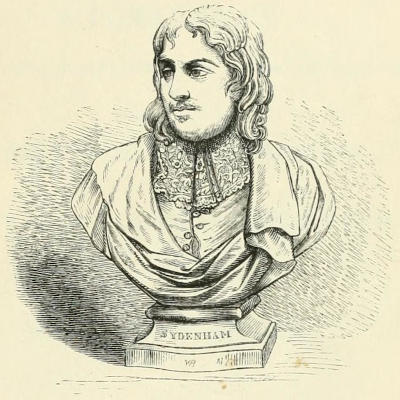
PAULUS ÆGINETA. — BOOK FIRST. — SECT. I.—ON THE COMPLAINTS OF PREGNANT WOMEN, AND THEIR DIET. — SECT. II.—ON THE NURSE. — SECT. III.—ON THE MILK OF THE NURSE. — SECT. IV.—HOW TO CORRECT THE BAD QUALITIES OF MILK. — SECT. V.—ON THE MANAGEMENT OF THE INFANT. — SECT. VI.—ON THE ERUPTIONS WHICH HAPPEN TO CHILDREN. — SECT. VII.—ON THE COUGH AND DEFLUXION OF INFANTS. — SECT. VIII.—ON PRURITUS. — SECT. IX.—ON DENTITION. — SECT. X.—ON APHTHÆ. — SECT. XI.—ON EXCORIATIONS OF THE THIGHS. — SECT. XII.—ON WATERY DISCHARGES FROM THE EARS. — SECT. XIII.—ON SIRIASIS. — SECT. XIV.—THE REGIMEN OF INFANCY, AND OF THE SUCCEEDING AGES UNTIL MANHOOD. — SECT. XV.—ON THE PREPARATORY FRICTION. — SECT. XVI.—ON EXERCISES. — SECT. XVII.—ON THE KINDS OF EXERCISE. — SECT. XVIII.—ON THE KINDS OF FRICTION. — SECT. XIX.—ON VOCIFERATION, OR THE EXERCISE OF THE VOICE. — SECT. XX.—ON LASSITUDE FROM EXERCISES. — SECT. XXI.—ON CONSTRICTION OF THE SKIN. — SECT. XXII.—ON SPONTANEOUS LASSITUDE. — SECT. XXIII.—ON THE REGIMEN OF OLD PERSONS. — SECT. XXIV.—FOR A WRINKLED STATE OF THE BODY. — SECT. XXV.—TO MAKE THE PERSPIRATION FRAGRANT. — SECT. XXVI.—TO WARM THE HABIT. — SECT. XXVII.—FOR PALENESS. — SECT. XXVIII.—ON LIVIDITY. — SECT. XXIX.—PRESERVATIVES OF THE TEETH. — SECT. XXX.—FOR DULNESS OF HEARING. — SECT. XXXI.—ON DIMNESS OF SIGHT. — SECT. XXXII.—ON REPLETION. — SECT. XXXIII.—ON INTOXICATION. — SECT. XXXIV.—ON WRONG DIGESTION OF THE FOOD. — SECT. XXXV.—ON VENERY. — SECT. XXXVI.—ON IMPOTENCE. — SECT. XXXVII.—ON INORDINATE VENERY. — SECT. XXXVIII.—ON REDUNDANCE OF SEMEN. — SECT. XXXIX.—ON PERSONS INJURED BY COLD. — SECT. XL.—FOR PERSONS SCORCHED BY THE SUN. — SECT. XLI.—ON COLLECTIONS OF PHLEGM IN THE STOMACH. — SECT. XLII.—HOW TO PRODUCE EASY VOMITING. — SECT. XLIII.—ON LAXATIVES AND DIURETICS TO THOSE IN HEALTH. — SECT. XLIV.—ON CLYSTERS. — SECT. XLV.—ON SUPPOSITORIES. — SECT. XLVI.—ON MEDICINES WHICH EVACUATE PHLEGM FROM THE HEAD, MASTICATORIES, ERRHINES AND LINIMENTS TO THE NOSE. — SECT. XLVII.—ON EMMENAGOGUES. — SECT. XLVIII.—ON SUDORIFICS. — SECT. XLIX.—ON AIRS. — SECT. L.—ON WATERS. — SECT. LI.—ON BATHS. — SECT. LII.—ON THE NATURAL BATHS. — SECT. LIII.—ON THE REGIMEN FITTING TO THE DIFFERENT SEASONS. — SECT. LIV.—OF THE REGIMEN OF PERSONS ACTIVELY EMPLOYED. — SECT. LV.—ON THE REGIMEN OF TRAVELLERS. — SECT. LVI.—OF THE REGIMEN OF PERSONS ON BOARD SHIP. — SECT. LVII.—ON THE MEANS OF DIMINISHING OBESITY. — SECT. LVIII.—HOW TO RECRUIT THOSE WHO ARE EMACIATED. — SECT. LIX.—HOW TO REMEDY EMACIATED PARTS OF THE BODY. — SECT. LX.—THE DIAGNOSIS OF THE BEST TEMPERAMENT. — SECT. LXI.—DIAGNOSIS OF THE TEMPERAMENTS. — SECT. LXII.—ON THE FORM OF THE HEAD. — SECT. LXIII.—THE MARKS OF THE TEMPERAMENT OF THE BRAIN. — SECT. LXIV.—THE MARKS OF THE TEMPERAMENTS OF THE STOMACH. — SECT. LXV.—DIAGNOSIS OF THE TEMPERAMENTS OF THE LUNGS. — SECT. LXVI.—THE MARKS OF THE TEMPERAMENTS OF THE HEART. — SECT. LXVII.—DIAGNOSIS OF THE TEMPERAMENTS OF THE LIVER. — SECT. LXVIII.—DIAGNOSIS OF THE TEMPERAMENTS OF THE TESTICLES. — SECT. LXIX.—ON THE PARTS THAT ARE OMITTED. — SECT. LXX.—THE CORRECTION OF HOT INTEMPERAMENTS OF THE BODY. — SECT. LXXI.—THE CORRECTION OF THE COLD INTEMPERAMENTS OF THE BODY. — SECT. LXXII.—THE CURE OF THE DRY INTEMPERAMENTS, OF THE STOMACH FOR EXAMPLE; THEN OF THE OTHER INTEMPERAMENTS. — SECT. LXXIII.—ON THE POWERS OF THE ARTICLES OF FOOD. — SECT. LXXIV.—ON POT-HERBS. — SECT. LXXV.—ON ASPARAGI OR YOUNG SHOOTS. — SECT. LXXVI.—ON HERBS HAVING ESCULENT ROOTS. — SECT. LXXVII.—ON TRUFFLES AND MUSHROOMS. — SECT. LXXVIII.—ON THE FRUMENTACEOUS ARTICLES OF FOOD. — SECT. LXXIX.—ON PULSE. — SECT. LXXX.—ON THE SUMMER FRUITS. — SECT. LXXXI.—ON THE FRUIT OF TREES. — SECT. LXXXII.—ON ANIMALS; AND, FIRST, OF FOWLS. — SECT. LXXXIII.—ON EGGS. — SECT. LXXXIV.—ON BEASTS. — SECT. LXXXV.—ON THE PARTS OF ANIMALS. — SECT. LXXXVI.—ON MILK. — SECT. LXXXVII.—ON THE DRINKING OF MILK. — SECT. LXXXVIII.—ON CURDS AND WHEY. — SECT. LXXXIX.—ON CHEESE. — SECT. XC.—ON FISHES. — SECT. XCI.—ON THE TESTACEA, OR SHELL-FISH. — SECT. XCII.—ON THE MOLLUSCA. — SECT. XCIII.—ON THE CARTILAGINOUS FISHES. — SECT. XCIV.—ON THE CETACEA, OR LARGE FISHES. — SECT. XCV.—ON THE PROPERTIES OF WINE. — SECT. XCVI.—ON HONEY AND HYDROMEL OR HONIED WATER. — SECT. XCVII.—ON SLEEP. — SECT. XCVIII.—ON WATCHFULNESS. — SECT. XCIX.—ON SOMNOLENCY. — SECT. C.—THE EPISTLE OF DIOCLES ON THE PRESERVATION OF HEALTH.—DIOCLES TO KING ANTIGONUS.
Of the complaints which befal women in a pregnant state,
the most troublesome are a redundance of crudities, continued
vomiting, salivation, heartburn, and loathing of food; it will
therefore be proper to give directions regarding them. The
most suitable remedies are, exercise on foot, food not too sweet,
wines which are yellow, fragrant, and about five years old, and
moderate drink. All these things are proper for the cure of
crudities and vomiting. For medicines, you may give the plant
of knot-grass, boiled in water, for drink; and likewise dill, and
the Pontic-root, called Rha, in the dialect of its native country.
These things may be taken at a meal, or before it. Externally,
the flowers of the wild vine, those of the wild or domestic
pomegranate, the leaves of the alsanders (smyrnium), and the
seed of the fennel, may be mixed together according to pleasure,
along with dates and old wine, and applied to the præcordium
in the form of a cataplasm. Heartburn may be alleviated by
drinking warm water, by gentle exercise on foot, and by
covering the hypochondrium with soft wool. In the case of
those who have an aversion to food, whet their appetite with a
variety of articles of a savory nature, and also give dry starch.
This last is particularly serviceable to those who long to eat
earth, as is the case in the complaint called Pica, which occurs
most frequently about the third month after conception;
because the fœtus being then weak, cannot consume all the
aliment which is brought to the uterus, and hence various
superfluities are collected in the stomach; and therefore they
have a desire for complicated and improper articles, such as
extinguished coals, Cimolian earth, and many more such things.
On that account, the affection has got its appellation, either
from the variety of colours which the bird Pica possesses, or
from its being subject to this complaint. Labour and long
journeys will also contribute to restore a desire for wholesome
food. But she who has accustomed herself to live in an indolent
manner, will not be able, when she proves with child, to
bear exercise all at once. To those who loathe food, it may
be of service to take acrid substances, and particularly mustard.
For swellings of the feet, it may be proper to bind over them
the herb anthyllis, soaked in vinegar; or to lay the leaves of
a cabbage over them, and to anoint them with Cimolian earth
mixed with vinegar, or with alum and vinegar. It is likewise
of use to sprinkle the feet with a decoction of the Median
apples, called citrons.
Commentary. We shall commence by giving a short account
of ancient opinions on a curious subject not touched upon
by our author,—we mean, on the influence of the imagination
in pregnant women on the fœtus.
Hippocrates says, that when pregnant women long to eat
coals and earth, the likeness of these things appears on the
head of the child. (De Superfœt. c. 8.) Galen likewise believed
in the influence of the imagination of pregnant women
on the fœtus in utero. (Ad Pison.) Soranus also was a firm
believer, and gives instances in women and in the inferior
animals of the force of imagination at the time of impregnation.
(lib. vii.) This belief was very ancient, for it appears to
be countenanced by the Jewish historian. (See Genesis, xxx,
37-9.) Traces of this opinion may be found in Hesiod; and
distinct allusion to it is made in the ‘Cynegetics’ of Oppian.
(i, 327.) The story in the ‘Æthiopics’ of Heliodorus respecting
Chariclea, the white daughter of the black king and
queen of the Æthiopians, bespeaks the prevalence of the belief
at the time when this celebrated romance was written. Andreas
Laurentius gives an interesting statement of ancient and modern
opinions on this subject. (De Mirab. Strum. Sanit.)
The bird pica is mentioned by name (κίττα) in the ‘Aves’ of
Aristophanes. (See also Schol. in Aristoph. in Pac. 496, and
Vesp. 348; Aristotle, Hist. An. vii, 4; and Pliny, Hist. Nat.
x, 41.) Harduin concludes, from Pliny’s account of it, that
it was the magpie. But we are rather inclined to follow
Schneider in referring it to the jay, or corvus glandarius.
On the disease, see Galen (Hyg.; de Causis Sympt. i, 7);
Aëtius (xvi, 10); Theophanes Nonnus (c. 213); Moschion
(de Morb. Mulier. c. 27); Eros (apud Gynæcia), Alexander
Aphrodisiensis (Problem. ii, 73); Pseudo-Dioscorides (Euporist.
ii, 16); Soranus (viii); Leo (vi, 14); Rhases (Contin. xi);
Avicenna (iii, 21, 2); Haly Abbas (Theor. vi, 17); Serapion
(Tr. iii, 22); Alsaharavius (Pract. xxv, 2, 8.) It appears to
be the malacia of Pliny (Hist. Nat. xxiii, 56, ed. Hard.)
Moschion defines the Pica to be an appetite for unusual food,
which happens to pregnant women at some irregular period;
being attended with a collection of depraved humours and
nausea. It occurs, he says, most commonly in the second
month, but sometimes earlier, and sometimes later. He recommends
a restricted diet at first, then wine, dry astringent
food, cataplasms of a repellent nature, and bodily motion.
Soranus treats of Pica in very similar terms to those of
Moschion.
But the account of the disease given by Galen and Aëtius
is the fullest. They derive the name either from the bird, as
mentioned above, or from ivy (κίττος), because, as ivy entwines
itself about various plants, so does this appetite in pregnant
women fasten upon a variety of improper articles of food. It
is attended with languor of the stomach, nausea, and loathing
of food, bringing on vomiting of bile or phlegm, anxiety, and
pains in the stomach. All these symptoms arise, they say, from
a sanguineous plethora, brought on by a suppression of the
menstrual discharge. They, therefore, recommend a restricted
diet, and moderate exercise when the woman was accustomed
to it. When the humour which infests the stomach is of an
acid, acrid, or saltish nature, they direct draughts of tepid water,
to encourage vomiting; they forbid all sweet things; and recommend
an old sub-astringent wine. When there is a loathing
of food, they advise us to tempt the appetite with a variety of
savory things. To those who have a desire for eating earth,
they particularly recommend starch. When the fluid which is
vomited is of a thick and viscid nature, they recommend pickles,
radishes, and oxymel, for an emetic. They also particularly
direct astringent cataplasms and plasters to be applied to the
præcordia.
As the practice of the other authorities is conducted upon
similar principles, we shall mention them very succinctly.
For the depraved appetite which longs for earth, Serapion recommends
aromatic spices, such as cardamon, cubebs, and the
like. For the continued vomiting, Alsaharavius directs plasters,
containing the oil of spikenard, mastich, quinces, wormwood,
and the like, or a vessel filled with hot water, to be applied over
the stomach, pomegranate seeds to be held in the mouth; and
that the patient should take gentle exercise, and abstain from
all sweet things.
Alexander Aphrodisiensis accounts for the disease in much
the same way as Galen and Aëtius. He says that, when the
menstrual fluid is suppressed, a determination of it takes place
to the stomach, until the fœtus becomes as large as to consume
it.
Pliny strongly commends citrons for the cure of the disease.
For the œdematous swellings of the feet and legs, most of
the other authorities concur with our author in recommending
astringent applications. The anthyllis, mentioned by him, is
supposed by Sprengel to have been the cressa cretica. (R. H.
Hist. p. 164.)
We shall conclude our commentary on this Section with an
outline of the directions given by Aspasia for the management
of pregnant women. Women who have conceived are to be
guarded from frights, sorrow, and all violent mental perturbation.
They are to avoid gestation in carriages, severe exercise, inordinate
breathing and blows about the loins; also the lifting of
heavy loads, dancing, and sitting on hard seats. Likewise all
acrid and flatulent food, strong clysters, and too much or too
little food and drink are to be avoided. All discharges of
blood, whether from the nose or hemorrhoids, are dangerous
in the pregnant state. Moderate and wholesome food, gestation
in a sedan, gentle walking, soft friction, and the exercise
of spinning are proper. About the eighth month, which is the
most critical period of pregnancy, the diet is to be more contracted,
and the exercise increased. If the bowels are constipated
owing to compression of the rectum, by the enlarged
uterus, laxative food is to be given, such as ptisan and
mallows. In the ninth month the regimen is to be of a relaxing
nature, and for this purpose the tepid bath is to be frequently
taken, for it has a great effect in rendering parturition
easy. (Apud Aëtium, xvi, 12.)
Our author borrows part of this chapter from Oribasius, and
abridges the rest from Galen and Aëtius.
A nurse is to be chosen who is free from every complaint, and
is neither very old nor very young. She ought not to be less
than twenty-five nor more than thirty-five. Her chest should
be large, as also her breasts, and her nipples neither contracted
nor turned aside. The rest of her body should be
neither very fat nor very spare. It is of great consequence
to the child that his nurse should have brought forth but a
short time before, and that her child had been a male rather
than otherwise. She ought to avoid everything of a very desiccative
nature, and likewise such as are saltish, acrid, sour,
acid, bitter, very heating, or of an offensive smell: also, such
as are strongly fragrant, condiments, and such like acrid substances.
Let the nurse also abstain from venery. Let her work
with her hands and shoulders, let her labour at the mill and
the loom, and carry about the child in her arms. This may
be done for three or four months.
Commentary. This Section is taken from Oribasius. (Synops.
v, 2.)
Aëtius gives somewhat fuller directions. He says, the nurse
ought not to be younger than twenty, nor older than forty;
should be free from disease, and have breasts neither too small
nor too large; for when the breasts are too large, they contain
more milk than the child can manage: and part being retained
spoils, and proves injurious to the child, and even affects the
health of the nurse; when too small, on the other hand, they
do not contain a sufficient supply of milk. Large nipples, he
remarks, hurt the gums, and impede deglutition; whereas, when
too small, they cannot be got hold of. The nurse, he says,
should be chaste, sober, cleanly, and cheerful. (iv, 4.)
The directions given by the other authorities, are very similar
to our author’s. See, in particular, Rhases (ad Mansor. iv, 30);
Avicenna (Cantic.); Averrhoes (in Cant. p. ii, tr. 1.) Avicenna
says, the nurse ought to be from twenty-five to thirty-five years
old. Averrhoes says, from twenty to thirty.
It appears to have been a general practice among the Romans,
after they became luxurious and effeminate, for the ladies of
noblemen to consign the care of their infants to wet nurses.
Tacitus, in his elegant dialogue ‘de Oratoribus,’ inveighs against
this practice. See also a spirited declamation on this subject,
by the philosopher, Phavorinus, in the ‘Noctes Atticæ’ of Aulus
Gellius. (xii, 1.)
The best milk is that which is moderate in thickness, quantity,
colour, smell, and taste. It is a proper way to try the quality
of the milk, by pouring a little of it upon the nail of the thumb
and observing it in the sun; for, when upon turning the nail,
it neither runs off too slowly nor too quickly, it is good milk.
You may also try it thus: by pouring some milk into a glass
vessel, and putting some runnet into it, then squeezing them
together with your fingers, allow it to coagulate, and observe
whether the cheesy part be less than the serous; for such milk
is unsuitable, and also the opposite kind is of difficult digestion.
The best kind is that which has a moderate proportion of each.
Commentary. This Section is taken from Oribasius (Synops.
v, 3), and Aëtius (iv, 3.)
The method of trying the quality of the milk here recommended
is mentioned by Aëtius, Barytus (ap. Geopon. xviii, 20),
Dioscorides, Avicenna, Haly Abbas, and Alsaharavius. According
to Avicenna, a child ought not to be allowed to take suck
oftener than twice or thrice in the day. See, in particular, Haly
Abbas (Pract. i, 21), and Alsaharavius (Pract. xxx, 3.)
The bad qualities of milk may be thus corrected. If it be
too thick, the phlegm ought to be evacuated by vomits, the most
proper of which are those of vinegar and honey. It is also
proper to extenuate by labour before meals. Also the following
substances are proper, namely: wild marjoram, hyssop,
savoury, shepherd’s needle, thyme, the small radish, and old
pickle with vinegar and honey. But if it be more acrid and
thinner than natural, the nurse ought to be relieved from much
labour, to be fed upon strong soups, and the flesh of swine, and
to be allowed sodden must and sweet wine. If it be in too
small quantity, she ought to get soups and a generous diet,
with sweet wine for drink; and her breast and nipples should
be rubbed. The cupping instrument, if applied, will also be of
service. That medicines for the formation of milk, are possessed
of some efficacy, I am well aware, and yet I do not recommend
them in all cases, for they greatly waste the body.
They are, the root and fruit of the fennel boiled in ptisan, the
leaves of the cytisus in dark-coloured wine or ptisan, the sweet
gith (melanthium), dill, the root and fruit of the carrot. They
are to be first soaked with warm water, and then given. But
when the milk is bad, whether it be thick, acrid, or of a strong
smell, it is first to be sucked out and then the child is to be
applied. For that which is acrid ought, on no account, to be
given to the infant when hungry; but that which has an offensive
smell may be corrected by fragrant wine and sweet food.
Of coagulated milk in the breasts, we will treat in the Third
Book.
Commentary. Aristotle forbids wet nurses to drink wine.
It is the same thing, he adds, whether the nurse or the child
drink it. (De Somno.)
Oribasius, Aëtius, and Avicenna give similar directions to our
author’s. They all permit nurses to take a moderate allowance
of animal food and wine. When the nurse has too little milk,
Aëtius recommends her to drink ale (Zythus.) He also approves
of sweet wine, gruels prepared with fennel, or green dill boiled
with ptisan. When the milk is thin, he directs her to abstain
from baths, and to take food of a nutritive quality, such as fine
bread, the legs of swine, tender birds, the flesh of kids, and sweet
wine. When the milk is thick, he recommends frequent baths,
and an attenuant diet. When it is excessive, he directs her to
diminish the quantity of the food, and to take what is less nutritive,
and to make discutient applications to the breasts, such
as a linen cloth dipped in vinegar, and to wash them frequently
with warm salt water, or the decoction of myrtle.
Hippocrates forbids the nurse to take things of an acrid, saltish,
acid, or crude nature. He recommends fennel, cytisus, parsley,
and the hot bath as a general regimen to nurses. (De Mulieb.)
Haly Abbas gives similar directions. He properly recommends
the nurse to abstain from taking things of a pungent,
sour, and bitter nature. When the nurse’s milk is deficient, he
recommends that she should get the milk of cows and goats,
fennel, lettuce, parsley, and the like. (Pract. i, 21.)
The first food given to a new-born child should be honey,
and afterwards milk, twice, or at most three times a day. When
it appears disposed for it, and seems able to digest it, it may
get some food, care being taken not to stuff it. If this should
happen to be the case, it will become more sleepy and inactive,
there will be swelling of the belly and flatulence, and its urine
will be more watery than natural. When this is observed, it
ought to get no more food until what it has got be consumed.
The child may be brought up upon milk until it be two years
old, after which, its diet may be changed to food from grain.
Commentary. This Section is taken from Oribasius. (Synops.
v, 5.)
Galen, in like manner, approves of the honey. He directs
the body of a new-born child to be sprinkled with salt; and afterwards
rubbed every day with oil. After the milk-diet is given
up, the first food to be administered, he says, should be bread,
and afterwards pulse and flesh. He forbids the use of wine,
because the temperament of a child is hot and humid. He approves
of the hot bath, but condemns the use of the cold for young
children. (Hyg. pluries.)
Aëtius recommends the child to be brought up upon milk for
twenty months. Moschion says, from eighteen months to two
years will be sufficient. Avicenna, like our author, mentions
two years. It is stated by Selden, that the Hebrew women gave
suck to their children for two years. This practice is enjoined
in the Koran. Aëtius is not so strict in regard to regimen as
Galen; he allows us to vary the milk-diet, by giving occasionally
soft eggs, mead, or sweet wine diluted with water. (iv, 28.)
Moschion, Averrhoes, and Avicenna approve of exercising the
child in a cradle, and of lulling him with music. When the cord
falls off, Avicenna advises that the part should be sprinkled with
the powder of burnt lead.
Averrhoes disapproves of sprinkling the child’s body with salt,
as recommended by Galen. (Collig. ii, 6.) He agrees with
Galen, however, in condemning the use of wine. He directs
exercise for the child every day; after exercise, friction, and after
friction, the bath. He forbids the use of the cold bath, however,
because it retards the growth. When the child does not
sleep, Avicenna and Averrhoes recommend poppy in his food.
(Cant. ii, 1.)
Haly Abbas directs us, when there is any malformation of the
head, to reduce it to its proper shape, and bind it firm. Like
Galen, he recommends that the body of a new-born child should
be sprinkled with salt and powdered roses, to harden the skin. He
directs us to give the child, for the first two days, sugar, triturated
with the oil of sesame. He recommends the frequent use of
the tepid bath. He properly directs the nurse not to expose the
child’s eyes to the strong light of day, nor to allow him to sleep in
a strong sun, for fear of injuring his eyes. When a child cries,
it is the duty of the nurse, he says, to find out the cause, as a
child never cries except when something hurts it. The most
common causes, he adds, are, heat or cold, fleas or gnats, hunger
or thirst, retention of urine or of the fæces. For retention
of the urine, he recommends melon-seed with julep both to the
child and the nurse; and when the child’s bowels are constipated,
he directs the nurse to take laxative herbs, oil of olives,
prunes, and so forth. It is clear, therefore, that he was aware
that a child may be operated upon by medicines given to the
nurse. (Pract. i, 20.)
The directions given by Alsaharavius are very similar. He
remarks that violent crying may occasion a descent of the
bowels.
Syrasis, one of the commentators on Avicenna, recommends
the tepid bath for young children, and food after it. He directs
the nurse to exercise the child before putting him into the bath.
From what we have stated, it will be seen that the ancient
physicians did not approve of the cold regimen, absurdly proposed
by certain modern philosophers as the most proper for infants.
According to Athenæus, the sons of Roman freemen were
prohibited from drinking wine until they were thirty years old.
(Deipnos, x, 23.) Plato enjoins complete abstinence from wine
until the age of eighteen, and great moderation until thirty.
(Leg. ii.)
Whatever eruptions appear upon the skin of a child, are to
be encouraged, in the first place; but when the eruption is
properly come out, it may be cured by putting the child into
baths of myrtle, or lentisk, or roses, and then anointing with
the oil of roses or lentisk, or with a cerate containing ceruse.
And its body may be gently rubbed with nitre; but it will not
bear hard friction. But a very good plan is for the nurse to
be fed upon sweetish things. And the child’s diet ought to be
attended to, so that it be neither too full nor too spare. If the
child’s belly be constipated, a little honey may be put into its
food; and if even then it do not obey, turpentine, to the size
of a chick-pea, may be added. When the bowels are loose,
millet, in particular, ought to be administered.
Commentary. This Section is taken from Oribasius (Synops.
v, 6.) See also Aëtius (iv, 21.) The Exanthemata here
referred to would appear, properly speaking, to be the strophuli
of Dr. Willan, but the ancients used the term rather vaguely for
several eruptive diseases. (See Book Fourth.) The Exanthemata
are the “pustulæ parvæ” of Eros (apud Gynæcia, p. 59.) For
the Arabians, see in particular Haly Abbas (Pract. i, 20);
Avicenna (i, 3, 1); Alsaharavius (Tr. xxvi, 7 and 8.) Alsaharavius
describes two cutaneous complaints of infancy by the
names of Alseafa and Alkaba. The former he describes as
consisting of pustules, which affect the heads of infants, and
sometimes the face. They are attended, he says, with a constant
itching, and occasion erosion. His treatment is to shave
the head, and to apply to it first a leaf of blite (bletæ vel betæ?)
and afterwards an ointment composed of spuma argenti, ceruse,
and lye, with rose-oil and wax. The Alkaba is said to be of the
same nature, only that the fluid which runs from the pustules
resembles honey. This, therefore, must be the porrigo favosa.
His remedies are, to wash the head frequently with a lotion made
from marjoram, mint, or centaury; and then to apply an ointment
composed of spuma argenti, ceruse, Armenian bole, sulphur,
almonds, and quicksilver; and also liniments of rose-oil
and vinegar, with the free use of the bath. As Dr. Willan remarks,
he has described the strophuli by the name of pustulæ,
(bothor.) (Tr. xxvi, 25.) He says of them: “Aliæ sunt albæ,
aliæ rubeæ, aliæ nigræ, aliæ magnæ, aliæ parvæ et multæ et
paucæ, aliæ fortis et acuti doloris, et mortiferæ,” &c. It appears,
therefore, that he applies the term in a very lax signification.
Rhases describes the Exanthemata by the name of vesicæ. He
prescribes, at the commencement, medicines for expelling the
morbific superfluity from the inner parts, such as the decoction of
dates or figs, with fennel water. When the eruption is fairly come
out, he recommends baths medicated with roses, myrtles, and the
like; after which, the child is to be rubbed with the oil of roses or
of violets. (De Morbis Infant, c. 19.) We may mention that
Lanfrancus, and the other medical authorities of that age, describe
them by the name of saphati.
When the child is seized with cough or defluxion, recourse is
to be had to a linctus of honey. It is first to be bathed copiously
with warm water, even to its head, and plenty of honey
given: then press its tongue gently with your finger, and it
will vomit up much phlegm.
Commentary. See Oribasius (Synops. v, 7), and Aëtius (iv,
18.) Aëtius recommends various lohochs or linctus. One of
them consists of pine-nuts, almonds, linseed, liquorice-juice,
and honey.
Emetics and demulcents, such as gum arabic and liquorice,
are the remedies recommended by Avicenna, (i, 3, 1.)
Haly Abbas approves of lohochs, containing almonds, honey,
&c. (Pract. i, 20.) Alsaharavius recommends various demulcents,
and an electuary containing poppy-seed, tragacanth, and
the seeds of citrons, to be taken in a decoction of Sebesten plums.
He also directs us to produce vomiting, by making the patient
swallow copious draughts of honied water. (Tr. xxvi, 24.)
Rhases recommends nearly the same remedies. (De Morbis
Infant, c. 18.)
This would appear to be the most proper place for giving from
Aëtius some account of two affections of infancy, which our author
has omitted to describe. He says, when children have been
fed on improper food, or when, from any other cause, their stomachs
become loaded with phlegm, they are troubled with snorting;
and in that case he recommends a linctus of linseed, honey,
&c.; or if the affection be obstinate, to make them vomit
by pressing down the tongue with a finger smeared with oil.
(iv, 7.)
When an infant has lost its voice, which, he says, arises commonly
from constipation, he recommends the juice of cabbage,
either by the mouth or in a lavement; or a suppository into the
anus. (iv, 8.)
If the child be troubled with pruritus, use fomentations, and
anoint with plenty of refined oil, in which a little wax has been
melted.
Commentary. See Galen (Hyg. v); Oribasius (Synops. v, 8);
Avicenna (i, 3, 1); Haly Abbas (Pract. i, 20); Rhases (de Morb.
Infant, c. 19); Alsaharavius (Pract. xxvi, 25.)
The account given by Oribasius is similar to our author’s.
(Synops. v, 8.)
Alsaharavius properly recommends attention to correct the
acrimony of the nurse’s milk; to wash the child with decoctions
of roses, myrtle leaves, and the like; if the pustules are of a dry
nature, to rub them with oil of sesame or of violets; and, if
humid, with an ointment made of wax, litharge, and rose-oil.
Rhases directs the nurse to abstain from sweet and salt things,
as they inflame the blood; and to put the child into a bath medicated
with mallows, pearl-barley, fenugreek, gourds, &c.
Avicenna and Haly Abbas treat the complaint upon similar
principles.
Dentition commences about the seventh month. At that
time inflammations of the gums, cheeks, and tendons are apt
to occur; and sometimes convulsions. The child must then
get nothing which requires mastication; and his gums should
be rubbed frequently when in the bath with the finger, or
soothed with the fat of fowls or the brain of a hare. When the
teeth are just coming through, the neck, jaws, and head should
be wrapped in soft wool, or they may be anointed with warm
sweet oil, some of which ought to be poured into the pores of
the ears. The child ought then to have a more generous quality
of food, and be bathed in warm water. If he have diarrhœa,
it is proper to bind his belly by epithemes, namely, such as are
of an astringent nature, as cumin, dill, or parsley, sprinkled
upon wool. It is proper to mix the seeds of roses, and, in short,
to use hot desiccants. If the bowels are constipated, they may
be gently roused to action by means of a suppository of honey,
or the belly may be anointed with mint pounded in honey.
But the best remedy for the convulsions of children, apparently,
is to bathe them in water wherein turnsol (heliotropium) has
been boiled. It will be of consequence also to use the oil of
privet, of the iris, and the Sicyonian oil; and, in short, everything
which is of a calefacient nature. But when the teeth
have come through so as to bite the fingers, it may be proper
that he keep in his mouth the root of the iris, shaven down and
not quite dried. This also is of use to ulcers. Butter likewise
rubbed in with honey will be of service. The flesh of an old
pickle relieves pruritus of the gums.
Commentary. See, in particular, Oribasius (Synops. v, 9), and
Aëtius (iv, 9.) Hippocrates and Aëtius recommend a jasper
amulet. Hippocrates remarks that fevers, pruritus, looseness
of the bowels, and convulsions are apt to come on at the time of
dentition, if the child be plethoric, and his bowels constipated.
(Aphoris, cum Comment. Galeni.) Aretæus makes the same
statement. (Morb. acut. i, 6.)
Moschion directs the gums of the child to be rubbed, after
the fifth month, with sweet oil, the fresh grease of a hen, the
brain of a hare, and lastly with boiled honey. When inflammation
supervenes afterwards, he recommends fumigations and
cataplasms, and directs the food and drink of the nurse to be
restricted. (c. 119.)
The directions given by Avicenna are similar to those of
Moschion. (i, 3, 1.) Alsaharavius properly states that the
best way to avoid difficult dentition is to guard against corruption
of the food and drink, and to abstain from emetics,
acids, figs, &c. To remove the painful symptoms attendant on
dentition, he directs us to rub the gums with olive oil, honey in
which aloes and gum arabic have been boiled, and the like; to
wrap the head in soft wool, and to pour tepid water upon it.
(Pract. xxxvi, 19.)
The treatment recommended by the other authorities is very
similar. See, in particular, Rhases (Ad Mans. iii, 13.)
The only ancient authors who make mention of scarification of
the gums as a remedy for painful dentition are, Marcellus Sideta
(Medicina, ex Piscibus,) and Pliny (Hist. Nat. xxxii, 26.) Both
direct it to be done with the sting of the Pastinaca Marina.
Infants are liable to an ulcer of the mouth called aphtha.
It is either whitish, reddish, or black, like an eschar. That
which is black is of the worst kind and most fatal. The iris
mixed with honey is of use, or you may blow in the dry powder
if you please; also, the pounded leaves of roses, or the flowers
of roses, and crocus—a small quantity of myrrh, galls, frankincense,
or the bark of the frankincense tree: all these together,
or separately, may be mixed with honey; and, in addition to
these, may be joined honied water and the juice of the sweet
pomegranate.
Commentary. Hippocrates mentions aphthæ among the
diseases of dentition. (De Dent.) Theophilus, the commentator
on Hippocrates, says, that aphthæ are occasioned by the tenderness
of the parts, which cannot bear the bad qualities of the milk.
According to Aretæus, the land of Egypt is particularly prolific of
these ulcers, which are engendered by the impurities of the water
and the quality of the vegetables that grow there. (Morb.
Acut. i, 9.) The aphthæ appear to be the oscedo of Isidorus.
(Orig. iv, 8.)
Our author copies from Oribasius. (Synops. v, 10.) See also
Aëtius, (viii, 39.) Aëtius borrows his account from Galen, who
is very full upon the treatment of aphthæ. He remarks that recent
superficial ulcers are easily cured, but that such as spread
and are of a gangrenous nature are very dangerous. He gives,
at great length, directions for the composition of applications,
suited to every modification of the complaint. When the pustules
are red, he prescribes washes of a moderately astringent
and cooling nature; if yellowish, the same, but somewhat more
refrigerant; if whitish and pituitous, detergents are to be used;
and, if black, the most powerful discutients. For simple cases
of the aphthæ infantium, he merely recommends the flowers of
roses with honied water. Most of his remedies are astringents.
(De Med. sec. Loc. lib. vi.) In another work, he says that aphthæ
are occasioned by the acrimony of the milk, and are to be cured
by astringents. (Comment. in III Epidem.)
Pliny mentions that the lapis melititis was used as an application
in cases of ulceration of the fauces. (Hist. Nat., xxxvi.)
There is reason to believe that it was Borax, or borate of
soda.
Avicenna recommends at first washes prepared from the vegetable
acids, and afterwards astringents, such as galls, sumach,
balaustine, &c. (i, 3, 1.) See also Haly Abbas (Pract. i, 20.)
Alsaharavius states that aphthæ commonly arise from the
sharpness of the milk. His general treatment consists in regulating
the diet of the nurse, and using washes principally of an
astringent nature for the child’s mouth. When they are very
painful, he adds to the washes the juice of lettuce, endive, and
the like. When they are whitish, he recommends a powder consisting
of myrtle, saffron, and sugar. (Tr. xxvi, 20.) Rhases’
treatment is quite similar. (De Morbis Infantium, c. 14.)
The author of the following work, which has been falsely
ascribed to Dioscorides, recommends certain applications of a
strongly escharotic nature, such as this: Of arsenic, p. i;
of burnt paper, p. iii; or this, of sandarach and rose-oil equal
parts. (Euporist. i, 82.)
Psellus enumerates two kinds of aphthæ, namely, the white
and the red; the former, he says, is mild, the latter very dangerous.
(Poëma Medicum.)
Excoriations of the thighs may be sprinkled with dried myrtle,
cyperus, and roses.
Commentary. See, in particular, Oribasius (Synops. v, 11);
Aëtius (iv, 24); and Avicenna (i, 3, 1.) All recommend
nearly the same astringent applications for the intertrigo of
infants.
Watery discharges from the ears may be dried up by applying
to them wool with alum, or with wine and honey, or by an
injection of old wine either alone or mixed with saffron.
Commentary. Oribasius, Aëtius, Avicenna, and Haly Abbas
recommend the same treatment, which would seem to be very
proper. Alsaharavius recommends wool soaked in a solution of
alum, and injections, consisting of solutions of nitre (soda) in
vinegar. Rhases makes mention of nearly the same applications.
(De Morb. Infant. c. 9.)
Siriasis is an inflammation of the parts about the brain and
its membranes. A hollowness of the open of the head and
eyes attend it, with paleness and dryness of the body. It is
relieved by an application of the red of an egg with oil of roses
to the open of the head, in the form of a compress, and frequently
changed.
Another application for Siriasis. Place upon the open of the
head, the leaves of that species of heliotropium called scorpiurus,
the parings of a gourd, the membrane which envelopes the fleshy
part of a ripe cucumber, the juice of the garden nightshade,
with oil of roses.
Commentary. See Oribasius (Synops. v, 13); Aëtius (iv,
13); Avicenna (i, 3, 1); Haly Abbas (Pract. i, 20); Alsaharavius
(Pract. xxvi, 9); Rhases (de Morb. Infant. c. 5); Pseudo-Dioscorides
(Euporist. i, 9); Alexander Aphrodisiensis (Problem i, 98);
Pliny (Hist. Nat. xxxii, 48.)
Aëtius and Avicenna agree in describing it as an inflammation
and swelling of the brain and its membranes, so as to occasion
a hollow at the bregma, and as being attended with ardent fever.
The account given by the others is very similar. All recommend
cooling and astringent applications to the part. According to
Alexander Aphrodisiensis, children are most subject to this affection,
especially in the summer season; for which he attempts to
assign the reason. He describes it as an inflammation of the
membranes of the brain. The author of the ‘Euporista’ recommends
the juices of various cooling herbs, as local applications.
Pliny represents the heat of it as excessive. He says, “Siriasesque
infantium spongia frigida crebro liumefectata, rana inversa adalligata
efficacissime sanet, quam aridam inveniri affirmant.” (l. c.)
Although somewhat out of place, we shall venture to introduce
here some account of two diseases of infancy which are omitted
by our author, but are briefly described by Aëtius and Rhases.
For prolapsus ani, Aëtius recommends various applications in
the form of powder and fomentation; but states, that what he
himself constantly made use of was tepid brine or salt water.
(iv, 19.) See Rhases (de Morb. Inf. c. 21.)
Umbilical hernia, he says, may be occasioned by crying, a
blow, or a fall. For this he recommends various astringent preparations
from alum, galls, &c., applied on a linen compress to the
navel. (iv, 20.) Rhases recommends similar applications, and
also a compress with the gluten of hides to be bound over the
navel. (De Morb. Infant. c. 22.) As far as we can recollect,
Hippocrates and his commentators are the only ancient authorities
that make mention of inflammation of the navel after the
cord has dropped off. (Aphor. c. Comment. ed. Dietz, p. 374.)
Infants and children when weaned from milk, are to be
allowed to live merrily and without restraint; their food ought
to be light, and their exercise gentle. After six or seven years
of age, both boys and girls are to be consigned over to schoolmasters
of a mild and benevolent disposition; as such persons
will impart instruction to them in a cheerful manner, and without
constraint; for relaxation of the mind contributes much to
the growth of the body. Boys twelve years of age should go
to teachers of grammar and geometry, and get their bodies
hardened by gymnastic exercises. From fourteen to twenty-one,
their proper employment will be the study of mathematics
and initiation in philosophy. At the same time, however, it
will be proper to use more exercise for strengthening the body,
so that, exercising both mind and body, they may be prevented
from indulging their carnal desires. They ought likewise to be
restricted as to wine. To adults the fullest supply of nourishment,
both as to body and mind, ought to be allowed; wherefore,
they should use all kinds of gymnastic exercises, particularly
such as each has been accustomed to, and food which is
sufficient and nutritious. In the decline of life, both the bodily
and mental supply ought to be abridged; and the gymnastic
exercises diminished in proportion. The food also is to be
gradually lessened as the habit begins to contract the frigidity
of age.
Commentary. These simple but judicious directions respecting
the regimen of the different periods of life are taken
from Oribasius (Synops. v, 14); or from Aëtius (iv, 29.) Many
of them are borrowed originally from Galen. (Hyg. i.)
Similar directions are given at great length by Haly Abbas.
He positively prohibits children from taking wine. He insists
that wine not only proves prejudicial to health, but also deteriorates
the morals. (Pract. i, 22.) Alsaharavius agrees with him
in proscribing wine to children. (Theor. xiii, 2.)
Avicenna makes very judicious observations on this subject,
but the greater part of them are taken from Galen. He insists,
with becoming earnestness, on the propriety of attending to the
regulation of the passions of the child, as being conducive to his
health as well as to his morals. As soon as the boy is roused from
sleep he is to be bathed; then he is to be allowed to play for an
hour; afterwards, he is to have something to eat, and then is to
be allowed more play. Afterwards he is to be bathed; then he
is to take food; and, if possible, he is to be prevented from drinking
water immediately after a meal, as it has a tendency to
make unconcocted chyle be distributed over the body. When
six years old, he is to be consigned to the care of a teacher, but
he is not to be compelled to remain constantly in school.
Avicenna goes on to state that, at the age he has then reached,
he is to be more sparingly bathed, and that his exercise is to
be multiplied before eating. Like most of the ancient authorities,
he forbids wine to a child. Thus, he adds, is the regimen
of the child to be regulated until he reach the age of fourteen.
(I, i, 4.)
Averrhoes gives very sensible directions on this subject. He
forbids the use of wine and ales until manhood. (Collig. vi, 6.)
Before gymnastic exercises, the body ought to be rubbed
moderately first with towels, and then with oil in the hollows
of the naked hands, until it be properly warmed and softened,
and its surface have contracted a florid blush, and become distended.
Commentary. A more circumstantial account of the mode
of preparing the body for gymnastic exercises is given by
Oribasius. (Med. Collect. vi, 13.) It is taken, however, from
Galen’s second book of ‘Hygiene.’ See a similar account
in Aëtius (iii, 1), and Avicenna (i, 3, 2.) The object of it,
according to Alexander Aphrodisiensis, was to soften the parts
so that they might not be ruptured. (Prob. i, 119.) To rub
the body with oil was a general practice of the ancients before
strong exercises of every kind. Hence Horace characterizes an
inactive person by his dread of oil, “Cur olivum Sanguine viperino
cautius vitat?”—that is to say, as his commentator Acron
explains it, “Cur vitat olivum, id est oleum, quo unctus tutius
natet et luctetur?” The poet alludes to the practice in another
place: “Ter uncti Transnanto Tiberim.” It appears from
Martial that a composition of oil and wax, called ceroma, was
sometimes used for this purpose:
“Vara nec injecto ceromate brachia tendis.”
According to Thucydides, the Lacedemonians were the first
who rubbed their bodies with oil before wrestling. (i, 1.)
Pliny mentions the use of oil before the gymnastic exercises as
a luxury introduced by the Greeks. It appears from him that
cheap aromatics were sometimes added to the oil. He further
relates that some barbarous nations used butter instead of oil.
(Hist. Nat. xi, 41.)
Athenæus mentions that Antiochus Epiphanes supplied the
wrestlers at Daphne with oil of saffron, of marjoram, and the like.
(Deipn. v.)
Lucian makes Solon say to Anacharsis, that oil produces the
same effect upon the living body as upon leather, softening it, and
rendering it stronger and less apt to break. (Anacharsis.)
The poets describe Venus as preparing herself for exercise by
being rubbed with fragrant ointments, whereas Minerva disdained
to use anything but common oil. See Callimachus
(Lav. Pall.) and Sophocles (ap. Athen. Deipnos. xv, 35.)
The Roman emperors, and other luxurious persons, often made
use of perfumed ointments instead of oil. See Suetonius (in
Vita Caligulæ), Lampridius (in Vita Heliogabali.) It would
appear that under the empire the people of Rome were supplied
gratuitously with oil in their public baths. (Lamp. c. 24, and
Burman, de V. R. c. iii.)
Exercise is a violent motion. The limit to its violence should
be a hurried respiration. Exercise renders the organs of the
body hardy and fit for their functional actions. It makes the
absorption of food stronger, and expedites its assimilation; and
it improves nutrition by increasing heat. It also clears the
pores of the skin, and evacuates superfluities by the strong movement
of the lungs. Since, therefore, it contributes to distribution,
care ought to be taken that neither the stomach nor
bowels be loaded with crude and indigestible food or liquids;
for there is a danger lest they should be carried to all parts of
the body before they are properly digested. It is clear then that
exercise ought to be taken before eating. The colour of the
urine will point out the proper time for exercise. When it is
watery, it indicates that the chyme absorbed from the stomach
is still undigested. When it is of a deep yellow colour, and
bilious, it shows that digestion had been long ago accomplished.
When it is moderately pale, it indicates that digestion has just
taken place; and this is the proper time for exercise, after having
evacuated whatever excrementitious matters are collected in the
bladder and bowels.
Commentary. The remarks of our author on the effects of
exercise are exceedingly pertinent and comprehensive. See, in
like manner, Aëtius (iii, 2), and Oribasius (Med. Collect. vi, 11.)
But Galen is the great authority on this subject, which he treats
of very fully and philosophically, in the second book of his
‘Hygiene.’ He agrees entirely with Hippocrates, that the proper
time for exercise is before a meal, because, the excrementitious
superfluities being thereby evacuated, the body is in a fit condition
for receiving a new supply. He explains, however, afterwards,
that it is after the digestion and distribution of a preceding
meal have been accomplished that exercise will be most
proper.
According to Haly Abbas, exercise is useful for three purposes:
1. For rousing the innate or natural heat, whereby the processes
of digestion and distribution are accelerated. 2. For opening
the pores of the body, and evacuating its superfluities. 3. For
strengthening and rousing the animal actions, by the friction it
occasions. (Theor. v, 2.) Avicenna gives nearly the same statement
of the good effects of exercise. Haly Abbas forbids exercise
immediately after dinner. He adds, that exercise taken immediately
after a meal makes the food descend to the intestines,
where it is absorbed by the veins before it is properly concocted,
and thereby the liver becomes loaded with crudities.
(Pract. i, 3.)
Alsaharavius recommends exercise before a meal, but advises
it not to be continued after one feels fatigued and languid.
(Theor. ii, 2.) The same rule is distinctly laid down by Rhases.
(Contin. xxxiii.)
It appears that, instead of taking exercise after food, the ancients
were in the practice of indulging in a short sleep after
their dinner or mid-day meal. See Plautus (Mostell. ac. iii, sc. 2,
1. 8), and the note of Meursius (Ed. Gronov.) Homer says that
it is beneficial to old men to indulge in sleep after the bath and
taking food. (Galen. Hyg. 1.)
Plutarch mentions that Cicero was cured of debility of the
stomach by taking moderate exercises. (In vita Cicer.)
It was one of the extravagant opinions of Erasistratus, that
exercise is not at all necessary for the health of the animal frame.
The common effect of all kinds of exercise is to produce an
increase of the natural heat of animals. But each species has
something peculiar to it. Strong, that is to say, violent exercise
gives vigour to the muscles and nerves: such are digging, and
lifting a very heavy burden, while one remains in the same spot,
or moves about; or lifting small weights and walking about
as much as one can. Of this kind, is the exercise of scaling a
rope, and many others of a like kind. The swift kinds of exercise
are such as do not require strength and violence, namely,
running, fighting with one’s shadow, wrestling with the extremities
of the hands, the exercise with the leather bag, and that
with the small Ball. This last is compounded of intension and
velocity; and such exercises as are intense may become violent
by adding velocity to them. Besides, some kinds of exercise
bring the loins into action, and some the hands or legs; others
the spine or the chest alone, or the lungs. And exercise ought
to be carried on until the body becomes distended, and the skin
of a florid hue; and until then, the motions ought to be strong,
equable, and spirited, upon which you may see warm sweat,
mixed with vapour, break out. It will then be time for you
to stop, when any of the symptoms which I have mentioned
have undergone a change, namely, when the bulk of the body
becomes contracted, or when the florid colour of the skin declines.
And, should any of the motions remit, it will then be
time to stop immediately; or, if there should be any change in
the quantity or quality of the perspiration; for if it should become
smaller in quantity, or colder, we must desist, and, besmearing
the body with oil, endeavour to restore it. It will
then be proper to use the Restorative friction, as the masters of
gymnastics are wont to practise.
Commentary. We shall now give a brief account of the
ancient exercises, some of which are altogether omitted by our
author.
The σκιομαχία is thus explained by Cornarius: “Porro
σκιομαχίαν accipio umbratilem pugnam, quâ quis privatim domi
aut sub umbra, non in propatulo se exercet, ac veluti præparat ad
justam pugnam publicè faciendam.” (Notæ in Paul. Ægin. h. 1.)
This account, however, does not agree with that of Oribasius,
who describes it as a mock encounter at boxing and jumping
with one’s own shadow. (Med. Collect. vi, 29.) It is thus described
in the Latin translation of Avicenna: “Et ex eis est,
insequi umbram suam, ut ipsam percutiat in capite, et manus ad
invicem percutere.” (i, 3, 2, 2.) It is mentioned in this sense by
Plato (de Legibus, vii), by Plutarch (Probl. Conviv. vii), and by
Achilles Tatius (p. 115.) Juvenal probably alludes to this sport.
(Sat. vi, 246.) We have therefore translated it, “fighting with
one’s own shadow.”
The ἀκροχειρισμὸς is thus described by Scaliger: “Est autem
ἀκροχειρίζειν luctæ pars, cum primoribus tantum digitis insertis
roboris faciunt periculum.” (Poet. i, 22.) Suidas explains it
thus: “A man taking hold of his antagonist’s fingers, strove
to break them, and did not give over until he compelled him to
yield.” The term occurs in Aristotle. (Eth. Nicom. iii, 1.) See
also, Athenæus. (Deipnos. iv, 13.) It is called ἀκροχέιρισις by
Hippocrates (De Diæta. ii, 42), who says it reduces the body.
The exercise with the κώρυκος, or leather bag, is described
by Oribasius in the following manner: A bag filled with flour
or sand was suspended from the top of the house, on a level with
the navel; it was then pushed forwards with the hands to the
extremity of the rope, and, as it recoiled, the person performing
the exercise retreated backwards, so as to escape from it. (Med.
Collect. vi, 33.) This exercise is mentioned by Hippocrates.
(De Diæta, ii.) Cornarius and the translator of Hippocrates
confound it with the follis of the Romans; but Mercurialis clearly
shows that they were quite different. The follis was a leather
ball, inflated with air; such is the description of it by Cælius
Aurelianus: “Follis erat pila magna ex aluta confecta, soloque
vento repleta.” Martial represents it as a becoming exercise for
boys or old men:
“Ite procul juvenes, mitis mihi convenit ætas,
Folle decet pueros ludere, folle senes.”
They were different from the pila magna and parva; that is
to say, the large and small ball. These balls were of different
sizes, and were played with in various ways. They are minutely
described by Oribasius. (Med. Collect. vi, 32.) See also Horace
(Sat. ii, 2), and Martial (Epigr. iv, 15.) See a most learned and
accurate account of all these sports in Mercurialis. (De Arte
Gymnastica, ii, 4.) Galen has written a treatise on the exercise
of the parva pila. To this class of exercises we may refer
the pitching of a stone, which is mentioned by Avicenna.
Our author has neglected to make mention of the halteres in
this place, but recommends the exercise for the cure of elephantiasis.
(iv, 1.) It is described by Galen, who says, it can be
made to exercise the spine transversely. (De Sanit. tuend. ii, 11.)
The exercise with them is thus described by Potter: “The exercise
of leaping they sometimes performed with weights upon
their heads or shoulders, sometimes carrying them in their hands;
these were called ἁλτῆρες, which, though now and then of different
figures, yet, as Pausanias reports, were usually of an oval
form, and made with holes, or else covered with thongs, through
which the contenders put their fingers.” (Antiquities of Greece,
c. 20.) Mercurialis describes them as masses or weights of different
materials, and of such a size as that they could be held in
the hands. Ropes, too, he adds, were often fastened to them,
to hold with. (De Arte Gymnast. ii, 12.) The Pythagoreans
were fond of this exercise. (Iamblichus de Vita Pythagoræ, c. 21.)
The funambulatio consisted merely in scaling ropes, which, as
we may suppose, was done in various ways. See Mercurialis
(iii, 5), and Baccius (de Thermis, viii, 7.)
The ἐκπλεθρίζειν, as Galen and Avicenna explain, consisted
in running round the plethrum, or sixth part of the stadium,
and always contracting the circle of one’s course, until one stopt
in the middle. The πιτυλίζειν, as the same authors explain, consisted
in walking upon one’s toes, and tossing one’s hands backwards
and forwards.
The cricilasia appears to have been a large hoop, or circle,
which was rolled on the ground. Even Mercurialis admits the
obscurity of Oribasius’s description of it. (Med. Collect. vi, 26.)
The petaurum was a seat suspended by ropes, in which seat
the person taking the exercise sat, and was tossed about by
assistants. It is mentioned by Juvenal (Sat. xiv), and Martial
(Epigr. xi, 22.)
Antyllus thus describes the effects of equitation on the human
frame: “It strengthens the body, especially the stomach, more
than any other mode of exercise; it clears the organs of the
senses, and renders them more acute; but it is most inimical to
the thorax.” Oribasius (Med. Collect. vi, 24), Pliny (Hist. Nat.
xxviii, 4), and Aëtius agree with Antyllus as to the good effects
of equitation on the stomach. Hippocrates and Cælius Aurelianus
state that equitation is hurtful in disease of the hip-joint. All
agree that riding on horseback is hurtful in diseases of the chest.
Of ἀιώρα, or gestation, there were various modes. That in a
carriage was very ancient, and is often mentioned by the medical
authors. It appears from Pliny (Hist. Nat. xvi, 42), that carriages
were generally made of fir, and that the axles were of ilex,
mountain ash, or elm. Sometimes, however, the whole chariot
was adorned with gold and silver. (Pliny, Hist. Nat. xxiv, 17.)
They appear to have been often covered in with skins. (Plutarch,
Prob. Roman.) They were generally drawn by horses or mules,
sometimes by oxen, and occasionally by slaves. They were so
constructed that a person could either sit or lie, according to
pleasure. (Galen, Hyg.) At first, according to Pliny, they had
only two wheels; the Phrygians, he says, added two more; and
Hippocrates mentions that the Scythians introduced the use of
six-wheeled carriages. The sedan and chair are often mentioned
by the Latin poets, as well as by the medical writers. It is sufficient
for our purpose to state that they were so constructed,
that one could either sit or lie in them. They sometimes had
windows, formed from the lapis specularis. (Juvenal, Sat. iv, 21.)
Navigation, or sailing in ships and boats, is often mentioned by
ancient authors as a remedial measure. It was practised on the
sea or in rivers. According to Aëtius, gestation in general
ventilates the natural heat, produces excitement, dispels collected
humours, strengthens the frame, and rouses the actions
when in an indolent state. (iii, 6.) Celsus has an interesting
chapter on gestation. The following rule for the application
of it is very judicious: “Gestatio quoque longis et jam
inclinatis morbis aptissima est; utilisque est et iis corporibus quæ
jam ex toto febre carent, sed adhuc exerceri per se non possunt;
et iis quibus lentæ morborum reliquiæ remanent, neque aliter
eliduntur.” Upon the whole, he holds it to be a doubtful practice
in ardent fever, although sanctioned by the authority of
Asclepiades Bithynus: at all events, he insists that gestation is
improper when there is any local pain or swelling. After characterizing
the different modes of gestation, he remarks respecting
them: “Levia quidem genera exercitationis infirmis conveniunt:
valentiora vero iis qui jam pluribus diebus febre liberati
sunt; aut iis, qui gravium morborum initia sic sentiunt, ut adhuc
febre vacent, quod et in tabe, et in stomachi vitiis, et cum aqua
cutem subiit, et interdum in regio morbo fit; aut ubi quidam
morbi, qualis comitialis, qualis insania est, sine febre, quamvis
diu, manent.” (ii, 15.)
Galen eulogises hunting as being an excellent exercise to the
body, and an agreeable recreation to the mind. He says, that
by the mental excitement which it produces, many have been
cured of dangerous diseases. (De parva Pila.) Rhases mentions,
that during the prevalence of a certain pestilential epidemic, it
was observed, that huntsmen were the only class of people who
escaped its contagion. (Contin. iii.) The ancients have transmitted
to us many elegant treatises, both in prose and in verse,
on this delightful recreation. Those of Xenophon, Oppian,
Gratius, and Nemesianus will be found particularly interesting.
The younger Pliny attributes his recovery from a certain complaint,
to the exercise of hunting. (Epist. v, 6.)
The occupation of fishing, according to Plato, produces neither
mental nor bodily excitement. (In Sophista.) Galen and Avicenna
briefly mention it as an exercise which may tend to the preservation
of health; but neither of them appears to have attached
much importance to it. The poet Oppian, however, in his
‘Halieutica’ has celebrated the pleasures and dangers of fishing,
with all the enthusiasm of an Isaac Walton, or a Washington
Irving.
Oribasius states that swimming tends to warm, strengthen,
and attenuate the body. He says that swimming in the sea is
particularly applicable in cases of dropsy, eruptive diseases of the
skin, and elephantiasis. It is apt, however, he adds, to prove
injurious to the head, and also to the nerves when too long continued.
We have mentioned in the fifteenth Section, that the
ancients got their bodies rubbed with oil before going into the
water. Celsus gives nearly the same account of it, as a remedy
for the cure of diseases, as Oribasius. Swimming may be said
to have been the national exercise of the ancient Romans. Horace
in particular makes frequent allusions to it as an invigorating and
manly exercise. The Romans had artificial lakes or ponds connected
with their baths, for the purpose of swimming. (Pliny,
Epist. v, 6.)
Jumping and dancing, according to Oribasius, occasion a determination
downwards, and hence, they may prove useful in cases
of amenorrhœa. (Med. Collect. vi, 31.) It appears from a case
related in a work attributed to Hippocrates, that jumping was
had recourse to, to procure abortion. (De nat. Pueri.) The
most eloquent encomiast of dancing is Lucian, who has written
an ingenious treatise in praise of it. He contends that it is
an excellent training, not only to the body, but also to the
mind! He refers to Socrates and other sage philosophers who
practised dancing. (De Saltatione.) The Pyrrhic dance of the
ancients was particularly celebrated. It was performed by armed
men. See Vossius (de Nat. Art. i,) and Athenæus (Deipn. xiv,
19, ed. Schweigh.)
On the Apotherapia or Restorative process, see Galen
(Hyg. iii); Oribasius (Med. Collect. vi, 16); and Avicenna (i, 3, 2.)
It consisted simply in rubbing the body softly and moderately
with oil. According to Galen, the object of it was to relieve
the feelings of lassitude, and prevent any bad effects from
the exercise. Mercurialis states that, when applied after the bath,
it was with the intention of preventing the humidity from being
dissipated. Odoriferous ointments and powders were sometimes
used instead of the oil. (De Arte gymnast. i; also Baccius de
Thermis, 10.)
Hard friction contracts, and soft relaxes; so that those persons
that are relaxed should be rubbed hard, and those that are
immoderately constricted, softly; and when, neither in the one
state nor the other, it is clear that neither the one mode of
friction nor the other should be had recourse to, but as much
as possible either extreme ought to be avoided. For much and
hard friction diminishes the bulk of the body, whilst, on the
other hand, little and soft distends it. If the three different
kinds of frictions as to quantity be joined to the same number
as to quality, they will produce nine combinations, as is stated
below. For one of the kinds, as to quantity, for example much,
being complicated with the three differences as to quality, I
mean the hard, the soft, and the moderate as to hardness, will
produce three combinations; and, again, the little being joined
to the other three will produce three more; and the moderate
as to quality being complicated with the same three, will produce
three more, as is shown below:
| QUANTITY. |
|
QUALITY. |
| Much |
} |
and |
{ |
Hard. |
| Much |
} |
{ |
Soft. |
| Much |
} |
{ |
Moderate. |
| Little |
} |
and |
{ |
Hard. |
| Little |
} |
{ |
Soft. |
| Little |
} |
{ |
Moderate. |
| Moderate |
} |
and |
{ |
Hard. |
| Moderate |
} |
{ |
Soft. |
| Moderate |
} |
{ |
Moderate. |
Commentary. The brief but comprehensive rules of
Hippocrates for the application of friction, are thus given in the
language of Celsus: “Hippocrates dixit, frictione, si vehemens
sit, durari corpus; si lenis, molliri; si multa, minui; si modica,
impleri.” Celsus adds, that, according to circumstances, the body
may be braced by it, if relaxed; may be softened, if indurated;
may have its superfluities expelled, if loaded with plethora; and
have nourishment attracted to it, if emaciated. He remarks,
that it is mostly applicable in the decline of a disease. His other
directions for the application of it are very apposite, (ii, 14.)
Pliny delivers the rules of Hippocrates in nearly the same
words as Celsus. (Hist. Nat. xxviii, 14.)
Our author’s account of friction is taken from Oribasius (Med.
Collect. vi), or from Aëtius (iii.) All, however, are indebted to
Galen, who handles the subject most scientifically. (Hyg. ii.)
Similar directions are given by Avicenna (i, 3, 2), and
by Haly Abbas (Theor. v, 12.) Averrhoes gives the sum of
the directions laid down by Galen and the other authorities.
Strong friction, he says, braces and hardens the body; weak, rarifies
and softens; moderate, operates in an intermediate degree.
Besides, he adds, hard friction diminishes obesity; moderate, on
the other hand, tends to remove emaciation. (Collect. ii, 3.)
It was a general practice of the ancients to have recourse to
friction in the morning and evening. Oribasius has many excellent
observations on this practice. (l. c.)
In the exercise of the voice, regular and gentle modulation
can contribute nothing to health, but the utterance of louder
tones is beneficial, and is therefore to be practised. For, much
air being inhaled thus by respiration expands the chest and
stomach, and dilates and extends all the pores of the body.
Wherefore, even in reading, it promotes the excretion of redundant
humours, to those who read in a high tone, by inducing
sweats; while in those who read with a moderate tone
it promotes the insensible perspiration over the whole frame.
For by attenuating the excrementitious matters which are hawked
up, the saliva, mucus, and phlegm are discharged and consumed.
And to those who stand in need of warming, on account of their
frigidity, what mode of relief can be more proper than the action
of respiration? Such persons ought therefore to read frequently,
and, relaxing the whole body, so as to distend the windpipe
and all the other passages of air, endeavour to utter the loudest
sounds. And yet we must not have recourse to the exercise
of the voice rashly, and without consideration, nor when the
system is filled with depraved humours, or the stomach loaded
with crudities, lest noxious vapours be thereby distributed over
the whole body.
Commentary. These remarks of our author are very pertinent;
But Oribasius has given a more comprehensive view of the
subject, from the works of Antyllus. He thus describes the mode
of performing vociferation: The bowels being evacuated, the
person’s body is to be first rubbed, and then the inferior parts
and the face are to be sponged with water. He is to begin talking,
at first, in a moderate tone, while at the same time he walks
about, and afterwards, straining his voice to a louder tone, he is
to repeat certain verses. (Med. Collect. vi.)
Plutarch gives nearly the same account of it. He commends
vociferation as giving strength to the internal parts, increasing
the vital heat, purifying the veins, attenuating the blood, and
dispelling the humours. He cautions, however, not to strain
the voice to too great a pitch, lest it occasion rupture of any of
the vessels. (De Sanit. tuendâ.)
Vociferation, according to Aëtius, is an exercise of the chest
and the organs of speech, improving the vital heat; attenuating
and strengthening the solid parts of the body. He recommends
it for the cure of asthma, orthopnœa, phthisical and chronic pains
of the chest, or apostemes when they burst; also, in tertian intermittents,
and affections of the stomach attended with vomiting.
It is unsuitable, he says, in complaints of the head. (iii, 5.)
Celsus recommends loud reading for curing weakness of the
stomach. (i, 8.)
Galen scarcely takes any notice of vociferation, except that,
in one place, he states that it exercises the chest and lungs.
(De Sanit. tuendâ, ii, 11.)
Avicenna, in giving an account of vociferation, follows Aëtius.
He says, that it exercises the parts about the mouth and chest;
and hence, that it improves the complexion. He likewise cautions
us not to prolong loud enunciation, lest it occasion a rupture
of the vessels. He directs us to begin moderate, and then
strain the voice gradually, and afterwards to allow it to sink by
degrees, (i, 3, 2.)
That species of lassitude called the Ulcerose is occasioned by a
collection of thin and pungent superfluities in the body. In the
Tensive there is scarcely any superfluity in the system, but the
state of the muscles and nerves is such that they appear to be
stretched. The Inflammative, in which we feel as if the parts
of the body were bruised or inflamed, happens when, being
much heated, the muscles attract the surrounding superfluities.
There is a fourth species, occasioned by an unnatural dryness of
the muscles, in which the body, when stripped naked, appears
squalid and constricted, and is averse to motion. The cure of the
ulcerose species consists in dispelling the superfluities by much
and soft friction with plenty of oil devoid of astringency. The
indication of cure in the second or tensive species is relaxation,
which may be accomplished by means of little and soft friction
with oil heated in the sun; by quietude and rest, by tepid baths,
and remaining for a considerable time in the warm water; for,
if you repeat the bath two or three times in succession, you will
confer so much the greater benefit. In the third species, or
the inflammative, there are three indications of cure: the discharge
of the superfluity, the relaxing of the constriction, and
the cooling of the inflammatory state. Plenty of tepid oil, the
softest friction, and remaining long in a bath of a moderate
temperature, remove lassitudes of this description. Long-continued
quietude is also proper, and repeated inunction. The
treatment of the fourth differs in no respect, for the first day,
from that of the third, except that the water ought to be hotter,
so as to contract gently; and on the second, the restorative kind of
exercise must be had recourse to; and when in the bath, let
the person straightway leap into the cistern of cold water. All
those affected with lassitude stand in need of wholesome food.
Commentary. There is a short treatise on this subject, among
the minor works of Theophrastus. He states that, as the excess
of motion in this case has produced a preternatural dryness of
the body, the indication of cure is to humectate, that is to say,
to dilute, by baths and drinks. The work contains many ingenious
observations; but our limits do not admit of our giving a
proper outline of it.
Our author copies from Oribasius (Synops. v, 15); see, also,
Aëtius (iv, 55 et seq.) They all, however, are indebted to Galen.
(De Sanit. tuend. iii, 7.) The ulcerose lassitude, he says,
arises from a collection of excrementitious superfluities, which
are produced by the melting of fat and muscle. In the second
species, called the tensive, there is no collection of humours, but
the muscular fibres are excessively stretched. The third species,
or the inflammative, is characterized by a sensation, as if the
parts affected were bruised or inflamed, and happens when the
muscles, being excessively heated, attract the superfluities from
the surrounding parts. From the pain being deep seated, it
has been called ostalgia. He adds a fourth species, being a case
somewhat different from all those we have been describing. It
is the contrary state to that of the inflammative, the body appearing
squalid and contracted. The first case, as it is connected
with redundance of humours, is to be cured by discutients;
and hence the proper remedy for it is much friction,
with emollient oils wholly devoid of astringency. He also approves
of the gentle exercise called the restorative. The second
species, or the tensive, is to be cured by gentle friction, with
emollient oils heated in the sun; by complete quietude, and the
frequent repetition of the tepid bath. In particular, unction with
oil is proper. The third species, as it is occasioned by violent
motions, and is attended with excruciating pains, is to be cured
by the gentlest friction, with the most emollient oils; by the
most perfect rest, and the tepid bath. The fourth species, characterized
by squalor and constriction of the skin, is to be treated
by the hot bath, to warm and invigorate the skin, then by soft and
slow motions and friction; and then again by the hot bath. But,
he adds, the patient must straightway leave the cistern of the hot
bath, and plunge into that of the cold, but not remain long in
it. The diet, in all these cases, is to be restricted and cooling,
especially in the Inflammative.
As all the subsequent authorities, whether Greek or Arabian,
adopt the views of Galen, we need not enter into the detail of
their plans of treatment. See Psellus (Opus Medicum); Avicenna
(i, 3, 2); Rhases (Contin. xxxi); Alsaharavius (Pract.
xxxi, 11); Averrhoes (Collig. vi, 8; Collect. ii, 15.) The bath,
emollient friction, diluent food, and quietude are the remedies
generally recommended by all the ancient authorities; and they
are directed with a nice discrimination that cannot be too much
admired. Syrasis, one of Avicenna’s expositors, gives the rules
of treatment with great judgment.
Prosper Alpinus gives a fair account of the ancient doctrines
on this subject. (Meth. Med. iv, 16, and de Præsag. Vita et
Morte, ii, 21.)
Constriction is occasioned either by obstruction or contraction
of the pores. Obstruction is produced either by the quantity
or thickness of crude and indigested humours, and contraction
by such things as are cold or astringent, or desiccative.
Upon stripping the body, the affection is at once recognized by
the paleness, hardness, and contraction of the skin, and by the
body’s being heated with difficulty during exercise. Calefacient
remedies are the proper cure for this state of body, and therefore
we must have recourse to the strongest exercise and the
hottest baths, and the time of remaining in the cold bath must
not be long, nor must the water be very cold. And when
about to put on their clothes, let their bodies be anointed with
a sweet and thin oil, of a moderately heating quality. Obstructions
of the skin are also properly cured by the oil of dill,
(more particularly if the dill had been green,) and by the oil of
black poplars.
Commentary. This Section is taken from Oribasius. (Synops.
v, 16.) But a somewhat fuller account is given by Galen. (Hyg.
iii, 10.) Like our author, he states, that this affection is occasioned,
either by a collection of thick viscid humours in the
body, or by contraction, that is to say, spasm of the cutaneous
pores. It is generally brought on, he says, by exposure to cold,
or going into an astringent bath. He gives very minute directions
about the treatment, recommending hot baths, and friction
with oils of a calefacient and attenuant nature. See also
Aëtius (iv, 46); and Actuarius (Meth. Med. iii, 16.)
Avicenna treats of it in the same terms as Galen. (i, 3,
3, 15.)
Since the Ulcerose lassitude is occasioned by the ill digestion
of acrid superfluities, if the cacochymy be small, the restorative
exercise will be sufficient; but if it be greater and deeper-seated,
we must not permit such a one either to exercise or to take any
motion whatever, but he must for one day remain without food,
in a state of quietude and sleep; and then in the evening, when
he has been rubbed with emollient unguents, and bathed in
tepid water, we must give him wholesome food and some soup.
And we must also not restrict him from wine, for nothing contributes
so much to the digestion of half-digested humours as
wine. Should the symptoms be removed by means of the aforesaid
treatment, we may allow the man to return to his usual
employments; but if on the following day they should still remain,
we must bethink ourselves of a more potent remedy. If
his strength be good, we must have recourse either to phlebotomy
or purging, having first determined which of these remedies we
shall try. If he be weak, we must not bleed, but may purge
him moderately. If there be many crude humours in the system,
we must neither bleed, nor purge, nor exercise, nor move at all,
nor try the bath; but we must keep him in a state of perfect
quietude, and give him food, drink, and medicines of attenuating
and incisive qualities, without being of a manifestly heating
nature. We may give vinegar and honey, and occasionally some
ptisan or honied water. And since, in such persons, the lower
belly is apt to become swelled and distended with wind, and
whatever food is taken to be converted into flatulence, it will be
better to give some pepper along with the food. It will be better,
too, to use the composition called Diospoliticus, and that simple
medicine which consists of three kinds of peppers. Oxymel is
also most proper. Let them likewise use a drink made from
honey, particularly when it begins to become acid; and such
wines as are gently acid, and such articles of food as are attenuant
without being heating, as capers, if taken with vinegar and
honey, or vinegar and oil. When the Tensive species of lassitude
takes place without exercise, it indicates that a plethora
distends the solid parts of the body. If the fulness be occasioned
by blood, it will be best to open a vein, or scarify the
ankles. If the Inflammative lassitude be spontaneous, it will
not endure a delay of a few hours, much less of two or three
days, for it straightway induces a strong fever, unless one anticipate
by letting blood. It will be best, if possible, to abstract
blood twice in one day; for if care be taken that the first bleeding
do not occasion swooning, it will be of less consequence
whether or not it occur after the next. Those who are not
bled will be fortunate indeed if they escape with the life.
Commentary. These judicious observations are taken from
Oribasius (Synops. v, 21.) See also Galen (de Sanit. tuendâ,
iv); Aëtius (iv, 41); Avicenna (i, 3, 3, 16); Alsaharavius
(Pract. xxxi, 2, 11); Rhases (Contin. xxxi); Averrhoes (Collig.
vi, 14.)
All the authorities recommend nearly the same methods of
treatment. Galen’s account of the subject is full, complete,
and satisfactory, but so lengthy, that we cannot venture even
upon an abstract of it. He gives proper directions for the physician
to endeavour to find out the cause of the lassitude, and
to remedy it accordingly. It is often connected, he says, with
retention of the menstrual or hemorrhoidal evacuation, or the
stoppage of some customary discharge. When attended with
inflammatory symptoms, he is very urgent in recommending
immediate venesection, without which, as he remarks, the patient
cannot escape with his life, unless he is saved by a critical
evacuation, such as bleeding from the nose, or profuse
sweating.
When, in the inflammative lassitude, the head is affected,
Aëtius directs us to open the cephalic vein; when the chest or
back, the basilic; and when the whole body equally, the median.
He recommends also cooling herbs, such as beet, mallows, lettuce,
and the like, with ptisan and tepid water. He forbids the
use of cold water. After the third day, if the patient is convalescent,
he allows a thin weak wine, much diluted.
Averrhoes approves very much of Galen’s directions respecting
the treatment, except that the peppers recommended by
him had not been found to answer in his climate (Cordova).
Instead of them, he directs cinnamon, amber, cassia lignea, and
similar aromatics to be given.
Avicenna joins Galen in cautioning the physician to be
guarded in allowing his patient to take much food, as the veins
being emptied by the remedies applied for removing the lassitude,
greedily absorb the chyle before it is properly concocted.
Old age is dry and cold; and its correctives are calefacients
and diluents compounded with them. Friction is to be applied
to the aged, but so as not to occasion lassitude. To such as
are weak, some such course of diet as the following is to be prescribed:
about the third hour, a small bit of bread with Attic
honey; and afterwards, about the seventh hour, after having
undergone friction, and taken exercise and baths suitable to
old men, they must first get such things as are of a laxative
nature, and afterwards fish or fowls; and then for supper, such
things as are wholesome, and not apt to spoil in the stomach.
I also do not forbid them to use wines prepared with honey,
particularly such persons as are suspected of being threatened
with the stone or gout, and in that case, a little parsley may be
added. If phlegm be gendered in the stomach, we must of
necessity apply such remedies as will remove it, and return immediately
to a diluent diet: we must give them ripe figs in
preference to every other kind of food, and if during the winter,
dried figs, unless they complain of unpleasant symptoms in the
right hypochondrium. When serous and pituitous recrements
collect in the bodies of old men, we must promote the discharge
of urine every day, and soften the belly, principally by giving
oil before a diet. It is obvious, that all pot-herbs ought to be
eaten before all other food, with oil, pickles, or olives and damascenes
seasoned with salt. When the belly is bound, the herb
mercury and the bastard saffron will relieve it. Turpentine
also is proper in such cases. It may be given sometimes to the
bulk of a Pontic walnut, and sometimes of two or three. Oil
also in a clyster is most useful to those who are constipated.
Commentary. This Section is copied from Oribasius. (Synops.
v, 18.) See also Aëtius. (iv, 30.) These directions are all
borrowed from Galen (Hyg. v), who has treated of the subject
with his characteristic elegance and good sense. The following
is a brief exposition of his views of practice in such cases: “Old
age is cold and dry, and is to be corrected by diluents and calefacients,
such as hot baths of sweet waters, drinking wine, and
taking such food as is moistening and calefacient.” He strenuously
defends the practice of allowing old persons to take wine,
and gives a circumstantial account of the Greek and Roman
wines best adapted to them. In the case of old persons he approves
of three meals in the day. He recommends the bath to
be taken before dinner, which should consist of sea fish. He
properly expresses his disapprobation of giving them aloetic pills
to remove constipation of the bowels, and advises rather that they
should be kept open with laxative herbs and oily clysters, in the
manner stated by our author. Aëtius remarks, in like manner,
that old men are much hurt by strong purgatives, which only
increase the disposition to costiveness. All that is required in
such cases, he remarks, is to lubricate the rectum with an injection
of oil. The Arabians follow closely in the same strain.
Alsaharavius recommends old persons to drink strong diuretic
wines. He also approves of the tepid bath, and friction with
emollient oils. He disapproves of much exercise and of taking
aloetic pills, instead of which he directs oily clysters and laxative
herbs. (Pract. xxvii, 10.) See more particularly Averrhoes’
Commentary on the Cantica of Avicenna (tr. i.) They
agree that if an old man had been accustomed to be frequently
bled, the practice is not to be wholly laid aside. Avicenna particularly
approves of a milk-diet. He recommends old red
wines, but forbids such as are new and sweet. (i, 3, 3.) Even
Plato, the philosopher, permits old men to take a liberal allowance
of wine, which he pronounces to be the restorative of
youth, and the corrective of the austerity and despondency of
old age. (leg. ii.) See also Athen. (Deip. x, 54, ed. Schweigh.)
According to Hippocrates, old men bear abstinence better
than those of any other period of life. (Aphorism.) The reason of
this assigned by his Commentators, Theophilus and Damascius,
is, that their innate heat is lower than at any other age, and
consequently requires less pabulum to support it. (Ed. Dietz.
t. iv, 277.)
A wrinkled state of the body may be removed by the farina
of bitter tares, mixed with white vine.
Another abstergent composition (smegma), to be frequently
rubbed into the skin: fat figs bruised with bryony, and the
burned powder of tares, the shells of the cuttle-fish (sepia), mixed
with a small quantity of honey.
Commentary. This Section is taken from Oribasius. (Synops.
v, 20.)
The perspiration may be rendered fragrant by mixing the
leaves of the cypress, pounded dry, and the bark of the pine
in the same ointment. One ought also to remember in the
morning, immediately after being dressed, to taste a small quantity
of cassia or savin.
Commentary. This is copied from Oribasius. (Synops. v,
21.) See also Rhases (ad Mansor. v, 53.) Rhases recommends
the heads of cardui for food, and the seeds of juniper or cassia
lignea in the drink. His advice further is to rub the body with
pastils of roses, and to drink aromatic wine.
Since even the habit must be warmed, it will be proper to
use a preparation of a heating nature when in the bath. Let
it contain calamint, marjoram (sampsuchum), hyssop, bay berries,
rosemary, the stone pyrites, salts, the burnt lees of wine, nitre,
pumice-stone, each in proper proportion; also a small quantity
of mustard, stavesacre, and the seeds of the thymelæa (granum
cnidium). After the bath, use a warm restorative (Acopum),
and drink a yellow old wine, having taken a sweet drink (propoma)
from wine and honey, pepper, rue, and the like.
Commentary. All this Section is taken from Oribasius, excepting
the part relating to the draught or Propoma. The
nature of the Propoma will be explained in the Seventh Book.
We may just mention that it was a sort of liqueur.
Paleness of the body is diminished by a merry course of life, and
grateful food, by mixing together radishes, leeks, and the green
chick-pea. The juice of the sweet pomegranate taken internally,
restores the complexion. Oil, in which the root of the white
vine (bryonia) has been long boiled, is likewise proper. This
gives tone to the body. For detergent applications, form pastils
of detergents, as farina, the bulb of the narcissus, and the root
of the bryony. The root also of the bitter almond, if taken in
abundance, will improve the colour, and likewise the fruit boiled
in water and used for a bath.
Commentary. This Section is taken from Oribasius. (Syn.
v, 23.)
Livid spots are prevented from forming on old men, by rendering
their skin thick and hardy, and by warming the habit.
In order to dispel them, the black places should be rubbed in
the bath with salts, and fomented with sponges steeped in a
decoction of radish or wormwood.
Commentary. This is taken from Oribasius. (Synops. v, 24.)
The teeth will not decay if the following things be attended
to: in the first place, to avoid indigestion, and frequent repetitions
of emetics. Guard against such food as is hurtful to
the teeth, as dried figs, honey boiled, so as to become very hard,
dates which are difficult to rub down, and all glutinous substances;
likewise such things as are difficult to break, and may
thereby loosen the teeth; in like manner also, such substances
as set the teeth on edge, and everything which is cold and putrid.
The teeth also ought to be cleaned after supper.
Commentary. This Section is mostly taken from Oribasius.
(Synops. v, 25.)
Rhases gives similar directions. He forbids emetics, and recommends
attention to keeping the teeth clean. He praises the
following dentifrice: Of hartshorn, of the seeds of tamarisk, of
cyperus, of spikenard, of each ℥j, of the salt of gem ʒij, to be
pulverised, and the teeth rubbed with it. (Ad Mansor. iv, 21.)
Dulness of hearing may be prevented by clearing away the
sordes from the meatus, and by occasionally introducing into
the ear a piece of linen dipped in a calefacient ointment (dropax),
pressing it down, and then drawing it out; for this completely
clears the opening, and at the same time, stimulates the sense
of hearing. Afterwards, the meatus is to be plugged up with
a piece of wool of the size of a tare for a day; and, when it is
taken out, the meatus is to be anointed with the oil of almonds,
of spikenard, or of chamomile, with the fat of geese, or a small
quantity of ox gall. Again, after a time, rubbing mustard and
figs together, introduce the collyrium thus prepared, for two
hours; and then take it out and pour in oil heated in the hollow
of the root of the asphodel.
Commentary. This is taken from Oribasius. (Synops. v, 23.)
Rhases particularly directs great care to avoid indigestion,
which, without doubt, is occasionally the cause of indistinct
hearing. He recommends some almond oil to be introduced
into the meatus, and cautions against exposure to cold wind.
(Ad Mansor. iii, 23.)
In order to avoid dimness of sight, when they plunge into
cold water, people ought to open their eyes wide, for thereby
the strength of their eyes will be much improved. They ought
also to be careful not to hurt them by reading. Let them also
avoid wine that is thick and sweet, such articles of food as ascend
upwards, whatever is of difficult digestion, and engenders crude
and thick humours, the herb rocket, leeks, and everything whose
pungency ascends upwards. Let them also avoid reclining long
in a supine position, cold, winds blowing direct in the face,
smoke and dust; and pour daily into the eyes an infusion prepared
thus: for a month and a day, put green fennels into an earthen
vessel smeared with pitch on the outside, and pour in rain water,
and then taking out the fennels, keep the water laid up for use.
Commentary. This is copied from Oribasius. (Synops. v, 27.)
Rhases gives very copious and sensible directions on this
subject, but many of them are the same as those given by our
author. He forbids all gross and diffusible articles of food,
and also thick wines. Although he cautions against reading
books written in small characters, he recommends exercising
the eyes by looking at large letters or pictures. He also recommends
various collyria, containing antimony, tutty, calamine,
camphor, and the like. (Ad Mansor. iv, 22.)
Excess in diet is a very great error; for, even if the stomach
should digest it properly, the veins, being over-filled, become
affected, are distended and burst; they are obstructed, or filled up
with vapours, and become much oppressed. In diseases nothing
is worse than plethora of the veins; for, in fulness of the stomach,
the offending matters may be evacuated either upwards or downwards,
so that it is less pernicious than the other, and yet it is
by no means desirable. But if there be too much food in the
stomach, it must be immediately evacuated by vomiting, for
there is a danger lest being digested it fill up the veins, more particularly
if the person who is guilty of the excess be not attentive
to the necessary evacuations. Let him vomit, then, before the
food become spoiled; or, if there be any objection to vomiting,
it will be of great consequence to bring about frequent discharges
from the bowels; or otherwise, he should indulge much
in sleep, and drink often of tepid water. When he has digested
properly, and more especially if he has had evacuations by the
bowels, let him have baths and fomentations, and let him drink
moderately of watery draughts, and eat some pickle. But
should he neither have alvine evacuations, nor digest readily,
and if his whole body be heavy, averse to motion, and sleepy,
and if his mind be oppressed with unusual sluggishness, these
symptoms indicate plethora of the veins; and, when lassitude
supervenes to these, it will be proper to enjoin quietude until
digestion in the stomach be accomplished, and then to evacuate
by labour.
Commentary. Our author, as usual, copies from Oribasius.
(Synops. v, 28.)
Hippocrates describes accurately the bad effects of plethora,
but at so great length that we cannot venture to give an outline
of his practice. We may mention, however, that purging with
hellebore, emetics, the warm bath, and venesection are his most
powerful remedies. (De Diæta, iii, 16 et seq.)
Galen has also a treatise of considerable length on the same
subject. Among the causes of plethora enumerated by him, we
remark that he mentions the use of the warm bath after meals,
whereby he holds that the system is overloaded with imperfectly
concocted chyle. (De Plenitudine, and Meth. Med. ix, 5.) See
also Rhases (ad Mansor. ii); Haly Abbas (Pract. i, 12); Alsaharavius
(Pract. v, 4); Averrhoes (Comment. in Cant. Avicennæ);
Avicenna (i, 2, 3.)
Alsaharavius says that plethora is marked by ruddiness of
the body, heaviness, torpor, large veins, somnolency, a large
face, and brawny limbs. It is usually accompanied, he adds,
by impairment of the understanding, forgetfulness, heaviness of
the head, weakness of sight, great pulsation of the arteries, and
a disposition to epistaxis. He recommends a restricted diet,
consisting of articles not very nutritious, exercise, the bath,
along with friction, and medicines calculated to evacuate the
prevailing humour, whether blood, phlegm, or bile.
Haly’s account is very like our author’s.
Rhases gives a good description of repletion, which, he says,
is generally brought on by excess in eating and drinking,
along with too much indulgence in sleep. Avicenna’s description
is similar.
To those who are intoxicated, vomiting is an immediate relief.
It will be proper that they drink freely of water and honied
water, so that they may vomit freely, and remove the uneasy
feelings. After vomiting, let them use the bath, along with
plenteous unction, and afterwards rest for some time, well covered
up, until they have slept off their debauch.
Commentary. These simple directions are extracted from
Oribasius. (Synops. v, 33.) Hippocrates recommends an emetic
after intoxication. (De Diæta, iii, 4.)
For the cure of intoxication Haly Abbas recommends the
tepid bath, affusion of tepid water, and friction with oil. If
headach prevail he directs cold rose oil to be poured on the
head; or, if it is summer, cold water. After this the person is
to be rubbed, and to take things of a cooling nature, such as
prunes, tamarinds, and the like. (Pract. i, 8.)
Rhases recommends vinegar and water, or the like, for
drink; the application of vinegar and oil of roses to the head,
and camphor and water to the nose. He also approves of
emetics, and of putting the person’s hands and feet into cold
water. He says one ought to sleep long before going into the
bath. (Ad Mansor. v, 71 and 77.)
The practice of taking an emetic after a debauch is often
alluded to in the works of the classical authors. Thus it is
mentioned by Aristophanes in his ‘Acharnenses.’ Suetonius,
in the lives of Vitellius and Claudius, states that these Emperors
were in the practice of procuring vomiting, in order to
relieve themselves from the effects of excessive eating and
drinking. See also Pliny (Hist. Nat. xiv, 28.) Athenæus, upon the
authority of Mnestheus, the Athenian physician, recommends
that a person who has drunk wine freely should not go to rest
until he has vomited more or less. He advises afterwards
either the affusion, or bath of hot water. (Deip. xi, 67.) It
appears, from Pliny, that the celebrated Asclepiades of Bithynia
condemned the use of emetics, which were so common in his
time. (Hist. Nat. xxvi, 7.) See also Celsus. (i, 3.)
It contributes much to the health of those whose food spoils
in their stomachs, that the offending matters be discharged
downwards; and when they are not so discharged naturally, this
operation ought to be promoted by gentle laxatives. Persons
may, with advantage, take, before eating, an emetic from the
drinking of wine, or must. They ought also to be counselled not
to take food of a strong or offensive smell, nor such as easily
becomes spoiled; but, on the contrary, such as is wholesome.
To such persons, evacuations of the bowels at proper intervals,
by means of gentle laxatives, are highly expedient.
Commentary. See Oribasius (Euporist. i, 3, and Synops.
v, 30.) This subject will be more fully treated of in the Third
Book.
From sexual enjoyments, the following advantages may be
derived: they relieve plethora, render the body lighter, promote
its growth, and make it more masculine; they free the mind
from the cares which beset it, and relieve it from ungovernable
anger. Wherefore, the best possible remedy for melancholy is
coition. Those also who are otherwise affected with mania it
will restore to reason. It is also a powerful remedy for phlegmatic
disorders, will restore the appetite to those who have lost
it, and dispel continued libidinous dreams. The temperaments
which are most adapted for venery are the hot and humid, and
these bear it best. A dry and cooling diet, old age, and the
season of autumn unfit for it. The diet, therefore, ought to be
moistening and heating; and moderation as to labour and food
ought to be observed. And as other kinds of labour are useful
so also are the venereal, when taken in moderation; for they
incite to the act, and, by the habit, procure some alleviation.
But nothing is so much required as abundance of food, which
also ought to be of a nutritious nature. Of fishes, the best are
polypi, (which are otherwise supposed to incite,) and all the
class called mollusca; of pot-herbs, the all-good (horminum),
hedge-mustard (erysimum), rocket (irio), and turnip. And the
following are as medicines: of pulse, beans, chick-peas, Sicilian
peas, kidney-beans and peas, which fill the body with vapours
and abundance of food. Rue, as it concocts and dispels flatulence,
blunts the venereal appetite. But I greatly approve of
grapes, which supply the body with moisture, and fill the blood
with flatus, which rouses to venery. He who is about to proceed
to the act ought to guard against repletion, indigestion,
lassitude, precursory vomits and purges, and, in like manner,
an acute diarrhœa; for a chronic one is dried up by venery.
And strong desires I do not approve of, but think that they
ought to be contended against, especially by those who have
any distemper. The most proper season for enjoyment is after
gymnastic exercises, baths, and a moderate repast; for food
contributes to the strength, and diminishes the chills which
succeed it. The proper time, as I said before, is after eating,
and before sleep, for the lassitude is relieved by sleep. This
too is the fittest time for procreation on many accounts, and
because that the woman falling asleep is the more likely to
retain the semen.
Commentary. The contents of this Section are mostly taken
from a fuller account of this subject, given in an extract from
the works of Ruffus, preserved by Oribasius. (Med. Col. vi,
38.) See also Aëtius (iii, 18); Galen (Ars Medica, de Sanit.
tuend. iii, 11); Avicenna (Cant.); Averrhoes (Comment. in
Cantica, and Collig. vi, 7); Rhases (ad Mansor. iv, 17); Haly
Abbas (Pract. i, 10, 13); Alsaharavius (Theor. x.)
The conclusion at which Galen arrives with regard to venereal
exercises is that they have a tendency to render the body drier,
colder, and weaker, and that these bad effects are to be counteracted
by things of a bracing, heating, and strengthening
nature.
Averrhoes says, venery, in a word, induces the following
evils: dryness of the body, effeminacy, imbecility, exhaustion,
and at the same time prostration; therefore, the friction which
is had recourse to after it, ought to remove the inconveniences
occasioned by it. This should be much and rough friction, and
be performed with oil.
According to Avicenna, excessive indulgence breaks down the
powers of the constitution, and superinduces either a cold intemperament
or hectic fever. Abstinence, on the other hand, by
those who had been in the habit of indulgence, is said to bring
on heaviness of the head and diseases of the joints and testicles.
In this case, he recommends rue, and various other articles,
which were supposed by the ancients to be possessed of anti-aphrodisiacal
properties. Cicuta, according to Pliny, produces
this effect.
Alsaharavius forbids coition when the body is either reduced
by abstinence or overloaded with too much food and drink. The
proper season for it, he says, is after sleep, when digestion is
accomplished, and towards morning. It is prejudicial, he says,
in very hot seasons, and to persons of a dry intemperament.
Rhases, like our author, says that moderate indulgence removes
plethora, lightens the mind, and cures sorrow.
According to Haly Abbas, the most proper time for enjoyment
is after digestion, and when the food has descended into
the stomach. If performed before sleep, he says, there is most
chance of impregnation. Abstinence, when one had become
habituated to the act, he says, weakens the natural heat, hurts
the breast, stomach, and liver, induces coldness of the body,
and renders it dry, sluggish, and enervated. Excess, on the
other hand, brings on premature old age and consumption.
It will be remarked that our author and Alsaharavius differ
in opinion as to the best season for partaking of the δωῤ ἐρατὰ
χρυσῆς Αφροδίτῆς.
See a learned disquisition on this and other similar matters
in the ‘Symposiacon’ of Plutarch. Pliny says of it “medetur
et lumborum dolori, oculorum hebetationi, mente captis, ac
melancholicis.” (H. N. xxviii, 16.)
In cases of impotence, it may be proper to rub the parts
frequently with an ointment containing a small part of the root
of the narcissus, or the seed of the thymelæa, or pellitory, or
stavesacre, or the seed of the nettle, or of anise. Let them also
before their meals take a drink with pepper, or satyrium, or
rocket, or bastard saffron, or all together. Before food, let him
also eat the small red bulbi roasted, with salt and oil, or a little
of the squill dried in the sun. They may also use the compound
preparations elsewhere described, and often indulge in
obscene reading.
Commentary. Athenæus mentions that it was a practice
with some to put sponges into beds, as incentives to venery.
He states, upon the authority of Theophrastus, that certain medicines
are possessed of aphrodisiacal properties, to an almost
incredible degree. (Deipnos, i, 15.) He says the immoderate
use of wine often induces impotence; and relates that it had
this effect upon Alexander the Great. (Deipnos, x, 45.) Hippocrates
mentions that many of the Scythians were affected with
impotence, by being constantly on horseback. (De Aer, &c. vi,
22.) See Coray’s Note, and Littré’s Hippocrates, (t. iv, p. 9.)
It would appear that many of the ancient athletæ, rendered
themselves impotent by self-denial and immoderate exercise.
(Galen. de Loc. affect, vi, versus finem.)
The ancients held, that most of the testacea are aphrodisiacal.
See Plautus (Casina, ac. ii, sc. 8, l. 59,) and the note of
Lambinus (Ed. Gronov.); also Petronius Arbiter (Satyricon.)
The rocket (eruca) was particularly celebrated as an aphrodisiacal
herb. See Pliny (H. N. xix, 8), and Juvenal (Sat.
ix, 134.); Columella (in Hort.); Galen (de Fac. Alim. lib. ii.)
Ovid calls it herba salax. (Remed. Amor. 799.)
On this subject, see Rhases (ad Mansor. v, 62, Contin.
xxiv); Avicenna (iii, 20, 1); Alsaharavius (Pract. xxii, 11.)
Rhases gives a long list of articles which were supposed
to be possessed of aphrodisiacal properties, such as nettle-seed,
elecampane, rape-seed, mint, rocket, cresses, cubebs, &c.
Avicenna’s account, however, is the fullest. He directs the
parts to be rubbed with liniments, containing stavesacre, pellitory,
squills, myrrh, assafœtida, and the like.
Since by too much indulgence the body becomes flabby, cold,
dried, and weak, it must be supplied with such things as will
brace, warm, humectate, and strengthen it. To those who indulge
themselves immoderately, warm clothing is suitable, also
rest and sufficient sleep until the body remits from its tension,
and they recover from their atony.
Commentary. This Section is partly taken from Oribasius.
(Synops. v, 35.) A similar account is given by Rhases. (Ad
Mansor. v, 67.) Inordinate venery, he says, occasions premature
old age, dries the body, and brings on frigidity. (Contin.
c. xxiv.) See, in like manner, Avicenna (iii, 20, l, 36.)
To restore the body when debilitated by excessive enjoyment,
he recommends a calefacient and diluent regimen, nutritious
food, baths, aromatics, and everything that can exhilarate.
Some persons collect much semen of a warm nature, and
then proceeding to coition and discharging it, render the body
weak, and the stomach languid, and so become emaciated and
dried: or, if they abstain from venery, they are seized with heaviness
of the head, and become feverish; after which they have
libidinous dreams, and the same thing takes place. They must
therefore avoid those things which engender semen, and take
such kinds of food and medicines as consume it. After the
bath they ought to have their loins rubbed with the oil of roses,
or that of apples, or of unripe olives; and it is better to make
them thick by mixing a little wax with them, and the juice of
some cooling herb, such as the house-leek, nightshade, the navelwort,
or fleawort. In summer these may be used, but at other
seasons, salt and the juice of the lettuce and linseed boiled in
water, for it also furnishes a cooling juice. And a plate of lead
applied to the loins will prevent libidinous dreams; and herbs of
a cooling nature, as rue and the tender tops of the chaste tree,
if strewed under one in bed, will have the same effect. For this
purpose, also, the seed of the chaste tree and of rue may be
eaten. Care, however, must be taken that the loins be not too
much cooled, lest the kidneys be hurt.
Commentary. This Section, is taken, with a very few slight
alterations, from Galen. (De Sanitate tuendâ, vi, 14.) The same
treatment is recommended by Avicenna (iii, 20, l, 35); and by
Rhases (ad Mansor. v, 67.) Alsaharavius recommends bleeding,
and various cooling and astringent remedies, both internally
and externally. (Pract. xxii, 9.)
Hippocrates says that the strychnos cures impure dreams.
(De Diæta, ii.) Serapion states that the lettuce possesses “virtus
contraria spermati.” (De Simpl. ex Plantis.)
We may remark here, once for all, that by the juice (χυλὸς)
of herbs, the Greek medical authors generally mean the decoction.
Thus, according to Dr. Coray, by χυλὸς τῶν ἐρεβίνθων,
Hippocrates understood ἀφέψημα τ. ε. (Xenocrat. de Alim. ex
Aquat. p. 219.) In like manner, by “the juice of ptisan,” was
meant strained ptisan, as Hippocrates himself has distinctly
stated in his treatise on ‘Regimen in Acute Diseases.’
Those who are much congealed ought to be laid in a warm
place, and rubbed with the oil of privet, or of the iris. Afterwards,
when moderately heated, they should get pepper, or
myrrh, with sweet fragrant old wine, or Cyrenaic juice in wine
or vinegar, or pellitory or castor with vinegar, and be given food
of a heating nature.
Commentary. This Section is taken from Oribasius.
(Synops. v, 36.)
Rhases directs us to lay a person congealed with cold in a
warm apartment, and to rub with hot hands the whole of his
body, with the exception of the head, which is to be warmed
with hot cloths. Persons having warm bodies are then to lie
down in bed beside him; and he is to take a draught containing
assafœtida, myrrh, pepper, and strong wine. When the
respiration is fairly restored, he is to take some nourishing food
and wine; and is then to be covered up with many blankets,
and left to sleep. When he awakes, he is to be put into a hot
bath, and after remaining for a long time in it, he is to be
strongly rubbed when he leaves it with calefacient oil, such
as the oil of lilies or narcissus, to which costus, castor, musk,
and spurge have been added. (Ad Mansor. vi, 5.)
Let the reader remark the similarity of the ancient practice
in the cases of persons who have been exposed to great cold,
and of those who have been poisoned with opium. (See Book
Fifth, 43.) Galen remarks, that the effects of opium, and of
the exposure of the body to extreme cold, are very like.
(Comment. in Epidem. Hippocrat.)
In the 4th book of Xenophon’s ‘Anabasis,’ there is an interesting
description of the effects resulting from the exposure
of the Grecian army to extreme cold, and the means which they
took to preserve themselves from being injured by it. The
historian relates that they rubbed themselves before the fire
with an ointment composed of swines’ seam, and oils of sesame,
of bitter almonds, and of turpentine. The Carthaginian soldiers
of Hannibal, in like manner, when exposed to great cold among
the mountains of Italy, rubbed their bodies with oil as a protection
from its effects, and with great success, if we may believe
Florus the historian: he says, “tunc callidissimi hostes
frigidum et nivalem nacti diem, quam se ignibus prius, oleoque
fovissent, (horribile dictu!) homines a meridie, et sole venientes,
nostra nos hieme vicerunt.” (Hist. Rom. ii, 6.) It is worthy of
remark, by the way, that Baron Larrey, in his account of the
retreat of the French army from Moscow, states that the inhabitants
of southern climates endured the cold better than those
of the north. The fact that the Carthaginian soldiers rubbed
their bodies with oil on the occasion we have mentioned is
stated also by Polybius (Hist. iii, 72), and by Livy (Hist.
Roman, xxi, 55.)
Quintus Curtius relates that the soldiers of Alexander the
Great rubbed their bodies with the juice of sesame, instead of
oil, when exposed to intense cold while crossing the Bactrian
mountains. (vii, 15.)
Pliny, with his usual terseness, thus states the powers of oil
in protecting the body both from cold and heat: “Oleo natura
tepefacere corpus, et contra algores munire; eidemque fervores
capitis refrigerare.” (Hist. Nat. xv, 6.)
Persons who have been scorched by the sun should be laid
in an airy place, and have their face, hands, and legs bathed
with cold water. If thirsty, they may drink cold water, if in
the practice so to do; this, however, ought to be done considerately,
and not much at a time. Let them also take some
food of easy distribution, rather of a fluid than of a solid
nature.
Commentary. This Section is taken from Oribasius. (Synops.
v, 37.)
When a person has suffered from exposure to great heat,
Rhases recommends rest, the tepid bath, and fruits and food
of a cooling and moistening nature. When there is headach,
he directs the head to be anointed with oil of roses and vinegar.
(Ad Mansor. vi, i.)
Averrhoes recommends a person who has suffered from exposure
to the sun to be put into a tepid bath, and rubbed afterwards
with refrigerant oils. (Collect. iii, 9.)
If you should meet with a person who loathes any wholesome
food which is offered him, who abstains from food, or, if compelled
to take it, becomes sick, who longs after only such things
as are acrid, and has no pleasure even in them, but has his
belly swelled up with flatulence, is seized with nausea, and enjoys
only a short respite by eructations, and on whose stomach
everything spoils and becomes acid,—know for certain that
the remedies which will afford him relief are such as will clear
the stomach of phlegm. I have known one of those so affected,
after taking an emetic, consisting of radishes out of oxymel,
bring up an incredible quantity of very thick phlegm, by which
he has been straightway completely restored to health.
Commentary. This chapter is taken from Oribasius, who,
in his turn, is indebted to Galen.
A similar account is given by Rhases. (Contin. xi, 1.) He
recommends emetics. (Ad Mansor. iv, 16.)
Since to those who vomit with difficulty many disagreeable
consequences are apt to happen, it will be proper to explain by
what methods one may be made to vomit readily; for this
operation evacuates phlegm and lightens the head, and prevents
a person who may have eaten immoderately from suffering
indigestion, and one who has taken too much wine from
being hurt thereby. Let the substances which are taken be
neither sour nor dry, but part of a sweetish and liquid nature,
and part acrid. Among these the radish is deserving of praise,
and also the rocket, and old pickle, green marjoram, and a
small quantity of onion and leek. Vomiting is likewise promoted
by ptisans of pulse containing some honey; by soup of
bruised beans and the fat of flesh; but one must not only take
the juice, but swallow whole lumps of it; and one must not
spend much time upon mastication; but these things ought to
be soft from boiling. It is clear, also, that it is the sweetish
kinds of wine which ought to be preferred, for such are aptest
to swim upon the stomach; and tepid drink ought to be used.
It is proper also to eat almonds dipped in honey, also sweet
cakes, and the moistened seed of the pompion and cucumber
pounded with honey. The root likewise of the cucumber rubbed
with honey has some effect. Those who wish to use more
powerful medicines, mix some wine with a decoction of the bulb
of the narcissus. Vomiting is also produced by the ointment of
iris, if one will smear one’s fingers in it and tickle one’s throat.
It is also to be attended to in vomiting not to intermit after
vomiting is once begun; and to bathe the face and wash the
mouth with sour wine or water, for this is beneficial to the
teeth, and relieves the head.
Commentary. This Section is abridged from Oribasius.
(Med. Collect. viii, 21.) The opinions of Galen, Diocles, and
Archigenes, on this subject, may likewise be learned from
Oribasius. Galen recommends vomiting for collections of yellow
bile, and when the stomach is loaded with viscid matters, but
forbids it when the stomach is weak. The opinions of Celsus
are very similar: “Vomitus ut in secunda quoque valetudine
sæpe necessarius biliosis est, sic etiam in iis morbis quos bilis
concitavit. Vomitus utilior est hieme quam æstate; nam tum
est pituitæ plus, et capitis gravitas major subest. Inutilis est
gracilibus et imbecillum stomachum habentibus: utilis est plenis
et biliosis omnibus si vel nimium se replerunt, vel parum concoxerunt.”
The directions given by Celsus for producing vomiting
are very simple: “Qui vomere post cibum volet, si ex facili
facit, aquam tantum tepidam antè debet assumere: si difficiliùs,
aquæ, vel salis, vel mellis paulum adjicere. At qui mane
vomiturus est, antè bibere mulsum, vel hyssopum, aut esse radiculam
debet, deinde aquam tepidam (ut supra scriptum est)
bibere.” Galen commends the bulb of the narcissus as an
emetic. He forbids those who have contracted chests to take
emetics frequently. (De Purgantibus Medicinis.)
Aëtius gives an interesting account of this subject in an extract
from the works of Ruffus. He forbids vomiting when
the eyes are affected, or when hæmoptysis is apprehended. He
commends it for the cure of arthritic diseases, dropsy, and jaundice.
One of his simplest emetics consists of the decoction of
radishes, with the strained infusion of dried figs. He mentions
the oil of privet as a most effectual emetic. (iii, 19.)
Avicenna’s information on this subject is very ample; but,
upon the whole, his directions are mostly the same as our author’s.
He properly states that the too frequent repetition of emetics
hurts the stomach, is prejudicial to the chest, the sight, the
teeth, in chronic pains of the head, unless arising from sympathy
with the stomach: and in epilepsy, when the cause of it is
seated in the head, (i, 4.) According to Avicenna and
Averrhoes, the proper season for emetics is the summer.
(Cant. I. 1.)
Rhases says that much vomiting hurts the liver, breast, eyes,
and lungs, occasioning hæmoptysis. He directs the person to
bind a compress on the forehead before taking an emetic; and
to wash the mouth and face with hydromel after its operation.
He adds that persons who have long necks, prominent chests,
and who are lean, ought to abstain altogether from emetics.
(Ad Mansor. iv, 16.)
Haly Abbas forbids emetics in chronic complaints of the head
and chest, especially if the person be threatened with phthisis.
He says that the repetition of them weakens the stomach, and
may induce hæmoptysis. (Pract. i, 12, 13.) Alsaharavius delivers
exactly the same detail of the cases in which emetics prove
hurtful or beneficial. (Theor. x, 2.)
Serapion gives a full account of these gentle emetics. (De
Antidotis, c. 36.)
On the simpler methods which the ancients had recourse to
in order to produce vomiting, see Prosper Alpinus. (Med.
Meth. iii, 10.)
We would here remark that the predilection of the ancients
for vomits has appeared very extraordinary to some of our
modern writers on dietetics, the more especially as it was supposed
that the ancients made use of violent emetics, as for example,
the white hellebore, in such cases. It is certain, however,
that the ancients were acquainted with gentler means of
unloading the stomach on ordinary occasions, and that they
seldom made use of such medicines as the hellebore, except in
cases of disease; and, as we shall see afterwards, were well
aware of the danger of giving strong emetics unseasonably.
Some of the ancients thought it sufficient for health that the
bowels and urine should be evacuated once a day freely and
fully, according to the quantity of food and drink which had
been taken; and when the evacuations were agreeable to this
rule, they were satisfied, or, if otherwise, they assisted them by
taking, in order to increase the urinary discharge, shepherd’s
needle, parsley, asparagus, Macedonian parsley, anise, calamint,
marjoram, wormwood, the roots of couch-grass and of golden
thistle, tree-medic, and of maiden-hair; all these being boiled
in water, so that the decoction might be drunk with wine. For
these things purify the blood by the mine, and are of no small
efficacy. Alvine discharges are to be assisted by giving turpentine
to the quantity of an olive when going to rest, or, when
it is wished to purge more effectually, by adding a little rhubarb.
Soft eggs, of pot-herbs the beet and mallows, and the
soup of shell-fish are also laxative, and these probably will be
sufficient. But if more powerful remedies be required, the herb
mercury, boiled in water with salt, may be eaten, or the decoction
drunk; and, in like manner, the leaves of the elder tree
(sambucus), or the root of the oak-fern (polypodium) to the
amount of two drachms, may be sprinkled upon pickle, or swallowed
in a ptisan; or milk-whey, with salt; or honey, to the
amount of three or four heminæ; or the broth of an old cock,
by itself or with two drachms of bastard saffron, or aloes, to the
amount of about three chick-peas, may be taken at supper-time.
But the best remedy is dodder of thyme, taken in wine after a
moderate supper. But he that wishes to purge more strongly
must take, in the morning, a drachm of this medicine infused
in vinegar and honey, if in the spring season.
Commentary. Oribasius treats fully of purgatives towards
the end of the 8th book of ‘Med. Collect.’ He gives a list of
gentle laxatives. (Euporist. i, 45.)
Hippocrates frequently recommends gentle purgatives for the
preservation of the health. Of this class, the herb mercury
appears to have been his favourite.
Galen has given two distinct treatises on purgatives, and the
cases in which they are applicable. He dissuades those who are
in good health from taking them, but says that they may often
be used so as to prevent the recurrence of diseases. Hence, he
says, that he had often prevented gout and rheumatism from
relapsing, by the seasonable administration of purgatives. He
forbids purgatives when the hypochondria are distended with
flatulence.
Aëtius gives a very lengthy account of the preparation of
purgative medicines, which will be noticed more properly in the
Seventh Book. He states that all medicines of a cutting or
penetrative nature are diuretic. He mentions plantain, fennel,
parsley, seseli, anise, valerian, bitter almonds, &c. (iii.)
Celsus gives the following list of gentle diuretics: “Urinam
movent quæcunque in horto nascentia boni odoris sunt, ut apium,
ruta, anethum, ocimum, mentha, hyssopum, anisum, coriandrum,
nasturtium, eruca, feniculum: præter hæc, asparagus, capparis,
nepeta, thymum, saturcia, lapsana, pastinaca, magisque agrestis,
radicula, siser, cepa; ex venatione, maximè lepus; vinum tenue,
piper et rotundum et longum, sinapi, absinthium, nuclei pinei.”
He also gives a long list of laxative articles, such as cabbage,
mallows, sorrel, gourds, cherries, all ripe apples, green figs,
cockles, oysters, muscles, milk, crude honey, and all fatty and
salty substances. (ii, 29.) Horace makes mention of the laxative
properties of oysters, cockles, dock, and white wine—
“Si dura morabitur alvus
Mitulus et viles pellent obstantia conchæ,
Et lapathi brevis herba; sed albo non sine Coo.”
Avicenna gives very minute directions respecting the use of
purgatives. He very properly recommends us when a purgative
medicine has been taken, and instead of operating, has occasioned
heat, vertigo, and headach, to administer an injection. (i, 4.)
Haly Abbas treats of these medicines in pretty much the
same terms as our author. He remarks that obstruction of the
bowels leads to colic, flatulence, difficult respiration, and vertigo.
Retention of urine, he says, leads to ulcers in the bladder. He
states that diuretics are useful in diseases of the joints and
spine, dropsy, and various complaints, but are apt to render the
body dry. (Pract. i, 12.) Diuretic medicines, he remarks in
another place, are of a hot and sharp nature, so that they
heat the kidneys, and thereby increase their attractive power.
(ii, 27.)
Alsaharavius cautions against the indiscriminate use of purgatives,
which, he says, in a dry temperament disposes to phthisis, and
to dropsy when the stomach is weak. When a purgative medicine
has induced hypercatharsis, he prescribes astringent powders,
containing sumach, pomegranate, and the like. (Theor. x. 1.)
Rhases gives some very sensible observations on the use and
abuse of purgatives. He says that persons who lead an indolent
life, are of a gross habit, and live freely, are most benefited
by them. To those of a dry temperament, on the other hand,
they prove prejudicial, by predisposing to hectic fever. He
recommends fat food and the warm bath before taking a
purgative. (Ad. Mansor. iv, 15.)
See a full account of these laxative medicines, in Serapion
(De Antidotis.)
In constipation of the bowels, when the stomach is naturally
weak, and cannot bear purgatives, recourse must be had to
clysters. When phlegm is contained in the intestines, the
clyster may be composed of the decoctions of dried figs, and of
beet, nitre, the root of the wild cucumber, honey, and the oil
of chamomile or dill. But when the complaint proceeds from
dryness they may be composed of those of marsh-mallows, fenugreek,
chamomile, oil, and a small quantity of honey. And
sometimes oil alone, injected to the amount of half a hemina,
will produce the desired effect; but even this must not be repeated
constantly, lest nature, becoming accustomed to these
things, should forget to perform the evacuation spontaneously.
Commentary. Hippocrates frequently recommends the administration
of clysters. Herodotus mentions that the ancient
Egyptians had recourse to clysters at stated periods every month.
(ii, 77.)
Oribasius has treated of the composition of clysters, and the
cases in which they are to be applied so fully in the eighth book
of his ‘Medica Collectanea,’ that he may be said to have exhausted
the subject. It appears, from his account, that the ancients
used a syringe for throwing up injections. A large
clyster, he says, amounts to three heminæ, a small one to one
hemina, and a moderate one to two heminæ (two pints).
(Synops. i, 19.)
Celsus, after some very appropriate observations on the cases
which are benefited by clysters, concludes with the following
directions for the composition of them: Plain water may be injected,
if the case be slight; or honied water, if stronger means
be required; if emollients be indicated, the decoction of mallows,
of fenugreek, or ptisan may be used; or if astringents be proper,
vervain. Acrid clysters may be formed of sea-water, or
with the addition of some salt, and their strength may be increased
by boiling. Such a clyster may be rendered still more
acrid by the addition of oil, nitre, or honey. He remarks that
the more acrid a clyster is, the greater will be its purgative
effect, but the more difficult will it be to bear. He says it
ought to be neither hot nor cold. After the injection has been
thrown up, he recommends the person to remain quiet, and to
resist the first desire to go to stool. (ii, 12.)
Aëtius treats of clysters very fully. He prefaces his account
of the mode of administering them, with a correct detail of the
evils arising from constipation, which, he justly remarks, is the
precursor of most of the ills which break out in the human
frame. (iii, 159.)
See a long list of prescriptions for clysters in Serapion. (De
Antidotis, tr. vii, 26.) Rhases and Avicenna give a full account
of the nature of clysters, but supply no additional information
on the subject.
We often use suppositories for the discharge of scybalæ, or
when injections are not properly evacuated. Suppositories are
formed of roasted salt, honey, and nitre; or thyme may be mixed
with boiled honey. They are also formed of turpentine rosin,
and nitre, and sometimes with a moderate quantity of the seeds
of the thymelæa (granum cnidium); but it irritates the parts,
which, therefore, ought to be rubbed with oil. Pellitory and
pepper are also added, and are particularly fitted for paralytics,
and for the relief of flatulence from cold. Centaury is also
mixed with pitch and cerate, and is very applicable for paralysis
of the genital organs. For infants a lump of salt is applied.
Figs also are mixed up with nitre.
Commentary. This Section is entirely taken from Oribasius.
(Synops. i, 20.) See a fuller account in his ‘Med. Collect.’ (viii, 39),
and Aëtius (iii, 160.) Aëtius, after mentioning the composition
of certain suppositories similar to those of our author, speaks
also of using for this purpose, figs mixed with nitre (soda?)
and grapes deprived of their stones, with the addition of nitre
and cumin.
Actuarius states that it is when the obstruction is seated
in the rectum that suppositories are particularly applicable.
(Meth. Med. iii, 5.)
See also Avicenna (iii, 20, 1), and Rhases (Contin. xxiv.)
The use of suppositories in the practice of medicine might
be traced back to the earliest times. Mention of them occurs
frequently in the works of Hippocrates.
We evacuate humours fixed in the head, with the saliva, by
mixing some pepper with mastich, if a small discharge only be
required; or, if a greater evacuation be wanted, by giving directions
to chew pellitory or stavesacre. The root of every
species of anemone, when chewed, also excites the secretion of
saliva, and the rind of the root of cappers. Serous superfluities
may be thus evacuated; but, for thicker phlegm, we must gargle
with mustard in vinegar and honey, or with sodden wine, having
marjoram and hyssop boiled in it. I also mix this with the
gargle formed of mustard in vinegar and honey. When we
want to clear the brain of mucus, we must stimulate it by means
of acrid substances, of which kind some are sternutatories. The
juice of either pimpernel, of the anemones, and of beet purge
by the nose. The juice also of the leaves of the wild cucumber
may be applied to the nostrils, either alone or with the decoction
or juice of the beet. But sneezing is not at all applicable
for crude humours contained in the chest, lungs, and head.
The following ointment may be rubbed into the mouth: Anoint
the roof of the mouth and uvula with a soap containing the
juice of the beet. The same application may be used as an
errhine. I have also often used the following composition,
which is easily prepared: Macerate gith in strong vinegar for
a day, then next day rub it with the vinegar, and pour it into
the nose. Sometimes the gith may be rubbed with old oil;
and I apply it in this manner. Archigenes used it in the same
manner for obstruction of the nostrils. Crito used the former
cure, along with vinegar, for jaundice.
Commentary. This Section is taken from Oribasius.
(Synops. i, 21.)
Hippocrates makes frequent mention of the caput-purgia, or
medicines which purge the head. On the composition of these
medicines, see in particular Aëtius (iii, 140-1); Nonnus (Epit.
17); and Serapion (de Antidotis, vii, 31.) They contain such
articles as these: pepper, nitre, white hellebore, spurge, gith,
pellitory, mastich, turpentine, mustard, chalcitis, alum, and
the like. The errhines were used principally in obstructions of
the nose, and when the sense of smell was impaired. The apophlegmatismi
were supposed to prove useful in chronic affections
of the head, impairment of the senses of smell and sight, and
also when the tongue and throat were affected.
Prosper Alpinus gives a full account of the errhines, masticatories,
and cough medicines of the ancients. (Med. Meth.
iii, 11.) He makes the caput-purgia to be the same as the
errhines, and the apophlegmatismi the same as the masticatories
of the moderns.
All diuretics promote also the flow of the menses, such as the
decoction of the root of the cabbage, the root of the peach, rue,
marigold, dittany, and the seed of rocket. The same effect
may be produced by certain substances when applied to the
mouth of the womb, as suppositories, such as rue rubbed with
honey, or the juice of leeks, or finely-powdered germander, or
myrrh, triturated in wine, or the rennet of a hare.
Commentary. This Section is taken from Oribasius. (Synops.
i, 22.) A fuller list of the medicinal articles which were supposed
by the ancients to promote the menstrual discharge is given
by Aëtius. (iii, 153-4.) It contains cassia, myrrh, thyme,
centaury, wormwood, nettle, elaterium, black hellebore, turpentine-rosin,
cumin, sage, and the like. All these were used in
injections and suppositories. The following were given by the
mouth, and were held to be likewise diuretic: hedge-mustard,
rue, marjoram, southernwood, sagapene, galbanum, spikenard,
the herb mercury, savin, iris, birthwort, &c. See Albengnefit
(Libellus.)
Dioscorides is censured by Dr. Cullen as being too credulous
in assigning emmenagogue properties to a variety of articles in
the Materia Medica. Perhaps, however, there is some foundation
for the doctrine of the ancients, that all hot diuretic medicines
are in so far emmenagogue. Prosper Alpinus maintains
this opinion, but remarks that the action of the emmenagogues
is more uncertain than that of the diuretics, and must be assisted
by warm baths, pessaries, and fomentations. We shall
have occasion to treat more fully of these medicines in the Third
Book.
The following medicines are sudorifics: The dried powder of
chamomile, sprinkled upon oil, and rubbed briskly upon the
skin, seseli, pellitory, the seed of the rosemary, anise; and in
like manner, when sprinkled upon oil; nitre toasted, and not
very fine, with oil; the flower of salt mixed with oil; Cyrenaic
juice diluted with water, which may be rubbed into the body,
and taken in a draught, to the amount of a chick-pea. Calamint,
in like manner, when drunk with honied water, and
rubbed externally with oil.
Commentary. This Section is mostly copied from Oribasius.
(Synops. i, 23.) Aëtius enumerates a good many more medicines
of this class. Of these some are to be taken by the mouth, as
cumin, bay berries, Cyrenaic juice, castor, and lovage; some are
to be rubbed into the skin, as nitre with common oil, the oil of
dill, of chamomile, of bays, and of radishes; and some are to be
used in fumigations, as pennyroyal, the seed of balsam, and so
forth. He recommends these medicines in jaundice, and for
coldness and constriction of the skin. (iii, 157.)
Celsus treats of the methods for producing free perspiration
with more than his usual minuteness. Sweating, he says, may
be produced either by dry heat or by baths. The modes of
applying dry heat, which he mentions, are by heated sand, the
laconicum or sweating apartment of the ancient bath (see Sect. LI),
the clibanus or moveable furnace, and the vapour-baths of Baiæ.
To these he adds strong exercise. He also treats minutely of
the application of baths and fomentations for the cure of diseases,
(ii, 17.) Consult Stobæus (100.)
Haly Abbas directs us to restore the perspiration, when stopped,
by exercise, friction, baths, and the affusion of hot water
over the body. He further recommends friction with the oil
of violets, and such things as are mentioned by our author.
(Pract. i, 12.)
Rhases recommends internally, castor, opoponax, or opium
mixed with honey, and given in tepid water. Externally, he
recommends friction, with the oil of chamomile, of pellitory,
or the like. (Contin. 31.) Mesue mentions fumigations with
calamint, cinquefoil, carpobalsam, and bdellium. Albengnefit
recommends the same, and also friction with calefacient oils, and
the internal administration of cumin, calamint, and the like.
The ancients, as Prosper Alpinus remarks, seem to have
trusted more in external than in internal means for producing
free perspiration. They were aware that when the system is
greatly over-heated, a draught of cold water, by reducing the
temperature of the body, may prove sudorific. This fact is distinctly
stated by Galen; and, in accordance with this principle,
Rhases prescribes cold water in the hot stage of the smallpox,
to facilitate the eruption of the pustules.
On the sudatoria or vapour-baths of the ancients, see Baccius
(de Thermis, iv), and Sect. LI, below. Horace thus alludes to
the vapour-baths at Baiæ:
“Sane myrteta relinqui,
Dictaque cessantem nervis elidere morbum
Sulphura contemni vicus gemit.”
Upon which Sanadon remarks: “By sulphura, the poet means
the stoves, where sulphureous vapours exhaling from the earth
cause a dry heat, which provokes sweat.”
Among the artificial means used by the ancients for procuring
perspiration, we may here mention the sand-bath, as it was
called, which consisted in rolling the body in sand heated by the
sun. (Cælius Aurel. Tard. Pass, iii, 4; Avicenna, i, 2, 2, 20.)
Strong friction in the sun was also used as a means for
producing perspiration. See, in particular, Avicenna (i, 2,
2, 20.)
The best kind of air is that which is perfectly pure, such as
that which is not defiled with the exhalation from lakes or
marshes, nor from any pit which emits pestilential vapours.
That also which is impregnated with the exhalations from a
canal conveying the impurities of a city is deleterious, and indeed
every kind which is loaded with vapours is not good; as
also that which is contained within any hollow place, shut up
on all sides by high mountains, and not admitting of ventilation.
Those, therefore, which are thus deleterious, prove hurtful
to all ages and temperaments, whereas the best kinds agree
with all. But their differences as to quality—I mean heat,
coldness, dryness, and humidity—have not the same effect
upon all. Those of a proper temperament are benefited by
temperate air, whereas those labouring under an intemperament
derive benefit from the opposite kind.
Commentary. The first part of this Section is taken from
Oribasius. (Synops. i, 24.) The remaining part will be found
in the ‘Med. Collect.’ (ix, 1), where the subject is treated of at
great length. See, also, Aëtius (iii, 162.) All these authors,
however, are much indebted to Galen. (De Sanitate tuendâ, i.)
According to Galen, the moon produces changes in the atmosphere,
whereby she occasions putrefaction of dead bodies, impairs
the colour, and hurts the head of living persons. (De Diebus
Criticis, iii.) On the supposed causes why the moon occasions
putrefaction, see Plutarch (Synops. iii.)
Antyllus says that there are many differences of airs: some
arising from the season of the year; some from the changes of
the moon; and some from the hour of the day or night; some
from thickness or tenuity, motion or rest, or from the admixture
of terrene exhalations. The sun, he adds, warms the body; but
the moon rather humectates, and, therefore, she moistens the
brain, and occasions the putrefaction of the flesh; renders the
bodies of those who sleep in the open air more humid and obtuse;
and, for the same cause, she induces epilepsy and heaviness
of the head. Cold air, he says, produces plumpness, good
nutrition, and the formation of fat; it promotes the growth of
the body, and hence, the inhabitants of northern climates are
remarked to possess this character. It is unsuitable, however,
to all acute disorders; and is also improper for certain chronic
diseases, such as consumption, cachexy, paralysis, apoplexy, and
rheumatism. Warm air consumes the body, attenuating and
wasting the system, but it is preferable to cold air for imparting
vigour and agility; it tries the powers, is useful in affections
of the nerves and chest, but not in those of other parts. Thick
air has no other good property, except that it prevents the powers
from being dissipated. Thin air is most conducive to health.
The air of high situations is said by him to be more salubrious
to all persons, except those labouring under diaphoresis or syncope,
and the aged. The atmosphere of places near the sea, he
remarks, is milder than that of inland parts. Places in the
neighbourhood of marshes are at all times unhealthy; but, in
summer, their atmosphere is pestilent. Those by a river side are
cold and changeable. See more fully Stobæus. (Sermo xcix.)
Hippocrates gives many interesting observations on the effect
of climate, and the state of the atmosphere, in influencing the
health; but they are delivered so much in detail, that my limits
do not admit of my entering into an exposition of them. (De
Aëre Aquis, Locis.) The account there given of the effects of
stagnant water when used as drink is particularly deserving of attention.
He says it produces diseases of the spleen, dropsies,
and the like. See Coray’s edition of this treatise.
Haly Abbas gives a very elaborate disquisition on this subject.
He describes minutely the characters of salubrious airs,
and the changes produced upon them by the seasons of the year,
the state of the winds, the nature of countries, and the stars,
that is to say, the sun and dog-star. (Theor. v.) See also Rhases
(Contin. xxxiii); Avicenna (i, 2, 2.)
It is necessary also to be skilled in the good and bad properties
of waters, for of all things water is of most use in every
mode of regimen. It is necessary to know that the best water
is wholly devoid of quality, as regards taste and smell, is most
pleasant to drink and pure to the sight; and when it passes
through the præcordia quickly one cannot find a better drink.
But such as remains long there, and proves pungent to the
stomach, which it swells up with wind and loads, is to be
reckoned pernicious. Such waters are neither soon heated nor
cooled, and those things which are boiled in them are slowly
and improperly boiled. It is better therefore to prove such
water by trial, which he who wishes may do by attending to
the following characters: Those which run to the north, and
from the sun, pass slowly through the stomach, and are indigestible;
they are slowly heated and cooled. Those which are
strained through any passage or soil to the east are soon cooled
and soon heated, and are to be supposed to be very good.
Those also are good which are colder in summer and warmer
in winter. Some judge of waters by weight, counting that the
best which is lightest. This, if joined to the circumstances
already mentioned, may be deserving of consideration, but is
not of itself a sufficient criterion of goodness. Rain water, as
Hippocrates remarks, is the lightest, the sweetest, the most
limpid, and the thinnest, because that which is lightest and
thinnest is attracted by the sun, who draws such particles to
him, not only from all other waters, but also from the sea, and
from bodies. Hence also it is the most prone to putrefaction,
as being composed of many different qualities. Let no one suppose
that the water which is most prone to putrefaction is the
worst, for susceptibility of change is rather a good than a bad
property; so that if it has the other characteristics of the best
water, and is prone to putrefaction, it is to be reckoned the
finest possible. When beginning to turn it proves the cause of
hoarseness, coughs, and roughness of speech, to those who drink
it. Of rain waters that which falls in summer and during
thunder is preferable to that which falls in stormy weather.
That from ice and snow is the worst, for during congelation
the finest particles of the water are squeezed out. But waters
which contain impurities, have a fetid smell, or any bad quality,
may be so improved by boiling as to be fit to be drunk;
or, by mixing them with wine, adding the astringent to that
which is sweeter, and the others to the more austere. Some kinds
of water it may be expedient to strain, such as the marshy,
saltish, and bituminous. Those which are very cold are to be
drunk after food, and not in great quantity. Some also have
discovered certain articles of food and drink for correcting the
bad properties of waters. Thus some beforehand drink of the
decoction of chick-peas, or eat them; others, wild carrots boiled
with some small fish, and fennel in like manner; whilst others
again eat beet and gourds beforehand with salts and diluted
wine.
Commentary. Our author has given an outline of Hippocrates’
opinions on this subject, and for fuller information, we must refer
to his work quoted in the preceding Section.
The characters of the different kinds of water, are thus given
by Celsus with his usual terseness: “Aqua levissima pluvialis est:
deinde fontana; tum ex flumine, tum ex puteo; post hæc ex nive,
aut glacie; gravior his ex lacu; gravissima ex palude.” (ii, 18.)
Their characters are somewhat differently given by Athenæus.
Thus, he states, that water from snow or ice is lighter and better
than rain water; otherwise his remarks on the qualities of waters
are very interesting. He recommends a moderate draught of
water at the commencement of a feast, in order that the veins,
being in so far filled by it, may not greedily absorb the chyle
before it is properly concocted. (Deipnos, ii, and Pliny, Hist.
Nat. xxxi, 21.)
Our author’s account is abridged from Galen and Oribasius
(Collect. Med. x), or rather is copied entire from ‘Euporist.’
(i, 14.) Aëtius gives a fuller account extracted from Ruffus
(iii, 165.)
Haly Abbas treats of this subject at great length. His characters
of the different kinds of water agree very well with those
given by our author. He states that rain water is the purest,
and snow water the most impure. Haly Abbas condemns
the indulgence in a copious draught after a meal. The reasons
he assigns for its proving injurious are, that it prevents the
surface of the stomach from coming into proper contact with
the food, and also that it reduces the natural temperature of
the stomach. He recommends a person, if thirst be urgent,
to allay it by drinking a small quantity slowly. (Theor. v, 29.)
Alsaharavius advocates similar views. He also forbids drink
during the night, as the sensation of thirst may be fallacious; and
at all events, he says, it is only increased by indulgence. (Theor.
xiii, 1, and xii, 2.)
Rhases, in like manner, states that a draught of water immediately
after eating impairs digestion, but is proper after digestion
has taken place. (Contin. xxxiii.) Rhases, in another place,
states that ice is prejudicial to the health, especially of old persons,
by congealing the stomach and hurting the nerves. He
admits, however, of the use of water cooled in snow, but recommends
its effects to be counteracted by a moderate allowance of
wine. Water which has been drawn from a very deep well he
directs to boil before using it. (xxxvii, i, 70.)
In an anonymous treatise on diet lately published by Ideler,
the drinking of cold water immediately after a meal is strongly
condemned, as being hurtful to the digestion. (Phys. et Med.
Græc. Minor. vol. ii, p. 197.)
The following are the principal beverages of the Greeks and
Romans: Wine diluted with water; Mulsum, or a composition of
honey and wine, resembling the modern clary; Hydromel, or
honied water; Zythi, or various kinds of ales; the Spathites, a
wine prepared from palms, mentioned by our author (iii, 39);
the Sicera, or cider, prepared from apples; Perry, prepared from
pears; Posca or oxycrate, a mixture of vinegar and water; the
Cyceon, a mixture of wine, honey, flour, and water, according to
Hesychius; the Dodra of the Romans, very like the cyceon;
Ptisan, prepared from polenta; Barley-water, mentioned by
Hippocrates (de Morb. Acut.) and well described by the Arabians;
the Lora, a small table-wine prepared from the husks of grapes.
I think well of the cold bath, and yet I do not say that it is
proper for those who use no restriction as to diet, but only
to those who live correctly, and take exercise and food seasonably.
It may answer with most people very well, when they
want to get much cooled, to swim in water during the season
of summer, provided they are young and brawny, and have been
previously heated by friction. They ought to attend, however,
that they be not in a state of lassitude from venery, or any
other cause, nor suffering from indigestion, nor after vomiting
nor after evacuation of the bowels, nor when in want of sleep.
It may be attended with danger, if used at random. But the
warm bath is the safest and best, relieving lassitude, dispelling
plethora, warming, soothing, softening, removing flatulence
wherever it fixes, producing sleep and inducing plumpness. It
is expedient for all, man and woman, young and old, rich and
poor.
Commentary. We think ourselves called upon in the first
place to give some account of the Thermæ, or Public Baths, of
the ancients, as an acquaintance with their construction and
many matters relating to them is indispensably necessary in
order to understand the subject now in hand. We need
scarcely mention that the Romans surpassed any nation that
has ever existed in the magnificence of their public baths.
An ancient Therma consisted of four distinct apartments for
as many different purposes: 1, Tepidaria; 2, Laconicum; 3,
Calidaria; 4, Frigidaria. The 1st, or Tepidaria, called also
Apodyterium, derived its former name from its being filled
with tepid air, and the latter from its being the place in which
the bathers undressed. The 2d, or Laconicum, called also Sudatorium,
was an apartment filled either with heated air or
steam, that is to say, it was, according to different usages, an
air-bath or a vapour-bath. The 3d, or Calidaria, was a cistern
for containing warm water. The 4th, or Frigidaria, was a
cistern for cold water. The mode in which the ancients went
through the process of bathing was as follows. First they went
into the Tepidaria, where they left their clothes, and proceeded
to the Laconicum, and there they were carefully scrubbed with
the flour of beans, soda, &c., and then went into the hot bath,
where they remained for some time, and coming out of it, they
took a plunge into the cold-water bath, and then returned to
the Tepidaria, where they underwent the Restorative friction,
that is to say, were rubbed with oils or ointments, and sprinkled
with fragrant powders, and then they resumed their clothes.
That the order in which the ancients took the different baths
was that which we have described may be inferred from the
construction of those now remaining, from a passage in
Galen’s works (t. iv, p. 146, ed. Basil), and from Stephanus
(Comment. p. 259, t. i, ed. Dietz.) See also Auctores de Balniis
pluries, Baccius de Thermis pluries, and Robertellus Lacon.
explic. Pisanæ urbis. In the public baths the ancients always
made use of common water. The ordinary hour for the bath was
about two o’clock in the afternoon, but no one was restricted
to any hour from the dawn to sunset. Galen approves of taking
the bath in the morning, provided one had supped sparingly.
(De Sanit. tuendâ, vi.) All agreed in condemning the use of the
bath after a full meal. (Persius, Sat. iii; Juvenal, Sat. i, 143;
Horat. Epist. vi, 61; Avicenna, Libel, &c). The ancients had
also various other modes of practising the bath in private, some
of which we shall briefly notice. The Clibanus, mentioned by
Celsus (ii, 17), was probably a portable stove. The Pensiles
Balneæ were small baths suspended by ropes from the ceiling
of the house, in which luxurious persons were rocked. (Pliny,
xxvi, 3.) Hip-baths, either of plain water, or water medicated
with herbs, or of oil and water, are repeatedly mentioned by
all the medical authors, and are particularly described by Aëtius
and Avicenna. The douche or dashing with water is recommended
by Aëtius, in ardent fever, ophthalmy, &c.; but he
directs that it should not be carried far. Sprinkling with plain
water, or the decoctions of emollient herbs, is recommended
when the patients are so weak that they cannot bear the
bath.
Hippocrates thus explains his views as to the effects produced
by baths: The bath of sweet waters humectates and cools,
for it imparts moisture to the body. The salt bath is calefacient
and desiccative; for, being naturally hot, it attracts
moisture from the body. When the body is fasting the hot
bath is attenuant and refrigerant; for by its heat it attracts
the moisture from the body, and when the flesh is deprived
of moisture the body is cooled. Put after a meal it heats
and humectates, by expanding to a greater bulk whatever predominates
in the body. The cold baths produce the contrary
effects; for when the body is fasting they impart heat and
moisture to it, and after a meal they abstract moisture, and
being cold they fill it with dryness. Unction with oil is calefacient,
moistening and emollient. (De Diæta, ii, 36.) In another
place he states that the warm bath, in moderation, softens
and enlarges the body; but when taken immoderately it humectates
dry bodies, and dries humid bodies. (De Affectionibus,
c. 47.)
Celsus gives some ingenious reflections on the effects of the
bath, especially in fever. He thus states the purposes for which
it is applied: “Fere adhibetur, ubi summam cutem relaxari, evocarique
corruptum humorem, et habitum corporis mutari expedit.”
He recommends friction with oil before going into the
bath. (ii, 17.)
Our author copies from Oribasius (Euporist. i, 16.) See
a fuller account in Med. Collect. (x, 6); Galen (de Sanitate
tuendâ); Aëtius (iii, 169); and Avicenna (i, 3, 2.) Galen
particularly recommends the cold bath to persons in the prime
of life, and during the summer season. Before going into
the bath they are to get well rubbed first with rough towels and
then with oil. He recommends them to plunge into the water at
once, and not descend gradually. After coming out of the
water he directs them to get rubbed with oil, until the skin is
warmed. Agathinus forbids infants to be bathed in cold water,
but recommends the warm bath for them. (Oribasius, Med.
Collect. x, 7.)
Galen and Aëtius direct the bath of oil to be formed by adding
the fifth part of heated oil to a bath of water. They recommend
it in protracted fevers attended with chills, convulsions,
retention of urine, and to relieve lassitude, and nervous pains.
The learned Bernard remarks that it must have been the expense
with which it is attended that has led to the disuse of the
bath of oil. (Ad Nonni Epitom.) Avicenna and his expositor,
Gentilis Fulginas, particularly recommend it for retention of
urine. Mengus Faventinas pronounces it to be highly anodyne.
(Auctores de Balneis.)
Psellus says that the warm bath relaxes, softens, and induces
sleep, occasioning plumpness of the body. (Opus Medicum.)
Actuarius forbids the use of the bath to those whose systems
are loaded with superfluities and bad humours. (De Diæta,
xi.) Averrhoes lays down the same prohibition. (Coll. ii, 4.)
The proper time for the bath, according to Haly Abbas, is
after exercise, and before eating. If used before exercise, it
proves injurious, by occasioning the distribution of any superfluities
which may be remaining indigested in the body, and determining
them to improper parts. If used immediately after a
meal, he says, it proves hurtful, by promoting the absorption of
unconcocted chyle, and sending humours to the head. But if used
after exercise, and before a meal, it moistens the body, strengthens
the vital heat, promotes digestion, opens the pores, mitigates pain,
and dispels flatulence. He adds, a short continuance in the bath,
warms and moistens the body, but a long warms and dries it.
(Theor. v, 13.) In another place he says that the proper time
for the bath is after exercise, yet not immediately, nor until the
powers of the system are in some degree recruited; but the body
is to be first rubbed with oil, and then the bath is to be taken.
(Pract. i, 5.)
The uses of the bath, according to Alsaharavius, are, to
moisten the body, open the pores, dispel flatulence, remove
repletion, procure sleep, relieve pains, fluxes of the bowels and
lassitude, to restore lean bodies to plumpness and obesity, if
used after a full diet, to soften contracted limbs, moisten dry
bodies, and dry humid. The evil effects of it when misapplied,
are prostration of the vital powers, syncope, and determining
the humours to weak parts. (Theor. xi, 1.)
Asclepiades, of Bithynia, was a distinguished advocate for
the use of the bath. See Pliny (H. N. xxxvi, 3); Celsus (ii, 6);
Apuleius (Florid. 4.)
Of Natural baths, some are nitrous, some saline, some
aluminous, some sulphureous, some bituminous, some copperish,
some ferruginous, and some compounded of these. Of all
the Natural waters the power is, upon the whole, desiccant
and calefacient; and they are peculiarly fitted for those of a
humid and cold habit. The nitrous and saltish are beneficial
to the head, to defluxions of the chest, to a watery stomach, to
dropsies, to swellings after diseases, and to collections of
phlegm. The aluminous are fitted for spitting of blood, vomiting
from the stomach, immoderate menstrual discharges of
women, and repeated miscarriages. The sulphureous are soothing
and warming to the nerves, and relieve lassitude, but
weaken and upset the stomach. The bituminous occasion fulness
of the head, and hurt the senses, but occasion a steady
degree of heat, and soothe when persevered in. The copperish
are peculiarly adapted for the mouth, tonsils, uvula, and eyes.
The ferruginous are useful to the stomach and spleen. The
descent into the water ought to be without precipitation, in
order that its impression may sink deep into the body when in
a relaxed state.
Commentary. This Section is taken from Oribasius. (Synops.
i, 29.) A fuller account is given in the Med. Collect. (x, 3 et
seq.) See further, Aëtius (iii, 167); Haly Abbas (Theor. v, 13);
Rhases (Contin. xxxvii); Avicenna (ii, 2, 15.)
Hippocrates briefly mentions thermal springs of iron, copper,
silver, gold, sulphur, alum, bitumen, and nitre. He speaks
unfavorably of all such waters, as being hard and heating. (De
Aër, &c. 35.) The ancient nitre or natron, it is now well
known, was a native carbonate of soda. The alum, mentioned
by Hippocrates and the other writers on the thermal springs,
cannot have been the alum of modern commerce, since it is very
rarely to be detected in mineral waters, but it must have been
the alumen plumosum, or hair alum, which Klaproth found to
consist principally of the sulphate of magnesia and iron.
By far the most interesting account which has been transmitted
to us of the thermal springs of the ancients is that given
by Pliny in the 31st book of his ‘Natural History.’ He more
especially commends the medicinal waters near Baiæ, consisting
of all the kinds mentioned by Hippocrates and our author,
namely, sulphureous, bituminous, saline, &c. Some of them,
he says, prove medicinal by their vapour. He speaks of their
good effects in diseases of the nerves and joints, and mentions
generally of them that they open the bowels. Pliny’s account
of the virtues of medicinal springs in different parts of the
world is curious, but mixed up and disfigured with his usual
traits of credulity and love of the marvellous.
The tepid springs of Albula, in the vicinity of Rome, are
briefly mentioned by Pliny (l. c.); Vitruvius (viii, 3); and
Pausanias (Messeniaco.) Among the natural springs of the
Romans the Fons Aponus, or Bagni d’Abano, near Padua, is
particularly celebrated. Claudian’s poem in praise of its medicinal
waters is well known. He calls it
“Publica morborum requies, commune medentûm
Auxilium, præsens numen.”
Joannes de Dondis has given an elaborate disquisition on the
hot springs of Padua, but it is not by any means so satisfactory
as could be desired.
This would be the proper place to give some account of the
ancient Temples of Health, most of which, there is reason to
believe, were connected with medicinal springs. But our information
respecting them is so scanty, that we can scarcely
venture to touch upon the subject at all. We would refer,
however, to what Pausanias says of the warm saline springs in the
neighbourhood of the Asclepieion at Cenchreæ in Corinthiaca
(ii, 2, 4), and of the springs near the temple of Æsculapius at
Corone (iv, 34); and of the wells near the temple of Æsculapius
at Pergamos (viii. 25.)
It is proper to regulate the diet with a view to the season.
In winter to take more fatigue, and eat more than usual, if the
state of the weather be northerly; but if it be southerly, to take
the same fatigue, but to use less food and drink. In fine, to
make the body dry in the wet season, and warmer in the cold,
to eat also warm fleshes and acrid pot-herbs, and drink more wine
than usual. In the beginning of spring some may evacuate
by emetics, and others by laxatives, and another may get a vein
opened, according as habit or inclination directs. Rest is suitable
to the season of summer, and also a diminution of labour
and food; the food also ought to be more cooling and the
drink abundant; and, in short, everything ought to be done
which can contribute to cooling and dilution. In autumn, as
it is a changeable, unsettled, and unhealthy season, the diet
ought to be particularly attended to, that it be not too refrigerant;
moderation as to venery and cold drink ought to be
observed; and the cold breezes of morning and the heat of noon
attentively guarded against. Too much fruit ought likewise not
to be taken, being hurtful not only by the quantity, but also
by the quality of the chyle which it supplies, and by engendering
flatulence. Nay, even the best kinds of autumnal fruits,
figs and grapes, engender flatulence, unless taken before any
other food, for otherwise they spoil the other food; but if taken
then, they neither are flatulent, nor spoil the other articles of
food. When the air is cold the body must be warmed accordingly,
and everything done, as in the commencement of winter.
It may also be expedient, after the autumnal solstice, to have
recourse to one of the afore-mentioned evacuations, lest any
excrementitious particles being shut up in the system should
prove hurtful during the winter.
Commentary. This is copied from Oribasius. (Euporist. i, 10.)
It is one of the aphorisms of Hippocrates that those who
require bloodletting or medicine, should be bled or take medicine
in the spring. (Aphor. sect. vi.) Galen, Rhases, Haly
Abbas, and in short all the ancient authorities agree with him
respecting this rule of practice. According to Alsaharavius,
the pulse is stronger and fuller in spring than at any other
season. (Theor. vii, 2.)
Hippocrates and Galen lay it down as a general rule that
the fullest diet is most proper in winter, and the sparest in
summer. (Aphor. i, 18.)
Rhases lays down very suitable directions for the regimen
that is most proper during every season of the year, but
they are scarcely at all different from our author’s. As we
have mentioned, he recommends depletion in spring before
the heat set in. In summer, he approves of cooling acid fruits
with cold water for drink. In autumn he directs abstaining
from cold baths, and the use of a restricted regimen. In
winter, he recommends a full proportion of calefacients, such as
pepper, cumin, mustard, and rocket. (Ad Mansor. iv, 26.)
Winter, he says in another work, favours the formation of flesh
and blood, braces the body, and strengthens the powers. Spring
fills the system with humours. Summer dissolves the humours,
and weakens the internal powers. Autumn engenders bad humours,
bile, and blood. (Contin. xxxiv.)
Haly Abbas recommends purging or bleeding in spring,
to evacuate the superfluities formed and shut up in the system
during winter. In summer, the regimen is to be cooling and
diluent; little exercise is to be taken; the cold bath is to be
used, swimming in cold water is to be practised: for food,
chickens, fish caught among rocks, grapes, apples, and the
summer fruits will be proper; but wine is either not to be
drunk at all, or much diluted with water and cooled in snow;
and venery is to be avoided. In autumn, the regimen is to be
cooling and desiccative, the exercise moderate, the cold bath is
to be avoided, but the tepid is to be taken, and much fruit is
to be avoided. In winter, the regimen is to be heating and
desiccative, and wine is to be taken moderately. The wine, he
adds, ought to be strong and heating, to counteract the cold of
winter; but much must not be taken, because it will dilute
and humectate the body which stands in need of desiccation.
Wine, too, he says, possesses little nourishment, whereas the
system requires much support in winter. He recommends the
flesh of quadrupeds and fowls for food. (Pract. i.) See, in like
manner, Avicenna (i, 3, 5); Alsaharavius (Theor. ix, 2.)
The poet Hesiod recommends a full diet in winter. (Opera
et Dies, l. 558.)
Maximus Planudes, in a Declamation on winter, affirms that
at this season the heat, being confined within the body, operates
more strongly in performing the vital functions than at
any other season. This season, he says, is favorable to all
classes of men except doctors; but they are sick at heart to
see that no other persons are sick, and, bewailing their own
misery, undergo the thirst of Tantalus amidst the rains of winter!
See Boissonade (Anecd. Græca, vol. ii.)
Among the works of the ‘Physici et Medici Græci Minores,’
published a few years ago by Ideler, there are several small
treatises, one by Hierophilus Sophistes, in prose, one by Theodorus
Prodromus in iambic verse, and two others, anonymous,
in which the regimen adapted to every month of the year is
carefully laid down, but the rules are too minute to admit of
being given here. We may mention, however, that they generally
recommend pork, with peppers, and pure wine, as the best
course of diet in winter.
He who spends his time in business ought to consider whether,
in the former period of life, he had been in the habit of
taking exercise, or whether, though not taking exercise, he bears
that habit well, and escapes from diseases by having free perspiration.
Such a state of body is not to be suddenly changed
to another habit, neither the mode of those who have long been
in ill health. But if constantly ill and plethoric, the indication
of cure ought to be by a healthful regimen, to supply moderate
nourishment; or, if cacochymy was the cause, the indication
will be to supply proper juices. Those who suffer from
fulness are to be directed when they go into the bath to use friction,
and to take some exercise, or, if they have already done so,
to increase it a little, but to detract from their food, and use less
nutritious kinds than formerly; but if from collections of bad
humours, one indication of cure is not sufficient, because there
is more than one kind of bad humours; for some have a collection
of cold and pituitous, some of hot and bilious, and
others of the melancholic. Every one, therefore, ought to
avoid those articles of food and drink which are apt to engender
that sort of humour which is collected. And in all
these cases the common remedy is purging of the belly.
Commentary. This is taken from Oribasius (Synops. v, 29),
who extracts it from the ‘Commentaries’ of Galen. See also
Rhases (Cont. xxxiii.) Galen and Rhases remark that persons who
lead an active life, such as ploughmen and labourers, digest gross
food more readily than any others; but that, their bodies being
wasted by excessive fatigue, the vessels take up the chyle before
it is properly concocted, and carry it over the system. Hence,
such persons seldom attain to an old age, as their bodies get
loaded with improper juices.
In performing a journey, one will bear the fatigue best if
anointed with oil, and by not making too violent efforts;
and by having the body about the loins and to the hollow of
the ribs, bound round, in summer, with a swath of a soft consistence,
six or seven fingers broad, and in length not less than
five cubits. A staff also is useful in a journey; for in going
down a declivity it serves as a pole to support the body from
falling forwards, and by leaning upon it in ascending acclivities
it will greatly assist in raising the body. When a traveller
stops on a journey he should get his body anointed, take some
food adapted for the summer, and a moderate quantity of
drink. After dinner he ought to rest awhile before proceeding.
But if compelled to go on, and oppressed with thirst, water,
having some polenta sprinkled upon it, with a moderate quantity
of salt, will be of service to him. He should be careful of
heat and of the sun, and have his body covered so as not to be
exposed to the sun, lest, during the journey, his limbs become
dry and stiff. With these precautions, he will be less liable to
lassitude, and all its accompanying evils. In winter, when it is
cold, before setting out he ought to evacuate, get his body
rubbed with oil, and take plenty of the winter articles of food,
and a little drink. He should also get not only his loins, but
likewise his spine and chest, properly bound with a longer swath.
When he stops, as sufficient coolness will be produced by the
relaxation, it will be better that he neither anoint, nor take
food or drink, nor any other refreshment, if he mean to remain
there. But after long journeys, or excessive fatigue of
any kind, even if a person do not complain of lassitude, it will
be proper to treat him like those who do, for thereby there will
be less danger of any bad consequences.
Commentary. This Section is taken from Oribasius (Synops.
v, 31), who admits that he borrows, in his turn, from Diocles.
The directions are, upon the whole, very judicious and proper.
Galen forbids travellers who have been exposed to great
cold to take heating things immediately after a journey.
(Meth. Med.)
Avicenna, Averrhoes, and Haly Abbas direct a traveller to
get bled before entering upon a journey; and, in certain cases,
this might be a very proper practice to prevent the blood from
being inflamed by violent exercise, but, on the other hand,
unless judiciously applied, it might bring on such debility as
would render the traveller unable to undergo the necessary fatigue.
They recommend him to hold in his mouth a small ball of
the trochisk of camphor. The Arabians, it is to be recollected,
maintained that the action of camphor is frigorific. Instead of
the draught mentioned by our author, Avicenna recommends
vinegar and water. He recommends little food, but of good
nourishment; and forbids pot-herbs and fruit. With regard to
the treatment of the feet, they are to be rubbed until they
become warm, and then anointed with hot fragrant oils. When
the feet have suffered from cold, some, he says, put them into
cold water, and are thereby relieved, in like manner as congealed
fruits are sometimes restored. When the water for
drink is bad, he advises to get it distilled.
Haly Abbas gives very minute directions for the conduct of
travellers. Like our author, he advises them to gird the body
with a swath or band, and to use a staff. He forbids them to
begin a journey either fasting, or in a state of repletion with
food. Exposure to the sun, he says, is apt to occasion hectic
fevers, headach, consumption, and dryness of the body. He
directs them to have the head covered. When hurt by exposure
to heat, he advises cold water, or any other thing of a
cooling nature to be poured over the head. After exposure to
cold, he recommends the hot bath. (Pract. i, 31.)
Rhases remarks that he had known all persons who had
been exposed to great heat during a journey suffer from attacks
of fever, except those of a humid and phlegmatic temperament.
He forbids much food before setting out on a journey, and even
approves of getting bled and purged, if the undertaking be
severe. He recommends, if convenient, a bath at the close of the
day; then the traveller is to eat and go to sleep. He and all the
authorities quoted by him direct the body to be rubbed with oil
before and after a journey. To preserve the eyes from the
effects of snow and dust, he recommends them to be exposed to
the vapours produced by pouring wine on a heated stone, or to
those of chamomile, dill, or marjoram. To protect the feet, he
directs them to be wrapped in cloths smeared with calefacient
oils. When very hot, he cautions against swallowing much cold
water at once, but recommends some cool liquid to be held in
the mouth, and cold water to be poured on the hands and feet.
He recommends travellers to chew pickled onions. During the
prevalence of extreme cold he approves of drinking some hot wine
before setting out on a journey. When the journey is over, he
directs the traveller to go into a comfortable apartment, but not
to approach the fire, nor enter the bath, nor allow himself to
sleep during the space of an hour. After this he may go into
the bath, and undergo friction until his body become ruddy,
and then he may go to sleep on a soft bed; by which regimen
he may be preserved from fever, if such be the will of God.
(Cont. xxxiv, Ad Mansor. vi, 3 and 4.)
With regard to the vomitings which occur to people at sea,
it is neither easy nor expedient to contend with those which happen
first; for, upon the whole, they are generally beneficial.
After vomiting, one ought not to partake of much nor of ordinary
food, but either lentils, dried and boiled with a small quantity of
pennyroyal, or bread pounded in a weak and fragrant wine. One
ought also to use but little drink, and that containing a weak
watery wine, or vinegar with honey. The lentils ought to be
first boiled, and then when they become soft, to be triturated, and
afterwards dried and put into an earthen vessel. When severe
vomiting lasts for a long time, one should resolutely abstain from
all kinds of food, and take only a little drink, which ought to
be vinegar and honey with water, containing thyme infused in
it, or pennyroyal water with some fine polenta, or some fragrant
weak wine with fine polenta also. In order to overcome the
disagreeable stench on board ships, one may smell to quinces,
thyme, or pennyroyal. One ought also to look as seldom as
possible upon the sea, until one has been accustomed to live in a
ship. One must likewise attend, that the water which is drunk
be not muddy, ill-smelled, or saltish.
Commentary. This Section likewise is taken from Oribasius
(Synop. v, 33), who copies from Diocles. Similar directions are
given by Rhases, Avicenna, and Haly Abbas. Haly remarks
that persons on board of a ship are often infested with lice,
which are engendered by want of cleanliness. For them he
recommends mercury killed, with oil, the long bithwort, &c.
(Pract. i, 31.) Avicenna says that, by wearing wool smeared
with oil and mercury, the lice will be killed. (Cant. p. ii.)
When the vomiting is unusually severe and protracted,
Rhases recommends it to be treated with anti-bilious remedies.
(Ad Mansor. vi, 14, Contin. 34.)
When the body gets to an immoderate degree of obesity, it will
be necessary to melt it down and reduce it. It was mentioned
formerly that the warm temperament renders the body lean, and
therefore it ought to be superinduced, if possible, upon that of fat
people, in order to reduce them to the proper state. You have
also learned that active exercise, an attenuant regimen, medicines
of the same class, and mental anxiety, bring on the dry temperament,
and thereby render the body lean. What an attenuant
diet consists of is perfectly obvious; but the more powerful
medicines, such as the seed of rue, particularly the wild, with
its tops, the round birthwort (aristolochia rotunda), the small
centaury, gentian, poley, and the stronger diuretic medicines,
as Macedonian parsley: all such medicines, either alone, or
together, attenuate the humours, and evacuate the body. The
salts also from burned vipers and the theriac attenuate the body.
The body may also be reduced and attenuated, by having an oil
rubbed into it, containing the root of the wild cucumber, marshmallows,
gentian, and the root of the all-heal and birthwort, or
the poley and centaury. One ought not to take food immediately
after the bath, but should first sleep for a little time. And it
will be better if the water of the bath possess diaphoretic properties,
and, more particularly, if we can have recourse to a natural
one, such as that in Mitylene. If it cannot be procured,
the flower of salt may be mixed with sea water. Thin white
wines ought to be used. Dry rubbing with thick towels is calculated
to reduce the fat. A smaller quantity of food ought to
be given in proportion to the exercise taken. Insolation also is
of use for obesity. Fat persons ought not to take a fragrant
draught before a meal; and it will be best if they eat only once
in the day. The body ought to be rubbed with nitre (soda), and
the rougher salts. A large quantity of nitre in the bath is attenuant,
but a small quantity only stimulates to nourishment.
The following mixture is attenuant: Of pepper and Macedonian
parsley, two parts, of asarabacca and anise, one half. This acts
well, both as a diuretic and a cathartic.
Commentary. This is taken from Oribasius. (Synops. v, 40.)
Aëtius uses nearly the same words. (iv, 32.) Celsus recommends
the tepid salt-water bath, hard exercise, food of an acid
or austere kind, and restricted sleep. (i, 3.)
Galen gives an interesting account of the manner in which
he cured a person of obesity in a very short space of time. He
says, “I first made him take quick exercise, and afterwards
wiped off the sweat with a linen cloth. I then rubbed his body
with the volatile ointments called acopa, and after this friction
I led him to the bath. I did not then give him food at once,
but directed him either to rest, or to follow any occupation he
was inclined for, and then repeated the bath; after which I
gave him as much food, not of a very nourishing description,
as he was disposed to take.” (De Sanit. tuendâ, vi, 8.)
Avicenna recommends hard exercise and frequent baths,
and vinegar to drink. (i, 3, 4.) Rhases recommends fat
persons to abstain from animal food, wine, milk, and all sweet
things; to live upon pot-herbs, and such things as are saltish
and sour; to take purgatives and diuretics, to use much hard
exercise, and to remain long in the bath. (Ad Mansor. v, 61.)
In another work he treats of this subject at great length. He
recommends acids, and especially vinegar. In short, he agrees
with Galen, that all things of a bitter, sour, and attenuant nature
reduce obesity; and also that saltish things which have
the property of opening the bowels do the same. Nothing, he
says, tends more to reduce corpulency than frequent baths and
hard friction. (Contin. iv.)
The directions given by Haly Abbas are to the same effect
as those of Rhases, that is to say, he recommends fat persons
to take hard exercise, to remain long in the bath, to use friction
with oil of dill and the like, to live upon articles of food
not too nutritious, not to indulge in protracted sleep, and to
have frequent recourse to laxative and purgative medicines.
(Pract. i, 16.)
Some remarkable cases of obesity are related by Athenæus.
(Deipnos, xii, 12.)
The practice of the Methodists is described in a very circumstantial
manner by Cælius Aurelianus. (Tard. Pass. v, 9.)
They very properly condemned bleeding and purging, and depended
principally upon strong exercise, hot baths, insolation,
the sand-bath, hard friction, and a restricted diet.
When we wish to recruit those who are reduced in flesh, we
must give them thick wine and food containing thick juices, and
prescribe slow exercise and moderate friction,—in a word, every
thing contrary to the method we have been just describing. It
may also be of use to be pitched for three or four days. If a
person go into the bath with an empty stomach, he ought beforehand
to get his body rubbed with linen cloths until it become
ruddy, and afterwards, by hard but not frequent friction, the
skin may be rendered thick and hard. Those who are pale, and
not properly nourished, ought to be roused to anger and mental
emotions.
Commentary. This is either copied from Oribasius (Synops.
v, 41), or from Aëtius (iv, 58.) The process of pitching the
body is thus described by Aëtius: “Dried pitch is melted
in a moderate quantity of oil, and, while still warm, is to be
rubbed into the skin (the part having been previously shaved),
and before it cools completely it is to be torn away. The plaster
is to be again heated at the fire, and spread upon the skin;
and before it becomes cold it is to be torn away. This process
is to be frequently repeated.” (iii, 180.) See Celsus (i, 3.)
Galen, in his Commentary on the second Aphorism of Hippocrates,
expresses himself strongly on the danger of using
precipitation in recruiting a person that has been emaciated.
He evidently writes from ample experience, acquired in training
the Athletæ. Hippocrates and his commentator repeat this
rule the “ne quid nimis” in another place. See Galen (Op.
t. v, 251, ed. Basil.)
Haly Abbas recommends moderate exercise, a short continuance
in the bath, friction with emollient oils, much sleep, two
or three meals every day, food consisting of fat meat, bread,
almonds, &c. He also approves of pitching. (Pract. i, 16.)
Avicenna recommends pitching, the bath soon after taking
food, soft friction, and the rest of the treatment recommended
by Paulus. (i, 3, 4.)
Rhases treats of the same at great length. He approves of
protracted sleep; of food consisting of fat meat, wheat, and
pulse; after food, of the bath, friction with oil, and the affusion
of tepid water over the body; and also of red, thick, and sweet
wines. (Ad Mansor. v, 60.) In another work he delivers the
opinions of preceding authorities, accompanied with his own
remarks. He agrees with Galen, that emaciation generally depends
upon the state of the liver. They recommend nutritive
articles of food, such as boiled and roasted flesh, and the bath,
without friction, after a meal. Both speak favorably of pitching.
They also approve particularly of sulphureous and bituminous
baths. With regard to the bath, they explain, in another place,
that it is proper in these cases only after the food is digested;
for, if taken too soon after, it loads the body with unconcocted
chyle; and that, if had recourse to at other times, it rather induces
emaciation. Rhases again repeats that many of the legumina
are very nutritive. He states that the wine should be
particularly thick. (Contin. xiv.) Galen further says, that emaciated
persons are to be recruited by thick wines, food consisting
of thick juices, short exercises, and moderate friction. (Meth.
Med. xiv, 16.) In another place he gives a very striking description
of the bad effects of inanition. (De Venesect. adv.
Erasistrat.) We would further direct attention to the description
given by Hippocrates of a febrile state of the system, attended
with delirium, which is sometimes brought on by too
restricted a regimen in disease. (De Diæta morb. acut. § 11.)
On the treatment of convalescents, consult Celsus (iv, 25);
Galen (Hyg.); and particularly Rhases (Contin. xxxiv). We
shall give Celsus’ directions in his own words: “Ex quocunque
autem morbo quis convalescit, si tarde confirmatur, vigilare
primâ luce debet; nihilominus in lecto conquiescere:
circa tertiam horam leniter unctis manibus corpus permulcere:
deinde delectationis causa, quantum juvat, ambulare, circumcisa
omni negotiosa actione: tum gestari diu: multa frictione uti:
loca, cœlum, cibos sæpe mutare: ubi triduo quatriduove vinum
bibit, uno aut etiam altero die interponere aquam. Per hæc
enim fiet, ne in vitia tabem inferentia incidat, et ut mature vires
suas recipiat. Cum vero ex toto convaluerit, periculosè vitæ
genus subito mutabit, et inordinatè aget. Paulatim ergo debebit,
omissis his legibus, eo transire, ut arbitrio suo vivat.”
Galen and Rhases particularly recommend to convalescents to
drink white astringent wines diluted with water. Both enjoin
a restricted diet at first, gentle exercise, and the bath in moderation.
Haly Abbas cautions against premature friction and
exercise, but recommends the tepid bath, and gentle unction
with oils. (Pract. i, 25.) Syrasis recommends the warm bath,
moderate friction with rough towels, and unction with a little
oil. (Auctores de Balneis, p. 334.)
When emaciation takes place in any part of the body, it is
commonly occasioned by long-protracted rest, or by bandaging
for fractures. We must, therefore, stimulate their vital powers,
and attract the blood to them, by using moderate friction, suitable
exercise, and by the affusion of warm water upon them in
moderate quantity. This must be done until the part becomes
red and swells, and we must desist before it subsides. We must
also use pitching, as formerly described. When there is a sense
of cold in the part, it ought to be rubbed with linen cloths, or
some calefacient medicine. For this purpose, I have sometimes
used the thapsia, rubbing it in either with honey or cerate.
Commentary. This is taken from Oribasius (Synops. v, 42),
or Aëtius (iv, 34). See also Galen (de Sanit. tuendâ, v); Rhases
(Contin. xiii); Haly Abbas (Pract. i, 16); Avicenna (i, 3, 4.)
All recommend water to be poured on the part, and then it is
to be rubbed with towels and hot stimulant oils, so as to produce
a redness and glow in it. Most of them also approve of
the pitch plaster.
That man is in the best temperament of body when it is in a
medium between all extremes, of leanness and obesity, of softness
and hardness, of heat and cold, of moisture and dryness;
and, in a word, who has all the natural and vital energies in a
faultless state. His hair, also, should be neither thick nor thin,
and in colour neither black nor white. When a boy, his locks
should be rather tawny than black, but, when an adult, the contrariwise.
Commentary. This Section is copied from Oribasius (Synops.
v, 43), or Aëtius (iv, 53). See also Galen (de Temperam.,
de Opt. Corp. Constit., de Sanit. tuendâ, v, and Ars Med.)
In the last mentioned, which was long the most celebrated of
all his admired works, he has treated of the temperaments very
systematically. Whatever Oribasius, Paulus, or any subsequent
author, whether Greek or Arabian, have delivered on this subject
is altogether derived from the works of Galen.
None of the Arabians has treated of the temperaments so
learnedly as Haly Abbas. (Theor. i.) See also Averrhoes
(Collig. vi); Alsaharavius (Theor. vi); Avicenna (Cant.)
Those bodies which are of a hotter temperament than the
moderate will have their teeth earlier than usual, and will grow
in like manner. They feel warmer to the touch, and have less
fat; they are of a ruddy colour, have their hair black and moderately
thick, and their veins are large. But if such a one be
also fat and brawny, and have large veins, he is fat from habit and
not from nature. The following are the marks of a cold temperament:
Such bodies appear cold to the touch, are without hair,
and are fat; their complexion, like their hair, being tawny. But
when the coldness is great, they are pale, leaden-coloured, and
have small veins; and if lean, this does not proceed from nature,
but habit. The dry is harder and more slender than the temperate—the
hardness, indeed, being inseparable from the dry
temperament; but leanness not only follows the congenital temperaments,
but also those which are acquired by long habit. It
is a mark of hardness when the body is rendered unapt for motion,
dry and parched, by drying applications. The humid, in
all other respects, is like the temperate, but is softer and fatter,
and the softness is inseparable from it; but the grossness not
only follows the connate temperament, but also that acquired
by long habit. It is peculiar to the humid temperament that
the body is oppressed by things of a moist nature. The warm
and dry temperament is extremely shaggy, having the hair of
the head in early age of rapid growth, black, and thick; but, in
after-life, baldness follows. The veins are large, as are likewise
the arteries, which beat strongly. The whole body is firm, well
articulated, muscular, and without obesity; and the skin is hard
and dark. When the temperament is cold and humid, the chest
is narrow, and, like the rest of the body, without hairs; the skin
is soft and white, and its hairs somewhat tawny, especially in
youth; and such persons do not get bald when they grow old;
they are timid, spiritless, and inactive; their veins are invisible;
they are gross and fat; their muscles and legs are feeble, and
their joints ill-formed; and they are bandy-legged. But should
the humidity and coldness increase, the colour of their skin and
hair becomes tawny, or, if they increase still more, pale. The
hot and humid temperament is softer and more fleshy than the
best temperament, and, when it increases much, is subject to
putrid disorders; but, if it be only a little more humid and much
hotter than the moderate, the bodies of such persons are only a
little more soft and fleshy than the moderate, but they are much
more hairy and hotter to the touch. But if the cold and the
dry grow equally together, such persons have naturally their bodies
hard, slender, and white, with fine muscles, small joints,
and little hair; and they are cold to the touch. Although slender,
fat is mixed with their flesh. The colour of their hair is
correspondent to the degree of constitutional coldness. As to
disposition of mind, they are spiritless, timid, and desponding.
To say all in a word, with regard to the compound temperaments,
they are always to be distinguished by the marks of the
prevailing quality.
Commentary. This Section is taken from Oribasius (Synops.
v, 44), who borrows from Galen (Ars Med. c. 15.) See also
all the authorities referred to in the preceding chapter.
The ancients, it will be perceived, connected the passions and
desires of the mind with the temperaments; and, to establish the
alliance between them, Galen wrote a treatise, wherein he has
handled the subject very ingeniously, and has delivered many
profound views of the animal economy. Galen’s work, to which
we allude, is entitled, ‘Quod Animi Mores Corporis Temperamenta
sequuntur.’
A small head is the peculiar mark of a faulty configuration of
the brain, but a large is not necessarily a good one; for if occasioned
by the strength of the vital powers of the part fabricating
an abundant and proper material, it is a good sign; but if occasioned
by the quantity of matter alone, it is not good. We must
judge of heads then from their shape, and from the processes
which arise from them: from their shape, if well formed, for
that is always a good sign; and from the processes of the brain,
if they be in their proper state, and if the nervous parts be all
properly nourished, have their suitable tone, and if the sight be
acute. Sharp heads are defective in the protuberance of the
front or hind-head, or else it is unnaturally increased. Now,
in most cases we shall find that these last, like the large, are
faulty, and yet some of them, though rarely, are good, the formative
principle being strong.
Commentary. This Section is taken from Oribasius (Synops.
v, 45); Aëtius (iv, 63); or direct from Galen (Ars Med. c. 6.)
Psellus, like our author, remarks, that a small head, by contracting
and binding, as it were, the brain, is necessarily a bad
formation; whilst a large head, if it arises from excess of the
natural powers, is good; but if it is occasioned by a collection
of superfluous matter, the contrary. We would refer, in this
place, to the curious account of the Macrocephali given by
Hippocrates in his treatise ‘On Airs,’ &c. (§ 14), and to the interesting
remarks in the same by M. Littré (t. iv, p. xi.)
A brain of the proper temperament has its vital energies and
excretions moderate, and is not liable to be affected by any externals.
Such persons, when infants, have the hair of their head
somewhat tawny—when boys, yellowish—and when adults, a
bright yellow; being also intermediate between the curly and
the straight, and they do not readily fall out. When the temperament
is hotter than moderate, all the parts about the head
are hotter and redder, the veins in their eyes are perceptible,
their hair is grown at birth; and if much hotter, it is black,
strong, and curly; but if not much, it is yellowish at first, and
then grows black, and in more advanced life such persons become
bald; their excretions are small when they enjoy good
health; their head becomes filled and oppressed by heating food,
drink, and odours, or by any external casualties. Such temperaments
are satisfied with little sleep, and even that is generally
not profound. The following are the marks of a brain
which is colder than proper: The excretions are excessive; the
hairs are straight, yellow, and durable; and it is hurt readily by
cold things. Such persons are constantly seized with catarrhs
and defluxions, the veins of their eyes are not visible, and they
are much given to drowsiness. The following are the marks of
a brain which is drier than natural: In the excretions nothing
redundant, the senses acute, not being given to drowsiness, the
hair strong and soon formed, rather curly, and soon falling out.
In the more humid temperament, the hairs are straight, do not
readily drop out; the senses are muddy, and the excretions redundant,
sleep long and profound. In the compound of the
hot and dry, the excretions of the head are small, the senses
acute, there is a disposition to watchfulness, and baldness.
Their hair at first is formed quickly and abundantly, is of a
black colour, hot to the touch, and they are ruddy until manhood.
But if moisture be joined to heat, and they are not immoderate,
the colour and heat are good, and the veins of the eyes
large. The excretions are plenteous and moderately concocted.
The hair is straight and yellowish, and does not readily drop
out. The head is easily filled and oppressed by heating and
moistening things. But should an increase of humidity and
heat take place, the head becomes diseased, and easily affected
by heating and diluent things. Such persons cannot endure long
watchfulness, but their sleep is disturbed by fantastical dreams,
their sight is dim, and their senses not distinct. The cold and
dry temperaments of the brain conjoined together render the
head cold and pale, the veins of their eyes do not appear, and
they are readily hurt by cold things: wherefore, their health
is precarious. Their senses in youth are distinct and faultless,
but as they advance in life soon decay. In a word, as far as
regards the head, they experience a premature old age; their hair
after birth is of slow growth, stunted, and tawny. The humid
and cold temperaments of the brain render those affected with
them prone to lethargy and drowsiness; their senses are bad;
they abound with recrementitious humours; are easily affected
with cold and fulness of the head; and are liable to catarrhs and
defluxions; but such persons do not readily become bald.
Commentary. This is taken from Oribasius (Synops. v, 46),
who abridges Galen. (Ars Med.)
As our author’s description of the temperaments is sufficiently
intelligible, and the others, whether Greeks or Arabians, deliver
exactly the same views of the subject, without any material improvement,
we consider it unnecessary to multiply references to,
and extracts from them, on the present occasion; and, therefore,
instead of crowding our pages with superfluous repetitions, we
shall give in this, and the five following Sections, a brief exposition
of the physiological doctrines of the ancients, with regard
to the principal organs of the human body:
The ancients divided the powers or faculties of the human
body into the Natural, the Vital, and the Animal. The brain
they held to be the seat of the animal powers—that is to say,
they considered it to be the organ from which sensation and
motion are derived, and these, they maintained, are the powers by
which animals are distinguished from vegetables. This doctrine
is fully explained by Galen, in his work, ‘De Facultatibus Naturalibus,’
and by several of the Arabian authors, among whom
we will venture to mention Haly Abbas, as being particularly
worthy of being consulted on this subject. The brain, then, was
accounted the seat of the five external senses, and of muscular
motion, which also was reckoned as one of the senses by
Hippocrates. (De Insomniis, c. 1.) Galen and his followers decidedly
taught that the nerves of the senses are distinct from
those which impart the power of motion, that the former derive
their origin from the anterior part of the brain or cerebrum, and
the latter from the posterior, called by the Greeks encephalis
(under this term they comprehended the cerebellum, tuber annulare,
and medulla oblongata of modern anatomists), or from
its process, the spinal cord. They maintained that the nerves
of the finer senses are formed of matter too soft to be the vehicles
of muscular motion; whereas, on the other hand, the nerves of
motion are too hard to be susceptible of fine sensibility. See
Galen (de Usu Partium, ix; de Administ. Anat. vii); Haly Abbas
(Theor. iv); Averrhoes (Collig. iii, 33); Avenzoar (ii, 7); and
Rhases (Contin. i.)
The ancients were also of opinion that the brain is the coldest
viscus in the animal frame, being in this respect the antagonist
of the heart, the heat of which they supposed that it counteracts.
See Aristot. (De Part. Anim. ii, 7); and Pliny (Hist.
Nat. xi, 49.) There appears to be some foundation for this
opinion, since, as is remarked by Haly Abbas, those parts of the
body which are vascular, and contain much blood, are naturally
hot; whereas such as contain little blood are comparatively cold.
Of this latter class are the brain, nerves, and fat. (Theor. i.)
The later Greek authorities, as, for example, Theophilus
Protospatharius and Nemesius, adopt a division of the brain as
regards its connexion with mind, to which Galen and his immediate
followers appear to have been strangers. According to
it, Fantasy is connected with the anterior part of the brain;
Cogitation, or the discursus mentis, with the middle; and Memory
with the posterior. See, in particular, Theophilus (p. 184, ed.
Greenhill.) This hypothesis was received by all the Arabian
writers on medicine. See, for example, Averrhoes (Collig. ii,
20.) It was evidently an approach to the arrangement adopted
by the phrenologists of the present day, who maintain that intellect
is seated in the anterior part of the brain; the moral feelings
in the middle; and the animal appetites in the posterior.
The marks of a preternatural dryness of the stomach are,
that those affected with it are liable to thirst, but little drink
satisfies them; and they feel heavy with much drink, as the
superfluity occasions gurgling in the stomach, or floats upon it;
of those of a more humid, that they are not addicted to thirst,
and bear readily much liquids, and rejoice in humid food. A
stomach preternaturally hot has a better digestion than appetite,
particularly with regard to those things which are hard and
difficult to digest; it delights in much food and drink; neither
is it hurt by the moderate use of cold things. A preternaturally
cold stomach has a good appetite but not a good digestion, in
particular with regard to such things as are of difficult digestion,
and are of a cold nature, which therefore are apt to turn
acid in it. And it delights indeed in cold things, but is readily
hurt by the immoderate use of them. The intemperaments
proceeding from disease differ from the congenital in this, that
they long for opposite things, and not always alike. If the
stomach then digests properly, it is of a moderate temperament;
and if it does not it is of a bad; but if its eructations are fetid,
its heat is inordinate and inflammatory; but if acid, the contrary.
And in those who digest properly things of difficult
digestion, the heat of the stomach is inordinate, and weak in
those who cannot digest those things, but digest fishes. It
must also be observed, whether or not the symptom is occasioned
by any humour flowing from another part; for in pituitous
constitutions acid eructations are apt to occur; but in the
bilious, fetid airs and other disagreeable qualities are apt to
prevail. The common symptom of them all is nausea. If the
depraved humours swim within the cavity of the stomach, they
float on the surface, and are discharged by vomiting; but if they
are contained in the substance of it within its coats, they annoy
it with vain attempts to vomit.
Commentary. We shall now state briefly the opinions of
the ancients with regard to the functional office of the stomach.
Actuarius says, “I am of opinion, that there are four species
of concoction which are performed in different parts of the body:
the first in the stomach; the second in the vena ramalis (vena
portæ?), meseraic veins, and concave part of the liver; the
third in the convex part of the liver and veins proceeding from
it; and the fourth, consisting of fabrication or assimilation,
which takes place in the extreme parts of the body.” (De
Urinis.) The various modes of change or concoction which the
food undergoes in the body, are minutely described by Macrobius.
(Saturnal. vii.) In another place, Actuarius says,
“Digestion is performed by moderate heat and moisture.” (De
Spiritu Animali, p. ii, s. 1.) Alsaharavius in like manner states,
that the digestive faculty depends partly on the heat, and partly
on the humidity of the stomach. (Pract. tr. xvi, c. 1.) It is
impossible not to see that the gastric juice is alluded to in these
passages. It is particularly stated of Asclepiades, that he held
digestion to be the solution of the food. See C. Aurelianus. (Morb.
Acut. i, 14.) And that the ancients were aware that the stomach
secretes a fluid possessed of solvent properties, is put beyond a
doubt, by the following extract from the works of Haly Abbas.
Speaking of the changes which the food undergoes in the mouth
and stomach, he says: “Immutantur cibi in ore, retinenturque,
et flegmati admiscetur quod digestum est, calorque ei datur.
Quod autem flegma hoc hujusmodi sit, signum nobis est quod
impetigines et sarpedones curat, quædam maturat ulcera, scorpiones
necat. Hac ergo de causa et in ore cibus immutatur. Sic
et stomachus ipsum immutat: ejus etenim circum amplectitur
substantia, quasque habet imprimit qualitates, immutaturque
ipsius naturali calore cibus: Sed et quoniam cibus ipse in eo
flegmati admiscetur humido.” (Theor. iv, 3.) The whole bearing
of this passage, but more especially the last clause, puts it
beyond a doubt that the process of digestion was supposed to
be performed, in a certain measure, by the solvent powers of a
fluid secreted in the stomach. And the ingenious Alexander
Aphrodisiensis, in like manner, treating of the digestion of mustard,
pepper, and other acrid substances, says decidedly, that
their acrimony is dissolved in the copious fluid of the stomach.
(Probl. i, 30.) See also Macrobius (Saturnal. vii, 8.) He
calls the fluid ventralis humor, which may be literally translated,
“gastric juice.” Part of the process was, no doubt, supposed
to be performed indirectly by heat; and deservedly, for
even Spallanzani was compelled to admit, that the comparative
temperature of animals exerts a considerable influence on their
digestive powers. Hence, as was stated by Averrhoes, and as
is confirmed by Cuvier, Birds, which are the warmest class of
animals, likewise digest the fastest. At all events, the ancients
were well aware, that digestion is not a mechanical, but a vital
process, being performed by the principle of life. “Digestion,”
says Averrhoes, “is performed by concoction, and the concoction
is influenced by heat, not that the first mover in the operation
is heat, but the nutritive soul; because the operations of heat are
indeterminate, and not directed to any manifest end.” (Collig.
v, 3.) In the ‘Averroeana’ or ‘Letters from Averrhoes to
Metrodorus,’ (which, whether genuine or not, contain a curious
and interesting exposition of the Great Commentator’s opinions
on various subjects, and at all events must be of considerable
antiquity,) the doctrine of a gastric menstruum is discussed with
singular ability. Metrodorus states, that “he found, by the
writings of the physicians and philosophers of these times, that
they make the menstruum, as they call it, whereby both appetite
is provoked, and food in the stomach is digested, to be a
certain juice or humour in the stomach,” &c. Averrhoes denies
that this menstruum acts by its acidity alone.
Not only does the stomach render us thirsty and otherwise,
and excite a desire of warm and cold drink, but also the thoracic
viscera, namely, the heart and lungs, and likewise the liver.
And drinking does not straightway allay the desire, but a small
quantity of cold drink will rather allay the thirst than a great
quantity of warm. Persons so affected are refreshed by inhaling
cold air, which has no effect in alleviating the thirst of
the stomach. Thus, also, those who are contrariwise affected,
suffer sensibly from breathing cold air; this is the strongest
mark of coldness of the lungs; but they also hawk up phlegm,
and expectorate it with coughing. Dryness of the lungs is
marked by freedom from excrementitious discharges and from
phlegm; and humidity, by being excrementitious, and rendering
the voice dull and hoarse; and the recrementitious
discharge is also very great when they attempt to speak in a
louder or sharper tone.
Commentary. The ancients were of opinion, that the lungs
are an accessory organ, made to administer to the heart. “It
is the heart,” says Aretæus, “which imparts to the lungs the
desire of drawing in cold air.” And in like manner, Theophilus
holds that the other organs of respiration were made for the sake
of the heart, in order that its innate heat may be cooled, increased,
and nourished. (De Fabrica Hominis, p. 89, ed.
Greenhill.) The physiologists differed respecting the uses of
respiration. Thus, according to Galen, the famous Asclepiades
held that it is for the generation of the soul itself, breath and
life being thus considered to be identical; Philistion, Diocles,
and Aristotle, for the ventilation of the innate heat; Hippocrates
for its nutrition and refrigeration; and Erasistratus for the filling
of the arteries with spirits. All these opinions are discussed and
commented upon by Galen, who determines the purposes of
respiration to be twofold: first, to preserve the animal heat; and
second, to evacuate the fuliginous portion of the blood. He was
aware of the analogy between respiration and combustion, and
comes to the conclusion that they are processes of a similar nature:
he accordingly compares the lungs to a lamp, the heart to
its wick, the blood to the oil, and the animal heat to the flame.
(Galen, de usu Respir.) Aristotle gives the name of pneuma
to the vital heat of animals, and ascribes the source and maintenance
of it to the double functions of respiration and digestion.
(De Pneumate.) See further, Third Book, s. 27.
The following extract from Alexander Aphrodisiensis will
explain the opinions entertained by physicians and savans of a
later age: “Wherefore there is a natural tepidity, the same I
mean as the innate heat, whence springs the origin of the animal,
its nature; for it is congenital with the animal, and therefore
is called natural, being in the main the instrument of the
soul’s powers.” (De Feb. viii.)
The following extract from Haly will show that the opinions
of the Arabians on this subject did not differ from those of their
Grecian masters, and more especially of Galen: “Respiration
is necessary, for the sake of the heart, which is the fountain, and,
as it were, the focus of vital heat, whence it is diffused over the
rest of the body. It requires some aerial substance to ventilate
the heat and ebullition of the heart, and in order to evacuate
the fuliginous vapours which are found in it.” (Theor. iii.)
These are the marks of an unusually warm heart: largeness
of respiration, quickness and density of pulse, boldness and
maniacal ferocity, the chest is covered with hair, particularly
the breast, and usually the parts of the hypochondriac regions
adjoining to it; and the whole body is hot, unless the liver
powerfully antagonise. And capacity of chest is also a mark
of heat, unless the brain in that case antagonise. But an unusually
cold heart has the pulse smaller than moderate, and
such persons are timid and spiritless, more especially if there
be no hairs on the breast. Dryness of the heart renders the
pulse hard, and the passions ungovernable, fierce, and difficult
to quell; and, for the most part, the whole body is drier than
usual, unless the parts about the liver antagonise. These are
the marks of a more humid temperament: a soft pulse, a disposition
easily roused to anger, and easily pacified, and the
whole body more humid than common, unless antagonised by
the parts about the liver. When the temperament is both
hotter and drier, the pulse is large, hard, and quick and dense;
and the respirations large, quick, and dense. And of all others
such persons have the most hair upon the breast and præcordia;
they are prone to action, given to anger, fierce and tyrannical
in their dispositions; for they are both passionate and implacable.
But, if humidity prevails with heat, such persons are
less covered with hair than the afore-mentioned; they are prompt
to action, their disposition is not fierce, but only prone to anger;
their pulse is large, soft, quick, and dense. But when the
temperament is more humid and cold than common, the pulse
is soft, the disposition spiritless, timid and sluggish; they have
no hair on the breast, and neither indulge in lasting resentment,
nor are prone to anger. A cold and dry heart renders the
pulse harder and small. Of all others, such persons are least
given to anger, but when provoked they retain their resentment.
They are also particularly distinguished by having no
hair on the breast.
Commentary. In the ancient system of physiology, the heart
was considered as the seat of the Vital powers, its office being
the preservation of the innate heat of the body. The philosopher,
Aristotle, had pointed out the connexion between heat and
vitality, and had taught that the heart, as being the centre of
heat, is the prime organ in the animal frame. Hence, as his
commentator, Averrhoes, remarks, it is the primum movens et
ultimum moriens. Galen, however, maintained with Hippocrates,
that the animal frame is a circle, having neither beginning nor
end, and that, consequently, it has no prime organ. He taught
that the brain does not, properly speaking, derive its powers from
the heart, nor the heart from the brain; but that these organs
are mutually dependent upon one another, the heart being indebted
to the brain for supplying the parts concerned in respiration
with muscular energy, and the brain being indebted to the
heart for its vital heat, without which it could not continue to
be the vehicle of sensibility and motion. (De Placitis Hippocrat.
et Platon. pluries.) We have mentioned in the preceding Section,
that the ancient physiologists looked upon respiration as
being a process similar to combustion. See Galen (de Usu
Respirationis), Alexander Aphrodisiensis (Probl. i, 16.)
The heart, then, was supposed to convey heat to all parts of
the body, by means of the animal spirits incorporated with the
blood in the arteries. Respecting the contents of the arteries,
two hypotheses divided the ancient schools of medicine. The
first was that of the celebrated Erasistratus, who maintained, that
the arteries do not contain a fluid, but merely certain airs or
vapours. The other hypothesis was that of Galen, who keenly
attacked this, as he did most of the tenets of Erasistratus, and
endeavoured to prove, by experiment, observation, and reasoning,
that the contents of the arteries is blood, mixed, indeed, with a
certain proportion of heat and airs, but in every respect a fluid,
little different from that contained in the veins. It was also
part of his system, that the right cavity of the heart attracts
blood from the liver, and conveys it to the left, from which it is
diffused all over the body by the arteries. He taught that, at
every systole of the arteries, a certain portion of their contents is
discharged at their extremities, namely, by the exhalents and
secretory vessels; and that at every diastole a corresponding supply
is attracted from the heart. He decidedly inculcates, in opposition
to Asclepiades, that it is the expansion or diastole of the
artery which occasions the influx of the blood, and not the influx
of the blood which occasions the expansion of the artery; or, in
other words, that the systole is the function of the heart, and
the diastole its return to its natural state. (De Diff. Puls. iv, 10.)
Though he demonstrated the anastomosis of arteries and veins,
he nowhere hints his belief, that the contents of the former pass
into the latter, to be conveyed back to the heart, and from it to
be again diffused over the body. In a word, his system appears
to have been nearly, or altogether, the same as that which was
afterwards taught by the unfortunate Servetus.
It is clear, therefore, that Galen had made a very near approach
to the Harveian theory of the circulation; indeed, Harvey
himself candidly admits this. It will be perceived, from what
we have stated, that the grand point of difference between Galen
and Harvey, and that upon which the theory of the latter mainly
rests, is the question whether or not at every systole of the left
ventricle more blood be thrown out than is expended on exhalation,
secretion, and nutrition. Upon this point Galen held the
negative, Harvey, as we all know, the affirmative.
In proof of the opinions which we have attributed to Galen,
we refer the reader to ‘An Natura Sanguinis sit in Arteriis;’
‘Administ. Anatom.’ (vii, 15); ‘de Usu Partium,’ (vi and vii,
7, 8, 9); ‘de Placitis Hippocr. et Plat.’ (i, 5.)
See also Averrhoes (Colliget. ii, 8, ii, 9; Collect. i, 9; in
Cant. Avic. i, 1); Avicenna (iii, xi, 1); Actuarius (de Spiritu
Animali, i, 6; de Causis Urinarum, ii, 2); Nemesius (de Natura
Hominis, 24.)
With regard to the passages collected by the ingenious
M. Dutens and others, from the works of Hippocrates, Plato,
Nemesius, Pollux, and Theodoret, to prove that the ancients were
acquainted with the circulation of the blood, as taught by Harvey,
we shall only remark, that, after having attentively considered
them, we cannot but draw the conclusion, that some of these
authors must have had, at least, an obscure idea of this doctrine,
although, in general, these passages may be understood to refer
merely to the lesser circulation and the movement of the blood
from the centre to the extremities, as maintained by Galen. See
Dutens (Origine des Découvertes attribuées aux Modernes,
p. 157); Drelincurtius (de Lienosis Epimetris); and Littré (Introduction
aux Œuvres d’Hippocrate.) The last of these writers,
whose minute acquaintance with the earlier works on medicine
entitles his opinion to every consideration, after a searching investigation
into the state of anatomical knowledge in the days of
Hippocrates and his immediate successors, comes to the conclusion,
that the germ of the theory of the circulation is, beyond
doubt, to be found in the Hippocratic treatises. (T. i, 223.)
The marks of a hot liver are, largeness of the veins, redundance
of yellow bile, and, in manhood, of black; the blood
hotter than natural, and by means of it the whole body, unless
the parts about the heart antagonise; and thick hairs upon the
hypochondriac regions, and over the stomach. Those of a cold
are, smallness of the veins, much phlegm, cold blood; the whole
habit of the body colder than common, unless warmed by the
heart; no hair on the hypochondriac regions, nor over the
stomach. Those of a dry are, thick and scanty blood, and the
veins and the habit of the whole body drier. Those of a humid
are, the blood abundant and liquid, the veins softer, as also the
whole body, unless the heart antagonise. The marks of a
temperament at once hot and dry are, the hairs very thick on
the hypochondrium, the blood at the same time thicker and
more scanty, a redundance of bitter bile, and in manhood, of
black, largeness and hardness of the veins, and the whole body
hot and dry. The heat proceeding from the heart may indeed
overcome the coldness proceeding from the liver, in like manner
as the coldness may the heat; but it is not possible for
the dryness to be changed to the contrary state by the humidity
of the heart. It is obvious that, when the temperaments of
those two prime organs combine together, the whole body is
affected accordingly. The humid and hot liver, less than
the hot and dry, renders the hypochondrium shaggy; but the
blood is abundant, the veins large, and the whole habit humid
and hot, unless the heart antagonise. But, should it be preternaturally
changed as to both these qualities, persons so affected
will be readily seized with putrid diseases and disorders from
bad humours; and more particularly if the humidity be much
increased, and the heat but little, they will be liable to cacochymies.
In the humid and cold, the hypochondrium is free
from hairs, but the blood is pituitous, the veins contracted, and
the whole body in like manner, unless changed by the heart to
the opposite state. The cold and dry renders the blood scanty,
the veins of the body contracted, and the body colder; and the
hypochondrium is without hair, unless the heart overcome
this state.
Commentary. According to the views of the ancient physiologists,
the liver is the seat of the Natural powers, being the
grand organ of sanguification, and the blood being the pabulum
which nourishes the whole body. That the liver performs an
important part in the fabrication of the blood seems probable
from all the veins of the stomach and upper portion of the intestines
passing to the liver, whereby it is to be supposed, that a
considerable proportion of the nutritive juices will be conveyed to
it; and from this viscus being proportionally large in the fœtus
when it is much required to form blood, and cannot be supposed
necessary for any other purpose. The ancients taught that the
liver, by its attractive power, attracts the chyle from the stomach;
that, by its retentive, it retains the same until the alterative
convert it into blood; and that then the expulsive separates
the superfluities of the blood, namely, the bile, and conveys them
to the gall-bladder. See Galen (T. ii, 285, ed. Basil), and
Avicenna (iii, 4, 1.)
Aristotle held that the spleen is part of the hepatic system.
(De Partibus Animal. iii, 7.) His commentator, Averrhoes, in
like manner, considers the spleen as a second liver. (Collect. i, 9.)
Their reasoning, on this point, appears to me exceedingly acute
and conclusive.
The following extract from Actuarius contains a clear exposition
of ancient opinions on the subject we are treating of:
“When the food in the stomach is changed and digested, the
meseraic veins, which derive their origin from the liver, by their
vein called ramalis, suck the stomach and intestines; and having
emulged, as it were, the purer part, (namely, the food converted
into chyle,) and having drawn it as if through a strainer, they
convey it to the concave part of the liver, and deliver it over to
the sanguificatory power. Here, then, if nothing impede it,
when it is changed into blood, whatever is subtile and acrid is
received by the gall-bladder, which is placed at the convex part
of the liver, and attracts the bile; but whatever the blood possesses
of a terrene and melancholic humour is attracted to the
spleen, by some natural faculty, whereby every part attracts
whatever suits its nature. Thirdly, the serous humour remains.
It is attracted by the kidneys.” (De Urinis, § 4.)
Of the temperaments of the testicles, the hot is lustful, apt
to generate, particularly males, and at an early age has the
genital parts covered with thick hairs, which extend to the surrounding
part. The cold is the reverse. In the humid, the
semen is copious and watery. In the dry, it is scanty and thick.
A temperament which is moderately hot and dry has very thick
semen, is most prolific, and rouses the person to early indulgence.
Such persons have, at a very early period, thick hairs
on their genital organs, and on the surrounding parts, as high
up as the navel, and as low down as the middle of the thighs.
Such a temperament is prone to venery, but is soon satiated,
and readily hurt if compelled. When humidity combines with
heat, such persons have thick hair, and much semen; yet they
have not greater desires than others, but they can bear much
venery without injury; and if both the moist and the hot combine
properly together, they cannot safely abstain from venery.
Those whose testicles are of the humid and cold temperament
have no hair on the neighbouring parts; they are slow in beginning
to copulate, and not much prone to the exertion. Their
semen is watery, thin, without strength, and fit only for begetting
females. The dry and the cold temperament together, resembles
the former in every other respect, except that the semen
is thicker, and altogether scanty.
Commentary. The testicles were described by the ancient
anatomists as being bodies composed of white glandular flesh,
and surrounded by coats which they knew to be processes of
the peritoneum. The semen they considered as a white frothy
fluid, elaborated from the blood, by passing through the convolutions
of the spermatic vessels. Aristotle held it to be a superfluity
collected from all parts of the system. His theory of generation
is similar to that of Buffon. For the hypothesis of the
Epicureans, see Lucretius (de R. N. iv.) They taught that
the fœtus is the joint production of the male semen, and something
analogous secreted by the ovaria of the female.
Galen has very ingenious ideas respecting the first organization
of the fœtus, which he ascribes to a certain power in the
semen, like that which Blumenbach calls a nisus formativus.
(De Form. Fœtus.)
Each of our members has its own proper temperament and
faculty; but it is not necessary for us to describe the characters
of all, since they are unlimited, and we propose to give only a
brief system of instruction. Having treated of those which
principally affect the whole body, of the others we shall merely
direct them to be judged of in the same way, forming an opinion
of the temperaments from their excretions, their other energies
and symptoms. It is now time to treat of the cure of the intemperaments
of the whole body.
Commentary. On these consult Galen (de Temperamentis);
Haly Abbas (Theor. iii); Avicenna (i, 1, 3.) We may mention
that, generally speaking, all those parts which possess much blood
were supposed to be of a hot temperament, and those which have
little of a cold.
Since, in the hot intemperaments, the bile exceeds in quantity,
if it pass downward, little, it is obvious, need be done; but,
if carried upwards to the stomach, it ought to be evacuated by
vomiting, by taking tepid water after exercise, and before food.
It will be better that the exercise taken be not swift nor hard;
but, on the contrary, rather slow and gentle. Some of those
who are very hot do not at all require gymnastic exercises, but
walking and the bath are sufficient for them. These delight,
also in baths after a meal. But those who have heat combined
with dryness, require a diluent regimen by means of succulent
food, baths, and abstinence from much and hard exercise; so
that in the season of summer they ought to bathe early, and
after a meal a second time. Cold drink is of service to them.
Venery is most inimical to dry temperaments. Such ought
also to abstain from exertions producing lassitude, exposure to
the sun, and to avoid cares and watchfulness. Those who are
naturally humid are apt in infancy to be seized with rheumatic
and plethoric complaints, and also with putrid. They stand in
need of more exercise, of a proper digestion in the stomach,
and of secretions by urine. Wherefore such persons are much
benefited by taking before diet the bath two or three times,
particularly the natural hot ones. They ought also to promote
the secretions by means of exercises, and the bath, and by procuring
the alvine and urinary discharges before taking food.
And nothing hinders them to use masticatories and cathartics,
as also a wholesome diet, and wine of a diuretic quality.
Commentary. See, in like manner, Galen (de Sanitate
tuenda, vi); Oribasius (Synops. v, 51); Aëtius (iv, 9); Actuarius
(de Diæta, c. 12.) Of the Arabians, Haly Abbas is the author
who has delivered the treatment of the temperaments in the
fullest manner. (Pract. i, 15.)
It is to be remarked that the condition of the body named
the hot intemperament by the ancients is the same as that now
generally called a bilious habit. Accordingly, Galen directs the
physician to attend whether any pain or sense of weight be felt
in the region of the liver, as, in that case, he judges it unsafe to
take the bath after a meal, and recommends him rather to give
deobstruents, and to proscribe food of a thick viscid nature. He
particularly recommends an attenuant diet, and medicines of the
same description, namely, wormwood, anise, bitter almonds,
&c. His views of practice, in short, appear to have been very
judicious.
Of cold intemperaments there are three varieties, the worst
of which is the dry; for such persons are from the first in that
state which time brings upon old men. They ought, therefore,
to use whatever is diluting and warming, such as moderate
exercise, humid and warm food, the heating wines, and much
sleep. Care should be taken by us, that all the excrementitious
matters collected in the body be evacuated every day. Venery
hurts all those who are affected with dryness, and more especially
if joined to coldness, and is innocuous to the hot and
humid alone. The cold and humid temperaments are bad, and
are very subject to rheumatic affections. They are relieved by
abstinence from the bath, by frequent and light exercises, and
the use of moderately heating unguents. Those that are naturally
colder, but are well regulated as to dryness and humidity
of temperament, ought to stimulate and increase their heat, but
to choose the medium between a humid and dry diet.
Commentary. See the authorities referred to in the preceding
Section. All, in a word, copy from Galen. (l. c.)
A dry intemperament may either be occasioned by the parts
of uniform texture being drier than natural, in their solid
parts, which is incurable; or by the natural moisture from
which these parts derive their nourishment being lost. It is
contained in all parts of an animal, being diffused through them
in the form of dew, and can only be supplied by means of the
food. The former variety is utterly incurable; and even the
latter is of all states of the body the most intractable. But
when the dryness is seated in the small veins and arteries, the
cure may be attempted by filling each of the parts of uniform
texture with their proper juices by a humid diet. A tepid bath
is therefore beneficial, and the patient ought to remain long in
the water. Immediately after the bath, let him take the milk
of an ass newly drawn, to which a little warm honey has been
added. Afterwards he ought to rest until he take a second
bath. He ought then to be moderately rubbed with oil, if the
milk appears to be digested, which may be judged of from his
eructations and the distension of his belly. The proper interval
between the first and second bath may be four or five hours at
the equinox, if he be to bathe a third time, but, if not, it may
be greater. And he ought to be rubbed with oil before putting
on his clothes after every bathing. If, therefore, the milk
agreed with him, we may give it to him after the second time,
or, if not, we may give, instead, a ptisan properly boiled, or alica
made into a ptisan; he is then to rest until the third bathing,
or otherwise until supper. His bread ought to be carefully
prepared, baked in an oven, and of a fine quality; and as a
seasoner, he may eat those fishes which are caught among rocks,
or the hake in a white soup. In a word, his food ought to be
of easy digestion and nutritious, not oily and excrementitious.
His drink should be wine that is weak, white, clear, bearing
little water, and having some astringency. Such is the mode
of cure for the greatest degree of dryness; but the moderate
does not require the same restriction as to diet, which may therefore
be more generous. Let us suppose a dryness like the
former, but mixed with a moderate coldness; and in this case,
we must substitute certain calefacient articles; and, with regard
to those mentioned above, we must add more honey to the milk,
and give wine that is not so watery. We must also not only
use things which are naturally heating, but which are so from
their acquired qualities. And the body is to be rubbed frequently
with the ointment of nard and mastich. When much
coldness is joined to the dryness, know in the first place, that
the complaint is difficult and intractable, but use the same remedies,
and also by itself honey that has been boiled and
scummed, along with very old wine. The best possible remedy
in such cases is that which is much used by pitchers; and we
must likewise rub the belly with it, and tear it away while it is
yet warm. Such persons are also relieved by having a child of
a full habit sleeping with them, so as to touch their belly. Let
us next suppose that a moderate heat is joined to dryness. In
this case, our first care ought to be, not to taste honey, and to
use wine which is not aged, food which is tepid and milky, and
to rub the belly with the oil of unripe olives, or with that of
apples. But to cool such persons much is not devoid of
danger, as their state is feverish when the heat prevails. Let
us next suppose that a hot intemperament prevails, and
that humidity is joined to it. Such an intemperament is
to be cured by drinking cold water. The use of astringent
food is also proper; namely, such things as are austere,
without being heating. But when the humid intemperament
alone prevails, such articles of food as are desiccant, without
heating or cooling much are beneficial, and also abstinence
from the common drinks. When the humid intemperament
is joined with the cold, the best remedies are all acrid things,
and they ought to be mixed with such things as are astringent,
without being decidedly refrigerant. The drink should be in
small quantity, and consist of some of the strongly heating
wines. These are the modes of curing intemperaments proceeding
from qualities. But since a humour contained within
the cavity of the stomach, or being absorbed within its coats,
often occasions intemperaments, it will be proper to treat also
of these affections. If the former state occur at once, it may
be easily removed by emetics; but if it be a defluxion, the parts
it comes from will require very attentive consideration, and the
cure will follow, of course; for it is to be applied entirely to
the affected part; and of the other parts, we need only take
care that they be not thereby affected. The cure is to be performed
by astringents, and such things as will bring the whole
body to its proper habit. Depraved humours in the coats of
the stomach are to be evacuated by moderately cathartic medicines,
such as aloes, and the powder prepared from it, called
Picra. When a viscid phlegm is contained in the stomach,
such persons ought first to take those things which will cut it,
and then it may be purged off, or evacuated by vomiting with
radishes. When the humour is neither viscid nor thick, a vomit
from ptisan, or that from honied water, may be sufficient. The
juice of wormwood with honied water may also be drunk. In
like manner, intemperaments in other parts may be cured, by
finding out the evacuation suited to the humours; or, if the
part has no sensible discharge, the prevailing matters and
humours may be evacuated in the form of vapour; and in like
manner, if it proceed from flatulence.
Commentary. Galen supplies all the matter of this Section.
(l. c.)
The modern ideas respecting the temperaments, appear to be
founded upon the descriptions given by the Arabians of the
symptoms which characterize the prevalence of the four humours,
as they were called, namely, blood, yellow bile, black bile, and
phlegm, in the body. In proof of this, we subjoin Rhases’ brief
description of them: “De complexione autem infirmi scias,
quod si fuerit albi coloris admixti rubedini, et si fuerit bonæ
carnis, subtilis cutis, et quando locum fricaveris, rubescit statim,
significatur quod materia est sanguinea. Et si corpus fuerit
pingue, et albi coloris non mixti rubedini, et corpus nudum pilis,
venis strictis, carne molli, occultarum juncturarum, gracilium
ossium, et generaliter talis dispositio qualis est in corporibus
mulierum, significatur quod materia est phlegmatica. Et si
fuerit macrum, citrini coloris, pilosum, et cum crassis venis, et
manifestis juncturis, ostendit quod materia est cholerica. Et si
fuerit niger color, durities corporis, pilositas, asperitas cutis, significatur
quod materia est melancholica.” (De Affect. Junct. 2.)
It is to be understood, however, that Galen’s system of the
temperaments was not based, as has been often erroneously represented,
upon any hypothesis respecting the humours.
Since an account of the properties of food is a part of the doctrine
of Hygiene, we shall add that to the preceding, having
premised only a few remarks before delivering the particular
rules on this head; for nothing is more indispensably necessary
than to be well acquainted with the properties of food. Things
of an attenuating power open the pores, and clear away the viscid
humours which are impacted in them, and cut and attenuate the
thick; but when persevered in as articles of food, they beget
serous and bilious superfluities, or, if still longer continued, they
render the blood melancholic. One ought therefore to abstain
from the continued use of them, and in particular those who are
of a bilious temperament; for they only suit with those who have
collections of phlegm, and of crude, viscid, and thick humours.
Those of incrassating powers are sufficiently nutritious, and, if
properly digested in the stomach and liver, they form good blood,
but occasion obstructions of the spleen and liver. Of these some
have only thick juices, as the dried lentil, but some viscid, as
the mallows; and in some they are both thick and viscid, as the
testaceous fishes. An attenuating diet is safer than an incrassating
for the preservation of health, but yet, as it supplies little
nourishment, it does not impart tone or strength to the body.
One ought, therefore, to take some moderately nutritious food,
when experiencing the effects of a deficient diet. They may do
so with the least danger who are given to exercises and can take
as much rest as they please. But all those who cannot take
exercise before food ought to avoid such things as are incrassating;
and those who are of an indolent habit ought by no
means to take such food. For complete inactivity is one of the
greatest evils for the preservation of health, whereas moderate
exercise is particularly good. Those articles of food which are
intermediate between the incrassating and the attenuating are
the best of all, producing blood of a proper consistency. Such
a diet, then, agrees with our bodies, but that which produces a
bad chyme ought to be shunned. It is better also to avoid
variety of food, more particularly if it consist of contrary qualities;
for such things, when taken together, do not digest
properly.
Commentary. The ancient writers on Dietetics are,
Hippocrates (de Diæta, de Affectionibus, et alibi); Celsus (ii);
Dioscorides (Mat. Med. ii); Galen (de Facult. Alim., et de
Probis Pravisque Aliment. Suc.); Xenocrates (de Aliment, ex
aquat.); Oribasius (Med. Collect. i et seq.); Aëtius (ii);
Simeon Seth (de Alimentis); Actuarius (de Spiritu Animali,
p. ii); Anonymus (Tract, ap. Ermerins Anecdota Græca);
Marcellus (Sideta de Piscibus); Psellus (Carmen de Re
Medica); Rhases (ad Mansor. iii, Cont. xxxiii); Avicenna
(Cantic. p. ii); Averrhoes (Comment. de Cantic); Haly Abbas
(Theor. v, 15); Athenæus (Deipnos. passim); Plutarch (de
Sanitate tuenda, Symposiacon); Macrobius (Saturnal. vii);
Cælius Apicius (de Opsoniis); Geoponica (xii); Horace and
Martial (pluries.)
Of all the ancient writers on Dietetics, Galen is beyond dispute
the best. In the two treatises mentioned above, he has
treated of everything connected with this subject so fully and so
correctly, as to leave little to be supplied even at the present day.
All the subsequent authorities in general are his servile copyists,
with the exception of Averrhoes, who commonly differs from him
only by deviating into error.
The ancient philosophers were at great pains to explain why
a regular supply of food is necessary to the existence of animals.
On this subject, Timæus Locrus, Plato, and Aristotle have philosophized
with great acuteness and ingenuity. No one, however,
has given a plainer account of the matter than the poet
Lucretius in the following verses:
“Illud item non est mirandum, corporis ipsa
Quod natura cibum quærit quoiusque animantis;
Quippe etenim fluere, atque recedere corpora rebus
Multa modis multis docui, sed plurima debent
Ex animalibus iis, quæ sunt exercita motu;
Multaque per sudorem ex alto pressa feruntur,
Multa per os exhalantur, quam languida anhelant:
His igitur rebus rarescit corpus; et omnis
Subruitur natura dolor quam consequitur rem.
Propterea capitur cibus, ut suffulceat artus,
Et recreat vires interdatus, atque patentem
Per membra ac venas ut amorem obturet edendi.”
The explanation given by one of Rhases’ authorities is to
the same effect. He says: “Since our bodies are in a continual
state of waste from the surrounding atmosphere, and the
innate heat which is within, it behoved them to have nourishment
to supply the part which is melted down; and, as all the
food which is taken is not assimilated, it was necessary that
there should be passages for the discharge of the superfluities.”
Hippocrates, Aristotle, Galen, and Musonius (ap. Stobæi
Sentent. 18) remark that the stomach is to animals what the
earth is to vegetables.
Our author’s general remarks on the properties of food are
condensed from Galen’s work. (De Prob. p. Al. suc.) Horace
agrees with Galen and our author in condemning the mixture
of various articles of food. (Satir. ii, 2.) The arguments for and
against this practice are very ingeniously stated by Macrobius.
(Saturn. vii, 5, 6.) It appears that Asclepiades maintained the
opinion that a multifarious diet is most easily digested. (Celsus,
iii, 6.)
The ancients had the following meals during a day corresponding
to those now in use: breakfast, jentaculum, ἀκράτισμα;
dinner, or rather lunch, prandium, ἄριστον; soirée, merenda,
ἑσπέρισμα; supper, cœna, δεῖπνον. To these may be added the
commissatio, κῶμος, which was a sort of jollification after the
great meal or supper. See Athenæus (lib. i); Jo. Bruyer (de
Re Cibar. iii, i); Lambinus (in Plut. Truculent, ac. i, sc. 7,
l. 16); Potter (Arch. Græc. iv, 16.) The common hour of
breakfast was about 7 o’clock a.m., of dinner about 3 p.m.; and
of supper about 8 p.m. The practice, however, of taking so
many meals appears to have been disapproved of by the physicians
and savans: for we find Actuarius discussing the question
whether it be proper to eat twice or only once in the day; and
Galen decidedly recommends people not to take food in general
oftener than twice. Cicero even forbids to take two full meals
in a day. (Tuscul. Quæst. v.) Hippocrates speaks with disapprobation
of the practice of eating a full dinner. (De Vet. Med.)
Suetonius makes it a reproach to Domitian that he dined fully.
(In Domit.) Haly Abbas enters into a full examination of the
question with regard to the number of meals. Some, he says,
eat only once in the day, some twice, and others three times.
He advises those persons who are actively employed not to
dine, because, if obliged to take exercise immediately afterwards,
the body will be loaded with half concocted chyle. Upon
the whole he prefers supper to dinner. (Pract. i, 13.) Alsaharavius
considers one meal in the day not sufficient for persons
of a gross habit of body. He advises persons not to change
even a bad regimen too suddenly. Rhases remarks, that to
take another supply of food before a preceding meal is digested,
will prove highly prejudicial to the health.
From the views of domestic life given in the Greek novels we
are inclined to think that the supper was the only meal which
all the members of a family of the better class partook of
together. See in particular Achilles Tatius (pluries.) The
breakfast and dinner were light meals, consisting of bread or
cheese dipped in wine. (Apul. Metam. and Martial Epigr.)
The ancient physicians attached great importance to the
proper regulation of the diet. Galen seriously admonishes his
readers not to eat thoughtlessly, like brute beasts, but to consider
attentively what kinds of food and drink they find from
experience to be prejudicial to them. (De Sanit. tuenda, vi, 13.)
According to Athenæus, a good physician ought to be a good
cook. (Deipnos. vii.) Upon the authority of Daphnus, the
Ephesian physician, he decides that night is the most proper
time for taking the supper or principal meal, because, says he,
the moon promotes putrescency, and digestion is a species of
putrefaction. (vii, 2.)
The processes which food undergoes in the body from its first
introduction to its complete assimilation are stated in a very
scientific manner by Macrobius. In the first place, he says, it
is dissolved in the stomach, as much of it at least as is digestible,
and that which is not soluble passes down to the intestine, while
the chyme, or portion which has been dissolved, passes to the
liver, there to undergo the second process of digestion, namely,
sanguification, or conversion into blood. It then passes into
the arteries or veins, where it undergoes its third species of
digestion, namely, purification, by having its recrementitious
particles sent off in the form of bile and urine. It is then conveyed
to the different parts of the body where the fourth process
of digestion is accomplished, namely, assimilation, by which it
is converted into the different substances of which the body is
composed. (Saturnal. vii, 4.)
The lettuce is manifestly refrigerant and moistening; it is
therefore soporific, and, compared with other pot-herbs, nutritious,
forming blood of a very good quality. The endive is refrigerant
and moistening, but less so than the lettuce. The
mallows cool but not obviously: they rather moisten and thereby
loosen the belly; and this they do by means of the viscid juice
which they contain. The beet is detergent, and thereby softens
the belly; but when eaten in great quantity it occasions pain of
the stomach: it removes obstructions of the liver and spleen.
The cabbage, when twice boiled before it is eaten, binds the
belly, but when only once boiled for a short time, it rather
loosens, if eaten with oil, sauce, or salts; as its juice, still more
than the dried lentil, is of a purgative quality; and in particular
the sea-cabbage is laxative of the belly, being manifestly saltish
and bitter. The sea-purslane tree, possessing stronger saline
qualities, loosens the belly, and agrees better with the stomach
than the cabbage, from having a moderate astringency; it is also
fitted for forming milk and semen. The blite and orache (atriplex
hortensis) and such like are succulent and laxative, but not nutritious.
All the thorny tribe, such as the cardoons, the atractylis,
and such like are stomachic, except the cinara, for, being
hard, it forms bad chyme; and, therefore, it is best to take it
boiled with oil, fish-sauce, and coriander. The parsley, the horse-parsley
(smyrnium olusatrum), the water parsnip, and the allsander,
are diuretic; but the allsander is aromatic, and more
acrid, diuretic, and emmenagogue, whereas the parsley and
horse-parsley are sweeter, and, therefore, agree better with the
stomach. The rocket (brassica eruca) is hot, and forms semen;
and, therefore, rouses to venery and occasions headachs. The
cress, basil (ocimum), and mustard are hot and acrid, particularly
the cress; but all are of difficult digestion, injure the stomach,
and supply unwholesome juices. But the nettle is attenuant,
laxative, and of little nourishment. The toothpick-fennel
is like the shepherd’s needle, possessing astringent and bitter
qualities in no small degree; it is beneficial to the stomach, so
that those who have lost their appetite may eat it with advantage
in vinegar; but it supplies little nourishment to the body. All
the wild pot-herbs, as they are called, contain very bad juices.
Capers, however, whet the appetite, remove obstructions of the
liver and spleen, and evacuate phlegm. They are to be used
with vinegar and honey, or with vinegar and oil, before taking
any other food.
Commentary. Athenæus remarks that the use of pot-herbs,
as articles of food, appears to have been very ancient, since
several of them are mentioned by Homer. (Deipnos, i, 29.)
Diphilus says, “all pot-herbs in general contain little nutriment,
are attenuant, engender bad juices, swim in the stomach,
and are of difficult digestion.” (Deipnos, ii, 28.) Actuarius
states, that pot-herbs in general form a thin and watery blood,
compared with that from thicker articles of food.
The ancients ate their pot-herbs with much oil, and generally
a liberal allowance of hot spices. See Apicius (iii.)
A sauce from pickled fish, vinegar, or old wine, was often added
to the preparation. The poet Juvenal makes mention of a
miser who ate his cabbage with the oil from lamps. (Sat. v, 87.)
Celsus remarks of such things, “Quodcunque ex olio garove
estur olus alienum stomacho est.”
We now select from the dietetical writers a few remarks on
the most important articles of this class.
Galen strongly recommends the lettuce as a cooling, moistening,
and soporific herb. He relates that he cured himself of
morbid insomnolency by eating liberally of lettuces. The soporific
property of lettuces is mentioned by Dioscorides, Pliny,
Athenæus, Rhases, Haly Abbas, Simeon Seth, and most of the
other authorities. It is even said by Simeon Seth and Florentinus
(Geopon. xvii, 13), that the juice of it when rubbed upon
the forehead induces sleep. We need scarcely remark, that the
lettuce was lately restored to its place in the Materia Medica
as a soporific. Martial directs the lettuce to be eaten at the
beginning of a feast (xi, ep. 53); Athenæus at the end.
Athenæus mentions that mallows are praised by the poet
Hesiod. (Op. et Dies. i.) He adds, “Diphilus relates that
mallows have good juices, smooth the trachea, are easily evacuated,
and prove moderately nutritious.” Damogeron says that
when eaten with fish sauce and oil, they loosen the belly.
(Geopon. l. c.) Galen and Aëtius state that they lubricate the
intestines more than lettuce, but are not so refrigerant. In a
word, mallows were in great repute with the ancients, as being
inferior to none of the oleracea. Horace calls them “gravi malvæ
salubres corpori.” (Epod. ii.) The poet Martial mentions them
as being laxative. (x.) Different species of mallows were probably
used by the ancients for food, but more especially the
Malva rotundifolia L.
Galen states that the juice of the beet is thinner and more detergent
than those of the lettuce and mallows. He says that,
when twice boiled it becomes astringent. Apicius recommends
boiled beet to be eaten with mustard, a moderate proportion of
oil, and vinegar. Beet-root, according to Actuarius and Simeon
Seth, is difficult to digest, flatulent, and laxative. Dioscorides
and Diphilus, however, state that beet contains better juices,
and is more nutritious than cabbage. Athen. (Deipn. ix.) Galen
recommends its pickled roots as deobstruent in infarction of
the liver and spleen. (De Alim. Facult. ii.)
The wild succory and the endive or garden succory were
much used by the ancients as pot-herbs. Galen briefly states,
that in properties they resemble lettuces, but are less delicious.
According to Simeon Seth, they are slightly cooling and moistening.
The endive, he says, when boiled with vinegar is astringent.
Rhases praises it as a deobstruent in affections of
the liver. Apicius directs it to be dressed with fish-sauce and
oil. Its boiled roots were also prepared as a pickle.
The brassicæ, or cabbages, were great favorites of the elder
Cato. (De Re Rust.) Horace states correctly, that such as grow
in the country are better than those which are raised about
towns. (Sat. ii, 4.) According to Galen, their juices are laxative,
but their solid parts astringent. Brocoli, says Rhases,
when not pickled are not heating, and being flatulent they engender
semen: those that are pickled are more heating, occasion
thirst, supply bad nutriment, and inflame the blood. Is
brocoli an Italian word, or an Arabian, formed from caulis with
a prefix?
The halimus, according to Sprengel, is the atriplex halimus
L., called by Miller the sea purslane; but by others it is referred
to the salicornia fruticosa L. Dioscorides says that its leaves
when boiled are used for food. (i, 120.)
Rhases and Haly Abbas state that spinach is laxative and
wholesome. The Greeks and Romans appear to have been
unacquainted with it.
The atractylis is supposed by Sprengel to be the carlina
lanata L. a woolly carline thistle. Dioscorides and Pliny recommend
it as an antidote against poisons; but it seems to
have been little used as a pot-herb.
The nettle (either the urtica dioica or pillulifera) is mentioned
as a pot-herb by Theophrastus (H. P. vii, 7), and most
of the medical authorities. Psellus calls it laxative.
The scandix, or shepherd’s needle, was in little repute as
an article of food; and hence Aristophanes makes it a subject
of reproach to Euripides, that his mother sold not good pot-herbs,
but scandix. (Achar. act. ii, sc. 4; Pliny, H. N.
xxii, 38.)
Galen says that the gingidium is eaten in Syria, like the
scandix in his country. It has been supposed, by Bruyer and
others, to be the chærophyllum or chervil; but, according to
Ludovicus Nonnius, this is a mistake. We are inclined to refer
it to the daucus gingidium L., or pick tooth.
Galen, Aëtius, and Simeon Seth speak of the cinara as an
unwholesome pot-herb. It may be eaten, however, Galen says,
with oil, fish-sauce, and wine and coriander. Many of the authorities
have referred it to the artichoke, but it seems to be
now settled that no ancient writer has noticed it, with the exception
of Columella, who has given a very striking description
of it. (x, 237.) We cannot decide positively what the cinara
was.
Dioscorides says, that the scolymus is eaten like asparagus.
(iii, 16.) It is the scolymus Hispanicus, or Spanish cordoons.
The hipposelinum appears to have been the smyrnium olusatrum.
See Harduin’s note on Pliny (H. N. xix, 48), and
Sprengel (ad Dioscor. iii, 71.) Dioscorides says it is used as a
pot-herb, like parsley, its root being eaten boiled or raw, and
its stalk and leaves boiled, either alone or with fish. It is not
to be confounded with the smyrnium of the ancients, which is
the smyrnium perfoliatum. Dioscorides says that the latter,
when pickled, is used as a pot-herb, and is astringent.
Galen says that the blite and orache are watery pot-herbs,
and almost insipid. Seth, and the other authorities who notice
it, agree that the latter is cooling and laxative. The blite
is still much used as a pot-herb in Spain and Italy. It is the
blitum capitatum.
Xenophon mentions that the ancient Persians lived very
much upon cresses, using them as a seasoner to their food.
(Cyroped. i, 2.) According to Aëtius and Simeon Seth, they are
calefacient and desiccative. Seth calls them aphrodisiacal.
On the aphrodisiacal powers of the cresses and rocket, see
Section xxxvi.
The sion was probably the sium nodiflorum, procumbent
water-parsnip. It was used as a substitute for the cress.
Dioscorides says that the root of the dracunculus, or dragon-herb,
is sometimes eaten as a pot-herb, both when boiled and
raw. He mentions that the inhabitants of the Balearian Isles
mix its root with honey, and use it at their banquets in place
of cakes. (ii, 16.) Simeon Seth notices it by the name of
tarchon, being a corruption from Tarragona. He calls it flatulent
and unwholesome, and says that its leaves only are to
be used along with mint and parsley. Galen and Rhases likewise
mention it as an article of food. The aron was a plant
nearly allied to it, but one which it is difficult to determine
accurately.
Mustard, as Hippocrates remarks, is of a hot and purgative
nature. Seth says that it promotes the digestion and distribution
of the food. Rhases forbids it to be eaten, except along
with thick articles of food.
Pliny mentions the ocymum or basil in very unfavorable
terms.
The dock, rumex L., is sometimes mentioned as a pot-herb,
but does not appear to have been much in use. Horace alludes
to its laxative properties. Galen says some women affected
with pica and bizarre children eat the oxylapathum (rumex
acutus L.) raw, but that it is still less nutritious than the
lapathum.
Capers, says Aëtius and Seth, consist of different qualities,
as bitterness, which renders them detergent, purgative, and penetrative;
acrimony, which makes them calefacient, discutient,
and attenuant; and sourness, which renders them astringent.
Serapion says that, when pickled with vinegar, they strengthen
the stomach and whet the appetite. When pickled with salt,
he says, they are bad for the stomach. Galen recommends
pickled capers in obstruction of the liver and spleen.
The buglossum, or borage, is frequently mentioned as a
herb which, when eaten, imparts gladness to the soul. Ludovicus
Nonnius informs us that the Belgians still fancy that it
possesses this property, and look upon it as the Homeric
nepenthes.
We have had occasion to mention in another place that the
ancients were fully persuaded of the aphrodisiacal properties of
the eruca, or rocket.
The strychnos has been generally supposed to be some species
of solanum. It is mentioned as a pot-herb by Theophrastus,
Dioscorides, and Galen, but was in little repute. Several other
plants are mentioned as pot-herbs by the dietetical writers, such
as fennel, anise, dill, hyssop, and wild thyme, but they are of
little importance.
Blites, lettuces, orachs, mallows, and beets have the plant
juicy, but the shoot dry. The turnip, mustard, radish, cress,
pellitory, cabbage, and other hot things, have the plant of a dry,
but the shoot of a juicy nature. The shoots of the bushy shrubs,
both the marsh and garden, and that of the bryony, are stomachic
and diuretic, but of little nourishment, yet when digested
they are more nutritious than those of pot-herbs. Such also are
the shoots of the ground-bay.
Commentary. See Suidas (in Voce); Galen (de Alim.
Facult.); Humelbergius ad Apul. (de Med. Hist. 84.) Our
author’s account of the Asparagi is abridged from Galen. He
remarks that the young shoots of the cabbage, called cymæ,
are particularly tender. Apicius directs them to be prepared with
cumin, salt, old wine, and oil; to which pepper, borage, and
the like may be added.
On the Asparagi, see Athenæus. (Deipnos. ii.)
The plant now commonly known by the name of asparagus
is said by Simeon Seth to be so nutritious that it deserves to
hold an intermediate place between pot-herbs and flesh. He
remarks, that it is diuretic, and imparts its smell to the urine.
The wild asparagus is called corruda by Cato, Columella, and
Pliny.
The bunias or turnip, when eaten after being twice boiled, is
nutritious, no less so than other herbs, but when frequently
taken it engenders thick juices. The bulbi are astringent and
detergent, whet the appetite, strengthen the stomach, and evacuate
the viscid humours contained in the chest. When twice
boiled, they are more nourishing, but less expectorant, having
lost their bitter principle. They are productive of semen, and
aphrodisiacal when liberally used, and occasion flatulence and
griping. When eaten with fish-sauce and oil, they are very
sweet, do not create flatulence, are nutritious and digestible.
The garden and wild carrot and the caraway have roots which
are less nutritious than turnip, but hot, decidedly aromatic, and
diuretic. But when used too freely, they supply bad juices, and
become of difficult digestion, like other roots. Some call the wild
carrot daucus; it is evidently more diuretic than the other. The
radish is of an attenuant and heating nature; but may be eaten
before other food along with vinegar and fish-sauce, to loosen
the bowels, but by no means after a meal. The onion, garlic,
leek, and dog-leek (ampeloprason), being of an acrid nature,
warm the body, attenuate and cut the thick humours contained
in it; when twice boiled, they give little nourishment, but when
unboiled they do not nourish at all. The garlic is more deobstruent
and diaphoretic than the others; and the dog-leek, being
wild, is drier than the common leek. Regarding pot-herbs in
general, the raw, when eaten, furnish worse juices than the
boiled, as they have more excrementitious juice. But those which
are prepared for pickles with brine or vinegar and salt are
stomachic, and whet the appetite, and discuss crude humours;
but are of difficult digestion, and supply bad juices when too
freely taken.
Commentary. Galen thus delivers the general character of
these substances: The roots of pot-herbs which are acrid, such
as those of onions, leeks, garlic, radish, and carrot, contain
bad juices; but those of turnips, rapes, and caraways hold an
intermediate place between things of good and of bad juices.
It is well known that the Romans had two kinds of herbs
with esculent roots, called the napus and rapum, and that they
are generally admitted to have been two species of the turnip.
See Columella (de R. Rust. ii, 10); Pliny (H. N. xviii, 13) and
the note of Harduin; Sprengel (R. H. H. t. i.) The term
bunias occurs first in Nicander; and that it was synonymous
with the gongylis is declared by Galen and our author; and,
further, that it was the brassica napobrassica L., or wild navew,
is admitted by all the late authorities on classical botany,
with the exception of Dierbach, who most unaccountably contends
that it is the B. oleracea. Galen says that unless well
boiled it is indigestible, flatulent, and bad for the stomach.
Seth assigns it the same qualities as our author. All account
it diuretic and aphrodisiacal. Apicius directs the rapa and
napi to be eaten with cumin, rue, vinegar, oil, &c. (iii, 13.)
Cato the Censor was very fond of turnips, and used to prepare
them with his own hands. It appears from Athenæus that
the ancients frequently ate their turnips roasted. They also
ate turnips prepared as a pickle with vinegar and mustard at
the commencement of a feast, as whetters. (Deipnos. iv, 11.)
According to Diphilus, in this state they are more attenuant
than in their natural state. (Deipnos. ix, 8.)
It is not well ascertained what the esculent bulbi of the ancients
were. Harduin conjectures that they were a delicious
kind of onions. Matthiolus and Nonnius are wholly undecided.
Sprengel inclines, with Dalecampius and Sibthorp, to
think that they were a species of muscari, or musk hyacinth.
The account given of them by Serapion, who calls them capæ
sine tunicis, agrees better with the conjecture of Harduin.
Eustathius likewise says that the bulbus was a wild onion. (Ad
Iliad. xiii, 589.) Columella, Varro, Apicius, and Martial call
them aphrodisiacal.
The staphylinus was probably the carrot, or daucus carota,
but we are inclined to think that it also comprehended the parsnip.
See Athen. (Deip. ix, 2.) Apicius, among other methods
of dressing it, directs it to be done with salt, pure oil, and
vinegar.
The sisarum was probably the garden parsnip, pastinaca
sativa L.
The carus seems indisputably to have been the carum carui L.
Dioscorides says that its boiled root may be eaten like the
carrot. Seth praises it as being carminative, diuretic, and astringent.
Apicius mentions it frequently along with spices and
other aromatics.
The characters of the onion, garlic, and leek are taken from
Galen. Celsus calls them calefacient, and ranks them with
things having unwholesome juices. Actuarius prefers the leek
to the onion and garlic. The latter is warmly eulogised by
Galen, as being the rustic’s theriac. Horace had not so much
favour for it. (Epod. iii.) Galen calls the ampeloprason the
same as the wild leek. (De Fac. Simp. vi.) Dioscorides describes
two species of the porrum, namely, the capitatum and sectivum.
The asphodel (asphodelus ramosus) is mentioned as an
article of food by the poet Hesiod. Galen, however, speaks
of its being eaten only in times of scarcity.
Galen directs radishes to be eaten before dinner, as a laxative.
He justly expresses his surprise at the practice of certain
physicians, and other persons of his time, who ate radish after
dinner to promote digestion. The wild radish was called armoracia
by the Romans, as we are informed by Dioscorides.
The truffle (tuber) forms chyme devoid of qualities, but cold
and thick. The mushrooms called mycetæ, being of a cold
nature, form phlegm and bad chyme. Of these, the boleti are
devoid of qualities, and are safer than the others when boiled
properly. The amanitæ are of the second order. The other
mushrooms ought not to be tasted, for many of them are mortal
poisons; and even the boleti, when eaten without being properly
boiled, have often proved dangerous.
Commentary. Diphilus says “Fungi are grateful to the
stomach, laxative, and nutritious, but of difficult digestion, and
flatulent.” (Athen. Deipnos. ii, 19.) He adds, “the nature of
truffles is, that they are difficult to digest, supply good juices,
and are laxative; but some of them, like the fungi, occasion
suffocation.” (Ibid. 51.) Galen says that they contain cold,
viscid, and thick juices. Serapion says that they engender
gross humours. According to Avicenna they are apt to super-induce
apoplexy and paralysis. Simeon Seth says that truffles
occasion crude and depraved humours. He directs them to be
steeped in water for some hours before boiling them; and prepared
with pepper, marjoram, salt, and rue, to correct their
bad properties. Rhases, in like manner, recommends us to eat
truffle boiled in water, with salt, marjoram, oil, and assafœtida.
He also recommends wine, honied water, or the theriac after
mushrooms. Apicius directs fungi to be eaten with pepper, oil,
salt, &c. Horace points out the best kind of fungi.
“Pratensibus optima fungis
Natura est: aliis male creditur.”
The poets make frequent mention of mushrooms as a delicacy
at the tables of gourmands. See in particular Juvenal
(Sat. v, 145.)
Apicius directs us to preserve truffles, by laying them in a
vessel along with alternate layers of sawdust, and then covering
up the mouth of the vessel with parget. On the mode of
raising them, see ‘Geopon.’ (xii, 41.) In the days of Juvenal,
the Roman gourmands appear to have attached more importance
to the truffles than the corn which they were supplied
with from Africa:
“Tibi habe frumentum, Alledius inquit,
O Lybie; disjunge boves dum tubera mittas.”
Ludovicus Nonnius confesses himself unable to determine
what species of mushroom the amanitæ of our author were.
Seth makes no distinction between them and the mycetæ. See
further Athen. (Deip. ii, 7, ed. Schweig.)
Of the frumentacea, the chondrus is nutritious, and forms
viscid chyme; but a watery preparation is unwholesome, because,
as it thickens quickly, it remains raw and unconcocted;
but the juice of it is better when it is properly boiled whole,
like a ptisan. The alica, in other respects, resembles the chondrus,
only that it binds the bowels more. Wheat, when boiled
and eaten, is of difficult digestion and flatulent; but if digested
it proves a very strong food. When made into bread, its indigestible
and flatulent properties are removed by the leaven and
salt which are added. The most nutritious of all the kinds of
bread is that made from siligo; next, that from the similago;
and, third, that which is composed of the entire grain. Coarse
bread is less nutritious, but more laxative than the other kinds.
Starch gives little nourishment, like washed bread. Barley is
of a cold nature and detergent: when boiled like a ptisan it
humectates; but when toasted, as in polenta, it dries. Polenta
in summer, drunk with water before the bath, quenches thirst.
Barley-bread is dry and of little nourishment. The pudding
(maza) is of more difficult digestion, and more flatulent than
barley-bread, and when it receives a little honey is laxative.
Oats are heating and of little nourishment. Millet and panic
are cold and dry, contain little nourishment, and bind the bowels.
But the millet is in every respect superior to the panic. Rice
is of difficult digestion, contains little nourishment, and binds
the bowels. A ptisan is prepared, by adding one part of it to fifteen
parts of water, then mixing a moderate quantity of oil, and
after it swells up, some vinegar. When properly boiled, a small
quantity of salt is to be thrown in, and sometimes leeks or dill
may be added. Oats and chondrus may be prepared in like
manner as a ptisan.
Commentary. On the cerealia consult in particular Theophrastus
(H. P. iii); Dioscorides (ii); Galen (de Aliment. i);
Pliny (H. N. xviii); Serapion (de Simpl.); and of the modern
authorities see, in particular, Harduin (Notæ in Plin. l. c.);
Paucton (Metrologie); Dickson (Husbandry of the Ancients);
Sprengel (R. H. H. and Notæ in Diascor. l. c.); Ludovicus
Nonnius (de Re Cibaria, i); and J. Bruyerinus Campegius
(de Re Cibaria.)
Among the cerealia, wheat, as Galen states, deservedly holds
the first place, being in most general use and containing the
most nutriment within a small bulk. He remarks, that it is
the most glutinous of all the articles of this class.
Haly Abbas likewise states that wheat is the most nutritious
of all articles of food. Pliny asserts the same thing of it. He
calls the siligo the deliciæ tritici. Galen explains the siligo
and similago in much the same terms as our author. The third
species, or the autopyrus, he says, consists of all the parts of the
grain, the bran not being excluded. Actuarius, on the other
hand, says that the bran only is rejected. Is not the text of
the latter corrupt? Bran, Galen adds, is detergent, and contains
little nourishment. Modern commentators have been
greatly puzzled to determine what the siligo, similago, and
autopyrus of the ancients were. It appears impossible to reconcile
all the different descriptions of them given by ancient
writers, and therefore we cannot but suspect that some of them
must have written from an imperfect acquaintance with the
subject. Upon the whole, we are inclined to think that we shall
not be far from the truth if we set them down as varieties of
flour or bread, as regards quality, corresponding in a great
measure, to the kinds of bread now distinguished by the names
of the white, the wheaten, and the household. At all events
the autopyrus is certainly analogous to the last. The furfuraceus,
or panis cibarius of Celsus, was made solely from bran.
Theophrastus mentions that the lightest wheat imported to
Greece in his time was the Pontic. It is curious to remark
that Odessa wheat still retains its ancient character. The heaviest,
he says, was the Sicilian, which, however, was lighter
than the Bœotian. Pliny says that the lightest wheat brought
to the Roman market was the Gallic, and then that imported
from the Chersonese. The first in excellence, he adds, are the
Bœotian, the Sicilian, and next to these the African.
Galen gives an interesting account of bread. The best kinds,
he says, are such as contain plenty of leaven, have been properly
pounded, and exposed to a moderate heat in the oven.
When exposed to too strong a heat, he properly remarks that a
crust is burned on the outside, while the inside is left raw or
improperly concocted. Unleavened bread he wholly condemns.
Celsus appears to have had a better opinion of it, for he ranks it
first among those substances which do not spoil on the stomach.
Of bread, in general, he correctly remarks, “Siquidem plus
alimenti est in pane quam in ullo alio.” Pliny and Galen describe
a soft spongy kind of bread, which would seem to have
resembled that which we call buns. Pliny adds, that some
nations prepare their bread with butter. He mentions a kind
of bread called artolagani, which, according to Dr. Arbuthnot,
answered to our cakes. Seth gives an interesting account of
bread, but it is mostly extracted from Galen. Haly Abbas says,
that the best kind of bread is that which is made from wheaten
flour and salt, and is fermented, and heated in an oven to such
a degree as not to burn the outer crust. Rhases disapproves
entirely of unleavened bread. Serapion states that old bread is
astringent. Avenzoar prefers newly-made bread, provided it
has been cooled. Hippocrates condemns the eating of bread
before it has been properly cooled. (De Diæt. i.) He mentions
only two kinds of bread, the fine and the coarse—autopyrus.
(De Vet. Med. 14.) According to Actuarius, the lightest kinds of
wheat form the best bread for indolent persons, but persons actively
employed require the weightiest kinds. Unleavened
bread, he says, is very indigestible. Bread prepared with oil,
he adds, is very nutritious, but requires a strong stomach to
digest it. See an interesting account of the various kinds of
bread in Athenæus (Deipnos. ii, 26.) He makes the remark
that the worst kind is the most laxative. Among the
kinds of bread described by ancient authors may be noticed
the oxylipus mentioned by Galen (Meth. Med. viii, 5), which,
as Manardus remarks, was prepared with vinegar. Another
kind, called νάστος, was fermented with honey, dried grapes,
&c. See Tzetzes (ad Lycoph. Casan. 640.) It is to be borne
in mind that the ancients generally used leaven to ferment their
bread. Pliny, however, mentions that the Gauls and Spaniards
were in the practice of using yeast. (H. N. xviii, 7.)
The zea, typha, and olyra of the Greeks, and the far and
adoreum of the Romans, were all varieties of spelt, a species
of grain bearing some resemblance to wheat; in short, it was
the triticum spelta L. Actuarius calls it a light, and not very
nutritious grain. The chondrus was prepared from spelt, by
first separating the husks, and then breaking it down into
granules. The alica was the same as the chondrus, with only
the addition of a small quantity of chalk; and, indeed, almost
all the writers on Dietetics, except our author, use them as
synonymous terms. A more complicated method of preparing
them is described by Pliny, and in the ‘Geoponics’ (iii, 7)
Sprengel says that chondrus is what is called perlgraupen by
the Germans. It was therefore nearly the same as the pearl-barley
of this country, only that it was prepared from the
grain called spelt, triticum spelta, and not from common
barley. Galen, like our author, explains that a gruel, or decoction
from it, is unwholesome, as it thickens before it is properly
concocted.
Starch, according to Galen and Oribasius, is lubricant, and
not calefacient like bread. They say that it is not very nutritious.
Serapion gives the same account of it.
Galen, Rhases, Haly Abbas, and, in fact, all the authorities,
agree that barley is of a colder nature, and less nutritious than
wheat. Polenta was prepared by first steeping the grain in
water, and afterwards drying it at the fire, and grinding it
down to meal. It was therefore a sort of malt. Galen, like
our author, remarks that barley-meal sprinkled on wine and
water, or water alone, makes an excellent beverage. Actuarius
recommends barley-water as a diluent drink in fevers. Ptisan
of barley was thus prepared: Barley was boiled until it swelled;
it was then dried in the sun, and afterwards pounded and freed
of its husk, and again pounded but not ground. This flour was
boiled with fifteen parts of water, to which a small quantity of
oil, and, when it swelled, some vinegar were added. Salt also
was often added to it. It was either used as thus prepared, or
it was strained, when it got the name of the juice of ptisan.
(Hippocrates de Regim. in acut.; see Galen’s treatise de Ptisana.)
A long-lived race of people in Chaldea are said to have subsisted
principally upon barley-bread. See Lucian (Macrobii). Galen
states that it is very deficient in nutritive properties. (De Re
Alim. i, 10.) According to Athenæus barley-bread was among
the worst kinds of it.
Galen says of oats that they are the food of horses and not
of men. Aëtius and Simeon Seth call them refrigerant.
Galen, Dioscorides, Simeon Seth, and Serapion agree that
rice is astringent, and recommend it for ulcers of the intestines.
Galen reckons the bread prepared from it next in quality to
that from wheat. Simeon Seth calls it nutritious. Celsus ranks
it with things of a weak nature.
Galen and Serapion say that millet and panic being devoid
of oily matter are desiccative, and therefore useful in defluxions
of the belly. Simeon Seth says that the millet is of difficult
digestion, and not nutritious. Rhases directs panic to be eaten
with fresh milk, butter, and sugar. Pliny mentions a sweet
species of bread prepared from millet. Galen says that it is not
possessed of much nourishment. He says it was only used
for bread in times of scarcity. The panic was merely a variety
of the millet, i. e. of the panicum Italicum. It was looked upon
as inferior to the common millet.
The maza, as Zeunius explains it, consisted of the flour of
toasted barley pounded with some liquor, such as water, oil,
milk, oxycrate, oxymel, or honied water. Galen calls it flatulent
and unwholesome food. Hesiod recommends the maza, or
cake prepared with milk, as an article of food during the heat
of the dog-days. (Opera et Dies, 588.) In the Prytoneum
or House of Refuge, at Athens, persons were fed on it. (Athen.
Deipnos. iv.)
The bellaria, called also placentæ, liba, and crustulæ, by
the Romans, and by the Greeks πέμματα, ἴτρια, and πλάκουντες,
were cakes of various kinds, prepared with flour, water, oil,
honey, and sometimes fruits. See Athenæus (Deipnos. xiv.)
They were served up towards the conclusion of a banquet, as
appears evident from Matron’s Parody, (in Athenæus iv. 5.)
The obelius panis, mentioned by him in the 3d book, is
supposed by Ludovicus Nonnius to have been a species of
pastry. According to Schweighäuser the French oublie is derived
from it. (Ad Athen. iii, 76.)
The bucellatum, mentioned by Ammianus Marcellinus and
Ælius Spartianus, was a species of bread used by the Roman
soldiers, and appears to have resembled our ship-biscuit. (See
Not. Gronovii, in Amm. Marcell. xvii, 8.) This kind of bread was
called δίπυρος by the Greeks (see Hesychius), that is to say,
bis coctus, and hence the English biscuit.
Of pulse, the lentil forms a bad chyme and melancholic
humours; but especially it, when twice boiled, binds the bowels;
yet its soup, when drunk with oil and sauce, is rather laxative.
But savory or pennyroyal ought to be added to it because it is
flatulent. The common bean is light, flatulent, and detergent;
but the Egyptian bean is much more succulent and excrementitious
than ours. The pea is spongy, but not so flatulent. The
chick-peas are flatulent and detergent, promote the formation
of semen, are aphrodisiacal, and lithontriptic; when toasted, they
part with their flatulence, but are of difficult digestion. Lupines
are difficult to digest and evacuate, and produce a crude chyme.
The fenugreek warms and loosens the bowels when taken before
a meal. Tares and fasels, having been previously macerated in
water so as to shoot out roots, are laxative of the bowels when
taken before a meal with sauce; and are more nutritious than
the fenugreek. But the fasels called dolichi, when eaten green
with their husks, are more excrementitious.
Commentary. Hippocrates, Rhases, and other of the ancient
authors agree, that pulse, in general, are nutritious. All
held that they are flatulent, excrementitious, and aphrodisiacal.
According to Plutarch it was on account of their aphrodisiacal
qualities that the Egyptian priests forbade the use of
them. Some assign this as the reason why Pythagoras “ventri
indulsit non omne legumen.” Apollonius Dyscolus says
that he did so because they are flatulent, difficult to digest, and
occasion disturbed dreams. (Hist. Mirab. 46.) This seems
the most likely reason; but Plutarch, Iamblichus, and Porphyry
think they see more recondite meanings in the Pythagorean
interdiction. Actuarius remarks that all kinds of pulse are to
be eaten in their green juicy state. In an ancient proverb,
preserved by Athenæus, it is said that “figs are to be eaten
after fish, and pulse after flesh.”
Galen speaks of lentils in much the same terms as Paulus.
He particularly disapproves of the practice, which he says was
common in his time, of eating them with sodden wine. Rhases
says that they are of a cold, desiccative, and excrementitious
nature. Actuarius calls them the worst of the legumina. Athenæus
mentions that the Egyptians lived much upon lentils. (iv.)
Martial, in like manner, speaks of them as an Egyptian food.
All the commentators are puzzled to determine what the
ancient faba was. We are inclined to think, with Dickson,
that Theophrastus’s description of it applies best to our small
bean. The Egyptian bean, according to Sprengel, was the nelumbium
speciosum. Galen mentions that beans were much
used by the gladiators, for giving them flesh, but adds that it
was not firm or compact. Actuarius states that they are nutritious,
but dissuades from using them freely, because of their
flatulence. According to Celsus, both beans and lentils are
stronger food than peas. Seth agrees with Galen, that the
flesh formed from them is flabby and soft. Galen directs beans
to be fried or boiled with onions, whereby they will be rendered
less flatulent. (De Alim. Facult. i.)
It is probable that the faseolus was the kidney-bean, or
phaseolus communis L. Harduin calls it feverole in French.
Rhases says that fasels are flatulent, and fatten the body.
Pliny remarks that they are eaten with their husks. He alludes,
we suppose, to the variety of them called Dolichi. Galen
says that they are more laxative and nutritious, but not so flatulent
as peas. Oribasius says that they hold an intermediate
place between those substances which give much and those
which afford little nourishment. Actuarius says they are the
worst kind of beans, and that being heating and excrementitious
they are apt to disorder the bowels. Tares, as Galen and
Oribasius mention, were sometimes used for food during a famine.
All the authorities give peas much the same characters as
Paulus does. Galen mentions the method of steeping chiches
in water, and getting them to germinate before using them for
food. Are the bons vivans of the present day acquainted with
this method of making peas tender and soft? The ancients
were also in the practice of preparing these seeds for sowing in
much the same manner. (Geopon. ii, 36.) See also Pliny (xviii,
13.) We are inclined to think that Virgil alludes to this practice
(Georg. i, 193); but Dr. Hunter has put a different interpretation
on this passage. The species of pea which grows
plentifully in Sicily, and is called pisum ochrys, is said to hold
a middle place as to quality.
Rhases remarks that lupines, being bitter, are not properly
articles of food, but medicines. They possess, he adds, little
nutriment. Galen says that they are indigestible, and therefore
apt to engender crude humours. When eaten, he directs
them to be well sweetened.
Galen mentions that some took fenugreek, with fish-sauce,
to open the belly. He says it may be eaten with vinegar,
wine, fish-sauce, or oil. Some, he adds, use them as a condiment
to bread. Rhases gives similar directions for using
fenugreek.
Galen likewise makes mention of the lathyrus and aracus,
two varieties of the chichling vetch. He says they resemble in
properties the fasels. The common vetch was scarcely an article
of food.
The sesame, that is to say, the sesamum orientale, or oily
grain, as Galen remarks, is of an oily nature, and consequently
heavy on the stomach.
Galen speaks of linseed as having been used for food by
peasants in Asia, but adds, that it is not eaten by more refined
persons.
The gourd is of a cold and humid nature, loosens the bowels,
and gives little nourishment. The pompion is altogether a fruit
of bad juices, cold, humid and emetic; and, when not properly
digested, it occasions cholera. The seed of it is diuretic, breaks
down stones in the kidneys, and is altogether very detergent.
The squash has all the properties of the pompion in an inferior
degree. The cucumber is of a less cold and humid nature than
the pompion, but is more diuretic; it is difficult to digest, and
its chyme is bad even when digested. Upon the whole, all this
class of fruits are of a cold and humid nature, supply little nourishment,
and that of a bad quality.
Commentary. Galen explains that the Fructus Horæi are
those fruits which grow up about the middle of the dog-days.
He says that they all contain unwholesome juices, which, if
they spoil in the bowels, are apt to become deleterious poisons.
Mnesitheus says that all these fruits supply little nourishment,
but that what they give is of a humid nature, and does not
disagree with the body. (Athenæus, ii.)
The gourd (κολοκύνθη), according to Galen, is the most innocent
of this class of fruits; and yet, when it spoils in the
stomach, it engenders bad juices. Diphilus, as quoted by
Athenæus, says of it that it supplies little nourishment, is apt
to spoil, dilutes the system, is readily discharged, contains good
juices, and is more savoury when taken with water and vinegar,
but more wholesome when pickled. Apicius gives many receipts
for cooking gourds. By one of these we are directed to eat
them boiled, with pickle, oil, and wine. Most of the other
receipts contain a liberal allowance of spices and aromatics.
Simeon Seth calls them digestible and wholesome, but not
nutritious.
The pompion (πέπων), according to Galen, is juicy, detergent,
diuretic, and laxative. Seth recommends persons of a
pituitous habit of body to drink old wine with it, but such as
are bilious to eat acid food. He remarks that it is apt to excite
nausea. Actuarius says that, when digested, pompions form a
thin watery blood. Apicius directs us to eat them and melons
with pepper, pennyroyal, honey, or raisin wine, pickle, and
vinegar; to which assafœtida may be added. Hippocrates calls
them laxative and diuretic, but flatulent.
Galen says of the melopepon, or squash, that its juices are
not so unwholesome, nor so diuretic, nor so laxative, as those
of the pompion. He adds that, although far from delicious, it
is not so nauseous as the pompion. On the melopepon, see
Harduin’s notes on Pliny (H. N. xviii, 5.) Perhaps some of
the authorities may have meant the melon by the melopepon.
Galen says that some persons, from idiosyncrasy, readily
digest the cucumber (σἴκυος); but he insists that it is impossible
that good blood can be formed from it, and therefore he
warns against the frequent use of all such fruits. Actuarius
says that it forms a crude chyme, and is of a cold, humid, and indigestible
nature. Celsus says that its nutritive powers are feeble.
Avicenna says that its juices are bad, and prone to putrefaction.
Melons are said by Averrhoes to be of a cold nature, juicy,
detergent, and diuretic.
Owing to the lax signification in which the names of the
summer fruits are often applied by the Greek and Roman
writers, we have felt considerable difficulty in distinguishing
the articles treated of in this chapter. This confusion is of
very ancient date, for one of the Deipnosophists of Athenæus
complains of the difficulty he found in comprehending the
proper application of these terms, from their having been differently
used by the authors who had treated of them. (ix, 14.)
We have been obliged for once to abandon the guidance of
Sprengel, but have done so with the greatest hesitation, and
not until we had compared the descriptions of all the Greek,
Latin, and Arabian authorities. Schneider points out the confusion
about the use of these terms, but does not sufficiently
clear it up in his Index to Theophrastus. Ludovicus Nonnius
may likewise be consulted with advantage. He supposes that
the pepones of the ancients were our melons; and he is also
inclined to believe that the melopepon was a species of the same.
(De Re Cibaria, i, 16.) For want of a better term, we have
ventured to translate it the squash, although we are uncertain
whether the Greeks were acquainted with this fruit, now so
common in the East and in America.
The fig and the grape hold the principal place among the
autumnal fruits; for their juices are of a less bad quality, and
they are more nutritious than the others.—Of these, the figs
have the better juices and the more nutritious; they are laxative,
diuretic, and evacuate the kidneys, and particularly the
very ripe. In like manner also the dried; but they are flatulent,
and form blood which is not good; wherefore, when liberally
used, they engender lice. When grapes are not evacuated,
neither are they digested, but form a crude chyme; but if evacuated
their effects are more moderate. Dried grapes are warmer
than the others, more stomachic, and more nutritious, but not
so laxative. The mulberry is of a moistening nature, cools moderately,
and loosens the belly when taken first, neither does it
disagree with the stomach, but is little nutritious.—Of cherries,
the sweeter kinds loosen the belly, but are bad for the stomach;
those which possess astringency are not so bad for the stomach,
but do not evacuate the belly. The same rule will apply to the
grape, the mulberry, and many other fruits; for astringents in
general, when eaten or drunk at the beginning before any other
food, bind the belly; but they who have their bowels constipated
from atony, and have taken beforehand some articles of
food of a laxative nature, such as pot-herbs, fishes, or the like,
will find that astringents taken afterwards will, by strengthening
the bowels, evacuate downwards. The fruit of the pine
called strobilus has good juices and thick, is nutritious, but not
of easy digestion. The juices of the peach are of a bad quality,
turn acid, and soon spoil; and, therefore, ought to be taken first,
that they may readily pass downwards, and not spoil by remaining
in the belly. The fruits called apricots are superior to the
peaches, for they neither turn acid nor spoil so soon, and they
are sweet. Of apples, the sweet are more heating, and easier
assimilated than the others, especially when roasted or boiled;
the acid are colder and more calculated to cut the humours in the
stomach; the austere strengthen the stomach and bind the belly,
more especially quinces. Of pears, the large and ripe are more
nutritious than these; but the pomegranates are cooling, and
contain little nourishment. The medlars and services are more
astringent and fitted for a loose belly. Dates are stomachic,
unless very fatty they bind the belly, form thick and viscid
chyme, and occasion headachs. Of olives, the over-ripe (drupæ)
injure the stomach, and form a fatty chyme; those that are
pickled and hung (halmades et colymbades), when eaten beforehand,
whet the appetite, and loosen the belly, more especially if
prepared with vinegar, or vinegar and honey. Of nuts, those
called royal (walnuts) are less nutritious than the filbert, and
more stomachic. The green walnuts are more juicy and laxative;
and, if you will strip off the inner membrane of dried ones
which have been macerated in water, they will become like the
green. Almonds have incisive and attenuating powers, and,
therefore, they evacuate the intestines and chest, and more especially
such as are bitter; and, in like manner, the pistacs,
which are also more calculated for removing obstructions of the
liver. Damascenes loosen the belly when eaten before food,
either raw or boiled in honied water. The jujubes are of difficult
digestion, injurious to the stomach, and give little nourishment.
Carobs are of difficult digestion, bind the belly, and produce
bad chyme. Sycamores are decidedly of a cooling and a
moistening nature. Of the citron, the outer part is acrid and
indigestible, but that part which is as it were its flesh, is nutritious,
and yet it is hard to digest. The inner part, whether acid
or watery, is moderately cooling. Acorns are nutritious, no
less so than corn, but of difficult digestion, contain thick juices,
and are slowly evacuated. Chesnuts are in every respect superior
to them.
Commentary. It may be proper, in the first place, to discuss
briefly the question respecting the proper time for eating
fruit. Galen, Rhases, and Simeon Seth direct to eat fruit at
the beginning of a regular meal. It appears, however, to have
been customary with the ancients, as it is in Britain at the present
day, to eat all manner of fruits at the mensa secunda, or
dessert, as we learn from many passages of Athenæus and
Macrobius. Horace was fond of concluding his banquets with
fruit. He speaks of finishing a frugal repast with hung grapes,
nuts, and figs (Sat. ii, 2); and in another place he says:
“Ille salubres
Æstates peraget, qui nigris prandia moris
Finiet ante gravem quæ legerit arbore solem.”
We may mention, by the way, that Galen, on the other hand,
positively forbids to eat mulberries after other food, and that it
appears to have been the general rule in ages long after the time of
Galen to eat figs and grapes at the beginning of a meal. (Anonym.
de Diæta, ed. Ideler, t. ii, 198.) But what Celsus says respecting
the proper time for eating fruit is very much to the purpose:
“Secunda mensa bono stomacho nihil nocet, in imbecillo coascescit.
Si quis itaque hoc parum valet, palmulas pomaque et
similia primo cibo assumit.” (i, 2.) Ludovicus Nonnius, a great
modern authority in dietetics, recommends us to eat the summer
fruits, and cherries, strawberries, plums, peaches, and the like,
at the beginning; but apples, pears, nuts, chesnuts, and the like,
at the conclusion of a meal; that is to say, at the dessert.
The fig was a great favorite with the ancients. Galen states
that it is decidedly nutritious, but that the flesh formed from
it is not firm and compact, like that from pork and bread, but
soft and spongy, like that from beans. He says that figs increase
the urinary and alvine discharges. Averrhoes says that
they are of a hot and humid temperament, and that they loosen
the belly and strengthen the stomach. See, in particular,
Athenæus (Deipnos. iii); Macrobius (Satur. iii, 20); and Haly
Abbas. Haly says that the fig is the most digestible, nutritious,
and wholesome fruit of this class. Galen speaks doubtfully
of dried figs.
Pliny devotes a whole book to the consideration of the grape
and its productions. Galen says that, like figs, grapes are nutritious,
but that the flesh formed from them is deficient in
firmness and durability. He remarks that their stones pass
through the bowels wholly unchanged. Simeon Seth states
that the grape consists of four different substances, namely, the
membrane which surrounds it, the fleshy part, the juice, and
the stones. Of these, he says, the outer coat and the stones
ought to be rejected, because they are indigestible. Plutarch
and Macrobius exert their ingenuity to explain how it happens
that must, or the fresh juice of the grape, does not intoxicate
like wine. The “pensilis uva,” or hung grape, is mentioned
by Horace as an article of the dessert. (ii, 2.)
Galen gives mulberries the same character as our author
does. Aëtius says that the proper occasion for them is when
the stomach is hot and dry. According to Athenæus, the
Siphnian Diphilus said that they possess moderately wholesome
juices, and that they afford little nourishment, but are savoury,
and of easy evacuation. Haly Abbas recommends them cooled
in snow for heat of the stomach.
According to Pliny, cherries were first imported to Italy from
Pontus, by the famous Lucullus, and in his (Pliny’s) time they
had become naturalized even in Britain. This story, however,
is not very probable, as they had been described more than a
century before by Theophrastus; and further, Athenæus mentions
that they had been noticed long before Lucullus by the
Siphnian Diphilus. He speaks favorably of them as an article
of food. Servius, the commentator on Virgil, states that there
were wild cherries in Italy before the days of Lucullus. Simeon
Seth says that they are of a cold and humid nature, and open
the bowels. They are useful, he adds, when the stomach and
constitution are hot and dry.
Galen states that the fruit of the pine contains thick and
wholesome juices, but that they are not easily digested. The
Siphnian Diphilus, as quoted by Athenæus, says that the strobili
are very nutritious, smooth asperities of the trachea, and purge
the breast. Mnesitheus, as quoted by the same author, says
that they fatten the body, and do not impair the digestion.
(Deipnos. ii.) Celsus holds them to be stomachic.
Our author’s remarks on the persica are taken from Galen.
Seth calls them rhodacina, a term which is generally applied to
them by the Byzantine writers, and also by Alexander Trallian.
Seth says that they are cooling, diluent, and laxative, but difficult
to digest. If not the same as the modern peach (which
the commentators suspect), the persica was evidently a fruit
nearly allied to it.
It is highly probable, but not quite certain, that the præcocia,
duracina, and armeniaca, were varieties of the apricot. Galen
does not use the second of these terms, and mentions, that many
held the first and the last to be exactly the same fruit; and he,
himself, in another place, forgets the distinction which he had
endeavoured to establish between them. Simeon Seth describes
them by the name of βερίκοκκα, which appears to be a corruption
of the Latin præcocia. See Geopon. (x, 73, and the note
of Needham); Harduin (Notes on Pliny); J. Bruyer (de Re
Cibaria, xi, 13); C. Avantius (Notæ in Cœnam); Baptist. (Fier.
p. 6); Ludovicus Nonnius; and Sprengel (Dioscor. i, 165.)
Seth says that they are fruits which soon spoil, and form bad
blood.
Mala was used by the ancients as a generic term, comprehending
many species of fruit. See an interesting account of
them in Pliny (xxiii, 5); Macrobius (Saturn, iii, 19); and
Athenæus (Deipnos. iii), where Diphilus thus states their
general characters as articles of food: “Green and unripe
apples are unwholesome and unsavoury, swim in the stomach,
form bile, and occasion diseases. Of the ripe, such as are
sweet are more wholesome and more laxative from having no
astringency; the acid are more unwholesome and constipating,
but such as have also a certain degree of sweetness become
more delicious, and are at the same time stomachic from having
some astringency.” The ancients appear to have been well acquainted
with the methods of making cider, perry, and the like.
See Macrobius (Sat. vii, 6), and Pliny (H. N. xiv, 19.) The
Arabian authors in general speak rather unfavorably of apples.
Cornels, or the fruit of the cornus mascula, were in little request
as articles of food, and yet Pliny mentions that they were
sought after in his time.
The cydonia or quinces were in great repute, not only as
articles of food, but as medicines. When unripe they are very
astringent and contain much acid, and hence they were used in
such cases as those in which the mineral acids are now generally
administered. (Pliny, H. N. xxxiii, 6.) They appear to
be the “cana mala” of Virgil. Columella and Pliny describe
three varieties, namely, the chrysomala, struthea, and mustea.
These have not been satisfactorily determined. Some modern
commentators have taken “the golden apples” of Theocritus
and Virgil for oranges, but it is much more probable that they
were a species of quince. No ancient author has noticed the
orange.
Pears, according to Simeon Seth, are of a cold and desiccative
nature. They are compounded, he says, of astringency, sweetness,
and sometimes of acidity; and some have a moderate degree
of heating and desiccative properties. Averrhoes gives
exactly the same account of them. Of pomegranates, he says,
that some are sweet and some are acid; that all of them moisten,
but that the sweet are of a more hot and humid nature.
Homer enumerates the pomegranate among the fruits which
were suspended over the head of Tantalus to tempt his appetite.
(Odyss. xi, 588.) We may suppose, therefore, that the poet
held it to be a most delicious fruit. Dioscorides says that the
sweet pomegranates are stomachic; but that they are prejudicial
when there is fever.
Galen, who gives medlars and services much the same characters
as our author, recommends them only in very small
quantities. Aëtius and Seth say that ripe medlars are somewhat
heating, but that the unripe are cold, astringent, and constipating.
Actuarius calls them excellent astringent medicines,
but bad articles of food. Dioscorides describes two species of
medlars, the aronia, and setanium. The first species is called
azarollo by the Italians, and the other is the common species of
medlar.
See an interesting account of dates, or the fruit of the palm-tree,
in the ‘Hierobotanicon’ of Olaus Celsius. The date, according
to Galen, is a fruit possessing a variety of characters,
but having always a certain degree of sweetness and astringency.
He says, it is indigestible and apt to occasion headachs. Simeon
Seth says that dates form an impure blood; and Ruffus, as
quoted by him, affirms that they prove injurious to the bladder.
Serapion, Rhases, and Mesue agree that the date is a cold,
astringent fruit. Herodotus, Xenophon, and Athenæus make
mention of a wine prepared from dates. Erotian says that a
species of bread is made from dates, flour, and water. (Lexicon
Hippocratis.)
The olive, as Pliny remarks, consists of four parts, the kernel,
the oil, the flesh, and the lees. The drupæ, mentioned by our
author, were the olives quite ripe and ready to fall from the
tree. The colymbades and halmades were olives pickled with
salt, &c. See Harduin (ad Plin. H. N. xv, 3.) The Siphnian
Diphilus, as quoted by Athenæus, says of them that they supply
little nourishment, occasion headachs; that the black injure the
stomach, and bring on heaviness of the head; and that the
pickled prove more stomachic and astringent of the belly,
Galen mentions that olives were often eaten with bread before
dinner in order to open the belly. Simeon Seth says that ripe
olives are moderately hot, but that the unripe are cold, desiccative,
and astringent. Serapion, in like manner, says that
unripe olives are astringent. Plutarch mentions a pickled
olive as a whetter of the appetite. (Sym. vi.) The ancients
marked strongly their estimation of the olive when they set it
down as being the emblem of peace, and sacred to the Goddess
of Wisdom.
The Siphnian Diphilus, as quoted by Athenæus, states that
walnuts occasion headach, and swim on the stomach; but such
as are tender and white contain better juices, and are more
wholesome; and that such as have been toasted in a furnace
afford little nourishment. (Deipnos. ii.) It appears, from
Macrobius, whose account of them is very interesting, that they
were eaten at the dessert. He states decidedly that the royal nut
of the Greeks was the juglans or walnut. (Sat. iii, 18.) Simeon
Seth says that, when taken before other food, they are apt to
prove laxative or emetic. Averrhoes says the like of them.
He adds that filberts are not so apt to produce this effect.
According to Rhases, they are apt to prove injurious to the
stomach and liver.
The Siphnian Diphilus says that almonds are attenuant,
diuretic, purgative, and afford little nourishment; that the green
contain bad juices, and are possessed of stronger medicinal properties;
but that the dried are more flatulent, and apter to swim
on the stomach. He adds that such as are tender, full, and
are whitened, contain milky juices which are more wholesome.
Simeon Seth says that bitter almonds are hotter, more attenuant,
and more incisive than the ripe. He adds that filberts
are the most nutritious of the nuts but difficult to digest.
The pistachio nut has been long very celebrated in the East
and in Sicily. See Celsus (Hierobotanicon), and Brydone
(Tour through Sicily.) Galen says that it possesses a certain
degree of bitterness and astringency, and that it proves useful
in obstructions of the liver, but that it affords little nourishment.
He adds that it is neither beneficial nor injurious to
the stomach. Simeon Seth remarks that the moderns looked
upon pistacs as stomachic. Averrhoes speaks highly of them.
Rhases says they are of a hotter nature than almonds. Avicenna
also says of them that they are of a heating nature. Theophrastus
describes the pistachio tree as a species of turpentine, and it is
now acknowledged as such.
Galen states that the best damascenes are such as are large,
spongy, and astringent. He adds that taken with sweet wine
they tend to open the bowels. Oribasius says that they afford
little nourishment, but may be useful for moistening and cooling
the stomach. Martial calls them laxative. It appears certain
from Isidorus, that the coccymela and myxæ were the same as
the pruna or plums. The principal variety is the prunus insiticia,
or bullace plum.
Galen says of jujubes, that they suit best with the intemperaments
of women and children; but that they give little nourishment.
Haly Abbas states that they are cold and humid, of
slow digestion, and apt to form phlegm. They are the serica
of Galen, who, however, also applies the other term (zizypha) to
them. (De Alim. ii, 38.)
Abu’l-fadli, as quoted by Olaus Celsius, says of the siliquæ or
carobs, that they are sweet astringent fruit. Horace speaks
of them as being an inferior kind of fruit. “Vivit siliquis et
pane secundo.” (Ep. ii, 1.) And so, also, Juvenal (Sat. xi, 59),
and Persius (iii, 55.) Galen says of them that they are woody
and consequently indigestible. Aëtius says that they are of a
dry and very desiccative nature, but possess some sweetness.
Pliny mentions that a sort of wine was prepared from carobs.
Galen says that the sycamores hold an intermediate place between
mulberries and figs. He says, further, that they are
sweetish, and of a diluent and cooling nature. Dioscorides and
Serapion speak unfavorably of them as being articles of food
which are only used in times of famine.
The citron, or “felix malum” of Virgil (Georg. ii, 126), was
greatly esteemed by the ancients. Galen calls it fragrant, aromatic,
and pleasant to the taste as well as the smell. From
Theophrastus downwards, it is much celebrated as an antidote
to poisons. See some curious information respecting it in
Athenæus (Deipnos. iii), and Macrobius (Sat. iii, 19.) Simeon
Seth says that if taken in moderation it is beneficial to the
stomach, but that in large quantity it proves indigestible.
Serapion recommends after eating citrons to take of anise, mastich,
and wine. No Greek or Latin author has noticed the
lemon. Avicenna, we believe, is the first author who mentions
it.
Galen says, in general, of the wild kinds of fruit, that they
supply little nourishment, and that they are injurious to the
stomach. The acorns, he says further, are the best of this class,
being no less nutritious than the cerealia; he adds, that in ancient
times men lived upon acorns; and that the Arcadians continued
this practice after the cerealia were used in all the other
parts of Greece. Simeon Seth says that, although nutritious,
they are difficult to digest and form crude humours: and hence he
recommends to abstain from them. It is well ascertained that
it was the acorns of the quercus ilex which the ancients used
for food.
Galen’s opinion of chesnuts agrees with the account given by
our author of them. Simeon Seth says that they are very nutritious,
but are hard to digest and evacuate from the body; and
that they are flatulent and astringent. Haly Abbas describes
them as a proper article of food. At the present day, whole
nations of mankind live upon chesnuts. The opinion of
Mnisitheus regarding them, as quoted by Athenæus, appears to
be very judicious; he says they are difficult to digest and flatulent,
but sufficiently nutritious if digested.
The strawberries, or fraga, are mentioned by Virgil (Ec. iii),
and Ovid (Metam. i); but they are wholly unnoticed by the
Greek writers.
We consider ourselves here called upon not to pass over unnoticed
the fruit of the lotus tree, which is so celebrated in ancient
poetry, and is also mentioned by the historians and writers on
science. It is now well ascertained that the lotus-bread is produced
by various trees in the country surrounding the great
desert of Africa. The most celebrated of these trees, or rather
shrubs, is the celtis australis. Rennel and Park agree that its
fruit is very wholesome. On the lotus, see further, Eustathius
(in Odyss. p. 337, ed. Rom.); Dionys. (Geograph.); Schweigh (ad
Athen. Deipnos. xiv, 65.)
The nourishment derived from fowls is less than that from
beasts, and more especially swine, but they are of easier digestion,
particularly the partridge, godwit, pigeon, hen, and pheasant.
That from thrushes, blackbirds, and small sparrows (among
which are those called pyrgitæ) is harder; and still more so the
turtle, wood-pigeon, and duck. But the peacock is still more
indigestible, harder, and more stringy. The flesh of geese and
ostriches is excrementitious, and more indigestible than any of
the afore-mentioned; except their wings, which are not less
wholesome than the same parts in other animals. The flesh of
the crane is stringy and hard. In general, the young are more
juicy, digestible, and nutritious than the aged, and are more
readily evacuated by the belly. The boiled are superior to the
roasted and fricasseed; and those that live on dry and mountainous
places are more digestible and less excrementitious than
those which live in marshy places.
Commentary. Hippocrates states that fowls in general are
drier than quadrupeds. The driest, he adds, are, first, the wood-pigeon,
then the common pigeon, and, thirdly, the partridge,
cock, and turtle. The most humid or juicy, he says, are geese.
Those which live on seeds are drier than the others. The flesh
of ducks, and of all fowls which live in marshes, or in water, is of
a more humid nature. (De Diæta, ii, 17.) In another place, he
calls the flesh of fowls one of the lightest kinds of food. (De
Affect. 46.)
Their general characters are thus stated by Celsus: “Ex iis
avibus, quæ in media specie sunt, valentiores eæ, quæ pedibus,
quam quæ volatu magis nituntur: et ex iis, quæ volatu fidunt,
firmiores quæ grandiores aves, quam quæ minutæ sunt; ut ficedula
et turdus. Atque eæ quoque quæ in aqua degunt leviorem cibum
præstant, quam quæ natandi scientiam non habent.” The character
here given of water fowls has drawn upon the author the
animadversions of Dr. Cullen. But rather than suspect Celsus
of such a mistake, we are inclined to believe that the text must
be corrupt, and that we ought to read leniorem instead of leviorem.
We are confirmed in this conjecture from all the other authorities,
as for example, Hippocrates, Galen, Aëtius, Rhases, and
Haly Abbas, having stated that the flesh of water fowls is more
excrementitious than that of land fowls.
Our author takes his account of fowls from Galen, or perhaps
direct from Oribasius. Actuarius states that fowls are much
lighter, but not so nutritious as quadrupeds; that they are drier,
more fibrous, and form thinner blood; and that water fowls are
the more juicy and fleshy.
Having thus stated the general characters of fowls as articles
of food, we shall now briefly notice a few of those which were in
most esteem with the bons vivans of antiquity.
The partridge was accounted a rare delicacy at the tables of
luxurious Romans. See Martial (xiii, 65.) Simeon Seth says
that it is easily digested, but ought not to be eaten the day it is
killed. According to Rhases, it contains thick juices, is astringent,
but very nutritious. Psellus calls it savoury, nutritious,
and digestible. Apicius directs it to be dressed with pepper,
lovage, mint, the seed of rue, pickle, wine, and oil. As at the
present day it was eaten at the dessert. (Deip. xiv, 73.) Athenæus
describes distinctly two species of the partridge, which seem
clearly referrible to the tetrao perdix and tetrao rufus. The
latter, or red-legged partridge, is still the common species in
Italy.
Galen ranks the pigeon next to the partridge in excellence.
The Arabians, however, and, in imitation of them, Simeon Seth,
calls the flesh of the pigeon heating and excrementitious.
The attagen Ionicus has been celebrated by the muses of
Horace and Martial. Porphyron, one of the ancient commentators
on Horace, calls it “avis Asiatica inter noblissimas habita.”
Harduin, who is deservedly reckoned a high authority
in these matters, supposes it to have been the gelinotte du bois,
or wood-hen. Altogether we incline to the opinion that it
was the scolopax ægocephala, or godwit, a water-bird still much
esteemed by the epicures of the East. We further think that
the scolopax rasticula, or woodcock, is the scolopax of the ancients.
It is well described by the poet Nemesitanius. Athenæus
quotes Aristophanes as calling the attagen a most delicious bird.
Galen, Aëtius, and Oribasius speak of it in the same terms as
Paulus. Apicius directs us to dress it like the partridge.
Galen says of the starling that its flesh is allied to that of the
attagen. (Diæta. iv.) It is also mentioned as an article of food
by Athenæus. (ii, 24.)
Persius speaks of the thrush as being a much-esteemed delicacy.
(Sat. vi.) Horace also says that there is nothing better
than a fat thrush. (Epist. i, 15.) See Aristoph. (Nubes);
Athenæus (Deipn. ii.) It is worthy of remark that, although
the thrush be by no means a delicate morsel in the north of
Europe, it is very delicious in Italy and Spain. It feeds on
juniper berries, grapes, and the like. The receipts of Apicius
for dressing thrushes, and other small birds, contain spices,
aromatics, honey, wine, pickle, and oil. Averrhoes says that
their flesh is drier, more aromatic, but grosser than that of
pigeons. The Romans bestowed great pains upon feeding
thrushes, as we can learn from Varro and Columella. The species
commonly used by them for food was the fieldfare, or turdus
pilaris. They also ate blackbirds. Galen speaks favorably
of sparrows. Other small birds, as the lark and the siskin
(spinus), are noticed by Athenæus as being sometimes eaten.
Galen recommends the lark in colic affections. In general,
however, the small birds were reckoned indigestible. It is
related of the gourmand Clodius Æsopus that, wishing to make
a great display of prodigality at a feast, he caused song birds
to be served up at it in place of beccafichi. See Valerius
Maximus (ix, s), and Pliny (H. N. x, 71.) Even the nightingale
was sacrificed to this monstrous taste. (Horat. Sat. ii, 3, 245.)
Martial intimates that when he could get a fat turtle to dine
upon he was indifferent about other delicacies. According to
Averrhoes, it is of a hot nature, and has a wonderful effect in
sharpening the understanding. Apicius directs us to dress it
like the partridge. Galen states that the turtle, partridge,
and all fowls which are of a dry nature, should be suspended for
a day before they are eaten.
Galen mentions that the flesh of pheasants resembles that
of domestic hens, but is more nutritious and savoury. Simeon
Seth says that it is wholesome, easily digested, and forms good
blood. Averrhoes prefers it to all other fowls. The tetrao, which
is mentioned by Pliny and Athenæus, is generally supposed to
be the bustard; but Bellonius and Ludovicus Nonnius take it
for the fasiano negro of the Italians, or the wood pheasant.
Galen and our author have omitted to take notice of quails.
Simeon Seth says that their flesh is heating, coarse, indigestible,
and unwholesome. Rhases, however, says of the quail,
that in lightness it is second only to the starling; that it is not
very excrementitious, nor accounted very heating. Averrhoes
says that it is of a moderate temperament, but somewhat heating;
that it is delicate, forms good chyme, and is excellent
food for persons in good health, and for convalescents. Lucretius
and Galen mention that the quail can live upon hellebore.
Q. Hortensius is “damned to everlasting fame,” for having
first presented the peacock at his table. (Varro, de Agricult. iii;
Macrobius, Satur. iii, 13; Pliny, H. N. x, 20; Ælianus, H. A.
v, 25; Tertulianus, de Pallio.) It came afterwards to be
thought an exquisite delicacy, although Horace had declared of
it that, were it not for its price, it would not be thought superior
to the common domestic fowl. (Sat. ii, 2.) Simeon Seth,
like Galen and our author, says that its flesh is indigestible and
excrementitious. Apicius directs us to dress it like the thrush.
The poet Juvenal asserts that sudden deaths are occasioned by
the indigestion arising from eating peacocks, (Sat. i.) It appears,
from Varro and Pliny, that the Romans reared them in great
numbers for the table.
The ostrich is often mentioned by the ancient authors as an
article of food, although, as Galen says, it be excrementitious
and indigestible; and hence, most probably, it is proscribed in
Scripture. Agatharcides makes mention of a savage race of
people, who were called Ostrich-eaters, (Ap. Photium.) The “afra
avis,” mentioned by Horace, is said by his commentator, Acron,
to have been the ostrich. Porphyrion, however, rather supposes
it to be the gallina numidica, or guinea-hen. It was the
same as the meleagris, which Schneider (ad Ælian. N. A. iv,
42), and Schweighäuser (ad Athen. xiv, 20), agree in referring
to the pintada, or guinea-hen. Apicius directs us to dress
it with pepper, lovage, thyme or savory, honey, mustard, vinegar,
pickle, and oil. Rhases says that its flesh is very coarse.
The otis was the otis tarda, or bustard. Xenophon, who
gives a graphic description of the mode of hunting it in Persia,
says that its flesh is most delicious. Galen and Simeon Seth
say that its flesh is intermediate between the goose and the
crane. Apicius gives very complicated receipts for dressing it.
It is the tetrax of Nemesianus.
The flesh of the domestic fowls, says Simeon Seth, is of easy
digestion, and contains good juices, especially the flesh of those
which are beginning to lay eggs. Chickens, he adds, are of
easy digestion, and form blood of moderate consistence, neither
very thin nor too thick: they are excellent food for persons
who do not take strong exercise. It appears from Martial that
the Romans were fond of capons. (xiii.) Both Aristotle and
Pliny mention that cocks were converted into capons by means
of a heated iron.
The ficedula, called συκαλὶς by Aristotle, was much sought
after by the Romans. It was the beccafigo of the modern
Italians, who are still very fond of it. Its flesh being fat, it
was dressed with much pepper, as we learn from Martial and
Petronius Arbiter.
Galen and Simeon Seth agree that the flesh of geese is indigestible
and excrementitious, and nearly allied to the ostrich.
It would appear, from Odyss. xix, 536, that tame geese were
reared for food in the heroic ages.
According to Martial, the breast and neck are the only parts
of the duck which are fit to be eaten. (Xenia.)
Athenæus mentions that the swan was sometimes brought to
the table. (Deipnos. ix.) Its flesh is very hard.
The crane and the stork were not regular articles of food,
but Horace mentions that the latter had been used as such
for the first time in his days (Sat. ii, 2, 49); and Athenæus
enumerates the former among the viands at a banquet. Psellua
calls the crane nutritious, but difficult of digestion.
The tongue of the flamingo (Phœnicopterus ruber) was
reckoned an exquisite delicacy by the Roman epicures. See
Martial (xiii, 71); Juvenal (Sat. ii); Philostratus (in vit. Apoll.)
The favorite delicacy of Heliogabalus was the tongue of the
flamingo. (Aug. Hist.)
The present is as good an occasion as we shall most probably
find, of saying something regarding the use of the locust, or
gryllus migratorius, as an article of food. Every person will
think of John the Baptist, who lived on locusts and wild honey,
in the desert of Arabia. Agatharcides gives a very curious account
of the Acridophagi or locust-eaters. He describes them as
being of a very slender make, and extremely swarthy. He says
they did not live beyond forty, being cut off by a sort of tick
(ricinus) which formed in their bodies. (Apud Photium.)
The eggs of hens and pheasants are the best of all; those of
geese and ostriches not good: of all animals, fresh eggs are superior
to the old. Those that are moderately boiled are most
nutritive; those that are slightly boiled pass downwards most
easily, and smooth asperities in the throat. All the other kinds
are difficult to digest and evacuate, and contain thick juices, except
those that are said to be suffocated. These are prepared by
beating up raw eggs, sauce, wine, and oil, and coagulating to a
middling consistence in a double vessel. In this state they are
of easy digestion, and supply good juices. But of all others the
fried are the worst.
Commentary. Our author, Oribasius, and Aëtius copy their
account of eggs from Galen.
Hippocrates says that they are nutritious, strengthening, and
flatulent. See also Celsus (ii, 18.)
See a curious account of the medicinal properties of eggs in
Pliny. (H. N. xxix. 3.)
Rhases recommends to eat eggs in a soft state, with pepper
and marjoram. (Cont. xxxiii.) He says that the best eggs are
those of the hen and partridge, and next to them those of the
duck. Those of geese, he says, should not be eaten. (Ad
Mansor. iii, 13.)
The ancients preserved their eggs in the flour of beans, chaff,
or bran. (Pliny, H. N. x, 61; Columella, viii, 6; Varro, De Re
Rustica, iii, 9.) Pliny mentions that, if an egg be macerated
in vinegar, it will become so soft that it may be drawn through
a ring without breaking. Harduin says that he had verified
the truth of this fact by experiment.
Horace affirms that eggs of an oblong shape are the best:
“Longa quibus facies ovis erit, illa memento
Ut succi melioris et ut magis alma rotundis
Ponere.”
We have here adopted the emendation of Bentley. The commentator
Acron, however, read alba, but took it in the same
sense as alma.
The ancients used to begin their banquets with eggs, and
hence the expression “ab ovo ad malum;” that is to say, from
beginning to end of a banquet.
Galen and Simeon Seth agree that eggs which are boiled
hard, or which have been roasted in ashes until they are hard,
become indigestible, and supply heavy nourishment to the body;
but such as have been fried they more especially condemn.
When boiled to such a consistence as that the white was just
beginning to coagulate, they were called tremula. When so
soft that the albumen was not all coagulated, they were called
sorbilia. In both these states they are much approved of by
Galen, Seth, and all the authorities. Galen especially commends
the eggs of the hen and of the pheasant. Those of the
goose and ostrich, he says, are inferior.
Among quadrupeds, swine’s flesh is more nourishing than any
other food, because it is most nearly allied to the human in taste
and smell, as some have declared who have tasted human flesh by
mistake. But the nourishment derived from it is viscid and
imperspirable. That from sheep is excrementitious, and supplies
bad juices. That from goats is acrid, and has bad juices. But
the worst of all is the flesh of the buck-goat as to the quality of
its juices and to digestion. That of oxen forms melancholic humours;
that of hares has thick juices, but less so than that of sheep
and oxen. That of roes is hard and of difficult digestion. In
general, the flesh of young beasts is more humid, more tender,
and more digestible than that of the aged; of gelded animals
than of those having testicles; and of the well-fed than of the
lean.
Commentary. Athenæus remarks that the flesh of beasts,
especially oxen, formed the principal part of men’s food in the
heroic ages, as appears from Homer. From one passage in the
Iliad (xxiv, 263), and another in the Odyssey (ix, 220), it may
be reasonably conjectured that they also lived upon lambs and
kids. (Deipn. i, 19.) We may add, that Sophocles represents
Philoctetes as living, while in Lemnos, upon the birds which
he killed with his fatal bow. It is generally supposed that
Pythagoras interdicted his disciples entirely from the flesh of
animals; but the truth of the matter seems to be, that he recommended
a spare use of it, and allowed to eat such animals
only as were used for sacrifices. See Iamblichus and Porphyrius
(De Vitâ Pythagoræ.) Plutarch, in two treatises, discusses the
propriety of eating flesh.
Hippocrates states the particular characters of the different
kinds of flesh very correctly. He remarks that the flesh of
wild animals is lighter than that of domesticated.
According to Aristotle, the flesh of beasts which have been
reared upon marsh pasture is less wholesome than that of beasts
brought up on higher grounds. (Hist. An. viii, 12.)
The general remarks of Celsus may best be given in his
own words: “Quadrupes omne animal, si lactens est, minus
alimenti præstat. Omne etiam ferum animal domestico levius;
et quodcunque humido cœlo, quam quod sicco natum est.
Deinde eadem omnia pinguia, quam macra; recentia quam
salsa; nova quam vetusta, plus alimenti habent. Tum res
eadem magis alit jurulenta, quam assa; magis assa, quam elixa.”
Galen remarks that the fleshy parts of quadrupeds form the
best blood. When boiled, he says, it supplies the body with
more juicy, and when roasted, with drier food. The temperament
of domesticated animals, he adds, is more humid or
juicy than that of wild, owing to the dampness of the atmosphere
in which they live, and their inactivity. For wild
animals among the mountains being exposed to privations and
fatigue, their flesh is drier, contains no fat, and is less disposed
to putrefaction than the flesh of domesticated animals. He
states that of all animals, whether fowls or beasts, the flesh of
such as are growing is better than those which are past their
utmost growth; that such as are at their growth hold an intermediate
character; but that the flesh of such as are very
young or old is bad, because, in the latter case, it is hard,
dry, and fibrous, whence it is difficult to digest, and not nutritious;
while, on the other hand, the bodies of very young
animals, being mucous (gelatinous?), watery, and therefore excrementitious,
readily pass through the bowels undigested.
Actuarius states that animals which lead an indolent life
are more humid and excrementitious; whereas such as are
much exercised are drier and lighter. Upon the whole, he
adds, the more the colour of flesh declines from white, the
farther is it removed from wholesomeness; it is also to be
known that wild animals are hotter and drier than domesticated.
Haly Abbas says that the flesh of all animals is heating and
humid, forms much blood, and is nutritious. Avicenna remarks
that flesh strengthens the body, and is readily converted
into blood. According to Rhases, flesh is the most
nutritious of all aliments, and disposes most to plethora; hence,
those who live much upon it require frequent venesection,
especially if at the same time given to drinking wine.
Of all kinds of animal food, pork was almost universally
esteemed by the ancients as the best. Hippocrates repeatedly
speaks of it as being most wholesome and nutritious, and
Galen says the same of it in the strongest language. He
states that the athletæ, if for one day presented with the same
bulk of any other article of food, immediately experienced a
diminution of strength; and if the change of diet was persisted
in for several successive days, that they fell off in flesh.
He adds that he had been credibly informed by persons who
had been compelled, under extraordinary circumstances, to
taste human flesh, that pork bears a near resemblance to it.
Celsus praises it for its lightness: “Inter domesticas vero
quadrupedes, levissima suilla est.” Aëtius, Oribasius, and, in
a word, all the Greek authorities subsequent to Galen, deliver
exactly the same character of it as he. See, in particular,
Simeon Seth. He says, that the flesh of swine a year old is
the best, and that very young pigs are not to be eaten, as
being too humid and excrementitious. He adds that the flesh
of wild boars furnish the best food, being neither so excrementitious
nor so viscid as that of tame swine. Martial
declares his fondness for young pigs fed upon milk. The
Arabian authors display (as might be expected) their religious
prejudices against the flesh of swine. Avicenna merely remarks
of it that the Christians, and those who imitate them, say that
the flesh of the wild boar is the best of all. Averrhoes refers
to the opinion of Avicenna. Rhases, who has treated of
Dietetics in three distinct works, has nowhere, so far as we
can discover, recommended pork as an article of food. Haly
Abbas, however, speaks favorably of it; he, it would appear,
being a Magian. Various receipts for dressing pork are given
by Apicius. As a sauce for the flesh of the wild boar, he recommends
a composition of honey, pickle, sodden wine, and
raisin wine. The wild boar is mentioned as a favorite delicacy
of the Roman epicures by Juvenal and other writers of that
age. Cato, the Censor, gives very sensible directions for the
preparation of ham. (De Re Rusticâ, 162.) It will be perceived
that our author states that pork is imperspirable.
Sanctorius confirms the truth of this statement. Both Cicero
and Porphyry quote the saying of Chrysippus, that a soul or
living principle was given to swine, as a sort of salt, to preserve
their flesh from putrefaction for the use of man.
Mutton was no great favorite with the ancients. Galen,
Aëtius, Oribasius, and Simeon Seth agree with our author,
that it is inferior to pork, as being more excrementitious, and
containing worse juices. Averrhoes, however, accuses Galen
of being prejudiced against the flesh of wethers and lambs,
which, he affirms, are inferior only to kids in excellence; he
even speaks favorably of the flesh of rams. (Collect. v, 32.)
Rhases ranks mutton as second only to kid. Seth says that
the best mutton is that of a sheep a year old. Apicius gives
full directions for cooking mutton and lamb. (viii.)
All the ancient authorities speak of goats’ flesh in much the
same terms as our author; namely, as being acrid, and containing
unwholesome juices. Hippocrates says it has all the
bad qualities of beef. That of buck-goats is said by Galen to
be particularly bad; and, next to it, those of rams and of bulls.
Of kid, he speaks favorably, as being next in excellence to
pork; then he ranks veal. But lamb, he says, is humid, gelatinous,
and mucous. Rhases and Averrhoes rank kid first,
and then lamb. The poet Hesiod recommends kid as a delicious
article of food during the heat of summer. (Op. et Dies,
i, 590.) According to Athenæus, kid imparts more firm and
substantial nourishment to the body than any other kind of
flesh, not even excepting pork and lamb. (ix, 66.)
The Arabians mention the gazelle (antelope dorcas) as
being nearly allied but superior to the goat. Simeon Seth
says that the flesh of the dorcas is better than that of any
other wild animal, and that it is allied to the human body.
Hippocrates calls beef a strong, astringent, and indigestible
article of food. Celsus ranks it among the articles which are
not apt to spoil in the stomach. Oribasius says, that it is
more than moderately nutritious, but imperspirable, and forms
thick blood. Like Galen and our author, he says that it
proves injurious to those who are subject to collections of
black bile. Seth says that it is difficult of digestion and
distribution, but when digested, sufficiently nutritious. Rhases
says, that it supplies much nourishment of a gross nature,
and forms thick blood. Averrhoes says that the flesh of
heifers is good, not being so viscid, cold, and dry as the flesh
of oxen. The sauces recommended by Apicius for the flesh
of oxen and heifers contain various spices, and aromatics with
vinegar, pickle, and oil.
The glis is mentioned as a favorite delicacy of the Romans
by Varro, Pliny, Martial, Galen, and Ammianus Marcellinus.
We learn from Varro that it was regularly reared for the table.
(R. R. iii, 15.) It is the glis esculentus or rellmouse.
All the authorities agree that the flesh of the stag or roe is
difficult to digest. Hence Rhases forbids it, except after hard
exercise. Simeon Seth adds that, as in summer, stags frequently
eat poisonous serpents, it may be dangerous to take of
their flesh at that season. Celsus appears to have had a more
favorable opinion of venison than most of the ancient authorities,
for he ranks “omnis venatio” among the things which agree
best with the stomach. Seth says that hare is sufficiently
nutritious, if properly digested, but that it disagrees with
persons of a dry temperament, and is apt to form melancholic
humours. The poet Martial also praises it extravagantly.
Apicius gives many complicated receipts for dressing hares.
Pliny remarks that there never is any fat on hares. (Hist.
Nat. xi, 85.) Hippocrates says that their flesh is dry and
astringent. Horace frequently praises the shoulder of the
hare. (Sat. ii, 4, 44.) In our days, the loins are preferred.
The cuniculus, or rabbit, was greatly esteemed in Spain, but
does not appear to have been much used by the Greeks or
Romans.
Galen says the ass was eaten in times of scarcity, but was not
a regular article of food. Xenophon, however, mentions, in the
1st book of the ‘Anabasis,’ that the flesh of the wild asses
caught in the Syrian desert was most delicious. Martial also
speaks of the wild ass as being tender. (Epigr. xiii, 97.)
The extremities are tendinous, without fat and without flesh;
and are therefore viscid, contain little nourishment, and are laxative
of the belly, except those of birds owing to their great dryness.
The snout and ears are gristly and indigestible. The
tongue is spongy, full of blood, and gives little nourishment. The
glands are sweet and friable; and those of the breast are sweeter
than the others, and, in particular, those of swine which are giving
milk. These are no less nutritious than the flesh. The kidneys
and testicles are strong-smelled and indigestible, but those of
cocks fed upon grain are sweet, and supply a good nourishment
to the body; whereas those of bulls, buck-goats, and rams are
indigestible, and contain bad juices. The brain produces phlegm,
thick and bad chyme, is difficult to evacuate and digest, injurious
to the stomach, and occasions nausea; but when properly
digested it is sufficiently nutritious. The marrow is oily and
sweeter than the brain, but in other respects resembles it. Fat
and suet contain little nourishment, and are hurtful to the stomach.
The heart and liver contain thick juices, are difficult to
digest and evacuate. But the liver of swine is better. The
spleen contains bad juices, and occasions melancholic humours.
The lungs are more digestible as being spongy, but contain less
nourishment and form phlegm. The stomach, womb, and intestines
are hard, indigestible, and form phlegm. In general,
the nourishment from wild animals is drier and less excrementitious
than that from tame. All blood is of difficult digestion,
especially the thick and melancholic, as is that of oxen; but that
of hares is esteemed very delicious, and many are in the practice
of boiling it with the liver, and some with the other viscera.
Some eat also that of young swine; and even Homer was aware
that the blood of goats is eaten by certain people.
Commentary. Since our author has stated very distinctly
the characters of the parts of animals (having abridged the fuller
account of Galen), it will serve no purpose for us to enlarge
upon every one of these articles; and, therefore, we shall be
content with making a few cursory remarks. For further
information, see Galen (de Alim. Facult. and de Euchym.);
Oribasius (Med. Coll. v); Aëtius (ii); Rhases (ad Mansor. iii,
11); Haly Abbas (Theor. v, 22); Serapion (de Simpl. ex
Animal.)
Galen remarks that, as some rendered the liver of swine
sweet, by feeding them upon dried figs, so he knew some persons
who were in the practice of preparing the livers of geese in like
manner, by feeding them upon milk, by which means they were
rendered not only delicious, but also very nutritious, wholesome,
digestible, and not difficult to evacuate. Oribasius and Haly
Abbas speak of it in much the same terms; but Haly adds
that much of it ought not to be eaten at once, as it is slowly
digested. Athenæus speaks of it as a delicacy in great request
at Rome. (Deipnos. ix, 32). The liver of a white goose fed upon
fatty figs is one of the delicacies mentioned by Horace as having
been presented at the supper of Nasidienus. (Sat. ii, 8.) See
also Juvenal (v, 114), and Persius (vi, 7.) If we may believe
Martial, the liver, in these cases, sometimes grew to such a size
as to surpass the body of the animal. (Epigr. xiii, 58.) We are
informed by Pliny, that it was disputed to whom the culinary
art was indebted for the discovery of this exquisite delicacy.
(H. N. x, 21.)
Galen states that all fat and suet are of an oily nature, and
that they ought rather to be used as condiments than as articles
of food. Serapion gives the most circumstantial account of the
qualities of these animal oils.
The vulva or womb of a sow was esteemed an exquisite delicacy
by the Romans. There were three kinds of it—that is
to say, it was taken in three different states of the animal.
The first, called ejectitia, was procured by forcing the animal to
part with its young. The second, or porcaria, was the womb
of the animal, taken after it had littered. The third, called
sterilis, was the womb of a sow that had never been with young.
This last is ranked by Celsus among those things which are
useful to the stomach. See Plutarch (de Esu Carnium); Pliny
(Hist. Nat. xi, 37.) Simeon Seth, however, condemns it as
indigestible. (See Not. Bogdani.)
Milk, when digested, is nutritive, but is injurious to the gums
and teeth; and, therefore, after taking it, one ought to rinse
one’s mouth, first with honied water, and then with an astringent
wine. It also produces headach, occasions flatulence of the stomach,
and hypochondria, and engenders stones in the kidneys.
The more watery kind contains less nourishment, but is more
laxative, while, on the other hand, the thick is more nutritive, and
moves the belly less. That of the goat is of a middling consistence,
as that of the sheep is thicker; and it, immediately after
the ewe has brought forth lambs, is thinner, but it afterwards becomes
thicker and worse.
Commentary. It appears, from Homer, that the milk of
various animals was used for food in the heroic ages of Greece.
His commentator, Eustathius, remarks that it is very nutritious,
and, in proof of this, relates the case of one Philinus, who used
no other food or drink. (Ad Iliad. xiii, 6.)
Hippocrates, who often makes mention of milk as a medicine,
and as an article of food, states that it sometimes occasions the
formation of stones in the bladder (de Aer., Aquis et Locis,
24); and this opinion was adopted by all the ancient authorities
on medicine. Milk, he says, is bad for those who are subject
to headach, for those in fever, or who have flatulency of the
bowels, with rumbling or thirst; also for those who are bilious
and have bloody discharges from the bowels. He recommends
it in consumption, and during convalescence from protracted
fevers. (Aph. v, 64.)
According to Galen, the thickest milk of all, and the fattest,
is that of cows; the most liquid and least fat is that of the camel;
and after it that of the mare, and then of the ass; the milk of
goats is of a middle consistence, and that of sheep thicker than
it. It is clear, he adds, that thick milk contains more cheese,
and liquid more whey. Liquid milk, therefore, is more laxative
than thick; and, on the contrary, thick milk is more nutritious
than liquid. He mentions that whey, either alone or
with a certain mixture of salt, may often be used as an excellent
laxative medicine. He states that if a goat or any other animal
eat of scammony or spurge, her milk will be rendered purgative.
He says that milk is most beneficial in complaints of the chest,
but most injurious in diseases of the head and hypochondrium.
He, and all the ancient authorities after him, state that milk
is apt to hurt the teeth.
Celsus calls milk a wholesome and nutritious article of food;
but says that it is apt to disagree with the stomach, and to
prove flatulent. The learned Varro says of milk: “Est omnium
rerum quas cibi causa capimus liquentium maxime alibile, et id
ovillum, inde caprinum.” (De R. R. ii, 11.)
Aristotle arranges the milk of the camel, the mare, and the
ass, in the same order, with respect to consistence, as Galen.
(H. A. iv, 20.) Pliny, evidently having in view this passage
of Aristotle, says that the milk of camels is the thinnest, then
that of the mare, and that the milk of asses is the thickest.
This is going further than he was justified by his authority.
He remarks that the milk of cows gives the most cheese. (Hist.
Nat. xi, 41.)
Dioscorides calls milk nutritious, laxative and flatulent. His
account of its properties is interesting. (ii, 74.)
All the Greek authorities subsequent to Galen evidently copy
from him. Seth says that the longer milk is kept the worse
it becomes. When properly digested, he adds, it moistens the
body, induces soundness thereof, and is useful in complaints of
the chest.
According to Haly Abbas, the milk of cows is the thickest
of all, and the most nutritious; that of camels the thinnest, and
the least nutritious; goat’s milk is intermediate between them;
the milk of sheep, intermediate between that of cows and goats;
and the milk of asses, between that of goats and of camels.
(Theor. v, 26.) Rhases enumerates them in a considerably
different order; he says that the milk of cows is the thickest,
and that of asses the thinnest, while that of goats is intermediate.
(Ad Mansor. iii, 15.) Averrhoes calls the milk of asses and
of goats the best. See also Serapion (ex Animalibus, 457);
and Avicenna (ii, 2, 434.)
The following remarks of Macrobius seem to us very acute
and pertinent; and, if well founded, they ought to operate as
a powerful consideration to every healthy mother to suckle her
own offspring: “Quamobrem non frustra creditum est, sicut
valeat ad fingendas corporis et animi similitudines vis et natura
seminis, non secus ad eandem rem lactis quoque ingenia et proprietates
valere. Neque in hominibus id solum, sed in pecudibus
quoque animadversum. Nam si ovium lacte hædi, aut caprarum
agni forsitan alantur: constat ferme in his lanam duriorem, in
illis pilum gigni teneriorem.” (Saturn. v, 11.)
The Galactophagi, a Scythian nation who lived principally
upon mare’s milk, are made mention of by Homer (Iliad, xiii),
and by Stobæus (Sermo, v.) Eustathius says that they made
much use of a preparation from milk, called oxygala. (Ad
Iliad, u. s.)
Aristotle calls butter the fat of milk, which has concreted to
the consistence of oil. (Hist. Animal.) Hecatæus, in Athenæus,
calls it the oil of milk. (Deipnos. x.) Dioscorides says that it
is used for condiments instead of oil, and in confectionary instead
of suet.
He who drinks milk ought to abstain from all other food until
it be digested, and pass downwards. It is best therefore to drink
it in the morning, newly milked, and to take no food after it, nor
any hard exercise, because this would make it turn acid. But it
is better to walk about gently, and rest between, without sleeping.
After doing this, the first part will be evacuated, and then
one may drink another part, and when it is evacuated another
may be taken. At first, therefore, it purges properly, not indeed
from the general system, but what was contained in the belly.
Afterwards it enters the veins, and nourishes excellently, and is
no longer evacuated. In bilious defluxions, and colliquative diarrhœas,
the milk should be given boiled. Boil it at first gently,
and for a short time, so that none of it may run over, and that
part of it may be consumed. Afterwards it may be boiled more
and more, taking care not to burn it, nor convert it into cheese.
This will be best guarded against by boiling it softly, and clearing
away what is separated by the agitation. It may be agitated
with a smooth and slender reed; and, if it froth at the lips, this
may be cleared away with a sponge, for often the part there spoils
all the rest. The milk then, as is said, ought to be boiled until it
become thicker and sweeter than the raw. And the thin and
serous part may be dissipated by putting heated pebbles into the
milk. This is beneficial in defluxions of the belly, and particularly
in bilious ones.
Commentary. This account of the process of administering
milk is taken from Oribasius, who, in his turn, is indebted to
Ruffus. Avicenna, in like manner, copies from Ruffus. There
is not in any other ancient author so full a description of the
process of boiling milk. On the ancient modes of preparing
milk for various purposes, and their uses, see ‘Geopon.’ (xviii),
and Pliny (Hist. Nat. xxviii, 38.) Pliny mentions that some
cure gout in the hands and feet by milk. Simeon Seth joins
our author, or rather Ruffus, in recommending boiled milk in
dysentery. He likewise praises its effects in phthisis and dry
coughs.
The method of preparing milk for use by putting heated
stones into it, is mentioned by Dioscorides, Pliny, and others.
Serapion recommends heated iron. See the following Section.
Galen was aware that milk coagulates in the stomach before it
is digested. (De Al. Fac. iii, 15.)
By powerful boiling at a strong fire without smoke, the serous
part of the milk is separated from the caseous, and is then strained
through a sieve or piece of rag carefully, and to the serous part is
added a moderate quantity of honey, or of vinegar and honey, or
salts; and it is given to evacuate the bowels in the quantity of two
sextarii to adults, and to younger persons not less than a sextarius.
And milk thickened by ignited pebbles or iron may be
given with advantage for dysenteries and alvine discharges.
Commentary. The method of preparing the schiston is thus
described by Pliny: “Medici speciem unam addidere lactis
generibus, quod schiston appellavere. Id fit hoc modo: fictili
novo fervet caprinum maxime, ramisque ficulneis recentibus
miscetur, additis totidem cyathis mulsi, quot sint heminæ lactis.
Cum fervet, ne circumfundatur, præstat cyathus argenteus cum
frigida aqua demissus ita ne quid infundat: ablatum deinde
igni refrigeratione dividitur et discedit serum a lacte.” (Hist.
Nat. xxviii, 33.) The same process is briefly described by
Dioscorides (ii, 77.) Pliny recommends the whey thus prepared
for epilepsy, melancholy, paralysis, leprosy, elephantiasis, and
arthritis. This preparation of milk is often noticed by the
ancient authors on medicine. It evidently consisted of the
whey of the milk, separated from the cheese by a peculiar process.
The melca was a preparation from milk, and is mentioned by
our author in the Fourth Book § 27. It also appears to have
been a sort of curds and whey, or du lait caillé of the French,
prepared by pouring hot vinegar upon milk. The process is
minutely described in the Geoponics (xviii.)
The oxygal, or lac acidum, consisted of the caseous part of
the milk, separated from the whey by a very complicated process,
which is fully described by Columella. (xii, 8.) It is said
by Galen to possess very refrigerant properties.
The aphrogala, or spuma lactis, appears to have been milk
reduced to a state of foam by violent agitation.
All cheese is acrid, occasions thirst, is difficult to digest, forms
bad chyme, and engenders stones. That is best which is new,
spongy, soft, sweet, and has a moderate share of salt. The opposite
kind is the worst.
Commentary. Hippocrates calls cheese flatulent and indigestible.
Celsus also calls it flatulent, and ranks old cheese
among the unwholesome articles of food. He speaks favorably,
however, of soft new-made cheese. Dioscorides, in like manner,
says that new-made cheese without salt is nutritious, good for
the stomach, of easy distribution, forms flesh, and is moderately
laxative. Old cheese, he adds, is constipating. Pliny describes
the kinds in most repute when he lived. (Hist. Nat. xi, 97.)
He says that salted cheese wastes the body, but that soft is
nutritious, (xxviii, 34.) Varro, in like manner, says that soft
and recent cheese is nourishing, and not astringent, but that
the old and dry is the contrary. (De R. R. ii, 11.) The spongy
cheese prepared from the first milk of a goat was reckoned very
delicious. It was called colostrum. (Martial, Epigr. xiii, 33.)
Galen’s account of the nature and properties of cheese is so
ample that our limits will not admit of doing justice to it in
our brief abstract. (De Alim. iii, 17.) He remarks that milk,
when it is converted into cheese, loses its watery part, and acquires
heating properties, whence it becomes more apt to excite
thirst, more indigestible, and unwholesome. He speaks most
favorably of new-made cheese, and mentions that there was a
kind much used by rich Romans, called Vatusicus, which was
peculiarly excellent. As to consistence, the best cheese, he
remarks, should be intermediate between the glutinous and the
friable, and it ought to possess no distinct quality as to taste,
unless, perhaps, a certain degree of sweetness. Aëtius, Oribasius,
and Simeon Seth evidently adopt the views of Galen. Seth
says that new cheese is laxative, and old astringent.
The Arabians deliver the same characters of cheese as their
Grecian masters. Avicenna, Averrhoes, and Haly Abbas speak
favorably of new cheese, as being of a cold and humid nature.
Hippocrates mentions a species of cheese prepared by the
Scythians, from mares’ milk, and called by them hippace. (De
Aer.) The same is noticed by Theophrastus (Hist. Pl. ix), and
by Pliny (Hist. Nat. xxv, 44.) Cheese variously prepared and
served up was esteemed a great delicacy by the gourmands.
See Athenæus (ix, 14.) It was taken towards the conclusion
of a feast. (Id. xv, 22.)
That all fishes are of a colder and more humid temperament
is obvious. Those that are found among rocks are the best of
all, being of easy digestion, furnishing good juices, and being
moderately moistening when their flesh is not hard. Of those
that do not abide among rocks, those that abide in the sea are
much better than those that dwell among mud, or where rivers
meet the sea. But still worse are those which are found in
marshes and stagnant parts of the sea. In particular, the mullet
(capito) being a sea fish, is moderately sweet, not very indigestible,
and furnishes good chyme; but the blood formed from it is
thin and weak. So it is also with the bass (lupus). The surmullet,
as being a sea fish, is harder than the others, friable,
digestible, nutritive, sweet, and free of fat.
Commentary. Ancient authors make mention of whole
nations of mankind that subsisted entirely upon fish. For an
account of the Ichthyophagi, see Herodotus (iii, 20); Pliny (xi);
Strabo (Geogr. xv); Diodorus Siculus (iv, 15); Ptolemæus
(Geogr. iv); Arrianus (in Indicis); Solinus (Polyhistor, lxv);
Philostratus (in Vita Apollonii, iii.) The description given of
them by Diodorus is the most circumstantial and interesting.
He says that the simplicity of their diet preserved them free
from diseases, but that they were short-lived. A very interesting,
and seemingly a very authentic account of the fish-eaters on
the borders of the Red Sea is also given by Agatharcides. (Ap.
Photium.) Pliny states that fish was used by his countrymen
as food from the building of the city. (Hist. Nat. xxxii, 10.)
Eustathius says that, in the heroic ages, it was seldom used
but in cases of want. (Ad Iliad. v, 487.) It would appear that
fish was generally high priced in Greece. See Athen. (vi, 12,
ed. Schweigh.) In the luxurious days of the Romans, the rage
for fishes esteemed as rare was excessive. See Horace, Juvenal,
and Martial (pluries.)
Hippocrates thus details the dietetical qualities of fish. Speaking
generally, then, he says fishes are light food, both when
boiled and roasted, by themselves or with other things. They
differ from one another as follows: Those which live in lakes,
the fat, and river fishes, are heavier; of sea fish, such as are
found near the shore are lighter, and those which are well boiled
are lighter than such as are roasted. The stronger kind, therefore,
are to be given when our object is to recruit, but the
lighter when we wish to attenuate or reduce. (De Affect. 46.)
Celsus ranks fish among those things which hold an intermediate
place between articles of a strong and of a weak nature.
He thus distinguishes them from one another: “Levior piscis
inter saxa editus, quam in arenâ, levior in arenâ, quam in limo:
quo fit ut ex stagno, vel lacu, vel flumine eadem genera graviora
sint: leviorque, qui in alto, quam qui in vado vixit.”
Plutarch states that fish is much more easily digested than
flesh. (Sympos. iv.)
For a full, interesting, and judicious account of the qualities
of fishes as articles of food, see Athenæus (Deipnos. viii.) We
can only afford room to mention his opinion of their more
general properties. He says, then, upon the authority of the
Siphnian Diphilus, that of sea fishes those that live among rocks
are of easy digestion, contain good juices, are detergent, light,
and afford little nourishment; and that those which inhabit the
depths of the sea are difficult to digest, very nutritious, and of
difficult assimilation.
Galen states that fishes which live in marshes, lakes, and
muddy rivers, are the worst as articles of food, because they
are little exercised in swimming, and have impure food. Such
fishes as live in the depths of the sea, he says, are almost free
from fault as aliment, for they are more wholesome and delicious
than any of the others. He mentions, as the characteristics of
good fish, that they have no offensive taste or smell, have little
fat, and can be kept for a considerable time without becoming
putrid, especially if put in ice. He says that fish is the best
possible food to persons of indolent habits, old men, and invalids,
but that it does not answer so well with persons who take
strong exercise.
Of fishes, as aliments, there is an excellent account in a
Fragment of Xenocrates, published a few years ago, with interesting
notes, by the learned Dr. Coray, of Paris. He says that
roasted fishes are most nutritious, but are of difficult evacuation;
that the boiled are less nutritious, but are readily evacuated;
that sea fishes are savoury, agree with the stomach, are of easy
distribution, form proper blood, impart a good colour, and clear
the bowels. Such as live in rivers and lakes, he adds, are bad
for the stomach, form thick juices, and are of difficult evacuation.
The characters of the different fishes are afterwards
stated by him very fully. He says that the parts next to the
tail, as being most exercised, are most wholesome.
Oribasius’s account of fishes is mostly taken from Xenocrates.
Aëtius is full and correct on this subject. He says that the best
fishes are those which live in a sea of pure water, especially if it
be agitated by winds, and if its shores be sandy, and not clayey.
Actuarius says, that of fishes which live at the sea-shore, and
among the rocks, the larger supply much nourishment, of a
thick nature; and the smaller, little nourishment, of a pure
nature. He says, further, that sea fishes in general, being
preferable to those which live in fresh waters, differ however
from one another in several respects; that such as live in the
open sea are more exercised, and enjoy purer food, than the
others, and hence their flesh is firmer and purer, and they are
more nutritious, and form thick blood; that such as live in
canals and marshes are bad and unwholesome; and that those
which live among rocks in pure waters have better flesh, and,
being light and digestible, form thin and pure blood.
Simeon copies freely from Galen and our author. Upon the
whole, he says, the blood which fishes form is thinner than that
from land animals. Fish, he says, is the most proper food of
invalids and convalescents.
Alexander Aphrodisiensis discusses the question why rock fishes
are peculiarly excellent, and decides that it is because the water
about rocks is constantly in motion, which keeps the fishes there
in perpetual exercise. (Prob. ii, 82.) He would appear to have
had in view Galen, (de Facult. Alim. iii, 20.) Considering that
rock fishes are particularly commended by all the authorities on
dietetics, both Greek and Arabian, it has justly excited the
wonder of Joannes Bruyerinus Campegius and Ludovicus Nonnius,
two very learned writers on the Res Alimentaria of the ancients,
that Celsus should rank the “pisces saxatiles” among the “res
mali succi.” (ii. 21.) This appears the more remarkable, as he
had previously (18) classed “omnes sexatiles” among the “res
leviores,” and had said again of them, “levior piscis inter saxa
editus, quam in arena.” Taking all this into consideration, we
cannot hesitate in coming to the conclusion that in the passage
first quoted the text must be in fault. We beg to offer, as a
conjectural emendation, “fluviatiles.” Galen, Xenocrates,
Psellus, Seth, and other authorities, agree in condemning river
fishes, with the exception of those that run up from the sea.
We may further mention, as tending to confirm this conjecture,
that the same character of river fishes is given by the great
Italian authority on dietetics, Domenico Romoli. (See Singulare
Dottrina, &c. vii, 50.)
Rhases states that sea and river fishes are the best, especially
such as have rough scales, are not mucilaginous, and are naturally
of a white colour. Those, he adds, which are of a black
or red colour should be abstained from. He says that all fish
remains long in the stomach undigested. It is now generally
admitted that it is less digestible than the tender flesh of
quadrupeds.
Avicenna delivers the general characters of fishes in the same
terms as Galen. He says that the best are those the flesh of
which is neither too hard and dry; nor, on the other hand, too
mucilaginous; and which are neither very large nor very small.
Averrhoes repeats this account of them. Haly Abbas, in like
manner, abridges Galen. He says that fresh fish is of a cold
and humid nature, and engenders phlegm.
The ancients ate their fish either roasted, boiled, fried, or in
soups. Invalids were recommended to take them boiled. The
fried were believed to suit only with persons of a strong constitution.
We shall now offer a few remarks upon the fishes which
were in most request at the tables of the ancients.
The labrax, or lupus, has been taken for the pike. But
Aristotle, Oppian, and Cassidorus describe it as being a cunning
fish, which does not accord with the character of the pike.
Bochart concludes that it is the fish called λαύρακι, by the modern
Greeks; varolo, by the Italians; and bar, by the French.
It seems indisputable that it was the bass, i. e. labrax lupus
Cuvier. Icesius, as quoted by Athenæus, says of it, that it
contains good juices, but is not very nutritious, nor readily evacuated,
but is the most delicious of all fishes. Archestratus
calls it “the offspring of the gods.” All the authorities, in a
word, speak highly of it. Lupi caught in the Tiber were esteemed
the best. See Horace (Sat. ii, 2,) and Macrobius (Saturn.
iii, 16.) There were two species, the lanatus and the
varius, of which the former was in most esteem.
The pike is unquestionably the “lucius” of Ausonius
(Mosella); but it seems doubtful whether it be noticed by the
Greek writers. The hepatus would seem to be a congener. Galen
says its flesh is intermediate between the soft and the hard.
The barb (cyprinus barbus L.) is not described by the Greeks,
but is mentioned by the Latin poet Ausonius (l. c.) who says of
it that it is the only fish which is improved by age.
The rhombus was esteemed a remarkable delicacy. The classical
reader will recollect the ludicrous importance attached to
the capture of one by the flatterers of Domitian, as described in
the 4th Satire of Juvenal. It is frequently made honorable
mention of by Horace and Martial. According to Harduin
and Nonnius, it was the turbot, yet not the common turbot of
this country (pleuronectus maximus), but the species called carrelet
in French (P. rhombus L.) Athenæus calls it sweet and
nutritious. Celsus ranks it among “res boni succi.” According
to Athenæus, it is the same as the ψήττα of Aristotle. It
is, we suppose, the ψίσσα of Alexander (ii, 6.) It is the ψίσιον
of Seth (V. Notæ Bogdani). He calls it wholesome and of easy
digestion.
The cephalus was a species of the mullet, as is stated by
Harduin (ad Plinii Hist. Nat. ix, 26); Schneider (ad Æliani
Nat. Anim. i, 12); and Ludovicus Nonnius. It is the mugil
cephalus L. Oppian describes the fishing of it in the most
striking manner. Galen remarks that the flesh of it differs
much in quality, according to the nature of the place in which
it is found. Athenæus ranks it among the fishes which are sweet
and nutritious. Simeon Seth and Aëtius say that the river
mullet is bad for the stomach, indigestible, and apt to form
phlegm. It appears from Anaxilas, as quoted by Athenæus,
that its head was in most repute. Archestratus says that it is
best in the winter season.
The trigla, or mullus, as Nonnius, Harduin, Schneider, and
Coray state, was the surmullet, or mullus barbatus L. It is mentioned
as a rare delicacy of great price by Horace (Sat. ii, 2);
Juvenal (Sat. iv, 15); Martial (Xenia, 74); and Macrobius
(Saturnal. iii, 16.) Athenæus says of it, “Diocles writes that
the flesh of the mullus is hard.” (vii, 21.) Its liver prepared
with oil and wine is said by Galen to have been esteemed as a
peculiar delicacy.
We need not say how much the murene was sought after by
all the lovers of good eating in ancient Rome. Pliny, Martial,
and Macrobius inform us that those from Sicily were in most
esteem; and Brydone takes notice of the peculiar excellence of
the Sicilian murenes at the time when he performed his tour
through that island. According to Icesius, it is as nutritious
as the eel. (Athen. vii.) He mentions that the murene
was called “the Helen of suppers;” and hence, no doubt,
Linnæus has named the fish muræna Helena. It was held in
much esteem, he says, before spawning. (Ibid.) Apicius gives
various receipts for the dressing of it. Pepper, wine, vinegar,
and oil are ingredients in almost every one of them. The murene
which was served up at the supper of Nasidienus had a sauce or
soup formed of such things. (Horace, Sat. ii, 8.) It is related
of Vedius Pollio, that he fed his murenes with the bodies of
condemned slaves. (Plin. Hist. Nat. ix, 23, and Tertullian,
De Pallio.) L. Crassus, the orator, put on mourning clothes
for the death of a murene. (Macrobius, Sat. iii, 15.) The muræna
ophis is mentioned by Galen as having the same character
as its congener.
The ancients were acquainted with several species of mackerel
(scomber scomber), which Xenocrates represents as nutritious,
but unpalatable and flatulent.
The anguilla, or common eel, and the congrus, or conger-eel,
were despised by the Roman gourmands, but were greatly
esteemed by the Greeks. Icesius says that eels are the best of
fishes. See Athen. (l. c.)
It is supposed, by most of the classical commentators, that
the accipenser was the sturgeon, but this is not quite agreed.—See
this point fully discussed by Rondelet, Gesner, and
Willoughby. The celebrated Artedi, and the writer of the
article on Ichthyology in the ‘Encycl. Method.’ are quite decided
in the affirmative. We need have little difficulty, then,
in determining it to be the accipenser sturio. To our minds
there can be no doubt but that it is the fish described by
Constantine Porphyrogenita, under the name of βερζήτικον. (De
Admin. Imp. 42.) Both in the days of the Romans, and under
the Greek empire, the sturgeon was commonly procured
from the Pontus or Black Sea. Its popularity appears to have
been great in the days of Horace, but it had fallen into disrepute
in the time of Pliny. It seems, however, to have retrieved its
character afterwards; for one of the authorities quoted by
Athenæus says that it was presented at the Roman banquets,
crowned with garlands, and accompanied with the playing of
pipes. See also Macrobius (Sat. iii, 16.) Martial speaks of it
as a much-esteemed delicacy at the imperial table. The elops
and the galeus rhodius were fishes nearly allied to the sturgeon.
See Pliny and Athenæus.
The isinglass fish (accipenser huso), although described by
Herodotus (Hist. iv, 53), Strabo (Geogr.), and Ælian (xiv, 23),
is not noticed by the dietetical writers, unless we suppose it the
fish alluded to by Athenæus (vii, 21), where see the notes of
Coray and Schweighäuser.
Martial mentions the gobius, or gudgeon, as being the first
of the viands presented at the banquets of the Venetians. (Xenia,
Ep. 83.) Juvenal speaks of it as being a fish of little value, or,
at least, low priced. (Sat. xi, 37.) It is, in fact, as Galen states,
a very small fish; but he represents it as being delicious, digestible,
and wholesome, especially when caught on a stony or rocky
shore. Seth gives the same account of it. Diphilus, as quoted
by Athenæus, says, that when its flesh is white the gudgeon is
tender, wholesome, and digestible.
The perch, according to the same authority, bears a close resemblance
to the gudgeon. Ausonius calls it the deliciæ mensarum.
Galen calls it a delicious fish, which is not only of easy
digestion but most wholesome. He adds that it, and other
fishes of the same description, form blood of a middling consistence,
that is to say, neither very watery nor too thick. Both the
perca fluviatilis and the P. marina are described by Aristotle,
Galen, Athenæus, and the other writers on dietetics.
The umber (sciæna umbra), a fish resembling the perch, but
of great size, was in much esteem as a pickle, which was called
saperda, and brought from Pontus. See Athen. (iii, 31), and
Persius (Sat.)
The merle (labrus merula) is mentioned among the rock
fishes by Galen. Diocles in Athenæus says it is of easy
digestion and highly nutritive. The iülis, called donzella by
the Italians, a fish of the same genus, is mentioned by Galen
and Xenocrates as having soft flesh.
The fish called serran in French (serranus anthius Cuv.),
and its congener the labrus hepatus L. are briefly noticed by
the dietetical authorities as wholesome fishes.
On the salmon the Greek authors are entirely silent. It is
briefly noticed by Pliny (H. N. ix, 32); but the first and only
satisfactory account of it which is to be found in any Latin
classic is contained in the Mosella of Ausonius. We shall give
an extract from the lines in which it is first described:
“Teque inter species geminas, neutrumque et utrumque,
Qui necdum Salmo, nec jam Salar, ambiguusque
Amborum medio Fario intercepte sub ævo.”
Here we find marked the three progressive stages in the
growth of the fish. The salar is the sea-trout, the fario is
what in the north of Scotland is called the grilse, and the
salmo is the full-grown salmon. Of the salmon he says:
“Tu loricato squamosus pectore, frontem
Lubricus, et dubiæ facturus fercula cænæ,
Tempora longarum fers incorrupte morarum,
Præsignis maculis capitis: cui prodiga nutat
Alvus, opimatoque fluens abdomine venter.”
The sea-trout is well described in the following line:
“Purpureisque Salar stellatus tergora guttis.”
Nonnius considers the salmon to be the anchorago of
Cassiodorus. (De Esu Piscium, 31.) Gesner holds the same
opinion. (De Aquat.)
Ludovicus Nonnius confesses his inability to determine what
the scarus was. It would seem to have been the fish now
called labrus scarus L., a small fish, according to Bellonius,
being seldom more than a fathom long. Xenocrates praises
it as being very savoury and of easy digestion, but of difficult
distribution and evacuation. For a curious account of it, see
Macrobius (Sat. iii, 16.) The sargus nearly resembles the
scarus, but is more astringent and nutritious. It is the
sparus sargus L., and, according to Rondelet, is called sargo by
the Italians. The melanurus (sparus m.) is very like to it
in shape and qualities.
The aurata, called by Bruyer and Nonnius in French brame
de mer; and by Ainsworth and Artedi, gilt-head in English,
(namely, the sparus aurata L.) is said by Celsus and Mnesitheus
as quoted by Athenæus, to be a fish of difficult digestion but
very nutritious. Xenocrates says that its flesh is firm, white,
of easy distribution, and nutritious.
The passer, called platessa by Ausonius, is supposed by
Artedi and Nonnius to have been the plaice (pleuronectes
platessa.) It is mentioned by Horace among the delicacies
at the supper of Nasidienus. The solea or sole, called lingualaca
by Festus and Varro, was nearly allied to it. It is the P. solea.
Diphilus says that both are very savoury and nutritious.
The lamprey (petromyzon lampetra L.) is the mustella of
Ausonius, the exormiston of Cassiodorus, the γαλάξιας of Galen,
the ἐχένηις of Oppian, and the βδέλλα of Strabo. See Bruyer,
Nonnius, and Rondelet. It was reckoned unwholesome.
The capros, or carp, is called by Archestratus “The flower
of nectar.” (Athenæus Deipnos. vii.) It is the cyprinus
carpio L.
The hake (gadus merluccius) is generally supposed to be
the gadus of Athenæus (vii); the asellus of Ovid, Varro, and
Pliny; and oniscus of Marcellus Sideta. It was reckoned
wholesome. The ancients do not appear to have been acquainted
with the gadus eglofinus, or haddock.
According to Willoughby, the Latin poet Ausonius is the
only ancient author who has noticed the tench or cyprinus
tinca. We are inclined, however, to think that it is the
ψύλων of Aristotle (H. A. vi, 14), and the γναφεὺς of Athenæus
(vii.) See Casaubon (l. c.), and Rondelet (de Piscibus.)
We may mention here, although somewhat out of place,
that neither the Greeks nor Romans would appear to have
used the frog as an article of food.
The testacea in general form a saltish and crude chyme; but
of them the oysters have the softest flesh, and are most laxative.
The chemæ, purpuræ, solenes, spondyli, buccinæ, cochleæ, and
such like, are hard. And those covered with a soft shell (crustacea)
such as the astaci, paguri, crabs, common lobsters, and those
called squillæ, are of difficult digestion, nutritious, and bind the
belly when often boiled in sweet water. The juices of all the
testacea are laxative, and therefore from the land snails, although
their flesh be hard, indigestible, nutritious, and contains bad
juices, some make a sauce, with oil and pickle, which they use
for opening the belly. The sea urchins (echini) are moderately
cooling, contain little nourishment, and are diuretic.
Commentary. Coray correctly states in his ‘Notes on the
Fragment of Xenocrates,’ that, in the ancient classification of
animals, the ὀστρακώδη or ὀστρακόδερμα, were divided into
the σκληρόστρακα, or testacea, comprehending oysters, muscles,
&c.; and the μαλακόστρακα, or crustacea, comprehending
the crabs, paguri, &c. But, as he remarks afterwards, the
σκληρόστρακα were often called by the generic term, ὀστρακόδερμα.
The ancient division of the lower classes of animals is derived
from Aristotle’s ‘History of Animals’ (iv), and with some slight
modifications it is the same as the classification adopted by
Baron Cuvier. Pliny thus distinguishes the mollusca, crustacea,
and testacea: “Piscium quidam sanguine carent, de quibus
dicemus. Sunt autem tria genera: in primis quæ mollia
appellantur (mollusca?): deinde contecta crustis tenuibus
(crustacea?): postremo testis conclusa duris (testacea?). Mollia
sunt, loligo, sepia, polypus, et cetera ejus generis,” &c. In
another place, however, he introduces confusion by applying
the term mollia to the crustacea. This mistake probably originated
in the resemblance between the Greek terms μαλάκια
and μαλακόστρακα. (Hist. Nat. ix.)
We may mention further, that, in Oppian’s delightful
poem on ‘Fishing,’ the crustacea are described at book i, l. 259,
the testacea at l. 283, and the mollusca at l. 638. On the
terms used by Ælian, see ‘De Nat. Animal.’ (ix, 6, ed.
Schneider.) Athenæus gives a long disquisition on these animals
in the third book of the ‘Deipnosophistæ.’
Of the testacea described by the ancient writers on dietetics,
we are inclined to refer the chema to the genus chema of modern
naturalists, comprehending several species of the cockle:
the purpura to the helix ianthina or purple fish, in particular:
the solen to the genus solen or bag-fish: the spondylus to the
genus spondylus or prickly oyster: the buccina to the buccinum
harpa: the cochlea to the helix pomatia or edible snail: the
astacus to the astacus fluviatilis or crawfish: the pagurus to
the cancer pagurus or common crab: and the cancer to some
variety of the same: the locusta to more than one species of the
locusta or lobster; the squilla to the crangon vulgaris Cuv. or
shrimp: and the leo marinus indefinitely to the genus cancer.
We think it but right, however, to confess that our own acquaintance
with this department of natural history is not so
extensive as to warrant us in speaking authoritatively on these
matters.
We shall now briefly notice the ancient opinions on their
dietetical qualities. From Athenæus, we can only find room
for the following extract: “Regarding the testacea (ὀστρακόδερμα)
the Siphnian Diphilus writes thus: ‘Of the testacea, the
squilla, astacus, locusta aquatica, cancer, and leo marinus, are
of the same genus, but differ from one another: the leo is
larger than the astacus; the locusta is more fleshy than the
cancer; and the cancer, or crab, is heavy and indigestible.’
Mnesitheus, the Athenian, in his work on ‘Dietetics,’ says, that
the locusta, cancer, squilla, and the like, are all of difficult digestion,
and yet they are much easier digested than other fishes.”
Galen’s account of them is interesting, and our author’s is
abridged from it. In general, he remarks, those which have
hard flesh are most nutritious, but indigestible. They all contain
saltish juices which are of a laxative nature. He says of
the crustacea that they have all firm flesh, and are, therefore,
difficult to digest, but nutritious. Aëtius and Oribasius copy
from him without the slightest alteration of any consequence.
Frequent mention of the squilla occurs in the works of Horace,
Juvenal, and Martial, as a favorite article of food. A poet in
Athenæus says it should be prepared with fig leaves.
According to Dioscorides and Alexander, the echinus is stomachic
and diuretic. Ælian, in like manner, calls it a restorative
to a weak stomach. (N. A. xiii.)
Actuarius says that the crustacea hold an intermediate place
between the fishes and mollusca; that they are, therefore, not
so digestible as the mollusca, and form purer and thinner blood;
that the testacea, as they get no exercise, are less proper; and
that all form a thin and watery blood.
We need scarcely remark, that the Romans esteemed the
cochlea, i. e. limaçon, or white snail, as an exquisite delicacy.
Simeon Seth’s account is entirely borrowed from Galen.
The receipts of Apicius for dressing the locusta and carabus
contain pepper, cumin, rue, mint, vinegar, wine, and oil.
It appears from the following lines of Juvenal that British
oysters were greatly esteemed by the Roman gourmands:
“Circæis nata forent, an
Lucrinum ad saxum, Rutupinove edita fundo
Ostrea callebat primo deprendere morsu.”
Rochester is supposed to be the ancient Rutupinum. Seneca
represents them as whetters and not food. “Ostrea non cibi,
sed oblectamenta sunt, ad edendum saturos cogentia.” The
poet Matron, as quoted by Athenæus, calls them “the truffles
of the sea.” Athenæus says that oysters caught in the sea
adjacent to a lake or river are the best. Xenocrates remarks
that sea oysters are small and saltish.
It does not appear that the ancients often used the sea tortoise
or turtle fish as an article of food, and yet it is clear from
Athenæus (viii, 17), that it was sometimes eaten. See Schweigh.
(l. c.) Zenobius says that the flesh of the tortoise, if eaten in
small quantities, is apt to produce tormina, and that if eaten
largely, it purges. (Cent. iv, 32.) See also Actuarius (iv.) It
is to be kept in view that the Mediterranean turtle is generally
unwholesome, and the ancients in general could have little
acquaintance with any other species. Ælian, however, makes
mention of the Indian turtle. (N. A. xvi, 14.) See further
Gesner (de Aquat. 1141.) The chelonopliagi, or turtle-eaters,
are noticed by Strabo (xvi); Solinus (xvii); and Pliny (Hist.
Nat. vii, 28.)
The mollusca, such as polypi, sepiæ, and loligines, are hard
and indigestible, and particularly the polypi. Their juices are
saltish, but when digested they furnish considerable nourishment
to the body.
Commentary. Galen remarks that the mollusca, or mollia,
have no scales, nor any rough testaceous skin, but a soft one,
like that of men. Their flesh, he says, is hard, indigestible, and
contains a small proportion of saltish juices; but, if digested,
it affords no little nourishment to the body. The sepia, or
cuttle-fish, was anciently, and is at present, much used in Rome
as an article of food. Pliny states that it is laxative. He adds
that it is taken in food, boiled with oil, salt, and barley-meal.
Simeon Seth says of it, that it is difficult to digest, but that, if
digested, it affords considerable nourishment to the body, and
engenders crude humours; on which account, it ought to be
taken with acrid condiments, and an old thin wine drunk afterwards.
Mnesitheus, as quoted by Athenæus, says that the flesh
of the mollusca is indigestible and aphrodisiacal.
Apicius directs us to dress them in much the same way as
recommended by Seth; that is to say, he recommends us to add
to them spices, hot aromatics, wine, vinegar, and the like.
The sepia of the ancients was indisputably the sepia officinalis
L. or cuttle-fish; the loligo probably the loligo parva of
Rondelet, Angl. calamary. The term polypus is vaguely applied,
and may comprehend several species of hydra.
Of the cartilaginous fishes, the torpedo and pastinaca have soft
and sweet flesh, which passes readily downwards, is easily digested,
and proves nutritive. The flairs (raiæ), skates (leviraiæ),
monk fish (squatina), and the like, are harder and difficult to
digest, and more nutritious. In general, those animals which
have hard flesh are difficult to digest, and contain much nourishment.
When properly digested, they furnish much and substantial
nourishment.
Commentary. For an account of the σελάχη, or cartilaginea,
see Aristotle (H. A. v); Pliny (H. N. ix, 40); Oppian (Halieut,
i); Ælian (N. A. xi, 37.)
Galen says that they are called σελάχη from σέλας ἔχειν, because
their flesh had a shining appearance at night. He states
that they are moderately nutritious. He remarks, that the parts
about the tail of such fishes are more fleshy than the middle.
According to Athenæus, the cartilaginous fishes in general
are flatulent, fleshy, of difficult digestion, and, if eaten in great
quantity, blunt the sight. (Deipnos. viii.)
Dr. Coray says that the French call the Ῥίνη ange or angelot,
the Βάτος raie bouclée or cavellade, the Λειόβατος raie miralet,
the Νάρκη torpille or raie torpille, and the Τρυγὼν pastinaque.
Harduin gives them nearly the same French names. We are
inclined to refer the ῥίνη to the squalus squatina L. monk or
angel-fish: the βατὶς and λειόβατὶς to the raia batis and raia
varia, two species of skate; the νάρκη to the raia torpedo or
cramp-fish; and the τρυγὼν to the raia pastinaca L. or fire-flair.
The cetacea, such as the whales, seals, balance-fish, dolphin,
and great tunnies, have hard and indigestible flesh, containing
thick juices. When pickled, they are more moderately so. And
of the other fishes, those which are most humid and excrementitious
are most fitted for pickling; but there is the same difference
in pickles as in the fishes from which they are formed.
Commentary. Under the class cetacea (κῆτος), the ancient
naturalists ranked all the large fishes, such as the whale, the
dolphin, the shark, &c. Aristotle was aware that the class called
plagiuri by Artedi, comprehending the whale, the dolphin, &c.
are viviparous, and have lungs like quadrupeds, instead of gills
like fishes. The balæna of the Greeks was a species of physeter,
or cachelot.
Galen states that the flesh of all the cetacea in its recent
state is excrementitious, but when pickled becomes more attenuate,
and easier converted into blood. He gives them, in
short, the same characters as our author does.
For a full account of the pickled fishes of the ancients, we
refer to the Fragment of Xenocrates, and the third book of
Athenæus. We shall give the general character of them as delivered
by the latter, upon the authority of the Siphnian Diphilus.
He says that the pickles prepared from sea, lake, and river
fishes afford little nourishment, contain few juices, are of a
heating nature, are good for the belly, and whet the appetite.
The old, he adds, are better and more acrid. Of all the pickled
fishes, the most celebrated was the one brought from the Pontus,
called saperda. According to Athenæus, it was prepared from
the umber (sciæna umbra L.) See also Galen (de Alim. Facult.
iii, 41.) Hippocrates says they are desiccant, attenuant,
and for the most part laxative. (De Diæta.) Diphilus
says they are whetters and laxatives; and hence Galen directs
them to be taken at the commencement of a meal, and particularly
recommends them for old men. Rhases speaks more
unfavorably of them.
It may be proper in this place to give some account of the
isitia, or isicia of the ancients. With regard to the etymology
of the word, then, it is derived by Macrobius ab insectione.
They consisted of minced meat, either flesh or fish, boiled or
roasted, and seasoned with pepper, cumin, lovage, and the like.
Apicius gives receipts for preparing several dishes of this kind,
from the loligo, sepia, locusta, and swine’s liver. The last
mentioned was inclosed in the omentum, or cowl, and must therefore
have resembled the dish now called a haggis. Lampridius
says that the emperor Heliogabalus was the first who prepared
isicia from fishes, oysters, lobsters, squillæ, and the like. If
this statement be true, the works of Apicius which we possess
cannot be genuine. Isicia from shell-fish, the sepia, loligo, &c.
are very favorably spoken of by Alexander Trallian (xi.) On
the Isicia, see further Ludovicus Nonnius (de Piscium Esu,
xxxviii), and Lambecius (ad Apic.)
He who has taken the subject of health into consideration
ought also to be acquainted with the powers of wine. Wine in
general is nutritious, but that which is red and thick is more
particularly so; but its juices are not good. The sweet also is
nutritious, but not stomachic. The astringent is stomachic, but
is distributed with difficulty to the parts of the body, and nourishes
less. The white nourishes less still. Wine of a yellow
colour is the best of all. That which is old is more heating and
desiccant than the new. Such, in the main, are the properties
of wine. But wine in general resuscitates the natural heat within
us, and therefore it improves digestion, and forms good blood.
And being of a penetrating nature, it diffuses the nourishment
all over the body, and therefore it recruits those who are emaciated
by disease, for it gives them an appetite for food. It attenuates
phlegm, clears away the bile by urine, and imparts a good
colour. To the soul also it communicates gladness and pleasure,
and improves the strength. Such are the good effects of the
moderate use of wine. But its immoderate use produces just the
reverse; wherefore, those who are drunk become changed, are
delirious, and disposed to heavy sleep. On that account, such an
immoderate use of wine ought to be avoided; but at greater intervals
it may be drank liberally, for it promotes the discharges
by urine and perspiration. But it is better in such cases to vomit,
by taking, beforehand, of honied water, so that one may not
be injured by it. When one has drunk largely, it is not proper
to take much of any other food; but while drinking, one should
eat boiled cabbage, and taste some sweetmeat, particularly
almonds. These things relieve headach, and are not difficult to
vomit. It is also very proper to take the infusion of wormwood
before drinking, for of all things it is the best preservative from
surfeit. If one experience any painful effects from wine, one
should drink cold water, and the next day again the infusion of
wormwood; and by using exercise, friction, the bath, and restricted
food, in this way get restored to health.
Commentary. The opinions of the ancients on this interesting
subject may be best learned by consulting Hippocrates (de
Diæta, ii, 22, et alibi); Celsus (ii); Pliny (H. N. xiv and
xxxiii, 22, 26); Dioscorides (v); Galen (de Sanit. tuend.
v, 5, and de Alim. Facult. iii); Oribasius (Med. Col. v,
and Euporist. i, 12); Aëtius (i); Athenæus (Deipnos. i);
Macrobius (Saturnal.); Actuarius (de Diæta, 8); Simeon Seth
(de Alimentis); Serapion (de Simplicibus, &c.); Haly Abbas
(Theor. 30, and Pract. i, 8); Avicenna (i, 3, 2); Rhases (ad
Mansor. iii, 5, and Continen. xxxvii); Alsaharavius (Theor.
xiii, 2.) Stobæus gives an interesting collection of the opinions
of the philosophers and poets. (Sermo xviii.)
For an ample account of the ancient and modern wines, the
reader is particularly referred to the late ingenious and classical
publication of Dr. Henderson. See also Barry (on Ancient
Wines), and Canonherius (de Admirandis Vini Virtutibus.)
From the works of Moses and Homer, we learn that the art
of converting the innocent juice of the grape into wine must
have been a very early invention. Eustathius informs us that,
in very ancient times, the wines were all of a dark colour; and
hence Homer applies to the sea the epithet of wine-coloured,
ὄινοπα πόντον. (Comment, in Iliad. I.) Achilles Tatius makes
the same remark regarding the ancient wine, (ii, 67, ed.
Salmasius.) However, in the time of Hippocrates, they had
wines of all colours, as well as characters. He thus describes
their general properties: Black and austere wines are of a
drying nature, and are not laxative, nor diuretic, nor sialogogue.
It is their heat that renders them desiccative, by consuming the
humidity of the body. The soft dark wines are of a more moistening
nature, and are more flatulent and laxative. The sweet
dark wines are of a more moistening nature, but they are heating
and flatulent by imparting humidity. The white austere
wines are heating, but are rather diuretic than laxative. The
new are more laxative than the old, as being a nearer approach
to the fresh juice of the grape, and they are nutritious; and the
fragrant wines than those of the same age which have no bouquet,
because they are better concocted; and the thick than the thin.
But thin sweet wines are more diuretic, laxative, and moistening,
and form weak blood.
Celsus ranks the “vinum dulce vel lene” among the “res
boni succi.” Sharp austere wine he places among the things
which are most suitable for the stomach.
Dioscorides delivers very judiciously the different characters
of wines. He concludes with remarking that, although habitual
intoxication be prejudicial to the health, a moderate indulgence
in wine for some days, especially after drinking water, is
beneficial, by proving an alterative to the system, purging the
secretions, and promoting the insensible perspiration.
From Pliny’s excellent statement of the medicinal and dietetical
properties of wine, we select the following remarks:
“Vino aluntur vires, sanguis, colorque hominum. Vino modico
nervi juvantur, copiosiore læduntur, sic et oculi. Stomachus
recreatur; appetentia ciborum invitatur; tristitia et cura hebetatur;
urina et algor expellitur; somnus conciliatur. Præterea
vomitiones sistit. Vetus coposiore aqua miscetur, magisque
urinam expellit; minus siti resistit. Dulce minus inebriat sed
stomacho innatat; austerum facilius concoquitur. Stomacho
minus utile est pingue, nigrum, sed corpora magis alit. Tenue
et austerum minus alit, magis stomachum nutrit.”
The information supplied by Galen on this subject is most
ample, but in too diffuse a shape to suit our narrow limits.
Upon the whole, he states, thin wines are diuretic, but supply
little nourishment, whereas the thick are proportionally nutritious.
He says that the Falernian, especially the sweeter kind,
is one of the most wholesome wines. Athenæus gives an interesting
account of the Falernian, upon the authority of Galen.
He says it is fit to be drank after it is ten years old, and from
fifteen to twenty; but that, when older, it occasions headach and
affects the nerves. He describes two kinds of it, the sweet and
the austere. The latter, he adds, is of a tawny colour, that is
to say, a colour intermediate between the white and black.
Dr. Henderson concludes, that the modern Madeira is a near approach
to the ancient Falernian. Brasavolus and C. Avantius
compare it to a wine known in modern Rome by the name of
greco di soma. Galen gives very minute directions for forcing
this wine, or giving it premature age by heat. (De Antid. i, and
de Simpl. iv.) Vitruvius, for this purpose, gives directions for
building the wine-cellar close to the kitchen. (vi.) Athenæus
says, that wine digests the food, and, being of a subtle nature,
promotes the distribution of it. We learn from him that the
ancients sometimes used their wines cooled with ice. (Deipnos.
iii, 99.) He thus describes the different characters of the wines
used in his time; that is to say, about the middle of the second
century, P. C. Of wines, some are white, some tawny, and some
dark coloured. The white is in nature the thinnest, diuretic,
and heating, and being digestible it inflames the head, for it is
a wine that has a tendency upwards. A dark-coloured wine,
which is not of a sweet nature, is very nutritious and astringent.
Sweet wines, whether of a white or tawny colour, are very nutritious;
for they lubricate the passage, and thickening the humours,
prove less troublesome to the head. The nature of sweet
wines is to remain for a time in the præcordia, and to prove expectorant,
as Diocles and Praxagoras tell. Mnesitheus the
Athenian says dark-coloured wine is very nutritious, the white
very diuretic and very subtle, and the tawny dry, and of all wines
the one that most promotes the digestion of food. Wines carefully
prepared with salt water are not of an intoxicating nature,
they loosen the belly, occasion pains of the stomach, and produce
flatulence, but promote digestion. Such are the Myndian and
the Halicarnassian. The Coan is well prepared with salt water;
the Rhodian has a less proportion of it; the Cnidian engenders
blood, is nutritious, and laxative, but when drunk in large quantities
it upsets the stomach; the Lesbian has less astringency
and is more diuretic; the Chian is a most delicious wine, and
especially the kind called Ariusian; but there are three varieties
of it, the austere, the sweet, and the intermediate.—Of the
Italian wines, the most delicious are the Alban and the Falernian.
The Adrian is a diffusible, diaphoretic, and safe wine. (i, 25.)
According to Galen, the cæcuban, so frequently mentioned by
Horace, was not any one sort of wine, but a general name applied
to all generous and old wines. (De Succ. bon. 2.) Old
wine was much sought after: Galen says everything is impaired
by age but wine. (De Antidot.) The Falernian was reckoned
best from ten to twenty: the Surrentine was not thought good
until twenty-five. (Athen. i.)
According to Actuarius, the thick wines are most nourishing
and form the thickest blood, but are apt to occasion visceral
obstructions; while, on the other hand, the thin wines are more
stomachic and less nourishing. The sweet are the contrary; but
the white are less hot than the others; the gold-coloured are more
hot; and then the red.
Wine, says Simeon Seth, is not only nutritious, but promotes
in a great degree the distribution of the food over the body,
rousing, and at the same time increasing the vital heat, and with
it the urinary and other secretions. It suits best, he says, with
persons of a cold and dry temperament; and, therefore, it is most
proper for old men. He adds that the immoderate use of wine
dissolves the vital tone, depresses the natural heat, and occasions
apoplexy, epilepsy, and tumours of the body. Macrobius attempts
to trace a resemblance between the effects of habitual intoxication
and those resulting from exposure to extreme cold.
“Quæcunque nimium algentibus, eadem contingunt ebriis. Fiunt
enim tremuli, pallidi, graves; et saltu tumultuantis spiritus artus
suos et membra quatiuntur. Idem corporis torpor ambobus,
eadem linguæ titubatio. Multis etiam morbus ille quem
παράλυσιν Græci vocant sic nimio vino, et multo algore contingit.”
In like manner, a modern writer, Andreas Baccius,
maintains that some wines are of a cold nature.
Haly Abbas gives nearly the same characters of wine as Seth.
His account of all the wines, natural and artificial, used in his
time, is most ample.
Alsaharavius forbids wine to be taken when the stomach is
quite empty, or after a full meal. When taken seasonably, he
says it improves the appetite, increases the vital heat, nourishes
the body, and clears the senses.
Avicenna, with his usual judgment and industry, collects all
the information of preceding authors, to which he adds his own
opinions. He remarks that the immoderate use of wine induces
disease of the liver and brain, and debilitates the nerves.
Wine, says Rhases, warms the stomach and liver, and dispels
flatulence, promotes digestion, provokes the urinary and
alvine discharges, and gladdens the mind.
Serapion copies mostly from Galen in delivering the general
characters of wine. He disapproves of wine made with salt
water. For an account of it, see Pliny and Athenæus, (l. c.)
The ancients were scarcely more agreed respecting the intoxicating
properties of wine than they were as to the powers of
the cabbage in counteracting them. Old Cato the Censor, who
was in the practice “of warming his virtue with wine,” describes
the following method of cooling it: “Si voles in convivio multum
bibere cænareque, ante cæenam esto crudam brassicam
quantum voles ex aceto, et item ubi cænaveris comesto aliqua
V. folia, reddent te quasi nihil ederis, biberisque, bibesque
quantum voles.” (De R. R. 156.) See a long dissertation on
this property of the cabbage in Athenæus (Deipnos. i, ad finem);
also Pliny (Hist. Nat. xx, 34); Pseudo-Dioscorides (Euporist.
i, 24); Nonnius (14); Simeon Seth (in voce Brassica); Geopon.
(xii, 17); Avicenna, Rhases, and Serapion give the same character
of it. Plutarch affirms that almonds also are a preservative
from intoxication. (Quæst. vi.)
Before quitting this subject, we must notice certain peculiar
modes of preparing wine. The mustum was wine newly made,
or the fresh juice of the grape. The protropum was the juice
which runs from grapes without pressing. The mulsum was a
preparation of wine and honey. Dioscorides recommends two
parts of wine to one of honey; but there does not appear to
have been any fixed proportion. The sapa, called by the Greeks
hepsema and siræum, according to Pliny, is must boiled to a
third; and the defrutum the same reduced to a half. They are
now called robs, a term borrowed from the Arabians. The
carenum, according to Isidorus, is must reduced to two thirds.
The passum was a sweet wine prepared from grapes which had
been much dried in the sun. The passum creticum, which is
much praised by Pliny and Athenæus, and is often mentioned
by our author, the learned Andreas Baccius and Nonnius believe
to have resembled the modern malmsey. We have already
mentioned a peculiar species of wine prepared with salt water.
The ancients also gave artificial qualities to wine by adding
rosin, pitch, and other substances to the casks in which it was
deposited. See ‘Geoponica’ (vii.) Dioscorides gives receipts for
preparing a great variety of vinous tinctures. These were used
only for medicinal purposes. (Mat. Med. v.)
It is scarcely necessary for us to remark that the ancients
generally drank their wines diluted either with hot or cold water.
Hence the poet Juvenal says: “Quando vocatus adest calidæ
gelidæque minister.” (Sat. v, 63.) According to Pliny, Staphylus
first introduced this practice (H. N. viii, 56); but Athenæus refers
it to Melampus (ii.) It would appear, however, from some
passages in the ‘Ecclesiazusæ’ of Aristophanes, and from Eustathius’s
Commentary on Homer (Iliad, ix, 203), that the ancients
often drank their wines undiluted. It was customary, during
the time of dinner, to drink off a cup of pure wine to “the good
deity.” See Athenæus (xv, 17), with the learned note of
Schweighäuser. The wine and water were commonly mixed
together according to certain fixed proportions, such as one part
of wine and two of water, or two of wine and three of water, or
equal parts of both. (Eustathius in Odyss. vii.) In winter it
was the rule to drink equal parts of wine and hot water; but in
summer two parts of water were added to one of wine. (Anonymus
de Diæta ap. Phys. et Med. Min. ed. Ideler, p. 197.) It would
appear that it was a common practice to drink wine with other
hot things in the morning during the cold months of winter.
(Hierophilus de Nutr. Meth. ed. Ideler.)
Boiled honey is rather nutritious than laxative; but when
unboiled the contrary. It agrees with cold and humid temperaments,
but in the warm it is converted into bile. Honied water
does not agree well with those who are affected with bitter bile,
being converted into bile. In such constitutions the honied
water ought to be very weak; but it is not proper for those whose
bowels are easily affected. The honied water may be prepared
by adding eight parts of water to the honey, and thus boiling it
until it cease from frothing. It is expedient also to clear away
the scum as soon as formed.
Commentary. Honey, says Hippocrates, when eaten with
other food, is nutritious, and improves the colour; but, when
taken alone, it rather attenuates than recruits. Actuarius says
that scummed honey, when taken with other food, is nutritious
and laxative. Democritus said, that health was best promoted
by lubricating the inside with honey, and the outside with oil.
Honey and bread formed the favorite food of the Pythagoreans.
Athenæus (Deipnos. ii, 7.) See also Oribasius (Synops. iv, 38);
Haly Abbas (v, 27); Simeon Seth (in voce Mel.)
Galen gives the following account of the phenomenon of a
honey shower: “I have sometimes known in the season of summer
a great quantity of honey to be found upon the leaves of
trees, shrubs, and certain herbs, so that the country people said,
jesting, ‘Jupiter has rained honey.’ A cold night, as for
summer, had preceded (for it happened in summer); but the
temperature of the former day had been hot and dry. It was
thought, therefore, by those who were skilled in nature, that an
exhalation from the earth and waters, finely attenuated and concocted
by the heat of the sun, had been condensed and collected
by the cold of the succeeding night. This phenomenon occurs
rarely with us; but it takes place frequently in Mount Lebanon
every summer.” (De Alim. Facult.) See also Fragmentum
Theophrasti (de Melle, ed. Heinsius.) Ernestus Faber states
that the honey here described is the manna of cedars. (De Manna
Ebræorum, 12.)
A wine prepared from honey and aromatics is much commended
by an intelligent writer on dietetics as possessing more
heat and dryness than any other species of wine, and improving
the appetite and colour. (Anonym. Tract. de Cibis ap. Ermerins
Anecdota Græca, p. 237.)
Our author has given one method of preparing the hydromel,
or honied water. Different modes are described by other
authors. Thus, Mesue recommends seven parts of water
to one of honey. It appears from Hippocrates, however, that
it was taken more or less diluted. Pliny and Dioscorides
make mention of hydromel prepared by mixing two parts of
water with one of honey. This seems to have been the strongest
hydromel. A species of hydromel carefully prepared, and kept
for a considerable time, was esteemed a delicious beverage.
Ludovicus Nonnius compares it to the mead used by certain
nations of the north. They prepare it with hops and yeast, so
that it is made to emulate the nature of wine. The Greeks and
Romans did not make use either of hops or yeast.
In imitation of Galen, who, under the head of honey (de
Simpl.), treats also of sugar, we shall give a brief account of the
latter in this place. The saccharum, then, which is mentioned
by Theophrastus (Frag. l. c.), Dioscorides (ii, 104), Galen (l. c.),
Strabo (Geogr. xv), Pliny (H. N. xii, 17), and other ancient
authors, was a natural concretion forming on various reeds, but
more especially upon the bamboo cane (bambusa arundinacea.)
The bamboo is noticed by Herodotus (Hist. iii, 98), and by
Ctesias (Photii Lex.) Moses Chorenensis, a writer of the fifth
century (Geogr. Armen.), is the first who makes mention of
sugar procured from the cane by boiling.
It remains, after having treated of everything connected with
diet, to say something of sleep, which is generally taken after
every other thing. Sleep, then, may be briefly defined to be a
relaxation of the vital powers, occasioned by a suitable moisture
irrigating the brain. When properly taken it may produce many
good effects. It digests the food, concocts the humours, soothes
pain, alleviates lassitude, and relaxes that which is contracted.
It is also calculated to produce oblivion of mental sufferings, and
to rectify the distracted powers of reason. The most suitable
season for sleep is after a meal. But that during the day does
not agree with all, because the time spent in sleep is not sufficient
for the complete digestion of the food; and, when the
digestion is interrupted unseasonably, those who rise from sleep
at noon are often troubled with acidity and flatulence, and sometimes
even with a gurgling noise in their bowels, unless from
habit or sufficient rest these bad effects be obviated. The best
season for sleep is the night, for the humidity and drowsy stillness
of night contribute to perfect digestion. Wherefore after
these nocturnal slumbers we feel the most desire for evacuation.
The proper limit to sleep should be the complete digestion of
the food, as may be ascertained by the eructations, and by tapping
over the stomach; after which it may be not unuseful to
awake in order to evacuate the excrementitious remains of the
digestion.
Commentary. The philosophy of sleep is ingeniously treated
of by Hippocrates (de Insomniis), and by Aristotle (in his treatise
de Somno et Vigilia.) Aristotle states that digestion goes
on best during sleep. Pliny’s definition of sleep seems to be
taken from Hippocrates: “Est autem somnus nihil aliud quam
animi in medium sese recessus.” (H. N. x, 97.) Alexander
Aphrodisiensis, in like manner, says, “Know that, during the
day, the natural principle is less occupied with its own peculiar
operations, I mean the digestion of the food, the changes of the
chyle, sanguification, distribution, assimilation, and the like, the
mind being engaged in its other energies, namely, the five
senses, fantasy, reasoning, and memory; but during night,
on the other hand, nature operates more, and the mind less.”
(Problem i, 118.) See also particularly Oribasius (Med. Coll.
vi, 4); Actuarius (de Diæta, 11); Avicenna (i, 3, 3); Rhases
(ad Mansor. iv, 3); Haly Abbas (Theor. v, 35); Alsaharavius
(Theor. xi, 3); Averrhoes (Collect. i, 21.) Averrhoes defines
sleep to be the recession of the sensorial powers from their
organs to the internal parts; and hence, he remarks, those who
sleep with their eyes open do not perceive the objects nearest
to them. The vital heat being then collected internally, he
adds, the powers of the digestive faculty are increased. Rhases
agrees with Galen that moderate sleep forms good blood; but
that too much corrupts the juices, that is to say, impairs digestion.
Haly Abbas remarks that, during sleep, the animal
powers are suspended, while the vital and natural continue unaffected;
and, therefore, the mind or principle of life being then
disengaged, as it were, from one of its offices, is the abler to
perform the others aright. Hence, he adds, digestion is best
performed during sleep. Alsaharavius approves of taking rest
after a meal, but recommends an hour to elapse before going
to sleep.
The reader will find in Stentzel’s little treatise, entitled
‘Διατριβὴ περι τοῦ ὕπνου,’ an interesting exposition of the opinions
of the ancient philosophers and physicians on this subject.
There is an ingenious disquisition on the nature of sleep in the
commentary of Stephanus on the Prognostics of Hippocrates.
In reference to Aristotle’s division of causes, he decides that
the efficient cause of sleep is the rest of the particular senses,
and of the general sensorium: the material, a humidity which
is carried to the roots of the nerves, and prevents the exit of
the vital spirit; the formal or organic, the brain, in which the
humidity is collected; and the final, or end which sleep serves,
the recreation of the powers. (Dietz, T. i, 142.)
The cure of watchfulness in disease, whether proceeding from
pain, fever, or some acute symptom, will be treated of under the
head of Fevers. But we shall now treat of the watchfulness of
those in health. If their watchfulness proceed from sorrow, care,
or any mental emotions, we must endeavour if possible to remove
the offending cause, and then to divert the attention by agreeable
sounds. For this purpose, some seek after the gentle noise
of waters, by which they are soothed and lulled to rest. After
proper digestion, they should use baths, especially in the evening,
and a moistening diet, such as lettuces and the like. They may
also mix the green leaves of the black poppy with condiments,
and eat fish of easy digestion. They should also use plenty of
wine which is light and not old. When about to go to bed, their
heads should be anointed with rose oil, or with oil in which the
heads of poppies or mandrake have been boiled. And the oil of
dill not too old is soporific. I have known rest succeeding suddenly
to fatigue produce this effect. Moderate coition will sometimes
do the same. Others easily procure rest by having their
head and feet cooled. But if their watchfulness be occasioned by
their stomachs being oppressed by the quantity or bad quality
of the food (and I have known this happen, in like manner as in
others it arises from an unseasonable abstinence or diminution
of their accustomed food), this ought to be inquired into and the
cause removed.
Commentary. We have mentioned, in the 74th Section,
that Galen cured himself of watchfulness by eating freely of
lettuces. See further Oribasius (Med. Collect, vi); Averrhoes
(Collectan. ii, 5); Alsaharavius (Theor. xi, 3); Rhases (Contin.
xxxi, Aphorism, iii.) Indigestion, as regards both food and
drink, is stated by Hippocrates as one of the common effects of
protracted insomnolency. (De Diæt. in Morb. Acut. 13.) According
to Damascius, the commentator on Hippocrates, the
causes of insomnolency are, heat of the brain, an intemperament
alone, or the prevalence of a bilious humour. (Ed. Dietz.
T. ii, 298.)
Rhases recommends lettuces, the tepid bath, the affusion of
tepid water on the head, and diluted wine. He also recommends
mandragora and opium, which, he says, Galen states
will produce soporific effects, not only when taken internally,
but when rubbed on the forehead, and applied to the nostrils.
He particularly approves of the following liniment: Pound the
bark of mandragora, the seed of black henbane, and opium,
with the juice of lettuce, and rub into the temples. He further
mentions, that having fallen into a state of insomnolency from
too much application to study, he cured himself by eating lettuces
and using the oil of the water lily externally. (Aph. u. s.)
If, on the other hand, the sleep be profound and heavy, we
must abstain from frequent baths and cooling unguents; we must
use masticatories, and upon the whole change the regimen for
one of a hotter, drier, and less nutritive character, because the
affection is occasioned by a cold and humid matter irrigating
the brain.
Commentary. See the Commentary on the Sections on
Lethargy and Carus in Book Third.
Since of all kings you are the most skilled in the arts, and
have lived very long, and are skilled in all philosophy, and have
attained the highest rank in mathematics, I, supposing that the
science which treats of all things that relate to health is a branch
of philosophy becoming a king and befitting to you, have written
you this account of the origin of diseases, of the symptoms
which precede them, and of the modes by which they may be
alleviated. For neither does a storm gather in the heavens but
it is preceded by certain signs which seamen and men of much
skill attend to, nor does any disease attack the human frame
without having some precursory symptom. If, then, you will only
be persuaded by what we say regarding them, you may attain a
correct acquaintance with these things. We divide the human
body into four parts: the head, the chest, the belly, and the bladder.—When
a disease is about to fix in the head, it is usually
announced beforehand by vertigo, pain in the head, heaviness in
the eyebrows, noise in the ears, and throbbing of the temples;
the eyes water in the morning, attended with dimness of sight;
the sense of smell is lost, and the gums become swelled. When
any such symptoms occur, the head ought to be purged, not indeed
with any strong medicine, but taking the tops of hyssop
and sweet marjoram, pound them and boil them in a pot with
half a hemina of must or rob, rinse the mouth with this in the
morning before eating, and evacuate the humours by gargling.
There is no gentler remedy than this for affections of the head.
Mustard in warm honied water also answers the purpose very
well. Take a mouthful of this in the morning before eating,
gargle and evacuate the humours. The head also should be
warmed by covering it in such a manner as that the phlegm
may be readily discharged. Those who neglect these symptoms
are apt to be seized with the following disorders: Inflammations
of the eyes, cataracts, pain of the ears as if from a fracture, strumous
affections of the neck, sphacelus of the brain, catarrh,
quinsy, running ulcers called achores, caries, enlargement of the
uvula, defluxion of the hairs, ulceration of the head, pain in the
teeth.—When some disease is about to fall upon the chest, it is
usually announced by some of the following symptoms: There
are profuse sweats over the whole body, and particularly about
the chest, the tongue is rough, expectoration saltish, bitter, or
bilious, pains suddenly seizing the sides or shoulder-blades, frequent
yawning, watchfulness, oppressed respiration, thirst after
sleep, despondency of mind, coldness of the breast and arms,
trembling of the hands. These symptoms may be relieved in
the following manner: Procure vomiting after a moderate meal
without medicine. Vomiting also when the stomach is empty
will answer well; to produce which first swallow some small radishes,
cresses, rocket, mustard, and purslain, and then by drinking
warm water procure vomiting. Upon those who neglect
these symptoms the following diseases are apt to supervene:
Pleurisy, peripneumony, melancholy, acute fevers, frensy,
lethargy, ardent fever attended with hiccough.—When any
disease is about to attack the bowels, some of the following
symptoms announce its approach: In the first place, the belly
is griped and disordered, the food and drink seem bitter, heaviness
of the knees, inability to bend the loins, pains over the
whole body unexpectedly occurring, numbness of the legs, slight
fever; when any of these occur, it will be proper to loosen the
belly by a suitable diet without medicine. There are many
articles of this description which one may use with safety, such
as beets boiled in honied water, boiled garlic, mallows, dock,
the herb mercury, honied cakes; for all these things are laxative
of the bowels. Or, if any of these symptoms increase, mix
bastard saffron with all these decoctions, for thereby they will
be rendered sweeter and less dangerous. The smooth cabbage
boiled in a large quantity of water is also beneficial; this decoction
with honey and salt may be drank to the amount of about
four heminæ, or the water of chick-peas or tares boiled may be
drank in the same manner. Those who neglect the afore-mentioned
symptoms are apt to be seized with the following affections:
Diarrhœa, dysentery, lientery, ileus, ischiatic disease, tertian
fever, gout, apoplexy, hemorrhoids, rheumatism.—When
any disease is about to seize the bladder, the following symptoms
are its usual precursors: A sense of repletion after taking
even a small quantity of food, flatulence, eructation, paleness of
the whole body, deep sleep, urine pale and passed with difficulty,
swellings about the privy parts. When any of these symptoms
appear, their safest cure will be by aromatic diuretics. Thus
the roots of fennel and parsley may be infused in white fragrant
wine, and drunk every day when the stomach is empty in the
morning to the amount of two cyathi, with water in which carrot,
myrtle, or elecampane has been macerated (you may use
any of these you please, for all are useful); and the infusion of
chick-peas in water may be drank in like manner. On those
who neglect these symptoms the following diseases are apt to
supervene: Dropsy, enlargement of the spleen, pain of the liver,
calculus, inflammation of the kidneys, strangury, distension of
the belly. Regarding all these symptoms it may be remarked
that children ought to be treated with gentler remedies, and
adults with more active.—I have now to give you an account of
the seasons of the year in which each of these complaints occur,
and what things ought to be taken and avoided. I begin with
the winter solstice.—Of the winter solstice: This season disposes
men to catarrhs and defluxions, until the vernal equinox.
It will be proper then to take such things as are of a heating
nature, drink wine little diluted, or drink pure wine, or of the
decoction of marjoram, and indulge in venery. From the winter
solstice to the vernal equinox are ninety days.—Of the vernal
equinox: This season increases phlegm in men, and the
sweetish humours in the blood until the rising of the pleiades.
Use therefore juicy and acrid things, take labour, and indulge
in venery. To the rising of the pleiades are forty-six days.—Of
the rising of the pleiades: This season increases the bitter
bile, and bitter humours in men, until the summer solstice.
Use therefore all sweet things, laxatives of the belly, and indulge
but sparingly in venery. To the summer solstice are
forty-five days.—Of the summer solstice: This season increases
the formation of black bile in men, until the autumnal equinox.
Use therefore cold water, and everything that is fragrant; and
do not indulge in venery, or do so more sparingly than is generally
directed regarding these matters. To the autumnal equinox
are ninety-three days.—Of the autumnal equinox: This
season increases phlegm and thin rheums in men until the setting
of the pleiades. Use therefore remedies for removing
rheums, have recourse to acrid and succulent things, take no
vomits, and abstain from labour and venery. To the setting
of the pleiades are forty-five days.—Of the setting of the pleiades:
This season increases phlegm in men until the winter solstice.
Take therefore all sour things, drink as much as is agreeable of
a weak wine, use fat things, and labour strenuously. To the
winter solstice are forty-five days.
Commentary. This Diocles was an ancient physician of
great eminence. Galen often mentions him along with his
idol, Hippocrates, as the greatest of medical authorities. Cælius
Aurelianus frequently quotes his opinions in respectful terms,
although belonging to a different sect from his own. Pliny says
that he was next to Hippocrates in fame as in time. Octavius
Horatianus calls him the younger Hippocrates. Athenæus
mentions a work of his on Poisons, and another on Cookery.
Le Clerc questions the authenticity of this epistle, but seems
to have had no other grounds for his scepticism than the general
suspicion which has attached to all the Epistolæ Græcanicæ
since the memorable controversy between the Honorable Mr.
Boyle and Dr. Bentley on the authenticity of the Epistles of
Phalaris. It is published in the ‘Bibliotheca Græca’ of Albertus
Fabricius, who appears to have been satisfied as to its genuineness.
Mr. Moir, the author of ‘Outlines of the Ancient History
of Medicine,’ condemns it as apocryphal, upon the authority of
Schulze. (p. 76.) All we shall say on this point is, that the evidence
against the authority of this Epistle appears to us to be
very inconclusive.
BOOK SECOND. — SECT. I.—ON FEVERS, FROM THE WORKS OF GALEN AND SEVERAL OTHERS. — SECT. II.—OF THE PRINCIPAL CONSIDERATIONS TO BE INQUIRED INTO WITH REGARD TO FEBRILE AFFECTIONS. — SECT. III.—FROM GALEN, WHAT TO CALL THE COMMENCEMENT OF THE DISEASE. — SECT. IV.—HOW TO KNOW WHETHER THE DISEASE WILL PROVE FATAL OR NOT. — SECT. V.—HOW TO KNOW IF THE DISEASE WILL BE OF LONG DURATION. — SECT. VI.—HOW TO KNOW IF THE DISEASE WILL TERMINATE BY A CRISIS, OR BY RESOLUTION. — SECT. VII.—ON CRITICAL DAYS. — SECT. VIII.—THAT CRITICAL SYMPTOMS APPEARING IN THE COMMENCEMENT ARE UNFAVORABLE. — SECT. IX.—HOW TO JUDGE BEFOREHAND OF A FUTURE CRISIS. — SECT. X.—HOW TO RECOGNIZE A PRESENT CRISIS. — SECT. XI.—HOW TO DETERMINE WHETHER A PAST CRISIS BE FAVORABLE. — SECT. XII.—ON THE PULSE, FROM THE WORKS OF GALEN. — SECT. XIII.—ON THE ALVINE DISCHARGES. — SECT. XIV.—ON THE INDICATIONS FROM THE URINE. — SECT. XV.—ON THE INDICATIONS FROM THE SPUTA. — SECT. XVI.—THE DIAGNOSIS AND CURE OF EPHEMERAL FEVERS. — SECT. XVII.—ON DIAGNOSIS OF FEVERS FROM PUTREFACTION. — SECT. XVIII.—THE CURE OF PUTRID FEVERS. — SECT. XIX.—THE DIAGNOSIS OF TERTIAN FEVERS. — SECT. XX.—ON THE CURE OF TERTIAN FEVER. — SECT. XXI.—THE CURE OF SPURIOUS TERTIANS. — SECT. XXII.—THE DIAGNOSIS OF QUARTANS. — SECT. XXIII.—THE CURE OF QUARTANS. — SECT. XXIV.—THE DIAGNOSIS OF THE QUOTIDIAN. — SECT. XXV.—THE CURE OF QUOTIDIANS. — SECT. XXVI.—ON THE FEVER HEPIALUS, AND THE RIGOR WITHOUT HEAT. — SECT. XXVII.—ON THE CONTINUAL FEVERS. — SECT. XXVIII.—THE DIAGNOSIS AND CURE OF SYNOCHOUS FEVERS. — SECT. XXIX.—ON THE DIAGNOSIS OF ARDENT FEVERS. — SECT. XXX.—THE CURE OF ARDENT FEVERS. — SECT. XXXI.—DIAGNOSIS AND CURE OF FEVERS WITH AN ERYSIPELATOUS AFFECTION. — SECT. XXXII.—DIAGNOSIS OF HECTIC FEVERS. — SECT. XXXIII.—THE CURE OF HECTIC FEVERS. — SECT. XXXIV.—ON SEMI-TERTIANS. — SECT. XXXV.—ON EPIDEMIC DISEASES. — SECT. XXXVI.—ON THE PLAGUE, FROM THE WORKS OF RUFFUS. — SECT. XXXVII.—ON THE TREATMENT OF THOSE WHO ARE SEIZED WITH SYNCOPE FROM CRUDE HUMOURS. — SECT. XXXVIII.—OF THOSE WHO HAVE FALLEN INTO SYNCOPE FROM THIN HUMOURS. — SECT. XXXIX.—ON THE OTHER CAUSES WHICH OCCASION SYNCOPE. — SECT. XL.—ON PAIN. — SECT. XLI.—ON COLLIQUATIVE DIARRHŒA OR MELTING. — SECT. XLII.—ON WATCHFULNESS IN FEVERS. — SECT. XLIII.—THE CURE OF CATAPHORA OR SOMNOLENCY. — SECT. XLIV.—THE CURE OF HEADACH IN FEVERS. — SECT. XLV.—ON THE CURE OF STOMACH AFFECTIONS. — SECT. XLVI.—ON INORDINATE CHILLS AND RIGORS IN FEVERS. — SECT. XLVII.—ON SWEATS. — SECT. XLVIII.—ON COUGH IN FEVERS. — SECT. XLIX.—ON SNEEZING. — SECT. L.—ON LOSS OF APPETITE. — SECT. LI.—ON BULIMOS OR INORDINATE HUNGER. — SECT. LII.—ON THE CANINE APPETITE. — SECT. LIII.—ON THIRST. — SECT. LIV.—ON THE ROUGHNESS OF THE TONGUE. — SECT. LV.—ON NAUSEA. — SECT. LVI.—ON VOMITING OF BILE. — SECT. LVII.—ON HICCOUGH. — SECT. LVIII.—ON CONSTIPATION AND LOOSENESS OF THE BOWELS IN FEVERS. — SECT. LIX.—ON TRICKLING OF BLOOD AND HEMORRHAGE FROM THE NOSE. — SECT. LX.—ON DELIQUIUM ANIMI OR SWOONING. — SECT. LXI.—ON THE TREATMENT OF ULCERATION UPON THE OS SACRUM. — Appendix to the Commentary on Book Second. ON SMALLPOX AND MEASLES.
After having treated of those things which relate to the
preservation of health, we now come to the treatment of persons
already in disease, and shall begin with homogeneous disorders
as being the most simple. These are what are called Fevers.
Wherefore, using again principally Oribasius’ Epitome of the
Works of Galen and several others on this subject, we shall
add a very few things omitted by them.
Commentary. The following ancient authorities may be
consulted on the subject of fever: Hippocrates (Epidem. et
alibi); Galen (Comment. in Hippocr. Epidem., de Differentiis
Febrium, Meth. Med. viii, Therap. ad Glauc. i, De Typis, de
Crisibus et alibi); Celsus (iii); Pseudo-Dioscorides (Euporist. ii);
Oribasius (Synop. vi, Euporist.); Aretæus (Morb. Acut. ii, 4);
Aëtius (v); C. Aurelianus (Pass. Acut. ii, 10); Alexander
Trallian (xii); Alexander Aphrodisiensis (Probl. i, 84, de
Febribus); Actuarius (Meth. Med. iii); Pliny (Hist. Nat.
xxviii, 66, xxx, 30); Palladius (de Febribus); Michael Psellus
(Opus Medicum); Synesius (de Febribus); Leo (ap. Ermerins
Anecdota Græca); Stephanus (Comment. in Prognost. Hippocrat.
ed. Dietz); Constantinus Africanus (de Febribus); Serenus
Samonicus; Vindicianus (Epistola ap. Fabricii Bibl. Græc.
tom. xiii); Avicenna (iv, i); Syrasis, Avicennæ Expositor;
Haly Abbas (Theor. viii, Pract. viii); Alsaharavius (Theor. vi,
Pract. xxxii); Serapion (tr. vi); Avenzoar (iii, 7); Averrhoes
(Collig. vii); Rhases (ad Mans. x, Contin. xxx.)
All the ancient authorities held that a fever consists of a
preternatural increase of the Innate, or, as it is now called,
Animal heat, which they considered as the instrument by
which the soul performs all the functions of the body. See
Alexander Aphrod. (de Feb.) Thus, Palladius defines a fever
to be “a preternatural heat, which begins in the heart, and is
diffused by the arteries over the whole body, sensibly injuring
the actions of the body.” Hippocrates, Galen, Aëtius, Alexander
Trallian, Psellus, Leo, and Actuarius give similar definitions.
Cælius Aurelianus says of Asclepiades: “Febrium ponit signum
calorem plurimum.” (Morb. Acut. i, 14.) Isidorus defines a
fever thus: “Febris a fervore dicta est; est enim abundantia
caloris.” (Orig.) Hippocrates, however, the great opponent of
hypothesis in medicine, insists that there is more in a fever
than a simple excess of pure heat; or, in other words, that the
essence of fever is heat mixed up with noxious qualities. (De
Vet. Med. § 17.) The celebrated Erasistratus maintained an
opinion, lately revived by Clutterbuck and Broussais, that
fevers and inflammations are identical. See Milligan’s Celsus
(p. 13 and 112); and Cælius Aurelianus (de Acut. Morb. ii, 3.)
He further taught that in fevers the blood of the veins is thrown
into the arteries. (Plutarch de Placit. Philos. v, 29.)
The Arabians adopt the opinions of Hippocrates, Alexander,
and Galen. Thus, for example, Haly Abbas defines fever to
be a preternatural heat proceeding from the heart, and diffused
by the arteries over all parts of the body. According to him
there are three kinds of fevers. The first, are seated in the
spirits, and affect only the heat of the body: these are called
ephemeral fevers. The second, originate in a vitiated state of
the fluids, which impart a preternatural degree of heat to the
heart, whence it is diffused over all the body. The third arise
in the vital organs and solid parts, from which heat is transmitted
to the heart. (Pract. viii, 2.) See also, in particular,
Rhases (Cont. xxx.)
The first thing to be considered is, whether the disease will
prove fatal or not; then, if it is not to prove fatal, whether it
will be acute or chronic (these considerations apply to other
great disorders); and, third, whether it will come to a crisis all
at once (which is peculiar to fevers), or be resolved gradually.
Commentary. This Section, and great part of the contents
of this book are taken from Galen (Therap. ad Glauc. i,) or
from Oribasius (Synops. vi.)
As headach is not the same complaint as fever, so neither
are insomnolency, loss of appetite, heaviness of the whole body,
and a sense of lassitude; and yet each of these symptoms, although
different from fever, announces its approach. A fever
setting in, and more especially in an acute manner, cannot
escape our notice, nor even that of a person unacquainted with
these matters. Or, if we should suppose that it might escape
us, I should wonder if the patient himself could be ignorant of
it for more than an hour. Wherefore I call that time the
commencement of the disorder, when those who are beginning
clearly to be affected with the fever betake themselves
to bed.
Commentary. The whole of this Section is taken from
Galen (de Diebus criticis), where the question is fully discussed.
Aëtius, like our author, defines the commencement of a fever
to be the time when the strength of the patient being overcome
by the complaint, he is obliged to take to bed. On this
point the Arabians venture to differ from the Greeks. Thus,
Rhases and Avicenna reckon the commencement from the
time when the patient first feels a departure from health.
The disagreement among the authorities upon this point is
to be regretted, as it tends to obscure the doctrine of the
critical days.
These are fatal symptoms: A deathlike countenance, sharp
nose, hollow eyes, and the other symptoms described by
Hippocrates, when they do not proceed from watchfulness, or
evacuation, or want of food; also, intolerance of the light,
shedding tears from no external cause, there being no particular
affection of the eyes; or the one eye appearing less than
the other; or the white of the eyes becoming red, or livid, or
black, or having a muddiness in them; and the white of the eyes
appearing during sleep, the eyelids not being closed, unless
this symptom proceed from a great evacuation, or from habit.
Likewise grinding the teeth, a state of delirium, picking at
flocks of wool, or bits of chaff, are not favorable. Attention
should also be paid to the patient’s mode of lying. To lie on
one’s back, as it were, in a relaxed state, and to sink downwards
in bed, are indications of extreme debility. It is still
worse to have a cold respiration at the mouth and nostrils;
and a pulse obscure, dense, and intermitting, and profuse
sweatings with syncope are most mortal symptoms. If all the
symptoms we have mentioned, or even more appear, or if they
be fewer in number but strong, and if they be without any
of the favorable ones, death is inevitable. The breathing free,
pulse natural, soundness of intellect, being well disposed to take
whatever is offered, the appearance of countenance and mode
of reclining like those of persons in health,—all these symptoms
are favorable and prognosticate recovery; and, in general,
whatever symptom is contrary to the natural state indicates an
unfavorable, whereas, what is correspondent, indicates a favorable
termination. Concerning the prognosis from the urine,
alvine discharges, and sputa, we will speak soon.
Commentary. The great master of prognostics is Hippocrates,
whose system of medicine was entirely based on the observation
of the favorable and unfavorable symptoms of disease. It
would appear that the first advances in this art were made in
the temples of the gods, and especially of Æsculapius, which
the sick were in the practice of resorting to in order to ascertain
the issue of their maladies. See a very ingenious and
learned disquisition, ‘de Hippocratis Doctrina a Prognostice
oriunda,’ by F. Z. Ermerins, M.D. The works of Hippocrates,
especially the ‘Prorrhetica and Coacæ,’ contain a rich treasure
of observations which cannot be too much explored by the
student of medicine. His prognostics are founded upon the
appearances of the face, eyes, tongue, the voice, hearing, the
state of the hypochondriac region, the abdomen, the general
system, sleep, respiration, and the excretions. We can do
little more, in this place, than express our high sense of the
value of the ‘Hippocratic Treatises on Prognostics,’ and recommend
the study of them to all members of the profession
who would wish to learn the true inductive system of cultivating
medicine. We shall give as a specimen of Hippocrates’
and Galen’s labours, in this department, a few of Galen’s
remarks on the causes of the symptoms, as described by
Hippocrates. It is one of the prognostics of Hippocrates, that
profuse perspiration in acute fevers is unfavorable; and, in
explanation of this, Galen states that a critical sweat may indeed
be favorable; but that such as are profuse and continued
indicate a complete prostration of the vital powers. A
fixedness of the eyes is said by Hippocrates to be a fatal
symptom; the reason of which, according to Galen, is, that it
proceeds from paralysis, or insensibility of the muscles of the
eye. Hippocrates mentions it as an unfavorable symptom
when the patient lies with his mouth open; and Galen attributes
this symptom to the origin of the nerves, that is to say,
the brain, undergoing pressure. Hippocrates states, that involuntary
discharges from the bowels are an unfavorable
symptom; and Galen justly remarks that they indicate great
insensibility.
The Prognostics and Aphorisms of Hippocrates are further
illustrated by the learned and interesting Commentaries of
Stephanus Sophista, Theophilus, and Damascius, which were
published a few years ago by Dietz. From the nature of their
works, it is impossible to give any satisfactory outline of their
contents within our narrow limits. We shall merely give one
specimen of them. It is stated in one of the Aphorisms of
Hippocrates, that dyspnœa and delirium occurring together in
fever, indicate a fatal termination. Upon which Theophilus
and Damascius remark, that the one symptom implies disease
of the heart and the other of the brain. (Ed. Dietz. T. H.,
p. 415.)
Celsus gives an elegant translation of this part of the works
of Hippocrates. The following is his version of the description
of the Facies Hippocratica: “Ad ultima jam ventum esse
testantur, nares acutæ, collapsa tempora, concavi oculi, frigidæ
languidæque aures et imis partibus leniter versæ, cutis circa
frontem dura et intenta, color aut niger aut perpallidus.”
Other unfavorable symptoms are also strikingly portrayed:
“Mali morbi testimonium est vehementer et crebro spirare: a
sexto die cepisse inhorrescere; pus expuere; vix excreare;
dolorem habere continuum; difficulter ferre morbum; jactare
brachia et crura; sine voluntate lachrimare; habere humorem
glutinosum dentibus inhærentem; cutem circa umbilicum et
pubem macram, præcordia inflammata, dolentia, dura, tumida,
intenta, magisque si hæc dextra parte, quam sinistra est; periculosissimum
tamen est, si venæ quoque ibi vehementer
agituntur.”
Aëtius and Oribasius, like our author, borrow almost every
thing from Hippocrates and Galen.
Rhases and Avicenna, particularly the latter, treat of the
prognostics in fever very fully. Avicenna, like Hippocrates, sets
down deafness as an unfavorable symptom. Hippocrates had
stated, that jaundice coming on before the seventh day is unfavorable;
but Averrhoes affirms, that all the Indian and
Persian physicians reckoned it a favorable symptom. Rhases
considers yellowness of the skin an unfavorable symptom, unless
the fever be of a bilious nature. Alsaharavius says it is
an unfavorable complication when it does not prove critical.
It is proper to mention here that Hippocrates modifies the
above prognostic by stating in one of his aphorisms, that jaundice
coming on on the 7th, 9th, 11th, or 14th day is favorable.
(iv. 64.) Alsaharavius states it as a dangerous symptom, when
the patient lies on his back with his legs drawn up. This
agrees with the prognostic of Celsus “Mors denuntiatur ubi
æger supinus cubat, eique genua contracta sunt.” Avicenna
and Averrhoes state it as a fatal symptom when the patient
sinks down in bed and exposes his hands and feet. (Averrhoes,
Comment. in Cant. Avicennæ.)
According to Rhases it is a bad symptom when the patient
has lost his modesty, so as to expose freely those parts of the
body that should be covered. He holds also that it is a bad
symptom when the vomitings resemble verdigris. (Ad Mansor.
x, 21.)
Prosper Alpinus gives an admirable account of the prognostics
in diseases. See his work, ‘De Præsagiendâ Morte et Vitâ
ægrotantium,’ passim. He agrees with the ancients, that deafness
is an unfavorable symptom, unless it occur at the time of
a crisis. Like the ancients, he considers the absence of thirst an
unfavorable symptom in ardent diseases, as indicating that the
system is insensible of its wants.
The duration of the disease may be ascertained from four
things: from the movement of the disease itself, from the habit
of the patient, from the pulse, and from the species of the
fever. From the movement of the disease thus: if the four
periods of a particular paroxysm have passed over quickly and
in the least possible time, the disease will be an acute one, the
furthest bound of which will be the seventh day, and generally
it will come to a crisis on the fourth. If the periods of the
first paroxysm occupy more time than this, but do not exceed
twelve hours, the disease will still be an acute one, which will
terminate within the fourteenth day. If it extend longer, so
that the commencement and augmentation of the paroxysm
alone occupy a longer period than a day or a night, such a
disease will prove a long one. If the disease have no particular
paroxysms, but consist of one continued paroxysm, as
it were, from beginning to end, as in synochous fevers, even
in this case you may call the disease an acute one. It may
be judged of from the habit of the patient; for if the face and
the rest of the body are already considerably wasted, an
acute disease is indicated; but if nowise reduced, a chronic
one; for a great collection of offending matter is indicated,
which will require a length of time for its concoction. It
may be judged of from the pulse: thus, a great, strong, quick,
and dense pulse, is indicative of an acute disease, but the contrary
of a chronic. From the species of the fever, inasmuch as
hot and ardent fevers indicate an acute, whereas gentler, and,
as it were, smothered fevers indicate a chronic one.
Commentary. Celsus thus states the prognostics of a protracted
fever: “Signa quædam sunt, ex quibus colligere possumus,
morbum, etsi non interemerit, longius tamen tempus
habiturum: ubi frigidus sudor inter febres non acutas circa
caput tantum, et cervices oritur: aut ubi, febre non quiescente,
corpus insudat: aut ubi corpus modo frigidum, modo calidum
est, et color alius ex alio fit: aut ubi, quod inter febres aliqua
parte abscessit, ad sanitatem non pervenit: aut ubi æger pro
spatio parum emacrescit: item si urina modo liquida et pura
est, modo habet quædam subsidentia; si lævia atque alba rubraque
sunt, quæ in eâ subsidunt; aut si quasdam quasi miculas
repræsentet; aut si bullulas excitat.”
Galen has given a full exposition of these symptoms in his
Commentary on the Prognostics of Hippocrates, from which
Aëtius, Oribasius, and our author have borrowed largely. Rhases,
Avicenna, but most especially Haly Abbas, treat at great length
of this subject. See also Averrhoes (Commentaries on the
Cantica of Avicenna.)
This may be ascertained from what has been already said,
namely, the species of the fever and its duration, and perhaps
from the species of the fever alone. For hot and ardent fevers
are of short duration, and usually terminate with some critical
evacuation; whereas the gentler kinds prove more chronic, and
have a tendency to abscess. From what has been said, it appears
that we may prognosticate not only when the disease will
come to a crisis, but also how it will terminate; for acute diseases
generally terminate by critical evacuation, and the chronic
by abscess.
Commentary. A similar statement is made by Aëtius (v, 22.)
See also Averrhoes (Comment. in Cantica Avicennæ.)
Of the critical days, some terminate the disease frequently,
faithfully, well, completely, clearly, decidedly; and others contrariwise
to these. But the 13th has been shown to possess
an intermediate character. Some of these are such as to prove
critical if they experience even the most moderate impetus of
nature, such as the 7th and 14th; whilst most of them prove
critical in violent commotions of the system, but not otherwise.
Neither are the favorable all equally favorable, nor the unfavorable
all equally unfavorable; nor is their favorableness and
unfavorableness according to any order. Those in the first rank
of favorable days may be arranged thus: the best of all are the
7th and 14th, next to them the 9th, and 11th, and 20th; and
near to them the 17th and 5th, after these the 4th, after it
the 3d and 18th. Opposed to them, of the second rank, are
these: the worst, which proves obscurely critical with danger,
and is, as it were, diametrically opposed to the 7th, is the 6th:
near to it are the 8th and 10th, after these the 12th, 16th, and
19th. Intermediate between these is the 13th, being neither
so objectionable as those of the second rank, nor so powerful in
freeing from diseases as those of the first. The critical days
then are thus arranged according to their degree by Galen.
Numerically thus: the favorable are the 3d, 4th, 5th, 7th, 9th,
11th, 14th, 17th, 18th, 20th; the unfavorable, the 6th, 8th, 10th,
12th, 16th, 19th; the intermediate, the 13th. Some of the critical
days give information concerning the others, and are hence
called indicatory by Hippocrates, because they indicate the crisis
that is to happen on another critical day. Thus the 4th indicates a
crisis on the 7th, by inducing sweats, perspirations, or some such
particular evacuation, or by displaying certain signs which had
not formerly taken place, or some symptoms of concoction. Galen
says that the 4th is indicatory of the 6th, although it be unfavorable,
as the 11th is of the 14th, and the 17th of the 20th.
Until the 14th day the crises are the most decided, next to these
until the 20th; from the 20th to the 40th they gradually lose
their decided character. Of these, the first in degree are the
27th, 34th, and 40th, after which are the 24th and 32d. The
other numbers intermediate between the 20th and 40th are indeterminate,
and those after the 40th are not properly critical,
as they terminate diseases by concoctions and abscesses rather
than by crises. Hippocrates seems entirely to disregard all those
after the 40th day, yet he enumerates the 60th, 80th, and 100th.
After these, he says that some diseases prove critical in seven
months, some in seven years, and others, as it would appear, in
twice or thrice seven years.
Commentary. The Father of Medicine who was profoundly
skilled in Semeiology, appears to have attached great importance
to the observance of the critical days. At first, as Galen
remarks, he seems to have been undecided respecting certain
days, and, accordingly, he gives a somewhat different list of
them in his ‘Prognostics’ and ‘Aphorisms,’ from what he has
given in his ‘Epidemics.’ His latter list of critical days differs
little or nothing from that of Galen.
Galen reposes such confidence in the doctrine of critical days,
that he affirms that, by a proper observance of them, the physician
may be able to prognosticate the very hour when a fever
will terminate. The following is his list: The 7th is particularly
favorable; next, the 14th; next to these, the 9th, 11th,
and 20th; then the 17th and 5th; afterwards the 4th, 3d, and
18th. The 6th is very doubtful and unfavorable; the 8th and
10th, like the 6th; the 12th, 16th, and 19th, like the 8th and
10th. Intermediate between these two lists of favorable and
unfavorable days is the 13th. He informs us that Diocles and
Archigenes held the 21st to be particularly favorable, but he
agrees with Hippocrates in rejecting it and adopting the 20th.
Celsus follows the system of Archigenes. He says, “κρίσιμοι
dies erant, dies tertius, quintus, septimus, nonus, undecimus,
quartus-decimus, unus et vicesimus; ita ut summa potentia
septimo, deinde quarto-decimo, deinde uni et vicesimo daretur.”
But he does not hesitate, afterwards, to express his distrust in
the whole system; for, he adds, “verum in his quidem antiquos
tunc celebres Pythagorici numeri fefellerunt; cum hic
quoque medicus non numerare dies debeat, sed ipsas accessiones
intueri.”
The Greek writers subsequent to Galen adopt his system,
with little or no alteration. Aëtius arranges the critical days
thus: First in order, the 7th and 14th; then the 9th and 11th;
next to them the 17th and 5th; then, the 4th; and afterwards
the 3d and 20th. The 6th is usually bad.
The last of the ancient authorities, Actuarius, is very full
and confident in laying down the received doctrines, with regard
to the critical days. He follows Galen.
The Arabians, with scarce one exception, adopt the Galenic
system. Avicenna, who treats of the critical days very fully,
mentions the list of them given by Hippocrates and Galen, and
also that by Archigenes, but decides in favour of the former.
Rhases mentions the critical days in the following terms:
The 3d is critical in very acute fevers; the 4th is indicative of
the 7th and 6th; the 5th is favorable; the 6th generally unfavorable;
the 7th is a particularly favorable or unfavorable
crisis; the 8th rarely critical, but if it be, unfavorable; the
11th critical and indicative of the 14th; the 12th rarely critical,
and like the 8th; the 13th rarely critical; the 14th,
critical and favorable; the 15th like the 13th; the 16th like
the 12th; the 17th like the 9th, and indicative of the 20th;
the 18th rarely critical, or unfavorable; the 19th rarely critical,
or, if so, not bad; the 20th next to the 14th, and favorable;
the 21st sometimes critical, but less frequently so than
the 20th; the 24th resembling the 20th; after these the
27th, 31st, 37th, and 40th are critical. Averrhoes remarks,
that great deference is due to Rhases’ opinion upon this subject,
since it was confirmed by experience, in more than ten
thousand cases, in an infirmary (in infirmaria Relenson). His
list is very little different from that of Galen. In his ‘Continens,’
he gives an account of the system of Archigenes, but
prefers that of Hippocrates. (xxxii.)
Averrhoes states that the medical world was divided between
the systems of Archigenes and Galen, but he inclines to the
side of the latter in this case, although on most occasions given
to dispute his authority.
Avenzoar, upon the whole, nearly agrees with Rhases, but
expresses himself undecided with regard to the 20th and 21st
days. His authority must also be allowed to be of great weight
upon this subject, if we may believe Averrhoes, that he lived to
the age of one hundred and thirty-five, and practised medicine
from his fortieth year.
To the first class of critical days, according to Haly Abbas,
belong the 7th and 14th; to the second, the 11th and 20th; to
the third, the 4th, 17th, and 21st; and to the fourth, the 3d,
5th, 9th, and 18th.
Alsaharavius gives a similar list to Haly’s. He inclines
rather to the 20th than the 21st day.
Galen, and most of the ancient authorities, believed that the
critical days are influenced by the moon. Actuarius, in particular,
attributes much to the influence of the sun and moon in
influencing the course of fevers.
Prosper Alpinus gives a correct summary of the ancient doctrines
respecting the critical days. (De præs. Vita et Morte
ægrot. vi, 4.)
The signs of concoction are never unfavorable, for concoction
always take place when nature prevails, and therefore the
signs of it are always favorable. But the critical signs may
sometimes appear unfavorably, owing to the crisis partaking of
a double character (as was said with regard to the critical days),
being sometimes favorable and sometimes unfavorable. They
ought not therefore to appear at the commencement, nor during
the increase of the disease, but after its acme, at which time
nature is prevailing over the disease.
Commentary. The opinion here delivered is derived originally
from Galen, but is maintained also by Oribasius, and the
other authorities. It requires no comment.
If the paroxysms increase in violence, occur earlier, and
become much stronger; if they invade on the third day; and
if symptoms of concoction appear in the urine, alvine discharges,
and sputa, the disease will certainly soon come to a crisis. If
the attack is slow, and if the paroxysms occur at the same hour
every day, you may expect that the crisis will not take place till
after a longer time. And those fevers which make their attack
with rigors cannot terminate until the rigor abate; for until
that occur it is impossible for the disease to have attained its
acme, and therefore much less is it reasonable to expect that it
is upon the decline.
Commentary. This Section is copied from Oribasius. (Synops.
vi, 3.) The subject is fully treated of by Galen (de Crisibus.)
Rhases describes very accurately the symptoms of an approaching
crisis, such as, confusion of the understanding, vertigo, headach,
inquietude, involuntary flow of tears, pain of the stomach, &c. He
warns the inexperienced not to be alarmed at the violence of the
precursory symptoms. (x, 26.) Avicenna, Averrhoes, Haly Abbas,
and Alsaharavius, though they treat of the subject very fully,
supply no original views.
See an ample account of the ancient opinions in Prosper
Alpinus. (De Præs. Vita et Morte ægrot. vi.)
Restlessness precedes every crisis, and if the crisis be to take
place by day, it will occur by night; or if the crisis be to take
place during the night, it will occur by day; and then certain
symptoms supervene, such as headach not previously occurring,
sympathetic pain of the neck, retraction of the hypochondrium,
sudden difficulty of breathing, and other dangerous symptoms
which did not manifest themselves before then take place. And
if, when these occur, the pulse, instead of sinking, is increased
in magnitude and becomes stronger, and the critical day approaches,
and if it be one of the favorable, you may not only
anticipate a crisis, but also a good one. And be not then alarmed
if you see the patient become delirious and disturbed, for these
are indications of the humours being carried upwards; in like
manner as certain other symptoms indicate their being determined
downwards, such as pain of the belly, gripes about the
navel, pain in the loins, borborygmi, and other similar symptoms,
when they occur. In addition to these, if the patient was
accustomed to have a hemorrhoidal discharge, and if the period
of it be at hand, and in like manner with respect to the menstrual
discharge (if the patient be a woman), it is not unlikely
that the crisis may take place by such an evacuation. And a
critical sweat is recognized by a precursory moistness of the skin
(especially if occurring upon one of the days called indicatory),
and by openness of the pores. From these you may recognize
crises by evacuations upwards; for, in addition to the aforesaid,
you ought to examine the face of the patients, and whether there
be palpitation in any part, or throbbing of the temporal arteries;
or if the cheek, nose, or eye be redder than usual, you ought the
rather to anticipate the coming crisis. But if they shed tears
involuntarily, or fancy that they see sparks of light, and constantly
carry their hands to their nose as if to rub it, then
indeed you may see not only an approaching but a present flow
of blood; for when they rub it once or twice the blood straightway
breaks forth. Pungent pain at the stomach, and trembling
of the under-lip often indicate a crisis by vomiting. These considerations
are sufficient, but to them may be joined the age and
constitution of the patient, as strengthening the anticipation;
to which may be added, the season of the year and the present
constitution. For if the patient be a child, or otherwise by
nature warm and full of blood, you may still more form this
anticipation; or if formerly, when in health or disease, as we
remarked before, an evacuation of blood appeared, this circumstance
alone may be sufficient to make you expect a hemorrhagy.
And if the season of the year be summer, or, if not
summer, if the present state of the weather be hot, and if the
patient had often experienced a crisis at that season by hemorrhage,
if the body be plethoric, if there is retention of the customary
evacuations, all these things ought to strengthen your
expectations. In like manner you ought to judge of the other
evacuations; or, if none of these symptoms should appear, but
if there be uneasiness occurring on one of the critical days after
the 20th; or if, when the disease is at its acme, pains should
seize certain joints, or near the ears, or in other parts; or if not
pains, but local sweats should occur unceasingly in any part of
the body, then indeed you may expect a crisis to take place by
abscess, and in that part where the sweats, pains, or swelling
occurred.
Commentary. This is taken with very slight alterations from
Galen (Therap. ad Glauc. i: see also, de Crisibus, iii, 2.) The
critical evacuations enumerated by Galen are, those by vomiting,
by the belly, by urine, by sweats, by hemorrhage from the nose,
by hemorrhoids, by the menses in women, by abscesses of the
parotid glands, and by determination to the knees, feet, or some
other parts not vital. He says there are three ways in which
a fever may terminate favorably, namely, by an evacuation,
by an imperfect crisis without an evacuation, and by resolution,
that is to say, when the febrile symptoms go off gradually.
There are likewise three unfortunate terminations; for the patient
may die suddenly with much agitation, or in consequence
of a metastasis, or he may be slowly wasted by a marasmus.
Averrhoes enumerates the same kinds of critical evacuation
as Galen, and otherwise treats of them very judiciously. (Collig.
iv, 39.) Avicenna gives a long account of all the circumstances
attending the crisis, but he copies closely from Galen and
Hippocrates. (iv, 2, 1.) Haly Abbas, in like manner, is sensible
and correct, but borrows from the Greeks. (Theor. x, 10.) The
account given by Rhases is excellent, but it differs little from
our author’s. (Ad Mansor. x, 27.) In his ‘Continens,’ he gives
a full exposition of the Galenic doctrines, with his own Commentaries.
He states, that a crisis may take place in six ways:
by hemorrhage at the nose, by an alvine evacuation, by vomiting,
by a discharge of urine, by a sweat, or by an aposteme. (xxxi.)
If a proper evacuation takes place after the concoction, and
the fever is resolved by the critical evacuation; if the patient
is freed from all other symptoms; if his colour has improved in
proportion to the evacuation; if his pulse has become more regular,
and his strength better in rising out of bed; and, what
is the most salutary symptom of all, if these are accompanied
by repose of the constitution, this may be pronounced to be the
best possible crisis. If any of these be wanting, the goodness
of the crisis will diminish proportionally to the force of the diminution.
Commentary. This requires no Commentary. See, however,
more fully, Galen and Rhases (l. c.)
The pulse is a movement of the heart and arteries, taking
place by a diastole and systole. Its object is twofold; for, by
the diastole, which is, as it were, an unfolding and expansion
of the artery, the cold air enters, ventilating and resuscitating
the animal vigour, and hence the formation of the vital spirits;
and by the systole, which is, as it were, a falling down and contraction
of the circumference of the artery towards the centre,
the evacuation of the fuliginous superfluities is effected. The
arteries themselves are oblong hollow vessels like the veins, but
consist of two coats, in order to fit them for the afore-mentioned
motion, and because they have to contain blood and spirits.
They arise from the heart, and are distributed to all parts of
the body; and, therefore, all the arteries pulsate in a similar
manner, and like the heart, so that from one of them you may
judge concerning all the rest. But the movement of all cannot
be equally well observed; for those which are situated in parts
not fleshy may be more conveniently felt, whereas those that are
in fleshy parts are more indistinct. Nor is any one more conveniently
situated for being felt than the one at the wrist. The
first kind of pulses is in regard to the time of their motion, as
observed in systole and diastole. Its differences are, the quick,
slow, and moderate; because every body which is moved must
be moved quickly, slowly, or intermediately, as to time; that is
quick which is moved over a great distance in a short time; that
is slow which is moved over a short distance in a long time; and
that is moderate which is intermediate as to motion. The second
kind of pulses is in regard to the extent of the diastole.
For, since every body has three dimensions, length, breadth, and
depth, and an artery is a body, it follows, that an artery must
have these dimensions. When, therefore, an animal is in its
natural state, you will find its arteries dilated moderately every
way; but when not in its natural state, its dilatation will be
deficient, or exceed according to some one of its dimensions. In
calculating this, you must remember the natural state of the
pulse; and if it is found to exceed in breadth, you must call it
broad; if in length, long; and if in depth, high or deep. It
is clear that the opposites to these, or those that are deficient,
are to be named the narrow, the short, and the low. And with
regard to those which are altered from the natural state in all
their dimensions, that which is every way diminished is called
small, and that which is every way increased, great. The third
kind of pulses is with regard to the tone of the vital strength.
The varieties are three, the strong, the weak, and the moderate.
The strong is that which strikes the finger of the physician
strongly, and the weak, feebly and faintly; while the moderate
is intermediate between them, and is held by some to be
the natural one; for that the pulse is rendered stronger by
passion and baths, not being naturally so. In reply to which,
Galen contends that a pulse rendered stronger by non-natural
causes soon undergoes a change; and that, therefore, a strong
pulse, which does not readily change, may be natural and moderate.
The fourth kind is in regard to the consistence of the
instrument, I mean the body of the artery. In this respect there
are three differences; for the artery is either harder than natural,
and is called a hard pulse; or softer, and is called a soft,
or intermediate, and is called in this respect moderate. The fifth
kind is in regard to the contents of the artery; and their differences
are, the full, the empty, and the moderate, since every
vessel must be full, empty, or moderately full of liquids. A full
pulse, then, as Archigenes defines it, is one which indicates an
artery that is completely full, and the impression of which is,
that it is distended with fluids; and an empty one conveys an
impression as if its contents were full of bubbles of air, so that
the finger, when pressed upon it, seems to fall into an empty
space. These five kinds of pulses regard one motion of the artery.
And since the quality of the heat in the heart may be more
developed than usual in the artery, some have hence reckoned
a sixth kind of pulses. Of the other kinds, whether they are
in regard to one or more pulsations, they derive their character
either from the time of rest, or the rhythm, or their equality and
inequality, or their regularity and irregularity. The kind, then,
in regard to the time of rest, which is the seventh in order, is
divided into the dense, the rare, and the moderate. And, since
an artery has a double motion, composed of two opposite movements,
it must of necessity have two seasons of rest: the one
after the diastole before the systole, the other after the systole
before the diastole, which to most people appears imperceptible;
and, therefore, the interval of rest between two motions has
been chosen. When, therefore, there is a long interval of rest,
the pulse is called rare; when short, dense; and when intermediate,
moderate. The eighth kind is in respect to rhythm.
Rhythm, then, in general, is the ratio and proportion of one
time to another. In regard to the pulse, it is, according to
some, the ratio of the time of motion to the time of rest, as of
the systole and diastole, to the intermediate time of rest; but,
according to others, it is the ratio of a time of motion and rest
to another time of motion and rest, or of motion to motion.
Of rhythm, then, there are two varieties, the rhythmic and
the arhythmic. Of the arhythmic, there is a threefold difference:
first, when there is a slight departure from rhythm; second,
when there is a greater; and third, when there is no
rhythm at all. Thus, for example; in a child, if his pulse has
the rhythm of childhood, it is called its proper rhythm; if it
has that of an adult, it is said to be an improper rhythm; or if
it preserve no ratio at all, it is said to be devoid of rhythm.
The ninth kind of pulses is found in all the other kinds already
mentioned; namely, that which regards equality and inequality,
which may be remarked either in one pulse, or in many, which
last is called the systematic, of which we must speak first, as
being more clear. An equal pulse, then, is that which is alike
in order, as regards magnitude, strength, frequency, and certain
other, or indeed all its other, characters. The unequal pulse
is that which is unlike in order. For, if all are alike, as, for
example, all deficient in magnitude, such a pulse is called equal.
But if the first, second, and third appear alike, but the fourth
unlike, it is clear that such a pulse is unequal as to magnitude.
Of this kind are the intermitting and the intercurrent. For not
only after one or more great pulsations may one smaller occur;
but sometimes this motion is wholly lost, and one pulsation is
said to be wanting. The other kind, the intercurrent, is the
opposite to this; for when we are expecting an interval of rest,
a supernumerary pulsation, as it were, occurs. When the second
is a little smaller than the first, and the third than the second,
and the fourth than the third in like manner, and so onwards,
such pulses are called sharp-tailed or myuri, deriving their
names from figures terminating in a sharp point. Such as are
altogether diminished, and never cease from this state, terminate
in a total loss of motion, and are called failing or fainting myuri.
There are two varieties in respect to those which fail, for some
of them persevere in that state of smallness in which they terminated,
whilst others attain again their original magnitude,
or less or more, and these are called recurrent myuri. Pulses
also are called myuri, from their inequality in regard to one
pulsation, concerning which we will speak presently. And
this is the nature of that inequality of pulse, called systematic.
But it takes place with regard to one pulse, or one part of
an artery, or more, as perhaps with regard to motion, for the
inequality is observed on one part of the artery, when the motion
of the artery upon the finger begins one way and terminates
another, beginning quicker, and terminating slower, or
reversely. This happens in a threefold manner, the motion
either remaining constant, or being interrupted, or recurring
and beating double, as it were. If, then, remaining constant
and uninterrupted, it should change from quickness to slowness,
or conversely, such a pulse is said to be, and is of unequal velocity.
But if, after being interrupted by an interval of rest, it
again appear quicker, it is called the goat-leap or dorcadissans,
the term being derived from the animal dorcas, which, in jumping
aloft, stops in the air, and then, unexpectedly, takes another
and a swifter spring than the former. But if after the diastole
it recur, and before a complete systole take place, strike the finger
a second time, such a pulse is called a reverberating one, or dicrotos,
from its beating twice. You may see such a thing take
place upon a stithy, when a hammer, swung by the hand, first
strikes the stithy, and afterwards, recoiling from the reaction of
the stithy, strikes of itself a second or third time. And not only
may an inequality in the time of motion take place as to one
pulsation in one part of an artery, but also in regard to the
strength of the power; not so, however, in regard to the extent
of dilatation (for it is impossible that the same pulse in the same
place should be great and small at the same time), nor in regard
to the other kinds of pulses. But in different places different
parts of an artery may exhibit a double inequality in one pulsation.
For the motion may continue constant, and be swifter
at one finger and slower at another; or it may intermit, and
one finger may perceive it, and another not. And also, in regard
to the extent of the diastole, the same inequality becomes
apparent in different places. Of this kind are the myuri, diminishing
once and again at one pulsation; for, if at the inner
finger the pulse should be great and swelled up, but under the
external at the thumb of the patient it appear smaller, such a
pulse is called myurus, from its resemblance to the tail of a
mouse; or meiurus, from its being diminished like a tail. But
if the pulse appear great, and swelled under the middle finger,
but smaller on each side, Archigenes called this impulse innuens
et circumnuens, i.e. the declining, and the declining on both hands,
wishing to mark the smallness of the diastole, with the declination,
as it were, of the two extremities; for these parts do not
appear as if they were cut short, but as if they were bent in, and
a little contracted on each side, and hence the pulse is curtailed
(myurus) on both sides.
And when the inequality as to magnitude takes place at different
times, such pulses become undulatory and vermicular.
And if irregularity of position be joined to them, they are called
spasmodic and vibratory. Let us begin with the undulatory, in
which the whole artery is not dilated at the same time, according
to the same inequality, but this part of it first, that second, that
third, and that fourth, the motion continuing constant like the
swelling of the waves. And some have the wave carried straight
forward, some obliquely; some have a sufficient altitude in a
short expansion as to length, and some conversely; some have
a broad, and some a narrow, and they have the like inequality
in regard to quickness and strength. When the undulatory is
wholly diminished in size, it is called the vermicular, which resembles
the motion of a worm. As the undulatory pulse, when
it goes on diminishing, terminates in the vermicular, so in like
manner does the vermicular in the ant-like, or formicans, when,
most of its motions being lost, it terminates in one, and it a very
small motion. It is called formicans from its resemblance to
the ant (formica), on account of its smallness and kind of motion.
The ant-like pulse (called formicans) is very small, there being
none smaller than it; and, in like manner, it is of all others
the most indistinct and dense, but is not quick, as Archigenes
supposed. Nearly allied to it is the hectic. For as there is a
hectic fever, so is there also a hectic pulse, which undergoes
little or no variation, but remains always alike contracted as it
first began, and never expanding, the whole habit being turned
into disease. The spasmodic pulses appear as if they were
dragged, stretched, and drawn by the extremities, conveying
the sensation of a stretched cord. But no such thing takes
place in the vibratory; for in them the dilatation is greater, as
if different parts of the artery were carried upwards at one and
the same time. They may be resembled to darts, which, when
thrown with force, are carried along with a vibratory motion.
The pulse is serrated when part of the artery seems to be dilated
and part not; the artery itself also appearing to be harder than
natural. This pulse has some of the characters of the vibratory,
and is quick and dense, but not always great. In addition to
those mentioned, there is a tenth kind of pulses arising from
inequality, namely, that with regard to regularity and irregularity.
The unequal pulses being divided into those which are
alike as to periods, and those which are wholly unlike, the regular
and irregular are formed according to each of these divisions;
from the equality of periods the regular is formed, and from the
entire inequality the irregular. The equal pulse is also always
regular (since consequently we call it alike); but the unequal
is not altogether irregular; for, supposing it to have no equality,
and yet to preserve a certain period, such, for example, as to
extent of diastole, if there are two great and one small, then
again two great and one small, and so on successively, such a
pulse would be called anomalous, that is to say, unequal, but
regular. But, if it not only had no equality, but likewise no
order in its inequality, such a pulse would be not only unequal,
but also irregular, and in like manner with regard to the other
kinds. Of the irregular, some are altogether so, observing no
period whatever; others are indeed regular as to periods, but,
having no continued order, they may in this respect be called
irregular, but in so far they observe a certain period regularly,
they being regulated as to their periods. As if, for example,
there were two great and two small, then three great and three
small, and four great and an equal number small; and, returning
again, two great and two small, three great and as many
small, and so on in like manner. It is to be remarked that,
of all the other opposite kinds, there is one intermediate between
the two extremes, but that there is none between the equal and
unequal, and the regular and irregular, unless you choose to
call the one which is regular as to periods the medium between
the regular and irregular. And the intermediate pulses of all
the other kinds are the natural, except that which relates to
strength and weakness, as we showed. But, in those we have
been describing, the equal alone is the natural, and all the others
are not natural, namely, the unequal, the regular, and the irregular.
These are all the kinds of pulses and their generic differences.
Some add two others to these, the one in regard to
the position of the artery, according as it seems to be carried
upwards or downwards, to the right or to the left, and the other
in regard to the times of expansion. But these we treated of
along with the undulatory and vibratory. And we, for the sake
of brevity, have only delivered the simple varieties; but, from
what has been said, one may easily connect them, and discover
those which arise from their combinations.
The causes affecting the pulses are next to be treated of, with
which is connected the prognosis from them. We shall begin
with those which respect magnitude, because it is more obvious
than the others. A great pulse is produced either by some
urgent necessity, such as an excess of heat in the heart requiring
refrigeration, and, as it were, ventilation from without; or it
may arise from leanness of the body, as we shall soon show.
The excess of heat is occasioned either by natural causes, such
as the ages of manhood and youth, or simply a hot season, place,
or a warmer temperament; or by non-natural causes, such as
the air which surrounds us being hotter than common, hot baths,
exercises, food, wine, heating medicines; or by preternatural
causes, such as a hot intemperament, putrefaction of the fluids,
passion, or the like. You may judge of these classes of pulse
from the following observations. Those which are natural are
permanent and not very susceptible of change, whilst the others
readily change, so that often while you examine them, or generally
after a very short time, they will altogether alter. A pulse
also which owes its greatness to a hot bath has softness for an
accompaniment; and hardness is generally combined with greatness
proceeding from a hot intemperament, especially when
combined with dryness of the system. Those who have undergone
moderate friction or exercise have a pulse intermediate
between hardness and softness; but they have the parts about
the chest warmer than natural, which is the case also with those
in a passion. Those that are influenced by food, the use of
wine, or rage, have vehemence joined to greatness. Those who
wish to conceal anger, or something which they have done without
permission of the physician, (such as if a person has taken
a heating medicine, and wishes to conceal it from the physician,
who inquires about it while he feels the pulse,) in such persons
a manifest inequality is joined to greatness. To the discovery
of this state other considerations may contribute, such as the
habit of the patient, as if he appeared to be fond of taking medicines,
or his disposition, as if it be bad, and cunning at concealments.
A pulse which is great from putrefaction of the
fluids has a contraction more hasty than natural joined to its
greatness. To form a great pulse, an urgent necessity is not
alone sufficient; but the vital powers must also contribute, and
a condition of the instrument or artery intermediate between
hardness and softness. When the heat, therefore, is increased
in the heart by any of the above-mentioned causes, in the first
place the pulse becomes great, and, the greatness not being able
to supply the want, quickness is straightway joined to it; and
if that is not sufficient, density is superadded. Small, slow,
and rare pulses are formed by the opposite causes. But when
a change first takes place from a great, quick, and dense pulse
to their opposites, namely, when the necessity is at an end, the
first character of the pulse is not the first that leaves it, but it
loses first that which it last acquired, becoming first rare, then
slow and last small. But if the slowness and smallness should
go on increasing, the rarity will again change to density, in
order that the necessary want may be supplied. Such are the
causes of greatness, quickness, density, and their opposite pulses.
To these we shall connect the alteration of the pulse in regard
to one dimension only. Breadth alone then is increased, principally
by a redundancy of humidity, either natural, or from
external causes, as loftiness is occasioned by the softness of the
instrument, assisted by the vital power; but length is rendered
apparent by the dryness and melting of the surrounding flesh,
the other dimensions being contracted. For an artery cannot,
in fact, become longer than natural; and this ought more properly
to be called the lean pulse, as the opposite one, namely,
that which is increased only in breadth and depth, should be
called the fat. The pulse sometimes falls under the opposite
characters to this, when it is restrained as to any of its dimensions,
and appears low, narrow, and short, when it is not so in
reality, but seems so, owing to the thickness of the fat, flesh, or
membranes which press upon it. Sometimes, too, the whole
seems small, when it is not so in reality; and feeble in like
manner. And what do I say? Sometimes an asphyxy, or complete
loss of pulsation, hath seemed to take place over the whole
arteries, when there is no such thing in reality; and this has
happened, more especially to those who have felt them carelessly,
when the motion, being really indistinct, escapes notice,
owing to the quantity of flesh; for it is impossible that a complete
asphyxy could take place while the man is alive. In like
manner again in the emaciated, small pulses appear great. When,
therefore, the body is greatly wasted, the artery which runs
along the spine has often been felt by persons touching the
abdomen, and also the pulses in members which before used
not to be felt. Wherefore we must attend to all circumstances,
that we may not be mistaken in our diagnosis. A strong pulse
is occasioned by the force of the natural faculty, when not counteracted
by any other cause, such as the want failing, or from
hardness of the instrument. But a feeble pulse may arise from
weakness of the natural powers alone, although no other causes
contribute. For a strong pulse stands in need of all the other
causes for its formation; but the feeble is produced by weakness
alone. The originally strong pulse accompanies moderate ages,
seasons, places, and temperaments; but the feeble the immoderate.
A pulse changing from feebleness to strength is formed
by the vital faculty growing strong, from a preceding state of
debility. It is strengthened either by things within the body,
such as concoction of the fluids, or an excretion of them, or
passion; or by externals, such as wines, food, exercises, and
whatever will rectify the intemperament. The natural powers
are weakened by want of food, watchfulness, immoderate evacuations,
grief, cares, and more especially pains inducing syncope,
and whatever forms an intemperament. Some inexperienced
persons have thought a hard pulse strong, but a person of experienced
understanding and touch will not mistake them; for
a strong pulse, being mostly accompanied with greatness, is
swelled up to loftiness and strikes the finger forcibly; but the
hard does not admit of greatness, on account of the unyielding
state of the artery. Wherefore a pulse becomes hard owing to
the hardness of the artery. This is occasioned by immoderate
cold, or dryness, or tension proceeding from inflammation, or
spasm. To the hardness, moreover, are joined smallness, quickness,
and sometimes density instead of greatness accompanying,
owing to the exciting want. A soft pulse follows a humid state
of the artery. An artery is rendered more humid by things
not preternatural, such as more liquid food, immoderate baths,
much sleep, a more abundant diet, and hilarity; and by preternatural
causes, such as coma, lethargy, dropsy, and the other
pituitous affections. A full pulse indicates an abundance of
fluids, or plethora from food, or from drinking wine, as the empty,
on the other hand, indicates deficiency of food or evacuation.
When the body of the artery feels warmer under the finger, this
indicates great heat in the heart, while the rest of the body is
cold, or a certain spasmodic state of the arteries, which are
warmed by the violent motion. Archigenes says that the place
of the artery will particularly be found warmer in catochus and
in those who are about to be affected with somnolency. With
regard to rhythm, when the ratio of the times of motion and
rest is equal, it indicates a proper temperament of the body, or
no great departure from it, as in early age, and the otherwise
well-regulated bodies. But when the time of rest is greater
than that of motion, this indicates that heat prevails, as in adults
and those of the adjoining ages; as, in aged bodies, which are
entirely cold, the time of motion is greater than that of rest.
It is to be remarked that inequality in regard to rhythm, being
the measure of that as to quickness and density, this holds the
place as it were of the matériel to the rhythm.
The intermittent and intercurrent pulses take place when the
powers are oppressed, and, as it were, borne down; but the intercurrent
indicates a lesser, and the intermittent a greater injury.
And, in general, that state in which the powers are oppressed
and borne down, changes the pulses to inequality and
irregularity in every other respect, and also in regard to strength
and greatness. The pulses called myuri, being shown to be of
two kinds, (for they are found either in that inequality called
systematic, or in regard to one pulsation), the failing or fainting
evince the last prostration of the powers; but, when they return,
or are recurrent, they indicate that the powers are weak, but that
they are struggling, contending, and have not yet submitted.
As to the myuri, in regard to one pulsation, called the failing,
and the failing on both hands (innuentes et circumnuentes), these
happen to persons who are gradually wasted by inflammations
not yet resolved, and to those who are wasted from whatever
cause, the bodies around the arteries being melted down. Pulses
of unequal velocity, and those called dorcadissantes or goat-leap,
principally accompany febrile heat. But if the pulse render
the commencement of the diastole feeble, and increase in velocity
towards the end and beginning of the systole, this indicates
that putrefaction is prevailing, nature hastening on the discharge
of the fuliginous superfluities. But if, on the other hand, it
render the commencement of the systole feeble, and rather make
speed towards the diastole, you may be sure that the heat is
prevailing, and longing for refrigeration. These in fever are,
for the most part, accompanied by density, and sometimes greatness,
if the powers be not restrained by the hardness of the
instrument. When the hardness of the artery increases, and
the powers are not weakened, the double or reverberating pulse
is formed. The undulatory pulse most commonly attends the
more humid affections, such in particular as anasarcous swellings,
lethargy, and peripneumony. When the powers of life
are beginning to fail, but are still making a faint struggle, the
undulatory pulse sinks into the vermicular; but when they decline
to their lowest ebb, this last passes into the ant-like or
formicans. The hectic particularly attends those in consumption
and marasmus. The spasmodic pulse takes place when the
origin of the nerves is suffering from some inflammatory affection,
as in frenzy and acute attacks of epilepsy, when those
affected with them die while they are yet warm, contrariwise
to those in syncope, for they are alive after they have become
cold. The clonodic or vibratory pulse takes place when the
wants of the system require a great diastole, and the vital powers
are sufficient for that purpose, but are opposed by the body of
the artery; which, from its hardness, cannot be expanded to a
large diastole, as happens in great inflammations and chronic
obstructions. The serrated pulse is indicative of inflammation,
and particularly in some tendinous parts. It is no less so of
pleurisy, and when slight, indicates that the inflammation is
gentle, and easily to be concocted; but when intense, that it is
severe and of difficult concoction, and will be attended with
urgent danger, if the powers be weak, or, if they be strong, that
it will be slowly concocted, for it will either terminate in empyema,
or a consumptive marasmus will supervene. One ought
also to know that irregularity of the pulse commonly accompanies
its inequalities; for you will rarely find an unequal pulse orderly.
Wherefore, the lesser constitutional injuries occasion unequal and
regular pulses, but the greater, unequal and irregular.
These are the simple causes of the pulses and their prognosis,
and from them the compound, as we stated when treating of their
differences, may easily be discovered.
Commentary. The ancient authorities on the pulse are the
following: Celsus (iii, 6); Galen (Libel. de Pulsi. ad Tirones;
de different. Puls., de Dignos. Puls., de Caus. Puls., de
Præsag. ex Puls., Synopsis librorum de Puls.); Philaretus (de
Pulsu); Theophilus Protospatharius (de Pulsibus ap. Ermerins
Anecd. Med. Gr.); Actuarius (de Diagnosi); Avicenna (i, 2, 3);
Averrhoes (Collig. iv, 16); Haly Abbas (Theor. vii); Alsaharavius
(Theor. vii); Rhases (ad Mansor. x, 32; Contin. xxxi); Psellus
(Opus Medicum apud Boissonade, Anecdota Græca.)
Prosper Alpinus gives an excellent exposition of the ancient
doctrines on the pulse (de præs. Vit. et Morte ægrot. iv, 3);
Le Clerc’s account is not so accurate (Hist. de la Méd.)
Wetsch’s is tolerably correct (de Pulsu.)
Hippocrates, although Galen affirms that he was not entirely
unacquainted with the pulse, does not appear to have attached
much importance to the observation of it, for he generally neglects
to mention its characters, where we would most expect to find
them stated, as, for example, when he is detailing the symptoms of
epidemical fevers. Celsus, too, expresses himself in doubtful
terms respecting the indications furnished by the pulse: “Venis
enim maxime credimus, fallacissimæ rei; quia sæpe istæ leniores,
celerioresve sunt, et ætate, et sexu, et corporum naturâ; et plerumque
satis sano corpore, si stomachus infirmus est, nonnunquam
etiam incipiente febre, subeunt et quiescunt; ut imbecillus
is videri possit, cui facile laturo gravis instat accessio. Contra
sæpe eas concitat et resolvit sol, et balneum, et exercitatio, et
metus, et ira, et quilibet alius animi affectus.” Aretæus and
Cælius Aurelianus are indeed sufficiently minute and accurate
in detailing the characters of the pulse, while describing the
symptoms of various diseases, but neither of them has written
expressly on the subject; and, as the works of Herophilus,
Agathinus, Magnus, Athenæus, and Archigenes are entirely lost,
Galen must be considered as our first and great authority on the
pulse—we might almost have said our sole authority, for all subsequent
writers were content to adopt his system, without the
slightest alteration. As our author’s account of the subject is
professedly taken from the elaborate treatises of Galen, it may,
perhaps, appear unnecessary to attempt any further exposition
of the system; but the importance of the subject, and, we may
add, its novelty to modern readers, have induced us to make
some detached observations upon it, in order to explain some
parts of it which are confessedly obscure, and to answer certain
objections which have been stated against it, by modern writers
who have not properly understood its principles.
We shall first notice the objection stated to Galen’s Theory
of Respiration by Van Helmont, who, although compelled to
admit the ingenuity of Galen’s system, pretends to differ from
him respecting the final cause of arterial action and respiration,
which, he maintains, is not refrigeration, but the maintenance
of animal heat. (Opera, p. 112.) But if he had read Galen’s
work ‘de Usu Respirationis’ carefully, he would have found that
this is the very sense which Galen attaches to the terms refrigeration
and ventilation. Van Helmont states, as a new discovery,
that a sort of concoction of the blood takes place in the
left ventricle of the heart. But he might have found this doctrine
also in the works of Galen.
According to Galen, the pulse consists of four parts: of a
diastole and a systole with two intervals of rest, one after the
diastole before the systole, and the other after the systole before
the diastole. He maintains that by practice and attention all
these parts can be distinguished. (De Dignos. Puls. iii, 3.)
The first distinctions of the pulse are derived from the extent
of the diastole, according to its three dimensions, namely, length,
breadth, and depth. These give rise to the characters long,
broad, and deep or high. Le Clerc renders the last by élevé.
A long pulse, of course, refers solely to the impression on the
finger, as in reality one pulse cannot properly be said to be longer
than another; but when a person is lean a larger portion of the
artery can be felt under the finger than when he is fat.
The character deep or high is easily understood, and is evidently
produced by a free dilatation of the artery. It does not
indeed appear evident how there can be a difference between a
deep and a broad pulse, if the dilatation of an artery were equal
on all sides; but Galen positively affirms that it is a fact ascertained
by ample experience, that sometimes there is a free dilatation
of the artery upwards with a contracted one laterally,
constituting a high and narrow pulse; and, on the other hand,
that there is often a free dilatation laterally with a contracted
one upwards, constituting a low and broad pulse. He gives
directions for detecting these peculiarities of the artery. (De
Diff. Puls. iii, 2.)
The characters of quick and slow are derived from the length of
time occupied in the actions of systole and diastole. They seem
to be sufficiently well marked, and yet Fyens denied that there
is any difference between frequency and quickness. However,
many of our late authorities in medicine acknowledge a distinction
between these two characters, and they appear to us
sufficiently obvious. In fact, Galen establishes the distinction
in the most satisfactory manner. (De Dignos. ii.)
The distinctions of strong and feeble are derived from the
force with which the artery strikes the finger. No one can
possibly mistake them.
The relaxation and constriction of the arterial tube give rise
to the characters of soft and hard, which are so obvious that
they cannot be misunderstood. The character of hardness is
called tension by Galen, who states that it is characteristic
of inflammation.
The next class of pulses derive their characters from the time
which elapses between two diastoles or pulsations of the artery.
They are called dense and rare, in the ancient system, being used
in the same sense that frequent and slow are in modern works.
The terms equal and unequal (or, as they might have been
translated, equable and unequable) arise from the constancy or
inconstancy of any peculiar character of the arterial pulsation.
The regular and irregular are distinguished from these, inasmuch
as a series of pulsations, although unequal may be regular,
when they observe a certain ratio, as when four strong
pulsations are succeeded by a feeble one, and this series goes
on successively.
An inequality may take place in respect to one pulsation;
for the dilatation of the artery may be interrupted, and then
completed, when it is called dorcadissans, caprizans or goat-leap;
or the stroke may be suddenly repeated, when it is
called dicrotos, which may be translated the double, reverberating,
or rebounding pulse. The term dorcadissans is derived
from dorcas, an animal generally supposed to have been the
goat, but it is now satisfactorily ascertained that it was the
antelope dorcas or gazelle; and, in the Latin translations of
Avicenna and Haly Abbas, it is rendered gazellans. It is said
that when this animal leaps upwards it at first takes a short
spring, then seems to make a sudden stop, and afterwards
takes a much larger and swifter bound. This character was
applied to the pulse when an imperfect dilatation of the artery
is succeeded by a fuller and a stronger one. (Galen, de diff.
Puls. i, 28.) It is thus described by Haly Abbas: “Gazellans
pulsus est qui cum a celeritate incipiat antequam percussiat
stat, dehinc velociter movetur: vocatur autem hujusmodi gazelenus
suâ ex similitudine caprioli saltu: quum capriolus quem
Gazel Arabicè vocant cum saltum dederit pedes tollit et suspensus
pauco videtur tempore atque sic ad terram velociùs
redit.” The translator of Alsaharavius renders it by fusalis.
It is correctly stated by Fouquet that the second pulsation is
necessarily larger than the first. The dicrotos consists of two
pulsations, following upon one another so rapidly as to form,
as it were, but one beat of the artery. In the translation of
Alsaharavius it is called mallearis, and is thus defined: “Est
autem pulsus mallearis qui percutit manum et recedit, deinde
redit et percutit secundario.”
When there is a succession of pulsations which diminish in
magnitude regularly, such a system of pulses is called myuri,
that is to say, decurtate or sharp-tailed, from their supposed
resemblance to the tapering tail of a mouse. Those who are
acquainted with the Scholiast on Hephæstion, and the other
ancient writers on prosody, will readily recognize a term with
which they are familiar. Galen inclines to the opinion that
this state of the artery is connected with an intemperament of
the portion where the expansion is limited. Of these pulses,
some end in complete asphyxia, and hence are called swooning,
failing, or fainting myuri, (Le Clerc renders it by le myurus
defaillant;) and others again gradually recover their former
magnitude, and are called recurrent myuri. Nearly allied to
these are the innuentes et circumnuentes, for which it is scarcely
possible to find any appropriate term in English. Le Clerc
thus renders and explains this pulse, in French: “Le myurus
qui va en baissant de côté et d’autre, c’est a dire qui frappe
moins sensiblement le premier et le dernier doigt que celui ou
ceux du milieu.” It consists, as Avicenna explains, of a double
myurus, which swells out in the middle, and diminishes at
both extremities. It was therefore a sort of double inclined
plane. The myurus, and the innuens et circumnuens, are
thus described by Haly Abbas: “Est autem et in hac specie
unius pulsationis pulsus qui muris cauda appellatur; quique
inclinus vocatur pulsus. Et qui muris cauda vocatur fit cum
arteria dilatatur sub primo digito qui a superioribus est grossa,
et sub secundo minus grossa, sub tertio parva, sub quarto
minima. Inclinus autem pulsus est qui sub duobus mediis
movetur digitis grossus et sub extremis hinc et inde subtilis et
tenuis; aut medium ejus elatum est, et extremitates demissæ,
videturque tangenti arteriæ extrema ad inferiora declinari.”
Sprengel appears to think that the pulsus inclinus of Haly
Abbas is one first described by him, but there can be no doubt
of its being identical with the innuens et circumnuens (νενυκὼς
καὶ περινενευκὼς) of Galen’s system. It is likewise the same
as the pulsus inclinatus of Rhases, who says it occurs in hectic
fevers and consumption. Galen attempts to explain this pulse
by referring it to weakness of the vessel and an unequal
wasting of the parts around, which convey the impression,
when several fingers are applied together, as if the vessel
swelled out in the middle. (De Diff. Puls. ii.)
In the spasmodic pulse, the artery is said to convey the
sensation of a string or cord tightly stretched, which, when
touched, starts from its place. It seems to be the pulsus
tortuosus of Alsaharavius, and is commonly met with when
convulsions are impending.
The vibratory derives its name from an imaginary resemblance
to the motions of a rod or dart when thrown into the
air, and it can only take place when the artery is hard, and
the strength good. Le Clerc renders it le pouls dardant.
It is generally named thrilling in modern works. According
to Actuarius, it is hard, quick, and dense, and indicates inflammation
of nervous parts.
The undulatory derives its name from a supposed resemblance
to the rolling of the waves, and can only take place when the
artery is particularly soft, being accompanied with an unequal
elevation of it in the diastole. It is thus described by Rhases:
“Undosus vero est qui secundum latitudinem, magnum digiti
occupat locum, cum lenitate et repletione, cum eo tamen non
est magna elevatio neque subita, sed videtur quod elevationem
ejus una post aliam contingit, donec fit ut undis assimilatur,
quarum una aliam sequitur.” It is the pulsus fluctuosus of
Haly Abbas, and the pulsus fluens of C. Aurelianus. (Morb.
Acut. ii, 32.) Le Clerc renders it ondoyant.
The vermicular differs from the last mentioned only in magnitude
and strength, being soft, small, and weak. Nearly allied
to it is the formicans or ant-like pulse, which is one of the last
degree of weakness, smallness, and density. They are thus described
by Rhases: “Vermicolosi forma est ut forma undosi, in
elevatione quæ secundum diastolem eadem invenitur, non tamen
est latus, neque plenus, cujus inundatio existit debilis, qui vermibus
per foramen arteriæ discurrentibus assimulatur: formicans
vero pulsus adeo invenitur in ultimo parvitatis, et spissitudinis
consistere, ut pulsui pueri recens nati assimuletur.” According
to Galen the formicans is a pulse which it requires great experience
to detect. (De Dignos. Puls. ii, 1.) Haly Abbas states
that it is the termination of the vermicular. It is the pulsus
formicabilis of Cælius Aurelianus. The Chinese compare the
formicans to a silk thread, a capillary tube, or a hair.
The intermittent and intercurrent pulses are opposed to one
another, there being a complete failure of a pulsation in the one
case, and an accessory or superfluous one in the other. There
cannot be a better proof of the imperfection in our modern
systems of the pulse, than that there should be no mention in
them of the intercurrent pulse.
The hectic pulse, it is well known, is small and dense.
Alexander Trallian says, small and feeble. (xii, 4.)
The serrated is hard, quick, and unequal in its feel. Rhases
says that it is principally observed in inflammations of the pleura
and diaphragm. According to Actuarius, the pulse characteristic
of inflammation is serrated and hard, more especially
if seated in a tendinous part. (Meth. Med. i, 25.) Le Clerc
renders it le pouls en manière de scie. (Hist. de la Méd. p. iii,
l. iii, c. 3.) It appears to correspond with the pulse called harsh
in the works of English writers on medicine.
Borden speaks of the terms formicans, myurus, and caprizans
as having been justly banished from our modern nomenclatures.
But it may be doubted whether it be from superior information
or from ignorance that we have rejected these nice distinctions.
Some of these terms were in use long before the time of Galen,
(he mentions that Herophilus used the term dorcadissans,) and
for more than a thousand years afterwards the characters of the
pulse to which they were applied were acknowledged as real;
and, on a matter depending solely upon experience and observation,
the concurring suffrages of so many ages must be admitted
to be entitled to some consideration. That many of the
Greek and Arabian physicians were men of great learning and
of much practical skill in medicine cannot admit of a doubt;
and therefore their opinions ought not to be hastily rejected
as visionary and unfounded. Galen, indeed, expresses in strong
terms the difficulty which he found in defining accurately
the states of the artery to which the terms we are treating
of are applied, and warns the reader that such characters are to
be detected only by a person well experienced in the art of
feeling pulses, which he pronounces to be one not easily attained.
(Synops. viii.) Alsaharavius insists strongly on the necessity of
having a nice sense of touch, and that it be well cultivated in
order to attain the tact of feeling pulses properly. Haly Abbas
and Actuarius in like manner state the difficulty and importance
of the art of feeling pulses. It is to be borne in mind that the
ancients performed the operation of feeling the pulse more methodically
than is now generally done, which may in part account
for our having lost sight of some of the nicer shades of distinction
which they recognized. It is worthy of remark, further, that
the truly learned and experienced Prosper Alpinus recognized
and described these characters of the pulse which we have been
treating of. (De pr. Vit. et Morte ægrot.)
Whoever will consult Galen’s treatises on the pulse will find
discussed in them many subtle questions which are now seldom
thought of. For example, he enters into a disquisition whether
or not we can perceive the systole of the artery. He informs
us that Agathinus had denied and Herophilus affirmed the possibility
of this. He, after having, as he says, examined the
matter fully, agrees with the latter. (De Dignosc. Puls. i, 3.)
Psellus gives the characters of the pulses in not inelegant
politic verses. A very clear and satisfactory description of them
is given in the short treatise of Theophilus Protospatharius.
The causes which produce all these varieties of pulse, and the
changes of the system which they indicate, are, upon the whole,
pretty clearly explained by our author; and the reader who wishes
to consult other abridgments of the doctrines of Galen, may find
them in the works of Rhases, Haly Abbas, and Actuarius. We
shall merely make a few more remarks upon some of the more
obscure and least understood parts of the system.
Respecting the myuri, Galen states that they all indicate a
prostration of the vital powers, but differing in degree, according
to circumstances. When the pulse gradually becomes smaller,
and in like manner recovers its magnitude gradually, and so on
alternately, so as to form the recurrent myuri, it indicates an
inferior degree of prostration; and, when the diminished state
of pulsation continues permanent, a greater degree of oppression
is indicated. In the former case the powers of the system seem
able to struggle against the load, but in the latter they are completely
overcome. This state is next in danger to that of complete
asphyxia. These three are the worst kinds of pulse. The
intermitting is said by him to be allied to these, being indicative
of great danger, though inferior to that of those we have mentioned.
Next to the intermitting is the intercurrent, which indicates
that the powers of the system are strong, but oppressed,
and contending against some great load. Galen was particularly
apprehensive of the intermitting pulse, which he held to
indicate that the system is struggling against some urgent cause.
He remarks, however, that, when the pulse is otherwise strong
and frequent, it indicates less danger than when it is weak and
slow. But, upon the whole, he considered this kind of pulse so
full of danger, that he affirms he had never known a person recover
whose pulse intermitted during the interval of two pulsations.
When the pulse intermits during the space of only one
pulsation or a little more, he says he had often seen the patient
recover. He also states that an intermitting pulse is less dangerous
in old persons than in adults or children. Some, he
says, affirm that they have seen cases of intermission which did
not prove dangerous, but he believes that they had confounded
rarity with intermission. The intermitting is to be distinguished
from the rare by the length of the time of rest, and by the latter
being often equable, whereas the former is always unequable.
He says it is generally occasioned by frigidity of the heart.
These doctrines may be traced through all the subsequent authorities,
both Greek and Arabian, down to Actuarius.
Galen, Rhases, and Haly Abbas repeatedly inculcate that
the undulatory pulse indicates an approaching crisis by a sweat.
They describe it as being strong, full, soft, bounding, and unequable.
According to Galen it is most commonly met with in
lethargic affections, quotidian, marsh, and typhoid fevers. (De
Præs. ii, 9.) It is also said to be common in sudden attacks of
dropsy. (Ib.) In some instances, however, it is the precursor
of some critical evacuation, such as that by the hemorrhoids, or
by the bowels. (Synops. 22.) Actuarius particularly states that
critical sweats are indicated by the undulatory pulse. (Meth.
Med. ii, 2.)
The dicrotos is distinguished by a smaller pulsation suddenly
succeeding to a larger one. Galen compares it to a hammer,
which, when forcibly struck against the anvil, rebounds, and
strikes it again. The artery in such cases is always strong and
vibratory. Philaretus describes the pulsation as being hard,
vehement, and rebounding. Galen says it can only occur when
the powers of the system are strong, the artery hard, and the
body oppressed with a redundance of humours. He repeatedly
inculcates that it indicates an approaching crisis.
The singular pulse called dorcadissans, which we have
translated goat-leap, is said by Galen to occur most frequently
in affections of the heart and inflammations of the parts
within the chest. (De Prognos. ii, 8.) It is the same as the
pulse now called jerking, which the best authorities agree to
be characteristic of pericarditis. In such cases, Hope says, the
pulse is “full, hard, jerking, and often with a thrill.” (Diseases
of the Heart, p. 99.) We suspect the modern term jerking,
although perfectly intelligible to one experienced in the art of
feeling pulses with discrimination, will be found fully as difficult
to define as the dorcadissans of the ancients.
The vermicular appears to have been the same as that which
is now sometimes denominated creeping. In fact, Galen derives
its name from its resemblance to the motion of a creature
creeping. (Synops. 22.) It is said by the ancient authorities
to occur in cases of sudden prostration of the vital powers,
produced by inordinate evacuations, such as hemorrhage,
cholera, diarrhœa, and the like. (De Prognos. Puls. ii.)
The pulse called innuens et circumnuens, is said to occur
only in cases of extreme debility and danger, more especially
when attended with a great chill. It is connected, says Galen,
with idiosyncrasy. (De Præs. ii, 11.) Is it the same as the
pulse now named flickering?
Galen gives the following ingenious explanation why the
pulse is contracted and frequent, in cases of acute inflammations.
He remarks that, if a person have an inflammation in
a limb, he will experience most ease in a state of complete
rest; but if obliged, by some urgent necessity, to perform a
journey, he will find that he can accomplish this most easily
by taking short and frequent steps. In like manner, when
any part is inflamed, it would afford most relief if the motion
of the arteries could be altogether suspended for a time; but,
as this cannot be, nature renders the dilatation as confined as
possible, and makes up for its smallness by frequency. (De
Usu Respirationis.)
Of the alvine discharges, the best is that which is soft and
compact, and is evacuated at the hour which is customary in
health. Such excrement is yellowish, of the proper consistence,
and not very fetid; for whatever is different from these is not
good. That which resembles in colour the food which has been
taken, or is thin, wants the natural juices, and is passed quickly,
is indigested. But that which is intensely yellow, if evacuated
in the beginning of a disease, indicates that the complaint is of
a very bilious nature; but if after the acme, that the body is
properly purged. The green is the sign of verdigris-green bile,
but the black of black bile, or of adust blood mixed with it.
The livid marks a coldness and considerable mortification of the
internal parts. The oily is the mark of a melting of the fat in
the body; as the glutinous, which is worse than the oily, is a
mark of a melting of the parts of the animal. That which is
very fetid is a mark of no small degree of putridity. With regard
to them all, if the quality of the excrements does not correspond
with the food which had been taken, you may thus judge
of the affection. Of all kinds, the worst and most fatal is black,
livid, oily, and what is hastily passed.
Commentary. See, in particular, Hippocrates (Prognost.);
and Galen (de Crisibus, xi.) Galen remarks that the stomach
may do its office properly, but that, owing to the heat of the
neighbouring parts, the moisture may be dissipated, and the
contents of the bowels rendered too dry; or that, owing to an
imperfect distribution of the chyle, they may be too liquid.
When the alvine discharges are soft and consistent, we are
certain that both the digestive and distributive functions are
properly performed, and likewise, that no part within the belly
is in a state of inflammation. He afterwards makes many
other ingenious observations on this subject, the importance
of which, towards the restoration of health, is now generally
admitted. He remarks, that, agreeably to the description of
Hippocrates (Prognost.) the proper alvine evacuation ought to
be yellowish; for, if very yellow, it indicates the presence of
too much bile, or, if it do not partake of that colour at all, it
indicates that the passage of the bile to the intestines is stopped.
Rhases and Avicenna concur in this remark. Galen describes
the frothy evacuation, which appears to be the same as the one
resembling yeast, described by modern authorities. Hippocrates
(Progn.) and Galen makes mention of a discharge, which consists
of small, hard, and convoluted portions. Galen is of
opinion that it is occasioned by constipation and heat of the
bowels. According to Hippocrates, a discharge of black bile
indicates that death is at hand. (Aphor.) Theophilus treats
of this subject at such length that we cannot afford room for
a proper outline of what is contained in his treatise. Bloody
evacuations, he says, proceed either from disorder of the liver,
ulceration of the intestines, or rupture of a vessel. Discharges
of pus may come either from the liver, or from the stomach,
or from the intestines. A viscid and fatty evacuation indicates
melting of the body, and if attended with a fetid smell, putrefaction.
Flatus in the bowels may either arise from flatulent
humours forming in the bowels, or food dissolved into gases
by the heat of the parts. (De Excrementis.)
The account of this subject given by Haly Abbas (Theor. vii, 16,
and x, 10) is excellent, but principally collected from the Greek
writers. An unctuous discharge, he remarks, is occasioned by
a melting of the fat. If it be viscid at the same time, it indicates
also a wasting of the principal members. A frothy
discharge proceeds from heat and flatulence. A green evacuation
indicates immoderate heat, and the presence of bile. Black
discharges consist either of black bile, or of common bile
blackened by immoderate heat. This, he says, is the worst
appearance of all. If blood is discharged after the fæces, it
may be supposed to come from the small intestines; but if
before, from the large; and if mixed with the fæces, it probably
comes from the intermediate parts. See also Alsaharavius
(Theor. ix), and Rhases (Cont. xxxi.) Rhases states that white
fæces arise from jaundice. When the discharges are watery,
the nourishment of the body is stopt.
The opinions of Hippocrates and Galen on this subject are
correctly stated and explained by Prosper Alpinus (De Præsag.
Vita et Morte ægrot. vii, 11.)
As concerning the alvine discharges, so also with respect to
the urine; using that of healthy persons as a rule, we shall
hence form our indications of that of persons in disease. That
urine, therefore, is best, which is nearest to that of healthy persons.
Such is that which is at the same time of a faintish golden,
or faintish saffron colour, and which, moreover, is moderate as
to consistence. There are three varieties of turbid urine; for,
either straightway after being voided it deposits a sediment; or
it always remains the same; or it is voided pure, but afterwards
becomes turbid; of these, the third is bad, the first favorable
the second intermediate between them. That which is wholly
unconcocted, being altogether watery, is symptomatic of digestion
being entirely gone in the venous system; and when it is
passed frequently, the disease is called diabetes, which is the
worst of unconcocted urines. Next to these is the thin and
white urine, which resembles water. Nearly allied to these, is
another kind of urine, appearing in many diseases, and which
is very like to the thin and white. The palish is next to this.
The pale may also be of a faintish golden colour, and is concocted
in proportion as it partakes of this colour. It ought,
however, to be as much different from water in thickness as in
colour, if it is to be properly concocted. But if it preserve exactly
its natural colour, and have a white, smooth, equable, and
copious sediment, it is indicative of perfect digestion. A greater
quantity than natural indicates that a crude humour is purged
off; but if it is somewhat thicker than natural, and has a certain
sediment, it is not then altogether unconcocted. But if it
have gritty, scaly, furfuraceous, black, livid, green, or fetid sediments,
such urine is altogether unconcocted and particularly
mortal. But urine of a proper colour, and which at the same
time has white, smooth, and equable sediments, or certain cloud-like
appearances, or substances swimming in the middle of a
like kind, is of all others the best. Of these characters, the
sediment is of the most importance; next, the substances swimming
in it; and third, the cloud-like appearances on its surface;
and, on the whole, of the substances which float in the urine,
the more they sink downwards so much the better.
Commentary. See Hippocrates (Prognost. ii, et de Vict.
Acut. c. 46); Galen (Comment. de Crisibus, i, 12); Celsus (ii, 7);
Theophilus (de Urinis); Actuarius (de Urinis); Abicianus (de
Urinis; De Urinis secundum Syros, de Urinis secundum
Persas, de Urinis Commentatio, ap. Phys. et Med. Græc. Minor.
ed. Ideler); Aëtius (v); Avicenna (iv, 2, 1, Cantic. p. 1); Averrhoes
(Collig. iv, 21); Haly Abbas (Theor. iv, 12, x, 10); Alsaharavius
(Theor. viii); Rhases (ad Mansor. x, 30, and Contin. xxxi);
Psellus (Opus Medicum.)
Of the ancient authorities who have treated of the urinary
discharges, Theophilus and Actuarius are most particularly deserving
of attention. Besides the watery portion, the ancients
distinguished three distinct substances in the urine: 1st, the
hypostasis or sediment, which is the part that falls to the bottom;
2d, the enæorema, or substances which float in the watery part,
but have not weight to subside; 3d, the nubeculæ, or cloud-like
appearances seen floating on the surface, or as they may be
called the scum. All the different appearances which these
substances put on, including every imaginary shade of colour,
are described with surprising minuteness, and connected with the
morbid conditions of the system which gives rise to them. In
fact, there is no part of our task which we are obliged to discharge
in so unsatisfactory a manner to ourselves as the present;
for, to give our readers anything like a competent exposition of
the knowledge possessed by the ancients on the morbid appearances
of the urine, we would require to transfer to our pages the
whole contents of the large treatise of Actuarius. We shall now
give a few extracts from his work and that of Theophilus. They
state that the urine of sedentary persons has more sediment than
that of persons who pursue an active course of life; that the
urine of women, from this cause, has generally more sediment
than that of men; that of children more than that of adults;
and that of persons who live grossly, than the urine of temperate
persons. Theophilus thus delivers the characters of oily urine.
When in fevers the urine assumes the colour of oil, it indicates
that the fat of the body is melting down. When the appearances
of the urine resemble oil still more, it indicates an increase
of the melting of the fat; and when the urine in consistence
and colour appears exactly like oil of a dark colour, it prognosticates
a collapse and death. (§ 17.) This accords with what
is stated in one of the aphorisms of Hippocrates: “When in
ardent fevers the urine has an oily sediment, it prognosticates
death.” The tare-like urine, as it was called from the resemblance
of the sediments to the colour of the tare (ervum
ervilia), but which might be better called the grumous, since, as
Actuarius explains, they bear a close resemblance to clots of
blood, is said by Theophilus to be indicative of melting of the
flesh. The scaly urine derived its name from small substances
resembling the husks or hulls of grain in the urine, and in
febrile diseases was supposed to indicate great disorder of the
general system, but otherwise to be connected with an affection
of the bladder. The furfuraceous, which derived its name from
the resemblance of the sediments to bran, was also held to be
symptomatic of local disease of the bladder, or of constitutional
disorder in fever. The gritty, so called from the resemblance
of the substances in the water of the urine to large particles
of ground grain, was reckoned by all the authorities, from
Hippocrates downwards, as a very bad symptom in fevers. Fetid
urine was supposed to indicate melting or putrefaction of the
body. Actuarius gives a curious account of urine without sediment,
which he ascribes to its being attracted to some part of
the system which is the seat of inflammation or erysipelas. (v, 5.)
The enæorema, or substances in the middle of the urine, are
said by Actuarius sometimes to resemble spiders’ webs, sometimes
specks of oil like what appears in fat broth when cooled, and at
other times hairs, as will be more fully stated elsewhere. The
nebulæ, or scum on the urine, is said to put on various appearances,
as, for example, that of bullæ or bubbles, of which
mention will be made in another place. From a passage in
Theophilus (v, 8), it may be inferred that the ancients sometimes
applied external heat as a test of the characters of the urine.
On the main the differences in the colours of the urine were
held to depend on the mixture of bile in the urine, and sometimes,
though rarely, of blood.
As a specimen of the doctrines of the Arabians, although, in
fact, entirely borrowed from the Greeks, we shall select a few
of the observations of Haly Abbas and Alsaharavius. According
to Haly, thinness of the urine indicates deficient digestion.
Thickness, on the other hand, is the product of excessive
digestion, or arises from the presence of pituitous humours
in the body. When the sediment is white, it is a favorable
symptom; when yellow, it is from yellow bile; when red, it
is from a sanguineous plethora and imperfect digestion; and
if of long continuance, it must proceed from inflammation of
the liver. If, after intense redness, the urine becomes black,
it is a most fatal symptom. When the urine is moderately fetid,
it is connected with indigestion; but when very fetid, with putrefaction.
Alsaharavius delivers the characters of the different
kinds of urine in nearly the same terms. He properly cautions
the physician not to allow himself to be imposed upon by the
colour of the urine, which may sometimes acquire a tinge from
the patient’s having taken saffron, cassia-fistula, or the like.
Such tricks, he says, are often practised upon water doctors.
According to Rhases, it is an unfavorable symptom when the
urine does not become turbid in the course of the fever. Yellow
urine without sediment is said to be unfavorable.
Prosper Alpinus has stated correctly the doctrines of Hippocrates
and Galen, but is entirely silent respecting those of Theophilus
and Actuarius. (u. a.)
Besides the ancient authors referred to by us in this chapter,
the works of the following writers de Urinis exist in manuscript,
but have never been published: 1, Athenæus, quoted by DuCange
(ex Cod. Colbert, 3614); 2, Constantinus Africanus (in Bibl.
Cæsarea); 3, Joannes Episcopus (Cod. Reg. 3497); 4, Maximus
Planudes and Meletius Monachus (Cod. Reg. 3175); 5, Nicephorus
Blemmydes (in Bibl. Cæsarea); 6, Anonymus, &c. (Cod.
Colb. 3614 and 4230, et in Bibl. Cæsar.); 7, Piropulus (in Bibl.
Corsliniana, 448.) See Fabricii (Bibl. Grac. xiii, 779.) The
treatise of Abicianus, noticed by Fabricius, has been published
by Ideler. It proves to be a mere compilation from the works
of Avicenna.
Such as are somewhat yellow, golden, frothy, and thin, indicate
only want of concoction, but nothing positively bad. But
such as are intensely yellow, golden, frothy, green, viscid, round,
and still more the black, are bad. For, with the exception of
the blood, whatever of the other humours is unmixed, indicates
a bad diathesis, having its origin in an inflammatory heat. The
bloody sputa are of an intermediate character, but those of yellow
and black bile are unfavorable. The manner in which they are
brought up ought also to be considered; for, if they are readily
spit up, it is clear that such are good, whereas the contrary are
bad. It is an indication of complete concoction that the expectoration
is unctuous, white, and equable, and in consistence,
neither fluid nor very thick; as it is of a complete failure
of concoction that it is not spit up at all. If it is indeed spit
up, but thin, it is a mark of feeble concoction. If it is of an
unmixed yellow or golden colour, it is not good. But if it is
livid, of a verdigris-green, or black, it is a most fatal symptom.
Commentary. Galen has treated fully of this subject in his
work (de Crisibus, ii, 10.) See also Hippocrates (Prognost. and
Coacæ), and Celsus (ii, 9.) Aëtius is somewhat fuller than our
author (v, 52.) See Avicenna (iv, 2); Averrhoes (Cantic. i, 2);
Haly Abbas (Theor. vii and x, 10); Rhases (ad Mansor. x, 24.)
We shall be content with giving a few of the observations of
the Arabians, of whom Haly is the most full and accurate upon
this head. The lungs and the other parts within the chest being
the organs of life, when affected, they occasion inflammation of
the heart. Expectoration indicates some affection of those parts.
When the expectoration is thin and small in quantity, the disease
is not concocted; when the sputa are of moderate consistence
and equable, the disease is at its acme; when thick, it
is certainly on the decline. Thinness indicates that the humour
which occasions the complaint is of a subtle nature; thickness,
the contrary. Blackness indicates vehement heat. Green sputa
are indicative of the presence of green bile, white of phlegm, and
redness of blood. When fetid, they proceed from putrefaction.
Black sputa indicate great danger.
Prosper Alpinus makes many ingenious remarks on the characters
of the sputa. (De Vita et Morte ægrot. vii, 19.)
It is a peculiar and inseparable symptom of ephemeral fevers,
that concoction of the urine takes place on the first day; and
a pleasant state of the heat is likewise peculiar and inseparable
from such fevers. After the first resolution of the fever, you
will have a still more confident diagnosis; for the motion of the
arteries then becomes similar to that of persons in health,
whereas no other fever returns so soon to the natural state.
And it is also a very great mark of this fever that the patient
bears it well. Those persons are readily seized with this complaint
in whom the perspirations are not vaporous, but very acrid,
as if containing something fuliginous. Such are they who are
of a hot and dry temperament, and, in fine, those who are troubled
with bitter bile. Those who are seized with this fever from fatigue
should be rubbed softly with oil and bathed; but those
from dryness, are to be rubbed less and bathed more. Those
from cares, grief, watchfulness, or anger, are not to be bathed
often, but slightly rubbed with plenty of tepid oil possessed
of little stypticity; and bathed according to habit. Those who
have been seized with the fever from inordinate heat are to be
treated from the commencement with cooling things and more
baths, but by no means with much oil and friction. The cooling
things should be rose oil, or cold oil of unripe olives, prepared
without salts. The same are to be poured upon the open of the
head, and the bath used when the fever has passed its acme. If
a person has a fever from congelation, he is to be bathed in the
decline; but if the fever be attended with catarrh, he is not to
be bathed until concoction takes place; but those who have fever
from exposure to heat are to be bathed while these symptoms are
present. Those from exposure to cold are to be warmed moderately,
and have the head bathed with such applications as the
oil of iris and of nard. To those in whom the fever is occasioned
by constriction of the skin, the proper remedies are, tepid baths
of sweet waters, friction to open the pores, exercises, and an
exhilarating diet. Those in whom the fever is occasioned by
want of food are to be led to the bath after the decline of the
first paroxysm, and to have plenty of tepid oil poured upon them;
are to be rubbed most gently, and to remain for the greater part
of the time in the cistern of the warm bath. After coming out
and recovering their strength, they are to be led again to the
bath, and afterwards get warm water to drink, the juice of ptisan,
and sometimes of lettuce; and are to partake of fishes having
tender flesh, in white broth. The common diet in all these cases
ought to consist of things which contain good juices, of easy
digestion, and which will not be restrained within the pores of
the skin. Wine should be given which is watery in appearance
and strength. It will sometimes be proper, on the first attack
of the fever, to give some nourishing food, when the fever has
been enkindled by an intemperament inclining to the hot and
dry. Those who have this fever from inflammation of the glands
of the groin, do not require a physician to instruct them what
ought to be done; for, attending to the ulcer from the time
that the bubo is formed, they take the bath in the decline
of the paroxysm. But they ought to be restricted as to wine,
until the inflammation of the groin is resolved, and use a spare
diet.
Commentary. Among all the remains of ancient medicine
which have come down to us, there is not, perhaps, anything
more valuable than the reports of febrile diseases, contained
in the ‘Epidemics’ of Hippocrates, illustrated, as they fortunately
are, by the learned ‘Commentaries’ of Galen. Many
of them are histories of ephemeral fevers, brought on by certain
exciting causes, and terminating in synochus. The procatarctic
causes generally assigned are fatigue, excessive debauchery,
grief, exposure to extreme heat or cold, and the like.
Hippocrates thus defines the duty of the physician in conducting
the treatment of febrile diseases: To be able to tell
what had preceded them; to know the present state and foretel
the future; to have two objects in view, either to do good, or
at least to do no harm. (Epidem. i, 7.) His general rule with
regard to regimen in fevers is most important, namely, that a
diluent or moistening diet is proper in all febrile affections.
(Aphoris. i, 16.) See his Comment. (t. ii, p. 283, ed. Dietz.)
Of no disease has Galen treated so frequently and fully as
of fever. (See de Diff. Febrium, Meth. Med. viii and ix;
Therap. ad Glauc., de Crisibus ii, 13, et alibi.) He everywhere
inculcates that ephemeral fevers are affections of the
spirits, by which he seems to have understood the heat and
gases contained in the blood. The exciting or remote causes
of them, according to him, are want of sleep, indigestion,
sorrow, fear, anger, anxiety, the application of heat and cold,
excessive fatigue, tumour of the groin, and the like. He remarks,
that the heat in these fevers is not offensive on the first
application of the fingers, but conveys an acrid sensation after
a short time. He has particularly stated constriction as a
proximate cause of fever; and this, by the way, is agreeable to
what is stated by Cælius Aurelianus: “quidam vero conclusioni
viarum causam febrium ascribentes.” (Acut. Morb. ii, 33.)
In this variety, he approves of venesection, unless the patient
be a child or a very old man. In the other cases, his most
approved remedy is the bath; but his treatment is judiciously
varied, according to circumstances. For example, when the
fever arises from the depressing passions, he forbids hard friction
and frequent baths, and merely directs us to pour tepid oil
over the patient’s body. When it is produced by exposure to
heat, he forbids us to use much oil, or to have recourse to
hard friction, and directs us to pour upon the head water which
has been cooled by means of ice, and to put the patient into
a cold bath. Alexander, however, finds fault with him for
giving heating medicines, such as pepper, and using hot applications
over the stomach in such cases. Alexander’s account
of the nature and treatment of these fevers cannot be perused
with too much attention. He mentions as characteristics of
ephemerals, that the urine is properly concocted from the first;
and that the pulses have a quick and elevated diastole, with a
shorter systole; the vessels, he adds, requiring refrigeration,
rather than purification. They arise, he says, from many and
various causes, such as repletion, want, watchfulness, fatigue,
disorder of the belly, apostemes; and, in a word, from all the
procatarctic causes. When the fever is occasioned by excessive
fatigue, the indication, he states, is to supply moisture to the
body, rather than to take from it. Hence, all friction with
discutient oils ought to be avoided; and what is used for rubbing
the body should be mixed with much water. But the principal
dependence is to be put upon the tepid bath. Here, again,
he thinks that Galen erred, in not directing that the oil used
for rubbing the body should be diluted with water. He adds,
that it will often have an excellent effect after the patient has
come out of the tepid bath, and been anointed as directed, to
make him take a warm bath and remain in it for a considerable
time. When ephemerals arise from indigestion, he gives
very minute directions for the treatment, according to the
nature of the exciting cause. When connected with constriction,
he approves of bleeding, if, as generally happens, it be
attended with fulness.
Oribasius and Aëtius treat of ephemeral fevers in much the
same terms as our author.
Palladius says that ephemerals are affections of the spirits,
arising from some external exciting cause, such as fatigue,
intoxication, anxiety, watchfulness, or from a tumour of the
groin. Celsus gives a similar enumeration of the causes, but
in briefer terms: “Febris ex inguine, vel ex lassitudine, vel
ex æstu, aliâve simili re est.” Almost all the authorities, from
Hippocrates downwards, mention enlargement of the glands,
especially those of the groin, among the causes of fever.
Agathias, the historian, remarks, that pestilential fever is attended
with enlargement of the inguinal glands, but does not
terminate favorably in one day, like the ephemerals. (Hist. v.)
Stephanus, the commentator, accounts for the enlargement of
the glands in fever, as being a collection of the impurities of
the system in its weakest points. (Ed. Dietz, p. 244 and 256.)
Nonnius enumerates nearly the same causes of these fevers
as our author, whom he appears to have followed closely. He
remarks, that ephemerals are sometimes protracted to the third
or fourth day, from which it appears that the term is not to
be taken in too strict a sense. Leo, also, expresses himself in
like terms.
Synesius treats of ephemeral fevers with great accuracy, so
that we have reason to regret that the text of this author
should be so corrupt. Like preceding authors, he enumerates,
among the exciting causes, abscess of the glands of the groin,
neck, and armpits, the heat of which, he says, being determined
to the heart, kindles a fever. In this case he recommends
discutient and emollient applications, such as mallows,
linseed, and the like. The account given by Constantinus
Africanus is exactly similar to his.
Actuarius mentions the same causes, and briefly recommends
the same treatment as our author.
Alexander Aphrodisiensis says expressly, that the ephemeral
fever may pass into the putrid and the putrid into the hectic.
(De Febribus, 28.)
Haly Abbas gives a most distinct and accurate account of
the phenomena of ephemeral fevers, according to the nature of
their remote causes. The first class are produced by external
causes, such as exposure to the heat of the sun, hot baths, or
astringents which occasion constriction of the pores of the
skin. He also inculcates that these causes may likewise give
rise to synochous or putrid fevers. The second class are produced
by calefacient food and medicines. The third class are
occasioned by immoderate exercise, or violent passions, such as
anger, fear, and the like. The fourth are sympathetic affections
proceeding from inflammatory swellings of the glands.
He remarks, that in certain kinds of fever the increase of heat
is not felt upon the first application of the hand, owing to constriction
of the pores. (Theor. viii, 3.) His treatment merits
attention. When the fever arises from a hot cause, he directs
us to pour refrigerant liquids, such as vinegar, rose oil, and
the like, upon the head, and to apply to the forehead a cloth
moistened with the same. When the fever is produced by
cold, he recommends the warm bath, with friction, in order to
promote perspiration; after which calefacients may be given;
but he forbids wine, if the exciting cause be great, lest it
should occasion a conversion of the complaint into a putrid
fever, which, as he remarks, Galen states not to be an uncommon
occurrence. To prevent this he recommends venesection
and the liberal administration of diluents. The next class of
ephemerals of which he treats are intestinal fevers originating
in errors of food and drink. For these he recommends cooling
drink, cooling articles of food, clysters, eccoprotics, and the
like. When the fever is brought on by violent labour, he
prescribes the tepid bath, gentle friction with emollient oils,
light food, and a spare allowance of wine, provided the patient
has been habituated to it. When the fever is produced by
violent emotions of the mind, he recommends the tepid bath,
refrigerant food, camphor, and the like. When it arises from
sorrow, he directs us to have recourse to treatment of an exhilarating
nature, the bath, wine, and so forth. For fever
brought on by want of sleep, he recommends soothing treatment,
the affusion of tepid water and wine, if the patient has
been accustomed to it. In fevers arising from glandular swellings,
he approves of venesection, and forbids the use of the
bath and of wine. This is somewhat different from our author’s
treatment. The account of the causes and treatment of ephemerals
given by Alsaharavius is so like that of Haly Abbas, that
we shall not enter particularly upon it. Serapion, Averrhoes,
and Avenzoar give sensible expositions of the causes and cure
of these fevers; but there is little in them worthy of attention
that is not derived from the Greeks. Avenzoar states distinctly,
that, if neglected or mismanaged, they are apt to be
converted into putrid, or synochous fevers. For ephemerals
occasioned by labour, he recommends the tepid bath, and friction
with the pulp of melons. Avicenna remarks, that if, in
ephemerals, the blood become inflamed, the fever is apt to be
converted into synochous, or, if it become putrid, into putrid
fever. This, he says, is particularly the case, when the ephemeral
fever is connected with obstruction of the pores of the
skin. For the cure of this species, he approves of venesection.
He recommends the same remedy when the disease arises from
drinking too much wine, or from aposteme of the groin, armpits,
or neck. His expositor Syrasis particularly commends
the tepid affusion in ephemerals. Rhases joins in enforcing
the same practice as Avicenna. He gives a most comprehensive
account of the causes of these fevers. Like all the other authorities,
he decidedly inculcates this important fact, that, although
ephemeral fever be in itself neither serious nor fatal,
it may be converted into a vehement and acute fever, when
any error is committed in the regimen or method of cure.
Constriction, he says, may take place, either in the pores of
the skin, or in the internal parts, and is generally occasioned
by cold or astringents. This is one of the causes of fever.
The others are, immoderate exercise, the application of heat,
food of a heating nature, and putridity.
According to Prosper Alpinus, the Methodists held that
the proximate cause of fever is constriction. Galen, as we
have stated, held this to be one of the causes, but not the sole
one. The Methodists, like our Cullen and Hoffman, seem to
have generalized too much. Their most approved remedies
were the warm bath and friction with emollient oils. (De
Med. Method. v.)
The earlier modern writers on medicine give the same account
of ephemerals as their ancient masters, whose views in
all cases they servilely adopt. See Rogerius (Tract. iii), and
Platearius (de Febribus.) Rogerius correctly remarks, that
ephemeral fever, from enlargement of the glands, is merely
symptomatic. The causes of ephemerals, as enumerated by
him, are exposure to extremes of heat and cold, food and
drink of a heating nature, strong exercise, violent passions of
the mind, and the like. Platearius remarks that if an ephemeral
be prolonged beyond the third or fourth day, it is apt
to be converted into a putrid fever.
The diagnosis of fevers from putrefaction is formed from observing
that none of the procatarctic or exciting causes had
preceded; and it is peculiar to fevers from putrefaction, that
they do not commence with rigors, and have not been preceded
neither by strong heat or cold; and compression of the pulse is
also peculiar to them. This is the name given to the pulse,
when in the commencement of the paroxysm it is very small
and irregular. This is a well-marked peculiarity of such fevers.
But the strongest characteristic of putrid fevers is, the quality
of the heat; for it is fuliginous so as to prove pungent to the
touch. Want of concoction in the urine and feeble digestion
are also peculiar to them; for, in such fevers, a strong and distinguished
appearance of concoction in the urine is never to be
seen at first.
Commentary. This Section is mostly taken from Oribasius
(Synops. vi, 7.) Many of the histories in the Epidemics of Hippocrates
are synochous fevers, accompanied with putrefaction of
the fluids. Galen remarks that they occur principally in persons
of a plethoric and gross habit of body. (Meth. Med. viii.) According
to him, putrid fevers may either arise from the conversion
of ephemerals, or originally from putrefaction of the fluids
within the vessels. (De Diff. Feb. i, 9.) Aëtius states that they arise
from constriction of the skin, or viscidity of the humours, whereby
the perspiration is stopped, and the quality of the vital heat so
altered as to give rise to putrefaction, first of the fluids, and
afterwards of the fat and solid parts. When these corrupted
fluids are contained within the vessels, they occasion synochous
fevers; but, when distributed over the body, they give rise to
intermittents. (v, 74.) Synesius and Constantinus Africanus
give a similar account. Alexander gives an interesting and
ingenious disquisition on the origin and nature of putrid fevers,
one of the most common causes of which he holds to be the
conversion of ephemeral fevers, and the inseparable symptoms
being want of concoction in the urine and quickness of the
pulse with systole. This is the account of them given by most
of the other authorities, both Greek and Arabian, so that we
need not enter into any very circumstantial exposition of their
views. We shall merely give the brief account of them furnished
by Palladius. There are, he says, two kinds of synochous
fevers, the one being occasioned by effervescence, and the other
by putrefaction of the blood; of these, the latter are the more
protracted and dangerous. In them the pulse is contracted,
the heat pungent, and the urine white and putrid. Among
the Arabians, see, in particular, Alsaharavius (xxxii, 6); Haly
Abbas (Theor. viii, 5); and Rhases (Cont. xxx.) Rhases states
that putrid fevers are often engendered by eating too much
fruit, such as peaches. He says they generally begin with depression
of the pulse, horripilation, torpor, and somnolency.
When the powers of the constitution are strong, a person
affected with a putrid fever ought to be bled in the commencement,
provided there be no crudities in the stomach. But when
the powers are weak, or the age of the patient is an objection,
you must not bleed. After the evacuation by bleeding, it will
be proper to clear away the putrid matters by urine, the belly,
and sweating. And, if they have spontaneously been determined
towards the mouth of the stomach, they may be evacuated
by emetics, but otherwise you must not produce an unnatural
irritation. Such things ought also to be selected as will
effect the afore-mentioned evacuations without heating or drying,
such as the juice of ptisan, honied water, oxymel, apomel, and
the root of parsley. When the belly is not opened, an injection
of mulse, with oil, may be given. The body is not to be rarefied
before evacuations; but, after evacuations, it may be rarefied
by means of an oil possessing a gentle heat, such as that of chamomile.
At this season, all the secretions are promoted by
drinking of some watery wine, and using a tepid bath of sweet
water. When the strength of the fever is an objection, you
must neither use wine, the bath, nor rarefying unctions; but,
in such cases, drinking of cold water is the most suitable remedy,
if nothing prevent the use of it likewise. But if all the
powers are strong, the fever of a very hot nature, with clear
symptoms of concoction, cold water may be given boldly. But
if he is muscular, and the constitution of the air hot and dry,
he will not be hurt by being thrown into a cold bath. And if
the fever is moderate, and the strength good, with symptoms of
concoction, baths, the drinking of wine, and unctions of a rarefying
nature will be beneficial to such persons.
Commentary. All subsequent writers on this subject are
indebted to Galen for laying down, in the most satisfactory
terms, the principles upon which the treatment of putrid fevers
ought to be conducted. He particularly recommends bleeding
ad deliquium. When this evacuation is neglected, the patient’s
only chance of safety is from a spontaneous hemorrhage or profuse
perspiration. He is so confident in the remedial powers of
venesection, that he directs it to be performed as late as the
seventh day, and even later, if the strength of the patient permit.
He particularly directs us likewise to allow the patient
to drink as much as he chooses of the coldest water, which, he
says, when seasonably administered, is most efficacious in extinguishing
the febrile heat. This remedy, however, he says, is to
be used with becoming caution. But, upon the whole, he strenuously
inculcates that the safety of the patient depends upon
the free use of phlebotomy and cold drink. When the fever
abates, he allows wine. Alexander, although sufficiently disposed
to differ from Galen, entirely concurs with him in opinion
respecting the treatment of putrid fevers, for which he particularly
commends bleeding and cold drink. When venesection
is contraindicated by the weakness of the patient, he is to be
treated by a refrigerant and diluent regimen.
Aëtius and Oribasius follow Galen, and their treatment,
therefore, agrees perfectly with our author’s. Synesius and
Constantinus Africanus agree in recommending bleeding and
cold drink. But when the patient is very weak, they forbid
us to have recourse to the former, and, in that case, direct us
to use gentle aperients, and medicines of a refrigerant and diluent
nature, such as prunes, jujubes, purslain, and the like.
Although Avicenna lays little claim to originality, his plan
of treatment in this case is deserving of attention, as being
directed by the soundest judgment. He begins with venesection,
if the patient’s strength permit, and then opens the belly
gently, but cautions against violent purging. He then gives
first diuretics, and afterwards sudorifics. Unless when the
stomach is loaded with crudities, he approves very much of cold
drink. Though favorable to the seasonable practice of venesection,
he forbids it except at the commencement; and directs
to proportion the loss of blood to the strength of the patient.
He also forbids interference with the crisis by bleeding, purging,
or giving gross food at that season. Further, with regard to
venesection, he does not approve of abstracting much blood at
once, which may occasion a dangerous prostration of strength;
but prefers taking a moderate quantity, and repeating the operation,
if necessary. The purgatives which he most commends
are tamarinds and myrobalans; but when these are not sufficiently
strong, he permits scammony, aloes, and colocynth to
be given. He also directs us to give camphor as a refrigerant.
It is to be kept in mind that the Arabians held the action of
camphor to be frigorific, that is to say, narcotic. He is most
minute in his directions about the diet. For drink, he gives
barley-water, with a small proportion of wine or vinegar.
Haly Abbas lays down the rules of treatment with great precision.
He recommends venesection at the commencement,
provided the fever be of a sanguineous type; but, if the patient
be debilitated, he is to be treated with refrigerants.
Averrhoes treats of putrid fevers at great length, and with
more than his usual judgment; but, as he differs but little from
Avicenna, we shall not attempt to give an abstract of his practice.
(Collig. vii, 9.) Rhases gives a full account of the practice
of the Greeks. When the extremities are cold, and the pulse
weak, he directs them to be rubbed, in order to draw off the
blood from the internal parts.
Alexander Aphrodisiensis inquires how it happens that wine,
which is of a hot nature, proves useful in fever. The amount
of his speculations upon this matter is this, that the wine acts
by strengthening the powers of the system. (Probl.)
All the ancient authorities disapprove of the bath, except in
the decline of the fever. See Ugulinus (de Balneis.) Rabbi
Moyses says that the use of it is to be regulated by three circumstances:
1st. That no rigor be present. 2d. That no important
member be affected. 3d. That there be no crudities
in the veins. These appear to be very judicious regulations.
The tertian fever being occasioned by yellow bile set in agitation,
has a considerable rigor in the beginning, which differs,
however, from the rigor of a quartan in this, that the skin feels
as if it were pierced and wounded; but, in quartans, the attack
is accompanied with a strong chill; and quotidians have no preceding
rigor, they are only accompanied with a chill. But in
tertians, the order of the pulse is regular, and the fever is attended
with strong thirst towards the acme, and burns up
the man; but shortly afterwards the acme takes place, and
the heat is equally diffused everywhere. If you apply your
hand, at first it is met by a strong and pungent heat, which
seems as if carried upwards in the form of vapour, but it is soon
extinguished under the hand, if it is allowed to remain. And
when the person drinks, a hot vapour in great quantity immediately
issues from the skin, announcing sweat. But vomiting
of bile supervenes, or the belly is purged, and bilious urine is
passed. With these the fever goes off, having comprehended
not more than twelve hours in one paroxysm. When, therefore,
it abates within twelve hours, we call it true tertian; when
the paroxysm is more protracted, we name it simply tertian;
and when the paroxysm is prolonged to the utmost, so as to
have but a small interval, we call it prolonged tertian.
Commentary. Hippocrates relates many interesting cases
of tertian fevers in his ‘Epidemics.’ He attributes their origin
to bile. (De Nat. Hum. 29.)
Celsus describes two kinds of the tertian, the one beginning
with shivering, and being succeeded by heat, the paroxysm returning
every alternate day; and the other constituting the
semi-tertian, of which we will have to treat afterwards.
Galen treats of these fevers in different parts of his works.
(In Hippocrat. Epidem. Comment., Therap. ad Glauc., de
Different. Feb. ii, 3, de Typis, 3.) The symptoms of the tertian
are thus described by him: It is attended with intense thirst,
heat, acrid and bilious vomitings, loss of appetite, and restlessness.
For the most part these symptoms are preceded by rigors,
or sometimes by extreme coldness. The pulse in tertians is
small and dense. At first, the night preceding an attack is
passed in a restless state, but after the disease is prolonged this
is not the case. The urine is yellow. In many parts of his
works he announces it as his decided opinion that the quotidian
intermittent is produced by phlegm; the tertian by yellow bile;
and the quartan by black bile. This theory of intermittents
was adopted, in a word, by all his successors. See Oribasius
(Synops. vi, 9); Aëtius (v, 80); Nonnus (de Febr. 6); Palladius
(de Febr. 6); Alexander (xii, 6); Synesius (iii); Avicenna (iv,
1, 2); Haly Abbas (Theor. viii); Serapion (vi, 13); Avenzoar
(iii, 1, 2); Averrhoes (Collig. iv, 28.)
In the true tertian, as arising from yellow bile, we must
dilute and cool, evacuate the defluxions upon the stomach by
emetics, and downwards by the belly, and carry them off by
urine and perspiration. The bowels, therefore, are to be moved
by emollient clysters, and the secretion of mine promoted by
infusions of parsley and dill in the drinks. And if symptoms
of concoction appear, you may confidently give wormwood.
Apply also baths of warm common water, and let neither nitre,
nor salts, nor mustard be sprinkled upon the body in the bath;
but let the patient enter it after having had warm oil poured
over his body. There will be no mistake if those who are
fond of baths be bathed twice; and, if symptoms of the diseases
being concocted appear, there will be no harm even if they be
bathed oftener. Until the disease is concocted, wine is to be
entirely prohibited; but when concoction commences, first some
thin and watery wine may be given, and food of a diluent and
cooling nature will be proper; but honey, mustard, pickles, and
everything heating must be abstained from. Such was the
practice of the ancients; nor is it to be wondered at, as these
men were more habituated to exercises and a restricted diet;
but now, when order is perverted, the bile is, for the most part,
found mixed with phlegm. Wherefore, now-a-days, most tertians
are either without a rigor, or it is very slight. And the
mode of cure is also changed; for, neither does the bath suit
with tertians now before concoction, nor yet a full diet, except
crumbs of bread, eggs, or the like.
Commentary. Hippocrates recommends generally purgatives
at the commencement, and afterwards the hot bath, and
trefoil, assafœtida, and wine, to promote perspiration. (De
Morbis, ii, 39.) He lays it down as a general rule applicable
to all intermittent and remittent fevers, that the administration
of food should be restricted during the paroxyms. (Aphor.)
See the Comment of Theophilus (ed. Dietz, t. ii, 268.)
Celsus informs us that Cleophantus treated tertians by pouring
warm water upon the patient’s head, and giving him wine
before the accession of a paroxysm. This, however, he considers
to be precarious practice. Upon the whole, his great dependence
is upon these three remedies: vomits, purgatives, and
wine; of which the first is to be tried on the third day, the second
on the fifth, the third on the seventh.
Galen’s practice is exactly detailed by our author. He evacuates
the bile upwards and downwards at the commencement,
and also, with the same intention, administers diuretics and sudorifics.
After these he reposes great confidence in wormwood,
which, indeed, all the ancients held to be a powerful cholagogue.
He also approves much of the tepid bath of common water. He
directs the physician not to neglect venesection, if it be indicated;
upon which his commentator Stephanus remarks, that
the circumstances commonly indicating bloodletting are the
condition of the patient, if he be young and plethoric, and the
season of the year, if it be spring. (Ed. Dietz.) He forbids
wine until the fever is concocted, but afterwards allows a small
quantity of thin watery wine. The food is to be refrigerant,
and diluent. Everything of a heating and acrid nature is to
be abstained from.
Aëtius, Oribasius, and Nonnus conduct the treatment upon
the principles laid down by Galen. Actuarius directs bleeding
at the commencement.
Alexander discusses the established principles of treatment
freely and fully. He disapproves of Galen’s practice of giving
the decoction of wormwood in the genuine or true tertian, after
the seventh day, and confines the administration of it to spurious
tertians, when he mixes it with oxymel. His own remedies are
of a diluent and refrigerant nature. He approves very much
of the bath. He speaks highly of the good effects of grapes
and peaches, and still more of water-melons given with cold
water before the fit. He approves of gentle, but not of strong
purgatives. He praises very especially a rhodomel prepared from
the juice of roses, honey, and scammony; and another, consisting
of the same ingredients, along with agaric and pepper.
Synesius recommends cooling articles, such as damascenes,
gourds, &c. but says nothing of wormwood. Constantinus
Africanus also omits to make mention either of wormwood or
the tepid bath. He, however, pours water on the head and
puts the feet into hot water.
Serapion directs emetics, if the matters are determined to the
stomach, and clysters, or gentle purgatives, if to the bowels. He
recommends myrobalans afterwards, and then wormwood, but
not until the morbific matter is concocted. (Tr. vii, 13.)
Rhases recommends gentle and cooling purgatives, with refrigerant
and diluent drinks, containing sorrel, cucumber, camphor,
&c. (Ad Mansor. x, 4.)
Avicenna’s directions are exceedingly minute, and seemingly
very judicious. He cautions against using drastic purgatives,
and expresses himself doubtfully of the effect of venesection.
His practice consists principally in the administration of gentle
purgatives, diluent and refrigerant medicines. He approves of
pomegranates, plums, and water-melons. Averrhoes lays down
the same principles of practice. (Collig. vii, 11.) Haly Abbas
states that, as it is the nature of these fevers to occasion heat
and dryness of the body, they are to be treated with diluents
and refrigerants. Agreeably to these principles, he directs us
to give clysters and gentle laxatives, to use the tepid affusion,
and the like. (Pract. iii, 12.) Alsaharavius recommends similar
treatment. Rhases, like Haly, recommends refrigerants and
diluents. He approves of cooling purgatives, such as a combination
of myrobalans and scammony, or a draught made from
prunes and manna. He speaks favorably of emetics. Several
of his authorities recommend the bath, and others approve of
wormwood. (Contin. xxx.)
It will be remarked that many of the ancient authorities recommend
the tepid bath for the cure of tertian intermittents.
Prosper Alpinus informs us that he had seen this practice successfully
pursued by the Egyptian physicians. (De Med. Ægypt.)
It does not suit with spurious tertians to bathe at the commencement,
nor until symptoms of concoction have made their
appearance. Neither does it answer to give food every day,
but every alternate day will be sufficient. Rest and warm applications
to the hypochondriac region agree with them, also
broths of easy digestion, and clysters not very emollient. And
if detraction of blood be expedient, it ought by no means to be
omitted. The nature of the diet ought not upon the whole to
be cooling and diluent, but things of a more incisive nature
ought to be added. They are particularly benefited by the
juice of ptisan, to which have been added pepper, hyssop, sweet
marjoram, and spikenard. Also, add pepper to honied water,
boil, and give it to drink, and likewise everything which will
promote the secretion of urine, except those things which are
of a very heating and desiccant nature. In particular, after
the seventh day, give wormwood; and many have been benefited
by drinking oxymel, and taking gentle laxatives. A vomit
taken with food is very beneficial to those in whom the affection
is of long continuance.
Commentary. Galen explains that tertians are called spurious
or bastard, when the symptoms assume an anomalous
character. He states correctly that they are generally connected
with disease of the spleen. His practice, which is consistent
with his views of the nature of the attack, is similar to our
author’s, that is to say, he recommends venesection and fomentations
at the commencement, and afterwards things of a hot
penetrating nature, such as wormwood and pepper, which he,
no doubt, gave with the intention that they should act as deobstruents.
Here, again, Alexander cautions against the indiscriminate
adoption of Galen’s practice, affirming that these
calefacient medicines sometimes prove dangerous, by increasing
the inflammatory action. Almost all the other authorities, however,
adopt the views of Galen. See, in particular, Oribasius
(Synops. vi, 11); Aëtius (v, 81); Nonnus (de Febribus, c. v.)
From the characters of the urine Actuarius infers that the
spurious tertians are still more intensely bilious than the
true, and consequently require longer time to reach their acme.
(De Urinis, v, 15.) Avicenna recommends at first venesection
and clysters; and afterwards deobstruent medicines, such
as wormwood and pepper. Haly Abbas treats spurious tertians
like true, at the commencement. After their acme, he strongly
recommends wormwood, but forbids it earlier. It acts, he
says, by increasing the strength of the stomach, opening the
pores, increasing the urine, and promoting the secretion of bile.
He approves of wine in the decline of the fever, with the view
of supporting the strength, and of promoting the urinary and
cutaneous secretions. He therefore directs that the wine be
white, and not too old. (Pract. iii, 13.)
From the account of the ancient practice in cases of tertians,
as given in this and the preceding chapter, it will be seen that
the use of bitters in these diseases was well understood formerly.
The administration of pepper in such cases, it will also be remarked,
was an ancient practice.
The quartan makes its attack with much coldness, as having
its origin from a cold humour, namely, the black bile; but it
is not attended with ardour and febrile heat like the tertian,
neither does a vomiting of bile accompany. If, in addition to
these, the urine be thin, white, and watery, the fever certainly
is a quartan; but the characteristic of a true quartan is a small
and rare pulse. They have their beginning most frequently in
autumn, supervening upon wandering fevers. At that season,
intermittents generally assume the quartan type, although
sometimes the paroxysm observes a longer interval of days.
Commentary. We mentioned, in the 18th Section, that
the ancients held quartans to be occasioned by an accumulation
of black bile. Hence, says Hippocrates, they prevail most in
autumn, and attack persons between the ages of twenty-five and
forty-five. (De Nat. Hum. 29.) He recommends principally
for them emetics, purgatives, and the warm bath. (De Affect. 19.)
By wandering fevers, of which mention is made by our author,
is meant fevers, the paroxysms of which return after an interval
of many days. See Hippocr. (Epidem.); Rhases (ad Mansor.
x, 8.)
Our author’s description is condensed from Galen (Therap.
ad Glauc. i), or probably copied direct from Oribasius (Synops.
vi, 12.) Galen states that quartans are of a less inflammatory
nature than tertians, and hence the pulse is slower and smaller.
Ruffus (ap. Aëtium, v, 83) refers the origin of certain quartans to
the spleen. Alexander says that quartans arise from yellow
bile overheated, or from feculent blood, these humours being
lodged either in the vessels or in the spleen. Palladius, Nonnus,
Synesius, and, in a word, all the Greek authorities, give a similar
account of the nature of quartans. Constantinus Africanus says
that a paroxysm lasts for twenty-four hours, and is succeeded by
an interval of forty-eight hours. The urine is at first white and
watery, but in the decline becomes black. He mentions that
it is connected with induration of the spleen. Actuarius gives
a similar account of the nature of the disease, and of the characters
of the urine. The disease, he says, is generally connected
with some affection of the liver or spleen, and passes off by a
discharge of black urine. He relates an interesting case to this
effect. (De Urinis, ii, 17.) It may be proper to mention that in
all other acute diseases, a discharge of black urine was reckoned
a very mortal symptom. (De Urinis Comment. ed. Ideler.)
As there is nothing original in the theory and descriptions
which the Arabians give of quartans, we shall not enter upon
them minutely. Averrhoes states that the fever invades with
a great sense of cold, so that the patient’s teeth chatter. The
colour of the urine at first inclines to green, or is somewhat
white; but afterwards it becomes gross, black, or reddish. The
interval between the paroxysms is two days. The most of those
affected with quartans have disease of the spleen. Alsaharavius
gives exactly the same account of these fevers. Avicenna’s
description is most ample and comprehensive, but contains no
additional facts to those we have already mentioned. Haly
Abbas, Avenzoar, and Rhases, in like manner, adopt the views
of the Greeks.
Those affected with quartans are to be treated gently, without
any powerful medicine or evacuation, unless a great fulness
of blood prevail, in which case it may be necessary to bleed.
The diet should be good and not flatulent, and the belly ought
to be loosened by the customary things; and, if these are not
sufficient, clysters may be used, at first emollient, and afterwards
acrid. They must be prohibited from swine’s flesh, and
everything that is viscid and slowly evacuated, and also from
all cooling and diluent articles of food. Let them use a thin
white wine moderately warm, also pickles and mustard. And
after an interval of some days, they should take the composition
consisting of three peppers, or that called Diospoliticus. And
if they take every day of pepper alone in water, they will do
well. But if the patient is at the acme of the complaint, his
diet ought to be very light, he should be enjoined to take protracted
rest, and to take care of his bowels by using emollient
and laxative things. Next, let him use diuretics; and if the
symptoms of concoction appear manifest, then he may boldly
have recourse to such as evacuate black humours, and that not
once only, but frequently. After a powerful evacuation give
also the medicine from vipers, and such others as are recommended
for these fevers, among which is the well-known and
most celebrated of all containing the Cyrenaic juice.
Commentary. This Section is copied from Oribasius (Synops.
vi, 13.) Galen, however, is the great authority upon this subject.
With respect to venesection, he directs us to have recourse
to it only when there is a plethora of blood; but recommends,
when a vein has been opened, and the blood found to be black
and thick, especially in the case of diseased spleen, to abstract
blood until it change its colour. He approves of laxatives, and
clysters, at first emollient and afterwards acrid. He forbids
those things which were supposed to engender black bile, and
recommends a thin white wine. He speaks favorably of pepper.
When the disease is come to its acme, he recommends the state
of the viscera to be rectified by fomentations and cataplasms,
and by administering melanogogues, especially hellebore, in
such quantity as to operate powerfully upwards and downwards.
He speaks favorably of vipers, and also of assafœtida. (Therap.
ad Glauc. i.) The Commentary of Stephanus on this work,
lately published by Dietz, contains very sensible remarks on the
practice here recommended.
Alexander delivers his opinions regarding the treatment of
quartans at so great a length that it is impossible to do justice
to them in an abridgment. As usual, he animadverts freely
upon the doctrines of Galen, whom he finds fault with for
recommending desiccants and calefacients in every species of
quartan fever; whereas he maintains that when it arises from
adust bile, refrigerants are indicated. He strongly commends
emetics at the beginning of a paroxysm. He approves of peppers
combined with opium, henbane, and other articles. Synesius
and Constantinus Africanus admit the distinction made by
Alexander, and nearly follow his principles of treatment.
Synesius makes mention of wormwood, which, however, had
been recommended by Ruffus. (Ap. Aëtium.) Serenus Samonicus
also recommends wormwood: “Mira est absinthi cum
simplice potio lympha.”
Celsus gives minute directions for conducting the treatment
in all the stages of the complaint. He thus sums up the remedies
which he recommends: “In ejusmodi valetudine medicamenta
sunt, oleum, frictio, exercitatio, cibus, vinum.”
Serapion mentions black hellebore, agaric, and the lapis
lazuli, as medicines which purge black bile. (De Antid. vi, 15.)
Averrhoes, however, cautions against using black hellebore for
the cure of quartans; expresses himself in dubious terms respecting
venesection; and, upon the whole, seems to place his
principal reliance in things of a diffusible, attenuant, and penetrating
nature. Haly Abbas, Avicenna, and Rhases speak of
venesection in much the same terms as Galen, that is to say,
they recommend it when symptoms of plethora are present, but
say that it may prove prejudicial in any other circumstances.
They approve of emetics at the commencement, and of wormwood
in the decline of the fever. Avicenna appeals to Galen
in favour of the black and white hellebore. Several of Rhases’
authorities in his ‘Continens’ recommend bleeding. They in
general approve of the early use of the bath, and of diuretics
and sudorifics; and recommend, in the decline of the fever,
things of a heating nature, such as pepper, anise, spikenard,
ginger, &c.
It remains to be mentioned that amulets were very much
used in ancient times for the cure of quartans. Alexander
Trallian had great confidence in them. Galen supposed that
they owed their virtues to the physical properties of the substances
which were appended. Ælius Spartianus, one of the
writers of the Augustan History, says, that the emperor Caracalla
wished to punish those who made use of amulets. On the
περίαπτα, περίαμματα, vel amuleta of the ancients, see Andreas
Laurentius (de Mirab. Strum. sanat. p. 83); Rendtorfius (Notæ
in Anatolii Fragment. ap. Fabricii Biblioth. Græc. iv, 305);
and Wolfius (ap. Act. Lips. 1690.) The practice of using
amulets for the cure of diseases must have been very ancient,
for it is alluded to by Pindar (Pyth. iii), and Theophrastus (H. P.
ix, 10.) The facts recently stated in support of the system of
Animal Magnetism have been supposed to give some countenance
to the ancient belief in the efficacy of amulets.
The quotidian does not make its attack with a rigor on the
first day, but in progress of time, a chill rather than rigor
takes place, which is, with difficulty, succeeded by heat, and it
has a protracted increase. Yet, it does not make those affected
hot, nor their respiration frequent and thick, nor does it
make them pant or drink cold water. But they have vomitings
of phlegm, and whatever is voided by the belly is cold, crude,
and watery, in these fevers. And they have no sweats during
the first days, neither have they an interval of freedom from
fever. Their colour is white and pale; their urine thin and
white, or thick, turbid, and red.
Commentary. We have stated, in the 18th Section, that
the ancients were of opinion that quotidians derive their origin
from phlegm, that is to say, serum.
Our author’s description is abridged from Galen (Therap. ad
Glauc. i.) The other authorities treat of it in much the same
terms. Even Alexander, who aims at originality, agrees with
Galen and Hippocrates, in referring the origin of quotidians to
phlegm. Palladius, in his valuable little treatise on Fever, is
at great pains to explain the manner in which putrid extravasated
phlegm gives rise to quotidian. He represents the heat
as being smothered and concealed like that of moist fuel.
Celsus describes all the varieties of the disease very minutely.
Constantinus Africanus gives an accurate description of this
intermittent. He says that the paroxysm lasts for twenty-four
(eighteen?) hours, and is followed by an interval of six hours.
First, old persons, and then boys, are said to be peculiarly subject
to the disease, which is apt to make its attack in cold
countries and at cold seasons of the year. It is attended with
a great degree of cold, especially of the extremities; the face is
swelled, the colour pale, and no thirst is present.
As the Arabians give the same account of the origin and
symptoms of quotidians, we need not enter upon a detail of their
descriptions. All agree that they are connected with phlegm
as an exciting cause, and that the fever is less ardent and well-marked
than in the case of tertians.
In curing the quotidian, we use oxymel during the first
days, and those things which properly promote the discharge
of urine. And, upon the whole, the diet ought to be incisive;
but, at its acme, we must look to the stomach, particularly its
orifice. We must also prescribe an emetic from radishes taken
with food, and phlegmagogue cathartics in abundance, until
it subside.
Commentary. This Section is taken from Oribasius (Synops.
vi, 14.)
Celsus enjoins abstinence for three days; after which food
is to be taken every alternate day. After the fever has subsided,
he recommends the bath and wine.
Galen’s treatment is exactly the same as our author’s.
Alexander, as usual, makes nice distinctions as to the circumstances
under which each of the remedies ought to be applied.
In general, he approves of incisive and attenuant medicines,
but blames Galen for recommending the latter too indiscriminately.
He forbids cataplasms and embrocations at the commencement,
lest they should occasion a determination of the
humours to the affected part.
Synesius appears to have proceeded upon much the same
principles as our author, but he makes mention of some additional
medicines, such as camphor, wormwood, and the like.
Nonnus recommends, at first, things of an incisive and attenuant
nature, and then emetics, after which the phlegm is to
be purged by means of colocynth and agaric, and cataplasms
and fomentations are to be applied to the pit of the stomach.
Avicenna lays down the rules of treatment with so great minuteness,
that we cannot venture upon an abridgment of them.
His principles, however, seem to be the same as those of Galen.
Averrhoes recommends, for the first seven days, medicines of an
incisive, attenuant, and deobstruent nature. He then gives
cathartics which evacuate phlegm, such as turbith, agaric, and
hiera picra, but forbids the use of colocynth. He approves very
much of friction, the mode of applying which is minutely described
by him. Rhases recommends much the same treatment.
He, in particular, recommends turbith and agaric along with
wormwood and mastich. Haly’s remedies are mostly diluents
and attenuants. Alsaharavius recommends the same remedies
as Rhases.
The vitreous phlegm being the coldest of all, if it accumulate
in the body, and remain free from putrefaction, it occasions
the rigor without heat, which is not attended with fever. In
those fevers which are kindled by the humours, it is putrefaction
for the most part which kindles febrile heat. If it become
putrid, and that through its whole substance, which is rarely
the case, owing to its great coldness, it occasions quotidian
fever. But when it is half putrid, and not equally through its
whole substance, but some parts of it being putrid, and others
not, it gives rise to the fever called hepialus, in which those
affected have rigors and fever at the same time; for the parts
of the humour which are not putrid being scattered through the
veins all over the body, occasion rigor; but the putrid parts
kindle fever. The word hepialus is either derived from ἡπίας
ἁλος, i. e. the sea, which is mild in appearance, although formidable
in reality; or from ἡπίως ἁλεάζειν, i. e. warming
gently. And, as this fever is of the quotidian kind, being
formed by phlegm, it is to be treated in the same manner;
only that it requires remedies as much hotter and more incisive
than the quotidian, as its phlegm is colder than that of
the other. The rigor without heat stands in need of heating
things still more than the hepialus. Wherefore, the composition
of three peppers, that from calamint, and still more that
from Cyrenaic juice are particularly suitable to this complaint,
as also the remedies prepared from castor and the like. You
will find a fuller account of these matters in the 46th section,
“on immoderate rigor and cold.” The fevers called lipyriæ,
and the typhoid or smoky, and whatever others are mentioned
besides those described, being all of the same kind as the above
mentioned, will require the same methods of cure as those
which have been mentioned, or will soon be described.
Commentary. Hippocrates applies the term hepialus to a
fever occasioned by amenorrhœa. He briefly notices the lipyria
in several parts of his works, (as Coac, 32, 27.) Galen enters
minutely into the consideration of the nature and causes of the
hepialus, which appears to be a variety of the quotidian intermittent.
He says the fever derives its origin from the putrefaction
of a thick phlegm resembling melted glass. Its distinguishing
characteristic is, that the patient experiences a sensation
of heat and rigor at the same time.
Aëtius, and the other subsequent authorities, treat of the
fever in the same terms. They recommend, principally, sudorifics
and calefacients.
Rhases, Avicenna, Serapion, and Haly treat of the epiala,
and the “frigus quod non calefit,” as varieties of the quotidian.
Alsaharavius gives a very distinct account of the epiala. He
says it arises from a gross vitreous phlegm, and is attended with
internal heat, and cold of the extremities. The pulse is small
and weak, the urine white and unconcocted, and the perspiration
suppressed, owing to the constriction of the pores and
thickness of the humours. He approves of giving emetics, attenuants,
and calefacients. The lipyriæ are treated of by
Serapion, Avicenna, Rhases, and Alsaharavius. They are said
to be the counterpart of the epialæ, being distinguished by internal
cold and external heat. Rhases describes the hepialus
as consisting of internal heat and external cold. He says it
arises from vitreous phlegm. The lipyria, he states, is one of
the worst varieties of ardent fevers.
The rigor without heat, or “frigus quod non calefit,” is a
febrile affection still met with in warm climates.
The term typhus, now generally applied to the common fever
of this country, is used by Hippocrates, in his work on ‘Internal
Affections,’ where he describes five varieties of the disease.
They are cases of ardent fever, attended with stupor and insensibility.
The term typhodes occurs in Galen’s ‘Commentaries
on Hippocrates;’ in his work, ‘De Diff. Feb.’ (i, 9); and ‘De
Prognost. Puls.’ (ii, 9.) Leo defines a typhous fever to be one
in which the heat is weak and concealed. (14.) It would appear
that the fevers to which the ancients applied the term typhoid
were either intermittents or remittents. Isidorus thus defines
typhous fevers: “Typhi sunt frigidæ febres, quæ abusivè typhi
appellantur ab herbâ quæ nascitur in aquis quæ Latinè forma
atque status dicitur: est enim accessionum revolutio per statuta
temporum intervalla.” (Orig. iv, 7.) The word τύφος occurs in
Marcus Antoninus (ii, 17), where Gataker remarks, “Est enim
τύφος κυρίως idem quod κάπνος, fumus.” Salmasius gives the
derivation of the term as follows: “τύφος proprie est fomes,
τύφεσθαι enim ἠσυχῆ κάιεσθαι Græci exponunt.” (In Tertulliani
Librum de Pallio Annot. 318.)
Prosper Alpinus thus explains the nature of typhoid fevers:
“Has febres exterius mites seu obscuras intus turbantes Græci
typhodes appellant, quippe quæ naturam multitudine humorum
gravatam, ac fere suffocatam, incendium foras transmittere nequeuntem,
significent. Hasque vulgus medicorum appellat, foris
mites, intus conturbantes; suntque eæ omnes, admodum perniciosæ.”
(De Præsag. Vita et Morte Ægrot. i, 10.)
The continual fevers are allied to each of the intermittents;
thus, to the true tertian is allied the causus or ardent fever;
to the quotidian, that fever which has a paroxysm every day,
but does not terminate in a complete freedom from fever; and,
in like manner, to the quartan, that which has an exacerbation
every fourth day. For the true causus has all the other characteristics
of the tertian, and differs from it only in not commencing
with a rigor, nor ending in a complete remission of
the fever. The continual fever which has an exacerbation every
day, possesses all the other characteristics of a quotidian, except
that it does not terminate in a perfect apyrexy. In like manner,
the continual fever which has an exacerbation every fourth
day, but does not terminate in a complete apyrexy, is allied to
the quartan. A continual fever, therefore, is one which does
not terminate in any interval from fever until it is altogether
resolved. But when it evinces no remission, it is, indeed, of
the same class as the ardent fevers, but differs from them in
acuteness.
Commentary. Hippocrates has stated the alliance between
the intermittent and continual fevers. (Epidem., Op. Galeni, ed.
Basil, v, p. 362.) In his report of the epidemical diseases of a
certain season, he mentions that the continual fevers (συνεχεῖς)
were distinguished by an exacerbation every alternate day, after
the manner of tertians, and that they were attended with ardent
symptoms. He also remarks their tendency to terminate in
dysenteries, lienteries, and tenesmus.
Galen marks a distinction between the continual fever
(συνεχῆς) and the synochus, which it is necessary that the
reader should particularly attend to. He remarks that there
are three varieties of intermittents: the quotidian, which arises
from putrid phlegm; the tertian, from yellow bile; and the
quartan, from black bile. Of continual fevers, arising from yellow
bile, there are two species; the one being called synochi, and
consisting of one paroxysm from beginning to end; and the
other, to which the generic appellation continual (συνεχεῖς) is
particularly applied, and which consists of a number of particular
paroxyms. Of the continual fevers, some assume the
tertian type, having a remission of the fever every alternate day;
some the quotidian, and have a remission every day; and others,
of rare occurrence, resemble the quartans, in having remissions
after an interval of three days. (De Diff. Feb. ii, 2.) In another
place he says of synochous fevers that they consist of two varieties,
the one arising from an ebullition of the blood, and being
produced by the conversion of ephemerals; and the other arising
from putrefaction of the blood in persons who are gross and
plethoric. (Meth. Med. ix.)
Aëtius treats of continual fevers (συνεχεῖς) in nearly the
same terms as our author, and distinguishes them from the
synochi.
Alexander states that the continual fevers (συνεχεῖς) differ
from the intermittents, solely from the humours which occasion
the former being of a thicker nature.
Our author’s account is nearly copied word for word from
Oribasius.
Actuarius remarks that the synochus proceeds from an ebullition
of the blood, and the continual fever (συνεχὴς) from putrefaction
of the different humours.
Nonnus states very distinctly the difference between the synochus
and continual fever. In the latter, he says, there is an
incomplete remission of the febrile symptoms, but in the former
there is no remission at all.
Synesius and Constantinus Africanus adopt the distinction
between the synochus and continual fever, as stated by Galen.
Leo says, a continual fever has no intermission, but merely
a remission and abatement of the fever in the decline of the
paroxyms.
Celsus, although he does not describe the febres continuæ
particularly, seems to allude to them in the following account
of the quotidians: “Rursus aliæ sic desinunt, ut ex toto sequatur
integritas; aliæ sic, ut aliquantum quidem minuatur ex
febre, nihilominus tamen quædam reliquiæ remaneant, donec
altera accessio accedat; ac sæpe aliæ vix quidquam aut nihil
remittant, sed ita ut continuent.”
In the works of Rhases, the distinction between the continual
and synochous fevers is clearly pointed out. He states that the
synochus, or continens, is a fever which consists of one paroxysm
from beginning to end; whereas the continual, called συνεχὴς
by the Greeks, and f. continua by the Romans, is allied to the
intermittents.
In the barbarous translation of Alsaharavius, there is some
difficulty in recognizing this distinction. He first describes a
fever, which he denominates synocha, which arises, he says, from
inflammation of the blood, and is marked by redness of the face,
headach, and difficulty of breathing. Second, nearly allied to
it is the synochus or februs continua (it ought to be f. continens),
which arises from putrefaction of the blood. Third, the
febris quotidiana, the febris tertiana continua, and the febris
quartana continua, which are distinguished from their corresponding
intermittents by being attended with a partial remission
and not a complete intermission of the febrile symptoms.
Avicenna describes the tertian intermittent by the name of
febris tertiana periodica, and the continual tertian by that of
tertiana continua; the quotidian intermittent by the name of
febris phlegmatica periodica, and the continual quotidian by
that of febris phlegmatica inseparabilis, or latica; the quartan
intermittent by the name of quartana periodica, and the continual
quartan by that of quartana continua. The synochus he
calls by the name of febris sanguinis; and, in treating of it,
remarks that Galen is guilty of inconsistency in stating the
proximate cause of it; for that in one place he says it arises from
the blood, and in another from bile. Averrhoes states the same
objections to Galen’s account of the origin of synochous fevers.
Avenzoar marks the distinction between the intermittent and
the continual quotidians, tertians, and quartans.
We have been more than usually minute in explaining the
opinions of the ancients with regard to the Continual fevers,
because much confusion has arisen in modern nosological treatises
and works on medicine, from the distinction between them
and the synochi not being properly understood. After what has
been said, the medical reader will readily perceive that the Continual
fevers (συνεχεῖς) of the Greeks are the same as the Remittent
fevers described by Pringle, Monro, and other English
authors of that age who have treated of fevers.
Synochous fevers are produced sometimes by effervescence
of the blood alone, and sometimes by putrefaction of the same,
arising from obstruction, and have, therefore, but one paroxysm
from beginning to end. The symptoms are, pulse very great,
strong, quick, dense, equable; but they are not pungent; and
the urine is little different from the natural. The cure of
them consists in bloodletting ad deliquium. And those who
are affected with these fevers, and are not bled, run the most
imminent danger. But if anything should prevent us from
having recourse to phlebotomy, we must use such other remedies
as are calculated to remove obstructions, those which
evacuate, and such as will allay the effervescence of the blood.
But when in these cases you remark symptoms of concoction
of the humours, and there is neither inflammation, œdematous
swelling, nor scirrhus in any important part, nor any part
cold, so as that the evil may be determined to it, you may
boldly give cold water, more especially if the patient has been
accustomed to cold drink.
Commentary. After what we have said in the preceding
section, and in the section on Ephemerals, it will be unnecessary
to enter into any detailed account of the ancient opinions
with regard to the nature of synochus. It is to be distinctly
recollected, however, that all the authorities from Hippocrates
to Actuarius held, with Galen, that the synochi are produced
either by an ebullition of the blood, as in the case of neglected
ephemerals, or from putrefaction of this fluid. (See Meth. Med. ix.)
In other parts of his works Galen seems, indeed, to hold that
these fevers are connected with corruptions of the bile, and we
shall not attempt to defend him from the charges of inconsistence
and contradiction with which he is assailed by Avicenna
and Averrhoes. His treatment is well deserving of our attention.
He inculcates with becoming earnestness that the great
remedies for synochous fevers are bleeding and cold drink. He
approves of bleeding ad deliquium animi, and relates an interesting
case of its good effects. (Meth. Med. ix.) When the
pulse is large and firm, he insists that no considerations of age,
strength, or any other circumstance, ought to deter the physician
from abstracting blood freely. He directs the apartments
of the sick to be kept cool and well ventilated, and to have the
floors sprinkled and rendered fragrant by means of suitable
flowers. The diet is to be of a light and diluent nature, especially
at the acme of the fever. (Therap. ad Glauc. i.) He forbids
the bath when inflammation is present. (Hyg.)
Aëtius conducts the treatment upon the same principles as
Galen, and the directions which he gives for the application of
the different remedies are most important. He states most decidedly,
that unless venesection is had recourse to, the patient
will be in the utmost danger, and can only be saved by the
strength of his constitution, or some critical evacuation. When
the stomach is loaded, however, he forbids depletion, because,
by emptying the veins, the distribution of the crudities in the
primæ viæ will be accelerated. When the menstrual or hemorrhodial
discharge is expected, he directs us to bleed less profusely
than otherwise. Persons of a hard, sanguine, and compact
habit of body are said to bear bleeding best. In practising
venesection, he directs the physician to pay more attention to
the strength of the patient than to the period of the fever. He
is particularly earnest in recommending the use of cold drink:
he directs it to be given at the acme of the disease, but not
at the commencement. He forbids us to administer it freely
when there is obstruction or inflammation of an internal viscus;
and states many serious evils which may arise from the unseasonable
administration of cold water, although it be an excellent
remedy when given at the proper time. With regard to
diet, he directs nothing but ptisan to be given for the first three
days. On the fourth he recommends the bath. Through the
whole course of the fever the food is to be light, unless the powers
of the patient be very feeble.
As the other Greek authorities differ in no material respect
from the principles of treatment laid down by Galen and Aëtius,
we need not enter upon any minute exposition of their views of
practice. As a specimen, however, of the practice of the later
authors, we shall briefly mention that of Synesius and Constantinus
Africanus. They approve of bleeding, unless the stomach
be loaded with crudities; in which case they forbid the operation
until these are concocted or discharged. They recommend diluents;
and, if the belly is constipated, clysters, with decoctions, containing
tamarinds, damascenes, manna, and the like. To remove
the remains of the febrile excitement in the decline of the fever,
they direct medicines of a refrigerant nature to be given, such
as camphor, the seeds of melons, cucumbers, gourds, and the like.
Palladius gives the following directions for the treatment of
fevers in general. In all these diseases the skilful physician
ought to know and understand accurately the constitution and
temperament of the sick; and the peculiar form of the fever,
and the formation, movement, onset, increase, and acme of every
disease, and the analogies of the paroxysms, and the returns of
the periods. And the first and general object in all these diseases
is to clear the body of impurities, and render it perspirable;
and the second in order is to contend with the prevailing cause;
for the work of the physician in all cases is to rectify whatever
is amiss about the body. (De Febribus, 29.)
Celsus recommends venesection in all fevers at the commencement,
provided the patient is not very young, weak, or has
crudities in his stomach; but after the fourth day he does not
approve of it. He also makes some ingenious remarks on the
contrary methods of giving water and wine in cases of fever.
He recommends the latter when there is cold, torpor, and restlessness.
He likewise mentions the affusion of cold water and
oil, with the intention of changing the morbid state of action.
In the Epistle of Vindicianus, physician to the Emperor
Valentinian, there is an interesting history of a fever, arising
from indigestion and obstruction of the bowels, brought on by
excess in eating and drinking. In this case Vindicianus, in
opposition to the advice of the other professional attendants,
would not administer a clyster, and gave his patient nothing
but salt and water, which procured first copious perspirations,
and afterwards free evacuations of the bowels. He then directed
him to use the bath, and completed the cure by giving wormwood
to remove obstructions. This is a well-marked case of
intestinal fever. (Fabricii Bibl. Græc. t. xiii.)
We may state the general characters of the urine as given in
an interesting little treatise, ‘On the Urine,’ lately published
by Ideler. In synochous fevers, as being connected with fulness
of blood, the urine is red, thick, and indicating by its colour
and consistence the want of concoction. (De Urinis Commentatio.)
Haly Abbas, during the first three days, strongly recommends
venesection, which, he says, will either have the effect of cutting
short the fever at once, or of rendering it milder. His other
remedies are altogether refrigerant, consisting of acidulated
drinks, and gentle purgatives, such as prunes, tamarinds, and
the like. Alsaharavius, in like manner, recommends depletion,
and the refrigerant plan of treatment.
Serapion strongly recommends bleeding, ad deliquium animi,
which, he says, will probably have the effect of procuring discharges
from the bowels, and of promoting perspiration. He
admits of venesection even after the sixth or seventh day, when
other circumstances indicate it. He further prescribes refrigerant
remedies, such as tamarinds, cassia-fistula, and the like.
Averrhoes, although he approves of venesection, condemns
Galen’s direction to carry it the length of bringing on deliquium
animi. He also cautions against carrying the administration
of cold drink too far.
Avenzoar strongly recommends bleeding ad deliquium.
Avicenna likewise approves of this practice. When the strength
does not permit to carry depletion so far, he directs us to open the
temporal veins, or to abstract blood by cupping. In such cases
he also recommends purgatives and refrigerant medicines. Towards
the conclusion of the fever he directs the trochisks of
camphor to be given.
Rhases gives an excellent account of synochus. His remedies
are bleeding, gentle purgatives, acidulated drinks, restricted
diet, and complete abstinence from wine. He particularly recommends
aloes as a purgative. (See, in particular, Contin.
xxx, v, 2.) He approves of the bath, but prefers delaying the
use of it until the decline of the fever. He is very decided in
recommending bleeding, unless the patient be of a weak constitution,
or his system loaded with crudities. After the fever is
concocted, he approves of giving cold water freely for drink.
The following symptoms accompany ardent fevers: tongue
dry, rough, and black, griping of the stomach, excrements
pale, strong thirst, watchfulness, and sometimes delirium.
Commentary. Our author’s description of the causus, or
ardent fever, is taken from Hippocrates (de Rat. Vic. Acut.),
where the commentary of Galen is worth consulting. According
to Hippocrates, the causus is generally produced in the
summer season, owing to the veins becoming dry and attracting
bilious humours. In other parts of his works he gives an account
of several varieties of the disease, differing considerably
in character from that described in the above-mentioned work.
For example, one variety mentioned in his ‘Epidemics’ was distinguished
by the absence of thirst and delirium, and by the
paroxyms occurring on the even days. (See Galen’s Commentary,
Opera, ed. Basil. t. v, 424; also, de Morbis, i, 27; and
Coacæ, 130.) He further describes, under the head of causus,
various cases of febrile complaints after childbirth and abortion,
which would now be called puerperal fevers. (Epidem. iii.)
Aretæus delivers a most striking description of ardent fevers,
which we regret that our limits prevent us from giving at full
length. The following are some of the most important symptoms:
the heat acrid and subtile, especially in the internal
parts, desire of cold air and of cold things, the extremities cold,
the pulse dense and small, the eyes clear, bright, and reddish;
and, if the fever go on increasing, delirium, oblivion of every
thing, lividity of the nails, frequent respiration, profuse perspiration
about the forehead and neck, coldness of the body, and
at last a complete collapse marked by a return of the powers of
reason and certain indications of a prophetic spirit. This is but
a meagre outline of his matchless delineation of the phenomena
of causus.
As all the Greek, Latin, and Arabian writers treat of causus
in nearly the same terms as Hippocrates, we shall be very brief
in noticing their descriptions. According to Alexander, there
are two varieties of causus, the true and the spurious, the former
being marked by intense thirst, bilious stools, tongue rough and
black; and the latter by the thirst being moderate, the tongue
not black, and the stools consisting not of bilious matters, but
rather of corrupted food. The former kind is said to be occasioned
by a bilious, and the latter by a pituitous humour.
Aëtius describes the disease in the same terms as our author.
He says that it is produced by putrefaction of yellow bile.
Palladius says that ardent fevers are occasioned by an erysipelatous
inflammation of the lungs, or by the putrefaction of
bilious humours which have become immoderately heated. The
Arabians describe it exactly as the Greeks. According to
Avicenna, there are two varieties of the disease, the bilious and
the pituitous. The inseparable symptoms of the disease are, he
says, concealed heat, roughness, and, at last, blackness of the
tongue. There is no perspiration until after the crisis. For
the most part the heat is not strong in the external parts, but
is particularly so in the internal. Rhases states that the ardent
fever called καῦσος by the Greeks belongs to the class of tertians,
only that in the former the heat is more intense, and the
paroxysms do not terminate in a complete intermission of the
febrile symptoms. The symptoms, he adds, bear a considerable
resemblance to those of the tertian intermittent, but are
more strongly marked. According to Alsaharavius, the causus,
or ardent fever, is occasioned by heated bile collected in the
veins adjoining to the heart, stomach, or liver, and its symptoms
resemble those of tertians, but are more intense.
From the above exposition of the opinions of the ancients
regarding the causus, or ardent fever, the medical reader will
readily recognize its identity with the bilious remittent fever of
Sir John Pringle and other English authors. If there were
any doubt on this head, it would be set aside by the description
of the symptoms of ardent fever which is given by the late
Dr. Robert Jackson, as they were manifested in his own person
during a severe attack of it. (On Fever, 403.)
Some late writers have confounded the causus of the ancients
with synocha, or inflammatory fever. But, as we have said,
and as was correctly stated by Baccius, the causus was decidedly
of the continual or remittent type, and nearly allied to the tertian
intermittent. (De Thermis.) Hoffman remarks that it
seldom appears in the more temperate parts of Europe, but is
very common in Asia, Greece, and Italy; and hence the frequent
mention of it in the works of Hippocrates, Galen, and
Aretæus. (Oper. t. ii, § 2, c. 2.)
Homer says that the dog-star brings many fevers upon unhappy
mortals (Iliad, xxi, 31); and his commentator Eustathius
remarks that the poet correctly refers the origin of ardent fevers
to the heat of the dog-days.
Either of the following things must take place, that this
fever may terminate completely; the bilious humours must either
be evacuated or extinguished. They are evacuated then by
sweating, vomiting, or purging downwards; but they are extinguished
by cold drink, with which we have entirely cured
ardent fevers. For diet, those in causus should not take water
alone, nor mead alone, but boiled mead much diluted with
water; for the food of such persons ought to consist entirely of
drinks. The bath will suit with those only affected with causus
who are free from all inflammatory and erysipelatous swelling.
And if they exhibit signs of concoction, it will suit still better
with them; but not so if the fever be occasioned by a saltish
humour. These should be supported with the juice of ptisan.
Commentary. Our author’s directions respecting the treatment
are mostly taken from Hippocrates (de Rat. Vict. Acut.)
Hippocrates allows venesection only when the attack is violent.
He approves of the application of cold water to the surface.
Archigenes, as Aëtius informs us, sponged the head and chest
with cold water during the acme of ardent fevers. (iii. 159.)
His own treatment, which is borrowed from Philumenus and
Galen, consisted of cooling remedies internally and externally,
such as drinking cold water and other things of a refrigerant
nature, using cold applications, and the cold bath, (v, 28.)
Alexander, Oribasius, Synesius, and Constantinus Africanus treat
the causus upon the same plan as our author. They say nothing
of bleeding. Celsus likewise omits to make mention of venesection,
but recommends refrigerants, and especially cold water
to be given, even to satiety. He forbids it, however, when there
is any affection of the internal viscera, and when there is a
cough. He informs us that Asclepiades, of Bithynia, strongly
recommended gestation for the cure of this fever.
Averrhoes abstracts blood when there are symptoms of plethora,
gives gentle purgatives, such as tamarinds, and allows the
patient cool drink and cool air. Haly Abbas treats the causus
entirely upon the refrigerant plan, with cold drink, cooling fruits,
fresh air, gentle laxatives, such as prunes, and by cold applications
to the skin. Alsaharavius conducts the treatment upon
much the same principles. When the patient is troubled with
protracted watchfulness, he directs us to rub the temples with
the juice of poppies, lettuces, and coriander. Avicenna also
speaks favorably of these soporifics, but does not in general
approve of bleeding. The treatment recommended by Rhases
is altogether refrigerant. He directs us to clear away the
asperities of the tongue, and then to give cooling and acid drinks.
When there is no inflammation of any internal viscus, he permits
water cooled with snow. He says nothing of venesection.
However, some of his authorities, as quoted in his ‘Continens,’
recommend bleeding. They seem in general to have approved
of keeping the patient in a cool room perfumed with aromatic
and fragrant herbs. One of them approves of applying over
the stomach a robe moistened with a fluid prepared from
camphor, rose oil, &c.
We omitted to mention that Hippocrates states that children
at the breast are subject to attacks of causus, by which of course
he meant the infantile remittent fever, first well described some
years ago by Dr. Butter.
Fevers accompanied with an erysipelatous affection about the
viscera, may be known by the vehement effervescence and violent
pain in the part, also, by the thirst and inordinate burning;
in a word, by the symptoms of very acrid bile putrefied along with
a deficient blood. They are to be treated in this manner: the
patient must abstain altogether from the bath, and at the acme
of the complaint, use very cold water in the most decided manner.
Yet it must not be used at the commencement, but cold things
are to be applied externally; and if this is not sufficient, they
must be taken internally. Lettuces and such like things are
particularly befitting. The juice of the lettuce is likewise a
seasonable application externally, also, that of the house-leek
(semper-vivum), and such like cooling things. We may use the
following application, which is an excellent one: Squeezing
out the juice of some cooling thing, we put it into a mortar
with purslain, then pound and strain it; at the time of using,
we mix a little polenta with it, and place it in cold water to
cool it. A piece of cloth folded double is to be put into it,
and afterwards applied to the hypochondrium, and not suffered
to remain, but another cold one must be substituted. We sometimes
mix the oil of unripe olives.
Commentary. This section is mostly taken from Oribasius,
(Synops. vi, 20.) On erysipelas of the lungs consult Hippocrates,
(De Morbis, i, 13, and ii, 53.) Hippocrates says in one of his
aphorisms (vi, 25), that it is dangerous when an external erysipelas
is determined internally, but favorable when an internal
erysipelas is determined externally. He describes an epidemical
erysipelas which was attended with extensive gangrene of the
limbs, but did not often prove fatal. (Epid. i.)
The following are the symptoms of fever connected with erysipelatous
inflammation, as detailed by Alexander: The patient
experiences thirst more strikingly than in any other case, throws
the clothes off his body, has exacerbations every third day, with
bilious and ichorous discharges from the bowels; those in whom
the erysipelatous inflammation is seated in the lungs have not
so intense thirst, but breathe thick and large, their cheeks are
red, tongue rough, they are delirious, and long rather for cool
air, and are more benefited by it than by cool drink, which ought
rather to be given to those who have erysipelatous inflammation
in any other part, whereas those in whom the lungs are affected
ought to be supplied with cool air. In ordinary cases he approves
of giving cold water to extinguish the fever, but says that
he has seen patients brought to imminent danger by the unseasonable
application of cold cataplasms and clysters.
Aëtius states that fevers are kindled by the parts about the
bowels, liver, and lungs, being attacked with erysipelas. Like
our author, he approves of cold drink, cool air, and cold applications
to the part affected. (v, 88.)
The acute affection of the vena cava, which is minutely described
by Aretæus, ought probably to be ranked with the diseases
which we are now treating of. He himself is in doubt whether
to consider it as a species of causus. Like the latter, he says,
it has a tendency to pass into syncope. (De Sign. Morb. Acut.
iii, 8.) He recommends for it venesection and the refrigerant
plan of treatment. (Cur. Morb. Acut. ii, 7.) We have stated
in the xxixth section that Palladius refers one variety of ardent
fever to erysipelas of the lungs.
A similar account of these affections is given by Avicenna,
(iv, i, 4, c. 13, 14, and 15); and by Rhases (ad Mansor. x, 15,
alibique.)
We can draw no information from modern works to illustrate
the opinions of the ancients respecting the febrile affections
treated of in this section. It does not seem to be suspected
now that erysipelas ever attacks the lungs or bowels; and yet,
as this disease when it occurs externally is known to be seated
principally in the epidermis, and as the epithelium, or membrane
which lines the internal cavities, is admitted to be a prolongation
of it, (see Kaau Boerhaave, Perspiratio Dicta Hippocrati,)
it would seem probable a priori, that the diseases of both portions
of it should be alike. That fevers are often complicated
with ardent affections of the lungs and bowels, and bilious
symptoms, we all admit; and it was, no doubt, to such febrile
affections that the ancients gave the name of fevers from erysipelas—erysipelas,
as we shall see afterwards, being referred by
them to the state of the bile. One cannot but admire the sagacity
of Hippocrates in tracing the connexion and resemblance
between the diseases of the epidermis and those of the epithelium.
(See Littré’s Hippocrat. t. iv, 419.)
The hectic fever is not only seated in the fluids and spirits,
but also in the solid parts. It is unaccompanied with pain,
and those affected with this fever imagine that they have no
fever at all, for they are sensible of no heat, all the parts being
heated equally. There are two kinds of hectic fevers, the one
for the most part supervening upon ardent fevers which have
been protracted so long as to consume in time all the juices in
the body of the heart; the other may come on while it remains
plentiful. The former constitute not only hectic but marasmus.
Those that come on while the juices of the heart remain, seize
upon the body of the heart, and hence the febrile flame is
kindled, like the flame of a lamp from its wick. This is one
of the modes of formation. The other mode is, when they
make their attack originally, commencing like ephemeral fevers,
from grief, anger, or much fatigue attended with heat. These
may be cured without difficulty; but those of them which have
terminated in marasmus, it is impossible to cure. A hectic
fever which is running into marasmus may be easily recognized.
You may see the patients’ eyes immeasurably hollow,
dry rheums determined to them, and they have a certain squalid
appearance. The vital bloom of their colour is gone; their
forehead is parched and stretched; they constantly wink as if
asleep, and yet the affection is not sleep, but an inability to
keep awake; their temples are collapsed; and what remains,
but the bones and skin alone? If you lay bare, and examine the
parts about the abdomen, you will fancy that none of the entrails
and intestines remain, and that the hypochondrium is forcibly
drawn upwards. The skin is parched in the last extreme, the
pulse slender, dense, and hard. The heat on the first application
of the hand seems faint, but soon afterwards feels acrid
and pungent. While, therefore, any of the natural moisture
remains, the fever is only hectic; but when the humidity runs
the risk of being altogether consumed, a true marasmus is
formed.
Commentary. Our author has copied from Oribasius (Synops.
vi, 21), who in his turn is indebted to Galen (de Diff.
Feb. i, 11.) A similar account is given in somewhat fuller terms
by Aëtius (v, 92.) See also Alexander (xii, 4.) We shall merely
give his explanation of the characters of the pulse. It is hard
and small, because the vessels have become dry and contracted;
it is dense (frequent?) because the necessities of the system require
it to be so, (namely, in order to make up for the reduced
expansion of the artery); it is feeble, owing to the weakness of
the vital powers; and slender, because the vessel does not admit
of being stretched in breadth. Nonnus and Actuarius derive
their views from Galen. According to the latter, hectic fever
is a very dangerous disease when it arises from the conversion
of any other fever, but when connected with inflammation or
scirrhus of any vital organ it is almost incurable. Palladius
says that the hectic is an unceasing fever, wasting and consuming
the natural humidity of all the members, and supervening
for the most part upon acute and ardent fevers, but sometimes
arising from sympathy with some vital organ. He states it as
a characteristic of the hectic fever, that food increases the febrile
heat, in like manner as water poured upon unslacked lime enkindles
heat. This comparison is borrowed from Galen, and is
repeated also by Alexander and Nonnus. Palladius, like our
author, represents marasmus as the termination of the hectic
fever. It is distinguished, he says, by prostration of the natural
faculties, aridity, and wasting of the body, which becomes dried
and parched like a tree deprived of its juices by exposure to
excessive heat.
According to Haly Abbas, hectic fevers commonly arise either
from the conversion of semi-tertians, or from abscesses of the
lungs, whence heat is sent to the heart, and from it is diffused
over the system. (Theor. viii, 7.) Alsaharavius states that hectic
fevers arise from protracted ephemeral or putrid fevers, or from
sympathy of the system with ulceration of the lungs, bladder,
or liver, or from any chronic and prolonged disease. (Pract. xxxii.)
Averrhoes represents the hectic as supervening upon ephemeral
and putrid fevers. He ridicules the comparison of the effects
of food on the febrile heat to those of water poured upon lime.
(Collig. iv, 33.) Avenzoar gives the same account of hectic as
our author. (iii. 3, c. 13.) Serapion’s account, although borrowed
from the Greeks, is distinct and curious (vi, 11.) See
also Rhases (ad Mansor. x, 3, alibique.) He and Haly Abbas
repeat the graphic delineation of a person in the last stage of
hectic fever, borrowed by our author from Galen, who seems
to have had in view a similar description of a person sinking
of consumption, given by Aretæus. (De Morb. Chron. i, 8.)
Avicenna’s account of the nature and causes of hectic fevers is
so ample, that we regret our limits will not permit us to do justice
to it. The principal causes of them which he enumerates
are ephemeral and putrid fevers, and abscesses of the lungs and
liver. The pulse, he says, is hard, small, frequent, and weak,
and may become myurus, if the fever pass into the state of marasmus.
He gives, principally from Galen (de Marasmo), an
interesting description of what he calls the hectic of old age,
but which Galen calls old age from disease. Its symptoms, as
described by these authors, are coldness and aridity of the body;
the pulse slow, small, and rare, unless very weak; the urine
white, thin, and watery. (iv, 1, 3.) Franciscus de Pedemontio,
a writer of the fourteenth century, in like manner pronounces
the hectic of old age to be a dry intemperament of the system,
and recommends for it a calefacient and moistening regimen.
Those affected with hectic fevers should be well supplied with
food from the commencement, on account of the pungency of
the humours. The best cure is a moistening diet. You ought
therefore to give for nourishment the juice of ptisan, and broths
of chondrus, with a little bread in addition; and to treat the
patient with a draught, of moderately cold water, when neither
inflammation nor putrefaction of the humours is present. But
if you conclude that the lesion is great, you must proscribe the
cold water, and have recourse to the cooling applications externally.
To those affected in this manner, baths are at all
times proper.
Commentary. This section is taken from Oribasius (Synops.
vi, 22.) It will be remarked that our author’s treatment
consists of diluents and refrigerants internally, with cold applications
and baths. It is entirely derived from Galen. Galen
defends, in very strong terms, the use of the cold bath, which
had been condemned by a celebrated physician of the name of
Philip. (Meth. Med. x.) He admits, indeed, that an inflammatory
or erysipelatous affection of a vital organ, and a redundance
of crude and putrid humours in the body, may compel
us to abstain from the bath; but, in all other circumstances of
hectic fever, he insists that it is the remedium unicum. He
also recommends cold drink and cold applications to the part
primarily affected. He speaks favorably also of the internal
administration of refrigerants, such as lettuces, which may also
be applied externally. (De Marasmo.) For diet, he recommends
articles of a diluent and cooling nature, such as ptisan,
bread steeped in cold water, and the milk of asses. (Meth.
Med. l. c.)
Aëtius, in like manner, recommends the bath, unless the use
of it be contraindicated by the inflammation of some vital organ,
or a fever enkindled by the putrescency of the humours. He
gives minute directions for the application of the bath, the
amount of which is this, that, under certain circumstances, it
will be most prudent to use the tepid bath before the cold. In
all cases he directs the body to be rubbed with oil before going
into the bath, and to be gently rubbed with towels after coming
out of it. He greatly praises the milk of asses, which he recommends
to be drunk warm.
Alexander also forbids the use of the bath, when inflammation
of any vital part is present. He approves greatly of the
milk of asses for food. He allows wine only when the patient
is of a cold and dry intemperament. He inculcates the necessity
of ascertaining whether the hectic fever and marasmus be
connected with chronic inflammation of any internal organ,
such as the stomach, mesentery, colon, liver, kidneys, womb,
lungs, or diaphragm, in order that the remedies may be applied
to the seat of the disease. We need not go over the practice of
the subsequent Greek authors, as they follow servilely the doctrines
of Galen.
According to Avicenna, the great indications of cure are
dilution and refrigeration. To the class of refrigerant remedies
he refers barley-water, the milk of asses, and trochisks of camphor,
with cooling epithemes and ointments. To the class of
diluents he refers the bath, about the administration of which
he is very particular. He directs us to use the tepid bath at
first, and gradually bring the patient to bear the cold. When
it can be borne, he says, the cold bath should be taken immediately
after the hot. He also speaks favorably of the affusion
of tepid water.
Haly Abbas directs us, when the symptoms of consumption are
fairly set in, to administer before sunrise trochisks containing
camphor, poppies, &c. to mitigate the cough. Like most of the
other authorities, he speaks favorably of the milk of asses and
of women for food. But, upon the whole, his greatest dependence
seems to have been upon camphor. (Pr. iii, 26.)
Alsaharavius directs us first to make the patient go into the
warm bath, and immediately afterwards to plunge him into the
cold. (Pract. xxxii.)
What Avenzoar most particularly recommends is the tepid
bath of fresh water, which he directs to be taken several times
in the day. He speaks favorably of goat’s milk. (iii, 1, 13.)
Averrhoes recommends nearly the same practice; but he says
that the bath ought to be gradually applied. He approves of
the milk of women, asses, and goats, and also of refrigerant
herbs. (Colliget. vii, 15.)
Serapion is very minute in his directions about the asses’
milk. He says the animals should be fed upon juicy and cooling
herbs, such as grow by the side of rivers. He also directs
us to medicate the bath, by previously boiling in it refrigerant
herbs, such as gourds, barley, and violets. (vi, 11.)
Rhases’ directions, although they possess, perhaps, little
originality, are in the highest degree interesting. He recommends
for food fishes, cooling herbs, such as mallows, lettuces,
citrons, cucumbers, &c. and the milk of asses or of goats. He
especially commends the tepid bath, and rubbing with oil
afterwards. He also speaks of applying to the chest cloths
soaked in rose-water, which has been cooled in snow. When
these cold applications bring on shivering, he directs them to
be somewhat warmed. He forbids copious draughts of cold
water. He recommends cool and humid air, and cautions to
avoid smoke. When the belly is constipated, he gives opening
medicines, such as prunes and manna. When, on the
other hand, the belly is loose, he recommends astringents. He
particularly commends trochisks of camphor, which, he says, will
cool the heat of the heart, liver, or chest. (Ad Mansor. x, 3;
see also Contin. xxxi.) In the latter work he informs us that
physicians were divided in opinion regarding the use of the
bath in hectic fever. He forbids the cold bath and cold drink
when the patient is much wasted, because the cold penetrates
to the vital organs and impairs them.
As a tertian paroxysm commences with a rigor, and a quotidian
without one, the fever composed of both brings on a
degree of shivering, which is less than a rigor, and greater
than chillness, as being a mixture of these two extremes.
Whence, this fever has not improperly got the name of semi-tertian.
These fevers are formed in two ways, either the two
paroxysms uniting into one, or being mixed together from the
commencement. When, therefore, the tertian prevails, the fever
is attended with a strong shivering, and has even a certain degree
of rigor at the attack. Such a fever also soon becomes
hotter and more ardent, and brings on some vomiting of bile,
or a discharge of it downwards, or by a sweat. When the other,
the pituitous, prevails, there is coldness of the extremities, but
little shivering; neither are they accompanied with thirst, nor
are they ardent. But when the tertian intermittent and continual
quotidian are equal in magnitude, the commencement of
the paroxysm is with shivering; and when that from phlegm
prevails, there are contractions and shiverings; but if the hotter
species prevail, they soon acquire heat. This is the true semi-tertian,
being a fever formed from an equal combination of
both, a tertian intermittent, and a continual quotidian. But
that which is not the true semi-tertian has either more of the
bilious, or of the pituitous character; which species is of easiest
cure, the smaller humour being readily overcome by the
prevalence of the greater, or by the aid of art. When the
pituitous state prevails, we must use especially the remedies
mentioned for the quotidian; or, if yellow bile, those for the
tertian, always bestowing most attention upon that which is
most urgent, but not neglecting the other entirely.
Commentary. The reader may find histories of the semi-tertian
in the Epidemics of Hippocrates, where see the Commentary
of Galen. Our author’s account is condensed from
Galen (de Diff. Febr. ii, 2, and de Typis, 4.) See Aëtius (v, 81);
Actuarius (Morb. Dig. ii, 1); Nonnus (142); Celsus (iii, 8);
Palladius (21.) Celsus describes it as the second species of
tertian in the following terms: “Alterum longe perniciosius,
quod tertio quidem die revertitur, ex octo autem et quadraginta
horis fere sex et triginta per accessionem occupat, interdum
etiam vel minus, vel plus; neque ex toto in remissione desistit,
sed tantum levius est. Id genus plerique medici ἠμιτριτᾶιον
appellant.” He approves of bleeding at the commencement,
and of a diet that is nutritive without being heating.
Palladius says that the semi-tertian is compounded of a tertian
intermittent, and a continual quotidian, the quotidian
paroxysm taking place every day, and the tertian every alternate
day. He ascribes their origin to a mixture of putrid bile
and phlegm. (21.) Haly Abbas gives a similar account of it.
He calls it a fever compounded of a tertian and quotidian, and
remarks that it has a tendency to pass into hectic. He treats
it with diluents and refrigerants. (Pract. iii, 17.) Avicenna gives
a very detailed account of the symptoms and cure of the semi-tertians.
He remarks that the fever is apt to be protracted
and to pass into the hectic. (iv, 1, 4.) See Rhases (Cont. xxxi.)
All his authorities agree in describing it as a compound of the
tertian and quotidian, having a severe paroxysm the one day
and a slighter the following. It is said to be generally protracted
to the fortieth day.
Platearius, and the other earlier modern writers, describe the
semi-tertian in nearly the same terms as the ancients. It is a
species of fever still occasionally met with in warm climates.
(See Littré’s Hippocrates, t. ii, 569.)
We call those diseases epidemic and common, that attack
many persons together; which, having a common origin, have
also a common cause. Common diseases are produced by
common food of a bad quality, drinking of bad water, inordinate
fatigue, the want of the customary exercise, deprivation
or repletion from the prevalence either of a famine or of great
abundance. The nature of the country will also often occasion
common diseases, either from its lying adjacent to marshes, or
to some deep pit, which emits a deleterious and pernicious exhalation.
These things are constantly occurring. But the
atmosphere which surrounds us may alter the temperaments,
by being hotter, colder, or more humid than ordinary. For
to other causes we are not all exposed together, nor do we come
in contact with them for the whole day; but the ambient air is
diffused around all, and is inhaled by respiration. Now, the
bodies of animals must undergo a change along with these
changes as to temperature. He, therefore, who is acquainted
with these matters, will not only be able to predict the diseases
which are to arise from every state of the atmosphere, but will
be able also to prevent them by substituting a counteracting
regimen to the intemperament of the air. Wherefore, those
bodies which are disposed to a certain disease, from a peculiar
intemperament, will be affected by a similar temperature of
the surrounding air. But those of an opposite temperament
to the atmosphere will not only not be hurt but will be improved;
the excess of their intemperament being overcome by
the opposite excess. He that is acquainted with these things
will preserve the health, by superinducing the contraries to the
constitution of the body; sometimes perhaps using refrigerants,
and sometimes heating things, cooling with water, using restricted
exercise and food, and plenty of dilution; and warming,
by means of increased clothing, exercise, more food and less
drink. And, by kindling a great pile, one may change the air
from a humid state to that which is dry and hot, as they say
was done by Acron of Agrigentum.
Commentary. This Section is mostly taken from Oribasius
(Synops. vi, 24, and Euporist. 1.)
The works of Hippocrates contain many interesting remarks
on the origin and nature of epidemics. He states that diseases
in general may be said to arise either from the food we eat or
the air we breathe. When, therefore, a disease seizes on a multitude
of persons of different ages, sexes, and habits, he justly
infers that it must arise from the latter cause. (See de Flatibus,
Epidem. cum Commentariis Galeni.) The fevers described by
Hippocrates, in his ‘Books of Epidemics,’ are in general intermittent
and remittent fevers. In his first and third books he
describes forty-two cases of fever, twenty-five of which had a
fatal termination. They had evidently been selected from a
larger number. The descriptions are rigidly confined to a detail
of the characters of the season and the symptoms of the epidemic.
In general, scarcely any remedial means are mentioned.
In some of the cases slight exanthemata speedily disappearing
are mentioned among the symptoms. These are more likely to
have been petechiæ than the typhous eruption. It is reported
of Hippocrates, that, like Acron of Agrigentum, he changed
the morbific state of the atmosphere at Athens by kindling fires.
(Galen, Therap. ad Pison; Aëtius, v, 94.) Acron’s method
of purifying the atmosphere is mentioned by Plutarch (de Iside
et Osiride.) For an account of Acron, see Fabricii (Biblioth.
Græc. xiii, 32); Conringii (Introduct.) and Mangeti (Bibl. Med.)
Pliny says of fire as a corrective of the state of the atmosphere,
“Est et ipsis ignibus medica vis. Pestilentiæ, quæ solis obscuratione
contrahitur, ignis suffitu multiformiter auxiliari, certum
est. Empedocles et Hippocrates id demonstravere diversis locis.”
(H. N. xxxvi, 69.) With the same intention Simeon Seth proposes
fumigations with frankincense. The historian Herodian
relates that fumigations with aromatics were recommended as
a preventive of the plague. (i.)
Galen, in like manner, attributes the origin of epidemics to
the state of the atmosphere in a great measure, but also holds
that the nature of the country may contribute; as, for example,
its vicinity to a gulf like the Charonian, from which miasmata
are exhaled that taint the air and occasion diseases. In many
passages of his ‘Commentary on the Epidemics’ of Hippocrates,
he states that epidemical diseases arise from the condition of
the country in which they prevail. Lucretius accounts for the
prevalence of epidemical diseases upon similar principles:
“Atque ea vis omnis morborum, pestilitasque,
Aut extrinsicus, ut nubes nebulæque superne
Per cœlum veniunt, aut ipsâ sæpe coorta
De terrâ surgunt, ubi putrorem humida nacta est,
Intempestivis pluviisque, et solibus icta.”
(De Rerum Nat. vi, 1100.)
Silius Italicus appears to refer an epidemical fever to the
same cause. (xiv.)
In his work, on the ‘Varieties of Fever,’ Galen expresses
his opinion on this subject very fully. He remarks that an atmosphere
of a hot constitution, such as generally prevails at the
time of the rising of the dog-star, having been inhaled by the
heart, increases the heat in it, from which it is diffused all over
the system, and enkindles a febrile affection. In pestilential
constitutions, he adds, it is principally by the respiration that
the disease is contracted, although sometimes it may arise from
the fluids of the body being disposed to putrescency, which is
increased by the condition of the atmosphere; but for the most
part epidemical complaints derive their origin from the atmosphere
being tainted with putrid exhalations. The putridity of
the atmosphere may be occasioned either by a multitude of dead
bodies which have not been burnt, as is apt to happen in wars,
or it may arise from the exhalations of certain marshes or lakes
in the summer season, or sometimes the inordinate heat of the
atmosphere may give rise to them, as happened in the case of
the Athenian plague, according to the testimony of Thucydides.
And here we must digress to remark, that Homer evidently
ascribes the plague which attacked the Grecian army to the
great heat of the sun. See the Commentary of Eustathius on
the beginning of the Iliad; Ammianus Marcellinus (xix);
Heraclides Ponticus (Allegor); and Macrobius (Saturn. vii, 5.)
Galen, however, inculcates that the constitution of the atmosphere
alone is not sufficient to produce disease without a peculiar
disposition of the body to admit it; for that, otherwise, all
without exception would be seized with the prevailing epidemic.
This leads him to give directions to correct the intemperament
of the body when it is such as disposes it to be readily affected
by the constitution of the atmosphere. His directions are similar
to those of our author. Besides the causes of epidemical
diseases which we have mentioned, he states that unwholesome
food and drink may sometimes, though rarely, give rise to them.
Of this he relates a striking instance. (De Rebus boni et mali
Succi, c. i.) He remarks that the most common epidemical
diseases are pestilential fevers. We shall have occasion to state
his opinion of them in the next Section.
Of the Greek authors posterior to Galen, Oribasius and
Aëtius give the same account of epidemical diseases as our author;
and the others either do not treat of them at all, or class
them with the subject of our next Section.
Avenzoar has given us an elaborate treatise on epidemical complaints.
(iii.) The first cause of them which he mentions is a humid
and warm state of the atmosphere, such as that to which Hippocrates
ascribed the pestilence which afflicted Thasus in his
time. (Epid. iii.) The other causes enumerated by him are
the effluvia from dead bodies, stagnant air, the miasmata
from stagnant and corrupted waters, and unwholesome food.
(iii, 3, 1.)
On the origin of epidemical diseases, especially the pestilence,
see, in particular, Haly Abbas (Theor. v, 11.) The principal
causes of the change of the atmosphere to a pestilential
state, according to Haly, are the nature of the country and the
season of the year. The former cause operates owing to the
putrid effluvia arising from corrupted fruit, pot-herbs, &c., or
the miasmata from marshes, cloacæ, or dead bodies, whether of
men or cattle. It was from such causes, he remarks, that the
plague of Athens derived its origin. The nature of the season,
as it produces diseases in the vegetable, so does it also in the
animal creation. As epidemical complaints, he mentions
ephemerals, cynanche, smallpox, acute fevers, and other fatal
diseases.
Avicenna’s account of the origin of pestilential and epidemic
diseases is taken almost entirely from Galen; he therefore
enumerates as causes of them, a humid and warm state of the
atmosphere, the stagnant air of caverns, the miasmata of lakes
and marshes, and the effluvia from dead bodies. (iv, i, 4.)
Alsaharavius enumerates exactly the same causes. (32.) Rhases’
account is mostly taken from Hippocrates and Galen. (Contin.
xxx.)
The historian Ammianus Marcellinus gives an ingenious
disquisition on the origin of these diseases; but the distinction
which he endeavours to establish in the following passage is not
acknowledged by the medical authors in general: “Prima
species luis Pandemus appellatur, quæ efficit in aridioribus locis
agentes caloribus crebris interpellari; secunda, Epidemus quæ
tempore ingruens acies hebetat luminum, et concitat periculosos
humores; tertia, Lœmodes, quæ itidem temporaria est, sed volucri
velocitate letabilis.” (xix, 4.) The causes of these complaints,
as enumerated by him, are excessive heat, cold, drought,
or moisture, effluvia from putrid bodies, and exhalations from
the earth.
According to Diodorus Siculus, the causes which gave rise to
the pestilential epidemic which attacked the Carthaginian army
in Sicily were the marshy nature of the country in which they
were encamped, the bodies of the dead lying unburied, and the
excessive heat of the season. (xiv.) He ascribes the plague of
Athens to similar causes. (xii. 58.)
In the plague there is everything which is dreadful, and nothing
of this kind is wanting as in other diseases. For there
are delirium, vomitings of bile, distension of the hypochondrium,
pains, much sweatings, cold of the extremities, bilious
diarrhœas, which are thin and flatulent; the urine watery, thin,
bilious, black, having bad sediments, and the substances floating
on it most unfavorable; trickling of blood from the nose,
heat in the chest, tongue parched, thirst, restlessness, insomnolency,
strong convulsions, and many other things which are
unfavorable. Should a person foresee that the plague is
coming, by attending to the badness of the season, and the
unhealthy occupations of the inhabitants, and from observing
other animals perishing; when one observes these things, let
him also observe this—what is the character of the present
season, and what that of the whole year, for you will be able
thereby to find out the best regimen; such, for example, as if
the temperature of the season ought to have been dry, but has
become humid; in that case, it will be necessary, by a drying
diet, to consume the superabundant moisture. Care also must
be had of the belly, and when there is phlegm in the stomach
it must be evacuated by emetics. And when a fulness of
blood prevails, a vein should be opened. Purgings also by
urine, and otherwise by the whole body, are proper. But, if
the patient is affected with ardent fever, and has a fiery heat
about the breast, it will not be improper to apply cold things
to the breast, and to give cold drink, not in small quantities,
for it only makes the flame burn more; but in full draughts,
so as to extinguish it. But if an ardent fever prevails within,
and the extremities are cold, and the skin cold, the hypochondrium
distended, and the stomach sends the matters which have
been melted, some upwards, and others downwards; if watchfulness,
delirium, and roughness of the tongue, are present; in
these cases, calefacient remedies are wanted to diffuse the heat
all over the body, and every other means ought to be tried, in
order to determine the heat from the internal to the external
parts. The following propoma may be used: of aloes, two
parts; of ammoniac perfume, two parts; of myrrh, one part;
pound these in fragrant wine, and give every day to the quantity
of half a cyathus (ʒv.) I never knew a person, says Ruffus,
who did not recover from the plague after this draught. So
says Ruffus: but Galen says, concerning pestilential putrefactions,
that to drink Armenian bole, and, in like manner, the
theriac from vipers, is of great service; and that, in the plague
which prevailed in Rome, all died who were not benefited by
either of these things.
Commentary. By the plague, as Galen explains in his ‘Commentary
on Hippocrates,’ is to be understood an epidemical
fever of a fatal nature. Hippocrates has related several histories
of diseases which came under this description in his ‘Epidemics,’
but they present such variety of symptoms, that we
cannot undertake to give their general characters. It is deserving
of remark, however, that he several times makes mention
of fevers accompanied with buboes. (Aphor. iv. 54, Epidem.
&c.) According to M. Littré, buboes are noticed among
the symptoms of plague by Ruffus, and also by Dioscorides and
Posidonius in an extract given in the following publication:
‘Classicorum auctorum e Vaticanis codicibus editorum,’ tomus
iv, curante Angelo Maio, p. 11, Romæ, 1834. See Littré’s Hippocrates
(ii, p. 585.) Aretæus mentions incidentally that pestilential
buboes are connected with the liver. (Morb. acut. ii, 3.)
Under Sect. XVI will be found several passages from ancient
authors, in which pestilential buboes are incidentally mentioned.
It must be admitted they are very insufficient materials for illustrating
the ancient history of the glandular plague, and it
may justly excite surprise that the historian Procopius, in the
sixth century, P. C., should be the first writer who has given a
complete description of this disease. At the same time we cannot
agree with M. Nauman, M. Pariset, and other late writers
on the plague, who maintain that the epidemic which devastated
the world in the reign of Justinian was a new disease. The
frequent mention of pestilential buboes by previous authors,
although vague, is sufficient to mark the existence of the disease.
In this light, at all events, they are viewed by the commentators
on Hippocrates, who lived after the glandular plague
was properly described. (See Pallad. Comment. in Hippoc.
Ep. t. ii, p. 47, ed. Dietz.)
We shall now begin our exposition of the ancient opinions
regarding the plague, with a brief notice of the celebrated
description of it given by Thucydides, the Greek historian.
The more prominent symptoms mentioned by him are the
following: Strong heat of the head; redness and inflammation
of the eyes; the mouth and internal fauces turgid with
blood; breath fetid; sneezing, hoarseness, and afterwards violent
cough; vomiting of bile, retching, and convulsions; the heat of
skin not much increased, but the internal parts glowing with
heat; the skin reddish, or livid, and covered with minute phyletænæ
and ulcers; despondency, restlessness, and intense thirst;
and, towards the conclusion, diarrhœa, ulceration of the bowels,
and various symptoms of putrefaction. Those who survived the
febrile attack were subject to blindness, fatuity, and mortification
of the testicles and extremities. The disease generally
proved fatal on the ninth or seventh day. The historian affirms
that the plague never attacked the same person more than once.
This opinion, by the way, has been advocated in modern times
by Massarius, Diomedes Amicus, Heurnius, and Sir William
Pym, but general experience seems to be against it. Evagrius
relates of the plague which prevailed in the reign of Justinian,
that many persons who recovered from the first attack sunk
under a second. Ficinus, Montisianus, Joubertus, and many
late authorities, hold this opinion. He mentions that the disease
was supposed to originate in Ethiopia, and from thence to
spread to Egypt, Lybia, and the Persian empire; that in Athens
it made its first appearance in the Piræus, where it was at first
suspected that the Peloponnesians had poisoned the wells. He
says the previous summer was remarkably healthy. Thucydides’
celebrated description of the plague is given in a poetical form
by Lucretius (de Rerum Natura, apud finem), and by Ovid (Metamorphoseon,
vii, 528.) Sophocles, the tragedian, appears also
to have had the same plague in view. (Œdip. Tyran. ap. initium.)
The Latin poet Silius Italicus evidently copies his images from
it. (xiv.) See also Lucanus (Pharsal. vi), and Manilius (Astronom. i.)
Our next great authority on this subject is Celsus. In his
account of the plague, we have to regret, however, that, although
he dwells rather minutely on the prophylaxis and treatment, he
has omitted to give us a description of the disease; and it is
not easy to perceive the principles upon which some of his directions
as to the prophylaxis and treatment are given. He
recommends a journey to a distant place, or a sea voyage; when
this cannot be accomplished, gestation and gentle exercise in
the open air, but he forbids all excess. He also forbids early
rising, exercise with naked feet after a meal or the bath, also
emetics, laxatives, and sudorifics. He directs people to drink,
by turns, first water and then wine. (i, 10.) With regard to
the treatment, he disapproves, in general, of abstinence and
purgative medicines, recommends bleeding, if the strength permit,
more especially if the fever be attended with pain; but, if
venesection cannot be practised, he directs emetics to be given.
At an earlier period than in ordinary fevers the patient is to be
put into the bath, and is afterwards to get hot undiluted wine,
and everything of a glutinous nature, and flesh of this description.
In the case of young persons, he directs these remedies
to be administered with great caution. (iii, 7.)
The historian Appian, Lucian, Pliny, and Plutarch, mention
wine as an antidote to the plague. Livy and other ancient
writers say that the plague is sometimes occasioned by excessive
cold. (Histor. v.)
It is greatly to be regretted that Galen has given us no description
of the dreadful plague which prevailed in his time. It
appears that he fled from Rome for fear of infection. He alludes
to it, indeed, in several parts of his works, but in very
brief terms, only mentioning that it put on the appearance of
dysentery; and in one place he strongly commends the celebrated
theriac as a most efficacious remedy for the prevention
and cure of pestilential disorders; and elsewhere he speaks
favorably of the Armenian bole. Of the writers on medicine
posterior to him, Oribasius and Aëtius, like our author, give no
further information on this important subject than what is contained
in the brief extract from the works of Ruffus; and the
others, with the exception of Nonnus and Psellus, do not treat
of the disease at all, unless in an incidental manner. Nonnus,
after briefly stating the causes of the plague, proceeds to lay
down the principles for conducting the treatment. He recommends
clysters, and, if the stomach be loaded with phlegm,
emetics: if there be a fulness of blood, he approves of venesection;
and also speaks well of giving diuretics. When symptoms
of ardent fever are present, he directs cold drink to be given
freely, in order to extinguish the febrile heat. He also recommends
apomel, the water of ptisan with the seed of bastard saffron,
or Armenian bole, or lapis lazuli. Psellus merely mentions,
in very general terms, a few of the common symptoms of the
plague. (Opus Medicum.) Actuarius, treating of anthrax, mentions
that it sometimes take place in epidemical affections.
(Meth. Med. ii, 36.)
Before proceeding to the Arabian authorities, we shall give a
brief abstract of Procopius’ description of the dreadful plague
which desolated the Roman empire in the reign of Justinian.
Its usual precursors were certain delirious fantasies and disturbed
dreams, after which the fever made its attack suddenly.
The early symptoms, however, were not well marked, for there
was neither increased heat nor discoloration of the skin, nor did
the patient apprehend danger. Generally on the first or second
day, but in a few instances somewhat later, buboes appeared
not only in the groin, but also in the armpits and below the
ears. Some were affected with deep coma, and others with wild
delirium. Some died from sphacelus of the buboes, which, when
inspected by the physicians after death, presented the appearance
of a coal or carbuncle (anthrax). Some died at the commencement,
and others after the lapse of several days. In
certain cases the skin was covered over with black phlyctænæ
of the size of a lentil, which were usually succeeded by sudden
death. Others were unexpectedly cut off by a discharge of
blood. To women in the puerperal state it proved particularly
fatal. When the buboes came to a proper suppuration, they
generally proved a favorable crisis; but when they did not suppurate,
they were commonly followed by a wasting of the thigh.
One of the common consequences of the fever was an affection
of the organs of speech. All the usual prognostics proved fallacious,
and the effects of the common remedies were uncertain.
In some cases the bath proved beneficial, and in others it had
a contrary effect. At one time the amount of deaths in Constantinople
ranged from five to ten thousand each day. (De
Bello Pers. 22, 23.) This pestilence is described likewise by
Agathias (v), and by Evagrius (Hist. Eccles. iv, 29.) It
resembled the plague of Avignon, described by Guy of
Cauliac.
The symptoms of the plague, as enumerated by Avicenna,
are as follows: Heat, and strong inflammation within, but
which are not perceived outwardly; respiration large, fetid,
and frequent; intense thirst, dryness of the tongue, with nausea
and loss of appetite, such as, if not contended against, will prove
fatal; enlarged spleen, great anxiety and restlessness, dry cough,
prostration of the powers approaching to syncope; delirium, retraction
of the hypochondria, insomnolency, with tepid heat of
the body. Sometimes there are yellow, whitish, or red eruptions
on the skin, which are of short continuance; or else aphthæ
and ulcers in the mouth. The pulse is generally frequent,
small, and becomes stronger towards night. Occasionally there
are dropsical swellings. The discharges from the bowels are
bilious, mixed, fetid, unnatural, and sometimes contain black
bile; at other times they are frothy and fetid, or unctuous,
being produced by melting of the fat. The urine is watery,
bilious, and melancholic. There is sometimes vomiting of black,
but more frequently of yellow bile. There are often fetid
sweats. The disease usually terminates with syncope, coldness
of the extremities, lethargy, spasms, and convulsions. Some
of the most fatal varieties of the plague are not marked by any
striking symptoms, neither the heat, pulse, nor urine being
much affected. Fetid breath, as indicating putrefaction about
the heart, is a most mortal symptom. The treatment must
commence with venesection, if there be a plethora of blood, or
with purging, if the body be loaded with other humours. The
apartments of the sick are to be cooled, and the air of them
corrected: they are to be cooled by cold odoriferous fruits,
camphor, rose-water, or, if possible, by introducing a stream of
water into them. The fetid air may be corrected by fumigations
with camphor, myrtles, quinces, ebony, &c.; by sprinkling
the apartments with vinegar and assafœtida, and correcting the
putridity with lignum aloes, frankincense, musk, storax, sandarach,
mastich, juniper, bays, and the like. (It may be proper to
mention that arsenical fumigations are approved of by Muratori,
Lind, and Russel, but condemned by Mead.) As a preservative
from the plague, he recommends, in particular, exercise
and restricted diet. Haly evidently copies his description.
(Theor. v, 11.)
Rhases agrees with Hippocrates in stating, that pestilential
fevers are distinguished by great heat internally, while the surface
of the body is cool. The symptoms, as detailed by him,
are vomiting and diarrhœa, pain and distension of the belly,
coldness of the extremities, urine showing a tendency to putrefaction,
discharge of blood from the nose, heat about the breast,
singultus tendinum, blackness of the tongue, bulimia, &c. He
particularly states that a black discharge from the bowels is a
most fatal symptom. Like Avicenna, he gives directions to
perform fumigations with camphor, musk, myrrh, bdellium,
frankincense, and the like. He mentions that, during the prevalence
of a certain pestilence, it was found that hunters escaped
the contagion. Like Avicenna, he approves of bloodletting.
See Continens (xxx.) He also recommends cold drink and the
cold bath. Calefacients and wine, unless diluted with much
cold water, he disapproves of. He, like the other Arabian authorities,
joins Galen in speaking favorably of Armenian bole
and the theriac. (Ad Mansor. iv, 25.)
The belief that the plague is preceded by extraordinary phenomena
in the earth and sky is very ancient. Thucydides concludes
his brief account of the last attack of the plague on
Athens with the remark, that at that time there were many
earthquakes at Athens and other places. (iii, 87.) Manilius says
such plagues as that of Athens are commonly prognosticated
by comets and other celestial fires. Diodorus Siculus mentions
that the Athenian plague was preceded by earthquakes of extraordinary
severity. (xii, 59.)
While explaining the symptoms and treatment of the plague,
as detailed in the works of the ancient authors, we have purposely
omitted to notice its contagious nature, as we wished to
give one connected view of the ancient opinions regarding Contagion.
Before entering upon this disquisition, we think it
proper to acknowledge the assistance which we have derived
from the writings of Fracastorius, Paulinus, Mead, Marx,
Omodei, and Winterbottom, leaving it to the reader to determine,
after comparing our humble attempt with their learned
labours, whether or not our industry and research have contributed
in anywise to throw additional light upon this important
subject.
The earlier ancient authors appear to have entertained no
suspicions of contagion as a cause of febrile or of other complaints.
Homer, as formerly stated, evidently refers the origin
of the plague which prevailed in the Grecian army during the
siege of Troy to the heat of the sun. The works of the fathers
of History and of Medicine have likewise been ransacked in
vain, for any traces of the doctrine of contagion. Thucydides,
therefore, appears to be the first author (if we except the Mosaic
description of leprosy) who makes any positive allusion to the
contagious nature of diseases. From his description of the
plague of Athens, there can be no doubt that he wishes it to be
understood, that the disease was transmitted from one person
to another; for he mentions that physicians were more attacked
by it than any others, as having most intercourse with the sick;
and he afterwards describes the terror which the citizens felt to
approach those labouring under the disease, and intimates that
it was often contracted by such intercourse. The language of
Lucretius, who copies his description, and gives it a poetical
form, is still more precise:—
“——nullo cessabant tempore apisci
Ex aliis alios avidi contagia morbi.”
And afterwards,
“Qui fuerant autem præsto contagibus ibant.”
Ovid, in like manner, says of the dead bodies:
“Afflatuque nocent et agunt contagia latè.”
And so also, Silius Italicus:
“Et posuere avidæ mortis contagia pestes.”
The historians we must dismiss in a few words, with stating
that allusions to the infectious nature of certain diseases are to
be met with in Livy, Dionysius the Halicarnassian, Diodorus
Siculus, Appian, Plutarch, Quintus Curtius, Dio Cassius,
Eusebius, Gregory of Nyssa, and Evagrius. Procopius was a
non-contagionist.
The philosopher Aristotle, in one of his problems, makes it a
question why the plague is the only disease which infects those
who approach the sick. (Probl. i.) There is a curious passage
in the works of the orator Isocrates, which shows that consumption
was reckoned contagious in his days. (Æginet.) The
elder Pliny mentions the contagion of the pestilence. (Hist.
Nat. xxxiii, 80.)
Virgil mentions the infectious nature of certain diseases of
cattle. (Ecl. i, Georg. iii, 464.) The ancient writers on veterinary
surgery and agriculture in like manner state that the
plague and scabies of cattle are infectious. See Columella (vi, 5);
Vegetius (Mulomed. iii, 23.)
The philosopher Marcus Antoninus alludes to the plague as
being contagious. (ix, 2.) Chrysostom does the same. (In Joan.
Orat. lvii.) The language of Seneca is very precise: “Itaque
ut in pestilentiâ cavendum est ne corruptis jam corporibus et
morbo flagrantibus assideamus, quia pericula trahemus, afflatuque
ipso laborabimus.” (De Tranquil. vii.) To these we may
join Isidorus Hispalensis, a much later writer: “Pestilentia
est contagium quod quum unum apprehenderit celeriter ad plures
transit.” And, in another place: “Pestilentia est morbus latè
vagans et contagio suo quæ contigerit interimens.” Alexander
Aphrodisiensis intimates that pestilential fevers are contagious,
but common fevers not so. (Probl. ii, 42.)
Aretæus appears to be the first medical author who alludes to
contagion in unequivocal terms. He says of elephantiasis, that
it is as infectious as the plague, being communicated by respiration.
Cælius Aurelianus, who was probably nearly contemporary
with him, mentions as contagious diseases the plague,
incubus, hydrophobia, and elephantiasis. Galen expresses his
sentiments on the contagious nature of certain diseases in the
following terms: “That a pestilential state of the atmosphere
produces fever, is unknown to no one possessed of good understanding;
and, also, that it is dangerous to associate with persons
having the plague, for there is a risk of catching it, like the itch
and ophthalmy. It is dangerous also to live with those labouring
under consumption, and, in a word, with all those having a
putrid respiration of such a nature as to render the houses in
which they lie fetid.” (De Diff. Febr. i, 3.) Aëtius (xiii, 120)
and our author (iv, i) state their decided opinion of the infectious
nature of the plague and elephantiasis. Oribasius,
Alexander, Synesius, Palladius, Actuarius, and all the Latin
medical authors, with the exception of Cælius Aurelianus, have
omitted to make any allusion to the contagious nature of
diseases.
Of the Arabians, Rhases mentions, as diseases “which are
transmitted from one person to another,” lepra (elephantiasis?),
itch, consumption, and pestilential fever. These, he says, prove
infectious, when one is shut up in a narrow house along with
those labouring under them, or when one sits in the wind blowing
from them. He states afterwards that ophthalmy and malignant
pustules are sometimes contagious. (Ad Mansor. iv, 24;
see also Contin. xxxiii, 5.) By malignant pustules he means
the smallpox. Avicenna and Haly Abbas give the same list
of contagious diseases. Avicenna says that smallpox and
measles are of all diseases the most contagious. Of the other
Arabians, Avenzoar alone, while treating of elephantiasis, alludes
to the doctrine of contagion.
Having now done with the ancient authorities, we shall only
give further the declaration of the celebrated Boccacio regarding
the plague of Florence: “E fu questa pestilenza di maggior
forza, percio che essa dagl’ infermi di quella per lo communicare
insieme s’avventava a’ sani non altramenti che faccia
il fuoco alle cose secche o unte, quando molto gli sono avvicinate.”
(Decameron, Introduzione.)
The result of our investigations into the opinions of the ancients
on this subject leads us to the conclusion, that all, or at
least the most intelligent of the medical authorities, held that
the plague is communicated, not by any specific virus, but in consequence
of the atmosphere around the sick being contaminated
with putrid effluvia. Hence, they maintained that mild fevers
(συνηθεῖς) which show no tendency to putrescency are not communicable
from one person to another. See Alexander
Aphrodisiensis, (l. c.) Fracastorius, in like manner, considered
putrefaction as the source of all contagion. (De Contag. i); and
nearly the same opinion was maintained by the learned Fernel,
Franciscus de Pedemont, Ingrassius, Ficinus, and others. (See
Prælect. Mar. 77.) Although Galen several times speaks
of a poison being formed in the human body, he means that the
animal fluids are so altered as to become deleterious, and does
not hold that there is any specific virus transmitted from
one person to another. (De Loc. Affect. v, 7, vi, 5; Epidem.
iii.)
We may take this opportunity of stating that, after a pretty
extensive investigation into the histories of pestilential epidemics,
we have come to the conclusion that the plague has
almost invariably assumed one or other of the following phases:
1st. That of cholera and dysentery. The plague described by
Thucydides, and that of Ingrassias, and many other pestilential
epidemics described in ancient and modern times, including the
Asiatic cholera of the present age, belong to this class. 2d. That
of profuse; and, as they have been termed, syncoptic sweats.
The celebrated epidemic of the fifteenth century, now so admirably
illustrated by M. Hecker, is the best marked instance
which we possess of this form of the disease. M. Hecker, indeed,
supposes that the Cardiac disease of the ancients was of a
similar nature to the sweating sickness. But it strikes us (although
we must admit that we have not had time to consider
this point maturely), that the syncoptic fever or cardiac disease
of the ancients, was not of a pestilential nature. 3d. The other
form is the Glandular plague, which many late authorities would
consider as the only form of the disease; but as we think erroneously,
since the other types are often mixed up with this in the
same epidemic. Thus in the plague of Aleppo, during the years
1760, 1761, and 1762, although the ordinary form of the disease
was the glandular, a considerable proportion of the cases assumed
the first form which we have noticed. And in the plague of
Athens, although it commonly put on the appearance of the first
form, it would appear probable, from the obscure allusion to cutaneous
eruptions in the description of Thucydides, that a certain
proportion of the cases were of the second type. The three
forms then would appear to us to be as closely allied to one
another as diphtherite, ulcerous sore-throat, and scarlatina are;
that is to say, that they are all varieties of one species of disease.
Some are seized with fever while having a great collection
of crude humours, and while the mouth of the stomach is at
the same time disordered. In them the hypochondrium is
distended with flatulence, the orifice of the stomach is more
swelled than natural; in some the complexion is turned to a
more white and watery, and in others to a blacker. None of
these can bear the abstraction of blood without the most imminent
danger; but they require evacuation, although they cannot
endure phlebotomy nor purging, for even without them they
are disposed to fall suddenly into a state of syncope. They
are to be cured, then, by friction. It will be proper, at the
commencement of the disease, to begin with rubbing the limbs
from above, downwards, with moderately rough linen cloths,
and afterwards, the whole arms from above, downwards. But
when the limbs have been sufficiently warmed, and there is
danger of a sense of lassitude, we must use a relaxing oil, and
avoid all astringents. When it is winter, we must also use a
sudorific one, such as the Sicyonian oil, or that of chamomile.
After rubbing the limbs freely, we must next rub off the oil,
and proceed to the spine, which we must rub in like manner,
and then immediately return to the legs, and from them to the
arms again, and afterwards to the spine again, continuing this
practice for a whole day. Honied water, in which hyssop has
been boiled, is most beneficial in these cases. And they must
neither get farinaceous food, nor soup, nor water, nor be permitted
at all to drink freely; but they ought to be contented
with honied water alone for the first three days, and be rubbed
in succession. If the strength be moderately good, and the
contents of the stomach do not pass properly downwards, you
may venture with a clyster. But if there is a greater overflow
of the superfluities than proper upon the stomach, you must
first boil the honied water well, for thus it will be less laxative;
but when the belly is looser than proper, you must not thus
stop it, but, instead of the honied water, give the juice of ptisan.
But if the discharge still continue, we must support with a
gruel made from chondrus. But if we ascertain from the
weakness of the pulse that the powers of the system are prostrated,
it will be proper to give bread out of diluted wine, provided
there be no inflammation of the stomach or liver. But
should they be inflamed at the same time that the body is
loaded with crude humours, the state of the patient is hopeless.
If you perceive that the humours are thick, give oxymel
always instead of honied water; if it is summer, the patient
hot, and fond of cold drink, give him cold oxymel; but when
in winter, it must be hot. Baths are most prejudicial to such
persons. If, when you are called, syncope has already come
on, and the parts which I have mentioned are free from inflammation,
give a small bit of bread out of wine, and proceed
straightway to the friction in the manner I have described.
In those cases in which the syncope is occasioned by yellow
bile infesting the mouth of the stomach, we must give cold
drink, and administer wine that is thin, of a bright yellow
colour, and old.
Commentary. This Section is taken either from Oribasius
(Synops. vi, 27), or Aëtius (v, 97.) These authors, however,
merely abridge the account of this subject which is given by
Galen. (Meth. Med. xii, 5, and Therap. ad Glauc. i.) Syncope,
according to the explanation of Galen, is a sudden prostration
of the vital powers, without suspension of the respiration, as in
deliquium animi. Our author has given a very correct account
of Galen’s treatment. He states that, the system labouring under
a load, the great indication is evacuation, but that venesection
cannot be borne in such cases. In short, he insists that our
great dependence must be placed on friction, for the application
of which he gives very minute directions. When the pulse suddenly
sinks and becomes irregular, he administers wine, unless
there be inflammation of the stomach or liver. In cases complicated
with crude humours, he pronounces the bath to be most
prejudicial, and also disapproves of very cold or very warm air.
He is most particular in his directions for the selection of the
most proper wine to be used, and gives some interesting observations
on the principal Greek and Roman wines used in his
time. He concludes his remarks with stating that thick wines
ought to be avoided as injurious, and such as are watery and
thin as ineffectual, whereas those of a middling kind are to be
selected. He particularly praises the Ariusian and the Lesbian.
The Falernian he condemns, as being too fragrant and austere,
which qualities render it injurious to the head.
Alexander disagrees with Galen as to several of the points of
treatment laid down by him. He insists that Galen’s rigid rules
for applying strong friction, at the same time that abstinence is
enjoined, are such as no ordinary powers of constitution could
bear up under; and, therefore, he recommends to rub first, and
then to give some light nourishment, such as thin ptisan, oxymel,
and bread soaked in wine, when the strength is greatly overpowered.
Nay, when the powers of the constitution are in
danger of sinking under the weight of the load, he suggests the
propriety of having recourse to venesection; and accounts for
the benefit derived from this evacuation upon the same principle
that a fire which is like to be extinguished by an excessive load
of green fuel burns brighter when part is taken off. This is an
ingenious explanation of the manner in which bleeding proves
useful in cases of congestive fevers. Respecting the use of wine
and the bath, his views are similar to those of Galen. He approves
very much of administering a light-coloured diffusible
wine when the powers of the system are much sunk.
Avicenna adheres closely to the principles of treatment laid
down by Galen; and, therefore, says nothing of venesection.
(iv, 1, 2, 58.) Rhases treats this complication of fever in like
manner. He calls it “Febris syncoptica, ex humorum copiâ et
cruditate nata.” (Ad Mansor. x, 14.) He mentions emetics,
but approves most particularly of friction. (Contin. xxx.)
Averrhoes contends that, in such a case, it is lawful for a
Mussulman to drink wine, although forbidden by the Prophet.
He approves also of friction. (Collig. vii, 16.)
Prosper Alpinus informs us that the Methodists, in such
cases, gave wine and aromatics, and used every means to rouse
the system. (Med. Method, vi, 9.)
Those who have fallen into a state of syncope from thin
humours, must be treated quite oppositely to the manner described,
for you will find the diagnostic symptoms quite different.
They must be supported by taking a little food frequently.
And their case is to be thought hopeless when the
liver or stomach is inflamed at the same time that the powers
are gone. In these affections, the expression of the countenance
speedily becomes death-like. It is necessary to support
their strength with food, but their skin must be condensed instead
of being rarefied as in the former case. The air must be
cooled, and they must be rubbed with astringent ointments.
They must be furnished with food not very laxative, also bread
and gruels from chondrus, with autumnal fruits that are austere,
and not apt to spoil; these, either by themselves or with bread.
A watery wine taken from the beginning with the food will
be beneficial.
Commentary. This is taken from Galen. (Meth. Med. xii, 6.)
See also Oribasius (Synops. vi, 27); Aëtius (v, 98.) In this
case Alexander recommends nearly the same plan of treatment
as Galen. He recommends for food things which are incrassant
and anti-discutient, such as the juice of halica, succory,
lettuces, apples, pomegranates, pears, &c. They must be administered,
however, in small quantities. He approves of giving
a weak watery wine, not very old. He recommends friction
with tonic and incrassant oils, such as the oil of apples, and
other applications of a like nature.
Avicenna, Averrhoes, and Rhases treat the case exactly as
our author.
There are four other causes from which men fall into syncope;
namely, violent pain, watchfulness, too great evacuation,
and sometimes motion when in a state of delirium. To these,
if you please, you may add a fifth, namely, an intemperament
of the primary organs. Death takes place most quickly when
the heart is affected, next, when the brain, but not so when
the liver.
Commentary. See, in like manner, Galen (Meth. Med.
xii, 7); Oribasius (Synops. vi, 28); Aëtius (v, 99.)
From the Commentaries on the last three Sections it will
be seen that Galen and his followers, whether Greek or Arabian,
consider syncope in the light of a symptom or complication of
fever. But it is treated of as a distinct disease by Celsus,
Cælius Aurelianus, and Aretæus; by the former two under the
name of morbus cardiacus, and by the last under that of syncope.
We think ourselves called upon in this place to give a brief exposition
of their views.
Celsus treats of morbus cardiacus after phrenitis, because, as
he says, persons affected with phrenitis are apt to fall into the
other. He calls it a great weakness of the body, which, owing
to the languid state of the stomach, is melted by immoderate
sweating. It is recognized by a small and weak pulse, immoderate
sweats, breaking out from the chest and neck, the feet
and legs alone being dry and cold. He adds, it is a sort of
acute disease. His treatment consists in applying a repressing
cataplasm to the præcordia, and next, in stopping the sweats by
friction with sour oil, roses, &c., or with some cerate similarly
prepared. If the sweating gains ground, the body is to be
anointed with parget, litharge, Cimolian earth, or sprinkled
with the powder of them. The patient is to be lightly covered,
laid in a place not too warm, with open windows, so that a current
of air may reach him. Light food is to be frequently
administered, and also, if necessary, wine neither too strong nor
too weak, which may be given with barley-meal, if the patient
has not taken other food. If he cannot take food, he is to be
first treated with the affusion of cold water; and if his stomach
have lost its tone, he is to be allowed to vomit before taking
food. If the stomach still reject the food, he is first to take a
cupful of wine, which is to be repeated after an hour, and then
the whole body is to be anointed with pounded bulbi (onions?),
which will have the effect of making the stomach retain the
wine, and thereby heat will be restored to the whole body and
strength to the veins. As a last resource, he recommends an
injection of ptisan or gruel. Fragrant things may also be
applied to the nose, such as roses and wine; and if the extremities
be cold, they are to be chafed with hot hands smeared
with oil. If the violence of the sweating be thus checked, and
life prolonged, the time thus gained will be of some assistance.
Means are afterwards to be taken to prevent a relapse. (iii, 19.)
Cælius, the Methodist, treats so fully of the cardiac passion,
that we feel at a loss how to give a competent outline of it within
our limits. The followers of Asclepiades, he says, held it to be
a swelling about the heart, connected with congestion; but,
according to Soranus, the great master of the Methodists, the
heart is not primarily affected; and he holds it to be an acute
and sudden prostration, by which the distribution of particles
over the passages of the body is stopped. The causes of it are
many; such as protracted indigestion, intoxication, baths after
food, vomiting after supper, and depressing passions, by which
the body is dissolved into sweats. It takes place most frequently,
he says, in continual, ardent, and inflammatory fevers
on the sixth day. His description is too lengthy to find a
place here. Suffice it to say that when the affection is at its
height, the pulse is small, tremulous, and creeping; there is a
profuse, viscid, and fœtid sweat over the chest, face, and perhaps
the whole body, with failing respiration, pallid countenance,
hollow eyes, and so forth. Some of the preceding authorities,
such as Asclepiades and Themison, held that it was generally,
but not always attended with fever; and with them he pretty
nearly agrees. As we have already hinted, he is not disposed
to admit that it is a primary affection of the heart, but rather
holds it to be a disorder of the general system. Having discussed,
in two chapters, the diagnosis, first, between it and
affection of the stomach, and then between it and critical
sweats, he comes to the treatment. The patient is to be laid
in a cool and well-ventilated apartment, to be covered over with
light clothes, and to have his face, neck, and chest sponged with
cold water and vinegar; and if the sweating continue, astringents
and obstruents, such as alum and Samian earth, are to be
added; or the body may be anointed with astringent oils; but,
in particular, various applications of a fragrant and astringent
nature are to be made to the chest. He recommends great
caution in the administration of food and drink; directs that
the mouth should be rinsed with something cooling; and, in
process of time, that various articles of a restorative nature
should be given for food, and at last, wine, about the choice
of which he is very scrupulous, approving, in general terms, of
such as is white, well clarified, and subaustere, and in particular
of the Surrentine, the Falernian, the Chian, and the Lesbian.
He cautions, however, not to give too much at a time. When
there is great prostration of the vital powers, he approves of ligatures
to the extremities, and the application of cupping instruments,
with great heat to the præcordia. When all other means
fail, the patient is to be supported by administering nourishing
things in clysters. Such is his own mode of treatment. He
afterwards animadverts freely upon the practice of the other sects.
Although Aretæus treats of syncope as a separate disease, he
holds that it derives its origin from causus, or ardent fever.
He pronounces it to be a loosening of the vital cords, and that
its seat is the heart; hence his chapter on the treatment is
entitled, on the cure of cardiacs. The symptoms, he holds,
mark an affection of the heart, namely, small and weak pulse,
great palpitation, throbbing of the heart, fainting, unrestrainable
sweats, &c.
His treatment is little different from that of Alexander in syncoptic
fever. Thus he begins with venesection, unless otherwise
contra-indicated, justifying this practice by the pithy remark that
the powers of the system may be reduced by suffocation as well
as by want. He recommends, however, that blood should be
taken in moderation, and that some wine should be given immediately
afterwards, unless inflammation be present. Wine, he
remarks, in inflammations, adds to the disease, but, in ordinary
cases, to the strength. When general bleeding cannot be borne,
he advises cupping in a guarded manner. He approves of bathing
the head with cooling things, of cool air, and of all things that
are grateful to the senses. When the system is quite sunk, and
the extremities cold, he recommends wine guardedly with light
soups. The wine, he says, should be fragrant and not very astringent,
but should be given with moderation, unless the sweats
are very profuse and the skin cold, when he advises wine to be
given to any extent, wine in such cases being the last hope of
life. He directs further that the patient should be kept up
with encouraging words, and the application of fragrant and
astringent things, such as alum, rose-water, and the like. He
is to be exposed to fragrant and cool air, and, if the sweats persist,
obstruent substances, such as Samian earth, &c., are to be
added to the applications, and a sponge soaked in cold water is
to be applied to the face. Stimulants and rubefacients are to
be applied to the extremities. He concludes with remarking
that convalescence is often prevented by latent inflammations,
which end in marasmus, in which cases the physician must endeavour
by gestation, friction, baths, and the administration
either of a woman’s milk or that of an ass to support the strength.
(De Cur. Acut. ii, 3.)
Aëtius also has a separate chapter on cardiacs, although he
holds syncope to be symptomatic of acute fever. We need not
enter upon an exposition of his views further than to mention
that he is of opinion that the part originally affected is the
cardiac orifice of the stomach. (ix, 1.)
By cardiac disease in fevers the ancients would seem to have
meant to describe a febrile affection, attended with congestion
and great nausea. Such a variety of remittent fever is described
by the late Dr. Robert Jackson as still occurring in
warm climates. The symptoms are great nausea, sluggishness,
obscure, weak pulse, and deep respiration. He recommends
bleeding, and afterwards stimulant applications to the extremities.
(On Fever, p. 193.)
Since writing the above we have had an opportunity of consulting
Hecker’s ‘Epidemics of the Middle Ages,’ and beg to
refer our readers to it (p. 306) for an ingenious disquisition on
the cardiac disease.
A torpid pain is occasioned by a cold affection; a throbbing
is characteristic of a strong inflammation. But, if a person
feel as if pierced by a sharp-pointed instrument, or bored by a
wimble, this kind of pain is peculiar to the thick intestine,
i. e. the colon. The pungent is seated in the membranes. The
darting pain attends the most vehement attacks, not only of
hemicrania, but also of cephalæa. It is said to be darting
when it commences in the seat of the affection, as from a root,
and spreads quickly to the surrounding parts. Stretching
pains take place in the nerves, when they are affected and
stretched towards both extremities. But the nerves are not
liable to be affected with lateral distensions. The membrane
under the skin when distended occasions tensive and torpid
pains; those between the flesh, as it were, divellent. For they
are many, have irregular insertions, and surround the flesh.
But the pains proceeding from the membranes which surround
the bone, are deep-seated, and seem to proceed from the bones
themselves. Wherefore, when no external cause of the pain
is apparent, you must consider the patient’s preceding regimen.
If it has been more inactive than usual, or if he has been
taking more nutritive food than common, or if any evacuation
has been suppressed,—if any or all of these circumstances be
observed, plethora is the cause of the pain, and you must evacuate
him as quickly as possible; for, by this means you will
be enabled with all safety to use such remedies as are fitted to
repel the defluxions from the affected parts. If the part be
distended with a fulness of blood, open a large vein near it
immediately; but when bad humours alone are the cause, you
must purge; and, when both meet together, you must use both
evacuations, beginning with the bleeding. If, after both these
remedies have been tried, the pain continue, it is clear that the
offending matter has become fixed in the part affected; and it
is also clear, that the cure will be accomplished by discutient
remedies. In like manner, we may cure pains from flatulence,
by soothing them with attenuant food and injections, and opening
the pores of the containing part with cataplasms, irrigations,
and fomentations. If a swelling bearing down and pressing
upon the part be the cause of the pain, it must be removed;
but, if it proceed from a pungent humour, attenuant and calefacient
things are most improper. Dill boiled in oil is anodyne
and soporific, and the green more than the dry.
Commentary. This Section is taken from Oribasius (Synops.
vi, 29), or Aëtius (v, 100.) All these authors, however, merely
abridge the account given by Galen. (Meth. Med. xii, 8, and
de Locis Affect. ii.) In the latter work he gives a most ingenious
dissertation on the different kinds of pain, and the states
of the body in which they occur; but, as our author has given
a summary of his observations, we think it unnecessary to go
over the same ground. We shall, therefore, merely notice
some of his remarks on the treatment, as delivered in the other
work. When the pain is connected with flatulence, it is to be
removed by food, drink, cataplasms, and fomentations of an
attenuant nature. When pungent humours are the cause of the
pain, they are to be treated by evacuants, diluents, or narcotics.
When occasioned by thick and viscid humours, he forbids narcotics,
the action of which, being frigorific, renders them thicker,
and the containing parts more compact. In all such cases,
therefore, he holds that opium and hyoscyamus, although they
afford a temporary relief from pain, act prejudicially. He also
proscribes things of a very hot nature, both internally and externally,
and recommends to give attenuants, or things of an
incisive nature. He in particular commends garlic, which he calls
the theriac of rustics. As to external applications, he directs,
in febrile cases, first a dry fomentation of millet-seeds, and, if
it is not successful, friction with subtile or attenuant oils, and
the fat of fowls.
Aëtius defines pain to be a sensation produced by a sudden
change of temperament, or a solution of continuity. In illustration
of the former cause, he remarks that all sudden changes
from heat to cold, or vice versa, occasion severe pains. To the
latter he refers rupture, contusion, and erosion of the parts.
Rupture is produced by tension, contusion by weight, and erosion
by some pungent quality. These causes of pain ought to be
particularly attended to, and the treatment modified accordingly.
His subsequent account is exactly the same as our
author’s.
The different kinds of pain are fully treated of by Avicenna
(i, 2, 3, 20), and by Haly Abbas (Theor. vi, 16.) Averrhoes
has delivered the treatment of this complication of fever in nearly
the same terms as Galen. When the pain is occasioned by warm
air or flatulence, he particularly commends cupping applied with
great heat. He agrees with Galen in condemning narcotics,
when the exciting cause is of a cold nature. He also joins him
in condemning hot fomentations and clysters, when the pain of
the bowels is occasioned by a hot humour. (Collig. vii, 18.)
See Rhases (Cont. xxxiii.)
When anything is discharged from the bowels which was not
part of the food or drink that was taken, but of the fluids of
the body which had flowed to them, (resembling the yellow bile
which is continually discharged by vomiting and purging, but
differing from it in fetor; and in this, that the alvine discharge
is of a darker yellow, of the consistence of the sordes balneorum,
oily, and adipose,) the disease is called colliquation or melting.
At first the fat and newly-made flesh are dissolved and melted
by the heat of the fever; but as the evil is protracted, some
of the solid parts themselves are melted down. In this most
unfavorable state of fever, a draught of cold water from the
coolest fountain is the most proper remedy; likewise cold cataplasms
and epithems ought to be applied to the chest and
hypochondriac regions, and cooling food to be given.
Commentary. Galen mentions that a colliquative discharge
from the bowels was a common symptom of the fatal plague
which prevailed in his time. He adds that the fæces were generally
of a deep yellow colour, and always fetid. (Comment. in
Hippocrat. Epidem. iii.) In another place, he states that it is
a fatal practice to bleed or purge in cases of fever complicated
with diarrhœa. (Therap. ad Glauc. i.)
Our author borrows from Oribasius (Synops. vi, 30), or Aëtius
(v, 91.)
The Arabians treat febrile melting upon general principles,
as explained under the head of Diarrhœa.
On the colliquative diarrhœa in fevers, see, further, Prosper
Alpinus (de Præs. Vita et Morte Ægrot. vii, 11), and Fabius
Paulinus (Prælect. Marc. p. 343.)
Those who are much troubled with insomnolency, we are to
direct to have their legs and hands bound with ligatures at the
time when they were accustomed to go to rest; and make them
keep their eyelids open, or wink, until they are sufficiently fatigued;
then we suddenly loosen the ligatures, remove the lamp,
and order complete stillness to be preserved. But, when the
insomnolency is obstinate, we must bathe the forehead during
the decline of the paroxysm with the decoction of the heads of
the black poppy, and direct the patient to snuff up the dried and
powdered husk of the white poppy; or from the root of the mandragora
pounded with wine and rose oil in equal quantities, we
make an emollient ointment (malagma), and smear the forehead
with it. Or we use, during the paroxysms, wild thyme boiled
in must with melilot. Or, taking the pounded heads of poppies,
we make a cataplasm of it with bread and rose oil, or cerate.
And the greatest attention ought to be paid to the food. Let
about three spoonfuls of the seeds of the white poppy be added
to the patient’s gruels; and let his pot-herbs be prepared by
adding to them as many of the leaves of the black poppy, if green,
as can be contained within three fingers; or otherwise, three or
four dried heads may be boiled with them and taken. If, even
by these means, sleep cannot be procured, let him be smeared
with the juice of poppy or of mandragora. But the electuary
composed from the heads of poppies, and, particularly that which
is drunk with sodden wine, to the amount of a spoonful, or a
spoonful and a half, often disposes to sleep. Those who are not
troubled with fulness of the head may use the following fumigations
in the decline: Of Indian leaf, of amomum, of costus,
of arnabo, of each ℥ j, of the fruit of the balsam tree lb. j, of
storax, of ammoniac perfume, of Scythian bdellium, of the root
of the mandragora, and juice of poppy, as much; use as a fumigation
with cypress-wood.
Commentary. We are informed by Celsus that Asclepiades
trusted almost entirely to gentle friction in such cases. (iii, 18.)
Our author, as usual, copies freely from Oribasius. (See
Synops. vi, 31.) Nearly the same directions are given by Aëtius.
(v, 116.) Those in the beginning of the Section are from Galen;
the remaining part is from Herodotus and Philumenus.
Nonnus gives a correct account of the established rules of
treatment in such cases. Thus, he directs us to use ligatures,
and apply friction, to the extremities; and, if this treatment
have not the desired effect, to have recourse to soporific decoctions,
or liniments prepared with poppies, opium, mandragora,
&c., or even to give internally an infusion of poppy heads. (Epitome,
145.)
The directions given by Avicenna are so like our author’s
that we must suppose them copied from him. He directs us
first to try the effect of fatiguing the patient by talking loud
to him, placing many candles in his chamber, and applying
ligatures to his extremities. When this method does not succeed,
he recommends the soporific applications mentioned by
our author. When there is nothing to forbid the use of it, he
permits the syrup of poppies. (iv, i, 2, 20.) Haly Abbas likewise
recommends poppies externally and internally. (Pract. iii,
23.) Averrhoes briefly directs food and applications of a soporific
nature. (Collig. vii, 2.) Rhases mentions our author’s
plan of treatment, and further seems to approve of liniments
made of mandrogora, opium, henbane, and the juice of lettuces.
(Cont. xxxi.)
Cælius Aurelianus remarks that the indiscreet use of soporifics
may bring on lethargy. According to Prosper Alpinus, the
Methodists approved of fomentations, consisting of soporific
medicines, such as lettuces, opium, and the like. (Med. Meth.
vi, 8.)
The earlier of the modern writers on medicine approve of
applying to the nose a sponge soaked in a soporific liniment
prepared from opium, henbane, mandrake, cicuta, lettuce, and
the like. (See Theodoricus, iii, 8.)
Sponge the forehead with oxycrate of the temperature of new
milk; put tight ligatures round the extremities; and apply to
the nose strong-smelling things of an incisive quality. In the
remissions, apply cupping instruments between the shoulders
along the spine. When the disease is protracted, errhines must
be tried during the remission. Let the food consist of things
having incisive and dividing properties, as recommended by us
in our general directions regarding the health.
Commentary. The treatment mentioned by our author is
recommended by almost all the other authorities both before
and after his time. See, in particular, Oribasius (Synops. vi,
33); Aëtius (v, 117); Nonnus (Epitome, 146); Avicenna (iv,
1, 2, 18); Haly Abbas (Pract. iii, 23.)
Prosper Alpinus gives an excellent account of the practice of
the Methodists. It consisted of painful friction, tight ligatures,
rubefacients applied to the extremities or head, sternutatories,
and, in short, everything calculated to rouse. (Med. Meth. vi, 7.)
When headach proves troublesome in fevers, after the accustomed
evacuations, in the decline of the paroxyms, the head
ought to be anointed, first with the common oil from unripe
olives, or with rose oil, to which a very small quantity of vinegar
has been added; which, if it be the summer season, and the
fever of the ardent type, may be used cold; but, in winter, if the
fever be not ardent, it must be hot or tepid. In the oil may be
boiled the juice of wild thyme and knot-grass (polygonum);
and in summer, the heads of the poppy, or the poppy itself may
be added, as in winter, a moderate quantity of the hogs-fennel
may be substituted in place of it. When the pain continues in
the forehead, if the open of the head be bare, a poultice may be
applied to it, made of old barley-meal and knot-grass; or, in
like manner, of bread and roses, or of some myrtle or wild thyme.
Some are rather benefited by an admixture of pennyroyal, and
others, when the affection was of a hot nature, have rather been
remedied, by having flea-wort (psyllium) added to the barley-flour,
or even by this substance alone, when boiled to the consistence
of bird-lime. It must be frequently changed. Coriander
with barley-meal may be used in like manner. Aloes with vinegar
are also to be rubbed in, or myrrh and ammoniac in like manner,
and crocomagma. Pulsatory pains are dispelled by rue and
mint, with bread, to which a little rose oil has been added. When
the pain does not yield to the afore-mentioned remedies, we
must first cut the hair close by the skin, and then rub some of
the oily embrocations over it all; after which cupping-instruments
are to be applied to the hind-head, and the extremities
to be bound with ligatures, and chafed. Leeches also are a
proper application. But if a catarrh or defluxion raise the pain
in the head, we must apply the remedies which will afterwards
be described in the proper place. But if exhalations from the
stomach have been carried upwards, and hurt the head, we must
attend to them, as is stated below.
Commentary. Part of the directions delivered by Celsus
for the treatment of headach deserves to be given in his own
language: “Si capitis dolores sunt, rosam cum aceto miscere
oportet, et in id ingerere: deinde habere duo pittacia, quæ frontis
latitudinem longitudinemque æquent: ex his invicem alterum in
aceto et rosâ habere, alterum in fronte: aut intinctam iisdem
lanam succidam imponere. Si acetum offendit purâ rosâ uterdum
est, si rosa ipsa lædit, oleo acerbo.” If this does not succeed,
he recommends other more refrigerant applications prepared
with iris, poppies, ceruse, litharge, &c. (iii, 10, 112.)
When headach occurs towards the beginning of fever, Galen
bleeds once and again, if there be nothing to contra-indicate
depletion, and more especially if the patient be plethoric. He
then attends whether it arise from fumes proceeding from the
stomach, or constipation of the bowels, and corrects these conditions
accordingly. If it make its attack after the seventh
day, he first evacuates the bowels by clysters, then cups the
back part of the head or neck, or uses paregoric applications,
such as rose oil, with some vinegar, if in summer; but, if in
winter, especially in persons of a cold temperament, the oil of
chamomile, with a fifth part of vinegar. See further ‘De Med.
sec. Locos.’ (ii.)
Alexander recommends attention as to whether the headach
be connected with the crisis, and in that case he cautions
against meddlesome interferences, which may do more harm
than good. When any applications are admissible, he recommends
that they be of a cooling and soporific nature. (i, 10.)
Aëtius likewise recommends bleeding, purging, and vomiting,
when not contra-indicated; and gives very proper directions
about the local applications. He directs us to soak a handful
of wool in some cooling fluid, and, holding it above the head,
to squeeze out the fluid, so that it may fall upon the head from
a height. (v, 100.)
Palladius says that headach in fevers is occasioned by repletion
and distension of the veins, owing to fumes arising
from the stomach. (De Febribus, 13.) Nonnus merely abridges
our author’s account. (Epit. 147.)
Avicenna’s directions about the local applications are brief,
and similar to those of the Greeks. (iv, i, 2, 19.) Haly Abbas recommends
bleeding and attention to the state of the stomach,
for the relief of which he in certain cases permits the use of
wine. (Pract. iii, 20.) Rhases joins preceding authorities in
recommending vinegar and rose oil to be poured upon the head.
They are to be used cold in summer, but hot if in winter.
(Cont. xxx.)
We have seen that Celsus approved of cold and astringent
applications to the head. The Methodists condemned this
practice, and recommended hot water to be poured upon the
open of the head. Hippocrates seems to allude to this practice,
when he says: “Much hot water poured upon the head
removes fever.” (Aphor. vii, 42.) Prosper Alpinus gives an excellent
account of the Methodical treatment. (Med. Meth. ii, 6.)
If the stomach be weak, we must apply strengthening cataplasms
to it, such as those made of dates and wine, and of barley-meal
and saffron, and of mastich and aloes; and use embrocations
from wormwood, the oil of apples, and of mastich, nard,
and wine; and if hot, we must add cooling things, such as the
juices of gourd, lettuce, purslain, nightshade, endive, and unripe
grapes. But if the bowels appear to be inflamed, it will be
proper to add to the embrocations some of the relaxing medicines,
such as oil of chamomile and of privet, the grease of a cock
or goose and bdellium, ammoniac, or the like; and to the cataplasms,
the seed of parsley and fenugreek, the flowers of the
marshmallows and chamomile; and, in a word, let the application
be a compound of relaxing, attenuant, bitter, and astringent
properties.
Commentary. Celsus notices these affections. When there
is pain and inflammation about the præcordia, he recommends us
to use at first repellent cataplasms, and, when the inflammation
abates, to exchange these for hot fomentations, whereby the remains
of the complaint will be removed. Pain without inflammation
requires no application, as it will be carried off by the
fever itself. (iii, 10.)
Galen treats of all sorts of applications for affections of the
stomach in his work, ‘De Med. sec. Locos’ (viii.) Our author
follows Aëtius. (v, 95.)
For atony of the stomach, Alexander recommends the applications
mentioned by our author. When there is ardor of
the stomach, a seasonable draught of cold water, he says, may
do much good, whereas, if unseasonably given, it will prove
highly dangerous. For atony of the stomach, he also recommends
hot wine, if not contra-indicated; and most especially
friction of the extremities. When it can be borne, the bath,
he says, proves beneficial in cases of atony. When there is a
sense of cold, he recommends poppies and wormwood. When
the stomach is loaded with offensive humours, he directs an
emetic of oil and water to be given. This remedy, he adds, sometimes
operates downwards with the best effects, and he directs
its purgative operation to be promoted by giving suppositories.
He concludes, with recommending the stomach to be strengthened
by giving a decoction of wormwood with wine, but forbids
this medicine until the fever be abated. (xii, 3.)
Of the Arabian authors, Serapion’s account is the fullest,
but it is taken almost word for word from Alexander. (vi, 19.)
Rhases states that he had often seen bad consequences arise
from evacuation having been practised before attending to the
stomach. (Contin. xxv.)
When rigors are critical, we must not interfere with them,
nor attempt to put an end to the struggle; and a chill succeeding
to a sweat will readily pass away and give no trouble. But
when the rigor and chills are protracted, and more particularly,
if occasioned by a collection of cold phlegm, we are first to apply
ligatures round the limbs in various ways, and then anoint them
with the oil of chamomile, or of privet, or of iris; or, if a stronger
application be required, we may add to the oil some pepper, or
the seed of the rosemary, or adarce, or castor, and the whole
body is to be gently rubbed with these things. And in order
that the oil may not readily run off, a small quantity of wax may
be melted with it. Or, if it is the rigor not attended with heat,
we must use the most powerful restorative ointments (acopa),
and also dropaces and sinapisms. Proper fomentations ought
likewise to be got ready. The acrid-scented things are likewise
proper, such as calamint, pennyroyal, and hyssop. Before the
attack, we should likewise give for drink honied water, in which
pepper and rue have been boiled. And we should likewise give
of the Cyrenaic juice, to the size of a millet, two hours before
the paroxysm, mixing it up with boiled honey; and we are to
give the juice of the laserwort in like manner. And the composition
for quartans, made from the Cyrenaic juice, has proved
beneficial to many. And some, by going into a bath of hot
oil, have shaken off obstinate rigors, as Archigenes affirms. But
Galen recommends, before the attack, rubbing the skin with
southernwood, or dried calamint, or the leaves and flowers of
flea-bane (conyza), or with costus, or pellitory, these two last
with oil. By these means the rigors will nearly or altogether
cease.
Commentary. These febrile symptoms are treated of by
Celsus at considerable length. (iii, 11, 12.) He properly recommends
fomentations of a hot and dry nature, and friction
with calefacient oils. When produced by a bilious defluxion
upon the stomach, he gives saltish water so as to operate as an
emetic. He makes mention of the bath, and in certain cases
allows wine. For Galen’s sentiments, see ‘de Diff. Febr.’ (ii),
‘de Causis Sympt.’ (ii, 5), ‘de Inequali Intemp.,’ ‘de Tremore,
Palp. et Rigore.’ The last-mentioned work, in particular, contains
some ingenious speculations on the nature of rigors. Our
author has mentioned Galen’s treatment. Hippocrates pronounces
a rigor occurring in continued fever, when the patient
is become weak, a mortal symptom. (Aphor.)
Aëtius states that tremors take place in fevers for the most
part owing to errors in eating and drinking. Holding them
to be connected with disorder of the spinal marrow, he directs
us to apply to the back wool soaked in some stimulant oil, or
to put the patient into a bath of oil. He recommends castor,
both when taken by the mouth and applied externally with the
embrocations. (v, 130.)
According to the explanation of Palladius, rigors and tremors
are occasioned by fumes or vapours arising in the internal parts,
and being diffused over the body. (24.)
The treatment recommended by Haly Abbas is simple and
judicious. He directs us to give draughts of hot water, to put
the patient’s feet into hot water, and to rub the feet, and, if
necessary, the other parts of the body, with calefacient oils and
the like. (Pract. iii, 20.)
Avicenna gives a very accurate account of the different modes
of treatment, but they are much the same as our author’s. He
approves of ligatures to the extremities, of rubbing them with
stimulant oils, or even with liniments prepared with assafœtida
and mustard. He says the bath of hot oil is very beneficial.
He also recommends draughts of hot water, and potions containing
opium, which, he remarks, will procure sleep and perspiration.
In certain cases he allows hot wine, which had been
recommended by Hippocrates. (Aph. vii, 56.) He directs us
to open the bowels with the hiera, or pills of assafœtida. (iv, i, 2.)
Rhases particularly commends a draught of hot water. (Cont. xxx.)
We must allow critical sweats to go on until they produce
the necessary evacuation, and assist by means of moderate
heat and rest, and by not wiping away the sweat (for one brings
on another), by washing the mouth with warm liquids, by warm
drinks, and by sleep. The sweats which occur in the decline
of a fever are to be treated like the critical. Sudorific remedies
are sufficiently treated of in the 48th section of the First
Book. But when the sweats exceed in quantity, they must be
wiped off, and the covering of clothes lightened, so as to cool
the patient. For, by exceeding, they occasion lassitude, and
often bring on syncope. Let, therefore, the covering be light
and moistened; let the air be cooled; and let ventilation be
used during sleep. Let the black myrtle, pounded, be sprinkled
on the body, and gall, and the bark of the pine, in like manner.
Let amber and polenta, with astringent wine, be applied to
the proper parts; and let the face be sponged with oxycrate.
Archigenes uses quicklime and the burned lees of wine in these
cases, and for the rigor not succeeded by heat; for both, he
says, when heated, become dry. He also orders us to bathe the
middle parts of the body with the juice of plantain, or coriander,
or purslain, or cabbage, that they may obstruct the passages
of the sweat. In sleep, pieces of cloth smeared with Cimolian
earth, dissolved in water, are to be applied to the back and
chest; and the whole body should be anointed with the oil of
roses, or of apples, or of lentisk, or of myrtle, or with the cerates
from them. But fatty substances are particularly adapted to
them; for, by shutting up the insensible pores, they prevent
the passage of the fluid. It is clear that dry food and moderately
astringent wines are befitting to them; but much drink
should be avoided, and, in particular, all things of a very liquid
nature, and likewise frequent washings of the mouth. But, if
possible, gestation should be taken in a cold state of the air.
The extremities in particular are to be cooled by these means.
For those sweats which are extorted by spasms and pains, tight
ligatures, or fomentations, are to be applied to the extremities,
and they may be relieved by gently rubbing with woollen cloths.
Commentary. Hippocrates has delivered many interesting remarks
on sweats which occur in fevers. (See Epidem., Aphor.,
Prognost. passim.) Febrile sweats, attended with miliary eruptions,
are held to be unfavorable. “In general,” he says, “sweats
proceed either from resolution of the body, or the intensity of the
inflammation.” (Prog.) In general he holds that febrile sweats,
unless they occur on critical days are unfavorable. (Aphor.)
Galen remarks that profuse sweats are occasioned by rarity
(i. e. relaxation) of the body, or redundance of the superfluity,
or thinness thereof. The perspiration is checked, on the other
hand, either because the superfluity is small in quantity, thick,
and viscid; or because the pores of the skin are constricted.
Either state, he adds, may arise from atony of the natural
powers of the flesh. (De Causis Sympt. iii, 9.) He says, in another
place, that for the removal of copious sweats astringent
and refrigerant remedies are indicated, and that everything of
a relaxing nature ought to be avoided. He recommends cold
wine, and forbids all hot things, also ligatures to the extremities,
emetics, and motion. He approves of cool air medicated
by sprinkling the apartment of the sick with austere things,
such as myrtles, vine shoots, and roses. (Therap. ad Glauc. ii.)
Celsus directs us, when the febrile sweats are slight, to rub the
body with oil, and, when more profuse, with roses, quince ointment,
or myrtle oil, to which austere wine is to be added. (iii, 6.)
Constantinus Africanus and his prototype Synesius concur in
directing colliquative sweats to be checked by rubbing the body
with oil of myrtles, of roses, &c. They commend an epitheme
made of a decoction of roses, the flowers of the wild pomegranate,
galls, and myrtle leaves, to which a proper proportion of
oil is to be added. They also direct us to place beside the patient
vessels filled with water, to sprinkle the apartment with
myrtles, roses, &c. to give him the syrup of roses, in cold water,
and to avoid exercise.
Actuarius takes notice of the miliary eruption which sometimes
accompanies profuse sweats. He reckons it an unfavorable
symptom. (Meth. Med. i, 58.) He also makes mention of
other cutaneous eruptions, some resembling those produced by
nettles, or the bites of gnats, and others of a red or black
colour. (Ibid.)
Serapion recommends styptic and desiccative applications,
such as galls, frankincense, alum, the flowers of vine, myrtles,
and the like. (De Antidotis, vi, 20.)
Haly Abbas briefly recommends friction with styptic oils,
and to remove the patient to a cool apartment. (Pract. iii, 24.)
Alsaharavius, in like manner, recommends friction with
astringent oils, such as those prepared with roses, pomegranates,
and the like. (xxxi, 2, 8.)
Avicenna and Rhases adopt the same plan of treatment as
our author. The latter directs us to rub the body with rose oil,
or myrtle oil, to sprinkle the patient with rose water in the decoction
of myrtles, to fan him, and to lay in his chamber the
tops of cooling herbs and trees. (Contin. xxxi.)
Prosper Alpinus informs us that the Methodists approved of
cool air, of sprinkling the face with cold fluids, of rubbing the
body with styptic oils, and of giving astringent wines internally.
He also mentions the application of snow over the arteries of
the extremities, and pouring cold water over those of the wrist.
It is to be regretted, however, that this author too frequently
omits to quote his ancient authorities. (See Medic. Method.,
vi, 18, and vii, 3.)
We must endeavour to remove a cough in fevers, more especially
in such as come on with rigors, for it exasperates the fever
when it is subsiding. We must give lozenges from boiled honey
to hold below the tongue, for these melt and remove the substances
which obstruct respiration. The time for using them
is at the acme of the paroxysm, and a short time before the
attack. Well-boiled hydromel must likewise be given. When
there is no suspicion of the nerves being affected, in process of
time you may give oxymel with confidence, or if not it, the decoction
of hyssop, which is a remedy also for rigors. If the fever
is not of the ardent kind, you may give castor, which is also of
use to the nervous system. Electuaries may be used, made of
the kernels of the common and wild pine, iris, linseed, bitter
almonds, and nettle-seed. But the most of these may be mixed
with the food. Turpentine-rosin should be given in an egg. To
the chest and the parts about the trachea, apply a sulphurated
woollen cloth, and oil of rue, or of iris, or of dill. Tight ligatures
long applied are excellent for stopping cough, I mean to
the middle and extremities. Nor will it be unsuitable to use
for the cough stavesacre dried, which may be chewed with dried
grapes or mastich. The extremities may be rubbed, chafed,
and bound with ligatures, and afterwards the retracted parts
unbound. But if the cough annoys, owing to the acrid nature
of the fever, we must use a gargle of tepid water. Cold water
also is often useful; and, in like manner, gargles of oxycrate,
or of the decoctions of dates, roses, or liquorice. Moderately
cooling things are also to be laid over the bowels and heart.
Commentary. Galen gives some ingenious remarks on the
causes of coughing. He states that when any substance becomes
fixed in the trachea, as it is a cartilaginous and hard
tube, and incapable of contraction, nature brings on coughing,
by which a violent expiration of air is induced. A cough, then,
is nothing but a violent expiration by which nature endeavours
to expel any body that obstructs the air-passages; and, when
she cannot accomplish this at the first effort, she repeats it once
and again until she effect her purpose. He goes on to state,
that such fluids as are very watery, instead of being brought up,
are merely divided or cut asunder by the current of air, while
such as are thick and viscid, adhere so closely to the sides of
the windpipe that they cannot be removed, and hence violent
efforts are necessary to effect the discharge of them. (De Causis
Sympt. ii, 4.) He treats fully of compositions for coughs in his
work ‘De Comp. Med. sec. Loc.’ (vii.) See the 28th Section of
the Third Book.
Avicenna recommends cough pills and lohocks made with
poppies, the cold medulla of fruit, starch, and the like. (iv, i, 2.)
The prescriptions of Serapion contain liquorice, sweet almonds,
tragacanth, and the like. (De Antidotis, vii, 17.) Those
of Haly Abbas are very similar. (Pract. iii, 22.)
A receipt is given by Rhases for cough pills, the principal ingredients
of which are tragacanth, sweet almonds, poppy seed,
gum Arabic, and Armenian bole. (Divis. i, 52.) Many such receipts
are given by Myrepsus.
Sneezing frequently occurring in fevers is troublesome, for it
determines to the head and weakens the strength, and, in some
cases, it produces a discharge of blood. Such are the bad effects
of sneezing, which ought therefore, to be contended against. It
is restrained by rubbing the nose, forehead, and eyes; by yawning,
frequent friction of the roof of the mouth, eructation,
stretching of the loins, raising the head, turning to the side,
gently chafing the extremities, anointing the masseter muscles,
pouring hot oil into the ears, applying a warm cushion under
the chin. It is proper to avoid being roused suddenly from
sleep, and also smoke, dust, acrid smells, pepper, castor, mustard,
and mint. The smell of apples and polenta is proper, for
it blunts the desire of sneezing. The empty sea-sponges do
the same. When there is a frequent desire of sneezing without
the ability, let the lips be composed, let the patient smell to
acrid substances, and let the mind be relaxed.
Commentary. Galen explains that sneezing is a still more
violent effort of nature than coughing, and that its intention is
to remove irritating matters from the parts about the nose. (De
Caus. Sympt. ii, 4.)
Avicenna gives ample directions for the treatment of sneezing;
but they are evidently copied from our author. (iv, 1, 2.)
The same may be said of Haly Abbas. (Pract. iii, 22.) Rhases
recommends us to give warm gruel internally, to pour warm
water on the head, and to apply oil of gourd, of roses, and the
like, to the nostrils. (Cont. xxxi.)
Cassius Medicus discusses the question why rubbing the nose
and eyes stops sneezing. He supposes that it is by occasioning
a discharge from these parts, whereby the exciting cause is removed.
(Probl. 45.)
When loss of appetite is occasioned by depraved humours,
we must give those kinds of food and drink which will either
clear away such humours by vomiting, or downwards by the
bowels, or those that by dilution will render them better. You
have the materials of these things treated of in the First Book
of this work. Should the loss of appetite be occasioned by debility,
since all debility is owing to an intemperament of the
parts, we must cure the species of intemperament by its contraries.
Wherefore we will give a more particular account of loss
of appetite in treating of stomach complaints in the Third Book.
But in fevers we must straightway endeavour to bring back the
appetite with aromatics, more particularly by giving polenta
moistened with water, or oxycrate, or diluted wine, or a decoction
of some of the fragrant and astringent fruits; by gentle
unction and moderate friction of the whole body, by chafing, by
bathing the face, and swallowing a small quantity of water; and,
by putting the fingers down the throat, the stomach has been
roused to bring up the food, more especially if the fluid discharged
be bilious or acid. After the first days, cataplasms of
dates, of apples, of the wild wine, of wormwood, and of aloes,
ought to be applied over the stomach. Let a variety of simple
food be prepared, and from grain, having some difference from
the common articles, but not very different from those used in
fevers; and among them those fruits which do not readily turn
acid, nor are very sweet, but are ripe; however, they are not
to be eaten to satiety, but only so as to whet the appetite for
other food. While they are eating, the most delicious articles
ought to be present, which may have the power to provoke and
incite the desire. After the fever is gone, should the want of
appetite continue during the recovery, yellow parsnip boiled with
oxymel, and lettuces, and pickled olives, and capers, and pickles,
the bulbi, and every other stomachic should be thought of; and,
in particular, those things should be recollected in which the
patient delighted most when in good health. Walking, gestation,
vociferation, calefacient plasters, frictions, and exercises
ought to be had recourse to. And drinking the propoma from
wormwood, or from aloes, or swallowing the vinegar of squills to
the amount of a mystrum, have proved excellent remedies.
Commentary. Galen’s explanation of the philosophy of the
sense of appetite is very interesting. He remarks that the appetite
is a refined species of touch, the seat of which is the
mouth of the stomach, which, therefore, is supplied with nerves
direct from the brain. He goes on to remark, that the earth is
to plants what the stomach is to animals, supplying them with
abundance of food as long as it is moistened by seasonable
rains; but, when it becomes parched with drought, the plants
in like manner are dried up for want of nutriment. (This comparison
is borrowed without acknowledgment from Aristotle.)
To animals, then, as not being fixed to the earth (with a few
exceptions), nature bestowed a stomach which is to them a repository
of food, such as the earth is to plants, and she further
gave them a sense of want by which they have the desire of
being filled with food and drink in due season. This desire of
being filled is called the appetite, which arises from a sense of
want, when the veins of the stomach absorb, and, as it were,
suck from it, whereby a painful feeling is excited, the proper
cure of which is a supply of food. The sensation then of
sucking constitutes hunger. The loss of appetite may arise
either from the sense of the sucking being lost, or from the
process of sucking (absorption?) not taking place, or from the
body not being evacuated. (De Causis Sympt. i, 7.) He treats
of stomach affections very fully in his work ‘De Med. sec.
Locos.’ (viii.)
Treatment similar to our author’s is recommended by Alexander
(vii, 7), and by Oribasius (Synops. vi, 35.)
Avicenna evidently takes his plan of treatment from our author,
for he recommends emetics, and afterwards fragrant things,
with a plaster composed of fruits laid over the stomach, and
wormwood, aloes, &c., internally. (iv, 1, 2, 26.) Among the
causes of loss of appetite mentioned by him in another place
are general disorder of the constitution in fevers, severe thirst,
repletion with depraved humours, and insensibility of the mouth
of the stomach, so that it does not perceive the suction of the
veins. (iii, 13, 2, 7.)
Haly’s treatment is nearly the same. He recommends fragrant
food and fragrant wine after the acme of the fever, gentle
laxatives, and such modes of exercise as he can bear. (Pract.
iii, 21.)
If want of appetite should pass into the opposite state, I
mean an excessive atrophy, called bulimos, we must resuscitate
such persons with roasted pork, or kids, and other savoury
things; and, in a word, with every strong-scented thing, if the
acute stage of the fever be past. We must bind the extremities,
and rouse, by pinching the cheeks, and pulling the hair
and ears. When recovered, we must give bread that has been
dipped in diluted wine, or any other diffusible thing.
Commentary. According to Galen, bulimos is occasioned
by a want connected with atony, and coldness of the stomach.
(De Caus. Sympt. i, 7.) Alexander, on the other hand, says,
that it arises from inordinate heat and weakness of the stomach.
He informs us that the vulgar practice consisted in giving fragrant
things, binding the extremities, rousing by pinching,
giving bread soaked in wine, and, in short, administering every
thing calculated to cool and strengthen the body. Others, he
says, give opium in cold water, in order to extinguish the heat
of the stomach. However, he disapproves of all these things,
and recommends food of difficult digestion. He relates the case
of a woman affected with bulimia who was cured by having a
purgative powder given to her, which occasioned the discharge
of a worm more than twelve cubits long. (vii, 6.)
Aëtius and Oribasius adopt the theory of Galen, and recommend
nearly the same treatment as our author. Aëtius also
directs us to apply over the stomach cooling cataplasms made of
dates, quinces, or polenta, boiled in diluted wine.
Serapion remarks that bulimos is distinguished from the
canine appetite, by the desire in the former complaint being for
proper articles of food, whereas, in the latter, it is for depraved
or improper food. His treatment in most respects is like our
author’s. He also recommends a mixture of old odoriferous
wine, camphor, and lignum aloes. (ii, 11.)
Avicenna and Haly Abbas agree with Galen in stating that
bulimos is connected with a cold intemperament of the stomach,
whereby the sensibility and attractive power of the stomach are
diminished. Their treatment in principle is quite similar to
our author’s. In extreme cases they agree with Galen in recommending
the theriac. One of Rhases’ authorities recommends
cardamom, cubebs, and the like. (Cont. xi.)
The classical reader is referred to Callimachus for a grand
poetical description of Bulimia. (Hymnus in Cererem.)
Although this symptom seldom occurs during fevers, it sometimes
does afterwards; and, since it is allied to loss of appetite,
as being the opposite extreme, it will not be improper to treat
of inordinate appetite, both of them being in excess. Since,
therefore, this affection is generally occasioned by an acid
phlegm, we must use those things which will divide and dissipate
it. Such, in particular, are all sweet and saline things,
and those which are called heating detergents. We must,
therefore, give largely of the heating wines. Such are the
yellow in colour, and those which are red without being styptic.
We must also give them the sweeter kind, although they should
not be thirsty. When they come to dinner, we must give them
first all fatty things, and everything beside which is prepared
with much oil, and has no austere or astringent property.
These, although they should not overcome the cause of the
complaint, at all events, destroy the insatiable desire of food;
but abstinence from them lessens the collection of phlegm in
the stomach. We must also give pickles, and after them,
plenty of the afore-mentioned wines to be drank. By persevering
with these things for some time, the complaint subsides.
Commentary. According to Galen, one of the causes of the
canine appetite is an acid cacochymy, and another is an immoderate
evacuation of the whole body, occasioned either by strong
heat or weakness of the retentive faculty. (u. a.) Hippocrates
recommends the liberal use of wine, in one of his Aphorisms
(ii, 21); and Galen, in his Commentary on the same, states
that the wine should be tawny-coloured or red, and devoid of
astringency. In another place, he directs us to purge away the
offending humour with the hiera of aloes. (De Med. sec. Locos.
viii.)
Our author borrows part from Oribasius. (Synops. vi, 34.)
Alsaharavius recommends the same plan of treatment as the
Greeks, when the disease is connected with a cold intemperament;
but when with a hot, he directs us to have recourse to
bleeding, cold fruits, and cooling applications over the stomach.
(Pract. xvi, 11.)
Rhases and Avicenna approve in general of our author’s plan
of treatment, to which, however, they suggest some improvements:
when the cause of the complaint is an acid phlegm,
they direct us to give fatty things, with mustard, pepper, garlic,
and the like. When connected with black bile, they approve
of bleeding. When it arises from worms, they, of course, approve
of anthelmintics. Sarac, one of Rhases’ authorities, recommends
emetics and purgatives, with a cupping instrument
applied over the stomach. (Contin. xi.)
Serapion’s treatment is entirely like our author’s. (ii, 10.)
A protracted thirst may be supposed to be occasioned by
dryness, or heat of the parts, by which liquids pass from the
mouth to the stomach; and the natural cure of dryness is sleep,
and of heat, watching. Some become thirsty from wine, or
the heating nature of their food, in which case, the proper cure
is cold drink. But some desire drink of a bad quality, as they
do food corresponding to the prevailing cacochymy. I have
known persons seized with unquenchable thirst, of which they
died, who had eaten of the vipers called dipsades, and others
who had got drunk upon old wine; and also persons on board
of a ship, who, when their fresh water failed them, had drunk
of sea-water, have all died. Febrile thirst may be mitigated,
by pouring upon the head the coldest oil, or rose oil. But
the best remedy for thirst is the seed of the black lettuce,
chewed, or the liquorice; or, seed of the cucumber may be retained
in the mouth. Give also the following pill, called
adipson: Of garden cucumber, dr. viij; of tragacanth, dr. iv;
dissolve the tragacanth in the white of fresh eggs, and when
dissolved, add to the pounded seeds of the cucumber; and when
softened, form pills, which dry in the shade. Give one of
these pills to hold below the tongue, and drink the fluid of it
as it dissolves. Give also, to swallow, the decoction of quinces,
or of pears, or of medlars, or of the tendrils of the vine, or the
juice of the pomegranate.
Commentary. The greater part of this Section is taken
from Galen (de Caus. Symp. l. c.), who, as usual, handles the
subject very philosophically. Oribasius treats of it in nearly
the same terms as our author. (Synops. vi, 37, 38, 39.) Aëtius
remarks that there are two causes of thirst, a want of humidity,
or a redundance of heat. In fevers, then, both these causes
cooperate to occasion thirst; for there is excess of heat originally,
and dryness comes on owing to the fluids of the body being
consumed by the febrile heat. (v, 119.)
The question was keenly agitated in the ancient schools of
medicine, whether cold drink might be safely given in fevers.
Hippocrates was a great advocate for this practice, giving his
patients barley-water and acidulated draughts very freely at all
periods. Asclepiades, on the other hand, as Celsus and Alexander
inform us, forbade even to wash the patient’s mouth with
water during the first stage of a fever. Celsus is disposed to
hold a middle course between these opposite methods of practice.
He particularly approves of washing the mouth and fauces
frequently with cold water, because, as Erasistratus had properly
remarked, these parts often required cold liquids, while
the internal parts are not in want of them. Philumenus (ap.
Aëtium) also strongly recommends gargles, but forbids cold
drink freely until after the acme of the fever. Alexander informs
us that the celebrated Archigenes allowed his patients the
free use of cold water and acidulated drinks. He himself does
not speak very decidedly for or against this practice, but, upon
the whole, is disposed to think well of it, unless there be inflammation,
hardness, or swelling anywhere. He approves, however,
of cold applications externally: and, accordingly, directs us to
apply to the region of the stomach a bladder filled with cold
water, ice, or some cooling decoction.
Of the Arabians, Serapion expresses himself most decidedly
in favour of cold drink. Avicenna forbids much to be given at
a time. See also Haly Abbas (Pract. iii, 22); Alsaharavius
(Pract. xvi, 14); Averrhoes (Collig. vii, 24); and Rhases
(Contin. xxx.)
The pill mentioned in the end of the Section is from
Dioscorides.
Prosper Alpinus represents the Methodists to have disapproved
of the free use of cold water in fever. (Med. Meth. vi, 7.)
The highest of the ancient authorities, as for example, Galen,
Avicenna, and Averrhoes, agreed in allowing wine, much diluted
with water, in fevers. Galen says, the wine should be
attenuant and of a light colour. According to Avicenna, wine
thus plenteously diluted with water is preferable to plain water,
as it promotes perspiration.
Fabius Paulinus gives an admirable exposition of the philosophical
doctrines of the ancients on this subject. He remarks
that there are three distinct species of thirst. The first is occasioned
by the fauces and œsophagus being drier or hotter than
natural. This state, if it supervene upon sleep, is to be cured
by watchfulness, or vice versa. In the second, the veins over
the whole body are filled with hot and acrid humours. In the
third, the mouth of the stomach, lungs, or heart are preternaturally
hot or dry. (Marc. Prælect. 315.)
We may moisten asperity of the tongue, by making the patients
retain in the mouth a decoction of linseed. But it will
be more efficacious if sebesten plums be boiled with the linseed.
Having immersed the finger in this liquor, and rubbed
the tongue with it, let them rinse the mouth with clear water,
or let them clean it with a sponge, and then anoint it with
rose oil. And the oil of roses mixed with honey also answers
well. Likewise the juice of the purslain retained in the mouth,
and the sumach used for condiments, when mixed with honied
water, have a good effect. Damascenes, also, and the bones
of the sebesten plum retained in the mouth, and rolled on the
tongue, and the stem of the lettuce, answer well. Archigenes
says, that the Indian salt, which, in colour and consistence is
like the common salt, but which resembles honey in taste,
when chewed to the size of a lentil, or, at most, of a bean,
moistens greatly. They should lie upon the side (for lying
upon the back dries greatly), and they ought to keep the
mouth shut, because keeping it open allows the moisture to
dry up. Sneezing properly produced, moistens the tongue
more effectually than any other means.
Commentary. This Section is taken from Oribasius. (Synops.
vi, 43.)
Aëtius recommends nearly the same treatment. He also
states, that when the roughness of the tongue is difficult to remove,
it may sometimes be accomplished by rubbing it with the
fat of fowls or with fresh butter. (v, 118.)
Cælius Aurelianus directs the tongue to be cleaned with a
sponge squeezed out of hot water. Avicenna recommends for
this purpose an instrument called chaizaran, and also directs us
to use sugar, or a sponge with a small quantity of salt and rose
oil. He likewise makes mention of the salt brought from
India, possessing the colour of salt and the taste of honey.
(iv, 1, 2, 22.) The Pseudo-Dioscorides recommends mint triturated
with honey, red sumach, and rose oil with honey, or by
itself. (Euporist. ii, 18.)
Prosper Alpinus held that the Indian salt, mentioned by our
author and Avicenna, was the same as our sugar. But this
opinion was controverted by Carolus Arantius, (Baptista Fieræ
Cœna.) Sprengel, accordingly, maintains that the Greeks
and Romans were utterly unacquainted with our sugar. (Rei
Herb. Hist., and Notæ in Dioscoridem, ii, 104.) The mel
arundinum appears, in fact, to have been a natural concretion,
and it was most probably the same as the Indian salt. See
Dr. Milward’s Letter to Sir Hans Sloane. The cane from
which the ancient sugar was procured is now called by botanists
the bambusa arundinacea, or bamboo cane. See Book First, 96.
When nausea comes on without being produced artificially,
it is a clear inference that noxious humours are vexing the
stomach. Some feel uneasy, but vomit nothing, the humour
being retained in the coats. When the humours are pituitous,
we must get them concocted by rest, spare diet, and sleep.
But the thinner may be ejected by vomiting, produced either
with the juice of ptisan, or with honied water. But those
which are viscid and thick, stand in need of attenuant remedies,
such as oxymel, and the like. But, when a noxious fluid is
detained in the coats, the powder from aloes, called picra, is
beneficial, but astringents are pernicious; whereas, if there be
much fluid, but not of a noxious kind, astringents will be beneficial,
but the aloetic medicine will bring on marasmus.
When cold is joined to humidity, we must mix calefacients
with astringents. The symptom of the affection being of a
cold nature is that there is no thirst, nor sensation of heat.
Commentary. Oribasius recommends the same treatment.
(Synops. vi, 40.) Our author appears to have condensed the
lengthy account given by Galen and Aëtius. (ix, v.)
Alexander also treats of the subject at great length, but we
can only afford room for a few extracts. When the nausea
arises from plethora, he directs bleeding; and when the plethora
is connected with vitiated humours, he recommends both bleeding
and purging. When bilious or melancholic humours occasion
the nausea, he recommends dilution at first by giving
tepid water or the like, and then evacuations of them by purging
or emetics. When the humour is an acrid or sweet phlegm,
he recommends oxymel, radishes, and the like. When a serous
and thin humour is impacted in the stomach, he evacuates it by
procuring vomiting with tepid water or ptisan. (vii, 13.)
Serapion appears to have copied from our author. (iii, 5.)
See Avicenna (iii, xiii, 5, 8.) Rhases applies over the stomach
a cold plaster with snow. When the nausea is oppressive, he
promotes vomiting with tepid water. (Cont. xi.)
To those who vomit bile, a cataplasm must be applied, made
of dates, the rind of pomegranate, and gall, boiled in wine or
oxycrate, along with pounded bread. And acacia, hypocystis,
and the flowers of the wild pomegranate and sumach, ought to
be added to the cataplasm. A cupping-instrument also, when
applied with a strong heat, is of great service. Food ought to
be given frequently in small quantities. To those who vomit
black bile and have the stomach inflated, apply sponges soaked
in hot vinegar of the most acrid qualities, or a cataplasm of the
leaves of the ivy boiled in wine.
Commentary. This is taken from Oribasius (Synops. vi, 41.)
Alexander states that the proper remedies for vomiting occasioned
by a redundance of bile are diluents and refrigerants.
He recommends internally ptisan, lettuces with a small quantity
of vinegar, &c. For drink, he particularly approves of cold
water, but forbids much to be given at a time. When the
strength fails, he permits a small proportion of hydromel, wine,
or the like, to be added to the water. In certain cases, when
the patient is troubled with insomnolency, he directs us to add
the heads of poppies to his drink. He also recommends external
applications possessed of tonic, cooling, and repellent
properties. (vii, 17.)
Serapion recommends us not to interfere with a critical
vomiting. When it is continued, he directs us to give clysters
and gentle purgatives at first, and afterwards vegetable acids
and astringents. When these remedies fail, he directs us, if
the strength be good, to bleed from the arm. He also makes
mention of external applications, possessed of astringent and refrigerant
properties. (iii, 15.) Haly Abbas, in like manner, cautions
against stopping a critical vomiting. (iii, 24.) Alsaharavius
prescribes draughts of tepid water at first, and afterwards the
infusion of wormwood or of aloes. He also recommends external
applications of a strengthening nature. (Pract. xvi, 20.)
Avicenna’s plan of treatment appears to have been copied from
our author’s. (iv, i, 2.) Rhases recommends acid drinks, such
as the decoction of pomegranates and the like. (Cont. xi.)
According to Prosper Alpinus, the treatment of the Methodists
consisted in administering sub-acid fruits, the juice of
wormwood or of mint in wine, and in applying externally tonic
epithemes, containing sumach, galls, mastich, and the like.
(Med. Meth. xii, 11.)
Singultus is occasioned either by fulness, or emptiness; or by
the presence of acrid and pungent humours in the stomach, and
when they are vomited, it ceases. And many, if they only take
the medicine composed of the three kinds of pepper, and drink
wine immediately after, have hiccough. And it is well known
that many people hiccup when the food spoils on the stomach.
Many also hiccup from rigors. We will find an emetic a proper
remedy in cases which are occasioned by fulness or pungency,
and warmth in those from cold; and, when the complaint is occasioned
by a plethora of humours, there is need of strong evacuation.
This may be accomplished by sneezing, but when
emptiness is the cause, sneezing will not cure it; for in such
cases, we must give rue with wine, or nitre in honied water, or
hartwort, or carrot, or cumin, or ginger, or calamint, or Celtic
nard. These are the remedies for such cases as are occasioned
by corruption of the food, cold, or plethora. When a redundance
of cold and viscid humours is the cause, give castor to the amount
of three oboli to drink in oxycrate, and the same thing will be of
use when applied externally to the skin, along with old Sicyonian
oil. The vinegar of squills or oxymel may also be drunk with
advantage. Retaining the breath is likewise of great use.
Commentary. This Section is copied from Oribasius (Synops.
vi, 42.)
According to Galen’s explanation, hiccough is occasioned by
any exciting cause which rouses the stomach to violent emotions.
He states that sneezing proves a cure to it. (De Caus. Sym. iii, 6.)
Celsus says, in like manner, ‘Singultus sternutamento finitur.’
He states that frequent and unusual hiccuping is symptomatic
of an inflamed liver. (ii, 7.) Aëtius, in like manner, says that
singultus in fevers often arises from inflammation of the stomach
and neighbouring parts. He treats of the complaint at great
length. When it arises from pungent humours, he gives first
emetics, and afterwards narcotics, such as opium, &c. He also
applies a cupping instrument with great heat to the breast,
stomach, and back, in certain cases. (ix, 5.)
Alexander gives an interesting account of this affection, for
which he recommends various remedies. When connected with
inflammation of the stomach or liver, he begins with bleeding.
When it is occasioned by thick and viscid humours, he recommends
an oxymel of squills, the composition of which he minutely
describes. He also speaks favorably of emetics. When the
humours are of a pungent nature he approves of diluents and
the drinking of tepid water. Sometimes, he adds, he has
known a draught of cold water prove effectual. (vii, 15.)
When singultus is connected with a cold cause, the author
of the ‘Euporista,’ ascribed to Dioscorides, recommends us to
put the feet into hot water, to take tepid draughts, and apply
hot fomentations to the stomach. (ii, 4.)
Though there is perhaps nothing original in the views of the
Arabians, they treat of hiccough very fully and accurately.
Among the causes of it, mentioned by Alsaharavius, is inflammation
of the stomach and liver, in which case he recommends
venesection. When connected with excessive heat of these
parts, he approves of cold air, cold drink, and refrigerant
draughts, containing prunes, tamarinds, camphor, &c. (xvi, 18.)
The causes of hiccough, according to Serapion, are evacuation,
repletion, pungent and cold humours. His remedies are emetics,
calefacients, and attenuants, which are to be directed according
to the nature of the exciting cause. (iii, 17.) See also Avicenna
(iii, 13, v, 25); Rhases (Divis. 62, ad Mansor. ix, 65, Cont. xi.)
Rhases recommends calefacients, such as cumin, pepper, rue,
and the like, in vinegar. He also approves of emetics and
laxatives.
Prosper Alpinus says that the ancient Methodists approved
of oily emetics. (Meth. Med. vi, 8.) It will be remarked, that
our author states that many persons are seized with hiccough
if they take peppers with wine. Prosper Alpinus mentions that
they had this effect on him (de Præs. V. et M. ægr. iii, 9);
and I have further to state the same of myself.
Rogerius, probably copying from Rhases (for the practice of
the earlier modern physicians is mostly borrowed from the
Arabians), recommends principally calefacient, attenuant, and
carminative medicines, mixed with gentle laxatives, such as
prunes. (iii, 21.)
Those things which remedy a dry state of the bowels are
treated of in the First Book sufficiently. But since a humid or
loose state of the bowels may prevail in fevers, this also must be
treated of; for many are cut off not by the fever itself, but by
this symptom alone. In the commencement, we must not interfere
with the discharge when it proceeds from corruption of the
food and indigestion; but when the evacuation becomes immoderate,
it must be restrained. If the discharges are of an acrid
nature, that which is given should consist of good juices, and be
otherwise thick, such as spoon-meats from pearl-spelt (chondrus)
and ptisan. Baths are also befitting after the complaint has become
concocted. But when the discharges consist of phlegm
and are watery, on the other hand, the food ought to be of a
more dry and heating nature, as far as the fever will permit.
Of this kind, are those things which are prepared from heating
condiments. But they must abstain from baths, unless otherwise
required. When the digestive faculty is in an atonic state, we
must give food and applications of an astringent nature; the
food consisting of things in particular, to which pomegranates,
apples, pears, or medlars have been added, or these fruits themselves,
and thin fragrant wine of an astringent quality; and the
applications are to be cataplasms made of polenta, and dates, and
wormwood, roses, myrtles, and such like things. It must be considered
also, to what part these cataplasms are to be applied, I
mean the region of the stomach, the lower belly, or perhaps the
loins. Bloody discharges are restrained and dried up by remedies
containing fine flour of polenta, with frankincense, or manna
mixed with wine, or oxycrate. When the watery discharge is
acrid, it must be sweetened by a lavement either with water
alone, or the juice of ptisan, or of chondrus, or rice, or tragum,
not once, but often; and afterwards there are to be added dried
roses, or myrtles, and sometimes galls; and an egg with rose oil,
and a thin astringent wine, or the decoction of roses, may be
injected or applied to the anus, which will blunt the desire of
going to stool. But when the calls are frequent, a clew formed
of warm threads may be applied to the anus.
Commentary. Galen forbids venesection when the fever is
complicated with diarrhœa. (Therap. ad Glauc. i.)
When the body is constipated, Celsus recommends laxatives,
diuretics, and sudorifics. He adds, it may also be proper to
let blood, practise gestation, enjoin abstinence from food and
drink, and keep the patient from sleeping. He likewise recommends
the bath, both of tepid water and of oil. When the
bowels are loose he enjoins rest and sleep, gives medicines to
restrain sweating, and forbids all exercise except gentle gestation.
He also directs us to excite vomiting by copious draughts of tepid
water, unless the complaint be of long standing, or there be pain
of the throat, præcordia, or side. (iii, 6.)
Alexander forbids narcotics, unless in cases of extreme urgency.
Avicenna joins him in laying down this injunction, and
otherwise directs us to treat the diarrhœa febrilis upon general
principles. (iii, 16, 1, 4.) Haly Abbas treats fever, when complicated
with constipation, by giving gentle laxatives, such as
prunes and tamarinds, or, if these prove injurious to the stomach,
by administering clysters. When the diarrhœa is complicated
with a discharge of blood, he approves of adding to the other
medicines Armenian earth, purslain, sumach, or such like astringents.
(Pract. iii, 24.) See Serapion (iii, 17); Rhases
(Divis. 67.)
According to Prosper Alpinus, the ancient Methodists approved
of astringent applications and astringent clysters for febrile
diarrhœa. (Med. Meth. vi, 10.) Sydenham and Van Swieten
agree with Alexander and Avicenna in forbidding to stop diarrhœa
in fevers by means of opiates, unless in extreme cases.
Since a trickling of blood indicates a fulness in the whole
body, or in the head, being occasioned either by expression or
contraction, and as a free evacuation would relax them, and
diminish the quantity, it may be proper to evacuate where nature
points. With this view, I have ventured, in cases of
quartan epistaxis, to open the vessels in the nostrils with the
reed called typha. We must not be contented with a small
evacuation, but must take away blood in proportion to the
strength. Spontaneous hemorrhages from the nose in fevers,
when critical, are not to be interfered with; but yet, if the flow
of blood be immoderate, it ought to be restrained. In the first
place, tight ligatures ought to be applied to the patient’s extremities,
and his head elevated. It would appear that a ligature
to the privy parts, is particularly adapted for restraining bleeding
from the nose. The nostrils ought not to be wiped, nor
the part irritated, so that a clot of blood may be allowed to form.
Let the nose be cooled by a sponge soaked in oxycrate, and the
nostril plugged up with a pledget dipped in some of the
astringent applications. The composition of them, and the rest
of the treatment, we will deliver more fully in the following
Book, “on topical affections.”
Commentary. Hippocrates declares that profuse bleeding at
the nose indicates a disposition to convulsions, which venesection
is calculated to remove. (Prædict. i, 21.) Galen, in his Commentary,
remarks that the convulsions are brought on by the
unseasonable use of cold applications to stop the hemorrhage.
He strongly recommends bleeding from the arm of the side
from which the blood flows. In another place, he states that
epistaxis in acute fevers is an unfavorable symptom. (In iii,
Epidem. Comment.)
Aëtius mentions that Hippocrates had declared a bleeding
from the nose on the fourth day of a fever to be a very bad
symptom. He recommends encouraging the bleeding by irritating
the nostrils with a stalk of grass. Our author, it will be
observed, directs this operation to be performed until the typha,
a species of grain several times mentioned by Theophrastus
(Hist. Plant.); by Galen (de Aliment. i, 13); and by Alexander
Trallian (vii, 5.) Sprengel makes it to be a species of secale or
rye; but Stackhouse, the English editor of Theophrastus, is of
opinion that it was the triticum spelta, or spelt.
When it is judged proper to restrain the hemorrhage, Avicenna
recommends ligatures to the extremities and cold and styptic
applications to the nose and adjoining parts, (iv, i, 2, 14, and
iii, v, 1.) Serapion agrees with most of the ancient authorities
in commending a mixture of frankincense and aloes, when applied
on the down of a hare. He also directs us to apply a sponge
soaked in cold water to the temples and forehead. (ii, 13.) When
bleeding at the nose occurs in a fever, Rhases forbids us to stop
it, unless it prove excessive; in which case, he directs us to apply
a cupping instrument, without scarification, to the hypochondrium;
to tie ligatures about the testicles; to pour cold water
on the head; and to drink cold water. (Divis. 40.)
Considering how full and accurate our author and the others
are in treating of the complications of fever, it is singular that
they should all have passed by a profuse discharge of blood per
anum, although it had been noticed by Hippocrates. In one
of his Aphorisms he says: “When, in cases of fever, there is a
quantity of blood discharged, the bowels get into a loose state.”
His commentators Theophilus and Damascius say, in explanation,
that the natural heat of the intestines being wasted by
the discharge of blood, they lose their power of retention. (Ed.
Dietz, ii, 401.)
When the fainting is occasioned by cholera, diarrhœa, or other
repeated and copious evacuations, we must sprinkle water upon
the patient, twist his nose, rub over the orifice of the stomach,
and encourage vomiting; and we should also irritate the throat
with our fingers or the introduction of a feather. Several strong
ligatures are likewise to be applied; when the evacuations are
downwards, to the arms; and, when upwards, to the legs. The
patients are also to be placed in an easy, erect posture, and a
cupping-instrument applied, so as to produce revulsion to the
opposite part of the body. Wine and water relieves prostration
of strength occasioned by frequent evacuations, provided there
be no inflammation of any visceral part, nor violent headach,
nor delirium, nor ardent fever unconcocted, to contra-indicate
it; for in such cases wine will do much mischief. And if it be
summer, and the patient of a hot temperament, and addicted to
drink cold things, we may give cold drink; but if the contrary,
warm. When the deliquium is occasioned by profuse sweats,
we are to constrict the skin, as formerly said, and allow a free
current of cool air. In defluxions on the stomach, none of these
things is fitting, unless the application of strengthening things
to the belly and stomach, and bathing them; for baths are most
beneficial in cases of stomach defluxions, but greatly aggravate
hemorrhages and sweatings. Those who have fainting fits from
plethora, must abstain from wine, and food, and from baths too,
if there be fever. And we must give them honied water having
thyme, marjoram, pennyroyal, or hyssop boiled in it. Oxymel
also is beneficial to them. But if the faintings proceed from
depraved humours contained in the stomach, we must prescribe a
vomit with water and oil—at the same time tickling the throat
with the finger or a feather. But if vomiting cannot be thereby
procured, we must give pure oil, which will often evacuate downwards.
And wormwood is applicable in such cases. But if the
faintings are occasioned by weakness of the stomach, we must
use tonic medicines, as formerly stated in the Section which
treats of this affection, and rub the extremities. When they
proceed from exposure to immoderate heat, we are to prescribe
the bath; or, when from excessive cold, we must use the medicine
containing the three peppers, and pepper itself. Those who
fall into fainting fits owing to great heat, or insolation, or from
remaining long in the bath, may be cured by being sprinkled
with cold water, and exposed to the wind; by having their stomach
rubbed, and getting wine and food. But if the swooning
be occasioned by the greatness of the inflammation, or bad nature
of the fever in the attacks, and if the patient is cold, we
ought to rub his limbs strongly, chafe him, apply ligatures, force
him to keep awake, and abstain from food. And these things
are to be done previous to the paroxysm. But those who have
faintings from dryness, should get for food two or three hours
before the paroxysm either the juice of chondrus, or bread out of
water, along with the kernels of the pomegranate, or apples, or
pears. But if great danger be anticipated, we must also give
wine. Those who have sudden attacks of fainting are to be thus
treated. And in all cases we are to find out the cause of the
deliquium, and direct our attention to it. And sometimes the
greatest care must be bestowed upon this symptom, which threatens
danger, or death itself.
Commentary. Nearly the same account of deliquium animi
in fevers is given by Aëtius (v, 101 et seq.), and by Oribasius
(de Morb. Curat. iii, 7.) But all these authors are, in fact, indebted
to Galen. (Therap. ad Glauc. i.) Aëtius thus states the
distinction between syncope and deliquium: “Deliquium makes
its attack suddenly, depriving the person of sense and motion,
but is not necessarily accompanied with sweats; but syncope
seizes upon persons both when asleep and when awake, and is
necessarily attended with sweats, called syncoptic.”
Alexander delivers a full account of the subject; but his
principles of treatment scarcely differ in any respect from those
of Galen. (xii, 13.)
Haly Abbas directs us, when the deliquium proceeds from a
defluxion of humours upon the stomach, to apply ligatures to
the extremities, to dash water on the face, to fan it, and to give
vinegar and pepper. He recommends us to prevent sleep, which
has a tendency to extinguish the powers of the primary viscera,
by occasioning a determination inwardly. When it proceeds
from dryness, he directs us to give wine, the decoction of quinces,
of apples, and the like. If it happen at the commencement,
he recommends a piece of bread soaked in wine to be given.
(Pract. iii, 25.)
The Arabians in general do not acknowledge the distinction
between syncope and deliquium. See Averrhoes (Colliget. vii,
16); Serapion (vi, 19); Rhases (ad Mansor. x, 13.)
Avicenna seems to point at the distinction, but it is not perceived
by his translator. Rhases recommends the same treatment
as Haly Abbas. He approves of hot wine, food of easy
digestion, sprinkling of the face with cold water, and the application
of ligatures to the extremities. (Contin. xxxi.)
This affection occurs most frequently in protracted fevers,
owing to the patients having been long confined to bed. When,
therefore, the part begins to appear red, we make a circular
piece of wool, of the proper magnitude, and lay it below the part,
and afterwards prepare a rose or myrtle cerate, containing
litharge or ceruse, and apply it. When there is inflammation, we
may use a cataplasm of bread, with nightshade, or knot-grass,
or plantain, or tender cabbage. But if the ulceration be spreading,
we are to use a cataplasm of dried lentils, along with the
inner rind of the pomegranate.
Commentary. This Section is taken from Oribasius (Synops.
vi, 44.)
Aëtius remarks that, in prolonged fevers, the fleshy parts of
the body being wasted, ulceration takes place in those parts upon
which the patient lies. These sores, he adds, spread deep, and
have hard thick edges. When the back becomes red and painful,
he directs us to surround the adjoining parts with a circle of wool,
so as to relieve the affected part from the effects of pressure;
and then a cerate of rose or myrtle oil, containing litharge,
ceruse, and burnt barley is to be applied. He particularly commends
a composition consisting of litharge, oil, wax, and honey,
mixed with rose-oil. In short, his plan of treatment, like our
author’s, is borrowed from Oribasius. He concludes with directing
the use of milder applications when the ulceration has
stopped spreading. (v, 127.)
Alsaharavius directs us to treat the redness of the back occasioned
by lying long in bed with the flower of millet, barley,
or lentils. When pustules form and break, he recommends an
ointment containing ceruse to be applied. (Pract. xxix, 1, 26.)
The reader, we are sure, would be disappointed, if we were
to quit the subject of Fever without touching upon the history
of Smallpox and Measles. We will, therefore, conformably with
our general plan, give a brief abstract of the descriptions of these
diseases which we meet with in the works of the ancient physicians.
In the first place, then, we may mention that, after having read,
we may say, every word of every ancient writer on medicine that
has come down to us, we can confidently affirm that the Greeks
and Romans are altogether silent on the subject, and that we
are indebted to the Arabians for the earliest accounts which we
have of these diseases. Rhases, indeed, pretends (provided the
Introduction to his ‘Treatise on Smallpox’ be not spurious) that
Galen had delivered some imperfect descriptions of smallpox;
but he would appear to have been led into this mistake by following
some inaccurate translation of the works of Galen into
the Syriac language; for no passages which would justify the
interpretation which Rhases puts upon them are now to be found
in the original. Lately, Dr. Bateman attempted to show that
allusions to measles and smallpox are to be met with in the
works of several of the Greek authors; but we entirely agree
with Drs. Mead and Freind, who maintain the contrary. In
an Arabian MS. preserved in the University of Leyden, it is
stated that the smallpox and measles first appeared in Arabia
about the year 572, P.C. See Reiske (Opuscula Medica, p. 10.)
Although Rhases be the most ancient writer whose account
of smallpox and measles has come down to us, he does not
pretend to have been the first of his countrymen who had noticed
them, but gives extracts from the works of the elder Mesue,
the elder Serapion and Aaron, wherein mention is made of them.
According to Rhases, the common cause of smallpox is a fermentation
in the blood; and hence the disease is most apt to
seize children, whose blood is hotter than that of other persons.
He was well aware, however, that the disease is capable of being
propagated by contagion, for he ranks the pestilential fever or
smallpox among the diseases “qui transeunt ab uno ad alios.”
The symptoms, as described by him, are, continued fever, pain
in the back, itching at the nose, disturbed sleep, and afterwards
redness and fulness of the face, pain of the throat, difficulty of
breathing, dryness of the mouth, thick spittle, hoarseness, headach,
inquietude; and these symptoms are followed by the characteristic
eruption of the smallpox or measles; but in the case
of the latter there is more anxiety of mind, sick qualms, and
heaviness of heart; and in that of the former there is more pain
in the back, heat, and inflammation of the whole body, especially
in the throat, with a shining redness. He then lays down
the rules of treatment. He directs us to bleed from the arm at
the commencement, provided the patient be more than fourteen
years old, but by a cupping instrument if he be younger. He
forbids us, however, to abstract blood after the eruption is come
out. He allows light kinds of animal food, with acids; and
for drink he recommends water cooled with snow, or cold spring
water, or some diluent and acid draught, such as barley-water
acidulated with pomegranate juice. Aaron, one of his authorities,
forbids, however, the administration of cold water when
the eruption is coming out. He directs the chamber to be
sprinkled with cold water, and even at a certain stage permits
the patient to go into the cold bath. He recommends abstinence
from new milk, wine, dates, honey, mutton, beef, shell-fish,
and all high-seasoned and heating things. The rest of
his general treatment we need not give in detail. Suffice it to
say, that the medicines recommended by him are, for the most
part, vegetable acids and astringents. Upon the whole, the
earlier part of his treatment consists of bleeding, cold drinks,
and acid draughts. For hastening the eruption, when that is
desirable, he directs us to wrap up the patient closely in clothes;
to rub his body all over; to keep him in a room not very cold;
to give him some cold water to drink; to put on a double shirt;
and to place near him two small basins of very hot water, one
before and the other behind him, so that the vapour may be
diffused all over his body, except the face; but he prudently
directs us not to allow the moisture to cool upon the body, but to
get it carefully wiped off. All furnaces and hot baths he condemns,
as overheating and weakening. He very much commends
figs for promoting the eruption. He afterwards gives very minute
directions about the treatment of particular parts, such as the
eyes, the throat, and the nose. For the eyes, he recommends
various astringent lotions or collyria, such as galls and rose-water,
sumach, pomegranate rind, &c. The care of the throat
he justly holds to be a very important consideration, and recommends
bleeding when there is acute pain, and gargling with
cold water, or with astringent decoctions, such as those of acid
pomegranates, sumach, and the juice of mulberries. When the
pustules on the limbs are large, he directs us to open them;
and when there is great pain in the soles, he recommends them
to be rubbed with warm oil, or the feet to be put into hot
water. When the pustules seem to stand in need of ripening,
he directs the body to be fomented with the steam arising from a
hot decoction of chamomile, violets, and the like; and, when too
humid, the patient is to be laid on pounded roses, rice-meal, or
millet seed. For removing the scabs and eschars, he recommends
us to rub them with the warm oil of sesame, or oil of
pistaches; but the larger are to be cut off carefully without any
application of oil. For removing the specks on the eye he
recommends many stimulant collyria, containing antimony,
verdigris, sal ammoniac, tutty, camphor, &c. For removing
cicatrices or marks on other parts of the body, he mentions
various applications, containing litharge, bastard spurge, &c.
When the belly is loose, either in smallpox or measles, which,
as he remarks, is commonly the case on the decline of the fever,
he recommends abstinence from all laxative things, and commends
barley-gruel, to which the meal of pomegranate seeds
may be added; or, if the looseness increase, gum arabic, &c.
may be added to the drink. He adds, that it sometimes happens
that the bowels require to be opened, and he directs this
to be done by means of myrobalans, prunes, and the like. When
in measles there is much appearance of vitiated bile, he directs
the discharge of it to be promoted. He points out the difference
between distinct and confluent smallpox; and remarks that
the latter is far more dangerous than the other. He also correctly
states that when, in measles or smallpox, the eruption is
suddenly determined inwardly, it is a fatal symptom. He all
along inculcates that measles and smallpox are nearly allied to
each other.
Georgius, one of the authorities quoted in his ‘Continens,’
says that measles arise from blood mixed with much bile, and
smallpox from gross blood mixed with much humidity. He
states that the danger is proportionate to the pain in the throat
and difficulty of breathing. The elder Serapion, as quoted by
him in the same work, directs, if it is the winter season, the
wood of tamarisk, &c. to be burned beside the patient.
In his work ‘Ad Mansorem,’ he recommends nearly the same
treatment as that which we have been detailing from his Tractatus
on Smallpox; but does not speak so decidedly in favour
of cold drink.
Avicenna’s description of smallpox and measles is very similar
to that of Rhases. He confidently pronounces them to be contagious
diseases. He states correctly, that when smallpox proves
fatal, it is usually from the affection of the throat, or from the
bowels becoming ulcerated. Sometimes, he adds, the disease
superinduces bloody urine. He agrees with Rhases that measles
is a bilious affection, and that it differs from smallpox only in
this, that in the former the morbific matter is in smaller quantity,
and does not pass the cuticle. His treatment also is little
different. At any period during the first four days he approves
of venesection, but forbids it afterwards. He recommends
cooling and diluent draughts prepared from tamarinds and the
like. He prescribes figs to facilitate the eruption of the pustules,
and forbids cold drink after they begin to come out.
When the pustules are large and fully formed, he approves of
letting out their contents with a gold needle. His treatment
of the throat, eyes, belly, and hands is nearly the same as that
recommended by Rhases. When ulcers are formed after the
falling off of the eschars, he directs them to be dressed with the
white ointment, composed of ceruse and litharge. (iii, 1, 4.)
Serapion’s account of smallpox and measles, as is remarked
by Haly Abbas, is very defective. He treats of them along
with apostemes, and his description of the symptoms is far from
being accurate.
Avenzoar, in his Treatise on Epidemical Diseases, treats incidentally
of measles and smallpox, for the cure of which he
recommends principally gentle purgatives, such as tamarinds,
with cooling and acid drinks. (iii, 3, 4.)
Alsaharavius also mentions them briefly among the pestilential
diseases; but his description of them is not to be compared
with that of Rhases.
According to Haly Abbas, variola is produced either by external
causes, such as a pestilential state of the atmosphere, or
from respiring the air of a place which has been tainted with
the effluvia from the pustules of persons affected with the disease;
or it may arise from an ebullition of the blood when it
is loaded with gross humours which nature endeavours to cast
outwards. He then briefly describes several varieties of the
disease, differing from one another in degrees of malignity; and
among them he ranks rubeola, which is occasioned, he says, by
a hot thin blood, and is not of a bad nature. In it, he says,
the eruption, when at its height, resembles millet seeds, or is
somewhat larger, the colour is red, and the pustules discharge
nothing. The precursory symptoms of smallpox are fever,
swelling of the face, itching of the nose, inflammation and redness
in the face and other members, heaviness of the head, and
roughness of the throat. (Theor. viii, 14.) With regard to the
treatment of variola and rubeola, he recommends venesection
during any of the first three days; or, if the patient be a child,
he directs us to apply a cupping instrument to the back. The
patient is then to be made to drink barley-water in which jujubes
and sebesten plums have been boiled; syrup of poppies is to
be added, if the cough be troublesome, or the pain of the throat
severe; and spoon-meats prepared with spinage, orach, and the
like, are to be given. When the eruption does not come properly
out, he recommends a decoction of fennel, lentils, figs, &c.
to be taken cold.—By the way, this practice is favorably mentioned
by Fracastorius, a writer of the 16th century (De Morb.
Cont.) For asperity in the chest he recommends the mucilage
of fleawort, linseed, and the like, and forbids all heating things.
The patient is to be kept upon a low diet, as in other fevers;
and his apartment is to be fumigated with aromatics, such as
sandal-wood, myrtles, and roses. When the belly is constipated,
he directs barley-water with manna, prunes, and the like;
or, if loose, barley-water with myrtle seeds, gum Arabic, Armenian,
or Cretan earth (chalk?). He forbids purgatives after the
seventh day, especially in rubeola, as there is danger of diarrhœa
or dysentery being superinduced; and, if these affections should
come on, he directs them to be stopped with astringents. He
recommends particular attention to the eyes at the commencement,
and with this intention directs them to be bathed with
an astringent decoction. No animal food is to be allowed until
the eruption and heat are gone.
BOOK THIRD. — SECT. I.—ON AFFECTIONS OF THE HAIR, ALOPECIA, OPHIASIS, AND BALDNESS. — SECT. II.—FOR MAKING THE HAIR CURLED, AND FOR DYEING IT. FROM CLEOPATRA. — SECT. III.—ON PITYRIASIS. — SECT. IV.—ON HEADACH. — SECT. V.—ON CEPHALÆA AND HEMICRANIA. — SECT. VI.—ON PHRENITIS. — SECT. VII.—ON PHLEGMON OF THE BRAIN. — SECT. VIII.—ON ERYSIPELAS OF THE BRAIN. — SECT. IX.—ON LETHARGY. — SECT. X.—ON CATOCHUS, OR COMA VIGIL. — SECT. XI.—ON THE LOSS OF MEMORY AND OF REASON; ON CARUS AND FATUITY. — SECT. XII.—ON VERTIGO. — SECT. XIII.—ON EPILEPSY. — SECT. XIV.—ON MELANCHOLY, MANIA, AND DEMONIACS. — SECT. XV.—ON INCUBUS, OR NIGHTMARE. — SECT. XVI.—ON LYCAON, OR LYCANTHROPIA. — SECT. XVII.—ON LOVE-SICK PERSONS. — SECT. XVIII.—ON APOPLEXY, AND HEMIPLEGIA OR PARALYSIS. — SECT. XIX.—ON CONVULSIONS, OR SPASMS. — SECT. XX.—ON TETANUS AND ITS VARIETIES. — SECT. XXI.—ON TREMBLINGS. — SECT. XXII.—ON DISEASES OF THE EYE; AND FIRST OF PAIN, FROM GALEN. — SECT. XXIII.—OF DISEASES OF THE EAR; AND, FIRST, CONCERNING PAIN OF IT. — SECT. XXIV.—ON THE AFFECTIONS OF THE NOSE, AND OF THE SENSE OF SMELL. — SECT. XXV.—ON AFFECTIONS OF THE FACE. — SECT. XXVI.—ON AFFECTIONS OF THE MOUTH; AND, FIRST, OF THE TEETH. — SECT. XXVII.—ON ANGINA, OR QUINSEY, AND THE COMPLAINTS ALLIED TO IT; IN WHICH THE SUBJECT OF THOSE WHO HAVE BEEN STRANGLED OR OTHERWISE SUFFOCATED IS TREATED OF. — SECT. XXVIII.—ON CORYZA, CATARRH, AFFECTIONS OF THE TRACHEA, AND COUGH. — SECT. XXIX.—ORTHOPNŒA, ASTHMA, AND DYSPNŒA. — SECT. XXX.—ON PERIPNEUMONIA. — SECT. XXXI.—ON SPITTING OF BLOOD. — SECT. XXXII.—ON EMPYEMA AND PHTHISIS. — SECT. XXXIII.—ON PLEURISY. — SECT. XXXIV.—ON AFFECTIONS OF THE HEART. — SECT. XXXV.—ON AFFECTIONS OF THE BREASTS. — SECT. XXXVI.—FOR FETID SMELL AND SWEATING AT THE ARMPITS. — SECT. XXXVII.—ON AFFECTIONS OF THE STOMACH, OF THE HYPOCHONDRIA, AND OF THE BELLY. — SECT. XXXVIII.—ON INFLATION OF THE STOMACH. — SECT. XXXIX.—ON CHOLERA. — SECT. XL.—ON LIENTERY AND CÆLIAC AFFECTION. — SECT. XLI.—ON TENESMUS. — SECT. XLII.—ON DYSENTERY. — SECT. XLIII.—ON COLIC AFFECTION. — SECT. XLIV.—ON ILEUS. — SECT. XLV.—ON AFFECTIONS OF THE KIDNEYS AND BLADDER; AND, FIRST, ON CALCULUS. — SECT. XLVI.—ON THE AFFECTIONS OF THE LIVER. — SECT. XLVII.—ON CACHEXIA. — SECT. XLVIII.—ON DROPSY. — SECT. XLIX.—ON THE SPLEEN. — SECT. L.—ON JAUNDICE. — SECT. LI.—ON PROLAPSUS OF THE NAVEL. — SECT. LII.—HOW TO MAKE THE CHIN AND PUBES CONTINUE LONG FREE OF HAIRS; ON THE PRESERVATION OF THE GENITAL ORGANS; AND, AMONG OTHER THINGS, OF DEPILATORIES. — SECT. LIII.—ON BUBONOCELE, ENTEROCELE, AND HYDROCELE. — SECT. LIV.—ON INFLAMMATION OF THE TESTICLE AND SCROTUM, AND ON THE OTHER DISEASES OF THESE PARTS. — SECT. LV.—ON GONORRHŒA AND LIBIDINOUS DREAMS. — SECT. LVI.—ON SATYRIASIS. — SECT. LVII.—ON PRIAPISM. — SECT. LVIII.—ON IMPOTENCE OF THE PARTS. — SECT. LIX.—ON MATTERS RELATING TO THE GENITAL ORGANS AND ANUS. — SECT. LX.—ON AFFECTIONS OF THE UTERUS; AND, FIRST, OF THE MENSTRUAL DISCHARGE. — SECT. LXI.—ON RETENTION OF THE MENSES. — SECT. LXII.—ON IMMODERATE MENSTRUATION AND UTERINE HEMORRHAGE. — SECT. LXIII.—ON THE FEMALE FLUX. — SECT. LXIV.—ON INFLAMMATION OF THE UTERUS, AND CHANGE OF ITS POSITION. — SECT. LXV.—ON ABSCESS OF THE UTERUS. — SECT. LXVI.—ON ULCERATION OF THE WOMB. — SECT. LXVII.—ON CANCER. — SECT. LXVIII.—ON SCIRRHUS AND SCLEROMA. — SECT. LXIX.—ON THE MOLE. — SECT. LXX.—ON INFLATION OF THE UTERUS. — SECT. LXXI.—ON UTERINE SUFFOCATION, OR THE HYSTERICAL CONVULSION. — SECT. LXXII.—ON PROLAPSUS UTERI. — SECT. LXXIII.—ON PHIMUS IN THE UTERUS. — SECT. LXXIV.—THE CURE OF STERILITY. — SECT. LXXV.—ON FISSURES, CONDYLOMATA, AND HEMORRHOIDS OF THE UTERUS. — SECT. LXXVI.—ON DIFFICULT LABOUR. — SECT. LXXVII.—ON ISCHIATIC DISEASE. — SECT. LXXVIII.—ON GOUT AND ARTHRITIS. — SECT. LXXIX.—ON CHILBLAINS AND AFFECTIONS OF THE FEET AND HEELS. — SECT. LXXX.—FOR CORNS AND CALLOUS FLESH. — SECT. LXXXI.—ON COMPLAINTS ABOUT THE NAILS; AND, FIRST, OF WHITLOW.
As some plants die from dryness for want of sap, and some
from the sap being unsuitable to them, so it happens, in like
manner, with the hairs; for baldness is occasioned by want of
the natural juices, and alopecia and ophiasis by the badness of
them. These complaints differ only in figure; for, in the latter,
the affected part has the appearance of a serpent; and alopecia
derives its appellation from the circumstance of foxes being frequently
subject to the affection. Judging of the prevailing
humour, then, from the colour of the skin, we are first to evacuate
it by purging, and then to have recourse to local applications.
If, therefore, the colour incline to black or white, we
purge with the medicine called hiera, which evacuates both
phlegm and the melancholic humour; but if it is palish, we give
pills of aloes. An account of these medicines will be found in
that part of our work which treats of Compound Medicines.
After general depletion, we are to use masticatories composed
of vinegar, mustard, and honey, and not once only, but frequently.
It will be better, too, if marjoram, pennyroyal, thyme,
or hyssop be infused in the vinegar. In all the other complaints
of the head, the same method is to be observed, first
evacuating the prevailing humour, either by purging, or by
phlebotomy if there be also a fulness of blood, and then proceeding
to the topical treatment.
On alopecia. Having first cleansed the part with nitre (soda),
and scrubbed it with a rough cloth, more particularly a woollen
cloth, and continued the friction until it become red, anoint it
with vervain pounded with vinegar in the sun. Or, rub in the
roughest alcyonium burnt and pounded with lamp-oil. Or,
burn the root of the club-rush, or the rind of the bitter almond,
and rub them in with oil or bears’ grease. These are moderate
remedies. But stronger applications may be prepared from
euphorbium, thapsia, and adarce, pounded with oil of bays, or
liquid pitch.—Another: Having burnt the shells of sea-urchins,
mix them with bears’ grease, and anoint with them, having first
cleansed the part with nitre.—Another: Of pepper, of dried
sheep’s dung, of hedge mustard, of rocket seeds, of each dr. iv;
of white hellebore, dr. iij; of mouse-dung, dr. j: add to the
gall of a bull, of a goat, or of a hog.—Another tried remedy for
alopecia: Of the root of mandragora, of birthwort, of the root
of wake-robin, of wax, of liquid pitch, oz. viij; of swine’s seam
not salted, of the heart or inner part of the herb nerium a little:
boil the seam and the nerium until the herb be softened; then
strain and throw away the herb, and add to the axunge the other
ingredients, and boil. Add the wax and the liquid pitch, and
use boldly in the sun. When the ulcers are cicatrized, burn
the head of a fox, take alcyonium, the leaves of the black alkanet,
and, having pounded all together, sprinkle upon the ointment,
in order to promote the growth of the hair.—Another:
Of a mouse’s head burnt, one part; of the shells of the sea-urchin,
one part; boil in a pot with swine’s seam, and use. They
may also be sprinkled in powder.
A medicament from Thapsia, for all chronic affections. Of
euphorbium, of thapsia, of bay-berries, of each, oz. j; of native
sulphur, oz. ss.; of hellebore, oz. ss; of wax, oz. viij; of oil of
bays, or old castor oil, q. s. When stronger applications are
required, add of cardamom, oz. j; of burnt alcyonium, oz. j;
and it will be applicable not only for alopecia, but for all cases
of chronic coldness. But in every case of alopecia have recourse
in the first place to the process of cleansing with nitre, then
friction, and frequent shaving. I have seen many have their
hair reproduced by friction alone, and frequent shaving.
For baldness, and to promote the growth of the hair, from
Crito. Take the dried stomachs of five hares, roast carefully in
an earthen vessel, add to them the third part of myrtle tops, of
the fruit of acacia, of the juice of acacia, of sweetbriar, an
equal part, of maiden hair, oz. iij; pound all these things together,
and sift through a small sieve. Then adding of bears’
grease, lb. iv, of that of a seal the same quantity, pound and
preserve in a leaden vessel. At the time of using add to any
fragrant ointment.
Preservatives of the hair. Of maiden-hair, one part; of ladanum,
two parts; add to wine and myrtle oil, and use.—Another:
Pound the flower of anemone, and rub it in with oil. The same
will blacken the hair.—Another: Pound the straight vervain
dried with its roots, sift through a narrow sieve, and, having
mixed with oil, so as to have the thickness of the bath-sordes,
lay it up in a copper vessel, and, when softened, use instead of
oil in like manner.
A watery infusion for increasing the growth of the hairs, and
for blackening them. Of rain water, six sextarii; of Alexandrian
sumach, three sextarii; of maiden-hair, oz. iv; of savin, oz. iv; of
ladanum, oz. j; of dried gourd, oz. j; of myrtle, oz. j; allow to macerate
in a glass vessel for twenty days, stirring it twice a day
with a pine spatula. On the following day plunge the comb into
the infusion, and use once a day. And the seed of marshmallows,
when rubbed in while in a bath, preserves the hair and promotes
its growth. And, in like manner, oil may be rubbed in
that has had the seed of marsh-mallows boiled in it, or added
to it.
For thinning the hair. Of the leaves of the fig-tree, of the
rind of the white wild vine, of pumice-stone, of the shells of
buccinæ, of Cimolian earth, of each one mina. Put them into
a new crude pot, and having covered it with clay, burn in a
furnace, and pound, adding of aphronitrum half a mina, of the
galls called omphacitæ thirty in number, pulverize and use.—Another:
Of aphronitrum, half a mina; of roasted pumice-stone,
four minæ; of fissile alum (alumen scissile), of dried iris, of the
black wild myrtle, of gum, of the root of bryony, of each dr. iv;
of unripe lupines pounded, the fourth part of a gallon; use
without tallow.
For falling out of the hair. Rub in aloes, with black austere
wine; or, the cover of the purpura boiled with oil; or, myrrh
and ladanum, with wine and myrtle oil; or, pound burnt sheep’s
dung on a shell, and rub it in with oil, having first shaved
the head.
Commentary. See Galen (de Med. sec. Loc. i, Parat. Facil.,
and Meth. Med. xiv, 18); Celsus (vi, 4); Aëtius (vi, 65);
Alexander (1); Pliny (H. N. xxviii, 46); Octavius Horatianus
(i, 7); Marcellus (de Med.); Isidorus (Orig. iv, 8); Oribasius
(Synops. viii, 22, and Meth. Med. iv, 5); Nonnus (8); Heliodorus
(ap. Nicetam); Incertus auctor. (Frag. ap. Moschionem in Gynæc.
21); Pollux (Onomast.); Myrepsus (38); Actuarius (Meth.
Med. ii, 5); Psellus (op. Med.); Serapion (i, 1); Mesue (ii, 1);
Avicenna (iv, 7, 1); Avenzoar (i, 1, 3); Haly Abbas (Theor. viii,
8, Pract. iv, 12); Alsaharavius (Pract. i, 2); Rhases (ad Mansor.
vi, 1, Contin. xxxvi.) See also Callimachus (Hymn. ad Dianam,
l. 79); with the learned Notes of Tytler and Spanheim.
Our author copies closely from Galen, who explains at considerable
length his principles of treatment; which consists of
purging with warm cathartics, shaving the part frequently,
rubbing it, and using calefacient applications. He says that
the disease is occasioned either by the deficiency or depravity of
the nutritive juices. Drs. Willan and Bateman describe this
complaint by the name of porrigo decalvans. Bateman justly
remarks, that, “all that can be prescribed respecting the treatment
of this affection has been expressed by Celsus with his
usual terseness: “Quidam hæc genera arearum scalpello exasperant;
quidam illinunt adurentia ex oleo, maximèque chartam
combustam; quidam resinam terebinthinam cum thapsia inducunt.
Sed nihil melius est quam novaculâ quotidie radere,
quia, cum paulatim summa pellicula excisa est, adaperiuntur
pilorum radiculæ. Neque ante oportet desistere, quam frequentem
pilum nasci apparuerit. Id autem quod subinde
raditur, illini atramento sutorio satis est.”
The modes of treatment recommended by the other authorities
are in principle the same as our author’s and that of Celsus.
Octavius Horatianus, after directing pills containing colocynth,
aloes, scammony, and wormwood, recommends nearly the same
external treatment as Celsus: “Omnes confectiones quæ mediocriter
calefacere possunt, mediocribus et delicatioribus corporibus
adhibendæ sunt. Prius ergo loca linteolo usque ad ruborem
ante curam confricentur mediocriter, ne vulnerentur. Quæ si
vulnerabuntur, oleo roseo, vel adipibus anserinis recuranda sunt.”
Dioscorides recommends tar-water and other preparations of
pitch for alopecia.
In a Fragment of an anonymous author, published along
with ‘Moschion’ in the ‘Gynæcia,’ very sensible rules of treatment
are given; namely, to shave the part frequently, to rub
it with compositions containing mustard, adarce, wormwood,
alcyonium, &c., and to purge with aloes, scammony, colocynth,
and the like. Similar directions are given by Heliodorus. Even
Alexander, who in general controverts freely the opinions of
Galen, does not differ from him at all in this case. He lays
down the treatment of baldness very systematically, according
as the falling off of the hairs arises from preternatural dryness
of the part, or from contraction or expansion of the pores, or
whether it proceed from the purging of the system from depraved
humours. In the first of these cases he recommends baths,
and a moistening diet, but forbids the use of astringent applications.
For preternatural openness or relaxation of the pores
he recommends applications of an astringent and bracing nature,
and strongly nourishing food. For preternatural contraction
of the pores he advises the opposite class of remedies. When
the hairs fall out owing to the cleansing of the system from depraved
humours, as happens after diseases, he cautions against
a too meddlesome interference with the process of nature.
Aëtius and Oribasius are the servile copyists of Galen. Marcellus
gives a long list of compound medicines for the cure of
alopecia. Pliny recommends bull’s gall with Egyptian nitre.
The ancients were in the practice of using nitre for cleaning
linen, as is remarked by Bernard (ad Nonnum, u. s.) On the
ancient practice of scrubbing the head with nitre or soda, see
Salmasius (ad Tertull. de Pallio, 432.)
The Pseudo-Dioscorides recommends shaving, rubbing with
nitre, and stimulant applications containing arsenic. (Euporist.)
The Arabians treat the disease exactly as the Greeks. Avenzoar
recommends purging, a regulated diet, and friction with
oil of nuts and cherva. Haly Abbas approves of general evacuants,
friction, and stimulant applications containing cantharides,
nitre, &c. Alsaharavius recommends emetics after food,
purging with hiera picra, friction with compositions containing
mustard, euphorbium, pellitory, nettle-seed, with oil of sesame,
or with liquid pitch. Ophiasis, he says, is to be treated upon
the same principles. Among the ingredients of Mesue’s compositions,
we remark cantharides, musk, and amber. Serapion,
like Galen and some of the others, makes mention of red arsenic
as an ingredient in these applications. Rhases, in his ‘Continens,’
collects the opinions of all preceding authorities on the nature
and treatment of these diseases. Most of the local applications
recommended by them are stimulants and rubefacients, such as
mastich, euphorbium, cantharides, ladanum, St. John’s-wort, &c.
which are to be rubbed in with oil or pitch. He mentions that
the celebrated Antyllus recommended scarifications, cupping, and
leeching. Servitor directs a depilatory, prepared by mixing two
parts of quicklime with one of arsenic in a crucible or mortar,
and adding a little water to them. Pliny, Samonicus, Marcellus
Empericus, and other ancient authorities speak highly of
bear’s grease for the cure of baldness.
For the cure of ophiasis the earlier modern surgeons recommended
depilatories containing arsenic, quicklime, vitriol, hellebore,
and the like. One described by Rolandus consists of
quicklime and arsenic boiled in water. (i, 14.) A similar one
is described by Plempius.
Having first scrubbed the head, anoint the hair with the root
of cow-parsnip in undiluted wine.—Another: Having shaved
the head, and scrubbed it, take a young pine kernel, and burn
it until it be reduced to ashes, put it into a mortar and pulverize
it, adding myrtle ointment, until it be of the thickness of
honey, and thus anoint the head with it.—Another: Rub in
equal parts of myrtles and beet, with oil.—Another: Twenty
galls; of maiden-hair, oz. ij; pound with sea-water until they
attain the thickness of honey. Having rubbed the hair with
urine, or lixivial ashes, and cleaned it with warm water, anoint
it with this medicine for two days, then stopping, on the third
day clean it, and, having shaved, anoint with myrtle oil. This
will render the hair smooth, and curled, and black; but it will
be more curled if you shave before using it.
Preservatives of hoary hairs, and other compositions for dyeing
them black. Of the oil of unripe olives, three sextarii; of
spikenard, dr. j; of unguis aromaticus (sweet-hoof?), dr. iv;
of schænanth, dr. iv. Boil with oil, and separately pound and
dissolve carefully one ounce of the juice of acacia in wine.
When only a third part of the oil remains, strain it, and mixing
with the acacia, lay it up in a vessel, and anoint with it
every day.—Another: Of the bark of green walnuts, oz. iij; of
the root of the ilex, oz. iij; of dark-coloured wine, three sextarii;
boil to a third part, and, having strained, pound the remainder
with one sextarius of myrtle oil. To be used every day.
An infusion for dyeing the hair black. Of galls, one sextarius,
of elm-leaved sumach (rhus coriaria), two sextarii; of the leaves
of privet, an equal quantity; of black myrtle leaves, the same;
of cinnaris a handful; of poppy-heads the same; of lake water,
twelve sextarii. Macerate for many days, boil to a third, then
rub and anoint the head. When the hairs are dry anoint with
an acetabulum of Cimolian earth, and an equal quantity of
quicklime. Dissolving these things in the juice of boiled beet,
anoint with it, and then, for the sake of protection, put over it
the leaves of beet, and, when they adhere properly, wash in the
bath with it.
For dyeing tawny hairs, and making them of a bright yellow
colour. Take of myrrh, one part; of the flower of salt, one
part; pulverize carefully, and, having made it of the thickness
of the sordes of a bath, scrub the head, anoint it with the ointment,
and allow it to remain a night and a day, and then order
it to be wiped off.—Another: Rub in unripe lupines with water.—Another:
Of litharge, dr. j; of Cretan earth, dr. iv; of quicklime,
dr. j; with water make to the thickness of bath sordes,
and anoint. Apply the leaves of beet for two or three days,
and then clean.
For making black hairs yellow. Add the lees of wine to the
sordes of a bath, and, having made it to the consistence of cerate,
use it when you are going to sleep, and in the morning
the hairs will be yellow.—Another: Macerate the leaves of privet
in the juice of Fuller’s herb (struthium), and use the infusion.
A gold-coloured dye. Of alum, dr. vj; of red arsenic, dr. vj; of
saffron, dr. ij; of the thapsus used by dyers, called herba rubia by
the Romans, dr. viij; of the lixivial ashes used by the bonnet-makers,
four sextarii; boil the ashes and the thapsus pounded
together, and, when but one half remains, squeeze out the juice,
and dissolve in it the alum, red arsenic, and saffron; put it into
a glass vessel, and, at the time of using, first scrub the head,
and then anoint with it. When it is all drunk up, clean with
the decoction of fenugreek, barley, and cumin, having previously
washed them with a sufficiency of tepid water, and add as much
soap as is required.—Another: Mixing together the burnt lees
of wine and the oil used in the baths, anoint the hairs.—Another:
Scrub with Gallic soap and water at each bath.—Another very
fine: Of red sumach, one sextarius; of galls, lb. iss; of sheep’s
dung, oz. ij; of the golden-coloured herb, called rubia by the
Romans, oz. ij; of maiden-hair, two bunches (fasciculi); of wormwood,
one bunch; of lupines stripped of their outer coat, two
cyathi; of water, six sextarii; put all into a glass vessel, and allow
to macerate for nine days, stirring it twice a day. At the time
of using, strain out what is required, and, soaking a sponge in
it, rub the hairs, and when they are moistened allow them to
drink it up. When dried, wash with a solution of soap in warm
water.
For making the hairs white. Burn the flowers of the white
petty-mullein, moisten with vinegar, and mix for a detergent
ointment.—Another: Of the fruit of petty-mullein, dr. j; of
alum, dr. j; of the rind of radishes, dr. j; pound, and mix of
bull’s glue, dr. iv.
Commentary. Galen, when about to treat of compositions
for the hair, remarks that the application of these does not
belong properly to the physician, but that he may sometimes
be obliged to furnish them to royal ladies, whom, under certain
circumstances, he cannot venture to disobey. That the ladies,
in ancient times, were in the practice of painting their hair, is
evident from Achilles Tatius (ii, 149), and Juvenal (vi, 354.)
Eustathius mentions that antimony was very much used for
painting the eyebrows black. (Comment. in Iliad, viii, versus
finem.)
For further information upon this subject, with which we
must confess ourselves wholly unacquainted, we refer the reader
to the following works: Alexander (i, 3); Oribasius (iv, 7, 8);
Aëtius (vi, 58); Nonnus (2, 3); Octavius Horatianus (i, 1);
Avicenna (iv, 7, 1); Alsaharavius (Pract. xvii, 7); Rhases (ad
Mansor. v, and Contin. xxxvi.) Vegetius, the great authority
on Veterinary Surgery, gives prescriptions for dyeing the
hair of cattle. (Mulom. ii.)
The thapsus mentioned in this Section occurs in Theocritus
(Idyl. ii, 88,) and is said by the scholiast to be a Scythian wood
for dyeing the hair. It also occurs in Nicander (Ther. l, 529).
His metaphrasist, Eutecnius, says that it grows in Sicily. Lucan,
in like manner, calls it Erycina thapsus, i. e. Sicilian thapsus.
(Pharsal. ix, 916.) It is impossible to determine exactly what
tree it was.
The opinions of the philosophers regarding the hair may be
learned from Aristotle (H. A. iii), and Pliny (H. N. xi, 94.)
Both state that the hair and also the nails grow after death;
and Philoponus mentions this circumstance as a well-known fact.
See Comment. in Aristot. de Anima, Præfat. It may be
proper to mention that Bichat and other modern physiologists
have been of the same opinion.
Pityriasis is an eruption of small furfuraceous substances on
the skin of the head, or the rest of the body, without ulceration.
It is occasioned, either by depraved humours which have been
determined to the head, or by a saltish phlegm, or by bilious or
melancholic blood. After the general system has been evacuated,
as formerly described, we must use some of the under-mentioned
remedies. Having first macerated Cimolian earth
in water, mix with the juice of beet, and anoint it, allowing it
to remain until dry, then wash it away, and, having pounded
frankincense with wine and oil, anoint with them. Next day,
rub in stavesacre with oil.—Another: Of nitre, of the burnt
lees of wine, of ben-nut, of each, lb. j; of stavesacre, lb. iss.
Dissolve in wine, and rub the head; or, if the rest of the body
be affected with tingling, it may be used dry. When the pityriasis
is more humid, wash with brine or the decoction of lupines.
Of this remedy I have had ample experience.
On psydracia and exanthemata of the head. The psydracia
are small protuberances, like blisters, elevated above the skin.
The exanthemata are superficial ulcerations, somewhat red and
rough. Both are to be cured by the under-mentioned remedies:
Of litharge, dr. ij; of ceruse, dr. iv; of alum dr. ij: of the green
leaves of rue, dr. ij; pound with vinegar and myrtle-oil, and
anoint.—Another: Pounding rue and alum with honey, anoint
with this the head, after having first shaved it. If the head is
excoriated, apply olive leaves boiled with honey.—Another: Of
litharge and ceruse, of each, dr. xij; of native sulphur, dr. viij;
mix with myrtle cerate.
For the thick and red ulcers of the head, resembling papulæ,
or small nipples, from which ichor is discharged. Having first
shaved the head and scrubbed it with water and nitre, use native
sulphur livigated with human urine; or anoint with melanteria
and vinegar.
For achores and favi. The complaint called achor is one of
those which affect the skin of the head, corroding the skin by
very small perforations, from which a discharge of viscid humour
takes place. The complaint called favus is nearly allied to it in
appearance, since it consists of larger perforations resembling the
combs of bees, containing a honey-like fluid. They are occasioned
by a nitrous and saltish phlegm. In such cases, the diet
should consist of wholesome food; and everything that is acrid
and saltish should be avoided, more particularly if the attack
be inflammatory. After the proper evacuation of the prevailing
humour, having shaved the hairs, foment twice, thrice, or oftener,
with warm water, in which has been boiled myrtle, bramble, or
lentil, or bitter lupines, or the root of asparagus. When the
ichorous discharge is greater, apply a cataplasm of the leaves of
willow, with water, or of lentil. The ointments used should
consist of Cimolian, Cretan, or Samian earth, or pompholyx, or
spodium, or litharge, or cadmia, or burnt paper, or the powder
from pepper. All these are to be applied with vinegar. We
may use the following smegma: Of sulphur, of the herb perdicias,
and soap, of each equal parts. The following are compound
applications: Of litharge, dr. xvj; of the leaves of rue,
dr. viij; of the stavesacre, dr. iv; of copperas, dr. ij; with vinegar
and myrtle oil; make to the consistence of bath-sordes, and
anoint with it.—Another: Of sandyx (calcined ceruse?), dr. iv;
of myrrh, dr. iv; of native sulphur, dr. ij; of manna, dr. iv; rub
into the part with old oil.
For achores. When they discharge ichor, triturate the dross
of silver, or yellow ore of lead (molybdœna), and sprinkle upon
them.—Another, for achores and humid psora: Of the roses of
the rhododaphne, oz. iv; of native sulphur, oz. iv; of liquid pitch,
oz. iij; of dry pitch, oz. iij; of wax, oz. vj; of myrtle oil, q. s.
For children, dissolve in milk, and anoint.
For fici. We give the name of fici to ulcerous excrescences
which are round, somewhat hard, red, and accompanied with
pain. They arise for the most part on the head, but also sometimes
on the other parts of the body. The best application for
this complaint consists of fissile alum, of the calcined flowers
of copper, of taurocolla, of each equal parts, with double the
quantity of the flakes of copper; triturate with vinegar, and
anoint. A proper application is also prepared from the burnt
heads of the cackrel fish, the bulbi boiled, and their ashes mixed
with vinegar.
A dry application for ficose eruptions of the head and chin.
Of misy, dr. iss; of chalcitis, dr. iiss; of squama æris, dr. j; of
fissile alum, dr. j. Having washed, apply this powder in a dry
state unsparingly, and allow it to remain. Next day, having
again washed, wipe the part with a sponge, and apply it again.
A thick scab will then fall from the ulcer. Repeat the same
application the following days. The cure will be effected in a
few days without leaving a cicatrix; but this medicine operates
strongly.
For lice in the head. Direct the head to be scrubbed with
the decoction of lupines; or pound together stavesacre and sandarach,
and rub them in along with oil or vinegar; or a small
quantity of pepper may be added to old oil, so as not to occasion
ulceration; or the juice of ivy with honey may be used; or mustard
and vinegar; or the gum vernix, or liquid pitch with alum;
or the expressed juice of the bay berries; or oil of radishes. I
have always succeeded by pounding stavesacre with vinegar and
oil, and anointing with this.
Commentary. Drs. Willan and Bateman agree with all the
best medical writers of antiquity in describing, by the name of
pityriasis, a disease consisting of slight, scaly, and branny exfoliations
without ulceration. See Galen (Sec. Loc. i); Alexander
(i, 3); Oribasius (Synops. vi, 25); Aëtius (vi, 66); Actuarius (de
Sig. Morb. ii, 5); Nonnus (4.) Actuarius, who gives a very
distinct account of the disease, states in strong terms the danger
of repressing the cutaneous eruption. (l. c.)
It is the porrigo sicca of Celsus (vi, 2), who recommends for
it shaving the head, and using slightly repressing applications,
“quale est nitrum cum aceto, vel ladanum cum myrteo et vino,
vel myrobalanum cum vino.” Marcellus distinguishes the pityriasis
from porrigo. (De Med. 4.)
The Arabians, especially Serapion, direct very active general
treatment, such as venesection, masticatories, cathartics, and the
like. (i, 4.) It is described under the name of furfures capitis
by the translator of Haly Abbas. (Theor. viii, 18.) Like
the Greeks, he represents it as consisting of small furfuraceous
scales without ulceration. Alsaharavius uses the same name,
and recommends bleeding, cupping, purging, and external applications
of a detergent nature, such as flour of vetches, with
vinegar and the like. Avenzoar recommends pills of drastic
purgatives, and the ordinary lotions. (i, 1, 10.) See also Avicenna
(iv, 7, 1, 24); and Rhases (ad Mansor. v, 1; Contin.
xxxvi.) In the ‘Continens,’ the disease is described by the names
of furfures and impetigo, for which Rhases recommends liniments
containing nitre, sulphur, hellebore, vinegar, &c.
Willan and Bateman describe the psydracia as being small
pustules irregularly circumscribed and terminating in a laminated
scab. Most of the above-mentioned writers treat of them
in the same terms as our author. They seem to be the balchie
of Avicenna (iv, 7, 6, 1) who calls them a malignant species of
achor. See Galen (l. c.)
Galen, Alexander, Aëtius, and our author describe the exanthemata
as being small superficial ulcerations. Drs. Willan and
Bateman use it as a generic term for rashes. The exanthemata
seem to be the alraba or pustulæ dulces of Alsaharavius
(i, 10.) See Book First, Sect. VI, and Book Fourth, Sect. VIII,
of this Work.
Willan and Bateman apply the terms achor and favus in the
same sense as Paulus and the other ancient authors. Octavius
Horatianus uses the terms acora and cerio. He says, “Acoræ
et ceriones distant, quod ceriones plures cavernas egestionis
habent et humorem multo pinguiorem emittunt; acora autem
unam cavernam habet, et humorem egerit aquatiorem.” (i, 5.)
Galen has treated of these complaints very fully, and his applications
are similar to those of our author. See also most of the
authorities on pityriasis. The favus is the first species of tinea
described by Haly Abbas. It consists, he says, of cells, and discharges
a fluid-like honey. The achor is his amada, or third species
of tinea, consisting of smaller cells than the former. Alsaharavius
describes the favus by the name of alsahara. It contains, he
says, a viscid fluid like honey. He recommends for it purgatives,
and detergent applications containing nitre, lees of wine,
&c. (Pract. i, 9.) The achor is called alsahafa by him. The
description which Actuarius gives of papulæ, favus, and ficus is
sufficiently distinct, but not different from our author’s. (De
Diagnos. ii, 5.)
The other authorities gives the same account of ficus as Paulus.
It is Haly Abbas’ second species of tinea, and is described by
him as consisting of hard round protuberances. Haly’s fourth
species of tinea consists of small ulcers of a mammiform appearance.
They are mentioned by our author. Fabricius ab
Aquapendente defines the ficus thus: “Tumeur qui est rouge,
ronde, quelque peu dure, et de laquelle (etant ulcérée et pressée)
sort une matière sanieuse, semblable aux grains de figues.” (Œuv.
Chir. i, 1, 13.) He says that Hippocrates and Galen give a different
account of it from our author’s; but we can see very little
difference between them. Most of the ancient authors recommend
the same remedies for ficus as Paulus. The most active
of these are stavesacre, and sandarach or red sulphuret of arsenic.
They do not appear to have apprehended danger from the free
use of arsenic in this way. Galen recommends equal parts of
white hellebore, stavesacre, and nitre with oil. (De Med. Sec.
Loc. i.) Octavius Horatianus mentions equal parts of pellitory
and galls. The same medicines are recommended by Serapion,
(i, 5.) See also Oribasius (de Loc. Affect. iv, 11); Celsus (xi, 3);
Cælius Aurelianus (de Morb. Tard. iv, 2.) Haly’s remedies consist
of galls, litharge, mercury killed (sublimed?), sulphur, and
so forth. Among those of Rhases we remark squills, assafœtida,
quicklime, mercury, &c. However, he prefers excision.
(Continens. xxxvi).
For pediculi in the head, the Arabians recommend nearly the
same compositions as our author. They contain arsenic, stavesacre,
hellebore, nitre, and the like. See Alsaharavius (Pract. i,
16), and Phases (Cont. xxxvi, 6.) Among the ingredients mentioned
by the latter, we remark quicksilver, sulphur, red arsenic,
mustard, stavesacre, the oil of oleander, vinegar, &c. These
medicines form the ingredients in the compositions recommended
by modern writers on this complaint. See Plempius
(de Morbis Pilorum), and Amatus Lusitanus (Curat. 58.)
Headach, which is one of the most serious complaints, is
sometimes occasioned by an intemperament solely; sometimes
by a redundance of humours, and sometimes by both; and
sometimes it is occasioned by a procatarctic cause, such as external
heat, or cold, or drunkenness, or a blow. The most vehement
pains of the head are excited by the active qualities,
particularly heat. Those occasioned by dryness are not equally
vehement; but a humid quality excites no pain of itself, unless
it happens to be joined to heat, cold, or a fulness of humours.
Headachs occurring in a fever having been treated of in the
preceding Book on Fevers, we will now treat of the others.
On headach from heat. When headach proceeds from exposure
to heat, the skin feels hotter and drier than natural at
the first application of the hand, and the eyes of such persons
are red. They delight in cold affusions and ointments, and
are benefited by them. The method of cure will correspond
with that described as applicable for cases of headach in fevers.
When the pain becomes chronic, we must have recourse to
some of the under-mentioned applications. The following applications
to the forehead and temples will also be proper,
namely, bread soaked in oxycrate and rose-oil, to which may
sometimes be joined almonds; or roses either dried or fresh, or
mixed with mint and pennyroyal; or bread with the leaves of
the peach tree. Benefit may also be derived from basil, pounded
with vinegar and rose-oil; or from ivy berries boiled in vinegar,
and pounded with rose-oil; or from wheaten flour mixed with
the watery decoction of wild thyme; or from cardamom toasted
and triturated in vinegar and rose-oil; or from leaven with rose-oil;
or from dried iris with vinegar. These applications must
be changed frequently; for if allowed to remain long, they
have no effect.
Trochisks for headach connected with a warm intemperament.
Of saffron, dr. v; of copperas, dr. x; of alum, dr. xvj; of
myrrh, dr. vij; of the oil of unripe olives, dr. iij; of chalcitis,
dr. iij; of gum, dr. iij; of austere wine, q. s. Use with oxycrate,
and, if watchfulness accompany it, add some of the
soporifics.
On headachs from a cold intemperament. In cases of headachs
from coldness, the symptoms are just the reverse of those
proceeding from heat; for the face is pale and not contracted,
and the patients do not delight in cold things, nor are benefited
by them. The diagnosis will also be confirmed by adverting
to their diet, and the like. The ointments applied
should contain rue, or the oil of bay, or of iris, or of nard, or
the juice of balsam, more particularly if the excrementitious
humours be thick and viscid. This must be rubbed into the
forehead, and likewise preparations containing pepper and euphorbium.
Also give thin wines and recommend exercise,
hot baths, and occasionally an emetic from radishes. When
the exciting cause is a chronic quality without plethora, use
the following application: Of white pepper, dr. ij; of crocomagma,
dr. ij; of fresh euphorbium, dr. viiiss; of pigeon’s
dung, dr. iss; of the strongest vinegar, q. s. Having first
rubbed the affected part, anoint with this.
On headachs from a bilious humour. The symptoms resemble
those occasioned by heat, only there are more gnawing
pains at the stomach, paleness of the countenance, and sometimes
a bitter taste in the mouth. This affection occurs most
frequently in adults who are of a hot temperament, lead an
anxious life, and are subject to collections of yellow bile. They
must use tepid baths, and mild ointments, with a watery drink;
and their whole diet should be moistening, and consist of good
juices. The bilious humours must be evacuated with the decoction
of wormwood, or with aloes, or the antidote called hiera
picra, either alone, or in combination with a little scammony,
or the aloetic pills. The forehead is to be rubbed with the
saffron trochisk, or with that called trigonos, or the like.
On headach from sympathy. If the head be affected sympathetically
with the general system, this must be our first care,
by attending to the intemperament and the prevailing matter.
If it proceed from plethora, more especially a venous one, we
will bleed; but, if it be only an offending quality, we will use
a purgative medicine. If the head sympathise with some particular
part, such as the liver, belly, or stomach, we must apply
remedies to these organs. If a hot intemperament accompany,
we give bread which has been steeped in a watery wine, or
spoon-meats from chondrus. Moderately cooling and tonic
applications are likewise to be used externally, as formerly described.
But if the headach be occasioned by viscid and
thick humours contained in the stomach, these must be dislodged
by drinking oxymel, either alone or that preparation
called the Julian. We must also use decoctions of hyssop and
marjoram, and other things still hotter and more incisive, and
likewise the emetic from radishes, hot embrocations, and
cataplasms.
On headach from wine. If the wine remain undigested, we
must procure vomiting, by drinking tepid water; but if the
headach remain after digestion, we must use cooling and repellent
applications, such as rose-oil alone and with vinegar,
or the juice of ivy, or of cabbage. And the leaves of cabbage
infused in warm water, and applied to and bound to the head,
naturally counteract intoxication. They must also eat boiled
cabbage. Dried lentil is also beneficial, particularly to those
who have a loose belly. They ought likewise to eat alica,
pomegranates, apples and pears, and drink water.
On headach from a blow. We must immediately bleed those
who have headach from a blow (unless the injury be superficial),
and use suitable embrocations to the head; bathe it with sweet
oil; cover it with wool; and make the patients abstain from
wine and a rich diet, more especially if they have fever; and,
upon the whole, we are to accommodate our treatment as for
the inflammation of nervous parts, and especially of the membranes
of the brain. If there be a wound it must be treated
accordingly.
An emollient application for headach. Of wax, dr. vij; of
almond-oil, oz. iij; of turpentine, dr. viij; of scraped verdigris,
of Cimolian earth, and of chalcitis, of each, dr. iv; of pumice-stone,
dr. iij; of burnt copper and scales of steel (squamæ stomomatis),
of each dr. ij; and, if appear to be too hard, soften
it with almond-oil.
Commentary. By cephalalgia, as Aretæus remarks, is to be
understood an acute pain of the head, and by cephalæa a chronic
one. Our author does little more than abridge the contents of
the second book of Galen’s work ‘De Med. sec. Loc.’, where this
subject is treated of with unrivalled precision. See also Aretæus (de
Morb. Chron. i, 2); Oribasius (de Loc. Affect. iv, 1); Celsus (iv, 2);
Cælius Aurelianus (de Morb. Chron. i, 1); Octavius Horatianus,
(ii, 1); Alexander (i, 10); Pseudo-Dioscorides (Euporist. i, 6);
Actuarius (Meth. Med. vi, 2); Aëtius (vi, 40); Leo (Synops. ii,
1); Nonnus (10); Serapion (i, 6); Avicenna (iii, 1, 2);
Avenzoar (i, 3); Mesue (de Ægr. Capitis, ii, 1); Haly Abbas
(Theor. ix, 3, Pract. v); Alsaharavius (Pract. i, 2, 1); Rhases (ad
Mansor. ix, 1, Contin. i, 21.)
In headach from heat, Galen and Alexander concur in condemning
the use of poppies, hemlock, and mandragora, unless
when compelled to have recourse to them by the continued
watchfulness of the patient. Galen directs the application of
snow to the head. Avenzoar recommends the affusion of cold
liquids from a height upon the head. Serapion mentions oil
cooled with ice. When the pain is obstinate, Rhases approves
of opening the temporal artery. When the pain is violent, the
author of the ‘Euporista’ recommends us to shave the head
and bathe it with a decoction of narcotic vegetables. Galen
expresses himself very clearly with regard to the sympathy between
the head and the stomach, from nervous communication.
(Loc. affect. iii, 9.)
For headachs arising from a hot or cold intemperament,
Galen recommends the remedies called metasyncritica by the
Methodists, for an account of which see Le Clerc. (Hist. de
la Méd. ii, iv, 1, 3.) He says, “Ce que Thessalus appelloit
metasyncrise etoit un changement qu’ il prétendoit faire dans
tout le corps, ou dans quelque partie seulement.” Such rubefacients
as mustard, thapsia, &c. belonged to this class. See
also Prosper Alpinus (de Med. Method. iii, 15.) The term
signifies “altering the system;” and, therefore, we have generally
rendered it “alteratives” in the course of this translation.
The treatment followed by Philagrius in the hot and fiery intemperament
of the head deserves to be noticed. In a case of
this description having used many other cooling remedies in
vain, he says he shaved the head and applied snow to it, by
which means he extinguished the intemperament. (Theophilus,
Sch. in Hipp. t. ii, 457, ed. Dietz.) This practice is borrowed
from Galen, as above.
Our author borrows his treatment of bilious headach from
Galen and Alexander. To his judicious account of headach
from wine or a blow, nothing need be added from any other
author. Alexander justly remarks that, when it arises from
the latter cause, it is very dangerous. He is fuller than our
author in treating of headach from sympathy with the liver,
for which he recommends local applications of a cooling nature
and a generous diet. Similar treatment, he adds, is to be pursued
when it arises from a hot intemperament of the stomach,
bowels, or spleen.
According to Avicenna and Actuarius, frothy urine, that is
to say, urine having bubbles on the surface, is characteristic of
cephalalgia.
The Arabians generally treat of the disease by the name
of soda.
Headach, says Haly Abbas, is either seated in the head, or
arises from sympathy. When seated in the head, it either
arises from an intemperament, or organic disease, or flatus, or
a blow. One of the most common causes of sympathetic headach
is the presence of bilious matters in the stomach, which case
is generally relieved by vomiting. Protracted watchfulness
induces headach, by occasioning a corruption of the food in the
stomach; and protracted sleep in like manner fills the brain
with vapours. Excessive evacuation, by producing a dry intemperament,
proves a cause of headach. It is in this manner
that epistaxis and menorrhagia occasion headach. Haly Abbas,
like Galen, mentions as a cause of headach an excessive sensibility
of the nerves which connect the brain and stomach.
Haly further states that headach will arise from sympathy with
the uterus, as after abortions, obstructions of the lochial or
menstrual discharge, and the like causes. He remarks that
violent headach will sometimes occasion loss of speech, owing
to an affection of the nerve which is distributed upon the muscles
of speech. His treatment, like our author’s, is varied according
to the nature of the exciting causes; and his account
of it is so full and judicious, that we regret our limits do not
permit us to give a more ample detail of it. His remedies
are, general bleeding, cupping the extremities or back part of
the neck, anodyne or cold applications to the head, drastic or
gentle purgatives, and so forth.
Alsaharavius treats the complaint upon similar principles.
When it arises from heat, he recommends the affusion of tepid
water over the head, and afterwards applies oils cooled in snow.
When connected with bile, he directs the belly to be opened.
When it is occasioned by a sanguineous plethora, he recommends
general bleeding and the application of cupping-instruments
to the nape of the neck.
Rhases, as usual, treats fully of soda and all its varieties.
When of an inflammatory nature, he recommends bleeding,
purging, and the application of vinegar and rose-oil to the
head. When connected with bile, he directs first vomiting
by drinking tepid water, and then to take purgatives, and
afterwards wormwood. When the disease is protracted, he approves
of opening the temporal vessels, and of using sternutatories.
When it arises from a blow, he recommends bleeding,
and purging with colocynth, &c. He states that Ruffus recommended
the affusion of cold water, or of oils congealed in
snow, over the head. In obstinate cases, he directs the use of
the actual cautery.
Each of these affections is a permanent pain of the head,
liable to be increased by noises, cries, a brilliant light, drinking
of wine, and strong-smelling things which fill the head. Some
feel as if the whole head were struck, and some as if one half,
in which case the complaint is called hemicrania. When the
affection is seated within the skull, the pain extends to the roots
of the eyes, and when externally it spreads around the skull.
Pain then, accompanied with heaviness, indicates plethora; if
with pungency, acrimony of the humours or spirits; if with
throbbing, inflammation; if with tightness and without heaviness
and throbbing, a fulness of a thin and flatulent spirit
(gas?); but if it be attended with throbbing, it is indicative
of inflammation of a membrane; if with heaviness, of a fulness
contained within the membrane. If the putrid humour acquire
heat, the headach will be attended with fever; and, in general,
those in whom headach proceeds from inflammation have fever.
When, therefore, the whole body is in a plethoric state, we must
bleed (attention being paid to the strength), and use the more
acrid clysters. Should there still appear to be a fulness of blood,
we must open the veins of the nose, and endeavour to evacuate
thereby to a sufficient amount. We must then give hiera sharpened
with vinegar, and use masticatories, or medicines for evacuating
the phlegm by the mouth; also procure evacuations from
the nose by means of errhines, such as the juice of elaterium,
which may be poured in with milk; or the elaterium may be
snuffed up dry, or else the juice of sow-bread or of leeks. The
following are compound medicines:
An errhine for chronic headachs, ophthalmy, and epilepsy.
Of gith (nigella sativa), dr. viij; of sal ammoniac, dr. iv; of
elaterium, dr. iv; pound and mix with Sicyonian oil, or that of
iris, or of privet, so as to have the thickness of cerate, and apply
to the nostrils.
An errhine to be snuffed up. Of dried sow bread, dr. viij.;
of red nitre, dr. iv; or if, instead of the nitre, you will use
elaterium, it will be still better. Snuff it through a reed. In
more chronic cases use epithemes to the head and unguents,
as the following:
An epitheme for cephalæa. Of the ointment of iris, of hog’s
fennel and castor, of each, dr. j; of bay-berries, dr. ij; of the
tops of rue, dr. iv; mix with rose-cerate, and having shaved the
head, apply to the whole of it. A certain woman, by using the
following application in cases of hemicrania, acquired wonderful
celebrity: Having cut down the green root of the wild cucumber
into small pieces, she boiled it and wormwood in oil and
water until they were softened; and with the warm oil and
water she fomented moderately the affected part; and, pounding
the root and the wormwood, she made a cataplasm of them.
And with this application she cured cases of hemicrania, both
with fever and without. When a strong paroxysm takes place,
so that the pain is insupportable, use paregoric and alterative
applications like the following:
An unguent for cephalæa. Of the juice of hog’s fennel,
dr. xvj; of the juice of poppy, of anise, of henbane, of saffron,
of myrrh, of scammony, of each, dr. ij. Add to vinegar and
make trochisks. When using it, anoint those who have pain
of the head from thick humours or a flatulent spirit with it,
along with vinegar or oxycrate. We must, likewise, use a dropax
and sinapism, and the trochisk from thapsia. That, too, from
writing ink is much approved of for the same cause, and is to
be used, as will be described in the Book on Compound Medicines.
The following one is possessed of wonderful efficacy for hemicrania
proceeding from a thick and viscid humour: Of euphorbium,
one part; of castor, an equal quantity; mixing with
water, insert into the ear of the affected side, and order the patient
to go into a bath, and, when he has remained a short time,
take it out, and bathe as usual. Thus it is of tried efficacy. It
will not be improper also to add them to oil, and inject into
the ear. The application described for ischiatics is likewise a
successful remedy for chronic headach and hemicrania.
For chronic hemicrania. Of garlic, dr. iv; of wax, dr. ij;
of old axunge, dr. ij; of cantharides, dr. ij. Apply this in the
evening, and having allowed it to remain all night, break the
blister in the morning, and cure with the plaster called panygrus.—Another:
Of bay-berries, stripped of their skins, dr. ij;
of the leaves of rue, dr. ij; of mustard, dr. j; moisten with water,
and apply. It is most beneficial to those whose complaints arise
from cold causes, so that frequently, when applied before going
into the bath, it immediately cures the affection, and after the
bath they become perfectly well.—Another: Of Sabine oil, lb. j;
of wax, oz. iij; of euphorbium, oz. j; with this anoint the half
of the forehead, namely, along the temporal muscle. If the
cold is not great, pound an equal quantity of galls and crocomagma
with wine, and anoint. In cases from hot fumes or
humours, do not use the applications with euphorbium.
An apophlegmatism, or masticatory, for cephalæa and hemicrania.
Of mustard pulverized and dissolved in vinegar and
honey, oz. xiv; of stavesacre, dr. iv; of pellitory, dr. iv; having
pounded, strained, and mixed in the sun, gargle with it. When
the cephalæa becomes permanent, owing to a bilious humour or
some intemperament, use the remedies formerly described for
headach. If after all this the pain continue, even after cupping
and leeching, and there is reason to suspect that the distribution
by the arteries is affected, it will not be improper to open
the arteries behind the ears. In those of a humid intemperament
the natural baths may be tried with good effect.—Another,
for hemicrania: Mix euphorbium and earthworms with vinegar,
and anoint the affected part, or the whole forehead.
Commentary. Our author’s account of cephalæa is mostly
abridged from Galen (See. Loc. iii), where the treatment is detailed
at considerable length. Alexander, Aëtius, Oribasius,
and the Arabians follow the views of Galen; and, as they are
similar to our author’s, we need not dwell upon the exposition
of them. General and topical bleeding, cooling or stimulant
applications to the head, purgatives, masticatories, and errhines,
applied according to circumstances, constitute the sum of their
treatment. One rule laid down by Oribasius deserves attention;
when the pain is acute, he recommends general bleeding; and,
when it is protracted, local. When cephalæa is connected with
constipation of the bowels, Alexander advises that they should
be opened with laxative food and gentle purgatives, such as sal
ammoniac (a fossil salt procured from Africa), scammony, and
euphorbium. When it is connected with a loose state of the
bowels, he recommends such means as will stop it; and when
it is produced by insomnolency he recommends things of a paregoric
and soporific nature. (i, 11.)
Aretæus, who probably was prior to Galen, delivers an admirable
account both of the symptoms and treatment of this
complaint. He recommends bleeding at the arm, and by opening
the temporal arteries, or those behind the ears, or the vessels
of the lining membrane of the nostrils, or cupping the back part
of the head; purging with drastic cathartics, such as hellebore;
errhines, masticatories, a restricted diet; and, in obstinate cases,
he approves of applying the actual cautery to the cranium. (De
Curat. Morb. Chron. ii.) Most of the ancient authorities recommend
the cautery in this case. (See the notes on Sect. I of the
Sixth Book.) Aretæus allows a small quantity of a light wine on
account of the stomach, which is apt to be affected. (Ibid.)
Cælius Aurelianus has given a most minute account of the
doctrines of the Methodists respecting cephalæa. (De Morb.
Tar. i, 1.) He enumerates many causes of the disease, among
which we may mention too much attention paid to the hair by
females. The following is an outline of his practice: Friction of
the extremities, emollient fomentations and soft applications to
the head, such as wool, or bladders half filled with warm oil, are
to be used at the commencement. When the pain is violent,
he recommends venesection from the arm opposite the side
affected. The head is to be shaven with a razor, and a cataplasm,
or a cupping-instrument without scarificators, or leeches,
are to be applied; and these are to be followed by sponging
with hot water. If the belly be constipated, we are to give
clysters of the oil of rue with honey, or the like. In the decline
of the complaint, emollient plasters (malagmata) are to
be applied. Gentle gestation before food is particularly recommended,
and walking afterwards. Exposure to heat, indigestion,
strong drink, hot baths, violent passions, constipation
of the belly, and so forth, are to be avoided. His directions
respecting diet are extremely minute, but judicious. With
regard to topical applications, he recommends after the head
is shaven mild ones at first, and afterwards rubefacients and
stimulants, and cupping with much heat. Masticatories and
gargles are mentioned. He recommends affusion of water, at
first hot and afterwards cold. When the disease does not
yield to these remedies, he directs a course of hellebore. The
methodist oppugns freely the practice of the other sects. Refrigerant
applications, containing vinegar, rose-oil, and the
like, he says, are very prejudicial; purgatives injure the stomach;
cauteries excite a dangerous disturbance; the cold bath
produces rigidity of the nerves; and hot masticatories do not
answer well.
Scribonius Largus mentions a black torpedo applied alive to
the head as a remedy for headach. (De Comp. Med. c. 1.) The
same prescription occurs in the collection of Marcellus Empiricus.
See further Galen (de Simpl. Med. facult. in voce ναρκὴ)
and Aëtius (ii, 185.) Is not this an application of the principle
of galvanism in medicine?
Rhases insists, with becoming earnestness, on the propriety
of administering purgatives, especially cholagogues, in cephalæa.
His commentator Leonardus Jacchinus blames modern
physicians for having substituted weak and ineffectual cathartics
for the powerful medicines of this class used by the ancients.
Galen states correctly that cephalæa often arises from disease
of the pericranium. (De Loc. Affect. l. c.)
Phrenitis is an inflammation of the membranes, the brain also
being sometimes inflamed along with them, and sometimes a
preternatural heat fixes originally in the brain itself. The cause
of this disorder is either a fulness of blood, or of a yellow bilious
humour; and sometimes the yellow bile, being excessively heated
and converted into the black, becomes the cause of the worst
species of phrenitis. And sometimes the affection arises from
the brain’s sympathizing with the diaphragm by means of the
nerves distributed upon it. But the aberration of intellect which
occurs at the acme of very hot fevers, and that which is occasioned
by sympathy with the stomach, is not called frenzy but
delirium. Cases of true phrenitis are, for the most part, attended
with watchfulness, but sometimes with disturbed sleep, so that
the patients start, leap up, and cry out furiously; when the complaint
is occasioned by a sanguineous humour, with laughter;
but when by yellow bile, with ferocity; and when by a black,
with unrestrainable madness. They forget what is said and done
by them, their eyes are bloodshot, and they rub them; they are
sometimes squalid, sometimes filled with tears, or loaded with
rheums. The tongue is rough, there is a trickling of blood from
the nose, they pick at flocks of wool and gather bits of straw,
and have acute fever during the whole continuance of the disorder.
When a fever of a bad character is seated deeply, they
have the pulse small and indistinct, with a certain degree of hardness.
The respiration is large and rare when the brain is primarily
affected. And, if the phrenitis be occasioned by sympathy
with the diaphragm, the respiration is irregular, the hypochondria
are retracted and have considerable heat; but, when it
arises from sympathy with the brain itself, the parts about the
face are hot and suffused with blood, and the veins are full. When
a pituitous humour is mixed with the bilious, as the cause of the
disease is compound, so also is its appellation; for it is called coma
vigil. When a bilious humour prevails, persons so affected are
troubled with watchfulness; and, when a pituitous is the cause,
they lie in a state of coma. The elder writers before Galen called
this disease catochus, but since then it has been called catoche
and catalepsy.
The cure of phrenitis. If the strength admit of bloodletting,
we are to abstract blood from the arm immediately and freely;
but, if the patient be delirious and will not present his arm, or if
there be apprehension of hemorrhage after the bleeding from
the patient tearing his arm during the agitation of his delirium,
we must open the straight vein in the forehead, and take away
at once a sufficient quantity of blood. We are to use clysters
and injections of oil, or rose-oil with the juice of ptisan. When
watchfulness prevails, we anoint the head with rose-oil, or with
vinegar and rose-oil; in some cases fomenting it with hot water;
and we must give the medicine from the heads of poppy, unless
prevented by the weakness of the patient’s powers; and must
have recourse to the other remedies for insomnolency formerly
mentioned. Let the patient be laid in a place which is in a moderate
state as to light and temperature, and let there be no paintings
in it, for these are apt to excite emotions in such cases. Let
some of his most beloved friends come in and converse with him
in a suitable manner, sometimes gently soothing him, and at
other times chiding him more harshly. His food at first should
consist of honied water, and afterwards of the juice of ptisan,
or spoon-meats formed from chondrus, with some sweet potion,
such as apomel, or hydrorosatum, or rhodomel, or the sweet
hydromel. But the vinous hydromel which is brought from
Cebyra in small vessels must be rejected, as it produces more
mischief than wine itself, especially in affections of the head and
before concoction. We are also to administer bread that has
been soaked in water, and succory, and boiled lettuces. Or, if
there be much effervescence, they may be given raw, and also
the medullary part of the cucumber, of the pompion, of apricots,
and the like. They must be kept from cold water, more especially
if the affection be found to proceed from sympathy with
the diaphragm. If their urine (as is likely) be retained, owing
to their delirium, we must foment the lower part of the belly and
bladder with warm oil and water, and then, by applying the fingers
of the hand to the part, we must try to incite them to make
water. We must also anoint the rest of the body with warm
oil; and the patients are to be kept in a recumbent posture, for
a state of quietude is to be maintained as much as possible; and,
if they be rich, they are to be restrained by their servants; but,
if not, they are to be bound with ligatures. For irregular motion
is apt to produce prostration of the strength. And for another
reason, too, the feet ought to be bound with ligatures after
having been bathed, and friction applied to them, namely, for
the sake of revulsion. But, if the attack be more protracted
and difficult to remove, we must abstain from all narcotics; and
to the fomentations of the head are to be added things of a
discutient nature, such as the juice of mint, or of wild thyme,
or of calamint, or of rue; and then we must use errhines. After
the seventh day, if the viscera be inflamed, we are to soothe them
by cataplasms of linseed and raw barley-flour in oil and water.
We are then to apply dry cupping or cupping with scarifications
to the parts, and to the back part of the head and the spine.
But, if the body be observed to be very squalid and hot, even if
the fever remain, we must use baths of fresh water, and plentiful
anointing, and give some thin and weak wine, in order to rouse
the strength; we need not apprehend any mental alienation
that will thereby be produced; for, either it will not take place
at all, as the disease is on the decline, or, if it do, it may be easily
removed. When the disease further abates, we must have recourse
to gestation and suitable restoratives. Recovery may be
promoted by avoiding intoxication, anger, indigestion of the food,
and more especially exposure to the heat of the sun.
Commentary. Hippocrates treats cursorily of phrenitis in
several of his works, particularly ‘de Morb.’ (iii, 9,) and ‘Epid.’
See Galen (Meth. Med. xiii, de Loc. Affec. v, 4); Aretæus
(de Morb. Acut. i, 1); Alexander (i, 13); Aëtius (vi, 2); Actuarius
(Meth. Med. iv, 2); Nonnus (c. 25); Pseudo-Dioscorides
(Euporist. i, 13); Cælius Aurelianus (Morb. Acut. i, 1, &c.);
Celsus (iii, 18); Serenus Samonicus; Octavius Horatianus
(ii, 2); Serapion (i, 20); Mesue (de Ægr. Capit. c. 19); Avenzoar
(i, 4, c. 6); Haly Abbas (Theor. ix, 4, and Pract. v, 13);
Alsaharavius (Pract. i, 2, c. 8); Rhases (ad Mansor. ix, 3, and
Contin. i, 28.)
Hippocrates, in his ‘Epidemics,’ details several cases of
phrenitis, which would appear to be remittent fevers, complicated
with determination to the brain, rather than inflammation
of the brain.
Galen gives a very circumstantial detail of the symptoms,
which is well worth consulting. (Loc. Affec. l. c.) Our author’s
description is very complete, considering its brevity. He closely
follows Alexander, who agrees with him in recommending the
most questionable part of our author’s treatment; we mean the
administration of wine. Of course, however, it must have been
a weak light wine. He insists that when the strength is much
reduced, it does more good than harm, by improving the powers
of the constitution. Cælius, however, says that wine is nothing
less than a poison. Alexander, Aretæus, and Aëtius agree that
cold drink should be given with caution. Most of the authorities
have correctly described the pulse as being small and dense.
Our author’s practice, in regard to bleeding from the temporal
vein, is derived from Alexander, who gives a very interesting
case, in which he applied it with great success. He recommends
great caution in the administration of narcotics. Upon the
whole he is favorable to the tepid bath, as serving to procure
sleep, but he condemns the hot. Among the minutiæ of practice,
we may mention that Aretæus and Celsus, like our author,
recommend all pictures and such like gaudy objects to be removed
from the apartment of the sick. Celsus directs us, in
pointed terms, after bleeding and purging, to get the head
shaved, and fomented with a decoction of emollient herbs. To
procure sleep, he recommends us to give draughts containing
poppies and hyoscyamus; or to apply the apples of the mandragora
below the pillow of the patient; or, to rub his forehead
with amomum, or with the tears of mulberry. He informs us,
however, that Asclepiades condemns soporifics, as inducing lethargy.
For the sake of procuring sleep he recommends gestation
performed at night, and of swinging the patient in a suspended
couch. For the same purpose, the Pseudo-Dioscorides
recommends us to introduce the juice of poppies or mandragora
upon wool into the rectum.
Cælius Aurelianus gives an admirable account of the symptoms
and treatment of this disease; and his views are, in this
case, not very different from those of Hippocrates and Galen.
He informs us that Asclepiades condemned venesection, which,
he said was nothing less than murder; that he disapproved of
keeping the patients in a dark place; and that he allowed them
plenty of strong wine. Both Cælius and Celsus properly animadvert
upon his treatment. Cælius also blames Diocles for
admitting of venesection after the seventh day, and for approving
of too acrid clysters. He finds fault with Themison for allowing
too much food and wine at the commencement, and for
using the bath indiscriminately. He condemns the practice of
Heraclides, because he applied the treatment of the Empirics
injudiciously, and admitted of bleeding from the frontal vein,
which, Cælius says, is most prejudicial.
The treatment recommended by Octavius Horatianus is little
different from that of the others.
The Arabians call the disease karabitus. The symptoms,
according to Haly, are heat not much increased, but the head
warmer than the rest of the body; alienation of the mind;
watchfulness, but sometimes somnolency, from which state the
patient wakes with starting; blackness of the tongue; picking
at the bed-clothes; pulse in all cases weak, small, and hard.
He is very minute on the treatment, recommending bleeding
from the cephalic vein ad deliquium; cupping; gentle laxatives,
such as prunes and tamarinds; vessels filled with cold water
or snow applied to the head; in certain cases sinapisms to the
feet; and, when watchfulness is protracted, applications to the
head, containing poppies, mandragora, lettuce, &c. Alsaharavius
particularly mentions general bleeding, bleeding from the
temporal vein or the angular vein of the nose, pouring decoctions
of refrigerant herbs over the head, and, when the insomnolency
is obstinate, washing the temples with infusions of
hyoscyamus, poppies, lettuce, &c. Avenzoar speaks of opening
the artery in the head, an operation mentioned by Galen.
Rhases directs us to pour vinegar and rose-oil from a height
upon the head. His general remedies are similar to those of
the others, namely, general and local bleeding, with gentle laxatives,
such as myrobalans, prunes, and tamarinds. Serapion
and Avicenna direct much the same treatment as our author.
When the brain is inflamed, it is often so swelled that the
sutures of the skull are separated. The pain is very strong and
permanent; there is much anxiety, and much redness of the
countenance, with swelling; the eyes protrude, and the head
swells. We must let blood from the arm, and also detract by
the nose, and from the vessels below the tongue. We are also
to use the fomentations suitable for inflammations of the head,
and cataplasms of a moistening and concocting nature.
Commentary. This Section is taken from Aëtius (vi, 25),
or Oribasius (Synops. viii, 11.) See also Avicenna (iii, i, 3,
c. 4); Haly Abbas (Theor. ix, 4, and Pract. v, 14); Alsaharavius
(Pract. i, 2, 9.)
The Arabians call it massera. Phlegmon of the brain, according
to Haly Abbas, is attended with swelling of the brain,
so as to occasion a separation at the sutures, redness of the
face, acuteness of vision, and sympathetic affection of the stomach.
He recommends bleeding at the arm, cooling laxatives,
applications of cold things to the head, and so forth. The
translator of Alsaharavius calls it ‘flegmon’ and ‘apostema in
cerebro;’ says it is occasioned by a collection of corrupted
blood in the vessels of the brain; and directs general bleeding,
opening of the nasal vein, or of the sublingual. Avicenna’s
account is nowise different from our author’s.
Hippocrates makes mention of sphacelus of the brain, which,
he says, generally proves fatal in three days. (Aphor. vii, 48.)
From the Commentary of Galen it would appear that by sphacelus
he meant that state which is the result of an extreme
degree of inflammation. Another of his commentators, Theophilus,
states that by sphacelus was meant incipient mortification.
(Ed. Dietz, ii, 537.) It was therefore a species of ramollissement.
See an elaborate disquisition into the nature of the
sphacelus of Hippocrates by Dr. Coray. (Ad Hippocrat. de Aer.
&c. 64.)
Erysipelas occurs also in the brain, and the patient suffers in
the following manner: he has pain of the whole head, and
feels as if there were fire in it; his face is cold and somewhat
pale, and his mouth dry. Wherefore, bleed such a patient, and
more particularly abstract blood from the veins under the tongue,
and apply cooling things, such as we use in other kinds of
erysipelas.
Commentary. Aëtius, Oribasius, Avicenna, Haly Abbas,
and Alsaharavius treat of this disease in much the same terms
as our author. Haly says there is less heat of the face than in
phlegmon, nay, that the face even feels cold. Alsaharavius describes
it as being accompanied with violent pain, much inflammation,
and blackness of the face. He approves of the depletory
treatment in general.
Lethargy, which is a lesion of the rational part, has the same
seat as frenzy, I mean the brain, but the matter which causes
it is of an opposite nature; for it is occasioned by a humid and
cold phlegm irrigating the brain. It is attended with an obscure
fever, which is not very pungent, and with somnolency. The
pulse is large, rare, and undulatory; the respiration is very rare
and weak. Lethargies are altogether disposed to sleep; are
roused with difficulty; can scarcely be made to answer questions;
are forgetful and delirious; they yawn frequently, and remain
sometimes with their jaws distended, as forgetting to shut their
mouths; their evacuations by the belly are generally watery,
but sometimes, on the contrary, the belly is dry; their urine is
like that of cattle. Some have tremblings and sweatings.
Carus being occasioned by the same matter as lethargy differs
from it in this, that fever precedes carus and is more violent,
whereas it is subsequent in lethargy; and in this respect also,
that carus often supervenes upon other complaints, for it often
follows paroxysms of fevers, epilepsy, and compression of the
brain, as from the bone in fractures, or from the meningophylax
pressing upon the anterior ventricle of the brain; whereas
lethargy has a certain peculiar formation.
The cure of lethargy. When the strength permits, we must
open a vein; but, when it does not, we must use acrid clysters.
We must also lay the patient in an apartment of large size, and
having a moderate degree of light, and apply to the head an
embrocation of oil to which castor has been added. Some, instead
of the oil, use vinegar and rose-oil with the castor, by which
they strengthen and warm the head at the same time. And,
having anointed the rest of the body, particularly the extremities,
with old oil, they stimulate them with calcined nitre, pellitory,
pepper, or the granum cnidium. It is also possible, by
making them into cerate with castor, to use them in this way.
We must likewise apply strong-scented things, triturating thyme,
marjoram, and pennyroyal, with vinegar. We may smear the
mouth and palate with mustard pounded in a small quantity of
honey, and we may even remove with the fingers the phlegm
which adheres to it. And, if they will admit it, it is proper to
use a masticatory consisting of oxymel with hyssop, pennyroyal,
marjoram, or mustard itself. We may give also in their drink
things of a diffusible nature, more particularly the diospolites,
to the amount of a spoonful, with oxycrate. When there is
chronic trembling, we must give two or three scruples of castor;
or, if there be a redundance of humours, and there be nothing
to contra-indicate the use of it, we may add a scruple of scammony
to the castor. When the disease is protracted, the head
must be shaved and fomented with salt, millet, and the like, in
small bags; and sinapisms are to be applied to the whole head,
and medicines used to excite sneezing. Afterwards we may
apply dry cupping, with much heat, or cupping with scarifications,
to the back part of the head. It will be necessary to
attend to the natural evacuations by means of clysters and diuretics.
Apply to the lower part of the belly an embrocation
with oil of rue, or Sicyonian oil with some castor. We must
also attend particularly to the deglutition, injecting, by means
of a vessel with a narrow mouth, warm water, to which has been
added some sweet potion, more especially apomel. And, if there
be inflammation in the intermediate parts, we must cure it with
embrocations and cataplasms. To the nose is to be applied
mustard triturated with vinegar, or burnt castor. Their food
should consist of ptisan, or the decoction of oats, or that of alica,
with oxymel, salt, or pennyroyal, sometimes giving of it every
day, and sometimes only every alternate day. After food, ligatures
are to be applied to the extremities, which may also be
bent back; and the limbs are to be pinched; and sometimes
we may even tear the hair violently in order to rouse them.
Rubefacients to the thighs and legs are also proper. When the
affection is in the decline, we may enjoin suitable gestation,
direct the bath to be taken, and a restorative regimen to be
used properly.
Commentary. See Hippocrates (de Morbis, iii, 5); Celsus
(iii, 20); Galen (Meth. Med. xiii); Aretæus (Cur. Morb. Acut.
i, 2); Oribasius (Synops. viii, 1); Aëtius (vi, 3); Alexander
(i, 14); Actuarius (Meth. Med. iv, 2); Nonnus (c. 22); Octavius
Horatianus (ii, 2); Cælius Aurelianus (de Morb. Acut. i, 2);
Avicenna (iii, i, 3, 7); Serapion (i, 17); Mesne (de Ægrit.
Cap. 22); Haly Abbas (Theor. ix. 5, and Pract. v, 15); Rhases
(Divis. c. 6, Contin. 1.)
The ancients, it will be remarked, ascribe the disease to serious
congestion, which is a very plausible theory. All the other authorities
recommend nearly the same treatment as our author.
There can be no doubt that by lethargus Hippocrates meant
a remittent fever, resembling the causus. The other authorities
on this subject also describe the disease as a febrile affection.
Aëtius, as usual, is minute and judicious. He remarks that
purging is not only useful, by producing evacuation of the bowels,
but also by occasioning revulsion. When the disease comes on
after frenzy, he forbids venesection, but otherwise approves of
it. He and Alexander strongly commend castor. Alexander
directs venesection, if the patient’s strength permit; the application
of vinegar and rose-oil to the head; and, when the disease
is on the decline, applications containing castor and other such
stimulants. It is to be remarked, by the way, that Haly Abbas
states this as the mode of treatment directed by Alexander
Aphrodisiensis, from which it may be inferred that A. Trallian
and A. Aphrodisiensis were the same person.
Celsus speaks favorably of the affusion of cold water.
Aretæus gives the plan of treatment very circumstantially,
but his chapter on the symptoms of lethargy is lost. He lays
it down that the disease is the counterpart to phrenitis, being
occasioned by a cold humour oppressing the brain. The principle
of his treatment seems to be to produce revulsion; for
which purpose he recommends drastic purgatives and stimulant
applications of all kinds to the skin. He is guarded in speaking
of bleeding.
The methodical treatment recommended by Cælius Aurelianus
is not much different from that of the other sects. He approves
of bleeding, of shaving the head, and applying cupping-instruments
to it, or else leeches; of making the patient lie in a bright
light; of using gentle means to rouse him; but he justly condemns
Diocles for recommending measures of great severity,
which, he says, will but increase the disorder of the brain.
He also disapproves of the practice of Praxagoras, who gave wine
and hot stimulants; and further ridicules him for neglecting
the head, and merely applying fomentations to the feet. He
does not approve of Asclepiades’ practice of treating the disease
with strong sternutatories, sinapisms to the head, and analeptics.
He finds fault with Themison for making his patient lie
in a dark place. He also condemns Themison’s practice of
giving aloes by the mouth before food, as it will make the food
in the stomach spoil, that is to say, will interrupt the digestive
process, or, in case of its not operating downwards, will be absorbed,
and increase the constitutional disorder. He further
disapproves of Themison’s practice of carrying gestation to an
inconsiderate length. He likewise condemns the use of the
cold bath, which had been recommended by Themison. He
then gives an account of the practice enjoined by Heraclides
Tarentinus, the empiric, which, of course, he does not approve
of; although, judging of it from modern views, we do not think
it particularly objectionable. We dare not enter upon the detail
of it, owing to its length.
The Arabians generally treat of it by the name of sirsen frigidum.
Like the other authorities, Haly Abbas states the causes
of the disease to be a cold and humid intemperament of the
brain, or a collection of pituitous humours. As stated above, he
quotes the practice of Alexander with approbation. He particularly
recommends acrid clysters, drastic purgatives, shaving
the head, applying stimulants to it, rubbing the feet, and in
certain cases sternutatories. Rhases does not mention venesection;
but Avicenna and most of his countrymen do. Avicenna
and Mesue recommend emetics. Their treatment otherwise,
like our author’s, consists of acrid clysters, friction of the extremities,
masticatories, calefacient and repellent applications to
the head. With regard to the last, Mesue may be consulted
with advantage. Rhases, in his ‘Continens,’ recommends bleeding,
fetid pills, leeches, cupping, and afterwards sternutatories,
friction of the extremities, and so forth.
We have already, in treating of phrenitis, mentioned the formation
of this disease, the symptoms whereof in general are the
same as those of phrenitis and lethargy, being modified according
to the prevailing matter. The peculiar symptoms are these:
The patients remain fixedly stretched in a supine posture, having
sometimes their countenance somewhat swelled and livid like
those in lethargy, and sometimes with a florid redness in it;
the upper eyelid seems drawn upwards and projecting, so that
they cannot wink. They seem also not to breathe, but to be
as dead. The pulse is small, indistinct, and very dense. The
discharges from the bowels and bladder are suppressed, or in
small quantities. When the attack is moderate, they drink
whatever fluid is poured into the mouth; but those who are
overpowered by it reject the same by the nose. Those, therefore,
in whom the phlegm prevails over the bile, we distinguish
from those affected with lethargy by this, that there is no swelling
present, nor is the colour livid like lethargics, except to a
very small degree; and that they perspire moderately. The
cases are dangerous in which there is much watchfulness, the
urine is suppressed, the difficulty of breathing is intense, when
they have sweats, and the drink regurgitates by the nose. If it
be a woman that is affected, the complaint may be distinguished
from uterine suffocation by the circumstance that she lies in a
natural state, is sensible when spoken to, can be roused, but
sinks again into a state of sopor. Some say that catochus is a
different complaint from the coma vigil, for that it has not a compound,
but a simple cause; namely, a cold and dry matter which
obstructs the posterior ventricles of the brain, and occasions the
disease; in which case, the patient being suddenly seized with
it, remains in the same posture as when taken with it, that is
to say, standing or lying, with his eyes open or shut. The
ancients, therefore, called such patients catochi, which signifies
detained, but the moderns call the complaint catoche and catalepsy.
The cure resembles that which is already described, but
is to be varied according to the difference of the symptoms.
The cure of catochus. Wherefore we must have recourse to
venesection, more especially when the face is ruddy, or if the
strength does not contra-indicate, we must use clysters, sometimes
stimulant, when phlegm prevails; and sometimes emollient
when bile prevails. In like manner we are to apply other
remedies, and give food sometimes every day, and sometimes
only every alternate one. The affection is very dangerous
when produced by an error of the food or drink, in which case
the patient is to be made to vomit without delay, and kept
upon a restricted diet; and the bowels are to be stimulated, and
an embrocation with cumin or rue applied to the belly. They
who have been seized with the complaint from intoxication, after
their surfeit has passed off, must be cured by using a more liquid
diet, such as the juice of ptisan. And the head is to be smeared
with suitable ointments, which, if in summer, may be cold, but
tepid, if in winter. If the surfeit do not pass off, nor the patient
recover his senses, it will be time to give up the case as hopeless,
and pack off.
Commentary. Most of the authors referred to in the preceding
Section may be consulted on catochus, or catalepsy. It
is called by the Arabians subet alsari. On the characters of
the pulse in catochus, see Galen (de Causis Puls. iv, 16.)
Nonnus and other authorities remark that it is accompanied
with fever. Their general treatment consists of venesection;
clysters of the decoctions of rue and cumin, with nitre and
honey; epithemes applied to the belly; and fomentations of
water and oil to the head. Haly says that the disease arises
from a collection of phlegm on the brain; from pressure in
cases of fracture of the skull; or from the projection of the internal
plate of the cranium. His treatment is judiciously modified
according to the nature of the exciting cause. He approves
of sinapisms to the head, friction of the feet, and so forth.
Alsaharavius recommends venesection when the exciting cause
is a bilious humour, but forbids it when the disease arises from
a collection of phlegm. His treatment is judicious, but not
much different from our author’s. (Pract. i, 2, 13.) Rhases’
general remedies are clysters, purgatives, restricted diet, and, if
indicated, bleeding at the arm or ancles.
Cælius Aurelianus describes the disease with his usual accuracy.
He says it occurs in cases of continual, intermittent,
and ephemeral fevers. The symptoms, as detailed by him, are
acute fever, loss of speech, dulness of the senses, pulse large,
strong, and full, and the eyes fixed. With regard to his treatment,
he says nothing of venesection, but approves of fomentations
to the head of sweet tepid oil; and mentions common
clysters, cataplasms to the loins, in order to relieve the retention
of urine; shaving the head, and applying cupping-instruments
to it, scarifications along the occiput, baths, fomentations
of oil, &c. He disapproves of the practice of Chrysippus and
Themison, who recommended stimulant ointments to the head,
shaving the head, and applying sinapisms to it with sternutatories
and acrid clysters.
The loss of memory sometimes occurs by itself, and sometimes
along with impairment of the reason, as an impairment of the
reason sometimes happens first by itself, and is then followed by
that of the memory. When both suffer, the affection called
fatuity is formed. These complaints have for a cause the exciting
intemperament; but, if it is humid only, it will occasion
impairment of the memory and reason, torpidity, drowsiness,
long and deep sleep; but if complicated with coldness, it will
produce carus and lethargy. In like manner, dryness alone
brings on watchfulness, but when joined with heat, delirium and
frenzy. These intemperaments are seated sometimes in the
fluids, sometimes in the cavities of the brain, or in its vessels;
or in the chyle diffused over the system, or in the substance of
the brain; or else the temporal muscles may be affected. If
the humours are mixed together, they will produce this affection.
Whether the exciting intemperament be simple or compound
may be learned from the appearance of the excretions.
That the loss of memory and of reason springs from cold we
readily ascertain; but whether it be accompanied with humidity
or dryness, we judge of from the discharges, the habit and temperament
of the patient, his mode of life, the season, and the
country.
The cure. If the intemperament be cold, we must warm,
but if accompanied with humidity, we must also dry; but if with
dryness, we must, at the same time, moisten and warm. In
like manner, when the intemperament is warm, we must cool;
but if dryness also prevail, we must likewise moisten; or if
humidity, we must both cool and dry. Where we find a sanguineous
humour prevailing, we must bleed or use acrid clysters,
then give hiera, and use masticatories; anoint the head, by
mixing with oil things of a cooling and desiccative nature, we
mean roses, myrtles, lentisk, and the like; and we must attend
to the general system. But, if it proceed from an over-heat
and fatigue, we must apply to the head the embrocation of
vinegar and rose-oil; and otherwise use a cooling and moistening
regimen in all respects, and with regard to food and drink.
If carus supervene upon fatuity or oblivion, it also is to be attended
to as formerly mentioned under the head of lethargy,
where we also stated the discrimination between these complaints.
Commentary. See most of the authors on lethargy and
catalepsy.
Nonnus says that carus resembles apoplexy, only that in the
latter disease the posterior ventricle of the brain is more especially
loaded with serum, whereas in carus the anterior is affected.
It differs also, he says, from lethargy, in this respect,
that fever precedes carus, but is subsequent to an attack of
lethargy. Carus, he adds, is occasioned by a blow, pain of the
head, and fracture of the bone compressing the brain. Alexander
also says that, in carus, the anterior part of the brain is most
affected; and hence the sensorial powers are much impaired.
It is occasioned, he says, by violent pains which dissipate the
vital spirits. On the cure of loss of memory, see Galen (de
Loc. Affect. iii, 5.)
Avicenna has treated at great length of the subjects of this
Section. Among other things he recommends the celebrated
theriac, which contained a very diffusible stimulant oil. His
treatment otherwise resembles our author’s. The same may be
said of Haly Abbas. For loss of memory, Alsaharavius recommends
the application of fragrant and stimulant oils to the head,
along with general treatment.
Cælius Aurelianus and Octavius have not treated of carus
by name; but, according to Prosper Alpinus, the Methodists
entertained similar opinions of the disease to the other sects.
(De Med. Meth. x, 5.)
Procopius states that carus was a common symptom of the
fatal plague which prevailed in the reign of Justinian. (Persic. ii.)
The philosophers, as well as the physicians, taught that loss
of memory is often connected with disease of the posterior portion
of the brain. See, in particular, the Commentary of Philoponus
on Aristotle (de Anima, i.)
Vertigo is occasioned by a cold and viscid humour seizing
upon the brain, whence the patients are ready to fall down from
a very slight cause, such as sometimes from looking at any external
object which turns round, as a wheel or top, or when
they themselves are whirled round, or when their head has been
heated, by which means the humours or spirit in it are set in
motion. And sometimes it is occasioned by the anterior cavities
of the brain being compressed in perforations of the skull for
fractures, in which cases there are violent pains. When it is a
primary affection of the head, it is preceded by strong pain in
the part, by drowsiness, and noises in the ears; and some have
either the sense of smell or of taste impaired. But in those
cases which arise from sympathy with the orifice of the stomach,
heartburn accompanies and nausea follows.
The cure. Those affected with vertigo are to be roused at
the onset, by using strong-scented things of a suitable nature,
by frictions, and such like; and, during the remission, for the
recovery of the complaint, they ought first to be bled, and then
purged with hiera. And after an interval we must use an
acrid clyster of centaury, or the decoction of colocynth. After
such evacuations, we are to apply to the back part of the head
cupping-instruments with scarifications, and afterwards use masticatories
and sternutatories. When there is heat in the head
and noises in the ears, inasmuch as they are occasioned by hot
vapours diffused in the arteries, we must have recourse to anteriotomy
behind the ears, as will be described when treating of
surgical matters.
Commentary. See Galen (de Loc. Affect. iii, 12); Aretæus
(Morb. Chron. Curat, i, 3); Aëtius (vi, 7); Oribasius (Synops.
vi, 5); Actuarius (Meth. Med. vi, 2); Nonnus (35); Cælius
Aurelianus (Morb. Chron. i, 2); Octavius Horatianus (ii, 2, 3);
Serapion (i, 3); Avicenna (iii, 1, 5); Mesue (ii, 13); Haly Abbas
(Theor. ix, 5; Pract. v, 20); Alsaharavius (Pract. i, 2, 6, 7);
Rhases (Divis. 5; Contin. 1.)
Galen agrees with Archigenes that vertigo may either be a
primary affection of the brain, or may proceed from sympathy
with the mouth of the stomach. Archigenes pretended to distinguish
between the two cases in the manner described by our
author, that is to say, when the disease is preceded by noises in
the head, stupor, loss of the sense of smell, or of any other sense,
he concluded that the disease was a primary affection of the
brain; whereas, if preceded by nausea and heartburn, he believed
that it had its origin in the stomach.
Aretæus details the treatment with great minuteness. He
recommends restoring any suppressed secretion, bleeding at the
arm, cupping, opening the frontal or nasal veins, sternutatories,
emetics of hellebore and the like; cold applications to the head,
friction of the extremities, gestation, walking, restricted diet,
the cold bath, but not the hot. Aëtius, in an extract from
Posidonius, treats of the disease in much the same terms.
Cælius Aurelianus recommends the same treatment as for
cephalæa. Octavius approves particularly of hellebore.
Serapion directs us to open the arteries behind the ears,
which practice, however, Galen had pronounced to be less useful
than some had represented. Mesue makes mention of leeches
to the nose, and medicines for renewing the menstrual and
hemorrhoidal discharges when suppressed. Avicenna speaks of
the actual cautery. (See Book Sixth, Sect. I, of this Work.) Vertigo,
according to Haly Abbas, may arise from a pituitous or
sanguineous plethora of the cerebral vessels, or from compression
occasioned by fracture. He approves of general and local
bleeding only when there is a plethora of blood. In other
cases he recommends drastic purgatives, aromatic stimulants,
masticatories, and sternutatories. His treatment is judiciously
modified according to the nature of the exciting cause. Alsaharavius
recommends opening the arteries behind the ears, strong purgatives,
clysters, gargles, and hot plasters, containing mustard,
and the like. Aaron, one of Rhases’ authorities, decidedly inculcates
that vertigo may either be connected with disease of the
brain or of the stomach. He principally recommends bleeding
and purging, and also speaks favorably of cupping the nape of
the neck.
Epilepsy, being a convulsion of the whole body with impairment
of the leading energies, has its cause seated sometimes
in the brain itself, and sometimes in its cavities. This is sometimes
a pituitous and sometimes a melancholic humour. The
disease also sometimes arises from sympathy with the orifice of
the stomach (as happens in colic affections, as will be stated
when treating of them); and sometimes it is propagated from
other parts, when a cold aura ascends to the brain, either from
the leg or the fingers of the hand. It has also been seen to
proceed from the uterus in females, at the time they were pregnant,
for after delivery it ceased. This disorder attacks mostly
the young, more especially infants, and after them boys and
adults; but least of all elderly persons and the old. Its precursors
are, an involuntary commotion, both of mind and body,
despondency, oblivion of accustomed things, terrifying visions
in dreams, headach, continued fulness of the head (especially
from acute anger), paleness of countenance, and a distorted
motion of the tongue, so that some even bite it. When it
proceeds from the stomach, palpitation thereof goes before,
with rumbling and aching pain; and when fasting, or during
a delayed meal, they fall into a paroxysm. When the attack
comes on they suddenly fall down, are convulsed, and sometimes
utter inarticulate cries. The characteristic mark of these
cases is foaming at the mouth, all the other symptoms being
common to other diseases. In certain instances the urine and
fæces are evacuated involuntarily, and in some the semen also.
In some cases, when the disease is very acute, it proves fatal
speedily, by the continuance of the paroxysms, or the violence
of the attack; but it is most frequently protracted, so that, if
it be not removed by the attainment of manhood, by purging,
or pregnancy, or if it invade after this period of life, it for the
most part does not leave a man until death, unless removed by
a suitable cure. The following substances are used to prove
epilepsy, namely, the fumes of bitumen, or gagate-stone, or
goats’ horn, or the liver of a buck-goat when eaten, or the
smell of the roasted liver.
The cure. When the patient is an infant, we need not be
particularly solicitous about it; for when its age changes to a
more bilious and drier constitution, and the diet is more prudently
regulated, the affection most commonly goes off spontaneously.
But we must attend to the diet not only of the infants,
but likewise of their wet-nurses. After boyhood, those
that fall into the disease ought to have the convulsed and distorted
parts freely anointed, and ligatures applied to them, when
they are to be stretched out; and then the mouth is to be
opened, and one must introduce a finger or a feather, smeared
with oil of iris, in order to bring away the phlegm. We must
also rouse the senses by strong-smelling things, such as hog’s
fennel, Cyrenaic juice, bitumen, and the pitch of cedar. But
after the paroxysms, if nothing prevent, we must bleed from
the arm; and when the paroxysm does not abate, we must
apply a sinapism to the extremities, and a cupping-instrument
to the hypochondria. When after these things no remission
takes place, there can be but little hope, and yet the physician
ought boldly to force castor into the mouth, and Cyrenaic
juice, with honey and vinegar; and the decoction of centaury,
or of colocynth, must be injected by the anus. Those that
are recovering from an epileptic attack are to be evacuated
after recovery by purging with hiera. This is the cure of a
recent and acute attack of epilepsy. We will next deliver the
treatment of the disease when it is in a chronic state. Wherefore
the patients are to be made to persevere for a long time
in drinking cold water; and when setting about the cure, it
will be proper to bleed if nothing prevent; and after an interval
of four or five days to recruit the body, and thus evacuate with
a purgative, more especially black hellebore, colocynth, or
scammony. The hellebore, without its medullary part, is to
be pounded and strained, and sprinkled on five or six cyathi
of honied water, or it may be taken in boiled honey with some
pepper. Rejecting the seeds of the colocynth, fill it, still retaining
the medullary part, with must, and allow to remain
for a whole night; in the morning dilute the must, and give to
drink. Or we may use the cathartic from white hellebore.
It is this: Of cleansed bay berries, dr. viij; of white pepper,
dr. viij; of alypias, dr. viij; of euphorbium, dr. viij; of white
hellebore, dr. viij. Give these things at one dose, with the
must in the colocynth, and it will evacuate well by vomiting.
After proper purgation let them be put into the bath, and on
the third day cup the hypochondria and back with scarifications;
and then, stopping for a sufficient number of days and
recruiting the body, give the hiera from colocynth; and afterwards
apply the cupping instrument to the head and nape of
the neck, and the day following a cataplasm consisting of bread
boiled in honied water, and pounded with bitter almonds, wild
thyme, mint, calamint, or rue. This must be done for three
days. Afterwards the head is to be shaven and rubbed with
the juice of hog’s fennel dissolved in vinegar, wherein cow-parsnip
has been boiled; then, after stopping and recruiting
the body, nine oboli of the antidote from colocynth are to be
given in honied water; and, again, after an interval of some
days, the antidote is to be repeated, and sternutatories used.
After five or six days give castor in honied water; then stopping
again administer a clyster of centaury and colocynth;
and afterwards give the hiera again, and use masticatories and
errhines in order, and apply a sinapism to the head. Acrid
food must be seasonably given. Benefit may be obtained from
oxymel of squills drunk every day, and honey in which the
squill has been softened, to the amount of a spoonful. The
diet should be of an incisive and attenuant nature; and therefore
capers may be frequently taken with pickle. But they
ought to abstain from flesh, pulse, and much wine, likewise
from frequent venery, baths, mustard, and from drinking immediately
after the bath, more especially of undiluted wine.
Let them have recourse to gymnastic exercises and friction,
and the last part that is rubbed should be the head.
On the cure of epilepsy from the stomach. If the disorder is
occasioned by the stomach’s being primarily affected, the patient
must attend to his digestion, taking about the third hour some
carefully-baked bread that has been soaked in some diluted
wine, slightly astringent, and of a white colour. Give to such
persons the medicine from aloes twice or thrice every year. “I
once knew a boy,” says Galen, “who was never seized with epilepsy
after he carried a large piece of fresh peony appended from
his neck.” Agaric is beneficial to epileptics, also hartwort, the
fruit and root of cow-parsnip, and the round birthwort drunk
with water. Scarification of the legs frequently repeated is also
of great use.
On epilepsy proceeding from some of the members. When the
attack is threatened, and they feel a sensation in the part, whether
the hand or foot, a tight ligature ought to be applied above
it, and the cure attempted during the remissions, by applying
some caustic substance to the part, such as the garden cresses
(lepidium), preparations from cantharides, and the like. The
Julian oxymel is also of great use to epileptics, by expelling the
offending matter from the part. After those things which have
been mentioned, the theriac and natural baths have place. During
their whole life, they must particularly guard against indigestion,
and be careful not to take food before digestion has been performed;
avoid all incrassating food, too long abstinence from
food, all vehement venereal impulse, much wine, and drinking,
after the bath, more especially of undiluted wine, as formerly
mentioned, and likewise of old and thick wines. They must
avoid, also, all aromatics of an acrid smell, and such as fill the
head; must abstain from looking down steadfastly from a high
situation, from remaining long in the bath, and exposing the
head to the heat of the sun.
Commentary. Consult Hippocrates (de Morbo Sacro);
Galen (de Sympt. Diff. 3; De Loc. Affect. iii, 11; De Puero
Epileptico); Oribasius (Synops. viii, 3); Aëtius (vi, 13); Aretæus
(Morb. Acut. i, 5; Morb. Chron. i, 4); Pseudo-Dioscorides
(Euporist. i, 21); Alexander (i, 15); Leo (6); Actuarius (Meth.
Med. i, 16); Nonnus (36); Serenus Samonicus; Scribonius
Largus (12); Apuleius (Apologia); Celsus (iii, 23); Octavius
Horatianus (ii, 2); Isidorus (Orig. iv, 8); Pliny (H. N. xxv, 5);
Avicenna (iii, i, 5, 9); Serapion (i, 23); Haly Abbas (Theor.
ix, 6; Pract. v, 21); Alsaharavius (Pract. i, 2, 36); Avenzoar
(i, 9); Mesue (de Ægr. Cap. 26); Rhases (Div. 7, alibique.)
Our author derives his principles of treatment, more especially
with respect to regimen and diet, from Galen’s directions
for the management of an epileptic boy. Part seems also to
be borrowed from Oribasius.
Hippocrates with great good sense rebuts the popular belief
of his own times, that the epileptic paroxysm is produced by
demoniacal influence. He justly remarks, that the inferior
animals, such as goats, are subject to this complaint; and that
in them it is found to be occasioned by water in the brain. It
is almost certain that the morbus sacer of the ancients, and the
disease under which the demoniacs laboured was epilepsy. See
Athenæus (Deipnos. vii, 33), with the notes of Casaubon and
Schweigh.; also Coray (ad Hippocrat. de Aq. &c. 12.) Leo, in
fact, says expressly, when treating of epilepsy, that the vulgar
call the disease the demon and lunacy; and in like manner
Aretæus mentions that some refer the disease to the moon.
See further Galen (Introductio); Dietz (ad Hippocrat. de Morbo
Sacro); and Greenhill (Adnot. ad Theophil. v. 30, p. 340.)
Celsus lays down his rules of treatment with his usual judgment
and elegance. His practice is very similar to our author’s.
He recommends bleeding; purging with black or white hellebore;
shaving the head and applying cupping-instruments to
it, and, in desperate cases, even the actual cautery; also friction
of the extremities, and bleeding in the foot, along with attention
to exercise and diet. The use of hellebore in epilepsy
is mentioned by Pliny, and by Aulus Gellius (Noct. Attic. xvii, 15.)
The poet Lucretius gives a very glowing and accurate description
of the symptoms and causes of epilepsy. (De Rerum
Natura, iii, 485.)
Aretæus delivers separately the treatment of an acute attack
and of the disease when in a chronic state. For the former he
recommends the general remedies (we mean bleeding, clysters,
and emetics.) Among the medicines enumerated by him for
the cure of epilepsy, he mentions copper, which, he says, when
given with cardamon, will act either upwards or downwards.
We need scarcely say that copper has been strongly eulogised
in modern practice. In the treatment of chronic cases he pays
particular attention to the head, opening the veins and arteries
of it, boring the bone down to the diploe, and applying the
actual cautery to it. A more rational and less dangerous procedure
was the application of embrocations containing cantharides
and other such rubefacients to the scalp; in that case he
recommends milk to be drunk beforehand, to prevent the bladder
from being affected.
Aretæus and most of the authorities mention the gagate
stone or jet as a test of epilepsy. The smell of it was said to
bring on an attack. He exclaims in affecting terms against
the abominable means often had recourse to for the cure of this
disease. And so also Pliny (H. N. xxviii, 2.)
Aëtius, Oribasius, Actuarius, and Alexander treat the disease
upon the same principles as our author. Alexander, although
otherwise a most judicious and original writer, expresses great
confidence in the use of amulets, for the preparation of which
he gives very minute directions. Jasper is particularly commended
as an efficacious amulet. One of his amulets is the
nail taken from the arm of a malefactor who had been crucified!
In his general treatment he particularly approves of giving
drastic purgatives and emetics.
Isidorus thus defines epilepsy: “Epilepsia vocabulum sumpsit
quod mentem apprehendens pariter etiam corpus possideat.
Fit autem ex melancholico humore quoties exuberaverit, et ad
cerebrum adversus fuerit.”
No ancient author has treated of epilepsy more accurately
than the great Methodist Cælius; but his account is so long
and minute, that it is impossible for us to do justice to it in an
abridgment. The causes of the complaint which he enumerates
are drinking too much wine, indigestion, compression of the
brain, and frights. He says that the whole nervous system is
affected, but especially the part seated in the head. When the
patient is an infant, he properly directs us either to change the
nurse, or to pay particular attention to her diet. Bloodletting
he approves of on a first attack, unless the stomach be loaded
with crudities; and if there be pain in any part of the head, he
directs leeches to be applied to it. He recommends gargles, and
rubbing the skin with substances which occasion an eruption of
pustules. He enjoins great caution in the use of hellebore. He
approves of gentle exercise, a light diet, abstinence from wine,
change of scene, or a sea-voyage. With respect to the modes
of treatment pursued by the other sects, he greatly disapproves
of the application of fire and other hot things to the head, and
of strong sinapisms to the other parts of the body. Escharotics
applied to the head, he says, only increase the disorder; and
the use of bull’s blood, or that of a man recently killed, and
other such ridiculous remedies, he properly treats with contempt.
He disapproves of diuretics, and of hellebore, scammony,
and the like, when administered indiscriminately. He
speaks unfavorably of chalybeates.
The Arabians follow closely the views of their Grecian masters,
without suggesting any material improvement. Haly Abbas says
that epilepsy is a convulsion which either comes on periodically,
or at no stated times; and that it either arises from the brain
itself, or from sympathy with the stomach, or with some other
parts of the body. It is occasioned, he says, either by a gross
humour collected in the ventricles of the brain, or from compression
produced by fracture. He makes mention of the epileptic
aura, and, like our author, states that the disease is distinguished
by foam at the patient’s mouth. He joins Hippocrates
in pronouncing such cases as occur before puberty to be not difficult
to cure, but those which supervene after that age to be
most intractable. When the complaint occurs in an infant, he
properly directs us to attend both to the nurse’s and the infant’s
diet. In cases attended with plethora he approves of general
bleeding, cupping the limbs, and opening the saphena. When
the disease is protracted he advises to apply cupping-instruments
to the neck, and to give drastic purgatives, such as black hellebore,
colocynth, &c. When it appears to proceed from the stomach
he approves of emetics. He commends peony applied as
an amulet. It is worthy of remark that Andreas Laurentius,
in the 17th century, speaks confidently of this remedy. So
inveterate is the dominion of superstition and ignorance!
Alsaharavius gives a curious account of epilepsy, but mixed with
some superstitious notions. He says he had had ocular proof
that epileptics are possessed with demons; for that he had known
many of them who had a knowledge of things which he was sure
they had never learned. Like the others, he speaks of amulets;
but his general treatment is sufficiently rational and scientific.
Rhases gives the theories and practice of preceding authors
along with his own remarks, which, however, contain no very
original opinions. One of his Arabian authorities recommends
bleeding at the arm, and also by cupping and opening the occipital
arteries, rubbing the head with mustard, purging with
hiera, sternutatories, &c. The application of mustard to the
head is approved of by most of his authorities.
Like our author, most of the ancient writers approve of
Cyrenaic juice, or assafœtida, in cases of epilepsy.
Melancholy is a disorder of the intellect without fever, occasioned
mostly by a melancholic humour seizing the understanding;
sometimes the brain being primarily affected, and sometimes
it being altered by sympathy with the rest of the body.
And there is a third species called the flatulent and hypochondriac,
occasioned by inflammation of the parts in the hypochondria
adjoining to the stomach, by which sometimes noxious vapours
or auræ are transmitted to the brain, and sometimes part
of the substance of the humour. The common symptoms of them
all are fear, despondency, and misanthropy; and that they fancy
themselves to be, some, brute animals, and imitate their cries;
and others, earthen-vessels, and are frightened lest they be
broken. Some desire death, and others are afraid of dying; some
laugh constantly, and others weep; and some believe themselves
impelled by higher powers, and foretell what is to come, as if
under divine influence; and these are, therefore, properly called
demoniacs, or possessed persons. The peculiar symptoms of melancholy,
from sympathy with the general system, are leanness,
darkness, and shagginess; the whole appearance melancholic,
either by nature, or acquired by anxiety, want of sleep, the administration
of noxious food, or stoppage of the hemorrhoidal, or
menstrual discharge. Melancholy, from affection of the hypochondria,
is indicated by indigestion, acid eructations, heat and
heaviness of them, retraction of the hypochondria, and sometimes
inflammation, especially in the beginning; and then, when
they increase, melancholic symptoms supervene. These are relieved
by digestion, or copious discharges, or flatus, or vomiting,
or eructations. When none of these symptoms, or very few of
them, are present, melancholic symptoms appearing indicate that
the brain is primarily affected, and for the most part from a melancholic
humour. When the complaint is occasioned by yellow
bile, which, by too much heat, has been turned into black, it will
bring on the disease called mania, which occasions ungovernable
madness, so that those affected with it will destroy persons who
come near them unguardedly.
The cure of melancholy. Those who are subject to melancholy
from a primary affection of the brain are to be treated with frequent
baths, and a wholesome and humid diet, together with
suitable exhilaration of mind, without any other remedy, unless
when, from its long continuance, the offending humour is difficult
to evacuate, in which case we must have recourse to more
powerful and complicated plans of treatment. These cases are
to be purged from the first with dodder of thyme (epithymus), or
aloes; for if a small quantity of these be taken every day, it will
be of the greatest service, and open the bowels gently. After
purging, as we have mentioned, give wormwood, sometimes macerating
and boiling the herb in water to the amount of two
cyathi, and sometimes diluting the juice with water, to the
amount of half a drachm, and giving it frequently. Let them
drink of the most acrid vinegar before going to sleep, and dip,
for the most part, their condiments in it before eating them. But
it will be better if to the vinegar be added squills, poley, or the
slender birthwort. When you meet with an incipient case of
the complaint, from sympathy with the general system (as described
above), and the body is firm, you must, by all means,
begin with phlebotomy, and after phlebotomy, when the strength
is recruited, purge downwards, with the wild cucumber, and the
composition from the black hellebore, and promote the hemorrhoidal
and menstrual discharges, if the affection be occasioned
by retention of them. Diuretic remedies are likewise proper,
as also evacuations by perspiration. But if the complaint arise
from disorder of the hypochondria, we must attend to them, and
foment them with a decoction of rue, dill, wormwood, pennyroyal,
the seed of the chaste-tree, and of the fruit of the bay-tree;
for these soothe the pains and diminish flatulence. They
may be boiled in oil and applied; and the cataplasms of them
ought to contain the remedies for flatulence, namely, parsley,
or anise, or cumin; and it will not be improper to add cyperus,
iris, and frankincense, to the cataplasms. These things are to
be allowed to remain in general, even during the day, and whether
the patient eat or fast; and, when taken away, apply some
other protection, such as a broad piece of wool. Use dry-cupping
for flatulence, and cupping with scarifications for pains and
inflammations. While directing your attention to the cure, you
must not forget mustard, and apply acrid smegmata and calefacient
plasters to the back and belly. In chronic cases, the
most powerful remedy is evacuation, by vomiting with hellebore.
The diet for all melancholics should be wholesome, and moderately
moistening; abstaining from beef, roe’s flesh, dried lentil,
cabbages, snails, thick and dark-coloured wines, and, in a word,
from whatever things engender black bile.
The cure of mania. Persons affected with mania are to be
treated like melancholics; and, in particular, we must apply to
the head rose-oil, or rose-oil with vinegar, and purge with the
bitter antidote called hiera, having previously bled them; and
we must use leeches to the head. But nothing is of such service
as horse-fennel, either the root or seed drunk in water. A drachm
of the root of bryony with water may be taken every day. If
the maniacs will not be persuaded to take the purgative medicines,
they must be mixed with their food, in a concealed manner,
such as with mouthfuls of meat, or dried figs, or dates, or
else with their drink. But, above all things, they must be secured
in bed, so that they may not be able to injure themselves,
or those who approach them; or swung within a wicker-basket
in a small couch suspended from on high.
Commentary. Consult Hippocrates (Aphor.); Galen (Comment.
in Aphor., de Morb. Vulg.); Celsus (iii, 18); Aretæus
(de Morb. Chron. i, 6, and de Curat. Morb. i, 5); Aëtius
(vi, 8); Nonnus (32); Oribasius (Synops. viii, 17); Alexander
(i, 16); Actuarius (de Dig. Morb. ii, 34); Octavius Horatianus
(ii, 2, 5); Mesue (de Ægr. Cap. 34); Serapion (i, 22); Avicenna
(iii, 1, 4); Avenzoar (i, 9, 16); Haly Abbas (Theor. ix, 7;
Pract. v, 23); Alsaharavius (Pract. i, 2, 27); Rhases (ad
Mansor. ix, 13; Contin. 1).
Hippocrates, in his Aphorisms, points out the lower intestines
as the seat of melancholy, and directs us to cure the complaint by
purging. Galen, in his Commentary, agrees with his principles
and practice. Galen states correctly that melancholy sometimes
changes to epilepsy, and vice versa, that epilepsy is often succeeded
by melancholy. (De Loc. Aff. iii, 10.) He gives a curious
extract from the works of Diocles, with remarks upon the same.
Aretæus considers melancholy as an incipient mania. He
gives a masterly sketch of the different modes in which mania
makes its attack, and relates an interesting case of a joiner,
who was perfectly sound while engaged at his work, but no
sooner left the place where he was occupied than he became
mad. For the cure of melancholy he advises blood to be abstracted
at the commencement, according to the patient’s strength and
condition. He approves then of giving black hellebore, and of
applying cupping-instruments over the liver, stomach, or to the
head, according as these may happen to be affected. He recommends
then wormwood and aloes. When the menstrual or
hemorrhoidal discharges are stopped, they are, if possible, to be
restored; and for this purpose blood may be abstracted from
the ancle, or even from the arm. He also approves very much
of the natural hot baths.
Celsus, in cases of melancholy and mania, recommends in
particular vomiting and pinging by hellebore; with the black
species, if the patient is affected with grief; but with the white,
if with gladness. He also approves of bleeding.
Aëtius gives an interesting account of the treatment of melancholy,
principally extracted from the works of Galen, Ruffus,
Posidonius, Archigenes, and Justus. The remedies which all
of them seem to have reposed most confidence in are drastic
purgatives combined with bitters and carminatives. They approve,
however, of general bleeding and cupping, when indicated
by the symptoms of the complaint, and the state of the patient.
Nonnus in like manner prescribes bleeding in the forehead,
purging with hiera picra, acrid clysters, and bitters, such as
gentian and stæchas (lavendula stæchas.)
Alexander’s plan of treatment is very circumstantially detailed;
but it differs very little from our author’s, except that
he recommends Armenian bole instead of white hellebore. Like
Aretæus, he strongly commends the use of the hot bath for the
cure of melancholy. He speaks highly of a well-regulated diet,
consisting principally of rock fishes, domestic fowls, and emollient
pot-herbs, such as lettuces, mallows, and the like. He
forbids cabbages, beef, the flesh of stags and of all other wild
animals. Instead of hellebore, Serapion and Avicenna particularly
praise the lapis lazuli. Haly Abbas gives a graphic
delineation of the bizarre fancies, absurd fears, hopes, and vain
imaginations of melancholics and maniacs. Like the other
authorities, he attributes the disease to the prevalence of black
bile. Without doubt, as has been often remarked, the alvine
discharges in such cases are dark-coloured; and this, no doubt,
gave rise to the ancient opinion that the disease originates in
black bile. When the patient is young, and of a hot temperament,
Haly abstracts blood from the arm or temples. He
approves particularly of hot drastic purgatives, such as black hellebore,
scammony, agaric, and the like. He also gives poppies,
lettuces, &c. to compose the patient. He recommends cholagogues,
such as the decoction of wormwood, and the like. But
his treatment is too minutely and circumstantially detailed to
admit of its being done justice to within our narrow limits.
The same may be said of the account given by Alsaharavius.
Rhases in certain cases approves of venesection for the cure of
melancholy. When connected with dyspepsia, he recommends
emetics and purgatives, especially black hellebore. He also
approves of the tepid bath.
We must now mention the opinions of the Methodists. In
cases of melancholy Cælius Aurelianus disapproves of aloes and
wormwood, as acting too violently; and also forbids venesection
and purging with hellebore. On the contrary, he recommends
astringent articles of food, and astringent applications containing
galls, alum, hypocistis, &c. to be laid over the stomach. Of
mania he gives a fuller account, replete with much valuable
matter, that does not readily admit of abridgment. He enumerates
many existing causes of the complaint, such as intoxication,
inordinate passions, indigestion, exposure to the sun, suppression
of the hemorrhoidal and menstrual discharges, and
the like. Maniacal persons, he says, are differently affected,
one believing himself a cock, another a tile, another a god,
another an orator, and such like ridiculous fancies. He then
inculcates the important fact that the affection of the mind is
always secondary, and not primary, as some had supposed. His
moral and medical treatment is of the most emollient kind; and
he enjoins retirement and quietude. When the patient’s strength
will permit, he approves of venesection, the application of cupping-instruments
to the head, and leeches to any other parts of
the body which may be particularly affected. He commends
strongly the bath of oil and the natural hot baths. He also
approves of hellebore. He condemns the practice of the other
sects in many respects. He does not approve of abstracting
blood from both arms, so as to produce deliquium, nor of keeping
the patient constantly in a dark place, nor of opening the temporal
artery. He disapproves of applying narcotic fomentations
to the head. He properly forbids all corporal punishment, although
he approves of contradicting the whims of the maniac,
and of reasoning him into a better train of thought.
Isidorus thus distinguishes epilepsy, melancholy, and mania:
“Epilepsia autem in phantasia fit, melancholia in ratione, mania
in memoria.” (Orig.)
The use of hellebore in mania and melancholy is often alluded
to in the works of the Latin Classics. See, in particular, Horace
(Sat. ii, 3); Perseus (Sat. iv, 16.) We are inclined to think
that it was the black hellebore which was given in Anticyra.
See Dioscorides (iv, 146.)
Cicero makes some pertinent remarks on the distinction between
mania and melancholy. (Tusc. Disp. iii, 5.)
Some say that this disorder is called ephialtes in Greek, from
the name of a man, or from those in it fancying as if one leaped
upon them. But Themison, in the tenth book of his Epistles,
calls it pnigaleon, from a Greek word signifying suffocation. It
attacks persons after a surfeit, and who are labouring under protracted
indigestion. Persons suffering an attack experience incapability
of motion, a torpid sensation in their sleep, a sense of
suffocation, and oppression, as if from one pressing them down,
with inability to cry out, or they utter inarticulate sounds.
Some imagine often that they even hear the person who is going
to press them down, that he offers lustful violence to them, but
flies when they attempt to grasp him with their fingers. The
evil must be guarded against at the commencement; for when
it continues long, and attacks every night, it is the forerunner
of some serious disease, such as apoplexy, mania, or epilepsy,
when the exciting cause is determined to the head; for such as
persons affected with epilepsy are, during the day, those labouring
under nightmare are in their sleep. We must evacuate the
patient’s general system by opening a vein and administering
purgatives. Black hellebore is especially serviceable to such persons
when given to the amount of a drachm, if three oboli of scammony,
and some of the aromatics, such as anise, wild carrot, and
Macedonian parsley, be mixed with it. The composition called
hiera, from wild gourd, is also of great service; it is the hiera of
Ruffus. The diet should be light, and they ought to avoid everything
that is flatulent. They are benefited also by the fruit of
peony: fifteen of the black grains of which may be pounded with
water and drunk frequently.
Commentary. See Aëtius (vi, 12); Oribasius (Synops. viii,
2); Actuarius (i, 16); Cælius Aurelianus (Tard. Pass. i, 3);
Psellus (Opus Medicum); Avicenna (iii, 1, 5, 7); Alsaharavius
(Pract. i, 33); Rhases (ad Mansor. ix, 12, Contin. i.)
The other ancient authors treat the complaint, like our author,
by evacuants. Bleeding (Rhases recommends this to be
done at the ancle), drastic purgatives, and friction of the extremities
are the common remedies. Alsaharavius says that,
if not cured by bleeding, it is to be treated, as epilepsy, with
hiera and the like. Even Cælius in this case nearly agrees with
the others, recommending restricted diet, and, if the disorder
is great, venesection. He also approves of applying cupping-instruments
with scarifications on the side of the throat, and,
when the disease is protracted, of emetics, and shaving the head.
For the cure of incubus, Mesue and Rhases recommend bleeding
and an attenuant diet. Ruffus, as quoted by the latter,
recommends vomiting, purging, an attenuant diet, sternutatories,
masticatories, and ointments to the head, containing castor
and the like.
Psellus gives a very graphic description of incubus. (Op. Med.)
Those labouring under lycanthropia go out during the night
imitating wolves in all things, and lingering about sepulchres
until morning. You may recognize such persons by these marks:
they are pale, their vision feeble, their eyes dry, tongue very
dry, and the flow of the saliva stopped; but they are thirsty, and
their legs have incurable ulcerations from frequent falls. Such
are the marks of the disease. You must know that lycanthropia
is a species of melancholy which you may cure at the time of the
attack, by opening a vein and abstracting blood to fainting, and
giving the patient a diet of wholesome food. Let him use baths
of sweet water, and then milk-whey for three days, and purging
with the hiera from colocynth twice or thrice. After the purgings,
use the theriac of vipers, and administer those things mentioned
for the cure of melancholy. When the disease is already
formed, use soporific embrocations, and rub the nostrils with
opium when going to rest.
Commentary. See Aëtius (vi, 11); Oribasius (Synops. viii,
10); Actuarius (Meth. Med. i, 16); Anonymus (de Lycanth.
ap. Phys. et Med. Min.); Psellus (Carm. de Re Med. ibid.);
Avicenna (iii, i, 5, 22); Haly Abbas (Theor. ix, 7, Pract. v, 24);
Alsaharavius (Pract. i, 2, 28); Rhases (Divis. 10, Cont. i.)
All the other authorities give much the same account of this
species of melancholy as Paulus. If we adopt Dr. Mead’s theory
respecting the dæmoniacs mentioned in Scripture, we may conclude
that the man, whose state is described in Luke (viii, 27),
was affected with this disease. Dr. Mead is farther of opinion
that Nebuchadnezzar was seized with lycanthropia. The reader
will find much curious information on this head in Burton’s
‘Anatomy of Melancholy,’ from which all Mead’s opinions are
borrowed.
The Arabian term is cutubut.
Avicenna recommends the application of the actual cautery
to the sinciput, when the other remedies fail. Haly Abbas describes
the disease by the name of melancholia canina. He
says the patient delights to wander among tombs, imitating the
cries of dogs; that his colour is pale; his eyes misty (tenebricosi),
dry, and hollow; his mouth parched; and that he has
marks on his limbs of injuries which he has sustained from falls.
He recommends the same treatment as our author: indeed he
evidently merely translates this section of Paulus. Alsaharavius
seems also to allude to this disease by the name of melancholia
canina. Rhases’ account of it is quite similar to our author’s.
Schneider has given some interesting critical remarks upon
this section of Paulus at the end of his edition of Nicander’s
‘Theriacs.’
It will not be out of place here to join love to the affections of
the brain, since it consists of certain cares. For care is a passion
of the soul occasioned by the reason’s being in a state of
laborious emotion. The following symptoms attend lovers:
Their eyes are hollow, and do not shed tears, but appear as if
overflowing with gladness, their eyelids move rapidly; and even,
when none of the other parts of the body are affected, these parts
are always so affected in lovers. There is no pulse peculiar to
lovers, as some have supposed, but it is the same as that of persons
labouring under care. When they call to recollection the
beloved object, either from seeing or hearing, and more especially
if this occur suddenly, then the pulse undergoes a change
from the disorder of the soul, and, therefore, it does not preserve
its natural equability or order. Such persons, therefore,
being desponding and sleepless, some physicians, mistaking their
affection, have wasted them by prohibiting baths, and enjoining
quietude, and a spare diet; but wiser ones, recognizing the lover,
direct his attention to baths, the drinking of wine, gestation,
spectacles, and amusing stories. Some must also be attacked
with fear; for, while they think of nothing but love, the affection
is difficult to remove. Wherefore, they ought also to be roused
to emulation with regard to the objects of their peculiar interest
in life; and, upon the whole, their understanding should be
diverted to other concerns.
Commentary. See Oribasius (Synops. viii, 9); Haly Abbas
(Theor. ix, 7, Pract. v, 25); Avicenna (iii, i, 5, 23); Alsaharavius
(Pract. i, 2, 17); Rhases (Divis. 11.)
Although Theocritus had declared that neither ointment nor
powder is of any efficacy for the cure of love, several of the ancient
writers on medicine have given directions for the treatment
of desponding lovers.
Rhases, with unusual brevity, merely recommends, in general
terms, repeated enjoyment, fasting, walking, and frequent
intoxication. Avicenna, Haly Abbas, and Alsaharavius direct
nearly the same treatment; and also mention hunting and sports.
When the common origin of the nerves is affected, and from
it all the other parts of the body have lost their motion and
sensibility, the affection is called apoplexy, by which the leading
energies are impaired; but if the obstruction is in either
side, it is called hemiplegia and paralysis; and if the injury is
seated in any one part, it is called an affection of that part, and
hence Hippocrates says, “His leg was seized with apoplexy.”
Wherefore, in apoplectics, the respiration remains small.
When, then, it is greatly perverted from its natural energy,
it will induce a strong affection, and when but little, a weak one.
Respiration is of the worst kind when it intermits, or is performed
with great exertion. The affection arises suddenly from
a cold phlegm obstructing the most important cavities of the
brain. Whenever the whole origin of the spinal marrow is
affected, all the parts below the face become paralysed, whilst it
remains unaffected, because the parts there derive sensibility and
motion from the brain; but, if one half only be affected, then is
there a paraplegia of these parts, that is to say, a partial paralysis.
If the sense of smell is affected, this arises from the anterior
cavities of the brain having contracted the intemperament,
or from the pores of the ethmoid bones being obstructed. Wherefore,
apoplectics lie speechless, motionless, and insensible, without
fever. The precursors of this affection are sudden and
acute pain of the head, distension of the jugular veins, vertigo,
flashes, as it were, of light in the eyes, an inordinate coldness of
the extremities, palpitation and difficult motion of the whole
body, and grinding of the teeth in sleep. Their urine is in small
quantity, of a verdigris-green or a black colour, and containing
a branny sediment. The affection occurs in old age to those of
a phlegmatic temperament, and who use a diet of this nature. If
it occur in youth and in the season of summer, it indicates a
strong exciting cause.
The cure of apoplexy, and hemiplegia or paralysis. Apoplexy
is an affection which is never or but rarely cured, for it threatens
instant death; and if it be relieved, it commonly leaves a paralysis
of some part of the body. Wherefore, those persons who
admit of being cured should be immediately bled, and if there
be any remission of the disorder, the operation should be repeated
on the same or the following day. The belly should be
opened by a stimulating clyster, made by mixing salt water and
honey. Then let the whole body be rubbed with plenty of sulphurated
oil, but the head with the oil of chamomile, or of dill in
which cow-parsnip or calamint has been boiled. Inject honied
water, and apply strong-scented things, such as opopanax, sagapene,
galbanum, or castor, to the nose. It may be necessary
to open the mouth forcibly, and introduce a finger or feather
dipped in oil to remove the matters sticking there. Anoint the
anus with applications for promoting the discharge of flatus. Give
honied water and oxymel to drink, and use masticatories prepared
by boiling thyme, or marjoram, in vinegar. When there
is a remission of the complaint, we are to have recourse to tender,
diffusible, and succulent food. When loss of speech continues,
if the strength permit, we are to apply to the back part
of the head a cupping-instrument with scarificators, and, if admissible,
it should be applied to the hypochondria also. Let them
afterwards be carried about in a chair, or couch, or suspended
bed, and have recourse frequently to sternutatories and masticatories.
After the fourteenth day, we may bring them back
to the other kinds of gestation, attend to their speech, give old
apomel with pieces of bread or alica, and afterwards a small quantity
of hiera. After the twenty-first day, we may lead them to
the bath, give them old wine to drink; and otherwise we must
promote recovery by sprinkling them with warm water, by baths,
and rubbing with unguents. If possible, let them reside in
places by the sea-coast.
The cure of paresis, or resolution. If there be paralysis of all
or of certain members, without injury of the primary energies,
we must first evacuate the offending humour, whatever it be, and
then give hiera, and a certain portion of castor, beginning with
half a drachm, along with some honey and warm water in which
it has been dissolved, either alone, or with the addition of half a
scruple of pepper; then, after an interval of four days, we may
give a whole drachm, and afterwards one and a half, then two and
three. After an interval of the same number of days, we may
give four drachms, if the patient be able to take so much, adding
one spoonful of honey. To the part we may apply some of the
discutient remedies, along with rubefacients, adding to them some
castor, or pepper, or pellitory, or rosemary, or euphorbium; and,
in addition to these, we may have recourse to embrocations with
oil of rue, or Sicyonian or old oil. The food ought to be farinaceous,
taken in a slop, of easy digestion, and not excrementitious.
Let cupping-instruments be applied to the affected parts
separately, if there be many of them, but to one if there be few.
After cupping, apply cataplasms containing pitch, rosin, or
manna. A most suitable application consists of calamint, fleabane,
and nitre boiled along with mugwort, and some water is
to be added, which is to be evaporated during the boiling. The
belly is to be again opened by means of aloes, polypody, scammony,
or the colocynth pottage. Fatty inunctions are to be
made with old oil in which squill has been kept for forty days in
the sun; or, if it be not at hand, you may boil in oil two ounces
of squill, and anoint with it; or the seed of rosemary may be
prepared in like manner, but an ounce of wax must be added,
that it may not be too liquid. But, if you add of galbanum, of
castor, of euphorbium, of adarce, and of nitre, of each, oz. ss, it
will be a more potent remedy. The herb crowfoot, boiled in
the oil, and preserved in the sun, is also an excellent application.
Castor to the amount of a drachm, and opopanax swallowed to the
size of a bean, will make suitable potions. But sagapene taken
to the size of a tare in honied water, and castor with opopanax,
and the Cyrenaic juice to the size of a millet, are admirable remedies.
The antidote from the three peppers is also beneficial.
We may likewise use beating restoratives (acapa), and masticatories.
After the fourteenth day, we may give more copious
food; and, when much benefit is derived, we may lead to the
bath. After the thirtieth, it will be necessary to apply a dropax,
use the bath, and afterwards put on a cataplasm of mustard,
taking care in those cases in which both motion and sensibility
are lost, lest from want of feeling they be allowed to burn too
much. Where sensibility remains, rubefacients only are to be
used. After it swells, we ought to lead to the bath, and cure
with simple cerates. They ought to take the emetic after a meal,
and that from radishes. They should be carried about in a chair,
or in a car drawn by the hand, or in one drawn with a yoke.
Otherwise, let them be put into one of the natural baths. A
desiccative diet, spare drink, and friction will be proper. Let
them, therefore, eat dry food, and struggle against thirst as much
as possible.
On paralysis with relaxation or distension. Since paralysed
parts are either contracted or relaxed, and this proceeds either
from plethora or emptiness, it will be necessary to attend to
this, and sometimes abstract blood, and sometimes not. Again,
to relaxed parts we must mix astringents with the relaxing
remedies, and use intense friction; but for the contrary state we
must use relaxing remedies only, along with gentle friction.
For the relaxed limbs, let the oil used for friction have a little
nitre and dried lees of wine pounded on it. Let hot water also
be strongly poured upon them, especially sea-water, in which
have been boiled bay-berries, or the shoots of the chaste-tree,
or marjoram, or the like. If it is in the summer season, let
them also swim in the sea. But rubefacients are particularly
applicable to them, and therefore the parts may be whipped with
rods, or nettle branches; but if the paralysis remain, the relaxed
skin between the joints is to be drawn up, and transfixed
with small and slender burning-irons. To contracted limbs it
is proper to apply constantly a calefacient plaster.
On paralysis in particular parts. Paralysis occasioned by
the division of a nerve is incurable; but when occasioned by
an intemperament, or a certain humour, it is relieved by the
common remedies already mentioned; but there are certain
particular remedies applicable to each of them, which we shall
describe below. Wherefore, in cynic spasms, the jaw is to be
reduced to the opposite side by means of a muzzle. Detraction
of blood from the vessels below the tongue will likewise be
proper, as also cupping-instruments applied along the first
vertebra, with masticatories, and purgatives administered by an
instrument inserted into the nose. It is necessary to know
that the jaw which appears to be distorted is not the one which
is paralysed, but the opposite one. When the organ of deglutition
is paralysed, cupping-instruments must be applied to the
chin, and we must use the liniments made of castor, sagapene,
and the Parthic juice. Acrid gargles are also beneficial. When
the tongue is paralysed, we must open its veins, apply a cupping-instrument
to the chin, and use masticatories of mustard,
and exercise the tongue. When the organs of speech are paralysed,
apply the remedies to the chest, enjoin retention of the
breath, and have recourse to vociferation. When the eyebrows
are affected, anointing of the eyelids in like manner is of great
use, and, at last, the operation by suture called anarrhaphé.
When the bladder is paralysed, there is either retention of
urine or an involuntary discharge of it. The remedies are to
be applied to the bottom of the belly and perinæum, and clysters
injected by the anus, consisting of oil of rue, or Sicyonian
oil, with butter and castor, galbanum, opopanax, or the juice of
laserwort. And these things, if injected into the bladder by
the penis, will be of great service, or prove sufficient of themselves.
Clysters of centaury and colocynth, along with Sicyonian
oil, are also beneficial; and diuretics may be drunk with
advantage, and castor taken in like manner. But, above all
things, we must have recourse to the catheter when the patients
cannot make water, and get them to sit in hot baths of a relaxing
nature, and use emollient cataplasms. When the urine
flows involuntarily, we must treat them upon the astringent
plan with tonic remedies, and make them use dry food and cold
drink. During convalescence they ought to use rubefacients,
and natural baths in a cold state. Cases occurring from a wound
of the spine, from a fall and dislocation of a vertebra, if there
be a concurrence of fatal symptoms, it is impossible to remedy.
If the penis is paralysed, we must apply the remedies recommended
for the bladder to the same parts, and also to the groin;
and medicines which excite to erections ought also to be used.
Milk, cheese, and the other cakes are improper, likewise lettuces
and the other pot-herbs. When the rectum is paralysed,
in which case the fæces are either discharged involuntarily, or
retained, the same remedies must be used, and clysters are to
be administered, sometimes of an astringent nature, such as the
decoction of cypress, of rush, or of bramble; and sometimes
emollient; such as the fat of swine and geese, and the oil of
mallows; and sometimes stimulating, such as salt water, the
decoction of colocynth, or the like. Nothing contributes so
much to motion as variety of exercise with the lever. If they
complain of a sense of cold, the restorative plaster of euphorbium,
dissolved in oil, may be used for a clyster. But, along
with the ordinary treatment, the paralysed limbs should be
bent, rubbed, and stretched in the manner described; for our
greatest dependence is upon friction.
On paralysis supervening upon colic disease. In our times
a colic complaint has prevailed, in which convalescents are
seized with complete loss of motion in their limbs, but the sense
of touch remains uninjured, there being a critical translation of
the disease from the internal parts. Hence, in many cases, the
motion has returned spontaneously in process of time. Those of
more difficult cure were remedied by using the more simple
liniments formerly described. The acopa made of poplar and of
the fir were found to be excellent applications; and many were
greatly benefited by tonic and moderately cooling applications.
Commentary. Consult Hippocrates (Aphoris. ii, 42, de
Glandulis, et alibi); Galen (Comment. de Loc. Aff. iii, 11);
Aretæus (Morb. Chron. i, 7; Cur. Morb. Acut. i, 4); Aëtius
(vi, 26); Oribasius (Synops. viii, 14); Theophrastus (ap. Photii
Bibliothecam); Alexander (x, 2); Actuarius (Meth. Med. iv,
2); Cælius Aurelianus (Morb. Acut. iii, 5); Octavius Horatianus
(ii, 7); Leo (ii, 5); Nonnus (37); Avicenna (iii, i, 5, 12);
Avenzoar (i, 9, 12); Serapion (i, 24); Mesue (de Ægr. Cap. 27;
de Ægr. Nerv. 2); Haly Abbas (Theor. ix, 6, Pract. v, 22);
Alsaharavius (Pract. i, 2, 18); Rhases (ad Mansor. ix, 3.)
To so many excellent works on apoplexy, wherein the subject
is treated of fully and correctly, it is difficult to do justice
within our narrow limits. We shall give, however, a brief,
though imperfect outline of their opinions.
Hippocrates pronounces a slight attack of apoplexy to be
difficult to cure, and a severe one to be utterly incurable. He
says that an apoplectic attack is brought on by turgidity of the
veins. When a person has suddenly lost his powers Hippocrates
directs that he should be bled. (Aphor.) Apoplexy, he
says, occurs most frequently between the age of forty and sixty.
(Ibid.) He says, in allusion to apoplexy (as his commentator
Theophilus remarks), that when persons in good health are
suddenly seized with pains in the head, with loss of speech,
and stertorous breathing, they die in seven days, unless fever
supervene. (Ibid.)
Galen states that apoplexy arises from a cold, thick, and
viscid humour obstructing the ventricles of the brain. He remarks
that, in severe cases, all voluntary motion is lost while
respiration is performed as in persons asleep. The reason which
he assigns for this is, that the nerves which are distributed upon
the respiratory muscles are all derived from the brain itself, and
these often escape being injured, unless the attack be of a particularly
serious nature. His account of cases of partial paralysis
is highly interesting. (Loc. Affect. iii, 14.)
Celsus’ brief account deserves to be given in his own words:
“Attonitos quoque raro videmus, quorum et corpus et mens
stupet. Fit interdum ictu fulminis, interdum morbo ἀποπληξιαν
hunc Græci appellant. His sanguis mittendus est: veratro
quoque albo, vel alvi ductione utendum. Tum adhibendæ frictiones,
et ex mediâ materiâ minimè pingues cibi, quidam etiam
acres; et a vino abstinendum.” Respecting the treatment of
paralysis he delivers the following aphorism: “Si omnia membra
vehementer resoluta sunt, sanguinis detractio vel occidit vel
liberat: aliud curationis genus vix unquam sanitatem restituit,
sæpe mortem tantum differt, vitam interdum infestat.” His
other remedial measures are such as our author’s, namely gestation,
the application of cupping-instruments or rubefacients to
the affected part, the warm salt-water bath, and a restricted diet.
According to Theophrastus, paralysis is occasioned by a deficiency
or loss of the pneuma, i. e. vital heat.
It is impossible to admire too much the brief but comprehensive
account of apoplexy and paralysis given by Aretæus. He
states decidedly, that there is sometimes a loss of motion alone,
and sometimes of sensibility; the reason of which he supposes
to be, that the sensatory and motory nerves are distinct from
one another. This is the germ of the theory fully expanded afterwards
by Galen. It appears, indeed, from the anatomical works
of Ruffus, that the famous Erasistratus had attempted a similar
classification of the nerves. Galen, however, has the merit of
fully establishing the truth of the theory; and all subsequent
writers on physiology stated it in nearly the same terms that
he does, until ancient authority in medicine and its cognate
sciences came to be despised. Aretæus states it as a general
rule, that when one side of the brain is affected the opposite
side of the body is paralysed; but, when the disorder is in the
spinal marrow, that the affection of the spine and the paralysis
are on the same side. This arises, he supposes, from the decussation
of the cerebral nerves; and this explanation must be admitted
even now to be tolerably correct. The causes of paralysis,
as stated by him, are falls, blows, cold, indigestion, debauchery,
intoxication, and violent emotions of the mind. His
treatment is as follows: He inculcates, in the strongest terms,
that the great remedy for apoplexy is venesection; and that the
only difficulty, in general, is to determine the extent to which it
is to be carried. He forbids the operation, however, when the
senses are oppressed with much cold and torpor. When venesection
is contra-indicated the belly is to be evacuated, in order to
relieve congestion there, and to produce revulsion from the head.
For this purpose acrid clysters are to be given, containing nitre,
euphorbium, colocynth, turpentine-rosin, and the like. He also
recommends hiera as a purgative; and if nausea be present, he
advises us to encourage vomiting. He praises castor strongly
as a remedy for the nervous affections. The food is to be light
and of easy digestion. When the disease is protracted, cupping-instruments
are to be applied to the back part of the head.
When the parts concerned in deglutition, namely, the fauces
and œsophagus, are paralysed, food is to be conveyed into the
stomach by a suitable instrument. (By the way, Dr. Friend is
mistaken in stating that Avenzoar is the only ancient author
who recommends this practice. It will be remarked that our
author makes mention of introducing food into the stomach by
means of an instrument passed by the nostrils.) When the
bladder is affected, he recommends injections, but forbids the
use of the catheter, for fear of occasioning convulsions or gangrene.
He approves greatly of the bath of oil in this case.
Aëtius, Oribasius, Alexander, Actuarius, and Nonnus treat
of the disease in much the same terms as our author. Alexander,
in particular, properly recommends moderate purging with the
hiera and such like medicines. He restricts venesection to those
cases in which the disease is occasioned by fulness of blood.
Cælius Aurelianus enumerates nearly the same causes of
apoplexy and paralysis as Aretæus, namely, excessive heat, cold,
indigestion, debauchery, and injuries of the brain. The season
of winter is justly said to predispose to the disease. It is seated,
he says, principally in the head. His treatment is nearly the
same as that of the followers of Hippocrates and Galen, namely,
emollient applications to the head and limbs, venesection, abstinence,
clysters, cupping the back part of the head, and the
bath of oil. Of paralysis he treats at greater length, and with
much precision and judgment. He mentions nearly the same
causes of it as of apoplexy; and remarks that it produces loss
of sensibility, or of motion, or of both. He observes, in particular,
of the tongue, that it may retain the power of deglutition
although that of speech be lost. He details all the
phenomena of partial paralysis with surprising accuracy; and,
at the present day, we do not know a work on the subject that
contains so much information. He distinctly and accurately
describes paralysis of the œsophagus and fauces. His treatment
is, upon the whole, not very different from our author’s;
but his directions for the application of his remedies are exceedingly
minute and judicious. In the first place, he approves
generally of venesection, calefacient applications to the extremities,
a spare diet, and afterwards of cupping with scarifications.
When the tongue is affected, hot gargles of mustard and vinegar
are to be given; and, when there is paralysis of the bladder,
the catheter is to be used. When the disease is obstinate, he
approves of hellebore as an emetic, and of calefacient plasters,
depilatories, cupping with much heat, embrocations of mustard,
and such things as will produce a papular eruption, namely,
flour of salt, nitre, and the like. He blames Praxagoras for
recommending emetics indiscriminately, and Erasistratus for
omitting venesection. He finds fault with Themison for being
in too great haste to apply stimulants to the affected parts, and
for having recourse to cupping before the disease had begun to
subside. Though he permits the occasional use of hellebore,
he disapproves of purgative medicines in general. For paralysis
of the œsophagus he recommends us to apply a cupping-instrument,
leeches, or cataplasms to the neck.
Little additional information is to be got from the Arabians;
and yet Avicenna, in particular, has treated the subject in a
very masterly manner. The causes of apoplexy, he says, are
either obstruction or repletion; and these are produced either
by blood or a pituitous humour. We need scarcely remark
that this accords with the modern division into sanguineous
and serous apoplexy. Even in pituitous apoplexy he admits
of venesection. He approves of vomiting when it can be produced
easily. Neither Serapion nor Avenzoar makes mention
of venesection. Serapion commences his treatment with an
emetic. When connected with plethora, Alsaharavius recommends
general bleeding, opening the temporal veins, cupping
the legs, restricted diet, applications to the head, such as oil of
roses and vinegar, and acrid clysters. Haly’s account is minute
and judicious. He attributes the affection to obstruction
within the brain occasioning a loss or diminution of the powers
of sensation or of voluntary motion. It is produced, he says,
by phlegm mixed with bile or blood; and sometimes arises from
repletion with wine, which case generally proves fatal. He
justly remarks, that one of the most common symptoms is
stertorous breathing. If the face be ruddy or livid, he directs
us to open the cephalic vein, or vena saphena, and abstract
blood according to the patient’s strength; to apply ligatures to
the extremities, vinegar and rose-oil to the head; and to give
clysters. He also approves of emetics. When the disease has
partly subsided, he approves of the bath. He treats separately
of paralysis, describing many varieties of it. In paralysis of the
face he recommends stimulant liniments, ligatures, gargles, and
sternutatories. According to Rhases, apoplexy arises from congestion
of blood or of viscid phlegm in the brain. He remarks
correctly, that when attended with stertor it is difficult to cure.
When the memory is affected, he directs us to apply a sinapism
to the occiput.
The paralysis of the extremities after colic, mentioned by
our author, and after him noticed by Avicenna and Haly Abbas,
was, no doubt, the same disease as the palsy after colica pictonum
described by modern authors. De Haen has given a
masterly description of this disease. (Rat. Med.)
Rhases states decidedly that the skin of paralytics may retain
its sensibility, although the muscular motion be lost. In
a word, he maintains that the nerves of sensibility and motion
may be affected separately. He remarks, however, that a part
can scarcely retain its powers of motion when the sensibility is
entirely gone. He says that he had known several cases of
paralysis cured by a natural diarrhœa. His general remedies
are bleeding, purging, and rubefacient applications. He, and
several of the authorities referred to by him, recommend the
warm salt-water bath for the cure of paralysis.
The consideration of spasms naturally follows that of paralysis,
because both are affections of the nerves; and, for the
same reason, we shall next treat of tremors. When, therefore,
spasms come on at the commencement of the complaint, or nearly
so, and are protracted, they have their origin in plethora; but
when they supervene after copious sweatings, vomitings, discharges
from the bowels, hemorrhages, watchfulness, hunger, or
much and violent exercise, they proceed from depletion. If they
suddenly attack a person in health, they must necessarily proceed
from plethora. But when from ardent fevers the nerves
and whole body are dried, and then spasms come on owing to
the dryness, this is one of the worst possible cases, and is almost
incurable. Wherefore, we must, in the first place, bind gently
the limbs which are contracted, and resist their inordinate motions,
and rub them with oil of rue, Sicyonian or old oil, or the
like; and the patients must take propomata of honied water.
In convulsions from depletion, warm oil, or oil and water, are
to be poured upon the patients, and if nothing contra-indicate,
they may be put into a bath. We may use a tepid hip-bath
with oil, and the gentlest friction. For food, they must take
spoon-meats of chondrus and alica; and we may allow them a
thin watery wine of easy diffusion if they have no fever. Then
we must use the juice of ptisan and promote sleep. Spasms
occasioned by plethora or inflammation, we may cure by diminishing
the fulness, and removing the inflammation by suitable
remedies. Spasms come on also during the agitations of violent
vomitings, which cases are benefited by drinking infusions of the
root of cotton-thistle, or of the white thorn, or of the Egyptian
thorn; but some give the juice of the slender centaury to drink
when the convulsions arise from plethora; and one should not
only drink it, but rub the skin externally with castor and Sicyonian
oil. If they do not cease, cupping-instruments, with
scarifications, should be applied; when the legs are affected,
along the ischium and the last vertebra; and when the arms
are convulsed, to the back, to its first vertebra, and the one
above the shoulder. When the rest of the body is not affected,
but one of the lips, eyebrows, or tongue, is contracted, the
symptom is to be reckoned dangerous and alarming, although
the parts affected be but small in size. Wherefore you must
abstract blood from the hind-head, and from over the first
vertebræ.
Commentary. See Hippocrates (Aphor. v, 70); Galen
(Comment.; de Loc. Aff. iii; Meth. Med. xii); Celsus (ii, 1);
Cælius Aurelianus (Morb. Acut. iii, 6); Aretæus (de Morb.
Acut. i, 6); Leo (ii, 17); Nonnus (38); Octavius Horatianus
(ii, 10); Aëtius (vi, 38); Oribasius (Synops. viii, 16); Avicenna
(iii, 2, 5, 6, 7); Serapion (i, 27); Avenzoar (ii, 3, 10, and i,
10, 3); Alsaharavius (Pract. i, 2, 21); Rhases (Divis. i, 16, and
Contin. i.)
Aëtius and Oribasius treat of spasms in nearly the same
terms as our author. We shall give an account of the doctrines
of Aretæus and Cælius Aurelianus in the next section. The
principles of our author’s treatment are mostly derived from
Galen. The Arabians adopt his views without the slightest
modification.
Tetanus also, being a spasm, takes place from the muscles
of the body, and more particularly those about the spine, being
as it were congealed by a cold humour, fixing both within
and without; and hence they are incapable of bending themselves.
But when the parts of the body are bent forwards, the
affection is called emprosthotonos; when backwards, opisthotonos;
and, when the parts are stretched equally both ways, the
affection is called tetanus. Pelops says that these affections
consist of a tension and contraction of the muscles and nerves
about the neck, by which stooping, nodding, and turning of the
head are performed; that if the affection be seated in the posterior
muscles of the neck, the disease is, from this circumstance,
called opisthotonos; when in the anterior, emprosthotonos; and
if both are affected, tetanus. The cause, he says, is a flatus,
and thick and nebulous air filling the muscles. He says that
it is very cold and congealed, and that this is the cause of the
difficulty of motion; and that, therefore, dry fomentations, and
not moist, are most suitable to them. And these are the varieties
of tetanus. “But,” he adds, “the cure of all is the same, and
does not change with the varieties. Wherefore, the most potent
remedy for them all is a fever supervening, when there was none
at the commencement.” The symptoms are a moaning respiration,
pulse rare and small, and sometimes a sardonic laugh comes
on; the face is red, and their eyes appear larger than natural;
their urine is either wholly suppressed, or it resembles common
water, or is somewhat bloody, and contains certain bubbles; the
belly is dried up; they cannot sleep; and often, from the violence
of the spasms, they are in danger of falling out of their
beds; they sometimes have singultus, and pains in the head,
or between the shoulders and loins; and some have tremors.
The disease is occasioned sometimes, though rarely, by fatigue,
by lying upon the ground, lifting of weights, a fall, a wound, a
burn, and a blow, or any other thing which can bring on such
an injury of the nerves. The disease is to be cured like convulsions
from depletion.
The cure of the varieties of tetanus. In treating tetanic spasms,
we must begin with phlebotomy, and wrapping the parts in wool
which has been dipped in oil, namely, the Sicyonian and castor
with old oil; or a broad bladder containing hot oil may be applied
to the tendons. Cupping, with scarifications, is to be
applied; for dry cupping is hurtful. The neck, both sides of
the spine, the muscular parts of the breast, the hypochondria,
and the region of the bladder or kidneys, should be cupped.
We must not be sparing of the detraction of blood, nor yet
take away too much at a time, but at intervals. The sweats
should be absorbed by the wool dipped in oil, lest the patient
happen to catch cold. If the attack of tetanus continue long,
the patient must be put into a hip-bath of oil twice a day, but
not allowed to remain long in it; for, of all applications, the
bath of oil is the most debilitating. Let him drink tepid hydromel
boiled to the one half; and the robust may take a drachm
of opopanax; or, if not so much, three oboli, or at least one
obolus, if we are afraid of its proving injurious to the stomach.
We must also give gum ammoniac; or the Cyrenaic juice, to
the size of a tare, made up with well-boiled honey, may be
swallowed. Two spoonfuls of the root of laserwort may be
given in three cyathi of honied water, or in its decoction; or
one drachm of myrrh, in honied water, or the decoction of hyssop.
But the least dangerous and most effectual remedy is castor, to
the extent of two or three spoonfuls, in divided doses. And it
will do no harm, if you give it after a meal; but the drink and
the other things should be taken slowly and by degrees; for if
swallowed with difficulty, the drink regurgitates at the nose,
the violent agitations of which bring on convulsions. The anus
should be smeared with oil of rue, along with opopanax, and
the same things are to be given in a clyster. The affusion of
cold water being, as Hippocrates says, exceedingly hazardous,
and, for that reason, I suppose, rejected by succeeding authorities,
we too are disposed to condemn.
A liniment. Of nard (valerian), one sextarius; of wax, oz. ij;
of malabathrum, of amomum, of storax, and of mastich, of each,
oz. j; of castor, of adarce, of euphorbium, of pepper, of each,
oz. j; of spikenard, of opobalsam, of each oz. j.
A potion for opisthotonos. Of the root of panacea, of white
pepper, of costus, of myrrh, of poppy juice, equal parts. Give
to the size of the vetch called aracus at bedtime. It is also
a remedy for orthopnœa. Let the diet be attenuant, of easy
diffusion, and by all means not excrementitious.
Commentary. Consult all the works referred to in the
preceding Section; also, Celsus (iv, iii); Haly Abbas (Theor. ix,
10, 11, Pract. v, 31); Alexander Aphrodisiensis (Prob. i, 53.)
Hippocrates, Plato, Galen, Horatianus, and Avicenna agree
in stating that a fever coming on tends to remove the tetanic
affection. Cælius Aurelianus seems to question the truth of this
ancient aphorism. According to Hippocrates, tetanus generally
proves fatal within four days, or, if not, recovery takes place. He
disapproves of the cold affusion in cases of traumatic tetanus
(Aph. v, 21); Alexander Aphrodisiensis, however, speaks rather
favorably of it.
Aëtius, Oribasius, and Nonnus, like our author, recommend
bleeding, emollient fomentations, and the bath of oil. Archigenes
(ap. Aëtium) directs the bath to be prepared by adding a fifth
part of oil to the water.
The treatment recommended by Celsus is judicious and not
unlike our author’s. He expresses himself hesitatingly about
venesection, and forbids the early use of wine. He approves
of opening the bowels.
Aretæus says that tetanus is a painful spasm, sometimes
proving speedily fatal, and always difficult to cure. Like the
moderns, he mentions the three varieties of it, namely, emprosthotonos,
opisthotonos, and tetanus. The disease, according to
his account, may arise from a variety of causes, such as a wound
of a muscular or nervous part, abortion, and excessive cold.
When it arises from the two causes first mentioned, it is said
to be generally fatal. His description of it is given in his usual
graphic manner. He advises the physician not to compromise
himself by meddling with the case when the disease is fairly
established. His treatment is altogether soothing and relaxant.
He recommends us to lay the patient upon a soft warm bed,
and, from whatever cause the complaint arise, to begin with abstracting
blood from the arm. Then soft liquid food is to be
given, and the whole body wrapped in wool moistened with some
calefacient oil; or bladders half filled with tepid oil are to be
applied to the parts most affected. He directs us to cup the
back part of the neck, but cautions against exciting irritation
by the application of heat. To the wound he recommends suppurative
applications containing frankincense, turpentine-rosin,
and the like; for he remarks (and the fact is confirmed by the
experience of the late M. Larrey, who recommends a similar
mode of practice) that, when tetanus supervenes, the sore becomes
dry. He praises castor and assafœtida as antispasmodics;
and, if these cannot be swallowed, they are to be given
in an injection. He advises also hiera to be given in an injection.
Cæelius Aurelianus enumerates nearly the same causes as
Aretæus, and describes all the symptoms of the disease with the
greatest precision. His treatment also is nearly the same as
that of Aretæus, namely, emollient applications to the neck,
venesection, and oily clysters. He even enjoins the bath of
oil, which has fallen into disuse in modern practice, most probably
solely on account of the expense with which it would be
attended. He also permits sometimes the use of the common
bath, but not of cold water. He allows wine in certain cases.
He condemns Hippocrates for giving both wine and emetics,
and having recourse to venesection, without due discrimination.
He blames him also for recommending the affusion of cold water,
inasmuch as he himself had pronounced cold to be injurious to
the nerves, bones, &c. Galen, however, remarks, in his Commentary
upon this Aphorism of Hippocrates (sect, v, 21), that
cold, in this case, is not the direct cause of the benefit derived
from this remedy, but (if we understand him right) that the
shock which it imparts to the system proves beneficial, by rousing
the vital heat and energies of the patient. Hippocrates, however,
as stated above, forbade the cold affusion in traumatic
tetanus. Our author’s opinion of this practice is just such as
the profession in general now entertain, after it has received
another trial upon the recommendation of the late Dr. Currie.
(See ‘Medical Reports,’ and Larrey’s ‘Mémoires de Chirurgie’,
t. 1.)
Octavius Horatianus recommends bleeding, emollient applications,
purgative clysters, the tepid bath, antispasmodics, and
soporifics. The use of the last-mentioned class of remedies does
not appear to have been sufficiently understood by the ancients;
at all events they were less partial to them in this case than
the moderns.
The Arabians enjoin nearly the same treatment as the Greeks.
Avicenna and Mesue join the preceding authorities in recommending
strongly the use of castor and assafœtida as antispasmodics.
Avicenna, like all the others, praises the bath of oil.
Serapion speaks of a bath prepared with emollient herbs. Haly
Abbas describes minutely the two varieties as occasioned by
repletion and inanition. For the former, he approves of purging
with hot drastic purgatives, of rubbing the part affected with
hot oils, and of using the warm bath with friction after it. He
also approves of castor. For the other variety, he praises the
affusion of plain water in which lettuces, barley, &c. have been
boiled. He recommends the internal use of milk and other
demulcents, and the bath of oil, and rubbing the body with oil
of violets. The treatment recommended by Alsaliaravius is
very similar. Rhases mentions Hippocrates’ proposal of the
cold affusion; but, like our author, he rather disapproves of it.
He himself recommends bleeding, when there are symptoms of
repletion, emollient applications to the neck, the bath of oil,
the application of leeches to the part affected, purging with
aloes, &c. and the administration of antispasmodics, such as
castor, assafœtida, and the like.
Trembling is generally occasioned by a weakness of the nerves
(old age is a proof of this); but there are many particular causes
which occasion it; for it arises from a cold intemperament,
from draughts of cold water, more especially if taken unseasonably
during a fever, also from a redundance of cold and viscid
humours, and from the too liberal use of wine. Those, therefore,
who have tremblings from any obvious error in regimen,
must abstain from the things which prove injurious to them.
And, again, when the tremor remains during fevers, we must
first rub the body with Sabine oil; but in the remissions of the
attacks with old or Sicyonian oil. Let the extremities after
being anointed, be wrapped in soft wool, and then let cupping
instruments be applied along the spine, from the first vertebra
to the loins; these parts, together with the hypochondria,
being previously covered over with raw barley-meal. Let them
also be wrapped with wool out of old or Sicyonian oil. But if
the fever continue, every alternate day let them be put into a
hip-bath of oil, or oil and water, and use soft frictions. But
if the affection be prolonged, and cold is suspected, they should
take a propoma, or sweet potion, of honied water and castor, and
be carried about in warm places; and we ought to give them
food of easy distribution, at first spoon-meats, and afterwards
such fowls and fishes as have tender flesh. When the fever is
gone, they must be washed, avoiding the cold bath and wine.
But, if there be a fulness of thick and viscid humours, we must
use remedies of an incisive and attenuant nature. They are
these: Of the shoots of rue, of cow-parsnip, as much as can be
contained in three fingers; of castor, of nitre, of each two oboli.
Give every day one spoonful with oxymel, for three days while
fasting; or of panacea and pepper, five grains; take in a
draught of a cyathus of honied water. The following simple
things in proportion relieve tremors: Castor, the brain of a
hare eaten, the decoction of the root of marshmallows, of the
leaves of water plantain, dr. iv, in honied water, hemp agrimony
with water. When the cold prevails, we may use the
liniment of Zosimus, and the restoratives, liniments, and rubefacients
described above for paralysis, also exercises and frictions.
Those who have tremblings from drinking wine must
abstain from wine altogether, until a complete cure take place.
Commentary. See Galen (de Tremore, et alibi); Nonnus
(40); Cælius Aurelianus (de Morb. Acut. iii, 7); Mesue (de
Ægr. Cap. 5); Serapion (i, 3); Haly Abbas (Theor. ix, 11,
Pract. v, 32); Alsaharavius (Pract. i, 2, 24); Rhases (ad Mansor.
ix, 8.)
Galen, in the work referred to above, explains the rationale
of this affection with his usual penetration, but at too great
length to allow of our entering upon an exposition of it. The
others treat of it similarly to our author. Thus Haly Abbas
mentions various causes of tremors, such as old age, drinking
cold water unseasonably, excessive indulgence in wine or venery,
inanition, and the like. He recommends aloes and castor, the
hot bath, friction with calefacient oils, and other such remedies.
Serapion gives a sensible account of the nature of the affection,
and recommends fetid or antispasmodic remedies internally, and
friction with calefacient oils externally. When it is occasioned
by exposure to cold, Rhases recommends the hot bath and insolation.
We may mention here that Hippocrates has given a
very accurate history of a case of delirium tremens. (Epid. iii, 5.)
When violent pains in the eyes take place, consider from
what diathesis the eye happens to be pained in the inflammations;
for they are either occasioned by the pungency of an
acrid defluxion, or from the coats being over filled and stretched,
or from the distension of thick humours or of flatulent spirits.
When the pains proceed from pungency, they are to be cured
by evacuating with purgatives, and by injecting into the eye
the white of an egg. When the inflammation is concocted, if
the body be free of impurities, the most befitting remedies are
baths. Inflammations from plethora are to be cured by the
detraction of blood, purging the belly, and applying friction to
the inferior extremities. Those from distension are to be cured
by first evacuating the whole body, then by occasioning a revulsion
downwards of the humours, and afterwards by using
topical applications of a discutient nature. The eyes must be
fomented, and the decoction of fenugreek poured into them.
When the vessels of the eye are distended with thick blood,
while there is no plethoric diathesis in the general system, the
patient must drink wine which has the power of heating, evacuating,
and removing obstructions.
On disorder of the eye, and particularly of ophthalmy. Disorder
of the eye is a wateriness and heat of it, with preternatural
redness, not occasioned by any cause within the body, but
by some external one, such as the sun, smoke, dust, or the wind;
wherefore it is soon dispelled when the cause is removed. And
ophthalmy is a marked disorder, which may be occasioned not
only by an external cause, but also without any obvious one,
and remains until the third, fourth, or fifth day. It is best
cured by avoiding every external exciting cause, by spare diet,
drinking water, walking, and by opening the belly.
On inflammation. When inflammation remains in the eyes
after evacuation of the general system, we may use ointments
for dispelling the rheum, and soothing the irritation, such as
the collyrium of Nilus made from roses, the chiac, or the collyrium
from nard. When the tunica adnata is inflamed, we may
use the collyria called monhemera, injecting them into the eye
with the white of an egg. Next day, if the inflammation be
not aggravated, we may anoint them with the collyrium of nard,
and use a fomentation of the decoction of melilot and fenugreek.
When the humour which occasions the ophthalmy is thick, we
may use medicines which are neither obstruents nor incrassants,
but which, on the contrary, will dissipate, dilute, and evacuate
the humours, such as the chiac collyrium. But, if the humours
are impacted in the head, we may fix a cupping instrument to
the hind head, or scarify, or apply leeches to the forehead, near
the eye affected. We must use cataplasms of pure bread soaked
in water, with a little rose-oil, or polenta boiled in the decoction
of poppy-heads also with rose-oil. We may also use a more
efficacious cataplasm from saffron, melilot, the fleshy parts of
dates, the tender leaves of coriander, eggs, and roasted wheat
and crumbs of bread dipped in a decoction with a small quantity
of rose oil, in a decoction of pounded poppy heads. We
mix also the seed of the poppy as an anodyne. If compelled
by the severity of the pain, we must add a little opium; but,
unless the pain be very violent, we must abstain from all narcotics.
If the inflammation be moderate, apply aloes by itself,
or rub it in with water or the white of an egg. In order that
the remedy may be ready for use, take of saffron, dr. vj; of
aloes, dr. xvj; of gum, dr. ix; mix with rain water, and make
a collyrium. And the saffron collyria, as they are called, are
proper for the commencement of ophthalmies. In those cases
in which there is an œdematous and white swelling about the
eyebrows and tunica adnata, without injury of the coats, the
best applications are those called liquid collyria, prepared from
saffron, copperas, and honey. And this one is excellent:
A liquid anodyne collyrium. Of the melanteria used by tanners,
of Attic honey, of the juice of fenugreek, equal parts.
Boil to the thickness of honey, and touch the two angles of the
eye with it, by means of the rounded extremity of a specillum
or probe.
For a copious defluxion. For a flow of humours, in the commencement
abstinence from food is proper, and the drinking
of water, and most especially abstinence from venery; the
belly should be opened, and the face washed with a watery
oxycrate, if the rheum be of a hot nature; but if otherwise,
the forehead and eyebrows may be anointed with copperas
and honey. Some dissolve the copperas in water, and
bathe with it. In defluxions without inflammation, or with
inflammation, but so that the affection is seated above the
skull, we must use agglutinative applications to the forehead,
either simple ones, such as green vine leaves, or the juice of
the bramble, or of purslain, or of quinces with some fine polenta,
or with gall levigated in wine, or with fine polenta or
hemlock, or flea-wort with water, or nightshade, or snails with
their shells pulverized, and applied from temple to temple, and,
in a word, with things of an astringent and cooling nature, or
with the following compound applications: Wheat flour, and
myrrh or frankincense, with the white of an egg, may be rubbed
in; or Samian earth, with myrrh and manna, in like manner,
with the white of an egg; but in colder defluxions, of native
sulphur, of bitumen, of pitch, of colophonian rosin, of each,
dr. ij; also the trochisk of Musa, that called aster, and the like,
are suitable repellents. And the theriac, dissolved in an astringent
wine, and rubbed on the forehead, stops cold defluxions,
and may be drunk with great advantage. Over the eye apply
wool, or a small rag wet in the white of an egg; and new-made
cheese, in like manner, when applied to the eye, restrains
acrid defluxions in particular; also the astringent collyria, as
they are called, when rubbed in or injected into the eye in a
watery state, do the same thing. But if the humour be deep-seated,
and below the skull, and if fixed there for a length of
time, after the general evacuations use errhines and masticatories,
shaving the head, and applying rubefacients to it. But
to these must be joined the surgical operations for the head,
namely, Angiology, Arteriotomy, Hypospathismus, and Periscyphismus,
with burning at the vertex down to the bone. But
cupping instruments, with scarifications applied to the hind-head,
will produce a revulsion of the defluxion. The symptoms
of defluxions external to the skull are distension of the vessels
of the forehead and temples, forming, as it were, a band to the
head, and the complaint being remedied by agglutinative applications
of a desiccant nature. When these symptoms are
not present, and the defluxion proves of long duration, and
sometimes is exasperated by sternutatories, the humour is to be
supposed seated below the skull.
On chemosis. The disease is called chemosis when both
the eyelids are everted in consequence of a violent inflammation,
so that the eyes are scarcely covered by them, and the
white of the eye is elevated above the black, is red, and occupies
a large portion of the black. We must cure it by phlebotomy,
purging, the white collyrium of roses, and the spodiac,
with milk, or the white of an egg, and we may anoint the eyelids,
temples, and forehead with the same, and have recourse
to paregoric fomentations and cataplasms. When the inflammation
begins to remit, we may rub in the more acrid applications,
such as the green one from roses.
On hyposphagma and emphysema. Hyposphagma is a rupture
of the veins of the tunica adnata, occasioned most frequently
by a blow. Bathe the eyes with the blood of the wood-pigeon,
or of the common pigeon, or the warm milk of a woman in
which a little frankincense has been triturated, and inject brine,
more particularly that from Cappadocian salts, and use a fomentation
from the decoction of hyssop. Swellings about the eyes
from blows are remedied by repeated fomentations with oxycrate,
or a sponge out of oxycrate may be applied to them, or
a liniment may be used, consisting of equal parts of burnt
lapis specularis, and pigeon’s dung, triturated with wine or
vinegar. Or a cataplasm may be applied of new cheese, or of
the rind of radishes, or of dried grapes without the stones.
Each of these is to be mixed with oxycrate or honied water.
The same remedies apply also to emphysema.
On prurient emphysema and psorophthalmia. Emphysema
is an œdematous swelling of the eyelids; but psorophthalmia is
a scabious eruption of the eyelids attended with pruritus, arising
from a saltish and nitrous humour. They are remedied by
oxycrate, the decoction of lentils, and a fomentation of roses.
The following is a liquid collyrium: Of copper, dr. vj; of calcined
misy, and myrrh, of each, dr. iij; of saffron, dr. iss;
of pepper, dr. j; of Chian wine, and Cretan sweet wine, of
each 1½ cyathus; boil to the thickness of honey. This is the
collyrium of Erasistratus called panchrestos, which applies to
cynanche, ulcers in the mouth, and on the privy parts, and to
the earache. They are to be rubbed with oil into the patient’s
eyebrows when he is going to sleep. Acid, saltish, and acrid
things are to be abstained from.
On sclerophthalmia and xerophthalmia. Sclerophthalmia is
a hardness of the eye with difficulty of motion, pain, and redness,
without wateriness. For this the eyes are to be fomented
frequently with sponges out of hot water; and at bedtime the
white of an egg with rose-oil, or the fat of geese, may be applied
to the eyelids. Let them avoid everything of a cooling
and hardening nature; let the head be covered and anointed,
and the belly kept open. Xerophthalmia is a pruriginous
affection of the eyes without rheum. It is to be cured by baths,
unguents, and a wholesome diet. Applications of an acrid nature
are suitable to both, as they promote a flow of tears, by
which the hardness will be softened, and the dryness rendered
more humid. Such are the panchrestos of Erasistratus, and
those called dicenteton and stratioticum.
On ectropion, or eversion of the eyelids. This complaint is
an eversion of the eyelid, occasioned either by a scar or fungous
flesh. When it is occasioned by fungous flesh, and is of
long duration, roast scraped verdigris, pulverise it and apply,
or use burned lead washed with sulphur vivum, or apply both
in equal parts, namely, the verdigris and the lead. Ectropion
from a cicatrix, if at all remediable, must be cured by a surgical
operation.
On ægilops and anchilops. Ægilops is an aposteme between
the great canthus of the eye and the nose, which breaking and
being neglected, ends in a fistula that extends to the bone.
Before the aposteme breaks out into an ulcer, it is called anchilops.
A very good application is horned poppy and saffron,
applied with the juice of perdicias (pellitory of the wall?)
They must be frequently changed, and till then it will not
turn to pus.—Another: Alica, boiled in vinegar and properly
triturated, not only cures the disease at the commencement, but,
after suppuration, it bursts the abscess and penetrates to the
bone. By using it, you may cure not only ægilops but anchilops.—Another:
Garden rue, levigated and boiled with protostactos
and applied, answers excellently for ægilops, penetrates
to the bone, proving stimulating at first, but afterwards not
so; and, what is wonderful, it does not leave an ugly scar.—Another:
Pulverize snails with their shells and apply them;
and sometimes aloes or myrrh may be added before the ægilops
is converted to pus; and after the abscess bursts it dries up
the pus.
On trachoma. Trachoma is a roughness of the inner surface
of the eyelid, an intense degree of which has the appearance
of clefts, and is called sycosis. When it becomes chronic
and callous, it is called tylosis. We must use collyria for
it, namely, the one from wine, and that prepared from the two
stones; or the eyelid may be rubbed with the bloodstone itself
(hæmatites,) much washed in water. But the collyrium
called harmation, with a little of the cycnarius, or the saffron
collyrium, answer well with these, and with cases of psorophthalmia
without ulceration, when rubbed upon the everted eyelid.
But if the callus be hard and do not yield to these things,
we must turn the eyelid out and rub it down with pumice-stone,
or the shell of the cuttle-fish, or fig-leaves, or by the surgical
instrument called blepharoxyston.
On chalazion. Chalazion is a concretion of an indolent humour
in the eyelid, for which pound ammoniac with vinegar,
and anoint along with galbanum. It likewise has a good
effect when joined with cerate and turpentine.
On hordeolum, or stye. Hordeolum is a small oblong aposteme
on the tarsus of the eyelid. We may foment it with
white wax; or throwing away the head of a fly, we may rub
the part with the rest of its body; or wash with the decoction
of barley.
For lice in the eyebrows. Having first cleared away the
pediculi, wash the part with tepid sea-water, and use the under-mentioned
application to the tarsus: Of fissile alum, two parts;
of stavesacre, one part; triturate, and use.
On madarosis, or milphosis. This affection is a falling off of
the hairs of the eyelids. Wherefore, after attending to the general
health, use the detergent ointments called calliblephara. Of
Cannel-coal, of Celtic saffron, of ladanum, equal parts; pulverize,
and use.—Another: Of antimony, calcined and cleaned, dr. j;
of lead, burned and cleaned, dr. iv; of saffron, dr. iv; of Indian
nard, dr. iij; pulverize, and use.—Another: Of the burnt bones
of dates, dr. iij; of Celtic nard, dr. ij; pulverize, and use. This
also cures scabious eyes.
That of Neopolites for milphosis and chronic affections of the
eyelids. Of antimony, of cadmia, of chalcitis, of foreign misy,
of each, equal parts; beat together coarsely, mix with honey;
when roasted, triturate, and use.
On ptillosis. Ptillosis is a callous thickening of the eyelids,
of a red colour, and often accompanied with a falling out of the
hair. In addition to those already mentioned, the following is
an excellent application: Rub with mice dung burnt, and triturated
in honey.
For a falling off of the hairs of the eyebrows. Anointing the
fingers with oil, or geese fat, rub them upon lead, and anoint
with this.—Another, which also darkens the hairs: Triturate
blunt Pontic walnuts with the fat of goats or of bears.—Another,
which also applies to alopecia of the chin: Of henbane,
dr. ij; of mice dung, dr. j; of maiden-hair, dr. j; of the ointment
of iris, four spoonfuls. Pound well together, mix the ointment,
and, having first fomented, anoint. If you previously shave the
part, it will be the more efficacious.
For trichiasis of the eyelids. Having first torn out the hairs
which irritate the eye, anoint the part immediately with the
blood of a frog by itself, or with the ashes of white chameleon,
or the blood of bugs; or the juice of the fumitory, which grows
among barley, mixing it with gum, or the ashes of pickled limpets
with cedar rosin (gum vernix?), or the ashes of the lotos; or
liquid alum, called phorimum; or the blood of a tick taken from
a dog. It is very efficacious.
Agglutinative medicines. The following substances agglutinate
the hairs when bent inwards: Bitumen, mastich, colophonian
rosin, glue, the glutinous part of snails.
On encanthis and rhyas. Encanthis is an excrescence of the
natural flesh at the great canthus, but rhyas is a wasting of it.
You may treat encanthis with the remedies mentioned for ectropion,
and similar caustic, or septic applications; but the whole
substance must not be consumed, lest rhyas be produced, for it
must only be reduced to its natural size. Rhyas, when the whole
flesh is consumed, either by an awkward surgical operation or
medicines, is incurable. But if part of it only be lost, you may
restore it by moderately astringent and incarnating applications,
such as that from saffron, horned poppy, and aloes; and the saffron
collyria, and henbane boiled in wine and applied, and a small
quantity of alum with wine.
On ulcers. Of the ulcers in the eyes there is but one genus,
but many particular species. For that in the cornea, when hollow,
narrow, and clean, is called bothrion. That which is
broader than the bothrion, but less deep, is called cœloma.
Argemon is the name given to that which arises on the circle of
the iris, but affects the surrounding parts, so that the part which
is on the external side of the iris is red, but that on the internal
white. Epicauma is a foul and impure ulcer with eschars,
which, when cleaned away, often give vent to the humours of the
eye. There are many other varieties of ulcers, all of which we
shall treat of in general terms. If, therefore, the ulcer happen
to be attended with inflammation, the cure must be accomplished
by such things as are calculated to soothe and digest the
inflammation, regard being had to the peculiar nature of the
ulcer. Such are the collyria, called libanium, cycnos, and
palaria, aster, and the like; and those from starch, Samian earth,
and ceruse. But the most sedative collyrium which we are acquainted
with is that of Nilamon; and yet we must not persevere
long with it, because it is very narcotic. The best of all applications
is the collyrium from decoctions not possessed of a
narcotic quality. But if the ulcer be attended with a rheum,
we must mix some of the collyria for it, such as that from the
hydra, the chiac, the yellow cycnos, and such as possess repellent
properties without being stimulant. When the ulcers are foul,
we must use honied water moderately diluted, and the decoction
of fenugreek, by themselves, and along with the collyria
for that purpose; when they are acrid, we may use that of
Severianus with the diachylon from fenugreek; when not acrid,
those from myrrh and nard. When the ulcers are cleaned, they
may be cicatrized by means of the collyrium called cleon, in addition
to which it will render the scar of the same colour.
On procidentia. Procidentia is a projection of the coat called
uva (iris?), formed by an ulceration or rupture of the cornea.
When, therefore, it is small, so as to resemble the head of a fly,
it is called myocephalon. When it increases more, so as to resemble
a grape-stone, it is called staphyloma; when it advances
far forward, so as to protrude between the eyelids, it is called
melon; and if it has become callous, it is called clavus. If, therefore,
the projection is small, like the head of a fly, we must use
repellent and astringent applications, such as the chian, that
called fuscum, the nard, and the theodotian, and those from olive
leaves, and from horn. And we must bind upon them without
pressure a piece of sponge which has been soaked in oxycrate, or
astringent wine, or the decoction of roses, or the compress called
splenium may be used. The best application for procidentia,
and all ulcers of the eye, is the collyrium called olympiac or
olympus, with the juice of olive, or of knot-grass, or of poley.
The same things are applicable to clavus and staphyloma, before
they whiten; for after they become white and callous, they
are incurable.
On hypopyon. Hypopyon occurs occasionally in the cornea,
being sometimes deeply seated, and sometimes more superficially,
the matter assuming the shape of a nail, and hence the affection
has got the name of onyx. The indication of cure is either to
dispel the pus by remedies possessing this property in a moderate
degree, such as honied-water, and the juice of fenugreek, and
the collyria formed from it, the libyanum, and those from frankincense;
or to make it burst, and cleanse the ulcer by means
of the more potent remedies, such as those called diasmyrna and
the hygidian. For cases of hypopyon without ulceration one may
use the following liquid collyrium: Of copperas, and of saffron,
of each, dr. viij; of myrrh, dr. iv; of honey, lb. j. The phlyctæna,
which is an elevation of the cornea, by a certain humour
corroding its fibres, yields to the same treatment as hypopyon.
The liquid collyria of Bassus for hypopyon. Of saffron, of
aloes, and of myrrh, of each, oz. j; of wine, oz. iij; of the finest
honey, oz. vj. The saffron is to be levigated with a small quantity
of the wine, then with the aloes and myrrh; and when it
thickens, add the honey, and having mixed together, lay up in
a glass vessel, and use twice a day, or, if the case be urgent,
three times. It at the same time cleanses the eye and proves
incarnating and cicatrizing.
On cicatrices and leucomata. Superficial scars on the eye are
called by some cicatrices, and by others nebulæ; but the more
deeply seated are called leucomata. The proper remedies for
them are those of a detergent and cleansing nature. Wherefore,
nebulæ may be cleansed by the juice of anemone, and that
of the small centaury, with honey; but the more chronic are reduced
by cedar gum, or by copper alone levigated with water for
a collyrium, and by the cleansing collyria, such as that from
hartshorn, and those called rhinarian, hecatombe, and the like.
Leucomata may be cleared away by nitre carefully levigated with
some old oil, and properly smeared upon them, and by the shell
of the cuttle-fish (sepia) burnt and pounded finely with honey.
Among the collyria, the following one proves an excellent and
mild detergent: Of mamira, of ammoniac perfume, of Troglodytic
myrrh, of crocodile’s dung, equal parts; make a collyrium, and
use. Levigate the dung of the land crocodile with water, and
anoint, having formed it into a collyrium. You may also succeed
well by dissolving Cappadocian salts in water, and then dissolving
the collyria for leucoma in it, and injecting it.
Dyes for cicatrices. Of galls and acacia, of each dr. iv; of
copperas, dr. ij; use. The following is a collyrium: Of the
flowers of the pomegranate, of copperas, of acacia, of gum, of
each dr. iv; of antimony and galls, of each dr. ij; triturate
with water. When the flowers of the pomegranate are not
at hand, you may use the internal membrane between the
seeds.
On pterygium. Pterygium is a nervous (membranous?) excrescence
of the tunica adnata, arising at the angle of the eye,
and advancing to the corona. When it increases greatly, it
covers the pupil itself. Wherefore, large and chronic pterygia
can only be extirpated by a surgical operation. But the smaller
and more recent ones may be worn down by the abstergent
applications, such as those used for trachoma and leucoma.
Among the simple remedies are burnt copper, and copperas with
the gall of swine, which answer well. The following is a more
potent remedy: Of copperas, p. i, of gum, p. ss.; triturate with
wine, and anoint, or form into collyria. Some mix the gall of
a goat with honey, and anoint with it.
For pterygium, hypopyon, and dimness of vision. (From
Oribasius.) Of the magnet-stone, of scraped verdigris (xyston),
of reddle, of ammoniac perfume, of each dr. iv; of saffron, dr. ij;
of Attic honey half a spoonful. It also answers for leucoma.
For carbuncle and carcinoma. Carcinoma is an affection of
the cornea, attended with pain, distension, redness of the tunics,
and pungent agony, extending to the temples, more particularly
if shaken. They loathe their food, and have the pain increased
by acrid things. The affection is incurable, but may be alleviated
by a milk-diet, farinaceous and otherwise wholesome food,
devoid of all acrimony; and the injection of soothing collyria,
such as the Spodiac, Severianum, and the like. We must previously
attend that the general system be in a proper temperament.
Carbuncle also is a malignant ulcer of the sloughy kind,
forming sometimes in the ball of the eye, sometimes in the eyelid,
as in the other parts of the body. In cases of carbuncle
of the ball of the eye, we must first evacuate with a clyster, and
then purge moderately with boiled milk, afterwards foment with
a sponge, and apply a cataplasm of the flour of tares, or of wheat
boiled in honied water, or sometimes we may add pounded iris,
and wash the eye with milk. If the ulcer spread, we may
apply a cataplasm of lentils with honey or boiled quinces: if it
continue spreading, we may use the boiled leaves of the olive,
the rind of the pomegranate boiled in wine and pounded with
honey. When the ulceration stops, and the eschar falls off by
the application of the medicine about to be described, and the
ulcers have become clean, we may apply a cataplasm of the
roasted yelks of eggs, triturated with saffron and honey, until
the ulcer is healed. The medicine is this: Of spodium, dr. iv;
of myrrh not much toasted, dr. iij, and oboli iij; triturate in
Aminæan wine until it become dry, mix old Cretan sweet wine,
and having triturated, lay up the liquid in an earthen vessel,
and anoint with it. For carbuncles of the eyelids, having cut
an acid pomegranate, boil it whole in vinegar, and, when softened,
pound and put it into a linen cloth, and use. Change
twice or thrice during the day, and once during the night.
On mydriasis. When the pupil does not appear changed in
colour, but much wider than natural, and when it sometimes
wholly impairs the vision, and sometimes nearly so, and when
every object appears smaller, the affection is called mydriasis.
The cause of it is some redundant humour. We must cure it
by bleeding from the arm, or purging; but, if not, by dividing
the veins in the angles of the eye, and then applying a cupping
instrument to the back part of the head, and bathing the face
and eyes with sea-water, or, if it be not at hand, with brine
or oxycrate. We must also use the remedies which are applicable
to phyletænæ or blisters.
On phthisis and atrophy. Phthisis is an affection of the pupil,
which is contracted, and appears duller and more rugose than
usual, but objects seem larger than natural. The cause of it is
condensation, mostly occasioned by dryness. Phthisis differs
from atrophy in this, that phthisis renders the pupil contracted,
whereas in atrophy the whole eye is smaller and more depressed.
We may cure them by exercise, and rubbing carefully the head,
the face, and the eyes; by bathing the face with water, and
anointing the head with some healing ointment; and smearing
the eyes with an attenuant and acrid composition, such as the
following: Of ammoniac, dr. j; of crocomagma, dr. iv; of
saffron, dr. ij; of verdigris, dr. j. Triturate in water, form and
use.
For nyctalopia. In the disease called nyctalopia, the patient
sees during the day, but at sunset his vision becomes dimmer,
and when night comes on he does not see at all. We must
effect the cure by bleeding from the arm and the angle of the
eye, then purging or evacuating by a clyster, and afterwards
ordering masticatories or sternutatories. Before food, we give
hyssop to drink, or rue; but, if the disease do not yield, we must
again administer the purgative medicine formed from scammony,
and castor, anoint with clarified honey, and make the patient
shut his eyelids, so as to retain the liquid application. Or of
burnt alum, p. ij; of fossile salt, p. j; triturate with honey and
anoint.—Another: Having roasted the liver of a goat, collect
the ichor during the roasting and anoint, but give the liver
itself to eat; or boil, and direct the vapours to be received with
open eyes.
For glaucoma and suffusion. (From Ruffus.) The ancients
considered glaucoma and suffusion as the same disease; but by
their successors glaucoma has been accounted an affection of
the crystalline humour, which is changed by a watery substance
to a cerulean colour; but suffusion is reckoned a defluxion of
humours concreted between the cornea and the crystalline lens.
Glaucoma is in every case incurable. Suffusion may indeed be
cured, but not always. We may try to cure suffusion before
the disease is completely formed, by taking blood from the arm,
by purging and acrid clysters, such as those made from the decoction
of centaury, or of the bitter cucumber, and by keeping the
bowels for some time in a loose state. Cupping instruments with
scarifications may be applied to the hind-head; the patient must
drink water during the whole regimen, take attenuant food, and,
in process of time, masticatories may be used for a few days with
advantage. When the vision is depraved, as, for example, gnats
appearing before the eyes, which case proceeds from a cacochymy
or from bilious vapours ascending to the head, we may give for
a time the bitter medicine from aloes, or purge with it. To the
eyes we must make applications at first simple, such as honey
and oil, with the juice of fennel, and afterwards compound,
such as this: Of sagapene, dr. ij; of Cyrenaic juice, of white
hellebore, of each, dr. vj; triturate with eight heminæ of honey.
We, says Oribasius, use the following medicine: Of the juice
of wild carrots, of germander, of cresses, of each, equal parts;
triturate. The following collyria are beneficial, namely, that
from the juice of the fennel, that called proteus, the thalasseros
and that from opobalsam. The collyria prepared from them are
useful, and the decoction of fennel in the commencement answers
well as a fomentation, and that from juices, opobalsam,
honey, old oil, and the like.
On amaurosis and dimness of sight. Amaurosis is, for the most
part, a complete impediment of the sight without any apparent
affection about the eye; and dimness of sight is an imperfection
of vision arising without any sensible cause. The same
mode of cure as that described for suffusion applies generally in
this case; but, in particular, blood may be abstracted from the
corners of the eye, leeches applied to the temples, and friction
of the extremities. In process of time we must have recourse
to sternutatories, emetics with an empty stomach, and the application
of ointments, at first with equal parts of honey and
oil, and afterwards with the under-mentioned composition: Of
saffron, two oboli; of the gall of the hyæna, dr. j; of common
pepper, eighty-five grains; of fennel juice, dr. xvj; of ammoniac
perfume, dr. j. Triturate the dry substances with the juice,
add four spoonfuls of honey, prepare and lay up in a copper
vessel for use. Before using, let him foment the eyes by immersing
them in hot sea-water.
On strabismus, or squinting. Congenital squinting is cured
by the application of a mask, so that the children are compelled
to look straight forwards; for strabismus is a spasmodic affection
of the muscles which move the ball of the eye. And the
lamp should be placed fairly opposite, and not so as to shine
obliquely. When the eye is turned to the nose, purple flocks
of wool should be fastened to the outer angle of the eye, so that
by looking steadily at them, the persons affected may correct
the state of the eyes.
On ecpiesmus. The eyes are sometimes forced out, so as to
remain prominent. When this happens from strangulation, we
must let blood from the arm; but if otherwise, we must purge
with black hellebore or scammony. When the eyes become
prominent from the pain of labour, the complaint is often removed
by the cleansing after parturition; hence we ought to
promote it; and, in men, after phlebotomy, if it do not abate,
we may affix a cupping instrument to the back part of the head,
and apply wool smeared with honey, or flocks of it with water,
and bind a compress gently above it. Cold salt water poured
upon the face is likewise suitable to them, and also the juice of
endive and knot-grass, rubbed in with the juice of poppy, and
whatever else can repress and contract.
On synchysis, or confusion. Confusion of the sight occasioned
by a blow may be cured by bleeding from the arm, and by
filling the whole eye with the blood of a newly-slaughtered
animal, of a turtle in particular, but, if not, of a pigeon, and
then applying soft wool which has been immersed in an egg
beaten up with wine and rose-oil, and binding it on the place.
The same thing is to be done next day; and on the third, it is
to be fomented, washed with milk, and suitable cataplasms applied;
after which it is to be anointed with the remedies for old
affections, such as Chiac.
For myopia. Those persons are called myopes, or near-sighted,
who, from their births, see near objects, but not those at a distance.
Such a state is wholly incurable, being occasioned
by a weakness of the optic spirit. Old men are affected in the
opposite manner to these, for they do not perceive near objects,
but see those at a distance.
Commentary. See Hippocrates (Aphoris., de Visu, et alibi);
Galen (de Loc. Aff. iv, de Med. Sec. Loc. iv); Aëtius (vii);
Alexander (ii); Oribasius (Synops. viii); Actuarius (Meth.
Med. iv, 11); Leo (iii); Psellus (Opus Medicum); Palladius
(Comment. in Hippocrat. Epidem.); Scribonius Largus; Octavius
Horatianus (i, 10); Nonnus (Epit. 45); Serapion (ii);
Avicenna (iii, 3, 1, 2); Mesue (de Ægrit. Ocul.); Avenzoar
(i, 7); Haly Abbas (Theor. ix, 13, Pract. v, 34); Alsaharavius
(Pract. iv); Rhases (Divis., ad Mansor. ix, and Contin. ii);
Canamusali (de Oculis, vi); Jesu Haly (Tract. de Oculis.)
On pain, disorder of the eye, ophthalmy, inflammation, and
defluxion. The ancients treat of these complaints separately;
but, as they are so nearly connected, we shall class them together.
By disorder of the eye (taraxis), they meant an inferior
degree of ophthalmy, as is remarked by Turnebus. (Bernard’s
Nonnus, 45.) It is, therefore, the mild acute ophthalmy of
Scarpa. The remedies enumerated by Hippocrates for pains
of the eyes are thus given in the language of Celsus: “Sanguinis
detractio, medicamentum, balneum, vinum.” Drinking
wine might appear to us at first sight not a very likely mode of
curing ophthalmies; and yet Galen, in his Commentary on this
Aphorism (vi, 31), has related a case in which it effected a cure
after every other remedy had failed. Even Scarpa allows the
correctness of the aphorism as a rule of practice, and states that
wine and the cold bath are proper when the disease is kept up
by excessive irritability. Alexander recommends wine and the
tepid bath when the inflammation arises from thick and pituitous
blood. Philagrius, as quoted by Theophilus in his ‘Scholia on
Hippocrates,’ indicates that the wine should be white, sweet,
new, and if the patient’s head be delicate, diluted with water.
(See further, t. ii, 501, ed. Dietz.) Mesue makes many interesting
remarks upon the above-mentioned remedies of Hippocrates.
For further explanation of the rationale of this practice,
see Schelhammer (de Tumoribus), and Littré (Hippocrat. t. iv,
418.) Another of Hippocrates’ aphorisms is, that a spontaneous
diarrhœa is a favorable occurrence in ophthalmy; upon
which Galen remarks, that, in imitation of nature’s method of
removing the complaint, physicians are in the practice of producing
an artificial looseness by means of cathartics and clysters.
Lead is an ingredient in several of Alexander’s collyria. For
periodical ophthalmy, Hippocrates recommends purging the head
and bowels; and in certain cases bleeding, cupping, and restricted
diet. Celsus, Galen, and, in short, most of the ancient authorities
make mention of narcotics, such as opium and mandragora,
but do not approve of them as common remedies. Galen,
however, instances ophthalmy as one of the species of inflammation
in which opium is admissible. (De Optima Secta, 9.)
Alexander, in like manner, cautions against the indiscriminate
use of opium to lull the pain. Some of his prescriptions for
collyria, however, contain opium. Galen recommends scarifications
in chronic defluxions of the eye. Aëtius lays down very
proper rules respecting purging, fomentations, venesection, and
baths. He properly remarks regarding the use of wine, that it
is only applicable when the patient is of a dry and cold intemperament.
Celsus is a decided advocate for fomentations with
hot water in all cases of ophthalmy.
The Arabians treat ophthalmy upon the same principles as
the Greeks, without supplying much additional information.
Mesue, like our author, recommends bleeding by opening the
temporal artery, which operation he describes minutely. When
the bleeding cannot be stopped otherwise, he directs us to secure
the vessel with a silk thread. He also makes mention of leeching
and the actual cautery. He is very minute in his directions
about his collyria. One of his anodyne collyria consists of the
juice of hyoscyamus, mandragora, and opium; and another contains
camphor, saffron, hyoscyamus, and the like. The use of
narcotics, however, is forbid by Jesu Haly. Rhases also rather
disapproves of them. Avicenna makes mention of bleeding by
the temporal arteries, the angular vein of the nose, and the
frontal. When the usual remedies do not succeed, he approves
of the cautery; and, in certain cases, recommends strongly the
use of stimulant applications, such as æs ustum, copperas, and
arsenic. Galen, in like manner, makes mention of arsenic, and
also of misy, sori, and chalcitis (substances resembling our sulphate
of copper) among his remedies for diseases of the eye.
Having ourselves had occasion to use arsenic in certain malignant
diseases of the eyelids, and not having found that it produced
any serious disorder in the ball of the eye, we would call
the attention of modern oculists to this medicine as one from
which, when properly managed, the best results may be expected.
When the ophthalmy is of a cold nature, Avicenna approves of
treating it by an attenuant diet, the bath, and white wine.
In certain cases he directs us to pour cold water on the head.
Haly Abbas describes three varieties of ophthalmy. The first
arises from manifest causes, such as the sun, dust, and the like;
and is to be cured by bleeding, purging, and cooling lotions,
containing rose-oil, camphor, &c. In the second, the symptoms
are more severe, being attended with greater redness and pain.
It also is to be cured by bleeding, cupping, and emollient collyria.
The third variety is chemosis. Alsaharavius treats of
the disease at great length. When it is connected with a bilious
cause, he directs us to purge, use the bath, apply vapours to the
eye, and soothing collyria. Serapion, like Haly, describes three
varieties of the disease by the names of tarkinisis, noutelinie,
and kermufil. Jesu Haly recommends general bleeding, purging,
and fomentations, with the decoctions of fenugreek and fennel,
for ophthalmy. It remains to be mentioned that Galen, Alexander
Aphrodisiensis, and all the Arabian authorities have
placed ophthalmy in the list of contagious diseases. See, in
particular, Alex. Aph. (Prob. i, 35), and our brief sketch of the
history of ancient opinions on contagion in the Second Book,
Sect. XXXVI. The celebrated Fracastorius confidently maintains
that ophthalmy is contagious. (De Morb. Contag.) And
we may further mention that all the authorities of the middle
ages speak of ophthalmy as being contagious.
On chemosis. By chemosis, modern oculists (as, for example,
Scarpa) understand that state of ophthalmy when blood, owing
to a rupture of one or more vessels, is effused into the cellular
membrane which connects the conjunctiva to the anterior hemisphere
of the eye. Our author’s account is mostly taken
from Oribasius, who, in his turn, borrows from Demosthenes.
Galen and Octavius Horatianus, without saying anything of the
general treatment, merely recommend us to apply upon a clean
linen cloth flies pounded with the yelk of an egg. Chemosis
is Haly’s third variety of ophthalmy, for which he recommends
copious and repeated bleeding, cupping, gentle laxatives, cataplasms
containing poppies when the pain is violent, and other
soothing collyria. Alsaharavius, in like manner, recommends
depletion and emollient fomentations. Serapion, among other
things, mentions soothing fomentations. In chemosis, according
to Rhases, all the symptoms of ophthalmy are particularly strong
and violent; the eyelids being swelled and everted, and the
white of the eye appearing black. He recommends local and
general bleeding, purging, and astringent applications.
On hyposphagma and emphysema. Hyposphagma is not described
by any particular name in modern surgical works.
Besides the local applications mentioned by our author, Aëtius
properly recommends general treatment, we mean bleeding,
purging, and the like. Avicenna also makes mention of venesection
and arteriotomy. Haly describes the disease by the
name of tumor oculi as his first variety of inflatio. Alsaharavius
uses the same term. Serapion treats of it by the name of
sanguis divisus in oculo, recommending treatment similar to
our author’s. See also Celsus (vi, 6.)
The emphysema appears to have been a sort of œdema seated
below the eyelid. Aëtius remarks that it occurs principally in
old men. We have often seen it in them. He recommends
fomentations by means of a sponge, rubbing the eyelid within
with honey, pouring hot water on the head, using baths, drinking
wine, and even bleeding at the arm. This last measure is
omitted by our author, and must be unnecessary in general. It
is described by Haly Abbas as his second variety of inflatio
oculi. He says it is an œdematous swelling principally affecting
old men in summer. He recommends collyria of a sharp penetrating
nature, and various other applications.
On psorophthalmia, sclerophthalmia, and xerophthalmia. For
these affections Aëtius gives various prescriptions containing
calamine, burnt copper, chalcitis, and the like. Similar ones
may be found in Galen (sec. loc.) Galen, like our author, recommends
fomentations, by means of a sponge, with hot water
or the decoction of poppies. One of Alexander’s prescriptions
for psorophthalmia contains arsenic. Celsus describes the symptoms
and treatment of xerophthalmia very minutely: “Neque
tument, neque fluunt oculi, sed rubent tantum, et cum dolore
quodam graves sunt, et noctu præ gravi pituita inhærescunt.”
He gives the sum of his treatment in this short sentence: “In
hoc vitio multum ambulare, multum exerceri, lavari sæpe, ibique
desudare, multâque frictione uti necessarium est.” He also
prescribes gargles, food of a middle quality, and various compound
collyria, such as the rhinion which contained burnt copper,
myrrh, Phrygian stone, &c. This affection, the dry ophthalmy,
had been described by Hippocrates (Aph. iii, 12, 14.) Most
probably, as Sichel suggests, it was the same as the catarrhal
ophthalmy. See Littré (Hippocrat. t. iv, 418.) Celsus recommends
this collyrium also for the psorophthalmia, which he
describes by the name of scabri oculi. For this last-mentioned
affection he recommends various stimulant applications; and,
when other remedies are not at hand, directs us to apply bread
pounded in wine. The psorophthalmia is the prurigo oculi of
Haly Abbas, for which, among other things, he recommends a
composition containing pepper, sal ammoniac, saffron, spikenard,
camphor, &c. He describes sclerophthalmia by the name of
durities oculi, and recommends for it bleeding, gentle purgatives,
emollient collyria, &c.
On ectropion. Aëtius, in like manner, recommends compositions
containing ærugo æris, misy, and chalcitis. None of
the subsequent authorities supply any additional information.
Alsaharavius in particular gives a very accurate account of the
disease, which, when it arises from a fungous excrescence growing
from the inner side of the eyelid, he directs us to burn with caustics;
but, when it arises from a cicatrix, it is to be cured only
by a surgical operation. This will be found described in
the Sixth Book. In place of the caustics recommended by the
ancients, Scarpa directs the argentum nitratum to be applied.
On ægilops and anchilops. These are different stages of the
disease now known by the name of fistula lachrymalis. Galen
states that at the commencement it is to be cured by applications
which are repellent without being too stimulant. He
gives a full account of the treatment recommended by Archigenes.
The first application mentioned by him is a cataplasm
consisting of tares and honey. Scarpa, by the way, speaks
favorably of the practice of Ægineta, Aëtius, and Avicenna.
Avicenna treats of the disease with great judgment. His first
applications appear to have been intended to produce resolution;
and, if these fail, suppuratives are to be applied. When the
abscess bursts, the sore is to be reduced to a healthy state by
escharotic powders containing alum, limatura æris, sal ammoniac,
and the like. When these fail, a surgical operation must be
had recourse to. This is described in the Sixth Book. Mesue
also has treated of the disease at great length. Haly Abbas describes
the disease very correctly. He says, “Aliquando autem
ejus sanies ad nares defluit per foramen quod inter oculum est
et nasum.” This passage puts it beyond a doubt that the
ancients were acquainted with the lachrymal duct. The disease,
he says, sometimes occasions caries of the cartilages (os unguis?).
When it is recent, he recommends bleeding and laxatives; and
when it gets into a fistulous state, he directs us to use applications
containing arsenic, sal ammoniac, cantharides, alum, &c.
Alsaharavius mentions that the abscess of the lachrymal sack
may either burst outwards or into the nose. It would appear,
therefore, that he also was acquainted with the natural structure
of these parts. One of the applications recommended by Rhases
for fistula lachrymalis contains arsenic, quicklime, and vitriol.
Another is prepared from litharge, arsenic, and oil. These
applications are mentioned by the earlier of the modern authorities
on medicine. See Theodoricus (iii, 2.)
The protostactos mentioned by our author was a composition
consisting of potass and lime. (See Book Seventh, in voce,
κονία.)
On trachoma. This affection does not appear to be noticed
in our late treatises on diseases of the eye, and yet in our own
practice we have met with some cases of it. Rowley mentions
it as an asperity of the internal superficies of the eyelid. Celsus
describes it by the name of aspritudo. In severe cases, he says,
some scarify the inside of the eyelid with a fig leaf, a rough
probe, or a scalpel. But in ordinary cases, he rather approves
of using exercises, frequent baths, fomentations with hot water,
attenuant food, and escharotics, such as copperas, misy, antimony,
and the like. Galen and Aëtius give prescriptions for
various collyria. They consist principally of detergent and
caustic substances, such as sal ammoniac, squama æris, calamine,
and the like. It seems to be the disease which Haly Abbas
treats of by the name of lapidositas. (Pr. v, 51.)
On chalazion. We will treat more fully of the nature of
this tumour in our notes on Section XVI of the Sixth Book. It
appears to be the species of encysted tumour said by Scarpa to
be well described by M. Aurelius Severinus. (On Diseases of
the Eye, 3.) Rowley describes it as a moveable tumour in the
margin of the eyelids. Aëtius recommends us to open the tumour
with a scalpel, and apply to it escharotics, such as burnt copper,
chalcitis, and red arsenic. By Haly Abbas it is called grando,
and the remedy mentioned by our author is recommended by
him. Alsaharavius describes it as a gross humour congealed
in one of the eyelids. He describes by the name of alsaanac
a fatty tumour of the eyelids which we have sometimes met with
and extracted. On the chalazion, see Celsus (vii, 7), and Isidorus
(Orig. iv, 8.)
On hordeolum. Most of the ancient authors treat of this
trifling complaint in much the same terms as our author. Scarpa
evidently is mistaken in making the hordeolum and chalazion
to be the same complaint. Haly Abbas describes it as being
an oblong abscess resembling a grain of barley on the extremity
of the eyelid. He recommends general depletion, and nearly
the same remedies as our author; also a cataplasm of galbanum.
Alsaharavius treats of it in a similar manner. Rhases particularly
recommends melted wax as an application to it. He also
speaks favorably of the diachylon plaster.
On lice in the eyebrows. Stavesacre is a very ancient remedy
for pediculi on all parts of the body. Celsus lays down very
minute directions for the constitutional treatment, and recommends
a local application containing sandarach, or the red sulphuret
of arsenic. Avicenna makes mention of sulphurous
baths. Haly Abbas recommends general purging, various stimulant
applications, and abstinence from figs. Our author
states, in Section LXXXI of the First Book, that figs engender
lice. Alsaharavius directs the eyebrows to be rubbed with sal ammoniac,
alum, salts, &c. Jesu Haly recommends purging with hiera,
the frequent use of the bath, and applications containing stavesacre,
sulphur, alum, nitre, sal ammoniac, vinegar of squills, and
the like. Rhases recommends a powder containing quicksilver.
On madarosis, or milphosis, and ptilosis. Aëtius, Actuarius,
and Nonnus treat of these diseases in similar terms. The calliblephara
are fully described by Galen (sec. loc. iv.) Haly
Abbas seems to allude to these complaints in the following sentence:
“Palpebrarum autem casus ex humiditate fit acutâ aut
alopetia, et quidam fit cum palpebrarum grossite et duritie,
ruboreque, et dolore.” His remedies are like our author’s.
The same may be said of Alsaharavius.
On trichiasis. Our author’s treatment is mostly imitated
from Galen. We shall treat more fully of the disease in the
Sixth Book. Scarpa places no confidence in the operation of
plucking out the hair, and yet it is favorably spoken of by most
of the Greek and Arabian authorities, as, for example, Aëtius,
Avicenna, Alsaharavius, and Haly Abbas; and also by Rowley,
and other modern oculists. Haly, like our author, directs us
to touch the part from which the hair has been plucked with
the blood of a frog, or of a dog’s tick, or with the milk of a
fig, or the gall of a hedgehog. Alsaharavius makes mention of
the same remedies, and also of the mode of treating it by agglutinants.
According to Actuarius, the disease consists in certain
of the ciliary hairs being turned inwards and hurting the eyeball.
(ii, 7.)
On encanthis and rhyas. Scarpa removes the encanthis by
a surgical operation; but, from our own experience of the effect
of septic medicines, such as arsenic, in similar complaints, we
cannot doubt the propriety of the ancient practice in certain
cases. Galen’s applications contain copperas, misy, sal ammoniac,
and the like. Those of Aëtius are nearly the same. He
remarks that seamen are particularly liable to the complaint.
Haly Abbas recommends general evacuation and escharotic
applications.
On ulcers. In the description of the ulcers of the eye our
author follows Aëtius. He, however, evidently was much indebted
to Galen (sec. loc. iv.) The Arabians copy from Galen,
describing like him seven varieties of ulcer, which they treat
upon general principles. See, in particular, Haly Abbas (Pract. v,
41.) Opium is one of his medicinal articles. Ceruse, starch,
gum arabic, albumen, &c. also occur. See also Jesu Haly (ii,
50,) and Rhases (Cont. ii.) Celsus recommends various compound
applications for ulcers of the eye, which he treats of very
minutely.
The collyria mentioned in this section will be found described
in the Seventh Book of this work.
On procidentia. Galen correctly describes procidentia as
arising from ulceration of the cornea and protrusion of the iris.
(De Diff. Morb. 13.) Aëtius has treated of it with his usual
accuracy. He recommends various escharotic applications containing
chalcitis, misy, and the like, which, when properly managed,
may probably have answered the purpose equally well
with the antimonium muriatum and argentum nitratum used
by Scarpa and other modern oculists. Avicenna treats of the
complaint like the Greeks. Some of his compositions contain
antimony with ceruse, burnt lead, and the like. Haly Abbas
describes the disease minutely in nearly the same terms, and
recommends nearly the same remedies as our author, namely,
such as are of a repressing nature. He properly remarks that
it is one of the consequences of ulceration of the cornea.
Alsaharavius gives a similar account, and recommends general
depletion.
On hypopyon. Aëtius gives much more judicious directions
for the treatment of this complaint than our author. He properly
recommends general bloodletting at the commencement,
and afterwards local, by means of leeches and cupping instruments;
and then emollient, paregoric, and discutient applications
to the eye. Galen (Meth. Med.) makes mention of an
oculist in his time who effected wonderful cures in this complaint
by shaking the patient’s head. When this does not succeed,
Galen directs us to perforate the coats of the eye, and let
out the matter. (See Book Sixth.) Scarpa does not approve
of this practice, unless the collection of matter be considerable.
However, Plempius and most of the earlier modern authorities
in surgery decidedly recommend it. Haly Abbas recommends
a discutient cataplasm containing opopanax, ammoniac, and
fenugreek. Alsaharavius properly directs bleeding and masticatories
at the commencement.
On leucoma. Aëtius directs his attention principally to the
general treatment, and properly cautions against the use of
strongly stimulant applications, as they only increase the evil.
He allows afterwards moderately detergent ones, containing
verdigris, burnt copper, squama æris, flos æris, sal ammoniac,
and the like. His compositions are taken for the most part
from Galen’s works (de Med. sec. loc. iv.) Aëtius disapproves
of applications for changing the colour of the leucoma. Alexander
recommends the detergent applications mentioned by our author.
Nonnus copies from him. Haly Abbas describes it by the name
of albedo oculi, and recommends nearly the same remedies as
our author. He particularly praises green glass finely pulverized,
which is still a popular remedy in Scotland. Alsaharavius makes
mention of the juice of the lesser centaury as an useful application.
Scarpa speaks favorably of this remedy, and further
recommends the Sapphirian collyrium, the ingredients of which
are similar to those which entered into the ancient applications.
It consists of a solution of scr. ij of sal ammoniac and gr. iv of
ærugo in oz. viij of aqua calcis, allowed to stand for twenty-four
hours, and then filtered. Rhases recommends an ointment
containing arsenic.
On pterygium. Aëtius correctly remarks that pterygium generally
begins from the inner canthus, rarely from the outer,
and scarce ever from above or below. He gives prescriptions
for a variety of applications, which, like our author’s, contain
burnt copperas, magnesian stone, sal ammoniac, and the like.
Galen briefly commends the same. Nonnus, Serapion, and the
others approve of this practice. Modern oculists, however, trust
to nothing but the operation, which will be described in the
Sixth Book. Haly Abbas describes the disease very accurately
by the name of ungula; and recommends general bleeding,
purging, restricted diet, and a variety of collyria. Alsaharavius
gives the same account of the ungula, and when it becomes callous
(nervosus), recommends an operation. Jesu Haly recommends,
before attempting a surgical operation, to make trial of
escharotic applications. Rhases also approves of this plan of
treatment. The most active ingredients in his prescriptions are
sal ammoniac, copperas, and arsenic. Some of his compositions
are merely detergent.
On carbuncle and cancer. we are not aware that the parts
about the eye are particularly liable to anthrax, nor do we recollect
to have ever met with such a case; and yet, as Alexander
and our author remark, the disease may occur there as well as
in other parts of the body. Rowley describes carbuncle both
of the eye and eyelids. Aëtius has given a very circumstantial
account of the symptoms and treatment of anthrax. He forbids
the early application of cataplasms, and seems to depend most
upon constitutional treatment, by clysters, purging, and bleeding.
Afterwards cooling and styptic fomentations are to be
applied by means of a sponge, along with other treatment similar
to our author’s. Alexander’s plan of treatment is nearly the
same, and is laid down with excellent judgment. That of Oribasius
is similar.
To relieve the pains of cancer, Aëtius recommends soothing
applications and an anti-stimulant diet, consisting principally of
milk. Avicenna, Alsaharavius, and most of the ancient authorities
join in praising milk as the principal article of food in cancer
of the eye. Avicenna’s applications contain ceruse, opium, and
the like. Haly Abbas recommends general bleeding, if the
patient’s strength permit, with emollient lotions, and collyria:
the diet to consist of birds, kids, and lambs. According to
Rhases, cancer of the eye is attended with excruciating pains,
redness, and distension of the veins, loss of appetite, and inability
to bear all applications.
On mydriasis. Aëtius treats mydriasis, or preternatural
dilatation of the pupil, like our author, by general and local
bleeding, clysters, an attenuant diet, and friction of the extremities.
They no doubt considered that the disease arises from
congestion in the brain. Avicenna refers the disease to cephalæa
and injuries of the head. Scarpa quotes with approbation the
account given by Celsus of mydriasis, by which he thinks was
meant not only cases of dilated pupil but also of incipient
amaurosis occurring suddenly. Celsus approves of opening the
bowels freely. Haly Abbas describes the disease, but thinks it
almost incurable. It sometimes occurs, he says, from a blow,
and sometimes from abscess within the uva. Alsaharavius attributes
the disease to congestion, and directs bleeding, purging,
and cooling applications. He calls it dilatatio. According to
Jesu Haly, it is produced by dryness of the uva, or abscess
within that tunic, or pressure on the brain. The first species
is to be relieved by diluents and relaxants, such as the warm
bath. For the second he recommends suitable cataplasms and
purgative pills. The third is to be treated by general and local
bleeding, cupping, and fomentations with water, vinegar, and
salt. Constriction of the pupil he directs us to treat upon the
same principles as our author. His account of it is mostly
taken from Aëtius. Leo describes, under the name of symptosis,
constriction of the pupil; under that of paremptosis, an
affection of the optic nerves; under that of platycoria, a preternatural
dilatation of the pupil, for which he recommends
astringents; and under that of myocephalos, procidentia of
the lens, for which he recommends astringents, and even
copperas.
On nyctalopia. Aëtius recommends, according to the circumstances
of the case, general and local bleeding, drastic purgatives,
errhines, and the like. He, Celsus, Alexander, Rhases, Avicenna,
Mesue, Jesu Haly, Haly Abbas, and Alsaharavius, like our author,
speak favorably of the application from the roasted liver
of a goat. Instead of it Hippocrates recommends the liver of
an ox. His treatment otherwise consists of bleeding, purging
with elaterium, and, in desperate cases, of trepanning the head
at the bregma and evacuating the water. (De Visu.) The
general treatment of the Arabians is like that of the Greeks.
Thus Alsaharavius recommends bleeding, purging with hiera,
gargles, sternutatories, and the like. This is also the practice
of Jesu Haly.
The term nyctalopia is not used by all the ancient authorities
in the same sense. Thus Hippocrates applies it to that morbid
state of vision in which the patient is blind during the day but
sees better in the evening. Aëtius, Alexander, Paulus, and
Actuarius, on the contrary, apply it to that state in which the
patient sees clearly during the day but becomes blind in the
evening.
On glaucoma and suffusion. Aëtius and Oribasius give nearly
the same account of these complaints as Paulus, and yet that of
Aëtius seems slightly different. He says that there are two kinds
of glaucoma: that the first, to which the name is properly applied,
arises from a dryness and concretion of the crystalline
humour, which is changed to a sea-green (glaucum) colour; but
that the other arises from a suffusion, the humour near the pupil
having become congealed and dry. According to Leo, the
affection of glaucoma arises when the crystalline humour is congealed,
as it were, and having become white, obstructs vision:
this occurs in old age and is incurable. Haly Abbas was aware
that the disease is sometimes seated in the crystalline lens, but
did not know that it always is so. Hippocrates recommends
masticatories and the actual cautery. Haly Abbas and Alsaharavius
approve of making trial of remedies similar to those mentioned
by our author, before attempting the operation. Rhases forbids
bleeding when the disease arises from the state of the eye itself.
Canamusali, who flourished about the year 1258, recommends
a seton in the nape of the neck for the cure of suffusion. (De
Oculis, vi.) Rhases considers the case incurable when the pupil
has become insensible to the stimulus of light.
On amaurosis and dimness of vision. Galen and Aëtius give
a very circumstantial account of the causes and treatment of
amaurosis. They state that the disease either comes on suddenly,
in which case they refer its origin to obstruction and
paralysis of the optic nerve, or gradually, when they believe it
occasioned by a thickening of the coats of the optic nerve, or a
change of the spirits, or of the humours of the eye. They enumerate
various causes of it, such as injuries of the head, heat or
cold, indigestion, or the like. When the disease occurs suddenly,
they approve of general or local bleeding, such as cupping
the back part of the head, and active purging. In the other case
general depletion is not required, but the treatment is otherwise
nearly the same, attention being particularly paid to the state of
the bowels. They forbid emetics after food, but approve of
errhines. They recommend in certain cases sinapisms to the
head.
The Arabians treat the disease upon the same principles.
Haly Abbas describes amaurosis among the affections of the
optic nerves, and recommends for it general bleeding, purging,
and the saffron collyrium. Alsaharavius remarks that it often
arises from the state of the stomach, which, in that case, will
require the principal attention. Avenzoar blames Galen for
giving up as desperate cases of amaurosis which occur suddenly.
He recommends general and local bleeding, with repellent applications
to the head.
On strabismus. See Galen (de Causis Morborum); Oribasius
(Synops. viii, 49.)
Avicenna properly remarks that squinting is occasioned by
debility or spasm of some of the muscles of the eye. He and
Rhases recommend the same treatment as our author. Avicenna
also makes mention of a mask. Haly Abbas, who appears to
have been intimately acquainted with anatomy, of which his
work contains a valuable compendium, explains minutely the
cause of the disease, which he attributes to an unequal contraction
of the muscles of the eye. See also Alsaharavius and
Jesu Haly. Jesu, like our author, directs us to fasten a piece of
black or red cloth on the angle of the eye at the temples, when
the eye inclines towards the nose. He correctly explains that
the complaint arises from spasms or paralysis of some of the muscles
of the eye.
On ecpiesmus, or protrusion of the eyes. This section is taken
from Oribasius. (Syn. viii, 50.)
Aëtius, Avicenna, and Rhases recommend the same treatment
for this complaint, which can only arise from suffocation, violent
straining, or swelling of the eye.
On synchysis, or confusion of sight. Aëtius and Oribasius
treat of this affection in nearly the same words.
Rowley defines synchysis to be “a solution of the vitreous humour
into a fine attenuated aqueous fluid.” It does not appear
to us that the ancients understood it in this sense, or that they
meant anything more by it than a confusion or disorder of the
eye occasioned by a blow.
On myopia. This section also is taken from Oribasius or
Aëtius.
Alsaharavius treats of it by the name of alhayn. He says it
sometimes arises from external causes, such as exposure to snow
and cold, in which case he directs us to apply stimulant fumes
to the eye and refrigerants to the head. Although the ancients
were aware of the magnifying powers of specula (as appears from
Seneca, ‘Quæst. Natur.’), it is doubtful if they ever thought of
applying this knowledge to any useful purpose; and hence none
of the Greek, Latin, or Arabian medical authors make any mention
of spectacles or magnifying glasses as a remedy for this complaint,
or for weakness of sight. Dutens, however, maintains that
they were not unacquainted with telescopes. (p. ii, 10.) From a
passage in Iamblichus it has been supposed that they also used
microscopes. (Vit. Pyth. 26.)
One of the causes of myopia mentioned by Jesu Haly is
enlargement of the crystalline lens, which he recommends us
to endeavour to lessen by means of dissolvents. (De Oculis,
iii, 6.)
Earach may be known to be occasioned by cold from the
season of the year, the preceding regimen, or from the patient’s
own account, if it proceed from any external exciting cause.
If the pain be deep-seated without heaviness, distension, or
heat, such cases are to be cured by calefacient remedies, as hot
oil of rue, or of nard, or hot oil of bays, or that of marjoram,
that called foliatum, or that called spicatum, or common oil
with euphorbium, or pepper, or castor, or the ointment called
commagenum, or opobalsam poured into the auditory foramen;
and oil in which garlic or onion has been boiled is of service
when injected. Pain from a hot intemperament is judged of
by a certain sensation of heat without heaviness or tension.
You may cure it by the opposite remedies; by injecting the
white of an egg triturated, as in affections of the eye; and
woman’s milk, along with some of the anodyne collyria, or the
juice of perdicias (pellitory of the wall?), with a small quantity
of rose-oil, and rose-oil itself, or rose-oil and vinegar, or the
juice of the nightshade, or of coriander, or of kingspear, or
oil in which earthworms or millepedes have been boiled; or
almond-oil, either by itself, or having three living buccinæ
boiled in it, is of great natural efficacy. Pain from viscid and
thick humours you may judge of from the heaviness of head, or
of the ear itself, and from the previous regimen. When it is
without heaviness, this state alone of hearing indicates a windy
spirit that cannot get vent. In both these cases we must use
remedies of a deobstruent and incisive nature, such as the
aphronitrum with vinegar and honey, and sheep’s gall with
common oil, or the oil of almonds, and the tepid juice of leeks
and onions with honey; or triturate common marjoram with
honey and a woman’s milk, and inject it. For stronger coldness
inject goat’s gall with the juice of leeks; and when the
pain is great and of long duration, and when difficulty of hearing
is present, we must use these remedies, namely, the juice
of dragon-herb, of wake-robin, and of bryony, and the like.
When the pain is occasioned by a windy spirit, it may be
greatly remedied by applying a cupping-instrument previously
heated in hot water, and affixed near the ear. But if there
be heaviness, distension, and heat, with a pulsatory pain or
fever, you may be sure that the ear is inflamed; and you must,
in the first place, have recourse to phlebotomy, then foment
frequently with hot sweet oil by means of the ear specillum
wrapped in wool. We must also inject into the ear the fat of
a goose or of a fox, or the ointment basilicon, with the oil of
roses, of privet, or of iris, and apply externally cataplasms of a
paregoric and digestive nature; but when the pain compels us
we may use those things which are moderately narcotic, for
there is no little danger, owing to the nearness of the brain
to the inflamed auditory nerve. The following is an excellent
paregoric: Of opium, p. j; of castor, p. ij. Inject it warm
with a woman’s milk, or the white of an egg, or tepid sweet
wine. And the trochisk of saffron, that called aster, and the
antidote of Philo is often of service to them. You must foment
frequently, either with common oil or some of the hot fomentations,
and apply to the ear wool steeped in it, taking care
not to touch the inflamed part. When the pain continues and
an abscess is about to form, use the remedy from the juice of
linseed, injecting it softened with oil of roses or of chamomile.
When the pain is occasioned by poisonous water which has got
into the foramen of the ear, and if it be in considerable quantity
it will be necessary to suck it out either with the mouth
or by a reed; but if in small quantity, it may be wiped away
with the ear specillum wrapped in wool; and then some of the
attenuant oils may be injected, or else rose-oil, or the white of
an egg, or a woman’s milk. Everything applied to the ear
should be moderately warm.
For ulcers with inflammation. Triturate equal parts of lycium
(catechu?) and meconium with honey, and inject.
For severe pain, pus, and difficulty of hearing. Of whitened
almonds, xx in number; of aphronitrum, dr. iij; of opium,
dr. iij; of frankincense, dr. iij; of saffron, dr. iv; of galbanum,
dr. ij; of myrrh, dr. j; triturate with vinegar, and inject. When
there is pain, dissolve it in oil of roses, and when there is a discharge
of pus, in mulse or oxymel, and when there is deafness,
in vinegar. Recent ulcers are cured by horned poppy dissolved
in vinegar, by the collyria from it, and by those formed from
roses, saffron, and myrrh, in like manner as running ulcers
without pain are cured by the recrement of iron triturated with
vinegar during the heat of the dog-star.
To remove the hard sordes of the ears. Dissolve nitre in
vinegar, and inject with water, and having wiped it dry, inject
nitre dissolved in vinegar with rose-oil.—Another for sordes:
Mixing cardamom and a little nitre with dried figs freed from
their stones, make collyria, which put into the ear, and remove
after three days. It brings away much sordes, and gives much
relief. It also applies to fungous flesh, chronic pains, and
ulcers. Or of aloes, of frankincense, of myrrh, of each, dr. j;
of misy, dr. iv. Make a trochisk of it with vinegar, and, when
you are going to use, dissolve it in vinegar and rose-oil, and
inject. In the same manner the trochisks of Andron, Heré,
and that of Musa may be used.
For chronic ulcers. Mix gum juniper with honey, and anoint.—Another:
Blow in misy what has been burnt and levigated.
Before using those things which are injected into the ear, syringe
it first with oxycrate in oxymel, or in mulse, or in a decoction
of some repellent article, such as dried lentil or roses.
For bloody ears. Wash with the decoction of bog-rush, and
inject the juice of knot-grass, with a little vinegar, or lycium,
or lees of oil, or acacia, or the juice of leeks.
For fungous flesh. Wash nitre in hot water, and use with
equal parts of flakes of copper and sandarach. Clean the eschars
which are formed by it with honey.
For vermes in the ears. Wash with a decoction of wormwood,
of centaury, or of leeks; inject the juice of the green
leaves, or of the fruit of capers, or cedar-gum, or old human
urine, or white hellebore with honey, or the juice of calamint,
or scammony with vinegar, or the juice of wormwood. Oil
poured into the opening of the ear, so as to make them ascend
to the top, answers well. But a better application is vinegar
and oil. It also applies to animalcules which fall into the ear.
For calculi and the like which have fallen into the ear. Having
wrapped some wool about an ear specillum, dip it into turpentine-rosin,
gum, or some glutinous substance, and thus draw it out;
but if it does not yield, pour frequently warm oil into the passage;
and if it do not fall out or is left behind, use the other
means to be described in the Surgical part of this work.
On noises. If noises occur in fevers at their crisis, they ought
not to be interfered with, for they will commonly cease of themselves;
but, if they remain after the disease, having fomented
with the decoction of wormwood, inject vinegar and rose-oil,
or the juice of radish with rose-oil, or that of black hellebore
with vinegar. For chronic noises occasioned by thick and
viscid humours (which you may know from their coming on
not suddenly, but gradually), syringe with vinegar, nitre, and
honey.—Another: Of white hellebore, dr. ij; of castor, dr. ij; of
saffron, dr. iij; of nitre, dr. xvj. Make trochisks, which triturate
in vinegar, and use.
For chronic noises and hissing sounds. Triturate euphorbium
with oil of privet, heat and use. When, from increased sensibility,
they experience the sensation of vapours or spirits carried
upwards, triturate castor and the seed of hemlock with vinegar,
and inject.
On difficulty of hearing and deafness. Those cases which are
congenital, or which, although not congenital, are inveterate,
and attended with complete deafness, are incurable; and those
which, although not complete, are inveterate, prove also incurable,
or difficult to cure. Those which are formed by a bilious
humour ascending upwards, you may easily cure by evacuating
with cholagogue medicines; and sometimes the complaint goes
off spontaneously, when bile is discharged downwards. Deafness,
or difficulty of hearing, occasioned by crude and thick
humours, you may cure by opening a vein, by purging freely
with hiera, and by using masticatories, errhines, and natural
or salt baths. It is also proper to inject into the ear those
things which are recommended above for noises. But the following
are particularly applicable: Inject the urine of a goat
and the gall of a goat together, or the gall singly; or the juice
of rue with honey; or castor with the oil of dill; or the medicine
œsypum with nard ointment; or the gall of a goat with galbanum;
or this: Of castor, dr. ij; of nitre and white hellebore, of
each, dr. j.
For contusions of the ears. Hippocrates recommends us to apply
nothing to them; but since we are often compelled by those
who have sustained the injuries to do something, we may use
the following: Of myrrh, of aloes, of frankincense, of acacia,
equal parts; anoint with vinegar or the white of an egg. Or,
pound in a mortar the inner part of warm bread with honey,
and apply as a cataplasm. Or this: Of bitumen, of frankincense,
of aloes, of the flesh of snails, of African bulbi, equal
parts, triturate with vinegar, and apply. When there is inflammation,
triturate with oily grain (sesame), or with chondrus
boiled in vinegar, and apply as a cataplasm; but let the cataplasm
be light, and not bandaged at all, or but slightly; and
let wool dipped in oil be introduced into the passage.
On parotis. Parotis is an affection of the glands about the
ears, being sometimes occasioned by humours from the head
which are impacted in it, and sometimes by those collected from
the rest of the body during the crisis of a fever. If it be deep-seated,
and do not occasion a swelling, we may assist nature by
applying attractive remedies, either by putting on a cupping-instrument
or using frequent fomentations. For if the matter
be determined inwardly, there is no ordinary danger; but, if it
inflame and swell out to a tumour, we must, on the contrary,
use soothing and digestive cataplasms, such as that from barley-flour,
that from wheat, or from the flour of linseed with honied
water, or boiled with the decoction of fenugreek, or of marshmallows,
or of chamomile, and that from dock and axunge without
salt. But if it appear that there is a fulness of blood, we
must first evacuate by phlebotomy, if the strength permit: but
if the swelling be not dissipated, we must use suppurative medicines,
such as wheat-flour, with the decoction of dried figs and
oil, and the application made from pollen and that from leaven.
When the aposteme is converted into pus, we may evacuate it
either by opening it, or produce its rupture by means of an
acrid medicine, such as that called smilium, or that from garlic.
The milder kinds of parotis are discussed by a fomentation of
salt water, or the composition from Aperanus. This medicine
is calculated to discuss the converted pus, and to prove very
anodyne. For inveterate cases of parotis, we may apply the
ashes of burnt buccinæ, or purpuræ, with honey or axunge, or
figs boiled in sea water, or horehound with salts. Hard ones
are softened by the composition of Mnasæus, and that of
Ariobarzan; but one of the best applications is that formed
from the juice of linseed. But before using these, we are to
apply cataplasms of ammoniac, mixing with them liquid pitch,
bull’s fat, bdellium, storax, or hart’s marrow.
Commentary. The following ancient authors treat of diseases
of the ear: Hippocrates (de Affectionibus, et alibi); Galen
(Sec. Loc. iii); Celsus (vi, 7); Oribasius (de Loc. Aff. iv); Aëtius
(vi, 74 et seq.); Alexander (iii); Scribonius Largus; Marcellus
(de Med. 9); Nonnus (74 et seq.); Cælius Aurelianus (de Tard.
Pass. ii, 3); Actuarius (Meth. Med. iv, 10); Pliny (Hist. Nat.
xxviii, 48); Octavius Horatianus (i, 7); Mesue (de Ægr. Aurium);
Avenzoar (i, 4); Serapion (2); Avicenna (i, iii, 4); Albucasis (ii);
Haly Abbas (Theor. ix, 14; Pract. v, 62); Alsaharavius (Pract.
iii); Phases (ad Mansor. ix; Contin. iii.)
For relieving earach Hippocrates recommends the warm bath
and fomentations; and when these do not succeed, phlegmagogues
and masticatories are to be used.
Celsus gives very judicious directions for curing pain of the
ears, but his treatment is little different from our author’s. When
the pain is not violent he recommends abstinence alone; but
if severe, venesection, purging, hot cataplasms from linseed and
fenugreek, or sponges squeezed out of hot water. When the
inflammation is particularly violent, poppies are to be added to
the injections, which must be tepid; and when the ear is filled
with them, soft wool is to be put over it to contain the injection.
He mentions various compound applications, which contain
poppies, castor, myrrh, alum, saffron, and the like.
Our author copies from Galen. He recommends the following
simple application: Having scooped out the heart of an
onion, fill it with oil, and having heated it in ashes, put it into
the ear. He gives prescriptions for various injections and
other compositions, which are similar to those of our author
and Celsus.
Aëtius on this head is more brief and less distinct than our
author.
Alexander, Actuarius, and Octavius Horatianus treat of these
complaints very properly, but not differently from Celsus and our
author. Alexander states correctly that inflammation within the
ear sometimes spreads to the brain, and proves fatal. He enjoins
caution in using opiate applications to the ear, as he has
seen dangerous effects from them by their inducing stupor.
He particularly approves of introducing steam into the ear, by
means of a tube connected with a vessel containing some boiling
decoction.
Marcellus gives a long list of empirical applications, from
which, perhaps, something valuable might be extracted. He
recommends, like some of the other authorities, a solution of
alum in hot vinegar, with some honey. We shall see in the
twenty-sixth Section that alum was much used for allaying the
pains of toothach. Among the ingredients in his injections we
remark tepid milk, opium, castor, spikenard, saffron, opobalsam,
millepedes, &c.
The treatment directed by the Methodist Cælius Aurelianus
is little different from that of the other sects. He approves of
putting tepid oil into the ear; of stuffing it with wool; of using
fomentations, cataplasms, leeches, and scarifications; and when
the disease becomes chronic, of shaving the head, and applying
acopa, dropaces, malagmata, and so forth.
Serapion and Rhases treat the complaint exactly like our
author.
Avenzoar relates a case of inflammation seated in the meatus,
which he cured by filling it with oil of eggs. He further recommends
bleeding and the other remedies already mentioned.
Avicenna treats of diseases of the ear most minutely and scientifically,
but at too great length for us to do justice to his
account of them. For pains from a hot cause he recommends
camphor-oil, or oil of violets with camphor. Mesue also treats
of these complaints very minutely. When the pain is violent,
he recommends injections containing poppies, henbane, mandrake,
nightshade, and the like. Haly Abbas, in such cases,
also approves of rose-oil, with opium, the juice of mandrake, &c.
Alsaharavius varies his treatment according to the nature of the
exciting cause. When it is caused by congestion of blood in
the organ, he recommends bleeding, abstinence from wine, a
restricted diet, and pouring warm oil into the ear. When it
arises from a cold cause he approves of oil of costus, of spikenard,
&c., and of applying to the ear a cataplasm of hot flour.
On ulcers of the ears. Aëtius and Alexander give various prescriptions
for these cases. The fullest account, however, is
contained in Galen (sec. loc.) When there is a discharge of
pus, attended with pain, Octavius recommends alum, mixed
with honey and oil. When ulcers of the ears are recent, Mesue
recommends injections of honied water, wine and honey, vinegar
and honey, or the like, by a syringe. They are to be dried
by means of olibanum, or sarcocolla dissolved in wine. He also
praises myrrh, aloes, alum, and red arsenic, as ingredients in
the applications to ulcers of the ears. When the ulcers are
chronic, they are first to be cleansed by such applications as
the decoction of wormwood in wine, or oxymel of squills, with
a small quantity of the flowers of copper; then they are to be
dressed with the usual incarnants; and, lastly, they are to be
dried or cicatrized by compositions containing aloes, myrrh, and
frankincense. When the ulcers are foul, he and Serapion recommend
escharotics, such as the scoria æris. Haly’s applications
are quite similar. For sanious discharge he recommends
us to wipe the ear with a piece of cloth wrapped round a probe,
and dipped in an astringent solution. He directs us to remove
fungous flesh by an operation, or with the ointment of flos æris.
In this case Celsus recommends applications, consisting of verdigris
and honey, or frankincense, or squama aris triturated with
red arsenic. These powerful ingredients enter into some of the
compositions recommended by Rhases.
For vermes in the ear. All the ancient authorities in this case
recommend acrid and bitter injections. Wormwood, hellebore,
nitre, calamint, birthwort, and sulphur are the common ingredients
in the compositions recommended by Galen, Alexander,
Aëtius, Oribasius, Celsus, Mesue, Serapion, Haly Abbas, Alsaharavius,
and Rhases.
On calculi and the like which have fallen into the ear. Alexander,
Aëtius, and Haly Abbas recommend similar means, and
also direct us to compress the patient’s nose and mouth, and
to make him sneeze. Galen, copying from Archigenes, gives
similar directions. This subject is more fully treated of in the Sixth Book.
On noises. These are fully treated of by Galen. (Sec. loc.)
He remarks that they commonly arise from indigestion, excess
of wine, violent vomiting, or the improper application of medicines
to the ear. He says the disease sometimes arises from
excessive sensibility, in which case he mixes with the injections
the juice of mandragora, poppies, or the like. Our author’s
applications are taken from Alexander. Celsus treats of this
affection very circumstantially, and modifies his application according
to the circumstances of the case. He recommends
particular attention to the diet, and injections, such as castor
with vinegar, oil of iris, or oil of bays, or myrrh and nitre,
with roses and vinegar. When local applications do not succeed,
Haly states that the disease is occasioned by an affection
of the brain or auditory nerve. Alsaharavius treats of the complaint
with singular precision and at great length. (Pract. iii, 4.)
On deafness. On this subject Galen gives copious extracts
from Apollonius and Archigenes, from which the aurists of the
present day might derive perhaps some information. In deafness
occurring suddenly he recommends fomentations with the
decoction of wormwood. Aëtius copies from him. Alexander
is very particular about the general treatment, recommending
emetics of hellebore, drastic purgatives, errhines, topical applications,
exercise on horseback, change of place, shaving the
head, and applying leeches to it, or a sinapism, or using friction,
and even opening the arteries. Celsus directs us to examine
the meatus, and if any scab of a sore or sordes appear
in it, to inject warm oil, ærugo with honey, or the like; and
afterwards to syringe it with tepid water. When the sordes is
hard, it may be first softened by an injection of vinegar with a
little nitre. Haly Abbas directs us to mix mustard with figs,
and apply upon a tent for three days. As an injection he recommends
castor dissolved in oil of dill, and the juice of rue.
When it proceeds from bile, he recommends hot purgatives and
things of an attenuant nature. According to the nature of the
exciting cause, Alsaharavius applies various remedies, such as
purging, gargles, fumigations with decoctions of stimulant
herbs, detergent oils, such as those of dill, chamomile, &c.
Aaron, one of the authorities quoted by Rhases, states that
deafness sometimes arises from congestion of blood about the
ear; and, in that case, recommends local bleeding and an attenuant
diet, with fomentations of hot oils, and the like. When
it arises from obstruction, he directs the use of injections containing
hellebore, vinegar of squills, &c.
For contusions of the ears. Galen gives various prescriptions
for this case. Similar ones occur in Aëtius and Oribasius.
Modern aurists forbid to bandage the ears tightly.
On parotis. Celsus properly directs that if the gland swell
without any other disease, applications to produce resolution
should be first tried; but if the system is labouring under disease,
that the swelling is to be brought to a suppuration, and
opened as soon as possible. It is from Galen, however, that all
the subsequent authorities copy their account of parotis. He
lays it down as an established rule of practice that no attempt
is to be made to discuss the swelling by repellent applications,
but that suppuration is to be encouraged by the proper means.
When there is plethora of blood, he allows venesection; and,
when attended with pain, he recommends paregoric cataplasms
of linseed, fenugreek, chamomile, and the like. When any hardness
remains, he prescribes some of the malagmata, or emollient
plasters. He informs us that Archigenes applied figs boiled
and pounded. Octavius Horatianus and some of the others
mention this application. Of the subsequent authors, although
they contain little additional information, Alexander may be referred
to as one who has treated of the complaint very fully and
judiciously. He recommends bleeding before having recourse
to topical applications.
The Arabians adopt the views of the Greeks. Alsaharavius
directs the use of diachylon plaster as a maturative application.
When the inflammation runs high he approves of bleeding.
When the faculty of smell is impaired, but the speech remains
uninjured, it is to be suspected that the anterior cavities of the
brain are affected, being impaired either by a simple intemperament,
or a collection of noxious humours. But if the voice
be at the same time impaired, and have become thick, it is to
be conjectured that the affection proceeds from certain noxious
humours obstructing the ethmoid bones. Having ascertained
the intemperament of the brain from the symptoms often mentioned,
use the opposite remedies. Evacuate the humours by
masticatories, and more particularly by powerful errhines; but
apply attenuant aromatics as for catarrh. But if you suspect
a plethora of the whole body, in the first place evacuate it by
venesection, or by purging with hiera. Do so likewise for
polypus and ozæna. Then use the topical applications. Theriac
also is drunk with great advantage. Polypus is a preternatural
tumour formed in the nose, resembling the flesh of the polypus.
The sarcoma is a substance of the same kind; but ozæna is a
putrid ulcer formed by a defluxion of acrid humours.
For polypus and sarcoma. Of the flakes of copper, dr. viij;
of copperas, dr. vj; of sandarach, dr. iv; of black hellebore, dr. ij.
Blow in, and use confidently, as being an excellent remedy; for
in thirteen days it will prove of manifest service. Copperas alone
with vinegar is of use.—Another: Of the rind of pomegranate,
dr. xij; of copperas, dr. x; of chalcitis, dr. viij; of bull’s gall, of
amomum, of myrrh, of calamint, of horehound, of each, dr. iv;
of saffron, dr. ij; of white hellebore, dr. iv. Use in a powder.—Another:
Touch with levigated diphryges (husk of brass?), and
distend the nostrils with the pledget from lamp-wicks.
For ozæna. Of misy, chalcitis, and myrrh, of each, dr. vij; of
copperas, dr. vj; of fissile alum, of galls, and of the flakes of copper,
of each, dr. iv; of round alum, dr. ij; of frankincense, dr. j; of
vinegar, one sextarius. Boil the whole in a vessel of copper, and
when of the consistence of honey, use upon tents.—Another: Of
verdigris and flakes of copper, equal parts. Use in a dry state.
For fetid smells of the nose. Of myrrh, of acacia, and of
amomum, of each, dr. j; mix with boiled honey, and direct that
it be glued to the extremity of the septum narium.—Another:
Of amomum, of myrrh, of dried roses, equal parts; mix with
nard ointment, and anoint with it. The malagma of hedychroum
with wine produces the same effects.
For ulcers in the nose. Of whitelead, lb. j; of litharge,
oz. iij; or of the dross of lead, oz. iij; of burnt lead, (see that
all be washed); mix with wine and myrtle oil.
For those ulcers called sweet. Of litharge, dr. iv; of fresh
rue, dr. iv; of fissile alum, dr. ij; mix with myrtle oil and vinegar.
Sternutatories. White hellebore, castor, pepper, fuller’s herb,
either alone or together. They must not be blown in, but applied
with a feather or the end of a finger to the innermost parts
of the nose. If the sneezing continue too long from the use
of the medicine, it may be appeased by injecting into the nostrils
some nard, or rose-oil, or sweet oil. Sweet-scented things,
likewise, appease sneezing, as anise, and the pounded chaff of
basil. In all these cases the head must be dried by detergent
ointments (smegmata) of nitre and pumice-stone, or we may use
that which is called Æsculapium, and the soap of Constantine,
the Cappadocian salts, and the like.
For hemorrhage from the nose. Of bleeding from the nose
in fevers we have treated in the Second Book; but we shall now
treat of it when it arises from any other cause, and is difficult
to restrain. Triturate chalcitis, and apply upon the tent formed
from lamp-wicks, or the one called priapiscus, soaked in water,
and press it into the nostrils; or burn an eggshell, and add to
it of galls one half; or touch it with Indian lycium, or blow in
the ashes of burnt ass-dung, or press out the juices from it, and
inject into the nose; or let the person smell to the vapour of
lapis molaris heated and plunged into vinegar; or use the following
obstruent preparation: Of the manna of the frankincense
tree, p. j; of aloes, p. ss; mix with the white of an egg, and
use, by means of a tent made of lamp-wicks, having added externally
to it the down of a hare; or apply to the nostril the
preparation called Lysimachium; or apply for a length of time
a large dry cupping-instrument to the hypochondrium of the
side from which the blood flows; or stuff the ear firmly; or
apply sponges out of cold water to the forehead; or apply a
cupping-instrument with scarifications so as to detract blood;
and sometimes it will be proper to let blood from a vein, if this
be not contra-indicated; and to apply ligatures to the extremities,
more especially the arms and thighs, as if for venesection.
Direct motion to be made with them, exerting the hands by
rubbing, and the feet by walking; for when the veins there
are filled with blood, the parts about the nose will have a
smaller supply of it. But a sponge soaked in cold oxycrate
and bound externally to the bleeding nostril will often accomplish
the purpose. It is best, however, to stuff the nose first
with a long tent in the form of a wedge.
Commentary. Consult Hippocrates (de Affect. et alibi);
Galen (de Med. sec. loc. iii); Celsus (vi, 8); Cælius Aurelianus
(de Mor. Tard. ii, 1); Oribasius (Loc. Aff. iv, 45); Alexander
(iii, 8); Aëtius (vi, 90); Actuarius (Meth. Med. iv, 12); Nonnus
(92); Scribonius Largus; Marcellus (de Med. 10); Octavius
Horatianus (i, 11); Serapion (ii); Mesue (de Ægr. Narium);
Avicenna (iii, 4); Albucasis (ii, 24); Haly Abbas (Theor. ix, 15;
Pract. v, 68); Avenzoar (i, 5); Alsaharavius (Pract. ii); Rhases
(ad Mansor. iv, 45; Divis. 40; Contin. iv.)
Of polypus. Hippocrates describes five species of polypus.
The first is represented to be like a piece of torn flesh hanging
in the nostril, and is to be extracted. The second consists of
hard flesh which fills the nostril, and is to be treated by the
cautery, with the application afterwards of the flos æris to the
part. The third is a round and soft piece of flesh growing from
the cartilage, and is to be extracted by a ligature, which operation
he describes minutely. The fourth is of a stony hardness,
and is to be cut all round with a scalpel, then burnt, and the
part touched with flos æris. The fifth grows from the top of the
cartilage, and is to be burnt.
Galen gives various prescriptions from Archigenes, Asclepiades,
Lampon, and others, for removing polypus. The most active
ingredients in them are copperas, burnt copper, verdigris, alum,
chalcitis, and arsenic. One of the simplest of Galen’s prescriptions
consists of arsenic, quicklime, and white hellebore,
which are to be triturated together and applied. Another,
named from Antonius Musa, is a powder consisting of equal
parts of arsenic and copperas. We can from experience speak
of the good effects of a similar application; and would, therefore,
wish to call the attention of the profession to this method of
curing polypus. That it may prove dangerous if misapplied
cannot be doubted, but in the hands of a cautious surgeon such
an application will be found both safe and effectual.
Celsus forbids us to meddle with the disease when it is of
a cancerous nature. But when soft it is to be cured by an
operation. He adds that it may sometimes be made to drop
off, if touched by means of a tent or pencil with the following
composition: ‘Minii Sinopici, chalcitidis, calcis, sandarachæ,
singulorum, p. j; atramenti sutorii, p. ij.’ We need scarcely
say that all these ingredients are powerfully caustic.
Scribonius gives prescriptions similar to those of Galen.
Octavius Horatianus says he has seen the tumour drop off
after such applications as arsenic with honey have been used.
Aëtius gives prescriptions for removing polypus without incision
or burning. One of the most simple of his compositions
is a powder composed of alum, ginger, red arsenic, burnt copper,
and galls.
Alexander, like the others, recommends escharotics, such as
misy, copperas, and chalcitis. Marcellus makes mention of the
same.
The Arabians imitate the practice of the Greeks. Serapion
gives a prescription containing arsenic, copperas, black hellebore,
&c. Avicenna describes the treatment by ligature, extraction,
burning, and septic applications. He prefers the
operation. Mesue treats with great precision of the different
modes of cure. When the tumour is not large it may be removed,
he says, by septic applications. His prescriptions contain
arsenic, alum, flos æris, &c. Haly says that when a polypus
is hard and cancerous it is incurable, but when soft, it may be
removed by applying septic substances, such as flos æris, arsenic,
and the like. Alsaharavius describes the two species of polypus,
the cancerous and the fleshy. For the latter, besides the operation,
he recommends us to introduce a thread smeared with the
Egyptian and green ointments. Several of the authorities
quoted by Rhases approve of the septic applications prepared
with arsenic, vitriol, oil of oleander, alum, and the like.
The ancient method of removing polypus with septics is
mentioned by Guy of Cauliac, and other surgical writers of that
age.
For ozæna Celsus recommends stimulant and escharotic applications
containing copperas, lees of oil, turpentine-rosin,
squills, &c. They are to be applied by means of a specillum
or probe wrapped round with wool.
The prescriptions given by Galen from Archigenes and
Asclepiades contain misy, chalcitis, burnt copper, orpiment, red
arsenic, alum, red nitre, myrrh, saffron, &c. The other Greek
authors do but copy from him on this subject.
Avicenna recommends such aromatics as amomum, cloves,
and roses, with camphor, hellebore, and the like. Haly makes
no mention of escharotics, but recommends aromatics, such as
marjoram, cloves, amomum, myrrh, and such like substances.
He directs us to purge with hiera, and to gargle with mustard.
The substances which enter into the compositions of Alsaharavius
are very similar to this. The ingredients in Rhases’ applications
are mostly desiccants and aromatics; but a few of them contain
escharotics, such as vitriol and red arsenic.
On ulcers. Galen’s prescriptions contain burnt lead, burnt
antimony, ceruse, litharge, and the like. Avicenna and Rhases
praise the powder of Ruffus, which contains alum, galls, cyperus,
myrrh, saffron, and arsenic. For the sweet ulcers Avicenna recommends
the same applications as our author. Those of Haly
are nowise different.
Sternutatories. Similar lists of substances for exciting and
appeasing sneezing are given by Aëtius, Nonnus, Avicenna, and
others.
On bleeding at the nose. Most of the remedies mentioned in
this Section are taken from Galen (sec. loc. and Meth. Med.)
Aëtius repeats his directions (vi, 94.)
Avicenna has surpassed every other author in the accuracy
with which he details the phenomena and treatment of epistaxis;
but his account is too long for us to do justice to it. His local
applications consist of styptics, incrassants, and caustics. He
very properly inculcates the propriety of producing revulsion
and evacuating the general system by bleeding at the arm,
which, he says, should be carried the length of producing deliquium
animi. He directs us to apply ligatures to the testicles
and extremities, to place the patient in water cooled with ice,
and to pour the same upon his head. He says a man will lose
from twenty to twenty-five pounds of blood before he dies.
Haly’s treatment agrees in most respects with that of Avicenna.
He directs us to pour water upon the head, to apply to the forehead
a plaster of galls, roses, &c., or a piece of cloth soaked in
the infusion of roses cooled with snow and vinegar. He also
makes mention of general bleeding, and the application of a
cupping-instrument to the nape of the neck. Alsaharavius
cautions us not to stop a critical epistaxis. Like Haly, he recommends
us, as a general practice, to bleed from the arm if the
strength be good, to apply a cupping-instrument to produce revulsion,
to pour cold water upon the head, and to snuff up the
nostrils water impregnated with the virtues of such astringents
as galls, alum, camphor, roses, &c. One of the styptic powders
recommended by Rhases contains quicklime, vitriol, galls, and
red arsenic. He also directs snow to be applied to the head.
In extreme cases he approves of the cautery.
Respecting the manna thuris, mentioned in this Section,
see Bernard’s Nonnus (96.) Dale thus explains it: “Manna
thuris, offic. sunt micæ, fragmenta, pollen, et farina thuris, quæ
ex collisione, dum in saccis vehitur, colliguntur. Alii autem
per mannam thuris grana ejusdem intelligunt.” (Pharmacol. 381.)
How to preserve the face free from wrinkles. Of frankincense,
dr. iv; of fucus, dr. iij; of crashed litharge, dr. viij. Dissolve
them all in a decoction of bruised ichthyocolla, make trochisks,
and use.—Another: Of ivory shavings, dr. viij; of male
frankincense, of ichthyocolla, the same quantity. Use as aforesaid.
For darkness of the face. Of iris, of ptisan, of bruised beans,
of each a sextarius and a half; of sal ammoniac, of burnt hartshorn,
of ammoniac perfume, of each, oz. ij. Dissolve in water,
and make trochisks, and having again triturated with water,
anoint before bathing.—Another: Of ptisan, of tares, of frankincense,
of bruised beans, of Illyrian iris, of aphronitum, of
costus, of each, the fourth part of a chœnix; bitter almonds,
xx in number; form with the white of an egg and the milk of
an ass, and use as aforesaid. The trochisk peponatus also
answers well.
For freckles and lentigo. Of toasted Cimolian earth, half a
hemina; of toasted aphronitum, dr. viij; of the flour of tares,
dr. iv; of the refuse of bull’s gall, dr. viij. Triturate and use.—Another:
Of the lees of wine, dr. x; of the flour of tares, dr. x;
of bruised beans, dr. x; of white hellebore, dr. v; of aphronitrum,
dr. x; of alcyonium, dr. x. Triturate, and rub with it.
For bruised spots, or hypopia. First foment with the decoction
of fenugreek, and afterwards with that of melilot, mix the
collyrium of Nilus from roses with water, and anoint; then use
the myrrh collyrium. If these do not produce the effect, anoint
with the collyrium of burnt sandyx; or apply hyssop with water;
or bind hyssop into a piece of rag, dip it in warm water, and
foment; or foment with strong salt water, and rub down the
skin of radish with honey, and apply. This answers also for
chronic cases. For chronic spots and lividity, take of Cretan
hartwort, two parts; of Samian earth, one part; apply with honey,
taking care that it do not produce an ulcer.—Another abstergent
application: Of hyssop, of thapsia, and of cassia, of each,
dr. ij; of wax, dr. ij; of turpentine, dr. j. Apply, taking care
that it do not occasion an ulcer, and on that account removing
it frequently.
For vari or warts. They are small hard tumours about the
face. Anoint, by rubbing with oxymel; or triturate litharge
with turpentine and some white oil, and anoint by rubbing; or
rub in fissile alum with turpentine; or triturate bitter almonds
in vinegar, and rub. For callous vari: Of Gallic soap, dr. iv;
of frankincense and ammoniac, of each, dr. j. Dissolve in water,
and anoint; after an hour, wash away.
For vari, hairs, and roughness of the face. Of wax, dr. x;
of turpentine, dr. j; of mistletoe, dr. ij; melt, adding a small
quantity of oil, and scrub the face with it, for it takes out the
hairs by the roots.—Another: Apply powdered poppy, or pennyroyal,
with salt and vinegar.
The cerate of Thais, for rendering the face ruddy. Of saffron,
of madder-root, of fucus, of frankincense, of myrrh, of each,
dr. ij; mix with calf’s fat and mastich oil, and then anoint, and
after a little interval wash away with a sponge out of hot water.
These applications for the face will also answer for other parts
of the body.
Commentary. Most of the authors referred to in the preceding
Section may be consulted on these complaints.
This Section is mostly copied from Oribasius (de Loc. Affect.
iv), who, however, is greatly indebted to Galen (De Med. sec.
loc. v.) Aëtius gives a long list of compositions for these complaints
of the face, and to it the lovers of personal appearance
are particularly referred. Celsus seems to have thought it necessary
to make an apology for treating of these trifling complaints:
“Pæne ineptiæ sunt curare varos, et lenticulas, et
ephelidas; sed eripi tamen fæminis cura cultus sui non potest.”
His applications are like those of our author. For vari he recommends
equal parts of rosin, fissile alum, and some honey.
Ephelis, he says, is removed by rosin, with a third part of fossil
salts, and a little honey.
The φάκος and ἐφηλίς are, we believe, the lentigo and maculæ
of Haly Abbas. (Theor. viii, 18; Pract. iv, 15.) His remedies
consist of bitter almonds, mercury killed (sublimed?), mustard,
with the oil of figs. The ἴονθος is his morum. For it he recommends
the flos æris and other stimulant applications.
Alsaharavius speaks of the juice of the wild cucumber, the root
of iris, pine-gum, and if these are not sufficient, venesection.
He treats minutely of these affections of the face. (Pract. vi.)
The ἴονθος is the acne of Drs. Willan and Bateman. Galen says
these affections are to be removed by emollient and discutient
applications in general. He treats very fully of hypopion or
ecchymosis of the face. For it Alsaharavius recommends an
application consisting of the infusion of radish and red arsenic.
(Pract. iv, 4.) This must have been a powerful stimulant.
Marcellus recommends to apply frequently a new sponge soaked
in hot salt water. (De Medic. xix.)
Rhases describes this affection by the name of pannus faciei.
Among the ingredients of his compositions we remark fenugreek,
ammoniac, frankincense, liquid pitch, &c. Some of them contain
arsenic. He also recommends scarifications.
The teeth are pained without inflammation of the gums, sometimes
from pain attacking the body of the teeth, and sometimes
from the nerve which enters them being affected. Wherefore
they require the strongest remedies; the greater part of which
are prepared from the most acrid vinegar. When the gums are
pained from inflammation, the best application is oil of lentisk
retained in the mouth in a tepid state. But see that it is new;
for the older it is so much the worse is it for this purpose. This
general rule ought to be observed, to evacuate first whatever
humour prevails in the general system.
For inflammation of the teeth. Wash with vinegar in which
have been boiled galls, or the root of winter-cherry, or the seed
or leaves of henbane, or pennyroyal, or the juice of nightshade,
or the root of capers, or the leaves of myrtle, or poley, or the
root of the wild cucumber, or the leaves of rue with oxymel, or
hartshorn, or the vinegar of squills, or pellitory with hyssop.
To the eaten part of the tooth apply storax with opium, or galbanum,
or sulphur vivum with lycium; or, let the patient inhale
the steam from the seed of henbane through a small funnel.
And the antidote of Philo, if applied round the tooth, removes
the pain. When there is a defluxion on the teeth, rinse with
a decoction of myrtle, lentisk, and galls, or of Syrian sumach,
or of the flowers of the wild pomegranate, or of its rind. Sprinkle
also of salts two parts; of burnt alum extinguished in vinegar
and pulverized, one part; then wash with wine. For bloody
gums, sprinkle fine alum, or rinse with aloes in wine, or with
the root of bramble boiled in wine, or Syriac sumach. When
the gums both bleed and are affected with a rheum, burn
pickled tunny in a pot until it be reduced to ashes, with which
touch the parts. Loose teeth are fastened by being sprinkled
with aloes, or Syriac sumach, or fissile alum, or galls, or the root
of bramble, either by themselves or boiled in wine.—Another:
Pulverize the bark of green nuts, and to the expressed juice add
Minnæan myrrh and fissile alum, and mix together, and use, by
pouring it into the mouth, and put upon the gums of the pained
tooth, which it will cure.—Another: Triturate together garlic,
pepper, and stavesacre; put into a linen cloth; make small balls
of it, and change frequently; by which means you will purge the
humour in the head, and effect a cure of the teeth.
For loose teeth, running gums, and for every spreading ulcer
in the mouth. Of burnt chalcitis, dr. xij; of calamine, dr. viij;
use in powder with vinegar.
How to remove the teeth without pain. Apply flour with the
juice of spurge, and above it an ivy leaf, and leave it for an
hour. They will spontaneously break in pieces.
A dentifrice, also for parulis, or gumboil. Of that kind of
alum called plinthitis, oz. iv; of sal ammoniac, oz. iv; of myrrh,
of costus, of pellitory, of each, dr. iv; of pepper, eighty grains.
For parulis. Of sulphur vivum, of pepper, of fissile alum,
equal parts. Parulis is an inflammation in a part of the gums,
which, not being resolved, suppurates. Haring suppurated, and
being divided with a scalpel, it is to be kept separate with a tent.
Epulis is a fleshy excrescence from inflammation on the innermost
dens molaris, being attended sometimes with fever and
pain. It must be repressed; and, therefore, we must use the
species of verdigris called xyston, either by itself or with an equal
part of galls, or burnt sori, or burnt alum, or galls alone, or the
flakes of copper triturated with vinegar for a sufficient number
of days and dried.
A dentifrice. The burnt roots of birthwort, burnt hartshorn,
with some mastich.—Another: White salts mixed with honey,
and wrapped in the leaves of the fig-tree, and burnt until reduced
to ashes.—Another: Buccinæ filled with salt and burnt;
land snails burnt with honey; unwashed wool burnt with a little
salts. With each of these, for the sake of fragrance, let there
be mixed the schænanth, or spikenard, Indian leaf (malabathrum),
or cyperus, or iris.
An application which will whiten the teeth, repress swelling of
the gums, and produce fragrant breath. Of pumice-stone, of
roasted salts, of iris, of each, dr. iv; of cyperus, dr. v; of spikenard,
dr. j; of pepper, dr. vj; pulverize, and use.
For teeth set on edge. Painful feeling in the teeth is relieved
by chewing purslain, or by rubbing oil of unripe olives, or by
lees of oil boiled in a copper vessel to the consistence of honey,
and rubbed in after being long kept.
For worn teeth. For worn teeth, apply, of bay-berries, of fissile
alum, of the climbing birthwort, equal parts.
For corroded gums. Of the flowers of roses, dr. viij; of galls,
dr. iv; of myrrh, dr. ij. Erosions and running from the gums
are cured by washing with asses’ milk, the decoction of olive
leaves, or vinegar of squills; or by the following dry applications:
the rust of iron, and flowers of the cultivated pomegranate. For
swelling and fungous flesh of the gums, the juice of purslain retained
in the mouth, the brine of pickled olives, warm oil of
unripe olives, or lentisk oil, or oil of apples, or lees of oil, are
applicable; and the following powders: the rust of iron or copper,
the roots of birthwort, the seed of plantain, diphryges, calcined
copperas, pomegranate flowers.
For fissures of the lips. Rub with boiled lees of oil. Or
this: Of geese fat, with honey and turpentine, equal parts; of
the flowers of roses, of the sordes of unwashed wool, of rose-oil,
a small quantity.
On the disease called ranula. Ranula is an inflammatory swelling
which forms below the tongue, particularly in children;
wherefore rub the part with equal parts of misy and scraped
verdigris (xyston) in powder; and to the chin apply the plasters
called antherum, sphærium, and the parygrum from eggs. But,
in adults, divide the veins below the tongue in the first place.—Another,
(it answers likewise with aphthæ): Of scraped verdigris,
of galls, of chalcitis, equal parts. With must it will
form a gargle.—Another: Having previously rubbed with the
flour of tares and honey, anoint with galls triturated in honey,
or with the flowers of roses in like manner, or rinse the mouth
with a decoction of olive leaves.
For inflammation of the tonsils. If the tonsils and uvula be
inflamed in a fever, the most proper gargles are the decoctions
of bran, or of roses, or of dates, or of Sebesten plums, or of dried
lentil. When the inflammation is at its acme, or is on the decline,
we may mix with them some honey, which we must not
do at the commencement, nor during its increase, lest, by its
acrid nature, it attract a defluxion. If it suppurate and burst,
the patient must gargle with honied water, or with the decoction
of lentil, or of roses, persevering until it is completely resolved;
or we may give him to gargle some of the mixtures for
rinsing the mouth. If pestilential ulcers in the tonsils take
place, we may use the afore-mentioned remedies, and particularly
apply the gargle from mulberries with hot water, or hydromel,
having the flowers of roses sprinkled upon it, or costus
or sumach, either in powder, or in a decoction; or a decoction
of the dried leaves of horned poppy. It is bitter, and it answers
best if you dissolve the juice, as we use it for collyria, in honied
water. It may also be used with advantage by blowing in the
dry herb, or applying it upon the finger. Care must be taken
not to touch it with the hand, or, at least, it should be very
gently. The trochisk of Andron is also of service. After the
irritation from these things is removed, they should use a gargle
of liquorice, or that from Scybelitic wine, and of saffron, and of
Chian mastich, and of myrrh, and afterwards of starch and tragacanth.
When the ulcer has stopped spreading, they may use
a gargle of milk and Samian earth.—Another, for antiades:
Pound sweet pomegranate along with its peel, and mix six
parts of its expressed juice with one of honey, boil to the consistence
of honey, and anoint.—Another: Of immature galls,
oz. ij; of fissile alum, oz. j; of burnt sal ammoniac, oz. j; touch
with it in powder.—Another: Of galls, dr. viij; of misy, dr. ij;
of roasted salts, dr. v; use in powder. Antias is a scirrhous
swelling of the tonsils.
On the uvula. When the uvula is inflamed, we must use the
gargles recommended for inflammation of the tonsils, and those
of a moderately astringent nature, such as the juice of pomegranate,
applied by means of a small spoon, or the surgical instrument
invented for the purpose; and these things may be
applied either by themselves, or with moderately boiled honey,
or the liquorice root may be mixed with the pomegranate juice.
The juice of the liquorice root enveloped in honey also answers
well. The swelling may be repressed by the following substances:
blood-stone, the Phrygian stone burnt, agerat, the composition
from Phrygian stone used for complaints of the pudenda; also
Samian earth, Eretrian, Sinopic reddle, the Lemnian earth, the oil
of unripe olives by itself, or with some of these; and the fruit of
the Egyptian thorn, and fissile alum. The seed and leaves of roses
act more mildly, but still more so gum traganth, sarcocolla,
and starch, which we must use, if pained when repressed by
astringents. When the swelling is of equal thickness throughout,
in which case we call the disease columella, we must trust
to the gargles prepared from myrrh, saffron, and cyperus, and
avoid all pressure, and rather anoint with a feather. The following
composition answers well: Of Syrian sumach, dr. viij;
of saffron, dr. iv; of costus, dr. viij; of rose-seed dr. iv. It
may also be applied to the gums. But a thread of a sea-purple
colour which has been bound round the neck of a viper, and
strangled her, has wonderful effects as an amulet in relieving
affections of the tonsils and neck, as Galen testifies.
For hemorrhages from the mouth. Apply the pounded leaves
of leeks; or, dip a new piece of sponge in raw pitch, burn, pulverize,
and use. It is also beneficial to rinse the mouth with a
cold decoction of green or dried roses, that of vine tendrils, or
of the leaves of lentisk, or of bramble, or of quinces, or of roses,
or of grape-stones, or of lentils.
Commentary. All the authors referred to in the twenty-third
section may be consulted.
On the teeth. Galen, in particular, deserves to be consulted
on diseases of the teeth, which he has treated of very fully in
the fifth book of his work ‘De Med. sec. loc.’ He very properly
combats the opinion, which we still sometimes hear maintained,
that the teeth themselves are devoid of sensibility. He
states that, once having toothach, he felt his tooth not only
painful but throbbing. One of the best of our modern writers
on the teeth, Eustachius, justly remarks that the teeth have a
nerve of considerable magnitude distributed upon them, and are
in fact possessed of exquisite sensibility. When the teeth ach,
Galen says the strongest medicines are indicated, in order to repel
and discuss the exciting cause. Most of these are to be prepared
with acrid vinegar. He then gives from Archigenes a
long list of compositions for allaying the pain of toothach, from
which most of those mentioned by our author are taken. One
of the articles which most frequently occurs in them is alum,
a solution of which in the spirit of nitre was lately much cried
up as a cure for toothach. Of the great number of substances
recommended to be put into the hole of the carious tooth it is
difficult to form a judgment, as most of them are now never tried
in such cases. Some of them seem plausible applications. One
consists of pellitory with myrrh; another of opium and pepper;
others contain ginger, poppy-juice, hyoscyamus, galbanum, castor,
&c. He approves of hot fomentations, and of the heated flour
of barley or linseed applied to the cheek. He speaks favorably
of filling the hole in the tooth with hot wax. When part of a
tooth projects, it is to be filed down with an iron file. For pains
of the gums he recommends fomentations with vinegar, in which
henbane has been boiled. Of dentifrices he has treated at considerable
length, and it is from him that our author takes his list.
Scribonius Largus mentions alum among his remedies; and
we may remark, by the way, that this medicine is recommended
for toothach by many of the earlier modern authorities. (V. Guido
de Cauliaco, vi, 2.)
Celsus delivers very judicious instructions for the treatment
of toothach. He circumscribes the use of wine, enjoins restricted
diet, and food which does not require mastication; then fomentations
of hot water by means of sponges are to be applied to
the tooth, and so forth. If the pain is more violent, the belly
is to be opened, hot cataplasms applied, and some warm liquid
retained in the mouth, and often changed. The liquid may be
a decoction of some narcotic, such as poppies, mandragora, and
hyoscyamus. He praises hot oil applied by means of a probe
wrapped round with wool. He also mentions compositions
containing pellitory, alum, bitumen, and mustard. He directs
us not to be in haste to extract the tooth.
Aëtius gives a variety of applications for removing teeth without
an operation. One of them contains red arsenic; another
sori and the juice of spurge. Modern dentists are ignorant of
such remedies. His account of the nerve which supplies the
teeth with sensibility is accurate, but borrowed from Galen.
Octavius Horatianus, like our author, affirms that the juice
of spurge (tithymallus) will make the teeth fall out. For the
same purpose he likewise praises the power of pellitory and
mugwort. After Hippocrates he approves of the application of
small bags containing salts or millet.
The medicinal substances recommended by Marcellus, the
Empiric, are the same as those already mentioned. He praises
strongly a composition consisting of acrid vinegar, alum, and
cedar rosin, boiled to the consistence of honey and applied to
the carious tooth. To prevent hollow teeth from falling out he
directs us to fill the hole with the gum which grows upon the ivy.
The juice of poppies pounded in a woman’s milk and applied to
a carious tooth is said to remove the pain instantly. As a dentifrice
he recommends finely-powdered glass with spikenard.
Cælius Aurelianus recommends abstinence, rest, and rinsing
the mouth with some astringent decoction containing white
poplar, mandragora, poppies, henbane with vinegar, hot oil,
milk and honey, and the like. He applies bags containing hot
flour. If the pain does not abate, venesection is to be had recourse
to, a cupping-instrument applied near the affected part,
and the belly opened afterwards by a clyster. Sometimes the
gums are to be scarified or separated from the teeth by means
of a scarificator. Respecting anodyne medicines, he remarks
that they diminish sensibility, but do not remove pain. He
says, like the other authorities, that the juice of the tithymallus,
or spurge, breaks the teeth—“dentes infringit.” He disapproves
very much of early extraction, and mentions that Herophilus and
Heraclides of Tarentum relate cases of persons who had died in
consequence of this operation. He says that in the temple of
Apollo at Delphos there hung a tooth-extractor of lead, which
was meant as a hint not to exert great force in extracting
teeth. For bleeding of the gums he recommends alum with
honey, and the like.
Serapion, like the Greek authorities, mentions a variety of
remedial means for diseases of the teeth. One of his prescriptions
consists of burnt alum, with vinegar, salt, and sumach.
When the pain is violent he directs us to fill the hole with opium
or some other narcotic. Avicenna recommends general bleeding,
the application of leeches to the gums, opening the ranal
veins, and cupping below the chin. His compositions contain
opium, burnt alum extinguished in vinegar, galls with vinegar,
and the like. He mentions the juice of tithymallus, and several
other substances, as possessing the property of making the
extraction easy.
Avenzoar recommends in particular bleeding from the ranal
veins. Mesue’s general treatment is very judicious, but similar
to that of our author and the others. He also makes mention
of alum and vinegar. He says that some apply the actual cautery
to the tooth. Haly directs us to heat two needles red hot, and
then, having dipped their extremities in oil, to burn the hole of
the tooth with them. He recommends us to fill the hole with
a composition consisting of pellitory, sal ammoniac, opium, and
wax. Some of his applications contain arsenic. That this
article would deaden sensibility, and might destroy the vitality
of the diseased parts, we can readily suppose, but of course it
would require to be used with extreme caution. Certainly not more
than two grains should be used, and every precaution ought to
be taken to prevent the patient from swallowing his saliva. Haly,
like most of the others, makes mention of alum. Alsaharavius
recommends general bleeding, cupping, scarifications, and
leeches; then warm vinegar, or some warm anodyne infusion, is
to be held in the mouth; or the part fumigated with the vapour
of water in which opium, camphor, or henbane has been boiled.
He speaks also of the actual cautery. Rhases recommends
bleeding, cupping, alum in vinegar, opium, henbane, &c.
The dentifrices and applications to the gums recommended
by the Arabians are similar to those of the Greeks. See in
particular Haly Abbas (Pract. v, 78); Rhases (Cont. v); and
Alsaharavius (Pract. viii, 2.) Like our author’s, theirs contain
such astringents and aromatics as balaustine, sumach, galls,
spikenard, wild mint, cinnamon, salt of gem, and the like. The
pumice-stone in particular was much used for this purpose; but,
as Dr. Hill remarks, it is apt to hurt the enamel.
On ranula. Aëtius, Actuarius, and most of the other authorities
recommend similar applications. They consist of astringents
and escharotics.
Avicenna calls the ranula an enlargement and induration of
the sublingual gland. He approves of nearly the same treatment
as our author. He recommends in particular burnt vitriol
and hermodactylus with the white of an egg. Alsaharavius recommends,
in the first place, applications containing nitre, sal
ammoniac, and the like. If these do not succeed, caustics are
to be applied, so as to occasion a blackening of the part. If this
does not answer, an operation must be performed. Rhases
makes mention of an application containing green copper,
vitriol, &c.
For an account of the manner in which the veterinary surgeons
treated ranula in cattle, see Columella (vi, 8), and
Vegetius (Mulom. iii, 3.) They recommend the tumour to be
opened and stimulants applied to it, such as garlic pounded
with salt.
The disease which Hippocrates describes by the name of
ὑπόγλωσσις appears to have been somewhat different from the
one we have been treating of. The hypoglottis of Hippocrates
was an inflammatory swelling of the tongue ending in abscess.
When matter forms, he directs us to open the abscess. It is also
described by Aretæus.
For inflammation of the tonsils and of the uvula. Since, as
Galen remarks, the same treatment applies to inflammation of
the tonsils and uvula, we shall treat of both together.
Aretæus has described inflammation of these parts with great
accuracy and minuteness. He has also given a very circumstantial
account of the ulcers which occur there. Some, he says,
are common, mild, and not dangerous; others are uncommon,
pestilential, and fatal. The latter are described as being
covered with a livid or black crust. The ulcer, he says, is apt
to spread to the tongue, or it passes down the trachea and proves
fatal by occasioning suffocation. The disease, he says, is brought
on by cold acrid substances, and sympathy with disease of the
stomach or lungs. Children are most subject to it. It is endemial
in Syria and Egypt. He gives a striking description of
death occasioned by suffocation. With regard to the treatment,
when the parts are inflamed, swelled, and threaten suffocation,
he advises copious bleeding from the arm, acrid clysters, purgatives,
ligatures to the extremities, astringent and emollient applications
to the parts, cupping the hind-head or breast, and
other such means. Respecting the pestilential ulcers, when
attended with inflammation and sense of suffocation, he approves
of clysters, venesection, gargles, fomentations, ligatures to the
extremities, cupping, and so forth. When the disease is spreading,
he directs us to burn the sore with powerful caustics, such
as alum with honey, chalcitis and the like. Sometimes, as he
remarks, the uvula and parts there are eaten down to the bone.
Galen gives a long and very interesting account of these
complaints intermixed with curious extracts from Archigenes.
The general treatment consists of venesection, acrid clysters,
and purgatives. The local applications are mostly of an acrid
and austere nature.
When the tonsils suppurate, Aëtius directs us to open the
abscess. He gives an interesting description of pestilential
ulcers, which, however, is not very different from that of Aretæus.
He approves of bleeding at the arm, suppositories, clysters, ligatures
to the extremities, and so forth. The subsequent Greek
authors follow him and Galen in their descriptions.
Marcellus, the Empiric, recommends for swelled uvula various
escharotic applications containing chalcitis, flos æris, alum, &c.
Celsus delivers a brief account of ulcers of the internal fauces.
He speaks in rather equivocal terms of warm cataplasms, fomentations
and fumigations; but is, upon the whole, inclined to
permit the use of them if there be no danger of cold afterwards.
He very properly forbids such things as will irritate the parts.
He does not approve much of gargles of vinegar, although recommended
by Archigenes, whom he calls, “multarum rerum
auctor bonus.” He prefers emollient gargles at first, and afterwards
repellent ones.
The Arabians treat inflammation of these parts like the
Greeks. Avicenna follows closely our author’s plan of treatment.
Mesue approves of bleeding, clysters, and so forth.
Rhases mentions bleeding and gargles with vinegar, the water
of roses, and other astringents. In inflammation of the uvula,
Haly Abbas recommends general bleeding, gentle purgatives,
and astringent gargles containing alum, pomegranate flowers,
sal ammoniac, and the like; and when these do not succeed, he
advises us to have recourse to the operation. (See Book Sixth.)
Alsaharavius recommends a plan of treatment perfectly similar,
and, like Haly, directs us to have recourse to excision when other
remedies fail. Alexander Aphrodisiensis says, however, that those
who have had the uvula cut off die of consumption; and attempts
to account for the operation having this effect. (Probl. ii, 3.)
Avicenna and the other Arabians make mention of the amulet
recommended by Galen.
When the parts within the throat are inflamed, the disease is
called synanche; when those without it, parasynanche. In like
manner, when the parts within the windpipe are inflamed, the
disease is called cynanche; and when those without it, paracynanche.
All these complaints are attended with orthopnœa and
pain, with difficulty of breathing, and in some cases with fever.
There is redness of the face and neck, and swelling in some
cases, and sometimes the mouth is kept constantly open, and
they cannot swallow drink. Cases of cynanche are sometimes
attended with a sense of suffocation. This disease attacks children
but rarely, and then only from injuries of the spinal vertebræ
occasioned by a fall, which case, being incurable, is not
to be meddled with. In the others, we must immediately bleed
from the arm, and take away not a great quantity at once, but
in divided quantities; for from a rapid evacuation there is
danger of suffocation, owing to the matters rushing to the affected
part, if the patient should faint. Should they not be immediately
relieved by it, we must open the veins below the tongue;
or make incisions into the tongue itself, if it be swelled and
protrude out of the mouth. The bowels are to be evacuated by
acrid clysters; hot water is to be poured upon the feet, and the
extremities firmly bound with ligatures. The neck is to be
wrapped in unwashed wool, or in wool smeared with oil, and a
cataplasm of raw barley-meal applied. At the commencement
we may use the gargles described for inflammation of the tonsils,
or the simple medicine from mulberry, with the decoction of
sumach; but the best remedy is that from wild mulberry, and
after that the compound application from mulberry, or the parts
are to be anointed with the composition from walnuts. When
the disease is at its height, we may add a little nitre or sulphur
vivum, unless the acrimony prohibit their use. And dog’s dung,
dried and powdered, and rubbed in with honey, is a most excellent
application, more especially the white kind; also the dung
of wild swallows, in like manner. When the complaint is of
long standing, we may use the liniment from besasa, or wild rue,
sometimes increasing and sometimes diminishing its strength,
by the mixture of other medicines. Cupping-instruments or
leeches are to be applied to the chin and neck, and the patients
must use the stronger gargles from iris, hyssop, gith, southernwood,
liquorice, dried figs boiled in honied water, or in the juice
of rue with milk, or mustard with oxymel. If irritation arise
from the use of them, we must give warm oil of the finest kind,
or rose-oil by itself, or with the juice of ptisan or of fenugreek,
to gargle with. The food should be honied water until the third
day, after which the juice of ptisan, with some of the sweet
drinks, and then the yelks of eggs in a liquid state. They may
use spoon-meats made from chondrus, when deglutition is unobstructed,
and take food suitable to their strength. When the disease
is on the decline, we may get them to take exercise and the bath.
The parts are to be enveloped in a cerate of the oil of rue; and we
must have recourse to the other means of an analeptic nature.
In suspended animation, such as have the foam already at
their mouth we must do nothing to, agreeably to the precept
of Hippocrates (Aph. ii, 43); but the others may be resuscitated
by pouring into their mouths vinegar and pepper, or
the fruit of the nettle pounded in the strongest vinegar. It
is with difficulty that they swallow it, but they must be compelled;
and when the redness about the neck is dispelled, they
immediately look up and recover. The same means are to be
used towards those who have been wrecked in the sea; and, in
fine, towards all those whose respiration has been suspended;
for their heat is thereby resuscitated.
Commentary. See Hippocrates (de Victu Acutorum, 39;
de Prognos.; de Morbis, ii, iii); Galen (de Med. sec. loc. vi;
de loc. Affect. iv); Aretæus (de Morb. Acut. i, 7); Alexander
(iv, 1); Aëtius (viii, 48); Oribasius (Morb. Curat. iv, 71); Leo
(iv, 10); Actuarius (Meth. Med. iv, 14); Celsus (iv, 4); Nonnus
(123); Scribonius Largus (16); Cælius Aurelianus (Morb. Acut.
iii, 1); Octavius Horatianus (ii, 6); Marcellus (de Med. 15);
Serapion (ii, 18); Avicenna (iii, 9); Mesue (de Ægr. Gutturis);
Avenzoar (i, 10); Haly Abbas (Pract. i, 26, and vi, 2); Alsaharavius
(xi, 2); Rhases (ad Mansor. ix, 54, and iv, 25; and
Contin. vii).
The plan of treatment recommended by Hippocrates can
scarcely be improved upon: general bleeding, opening the veins
below the tongue, giving warm gargles and linctuses, shaving
the head, wrapping the neck in soft wool, or applying fomentations
to it, giving honey and water, or ptisan not cold, and administering
clysters or purgative medicines. According to Le
Clerc, he performed bronchotomy in extreme cases. He refers,
we suppose, to lib. iii, 11, ‘de Morbis,’ but the language is not
so precise as to make it quite certain that bronchotomy was
there meant to be described. Sprengel supposes that he only introduced
a tube by the nostrils into the trachea. He describes
a species of cynanche in which there is no external swelling, and
which proves fatal in the course of a day, or at least of a very
short time. (Prog.) Cynanche, he says elsewhere, is apt to be
determined to the lungs. (Aph.) Fever, again he says, attending
ulcerated sore throat is bad. (Prog.) When the tonsils are
swelled and red, he says it is dangerous to scarify them. (Ibid.)
His commentator Stephanus remarks that when the disease becomes
indolent the part may be burned or cut.
Aretæus states that the parts affected with synanche are the
tonsils, epiglottis, fauces, uvula, the upper part of the trachea, and,
if the inflammation spread, the tongue and jaws. He makes a
distinction between cynanche and synanche. The former is attended
with swelling of the parts and other well-known symptoms,
of which he has given a striking description. In synanche
(which he attributes to the pneuma being over-heated and over-dried),
the parts, on the contrary, are contracted, and there is
a strong sense of suffocation. This disease, he says, generally
proves soon fatal, unless swelling and inflammation of the parts
supervene, or erysipelas of the breast occur; in imitation of
which, he states that a good physician will apply a sinapism
or cupping-instrument to the chest to produce revulsion. In
treating of the former variety of the disease, he begins with administering
two clysters to evacuate the bowels and produce
revulsion; he bleeds in the arm from a large orifice so as nearly
to bring on deliquium animi, and he approves also of bleeding
by opening the veins below the tongue: he recommends applications
at first of an astringent nature, but, if suppuration be
expected, he directs hot ones from fenugreek, hot fomentations,
sponges squeezed out of the decoction of bay or hyssop, and the
like, to be used. In the other variety, he recommends us to determine
outwardly by all possible means, such as by applications containing
nitre, mustard, &c. He says the application of fire
would be most suitable in such cases, but as it cannot be applied
from the situation of the disease, he recommends medicines
which resemble fire (caustics), so as to stop the ulceration from
spreading. The caustics and astringents mentioned by him are
alum, galls, pomegranate rind, and in particular calcined chalcitis.
The last was a vitriol resembling sulphate of copper. (See
the preceding Section.) He mentions that in this variety some
were said to have opened the windpipe, in other words to have
performed laryngotomy. He does not believe, however, that
the operation had ever actually been performed, and dissuades
from attempting it, as it would only increase the evil; and he
apprehended that the wound in the cartilages would never heal.
From his account of synanche, Le Clerc concludes that Aretæus
belonged to the Pneumatic sect; and although Ackerman is
doubtful upon this point, we could point out many passages in
his works which have quite satisfied us on this point. By pneuma
was probably meant the vital heat in the body, acted upon by
a spiritual substance within us, the same being a portion of that
principle which the ancient philosophers called nature. It was
truly a vis medicatrix. (See Morb. Chron. cur. i, 7.)
Celsus, like Aretæus, describes the two varieties of the disease,
and recommends nearly the same treatment.
Galen, and after him Aëtius, give a similar account with
great minuteness and precision. We cannot pretend to do justice
to their treatment, and shall merely mention that, in the second
variety, they praise mustard for a gargle, and elaterium as a
purgative. It is worthy of notice that Galen describes a rare
species of this disease, in which the tongue is so swelled that the
mouth cannot contain it. (Meth. Med. i.)
Alexander’s directions are most minute and judicious, but we
must be content with stating that he approves of opening the
ranal and jugular veins, and that his treatment is otherwise
similar to that of Galen. This is the first mention of opening
the jugulars that occurs in a medical author.
Octavius Horatianus we shall merely mention, in order to
state that he has described the two varieties of the disease like
the others.
Cælius Aurelianus gives a singularly accurate and circumstantial
account of this disease, but it is so long that we can
merely afford room to point out a few of his leading opinions.
He approves of a fomentation made with a bladder half filled
with hot sweet oil. He directs the patient to inhale the steam
of hot water, and to have sponges squeezed out of it applied to
the neck and throat. He approves of cupping the neck or of
leeching it, and also of scarifying the tongue and fauces if they
are much swelled. With respect to the treatment of the other
sects, he blames Hippocrates for making too rapid a detraction
of blood, and also for opening the veins below the tongue, which,
he says, will only aggravate the evil, and may be productive of
inconvenience, owing to the difficulty of stopping the bleeding.
But, in particular, he finds fault with Archigenes for mentioning
laryngotomy, and treats the operation as entirely fabulous
and the fiction of that physician. His aversion to it is so strong
that he pronounces it a crime. Before having done with this
author, we may remark that Prosper Alpinus, the modern advocate
for ancient Methodism, does not agree with Cælius in
condemning the Hippocratic practice of opening the veins below
the tongue. In his own case he had experienced the good effects
of this practice. (Meth. Med. vii, 10.)
The Arabians, like their Grecian masters, describe the two
varieties of the disease, and treat them accordingly. For the
variety called synanche by the Greeks, they approve of hot
gargles consisting of mustard, pepper, and the like. This resembles
the modern practice of using gargles of Cayenne pepper.
In the following passage, Rhases evidently points at the contagious
synanche: “It happens on certain years in spring that a
bad and destructive species of synanche attacks a great many
persons. Wherefore at such a time it will be proper to anticipate
the disease by venesection, abstracting blood from the
legs with cupping-instruments, opening the belly, and gargling
with rose-water, or infusions of sumach, mulberries, and nuts.”
Haly Abbas likewise states that the disease is sometimes epidemical.
Rhases approves of general bleeding, of opening the
sublingual veins, and of using astringent gargles at first, and afterwards
maturative ones consisting of figs, sweet almonds, and
the like. In his ‘Continens’ he seems to allude to bronchotomy.
Alsaharavius describes the two varieties of the disease
with great minuteness. He agrees with the others as to the
danger of that variety in which there is no swelling nor inflammation
outwardly. Avicenna and other of the Arabians follow
Alexander in recommending bleeding by opening the jugulars.
The two kinds of angina, mentioned by the ancients, are described
in similar terms by Sydenham, Boerhaave, and Van
Swieten. The first variety, or common quinsey, is well known.
The second is of less frequent occurrence. The modern authorities
have found it as fatal as the ancients gave them reason to
expect. The reader will find a very interesting commentary on
Aretæus’ description of malignant sore throat in a tract, ‘de
Recondita Abscessum Natura.’ (Mangeti Bibl. Chirurg. i, 48.)
It is the disease now called laryngitis acuta.
Haly approves of the treatment recommended by our author
in cases of suspended animation. In treating those who have
been in water, he directs, very improperly we are convinced,
the patient to be hung by the heels, to favour the escape of the
water by the mouth. It would appear, however, from the late
experiments of Professor Meyer, that the ancients were correct
in supposing that water is generally found in the lungs of
drowned persons. When a person has hung by the neck for a
time, and there is any prospect of recovery, Haly directs us, as
soon as he can swallow, to make him gargle with oil of violets
and tepid water, and to drink barley-gruel and the like.
All these complaints have this in common, that they are occasioned
by the defluxion of a redundant humour from the head
to the parts below. When, therefore, it seats in the nostrils,
the disease is called coryza; when in the pharynx and roof of
the mouth, simply catarrh; but when it attacks the larynx and
arteria trachea, so as to occasion a roughness of the membrane
which lines them, the voice becomes hoarse, and the disease is
called branchus, or morbus arteriacus: these terms being applicable
not only to the inflammatory roughness occasioned by a
defluxion from the head, but also to that arising from vociferation
and inhaling cold air. When the complaint is protracted,
and the defluxion is carried down to the chest and lungs, it
gives rise to bad coughs. And a cough often arises from an
intemperament; sometimes a hot one, as in fevers, and sometimes
a cold, as in northerly states of the weather, which is
rather a dry one. Cough is also sometimes symptomatic of
some other disease, such as pleurisy, hepatitis, phthisis, or peripneumonia.
Wherefore Galen relates that, in certain chronic
cases of cough, chalazia (hail-stones) have been brought up from
the chest. But Alexander relates that a certain heavy stone,
like that which forms in the urinary organs, was brought up in
a chronic cough, upon which the cough ceased. We ourselves
have seen a discharge of stones with vomiting of blood, as we
will describe more accurately when we come to that part. Those
who have coryza and catarrh from exposure to heat have a sensation
of heat about the parts, and a running of acrid and thin
humours from the nostrils and mouth, and there is redness
about the face and nose. When they are occasioned by cold,
there is distension about the head and forehead, and obstruction
of the ethmoid pores, so that the voice does not resound
through the nose; and when they are protracted, cough supervenes,
and expectoration of phlegm, which is sometimes unconcocted
and fluid, and sometimes green. In some cases
fever comes on, which does not alleviate the complaint when
it proceeds from heat, but when from cold it promotes concoction.
The cure of catarrh and of coryza. When a hot intemperament
prevails, those remedies will apply which suit with headachs
from the same cause. They must have recourse to baths,
and have a large quantity of hot water poured upon the head.
The food most befitting are spoon-meats and eggs in a state to be
supped, starch, sweet cake, sesame, rice, almonds, the fruit of
the cones of pine, and all confections from milk. The wines
which are drunk should be sweet and not old. The lohoch from
poppy-heads, called diacodium, and other compound medicines
for these complaints, are to be taken. When a cold intemperament
prevails, and the disease is difficult to remove, a restricted
diet is to be observed, and the head anointed with some heating
and attenuating ointment, such as that of nard or rue. But
the ointment of iris is not only to be rubbed in, but is also to
be injected into the nostrils; and, internally, they are to be
rubbed with frankincense and myrrh, with oil; and this more
especially when the coryza arises from cold. But these are remedied
by odoriferous substances with burnt linen, or by gith
and cumin burnt and bound up in a linen rag. Let them also
smell to the cyphi seleniacum, and let it be rubbed into the
forehead; and to it let there be added one of the antiphlogistic
plasters, such as the Icesian, the Oxera, the Barbarum, and the
Athena. For catarrh from cold it will be expedient to drink of
cyphi, and to rub into the chest the juice of balsam by means
of unwashed wool; or to apply calefacients to it, along with
storax, the ointment of iris, or that of dill. Let them also use
hot and concocting food. But when the matter is already concocted,
a masticatory will answer well with them, and detergent
ointments (smegmata) to the head, such as the soap of Constantine,
and the like.
The cure of affections of the trachea, or hoarseness. For the
complaint called arteriacus and branchus, those things already
mentioned will apply; but, in particular, when an inflammatory
affection of the trachea and larynx prevails, we must, at the
commencement, use the emplastic remedies, until the inflammation
become more moderate; such as those from Cretan sweet
wine, tragacanth, gum, and starch, and a decoction of the fatty
dates and that of liquorice, with rob, until it become of the consistency
of honey. And we must use that class of electuaries
called hypoglottides. But, above all things, the patient at this
period must abstain from drinking wine; but when the inflammation
becomes moderate, he may take some sweet wine. And
let him use those spoon-meats which are made from honey and
milk, with starch, and bread of fine flour, and almond emulsions;
and let him take butter. When a humour remains fixed
in the parts, he must have recourse to detergent remedies, such
as the porridge of beans, and those things which are prepared
from honey, cabbage, and well-boiled leeks. He may also take
the hotter medicines, and those used for the cough, in the rob
of dried figs, of frankincense, iris, turpentine, storax, galbanum,
pepper, cinnamon, cassia, and the like.
On cough. Coughs are to be cured by the same method,
attending only to this, whether they be occasioned by sympathy
with other parts, such as a defluxion from the uvula or head,
and whether they be symptomatic of other diseases; in which
case, they are to be disposed of in the manner already mentioned,
or as will be described afterwards. An exposition of
the compound remedies follows.
Pills for catarrh and cough. Of storax, of myrrh, of opium,
of galbanum, equal parts; mix with must, or pound by themselves
in a mortar, and make into pills the size of a tare. Give
three, four, or five at bedtime, and swallow with some must.
These things are for an acrid and thin rheum.—Another: Of
the seed of henbane, dr. xij; of pine-nuts, dr. vj; of saffron,
dr. ij. Mix with rob or with must, and use.
An electuary. Of honey, oz. j; of butter, oz. ss. Boil together
and give; and let the decoction of hyssop, of figs, of pine-nuts,
and of iris, be swallowed.
Pills for more inveterate coughs. Of storax, dr. vj; of myrrh,
dr. iiss; of turpentine, of galbanum, of opopanax, and of iris,
of each, dr. ij; of white pepper, of nitre, of henbane-seeds, of
the juice of poppy, of each, dr. j. Beat in a mortar without
any liquid, form into pills, and use as formerly directed.
For roughness of the windpipe, cough, and bloody expectoration.
Of bitter almonds whitened, xxv in number; of toasted
linseed, dr. iv; of tragacanth, dr. ij; of pine nuts, xxx grains;
the yelk of an egg roasted in dough. The tragacanth is macerated
with water, and the whole mixed with must. If the
sound of the voice be broken, mix honey instead of the must,
more particularly when there is anything to expectorate.
An arteriac to be kept below the tongue for those who have lost
the voice, for hoarseness, and bloody expectoration. Of tragacanth,
dr. vj; of gum, dr. vj; of myrrh, dr. iss; of white
pepper, xx grains; of saffron, dr. j; of liquorice-juice, dr. vj;
the flesh of three dates; of Cretan sweet wine, q. s. The juice
of the tragacanth alone placed under the tongue answers very
well. Instead of the juice of liquorice, its decoction boiled
down to the proper consistence may be substituted in quadruple
quantity.
An arteriac for loss of voice, suiting also for strengthening the
voice. Boil six leeks to a third part; throw them away, but
with the decoction mix the juice of alica and honey; boil with
them the yelks of three eggs previously boiled, stirring with a
branch of dill.
For coughs. Of pennyroyal, oz. ij; of pine-nuts, of bastard
saffron, of linseed, of each, oz. j; of white pepper, oz. iv; mix
with boiled honey.—Another: Of hyssop, of pennyroyal, of
pepper, of each, oz. j; of Macedonian parsley, oz. ss; of honey,
a hemina.
For concocting an inveterate cough. Of honey, dr. xvj; of
turpentine, dr. ij; of galbanum, dr. xiv. Having boiled them
together, and having formed to the size of beans or of walnuts,
let them be sucked.—Another: A dry cough is cured by the
arteriacs, and also by the drinking of hot water; for, not being
able to expectorate, owing to the thickness of the phlegm, they
are assisted in so far by diluents. A decoction from hyssop,
and iris, and pine-nuts, also answers with them.
A trochisk to be inhaled for a continued cough. Of storax, of
pepper, of mastich, of Macedonian parsley, of each, oz. j; of
sandarach, scr. vj; two bay-berries; mix with honey; and fumigate
by throwing them upon coals, so that the person affected
with the cough may inhale the vapour through a funnel. It
answers also with those affected by cold in anywise.
Commentary. All the writers referred to in the preceding
Section (with the exception of Aretæus) may be consulted here.
Galen, in the seventh book of his work, ‘de Med. sec. loc.’
has treated of these diseases so fully that he may be said to have
exhausted the subject. We can only afford room for a few of
his general remarks. He states that the arteriacs, or compositions
for affections of the arteria trachea, consist of three different
kinds of medicines. First, those called by him obstruents,
and answering to those now called demulcents, such as
Cretan sweet wine, tragacanth, liquorice, and the like, which
act by smoothing the asperities of the parts. Second, the acrid,
containing cinnamon, turpentine-rosin, and the like. Third,
the intermediate, consisting of the juice of ptisan, almonds, and
the like. He gives a great number of compositions from
Andromachus, Criton, and others, which might deserve attention.
Of their ingredients some are expectorants, such as squills,
myrrh, &c.; some demulcents, such as liquorice, tragacanth, &c.;
and some narcotic, such as opium, mandragora, hyoscyamus,
and hemlock. With the medicinal properties of the last-mentioned
article (we mean the conium maculatum), which Dr. Paris
commends so highly in diseases of the chest, the ancients were
sufficiently well acquainted. For humid coughs Galen recommends
a composition of alum, opium, galbanum, and storax.
He mentions lumbrici in the stomach as a cause of coughs.
(Com. in Epid. iii.) Among the remedies mentioned by our author,
by Galen, and by most of the ancient authorities, we may
remark the inhaling the fumes of certain acrid medicines, such
as yellow orpiment and sandarach, or realgar, i. e. red orpiment.
Whether the practice be safe or not we shall not pretend to determine;
but, unquestionably, it is recommended upon high
authority; and therefore it is not true, as has been often stated,
that this practice arose from the mistake of confounding the
gum juniper, or vernix of the Arabians, also often called sandarach,
with the sandarach of the ancients, or realgar. (See
Bree on Asthma, p. 231.) We refer to Aëtius (viii, 61);
Pseudo-Dioscorides (Euporist. ii, 33); Pliny (H. N. xxxiv, 55);
Alexander (v, 4); Myrepsus (xli, 76); Serapion (ii, 19, and 24);
and Rhases (Cont. viii.) The ancient veterinary surgeons used
arsenic in fumigations for the coughs of cattle. See Vegetius
(Mulom. iii, 67.) Platearius, a modern writer of the thirteenth
century, recommends arsenic for chronic coughs, both in fumigations
and taken into the stomach, and yet he distinguishes
quite correctly the sandarach, or red arsenic, from the gum
vernix. (De Simplici Medicina.) Some of the earlier writers on
the venereal disease recommend fumigations with arsenic for
syphilitic ulcers of the throat. (V. Aphrodisiacus, and Sect. XXIX
of this Book.)
At the commencement of a common catarrh, Celsus advises
to abstain “a sole, balneo, vino, venere;” but to use “unctione
et assueto cibo.” When the lungs become affected he recommends
much friction and exercise on foot. He gives the following
account of the origin of these complaints: “Destillat autem
humor de capite interdum in nares, quod leve est; interdum in
fauces, quod pejus est; interdum etiam in pulmonem, quod pessimum
est.” The idea of the disease originating in the head
and spreading downwards prevails in all the ancient descriptions
of the disease, and, we may mention, is now sanctioned
by the authority of the illustrious Laennec. See, in particular,
Aëtius, who copies, however, in part from Galen.
Alexander devotes a whole chapter to the consideration of
these complaints. He forbids diuretics, because they carry off
the thin part of the humours and leave the thick behind. Respecting
the chalazia mentioned by Galen, and “the smooth,
hard, and firm stone” said to have been expectorated by
Alexander’s patient, we have a few remarks to make. The passage
in Galen’s work where they are described is at ‘de Loc.
Affect.’ iv, near the end. These sputa have been described by
recent pathologists. Thus Andral calls them small clots, of a
dull white, or inclining a little to yellow, from a small pin’s head
to a pea in size. (Clinical Medicine, 464, Engl. ed.) The modern
authorities agree that they are indicative of phthisis.
Aretæus describes by the name of pneumodes, and as a species
of asthma, a diseased state resembling that which we are treating
of. The symptoms are dyspnœa, cough, and wasting; pulse
small, frequent, and feeble; the sputa, if any, small, white, round,
and like hail. The disease proves fatal in the course of a year,
and often ends in dropsy and anasarca.
The treatment recommended by the great Methodist Cælius
Aurelianus is not much different from the practice of the other
sects, only he enjoins a more rigid abstinence from wine and food
of a heating nature. He also condemns the practice of inhaling
the vapours of red arsenic (sandaracha), and the like. In protracted
cases he recommends a change of place.
There is nothing original in the practice of the Arabians.
Avicenna prudently forbids preparations of poppies after expectoration
has commenced. For coryza Haly Abbas recommends,
if the patient’s age and temperament permit, bleeding, a spare
diet, abstinence from wine, fumigations with the vapours of camphor,
lignum aloes, vinegar, &c.; avoiding to lie on the back,
and so forth. He treats at great length of coughs, distinguishing
them according as they are seated in the throat, gullet, or
lungs, and whether they be sympathetic or not. For hoarseness,
he directs gargles from the seed of anise or fennel, or a
decoction containing radishes, parsley, fennel, mastich, spikenard,
iris, figs, &c. Alsaharavius treats fully of these complaints in
much the same terms.
Those who breathe thick without fever, like those who have
run fast, are said to be asthmatic, that is to say, to pant for
breath; and from their being obliged to keep the chest erect
for fear of being suffocated, they are called orthopnoic. The
affection arises from thick and viscid humours becoming infarcted
in the bronchial cells of the lungs. Dyspnœa is a common
symptom which accompanies these and many other complaints.
The indication of cure in asthmatic complaints is to consume
the viscid and thick humour by attenuant and detergent medicines.
Wherefore the vinegar of squills will answer well with
them, and the oxymel prepared from it; the baked squill itself
when triturated with honey; the antidote called hiera, continued
purging with drastic medicines, and vomiting from radishes.
And, in like manner, the round birthwort may be drunk, the
root of the great centaury, the fruit and root of cow-parsnip,
the fruit of calamint, hyssop, iris, and gith. Put a sextarius of
slaters, into an earthen vessel, roast upon the coals; when
whitened, pulverize, and, mixing with boiled honey, give a
mystrum thereof before and after food. If there be any urgent
necessity, before doing all these things, open a vein and evacuate
proportionably to the patient’s strength; and stimulate the belly
by clysters. Externally to the chest we may apply cataplasms
from figs, the flour of iris, and of barley, containing rosin, wax,
and honey; and iris and manna may be sprinkled upon them.
Some benefit may also be derived from raw barley-flour, with
rosin, wax, iris, and manna. We may use the more heating
ointments, such as those of iris, dill, and rue. But the following
application is particularly proper: Of pumice-stone, p. j; of burnt
lees of wine, p. iv; of arsenic, p. j; of the schenanth, p. ij; of
alcyonium, p. j; of aphronitrum, p. ij; pound, sift, mix with the
ointment, and with it rub the parts about the chest, and use
emollient ointments for attracting the humours.
A draught for asthmatics. Of poley, of southernwood, of castor,
of ground pine, of ammoniac perfume, equal parts; mix with
honey, and give.—Otherwise: Some give a spoonful of aphronitrum
in three cyathi (cupfuls) of honied water.—Another: Of
aphronitrum, dr. ix; of pepper, dr. j; of laserwort, dr. ss; give a
spoonful in water.—Another: Of castor, of ammoniac perfume,
of each, dr. vj; of pepper, xl grains; mix with must, and give
to the size of a bean in honied water.—Another: Of mustard,
dr. j; of the spuma nitri, three oboli; of elaterium, a diachylon
(i. e. half an obolus): form the whole into eight trochisks, and
give two every two days; for they will evacuate upwards gently.
To those who are choked for want of breath, give, of aphronitrum,
dr. iij, with three cyathi of hydromel, and sometimes
with cardamom, and it will relieve them immediately. It is
also useful in ischiatic disease.
Commentary. The following ancient works may be consulted:
Hippocrates (Aphoris.); Galen (de Comp. Med. sec. loc. vii);
Celsus (iv, 4); Aretæus (Morb. i, 11); Cælius Aurelianus
(Morb. Tard. iii, 1); Aëtius (viii, 63); Oribasius (Loc. Affect. iv,
79); Actuarius (Meth. Med. iv, 4); Marcellus (de Med. 17);
Nonnus (127); Octavius Horatianus (ii, 2, 12); Serapion (ii, 24);
Avicenna (iii, 10, 1, 38); Mesue (de Ægrit. Pect.); Haly Abbas
(Pract. vi, 8; Theor. ix, 20); Alsaharavius (Pract. viii, 5); Rhases
(ad Mansor. ix, 56; Contin. viii.)
Our author’s theory of the disease is borrowed from Galen,
and seems very plausible. It being admitted by our best modern
pathologists, that there is no organic alteration of structure in
ordinary cases of convulsive asthma, it seems likely that the paroxysm
is occasioned by thick and viscid humours infarcted in
the lungs; or, most probably, in many cases from the system
being loaded with such humours which nature casts off by the
lungs. We need scarcely add, that it is now well ascertained
that asthma is frequently produced by engorgement of the lining
membrane of the bronchi, thus forming what is called the dry
catarrh. Galen, like our author, maintains that the use of attenuant
and detergent medicines is indicated. His internal remedies
are squills, pepper, wormwood, opopanax, storax, sulphur,
oxymel, millepedes, &c. He forbids all things which are either
of a very hot or cold nature, as in either case they tend to thicken
the humours.
Aëtius gives nearly the same account as our author, both
having evidently borrowed from Galen. He strongly praises
vinegar of squills, myrrh, pepper, and the like. In certain cases
he advises the application of the actual cautery to the head (see
Book Sixth, Sect. I) under the impression that the disease is occasioned
by a defluxion from it. He also speaks of burning the
chest in several places for the purpose of making issues; and
further recommends strong rubefacients.
Among the articles recommended by Marcellus, the Empiric,
for difficulty of breathing, we remark vinegar of squills, natron
(soda), opium, horehound, &c. The first article, it will be perceived,
among his remedies for asthma is vinegar of squills.
Almost all the ancient authorities praise the virtues of squills
in this disease.
Aretæus gives a good description of the symptoms of the
disease, which he attributes to a humid, thick, and glutinous
matériel in the lungs. He says, the lungs are primarily affected,
and through them sympathetically the diaphragm, and
parts about the chest which assist in respiration. But if the
heart be affected, he adds, the issue is speedily fatal. Among the
incipient symptoms he mentions flatulence of the bowels, restlessness,
and latent heat by night. As the paroxysm proceeds,
the cheeks become red, the nose sharp, the eyes prominent as
if from strangulation, there is a râle even when awake, and still
more so when asleep; the voice is humid and devoid of resonance,
with an insatiable desire of cold air, panting, and
orthopnœa. To these symptoms are added, paleness of the countenance,
with the exception of the cheeks; profuse sweats about
the face and chest; constant and difficult coughing, with little
expectoration. His chapter on the treatment is lost.
As Oribasius, Actuarius, and Nonnus follow the principles
laid down by Galen, we need not give any account of their
opinions.
Octavius Horatianus adopts Galen’s theory, which he thus
explains: “Pingui autem et frigido phlegmate pulmonibus
adhærente, cavernæ, vel meatus, quibus naturaliter spiritus
redditur et accipitur, concluduntur; et ex hoc impedimento suspirium,
vel anhelitus molestissimus, nascitur, ut sedendo magis
quam jacendo respiret.” He recommends bleeding, if not contra-indicated;
but, if that is the case, frequent abstinence. Among
his internal remedies we remark oxymel, gum ammoniac, castor,
and vinegar of squills. He approves also of emetics. He recommends
stimulant applications to the chest, also fomentations
and sinapisms. A long journey, he says, is beneficial.
Cælius Aurelianus disapproves of burning the head and of
strong purging. He approves of bleeding, if the patient’s
strength permit, of clysters, cupping the breast, gestation, friction,
vociferation, emetics from radishes, or even from hellebore,
and of giving the vinegar of squills. He speaks favorably of
the cold bath. His description of humid asthma is very striking,
and has been commended by late authorities on the subject.
The sounds within the chest are thus described: “stridor, atque
sibilatio pectoris, cum vocis debilitate.”
Cassius discusses the question why there is a sibilant murmur
in cases of orthopnœa, and decides that it is because the affection
is a contraction and falling-in of the cells of the lungs, and
the breath rushing through a narrow passage produces this murmur.
(Prob. 82.)
Serapion recommends friction, exercise, squills, fumigations
with arsenic, &c. Mesue also recommends arsenic in various
forms. Avicenna’s account is particularly full and judicious.
He properly remarks that asthma is sometimes connected with
derangement of the heart, liver, and stomach. Like the others,
he approves of arsenic, both in pills and in solution.
Haly Abbas, like Galen, refers asthma to a collection of gross
phlegm about the cells of the lungs. His remedies are of an
attenuant and incisive nature, and he particularises the vinegar
of squills. He cautions asthmatics to beware of indigestion,
and, therefore, forbids exercise after food, but recommends it
before a meal. After exercise he enjoins hard friction, no doubt
with the intention of favouring the cutaneous perspiration.
Rhases commends squills and the tepid bath. Like the others,
he approves of inhaling the vapours of arsenic.
Vegetius, the veterinary surgeon, recommends squills with
wine, assafœtida, and oil, for these complaints in cattle.
Respecting the use of arsenic in asthma, Prosper Alpinus remarks:
“Præterea audent aliqui arsenicum summè exitiale
venenum illis exhibere. Narrant quidam nepotem patris fratri
decrepito orthopnoico, ut cum interimeret, clam in ferculo ex
cucurbitâ parato porrexisse arsenicum, coque non modo non interimisse
decrepitum, verum et ab asthmate prorsus sanasse.”
(De Meth. Med. x, 13.) He states further, by the way, both in
that work and in the one “de Medicina Ægyptiorum,” that
the Egyptians were in the practice, for the cure of asthma, of
applying cones of cotton to the breast, and setting them on fire.
Fracastorius, who recommends this practice of imbibing the
fumes of arsenic, for contagious phthisis, speaks of it in the following
terms: “Nonnulli antiquorum jubent Sandaracæ nidorem
per anhelitum in pulmones trahi: quum autem Sandaracam
dico non eam intelligi volo quæ vernix vulgo vocatur, sed
quæ auripigmentum a nobis dicitur: porro nec per auripigmentum
velim a te accipi priorem illam speciem quæ citrina est sed
alteram, quæ est ruffa, et propriè Sandaraca vocatur.” (Morb.
Contag. iii.)
Dr. Hill, however, properly remarks that the arsenic of the
ancients, or orpiment was a much more innocent substance than
the factitious arsenic of the moderns. See also Cleaveland
(Mineralogy p. 680.) The arsenic of the ancients, in fact (as
will be shown in the proper place), was the mineral substance
called yellow orpiment, consisting of sixty-two parts of arsenic
and thirty-eight of sulphur, according to the analysis of Klaproth.
The sandarach was realgar, which consists of seventy-five parts
of arsenic and twenty-five of sulphur.
Peripneumonia is an inflammation of the lungs, supervening,
for the most part, upon violent catarrhs, cynanche, asthma,
pleurisies, or other complaints, but being sometimes the original
affection. It is accompanied with difficulty of breathing, an
acute fever of the ardent type, weight and tightness of the chest,
a râle, a seizure of the face with great fulness, the morbific
matter being determined upwards like fire. Wherefore the
cheeks appear red, the eyes swelled, with falling down of the
eyebrows, and the cornea appears somewhat glossy. When the
symptoms incline to a more ardent type, it is to be apprehended
that the inflammation is of an erysipelatous nature. When the
disease originates from the conversion of other diseases into this,
we must not have recourse to venesection, more especially if the
diseases be of a chronic nature, and if blood had been previously
let. But, in the remissions, clysters are to be injected into the
bowels, which are moved with difficulty; or, when nothing contra-indicates,
large cupping-instruments with scarifications may be
frequently applied to the breast and sides. But if the peripneumonia
was the original affection, and the strength permit,
we must open a vein; or if not, we may cup, proportioning
the evacuation of blood to the powers of the patient. Let
draughts of the juice of ptisan, or of chondrus with honey, be
taken, or from bitter almonds with semilago, or chondrus having
some sweet potion mixed with it, such as hydromel, apomel, or
hydrorosatum. Fresh butter to the extent of three spoonfuls
is also proper. The patient must also drink the propoma of
the decoction of figs with hyssop, or of iris boiled in honied
water, or of powdered iris, to the amount of two spoonfuls
sprinkled upon honied water. This also evacuates downwards.
To keep up the strength, he should be made to drink frequently
of honied water alone, and with pine-nuts, and the seed of cucumbers.
And cupping-instruments and the cerate of privet,
having some iris sprinkled upon it; or the cerate of the oil of
rue and dried iris; or that made of wax, and rosin, marrow,
butter, hyssop, dried iris, and nard ointment, may be applied to
the whole chest and sides.
Commentary. The reader is referred to the authorities on
pleurisy, as most of them treat of both diseases together.
Hippocrates recommends bleeding, purging, and attenuant
drinks as his general plan of treatment. If the appendix to his
treatise on the Regimen in Acute Diseases be genuine he approved
of carrying venesection the length of inducing deliquium.
Aretæus gives a minute and faithful account of the disease,
but his description is too long for our limits. He remarks that
as the lungs have but small nerves, there is little pain unless
the investing membrane be affected. He states that when the
suppuration takes place, a metastasis of the matter to the bladder
or belly sometimes occurs and relieves the patient, whereas,
if it be determined to the lungs, it is apt to terminate in phthisis.
He gives excellent directions for the application of his
remedies, which are the same as those now in use, namely, copious
bleeding (but so as to avoid deliquium), purging, attenuant
and diluent drinks, rubefacients, containing mustard, to the
chest, alkaline substances, such as soda, given in the decoction
of hyssop; and when the fever has subsided he allows wine devoid
of astringency.
Aëtius makes the same remark as Aretæus respecting the
metastasis of the matter. His account of the disease is excellent,
but like our author’s.
Celsus properly states that the danger is greater than the
pain. His account of the treatment is too long for our limits,
but is well deserving of attention.
According to Actuarius, in hot affections of the lungs the
urine is first a bright yellow, but if the disease gain ground, and
dyspnœa and thirst supervene, the urine becomes red and of a
dark wine colour. (De Urinis, vii, 5.)
As the Arabians treat the disease like the Greeks, it is unnecessary
to say much of their practice. Haly Abbas describes
the disease as a hot inflammation of the lungs, for which he recommends
bleeding, cooling and diluent draughts, containing
linseed, fenugreek, barley, oil of almonds, liquorice, &c.
Rhases describes a species of pneumonia, requiring the use
of tonics, analeptics, and wine. He relates the case of a patient
who, he affirms, would infallibly have sunk under this disease,
if he had not resisted the advice of the other medical
attendants, who prescribed the anti-inflammatory treatment and
laxatives.
Although our business be with facts and opinions, and not
with words, we are confident we shall be excused in giving here
a short verbal disquisition on one of the terms which occur in this
Section, we mean ῥωγμὸς, translated by us rále. It occurs again
at Book Sixth, Sect. XXXIII, in the description of laryngotomy, and
in Aretæus’s description of asthma (Morb. Chron. i, 11.) Cælius
Aurelianus thus defines the term: “gutturis stridor quem Græci
rhogmon vocant.” (Morb. Acut. ii, 10.) In the Latin translations
of the Arabians it is made oregmon. See Rhases (Div. i, 5.)
About the terms used by Hippocrates in describing ráles there
is some difficulty, owing to the differences of the readings. Thus
in the appendix to the work on Regimen in Acute Diseases we
read ῥωγμὴ in some MSS., and ῥωχμὴ in others. See Littré
(Hipp. t. ii, 464.) In other places he uses ῥέγξις. (Ibid. 262.)
In Psellus we read ῥεγμός. (Op. Med. l. 230.) These, as far as
we know, are the only terms used by the ancients for the noisy
sounds of the respiration in the throat and chest. Ῥόγχος, in
Latin rhonchus, we believe, always signifies snoring.
When the spitting of blood arises from rupture, a great
quantity will be evacuated, and sometimes from an obvious
cause, such as a fall, straining of the voice, and the like; and
sometimes from an obscure cause, such as plethora, or immoderate
cold; for cold, as Hippocrates says, occasions rupture
of the veins. If it proceed from erosion, the discharge of blood
will not be rapid, but in small quantity, and will have been preceded
by acrid and unwholesome food, or abstinence, or an acrid
defluxion. When it arises from exhalation, none of the afore-mentioned
circumstances, unless, perhaps, the plethora precedes;
but a more moistening and heating diet, the use of immoderate
baths, and living in very hot places, may appear to occasion it:
and it will neither supervene upon inflammations, nor fevers,
nor pains, as in the case of erosion; but, on the contrary, the
patients will appear in all probability to be relieved by the
evacuation. If the hemorrhoidal or the menstrual discharge in
women be suppressed, the renewal of these will remove the
danger; and the like good effects will result from discharges of
blood by rupture, when the disease is connected with plethora,
unless the ulcer, or the greatness of the loss of blood prove injurious.
When the discharge of blood is from erosion, it is
never productive of good. If it is brought up by vomiting, it
is clear that it comes from the stomach or bowels, from which
parts it is sometimes evacuated by the anus; but, if by coughing,
it comes from the respiratory organs; but if it is frothy and
whitish, and is brought up at intervals, without pain and oppression,
it is clear that it is brought up from the lungs, upon which,
in process of time, a continual fever will supervene, more especially
if occasioned by erosion; and part of the substance of
the lungs, bronchia, or veins, will be brought up. I knew a
certain person affected with spitting of blood from the lungs,
who, after a time, with much coughing, and full evacuation of
blood, spit up four or five stones, rough as caltrops, and of the
weight of three or four siliquæ; and he was immediately relieved,
but soon after fell into a consumption and died. If the discharge
consist of phlegm, with a slight cough or hawking, and
the expectoration be frothy and light, you may know that it
comes from the trachea. But if it consist of black and grumous
blood, and there is pain in the part, it indicates that the
discharge is from the thorax, being transmitted by the lungs or
bronchia. If it be brought up with hawking, it is by the palate
from the parts about the pharynx. But if it flow from the head,
it is evacuated with some tickling and cough, for it runs down
into the windpipe, and is again brought up. Such discharges
are commonly preceded by an acrid defluxion, headach, or
heaviness. Sometimes the evacuation of blood is from the palate,
owing to a leech having been swallowed, and fixing on some
of the parts there. But of this case we will treat on the subject
of Poisons.
The cure. Those who have a spitting of blood from catarrh
are to be immediately bled (unless the defluxion be very acrid),
and a quantity of blood taken away proportionate to the strength.
Ligatures are to be applied around the extremities, and the
whole body, excepting the head, is to be rubbed with hot old
oil, or with Sicyonian. Farinaceous food, containing the juice
of some austere fruit, such as that of pomegranate, of apples,
or of pears, is to be taken; or let these be boiled with it. When
going to sleep, give them the trochisk from amber; and on the
third day give some boiled honey to lick. If these do not succeed,
and the disease is protracted, shave the head, and use the
application from wild-pigeon’s dung; and after three hours remove
this application, and put the patient into a bath, taking
care not to anoint the head. Then, having given him spoon-meats
for food, administer to him the theriac antidote at bedtime,
and repeat this next day; and rub in like manner the whole
body, except the head, but to it apply the cerate from thapsia,
or the like, and again use the spoon-meats. When the complaint
is protracted, apply a cupping-instrument to the back part
of the head. But if the defluxion be of a very acrid nature, we
must abstain from venesection, and have recourse to the food and
remedies formerly described when treating of Catarrh, and such as
are now to be mentioned. When the spitting of blood proceeds from
cold, the chest should be warmed, along with remedies which are of
a desiccative nature; and we must give the medicine from two peppers,
with the trochisk of amber. Those who bring up blood from
the respiratory organs, owing to rupture or anastomosis of the
vessels, are to be bled from a vein, unless the discharge of blood
be great. In every case, the patient is to be laid in a well-ventilated
place, upon a steady couch, in an erect position; and
he ought to abstain from strong respiration and talking. To
the affected parts we may apply sponges soaked in tepid oxycrate;
but after the seventh day, unwashed wool, with the oil of roses,
of myrtle, or of lentisk, sometimes with vinegar, and sometimes
with austere wine; or, if the discharge be great, we may apply
fine flour and manna, with vinegar, or alum and acacia, or pomegranate
rind, or galls with vinegar, or dates with polenta and
quinces boiled in austere wine. Afterwards we may put on the
plaster from willows, more particularly if the discharge be moderate.
But the following things are to be taken by the mouth:
Purslain when eaten is of use (but its juice when drunk is more
powerful), the flowers also of the wild pomegranate, the fruit of
the bramble and its flowers, the fibrous part of the common
oak, and the membrane under the shell of the acorn (but these
are used more especially in decoction); and yet those of the fagus
and ilex are more powerful remedies. The Samian aster applies
to every spitting of blood, and also the Lemnian earth, and
bloodstone finely triturated with the juice of pomegranate or
knot-grass. The dose of the stone should be one scruple. The
following compound remedies are useful; namely, the trochisk
from amber, that from coral, and that from Egyptian thorn, also
the powder composed of the earth called Samian aster, Lemnian
earth, coral, comfrey, and starch, of each, equal parts. When
the disease is occasioned by erosion, more especially if a catarrh
precede, we may mix half a part of opium. And the composition
admitting of equal parts of Samian aster, agerat stone,
and Lemnian earth, is an excellent remedy when drunk to the
amount of two spoonfuls (cochlearia) in two cupfuls (cyathi) of
plantain-juice.—Another: Of Lemnian sealed earth, dr. xvj; of
Samian aster, dr. xviij; of starch, dr. viij; of sarcocolla, dr. iv;
of gum, dr. ij. Of this in powder let one spoonful be taken
with two cyathi of the decoction of dates. Let them also take
cold oxycrate, or the decoction of dates, of apples, of pears, of
vine tendrils, or the like. They may take food, if the strength
urgently requires it, about the second or third hour, but if
otherwise, about the fourth. Let it consist of bread that has
been soaked in cold water, or halica, or chondrus, with some of
the refrigerant juices, such as those of pomegranate, or myrtles,
or with honey and unripe grapes mixed together, or eggs softly
boiled, or cakes prepared from milk with some astringent. Of
pot-herbs they may take endive, succory, plantain, boiled with
the oil of unripe olives and vinegar. Of autumnal fruits they
may use apples, pears, medlars, pomegranates, and the fruit of
the cornel-tree. When they have no fever, their drink may
consist of a small quantity of diluted wine; but, when they have
fever, of some of the afore-mentioned draughts, or Cibyratic
hydromel. Those who vomit blood may be treated on the same
plan, only they must abstain from taking food often. They
are easily cured, because the remedies taken by the mouth are
applied directly to the parts from which the blood flows. When
blood is coagulated in the stomach, let the patient drink of
rennet, more especially that of a hare, or the lixivial ashes of
figs with water, or thyme, or savory with vinegar; or evacuations
may be produced by means of milk divided into parts
(lac scissum), or of aloes. Those who hawk blood from the palate
must use astringent gargles, and apply to the forehead and the
rest of the head the remedies for bleeding from the nose. Such
is the treatment of spitting of blood, which must be carefully
attended to, on account of the danger from an immoderate discharge
of it; for if a great quantity be evacuated, it will bring
instant death, as in the case of a slaughtered animal; but a continuance
of the complaint threatens a conversion into phthisis.
Wherefore, when everything is properly attended to, and the
discharge of blood ceases, their strength must be recruited by
getting fish and the feet and brains of young swine. We must
also direct them to get their bodies rubbed, to abstain from the
frequent use of baths, from drinking wine, and from mental
emotions and venery.
Commentary. See Hippocrates (de Morbis, et alibi); Galen
(Meth. Med. v, and sec. loc. iv and vii); Aretæus (de Morb.
Acut. ii, 2); Aëtius (viii, 65); Celsus (iv, 5); Alexander (vii, 1);
Oribasius (Synops. ix, 2); Leo (iv, 30); Actuarius (Meth. Med.
i, 17); Octavius Horatianus (ii, 2, 9); Nonnus (128); Scribonius
Largus (83); Marcellus (de Med. 17); Serapion (ii, 25);
Averrhoes (Collig. vi, 34); Mesue (de Ægr. Pect. 6); Avicenna
(iii, 10, 3, 4); Avenzoar (i, 16, 5); Haly Abbas (Theor.
ix, 26; Pract. vi, 10); Alsaharavius (xii, 6); Rhases (ad Mansor.
ix, 59; Contin. ix.)
The father of medicine has mentioned this disease casually,
but has not given a full account of it. We may mention, however,
that he refers one species to disease of the liver. (Coac. 450.)
Aristotle states that vomiting of blood is not dangerous when
connected with obstructed menstruation. (H. N. vii, 10.)
The description given by Aretæus is exceedingly accurate.
Blood that is discharged by the mouth, he remarks, may come
from the fauces, nose, and palate, in which cases it is seldom
attended with danger; or from the lungs and arteria trachea,
which is exceedingly dangerous, and may prove fatal either suddenly,
or by terminating in consumption; or from the stomach,
which is less dangerous, as the remedies can be applied direct
to the part affected; or from the liver and spleen, which is a more
dangerous case, as the remedies cannot be so readily applied to
them. They all arise, he says, from rupture, erosion, or rarefaction.
By rarefaction (ἀραιῶσις) he means the same as exhalation
(ἀναστόμωσις). If the blood be black and thick, it
comes from a vein; and if florid and thin, from an artery. Of
these cases that in which it proceeds from rarefaction is said to
be the least dangerous, as it may readily be cured by astringents.
The circumstances and characters of all the other cases are stated
with great accuracy and at some length. He concludes with the
remark, that in hemoptysis the patient despairs from the first,
whereas in consumption he flatters himself with the hopes of recovery
to the last. With regard to the treatment he directs that
the patient be laid on a firm couch (as all motion increases the
complaint), in a cool place, and that he abstain from speaking
and all mental emotions. In every case, if the patient’s strength
will permit, he recommends venesection at the elbow. Ligatures,
not so tight as to occasion pain, are to be applied to the extremities.
Over the place from which the blood flows he directs us
to apply wool or sponges soaked in austere wine and rose-oil,
or in vinegar. In certain cases he directs us to put an astringent
plaster upon the chest. With regard to the medicines taken
by the mouth, he recommends astringents, especially coral, when
the disease is occasioned by dilatation. These, however, are
only to be given when no fever is present. The diet is the same
as that recommended by our author.
The account given by Celsus is very similar, and highly interesting.
He approves of bleeding, the internal and external use
of vinegar, and cold water to drink. Part of his treatment deserves
to be given in his own inimitable language: “Præter hæc
necessaria sunt quies, securitas, silentium. Caput cujus quoque
cubantis sublime esse debet, rectèque tondetur. Facies sæpe aquâ
frigidâ fovenda est. At inimica sunt vinum, balneum, venus, in
cibo oleum, acria omnia, item calida fomenta, conclave calidum et
inclusum, multa vestimenta corpori injecta, etiam frictiones. In
hoc casu per hiemem, locis maritimis; per æstatem, mediterraneis
opus est.”
Scribonius Largus, among other remedies, mentions sponging
the chest with vinegar.
Pliny the elder recommends the juice of henbane in hemoptysis.
(H. N. xxvi, 15.) See also Marcel. Empir. (17); Plin.
Valerian. (iv, 69.)
The account given by Aëtius is full and judicious, but mostly
borrowed from Galen. He approves of the internal use of vinegar,
and of applying to the chest wool soaked in the same.
Oribasius, Actuarius, and Nonnus recommend internal remedies
like those of our author.
Alexander’s observations are exceedingly judicious; but we can
only afford room to state his opinion of external applications. He
approves of embrocations by means of wool soaked in rose-oil,
or the like, with some vinegar or austere wine not very old;
but recommends us to change the application frequently, as by
allowing it to remain it will only irritate and provoke the flow
of blood. With such precautions Octavius Horatianus, in like
manner, approves of sponging the chest with sour wine and
water, or vinegar. Alexander properly forbids us to give anything
warm, and cautions against violent exercise, anger, venery, and
saltish food.
Galen expounds the pathology and principles of treatment so
fully, that we cannot even venture to give an abridgment of his
account, but will venture to recommend it to the serious attention
of the medical reader. We must not omit, however, what he
says respecting the use of cold and astringent applications to the
chest: “I do not, like most physicians, approve of applying
externally astringents, or things which are of a cooling nature
without astringency, in cases of hemorrhage; for it appears to
me that they have sometimes a contrary effect from what they
are intended to produce, as they occasion a determination inwardly,
and congestion in the deep-seated veins. I have therefore
known cases of persons affected with spitting of blood who
were evidently hurt by the application of cold to the chest.
Wherefore, in cases of hemorrhage, I do not approve of the indiscriminate
use of cold applications.” (Meth. Med. v, 6.) See
also de Const. Artis Med. (16.) Galen mentions that blood
may run down from the fauces into the windpipe, and thereby
occasion groundless apprehensions of hemoptysis.
It deserves to be remarked that Dioscorides, Pliny, Galen,
Alexander, and Paulus agree in recommending the hæmatite,
or bloodstone for hemoptysis. It is a native oxyde of iron.
To the long and accurate account given by Cælius Aurelianus
it is impossible to do justice in a short abstract. Passing over
entirely his description of the symptoms, and explanation of
the sources from which the blood is discharged, we shall merely
dwell upon a few points of his practice. He insists with proper
earnestness on the necessity of complete rest, coolness, and abstinence
from everything of a stimulant nature; and recommends
the practice already often mentioned of applying to the
part affected sponges or compresses soaked in cold water, or in
water and vinegar, or in some astringent decoction. He also
approves of the application of ointments or plasters composed of
galls, alum, the rind of the pomegranate, and the like. From
among his many internal medicines we would point out the
composition consisting of gum acacia, alum, and the decoction
of poppies. When the discharge does not stop before the third
day, he recommends venesection. But if pain, difficulty of
breathing, or a dry cough should come on, he approves of bleeding
at an earlier period of the disease. He then directs us to
give emollient epithemes, electuaries containing frankincense
and opium, and the like. When the pain is protracted, he
recommends us to apply cupping-instruments or leeches to the
part affected. Food of a middle quality, milk, and the like are
to be given. From his strictures upon the practice of the others,
it appears that some of the medical sects had condemned venesection,
but it is satisfactory to know that most of the authorities
were agreed about the propriety of it. The Methodist
forbids it when there are no symptoms of inflammation present.
It seems there were disputes also about the propriety of ligatures
to the extremities, but Cælius pronounces in favour of this
practice. He informs us further that some questioned the propriety
of giving vinegar, but he decidedly approves of it. When
there is any inflammation, he disapproves entirely of astringents.
He also condemns sudorifics and diuretics. He allows exercise
only when the complaint has abated.
Marcellus condemns ligatures to the extremities, but approves
of applying to the chest a sponge soaked in cold water or acrid
vinegar.
We have not room for many extracts from the Arabians,
who, however, supply little additional information, although
they treat fully of the disease. We would refer to Avicenna’s
account as being particularly full and excellent. He approves
of the internal use of vinegar, and when there is a tickling
cough, of anodynes, such as mandragora, henbane, and poppy.
Rhases and Serapion approve of sponging the chest with vinegar.
Averrhoes, who is fond of contradicting preceding authorities,
condemns the practice of giving vinegar in hemoptysis. Mesue
recommends the use of chalybeate water for drink. He approves
in general of astringents. Haly Abbas gives a very full
and interesting account of the causes and varieties of the disease,
and modifies his treatment accordingly. He recommends
bleeding from the basilic vein, to be repeated if circumstances
require, purging with gentle laxatives, such as myrobalans and
rhubarb, giving demulcents, such as gum arabic and starch, to
which poppy is sometimes to be added, for allaying irritation. He
directs the bath, strong exercise, and vociferation to be avoided.
When the disease arises from a cold cause (he means in cases
of passive hemorrhage), he forbids venesection, and recommends
stimulants, such as frankincense and myrrh. In certain cases
he allows astringents, such as alum, balaustine, galls, sumach,
&c. He also directs us to apply to the breast an astringent
cerate containing roses, plantain, purslain, &c. Alsaharavius
recommends bleeding, cold applications to the chest, opiates,
and astringents, according to circumstances. Rhases states that
opium, by thickening or congealing the blood, proves useful in
hemoptysis. He approves very much of a milk-diet. In general
he recommends venesection. He directs the physician
to be at pains to ascertain from what part the blood proceeds.
Cold applications to the chest are not now generally resorted
to in this disease, although it will be seen that the ancient authorities
generally approve of this practice. It will be remarked,
however, that Galen condemns the indiscriminate use of this
remedy; and Rhases also states that he had seen mischief produced
by the unseasonable application of cold to the chest. In
short, like every other mode of practice, it ought, no doubt, to
be applied with proper caution and discrimination.
Empyema is formed either in the cavities of the chest, or in
the pleura, sometimes arising from vomiting of blood, when the
ulcer has not healed (in which case phthisis soon comes on, provided
the discharge came from the lungs), and sometimes from
a precursory inflammation, which has formed into an abscess
and burst (as is sometimes the case in pleurisy), or from a defluxion
from the head. The symptoms of a confirmed empyema
are weight in the chest, an intense dry cough, with pain, and
sometimes with a fluid, in which case they seem to experience
an alleviation. At the commencement the attacks of fever are
weak, irregular, and difficult to perceive; but when the abscess
is about to burst, they have more violent fever, attended with
rigor, and in speaking their breathing is obstructed. When the
abscess bursts, matter is brought up, sometimes pure and sometimes
feculent: sometimes it is discharged upwards, when it is
attended with more danger; and sometimes downwards, in which
case the matter is partly translated to the stomach and bowels;
and partly to the bladder, the metastasis taking place by certain
vessels. All along they have hectic fever until the ulcer becomes
clean; and if this do not speedily take place, the empyema is
converted into phthisis from the lungs undergoing ulceration.
When this takes place, the cheeks are livid; there are copious
sweats about the forehead and neck; the flesh is melted, the
nails bent, and they appear glossy, white, or pale. When the
disease gains ground, the bowels become loose, the hypochondria
are retracted; for the most part thirst and a loathing of food
oppress them; and the expectoration is very fetid.
The cure. Our first object, therefore, ought to be to assist
the concoction of the abscess, which may be attempted by fomenting
with sponges, and applying cataplasms made of barley-flour,
with dried figs boiled, some rosin, pigeon’s dung, nitre, and
mallows. The rupture of the abscess is promoted by lying upon
the side which is not affected. Let them drink at intervals
honied water, and the juice of ptisan with honey. Those who
are stronger may likewise drink the decoction of hyssop and
thyme with honey. Eating pickles also forwards the breaking
of the abscess, and likewise the pills from the colocynth hiera,
taken at bedtime. When the pus begins to be discharged, give
again the decoction of hyssop, iris, and liquorice boiled in honied
water, or liquorice triturated with sesame; and apply a cataplasm
of fine flour, boiled in honied water and oil. When the ulceration
is difficult to cleanse, we must use the compound remedies,
such as that from horehound, either the simple or the compound
one; that from tares; and those called dodecatheon, and the
medicine named from Philoxenus. When it is converted into
phthisis, we may give the headed leek, dissolved in draughts of
chondrus or ptisan, and let them be twice boiled, and given by
themselves. Let the water which is drunk be rain, and honied
water made from it. At the beginning of the remissions apply
cataplasms of linseed and fine flour, with the decoction of fenugreek,
or mallows, oil, honey, and the leaves of marshmallows.
In process of time we may have recourse to cerates, such as those
from butter, oil of privet, oil of bays, and iris. The plaster of
Mnasæus is also to be used. When there is a defluxion upon
the chest, that made of willows may be applied to it. They may
also take the simple propoma, mentioned already for empyema,
and some of the compound ones. When a violent cough prevails,
mix thyme and hyssop along with the juice of liquorice,
in well boiled honey; and, having formed them properly, give
to be retained under the tongue. The antidote of Mithridates,
at intervals, will likewise suit with them, as also that from vipers.
But the best remedy is the Armenian bole taken in a draught,
and the antidote esdra is not at all inferior to those aforesaid.
Commentary. See Hippocrates (de Morbis, ii, 45; Coacæ
Prænot. et alibi); Galen (Meth. Med. v); Aretæus (Morb.
Chron. i, 8); Aëtius (viii, 75); Oribasius (Synops. ix); Alexander
(vii, 2, 3, 4); Leo (iv, 10); Actuarius (Meth. Med. iv, 4,
and i, 17); Nonnus (123); Cælius Aurelianus (Morb. Tard. ii,
14, and v, 8); Celsus (iii, 22); Octavius Horatianus (ii, 8);
Marcellus (17); Avicenna (iii, 10, 5); Mesue (de Ægrit. Pect.
ii, 12); Serapion (ii, 27); Alsaharavius (Pract. xiii, 3); Haly
Abbas (Pract. vi, 12, Theor. ix, 20); Avenzoar (i, 16, 4); Rhases
(ad Mansor. ix, 69; Contin. x.)
Hippocrates states, as tests of the nature of the sputa, that,
if they possess a fetid smell, or sink to the bottom of salt water,
they indicate great danger. When a collection of pus is suspected,
he directs us to shake the patient, when a peculiar sound
will be heard if there be fluid in the chest. And here, by the
way, we may mention that Laennec gives Hippocrates great
credit for his diagnostic talent in this case. It is in pneumothorax
that succussion is applicable as a test of fluid being
confined in the chest. In that case, he directs us to make
an incision into the chest; in other words, he recommends
paracentesis thoracis, an operation revived of late years, but with
very equivocal results. Hippocrates, however, restricted the
operation to those cases in which there is protrusion of the collected
fluid. (Aff. Int. xxv.) It would appear, from one of his
Aphorisms, that the pus was let out either by a cutting instrument
or the cautery. (vii, 43.) In his Prognostics, he pronounces
a falling out of the hairs and a diarrhœa to be fatal
symptoms in phthisis. He gives a very striking description of
confirmed empyema. (Prognost. 17.) His account of the formation
of hydrothorax (Affect. Int. xxv.) has also been highly
commended by the great master of auscultation. According
to Hippocrates, phthisis is most common between the ages of
eighteen and thirty-six. (Aphor. v, 9.)
Aretæus gives a good description of the phenomena attending
empyema thoracis. He says that when the abscess points outwardly,
it separates the ribs from one another to make room for
itself. It is occasioned, he says, by inflammation with a collection
of blood. But the most graphic delineation of the phenomena
of disease to be found in the whole records of medicine
is that which he draws of a patient in the last stage of consumption.
We will not mar it by attempting a copy which would
fall so short of the original. He does not approve of the common
tests, as recommended by Hippocrates; and, instead of
forming an opinion of the case by throwing the sputa upon fire
or water, he prudently directs us to judge of the case from the
general symptoms. Unfortunately only a fragment of the chapter
on the treatment has come down to us. It appears from it
that he approved of a milk-diet and a sea-voyage. In cases of
empyema he states that the matter sometimes forms a communication
with the windpipe, and is evacuated in that way, and
sometimes it is carried off by the urinary passages.
Celsus recommends in particular a sea-voyage, change of air,
gestation in a couch, and a milk-diet. He cautions against the
bath and exposure to the sun or cold. When other means do
not effect a cure, he directs us to burn the chest in different
places with the actual cautery, so as to form issues. See a
strong recommendation of this practice in Caillot (Elemens de
Physiologie, p. 6.)
Galen has detailed the principles upon which phthisis ought
to be treated in the fifth book of the ‘Meth. Med.’ He commends
strongly a diet of milk, especially that of goats, which
is, he says, of an intermediate consistence between the milk of
cows and of asses. The ancients, he says, made consumptive
patients suck a woman. Whatever kind be used, he recommends
it to be drunk as soon as it is milked from the animal;
and he further directs sometimes honey or a little salt to be added
to it. According to Galen, portions of the lungs are sometimes
brought up in the sputa. (Loc. Affec. iv.) Cælius Aurelianus
also confirms this statement. (Tard. Pass. ii, 14.) Aretæus,
Alexander, and Leo further say that portions of the bronchia
have been brought up with the expectoration.
Alexander gives very judicious directions for the choice of
milk, and treats of empyema otherwise very fully. He says,
when pus is collected in the chest, the sound of it may be heard
in succussions of the body.
Aëtius states, upon the authority of Archigenes, that in certain
cases empyema is formed without fever. This is now well
ascertained to be the case. He approves of the cautery, like
Celsus. His account of phthisis is taken from Galen.
Cælius gives many important observations on the proper treatment
of consumption, and strictures on the practice of the other
sects. He remarks that in old coughs attended with fever,
although the expectoration be at first transparent and not purulent,
the complaint often terminates in phthisis. His description
of the disease is singularly accurate. The pectoral râle
he notices in these words: “Quosdam etiam sibilatio vel stridor
thoracis sequitur.” The pulse is said to be “debilis, densus ac
deinde formicalis.” He mentions that it usually terminates by
a colliquative diarrhœa. His treatment is judiciously suited to
the circumstances of the case. He condemns the early use of
the bath, hellebore, and the formation of issues on the part
affected. Of the varieties of empyema he has treated elsewhere
at great length. He appears to consider the operation of paracentesis
as dangerous.
Many of the remedies recommended by Marcellus contain a
combination of stimulant with narcotic substances, that is to
say, of myrrh, storax, and the like, with opium and hyoscyamus.
Pliny speaks of navigation, that is to say, a sea-voyage, as a
popular remedy for phthisis in his time. (H. N. xxxi, 33.)
Vegetius, the veterinary surgeon, remarks that tubercles like
boils form in the lungs of cattle. (Mulom. ii, 45.)
Avicenna’s treatment is in general like that of Galen and his
followers. He speaks of inhaling the vapours of arsenic, pine-fruit,
&c. He and his countryman Avenzoar approve of paracentesis
and the cautery. Mesue recommends the tepid bath
in the decline of phthisis. Serapion approves of opening the
abscess in cases of empyema by means of a red-hot iron. In
the treatment of empyema Haly Abbas appears to have put great
confidence in absorbent earths, such as burnt crabs, gum Arabic,
Cyprian earth, &c. He gives the milk of asses in the morning,
and at night the syrup of poppies. He also praises goats’ milk.
He approves of a milk-diet and demulcents likewise in phthisis.
He makes frequent mention of poppies, doubtless with the view
of alleviating the cough. In certain cases he prescribes the
tepid bath; and, under proper regulations, we are convinced
that it might often be of service. Haly approves of the tests
of purulent expectoration, which we have stated above that
Aretæus condemned. Alsaharavius says that the bath may
prove useful in phthisis, but that it ought not to be tried except
under the direction of a skilful physician. He seems to direct
the patient first to use the tepid bath in a warm place, and
afterwards to go for a short time into a cold bath. He does
not explain the principles of his practice. He approves in
general of a milk-diet, but directs us to change it if a diarrhœa
come on. The milk of asses or of goats is what he prefers. He
approves of the Hippocratic tests of pus. Rhases describes
several species of consumption. One of them he represents as
being seated in the trachea. His account of the various modes
of treatment is most ample. He strongly commends the milk
of asses.
Galen, Rhases, and most of the ancient authorities held that
consumption is contagious. See, further, Aristotle (Prob. 7),
and Isocrates (Æginet.) Alexander Aphrodisiensis accounts for
the propagation of the disease by supposing that putrid matter is
conveyed from the lungs of the affected person to others. (Prob.
ii, 42.)
The historian Sallust uses the word tabes as synonymous with
contagium, in the following sentence: “Tanta vis morbi, uti
tabes, plerosque civium animos invaserat.” (Catalin. 36.) Livy
does the same in several places. (See ii, 23.)
Pleurisy, properly so called, is an inflammation of the membrane
which lines the ribs, and is attended with difficulty of
breathing, cough, continual fever, and pain shooting to the clavicle
and hypochondrium. You may distinguish pleurisy from
inflammation of the liver (for in it there are all these symptoms),
by the pain in pleurisy being pungent, and the cough being
sometimes without expectoration (when it indicates that the
disease is not yet concocted), and sometimes with expectoration,
the appearance of which indicates the nature of the humour that
occasions the complaint; for it is red and tinged with blood when
a fulness of blood is the cause; yellow and palish when caused
by yellow bile; white and frothy when from phlegm; and blackish
when from the melancholic humour. And the pulse is hard and
serrated. But, in inflammation of the liver, the pain is not pungent,
nor is the pulse so hard; and the cough throughout is dry
and without expectoration, and the face appears paler. Pleurisies
from inflammation of the external muscles (which are not,
properly speaking, pleurisies) are not accompanied with cough and
expectoration, nor is the pulse hard; and if one touch the part
affected with his hand, the patients feel pain; and if not resolved,
the swelling is converted into pus, which may be evacuated externally
by an incision; whereas pleurisy from inflammation of the
membrane which lines the chest has not this termination; for
if it do not discharge the empyema either internally or externally,
it terminates in peripneumonia.
The cure. If the pain shoot to the clavicle, we must straightway
open a vein; or if to the hypochondrium, we must purge
downwards. Physicians of late, in all cases, have recourse to
venesection, apprehending, I suppose, the disturbance occasioned
by purging. When the strength prevents us from having recourse
to either of these remedies, we must use stimulant clysters;
and if the pain is moderate, after the clyster we may give
honied water, and the juice of ptisan and of chondrus. When
the affection is on the decline, we may add to the juices leeks
or calamint, and the patient may get the seeds of pennyroyal
and nettle, with honey, as a linctus. When the pains are violent
after the evacuation, they must be soothed by the application of
hot wool, or of sulphurated wool; or by fomentations of millet and
flour in a bag, or by means of hot water or oil in a bladder.
Unwashed wool may be applied with oil; and wine, containing
an admixture of sea-water, or salt, may be added to it.
Or we may apply a cataplasm, formed of the medicine from
seeds, with the decoction of chamomile and marshmallows,
or of dried figs, iris, wormwood, and some honey, with oil
of nard. About the fourth day give spoon-meats for food,
with some honey; but after the seventh day we are to give a
linctus of almonds and nettle-seeds, triturated in honey, or the
linctus of butter and honey pounded together. And we are to
use the hypoglottis (electuary) of boiled honey. And we must
apply to the affected parts the fetid epitheme—that from sweet
marjoram, and the rue-plaster. The bulbi, applied with axunge,
are often an effectual remedy, and they may also be administered
in a clyster with butter and turpentine. Among the most powerful
remedies is the linctus from pine-nuts and bitter almonds,
linseed, pitch-fruit, and starch, in equal parts, with honey.
When they are troubled with insomnolency, it will be proper to
give a linctus of poppy-heads; and we may use the antidote
called athanasia, and those prepared for this purpose. When
the disease remains after the fourteenth day, we must cup them,
and keep them upon a spare diet; and then, when the disease
is on the decline, we may make them take the bath (but avoiding
the cold), and allow them to use a more nutritious diet. If
the inflammation of the pleura be not resolved, but appear to
be converted into pus, we must have recourse to the remedies
formerly mentioned.
For pains of the sides without fever. Pains of the sides
without fever are cured by bdellium and costus, mixed with the
ashes of burnt cabbage-leaves and tallow: for this remedy is
powerfully discutient.
Commentary. See Hippocrates (de Morbis, ii; de Rat. Vict.
in Acut.); Galen (de Med. sec. loc. vii, et alibi); Celsus (iv, 6);
Aretæus (Morb. Acut. i, 10; Curat. Morb. Acut. i, 10); Aëtius
(viii, 76); Psellus (Op. Medicum); Alexander (vi, 1); Oribasius
(Synops. ix, 7, 8); Actuarius (Meth. Med. iv, 4); Nonnus
(129); Cælius Aurelianus (Morb. Acut. ii, 13); Octavius Horatianus
(ii, 4); Marcellus (de Medicam. 24); Serapion (ii, 21);
Mesue (de Ægrit. Pect. 7); Avicenna (iii, 10, 4); Alsaharavius
(Pract. xii, 8); Avenzoar (i, 16, 4); Haly Abbas (Theor. ix, 21;
Pract. vi, 13); Rhases (Divis. 54; Contin. x.)
Hippocrates gives brief descriptions of pleurisy, and recommends
nearly the same treatment that is now practised, namely,
bleeding ad deliquium animi, purging, diluent drinks, and fomentations
to the side by means of sponges squeezed out of hot
water, or of bags filled with salts and millet, or the like. He
says, those who have neither been bled nor purged die on the
seventh day, either with delirium, or with orthopnœa and a râle.
One of his aphorisms is, that pneumonia supervening upon
pleurisy is dangerous. (vii, 11.) He was acquainted with pulmonary
adhesions, as is remarked by his devoted admirer
Laennec.
Aretæus, with his usual accuracy, gives a most complete description
of all the symptoms of pleurisy, but, as it is not much
different from our author’s, we shall not enter far upon a detail
of it. He states distinctly that the disease is an inflammation of
the membrane which lines the chest. The sputa are pituitous,
bilious, or deeply saturated with blood, or yellowish. He remarks,
by the way, that pleurisy is sometimes a sporadic disease,
and sometimes epidemical. His directions about the application
of the common remedies are dictated by his usual excellent judgment.
On the necessity of early and repeated venesection he
insists strongly, but recommends it not to be carried the length
of producing deliquium animi, as the fluids will thereby be determined
inwardly. Archigenes (ap. Aëtium) and other ancient
authorities joined him in this rule of practice, although in opposition
to Hippocrates. He approves of cupping the side, but not
until after the seventh day, and directs us to apply to the scarifications
salts or nitre. His internal remedies consist of demulcents,
diluents, and narcotics, varied according to circumstances.
He forbids the use of cold drink and cold air. Celsus also
cautions against cold, and directs sinapisms to the chest. His
general treatment is nothing different from that of Hippocrates.
Galen treats of pleurisy cursorily in many parts of his works,
but, as he follows entirely the views of Hippocrates, we need not
enter into a detail of his practice. We may mention, however,
that the worst character of the pulse, according to him, is when
it is hard, small, and very frequent. (Diff. Puls. iv, 5.)
Aëtius gives an interesting account of a species of pleurisy
arising from indigestion or crudities of the stomach. In this case
he forbids venesection, and recommends clysters and calefacient
applications.
Alexander gives very minute directions how to distinguish
pleurisy from hepatitis. He remarks that, in the latter disease,
the patient is yellowish: in the former the pulse is hard and
serrated. When the pain is not violent, he recommends us to
trust to cupping, which he says was a popular remedy in
Armenia. He disapproves in general of opiates. When the
discharges from the bowels are bilious, he directs purging with
scammony, black hellebore, and the like. According to
Actuarius, the urine in pleurisy is first reddish, and afterwards
becomes red and of a dark wine colour. (De Urinis, vii, 9.) The
sputa, he says, in pleurisy and pneumonia, is of a whitish and
bloody colour. (De Diagnos. i, 16.)
Psellus cautions us not to confound pleurisy with abscess of
the side. In the latter case, he remarks, there is no cough, and
pain is felt upon pressure. He appears to copy from Paulus.
There is nothing particularly original in the accounts given of
it by Oribasius, Nonnus, Octavius, and Marcellus. We shall,
therefore, proceed to explain the views of the Methodists. The
remedies recommended by Cælius Aurelianus are, upon the whole,
nearly the same as those directed by the other sects, but he
attaches much importance to his own method of applying them.
In illustration of his principles, we shall mention a few of his
strictures upon the practice of the others. He condemns
Hippocrates for carrying venesection the length of producing
deliquium animi, which he pronounces to be a very pernicious
practice. Indiscriminate purging, he thinks, increases irritation.
He disapproves of abstinence for seven days, as enjoined
by the father of medicine. Diocles he blames for enjoining
the same rules with regard to bleeding and purging, and
for allowing cold food in summer. Praxagoras he strongly and
properly condemns for giving pepper or southernwood in mulse;
and also for recommending the warm bath, and fomentations to
the side, which he justly remarks will only occasion cold to the
patient; and for prohibiting venesection, when the disease is
occasioned by cold, and the patient is old and weak. He finds
fault with Asclepiades for saying that venesection is not proper
in certain countries, as at Rome and Athens, whereas Cælius
properly maintains that venesection is everywhere proper. It
is worthy of remark, by the way, that prejudices against bleeding
prevailed in Rome when Galen wrote, and to a certain extent
do so still. Cælius also justly condemns his too free allowance
of mulse, or wine and honey. He blames Themison for
using acrid applications to the chest. Of his strictures on the
treatment of Heraclides, the most just are his condemnation of
the practice of giving mulse with rue, and garlic with vinegar,
to remove the nausea; and of his direction to bleed only on the
second day after two or three clysters had been given.
Of the practice of the Arabians little need be said, as their
views of treatment are entirely conformable to those of the
Greeks. Avicenna’s directions are most minute, and would furnish
an excellent guide to practice. He forbids cold things, and
approves of cupping and sinapisms only when the disease does
not yield to the ordinary treatment. When insomnolency continues
long, he permits to give the syrup of poppies. Convalescents
are directed to avoid saltish and sharp things, repletion,
the sun, wind, smoke, loud talking, and the like. Serapion, on
the fourth day, adds liquorice to the decoction of barley. Mesue
and Avicenna agree in opinion, that fomentations to the side do
no good unless in slight cases, and when applied early. Mesue
forbids cupping until the seventh day; and, when the stomach
and bowels are loaded, he opens the bowels before bleeding. Haly
Abbas directs bleeding from the arm opposite the side affected,
at first; but, if the disease is protracted, from the arm of the
same side. He recommends gentle laxatives, and, after bleeding
and purging, warm applications to the side, such as a bladder
half filled with hot water. He also speaks of cupping, and
of stimulant plasters, sinapisms, and such like. He says, when
the body is cleansed, and the disease matured, the patient is to
be put into a tepid bath. This practice may deserve consideration.
It is worthy of remark that the Arabians in general bleed
from the arm of the opposite side. The Greek and Latin
authorities are divided in opinion upon this rule of practice.
Hippocrates, Galen, and Celsus recommend us to bleed from
the arm of the affected side; but Aretæus, Aëtius, and Cælius
Aurelianus, from the opposite. Galen, in one place, mentions
that he had abstracted blood in a case of pleurisy by opening
one of the arteries of the hand.
When the heart itself is primarily affected, the case is far
beyond all medical aid, occasioning sudden death; and so also
in the inflammations and erysipelas of it, strong distemperatures
in very acute fevers, and hemorrhages when it is wounded, especially
in the left ventricle. When it is affected sympathetically
with the brain, the liver, the orifice of the stomach, and from
sorrow, fear, and many other causes, it brings on the affection
called syncope, being a sudden collapse of the vital powers, indicated
by prostration of strength, deliquium animi, a small
pulse, coldness of the extremities, and copious perspiration.
When this affection is of a violent nature, it also is irremediable;
but if the strength stands out, it may sometimes be relieved.
But strong palpitations of the heart often arise from a
fulness or effervescence of its blood. When, therefore, the heart
is over-heated, it renders the respiration large and dense; but
when it is too cold, the respiration is small and rare. The complete
cure of syncope of the heart, when it occurs among the
symptoms of fever, we have treated of in the Second Book.
This only may now be added, that when the collapse gains ground
after friction and ointments have been applied to the extremities,
and after purification of the floor, and other cooling means,
we must sprinkle upon the parts of the body which are sweating
powdered myrtle, Cimolian earth, or amber, or pomegranate-rind
with manna, or Samian earth with gum; and cataplasms of mustard
or pellitory, or adarce, are to be applied to the cold extremities,
as far as to the groins and armpits. The food should be
bread out of water, or out of cold diluted wine, swines’ feet and
the joints and snout, and fowls; all the things being given in a
cold state. On the head and forehead is to be rubbed the juice
of unripe olives, or some astringent application, with gum, and
the decoction of roses; and a cataplasm is to be applied to the
hypochondria and stomach, formed from dates, roses, the flower
of the wild vine, acacia, hypocistis, and alum.
On palpitation of the heart. “I knew a certain person,” says
Galen, “who suffered an attack of palpitation of the heart every
year in the season of spring. Wherefore, having for three years
experienced benefit from venesection, in the fourth he anticipated
the attack by getting bled, and escaped from it, and did
so for many years afterwards, using at the same time a suitable
diet. And yet even he died before attaining old age, as every
other person in this complaint does, some being suddenly cut
off in acute fevers by syncope; but some of them without syncope,
being unexpectedly deprived of life, as if by apoplexy.
The majority of those who are thus affected do not reach the
fiftieth year of age, but pass the fortieth.”
Commentary. See Galen (de Loc. Affect.); Aëtius (viii, 58);
Oribasius (Synops. ix, 6); Actuarius (Meth. Med. iv, 3); Leo (iv,
21); Nonnus (134); Avicenna (iii, 11, 12); Serapion (ii, 27);
Avenzoar, (1, 12); Mesue (de Ægrit. Pect.); Haly Abbas (Theor.
ix, 22, and Pract. vi, 16); Alsaharavius (Pract. xiii); Rhases
(Divis. i, 58, and Contin. xvi.)
Most of the knowledge which the ancients possessed of these
obscure complaints may be found in Galen (l. c.) In the body of
a monkey he had remarked hydrops pericardii, and in that of a
cock he had detected a scirrhous tumour, from which he inferred
that these diseases occur also in the human subject. One would
almost suspect, however, that the ancients were more familiar with
inspectiones cadaverum than they chose to avow. As a proof of
this, we may mention what is related by Hesychius of
Hermogenes the rhetorician: “Hermogenes the rhetorician
having died was dissected, and his heart was found covered with
hair, and greatly exceeding its natural size.” (See also Suidas.)
Respecting persons having hair on their hearts we quote the following
note from Fabricius (Bibliotheca Græca, iv, 429): “Plura
exempla hominum quorum cor pilosum est repertum collegit
elegantissimus. Muretus (xii, 10, Var. Lect.); Pontanus (Bellar.
Attic. 301), et Alexander Tassonus in libro Italicè edito cui
titulus Pensieri Diversi, (vi, 30.) De Aristomene Messenio idem
tradit præter alios Dio. Chrysost. (xxxv, 430) de Leonida
Plutarchus in parallelis minoribus (306.)” It is proper to mention,
however, that Senac is incredulous as to the truth of these
stories (Essai, &c. 62.) On the subject we are treating of the
learned Stephen Bernard has the following remark: “Apparet, ni
fallor, ex hoc loco Pauli (iii, 68), veteres morborum sedes in
cadaveribus rimari non neglexisse quod etiam patet ex illis quæ
de hepatis inflammatione habet (181), qui enim scire poterant
aliquando partem ejus cavam, nonnunquam vero gibbam inflammatione
tentari nisi ex cadaverum inspectione?” (Ad Nonni
Epit. 208.) See also Pliny (Hist. Nat. xi, 70), and the note of
Harduin.
Since all the writers subsequent to Galen merely copy from
him, we need not say more of their opinions. We may state,
however, what Actuarius says regarding the characters of the
urine in affections of the heart. In hot intemperaments of the
organ the urine at first is more acrid and thinner, but as the disorder
increases, it assumes an oily colour and consistence. The
sediments become grumous, furfuraceous, scaly, and gritty.
When it is affected with a cold intemperament, the colour of the
urine is whiter, and the sediment at first moderate and crude, but
afterwards it becomes black. (De Urin. vii, 4.)
The Arabians, especially Avicenna, treat of these complaints at
great length, but without supplying much additional information.
Avenzoar speaks obscurely of certain tumours resembling pellicles
or cartilages on the pericardium. He mentions also hydrops
pericardii, and abscess of the same. Pain of the heart, says Haly
Abbas, may arise from an intemperament, organic disease, or a
solution of continuity. The last two causes soon occasion death.
He mentions that palpitation may be occasioned by dropsy of the
pericardium. He recommends bleeding in cases of palpitation,
upon the authority of Galen, and also things of a cold nature, such
as seeds of cucumbers, citrons, gourds, roses, and camphor.
Alsaharavius gives a similar account of these affections. Rhases
also approves of venesection and cold applications. He mentions
that palpitation is sometimes felt in the region of the stomach,
for which he recommends bitters, such as wormwood.
The disease which Galen and his followers describe under the
name of palpitation was no doubt that state of the heart now
called hypertrophy with dilatation. In confirmation of the truth
of Galen’s prognosis, we may quote the words of the celebrated
translator of Laennec, as to the issue of the disease of the heart
we have mentioned: “Such persons however are marked for destruction.
After a certain time the disease obtains the mastery,
and brings the strong man down, the sooner, alas! for the bold
resistance made to his dominion.” (English Translation of
Laennec, p. 62.)
After childbirth, the milk frequently being converted into
cheese in the breasts, produces inflammations. Wherefore at
first we may use these applications: Having squeezed a soft
sponge out of tepid oxycrate, apply it to the breasts, and bind
it on in the proper form; or use dates triturated in oxycrate
with bread, or a whole egg with rose-oil and some cerate; or
alum, fleawort, with coriander and purslain, may be applied in
the form of a cataplasm; or apply the firestone triturated with
cerate, and bind it on. When there is distension or thrombus
in the part, apply a cataplasm of bread with water and honey,
or with wine and honey; or bread with the green herb perdicias
(pellitory of the wall?), along with cerate twice a-day; or bean-flour
with hydromel, or sodden must. But if they cannot bear
the weight we must use an embrocation of hot sweet oil by
means of soft wool. But we must foment them with the steam
of hot water, or a decoction of fenugreek, or of marshmallows,
or of linseed. And we are to apply to them a cataplasm made
of fine flour with linseed, or fenugreek with hydromel, or sesame
with honey, or pounded butter. But we must interdict sucking
of the breasts, because it only attracts more milk to them.
When the inflammation is on the decline we may apply the following
cerates: Boil beet in oil until it is softened, throw it
away, but add to the oil a moderate quantity of wax, and use.—Another:
Mix the red parts of ten raw eggs in a cerate consisting
of wax, oz. iiss, and of rose-oil, oz. iv; stir with a spatula,
and add as much salt water as it can receive, and then
again stir with a spatula, and use. For hardness of the breasts,
the composition from honey is applicable, and all emollient
applications. When the swelling is converted into pus, we
must use those applications which have been mentioned for
parotis, and those that will be mentioned afterwards for apostemes.
From Archigenes, for spreading ulcers of the breasts attended
with malignity. Of good Adriatic wine, xx sextarii; of the sumach,
lb. j; of cypress balls, lb. j; of black galls, called omphacitæ,
oz. vj; of cassia, oz. vj; when bruised, macerate in wine for
ten days, then boil down to one half, stirring with a cypress
spatula; then throw away the herbs; and when the juice is boiled
to the consistence of honey, lay it up in a glass vessel. Use it
for spreading ulcers, undiluted, or, if it is too thick, let it be
diluted with wine. It is so made as to apply to spreading ulcers
in the breasts, to runnings of the ears, foul defluxions from the
gums, and dysentery. When diluted with milk it acts as a
paregoric in soothing pain. Other kinds of ulceration of the
breasts must be treated like ulcers in general.
Preservatives of the breasts. Having pounded cumin with
water, apply to the nipples, then lay upon the breasts a sponge
squeezed out of oxymel, and bind it with a bandage. After
three days, having taken away the cumin, put on a cataplasm of
the bulbous roots of the lily upon the nipples, and having bandaged
it let it remain again for three days, and do the same
three times a month.—Another: Apply powdered hemlock for
nine days, and the sponge externally, as mentioned above; and
after an interval of a few days repeat the same. The rubbings
from the Naxian whetstone act as a preservative of the breasts
of virgins.
Commentary. See Oribasius (Synops. ix, 9); Aëtius (xvi,
35); Nonnus (151); Scribonius Largus (102); Avicenna (iii,
12); Haly Abbas (Theor. ix, 40; Pract. viii, 29); Alsaharavius
(Pract. xiv); and Rhases (Contin. xv.)
A considerable part of this Section is copied from Oribasius.
Aëtius, however, has treated of these complaints more fully than
any other author. He gives from Philumenus various prescriptions
for inflamed breasts, the most important ingredients in
which seem to be ceruse and litharge, with wax or honey. One
of them also contains the recent leaves of henbane, evidently for
the purpose of allaying pain. For indurated mammæ he directs
linseed, or the seed of fenugreek with hydromel to be applied.
In short, his applications and our author’s are very similar.
He describes a certain induration of the mamma under the name
of chondriasis. This affection is alluded to by Aristotle (H. A. vi,
20.) When an abscess forms, he recommends us to open it and
evacuate the pus. Nonnus, as usual, copies from our author.
Avicenna treats fully of these complaints, but his remedies
are mostly borrowed from the Greeks. The most simple of his
applications for apostemes of the breasts is a sponge squeezed
out of tepid vinegar and water. Haly Abbas recommends the
same, or a plaster of the oil of roses, bread, and the yelk of
an egg. When suppuration is expected, he directs us to apply
a cataplasm of figs. Alsaharavius treats minutely of this
subject. When pain of the breast arises from coagulated milk,
he recommends a piece of cloth soaked in warm water or vinegar.
When milk cannot be extracted from the breasts, he directs
them to be sucked by means of a suitable instrument shaped
like a nipple. To dispel coagulated milk Rhases recommends
a mixture of hot vinegar and rose-oil. He also recommends a
composition of mint and common salt.
Of liquid alum, p. ij; of myrrh, p. j; dissolve in wine, and
use.—Another: Plunge heated Molybdæna into fragrant wine,
triturate with the wine, adding a little myrrh until it become
of the thickness of the sordes in baths, then use. Another:
Of litharge, dr. xvj; of myrrh, dr. ij; of amomum, dr. j; mix with
wine.—Another: Of liquid alum, dr. viij; of amomum, of myrrh,
and of spikenard, of each, dr. iv; triturate with wine, and use.
Commentary. See in particular Oribasius (Synops. viii, 36);
Nonnus (155); Geopon. (xii, 26); Alsaharavius (Pract. xv);
Rhases (ad Mansor. v, 51, and Contin. xxxvi.)
All the authorities concur in recommending for the cure of
this complaint, a combination of astringents with aromatics.
They therefore direct us to mix alum with storax, myrrh, and the
like. Rhases recommends tutty with rose-water and camphor,
and also various astringent and odoriferous liniments. The plan
of treatment directed by Alsaharavius is deserving of attention.
He recommends purging with the hiera picra. Alsaharavius
further recommends a bath in which mint, marjoram, centaury,
spikenard, and the like have been boiled. The part is afterwards
to be rubbed with an ointment, consisting of litharge or tutty,
mixed with alum, myrrh, &c. in fragrant wine.
The ancients believed that living freely upon figs rendered
the perspiration fetid. Eustathius, the commentator on Homer,
makes mention of two Sophists, called Anchimolus and Mochus,
who lived solely upon figs for food, and water for drink; and he
adds that their perspiration was so fetid, that when in the bath
everybody shunned them. (Ad Iliad. xiii, 6.)
Those complaints which occur in fevers, such as loathing of
food, bulimia, the canine appetite, atony of the stomach, deliquium
animi, thirst, hiccough, nausea, and syncope, have been
treated of sufficiently in the Second Book, and it would be out
of place to say more about them. But inflammations of the
orifice of the stomach and of the liver require the admixture of
astringents; for, if treated by the relaxant method alone, it will
prove dangerous. It will be necessary, then, whether oil be
affused on the part or a cataplasm be applied, to add some of
the astringents to it, such as wormwood or the nard ointment;
or that of apples, or of quinces may be boiled in it. The following
is a cerate which we frequently use: Of white wax, oz. j,
(but if in summer, dr. vij); of aloes and mastich, of each, dr. j;
add of the oil of unripe olives, or of apples and of nard, when
going to use it, as much as will be sufficient to give it consistence.
Or, if the stomach require greater astringency, as
not being able to retain the food, mix also of oil of unripe
olives, dr. j; or of the juice of wormwood an equal quantity;
and, thirdly, of the juice of hypocistis, of wild vine, and of
sumach. We must make the quantity of the cerate proportionate
to the number of the other medicines. When the inflammation
becomes protracted and hard, we must apply more complicated
remedies, containing aromatic, emollient, and discutient
ingredients, such as that prepared from melilot, the philagrianum,
and the fragrant. And a necklace of green jasper appended
from the neck, so as to touch the stomach, is of great
use. In hot intemperaments of the stomach, or ardent affections
of it with prostration or deliquium animi, or anorexia from
any other cause than fever, give cold water with the juice of
unripe grapes, or the decoction of quinces, or of vine shoots, or
the powdered seed of cucumber with cold water. Apply to the
stomach a bladder filled with cold water, or the shavings of
gourd. And the pills called Adipsa are to be given, as described
when treating of thirst. The following medicine is proper for
cooling and strengthening a watery stomach: Of green rose-leaves,
dr. vj; of liquorice juice, dr. iv, mix with sweet wine, and
make into an electuary, to be allowed to melt under the tongue.
When, on account of a gross phlegm, medicines are required to
heat and incise it, the following one will be useful: Of the rind
of fennel-root, oz. ij; of vinegar, a sextarius and a half; of aloes,
oz. iij; of honey, lb. iv; the roots being boiled in the vinegar, are
to be squeezed out and thrown away, and honey being added,
it is to be boiled to a proper consistence, and then powdered
aloes sprinkled upon it. Give three spoonfuls of it with water.
Some prepare it without the aloes. The composition from calamint
is also proper for such cases. When the food turns
acid on the stomach, give in water for drink a drachm of coriander
seed sprinkled upon it like polenta, or one spoonful of mastich,
or two spoonfuls of the seed of the white lettuce. The following
is a compound medicine: Of pepper, dr. j; of the seeds of dill,
dr. iij; of cumin, dr. iv; triturate, and give at bedtime one
spoonful in diluted wine. Those who form black bile, and have
the stomach inflated, may, during the exacerbations, apply to
it sponges soaked in the strongest vinegar, after which, if the
complaints continue, alum with pulverized copper may be
added to honey, and applied. Let them drink the juice of endive,
or let mint be sprinkled upon the draught. When the stomach
is inflated and distended, mix a moderate quantity of honey
and pepper with the decoction of calamint, and give. For subversion
of the stomach, take of the juice of the kernels of the
unripe pomegranate, p. iij; of the juice of mint, p. j; boil until
it thicken, and give a mystrum (two spoonfuls?) of it before
a meal.
For salivation of the stomach. Rinse the mouth with vinegar
of squills, the sauce of pickled olives, or the decoction of the
green leaves. Or a very small quantity of the same may be
swallowed. A still more effectual remedy is aloes dissolved in
water. For those who cannot retain their food (who were particularly
called stomachics by the ancients), mix with honey the
flour of fenugreek and the dried seed of mallows in powder, and
apply. The cerate consisting of wax, the lees of oil of iris, and
castor, is also proper.
On anorexia. Anorexia is a loathing of food, either from the
prevalence of an intemperament in the stomach, or a collection
of humours. You may know a hot intemperament by the thirst,
by the fetid and feculent eructations if compelled to take food,
and from the circumstance that cold and intractable substances
are most easily digested; and a cold by the opposite, for they
neither have thirst, nor can they endure cold things, and they
have sometimes acid eructations. Of those who have anorexia
from humours, they who suffer from thin and sharp humours,
have gnawing pain at the stomach, and are more affected with
nausea and thirst. When the humours become putrid, they
sometimes have fever. When they suffer from thick and viscid
humours, these for the most part neither occasion acute pain
nor thirst, but the common symptom of all these cases is nausea.
Wherefore, if the humours are contained in the cavity of the
stomach, they vomit them up; but, if they are absorbed and infarcted
in its coats, they have nausea only, but do not vomit,
unless it be when they have taken food. Those, therefore, who
have anorexia from a hot intemperament, should take cooling
things for diet, more especially such as are prepared from vinegar.
Wherefore give them bread that has been soaked in oxycrate,
or oxycrate itself to drink, and oxygal (vinegar and milk), and
that which is called melca by the Romans (it is a condiment
from milk), endive, lettuces, and sometimes cold water: all these
moderately, according to the degree of the prevailing intemperament;
for the immoderate use of them is not only not beneficial,
but often renders the complaint utterly incurable. When the
affection is connected with coldness, it is to be cured by the
opposite remedies; wherefore give to drink old wine and prepared
wine, hydrogarum, and the decoction of anise, rue, and
Macedonian parsley, and pepper, in hot common water; or the
composition from the three peppers, or that from calamint.
You may give also the theriac from vipers, which is also not inapplicable
to those who loathe food from a collection of humours.
Garlic, both as food and as medicine, is applicable to them.
When the anorexia proceeds from a collection of humours, you
may evacuate such as are thin and sharp, either by vomiting or
purging downwards, and they may readily be made to vomit,
by drinking beforehand tepid water, or hydromel diluted with
a large quantity of water. But it will be better to give previously
some moistening food, such as the juice of ptisan, or the
yelks of eggs. How to produce easy vomiting has been explained
in the First Book. But if the patient be hard to make vomit, it
will be better to determine the matter downwards, having previously
diluted their system by means of plenty of mild food. The
cathartic medicine may either be the picra from aloes, that from
quinces, which also admits of scammony, or that from rhodomel.
If it be possible without the scammony to evacuate by a large dose
of aloes, it will be better, because the scammony is bad for the
stomach. When the anorexia proceeds from thick and viscid
humours, you may cure them by attenuating and incisive remedies,
such as oxymel, and the preparations from it and brine, as
capers, olives, mustard, and the like. The remedies recommended
for anorexia from a cold intemperament are not inapplicable
to these, and more particularly after evacuation. You may
evacuate them by the oxymel called Julian. Externally you must
use those unguents and emollient ointments which have power to
warm and strengthen the stomach, such in particular as that from
the unripe grape, that called Marciatum, and all the common
ointments; also such epithemes as the Baium, the fragrant, and
the like. They ought particularly to have recourse to exercises
and friction. When dyspepsia and anorexia arise from a cold and
liquid humour, or such an intemperament, the medicines composed
from quinces will be applicable to them, I mean that called
meloplacuntion, that from the juice of apples, and that from the
flesh of them, and that which is prepared from the citron. Also
the malagmata or emollient unguents, such as the Marciatum,
that from the juice of the unripe grape, the Baium, Polyarchium,
and such like. When there is an ulcer in the stomach or bowels,
the patient must abstain from all acrid food and drink, and use
remedies of a soothing nature, such as draughts without oil, and
those from starch, Samian earth, Lemnian earth, and milk, or a
small quantity of honey, so as to purge without griping. A convenient
epitheme is prepared from dates, the flour of quinces,
and a cerate from quince-ointment, or rose-oil with ammoniac
and frankincense; and also the epitheme of Nileus, the plaster
from willows, and the Icesian may be used. You may know
that an ulcer exists by blood, pus, or the scabs of a sore being
vomited up.
For those whose stomachs are enervated and in a state of atony,
and who, for that reason, do not digest their food, or vomit it up.
Of aloes, of masucha, of mastich, of storax, of each, oz. ij; of
wormwood, oz. iv; of the flowers of the wild vine, oz. iij; of
Gleucine oil, oz. vj; of quince-ointment, oz. iij; of wine, q. s.
Some also add of cyphi and roses, of each, oz. ij. These things,
being powdered, are received upon purple or wool, and applied
to the stomach. But some, by adding of wax, oz. vj, make an
epitheme of it.
For iliac affections of the stomach, that is, strong and spasmodic
pains. The trochisk of the Amazonians is the best medicine
in this case. An account of it, and of the ingredients
which enter into the composition of other compound remedies
for the stomach, you will find in the last Book, where Compound
Medicines are treated of.
Commentary. See Aretæus (Morb. Chron. ii, 8); Cælius
Aurelianus (Pass. Tard. iii, 2); Celsus (iv, 5); Galen (de Med.
sec. loc. vi); Oribasius (Synop. ix, 10); Aëtius (ix, 1);
Alexander (vii, 5); Actuarius (Meth. Med. iv, 5); Octavius
Horatianus (ii, 16); Marcellus (de Med. 20); Avicenna (iii, 13,
1, 2, 3); Serapion (i, 1); Avenzoar (i, 15); Averrhoes (Collig.
v, 54); Haly Abbas (Pract. vii, 2, Theor. ix, 24); Alsaharavius
(Pract. 16); Rhases (Divis. 59, Contin. xi.)
To all these authors, almost every one of whom has treated
of these complaints more fully than Paulus, or upon a different
plan, it is quite impossible for us to do justice within the narrow
limits to which we confine ourselves in these annotations.
We shall, therefore, direct our attention principally to Celsus,
and merely add a few remarks from the others. The stomach,
he says, is affected by great heat, inflation, inflammation, and
ulceration; by phlegm or bile; and by resolution, which is a
common and fatal complaint. Heat is to be cured by cold external
applications, such as vinegar and roses, along with cold
drink. Inflation we shall see treated of in the next Section.
Inflammation which is attended with pain is to be treated by
rest, abstinence, sulphurated wool, and wormwood, when fasting.
If attended with ardor, he prescribes cold and repellent applications,
occasionally exercise, and a fuller diet. Ulceration is
to be cured by exercise, friction of the extremities, smooth and
glutinous food, and avoiding every thing that is acid and acrid.
Redundance of phlegm is to be treated by emetics, exercise, friction,
hot drink, and hot food. When bile prevails he recommends
laxatives, potions of wormwood, gestation, or a sea-voyage;
emetics, if they can be conveniently borne, and suitable
food, so as to avoid indigestion. Resolution, he says, is a severe
affection of the stomach, when it cannot retain the food, and
the body wastes. The bath, he says, is useless, but exercise of
the upper parts of the body peculiarly proper. He recommends
pouring cold water on the stomach, swimming in the same, and
living on cold food, rather such as is difficult to digest than what
will readily spoil on the stomach. Hence, he says, some digest
beef. Undiluted austere wine, either cold or very hot, is proper.
If there is vomiting with pain, he directs us to apply over the
stomach, wool or sponge soaked in vinegar, or cold cataplasms;
or, if the pain be more severe, a cupping-instrument; then bread
which has been steeped in cold diluted wine is to be given. If
this is not retained, some smooth article of food not disagreeable
to the stomach is to be administered; and, if this be not
retained, a cupful of wine is to be taken every hour until the
stomach becomes settled. He also praises an acid mixture,
containing pomegranate, endive, &c.
Aretæus gives a lively description of the feelings of a dyspeptic.
The student who, heedless of the allurements of the
senses and of the ties of nature, follows his divine pursuits with
indiscreet ardour, and neglects to take proper food and exercise,
is said to be particularly liable to affection of the stomach.
The cure, he says, is to be effected by gestation, vociferation, a
suitable diet, and indulgence of the patient’s caprices as far
as possible. Wormwood, ginger, aloes, and mastich are also
proper.
Alexander properly remarks that disorder of the stomach affects
sympathetically the heart and brain. He treats fully of
inflammation of the stomach, for which he directs us to give relaxants
and tonics, such as wormwood and mastich. He further
recommends the application of a plaster, composed of emollient
and stimulant ingredients, such as wax, turpentine, ginger, opopanax,
&c. It is singular that he and most of the ancient authorities
have omitted to mention venesection for this complaint.
We therefore entertain some doubts whether they meant by it the
gastritis of modern Nosologists, which, by the by, is of so rare
occurrence, that some late writers of high name are of opinion
that it never occurs spontaneously. (See Christison on Poisons.)
Some of the ancient authors, however, do recommend venesection
in this complaint, as for example, Serapion, Rhases, Avicenna,
and Haly Abbas. Horatianus recommends the same for
sudden pains of the stomach. Cælius Aurelianus, while treating
in general terms of stomach complaints, recommends bleeding,
“si in vehementiam passio venerit.” He also prescribes cupping
and leeching. His account of these affections is highly interesting,
but so circumstantial that we dare not venture even upon
an abridgment of it. Haly Abbas speaks of the inflammation
ending in suppuration. To Alsaharavius we particularly invite
attention. Rhases gives a copious statement of the opinions of
all preceding authorities on this subject.
The formation of flatus in the stomach arises from the juices
or food being dissolved into vapours by a gentle heat. For cold,
as it is not of an attenuating and dissolving nature, does not
engender flatulence; whilst a violent heat not only attenuates,
but likewise dissipates, and thus prevents the formation of flatulence.
But a lesser degree of heat dissolves and changes the
food, but not sufficiently, and hence flatus is gendered. Wherefore
we must attenuate them by calefacient medicines—boiling
in oil the seed of cumin, of parsley, of cow-parsnip, and of carrot.
When the affection partakes of cold, you may boil rue, bay-berries,
gith, and fennel in the oil, and mix bitumen and oil of bays.
But if the pain be attended with inflammation, instead of calefacients,
you may use relaxants, making a decoction of dill, and
mixing with it the fat of a cock and of a goose. Those who
have flatulence may be relieved by the decoction of a fasciculus
of poley, or a decoction of calamint, having a small quantity of
honey and a drachm of pepper mixed with it. These remedies
must be applied when the pain is violent; but if it is moderate,
fomentations from millet will be sufficient. But a large cupping-instrument
that will comprehend the navel often removes the
symptom at once. Castor also is of use to them, when taken
in a draught with oxycrate, and when applied externally with
Sicyonian oil; and it also cures flatulence when attended with
tormina. But the ankles of a swine burnt, and taken in a draught,
cure tormina and flatulence; and the round birthwort does the
same. Pains from obstructions of the bowels, or flatulence arising
from thickness of the humours, or from cold, are relieved by
drinking undiluted wine after food; and, if sleep follow, it
completely removes these complaints.
Commentary. See all the authors referred to in the preceding
Section.
Our author’s treatment, which consists of dry cupping, dry
fomentations, and the internal use of calefacients and wine, is
what Celsus also recommends. He likewise speaks favorably
of exercising the upper parts of the body, of friction, and of
using purgatives occasionally, and sometimes, though rarely, the
bath. Serapion, Rhases, and Avicenna, recommend similar
treatment, namely, purgatives and aromatics, such as aloes,
anise, calamint, cumin, and the like. Haly Abbas forbids all
flatulent food, such as pulse, milk, and grapes; recommends the
bath after much exercise, and before dinner, and the stomach
to be rubbed, and a cataplasm of salt and cumin applied to it.
He also prescribes many calefacient and carminative articles,
such as anise, rue, castor with old wine, also the peppers, theriac,
mithridate, hiera picra, &c. Alsaharavius recommends aromatics
and carminatives, and afterwards that the pit of the stomach
should be rubbed with calefacient oils. Averrhoes directs us
to give all solid food, as flesh, puddings, &c. quite cold; but
spoon-meats may be eaten as warm as the blood or somewhat
warmer. This method, he adds, will clear the head and stomach
of wind, beget finer blood, brisker spirits, and cause a lively
circulation of all the humours.
Rhases and Avicenna describe ulceration of the stomach very
accurately, and also thickening of its coats.
Avicenna mentions rupture of the stomach, but does not
say whether he alludes to spontaneous rupture or rupture from
accident.
Actuarius has given a more distinct account of hæmatemesis than
any other of the ancient authorities. He says the blood may
be brought up either pure or of a dark colour, and it may be
occasioned either by external injuries or proceed from constitutional
causes. The constitutional causes are commonly either
general plethora or atony of the liver. In certain cases, he says,
it proceeds from rupture of the vessels, and in others from relaxation
of them, in others again from corrosion. In melæna,
he says, the skin is pale. (De Diagnos. i, 39.)
Cholera is an immoderate disorder of the belly, with discharges
upwards and downwards, arising from continued indigestion
of the food. Persons are affected with indigestion
sometimes from the badness of their food, and sometimes owing
to a redundance of depraved humours. Wherefore, if the patient
be seized with nausea and lancinating pains, while the food remains
in the stomach undigested, we must order him to drink tepid water,
and to produce vomiting by putting his fingers or feathers down
the throat. We must also encourage the discharge by the bowels.
After the evacuation of the superfluities, he must take rest, and
apply warmth to the hypochondrium, by means of sweet oil,
with some wine; or by the oil of mastich, or of spikenard, if
it is winter: and he must be allowed to sleep. After digestion
has been accomplished, let him have recourse to baths and
wholesome food. When the discharge is immoderate, it will be
sufficient at first to try those things which are mentioned in the
Second Book for disorder of the belly. But when the discharge
continues, and the belly loses its tone, and the pulse gets small
and dense, we must apply a cataplasm of dates, with flowers of
wild vine, acacia, the juice of hypocistis, and pomegranate rind.
For drink, give a cupful of moderately cold water to swallow;
or, what is still better, a decoction of roses, of the flowers of wild
vine, of sumach, or of vine-shoots; or we may give the juice of
an acid-sweet pomegranate, sprinkling upon it a little mint.
When the excretions are more acrid, and heat and thirst come
on, we must give the seed of cucumber, with three cupfuls of
water; and succory and lettuces boiled in oxycrate are to be
used for food. When the discharge cannot be stopped, we must
administer some of the austere wines; if the patient be free
of fever, the Palmatian, the Aminæan, or palm wine, or that
from unripe grapes, with honey; but when he has fever, pomegranate
wine, or myrtle wine, or Cibyratic hydromel for drink,
and along with crumbs of bread, alica, or chondrus. If he loathes
food from grain, he may chew some summer fruit, or medlars,
pears, quinces, or pomegranates, but he must spit out the fleshy
and hard parts. When he cannot retain the food, let a large dry-cupping
instrument be fastened over the stomach, and while it
is on let some of the afore-mentioned food be taken. For the
spasmodic contractions apply to the muscles hot rags dipped in
oil, and liquid cerates, containing some castor and Sicyonian
oil; but before applying them let hot water be poured upon the
legs. If he cannot get sleep, we must have recourse to the remedies
recommended for watchfulness; and if his strength permit,
he may take a potion from poppy-heads. When the disease
is on the decline, he may be put into a bath, and recruited with
chickens, pigeons, the feet of swine, or the like. Diarrhœa,
being a corruption of the food, for the most part ceases spontaneously,
if no more food be taken until after the complete
digestion and evacuation of the corrupted matters; but if it
continue, we must use the remedies applicable to cholera.
Commentary. Consult Hippocrates (Epidem. v, 4, et alibi);
Galen (Comment., de Fac. Part., de Rat. Vict., de Med. sec.
loc. viii); Aretæus (Morb. Acut. ii, 5; de Curat. M. A. ii, 4);
Celsus (iv, 11); Alexander (vii, 16); Aëtius (ix, 12); Oribasius
(Morb. Curat, iii, 11); Leo (v, 5); Actuarius (Meth. Med. iv, 5);
Nonnus (164); Cassius Medicus (Problem.); Scribonius Largus;
Cælius Aurelianus (Morb. Acut. iii, 19); Octavius Horatianus
(ii, 16); Marcellus (30); Avicenna (iii, 16, 1); Serapion (iii, 14);
Avenzoar (ii, 1); Alsaharavius (xvi, 20); Haly Abbas (Pract.
vii, 14; Theor. ix, 25); Rhases (Divis. 60, Contin. xi; ad
Mansor. ix.)
Hippocrates in his ‘Epidemics’ has given several well-detailed
cases of cholera. In one, the patient drank hellebore in the
juice of lentils, and vomited; he became cold, and was put into
the hot hip-bath, where he regained his heat and recovered. In
another place, he says that the disease is, for the most part,
occasioned by unwholesome food, such as pork improperly boiled,
pot-herbs, summer fruits, &c.
Aretæus defines cholera to be a retrograde movement of the
matters in the body upon the stomach and intestines, consisting
of a discharge upwards and downwards of bile, which, if the
disease proves fatal, becomes black; and, at the same time, the
extremities are cold, with profuse sweats, pulse small and dense,
constant straining to vomit, and tenesmus. He also makes
mention, among the symptoms, of spasms and contractions of
the muscles in the legs and arms, borborygmi, tormina, and
syncope. The complaint, he says, is occasioned by continued
indigestion, and proves fatal by superinducing convulsions, suffocation,
and retching. With regard to the treatment, he cautions
us not to stop the discharge at first, but to encourage it by
giving frequently some tepid water; and when attended with tormina
and coldness of the feet, to apply to the belly hot oil of rue,
and rub the legs to restore heat. When the fæces are all evacuated,
he recommends some cold water to compose the stomach;
and when the pulse sinks and becomes frequent, while at the
same time there are profuse sweats and deliquium, he approves
of adding a small quantity of wine to the water. It is to be of
a fragrant and astringent kind, so as to strengthen the powers
of the system. When all the symptoms get worse, when spasms
of the legs occur, and the pulse becomes insensible, he advises
us to give more wine and water. Should the vomiting continue,
we must return to very hot drink and hot food, for, he remarks,
the transition often proves beneficial. When all these fail, a
cupping-instrument is to be put on between the shoulders or
below the navel. He afterwards speaks of such applications as
those recommended by our author, namely, calefacients applied
to the belly, chest, and legs. He concludes with saying, that,
if the symptoms, instead of improving, should get worse after
this treatment, it will be proper for the physician to accelerate
his retreat.
When cholera is not attended with fever, Galen approves of
giving a piece of bread soaked in diluted wine, of cold drink,
and of applying cupping-instruments to the belly. When the
patient is strong, he even recommends the cold bath. He directs
afterwards astringent food, and also speaks of clysters,
old wine, and asses’ milk. He mentions with seeming approbation
that Asclepiades gave tepid water at the commencement.
Celsus depends most upon tepid water, dry cupping, and sinapisms
to the belly. In extreme cases, he prescribes a light
fragrant wine diluted with water.
Alexander’s account is very minute, but little different from
that of Aretæus. In certain cases, he permits poppies to
remove insomnolency and wine to support the strength. Like
Hippocrates, he describes correctly dry cholera. In this
variety, which he attributes to a bilious humour, he recommends
purging with scammony or the picra of aloes. But in
particular he approves of friction and the application of strong
ligatures to the extremities; to the arms and hands, when the
evacuations are by the belly; and to the feet and legs, when by
vomiting from the stomach.
Aëtius, Oribasius, Actuarius, and Nonnus treat of the disease
in nearly the same terms as our author.
For cholera, Marcellus recommends various astringent remedies,
both externally and internally. Myrtle-wine, he says,
will stop the vomiting. He also commends opium.
Octavius Horatianus calls cholera “omnibus acutis ægritudinibus
velocior.” Like the others, he recommends draughts of
tepid water at the commencement, and wine and aromatics in
extreme cases.
Cælius Aurelianus, with his accustomed accuracy, gives a
complete history of the symptoms of this disease. The bile
which is vomited, he says, is at first yellow, afterwards green,
and at last black. His treatment is very similar to that of
Aretæus, namely, tepid water at the commencement to facilitate
vomiting, sponges out of cold water applied over the stomach,
or else cupping-instruments with much heat; aromatics, bread
soaked in wine, and the like. He condemns Hippocrates for
sanctioning the giving of hellebore. He blames Diocles for
recommending southernwood, which, he remarks, is a very harsh
medicine; and also for allowing milk, which, he says, is apt to
grow acid. He finds fault with Heraclides Tarentinus for
trusting to opium and henbane.
Cassius Medicus accounts for the coldness of the extremities
and contractions thereof upon the supposition that they are occasioned
by the vital spirits having left them and been determined
to the stomach.
There is nothing very original in the works of the Arabians.
Haly remarks that cholera consists of a discharge of bile. He
inculcates as a settled principle of treatment, that, when the
strength continues good, and the discharge not immoderate, the
vomiting is to be encouraged by giving tepid water with oil of
sweet almonds to drink. When there is great prostration of
strength and tendency to deliquium, he directs us to sprinkle
water on the patient’s face, to apply ligatures to his limbs, and
to rub his feet and legs with a calefacient oil. When the discharge
cannot be got otherwise stopped, he advises us to apply a
cupping-instrument over the stomach. Alsaharavius, like the
others, directs us to promote the vomiting at first by giving
tepid water. Among his other remedies, he recommends an infusion
of aloes and wormwood, Rhases recommends draughts
of tepid water, the application of snow over the stomach, ligatures
to the extremities, wine, and astringents. He, Avicenna,
and most of the authorities direct us to encourage sleep.
Avicenna’s plan of treatment is exactly the same as that of
Rhases.
With respect to diarrhœa, Celsus recommends us to give an
emetic; to anoint next day with oil; to give moderate food and
undiluted wine; and to apply over the belly a cerate with rue.
Cælius Aurelianus enjoins at first rest and abstinence, then
astringent applications to the belly, next day astringent food,
and then wine and the hath. Haly Abbas remarks that a
diarrhœa is not to be rashly stopped unless it become excessive,
in which case astringents are to be given, such as galls, roses,
pomegranate fruit, &c. Serapion and Rhases mention an emetic
as a remedy for diarrhœa.
For the cure of diarrhœa, the veterinary surgeons recommend
at first bleeding and hot water, and then astringents, such as
sumach and pomegranate rind. (Geopon. xvi, 8.)
There are two varieties of lientery: the one arising from superficial
ulceration of the intestines, and (according to some)
from a cicatrix occasioned most frequently by dysentery or other
defluxions; and the other from an atony of the retentive faculty
of the bowels: the second variety being in our opinion connected
with the cæliac affection; for in it the stomach being unable to
concoct and distribute the food, it is discharged downwards in
a smooth, undigested, and liquid state, the stomach in all cases
labouring under a defluxion. But in lientery the passage of
the food is quick, and the indigestion more intense; so that
the appearance of the food which has been taken is preserved,
and by these circumstances it is more especially distinguished
from cæliac affection. Wherefore we must apply cataplasms of
linseed with dates. And lentisk and bramble boiled with oxymel
is a very effectual remedy; but, when there is flatulence of the
bowels, we must mix some cumin, dill, and rue. If the defluxion
increase, we may add quinces, moist alum, acacia, hypocistis,
galls, some or all of these. Cerates also made of myrtle-oil with
some astringent wine are useful, and the caleficient epithemes
from the bay-berries, or from seeds. But that from the flowers
of wild vine, that from grape-stones, and that ascribed to Antyllus
are more astringent. But the one called Erythrian is wonderfully
efficacious. When the disease is protracted, we must have
recourse to a dropax (calefacient plaster) along the abdomen, and
the cerate from mustard, or mustard itself. The drinks which
are taken should be simple, containing plantain-seed, or the seed
of dock, or the rind of pomegranate, or dried services, or dried
unripe grapes from the Aminæan vine, to the amount of three
oboli; which things, when there is no fever, are to be taken in
six cupfuls of an austere wine, but when there is fever in rain
water. It will injure the stomach less if the dried crop of hens
be sprinkled upon the drink. But diuretics, such as parsley,
maiden-hair, and the like, occasion a metastasis of the fluid;
and, in like manner, the compound ones, as that of Polyides (it
is the sigillum), the trochisk from amber, that from Egyptian
thorn, the one called clidium, and that from seeds. The following
one is most excellent: Of the seed of the wild dock,
oz. iss; of plantain-seed, oz. j; of the juice of the hypocistis,
dr. vj; of gum or acacia, dr. iij; add to a decoction of the juice
of quinces boiled to a third part.—Another: Of cumin, of pepper,
of Syriac sumach, of the flowers of the wild pomegranate,
of each, oz. iss; of pomegranate-rind, oz. j; of laserwort, oz. ss;
either sprinkle a drachm of it dried upon the drink, or mix with
oxymel, and give morning and evening.—Another: Of black
myrtle, a spoonful and a half; of anise, of dried roses, of the
flower of wild vine, of each, half a spoonful; of dates, xx in
number; make trochisks, and give a drachm with water or diluted
wine. And the theriac from vipers is also an excellent remedy
for them. When the discharge is acrid and bilious, the food
should be from chondrus, rice, alica, and the like; but some of
the astringents should be boiled along with them, such as pears,
apples, quinces, medlars, and such like. Boiled milk is also
proper. The drink should be either a light watery wine, or some
of the sweet potions. If the discharges consist more of phlegm,
we may change the diet to the opposite kind, mixing the seeds
of some of the stomachic vegetables, anise, cumin, or the seed
of parsley. The dried lentil twice boiled is often of use to them,
when eaten with a little vinegar or oxymel, and cabbages likewise
twice boiled; but it is better to make the second boiling
in oxycrate. They should drink some of the older and more
heating wines.
Commentary. Hippocrates (Aphor., de Affect.); Galen (in
Hipp. Aphor. Comment. vi, 1; de Med. sec. loc. vii); Aretæus
(Morb. Chron. ii, 10); Celsus (iv, 16); Nonnus (166);
Theophilus (de Alvi Retrim. 2); Actuarius (Meth. Med. i, 42);
Aëtius (ix, 37); Oribasius (Morb. Curat. iv, 88); Leo (v, 5);
Psellus (Opus Medicum); Scribonius Largus (xi); Marcellus
(de Medicam. 27); Avicenna (iii, 16, 1); Serapion (iii, 18);
Haly Abbas (Theor. ix, 25, Pract. vii, 16); Alsaharavius (Pract.
xvii, 1); Rhases (ad Mansor. ix, 72; Contin. xiii.)
In lientery, says Hippocrates, the food passes through the
bowels in a liquid state and without change. Galen remarks
that the affection may be defined to be a loss of digestion, the
food having undergone no change in consistence, smell, or
quality, while in the bowels. The intestines, he says, are either
in a state of ulceration and great tenderness, or they have lost
their retentive faculty.
Aretæus calls it a disease arising from broad ulcers of the intestines
when the food passes through the bowels not at all
altered. With respect to the treatment, he merely says that an
emetic after food will remove it.
Celsus recommends astringent food, stimulant and rubefacient
applications externally; and afterwards exercise, friction, insolation,
and vomiting, which, he says, Hippocrates directed to be
produced with white hellebore when other things fail.
Dioscorides states that when the inner membrane of a cock’s
stomach has been dried and reduced to powder, it may be given
triturated in wine with great advantage in stomach complaints.
Our author, it will be remarked, makes mention of this medicinal
article.
Archigenes and Aëtius describe cæliac affection as an atony
of the intestines, so that the food is not retained until it is
digested. They treat of it at great length, their principal remedial
measures being purging, vomiting, and astringent applications.
According to Psellus it arises from superficial ulceration
of the intestines. Psellus defines lientery to be a loss of
the retentive faculty of the bowels, so that the food passes undigested
in a liquid state.
Serapion for lientery directs us to give astringent decoctions,
and to apply to the belly an astringent epitheme containing galls,
roses, pomegranate-flowers, &c. the food to consist principally of
millet and the like. He also recommends a mixture of goat’s
milk and water boiled until the water evaporate. When the
stomach is loaded he prescribes an emetic. In cæliac affection
he directs us to strengthen the intestines by astringents internally
and externally. Haly Abbas defines lientery to be a quick discharge
of the food in an unchanged state. It arises, he adds,
from immoderate debility of the retentive faculty of the intestines,
or from excess of the expulsive. It is said to be generally
caused by ulcers which, being irritated by the food, stimulate the
intestines to expel it. He recommends a variety of remedies,
most of which are either astringents or acids, such as balaustine,
rind of acorns, mastich, sumach, galls, roses, &c.
Tenesmus is sometimes the precursor of dysentery, but often
it prevails alone for a short time, and then ceases. The affection
is an irresistible desire of evacuation, discharging nothing
but some bloody or mucous matter, which is the cause of the
whole complaint, being an œdematous inflammation in the rectum,
which creates the impression of fæces lodged in the intestine,
and a desire of evacuation. And Galen relates that a stone
has sometimes been discharged by the anus in attacks of tenesmus.
But tenesmus often arises in consequence of fæces being
retained in the small intestines, and is increased by astringents
and obstruents, but immediately removed by acrid injections,
such as honied-water with salts, or by any of the emollients
taken by the mouth, such as damascenes, dried figs, the herb
mercury, or the whey of milk; for when the fæces are evacuated,
the complaint immediately ceases. When the tenesmus
occurs without such a cause, it will be proper to allay the inflammation
by barley-flour heated, the embrocations from wine,
myrtle-oil, rose-oil, or the oil of unripe olives, applied to the
loins and lower belly. The mucous matters shut up in the
rectum must be cleared away by an injection of honied water.
And salt and water when injected often effects the purpose, or
six drachms of salts in a hemina of hot water. But we must
mitigate the pain and intense sufferings by sitting in a hip-bath
of fenugreek, mallows, or linseed. Sometimes the following
hip-bath will effect the purpose: Of bramble, of myrtle, of the
flowers of the pomegranate, of bays, and of green cypress shoots,
mixing these in equal parts, boil in water. It is the Marcellian.
When the inflammation and irritation are deep-seated, we must
use injections of some of the juices of grain boiled with some
of the astringents. And sweet oil injected and retained for
several hours has the effect of removing the violent pain. When
the desires to go to stool are frequent, we must apply a ball of
warm threads to the anus, or warm bran in a bag, or a sponge,
or some such thing.
Commentary. See the authors referred to in the preceding
Section.
Celsus recommends the tepid bath, emollient and astringent
applications to the rectum, such as butter and roses, or alum
wrapped in wool and applied, the remedies for tormina, and an
austere wine every alternate day.
Aëtius may be referred to as an author who has treated of
this affection in a very accurate manner, although nearly to the
same effect as our author. Among other things he mentions the
application to the anus of a sponge soaked in a solution of galls
in vinegar.
Nonnus defines tenesmus to be an inflammation of the rectum,
and says that it is to be benefited by injections of the oil
of rue, or of wine and honey with brine; by hip-baths of astringent
decoctions, such as myrtles, bays, &c. or by fomentations
with a sponge.
Avicenna describes two varieties of tenesmus, the false, which
is occasioned by the lodgment of hardened fæces in the intestines,
and is to be cured by emollient clysters, &c.; and the
true, which, if occasioned by cold, is to be relieved by fomenting
the parts with a sponge or the like soaked in hot water; if
by hard pressure, a sponge is to be squeezed out of hot oil and
applied; if by an aposteme, it is to be treated upon general
principles by bleeding and embrocations; if by a flux, remedies
suited to that complaint are to be given; and, if by ulcers, the
common applications to them are to be used. Haly Abbas treats
fully of tenesmus, like Avicenna. In several of his prescriptions
poppies and opium occur. When produced by retention of
scybalæ, he recommends powerful evacuants, such as colocynth,
prunes, turbit, scammony, &c. One of Serapion’s prescriptions
contains burnt lead, sumach, myrrh, &c. By a stone, said by
our author and Galen to be sometimes discharged in cases of
tenesmus, must have been meant an alvine concretion of a hard
nature.
Dysentery is an ulceration of the intestines, sometimes arising
from the translation of tenesmus, or some of the disorders of
the bowels formerly mentioned, and sometimes being itself the
primary affection; and it is attended with evacuations, at first
bilious, and of various colours, then, accordingly, bloody, and
at last ichorous, like that which runs from dead bodies. Dysentery,
arising from black bile, is necessarily fatal, as indicating
an ulcerated cancer. If, therefore, the appearances of ulceration
be discharged, mixed with the fæces, and attended with
pains and tormina, you may be sure that the ulceration is seated
in the small intestines, and is to be remedied by medicines
swallowed by the mouth; but if the fæces be passed unmixed
with the blood, it is an affection of the large intestines, and
will yield rather to clysters. When there is a great discharge
of blood by itself, the disease is called the bloody dysentery.
Sometimes the blood which is discharged is blacker than natural
and shining, owing to the liver’s not digesting properly the food
which is sent to it; and owing to an atony of the retentive or
of the alterative faculty of the stomach, it is discharged from
it like the washings of newly-killed flesh. This is called hepatic
dysentery, and will be treated of along with the affections
of the liver.
In general, therefore, we must use those things which were
recommended for cæliac and other preternatural evacuations;
but, in particular, the Lemnian earth cures a spreading dysentery
when drunk or injected, the intestine being previously
washed out with honied water, and afterwards with salt water;
and the juice of purslain is proper for dysenteric affections
when drunk, or the purslain itself when boiled in oxycrate and
eaten. Plantain also is proper, and the fruit and leaves of the
bramble, the decoction of the root of marshmallows, the herb
horsetail drunk in water or wine, and the juice of it, the unripe
fruit of the mulberry dried, and, still more, bramble-berries
when similarly dried. Eggs boiled with vinegar and eaten,
dry up fluxes of the belly; but it will answer better if, mixing
with them some of the articles which are good for dysentery,
you fry them, and give to eat. The wine of unripe grapes is
most useful in these cases, and the red sumach, and the juice
of it, the rind of pomegranate, galls, grape-stones, medlars,
myrtles, cornels, the ashes of snails roasted whole. The
following is a compound medicine: Of the ashes of snails, p. iv;
of galls, p. ij; of pepper, p. j; reduce to a fine powder, and
sprinkle upon the condiments, or give to drink in water, or a
white watery wine. It greatly helps dysenteric patients, when
the ulcers are not putrid. But the dried dung of dogs who
have eaten bones, when drank in milk which has been curdled
by having heated pebbles put into it, is of great service. The
following are compound remedies: The trochisk from Egyptian
thorn, that of Philip, that from hartshorn, that from seeds, and
the Trigonus. The pills from macer are excellent remedies.
The following is an admirable one: Of opium, of saffron, of
Indian Lycium (catechu?), of acacia, of sumach, of frankincense,
of galls, of hypocistis, of pomegranate-rind, of myrrh, of aloes,
equal parts; give in water to the amount of three oboli.—Another:
Of sumach, dr. viij; of galls, of pomegranate rind, of
each, dr. iv; give in a spoonful of wine.—Another: Of sumach,
dr. viij; of galls, of acacia, of gum, of each, dr. ij; of opium,
dr. j; give one drachm in diluted wine. This linctus will suit
with them: Of black myrtles, one sextarius; of Syriac sumach,
one sextarius; of Theban dates, lb. ij; of the flesh of quinces,
lb. j; ten sour pomegranates with their rind; of astringent wine,
one sextarius: boil to a third, and, having strained, add of
honey, lb. vj; and, having boiled to a proper consistence, give
for a linctus. It is clear, that the cataplasms should be made
from astringents the materials of which you are acquainted
with. On account of the tenesmus, which proves a troublesome
symptom in dysentery, injections made from the juice of rice,
chondrus, or the like, with the tallow of goats, and likewise
those recommended in the section on Tenesmus will prove serviceable.
But, if there is a discharge of blood, we must inject
the juice of knotgrass, or of plantain, with acacia, hypocistis,
or the like. But, if this symptom be urgent, we may inject
some styptic, such as the ashes of unwashed wool, or of new
sponge, which has been soaked in liquid pitch, or the blood of
an ox, or liquid alum; or it may be soaked in the juice of
asses’ dung in like manner, and burnt. And the trochisk of
Andron is an excellent remedy, and that of Musa, and the like.
But suppositories of collyria are among the most effectual remedies,
more particularly when the discharges are attended with
pain. When there is a spreading ulcer in the intestines, which
you may ascertain from the fetid smell and putridity of the
discharges, and from its not having occurred at the commencement,
but after some interval, we must use escharotic injections,
such as the trochisks called Faustiani, that from paper, the
Bithynian, the Thronian, and that from cork, injected in the
decoction of dried lentils, or of some of the other astringents.
And the following enema is of approved efficacy: Of burnt
omphacis (it is the cavity from which grows the acorn which the
tanners use), of arsenic, of comfrey, of Syriac sumach, equal
parts. Mix about two spoonfuls of these when pounded together
with the juice of rice, and the juice of alkanet that has the
thorny, broad, and black leaf (which they call chærospelethron),
and with the white of eggs, to the amount of two or three ounces;
and give for an injection. Those epithemes apply which were
mentioned for cæliac affection. And, in like manner, those liniments
to the belly which are composed of astringent and desiccative
materials, with some of the glutinous substances, gum,
frankincense, taurocolla, fine flour, may have place with the corresponding
cataplasms. The food at first should be eggs mixed
with milk, and the spoon-meats made from frumentaceous substances,
either alone or boiled with milk. And milk itself moderately
boiled is an excellent thing. The use of pot-herbs is
not necessary; however, we may allow the patients to taste of
boiled endive, of succory, of plantain, of cabbage twice boiled,
and of the autumnal fruits, such as are astringent, spitting out
the fleshy parts, and whatever else will irritate the intestines.
When the intemperament is very hot, we must give raw succory,
and make the patients drink of cold water. The other drink
should be rain-water; and, when the stomach is languid, wine
may be taken. Afterwards they may take the drier and more
digestible parts of fowls, and use baths of sweet water. But if
the flux is brought on by the use of them, soak a large sponge
or pieces of bread made from fine flour in wine of Ascalon, or
some of the hot astringents, apply to the whole abdomen, bind
it on, and order them to bathe in this state.
Commentary. Consult Hippocrates (Aphoris., de Affect. Epidem.);
Galen (Comment. de Med. sec. loc. ix); Aretæus (Morb.
Chron. ii, 9); Celsus (iv, 15); Cælius Aurelianus (Pass. Tard.
iv, 6); Alexander (vii, 21 and x, 1); Aëtius (ix, 43); Oribasius
(Synops. ix, 14, and Loc. Affect. iv, 88); Actuarius (Meth. Med.
i, 41); Nonnus (167); Leo (v, 9); Octavius Horatianus (ii, 31);
Marcellus (27); Scribonius Largus (xi); Averrhoes (Collig. iv,
59); Avicenna (iii, 16, 2, 7); Serapion (iii, 26); Avenzoar (ii,
1, 5); Haly Abbas (Theor. ix, 26; Pract. vii, 22); Alsaharavius
(Pract. xvii, 1); Rhases (ad Mansor. ix, 72; Divis. 67; Cont. xiii.)
Hippocrates briefly describes dysentery as being a complaint
attended with pain throughout the whole belly, tormina, and
discharges of bile, phlegm, and blood. The disease, he says, is
occasioned by an overflow of phlegm and bile to the veins
of the belly, producing erosion and ulceration of the intestines.
His treatment consists of purging the head, emetics, opening
the belly, emollient clysters, and a regulated diet. In one of
his aphorisms he states that a spontaneous vomiting cures
dysentery. Another of his aphorisms is that a dysentery commencing
from black bile is mortal. Another is, that when substances
resembling flesh are discharged by a person affected with
dysentery it is a mortal symptom. (iv.) His commentator
Theophilus says, in explanation, that it is because the intestines
are ulcerated and do not readily heal. (Ed. Dietz, 401.)
Galen treats separately of hepatic dysentery and of dysentery
connected with ulceration of the mucous membrane of the intestines.
Of his remedies some are astringents, such as galls,
alum, dried roses, and hypocistis; some anodyne, such as opium
and henbane; some are detergents, such as myrrh, pepper, spikenard,
&c.; and some escharotics, such as arsenic, sandarach,
the scales of copper, and the like. These last are to be given
only in clysters. Modern physicians will be disposed to condemn
them without a trial; and yet, as arsenic may be given
by the mouth in properly-regulated doses, there appears no good
reason why it may not be safely administered in injections.
Rogerius, one of the earlier modern writers, speaks favorably of
trochisks of arsenic. (i, 37.) Sprengel, however, decidedly condemns
the practice. He says of Athenæus: “Il recommandait
dans la dyssenterie un lavement dont un mélange affreux d’orpiment
et de realgar formait la base.” (Hist. de la Méd.) See Sect.
xxix of this Book.
Aretæus gives a very circumstantial description of the symptoms
of dysentery, but unfortunately his chapter on the treatment
is entirely wanting. He describes all the varieties of ulcers,
the superficial, the deep-seated, the irritable, the callous, and the
like; and the discharges from them, whether thin, bilious, fetid,
devoid of smell, high-seated, or otherwise. Of the other authorities,
Alexander may be mentioned as the one who has most
correctly pointed out the importance of attending to the part of
the intestines in which the ulceration is seated. The large intestines,
he says, are most commonly affected. He approves of
bleeding in certain cases. His treatment is judiciously regulated
according to the exciting causes; and, in many cases, he prescribes
gentle laxatives. One of the varieties of dysentery described
by him is said to proceed from disorder of the liver,
which is impaired in its attractive faculty. This variety he calls
hepatic dysentery, which, instead of attempting to cure, as he
says many do empirically, by a combination of aloes with astringents,
he recommends to be treated according to the nature
of the affection and the humour which produces it. His views
of the treatment are given at great length.
Celsus gives a very distinct account of the treatment. He
enjoins rest, as all motion proves injurious to the ulcers; recommends
astringent cataplasms, frequent washing with warm water
in which vervain has been boiled, astringent food, injections of
ptisan, milk, oil, the decoction of linseed, the yelks of eggs with
rose-water, &c. For drink he directs tepid water to be given,
either alone or with an austere wine; or, if these things fail,
a draught of cold water to stop the discharges from the bowels.
When the disease is seated high up, the belly is to be opened.
Aëtius allows the abstraction of a small quantity of blood
from the arm when inflammation is present. He says it allays
heat, produces revulsion, and induces sleep. His internal remedies
are much the same as those of Galen.
Much of our author’s treatment is borrowed from Oribasius.
Octavius Horatianus, like the others, recommends, when the
ulcers are attended with putridity, a powder containing arsenic,
quicklime, and burnt paper, administered in an astringent wine,
or in a decoction of astringent herbs. Marcellus makes mention
of a similar application, which he directs to be used only
when symptoms of malignity appear.
Cælius Aurelianus gives a very comprehensive description of
dysentery, the principal symptoms of which are fever, anxiety,
rumbling of the belly, sometimes retention of urine; tongue
rough, furred, and black; tenesmus and pungent pains of the
intestines and anus. The disease, he says, consists of a defluxion
from the belly with ulceration, and is preceded by diarrhœa,
cholera, or inflammation. He animadverts upon the treatment
of others with his usual freedom. Thus he blames Erasistratus
for using nothing but astringents, whereas many cases of dysentery
require laxatives. His treatment is minutely detailed, but
is not very different from our author’s.
Leo, for bloody dysentery, like our author, recommends pills
of macer, the troche of corals, and the decoction of rhubarb.
According to Sprengel, Nonnus is the first author who distinguishes
the white dysentery from the red. It is obvious,
however, that the distinction between the two varieties had been
made by earlier authorities. We may add that Actuarius treats
of the bloody dysentery very fully.
The Arabians follow closely the treatment of the Greeks. Injections
containing arsenic are recommended by Serapion, Avicenna,
and Haly Abbas. Rhases, like Aëtius, admits of venesection in
certain cases. He refers the disease, in general, to debility of the
retentive faculty of the liver and derangement of the bile. Haly
treats separately and minutely first of intestinal dysentery and
next of hepatic. The intestinal, he says, is occasioned by ulceration
of the intestines. He also describes the bloody dysentery,
like our author. His treatment is directed upon general
principles. He recommends various clysters; and, when the
ulcers are in the rectum, he directs us, among other remedies, to
introduce a tent, soaked in a solution of arsenic, quicklime, hypocistis,
&c. Some of his stimulant applications, however, are
merely detergents, and do not contain septics. The ingredients
of his ordinary injections are either emollients or astringents,
according to circumstances. The account given by Alsaharavius
is valuable, but too long for our limits. Rhases, in cases
of protracted dysentery, directs snow to be applied to the belly.
In fact most of the ancient authorities recommend cold applications
in cases of chronic dysentery.
The colon, being a part of the large intestine, takes its origin
in the right iliac region, and passes across to the left, in
the form of a belt. The most violent pains arise in it from
various causes, either from a thick and pituitous humour shut
up between its coats, or from a thick flatus that cannot find a
passage out, or from inflammation of the intestine, or from acrid
and sharp humours. Those, therefore, who suffer from a thick
and pituitous humour, have a deep-seated pain along the whole
abdomen, and especially in the region of the colon; there is a
sensation as if it were pierced by a wimble; they are troubled
with tormina, eructations, nausea, and vomitings of all kinds,
but more especially of phlegm. The belly is greatly constipated,
so as not to allow the passage even of wind; and any fæces
which are discharged seem like the dung of oxen, light and
windy. These symptoms are usually preceded by the continued
use of food of a cold and incrassating nature, repletion, indigestion,
inactivity, and the like. When the attack proceeds
from flatulence, there is rather a sense of distension. When
it is from inflammation, there is a sense of heat in the part, and
no inconsiderable fever, retention of the urine as well as of the
fæces, pulsation in the belly, thirst, and troublesome heat, nausea,
and vomitings, more especially of bile, which afford no
relief. In short, this is the most severe of the colic affections,
and threatens to pass into ileus. When acrid and sharp humours
are the cause of the pain, the patients, as in the case of
inflammation, have heat, thirst, and sleeplessness; if they have
fever, it is less than in the former case; their urine is acrid;
the alvine discharges bilious; and often along with the discharge
from the bowels the pain is aggravated, and exacerbations thereof
take place, more especially after heating food or drink. Pains
occasioned by cold, viscid, and thick humours are to be cured
by such things as are not violently heating; for by things
which are thus heating the humours are dissolved and converted
into air. Wherefore we must try to incide and concoct
them by carminatives, and such medicines as are attenuant and
desiccant, without heating much at the beginning of the complaint.
The fæces being evacuated from the bowels by suitable
clysters, we must use an injection of oil, in which cumin or
rue has been boiled, with the grease of a goose or hen; or of
a decoction from the roots of wild cucumber, with a drachm of
myrrh and some honey and oil; or from myrrh, honey, and
Sicyonian oil. And often, when common oil is injected, the
vitreous phlegm is discharged along with it, and instantly removes
the pain. If, owing to the violence of the pain, the injection
be retained, we must apply a suppository of honey, cumin,
nitre, and the dried seeds of rue; or of a stalk of cabbage well
shaven down and macerated in salt water; or of the ashes of
cabbage mixed with honey; or of colocynth triturated with honey,
nitre, and cumin. The suppositories should be six fingers’
breadth in length, so that they may extend beyond the sphincter
muscle. The anus is to be anointed with the juice of sow-bread,
with honey and nitre, or with centaury along with honey
and nitre. When the pain is continued, in addition to the afore-mentioned,
these injections are to be used: Of turpentine-rosin,
oz. j; or of opopanax, dr. i; or of galbanum, dr. iv; of bitumen,
an equal part, with, of nitre, dr. j; and of water, oz. j; of oil
of rue, oz. v, or more. Embrocations are to be applied to the
affected parts from the oil of cumin, of dill, or Sicyonian oil.
Cataplasms are to be applied, composed of the medicine called
trispermum with cumin, bay-berries, and parsley-seed. Epithemes
are to be applied, namely, that from seeds, that from bay-berries,
that from meliot, and the polyarchian. Let the patients sit in
a hip-bath of the decoction of fenugreek, marshmallows, chamomile,
mugwort, dill, bay, and the like. And they may be made
to sit in a hip-bath of warm oil, or in oil and water. They
should take potions containing wormwood and cumin, in equal
parts, or panacea with water, or of castor, of anise, and of the
peppers, dr. j, with oxymel. When the pain does not remit,
we must give them a draught, containing the medicine from three
peppers, or the theriac; and have recourse to a sinapism and
dropax during the remissions, and to the natural baths; but they
must abstain from bathing in drinkable water, unless compelled
to have recourse to them by the urgency of the pain; when,
having previously injected some of the afore-mentioned medicines,
we must direct them to bathe, and be fomented within
the heated walls of the bath, having been previously rubbed
with some of the detergent ointments containing nitre. When
the pain is violent, we must use those things which are moderately
soothing, such as the trochisk of castor, either injected
or taken by the mouth, and such like remedies. But powerful
narcotics must be avoided, which allay the pain indeed for a
short time, but render the affection more protracted by incrassating
the offending matter, and occasioning obstruction of the
pores of the intestine. When the phlegm is attenuated, we
must purge them with hiera picra, or such pills as these: Of
aloes, of euphorbium, of pure granum cnidium, of scammony,
equal parts. The dose is two scruples. A heating and desiccant
diet will suit with them. At first, indeed, they should abstain
from food, but afterwards take acrid food. Wherefore we must
give them leeks boiled with prepared wine and parsley, and marsh
asparagus, raw garlic, more especially if they do not dislike
these things; and they may drink of the prepared wine, and
take some bread with it. Afterwards we must give them wholesome
and digestible food, avoiding a surfeit and indigestion.
If it is a flatulent spirit which causes the pain, after carminative
injections and draughts, dry-cupping by means of large
cupping-instruments, heated and fixed along the whole abdomen,
often effects a cure. When the intestine is in a state of inflammation,
we must bleed from the arm; but if dysuria prevails,
we must likewise open the vein in the ankle, and use the
remedies already mentioned, except those things which are acrid
and powerfully cathartic; and we must rather use soothing injections,
cataplasms, fomentations, placing the patient in a hip-bath
of oil. We may also apply cupping-instruments to them,
and lay a cerate upon the abdomen, containing, of wax, oz. v;
of chamomile, oz. ij; of rose-oil, oz. ij; of the flour of beans,
oz. ss; five yelks of eggs pounded with the juice of linseed. The
diet should be light, and such as that applicable in fever, until
the inflammation be resolved. But if the pain arise from acrid
and sharp humours, we must administer injections of oil, in
which has been boiled fenugreek or marshmallows, with plain
fresh grease of a goose or hen, or the juice of ptisan with rose-oil,
or the juice of linseed. They must take the antidote called
picra from aloes in a draught, and use baths of sweet waters,
and spoon-meats from chondrus or ptisan, and fishes caught
among rocks; and, in a word, the whole regimen should be
moistening and cooling. The patient must abstain from all
acrid food and medicines, and from hot fomentations, by means
of embrocations and cataplasms, and from drinking wine, more
especially old. When the pain is strong, we may also use narcotics;
for they prove less injurious in this case than in any of
the others, incrassating and moderately cooling the thin and
sharp humours. I am of opinion that the colic affection which
now prevails is occasioned by such humours; the disease having
taken its rise in the country of Italy, but raging also in many
other regions of the Roman empire, like a pestilential contagion,
which in many cases terminates in epilepsy, but in others
in paralysis of the extremities, while the sensibility of them is
preserved, and sometimes both these affections attacking together.
And of those who fell into epilepsy the greater number
died; but of the paralytics the most recovered, as their
complaint proved a critical metastasis of the cause of the disorder.
Those, therefore, who were thus affected, a certain physician
in Italy cured, in an incredible way, by putting them
boldly upon a refrigerant diet. For he gave them unboiled
lettuces previously cooled, and succory, in like manner, to eat
until they were more than sated; and also grapes, apples, fish
which have hard flesh, and, in short, all the crustacea; also the
feet of oxen, the bulbi, and the like, namely, things which were
not only cold by their powers, but likewise to the touch. He
seldom gave wine, and when he did, he mixed it with cold
water. And he gave cold water for drink, or cold oxycrate, and
prohibited all warm food and that of the middle kind; and, contrary
to all expectation, he cured most people in this way, and
even some who had begun to experience a conversion of the
disease into epilepsy or paralysis.
Commentary. See Hippocrates (de Affect. xv); Galen (de
Med. sec. loc. ix; de Loc. Affect. vi, 2); Aretæus (Morb. Acut.
ii, 6; Chron. ii, 8); Alexander (ix, 1); Celsus (iv, 14); Oribasius
(Loc. Affect. Curat. iv, 87); Leo (v, 13); Aëtius (ix, 29);
Actuarius (Meth. Med. i, 45); Pliny (H. N. ix, 37); Nonnus
(170); Scribonius Largus; Cælius Aurelianus (Tard. Pass.
iv, 7); Marcellus (de Med. 29); Serapion (iii, 32); Avicenna
(iii, 16, 4); Avenzoar (ii, 1); Haly Abbas (Pract. vii, 28);
Alsaharavius (Pract. xvii, 2, 12); Rhases (Divis. 69; Contin. xxi.)
Hippocrates treats very sensibly of the colic pains which occur
in summer, recommending for them emetics of tepid mulse and
vinegar, warm clysters, the warm bath, fomentations, soporifics,
and purgatives, according to circumstances. When the pains
are seated in the lower part of the belly, he merely gives clysters
and laxatives.
Galen gives a long list of preparations for colic. They consist
principally of narcotics, such as opium, henbane, and mandragora,
along with carminatives and aromatics, as anise, pepper,
valerian, cinnamon, saffron, gentian, and the like.
Aretæus concludes his chapter on ileus with a short account
of colic. He remarks that the colon being a larger and more
fleshy intestine than the ileum, the pain is less acute, and the
complaint in so far less dangerous. The pain, he says, sometimes
extends to the side, resembling pleurisy; sometimes to the
false ribs, resembling hepatitis or splenitis; and sometimes to
the os sacrum, tops of the thighs, and testicles. The complaint
is attended with unavailing vomiting; and what is vomited is
thin, bilious, and oily. He also describes a more protracted
species of colic among the chronic diseases. Among the symptoms
he enumerates torpor, loathing of food, watchfulness, and
swelling of the face. He says the pain sometimes shoots down
to the testicles, whereby ignorant surgeons have been led into
the mistake of supposing that the disease was seated there, and
have made an incision into the cremasters. Does he allude to
the operation for strangulated hernia? or does he mean to say
that the disease is confounded with inflammation of the testicle?
His treatment of ileus will be given in the next Section.
Alexander insists strongly on the absolute necessity of distinguishing
colic from the diseases of the adjoining parts, which,
he remarks, is sometimes difficult. He first treats of colic pain
arising from a cold humour, and discusses fully the remedies
for it. They are nearly such as our author recommends, namely,
attenuant food, including white wines in cases of flatulence;
avoiding the common bath, which does no good, but using the
sulphureous bath if convenient; rubbing the affected parts with
calefacient ointments, or applying heated bricks to them; purging
with aloes, scammony, and the like; using the hip-bath made
with the decoctions of parsley and anise, common oil, and the
like; applying epithemes; administering clysters of hot oil,
either alone or with some carminative, such as turpentine; giving
narcotics, as opium and henbane, when the humours are thin
and acrid, but not otherwise; applying sinapisms and calefacient
plasters; sometimes giving emetics; and in protracted
cases enjoining exercise. When the disease proceeds from flatulence,
he applies dry fomentations of millet, calefacient oils,
and a cupping-instrument to the belly. When it is occasioned
by constipation, he directs us to remove the obstruction by giving
water, oil, and mead, and administering the same in clysters.
In obstinate cases he directs us to inflate the bowels with a bellows,
and afterwards to inject a little nitre and oil and water.
He also speaks of pills or pellets of lead. When it proceeds
from hot and bilious humours, he gives for food fish, the testacea,
the most indigestible parts of quadrupeds; and recommends the
common bath, and purging with drastic cathartics, such as hellebore
and scammony. When inflammation is the cause, he
forbids purgatives, because they only increase the evil, but recommends
general bleeding repeated at intervals; and, if the
urine is suppressed, bleeding at the ankles; also emollient clysters,
external applications of a soothing nature, and baths after
venesection, but not before.
Celsus recommends principally dry fomentations, friction of
the extremities, and dry cupping. He also mentions a medicine
called the colic composition, consisting of poppy tears, pepper,
anise, castor, spikenard, myrrh, &c.
The beginning of Cælius Aurelianus’s chapter on colic is unfortunately
lost. He approves of venesection, fomentations of
sweet oil, and injections of the same; but disapproves of adding
rue, anise, or anything calefacient to them; speaks favorably of
cupping and leeching, which are to be followed by hot fomentations
with sponges squeezed out of warm water, or by the hip-bath.
As to the calefacient and acrid things usually given,
namely, parsley, cumin, and the like, he properly directs them
to be avoided when inflammation is present. In this case he recommends
the bath of oil. When the complaint is on the decline,
he approves of gestation, of friction of the belly with rubefacients;
and of sinapisms, calefacient plasters, and the like. He
speaks favorably of a long sea-voyage, and of the use of medicinal
springs, especially sulphureous, and directs indigestion and
everything of a flatulent nature to be guarded against.
Several of the other Greek and Latin authorities, especially
Aëtius, treat of colic with admirable precision; but, as their
remedial measures are much the same as those already mentioned,
we shall not attempt to give any account of them.
Serapion’s divisions and treatment are nearly the same as
our author’s. Avicenna, however, treats of the complaint more
fully and circumstantially than any other ancient author, but
the length of his description prevents us from giving an abstract
of it. We may mention, however, that when the pain is violent
he approves of narcotics both by the mouth and in clysters.
Among the causes of colic mentioned by Haly Abbas is debility
of the intestine, so that it can neither digest the food nor evacuate
it. Haly justly remarks that the inflammatory colic is
the worst species of the disease, for that in it the patient experiences
no relief from evacuations, and the danger is imminent.
With regard to the treatment of it, he forbids purgatives, which
do but increase the irritation; and recommends bleeding, emollient
drinks, plasters, &c. In flatulent colic his remedies are
purgatives and carminatives, such as hiera with anise, fenugreek,
cucumber, mastich, &c. In all cases he approves much of clysters.
Alsaharavius enumerates the following causes of colic:
A hot intemperament, hernia, indurated fæces, cold humours impacted
in the intestines, and the presence of some poisonous
medicine. We dare scarcely venture upon an exposition of the
minutiæ of his treatment. When the disease is occasioned by
retention of hard fæces, he recommends oily injections, baths,
and diluent draughts. When it arises from gross humours, he
agrees with Galen in approving of strong wine, clysters of dill,
chamomile, fenugreek, and the like, boiled in water. Rhases
directs us to give emetics when the disease arises from indigestion.
He probably alludes to duodenal disease. He mentions
alvine calculi and worms among the causes of colic. He particularly
recommends the warm bath and clysters.
Our author’s interesting account of the epidemical colic is
copied by Avicenna; but neither he nor any other subsequent
authority supplies the smallest additional information. Pliny
seems to allude to an epidemical colic which prevailed in the
reign of Tiberius, but gives no satisfactory account of it. (H.N.
xxvi, 6.) The Jewish physician Moyses Alatinus gives the following
description of a pestilential colic resembling that described
by Paulus and Avicenna: “Colicam, iliacamque, hujus generis,
contagiosas passiones, quas hoc in loco refert Avicenna, memini
me olim vidisse in civitate Mantuæ anno 1560, mensibus nimirum
Augusti et Septembris, quia publicè tunc temporis ejusmodi
passiones contagiosæ per universam civitatem grassabantur, cum
sævis symptomatibus, assiduo nempe, ac urgente vomitu bilis
porraceæ in magna copia, nec non etiam æruginosæ, lipothymia,
assiduâ febre malignitatis non experte, ac siti immensâ, ac in
eâdem familiâ plurimi eo morbo oppressi inveniebantur,” &c.
(Marciæ Prælect. 276.) See Book Second, Sect. XXXVI.
Iliac passion, being a very acute and painful complaint, has
a symptom more grievous even than dangerous; for those who
are overpowered by the disease die a most piteous death, vomiting
up fæces at last by the mouth. The affection arises from
indigestion and obstruction, when the corrupted matters are
retained, and from deleterious medicines, and from a falling
down of the bowels into the scrotum, and from inflammation of
the intestines, commonly supervening upon a colic affection.
Wherefore children are to be cured by embrocations, cataplasms,
clysters, suppositories, and fomentations, as described when
treating of colic. But young persons and adults are to be bled
without delay, and the operation repeated; and dry cupping is
to be freely applied along the abdomen, and cupping even with
scarifications to the affected parts. The extremities are to be
rubbed and ligatures applied round them; and we must have
recourse to the most drastic clysters and enemata, putting the
patients into hip-baths of hot oil, giving antidotes, and purgatives;
and simply all things, in short, which are applicable for
colics, except when the affection of the colon proceeds from acrid
and pungent humours. It has a wonderful effect in this complaint
to drink the decoction of dill, even if it should be vomited
up; but after drinking it, dip bread in warm water, and give
the hot pieces of it to eat. For those who cannot retain their
food, triturate sumach and cumin together, and give to drink
in oxymel to the amount of six cupfuls. Those who are attacked
with ileus from taking deleterious substances are to be compelled
to vomit by drinking warm water (the symptoms arising from
taking any of the deleterious substances are detailed in the Fifth
Book); and then they are to be made to drink warm oil, or fat
soups, that they may again vomit; but, after a certain number
of days, they must drink the theriac. If the constipation continue,
the belly is to be evacuated by curds and whey (schiston),
with a little scammony, aloes, or some other purgative. If the
complaint arise from the falling down of the intestine into the
scrotum, we must put the patient into a reclining position with
his feet elevated, and then we are to press the prolapsed intestine
up to the groin, and retain it with a bandage.
Commentary. Consult the authors referred to in the preceding
Section.
Among other remedies for ileus, Hippocrates recommends inflating
the bowels by means of a bellows. (De Morb. iii, 15.)
Aretæus gives an excellent account of the disease, the causes
of which, as enumerated by him, are protracted indigestion of
multifarious and unwonted food, a blow, exposure to cold, cold
drink, and prolapsus of the intestine into the scrotum, or intestinal
hernia. Some, he says, die from the violence of the pain,
some from the conversion of the disease into suppuration, and
some from blackening and mortification of the bowels. The
symptoms are most accurately described. There is at first vomiting
of phlegm and bile, but latterly of fæces; the pulse at first
is rare and small, but before death it becomes very small, very
dense, and intermittent. When inflammation is the cause of the
disease, he approves of immediate venesection, so as to induce
deliquium animi, which, he says, will, at all events, bring some
respite to the patient’s sufferings. If inflammation is not present,
venesection may be omitted, and an emetic of oil and water
may be given; and afterwards applications are to be used for
promoting the discharge of flatus, consisting of sow-bread, nitre,
salts, and turpentine, which last medicine is also to be administered
in a clyster with oil, honey, hyssop, and colocynth; and
afterwards another injection of hot oil and rue is to be given.
Externally he applies various fomentations and dry cupping. He
gives carminatives with anodynes and the theriac. When the
bowels cannot be got opened otherwise, he recommends the
purgative hiera. The food is to consist of soups made from domestic
fowls, with cumin, nitre, &c.; and, when there is no fever,
he permits the use of hot wine.
Celsus forbids wine, but his treatment otherwise is like that
of Aretæus. He directs immediate venesection and cupping;
and, if the pain be seated above the navel, he approves of emetics,
but, if below, he agrees with Erasistratus in preferring purgatives,
such as ptisan, with oil and honey. He directs us to apply
cataplasms from the breast to the loins, to put the patient into a
bath of oil, to inject hot oil per anum, and to use friction of the
extremities.
Our author follows Aëtius and Oribasius closely, who, in their
turn, are indebted to Galen.
Nonnus seems merely to abridge our author. The causes of
ileus are said by him to be obstruction of the bowels, inflammation,
indigestion, and colic affections. His remedies for children
are embrocations, cataplasms, and fomentations; and for adults,
also venesection, cupping, clysters, and the oily bath. When the
food is rejected, he recommends sumach and cumin in oxymel,
and also purgatives.
It appears from Cælius Aurelianus that Diocles had been in
the practice of giving a leaden bullet to swallow in this disease,
no doubt with the same intention that quicksilver is now sometimes
administered. In the preceding Section, we have mentioned
that Alexander gave pills of lead for colic. Cælius, however,
disapproves of this practice. He finds fault with Hippocrates
for recommending to inflate the bowels with smoke; for giving
emetics; and for cooling the upper parts of the body. He
himself approves of bleeding, oily clysters, baths of oil, and
the like.
The Arabians, like the Greeks, treat ileus by venesection,
clysters, and so forth. They mention cooling plasters as an external
application; but we believe it was the practice of the ancients
rather to use hot fomentations than cold in this disease.
Haly Abbas in general approves of venesection, but, in certain
cases arising from a cold cause, he joins Hippocrates in permitting
the use of wine. When the disease is occasioned by obstruction,
he recommends laxatives; when connected with descent
of the gut, he directs us to return it, but says nothing of
the operation for strangulated hernia. According to Rhases, the
causes of ileus are inflammation of the bowels, debility of the
expulsive faculty, and indurated fæces.
Vegetius, the veterinary surgeon, gives an excellent account
of the symptoms and treatment of colic and ileus in cattle.
(Mulomedicina, i, 41, 42.)
The alliance of these diseases obliges us to break through the
order of instruction; for it is a common symptom of colic and
of calculus in the kidney, that the belly is at first constipated,
with violent pain, anorexia, indigestion, and tormina. But it
is peculiar to colic affections to have all these symptoms more
intense, whereas in nephritic they are less so; and in colics the
pain is rather in the right loin, and ascends to the stomach,
liver, and spleen; and the passage of the fæces is completely
obstructed, so that not even flatus can pass; or, when with difficulty
the fæces are evacuated, they are flatulent, and resemble
the dung of oxen, or sometimes a vitreous phlegm is discharged,
and the urine is voided freely, and is of a pituitous nature:
whereas, in nephritic cases, there is a severe fixed pain in the
kidneys, as if transfixed with a sharp-pointed instrument, and
the corresponding testicle is pained, and there is torpor in the
thigh of the same side. They also have sometimes, though
rarely, spontaneous evacuations of the belly; but clysters always
bring away flatus and bilious fæces; the urine is in small quantity
and sandy, and the urinary passage is contracted. These
are the symptoms of stones in the kidneys, which occur most
frequently in adults, but the stones in the bladder form rather
in boys. The symptoms of these are, unconcocted and whitish
urine, with a sandy sediment; the patients rub constantly and
handle the member, stretch it, and make incessant attempts to
pass water, and are troubled with strangury. Wherefore the
material cause of the formation of stones is a thick and terrene
humour, but the efficient is a fiery heat of the kidneys or bladder.
But with regard to the kidneys, we must use lithontriptics of a
cutting nature, without being decidedly heating: such are the
roots of the royal asparagus and of the bramble, burnt glass,
the root of couch-grass, maiden-hair, bdellium, the rind of the
root of the bay, the seeds of marshmallows, the black chick-pea,
the stones of sponges, vinegar of squills, and valerian, spignel,
asarabacca, carpesia, saxifrage, water-parsnip, when eaten or
drank, the golden-thistle (scolymus), hedge-mustard, and prionitis.
Let them use baths constantly; and after the bath take
some of the afore-mentioned things; and have recourse to embrocations,
cataplasms, fomentations, hip-baths of a soothing
nature; in short, applying the remedies for colics. The following
are compound draughts: Boil the roots of wild rue, wild
mallows, and parsley, with wine; mix the expressed juice with
water, and give to the amount of two cyathi. And this is a
powder: Of the fruit of balsam, of the stone in sponges, of
dried pennyroyal, of the seeds of wild mallows, equal parts.
Give a spoonful with two cupfuls of diluted wine. Also, dried
goat’s blood, dried cicadæ without the wings and feet, the Jew’s
stone, in oxymel. Let these things be given in the warm bath,
and the compound medicines prepared from them, the nephritic
sour wine (posca), and the wines prepared for this intention.
And the troglodytes (wren?) is a much-commended remedy.
It is of all the sparrow tribe the least, except that called the
regulus; for it is a little larger than this one alone, and resembles
it in colour, which is intermediate between that of ashes
and green. It has a slender bill, and lives mostly in walls and
hedges. When, therefore, this bird is pickled whole, and frequently
eaten in a raw state, it makes the stones which are already
formed be passed with the urine, and prevents them from
being formed again; and if it be burnt alive entire with its
wings, and if the ashes by itself and along with pepper and
a moderate quantity of Indian leaf, be drunk out of mulse,
it will do the same thing. To relieve the acuteness of the pains
and the want of sleep, the medicine called Sotira and that of
Philo, are excellent remedies; and frequent venesection, if had
recourse to, alleviates the pain, and produces a speedy discharge
of the stone. The preservatives from the formation of stones
are, first, wholesome and moderate food, exercise, abstinence
from the frequent use of all kinds of pulse and food of grain,
cheese, milk, and condiments prepared from dark-coloured wine,
much flesh, and simply all things which contain thick juices;
also from those things which are very hot and acrid, I mean
hydrogarum, prepared wines, and the like. And the following
things not only prevent stones from forming, but also break
down or produce the discharge of those which are already
formed. Let them drink oxymel with some of the simpler
diuretics, the decoction of maiden-hair, parsley, and couch-grass;
and, after the bath, let them drink tepid water before
taking food or drinking wine; and in the midst of dinner, let
them drink cold water if nothing prevent it. If they feel a
collection of vitiated humours, let them evacuate by bleeding or
purging. But the most effectual of all remedies is to drink
water of a middling temperature after the bath, and before
taking food or wine. The stones which form in the bladders
of young persons you may destroy by the more powerful remedies,
making choice from among the above mentioned. But
when the stone gets too large, or becomes impacted at the neck
of the bladder, we must have recourse to concussion, catheterism,
or even lithotomy, as will be described in the Surgical part of
the work.
On inflammation. If there be inflammation of the kidneys
or bladder, it is to be recognized by the heat in the place, attended
with heaviness and pain, fever, delirium, vomiting of pure
bile, and inability to make water, more especially if the bladder
is inflamed. Wherefore we must have recourse immediately to
venesection, and use soothing fomentations and cataplasms from
rue, dill, fenugreek, and the root of marshmallows; also emollient
clysters and injections consisting of oil, poppies, and the
grease of geese; and when the bladder is affected, we may push
up the anus half an obolus of opium with myrrh, saffron, and
oil. They may take a sweet draught of honied water, but must
abstain from the strong diuretics and much drink, unless an
acrid and bilious humour prevail, when they must take copious
draughts, and plenty of the non-stimulant diuretics. Let them
take in water a spoonful of a mixture consisting of two parts of
linseed, and one of starch; and likewise let them take the seeds
of cucumber and pompion. If there is a sensation of great heat
about the kidneys, apply to these parts rags out of wine and
rose-oil, water and rose-oil, or oil of apples; or a cerate composed
of wax, rose-oil, oil of chamomile; or oil of apples, and
the yelks of eggs, with a little vinegar, or the juice of knot-grass.
Afterwards they may use the diachylon plaster with oil
of chamomile; but must abstain from very hot applications, lest
they occasion suppuration; and from very cold, for thereby the
kidneys will readily become scirrhous. During the violence of
the inflammation they must abstain from baths, and use the
regimen called the febrile and anti-inflammatory.
On abscess and ulceration of the urinary organs. Pains in the
loins, anomalous rigours, and irregular fevers indicate an aposteme
in the kidneys; but when it is in the bladder, it is marked
by pain in that part in addition to the symptoms we have now
mentioned. You may ascertain which kidney is affected from
this, that when the person lies upon the sound side he has pain in
the opposite one, from the diseased kidney being suspended. In
these cases we must place the patients in hip-baths of oil and
water, apply cataplasms of fine flour, oil, and rosin, or the flour
of tares with honey, or cardamom, or pigeon’s dung with dried
figs. Pus freely discharged in the urine indicates a rupture of
the abscess and ulceration in the part. But since the urinary
organs are ulcerated without an aposteme, from the rupture of
a vessel, erosion by acrid matter, or the irritation of a stone, we
may distinguish ulceration in the kidneys from that in the bladder
or urethra in this way: When the kidneys are ulcerated, the
patient experiences a heavy pain in the loins, he makes water
freely, and pus is found mixed with the urine, and particles of
flesh floating in it. When the bladder is in a state of ulceration,
the patient has violent pain in the region of the pubes and
hypogastrium, and difficulty of making water; the pus, after
the urine is voided, sinks to the bottom, and fetid scales, or else
foliaceous ones float in it. Furfuraceous sediments indicate
scabies of the bladder. When the ureters are ulcerated, the
mixture of the pus is in an intermediate degree, and rather resembles
hairs floating in the urine; and the situation of the pain
is intermediate between the kidneys and bladder. If blood or
pus be discharged without any evacuation of urine, it is to be
understood that none of the afore-mentioned parts are ulcerated,
but the member itself. Wherefore to those who have ulceration
of the urinary organs we must give the sweet draughts of honied
water, or of the decoction of fenugreek with honey, or from the
seeds of cucumber with must. To those who void pus in their
urine we are to give Armenian bole, or the ashes of burnt reeds,
as much as can be taken up with three fingers, in must; and
drinking milk is an excellent remedy for them. The following
are compound remedies: Of linseed, of the seed of cucumber,
of tragacanth, of each, dr. ij; form trochisks.—Another:
Twenty pine-nuts; forty seeds of the garden cucumber; of starch,
dr. j; add to two heminæ of the decoction of nard and parsley
seed. But Archigenes, in his epistle to Atticus, says that
“when the dysuria is urgent, we should take of the powdered
seed of toasted poppy, dr. j, which is to be sprinkled upon the
decoction of bog-rush, sweet-rush, or liquorice. This medicine
removes the pains from ulceration: Of the seeds of purified
cucumber, xxx in number; pine-nuts, xij in number; bitter almonds,
whitened, xxxv in number; of saffron, what is sufficient
to give it colour; give to the patient with an empty stomach
every day, along with the wine protropum, or milk. It will be
milder, if, instead of the pine-nuts, it receive an equal quantity
of the seeds of mallows. The cyphi and the cyphoid antidotes
are also said to cure ulcerations in the bladder. I, in the more
protracted cases, by using this medicine, have not stood in need
of more complex remedies: Of wall-germander, of ground pine,
of each, dr. xxiv; of asarabacca, of white pepper, of each, dr. vij;
of cinnamon, dr. j. Of this medicine, finely powdered, I give two
spoonfuls in Cretan sweet wine; but if there is fever, in three
cyathi of water; but when the ulceration is attended with pain,
by adding two cyathi of starch, and fifteen seeds of cucumber,
I accomplish my purpose.” These things are from the works
of Archigenes. And the remedies formed from alkekengi, the
antidote from the seed of wild mallows, and that from sweet-meats
are excellent. We may apply to the perinæum and lower
belly cerates made from washed hyssop and butter, and the
grease of geese, and storax; and we may inject into the bladder,
by means of a small syringe, honied water much diluted, or milk
with some honey, or with cucumber seed, or the white of an egg
with pompholyx, or some of the remedies formerly mentioned.
When the ulcer is spreading, the trochisk from paper must be injected,
or the Bithynian; and cataplasms are to be applied, made
from dates, dried grapes, with galls, acacia, hypocistis, and alum.
On hemorrhage of the kidneys. The kidneys often getting
into a relaxed state, cannot retain the urine, but, becoming dilated,
they allow the blood and other thick matters to escape
from the veins. The kidneys often discharge blood periodically
like hemorrhoids; and when evacuated they are relieved, in
which cases we must not rashly interfere, if the bleeding immediately
stops; but, if it continue, we must bleed in the arm, and
use for hemorrhage of the kidneys and bladder those remedies
which are recommended for hemoptysis and other hemorrhages;
and, more especially, we must give the root of comfrey and tragacanth
macerated in wine, the juice of knotgrass and plantain
with oxycrate, or bitter almonds with must; or this medicine:
Of fissile alum, dr. j; of tragacanth, dr. ij; of gum, oboli, v;
with must. And we must apply a cataplasm of raw barley-meal
with oxycrate or rose-oil, or that from dates, and bread of siligo
with acacia, or hypocistis boiled in an astringent wine or oxycrate.
In hemorrhages from the bladder, we must apply cupping
instruments to the loins and ischium; and we must ascertain
the part from which the blood flows by the pain in the
place, and whether the blood be mixed with the urine or no,
as was said with regard to pus. If there be coagulated blood
in the bladder (which you may know from the flow of urine
being suddenly stopped after a discharge of bloody urine, and
from certain clots or bloody fluids being probably passed), give
the decoction of mugwort to drink, and the seed of shrubby-everlasting,
of fleabane, or of radish, or the juice of laserwort,
or the Cyrenaic juice, or the juice of parsley, each mixed with
vinegar, or the rennet of a hare, or of a hind, or of a kid, in
oxymel, or strained lye with oil, and externally sponges out of
hot salt water, or strained lye, must be applied. But, if they
are not dissolved, we must make an incision in the perineum,
as in the cases of calculus; and having removed the clots of
blood, accomplish the cure in a proper manner.
On hardness of the kidneys. When hardness occurs in the
kidneys, it does not occasion pains, but they seem, as it were, to
hang from the loins, and the haunches are torpid, and the limbs
lose their strength, little urine is passed, and the whole habit
resembles that of dropsical persons. Wherefore they are to
be softened by cerates, emollient ointments, friction and fomentations;
and we must administer diuretics, and clear out the
bowels by clysters.
On diabetes. Diabetes is a rapid passage of the drink out
of the body, liquids being voided by urine as they were drank;
and hence it is attended with immoderate thirst; and therefore
the affection has been called dipsacus, being occasioned by a
weakness of the retentive faculty of the kidneys, while the attractive
is increased in strength, and deprives the whole body
of its moisture by its immoderate heat. Wherefore with this
intention we will give more food, and that of difficult digestion
and not humid, such as alica with rose-wine, or rhodomel, or
hydromel, or some wine that is not old, or some of the hot
wines. We must give of pot-herbs, succory, endive, and lettuces;
of fishes, those that abide among rocks; the feet and
womb of swine; pears, apples, and pomegranates; and give cold
water to drink. They must get to drink propomata, from the juice
of knotgrass, and elicampane, in dark-coloured wine, and from
the decoction of dates and myrtles. We must apply a cataplasm
to the hypochondrium and kidneys of polenta, in vinegar and
rose-oil; and of the leaves of the vine and navelwort, pellitory
of the wall, and purslain. We must promote sweats, and excite
vomiting by drinking cold water; and make them abstain from
all sorts of diuretics. There will be nothing improper in letting
blood at the commencement.
On strangury and dysuria. When neither inflammation, nor
a stone, nor any of the afore-mentioned complaints are present,
if there is acrimony in the urine, and if the whole habit or the
other symptoms indicate bile, the dysuria or strangury is formed
by it, and we are to use medicines for altering and diluting it;
the juice of ptisan, fishes, baths, and a corresponding diet;
avoiding acrid things, wine, baths, anger, and long abstinence
from food. If the thinness and whiteness of the urine, and the
other symptoms indicate a cold intemperament, hot wine and
prepared wines will be proper; also diuretic food and medicines,
and hot hip-baths. When, in conjunction with the whiteness,
the urine appears thicker than natural, we are to suspect a pituitous
humour obstructing the neck of the bladder, and must
use oxymel, and the compositions from hyssop and pennyroyal,
or marjoram, or thyme, or laserwort, boiled in honied water,
and the hotter embrocations. But, if a thick humour, a stone,
a thrombus, or some such obstruction stop up the passage of the
urine, we must apply the catheter to them, unless inflammation
of the part be present. Dysuria in fevers is to be cured by an
embrocation with oil of rue, of dill, or old oil. When the bowels
are constipated, a decoction of fenugreek or mallows is to be injected,
and the patient made to sit in oil and water, or in some
of the afore-mentioned decoctions, with oil. And this cerate
will be proper for them: The roots of wild mallows are to be
boiled in Sicyonian oil, with a little water, until they are dried,
and they are to be thrown away; and with the oil is to be
mixed of the juice of rue a fourth part, and of wax and castor
a sufficient quantity.
On paralysis of the bladder. This complaint, which is sometimes
accompanied with dysuria, and sometimes with an involuntary
discharge of water, has been formerly treated of under
the head of Paralysis.
On incontinence of urine. Relaxation of the muscle at the
neck of the bladder occasions this affection, and therefore it happens
most frequently to children. Our general treatment ought
to consist especially of tonics, such as hot wine and oil, and the
like, abstaining from all things which are powerfully refrigerant,
and rather as much as possible using calefacients; for cold
produces a resemblance to paralysis. The following things are
naturally efficacious: Burn the crop of a cock, and give to the
patient to drink in tepid water, when fasting, or the flowers of the
white ox-eye (chrysanthemum) in like manner; or, shave down
the testicle of a hare into fragrant wine, and give to drink; or,
give calamint and myrrh in a draught before supper; or, give
the toasted seed of the wild rue to drink every third day. Let
the privy member be anointed with Cimolian earth, mixed with
the juice of perdicias (pellitory of the wall?)
Commentary. On these diseases consult Hippocrates (Aphor.
iv, 76; de Morb. Intern. 15, et alibi); Galen (de Med. sec. loc.
x; de Affect. Renum; de Loc. Affect.; Isagoge); Celsus (iv, 10);
Aretæus (Morb. Acut. ii, 9; Morb. Acut. Curat. ii, 8); Ruffus
Ephesius (de Vesicæ Renumque Affectibus); Alexander (viii, 4);
Aëtius (xi); Oribasius (de Loc. Affect. Curat. iv, 101);
Actuarius (Meth. Med. iv, 8); Pseudo-Dioscor. (Euporist. ii,
112); Nonnus (173); Cælius Aurelianus (Morb. Chron. v, 4);
Scribonius Largus (38); Marcellus (de Med. 24); Avicenna (iii,
19, 1); Avenzoar (ii, 2); Serapion (iv); Haly Abbas (Theor. ix,
34; Pract. vii, 12); Alsaharavius (Pract. xx); Rhases (Div. 70,
and Contin. xxiii.)
Hippocrates describes four affections of the kidneys, beginning
with calculus. According to his theory, stones are formed
from phlegm which has been converted into sand. See his theory
fully explained (de Morbis, iv, 28, and de Aer. &c. 53.) He
states distinctly that the formation of stones is the product of a
preternatural heat in the bladder, with a thick and turbid state
of the urine. (l. c.) He recommends fomentations with the
juice of scammony, purging the whole body, tepid baths, and
the like. He intimates, however, that when a stone is fairly
formed, the only hopes of recovery are founded upon the operation.
It appears that in his days lithotomy was a separate
branch of the profession; for in his Oath he inhibits his pupils
from performing the operation, and binds them to leave it to
those who make it their practice. Doubts, however, are entertained
of the genuineness of this piece. He mentions that hairs
are sometimes passed in the urine; and the same fact is attested
by Galen (Loc. Affect. vi, 3), Cælius Aurelianus, Aëtius,
Avicenna, and Alsaharavius, among the ancients, and by recent
writers on pathology. Actuarius calls them substances resembling
hairs, of a handbreadth or thereabout in length. (De
Urinis, i, 16.) He held them to be connected with disease of
the kidneys. (Ibid. iv, 20.)
Galen says that all lithontriptics are of a cutting and detergent
nature, the most of them being bitters. He makes mention
of pepper, galbanum, ammoniac, aphronitrum, asarabacca,
spignel, St. John’s wort, &c. He does not hesitate, however,
to declare it as his opinion that the only certain remedy for calculus
is lithotomy. (Art. Med. 94.)
Aretæus gives an interesting account of the affections of
the kidneys and bladder. His remedies are similar to those
of our author. For stones in the bladder he recommends,
among other things, some quicklime with honied water, and
diuretics. When a stone obstructs the passage, he directs us
to push it back, or cut the neck of the bladder. He states
that navigation and living at sea are beneficial in all affections
of the kidneys. We may mention that this accords well with
the late statistics of calculous diseases.
Alexander, like our author, ascribes the formation of stones
to viscid and thick humours which have been much heated or
roasted. He says, in the language of the Peripatetic philosophy,
that the material cause of calculus is a thick matter, but the
efficient a fiery heat, in like manner as by heat and a suitable
matter of such a nature tiles are formed which are insoluble in
water. This theory is explained with great logical parade in
the ‘Isagoge’ generally ascribed to Galen, but which Albertus
Fabricius supposes to be a work of Demetrius Pepagomenos.
Alexander’s remedies are mostly the same as our author’s. He
speaks with surprising confidence of the efficacy of goats’ blood;
and, by the way, there is no lithontriptic which, both in ancient
and in modern times, has been so generally cried up as it. His
general treatment, which consists of bleeding, baths, emollient
and paregoric medicines, is very proper. He remarks that certain
lithontriptics, if given unseasonably, increase the disposition
to calculus. Like our author, he forbids thick food, and
attributes the best effects to drinking water.
Those who wish to see a full exposition of the ancient views
on this subject may consult Aëtius. Like all the others, he says
that milk, with the exception of that of asses, contributes to
the formation of stones. He also recommends goats’ blood.
He gives very proper directions respecting the regimen after
extraction of the stone, to prevent a recurrence of the complaint.
Cælius Aurelianus makes no mention of lithontriptics, but
he describes very properly the treatment when pain and inflammation
of the bladder supervene. It is altogether emollient
and relaxant.
The nature and treatment of calculous diseases are treated
of in a very practical manner by Palladius in his Commentary
on the sixth ‘Epidem. Hippocrat.’ He depends principally
upon a restricted diet and light food.
The Arabians treat of calculi at great length, but have the
same ideas of the formation of them, and recommend the same
remedies as the Greeks. We remark that Avicenna, Rhases,
Serapion, and Alsaharavius mention among their lithontriptics
barauch, or the nitrum of the Greeks and Romans, which was
most probably an impure carbonate of soda. We need scarcely
say that this alkali is now given upon chemical principles. Like
our author, they make mention of glass as a lithontriptic.
Rhases, Avicenna, and some of the others remark, and perhaps
justly, that white urine is one of the earliest symptoms of calculus.
For stone in the bladder Avenzoar recommends cubebs.
Avicenna, Serapion, and Alsaharavius join the Greeks in commending
the small sparrow (or, as some suppose it, the wren)
as an efficacious remedy for calculus. It is said in the ‘Isagoge’
that its lithontriptic powers were discovered by dreams. We
may mention that it has been ingeniously supposed that allusion
is here made to magnetic somnambulism, which, it is maintained,
was one of the remedial means practised in the ancient
temples of health. Haly Abbas ascribes the formation of stones
to the concurrence of a viscid humour with heat of the part.
Old men, he says, are most subject to renal calculi; for in them
the watery part of the urine passes down to the bladder, while
the grosser part or sediment is detained in the kidneys, and is
converted into stones. Children are said to be most liable to
calculi in the bladder, owing to their eating much gross food,
and taking exercise after meals, by which means the system is
loaded with gross impurities. With regard to the treatment,
he enjoins restricted diet, abstinence from gross food, and the
use of medicines of an incisive and attenuant nature. The
general treatment during a fit of gravel is well laid down by
Alsaharavius, consisting of bleeding, cupping, the tepid bath,
emollient clysters, &c. Rhases, upon the authority of Antyllus,
states that stones are formed either from drinking turbid water
or from imperfect digestion, whence the urine deposits a sediment,
which is converted into a stony hardness by the heat of
the part.
According to Theophilus, a thick and milky state of the urine
is characteristic of calculous diathesis. (De Urin. 8.)
Vegetius mentions that cattle, especially young ones, are
liable to stones in the bladder, which are apt to fall into the
urethra and obstruct the urine. He states correctly that a stone
will sometimes make its way into the rectum. (Mulom. i, 46.)
Alexander Aphrodisiensis states that young and old persons
are most subject to calculus. (Prob. i.) From the late investigation
of Dr. Prout, it appears that children until fourteen
years of age are most liable to stone; then persons after forty;
while those in the intermediate period are but little subject to
the complaint.
With respect to the lithontriptics mentioned above, all we
can venture to say is, that, having no experience of them, we
do not think ourselves entitled to question or confirm their efficacy
decidedly; but, as we repose little confidence in those now
in repute, we cannot be supposed to have much in those which
have fallen into disuse.
On inflammation, abscess, and ulceration of the urinary organs.
Celsus recommends rest; a soft bed; opening the belly; sitting
in hot water; avoiding cold food and drink; abstinence from
everything that is saltish, acrid, and acid, and from apples;
taking copious draughts; adding to the food or drink pepper,
leeks, fennel-giant, and white poppy, to promote the urinary
discharge, &c.
One may find in Galen many receipts for abscess and ulceration
of the urinary passages, but they are similar to our
author’s.
Aretæus makes mention of ulcers of the kidney occasioned
by stones, which he pronounces to be incurable. He states
also that ulcers of the kidneys give rise to consumption. Without
doubt he alludes to the morbid condition of the kidneys
now known by the name of Bright’s disease. Hippocrates has
been supposed to refer to the same in the following Aphorism:
“When bubbles appear on the surface of the urine, they indicate
that the kidneys are affected, and that the disease will be
protracted.” (Aph. vii, 34.) Upon which MM. Lallemand and
Pappas remark that frothy urine and albuminous are identical;
and it is well known that Bright, Rayer, and Martin Solon
have decided that albuminous urine is generally connected with
a very obstinate disease of the kidneys. (Littré’s Hippocrates,
t. iv, 414.) It seems highly probable that Actuarius alludes to
albuminous urine in the following passage: “When substances,
the effect of melting, and resembling spiders’ webs, float in the
urine, they indicate either that the kidneys are diseased, or that
the system is in a state of atrophy from wasting.” (De Urinis,
vi, 16.) On frothy urine, see, further ‘De Urin.’ (v, 4.)
Alexander lays down the rules of treatment very properly,
recommending venesection, purging, and topical applications of
a cooling nature, especially at the commencement. When the
abscess forms, he prescribes a variety of things which are detergent
without pungency.
When the bladder is ulcerated, Nonnus directs us to inject
into it by a syringe honey much diluted with water, or the seed
of cucumber with the same.
The treatment prescribed by Cælius Aurelianus scarcely differs
at all from that of the others in this case.
One of the oldest writers on diseases of the kidneys is Ruffus,
who lived, according to Suidas, in the days of Trajan; so that
he was prior to Galen, and perhaps to Aretæus and Cælius Aurelianus.
As we have seldom occasion to meet with him in our
researches, we shall give a fuller abstract of his opinions on this
subject than we would otherwise have done. The symptoms of
inflammation of the kidneys, as detailed by him, are pains below
the loins, so that the patient cannot stand erect nor walk, but
is obliged to lie upon his back, which position affords him most
relief; the pains extending to the bladder and testicles; the
extremities cold, more especially the legs and feet; frequent
and painful desire to make urine, which is at first thin and
watery, but afterwards becomes redder. These symptoms are
followed by emaciation of the thighs and hips, debility of the
limbs, and sometimes suppuration. His treatment is as follows:
The patient is to be laid on a soft couch, and must abstain from
food for one day, but long abstinence is forbidden. If the bowels
require to be opened, this is to be done by means of emollient
clysters, such as injections of hot water, decoctions of mallows,
of linseed, or of fenugreek, to which may be added some oil.
Large injections, however, are forbidden, lest they press upon
the kidneys and occasion irritation. When the bowels are evacuated,
and yet the pain does not remit, the parts may be wrapped
in wool which is smeared with hot oil having rue, marshmallows,
dill, or mugwort boiled in it. When the pain is acute, a vein
at the elbow is to be opened; after which emollient cataplasms
and plasters are to be applied to the back when the kidneys
are affected, and to the fore parts when the bladder. When
these remedies fail to remove the pain, the loins and groins are
to be cupped, and then sponges squeezed out of hot water are
to be applied, and the patient put into a hip-bath of hot water
in which poppies, chamomile, and the like have been boiled.
Then, when the patient is laid in bed, let him be fomented with
bladders half-filled with oil and water; and afterwards let cerates
of the oil of privet, &c. or fragrant malagmata be applied. When
the pain is excruciating, he directs us to give a decoction containing
opium and the heads of poppies. In due time diuretics
are to be administered, such as the root of acorus, ground-pine,
cassia, spignel, parsley, sea urchins, radishes, carrots, and the
like. When an abscess is formed, there is a discharge of tawny
and more natural urine, there is swelling in the loins, strong
heat in the kidneys, and the pain becomes duller with irregular
fever. The abscess bursts either into the bladder or intestines.
Praxagoras, he says, related a case in which there was pus voided
by the anus for twelve years and probably longer. When it
bursts into the bladder, pus is voided with the urine. Suppuration
is to be promoted by frequent fomentations with sponges,
by cataplasms of barley-meal with a decoction of figs in mead or
wine, to which may be added pounded wormwood, spurge, &c.
For promoting the rupture of the abscess, diuretics are prescribed,
such as wild marjoram, mock dittany, and the like.
When the abscess does not burst, acrid clysters containing black
hellebore, radishes, garlic, and the pulp of colocynth are to be
given. To these oil may be added, and when thus taken they
will promote the rupture of the abscess. However, fomentations
with sponges and plasters are to be applied to alienate
the pain. When the ulcers are of a mild nature (which is shown
by the abatement of the fever and pain, and from the substances
which appear in the urine being white and inodorous), the
milder diuretics are to be used for cleansing them, such as the
seed of pompion, the decoction of dates, &c.; or, when stronger
things are required, galbanum, opopanax, turpentine rosin, and
the like may be added to mead or wine. When the ulcers are
putrid, Æthiopian cumin with must, rue with honey and wine,
and the like may be given internally; while cataplasms of bitter
vetches boiled in wine and honey are to be applied externally.
It is proper also, he says, to inject some of the medicines for
dysentery; to give clysters of strained ptisan; and to place the
patient in hot water. If the matter is thick, a decoction of
fennel, parsley, or wormwood is to be given. With respect to
food, he recommends milk, especially that of mares or asses,
along with honey; also cucumbers, lettuces, the flesh of kids,
lambs, and goats, almonds, and wine; but vinegar must be
avoided. All motion is to be abstained from. When there
are symptoms of repletion, emetics are to be given. When the
abscess points outwardly, he seems to direct us to open it and
apply the cautery; but here unfortunately the text is incomplete.
This account is so full and judicious that we think it unnecessary
to give extracts from any more of the Greek and Latin
authorities.
From the Arabians little or no additional information is to
be derived. Haly Abbas recommends bleeding by opening the
basilic vein, and then cataplasms of barley-flour, &c. He then
gives a cooling draught containing the seeds of cucumbers,
gourds, melons with purslain, mallows, and the syrup of violets.
This part of his practice deserves consideration. When the abscess
forms he directs us to apply cataplasms containing chamomile,
fenugreek, melilot, &c. Alsaharavius, in like manner,
recommends bleeding, cooling and demulcent draughts, the tepid
bath, and discutient cataplasms. The same plan of treatment
is fully laid down by Rhases. When pus is discharged from
the bladder, owing to ulceration of it, he directs us to give
astringent injections prepared from galls, sumach, purslain,
pomegranate leaves, &c.
On hemorrhage of the kidneys. Our author’s treatment is
so fully stated that it will be unnecessary to multiply extracts
from the others. It is mostly condensed from Aëtius. (xi, 27.)
The latter makes mention of injecting into the bladder some
astringent infusion by means of an instrument like a catheter,
having a bladder attached to one extremity. When the coagulated
blood (and the urine generally does coagulate it) cannot
be got otherwise discharged, he recommends, like our author,
an incision to be made in the perinæum.
Cælius Aurelianus also recommends injecting into the bladder
some astringent infusion, such as that of hypocistis, knot-grass,
&c. In the case of women astringent pessaries may be used.
Avicenna recommends us to inject the rennet of a hare.
Haly Abbas directs us to bleed by opening the basilic vein, and
then to give draughts containing various vegetable astringents,
such as wild pomegranate flowers, cucumbers, and purslain, with
alum, Cyprian earth, &c. According to Rhases, the discharge
of blood by urine is often connected with disease of the liver.
The veterinary surgeon Vegetius ascribes the bloody
water of cattle to general plethora. This is a very plausible
hypothesis.
On hardness of the kidneys. Nearly the same account is given
by Aëtius, and also by Avicenna, Rhases, Serapion, and all the
medical authorities who have treated of this subject. Haly
Abbas and Alsaharavius particularly commend the diachylon
plaster. Ruffus, as quoted by Rhases, recommends rest, emollient
clysters, the application of cupping-instruments to the
back, tepid baths, refrigerant and sedative medicines internally.
On diabetes. Aretæus remarks that diabetes is a wonderful
affection, being a melting down of the flesh into urine, occasioned
by a cold and humid cause like dropsy. The disease, he
says, is of slow formation, but when completely formed speedily
proves fatal. His description of the symptoms is very striking:
a fiery thirst, a never-ending desire to make water, a parched
skin, a dry mouth, and so forth. Diabetes, he justly remarks,
is a species of dropsy, the water in the one case being determined
to the peritoneum, and in the other to the urinary organs.
We have, in fact, known these diseases reciprocate. He
recommends by all means attention to the thirst, endeavouring
to allay it by means of the medicines called Adipsa; rectifying
the stomach by purging with hiera; and applying epithemes of
spikenard, mastich, and the like. For drink he directs us to
give water in which the autumnal fruits have been boiled; and
for food recommends starch, milk, and cold astringent wines.
He concludes by saying that the general remedies and regimen
proper in dropsical cases will answer in diabetes, and particularly
mentions the theriac and mithridate. Among the causes
of diabetes he mentions poisoning by the sting of the African
viper, called the dipsas. This subject will be found treated of
in the Fifth Book.
Celsus recommends exercise, friction, purging, astringent
food, and austere wine. Galen states that he only recollected
having met with two cases of diabetes. He maintains that it is
such an affection of the urinary organs as lientery is of the
bowels. He is decidedly of opinion that the kidneys are primarily
affected, and not the stomach, as some had supposed. He
explains his views of the nature of the disease with great precision.
(De Locis Affectis, vi, 3.)
Aëtius has given the fullest account of diabetes. Upon the
authority of Archigenes, he recommends at the commencement
bleeding and diuretics, the latter being given to clear away the
vitiated urine from the kidneys; but if the disease be of long
standing, he proscribes both those measures. He recommends
also a cooling diet, ruddy wine diluted, cooling applications to
the pubes and loins, and, in certain cases, narcotics, such as
opium and mandragora.
Alexander’s theory respecting the nature of the disease is the
same as our author’s, both having borrowed it from Galen. He
recommends food of difficult digestion, such as the feet of oxen,
the flesh of pompions, chesnuts, &c. He forbids all saltish, acrid,
and diuretic articles. He says nothing of venesection.
Actuarius recommends purgatives, in order to determine to
the intestines, and astringent and refrigerant remedies in
general.
Avenzoar explains fully his views respecting the nature and
treatment of diabetes, in which he follows Galen closely. But
the fullest and most accurate of the Arabian authorities on this
subject is Avicenna. In certain cases, he admits of venesection
at the commencement. The remedies, however, in which he
seems to place the greatest reliance, are emetics and sudorifics,
which he gives until the intention of altering the determination
of the fluids to the kidneys. He particularly directs the patient
to avoid taking all diuretic articles, to use exercise on
horseback, moderate friction, and, in the decline of the disease,
the tepid bath with fragrant wine.
Serapion gives nearly the same account as Aëtius, only he
says nothing of venesection. Haly Abbas states, with his usual
precision, the theory of Galen and the other Greek authorities,
namely, that the disease is occasioned by a preternatural increase
of the attractive faculty of the kidneys, arising from heat
of the viscus. Agreeably to this theory of the disease, his remedies
are refrigerants and astringents. Alsaharavius advocates
similar views of the nature and treatment of the disease. When
the urine is thick, with some appearances of blood, he recommends
venesection. According to Rhases, the affection is connected
with preternatural heat of the kidneys and debility of
their retentive faculty. He says it resembles lientery of the
intestines.
To those who are conversant with the principles of ancient
physiology, the theory advanced by Galen, and advocated by all
subsequent authorities, will appear very plausible and ingenious.
The ancients appear not to have known that the urine some
times possesses saccharine properties.
Rogerius, like the ancient authorities, refers diabetes to a
hot intemperament of the kidneys, whereby their attractive faculty
is increased. (Tr. i, 54.) All the earlier writers on medicine
appear to have held the same hypothesis.
On strangury and dysuria. As these diseases arise from a
variety of causes, our author has properly treated of them accordingly.
We do not find that the other authorities supply
much additional information.
Hippocrates mentions that there are many varieties of strangury.
His remedies are the tepid bath, diluent drinks, diuretics,
and anodynes.
Aëtius states that the disease is called dysuria when the patient
has a desire and passes his urine with difficulty, and
strangury when it is passed in drops. It is occasioned, he says,
by acrimony of the urine, ulceration, or debility of the bladder.
It may also arise from affections of the kidneys and liver, or
from an intemperament. The treatment is to be varied accordingly.
When dysuria is connected with weakness of the bladder Leo
recommends that pressure should be made with the hands on
the hypogastric region.
Avicenna is particularly full upon these affections. For ardor
urinæ Haly Abbas recommends various emollient and cooling
articles, such as mallows, the seeds of cucumbers, pompions, and
the hot bath, &c. When it proceeds from an inflammatory cause,
he recommends the treatment directed in the beginning of this
Section. When these remedies prove ineffectual, the catheter
is to be used. He says that one of the most common causes of
the complaint is debility of the expulsive faculty of the bladder.
Alsaharavius treats fully of these complaints in much the same
terms. When dysuria is connected with inflammation, he recommends
bleeding, diluent drinks, and the warm bath. When
it proceeds from a clot of blood he directs us to inject into the
bladder the water of ashes. (Aqua cinerum, perhaps it should
be aqua cicerum.) Rhases states that the complaint generally
arises in old men from heat or ulceration at the neck of the
bladder. He justly remarks that when retention arises from
inflammation, no urine at all is passed, and the pain is constant;
and that, when connected with obstruction, the bladder gets
distended.
For inflammation, pain, and ulceration of the bladder, Scribonius
Largus recommends water into which a heated iron
had been plunged. He adds that he had known the chalybeate
waters of Tuscany do much good in diseases of the bladder. This
may be said to be an anticipation of the modern practice, introduced,
we believe, by the late Mr. Cline, of giving the tincture
of muriated iron in such cases.
On incontinence of urine. Galen properly remarks that incontinence
of urine is often occasioned by injury of the spinal
marrow either through violence, or the application of cold.
(De Loc. Affect. iv, 7.)
According to Avicenna it is occasioned by excessive cold, by
relaxation of the muscles (sphincter vesicæ?) or weakness of the
bladder, as happens at the end of certain diseases, or by the
immoderate use of diuretics. Rhases says briefly, that the complaint
is occasioned by excessive heat or coldness. When it proceeds
from the former cause, he recommends a composition of
coriander, vinegar, Armenian bole, acorns, &c. When from
cold, he prescribes the following: Of dried acorns, of frankincense,
q. s. to be rubbed into the pubes with oil of ben, or oil
of rue. Haly Abbas attributes the complaint to enervation of
the sphincter vesicæ and loss of the retentive faculty of the
bladder. He also mentions its connexion with disease of the
spine. Alsaharavius recommends various stimulant liniments
externally, and galls, vinegar, and the like internally.
Ruffus briefly describes a disease of the urinary organs, by
the name of scabies vesicæ, attended with furfuraceous sediments
and pains in the hypogastric regions, and ending, for the
most part, in ulcerations of the bladder. The disease is said to
be of a very intractable nature. It is alluded to by Hippocrates.
(Aph. iv, 77; where see the Comment. of Theophilus, ed.
Dietz.) It is further stated in one of the aphorisms that blood,
pus, and scales in the urine, accompanied with deep pain,
indicate ulceration of the bladder. (Ed. Dietz., t. ii, 437.)
Theophilus says, blood, pus, and scales in the urine, with a
heavy smell, indicate ulceration of the kidneys or bladder. (De
Urinis, 15.)
The affections of the liver being various (for it is subject to
atony, inflammation, erysipelas, scirrhus, apostemes, ulcers, and
obstructions), we shall treat first of atony of it, in which case,
particularly those affected with it, are usually called hepatics. If,
therefore, it evacuate the excrements in a state of chyle, but more
liquid than natural, the distribution of the food to the liver being
either diminished or altogether stopped, while the stomach is
unaffected, it is to be inferred that the attractive power of the
liver is in a weak state. But if they resemble the washings of
newly-killed flesh, it is the alterative, and, as it has been called,
the sanguificative power that is affected. But if the atony arise
from a hot intemperament, in process of time it appears more
feculent and very fetid, the bile being high-coloured and thick.
Wherefore, the substance of the liver being already melted, the
whole body also is melted down; and there is fever, anorexia,
and vomiting of bile. When the intemperament is cold, the
discharges are neither constant nor many, for the affection is a
chronic one; and for several days the discharges from the belly
will be more abundant, but less fetid, like the lees of thick blood,
approaching to black bile. And many and various colours indicate
a cold intemperament; for the fever is obscure, the face not
collapsed, and there is rather a desire of food. Whichever of
these intemperaments prevails, if complicated with the dry, the
excrements appear drier and fewer in number, and there is more
thirst; but, if the humid, they are more liquid and abundant, and
the patients have less thirst. When the liver is inflamed, there
is, in all cases, pain in the right hypochondrium, extending upwards
as far as the clavicle, but downwards as far as the false
ribs; an acute fever, dry cough, thirst, loathing of food, and
difficulty of breathing; the tongue at first appears red, but afterwards
black; there is vomiting of bile, and the belly is constipated.
These symptoms being like to those of pleurisy, we have
stated the difference under the head of pleurisy. When erysipelas
is seated in the liver, the inflammatory heat is intense, there
is ardent fever, and marasmus supervenes. In particular, when
the concave parts of the liver are inflamed, there is nausea and
vomitings, anorexia, intense inflammatory heat, deliquium animi;
and the parts often become congealed, so that dropsical effusions
derive their origin from hence. When the convex parts are inflamed,
the other symptoms just now enumerated are present, with
a visible swelling along its circumference, which swelling is manifest
both to the sight and the touch. These are the symptoms of
a strong and great inflammation; but if it is weak, we must order
the patient to take in a large inspiration, and, if he says that he
has pain in the right hypochondrium, we may conclude that
there is moderate inflammation of the liver. But if an oblong
tumour of a phlegmonous nature appear in the position of the
muscles which lie over it, and none of the aforesaid symptoms be
present, we know that the muscles themselves are inflamed.
Weight with distension, and a sensation of pain in the right
hypochondrium, without swelling or fever, indicate an obstruction
of the veins, at the place where those of the porta and
concave parts of the liver join those of its convex parts. When
the inflammation is converted into an abscess, the pain and distension
increase, inordinate rigors come on, and they cannot lie
on the left side without increasing the pain in the liver. When
the abscess bursts, the matter is discharged freely by the urine
or bowels. If the tumour pass into a scirrhous state, the pain is
diminished, but there is a manifest swelling, attended with hardness,
and the surrounding parts become emaciated. But, in
process of time, the diagnosis becomes difficult; for dropsy supervenes,
and the whole hypochondrium is concealed by the water.
For a hot intemperament of the Liver, we must use those things
which have the properties of moderately cooling and strengthening
the viscus, such as endive and succory, sometimes eaten
raw and sometimes boiled with coriander; and the decoction
and juice of them may be drunk; and not only thus, but the
plant, when sprinkled dry upon honied water, relieves hot and
cold intemperaments of the liver. And the species of those herbs
called intybus, and troximus, and the sow-thistle, are possessed
of similar properties. And a cupful of the juice of citron added
to honied water has the same effect, and that of the brake in
like manner. But if the intemperament is moderate and complicated
with obstruction, these things may be given in some
light wine, or some of the diuretics. And the following pill
may be taken: Of succory, dr. iv; of the root of ground-pine,
dr. iv; give in boiled honey to the size of a Pontic nut, and let
the patient take some warm water, and then let him be made
to drink the propomata from opium and the seed of hyoscyamus,
and the antidote of Philo. In those cases in which the heat is
intense, it may be very proper to give of the oil of roses, or of
apples, in a draught. For food, let them take of the juice of
ptisan, or chondrus, with hydrorosatum, and bread in like
manner out of water, with some of the sweet potions; and, in
a word, let them take such food as is moderately cooling without
being obstruent; abstaining altogether from wine, unless they
require it for some other cause, such as atony of the stomach,
and in that case the kind which is given should be thin, weak,
and watery. And erysipelas of the liver must be cured in like
manner. When the intemperament is cold, we must proceed
on the opposite mode; we must give them bread with
wine, and cabbage which has been twice or three times boiled.
Let them taste lightly of chesnuts, take what is sufficient of
grapes, and of the flesh of fowls, and drink wine. Let them
get a propoma from eupatorium, asarabacca, or the medicine
from pepper; and a selection must be made for them from among
the remedies formerly mentioned for colic and dysentery. The
medicines called cyphoid do not suit entirely with the hot intemperaments,
unless the heat be small and joined to much
humidity; but they are excellent remedies for the cold, and
more especially if complicated with humidity or obstruction of
the liver. When the obstruction is occasioned by thick and
viscid humours, we may give the myacantha (wild asparagus?),
more especially the fruit of it, and the rind of the root of bay,
agrimony in oxymel, or in the decoction of bitter lupines, with
rue and pepper. And the flour of lupines in a draught; and
of roots of cappers, p. ij; of costus, p. j, with wine; and the
medicine from cacanus, are of use for obstructions occasioned
by thick and viscid humours; also the iris, the fruit and rind
of pistaches, horehound, and bitter almonds, and the trochisks
from them, the root of dracunculus, and wakerobin, agaric,
vinegar of squills, and oxymel. And the dried liver of a wolf,
powdered and given with sweet wine to the amount of a spoonful,
is applicable for all affections of the liver. And the antidote
Theodoretus is one of the best remedies for obstructions of the
liver, scirrhus, chronic inflammation, colics, and jaundice; and
in like manner the picra with oxymel. The food which is given
should be of a heating and deobstruent nature, such as leeks in
oxymel, marsh asparagus, and capers in like manner; and the
other articles of food should be boiled with some of the calefacient
and deobstruent condiments. They should drink light old
wine, avoiding such as are thicker, and also frequent baths, more
especially after food. If the affection be protracted, we may
have recourse to venesection and purging, if nothing prevent.
When the liver is inflamed, we must bleed from the right arm
without delay, and take away a great quantity, if the strength
permit. And over the viscus we must apply externally a cataplasm
made of the flour of barley, of fenugreek, and of linseed,
with dates, or quinces and the flower of melilot, wormwood, and
oil of chamomile; in a word, we must mix astringents with emollients.
The epithemes to be applied are that of Nileus, the
fragrant, the Philagrianum, that of Apollophanes, that made of
melilots, and the one called Copton. For great inflammations,
the following one is of tried efficacy: Of the flowers of wormwood,
of Celtic nard, of asarabacca, of saffron, of each, oz. j; of
iris, of myrrh, of storax, of bdellium, of ammoniac perfume, of
each, oz. ij; of a calf’s marrow, oz. iv; of cerate of lentisk, lb. iv.
Oxymel is also to be given to them, and the simple remedies,
such as asarabacca, Celtic or Indian nard, bog-rush, and Macedonian
parsley. We must stimulate the bowels by nettle, or the
herb mercury eaten boiled; and during the decline of the complaint
we must give of dodder of thyme (epithymum), and of
polypody in honied water; and evacuate the bowels with a clyster,
in the beginning by means of honied water with salts or nitre,
but in the decline mix with hyssop, marjoram, or bastard saffron,
or centaury and colocynth. In a word, the concave parts
of the liver are to be purged by the belly, and the convex by
the urine. For food, give them the juice of ptisan in which
parsley has been boiled. We have already stated the cure of
erysipelatous inflammation. When an aposteme is formed,
we must promote its rupture, by applying a cataplasm of the
composition called trispermus, with rosin, manna, pitch, the roots
of marshmallows, pigeon’s dung, and goat’s dung. But let them
take the propoma from the decoction of poley, that of the fumitory
which grows in hedges, reduced to a third part, the decoction
of treacle-mustard or of succory, and of the root of wall-germander.
When the rupture takes place, honied water and
the other things mentioned for ulcerated kidneys may be given;
and externally the plaster of Mnasæus, and the other emollient
plasters, and the Icesian, or that from willows may be applied.
When the liver is in a scirrhous state, there is little hope of
recovery, as the affection will pass into dropsy; and yet it may
be attempted by mixing ammoniac, bdellium, marrow, grease,
and things of similar properties, with emollients. The patients
may take draughts of such things as will act as deobstruents and
detergents of the viscus, such as diuretics and lithontriptics,
along with those just now mentioned for obstruction of the liver;
the diet being regulated accordingly.
Commentary. Consult Hippocrates (de Intern. Affect. 30);
Galen (Meth. Med. xiii; Sec. Loc. vii); Aretæus (Morb. Acut.
ii, 7; Morb. Chron. i, 13); Celsus (iv. 8); Alexander (vii, 19);
Aëtius (x, i); Oribasius (Loc. Affec. iv, 96); Nonnus (182);
Cælius Aurelianus (Pass. Tard. iii, 4); Octavius Horatianus
(ii, 13); Marcellus (de Med. 22); Scribonius Largus (30);
Avicenna (iii, 14, 1); Avenzoar (i, 13); Haly Abbas (Theor.
ix, 30; Pract. vii, 31); Alsaharavius (Pract. xviii); Serapion
(iv); Rhases (Divis. 62; ad Mansor. ix, 67; Contin. xvi.)
Hippocrates describes three varieties of hepatic disease, which
appear to have been bilious fevers. It is not easy to define the
principles upon which his practice is directed. He mentions,
however, emollient applications, bleeding, purging, and vomiting;
and, when the disease is protracted, recommends the side
to be burned with spindles of box-wood smeared with oil.
He directs abscesses of the liver to be opened by the cautery.
(Coac. 457.) He states that abscesses of the liver are least
dangerous when they open externally; more so when they open
internally; and most of all when they open both internally and
externally. (Prognost. 7.) He makes mention of hydatids,
and says of them that when they burst into the cavity of the
peritoneum, the case proves fatal. (vii, 54; where see the Comment.
of Theophilus and Damascius, ed. Dietz, p. 540.)
Galen has laid down the principles upon which inflammation
of the liver should be treated in the 13th book of his ‘Methodus
Medendi.’ We can only afford room for his conclusions. He
approves of venesection with the intention of producing revulsion.
Such articles of food and medicine are to be given as
will emulge the biliary ducts without occasioning irritation, and
everything of the opposite kind is to be abstained from. Wherefore
such things as are sweet and viscid are to be avoided, and
only such as are detergent without pungency are to be allowed.
Of this class are ptisan and oxymel much diluted. Astringents,
such as pomegranates, are improper, because they occasion
contraction of the vessels; and they are more especially to be
avoided when the concave side of the liver is affected. When
the convex is affected, these articles, being altered by the action
of the liver before they reach the seat of the disease, prove less
prejudicial. When the concave side is the seat of the disease,
he directs us to evacuate by the bowels, which may be accomplished
by mixing with the food cnicus (carthamus tinctorius?)
the herb mercury, &c.; but, if stronger medicines are required,
black hellebore, colocynth, the small centaury, and the like, may
be given. When the convex side is affected, he directs us to
give diuretics; at first parsley, but, after the inflammation has
subsided, the stronger ones, such as Celtic nard, valerian, spignel,
&c. He animadverts in strong terms upon the practice of the
Thessalian Asses, so he calls the Methodists.
We regret that our limits prevent us from doing justice to the
views of Aretæus. The liver, he states, is the grand seat of sanguification,
being itself but a concretion of blood. Hence, he
says, diseases of it prove speedily fatal. He accounts for the
pain which is felt at the top of the shoulder or clavicle in this
way: the liver, being enlarged and becoming heavier than natural,
drags down the diaphragm to which it is attached, and
thus stretches also the pleura from its upper adhesions, whereby
pain in the part is produced. A crisis, he says, may take place
by a hemorrhage, a copious discharge of bile, or of urine; or
the disease may terminate in suppuration, or in dropsy. When
pus is formed, it may be discharged by urine, by the bowels, or
it may point outwardly. In this last case, he recommends us
to open it with an instrument red hot. When it does not suppurate
it is apt to end in scirrhus, which is marked by a dull
pain in the part. His treatment of acute hepatitis consists of
venesection, refrigerant and discutient applications externally,
cupping or leeching the side affected, then applying cerates and
emollient ointments, consisting of attenuants and diuretics, such
as wormwood, cider, &c. The food is to be light, of easy distribution,
and diuretic. His treatment of chronic disease is varied,
according as the matter passes by the urine or the bowels;
but the chapter on it is incomplete.
Celsus at the commencement recommends bleeding, purging
even with black hellebore, cataplasms at first repellent and then
calefacient. Diuretics are to be given, such as thyme, hyssop,
&c.; and all cold things are to be avoided. When a vomica
forms, it is to be opened and burnt.
Alexander’s account is full and judicious. He says that, in
cases of obstruction of the liver, when deobstruents are given
before the swelling is softened, the juices being overheated become
like stones and cannot be discussed. He alludes, of course,
to hepatic calculi, or gall-stones. He gives copious directions
for emollient ointments to be rubbed into the side to dispel the
enlargement of the liver.
In treating of scirrhus, Aëtius recommends the emollient ointments,
cupping, leeching, calefacient plasters, sinapisms, burning
by medicines or by the actual cautery.
The account given by Actuarius is in so far important, as it
shows that the views of practice had not changed in his days.
In inflammation, he recommends to bleed two or three times,
and to unite emollients with deobstruents in the external applications.
For a full exposition of the doctrines of the Methodists, we
must refer to Cælius Aurelianus, of whose opinions we can afford
room only for a very brief outline. The symptoms of scirrhus
of the liver, as stated by him, are a round circumscribed tumour
felt below the ribs, the colour jaundiced, the urine muddy, pain
extending to the throat of the affected side, difficulty of lying
on the left side, as this posture suspends the enlarged viscus.
(By the way, Cassius assigns the same reason why persons labouring
under disease of the liver or spleen lie easiest on the
affected side. Probl. vi.) At the commencement he recommends
fomentations, cataplasms, laxative food, and then cupping,
scarifications, and leeching. When the attack is violent, venesection
is to be premised. Frequent changes, acrid food, and
emetics with vinegar of squills or hellebore are also mentioned.
He recommends a sea-voyage, vapour-baths, hot springs, the
sand-bath, and various stimulant and rubefacient applications
to the side. He delivers his strictures very freely upon
the practice of the other sects. Thus he justly condemns as too
bold and dangerous a measure the proposal of Erasistratus to
lay bare the liver, and apply the remedies direct to the part
affected. He thinks Asclepiades improperly rejected gestation,
baths, cataplasms, and emollient ointments. He also condemns
the free use of cauteries to the affected side.
Serapion, like Alexander, states strongly the danger of using
discutients before emollients, lest the juices become indurated.
No ancient author has treated of the diseases of the liver so fully
as Avicenna. He is most minute in his distinctions of disease,
and particular in his application of remedies. Among other
diseased states of the viscus, he mentions diminution of bulk.
Had not inspectiones cadaverum been common in ancient times,
the existence of this state of diseased structure could not have
been ascertained. In abscess, he and Serapion make mention
of taraxacum or the dandelion, which was recommended by the
late Dr. Pemberton in cases of diseased liver, and is still used
occasionally. Haly Abbas directs us, when suppuration takes
place, to determine to the kidneys by diuretics; and, when the
abscess bursts into the cavity of the peritoneum, he advises us to
open it. When it makes its way to the stomach or bowels, he
recommends us to promote its discharge by purging. He remarks
that sometimes an abscess will form externally to the liver
and put on the appearance of hepatic abscess. He directs it to
be opened with aperient medicines or the lancet. He takes
notice of the pain at the top of the shoulder, which, like
Aretæus, he attributes to the dragging down of the parts by the
heavy liver. In the cold aposteme (chronic inflammation?) he
recommends wormwood, fenugreek, hyssop, spikenard, fennel,
and the like. One of his favourite remedies for hepatic disease
is rhubarb. Alsaharavius gives a long account of these diseases.
Inflammation he treats by bleeding, various laxative and cooling
medicines, emollient plasters, &c. In obstruction he gives rhubarb,
wormwood, fennel, endive, &c.; and bleeds, if there be a
sanguineous plethora. He treats fully of a discharge of blood
from the liver. When it arises from the bursting of a vein after
excessive fatigue, he directs us to bleed; but when it proceeds from
relaxation and debility, he recommends astringents externally
and internally. The account of hepatic diseases given by Rhases
in his ‘Continens’ is particularly excellent, but it is too lengthy
for our limits. He explains the pain at the top of the shoulder
in the same way as Aretæus. He mentions that gross food produces
enlargement of the liver, and hence animals fed on figs
have large livers. For inflammation he recommends at first
depletion and afterwards refrigerants, such as camphor, fleawort,
and even snow-water. He recommends aloes with wormwood as
a deobstruent cathartic.
We are accustomed to call the commencement of dropsical
affections cachexia. Wherefore we must cure it by bleeding, if
nothing prevent, at intervals, and continuing the abstraction
until the third or fourth day. But, in an especial manner, we
must evacuate those who have fallen into this affection from
retention of the hemorrhoidal or menstrual discharge; as in
those cases which arise from a copious evacuation, we must abstain
from venesection, and by all means purge with the hiera
from colocynth. The diet should be light and desiccative; and
recourse must be had to natural baths, namely the aluminous,
and more especially the nitrous, and then the sulphureous; but
the other kind of baths may be taken at greater intervals. Let
them be exercised in every way, more especially by those who
are called jatraliptæ. At last they must be put under a course
of hellebore. They are wonderfully remedied by a propoma of
wormwood, and by sinapisms and dropaces. If the affection
is converted into dropsy, we must have recourse to the treatment
applicable for dropsical cases in the manner about to be
explained.
Commentary. Almost all the authors referred to in the preceding
Section may be consulted on cachexia and dropsy.
Aretæus gives an accurate account of this affection, which, he
says, usually terminates in dropsy, phthisis, or wasting. He
mentions many symptoms of it, such as œdema, difficulty of
breathing, and so forth; and he correctly remarks that the alvine
discharges are dry, white, crude, and without bile. His chapter
on the treatment unfortunately is lost.
Cælius Aurelianus says that Themison was the first who explained
the treatment of cachexia. He mentions as causes of
the disease intemperance, the improper use of medicines, hardness
of the liver or spleen, long-continued hemorrhoidal discharge,
vomiting, protracted fevers, &c. His treatment is judiciously
varied according to the cause of the disease, and is given
at great length.
Aëtius gives a very interesting account of the views and practice
of Archigenes. He says the disease is generally occasioned
by scirrhus of the liver or spleen. Like our author, he recommends
bleeding if not contra-indicated, and purging with drastic
cathartics, such as the hiera from colocynth, friction, rubefacients,
exercise, the bath, and thin white wines. Celsus admits of bleeding,
but not until after purging, friction, unction, and exercise
have failed to restore the health.
Serapion expresses himself in much the same terms as our author
and Aëtius respecting venesection; but Avicenna recommends
not to have recourse to it unless there be a sanguineous
plethora. He also forbids baths of sweet water, but otherwise he
adopts the treatment recommended by the Greeks.
When the liver is greatly congealed, sometimes primarily, as
when it has been inflamed, indurated, or otherwise affected, or
when from sympathy with other parts, the process of sanguification
ceases, and the affection is called dropsy. When a great
quantity of air is collected with a small quantity of fluid between
the peritoneum and intestines, so that the abdomen when struck
sounds like a drum, the dropsy in this case gets the name of
tympanites, being formed by flatulence about the stomach, belly,
and colon, and by chronic fevers. But sometimes from hardness
of the peritoneum and of the uterus in women, or from
scirrhus, on the contrary, a great collection of fluid with a very
small proportion of air is formed in the same parts, being confined
as it were in a bladder, when the dropsy is named ascites,
and is occasioned by the afore-mentioned causes; but, for the
most part, it arises from hardness and scirrhus about the spleen
and liver, and from chronic defluxions about the intestines;
whereby it happens that the belly is swelled, while the rest
of the body is melted owing to its not being nourished. Sometimes
throughout the whole body a colder and more pituitous
blood is collected, either coming from the liver, or deriving its
origin from a melting down of the flesh of the whole body,
which is as it were converted into water, so that the whole body
appears white and pituitous like a corpse, and then the affection
is called leucophlegmatia, dropsy of the flesh, or anasarca, being
occasioned by protracted fevers, cachexia of the stomach, suppression
of long-continued hemorrhoidal discharges, the female
flux, dyspnœa, inordinate insomnolency, and similar causes. In
treating these complaints, we commence generally with evacuation;
but in ascites and tympanites it is by administering hydrogogue
medicines; and in anasarca by bloodletting, more
especially when the affection is formed by retention of the hemorrhoidal
or menstrual discharges, unless the patients had been
previously bled for cachexia; and in this case, as in cachexia,
the evacuation must be made at intervals. Then, having carefully
triturated the dried dung of an ox of the herd, boil it in
oxycrate or oxymel, and sprinkling on it a fourth part of sulphur,
apply it over the whole belly; or, apply a cataplasm of
goat’s dung with the urine of a child, made of the thickness of
bath-sordes. These things purge strongly by the belly; and
we may use cataplasms made of leaven, dried figs, calcined lime,
nitre, iris, cardamom, native sulphur, ammoniac, bay-berries,
stavesacre, the dung of wild pigeons, all or some of these may
be used with oxymel. After which the epitheme, called spongium,
made of goat’s dung, evacuates the fluids in a wonderful
manner, both by the insensible pores and by the belly. Afterwards
we must apply desiccative plasters, that from willows, the
Icesian, the barber’s, that from bay-berries, the Polyarchium, and
that from seeds. And the following one is wonderfully efficacious,
for it fetches, as it were, the fluids from the deep-seated
parts: Of the stone pyrites, dr. xij; of native sulphur, dr. xij;
of ammoniac perfume, dr. xij; of cumin, dr. xvj; of nitre, dr. xij;
add to a little wax and turpentine, and spreading it upon a
piece of skin, apply to the whole belly. Let them take the propoma
(liqueur) made by boiling the root of vervain-mallow in
wine, or macerate the wild cucumber in austere wine, and give
every three days, adding a cupful every day, until the dose
amount to three cupfuls. The following is a very compound
mixture: Of balsam, of nard, of cassia, of cumin, of liquorice,
of St. John’s-wort, of bog-rush, of asarabacca, of carrot, of amomum,
of myrrh, of Macedonian parsley, of sweet hay, of pepper,
of hartwort, of cow-parsnip, equal parts. Each of these produces
a good effect by itself, and in like manner all the diuretics.
Squill baked and triturated with honey, and given as a linctus,
provokes urine without trouble; or it may be boiled in the water
which is drunk. And the following is an excellent remedy:
Boil lb. ij of the inner part of squills in iij sextarii of austere
wine until it be reduced to one third; give every day of this
wine, beginning with a mystrum, until the dose amount to an
ounce. The following is an excellent diuretic: Of moist alum,
the size of a bean; dissolve in water; strain through a linen
cloth; and give to drink every third day, or every alternate day.
Picra given in oxymel, the theodoret, and the trochisk from
bitter almonds also suit with them. There are many hydragogues,
but the following are of approved efficacy: The seeds
of the thymelæa (grana cnidia), xl or l; or lathyrides, xx or xxx;
or of euphorbium, v or vj siliquæ; or of flakes of copper, dr. ij
or iij; being mixed with crumbs of bread and formed into pills;
or the juice of the rind of elder-root, drunk with prepared wine;
or of the leaves of mezeron, of burnt copper, and of anise,
equal parts; give in water at first to the amount of dr. j; and
afterwards of dr. ij, or more. And the following are admirable
pills: Of aloes, of euphorbium, of grana cnidia, of each, oz. j;
of rhubarb, oz. ss; mix together with the juice of cabbage, and
form into pills, and give to the amount of viij or ix siliquæ.
And the antidote from cloves evacuates water in a wonderful
manner. And we must try the effect of a hydragogue wine.
The following makes an excellent one: Of squills, oz. iij; of
parsley-seed, of the rind of the root of capers, of pepper, of
each, dr. iv; of peeled grana cnidia, dr. j; of the Indian leaf,
two balls; of best wine, xij heminæ; of raw honey, dr. xvj; beat
together, sift, and macerate in the wine, but triturate the squill.
The dose is three cyathi. After the evacuation of the water, we
must use the theriac. And ox-dung dried and drunk to the
amount of a spoonful every day is of mighty use. We must use
the most stimulant clysters, unless the belly be spontaneously
very loose, in which case we must rather use things for drying
it up. When women are affected with dropsy we must use this
pessary: Of anise, of cardamom, of cumin, of nitre, of birthwort,
of fenugreek, of pennyroyal, of the inner part of figs,
equal parts; mix together in the oil called Susinum, and apply
per vaginam. Afterwards we may use the natural baths perseveringly,
and the sand-bath, but we must abstain from the
others; but if they do ever go into a bath, let them sprinkle the
body with powders from nitre, salts, mustard, lime, and the like.
These things even without bathing are useful, when rubbed into
the belly in a dry state, or with oil. In anasarca they must exercise
the other parts as much as possible, and use dry friction
in the sun. And a desiccative diet should be taken. Let them,
therefore, eat pickle, mustard, garlic, wild and dry fowls, asparagus,
picktooth fennel, leeks, wild carrot, and the other wild
pot-herbs; and the theriac salts, or those of Iamblichus may be
mixed with condiments; and old light diuretic wine may be used,
or if it is at hand, the wine prepared with salt water. But the
patients must abstain from much drink of any kind, and from
water altogether.
When the dropsy is attended with fever, the patient must abstain
from the more heating and acrid food or remedies; but we
may give them intermixed with other things in case of urgent
necessity. In tympanites, purgatives and every medicine which
wastes the body must be rejected, and also the more drastic
diuretics; and we must use both externally and internally such
things as can attenuate and dissipate the flatus; and dry-cupping
may be frequently applied over the whole belly. When those
who have ascites are not benefited by any of the remedies already
described, we must have recourse to paracentesis, which
does not apply to any of the other varieties of dropsy.
Commentary. See Hippocrates (de Intern. Affect. 25; de
Ratione Victus in Morb. Acut.), and Galen’s Commentary on
the same (Prognost.), with the Commentary of Stephanus (ed.
Dietz), and almost all the authors who treat of hepatic diseases
may be consulted.
Hippocrates gives a tolerably correct account of the causes
and treatment of dropsy. The varieties of the disease described
by him are dropsy from the drinking of cold water, from disease
of the liver, and from disease of the spleen. He further states
that it is frequently the consequence of protracted fevers, diarrhœa,
dysentery, and quartan fevers (de Aer. &c.) He mentions
a species of dropsy which he calls the dry (Aph. iv, 11), which has
been generally referred to tympanitis. See Littré (t. iv, 416.) In
certain cases attended with dyspnœa he recommends venesection;
and Galen in his Commentary states that these cases are, when
the disease is preceded by suppression of the hemorrhoidal or
menstrual discharges, or is connected with plethora. But no one,
he says, ventures to bleed in tympanites or ascites. Hence
Avicenna and most of the ancient authorities forbid venesection
in dropsy, except under the circumstances mentioned by Galen.
Galen says, indeed, in his work (de Venesect. ad Erasistrat.) that
he had sometimes cured dropsy by bleeding; but it is not to be
understood that he approved of it as a common practice. In
short, he was no Sangrado, but had anticipated Blackall. One
of his hydragogue potions is composed of cantharides. (De Reg.
in Morb. Acut.) Hippocrates recommends us to perform paracentesis
thoracis in the side at the third rib from the last. He also
approves of paracentesis abdominis in cases of ascites; and directs
us to burn the region of the liver, when that viscus is affected.
He further approves of free scarifications of the testicles and
thighs. He has described hydrops uteri, or hydrometra, a case
which, although of rare occurrence, is occasionally met with.
See Van Swieten (Comment. 1224); Vesalius (de Fabrica Hum.
v, 9); Monro (Works), and Dr. A. T. Thomson (Paper in the
Med. Chir. Trans. xiii, 1.)
Galen gives a long list of external and internal remedies for
dropsical complaints. (Sec. Loc. ix.) Ox-dung mentioned by
our author was a common remedy in ancient times, according
to Galen. Diogenes Laertius relates that the celebrated
Heraclitus died lying in a bed of it. Upon the authority of
Antonius Musa, Galen recommends a cataplasm containing
elaterium, stavesacre, and hyssop. He recommends a vinous
preparation of elder. Pliny particularly commends this medicine
in dropsy, and most of the ancient authorities make mention
of its diuretic properties. Galen says that the liver is affected
in all cases of dropsy. (De Locis, v, 6.) In like manner
Stephanus, the commentator on Hippocrates, states that in all
cases of dropsy the liver is affected, either primarily or sympathetically.
Hippocrates refers one species of dropsy to disease
of the parts situated in the loins, by which Galen and Stephanus
agree that he means the jejunum, mesaraic veins and kidneys.
(Ed. Dietz. 139.)
Celsus describes three varieties of dropsy, namely, ascites,
anasarca, and tympanites. He enjoins restriction as to food
and drink, and recommends walking, friction, and sudorifics,
such as heated sand and warm baths. He gives a long list of
diuretics, as iris, valerian, saffron, cinnamon, &c. In tympanites
he recommends emetics, cupping the belly, rubbing it with rubefacients,
and applying sinapisms to it, or burning eschars on
it with heated irons. In anasarca he recommends scarifications
at the inner part of the leg, squills in a linctus, and the like.
He approves of tapping in ascites.
Aretæus describes the symptoms of dropsy with great accuracy
and elegance. He says it is a most unseemly disease, from which
few recover, and those more by the aid of the gods than of art.
He treats of the three varieties already mentioned, and also
makes mention of hydatids. Hydatids, by the way, are described
also by Galen (Comm. ad Aphor. vii, 55), and Rhases (Cont. vii).
He remarks that it is wonderful how much the patient in dropsy
flatters himself with hopes of recovery, more than in many other
diseases far less dangerous. He states that there are partial
dropsies, such as of the head, lungs, liver, spleen, and uterus.
He mentions among the exciting causes of the disease the
drinking of cold water, flatulent food, and the insect buprestis
(meloe vesicatoria L.)
From a passage in Plutarch, it would appear that certain forms
of dropsy had at one time been thought infectious. (De Serâ
Num. Vind.)
Dioscorides and Ruffus praise elaterium as a hydragogue in
dropsy. In the ‘Euporista,’ baked squills and oxymel are
particularly commended, with various cataplasms externally.
Cælius Aurelianus states fully the causes of dropsy, such as
cachexia, protracted fevers, hardness of the liver, spleen, peritoneum,
or uterus; dyspnœa, cæliac affection, dysentery, retention
of the hemorrhoidal or menstrual discharges, abstinence,
an unseasonable draught of water, especially of salt water, the
abuse of medicines, and so forth. He maintains, however, that
the disease is the same, from whatever cause it arises. The
common symptoms of all its varieties are said by him to be swelling,
torpor, difficult breathing, disturbed sleep, thirst, diminished
urine, and sometimes latent fever. He informs us that Erasistratus
in his dissections generally found the liver indurated. His external
applications are very similar to those of our author. He
particularly commends a vinous tincture of squills as a hydragogue.
He approves highly of paracentesis, and has answered
all the objections which had been made to the operation. He
mentions that Asclepiades practised scarifications at the ankles.
The ordinary cases of dropsy are well stated by Serenus
Samonicus in the following lines:
“Corrupti jecoris vitio, vel splenis acervo,
Crescit hydrops, aut cum siccatæ febre medullæ,
Aut avidæ fauces gelidum hausere liquorem.”
Among his internal remedies he mentions broom-seeds, the
wine of squills, elder, and hellebore.
Alexander states that a coldness of the liver is the cause of
dropsy, in consequence of which it is no longer able to form
blood, but converts the fluids into water, phlegm, or air. Hence
the distinction of dropsy into ascites, anasarca, and tympanites.
In certain cases of anasarca he permits venesection, in order to
relieve the depression of the system. He adds afterwards that,
if not only the liver, but also the spleen and stomach appear
hard, and especially if combined with plethora of blood, venesection
is to be had recourse to before all other remedies. But
in ascites and tympanites he agrees with Galen in condemning
venesection, and trusts principally to purging and friction. Like
our author, he commends copper and the leaves of elder. Exercise,
he says, is adapted in an especial manner to dropsical complaints,
either by sea, on horseback, or in a couch. Horace, by
the way, no doubt, alludes to the established practice of taking
exercise for the cure of dropsy in the following passage:
“Atqui
Si noles sanus, curres hydropicus.”
Alexander has stated correctly that the disease sometimes
derives its origin from disease of the uterus, kidneys, spleen,
liver, colon, heart, or other organ of the body. He remarks
that dropsy is apt to come on in phthisical cases.
Our author has merely condensed the account given by Aëtius.
His list of diuretics contains squills, spikenard, alum, spurge,
burnt copper, &c. Like Hippocrates, he approves highly of
scarifications at the inner ankle. Upon the authority of Antyllus,
he recommends lying in heated salt. In like manner, Galen
and some of the other authorities speak favorably of insolation
while the patient lies on sand, wheat, or the like. The sand-bath
is mentioned as a remedy for dropsy by the earlier modern
writers on medicine. See Theodoricus (iii, 33).
Leo, like preceding authorities, refers all dropsies to a coldness
of the liver, and says they are mostly incurable. We do not
find that Avicenna, Rhases, Avenzoar, and Serapion make any
material alteration on the practice of the Greeks. In certain
cases of anasarca they permit venesection, but generally condemn
it in ascites. They praise mezereon or the chamelæa
strongly as a diuretic; and also make mention of colocynth
and scammony. Haly Abbas treats separately of anasarca, ascites,
tympanites, and dropsy from a hot cause. When anasarca
is connected with an obstructed secretion, he approves of bleeding;
and, in general, recommends abstinence from drink, exercise
in the sun, friction with sand or hard towels, sulphureous
baths and diuretics. He concludes with an advice not to persevere
too long in the use of any one medicine. In the treatment
of ascites, he recommends mezereon, colocynth, &c., but
disapproves in general of paracentesis. For tympanitis he
prescribes various carminatives, such as parsley, fennel, spikenard,
mastich, southernwood, melilot, &c. Alsaharavius expresses
himself strongly in favour of venesection for anasarca;
and for all kinds of dropsy recommends the sand-bath, sudorifics,
and the common remedies mentioned above. The general
causes of dropsy upon which Rhases most insists are induration
of the liver and debility of the kidneys, so that they no longer
attract the aqueous superfluity of the blood. He approves of
paracentesis and scarifications of the feet and testicles when
they are much swelled. Among his hydragogues, the most
powerful are white hellebore, elaterium, scammony, and euphorbium.
He mentions that he had known several dropsical
cases cured by a spontaneous diarrhœa, and hence he recommends
us not to stop one when it comes on. When dropsy is
connected with the retention of a natural evacuation, he approves
of bleeding. He speaks favorably of the elder as a
diuretic.
The use of the spleen being to attract from the liver the melancholic
humour, which is, as it were, the lees of the blood, if
its attractive power be weakened, or the passage obstructed by
which this was formerly attracted, the black jaundice is formed,
blood in an unpurified state being distributed over the whole
body; and if there be weight and distension about the spleen,
or if there be also pain, obstruction is indicated; but if there
be none of these, it is weakness of the attractive power. But
vomiting of black bile taking place without fever, or any other
symptom of malignity, indicates a weakness of the retentive
faculty of the spleen. A weakness of the expulsive faculty will
bring on anorexia, the melancholic superfluity being no longer
carried to the orifice of the stomach and exciting the appetite.
When the melancholic humour is infarcted in the spleen, in the
first place inflammation of it occurs, indicated by heat, pain, and
tightness, but afterwards it passes into scirrhus, the heat and
pain having ceased, while the swelling and hardness remain.
Persons thus affected have fetor of the mouth, their gums are
corroded, and ulcers in their legs are difficult to heal. When
the liver sympathises, dropsy takes place, as formerly mentioned;
wherefore intemperaments of it are to be cured like those of the
liver. But when inflammation is present, we must bleed from
the left arm at the elbow, or at the extremity of the hand, in
order that revulsion may take place from as great a distance as
possible, and also because of some natural alliance between these
parts. Then we are to apply a cataplasm of attenuants which
are not manifestly caleficient, intermixing some of the astringents
with them. Such is that natural substance called the flower of
salt. And this is an admirable cataplasm: Of fenugreek, oz. iv;
of barley-flour, of cresses, of each, oz. j; of fat figs, lb. j; of the
herb vervain dried, oz. j; macerate the figs in the most acrid
vinegar, and boil with the other things already bruised together,
and then boil again; or apply goat’s dung boiled with raw
barley-meal in oxycrate; and, if you choose, it may receive also
some flower of salt. But having first used a fomentation of oil
of privet with a little vinegar, use the emollient ointments; and
first the more simple, such as this: Of wax, lb. iss; of the fat
of bulls, lb. j; of nitre, oz. iij; of turpentine, of the fruit of the
chaste-tree, of the bark of the root of capers, of each, oz. v;
having boiled the soluble ingredients, sprinkle the powders above.
And the malagma of Nileus is an excellent one. If the inflammation
is converted into scirrhus, we must use the most powerful
applications so as to stimulate the skin, such as the one from
goats’ dung, and that from citrons, also that of Macherion, the
barber’s, the one from bay-berries, and that from willows. This
one I have found to answer upon trial: Of arsenic, oz. ij; of
sandarach, oz. ij; of wax, of turpentine, of each, lib. j; of dry
pitch, lb. j; of galbanum, oz. j; of opopanax, oz. j; of the bark
of the root of capers, of nut ben, of each, oz. iv; of ammoniac
perfume, scr. vj; of the oil of nard, and of privet, oz. v. And
ammoniac, when rubbed over the spleen with vinegar, is often
of great use, and also, when drunk to the amount of three or
four scr. with one scr. of castor, while sitting in the hip-bath,
having previously chewed dried figs and spit them out. Or of
ammoniac, p. j; of castor, p. j; give one drachm of these things,
and it will be of great service for scirrhus; and, in like manner,
the bark of capers, triturated with vinegar and applied.
The same, when drunk with vinegar or oxymel, evacuates thick
and viscid humours, and sometimes blood. And the bark of
the willow is rubbed in similarly. And the ashes of the brazier’s
shop, when applied with raw barley-meal in oxymel, is of use;
and the juice of centaury, when applied externally, and when
taken in a draught; and the decoction of bitter lupines, when
drunk with rue and pepper; and its flour, when applied as a
poultice; and the water in which heated iron has been often extinguished,
when given to the amount of three cyathi to such
as have fever; and to such as are free from fever, to the amount
of one cyathus with wine and vinegar; or the root of the wild
dock with squills, to the amount of three oboli; or of wall germander,
and of wild thyme, an acetabulum; all these may be
given with oxymel; or, give two oboli of the juice of the pimpernel
having a blue flower (anagallis cærulea?) with oxycrate;
or vinegar of squills, or oxymel. These are compound medicines:
Of the root of panacea, of ammoniac perfume, of the
rind of the root of capers, of fuller’s herb, of the inner part of
baked squills, equal parts; give one drachm. It is also of use
in asthmatic and dropsical cases.—Another: Of the fruit of
tamarisk, dr. iv; of pepper, dr. iv; of spikenard, dr. ij; of ammoniac
perfume, dr. ij; triturate with vinegar of squills, and
give one drachm in oxymel.
For scirrhus of the spleen. Of sow-bread, dr. xx; of bryony,
dr. iij; of dittany, dr. ij; of baked squills, dr. viij; of fuller’s
herb, dr. vj; of the root of capers, dr. vj. Give a trochisk to
the amount of three oboli in oxymel. And the trochisk from
heath is also applicable. The food should be attenuant, acrid,
and dry; little drink should be taken; but exercise, friction,
and sinapisms should be had recourse to, and sometimes cupping
with scarifications.
Commentary. Hippocrates describes several diseases of the
spleen in his work, ‘de Internis Affectionibus.’ He states
that in scirrhus the spleen is sometimes larger and sometimes
smaller than natural. It is an affection which continues long,
but is not fatal. Sometimes, he says, it terminates in dropsy,
and sometimes in suppuration, when he approves of burning
the side. He also recommends diuretics and purging with
hellebore. The description which he gives of the symptoms of
enlarged spleen, in his work ‘On Airs, &c.,’ is very curious.
Dr. Coray considers that it applies to scurvy. (See Notes, &c. 29.)
Aretæus remarks correctly that the spleen is very subject to
scirrhus, but little so to suppuration. Scirrhus, he says, is removed
with difficulty.
For scirrhous enlargement of the spleen, Celsus recommends
unction, friction, and sudorifics. He forbids all sweet things,
milk and cheese. He approves of pickled and salted things,
acids, the vinegar of squills, a decoction of wormwood, and
water in which a red-hot iron has been extinguished. Emollient
ointments are to be applied externally.
Cælius Aurelianus says that some had directed the spleen to
be cut out when it is much diseased, but he holds the proposal
as mere words of course, and believes that the operation had
never been performed.
Octavius Horatianus recommends as general remedies for
complaints of the spleen, bleeding, purging, and fomentations
with wool soaked in equal parts of oil and vinegar. When it
becomes indurated he approves of vinegar of squills, friction,
gestation, dropaces, salt baths, &c.
Most of our author’s remedies are taken from Galen, who
treats fully and scientifically of diseases of the spleen. He
states, as a general principle of treatment, that the proper
medicines in cases of indurated spleen are such as are of an
incisive and attenuant nature. He, therefore, approves of the
mixture of bitter with austere things.
Alexander forbids strong purging in the beginning of an
inflammation either of the liver or spleen.
The Arabians treat of these affections similarly to the Greeks.
Haly Abbas remarks that the spleen can bear much stronger
medicines than the liver, and recommends in the indolent diseases
of it various bitter and very acid medicines. In inflammation
he very properly bleeds. These are his general principles
of treatment, the detail of which he explains at great
length. Avicenna and Alsaharavius treat of these diseases
more minutely than any other of the ancient authorities.
Rhases recommends camel’s milk in cases of indurated spleen.
He joins Archigenes in directing the application of sinapisms
and leeches to the side.
Jaundice is a diffusion of bile over the whole body, sometimes
of black, as we stated when treating of diseases of the
spleen, and sometimes of yellow. There are many varieties of
this complaint, the causes and diagnosis of which are as follows:
If jaundice occurring suddenly in a febrile complaint diminish
the fever, it is critical, being occasioned by a metastasis of the
matter from the deep-seated parts, and, therefore, stands in no
need of medicines, but is soon removed by baths and friction.
But if it is attended with fever and bilious evacuations from
the bowels, and if there be a sense of weight in the right hypochondrium,
a hot inflammation of the liver is indicated, by
which the blood, being rendered bilious, is conveyed over the
whole body. When there is heat in the part without a sense
of weight, the affection is occasioned by a hot intemperament
alone of the liver. If it is without fever, and the alvine discharges
are white, an affection of the gall-bladder, or of its
ducts, is indicated. When there is a sense of heaviness in the
right hypochondrium, it indicates that the ducts are obstructed;
but when without heaviness, weakness of some of its powers is
indicated, either of the attractive, by which it attracts the bile
from the liver, or of the expulsive, by which it propels the bile
to the intestines. For when the blood is not purged of bile, it
is diffused over the whole body (as we stated respecting the black
jaundice); in which case the urine is voided very much mixed
with bile. But jaundice is also occasioned by a hot intemperament
of the solid parts, which convert into bile whatever is
brought to them in place of food, in like manner as in anasarcous
complaints a conversion to a pituitous fluid takes place.
This variety of jaundice is recognized by its not occurring at
once but by degrees, none of the afore-mentioned symptoms
being present. Moreover jaundice is occasioned also by drinking
certain deleterious medicines, and by the external application
of poison from some venomous animal. The cure of a hot
intemperament of the liver, and of inflammation of it, and of
weakness of its powers, we have treated of under the head of
the affections of it; and what we said there is to be applied here
without alteration, that we may not be obliged to repeat the
same thing. When both the ducts of the gall-bladder are obstructed,
or either of them only, we must let blood from the
right arm. But some, both in this case and in jaundice from
inflammation of the liver, open the vessel near the middle finger
of the right hand. And we must use anti-inflammatory cataplasms,
and purge with hiera. But persons affected with jaundice
must take the propomata from a decoction of parsley,
maiden-hair, or dock, or of wild thyme, reduced to a third part;
or sprinkle wormwood on the potion. Two cyathi of the juice
of radish, drunk with a cyathus of wine, is also of great use;
also two or three cyathi of succory alone, and with wine. In
cases of jaundice from inflammation of the liver, give a draught
of mulse, or of a decoction of slender birthwort, or of St. John’s
wort, or of maiden-hair, or of fuller’s herb, or of madder, in like
manner; or a drachm of the shavings of hartshorn with wine,
or the decoction of carrot boiled in wine to one third; or they
may take a drachm of native sulphur in eggs. These things
are of great use also in obstruction. But viij scruples of the
seed of orache, with Chrysattic, or any other must, if drunk
when in the bath, effect a proper evacuation. But the picra
may be properly given in powder, or with oxymel, and the one
called Theodoret; likewise the trochisk from bitter almonds.
Give also of cinnamon what can be lifted with three fingers in
a cyathus of mulse, or in mixed water; or of myrrh, the bulk
of a bean, with twenty seeds of pepper, and the same quantity
of cinnamon. Those affected with jaundice, owing to a warm
intemperament of the solid parts, are to be treated with gentle
friction, moderate exercise, unction and baths, with a moistening
and moderately cooling diet, the juice of ptisan, intybus,
endive, succory, fish, and light watery wine. The treatment of
those who are affected with jaundice from drinking some deleterious
substance, or from the bite of some venomous animal,
will be laid down in the Fifth Book. When bile is lodged in the
vessels of the face and eyes, inject elaterium to the size of a
vetch, with a woman’s milk, into the nose while in the bath,
and then direct the person to descend immediately into it, but
not to immerse his head; and after the bath, having given him
a recruiting diet, again inject the errhine in the sun. The juices
of sow-bread, of horehound, and of gith act in like manner. But
let him draw into his nostrils, while seated in the bath, some
acrid vinegar, and compress his nostrils for a short time, and it
will produce a wonderful discharge.
Commentary. See Hippocrates (de Locis in Homine, 40);
Galen (de Med. sec. loc. ix); Aretæus (Morb. Chron. i, 15);
Celsus (iii, 24); Cælius Aurelianus (Tard. Pass. iii, 5); Aëtius
(x, 18); Oribasius (Cur. Loc. Affect. iv, 99); Actuarius (Meth.
Med. i, 11); Nonnus (188); Pliny (H. N. xi, 37; xxvi, 76;
xxviii, 64); Ruffus Ephesius (ii); Palladius (de Feb. 6); Alexander
Aphrodisiensis (Probl. i, 90); Octavius Horatianus (ii, 14);
Scribonius Largus (31); Marcellus (de Med. 22); Serapion (iv, 9);
Avicenna (iii, 15, 1); Avenzoar (i, 14, 6); Haly Abbas (Theor.
ix, 33; and Pract. vii, 41); Alsaharavius (Pract. xviii, 11);
Rhases (Divis. i, 64; Contin. xvi.)
With regard to the etymology of the term icterus: in the
first place, Aretæus derives it from the animal ictis, which the
Scholiast on Nicander pronounces to be a wild ferret. On the
identity of the mustela and ictis, see further Pliny (H. N.
xxix, 16.) Schneider determines it to be the mustela furo. (Ad
Aristot. H. A. vi, 30.) Isodorus would seem to agree with
Aretæus, in his derivation of the term Orig. Suidas, however,
derives the word from ἰκτῖνος, a species of kite, and Pliny from
some unknown bird of the imaginary name of icterus (H. N.
xxx, 11.) We have no hesitation in saying that we are disposed
to follow the authority of Aretæus.
Hippocrates directs us to give at first fatty things, and to use
the bath for three days; then to abstain from these things, and
purge both the belly and the head, and give diuretics. But he
forbids cholagogues, which, he says, only increase the disorder
of the system. We have stated in the Second Book, Sect. IV, his
views regarding jaundice occurring in fever. His commentator
Theophilus explains that jaundice arises from obstruction of the
ductus choledochus. Hippocrates lays it down as a rule that in
cases of jaundice it is a bad symptom when the liver is hard.
(Aphor. vi, 42.)
Our author follows closely the views of Galen. He remarks
that, when in fever the bile is suddenly determined to the skin,
it proves critical, and is easily removed by baths of sweet water,
and friction with a discutient or rarefying oil. When the disease
proceeds from obstruction of the vessels of the liver, he directs
the administration of hot and detergent things, such as gentian,
birthwort, and centaury. When occasioned by inflammation of
the liver, the remedies suitable to that disease will be proper.
When inflammation and obstruction are combined together, they
are to be removed by relaxants and detergents. He gives from
Andromachus and Archigenes a long list of compositions for
jaundice; but we must be content with explaining his general
principles without entering upon the detail of his practice.
Galen, in another place, remarks that the poisons of certain
reptiles occasion jaundice. (De Loc. Affect. vi, 8.) This fact
is confirmed by modern observation. See Van Swieten (Comment.
916); Dr. Simson (paper on Jaundice, vol. i of the Medical
Essays and Observations); and Rogerius (i, 47.) By the way,
the ancients maintained that the primary action of certain poisons
is exerted upon the liver. (See Book Fifth, XLII.)
Aretæus insists that jaundice is produced not only by disease
of the liver, as generally supposed, but likewise by affections of
the spleen, stomach, kidneys, and colon. He further states
that jaundice is sometimes engendered by the condition of the
general system. He appears to allude to non-elimination of the
bile. When the biliary ducts are obstructed, the bile regurgitates
from the gall-bladder, and mixes with the blood in the
liver, whence it is carried all over the body. In this case the
alvine discharges are white, owing to their not being mixed
with bile. When the spleen is the seat of the disease, the skin
is of a dark yellow colour. He maintains that jaundice likewise
arises from affections of the stomach and also of the colon,
as digestion is partly performed in the latter viscus. But we
must not follow out his description any further, as it is too long
for our limits.
Celsus having described the disease, directs us to cure it by
abstinence for one day, and then by opening the bowels; if
fever is present, the suitable remedies are to be applied, but
otherwise scammony or bitters, such as wormwood, are to be
given. Some, he says, cured the disease by attenuant food and
diuretics, but Asclepiades rejected the latter, and gave salt
water as a purgative. Celsus approves of a salt Greek wine,
baths, and so forth. During the whole course of the complaint
he directs the patient to use friction, and take exercise; and if
it is winter to have recourse to the bath, but in summer to swim
in the sea. He approves of all kinds of exhilarating sports
and amusements, whence the disease, he says, has got the name
of regius morbus. Isidorus, in like manner, says of it: “Regium
autem morbum inde estimant dictum quod vino bono et
regalibus cibis citius curatur.”
Pliny directs us to cure jaundice by producing perspiration
with the root of the cyclaminus or sow-bread.
Cælius Aurelianus says that jaundice is brought on by indigestion,
or by cathartic medicines which have been taken and have
not operated. Sometimes, he says, it is attended with enlargement
or scirrhus of the liver, and sometimes, though rarely, the
spleen and stomach are affected sympathetically. If the attack
is violent, he does not disapprove of venesection; after which the
sick are to be restored by soothing treatment, exercise, and food
of easy digestion. The accessory symptoms, such as hardness
of the liver, spleen, and stomach, are to be attended to; and
the bile is to be carried off from the system by administering
acrid clysters, and giving infusions of wormwood or wild succory.
He also approves of sternutatories such as elaterium; of masticatories
given while in the warm bath, and of determining to
the skin by sudorifics and medicines which produce pruritus.
He also recommends change of air, gestation, swimming in
water, frequent vomiting excited by simple means, and acrid
food such as capers, squills, &c. He approves likewise of giving
a thin wine, and the decoction of hellebore when the disease is
protracted; but disapproves of the indiscriminate use of cholagogues,
cathartics, and diuretics, such as scammony, and colocynth,
with wormwood, birthwort, St. John’s-wort, anise, &c.
He thinks mental relaxation and serenity of great consequence
to the cure.
Aëtius gives an accurate account of the disease, but his views
are very similar to those of Aretæus. He maintains that there
are other causes of jaundice besides obstruction of the duct of
the gall-bladder. When the affection is not critical, he recommends
bleeding and purging. He says that strong purging
with colocynth, scammony, and other drastics is required to
produce revulsion from the skin. He also approves of deobstruents
and diuretics, which are to be given while the patient is in
the hot bath. He speaks of sternutatories and sialogogues, like
our author. He likewise strongly recommends emetics (iii, 119.)
The treatment recommended by Oribasius, Actuarius, Nonnus,
and Octavius, is very little different from our authors. According
to Actuarius, the colour of the urine which is characteristic
of jaundice is the cærulean, that is to say, the colour of a ripe
cherry, or of a dark-coloured wine. (De Urinis, vi, 7.) Theophilus
in like manner states that the cærulean-coloured urine indicates
jaundice. (De Urin. 6.)
Ruffus the Ephesian describes very correctly the situation
and use of the gall-bladder, and remarks, that when its duct is
obstructed jaundice is produced, in which case the stools are
white and clayey. Aëtius’ recommendation of emetics is upon
his authority.
Alexander Aphrodisiensis states that the constipation of the
bowels in jaundice is occasioned by the want of the natural bile,
which serves as a stimulant to the intestines. For the same
reason, he adds, the stools are of a whitish colour.
According to Leo, jaundice arises either from obstruction or
from the conversion of the blood into bile by the heat of the
system. He also adds that jaundice is sometimes critical.
The poet Lucretius (iv, 333) and the philosopher Aristippus
take it for granted that persons in jaundice see every object
tinged with yellow. (Sextus Empiricus, adv. Math. vii, 195.)
According to Serapion, a redundance of yellow bile in the body
is occasioned either by the system’s not being properly purged
of it, or by an over-secretion of it, or by a combination of these
causes. Obstruction, he says, may take place either in the liver
itself or in the gall-bladder. Sometimes, he remarks, the liver
having been inflamed, becomes as hard as a stone, or its ducts
are obstructed so that the blood becomes mixed with bile, and
in this state is carried over the whole body. He adds, that perhaps
the whole gall-bladder is affected, or only one of its ducts,
namely, either the superior one, by which it receives bile from
the liver, or the inferior, by which the bile passes down to the
intestines. In like manner he afterwards states, that sometimes
the superior duct losing its tone and becoming obstructed, the
bile becomes mixed with the blood; or, the inferior being obstructed,
the bile regurgitates to the superior, and becomes intermixed
with the blood. And sometimes, he says, the affection
arises from the gall-bladder being over-distended in like manner
as the urinary bladder sometimes is. When the disease is from
obstruction he recommends attenuants, purgatives, emetics, and
the other remedies directed by the Greeks. A similar account
is given by Avicenna. Like Aëtius, he approves of venesection
in certain cases, in opposition to Galen, who, as a general rule,
forbids to let blood in jaundice. (De Purg. Virt.) Avicenna
also describes the species of jaundice connected with disorder
of the general system, described by Aretæus. Avenzoar says
that the ducts are obstructed aut verruca aut pustula. The
exact signification of these terms cannot easily be determined,
but it seems probable that they refer to gall-stones. But the
following passage of Haly Abbas puts it beyond a doubt that
the ancients were acquainted with hepatic calculi or gall-stones:
“Some,” he says, “relate that calculi are formed in the liver,
cæcum, and colon.” (Theor. ix, 34.) Haly directs us, when
jaundice is connected with inflammation, to bleed, and purge
with myrobalans, hepatic aloes, &c. He also makes mention
of emetics among his general remedies. When connected with
obstruction, particularly of the gall-bladder, he recommends
bleeding at the arm, a decoction of wormwood, hiera, scammony,
and various remedies of a like nature. To remove the yellow
colour of the eye he recommends the tepid bath, and the application
to the eyes of the fumes of vinegar. For the cure of
jaundice of the spleen, he prescribes the common remedies, and
mentions one which he says he learnt from a woman, and found
very effectual. It was a draught containing lentils, fennel, and
the urine of a boy not come to puberty. Jaundice being a disease
which often goes off without any remedies, has been, in
all ages, a favourite with empirics. Alsaharavius treats of the
disease in much the same terms; recommends bleeding when it
is connected with an inflammatory cause, and attenuants, bitters,
purgatives, and the hot bath according to circumstances.
Rhases, who gives a very full account of jaundice, states that
the disease generally arises from obstruction either in the liver
or its ducts. He particularly recommends drastic purgatives,
such as scammony, along with wormwood, fennel-seed, and the
like. When inflammatory symptoms are present he approves
of bleeding and the warm bath.
The causes and surgical treatment of protrusion of the navel
will be treated of in the Surgical part of the work. But, since
some restore the parts to their natural state by medicines, we
must now mention that method of treatment: Of fissile alum,
dr. v; of lees of wine, dr. viij; of rose-oil, dr. x; of unripe gall-nuts,
dr. ij; dilute with wine; make to the thickness of honey;
and wash with it; and put on externally a sponge soaked in oxycrate,
and surround it with a bandage.—Another: Of the outer
skin of bruised beans, of galls, of pomegranate flowers, equal
parts; boil in water, and when dissolved pound carefully, and
wash with it; and apply the sponge, as formerly said.—Another:
Of the parings of lead, dr. xvj; of hemlock, of manna, of
ceruse, of the juice of hypocistis, of each dr. j; dissolve in wine,
and use as above described.
Commentary. See in particular Oribasius (Morb. Curat.
iv, 117.) It is not necessary to multiply authorities, as all entertain
similar views upon this head. The following is a simple
receipt given by Celsus: “Cicutæ et fuliginis, denar. j; cerussæ
elotæ, denar. iv; plumbi eloti, denar. viij; ovis duobus; quibus
etiam solani succus adjicitur.”
Haly Abbas properly remarks that the umbilical hernia is a
protrusion of the omentum or intestine at the navel. He
recommends various astringent plasters, containing cypress,
galls, alum, &c. (Theor. ix, 36; Pract. vii, 51.)
Mix equal parts of Cimolian earth and ceruse with the juice
of henbane, so as to have the thickness of the bath-sordes; then
add of oil of lentisk, q. s.; pound and use.—Another: Pound
together the juices of hemlock, of deadly nightshade, of henbane,
and of the most tender leaves of lupine, and an equal portion
of fleawort, and use, having first scrubbed the part and washed.
But for some days previously the patient must drink water.
A depilatory for removing the hairs. Of the slaters which live
about houses and roll themselves into balls, dr. ij; of sandarach,
dr. iv; of quicklime, dr. viij; of old vinegar, one cyathus; of
the lixivial ashes of figs, one cyathus; boil in a pot, and use in
the bath.—Another, simple and devoid of smell: Of quicklime,
one sextarius; of sandarach, oz. j; boil as aforesaid, and use.
But the subject of depilatories is treated of along with the Diseases
of the Eye.
Commentary. Depilatories have always been made of similar
ingredients to those which enter into our author’s prescriptions,
that is to say, arsenic and quicklime have generally
entered into the composition of them. The following is one
from Baptista Porta: “Constat vivæ calcis partibus quatuor,
redactis in pulveris modum, auripigmenti singulari, et decoque.”
(Mag. Nat. ix, 4.)
It appears from many passages in the Roman Satirists that
the practice of applying depilatories to the obscene parts was
common in ancient times. Persius says:
“Tu cum maxillis balanatum gausape pectis,
Inguinibus quarè detonsus gurgulio extet?”
See the learned note of Casaubon; also, Juvenal (Sat. viii,
114), and the note of the Dauphin editor. The Fathers inveigh
against this immodest practice. See Tertullianus (de Pallio),
and Clemens Alexandrinus (Pædagog. ii, 3.) According to
Athenæus, the Tuscans were anciently much given to the
use of depilatories. (Deipnos. xii, 14.) See also Apuleius
(Metamorph.)
As this subject possesses little interest now, we need not
enlarge upon it.
Protrusions of the bowels occasioned by rupture of the peritonæum
are of a very difficult nature, but those from relaxation
are of easier cure; for happening commonly to children of a
humid temperament, they, for the most part, can be cured without
a surgical operation, by the application of remedies and
suitable bandages. The under-mentioned remedies are to be
applied; but I must mention, in the first place, that these diseases
differ in situation only; for, when the intestine remains
in the groin, it is called Bubonocele, and when it falls down into
the scrotum, it is named Enterocele. Wherefore, take of pomegranate-rind,
dr. x; of unripe gall-nuts, dr. v; boil in three
cyathi of austere wine; pound and apply, having previously reduced
the intestine and bathed the part with cold water. Loose
it in ten days; the patient remaining on his couch thirty days,
and drinking of the decoction of cypress with wine; or of
cypress balls, three oboli, in diluted wine. This medicine is applicable
to children.—Another agglutinative application: Of the
roots of comfrey, of the juice of horehound, of bitter almonds,
of gum, equal parts.—Another: Of turpentine, oz. iss; of wax,
of frankincense, of myrrh, of isinglass, of snails with their shells,
of each oz. j; macerate the ichthyocolla previously in vinegar
for three days.—Another: Of cypress-balls, i. e. spherical
fruit, oz. j; of galls, oz. j; of pomegranate-rind, oz. ss; of taurocolla,
oz. iij; of manna, of frankincense, oz. ss; of comfrey,
oz. ss; of snails with their shells, oz. j; boil the balls and rind
in astringent wine for a considerable time; triturate; mix the
other ingredients, and when they are added, use.—Another:
Of aloes, of pomegranate-rind, of frankincense, of the juice
of hypocistis, of artificers’ glue, of pitch, of bitumen, oz. iss;
of sweet wine, q. s.—Another more complex application, which
will answer also with adults, when the disease is not of long
standing: Of chrysocolla, of taurocolla, of sarcocolla, of ichthyocolla,
of gagate-stone, of blood-stone, of Syrian sumach, of
manna, of acacia, of each, oz. iss; of the stone pyrites, of native
sulphur, of the breathing magnet, of fissile alum, of manna,
of frankincense, of each, oz. j; of Brutian pitch, oz. v; of snails
with their shells, oz. j; of the dross of silver, oz. iv; of galls,
oz. j; of squamæ stomomatis (scales of steel?), oz. j; of copper,
oz. j; of bitumen, oz. vj; of myrtle-oil, q. s.; mix the dry things
with astringent wine, until the preparation is of such a thickness
as not to stain, and then use. If they cannot lie in a recumbent
posture, bind the application firmly with a triangular
bandage of thick materials and sufficient to retain the intestine.
Let them abstain from flatulent food, much wine, frequent baths,
strong motion, such as running, leaping, loud crying, and the
like. For hydrocele, so as to evacuate the fluid: Of pepper,
c grains; of bay-berries, lxxx; of nitre, dr. xx; of wax, dr. xl;
mix with half a hemina of oil, and use.—Another excellent application:
Of the flower of Assian stone, dr. vj; of grapes deprived
of their stones, dr. ij; of Ethiopian cumin, dr. viij; of red
nitre, dr. viij; having triturated, apply, fomenting with it late
and early. Some also add of sulphur, dr. viij.—Another:
Mixing unslaked lime with bath-sordes, apply with cerate; and
mix some nitre with the unslacked lime.—Another: Having
burnt the root of a cabbage, add the ashes to old axunge that
has been melted, and remove it every third day. To prevent
a collection of water, use the following malagma: Of wax,
lb. iiss; of pitch, oz. iv; of ammoniac perfume, oz. iv; of liquid
alum, oz. iss. The plaster of the white poplars and the other
epispastics are also applicable.
Commentary. As these diseases will be treated of more
fully in the Sixth Book, it is unnecessary to say much about
them at present.
Our author is most indebted to Aëtius (xiv, 22.) Nonnus
recommends astringent applications of a similar nature. (192.)
When there is difficulty of reduction, Rhases directs the use of
the warm bath perseveringly. Haly Abbas remarks that protrusion
of the bowels will sometimes occasion constipation,
pain, and death. He says nothing of an operation for relieving
the strangulation. Alsaharavius declares that he had found
all the applications recommended for the cure of these complaints
utterly ineffectual after they are fairly formed. He
directs us to return the protruded parts, and secure them by
means of a bandage, along with a pad of lead and a plaster of
pitch, &c. The Surgical treatment of these complaints is
minutely described in the Sixth Book.
You may recognize inflammation of the scrotum from the
pain being felt at the slightest touch of the hand, and from the
heat and hardness appearing intense; whereas, when the testicle
is inflamed, a slight touch does not give pain, which is only
felt when the part is firmly pressed by the fingers, while the
redness and hardness appear less at the surface; but, upon
grasping it firmly, a deep-seated hardness meets the fingers;
and fever is sometimes present. To inflammations of the testicles,
in particular, venesection is applicable at the ancle; and
to all these, in general, cataplasms and cerates. Cataplasms are
to be applied, of the flour of beans boiled in diluted wine, with
fat dried grapes deprived of their stones; or, boil the root of
cumin or asphodel, and, having pounded, mix with an equal
part of the flour of dried barley-meal, and apply as a cataplasm;
or, linseed in diluted wine; or, fenugreek in honied water; or,
the root in honied water; or, the recent lees of wine, with
the flour of barley-meal; or, groundsel and green coriander,
with dried grapes deprived of their stones. But if there is
much heat, apply a cataplasm of the leaves of henbane with
wheat-flour, or that of chick-peas; or, of the leaves of sweet-flag,
or of unripe gourd. When the affection is protracted,
and attended with hardness, boil the root of wild cucumber in
honied water, and, having triturated with the flour of darnel,
apply as a cataplasm. And this is an excellent remedy: Of
dried grapes deprived of their stones, oz. v; of boiled chick-peas,
oz. iss; of cumin, oz. j; of sulphur, oz. ix; of nitre, oz. j;
of rosin, oz. iiiss; triturate altogether with honey, and apply
as a cataplasm. The following are convenient cerates: Of oil,
one cyathus; of Colophonian rosin, oz. vj; of plumbago, of
cumin, of dried grapes, of the flour of beans, of each, oz. iv; of
wax, oz. ij; boil the plumbago with the oil to a proper consistence,
then add the wax and rosin, and, taking it off the fire,
pour it half cooled upon the pounded figs and flour.—Another:
Of the oil of dill and of roses, of wax, of pine-rosin, of each,
oz. v; of cumin, oz. iiss; of asses’ dung, oz. iss; triturate the
cumin with the asses’ dung, and when the cerate is cooled
mix and levigate; then, placing in a rag, use, applying above
it wool out of oil from unripe olives; or, use equal parts of
butter and rosin. If from sweats there be ulcers in the scrotum,
sprinkle powdered gall or alum upon fat and goats’ gall,
and anoint. For testicles affected with aphthæ: Having first
anointed with Cimolian earth and water, allow it to dry, and
wash with warm water; then, having triturated dried myrtle
and a small quantity of alsander, apply as a cataplasm. Excrescences
upon the testicles are cured by the application of the
lixivial ashes of the vine mixed with wine and water. When
there is pruritus of the scrotum, triturate finely nitre, stavesacre,
dried figs, and moist alum with vinegar and rose-oil, and
anoint with it in the bath; but after the bath, rub in the white
of an egg with honey.
Commentary. On diseases of the obscene parts, consult
Hippocrates (Epidem. v, 4, et alibi); Galen (Sec. loc. ix; Loc.
Affect. vi, 6); Celsus (iv, 21, viii, 18, vi, 18); Aretæus (Morb.
Chron. ii, 5); Oribasius (Loc. Affect. iv, 102); Aëtius (xi, 32,
xiv, passim); Actuarius (Meth. Med. i, 15, iv, x); Nonnus (192);
Alexander (viii, 9, 10); Cælius Aurelianus (Pass. Tard. v, 5);
Marcellus (32); Octavius Horatianus (ii, 11); Moschion (de
Morbis Mulierum); Scribonius Largus (233); Avicenna (iii, 20,
1, 2); Avenzoar (ii, 3); Haly Abbas (Theor. ix, 37; Pract. viii);
Alsaharavius (Pract. xxii); Rhases (Divis. 79; ad Mansor. ix,
101; Contin. xxiv.)
Hippocrates relates a case of prurigo scroti which was removed
by hot baths, but the patient afterwards became dropsical
and died.
Many of our author’s remedies are taken from Galen, but
he has copied most closely from Oribasius and Aëtius.
The treatment of inflammation of the testicles, as laid down
by Celsus, is very judicious, namely, bleeding at the ankle, a
cataplasm of the flour of beans boiled in mulse with pounded
cumin and boiled honey, and other similar applications. When
it becomes indurated, linseed or the seed of fenugreek boiled in
mulse, or the like, are to be applied. When the testicles swell
from a blow, blood must necessarily be extracted from them,
more especially if they are livid.
Avicenna is particularly full upon these and all the other
diseases of the obscene parts. For pruritus of the testicles
and scrotum he recommends bleeding, cupping in the vicinity
of these parts, the application of leeches, hot fomentations with
acacia, sal ammoniac, &c., and the other remedies mentioned
by Paulus. For apostemes he directs us to bleed in the arm
and ankle, and to use applications similar to those of our
author. Rhases recommends bleeding in the arm and ankle,
and at first cold applications, consisting of vinegar and rose-water,
which, if the complaint does not abate, are afterwards
to be exchanged for suppurative ones. Haly’s treatment is
nearly the same. Alsaharavius, like Avicenna, treats inflammation
of the testicles by bleeding in the arm and ankle, and
using various local applications of a cooling nature. For pruritus
he recommends applications containing ceruse, sulphur, nitre, sal
ammoniac, and strong vinegar. Rhases mentions that he had
an enlargement of the right testicle for which he took an
emetic, whereby a manifest reduction of the swelling was produced,
and by a repetition of this process the complaint was
entirely removed.
Gonorrhœa is an involuntary discharge of semen, taking
place frequently without erection of the privy member, owing
to weakness of the retentive faculty. In this case it will be
proper to keep the patient in a state of rest, covering the loins
and pubes with compresses out of wine, oil of apples, or that
of the flowers of the wild vine; and cataplasms may be afterwards
applied, made of dates, apples, flowers of the wild vine,
acacia, hypocistis, sumach, and the like. He may also be made
to sit in a hip-bath of the decoctions of lentisk, of bramble,
and the like, in wine, or even in water, and use desiccative
food. After a little while, he may take gymnastic exercises,
by which both the general system and the affected parts will
be restored to strength. Redundance of semen has been
treated of sufficiently in the First Book, under the head of
Hygiene; and there, too, impotence is treated of. A cool
couch is beneficial in cases of libidinous dreams; also, laying
on the right or left side; all medicines of a cold nature rubbed
into the loins, such as coriander, hemlock, ceruse, and purslain,
all of which are to be used with vinegar.
Commentary. Celsus recommends strong friction, affusion
of cold liquids, swimming in cold water, food and drink of a
cooling nature, avoiding everything flatulent and calculated to
engender semen, applications such as rue and vinegar to the
part, avoiding lying upon the back, and so forth.
Aretæus, in his chapter on Gonorrhœa, makes some very ingenious
speculations on the effect which the semen genitale
exerts upon the development of the moral character. He
remarks that a long-continued draining of the semen sometimes
occasions paralysis: he alludes to the tabes dorsalis, a
disease well described by Hippocrates. He properly states
that gonorrhœa proceeds from relaxation of the genital organs.
With regard to the treatment, he recommends at first cooling
and astringent applications to stop the flux, but these are
afterwards to be exchanged for calefacients and rubefacients.
Castor, mint, and the theriac are to be taken internally, along
with strong exercise.
Galen defines gonorrhœa to be an involuntary emission of
semen, arising from debility of the genital organs, especially of
the spermatic vessels.
Aëtius gives a full account of gonorrhœa from Galen, and
of oneirogmon from Philagrius, but his treatment is little different
from our author’s. For the latter he directs the patient
to take such things as are calculated to prevent the formation
of semen, as rue, calamint, the chaste-tree, &c.; and further recommends
astringent and refrigerant applications, lying on a
hard bed, wearing a plate of lead on the loins, and abstaining
from the usual provocatives to venery.
The practice of Alexander is exactly the same as that of
Aëtius.
Cælius Aurelianus treats oneirogmon upon much the same
principles, namely, by cooling applications and injections, the
cold bath, astringent food, and so forth. He makes mention
of a disease of the genital organs, which we have met with in
practice, although we do not recollect to have seen it noticed in
any modern author, unless Heberden alludes to it (Comment.
80.) It is an emission of bloody semen in actu venereo. He
directs it to be treated by astringent and restorative remedies.
For oneirogmon, the Pseudo-Dioscorides recommends an
infusion of the seed of lettuce and purslain, the decoction of
nymphæa, &c. (Euporist. ii, 100.) Dioscorides himself recommends
hemlock. (Meth. Med. iv, 79.)
Avicenna and Rhases follow the treatment of our author.
For the oneirogmon, Haly Abbas recommends various refrigerant
and sedative medicines, such as purslain, coriander, lentils,
fleawort, poppies, roses, &c. For gonorrhœa he recommends
bleeding; emetics if connected with repletion; sleeping in a
cold place; various anodyne, astringent, and refrigerant medicines,
such as henbane, poppies, roses, lettuce, &c. He also
directs a plate of lead to be worn over the loins. Alsaharavius
treats minutely of these complaints according to the nature
of the exciting cause. His general remedies for gonorrhœa
are of a refrigerant and cooling nature, such as citrons,
pomegranates, lettuces, henbane, &c. with a plate of lead and
other cooling applications. For oneirogmon he recommends
liniments of camphor and opium, lying on a hard bed, and
refrigerant medicines. Rhases recommends styptic applications,
snow, the plate of lead, and the cold bath. He speaks also
of rubbing the parts with myrrh, henbane, and opium.
On the pollutio nocturni somni referred to in Deut. xiii, 13,
see Isidorus (Comment. in Deut. 20.) Pliny treats of certain
herbs which excite, and others which dispel, the “somnia
veneris.” Martial, in his epigram addressed to Ponticus, expresses
himself in terms of just abhorrence against the detestable
vice of manustupration. Galen, however, relates a story of it
with disgusting sang froid.
Satyriasis is a palpitation of the genital organ, accompanying
some inflammatory affection of the spermatic vessels, with
erection; and, if the palpitation do not cease, it is apt to terminate
in paralysis of the spermatic vessels, or in spasms.
Those affected with convulsion die speedily, having at last inflation
of the belly and cold sweats. This complaint sometimes,
though rarely, affects women. Wherefore we must open
a vein without loss of time, keep the patient upon a spare diet
without wine, and purge the belly, not freely but gently, every
day. The best articles of food are beet, mallows, a little of
the herb mercury, and the soup of the shell-fishes. A simple
clyster is no bad remedy. Diuretics must be avoided; and
medicines of a cold nature are to applied to the loins, such as
the juice of nightshade, of purslain, of henbane, or of hemlock.
It may be necessary, also, to rub the penis and the perineum
with some soothing and cooling things, such as litharge, Cimolian
earth, and ceruse, dissolved in vinegar, water, sweet wine,
or rob. It is hurtful to lie on the back. He may drink of
the root of water-lily, iris, and maiden-hair. Rue is beneficial
both in gonorrhœa and satyriasis. Give, likewise, food
from grain in small quantity, and do not gratify the thirst.
When the affection is protracted, cupping with scarifications,
may be had recourse to; or, if a plethora be present, we may
evacuate by leeches. A cataplasm of raw barley-meal may
also be applied to the belly.
Commentary. Aretæus has drawn a lively but disgusting
picture of a person affected with this complaint, which it is to
be hoped that the “march of improvement” in morals has
now rendered of rare occurrence. He calls it a most unseemly
disease. According to his account, it will even prove fatal
occasionally, and that within the space of seven days. He
says the natural cure of it is a diarrhœa coming on with
bilious discharges. This venereal mania, he says, is to be
cured by bleeding from the arm or ankle to deliquium animi,
purging with hiera, and wrapping the genital organs and adjoining
parts with wool dipped in rose-oil and wine, or in decoctions
of such narcotics as hemlock, nightshade, mandrake or
poppy; the applications in either case being frequently changed.
When these things do not succeed, the neighbouring parts are
to be cupped or leeched; and in case of necessity the afore-mentioned
refrigerants are to be changed for calefacients, such
as the oil of privet, or the Sicyonian oil. This treatment, he
remarks, will prove soothing to the nerves. He also recommends
castor and a refrigerant diet, from which wine and flesh
are to be excluded. It appears, therefore, that our author’s
treatment is mostly taken from him.
Oribasius pronounces satyriasis to be a fatal symptom in
acute fevers; and Professor Sprengel confirms the justness of
this observation. (Hist. de la Méd. t. ii, 188.)
Cælius Aurelianus gives a very circumstantial account of
this disease. His treatment differs from that of Aretæus in
this respect—that he disapproves entirely of the refrigerant
applications, and, instead of them, recommends soothing ones,
namely, emollient oils, a hip-bath of oil and water, and the
like. He approves also of bleeding, cupping, and leeching.
Octavius Horatianus treats it upon nearly the same principles,
that is to say, he recommends fomentations with the vapours
of hypocistis or hemlock, hard friction, exercise, and astringent
food.
There is nothing original in the treatment of the Arabians.
Haly Abbas recommends calefacient and desiccative medicines
internally, such as agnus castus, rue, cumin, &c. He also
permits the use of narcotics with desiccants, such as coriander,
henbane, lettuce, and opium. To the member he directs us
to apply a cataplasm containing the oil of roses, lettuce, coriander,
and camphor; and when this fails, some opium is to
be added. He enjoins hard exercise.
Alsaharavius recommends much the same treatment as our
author, namely, bleeding from the arm or foot, diluent and refrigerant
draughts, cooling applications containing vinegar,
ceruse, &c.; and, if these do not succeed, leeches.
Priapism is a permanent enlargement of the penis, which is
swelled both in length and circularly, and there is no venereal
appetite attending it. The part is swelled by a flatulent spirit
engendered from viscid and gross humours by a moderate heat.
It is clear, therefore, that the part is not to be heated but cooled
moderately, with rose-cerate beat up with water, and with the
cerate of chamomile applied to the penis and loins. The diet and
medicines should be of an attenuant nature, without being manifestly
heating. We must also apply those things which are
found, by experience, to be naturally efficacious. We may, therefore,
give them also to drink of the water-lily and the seed of
the chaste-tree, and mix green rue with their condiments. Yet
this must not be given at the commencement, since it is heating,
but after the use of other attenuants. If we practise evacuation,
it must be by vomiting; for that by the belly often
occasions a defluxion to the neighbouring parts. Exercise and
friction are to be had recourse to for dispelling the flatus. In
none of the cases which we have been mentioning does coition
answer, unless when we have reason to suppose that there is a
redundance of semen owing to restraint from enjoyment.
Commentary. Many of the ancient authorities make no
distinction between satyriasis and priapism, but, according to
Cælius Aurelianus, the former is an acute and the latter a
chronic disease. Prosper Alpinus, the modern Methodist, says,
there is this difference between satyriasis and priapism—that
in the former there is violent venereal desire, whereas, in the
latter, there is continued erection, but no desire nor emission
of semen. It seems, in short, to be a sort of chronic chordee.
Our author, Oribasius, Aëtius, and Actuarius, follow the
principles of treatment laid down by Galen. The latter speaks
of the anti-aphrodisiacal medicines mentioned by our author.
Alexander forbids the use of such things as are of an intensely
cold nature, especially astringents and narcotics. He
recommends friction, exercise of the upper parts of the body,
and abstinence from flatulent food. All incentives to venery
are of course to be avoided.
Avicenna agrees with the Greek authorities respecting
the anti-aphrodisiastical properties of rue. Like them, he recommends
emetics, but disapproves of drastic purgatives. When
the affection is of an inflammatory kind, Haly Abbas recommends
general bleeding, cupping, leeches, and applications of a
cooling nature, such as vinegar, purslain, solatrum, gourd, &c.
Alsaharavius recommends various refrigerant and anodyne
remedies, internally and externally.
Those having this complaint have lost their venereal desires,
and have become depressed in spirits on that account. The
cause of it is a paralysis of the parts, or a defect of semen.
Those things which engender semen are treated of under the
head of Hygiene in the First Book; and there, too, the incentives
to venery of a simple nature are mentioned; and we must
now add those which are stronger. Wherefore we must use in
general those applications called acopa which are recommended
for paralysis; but in particular levigate a burnt swift (stellio),
and, adding oil to it, anoint the great toe of the right foot, and
then try the venereal act; and when you wish to give over, wash
away the ointment from the toe. And the composition from
swifts called polymigmaton is a very efficacious application; or
propomata from medicines which rouse to erection must be taken,
such as this: Of pepper, of pine-nuts, of Macedonian parsley,
of the shavings of hartshorn, of turpentine, equal parts; mix with
honey.—Another: Of raw chick-peas, of pine-nuts, of each,
oz. ij; of rocket, of pepper, of each, oz. j; mix with honey, and
give two drachms in wine. And the compound medicine called
satyriaca, and such like, will be applicable. But we must also
attend to the other causes of the complaint, and apply remedies
corresponding to them.
Commentary. This Section is mostly abridged from Aëtius
(xi, 35.)
Octavius Horatianus recommends moderate exercise, friction
of the extremities, and particularly of the groins, with pepper,
euphorbium, and the like; applying plasters (dropaces) of the
same to the groins and loins, or making suppositories of them;
giving flatulent food, such as rocket, pepper, and the seeds of
tares; lying upon a downy bed; having the attendance of
females; and indulging in obscene reading.
See a long list of aphrodisiacal medicines in Myrepsus (40);
and in Avicenna (iii, 20, 1, 18.) In the latter we remark the
nettle, lupine, rocket, asparagus, parsley, cresses, beans, cinnamon,
and an animal called dabet alurel, which we conjecture to
be the stellio or swift. Haly Abbas treats minutely of this affection,
according as it arises from paralysis of the part or defect
of semen. In the latter case, as he considers the state of the
parts to be connected until a dry and cold intemperament, he
recommends juicy flesh, beans, vetches, sweet wine, and so forth.
He approves of a hot bath in which violets have been boiled.
He also gives calefacients, such as rocket, ginger, asparagus,
onions, and the like. Alsaharavius mentions various causes of
impotence. One of them is, “excessus delectationis ad illam
quam diligit.”
The aphrodisiacal properties of rocket are mentioned by
Juvenal (Sat. ix, 134.) See also Pliny (H. N. xix, 6.) Juvenal
appears to allude to aphrodisiacal friction. (Sat. vi, 52.)
Athenæus gives a marvellous account of the efficacy of aphrodisiacal
medicines. (Deipnos. i, 11.) See the thirty-sixth Section
of the First Book of this work.
Ulcers on the pudenda and about the anus, when free from
inflammation, require very desiccative applications, such as that
from burnt paper, dried burnt dill, and burnt gourd. For humid
and recent ulcers, aloes is a good application, when sprinkled on
them dry in a fine powder. But the medicine which gives least
pain, and is as efficacious as any other, is pompholyx. If the
ulcers are more humid, the bark of the pine by itself and bloodstone
are proper; but if the ulcers are also deep, manna must
be mixed with them; and if the ulcer be spreading, we must
apply a cataplasm of dried lentil with pomegranate-rind, and
use the plaster called Coracum from oxymel, the trochisk called
Bithynus, and that from paper. Fissures in the privy parts and
anus are remedied by roasted rosin (colophony?) rubbed with
rose-oil, so as to become of the consistence of bath-sordes, and
having the yelk of an egg and opium mixed; or the ashes of
the dried leaves of ivy burnt, when pounded with rose-oil in a
leaden mortar, may be applied. And the trochisk from wine
and oil and that from Phrygian stone are excellent applications
for fissures and foul ulcers about the corona glandis, more especially
when the prepuce cannot be drawn back.—Another simple
application, which also blunts acrimony: Of cadmia burnt and
washed, oz. ij; of the rose-leaves stripped of their nails (i. e. the
white parts of the leaves), oz. vj; sprinkle it dry, having first
wiped the part with wine.—The following is an application for
condylomata: Of chalcitis, of uncleansed wool, of cerate, of
hart’s marrow, of bramble-leaves, equal parts, with cerate; and
that from wine and oil in like manner. But if a concealed ulcer
is found on the penis within its opening (the urethra), which is
discovered from pus or blood being evacuated without urine, it
may be cured by first washing it with honey diluted with much
water, and then with milk, and then mixing with the milk the
collyrium of aster; or the white trochisk, or that from lotus is
to be put into a leaden mortar, and the parts anointed, by dipping
a feather in it; and then a small twisted tent of scraped
linen may be anointed with it and applied. A most excellent
application is the one containing of galls, of pompholyx, of starch,
and of aloes, equal parts, triturated with rose-oil and the juice
of plantain.
For pains of the privy parts. Apply equal parts of butter
and of rosin, both properly melted; or apply equal parts of myrrh
and of roasted rosin (colophony or fiddlers’ rosin?) triturated with
the juice of the plantain.
For swelling of the penis. Of tender vine-leaves, dr. j; of
ceruse, dr. v; triturate and apply; bathe with cold sea-water;
enjoin rest; and apply bandages to the penis. The lixivial
ashes of vine-twigs applied with vinegar cure thymous tumours
of the penis, and do not permit them to increase again; and so
in like manner the ashes of the burnt bark of willows. In general
the thymus, myrmecia, and acrochordon will be eradicated by
strongly corrosive applications, and become dead when treated
with septics. But, in particular, elaterium when applied with
salts is useful, also unripe figs with vinegar, nitre, and flour, and
the juice of the fig when rubbed in; the burnt head of an anchovy
pickled, verdigris calcined with native sulphur, the juice
of tithymallus (spurge?) when rubbed in, the leaves of basil with
copperas, or the fruit of the large sunflower applied with wine.
For inflammation of the anus. Of ceruse, oz. iv; of pompholyx,
oz. j; or of soft cadmia, of frankincense, oz. j; of the juice
of endive, one hemina; mix, adding the juice by degrees until
it be all consumed, and then having made a cerate of two ounces
of wax, and one pound of rose-oil, mix; and having shaved the
part, soften with this strongly. Inject by an instrument for extricating
pus, and apply a bandage above. It is of use for inflammatory
fissures, and ulcers of the anus attended with heat
or pruritus.
For erysipelas about the anus. Of diachylon plaster, lb. j;
of rose-oil, q. s; of pure bread, lb. j; of saffron, oz. j; of opium,
oz. j. The saffron and opium are macerated in must, and the
bread in water; then, when they are pounded, the diachylon and
rose-oil are put into them and allowed to soften. It is also applicable
to gout attended with the greatest heat.—Another, applicable
also to inflammation of the anus: Triturate ceruse with
wine and rose-oil in a leaden mortar with a leaden pestle, anoint
with it; or, having triturated ceruse, the white of an egg, and
rose-oil in the same mortar until it become of the consistence
of bath-sordes, anoint with it.
For acute pain of the anus. Of the tender leaves of henbane,
of the tender leaves of purslain, of crumbs of bread soaked in
wine, of the yelks of roasted eggs, equal parts; of rose-oil, q. s.
After fomenting the part with the decoction of roses and melilots,
apply this cataplasm.
An excellent application for inflammation of the anus, and, excrescences
thereof. Of ceruse, of litharge, of ammoniac perfume,
of bdellium, of each, scr. vj; of turpentine, oz. j; of wax, oz. ss;
triturate the powders with the juice of nightshade, of henbane,
or of purslain; and having mixed the soluble articles, take, and
having softened them with rose-oil, use. And the composition
called Phicotyche, and that from plumbago, are excellent applications
for inflammations of the fundament. And the trochisks
from lotus, from winter-cherry, and that from roses are esteemed
applications for the anus and privy parts.
For excrescences of the anus. When these excrescences are
inflamed, we must use the general applications already mentioned,
and in particular the following trochisk: Of ceruse, oz. iij;
of pompholyx, oz. j; of litharge, oz. ij; of mastich, scr. iij, add
to the juice of henbane. When they are free from inflammation,
sprinkle the ashes of burnt cypress balls, having first washed
the parts with wine, or the ashes of the burnt peel of dried gourd,
or of the bones of dates in like manner, or the ashes of eggshells
and of fennel; or having mixed the juice of pomegranate
leaves with an equal portion of white wine, wash with it for seven
days. For callous excrescences: Triturate quicklime and arsenic
with strong vinegar. It will answer well if you anoint
with it in the sun.
On hemorrhoids or piles. When piles discharge more than
is proper, the consequence is, that the system is reduced to a
watery state, and they lose their appetite. There is risk both
from the hemorrhage becoming too profuse, and from its being
altogether suppressed; and therefore the treatment is attended
with difficulty. Wherefore, when the piles are numerous, one
ought always to be left for the sake of purging the system. Some
also are seated high up and do not make their appearance,
which renders them difficult to be cured. Blind piles discharge
nothing, but are on that account more painful than the others.
On them, therefore, rub the juice of sow-bread, which will open
them. For immoderate discharges, take of the Egyptian thorn,
of the leaves of the elder, of mugwort, of each, oz. v; boil in eight
heminæ of water to one-half, and add of ironwort oz. iv. The
herbs are then to be thrown away, and to the decoction the following
things are to be added in powder: Of melanteria, of
round alum, of each, dr. viij; of litharge, dr. iv; of galls, oz. iij;
of misy, dr. ij; of endive, dr. ij. Dissolve this powder in the
decoction, and bathe with it seven times in the day; but on the
following day bathe with an equal quantity of another preparation
of the same kind, and on the third in like manner. If any
part of them remain on the fourth day, pierce it with a needle,
and if it has any feeling, or bleeds, prepare a decoction like the
former, but add only one-half of the powder; but when you have
washed until it touch with the powder, that they may be properly
burnt. For the inflammation apply a bread-poultice.—Another:
Having soaked pure bread in primary sauce, and
haring burnt it in a new pot, triturate, and apply it, having first
bathed with wine. It is applicable also to excrescences.—Another:
Of endive, dr. ij; of chalcitis, dr. j; of misy, dr. j; of copperas,
dr. iij; of fissile alum, dr. ix; of burnt copper, dr. j; of melanteria,
dr. j; use in a powder. The food for those who have immoderate
discharges should be such as forms but little blood,
and is not excrementitious, of a desiccant and astringent nature,
such as chondrus soaked in oxycrate, rice, and halica, and of
pot-herbs, intybus, succory, and purslain, and of wines such as
are astringent. For blind piles, food of an opposite description
is proper, but particularly the fish called calamary, the cuttle-fish,
polypus, the torpedo, and the cartilaginous fishes; for these
things raise a tumult in the blood. Emmenagogues are also
proper remedies in this case.
For procidentia ani. Of the fruit of heath, of galls, of ceruse,
of acacia, of the juice of hypocistis, of pine-bark, of frankincense,
of Aminæan myrrh, equal parts; apply in a powder, having
first bathed with austere wine.—Another: Of the dross of lead,
of Syriac sumach, of each, oz. viij; of the flowers of roses, dr. iv;
of Aminæan myrrh, dr. ij; use like the first.—Another: Of pine-bark,
of manna, of litharge, of each, dr. viij; of dried cypress
balls, of plumbago, of each, dr. ij; use as directed above.
Bathing with the patient’s own urine while yet warm is also useful.
Commentary. Consult most of the works referred to in the
fifty-fourth Section.
The first part of this Section is almost entirely taken from
Galen (sec. loc. ix); the remainder seems to be abridged from
Aëtius (xiv.) Galen (Meth. Med. v, 15) insists strongly that
diseases of the penis should be treated with desiccative instead
of epulotic applications.
No ancient author has treated so fully of diseases of the genital
member as Celsus (vi, 18.) His description of the ulcers upon it is
very minute. Ulcers, he remarks, are found either upon the prepuce,
or on the glans, or beyond it on the member itself. If dry,
they are first to be bathed with warm water, and then lycium
(catechu?) out of wine, or the lees of oil boiled with the same,
or butter with roses is to be applied. If there is a slight discharge,
they are to be washed with wine; then honey and a
fourth part of turpentine-rosin are to be added to the butter
and roses for an application. When there is a purulent discharge
it is to be washed away, and the part dressed with an
application containing pepper, myrrh, saffron, and misy, boiled
in austere wine to the thickness of honey. He mentions various
other escharotics containing ærugo, alum, and the like. When
at any time inflammation comes on, a cataplasm must be applied.
Spreading ulcers are to be treated with applications
containing the escharotics we have just mentioned. When a
watery sanies runs from the sore it is to be treated with basilicon
(tetrapharmacon) melted with roses and some frankincense;
and it is to be frequently bathed with hot water and
covered up from the cold. The tubercles called phymata are
to be burnt down with medicines or a cautery of iron, and when
the crust falls off, the squama æris is to be sprinkled on the
part. Cancerous sores are to be extirpated by escharotics, as
by a composition of quicklime, chalcitis (sulphate of copper?)
and arsenic; or they are to be cut out and the part burnt.
Phagedænic sores in like manner are to be burnt with medicines
or the actual cautery.
Avicenna approves of Galen’s rule of treatment stated above.
When sores are recent, he recommends in particular aloes, and
when more humid, burnt copper. When an incarnant is required,
frankincense is to be mixed. Prurigo is to be cured
by venesection, purging, and liniments containing nitre, alum,
sal ammoniac, or even stavesacre with vinegar or rose-oil. For
prurigo, Alsaharavius recommends lotions of sea-water, decoctions
of chamomile, saffron, and camphor pounded with vinegar,
and the like applications. For hard pustules he recommends
various corrosive applications, some of which contain arsenic.
Haly Abbas remarks that ulcers on the genital membranes are
attended with the same symptoms as those on other parts.
On diseases of the anus. Celsus has likewise treated very
fully of these complaints. For rhagadia or fissures he recommends
first the hot bath, and afterwards cooling ointments, such
as old oil with litharge, and unwashed wool spread with a composition
of liquid cerate and roses. The regimen is thus tersely
pointed out: “Liquida, lenia, pinguia, glutinosa, meliora sunt.”
The tubercle called condyloma is said to derive its origin from
inflammation, and is to be treated at first by making the patient
sit in a hip-bath of water having vervain boiled in it; and then
lentil with some honey, or a composition containing chalcitis,
or alum with ceruse and litharge, or the like, is to be applied.
If these do not succeed, the escharotics, such as verdigris, antimony,
&c., or even the more powerful caustics are to be used.
He treats hemorrhoids upon much the same plan as our author.
He begins by inculcating that there is danger in suppressing
them suddenly. They are to be treated at first upon the soothing
plan, by baths, emollient applications, and those directed for
fissures. When these fail, strong caustics are to be applied,
such as the composition consisting of arsenic, squama æris, and
quicklime. Next day they are to be pierced with a needle. In
certain cases he prudently directs bleeding from the arm.
Procidentia ani is to be treated in the first place by fomenting
the gut with austere wine and the like, and replacing it; and
then applying the leaves of willow boiled in vinegar, a linen
compress, wool, and a bandage. Fungous ulcers are to be
bathed with tepid water, if in winter, or with cold if at any
other season; and then sprinkled with squama æris, or dressed
with a cerate containing the same with quicklime, &c. If
these do not succeed, the parts must be burnt with potential or
actual cauteries.
Galen remarks that diseases of the anus are difficult to cure,
because the part is possessed of great sensibility, and is exposed
to be irritated by the alvine discharges, which contain bile,
ichor, and the like. Styptic substances, which do not produce
much irritation, are most proper for them, such in particular
are many of the metals. He gives a long list of applications
recommended by Andromachus, Asclepiades, and others, the
principal ingredients of which are ceruse, litharge, alum, rose-oil,
and the like. For procidentia ani he recommends various
astringent applications containing galls, sumach, roses, pomegranate
rind, burnt lead, litharge, &c.
Aëtius gives a long account of these complaints, but we must
be content with a brief summary of it. He treats procidentia
ani in the first place with astringent applications, containing
galls, hypocistis, austere wine, and the like; but when these
things do not succeed, he directs us to burn the verge of the
anus with the actual cautery. Hemorrhoids he advises us to
extirpate with the knife; but when the patient will not submit
to this operation, he directs us to burn them with caustics, such
as arsenic, quicklime, and the like. He recommends various
combinations of these medicines for condyloma, acrochordon,
and thymus.
Octavius Horatianus may be consulted with advantage; but
as his general plan of treatment is not very different from that
of Celsus, we shall not give an abstract of it.
For rhagadia Marcellus recommends a composition of litharge
and rose-oil. He gives an interesting description of the process
of curing hemorrhoids by an application containing arsenic,
chalcitis, misy, and the like. This remedy is strongly recommended
by the Pseudo-Dioscorides. He says that a mixture of
equal parts of arsenic and sandarach will make them drop off
in half an hour. (Eupor. i, 214.)
The Arabians treat these diseases upon the same principles.
Avicenna describes three kinds of hemorrhoids. The first kind
are like warts; the next are of a bloody nature; and the third
are intermediate between these. He treats them, like the others,
either by a surgical operation, or by powerful caustics, containing
arsenic, quicklime, and the like. When hemorrhoids are
gross, and do not yield to ordinary treatment, Haly Abbas
directs us to apply septics, such as arsenic, quicklime, &c.; and
when they become black, to dress them with ceruse ointment,
or a mixture of rose-oil and the whites of eggs. Procidentia
ani he treats, like Celsus, with astringents, such as galls, hypocistis,
recrementum ferri, &c. For fissures he recommends
emollient ointments containing ceruse, basilicon, wax, &c.
Alsaharavius also approves of septic applications containing
arsenic, &c. When the piles are old and callous, however, he
prefers the surgical operation. He also prudently recommends
gentle purgatives. Rhases directs, in cases of procidentia ani,
when the anus is swelled, and the gut cannot be got readily
replaced, the patient to be put into a warm bath and emollient
applications used; afterwards astringents are to be substituted,
and a bandage applied. He recommends us to extirpate hemorrhoids
with the knife, the cautery, or caustic medicines; but
advises bleeding in the first place. He says that when dressed
with sandarach they speedily drop off. In prolapsus, when the
anus is swelled, he directs us to bathe the parts with a decoction
of mallows, &c., then to smear them with mucilaginous
substances; to replace the gut, and secure it with a bandage.
The primary sauce mentioned in this Section of our author
is thus explained by Lister: “Liquamen optimum. Istud
garum a Paulo Ægineta vocabatur πρωτειον, seu primarium,
quod nobilissimum illud esset.” (Ap. Apicium, vii, 6.) It was
called garum nigrum and garum sociorum by the Romans.
(Galen, Med. sec. loc. iii.) It is thus described by Martial:
“Expirantis adhuc scombri de sanguine primo,
Accipe fastosum munera cara garum.”
In the ‘Geoponics’ it is called garum hæmation. (xii.)
With most women the menstrual discharge begins about the
fourteenth year of their age; a few have it earlier, in their thirteenth
or twelfth; and not a few are later than their fourteenth
in having it. There is no limited time for the continuance of
it, many having it only for two or three days, most women for
five days, some for seven, and a very few have it for twelve days.
The menses cease about the fiftieth year of age, a few have them
till sixty, and with some they begin to disappear about thirty-five,
particularly with such as are fat. When, therefore, the
evacuation is delayed, it will be proper to have recourse to baths
and potions before the expected period, such as the frequent
draughts from sesame, or the headed leek boiled together with
pepper and rue. But they must be drunk in Cretan sweet
wine. Having drunk a cotylé of it, let the woman excite the
flow of the menses by walking; and let her eat calamary, cuttle-fish,
and polypus, and other things of the same kind, for they
are particularly adapted for raising a tumult in the blood.
Commentary. The following is a list of the ancient authors
on midwifery: Hippocrates (de Nat. Mulieb.; de Morbis Mulier.;
de Steril.); Galen (de Med. sec. loc. ix, et alibi); Aretæus
(Morb. Chron. ii, 11); Oribasius (Med. Collect, iv; Synops. ix);
Ruffus Ephesius (i); Actuarius (Meth. Med. iv); Aëtius (xvi);
Soranus (de Arte Obitat.); Nonnus (103); Celsus (iv); Octavius
Horatianus (iii); Pseudo-Dioscorides (Euporist. ii, 80);
Moschion (de Morb. Mulier.; Isagoge Anatomica, xxix); Meletius
(de Nat. Hom. 24, seq.); Marcellus (de Medicam. xxxiii);
Eros (apud Gynæcia); Pliny (H. N. xxviii, xxx); Avicenna
(iii, 21); Serapion (v); Avenzoar (ii, 5); Averrhoes (Collig.
iv, 60); Albucasis (Chirurg. ii); Haly Abbas (Theor. ix, 39;
Pract. viii); Alsaharavius (Pract. xxv); Rhases (ad Mansor. ix;
Contin. xxii.)
The ideas entertained by the ancients respecting the nature
of the menstrual discharge may be best learned from Aristotle
(de Generat. Animal, i, 19.) Our limits will not permit us to
do justice to his theory of conception. It may be proper to
state, however, that he holds the menses to proceed from a sanguineous
superfluity (περίττωμα) in the system. This theory
found a strenuous advocate in his great commentator Averrhoes
(Collig. iii, 29); and Button’s views on this subject are very
little different. Hippocrates, in like manner, taught that the
male semen is a superfluity collected from all parts of the body,
and fancied that if any part of the parent was maimed, the semen
was defective, and gave rise to a similar defect in the child
engendered. (De Aere et Aquis, 52.) Pythagoras called it the
froth of the blood and the superfluity of the aliment. (Plutarch
de Placitis Philos. v, 3.)
Dutens gives a learned account of the ancient theories on the
generation of animals. Suffice it to say, that Empedocles, Hippocrates,
Aristotle, and most of the philosophers taught that all
animals derive their origin from ova; but that Democritus and
a few others maintained that they are produced from spermatic
animalcules. (Origine des Découvr.)
It appears to have been the popular belief in ancient times
that the moon exercises a certain influence on the womb; and
hence Homer refers the sudden deaths of women to Diana.
See Eustathius (ad Iliad, xx, 59.)
We may allude in this place to the ancient belief in superfœtation.
See Hippocrates (de Superfœt.) Asclepius, a commentator
on this work, relates a singular case from his own
personal knowledge. (T. ii, 470, ed. Dietz.) Aristotle relates
several curious cases of superfœtation. (H. A. vii, 6.)
The menstrual evacuation is sometimes retained owing to a
weakness of the whole body, and sometimes owing to a particular
affection of the uterus itself, from local coldness, or a blow,
or a congenital intemperament, or from some sustained injury,
for the most part from abortions, or from a primary affection of
some of the more important organs, such as the liver, belly, and
chest, or from some such part labouring under a chronic affection.
When suppressed, it becomes the cause of many and protracted
complaints. If, therefore, the discharge be suppressed or delayed,
owing to a primary affection of any of the internal parts, we
must first direct our particular attention to the cure of the part
originally affected, and afterwards think of the uterus. The
symptoms of these we have already mentioned. When none of
them therefore is present, it is clear that the uterus is the original
seat of the complaint; and when neither the age, habit, nor any
other thing prevents, we must have recourse to venesection, yet
not before the regular period of menstruation, but ten days after
it is past. The quantity to be taken must not be more than
two pounds and a half, nor less than one; and whether we bleed
or not, we must purge with the hiera of colocynth, giving it to
the amount of two drachms, in six heminæ of honied water. But
when fever is present, it is not expedient to purge with hiera,
but it will be advisable to open a vein during the first days of
the fever. After the purging, we must give recruiting things
for a few days, and afterwards recommend exercise by walking,
friction of the lower extremities, and the bath. The most proper
food will be that which is of easy digestion and humid, such as
all sweet pot-herbs, and fishes taken from among rocks, the more
tender parts of fowls, milk, honied cakes, thin white wine not
very old; flesh and pulse, except ptisan, are improper. When
the accustomed period is at hand, give of sea-fishes the cartilaginous,
and the mollusca, as they are called, and the testacea, and
headed leeks (porrum capitatum), boiled with rue and pepper;
and let the woman drink the decoction of them, and apply ligatures
to the lower extremities for three or four days. When the
expected period is at hand, the ligatures are to be removed, and
she is to take beforehand fragrant draughts of myrrh, to the
amount of an obolus, or the size of a bean; or of castor with
must, or with honied water; or the decoction of mugwort; or of
sage after the bath in must, and in that of wormwood. The wine
of wormwood should be drunk as a propoma during the whole
time of treatment. When the period has gone past, and no
discharge, or at least none of any consequence has taken place,
we must open a vein at the ankle, and abstract blood; but after
the seventh or eighth day we must purge with hiera; and after
the fourth day a calefacient plaster (dropax) is to be applied to
the lower part of the belly, loins, and thighs. Having drunk
water for three days, let a cataplasm, made of equal portions of
mustard and soaked bread, be applied until the equinox, after
which let the patient bathe. Next month, let dried figs instead
of bread be mixed with the decoction of fenugreek, of mallows,
of pennyroyal, of rue, and of mugwort. And let oil of lilies
(susinum) or of marjoram be injected into the vagina; and let
the pessary called Enneapharmacus, or the Olibanius be introduced.
A pessary consists of carded wool, rounded to the shape
of the finger, and impregnated with the medicines. This mode
of treatment is generally sufficient for restoring the menstrual
evacuation; but if stronger medicines are required, they are as
follows: Illyrian iris drunk with wine and cyperus, the root of
wakerobin, cassia, the schenanth, valerian, a decoction of the
root of elicampane, myrrh to the size of a Grecian bean drunk
with must in half a hemina of honied water, and two heminæ
of the decoction of dittany, and ammoniac, and sagapene. To
persons whose stomachs are less easily deranged, a small quantity
of opopanax, made into a little ball, and steeped in boiled
honey, may be given. Moreover, certain common seeds are
calculated to promote the menstrual evacuation, but in an inferior
degree, such as fennel, cumin, parsley, Cretan carrot, hartwort,
bishop’s weed, sison, chick-peas, juniper-berries, and all
the diuretics. But the following things are to be applied per
vaginam: Myrrh triturated with the decoction of wormwood, or
of lupines; or triturated with the juice of rue; bdellium, in like
manner; storax, the gum of the wild olive, and that of the juice
of rue, in like manner; or the long birthwort made into the
form of a collyrium; and so also the root of the great centaury,
or of hellebore, or of the juice of scammony, and the medullary
part of the wild gourd by itself, and mugwort formed with rue
and galbanum, applied in the form of a fumigation. These things
are calculated also to expel the fœtus.
Commentary. One may find in Hippocrates a long list of
medicines possessed of real or imaginary virtues as emmenagogues;
such as cantharides, myrrh, peony, cumin, elaterium,
squills, the fruit of juniper, seseli, thyme, St. John’s wort, rue,
castor, elicampane, nettle, sage, &c. Of these some were given
by the mouth, and others applied upon pessaries. He also recommends
fumigations with aromatics. The pessaries were
supposed to be likewise capable of producing abortion; but
Hippocrates, in his Oath, forbids to give them to pregnant women.
It appears from Juvenal that fœticide was a very common practice
in his time (see Sat. vi); and various methods of performing
it are described by Avicenna (iii, 21, 2), which we forbear to
explain, lest our pages should be instrumental in increasing the
frequency of this disgusting crime. It would seem that the ancient
Lydians practised some Malthusian process to prevent conception.
See Athen. (Deip. xii, 11, with the notes of Casaubon
and Schweigh.) Aristotle says that, with this intention, some
anointed the os uteri with oil of juniper, or with ceruse and
frankincense mixed with oil. (H. A. vi, 3.) Aëtius makes
mention of a mixture of alum, galbanum, with wine, &c. being
used for this purpose. (xvi.)
Although Galen has treated very fully of this disease in different
parts of his works, and has explained satisfactorily the
nature of emmenagogues, we shall pass him by on the present
occasion, in order to afford us more room for doing justice to
the views of Aëtius, whose account of amenorrhœa we consider
decidedly the best we ever met with. Aëtius says that barren and
pregnant women, singers, and dancers do not menstruate, the
menstrual superfluity in the latter being consumed by too much
exercise. It is undoubtedly true, as he remarks, that those
who take strong exercise have less discharge than women who
lead an indolent life. Sometimes, too, he says, a fat or lean
state of the body will occasion suppression of the menses, because
fat persons have too little blood in their veins, it being
consumed in forming the fat; and hence too they seldom conceive,
or, if they do, their offspring is puny. In those, too,
who are much emaciated, the necessary sanguineous superfluity
is wanting. The menses may likewise be suppressed from disease,
such as loss of blood, profuse perspirations, vomiting,
purging, or cutaneous eruptions. Callosities, cicatrices, and
other diseases of the uterus will likewise occasion suppression.
His treatment is judiciously varied according to the cause of
the complaint. Suppression, he says, brings on heaviness, torpor,
pain of the loins, of the hindhead, of the root of the eyes,
&c. When suppression arises from a hot temperament, it is to
be treated with cooling and diluent food, such as ptisan, milk,
lettuces, domestic kids and lambs, tender fishes and fowls,
grapes, cucumbers, and a white watery wine. Baths of common
water are to be used. When connected with a cold temperament,
the patient is of a pale leaden colour, and her urine
watery. She is to live upon food of a heating nature, with a
generous fragrant wine, or the wine made with salt water, and
must take active exercise. The suitable medicines are those
of a calefacient nature, such as thyme, calamint, cassia, spikenard,
or savin, taken in a white old wine. He also recommends
myrrh, assafœtida, opopanax, castor, sage, rue, cumin,
and the like, all of which are to be taken immediately after the
bath; and when these do not succeed, he directs us to purge or
give an emetic. Pessaries too may be used, but the more acrid
substances, such as elaterium, cantharides, and white hellebore,
must be rejected, as they are apt to occasion irritation and inflammation.
Of his long list of prescriptions for pessaries, we
shall merely notice the one consisting of turpentine, myrrh,
honey, and saffron. When occasioned by fatness, the principal
reliance is to be put upon an attenuant diet, but suitable fomentations
and potions must not be neglected. Guarded
purging with drastic cathartics, such as scammony or spurge,
has often a good effect. Strong pessaries are likewise proper.
When the suppression is connected with plethora, the patient
experiences pains about the loins and lower part of the belly at
the accustomed period, and a marked fulness of the veins is
perceptible. It is to be cured by copious bleeding either from
the arm or foot, by quietude, and the use of common fomentations.
Restriction as to the bath and food must be enjoined.
When connected with emaciation, the constitution is to be recruited
by suitable exercise and regimen, not neglecting pessaries and
potions. When occasioned by vitiated humours, such as bile or
phlegm, the body is to be purged with the proper medicines,
and the parts fomented. Fragrant articles are to be mixed
with the food. The pessaries are to be made of elaterium,
sow-bread, or the like, if bile prevails; but of anemone, pepper,
or colocynth, if phlegm. When a bleeding at the nose is the
cause of suppression, it is to be cured by sweating, vomiting,
or other evacuations. But in this case, and when the suppression
arises from barrenness or excessive labour, no marked inconvenience
is felt, only conception cannot take place. When
occasioned by an indolent course of life the proper remedies are
suitable labour, exercise, gestation, a thin white wine, and
living on attenuant and humid food. When the complaint is not
connected with any of the causes or states above described, it
is to be presumed that it is occasioned by some organic disease,
which must be treated accordingly.
The same subject is well treated of by Avicenna, but we
cannot afford room for even an outline of his account. Like
our author, he approves of tight ligatures around the thighs,
bleeding from the saphena; and among his emmenagogues we
remark savin, musk, castor, and myrrh. All these occur also
in Scrapion’s list. Haly Abbas recommends baths medicated
with various stimulant articles, such as fennel, rue, chamomile,
parsley, &c. He mentions pessaries and suppositories, or tents
prepared with attenuant and stimulant medicines, such as
myrrh, wild marjoram, rue, savin, hellebore, colocynth, wormwood,
bulks gall, &c. He also speaks of fumigations with the
vapours of aromatics, such as castor, olibanum, lignum aloes,
&c. He approves of bleeding from the saphena, and of applying
cupping-instruments to the thighs, especially when there
is any determination to the nose. When connected with corpulence,
he enjoins strong exercise, attenuant food, restricted
diet, and purgatives. Alsaharavius treats fully of this complaint
upon nearly the same plan as Aëtius. He says the stronger
emmenagogues are wild mint, juniper, black hellebore, mastich,
myrrh, colocynth, gentian, &c. To relieve the pains
which sometimes precede menstruation, he recommends the
tepid bath, moderate exercise, and attenuant food. Rhases
recommends bleeding at the ankle, savin, purging with hiera,
black hellebore, &c.; pessaries of the same, the hot bath, and
stimulant friction.
Eros strongly recommends repeated bleeding at the ankle,
the tepid bath, purgatives, diuretics, and emmenagogues, such
as savin, calamint, myrrh, &c.
Immoderate discharges in women take place, sometimes from
retention of the menses which break out more copious than
usual, and sometimes after parturition at the full time, when
they cease spontaneously for the most part; and frequently after
miscarriages, when a violent hemorrhage often takes place, and
proves dangerous. In the first place, then, we must apply
ligatures round the members, at the armpits and groins; give
to drink oxycrate not cold; sprinkle with oxycrate; and apply
to the parts a large quantity of wool squeezed out of wine and
oil, or rose-oil, or oil of apples, or myrtle-oil. For food, we
may give chondrus soaked in oxycrate, or rice, or alica; but
prohibiting wine, we may give austere hydromel, omphacomel,
or the like. The patient may take propomata of pomegranate
flowers in oxycrate, or the juice of hypocistis, or of acacia, or
lycium, or Samian earth, or unripe grapes dried, or rhubarb, or
the ashes of cork burnt in an Italian earthen vessel; or she may
eat sesame soaked in oxycrate until it become soft. The following
substances introduced into the vagina stop hemorrhage:
The juice of hypocistis, or of acacia, with manna, being triturated
with vinegar. An admirable application is a sponge
soaked in wine or liquid pitch, and applied; or the ashes of it
burnt when applied with vinegar or oxycrate; and in like manner
the ashes of cork burnt in an Italian earthen vessel. But astringent
epithemes applied externally are beneficial; and cataplasms
from dates and quinces, containing also pomegranate
rind, or the tops of bramble, or acorns of the holm oak, or the
leaves of lentisk, wild pomegranate flowers, acacia, hypocistis,
galls, or alum; but more particularly the following: Taurocolla
is macerated in oxycrate until it is dissolved, and is then spread
upon a strong rag, and glued to the loins. The agglutinative
plasters are also powerful remedies, such as the Harmonium,
Icesium, Athena, Melinum, Indicum, and the like. Pessaries
are to be used for the hemorrhage; mixing the inner part of
galls powdered and rosemary with water, apply; or the flowers
of the cultivated pomegranate, or the sweet pomegranate in
like manner, or powdered knotgrass. The following is a compound
one: Of fissile alum, of the inner part of galls, of the
juice of acacia, of manna, of each, dr. iv; the yelks of four
roasted eggs; these powders are rubbed with the juice of plantain,
and mixed. In using it a pessary of wool is impregnated
with it, dipped into rose-oil, and applied. And dry-cupping
by large instruments applied frequently under the nipples acts
powerfully by revulsion. The following is a composition for a
hip-bath, in which a person having hemorrhage may sit: Of the
heads of sharp rush, of myrtle, of roses, of the leaves of rhamnus,
of bramble tops, equal parts; boil in water, which let the
patient use for a hip-bath.—Another: Of the bark of sweet
pomegranate-root, of myrtle, of the rind of cypress, of each,
p. iij; of galls, p. j; boil in a sufficient quantity of water. Inject
with an uterine syringe the decoction of plantain, or of
endive, or of knotgrass, or of nightshade, or of perdicium, or
of fleawort, or of hypocistis, or of acacia; and let these things
also be applied with wool, or by the finger, or a speculum, or a
long-shaped feather, to the mouth of the uterus. And the trochisk
of Andron, when injected by an uterine syringe, with some
of the decoctions formerly mentioned, or with astringent wine,
is an active remedy.
Commentary. Aëtius gives a very full account of these complaints,
but nearly in the same terms as our author. He condemns
the practice of applying sponges soaked in cold posca,
because, he says, they prove injurious to the uterus by producing
too much coldness. Galen remarks that pregnant women have
sometimes discharges of blood from the veins of the os uteri.
We can attest the correctness of this statement.
Oribasius and Actuarius treat these complaints like our
author.
Octavius Horatianus directs us to subject the parts to the
vapours of such astringent articles as pomegranate-rind, roses,
and galls; or to apply to the parts a sponge soaked in posca,
or wool squeezed out of some of the styptic juices. He also
recommends us to produce revulsion by means of cupping-instruments
applied to the breasts. He further directs us to
apply to the parts epithemes of astringents, especially Theban
dates boiled in wine or vinegar.
Moschion gives a very sensible account of uterine hemorrhages,
for which he recommends perfect quietude and sponging
with cold water and vinegar, or if that fail, with astringent
decoctions, &c.
Soranus, in like manner, gives a very accurate detail of the
symptoms and treatment of uterine hemorrhage.
Rhases recommends venesection (but does not point out the
cases in which it is applicable); astringent trochisks containing
the recrementum ferri; cupping-instruments applied to the
breasts; stuffing the vagina with wool smeared in the mixture
of frankincense, wild pomegranate-flowers, galls, antimony,
acacia, and alum. He also recommends epithemes, and when
these things do not succeed, pessaries made with escharotics. In
uterine hemorrhage after delivery, he recommends cold astringent
applications, and bandages to the extremities. Haly Abbas
correctly remarks that uterine hemorrhage sometimes proceeds
from plethora of the system, in which case he properly recommends
bleeding. When connected with thinness of the blood,
he recommends incrassant food. He also makes mention of
the usual astringent applications consisting of galls, vinegar, and
the like. Serapion and Alsaharavius lay down similar rules of
practice. Avicenna, however, is the fullest of the Arabian authorities
upon menorrhagia. Like Haly, he states that it
sometimes proceeds from plethora, when he recommends us to
produce revulsion by bleeding at the arm. When connected
with debility, he prescribes astringents. When it proceeds from
ulcers, he approves of a combination of agglutinative, astringent,
and narcotic medicines. His general treatment during an
attack is almost the same as that recommended by Paulus. He
mentions acidulated water, vinegar, camphor, alum, galls, &c.
Some of his prescriptions contain opium, which is an anticipation
of the modern practice in such cases.
This is a defluxion of the uterus, by which the whole body
is purged. Wherefore that which is evacuated is of the same
colour as the prevailing humour. It is red when from the
ichorous part of the blood; white, from phlegm; pale, from
bitter bile; and black from black bile; and sometimes it is watery.
If the blood is discharged pure as in venesection, we must attend
carefully, lest there be any erosion of the uterus. The
flux is recognized by the following symptoms: The parts are
moistened with fluids of various colours; the patient is pale; is
not nourished; and loathes her food; and is affected with difficulty
of breathing when she walks; her eyes are swelled; and
the discharge sometimes is accompanied with pain, and sometimes
without it; with ulceration or without it; and the ulceration
is inflammatory, foul, or clean. Wherefore, when the
affection is of a humid nature, we must endeavour to remedy
the general system by administering such things as are desiccants,
without being manifestly of a heating nature. The whole
body is to be rubbed, and anointed with honey properly boiled,
and we must give diuretic medicines, such as water in which
asarabacca and parsley have been boiled, and evacuate the whole
body by the bowels. In addition to these, purslain when eaten,
and the juice of it when drunk, are beneficial. Also the flowers
of the wild pomegranate, the fruit and flowers of bramble, that
part of an oak which is under the membranous part of the trunk,
and that which is below the peel of the acorn. Horse-tail in
particular stops a red discharge, when drunk with water or wine;
or hypocistis; the fruit of lentisk sodden with wine and drunk;
Samian aster, Lemnian earth, the rennet of a hare, or of a kid,
or of a lamb, or of a calf, or of a stag; grape-stones triturated,
myrtles, dried unripe grapes, the bark of the pine, and those
things recommended for uterine hemorrhage, unless the most
drastic. When the flux is attended with pain, we must inject
with an uterine syringe, or clyster instrument, the juice of alica,
or of ptisan, or of tragus, or of rice, with some of the anodyne
medicines. And during the exacerbations we must soothe; but
during the remissions (for it has its periods) we must try to
alter the system by different kinds of gestation, walking, vociferation,
anointing, cupping, dropaces to the parts above, insolation,
friction, depilatories, detergent ointments, sinapisms,
emetics from radishes, a restorative regimen, baths, wine, and
variety of food.
Commentary. By the term female flux, Ruffus describes the
complaint now called the whites; but our author applies it to
any vitiated state of the menstrual discharge.
Hippocrates has given a very good description of the symptoms
which sometimes attend leucorrhœa, namely, swelling of
the face, paleness of the countenance, enlargement of the belly,
anasarca of the limbs which pit upon pressure, short breathing,
debility, and so forth. He admits the difficulty of curing such
complaints, but directs it to be attempted with diuretics, epithemes,
masticatories, a desiccative diet, and exercise. He details
many interesting histories of the complaint.
The account which Aretæus gives is nearly the same as our
author’s. It is sometimes, he says, attended with a white discharge,
and sometimes with a red, of which there are several
varieties. It occurs at irregular periods, and in some instances
when it continues long it will prove fatal by hemorrhage. The
symptoms are various according to the nature of the discharge.
His chapter on the treatment is lost.
Aëtius has treated of the red flux and of the white separately.
When the discharge is red, he begins with venesection, and
then applies to the parts sponges soaked in astringent decoctions,
the preparation of which he has described at great length.
When the discharge is white, he recommends gestation, vociferation,
walking, friction, and applications which are both astringent
and detergent. Galen correctly remarks that women of a
loose phlegmatic habit of body are most subject to the whites.
Oribasius and Nonnus are little different from our author.
Octavius Horatianus approves of an astringent and desiccative
regimen. His advice is to produce vomiting frequently
with radishes, to use exercise gradually increased, to change
the air frequently, and to apply depilatories, calefacient plasters,
and sinapisms to the part. If the discharge is copious, and
attended with pain, he advises bleeding.
Eros recommends fumigations with the vapours of various
herbs, after which calefacient oils are to be applied upon wool
to the part.
The works of the Arabians contain nothing remarkable on
this head. Haly Abbas recommends venesection when the discharge
is bloody; but, if it consist of other humours, he directs
us to administer medicines which promote their discharge; and
also to use astringent and stimulant pessaries. Alsaharavius
recommends the same medicines, and likewise in particular the
warm bath.
Inflammation of the uterus takes place from several causes; for
it may arise from an injury, from retention of the menses, from
cold and inflation, not unfrequently from abortions, and from
parturition after a misconception. Inflammation of the uterus
is accompanied with acute fever; pain of the head and tendons,
of the balls of the eyes, of the wrists and of the fingers; retraction
of the neck, and retroversion; sympathy of the stomach;
and the mouth of the womb is shut up; the pulse small and
dense. If the inflammation be weak, they have not violent pain
in the uterus; but if it be strong, the pain is of the pulsatory
kind, which, when the whole of the uterus is affected, darts through
the whole of it, but when the inflammation is confined to a spot,
the pain indicates the seat of it. When, therefore, the posterior
parts only are inflamed, the pain is in the loins, and hardened
lumps of fæces are confined by the compression of the rectum;
but when the anterior parts are affected the pain is seated at the
pubes, and there is strangury or dysuria from pressure on the
bladder. When the sides are inflamed, there is tightness of the
groins and heaviness of the limbs; but when the fundus is affected
the pain is principally near the navel, with swelling thereof;
and when the inflammation is in its mouth there is pain in
the hypogastrium, and if the finger be introduced per vaginam,
the mouth of the womb will feel hard and unyielding. As to
the treatment we must, in the first place, use embrocations of
wine and oil, or of wine and rose-oil to the pubes and loins, by
means of folds of clean wool without a bandage; and abstinence
from food is to be persevered in for three days, after which we
are to let blood from the arm, if nothing contraindicate. The
patient is to be supported with chondrus out of honied water,
bread, or soft eggs, every alternate day. But after the fifth
day we are to apply a cataplasm made of fine flour, linseed, or
fenugreek, with honied water, in which the heads of poppy have
been boiled and thrown away, and oil along with them. But if
the inflammation be of an erysipelatous nature, and cannot endure
heat, boil melilot in must, and having pounded, add the yelks
of roasted eggs, with rose-oil, oil of apples, or of saffron, and
apply as a cataplasm; or having boiled dates in diluted wine,
pound with fine polenta, and some of the afore-mentioned ointments,
and apply as a cataplasm; and when the complaint is on
the decline add the cerate of nard or of privet. Throughout the
whole treatment the patient must sit in hip-baths prepared from
the decoction of fenugreek, linseed, mallows, mugwort, and oil;
and those who cannot bear these heating things must use rose-oil
dissolved in hot water. Recourse must be had to pessaries,
and injections prepared from the sordes of unwashed wool and
butter, stag’s marrow, the grease of geese, the ointment called
Susinum, and Tuscan wax. When the patients can endure
heating things, the pessary called the Golden will suit with them,
and the Enneapharmacus; but when they cannot endure heating
things, the pessaries are to be prepared from eggs, rose-oil, the
fat of geese, or of domestic fowls. For inflammations attended
with a greater degree of heat, melt diachylon-plaster in a double
vessel with rose-oil, and add the juice of plantain, or of endive,
of succory, or of intybus. Or use the following: Of the fresh
fat of geese, or of swine, dr. iv; of the cerate of roses, or of the
Susinum, oz. ij; of the yelks of roasted eggs, oz. j; of saffron,
dr. j; of myrrh, three oboli; of opium, two oboli; or, instead of
opium, the decoction of poppy-heads. When the pain is great,
give poppy-juice (opium) to the size of a lentil, with woman’s
milk, or the juice of fenugreek, as an application per vaginam.
For inflammation with hardness, dissolve the ointment called
Tetrapharmacum in rose-oil, and introduce or inject. And when
there is derangement of the position of the uterus, it is to be
treated like inflammation during the violence of the attack; but,
during the remissions or decline, emollients are to be applied;
and when the complaint is protracted, alteratives (metasyncritica)
are to be used. But if there is hardness externally, we must
have recourse to malagmata; that from melilots, that of Muasræus,
the Icesian, that from apples invented by Serapion, and that
from wheat. The diet at first should be light; but when the
complaint begins to decline the patient may use the bath, and
take a more varied and generous diet.
Commentary. Aëtius has given from Philumenus a very circumstantial
account of the symptoms and treatment of inflammation
of the uterus; but, upon the whole, it is little different from
our author’s. He also gives, from Aspasia, a fuller account of
displacement of the uterus. Without doubt he alludes to
retroversion and anteversion of the uterus, as they are called
in modern works on midwifery. These cases generally occur
in the first months of pregnancy, but there are instances of
their happening in the unimpregnated state. (See Burns’
Midwifery, i, 19.) The symptoms, as described by Aëtius,
are sufficiently well marked; retention of the fæces, owing to
the rectum being obstructed by a tumour; pains in the region
of the pubes, and sometimes retention of urine. He directs us
to draw off the water by means of a catheter, and to bleed, give
emmenagogues, and apply pessaries according to circumstances.
Avicenna and Haly Abbas make mention of displacement of the
womb, but they appear to have derived all their information
from Aëtius.
We shall give a brief outline of Serapion’s treatment in
cases of uterine inflammation. He properly begins with bleeding
first from the arm, and afterwards at the ankle. He
then gives a laxative medicine, and applies a plaster to the region
of the uterus. When the complaint is at its acme, he
directs us to use fomentations prepared by adding sedatives to
such medicines as pomegranate-rind, endive, fleawort, fenugreek,
chamomile and dill. When the inflammation does not
abate, he directs us to encourage suppuration by the combination
of maturative with calefacient medicines, such as a plaster
containing fenugreek, barley-flour, figs, pigeon’s dung, &c.
Haly’s plan of treatment is little different: General bleeding
according to circumstances; cooling draughts composed of
purslain, violets, spinage, &c.; plasters of violets, camphor, &c.;
hot baths prepared with melilot, mallows, linseed, &c. When
there is heat in the parts, he directs us to introduce oil of roses,
with the whites of eggs, the grease of hens, &c. to which opium
may be added. When the pain is violent, he particularly recommends
cooling injections. Alsaharavius recommends bleeding
from the arm and at the ankle, diluent and cooling draughts,
local applications containing opium, seed of fenugreek, plantain,
house-leek, &c. and the tepid bath.
Rhases says that when the womb is displaced, there is vehement
pain with distension of the parts; the woman cannot rise
nor sit but with difficulty; the urine is retained and sometimes
the fæces. He directs us to restore the uterus to its position
by drawing its mouth in the opposite direction. Displacement
of the womb is also briefly noticed by Hippocrates (de Morb.
Mulier. i); by Dioscorides (Meth. Med. i, 37); and by Soranus
(Ap. Phys. et Med. Min. ed. Ideler, 256.)
Many of the ancient authorities describe the uterus as consisting
of two cavities, separated from one another by a membrane.
See, in particular, Theophilus (Comm. in Hipp. Aph.
ii, 469, ed. Dietz.) Galen, however, would appear to have
been better informed (t. v, 789, ed. Kühn.) The uterus, moreover,
is correctly described by Soranus (Ap. Phys. et Med. Min.
256), and by Moschion. (vi.)
When the inflammation is converted into abscess, all the symptoms
formerly mentioned become more intense; and, besides,
there are irregular attacks accompanied with rigor, which at first
are attended with intense pain; but when suppuration has fairly
taken place, there is some remission of it. About the time of
the abscess’ bursting, the pains, however, become more keen
and seem to attack in a pungent manner; the fevers formerly
slight become more oppressive; sometimes there is obstruction
of the urine, and sometimes of the fæces, occasioned by the pressure
of the affected part of the uterus. Sometimes there is
swelling in the region of the pubes, and a sense as it were of
fluctuation, when the abscess is large. Abscess in the more exposed
parts is discovered by means of the surgical instrument
called dioptra, or the touch of the finger, and from the pains
being more violent, owing to the nervous nature of the mouth;
as when the collection is in the fundus and vagina it is attended
with less pain, and no swelling is felt heavy upon the finger, and
the mouth of the womb appears less tumid. Wherefore we must
promote suppuration by cataplasms of fenugreek, linseed, barley,
or wheaten flour intermixed with boiled figs, and sometimes with
pigeons’ dung. Let the patient often use the hip-baths recommended
for inflammation, and pessaries of turpentine, myrrh,
grease of wool and butter. When the abscess bursts, if the
matter pass to the bladder, we must give milk to drink, and
draughts from the seeds of cucumber; but if it is discharged
into the rectum we must throw up injections of lentils and
pomegranate-rind. But if it burst into the womb, provided the
pus be pure, we may inject rose-oil, or whitened oil, or the ointment
composed of four ingredients, which is called basilicon, or
fresh butter; but if a thin fetid ichor is discharged, as from a
spreading ulcer, we must use an astringent injection of myrtles,
dates, and dried lentils; and after the discharge of the humours,
if there he inflammation, we must persevere with the cataplasms
and hip-baths. When the aposteme is seated about the mouth
of the uterus, and does not burst, after the parts which cover
the pus have become thin, we must endeavour to procure the
evacuation of the pus by a surgical operation, as will be explained
in the Surgical part of the Work.
Commentary. Our author abridges the account given by
Aëtius, but has omitted some things of importance. Aëtius
directs us, when the abscess is forming, to apply fomentations by
introducing a piece of sponge into the vagina, and to steam
the uterus by means of a tube calculated to convey the fumes
to it. When the pain is violent, poppy-heads are to be added
to the cataplasms. The poppy is an ingredient in several of
the cataplasms mentioned by Serapion. Avicenna’s treatment
is perfectly similar. Oribasius remarks that an abscess may
burst by the os uteri, the bladder, or into the rectum. When
it makes its way into the rectum, Haly Abbas prescribes clysters
composed of such articles as lentils, pomegranate-flowers,
Armenian earth, rose-oil, ceruse, dragon’s blood, gum arabic,
the yelk of an egg, and vinegar. His general treatment consists
of pessaries, plasters, injections into the vagina, and clysters
of various cooling and emollient articles.
The uterus is often ulcerated from difficult labour, extraction
of the fœtus, or forced abortion, or injury of the same occasioned
by acrid medicines, or by a defluxion, or from abscesses which
have burst. If, therefore, the ulceration be within reach, it is
detected by the dioptra, but if deep-seated, by the discharges;
for the fluid which is discharged varies in its qualities. When
the ulcer is inflamed, the discharge is small, bloody, or feculent,
with great pain; but when the ulcer is foul, the discharge is in
greater quantity, and ichorous, with less pain. When the ulcer
is spreading, the discharge is fetid, black, attended with great
pains, and other symptoms of inflammation; irritation is produced
by relaxing medicines, and relief by the opposite class.
When the ulcer is clean, the fluid is small in quantity, consistent,
without smell, thick, white, with an agreeable sensation. When
the ulcer is inflamed, we must use those things recommended for
inflammations. When it is foul, we must inject the juice of ptisan
with honey, or basilicon ointment with the oil called Susinum;
or honied water, having fenugreek, mallows, bran, or lentil without
its husk, boiled in it; and in order to clean it the more,
horehound or vetches may be added; or mixing with honey the
flour of vetches, or iris, or round alum, or the like, we may inject
them; and externally we may apply cataplasms of the same things
mixed with honied water. And this medicine is particularly applicable:
The finest saffron is triturated with a woman’s milk,
and being added to rose-cerate with the grease of a goose, is
rubbed upon flocks of wool. But the following is a more effectual
application, and one proper for violent pains: Poppy-heads are
mixed in diluted must for three days, and then boiled until they
become soft; then rose-leaves, dr. v, and saffron, dr. iij, are
pounded together, and the decoction of the poppy-heads mixed
with them; then wax, dr. ij, melted with rose-oil, are poured
on them, and applied on a pessary, anointing with rose-oil. The
same good effects may be derived from the preparation of eggs,
saffron, rose-oil, the grease of a goose, and stag’s marrow. And
the Egyptian ointment without the verdigris answers admirably
for the cure of ulceration. When the ulcer is spreading and
attended with inflammation, we must apply a cataplasm of warm
bread mixed with hydromel, oil, marshmallows, fenugreek, and
fatty dates. We must inject also the juice of plantain, of nightshade,
of knotgrass, and of endive, first by themselves, but afterwards
with austere wine or vinegar. When the ulcer spreads
and is without inflammation, we may inject more tonic remedies,
such as the decoction of pomegranate-rind, of roses, of olive
shoots, of cypresses, of quinces, of bramble, of myrtles, of lentisk,
of buckthorn, of sumach, in astringent wine, and afterwards
with alum, acacia, lycium, and hypocistis. A hip-bath is also
to be prepared from these decoctions. When these things do
not succeed, we must use an injection, at first of paper with oxycrate,
and then of vinegar, or of the powder called anthera, or
of chalcitis, or of copperas, in the same liquids; or of the remedies
for dysentery. We must allow wholesome food in small
quantities. When the ulcer has become clean, we must bathe
more frequently, administer food freely, and give wine, so that
the body may soon recover its flesh. In place of a pessary,
we may inject the preparation from mulberries, mixed with calamine,
Cretan cistus, or plumbago. Externally we may apply
the epulotic plaster to the abdomen and loins; for the powers
of cataplasms, as well as those of plasters, may be thus communicated
by the insensible pores of the skin.
Commentary. Our author has described the treatment of
ulcers in the womb so fully and judiciously, that little of importance
can be added to it. It is mostly compiled from Aëtius,
who, in his turn, professes to have copied from Archigenes,
Aspasia, and Asclepiades.
Aretæus says that of ulcers in the womb some are broad, attended
with pruritus and a discharge of thick matter without
fetor. These are not dangerous. But when the discharge is
thin, ichorous, and fetid, when the lips of the sore are callous,
and when it spreads like a phagedenic ulcer, it is of a malignant
kind. His chapter on the treatment is lost.
Unfortunately there is also a hiatus in the text of Celsus,
which detracts from the value of his account.
Octavius Horatianus recommends a potent remedy for putrid
ulcers of the uterus which supervene upon wounds. It is a
trochisk formed of arsenic, quicklime, sandarach, burnt paper,
and the like. Although the case recently reported of the man
who killed his wife, by introducing into her vagina the oxyd of
arsenic, ought to teach us caution, we can certainly conceive
that such an application, if properly managed, might prove safe
and effectual. It ought also to be kept in mind that the orpiment
of the ancients was less virulent than the arsenic of the
moderns.
Scarcely any additional information is to be learned from the
Arabians. The following application recommended by Avicenna
seems to be a judicious one: Take equal parts of litharge, ceruse,
and sarcocolla; make a cerate with wax and rose-oil. When
the ulcers are attended with a bloody discharge, Haly Abbas
directs us to use pessaries and injections of an astringent nature,
consisting of galls, hypocistis, plantain, rose-oil, and the like.
When the discharge is whitish and purulent, he recommends
the tepid bath and injections of barley-gruel, honey, &c. For
relieving the pain he recommends an ointment containing
litharge, frankincense, axunge, fresh butter, strained wax, and
rose-oil. Alsaharavius recommends similar remedies.
Of cancers in the womb, some are attended with ulceration,
and some are without it. In those cases in which the part is not
ulcerated, a tumour is found about the mouth of the womb, hard,
unequal, callous, of a feculent colour, and red, but sometimes
also somewhat livid; and they have violent pains in the groins
and abdomen, the lower part of the belly, and the loins, which
are exasperated by handling and complicated applications. When
the cancer is ulcerated, in addition to the pains, hardness, and
swelling there are phagedenic and unequal ulcers to be seen,
which for the most part are foul, callous, white, and having ugly
scabs on them; but some appear clean, some feculent, or livid,
or red, or bloody. The discharge from them always is a thin
ichor, watery, black, or tawny, and fetid; but blood also is sometimes
discharged along with the other symptoms of an inflamed
uterus already mentioned. Wherefore the complaint is incurable,
as Hippocrates has pronounced, but may be alleviated by hip-baths
from fenugreek, and mallows, and by cataplasms of a like
nature. And the exacerbations of the complaint may be much
alleviated by common mallows, or marshmallows, softened by
boiling in honied water, and pounded with a little rose-oil, and
applied; and by a cataplasm of dried figs and melilots, rue, frankincense,
and navew bruised carefully with oil, and also by that
from dates boiled in must, containing also the yelks of eggs, and
fine flour; or that from poppies with coriander, knotgrass, or
endive. These things are to be applied during the violence of
the pains; after which a cerate may be applied from rose-oil,
or myrtle-oil, or the oil from the flowers of wild vines, or that
of apples with dates boiled in must. But one particularly recommended
is that from the sediment found in copper vessels,
which being burnt, is reduced to a powder, and mixed with the
cerate of roses until it acquire the consistence of a plaster. These
are the external applications. But oil applied internally is
soothing to the parts. And when they become ulcerated, the
milk of a woman may be injected, and the tepid juice of plantain.
But if they bleed, the infusion of knotgrass with a little
rosemary proves soothing; and so also do pessaries medicated
with saffron, women’s milk, and the juice of poppies, and the
sordes of unwashed wool. But the following is one of the best
applications, and answers also for affections of the anus: Of
washed Italian litharge, oz. vj; of male frankincense, of the
sordes of unwashed wool, of fresh axunge, of newly-made butter,
of Tuscan wax, of each, oz. ij; of rose-oil, oz. iv; triturate the
litharge with the juice of endive, and add to the other things
when melted. Food of easy distribution and wholesome may
be given, and some watery wine; avoiding acrid food and repletion,
for they are apt to be troubled with indigestion.
Commentary. Hippocrates (de Morb. Mulier. ii, 24) gives
a long account of cancer of the womb, which, when fairly formed,
he pronounces to be utterly incurable. He directs us, however,
to try the effect of fumigating the womb by introducing into it
a pipe attached to a pot. Steams from garlic and the fat of
seals are to be applied in this manner.
Aëtius gives from Archigenes exactly the same account as
our author.
Aretæus describes the ulcerated cancer, and that kind in
which there is no ulceration. He calls them chronic and fatal
diseases.
Haly Abbas pronounces the disease to be incurable, but
directs us to soothe the sufferings of the patient by various anodyne
preparations. For this purpose he gives directions for the
formation of several pessaries and injections, the principal ingredients
of which are linseed, chamomile, fenugreek, coriander,
beet, poppies, and the like. Alsaharavius also approves of such
anodyne applications. Rhases enjoins abstinence from everything
of an acrid nature, and such articles as engender black bile.
We will see the treatment of cancers in general detailed in
the Fourth Book.
The uterus becomes scirrhous, sometimes all at once without
any preceding complaint, but most frequently after having been
preceded by inflammation, which has neither been resolved nor
converted into an abscess. The disease called scleroma is a
species of scirrhus, most frequently forming about the neck of
the womb, and having also some swelling, but less resisting,
and attended with moderate pain. These are accompanied with
displacement to the opposite parts, swelling powerfully resisting
in proportion to the pain, with heaviness and difficulty of motion,
not of the limbs only but of the whole body, and aversion to
exertions. When not properly cured, a dropsical cachexia supervenes.
In the commencement we must have recourse to
venesection, or purging with the hiera of Archigenes; then to
cataplasms of dried figs, grease of wool, nitre, or wormwood, and
cupping with scarifications; and to the soothing ointments (malagmata),
namely the Polyarchium, that from seeds, and that
from bay-berries; to hip-baths prepared with the decoction of
dried figs, mugwort, pennyroyal, and marshmallows; to pessaries
of turpentine, galbanum, myrrh, iris, and the grease of wool;
to dropaces and the use of the natural baths, namely, the nitrous
and bituminous. When the strength permits, a course of
hellebore may also be tried.
An emollient pessary. Of Pontic wax, of nard ointment, of
each, oz. iij; of the ointments of iris, that of privet, and that
called Gleucinum, of each, oz. ij; of the grease of bears and
geese, of butter, of the sordes of unwashed wool, of stags’ marrow,
of turpentine, of each, oz. j.—Another: Of poley, dr. ij;
of myrrh, dr. iv; having triturated with Mindesian wine, and
mixed it with Irinum, give to be applied.—Another: Of Tuscan
wax, of the fat of calves, of turpentine, of stags’ marrow, of
Attic honey, of old oil, equal parts. The following is an alterative
which answers also for inflation: Of the dried white grape
without its stones, oz. iij; of the leaves of the green rue, oz. ij;
of sea water, oz. iss; of cumin, dr. iv; of honey, q. s.; having
anointed the pessary, dip it in the oil of privet, and apply. And
the pessary called golden, the Libanian, and the Enneapharmacus
suit well with this affection; but the Titian is more particularly
applicable.
Commentary. Our author’s account of these diseases is taken
from Aëtius, who professes to copy from Soranus the Methodist.
None of the other authorities has treated of them so fully. Bernard
justly remarks (ap. Nonni Ep. 208) that if the ancients
had not been familiar with inspectiones cadaverum, they could
not have described the diseases of particular parts of the uterus
so accurately as they have done. Actuarius briefly states that
scirrhus of the uterus is to be treated by applications of a digestive
and emollient nature, namely, emollient oils and fats, mixed
with such things as galbanum, bdellium, and the like.
Of the Arabians, Avicenna is the most minute, but his treatment
is borrowed from the Greeks. Haly Abbas remarks that
scirrhus has a tendency to terminate in dropsy, and it is attended
with sallowness, weakness, loss of appetite, amenorrhœa, swelling
of the breasts and belly. His remedies are similar to those for
cancer.
See an interesting account of this disease by Lodovicus Mercatus
(ap. Gynæcia, 951.)
The mole, too, is a scirrhous tumour, forming sometimes at
the mouth and sometimes in the body of the womb, conveying
to the touch the sensation of stone, and being attended with
retraction of the parts above, and emaciation, paleness, loss of
appetite, retention of the menses, and swelling of the breasts,
so as in certain cases to raise suspicions at first of a conception;
but in process of time the true nature of the complaint is developed.
Sometimes also it raises suspicions of dropsy, from
which it is to be distinguished by the hardness of the swelling,
and from there being no sound of water when tapped by the
fingers, as is the case in dropsy. In certain cases, however,
the disease actually terminates in dropsy, which for the most
part proves incurable. In some cases, it also brings on a discharge
of blood. In general, therefore, it is proper that the
patients should lie in a small, dark, and moderately cool house,
upon a firm couch, with their feet raised, and in a state of
quietude; for motion provokes discharges of every kind. And
the swelling and hardness are to be cured by the remedies
which we have mentioned for scirrhus and scleroma of the
uterus; dropsical effusions by those recommended for dropsy;
and hemorrhages by those for the flux. Some call by the name
of mole an unorganized mass of flesh which forms on the coats
of the womb, and is delivered like the fœtus. This species is
to be managed by a relaxing treatment, so as to be speedily
discharged.
Commentary. By the first species of mole, fibrous tumour
of the ovaria and perhaps also scirrhus of the neck of the womb
are meant to be described. The other species is now well understood,
and is described by many ancient authors. See an
account of it at the end of Aristotle’s ‘History of Animals;’ also
Pliny (H. N. vii, 15, and x, 64); Hippocrates (de Steril. xx);
Plutarch (t. i, 252, ed. Xylander); Nonnus (212); Rhases (ad
Mansor. ix, 88; Cont. xxii); Moschion (de Morb. Mul. 125);
Actuarius (Meth. Med. i, 56.) Galen and Avicenna agree in
representing the true mole as a corruption of the male semen,
and consequently they believed that it never occurs in virgins.
Hanneman and other modern authorities maintain the contrary.
See ‘Dissertations on the Mole’ by Van Swieten (Comment.
1326), by Ambrose Paré (de Hom. Genit. xxxiii), by Martinus
Akakia (ap. Gynæc. 773), by Lodovicus Mercatus (ap. Gynæc.
1013), by Leonardus Jacchinus (Comment. in Rhasis, ix, 71),
and by Ruysch (Anat. Chirurg. Cent.)
Aëtius gives an account of the former species, but it is little
different from our author’s. He recommends, in the first place,
emollient applications of all kinds, namely, baths, pessaries, and
fumigations, and afterwards dropaces, sinapisms, and the like.
The same plan of treatment is pursued by Avicenna. Haly
Abbas and Alsaharavius describe the two species of mole in
exactly the same terms as our author. Rhases also describes
the two species of mole, namely, the one which is hard and
round, and the other or soft species to which the name is now
generally restricted.
Hippocrates relates a curious case of a calculus which was
discharged from the uterus of a woman sixty years old, who had
long felt pain in that region dum venere uteretur. Aëtius also
makes mention of the uterine calculus. Lodovicus Mercatus
gives a curious account of this subject (Gynæc. 969.) Michaelis
Angelus Morus relates a singular case of a woman who died of
uterine calculi. (Mangeti Bibl. Chirurg. xviii.)
The uterus becomes distended with air from cold, from abortion,
or difficult parturition: its mouth being shut up, or a clot
of blood being fastened in it. The air is sometimes contained
in the cavity of the uterus itself, and sometimes in the pores of
its body. These cases are attended with swelling about the
pubes and hypogastrium, with hardness, and a pungent pain,
shooting as far as the diaphragm, the stomach, and the groins.
When tapped with the fingers it sounds like the swelling of
tympanitis. Wherefore it is to be cured, in the first place, by
venesection, if nothing prohibits its use; and then, during the
exacerbations, by abstinence from food; by embrocations with
oil of rue; by hip-baths of the decoction of rue, of pennyroyal,
of mugwort, of cassia, and the like; by cataplasms from the
seeds of parsley, of cumin, of fennel, of anise, of bishopsweed,
and of the flower of iris; by dry cupping, and cupping with
scarifications. But when the complaint is protracted, we must
have recourse to purging with the hiera picra, dropaces, sinapisms,
and the use of the natural baths. Let the midwife introduce
her finger well oiled, and extract gently, if possible, the
thrombus lying in the womb, by breaking it down, and then
apply a cataplasm of figs, of nitre, and of wormwood. Emollient
epithemes should be used, such as the Polyarchian, that
from seeds, and that from bay-berries. The pessaries should
consist of rue, honey, and nitre; but the following one will be
particularly applicable: Of fat figs pounded, dr. j; of cumin,
dr. ij; of aphronitrum, dr. j. But, owing to its acrimony, let
it be previously dipped in milk. Emollient pessaries are also
proper.
Commentary. This complaint is mentioned by Hippocrates
(Epidem. vii), and by Galen (Meth. Med. xiv, 7, and de Causis
Sympt. iii, 2.) Our author’s account of it is taken from Aëtius.
Octavius Horatianus and Nonnus direct similar applications,
only the former says nothing of bleeding. Haly Abbas, in like
manner, omits venesection, but recommends applications consisting
mostly of carminative substances, such as parsley, birthwort,
dill, rue, and fennel. They are to be used in the form
of baths, fomentations, and injections. Alsaharavius recommends
bleeding, anointing the womb with oil of rue, baths prepared
with rue, chamomile, mace, cumin, &c. cupping-instruments
applied to the pubes, and so forth. Avicenna and Rhases refer
to Aëtius and Paulus, and treat of the complaint in like manner.
See a full account of this disease by Lodovicus Mercatus (ap.
Gynæc. 944.)
Uterine suffocation is a rising up of the uterus, affecting
sympathetically the most important parts, as the carotid arteries,
the heart, and the membranes of the brain. The patients experience,
when the attack is at hand, languor of mind, fear,
atony of the limbs, paleness of the countenance, and sadness of
the eyes; and when the suffocation comes on there is deep sleep,
mental aberration, loss of the senses and of speech, with contraction
of the limbs; the cheeks then begin to redden, and the
countenance becomes turgid; but when the attack is going off,
some moisture is to be felt about the genital organs; and rumbling
of wind in the intestines precedes the remission. The
uterus is then gradually relaxed, and thus they recover their
understanding and senses. The disease comes on periodically
like epilepsy, and is occasioned by the uterus being gorged, or
from semen or some other matter having become putrid in it.
Of those attacked with it the greater number speedily recover,
but some die suddenly during the paroxysms, their pulse becoming
dense and palpitating irregularly, and then asphyxia
taking place; a little perspiration bedewing the surface of the
body; and the respiration being at first feeble but afterwards
becoming completely stopped. This affection attacks most frequently
in winter and autumn, especially young women who
are prone to venery, the barren particularly, if their sterility be
brought on by medicines, and others of a cold nature. During
the paroxysms, therefore, ligatures are to be applied around the
extremities, and the limbs and whole body rubbed as for the recovery
of persons in deliquium animi. Things of a strongly
fetid smell are to be applied to the nose, such as an extinguished
lamp, castor, liquid pitch, gum vernix, burnt wool and rags.
Some have even brought close to the nose a chamber-pot containing
stale urine or fæces. It answers well to apply a cupping-instrument
to the groins and hypogastrium, with great heat,
either performing dry cupping or cupping with scarifications.
When the complaint is protracted, carminatives will prove useful,
such as collyria introduced into the anus, or cumin and
nitre with honey. Hardened fæces may also be discharged
from the bowels by means of clysters, lest by their presence
they occasion pressure; and, in order to draw back the uterus
to its situation, fragrant ointments are to be injected into the
parts, such as those of marjoram and Indian leaf. Mustard
may be applied to the nose and likewise to the feet, in the form
of a cataplasm. One should call aloud to them in a shrill tone
of voice, and rouse them thereby; and sternutatories of castor,
fuller’s herb, and pepper may be applied. When the paroxysm
remits we may compel them to vomit, and keep them from food
altogether or allow them but little. After the seventh day we
must purge them with the hiera from colocynth. After the
third, we must apply cupping-instruments to the loins and
flanks, and then we may give a draught of castor, sometimes
in a decoction of mugwort and sometimes in honied water; for
in some cases this alone is sufficient for a complete cure. But
hip-baths and emollient pessaries are also to be applied. Such
is the treatment for the paroxysms; but for the recovery of the
general system, we begin with venesection and proceed to purging
with hiera, and then give the medicine called picra from
aloes to the amount of dr. j, with three cupfuls of honied water
in succession, or dr. ij with six cupfuls at intervals. Dropaces,
cupping, and sinapisms must also be used, and the acopa from
euphorbium; then exercises, friction, vociferation, and, last of
all, the use of the natural baths.
Commentary. See Hippocrates (de Nat. Muliebri); Galen
(sec. loc. ix, de Loc. Affect. vi, 5); Aretæus (Morb. Acut. ii, 11);
Celsus (iv, 20); Moschion (de Morb. Mul. 129); Eros (ap.
Gynæcia); Aëtius (xvi, 78); Oribasius (Synops. ix, 47); Leo
(vi, 20); Actuarius (Meth. Med. iv, 8); Nonnus (210); Alexander
Aphrodisiensis (Probl. ii, 64); Serapion (v, 27); Avicenna
(iii, 20, iv, 16); Haly Abbas (Pract. viii, 12; Theor. ix, 39);
Alsaharavius (xxv, 2, 12); Rhases (ad Mansor. ix, 87, and
Contin. xxii.)
From the days of Hippocrates to those of Actuarius, and
long afterwards, the hysterical convulsion was accounted for in
the manner explained by our author. It accords not well with
modern ideas upon the subject; and provided it be admitted as
a fact that men are sometimes, though rarely, seized with hysterical
convulsions, there can be no doubt but the ancient hypothesis
must at once fall to the ground. Perhaps a stickler for
the ancient doctrine, while he admitted with Aretæus that men
are subject to complaints resembling hysterics, might hold with
a late intelligent writer, Mr. Tait, that men are never affected
with the real hysterical convulsion.
According to Hippocrates, this complaint most frequently
attacks antiquated virgins or young widows. If the womb, he
says, ascend to the liver, the patient suddenly becomes speechless,
her teeth are fixed, and her colour becomes pale. His
treatment consists of applying a tight swath round the middle,
giving fragrant wine, applying fetid things to the nose, and fragrant
things to the uterus. The belly is to be purged, and
castor and fleawort given internally. Herodotus, the historian,
mentions that the ancient Scythians used castor for the cure of
complaints of the uterus. (iv.)
Galen is at great pains to explain how the uterus is retracted
upwards and to the sides by its ligaments, but his explanation
is too long for our limits, and therefore we must content ourselves
with referring the curious reader to it. (De Loc. Affect.
u. s.) He says, in another place, that when uterine suffocation
takes place, there is loss of sense and of motion, a small feeble
pulse, and sometimes asphyxy. He recommends agaric and
plantain in wine; smelling to bitumen, castor, liquid pitch,
cedar rosin, &c.; fumigating the parts with hartshorn, and applying
to them rue and honey upon wool.
Celsus thus marks the distinction between the epileptic and
hysterical convulsion: “Interdum etiam sic exanimat ut tanquam
comitiali morbo prosternat. Distat tamen hic casus, eo
quod neque oculi vertuntur, nec spumæ profluunt, nec nervi
distenduntur; sopor tantum est.” If the strength permit, he
approves of venesection, or of cupping the groins without scarifications;
then fetid things are to be applied to the nose, and
fragrant things to the uterus, the whole body is to be rubbed,
sinapisms are to be put to the lower part of the belly, and castor,
gith, and dill given internally.
Aretæus surpasses every other ancient author in his description
of this affection. He sets out with pronouncing the uterus
to be, as it were, an animal within an animal, wandering upwards,
downwards, and to either side, being attracted by fragrant things
and flying from fetid. When, therefore, it ascends upwards, it
occasions compression of the liver, diaphragm, lungs, or heart,
and sympathetically with the last, also of the carotids. It is
accompanied with heaviness of the head and loss of sensibility.
Nearly allied to it, but yet a different affection, is a complaint
which attacks men, having therefore no connexion with the
uterus, and not being relieved by fetid things. He says that,
when the attack proves fatal, the pulse sinks and becomes irregular
and intermittent, there is a strong sense of suffocation,
loss of speech, loss of sensibility, respiration unequal or not even
perceptible, sudden and unexpected death. For some time after
the countenance does not put on the appearance of death, but
is redder than natural, and the eyes project. He also gives a
good account of the treatment, which, however, cannot be said
to differ in any material respect from that of Galen and Celsus,
as explained above. The same may be said of Oribasius, Nonnus,
and Octavius.
Aëtius is very minute in his description. He remarks that
after respiration by the mouth is stopped, the arteries may continue
to beat, as is the case with reptiles in winter. The disease,
he says, is occasioned by a flatulent refrigeration, and not by
inflammation, as Soranus has said.
Actuarius accounts for the complaint and describes it in the
same terms as the preceding writers. As it occurs principally
with virgins and widows, he prescribes for them the Hudibrastic
mode of wooing widows!
Eros gives the same account of the symptoms and treatment
as the others.
Moschion, however, disapproves entirely of the common practice
of applying fetid things to the nose, ligatures to the extremities,
and fragrant pessaries to the uterus. On the contrary,
he recommends warm fomentations, injections of warm water
thrown into the uterus, rubbing the body with warm hands,
and when the disease gets into the chronic state, giving alteratives
(metasyncritica) and hellebore.
According to Leo, men who have been long restricted from
venery are subject to the hysterical convulsion.
See, in Alexander Aphrodisiensis, an ingenious explanation
why fetid substances applied to the nose and fragrant ones to
the parts below were supposed to prove beneficial in such cases.
It is too long for our purpose.
The account which Plato gives of the nature of the uterus
and the phenomena of hysterics ought perhaps not to be taken
in too literal a sense, considering that philosopher’s well-known
propensity to mystification. He says, that part in women which
is called the womb being an animal desirous of generation, if
it become unfruitful for a long time, turns indignant, and,
wandering all over the body, stops the passages of the spirits
and the respiration, and occasions the most extreme anxiety
and all sorts of diseases. (Timæus.)
The Arabians describe and treat the complaint exactly like
our author. Serapion says that the uterus is delighted with
fragrant things, and flies from fetid, not because it is an animal
but from a natural property. He recommends ligatures to the
extremities, purging with hiera picra, bleeding if not contra-indicated,
the application of fetid things to the nose, and of fragrant
things to the uterus, and so forth. Avicenna states that the
affection arises from the menstrual discharge or semen being
retained in the uterus. Haly Abbas adopts this explanation.
He says the uterus affects the brain and heart sympathetically,
giving rise to apoplexy, epilepsy, and other serious complaints.
Young women, especially widows, are most liable to it. He
says it is often periodical like epilepsy. His treatment consists
of ligatures to the extremities, with friction, sprinkling rose-water
on the face, applying fetid things to the nose, and the
other means used in cases of suspended animation. At the
same time he directs us to apply fragrant things to the parts of
generation, and dry cupping to the hypogastric region. This
is the treatment during a fit. To remove the tendency to the
affection he recommends the warm bath medicated with wormwood,
bay-leaves, marjoram, &c. fetid pills, hiera picra, and the
like; and when connected with suppression of the menstrual
discharge, he directs bleeding at the ankle, or even at the arm,
if there be fulness and redness of the face. If the woman is
unmarried, he recommends a change of life. Alsaharavius states
that there is this difference between the hysterical and the epileptic
convulsion, that in the former the woman does not lose
her senses nor emit foam at the mouth. Like Haly, he directs
us to bleed at the ankle when the menses are obstructed, to
apply cupping-instruments to the thighs and hypogastric region,
and to take diuretics and emmenagogues. There is nothing
peculiarly interesting in Rhases, as his account of the disease is
collected from preceding authors. One of them seems to say
that the ascension of the uterus is not real but apparent. He
remarks that affections of the uterus are attended with pain of
the occiput.
Prolapsus of the uterus takes place rarely indeed, but from
a variety of causes; for it is occasioned either by a woman’s
falling from a height and pitching upon her bottom, whereby
the ligaments are ruptured which keep the viscus in its position;
or by the tearing away of the secundines, which drag the uterus
along with them when they adhere, as in difficult labour; or
by the awkward performance of embryotomy; or by a blow, or
mental emotions, such as when the loss of children has been
communicated, or an irruption of the enemy, or by a dangerous
voyage, or some such cause, by which the uterus has fallen
down, owing to a relaxation of the whole system, or owing to
paralysis and atony of the parts, which happens most especially
to those in the decline of health. It is towards its mouth that
it falls down. Some, indeed, have related that the whole
uterus has been prolapsed, which is incredible; for how could
it have been reduced and fixed in its place? Wherefore, we
must first evacuate the hardened fæces by a clyster and bring
about a discharge of the urine, in order that the uterus may be
freed from all compression, and then place the patient in a supine
position, having her bottom elevated, her thighs bent, and
her legs separated; and then take a hasp of wool, in figure and
thickness resembling the female vagina, and this being bound
round with a slender piece of cloth, and dipped in the juice of
acacia, or of hypocistis dissolved in wine, is to be applied to the
uterus, and all the projecting part pushed upwards gently, until
the whole swelling is restored to the vagina; after which the pubes
is to be covered externally with a piece of sponge squeezed out of
oxycrate; and the woman is to be laid with her legs stretched
out and applied so that the one may lie over the other. After
this, cupping-instruments with much heat are to be fixed to the
navel and the loins on both sides, and things of a fragrant smell
applied. On the third day, while the wool is still remaining
in the vagina, let the woman sit in a hip-bath of dark-coloured
austere wine slightly warmed, or in a decoction of myrtle, lentisk,
and pomegranate-rind. After these things, let the wool
be taken away and another fold applied soaked in the medicine.
Cataplasms are to be applied externally to the hypogastrium,
of dates, polenta, or dried lentils, and pomegranate-rind with
oxymel. And every third day let the same thing be done until
the cure be completed. But if the prolapsed part cannot be
reduced, and mortify in the course of time, we may take it away
without apprehending any danger: for they relate that the whole
uterus, having become mortified, has been taken away, and yet
the woman lived.
Commentary. This complaint is particularly well treated
of by the Father of Medicine. He has even described the
case of a complete procidentia, when, he says, the uterus hangs
down like a scrotum. Hippocrates directs us to make cold
applications to the pudenda; to wash the part with an astringent
lotion, and restore it to its place. He afterwards gives
directions to make the woman lie upon her back with her legs
crossed and tied together; and if the disease be likely to return,
he recommends cupping and pitching of the hypogastrium.
Celsus mentions prolapsus, and recommends for it hip-baths
of salt or astringent water, and local applications of a styptic
nature after the womb has been replaced.
Aretæus, with his usual talent for description, draws a melancholy
picture of a woman labouring under a complete procidentia
uteri. He says it is occasioned by abortions, violent
concussion, or severe labour; and explains very well how this
happens from relaxation or rupture of the ligaments of the
uterus.
Our author takes his account almost word for word from
Aëtius, who acknowledges his obligations to Soranus.
Alsaharavius recommends nearly the same plan of treatment
as Hippocrates; and directs us, when the attempts at reduction
fail, to extirpate the womb by an operation. Avenzoar relates
a case in which he saw the whole uterus projecting externally.
He did not know the issue, only he was sure that the disease
subsisted for a considerable time. He also relates another
case upon the authority of a friend of undoubted veracity. Haly
Abbas likewise mentions that the uterus sometimes protrudes
fairly out, and enumerates the same causes of the complaint as
our author. He relates that cases have occurred of the whole
uterus having become putrid and been removed entire. Rhases,
Avicenna, and Serapion, appear to have derived all their information
from Aëtius and Paulus. Rhases directs us to bathe
the parts with styptic decoctions, to put the woman into a bath
medicated with roses, myrrh, &c., to reduce the womb, and
retain it with compresses soaked in an astringent solution.
Eros recommends baths composed of the decoctions of acorns,
pomegranate-rind, sumach, galls, &c.; also astringent fomentations,
and a cooling diet.
The ancients appear not to have used pessaries made of solid
materials, such as wood and metals.
Phimus takes place about the mouth of the womb, either in
consequence of ulceration or of inflammation terminating in
scirrhus. We must cure it by emollient hip-baths of oil and
water, and of the decoction of fenugreek, applying cataplasms of
a like kind, and introducing emollient pessaries. But if the
complaint be protracted, we must have recourse to vapour-baths
and fumigation with aromatics. The phimus may be dissolved
by a pessary of the sordes of unwashed wool, nitre, and turpentine-rosin,
being simply an obstruction of the mouth of the womb.
Commentary. Imperforate hymen and other obstructions of
the vagina requiring a surgical operation will be treated of in
the Sixth Book. The case here treated of is simply an obstruction
of the os uteri by a callous substance. The emollient
treatment by pessaries here recommended appears very proper.
Aëtius makes mention of a more efficacious but dangerous application,
namely, a piece of sponge spread with an ointment
containing arsenic, alum, &c. Hippocrates had recommended
an application containing verdegris. (De Steril. xii.)
Avicenna treats the complaint solely by a surgical operation.
Alsaharavius approves of the emollient treatment, such as decoctions
of mallows, fenugreek, linseed, &c.
It is a common direction, applicable both to the man and the
woman, to preserve the whole body in a proper temperament, by
exercise, food, baths, and everything else in moderation. What
is most especially to be attended to is, not to allow them to get
into a fat habit of body; for fat persons are unfit for the propagation
of children, owing to the want of agreement in their genital
organs, and because they do not emit much semen. Nor are
those who are much emaciated more so. All things which are
heating and moderately flatulent assist, such as taking heating
wine in moderation; and of pot-herbs, the rocket, clary (horminum),
hedge-mustard, and the like; but they must, by all means, abstain
from calamint and rue. When conception will not take
place, owing to some cacochymy, we must purge it away, or
dilute it by a proper diet. But women must attend particularly
to the state of the uterus, and that the menstrual evacuation
be not obstructed. When, therefore, the monthly purgation
is near, the woman must attend particularly to take food and
drink in moderation, and also some of those things which promote
the discharge, such as the fragrant and acrid pot-herbs, as
scandix, samphire, fennel, parsley, and alsander. And the intemperaments
of the womb must be rectified. Wherefore the
cold intemperaments of the uterus are indicated by retention
of the menses, a cold and incrassating diet, and some torpor
about the pubes, loins, and legs; and these persons, if they become
perfectly congealed in habit, have no venereal desires at
all. Wherefore we must endeavour, in every other way, but particularly
by all kinds of fomentations, and by fumigation with
aromatics, to recall the natural heat. And it will not be at all
improper to drink of castor and of some of the aromatic seeds,
such as cumin, anise, the flowers of pennyroyal, and the fruit
of junipers, mixing some pepper with each. Fumigations of the
womb may be applied either by sitting on a proper chair, and
receiving the vapours which arise, or by injections of hot water
in which sage, mugwort, rue, cumin, pennyroyal, sweet flag, and
the aromatic seeds have been boiled. A cataplasm of any of
them may also be applied to the lower part of the belly. The
epitheme of Polyarchus is also appropriate. Frictions of the
lower part of the belly and nates are no less proper. The woman
may also use pessaries of myrrh, rue, galbanum, and castor,
having previously fomented with honied water or salt water. The
pessary called Goné is also an excellent one. Warmer intemperaments
of the uterus are indicated by the whole body being
hotter than usual, by the menses being voided in small quantity
and with pain, and by the privy parts of the woman being ulcerated.
They are to be remedied by such things as are moderately
moistening and cooling, such as the pot-herbs, lettuces,
mallows, blite, gourd, cucumber, pompion, orach, and purslain,
and by the other articles of food of a like nature; and we must
apply to the bladder, abdomen and loins, all cooling things, such
as cataplasms and liniments made of the juices of herbs. If
the woman cannot conceive owing to humidity of the uterus, it
is indicated by there being much moisture of the parts during
the venereal act, and by the menses being thin and in great
quantity. A desiccative diet, therefore, suits with these cases;
also exercises and frictions of the upper parts; emetics and dry
food in moderate quantities. It will likewise answer well to
strengthen the uterus by austere medicines, such as the decoction
of lentisk, of myrtles, of roses, and of sumach; or also by that
of pomegranate flowers, of the tender shoots of bramble, and
of galls. When the uterus is drier than common, it is to be
cured by the opposite remedies, I mean by baths and unguents,
a moistening diet of pot-herbs, wine in moderation, and that
not very old. But if conception be prevented by thick humours,
and if they be of a pungent nature, the woman must be purged
in a way suitable to each humour, and more particularly with
the picra from aloes; then an injection with the whey of women’s
milk is to be administered, and a more suitable diet thought of.
Pituitous humours are to be evacuated by exercise, sudorifics
and emetics, or downwards by the bowels. The following medicine
may be given: Of dodder of thyme, of euphorbium, of
pepper, of carrot-seed, of the seed of Macedonian parsley, equal
parts; triturate all together, and give to the amount of two
drachms to drink. This purges well and heats the womb, so
that it often makes the menses flow in cases where this discharge
was stopped. As soon as this correction has become apparent, and
the menses flow properly, then one must enjoy the woman as soon
as the menstrual evacuation stops. When flatus in the womb
prevents conception, the symptoms of which may be recognized
from what we have said on inflation of the uterus, it is to be
cured first by a spare diet, and administering cumin, dill, parsley-seed,
and that of rue and anise; and by giving many of the
aromatics, some to drink and others by pessaries. When the
mouth of the uterus is shut up, it must be opened by injections
of aromatics, and by using fomentations from mallows, linseed,
fenugreek and oil, and sometimes of honey; or, by the stronger
ones, composed of mugwort, fleabane, calamint, pennyroyal and
chamomile. In addition to these we may use turpentine, nitre,
wild cucumber, elaterium, cassia, and tar-water. When the
mouth of the womb gapes, the diet, fomentations and medicines
should be of a desiccant nature and astringent; and the flowers
of pomegranates, lentisk, the roots of brambles, myrtle-berries,
and those things applicable for a humid intemperament. Distortions
of the uterus are to be rectified by fomentations and
emollient pessaries. In such cases, coition a posteriori would
seem to promote conception.
Commentary. Hippocrates, in his ingenious work on Sterility,
assigns the following causes for a woman’s not conceiving: First,
because the os uteri is turned obliquely from the passage to it.
Second, because the inside of the uterus being too smooth,
either naturally or in consequence of the cicatrices of ulcers, it
will not retain the semen. Third, when, owing to suppression
of the menses, any obstruction takes place about the os
uteri, it is apt to prevent impregnation. Fourth, when menstruation
does not take place, the veins of the uterus become
so gorged with blood that they do not retain the semen; or, on
the contrary, the same effect may arise from profuse menstruation
whereby the retentive faculty of the vessels is weakened;
or a return of the menstrual fluid in too great quantity may
wash away the semen. Fifth, prolapsus uteri, by rendering
the mouth of the womb hard and callous, prevents impregnation.
The treatment is delivered at so great length that we
cannot venture even to give an abridgment of it.
Aëtius treats very fully of sterility, but his views are much
the same as our author’s. See also Oribasius (Synops. ix, 45.)
In cases of sterility, Octavius Horatianus directs us to ascertain
whether the os uteri be turned aside or shut up. He
delivers the treatment of these cases with singular minuteness.
His principal remedies are pessaries, which of course are composed
of various ingredients. We shall give the composition
of one of the simplest of them in his own words: “Nullo etenim
remedio meliore et magis innoxio, aut corrigi matrix poterit, aut
purgari, quam usus nitri suppositione.” That is to say, a suppository
of soda is one of the safest and most effectual remedies.
Serapion, like Aëtius and Paulus, regulates his treatment
entirely upon the principle of correcting the intemperaments,
which he considers as the most common causes of sterility. A
humid intemperament, he says, occasions sterility in the same
manner that wet ground proves injurious to seed which is sown
upon it; and a hot intemperament dries up the semen as the
earth scorches the seed during the heat of the dog-days. Such
being his ideas of the causes of sterility, one can readily comprehend
his principles of treatment. Avicenna, Rhases, and
Avenzoar likewise direct their attention to the correction of the
intemperaments, but also recommend attention to any other
local complaint about the genital organs. Haly Abbas, among
other remedies, directs us to correct the state of the uterus
by means of stimulant fumigations. One of his prescriptions
contain arsenic. This would prove a potent but dangerous
application. Alsaharavius expresses his distrust in the virtues
of many specifics which had long retained celebrity for the cure
of sterility. Like the others, he directs us to find out the cause
of it, and remove it if possible by suitable remedies.
Plutarch thus enumerates the causes which had been supposed
to explain why a woman does not conceive after every act
of coition. Diocles, the physician, maintained that it is either
because no semen has been emitted, or less than necessary; or
because it does not contain the prolific principle; or from a
deficiency of heat, coldness, moisture, or dryness; or from relaxation
of the uterus. The Stoics held that it is from the
obliquity of the penis, so that it does not project the semen
straight forward; or from the disproportion between the genital
members. Erasistratus taught that it is occasioned by callosities
and fleshy excrescences; or from the uterus being more
spongy or smaller than natural. (De Placit. Philos. v, 9.) The
causes of barrenness are fully and ingeniously treated of in the
tenth book of Aristotle’s ‘History of Animals,’ which, however,
is of very doubtful authenticity.
Fissures occur about the mouth of the uterus from difficult
parturition, and at first they escape notice while the pains from
the labour are recent; but afterwards they are slightly felt,
either upon manual inspection or during coition, when they
bleed, owing to the friction. They are also discovered when
the vagina is distended, for ruptures in the circle of the mouth
are perceived. In these cases all surgical aid, and medicines of
an irritating nature, must be avoided, and recourse had to the
simpler hip-baths and pessaries. The medicine called Tetrapharmacon
diluted is befitting. But if it be callous, we must
use that from paper, with rose-oil. If they cannot bear the
strength of it, mix Illyrian iris with turpentine, and apply it.
When the ulcers are cicatrized, it will be proper to use the
medicine from cadmia, or some of the applications to the anus,
such as that from litharge. It sometimes happens that these
fissures, becoming chronic, are converted into condylomata, in
which case the callus is to be removed by similar remedies, and
the condylomata cicatrized. Hemorrhoids form about the mouth
and neck of the uterus, which will be discovered by the speculum;
for eminences may be detected which, during the exacerbations,
are painful, bloody, and red, but, during the remissions, are
wrinkled, free from pain, somewhat livid, and emit a slight discharge.
If possible, therefore, in these cases, one must seize
upon them during the remissions with a forceps and cut them
out; or if not, we may touch them with astringent medicines,
sometimes applying dried pomegranate-rind with galls, or something
such; and sometimes using those recommended for hemorrhages
of the uterus, which will apply both for fluxes and
hemorrhoids. These are recognized by the uterus discharging
blood constantly, or if at intervals, not in the menstrual period.
Commentary. This section is mostly compiled from Aëtius
(xvi, 97, 107.) The astringent applications recommended by
Aëtius contain alum, pomegranate-rind, ceruse, litharge, burnt
lead, hypocistis, &c. For condylomata, the Pseudo-Dioscorides
recommends an application containing arsenic. (Euporist. ii, 218.)
Avicenna and Rhases give a similar account of these complaints.
They direct us to apply to hemorrhoids either such
astringents as those directed above, or to remove them by
a ligature. Haly forbids caustic medicines, as they may prove
injurious to the uterus; and prefers extirpating them by a surgical
operation. For fissures he directs us to use basilicon,
with the fat of a duck or hen, and oil of violets, along with
pitching and cataplasms. Alsaharavius directs us to extirpate
hemorrhoids by an operation; and when the basilicon ointment
does not succeed with the condylomata, to treat them similarly.
As the ancients have not described polypus uteri by name, we
are inclined to think that they must have comprehended it and
all the other tumours about the uterus under the general
appellation of hemorrhoids.
Difficult labour arises either from the woman who bears the
child, or from the child itself, or from the secundines, or from
some external circumstances. From the woman in labour, either
because she is gross and fat, or because her whole womb is small,
or because she has no pains, or is affected with fear, or because
the uterus or some other part is inflamed or otherwise diseased,
or because, from some natural weakness, she is unable to expel
the fœtus, or because the labour is premature. From the child,
either because it is too large; or small, and of little weight; or
from its having a hydrocephalous head; or from being a monster,
such as having two heads; or because it is dead; or, although
alive, because it is weak and unable to advance outwards; or
because there happens to be several children, as Herophilus relates
a case of five; or because the position is preternatural.
For the natural position of the child is, first, when its head presents
with the hands bent upon the thighs, and having its head
directly applied to the mouth of the womb; and next to that,
when it descends by the feet, and there is no turning aside. All
the other positions except these are preternatural. Or from the
secundines, either because the membranes cannot be torn, owing
to their thickness; or because they have been torn prematurely,
owing to their thinness; for when the waters are evacuated
unseasonably, the fœtus gets out with difficulty, from the dryness
of the parts. From external circumstances, either from cold
contracting or immoderate heat dissipating the powers, or from
some accidental occurrence. Wherefore, if the difficulty of parturition
arise from constriction, and, as it were, impaction of the
fœtus, we must first endeavour to produce relaxation by injecting
frequently hot sweet-oil with the decoction of fenugreek, of mallows,
of linseed, or with eggs, as a paregoric. Then we must
apply cataplasms to the pubes, abdomen, and loins, of linseed,
or of honied water, or of oil and water; and use hip-baths of a
similar nature. We must also avail ourselves of the relaxation
produced by baths, if neither fever nor any other cause prohibit;
and the woman is to be moved on a couch in a moderately warm
air. Some have had recourse to powerful shaking, and have
applied sternutatories. If the woman be in low spirits, she is
to be encouraged; and if she is inexperienced in labour, she
is to be directed to keep in her breath strongly, and to press
down to the flanks. If she be in a swoon, she is to be resuscitated
by such strong-smelling things as are not stimulant; and
when moderately recovered, she is to be supported with a little
food. A woman that is fat is to be placed in bed in a prone
position, bending her knees upon her thighs, in order that the
womb, being carried to the abdomen, may present with its
mouth direct. By means of the fingers the mouth is to be
smeared with cerates or fatty substances, and gently dilated.
And if there be any complaint in the parts, it must be previously
attended to; and hardened fæces when retained must be expelled
by an emollient clyster. The membranes may be divided
either by the fingers, or by a scalpel concealed within them, the
left hand directing it. And some of the fatty liquids may be
thrown up into the uterus by a syringe. When the fœtus is in
a preternatural position, we may restore the natural position, by
sometimes pressing it back, sometimes drawing it down, sometimes
pushing it aside, and sometimes rectifying the whole. If
a hand or foot protrude, we must not seize upon the limb and
drag it down, for thereby it will be the more wedged in, or may
be dislocated, or fractured; but fixing the fingers about the
shoulders or hip-joint of the fœtus, the part that had protruded
is to be restored to its proper position. If there be a wrong
position of the whole fœtus, attended with impaction, we must
first push it upwards from the mouth of the womb, then lay hold
of it, and direct it properly to the mouth of the uterus. If more
than one child have descended, they are to be raised upwards
again, and then brought downwards. Everything is to be done
gently, and without pressure, the parts being smeared with
oil. The time for placing the woman on the stool is when the
mouth of the womb is open and meets the finger, and when
rupture of the membranes is at hand. If, owing to the death
of the child, or any other cause, it do not advance, we must
proceed to embryotomy.
Commentary. Hippocrates has treated fully of Difficult Parturition
in the first book of his treatise ‘de Morbis Mulierum,’
from which we shall select a few remarks to give the reader
some idea of his practice in these cases. When the child presents
doubled at the mouth of the womb he directs us to push
it upwards, and rectify the position so that the head may come
down. When a hand or foot of a living child protrudes, it is
to be pushed up in like manner, and the head made to present.
When the leg or arm of a dead child protrudes, it is best, he
says, to proceed in the same manner if possible; but otherwise
they are to be amputated at a joint and the head opened. The
process of opening the head is minutely described by him. He advises
us likewise to open the chest when any difficulty of delivering
it is experienced. When in feet presentations the head is retained
after the body is delivered, he advises us to introduce a hand between
the os uteri and the head and deliver it. When the secundines
are retained, he orders us to extract them slowly, and for this
purpose directs that the woman being placed on a stool, the child
not having been separated is to be allowed to hang down, so that
by its weight it may produce separation; and, lest its weight
should occasion too strong pulling, he advises it to be laid on
wool, or bladders filled with water, which being perforated, the
child shall sink down gradually and draw away the placenta.
We shall have occasion to treat of this practice further in the
Sixth Book.
Aristotle states that delivery takes place naturally by the
head, but sometimes preternaturally by the feet. (H. A. vii, 7.)
Celsus directs us when the child is dead, to introduce the hand,
finger by finger, into the womb, and examine the presentation,
which will be the head, the feet, or the body laid transverse.
He states that the object of the operator is to bring down the
body either by the head or the feet. When the arm presents,
he directs us to bring down the head, which is to be seized by
means of a hook fixed in the eye, ear, mouth, or forehead, and
cautiously pulled along; and in doing this he properly directs
us to pull with one hand and keep the other fixed at the instrument.
When the feet present, they are to be brought down
and delivery accomplished in this way. When the child lies
across, he recommends us, if the position cannot be got rectified,
to fix the hook in one of the armpits and pull it down; but if
other means fail, he directs us to divide the body at the neck and
extract the parts separately. In extracting the secundines, he
properly directs us to stretch the cord gently with the left hand,
and introducing the right into the uterus, to separate the placenta
from the womb and remove it along with the coagula of
blood lying there.
The causes of difficult parturition, and the methods of remedying
them, are more fully treated of by Aëtius than by any
other ancient writer; but, as Paulus evidently copies from him,
we shall merely supply a few things which our author has
omitted. Among the causes of difficult labour, he mentions too
compact a union of the ossa pubis. When the woman is too
young or too old, he justly remarks that she wants strength to
accomplish delivery readily. He mentions that in the delivery
of twins, the two children may get entangled. He means,
probably, that the head of the one may follow the delivery of
the breach of the other. Of this singular complication, a
fatal case was published in the ‘Edinburgh Medical and
Surgical Journal’ some years ago. He expresses himself favorably
with respect to feet presentations. All cross presentations
are said to be difficult to rectify, but the child is to be
brought by the head or the feet according to circumstances.
When delivery is retarded by rigidity of the parts, he strongly
recommends the warm bath. When fulness of the bladder
occasions obstruction, he properly directs the urine to be drawn
off by a catheter. When a foot or hand presents, he directs us
not to pull down the part, lest it become more firmly impacted,
or lest it should be fractured or dislocated; but the projecting
part is to be pushed up and the position restored.
According to Eros, one of the most common causes of difficult
parturition is heat and tumefaction of the external parts. In
this and in other cases, he directs the patient to sit in a bath
prepared with emollient herbs, and to get the parts about the
belly rubbed with oil of violets or of roses.
Serapion treats this subject in nearly the same terms as our
author. Like the Greeks, he approves of emollient oils and
baths to produce relaxation. The same practice is recommended
likewise by Rhases. When the membranes are tough, he advises
us to tear them with the fingers, or to open them with a knife.
Avicenna has treated of difficult parturition with his usual
accuracy, which exhausts every subject he handles. He states
that the expulsion of the child is performed by the abdominal
muscles. This was the opinion of Galen; and we are inclined,
upon the whole, to think it pretty correct. He approves greatly
of the bath, both before labour has come on and during the time
of it. When delivery is difficult, owing to the size of the child,
he directs us to apply a fillet round the child’s head, and endeavour
to extract it. When this does not succeed, the forceps
are to be applied, and the child extracted by them. If this
cannot be accomplished, the child is to be extracted by incision,
as in the case of a dead fœtus. This passage puts it beyond a
doubt that the Arabians were acquainted with the method of
extracting the child alive by the forceps.
Albucasis recommends us, when the membranes are tough,
to perforate them by the finger or a spatumile. When the waters
are discharged, he directs us to press down the woman’s belly
so as to make the head descend. If it does not come down
readily, he advises us to give a clyster, and afterwards to apply
compression to the belly. Albucasis also approves of the tepid
bath. To promote the delivery of the secundines, he recommends
us to make the woman sneeze and retain her breath.
Alsaharavius (probably the same as Albucasis) treats fully of
the causes of difficult labours. When occasioned by dryness and
constriction of the vagina, he recommends baths, fomentations,
and clysters, containing the decoctions of mallows, fenugreek,
and linseed; and also directs the parts to be rubbed with warm
oil. When obstruction of the rectum by fæces prevents delivery,
he advises us to administer a clyster. When intense cold
is the cause of the difficulty, he recommends clysters of hot oil,
and the warm bath. When the membranes are tough and retard
delivery, he directs the midwife to break them with a sort of
reed or needle.
Haly Abbas mentions imperforate hymen among the causes
of difficult labour. Such cases have been reported by modern
writers on midwifery. See Baudelocque (§ 341), and Burns
(Midwifery, x.) Fabricius ab Aquapendente relates a very curious
case in which conception had taken place without rupture of the
hymen. (Œuvres Chirurg. ii, 81.) When the difficulty arises
from fatness and debility of the expulsive powers, Haly directs
us to rub the parts with warm olive-oil, or other such emollients,
and to make the woman sit in a bath prepared with chamomile,
melilot, &c. He mentions, as an internal remedy, the infusion of a
swallow’s nest (alcyonium?) When the difficulty proceeds from
cold, he recommends the use of the tepid bath; and when from
the contrary cause, he advises cooling things to be applied.
According to Rhases, difficult parturition may arise from the mother,
the fœtus, or the secundines. He appears to have considered
all presentations unnatural except the head. In the other cases,
he says, the life of the mother or child is endangered, although,
he adds, many living children are born by the feet. When delivery
of the head is found difficult, he recommends ligatures
or fillets. When the feet or hands present, he directs us to
restore the position, or if that is impossible, to bring down the
feet. Many of his authorities mention the warm bath and
lubricants.
From the sketch which we have given above, it will be seen
that the Arabians have made mention of the forceps; but that
most probably the Greeks and Romans were unacquainted with
this instrument, as far, at least, as appears from their works on
medicine which have come down to us. It is deserving of remark,
however, that in the house of an obstetrix which has
been excavated in Pompeii, there was found an instrument of
art bearing a very considerable resemblance to the modern
forceps. It is a well-known fact in the history of inventions that
many useful discoveries have long been kept as family secrets.
This was the case even of a late date with the Chamberlains,
who were the first in modern times to use the forceps.
Ischiatic disease, being of the class of arthritic complaints, is
distinguished solely by the cause of it being seated in the hip-joint.
The cause of it then is a thick and pituitous humour
fixed in the articulation of the hip-joint. The pain in these
cases extends from the parts about the buttocks and groins to
the knee, and often as far as the extremity of the foot. When
we see such a patient, in the beginning of the complaint, after
the evacuation of the hardened fæces by a clyster, we must abstract
blood from the arm at intervals; but if the disease be of
some standing, we must abstract the blood from the ankle of the
affected leg. During the exacerbations we must use this embrocation:
Of the oil of privet, viij cyathi; of vinegar, iv cyathi;
of nitre, ij cyathi; of rosemary-seeds, j cyathus; to be rubbed
in hot with unwashed wool. After which a cataplasm is to be
applied of the flour of bitter lupines with oxymel; or of the flour
of darnel with rosin, the root of the wild cucumber, nitre, calamint,
rosemary-seeds, and bay-berries. Calamint alone with
oxymel, or honied water, will form a proper cataplasm. And we
may rub the parts with this paregoric-plaster: Of wax, dr. x; of
turpentine, dr. xxv; of verdigris, dr. vj; of myrrh, of galbanum,
of iris, of each, dr. vj; of gum vernix, dr. v. But they must take
the propoma containing Cyrenaic juice to the size of a bitter
vetch, or a drachm of castor with three oboli of opopanax. And
the rind of the root of capers in a draught, or added to the
cataplasms, is of use. When the pain is great, anodynes may
have place, such as the antidote of Philo and that from two
peppers. This injection is to be used: Of honey, iss cyathus;
of oil, iss cyathus; of water, ij cyathi; of nitre, dr. viij; of turpentine,
dr. iv. These are to be injected warm, and the anus
fomented, that they may be the longer retained. It evacuates
mucous matters, and sometimes blood when it affords more relief.
But if the complaint be prolonged, which is rare, we must
repeat it frequently, instead of the water substituting the decoction
of centaury. Blood is also evacuated by injecting the
seed of treacle-mustard, and the juice of elaterium, and the
Sicyonian oil prepared from it, or from the roots of the plant.
The brine also of pickled fish, or of pickled olives, may be properly
injected. Cupping-instruments may be applied to the hip
with much heat and with scarifications, or sometimes leeches
may be used. When the affection is protracted, we must proceed
to purging either with the hiera, or giving of the medullary
part of colocynth properly triturated to the amount of a drachm
in two cyathi of honied water, more or less, according to the
strength of the patient and the good state of his bowels. And
let rue be boiled in the honied water. The pottage made with
colocynth purges excellently. In some cases emetics from radishes
have proved beneficial at the commencement. During
the remissions we may apply dropaces to them, and use the restorative
unguents (acopa) from euphorbium, and particularly
the one called the complex. The natural baths also are proper;
or if these be not at hand, they may bathe in the others; using
the restorative ointments formerly mentioned, and the compound
ones,—the Æsculapian, and that composed of equal portions of
euphorbium, adarce, black hellebore, castor, pellitory, pepper, and
wild grape dried. After the bath, we must sprinkle upon the skin
while still warm, of dried pitch, oz. iij; and of native sulphur,
oz. ij; and let the part be covered with paper. If even these
things do not succeed, a remnant of the disease remaining, it
will be proper to apply a cataplasm of mustard along with dried
figs, or by itself. These complaints are completely removed by
the Iberian herb, which some call lepidium, and some the wild
cardamus (cress). And the shrub which grows among us, having
leaves resembling those of the bay, but much larger, is of approved
efficacy, not only in ischiatic, but in other chronic complaints;
but it is by far most efficacious in summer. Or if it
should not have shooted out its leaves, we must bruise the rind
of the root with axunge, so as to form a plaster; and then, spreading
it on a thick rag, apply to the parts affected with the pain,
namely, to the whole buttocks and thighs; and allow it to remain
until the part become black, or, at all events, until the
cuticle become livid; then take it away, and, having washed, apply
this cerate: Of opopanax, oz. iv; dissolve in ij cyathi of vinegar;
and add to the cerate of privet. If they do not admit the use
of such caustics, we must use the plasters called extirpative,
among which is the following: Of wax, of pine-rosin, of each,
dr. xij; of wild pigeon’s dung, of recent lees of burnt wine, of
each, dr. vj; of galbanum, dr. iss. And the plaster called the
Lioness is of the extirpative kind. Those composed from strained
lye and nitre are also proper. And some have continued to
drink certain potions for a whole year, among which is the one
composed of four ingredients: Of wall-germander, lb. j; of gentian,
oz. ix; of round birthwort, oz. ix; of the dried seed of rue,
j sextarius: pound these things together, sift, and give every
day a spoonful to the patient when he has an empty stomach
and his digestion is good, with two cyathi of cold water; and
continue this for a year, until the complaint cease. And the
medicine composed of seven ingredients, and that which takes
its name from Proclus, are of the same reputation. Exercise
may be taken by walking, frequent bending of the body, leaping,
and running. The food should be moderately attenuant and
digestible. If ischiatic disease do not yield to any of the remedies
now mentioned, it sometimes terminates in suppuration;
and sometimes, from a relaxation of the ligaments, the thigh is
dislocated at the joint. Wherefore, when the affection is protracted,
we must burn the joint in three or four places (as will
be described in the Surgical part of the Work), and the ulcers
are to be kept open for many days.
Commentary. Consult most of the authors referred to in
the next Section.
Hippocrates gives a pretty correct account of the symptoms
which attend an attack of morbus coxarius, or ischiatic disease.
He says it most commonly arises owing to the fluids of the
joint being dried up by exposure to the sun. It is accompanied,
he justly remarks, with pain of the loins and vertebræ
of the back, shooting down even to the knees. A sharp hot pain,
he adds, is frequently seated in the groins. Upon any motion
the most piercing cries are extorted. (De Dieb. Judic. 6.)
In ischiatic disease Galen recommends general bleeding, and
most especially, emetics, which, he says, by occasioning a determination
upwards, operate more beneficially than purgatives
in this complaint. He disapproves of acrid embrocations, but
approves of cupping. He also allows stimulant clysters of colocynth.
He gives a long list of local applications from Andromachus,
Asclepiades, and Democritus. He makes mention of the
Iberian herb; for further information respecting which we refer
the reader to Matthiolus (ad Dioscorid. i, 147), and Bernard
(ad Nonni Epit. 215.) It was the Lepidium Iberis. He recommends,
in certain cases, the part to be beaten with rods. (Meth.
Med. xiv, 16.) See also Pseudo-Dioscorides. (Euporist. i, 240.)
Celsus says that morbus coxarius is a painful complaint and
difficult to cure. He recommends warm cataplasms and fomentations,
with various applications of an emollient or stimulant
nature. If inflammation come on, cupping-instruments with
scarifications are to be applied; diuretics are to be given; and the
belly is to be opened if constipated. He also approves of friction,
and even of forming issues by burning with a red-hot iron.
Various methods of performing the operation of burning are
detailed by Aëtius, as will be explained in the Surgical part of
this Work.
Cælius Aurelianus gives a long and interesting account of
this complaint. Among the symptoms he mentions the lengthening
and shortening of the limb, the wasting and paralysis of it.
The periosteum, he says, is principally affected, but likewise the
heads of the muscles. He correctly states that, when the complaint
is protracted, collections are apt to form in the joint.
He approves of the emollient treatment, the application of wool
dipped in sweet oil, fomentations, and bleeding from the arm.
He recommends gentle purgatives and clysters, but condemns the
use of drastic cathartics, such as scammony, hellebore, and the
like; because, he says, they occasion irritation. When the
pains are protracted he approves of scarifications and leeching,
after which the vapour of sponges squeezed out of hot water
will be of service. He also makes mention of the bath of oil
and various emollient ointments. He describes several methods
of applying heat to the part, but condemns them in general,
upon the principle that they increase the local irritation. He
disapproves of diuretics as recommended by Diocles, and otherwise
animadverts freely upon the practice of the other sects.
The Arabians adopt the views of Galen and his followers
with little addition or alteration. Thus Serapion recommends
bleeding from the arm and ankle; clysters of drastic medicines,
such as colocynth, centaury, hermodactylus, &c.; soothing applications
externally; quieting medicines internally; emetics
consisting of radishes, vinegar of squills, or even of white hellebore.
When these do not succeed, he recommends us to form
an issue by burning the part with a red-hot iron. Avicenna
agrees with Galen in condemning discutients and recommending
emollients at the commencement, and in preferring emetics
to cathartics. For this purpose he particularly mentions a solution
of nitre and vinegar. When the disease is combined
with inflammation, Haly Abbas directs us to begin with venesection
if not otherwise contraindicated. He enjoins the necessity
of abstaining from taking much food and things of difficult
digestion. He directs us to pour water of a moderate temperature
over the part, and to rub it with an emollient oil; but
he forbids refrigerant and astringent things, as they are apt
to drive the humour inwards. He joins the others in recommending
particularly the hermodactylus (soureniaron), both
by the mouth and in clysters. When other means fail to remove
the pain, he directs us to apply a cupping-instrument with
strong heat over the joint, or even to use the actual cautery.
Alsaharavius recommends the same general plan of treatment.
He directs the patient to abstain from the use of wine, or if
he cannot observe this regimen, he recommends him to use the
bath and friction with glass (pounded he probably means). He
gives very excellent admonitions to guard against indigestion,
and to avoid all things of a cold nature.
On the ancient cauteries for disease of the hip-joint, see
Book Sixth, Sect. LXXII.
Most of the earlier modern writers approve of the application
of the actual cautery for the cure of sciatica. See Rogerius
(i, 74.)
It is not weakness of the parts alone that occasions gouty and
arthritic complaints; for then the paroxysms would be without
ceasing, inasmuch as the debility is always present in the weak
parts. Neither is a humour the sole cause, for then the complaint
had not attacked the joints only. But the disease is
occasioned by a preternatural humour and a weakness of the parts
meeting together. For when the nutritive power of the parts
becomes debilitated from repletion with food inducing dyspepsia,
the prevailing humour, fixing in some of the joints which are
already in a weak state, and stretching the nervous ligaments,
produces pain. For the inflammation is not an original affection
of the nerves of volition; as then it would have affected also the
parts between the joints, such as the middle of the legs, thighs,
arms, and forearms; but those of volition are affected sympathetically.
When, therefore, the humour is seated in the joints
of the feet only, the complaint is called podagra; but when the
cause is diffused over all the joints of the body, we commonly
call it arthritis, in which the vertebræ, scapulæ, jaws, and every
other joint are attacked with the disease. In certain cases the
ears, teeth, and pharynx, and sometimes even the liver and spleen
participate in the arthritic pains, when, if there is not a speedy
translation of the disease to the joints, the patients will be in
urgent danger. The prevailing humour is sometimes bilious,
sometimes sanguineous, sometimes melancholic, but for the most
part it is pituitous and crude, being engendered by excess of
food, indigestion, and want of exercise. When the disease is
protracted in the joints, the humours become thick and viscid,
so as to form what are called tophi or chalk-stones. Sometimes
the humour is of a compound nature, so that the disease is difficult
to distinguish, and difficult to cure, or nearly incurable.
The precursory causes of this affection for the most part are immoderate
labour, violent walking, frequent exercise on horseback,
the unseasonable use of venery, cold drink taken unseasonably,
eating of much cold or unwholesome food, and drinking much
wine. And some from accidents, as a blow, a sprain, or the like,
have experienced the first attack of this complaint, the materials
of the disease having previously remained quiet in the system
until roused by the proximate cause. Sorrow, care, watchfulness,
and the other passions of the mind, not only excite an attack
of the disorder, but also generate a cacochymy either primarily
or incidentally. Wherefore the causes of the complaint,
as I have said, are various; but the differences of the noxious
humours are in so far easily detected, being discovered by their
colour and other symptoms. A bilious rheum, in addition to
paleness and redness of colour, occasions a sensation of heat and
acute pain, and is speedily determined to the skin, nor is it
attended with much swelling. It is exacerbated by heating
applications, and relieved again by cooling, which, for the most
part, is the case with all the others, but more particularly when
the exciting cause is bilious. Fever also frequently comes on
at the height of the paroxysms, and then they are thirsty.
Thus also you will find the skin darker when from a melancholic
humour; white and watery when from a pituitous, in
which case the pain is more latent and more slowly occasions
swelling; and the colour is sanguineous when a bloody humour
prevails. In order to form a more decided diagnosis, you will
be assisted by taking into account the previous mode of life,
and so forth.
The cure of rheums from a bilious humour. The commencement
of the cure, when from yellow bile, more especially if
the quality of it occasion the disorder, should be the evacuation
of the offending humour by purgative medicines, such as that
from rhodomel, that from quinces, the antidote called picra, and
aloetic pills. During the paroxysms, we may apply externally
rose-oil with the yelk of an egg, and some wine, rubbing the
part gently with it; and apply the herbs of a cold nature, such
as nightshade, purslain, henbane, houseleek, marsh-lentil, endive,
poppy, knotgrass, rose-leaves, and the like. These things may
be sometimes rubbed in, and sometimes applied in the form of
a cataplasm, with crumbs of bread soaked in oxycrate, or from
barley-meal with rose-oil. When the inflammation of the joints
is of an erysipelatous nature, a decidedly paregoric application
is the peel of a fresh gourd laid on the part, or the fleshy part
of a pompion or cucumber, both alone and with bread; or the
leaves of perdicium (pellitory of the wall?), and ivy with bread
and fine polenta. And fleawort boiled in barley-flour mitigates
the inflammatory heat in a wonderful manner; and so also the
rose-cerate cooled with some of the frigorific juices, and that
prepared from the flour of beans. It is prepared thus: Of wax,
oz. v; of chamomile-oil, oz. iiss; of rose-oil, oz. iiss; of the
flour of beans, oz. ss; the yelks of five eggs.—Another, a cataplasm:
Pound green mallows boiled; and having made fleawort
to the consistence of bird-lime separately, mix together;
then add the red part of eggs and chamomile-oil, and apply as
a cataplasm. When the pain is great and difficult to endure,
we must have recourse to preparations of saffron, of horned
poppy, and of opium, triturating them with oxycrate, and then
using them in the form of liniments, or of cataplasms with crumbs
of bread. Galen makes mention of this one: Of poppy-juice
(opium), dr. iv; of saffron, dr. j; triturate with milk of a cow
or of a goat; or add the inner part of bread, and having softened
it by touching it with a little rose-oil, use for a cataplasm. Or
triturate the opium and saffron with the milk, and add to the
rose-cerate. And the cerate made from the torpedo and the
oil of the same are possessed of similar properties.—And this
one in like manner: Of crumbs of bread soaked in water or in
oxycrate, and of houseleek, or of nightshade, or of purslain, and
of the fleshy parts of dates, and of poppy-seeds, equal parts; of
roasted yelks of eggs and rose-oil, q. s.; form a cataplasm. The
use of narcotics must not be continued, but until the violence
of the pain be abated; for the frequent use of them occasions
impaction and tophi, and makes the difficulty of motion to be
protracted. After the use of anodynes, then, we must have
recourse either to diachylon dissolved in oil of chamomile, or the
composition from marshmallows, or some such application. After
we have warmed the congealed parts, we must strengthen them
by a plaster of dates dissolved in vinegar and rose-oil or wine
and rose-oil. Or, if the weight of the plasters prove troublesome,
we may rub in the juice of acacia with oxycrate, or lycium
along with saffron, horned poppy, and the juice of perdicias in
oxycrate. The diet should be cooling and moistening, such as
ptisans, and spoon-meats from chondrus, and of pot-herbs, the
mallows, the lettuce, and the endive; and of birds, more especially
the young of domestic fowls; and of fishes, those caught
in rocky places, and the sea-urchin, shell-fish, and the like.
Let them avoid all things that are heating and form pale and
yellow bile, old wines both the yellow and dark, and repletion.
Let them use baths of sweet water, even at the time of the defluxions,
as far as regards the cause of them, unless something
else prohibit. Let them avoid violent passion, abstinence, acrid
food, drinking of wine, immoderate labour, and venery.
The cure of rheums from a sanguineous humour. In those
cases in which the prevailing humour is sanguineous, we must
have recourse to venesection without delay, and also in cases
where the prevailing humour is phlegm or black bile; since in
them the humour is for the most part contained in the veins,
proving injurious by its quantity rather than its quality. We
must have recourse then to venesection only at the first attack of
the disease; since those who have had already frequent attacks
of rheumatism are injured rather than benefited by the loss of
blood, more especially when the body is naturally cold or weak.
After the evacuation of the blood, if there was more than a
plethora of blood, we must have recourse to purging with hiera
after a short interval. And the Julian oxymel is a purgative
suitable to these cases. Those who reject such purgative medicines
may use these pills: Of aloes, of colocynth, of black
hellebore, of scammony, of each, oz. j; of euphorbium, oz. ss;
of nitre, oz. ss; mix with the juice of cabbage, and give according
to the patient’s strength. It will be better, however,
if prepared with the juice of quinces.—Another pill given to
gouty persons in the paroxysms, during the remission, and from
whatever humour: Of aloes, oz. vj; of agaric, oz. ss; of saffron,
oz. ss; of costus, oz. j; of spikenard, oz. j; of schenanth, oz. j;
of balsam fruit, oz. j; of cassia, oz. ij; of scammony, oz. ij; of
dodder of thyme, oz. iiiss. A moderate dose is scr. ij; and a
full one, scr. iv. Pills of Armenian stone also purge in a wonderful
manner, being particularly applicable in arthritic cases,
whether given at the commencement, in the decline, or during
the remissions of defluxion. And since some avoid scammony
because it is bad for the stomach, we may give them these
things when a pituitous matter prevails: Of the medullary part
of colocynth, of black hellebore, of bdellium, of gum, of aloes,
of each, oz. j; of Alexandrian nitre, of euphorbium, of each,
oz. ss. The dose is scr. iv. Instead of the gum I have substituted
dodder of thyme. Some, in the paroxysms of all arthritic
diseases, have recourse to purging with hermodactylus; but
it is to be remarked that the hermodactylus is bad for the stomach,
producing nausea and anorexia, and ought, therefore, to
be used only in the case of those who are pressed by urgent
business; for it removes rheumatism speedily, and after two
days at most, so that they are enabled to resume their accustomed
employment. I knew a person who did not give the
substance of hermodactylus, nor any of the compound medicines
containing it; but boiling the plant itself with some of the
common remedies, such as anise or parsley, he gave the decoction
to drink; and it was wonderful how those who got it, after
having evacuations of the bowels, were freed from the rheumatism.
It is necessary, however, as I said, because the medicine
is bad for the stomach, to correct the mouth of the stomach
afterwards by stomachics and tonics, along with things that are
moderately heating. Alexander says that purging by coronopodium
is preferable to that by hermodactylus, as it procures
evacuation and relief from pain, and at the same time is not
bad for the stomach. But topical applications are to be had
recourse to in cases of pituitous rheumatism. When the pain
is moderate, a green cabbage-leaf may be applied, and also
parsley, fleabane, and the straight vervain; but when the pain
is violent, take of the flour of fenugreek, p. iij; of the flour of
darnel, p. j; of the flour of chick-peas, p. j; make a cataplasm
with honied water, or thin wine, with a little oil of privet, or
of nard, more especially if in winter. And the ashes of burnt
cabbage-roots, or of their stalks, when formed into a cataplasm
with axunge, have proved beneficial to many; but, in order that
it may prove soothing, the axunge must be fresh, whereas, if
we wish it to be discutient, it must be old and salted. And in
like manner the dung of oxen, when boiled in honied water
with barley-meal, or fresh moist dung applied with the leaves
of cabbage; and so also goats’ dung by themselves, or boiled
with barley-flour in oxycrate. And since some have derived
relief from seemingly opposite remedies (for a mixture of various
humours confounds the diagnosis), we must state the materials
thereof promiscuously. Wherefore the wild and garden orach
in a cataplasm with bread are beneficial, or the leaves of petty
mullein, triturated with bulbi and bread, or with polenta, or
the cataplasm of raw barley-meal. Upon the whole, when the
cause of the complaint is obscure, we must change sometimes
to medicines of the same class, and sometimes to the opposite,
not continuing long with the same application when it does not
afford relief. These things we see every day occur in professional
matters. And often a certain remedy proves beneficial
to one joint, while another joint of the same patient similarly
inflamed is not only not benefited at the same time, but occasionally
is even injured by it. And this is a wonderful circumstance,
that one and the same joint, when treated with the same
remedy, is sometimes benefited, and soon afterwards exasperated.
When a viscid and thick matter prevails, it is not perhaps
relieved by calefacients, but the acrid and hot quality of
the humour prevailing is to be soothed by frigorific remedies;
nor is it at all wonderful that a matter naturally cold, in the
time of the inflammation, should become heated and glowing,
to say nothing of the admixture perhaps of bile. The flour of
lupines with oxymel or oxycrate, or the root of laserwort, or of
bryony, with bread, prevent the formation of tophi. And the
following composition is safely soothing and moderately discutient:
Of lycium, oz. j; of ammoniac perfume, oz. j; having
triturated with very old wine and oil of unripe olives, boil, and
add of the flour of beans, q. s.; and having boiled moderately,
apply as a cataplasm. After the acme of the complaint, if a
swelling be left, apply a cataplasm with the bulbi by themselves,
or with fine polenta, until it produce excoriation; for in this
manner they act. When not relieved by the cataplasms, we
may have recourse to embrocations and affusions on the parts
(more particularly if the extremities be affected), with chamomile,
melilot, or centaury in decoctions. The preparation of
capers has entirely relieved some. The following is the most
active of all the applications: Having boiled thyme, marjoram,
savory, and calamint in the most acrid vinegar, bathe the parts
affected with the vinegar, not only once, but often in a day,
with confidence. This has relieved many when suffering not
only from phlegm but also from bile.
Some observe this practice also: The acorns of the ilex being
powdered, are pounded and much boiled, and the joints of the
extremities at the commencement of the rheumatism are fomented
for a considerable time with the decoction, but it is
poured from a sponge upon the inner parts; whereby the violence
of the offending matter is repelled. It also is applicable
to bilious cases; and, in like manner, immersion in hot water
without any decoction. For pains occasioned by intense cold,
or infarction of the joints, this is a powerful remedy: Of old
oil, lb. iss; of Alexandrian nitre, lb. j; of turpentine, lb. j; of
euphorbium, oz. j; of iris, oz. ij; of the flour of fenugreek, a
sextarius and a half. In these cases the remedies recommended
for ischiatics are excellently applicable. Many, in the case of
those who are thus affected from a cold cause, apply, after the
acme, mustard with dried figs and the other rubefacients, but
some the preparation from cantharides. But these things prove
injurious afterwards, unless one use the emollient applications,
such as that from fuller’s herb, the one called Pyxis, that of
Basilius, that from the fir-tree, that from the poplar, those called
Promium and Lysiponium, and the stronger of the Acopa: in
which cases sympathetic affections of the nerves and impaction
of the humours particularly take place. And the application
from the urine of a mule, more particularly if applied at the
acme, is beneficial in the cold rheums: and, in like manner, the
trochisk from the two hellebores is applicable for the œdematous
and spongy swellings; also fomentation with the toasted salts;
or otherwise affusion or embrocation with hot sea water; and the
plasters prepared from salts, those from strained lye and nitre,
and the cataplasms of a like nature after the acme. Food of
a drier nature, and not excrementitious, suits well with these;
also abstinence from food, or a spare diet, and refraining from
frequent baths. Having bathed, they should be rubbed with
nitre and the other unguents used for friction. In the decline,
they should have recourse in particular to gymnastic exercises
and friction of the joints, and the natural baths, or the sand baths,
and emetics from radishes and food from grain. Those properly
prepared for it may be vomited or purged with the white hellebore.
On rheums from a mixture of humours. Those labouring under
a mixture of humours, after the evacuation of the blood at the
commencement of the disease, should use the topical remedies
already mentioned. When the sanguineous plethora is of a
more bilious and acrid nature, recourse may be had to those things
recommended for bile; when it is of a colder and more pituitous
or melancholic nature, those afterwards mentioned, with the exception
of such as are very acrid; and if protracted, these also
may be used. And this cataplasm is applicable at the commencement:
Pomegranate rind, sumach, and polenta triturated with
wine, are applied in the form of a poultice.—Another: Having
boiled the leaves of cabbage, and triturated carefully, add the
lees of vinegar, two yelks of raw eggs and a little rose-oil, and
having triturated, apply, changing it frequently. Let them take
food that is attenuant and of little nourishment. Let them,
therefore, abstain altogether from flesh and pulse, from much
wine of a dark colour; and, if possible, let them abstain from
drinking wine altogether. For I have known many persons who
have abstained altogether from this article alone, and all of them
derived benefit. Those who did so in the commencement of the
complaint were entirely freed from it; and those who were later
in doing so experienced afterwards fewer paroxysms, and these
not of great severity. If, therefore, no inconvenience occur, or
be dreaded from it, they should abstain from wine all their life.
Those who from weakness or coldness of constitution appear to
sink under this regimen, after abstaining from wine for two years,
may gradually accustom themselves to take a small quantity of
diluted wine. Those who refrain from wine should take instead
of it a decoction of anise, or of some such seeds, avoiding altogether
the use of the autumnal fruits, and other things of a
cold nature, and also venery. Of those who attempt to get rid
of the complaint by continuing under a course of medicines for
a complete year, many who suffer from pituitous and redundant
humours have been benefited thereby, whereas such as are of a
hot and dry intemperament have brought on sudden death, the
offending matter being translated to the intestines, kidneys, side,
lungs, or some vital part. It is better, therefore, for those who
are bilious and sanguineous, to abstain from wine; as from this
course there is no risk of falling into the dangers just mentioned.
Those who are affected with cold and redundant humours
should take the theriac of vipers more frequently if they have
good digestion in winter, but more rarely in summer; for it
either removes the complaint altogether or renders it more moderate,
and proves injurious to none of the afore-mentioned parts.
And since some persons compel us to administer the medicines
called Antidotes, you should be aware that the following are all
of the same kind, namely, that from water plantain, that of
Agapetus, those called Atacton and Octaidon, that of Proclus,
that from water germander, that from coral, and many others.
The safest of them all, and yet of approved efficacy, is the one
from coral, which dissolves tophi that are formed in the joints.
The properties of all these things, the manner of using them,
and the precautions to be observed with regard to them, you
will find described in the Pharmaceutical part of this Work;
and also the composition of depilatories for arthritic complaints,
and the mode of applying them to these habits, I mean the pituitous.
Some, for the entire removal of the complaint, boil
whole wolves in oil, wherewith they cure arthritic cases; some
throwing them in alive, and others dead, into a large caldron.
And in like manner they boil hyænas, making a discutient oil
from them; and then filling the cistern of the bath with it, and
putting the arthritic patients into it, they direct them to remain
in it for a considerable time. By these means it happens that not
only the swellings about the joints, but the whole body, is
evacuated.
On tophi, or chalk-stones. Since tophi are often formed in the
joints, sometimes owing to a thick and terrene humour seating
in the parts, and sometimes owing to the use of applications which
are immoderately discutient and desiccant without being emollient,
it is proper to know that the most suitable remedies are
such as are at the same time emollient and discutient. Wherefore,
old suet, marrow, ammoniac, bdellium, very old oil, and
storax, are emollient; and nitre, salts, strained lye, adarce, euphorbium,
and the like, are discutient and desiccative. This is an
excellent application for tophi in the joints: Very old and acrid
cheese pounded and applied with a decoction of fat swines’ flesh,
it also being old. For the chalk-stone breaking spontaneously,
a discharge of it takes place every day. The composition from
ham (which is prepared in two ways) is also an approved remedy,
and those described from strained lixivial ashes (potash?). And
this one is particularly excellent: Of aphronitrum, of turpentine,
of protostacton, of virgin wax (i.e. bee-glue), of each, oz. iv; of wax,
oz. ix; of colophonian rosin, lb. j; of oil, oz. xvj; mix together,
and use for chalk-stones and apostemes. The composition from
dragon’s blood is of wonderful efficacy for chalk-stones and many
other complaints, but is difficult to procure. But that from
walnuts is not only efficacious but at the same time easily procured;
and is applicable not only to those who are strong, but
also to those who are sensitive, if mixed with honey or the composition
from anemone, in the proportion of two parts to one of
the composition. When these things are not at hand, an equal proportion
of ceruse may often be mixed with it.—Another for tophi:
Having triturated red arsenic, mix with mistletoe of the oak, and
use.—Another, which is applicable also for fistula and ægilops:
Of oil, one sextarius; of litharge, oz. viiiss; of arsenic, oz. j;
boil the litharge and the oil until they do not stain, then sprinkle
the arsenic well levigated, and before it catch fire, take off and
use. The compositions from the flower of Assian stone, when
used during the intervals, are applicable to all the collections which
form in the joints; and some of the ancients attest that they
remove the complaint entirely. The composition from the flower
of salt, when applied in like manner during the remissions, is
believed to dissipate whatever swellings remain.
On the prophylaxis of gout. Gout and rheumatism, when
formed, are among the most difficult of diseases to cure, except
by the methods we have described; but, before being fixed, it
is easy to prevent their occurrence by restricting the diet, giving
only such food as is of easy distribution and not excrementitious,
with a moderate allowance of wine, and increasing the exercise
as far as proper. As a remedy, salts triturated with oil and
rubbed into the joints, are of great use to all who are anxious
to avoid falling into a gouty affection, unless they be of a dry
intemperament. They ought to use it morning and evening
through life, and the same thing is to be used after the decline
of the inflammation.
Commentary. Consult Hippocrates (Aphor. vi; Prognost.
15); Galen (Comment. in Aphor. Hippoc., de Med. sec. loc. ix);
Celsus (iv, 24); Serenus Samonicus; Aretæus (Morb. Chron.
ii, 12); Scribonius Largus (41); Cælius Aurelianus (Tard. Pass.
v, 2); Alexander (xi); Aëtius (xii); Oribasius (Synops. ix, 58);
Actuarius (Meth. Med. i, 21); Nonnus (216); Marcellus (de
Med. 35); Octavius Horatianus (ii, 21); Demetrius Pepagomenos
(de Podagra); Psellus (Opus Medicum); Macrobius (Saturnal.
vii, 4); Lucianus (Tragodopodagra); Serapion (iv, 25); Avenzoar
(ii, 3, 28, ii, 7, 31); Avicenna (iii, 22, 2); Haly Abbas (Theor.
ix, 41; Pract. viii, 32); Alsaharavius (Pract. 38); Rhases (Divis.
102, ad Mansor. ix, 90, Libellus de Morb. Junct., and Contin.
xxvi.)
The Prognostics of Hippocrates will be admitted at the present
day to be correct. Those who are old, or who have chalk-stones
formed in their joints, or lead a laborious course of life,
or have dried bellies, cannot be cured by any human means.
Young persons not having tophi formed in their joints, and who
live guardedly, and whose bowels will bear the proper treatment,
may be cured. These complaints are best removed by dysenteries
or other evacuations downwards. His principal remedies are
purgatives administered by the mouth or by injection, and local
applications of a cooling nature, and even pouring cold water
on the foot. When the pain of the gout becomes fixed in a
joint, he directs us to burn it with crude flax.
Seneca mentions it as a monstrous example of the depravity
of his age, that the women, by their luxurious habits, had become
subject to gout. (Epist. 95.)
According to Galen, gout and arthritic complaints are occasioned
by a collection of some humour in the affected part.
This humour may be blood, phlegm, or a mixture of phlegm and
bile, or of blood along with these, or simply a crudity. This
crude humour, he remarks, sometimes concretes into tophi. The
first indication in attempting the cure is to evacuate the offending
humour by bleeding or purging; and then repellent and
discutient applications are to be used. He has given a great
many prescriptions for these. He disapproves of the warm
bath in rheumatic attacks; for, he says, although it appears at
first to give relief, it ultimately aggravates the complaint.
(Therap. ad Glauc. ii.)
For an able and full explication of the ancient theory of the
humours, and the manner in which they give rise to arthritic
complaints, we refer the reader to Macrobius (l. c.)
Unfortunately the chapter of Aretæus on the treatment of
arthritic complaints has come down to us in a mutilated state.
It appears however, that he trusted to hellebore as the great
remedy in such cases. His local applications are wool dipped
in rose-oil and wine; a sponge soaked in oxycrate, or such like
cataplasms. When the disease is hereditary, he says it is generally
incurable.
Celsus recommends various refrigerant and anodyne applications
to the affected part, such as a sponge soaked in cold
water, or in oil and vinegar, or the same soaked in hot water
having poppies boiled in it, or a mixture of pitch, wax, and
alum. The other points of his practice deserve attention, but
we shall not enter upon them, as we wish to afford room for a
fuller abstract of the doctrines of Alexander.
Gout, according to Psellus, is occasioned by an atony of
the nutritive faculty, whereby a thick humour is collected in
the system.
Scribonius Largus recommends his favorite remedy for local
pains, namely, the application of a living torpedo to the part
affected.
Alexander begins with noticing the common opinion that
gout is irremediable by the art of medicine, which he affirms not
to be the case provided proper attention be paid to the different
varieties of it. There are, he says, many causes of the disease; for
sometimes a hot blood flows into the cavity of the joint and occasions
violent pains; and, in like manner, a defluxion of bile getting
between the tendons and ligaments occasions pain by burning
and stretching the parts: phlegm likewise, by producing cold and
compression, becomes the cause of violent pains; and in like manner
the melancholic humour, not only by its coldness and pressure
but also by occasioning a sense of heaviness, brings on no
ordinary paroxysms. Sometimes a simple quality of the humours,
such as heat, cold, dryness, or humidity, will cause a defluxion.
The prevalence of a bilious humour is ascertained by the absence
of swelling; from the pain being rather a fiery heat than distension;
and from the colour being red. The proper remedies
in this case are cholagogues, which must not be of a heating
nature nor offensive to the stomach; for when the stomach is
deranged the nerves sympathise and rheumatism is the consequence.
He gives prescriptions for a variety of such compositions
containing scammony, agaric, and the like, mixed with pepper,
&c. He particularly commends pills of scammony and wormwood.
He also recommends cooling and anodyne applications
to the affected parts, such as rose-oil with the yelk of an egg,
and the like. He enjoins particular attention to the diet, in
order to avoid such things as have a tendency to form bile. He
recommends moderate exercise rather before than after a meal,
but forbids to carry it to excess. He speaks favorably of baths
of common water. He concludes this part with minute directions
about the local applications: but, as we have already stated
his principles, we shall not enter upon the detail of his practice.
When gout is occasioned by phlegm the part is neither hot nor
red; is benefited by calefacients and injured by refrigerants.
For this variety he recommends particularly a combination of
purgative and attenuant medicines, such as the Julian oxymel,
which contained white hellebore, agaric, polypody, thyme, cumin,
&c. After purging he greatly commends hot and attenuant
medicines, in particular the composition from coral, which,
among other ingredients, contained birthwort, spikenard, cloves,
myrrh, &c. (Birthwort formed one of the principal ingredients
of the celebrated Portland powder.) He describes various other
antidotes containing bitters, attenuants, and calefacients. His
local applications in this case are pounded cabbage, parsley-seed,
or fleabane, if the pain is moderate; but otherwise he recommends
anodyne cataplasms. Should these, however, rather produce
an increase of the pain, he directs us to substitute instead
of them discutient and repellent applications, such as decoctions
of thyme, mint, &c. with vinegar. He also recommends various
cerates with the same intention. Some, he says, have been
benefited by stronger applications, such as blisters of cantharides,
sinapisms, or the like; but he does not approve of the barbarous
practice of burning with the substances called iscæ (see Aëtius
and Paulus), nor of the above-mentioned rubefacients, but prefers
a combination of emollients with discutients. When it is
suspected that the gout proceeds from an overflow of blood upon
the joint, he recommends us to have recourse to bloodletting,
unless otherwise contra-indicated. He proscribes such articles
of food as engender much blood, as all sorts of flesh, especially
pork; also sweet wines and intemperance of every kind. He
says he has known some cured by simply refraining from wine.
He then gives directions for the formation of several topical
applications which are of a repellent and discutient nature. He
speaks very favorably of a sponge soaked in an astringent wine
or oxycrate. He then gives ample directions for discussing
Tophi or chalk-stones. He lays it down as a general rule that
such applications should contain ingredients of a moderately
calefacient, discutient, and solvent nature. Among the articles
which enter into these compositions we remark litharge, old oil,
sanguis draconis, nitre, turpentine, ammoniac, &c. He then
states, that as some do not choose to submit patiently to the
methodical plan of treatment, but insist upon getting medicines
to allay at once the violence of the pains, he, although he did
not in general approve of this practice, would now give an account
of such remedies. For this purpose, he says, hermodactylus
is particularly trusted to by some; and he admits that it
seldom fails to remove a paroxysm, but affirms that it occasions
more frequent returns of it. Some, he adds, have endeavoured
to correct its prejudicial effects by adding to it cumin, mastich,
or ginger, thinking that its action is narcotic; but this he affirms
to be a mistake, for in that case it could not prove cathartic.
He admits, however, that these things may prove useful by correcting
its bad effects upon the stomach. He then gives various
receipts for mixtures containing hermodactylus. As a specimen
of them we may mention the first, which consists of hermodactylus,
myrrh, pepper, and anise, to which scammony may be
added. He recommends it, however, in general, to be given in
the form of pills with aloes, scammony, elaterium, and colocynth.
But, as mentioned by our author, instead of it he prefers the
coronopodium. It is the same, we presume, as the coronopus
of Dioscorides, or our buckthorn plantain (plantago coronopus L.),
although the commentators are not agreed upon this point. (See
Matthiolus.) Gesner supposes it a species of ranunculus, which
he calls polyanthemon. Alexander then gives directions for
various local applications of an anodyne nature, containing
opium, strychnos, ceruse, wax, &c. We regret to say that so
admirable a treatise should conclude with some frivolous directions
for curing the disease by means of amulets of approved
efficacy! However, the advocates of the Mesmerian system of
animal magnetism do not hesitate to admit their remedial
powers. On the periapta or amulets of the ancients, see Andreas
Laurentius (de Marab. Strum. Sanat, 85.)
Our limits will not permit us to do justice to the account of
the gout given by Aëtius. Like Aretæus, he maintains that the
disease is hereditary. His general views of the nature of the
complaint and his treatment are very plausible. He says it is
occasioned by weakness of the part and a redundance of humours;
that the proper treatment therefore consists in evacuating
the humours by bleeding and purging, and afterwards in
strengthening the part.
Cælius Aurelianus considers arthritis, podagra, and chiragra,
as diseases of the same genus. The usual precursory causes
are intemperance, indigestion, debauchery, cold, too much or
too little exercise, and external injuries. Some, he adds, are
of opinion that it is transmitted from father to son. He gives
the symptoms of these complaints with his wonted accuracy.
They are seated for the most part, he says, in the nerves, by
which term he probably means the tendons and membranes.
He remarks the well-known propensity which persons attacked
with gout have to attribute the swelling and pain to a sprain
or some such accident. If the belly be constipated, he advises
us to open it by a simple clyster. He recommends us to abstract
blood from the affected part by scarifications, which, he
says, will occasion less irritation than cupping or leeching.
Sponges squeezed out of hot water, or oil and water, or the decoction
of fenugreek, are then to be applied to the part; for he thinks
these preferable to a cataplasm, as it is often too heavy. When on
the decline, he approves of bathing, spare diet, emollient ointments,
and gentle exercise, beginning with gestation, and proceeding
to the stronger kinds of it. When they can be borne,
he approves of stimulant applications, such as dropaces, heated
sand, and even sinapisms. He also speaks favorably of vomiting
produced by radishes, hellebore, hip-baths of oil, fomentations
with hot salt water, and swimming in hot water or even
in cold. He particularly commends the naturally-medicated
waters, or spas (as they are now called), such as those of Albula
or Cutilia, which, he says, will either cure or mitigate the complaint.
He disapproves of burning the joints (the reader will
have remarked his general aversion to the cautery), and the indiscriminate
application of various narcotics and other such
things. He also condemns the free use of emetics, (which, he
says, prove injurious to the stomach, and occasion a determination
to the head,) of purgatives, acrid clysters, and diuretics. In
short, his practice is not unlike that of our Sydenham. His
grand rule is to keep upon a spare diet, or even to maintain complete
abstinence at the commencement. The formula for his
diacentaureo (as Van Swieten remarks) is the same as that for the
Portland powder, namely, Aristoloch. rotundæ; gentianæ; sum.
chamædryos; centaur. min. p. æquales. Cælius Aurelianus, Galen,
Aëtius, Celsus, Aretæus, Oribasius, Scribonius, and Horatianus
make no mention of the hermodactylus. Myrepsus and Actuarius
make mention of a hermodactylus, but Matthiolus and
the commentator on the former think theirs a different plant
from the hermodactylus of the other Greek authors. This may
be true, and yet the microscopic eye of critics often fancies it
can see differences which other people are puzzled to remark.
We may mention further regarding the practice of Cælius
Aurelianus, that he speaks of soothing the pains of rheumatism,
more especially of the hip-joint, by music. On this practice
see also Aulus Gellius (iv, 13); Athenæus (Deipnos. xiv, 18);
Apollonius (Hist. Marab.); Pliny (H. N. xxviii, 2.)
There is nothing very important in Nonnus, Octavius Horatianus,
or Oribasius. We shall now give a brief abstract of the
curious treatise on the gout by Demetrius Pepagomenos. The
work is dedicated to the Emperor Michael Paleologus, who
flourished about the year 1260; and it was published by Morel
at Paris, A.D. 1558. The author commences by explaining the
nature of that derangement of the animal economy which occasions
this complaint. This he does at considerable length,
but in much the same terms as Macrobius, to whom the reader
has been already referred for an exposition of the humoral pathology.
His physiological opinions appear to us to be highly
ingenious and philosophical. He comes to the conclusion that
gout is occasioned by a collection of humours in the affected
joint, these humours being the product of imperfect digestion
and of the retention of excrementitious superfluities, which
ought to have been evacuated from the system. He says the
procatarctic or remote causes of arthritic affections are, long-continued
indigestion, repletion with food, drinking too much
wine, venery, unusual exercise, indolence, and retention of the
natural secretions. Venery, in particular, is said to weaken the
tone of the nervous parts. He then proceeds to explain that
when crudities are formed in the system, those parts which are
strong and vigorous cast them off, which those that are weak
cannot effect, and hence collections of such humours take place
in them. The prophylaxis of the complaint, he remarks,
is easily laid down, but is difficult to follow, namely, to
observe great moderation in eating and drinking, and to avoid
indigestion. His grand principle of practice is evacuation, which,
according to the general rule laid down by Hippocrates, is the
proper remedy for repletion. He then shows that vomiting is the
mode of evacuation most applicable in this complaint, because
it empties the stomach, which is the fountain whence the humours
are derived. His comparison of the stomach to a fountain
which irrigates all parts of the system is very appropriate,
and is beautifully illustrated by him. He recommends, however,
vomiting by simple means; and for this purpose directs
the patient to swallow meat imperfectly chewed, radishes, leeks,
&c. and, having drunk some honied water, to excite vomiting by
tickling the throat with a feather or the finger. He forbids
the use of strong emetics. His second method of evacuation
is by purging, which he recommends to be done by pills containing
aloes, hermodactylus, cinnamon, and scammony. He
then proceeds to the cure when an attack has come on. In
this case, he recommends us to begin with letting blood, unless
the stomach be loaded with impurities, when an emetic must
be premised, lest the emptiness of the veins produced by venesection
should cause these crude humours to be conveyed over
the body. Venesection, he remarks, is particularly applicable
at the commencement, when there is simply a plethora of blood,
but it is rather prejudicial afterwards when the fluids become
altered in quality. In such cases, as he fully explains, purging
is the proper remedy, especially when performed by hermodactylus,
which, he says, he had found from experience to answer
well, from whatever cause the disease had originated. He directs
it to be combined with various calefacients and aromatics,
such as birthwort, cinnamon, and pellitory. He then makes
an ingenious reply to those who affirmed that the disease is not
to be cured by purgatives, but that it is sometimes exacerbated
by them. In such cases, he properly remarks, it is not the
remedy that is in fault but the misapplication of it. Those who
cannot bear cathartics by the mouth may have clysters given
them; or the preparations from elaterium, juice of sow-bread,
or the like, may be applied to the navel. He afterwards gives
directions about the local applications, which are nearly the
same as those recommended by Alexander. We will have occasion,
in the Seventh Book, to discuss the question respecting
the nature of the ancient hermodactylus; and we shall merely
state here our own decided persuasion that it was a species of
colchicum or meadow-saffron. It forms one of the ingredients
of the celebrated Eau médicinale d’Husson. From the effects
produced by the Eau médicinale we are inclined to think,
however, that a certain proportion of hellebore must have entered
into its composition, as we have never found the colchicum
to act so violently as the eau is said to do. We have
stated above that Cælius Aurelianus makes no mention of the
hermodactylus. However, the great modern advocate for Methodism,
Prosper Alpinus, speaks favorably of it, and says decidedly
that it is the colchicum of the Greeks. It appears not
to have fallen into disuse in his time. (De Med. Meth. ix, 4.)
The Arabians follow the Greeks closely in the general principles
of treatment, only substituting certain articles introduced
into the Materia Medica by themselves. Thus Serapion strongly
recommends purging with myrobalans, prunes, and tamarinds.
He, Avicenna, and Rhases, join in praising the virtues of the
hermodactylus. Their local applications are similar to those
of the Greeks. When the pain is violent, Serapion even approves
of pouring cold water upon the affected part. Rhases
approves of burning the joint in certain cases. Avicenna directs
us to cover the part with oil and salt, and thus to apply
the cautery gradually. Avicenna speaks more favorably of
bathing in thermal waters than any of the other authorities.
According to Haly Abbas, arthritic diseases are collections of
superfluities of the system in some joint which is labouring
under debility. These superfluities are said to be produced by
repletion and indigestion. The debility is generally occasioned
by immoderate exercise, intemperance, debauchery, or some
such cause; and a joint having become weakened, all the impurities
of the system are collected into it. He says that young
persons and women who menstruate regularly are scarcely liable
to the gout. He agrees with the authorities already mentioned
in holding it to be hereditary. When the humour in the joints
concretes into chalk-stones, he pronounces the case to be incurable.
When the disease is produced by a sanguineous plethora,
he recommends us to begin with bleeding, and then to use
cooling lotions, or even to pour cold water on the joint. When
these do not succeed, anodyne applications, containing opium,
mandragora, lettuce, saffron, and the like, are to be used. When
the pain has abated, any swelling which remains may be discussed
by applying to the part a decoction of marjoram, melilot,
chamomile, and the like. When the defluxion is connected with
bile, he recommends first emetics, and then drastic purgatives,
such as aloes, scammony, colocynth, and hermodactylus. But,
if the patient’s stomach be weak, he recommends milder laxatives.
When the defluxion is of a phlegmatic, that is to say,
of a serous nature, he directs us to give the active cathartics
already mentioned, especially hermodactylus; and, if it be the
summer season, he advises us also to give emetics. He cautions
us against using local applications of too stimulant a nature at
first, lest they dispel the more fluid parts of the defluxion and
leave the grosser behind. This is but a meagre sketch of his
interesting account of arthritic diseases. Alsaharavius calls
these complaints collections of phlegm, bile, or blood. He
holds that they are often hereditary. Like all his countrymen, he
approves of hermodactylus, which he gives in the form of pills,
with myrobalans, colocynth, turbit, castor, opopanax, &c. When
fulness of blood is present, he recommends bleeding.
The hermodactylus is recommended for the cure of arthritic
diseases by the earlier of the modern writers on medicine. See
Lanfrancus (ii, 3.)
Among the ancient treatises on gout, we have mentioned the
tragi-comic poem entitled ‘Tragodopodagra,’ usually ascribed to
the famous Lucian. It ridicules, with much humour and severity,
the many pretended nostrums for this complaint. Among
the remedial articles mentioned, we remark hellebore, nitre
(soda), henbane, poppy, fenugreek, and galls. The ridicule thus
bestowed upon the use of specifics for the cure of a complaint
so complicated as gout, is no doubt well founded; but we ought
not to be deterred, by the ill success of such a practice, from
attempting to afford relief upon general principles, as ably laid
down by Alexander, Demetrius, and Haly Abbas. We would
fain impress upon the physician and his patient, that more than
is usually believed might be accomplished in all arthritic diseases,
by correcting the disorder of the digestive functions by
means of a suitable diet and regimen; and that it is only when
the constitution is radically unsound—when the joints are deformed
by concretions, and the vital powers have been worn out
by a long-continued course of debauchery—that we need adopt
the discouraging opinion of Ovid, as expressed in the following
line:
“Tollere nodosam nescit medicina podagram.”
Chilblains are ulcerous affections forming about the fingers
and toes in the season of winter. They should be bathed with
tepid sea water, or the decoction of beet, or of lentil, or of bitter
vetch, or of the root of kingspear. After this, triturate boiled
lentils with wine, and apply in the form of a cataplasm; or, apply
figs triturated with oil; or, triturate equal portions of alum and
barley-flour in wine, and apply; or use a cataplasm of dried lees
of wine or of fresh bulbi triturated with wine; or boil garlic in oil,
and having thrown away the garlic, melt a moderate quantity
of wax with the oil, and apply; or boil pomegranate-rind in
wine, and having triturated, add to the rose-cerate, and use,
having previously fomented the part with the decoction of lupines;
or apply manna and native sulphur with boiled honey.
The juice of henbane rubbed frequently into the part removes
the inflammation and pain.
The Marcellian application for chilblains. Having scooped out
the heart of a turnip, put into the cavity two ounces of wax, and
the same quantity of lentisk oil; and having boiled them in a
double vessel along with sea water, brine, or the decoction of
lupines, bathe the part with the fluid; and having cooled the
cerate which is melted in the turnip, apply it. For ulcerated
chilblains: Of frankincense, of fissile alum, of reddle, of rosin,
equal parts; dilute with axunge, and use. For ulcers with inflammation,
use the application called Hexapharmacon: Of oil,
oz. ix; of bull’s tallow and gall, of each, lb. ij; of litharge,
oz. vj; of colophonian rosin, oz. iv; of honey, oz. vj.
For fissures of the toes and of the whole feet. Anoint with
liquid pitch; or, having burnt a river or sea-crab on coals, scrape
off the shell, and having triturated it with oil, and made of the
consistence of honey, and having wiped the fissures, apply. The
inner part of squill boiled in oil and triturated with turpentine
also answers well; and a goat’s horn burnt and mixed with
axunge. One must first clear the callous part, and then use
the medicines.
The plaster called the florid for fissures of the heels and soles.
Of quicklime, dr. x; of ceruse, dr. xx; of wax, dr. xx or xxx;
of fresh axunge, oz. vij; of colophonian rosin, oz. ix; of the juice
of linseed, one cyathus; of sweet oil, oz. xl; nothing is so efficacious
for softening the sole.—Another: Of goats’ seam, of
wax, of oil, equal parts; use.—Another: Having boiled pomegranate-rind
in vinegar, apply for five days; then, having cleaned
it away, apply quicklime with oil, or with bath sordes.—Another:
Having boiled squill in oil, throw away the squill when boiled:
having melted some turpentine in this oil, use.
For fretting of the heels from long confinement in bed. Of
wax, of oil, of litharge, of honey, equal parts. It answers with
every ulcer of the soles, heels, ankles, and inner part of the toes,
more especially if the sore be near the nail.
For foul ulcers in the sole, and also for those in the pudendum;
To be applied on a pledget. Of lees of oil, one cyathus; of vinegar,
one cyathus; having boiled in a copper vessel until of the
consistence of honey, and triturated separately with ij dr. of the
flakes of copper, and ij dr. of manna, add the ashes of a handful
of soft unwashed wool which has been wrapped round a torch
and burnt: mix all together, and use, diluting it with wine for
wounds, and with must for those of the pudendum and sole.—Another:
Of lees of oil, of scummed honey, equal parts. This
also cleans the gums.
For fretting of the skin by shoes. The lungs of a lamb, of a
swine, or of a goat, make a good application. The burnt leather
of old shoes does not answer when there is inflammation; but
when the inflammation is over it answers well. Or, apply onions
with the grease of a fowl; or sprinkle the part with burnt gall;
or dissolve acacia in vinegar, and anoint with it.
Commentary. See Hippocrates (Epidem. vii, 38); Celsus
(v, 28); Scribonius Largus (86); Oribasius (Morb. Curat. iii,
56); Octavius Horatianus (i, 28); Aëtius (xiv, 73); Actuarius
(Meth. Med. vii, 8); Nonnus (224); Avicenna (iii, 22, 2, and
iv, 3, 2); Haly Abbas (Pract. iv, 17); Rhases (Divis. 125);
Alsaharavius (Pract. xxix, i, 27.)
These affections of the extremities Celsus recommends, in
the first place, to be bathed with hot water in which rapes or
vervain have been boiled. If ulceration has not taken place,
copper, as hot as possible, is to be applied to the part. If ulcerated,
equal proportions of alum and frankincense, with wine,
or pomegranate-rind, boiled in water and pounded, are to be
applied.
The following application, recommended by Scribonius, might
be useful: Cerussæ, lb. j; ol. myrtei, lb. j; lithargyri, dr. xxiv;
ceræ Ponticæ, lb. j. Cerussa et spuma argenti coquuntur cum
oleo, donec coeant, postea adjicitur cera.
For pernio, Aëtius gives a long list of applications, several of
which are copied by our author. The ordinary ingredients of
them are stimulants and astringents. The following may be
pointed out as likely to be useful: Aluminis scissi, dr. x; lithargyri,
dr. iv; myrrhæ, dr. j; ovorum albumina duo; vino et
oleo myrteo; m. Aëtius also gives a variety of prescriptions
for fissures and the other complaints of the feet.
The turnip is mentioned by Pliny as an application to chilblains.
See also Galen (de Optima Secta, 16.)
Octavius Horatianus lays down very judicious rules for the
treatment of these complaints. His applications, however, are
much the same as our author’s. Thus, for chilblains, he recommends
fomentations with salt water, or the decoction of beet,
containing also alum; after which the part is to be anointed
with melted wax. He also mentions, as proper applications, galls
pounded with vinegar; a mixture of wax and melted pitch; a
cataplasm of boiled lentils; the grease of geese, with wax and
oil, applied in a tepid state; and the like. When ulcerated,
he directs us to apply an ointment of litharge and axunge. For
fissures he particularly recommends liquid pitch; or litharge
mixed with ceruse, alum, and wine. When hairs are troublesome,
they are to be cleared away with a fine piece of iron.
For fissures Rhases recommends the fat of a cock with galls.
Alsaharavius lays down the rules for treating chilblains in all
their stages with great precision. If the parts become red or
black, he recommends us to make deep scarifications with a
scalpel; after which the foot is to be put into hot water and
allowed to bleed freely. His dressings are similar to those of
the others. Haly’s treatment is like our author’s.
Having first cleaned the corns, apply one of the septics, either
verdigris, red arsenic, the powder for fistulæ, or the collyrium for
fistulæ instead of gum mixed with ammoniac. A corn is a white
circular body like the head of a nail, forming in all parts of the
body, but more especially on the soles of the feet and toes. It
may be removed in the course of some time by paring away the
prominent part of the corn constantly with a scalpel, or rubbing
it down with pumice. The same thing may be done with callus.
The ashes of unripe lupines burnt, and mixed with honey, are
of use; or misy added to liquid pitch; or gith, with the urine of
a boy not come to puberty; or bean-meal boiled with vinegar.
And this is an application of approved efficacy for the same purpose:
Of cantharides, of copperas, of castor, equal parts; mix with
turpentine until it become of the consistence of a plaster, and
apply to the corn previously cleaned all around.—Another: Of
burnt lees of wine, of quicklime, of mistletoe, equal parts, with
strained lye, or the urine of a boy not come to puberty.
Commentary. Aëtius delivers the treatment of corns fully,
but his remedies, although similar to those of our author, are
not of such ready application.
Celsus says that, by simply paring corns, the part may often
be softened. Afterwards rosin mixed with a small quantity of
the lapis molaris may be applied.
Avicenna states that, when the disease is not cured, it may
end in cancer. Marcellus directs us to pare corns, and apply to
them a composition of arsenic and turpentine rosin.
For corns Rhases recommends a composition of red arsenic,
quicklime, quicksilver killed, with the ashes of acorns (impure
potash?) and oil. He also joins Galen in recommending a composition
of cantharides and arsenic. For the callus he recommends
the juice of figs and of spurge. (Contin. xxxvi.)
Whitlow is an abscess forming about the root of the nail.
When, therefore, the whitlow is small and but commencing, galls
with honey repress it, and prevent the formation of an abscess; or
the trochisk of Musa, or the Here, in water. When a preternatural
growth of flesh has taken place, the object is to consume and
break it with things that are not of a corrosive nature. The
sordes of the ears and lycium are also good for whitlows. When
it suppurates, having opened it and evacuated the fluid, soak a
sponge in water, and apply; or apply a cataplasm of lentils
pounded with water; or palm-plaster with wine; or green or
dried roses macerated in water, and pounded; or dried barley-flour
with water. The flour of lupines mixed with honey, or wine
and honey is good for whitlow. For ulcerated whitlows: Of verdigris,
of litharge, of each, dr. iv; of sarcocolla, dr. iv; sprinkle
of it what is sufficient, and apply externally a tent and sponge
out of wine. And the flesh must be separated from the nail all
around.
On pterygia. Pterygium is fungous flesh covering part of
the nail, being caused by whitlow or the like; for which, sprinkle
equal parts of arsenic and manna, and apply a tent out of wine
and a sponge above it.—Another: Of chalcitis, of the flakes of
copper, of pomegranate-rind, equal parts; add to a roasted fig
and honey, first bathing the part with the decoction of the thickening
matters put into ointments; and clean away the part of
the pterygium when dried up.
For pterygia of the toes in a putrid state, and for ulcers of
the pudendum. Of frankincense, dr. j; of the scales of copper,
dr. j; of scraped verdigris called xyston, dr. iv; of honey, one
cyathus; triturate in the sun until it become yellowish, and use
upon a compress, having first bathed with wine.
A composition for quickly drying and curing pterygia. Of
burnt sori, dr. ij; of frankincense, dr. ij; of verdigris called
xyston, dr. j: having triturated with honey, apply to the pterygia.
It is useful for the other malignant ulcers, and for lividity, and
putridity of these parts.—Another: Add the flakes of copper to
the flesh of dates, or of figs, and use.—Another: Having boiled
and triturated pigeons’ dung in must with fine polenta, apply
warm. And the flakes sprinkled by themselves dry up pterygia.
We must always raise and remove with a scalpel the corner of
the nail when it increases so as to hurt the pterygium.
For bruised nails. Apply a cataplasm of myrtle and the tender
leaves of pomegranate.
For bloody nails. Mix fine flour with pitch, and apply.
To remove diseased nails. Add triturated sulphur to axunge,
and apply.
How to remove leprous nails. Of mistletoe of the oak, of red
arsenic, of fenugreek, of each, oz. ij; of cantharides, of deadly
carrot, of each, oz. j; of vinegar, q. s.—Another: Of bee-glue,
of Attic wax, of bitumen, of each, dr. ij; of native sulphur, dr. j.
Let only so much oil be added that it may not stain. In using
it, warm and apply it to the nails.—Another: Of liquid pitch,
of wax, of colophonian rosin, of turpentine, of ammoniac perfume,
of native sulphur, of aphronitrum, equal parts; evaporate
until it does not stain.—Another, from the works of Ruffus, for
leprous nails: Of cantharides, of native sulphur, of copperas, of
each, oz. ss; of liquid pitch, oz. ij: having made into a plaster,
apply to the nail, removing it every third day.
Another for removing leprous nails without ulceration. Of
bitumen, of arsenic, of red arsenic, of native sulphur, of each,
dr. iv; add to rosin and use, removing it every seven days.—Another:
Mixing the flour of bitter vetches with sheep’s gall,
or sheep’s urine, use; or unslacked lime with oil; or Chian mastich
with opobalsum; or mixing copperas and native sulphur
with mistletoe, spread what is sufficient on a skin, and apply;
or triturate stavesacre with vinegar and use; or of turpentine
rosin, dr. j; of red arsenic, double the quantity; apply to the
root of the nail, and bind carefully. When the nail falls off,
apply the myrtle-cerate, containing a small quantity of the
composition from rosin.
Commentary. See most of the authorities referred to in
Section LXXIX.
Aëtius and Oribasius treat whitlow upon the same plan as
our author, namely, by using cooling and astringent applications,
such as galls, alum, and pomegranate-rind at the commencement;
and after it has burst and fungous flesh has got
up, by applying strong caustic and corrosive medicines, such as
arsenic, verdigris, quicklime, and the flakes of copper. Neither
of these authors, however, say anything about making an early
incision of the part affected with whitlow, which must be considered
a defect in their method of practice. Octavius Horatianus,
however, seems to have had it in view to recommend an early
opening, when he says, “Si saniem sanè collegerit, locum pungis.”
In fact, it is as soon as the part becomes gorged with blood, and
before the matter has had time to be properly formed, that an
opening should be made.
Avicenna is exceedingly minute in his directions for treating
whitlow. He recommends at first the finger to be put into hot
vinegar. Then various astringent and repellent applications
are to be used, among other ingredients containing camphor.
These are afterwards to be changed for emollient and sedative
applications prepared with opium. When matter forms, it is
to be let out by a small opening. Haly Abbas recommends at
first the seed of fleawort pounded in vinegar or snow, to cool
and deaden the sensibility of the part. When these do not
answer, he advises suppurative applications; and when the
abscess does not open readily, he approves of an incision with
the edge of a lancet. When the pain is violent and obstinate,
he recommends opium, henbane, and vinegar to be added to the
applications. He mentions that Hippocrates recommends an
application of galls and vinegar for whitlow. Alsaharavius describes
whitlow by the name of alcahas. He recommends us
to bleed at the commencement, then to use a plaster of vinegar
and opium, or a piece of cloth moistened in snow or cold water, and
frequently changed, or to put the finger into hot oil. If these
means do not succeed, suppuration is to be encouraged; and
as soon as matter forms it is to be let out. Avenzoar describes
a species of malignant whitlow, of which we have seen some few
cases. He says it spreads up the hand, and occasions corruption
of it. He recommends free incision, and relates a case in
which very bad effects resulted from neglecting this practice.
(iii, 2, 37.) This is perhaps the same disease that is described
by Alsaharavius (Pract. xxix, 1, 25), and by Albucasis (Chir. i.)
Rhases says that common people put the finger into hot oil.
He also recommends hot vinegar and hot water. (Contin. xxxvi.)
Celsus directs us to make an opening around scabrous nails,
and then to apply a composition consisting of red arsenic, nitre,
common arsenic, and liquid pitch. Under the use of this application,
the diseased nails fall off and healthy ones come in
their place. Haly Abbas and Alsaharavius also recommend
applications containing arsenic. Alexander Aphrodisiensis mentions
that leuce occurs more commonly on the hands than the
feet, and in children rather than in adults. This arises, he
says, from the feet being more exercised than the hands, and
from children eating more voraciously than adults. (Probl. i, 146.)
The compositions recommended in the ‘Euporista’ of Dioscorides
for leprous nails are arsenic and water, sandarach, quicklime,
and burnt lees of wine with pitch, the juice of thapsia and
mustard with vinegar, &c. See also M. M. v, 122.
For bruised nails, Aëtius strongly commends a mixture of
fossil salt with water and oil. Avenzoar speaks of privet (alcanna)
with olive-oil.
For bloody nails, Nonnus recommends a mixture of verdigris
and axunge.
Avicenna, among other applications resembling those of the
Greeks, recommends a plaster of cypress-nuts and savin.
For pterygia, Celsus, among other applications, makes mention
of a mixture of arsenic, quicklime, and chalcitis, in equal
proportions. If this application fail, he directs us to use the actual
cautery. Aëtius and Oribasius recommend the most powerful
escharotics, such as verdigris, misy, sori, chalcitis, and arsenic.
These applications are mentioned likewise by Rhases. (Contin.
xxxvi.)
Pliny says of arsenic, “Tollit et pterygia digitorum,” &c.
(H. N. xxxiv, 56.)
END OF VOL. I.
PRINTED BY C. AND J. ADLARD,
BARTHOLOMEW CLOSE.