Evolutio and Epigenesis in the old Sense
The organism is a specific body, built up by a typical combination
of specific and different parts. It is implied in
the words of this definition, that the organism is different,
not only from crystals, as was mentioned in the last lecture,
but also from all combinations of crystals, such as those
called dendrites and others, which consist of a typical arrangement
of identical units, the nature of their combination
depending on the forces of every single one of their parts.
For this reason dendrites, in spite of the typical features
in their combination, must be called aggregates; but the
organism is not an aggregate even from the most superficial
point of view.
We have said before, what must have been familiar to
you already, that the organism is not always the same in
its individual life, that it has its development, leading from
simpler to more complicated forms of combination of parts;
there is a “production of visible manifoldness” carried out
during development, to describe the chief character of that
process in the words of Wilhelm Roux. We leave it an
open question in our present merely descriptive analysis,
whether there was already a “manifoldness,” in an invisible
state, before development, or whether the phrase “production
of manifoldness” is to be understood in an absolute
sense.
It has not always been granted in the history of biology,
and of embryology especially, that production of visible
manifoldness is the chief feature of what is called an
organism’s embryology or ontogeny: the eighteenth century
is full of determined scientific battles over the question.
One school, with Albert von Haller and Bonnet as its leading
men, maintained the view that there was no production of
different parts at all in development, this process being a
mere “evolutio,” that is, a growth of parts already existing
from the beginning, yes, from the very beginning of life;
whilst the other school, with C. F. Wolff and Blumenbach
at its head, supported the opposite doctrine of so-called
“epigenesis,” which has been proved to be the right one.
To some extent these differences of opinion were only
the outcome of the rather imperfect state of the optical
instruments of that period. But there were also deeper
reasons beyond mere difficulties of description; there were
theoretical convictions underlying them. It is impossible,
said the one party, that there is any real production of new
parts; there must be such a production, said the other.
We ourselves shall have to deal with these questions of
the theory of organic development; but at present our
object is narrower, and merely descriptive. It certainly is
of great importance to understand most clearly that there
actually is a “production of visible manifoldness” during
ontogenesis in the descriptive sense; the knowledge of the
fact of this process must be the very foundation of all
studies on the theory of development in any case, and
therefore we shall devote this whole lecture to studies in
merely descriptive embryology.
But descriptive embryology, even if it is to serve merely
as an instance of the universality of the fact of epigenesis,
can only be studied successfully with reference to a concrete
case. We select the development of the common sea-urchin
(Echinus microtuberculatus) as such a case, and we are
the more entitled to select this organism rather than another,
because most of the analytical experimental work, carried
out in the interests of a real theory of development, has
been done on the germs of this animal. Therefore, to know
at least the outlines of the individual embryology of the
Echinus may indeed be called the conditio sine qua non
for a real understanding of what is to follow.
The Cell3
You are aware that all organisms consist of organs and
that each of their organs has a different function: the brain,
the liver, the eyes, the hands are types of organs in animals,
as are the leaves and the pistils in plants.
You are also aware that, except in the lowest organisms,
the so-called Protista, all organs are built up of cells. That
is a simple fact of observation, and I therefore cannot agree
with the common habit of giving to this plain fact the title
of cell-“theory.” There is nothing theoretical in it; and,
on the other hand, all attempts to conceive the organism as
a mere aggregate of cells have proved to be wrong. It is
the whole that uses the cells, as we shall see later on, or
that may not use them: thus there is nothing like a “cell-theory,”
even in a deeper meaning of the word.
The cell may have the most different forms: take a cell
of the skin, of a muscle, of a gland, of the wood in plants
as typical examples. But in every case two parts may be
distinguished in a cell: an outside part, the protoplasm, and
an inside part, the nucleus, to leave out of special account
several others, which, by the way, may only be protoplasmatic
modifications.
Protoplasm is a mere name for what is not the nucleus;
in any case it is not a homogeneous chemical compound;
it consists of many such compounds and has a sort of
architecture; all organic functions are based upon its
metabolism. The nucleus has a very typical structure,
which stands in a close relation to its behaviour during the
most characteristic morphological period of the cell: during
its division. Let us devote a few words to a consideration
of this division and the part the nucleus plays in it; it
will directly bear on future theoretical considerations about
development.
There is a certain substance in every nucleus of a cell
which stains most markedly, whenever cells are treated with
pigments: the name of “chromatin” has been given to it.
The chromatin always gives the reaction of an acid, while
protoplasm is basic; besides that it seems to be a centre of
oxidation. Now, when a division of a cell is to occur, the
chromatin, which had been diffusely distributed before, in
the form of small grains, arranges itself into a long and
very much twisted thread. This thread breaks, as it were
by sections, into almost equal parts, typical in number for
each species, and each of these parts is split at full length.
A certain number of pairs of small threads, the so-called
“chromosomes,” are the ultimate result of this process,
which intentionally has been described a little schematically,
the breaking and the splitting in fact going on simultaneously
or occasionally even in reverse order. While
what we have described is performing in the nucleus, there
have happened some typical modifications in protoplasm, and
then, by an interaction of protoplasmatic and nuclear factors,
the first step in the actual division of the cell begins. Of
each pair of the small threads of chromatin one constituent
is moved to one side of the cell, one to the other; two
daughter-nuclei are formed in this way; the protoplasm
itself at the same time forms a circular furrow between them;
the furrow gets deeper and deeper; at last it cuts the cell
in two, and the division of the cell is accomplished.
Not only is the growth of the already typically formed
organism carried out by a series of cell-divisions, but also
development proper in our sense, as a “production of visible
manifoldness,” is realised to a great extent by the aid of
such divisions, which therefore may indeed be said to be of
very fundamental importance (Fig. 1).
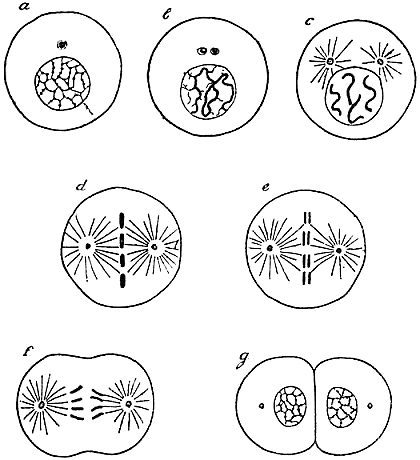
Fig. 1.—Diagram of Cell-Division (after Boveri).
| a. | Resting cell; the chromatin distributed in the form of small granules inside the nucleus. Outside the nucleus is the “centrosome,” not mentioned in the text. |
| b. | Beginning of division; the chromatin arranged in the form of a long thread. Centrosome divided in two. |
| c. | The thread of chromatin cut into four parts, the “chromosomes.” |
| d. | The four parts of the chromatin arranged symmetrically between the centrosomes and the star-like “spheres.” |
| e. | Each of the chromosomes split at full length. |
| f. | Beginning of division of protoplasm; the two parts of each chromosome separated. |
| g. | End of cell-division. |
Each cell-division which promotes growth is followed by
the enlargement of the two daughter-cells which result from
it; these two daughter-elements attain the exact size of the
mother-cell before division, and as soon as this size is reached
a new division begins: so the growth of the whole is in
the main the result of the growth of the elements. Cell-divisions
during real organ-formation may behave differently,
as will be described at a proper occasion.
The Egg: its Maturation and Fertilisation
We know that all the organs of an animal or plant consist
of cells, and we know what acts a cell can perform.
Now there is one very important organ in all living beings,
which is devoted to reproduction. This organ, the so-called
ovary in animals, is also built up of cells, and its single cells
are called the eggs; the eggs originated by cell-division, and
cell-division is to lead from them to the new adult.
But, with a very few exceptions, the egg in the ovary is
not able to accomplish its functions, unless certain typical
events have occurred, some of which are of a merely preparatory
kind, whilst the others are the actual stimulus
for development.
The preparatory ones are generally known under the
name of “maturation.” The egg must be “mature,” in
order that it may begin development, or even that it may
be stimulated to it. Maturation consists of a rather complicated
series of phenomena: later on we shall have
occasion to mention, at least shortly, what happens in the
protoplasm during its course; as to the nuclear changes
during maturation it may be enough for our purposes to say,
that there occur certain processes among the chromosomes,
which lead to an extension of half of them in the form of
two very small cells, the “directive cells” or “directive
or polar bodies,” as they have been somewhat cautiously
called.
The ripe or mature egg is capable of being fertilised.
Before turning to this important fact, which, by the way,
will bring us to our specially chosen type, the Echinus, a
few words may be devoted to the phenomenon of “parthenogenesis,”
that is to say, the possibility of development without
fertilisation, since owing to the brilliant discoveries of the
American physiologist, Jacques Loeb, this topic forms one
of the centres of biological interest at present. It has long
been known that the eggs of certain bees, lice, crayfishes,
and other animals and also plants, are capable of development
without fertilisation at all. Now Richard Hertwig
and T. H. Morgan already had shown, that at least nuclear
division may occur in the eggs of other forms—in the egg of
the sea-urchin for instance—when these eggs are exposed to
some chemical injuries. But Loeb4 succeeded in obtaining
a full development by treating the eggs of echinoderms with
chloride of magnesium; thus artificial parthenogenesis had
been discovered. Later researches have shown that artificial
parthenogenesis may occur in all classes of the animal
kingdom and may be provoked by all sorts of chemical or
physical means. We do not know at present in what the
proper stimulus consists that must be supposed here to
take the place of fertilisation; it seems, of course, highly
probable that it is always the same in the last resort.5
But enough about processes, which at present are of a
highly scientific, but hardly of any philosophic interest.
By fertilisation proper we understand the joining of the
male element, the spermatozoon or the spermia, with the
female element, the egg. Like the egg, the spermatozoon is
but a cell, though the two differ very much from one another
in the relation between their protoplasm and nucleus: in all
eggs it is the protoplasm which is comparatively very large,
if held together with somatic cells, in the spermatozoon it
is the nucleus. A large amount of reserve material, destined
for the growth of the future being, is the chief cause of
the size of the egg-protoplasm. The egg is quite or almost
devoid of the faculty of movement, while on the contrary,
movement is the most typical feature of the spermia. Its
whole organisation is adapted to movement in the most
characteristic manner: indeed, most spermatozoa resemble
a swimming infusorium, of the type of Flagellata, a so-called
head and a moving tail are their two chief constituents;
the head is formed almost entirely of nuclear substance.
It seems that in most cases the spermatozoa swim
around at random and that their union with the eggs is
assured only by their enormous number; only in a few
cases in plants have there been discovered special stimuli of
a chemical nature, which attract the spermia to the egg.
But we cannot enter here more fully into the physiology
of fertilisation, and shall only remark that its real significance
is by no means clear.6
The First Development Process of Echinus
Turning now definitively to the special kind of organism,
chosen of our type, the common sea-urchin, we properly
begin with a few words about the absolute size of its eggs
and spermatozoa. All of you are familiar with the eggs of
birds and possibly of frogs; these are abnormally large
eggs, on account of the very high amount of reserve
material they contain. The almost spherical egg of our
Echinus only measures about a tenth of a millimetre in
diameter; and the head of the spermatozoon has a volume
which is only the four-hundred-thousandth part of the
volume of the egg! The egg is about on the extreme limit
of what can be seen without optical instruments; it is
visible as a small white point. But the number of eggs
produced by a single female is enormous and may amount
to hundreds of thousands; this is one of the properties
which render the eggs of Echinus so very suitable for
experimental research; you can obtain them whenever and
in any quantity you like; and, moreover, they happen to
be very clear and transparent, even in later stages, and to
bear all kinds of operations well.
The spermia enters the egg, and it does so in the open
water—another of the experimental advantages of our type.
Only one spermia enters the egg in normal cases, and only
its head goes in, the tail is left outside. The moment
that the head has penetrated the protoplasm of the egg a
thin membrane is formed by the latter. This membrane is
very soft at first, becoming much stronger later on; it is
very important for all experimental work, that by shaking
the egg in the first minutes of its existence the membrane
can easily be destroyed without any damage to the egg itself.
And now occurs the chief phenomenon of fertilisation:
the nucleus of the spermatozoon unites with the nucleus of
the egg. When speaking of maturation, we mentioned that
half of the chromatin was thrown out of the egg by that
process: now this half is brought in again, but comes from
another individual.
It is from this phenomenon of nuclear union as the
main character of fertilisation that almost all theories of
heredity assume their right to regard the nuclei of the
sexual cells as the true “seat” of inheritance. Later on
we shall have occasion to discuss this hypothesis from the
point of view of logic and fact.
After the complete union of what are called the male
and the female “pronuclei,” the egg begins its development;
and this development, in its first steps, is simply pure cell-division.
We know already the chief points of this process,
and need only add to what has been described, that in the
whole first series of the cell-divisions of the egg, or, to use
the technical term, in the whole process of the “cleavage”
or “segmentation” of it, there is never any growth of the
daughter-elements after each division, such as we know to
occur after all cell-divisions of later embryological stages.
So it happens, that during cleavage the embryonic cells
become smaller and smaller, until a certain limit is reached;
the sum of the volumes of all the cleavage cells together
is equal to the volume of the egg.
But our future studies will require a more thorough
knowledge of the cleavage of our Echinus; the experimental
data we shall have to describe later on could hardly be
properly understood without such knowledge. The first
division plane, or, as we shall say, the first cleavage plane,
divides the eggs into equal parts; the second lies at right
angles to the first and again divides equally: we now have
a ring of four cells. The third cleavage plane stands at
right angles to the first two; it may be called an equatorial
plane, if we compare the egg with a globe; it also divides
equally, and so we now find two rings, each consisting of
four cells, and one above the other. But now the cell-divisions
cease to be equal, at least in one part of the egg:
the next division, which leads from the eight- to the
sixteen-cell stage of cleavage, forms four rings, of four
cells each, out of the two rings of the eight-cell stage.
Only in one half of the germ, in which we shall call the upper
one, or which we might call, in comparison with a globe,
the northern hemisphere, are cells of equal size to be found;
in the lower half of the egg four very small cells have been
formed at one “pole” of the whole germ. We call these
cells the “micromeres,” that is, the “small parts,” on the
analogy of the term “blastomeres,” that is, parts of the germ,
which is applied to all the cleavage cells in general. The
place occupied by the micromeres is of great importance
to the germ as a whole: the first formation of real organs
will start from this point later on. It is sufficient thus
fully to have studied the cleavage of our Echinus up to
this stage: the later cleavage stages may be mentioned
more shortly. All the following divisions are into equal
parts; there are no other micromeres formed, though, of
course, the cells derived from the micromeres of the sixteen-cell
stage always remain smaller than the rest. All the
divisions are tangential; radial cleavages never occur, and
therefore the process of cleavage ends at last in the formation
of one layer of cells, which forms the surface of a
sphere; it is especially by the rounding-up of each blastomere,
after its individual appearance, that this real surface
layer of cells is formed, but, of course, the condition, that
no radial divisions occur, is the most important one in its
formation. When 808 blastomeres have come into existence
the process of cleavage is finished; a sphere with a wall
of cells and an empty interior is the result. That only
808 cells are formed, and not, as might be expected, 1024,
is due to the fact that the micromeres divide less often
than the other elements; but speaking roughly, of course,
we may say that there are ten steps of cleavage-divisions
in our form; 1024 being equal to 210.
We have learned that the first process of development,
the cleavage, is carried out by simple cell-division. A few
cases are known, in which cell-division during cleavage is
accompanied by a specific migration of parts of the
protoplasm in the interior of the blastomeres, especially in
the first two or first four; but in almost all instances
cleavage is as simple a process of mere division as it is in
our sea-urchin. Now the second step in development, at
least in our form, is a typical histological performance: it
gives a new histological feature to all of the blastomeres:
they acquire small cilia on their outer side and with these
cilia the young germ is able to swim about after it has
left its membrane. The germ may be called a “blastula”
at this stage, as it was first called by Haeckel, whose
useful denominations of the first embryonic stages may
conveniently be applied, even if one does not agree with
most, or perhaps almost all, of his speculations (Fig. 2).
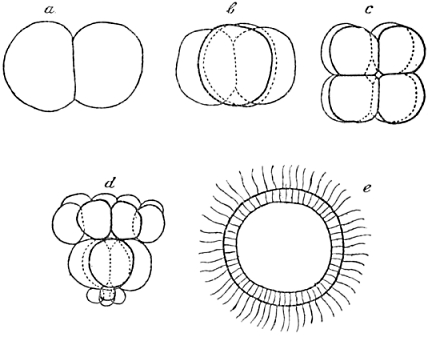
Fig. 2.—Early Development of Echinus, the Common Sea-urchin.
| a. | Two cells. |
| b. | Four cells. |
| c. | Eight cells, arranged in two rings of four, above one another. |
| d. | Sixteen cells, four “micromeres” formed at the “vegetative” pole. |
| e. | Optical section of the “blastula,” a hollow sphere consisting of about one thousand cells, each of them with a small cilium. |
It is important to notice that the formation of the
“blastula” from the last cleavage stage is certainly a
process of organisation, and may also be called a
differentiation with regard to that stage. But there is in
the blastula no trace of one part of the germ becoming
different with respect to others of its parts. If development
were to go on in this direction alone, high organisatory
complications might occur: but there would always be
only one sort of cells, arranged in a sphere; there would
be only one kind of what is called “tissue.”
But in fact development very soon loads to true
differences of the parts of the germ with respect to one
another, and the next step of the process will enable us
to apply different denominations to the different parts of
the embryo.
At one pole of the swimming blastula, exactly at the
point where the descendants of the micromeres are situated,
about fifty cells lose contact with their neighbours and
leave the surface of the globe, being driven into the interior
space of it. Not very much is known about the exact
manner in which these changes of cellular arrangement
are carried out, whether the cells are passively pressed by
their neighbours, or whether, perhaps, in a more active
manner, they change their surface conditions; therefore,
as in most ontogenetic processes, the description had best
be made cautiously in fairly neutral or figurative words.
The cells which in the above manner have entered the
interior of the blastula are to be the foundation of important
parts of the future organism; they are to form its connective
tissue, many of its muscles, and the skeleton. “Mesenchyme,”
i.e. “what has been infused into the other parts,” is the
technical name usually applied to these cells. We now
have to learn their definite arrangement. At first they lie
as a sort of heap inside the cell wall of the blastula, inside
the “blastoderm,” i.e. skin of the germ. But soon they
move from one another, to form a ring round the pole at
which they entered, and on this ring a process takes place
which has a very important bearing upon the whole type of
the organisation of the germ. You will have noticed that
hitherto the germ with regard to its symmetry has been a
monaxial or radial formation; the cleavage stages and the
blastula with its mesenchyme were forms with two different
poles, lying at the ends of one single line, and round this
line everything was arranged concentrically. But now
what is called “bilateral symmetry” is established; the
mesenchyme ring assumes a structure which can be
symmetrically divided only by one plane, but divided in
such a way, that one-half of it is the mirror image of the
other. A figure shows best what has occurred, and you will
notice (Fig. 3) two masses of cells in this figure, which
have the forms of spherical triangles: it is in the midst of
these triangles that the skeleton of the larva originates.
The germ had an upper and a lower side before: it now
has got an upper and lower, front and back, right and left
half; it now has acquired that symmetry of organisation
which our own body has; at least it has got it as far as
its mesenchyme is concerned.
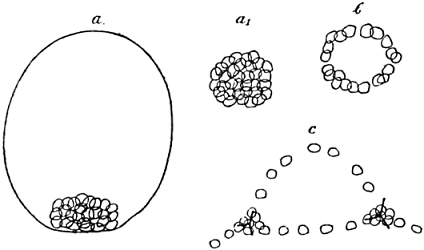
Fig. 3.—Formation of Mesenchyme in Echinus.
| a. | Outlines of blastula, side-view; mesenchyme forms a heap of cells at the “vegetative” pole. |
| a1. | Heap of mesenchyme-cells from above. |
| b. | Mesenchyme-cells arranged in a ring round the vegetative pole. |
| c. | Mesenchyme-cells arranged in a bilateral-symmetrical figure; primordia of skeleton in the midst of two spherical triangles. |
We leave the mesenchyme for a while and study another
kind of organogenesis. At the very same pole of the germ
where the mesenchyme cells originated there is a long and
narrow tube of cell growing in, and this tube, getting longer
and longer, after a few hours of growth touches the opposite
pole of the larva. The growth of this cellular tube marks
the beginning of the formation of the intestine, with all
that is to be derived from it. The larva now is no longer
a blastula, but receives the name of “gastrula” in Haeckel’s
terminology; it is built up of the three “germ-layers” in
this stage. The remaining part of the blastoderm is called
“ectoderm,” or outer layer; the newly-formed tube,
“endoderm,” or inner layer; while the third layer is the
“mesenchyme” already known to us.
The endoderm itself is a radial structure at first, as
was the whole germ in a former stage, but soon its free
end bends and moves against one of the sides of the
ectoderm, against that side of it where the two triangles
of the mesenchyme are to be found also. Thus the endoderm
has acquired bilateral symmetry just as the mesenchyme
before, and as in this stage the ectoderm also
assumes a bilateral symmetry in its form, corresponding
with the symmetrical relations in the endoderm and the
mesenchyme, we now may call the whole of our larva a
bilateral-symmetrical organisation.
It cannot be our task to follow all the points of organogenesis
of Echinus in detail. It must suffice to state
briefly that ere long a second portion of the mesenchyme
is formed in the larva, starting from the free end of
its intestine tube; that the formation of the so-called
“coelum” occurs by a sort of splitting off from this same
original organ; and that the intestine itself is divided
into three parts of different size and aspect by two circular
sections.
But we must not, I think, dismiss the formation of the
skeleton so quickly. I told you already that the skeleton
has its first origin in the midst of the two triangular
cell-masses of the mesenchyme; but what are the steps before
it attains its typical and complicated structure? At the
beginning a very small tetrahedron, consisting of carbonate
of calcium, is formed in each of the triangles; the four edges
of the tetrahedron are produced into thin rods, and by
means of a different organogenesis along each of these
rods the typical formation of the skeleton proceeds. But
the manner in which it is carried out is very strange
and peculiar. About thirty of the mesenchyme cells are
occupied in the formation of skeleton substance on each
side of the larva. They wander through the interior space of
the gastrula—which at this stage is not filled with sea
water but with a sort of gelatinous material—and wander
in such a manner that they always come to the right places,
where a part of the skeleton is to be formed; they form it
by a process of secretion, quite unknown in detail; one of
them forms one part, one the other, but what they form
altogether, is one whole.
When the formation of the skeleton is accomplished, the
typical larva of our Echinus is built up; it is called the
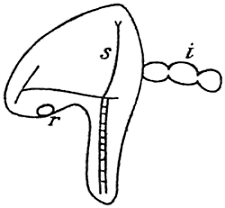
“pluteus” (Fig. 4). Though it is far from being the
perfect adult animal, it has an independent life of its own;
it feeds and moves about and does not go through any
important changes of form for weeks. But after a certain
period of this species of independent life as a “larva,” the
changes of form it undergoes again are most fundamental:
it must be transformed into the adult sea-urchin, as all of
you know. There are hundreds and hundreds of single
operations of organogenesis to be accomplished before that
end is reached; and perhaps the strangest of all these
operations is a certain sort of growth, by which the symmetry
of the animal, at least in certain of its parts—not in all of
them—is changed again from bilateral to radial, just the
opposite of what happened in the very early stages.
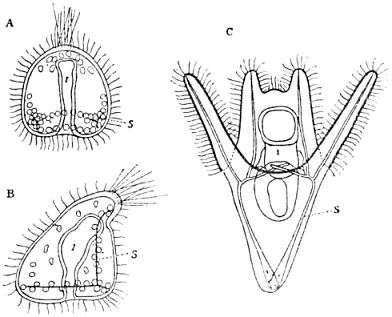
Fig. 4.—Larval Development of Echinus.
| A. | The gastrula. |
| B. | Later stage, bilateral-symmetrical. Intestine begins to divide into three parts. |
| C. | Pluteus larva. S = Skeleton. I = Intestine. |
But we cannot follow the embryology of our Echinus
further here; and indeed we are the less obliged to do so,
since in all our experimental work we shall have to deal
with it only as far as to the pluteus larva. It is impossible
under ordinary conditions to rear the germs up to the adult
stages in captivity.
You now, I hope, will have a general idea at least of the
processes of which the individual development of an animal
consists. Of course the specific features leading from the
egg to the adult are different in each specific case, and, in
order to make this point as clear as possible, I shall now
add to our description a few words about what may be
called a comparative descriptive embryology.
Comparative Embryology
Even the cleavage may present rather different aspects.
There may be a compact blastula, not one surrounded by
only one layer of cells as in Echinus; or bilaterality may be
established as early as the cleavage stage—as in many
worms and in ascidians—and not so late as in Echinus.
The formation of the germ layers may go on in a different
order and under very different conditions: a rather close
relative of our Echinus, for instance, the starfish, forms
first the endoderm and afterwards the mesenchyme. In
many cases there is no tube of cells forming the “endoderm,”
but a flat layer of cells is the first foundation of all the
intestinal organs: so it is in all birds and in the cuttlefish.
And, as all of you know, of course, there are very many
animal forms which have no proper “larval” stage: there
is one in the frog, the well-known “tadpole,” but the birds
and mammals have no larvae; that is to say, there is no
special stage in the ontogeny of these forms which leads an
independent life for a certain time, as if it were a species
by itself, but all the ontogenetical stages are properly “embryonic”—the
germ is always an “embryo” until it becomes
the perfect young organism. And you also know that not
all skeletons consist of carbonate of calcium, but, that there
are skeletons of silicates, as in Radiolaria, and of horny
substance, as in many sponges. And, indeed, if we were to
glance at the development of plants also, the differences
would seem to us probably so great that all the similarities
would seem to disappear.
But there are similarities, nevertheless, in all development,
and we shall now proceed to examine what they are. As
a matter of fact, it was especially for their sake that we
studied the ontogeny of a special form in such detail; one
always sees generalities better if one knows the specific
features of at least one case. What then are the features
of most general and far-reaching importance, which may be
abstracted from the individual history of our sea-urchin,
checked always by the teachings of other ontogenies, including
those of plants?
The First Steps of Analytical Morphogenesis
If we look back upon the long fight of the schools of
embryologists in the eighteenth century about the question
whether individual development was to be regarded as a real
production of visible manifoldness or as a simple growth of
visibly pre-existing manifoldness, whether it was “epigenesis”
or “evolutio,” there can be no doubt, if we rely
on all the investigations of the last hundred and fifty years,
that, taken in the descriptive sense, the theory of epigenesis
is right. Descriptively speaking there is a production of
visible manifoldness in the course of embryology: that is
our first and main result. Any one possessed of an average
microscope may any day convince himself personally that
it is true.
In fact, true epigenesis, in the descriptive sense of the
term, does exist. One thing is formed “after” the other;
there is not a mere “unfolding” of what existed already,
though in a smaller form; there is no “evolutio” in the old
meaning of the word.
The word “evolution” in English usually serves to denote
the theory of descent, that is of a real relationship of all
organisms. Of course we are not thinking here of this
modern and specifically English meaning of the Latin word
evolutio. In its ancient sense it means to a certain degree
just the opposite; it says that there is no formation of anything
new, no transformation, but simply growth, and this is
promoted not for the race but for the individual. Keeping
well in mind these historical differences in the meaning of
the word “evolutio,” no mistakes, it seems to me, can occur
from its use. We now shall try to obtain a few more
particular results from our descriptive study of morphogenesis,
which are nevertheless of a general bearing, being
real characteristics of organic individual development, and
which, though not calculated of themselves to further the
problem, will in any case serve to prepare for a more
profound study of it.
The totality of the line of morphogenetic facts can easily
be resolved into a great number of distinct processes. We
propose to call these “elementary morphogenetic processes”;
the turning in of the endoderm and its division into three
typical parts are examples of them. If we give the name
“elementary organs” to the distinct parts of every stage of
ontogeny which are uniform in themselves and are each
the result of one elementary process in our sense, we are
entitled to say that each embryological stage consists of a
certain number of elementary organs. The mesenchyme ring,
the coelum, the middle-intestine, are instances of such organs.
It is important to notice well that the word elementary is
always understood here with regard to visible morphogenesis
proper and does not apply to what may be called elementary
in the physiological sense. An elementary process in our
sense is a very distinct act of form-building, and an elementary
organ is the result of every one of such acts.
The elementary organs are typical with regard to their
position and with regard to their histological properties.
In many cases they are of a very clearly different histological
type, as for instance, the cells of the three so-called
germ-layers; and in other cases, though apparently almost
identical histologically, they can be proved to be different
by their different power of resisting injuries or by other
means. But there are not as many different types of
histological structure as there are typically placed organs:
on the contrary there are many elementary organs of the
same type in different typical parts of the organism, as all
of you know to be the case with nerves and muscles. It
will not be without importance for our future theory of
development, carefully to notice this fact, that specialisation
in the position of embryonic parts is more strict than
in their histology.
But elementary organs are not only typical in position
and histology, they are typical also with regard to their
form and their relative size. It agrees with what has been
said about histology being independent of typical position,
that there may be a number of organs in an embryonic
stage, all in their most typical positions, which though all
possessing the same histology, may have different forms or
different sizes or both: the single bones of the skeleton of
vertebrates or of adult echinoderms are the very best instances
of this most important feature of organogenesis. If we look
back from elementary organs to elementary processes, the
specialisation of the size of those organs may also be said to
be the consequence of a typical duration of the elementary
morphogenetic process leading to them.7
I hardly need to say, that the histology, form, and size
of elementary organs are equally an expression of their
present or future physiological function. At least they
prepare for this function by a specific sort of metabolism
which sets in very early.
The whole sequence of individual morphogenesis has
been divided by some embryologists into two different
periods; there is a first period, during which the foundations
of the organisation of the “type” are laid down, and a
second period, during which the histo-physiological specifications
are modelled out (von Baer, Götte, Roux). Such a
discrimination is certainly justified, if not taken too strictly;
but its practical application would encounter certain
difficulties in many larval forms, and also, of course, in
all plants.
Our mention of plants leads us to the last of our
analytical results. If an animal germ proceeds in its
development from a stage d to the stage g, passing through
e and f, we may say that the whole of d has become the
whole of f, but we cannot say that there is a certain part of
f which is d, we cannot say that f is d + a. But in plants
we can: the stage f is indeed equal to a + b + c + d + e + a in vegetable organisms; all earlier stages are actually visible
as parts of the last one. The great embryologist, Carl Ernst
von Baer, most clearly appreciated these analytical differences
between animal and vegetable morphogenesis. They become
a little less marked if we remember that plants, in a
certain respect, are not simple individuals but colonies, and
that among the corals, hydroids, bryozoa, and ascidia, we
find analogies to plants in the animal kingdom; but nevertheless
the differences we have stated are not extinguished
by such reasoning. It seems almost wholly due to the
occurrence of so many foldings and bendings and migrations
of cells and complexes of cells in animal morphogenesis, that
an earlier stage of their development seems lost in the later
one; those processes are almost entirely wanting in plants,
even if we study their very first ontogenetic stages. If we
say that almost all production of surfaces goes on outside
in plants, inside in animals, we shall have adequately
described the difference. And this feature again leads to
the further diversity between animals and plants which is
best expressed by calling the former “closed,” the latter
“open” forms: animals reach a point where they are
finished, plants never are finished, at least in most cases.
I hope you will allow that I have tried to draw from
descriptive and comparative embryology as many general
analytical results as are possibly to be obtained. It is not
my fault if there are not any more, nor is it my fault if the
results reached are not of the most satisfactory character.
You may say that these results perhaps enable you to see a
little more clearly and markedly than before a few of the
characters of development, but that you have not really
learnt anything new. Your disappointment—my own
disappointment—in our analysis is due to the use of pure
description and comparison as scientific methods.
The Limits of Pure Description in Science
We have analysed our descriptions as far as we could,
and now we must confess that what we have found cannot
be the last thing knowable about individual morphogenesis.
There must be something deeper to be discovered: we only
have been on the surface of the phenomena, we now want
to get to the very bottom of them. Why then occurs all
that folding, and bending, and histogenesis, and all the other
processes we have described? There must be something
that drives them out, so to say.
There is a very famous dictum in the Treatise on
Mechanics by the late Gustav Kirchhoff, that it is the task
of mechanics to describe completely and in the most simple
manner all the motions that occur in nature. These words,
which may appear problematic even in mechanics, have
had a really pernicious influence on biology. People were
extremely pleased with them. “‘Describing’—that is just
what we always have done,” they said; “now we see that we
have done just what was right; a famous physicist has told
us so.” They did not see that Kirchhoff had added the
words “completely and in the most simple manner”; and
moreover, they did not consider that Kirchhoff never regarded
it as the ultimate aim of physics to describe thunderstorms
or volcanic eruptions or denudations; yet it only is with
such “descriptions” that biological descriptions of given
bodies and processes are to be compared!
Physicists always have used both experiment and hypothetical
construction—Kirchhoff himself did so in the most
gifted manner. With these aids they have gone through the
whole of the phenomena, and what they found to be ultimate
and truly elemental, that alone may they be said to have
“described”; but they have “explained” by the aid of
elementalities what proved to be not elemental in itself.8
It is the method of the physicists—not their results—that
morphogenesis has to apply in order to make progress;
and this method we shall begin to apply in our next lectures.
Physiology proper has never been so short-sighted and self-satisfied
as not to learn from other sciences, from which
indeed there was very much to be learned; but morphology
has: the bare describing and comparing of descriptions has
been its only aim for about forty years or more, and lines
of descent of a very problematic character were its only
general results. It was not seen that science had to begin,
not with problematic events of the past, but with what
actually happens before our eyes.
But before saying any more about the exact rational
and experimental method in morphology, which indeed may
be regarded as a new method, since its prevalence in the
eighteenth century had been really forgotten, we first shall
have to analyse shortly some general attempts to understand
morphogenesis by means of hypothetic construction exclusively.
Such attempts have become very important
as points of issue for really exact research, and, moreover,
they deserve attention, because they prove that their authors
at least had not quite forgotten that there were still other
problems to be solved in morphology than only phylogenetical
ones.
THE THEORY OF WEISMANN
Of all the purely hypothetic theories on morphogenesis
that of August Weismann9 can claim to have had the
greatest influence, and to be at the same time the most
logical and the most elaborated. The “germ-plasma”
theory of the German author is generally considered as
being a theory of heredity, and that is true inasmuch as
problems of inheritance proper have been the starting-point
of all his hypothetic speculations, and also form in some
respect the most valuable part of them. But, rightly understood,
Weismann’s theory consists of two independent parts,
which relate to morphogenesis and to heredity separately,
and it is only the first which we shall have to take into
consideration at present; what is generally known as the
doctrine of the “continuity of the germ-plasm” will be
discussed in a later chapter.
Weismann assumes that a very complicated organised
structure, below the limits of visibility even with the
highest optical powers, is the foundation of all morphogenetic
processes, in such a way that, whilst part of this
structure is handed over from generation to generation as
the basis of heredity, another part of it is disintegrated
during the individual development, and directs development
by being disintegrated. The expression, “part” of the
structure, first calls for some explanation. Weismann
supposes several examples, several copies, as it were, of his
structure to be present in the germ cells, and it is to these
copies that the word “part” has been applied by us: at least
one copy has to be disintegrated during ontogeny.
The morphogenetic structure is assumed to be present in
the nucleus of the germ cells, and Weismann supposes
the disintegration of his hypothetic structure to be accomplished
by nuclear division. By the cleavage of the egg,
the most fundamental parts of it are separated one from
the other. The word “fundamental” must be understood
as applying not to proper elements or complexes of
elements of the organisation, but to the chief relations
of symmetry; the first cleavage, for instance, may separate
the right and the left part of the structure, the second one
its upper and lower parts, and after the third or equatorial
cleavage all the principal eighths of our minute organisation
are divided off: for the minute organisation, it must
now be added, had been supposed to be built up differently
in the three directions of space, just as the adult organism
is. Weismann concedes it to be absolutely unknown in
what manner the proper relation between the parts of the
disintegrated fundamental morphogenetic structure and the
real processes of morphogenesis is realised; enough that there
may be imagined such a relation.
At the end of organogenesis the structure is assumed to
have been broken up into its elements, and these elements,
which may be chemical compounds, determine the fate of
the single cells of the adult organism.
Here let us pause for a moment. There cannot be any
doubt that Weismann’s theory resembles to a very high
degree the old “evolutio” doctrines of the eighteenth
century, except that it is a little less crude. The chick itself
is not supposed to be present in the hen’s egg before development,
and ontogeny is not regarded as a mere growth of
that chick in miniature, but what really is supposed to be
present in the egg is nevertheless a something that in all its
parts corresponds to all the parts of the chick, only under
a somewhat different aspect, while all the relations of the
parts of the one correspond to the relations of the parts
of the other. Indeed, only on such an hypothesis of a
fairly fixed and rigid relation between the parts of the
morphogenetic structure could it be possible for the
disintegration of the structure to go on, not by parts of
organisation, but by parts of symmetry; which, indeed, is
a very strange, but not an illogical, feature of Weismann’s
doctrine.
Weismann is absolutely convinced that there must be
a theory of “evolutio,” in the old sense of the word, to
account for the ontogenetic facts; that “epigenesis” has its
place only in descriptive embryology, where, indeed, as we
know, manifoldness in the visible sense is produced, but
that epigenesis can never form the foundation of a real
morphogenetic theory: theoretically one pre-existing manifoldness
is transformed into the other. An epigenetic
theory would lead right beyond natural science, Weismann
thinks, as in fact, all such theories, if fully worked out,
have carried their authors to vitalistic views. But vitalism
is regarded by him as dethroned for ever.
Under these circumstances we have a good right, it
seems to me, to speak of a dogmatic basis of Weismann’s
theory of development.
But to complete the outlines of the theory itself:
Weismann was well aware that there were some grave
difficulties attaching to his statements: all the facts of
so-called adventitious morphogenesis in plants, of regeneration
in animals, proved that the morphogenetic organisation could
not be fully disintegrated during ontogeny. But these
difficulties were not absolute: they could be overcome:
indeed, Weismann assumes, that in certain specific cases—and
he regarded all cases of restoration of a destroyed
organisation as due to specific properties of the subjects,
originated by roundabout variations and natural selection—that
in specific cases, specific arrangements of minute
parts were formed during the process of disintegration, and
were surrendered to specific cells during development, from
which regeneration or adventitious budding could originate
if required. “Plasma of reserve” was the name bestowed
on these hypothetic arrangements.
Almost independently another German author, Wilhelm
Roux,10 has advocated a theoretical view of morphogenesis
which very closely resembles the hypothesis of Weismann.
According to Roux a minute ultimate structure is present
in the nucleus of the germ and directs development by being
divided into its parts during the series of nuclear divisions.
But in spite of this similarity of the outset, we enter an
altogether different field of biological investigation on
mentioning Roux’s name: we are leaving hypothetic construction,
at least in its absoluteness, and are entering the
realms of scientific experiment in morphology.
EXPERIMENTAL MORPHOLOGY
I have told you already in the last lecture that, while
in the eighteenth century individual morphogenesis had
formed the centre of biological interest and been studied
experimentally in a thoroughly adequate manner, that
interest gradually diminished, until at last the physiology
of form as an exact separate science was almost wholly
forgotten. At least that was the state of affairs as regards
zoological biology; botanists, it must be granted, have never
lost the historical continuity to such a degree; botany has
never ceased to be regarded as one science and never was
broken up into parts as zoology was. Zoological physiology
and zoological morphology indeed were for many years in a
relationship to one another not very much closer than the
relation between philology and chemistry.
There were always a few men, of course, who strove
against the current. The late Wilhelm His,11 for instance,
described the embryology of the chick in an original
manner, in order to find out the mechanical relations of
embryonic parts, by which passive deformation, as an
integrating part of morphogenesis, might be induced. He
also most clearly stated the ultimate aim of embryology to
be the mathematical derivation of the adult form from the
distribution of growth in the germ. To Alexander Goette12
we owe another set of analytical considerations about
ontogeny. Newport, as early as 1850, and in later years
Pflüger and Rauber, carried out experiments on the eggs of
the frog, which may truly be called anticipatory of what
was to follow. But it was Wilhelm Roux,13 now professor
of anatomy at Halle, who entered the field with a thoroughly
elaborated programme, who knew not only how to state the
problem analytically, but also how to attack it, fully
convinced of the importance of what he did. “Entwickelungsmechanik,”—mechanics
of development—he called the “new
branch of anatomical science” of which he tried to lay the
foundations.
I cannot let this occasion pass without emphasising in
the most decided manner how highly in my opinion
Roux’s services to the systematic exploration of morphogenesis
must be esteemed. I feel the more obliged to do
so, because later on I shall have to contradict not only
many of his positive statements but also most of his
theoretical views. He himself has lately given up much of
what he most strongly advocated only ten years ago. But
Roux’s place in the history of biological science can never
be altered, let science take what path it will.
It is not the place here to develop the logic of
experiment; least of all is it necessary in the country
of John Stuart Mill. All of you know that experiment, by
its method of isolating the single constituents of complicated
phenomena, is the principal aid in the discovery of so-called
causal relations. Let us try then to see what causal
relations Wilhelm Roux established with the aid of
morphogenetic experiment.
THE WORK OF WILHELM ROUX
We know already that an hypothesis about the foundation
of individual development was his starting-point. Like
Weismann he supposed that there exists a very complicated
structure in the germ, and that nuclear division leads to
the disintegration of that structure. He next tried to
bring forward what might be called a number of indicia
supporting his view.
A close relation had been found to exist in many cases
between the direction of the first cleavage furrows of the
germ and the direction of the chief planes of symmetry
in the adult: the first cleavage, for instance, very often
corresponds to the median plane, or stands at right
angles to it. And in other instances, such as have been
worked out into the doctrine of so-called “cell-lineages,”
typical cleavage cells were found to correspond to typical
organs. Was not that a strong support for a theory which
regarded cellular division as the principal means of
differentiation? It is true, the close relations between
cleavage and symmetry did not exist in every case, but
then there had always happened some specific experimental
disturbances, e.g. influences of an abnormal direction of
gravity on account of a turning over of the egg, and it
was easy to reconcile such cases with the generally accepted
theory on the assumption of what was called “anachronism”
of cleavage.
But Roux was not satisfied with mere indicia, he
wanted a proof, and with this intention he carried out
an experiment which has become very celebrated.14 With a
hot needle he killed one of the first two blastomeres of
the frog’s egg after the full accomplishment of its first
cleavage, and then watched the development of the surviving
cell. A typical half-embryo was seen to emerge—an organism
indeed, which was as much a half as if a fully formed
embryo of a certain stage had been cut in two by a razor.
It was especially in the anterior part of the embryo that
its “halfness” could most clearly be demonstrated.
That seemed to be a proof of Weismann’s and Roux’s
theory of development, a proof of the hypothesis that there
is a very complicated structure which promotes ontogeny
by its disintegration, carried out during the cell divisions
of embryology by the aid of the process of nuclear division,
the so-called “karyokinesis.”
To the dispassionate observer it will appear, I suppose,
that the conclusions drawn by Roux from his experiment
go a little beyond their legitimate length. Certainly some
sort of “evolutio” is proved by rearing half the frog from
half the egg. But is anything proved, is there anything
discovered at all about the nucleus? It was only on
account of the common opinion about the part it played
in morphogenesis that the nucleus had been taken into
consideration.
Things soon became still more ambiguous.
THE EXPERIMENTS ON THE EGG OF THE SEA-URCHIN
Roux’s results were published for the first time in
1888; three years later I tried to repeat his fundamental
experiment on another subject and by a somewhat different
method. It was known from the cytological researches
of the brothers Hertwig and Boveri that the eggs of the
common sea-urchin (Echinus microtuberculatus) are able to
stand well all sorts of rough treatment, and that, in
particular, when broken into pieces by shaking, their fragments
will survive and continue to segment. I took
advantage of these facts for my purposes. I shook the
germs rather violently during their two-cell stage, and in
several instances I succeeded in killing one of the blastomeres,
while the other one was not damaged, or in separating
the two blastomeres from one another.15
Let us now follow the development of the isolated
surviving cell. It went through cleavage just as it would
have done in contact with its sister-cell, and there occurred
cleavage stages which were just half of the normal ones.
The stage, for instance, which corresponded to the normal
sixteen-cell stage, and which, of course, in my subjects was
built up of eight elements only, showed two micromeres, two
macromeres and four cells of medium size, exactly as if a
normal sixteen-cell stage had been cut in two; and the form
of the whole was that of a hemisphere. So far there was
no divergence from Roux’s results.
The development of our Echinus proceeds rather rapidly,
the cleavage being accomplished in about fifteen hours. I
now noticed on the evening of the first day of the experiment,
when the half-germ was composed of about two hundred elements,
that the margin of the hemispherical germ bent together
a little, as if it were about to form a whole sphere of smaller
size, and, indeed, the next morning a whole diminutive
blastula was swimming about. I was so much convinced
that I should get Roux’s morphogenetical result in all its
features that, even in spite of this whole blastula, I now
expected that the next morning would reveal to me the
half-organisation of my subject once more; the intestine, I
supposed, might come out quite on one side of it, as a half-tube,
and the mesenchyme ring might be a half one also.
But things turned out as they were bound to do and
not as I had expected; there was a typically whole gastrula
on my dish the next morning, differing only by its small
size from a normal one; and this small but whole gastrula
was followed by a whole and typical small pluteus-larva
(Fig. 5).
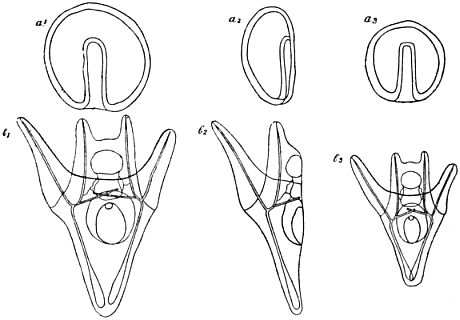
Fig. 5.—Illustration of Experiments on Echinus.
| a1 and b1. | Normal gastrula and normal pluteus. |
| a2 and b2. | “Half”-gastrula and “half”-pluteus, that ought to result from one of the first two blastomeres, when isolated, according to the theory of “evolutio.” |
| a3 and b3. | The small but whole gastrula and pluteus that actually do result. |
That was just the opposite of Roux’s result: one of the
first two blastomeres had undergone a half-cleavage as in
his case, but then it had become a whole organism by a
simple process of rearrangement of its material, without
anything that resembled regeneration, in the sense of a
completion by budding from a wound.
If one blastomere of the two-cell stage was thus capable
of performing the morphogenetical process in its totality,
it became, of course, impossible to allow that nuclear
division had separated any sort of “germ-plasm” into two
different halves, and not even the protoplasm of the egg
could be said to have been divided by the first cleavage
furrow into unequal parts, as the postulate of the strict
theory of so-called “evolutio” had been. This was a very
important result, sufficient alone to overthrow at once the
theory of ontogenetical “evolutio,” the “Mosaiktheorie” as
it had been called—not by Roux himself, but according to
his views—in its exclusiveness.
After first widening the circle of my observations by
showing that one of the first four blastomeres is capable
of performing a whole organogenesis, and that three of
the first four blastomeres together result in an absolutely
perfect organism, I went on to follow up separately one of
the two fundamental problems which had been suggested
by my first experiment: was there anything more to find
out about the importance or unimportance of the single
nuclear divisions in morphogenesis?16
By raising the temperature of the medium or by diluting
the sea-water to a certain degree it proved at first to be
possible to alter in a rather fundamental way the type of
the cleavage-stages without any damage to the resulting
organism. There may be no micromeres at the sixteen-cell
stage, or they may appear as early as in the stage of eight
cells; no matter, the larva is bound to be typical. So it
certainly is not necessary for all the cleavages to occur
just in their normal order.
But of greater importance for our purposes was what
followed. I succeeded in pressing the eggs of Echinus
between two glass plates, rather tightly, but without killing
them; the eggs became deformed to comparatively flat
plates of a large diameter. Now in these eggs all nuclear
division occurred at right angles to the direction of pressure,
that is to say, in the direction of the plates, as long as
the pressure lasted; but the divisions began to occur at
right angles to their former direction, as soon as the
pressure ceased. By letting the pressure be at work for
different times I therefore, of course, had it quite in my
power to obtain cleavage types just as I wanted to get
them. If, for instance, I kept the eggs under pressure
until the eight-cell stage was complete, I got a plate of eight
cells one beside the other, instead of two rings, of four
cells each, one above the other, as in the normal case; but
the next cell division occurred at right angles to the former
ones, and a sixteen-cell stage, of two plates of eight cells
each, one above the other, was the result. If the pressure
continued until the sixteen-cell stage was reached, sixteen
cells lay together in one plate, and two plates of sixteen
cells each, one above the other, were the result of the next
cleavage.
We are not, however, studying these things for
cytological, but for morphogenetical purposes, and for these
the cleavage phenomenon itself is less important than the
organogenetic result of it: all our subjects resulted in
absolutely normal organisms. Now, it is clear, that the
spatial relations of the different nuclear divisions to each
other are anything but normal, in the eggs subjected to the
pressure experiments; that, so to say, every nucleus has got
quite different neighbours if compared with the “normal”
case. If that makes no difference, then there cannot
exist any close relation between the single nuclear divisions
and organogenesis at all, and the conclusion we have drawn
more provisionally from the whole development of isolated
blastomeres has been extended and proved in the most
perfect manner. There ought to result a morphogenetic
chaos according to the theory of real “evolutio” carried
out by nuclear division, if the positions of the single nuclei
were fundamentally changed with regard to one another
(Fig. 6). But now there resulted not chaos, but the normal
organisation: therefore it was disproved in the strictest way
that nuclear divisions have any bearing on the origin
of organisation; at least as far as the divisions during
cleavage come into account.
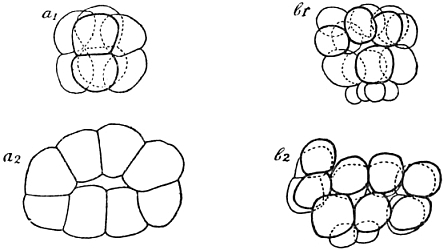
Fig. 6.—Pressure-experiments on Echinus.
| a1 and b1. | Two normal cleavage stages, consisting of eight and sixteen cells. |
| a2 and b2. | Corresponding stages modified by exerting pressure until the eight-cell stage was finished. See text. |
On the egg of the frog (O. Hertwig), and on the egg of
annelids (E. B. Wilson), my pressure experiments have been
carried out with the same result.17
ON THE INTIMATE STRUCTURE OF THE PROTOPLASM OF THE
GERM
Nuclear division, as we have seen, cannot be the basis
of organogenesis, and all we know about the whole development
of isolated blastomeres seems to show that there
exists nothing responsible for differentiation in the protoplasm
either.
But would that be possible? It cannot appear possible
on a more profound consideration of the nature of morphogenesis,
it seems to me: as the untypical agents of the
medium cannot be responsible in any way for the origin
of a form combination which is most typical and specific,
there must be somewhere in the egg itself a certain factor
which is responsible at least for the general orientation
and symmetry of it. Considerations of this kind led me,
as early as 1893,18 to urge the hypothesis that there
existed, that there must exist, a sort of intimate structure
in the egg, including polarity and bilaterality as the chief
features of its symmetry, a structure which belongs to
every smallest element of the egg, and which might be
imagined by analogy under the form of elementary magnets.19
This hypothetic structure could have its seat in the protoplasm
only. In the egg of echinoderms it would be capable
of such a quick rearrangement after being disturbed, that
it could not be observed but only inferred logically; there
might, however, be cases in which its real discovery would
be possible. Indeed Roux’s frog-experiment seems to be
a case where it is found to be at work: at least it seems
very probable to assume that Roux obtained half of a
frog’s embryo because the protoplasm of the isolated blastomere
had preserved the “halfness” of its intimate structure,
and had not been able to form a small whole out of it.
Of course it was my principal object to verify this
hypothesis, and such verification became possible in a set
of experiments which my friend T. H. Morgan and myself
carried out together,20 in 1895, on the eggs of ctenophores,
a sort of pelagic animals, somewhat resembling the jelly-fish,
but of a rather different inner organisation. The
zoologist Chun had found even before Roux’s analytical
studies, that isolated blastomeres of the ctenophore egg
behave like parts of the whole and result in a half-organisation
like the frog’s germ does. Chun had not laid much
stress on his discovery, which now, of course, from the new
points of view, became a very important one. We first
repeated Chun’s experiment and obtained his results, with
the sole exception that there was a tendency of the
endoderm of the half-larva of Beroë to become more than
“half.” But that was not what we chiefly wanted to
study. We succeeded in cutting away a certain mass of
the protoplasm of the ctenophore egg just before it began to
cleave, without damaging its nuclear material in any way:
in all cases, where the cut was performed at the side, there
resulted a certain type of larvae from our experiments which
showed exactly the same sort of defects as were present in
larvae developed from one of the first two blastomeres
alone.
The hypothesis of the morphogenetic importance of
protoplasm had thus been proved. In our experiments
there was all of the nuclear material, but there were
defects on one side of the protoplasm of the egg; and the
defects in the adult were found to correspond to these
defects in the protoplasm.
And now O. Schultze and Morgan succeeded in performing
some experiments which directly proved the
hypothesis of the part played by protoplasm in the subject
employed by Roux, viz., the frog’s egg. The first of these
investigators managed to rear two whole frog embryos of
small size, if he slightly pressed the two-cell stage of that
form between two plates of glass and turned it over; and
Morgan,21 after having killed one of the first two blastomeres,
as was done in the original experiment of Roux, was able
to bring the surviving one to a half or to a whole development
according as it was undisturbed or turned. There
cannot be any doubt that in both of these cases, it is the
possibility of a rearrangement of protoplasm, offered by
the turning over, which allows the isolated blastomere to
develop as a whole. The regulation of the frog’s egg, with
regard to its becoming whole, may be called facultative,
whilst the same regulation of the egg of Echinus is
obligatory. It is not without interest to note that the
first two blastomeres of the common newt, i.e. of a form
which belongs to the other class of Amphibia, after a
separation of any kind, always develop as wholes, their
faculty of regulation being obligatory, like that of Echinus.
Whole or partial development may thus be dependent
on the power of regulation contained in the intimate polar-bilateral
structure of the protoplasm. Where this is so,
the regulation and the differences in development are both
connected with the chief relations of symmetry. The
development becomes a half or a quarter of the normal
because there is only one-half or one-quarter of a certain
structure present, one-half or one-quarter with regard
to the very wholeness of this structure; the development
is whole, in spite of disturbances, if the intimate
structure became whole first. We may describe the
“wholeness,” “halfness,” or “quarterness” of our hypothetic
structure in a mathematical way, by using three axes, at
right angles to one another, as the base of orientation. To
each of these, x, y, and z, a certain specific state with
regard to the symmetrical relations corresponds; thence
it follows that, if there are wanting all those parts of the
intimate structure which are determined, say, by a negative
value of y, by minus y, then there is wanting half of the intimate
structure; and this halfness of the intimate structure
is followed by the halfness of organogenesis, the dependence
of the latter on the intimate structure being established.
But if regulation has restored, on a smaller scale, the whole
of the arrangement according to all values of x, y and z,
development also can take place completely (Fig. 7).
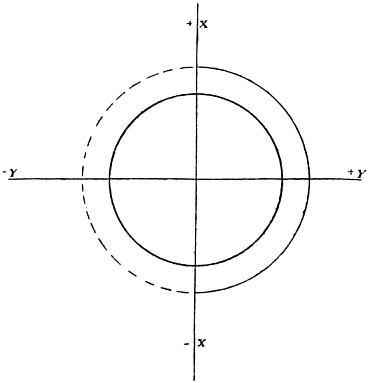
Fig. 7.—Diagram illustrating the intimate Regulation of Protoplasm from
“Half” to “Whole.”
The large circle represents the original structure of the egg. In all cases where cleavage-cells
of the two-cell stage are isolated this original structure is only present as
“half” in the beginning, say only on the right (+y) side. Development then
becomes “half,” if the intimate structure remains half; but it becomes “whole”
(on a smaller scale) if a new whole-structure (small circle!) is formed by regulatory
processes.
I am quite aware that such a discussion is rather empty
and purely formal, nevertheless it is by no means without
value, for it shows most clearly the differences between what
we have called the intimate structure of germs, responsible
only for the general symmetry of themselves and of their
isolated parts, and another sort of possible structure of
the egg-protoplasm which we now shall have to consider,
and which, at the first glance, seems to form a serious
difficulty to our statements, as far at least as they claim
to be of general importance. The study of this other sort
of germinal structure at the same time will lead us a
step farther in our historical sketch of the first years of
“Entwickelungsmechanik” and will bring this sketch to
its end.
ON SOME SPECIFICITIES OF ORGANISATION IN CERTAIN GERMS
It was known already about 1890, from the careful
study of what has been called “cell-lineage,” that in the
eggs of several families of the animal kingdom the origin
of certain organs may be traced back to individual cells of
cleavage, having a typical histological character of their own.
In America especially such researches have been carried
out with the utmost minuteness, E. B. Wilson’s study of
the cell-lineage of the Annelid Nereis being the first of
them. If it were true that nuclear division is of no
determining influence upon the ontogenetic fate of the
blastomeres, only peculiarities of the different parts of
the protoplasm could account for such relations of special
cleavage cells to special organs. I advocated this view
as early as in 1894, and it was proved two years later by
Crampton, a pupil of Wilson’s, in some very fine experiments
performed on the germ of a certain mollusc.22 The
egg of this form contains a special sort of protoplasm near
its vegetative pole, and this part of it is separated at each
of the first two segmentations by a sort of pseudo-cleavage,
leading to stages of three and five separated masses instead
of two and four, the supernumerary mass being the so-called
“yolk-sac” and possessing no nuclear elements
(Fig. 8). Crampton removed this yolk-sac at the two-cell
stage, and he found that the cleavage of the germs thus
operated upon was normal except with regard to the size
and histological appearance of one cell, and that the larvae
originating from these germs were complete in every respect
except in their mesenchyme, which was wanting. A special
part of the protoplasm of the egg had thus been brought
into relation with quite a special part of organisation, and
that special part of the protoplasm contained no nucleus.
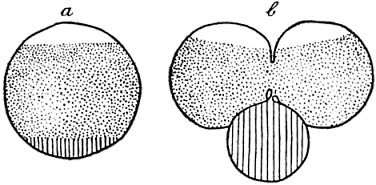
Fig. 8.—The Mollusc Dentalium (after E. B. Wilson).
| a. | The egg, consisting of three different kinds of protoplasmatic material. |
| b. | First cleavage-stage. There are two cells and one “pseudo-cell,” the yolk-sac, which contains no nucleus. This was removed in Crampton’s experiment. |
GENERAL RESULTS OF THE FIRST PERIOD OF
“ENTWICKELUNGSMECHANIK”
This experiment of Crampton’s, afterwards confirmed by
Wilson himself, may be said to have closed the first period
of the new science of physiology of form, a period devoted
almost exclusively to the problem whether the theory of
nuclear division or, in a wider sense, whether the theory of
a strict “evolutio” as the basis of organogenesis was true
or not.
It was shown, as we have seen, that the theory of the
“qualitatively unequal nuclear division” (“qualitativ-ungleiche
Kernteilung” in German) certainly was not true,
and that there also was no strict “evolutio” in protoplasm.
Hence Weismann’s theory was clearly disproved. There
certainly is a good deal of real “epigenesis” in ontogeny,
a good deal of “production of manifoldness,” not only with
regard to visibility but in a more profound meaning. But
some sort of pre-formation had also been proved to exist,
and this pre-formation, or, if you like, this restricted
evolution, was found to be of two different kinds. First
an intimate organisation of the protoplasm, spoken of as
its polarity and bilaterality, was discovered, and this had
to be postulated for every kind of germs, even when it
was overshadowed by immediate obligatory regulation after
disturbances. Besides that there were cases in which a
real specificity of special parts of the germ existed, a relation
of these special parts to special organs: but this sort of
specification also was shown to belong to the protoplasm.
It follows from all we have mentioned about the
organisation of protoplasm and its bearing on morphogenesis,
that the eggs of different animals may behave rather
differently, in this respect, and that the eggs indeed may
be classified according to the degree of their organisation.
Though we must leave a detailed discussion of these topics
to morphology proper, we yet shall try shortly to summarise
what has been ascertained about them in the different
classes of the animal kingdom. A full regulation of the
intimate structure of isolated blastomeres to a new whole,
has been proved to exist in the highest degree in the
eggs of all echinoderms, medusae, nemertines, Amphioxus,
fishes, and in one class of the Amphibia (the Urodela); it
is facultative only among the other class of Amphibia, the
Anura, and seems to be only partly developed or to be
wanting altogether among ctenophora, ascidia, annelids,
and mollusca. Peculiarities in the organisation of specific
parts of protoplasm have been proved to occur in more cases
than at first had been assumed; they exist even in the
echinoderm egg, as experiments of the last few years have
shown; even here a sort of specification exists at the
vegetative pole of the egg, though it is liable to a certain
kind of regulation; the same is true in medusae,
nemertines, etc.; but among molluscs, ascidians, and
annelids no regulation about the specific organisation of
the germ in cleavage has been found in any case.
The differences in the degree of regulability of the
intimate germinal structure may easily be reduced to
simple differences in the physical consistency of their
protoplasm.23 But all differences in specific organisation
must remain as they are for the present; it will be one
of the aims of the future theory of development to trace
these differences also to a common source.
That such an endeavour will probably be not without
success, is clear, I should think, from the mere fact that
differences with regard to germinal specific pre-formation
do not agree in any way with the systematic position of
the animals exhibiting them; for, strange as it would be
if there were two utterly different kinds of morphogenesis,
it would be still more strange if there were differences
in morphogenesis which were totally unconnected with
systematic relationship: the ctenophores behaving differently
from the medusae, and Amphioxus differently from ascidians.
SOME NEW RESULTS CONCERNING RESTITUTIONS
We now might close this chapter, which has chiefly
dealt with the disproof of a certain sort of ontogenetic
theories, and therefore has been almost negative in its
character, did it not seem desirable to add at least a few
words about the later discoveries relating to morphogenetic
restorations of the adult. We have learnt that Weismann
created his concept of “reserve plasma” to account for
what little he knew about “restitutions”: that is, about the
restoration of lost parts: he only knew regeneration proper
in animals and the formation of adventitious buds in plants.
It is common to both of these phenomena that they take
their origin from typically localised points of the body in
every case; each time they occur a certain well-defined
part of the body is charged with the restoration of the lost
parts. To explain such cases Weismann’s hypothesis was
quite adequate, at least in a logical sense. But at present,
as we shall discuss more fully in another chapter, we know
of some very widespread forms of restitution, in which
what is to be done for a replacement of the lost is not
entrusted to one typical part of the body in every case,
but in which the whole of the morphogenetic action to be
performed is transferred in its single parts to the single
parts of the body which is accomplishing restoration: each
of its parts has to take an individual share in the process
of restoration, effecting what is properly called a certain
kind of “re-differentiation” (“Umdifferenzierung”), and this
share varies according to the relative position of the part
in each case. Later on these statements will appear in
more correct form than at present, and then it will become
clear that we are fully entitled to emphasise at the end of
our criticism of Weismann’s theory, that his hypothesis
relating to restorations can be no more true than his theory
of development proper was found to be.
And now we shall pass on to our positive work.
We shall try to sketch the outlines of what might
properly be called an analytical theory of morphogenesis;
that is, to explain the sum of our knowledge about organic
form-production, gained by experiment and by logical
analysis, in the form of a real system, in which each part
will be, or at least will try to be, in its proper place and
in relation with every other part. Our analytical work
will give us ample opportunity of mentioning many important
topics of so-called general physiology also, irrespective
of morphogenesis as such. But morphogenesis is always to
be the centre and starting-point of our analysis. As I
myself approach the subject as a zoologist, animal morphogenesis,
as before, will be the principal subject of what is to
follow.
α. THE DISTRIBUTION OF MORPHOGENETIC POTENCIES
Prospective Value and Prospective Potency
Wilhelm Roux did not fail to see that the questions of
the locality and the time of all morphogenetic differentiations
had to be solved first, before any problem of causality
proper could be attacked. From this point of view he
carried out his fundamental experiments.
It is only in terminology that we differ from his views, if
we prefer to call our introductory chapter an analysis of
the distribution of morphogenetic potencies. The result
will be of course rather different from what Roux expected
it would be.
Let us begin by laying down two fundamental concepts.
Suppose we have here a definite embryo in a definite state
of development, say a blastula, or a gastrula, or some sort of
larva, then we are entitled to study any special element of
any special elementary organ of this germ with respect to
what is actually to develop out of this very element in the
future actual course of this development, whether it be
undisturbed or disturbed in any way; it is, so to say, the
actual, the real fate of our element, that we take in account.
I have proposed to call this real fate of each embryonic
part in this very definite line of morphogenesis its prospective
value (“prospective Bedeutung” in German). The
fundamental question of the first chapter of our analytical
theory of development may now be stated as follows: Is the
prospective value of each part of any state of the morphogenetic
line constant, i.e. is it unchangeable, can it be nothing
but one; or is it variable, may it change according to
different circumstances?
We first introduce a second concept: the term prospective
potency (“prospective Potenz” in German) of each embryonic
element. The term “prospective morphogenetic potency” is
to signify the possible fate of each of those elements. With
the aid of our two artificial concepts we are now able to
formulate our introductory question thus: Is the prospective
potency of each embryonic part fully given by its prospective
value in a certain definite case; is it, so to say, identical
with it, or does the prospective potency contain more than
the prospective value of an element in a certain case reveals?
We know already from our historical sketch that the
latter is true: that the actual fate of a part need not be
identical with its possible fate, at least in many cases; that
the potency of the first four blastomeres of the egg of the
sea-urchin, for instance, has a far wider range than is shown
by what each of them actually performs in even this
ontogeny. There are more morphogenetic possibilities contained
in each embryonic part than are actually realised in
a special morphogenetic case.
As the most important special morphogenetic case is, of
course, the so-called “normal” one, we can also express our
formula in terms of special reference to it: there are more
morphogenetic possibilities in each part than the observation
of the normal development can reveal. Thus we have at
once justified the application of analytical experiment to
morphogenesis, and have stated its most important results.
As the introductory experiments about “Entwickelungsmechanik”
have shown already that the prospective potency
of embryonic parts, at least in certain cases, can exceed
their prospective value—that, at least in certain cases, it can
be different from it—the concept of prospective potency at
the very beginning of our studies puts itself in the centre of
analytical interest, leaving to the concept of prospective
value the second place only. For that each embryonic part
actually has a certain prospective value, a specified actual
fate in every single case of ontogeny, is clear from itself and
does not affirm more than the reality of morphogenetic cases
in general; but that the prospective value of the elements
may change, that there is a morphogenetic power in them,
which contains more than actuality; in other words, that
the term “prospective potency” has not only a logical but a
factual interest: all these points amount to a statement not
only of the most fundamental introductory results but also
of the actual problems of the physiology of form.
If at each point of the germ something else can be formed
than actually is formed, why then does there happen in each
case just what happens and nothing else? In these words
indeed we may state the chief problem of our science, at least
after the fundamental relation of the superiority of prospective
potency to prospective value has been generally shown.
We consequently may shortly formulate our first problem
as the question of the distribution of the prospective
morphogenetic potencies in the germ. Now this general
question involves a number of particular ones. Up to what
stage, if at all, is there an absolutely equal distribution of
the potencies over all the elements of the germ? When
such an equal distribution has ceased to exist at a certain
stage, what are then the relations between the parts of
different potency? How, on the other hand, does a newly
arisen, more specialised sort of potency behave with regard
to the original general potency, and what about the distribution
of the more restricted potency?
I know very well that all such questions will seem to
you a little formal, and, so to say, academical at the outset.
We shall not fail to attach to them very concrete meanings.
The Potencies of the Blastomeres
At first we turn back to our experiments on the egg of
the sea-urchin as a type of the germ in the very earliest
stages. We know already that each of the first two, or each
of the first four, or three of the first four blastomeres together
may produce a whole organism. We may add that the
swimming blastula, consisting of about one thousand cells,
when cut in two quite at random, in a plane coincident with,
or at least passing near, its polar axis, may form two fully
developed organisms out of its halves.25 We may formulate
this result in the words: the prospective potency of the
single cells of a blastula of Echinus is the same for all of
them; their prospective value is as far as possible from
being constant.
But we may say even a little more: what actually will
happen in each of the blastula cells in any special case of
development experimentally determined depends on the
position of that cell in the whole, if the “whole” is put
into relation with any fixed system of co-ordinates; or more
shortly, “the prospective value of any blastula cell is a
function of its position in the whole.”
I know from former experience that this statement wants
a few words of explanation. The word “function” is employed
here in the most general, mathematical sense, simply
to express that the prospective value, the actual fate of a
cell, will change, whenever its position in the whole is
different.26 The “whole” may be related to any three
axes drawn through the normal undisturbed egg, on the
hypothesis that there exists a primary polarity and
bilaterality of the germ; the axes which determine this sort
of symmetry may, of course, conveniently be taken as
co-ordinates; but that is not necessary.
The Potencies of Elementary Organs in General
Before dealing with other very young germs, I think it
advisable to describe first an experiment which is carried
out at a later stage of our well-known form. This experiment
will easily lead to a few new concepts, which we
shall want later on, and will serve, on the other hand, as a
basis of explanation for some results, obtained from the
youngest germs of some other animal species, which otherwise
would seem to be rather irreconcilable with what our
Echinus teaches us.
You know, from the second lecture, what a gastrula of
our sea-urchin is. If you bisect this gastrula, when it is
completely formed, or still better, if you bisect the gastrula
of the starfish, either along the axis or at right angles
to it, you get complete little organisms developed from the
parts: the ectoderm is formed in the typical manner in the
parts, and so is the endoderm; everything is proportionate
and only smaller than in the normal case. So we have at
once the important results, that, as in the blastula, so in the
ectoderm and in the endoderm of our Echinus or of the
starfish, the prospective potencies are the same for every
single element: both in the ectoderm and in the endoderm the
prospective value of each cell is a “function of its position”
(Fig. 9).
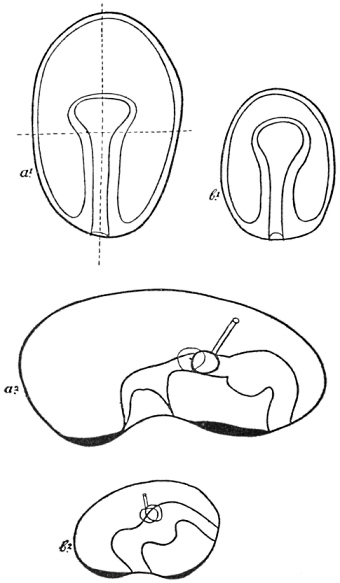
Fig. 9.—The Starfish, Asterias.
| a1. | Normal gastrula; may be bisected along the main axis or at right angles to it (see dotted lines). |
| a2. | Normal larva, “Bipinnaria.” |
| b1. | Small but whole gastrula that results by a process of regulation from the parts of a bisected gastrula. |
| b2. | Small but whole “Bipinnaria,” developed out of b1. |
But a further experiment has been made on our gastrula.
If at the moment when the material of the future intestine
is most distinctly marked in the blastoderm, but not yet
grown into a tube, if at this moment the upper half of the
larva is separated from the lower by an equatorial section,
you will get a complete larva only from that part which
bears the “Anlage” of the endoderm, while the other half
will proceed in morphogenesis very well but will form only
ectodermal organs. By another sort of experiment, which
we cannot fully explain here, it has been shown that the
endoderm if isolated is also only able to form such organs
as are normally derived from it.
And so we may summarise both our last results by
saying: though ectoderm and endoderm have their potencies
equally distributed amongst their respective cells, they possess
different potencies compared one with the other. And the
same relation is found to hold for all cases of what we call
elementary organs: they are “equipotential,” as we may say,
in themselves, but of different potencies compared with each
other.
Explicit and Implicit Potencies: Primary and Secondary
Potencies
We shall first give to our concept of “prospective
potency” a few words of further analytical explanation with
the help of our newly obtained knowledge.
It is clear from what we have stated that the prospective
potencies of the ectoderm and of the endoderm, and we may
add, of every elementary organ in relation to every other,
differ between themselves and also in comparison with the
blastoderm, from which they have originated. But the
diversity of the endoderm with respect to the ectoderm is
not of the same kind as its diversity in respect to the
blastoderm. The potency of the endoderm and that of
the ectoderm are both specialised in their typical manner,
but compared with the potency of the blastoderm they
may be said not only to be specialised but also to be restricted:
the potency of the blastoderm embraces the whole,
that of the so-called germ-layer embraces only part of the
whole; and this species of restriction becomes clearer and
clearer the further ontogeny advances: at the end of it in
the “ultimate elementary organs” there is no prospective
potency whatever.
A few new terms will serve to state a little more
accurately what happens. Of course, with regard to all
morphogenesis which goes on immediately from the blastoderm,
the potency of the blastoderm is restricted as much
as are the potencies of the germ layers. We shall call this
sort of immediate potency explicit, and then we see at once
that, with regard to their explicit potencies, there are only
differences among the prospective potencies of the elementary
organs; but with respect to the implicit potency of any of
these organs, that is with respect to their potency as embracing
the faculties of all their derivations, there are also
not only differences but true morphogenetic restrictions
lying at the very foundations of all embryology.
But now those of you who are familiar with morphogenetic
facts will object to me, that what we have stated
about all sorts of restrictions in ontogeny is not true, and
you will censure me for having overlooked regeneration,
adventitious budding, and so on. To some extent the
criticism would be right, but I am not going to recant;
I shall only introduce another new concept. We are
dealing only with primary potencies in our present considerations,
i.e. with potencies which lie at the root of true
embryology, not with those serving to regulate disturbances
of the organisation. It is true, we have in some way
disturbed the development of our sea-urchin’s egg in
order to study it; more than that, it would have been
impossible to study it at all without some sort of disturbance,
without some sort of operation. But, nevertheless,
no potencies of what may properly be called the secondary
or restitutive type have been aroused by our operations;
nothing happened except on the usual lines of organogenesis.
It is true, some sort of regulation occurred, but that is
included among the factors of ontogeny proper.
We shall afterwards study more fully and from a more
general point of view this very important feature of
“primary regulation” in its contrast to “secondary regulation”
phenomena. At present it must be enough to say
that in speaking of the restriction of the implicit potencies
in form-building we refer only to potencies of the primary
type, which contain within themselves some properties of
a (primary) regulative character.
The Morphogenetic Function of Maturation in the Light of
Recent Discoveries
Turning again to more concrete matters, we shall first
try, with the knowledge acquired of the potencies of the
blastoderm and the so-called germ layers of Echinus, to
understand certain rather complicated results which the
experimental morphogenetic study of other animal forms
has taught us. We know from our historical sketch that
there are some very important aberrations from the type,
to which the Echinus germ belongs,27 i.e. the type with
an equal distribution of the potencies over all the blastomeres.
We know not only that in cases where a regulation
of the intimate structure of the protoplasm fails to occur
a partial development of isolated cells will take place, but
that there may even be a typical disposition of typical cells
for the formation of typical organs only, without any
regulability.
Let us first consider the last case, of which the egg of
mollusca is a good type: here there is no equal distribution
of potencies whatever, the cleavage-cells of this germ are
a sort of real “mosaic” with regard to their morphogenetic
potentialities. Is this difference between the germ of the
echinoderms and the molluscs to remain where it is, and
not to be elucidated any further? Then there would be
rather important differences among the germs of different
animals, at least with regard to the degree of the specification
of their cleavage cells, or if we ascribe differences
among the blastomeres to the organisation of the fertilised
egg ready for cleavage, there would be differences in the
morphogenetic organisation of the egg-protoplasm: some
eggs would be more typically specialised at the very
beginning of morphogenesis than others.
In the first years of the study of “Entwickelungsmechanik”
I pointed out that it must never be forgotten
that the egg itself is the result of organogenesis. If, therefore,
there are real mosaic-like specifications in some eggs at
the beginning of cleavage, or during it, there may perhaps
have been an earlier stage in the individual history of the
egg which did not show such specifications of the morphogenetic
structure. Two American authors share the merit
of having proved this hypothesis. Conklin showed, several
years ago, that certain intracellular migrations and rearrangements
of material do happen in the first stages of
ovogenesis in certain cases, but it is to E. B. Wilson28 that
science owes a proper and definitive elucidation of the
whole subject. Wilson’s researches, pursued not only by
descriptive methods,29 but also by means of analytical experiment,
led him to the highly important discovery that
the eggs of several forms (nemertines, molluscs), which
after maturation show the mosaic type of specification in
their protoplasm to a more or less high degree, fail to
show any kind of specification in the distribution of their
potencies before maturation has occurred. In the mollusc
egg a certain degree of specification is shown already
before maturation, but nothing to be compared with what
happens afterwards; in the egg of nemertines there is no
specification at all in the unripe egg.
Maturation thus becomes a part of ontogeny itself; it
is not with fertilisation that morphogenesis begins, there
is a sort of ontogeny anterior to fertilisation.
These words constitute a summary of Wilson’s researches.
Taken together with the general results obtained about
the potencies of the blastula and the gastrula of Echinus,
they reduce what appeared to be differences of degree
or even of kind in the specification of the egg-protoplasm
to mere differences in the time of the beginning of real
morphogenesis. What occurs in some eggs, as in those of
Echinus, at the time of the definite formation of the germ
layers, leading to a specification and restriction of their
prospective potencies, may happen very much earlier in
other eggs. But there exists in every sort of egg an
earliest stage, in which all parts of its protoplasm are
equal as to their prospectivity, and in which there are no
potential diversities or restrictions of any kind.
So much for differences in the real material organisation
of the germ and their bearing on inequipotentialities of the
cleavage cells.
The Intimate Structure of Protoplasm: Further Remarks
Where a typical half- or quarter-development from
isolated blastomeres happens to occur, we know already
that the impossibility of a regulation of the intimate polar-bilateral
structure may account for it. As this impossibility
of regulation probably rests on rather simple physical conditions30
it may properly be stated that equal distribution
of potencies is not wanting but is only overshadowed here.
In this respect there exists a logical difference of fundamental
importance between those cases of so-called “partial”
or better, “fragmental” development of isolated blastomeres
in which a certain embryonic organ is wanting on account
of its specific morphogenetic material being absent, and
those cases in which the “fragmental” embryo lacks
complete “halves” or “quarters” with regard to general
symmetry on account of the symmetry of its intimate
structure being irregularly disturbed. This logical difference
has not always received the attention which it undoubtedly
deserves. Our hypothetical intimate structure in itself is,
of course, also a result of factors concerned in ovogenesis.
Only in one case do we actually know anything about its
origin: Roux has shown that in the frog it is the accidental
path of the fertilising spermatozoon in the egg which,
together with the polar axis, normally determines the plane
of bilateral symmetry; but this symmetry may be overcome
and replaced by another, if gravity is forced to act in an
abnormal manner upon the protoplasm; the latter showing
parts of different specific gravity in the eggs of all Amphibia.
The Neutrality of the Concept of “Potency”
Now we may close our rather long chapter on the
distribution of potencies in the germ; it has been made
long, because it will prove to be very important for further
analytical discussion; and its importance, in great measure,
is due to its freedom from prepossessions. Indeed, the
concept of prospective potency does not prejudice anything;
we have said, it is true, that limitations of potencies may
be due to the presence of specific parts of organisation in
some cases; that, at least, they may be connected therewith;
but we have not determined at all what a prospective
potency really is, what the term really is to signify. It
may seem that such a state of things gives an air of
emptiness to our discussions, that it leaves uncertain
what is the most important. But, I think, our way of
argument, which tries to reach the problems of greatest
importance by degrees, though it may be slow, could hardly
be called wrong and misleading.
β. THE “MEANS” OF MORPHOGENESIS
We now proceed to an analysis of what may properly
be called the means of morphogenesis, the word “means”
being preferable to the more usual one “conditions” in this
connection, as the latter would not cover the whole field.
It is in quite an unpretentious and merely descriptive
sense that the expression “means” should be understood at
present; what is usually called “conditions” is part of the
morphogenetic means in our sense.
β′. The Internal Elementary Means of Morphogenesis
We know that all morphogenesis, typical or atypical,
primary or secondary, goes on by one morphogenetic
elementary process following the other. Now the very
foundation of these elementary processes themselves lies in
the elementary functions of the organism as far as they
result in the formation of stable visible products. Therefore
the elementary functions of the organism may properly be
called the internal “means” of morphogenesis.
Secretion and migration are among such functions; the
former happening by the aid of chemical change or by
physical separation, the latter by the aid of changes in
surface tension. But hardly anything more concrete has
been made out about these or similar points at present.
We therefore make no claim to offer a complete system
of the internal elementary means of morphogenesis. We
shall only select from the whole a few topics of remarkable
morphogenetic interest, and say a few words about each.
But, first of all, let us observe that the elementary means
of morphogenesis are far from being morphogenesis themselves.
The word “means” itself implies as much. It
would be possible to understand each of these single acts in
morphogenesis as well as anything, and yet to be as far
from understanding the whole as ever. All means of
morphogenesis are only to be considered as the most general
frame of events within which morphogenesis occurs.
Some Remarks on the Importance of Surface Tension in
Morphogenesis.—There are a few purely physical phenomena
which have a special importance in organic morphology, all
of them connected with capillarity or surface tension. Soap-lather
is a very familiar thing to all of you: you know that
the soap-solution is arranged here in very thin planes separated
by spaces containing air: it was first proved by Berthold31
that the arrangement of cells in organic tissues follows the
same type as does the arrangement of the single bubbles of
a soap-lather, and Bütschli32 added to this the discovery that
the minute structure of the protoplasm itself is that of a
foam also. Of course it is not one fluid and one gas which
make up the constituents of the structure in the organisms,
as is the case in the well-known inorganic foams, but two
fluids, which do not mix with one another. One general
law holds for all arrangements of this kind: the so-called
law of least surfaces, expressed by the words that the
sum of all surfaces existing is a minimum; and it again
is a consequence of this law, if discussed mathematically,
that four lines will always meet in one point and three
planes in one line. This feature, together with a certain
law about the relation of the angles meeting in one line
to the size of the bubbles, is realised most clearly in
many structures of organic tissues, and makes it highly
probable, at least in some cases, that capillarity is at work
here. In other cases, as for instance in many plants, a
kind of outside pressure, the so-called tissue tension, may
account for the arrangement in surfaces minimae areae.
Cleavage stages are perhaps the very best type in which
our physical law is expressed: and here it may be said
to have quite a simple application whenever all of the
blastomeres are of the same physical kind, whilst some
complications appear in germs with a specialised organisation
and, therefore, with differences in the protoplasm of
their single blastomeres. In such instances we may say
that the physical law holds as far as the conditions of the
system permit, these conditions ordinarily consisting in a
sort of non-homogeneity of the surfaces.
It seems, from the researches of Dreyer,33 that the formation
of organic skeletons may also be governed by the
physically conditioned arrangement of protoplasmatic or
cellular elements, and some phenomena of migration and
rearrangement among cleavage cells, as described by Roux,
probably also belong here.
But let us never forget that the laws of surface tension
only give us the most general type of an arrangement of
elements in all these cases, nothing else. A physical law
never accounts for the Specific! Capillarity gives us not
the least clue to it. As the organic substance, at least in
many cases, is a fluid, it must of course follow the general
laws of hydrostatics and hydrodynamics, but life itself is as
little touched by its fluid-like or foam-like properties as it
is by the fact that living bodies have a certain weight and
mass.
All indeed that has been described may be said to
belong, in the broadest meaning of the word, to what is
called by Roux “correlation of masses,” though this author
originally intended to express by this term only some sorts
of passive pressure and deformation amongst embryonic
parts as discovered especially by His.
We must be cautious in admitting that any organic
feature has been explained, even in the most general way,
by the action of physical forces. What at first seems to be
the result of mechanical pressure may afterwards be found
to be an active process of growth, and what at first seems
to be a full effect of capillarity among homogeneous elements
may afterwards be shown to depend on specialised metabolic
conditions of the surfaces as its principal cause.34
There are other physical phenomena too, which assist
morphogenesis; osmotic pressure for instance, which is also
well known to operate in many purely physiological processes.
But all these processes are only means of the organism, and
can never do more than furnish the general type of events.
They do not constitute life; they are used by life; let it
remain an open question, for the present, how the phenomenon
of “life” is to be regarded in general.35
On Growth.—Among the internal morphogenetical means
which are of a so-called physiological character, that is,
which nobody claims to understand physically at present,
there is in the first place growth, which must be regarded
as a very essential one.
Analytically we must carefully discriminate between the
increase in the size of the cavities of an organism by a
passive extension of their surfaces and the proper growth of
the individual cells, which again may be due either to mere
extension or to real assimilation. Osmotic pressure, of
course, plays an important part both in the growth of the
body-cavities and in simple cellular extension. We repeat
the caution against believing too much to be explained by
this phenomenon: it is the organism which by the secretion
of osmotic substances in the cavities or the protoplasm of
the cells prepares the ground for growth even of this
osmotic sort. The real cellular growth which proceeds on
the basis of assimilation cannot, of course, be accounted for
by osmotic events, not even in its most general type.
Ontogenetical growth generally sets in, both in animals
and in plants, after the chief lines of organisation are laid
out; it is only the formation of the definite histological
structures which usually runs parallel to it.
On Cell-division.—We have already said a good deal
about the importance of cell-division in ontogeny: it
accompanies very many of the processes of organisation in
all living beings. But even then, there are the Protozoa,
in the morphogenesis of which it does not occur at all, and
there have also become known many cases of morphogenesis
in higher animals, mostly of the type of regulation, in which
cellular division is almost or wholly wanting. Therefore,
cellular division cannot be the true reason of differentiation,
but is only a process, which though necessary in some cases,
cannot be essential to it. It must be conceded, I believe,
that the same conclusion can be drawn from all our
experiments on very young stages of the germ.
The investigations of the last few years have made it
quite clear that even in organisms with a high power of
morphogenetic regulation it is always the form of the whole,
but not the individual cell, which is subjected to the regulation
processes. Starting from certain results obtained by
T. H. Morgan, I was able to show that in all the small but
whole larvae, reared from isolated blastomeres, the size of
the cells remains normal, only their number being reduced;
and Boveri has shown most clearly that it is always the
size of the nucleus—more correctly, the mass of the
chromatin—which determines how large a cell of a certain
histological kind is to be. In this view, the cell appears
even more as a sort of material used by the organism as
supplied, just as workmen can build the most different
buildings with stones of a given size.
β″. The External Means of Morphogenesis
We now know what internal means of morphogenesis are,
and so we may glance at some of the most important
“outer means” or “conditions” of organisation.
Like the adult, the germ also requires a certain amount
of heat, oxygen, and, when it grows up in the sea, salinity
in the medium. For the germ, as for the adult, there
exists not only a minimum but also a maximum limit
of all the necessary factors of the medium; the same factor
which at a certain intensity promotes development, disturbs
it from a certain other intensity upwards.
Within the limits of this minimum and this maximum
of every outside agent there generally is an increase in
the rate of development corresponding to the increase of
intensity of the agent. The acceleration of development by
heat has been shown to follow the law of the acceleration of
chemical processes by a rise of temperature; that seems to
prove that certain chemical processes go on during the
course of morphogenesis.
Almost all that has been investigated of the part played
by the external conditions of development has little bearing
on specific morphogenesis proper, and therefore may be left
out of account here: we must, however, lay great stress
on the general fact that there is a very close dependence
of morphogenesis on the outside factors, lest we should be
accused afterwards of having overlooked it.
Of course all “external” means or conditions of morphogenesis
can actually relate to morphogenetic processes only by
becoming in some way “internal,” but we unfortunately have
no knowledge whatever how this happens. We at present
are only able to ascertain what must necessarily be
accomplished in the medium, in order that normal morphogenesis
may go on, and we can only suppose that there
exist certain specific internal general states, indispensable
for organogenesis but inaccessible to present modes of
investigation.36
The Discoveries of Herbst.—There are but few points
in the doctrine of the external means or conditions of
organogenesis which have a more special bearing on
the specification of proper form, and which therefore
require to be described here a little more fully. All these
researches, which have been carried out almost exclusively
by Herbst,37 relate to the effect of the chemical components
of sea-water upon the development of the sea-urchin. If
we select the most important of Herbst’s results, we must
in the first place say a few words on the part taken by
lime or calcium, not only in establishing specific features of
form, but in rendering individual morphogenesis possible at
all. Herbst has found that in sea-water which is deprived
of calcium the cleavage cells and many tissue cells also
completely lose contact with each other: cleavage goes on
quite well, but after each single division the elements are
separated; at the end of the process you find the 808 cells
of the germ together at the bottom of the dish, all swimming
about like infusoria. There seems to be some
influence of the calcium salts upon the physical state of
the surfaces of the blastomeres.
It is not without interest to note that this discovery
has an important bearing on the technical side of all experiments
dealing with the isolation of blastomeres. Since the
separation of the single cleavage elements ceases as soon
as the germs are brought back from the mixture without
lime into normal sea-water, it of course is possible to
separate them up to any stage which it is desired to study,
and to keep them together afterwards. Thus, if for instance
you want to study the development of isolated cells of the
eight-cell stage, you will leave the egg in the artificial
mixture containing no calcium until the third cleavage,
which leads from the four- to the eight-cell stage, is finished.
The single eight cells brought back to normal sea-water at
this point will give you the eight embryos you want. All
researches upon the development of isolated blastomeres
since the time of Herbst’s discovery have been carried out
by this method, and it would have been quite impossible
by the old method of shaking to pursue the study into
such minute detail as actually has been done. It may
be added that calcium, besides its cell-uniting action,
is also of primary importance in the formation of the
skeleton.
Among all the other very numerous studies of Herbst
we need only mention that potassium is necessary for the
typical growth of the intestine, just as this element has
been found necessary for normal growth in plants, and that
there must be the ion SO4, or in other terms, sulphur salts
present in the water, in order that the germs may acquire
their pigments and their bilateral symmetry. This is indeed
a very important result, though it cannot be said to be
properly understood. It is a fact that in water without
sulphates the larvae of Echinus retain the radial symmetry
they have had in the very earliest stages, and may even
preserve that symmetry on being brought back to normal
sea-water if they have spent about twenty-four hours in
the artificial mixture.
We may now leave the subject of Herbst’s attempts to
discover the morphogenetic function of the single constituents
of normal sea-water, and may devote a few
words to the other branch of his investigations, those
dealing with the morphogenetic effects of substances which
are not present in the water of the sea, but have been added
to it artificially. Here, among many other achievements,
Herbst has made the most important discovery that all
salts of lithium effect radical changes in development.38 I
cannot describe fully here how the so-called “lithium
larva” originates; let me only mention that its endoderm
is formed outside instead of inside, that it is far
too large, that there is a spherical mass between the
ectodermal and the endodermal part of the germ, that
a radial symmetry is established in place of the normal
bilateralism, that no skeleton exists, and that the mesenchyme
cells are placed in a quite abnormal position. All these
features, though abnormal, are typical of the development
in lithium. The larvae present no really pathological
appearance at all, and, therefore, it may indeed be said that
lithium salts are able to change fundamentally the whole
course of morphogenesis. It detracts nothing from the
importance of these discoveries that, at present, they stand
quite isolated: only with lithium salts has Herbst obtained
such strange results, and only upon the eggs of echinids,
not even upon those of asterids, do lithium salts act in this
way.
γ. THE FORMATIVE CAUSES OR STIMULI
The Definition of Cause
We cannot begin the study of the “causes” of the
differentiation of form without a few words of explanation
about the terminology which we shall apply. Causality
is the most disputed of all categories; many modern
scientists, particularly in physics, try to avoid the concept
of cause altogether, and to replace it by mere functional
dependence in the mathematical meaning of the term.
They claim to express completely by an equation all that
is discoverable about any sort of phenomena constantly
connected.
I cannot convince myself that such a very restricted
view is the right one: it is very cautious, no doubt, but it
is incomplete, for we have the concept of the acting “cause”
in our Ego and are forced to search for applications of it
in Nature. On the other hand, it does not at all escape
me that there are many difficulties, or rather ambiguities,
in applying it.
We may call the “cause” of any event, the sum total
of all the constellations of facts which must be completed
in order that the event may occur; it is in this meaning,
for instance, that the first principle of energetics applies
the term in the words causa aequat effectum. But, by
using the word only in this very general sense, we deprive
ourselves of many conveniences in the further and more
particular study of Nature. Would it be better to say that
the “cause” of any event is the very last change which,
after all the constellations necessary for its start are
accomplished, must still take place in order that the event
may actually occur? Let us see what would follow from
such a use of the word causality. We here have an animal
germ in a certain stage, say a larva of Echinus, which is just
about to form the intestine; all the internal conditions are
fulfilled, and there is also a certain temperature, a certain
salinity, and so on, but there is no oxygen in the water: the
intestine; of course, will not grow in such a state of things,
but it soon will when oxygen is allowed to enter the dish.
Is, therefore, oxygen the cause of the formation of the
intestine of echinus? Nobody, I think, would care to say
so. By such reasoning, indeed, the temperature, or sodium,
might be called the “cause” of any special process of
morphogenesis. It, therefore, seems to be of little use to
give the name of cause to that factor of any necessary
constellation of events which accidentally happens to be
the last that is realised. But what is to be done then?
Might we not say that the cause of any morphogenetic
process is that typical property, or quality, or change, on
which its specific character depends, on which depends for
example, the fact that now it is the intestine which appears,
while at another time it is the lens of the eye? We might
very well, but we already have our term for this sort of
cause, which is nothing else than our prospective potency
applied to that elementary organ from which the new
process takes its origin. The prospective potency indeed
is the truly immanent cause of every specification affecting
single organogenetic processes. But we want something
more than this.
We may find what we want by considering that each
single elementary process or development not only has its
specification, but also has its specific and typical place in
the whole—its locality. Therefore we shall call the “cause”
of a single morphogenetic process, that occurrence on which
depends its localisation, whether its specific character also
partly depends on this “cause” or not.39
This definition of “cause” in morphology may be
artificial; in any case it is clear. And at the same time
the concepts of the prospective potency and of the “means”
of organogenesis now acquire a clear and definite meaning:
potency is the real basis of the specific character of every
act in morphogenesis, and “means,” including conditions, are
the sum of all external and internal general circumstances
which must be present in order that morphogenetic processes
may go on, without being responsible for their specificity
or localisation.
It is implied in these definitions of cause and potency,
that the former almost always will be of that general
type which usually is called a stimulus or “Auslösung,”
to use the untranslatable German word. There is no
quantitative correspondence between our “cause” and the
morphogenetic effect.
Some Instances of Formative and Directive Stimuli
Again it is to Herbst that we owe not only a very
thorough logical analysis of what he calls “formative and
directive stimuli”40 but also some important discoveries
on this subject. We cannot do more here than barely
mention some of the most characteristic facts.
Amongst plants it has long been known that the
direction of light or of gravity may determine where
roots or branches or other morphogenetic formations are to
arise; in hydroids also we know that these factors of the
medium may be at work41 as morphogenetic causes, though
most of the typical architecture of hydroid colonies certainly
is due to internal causes, as is also much of the organisation
in plants.
Light and gravity are external formative causes; beside
that they are merely “localisers.” But there also are some
external formative stimuli, on which depends not only
the place of the effect, but also part of its specification.
The galls of plants are the most typical organogenetic
results of such stimuli. The potencies of the plant and the
specific kind of the stimulus equally contribute to their
specification; for several kinds of galls may originate on
one sort of leaves.
Scarcely any exterior formative stimuli are responsible
for animal organisation; and one would hardly be wrong
in saying that this morphogenetic independence in animals
is due to their comparatively far-reaching functional independence
of those external agents which have any sort
of direction. But many organogenetic relations are known
to exist between the single parts of animal germs, each
of these parts being in some respect external to every
other; and, indeed, it might have been expected already
a priori, that such formative relations between the parts of an
animal embryo must exist, after all we have learned about
the chief lines of early embryology. If differentiation does
not go on after the scheme of Weismann, that is, if it is not
carried out by true “evolutio” from within, how could it be
effected except from without? Indeed, every embryonic
part may in some respect be a possible cause for morphogenetic
events, which are to occur on every other part: it is
here that the very roots of epigenesis are to be found.
Heliotropism and geotropism are among the well-known
physiological functions of plants: the roots are seen to bend
away from the light and towards the ground; the branches
behave just in the opposite way. It now has been supposed
by Herbst that such “directive stimuli” may also be at
work among the growing or wandering parts of the embryo,
that their growth or their migration may be determined by
the typical character of other parts, and that real morphogenetic
characters can be the result of some such relation;
a sort of “chemotropism” or “chemotaxis” may be at work
here. Herbst himself has discussed theoretically several
cases of organogenesis in which the action of directive
stimuli is very probable. What has become actually
known by experiment is not very much at present: the
mesenchyme cells of Echinus are directed in their migration
by specified places in the ectoderm, the pigment cells of the
yolk-sac of the fish fundulus are attracted by its blood
vessels, and nerves may be forced to turn into little tubes
containing brain substance; but of course only the first two
instances have any bearing on typical morphogenesis.
The first case of an “internal formative stimulus” in
the proper sense, that is, of one embryonic part causing
another to appear, was discovered by Herbst himself. The
arms of the so-called pluteus of the sea-urchin are in
formative dependence on the skeleton—no skeleton, no
arms; so many skeleton primordia,42 in abnormal cases, so
many arms; abnormal position of the skeleton, abnormal
position of the arms: these three experimental observations
form the proof of this morphogenetic relation.
It may be simple mechanical contact, or it may be some
chemical influence that really constitutes the “stimulus” in
this case; certainly, there exists a close and very specific
relation of the localisation of one part of the embryo to
another. Things are much the same in another case,
which, after having been hypothetically stated by Herbst
on the basis of pathological data, was proved experimentally
by Spemann. The lens of the eye of certain Amphibia is
formed of their skin in response to a formative stimulus
proceeding from the so-called primary optic vesicle. If this
vesicle fails to touch the skin, no lens appears; and, on the
other hand, the lens may appear in quite abnormal parts of
the skin if they come into contact with the optic vesicle
after transplantation.
But formative dependence of parts may also be of
different types.
We owe to Herbst the important discovery that the
eyes of crayfishes, after being cut off, will be regenerated in
the proper way, if the optic ganglion is present, but that
an antenna will arise in their place if this ganglion has
also been removed. There must in this case be some
unknown influence of the formative kind on which
depends, if not regeneration itself, at least its special
character.
In other cases there seems to be an influence of the
central nervous system on the regenerative power in general.
Amphibia, for instance, are said to regenerate neither their
legs (Wolff), nor their tail (Godlewski), if the nervous communications
have been disturbed. But in other animals
there is no such influence; and in yet others, as for instance,
in Planarians, it must seem doubtful at present whether the
morphogenetic influence of the nervous system upon processes
of restoration is more than indirect; the movements of the
animal, which become very much reduced by the extirpation
of the ganglia, being one of the main conditions of a good
regeneration.
Of course, all we have said about the importance of
special materials in the ripe germ, as bearing on specifically
localised organisations, might be discussed again in our
present chapter, and our intimate polar-bilateral structure
of germs may also be regarded as embracing formative
stimuli, at any rate as far as the actual poles of this
structure are concerned. This again would bring us to the
problem of so-called “polarity” in general, and to the
“inversion” of polarity, that is to a phenomenon well
known in plants and in many hydroids and worms, viz.,
that morphogenetic processes, especially of the type of
restitutions, occur differently, according as their point of
origin represents, so to speak, the positive or the negative,
the terminal or the basal end of an axis, but that under
certain conditions the reverse may also be the case. But a
fuller discussion of these important facts would lead us
deeper and deeper into the science of morphogenesis proper,
without being of much use for our future considerations.
And so we may close this section43 on formative stimuli
or “causes” of morphogenesis by shortly adding, more on
account of its factual than of its logical interest, that the
phenomenon of the determination of sex,44 according to the
latest researches, seems to depend on cytological events
occurring in the very earliest embryonic stages, say even
before ontogeny, and not on formative stimuli proper45: it
seems, indeed, as if the sexual products themselves would
account for the sex of the individual produced by them,
particularly if there were differences in their chromatin.46
δ. THE MORPHOGENETIC HARMONIES
Let us now turn again to considerations of a more
abstract kind: we have become acquainted with some
morphogenetic interactions among the parts of a developing
embryo; and, indeed, we can be sure that there exist far
more of such interactions than we know at present.
But it is far from being true that the development of
each embryonic part depends on the existence or development
of every other one.
On the contrary, it is a very important and fundamental
feature of organogenesis that it occurs in separate lines,
that is to say, in lines of processes which may start from a
common root, but which are absolutely independent of
one another in their manner of differentiation. Roux has
coined the term “self-differentiation” to denote this phenomenon,
and we admit that this term may be conveniently
used for the purpose, if only it can be kept in mind that
its sense is always relative, and that it is also negative.
Suppose a part, A, shows the phenomenon of self-differentiation:
this means that the further development of A
is not dependent on certain other parts, B, C, and D; it does
not mean at all that A has not been formatively dependent
on some other parts, E or F at the time of its first appearance,
nor does it imply that there might not be many
formative actions among the constituents of A itself.
We indeed are entitled to say that the ectoderm of
Echinus shows “self-differentiation” with regard to the
endoderm; it acquires its mouth, for instance, as has been
shown by experiment, even in cases where no intestine is
present at all (Fig. 10); but ectoderm and endoderm both
are formatively dependent on the intimate and the material
organisation of the blastoderm. It further seems from the
most recent experiments that the nerves and the muscles of
the vertebrates are independent of each other in their
differentiation, but that their fate is probably determined
by formative processes in the very earliest stages of ontogeny.
Fig. 10.—Pluteus-larva of Sphaerechinus.
The Intestine (i) is developed outside instead of inside (by means of raising the temperature);
but the mouth (r) is formed in its normal place. S = Skeleton.
The phenomenon of self-differentiation, properly understood,
now may help to the discovery of one most general
character of all development. If the phenomenon of self-differentiation
really occurs in ontogeny in its most different
aspects, and if, on the other hand, in spite of this relative
morphogenetic independence of embryonic parts, the resulting
organism is one whole in organisation and in function,
some sort of harmony of constellation, as it may properly be
styled, must be said to be one of the most fundamental
characters of all production of individual form. In establishing
this harmony we do nothing more than describe exactly
what happens: the harmony is shown by the fact that
there is a whole organism at the end, in spite of the relative
independence of the single events leading to it.
But still another sort of harmony is revealed in morphogenesis,
by an analysis of the general conditions of the
formative actions themselves. In order that these actions
may go on properly the possibility must be guaranteed that
the formative causes may always find something upon which
to act, and that those parts which contain the potencies for
the next ontogenetic stage may properly receive the stimuli
awaking these potencies: otherwise there would be no
typical production of form at all. This, the second species
of harmonious relations to be described in ontogeny, may
be called causal harmony; the term simply expresses the
unfailing relative condition of formative causes and cause-recipients.
Finally, in functional harmony we have an expression
descriptive of the unity of organic function, and so we
may state, as the latest result of our analytical theory of
development up to this point, that individual morphogenesis
is marked by a threefold harmony among its parts.
ε. ON RESTITUTIONS47
At this stage we leave for a while our analytical
studies of ontogeny proper. We must not forget that
typical ontogenesis is not the only form in which morphogenesis
can occur: the organic form is able to restore
disturbances of its organisation, and it certainly is to be
regarded as one of the chief problems of analytical morphogenesis
to discover the specific and real stimulus which
calls forth the restoring processes. For simply to say that
the disturbance is the cause of the restoration would be to
evade the problem instead of attacking it. But there are
still some other problems peculiar to the doctrine of
restitutions.
A few Remarks on Secondary Potencies and on Secondary
Morphogenetic Regulations in General
We have only briefly mentioned in a previous chapter
that there exist many kinds of potencies of what we call
the secondary or truly restitutive type, and that their
distribution may be most various and quite independent
of all the potencies for the primary processes of ontogeny
proper. Let us first add a few words about the concept
of “secondary restitution” and about the distribution
of secondary potencies in general.
Primary ontogenetic processes founded upon primary
potencies may imply regulation, or more correctly, restitution
in many cases: so it is, when fragments of the blastula
form the whole organism, or when the mesenchyme cells
of Echinus reach their normal final position by an attraction
on the part of specific localities of the ectoderm in spite
of a very abnormal original position enforced upon them
by experiment. In these cases we speak of primary
regulations or restitutions; disturbances are neutralised by
the very nature of the process in question. We speak
of secondary restitution whenever a disturbance of organisation
is rectified by processes foreign to the realm of
normality; and these abnormal lines of events are revealed
to us in the first place by the activity of potencies which
remain latent in ontogeny proper.
We know already that a certain kind of secondary
restitution has been discovered lately, very contradictory
to the theoretical views of Weismann; the process of
restoration being carried out not by any definite part of
the disturbed organisation, but by all the single elements
of it. The problem of the distribution of secondary
potencies in these cases of so-called “re-differentiation” is
to form our special study in the next chapter. In all
other cases restoration processes start from specific localities;
if they occur on the site of the wound which caused the
disturbance, we speak of regeneration; if they occur at
some distance from the wound, we call them adventitious
processes. Besides these three types of processes of restitution
there may be mentioned a fourth one, consisting in
what is generally called compensatory hypertrophy; the
most simple case of such a compensatory process is when
one of a pair of organs, say a kidney, becomes larger after
the other has been removed.48 Finally, at least in plants, a
change of the directive irritability, of so-called “geotropism”
for instance, in certain parts may serve to restore other
more important parts.
In two of these general types of restitution, in regeneration
proper and in the production of adventitious organs,
the potencies which underlie these processes may be said
to be “complex.” It is a complicated series of events, a
proper morphogenesis in itself, for which the potency has
to account, if, for instance, a worm newly forms its head
by regeneration, or if a plant restores a whole branch in
the form of an adventitious bud.
Such generalisations as are possible about the distribution
of complex potencies are reserved for a special part
of our future discussion.
Secondary restitution is always, like ontogeny, a process
of morphogenesis, and therefore all the questions about
single formative stimuli, and about internal and external
conditions or means, occur again. But of course we cannot
enter into these problems a second time, and may only
say that, especially in regeneration proper, the specific type
of the regenerative formation of any part may differ very
much from the ontogenetic type of its origin: the end of
both is the same, but the way can be even fundamentally
different in every respect.
The Stimuli of Restitutions49
But now we turn to the important question: what is
the precise stimulus50 that calls forth processes of restitution;
or, in other words, what must have happened in order
that restitution may occur?
That the operation in itself, by its removing of mechanical
obstacles, cannot be the true stimulus of any restitutions,
is simply shown by all those restitutions that do not
happen at the place of the wound. If we took a narrower
point of view, and if we only considered regeneration proper
from the wound itself, we might probably at first be
inclined to advocate the doctrine that the removing of
some obstacles might in fact be the stimulus to the process
of restoration; but, even then, why is it that just what is
wanted grows out? Why is there not only growth, but
specific growth, growth followed by specification? The
removing of an obstacle could hardly account for that.
But, of course, taking account of all the adventitious
restitutions—that is, all restorations not beginning at the
wound itself—the theory that the removing of obstacles
is the stimulus to restoration becomes, as we have said,
quite impossible.51
But where then is the stimulus to be found? There
is another rather simple theory of the “Auslösung” of
restitutions,52 which starts from the phenomena of compensatory
hypertrophy and some occurrences among plants.
The removal of some parts of the organism, it is said,
will bring its other parts into better conditions of nutrition,
and therefore these parts, particularly if they are of the
same kind, will become larger. Granted for the moment
that such a view may hold in cases when one of a pair
of glands becomes larger after the other has been removed,
or when pruning of almost all the leaves of a tree leads to
the rest becoming larger, it certainly must fail to explain
the fact that in other cases true new formations may arise
in order to restore a damaged part, or that the latter may
be regenerated in its proper way. For merely quantitative
differences in the mixture of the blood or of the nourishing
sap in plants can never be a sufficient reason for the highly
typical and qualitative structure of newly-formed restitutions.
And even in the most simple cases of a mere increase in
the size of some parts, that is, in the simplest cases of
so-called compensatory hypertrophy,53 it is at least doubtful,
if not very improbable, that the compensation is accomplished
in such a purely passive way, because we know that in
other cases it is usually the growth of the young parts
that actively attracts the nourishment: there is first
differentiation and growth, and afterwards there is a change
in the direction of the nourishing fluids.
The process of true regeneration, beginning at the
locality of the wound itself, has been shown by Morgan,
even as regards its rate, to occur quite irrespectively of the
animal being fed or not.54 There could hardly be a better
demonstration of the fundamental fact that food assists
restitution, but does not “cause” it in any way.
But in spite of all we have said, there seems to be some
truth in regarding the nutritive juices of animals and plants
as somehow connected with the stimulus of restitutions:
only in this very cautious form, however, may we make
the hypothesis. It has been shown for both animals and
plants, that morphogenesis of the restitutive type may be
called forth even if the parts, now to be “regenerated”
have not been actually removed; e.g. in the so-called
super-regeneration of legs and tails in Amphibia, of the
head in Planarians, of the root-tip in plants and in some
other cases. Here it has always been a disturbance of the
normal connection of some parts with the rest of the
organism which proved to be the reason of the new formation.
This shows that something to do with the communication
among parts is at least connected with restitution, and
this communication may go on either by the unknown
action of specific tissues or by the aid of the blood or sap.55
But in what this change or break of specific communication
consists, is absolutely unknown. One might suppose that
each part of the organisation constantly adds some sort of
ferment to the body fluids outside or inside the cells, that
the removing of any part will change the composition of
these fluids in this particular respect, and that this change
acts as a sort of communication to summon the restituting
parts of the whole to do their duty.56
But I see quite well that such a theory is very little
satisfactory; for what has to be done in restitution in
each case is not a simple homogeneous act, for which one
special material might account, but is a very complicated
work in itself. It was the defect of the theory of “organ-forming
substances” as advocated by Sachs, that it overlooked
this point.
So all we know about the proper stimuli of restitutions
is far from resting on any valid grounds at all; let us not
forget that we are here on the uncertain ground of what
may be called the newest and most up-to-date branch of
the physiology of form. No doubt, there will be something
discovered some day, and the idea of the “whole” in
organisation will probably play some part in it. But in
what manner that will happen we are quite unable to
predict.
This is the first time that, hypothetically at least, the
idea of the whole has entered into our discussion. The
same idea may be said to have entered it already in a
more implicit form in the statement of the threefold
harmony in ontogeny.
Let us now see whether we can find the same problem
of the “whole” elsewhere, and perhaps in more explicit
and less hypothetical form. Let us see whether our
analytical theory of development is in fact as complete as
it seemed to be, whether there are no gaps left in it which
will have to be filled up.
α. THE THEORY OF THE HARMONIOUS-EQUIPOTENTIAL SYSTEM
FIRST PROOF OF THE AUTONOMY OF LIFE
We have come to the central point of the first part of
these lectures; we shall try in this chapter to decide a
question which is to give life its place in Nature, and
biology its place in the system of sciences. One of the
foundation stones is to be laid upon which our future
philosophy of the organism will rest.
The General Problem
Our analytical theory of morphogenesis has been founded
upon three elementary concepts: the prospective potency,
the means, and the formative stimulus. Its principal object
has been to show that all morphogenesis may be resolved
into the three phenomena expressed by those concepts;
in other terms, that morphogenesis may be proved to
consist simply and solely of what is expressed by them.
Have we indeed succeeded in attaining this object? Has
nothing been left out? Is it really possible to explain
every morphogenetic event, at least in the most general
way, by the aid of the terms potency, means, and stimulus?
All of these questions are apt to lead us to further
considerations. Perhaps these considerations will give us
a very clear and simple result by convincing us that it is
indeed possible to analyse morphogenesis in our schematic way.
But if the answer were a negative one? What would
that suggest?
The full analysis of morphogenesis into a series of single
formative occurrences, brought about by the use of given
means and on the basis of given potencies, might assure
us, perhaps, that, though not yet, still at some future time,
a further sort of analysis will be possible: the analysis into
the elemental facts studied by the sciences of inorganic
nature. The organism might prove to be a machine, not
only in its functions but also in its very origin.
But what are we to say if even the preliminary analysis,
which possibly might lead to such an ultimate result, fails?
Let us then set to work. Let us try to consider most
carefully the topic in which our concept of the formative
cause or stimulus may be said to be centred, the localisation
of all morphogenetic effects. Is it always possible in
fact to account for the typical localisation of every
morphogenetic effect by the discovery of a single specific
formative stimulus? You will answer me, that such an
analysis certainly is not possible at present. But I ask
you again, are there any criteria that it is possible, at least
in principle; or are there any criteria which will render
such an aim of science impossible for all future time?
The Morphogenetic “System”
We know from our experimental work that many, if
not all, of the elementary organs in ontogeny show one
and the same prospective potency distributed equally over
their elements. If we now borrow a very convenient term
from mechanics, and call any part of the organism which
is considered as a unit from any morphogenetic point of
view, a morphogenetic “system,” we may sum up what
we have learnt by saying that both the blastoderm of the
echinoderms, at least around its polar axis, and also the
germ-layers of these animals, are “systems” possessing an
equal potentiality in all of their elements, or, in short, that
they are equipotential systems.
But such a term would not altogether indicate the real
character of these systems.
Later on we shall analyse more carefully than before
the distribution of potencies which are the foundation both
of regeneration proper and of adventitious growth, and
then we shall see that, in higher plants for instance, there
is a certain “system” which may be called the organ
proper of restitutions, and which also in each of its elements
possesses the same restoring potency; I refer to the well-known
cambium. This cambium, therefore, also deserves
the name of an “equipotential system.” But we know
already that its potencies are of the complex type, that they
consist in the faculty of producing the whole, of such a
complicated organisation as a branch or a root, that the
term “equipotential system” is here only to signify that
such a complicated unit may arise out of each of the cells
of the cambium.
The potencies we have been studying in the blastula or
gastrula of echinoderms are not of the complex type: our
systems are equipotential to the extent that each of their
elements may play every single part in the totality of what
will occur in the whole system; it is to this single part
that the term “function of the position” relates. We
therefore might call our systems equipotential systems with
single potencies; or, more shortly, singular-equipotential
systems.
But even this terminology would fail to touch precisely
the very centre of facts: it is not only the simplicity
or singularity of their potencies which characterises the
rôle of our systems in morphogenesis,57 but far more important
with respect to the production of form are two
other leading results of the experimental researches. The
proper act to be performed by every element in each actual
case is in fact a single one, but the potency of any element
as such consists in the possibility of many, nay of indefinitely
many, single acts: that then might justify us in speaking of
our systems as “indefinite equipotential,” were it not that
another reason makes another title seem still more preferable.
There are indeed indefinite singular potencies at
work in all of our systems during ontogeny: but the sum
of what happens to arise in every case out of the sum of
the single acts performed by all of the single equipotential
cells is not merely a sum but a unit; that is to say, there
exists a sort of harmony in every case among the real
products of our systems. The term harmonious-equipotential
system therefore seems to be the right one to denote them.
We now shall try first to analyse to its very extremes
the meaning of the statement that a morphogenetic system
is harmonious-equipotential.
The “Harmonious-Equipotential System”
We have an ectoderm of the gastrula of a starfish here
before us; we know that we may cut off any part of it in
any direction, and that nevertheless the differentiation of
the ectoderm may go on perfectly well and result in a
typical little embryo, which is only smaller in its size than
it would normally be. It is by studying the formation of
the highly complicated ciliary band, that these phenomena
can be most clearly understood.
Now let us imagine our ectoderm to be a cylinder instead
of being approximately a sphere, and let us imagine the
surface of this cylinder unrolled. It will give us a plane
of two definite dimensions, a and b. And now we have all
the means necessary for the analytical study of the differentiation
of an harmonious-equipotential system.
Our plane of the dimensions a and b is the basis of the
normal, undisturbed development; taking the sides of the
plane as fixed localities for orientation, we can say that the
actual fate, the “prospective value” of every element of the
plane stands in a fixed and definite correlation to the
length of two lines, drawn at right angles to the bordering
lines of the plane; or, to speak analytically, there is a
definite actual fate corresponding to each possible value of
x and of y. Now, we have been able to state by our experimental
work, that the prospective value of the elements of
our embryonic organ is not identical with their “prospective
potency,” or their possible fate, this potency being very
much richer in content than is shown by a single case of
ontogeny. What will be the analytical expression of such
a relation?
Let us put the question in the following way: on what
factors does the fate of any element of our system depend
in all possible cases of development obtainable by means of
operations? We may express our results in the form of
an equation:—
p.v. (X) = f( . . . )
i.e. “the prospective value of the element X is a function
of . . .”—of what?
We know that we may take off any part of the whole,
as to quantity, and that a proportionate embryo will
result, unless the part removed is of a very large size.
This means that the prospective value of any element
certainly depends on, certainly is a function of, the absolute
size of the actually existing part of our system in the
particular case. Let s be the absolute size of the system
in any actual experimental case of morphogenesis: then we
may write p.v. (X) = f(s . . . ). But we shall have to add
still some other letter to this s.
The operation of section was without restriction either
as to the amount of the material removed from the germ, or
as to the direction of the cut. Of course, in almost every
actual case there will be both a definite size of the actual
system and a definite direction of the cut going hand-in-hand.
But in order to study independently the importance
of the variable direction alone, let us imagine that we have
isolated at one time that part of our system which is
bounded by the lines a1 b1, and at another time an equal
amount of it which has the lines a2 b2 as its boundaries.
Now since in both cases a typical small organism may result
on development, we see that, in spite of their equal size
the prospective value of every element of the two pieces cut
out of the germ may vary even in relation to the direction
of the cut itself. Our element, X, may belong to both of
these pieces of the same size: its actual fate nevertheless
will be different. Analytically, it may be said to change in
correspondence to the actual position of the actual boundary
lines of the piece itself with regard to the fundamental lines
of orientation, a and b; let this actual position be expressed
by the letter l, l marking the distance of one58 of the actual
boundary lines of our piece from a or b: then we are entitled
to improve our formula by writing p.v. (X) = f(s, l . . . )
(Fig. 11).
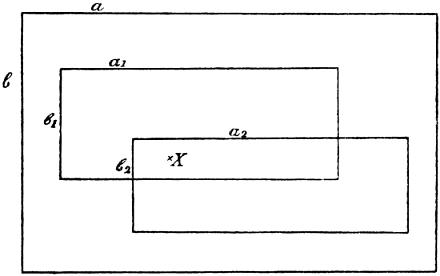
Fig. 11.—Diagram to show the Characteristics of an
“Harmonious-equipotential System.”
The element X forms part of the systems a b or a1 b1 or a2 b2; its prospective value is
different in each case.
But the formula is not yet complete: s and l are what
the mathematicians call variables: they may have any
actual value and there will always be a definite value of p.v.,
i.e. of the actual fate which is being considered; to every
value of s and l, which as we know are independent of
each other, there corresponds a definite value of the actual
prospectivity. Now, of course, there is also a certain factor
at work in every actual case of experimental or normal
development, which is not a variable, but which is the same
in all cases. This factor is a something embraced in the
prospective potency of our system, though not properly
identical with it.
The prospective potency of our system, that is to say of
each of its elements, is the sum total of what can be done
by all; but the fact that a typically proportionate development
occurs in every possible case, proves that this sum
comes into account, not merely as a sum, but as a sort of
order: we may call this order the “relation of localities in
the absolutely normal case.” If we keep in mind that the
term “prospective potency” is always to contain this order,
or, as we may also call it, this “relative proportionality,”
which, indeed, was the reason for calling our systems
“harmonious,” then we may apply it without further explanation
in order to signify the non-variable factor on
which the prospective value of any element of our systems
depends, and, if we denote the prospective potency, embracing
order, by the letter E, we are now able to complete our
formula by saying p.v. (X) = f(s, l, E).
So far the merely analytical study of the differentiation
of harmonious-equipotential systems.59
Instances of “Harmonious-Equipotential Systems”
We must try at first to learn a few more positive facts
about our systems, in order that we may know how important
is the part which they play in the whole animal
kingdom, and in order that our rather abstract analysis may
become a little more familiar to us. We know already that
many of the elementary morphogenetic organs have been really
proved to be harmonious-equipotential systems, and that the
same probably is true of many others; we also know that
the immature egg of almost all animals belongs to this type,
even if a fixed determination of its parts may be established
just after maturation. Moreover, we said, when speaking
about some new discoveries on form-restitution, that there
are many cases in which the processes of restitution do not
proceed from single localities, the seat of complex potencies
in the organism, but in which each single part of the
truncated organism left by the operation has to perform
one single act of restoration, the full restitution being the
result of the totality of all. These cases must now be
submitted to a full analysis.
All of you have seen common sea-anemones or sea-roses,
and many of you will also be familiar with the so-called
hydroid polyps. Tubularia is one genus of them: it looks
like a sea-anemone in miniature placed on the top of a stem
like a flower. It was known already to Allman that
Tubularia is able to restore its flower-like head when that
is lost, but this process was taken to be an ordinary regeneration,
until an American zoologist, Miss Bickford,
succeeded in showing that there was no regeneration process
at all, in the proper sense of the word, no budding of the
missing part from the wound, but that the new tubularian
head was restored by the combined work of many parts of
the stem. Further analysis then taught us that Tubularia
indeed is to be regarded as the perfect type of an
harmonious-equipotential system: you may cut the stem at
whatever level you like: a certain length of the stem will
always restore the new head by the co-operation of its parts.
As the point of section is of course absolutely at our choice,
it is clear, without any further discussion, that the prospective
value of each part of the restoring stem is a
“function of its position,” that it varies with its distance
from the end of the stem; and so at once we discover one
of the chief characteristics of our systems. But also the
second point which enters into our formula can be
demonstrated in Tubularia: the dependence of the fate of
every element on the actual size of the system. You would
not be able to demonstrate this on very long stems, but if
you cut out of a Tubularia stem pieces which are less than
ten millimetres in length, you will find the absolute size of
the head restored to be in close relation to the length of
the stem piece, and this dependence, of course, includes the
second sort of dependence expressed in our formula.
The figures will serve to show you a little more concretely
what has been described. The head of Tubularia
consists of a sort of broad base with a thin proboscis upon
it, both bearing a large number of tentacles; these tentacles
are the first things to be seen as primordia (“Anlagen”) in
the process of restitution. You notice two rings of longitudinal
lines inside the stem; the lines will become walls and then
will separate from the stem until they are only connected
with it at their basal ends; the new tentacles are ready as
soon as that has happened, and a process of growth at the
end will serve to drive the new head out of the so-called
perisarc or horny skeleton, which surrounds the stem. By
comparing the two figures, 12 e, and g, you easily find out
that the absolute lengths of the two tentacle rings are very
different, and that both are in proportion60 to the actual size
of the stem (Fig. 12).
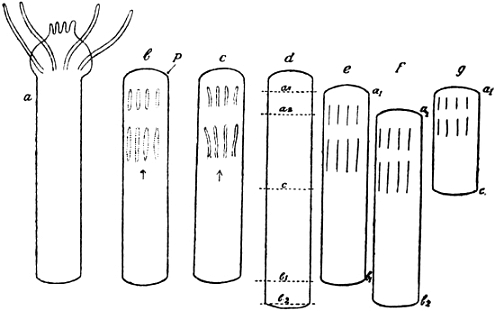
Fig. 12.—Tubularia.
| a. | Diagram of the “Hydranth,” with its short and long tentacles. |
| b. | Restitution of a new hydranth inside the perisarc (p). |
| c. | The same—later stage; the tentacles are complete; the whole hydranth will be driven out of the perisarc by a process of growth that occurs at the locality marked ↑. |
| d. | A stem of Tubularia cut either at a1b1 or at a2b2 or at a1c. |
| e. | Position of tentacles in the piece cut at a1b1. |
| f. | Position of tentacles in the piece cut at a2b2 which is equal in length to a1b1. |
| g. | Position of tentacles in the piece cut at a1c, which is half as long as a1b1. |
So we find our formula p.v. (X) = f(s, l, E) very well
illustrated in Tubularia. The formula indeed may help us
to predict, in any case, where a certain part of the polyp’s
organisation is to originate, at least if we know all that is
included under our letter E, i.e. the normal proportion of
our form. Of course such prediction would not have much
practical importance in all our cases of morphogenesis, but
nevertheless I should like to state here that it is possible;
for many scientific authors of recent times have urged the
opinion that prediction of, and domination over, what will
happen, can be the only true aims of sciences at all. I
myself judge these aims to be of second or third-rate importance
only, but, if they may be reached by what our
purely theoretical study teaches, so much the better.
Fig. 13.—Clavellina.
| a. | Diagram of the normal animal: E and J = openings; K = branchial apparatus; D = intestine; M = stomach; H = heart. |
| b. | The isolated branchial apparatus. |
| c-e. | Different stages of reduction of the branchial apparatus. |
| f. | The new whole little ascidian. |
Another very typical case of a morphogenetic system
of the harmonious type is supplied by the phenomena of
restoration in the ascidian Clavellina. I cannot fully
describe the organisation of this form (Fig. 13a), and it
must suffice to say that it is very complicated, consisting
of two very different chief parts, the branchial apparatus
and the so-called intestinal sac; if these two parts of the
body of Clavellina are separated one from the other, each
may regenerate the other in the typical way, by budding
processes from the wound. But, as to the branchial
apparatus, there may happen something very different:
it may lose almost all of its organisation and become a
small white sphere, consisting only of epithelia corresponding
to the germ-layers, and of mesenchyme between them,
and then, after a certain period of rest, a new organisation
will appear. Now this new organisation is not that of a
branchial apparatus but represents a very small but complete
ascidian (Fig. 13). Such a fact certainly seems to
be very important, not to say very surprising; but still
another phenomena may be demonstrated on the animal
which seems to be even more important. You first isolate
the branchial apparatus from the other part of the body,
and then you cut it in two, in whatever direction you
please. Provided they survive and do not die, as indeed
many of them do, the pieces obtained by this operation
will each lose their organisation, as did the whole branchial
apparatus, and then will each acquire another one, and
this new organisation is also that of a complete little
Clavellina. So we see that not only is the branchial
apparatus of our animal capable of being transformed into
a whole animal by the co-operative work of all its parts,
but even each part of it may be transformed into a small
whole, and it is quite at our disposal how large this part
shall be, and what sort of a fragment of the original
branchial apparatus it shall represent.
We could hardly imagine a better instance of an
harmonious-equipotential system.
I cannot give you a description of all the other types
of our systems subservient to restitution, and I can only
mention here that the common hydra and the flatworm
Planaria are very fine examples of them. But to one
special case of harmonious equipotentiality you must allow
me to direct your further attention.
It has been known for many years that the Protozoa
are also capable of a restoration of their form and organisation
after disturbances, if at least they contain a certain
amount of their nuclear substance. This process of restoration
used to be regarded as belonging to the common type
of regeneration proper, until T. H. Morgan succeeded in
showing that in the genus Stentor it follows just the very
lines which we know already from our study of embryonic
organs or from Tubularia; that an harmonious-equipotential
system is at the basis of what goes on. Now, you know
that all Protozoa are but one highly organised cell: we
have therefore here an instance where the so-called
“elements” of our harmonious-morphogenetic system are
not cells, but something inside of cells; and this feature
must appear to be of very great moment, for it first shows,
as we have already pointed out on another occasion, that
morphogenesis is not dependent on cell-division, and it
states at the same time that our concept of the harmonious-equipotential
system may cover a very great area—that, in
fact, it is a scheme of a very wide extent.
The Problem of the Factor E
We turn back again to considerations of a more abstract
form. We left our analysis of the differentiation of the
harmonious-equipotential systems, and particularly of the
phenomena of localisation during this differentiation, at the
point where we had succeeded in obtaining an equation
as the expression of all those factors on which the prospective
value, the actual fate, of any element of our
systems depends, p.v. (X) = f(s, l, E) was the short expression
of all the relations involved; s and l, the absolute
size of the system and the relative position of the element
with respect to some fixed points, were independent variables;
E was a constant, namely, the prospective potency, with
special regard to the proportions embraced by it.
We shall now study the significance of the factor E.
What does this E mean? Is it a short expression
merely for an actual sum of elemental agents having a
common resultant? And, if so, of what kind are these
agents? Or what may E mean, if it can be shown not to
be a short sign for a mere sum?
No Explanation Offered by “Means” or “Formative Stimuli”
For practical purposes it seems better if we modify the
statement of our question. Let us put it thus: E is one
of the factors responsible, among variables, for the localisation
of organic differentiation; what then do we actually
know about the causal factors which play a localising part
in organogenesis? We, of course, have to look back to our
well-studied “formative stimuli.” These stimuli, be they
“external” or “internal,” come from without with respect to
the elementary organ in which any sort of differentiation,
and therefore of localisation, occurs: but in our harmonious
systems no localising stimulus comes from without, as was
the case, for instance, in the formation of the lens of the
eye in response to the optical vesicle touching the skin.
We know absolutely that it is so, not to speak of the self-evident
fact that the general “means” of organogenesis
have no localising value at all.61
So we see there is nothing to be done, either with
the means or with the formative stimuli; both are entirely
unable to account for those kinds of localisation during
differentiation which appear in our harmonious systems.
But is there no possibility of explaining the phenomena
of organogenetic localisation by any other sort of interaction
of parts? Two such possibilities may at the first glance
seem to exist.
No Explanation Offered by a Chemical Theory
of Morphogenesis
Though never set forth, in the form of a properly worked-out
theory, the view has sometimes been advocated by
biologists, that a chemical compound of a very high degree
of complication might be the very basis of both development
and inheritance, and that such a chemical compound by its
disintegration might direct morphogenesis.
Let us first examine if such a view may hold for the
most general features of organic morphogenesis. It seems
to me that from the very beginning there exists one very
serious objection to every chemical theory of form-building,
in the mere fact of the possibility of the restoration of form
starting from atypical localities. The mere fact, indeed,
that there is such a thing as the regeneration of a leg of a
newt—to say nothing about restitution of the harmonious
type—simply contradicts,62 it seems to me, the hypothesis,
that chemical disintegration of one compound may govern
the course of morphogenetic events: for whence comes
the re-existence of the hypothetical compound, newly to
be disintegrated, after disintegration has been completed
once already? And we even know that regeneration may
go on several times running from the same locality!
But, if we intentionally disregard this difficulty, in spite
of its fundamental character, how could the hypothesis of
chemical disintegration give the reason for the differentiation
of our harmonious-equipotential systems, with special
regard to the localisation of it; how could it account, in
other words, for the appearance of typically localised specifications
in an organ for which no external localising causes
can be predicated?
Let us remember that a few original intimate differences
exist in our harmonious systems: the main directions of
the intimate protoplasmic structure including polarity and
bilaterality. There are therefore three times two specified
poles in each of these systems, at least in bilateral organisms,
but no other differences are present in them. A few very
simple cases of harmonious differentiation might indeed be
understood on the theory of a disintegrating chemical compound
in connection with these few differences. Imagine
that the original compound, of the quantity a, is disintegrated
to the amount of a1; from a1 are formed the two more
simple compounds, b and c, both of them in definite
quantities; then we have the three chemical individuals,
a-a1, b and c, as the constituents of our harmonious system;
and it now might be assumed, without any serious difficulty,
though with the introduction of some new hypotheses, that
the two poles of one of the fundamental axes of symmetry
attract b and c respectively, a-a1 remaining unattracted
between them. We thus should have the three elementary
constituents of the system separated into three parts, and
as they all three are of a definite quantity, their separation
would mean that the system had been divided into three
parts, a-a1, b and c, also with regard to its proper form.
It is clear, that by taking away any part of the original
system, by means of operations, there would be taken away
a certain amount of the original compound; say that a/n
is left; then, of course, the three constituents after the
partial disintegration would be a-a1/n, b/n and c/n, and so it
follows that the proportionality of localisation would really
be preserved in any case.
But these considerations, evident as they seem to be in
the most simple case, fail to satisfy in a really general
sense: for two different reasons. First, they could never
account for the fact that the differentiated organism by no
means consists of so many different compounds as it shows
single parts of its differentiation, but that, on the contrary,
it only consists, as we know, of a certain rather limited
number of true different morphogenetic elements, these
elements occurring again and again—as for instance, nervous
or muscular elements—but typical each time in locality,
quantity, and form. And in the second place, the very
form of elementary organs, their form as such, does not at
all go hand-in-hand with chemical differences; this feature
alone would absolutely overthrow any sort of a chemical
morphogenetic theory to account for the problem of
localisation. Take the typically arranged ring of the
mesenchyme cells in our Echinus-gastrula, with its two
spherical triangles, so typically localised; look at any sort
of skeleton, in Radiolaria, or in starfishes, or in vertebrates:
here you have form, real form, but form consisting of only
one material. Not only is the arrangement of the elements
of form typical here, e.g. the arrangement of the single
parts of the skeleton of the hand or foot, but also the
special form of each element is typical, e.g. the form of
each single bone of the foot; and, on a purely chemical
theory of morphogenesis the sufficient reason for the
production of typical form in such a sense would be wanting.
For atoms or molecules by themselves can only
account for form which is arranged, so to speak, according
to spatial geometry—as in fact they do in crystallography;
but they can never account for form such as the skeleton
of the nose, or hand, or foot. You will answer me perhaps,
that there may be non-chemical agents in the germ,63 responsible
for typical form-localisation, but by such reasoning
you would be departing from a purely chemical theory.
Our next paragraph will be devoted to this side of the
question.
That is the principal reason for rejecting all sorts of
chemical morphogenetic theories put forward to explain the
problem of localisation; it is more explicit, and therefore,
I suppose, still more convincing than the more general consideration
that the very fact of restitutions in itself must
contradict the hypothesis that a disintegration of compounds
might be the directive agency in morphogenesis. To sum
up: Specificity of organic form does not go hand-in-hand
with specificity of chemical composition, and therefore cannot
depend on it; and besides that, specific organic form is
such that it can never be explained by atomic or molecular
arrangement in the chemical sense; for, to state it in a
short but expressive manner, the “form” of an atom or
molecule can never be that of a lion or a monkey. To
assume that would be to go beyond the limits of chemistry
in chemistry itself.
No Machine Possible Inside the Harmonious Systems
And now we turn to the last possibility which is left
to us in our endeavour to “understand” the localisation of
the differentiation in our harmonious-equipotential systems
by the means of physics and chemistry. Outside causes
have failed to account for it, chemical disintegration of a
compound has failed too. But could there not exist some
sort of complicated interactions amongst the parts of the
harmonious system themselves? Could there not exist
some kind of a real machine in the system, which, if once
set going, would result in the differentiations that are to
take place? Then we might say that the “prospective
potency” of the system is in fact that machine; we should
know what the letter E of our equation stood for: viz.,
a resultant action of many complicated elemental interactions,
and nothing more.
Weismann, we know already, had assumed that a sort
of machine was the prime mover of morphogenesis. We
have seen that his theory cannot be true; the results of
experiments most strongly contradict it. But, of course,
the experiments only showed us that such a machine as he
had imagined to exist could not be there, that development
could not be governed by the disintegration of a given
complicated structure into its simplest parts. But might
not some other machine be imaginable?
We shall understand the word “machine” in a most
general sense. A machine is a typical configuration of
physical and of chemical constituents, by the acting of which
a typical effect is attained. We, in fact, lay much stress
upon embracing in our definition of a machine the existence
of chemical constituents also; we therefore understand by
the word “machine” a configuration of a much higher degree
of complication than for instance a steam-engine is. Of
course a machine, whose acting is to be typical with regard
to the three dimensions in space, has to be typically constructed
with regard to these three dimensions itself; a
machine that was an arrangement of elements in a strict
plane could never have typical effects at right angles
to that plane. This is a point which must well be kept
in mind in all hypothetical considerations about machines
that claim to explain morphogenesis.
It must be granted that a machine, as we understand
the word, might very well be the motive force of organogenesis
in general, if only normal, that is to say, if only
undisturbed development existed, and if a taking away of
parts of our systems led to fragmental development.
But we know that, at least in our harmonious-equipotential
systems, quite another process occurs after parts
have been taken away: the development that occurs is not
fragmental but whole, only on a smaller scale.
And we know, further, that this truly whole development
sets in irrespective of the amount and direction of the
separation. Let us first consider the second of these points.
There may be a whole development out of each portion of
the system—above certain limits—which is, say, of the
volume V. Good! Then there ought to exist a machine, like
that which exists in the whole undisturbed system, in this
portion V also, only of smaller dimensions; but it also
ought to exist in the portion V1 which is equal to V in
amount, and also in V2, in V3, V4 and so on. Indeed,
there do exist almost indefinitely many Vn all of which
can perform the whole morphogenesis, and all of which
therefore ought to possess the machine. But these different
portions Vn are only partly different from each other in
spatial relation. Many parts of V2 are also parts of V1 and
of V3 and of V4 and so on; that is to say, the different
volumes Vn overlap each other successively and in such a
manner that each following one exceeds the preceding one
in the line by a very small amount only. But what then
about our machines? Every volume which may perform
morphogenesis completely must possess the machine in its
totality. As now every element of one volume may play
any possible elemental rôle in every other, it follows that
each part of the whole harmonious system possesses any
possible elemental part of the machine equally well, all
parts of the system at the same time being constituents of
different machines.
A very strange sort of machine indeed, which is the
same in all its parts (Fig. 14)!
Fig. 14.—An “Harmonious-equipotential System” of whatever kind.
According to the “machine-theory” of life this system ought to possess a certain unknown very complicated machine in its completeness:
(a) in its total length,
and (b) in each of the equal volumes v, v1, v2, v3 and so on,
and (c) in each of the unequal volumes w, x, y, and so on,
and (d) in every imaginable volume, no matter of what size.
Therefore the “machine-theory” of life is absurd.
But we have forgotten, I see, that in our operation
the absolute amount of substance taken away from the
system was also left to our choice. From this feature
it follows that not only all the different Vn, all of the
same size, must possess the hypothetic machine in its
completeness, but that all amounts of the values Vn-n,
n being variable, must possess the totality of the machine
also: and all values Vn-n, with their variable n, may again
overlap each other.
Here we are led to real absurdities!
But what is the conclusion of our rather wild considerations?
It seems to me that there is only one conclusion
possible. If we are going to explain what happens in our
harmonious-equipotential systems by the aid of causality
based upon the constellation of single physical or chemical
factors and events, there must be some such thing as a
machine. Now the assumption of the existence of a machine
proves to be absolutely absurd in the light of the experimental
facts. Therefore there can be neither any sort of a machine
nor any sort of causality based upon constellation underlying
the differentiation of harmonious-equipotential systems.
For a machine, typical with regard to the three chief
dimensions of space, cannot remain itself if you remove
parts of it or if you rearrange64 its parts at will.
Here we see that our long and careful study of morphogenesis
has been worth while: it has afforded us a result
of the very first importance.
The Autonomy of Morphogenesis Proved
No kind of causality based upon the constellations of
single physical and chemical acts can account for organic
individual development; this development is not to be
explained by any hypothesis about configuration of physical
and chemical agents. Therefore there must be something
else which is to be regarded as the sufficient reason of
individual form-production. We now have got the answer
to our question, what our constant E consists in. It is not
the resulting action of a constellation. It is not only a
short expression for a more complicated state of affairs,
it expresses a true element of nature. Life, at least morphogenesis,
is not a specialised arrangement of inorganic events;
biology, therefore, is not applied physics and chemistry: life
is something apart, and biology is an independent science.
All our results at present, indeed, are negative in their
form; our evidence was throughout what is called per
exclusionem, or indirect or apagogic. There were excluded
from a certain number of possibilities all except one; a
disjunctive proposition was stated in the form: E is either
this, or that, or the other, and it was shown that it could
not be any of all these except one, therefore it was proved
to be that one. Indeed, I do not see how natural science
could argue otherwise; no science dealing with inorganic
phenomena does; something new and elemental must
always be introduced whenever what is known of other
elemental facts is proved to be unable to explain the facts
in a new field of investigation.
We shall not hesitate to call by its proper name what
we believe we have proved about morphogenetic phenomena.
What we have proved to be true has always been called
vitalism, and so it may be called in our days again. But
if you think a new and less ambitious term to be better
for it, let us style it the doctrine of the autonomy of life,
as proved at least in the field of morphogenesis. I know
very well that the word “autonomy” usually means the
faculty of giving laws to oneself, and that in this sense it
is applied with regard to a community of men; but in our
phrase autonomy is to signify the being subjected to laws
peculiar to the phenomena in question. This meaning is
etymologically defensible, and besides that I perhaps may
remind you of a certain chapter of Professor Ward’s Gifford
Lectures, in which he holds the view that, psychologically
and epistemologically, there is more than a mere verbal
relation between the civil and the natural “law.”
Vitalism then, or the autonomy of life, has been proved
by us indirectly, and cannot be proved otherwise so long as
we follow the lines of ordinary scientific reasoning. There
can indeed be a sort of direct proof of vitalism, but now is
not the time to develop this proof, for it is not of the purely
scientific character, not so naïve as our present arguments
are, if you choose to say so. An important part of our
lectures next summer will be devoted to this direct proof.
“Entelechy”
But shall we not give a name to our vitalistic or
autonomous factor E, concerned in morphogenesis? Indeed
we will, and it was not without design that we chose the
letter E to represent it provisionally. The great father
of systematic philosophy, Aristotle, as many of you will
know, is also to be regarded as the founder of theoretical
biology. Moreover, he is the first vitalist in history, for
his theoretical biology is throughout vitalism; and a very
conscious vitalism indeed, for it grew up in permanent
opposition to the dogmatic mechanism maintained by the
school of Democritus.
Let us then borrow our terminology from Aristotle, and
let that factor in life phenomena which we have shown to
be a factor of true autonomy be called Entelechy, though
without identifying our doctrine with what Aristotle meant
by the word έντελέχεια. We shall use this word only as a
sign of our admiration for his great genius; his word is
to be a mould which we have filled and shall fill with new
contents. The etymology of the word ἐντελέχεια allows us
such liberties, for indeed we have shown that there is at
work a something in life phenomena “which bears the end
in itself,” ὃ ἔχει ἐν ἑαυτᾣ τὸ τέλος.
Our concept of entelechy marks the end of our analysis of
individual morphogenesis. Morphogenesis, we have learned,
is “epigenesis” not only in the descriptive but also in the
theoretical sense: manifoldness in space is produced where
no manifoldness was, real “evolutio” is limited to rather
insignificant topics. But was there nothing “manifold”
previous to morphogenesis? Nothing certainly of an
extensive character, but there was something else: there was
entelechy, and thus we may provisionally call entelechy an
“intensive manifoldness.” That then is our result: not
evolutio, but epigenesis—“epigenesis vitalistica.”
Some General Remarks on Vitalism
We now shall leave entelechy where it stands: next
summer we shall turn back to it and shall make its full
logical and ontological analysis our chief study. At present
we are satisfied with having proved its existence in nature,
with having laid some of the foundations of a doctrine to be
based upon it. I hope that these foundations will evince
themselves strong: that is all-important.65 It indeed has
been the fault of all vitalism in the past that it rested on
weak foundations. Therefore the discussion of the basis
underlying our doctrine of the autonomy of life is to occupy
us still a considerable time. We shall devote to it two
more of this year’s lectures and three of the next; we shall
examine all sorts of phenomena of life in order to find out
if there are any further proofs of vitalism, independent
perhaps, of what we way call our first proof, which is based
upon the analysis of the differentiation of harmonious-equipotential
systems. We shall find some more independent
proofs; and besides that we shall find many kinds of
phenomena upon which future times perhaps may erect
more of such independent proofs.
For we shall be chary of bestowing the name “proof”
except on what is a proof indeed, of course according to our
critical conviction. Vitalistic views in biology have arisen
in rather numerous forms during the last fifteen years,
especially in Germany—though in very strong contrast to
the so-called official German biology—but I can only admit
that one of all the arguments of “neo-vitalism” has proved
its statements. I refer to the theory of “morphaesthesia” as
developed by Noll, which we shall study briefly in the next
lecture. I cannot concede that Reinke or Schneider or
Pauly have really proved what they believe, and I cannot
even allow to the most original thinker in this field,
Gustav Wolff, that he has given a real demonstration of his
views. He states that the existence of so-called “primary
purposefulness,” that is, the existence of adaptive processes,
which cannot be imagined to have arisen on Darwinian
principles, is able to prove vitalism; but I say that it only
proves teleology, which is a broader concept than vitalism.
The possibility of a machine at the root of the phenomena
in question always has to be excluded in order that vitalism
may be proved, and I cannot grant that the necessity of
such an exclusion has been actually shown by any of my
fellow-combatants against so-called mechanism, except Noll.66
The Logic of our First Proof of Vitalism
Let us devote the end of our present lecture to an
account of the logical means by which it has been possible
to develop what we hope will be regarded as a true proof
of life autonomy.
Firstly, we have looked upon the phenomena of
morphogenesis without any prepossessions; we may say
that we have fully surrendered ourselves to them; we have
not attacked them with any sort of dogmatism except the
inherent dogmatism of all reasoning. But this dogmatism,
if it may be called so, does not postulate that the results of
the inorganic doctrines must hold for the organic world, but
only that both the inorganic and the organic must be
subject to certain most general principles.
By studying life as a given phenomenon, by fully
devoting ourselves to our problem, we not only have
analysed into its last elements what was given to us as
our subject, but we also, more actively, have created new
combinations out of those elements: and it was from the
discussion of these positive constructions that our argument
for vitalism was derived.
We have analysed morphogenesis into elementary processes,
means, potency, formative stimulus, just as the
physicist analyses mechanics into time, velocity, mass, and
force; we have then rearranged our elements into “systems”—the
equipotential systems, the harmonious-equipotential
system in particular, just as the physicist composes
his elements into the concepts of momentum or of kinetic
energy or of work. And finally, we have discussed our
compositions and have obtained our result, just as the
physicist gets his ultimate results by discussing work and
kinetic energy and momentum.
Of course the comparison is by no means intended to
show that mechanics and biology are sciences of the same
kind. In my opinion, they are not so at all; but nevertheless
there do exist similarities of a logical kind between them.
And it is not the formal, logical character alone which
allows us to compare biology with other natural sciences:
there is still something more, there is one kind of assumption
or postulate, or whatever you may choose to call it,
without which all science whatever would be altogether
impossible. I refer to the concept of universality. All
concepts about nature which are gained by positive construction
out of elements resulting from analysis, claim to
be of universal validity; without that claim there could
indeed be no science.
Of course this is no place for a lecture on methodology,
and it therefore must suffice to make one remark with
special regard to our purpose, which we should like to
emphasise. Our concept of the harmonious-equipotential
system—say rather, our concept of the prospective
potency itself—presumes the understanding that indeed
all blastomeres and all stems of Tubularia, including those
upon which we have not carried out our experiments,
will behave like those we have experimented with; and
those concepts also presume that a certain germ of Echinus,
A, the blastomeres of which were not separated, would have
given two whole larvae, if separation had taken place, while
another germ, B, which actually gave us two larvae after
separation, would only have given one without it. Without
this presumption the concept of “potency” is meaningless,
and, indeed, every assumption of a “faculty” or a
“possibility” would be meaningless in the whole area of
science.
But this presumption can never be proved; it can only
be postulated. It therefore is only with this postulate that
our first proof of vitalism holds; but this restriction applies
to every law of nature.
I cannot force you to agree with this postulate: but if
you decline you are practically saying that there exists a
sort of pre-established harmony between the scientific object
and the scientist, the scientist always getting into his hands
such objects only as have been predestinated from the very
beginning to develop two larvae instead of one, and so on.
Of course, if that is so, no proof of natural laws is
possible at all; but nature under such views would seem to
be really dæmonic.
And so, I hope, you will grant me the postulate of the
universality of scientific concepts—the only “hypothesis”
which we need for our argument.
Our next studies on the physiology of form will be
devoted in the first place to some additional remarks about
our harmonious-equipotential systems themselves, and about
some other kinds of morphogenetic “systems” which show
a certain sort of relationship with them. For it is of the
greatest importance that we should become as familiar as
possible with all those facts in the physiology of form upon
the analysis of which are to be based almost all of the
future theories that we shall have to develop in biology
proper and philosophical. Our discussions, so far as they
relate to questions of actual fact, will contain only one
other topic of the same importance.
But though it is designed to complete and to deepen
our analysis, the present considerations may yet be said to
mark a point of rest in the whole of our discussions: we have
followed one single line of argumentation from the beginning
until now; this line or this stream of thought, as you
might call it, is now to break into different branches for a
while, as if it had entered from a rocky defile into a plain.
It seems to me that such a short rest will be not unconducive
to a right understanding of all we have made out;
and such a full and real conceiving again, such a realising
of our problems of morphogenesis and their solutions, will
be the best preparation for the philosophical part of these
lectures.
HARMONIOUS-EQUIPOTENTIAL SYSTEMS FORMED BY
WANDERING CELLS
All of the harmonious-equipotential systems which we
have studied so far were the bases of histological
differentiation; that is to say, the processes of their
differentiation consisted in specifically localised elements
of theirs becoming different in situ. Now we know at
least one type of systems which also may be called
harmonious-equipotential, but the differentiation of which
does not simply relate to elements at a fixed place. An
additional phenomenon enters here into the sphere of the
others. The elements not only become different where
they are, but a specific changing of locality, a specific kind
of wandering, goes hand-in-hand with differences relating
to the prospective value to be attained. I am speaking of
the formation of the larval skeleton of our well-known
Echinus. We know that the mesenchyme cells, which have
left the blastoderm and are arranged in a sort of ring of
bilateral structure, are the starting-point of this skeleton:
it indeed originates in a sort of secretive process on the
part of the cells; the cells are moving about and are
secreting carbonate of lime during their wandering. The
experiments now have shown, as we know, that a whole,
though smaller, skeleton may also be formed, if only
a half or a quarter of the mesenchyme cells are present, as
happens to be the case in all experiments with isolated
blastomeres of the two or four-cell stage of cleavage. It
is clear that in these cases the performance of each single
cell must be different from what it is in the normal case, and
that the same sort of differences in the morphogenetic
performances appears again, if the two- and the four-cell
stage are compared with each other. And there are still
some other phenomena showing the possibility of different
performances being carried out by the individual cells.
Peter has shown that the number of mesenchyme cells
may vary enormously under certain conditions; but, in
spite of that, the skeleton always will be complete. It
may be said that this line of research is only of a relative
value to our own questions, as, of course, variability relates
to different individuals: but it seems to me that it adds a
very good supplementary instance to what the experiment
on the individual itself has established.
We should only be repeating ourselves if we were to
analyse again what happens here as the expression of
the harmonious-equipotentiality itself. But indeed there
occurs something new in this instance: the single mesenchyme
cell not only has to perform in each case that single
act of specific secretion which the case requires, but it also
has to wander to the right place in order to perform it;
there must be some order, not only about the acts of
secretion after wandering, but also in the migrations themselves.
If undisturbed ontogeny alone were possible, and
if therefore a theory like that of Weismann were in place,
we might say perhaps that each mesenchyme-cell is specified
not only as to its performance in secretion, but also with
regard to its chemotactical irritability, the latter being
typically localised, so that its effect becomes typical, thanks
to the typical arrangement of all the cells with respect to
each other. But that is certainly not the case. Now, you
may ask yourselves if you could imagine any sort of a
machine, which consists of many parts, but not even of an
absolutely fixed number, all of which are equal in their
faculties, but all of which in each single case, in spite of
their potential equality, not only produce together a certain
typical totality, but also arrange themselves typically in
order to produce this totality. We are indeed familiar
with certain occurrences in nature where such curious
facts are observed, but I doubt if you would speak of
“machines” in these cases. The mesenchyme-cells, in
fact, behave just as a number of workmen would do who
are to construct, say, a bridge. All of them can do every
single act, all of them also can assume every single position:
the result always is to be a perfect bridge; and it is to
be a perfect bridge even if some of the workmen become
sick or are killed by an accident. The “prospective values”
of the single workman change in such a case.
I well know that it is only an analogy which I am
offering to you. The mesenchyme-cells have not “learned,”
have no “experience.” All that is to occupy us next
summer. But in spite of it, there is truth in the analogy;
and perhaps you will prefer it to the merely abstract
consideration.
ON CERTAIN COMBINED TYPES OF MORPHOGENETIC SYSTEMS
For the sake of completeness it may be remarked, only
by the way, that the type of the proper harmonious-equipotential
system may go hand in hand with another
type of “systems” which play a part in morphogenesis; a
type which we have shortly mentioned already and which
will be studied fully a few chapters later. We know that
there are equipotential systems with complex potencies: that
is to say, systems which may produce a whole organism
equally well from any one of their elements; we know the
cambium of Phanerogams to be such a system. Now it is
easily understood that the germ of our Echinus, say in the
stage of two or four or eight cleavage cells, is not only an
harmonious-equipotential system, but a complex-equipotential
system too. Not only may there arise a whole organism
out of 2/4 or 3/4; or 3/8, 4/8, 5/8, 6/8, 7/8 of its elements, in which cases
the harmonious rôle of the single element with regard to
its single performance in a totality is variable, but there
may also arise four whole single larvae out of the four cells
of the four-cell stage, or eight single whole larvae out of the
eight-cell stage.67 In these cases, of course, each of the
four or eight elements has performed not a part of the
totality, changing with its “position,” but the totality
itself. With respect to these possible performances the
“systems” present in the four or eight-cell stages of cleavage
must be called complex-equipotential ones.
We propose to give the name of mixed-equipotential
systems to all those equipotential systems which, at the
same time, may be regarded as belonging to the harmonious
or to the complex type. It is not only among cleavage-stages
that they are to be found; you may also find them
very clearly exhibited in our ascidian Clavellina for instance.
We know already that the branchial apparatus of this form
is typically harmonious-equipotential, but it is complex-equipotential
too, for it also may regenerate what is wanting
in the proper way, by a budding from the wound; and the
same is true of many other cases, the flatworm Planaria for
instance.
Another type of systems, which might be said to be of
a higher degree, is exhibited in some very strange phenomena
of regeneration. It was first shown most clearly by some
experiments of Godlewski’s that a whole tail may be
regenerated from a wound inflicted on the body of a
newt, even if this wound involves section of only a
portion of the body-diameter. Section of the whole of the
body-diameter of course would cause the formation of the
whole tail also; but it was found that even an incomplete
cross-section of the body is capable of performing the whole
on a smaller scale. The series of possible cross-sections
which are all capable of regeneration would have to be
called a system of the complex type in this case; but,
now we learn that every single cross-section is of the
harmonious type, we must speak of complex-harmonious
systems. What we have described is not the only instance
of our new type of morphogenetic systems. Some
other instances had been discovered a few years earlier,
though nobody had pointed out their true significance.
In the flatworm Planaria a partial cross-section is also
capable of forming a whole structure, say a head, and
all cases of so-called “super-regeneration” after the
infliction of a complicated wound probably belong here
also.
You may say that our two additions to the theory of
systems are merely formal, and indeed I am prepared to
concede that we shall not learn anything altogether new
from their discussion: their analysis would lead either to
what was our “first proof” of the autonomy of life-phenomena
or to what will be our “second” one. But the
mere descriptions of the facts discovered here will interest
you, I think, and will fill your minds with more vivid
pictures of the various aspects of form-autonomy.
While dealing with our harmonious-equipotential systems
as the starting-points of processes of restitution, e.g. in
Tubularia, Clavellina, the flatworms, and other instances,
we always have regarded cross-sections of the body as
constituting the elements of equipotentiality. Now cross-sections,
of course, are by no means simple in themselves,
but are made up of very different tissues, which are
derivates of all three of the original germ layers—ectoderm,
mesoderm, and endoderm. Owing to this composite
character of the cross-sections, taken as elements of
harmonious systems, a special phenomenon of morphogenesis
is presented to us, which teaches somewhat more
than the mere concept of harmonious-equipotentiality can
express. If composite elements concerned in morphogenesis
result in one whole organisation in spite of the
development of the single tissues of these elements going
on independently, then there must be a sort of correspondence
or reciprocity of the harmonious development
among these tissue constituents themselves; otherwise a
proportionate form could not be the final result. We may
conveniently speak of a reciprocity of harmony as existing
between the single tissues or germ layers which constitute
many harmonious-equipotential systems, and there can be
little doubt that we have here an important feature with
regard to general morphogenesis.68
A few other groups of morphogenetic facts may find
their proper place here, though they are not properly to be
regarded as additions to the theory of harmonious systems
but as forming a sort of appendix to it.
THE “MORPHAESTHESIA” OF NOLL69
We may briefly mention that group of botanical
phenomena, by which the botanist Noll has been led to
the concept of what he calls “morphaesthesia,” or the
“feeling” for form; a concept, the full discussion of which
would lead to almost the same conclusions as our analysis
of the harmonious systems has done. In the Siphoneae, a
well-known order of marine algae with a very complicated
organisation as to their exterior form, the protoplasm which
contains the nuclei is in a constant state of circulation
round the whole body, the latter not being divided by
proper cell-walls. On account of this constant movement
it is certainly impossible to refer morphogenetic localisation
to definite performances of the nuclei. Nor can any sort
of structure in the outer protoplasmic layer, which is fixed,
be responsible for it, for there is no such structure there:
hence there must be a sort of feeling on the part of the
plant for its relative body localities, and on account of
this feeling morphogenesis occurs. This “feeling” is styled
“morphaesthesia” by Noll, and to it he tries to refer all
sorts of different botanical form-phenomena,70 for instance
what is called “autotropism,” that is, the fact that branches
of plants always try to reassume their proper angle with
regard to their orientation on the main axis, if this orientation
has been disturbed. It may be an open question if
this particular application of the theory is right: certainly
there seems to be much truth in the establishment of the
concept of morphaesthesia, and we only have to object to
its psychological name. But that may be done in a more
general form on a later occasion.
RESTITUTIONS OF THE SECOND ORDER
In the hydroid polyp Tubularia, already familiar to us
as being a most typical representative of the harmonious-equipotential
systems, a very interesting phenomenon has
been discovered71, almost unparalleled at present but nevertheless
of a general importance, a phenomenon that we may
call a restitution of a restitution, or a restitution of the
second order. You know that the first appearance of the
new head of Tubularia, after an operation, consists in the
formation of two rings of red lines, inside the stem, these
rings being the primordia of the new tentacles. I removed
the terminal ring by a second operation soon after it had
arisen, disturbing in this way the process of restitution
itself: and then the process of restitution itself became
regulated. The organism indeed changed its course of
morphogenesis, which was serving the purposes of a
restitution, in order to attain its purpose in spite of the
new disturbance which had occurred. For instance, it sometimes
formed two rings out of the one that was left to it,
or it behaved in a different way. As this difference of
morphogenetic procedure is a problem by itself, to be
discussed farther on, we shall postpone a fuller description
of this case of a restitution of the second degree.
At present I do not see any way of proving independently
the autonomy of life by a discussion of these phenomena;
their analysis, I think, would again lead us to our problem
of localisation and to nothing else; at least in such an
exact form of reasoning as we demand.
ON THE “EQUIFINALITY” OF RESTITUTIONS72
I have told you already that Tubularia in the phenomena
of the regulation of restitutions offers us a second
problem of a great general importance, the problem of
the Equifinality of Restitutions. There indeed may occur
restitutions, starting from one and the same initial state and
leading to one and the same end, but using very different
means, following very different ways in the different
individuals of one and the same species, taken from the
same locality, or even colony.
Imagine that you have a piece of paper before you and
wish to sketch a landscape. After drawing for some time
you notice that you have miscalculated the scale with
regard to the size of the paper, and that it will not be
possible to bring upon the paper the whole of the landscape
you want. What then can you do? You either may
finish what you have begun to draw, and may afterwards
carefully join a new piece of paper to the original one and
use that for the rest of the drawing; or you may rub out
all you have drawn and begin drawing to a new scale; or
lastly, instead of continuing as you began, or erasing
altogether, you may compromise as best you can by drawing
here, and erasing there, and so you may complete the
sketch by changing a little, according to your fancy, the
proportions as they exist in nature.
This is precisely analogous to the behaviour of our
Tubularia. Tubularia also may behave in three different
ways, if, as I described to you, the terminal one of its two
newly arisen rings of tentacle primordia is removed again.
It may complete what is left, say the basal tentacle ring,
then put forth from the horny skeleton (the “perisarc”) the
new head as far as it is ready, and finally complete this
head by a regular process of budding regeneration. But it
also may behave differently. It may “erase” by a process
of retro-differentiation all that has been left of what had
already been formed, and then may form de novo the
totality of the primordia of a new head. Or, lastly, it
may remove a part of the middle of the one ring of tentacle
rudiments which was left, and may use this one ring for
the formation of two, which, of course, will not be quite in
the normal relations of place with regard to each other and
to the whole, but will be regulated afterwards by processes
of growth. Thus, indeed, there is a sort of equifinality of
restitution: one starting-point, one end, but three different
means and ways.
It would, of course, contradict the principle of univocality,
as we shall see more fully later on, to assume
that there actually are different ways of regulation whilst
all the conditions and stimuli are the same. We are
obliged to assume, on the contrary, that this is not the
case, that there are certain differences in the constellation,
say of the general conditions of age or of metabolism,
which are responsible for any given individual choosing
one process of restitution instead of another; but even then
the phenomenon of equifinality remains very striking.
It has long been known that restitution in general does
not always follow the same lines of morphogenesis as
are taken by ontogeny, and it was this feature that once
led Roux to point out that the adult forms of organisms
seem to be more constant than their modes of origin. But,
comparing ontogeny with restitution in general, we see that
only the ends are the same, not the points of starting;
the latter are normal or non-typical in ontogeny, atypical in
restitution. In the new discoveries of an equifinality of
restitutions we have the same starting-point, which is
decidedly non-typical but atypical, i.e. dependent on our
arbitrary choice, leading by different ways always to the
same end.
There may be many who will regard the fact of
equifinality as a proof of vitalism. I should not like
to argue in this easy way; I indeed prefer to include
part of the phenomena of equifinality in our first proof
of autonomy, and part in the second one, which is to
follow.
Another important phenomenon of the equifinality of
regulation was discovered by Morgan. A species of the
flatworm Planaria was found to restore its totality out of
small pieces either by regeneration proper, if the pieces
were fed, or by a sort of rearrangement of material, on the
basis of its harmonious-equipotentiality, if they were kept
fasting. It is important to note that here we see one of
the conditions determining the choice of the way to
restoration, as we also do in the well-known equifinal
restitutions of the root in plants, where the behaviour of
the organism depends on the distance of the operation-wound
from the tip.73 In Tubularia the actual stage of restitution
that has been already reached by the stem when the second
operation takes place, may account for the specification of
its future organogenesis, but this is not at all clearly
ascertained at present.
Clavellina also shows equifinality in its restitution, as
has already been shortly mentioned. The isolated branchial
apparatus may restitute itself by retro-differentiation to an
indifferent stage followed by renovation; or it may regenerate
the intestine-sac in the proper way. Nothing is known
here about the conditions, except perhaps that young individuals
seem more apt to follow the first of these two
ways, older ones the second; but there are exceptions to
this rule.
The discussion of other instances of equifinality, though
important in themselves, would not disclose anything
fundamentally new, and so we may close the subject with
the remark that nothing can show better than the fact
of the equifinality of restitutions how absolutely inadequate
all our scientific conceptions are when confronted with the
actual phenomena of life itself. By analysis we have found
differences of potencies, according as they are simple or
complex; by analysis we have found differences of “systems,”
differences of means, and indeed we were glad to be able to
formulate these differences as strictly as possible: but now
we see how, in defiance of our discriminations, one and the
same species of animals behaves now like one sort of our
“systems,” and now like the other; how it uses now one
sort of “potencies,” now another.
But even if it is granted that, in the presence of such
phenomena of life, our endeavour seems to be like a child’s
play on the shores of the ocean, I do not see any other
way for us to go, so long, at least, as our goal is human
science—that is, a study of facts as demanded by our mental
organisation.
REMARKS ON “RETRO-DIFFERENTIATION”
We shall finish this part of our studies by mentioning
a little more explicitly one fundamental fact which has
already entered incidentally into our considerations, viz.
retro- or back-differentiation.74 We know that it occurs in
Clavellina and in Tubularia; we may add that it also
happens in Hydra, and that in the flatworm Planaria the
pharynx, if it is too large for a piece that is cut out,
may be differentiated back and be replaced by a new
pharynx, which is smaller.
It is not death and sloughing of parts that occurs in
these cases,75 but a real process of active morphogenesis; not,
however, a process consisting in the production of visible
manifoldness, but the opposite. Loeb was the first to lay
much stress upon this topic, and indeed, there may appear a
very strange problem in its wake: the problem, whether
all morphogenesis might be capable perhaps of going
backwards under certain conditions.
It is important to note that in most76 cases retro-differentiation
occurs in the service of restitution: it goes
on wherever restitution requires it. This fact alone would
show that not very much could be explained here by the
discovery of modern chemistry, important as it is, that one
and the same “ferment” or “enzyme” may affect both the
composition and the decomposition of the same compound.
We could regard what is called “catalysis” solely as an
agent in the service of entelechy. But this point also will
become clearer in another part of the work.
We have finished our long account of individual morphogenesis
proper. If we look back upon the way we have
traversed, and upon those topics in particular which have
yielded us the most important general results, the
material for the higher analysis which is to follow, it
must strike us, I think, that all these results relate to
regulations. In fact, it is “secondary” form-regulations,
according to our terminology, that we have been studying
under the names of equifinality, back-differentiation,
restitution of the second order, and so on, and our harmonious-equipotential
systems have figured most largely in processes
of secondary form-regulations also. But even where that
has not been the case, as in the analysis of the potencies of
the germ in development proper, form-regulations of the
other type have been our subject, regulations of the primary
or immanent kind, the connection of normal morphogenetic
events being regulatory in itself. It was not the phenomenon
of organic regulation as such that afforded us the
possibility of establishing our proof of the autonomy of
morphogenesis: that possibility was afforded us by the
analysis of the distribution of potencies; but upon this
distribution regulation is based, and thus we may be said
to have studied some types of regulation more or less
indirectly when analysing potencies.
It therefore seems to me that we shall have hopes of a
successful issue to our inquiries, if we now, on passing to
what is called the physiology of the vegetative functions,
proceed to focus our attention on the concept of regulation
as such. And that is what we shall do: on our way
through the whole field of physiology, we shall always stop
at any occurrence that has any sort of regulatory aspect,
and shall always ask ourselves what this feature has to
teach us.
But let us first try to give a proper definition of our
concept. We shall understand by “regulation” any occurrence
or group of occurrences on a living organism which takes
place after any disturbance of its organisation or normal
functional state, and which leads to a reappearance of this
organisation or this state, or at least to a certain approach
thereto. Organisation is disturbed by any actual removal
of parts; the functional state may be altered by any change
among the parts of the organism on the one hand, by any
change of the conditions of the medium on the other; for
physiological functioning is in permanent interaction with
the medium. It is a consequence of what we have said
that any removal of parts also changes the functional state
of the organism, but nevertheless organisation is more than
a mere sum of reactions in functional life. All regulations
of disturbances of organisation may be called restitutions,
while to regulations of functional disturbances we shall
apply the name adaptations. It is with adaptations that we
have to deal in the following.
Let us begin our studies of adaptations in a field which
may justly be called a connecting link between morphogenesis
and physiology proper, not yet wholly separated from the
science of the organic form, morphology.
Morphological adaptation is a well-established fact, and
I need only mention the striking differences between the
land and water form of amphibious plants, or the differences
between the same species of plants in the Alps and in the
plains, or the very different aspect of the arms of an athlete
and of an ascetic, to recall to your memory what is meant
by this term.
Morphological adaptation is no part of individual
morphogenesis proper, but occurs at the end of it; at least
it never occurs previous to the full individual life of an
organism, previous to its true functional life; for it relates
to the functions of the complete organism.
THE LIMITS OF THE CONCEPT OF ADAPTATION
It is especially, though by no means exclusively, among
plants that morphological adaptation assumes its most
marked forms; and this topic, indeed, may very easily be
understood if we remember that plant-life is in the very
closest permanent dependence on the medium, and that
this medium is liable to many changes and variations of
all kinds. In order to elucidate our problem, it therefore
seems convenient to restrict our considerations for a while
to the study of plants. There exist very many external
formative stimuli in the morphogenesis of vegetation:
would it then be possible to regard every effect of such
an external formative stimulus as a real morphological
adaptation? No; for that would not meet the point.
The general harmony of form is indeed concerned if gravity
forces roots to shoot forth below at a spot where they can
enter the ground, or if light induces branches and leaves
to originate at places where they can obtain it for assimilation;
but gravity and light themselves are mere formative
stimuli—of the localising type—in these instances, for
they relate only to the individual production of form, not
to the functioning of already existing form. We therefore
are warned not to confuse the effects of formative stimuli
from without with real adaptive effects until we have fully
analysed the particular case.
We have drawn a sharp line between causes and means
of morphogenesis, applying the term “means” to those conditions
of the morphogenetic process which relate neither to
the specificity nor to the localisation of its constituents,
though they are necessary for the accomplishment of the process
in the most thorough manner. Would it be possible to
connect our new concept of an adaptation with our well-established
concept of a means of morphogenesis in such a
way that we might speak of a morphological “adaptation”
whenever any specific feature about morphogenesis proves
to be immediately dependent for its success on some specific
means, though it does not owe its localisation to that means
as its “cause”? It seems to me that such a view would
also fall wide of the mark. It is well known, for instance,
that the flowers of many plants never fully develop in the
dark; light is necessary for their morphogenesis. Is, therefore,
their growth in the presence of light to be called a
morphological “adaptation” to light? Certainly not: they
simply cannot originate without light, because they require
it for some reason. It is precisely here that our conception
of light as a “means” of morphogenesis is most fully justified.
There are many77 such cases; and there are still
others of an apparently different type, but proving the
same. All pathological forms produced in plants by animal
parasites or by parasitic fungi could hardly be called adaptations,
but must be attributed to some abnormality of means
or of stimuli. It may be that the organism reacts as well
as possible in these cases, and that if it reacted otherwise
it would die—we know absolutely nothing about this question.
But even then there would only be some sort of
regulation in the process of pathological morphogenesis, but
the process itself could hardly be called adaptive.
So far we have only learned what is not to be regarded as
morphological adaptation. No response to external formative
stimuli is in itself an example of adaptation, nor are
processes dependent for their existence on any kind of
condition or means to be called, simply because they are
dependent on them, adaptations to those agents. What then,
after all, is a morphological adaptation?
Let us remember what the word adaptation is really to
mean in our discussions: a state of functioning is adapted—a
state of functioning must therefore have been disturbed;
but as functioning itself, at least in plants, certainly stands
in close relations to the medium, it follows that all adaptations
are in the last resort connected with those factors of
the medium which affect functioning. In being correctives
to the disturbances of functioning they become correctives
to the disturbing factors themselves.
But again, the question seems to arise whether these
factors of the medium, when they provoke an adaptation
by some change that is followed by functional disturbance,
do so in the capacity of “causes” or of “means,” and so
it might seem that we have not gained very much so far
by our analysis. The reproach, however, would not be quite
justified, it seems to me: we indeed have gained a new
sort of analytical concept, in the realm of causal concepts
in general, by clearly stating the point that adaptations are
related directly to functionality, and only indirectly, through
functionality, to external changes. By the aid of this logical
formulation we now are entitled to apply the term “cause,”
in our restricted sense of the word, to every change of the
medium which is followed by any sort of adaptation in
regard to itself. Our definition stated that a “cause” is
any one of the sum of necessary factors from without that
accounts either for the localisation or for the specification
of the effect, and the definition holds very well in this
case. Indeed, the specification of the effect is determined
by the outside factor in every case of an adaptation to it,
by the mere fact of its being a specific adaptation to this
specific factor.
We must not forget that in this chapter we are not
studying real individual morphogenesis as the realisation
of what has been inherited, but that at present we regard
morphogenesis proper as an accomplished fact. Morphogenesis
proper has laid the general lines of organisation;
and now adaptation during the functional life, so to speak,
imposes a second kind of organisation upon the first. It
is for that reason that the meaning of the word “cause”
is now becoming a little different from what it was
before.
In order to study a little more in detail what has been
discovered about morphological adaptation in animals and
plants, let us separate our materials into two groups, one
of them embracing adaptations with regard to functional
changes from without, the other adaptations to those
functional changes which come from the very nature of
functioning. Almost all of our previous general considerations
have applied to the former group, with which
we shall now proceed to deal.
ADAPTATIONS TO FUNCTIONAL CHANGES FROM WITHOUT78
The differences between plants grown in very dry air,
very moist air, and water, respectively, are most distinctly
seen in all the tissues that assist in what is called
transpiration, that is, the exchange of water-vapour between
the plant and the medium, but especially in the epidermis
and the conductive fibres, both of which are much stronger
in plants grown in the dry. Indeed, it seems from experiments
that transpiration is the most essential factor
to which “adaptation” occurs in amphibious plants, though
the changes of the mechanical conditions according to the
medium also seem to have some sort of structural effect.
If plants stand very deeply in water, the conditions of
illumination, so important for assimilation in plants, may
have been altered, and therefore much of the structural
change can be attributed also to them. It is unimportant
in our general question what is due to one of these factors
and what to the other. That there is a real sort of
adaptation cannot be doubtful; and the same is true, as
experimental observations of the last few years have shown,
with regard to the structural differences between so-called
sun-leaves and shade-leaves of plants grown in the air:
it has been actually shown here that the functional life
of the former goes on better in the sun, of the latter better
in the shade.
It is very important to emphasise this point, as the
adaptive character of all sorts of structural differences in
plants dependent on light and on moisture has lately been
denied, on the supposition that there is only a stopping of
organogenesis in the case of the more simple, a continuance
in the case of the more complicated modification, but
nothing else. Indeed, all morphological adaptation has
been conceived as only consisting in differences dependent
upon the absence or the presence of necessary means or
causes of development, and as offering no problem of its
own. We have gained the right position from which to
oppose this argument, it seems to me, in our formula that
all adaptations do relate not directly to the agents of the
medium, but to changes of functional states induced by
those agents; that adaptations only are “adaptations” by
being correctives to the functional state.
There simply is an “adaptation” of structure in such
a sense in all the cases we have mentioned. We can say
neither more nor less. Granted that one of the outside
factors which comes into account is merely a necessary
“means”: then why is the histological consequence of the
presence of the means an actual adaptation to it as far
as its relation to functioning is concerned—why is the
consequence of its absence also an adaptation to this absence
in its relation to functioning? Why, to complete the series,
is the degree of the consequence of its presence an adaptation
to the degree of its presence?
All these relationships, which are so many facts, have
been absolutely overlooked by those who have been pleased
to deny morphological adaptation to functional changes
from without.
To do full justice to them we may speak of “primary”
regulative adaptations in all the cases mentioned above,
applying the word “primary,” just as was done with regard
to restitutions, to the fact that there is some sort of
regulation in the normal connection of processes. We
reserve the title of “secondary adaptations” for cases such
as those described, for instance, by Vöchting,79 where not
merely one and the same tissue originates adaptively with
regard to the degree of its normal functioning, but where
a profound disturbance of all functioning connections, due
to the removal of portions of the organisation, is followed
by histological changes at absolutely abnormal localities;
that is, where a real change of the kind of functioning is
the consequence of the adaptation. It, of course, will be
found very difficult to discriminate such phenomena from
real restitutions, though logically there exists a very sharp
line between them.
A few more concrete instances may now close this
account of adaptation to functional changes coming from
without. Though almost all the adaptive characters in
the aquatic forms of amphibious plants represent a less
complicated state of organisation than the corresponding
structures in their terrestrial forms, and therefore have
wrongly been regarded as simply due to a stopping of
morphogenesis for want of necessary means, yet there are
a few of them that are positive complications in comparison
with the land-forms: the so-called aërenchyme, especially
well developed in the water-form of Jussiaea is such an
instance. This tissue stands in the direct service of
respiration, which is more difficult to be accomplished under
water than ordinarily, and represents a true adaptation to
the altered function.
Among animals there is only one well-studied instance
of our first type of adaptive morphological characters.
Salamandra atra, the black salamander, a species which only
inhabits regions at least two thousand feet above sea-level,
does not bring forth its young until metamorphosis has
taken place. The larvae, however, may be removed from
the mother’s body at an earlier stage and forced to complete
their development in water. Under these circumstances,
as was shown in an excellent memoir by Kammerer,80 they
will change the whole histological type of their gills and
skin in order to meet the new functional conditions.
The change of the conditions of functioning is very severe
here, for whereas the gills had served for nutrition and
respiration in the uterus—by a process of endosmosis—they
now serve for respiration only, and, of course, are
surrounded by quite an abnormal chemical medium.
TRUE FUNCTIONAL ADAPTATION81
But all other cases of morphological adaptation among
animals, and several in the vegetable kingdom too, belong
to our second group of these phenomena, which in our
analytical discussion we have called adaptations to functional
changes that result from the very nature of functioning,
and which we shall now call by their ordinary name,
“functional adaptation.”
It was Roux who first saw the importance of this kind
of organic regulation and thought it well to give it a distinguishing
name. By functioning the organisation of organic
tissues becomes better adapted for functioning. These words
describe better than any others what happens. It is well
known that the muscles get stronger and stronger the more
they are used, and that the same holds for glands, for
connective tissue, etc. But in these cases only quantitative
changes come into account. We meet with functional
adaptations of a much more complicated and important
kind, when for instance, as shown by Babák,82 the intestine
of tadpoles changes enormously in length and thickness
according as they receive animal or vegetable food, being
nearly twice as long in the second case. Besides this the
so-called mechanical adaptations are of the greatest interest.
It has long been known, especially from the discoveries
of Schwendener, Julius Wolff, and Roux, that all tissues
whose function it is to resist mechanical pressure or
mechanical tension possess a minute histological structure
specially suitable to their requirements. This is most
markedly exhibited in the stem of plants, in the tail of the
dolphin, in the arrangements of the lime lamellae in all
bones of vertebrates. All these structures, indeed, are such
as an engineer would have made them who knew the sort
of mechanical conditions they would be called upon to
encounter. Of course all these sorts of mechanically
adapted structures are far from being “mechanically explained,”
as the verbal expression might perhaps be taken
to indicate, and as indeed has sometimes been the opinion
of uncritical authors. The structures exist for mechanics,
not by it. And, on the other hand, all these structures,
which we have called mechanically “adapted” ones, are far
from being mechanical “adaptations,” in our meaning of the
word, simply because they are “adapted.” Many of them
indeed exist previous to any functioning, they are for the
most part truly inherited, if for once we may make use of
that ambiguous word.
But, the merely descriptive facts of mechanical adaptedness
having been ascertained, there have now been discovered
real mechanical processes of adaptations also. They occur
among the statical tissues of plants, though not in that very
high degree which sometimes has been assumed to exist;
they also occur in a very high perfection in the connective
tissue, in the muscles and in the bone tissue of vertebrates.
Here indeed it has proved possible to change the specific
structure of the tissue by changing the mechanical conditions
which were to be withstood, and it is in cases of healing
of broken bones that these phenomena have acquired
a very great importance, both theoretically and practically:
the new joints also, which may arise by force of circumstances,
correspond mechanically to their newly created mechanical
function.
So far a short review of the facts of “functionelle
Anpassung.” They seem to prove that there does exist a
morphological adaptation to functional changes which result
from the very nature of functioning. In fact, the actual
state of all functioning tissue, the intensity of its state of
existence, if you care to say so, may be said to be due
to the functioning itself: the so-called atrophy by inactivity
being only one extreme of a very long line of
correspondences.83
We now, of course, have to ask ourselves if any more
intimate analysis of these facts is possible, and indeed we
easily discover that here also, as in the first of our groups of
morphological adaptations, there are always single definite
agents of the medium, which might be called “causes” or
“means” of the adaptive effects, the word “medium” being
taken as embracing everything that is external to the
reacting cells. But of course also here the demonstration
of single formative agents does not detract in the least from
the adaptive character of the reaction itself. So we may
say, perhaps, that localised pressure is the formative stimulus
for the secretion of skeleton substance at a particular point
of the bone tissue, or of the fibres of the connective tissue;
the merely quantitative adaptations of muscles might even
allow of a still more simple explanation.84 But adaptations
remain adaptations in spite of that; even if they only
deserve the name of “primary” regulations.
THEORETICAL CONCLUSIONS
We have stated in the analytical introduction to this
chapter and elsewhere, that functional changes, which lead
to morphological adaptations of both of our groups, may
arise not only from changes of factors in the medium, but
also from a removal of parts. As such removal is generally
followed by restitution also, it is clear that restitutions and
adaptations very often may go hand in hand, as is most
strikingly shown in a fine series of experiments carried out
by Vöchting, which we have already alluded to. Here again
I should like to lay the greatest stress upon the fact that,
in spite of such actual connections, restitutions and adaptations
always have been separated from another theoretically,
and that the forms are never to be resolved into sums of
the latter. Such a view has been advocated by some recent
authors, especially by Klebs, Holmes, and Child:85 it is
refuted I think by the simple fact that the first phase of
every process of restitution, be it regeneration proper or
be it a sort of harmonious differentiation, goes on without
functioning at all, and only for future functioning.86
And there has been advocated still another view in
order to amplify the sphere of adaptation: all individual
morphogenesis, not only restitution, is adaptation, it has
been said. In its strictest form such an opinion of course
would simply be nonsense: even specific adaptive structures,
such as those of bones, we have seen to originate in ontogeny
previous to all specific functions, though for the help of
them, to say nothing of the processes of the mere outlining
of organisation during cleavage and gastrulation. But they
are “inherited” adaptations, it has been answered to such
objections. To this remark we shall reply in another chapter.
It is enough to state at present that there is a certain kind
of, so to speak, architectonic morphogenesis, both typical and
restitutive, previous to specific functioning altogether.
If now we try to resume the most general results from
the whole field of morphological adaptations, with the
special purpose of obtaining new material for our further
philosophical analysis, we have reluctantly to confess that,
at present at least, it does not seem possible to gather any
new real proof of life-autonomy, of “vitalism,” from these
facts, though of course also no proof against it.
We have stated that there is in every case of both our
types of adaptive events a correspondence between the
degree of the factor to which adaptation occurs, and the
degree of the adaptive effect. We here may speak of an
answering between cause and effect with regard to adaptation,
and so perhaps it may seem as if the concept of an
“answering reaction” (“Antwortsreaktion”), which was
introduced into science by Goltz87 and which is to play
a great part in our discussions of next summer, may come
into account: but in our present cases “answering” only
exists between a simple cause and a simple effect and relates
almost only to quantity and locality. There is therefore
lacking the most important feature, which, as will be seen,
would have made the new concept of value.
We only, I believe, can state the fact that there are
relations between morphogenetic causes and effects which
are adaptations, that functional disturbances or changes are
followed by single histogenetic reactions from the organism,
which are compensations of its disturbed or changed
functional state. We are speaking of facts here, of very
strange ones indeed. But I feel unable to formulate a real
proof against all sorts of mechanism out of these facts:
there might be a machine, to which all is due in a pre-established
way. Of course we should hardly regard such
a machine as very probable, after we have seen that it
cannot exist in other fields of morphogenesis. But we are
searching for a new and independent proof; and that is
indeed not to be found here.88
At present it must be taken as one of the fundamental
facts of the organogenetic harmony, that the cells
of functioning tissues do possess the faculty of reacting to
factors which have changed the state of functioning, in a
way which normalises this state histologically. And it is
a fact also that even cells, which are not yet functioning
but are in the so-called embryonic or indifferent condition
contributing to the physiological completion of the tissue,
react to factors embracing new functional conditions of the
whole in a manner which leads to an adaptation of that
whole to those conditions.
This is a very important point in almost all morphological
adaptation, whether corresponding to functional changes
from without or resulting from the very nature of functioning.
In fact, such cells as have already finished their
histogenesis are, as a rule, only capable of changing their
size adaptively, but are not able to divide into daughter-cells
or to change their histological qualities fundamentally;
in technical terms, they can only assist “hypertrophy” but
not “hyperplasia.” Any adaptive change of a tissue therefore,
that implies an increase in the number of cellular
elements or a real process of histogenesis, has to start from
“indifferent” cells, that is to say, cells that are not yet
functioning in the form that is typical of the tissue in
question; and, strange to say, these “embryonic” cells—i.e.
the “cambium” in higher plants and many kinds of
cells in animals—can do what the functional state requires.
It is to be hoped that future investigations will lay a
greater stress upon this very important feature of all
adaptation.
It is but a step from morphological adaptations to
adaptations in physiology proper. The only difference
between regulations of the first type and those which occur
in mere functioning is, that the resulting products of the
regulation are of definite shape and therefore distinctly
visible in the first case, while they are not distinctly visible
as formed materials but are merely marked by changes in
chemical or physical composition in the latter.
Metabolism, it must never be forgotten, is the general
scheme within which all the processes of life in a given
living organism go on; but metabolism means nothing
else, at least if we use the word in its descriptive and
unpretentious meaning, than change in the physical or
chemical characteristics of the single constituents of that
organism. In saying this, we affirm nothing about the
physical or chemical nature of the actual processes leading to
those physical or chemical characteristics, and by no means
are these “processes” a priori regarded as being physical
or chemical themselves: indeed, we have learned that in one
large field, in the differentiation of our harmonious systems
they certainly are not. Now, if the metabolism does not
end in any change of visible form, then true physiological
processes, or more particularly physiological regulations, are
going on before us. But we are dealing with morphogenetic
events or regulations, if the result of metabolism is marked
by any change in the constituents of form. This however
may depend on rather secondary differences as to the nature
of regulation itself, and any kind of metabolism may really
be of the regulatory type, whether we actually see its result
as a constituent of form, e.g. owing to the production of
some insoluble compound, or whether we do not.
I do not mean to say that these are the only differences
between mere physiological activities or regulations and
organogenesis proper, as an originating of typical form-combination;
but if we regard, as we do in this chapter,
the given organisation of a living being as a substratum
of its functional life, morphological and physiological
adaptations are indeed of almost the same logical order.
We had best therefore begin our discussions with a
recapitulation of our problem. We are studying adaptations
in functioning—that means we want to know how the
organism behaves with regard to any change which may
take place in its functional state. We apply the term
regulation, or in particular adaptation, to any kind of
reaction on the part of the organism which re-establishes
the normal state of functioning, and we now want to learn
to what degree such adaptations exist in the field of
physiology.
SPECIFIC ADAPTEDNESS NOT “ADAPTATION”
It is important to keep well in mind our strictly
formulated theme, as by doing so we shall be able to
exclude at once from our materials a large group of
phenomena which occasionally have been called regulations
by physiological authors, but which, in fact, are not of the
adaptation type and therefore cannot be said to afford those
problems which possibly might have been expected. Typical
peculiarities in functional life cannot be called “regulations”
for this very reason. If, for instance, the organism selects
specific amounts of specific kinds of organic food or of salts
out of the combinations of salts or organic food normally
offered to it in the medium, as indeed is most typically
shown for instance by the roots of plants, there cannot be
said to occur a “regulation” or “adaptation” with regard
to the permeability of the cell, nor is it strictly a case of
“regulation,” if so-called selective qualities are discovered in
the processes of secretion, say of the epithelium of the kidney.
All these facts are typical and specific peculiarities in
functioning which are duly to be expected, where a very
typical and specific organisation of the most elaborated kind
exists. Indeed, after studying such an organisation we
must not be astonished that functions in organisms follow
lines which certainly they would not have taken without it.
Take the fact which is quoted very often, that the migration
of compounds or of ions in the organisms can happen
quite contrary to all the laws of osmosis, from the less
concentrated to the more concentrated side of a so-called
“membrane.” There is no simple “membrane” in the
organism, but a complicated organisation of an almost
unknown character takes its place, and nothing, indeed, is
against the assumption that this organisation may include
factors which actually drive ions or compounds to the side
of higher concentration, which indeed drive them by “doing
work,” if we like to speak in terms of energy; and these
factors included in organisation may very well be of a true
physical or chemical nature.90
I lay great stress upon these statements, as I should like
to be as careful as possible in the admission of anything
like a “proof” of vitalism. It was want of scientific
criticism and rigid logic that discredited the old vitalism;
we must render our work as difficult as possible to ourselves,
we must hold the so-called “machine theory” of life
as long as possible, we must hold it until we are really
forced to give it up.
In a more general form we now can sum up our
discussion by saying: There never are adaptations in
physiology, requiring any special analysis, where there are
only complications or even apparent deviations from the
purely physico-chemical type of events which are, so to
say, statical, i.e. fixed in quantity or quality, however
peculiar or typically complicated they may be; all such
peculiarities indeed, may properly be called “adapted,” that
is to say, very well fitted to perform a specific part in
the service of normal general functioning, and they are
“adapted” to their part by virtue of a certain “adaptedness”
of the organisation; but they are not “adaptations”
in any sense of the word.
PRIMARY AND SECONDARY ADAPTATIONS IN PHYSIOLOGY
We approach the subject of true adaptations, that is, of
adapting processes, as soon as any kind of variation in
functioning occurs which corresponds to a variation of any
factor of the medium in the widest sense. But even here
our work is by no means done by simply showing such a
correspondence of outer and inner variations. We know
very well already, from our former studies, that now we are
faced by a further problem, that we are faced by the
question whether we have to deal with simple primary
kinds of adaptations or with the far more important
secondary ones.
As the discrimination between primary and secondary
regulations proves indeed to be of first-rate importance, you
will allow me, I hope, to summarise our chief analytical
statements regarding them in a most general form. We call
primary regulatory any kind of morphogenetic or functional
performance, which, by its very intimate nature, always
serves to keep the whole of organisation or of functions in
its normal state. We call secondary regulations all features
in the whole of morphogenesis or of functioning which serve
to re-establish the normal state after disturbances along lines
which are outside the realm of so-called normality. This
analytical discrimination will help us very much to a proper
understanding of physiology. But before we turn to apply
our definitions to actual facts, another preliminary problem
has to be solved.
ON CERTAIN PRE-REQUISITES OF ADAPTATIONS IN GENERAL
We are thinking of the general and important question,
what types of adaptations may be expected in the field of
physiology and whether there may be certain classes of
regulatory events which possibly might be expected to occur
in the organism on a priori grounds, but which, nevertheless,
are to be regarded as impossible after a more
intimate analysis of its nature, even at the very beginning?
Or, in other words, to what kinds of changes of the medium
will an organism be found able or unable to adapt itself?
We know that the state of functioning must be altered
in order to call forth any sort of adaptation at all. Now,
there can be no doubt that a priori it would seem to be
very useful for the organism, if it never would let enter into
its blood, lymph, etc., be it through the skin or through the
intestine, any chemical compound that would prove to be a
poison afterwards. In fact, a man, judging on the principle
of the general usefulness of all the phenomena of the living,
might suppose that there would exist a sort of adaptation
against all poisons to the extent that they would never be
allowed to enter the real interior of the body. We know
that such reasoning would be incorrect. But we also can
understand, I suppose, that an a priori analysis of a more
careful kind would have reasoned differently. How could
the functional state of the organism be changed, and how,
therefore, could adaptation be called forth by any factor of
the medium which had not yet entered the organism, but
was only about to enter it? Not at all therefore is such a
regulation to be expected as we have sketched; if there is
to be any adaptation to poisons, it only can occur after the
poison has really acted in some way, and in this case we
shall indeed find regulations.
You may perhaps regard this discussion as a little
too academical and hair-splitting, but here again it was
for the sake of ensuring a perfectly sound foundation of
our chief principles that I undertook it. Very often, indeed,
the question has been raised by the defenders of a mechanistic
theory of life, Why then did the organisms not reject all
poisons from the very beginning? We now may reply to
that only—how could they do so? How could they “know”
what is a poison and what is not, unless they had experienced
it?—if we are allowed for a moment to use very anthropomorphistic
language.
We repeat, therefore, that the functional conditions of
the organism must have been actually changed in order
that an adaptation may occur. Nothing is more essential
to a clear understanding of our problems than to keep
fully in mind the exact sense of this definition.
ON CERTAIN GROUPS OF PRIMARY PHYSIOLOGICAL ADAPTATIONS
General Remarks on Irritability.—Turning now to more
special groups of problems concerning physiological adaptations,
let us begin with the primary class of them, and let
us first say a few words on a subject which occasionally
has been regarded as the basis of physiological regulation
in general. I refer to a most important fact in the general
physiology of irritability. Irritability of any kind is known
to be re-established, after it has been disturbed by the
process of reacting to the stimulus, and in certain cases,
in which two different—or rather two opposite—kinds
of reactions are possible on the same substratum, which
increase with regard to one process whilst decreasing at
the same time with regard to the other. The irritability
of the muscle or of the leaves of Mimosa is a very
good instance of the first case, whilst the second more
complicated one cannot be illustrated better than by what
all experience has taught us about the irritability of the
retina. The retina is more irritable by green rays and less
by red ones the more it has been stimulated by the latter,
and more sensitive to light in general the more it has been
exposed to darkness; and something very similar is true,
for instance, as regards phototactic irritability in plants, all
these phenomena being in relation to the so-called law of
Weber.91
It seems to me that there would be little difficulty in
harmonising the phenomenon of the inversion of irritability
with the so-called principle of the “action of masses”
and with the laws of certain “reversible” processes well
known in chemistry. As to the simple fact of the re-establishment
of irritability after stimulation has occurred,
or, in certain other cases, the fact that in spite of permanent
stimulation irritability seems to exist permanently also,
physical analogies or even explanations might very well
be found.92
If now we ask whether there is anything like an adaptation
appearing in the general characteristics of irritation
and irritability, it seems to me that we may answer the
question in an affirmative manner, as far as primary regulation
comes into account. We, certainly, have not studied
any abnormal regulatory lines of general functioning, we
only have studied general functioning itself; but, indeed,
there was a certain sort of regulation in functioning. Of
course, by showing that one of the most general features of
all functioning is primary-regulatory in itself, we do not
deny the possibility of many specific functions in which
real secondary regulations actually do exist. Nothing
indeed is asserted about the specific character of functioning
in its different types, by proving that one of the general
features of all functioning may comparatively easily be
understood. It seems to me that this important logical
point has not always received the attention it deserved.
The Regulation of Heat Production.93—Having finished
our introductory remarks we now turn to the proper
study of special physiological functioning with regard to
its adaptive side, and begin with the most simple cases.
The so-called “regulation of heat” in warm-blooded
vertebrates is an instance of a special function which can
be said to be regulatory in itself. There exists a normal
blood heat for each species, which is maintained no matter
whether the temperature of the medium rise or fall. It
might seem at first as if in this case there were a little
more of an adaptive regulation than only its well-known
primary type; no reversion, one might say, of the direction
of one and the same process occurs in the regulation of heat
production, but one kind of process is called into action
if it is necessary to raise the temperature, and another
whenever it is necessary to lower it. Even in the dilatation
and constriction of capillary vessels there are different
nerves serving for each operation respectively, and far more
important are the increasing of transpiration for cooling, the
increasing of combustion for heating—two radically different
processes. But, nevertheless, there is a certain unity in
these processes, in so far as a specific locality of the brain
has been proved to be the “centre” of them all; it is to
this centre of course that the analysis of heat production
considered as a kind of regulation or adaptation must be
directed. Such an ultimate analysis, it seems to me, would
have to classify heat regulation under the primary type of
adaptations in physiology without any restriction. The
centre acts in one sense or in the other, if stimulated by any
temperature beyond a very limited range, and it is in the
action of the centre that the “regulation” of heat consists.94
Primary Regulations in the Transport of Materials and
Certain Phenomena of Osmotic Pressure.—Very similar
phenomena of regulation are present in many processes
concerned in the whole of metabolism. Let us consider
for a moment the migration of materials in plants. Whenever
any compound is used at a certain place, a permanent
afflux of this compound to that place sets in from
all possible directions. No doubt this is a “regulation,”
but it is also the function itself, and besides that, a very
simple function based almost entirely on well-known laws
of physical chemistry. And in other cases, as in the ascent
of water to the highest tops of our trees, which purely
physical forces are said to be insufficient to explain, we can
appeal to the unknown organisation of many cells, and there
is nothing to prevent our attributing to these cells certain
functions which are, if you like to say so, regulatory in
themselves. Among other facts of so-called regulations
there is the stopping of metabolic processes by an accumulation
of their products: as, for instance, the transformation of
starch into sugar is stopped, if the sugar is not carried
away. Of course that is a regulation, but it again is an
intrinsic one, and it is one of the characteristics of reversible
chemical processes to be stopped in that way. I know very
well that in this particular case a certain complication is
added by the fact that it is a so-called ferment, the diastase,
which promotes the transformation of starch into cane-sugar,
and that this ferment is actively produced by the organism:
but even its production would not prove that any real kind
of secondary regulation exists here, if nothing more were
known about such an active production than this single
case.
In a special series of experiments almost all carried out
in Wilhelm Pfeffer’s botanical laboratory at Leipzig, an
attempt has been made to discover in what manner the cells
of plants are able to withstand very high abnormalities of
the osmotic pressure of the medium—that is to say, very
great changes in the amount of its salinity. That many,
particularly the lower plants, are able to stand such changes
had been ascertained already by the careful examinations of
Eschenhagen; but recent years have given us a more profound
insight into what happens. Von Mayenburg95 has
found that sundry of the species of Aspergillus, the common
mould, are able to live in very highly concentrated solutions
of several salts (KNO3 and Na2SO4). They were found to
regulate their osmotic pressure not by taking in the salts
themselves, but by raising the osmotic pressure of their own
cell sap, producing a certain amount of osmotically active
substances, probably carbohydrates. If in this case it were
possible to assume that the osmotic pressure of the medium
were the real stimulus for the production of the osmotic
substances in the cell, stimulus and production both
corresponding in their degree, we should be entitled to
speak of a primary though physiological96 regulation only;
and it seems to me that despite the discoveries of Nathansohn
that certain algae and cells of higher plants are
able to change the permeability of their surfaces in a
way which regulates the distribution of single salts or
ions in the sap of their cells without any regard to pure
osmotic equilibrium, such a simple explanation might be
possible.97
There are many regulation phenomena connected with
osmotic pressure and permeability in animal physiology
also, though at present they are not worked out as fully as
possible. The works of Frédéricq, J. Loeb, Overton and
Sumner98 would have to be taken into account by any one
who wished to enter more deeply into these problems. We
can only mention here that permeability to water itself
also plays its part, and that, according to Overton’s experiments,
it is a kind of solubility of the media in the very
substance of the cell surface on which all permeability and
its regulation depend.
Chromatic Regulations in Algae.—The phenomena of
osmotic pressure and its regulation may be said to be the
preliminaries of metabolism proper, conditions necessary for
it to take place. Now there is another branch of such
preliminaries to metabolism, in which the most interesting
regulation phenomena have been lately discovered. It is
well known that what is called assimilation in plants, that
is, the formation of organic compounds out of carbon dioxide
(CO2) and water, occurs only in the light by means of
certain pigments. This pigment is in all higher plants and
in many others the green chlorophyll, but it may be different
in certain species of algae, and can generally be said99 to be
of the colour complementary to the colour of those rays
which especially are to be absorbed and to be used for
assimilation. But here we have “adaptedness,” not
adaptation. It was in some species of primitive algae, the
Oscillariae, that Gaidukow100 found a very interesting instance
of an active regulation in the formation of pigments. These
algae always assume a colour which corresponds to the
accidental colour of the rays of the medium and is complementary
to it; they become green in red light, yellow in
blue light, and so on—that is, they always actively take that
sort of colouring which is the most suitable to the actual
case.101 There indeed occurs a sort of complementary photography
in these algae; but, though adaptive, it could hardly
be said to exceed the limits of “primary phenomena.”
Metabolic Regulations.—And now we enter the field of
regulations in metabolism itself. There are two kinds of
outside factors of fundamental importance for all metabolic
processes: food is one, and oxygen is the other. And
metabolism as a whole is of two different aspects also: it
both serves for assimilation proper—that is, building up—and
it supplies the energy for driving the functional machine.
It is clear that food alone—together of course with the
assimilating means of the organism, can account for the
first type of metabolism, while both food and oxygen, or
some sort of substitute for the latter, as in certain
bacteria, supply functional energy. Of course we are not
entitled to say that the importance of so-called oxidation
or respiration is exhausted by its energetic rôle: it certainly
is not, for if it were, the organism would only be stopped
in its functions if deprived of oxygen but would not die.
It seems that certain substances always arise in the
metabolism, in the processes of decomposition, which have
to be burnt up in order not to become poisonous. But
we shall return to the phenomena of organic oxidation in
another chapter of the book, and shall deal with them from
a more general point of view.102
Let us now try to take a short survey of all the regulations
discovered relating to the substitution of one kind of
food for another. We have said that food serves in the
first place as building material, in the second place as
fuel. It only deserves brief mention that, as all recent
investigations have shown, fats, carbohydrates, and albumen
are equally well able to serve as fuel.103
It is in the state of fasting, i.e. in the case of a real
absence of all nourishing materials, that the organism has
proved to be capable of regulations of the most marked
nature, with regard to the combustion of its own materials.
Respiration, we know, must go on if death is to be avoided,
and now indeed it has been found that this process attacks
the different tissues of the organism subjected to fasting in
such an order that, after the combustion of the reserves,
the most unimportant tissues with regard to life in general
are destroyed first, the most important ones last. Thus in
vertebrates the nerve cells and the heart are preserved as
long as possible; in infusoria it is the nucleus; in flatworms,
as the very careful studies of E. Schultz104 have lately shown,
it is the nerve cells and the sexual cells which longest
resist destruction, whilst almost all the rest of the organisation
of these animals may disappear. I should not say
that we can do very much with these facts at present in
our theoretical discussion, but they are certainly witness of
very astonishing adaptive powers.105
We now turn to study the cases of a compensation of
nourishments serving for the real building up of the organism.
Albumen, we know, is absolutely indispensable for animals,
even for adults, though nothing is known about the purpose
it serves in the latter; its place can be taken of course by
those less complicated compounds which result from its
first decomposition, effected by pepsin and trypsin, but
nothing else will do. The salts of sea-water, according to
Herbst’s experiments, may only vary to a very small degree
if the development of marine animals is to go on well;
potassium may be replaced by caesium or rubidium, and
that is all. Much the same is true of the salts necessary
to plants. It will not surprise us very much to hear that
algae can also be successfully fed with the potassium salts
of organic compounds, and higher plants with acid amides or
glucoses instead of carbonic acid, as those products are
normal steps in their assimilation; and it may also be fairly
easily understood that nitrogen can be offered in organic
form instead of as a nitrate.
It was in the group of fungi that really important
adaptations with regard to the proper form-producing
alimentation were first discovered, and these are of a very
complicated kind indeed. Fungi are known to be satisfied
with one single organic compound instead of the group of
three—fat, carbohydrate and albumen—necessary for animals.
Now Pfeffer showed that the most different and indeed very
abnormal compounds were able to bring his subjects to
a perfect growth and morphogenesis; and, moreover, he
found that, if several kinds of such food were offered
together, they were consumed quite indifferently as to their
chemical constitution, but only with regard to their nutritive
value: that sort of food which had produced a better
growth than another when both were offered separately was
found to save the latter from consumption whenever both
were offered together.
Here we are faced by one of the most typical cases of
regulations in metabolic physiology: the organism is able
to decompose compounds of the most different constitution,
which have never been offered to it before; but nevertheless,
it must remain an open question whether real
“secondary” regulation has occurred, as nothing is known
in detail about the single steps of metabolism in these fungi.
There might be some ferments equally able to destroy different
classes of compounds,106 and that the most nutritive compound
is used up first may be a question of physico-chemical
equilibrium.
That is almost all107 that is actually known of adaptation
with regard to the use of an abnormal food supply. Though
important, it cannot be said to be very much. But could we
expect very numerous regulations here at all after what we
laid down in a former paragraph about the possibilities of
adaptive regulation in general? The functional state must
have been altered in order that such regulations may occur.
Now there is no doubt that this state may be really altered
only if an abnormal food has first been taken in altogether
by the cell-protoplasm of the body-surfaces, but never if it
has only entered the cavity of the intestine, which, strictly
speaking, is a part of the exterior medium. Fungi indeed
not only take in the abnormal food, but also know what to
do with it, but all animals are obliged to treat first with
their chemical secretions what happens to be present in
their intestine, in order that it may be taken up by their
living cells, and one hardly can wonder that these secretions
are only formed in correspondence to a limited number of
outside stimuli. In fact, as soon as we look upon what
adaptive or regulatory work happens in metabolism inside
the body interior, we meet, even in animals, regulations of a
far more developed type.
Discoveries of the last few years have taught us that
almost all metabolic processes in the organism, including
oxidation, are carried out by the aid of special materials, the
so-called enzymes or ferments. These are known to exist in
the most different forms even in the inorganic world. They
are simply chemical compounds, of specific types, that
bring about chemical reactions between two other chemical
materials, which in their absence would either not go on
at all or would go on very slowly. We cannot enter here
into the much disputed chemical theory of what is called
“catalysis”: we can only say that there is no objection to
our regarding almost all metabolic processes inside the
organism as due to the intervention of ferments or catalytic
materials, and that the only difference between
inorganic and organic ferments is the very complicated
character of the latter and the very high degree of their
specification.
Such a statement, of course, does not say that all
metabolism has proved to be of a chemical nature: the
action of the ferment when produced is chemical, but we
do not know at all how the ferment is produced; we only
know that a high degree of active regulation is shown in
this production. In fact, it has been proved in some cases,
and probably will be proved in a great many more in the
near future, that all metabolic ferments, whether they
promote oxidation or assimilation proper or chemical decomposition,
are produced in a regulatory manner with regard
to the specific compound to be dissociated or to be built
up. In this way the whole field of metabolism is really
covered by “regulations.” Are they real “secondary”
ones? Of course the regulatory correspondence applies to
the process of secretion in the first place, not to the actual
formation of the ferment inside the cell. The correspondence
as to secretion, no doubt, is of the primary type; is there
any secondary regulation with regard to the real production
of the ferment? I am sorry that I cannot answer this
question affirmatively. Nothing is known at present, even
here, that really proves the existence of adaptation of the
secondary type: there might be a sort of statical “harmony”
at the base of it all, established before all functioning for
functioning.108
The only facts of secondary metabolic regulations which
are known at present have been found in combination with
phenomena of restitution after real disturbances of organisation,
where, indeed, numbers and numbers of regulatory
changes of metabolism, both in animals and plants, have
also been recorded. But there is not one case of a secondary
regulation really known to affect pure metabolism alone.109
This is a new indicium of the primacy of form in the
organism.
IMMUNITY THE ONLY TYPE OF A SECONDARY PHYSIOLOGICAL
ADAPTATION
There is only one class of physiological processes in
which the type of the real secondary regulation occurs.
The discoveries of the last twenty years have proved
beyond all doubt, and future discoveries will probably prove
even more conclusively, that the so-called immunity against
diseases is but one case out of numerous biological phenomena
in which there is an adaptive correspondence between
abnormal chemical stimuli and active chemical reactions on
the part of the organism and in its interior, exceeding by
far everything that was formerly supposed to be possible
in organic regulation.
The adaptive faculty of the organism against inorganic
poisonous substances110 is but small comparatively, and is
almost always due not to a real process of active regulation
but to the action of substances pre-existing in the organism—that
is, to a sort of adaptiveness but not adaptation.
Metallic poisons, for instance, may be transformed into
harmless compounds by being combined with albumen or
sulphuric acid and thus becoming insoluble, or free acids
may be neutralised, and so on; but all these processes
go on to a certain extent only, and, as was mentioned
already, are almost always the result of reactions with
pre-existing materials. Only in a few cases is there any
sort of true adaptation to metallic substances, such as
sublimate and, in a very small degree, arsenic, comparable
in some respects with the adaptation to abnormally high
temperatures. The organism which has been accustomed
to receive at first very small amounts, say, of sublimate, and
then receives greater and greater amounts of this substance
by degrees, will at the end of this treatment be able to
stand a quantity of the poison that would have been
instantly fatal if administered at the first dose.111 But the
explanation of this adaptation is not known in any case;
there seems to be some similarity between it and the so-called
histogenetic immunity against organic poisons.
It is in the fight against animal and vegetable poisons,
such as those produced by bacteria, by some plants and
by poisonous snakes, that the true adaptation of the
organism reaches its most astonishing degree. The production
of so-called “anti-bodies” in the body fluids is
not the only means applied against noxious chemical
substances of this kind: the existence of so-called histogenetic
immunity is beyond all doubt, and Metschnikoff112
certainly was also right in stating that the cells of the
organism themselves repel the attack of living bacteria.
Cells of the connective tissue and the white blood cells,
being attracted by them as well as by many other foreign
bodies, take them in and kill them. This process, called
“phagocytosis” is of special frequency among lower animals,
but it also contributes to what is called inflammation in
higher ones.113 And there are still other kinds of defence
against parasites, as for instance the horny or calcareous
membranes, employed to isolate trichinae and some kinds
of bacteria. But all this is of almost secondary importance
as compared with the adaptive faculties of the warm-blooded
vertebrates, which produce anti-poisonous substances
in their lymph and blood.
It is impossible to say here114 more than a few words
about the phenomena and the theory of immunity proper,
which have attained the dimensions of a separate science.
Let me only mark those general points which are of
the greatest theoretical interest. Discoveries of the most
recent years have shown not only that against the “toxins”
of bacteria, snakes, and some plants, the organism is able
actively to produce so-called “anti-toxins”—that is, soluble
substances which react with the toxins and destroy their
poisonous character—whenever required, but that against
any foreign body of the albumen group a specific reaction
may occur, resulting in the coagulation of that body. But
the destruction of the noxious substance or foreign albumen
actually present is not all that is accomplished by the
organism. “Acquired immunity” proper, that is, security
against the noxious material for a more or less extensive
period of the future, depends on something more. Not
only is there produced as much of the so-called “anti-body”
as is necessary to combine with the noxious, or at least
foreign substances which are present, but more is produced
than is necessary in the actual case. On this over-production
depends all active immunity, whether natural or,
as in some kinds of vaccination, artificial; and so-called
“passive” immunity, obtained by the transfusion of the
serum of an actively immune organism into another also
depends upon this feature.115
This phenomenon in particular—the production of more
of the antitoxin or the “precipitin” than is actually
necessary—seems to render almost impossible any merely
chemical theory of these facts. The reaction between
toxin and antitoxin, albumen and precipitin is indeed
chemical; it may in fact be carried out in a test-tube;
but whether the production of the anti-body itself is
also chemical or not could hardly be ascertained without
a careful and unbiassed analysis. There can be no doubt
that the well-known theory of Ehrlich,116 the so-called theory
of side-chains (“Seitenkettentheorie”) has given a great
impulse to the progress of science; but even this theory,
irrespective of its admissibility in general, is not a real
chemical one: the concept of a regeneration of its so-called
haptophore groups is a strictly biological concept.117
And, indeed, here if anywhere we have the biological
phenomenon of adaptation in its clearest form. There are
very abnormal changes of the functional state of the
organism, and the organism is able to compensate these
changes in their minutest detail in almost any case. The
problem of the specification of the reactions leading to
immunity seems to me, as far as I can judge as an outsider,
to stand at present in the very forefront of the science.
There cannot be the slightest doubt that especially against
all sorts of foreign albumens the reaction is as strictly
specific as possible; but there are some typical cases of
specificity in the production of antitoxins also. It is, of
course, the fact of specific correspondence between stimulus
and reaction, that gives to immunity its central position
among all adaptations, no matter whether the old hypothesis
of the production of specific anti-bodies proves tenable, or
whether, as has been urged more recently by some authors,
the anti-body is always the same but reacts differently
according to the medium. In the latter case it would be
the medium that is regulated in some way by the organism
in order to attain a specific adaptedness.
NO GENERAL POSITIVE RESULT FROM THIS CHAPTER
But now let us look back to the sum of all the physiological
reactions studied, and let us see if we have gained
a new proof of the autonomy of life from our long chapter.
We freely admit we have not gained any really new
proof, but we may claim, I think, to have gained many
indicia for the statement that the organism is not of the
type of a machine, in which every single regulation is to
be regarded as properly prepared and outlined.
It is precisely in the field of immunity that such a
machine-like preparation of the adaptive effects seems
almost impossible to be imagined. How indeed could there
be a machine, the chemical constituents of which were such
as to correspond adaptively to almost every requirement?—to
say nothing of the fact that the production of more of
the protecting substance than is actually necessary could
hardly be said to be “chemical.”
In fact, we are well entitled to say that we have reached
here the very heart of life and of biology. If nevertheless
we do not call the sum of our facts a real proof of vitalism,
it is only because we feel unable to formulate the analysis
of what happens in such a manner as to make a machine
as the basis of all reactions absolutely unimaginable and
unthinkable. There might be a true machine in the organism
producing immunity with all its adaptations. We cannot
disprove such a doctrine by demonstrating that it would
lead to a real absurdity, as we did in our analysis of
differentiation of form; there is only a very high degree
of improbability in our present case. But an indirect
proof must reduce to absurdity all the possibilities except
one, in order to be a proof.
Mechanistic explanations in all branches of functional
physiology proper, so much in vogue twenty years ago, can
indeed be said to have failed all along the line: the only
advantage they have brought to science is the clearer
statement of problems to which we are now accustomed.
But we are not fully entitled to say118 that there never will
be any mechanistic explanation of physiological functions
in the future. It may seem as improbable as anything
can be; but we wish to know not what is improbable but
what is not possible.
Now of course you might answer me that after we have
indeed shown that the production of form, as occurring on
the basis of harmonious-equipotential systems, is a fact that
proves vitalism, the acts taking place on the basis of that
form after its production would have been proved to be
vitalistic also, or at least to be in some connection with
vitalistic phenomena. Certainly they would, and I myself
personally should not hesitate to say so. But that is not
the question. We have to ask: Is any new proof, independent
of every other, to be obtained from the facts of
physiological adaptation in themselves? And there is really
none. Mere regulatory correspondence between stimuli and
reactions, even if it be of the adaptive type and occur in
almost indefinite forms, never really disproves a machine
as its basis so long as the stimuli and reactions are simple
and uniform. Next summer, however, we shall see that
vitalism may be proved by such a correspondence if the
two corresponding factors are not simple and not uniform.
We most clearly see at this point what it really was
in our analysis of differentiation that allowed us to extract
a real proof of vitalism from it. Not the mere fact of
regulability, but certain specific relations of space, of locality,
lay at the very foundation of our proof. These relations,
indeed, and only these relations, made it possible to reduce
ad absurdum any possible existence of a machine as the
actual basis of what we had studied. In our next chapter
again it will be space-relations, though analysed in a different
manner, that will enable us to add a second real proof
of vitalism to our first one.
With this chapter we conclude the study of organic
regulation in all its forms, as far as morphogenesis and
metabolism are in question.
But our analysis of these regulations would be incomplete
and indeed would be open to objections, if we did not
devote at least a few words to two merely negative
topics, which will be taken more fully into consideration
later on.
A FEW REMARKS ON THE LIMITS OF REGULABILITY
There has never been found any sort of “experience” in
regulations about morphogenesis or in adaptations of the
proper physiological type. Nothing goes on “better” the
second time than it did the first time;119 everything is either
complete, whenever it occurs, or it does not occur at all.
That is the first of our important negative statements
about regulations; the second relates to the phrase just
used, “or it does not occur at all.” There are indeed limits
of regulability; adaptations are not possible to every sort
of change of the physiological state: sickness and death
could not exist if they were; nor is restitution possible in
all cases where it might be useful. It is a well-known fact,
that man is only able to heal wounds but is altogether
destitute of the faculty of regeneration proper. But even
lower animals may be without this faculty, as are the
ctenophores and the nematodes for instance, and there is no
sort of correspondence between the faculty of restitution
and the place in the animal kingdom. It is not altogether
impossible that there may be found, some day, certain conditions
under which every organism is capable of restoring
any missing part; but at present we know absolutely
nothing about such conditions.120
But no amount of negative instances can disprove an
existing positive—which is what we have been studying.
Our analysis based upon the existence of regulations is
as little disparaged by cases where no regulability exists
as optical studies are by the fact that they cannot be
undertaken in absolute darkness.
All organisms are endowed with the faculty of re-creating
their own initial form of existence.
In words similar to these Alexander Goette, it seems to
me, has given the shortest and the best expression of the
fact of inheritance. Indeed, if the initial form in all its
essentials is re-created, it follows from the principle of
univocality, that, ceteris paribus, it will behave again as
it did when last it existed.
By the fact of inheritance life becomes a rhythmic
phenomenon, that is to say, a phenomenon, or better, a chain
of phenomena, whose single links reappear at constant
intervals, if the outer conditions are not changed.
The Material Continuity in Inheritance
It was first stated by Gustav Jaeger and afterwards
worked out into a regular theory by Weismann, that there
is a continuity of material underlying inheritance. Taken
in its literal meaning this statement is obviously self-evident,
though none the less important on that account.
For as all life is manifested on bodies, that is on matter,
and as the development of all offspring starts from parts of
the parent bodies, that is from the matter or material of the
parents, it follows that in some sense there is a sort of
continuity of material as long as there is life—at least in
the forms we know of. The theory of the continuity of
“germ-plasm” therefore would be true, even if germ-cells
were produced by any and every part of the organism. That,
as we know, is not actually the case: germ-cells, at least
in the higher animals and in plants, are produced at certain
specific localities of the organism only, and it is with regard
to this fact that the so-called theory of the “continuity of
germ-plasm” acquires its narrower and proper sense. There
are distinct and specific lines of cell-lineage in ontogenesis,
so the theory states, along which the continuity of germ-protoplasm
is kept up, which, in other words, lead from one
egg to the other, whilst almost all other lines of cell-lineage
end in “somatic” cells, which are doomed to death. What
has been stated here is a fact in many cases of descriptive
embryology, though it can hardly be said to be more than
that. We know already, from our analytical and experimental
study of morphogenesis, that Weismann himself had
to add a number of subsidiary hypotheses to his original
theory to account for the mere facts of regeneration proper
and the so-called vegetative reproduction in plants and in
some animals, and we have learned that newly discovered
facts necessitate still more appendixes to the original theory.
In spite of that, I regard it as very important that the fact
of the continuity of some material as one of the foundations
of inheritance has clearly been stated, even if the specialised
form of the theory, as advocated by Weismann in the
doctrine of the “germ-lineages” (“Keimbahnen”) should
prove unable to stand against the facts.
The important problem now presents itself: What is the
material, the matter, which is handed down from generation
to generation as the basis of inheritance? Weismann, as
we know, regarded it as a very complicated structure, part
of which by its disintegration became the foundation of
individual embryology. We have disproved, on the authority
of many facts, the latter part of this assumption; but of
course the first part of it may turn out to be true in spite
of this. We have no means at present to enable us to say
a priori anything positive or negative about the important
question of the nature of that matter, the continuity of which
in inheritance is in some sense a self-evident fact, and we
therefore shall postpone the answer until a later point of
our analytical discussion.
On Certain Theories which Seek to Compare
Inheritance to Memory
It will be advisable first to study some other theoretical
views which have been put forward with regard to inheritance.
The physiologist Hering, as early as 1876,
compared all heredity to the well-known fact of memory,
assuming, so to say, a sort of remembrance of all that has
happened to the species in the continuity of its generations;
and several German authors, especially Semon, have lately
made this hypothesis the basis of more detailed speculation.
It is not clear, either from Hering’s paper121 or from
Semon’s book,122 what is really to be understood here by
the word “memory,” and, of course, there might be understood
by it very different things, according to the author’s
psychological point of view. If he is a “parallelist” with
regard to so-called psychical phenomena, he would use the
word memory only as a sort of collective term to signify
a resultant effect of many single mechanical events, as far as
the material world of his parallel system comes into account,
with which of course the problem of inheritance alone deals;
but if he maintains the theory of so-called psycho-physical
interaction, the psychical would be to him a primary factor
in nature, and so also would memory. As we have said, it
is by no means clear in what sense the word “memory”
is used by our authors, and therefore the most important
point about the matter in question must remain in dubio.
But another topic is even more clear in the theory of
inheritance, as stated in Hering’s and Semon’s writings.
The hypothetical fact that so-called “acquired characters”
are inherited is undoubtedly the chief assumption of that
theory. Indeed, it would be difficult to understand the
advantage of the ambiguous word memory, had it not to
call attention to the hypothetic fact that the organism
possesses the faculty of “remembering” what once has
happened to it or what it once has “done,” so to speak, and
profiting by this remembering in the next generation. The
zoologist Pauly indeed has stated this view of the matter
in very distinct and clear terms.
As we soon shall have another occasion to deal with the
much-discussed problem of the “inheritance of acquired
characters,” we at present need only say a few words
about the “memory-theory” as a supposed “explanation”
of heredity. Undoubtedly this theory postulates, either
avowedly or by half-unconscious implication, that all the
single processes in individual morphogenesis are the outcome
either of adaptations of the morphological type, which
happened to be necessary in some former generation, or of
so-called contingent “variations,” of some sort or other,
which also happened once in the ancestral line. Such a
postulate, of course, is identical with what is generally called
the theory of descent in any of its different forms. This
theory is to occupy us in the next lectures; at present we
only analyse the “memory-theory” as a theory of heredity
in itself. In any case, to regard memory as the leading
point in inheritance, at least if it is to signify what is
called memory in any system of psychology, would be to
postulate that either adaptation or contingent “variation”
has been the origin of every morphogenetic process. Indeed,
the American physiologist Jennings did not hesitate to
defend such a view most strongly, and many others seem to
be inclined to do the same.
But such an assumption most certainly cannot be true.
It cannot be true, because there are many phenomena
in morphogenesis, notably all the phenomena akin to
restitution of form, which occur in absolute perfection even
the very first time they happen. These processes, for the
simple reason of their primary perfection, cannot be due
either to “learning” from a single adaptation, or to accidental
variation. We shall afterwards employ a similar kind of
argument to refute certain theories of evolution. It therefore
may be of a certain logical interest to notice that at
present, combating the memory-theory of inheritance, and
hereafter, combating certain theories of descent, we select
not “adaptation” or “variation” as the central points to
be refuted, but the assumed contingency of both of them.
The word “memory,” therefore, may be applied to the
phenomena of inheritance only in a very figurative meaning,
if at all. We do not wholly deny the possibility of an
inheritance of acquired characters, as will be seen later on,
and to such a fact there might perhaps be applied such a
term as “memory” in its real sense, but we simply know
that there is something in inheritance which has no
similarity whatever to what is called “memory” in any
species of psychology. A primary perfection of processes
occurring quite abnormally proves that there is a “knowing”
of something—if we may say so—but does not prove
at all that there is a “remembering.”
The Complex-Equipotential System and its Rôle in
Inheritance123
But we thus far have reached only negative results. Is
the question necessarily to remain at this point, which
could hardly be said to be very satisfying; or could we
perhaps get better, that is, positive results about inheritance
by a change of our analytic methods? Let us try to
analyse the facts that occur in inheritance instead of
beginning with hypotheses which claim to be complete
explanations. Perhaps we shall gain, if but small, yet
certainly fixed results by an analysis which goes from the
facts to the theory and not from the theory to the facts.
Let the discussions that are to follow be placed upon
a basis as broad as possible.
Our studies of morphogenetic restitution have shown us
that besides the harmonious-equipotential systems another
and widely different type of morphogenetic “systems” (i.e.
unities consisting of elements equal in morphogenetic
faculty) may also be the basis of restitution processes.
Whilst in the harmonious system the morphogenetic acts
performed by every single element in any actual case are
single acts, the totality of all the single acts together forming
the harmonious whole, in the other type of systems now to
be examined, complex acts, that is, acts which consist of a
manifoldness in space and in time, can be performed by
each single element, and actually are performed by one or
the other of them. We therefore have given the title of
“complex-equipotential systems” to the systems in question,
as all our denominations are based on the concept of the
prospective morphogenetic potency, that is of the possible
fate of the elements.
The cambium of the Phanerogams may be regarded as
the very type of a complex-equipotential system, promoting
restitution of form. It runs through the whole stem of
our trees, in the form of a hollow tube, placed between
the inner and the outer cell-layers of the stem, and either
branch or root may originate from any single one of its
cells, just as circumstances require. We might call the
cambium a system of the “complex” type of course, even
if every one of its constituents were able to form only a root
or only a branch by way of restitution. But in fact one
and the same element can form both of these complex-structures;
it depends only on its relative position in the
actual part of the stem isolated for the purposes of experiment,
what will be accomplished in every case. Here we
have a state of affairs, which we shall encounter again
when studying regeneration in animals: every element of
the system may be said to contain potencies for the “ideal
whole,” though this ideal whole will never be realised in
its proper wholeness.124
But there is no need to recur to the “ideal whole” in
many other cases of adventitious restitution in plants.
On isolated leaves of the well-known begonia, a whole plant,
containing all the essential parts, may arise from any single
cell125 of the epidermis, at least along the veins, and in some
liverworts it has been shown by Vöchting, that almost
every cell of the whole is able to reproduce the plant, as
is also the case in many algae.
In the animal kingdom it is chiefly and almost solely
the phenomena of regeneration proper which offer typical
instances of our systems, since adventitious restitution,
though occurring for instance in the restitution of the lens
of vertebrates from the iris, and though connected also with
the events in regeneration proper,126 is of but secondary
importance in animal restitution, at least, if compared with
restitution in plants. If we study the regeneration of a
leg in the common newt, we find that it may take place
from every section, the point of amputation being quite at
our choice. Without regarding here the exact order of
the regeneration phenomena, which is almost unknown at
present, we in any case can say without any doubt that
the line of consecutive possible cross-sections forms a
complex-morphogenetic system, as every one of them is
able to give rise to a complex organ, viz. the foot and part
of the leg. It is an open question whether this complex
system is to be called “equipotential” or not. It indeed
seems to be inequipotential at the first glance, for each
single section has to form a different organogenetic totality,
namely, always that specific totality which had been cut
off; but if we assume hypothetically that the real “Anlage”
which is produced immediately by the cells of the wounded
surface is the very same for all of them, and that it is the
actual state of organisation which determines to what result
this Anlage is to lead,127 we may say that the series of consecutive
cross-sections of a newt’s leg does form a morphogenetic
system of the complex-equipotential type, promoting
secondary regulations of form.
Now all these difficulties vanish, if we consider the
regeneration of animals, such for instance as many worms
of the annelid class or our familiar ascidian Clavellina, in
which regeneration in both directions is possible. The
wound at the posterior end of the one half which results
from the operation forms a posterior body half, the wound
at the anterior end of the other half forms an anterior one.
Again, it is the ideal whole which we meet here: each
section of the body indeed may be said to contain the
potencies for the production of the totality, though actually
this totality is always realised by the addition of two
partial organisations. The title of complex-equipotential
systems thus seems to be fully justified as applied to the
systems which are the basis of regeneration: each section
of the regenerating body may in fact produce the same
complex whole, or may, if we prefer to say so, at least
prepare the ground for that complex Anlage, out of which
the complex totality is actually to arise, in the same
manner.
It often occurs in science, that in rather strange and
abnormal conditions something becomes apparent which
might have been found everywhere, which is lying before
our eyes quite obviously. Are we not in just such a
condition at present? In order to study the complex-equipotential
systems, we turn to the phenomena of
regeneration and of restitution in general; we occasionally
even introduce hypotheses to render our materials more
convenient for our purposes; and all the time there is
one sort of complex-equipotential system in the body of
every living being, which only needs to be mentioned in
order to be understood as such, and which indeed requires
no kind of preliminary discussion. The system of the
propagation cells, in other words the sexual organ, is the
clearest type of a complex-equipotential system which
exists. Take the ovary of our sea-urchin for instance, and
there you have a morphogenetic system every element of
which is equally capable of performing the same complex
morphogenetic course—the production of the whole
individual.
Further on we shall deal exclusively with this variety
of our systems, and in doing so we shall be brought back
to our problem of heredity. But it had its uses to place
our concept of the complex-equipotential system upon such
a broad basis: we at once gave a large range of validity to
all that is to follow—which, indeed, does not apply to inheritance
alone, though its significance in a theory of
heredity may be called its most important consequence.
The Second Proof of Life-Autonomy. Entelechy at
the Bottom of Inheritance
After we had established the concept of the harmonious-equipotential
system in a former chapter, we went on
to study the phenomena of the differentiation of it,
and in particular the problem of the localisation of all
differentiations. Our new concept of the complex-equipotential
system is to lead us to an analysis of a
different kind: we shall pay special attention to the origin,
to the genesis of our complex systems that show equipotentiality.
If we review the process of ontogenesis, we are able to
trace back every complex system to a very small group of
cells, and this small group of cells again to one single cell.
So in plants the cambium may be shown to have originated
in a sort of tissue-rudiment, established at a very early
period, and the ovary may be demonstrated to be the outcome
of a group of but a few cells, constituting the first
visible “Anlage” of the reproductive organs. At the end
then, or from another point of view at the beginning,
a single cellular element represents the very primordial
egg-cell.
The whole cambium, there can be no doubt, must be
regarded as the result of a consecutive number of cell-divisions
of the one cell from which it originates. So
must it be with the ovary. The primordial egg-cell has
undergone a long line of consecutive divisions; the single
eggs are the last result of them.
We now proceed to some considerations which have a
certain logical similarity to those which inaugurated our
analysis of the differentiation of the harmonious-equipotential
systems, though the facts in question are very different.
Viewed by itself without any kind of prepossessions, as
it might be by any one who faces a new problem with the
single postulate of introducing new natural entities—to
use the scholastic phrase—as little as possible, the development
of the single egg might be regarded as proceeding
on the foundation of a very complicated sort of machine,
exhibiting a different kind of construction in the three
chief dimensions of space, as does also the organism which
is to be its result.
But could such a theory—irrespective of all the experimental
facts which contradict it—could such a theory
stand before the one fact, that there occurs a genesis of that
complex-equipotential system, of which our one single egg
forms a part? Can you imagine a very complicated
machine, differing in the three dimensions of space, to be
divided hundreds and hundreds of times and in spite of
that to remain always the same whole? You may reply that
during the period of cell-divisions there is still no machine,
that the machine is established only after all the divisions
are complete. Good; but what then constructs this
machine in the definitive cells of our systems, say in the
eggs? Another sort of machine perhaps? That could
hardly be said to be of much use. Or that entelechy of
which we have spoken? Then you would recur to our
first proof of vitalism and would burden entelechy with a
specific performance, that is with the construction of the
hypothetic machine which you are postulating in every
single egg. But of course you would break the bounds of
physics and chemistry even then.
It seems to me that it is more simple, and so to say
more natural, not to recur to our first proof of life-autonomy
in order to keep to the “machine theory” in
this new branch of inquiry, but to consider facts as they
offer themselves to analysis.
But then indeed we are entitled to draw an independent
second proof of the autonomy of life from our analysis of
the genesis of systems of the complex-equipotential type.
We say it is a mere absurdity to assume that a complicated
machine, typically different in the three dimensions of space,
could be divided many many times, and in spite of that
always be the whole: therefore there cannot exist any sort
of machine as the starting-point and basis of development.
Let us again apply the name entelechy to that which
lies at the very beginning of all individual morphogenesis.
Entelechy thus proves to be also that which may be
said to lie at the very root of inheritance,128 or at least of
the outcome of inheritance; the individual formation of the
next generation is shown not to be performed by a machine
but by a natural agent per se.
The Significance of the Material Continuity in
Inheritance
But what about the material continuity appearing in
inheritance, which we have said to be almost self-evident,
as life is only known to exist on material bodies? Is
there not, in fact, a serious contradiction in admitting at
the same time entelechy on the one side and a sort
of material condition on the other as the basis of all
that leads to and from inheritance? Next summer the
relation between matter and our autonomous agent of life
will be studied more fully; at present it must be enough
to state in a more simple and realistic way, what we hold
this relation to be. There is no contradiction at all in
stating that material continuity is the basis of inheritance
on the one side, and entelechy on the other. It would
be very inconvenient for us if there were any: for the
material continuity is a mere fact and our entelechy we
hope we have proved to exist also; if now there were any
sort of contradiction in assuming the existence of both of
them, of course it would be fatal to our proof.
Let us try to comprehend what is meant by the
statement that entelechy and something material are at
work in inheritance at the same time. Entelechy has ruled
the individual morphogenesis of the generation which is
regarded as being the starting-point for inheritance, and
will rule also the morphogenesis of the generation which
is to follow; entelechy determines the egg to be what it is,
and the morphogenesis starting from this egg to be what
it is also. Entelechy, at present, is not much more for us
than a mere word, to signify the autonomous, the irreducible
of all that happens in morphogenesis with respect to order,
in the one generation and in the next. But may not the
material continuity which exists in inheritance account
perhaps for the material elements which are to be ordered?
In such a way, indeed, I hope we shall be able to reconcile
entelechy and the material basis of heredity. May it not
be that there exist some “means” for morphogenesis,
which are handed down from generation to generation,
always controlled by entelechy, and which constitute the real
significance of the continuity of matter during inheritance?
The Experimental Facts about Inheritance
Discoveries of the last few years do seem to show that
such means of a material character, though not the foundation
of that order of processes which is inherited, are
nevertheless among the most necessary conditions for the
accomplishment of inheritance in general. It is scarcely
necessary to remind you that for very many years all
concrete research on heredity proper—that is, the actual
comparison of the various specific characters in the generations
of the grandfather, the father, and the child—was
due to Galton. You may also be aware that in spite of
Galton’s inestimable services it was not till 1900 that one
of the active principles concerned in inheritance was found
independently by de Vries, Correns, and Tschermak, and
that this principle happened to be one that had been
discovered already, stated with the utmost clearness and
precision by the Augustinian monk, Gregor Mendel,129 as
early as 1865, though it had been completely forgotten
ever since.
The so-called “rule of Mendel” is based upon experiments
with hybrids, that is, with the offspring of parents
belonging to different species, or, at least, varieties, but it
relates not to the characters of the generation resulting
immediately from hybridisation, the “first” generation of
hybrids, as we shall call it, but to the characters of that
generation which is the result of crossing the hybrids with
each other, provided that this leads to any offspring at all.
There are many cases indeed, both amongst animals and
plants, where the offspring of the hybrids, or in other
terms the “second” generation, is found to consist of
individuals of three different types—the mixed130 type of
the hybrids themselves, and the two pure types of the
grandparents. Whenever the individuals of the “second”
generation are separated into these three different types,
hybrids are said to “split.” It is the fact of this splitting
on the one hand, and on the other hand a certain statement
about the numbers of individuals in the three different
types of the “second” generation, that gives its real
importance to Mendel’s rule.
Before discussing what may follow from Mendel’s
discovery for the theory of heredity, we must lay stress
on the fact that there are many exceptions to his rule.
In quite a number of cases the hybrids are of one or more
types, which remain constant: there is no splitting at all
in the second generation. But that does not affect the rule
of Mendel in those cases where it is true. Where there
is a “splitting” in the second generation, there also are the
numerical proportions stated by Mendel; there never are
other relations among the numbers of individuals of the
mixed and of the two pure types than those given by his
rule. I regard it as very important that this real meaning
of Mendel’s principle should be most clearly understood.
From the fact of the splitting of hybrids in the second
generation most important consequences may be drawn for
the theory of inheritance; the split individuals, if crossed
with each other, always give an offspring which remains
pure; there is no further splitting and no other change
whatever. The germ-cells produced by the split individuals
of the second generation may therefore be said to be
“pure,” as pure as were those of the grandparents. But
that is as much as to say that the pureness of the germ-cells
has been preserved in spite of their passing through
the “impure” generation of the hybrids, and from this fact
it follows again that the union of characters in the hybrids
must have been such as to permit pure separation: in
fact, the germ-cells produced by Mendelian hybrids may
hypothetically be regarded as being pure themselves.131
We have not yet considered one feature of all experiments
in hybridisation, which indeed seems to be the most
important of all for the theory of inheritance, if taken
together with the fact of the pureness of the germs. The
rule of Mendel always relates to one single character of
the species or varieties concerned in hybridisation, and if
it deals with more than one character, it regards every one
of them separately; indeed, the rule holds for every one
of them irrespective of the others. We cannot study here
how this most important fact of the independence of the
single characters of a species with regard to inheritance
leads to the production of new races, by an abnormal
mixture of those characters. We only take advantage of
the fact theoretically, and in doing so, I believe, we can
hardly escape the conclusion that the independence of
the single characters in inheritance, taken together with
the pureness of the germ-cells in the most simple form
of hybrids, proves that there occurs in inheritance a sort
of handing over of single and separate morphogenetic
agents which relate to the single morphogenetic characters
of the adult. We may use Bateson’s word “allelomorphs”
for these agents, or units, as they may be called, thereby
giving expression to the fact that the single and separate
units, which are handed over in inheritance, correspond to
each other in nearly related species without being the same.
And so we have at least an inkling of what the material
continuity of inheritance is to mean, though, of course, our
“single and separate morphogenetic agents,” or “units” or
“allelomorphs” are in themselves not much more than
unknown somethings described by a word; but even then
they are “somethings.”
Besides the researches relating to the rule of Mendel
and its exceptions, founded, that is, upon a study of the
“second” generation of hybrids, there is another important
line of research lately inaugurated by Herbst, which investigates
the first generation in hybridisation. The hybrids
themselves are studied with the special purpose of finding
out whether the type of the single hybrid may change
according to the conditions of its development, both outer
and inner. The discoveries thus made may lead some day to
a better understanding of the intimate nature of the “units”
concerned in heredity, and perhaps to some knowledge of
the arranging and ruling factor in morphogenesis also.
Starting from the discovery of Vernon, that the hybrids
of sea-urchins are of different types according to the
season, Herbst132 was able to show that differences among
the hybrids with regard to their being more of the paternal
or more of the maternal type, are in part certainly due to
differences in temperature. But there proved to be still another
factor at work, and Herbst has succeeded in discovering this
factor by changing the internal conditions of morphogenesis.
Whenever he forced the eggs of Sphaerechinus to enter into
the first133 phase of artificial parthenogenesis and then fertilised
them with the sperm of Echinus, he was able to approximate
the offspring almost completely to the maternal type, whilst
under ordinary conditions the hybrids in question follow
the paternal far more than the maternal organisation.
What is shown, in the first place, by these discoveries
is the importance of an arranging and ruling factor in spite
of all units. The organism is always one whole whether the
paternal properties prevail or the more complicated maternal
ones; in other words, all so-called properties that consist in the
spatial relations of parts have nothing to do with “units” or
“allelomorphs,” which indeed cannot be more than necessary
means or materials, requiring to be ordered. As to the
character of the morphogenetic single and separate units
themselves Herbst is inclined to regard them as specific
chemical substances which unite correspondingly during
nuclear conjugation, forming a sort of loose chemical
compound. It would depend on the constitution of this
compound whether germ-cells of hybrids could become
pure or not.
The Rôle of the Nucleus in Inheritance
At the end of our studies on heredity we hardly can
avoid saying a few words about the problem of the localisation
of the morphogenetic units in the germ-cells themselves.
Is it in the protoplasm or in the nucleus that they are
placed? You all know that this question was for a long
time regarded as more important than any other, and
perhaps you have already blamed me for not raising it
until now. But in my opinion results gained by the
purely analytical method and carefully established, are
always superior to those which are of a merely descriptive
nature and doubtful besides. The famous problem of
the part played by the nucleus in inheritance is both
descriptive and doubtful: it is only, so to say, of factual,
not of analytical importance, and quite insoluble at present.
As for our second proof of vitalism, stating that no kind
of machine inside the germ-cells can possibly be the
foundation of their morphogenesis, it is clear that the
protoplasm and the nucleus may both come into account
here on equal terms. If you prefer to say so, it is to the
nucleus and to its division in particular that the second
proof of autonomy relates, while the first, though not over-looking
the presence of nuclei,134 deals “especially” with the
protoplasmic nature of its “systems.”
What then can we say, on the basis of actual facts, about
the part taken by the protoplasm and by the nucleus in
inheritance, now that we have learnt from our analytical
discussion that both of them cannot be any kind of
morphogenetic machine, but can only be means of morphogenesis?
Let us state our question in the following way:
whereabouts in the germ-cells are those “means” of
morphogenesis localised, the existence of which we infer
from the material continuity in the course of generations
in general and from the facts discovered about hybridisation
in particular?
The first of the facts generally said to support the
view that the nucleus of the germ-cells exerts a specified
influence upon the processes of development and inheritance,
relates to the proportion between protoplasm and nuclear
material in the egg and in the spermiae. This proportion
is very different in the two sexual products, as we know,
there being an enormous preponderance of the protoplasm
in the egg, of the nucleus in the spermatozoon. This seems
to indicate that the proportion between protoplasm and
nucleus is fairly indifferent for inheritance, as all the facts
go to show that inheritance from the father is as common
as inheritance from the mother. It is in the nucleus, and
in the nucleus alone, that any similarity of organisation
exists between the two sexual products, so very different
in all other respects: therefore the nucleus should be the
organ of inheritance. The phenomena of nuclear division,
of karyokinesis, which are quite equal in both sexual cells,
are certainly well fitted to support this hypothesis.
There seems indeed to be some truth in this reasoning,
but nevertheless it must remain hypothetical; and it must
never be forgotten that there may be very probably some
sort of morphogenetic importance in protoplasm also. Rauber
and afterwards Boveri135 have tried to prove experimentally
that it is on the nuclear chromatic substance only that
inheritance depends, but the first of these authors failed
to get any results at all, and the latter obtained only ambiguous
ones. Godlewski, on the contrary, has fertilised
purely protoplasmic egg-fragments of the sea-urchin with
the sperm of quite another group of Echinoderms, and
obtained in spite of that a few stages of development of the
pure maternal type. This experiment seems to place the
morphogenetic importance of protoplasm beyond all doubt.
I should prefer not to make any definite statement
about our problem at present. Our actual knowledge
of the organisation and metabolism of both nucleus and
protoplasm is so extremely small and may relate to such
very insignificant topics, that any definite decision is impossible.
I myself believe that the nucleus plays an
important part in heredity, perhaps even a greater one
than protoplasm, but this is only my belief.136
The discovery of Gruber and others, that Protozoa are
only capable of restitution if they contain at least a fragment
of the nucleus, has also been used occasionally as a
proof of the morphogenetic importance of the nucleus. But
might not this absence of restitution where nuclear
material is lacking be understood equally well on the
hypothesis of Loeb and R. S. Lillie that the nucleus is a
centre of oxidation in the cell? Remove the heart from
a vertebrate and the animal will not digest any more; but
in spite of that the heart is not the organ of digestion.
And so we lay stress once more upon this point: that
the experimental results of hybridisation and the analytical
results obtained by the discussion of the complex-equipotential
systems are of greater value to the theory
of heredity than all speculation about the importance or
unimportance of special constituents of the cell, of whose
organisation, chemistry, and physics, scarcely anything is
known at present.137
Variation and Mutation
Heredity, it has been said, may be understood as resting
upon the fact that each organism forms its own initial
stage again, and that this initial stage always encounters
conditions of the same kind.
If this statement were quite correct, all the individuals
of a given species would be absolutely alike everywhere
and for ever. But they are not alike; and that they are
not alike everywhere and for ever is not merely the only
real foundation of the so-called theory of descent we
possess, but also forces us to change a little our definition
of heredity, which now proves to have been only a sort of
approximation to the truth, convenient for analytical
discussion.
In the first place, the conditions which surround the
initial stages of morphogenesis are not quite equal in every
respect: and indeed the offspring of a given pair of parents,
or better, to exclude all complications resulting from
sexual reproduction, or amphimixis, as Weismann called
it—the offspring of one given parthenogenetic female are
not all equal among themselves. The individuals of each
generation are well known to vary, and it is especially in
this country that the so-called individual or fluctuating
variation has been most carefully studied by statistical
methods, Galton and Weldon being the well-known
pioneers in this field.138 In fact, if we are allowed to assume
that this sort of variation is the outcome of a variation of
conditions—in the most general meaning of the word—we
only follow the opinion which has almost universally
been adopted by the biologists139 that are working at this
branch of the subject. Variation proper is now generally
allowed to be the consequence of variations in nutrition;
the contingencies of the latter result in contingencies
of the former, and the law of contingencies is the same
for both, being the most general law of probability. Of
course under such an aspect fluctuating variation could
hardly be called an exception, but rather an addition to
inheritance.
But there are other restrictions of our definition of
heredity. The initial stage which is formed again by an
organism is not always quite identical in itself with the
initial stage of its own parent: Bateson and de Vries
were the first to study in a systematic way these real exceptions140
to true inheritance. As you know, de Vries has
given them the name of “mutations.” What is actually
known on this subject is not much at present, but nevertheless
is of great theoretical value, being the only real
foundation of all theories of descent, as we shall see in the
next lectures. “Mutations” are known to exist at present
only among some domesticated animals and plants. Nothing
of a more general character can be said about their law or
meaning.141
In finishing our chapter on inheritance, we at the same
time have finished the first main part of our lectures; that
part of them which has been devoted exclusively to the
study of the morphogenesis of the individual, including
the functioning of the adult individual form. We now
turn to our second part, which is to deal with the problems
of the diversities of individual forms, with morphological
systematics. The end of our chapter on inheritance has
already led us to the threshold of this branch of biological
science.
The chief result of the first main part of our lectures
has been to prove that an autonomy of life phenomena
exists at least in some departments of individual morphogenesis,
and probably in all of them; the real starting-point
of all morphogenesis cannot be regarded as a machine,
nor can the real process of differentiation, in all cases
where it is based upon systems of the harmonious equipotential
type. There cannot be any sort of machine in
the cell from which the individual originates, because this
cell, including both its protoplasm and its nucleus, has
undergone a long series of divisions, all resulting in equal
products, and because a machine cannot be divided and in
spite of that remain what it was. There cannot be, on the
other hand, any sort of machine as the real foundation of
the whole of an harmonious system, including many cells
and many nuclei, because the development of this system
goes on normally, even if its parts are rearranged or partly
removed, and because a machine would never remain what
it had been in such cases.
If our analytical discussions have thus led us to establish
a typical kind of vitalism, it follows that we can by no
means agree with Wilhelm Roux in his denomination of
the analytical science of the individual form and form-production
as “Entwickelungsmechanik,” “developmental
mechanics,” a title, which, of course, might easily be
transformed into that of “morphogenetic mechanics,” to
embrace not only normal development, but restitution and
adaptation too. We feel unable to speak of “mechanics”
where just the contrary of mechanics, in the proper meaning
of the word, has been proved to exist.
Names of course are of comparatively small importance,
but they should never be allowed to be directly misleading,
as indeed the term “Entwickelungsmechanik” has already
proved to be. Let us rather say, therefore, that we have
finished with this lecture that part of our studies in biology
which has had to deal with morphogenetic physiology or
physiological morphogenesis.
Once more we repeat, at this resting-point in our
discussions, that both of our proofs of life-autonomy have
been based upon a careful analysis of certain facts about
the distribution of morphogenetic potencies in two classes
of morphogenetic systems, and upon nothing else. To
recall only one point, we have not said that regeneration,
merely because it is a kind of restitution of the disturbed
whole, compels us to admit that biological events happen
in a specific and elemental manner, but, indeed, regeneration
does prove vitalism, because it is founded upon the existence
of certain complex-equipotential systems, the analysis of
the genesis of which leads to the understanding of life-autonomy.
This distinction, in fact, is of the greatest
logical importance.