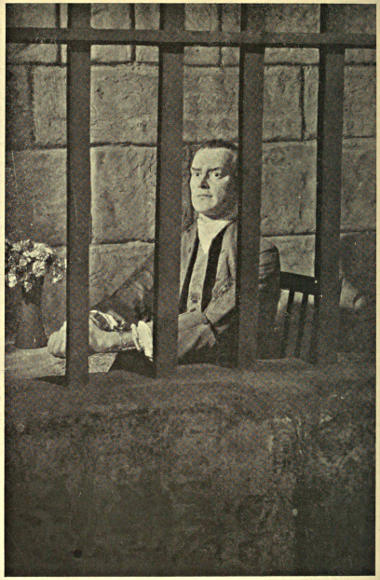
The Royal Family—The Queen—Her “trial,” condemnation and
death—The Sansons—Sala’s impressions.
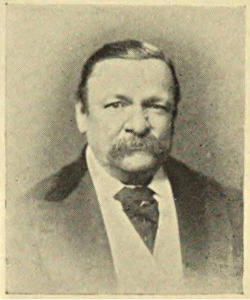
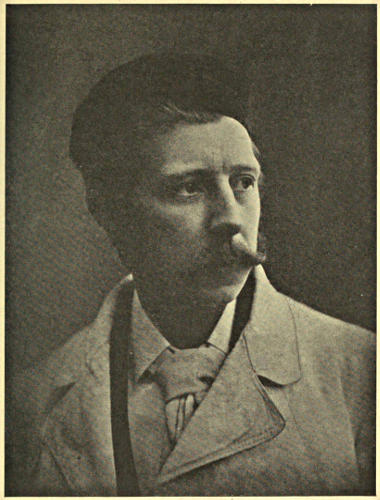
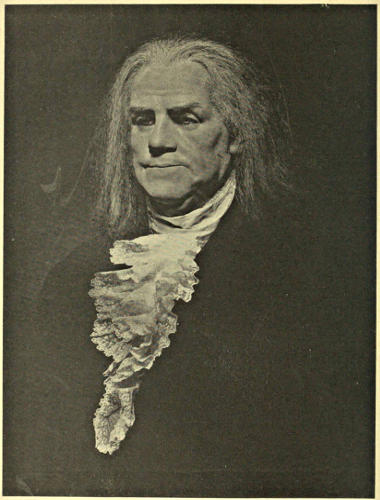
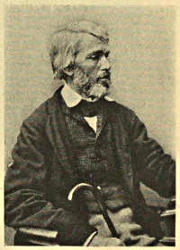
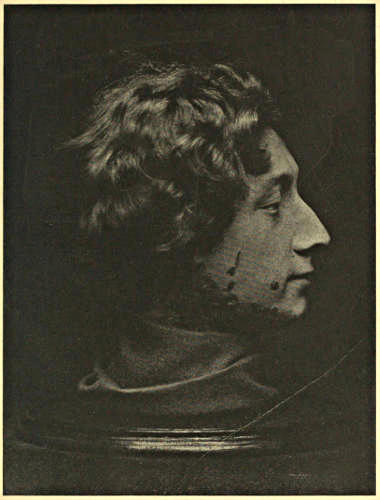
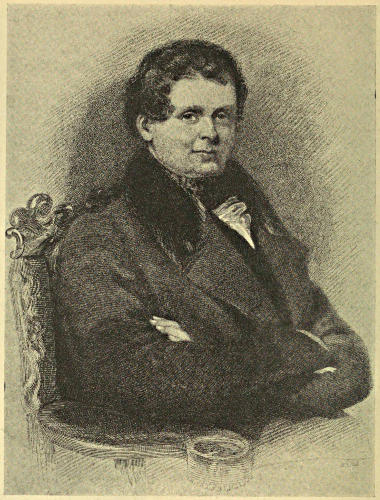
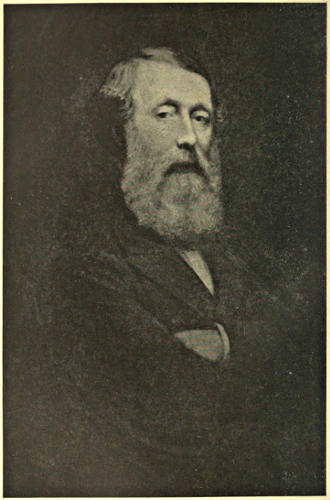
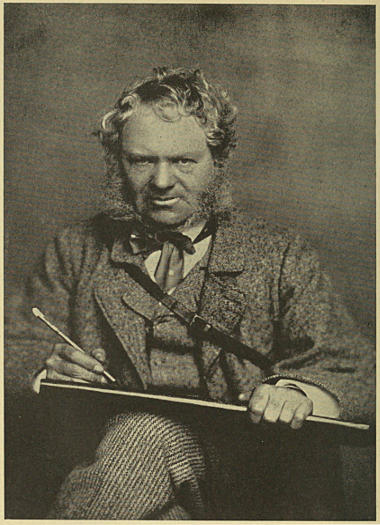
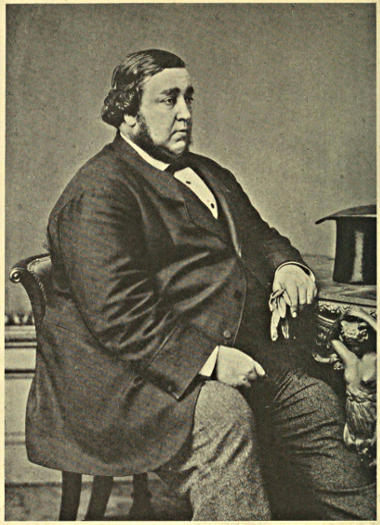
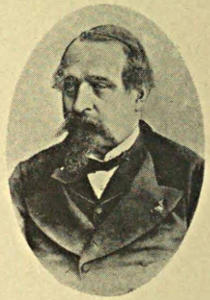
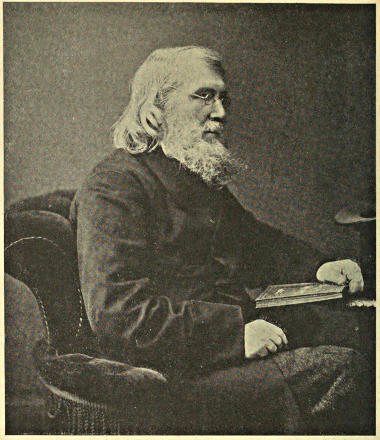
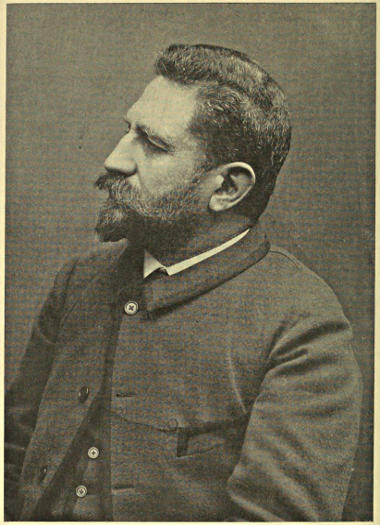
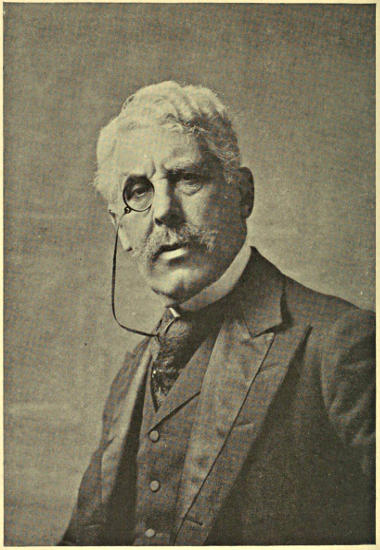
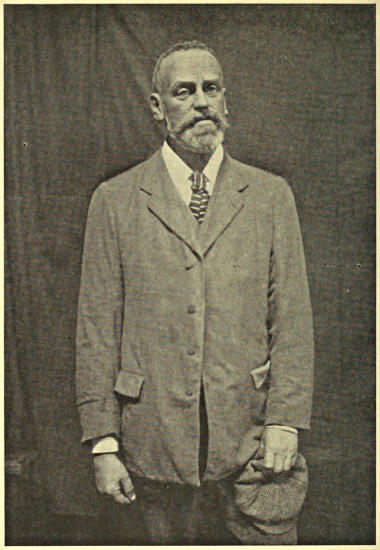
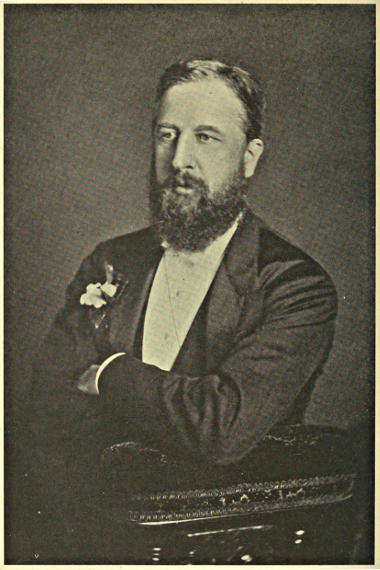
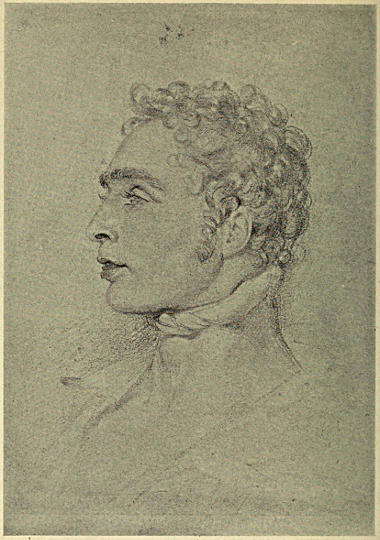
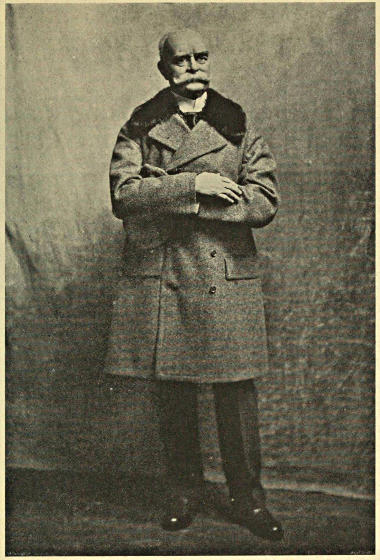
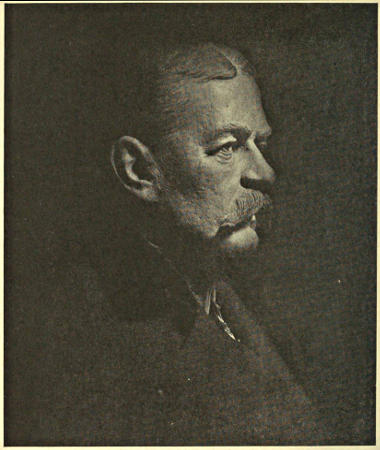
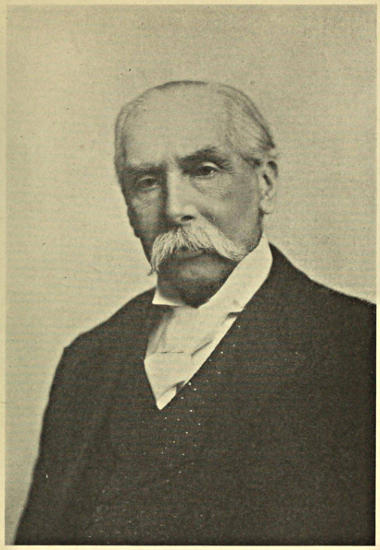
GEORGE AUGUSTUS SALA
From a photograph.
There are some stories so dreadful in the immensity
of human misery which they reveal—there
are some tragedies of which the catastrophe is
one of such unmitigated horror, that the reader who
has general impressions of what will be the end of the
dismal tale, but who is unfamiliar with its particular
circumstances, is unable to follow, without some kind
of impatience, the opening scenes of the drama. He
has continually in his mind’s eye the awful falling of
the curtain on anguish and despair and death. Half
unconsciously he hastens on in his perusal, and slurs
over minor episodes and seemingly trifling facts, forgetting
that these are subsidiary and auxiliary to the
terrible consummation which he so anxiously awaits.
“Toutes choses meuvent vers leur fin,” Rabelais has
said; but the little things—the slender fibres of a
story—are gathered up as it proceeds, into bundles;
and, acquiring importance from consolidation, are ultimately
merged in the final and tremendous whole.
Thus there have been many records of human life
and action, now real, now artificial, in reading which
we have to encounter an almost uncontrollable impulse
to turn to the end, and ascertain whether that of which
we have had, at the beginning, a vague forecast, will
really come to pass. Who, if he will only have the
candour to acknowledge it, has not had to struggle
with such an impulse in reading, say, the Electra of
Sophocles, the Faust of Goethe, and the Bride of
Lammermoor of Scott?—three of the most perfectly
tragic dramas, I take it, ever fashioned by the hand of
mortal genius. And so it is with numerous tragedies
of superhuman structure and ordinance. In both cases
we pant for the last scene of all, which is to end the
strange eventful history. What will be the fate of
Aegisthus, and the doom of Clytemnestra? Who, if
anyone, will rescue Gretchen from a shameful death?
How will Edgar Ravenswood bear his immeasurable
sorrow?
These are the problems which agitate us in the study
of fiction, and irresistibly impel us to hasten from the
prologue to the epilogue—from the exordium to the
peroration. And to speed as quickly is usually our desire
when we are confronted with the tragedies of history,
or with the vouched-for chronicles of human
passion and crime. Throw down on the floor Clarendon’s
History of the Rebellion, it has been said, and
the volume will open, automatically, at the page where
the execution of Charles I is described. Try to concentrate
your thoughts on the history of Marie Stuart;
and, coldly, clearly, sternly distinct in the midst of a
whirligig of scenes and events—the Louvre, Holyrood,
the Kirk of Field, Lochleven and what not—there
stands out the image of the Hall at Fotheringay, the
black scaffold, the block, the masked headsman; the
Dean of Peterborough drearily homilising, and the
Puritan Earl of Kent ranting; while the weeping tire-women
disrobe the royal victim, her little pet dog
snuggling by her, not without difficulty when the axe
has fallen to be dislodged from the corse of the kind
mistress he loved so well, and who has been stricken
down by cruel men, he knows not why. See this, as
I see it.
It is my purpose to write something on the eventful
life and dreadful ending of Queen Marie Antoinette.
I try, when I remember the sunshine of her early days—her
youth, her beauty, her grace—to put myself in
a cheerful frame of mind. I wish to look, at least for
a little while, on the bright side of a career which
began so splendidly and so happily. I would fain picture
to myself the daughter of Maria Theresa, as Edmund
Burke saw her at Versailles—smiling, radiant,
adored. I would fain hear the clash of the thirty thousand
swords which should have leaped from their
scabbards to avenge the slightest affront to the peerless
consort of the King of France and Navarre.
I take from my shelves the Journal de Madame
Eloff—the ledger containing the milliner and dressmaker’s
bills of a perhaps too extravagant young Queen—an
endless catalogue of taffetas and satins, gauze and
ribbons, high-heeled shoes and embroidered gloves,
scent-bottles, reticules, feathers, artificial flowers and
fans. From an old Boule cabinet I lift tenderly a
dainty little coffee-cup of Sèvres egg-shell porcelain,
adorned with an exquisite miniature of her, painted
when she had only been two years the wife of the
hapless Louis. The cup is half embedded in a setting
of velvet bleu du Roi; and, alas! when I draw the
ceramic gem delicately from the case I see that the cup
has no handle.
A maimed relic, this porcelain trifle, possibly of a
priceless breakfast set, wantonly shattered by a howling
mob of poissardes and red night-capped “patriots” who
had sacked one of the Royal Palaces. A crowd of
memories are conjured up by this morsel of dismembered
Sèvres. I see, as in a glass darkly, the Galerie
des Glaces and the Œil-de-Boeuf at Versailles. I see
the toy Dairy at the Petit Trianon; the banquet of the
Gardes du Corps in the Great Theatre of the Palace;
the King and Queen: the Royal Princesses circulating
among the guests and distributing white cockades
among them; while the musicians make the hall resound
with the strains of “Oh, Richard! Oh, mon Roi!”
No, surely, the age of Chivalry is not past, and thrice
ten thousand glaives will leap into the light to vindicate
the outraged Majesty of France. There’s no such
thing! A confused picture—a panorama all torn to
shreds and splashed with mud and flecked with blood
flows before me. The Etats Genéraux have wed: the
nobility sparkling in velvet and plumes and golden
broideries; the clergy brave in copes and mitres and
point lace: the “Tiers Etat,” all in sombre black, short-cloaked,
slouch-hatted, grave, preoccupied, looking unutterable
things. Among them looms, very real and
portentous indeed, a thick-set, pock-marked man, with
an eye of fire. This is Honore Gabriel Riquetti, rightly
Comte de Mirabeau, but who has broken with his order,
and styling himself “Mirabeau Marchand de
Draps”—a retail clothier from Marseilles, forsooth! of
about forty-eight hours’ commercial standing—stalks
among country notaries and shopkeepers, farmers and
shopkeepers as a Deputy of the Third Estate.
But all these fade away from my field of vision. I
set to studying and balancing my rambling thoughts.
I have to deal with Marie Antoinette, Josephe-Jeanne
de Lorraine, wife of Louis XVI, and who was born,
you will remember, at Vienna, on the 2nd of November,
1755, the very day of that earthquake at Lisbon
in the occurrence of which Dr. Johnson for a long
time so resolutely refused to believe. Would the doctor,
I wonder, had he lived in 1793, have declined to
place credence in a newspaper report of what is now to
be narrated—an upheaval more dreadful and disastrous
than any physical convulsion of the earth’s crust? The
tattered, muddy, gory panorama fades into a murky
nothingness. Then, out of the Valley of Shadows
there arises, terribly distinct and substantial, THIS—
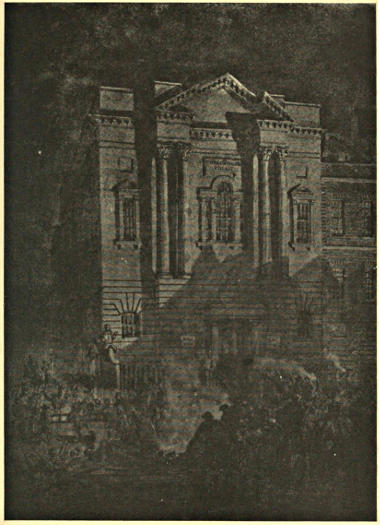
It is a raw, chilly, marrow-searching day in the
month of October, 1793. A spacious hall, known in
this new and blessed era of Universal Regeneration,
and Unlimited Throat-Cutting, as the Salle de la
Liberté, in the Palais de Justice, hard by the prison of
the Conciergerie, has been swept and garnished for the
trial of the discrowned and desolate widow of “Louis
Capet,” murdered on the scaffold in the Place de la
Révolution last January. In a dark and filthy dungeon
of that same Conciergerie Marie Antoinette has been
immured since August. The walls of the Salle de la
Liberté have been newly whitewashed—no voluptuous
frescoes or oil painting in this abode of Republican simplicity,
if you please: only patriotic lime-whiting and
democratic glue—and the almost blinding glare of the
stark walls brings out in strong relief the dark green
canopy suspended over the heads of the Judges of the
Revolutionary Tribunal, who are five in number, the
President being one, Hermann.
Above this precious conclave are the busts of Brutus—save
the mark!—and two recent Revolutionary notorieties:
the infamous Marat, deservedly done to
death by Charlotte Corday and the member of the Convention,
Lepelletier de St. Fargeau, who had voted for
the death sentence on Louis XVI, and who immediately
afterwards was stabbed to death by an ex-Garde du
Corps in an eating house in the Palais National—once
Palais Royal. The busts are crowned with scarlet
caps of liberty, adorned with monstrous tri-coloured
cockades, and are flanked by two huge oil lamps. There
will be need of the lamps; for the deliberation of the
tribunal will probably last far into the night.
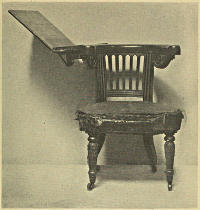
The judges sit at a long table which, although
shabby, is somewhat pretentious in its upholstering,
since the legs are of mahogany, and fluted, and the
brazen feet are fashioned in the shape of griffin’s
claws, and exhibit some traces of bygone gilding. This
table is yet extant, and forms part of the furniture
of the Court of Cassation, which at present holds its
sittings in the old Salle de la Liberté. The Public
Accuser has his place in front of the President; the
jury—yes, this monstrous tribunal has a jury!—is to
the left of the judges; and to the right is the desk of
the Counsel for the defence. Behind him is the seat
for the prisoners. A breast-high balustrade separates
the Court from the space set apart for the public,
which is ample enough, and is thronged, this dreary
October morning, by a motley crew of sans culottes,
mechanics, lamplighters, bargemen and coarse, loud-voiced
women from the markets, some of them known
as “Tricoteuses” and “Furies of the Guillotine.”
Between the balustrade and the body of the Court
runs a long gangway, at one extremity of which is a
door, communicating by means of a narrow staircase
with the Gaol of the Conciergerie.
Up this staircase and through this door, and along
this gangway, and so through an opening of the balustrade
into the criminal dock, there is brought, between
two gendarmes, a woman of middle age, with abundant
hair which has turned quite grey lately, and features
which retain a few—a very few—traces of former
comeliness. She is barely eight-and-thirty, and she
looks full fifty. She is miserably clad in an old,
patched, threadbare gown of black serge, which has
been mended for her innumerable times by a compassionate
girl named Rosalie, the daughter of the gaoler.
Her shoes are old, full of holes, and down at heel.
She wears black cotton stockings, and about her shoulders
is arranged a kind of tippet, or pelérine, of frayed
white muslin. As yet she wears no cap; and her long
tresses have been carefully dressed and oiled this morning
by the pitying Rosalie. Obviously, she is in mourning
for her husband, sometime King of France and
Navarre; but the Revolutionary Tribunal knows nothing
of such titles, and in the Act of Accusation, which
is read in a monotonous sing-song by the Greffier, the
prisoner is arraigned as “Marie Antoinette, of Austria
and Lorraine, widow of Louis Capet.”
The indictment goes on to say that the widow Capet
has by her crimes rendered herself the worthy compeer
of Brunéhaut, Fredegonde, and Catherine de Medicis;
that since she has had her abode in France she has
been the scourge and bloodsucker of her adopted country;
and that even before “the Happy Revolution which
gave the French their sovereignty” she entered into
political correspondence with “the man calling himself
King of Bohemia and Hungary”—this is the Emperor
of Austria her brother—that, in conjunction with
the brothers of Louis Capet, and “the execrable and infamous
Calonne” she had squandered the resources of
France (the fruit of the sweat of the people) in a
dreadful manner, “to satisfy inordinate pleasures and
to pay the agents of her criminal intrigues.”
In another count of the indictment she is charged
with being “an adept in all sorts of crimes.” One of
these “crimes” is, that on the evening of the famous
banquet to the Garde du Corps, and the Regiment de
Flanders, in the Opera House at Versailles, she, with
the King and a numerous and brilliant following, had
passed between the lines of tables, distributing white
cockades to the officers and encouraging them to trample
the national or tri-coloured cockade under foot.
“Prisoner,” thunders the President, “were you there
when the band played the air, ‘Oh, Richard, oh mon
Roi’?”
“I do not recollect,” replies the Queen.
“Were you there when the toast of ‘The Nation’
was proposed and refused?”
“I do not think that I was.”
“Did not your husband read his speech to the representatives
to you half-an-hour before he delivered it?”
“My husband had great confidence in me, and that
made him read his speech to me; but I made no observations.”
Fancy cutting a poor woman’s head off because her
husband read her a speech which he was about to deliver
in public! Does Mr. Gladstone, does Lord Randolph
Churchill, does Sir William Harcourt, I wonder,
ever favour the domestic circle with such “fore-lectures”
as Dr. Furnival might call them?
A remarkable witness against Marie Antoinette is a
ruffian named Roussillon, who deposes that on the
fatal Tenth of August when the Tuileries was stormed
by the mob, he saw under the Queen’s bed a number of
empty wine-bottles, “from which,” adds Roussillon,
“I concluded that she had herself distributed wine to
the Swiss soldiers, that these wretches in their intoxication
might assassinate the people.”
Another witness testifies that among the effects of
the ex-Queen found at the prison of the Temple was
a satin riband bearing the gilt image of a Heart with
the inscription “Cor Jesu miserere nobis.” Other testimony
is to the effect that while the Queen and the
children were incarcerated in the Temple, after the
execution of Louis, the poor little Dauphin was placed
at the top of the table by his mother, and was served
first; thus justifying the inference that she ignored the
Republic, One and Indivisible, and recognised her
young son as Louis XVII, and the successor of his murdered
sire.
Another charge, an abominable charge, and one so
monstrous as to make it scarcely credible that it should
be launched against a woman and a mother, is that
she had systematically sought to corrupt the mind of
the poor young prince. To this horrible allegation she
makes at first no answer. At length, when the charge is
repeated, she is moved to noble indignation, and exclaims:
You accuse me of an impossibility: “J’en
appelle à toutes les mères.” I appeal to all mothers.
But the instinct of maternity seems to be dead in all
that hall of blood, and the beldames in the public tribunes
only yell and gibe at her.
Less revolting, but equally preposterous, is the evidence
of one Renée Mullet, a chambermaid who has
been in service at Versailles, and this hussey swears
that one day, “in a moment of good humour,” she
asked the ci-devant Duc de Coigny whether the Emperor
still continued to wage war against the Turks;
as in that case France would soon be ruined, the Queen
having sent her brother no less than two hundred millions
of livres, wherewith to carry on hostilities. To
this, according to the gossiping waiting woman, the
Duke made answer: “Thou art right enough. Two
hundred millions have already been spent, and we are
not at the end of it yet.”
It is on such evidence as this—evidence not heavy
enough to detach a feather from a pigeon’s wing, not
convincing enough to prove a forty shilling debt, the
wretched Marie Antoinette is at length convicted. The
President sums up, furiously, against her. The advocates
who defend her, Chauveau and Tronçon-Ducoudray
have little to say, to the point, and can only
feebly plead for clemency to be extended to her; and
the jury, after deliberating for fifty-five minutes, return
a verdict affirming all the charges submitted to them.
Hermann calls on the accused to declare whether she
has any objection to make to the sentence of the law demanded
by the Public Accuser. Marie Antoinette bows
her head in token of a negative.
Then the tribunal, putting their bloodthirsty heads
together for a few minutes, condemn Marie Antoinette
of Austria and Lorraine, widow of Louis Capet to the
punishment of Death, “and the confiscation of all her
property for the benefit of the Republic, the sentence
to be executed in the Square of the Revolution.” The
confiscation of all her property! When she was dead,
an inventory was taken of the few rags which she had
left behind her in her cell in the Conciergerie, and they
were appraised at the magnificent sum of nine livres,
about seven and sixpence sterling. Nine livres all
told! In the second year of her marriage it was computed
that the roll and butter served every morning
to each of her ladies of honour, cost two thousand
livres, or eighty pounds a year; and five thousand livres
was the annual charge for the bouillon, or beef-tea,
kept hot by day and by night for Madame Royale,
who was a weakly child. During the earlier portion
of her imprisonment the unhappy Queen had been supplied
with body linen by the compassionate care of the
Marchioness of Stafford, the wife of the British Ambassador
in Paris, but there was no kindly Ambassadress
to succour her in her last and darkest days, and
the only hand held forth in pity to this forlorn daughter
of the Cæsars was that of a gaoler’s daughter.
It was half past four on the morning of the sixteenth
of October when this infernal tribunal adjourned,
and the Queen was conducted back to her
prison. Throughout the whole of her trial she had not
ceased to maintain a calm countenance; but at times
she seemed to be giving way to a feeling of sheer weary
listlessness, and moved her fingers on the bar of the
dock before her, as though she was playing on the
harpsichord When she heard the sentence pronounced,
her features did not shew the slightest alteration; and
she walked from the hall erect and seemingly unmoved,
gendarmes with drawn swords before and behind
her, and the beldames of the fish-market and the
rag-shops cursing and shrieking at her, just as you may
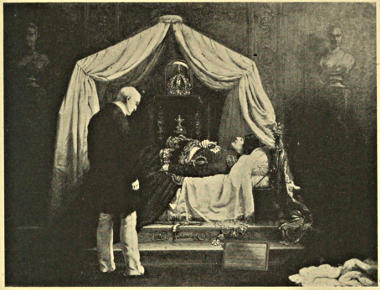
see them in Paul Delaroche’s noble picture.
So they took her back to a dungeon twelve feet long,
eight feet broad, four feet underground, with a grated
window on a level with the pavement. Into this
wretched hole some scraps of the coarsest food were
brought her; but she was left under the incessant supervision
of a female prisoner and two soldiers. It is
said that she snatched a little sleep. On waking she
asked one of the gendarmes who had been present at
the trial whether she had replied “with too much dignity”
to the question put to her. “I ask,” she added,
“because I overheard a woman say, See how haughty
she still is.” The woman who could have made such
an observation must have been one of the hags that
Delaroche has painted.
At seven o’clock in the morning, the entire garrison
of Paris was under arms. Cannon were placed in all
the public places; and at the foot of every bridge from
the Quay of the Conciergerie to the Place de la Révolution,
that magnificent area between the gardens of
the Tuileries, originally called the Place Louis XV,
and now know as the Place de la Concorde. At half-past
eleven Marie Antoinette, dressed in a white linen
déshabille, was brought out from the prison. As though
she had been the commonest of malefactors she was
made to mount the charette, or open cart, the appointed
tumbril of infamy. At least the murderers of
her husband had had the decency to allow him the
“luxury” of a hackney coach, when he was taken from
the Temple to the scaffold. Her hair had been cut
short ere she left the gaol, and what remained of her
formerly luxuriant tresses was tucked under a white
mob-cap. Her hands were tied behind her back.
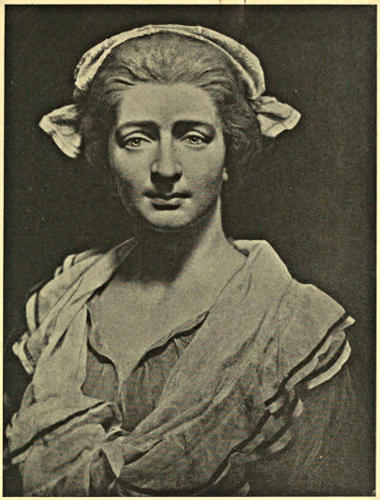
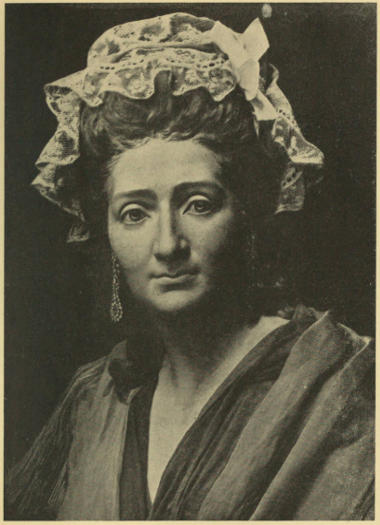
Of the Queen in this deplorable plight there exists
a very beautiful statue executed by Lord Ronald
Gower. On the right, in the tumbril, was seated Sanson,
the executioner, and on the left a “constitutional”
priest, that is to say, one who had taken the oath of
fealty to the Republic. To the ministrations of this
“patriotic” cleric, who was dressed in light grey coat
and a bob-wig, Marie Antoinette had in the first instance
declined to listen; but she occasionally spoke
to him on her way to the fatal Place de la Révolution.
An immense mob, in which women were revoltingly
numerous, crowded the streets throughout the entire
line of route insulting the Queen and vociferating
“Long live the Republic!” She seldom cast her eyes
on the populace, but from time to time looked with
some curiosity on the prodigious military force surrounding
the cart. Otherwise her attitude throughout
this last dismal pilgrimage was one of half torpid
indifference.
As the cart traversed the Rue St. Honoré, the
numbed faculties of the Queen seemed momentarily to
revive; and she examined with some attention the multitudinous
inscriptions of “Liberty” and “Equality”
over the shop-fronts.
It was as the vehicle turned the corner of the Rue St.
Honoré into that which is now the Rue Royale that
the famous painter, David, who, during the Reign of
Terror, was a furious Jacobin and a friend of Robespierre,
but who was destined to become a Baron of the
Empire, and to paint the Coronation of Napoleon at
Notre Dame, was able from the balcony which he occupied
in company with the wife of a member of the
Convention to make a sketch of Marie Antoinette.
The drawing has come down to us. The features of
the Martyr Queen are sharp and pinched, exhibiting
no traces whatever of former comeliness, and she looks
fifty years of age. It may here be mentioned that the
illustrious and pure-minded English sculptor, John
Flaxman, when he visited Paris, after the Peace of
Amiens, resolutely refused to meet the artist who made
the last sketch of Marie Antoinette, and always spoke
of him disdainfully as “David of the bloodstained
brush.”
The historians are divided in opinion as to the demeanor
of Marie Antoinette on the scaffold. Some
say that she laid herself down on the fatal plank with
calm deliberation, and met her death with noble fortitude,
recalling Andrew Marvell’s superb lines on the
execution of Charles I:—
And while the armèd bands
Did clap their bloody hands,
He nothing common did, nor mean,
Upon that memorable scene;
Nor called the gods, in vulgar spite,
To vindicate his helpless might;
But, with his keener eye
The axe’s edge did try;
Then bowed his comely head
Down, as upon a bed.
Others narrate that the Queen ascended the steps
of the scaffold in great haste, and with apparent impatience,
and turned her eyes with much emotion towards
the Palace of the Tuileries, the scene of her
former greatness, and that she made some slight resistance
before submitting to the executioner. My own
impression is that she was two-thirds dead—that the
rigor mortis was upon her before she reached the scaffold;
that she was lifted out of the cart and half carried
to the guillotine, and that she did not give the
headsman and his assistants the slightest trouble.
It is, at all events, certain that at half past twelve
her head was severed from her body. One of the
valets du bourreau, or executioner’s men, lifted and
showed the head streaming with blood, from the four
quarters of the scaffold, the mob meanwhile screeching
“Vive la République!” and it is asserted that a young
man who dipped his handkerchief in the blood, and
pressed it with veneration to his heart, was instantly
apprehended. The corpse of Marie Antoinette was
immediately flung into a pit filled with quicklime, in
the graveyard of the Madeleine where the remains of
her husband had also been interred.
At the Restoration in 1814, diligent search was made
for the ashes of the King and Queen in the cemetery,
on the site of which was subsequently erected an Expiatory
Chapel. Some half calcined bones and a few
scraps of cloth and linen were found; and these last
having been identified by experts as having been part
of the apparel of Louis XVI and Marie Antoinette,
the relics with a considerable quantity of the surrounding
earth, were inhumed with much pomp and solemnity,
in the Royal Vault of the Cathedral of St. Denis.
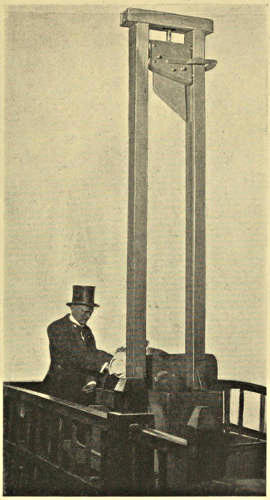
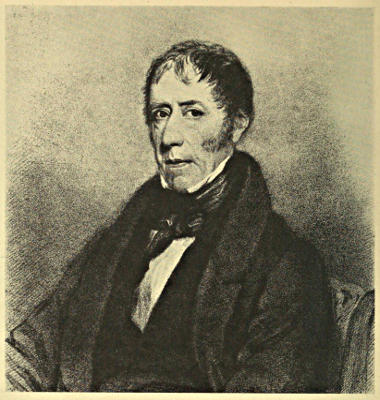
Touching the executioner, it may be expedient to
record that Marie Antoinette was guillotined, not by
Charles Henri Sanson, who beheaded Louis XVI, but
by his son, Henri, who died in Paris in 1840, aged
seventy-three. The elder Sanson died only a few weeks
after he had executed Louis, and the Royalist historians
maintain that his death was hastened by remorse for the
deed which he had been constrained to commit, and
that in his will he bequeathed a considerable sum for
the celebration of an annual Expiatory Mass. But
this is very doubtful. It has been shown, however,
without the possibility of doubt, that the Sanson family
were of Florentine origin, and that the ancestors of
Charles Henri and of Henri Sanson came to France in
the train of Catherine de Medicis. For two hundred
years, without intermission, had members of this
gloomy historic family been executioners in ordinary
to the city of Paris.
In addition to Marie Antoinette, the younger Sanson
decapitated the Queen’s sister-in-law, Madame
Elisabeth, and the eloquent advocate, Malesherbes, who
undertook the defence of Louise XVI. He likewise
beheaded the Duke of Orléans (Philippe Égalité), and
last, but not least, Maximilien Robespierre. The so-called
Memoirs of the Sanson Family are more than
half suspected to be mainly apocryphal, and to have
been written by one D’Olbreuse, a bookseller’s hack;
and, according to a writer in the Paris Temps, in 1875
the last of the Sansons was a remarkably mild, flaccid
and stupid old gentleman, who was certainly incapable
of writing any “Memoirs” whatever, since his own
memory was hopelessly decayed, and whose circumstances
in his old age became so embarrassed that he
was arrested for debt, and confined in the prison of
Clichy, whence he only procured his enlargement by
pawning the guillotine itself for 4,000 francs!
Shortly after the conclusion of this singular transaction,
a murderer had to be executed, and the usual
instructions were issued by the Procureur General to
Henri Sanson, to have his death dealing apparatus
ready on a certain morning in the Place de la Roquette.
It then became necessary to explain to the authorities
that the fatal machine was practically in the custody of
My Uncle. Justice, however, had to be satisfied, and
the murderer’s head was duly cut off on the appointed
morning; but simultaneously with the signature of the
Minister of Justice of a draft for 4,000 francs to release
the hypothecated guillotine, there was issued an
order dismissing Sanson from his post.
And Marie Antoinette? I have drawn her picture
as faithfully as I could, not without much toil and
more perplexity for the memoirs of the period in which
she lived and died absolutely bristle with falsehoods,
the inventions now of Royalist and now of Republican
writers. Comparatively few are the facts concerning
her which have been exactly ascertained and are altogether
indisputable; whereas the name of the unfounded
assertions, the insinuations, the hypotheses, and the
downright lies, is legion. By some this most unhappy
woman has been represented as an angel of goodness
and purity, a faithful spouse, a fond parent, a kind
mistress, and a most pious and charitable princess. By
others she has been depicted as a crafty, unscrupulous
and vindictive woman, as perfidious as Borgia and profligate
as Messalina.
This is no place in which to discuss at length a most
intricate question, all hedged about by obscurity, uncertainties
and mysteries which will, perhaps, never
be solved. At all events, the story which I have told
of her trial and her last moments is true. For the
rest, both Royalists and Republicans agree that Marie
Antoinette was born at Vienna, in 1755, and was the
daughter of Francis of Lorraine, Emperor of Germany,
and of Marie Theresa of Austria. In May, 1770, she
married the Dauphin Louis, who was grandson of
Louis XV of France, and who, in 1774, ascended the
French throne as Louis XVI. It would not seem that
Marie Antoinette was absolutely beautiful, as beautiful,
say, as Queen Louisa of Prussia, or as the Empress
Eugene, still there is a tolerably unanimous consensus
of opinion that she was handsome, lively, amiable,
and thoroughly kind-hearted. It is possible that
she may have been a little thoughtless in her youth;
and the ledgers of Madame Eloffe certainly show that,
as regards her toilet, Marie Antoinette was a most
prodigal Queen. But is it a mortal sin in a young,
pretty and sprightly woman to spend a good deal of
money on dress? How many hundred dresses did our
chaste Queen Elizabeth leave behind her, in her wardrobe,
at her death?
It must be granted that when the dissensions of the
Revolution began, Marie Antoinette was on the Conservative
side, and that she tried her hardest to incline
her husband to that side. Was it so very unnatural
that she should do so? Her brother, the Emperor
Joseph, used to say that “Royalty was his trade”; and
poor Marie Antoinette may have laboured under a
similar persuasion. But the times were very bad indeed
for the “trade” of Royalty, and there arose a grim
conviction among the working millions that the best
way of mending matters was to dethrone, plunder, and
murder their masters and mistresses.
The influence of Marie Antoinette in the councils of
Louis has been, I should say, considerably exaggerated
by her enemies. Her husband, naturally disposed to
concession, was by temper irresolute, and he allowed
himself to be led away by the course of events, instead
of striving to control and direct them. There can be
little doubt, either, that Marie Antoinette was one of
the chief advisers of the flight of the King and Royal
Family to Varennes; and that imprudent enterprise
served, even more fiercely, to inflame the public animosity
against herself and her husband.
But again, I fail to see the criminality of this attempted
escape. The King and Queen knew well
enough that the Revolutionists intended to deprive
them of their crowns, and, in all probability, of their
lives, they had no adequate armed force with which
to resist the mob. Were they not justified in running
away? After the deposition of Louis, all the elements
of grandeur in the character of Marie Antoinette began
to manifest themselves. She showed the greatest
courage during the dastardly attacks made on the Royal
Family; and she appeared to be always more anxious
for the safety of her husband and children than for
her own. She shared their captivity with noble resignation,
and her demeanour under the most trying circumstances
never lost an iota of its dignity. In the
presence of her judges her fortitude never forsook her;
her burst of indignant maternal feeling overawed even
the butchers who were perverting and burlesquing the
law to bring her to the shambles; and her behaviour
in almost unparalleled misfortunes, has won for her
not only the pity and the sympathy, but the reverent
admiration of posterity.