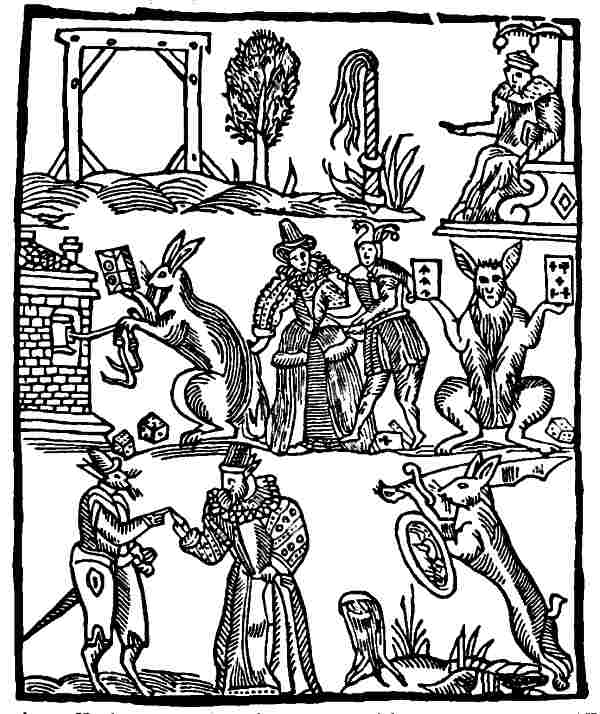
FOR COMMEN CVRSETORS
VVLGARELY CALLED
Vagabones, set forth by Thomas Harman,
Esquiere, for the utilite and proffyt of his naturall
Cuntrey. Augmented and inlarged by the fyrst author here of.
Anno Domini. M.D.LXVII.
¶ Vewed, examined, and allowed, according vnto the
Queenes Maiestyes Iniunctions.
¶ Imprinted at London, in Fletestrete, at the signe of the
Falcon, by Wylliam Gryffith, and are to be sold at his shoppe in
Saynt Dunstones Churche yarde, in the West.
Anno Domini. 1567.
[The Bodley edition of 1567 omits 'or Warening' in line 1, and 'Anno Domini. 1567.' at
foot; and substitutes 'Newly Augmented and Imprinted' for 'Augmented ... here of',
line 6.]
HARMAN. THE EPISTLE.
[leaf 2]
¶ To the ryght honorable and my singular good Lady, Elizabeth
Countes of Shrewsbury, Thomas Harman wisheth all ioye and
perfite felicitie, here and in the worlde to come.
AS of Auncient and longe tyme there hath bene, and is now at
this present, many good, godly, profitable lawes and actes
made and setforthe in this most noble and floryshynge realme,
for the reliefe, succour, comforte, and sustentacion of the
poore, nedy, impotent, and myserable creatures beinge and
inhabiting in all parts of the same; So is there (ryghte honorable
and myne especyall good Lady) most holsom estatutes, ordinances,
and necessary lawes, made, setforth, and publisshed, for the
extreme punishement of all vagarantes and sturdy vacabons, as passeth
throughe and by all parts of this famous yle, most idelly and
wyckedly: and I wel, by good experience, vnderstandinge and consideringe
your most tender, pytyfull, gentle, and noble nature,—not
onelye hauinge a vygelant and mercifull eye to your poore, indygente,
and feable parishnores; yea, not onely in the parishe where your
honour moste happely doth dwell, but also in others inuyroninge or
nighe adioyning to the same; As also aboundantly powringe out dayely
your ardent and bountifull charytie vppon all such as commeth for reliefe
vnto your luckly gates,—
I thought it good, necessary, and my bounden dutye, to acquaynte
your goodnes with the abhominable, wycked, and detestable behauor
of all these rowsey, ragged rabblement of rakehelles, that—vnder the
pretence of great misery, dyseases, and other innumerable calamites
whiche they fayne—through great hipocrisie do wyn and gayne great
almes in all places where they wyly wander, to the vtter deludinge of
the good geuers, deceauinge and impouerishing of all such poore housholders,
both sicke and sore, as nether can or maye walke abroad for
reliefe and comforte (where, in dede, most mercy is to be shewed).
And for that I (most honorable Lady), beinge placed as a poore gentleman,
haue kepte a house these twenty yeares, where vnto pouerty
dayely hath and doth repayre, not without some reliefe, as my poore
callinge and habylytie maye and doth extende: I haue of late yeares
gathered a great suspition that all should not be well, and, as the
prouerbe saythe, "sume thinge lurke and laye hyd that dyd not
playnely apeare;" for I, hauinge more occation, throughe sickenes,
to tary and remayne at home then I haue bene acustomed, do, by my
there abyding, talke [42]and confere dayly with many of these wyly
wanderars of both sortes, as well men and wemmen, as boyes and
gyrles, by whom I haue [leaf 2, back] gathered and vnderstande their
depe dissimulation and detestable dealynge, beinge maruelous suttle
and craftye in there kynde, for not one amongst twenty wyll discouer,
eyther declare there scelorous secretes: yet with fayre flatteringe
wordes, money, and good chere, I haue attained to the typ by such
as the meanest of them hath wandred these xiii. yeares, and most
xvi. and some twenty and vpward,[43] and not withoute faythfull promesse
made vnto them neuer to discouer their names or any thinge
they shewed me; for they would all saye, yf the vpright men should
vnderstand thereof, they should not be only greuouslye beaten, but
put in daunger of their lyues, by the sayd vpright men. There
was a fewe yeares since a small bréefe setforth of some zelous
man to his countrey, of whom I knowe not, that made a lytle shewe
of there names and vsage, and gaue a glymsinge lyghte, not sufficient
to perswade of their peuishe peltinge and pickinge[44] practyses,
but well worthy of prayse. But (good madame), with nolesse
trauell then good wyll, I haue repayred and rygged the Shyp of
knowledge, and haue hoyssed vp the sayles of good fortune, that
she maye safely passe aboute and through all partes of this noble
realme, and there make porte sale of her wyshed wares, to the
confusion of their drowsey demener and vnlawfull language, pylfring
pycking, wily wanderinge, and lykinge lechery, of all these
rablement of rascales that raunges about al the costes of the same,
So that their vndecent, dolefull dealing and execrable exercyses
may apere to all as it were in a glasse, that therby the Iusticers
and Shréeues may in their circutes be more vygelant to punishe
these malefactores, and the Counstables, Bayliffes, and bosholders,[45]
settinge asyde all feare, slouth, and pytie, may be more circomspect
in executing the charg geuen them by the aforesayd Iusticers.
Then wyll no more this rascall rablement raunge about the countrey.
Then greater reliefe may be shewed to the pouerty of eche parishe.
Then shall we kepe our Horses in our pastures vnstolen. Then
our lynnen clothes shall and maye lye safelye one our hedges
vntouched. Then shall we not haue our clothes and lynnen hoked
out at our wyndowes as well by day as by night. Then shall we
not haue our houses broken vp in the night, as of late one of my
nyghtbors had and two great buckes of clothes stolen out, and
most of the same fyne Lynnen. Then shall we safely kepe our
pigges and poultrey from pylfring. Then shall we surely passe by
[46]the hygh waies leading to markets and fayres vnharmed. Then
shall our Shopes and bothes be vnpycked and spoyled. Then shall
these vncomly companies be dispersed and set to labour for their
lyuinge, or hastely hang for [leaf 3] their demerites. Then shall it
incourrage a great number of gentle men and others, seing this securitie,
to set vp houses and kepe hospitalytie in the countrey, to the
comfort of their nighboures, releife of the poore, and to the amendement
of the common welth. Then shall not sinne and wickednes so
much abound among vs. Then wil gods wrath be much the more
pacified towards vs. Then shall we not tast of so many and sondry
plages, as now dayely raigneth ouer vs. And then shall this Famous
Empyre be in more welth and better florysh, to the inestymable ioye
and comfort of the Quenes most excelent maiestye, whom god of his
infinyte goodnes, to his great glory, long and many yeares make most
prosperously to raygne ouer vs, to the great Felycitye of all the Peres
and Nobles, and to the vnspeakable ioye, releife, and quietnes of
minde, of all her faythfull Commons and Subiectes. Now, me
thinketh, I se how these peuysh, peruerse, and pestilent people
begyn to freat, fume, sweare, and stare at this my booke, their lyfe
being layd open and aparantly paynted out, that their confusion
and end draweth one a pase. Where as in dede, if it be well
waied, it is set forth for their synguler profyt and commoditie, for the
sure safegard of their lyues here in this world, that they shorten
not the same before[47] their time, and that by their true labour and
good lyfe, in the world to com they may saue their Soules, that
Christ, the second person in [the] Trinytie, hath so derely bought with
his most precious bloud: so that hereby I shall do them more good
then they could haue deuised for them selues. For behold, their
lyfe being so manyfest wycked and so aparantlye knowen, The honorable
wyl abhore them, The worshipfull wyll reiecte them, The
yemen wyll sharpely tawnte them, The Husband men vtterly defye
them, The laboryng men bluntly chyde them, The wemen with a loud
exclamation[48] wonder at them, And all Children with clappinge
handes crye out at them. I manye times musing with my selfe at
these mischeuous misliuers, merueled when they toke their oryginall
and beginning; how long they haue exercised their execrable wandring
about. I thought it méete to confer with a very old man that
I was well acquaynted with, whose wyt and memory is meruelous for
his yeares, beinge about the age of fourescore, what he knewe when he
was yonge of these lousey leuterars. And he shewed me, that when
he was yonge he wayted vpon a man of much worshyp in Kent, who
died immediatly after the last Duke of Buckingham was beheaded:
at his buryall there was such a number of beggers, besides poore
housholders dwelling there abouts, that vnneth they mighte lye or
stande aboute the House: then was there [leaf 3, back] prepared for
them a great and a large barne, and a great fat oxe sod out in
Furmenty for them, with bread and drinke aboundantly to furnesh
out the premisses; and euery person had two pence, for such was the
dole. When Night approched, the pore housholders repaired home
to their houses: the other wayfaring bold beggers remained alnight
in the barne; and the same barne being serched with light in the
night by this old man (and then yonge), with[49] others, they tolde
seuen score persons of men, euery of them hauing his woman, except
it were two wemen that lay alone to gether for some especyall cause.
Thus hauing their makes to make mery withall, the buriall was turned
to bousing and belly chere, morning to myrth, fasting to feasting,
prayer to pastyme and pressing of papes, and lamenting to Lechery.
So that it may apere this vncomly company hath had a long continuance,
but then nothinge geuen so much to pylferinge, pyckinge, and
spoyling; and, as far as I can learne or vnderstand by the examination
of a number of them, their languag—which they terme peddelars
Frenche or Canting—began but within these xxx. yeeres,[50] lytle
aboue; and that the first inuenter therof was hanged, all saue the
head; for that is the fynall end of them all, or els to dye of some
filthy and horyble diseases: but much harme is don in the meane
space by their continuance, as some x., xii., and xvi. yeares before
they be consumed, and the number of them doth dayly renew. I
hope their synne is now at the hyghest; and that as short and as
spedy a redresse wylbe for these, as hath bene of late yeres for the
wretched, wily, wandering vagabonds calling and naming them selues
Egiptians, depely dissembling and long hyding and couering their
depe, decetfull practises,—feding the rude common people, wholy
addicted and geuen to nouelties, toyes, and new inuentions,—delyting
them with the strangenes of the attyre of their heades, and
practising paulmistrie to such as would know their fortunes: And, to
be short, all theues and hores (as I may well wryt),—as some haue
had true experience, a number can well wytnes, and a great sorte hath
well felte it. And now (thankes bée to god), throughe wholsome
lawes, and the due execution thereof, all be dispersed, banished,[51] and
the memory of them cleane extynguished; that when they bée once
named here after, our Chyldren wyll muche meruell what kynd of
people they were: and so, I trust, shal shortly happen of these.
For what thinge doth chiefely cause these rowsey rakehelles thus to
continue and dayly increase? Surely a number of wicked parsons
that kéepe typlinge Houses in all shires, where they haue succour
and reliefe; and what so euer they bring, they are sure to receaue
money for [leaf 4] the same, for they sell good penyworthes. The
byers haue the greatest gayne; yea, yf they haue nether money nor
ware, they wylbe trusted; their credite is much. I haue taken a
note of a good many of them, and wil send their names and dwelling-places
to such Iusticers as dwelleth nere or next vnto them, that
they by their good wisdomes may displace the same, and auctoryse
such as haue honesty. I wyl not blot my boke with their names,
because they be resident. But as for this fletinge Fellowshyp, I
haue truly setforth the most part of them that be doers at this present,
with their names that they be knowene by. Also, I haue
placed in the end therof their leud language, calling the same pedlers
French or Canting. And now shal I end my prologue, makinge true
declaration (right honorable Lady) as they shal fall in order of their
vntymelye tryfelinge time, leud lyfe, and pernitious practises, trusting
that the same shall neyther trouble or abash your most tender,
tymerous, and pytifull Nature, to thinke the smal mede should growe
vnto you for such Almes so geuen. For god, our marcifull and most
louing father, well knoweth your hartes and good intent,—the geuer
neuer wanteth his reward, according to the sayinge of Saynt Augustyn:
as there is (neyther shalbe) any synne vnpunished, euen so
shall there not be eny good dede vnrewarded. But how comfortably
speaketh Christ our Sauiour vnto vs in his gospel ("geue ye, and it
shalbe geuen you againe"): behold farther, good Madam, that for a
cup of colde water, Christ hath promised a good reward. Now saynt
Austen properly declareth why Christ speaketh of colde water, because
the poorest man that is shall not excuse him selfe from that
cherytable warke, least he would, parauenture, saye that he hath
neyther wood, pot, nor pan to warme any water with. Se, farther,
what god speaketh in the mouth of his prophet, Esaye, "breake thy
bread to him that is a hongred;" he sayth not geue him a hole lofe,
for paraduenture the poore man hath it not to geue, then let him geue
a pece. This much is sayd because the poore that hath it should not
be excused: now how much more then the riche? Thus you se, good
madam, for your treasure here dispersed, where nede and lacke
is, it shalbe heaped vp aboundantly for you in heauen,
where neither rust or moth shall corupt or destroy
the same. Vnto which tryumphant place, after
many good, happy, and fortunat yeres prosperouslye
here dispended. you maye for
euer and euer there most ioyfully
remayne. A men.
¶¶ FINIS
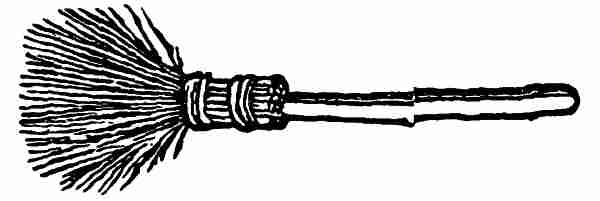
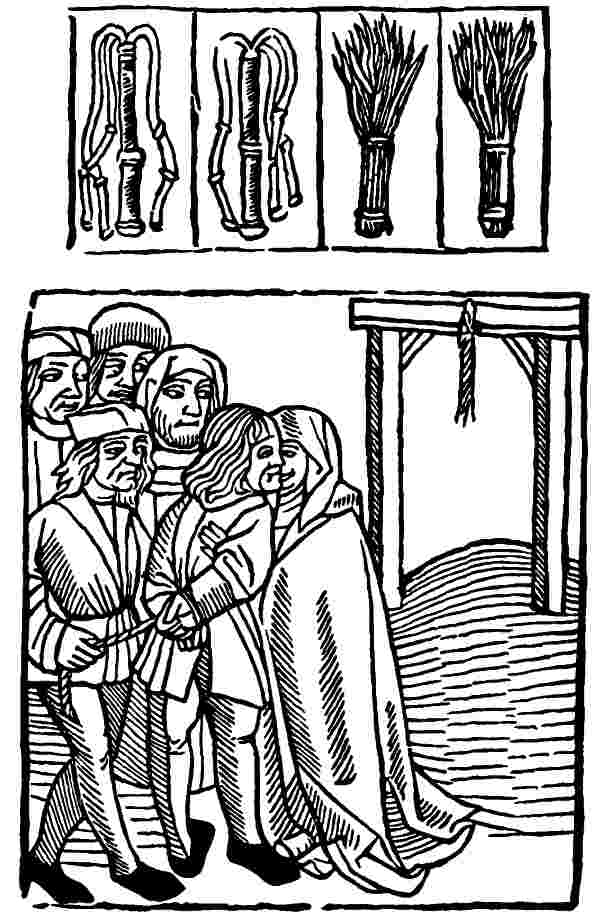
Thre things to be noted
A staff, a béesom, and |
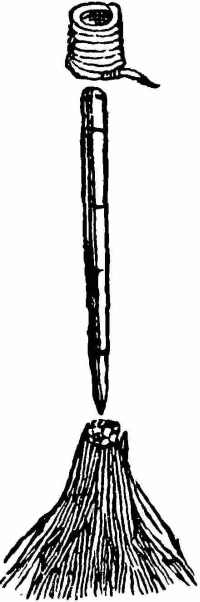
|
all in their kynde
wyth, that wyll wynde |
¶ A béesome of byrche, for babes very feete,[52]
A longe lastinge lybbet for loubbers as méete
A wyth to wynde vp, that these wyll not kéepe
Bynde all up in one, and vse it to swéepe
[This page is printed at the back of the title page in Bodley edition.]
HARMAN. TO THE READER.
[leaf 5]
AL though, good Reader, I wright in plain termes—and not so
playnly as truely—concerning the matter, meaning honestly
to all men, and wyshe them as much good as to myne owne
harte; yet, as there hathe bene, so there is nowe, and hereafter wylbe,
curyous heds to finde fauttes: wherefore I thought it necessary, now
at this seconde Impression, to acquaynt the with a great faulte, as
some takethe it, but none[53] as I meane it, callinge these Vagabonds
Cursetors in the intytelynge of my booke, as runneres or rangers
aboute the countrey, deriued of this Laten word (Curro): neither do
I wryght it Cooresetores, with a duble[54] oo; or Cowresetors, with a w,
which hath an other singnification: is there no deuersite betwen a
gardein and a garden, maynteynaunce and maintenance, Streytes and
stretes? those that haue vnderstanding knowe there is a great dyfference:
who is so ignorant by these dayes as knoweth not the meaning
of a vagabone? and yf an ydell leuterar should be so called of eny
man, would not he think it bothe odyous and reprochefull? wyll he
not shonne the name? ye, and where as he maye and dare, with bent
browes, wyll reueng that name of Ingnomy: yet this playne name
vagabone is deryued, as others be, of Laten wordes, and now vse
makes it commen to al men; but let vs loke back four .C. yeres
sithens, and let vs se whether this playn word vagabon was vsed or
no. I beleue not, and why? because I rede of no such name in the
old estatutes of this realme, vnles it be in the margente of the booke,
or in the Table, which in the collection and pryntinge was set in;
but these were then the commen names of these leud leuterars,
Faytores, Robardesmen, Drawlatches, and valyant beggares. Yf I
should haue vsed suche wordes, or the same order of wryting, as this
realme vsed in Kynge Henry the thyrd or Edward the fyrstes tyme,
oh, what a grose, barberous fellow [leaf 5, back] haue we here! his
wryting is both homely and darke, that wee had nede to haue an
interpretar: yet then it was verye well, and in short season a great
change we see. well, this delycat age shall haue his tyme on the
other syde. Eloquence haue I none; I neuer was acquaynted with
the muses; I neuer tasted of Helycon. But accordinge to my playne
order, I haue setforth this worke, symplye and truelye, with such
vsual words and termes as is among vs wel known and frequented.
So that as the prouerbe saythe, "all though truth be blamed, it shal
neuer be shamed." well, good reader, I meane not to be tedyous vnto
the, but haue added fyue or sixe more tales, because some of them
weare donn whyle my booke was fyrste in the presse; and as I
truste I haue deserued no rebuke for my good wyll, euen so I desyre
no prayse for my payne, cost, and trauell. But faithfullye for the
proffyt and benyfyt of my countrey I haue don it, that the whole
body of the Realme may se and vnderstand their leud lyfe and pernitious
practisses, that all maye spedelye helpe to amend that is
amysse. Amen saye all with me.
Finis
HARMAN. A RUFFLER.
[leaf 6]
¶ A RUFFLER. Ca. 1.[55]
THE Rufflar, because he is first in degre of this odious order:
And is so called in a statute made for the punishment of
Vacabonds, In the xxvij. yeare of Kyng Henry the eight, late
of most famous memory: Hée shall be first placed, as the
worthiest of this vnruly rablement. And he is so called when
he goeth first abroad; eyther he hath serued in the warres, or
els he hath bene a seruinge man; and, weary of well doing, shakinge
of all payne, doth chuse him this ydle lyfe, and wretchedly wanders
aboute the most shyres of this realme. And with stout audacyte,[56]
demaundeth where he thinketh hée maye be bolde, and circomspecte
ynough, as he sethe cause to aske charitie, rufully and lamentably,
that it would make a flyntey hart to relent, and pytie his miserable
estate, howe he hath bene maymed and broused in the warres; and,
parauenture, some wyll shew you some outward wounde, whiche he
gotte at some dronken fraye, eyther haltinge of some preuye wounde
festred with a fylthy firy flankard. For be well assured that the
hardist souldiers be eyther slayne or maymed, eyther and[57] they
escape all hassardes, and retourne home agayne, if they bée without
reliefe of their friends, they wyl surely desperatly robbe and steale,
and[58] eyther shortlye be hanged or miserably dye in pryson; for they
be so much ashamed and disdayne to beg or aske charity, that rather
they wyll as desperatlye fight for to lyue and mayntayne them
selues, as manfully and valyantly they ventred them selues in
the Prynces quarell. Now these Rufflars, the out castes of seruing
men, when begginge or crauinge fayles, then they pycke and pylfer,
from other inferiour beggeres that they méete by the waye, as
Roages, Pallyardes, Mortes, and Doxes. Yea, if they méete with a
woman alone ridinge to the market, eyther olde man or boye, that
hée well knoweth wyll not resiste, such they filche and spoyle.
These rufflars, after a yeare or two at the farthest, become vpryght
men, vnlesse they be preuented by twind hempe.
{
I had of late yeares an old man to my tennant, who customably
a greate tyme went twise in the wéeke to London, eyther
wyth fruite or with pescodes, when tyme serued therefore. And as
he was comminge homewarde on blacke heathe, at the end thereof
next to shotars hyl, he ouer tooke two rufflars, the one manerly wayting
on the other, as one had ben the maister, and the other the man
or seruant, [leaf 6, back] caryinge his maisteres cloke. this olde man was
verye glad that hee might haue their company ouer the hyl, because
that day he had made a good market; for hée had seuen shyllinges
in his purse, and a nolde angell, which this poore man had
thought had not bene in his purse, for hée wylled his wyfe ouer
night to take out the same angell, and laye it vp vntyll his comminge
home agayne. And he verely thought that his wyfe had so don,
whiche in dede for got to do it. Thus after salutations had, this
maister rufflar entered into communication with this simple olde
man, who, ridinge softlye beside them, commoned of many matters.
Thus fedinge this old man with pleasaunt talke, vntyll they weare
one the toppe of the hyll, where these rufflares might well beholde
the coaste about them cleare, Quiclye stepes vnto this poore man,
and taketh holde of his horse brydell, and leadeth him in to the
wode, and demaundeth of him what and how much money he had
in his purse. "Now, by my troth," quoth this old man; "you are
a merrye gentle man. I knowe you meane not to take a waye anye
thinge from me, but rather to geue me some if I shoulde aske it of
you." By and by, this seruant thiefe casteth the cloke that he caried
on his arme about this poore mans face, that he should not marke or
vew them, with sharpe words to delyuer quicly that he had, and to
confesse truly what was in his purse. This poore man, then all
abashed, yelded, and confessed that he had but iust seuen shyllinges
in his purse; and the trouth is he knew of no more. This old
angell was falen out of a lytle purse into the botome of a great purse.
Now, this seuen shyllings in whyte money they quickly founde,
thinkinge in dede that there had bene no more; yet farther groping
and searchinge, found this old angell. And with great admiration,
this gentleman thyefe begane to blesse hym, sayinge, "good lorde,
what a worlde is this! howe maye" (quoth hée) "a man beleue
or HARMAN. A VPRIGHT MAN.truste in the same? se you not" (quoth he) "this old knaue
tolde me that he had but seuen shyllings, and here is more by an
angell: what an old knaue and a false knaue haue we here!" quoth
this rufflar; "oure lorde haue mercy on vs, wyll this worlde neuer be
better?"—and there with went their waye. And lefte the olde man
in the wood, doinge him no more harme. But sorowfully sighinge,
this olde man, returning home, declared his misaduenture, with all
the words and circumstaunces aboue shewed. Wherat, for the tyme
was great laughing, and this poore man for his losses among his
louing neighboures well considered in the end.
¶ A VPRIGHT MAN. Ca. 2.
[leaf 7]
A Vpright[59] man, the second in secte of this vnsemely sorte,
must be next placed, of these rainginge rablement of
rascales; some be seruing men, artificers, and laboryng
men traded vp in husbandry. These not mindinge to get their
lyuinge with the swete of their face, but casting of all payne, wyll
wander, after their wycked maner, through the most shyres of this
realm,—
{
As Sommerset shyre, Wylshire, Barke shyre, Oxforde shyre,
Harfordeshyre, Myddilsex, Essex, Suffolke, Northfolke, Sussex,
Surrye, and Kent, as the cheyfe and best shyres of reliefe. Yea,
not with out punishment by stockes, whyppinges, and imprisonment,
in most of these places aboue sayde. Yet, not with standinge
they haue so good lykinge in their lewed, lecherous loyteringe, that
full quiclye all their punishmentes is[60] for gotten. And repentaunce
is neuer thought vpon vntyll they clyme thrée tres with a ladder.
These vnrewly rascales, in their roylynge, disperse them selues into
seuerall companyes, as occation serueth, sometyme more and somtyme
lesse. As, if they repayre to a poore husbandmans house, hée wyll
go a lone, or one with him, and stoutely demaund his charytie,
eyther shewing how he hath serued in the warres, and their maymed,
eyther that he sekethe seruice, and saythe that he woulde be glad to
take payne for hys lyuinge, althoughe he meaneth nothinge lesse.
Yf he be offered any meate or drynke, he vtterlye refusethe scornefully,
and wyll nought but money; and yf he espye yong pyges or
pultry, he well noteth the place, and they the next night, or shortly
after, hée wyll be sure to haue some of them, whyche they brynge to
their stawlinge kens, which is their typplyng houses, as well knowen
to them, according to the olde prouerbe, "as the begger knowes his
dishe." For you must vnderstand, euery Typplyng ale house wyll
neyther receiue them or their wares, but some certayne houses in euery
shyre, especially for that purpose, where they shalbe better welcome
to them then honester men. For by such haue they most gayne, and
shalbe conuayde eyther into some loft out of the waye, or other secret
corner not commen to any other; and thether repayre, at accustomed
tymes, their harlots, whiche they terme Mortes and Doxes,—not with
emty hands; for they be as skilfull in picking, riffling, and filching
as the vpright men, and nothing inferior to them in all kind of wyckednes,
as in other places hereafter they shalbe touched. At these
foresayde peltinge, peuish places and vnmannerly metinges, O! how
the pottes walke about! their talking tounges talke at large. They
bowle and bowse one to another, and for the tyme bousing belly
chere. And after there ruysting recreation, [leaf 7, back] yf there be
not rome ynough in the house, they haue cleane strawe in some
barne or backehouse nere adioyning, where they couch comly to
gether, and[61] it were dogge and byche; and he that is hardyste maye
haue his choyse, vnlesse for a lytle good maner; some wyll take
there owne that they haue made promyse vnto, vntyll they be out of
sight, and then, according to the old adage, "out of minde." Yet
these vpright men stand so much vpon their reputation, as they wyl
in no case haue their wemen walke with them, but seperat them
selues for a tyme, a moneth or more. And mete at fayres, or great
markets, where they mete to pylfer and steale from staules, shoppes,
or bothes. At these fayres the vpryght men vse commonly to lye
and lingar in hye wayes by lanes, some prety way or distaunce from
the place, by which wayes they be assured that compeny passeth
styll two and fro. And ther they[62] wyll demaund, with cap in hand
and comly curtesy, the deuotion and charity of the people. They
haue ben much lately whipped at fayrs. Yf they aske at a stout
yemans or farmars house his charity, they wyll goe strong as thre or
foure in a company. Where for feare more then good wyll, they
often haue reliefe. they syldome or neuer passe by a Iustices
house, but haue by wayes, vnlesse he dwell alone, and but weakely
manned; thether wyll they also go strong, after a slye, suttle sorte, as
with their armes bounde vp with kercher or lyste, hauinge wrapte
about the same filthy clothes, either their legges in such maner bewrapped
halting down right. Not vnprouided of good codg[e]ls,
which they cary to sustayne them, and, as they fayne, to kéepe
gogges[63] from them, when they come to such good gentlemens houses.
Yf any searche be made or they suspected for pylfring clothes of
hedgges, or breaking of houses, which they commonly do when the
owners bée eyther at the market, church, or other wayes occupyed
aboute their busines,—eyther robbe some sely man or woman by the
hye waye, as many tymes they do,—Then they hygh them into wodes,
great thickets, and other ruffe corners, where they lye lurkinge thre or
foure dayes to gether, and haue meate and drinke brought them by
theyre Mortes, and Doxes; and whyle they thus lye hydden in
couert, in the night they be not idle,—nether, as the common saying
is, "well occupyed;" for then, as the wyly foxe, crepinge out of his
den, seketh his praye for pultery, so do these for lynnen and any
thinge els worth money, that lyeth about or near a house. As somtyme
a whole bucke of clothes caryed awaye at a tyme. When they
haue a greatter booty then they maye cary awaye quickly to their
stawling kendes, as is aboue sayd, They wyll hyde the same for a
thre dayes in some thicke couert, and [leaf 8] in the night time carye
the same, lyke good water Spanlles, to their foresayd houses. To
whom they wyll discouer where or in what places they had the same,
where the markes shalbe pycked out cleane, and conuayed craftely
fare of, to sell. If the man or woman of the house want money
them selues. [64]If these vpright men haue nether money nor wares, at
these houses they shalbe trusted for their vitales, and it amount to
twentye or thirty shyllings. Yea, if it fortune any of these vpright
men to be taken, either suspected, or charged with fellony or petye
brybrye, don at such a tyme or such a place, he wyll saye he was in
his hostes house. And if the man or wyfe of that house be examined
by an officer, they boldelye vouche, that the[y] lodged him
suche a tyme, whereby the truth cannot appeare. And if they
chaunce to be retained into seruice, through their lamentable words,
with any welthy man, They wyll tary but a smale tyme, either robbing
his maister or som of his fellowes. And some of them vseth this
polocye, that although they trauayle into al these shyres, aboue said,
yet wyl they haue good credite, espiciallye in one shyre, where at
diuers good farmars houses they be wel knowen, where they worke a
moneth in a place or more, and wyll for that time behaue them selues
very honestly and paynfully; And maye at any tyme, for their good
vsage, haue worke of them; and to these at a ded lyft, or last
refuge, they maye safely repayre vnto and be welcom, When in other
places, for a knacke of knauery that they haue playd, thei dare not
tary. These vyright men wil sildom or neuer want; for what is
gotten by anye Mort, or Doxe, if it please him, hée doth comaunde
the same. And if he mete any begger, whether he be sturdye or
impotent, he wyll demaund of him, whether euer he was stalled to
the roge or no. If he saye he was, he wyll know of whom, and his
name that stalled hym. And if he be not learnedly able to shewe
him the whole circumstaunce thereof, he wyll spoyle him of his
money, either of his best garment, if it be worth any money, and
haue him to the bowsing ken, Which is to some typpling house next
adioyninge; and laieth their to gage the best thing that he hath for
twenty pence or two shyllinges: this man obeyeth for feare of beating.
Then doth this vpright man call for a gage of bowse, whiche is
a quarte pot of drinke, and powres the same vpon his peld pate, adding
these words:—"I. G. P. do stalle thée W. T. to the Roge, and that
from hence forth it shall be lawefull for the to Cant"—that is, to
aske or begge—"for thy liuing in al places." Here you se that the
vpright man is of great auctorite. For all sortes of beggers are
obedient to his hests, and surmounteth all others in pylfring and
stealinge. ¶ I lately had standinge in my [leaf 8, back] well house,
which standeth on the backeside of my house, a great cawdron of
copper, beinge then full of water, hauinge in the same halfe a doson
of pewter dyshes, HARMAN. A HOKER, OR ANGGLEAR.well marked, and stamped with the connizance of
my armes, whiche being well noted when they were taken out, were
set a side, the water powred out, and my caudren taken awaye, being
of such bygnes that one man, vnlesse he were of great strength, was
not able far to cary the same. Not withstandinge, the same was one
night within this two yeares conuayed more then half a myle from
my house, into a commen or heth, And ther bestowed in a great firbushe.
I then immediatly the next day sent one of my men to
London, and there gaue warning in Sothwarke, kent strete, and
Barmesey stréete, to all the Tynckars there dwelling,—That if any
such Caudron came thether to be sold, the bringar therof should be
stayed, and promised twenty shyllings for a reward. I gaue also intelligence
to the water men that kept the ferres, that no such vessel
should be ether conuayd to London or into essex, promysing the lyke
reward, to haue vnderstanding therof. This my doing was well
vnderstand in many places about, and that the feare of espyinge so
troubled the conscience of the stealer, that my caudoren laye
vntouched in the thicke firbushe more then halfe a yeare after,
which, by a great chaunce, was found by hunteres for conneys; for
one chaunced to runne into the same bushe where my caudren was,
and being perceaued, one thrust his staffe into the same bushe, and
hyt my caudren a great blowe, the sound whereof dyd cause the
man to thinke and hope that there was some great treasure hidden,
wherby he thought to be the better whyle he lyued. And in farther
searching he found my caudren; so had I the same agayne vnloked
for.
¶ A HOKER, OR ANGGLEAR. Cap. 3.
THese hokers, or Angglers, be peryllous and most wicked
knaues, and be deryued or procede forth from the vpright
men; they commenly go in frese ierkynes and gally slopes,
poynted benethe the kne; these when they practise there pylfringe,
it is all by night; for, as they walke a day times from house to
house, to demaund charite, they vigelantly marke where or in what
place they maye attayne to there praye, casting there eyes vp to
euery wyndow, well noting what they se their, whether apparell or
linnen, hanginge nere vnto the sayde wyndowes, and that wyll they
be sure to haue the next night folowing; HARMAN. A HOKER. A ROGE. they customably carry
with them a staffe of v. or vi. foote long, in which, within one
ynch of the tope therof, ys a lytle hole bored through, [leaf 9] in
which hole they putte an yron hoke, and with the same they wyll
pluck vnto them quickly any thing that they may reche ther with,
which hoke in the day tyme they couertly cary about them, and is
neuer sene or taken out till they come to the place where they worke
there fete: such haue I sene at my house, and haue oft talked with
them and haue handled ther staues, not then vnderstanding to what
vse or intent they serued, although I hadde and perceiued, by there
talke and behauiour, great lykelyhode of euyll suspition in them:
they wyl ether leane vppon there staffe, to hyde the hole thereof,
when they talke with you, or holde their hande vpon the hole; and
what stuffe, either wollen or lynnen, they thus hoke out, they neuer
carye the same forth with to their staulyng kens, but hides the same
a iij. daies in some secret corner, and after conuayes the same to their
houses abouesaid, where their host or hostys geueth them money for
the same, but halfe the value that it is worth, or els their doxes
shall a farre of sell the same at the like houses. I was credebly informed
that a hoker came to a farmers house in the ded of the night,
and putting back a drawe window of a low chamber, the bed standing
hard by the sayd wyndow, in which laye three parsones (a man and
two bygge boyes), this hoker with his staffe plucked of their garments
which lay vpon them to kepe them warme, with the couerlet and
shete, and lefte them lying a slepe naked sauing there shertes, and
had a way all clene, and neuer could vnderstande where it became.
I verely suppose that when they wer wel waked with cold, they
suerly thought that Robin goodfelow (accordinge to the old saying)
had bene with them that night.
¶ A ROGE. Cap. 4.
A Roge is neither so stoute or hardy as the vpright man.
Many of them will go fayntly and looke piteously when they
sée, either méete any person, hauing a kercher, as white as my
shooes, tyed about their head, with a short staffe in their hand,
haltinge, although they nede not, requiring almes of such as they
méete, HARMAN. A ROGE.or to what house they shal com. But you may easely perceiue
by their colour that thei cary both health and hipocrisie about
them, wherby they get gaine, when others want that cannot fayne
and dissemble. Others therebee that walke sturdely about the countrey,
and faineth to seke a brother or kinsman of his, dwelling
within som part of the shire;—ether that he hath a letter to deliuer
to som honest housholder, dwelling out of an other Shyre, and will
shewe you the same fayre sealed, with the superscription to [leaf 9, back]
the partye he speaketh of, because you shall not thinke him to runne
idelly about the countrey;—either haue they this shyfte, they wyll
cary a cirtificate or pasport about them from som Iusticer of the
peace, with his hand and seale vnto the same, howe hée hath bene
whipped and punished for a vacabonde according to the lawes of
this realme, and that he muste returne to .T., where he was borne or
last dwelt, by a certayne daye lymited in the same, whiche shalbe a
good longe daye. And all this fayned, bycause without feare they
woulde wyckedly wander, and wyll renue the same where or when it
pleasethe them; for they haue of their affinity that can wryte and
read. These also wyll picke and steale as the vpright men, and hath
their women and metinges at places apoynted, and nothinge to them
inferiour in all kynde of knauery. There bée of these Roges
Curtales, wearinge shorte clokes, that wyll chaunge their aparell, as
occation seruethe. And their end is eyther hanginge, whiche they
call trininge in their language, or die miserably of the pockes.
¶ There was not long sithens two Roges that alwaies did associate
them selues together, and would neuer seperat them selues, vnles it
were for some especiall causes, for they were sworn brothers, and
were both of one age, and much like of favour: these two, trauelinge
into east kent, resorted vnto an ale house there,[65] being weried with
traueling, saluting with short curtisey, when they came into the
house, such as thei sawe sitting there, in whiche company was the
parson of the parish; and callinge for a pot of the best ale, sat downe
at the tables ende: the lykor liked them so well, that they had pot
vpon pot, and sometyme, for a lytle good maner, would drinke and
offer the cup to such as they best fancied; and to be short, they sat
out al the company, for eche man departed home aboute their
busines. When they had well refreshed them selues, then these
rowsy roges requested the good man of the house wyth his wyfe to
sit downe and drinke with them, of whome they inquired what priest
the same was, and where he dwelt: then they fayninge that they
had an vncle a priest, and that he should dwel in these partes, which
by all presumptions it should be he, and that they came of purpose
to speake with hym, but because they had not sene hym sithens they
were sixe yeares olde, they durst not be bold to take acquayntance
of him vntyl they were farther instructed of the truth, and began to
inquier of his name, and how longe he had dwelt there, and how
farre his house was of from the place they were in: the good wyfe of
the house, thynkinge them honest men without disceit, because they
so farre enquyred of their kinseman, was but of a good zelous naturall
intent, shewed them cherefully that hee [leaf 10] was an honest
man and welbeloued in the parish, and of good welth, and had ben
there resident xv. years at the least; "but," saith she, "are you both
brothers?" "yea, surely," said they, "we haue bene both in one
belly, and were twinnes." "Mercy, god!" quoth this folish woman;
"it may wel be, for ye be not much vnlike,"—and wente vnto her
hall windowe, callinge these yong men vnto her, and loking out
therat,[66] pointed with her fingar and shewed them the house standing
alone, no house nere the same by almoste a quarter of a myle;
"that," sayd[67] she, "is your vncles house." "Nay," saith one of
them, "he is not onely my vncle, but also my godfather." "It may
well be," quoth she, "nature wyll bind him to be the better vnto
you." "Well," quoth they, "we be weary, and meane not to trouble
our vncle to-night; but to-morowe, god willinge, we wyll sée him
and do our duty: but, I pray you, doth our vncle occupy husbandry?
what company hath he in his house." "Alas!" saith she, "but one
old woman and a boy, he hath no occupying at al: tushe," quoth
this good wyfe, "you be mad men; go to him this night, for hée
hath better lodging for you then I haue, and yet I speake folishly
against my[68] own profit, for by your taring[69] here I should gaine the
more by you." "Now, by my troth," quoth one of them, "we thanke
you, good hostes, for your holsome councell, and we meane to do as
you wyll vs: we wyl pause a whyle, and by that tyme it wylbe almost
night; and I praye you geue vs a reckeninge,"—so, manerly paying
for that they toke, bad their hoste and hostes farewell with takinge
leaue of the cup, marched merelye out of the dores towardes this
parsones house, vewed the same well rounde about, and passed by
two bowshotes of into a younge wodde, where they laye consultinge
what they shoulde do vntyll midnight. Quoth one of them, of
sharper wyt and subtyller then the other, to hys fellowe, "thou seest
that this house is stone walled about, and that we cannot well breake
in, in any parte thereof; thou seest also that the windowes be thicke
of mullions, that ther is no kreping in betwene: wherefore we must
of necessytie vse some policye when strength wil not serue. I haue
a horse locke here about me," saith he; "and this I hope shall serue
oure turne." So when it was aboute xii. of the clocke, they came to
the house and lurked nere vnto his chamber wyndowe: the dog of the
house barked a good, that with they[70] noise, this priest waketh out
of his sléepe, and began to cough and hem: then one of these roges
stepes forth nerer the window and maketh a ruful and pityful noise,
requiring for Christ sake[71] some reliefe, that was both hongry and
thirstye, and was like to ly with out the dores all nighte and starue
for colde, vnles he were releued by him with some small pece of
money. "Where dwellest thou?" quoth this parson. "Alas! sir,"
saithe this roge, "I haue smal [leaf 10, back] dwelling, and haue com out
of my way; and I should now," saith he, "go to any towne nowe at
this time of night, they woulde set me in the stockes and punishe
me." "Well," quoth this pitifull parson, "away from my house,
either lye in some of my out houses vntyll the morning, and holde,
here is a couple of pence for thée." "A god rewarde you," quoth
this roge; "and in heauen may you finde it." The parson openeth
his wyndowe, and thrusteth out his arme to geue his almes to this
Roge that came whining to receiue it, and quickly taketh holde of his
hand, and calleth his fellowe to him, whiche was redye at hande with
the horse locke, and clappeth the same about the wrest of his arme,
that the mullions standing so close together for strength, that for his
life he could not plucke in his arme againe, and made him beleue,
vnles he would at the least geue them .iii. li., they woulde smite of
his arme from the body. So that this poore parson, in feare to lose
his hand, called vp his olde woman that lay in the loft ouer him,
and wylled her to take out all the money he had, which was iiij.
markes, which he saide was all the money in his house, for he had
lent vi. li. to one of his neighbours not iiij daies before. "Wel,"
quoth they, "master parson, if you haue no more, vpon this condicion
we wil take of the locke, that you will drinke .xij. pence for
our sakes to-morow at the alehouse wher we found you, and thank
the good wife for the good chere she made vs." He promised faithfully
that he would so do; so they toke of the locke, and went their
way so farre ere it was daye, that the parson coulde neuer haue any
vnderstanding more of them. Now this parson, sorowfully slumbering
that night betwene feare and hope, thought it was but folly to
make two sorrowes of one; he vsed contentacion for his remedy, not
forgetting in the morning to performe his promise, but went betims
to his neighbour that kept tiplinge, and asked angerly where the
same two men were that dranke with her yester daye. "Which two
men?" quoth this good wife. "The straungers that came in when I
was at your house wyth my neighbores yesterday." "What! your
neuewes?" quoth she, "My neuewes?" quoth this parson; "I
trowe thou art mad." "Nay, by god!" quoth this good[72] wife, "as
sober as you; for they tolde me faithfully that you were their vncle:
but, in fayth, are you not so in dede? for, by my trouth, they are
strau[n]gers to me. I neuer saw them before." "O, out vpon
them!" quoth the parson; "they be false theues, and this night
thei compelled me to geue them al the money in my house."
"Benedicite!" quoth this good wife, "and haue they so in dede? as
I shall aunswere before god, one of them told me besides that you
were godfather to him, and that he trusted to haue your blessinge
before he departed." "What! did he?" quoth this parson; "a
halter blesse him for [leaf 11] me!" "Me thinketh, by the masse, by
your countenance you loked so wildly when you came in," quoth
this good wife, "that somthing was amis." "I vse not to gest,"
quoth HARMAN. A WYLDE ROGE.this parson, "when I speake so earnestly." "Why, all your
sorrowes goe with it," quoth this good wife, "and sitte downe here,
and I will fil a freshe pot of ale shall make you mery agayne."
"Yea," saith this parson, "fill in, and geue me some meat; for they
made me sweare and promise them faithfully that I shoulde drinke
xii. pence with you this day." "What! dyd they?" quoth she;
"now, by the mary masse, they be mery knaues. I warraunt you they
meane to bye no land with your money; but how could they come
into you in the night, your dores being shut fast? your house is
very stronge." Then this prason[73] shewed her all the hole circumstance,
how he gaue them his almes oute at the wyndowe, they[74]
made such lamentable crye that it pytied him at the hart; for he
sawe but one when he put oute his hand at the wyndowe. "Be
ruled by me," quoth this good wyfe. "Wherin?" quoth this parson.
"By my troth, neuer speake more of it: when they shal vnderstand
of it in the parish, they wyll but laugh you to skorne." [75]"Why,
then," quoth this parson, "the deuyll goe with it,"—and their an
end.[75]
¶ A WYLDE ROGE. Cap. 5.
A Wilde Roge is he that is borne a Roge: he is a more subtil
and more geuen by nature to all kinde of knauery then the
other, as beastely begotten in barne or bushes, and from his
infancye traded vp in trechery; yea, and before ripenes of yeares
doth permyt, wallowinge in lewde lechery, but that is counted
amongest them no sin. For this is their custome, that when they
mete in barne at night, euery one getteth a make[76] to lye wythall,
and their chaunce to be twentye in a companye, as their is sometyme
more and sometyme lesse: for to one man that goeth abroad, there
are at the least two women, which neuer make it straunge when they
be called, although she neuer knewe him before. Then when the
day doth appeare, he rouses him vp, and shakes his eares, and awaye
wanderinge where he may gette oughte to the hurte of others. Yet
before he skyppeth oute of hys couche and departeth from his
darling, if he like her well, he will apoint her where to mete shortlye
after, with HARMAN. A PRYGGER OF PRAUNCERS.a warninge to worke warely for some chetes, that their
meting might be the merier.
¶ Not long sithens, a wild roge chaunced to mete a pore neighbour
of mine, who for honesty and good natur surmounteth many.
This poore man, riding homeward from London, where he had made
his market, this [leaf 11, back] roge demaunded a peny for gods sake,
to kepe him a true man. This simple man, beholding him wel, and
sawe he was of taule personage with a good quarter staffe in his
hand, it much pitied him, as he sayd, to se him want; for he was
well able to serue his prince in the wars. Thus, being moued with
pytie, and[77] loked in his pursse to finde out a penye; and in loking
for the same, he plucked oute viii. shyllinges in whyte money, and
raked therin to finde a single peny; and at the last findinge one,
doth offer the same to this wylde roge: but he, seinge so much mony
in this simple mans hand, being striken to the hart with a couetous
desire, bid him forth wyth delyuer al that he had, or els he woulde
with his staffe beat out his braynes. For it was not a penye would
now quench his thirst, [78]seing so much as he dyd[78]: thus, swallowinge
his spittell gredely downe, spoyled this poore man of al the money
that he had, and lept ouer the hedge into a thicke wode, and went
his waye as merely as this good simple man came home sorowfully.
I once rebuking a wyld roge because he went idelly about, he
shewed me that he was a begger by enheritance—his Grandfather
was a begger, his father was one, and he must nedes be one by good
reason.
¶ A PRYGGER OF PRAUNCERS. Cap. 6.
A Prigger of Prauncers be horse stealers; for to prigge signifieth
in their language to steale, and a Prauncer is a horse: so
beinge put together, the matter is[79] playne. These go commonly
in Ierkins of leatherr, or of white frese, and carry litle wands
in their hands, and will walke through grounds and pastures, to
search and se horses meete for their purpose. And if thei chaunce
to be met and asked by the owners of the grounde what they make
there, they fayne strayghte that they haue loste their waye, and desyre
to be enstructed the beste waye to such a place. These will
also repayre to gentlemens houses and aske their charitye, and wyll
offer their seruice. And if you aske them what they can do, they
wyll saye that they can kepe two or thre Geldinges, and waite vppon
a Gentleman. These haue also their women, that walkinge from
them in other places, marke where and what they sée abroade, and
sheweth these Priggars therof when they meete, which is with in a
wéeke or two. And loke, where they steale any thinge, they conuay
the same at the least thre score miles of or more.
¶ There was a Gentleman, a verye friende of myne, rydyng from
London homewarde into Kente, hauinge with in thrée myles of his
house busynesse, alyghted of his horse, and his man also, in a pretye
[leaf 12] vyllage, where diueres houses were, and looked about hym
where he myghte haue a conuenient person to walke his horse, because
hee would speake with a Farmer that dwelt on the backe side
of the sayde village, lytle aboue a quarter of a myle from the place
where he lighted, and had his man to waight vpon him, as it was
mete for his callinge: espying a Pryggar there standing, thinking the
same to dwell there, charging this prity prigginge person to walke
his horse well, and that they might not stande styll for takyng of
colde, and at his returne (which he saide should not be longe) he
would geue hym a peny to drinke, and so wente aboute his busines.
This peltynge Priggar, proude of his praye, walkethe his horse[80] vp
and downe tyll he sawe the Gentleman out of sighte, and leapes him
into the saddell, and awaye he goeth a mayne. This Gentleman returninge,
and findinge not his horses, sent his man to the one end of
the vyllage, and he went himselfe vnto the other ende, and enquired
as he went for his horses that were walked, and began some what to
suspecte, because neither he nor his man could se nor find him.
Then this Gentleman deligentlye enquired of thre or foure towne
dwellers there whether any such person, declaring his stature,[81] age,
apparell, with so many linaments of his body as he could call to
remembraunce. And, "vna voce," all sayde that no such man dwelt
in their streate, neither in the parish, that they knewe of; but some
did wel remember that such a one they saw there lyrkinge and huggeringe
two houres HARMAN. A PALLYARD.before the Gentleman came thether, and a
straunger to them. "I had thoughte," quoth this Gentleman, "he
had here dwelled,"—and marched home manerly in his botes: farre
from the place he dwelt not. I suppose at his comming home he
sente suche wayes as he suspected or thought méete to searche for
this Prigger, but hetherto he neuer harde any tydinges agayne of his
palfreys.—I had the best geldinge stolen oute of my pasture that I
had amongst others whyle this boke was first a printinge.
¶ A PALLYARD. Cap. 7.
THese Palliardes be called also Clapperdogens: these go with
patched clokes, and haue their Morts with them, which they
cal wiues; and if he goe to one house, to aske his almes, his
wife shall goe to a nother: for what they get (as bread, chéese,
malte, and woll) they sell the same for redy money; for so they get
more and if they went together. Although they be thus[82] deuided
in the daie, yet they mete iompe at night. Yf they chaunce to come
to some gentylmans house standinge [leaf 12, back] a lone, and be demaunded
whether they be man and wyfe, and if he perceaue that
any doubteth thereof, he sheweth them a Testimonial with the ministers
name, and others of the same parishe (naminge a parishe in some
shere fare distant from the place where he sheweth the same). This
writing he carieth to salue that sore. Ther be many Irishe men that goe
about with counterfeate licenses; and if they perceiue you wil straytly
examen them, they will immediatly saye they can speake no Englishe.
¶ Farther, vnderstand for trouth that the worst and wickedst of
all this beastly generation are scarse comparable to these prating
Pallyardes. All for the most parte of these wil either lay to their
legs an herb called Sperewort, eyther Arsnicke, which is called
Ratesbane. The nature of this Spereworte wyll rayse a great blister
in a night vpon the soundest part of his body; and if the same be
taken away, it wyl dry vp againe and no harme. But this Arsnicke
will so poyson the same legge or sore, that it will euer after be
incurable: this do they for gaine and to be pitied. The most of
these that walke about be Walchmen.
HARMAN. A FRATER.
¶ A FRATER. Cap. 8.
SOme of these Fraters will cary blacke boxes at their gyrdel,
wher in they haue a briefe of the Queenes maiesties letters
patentes, geuen to suche[83] poore spitlehouse for the reliefe of
the poore there, whiche briefe is a coppie of the letters patentes, and
vtterly fained, if it be in paper or in[84] parchment without the great
seale. Also, if the same brief be in printe,[85] it is also of auctoritie.
For the Printers wil sée and wel vnderstand, before it come in
presse, that the same is lawfull. Also, I am credibly informed that
the chiefe Proctors of manye of these houses, that seldome trauel
abroad them selues, but haue their factors to gather for them, which
looke very slenderly to the impotent and miserable creatures committed
to their charge, and die for want of cherishing; wheras they
and their wiues are wel crammed and clothed, and will haue of the
best. And the founders of euery such house, or the chiefe of the
parishe wher they be, woulde better sée vnto these Proctors, that
they might do their duty, they should be wel spoken of here, and in
the world to come aboundantly therefore rewarded. I had of late an
honest man, and of good wealthe, repayred to my house to common
wyth me aboute certeyne affaires. I inuited the same to dinner, and
dinner beinge done, I demaunded of hym some newes of these[86] parties
were hee dwelte. "Thankes be to God, syr," (saith he); "all is
well and good now." "Now!" (quoth I) "this same 'nowe' [leaf 13]
declareth that some things of late hath not bene wel." "Yes,
syr," (quoth he) "the[87] matter is not great. I had thought I should
haue bene wel beaten within this seuenth night." "How so?"
(quoth I). "Mary, syr," sayd he, "I am Counstable for fault of a
better, and was commaunded by the Iusticer to watch. The watch
being set, I toke an honest man, one of my neighbors, with me, and
went vp to the ende of the towne as far as the spittle house, at
which house I heard a great noyse, and, drawing nere, stode close
vnder the wall, and this was at one of the clocke after midnight.
Where he harde swearinge, pratinge, and wagers laying, and the pot
apase walkinge, and xl. pence gaged vpon a matche of wrastling,
pitching of the barre, and casting of the sledge. And out they goe,
in a fustian fume, into the backe syde, where was a great Axiltrye,[88]
and there fell to pitching of the barre, being thre to thre. The
Moone dyd shine bright, the Counstable with his neighboure myght
see and beholde all that was done. And howe the wyfe of the
house was rostinge of a Pyg, whyle her gestes were in their matche.
At the laste they coulde not agree vpon a caste, and fell at wordes,
and from wordes to blowes. The Counstable with his[89] fellowe
runnes vnto them, to parte them, and in the partinge lyckes a drye
blowe or two. Then the noyse increased; the Counstable woulde
haue had them to[90] the stockes. The wyfe of the house runnes out
with her goodman to intreat the Counstable for her gestes, and
leaues the Pyg at the fyre alone. In commeth two or thrée of the
next neighboures, beinge waked wyth this noise, and into the house
they come, and fynde none therein, but the Pygge well rosted, and
carieth the same awaye wyth them, spyte and all, with suche breade
and drinke also as stoode vpon the table. When the goodman and
the goodwyfe of the house hadde intreated and pacified the Counstable,
shewinge vnto him that they were Proctors and Factores all
of Spyttell houses, and that they taryed there but to breake theyr
fast, and woulde ryde awaye immediatelye after, for they had farre to
goe, and therefore mente to ryde so earlye. And comminge into their
house agayne, fyndinge the Pygge wyth bread and drincke all gonne,
made a greate exclamation, for they knewe not who had the same.
¶ The Counstable returning and hearinge the lamentable wordes
of the good wyfe, howe she had lost both meate and drinke, and
sawe it was so in deede, hée laughed in his sleue, and commaunded
her to dresse no more at vnlawfull houres for any gestes. For hée
thought it better bestowed vppon those smell feastes his poore neighboures
then vppon HARMAN. A ABRAHAM MAN.suche sturdye Lubbares. The nexte mornynge
betymes the [leaf 13, back] spitte and pottes were sette at the Spittle
house doore for the owner. Thus were these Factours begyled
of theyr breakefast, and one of them hadde well beaten an other;
"And, by my trouth," (quoth thys Counstable) "I was gladde when
I was well ryd of them." "Why," quoth I, "coulde the[y] caste
the barre and sledge well?" "I wyll tell you, syr," (quoth hée)
"you knowe there hath bene manye games this Sommer. I thinke
verely, that if some of these Lubbars had bene there, and practysed
amongest others, I beleue they woulde haue carryed awaye the beste
games. For they were so stronge and sturdye, that I was not able to
stande in their handes." "Well" (quoth I) "at these games you
speake of, both legges and armes bée tryed." "Yea," quoth this
offycer, "they bée wycked men. I haue séene some of them sithens
wyth cloutes bounde aboute theyr legges, and haltynge wyth their
staffe in their handes. Wherefore some of theym, by GOD, bee
nought all."
¶ A ABRAHAM MAN. Cap. 9.
THese Abrahom men be those that fayne themselues to haue
beene mad, and haue bene kept eyther in Bethelem or in
some other pryson a good tyme, and not one amongst twenty
that euer came in pryson for any such cause: yet wyll they saye
howe pitiously and most extreamely they haue bene beaten, and
dealt with all. Some of these be merye and verye pleasant, they
wyll daunce and sing; some others be as colde and reasonable to
talke wyth all. These begge money; eyther when they come at
Farmours howses they wyll demaunde Baken, eyther chéese, or
wooll, or any thinge that is worthe money. And if they espye small
company within, they wyll with fierce countenaunce demaund some
what. Where for feare the maydes wyll geue theym largely to be
ryd of theym.
{ ¶ If they maye conuenyently come by any cheate, they wyl
picke and steale, as the v[p]right man or Roge, poultrey or
lynnen. And all wemen that wander bée at their commaundemente.
Of all that euer I saw of this kynde, one naminge him
selfe Stradlynge is the craftiest and moste dyssemblyngest Knaue.
Hée is ableHARMAN. A WHIPIACKE. wyth hys tounge and vsage to deceaue and abuse the
wysest man that is. And surely for the proporcion of his body,
with euery member there vnto appertayninge, it cannot be a mended.
But as the prouerbe is "God hath done his part." Thys Stradlyng
sayth he was the Lord Sturtons man; and when he was executed,
for very pensiuenes of mynde, [leaf 14] he fell out of his wytte, and
so continued a yeare after and more; and that with the very gréefe
and feare, he was taken wyth a marueilous palsey, that both head
and handes wyll shake when he talketh, with anye and that a pase
or fast, where by he is much pytied, and getteth greately. And if
I had not demaunded of others, bothe men and women, that commonly
walketh as he doth, and knowen by them his déepe dissimylation,
I neuer hadde vnderstand the same. And thus I end
wyth these kynde of vacabondes.
¶ A FRESHE WATER MARINER OR WHIPIACKE. Cap. 10.
THese Freshwater Mariners, their shipes were drowned in the
playne of Salisbery. These kynde of Caterpillers counterfet
great losses on the sea; these bée some Western men, and most bée
Irishe men. These wyll runne about the countrey wyth a counterfet
lycence, fayninge either shypwracke, or spoyled by Pyrates, neare
the coaste of Cornwall or Deuonshyre, and set a lande at some hauen
towne there, hauynge a large and formall wrytinge, as is aboue sayd,
with the names and seales of suche men of worshyppe, at the leaste
foure or fiue, as dwelleth neare or next to the place where they fayne
their landinge. And neare to those shieres wyll they not begge,
vntyll they come into Wylshyre, Hamshyre, Barkeshyre, Oxfordshyre,
Harfordshyre, Middelsex, and so[91] to London, and downe by
the ryuer to séeke for their shyppe and goods that they neuer hade:
then passe they through Surrey, Sossex, by the sea costes, and so
into Kent, demaunding almes to bring them home to their country.
¶ Some tyme they counterfet the seale of the Admiraltie. I
haue diuers tymes taken a waye from them their lycences, of both
sortes, wyth suche money as they haue gathered, and haue confiscated
the same to the pouerty nigh adioyninge to me. And they wyll not
beelonge with out another. For at anye good towne they wyll
renewe the same. Once wyth muche threatninge and faire promises,
I required to knowe of one companye who made their lycence. And
they sweare that they bought the same at Portsmouth, of a Mariner
there, and it cost them[92] two shillinges; with such warrantes to be so
good and efectuall, that if any of the best men of lawe, or learned,
aboute London, should peruse the same, they weare able to fynde no
faute there with, but would assuredly allow the same.
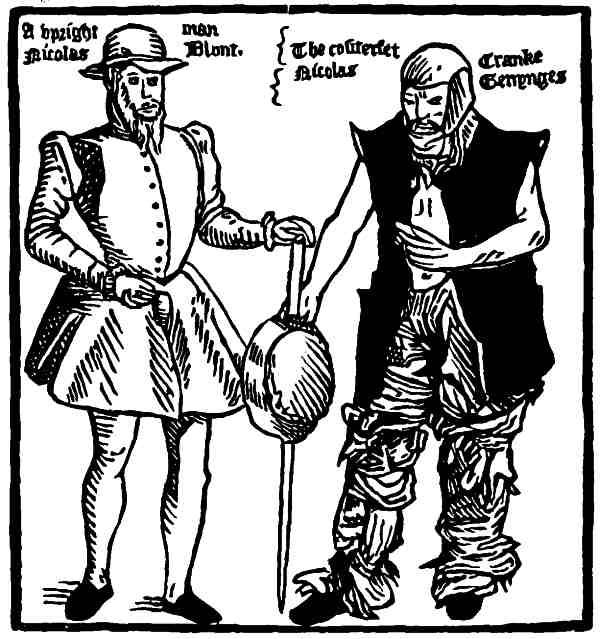
HARMAN. N. BLUNT, N. GENYNGES.
These two pyctures, lyuely set out,
One bodye and soule, god send him more grace.
This mounstrous desembelar, a Cranke all about.
Vncomly couetinge, of eche to imbrace,
Money or wares, as he made his race.
And sometyme a marynar, and a saruinge man,
Or els an artificer, as he would fayne than.
Such shyftes he vsed, beinge well tryed,
A bandoninge labour, tyll he was espyed.
Conding punishment, for his dissimulation,
He sewerly receaued with much declination.[94]
HARMAN. A COUNTERFET CRANKE.
[leaf 15]
¶ A COUNTERFET CRANKE. Cap. 11.
THese that do counterfet the Cranke be yong knaues and
yonge harlots, that depely dissemble the falling sicknes. For
the Cranke in their language is the falling euyll. I haue
séene some of these with fayre writinges testimoniall, with the
names and seales of some men of worshyp in Shropshyre, and in
other Shieres farre of, that I haue well knowne, and haue taken the
same from them. Many of these do go without writinges, and wyll
go halfe naked, and looke most pitiously. And if any clothes be
geuen them, the[y][95] immediatly sell the same, for weare it they wyll
not, because they would bée the more pitied, and weare fylthy clothes
on their heades, and neuer go without a péece of whyte sope about
them, which, if they sée cause or present gaine, they wyll priuely
conuey the same into their mouth, and so worke the same there,
that they wyll fome as it were a Boore, and maruelously for a tyme
torment them selues; and thus deceiue they the common people, and
gayne much. These haue commonly their harlots as the other.
Apon Alhollenday in the morning last Anno domini. 1566, or
my[96] booke was halfe printed, I meane the first impression, there came
earely in the morninge a Counterfet Cranke vnder my lodgynge at the
whyte Fryares, wythin the cloyster, in a lyttle yard or coorte, where
aboutes laye two or thre great Ladyes, beyng without the lyberties of
London, where by he hoped for the greatter gayne; this Cranke there
lamentably lamentinge and pitefully crying to be releued, declared to
dyuers their hys paynfull and miserable dysease. I being rysen
and not halfe ready, harde his dolfull wordes and rufull mornings,
hering him name the falling sicknes, thought assuredlye to my selfe
that hée was a depe desemblar; so, comminge out at a sodayne, and
beholdinge his vgly and yrksome attyre, hys lothsome and horyble
countinance, it made me in a meruelous parplexite what to thinke of
hym, whether it were fayned or trouth,—for after this manner went
he: he was naked from the wast vpward, sauyng he had a old
Ierken[97] of leather patched, and that was lose[98] about hym, that all
his bodye laye out bare; a filthy foule cloth he ware on his head,
being cut for the purpose, hauing a narowe place to put out his face,
with a bauer made to trusse vp his beard, and a stryng that tyed the
same downe close aboute his necke; with an olde felt hat which he
styll caried in his hande to receaue the charytye and deuotion of the
people, for that woulde he hold out from hym; hauyng hys face,
from the eyes downe ward, all smerd with freshe bloud, [leaf 15, back]
as thoughe he had new falen, and byn tormented wyth his paynefull
panges,—his Ierken beinge all be rayde with durte and myre, and
hys hatte and hosen also, as thoughe hée hadde wallowed in the
myre: sewerly the sighte was monstrous and terreble. I called hym
vnto me, and demaunded of hym what he ayled. "A, good maister,"
quoth he, "I haue the greuous and paynefull dyseas called the
falynge syckenes." "Why," quoth I, "howe commeth thy Ierken,
hose, and hat so be rayd with durte and myre, and thy skyn also?"
"A, good master, I fell downe on the backesyde here in the fowle
lane harde by the watersyde; and there I laye all most all night,
and haue bled all most all the bloude owte in my bodye." It raynde
that morninge very fast; and whyle I was thus talkinge with hym, a
honest poore woman that dwelt thereby brought hym a fayre lynnen
cloth, and byd hym wype his face therewyth; and there beinge a tobbe
standing full of rayne water, offered to geue hym some in a dishe
that he might make hym selfe cleane: hée refuseth[99] the same.
"Why dost thou so?" quoth I. "A, syr," sayth he, "yf I shoulde
washe my selfe, I shoulde fall to bléedinge a freshe againe, and then
I should not stop my selfe:" these wordes made me the more to
suspecte hym.
Then I asked of hym where he was borne, what is name was,
how longe he had this dysease, and what tyme he had ben here
about London, and in what place. "Syr," saythe he, "I was borne
at Leycestar, my name is Nycholas Genings,[100] and I haue had this
falling sycknes viij. yeares, and I can get no remedy for the same;
for I haue it by kinde, my father had it and my friendes before me;
and I haue byne these two yeares here about London, and a yeare
and a halfe in bethelem." "Why, wast thou out of thy wyttes?"
quoth I. "Ye, syr, that I was."
"What is the Kepars name of the house?" "Hys name is,"
quoth hée, "Iohn Smith." "Then," quoth I, "hée must vnderstande
of thy dysease; yf thou hadest the same for the tyme thou
wast there, he knoweth it well." "Ye, not onely he, but all the
house bée syde," quoth this Cranke; "for I came thens but within
this fortnight." I had stande so longe reasoning the matter wyth
him that I was a cold, and went into my chamber and made me
ready, and commaunded my seruant to repayre to bethelem, and
bringe me true worde from the keper there whether anye suche man
hath byn with him as a prisoner hauinge the dysease aforesayd, and
gaue hym a note of his name and the kepars also: my seruant,
retorninge to my lodginge, dyd assure me that neither was there
euer anye such man there, nether yet anye keper of any suche
name; but hée that was there keper, he sent me hys name in writing,
afferming that hee letteth no man depart from hym vnlesse he be
fet a waye by [leaf 16] hys fréendes, and that none that came from
hym beggeth aboute the Citye. Then I sent for the Printar of this
booke, and shewed hym of this dyssembling Cranke, and how I had
sent to Bethelem to vnderstand the trouth[101], and what aunsweare I
receaued againe, requiringe hym that I might haue some seruant
of his to watche him faithfully that daye, that I might vnder
stand trustely to what place he woulde repaire at night vnto, and
thether I promised to goe my selfe to sée their order, and that I
woulde haue hym to associate me thether: hée gladly graunted to
my request, and sent two boyes, that both diligently and vygelantly
accomplisht the charge geuen them, and found the same Cranke
aboute the Temple, where about the most parte of the daye hée
begged, vnlesse it weare about xii. of the clocke he went on the
backesyde of Clementes Ine without Temple barre: there is a lane
that goeth into the Feldes; there hee renewed his face againe wyth
freshe bloud, which he caried about hym in a bladder, and dawbed
on freshe dyrte vpon his Ierken, hat, and hoson.
¶ And so came backe agayne vnto the Temple, and sometyme to
the Watersyde, and begged of all that passed bye: the boyes behelde
howe some gaue grotes, some syxe pens, some gaue more;
for hée looked so ougleie and yrksomlye, that euerye one pytied his
miserable case that beehelde hym. To bee shorte, there he passed all
the daye tyll night approched; and when it began to bée some what
dark, he went to the water syde and toke a Skoller,[102] and was sette
ouer the Water into Saincte Georges feldes, contrarye to my expectatian;
for I had thought he woulde haue gonne into Holborne or to
Saynt Gylles in the felde; but these boyes, with Argues and Lynces
eyes, set sewre watche vppon him, and the one tooke a bote and followed
him, and the other went backe to tell his maister.
The boye that so folowed hym by Water, had no money to pay
for his Bote hyre, but layde his Penner and his Ynkhorne to gage
for a penny; and by that tyme the boye was sette ouer, his Maister,
wyth all celeryte, hadde taken a Bote and followed hym apase: now
hadde they styll a syght of the Cranke, wych crossed ouer the
felddes towardes Newyngton, and thether he went, and by that tyme
they came thether it was very darke: the Prynter hadde there no
acquaintance, nether any kynde of weapon about hym, nether knewe
he[103] how farre the Cranke woulde goe, becawse hee then suspected
that they dogged hym of purposse; he there stayed hym, and called
for the Counstable, whyche came forthe dylygentelye to inquyre what
the matter was: thys zelous Pryntar charged thys offycer [leaf 16, back]
wyth hym as a malefactor and a dessemblinge vagabonde—the
Counstable woulde haue layde him all night in the Cage that stode in
the streate. "Naye," saythe this pitifull Prynter, "I praye you haue
him into your house; for this is lyke to be a cold nyght, and he is
naked: you kepe a vytellinge house; let him be well cherished this
night, for he is well hable to paye for the same. I knowe well his
gaynes hath byn great to day, and your house is a sufficient pryson for
the tyme, and we wil there serche hym. The Counstable agreed
there vnto: they had him in, and caused him to washe him selfe:
that donne, they demaunded what money he had about hym. Sayth
this Cranke, "So God helpe me, I haue but xii. pence," and plucked
oute the same of a lytle pursse. "Why, haue you no more?"
quoth they. "No," sayth this Cranke, "as God shall saue my
soule at the day of iudgement." "We must se more," quoth they,
and began to stryp hym. Then he plucked out a nother purse,
wherin was xl. pens. "Toushe," sayth[104] thys Prynter, "I must see
more." Saythe this Cranke, "I pray God I bée dampned both body[105]
and soule yf I haue anye more." "No," sayth thys Prynter, "thou
false knaue, here is my boye that dyd watche thée all this daye, and
sawe when such men gaue the péeses of sixe pens, grotes, and other
money; and yet thou hast shewed vs none but small money."
When thys Cranke hard this, and the boye vowinge it to his face,
he relented, and plucked out another pursse, where in was eyght
shyllings and od money; so had they in the hole that he had
begged that day xiij. shillings iii. [106]pens halfepeny[106]. Then they
strypt him starke naked, and as many as sawe him sayd they neuer
sawe hansommer man, wyth a yellowe flexen beard[107], and fayre
skynned, withoute anye spot or greffe. Then the good wyfe of the
house fet her goodmans[108] olde clocke, and caused the same to be
cast about him, because the sight shoulde not abash her shamefast
maydens, nether loth her squaymysh sight.
{
Thus he set[109] downe at the Chemnes end, and called for a
potte of Béere, and dranke of a quarte at a draft, and
called for another, and so the thyrde, that one had bene sufficient
for any resonable man, the Drynke was so stronge.[110] I my selfe,
the next morninge, tasted thereof; but let the reader iudge what
and howe much he would haue dronke and he had bene out of
feare. Then when they had thus wrong water out of a flint in
spoyling him of his euyl gotten goods, his passing pens[111], and fleting
trashe, The printer with this offecer were in gealy gealowsit[112],
and deuised to search a barne for some roges and vpright men, a
quarter of a myle from the house, that stode a lone in the fieldes,
and wente out about their busines, leauing this cranke alone with
his wyfe and maydens: this crafty Cranke, espying al gon, requested
the good wife that [leaf 17] hee might goe out on the backesyde to
make water, and to exonerate his paunche: she bad hym drawe the
lache of the dore and goe out, neither thinkinge or mistrusting he
would haue gon awaye naked; but, to conclude, when hee was out,
he cast awaye the cloke, and, as naked as euer he was borne, he ran
away, [113]that he could[114] neuer be hard of [115]againe.[113] Now[115] the next
morning betimes, I went vnto Newington, to vnderstand what was
done, because I had word or it was day that there my printer was;
and at my comming thether, I hard the hole circumstaunce, as I
aboue haue wrytten; and I, seing the matter so fall out, tooke
order with the chiefe of the parish that this xiij. shyllings and
iij. [116]pens halfpeny[116] might the next daye be equally distributed, by
their good discrecions, to the pouertie of the same parishe,[117] and so it
was done.
HARMAN. A DOMMERAR.
¶ A DOMMERAR. Cap. 12.
THese Dommerars are leud and most subtyll people: the moste
part of these are Walch men, and wyll neuer speake, vnlesse
they haue extreame punishment, but wyll gape, and with a
maruelous force wyll hold downe their toungs doubled, groning for
your charyty, and holding vp their handes full pitiously, so that with
their déepe dissimulation they get very much. There are of these
many, and but one that I vnderstand of hath lost his toung in dede.
Hauing on a time occasion to ride to Dartforde, to speake with a
priest there, who maketh all kinde of conserues very well, and vseth
stilling of waters; And repayringe to his house, I founde a Dommerar
at his doore, and the priest him selfe perusinge his[118] lycence,
vnder the seales and hands of certayne worshypfull men, had[119] thought
the same to be good and effectuall. I taking the same writing, and
reading it ouer, and noting the seales, founde one of the seales like
vnto a seale that I had aboute me, which seale I bought besides
Charing crosse, that I was out of doubte it was none of those Gentlemens
seales that had sub[s]cribed. And hauing vnderstanding
before of their peuish practises, made me to conceaue that all was
forged and nought. I made the more hast home; for well I wyst
that he would and must of force passe through the parysh where I
dwelt; for there was no other waye for hym. And comminge homewarde,
I found them in the towne, accordinge to my expectation,
where they were staid; for there was a Pallyarde associate with the
Dommerar and partaker of his gaynes, whyche Pallyarde I sawe not
at Dartford. The stayers of them was a gentleman called[120] Chayne,
and a seruant of my Lord Kéepers, cald Wostestowe, which was
[leaf 17, back] the chiefe causer of the staying of them, being a Surgien,
and cunning in his science, had séene the lyke practises, and, as he
sayde, hadde caused one to speake afore that was dome[121]. It was my
chaunce to come at the begynning of the matter. "Syr," (quoth
this Surgien) "I am bold here to vtter some part of my cunning.
I trust" (quoth he) "you shall se a myracle wrought anon. For I
once" (quoth he) "made a dumme man to speake." Quoth I, "you
are wel met, and somwhat you haue preuented me; for I had
thought to haue done no lesse or they hadde passed this towne.
For I well knowe their writing is fayned, and they depe dissemblers."
The Surgien made hym gape, and we could sée but halfe
a toung. I required the Surgien to put hys fynger in his mouth,
and to pull out his toung, and so he dyd, not withstanding he held
strongly a prety whyle; at the length he pluckt out the same, to the
great admiration of many that stode by. Yet when we sawe his
tounge, hée would neither speake nor yet could heare. Quoth I to
the Surgien, "knit two of his fyngers to gether, and thrust a stycke
betwene them, and rubbe the same vp and downe a lytle whyle, and
for my lyfe hée speaketh by and by." "Sir," quoth this Surgien,
"I praye you let me practise and[122] other waye." I was well contented
to sée the same. He had him into a house, and tyed a halter aboute
the wrestes of his handes, and hoysed him vp ouer a beame, and
there dyd HARMAN. A PRYGGE.let him hang a good while: at the length, for very paine
he required for Gods sake to let him down. So he that was both
deafe and dume coulde in short tyme both heare and speake. Then
I tooke that money I could find in his pursse, and distributed the
same to the poore people dwelling there, whiche was xv. pence halfepeny,
being all that we coulde finde. That done, and this merry
myracle madly made, I sent them with my seruaunt to the next
Iusticer, where they preached on the Pyllery for want of a Pulpet,
and were well whypped, and none dyd bewayle them.
¶ A DRONKEN TINCKAR. Cap. 13.
THese dronken Tynckers, called also Prygges, be beastly people,
and these yong knaues be the wurst. These neuer go
with out their Doxes, and yf their women haue anye thing
about them, as apparell or lynnen, that is worth the selling, they
laye the same to gage, or sell it out right, for bene bowse at their
bowsing ken. And full sone wyll they bée wearye of them, and
haue a newe. When they happen one woorke at any good house,
their Doxes lynger alofe, and tarry for them in some corner; and yf
he taryeth longe from her, then she knoweth [leaf 18] he hath worke,
and walketh neare, and sitteth downe by him. For besydes money,
he looketh for meate and drinke for doinge his dame pleasure. For
yf she haue thrée or foure holes in a pan, hee wyll make as many
more for spedy gaine. And if he se any old ketle, chafer, or pewter
dish abroad in the yard where he worketh, hée quicklye snappeth
the same vp, and in to the booget it goeth round. Thus they lyue
with deceite.
{¶ I was crediblye informed, by such as could well tell, that
one of these tipling Tinckers with his dogge robbed by the
high way iiij. Pallyards and two Roges, six persons together, and
tooke from them aboue foure pound in ready money, and hide him
after in a thicke woode a daye or two, and so escaped vntaken.
Thus with picking and stealing, mingled with a lytle worke for a
coulour, they passe their time.
HARMAN. A SWADDER. A IARKEMAN AND A PATRICO.
¶ A SWADDER, OR PEDLER. Cap. 14.
THese Swadders and Pedlers bee not all euyll, but of an
indifferent behauiour. These stand in great awe of the
vpright men, for they haue often both wares and money of
them. But for as much as they seeke gayne vnlawfully against the
lawes and statutes of this noble realme, they are well worthy to be
registred among the number of vacabonds; and vndoubtedly I haue
hadde some of them brought before me, when I was in commission
of the peace, as malefactors, for bryberinge and stealinge. And
nowe of late it is a greate practes of the vpright man, when he hath
gotten a botye, to bestowe the same vpon a packefull of wares, and
so goeth a time for his pleasure, because he would lyue with out
suspition.
¶ A IARKE MAN, AND A PATRICO. Cap. 15.
FOR as much as these two names, a Iarkeman and a Patrico,
bée in the old briefe of vacabonds, and set forth as two
kyndes of euil doers, you shall vnderstande that a Iarkeman
hathe his name of a Iarke, which is a seale in their Language, as one
should make writinges and set seales for lycences and pasporte[123].
And for trouth there is none that goeth aboute the countrey of them
that can eyther wryte so good and fayre a hand, either indite so
learnedly, as I haue sene and handeled a number of them: but
haue the same made in good townes where they come, as what can
not be hadde for money, as the prouerbe sayth ("Omnia venalia
Rome"), and manye hath confessed the same to me. [leaf 18, back] Now,
also, there is a Patrico, and not a Patriarcho[124], whiche in their
language is a priest that should make mariages tyll death dyd
depart; but they haue none such, I am well assured; for I put you
out of doubt that not one amo[n]gest a hundreth of them are maried,
for they take lechery for no sinne, but naturall fellowshyp and good
lyking loue: so that I wyll not blot my boke with these two that
be not.
HARMAN. A DEMAUNDER FOR GLYMMAR.
¶ A DEMAUNDER FOR GLYMMAR. Cap. 16.
THese Demaunders for glymmar be for the moste parte wemen;
for glymmar, in their language, is fyre. These goe with fayned[125]
lycences and counterfayted wrytings, hauing the hands and
seales of suche gentlemen as dwelleth nere to the place where they
fayne them selues to haue bene burnt, and their goods consumed
with fyre. They wyll most lamentable[126] demaunde your charitie, and
wyll quicklye shed salte teares, they be so tender harted. They
wyll neuer begge in that Shiere where their losses (as they say) was.
Some of these goe with slates at their backes, which is a shéete to
lye in a nightes. The vpright men be very familiare with these
kynde of wemen, and one of them helpes an other.
¶ A Demaunder for glymmar came vnto a good towne in Kente,
to aske the charitie of the people, hauinge a fayned lycens aboute
her that declared her misfortune by fyre, donne in Somerset shyre,
walkinge with a wallet on her shoulders, where in shée put the deuotion
of suche as hadde no money to geue her; that is to saye,
Malte, woll, baken, bread, and cheese; and alwayes, as the same was
full, so was it redye money to her, when she emptyed the same,
where so euer shee trauelede: thys harlot was, as they terme it,
snowte fayre, and had an vpright man or two alwayes attendinge on
her watche (whyche is on her parson), and yet so circumspecte, that
they woulde neuer bee séene in her company in any good towne,
vnlesse it were in smale vyllages where typling houses weare, eyther
trauelinge to gether by the hygh wayes; but the troth is, by report,
she would wekely be worth vi. or seuen shyllinges with her begging
and bycherye. This glimmering Morte, repayringe to an Ine in the
sayde towne where dwelt a wydow of fyftie wynter olde of good
welth; but she had an vnthryftye sonne, whom she vsed as a
chamberlaine to attend gestes when they repared to her house: this
amerous man, be holdinge with ardante eyes thys[127] glymmeringe
glauncer, was presentlye pyteouslye persed to the hart, and lewdlye
longed to bée clothed vnder her lyuerye; and bestowinge [leaf 19] a
fewe fonde wordes with her, vnderstode strayte that she woulde be
easlye perswaded to lykinge lechery, and as a man mased, mused
howe to attayne to his purpose, for[128] he hadde no money. Yet consideringe
wyth hym selfe that wares woulde bée welcome where
money wanted, hée went with a wannion to his mothers chamber,
and there sekinge aboute for odde endes, at length founde a lytle
whystell of syluer that his mother dyd vse customablye to weare on,
and had forgot the same for haste that morninge, and offeres the
same closely to this manerly marian, that yf she would mete hym on
the backesyde of the towne and curteously kys him with out constraynt,
she shoulde bée mystres thereof, and it weare much better.
"Well," sayth she, "you are a wanton;" and beholdinge the
whystell, was farther in loue there with then rauysht wyth his
person, and agred to mete him presently, and to accomplyshe his
fonde fancy:—to be short, and not tedyous, a quarter of a myle from
the towne, he merely toke measure of her vnder a bawdye bushe; so
she gaue hym that she had not, and he receiued that he coulde not;
and taking leue of eche other with a curteous kysse, she plesantly
passed forth one her iornaye, and this vntoward lycorous chamberlayne
repayred home warde. But or these two tortylles tooke there
leue, the good wyfe myssed her whystell, and sent one of her
maydenes in to her chamber for the same, and being long sawght
for, none coulde be founde; her mystres hering that, diligent search
was made for the same; and that it was taken awaye, began to suspecte
her vnblessed babe, and demaunded of her maydens whether
none of them sawe her sonne in her chamber that morning, and one
of them aunswered that she sawe him not there, but comming from
thens: then had she ynough, for well she wyste that he had the
same, and sent for him, but he could not be founde. Then she
caused her hosteler, in whome she had better affyaunce in for his
trouth,—and yet not one amongst twenty of them but haue well
left there honesty, (As I here a great sorte saye)—to come vnto
her, whiche attended to knowe her pleasure. "Goe, seke out,"
saythe she, "my vntowarde sonne, and byd hym come speake
with me." "I sawe him go out," saythe he, "halfe an houre
sithens one the backesyde. I hadde thought you hadde sent him
of your arrante." "I sent him not," quoth she; "goe, loke him
out."
¶ This hollowe hosteler toke his staffe in his necke, and trodged
out apase that waye he sawe him before go, and had some vnderstanding,
by one of the maydens, that his mistres had her whistell stolen
and suspected her sonne; and he had not gone farre but that he
espyed him comming homeward alone, and, meting him, axed where he
had ben. [leaf 19, back] "Where haue I bene?" quoth he, and began
to smyle. "Now, by the mas, thou hast bene at some baudy
banquet." "Thou hast euen tolde trouth," quoth thys chamberlayne.
"Sewerly," quoth this hosteler, "thou haddest the same
woman that begged at our house to day, for the harmes she had by
fyre: where is she?" quoth he. "She is almost a myle by this
tyme," quoth this chamberlayne. "Where is my mystres whystell?"
quoth this hosteler; "for I am well assured that thou haddest it,
and I feare me thou hast geuen it to that harlot." "Why! is it
myssed?" quoth this chamberlayne. "Yea," quoth this hosteler,
and shewed him all the hole circumstaunce, what was both sayde
and thought on him for the thing. "Well, I wyl tell the," quoth
this Chamberlayne. "I wylbe playne with the. I had it in dede,
and haue geuen the same to this woman, and I praye the make the
best of it, and helpe nowe to excuse the matter, and yet surely
and thou wouldest take so much payne for me as to ouer take her,
(for she goeth but softly, and is not yet farre of) and take the same
from her, and I am euer thyne assured fréende." "Why, then, go
with me," quoth this hostler. "Nay, in faythe," quoth this Chamberlayne;
"what is frear then gift? and I hadde prety pastime for the
same." "Hadest thou so?" quoth this hosteler; "nowe, by the
masse, and I wyll haue some to, or I wyll lye in the duste or I come
agayne." Passing with hast to ouer take this paramoure, within a
myle from the place where he departed he ouertoke her, hauing an
vpright man in her company, a stronge and a sturdye vacabond:
some what amased was this hosteler to se one familiarly in her company,
for he had well hopped to haue had some delycate dalyance,
as his fellowe hadde; but, seinge the matter so fallout, and being of
good corage, and thinking to him selfe that one true man was better
then two false knaues, and being on the high way, thought vpon
helpe, if nede had bene, by such as had passed to and fro, Demaunded
fersely the whistell that she had euyn nowe of his fellowe.
"Why, husband," quoth she, "can you suffer this wretche to
slaunder your wyfe?" "A vaunt verlet," quoth this vpright man,
and letes dryue with all his force at this hosteler, and after halfe[129]
a dosen blowes, he strycks his staffe out of his hande, and as this
hosteler stept backe to haue taken vp his staffe agayne, his glymmeringe
Morte flinges a great stone at him, and strake him one the heade
that downe hee fales, wyth the bloud about his eares, and whyle hée
laye this amased, the vpright man snatches awaye his pursse, where
in hée hadde money of his mystresses as well as of his owne, and
there let him lye, and went a waye with spede that they were neuer
harde of more. When this drye beaten hosteler was come to him
selfe, hée fayntlye wandereth home, and crepethe in to hys couche,
and restes [leaf 20] his ydle heade: his mystres harde that hée was
come in, and layde him downe on his beade, repayred straight vnto
him, and aske hym what he ayled, and what the cause was of his so
sudden lying one his bed. "What is the cause?" quoth this
hosteler; "your whystell, your whistel,"—speaking the same
pyteouslye thre or foure tymes. "Why, fole," quoth his mystrisse,
"take no care for that, for I doe not greatly waye it; it was worth
but thrée shyllinges foure pens." "I would it had bene burnt for
foure yeares agon." "I praye the why so," quoth his mystres; "I
think thou art mad." "Nay, not yet," quoth this hosteler, "but I
haue bene madly handlyd." "Why, what is the matter?" quoth
his mystres, and was more desirous to know the case. "And you
wyl for geue my fellowe and me, I wyll shewe you, or els I wyll
neuer doe it." Shée made hym presently faithfull promisse that shée
woulde. "Then," saythe hee, "sende for your sonne home agayne,
whyche is ashamed to loke you in the face." "I agre there to,"
sayth shée "Well, then," quoth this hosteler, "youre sonne hathe
geuen the same Morte that begged here, for the burninge of her
house, a whystell, and you haue geuen her v. shyllinges in money,
and I haue HARMAN. A BAWDY BASKET.geuen her ten shyllinges of my owne." "Why, howe
so?" quoth she. Then he sadly shewed her of his myshap, with all
the circumstaunce that you haue harde before, and howe hys pursse
was taken awaye, and xv. shyllinges in the same, where of v. shyllinges
was her money and x. shyllinges his owne money. "Is this
true?" quoth his mystres. "I, by my trouth," quoth this hosteler,
"and nothing greues me so much, neyther my beating, neither the
losse of my money, as doth my euell and wreched lucke." "Why,
what is the matter?" quoth his mystres. "Your sonne," saythe
this hosteler, "had some chere and pastyme for that whystell, for he
laye with her, and I haue bene well beaten, and haue had my pursse
taken from me, and you knowe your sonne is merrye and pleasaunt,
and can kepe no great councell; and then shall I bemocked and
loughed to skorne in all places when they shall here howe I haue
bene serued." "Nowe, out vpon you knaues both," quoth his
mystres, and laughes oute the matter; for she well sawe it would
not other wyse preuayle.
¶ A BAWDY BASKET. Cap. 17.
THese Bawdy baskets be also wemen, and go with baskets and
Capcases on their armes, where in they haue laces, pynnes,
nedles, white ynkell, and round sylke gyrdles of al coulours.
These wyl bye conneyskins,[130] and steale linen clothes of on hedges.
And for their trifles they wil procure of mayden seruaunts, when
[leaf 20, back] their mystres or dame is oute of the waye, either some good
peece of béefe, baken, or chéese, that shalbe worth xij. pens, for ii.
pens of their toyes. And as they walke by the waye, they often
gaine some money wyth their instrument, by such as they sodaynely
mete withall. The vpright men haue good acquayntance with these,
and will helpe and relieue them when they want. Thus they trade
their lyues in lewed lothsome lechery. Amongest them all is but
one honest woman, and she is of good yeares; her name is Ione
Messenger. I haue had good proofe of her, as I haue learned by the
true report of diuers.
{There came to my gate the last sommer, Anno Domini .1566,
a very miserable man, and much deformed, as burnt in the
face, blere eyde, and lame of one of his legges that he went with a
crouche. I axed him wher he was borne, and where he dwelt
last, and shewed him that thether he must repaire and be releued,
and not to range aboute the countrey; and seing some
cause of cherytie, I caused him to haue meate and drinke, and
when he had dronke, I demaunded of him whether he was neuer
spoyled of the vpright man or Roge. "Yes, that I haue," quoth
he, "and not this seuen yeres, for so long I haue gon abroad, I had
not so much taken from me, and so euyll handeled, as I was within
these iiij. dayes." "Why, how so?" quoth I. "In good fayth,
sir," quoth hée, "I chaunced to méete with one of these bawdy baskets
which had an vpright man in her company, and as I would
haue passed quietly by her, 'man,' sayth she vnto vnto her make,
'do you not se this ylfauored, windshaken knaue?' 'Yes,' quoth
the vpright man; 'what saye you to him?' 'this knaue[131] oweth me
ii. shyllings for wares that[132] he had of me, halfe a yere a go, I think
it well.' Sayth this vpright man, 'syra,' sayth he, 'paye your dets.'
Sayth this poore man, 'I owe her none, nether dyd I euer bargane
with her for any thinge, and as this[133] aduysed I neuer sawe her before
in all my lyfe.' 'Mercy, god!' quoth she, 'what a lyinge knaue is
this, and he wil not paye you, husband, beat him suerly,' and the
vpright man gaue me thre or foure blowes on my backe and shoulders,
and would haue beat me worsse and I had not geuen hym all
the money in my pursse, and in good fayth, for very feare, I was
fayne to geue him xiiij. pens, which was all the money that I had.
'Why,' sayth this bawdy basket, 'hast thou no more? then thou
owest me ten pens styll; and, be well assured that I wyll bée payde
the next tyme I méete with thée.' And so they let me passe by
them. I praye god saue and blesse me, and al other in my case,
from such wycked persons," quoth this poore man. "Why, whether
went they then?" quoth I. "Into east Kent, for I mete with them
on thyssyde of Rochester. I haue dyuers tymes bene attemted, but
I neuer HARMAN. A AUTEM MORT. A WALKING MORT.loste [leaf 21] much before. I thanke god, there came styll
company by a fore this vnhappy time." "Well," quoth I, "thanke
God of all, and repaire home into thy natyue countrey."
¶ A AUTEM MORT. Cap. 18.
THese Autem Mortes be maried wemen, as there be but a fewe.
For Autem in their Language is a Churche; so she is a wyfe
maried at the Church, and they be as chaste as a Cowe I
haue, that goeth to Bull euery moone, with what Bull she careth
not. These walke most times from their husbands companye a
moneth and more to gether, being asociate with another as honest as
her selfe. These wyll pylfar clothes of hedges: some of them go
with children of ten or xii. yeares of age; yf tyme and place serue
for their purpose, they wyll send them into some house, at the
window, to steale and robbe, which they call in their language, Milling
of the ken; and wil go with wallets on their shoulders, and
slates at their backes. There is one of these Autem Mortes, she is
now a widow, of fyfty yeres old; her name is Alice Milson: she
goeth about with a couple of great boyes, the yongest of them is
fast vpon xx. yeares of age; and these two do lye with her euery
night, and she lyeth in the middes: she sayth that they be her children,
that beteled be babes borne of such abhominable bellye.
¶ A WALKING MORT. Cap. 19.
THese walkinge Mortes bee not maryed: these for their vnhappye
yeares doth go as a Autem Morte, and wyll saye their
husbandes died eyther at Newhauen, Ireland, or in some seruice
of the Prince. These make laces vpon staues, and purses, that they
cary in their hands, and whyte vallance for beddes. Manye of these
hath hadde and haue chyldren: when these get ought, either with
begging, bychery, or brybery, as money or apparell, they are quickly
shaken out of all by the vpright men, that they are in a maruelous
feare to cary any thinge aboute them that is of any valure. Where
fore, this pollicye they vse, they leaue their money now with one and
then with a nother trustye housholders, eyther with the good man or
good wyfe, some tyme in one shiere, and then in another, as they
trauell: HARMAN. A WALKING MORT.this haue I knowne, that iiij. or v. shyllinges, yea x. shyllinges,
lefte in a place, and the same wyll they come for againe within
one quarter of a yeare, or some tyme not in halfe a yeare; and all
this is to lytle purpose, for all their peuyshe [leaf 21, back] pollycy;
for when they bye them lynnen or garmentse, it is taken awaye
from them, and worsse geuen them, or none at all.
¶ The last Sommer, Anno domini .1566, being in familiare
talke with a walking Mort that came to my gate, I learned by her
what I could, and I thought I had gathered as much for my purpose
as I desired. I began to rebuke her for her leud lyfe and beastly
behauor, declaring to her what punishment was prepared and heaped
vp for her in the world to come for her fylthy lyuinge and wretched
conuersation. "God helpe," quoth she, "how should I lyue? none
wyll take me into seruice; but I labour in haruest time honestly."
"I thinke but a whyle with honestie," quoth I. "Shall I tell you,"
quoth she, "the best of vs all may be amended; but yet, I thanke
god, I dyd one good dede within this twelue monthes." "Wherein?"
quoth I. Sayth she, "I woulde not haue it spoken of agayne."
"Yf it be méete and necessary," quod I, "it shall lye vnder my
feete." "What meane you by that?" quoth she. "I meane," quod
I, "to hide the same, and neuer to discouer it to any." "Well,"
quoth she, and began to laugh as much as she could, and sweare by
the masse that if I disclosed the same to any, she woulde neuer more[134]
tell me any thinge. "The last sommer," quoth she, "I was greate
with chylde, and I traueled into east kent by the sea coste, for I
lusted meruelously after oysters and muskels[135], and gathered many,
and in the place where I found them, I opened them and eate them
styll: at the last, in seking more, I reached after one, and stept into
a hole, and fel in into the wast, and their dyd stycke, and I had
bene drowned if the tide had come, and espyinge a man a good waye
of, I cried as much as I could for helpe. I was alone, he hard
me, and repaired as fast to me as he might, and finding me their fast
stycking, I required for gods sake his helpe; and whether it was with
stryuinge and forcing my selfe out, or for ioye I had of his comminge
to me, I had a great couller in my face, and loked red and well
coullered. And, to be playne with you, hée lyked me so well (as he
sayd) that I should there lye styll, and I would not graunt him, that
he might lye with me. And, by my trouth, I wist not what to
answeare, I was in such a perplexite; for I knew the man well: he
had a very honest woman to his wyfe, and was of some welth; and,
one the other syde, if I weare not holpe out, I should there haue
perished, and I graunted hym that I would obeye to his wyll: then
he plucked me out. And because there was no conuenient place nere
hande, I required hym that I might go washe my selfe, and make me
somewhat clenly, and I would come to his house and lodge all night
in his barne, whether he mighte repaire to me, and accomplyshe hys
desire, 'but let it not be,' quoth she,[136] 'before nine of the clocke at
nyghte [leaf 22] for then there wylbe small styrring. And I may repaire
to the towne,' quoth she,[137] 'to warme and drye my selfe'; for
this was about two of the clocke in the after none, 'Do so,' quoth
hée; 'for I must be busie to looke oute my cattell here by before I
can come home.' So I went awaye from hym, and glad was I."
"And why so?" quoth I. "Because," quoth she, "his wyfe, my
good dame, is my very fréend, and I am much beholdinge to her.
And she hath donne me so much good or this, that I weare loth nowe
to harme her any waye." "Why," quoth I, "what and it hadde
béene any other man, and not your good dames husbande?" "The
matter had bene the lesse," quoth shée. "Tell me, I pray the,"
quoth I, "who was the father of thy chylde?" She stodyd a whyle,
and sayde that it hadde a father. "But what was hée?" quoth I.
"Nowe, by my trouth, I knowe not," quoth shée; "you brynge me
out of my matter so, you do." "Well, saye on," quoth I. "Then I
departed strayght to the towne, and came to my dames house, And
shewed her of my mysfortune, also of her husbands vsage, in all
pointes, and that I showed her the same for good wyll, and byde her
take better héede to her husbande, and to her selfe: so shée gaue me
great thankes, and made me good chéere, and byd me in anye case
that I should be redye at the barne at that tyme and houre we had
apoynted; 'for I knowe well,' quoth this good wyfe, 'my husband
wyll not breake wyth the. And one thinge I warne[138] the, that thou
geue me a watche worde a loud when hée goeth aboute to haue his
pleasure of the, and that shall[139] bée "fye, for shame, fye," and I wyll
bée harde by you wyth helpe. But I charge the kéepe thys secret
vntyll all bee fynesed; and holde,' saythe thys good wyfe, 'here is
one of my peticotes I geue thée.' 'I thanke you, good dame,'
quoth I, 'and I warrante you I wyll bée true and trustye vnto
you.' So my dame lefte me settinge by a good fyre with meate
and drynke; and wyth the oysters I broughte with me, I hadde greate
cheere: shée wente strayght and repaired vnto her gossypes dwelling
there by; and, as I dyd after vnderstande, she made her mone to
them, what a naughtye, lewed, lecherous husbande shée hadde, and
howe that she coulde not haue hys companye for harlotes, and that
she was in feare to take some fylthy dysease of hym, he was so
commen a man, hauinge lytle respecte whome he hadde to do with
all; 'and,' quoth she, 'nowe here is one at my house, a poore woman
that goeth aboute the countrey that he woulde haue hadde to doe
withall; wherefore, good neyghboures and louinge gossypes, as you
loue me, and as you would haue helpe at my hand another tyme,
deuyse some remedy to make my husband a good man, that I may
lyue in some suerty without disease, and that hée may saue his soule
that God so derelye [leaf 22, back] bought.' After shée hadde tolde her
tale, they caste their persinge eyes all vpon her, but one stoute dame
amongst the rest had these wordes—'As your pacient bearinge of
troubles, your honest behauiour among vs your neyghbours, your
tender and pytifull hart to the poore of the parysh, doth moue vs to
lament your case, so the vnsatiable carnalite of your faithelesse husbande
doth instigate and styre vs to deuyse and inuent some spéedy
redresse for your ease[140] and the amendement of hys lyfe. Wherefore,
this is my councell and you wyll bée aduertysed by me; for[141] I saye
to you all, vnlesse it be this good wyfe, who is chéefely touched in
this matter, I haue the nexte cause; for hée was in hande wyth me
not longe a goe, and companye had not bene present, which was by
a meruelous chaunce, he hadde, I thinke, forced me. For often hée
hath bene tempering[142] with me, and yet haue I sharpely sayde him
naye: therefore, let vs assemble secretly into the place where hée
hathe apuynted to méete thys gyllot that is at your house, and lyrke
preuelye in some corner tyll hée begyn to goe aboute his busines.
And then me thought I harde you saye euen nowe that you had a
watche word, at which word we wyll all stepforth, being fiue of vs
besydes you, for you shalbe none because it is your husbande, but
gette you to bed at your accustomed houre. And we wyll cary eche
of vs[143] good byrchen rodde in our lappes, and we will all be muffeled
for knowing, and se that you goe home and acquaynt that walking
Morte with the matter; for we must haue her helpe to hold, for
alwaies foure must hold and two lay one.' 'Alas!' sayth this good
wyfe, 'he is to stronge for you all. I would be loth, for my sake
you should receaue harme at his hande.' 'feare you not,' quoth these
stout wemen, 'let her not geue the watch word vntyl his hosen be
abaut his legges. And I trowe we all wylbe with him to bring
before he shall haue leasure to plucke them vp againe.' They all
with on voyce ag[r]ed to the matter, that the way she had deuised was
the best: so this good wife repaired home; but before she departed
from her gossypes, she shewed them at what houre they should
preuely come in on the backsid, and where to tary their good our:
so by the time she came in, it was all most night, and found the walking
Morte still setting by the fyre, and declared to her all this new
deuyse aboue sayd, which promised faythfully to full fyll to her small
powre as much as they hadde deuysed: within a quarter of an oure
after, in commeth the good man, who said that he was about his
cattell. "Why, what haue we here, wyfe, setting by the fyre? and
yf she haue eate and dronke, send her into the barne to her lodging
for this night, for she troubeleth the house." "Euen as you wyll
husbande," sayth his wyfe; "you knowe she commeth once in two
yeres into these [leaf 23] quarters. Awaye," saythe this good wyfe,
"to your lodginge." "Yes, good dame," sayth she, "as fast as I
can:" thus, by loking one[144] on the other, eche knewe others mynde,
and so departed to her comely couche: the good man of the house
shrodge hym for Ioye, thinking to hym selfe, I wyll make some pastyme
with you anone. And calling to his wyfe for hys sopper, set
him downe, and was very plesant, and dranke to his wyfe, and fell
to his mammerings, and mounched a pace, nothing vnderstanding of
the bancquet that[145] was a preparing for him after sopper, and according
to the prouerbe, that swete meate wyll haue sowre sawce: thus, when
he was well refreshed, his sprietes being reuyued, entred into familiare
talke with his wife, of many matters, how well he had spent
that daye to both there proffytes, sayinge some of his cattell[146] were
lyke to haue bene drowned in the dyches, dryuinge others of his
neyghbours cattell out that were in his pastures, and mending his
fences that were broken downe. Thus profitably he had consumed
the daye, nothinge talking of his helping out of the walkinge Morte
out of the myre, nether of his request nor yet of her[147] promisse.
Thus feding her with frendly fantacyes, consumed two houres and
more. Then fayninge howe hée would se in what case his horse
were in and howe they were dressed, Repaired couertly into the
barne, where as his frée[n]dlye foes lyrked preuely, vnlesse it were
this manerly Morte, that comly couched on a bottell of strawe.
"What, are you come?" quoth she; "by the masse, I would not
for a hundreth pound that my dame should knowe that you were
here, eyther any els of your house." "No, I warrant the," sayth
this good man, "they be all safe and fast ynough at their woorke,
and I wylbe at mine anon," And laye downe by her, and strayght
would haue had to do with her. "Nay, fye," sayth she, "I lyke
not this order: if ye lye with me, you shall surely vntrus you and
put downe your hosen, for that way is most easiest and best."
"Sayest thou so?" quoth he, "now, by my trouth agred." And
when he had vntrussed him selfe and put downe, he began to assalt
the vnsatiable[148] fort "Why," quoth she, that was with out shame,
sauinge for her promes, "And are you not ashamed?" "neuer a
whyte," sayth he, "lye downe quickely." "Now, fye, for shame,
fye," sayth shée a loude, whyche was the watche word. At the
which word, these fyue furious, sturdy, muffeled gossypes flynges
oute, and takes sure holde of this be trayed parson, sone[149] pluckinge
his hosen downe lower, and byndinge the same fast about his féete;
then byndinge HARMAN. A DOXE.his handes, and knitting a hande charcher about his
eyes, that he shoulde not sée; and when they had made hym sure
and fast, Then they layd him one vntyll they weare windles. "Be
good," sayth this Morte, "vnto my maister, for the passion of God,"
[leaf 23, back] and layd on as fast as the rest, and styll seased not to
crye vpon them to bée mercyfull vnto hym, and yet layde on a pace;
and when they had well beaten hym, that the bloud braste plentifullye
oute in most places, they let hym lye styll bounde. With
this exhortation, that he shoulde from that tyme forth knowe his
wyfe from other mens, and that this punishment was but a flebyting
in respect of that which should followe, yf he amended not his
manners. Thus leuynge hym blustering, blowing, and fominge for
payne, and malyncolye that hée neither might or coulde be reuenged
of them, they vanyshed awaye, and hadde thys Morte with them,
and safely conuayde her out of the towne: sone after commeth into
the barne one of the good mans boyes, to fet some haye for his horse.
And fyndinge his maister lyinge faste bounde and greuouslye beaten
with rodes, was sodenly abashed and woulde haue runne out agayne
to haue called for helpe; but his maister bed hym come vnto hym
and vnbynd hym; "and make no wordes," quoth he, "of this. I
wylbe reuenged well inoughe;" yet not with standinge, after better
aduyse, the matter beinge vnhonest, he thought it meter to let the
same passe, and, not, as the prouerbe saythe, to awake the sleping
dogge. "And, by my trouth," quoth this walkinge Morte, "I come
nowe from that place, and was neuer there sythens this parte was
playde, whiche is some what more then a yeare. And I here a very
good reporte of hym now, that he loueth his wyfe well, and vseth
hym selfe verye honestlye; and was not this a good acte? nowe, howe
saye you?" "It was pretely handeled," quoth I, "and is here all?"
"Yea," quoth she, "here is the ende."
¶ A Doxe. Cap. 20.
THese Doxes be broken and spoyled of their maydenhead by
the vpright men, and then they haue their name of Doxes,
and not afore. And afterwarde she is commen and indifferent for
any that wyll vse her, as homo is a commen name to all men. Such
as be fayre and some what handsome, kepe company with the walkinge
Mortes, and are redye alwayes for the vpright men, and are
cheifely mayntayned by them, for others shalbe spoyled for their
sakes: the other, inferior, sort wyll resorte to noble mens places, and
gentlemens houses, standing at the gate, eyther lurkinge on the
backesyde about backe houses, eyther in hedge rowes, or some other
thycket, expectinge their praye, which is for the vncomely company
of some curteous gest, of whome they be refreshed with meate and
some money, where eschaunge is made, ware for ware: this bread
and meate they vse to carrye in their [leaf 24] greate hosen; so that
these beastlye brybinge[150] bréeches serue manye tymes for bawdye purposes.
I chaunced, not longe sithens, familiarly to commen with a
Doxe that came to my gate, and surelye a pleasant harlot, and not so
pleasant as wytty, and not so wytty as voyd of all grace and goodnes.
I founde, by her talke, that shée hadde passed her tyme lewdlye
eyghttene yeares in walkinge aboute. I thoughte this a necessary
instrument to attayne some knowledge by; and before I woulde
grope her mynde, I made her both to eate and drynke well; that
done, I made her faythfull promisse to geue her some money, yf she
would open and dyscouer to me such questions as I woulde demaunde
of her, and neuer to bée wraye her, neither to disclose her name.
"And you shoulde," sayth she, "I were vndon:" "feare not that,"
quoth I; "but, I praye the," quoth I, "say nothing but trouth."
"I wyll not," sayth shée. "Then, fyrste tell me," quoth I, "how
many vpright men and Roges dost thou knowe, or hast thou knowne
and byn conuersaunt with, and what their names be?" She paused
a whyle, and sayd, "why do you aske me, or wherefore?" "For
nothinge els," as I sayde, "but that I woulde knowe them when
they came to my gate." "Nowe, by my trouth" (quoth she) "then
are yea neuer the neare, for all myne acquayntaunce, for the moste
parte, are deade." "Dead!" quoth I, "howe dyed they, for wante
of cherishinge, or of paynefull diseases?" Then she sighed, and
sayde they were hanged. "What, all?" quoth I, "and so manye
walke abroade, as I dayelye see?" "By my trouth," quoth she, "I
knowe not HARMAN. A DELL.paste six or seuen by their names," and named the same
to me. "When were they hanged?" quoth I. "Some seuen yeares
a gone, some thrée yeares, and some within this fortnight," and declared
the place where they weare executed, which I knewe well to
bée true, by the report of others. "Why" (quoth I) "dyd not this
sorrowfull and fearefull sight much greue the, and for thy tyme longe
and euyll spent?" "I was sory," quoth shée, "by the Masse; for
some of them were good louing men. For I lackt not when they
had it, and they wanted not when I had it, and diuers of them I
neuer dyd forsake, vntyll the Gallowes departed vs." "O, mercyfull
God!" quoth I, and began to blesse me. "Why blesse ye?" quoth
she. "Alas! good gentleman, euery one muste haue a lyuinge."
Other matters I talked of; but this nowe maye suffice to shewe
the Reader, as it weare in a glasse, the bolde beastly lyfe of these
Doxes. For suche as hath gone anye tyme abroade, wyll neuer forsake
their trade, to dye therefore. I haue hadde good profe thereof.
There is one, a notorious harlot, of this affinitye, called Besse
Bottomelye; she hath but one hande, and she hath murthered two
children at the least.
[leaf 24, back]
¶ A Dell. Cap. 21.
A Dell is a yonge wenche, able for generation, and not yet
knowen or broken by the vpright man. These go abroade
yong, eyther by the death of their parentes, and no bodye to
looke vnto them, or els by some sharpe mystres that they
serue, do runne away out of seruice; eyther she is naturally borne
one, and then she is a wyld Dell: these are broken verye yonge;
when they haue béene lyen with all by the vpright man, then they
be Doxes, and no Dels. These wylde dels, beinge traded vp with
their monstrous mothers, must of necessytie be as euill, or worsse,
then their parents, for neither we gather grapes from gréene bryars,
neither fygs from Thystels. But such buds, such blosoms, such
euyll sede sowen, wel worsse beinge growen.
HARMAN. A KYNCHIN MORTE, ETC.
¶ A Kynchin Morte. Cap. 22.
A Kynching Morte is a lytle Gyrle: the Mortes their mothers
carries them at their backes in their slates, whiche is their
shetes, and bryngs them vp sauagely[151], tyll they growe to be
rype, and soone rype, soone rotten.
¶ A Kynchen Co. Cap. 23.
A Kynchen Co is a young boye, traden vp to suche peuishe purposes
as you haue harde of other young ympes before, that
when he groweth vnto yeres, he is better to hang then to drawe
forth.
¶ Their vsage in the night. Cap. 24.
NOw I thinke it not vnnecessary to make the Reader vnderstand
how and in what maner they lodge a nights in barnes
or backe houses, and of their vsage there, for asmuch as I
haue acquaynted them with their order and practises a day
times. The arche and chiefe walkers that hath walked a
long time, whose experience is great, because of their continuinge
practise, I meane all Mortes and Doxes, for their handsomnes and
diligence for making of their couches. The men neuer trouble them
selues with that thing, but takes the same to be the dutye of the
wyfe. And she shuffels vp a quayntitye of strawe or haye into
some pretye carner of the barne [leaf 25] where she maye conuenientlye
lye, and well shakethe the same, makinge the heade some
what hye, and dryues the same vpon the sydes and fete lyke abed:
then she layeth her wallet, or some other lytle pack of ragges or
scrype vnder her heade in the strawe, to beare vp the same, and
layethe her petycote or cloke vpon and ouer the strawe, so made lyke
a bedde, and that serueth for the blancket. Then she layeth her
slate, which is her sheete, vpon that; and she haue no shéete, as
fewe of them goe without, then she spreddeth some large cloutes or
rags ouer the same, and maketh her ready, and layeth her drouselye
downe. Many wyll plucke of their smockes, and laye the same vpon
them in stede of their vpper shéete, and all her other pelte and
trashe HARMAN. DOXES VSAGE IN THE NIGHT.vpon her also; and many lyeth in their smockes. And if the
rest of her clothes in colde weather be not sufficient to kepe her
warme, then she taketh strawe or haye to performe the matter. The
other sorte, that haue not slates, but toumble downe and couche a
hogshead in their clothes, these bée styll lousye, and shall neuer be
with out vermyn, vnlesse they put of theire clothes, and lye as is a
boue sayde. If the vpright man come in where they lye, he hath
his choyse, and crepeth in close by his Doxe: the Roge hath his
leauings. If the Morts or Doxes lye or be lodged in some Farmers
barne, and the dore be ether locked or made fast to them, then wyl
not the vpright man presse to come in, Vnles it be in barnes and
oute houses standinge alone, or some distance from houses, which be
commonly knowne to them, As saint Quintens, thrée Cranes of the
vintrey, Saynt Tybbes, and Knapsbery. These foure be with in one
myle compasse neare vnto London. Then haue you iiij. more in
Middlesex, drawe the pudding out of the fyre in Harrow on the hyll
parish, the Crose Keyes in Cranford[152] parish, Saynt Iulyans in
Thystell worth parish, the house of pyty in Northhall parysh. These
are their chiefe houses neare about London, where commonly they
resorte vnto for Lodginge, and maye repaire thether freelye at all
tymes. Sometyme shall come in some Roge, some pyckinge knaue,
a nymble Prygge; he walketh in softly a nightes, when they be at
their rest, and plucketh of as many garmentes as be ought worth that
he maye come by, and worth money, and maye easely cary the same,
and runneth a waye with the same with great seleritye, and maketh
porte sale at some conuenient place of theirs, that some be soone
ready in the morning, for want of their Casters and Togemans.
Where in stéede of blessinge is cursing; in place of praying, pestelent
prating with odious othes and terrible threatninges. The vpright
men haue geuen all these nycke names to the places aboue sayde.
Y[e]t haue [leaf 25, back] we two notable places in Kent, not fare
from London: the one is betwene Detforde and Rothered, called the
Kynges barne, standing alone, that they haunt commonly; the other
is Ketbroke, standinge by blacke heath, halfe a myle from anye
house. There wyll they boldlye drawe the latche of the doore, and
go in when HARMAN. NAMES OF VPRIGHT MEN.the good man with hys famyly be at supper, and syt
downe without leaue, and eate and drinke with them, and either lye
in the hall by the fyre all night, or in the barne, if there be no rome
in the house for them. If the doore be eyther bolted or lockt, if it
be not opened vnto them when they wyl, they wyl breake the same
open to his farther cost. And in this barne sometyme do lye xl.
vpright men with their Doxes together at one time. And this must
the poore Farmer suffer, or els they threaten him to burne him, and
all that he hath.
HEre followeth the vnrulye rablement of rascals, and the moste
notoryous and wyckedst walkers that are lyuinge nowe at this
present, with their true names as they be called and knowne by.
And although I set and place here but thre orders, yet, good Reader,
vnderstand that all the others aboue named are deriued and come
out from the vpright men and Roges. Concerning the number of
Mortes and Doxes, it is superfluous to wryte of them. I could well
haue don it, but the number of them is great, and woulde aske a
large volume.
¶ Upright Men.
-
A.[153]
- Antony Heymer.
- Antony Iackeson.
- B.
- Burfet.
- Bryan medcalfe.
- C.
- Core the Cuekold.
- Chrystoner Cooke.
- D.
- Dowzabell skylfull in fence.
- Dauid Coke.
- Dycke Glouer.
- Dycke Abrystowe.
- Dauid Edwardes.
- Dauid Holand.
- Dauid Iones.
- E.
- Edmund Dun, a singing Man.
- Edward Skiner, alias Ned Skinner.
- Edward Browne.
- F.
- Follentine Hylles.
- Fardinando angell.
- Fraunces Dawghton.
- G.
- Gryffin.
- Great Iohn Graye.
- George Marrinar.
- George Hutchinson.
- H.
- Hary Hylles, alias Harry godepar.
- [leaf 26] Harry Agglyntine.
- Harry Smyth, he driueleth when he speaketh.
- Harry Ionson.
- I.
- Iames Barnard.
- Iohn Myllar.
- Iohn Walchman.
- Iohn Iones.
- Iohn Teddar.
- Iohn Braye.
- Iohn Cutter.
- Iohn Bell.
- Iohn Stephens.
- Iohn Graye.
- Iohn Whyte.
- Iohn Rewe.
- Iohn Mores.
- Iohn a Farnando.
- Iohn Newman.
- Iohn Wyn, alias Wylliams.
- Iohn a Pycons.
- Iohn Tomas.
- Iohn Arter.
- Ion Palmer, alias Tod.
- Iohn Geffrey.
- Iohn Goddard.
- Iohn Graye the lytle.
- Iohn Graye the great.
- Iohn Wylliams the Longer.
-
Iohn Horwood, a maker of wels; he wyll take halfe his bargayne in hand, and when hée hath wrought ii. or iii. daies, he runneth away with his earnest.
- Iohn Peter.
- Iohn Porter.
- Iohn Appowes.
- Iohn Arter.
- Iohn Bates.
- Iohn Comes.
- Iohn Chyles, alias great Chyles.
- Iohn Leuet; he maketh tappes and fausets.
- Iohn Louedall, a maister of fence.
- Iohn Louedale.
- Iohn Mekes.
- Iohn Appowell.
- Iohn Chappell.
- Iohn Gryffen.
- Iohn Mason.
- Iohn Humfrey, with the lame hand.
- Iohn Stradling, with the shaking head.
- Iohn Franke.
- Iohn Baker.
- Iohn Bascafeld.
- K.
- L.
- Lennard Iust.
- Long Gréene.
- Laurence Ladd.
- Laurence Marshall.
- M.
- N.
- Nicolas Wilson.
- Ned Barington.
- Ned Wetherdon.
- Ned holmes.
- O.
- P.
- Phyllype Gréene.
- Q.
- R.
- Robart Grauener.
- Robart Gerse.
- Robart Kynge.
- Robart Egerton.
- Robart Bell, brother to Iohn Bell.
- Robart Maple.
- Robart Langton.
- Robyn Bell.
- Robyn Toppe.
- Robart Brownswerd, he werith his here long.
- Robart Curtes.
- Rychard Brymmysh.
- Rychard Iustyce.
- Rychard Barton.
- HARMAN. NAMES OF ROGES.
- Rychard Constance.
- Rychard Thomas.
- Rychard Cadman.
- Rychard Scategood.
- Rychard Apryce.
- Rychard Walker.
- Rychard Coper.
- S.
- Steuen Neuet.
- T.
- Thomas Bulloke. [leaf 26, back]
- Thomas Cutter.
- Thomas Garret.
- Thomas Newton.
- Thomas Web.
- Thomas Graye, his toes be gonne.
- Tom Bodel.
- Thomas Wast.
- Thomas Dawson alias Thomas Iacklin.
- Thomas Basset.
- Thomas Marchant.
- Thomas Web.
- Thomas Awefeld.
- Thomas Gybbins.
- Thomas Lacon.
- Thomas Bate.
- Thomas Allen.
- V.
- W.
- Welarayd Richard.
- Wylliam Chamborne.
- Wylliam Pannell.
- Wylliam Morgan.
- Wylliam Belson.
- Wylliam Ebes.
- Wylliam Garret.
- Wylliam Robynson.
- Wylliam Vmberuile.
- Wylliam Dauids.
- Wyll Pen.
- Wylliam Iones.
- Wyll Powell.
- Wylliam Clarke.
- Water Wirall.
- Wylliam Browne.
- Water Martyne.[154]
- Wylliam Grace.
- Wylliam Pyckering.
Roges.
- A.
- Arche Dowglas, a Scot.
- B.
- Blacke Dycke.
- C.
- D.
- Dycke Durram.
- Dauid Dew neuet, a counterfet Cranke.
- E.
- Edward Ellys.
- Edward Anseley.
- F.
- G.
- George Belberby.
- Goodman.
- Gerard Gybbin, a counterfet Cranke.
- H.
- Hary Walles, with the lytle mouth.
- Humfrey ward.
- Harry Mason.
- I.
- Iohn Warren.
- Iohn Donne, with one legge.
- Iohn Elson.
- Iohn Raynoles, Irysh man.
- Iohn Harrys.
- Iames Monkaster, a counterfet Cranke.
- Iohn Dewe.
- Iohn Crew, with one arme.
- Iohn Browne, great stamerar.
- L.
- Lytle Dycke.
- Lytle Robyn.
- Lambart Rose.
HARMAN. NAMES OF PALLYARDS.
- M.
- More, burnt in the hand.[155]
- N.
- Nicholas Adames, a great stamerar.[156]
- Nycholas Crispyn.
- Nycholas Blunt alias Nycholas Gennings, a counterfet Cranke.
- Nycholas Lynch.
- R.
- Rychard Brewton.
- Rychard Horwod, well nere lxxx. yeares olde; he wyll byte a vi. peny nayle a sonder with his téeth, and a bawdye [leaf 27] dronkard.
- Richard Crane; he carieth a Kynchne Co at his backe.
- Rychard Iones.
- Raffe Ketley.
- Robert Harrison.
- S.
- Simon Kynge.
- T.
- Thomas Paske.
- [157]Thomas Bere.
- Thomas Shawnean, Irish man.
- Thomas Smith, with the skald skyn.[157]
- W.
- Wylliam Carew.
- Wylliam wastfield.
- Wylson.
- Wylliam Gynkes, with a whyte bearde, a lusty and stronge man; he runneth about the countrey to séeke worke, with a byg boy, his sonne carying his toles as a dawber or playsterer, but lytle worke serueth him.
¶ PALLYARDS.
- B.
- Bashford.
- D.
- Dycke Sehan Irish.
- Dauid Powell.
- Dauid Iones, a counterfet Crank.
- E.
- Edward Heyward, hath his Morte following him, which fained the Cranke.
- Edward Lewes, a dummerer.
- H.
- Hugh Iones.
- I.
- Iohn Perse,[158] a counterfet Cranke.
- Iohn dauids.
- Iohn Harrison.
- Iohn Carew.
- Iames Lane, with one eye, Irish.
- Iohn Fysher.
- Iohn Dewe.
- Iohn Gylford, Irish, with a counterfet lisence.
- L.
- Laurence, with the great legge.
- N.
- Nycholas Newton, carieth a fained lisence.
- Nicholas Decase.
- P.
- Prestoue. HARMAN. PEDDELARS FRENCHE.
- R.
- Robart Lackley.
- Robart Canloke.
- Richard Hylton, caryeth ii. Kynchen mortes about him.
- Richard Thomas.
- S.
- Soth gard.
- Swanders.
- T.
- Thomas Edwards.
- Thomas Dauids.
- Wylliam Thomas.
- Wylliam Coper with the Harelyp.
- Wyll Pettyt, beareth a Kinchen mort at his back.
- Wylliam Bowmer.
There is aboue an hundreth of Irish men and women that wander
about to begge for their lyuing, that hath come ouer within these two
yeares. They saye the[y] haue béene burned and spoyled by the
Earle of Desmond, and report well of the Earle of Vrmond.
¶ All these aboue wryten for the most part walke about Essex,
Myddlesex, Sussex, Surrey, and Kent. Then let the reader iudge
what number walkes in other Shieres, I feare me to great a number,
if they be well vnderstande.
[leaf 27, back][159]Here followyth their pelting speche.[159]
HEre I set before the good Reader the leud, lousey language of
these lewtering Luskes and lasy Lorrels, where with they
bye and sell the common people as they pas through the
countrey. Whych language they terme Peddelars Frenche,
a vnknowen toung onely, but to these bold, beastly, bawdy
Beggers, and vaine Vacabondes, being halfe myngled with
Englyshe, when it is famyliarlye talked, and fyrste placinge thinges
by their proper names as an Introduction to this peuyshe spéeche.
- Nab, a head.
- Nabchet, a hat or cap.
- Glasyers, eyes.
- a smelling chete, a nose.
- gan, a mouth.
- a pratling chete, a tounge.
- Crashing chetes, téeth.
- Hearing chetes, eares.
- fambles, handes.
- a fambling chete, a rynge on thy hand.
- quaromes, a body.
- prat, a buttocke.
- stampes, legges.
- a caster, a cloke.
- a togeman, a cote.
- a commission, a shierte.
- drawers, hosen.
- stampers, shooes.
- a mofling chete, a napkyn.
- a belly chete, an apern.
- dudes, clothes.
- a lag of dudes, a bucke of clothes.
- a slate or slates, a shéete or shetes.
- lybbege, a bed.
- bunge, a pursse.
- lowre, monye.
- mynt, golde.
- a bord, a shylling.
- halfe a borde, sixe pence.
- flagg, a groate.
- a wyn, a penny.
- a make, a halfepeny.
- bowse, drynke.
- bene, good.
- benshyp, very good.
- quier, nought.
- a gage, a quarte pot.
- a skew, a cuppe.
- pannam,[160] bread.
- cassan, chéese.
- yaram,[161] mylke.
- lap, butter milke or whey.
- [leaf 28] pek, meate.
- poppelars, porrage.
- ruff pek, baken.
- a grunting chete or a patricos kynchen, a pyg.
- a cakling chete, a cocke or capon.
- a margery prater, a hen.
- a Roger or tyb of the buttery, a Goose.
- a quakinge chete or a red shanke, a drake or ducke.
- grannam, corne.
- a lowhinge chete, a Cowe.
- a bletinge chete, a calfe or shéepe.
- a prauncer, a horse.
- autem, a church.
- Salomon, a alter or masse.
- patrico, a priest.
- nosegent, a Nunne.
- a gybe, a writinge.
- a Iarke, a seale.
- a ken, a house.
- a staulinge ken, a house that wyll receaue stolen ware.
- a bousing ken, a ale house.
- a Lypken, a house to lye in.
- a Lybbege, a bedde.
- glymmar, fyre.
- Rome bouse, wyne.
- lage, water.
- a skypper, a barne.
- stromell, strawe.
- a gentry cofes ken, A noble or gentlemans house.
- a gygger, a doore.
-
HARMAN. ROGUES: THEIR PELTING SPECHE.
bufe, a dogge.
- the lightmans, the daye.
- the darkemans, the nyght.
- Rome vyle, London.
- dewse a vyle, the countrey.
- Rome mort, the Quene.
- a gentry cofe, a noble or gentleman.
- a gentry morte, A noble or gentle woman.
- the quyer cuffyn,[162] the Iusticer of peace.
- the harman beck, the Counstable.
- the harmans, the stockes.
- Quyerkyn, a pryson house.
- Quier crampinges, boltes or fetters.
- tryninge, hanginge.
- chattes, the gallowes.
- the hygh pad, the hygh waye.
- the ruffmans, the wodes or bushes.
- a smellinge chete, a garden or orchard.
- crassinge chetes, apels, peares or anye other frute.
- to fylche, to beate, to stryke, to robbe.[163]
- to nyp a boung, to cut a pursse.
- To skower the cramprings, [leaf 28, back] to weare boltes or fetters.
- to heue a bough, to robbe or rifle a boeweth.
- to cly the gerke, to be whypped.
- to cutte benle,[164] to speake gently.
- to cutte bene whydds, to speake or geue good wordes.
- to cutte quyre whyddes, to geue euell wordes or euell language.
- to cutte, to saye.
- to towre, to sée.
- to bowse, to drynke.
- to maunde, to aske or requyre.
- to stall, to make or ordaine.
- to cante, to speake.
- to myll a ken, to robbe a house.
- to prygge, to ryde.
- to dup the gyger, to open the doore.
- to couch a hogshead, to lye downe and sléepe.
- to nygle, to haue to do with a woman carnally.
- stow you, holde your peace.
- bynge a waste, go you hence.
- to the ruffian, to the deuell.
- the ruffian cly the, the deuyll take thée.
¶ The vpright Cofe canteth to the Roge.[165]
The vpright man speaketh to the Roge.
VPRIGHTMAN.[166]
Bene Lightmans to thy quarromes, in what lipken hast thou
lypped in this darkemans, whether in a lybbege or in the strummell?
HARMAN. THE VPRIGHT COFE CANTETH TO THE ROGE.
God morrowe to thy body, in what house hast thou lyne in all night,
whether in a bed, or in the strawe?
ROGE.
I couched a hogshead in a Skypper this darkemans.
I layd
[167] me downe to sléepe in a barne this night.
VPRIGHT MAN.[168]
I towre the strummel trine vpon thy nabchet
[169] and Togman.
I sée the strawe hang vpon thy cap and coate.
ROGE.
I saye by the Salomon I will lage it of with a gage of benebouse;
then cut to my nose watch.
I sweare by the masse
[170], I wull washe it of with a quart of good drynke;
[leaf 29]
[171] then saye to me what thou wylt.
Man.
Why, hast thou any lowre in thy bonge to bouse?
Why, hast thou any money in thy purse to drinke?
Roge.
But a flagge, a wyn, and a make.
But a grot, a penny, and a halfe penny.
Man.
Why, where is the kene that hath the bene bouse?
where is the house that hath good drinke?
Roge.
A bene mort hereby at the signe of the prauncer.
A good wyfe here by at the signe of the hors.
Man.
I cutt it is quyer buose, I bousd a flagge the laste dark
mans.
I saye it is small and naughtye drynke. I dranke a groate there
the last night.
Roge.
But bouse there a bord, and thou shalt haue beneship.
But drinke there a shyllinge, and thou shalt haue very good.
Tower ye yander is the kene, dup the gygger, and maund that is
bene shyp.
Se you, yonder is the house, open the doore, and aske for the best.
Man.
This bouse is as benshyp
[172] as rome bouse.
This drinke is as good as wyne.
Now I tower that bene bouse makes nase nabes.
Now I se that good drinke makes a dronken heade.
Maunde of this morte what bene pecke is in her ken.
Aske of this wyfe what good meate shee hath in her house.
Roge.
She hath a Cacling chete, a grunting chete, ruff Pecke, cassan, and popplarr of yarum.
She hath a hen, a pyg, baken, chese and mylke porrage.
Man.
That is beneshyp to our watche.
That is very good for vs.
Now we haue well bousd, let vs strike some chete.
Nowe we haue well dronke, let us steale some thinge.
Yonder dwelleth a quyere cuffen, it were beneship to myll hym.
Yonder dwelleth a hoggeshe and choyrlyshe man, it were very well donne
to robbe him.
Roge.
Nowe bynge we a waste to the hygh pad, the ruffmanes is by.
Naye, let vs go hence to the hygh waye, the wodes is at hand.
Man. So may we happen on the Harmanes, and cly the Iarke,
or to the quyerken and skower quyaer cramprings, and so to tryning
on the chates.
[leaf 29, back] So we maye chaunce to set in the stockes, eyther be whypped,
eyther had to prison house, and there be shackled with bolttes and fetters, and
then to hange on the gallowes.
Gerry gan, the ruffian clye thee.
A torde in thy mouth, the deuyll take thee.
Man. What, stowe your bene, cofe, and cut benat whydds, and
byng we to rome vyle, to nyp a bong; so shall we haue lowre for the
bousing ken, and when we byng back to the deuseauyel, we wyll
fylche some duddes of the Ruffemans, or myll the ken for a lagge of
dudes.
What, holde your peace, good fellowe, and speake better wordes, and go
we to London, to cut a purse; then shal we haue money for the ale house, and
when wee come backe agayne into the country, wee wyll steale some lynnen
clothes of one[173] hedges, or robbe some house for a bucke of clothes.
HARMAN. NYCHOLAS BLUNTE'S TRICKS.
¶ By this lytle ye maye holy and fully vnderstande their vntowarde
talke and pelting speache, mynglede without measure; and as they
haue begonne of late to deuyse some new termes for certien thinges,
so wyll they in tyme alter this, and deuyse as euyll or worsse. This
language nowe beinge knowen and spred abroade, yet one thinge
more I wyll ad vnto, not meaninge to Englyshe the same, because I
learned the same[174] of a shameles Doxe, but for the phrase of speche
I set it forth onely.
There was a proude patrico and a nosegent, he tooke his Iockam
in his famble, and a wappinge he went, he dokte the Dell, hee pryge
to praunce, he byngd a waste into the darke mans, he fylcht the
Cofe, with out any fylch man.
WHyle this second Impression was in printinge, it fortuned
that Nycholas Blunte, who called hym selfe Nycholan
Gennyns, a counterefet Cranke, that is spoken of in this
booke, was fonde begging in the whyte fryers on Newe yeares day
last past, Anno domini. 1567, and commytted vnto a offescer, who
caried hym vnto the depetye of the ward, which commytted hym
vnto the counter; and as the counstable and a nother would haue
caried hym thether, This counterfet Cranke ran awaye, but one
lyghter of fote then the other ouer toke hym, and so leading him
to the counter, where he remayned three days, and from thence to
Brydewell, where before the maister[175] he had his dysgysed aparell
put vpon hym, which was monstrous to beholde, And after stode in
Chepesyde with the same apparil on a scafold.[176]
A Stockes to staye sure, and safely detayne,
[leaf 30]
Lasy lewd Leutterers, that lawes do offend,
Impudent persons, thus punished with payne,
Hardlye for all this, do meane to amende.
HARMAN. THE STOCKES.
Fetters or shackles serue to make fast,
Male malefactours, that on myschiefe do muse,
Vntyll the learned lawes do quite or do cast,
Such, suttile searchers, as all euyll do vse.
HARMAN. THE ROGE'S END.
{ A whyp is a whysker, that wyll wrest out blood,
[lf 30, bk]
Of backe and of body, beaten right well.
Of all the other it doth the most good,
Experience techeth, and they can well tell.
¶ O dolefull daye! nowe death draweth nere,
Hys bytter styng doth pearce me to the harte.
I take my leaue of all that be here,
Nowe piteously playing this tragicall parte.
HARMAN. THE COUNTERFET CRANKE.
Neither stripes nor teachinges in tyme could conuert,
wherefore an ensample let me to you be,
And all that be present, nowe praye you for me.
[177]¶ This counterfet Cranke, nowe vew and beholde,
Placed in pyllory, as all maye well se:
This was he, as you haue hard the tale tolde,
before recorded with great suttylte,
Ibused manye with his inpiete,
his lothsome attyre, in most vgly manner,
was through London caried with dysplayd banner.[178]
HARMAN. CONCLUSION.
☞ Thus I conclude my bolde Beggars booke,
That all estates most playnely maye see,
As in a glasse well pollyshed to looke,
Their double demeaner in eche degree.
Their lyues, their language, their names as they be,
That with this warning their myndes may be warmed,
To amend their mysdeedes, and so lyue vnharmed.
FINIS.
¶ Imprinted at London, in Fletestrete, at the signe of the Faulcon
by Wylliam gryffith. Anno Domni. 1567.[179]