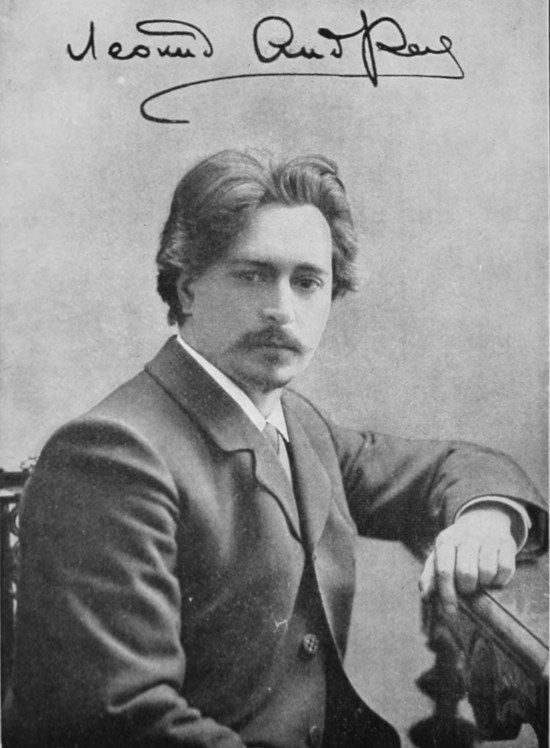
PART I — Fragment I — Fragment II — Fragment III — Fragment IV — Fragment V — Fragment VI — Fragment VII — Fragment VIII — Fragment IX
..... Horror and madness.
I felt it for the first time as we were marching
along the road—marching incessantly for
ten hours without stopping, never diminishing
our step, never waiting to pick up those that
had fallen, but leaving them to the enemy,
that was moving behind us in a compact mass
only three or four hours later effacing the
marks of our feet by their own.
It was very sultry. I do not know how
many degrees there were—120°, 140°, or more—I
only know that the heat was incessant, hopelessly
even and profound. The sun was so
enormous, so fiery and terrible, that it seemed
as if the earth had drawn nearer to it and
would soon be burnt up altogether in its
merciless rays. Our eyes had ceased to look.
The small shrunk pupil, as small as a poppyseed,
sought in vain for darkness under the
closed eyelid; the sun pierced the thin covering
and penetrated into the tortured brain in a
blood-red glow. But, nevertheless, it was
better so: with closed eyelids, and for a long
time, perhaps for several hours, I walked along
with my eyes shut, hearing the multitude
moving around me: the heavy, uneven tread
of many feet, men's and horses, the grinding
of iron wheels, crushing the small stones,
somebody's deep strained breathing and the
dry smacking of parched lips. But I heard no
word. All were silent, as if an army of dumb
people was moving, and when anyone fell
down, he fell in silence; others stumbled
against his body, fell down and rose mutely,
and, without turning their heads, marched on,
as though these dumb men were also blind and
deaf. I stumbled and fell several times and
then involuntarily opened my eyes, and all
that I saw seemed a wild fiction, the terrible
raving of a mad world. The air vibrated at a
white-hot temperature, the stones seemed to
be trembling silently, ready to flow, and in the
distance, at a curve of the road, the files of men,
guns and horses seemed detached from the
earth, and trembled like a mass of jelly in their
onward progress, and it seemed to me that they
were not living people that I saw before me,
but an army of incorporate shadows.
The enormous, near, terrible sun lit up
thousands of tiny blinding suns on every gun-barrel
and metal plate, and these suns, as fiery-white
and sharp as the white-hot points of the
bayonets, crept into your eyes from every
side. And the consuming, burning heat penetrated
into your body—into your very bones
and brain—and at times it seemed to me that it
was not a head that swayed upon my shoulders,
but a strange and extraordinary globe, heavy and
light, belonging to somebody else, and horrible.
And then—then I suddenly remembered my
home: a corner of my room, a scrap of light-blue
wall-paper, and a dusty untouched water-bottle
on my table—on my table, which has
one leg shorter than the others, and had a small
piece of paper folded under it. While in the
next room—and I cannot see them—are my
wife and little son. If I had had the power
to cry out, I would have done so—so wonderful
was this simple and peaceful picture—the scrap
of light-blue wall-paper and dusty untouched
water-bottle. I know that I stood still and
lifted up my arms, but somebody gave me a
push from behind, and I quickly moved on,
thrusting the crowd aside, and hastening whither
I knew not, but feeling now neither heat nor
fatigue. And I marched on thus for a long
time through the endless mute files, past red
sunburnt necks, almost touching the helplessly
lowered hot bayonets, when suddenly the
thought of what I was doing, whither I was
hastening, stopped me. I turned aside in the
same hasty way, forced my way to the open,
clambered across a gulley and sat down on a
stone in a preoccupied manner, as if that rough
hot stone was the aim of all my strivings.
And then I felt it for the first time. I
clearly perceived that all these people, marching
silently on in the glaring sun, torpid from
fatigue and heat, swaying and falling—that they
were all mad. They did not know whither
they were going, they did not know what that
sun was for, they did not know anything. It
was not heads that they had on their shoulders,
but strange and terrible globes. There—I saw
a man in the same plight as I, pushing his way
hurriedly through the rows and falling down;
there—another, and a third. Suddenly a
horse's head appeared above the throng with
bloodshot and senseless eyes and a wide-open
grinning mouth, that only hinted at a terrible
unearthly cry; this head appeared, fell down,
and for an instant the crowd stopped, growing
denser in that spot; I could hear hoarse, hollow
voices, then a shot, and again the silent endless
march continued.
An hour passed as I sat on that stone, but
the multitude still moved on past me, and the
air and earth and the distant phantom-like ranks
trembled as before. And again the burning
heat pierced my body and I forgot what for
an instant I had pictured to myself; and the
multitudes moved on past me, but I did not
know who they were. An hour ago I was alone
on the stone, but now I was surrounded by a
group of grey people: some lying motionless,
perhaps dead; others were sitting up and staring
vacantly at those passing by. Some had guns
and resembled soldiers; others were stripped
almost naked, and the skin on their bodies was
so livid, that one did not care to look at it.
Not far from me someone was lying with his
bared back upturned.
One could see by the unconcerned manner
in which he had buried his face in the sharp
burning sand, by the whiteness of the palm of
his upturned hand, that he was dead, but his
back was as red as if he were alive, and only a
slight yellowish tinge, like one sees on smoked
meat, spoke of death. I wanted to move
away from him, but I had not the strength,
and, tottering from weakness, I continued
looking at the endless phantom-like swaying
files of men. By the condition of my head I
knew that I should soon have a sunstroke too,
but I awaited it calmly, as in a dream, where
death seems only a stage on the path of
wonderful and confused visions.
And I saw a soldier part from the crowd
and direct his steps in a decided manner
towards us. For an instant I lost sight of him
in a ditch, but when he reappeared and moved
on towards us, his gait was unsteady, and in his
endeavours to control his restlessly tossing
body, one felt he was using his last strength.
He was coming so straight upon me that I
grew frightened and, breaking through the
heavy torpor that enveloped my brain, I
asked: "What do you want?"
He stopped short, as if it was only a word
that he was waiting for, and stood before me,
enormous, bearded, in a torn shirt. He had
no gun, his trousers hung only by one button,
and through a slit in them one could see his
white body. He flung his arms and legs
about and he was visibly trying to control
them, but could not: the instant he brought
his arms together, they fell apart again.
"What is the matter? You had better sit
down," I said.
But he continued standing, vainly trying to
gather himself together, and stared at me in
silence. Involuntarily I got up from the stone
and, tottering, looked into his eyes—and saw
an abyss of horror and insanity in them.
Everybody's pupils were shrunk—but his had
dilated and covered his whole eye: what
a sea of fire he must have seen through those
enormous black windows! Maybe I had
only imagined it, maybe in his look there was
only death,—but no, I was not mistaken: in
those black, bottomless pupils, surrounded by
a narrow orange-coloured rim, like a bird's
eye, there was more than death, more than
the horror of death. "Go away!" I cried,
falling back. "Go away!" And as if he was
only waiting for a word, enormous, disorderly
and mute as before, he suddenly fell down
upon me, knocking me over. With a shudder
I freed my legs from under him, jumped up
and longed to run—somewhere away from
men into the sunlit, unpeopled and quivering
distance, when suddenly, on the left-hand side,
a cannon boomed forth from a hill-top, and
directly after it two others, like an echo. And
somewhere above our heads a shell flew past
with a gladsome, many-voiced scr-e-e-ch and
howl.
We were outflanked.
The murderous heat, fear and fatigue disappeared
instantly. My thoughts cleared,
my mind grew clear and sharp, and, when
I ran up, out of breath, to the files of men
drawing up, I saw serene, almost joyous faces,
heard hoarse, but loud voices, orders, jokes.
The sun seemed to have drawn itself up
higher so as not to be in the way, and had
grown dim and still—and again a shell, like a
witch, cut the air with a gladsome scr-e-e-ch.
I came up....
... Nearly all the horses and men. The
same in the eighth battery. In our twelfth
battery, towards the end of the third day,
there remained only three guns—all the others
being disabled—six men and one officer, myself.
We had neither slept nor eaten for twenty
hours; for three days and nights a Satanic roar
and howl enveloped us in a cloud of insanity,
isolated us from the earth, the sky and ourselves—and
we, the living, wandered about
like lunatics. The dead—they lay still, while
we moved about doing our duty, talking and
laughing, and we were—like lunatics. All
our movements were quick and certain, our
orders clear, the execution of them precise,
but if you had suddenly asked any one of us
who we were, undoubtedly we should not have
been able to find an answer in our troubled
brain. As in a dream all faces seemed familiar,
and all that was going on seemed quite
familiar and natural—as if it had happened before;
but when I looked closely at any face or
gun, or began listening to the din, I was struck
by the novelty and endless mystery of everything.
Night approached imperceptibly, and
before we had time to notice it and wonder
where it had come from, the sun was again
burning above our heads. And only from
those who came to our battery we learnt that
it was the third day of the battle that was
dawning, and instantly forgot it again: to
us it appeared as one endless day without any
beginning, sometimes dark, sometimes bright,
but always incomprehensible and blind. And
nobody was afraid of death, for nobody understood
what death was.
On the third or fourth night—I do not
remember which—I lay down for a minute
behind the breastwork, and, as soon as I shut
my eyes, the same familiar and extraordinary
picture stood before them: the scrap of light-blue
wall-paper and the dusty untouched
water-bottle on my table. While in the next
room—and I could not see them—were my wife
and little son. But this time a lamp with a
green shade was burning on the table, so it
must have been evening or night. The picture
stood motionless, and I contemplated it very
calmly and attentively for a long time, letting
my eyes rest on the light reflected in the crystal
of the water-bottle, and on the wall-paper,
and wondered why my son was not asleep:
for it was night and time for him to go to bed.
Then I again began examining the wall-paper:
every spiral, silvery flower, square and line—and
never imagined that I knew my room so
well. Now and then I opened my eyes and
saw the black sky with beautiful fiery stripes
upon it, then shut them again and saw once
more the wall-paper, the bright water-bottle,
and wondered why my son was not asleep,
for it was night and time for him to go to bed.
Once a shell burst not far from me, making my
legs give a jerk, and somebody cried out loudly,
louder than the bursting of the shell, and I
said to myself: "Somebody is killed," but I did
not get up and did not tear my eyes away from
the light-blue wall-paper and the water-bottle.
Afterwards I got up, moved about, gave
orders, looked at the men's faces, trained the
guns, and kept on wondering why my son was
not asleep. Once I asked the sergeant, and
he explained it to me at length with great
detail, and we kept nodding our heads. And
he laughed, and his left eyebrow kept twitching,
while his eye winked cunningly at somebody
behind us. Behind us were somebody's feet—and
nothing more.
By this time it was quite light, when suddenly
there fell a drop of rain. Rain—just the same
as at home, the most ordinary little drops of
rain. But it was so sudden and out of place,
and we were so afraid of getting wet, that we
left our guns, stopped firing, and tried to find
shelter anywhere we could.
The sergeant with whom I had only just
been speaking got under the gun-carriage and
dozed off, although he might have been crushed
any minute; the stout artilleryman, for some
reason or other, began undressing a corpse,
while I began running about the battery in
search of something—a cloak or an umbrella.
And the same instant over the whole enormous
area, where the rain-cloud had burst, a
wonderful stillness fell. A belated shrapnel-shot
shrieked and burst, and everything grew
still—so still that one could hear the stout
artilleryman panting and the drops of rain
splashing upon the stones and guns. And this
soft and continuous sound, that reminded one
of autumn—the smell of the moist earth and
the stillness—seemed to tear the bloody, savage
nightmare asunder for an instant; and when I
glanced at the wet, glistening gun it unexpectedly
reminded me of something dear and peaceful—my
childhood, or perhaps my first love.
But in the distance a gun boomed forth particularly
loud, and the spell of the momentary
lull disappeared; the men began coming out
of their hiding-places as suddenly as they had
hid themselves; a gun roared, then another,
and once again the weary brain was enveloped
by bloody, indissoluble gloom. And nobody
noticed when the rain stopped. I only remember
seeing the water rolling off the fat, sunken
yellow face of the killed artilleryman; so I supposed
it rained for rather a long time....
... Before me stood a young volunteer,
holding his hand to his cap and reporting to
me that the general wanted us to retain our
position for only two hours more, when we
should be relieved. I was wondering why my
son was not in bed, and answered that I could
hold on as much as he wished. But suddenly
I became interested in the young man's face,
probably because of its unusual and striking
pallor. I never saw anything whiter than that
face: even the dead have more colour than that
young, beardless face had. I suppose he became
terrified on his way to us, and could not recover
himself; and in holding his hand to his cap he
was only making an effort to drive away his mad
fear by a simple and habitual gesture.
"Are you afraid?" I asked, touching his
elbow. But his elbow seemed as if made of
wood, and he only smiled and remained silent.
Better to say, his lips alone were twitching into
a smile, while his eyes were full of youth and
terror only—nothing more.
"Are you afraid?" I repeated kindly. His
lips twitched, trying to frame a word, and the
same instant there happened something incomprehensible,
monstrous and supernatural. I
felt a draught of warm air upon my right cheek
that made me sway—that is all—while before
my eyes, in place of the white face, there was
something short, blunt and red, and out of it the
blood was gushing as out of an uncorked bottle,
such as is drawn on badly executed signboards.
And that short, red and flowing "something"
still seemed to be smiling a sort of smile, a
toothless laugh—a red laugh.
I recognised it—that red laugh. I had been
searching for it, and I had found it—that red
laugh. Now I understood what there was in
all those mutilated, torn, strange bodies. It
was a red laugh. It was in the sky, it was in
the sun, and soon it was going to overspread
the whole earth—that red laugh!
While they, with precision and calmness, like
lunatics....
They say there are a great number of madmen
in our army as well as in the enemy's.
Four lunatic wards have been opened. When I
was on the staff our adjutant showed me....
... Coiled round like snakes. He saw the
wire, chopped through at one end, cut the air
and coil itself round three soldiers. The barbs
tore their uniforms and stuck into their bodies,
and, shrieking, the soldiers spun round in
frenzy, two of them dragging the third, who
was already dead, after them. Then only one remained
alive, and he tried to push the two that
were dead away from him; but they trailed after
him, whirling and rolling over each other and over
him; and suddenly all three became motionless.
He told me that no less than two thousand
men were lost at that one wire entanglement.
While they were hacking at the wire and getting
entangled in its serpentine coils, they were
pelted by an incessant rain of balls and grape-shot.
He assured me it was very terrifying,
and if only they had known in which direction
to run, that attack would have ended in a panic
flight. But ten or twelve continuous lines of
wire, and the struggle with it, a whole labyrinth
of pitfalls with stakes driven in at the bottom,
had muddled them so, that they were quite
incapable of defining the direction of escape.
Some, like men blind, fell into the funnel-shaped
pits, and hung upon the sharp stakes,
pierced through the stomach, twitching convulsively
and dancing like toy clowns; they
were crushed down by fresh bodies, and soon
the whole pit filled to the edges, and presented
a writhing mass of bleeding bodies, dead and
living. Hands thrust themselves out of it in
all directions, the fingers working convulsively,
catching at everything; and those who once
got caught in that trap could not get back
again: hundreds of fingers, strong and blind,
like the claws of a lobster, gripped them firmly
by the legs, caught at their clothes, threw them
down upon themselves, gouged out their eyes
and throttled them. Many seemed as if they
were intoxicated, and ran straight at the wire,
got caught in it, and remained shrieking, until
a bullet finished them.
Generally speaking, they all seemed like
people intoxicated: some swore dreadfully,
others laughed when the wire caught them by
the arm or leg and died there and then. He
himself, although he had had nothing to eat or
drink since the morning, felt very queer. His
head swam, and there were moments when the
feeling of terror in him changed to wild rapture,
and from rapture again to terror. When somebody
struck up a song at his side, he caught up
the tune, and soon a whole unanimous chorus
broke forth. He did not remember what they
sang, only that it was lively in a dancing strain.
Yes, they sang, while all around them was red
with blood. The very sky seemed to be red,
and one could have thought that a catastrophe
had overwhelmed the universe—a strange disappearance
of colours: the light-blue and green
and other habitual peaceful colours had disappeared,
while the sun blazed forth in a red
flare-light.
"The red laugh," said I.
But he did not understand.
"Yes, and they laughed, as I told you before,
like people intoxicated. Perhaps they
even danced. There was something of the
sort. At least the movements of those three
resembled dancing."
He remembers distinctly, when he was shot
through the chest and fell, his legs twitched for
some time until he lost consciousness, as if he
were dancing to music. And at the present
moment, when he thinks of that attack, a
strange feeling comes over him: partly fear
and partly the desire to experience it all over
again.
"And get another ball in your chest?"
asked I.
"There now, why should I get a ball each
time. But it would not be half bad, old boy
to get a medal for bravery."
He was lying on his back with a waxen face,
sharp nose, prominent cheek-bones and sunken
eyes. He was lying looking like a corpse
and dreaming of a medal! Mortification had
already set in; he had a high temperature, and
in three days' time he was to be thrown into the
grave to join the dead; nevertheless he lay
smiling dreamily and talking about a medal.
"Have you telegraphed to your mother?" I
asked.
He glanced at me with terror, animosity and
anger, and did not answer. I was silent, and
then the groans and ravings of the wounded
became audible. But when I rose to go, he
caught my hand in his hot, but still strong one,
and fixed his sunken burning eyes upon me in
a lost and distressed way.
"What does it all mean, ay? What does it
all mean?" asked he in a frightened and persistent
manner, pulling at my hand.
"What?"
"Everything ... in general. Now, she is
waiting for me. But I cannot. My country—is
it possible to make her understand, what my
country means."
"The red laugh," answered I.
"Ah! you are always joking, but I am
serious. It is indispensable to explain it; but
is it possible to make her understand? If you
only knew what she says in her letters!—what
she writes! And you know her words—are
grey-haired. And you—" he looked curiously
at my head, pointed his finger and suddenly
breaking into a laugh said: "Why, you have
grown bald. Have you noticed it?"
"There are no looking-glasses here."
"Many have grown bald and grey. Look
here, give me a looking-glass. Give me one!
I feel white hair growing out of my head. Give
me a looking-glass!" He became delirious,
crying and shouting out, and I left the hospital.
That same evening we got up an entertainment—a
sad and strange entertainment, at
which, amongst the guests, the shadows of the
dead assisted. We decided to gather in the
evening and have tea, as if we were at home,
at a picnic. We got a samovar, we even got
a lemon and glasses, and established ourselves
under a tree, as if we were at home, at a picnic.
Our companions arrived noisily in twos and
threes, talking, joking and full of gleeful
expectation—but soon grew silent, avoiding to
look at each other, for there was something
fearful in this meeting of spared men. In
tatters, dirty, itching as if we were covered by
a dreadful ringworm, with hair neglected, thin
and worn, having lost all familiar and habitual
aspect, we seemed to see each other for
the first time as we gathered round the
samovar, and seeing each other, we grew terrified.
In vain I looked for a familiar face in
this group of disconcerted men—I could not
find one. These men, restless, hasty and jerky
in their movements, starting at every sound,
constantly looking for something behind their
backs, trying to fill up that mysterious void
into which they were too terrified to look, by
superfluous gesticulations—were new, strange
men, whom I did not know. And their voices
sounded different, articulating the words with
difficulty in jerks, easily passing into angry
shouts or senseless, irrepressible laughter at the
slightest provocation. And everything around
us was strange to us. The tree was strange,
and the sunset strange, and the water strange,
with a peculiar taste and smell, as if we had
left the earth and entered into a new world together
with the dead—a world of mysterious
phenomena and ominous sombre shadows. The
sunset was yellow and cold; black, unillumined,
motionless clouds hung heavily over it, while
the earth under it was black, and our faces in
that ill-omened light seemed yellow, like the
faces of the dead. We all sat watching the
samovar, but it went out, its sides reflecting the
yellowishness and menace of the sunset, and it
seemed also an unfamiliar, dead and incomprehensible
object.
"Where are we!" asked somebody, and
uneasiness and fear sounded in his voice.
Somebody sighed; somebody convulsively
cracked his fingers; somebody laughed; somebody
jumped up and began walking quickly
round the table. These last days one could
often meet with such men, that were always
walking hastily, almost running, at times
strangely silent, at times mumbling something
in an uncanny way.
"At the war," answered he who had laughed,
and again burst into a hollow, lingering laugh,
as if something was choking him.
"What is he laughing at?" asked somebody,
indignantly. "Look here, stop it!"
The other choked once more, gave a titter
and stopped obediently.
It was growing dark, the cloud seemed to
be settling down on the earth, and we could
with difficulty distinguish each other's yellow
phantom-like faces. Somebody asked,—
"And where is Fatty-legs?"
"Fatty-legs" we called a fellow-officer, who,
being short, wore enormous water-tight boots.
"He was here just now. Fatty-legs, where
are you?"
"Fatty-legs, don't hide. We can smell
your boots."
Everybody laughed, but their laugh was interrupted
by a rough, indignant voice that
sounded out of the darkness,—
"Stop that! Are you not ashamed? Fatty-legs
was killed this morning reconnoitring."
"He was here just now. It must be a
mistake."
"You imagined it. Heigh-ho! you there,
behind the samovar, cut me a slice of lemon."
"And me!"
"And me!"
"The lemon is finished."
"How is that, boys?" sounded a gentle,
hurt voice, full of distress and almost crying;
"why, I only came for the sake of the lemon."
The other again burst into a hollow and
lingering laugh, and nobody checked him.
But he soon stopped. He gave a snigger, and
was silent. Somebody said,—
"To-morrow we begin the advance on the
enemy."
But several voices cried out angrily,—
"Nonsense, advance on the enemy indeed!"
"But you know yourself—"
"Shut up. As if we cannot talk of something
else."
The sunset faded. The cloud lifted, and it
seemed to grow lighter; the faces became
more familiar, and he, who kept circling round
us, grew calmer and sat down.
"I wonder what it's like at home now?"
asked he, vaguely, and in his voice there
sounded a guilty smile.
And once again all became terrible, incomprehensible
and strange—so intensely so, that
we were filled with horror, almost to the verge
of losing consciousness. And we all began talking
and shouting at the same time, bustling
about, moving our glasses, touching each
other's shoulders, hands, knees—and all at
once became silent, giving way before the
incomprehensible.
"At home?" cried somebody out of the
darkness. His voice was hoarse and quivering
with emotion, fear and hatred. And some
of the words would not come out, as if he had
forgotten how to say them.
"A home? What home? Why, is there
home anywhere? Don't interrupt me or else
I shall fire. At home I used to take a bath
every day—can you understand?—a bath with
water—water up to the very edges. While
now—I do not even wash my face every day.
My head is covered with scurf, and my whole
body itches and over it crawl, crawl.... I
am going mad from dirt, while you talk of—home!
I am like an animal, I despise myself,
I cannot recognise myself, and death is not at
all terrifying. You tear my brain with your
shrapnel-shots. Aim at what you will, all hit
my brain—and you can speak of—home.
What home? Streets, windows, people, but
I would not go into the street now for anything.
I should be ashamed to. You brought a
samovar here, but I was ashamed to look at it."
The other laughed again. Somebody called
out,—
"D—n it all! I shall go home."
"Home?"
"You don't understand what duty is!"
"Home? Listen! he wants to go home!"
There was a burst of laughter and of painful
shouts—and again all became silent—giving
way before the incomprehensible. And then
not only I, but every one of us felt that. It
was coming towards us out of those dark,
mysterious and strange fields; it was rising
from out of those obscure dark ravines, where,
maybe, the forgotten and lost among the stones
were still dying; it was flowing from the
strange, unfamiliar sky. We stood around the
dying-out samovar in silence, losing consciousness
from horror, while an enormous, shapeless
shadow that had risen above the world, looked
down upon us from the sky with a steady and
silent gaze. Suddenly, quite close to us, probably
at the Commander's house, music burst
forth, and the frenzied, joyous, loud sounds
seemed to flash out into the night and stillness.
The band played with frenzied mirth and defiance,
hurriedly, discordantly, too loudly, and
too joyously, and one could feel that those
who were playing, and those who were
listening, saw as we did, that same enormous,
shapeless shadow, risen above the world.
And it was clear the player on the trumpet
carried in himself, in his very brain and ears,
that same enormous dumb shadow. The
abrupt and broken sound tossed about, jumping
and running away from the others, quivering
with horror and insanity in its lonesomeness.
And the other sounds seemed to be
looking round at it, so clumsily they ran,
stumbling, falling, and again rising in a
disorderly crowd—too loud, too joyous, too
close to the black ravines, where most probably
the forgotten and lost among the boulders were
still dying.
And we stood for a long time around the cold
samovar and were silent.
... I was already asleep when the doctor
roused me by pushing me cautiously. I woke,
and jumping up, cried out, as we all did
when anybody wakened us, and rushed to the
entrance of our tent. But the doctor held me
firmly by the arm, excusing himself,—
"I frightened you, forgive me. I know you
want to sleep...."
"Five days and nights ..." I muttered,
dozing off. I fell asleep and slept, as it seemed
to me for a long time, when the doctor again
began speaking, poking me cautiously in the
ribs and legs.
"But it is very urgent. Dear fellow, please—it
is so pressing. I keep thinking ... I cannot ...
I keep thinking, that some of the
wounded were left...."
"What wounded? Why, you were bringing
them in the whole day long. Leave me in
peace. It is not fair—I have not slept for five
days!"
"Dear boy, don't be angry," muttered the
doctor, awkwardly putting my cap on my head;
"everybody is asleep, it's impossible to rouse
anybody. I've got hold of an engine and seven
carriages, but we're in want of men. I understand....
Dear fellow, I implore you. Everybody
is asleep and everybody refuses. I'm
afraid of falling asleep myself. I don't remember
when I slept last. I believe I'm
beginning to have hallucinations. There's a
dear fellow, put down your feet, just one—there—there...."
The doctor was pale and tottering, and one
could see that if he were only to lie down for
an instant he would fall asleep and remain so
without waking for several days running. My
legs sank under me, and I am certain I fell
asleep as I walked—so suddenly and unexpectedly
appeared before us a row of black
outlines—the engine and carriages. Near
them, scarcely distinguishable in the darkness,
some men were wandering about slowly and
silently. There was not a single light either
on the engine or carriages, and only the shut
ash-box threw a dim reddish light on to the
rails.
"What is this?" asked I, stepping back.
"Why, we are going in the train. Have you
forgotten? We are going in the train,"
muttered the doctor.
The night was chilly and he was trembling
from cold, and as I looked at him I felt the
same rapid tickling shiver all over my body.
"D—n you!" I cried loudly. "Just as if
you couldn't have taken somebody else."
"Hush! please, hush!" and the doctor
caught me by the arm.
Somebody out of the darkness said,—
"If you were to fire a volley from all the
guns, nobody would stir. They are all asleep.
One could go up and bind them all. Just now
I passed quite close to the sentry. He looked
at me and did not say a word, never stirred. I
suppose he was asleep too. It's a wonder he
does not fall down."
He who spoke yawned and his clothes
rustled, evidently he was stretching himself.
I leant against the side of the carriage, intending
to climb up—and was instantly overcome
by sleep. Somebody lifted me up from behind
and laid me down, while I began pushing him
away with my feet, without knowing why, and
again I fell asleep, hearing as in a dream fragments
of a conversation:
"At the seventh verst."
"Have you forgotten the lanterns?"
"No, he won't go."
"Give them here. Back a little. That's it."
The carriages were jerking backwards and
forwards, something was rattling. And
gradually, because of all these sounds and
because I was lying comfortably and quietly,
sleep deserted me. But the doctor was sound
asleep, and when I took him by the hand, it
was like the hand of a corpse, heavy and limp.
The train was now moving slowly and
cautiously, shaking slightly, as if groping its
way. The student acting as hospital orderly
lighted the candle in the lantern, lighting up
the walls and the black aperture of the entrance,
and said angrily,—
"D—n it! Much they need us by this time.
But you had better wake him, before he falls
into a sound sleep, for then you won't be able
to do anything with him. I know by myself."
We roused the doctor and he sat up, rolling
his eyes vacantly. He tried to lie down again,
but we did not let him.
"It would be good to have a drop of vodki
now," said the student.
We drank a mouthful of brandy, and all
sleepiness disappeared entirely. The big black
square of the door began to grow pink, then red—somewhere
from behind the hills appeared
an enormous mute flare of a conflagration: as
if the sun was rising in the middle of the night.
"It's far away. About twenty versts."
"I feel cold," said the doctor, snapping his
teeth.
The student looked out of the door and
beckoned me to come up to him. I looked
out: at different points of the horizon motionless
flares of similar conflagration stood
out in a mute row: as if dozens of suns were
rising simultaneously. And now the darkness
was not so great. The distant hills were
growing more densely black, sharply outlined
against the sky in a broken and wavy contour,
while in the foreground all was flooded with a
red soft glow, silent and motionless. I glanced
at the student; his face was tinged by the same
red fantastic colour of blood, that had changed
itself into air and light.
"Are there many wounded?" asked I.
He waved his hand.
"A great many madmen. More so than
wounded."
"Real madmen?"
"What others can there be?"
He was looking at me, and his eyes wore
the same fixed, wild expression, full of cold
horror, that the soldier's had, who died of
sunstroke.
"Stop that," said I, turning away.
"The doctor is mad also. Just look at him."
The doctor had not heard. He was sitting
cross-legged, like a Turk, swaying to and fro,
soundlessly moving his lips and finger-tips.
And in his gaze there was the same fixed,
stupefied, blunt, stricken expression.
"I feel cold," said he, and smiled.
"Hang you all!" cried I, moving away into
a corner of the carriage. "What did you call
me up for?"
Nobody answered. The student stood gazing
out at the mute spreading glow, and the back
of his head with its curly hair was youthful; and
when I looked at him, I do not know why, but
I kept picturing to myself a delicate woman's
hand passing through that hair. And this
image was so unpleasant, that a feeling of
hatred sprang up in my breast, and I could
not look at him without a feeling of loathing.
"How old are you?" I asked, but he did
not turn his head and did not answer.
The doctor kept on rocking himself.
"I feel cold."
"When I think," said the student, without
turning round, "when I think that there are
streets, houses, a University...."
He broke off, as if he had said all and was
silent. Suddenly the train stopped almost instantaneously,
making me knock myself against
the wall, and voices were to be heard. We
jumped out. In front of the very engine upon
the rails lay something, a not very large lump,
out of which a leg was projecting.
"Wounded?"
"No, dead. The head is torn off. Say what
you will, but I will light the head-light.
Otherwise we shall be crushing somebody."
The lump with the protruding leg was
thrown aside; for an instant the leg lifted itself
up, as if it wanted to run through the air, and
all disappeared in a black ditch. The head-light
was lit and the engine instantly grew
black.
"Listen!" whispered somebody, full of silent
terror.
How was it that we had not heard it before!
From everywhere—the exact place could not
be defined—a groan, unbroken and scraping,
wonderfully calm in its breadth, and even
indifferent, as it seemed, was borne upon us.
We had heard many cries and groans, but this
resembled none of those heard before. On
the dim reddish surface our eyes could perceive
nothing, and therefore the very earth and sky,
lit up by a never-rising sun, seemed to be
groaning.
"The fifth verst," said the engine-driver.
"That is where it comes from," and the
doctor pointed forwards. The student shuddered,
and slowly turned towards us.
"What is it? It's terrible to listen to!"
"Let's move on."
We walked along in front of the engine,
throwing a dense shadow upon the rails, but it
was not black but of a dim red colour, lit up by
the soft motionless flares, that stood out mutely
at the different points of the black sky. And
with each step we made, that wild unearthly
groan, that had no visible source, grew
ominously, as if it was the red air, the very
earth and sky, that were groaning. In its
ceaselessness and strange indifference it recalled
at times the noise of grasshoppers in a
meadow—the ceaseless noise of grasshoppers
in a meadow on a warm summer day. And
we came upon dead bodies oftener and oftener.
We examined them rapidly and threw them off
the rails—those indifferent, calm, limp bodies,
that left dark oily stains where the blood had
soaked into the earth where they had lain. At
first we counted them, but soon got muddled,
and ceased. They were many—too many for
that ominous night, that breathed cold and
groans from each fibre of its being.
"What does it mean?" cried the doctor, and
threatened somebody with his fist. "Just
listen...."
We were nearing the sixth verst, and the
groans were growing distinct and sharp, and
we could almost feel the distorted mouths,
from which those terrible sounds were issuing.
We looked anxiously into the rosy gloom,
so deceitful in its fantastic light, when suddenly,
almost at our feet, beside the rails, somebody
gave a loud, calling, crying, groan. We found
him instantly, that wounded man, whose face
seemed to consist only of two eyes, so big
they appeared, when the light of the lantern
fell on his face. He stopped groaning, and
rested his eyes on each of us and our lanterns
in turn, and in his glance there was a mad joy
at seeing men and lights—and a mad fear that
all would disappear like a vision. Perhaps he
had seen men with lanterns bending over him
many times, but they had always disappeared
in a bloody confused nightmare.
We moved on, and almost instantly stumbled
against two more wounded, one lying on the
rails, the other groaning in a ditch. As we
were picking them up, the doctor, trembling
with anger, said to me: "Well?" and turned
away. Several steps farther on we met a man
wounded slightly, who was walking alone,
supporting one arm with the other. He was
walking with his head thrown back, straight
towards us, but seemed not to notice us,
when we drew aside to let him pass. I believe
he did not see us. He stopped for an instant
near the engine, turned aside, and went past
the train.
"You had better get in!" cried the doctor,
but he did not answer.
These were the first that we found, and they
horrified us. But later on we came upon them
oftener and oftener along the rails or near them,
and the whole field, lit up by the motionless red
flare of the conflagrations, began stirring as if
it were alive, breaking out into loud cries,
wails, curses and groans. All those dark
mounds stirred and crawled about like half-dead
lobsters let out of a basket, with outspread
legs, scarcely resembling men in their
broken, unconscious movements and ponderous
immobility. Some were mute and obedient,
others groaned, wailed, swore and showed
such a passionate hate towards us that were
saving them, as if we had brought about that
bloodly, indifferent night, and been the cause
of all those terrible wounds and their loneliness
amidst the night and dead bodies.
The train was full, and our clothes were
saturated with blood, as if we had stood for a
long time under a rain of blood, while the
wounded were still being brought in, and the
field, come to life, was stirring wildly as
before.
Some of the wounded crawled up themselves,
some walked up tottering and falling.
One soldier almost ran up to us. His face was
smashed, and only one eye remained, burning
wildly and terribly, and he was almost naked,
as if he had come from the bath-room. Pushing
me aside, he caught sight of the doctor,
and rapidly seized him by the chest with his
left hand.
"I'll smash your snout!" he cried, shaking
the doctor, and added slowly and mordantly a
coarse oath. "I'll smash your snouts! you
rabble!"
The doctor broke away from the soldier,
and advancing towards him, cried chokingly,—
"I will have you court-martialled, you
scoundrel! To prison with you! You're
hindering my work! Scoundrel! Brute!"
We pulled them apart, but the soldier
kept on crying out for a long time: "Rabble!
I'll smash your snout!"
I was beginning to get exhausted, and went a
little way off to have a smoke and rest a bit.
The blood, dried to my hands, covered them
like a pair of black gloves, making it difficult
for me to bend my fingers, so that I kept
dropping my cigarettes and matches. And
when I succeeded in lighting my cigarette, the
tobacco smoke struck me as novel and strange,
with quite a peculiar taste, the like of which I
never experienced before or after. Just then the
ambulance student with whom I had travelled
came up to me, and it seemed to me as if I
had met with him several years back, but where
I could not remember. His tread was firm as
if he were marching, and he was staring
through me at something farther on and
higher up.
"And they are sleeping," said he, as it
seemed, quite calmly.
I flew into a rage, as if the reproach was
addressed to me.
"You forget, that they fought like lions for
ten days."
"And they are sleeping," he repeated, looking
through me and higher up. Then he
stooped down to me and shaking his finger,
continued in the same dry and calm way: "I
will tell you—I will tell you...."
"What?"
He stooped still lower towards me, shaking
his finger meaningly, and kept repeating the
words as if they expressed a completed
idea,—
"I will tell you—I will tell you. Tell
them...." And still looking at me in the same
severe way, he shook his finger once more,
then took out his revolver and shot himself in
the temple. And this did not surprise or
terrify me in the least. Putting my cigarette
into the left hand, I felt his wound with my
fingers, and went back to the train.
"The student has shot himself. I believe
he is still alive," said I to the doctor. The
latter caught hold of his head and groaned.
"D—n him!... There is no room. There,
that one will go and shoot himself too, soon.
And I give you my word of honour," cried he,
angrily and menacingly, "I will do the same!
Yes! And let me beg you—just walk back.
There is no room. You can lodge a complaint
against me if you like."
And he turned away, still shouting, while I
went up to the other who was about to commit
suicide. He was an ambulance man, and also,
I believe, a student. He stood, pressing his
forehead against the wall of the carriage, and
his shoulders shook with sobs.
"Stop!" said I, touching his quivering
shoulder. But he did not turn round or
answer, and continued crying. And the back
of his head was youthful, like the other
student's, and as terrifying, and he stood in an
absurd manner with his legs spread out like a
person drunk, who is sick; and his neck was
covered with blood; probably he had clutched
it with his own hands.
"Well?" said I, impatiently.
He pushed himself away from the carriage
and, stooping like an old man, with his head
bent down, he went away into the darkness,
away from all of us. I do not know why, but
I followed him, and we walked along for a long
time away from the carriages. I believe he
was crying, and a feeling of distress stole over
me, and I wanted to cry too.
"Stop!" I cried, standing still.
But he walked on, moving his feet
ponderously, bent down, looking like an old
man with his narrow shoulders and shuffling
gait. And soon he disappeared in the reddish
haze, that resembled light and yet lit nothing.
And I remained alone. To the left of me a
row of dim lights floated past—it was the train.
I was alone—amidst the dead and dying.
How many more remained? Near me all was
still and dead, but farther on the field was stirring,
as if it were alive—or so it seemed to me
in my loneliness. But the moan did not
grow less. It spread along the earth—high-pitched,
hopeless, like the cry of a child or the
yelping of thousands of cast-away puppies,
starving and cold. Like a sharp, endless, icy
needle it pierced your brain and slowly moved
backwards and forwards—backwards and forwards....
... They were our own men. During the
strange confusion of all movements that
reigned in both armies, our own and the
enemy's, during the last month, frustrating all
orders and plans, we were sure it was the
enemy that was approaching us, namely, the
4th corps. And everything was ready for an
attack, when somebody clearly discerned our
uniforms, and ten minutes later our guess had
become a calm and happy certainty: they
were our own men. They apparently had recognised
us too: they advanced quite calmly,
and that calm motion seemed to express
the same happy smile of an unexpected
meeting.
And when they began firing, we did not
understand for some time what it meant, and
still continued smiling—under a hail of
shrapnel and bullets, that poured down upon
us, snatching away at one stroke hundreds
of men. Somebody cried out by mistake and—I
clearly remember—we all saw that it was
the enemy, that it was his uniform and not
ours, and instantly answered the fire. About
fifteen minutes after the beginning of that
strange engagement both my legs were torn
off, and I recovered consciousness in the
hospital after the amputation.
I asked how the battle had ended, and received
an evasive, reassuring answer, by which
I could understand that we had been beaten;
and afterwards, legless as I was, I was overcome
by joy at the thought that now I would
be sent home, that I was alive—alive for a long
time to come, alive forever. And only a week
later I learnt some particulars, that once more
filled me with doubts and a new, unexperienced
feeling of terror. Yes, I believe they were
our own men after all—and it was with one
of our shells, fired out of one of our guns by
one of our men, that my legs had been torn off.
And nobody could explain how it had
happened. Something occurred, something
darkened our vision, and two regiments, belonging
to the same army, facing each
other at a distance of one verst, had been
destroying each other for a whole hour in the
full conviction that it was the enemy they had
before them. Later on the incident was
remembered and spoken of reluctantly in half-words
and—what is most surprising of all—one
could feel that many of the speakers did
not admit the mistake even then. That is to
say, they admitted it, but thought that it had
occurred later on, that in the beginning they
really had the enemy before them, but that he
disappeared somewhere during the general
fray, leaving us in the range of our own shells.
Some spoke of it openly, giving precise explanations,
which seemed to them plausible
and clear. Up to this very minute I cannot
say for certain how the strange blunder began,
as I saw with equal clearness first our red
uniforms and then their orange-coloured ones.
And somehow very soon everybody forgot
about the incident, forgot about it to such an
extent that it was spoken of as a real battle,
and in that sense many accounts were written
and sent to the papers in all good faith; I
read them when I was back home. At first
the public's attitude towards us, the wounded
in that engagement, was rather strange—we
seemed to be less pitied than those wounded
in other battles, but soon even that disappeared
too. And only new facts, similar to the one
just described, and a case in the enemy's army,
when two detachments actually destroyed each
other almost entirely, having come to a hand-to-hand
fight during the night—gives me the
right to think that a mistake did occur.
Our doctor, the one that did the amputation,
a lean, bony old man, tainted with tobacco
smoke and carbolic acid, everlastingly smiling
at something through his yellowish-grey thin
moustache, said to me, winking his eye,—
"You're in luck to be going home. There's
something wrong here."
"What is it?"
"Something's going wrong. In our time it
was simpler."
He had taken part in the last European war
almost a quarter of a century back and often
referred to it with pleasure. But this war he did
not understand, and, as I noticed, feared it.
"Yes, there's something wrong," sighed he,
and frowned, disappearing in a cloud of tobacco
smoke. "I would leave too, if I could."
And bending over me he whispered through
his yellow smoked moustache,—
"A time will come when nobody will be able
to go away from here. Yes, neither I nor
anybody," and in his old eyes, so close to me,
I saw the same fixed, dull, stricken expression.
And something terrible, unbearable, resembling
the fall of thousands of buildings, darted
through my head, and growing cold from terror,
I whispered,—
"The red laugh."
And he was the first to understand me. He
hastily nodded his head and repeated,—
"Yes. The red laugh."
He sat down quite close to me and looking
round began whispering rapidly, in a senile
way, wagging his sharp, grey little beard.
"You are leaving soon, and I will tell you. Did
you ever see a fight in an asylum? No? Well,
I saw one. And they fought like sane people.
You understand—like sane people." He significantly
repeated the last phrase several times.
"Well, and what of that?" asked I, also in a
whisper, full of terror.
"Nothing. Like sane people."
"The red laugh," said I.
"They were separated by water being
poured over them."
I remembered the rain that had frightened
us so, and got angry.
"You are mad, doctor!"
"Not more than you. Not more than you
in any case."
He hugged his sharp old knees and chuckled;
and, looking at me over his shoulder and still
with the echo of that unexpected painful
laugh on his parched lips, he winked at me
slyly several times, as if we two knew something
very funny, that nobody else knew.
Then with the solemnity of a professor of black
magic, giving a conjuring performance, he
lifted his arm and, lowering it slowly, carefully
touched with two fingers that part of the
blanket, under which my legs would have been,
if they had not been cut off.
"And do you understand this?" he asked
mysteriously.
Then, in the same solemn and significant
manner, he waved his hand towards the row of
beds on which the wounded were lying, and
repeated,—
"And can you explain this?"
"The wounded?" said I. "The wounded?"
"The wounded," repeated he, like an echo.
"The wounded. Legless and armless, with
pierced sides, smashed-in chests and torn-out
eyes. You understand it? I am very glad.
So I suppose you will understand this also?"
With an agility, quite unexpected for his age,
he flung himself down and stood on his hands,
balancing his legs in the air. His white
working clothes turned down, his face grew
purple and, looking at me fixedly with a
strange upturned gaze, he threw at me with
difficulty a few broken words,—
"And this ... do you ... also ...
understand?"
"Stop!" whispered I in terror, "or else I
will cry out."
He turned over into a natural position, sat
down again near my bed, and taking breath,
remarked instinctively,—
"And nobody can understand it."
"Yesterday they were firing again."
"Yes, they were firing yesterday and the day
before," said he, nodding his head affirmatively.
"I want to go home!" said I in distress.
"Doctor, dear fellow, I want to go home. I
cannot remain here any longer. At times I
cannot bring myself to believe that I have a
home, where it is so good."
He was thinking of something and did not
answer, and I began to cry.
"My God, I have no legs. I used to love
my bicycle so, to walk and run, and now I have
no legs. I used to dance my boy on the right
foot and he laughed, and now.... Curse you
all! What shall I go home for? I am only
thirty.... Curse you all!"
And I sobbed and sobbed, as I thought of
my dear legs, my fleet, strong legs. Who
took them away from me, who dared to take
them away!
"Listen," said the doctor, looking aside.
"Yesterday I saw a mad soldier that came to
us. An enemy's soldier. He was stripped
almost naked, beaten and scratched and hungry
as an animal, his hair was unkempt, as ours
is, and he resembled a savage, primitive man
or monkey. He waved his arms about, made
grimaces, sang and shouted and wanted to
fight. He was fed and driven out again—into
the open country. Where could we have kept
him? Days and nights they wander about the
hills, backwards and forwards in all directions,
keeping to no path, having no aim or resting-place,
all in tatters like ominous phantoms. They
wave their arms, laugh, shout and sing, and
when they come across anybody they begin to
fight, or, maybe, without noticing each other,
pass by. What do they eat? Probably
nothing, or, maybe, they feed on the dead
bodies together with the beasts, together with
those fat wild dogs, that fight in the hills and
yelp the whole night long. At night they
gather about the fires like monstrous moths or
birds awakened by a storm, and you need only
light a fire to have in less than half-an-hour a
dozen noisy, tattered wild shapes, resembling
chilled monkeys, gathering around it. Sometimes
they are fired at by mistake, sometimes
on purpose, for they make you lose all patience
with their unintelligible, terrifying cries...."
"I want to go home!" cried I, shutting my
ears.
But new terrible words, sounding hollow and
phantom-like, as if they were passing through a
layer of wadding, kept hammering at my brain.
"They are many. They die by hundreds
in the precipices and pitfalls, that are made
for sound and clever men, in the remnants of
the barbed wire and on the stakes; they take
part in the regular battles and fight like heroes—always
in the foremost ranks, always undaunted,
but often turn against their own men.
I like them. At present I am only beginning
to go mad, and that is why I am sitting and
talking to you, but when my senses leave me
entirely, I will go out into the open country—I
will go out into the open country, and I will
give a call—I will give a call, I will gather
those brave ones, those knights-errant, around
me, and declare war to the whole world. We
will enter the towns and villages in a joyous
crowd, with music and songs, leaving in our
wake a trail of red, in which everything will
whirl and dance like fire. Those that remain
alive will join us, and our brave army will grow
like an avalanche, and will cleanse the whole
world. Who said that one must not kill, burn
or rob?..."
He was shouting now, that mad doctor, and
seemed to have awakened by his cries the
slumbering pain of all those around him with
their ripped-open chests and sides, torn-out eyes
and cut-off legs. The ward filled with a broad,
rasping, crying groan, and from all sides pale,
yellow, exhausted faces, some eyeless, some so
monstrously mutilated that it seemed as if they
had returned from hell, turned towards us. And
they groaned and listened, and a black shapeless
shadow, risen up from the earth, peeped in
cautiously through the open door, while the mad
doctor went on shouting, stretching out his arms.
"Who said one must not kill, burn, or rob?
We will kill and burn and rob. We, a joyous
careless band of braves, we will destroy all;
their buildings, universities and museums, and
merry as children, full of fiery laughter, we
will dance on the ruins. I will proclaim the
madhouse our fatherland; all those that have
not gone mad—our enemies and madmen;
and when I, great, unconquerable and joyous,
will begin to reign over the whole world, its
sole lord and master, what a glad laugh will
ring over the whole universe."
"The red laugh!" cried I, interrupting him.
"Help. Again I hear the red laugh!"
"Friends!" continued the doctor, addressing
himself to the groaning mutilated shadows.
"Friends! we shall have a red moon and a
red sun, and the animals will have a merry red
coat, and we will skin all those that are too
white—that are too white.... You have not
tasted blood? It is slightly sticky and slightly
warm, but it is red and has such a merry red
laugh!..."
... It was godless and unlawful. The red
cross is respected by the whole world, as a
thing sacred, and they saw that it was a train
full of harmless wounded and not soldiers, and
they ought to have warned us of the mine.
The poor fellows, they were dreaming of
home....
... Around a samovar, around a real samovar,
out of which the steam was rising as out
of an engine—the glass on the lamp had even
grown dim, there was so much steam. And
the cups were the same, blue outside and white
inside, very pretty little cups, a wedding present.
My wife's sister gave them—she is a
very kind and good woman.
"Is it possible they are all whole?" asked I,
incredulously, mixing the sugar in my glass
with a clean silver spoon.
"One was broken," said my wife, absently;
she was holding the tap open just then and
the water was running out easily and prettily.
I laughed.
"What's it about?" asked my brother.
"Oh, nothing. Wheel me into the study
just once more. You may as well trouble
yourself for the sake of a hero. You idled
away your time while I was away, but now
that is over. I'll bring you to order," and
I began singing, as a joke of course,—"My
friends, we're bravely hurrying towards the
foe...."
They understood the joke and smiled, only
my wife did not lift up her face, she was
wiping the cups with a clean embroidered
cloth. And in the study I saw once again the
light-blue wall-paper, a lamp with a green shade
and a table with a water-bottle upon it. And
it was a little dusty.
"Pour me some water out of this," ordered
I, merrily.
"But you've just had tea."
"That doesn't matter, pour me out some.
And you," said I to my wife, "take our son
and go into the next room for a minute.
Please."
And I drank the water with delight in small
sips, while my wife and son were in the next
room, and I could not see them.
"That's all right. Now come here. But
why is he not in bed by this time?"
"He is so glad you have come home.
Darling, go to your father."
But the child began to cry and hid himself
at his mother's feet.
"Why is he crying?" asked I, in perplexity,
and looked around, "why are you all so pale
and silent, following me like shadows?"
My brother burst into a loud laugh and said,
"We are not silent."
And my sister said, "We are talking the
whole time."
"I will go and see about the supper," said
my mother, and hurriedly left the room.
"Yes, you are silent," I repeated, with
sudden conviction. "Since morning I have
not heard a word from you; I am the only
one who chats, laughs, and makes merry.
Are you not glad to see me then? And why do
you all avoid looking at me? Have I changed
so? Yes, I am changed. But I do not see
any looking-glasses about. Have you put them
all away? Give me a looking-glass."
"I will bring you one directly," answered my
wife, and did not come back for a long time,
and the looking-glass was brought by the maid.
I looked into it, and—I had seen myself before
in the train, at the station—it was the same
face, grown older a little, but the most ordinary
face. While they, I believe, expected me to
cry out and faint—so glad were they when I
asked calmly,—
"What is there so unusual in me?"
Laughing louder and louder, my sister left
the room hurriedly, and my brother said with
calm assurance: "Yes, you have not changed
much, only grown slightly bald."
"You can be thankful that my head is not
broken," answered I, unconcernedly. "But
where do they all disappear?—first one, then
another. Wheel me about the rooms, please.
What a comfortable armchair, it does not make
the slightest sound. How much did it cost?
You bet I won't spare the money: I will buy
myself such a pair of legs, better.... My
bicycle!"
It was hanging on the wall, quite new, only
the tyres were limp for want of pumping. A
tiny bit of mud had dried to the tyre of the
back wheel—the last time I had ridden it.
My brother was silent and did not move my
chair, and I understood his silence and irresoluteness.
"Only four officers remained alive in our
regiment," said I, surlily. "I am very lucky....
You can take it for yourself—take it
away to-morrow."
"All right, I will take it," agreed my brother
submissively. "Yes, you are lucky. Half of
the town is in mourning. While legs—that is
really...."
"Of course I am not a postman."
My brother stopped suddenly and asked,—
"But why does your head shake?"
"That's nothing. The doctor said it will
pass."
"And your hands too?"
"Yes, yes. And my hands too. It will all
pass. Wheel me on, please, I am tired of
remaining still."
They upset me, those discontented people,
but my gladness returned to me when they
began making my bed; a real bed, a handsome
bed, that I had bought just before our wedding
four years ago. They spread a clean sheet,
then they shook the pillows and turned down
the blanket, while I watched the solemn proceedings,
my eyes full of tears with laughing.
"And now undress me and put me to bed,"
said I to my wife. "How good it is!"
"This minute, dear."
"Quicker!"
"This minute, dear."
"Why; what are you doing?"
"This minute, dear."
She was standing behind my back, near the
toilette table, and I vainly tried to turn my
head so as to see her. And suddenly she gave
a cry, such a cry as one hears only at the war,—
"What does it all mean?"
She rushed towards me, put her arms round
me, and fell down, hiding her head near the
stumps of my cut-off legs, from which she
turned away with horror, and again pressed
herself against them, kissing them, and crying,—
"What have you become? Why, you are
only thirty years old. You were young and
handsome. What does it all mean? How
cruel men are. What is it for? For whom is
it necessary? You, my gentle, poor darling,
darling...."
At her cry they all ran up—my mother,
sister, nurse—and they all began crying and
saying something or other, and fell at my feet
wailing. While on the threshold stood my
brother, pale, terribly pale, with a trembling
jaw, and cried out in a high-pitched voice,—
"I shall go mad with you all. I shall go mad!"
While my mother grovelled at my chair
and had not the strength to cry, but only
gasped, beating her head against the wheels.
And there stood the clean bed with the well-shaken
pillows and turned-down blanket, the
same bed that I bought just before our
wedding four years ago....
... I was sitting in a warm bath, while
my brother was pacing up and down the small
room in a troubled manner, sitting down, getting
up again, catching hold of the soap and towel,
bringing them close up to his short-sighted
eyes and again putting them back in their places.
At last he stood up with his face to the wall
and picking at the plaster with his finger, continued
hotly.
"Judge for yourself: one cannot teach people
mercy, sense, logic—teach them to act consciously
for tens and hundreds of years running
with impunity. And, in particular, to act
consciously. One can become merciless, lose
all sensitiveness, get accustomed to blood and
tears and pain—for instance butchers, and some
doctors and officers do, but how can one renounce
truth, after one has learnt to know it? In my
opinion it is impossible. I was taught from
infancy not to torture animals and be compassionate;
all the books that I read told me
the same, and I am painfully sorry for all those
that suffer at your cursed war. But time passes,
and I am beginning to get accustomed to all
those deaths, sufferings and all this blood; I feel
that I am getting less sensitive, less responsive
in my everyday life and respond only to great
stimulants, but I cannot get accustomed to
war; my brain refuses to understand and
explain a thing that is senseless in its basis.
Millions of people gather at one place and,
giving their actions order and regularity, kill
each other, and it hurts everybody equally, and
all are unhappy—what is it if not madness?"
My brother turned round and looked at me
inquiringly with his short-sighted, artless eyes.
"The red laugh," said I merrily, splashing
about.
"I will tell you the truth," and my
brother put his cold hand trustingly on my
shoulder, but quickly pulled it back, as if he
was frightened at its being naked and wet.
"I will tell you the truth; I am very much
afraid of going mad. I cannot understand
what is happening. I cannot understand it, and
it is dreadful. If only anybody could explain
it to me, but nobody can. You were at the
front, you saw it all—explain it to me."
"Deuce take you," answered I jokingly,
splashing about.
"There, and you too," said my brother,
sadly. "Nobody is capable of helping me.
It's dreadful. And I am beginning to lose
all understanding of what is permissible and
what is not, what has sense and what is senseless.
If I were to seize you suddenly by the
throat, at first gently, as if caressing you, and
then firmly, and strangle you, what would
that be?"
"You are talking nonsense. Nobody does
such things."
My brother rubbed his cold hands, smiled
softly, and continued,—
"When you were away there were nights
when I did not sleep, could not sleep, and strange
ideas entered my head—to take a hatchet, for
instance, and go and kill everybody—mother,
sister, the servants, our dog. Of course they
were only fancies, and I would never do so."
"I should hope not," smiled I, splashing about.
"Then, again, I am afraid of knives, of all
that is sharp and shining; it seems to me that
if I were to take up a knife I should certainly
kill somebody with it. Now, is it not true—why
should I not plunge it into somebody, if
it were sharp enough?"
"The argument is sufficient. What a queer
fellow you are, brother! Just open the hot-water
tap."
My brother opened the tap, let in some hot
water, and continued,—
"Then, again, I am afraid of crowds—of
men, when many of them gather together.
When of an evening I hear a noise in the
street—a loud shout, for instance—I start
and believe that ... a massacre has begun.
When several men stand together, and I cannot
hear what they are talking about, it seems
to me that they will suddenly cry out, fall
upon each other, and blood will flow. And
you know"—he bent mysteriously towards
my ear—"the papers are full of murders—strange
murders. It is all nonsense that
there are as many brains as there are men;
mankind has only one intellect, and it is beginning
to get muddled. Just feel my head,
how hot it is. It is on fire. And sometimes
it gets cold, and everything freezes in it, grows
benumbed, and changes into a terrible dead-like
piece of ice. I must go mad; don't
laugh, brother, I must go mad. A quarter
of an hour has passed, it's time for you to
get out of your bath."
"A little bit more. Just a minute."
It was so good to be sitting again in that
bath and listening to the well-known voice,
without reflecting upon the words, and to see all
the familiar, simple and ordinary things around
me: the brass, slightly-green tap, the walls,
with the familiar pattern, and all the photographic
outfit laid out in order upon the
shelves. I would take up photography again,
take simple, peaceful landscapes and portraits
of my son walking, laughing and playing. One
could do that without legs. And I would take
up my writing again—about clever books, the
progress of human thought, beauty, and peace.
"Ho, ho, ho!" roared I, splashing about.
"What is the matter with you?" asked my
brother, growing pale and full of fear.
"Nothing. I am glad to be home."
He smiled at me as one smiles at a child
or on one younger than oneself, although I was
three years older than he, and grew thoughtful,
like a grown-up person or an old man who
has great, burdensome old thoughts.
"Where can one fly to?" he asked, shrugging
his shoulders. "Every day, at about
the same hour, the papers close the circuit,
and all mankind gets a shock. This simultaneousness
of feelings, tears, thoughts, sufferings
and horror deprives me of all stay, and
I am like a chip of wood tossing about on
the waves, or a bit of dust in a whirlwind.
I am forcibly torn away from all that is
habitual, and there is one terrible moment
every morning, when I seem to hang in the air
over the black abyss of insanity. And I shall
fall into it, I must fall into it. You don't know
all, brother. You don't read the papers, and
much is held back from you—you don't know
all, brother."
I took all his words for rather a gloomy
joke—the usual attitude towards all those
who, being touched by insanity, have an
inkling of the insanity of war, and gave us
a warning. I considered it as a joke, as if
I had forgotten for the moment, while I was
splashing about in the hot water, all that I
had seen over there. "Well, let them hold
things back from me, but I must get out of
the bath, anyway," said I lightly, and my
brother smiled and called my man, and together
they lifted me out of my bath and
dressed me. Afterwards I had some fragrant
tea, which I drank out of my cut-glass tumbler,
and said to myself that life was worth living even
without a pair of legs; and then they wheeled
me into the study up to my table and I prepared
for work.
Before the war I was on the staff of a journal,
reviewing foreign literature, and now, disposed
within my reach, lay a heap of those dear,
sweet books in yellow, blue and brown covers.
My joy was so great, my delight so profound,
that I could not make up my mind to begin
reading them, and I merely fingered the books,
passing my hand caressingly over them. I
felt a smile spread over my face, most probably
a very silly smile, but I could not keep it back,
as I contemplated admiringly the type, the
vignettes, the severe beautiful simplicity of
the drawings. How much thought and sense
of beauty there was in them all! How many
people had to work and search, how much
talent and taste were needed to bring forth that
letter, for instance, so simple and elegant, so
clever, harmonious and eloquent in its interlaced
lines.
"And now I must set to work," said I,
seriously, full of respect for work.
And I took up my pen to write the heading
and, like a frog tied to a string, my hand began
plunging about the paper. The pen stuck into
the paper, scratched it, jerked about, slipped
irresistibly aside, and brought forth hideous
lines, broken, crooked, devoid of all sense.
And I did not cry out or move, I grew cold
and still as the approaching terrible truth
dawned upon me; while my hand danced over
the brightly illuminated paper, and each finger
shook in such hopeless, living, insane horror, as
if they, those fingers, were still at the front and
saw the conflagrations and blood, and heard
the groans and cries of undescribable pain.
They had detached themselves from me, those
madly quivering fingers, they were alive, they
had become ears and eyes; and, growing cold
from horror, without the strength to move or cry
out, I watched their wild dance over the clean,
bright white page.
And all was quiet. They thought I was
working, and had shut all the doors, so as not
to interrupt me by any sound—and I was alone
in the room, deprived of the power of moving,
obediently watching my shaking hands.
"It is nothing," said I aloud, and in the stillness
and loneliness of the study my voice sounded
hollow and nasty like the voice of a madman.
"It is nothing. I will dictate. Why, Milton
was blind when he wrote his Paradise Regained.
I can think, and that is the chief thing, in fact
it is all."
And I began inventing a long clever phrase
about the blind Milton, but the words got confused,
fell away as out of a rotten printing frame,
and when I came to the end of the phrase I
had forgotten the beginning. Then I tried to
remember what made me begin, and why I was
inventing that strange senseless phrase about
Milton, and could not.
"Paradise Regained, Paradise Regained,"
I repeated, and could not understand what it
meant.
And then I saw that I often forgot very many
things, that I had become strangely absent-minded,
and confused familiar faces; that I
forgot words even in a simple conversation, and
sometimes, remembering a word, I could not
understand its meaning. And I clearly pictured
to myself my daily existence. A strange short
day, cut off like my legs, with empty mysterious
spaces, long hours of unconsciousness or apathy,
about which I could remember nothing.
I wanted to call my wife, but could not
remember her name—and this did not surprise
or frighten me. Softly I whispered,—
"Wife!"
The incoherent, unusual word sounded softly
and died away without bringing any response.
And all was quiet. They were afraid of disturbing
me at my work by any careless sound,
and all was quiet—a perfect study for a savant—cosy,
quiet, disposing one to meditation and
creative energy. "Dear ones, how solicitous
they are of me!" I thought tenderly.
... And inspiration, sacred inspiration,
came to me. The sun burst forth in my head,
and its burning creative rays darted over the
whole world, dropping flowers and songs—flowers
and songs. And I wrote on through
the whole night, feeling no exhaustion, but
soaring freely on the wings of mighty, sacred
inspiration. I was writing something great—something
immortal—flowers and songs—flowers
and songs....
PART II — Fragment X — Fragment XI — Fragment XII — Fragment XIII — Fragment XIV — Fragment XV — Fragment XVI — Fragment XVII — Fragment XVIII — Fragment the Last
... Happily he died last week on Friday.
I say "happily," and repeat that my brother's
death was a great blessing to him. A cripple
with no legs, palsied, with a smitten soul, he
was terrible and piteous in his senseless creative
ecstasy. Ever since that night he wrote for
two months, without leaving his chair, refusing
all food, weeping and scolding whenever
we wheeled him away from his table even for a
short time. He moved his dry pen over the
paper with wonderful rapidity, throwing aside
page after page, and kept on writing and
writing. Sleep deserted him, and only twice
did we succeed in putting him to bed for a few
hours, thanks to a strong narcotic, but, later,
even a narcotic was powerless to conquer his
senseless creative ecstasy. At his order the
curtains were kept drawn over all the windows
the whole day long and the lamp was allowed
to burn, giving the illusion of night, while he
wrote on, smoking one cigarette after another.
Apparently he was happy, and I never happened
to meet any healthy person with such an inspired
face—the face of a prophet or of a great
poet. He became extremely emaciated, with
the waxen transparency of a corpse or of an
ascetic, and his hair grew quite grey; he began
his senseless work a comparatively young man,
but finished it an old one. Sometimes he
hurried on his work, writing more than usual,
and his pen would stick into the pages and
break, but he never noticed it; at such times
one durst not touch him, for at the slightest
contact he was overtaken by fits of tears and
laughter; but sometimes, very rarely, he rested
blissfully from his work and talked to me
affably, each time asking the same questions:
Who was I, what was my name, and since when
had I taken up literature.
And then he would condescendingly tell,
always using the same words, what an absurd
fright he had had at the thought that he had
lost his memory and was incapable of work, and
how splendidly he had refuted the insane supposition
there and then by beginning his great
immortal work about the flowers and songs.
"Of course I do not count upon being
recognised by my contemporaries," he would
say proudly and unassumingly at the same time,
putting his trembling hand on the heap of empty
sheets, "but the future—the future—will understand
my idea."
He never once remembered the war or his
wife and son; the mirage of his endless work
engrossed his attention so undividedly that it is
doubtful whether he was conscious of anything
else. One could walk and talk in his presence—he
noticed nothing, and not for an instant did
his face lose its expression of terrible tension
and inspiration. In the stillness of the night,
when everybody was asleep and he alone wove
untiringly the endless thread of insanity, he
seemed terrible, and only his mother and I
ventured to approach him. Once I tried to
give him a pencil instead of his dry pen, thinking
that perhaps he really wrote something, but
on the paper there remained only hideous lines,
broken, crooked, devoid of any sense. And he
died in the night at his work. I knew my brother
well, and his insanity did not come as a surprise
to me: the passionate dream of work that
filled all his letters from the war and was the
stay of his life after his return, had to come
into inevitable collision with the impotence of
his exhausted, tortured brain, and bring about
the catastrophe. And I believe that I have succeeded
in reconstructing with sufficient accuracy
the successive feelings that brought him to the
end during that fatal night. Generally speaking,
all that I have written down concerning
the war is founded upon the words of my
dead brother, often very confused and incoherent;
only a few separate episodes were burnt
into his brain so deeply and indelibly that I
could cite the very words that he used in telling
me them. I loved him, and his death weighs
upon me like a stone, oppressing my brain by
its senselessness. It has added one more loop
to the incomprehensible that envelops my head
like a web, and has drawn it tight. The
whole family has left for the country on a visit
to some relatives, and I am alone in the house—the
house that my brother loved so. The
servants have been paid off, and only the
porter from the next door comes every morning
to light the fires, while the rest of the time I
am alone, and resemble a fly caught between
two window-frames,[1] plunging about and knocking
myself against a transparent but insurmountable
obstacle. And I feel, I know, that
I shall never leave the house. Now, when I
am alone, the war possesses me wholly and
stands before me like an inscrutable mystery,
like a terrible spirit, to which I can give no
form. I give it all sorts of shapes: of a
headless skeleton on horseback, of a shapeless
shadow, born in a black thundercloud,
mutely enveloping the earth, but not one of
them can give me an answer and extinguish the
cold, constant, blunt horror that possesses me.
I do not understand war, and I must go mad,
like my brother, like the hundreds of men that
are sent back from there. And this does not
terrify me. The loss of reason seems to me
honourable, like the death of a sentry at his
post. But the expectancy, the slow and infallible
approach of madness, the instantaneous
feeling of something enormous falling into
an abyss, the unbearable pain of tortured
thought.... My heart has grown benumbed,
it is dead, and there is no new life
for it, but thought—is still alive, still struggling,
once mighty as Samson, but now helpless and
weak as a child, and—I am sorry for my poor
thought. There are moments when I cannot
endure the torture of those iron clasps that are
compressing my brain; I feel an irrepressible
longing to run out into the street, into the marketplace,
where there are people and cry out,—
"Stop the war this instant—or else...."
But what "else" is there? Are there any
words that can make them come to their
senses? Words, in answer to which one cannot
find just such other loud and lying words? Or
must I fall upon my knees before them and
burst into tears? But then, hundreds of
thousands are making the earth resound with
their weeping, but does that change anything?
Or, perhaps, kill myself before them all? Kill
myself. Thousands are dying every day, but
does that change anything?
And when I feel my impotence, I am seized
with rage—the rage of war, which I hate.
Like the doctor, I long to burn down their
houses with all their treasures, their wives and
children; to poison the water which they drink;
to raise all the killed from their graves and throw
the corpses into their unclean houses on to
their beds. Let them sleep with them as with
their wives or mistresses!
Oh, if only I were the Devil! I would transplant
all the horrors that hell exhales on to their
earth. I would become the lord of all their
dreams, and, when they cross their children
with a smile before falling asleep, I would rise
up before them a black vision.... Yes, I
must go mad—only let it come quicker—let
it come quicker....
... Prisoners, a group of trembling, terrified
men. When they were led out of the train
the crowd gave a roar—the roar of an enormous
savage dog, whose chain is too short and not
strong enough. The crowd gave a roar and
was silent, breathing deeply, while they advanced
in a compact group with their hands in
their pockets, smiling with their white lips as if
currying favour, and stepping out in such a
manner as if somebody was just going to strike
them with a long stick under their knees from
behind. But one of them walked at a short
distance from the others, calm, serious, without
a smile, and when my eyes met his black ones
I saw bare open hatred in them. I saw clearly
that he despised me and thought me capable of
anything; if I were to begin killing him, unarmed
as he was, he would not have cried out or
tried to defend or right himself—he considered
me capable of anything.
I ran along together with the crowd, to meet
his gaze once more, and only succeeded as they
were entering a house. He went in the last,
letting his companions pass before him, and
glanced at me once more. And then I saw
such pain, such an abyss of horror and insanity
in his big black eyes, as if I had looked into
the most wretched soul on earth.
"Who is that with the eyes?" I asked of a
soldier of the escort.
"An officer—a madman. There are many
such."
"What is his name?"
"He does not say. And his countrymen
don't know him. A stranger they picked up.
He has been saved from hanging himself once
already, but what is there to be done!" ...
and the soldier made a vague gesture and disappeared
in the door.
And now, this evening I am thinking of him.
He is alone amidst the enemy, who, in his
opinion, are capable of doing anything with him,
and his own people do not know him. He
keeps silence and waits patiently for the
moment when he will be able to go out of this
world altogether. I do not believe that he is
mad, and he is no coward; he was the only
one who held himself with dignity in that group
of trembling, terrified men, whom apparently
he does not regard as his own people. What is
he thinking about? What a depth of despair
must be in the soul of that man, who, dying,
does not wish to name himself. Why give his
name? He has done with life and men, he
has grasped their real value and notices none
around him, either his own people or strangers,
shout, rage and threaten as they will. I made
inquiries about him. He was taken in the last
terrible battle, during which several tens of
thousands of men lost their lives, and he
showed no resistance when he was being taken
prisoner; he was unarmed for some reason or
other, and, when the soldier, not having noticed
it, struck him with his sword, he did not get up
or try to act in self-defence. But the wound,
unhappily for him, was a slight one.
But, maybe, he is really mad? The soldier
said there were many such....
... It is beginning. When I entered my
brother's study yesterday evening he was
sitting in his armchair at his table heaped
with books. The hallucination disappeared
the moment I lighted a candle, but for a
long time I could not bring myself to sit
down in the armchair that he had occupied.
At first it was terrifying—the empty rooms in
which one was constantly hearing rustlings and
crackings were the cause of this dread, but
afterwards I even liked it—better he than somebody
else. Nevertheless, I did not leave the
armchair the whole evening; it seemed to me
that if I were to get up he would instantly sit
down in my place. And I left the room very
quickly without looking round. The lamps
ought to have been lit in all the rooms, but
was it worth while? It would have been
perhaps worse if I had seen anything by lamp-light—as
it was, there was still room for doubt.
To-day I entered with a candle and there
was nobody in the armchair. Evidently it must
have been only a shadow. Again I went to the
station—I go there every morning now—and
saw a whole carriage full of our mad soldiers.
It was not opened, but shunted on to another
line, and I had time to see several faces through
the windows. They were terrible, especially
one. Fearfully drawn, the colour of a lemon,
with an open black mouth and fixed eyes, it
was so like a mask of horror that I could not
tear my eyes away from it. And it stared at
me, the whole of it, and was motionless, and
glided past together with the moving carriage,
just as motionless, without the slightest change,
never transferring its gaze for an instant. If it
were to appear before me this minute in that
dark door, I do not believe I should be able
to hold out. I made inquiries: there were
twenty-two men. The infection is spreading.
The papers are hushing up something and, I
believe, there is something wrong in our town
too. Black, closely-shut carriages have made
their appearance—I counted six during one
day in different parts of the town. I suppose
I shall also go off in one of them one of these
days.
And the papers clamour for fresh troops and
more blood every day, and I am beginning to
understand less and less what it all means.
Yesterday I read an article full of suspicion,
stating that there were many spies and traitors
amongst the people, warning us to be cautious
and mindful, and that the wrath of the people
would not fail to find out the guilty. What
guilty, and guilty of what? As I was returning
from the station in the tram, I heard a strange
conversation, I suppose in reference to the
same article.
"They ought to be all hung without any
trial," said one, looking scrutinisingly at me
and all the passengers. "Traitors ought to be
hung, yes."
"Without any mercy," confirmed the other.
"They've been shown mercy enough!"
I jumped out of the tram. The war was
making everybody shed tears, and they were
crying too—why, what did it mean? A bloody
mist seemed to have enveloped the earth,
hiding it from our gaze, and I was beginning
to think that the moment of the universal catastrophe
was approaching. The red laugh that
my brother saw. The madness was coming
from over there, from those bloody burnt-out
fields, and I felt its cold breath in the air. I
am a strong man and have none of those illnesses
that corrupt the body, bringing in
their train the corruption of the brain also,
but I see the infection catching me, and half of
my thoughts belong to me no longer. It is
worse than the plague and its horrors. One
can hide from the plague, take measures, but
how can one hide from all-penetrating thought,
that knows neither distances nor obstacles?
In the daytime I can still fight against it, but
during the night I become, as everybody else
does, the slave of my dreams—and my dreams
are terrible and full of madness....
... Universal mob-fights, senseless and
sanguinary. The slightest provocation gives
rise to the most savage club-law, knives, stones,
logs of wood coming into action, and it is all
the same who is being killed—red blood asks to
be let loose, and flows willingly and plentifully.
There were six of them, all peasants, and
they were being led by three soldiers with
loaded guns. In their quaint peasant's dress,
simple and primitive like a savage's, with their
quaint countenances, that seemed as if made
of clay and adorned with felted wool instead of
hair, in the streets of a rich town, under the
escort of disciplined soldiers—they resembled
slaves of the antique world. They were being
led off to the war, and they moved along in
obedience to the bayonets as innocent and dull
as cattle led to the slaughter-house. In front
walked a youth, tall, beardless, with a long
goose neck, at the end of which was a motionless
little head. His whole body was bent forward
like a switch, and he stared at the ground
under his feet so fixedly as if his gaze penetrated
into the very depths of the earth. The last in
the group was a man of small stature, bearded
and middle-aged; he had no desire of resistance,
and there was no thought in his eyes, but the
earth attracted his feet, gripped them tightly,
not letting them loose, and he advanced with
his body thrown back, as if struggling against
a strong wind. And at each step the soldier
gave him a push with the butt-end of his rifle,
and one leg, tearing itself from the earth, convulsively
thrust itself forward, while the other
still stuck tightly. The faces of the soldiers
were weary and angry, and evidently they had
been marching so for a long time; one felt they
were tired and indifferent as to how they
carried their guns and how they marched, keeping
no step, with their feet turned in like
countrymen. The senseless, lingering and
silent resistance of the peasants seemed to have
dimmed their disciplined brains, and they had
ceased to understand where they were going
and what their goal was.
"Where are you leading them to?" I asked
of one of the soldiers. He started, glanced at me,
and in the keen flash of his eyes I felt the bayonet
as distinctly as if it were already at my breast.
"Go away!" said the soldier; "go away, or
else...."
The middle-aged man took advantage of the
moment and ran away; he ran with a light trot
up to the iron railings of the boulevard and sat
down on his heels, as if he were hiding. No
animal would have acted so stupidly, so senselessly.
But the soldier became savage. I
saw him go close up to him, stoop down and,
thrusting his gun into the left hand, strike
something soft and flat with the right one.
And then again. A crowd was gathering.
Laughter and shouts were heard....
... In the eleventh row of stalls. Somebody's
arms were pressing closely against me
on my right- and left-hand side, while far
around me in the semi-darkness stuck out
motionless heads, tinged with red from the
lights upon the stage. And gradually the
mass of people, confined in that narrow space,
filled me with horror. Everybody was silent,
listening to what was being said on the stage
or, perhaps, thinking out his own thoughts,
but as they were many, they were more audible,
for all their silence, than the loud voices of the
actors. They were coughing, blowing their
noses, making a noise with their feet and
clothes, and I could distinctly hear their deep,
uneven breathing, that was heating the air.
They were terrible, for each of them could
become a corpse, and they all had senseless
brains. In the calmness of those well-brushed
heads, resting upon white, stiff collars, I felt a
hurricane of madness ready to burst every
second.
My hands grew cold as I thought how
many and how terrible they were, and how far
away I was from the entrance. They were
calm, but what if I were to cry out "Fire!"
... And full of terror, I experienced a painfully
passionate desire, of which I cannot think
without my hands growing cold and moist.
Who could hinder me from crying out—yes,
standing up, turning round and crying out:
"Fire! Save yourselves—fire!"
A convulsive wave of madness would overwhelm
their still limbs. They would jump up,
yelling and howling like animals; they would
forget that they had wives, sisters, mothers,
and would begin casting themselves about like
men stricken with sudden blindness, in their
madness throttling each other with their white
fingers fragrant with scent. The lights would
be turned on, and somebody with an ashen
face would appear upon the stage, shouting
that all was in order and that there was no fire,
and the music, trembling and halting, would
begin playing something wildly merry—but
they would be deaf to everything—they would
be throttling, trampling, and beating the heads
of the women, demolishing their ingenious,
cunning head-dresses. They would tear at
each other's ears, bite off each other's noses,
and tear the very clothes off each other's
bodies, feeling no shame, for they would be
mad. Their sensitive, delicate, beautiful,
adorable women would scream and writhe
helplessly at their feet, clasping their knees,
still believing in their generosity—while they
would beat them viciously upon their beautiful
upturned faces, trying to force their way
towards the entrance. For men are always
murderers, and their calmness and generosity
is the calmness of a well-fed animal, that knows
itself out of danger.
And when, having made corpses of half their
number, they would gather at the entrance in
a trembling, tattered group of shamefaced
animals, with a false smile upon their lips, I
would go on to the stage and say with a laugh,—
"It has all happened because you killed my
brother." Yes, I would say with a laugh: "It
has all happened because you killed my brother."
I must have whispered something aloud, for
my neighbour on the right-hand side moved
angrily in his chair and said,—
"Hush! You are interrupting."
I felt merry and wanted to play a joke.
Assuming a warning severe expression, I
stooped towards him.
"What is it?" he asked suspiciously.
"Why do you look at me so?"
"Hush, I implore you," whispered I with
my lips. "Do you not perceive a smell of
burning? There is a fire in the theatre."
He had enough power of will and good
sense not to cry out. His face grew pale, his
eyes starting out of their sockets and almost
protruding over his cheeks, enormous as
bladders, but he did not cry out. He rose
quietly and, without even thanking me, walked
totteringly towards the entrance, convulsively
keeping back his steps. He was afraid of the
others guessing about the fire and preventing
him getting away—him, the only one worthy
of being saved.
I felt disgusted and left the theatre also;
besides I did not want to make known my
incognito too soon. In the street I looked
towards that part of the sky where the war
was raging; everything was calm, and the
night clouds, yellow from the lights of the
town, were slowly and calmly drifting past.
"Perhaps it is only a dream, and there is no
war?" thought I, deceived by the stillness of
the sky and town.
But a boy sprang out from behind a corner,
crying joyously,—
"A terrible battle. Enormous losses. Buy
a list of telegrams—night telegrams!"
I read it by the light of the street lamp.
Four thousand dead. In the theatre, I should
say, there were not more than one thousand.
And the whole way home I kept repeating—"Four
thousand dead."
Now I am afraid of returning to my empty
house. When I put my key into the lock and
look at the dumb, flat door, I can feel all its
dark empty rooms behind it, which, however,
the next minute, a man in a hat would pass
through, looking furtively around him. I know
the way well, but on the stairs I begin lighting
match after match, until I find a candle. I
never enter my brother's study, and it is locked
with all that it contains. And I sleep in the
dining-room, whither I have shifted altogether:
there I feel calmer, for the air seems to have
still retained the traces of talking and laughter
and the merry clang of dishes. Sometimes I
distinctly hear the scraping of a dry pen—and
when I lay down on my bed....
... That absurd and terrible dream. It
seemed as if the skull had been taken off my
brain and, bared and unprotected, it submissively
and greedily imbibed all the horrors of
those bloody and senseless days. I was lying
curled up, occupying only five feet of space,
while my thought embraced the whole world. I
saw with the eyes of all mankind, and listened
with its ears; I died with the killed, sorrowed
and wept with all that were wounded and left
behind, and, when blood flowed out of anybody's
body, I felt the pain of the wound and
suffered. Even all that had not happened
and was far away, I saw as clearly as if it had
happened and was close by, and there was no
end to the sufferings of my bared brain.
Those children, those innocent little children.
I saw them in the street playing at war and
chasing each other, and one of them was
already crying in a high-pitched, childish
voice—and something shrank within me from
horror and disgust. And I went home; night
came on—and in fiery dreams, resembling
midnight conflagrations, those innocent little
children changed into a band of child-murderers.
Something was ominously burning in a
broad red glare, and in the smoke there
swarmed monstrous, misshapen children, with
heads of grown-up murderers. They were
jumping lightly and nimbly, like young goats
at play, and were breathing with difficulty,
like sick people. Their mouths, resembling the
jaws of toads or frogs, opened widely and
convulsively; behind the transparent skin of
their naked bodies the red blood was coursing
angrily—and they were killing each other at
play. They were the most terrible of all that
I had seen, for they were little and could
penetrate everywhere.
I was looking out of the window and one of
the little ones noticed me, smiled, and with his
eyes asked me to let him in.
"I want to go to you," he said.
"You will kill me."
"I want to go to you," he said, growing
suddenly pale, and began scrambling up the
white wall like a rat—just like a hungry rat.
He kept losing his footing, and squealed and
darted about the wall with such rapidity, that
I could not follow his impetuous, sudden
movements.
"He can crawl in under the door," said I to
myself with horror, and as if he had guessed
my thought, he grew thin and long and,
waving the end of his tail rapidly, he crawled
into the dark crack under the front door. But
I had time to hide myself under the blanket,
and heard him searching for me in the dark
rooms, cautiously stepping along with his tiny
bare feet. He approached my room very
slowly, stopping now and then, and at last
entered it; but I did not hear any sound,
either rustle or movement for a long time, as
if there was nobody near my bed. And then
somebody's little hand began lifting up the
edge of the coverlet, and I could feel the cold
air of the room upon my face and chest. I
held the blanket tightly, but it persisted in lifting
itself up on all sides; and all of a sudden
my feet became so cold, as if I had dipped
them into water. Now they were lying unprotected
in the chill darkness of the room,
and he was looking at them.
In the yard, behind the house, a dog barked
and was silent, and I heard the trail of its
chain as it went into its kennel. But he still
watched my naked feet and kept silence; I
knew he was there by the unendurable horror
that was binding me like death with a stony,
sepulchral immobility. If I could have cried
out, I would have awakened the whole town,
the whole world, but my voice was dead
within me, and I lay submissive and motionless,
feeling the little cold hands moving over my
body and nearing my throat.
"I cannot!" I groaned, gasping and, waking
up for an instant, I saw the vigilant darkness
of the night, mysterious and living, and again
I believe I fell asleep....
"Don't fear," said my brother, sitting down
upon my bed, and the bed creaked, so heavy
he was dead. "Never fear, you see it is a
dream. You only imagine that you were being
strangled, while in reality you are asleep in the
dark rooms, where there is not a soul, and I
am in my study writing. Nobody understood
what I wrote about, and you derided me as one
insane, but now I will tell you the truth. I am
writing about the red laugh. Do you see it?"
Something enormous, red and bloody, was
standing before me, laughing a toothless laugh.
"That is the red laugh. When the earth
goes mad, it begins to laugh like that. You
know, the earth has gone mad. There are no
more flowers or songs on it; it has become
round, smooth and red like a scalped head.
Do you see it?"
"Yes, I see it. It is laughing."
"Look what its brain is like. It is red, like
bloody porridge, and is muddled."
"It is crying out."
"It is in pain. It has no flowers or songs.
And now—let me lie down upon you."
"You are heavy and I am afraid."
"We, the dead, lie down on the living. Do
you feel warm?"
"Yes."
"Are you comfortable?"
"I am dying."
"Awake and cry out. Awake and cry out.
I am going away....."
.....To-day is the eighth day of the battle.
It began last Friday, and Saturday, Sunday,
Monday, Tuesday, Wednesday and Thursday
have passed—and Friday has come again and
is gone—and it is still going on. Both armies,
hundreds of thousands of men, are standing in
front of each other, never flinching, sending
explosive, crashing projectiles without stopping,
and every instant living men are turned into
corpses. The roar and incessant vibration of
the air has made the very sky shudder and
gather black thunderclouds above their heads,—while
they continue to stand in front of each
other, never flinching and still killing each other.
If a man does not sleep for three nights, he
becomes ill and loses his memory, but they
have not slept for a whole week and are all
mad. That is why they feel no pain, do not
retreat, and go on fighting until they have
killed all to the last man. They say that some
of the detachments came to the end of their
ammunition, but still they fought on, using
their fists and stones, and biting at each other
like dogs. If the remnants of those regiments
return home, they will have canine teeth like
wolves—but they will not return, they have
gone mad and die, every man of them. They
have gone mad. Everything is muddled in
their heads, and they cease to understand anything!
If they were to be turned round suddenly
and sharply, they would begin firing at their
own men, thinking that they were firing at the
enemy.
Strange rumours—strange rumours that are
told in a whisper, those repeating them turning
white from horror and dreadful forebodings.
Brother, brother, listen what is being told of the
red laugh! They say phantom regiments have
appeared, large bands of shadows, the exact
copy of living men. At night, when the men
forget themselves for an instant in sleep, or in
the thick of the day's fight, when the bright
day itself seems a phantom, they suddenly
appear, firing out of phantom guns, filling the
air with phantom noises; and men, living but
insane men, astounded by the suddenness of the
attack, fight to the death against the phantom
enemy, go mad from horror, become grey in
an instant and die. The phantoms disappear
as suddenly as they appear, and all becomes
still, while the earth is strewn with fresh
mutilated bodies. Who killed them? You
know, brother, who killed them. When there
is a lull between two battles and the enemy
is far off, suddenly in the darkness of the night
there resounds a solitary, frightened shot.
And all jump up and begin firing into the
darkness, into the silent dumb darkness, for a
long time, for whole hours. Whom do they
see there? Whose terrible, silent shape, full
of horror and madness appears before them?
You know, brother, and I know, but men do
not know yet, but they have a foreboding, and
ask, turning pale: "Why are there so many
madmen? Before there never used to be so
many."
"Before there never used to be so many
madmen," they say, turning pale, trying to
believe that now it is as before, and that
the universal violence done to the brains of
humanity would have no effect upon their weak
little intellects.
"Why, men fought before and always have
fought, and nothing of the sort happened.
Strife is a law of nature," they say with conviction
and calmness, growing pale, nevertheless,
seeking for the doctor with their eyes,
and calling out hurriedly: "Water, quick, a
glass of water!"
They would willingly become idiots, those
people, only not to feel their intellect reeling
and their reason succumbing in the hopeless
combat with insanity.
In those days, when men over there were
constantly being turned into corpses, I could
find no peace, and sought the society of my
fellow-men; and I heard many conversations
and saw many false smiling faces, that asserted
that the war was far off and in no way concerned
them. But much oftener I met naked,
frank horror, hopeless, bitter tears and frenzied
cries of despair, when the great Mind itself
cried out of man its last prayer, its last curse,
with all the intensity of its power,—
"Whenever will the senseless carnage end?"
At some friends', whom I had not seen for a
long time, perhaps several years, I unexpectedly
met a mad officer, invalided from the war.
He was a schoolfellow of mine, but I did not
recognise him: if he had lain for a year in his
grave, he would have returned more like himself
than he was then. His hair was grey
and his face quite white, his features were but
little changed,—but he was always silent, and
seemed to be listening to something, and this
stamped upon his face a look of such formidable
remoteness, such indifference to all around
him, that it was fearful to talk to him. His
relatives were told he went mad in the following
circumstances: they were in the reserve,
while the neighbouring regiment was ordered
to make a bayonet charge. The men rushed
shouting "Hurrah" so loudly as almost to drown
the noise of the cannon,—and suddenly the
guns ceased firing, the "Hurrah" ceased also,
and a sepulchral stillness ensued: they had
run up to the enemy and were charging him
with their bayonets. And his reason succumbed
to that stillness.
Now he is calm when people make a noise
around him, talk and shout, he listens and
waits, but if only there is a moment's silence,
he catches hold of his head, rushes up to the
wall or against the furniture, and falls down in
a fit resembling epilepsy. He has many
relations, and they take turns and surround him
with sound, but there remain the nights, long
solitary nights—but here his father, a grey-haired
old man, slightly wandering in his mind
too, helped. He hung the walls of his son's
room with loudly ticking clocks, that constantly
struck the hour at different times, and at present
he is arranging a wheel, resembling an incessantly-going
rattle. None of them lose hope
that he will recover, as he is only twenty-seven,
and their house is even gay. He is dressed
very cleanly—not in his uniform—great care
is taken of his appearance and he is even
handsome with his white hair, young,
thoughtful face and well-bred, slow, tired
movements.
When I was told all, I went up and kissed
his hand, his white languid hand, which will
never more be lifted for a blow—and this did
not seem to surprise anybody very much.
Only his young sister smiled at me with her
eyes, and afterwards showed me such attention
that it seemed as if I were her betrothed and
she loved me more than anybody in the world.
She showed me such attention that I very
nearly told her about my dark empty rooms,
in which I am worse than alone—miserable
heart, that never loses hope.... And she
managed that we remained alone.
"How pale you are and what dark rings
you have under your eyes," she said kindly.
"Are you ill? Are you grieving for your
brother?"
"I am grieving for everybody. And I do
not feel well."
"I know why you kissed my brother's hand.
They did not understand. Because he is mad,
yes?"
"Yes, because he is mad."
She grew thoughtful and looked very much
like her brother, only younger.
"And will you," she stopped and blushed,
but did not lower her eyes, "will you let me
kiss your hand?"
I kneeled before her and said: "Bless me."
She paled slightly, drew back and whispered
with her lips,—
"I do not believe."
"And I also."
For an instant her hand touched my head,
and the instant was gone.
"Do you know," she said, "I am leaving for
the war."
"Go? But you will not be able to bear it."
"I do not know. But they need help, the
same as you or my brother. It is not their
fault. Will you remember me?"
"Yes. And you?"
"And I will remember you too. Good-bye!"
"Good-bye for ever!"
And I grew calm and felt happier, as if I had
passed through the most terrible that there is
in death and madness. And yesterday, for the
first time, I entered my house calmly without
any fear, and opened my brother's study and
sat for a long time at his table. And when in
the night I suddenly awoke as if from a push,
and heard the scraping of the dry pen upon the
paper, I was not frightened, but thought to myself
almost with a smile,—
"Work on, brother, work on! Your pen is
not dry, it is steeped in living human blood.
Let your paper seem empty—in its ominous
emptiness it is more eloquent of war and reason
than all that is written by the most clever
men. Work on, brother, work on!"
... And this morning I read that the
battle is still raging, and again I was possessed
with a dread fear and a feeling of something
falling upon my brain. It is coming, it is near;
it is already standing upon the threshold of
these empty, light rooms. Remember, remember
me, dear girl; I am going mad. Thirty
thousand dead, thirty thousand dead!...
... A fight is going on in the town.
There are dark and fearful rumours....
This morning, looking through the endless
list of killed in the newspaper, I saw a familiar
name; my sister's affianced husband, an officer
called for military service at the same time as
my dead brother, was killed. And, an hour
later, the postman handed me a letter addressed
to my brother, and I recognised the handwriting
of the deceased on the envelope: the dead was
writing to the dead. But still it was better so
than the dead writing to the living. A mother
was pointed out to me who kept receiving letters
from her son for a whole month after she had
read of his terrible death in the papers: he had
been torn to pieces by a shell. He was a fond
son, and each letter was full of endearing and
encouraging words and youthful, naïve hopes of
happiness. He was dead, but wrote of life with
a fearful accuracy every day, and the mother
ceased to believe in his death; and when a day
passed without any letter, then a second and a
third, and the endless silence of death ensued,
she took a large old-fashioned revolver belonging
to her son in both hands, and shot herself
in the breast. I believe she survived, but I
am not sure; I never heard.
I looked at the envelope for a long time, and
thought: He held it in his hands, he bought
it somewhere, he gave the money to pay for it,
and his servant went to fetch it from some
shop; he sealed and perhaps posted it himself.
Then the wheel of the complex machine called
"post" came into action, and the letter glided
past forest, fields and towns, passing from hand
to hand, but rushing infallibly towards its destination.
He put on his boots that last morning,
while it went gliding on; he was killed, but it
glided on; he was thrown into a pit and covered
up with dead bodies and earth, while it still
glided on past forests, fields and towns, a living
phantom in a grey, stamped envelope. And
now I was holding it in my hands.
Here are the contents of the letter. It was
written with a pencil on scraps of paper, and
was not finished: something interfered.
"... Only now do I understand the great
joy of war, the ancient, primitive delight of
killing man—clever, scheming, artful man,
immeasurably more interesting than the most
ravenous animal. To be ever taking life is as
good as playing at lawn-tennis with planets and
stars. Poor friend, what a pity you are not
with us, but are constrained to weary away
your time amidst an unleavened daily existence!
In the atmosphere of death you would have
found all that your restless, noble heart yearned
for. A bloody feast—what truth there is in
this somewhat hackneyed comparison! We
go about up to our knees in blood, and this red
wine, as my jolly men call it in jest, makes
our heads swim. To drink the blood of one's
enemy is not at all such a stupid custom as we
think: they knew what they were doing....
"... The crows are cawing. Do you
hear, the crows are cawing. From whence have
they all gathered? The sky is black with them;
they settle down beside us, having lost all fear,
and follow us everywhere; and we are always
underneath them, like under a black lace sunshade
or a moving tree with black leaves. One
of them approached quite close to my face
and wanted to peck at it: he thought, most
probably, that I was dead. The crows are
cawing, and this troubles me a little. From
whence have they all gathered?...
"... Yesterday we stabbed them all
sleeping. We approached stealthily, scarcely
touching the ground with our feet, as if we were
stalking wild ducks. We stole up to them so
skilfully and cautiously that we did not touch
a corpse and did not scare one single crow.
We stole up like shadows, and the night hid
us. I killed the sentry myself—knocked him
down and strangled him with my hands, so as
not to let him cry out. You understand: the
slightest sound, and all would have been lost.
But he did not cry out; he had no time, I believe,
even to guess that he was being killed.
"They were all sleeping around the smouldering
fires—sleeping peacefully, as if they were
at home in their beds. We hacked about us
for more than an hour, and only a few had time
to awake before they received their death-blow.
They howled, and of course begged for mercy.
They used their teeth. One bit off a finger on
my left hand, with which I was incautiously holding
his head. He bit off my finger, but I twisted
his head clean off: how do you think—are we
quits? How they did not all wake up I cannot
imagine. One could hear their bones crackling
and their bodies being hacked. Afterwards we
stripped all naked and divided their clothes
amongst ourselves. My friend, don't get angry
over a joke. With your susceptibility you will
say this savours of marauding, but then we are
almost naked ourselves; our clothes are quite
worn-out. I have been wearing a woman's
jacket for a long time, and resemble more a
... than an officer of a victorious army. By
the bye, you are, I believe, married, and it is
not quite right for you to read such things.
But ... you understand? Women. D—n
it, I am young, and thirst for love! Stop a
minute: I believe it was you who was engaged
to be married? It was you, was it not, who
showed me the portrait of a young girl and told
me she was your promised bride?—and there
was something sad, something very sad and
mournful underneath it. And you cried. That
was a long time ago, and I remember it but
confusedly; there is no time for softness at war.
And you cried. What did you cry about?
What was there written that was as sad and
mournful as a drooping flower? And you
kept crying and crying.... Were you not
ashamed, an officer, to cry?
"... The crows are cawing. Do you
hear, friend, the crows are cawing. What do
they want?"
Further on the pencil-written lines were
effaced and it was impossible to decipher the
signature. And strange to say the dead man
called forth no compassion in me. I distinctly
pictured to myself his face, in which all was
soft and delicate as a woman's: the colour of
his cheeks, the clearness and morning freshness
of the eyes, the beard so bushy and soft, that a
woman could almost have adorned herself with
it. He liked books, flowers and music, feared
all that was coarse, and wrote poetry,—my
brother, as a critic, declared that he wrote very
good poetry. And I could not connect all that
I knew and remembered of him with the cawing
crows, bloody carnage and death.
... The crows are cawing....
And suddenly for one mad, unutterably happy
instant, I clearly saw that all was a lie and
that there was no war. There were no killed,
no corpses, there was no anguish of reeling,
helpless thought. I was sleeping on my back
and seeing a dream, as I used to in my childhood:
the silent dread rooms, devastated by
death and terror, and myself with a wild letter
in my hand. My brother was living, and they
were all sitting at the tea-table, and I could
hear the noise of the crockery.
... The crows are cawing....
No, it is but true. Unhappy earth, it is true.
The crows are cawing. It is not the invention
of an idle scribbler, aiming at cheap effects, or
of a madman, who has lost his senses. The
crows are cawing. Where is my brother?
He was noble-hearted and gentle and wished
no one evil. Where is he? I am asking you,
you cursed murderers. I am asking you, you
cursed murderers, crows sitting on carrion,
wretched, imbecile animals, before the whole
world. For you are animals. What did you
kill my brother for? If you had a face, I
would give you a blow upon it, but you have no
face, you have only the snout of a wild beast.
You pretend that you are men, but I see claws
under your gloves and the flat skull of an
animal under your hat; hidden beneath your
clever conversation I hear insanity rattling its
rusty chains. And with all the power of my
grief, my anguish and dishonoured thought—I
curse you, you wretched, imbecile animals!
"... We look to you for the regeneration
of human life!"
So shouted a speaker, holding on with difficulty
to a small pillar, balancing himself with
his arm, and waving a flag with a large inscription
half-hidden in its folds: "Down with the
war!"
"You, who are young, you, whose lives are
only just beginning, save yourselves and the
future generations from this horror, from this
madness. It is unbearable, our eyes are
drowned with blood. The sky is falling upon
us, the earth is giving way under our feet.
Kind people...."
The crowd was buzzing enigmatically and the
voice of the speaker was drowned at times in
the living threatening noise.
"... Suppose I am mad, but I am speaking
the truth. My father and brother are rotting
over there like carrion. Make bonfires,
dig pits and destroy, bury all your arms.
Demolish all the barracks, and strip all the men
of their bright clothes of madness, tear them
off. One cannot bear it.... Men are
dying...."
Somebody very tall gave him a blow and
knocked him off the pillar; the flag rose once
again and fell. I had no time to see the face
of the man who struck him, as instantly everything
turned into a nightmare. Everything became
commotion, became agitated and howled;
stones and logs of wood went flying through
the air, fists, that were beating somebody, appeared
above the heads. The crowd, like a
living, roaring wave, lifted me up, carried me
along several steps and threw me violently
against a fence, then carried me back and away
somewhere, and at last pressed me against a
high pile of wood, that inclined forwards,
threatening to fall down upon somebody's head.
Something crackled and rattled against the
beams in rapid dry succession; an instant's stillness—and
again a roar burst forth, enormous,
open-mouthed, terrible in its overwhelming
power. And then the dry rapid crackling was
heard again and somebody fell down near me
with the blood flowing out of a red hole where
his eye had been. And a heavy log of wood
came whirling through the air and struck me
in the face, and I fell down and began crawling,
whither I knew not, amidst the trampling feet,
and came to an open space. Then I climbed
over some fences, breaking all my nails,
clambered up piles of wood; one pile fell to
pieces under me and I fell amidst a cataract of
thumping logs; at last I succeeded with difficulty
in getting out of a closed-in space—while
behind me all crashed, roared, howled
and crackled, trying to overtake me. A bell
was ringing somewhere; something fell with a
thundering crash, as if it were a five-storey
house. The twilight seemed to have stopped
still, keeping back the night, and the roar and
shots, as if steeped in red, had driven away
the darkness. Jumping over the last fence I
found myself in a narrow, crooked lane resembling
a corridor, between two obscure
walls, and began running. I ran for a long
time, but the lane seemed to have no outlet: it
was terminated by a wall, behind which piles
of wood and scaffolding rose up black against
the sky. And again I climbed over the
mobile, shifting piles, falling into pits, where
all was still and smelt of damp wood,
getting out of them again into the open, not
daring to look back, for I knew quite well
what was happening by the dull reddish colour
that tinged the black beams and made them
look like murdered giants. My smashed face had
stopped bleeding and felt numbed and strange,
like a mask of plaster; and the pain had almost
quite disappeared. I believe I fainted and
lost consciousness in one of the black holes into
which I had fallen, but I am not certain whether
I only imagined it or was it really so, as I can
only remember myself running.
I rushed about the unfamiliar streets, that
had no lamps, past the black death-like houses
for a long time, unable to find my way out of
the dumb labyrinth. I ought to have stopped
and looked around me to define the necessary
direction, but it was impossible to do so: the
still distant din and howl was following at my
heels and gradually overtaking me; sometimes,
at a sudden turning, it struck me in the face,
red and enveloped in clouds of livid, curling
smoke, and then I turned back and rushed
on until it was at my back once more. At
one corner I saw a strip of light, that disappeared
at my approach: it was a shop that
was being hastily closed. I caught a glimpse
of the counter and a barrel through a wide
chink, but suddenly all became enveloped in a
silent, crouching gloom. Not far from the
shop I met a man, who was running towards
me, and we almost collided in the darkness,
stopping short at the distance of two steps
from each other. I do not know who he was:
I only saw the dark alert outline.
"Are you coming from over there?" he
asked.
"Yes."
"And where are you running to?"
"Home."
"Ah! Home?"
He was silent for an instant and suddenly
flung himself upon me, trying to bring me to
the ground, and his cold fingers searched
hungrily for my throat, but got entangled in
my clothes. I bit his hand, loosened myself
from his grip and set off running through the
deserted streets with him after me, stamping
loudly with his boots, for a long time. Then
he stopped—I suppose the bite hurt him.
I do not know how I hit upon my street. It
had no lamps either and the houses had not a
single light, as if they were dead, and I would
have run past without recognising it, if I had
not by chance lifted my eyes and seen my
house. But I hesitated for some time: the
house in which I had lived for so many years
seemed to me unfamiliar in that strange dead
street, in which my loud breathing awakened
an extraordinary and mournful echo. Then I
was seized by a sudden wild terror at the
thought that I had lost my key when I fell,
and I found it with difficulty, although it was
there all the time in the pocket of my coat.
And when I turned the lock the echo repeated
the sound so loudly and extraordinarily, as if
all the doors of those dead houses in the whole
street had opened simultaneously.
... At first I hid myself in the cellar, but
it was terrible and dull down there, and something
began darting before my eyes, so I
quietly stole into the rooms. Groping my way
in the dark I locked all the doors and after a
short meditation decided to barricade them
with the furniture, but the sound of the
furniture being moved was terribly loud in the
empty rooms and terrified me. "I shall await
death thus. It's all the same," I decided.
There was some water, very warm water in the
water-jug, and I washed my face in the dark
and wiped it with a sheet. The parts that
were smashed galled and smarted much, and I
felt a desire to look at myself in the looking-glass.
I lit a match—and in its uneven, faint
light there glanced at me from out of the darkness
something so hideous and terrible, that I
hastily threw the match upon the floor. I
believe my nose was broken. "It makes no
difference now," said I to myself. "Nobody
will mind."
And I felt gay. With strange grimaces and
contortions of the body, as if I were personating
a thief on the stage, I went into the larder
and began searching for food. I clearly saw
the unsuitableness of all my grimaces, but it
pleased me so. And I ate with the same contortions,
pretending that I was very hungry.
But the darkness and quiet frightened me.
I opened the window into the yard and began
listening. At first, probably as the traffic had
ceased, all seemed to me to be quite still. And
I heard no shots. But soon I clearly distinguished
a distant din of voices: shouts, the
crash of something falling, a laugh. The
sounds grew louder perceptibly. I looked at
the sky; it was livid and sweeping past rapidly.
And the coach-house opposite me, and the
paving of the streets, and the dog's kennel, all
were tinged with the same reddish glare. I
called the dog softly,—
"Neptune!"
But nothing stirred in the kennel, and near
it I distinguished in the livid light a shining
piece of broken chain. The distant cries and
noise of something falling kept on growing, and
I shut the window.
"They are coming here!" I said to myself,
and began looking for some place to hide
myself. I opened the stoves, fumbled at the
grate, opened the cupboards, but they would
not do. I made the round of all the rooms,
excepting the study, into which I did not want
to look. I knew he was sitting in his armchair
at his table, heaped with books, and this
was unpleasant to me at that moment.
Gradually it began to appear that I was not
alone: around me people were silently moving
about in the darkness. They almost touched
me, and once somebody's breath sent a cold
thrill through the back of my head.
"Who is there?" I asked in a whisper, but
nobody answered.
And when I moved on they followed me,
silent and terrible. I knew that it was only a
hallucination because I was ill and apparently
feverish, but I could not conquer my fear, from
which I was trembling all over as if I had the
ague. I felt my head: it was hot as if on
fire.
"I had better go there," said I to myself.
"He is one of my own people after all."
He was sitting in his armchair at his table,
heaped with books, and did not disappear as
he did the last time, but remained seated.
The reddish light was making its way through
the red drawn curtains into the room, but did
not light up anything, and he was scarcely
visible. I sat down at a distance from him on
the couch and waited. All was still in the
room, while from outside the even buzzing
noise, the crash of something falling and
disjointed cries were borne in upon us. And
they were nearing us. The livid light became
brighter and brighter, and I could distinguish
him in his armchair—his black, iron-like
profile, outlined by a narrow stripe of red.
"Brother!" I said.
But he kept silence, immobile and black,
like a monument. A board cracked in the
next room and suddenly all became so extraordinarily
still, as it is where there are many
dead. All the sounds died away and the
livid light itself assumed a scarcely perceptible
shade of deathliness and stillness and became
motionless and a little dim. I thought the
stillness was coming from my brother and told
him so.
"No, it is not from me," he answered.
"Look out of the window."
I pulled the curtains aside and staggered
back.
"So that's what it is!" said I.
"Call my wife; she has not seen that yet,"
ordered my brother.
She was sitting in the dining-room sewing
something and, seeing my face, rose obediently,
stuck her needle into her work and followed
me. I pulled back the curtains from all the
windows and the livid light flowed in through
the broad openings unhindered, but somehow
did not make the room any lighter: it was
just as dark and only the big red squares of
the windows burned brightly.
We went up to the window. Before the
house there stretched an even, fiery red sky,
without a single cloud, star or sun, and ended
at the horizon, while below it lay just such
an even dark red field, and it was covered with
dead bodies. All the corpses were naked and
lay with their legs towards us, so that we
could only see their feet and triangular heads.
And all was still; apparently they were all
dead, and there were no wounded left behind
in that endless field.
"Their number is growing," said my brother.
He was standing at the window also, and
all were there: my mother, sister and everybody
that lived in the house. I could not
distinguish their faces, and could recognise
them only by their voices.
"It only seems so," said my sister.
"No, it's true. Just look."
And, truly, there seemed to be more bodies.
We looked attentively for the reason and
found it: at the side of a corpse, where there
was a free space, a fresh corpse suddenly
appeared: apparently the earth was throwing
them up. And all the unoccupied spaces filled
rapidly, and the earth grew lighter from the
light pink bodies, that were lying side by side
with their feet towards us. And the room
grew lighter filled with a light pink dead light.
"Look, there is not enough room for them,"
said my brother.
And my mother answered,—
"There is one here already."
We looked round: behind us on the floor
lay a naked, light pink body with its head
thrown back. And instantly at its side there
appeared a second, and a third. And the
earth threw them up one after the other, and
soon the orderly rows of light pink dead
bodies filled all the rooms.
"They are in the nursery too," said the
nurse. "I saw them."
"We must go away," said my sister.
"But we cannot pass," said my brother.
"Look!"
And sure enough, they were lying close
together, arm to arm, and their naked feet
were touching us. And suddenly they stirred
and swayed and rose up in the same orderly
rows: the earth was throwing up new bodies,
and they were lifting the first ones upwards.
"They will smother us!" said I. "Let us
save ourselves through the window."
"We cannot!" cried my brother. "We
cannot! Look what is there!"
... Behind the window, in a livid,
motionless light, stood the Red Laugh.
THE END