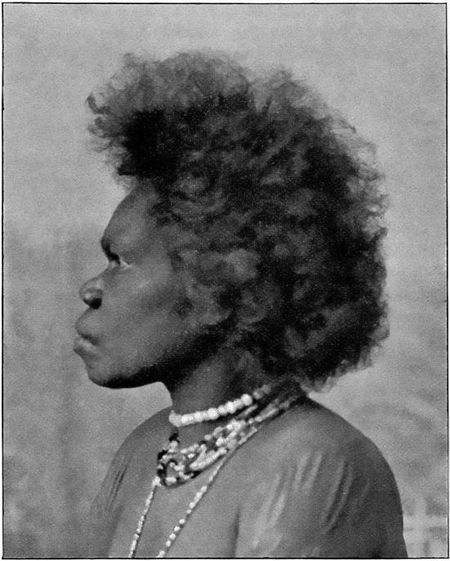
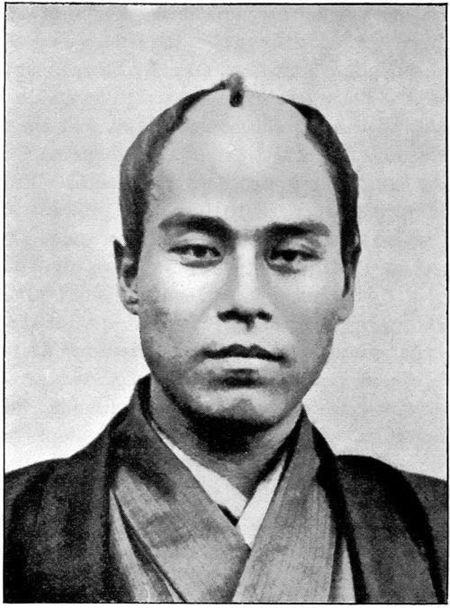
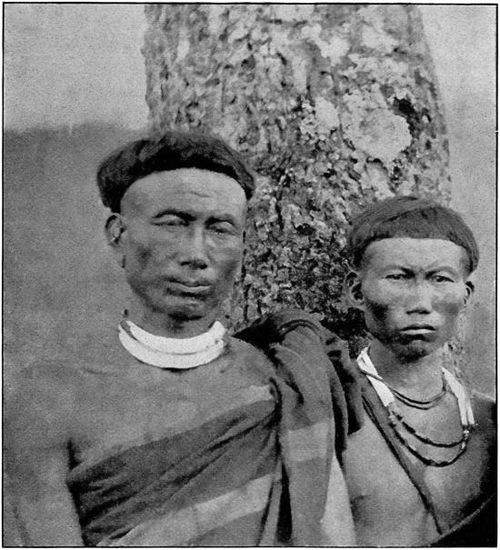
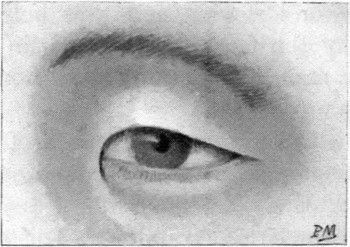
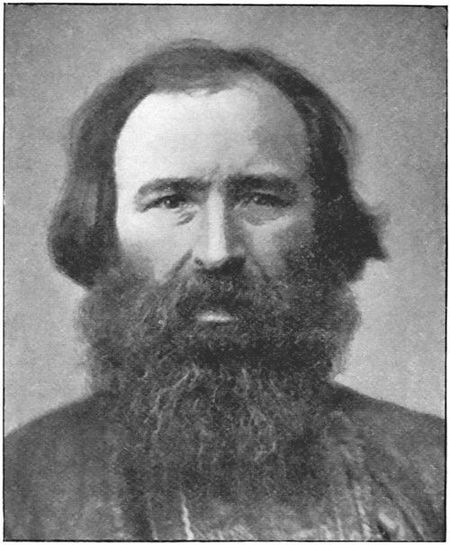
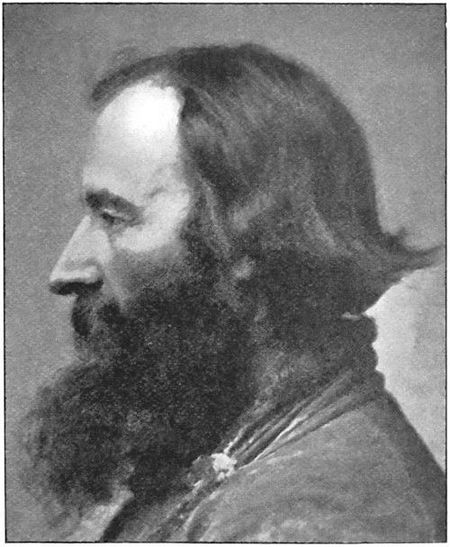
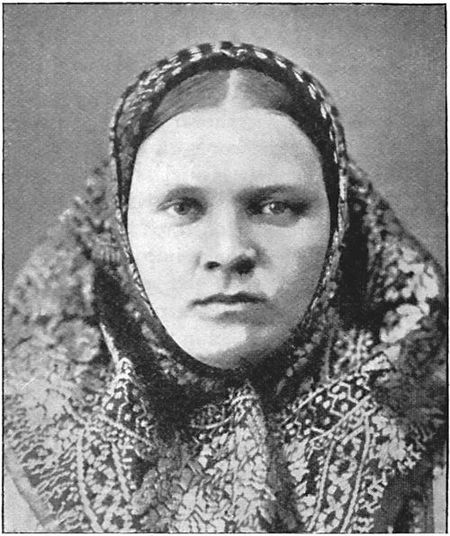
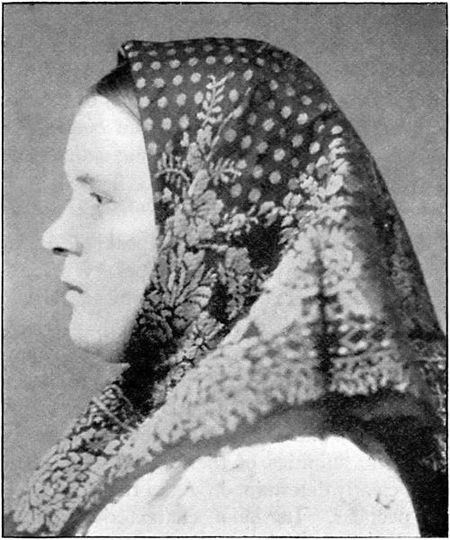
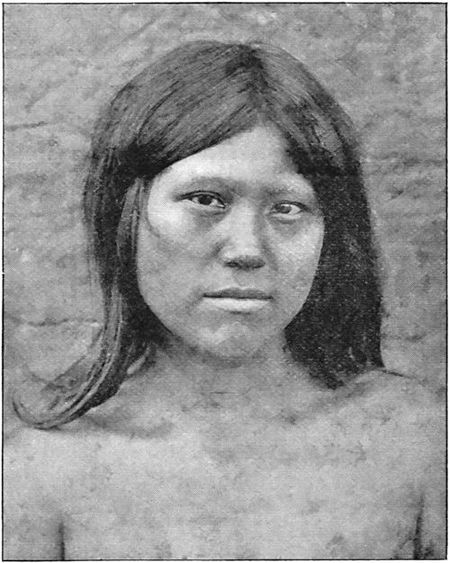
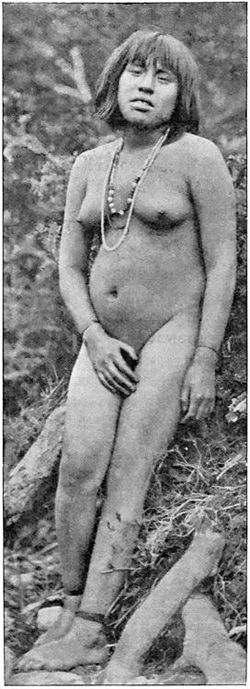
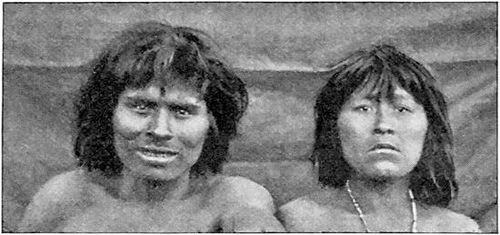
RACES AND PEOPLES OF ASIA.
ANCIENT INHABITANTS OF ASIA.—Prehistoric
times—Pithecanthropus erectus (Dub.)—Ages of stone and
metals.—PRESENT INHABITANTS OF ASIA.—Races of Asia—I.
Peoples of Northern Asia—Yeniseian, Palæasiatic and Tunguse
groups.—II. Peoples of Central Asia—Turkish, Mongolian, and
Thibetan groups—Peoples of the south-west of Thibet and of
South China (Lolo, Miao-tsé, Lu-tsé, etc.).—III. Peoples of
Eastern Asia—Chinese, Coreans, and Japanese.—IV. Peoples of
Indo-China—Aborigines, Mois, Kuis, Siam, Naga, etc.—More recent
mixed populations: Annamese, Cambodians, Thai, etc.—V. Peoples
of India—Castes—Dravidians and Kolarians—Indo-Aryans and
unclassified populations—VI. Peoples of Anterior Asia—Iranians
and Semites.
Prehistoric Times.—It is a common practice to call Asia, or at
least certain regions of Asia, “the cradle of mankind,” the “officina
gentium.” The migrations and invasions of the Asiatic peoples into
Europe, which took place from the most remote times, gave birth,
naturally enough, to this idea among the western peoples (p. 317 et
seq.). However, no serious data authorise us to say that the first
man was born rather in Asia than Europe. Nowhere do we find there any
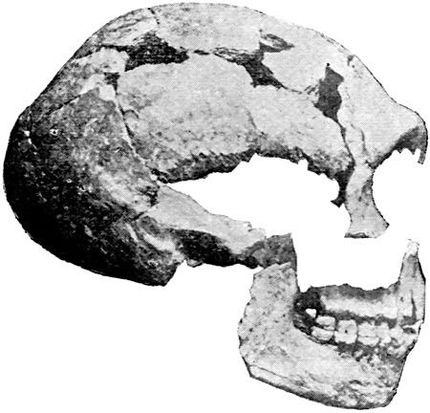
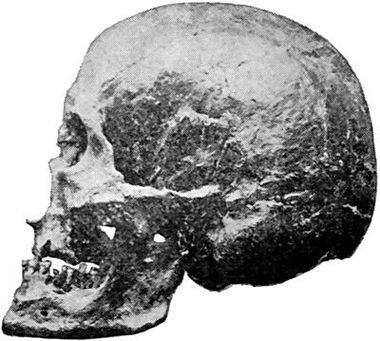
traces of tertiary man.[393] Eugène Dubois discovered, it is true,
quite close to the
Asiatic continent in the very uppermost tertiary beds (upper pliocene)
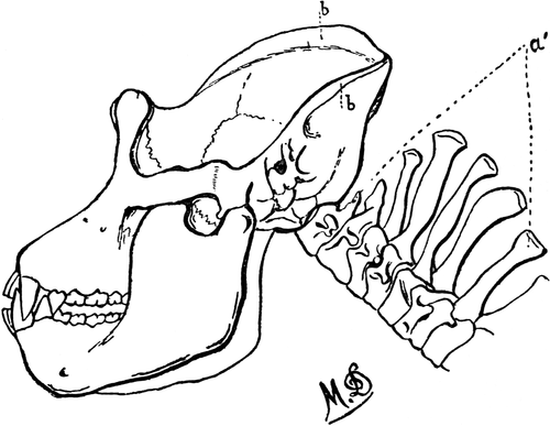
of the Island of Java, the bones of a being which he considers as
intermediate between man and the anthropoid apes, and which he has
called Pithecanthropus erectus (Figs. 112 and 113). But Java
belongs to-day as much to the Oceanian world as to Asia, and the
Pithecanthropus is not altogether a man, either according to his
discoverer or many other authorities. Some regard this being simply as
a gigantic gibbon, while others (myself among the number) hold that he
is a being more closely related to man than to the anthropoid apes,
or even a man of a race inferior to all existing ones. If this last
hypothesis be correct we must admit the existence of tertiary man in
Asia, since it is highly probable that even at the end of the tertiary
period the islands of Sumatra and Java were connected with the great
continent by the Malay peninsula.[394]
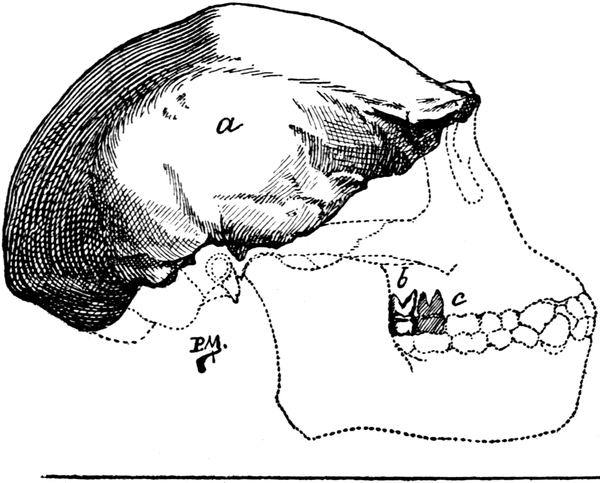
FIG. 112.—Skull of the Pithecanthropus erectus, Dub. The calvaria
(a) and the teeth (b, c) are designed by P. Moutet after the casts
and photographs of E. Dubois. The reconstruction of the rest
is made after Dubois and Manouvrier.
As to quaternary man, if no bones have yet been found, tools absolutely
similar to those of Europe have been noted almost everywhere in Asia;
in Siberia, around Lake Baikal (Tchersky and Poliakof), and near to
Tomsk in the loess, beside a dismembered and calcined skeleton of a
mammoth, the remains of a pantagruelic repast of quaternary Siberians
(Kuznétzof); in Japan, in the ancient province of Jenchiou, now Osaka,
the Ivate and Miaghi province, northern Nippon (S. Fuse), western
Nippon (Vidal) in the country of Rikuzen, now in the province of
Etzigo or Teshigo (Inuzuka); then in anterior Asia, in the grottos
at the mouth of the Nahr-el-Kelb, near Beirut (Lortet); at Hannauch
to the east of Tyre (Lortet and Pelagaud), in Galilee (Cazalis of
Fondouce and Moretain), in Phœnicia (Zumoffen), etc.[395] In India,
attention has been drawn to several palæolithic stations in the midst
of the ancient alluvia of the rivers Nerbadda, Krishna, and Godaveri
(Wynn); in certain places there quartzite implements were associated
with the bones of extinct animals (Equus nomadicus, Hippopotamus
palæindicus) or animals which have since emigrated into other regions
(Bos palæindicus, etc.). Single tools have been found in the beds of
laterite near Madras, in Scinde, at Banda, in the central provinces
(Rivett-Carnac), in the south-east of Bengal.[396]
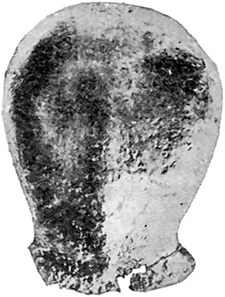
FIG. 113.—Calvaria of
Pithecanthropus, seen
from above.
(Phot. Dubois.)
Monuments and objects of the polished stone and bronze periods,
often confounded in Asia, have been found almost everywhere. They
are connected with peoples who presented at that remote date great
differences in their civilisation and probably in their physical type.
The excavations of Schliemann at Hissarlik (Asia Minor) have brought
to light a civilisation which appears to correspond with the end of
the stone age and the beginning of the bronze epoch (2,500 years
B.C.?). Prehistoric objects in polished stone and bronze have
been found at other points of Asia Minor (A. Martin), in Lycaonia
(Spiegelthal), in the Sinai peninsula (Bauermann and Richard), on the
shores of Lake Issik-koul (Russian Turkestan). Southern Siberia, the
Kirghiz steppes, north and north-western Mongolia are covered with
stone circles (Kereksur), barrows, tumuli, menhirs (Kishachilo)
of every form, with burial-places in which are found objects in wood,
bone, bronze, copper, iron (Radloff, Potanin, Klementz). The skulls
which have been taken from some of these burial-places, in the upper
valley of the Yenisei, are dolichocephalic; the plaster mortuary
masks found in the same region by Adrianof present a type somewhat
European.[397]
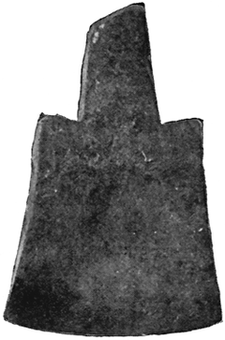
FIG. 114.—Polished stone axe
found in Cambodia. Prehistoric
type peculiar to Indo-China.
It must not be forgotten that many of these monuments date from the
historic epoch and belong, as proved by the runiform inscriptions of
Mongolia discovered by Yadrintsef and deciphered by Thomson, to the
seventh and eighth centuries of the Christian era.[398]
The kitchen-middens of Omori, near Tokio, and of several other
localities in Japan examined by Morse, Milne, and Tsuboi, afford
evidence of the existence in this country of a fairly civilised race
which was acquainted with pottery, but employed only bone and partly
polished stone implements. The excavations of ancient underground
dwellings in the islands of Yezo (Morse, Tsuboi) and Saghalien
(Poliakoff) lead us to believe that this race extended much farther to
the north. It is possible that it was related to the men whose polished
flint implements have been found in Siberia in the valley of the
Tunka, in that of the Patcha, one of the tributaries of the river Amur
(Uvarof), and in the shell-heaps of the Pacific coast near Vladivostok
(Margaritof).[399] Polished stone hatchets have been found in the
north-east of China in the vicinity of tumuli resembling the American
“mounds” (Williamson); others have been picked up in the Yunnan
(Sladen), and in Burma (Theobald); Moura, Jammes, and Morel exhumed
in Cambodia, between Lake Tonlé-Sap and the Mekong, side by side with
objects of bronze, several polished stone implements of a peculiar type
(Fig. 114), a kind of square-tongued axe (shouldered celt), which has
since been found again in several other places in Indo-China as far as
the upper Laos (Lefèvre-Pontalis) and Burma.[400] In the district of
Somron-Sen (Cambodia), previously explored by Jammes, as well as in the
neighbourhood of Saigon, Corre discovered similar implements close to
shell-heaps containing, besides pottery and stone tools, human bones,
but no skulls.
Lastly, in India, the “cromlechs,” “mounds,” and finds of stone objects
similar to those which are found in Europe, may be counted in hundreds.
It is certain that the stone “circles” of the central provinces and the
“Kouroumbarings” of Southern India date from a period anterior to the
Aryan immigration. As in Europe, so in Asia the age of metals borders
very closely on the historic period of which the Chinese annals have
preserved for us a record. The monuments of Chaldea, Assyria, Asia
Minor, India, and Cambodia, also reveal ethnographical facts of great
interest (see, for instance, note 2, p. 419).
It is impossible in
the present state of our knowledge to draw up a complete table of
the migrations which have taken place on the Asiatic continent in
historic times. I shall mention those in connection with some peoples
whose history is partially known (Chinese, Turks, Mongols, Thai).
So also, in the present state of anthropological knowledge, we can
only discern in the midst of the numerous Asiatic populations, in a
quite general way, the elements furnished by the following eleven
races:—Five races peculiar to Asia (Dravidian, Assyroid,
Indo-Afghan, Ainu, Mongolian), and six races which are also met
with in other parts of the world: Negrito, Indonesian, Arab,
Ugrian, Turkish, and Eskimo (leaving out of account the Assyroid
and Indo-Afghan races, which are found again among the Jews and
the European Gypsies). I have already given (p. 285 et seq.) the
principal characters of these races; it only remains to say a few words
as to their geographical distribution in Asia.
The Eskimo race is quartered in the north-east of the continent;
that of the Ainus in Saghalien, Yezo, and perhaps in northern Japan;
while the Ugrian race is represented by its Yeniseian variant.
The Mongolian race (with its two secondary races, northern and
southern) is found almost all over Asia. The Turkish race is
limited more particularly to the inland regions of Central Asia. The
Indonesians are numerous in Indo-China, and in the islands from Japan
to the Asiatic Archipelago, while the Dravidians and Indo-Afghans
abound in India. The latter are also met with in anterior Asia, side
by side with the Assyroids and Arabs. Some representatives of the
Negrito race inhabit the Malay peninsula and the Andaman Islands;
the elements of this race are also found among the inhabitants of
Indo-China and perhaps India.
As to existing populations of the Asiatic continent, I shall rapidly
pass them in review, grouping them, according to geographical region,
under six heads: peoples of Northern Asia; of Central Asia; of Eastern
Asia; of Indo-China; of India; and lastly, of Anterior or Western Asia.
I. NORTHERN ASIA, consisting almost exclusively of Siberia,
a cold country covered with dense virgin forests (taïga) or marshy,
frozen plains (tundra), harbours, in addition to Russian or Chinese
colonists, only a few somewhat wretched tribes, mainly hunters, but
depending partly on fishing and hoe-culture.
We may group them thus:—(1) tribes of Western Siberia, having some
affinities with the Samoyeds and the eastern Finns, which I shall call
Yeniseians or Tubas; (2) peoples of the extreme north-east of the
Asiatic continent, whom Schrenck[401] describes as Palæasiatics; (3)
the Tunguses of Eastern Siberia and Manchuria.
1. Yeniseians or Tubas.—Besides the Samoyeds of Asia, who differ
from their kinsfolk in Europe only by their more Mongoloid features,
the Yeniseians comprise two distinct groups of populations. In the
first place the so-called Ostiaks of the Yenisei, on the right
bank of this river (between Yeniseisk and Touroukhansk), probable
descendants of the Kien-Kouen and the Ting-ling of the Chinese
annals. It is a tribe in process of extinction, whose language differs
from the Samoyed tongue and the Finnish dialects properly so called
(Castren). Then come the tribes who formerly formed the Tuba nation,
mentioned until the seventh century A.D. by the name of
Tupo by the Chinese annalists; they inhabited the basin of the upper
Yenisei, the Altai region, and north-western Mongolia, and bore the
local names of Matores, Arines, Kottes, Assan, Tuba, etc.
These peoples have disappeared as linguistic units,[402] but their
physical type, some of their characteristic manners, as well as a
few words of their language, are preserved among certain populations
speaking a Turkish dialect. The Russians call these populations
“Tatars”; they might more suitably be called by the name of
Altaians. This ethnic group, whose physical type has been altered by
intermixtures with peoples of Turkish or Mongolian race, comprises the
“Tatars” of Abakan, that is to say, Katchines, Koibals (eight
hundred individuals), Sagai, and Kizils; the “Tatars” of Altai
and those of Chulim, among whom must be noted the “Tatars of the
black forests” (Chernievyié Tatary in Russian), called “Tubas” by
their neighbours. The latter are mesocephalic, of medium height; they
have abandoned little by little the hunting state, and become primitive
cultivators of the soil; they break up the ground with the hoe, which
was used by them until not very long ago to dig up edible roots, and
they cut their corn with hunting-knives.[403] The Soiots or Soyons of
North-western Mongolia, who call themselves Tubas, are probably the
descendants of the ancient Uigurs (Turkish nation) commingled with
aboriginal Yeniseians of this country and partly Mongolised about the
seventeenth century.
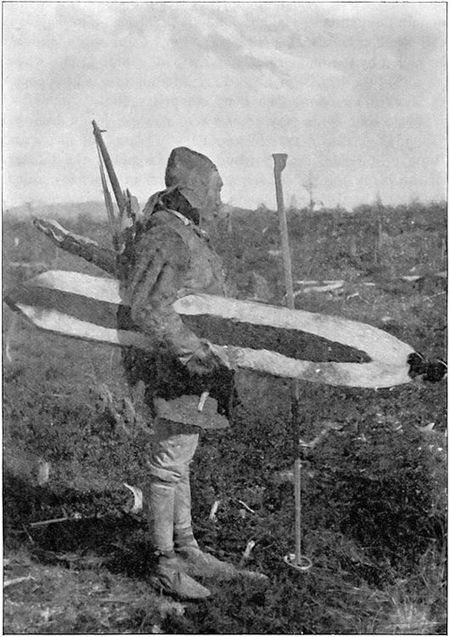
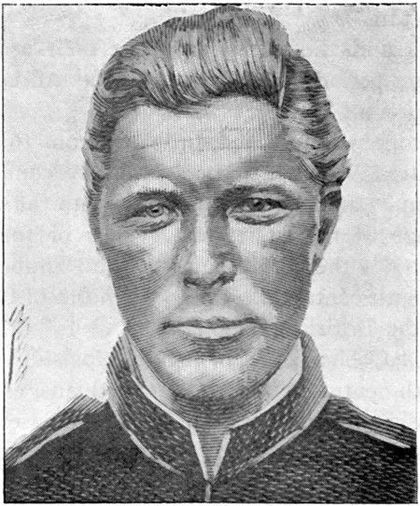
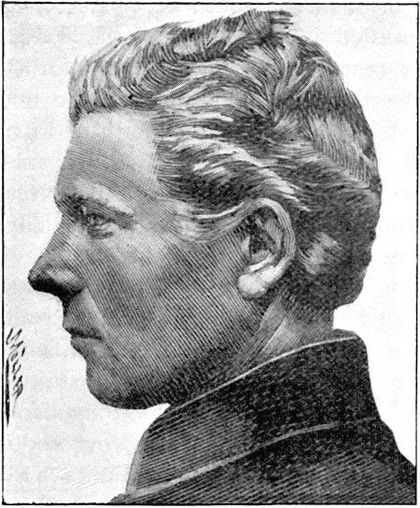
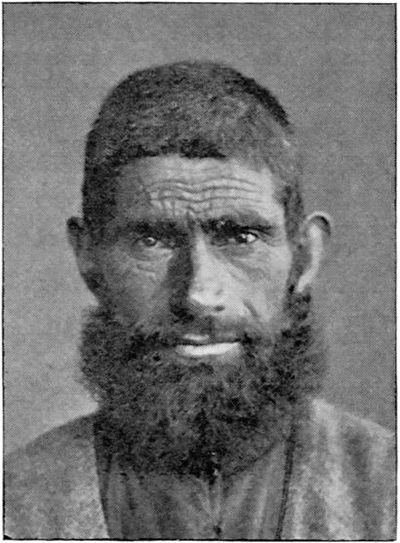
FIG. 115.—Tunguse hunter (Siberia) with ski and staff.
(Phot. Shimkiévich.)
2. The Palæasiatic group should comprise, according to Schrenck, all
the ancient peoples of Asia driven back at the present day towards the
north-eastern extremity of the Continent. The more important of these
peoples are the following:—The Chuchi (or Chukchi), numbering
about 8000, are the most typical representatives of the group; they
inhabit the north-east of Siberia, and the occupation of some is the
breeding of reindeer, and fishing of others; however, the distinction
between the nomadic and fishing Chukchi is both of an economic and
ethnic order.[404] The Koriaks dwell to the south of the Chukchi, as
far as Kamtchatka; they bear a close resemblance to them and speak the
same language. The
Eskimo of Asia, Namuollo, or Yu-Ite formerly
occupied the coast of the Chukchi country, as shown by their ancient
habitations excavated by Wrangel and Nordenskiold. At the present day
they are not found except in isolated camps on the coast and in the
islands of the Behring Sea. They differ but very little from the Eskimo
of Alaska; their ornaments, however, recall rather those of the Aleuts.
The Kamtchadals of the centre and west of Kamtchatka differ from the
peoples just mentioned. They number 4,250 at the present day, and are
becoming Russianised very rapidly. They have completely given up their
language, which has no relation to any linguistic family now known,
and they speak a very corrupt form of Russian. Nominally orthodox
Christians, they are at bottom animists, and the anthropomorphic
element, often under obscene forms, occupies a large place in their
myths and legends. They are fishers and hunters.
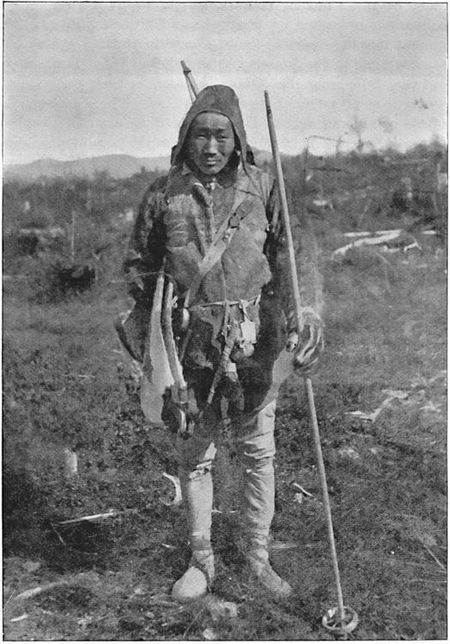
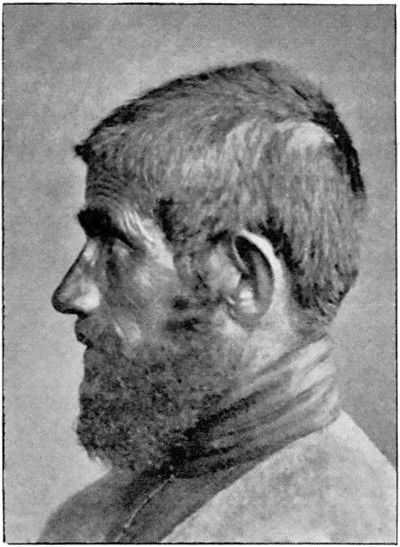
FIG. 116.—Same subject as Fig. 115, full face.
(Phot. Shimkiévich.)
The Yukaghirs are the last remnants of a somewhat powerful people
who formerly occupied all that part of Siberia situated to the east
of the Lena, and who were composed of several tribes: Omoks,
Anauls, Cheliags, etc.[405] It was believed until the last few
years that even the Yukaghirs had disappeared, but quite recently
Iokhelson[406] ascertained that there are at least 700 individuals,
and that their language, which has no affinities with any of the
Uralo-Altaic dialects, is spoken by a certain number of Tunguse-Lamuts
(see p. 373), their neighbours. On the other hand, the Yukaghirs of
Verkhoiansk, have adopted the Lamut dialect, and those of the banks
of the Iana the Yakut tongue. By several peculiar manners and customs
(classificatory system of relationship, pictography, etc.) they
approach very closely certain North American Indians. Physically they
resemble the Tunguse-Lamuts, though more brachycephalic and somewhat
less dark-haired as a rule.
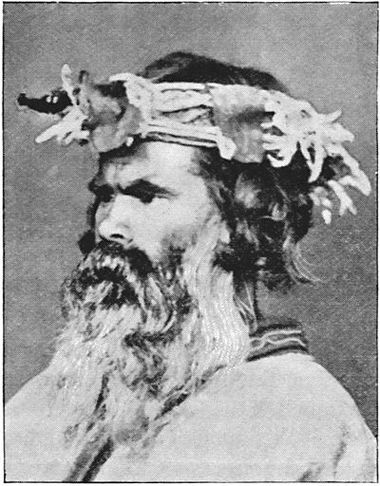
FIG. 117.—Ainu of Yezo (Japan) with crown of shavings.
(Phot. lent by Collignon.)
The Ainus (Figs. 49 and 117), who are classed among the Palæasiatics,
inhabit the north and east parts of the island of Yezo, the south of
Saghalien, and the three most southern islands of the Kuriles. They
form a group by themselves, different from all the other peoples of
Asia. Their elongated heads (ceph. index on the liv. sub. 77.8), their
prominent supraciliary ridges, the development of the pilous system,
the form of the nose, give to them some resemblance to the Russians,
the Todas, and the Australians; but other characters (coloration of
the skin, prominent cheek-bones, short stature, frequent occurrence
of the os japonicum, etc.) distinguish them from these peoples
and afford grounds for classing them as a separate race (see Chap. VIII.).
According to Japanese historians, the Ainus or Asuma Yebissu
occupied the whole of Nippon from the seventh century B.C.
until the second century of the Christian era. In the seventh century
A.D. they still occupied all that portion of this island
situated to the north of the 38th degree of north latitude, and even
in the ninth century the chronicles speak of the incursions of these
“barbarians.” Thus the Ainu element enters very largely into the
composition of one of the types of the Japanese people, not only at
Yezo but in the north of Nippon (province of Aomori), where several
Ainu words still survive in current speech. In the Kurile islands the
Ainus are intermixed with the Kamtchadals and the Aleuts introduced by
the Russo-American Company about the middle of the present century.
It is calculated that there are about 18,500 Ainus (of whom 1,300 are
in the island of Saghalien) at the present time; their number at Yezo
has remained stationary for several years. The dress of the Ainus is a
sort of greatcoat with broad sleeves, fastened with a girdle so that
the right lappel covers the left lappel as among Turkish peoples, and
contrary to the way it is done among the Chinese and Mongols. The chief
occupation of the Ainus is hunting and fishing; they engage but little
in agriculture. Their religion is pure animism; the word Kamui, which
means spirit (like the Kami of the Japanese Shintoists), also serves
to indicate everything incomprehensible, in the same way as the word
“shif,” the literal meaning of which is “animal” (may this be a word
corresponding to totem?).
The Ainus, like most Asiatic peoples, such as the Giliaks, Tunguses,
etc., have a special veneration for the bear; they organise festivals
in its honour, during which a bear is killed, after having received the
homage of many inaou (staffs decorated with shavings).
The Ainu language is agglutinative, and has no analogy with any known
language.[407]
The Giliaks, who inhabit the north of Saghalien, and the mainland to
the north of the mouth of the Amur, suggest by their traits sometimes
the Ainus, sometimes the Tunguses, but they are brachycephalic. They
are a people of fishers, living on the banks of rivers and the sea, in
the winter in huts half buried in the ground, in the summer in little
houses on piles. The Giliaks are readily disposed to trade, and are
distinguished by their taste for ornaments. Their number hardly exceeds
5000 individuals.[408]
The Tunguses, while speaking a particular language, exhibit the
Mongol type, softened by intermixtures with the primitive inhabitants
(Palæasiatics?) of their territory, which extends from the Arctic
Ocean to the 40th degree of north latitude, and from the Yenisei to
the Pacific Ocean. Their number can hardly exceed 50,000 individuals
over this immense stretch of country. They are divided into southern
and northern Tunguses and maritime Tunguses or Lamuts. The river
Amur forms the approximate boundary between the first two sections of
Tunguses. The Lamuts occupy the shores of the sea of Okhotsk, the
north-west of Kamtchatka, and extend more to the west to the river
Iana. The Northern Tunguses are split up into several tribes, of
which the following are the principal, going from east to west:—The
Olchas or Mangoon, at the mouth of the Amur; their congeners the
Oroks, in the north of the island of Saghalien; the Orochons, of a
very pure Tunguse type; the Manegres (Fig. 43), and the “Olennyié”
Tunguses, or the Tunguses with reindeer (Figs. 115 and 116).
As to the southern Tunguses, they comprise the Goldes of the
lower Amur and Ussuri, of a very pure type, and having a fairly well
developed ornamental art; the Oroches of the coast; and lastly the
Solon-Daurs, very much intermixed with the Mongols, of which colonies
exist in the Kuldja.
The Manchus, reduced to a small number, belong by their dialect as
well as by their physical type to the Tunguse group. They are being
absorbed more and more by the Chinese, and hardly form a tenth part of
the population of the country which bears their name (Pozdniéef). It is
probable that the Niu-chi or Yu-chi of Shan-alin and Sien-pi on the
northern border of Corea, mentioned in the Chinese annals, were Tunguse
tribes.
The type which predominates among the Tunguses represents the secondary
race called North Mongolian and characterised by mesocephaly or a
slight sub-dolichocephaly, and by a rather elongated face. The stature
varies; the Orochons are of average stature and the Manchus very tall,
etc.[409]
II. PEOPLES OF CENTRAL ASIA.—The immense central Asiatic
region, whose waters have no outlet towards the sea, is formed
principally of denuded table-lands (Thibet) or of plains, sometimes
grassy, sometimes desert (Mongolia, Turkestan). It is inhabited for the
most part by populations which may be grouped from the linguistic point
of view under three heads, Turks, Mongols, Thibetans.[410]
The peoples speaking the different Turkish dialects who are called
Turco-Tatars or Turanians are scattered over an immense area
comprising half of Asia and a large portion of Eastern Europe, from
the Arctic Ocean (Yakuts) to Kuen-lun (Polus) and Ispahan (Turkomans
of Persia), from the banks of the Kolima and the Hoang-ho (Yegurs)
to Central Russia (Tatars of Kasimov) and Macedonia (Osmanli Turks).
All these peoples may be gathered together into three great groups:
eastern, central, and western.[411]
The eastern group comprises the Yakuts, who have preserved in its
purity the ancient Turco-Uigurian language, but who in type, manners,
and customs show the influence of contiguity with the Palæasiatics;
then the various tribes of non-Yeniseian “Tatars” (see p. 366) of
Siberia, like the Altaians (called Kalmuks of Altai, although they
have nothing in common with the true Kalmuks), nomads who have recently
adopted settled habits, like the Teleuts (or Kara-Kalmuks),
likewise nomads, or the Tatars of Siberia, divided, according to
their habitat, into Tatars of the Baraba steppes, Tatars of Irtish,
of Tobol, etc.[412]
To this group must be added the Taranchi and other “Turks” of East
Turkestan, as well as the Polus of the northern slope of the Kuen-lun,
more or less mingled with Indo-Afghan elements; the Yegurs of the
province of Kan-su in China, etc.[413]
The central group comprises, in the first place, the Kirghiz-Kazak
of the plains between the Irtish and the Caspian, with the
Kara-Kirghiz of the Tian-chan mountains, typical nomads who under
a Mussulman veneer have preserved many ancient Turkish animist
customs;[414] then the Uzbegs and Sartes, villagers or citizens,
more or less mingled with Iranian elements, of Russian Turkestan; and
finally the Tatars of the Volga, or of European Russia. Among
these last, the so-called Kazan Tatars, descendants of the Kipchaks,
must be specially mentioned. Arriving on the banks of the Volga in the
thirteenth century, they intermingled there with the Bulgarians. They
differ from the Astrakhan Tatars (Figs. 107 and 108), descendants of
the Turco-Mongols of the Gold horde, mixed with the Khazars, as well
as from the Nogai of the Crimea,[415] representatives of whom we find
also in the Caucasus, near Astrakhan, and in Lithuania, where, while
remaining Mussulmans, they have adopted the language and the garb of
Poles. With this group we must connect the Bashkir-Mesthcheriaks, a
tribe intermixed with Turkish, Mongol, and Ugrian elements; and their
congeners the Shuvashes, as well as the Kumyks, the Karachai, the
Kabards, or Tatars of the Caucasus mountains, distinct from the
true Kabards.
The western group is composed of Turkomans of Persia (Khojars,
Afshars) and Russian (Turkmen) or Afghan Turkestan (Jemshids,
etc.), of Aderbaijani, Turkish-speaking Iranians of the Caucasus and
Persia, and lastly the Osmanli Turks. Included under this name are
subjects of the Sultan speaking the Turkish language and professing
Islamism. We must distinguish among them the settled Osmanli, much
intermixed, and the nomadic tribes (Turkomans, Yuruks, etc.), who
exhibit several characteristics of the Turkish race.
The Turkish race, so far as can be gathered from recent
anthropological works, is preserved in a comparatively pure state among
the Turks of the central group, but in the eastern group it has been
profoundly modified in consequence of intermixtures with the Mongolian,
Tunguse, and Ugrian races; as also in the western group, in which
we have to take into account elements of the Assyroid, Indo-Afghan,
and Arab races, and certain European races (Adriatic chiefly). The
Turkish race may be thus described: Stature, above the average (1 m.
67–1 m. 68); head, hyper-brachycephalic (ceph. ind. on the liv.
sub., 85 to 87), elongated oval face, non-Mongoloid eyes, but often
with the external fold of eyelid (p. 78); the pilous system moderately
developed; broad cheek-bones, thick lips; straight, somewhat prominent
nose; tendency to obesity.[416]
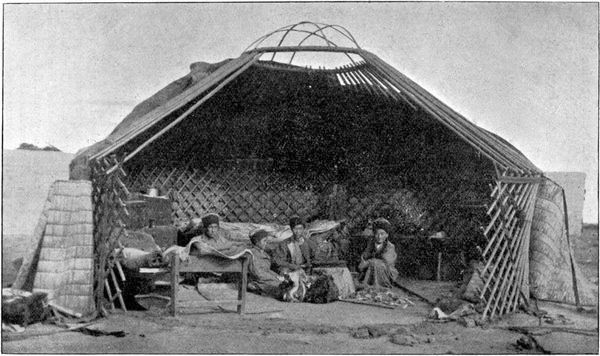
The Turks are essentially nomadic, and when they change their mode of
life it is rather towards the chase, commerce, or trade that their
efforts are directed; the true cultivators of the soil (Taranchi,
Sartes, Osmanli, Volga Tatars) are Turks already powerfully affected
by intermixtures. The Turkish tent is the most highly finished of
transportable habitations (p. 164–166). Meat and milk products form
the staple foods, as they do among all nomads. With the exception
of the Christian Chuvashes and the Shaman Yakuts, all the Turks
are Mussulmans; but often they are only nominally such, at bottom
remaining Shamans. The veneer of Islamism becomes thinner and thinner
among the Turkish peoples as we go from west to east. The Osmanlis, the
most fanatical of all the Turks, are the most mixed as regards type,
language, manners, and customs. It is perhaps to this mixed origin that
they owe the relative stability of the state which they have founded,
for no nomadic Turkish tribe has been able to create a political
organism of long duration, and the vast empires of the Hiungnu, the
Uigurs, the Kipchaks, have had only an ephemeral existence.
2. The Mongols[417] form an ethnic group more homogeneous as regards
manners and customs and physical type than the Turks. Their name is
chiefly known on account of the great empire founded by Genghis Khan,
but it must be observed that the nomadic hordes united into a single
body, and led to victory by this conqueror, were only very partially
composed of Mongols, other nomadic peoples, and especially Turks,
formed more than half of them. Hence the practice among Europeans,
as among the Chinese,—a practice which is kept up to the present
time,—of giving the name of one of the Turkish tribes, Ta-ta or Tatar,
transformed into Tartar, to the Mongols, and extending it to many of
the Mongoloid peoples, like the Tunguses for example.
Three principal divisions are recognised in this group: Western Mongols
or Kalmuks, the Eastern Mongols, and the Buriats.[418] The Western
Mongols, who style themselves Eleuts, and whom the neighbouring
peoples call Kalmuks, are scattered, owing to wars and migrations,
over the immense tract lying between Siberia and Lassa, from the banks
of the Hoang-ho to those of the Manich (a tributary of the Don). The
more compact groups are found in European Russia (Kalmuks of Astrakhan,
Figs. 20 and 44, and the Caucasus); in Dzungaria (the Torgoots)
and north-western Mongolia, between Altai and Thian-Shan; lastly, in
Alashan and farther to the west in the Chinese province of Kuku-Nor and
northern Thibet. They number about a million.
The Eastern Mongols occupy almost the whole of the region known by
the name of Mongolia properly so called. In the south of this country
they are broken up into a multitude of tribes (Tumets, Shakars or
Tsakhar, etc.); while in the north they form a single nation, that of
the Khalkhas, which has still preserved, in spite of its submission
to China, some traces of its ancient political organisation. The
Khalkhas number about 200,000, and the southern Mongols 500,000.
The Buriats form a population sprung from the Khalkhas, intermixed at
several points with various Siberian elements, Tunguse, Yakut, Russian;
they occupy the steppes and forests of the province of Irkutsk, but
their central seat is Transbaikal, whence they spread out even into
Mongolia, into the valleys of the Orkhon and the Argun. They number
about 250,000.
The type of the Mongolian race is very strongly marked among most of
the Kalmuks and Khalkhas; it is less distinct among the Buriats, etc.
It may thus be described: Nearly average stature (1 m. 63–64); head,
sub-brachycephalic (ceph. ind. on the liv. sub. 83); black straight
hair, pilous system little developed; the skin of a pale-yellow or
brownish hue, prominent cheek-bones, thin straight flattened nose,
Mongoloid eyes (p. 77), etc.
With the exception of some Buriat tribes the Mongols are typical
nomadic shepherds. Their live-stock, camels, sheep, and horses supply
them not only with food, the raw material for the manufacture of tents
and garments, but also means of transport and fuel (camel excrement or
dried dung). Unlike the nomadic Turks, who are fond of fighting, the
Mongols of the present day are gentle and peaceable folk. Can this be
the effect of the influence of Lama-Buddhism, which they all profess
except a few small Buriat tribes, who have remained Shamans? We are
inclined to believe this when we consider the important part which this
religion plays in the daily life of the Mongols.
3. Thibetans.[419]—We may include under this name the non-Mongolian
populations of Thibet and the surrounding countries, known by the
name of Bod, or Thibetans properly so called in southern Thibet,
by the name of Tanguts in the Chinese province of Kuku-Nor, of
Si-fan in western Sechuen, by that of Ladaki and Champa in
eastern Cashmere (province of Leh), of Gurong, Limbu, Mangar and
Murmi in Nepal, of Lepchas or Rongs in Sikkin, of Bhutani in
Bhotan, etc. The Abors, Mishmee, etc., of the Himalayan country who
dominate Assam are also included among the Thibetans, but they approach
the Indonesians in type. It is the same with the Garro and their
neighbours on the east, the Khasia or Djainthia, whose language,
however, differs from the Thibetan.[420]
Most Thibetans are cultivators of the soil or shepherds, pillagers in
case of need, and fervent votaries of numerous Lamaite-Buddhist sects,
of which that of the Geluk-pa (yellow caps) represents the ruling
church. Its chief, the Dalai-Lama, residing at Lassa, is at the same
time the sovereign of Thibet.
From the somatological point of view the Thibetans exhibit certain
sufficiently marked variations. The Bothia are below the average
stature (1 m. 62 or 1 m. 63); the Lepchas are short (1 m. 57); and
the Thibetans of Nepal vary as regards average stature from 1 m. 59
(Mangars) to 1 m. 67 (Murmis). The head is mesocephalic (ceph. ind.
80.7 on the liv. sub.), but sub-dolichocephalic or sub-brachycephalic
forms are frequently met with. As a general rule, side by side with the
Mongoloid type may be seen among the Thibetans, singly or united, the
traits of another type, a somewhat slender figure, thin, prominent,
often aquiline nose, straight eyes with undrooping eyelids, long and
sometimes wavy hair, reminding one, in short, of the Gypsy type.[421]
This type, moreover, is found beyond Thibet. The Lo-lo or Nésus,
as they call themselves, of western Sechuen and the north-east of
Yunnan, with whom we must connect the Kolo or Golyk of the country
of Amdo (east of Thibet), perhaps represent it in its purest form, if
the portrait of them drawn by Thorel is correct. With slight figure,
brownish complexion, they have a straight profile, oval face, high
forehead, straight and arched nose, thick beard even on the sides of
the face and always frizzy or wavy hair.[422] Their language, however,
fixed by a hieroglyphic mode of writing, appears to belong to the
Burmese family.[423] The Lo-lo not under Chinese rule are of a gay
disposition; they love dancing and singing. Woman is held among them in
great respect; there are some tribes even whose chiefs belong to the
weaker sex.
We must connect with the Lo-lo a multitude of other tribes, less
pure in type: the various Miao-tsé, mountaineers of the southern
part of the province of Hunnan, of Kwei-chow, of the northern part
of the Kwang-si, the north-west district of Kwang-tung, more or less
intermixed with the Chinese; the Lissus of the Lu-tse-Kiang (Upper
Salwen) and the Lantsan-Kiang (Upper Mekong), near to the new boundary
of China and British India; the Mosso or Nashis of the district
of Li-Kiang to the east of the Lissus, related to the latter and
having an iconomatic writing; lastly, the Lu-tse or Kew-tse, who
call themselves Melams or Anoogs, to the west of the Lissus and
separated by an inhabited tract from the Mishmee, the Sarong and
other Thibeto-Indonesian tribes. The language of the Lu-tse differs
from that of any of the neighbouring peoples, and their physical type
places them between the Lissus and the Indonesians, such as the Naga
for example; they are short (1 m. 56 according to Roux), but strong and
vigorous; their hair is frizzy.[424] The Mu-tse mentioned by Terrien
de Lacouperie, the Lawa or Does described by Holt Hallet, the
Muzours of T. de Lacouperie or the Musos of Archer, the Kas-Khuis
of Garnier, scattered between the Mekong and the Salwen from the
twentieth to the twenty-fifth degree of north latitude, are probably
akin to the Lo-lo and the Mossos.[425]
III. POPULATIONS OF EASTERN ASIA.—The far east of Asia is
inhabited by three nations of mixed origin: Chinese, Coreans, Japanese.
1. The Chinese form by themselves alone more than the third, if not
the half of the population of Asia. They occupy in a solid mass the
whole of China properly so called, and stretch in isolated groups far
beyond the political limits of the “eighteen provinces.” Manchuria,
Southern Mongolia, Dzungaria, a portion of Eastern Turkestan and Thibet
have been invaded by Chinese colonists; and outside of the Empire it is
estimated there are not less than three millions of “Celestials” who
have emigrated to Indo-China, Malaysia, the two Americas, and even to
the islands of the Pacific Ocean and Africa.
The Chinese people have sprung from manifold intermixtures, and indeed
there are several types to discover in this nation, the anthropological
study of which is scarcely more than outlined; as it is, however,
according to historical data we may presume that five or six various
elements enter into its composition.
We know from the books of Shu-King that the primitive country of the
Chinese was the north of the present province of Kan-su. Thence the
agricultural colonists moved (about the year 2200 B.C.,
according to a doubtful chronology) into the fertile valley of the
Houng-ho and its tributary the Wei or Hwei. Little by little, the
Chinese colonists spread along other valleys, but it took them
centuries to conquer the aboriginal tribes (the Djoong, the Man,
the Pa, the Miao-tse). Again in the seventh century B.C.
(when exact chronology commences) the territory occupied by the Chinese
scarcely extended beyond the valley of the lower Yang-tsi on the
south and that of the Pei-ho on the north, and comprised within these
limits several aboriginal tribes like the Hoai, of the valley of
the same name, or the Lai of the Shantung peninsula, who maintained
their independence. However that may be, the Chinese succeeded, little
by little, in driving back the first occupiers of the soil into the
mountains of the west and south, where they are still found under the
names of Man-tse, Miao-tse, I-gen, Mans, Thos, etc.[426]
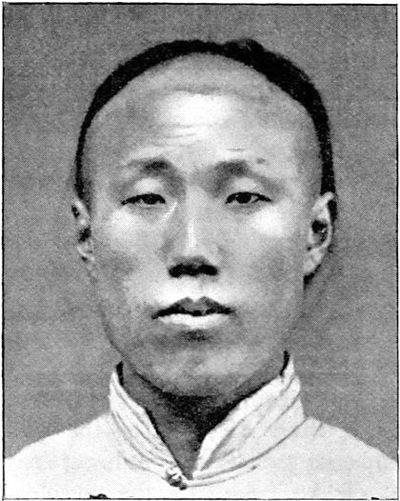
FIG. 118.—Educated Chinaman of Manchu origin,
interpreter to Embassy, twenty-one years old, height 1 m. 75.
(Coll. Mus. Nat. Hist. Paris.)
While this work of driving back was carried on in the south, the
Turkish tribes, the Tunguses, the Mongols, the Manchus, invaded in
turn the north of the country. Thence resulted a marked difference
between the northern and the southern Chinese, while the Chinese of
the central parts have perhaps best preserved the original type (Fig.
119). The Chinese of the south belong very largely to the southern
Mongolian race (p. 293); they are short, sub-brachycephalic, except in
Kwang-si, where mesocephaly predominates, in consequence, probably,
of intermixtures with the aborigines of Indonesian race (H. Girard);
while the Chinese of the north are on the contrary almost tall of
stature; the head is sub-brachycephalic with a tendency towards
mesocephaly in the north, towards brachycephaly in the south (Fig.
118). The skin is lighter among the former than among the latter, the
face more elongated, etc. One of the peculiarities of the Chinese skull
is the retreating forehead, and the contraction at the level of the
temples.[427]
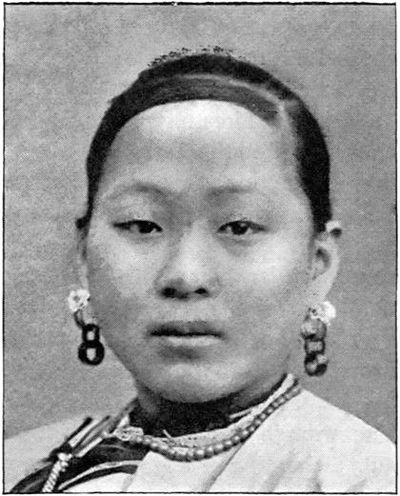
FIG. 119.—Leao-yu-chow, Chinese woman,
born at Foo-chow, eighteen years old, height 1 m. 52.
(Coll. Mus. Nat. Hist. Paris.)
The multiplicity of dialects is equally great. The Chinese of the
various provinces would have long since ceased to understand one
another had they not possessed as a medium of communication the
common signs of the written language (p. 141), which the mandarins
read in their own dialects and languages not only in China but also
in Corea, in Japan, and Indo-China. We distinguish the Mandarin, or
northern, dialect (with which we connect the Hakka speech employed
in Kwang-tung) and that of the south, then the dialects of Fu-Kian,
of Che-Kiang, etc. The peculiarities of the Chinese character—filial
love, attachment to the soil, aptitude for agriculture and commerce,
peaceful disposition, love of routine, respect for letters, observance
of form, etc.—are sufficiently known.[428] Most of them are the
corollaries of ancestor-worship, of the very rigorous patriarchal
régime and the constitution of the commune (p. 248), the basis of the
whole social fabric of the Chinese Empire, which, let it be said by
the way, exhibits less organic cohesion than is generally supposed.
The frequent co-existence of belief in three religions, Taoism,
Confucianism, and Buddhism or Foism, in one and the same individual
is one of the remarkable facts of Chinese sociology. Another fact,
not less interesting, is the administrative and political mechanism
inspired theoretically by very wise and moral ideas, but leading in
practice to peculation and carelessness on the part of public officials
of which we find it difficult to form any idea in Europe.
2. The Coreans, who by their civilisation are connected with China,
have in all probability sprung from the intermixture of Tunguse,
Indonesian, and Japanese elements. The men are of tall stature,[429]
strong, with sub-brachycephalic head (ceph. ind. on the liv. sub.
82.3, according to Elissiéef, Koganei, and Bogdanof). The women are
more puny, and are not conspicuous for beauty; they have a yellowish
complexion, small eyes, prominent brow, and very small feet, but not
deformed like those of the Chinese (p. 175). The Corean values only
one physical charm in woman, and that is her abundant head of hair and
eyebrows, “fine as a thread” (Mme. Koïke). Besides, woman is of no
account in Corean society; she is an instrument of pleasure or work;
she is kept strictly apart from men, rarely leaves the house, and must
veil her face.
The Corean language belongs to the Uralo-Altaic family, and is closely
related to the Southern Tunguse dialects. Its mode of writing, called
wen-mun, differs from the Chinese, and appears either to have been
invented or derived from the Sanscrit by the Buddhist monks (M.
Courant).
The Coreans have no state religion. Buddhism, introduced towards the
close of the fourth century, has not taken root among them, and is
more and more in danger of extinction. Most Coreans live in a sort of
irreligion tempered with some animistic practices: sacrifices to the
spirits of the forests and mountains, etc. The Corean civilisation
was borrowed entire from China of the fifth or sixth century. The
associative tendency, and regard for form and ceremony, are perhaps
stronger in Corea than in China. Further, enslavement for debt, crime,
etc., exists as a regular thing in the country.[430]
3. The Japanese exhibit, like so many other peoples, a certain
diversity in their physical type; the variations fluctuate between two
principal forms. The fine type (Figs. 16 and 120), which may chiefly
be observed in the upper classes of society, is characterised by a
tall, slim figure; a relative dolichocephaly, elongated face, straight
eyes in the men, more or less oblique and Mongoloid in the women, thin,
convex or straight nose, etc. The coarse type, common to the mass of
the people, is marked by the following characters: a thick-set body,
rounded skull, broad face with prominent cheek-bones, slightly oblique
eyes, flattish nose, wide mouth (Bälz).[431] These
two types may have
been the result of crossings between Mongol sub-races (northern and
southern) and Indonesian or even Polynesian elements. The influence of
the Ainu blood is shown only in Northern Nippon.[432]
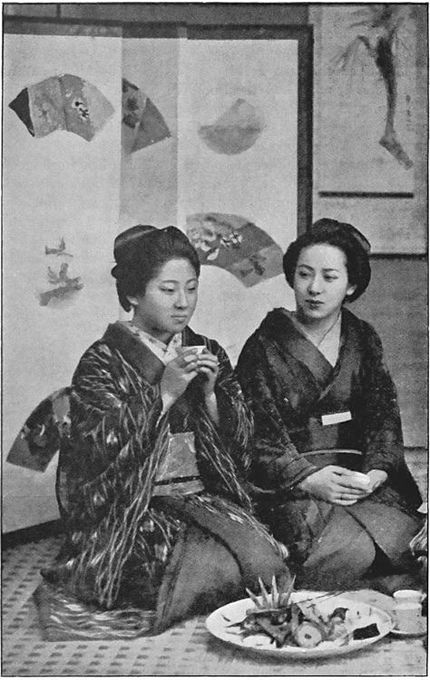
FIG. 120.—Young Japanese women taking tea; fine type.
(Phot. lent by Collignon.)
In a general way the Japanese are of short stature (1 m. 59 for men,
1 m. 47 for women), rather robust and well proportioned. The colour of
the skin varies from pale yellow, almost white, to brownish yellow.
The Japanese have no colour in their cheeks, even when their skin is
almost white; at birth there is an accumulation of pigments on the
median line of the belly and pigmental spots (see p. 51). The pilous
system is scantily developed, except in cases where an admixture of
Ainu blood may be suspected. The head is mesaticephalic as a rule
(ceph. ind. on the liv. sub. 78.2), with a tendency to brachycephaly in
the gross type, to dolichocephaly in the fine type. The skull, which
is capacious, exhibits two peculiarities: the os japonicum (p. 68)
and the particular conformation of the upper jaw, which is very low and
broad, without the canine fossa. With regard to Japanese writing, see
p. 141.
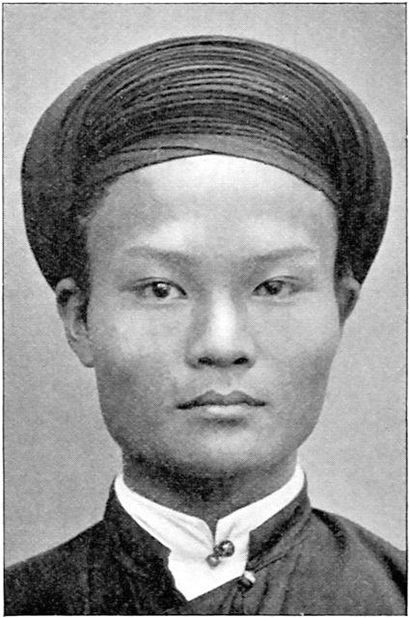
FIG. 121.—Tong King artisan of Son-tai,
twenty-three years old.
(Phot. Pr. Rd. Bonaparte.)
The most striking traits of the Japanese character are politeness
and aptness in concealing the emotions; it must not be inferred from
this that their nature is bad; on the contrary, they are honest,
hard-working, cheerful, kind, and courageous (Mohnike, Mechnikof).[433]
European civilisation and the reforms introduced into Japan since 1868
have appreciably modified the manners and customs, but the essential
traits of the national character remain unaltered, as they were
previously unmodified by the introduction of the Chinese civilisation.
The ancient chivalrous spirit of the aristocracy, holding trade in
contempt, still survives at the present day, and partly explains the
ardour with which persons of this class have flung themselves into
political life, since Japan obtained a parliamentary administration
(1889). The Japanese have two religions, Shintoism, or the national
worship of the Kami (native divinities), and Buddhism; but they are
fundamentally very sceptical on the subject of religion.[434]
The islanders of the Liu-Kiu or Loo-choo archipelago resemble
the Japanese (Chamberlain), but they have a thicker beard and a darker
complexion (Bälz); they are of short stature (1 m. 58, according to Dr.
Furukawa), and Wirth has even noted among them a tribe of pigmies 1 m.
30 in height in the island of Okinava.
As to the natives of Formosa, the Chinese, who have colonised half of
the island, divide them into Pepo-hoan (“mellowed” or tamed savages)
and Sek-kuan or Che-hoan (raw or uncivilised savages). The former
are met with almost everywhere, but chiefly in the north and west of
the island, the latter have been driven back into the mountains of the
interior and to the south coast. The Che-hoan are split up into several
tribes (Atayal, Vonum in the north, Pai-wan, Sarisen, Butan
in the south, Amia on the east coast, etc.), and remind us of the
Indonesians by their type as well as by several customs (skull-hunting,
tattooing, ear-ornaments, house in common or “Palankan”). Some of these
“savages” are acquainted with agriculture, others live by the product
of the chase. The languages of all these Formosans belong to the Malay
family, especially approximating to the Tagal.[435]
IV. POPULATIONS OF INDO-CHINA.—We must distinguish in the
transgangetic peninsula the probable Aborigines and the peoples
sprung from the interminglings of these aborigines with the invaders
coming from the adjoining countries, and whose migrations are at least
partly known to history. These mixed populations are the Annamese,
the Thais, the Khmers or Cambodians, the Burmese, and the
Malays.
(1) The Aborigines.—The numerous populations scattered almost all
over Indo-China having a right to this name may be mustered into eight
groups, of which I proceed to give a short account.
a. The Mois.—We designate by this name the numerous so-called
“savage tribes” dispersed over the table-lands and mountains between
the Mekong and the Annamese coast, from the frontiers of Yun-nan
to Cochin-China (district of Baria). In spite of the various names
given to the Mois by the adjoining nations (they are called Mois in
Annam, Peu-nongs in Cambodia, Khas in Laos, etc.), and of the
multitude of tribes into which they are divided (the Mo, the Sas,
the Bruns, the Bolovens, the Lové, the Bannars, the Rdé, the
Laté, the Thioma, the Trao, etc.), the Mois exhibit a remarkable
uniformity in physical type and manners (Neïs). They are as a rule
short (1 m. 57), and dolichocephalic (ceph. ind. on the liv. sub. 77);
their skin is tan-like white in colour, reddish; their hair is more
or less wavy, they have straight eyes, etc. In short, they differ as
much from the Annamese as the Thai, and in all probability belong for
the most part to the Indonesian race. Hunters or primitive husbandmen
(the crop is gathered by picking with the hand the rice from the stalk;
the cooking of the rice is effected in bamboos, which roast on the
fire, etc.), they go almost naked and use only primitive arms, spears,
poisoned arrows, etc. They are of fairly peaceful habits.[436]
b. The Kuis.—This name distinguishes two ethnic groups of
Indo-China: one in the south-east of Siam and the north-west of
Cambodia, the other in the country of Kieng-Tung or Xieng-Tong (Shan
States, under British protection). The former appear to be aborigines
like the Mois; the latter are simply a branch of the Lo-lo or
Mosso (see p. 381). The Kuis of Cambodia are in stature under the
average (1 m. 63), sub-brachycephalic (ceph. ind. on the liv. sub. 82),
and have a darker skin than the Laotians (Harmand). Nearly all of them
can speak Cambodian and are forgetting their mother-tongue; they have
the reputation of being skilful smiths.[437]
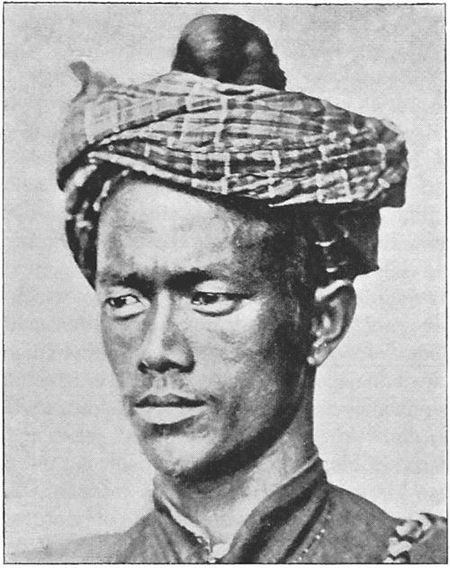
FIG. 122.—Khamti of Lower Burma, Assam frontier.
(Coll. Ind. Mus., London.)
c. The Mons or Talaing are the remnants of a population which
formerly occupied the whole of lower Burma, and have been driven back
into the unhealthy region of the deltas of the Irrawaddy, Sittong, and
Salwen rivers; their territory has mostly been taken by a population
sprung from the intermingling of the Mons with the Burmese.
The three groups of tribes which we have just enumerated speak
monosyllabic dialects correlated as regards their vocabularies, at
least so far as the words indicating numbers, the parts of the body,
trades, etc., are concerned. These dialects further present analogies
with the Khmer (p. 398) and Khasia languages (p. 380).[438]
d. The Tziam or Chiam, on the other hand, are closely allied to
the Malaysian linguistic family. Their language, fixed by writing of
Indian origin, reminds us of the dialects of the Philippines. About
130,000 in number, they inhabit the province of Binh-Tuan and several
other points of Southern Annam, as well as Cochin-China (province
of Baria, etc.) and Cambodia. They represent all that remains of a
once powerful people, the founders of the empire of Champa, which
extended over the whole of Annam, as it now is, and the southern part
of Tong King. A section of the Tziam are Mussulmans, but the majority
are animist. The physical type is handsome; nose almost aquiline, eyes
without the Mongoloid fold, wavy or frizzy hair, dark skin. Contrary to
what exists among other peoples of Indo-China, among the Tziams it is
the woman who asks the hand in marriage.[439]
e. The Karens, who inhabit the upper valley of the Me Ping and the
mountainous districts of Arakan, Pegu, and Tenasserim, the country
between the Sittong and the Salwen (red Karens), probably came into
Burma at a later date than the Mons; they maintain that they came
thither from Yunnan about the fifth century of the present era. In
stature they are under the average (1 m. 64, according to Mason), and
they exhibit traits intermediate between those of the Malays and
the Thai (see below). Numbering about a million, they are speedily
becoming civilised while striving at the same time to preserve their
independence.[440]
The Khyens or Chin of the mountains of Arakan and the Tung-tu
of Tenasserim are Karens crossed with Burmese and Shans (p. 401).
The Lemets, the Does, and the Khmus of Fr. Garnier (Kamu and
Kamet of MacLeod) who inhabit the east of Luang-Prabang (French
Laos), and perhaps the Lavas or Does of H. Hallet, mountaineers of
West Siam, are related to the Karens or Khyens.
f. The Nagas of Manipur and the mountains extending to the north
(Patkoi, Barai) of this country are Indonesians more or less pure both
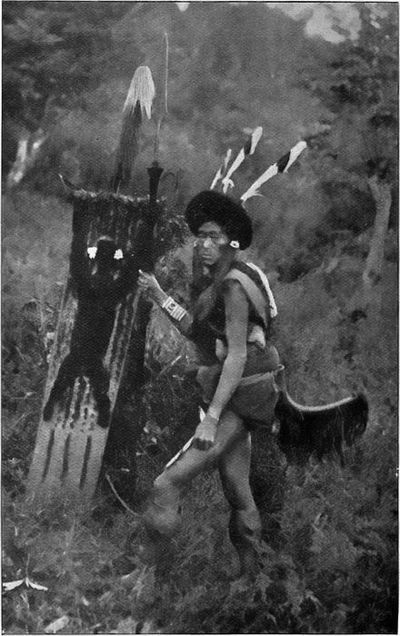
in physical type (Frontispiece and Fig. 17) and manners and customs.
They may be sub-divided into Angami, Kanpui, etc., wearing the
petticoat or apron, of the west; into Lhota, Ho, etc., wearing the
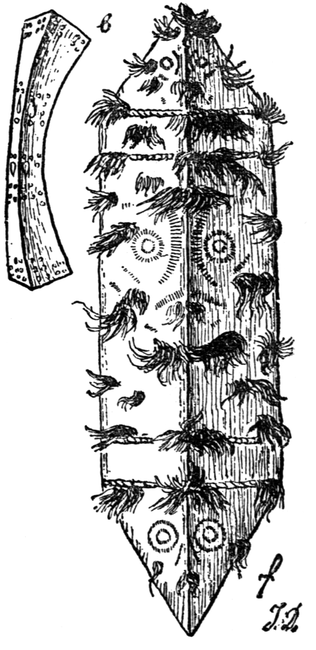
plaid, of the centre; and into Nangta, or naked, of the east. Various
ethnic peculiarities, skull-hunting and multicoloured hair or feather
ornaments, long shields (Frontispiece), breast-plates, method of
weaving, and houses in common (Morong), connect them with the Dyaks
and other Indonesians. Tattooing prevails only among the tribes with a
monarchical organisation (Klemm). The Lushai, who live at the south
of Manipur, are Nagas mixed with Kyens and Burmese of Arakan. They may
be sub-divided into several tribes: the Kuki, subject to the English,
very short (medium height 1 m. 57); the Lushai properly so called,
partly in subjection (41,600 in Assam), somewhat slender (1 m. 63),
with brown skin, flat nose, prominent cheek-bones, husbandmen;[441] the
Saks, Kamis, and Shendons or Shaws. West of the Lushai dwell
the Tippera and the Mrows, tribes of short stature (1 m. 59), still
more pronouncedly intermingled with the Burmese.[442]
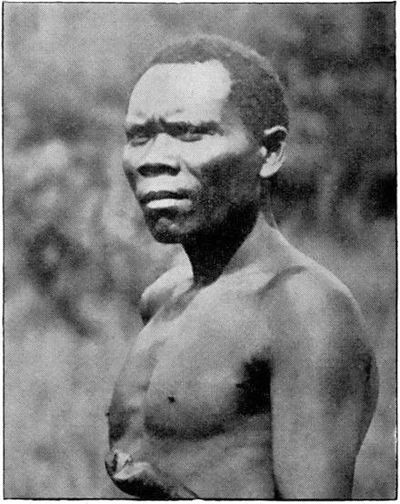
FIG. 123.—Black Sakai of Gunong-Inas
(Perak, Malay Peninsula).
(Phot. Lapicque.)
g. The Selungs are also regarded as Indonesians; numbering but a
thousand in all, they live in their canoes in the Mergui archipelago,
wandering from island to island like veritable gypsies of the sea,
after the manner of the Orang-Sletar of the Straits of Singapore, now
quite disappeared. In the same category we may also place the natives
of the Nicobar islands, though among the latter we must distinguish
(1) the Nicobarese of the small islands and the coasts of Great
Nicobar who have intermixed with the Malays, and (2) the Shom-Pen
of the interior of the latter island, savages of a somewhat pure
Indonesian type.[443]
h. We must also include in this long list of the aboriginal peoples
of Indo-China the Negritoes,[444] belonging to a distinct race,
chiefly characterised by short stature, black skin, and frizzy or
woolly hair (see p. 288). As genuine representatives of this race, only
three tribes are known: the Aeta, who inhabit the Philippine islands
(p. 483); the Sakai of the interior of the Malay peninsula; and the
Minkopis of the Andaman islands.
The Minkopis or Andamanese (Fig. 124), of very short stature (1 m.
49), sub-brachycephalic (ceph. ind. 82.6 average on the skull and on
the liv. sub.), are in the lowest scale of civilisation. They live in
“chongs”—small roofs on four stakes (p. 160), go naked, and procure
the strict necessaries of life by hunting, making use of a peculiar
kind of bow (p. 263). In number they scarcely exceed five thousand (E.
Reclus).
i. The pure Sakai, Semangs or Menik (as for example those of
Gunong-Inas, Fig. 123) are the same height as the Minkopis (1 m. 49),
but their head is less round and their face more angular than those
of the latter; they live likewise by hunting and by the gathering of
honey, camphor, india-rubber, and other products of tropical forests,
which they exchange with the Malays for tools, arms, etc. Several
populations of the Malay peninsula, particularly the Mintra, the
Jakhuns of Jokol, are Sakai-Malay half-breeds, as is shown by the
light colour of their skin, their stature, higher than that of the
Sakai, but still very short (1 m. 54), their frizzy hair, etc.
2. Let us pass on to the mixed populations of Indo-China, springing
from the probable cross-breeds of the autochthones and the invaders.
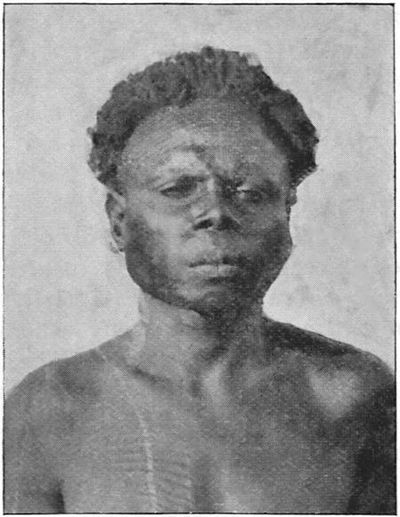
FIG. 124.—Negrito chief of Middle Andaman,
height 1 m. 49; cephalic ind. 83.4.
(Phot. Lapicque.)
The Cambodians or Khmers have the first place by seniority. At
the present day they inhabit Cambodia, the adjoining parts of Siam,
and the south of Cochin-China, but they formerly extended much
farther. Two centuries ago, before the arrival of the Annamese, they
occupied the whole of Cochin-China, while to-day they are found in
any considerable number only in the unhealthy and marshy regions of
the Rach-gia, Soktrang, and Tra-Vinh districts, where their number
equals or exceeds that of the Annamese. It may be conjectured that the
Khmers have sprung from the intermixing of the Malays and Kuis, with
an infusion of Hindu blood at least in the higher classes of society.
The Cambodians are taller (1 m. 65) than the Annamese and the Thai, but
almost as brachycephalic (ceph. ind. on the liv. sub. 83.6); their
eyes are rarely oblique, their hair is often wavy, etc. This population
has preserved much of its primitive savagery in spite of the influence
of several successive civilisations, of which remain the splendid
monuments of Angkor-Vat, Angkor-Tom, etc.[445]
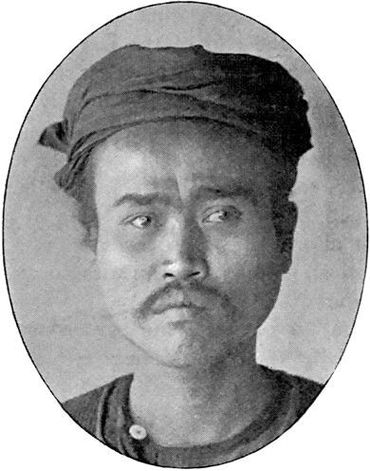
The population which chronologically succeeds the Cambodians is that of
the Annamese (Fig. 121), the inhabitants of the delta in Tong King,
of the coast in Annam, and most of Cochin-China. Some Annamese colonies
are also found in Cambodia, in Laos, and among the Mois. The Annamese
people, fifteen to seventeen millions strong at the present time, is
the outcome of numerous interminglings. Of western origin, according
to its traditions, that is to say akin to the Thai peoples, it came
at an early period into the country which it now occupies. It found
already installed there the Mois, the Khmers, and the Malays, which it
succeeded in assimilating or pushing back into the mountains and the
unhealthy regions; but it has had to support in its turn the continual
immigrations of the Chinese who brought their civilisation to it. In
spite of these complex interminglings the Annamese type is very uniform
(Harmand). The men are short in stature (1 m. 58), with slender limbs,
brachycephalic head (ceph. ind. 82.8), of angular visage with prominent
cheek-bones, and Mongoloid eyes.
The Annamese of Tong King are a little taller (1 m. 59) and darker than
those of Cochin-China and Annam (height 1 m. 57); they have also a
broader and flatter nose, the result perhaps of intermixture with the
Thos mountaineers (p. 401) who live near them.[446] The social life of
the Annamese is modelled on that of the Chinese; the village community
and the patriarchal family form the base of it, in the same way as
ancestor-worship is the religious foundation. Annamese Buddhism is
only a colourless copy of Chinese Foism and has no great hold of the
people. Very docile, the Annamese are intelligent, cheerful, and well
gifted, without being exempt from certain defects of character, common
to all Asiatics of the far East, such as dissimulation, hypocrisy, and
perfidy.
The Burmese or Mramma made a descent on Indo-China perhaps at
the same time as the Annamese, from their original country, which is
supposed to be the mountains of the south-east of Thibet. To-day they
occupy Upper Burma, Pegu, and Arakan. In the last-mentioned country
they bear the name of Mag or Arakanese, and differ a little from
the true Burmese of Upper Burma, who are the purest representatives of
the Burmese people. Like the Annamese, they have attained a certain
degree of civilisation, mainly due to the influence of India. We find
existing among them monogamy, the order of castes, and Buddhism of the
south but slightly altered. The Mag are mesocephalic (ceph. ind. 81.8)
and of short stature (1 m. 61).[447]
The Thai.—The numerous peoples speaking different Thai dialects
were the last arrivals in Indo-China. Their migrations may be followed
from the first century B.C., when the Pa-y tribes came from
Sechuen into Western Yunnan to found there the kingdom of Luh-Tchao.
Another kingdom, that of Muang-ling, was founded more to the south-west
in Upper Burma, etc. The recent researches of Terrien de Lacouperie,
Colquhoun, Baber, Hosie, Labarth, Billet, H. Hollet, Bourne, Deblenne,
and of so many others besides, enable us to show the relations which
existed between these various Thai peoples and to assign the limits
with sufficient exactitude to their habitat, which extends from
Kwei-chow to Cambodia, between the 14th and the 26th degrees of N.
latitude.[448]
Four principal Thai peoples may be distinguished in this territory: the
Thos-Muong in the north-east (Tong King and China), the Shans in
the north-west (Upper Burma), the Laotians in the south-east (French
Laos), and the Siamese in the south-west (Siam).
We put together, under the name of Thos-Muong, all the natives of
Upper Tong King and the Tong King hinterland (except the mountain
summits occupied by the Mans, allied probably to the Lo-lo), as well
as the primitive inhabitants of Kwang-si, Southern Kwei-chow, and
Eastern Yunnan, now driven back to the mountains. The Thos inhabiting
Tong King to the east of the Red River (basin of the Claire River),
are sub-brachycephalic (ceph. ind. 82.5), of lofty stature (1 m.
67),[449] having elongated face, straight non-Mongoloid eyes, and
brownish complexion. They partly recall the Indonesians, and partly
the still mysterious race to which the Lo-lo belong (p. 381). They are
husbandmen, living in houses on piles, and wearing a very picturesque
costume different from that of their ancient masters the Annamese.
The Muongs of Tong King to the west of the Red River (basin of the
Black River), the Pueun and the Pu-Thai of Annamese Laos resemble
them both in type and in language, which is a Thai dialect very much
altered by Chinese and Annamese. The Tu-jen, the Pe-miao, the
Pa-i, forming two-thirds of the population of Kwang-si, and found in
the south of Kwei-chow and the north-west of Kwang-tung, as well as the
Pe-jen or Minkia of Yunnan, are Thos slightly crossed with Chinese
blood in the same way as the Nongs of Tong King, the neighbours
of the Thos. Most of these peoples have a special kind of writing,
recalling that of the Laotians. The latter, as well as the Shans,
differ somewhat from the Thos in regard to type, in which we may
discern interminglings with the Indonesians, Malays, Mois, and Burmese.
Among the Shans we must distinguish the Khamti (Fig. 122), a very
pure race, and the Sing-po with the Kackyen or Katchin, somewhat
intermixed with the Burmese, both of them races of mountaineers of the
northern parts of Upper Burma, between the Lu-Kiang (upper Salwen)
and the Lohit-Brahmaputra. The upper valley of the latter river is
inhabited by the Assamese or Ahoms, cross-breeds between the Shans
and Hindus, speaking a particular dialect of the Hindi language. The
Laotians are sub-brachycephalic (83.6) and of short stature (1 m.
59); those of the north tattoo their bodies like the Shans. They are
husbandmen, shepherds, and hunters.[450]
It is perhaps among the Siamese that the primitive Thai type has been
most changed by intermixture with the Khmers, Kuis, Hindus, and Malays.
In stature above the average (1 m. 61), very brachycephalic (ceph.
ind. 85.5) with olive complexion, they have prominent cheek-bones,
lozenge-shaped face, and short flattish nose. They are fervent votaries
of southern Buddhism, and are the most civilised of the Thai. They have
succeeded in preserving their relative independence and forming a state
in which several reforms of European character have been attempted in
recent times.
V. THE POPULATION OF INDIA represents about a third of the
inhabitants of Asia (287,223,431 inhabitants according to the census of
1891). It is sub-divided into a hundred tribes or distinct peoples, but
this multiplicity of ethnic groups is rather apparent than real, and
they may easily be incorporated into a small number of somatic races or
linguistic families; these groups frequently represent castes alone.
Caste is indeed an institution peculiar to India. Of ancient
origin, this institution has developed very considerably, assuming
the most varied forms. Springing from a Hindu or Brahman source, it
penetrated little by little the other ethnic and religious groups of
the peninsula, and one might say that it is the basis of the social
organisation for four-fifths of the population of India, despite of
the fact that its power is declining at the present day beneath the
strong hand of British rule. About 2000 castes may be enumerated at the
present day, but year by year new ones are being called into existence
as a certain number disappear.[451]
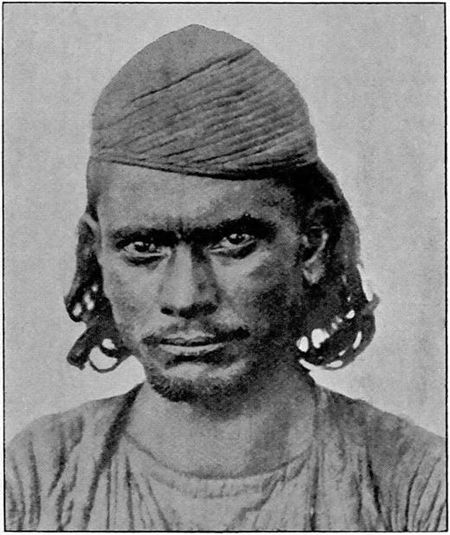
FIG. 125.—Gurkha of the Kus or Khas tribe, Nepal;
mixed Indo-Thibetan type.
(Coll. Ind. Mus., London.)
The names of these castes are derived either from hereditary
occupations (tanners, husbandmen, etc.); from a geographical source
(Pathani, etc.), or a genealogical one—from a supposed common
ancestor; or, especially among the Dravidians, from objects or animals
singled out as totems (p. 247). The essential characteristics of all
castes, persisting amid every change of form, are endogamy within
themselves and the regulation forbidding them to come into contact one
with another and partake of food together (Sénart). Endogamy within the
limits of the caste implies, as a corollary, exogamy among the sections
of the caste. The typical form of these sections is the “gotra,” an
eponymous group reputed to be descended from a common ancestor, usually
from a rishi, a priest or legendary saint.
Outside of this endogamic rule marriage is forbidden in all castes
between relatives to the sixth degree on the paternal side and to
the fourth degree on the maternal side. Caste has no religious
character; men of different creeds may belong to it. It is ruled by
a chief and a council (panchâyet), and has not limits as rigid as
is commonly supposed; the way is smoothed by compromises and liberal
interpretations of rules for rich and clever people to pass from a
lower to a higher caste.
In this way or some other a man may rise from one caste to another: in
Mirzapur many Ghonds and Korvars have become Rajputs, etc. (Crooke).
Employment is by no means the criterion of caste, as is very often
supposed. “Those who have seen Brahmans,” says Sénart, “girdled with
the sacred cord, offer water to travellers in the railway stations of
India, who have seen them drilling among the sepoys of the Anglo-Indian
army, are prepared for surprises of this kind.”[452] And in conclusion
the castes do not always agree with ethnic and somatic divisions.[453]
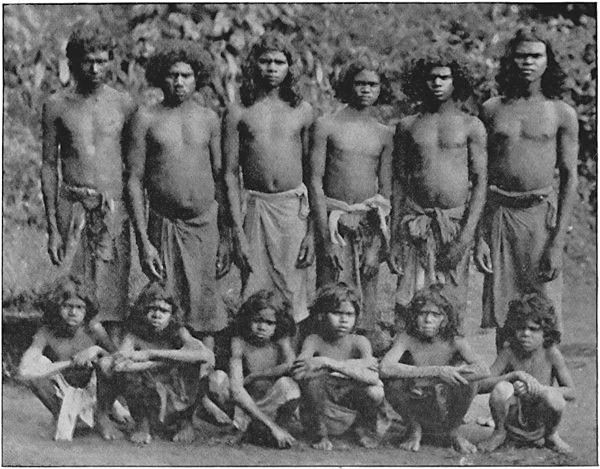
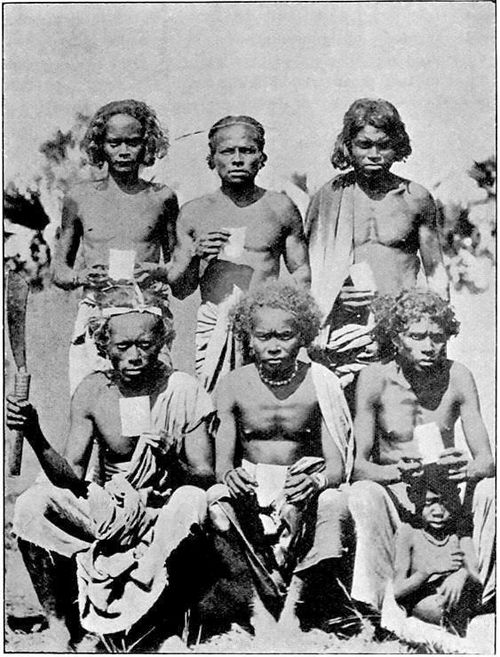
FIG. 126.—Group of Paniyan men and children of Malabar.
(Phot. Thurston.)
Side by side with caste another characteristic institution of
the
Cisgangetic Aryan or Aryanised peoples must be noted; it is the
village (grama) with common proprietorship of the soil and family
communities, on which I cannot dilate for want of space (see p. 247).
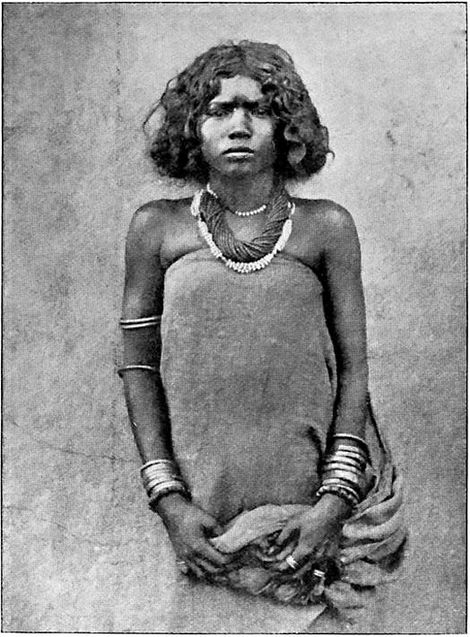
FIG. 127.—Young Irula girl.
(Phot. Thurston.)
India was the cradle of two great religions which have become
international, Brahmanism and Buddhism. This fact deserves to be
borne in mind on account of the impress left on these two religions
by the national Hindu character. The foundation of both is formed of
those characteristically Hindu beliefs,—the ideas of metempsychosis,
final deliverance, and the doctrine of the moral world, which form
a contrast with the Semitic religions. Brahmanism is professed by
about three-fourths (72 per cent.) of the inhabitants of India, while
Buddhism and its derivative Jainism only number, apart from the island
of Ceylon, three per cent. of the total population of the peninsula.
The most widespread religion after Brahmanism is Islamism (20 per cent.
of the whole population of India).
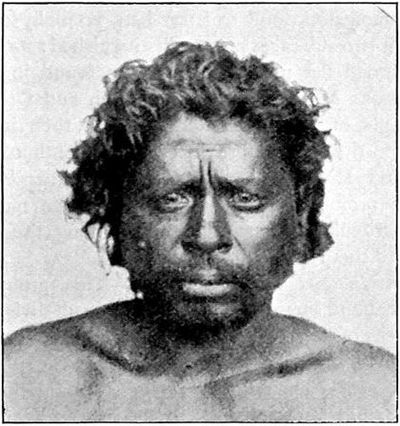
FIG. 128.—Santal of the Bhagalpur hills.
(Coll. India Museum, London.)
From the somatological point of view it may be affirmed to-day, after
the excellent works of Risley, Crooke, Thurston, Sarasin, Schmidt,
Jagor, Mantegazza, etc., that the variety of types found in the
country is due to the crossing of two indigenous races, Indo-Afghan
and Melano-Indian or Dravidian, with the admixture here and there of
foreign elements: Turkish and Mongol in the north, Indonesian in the
east, Arab and Assyroid in the west, and perhaps the Negritoid element
in the centre. The Indo-Afghan race, of high stature, with light brown
or tanned complexion, long face, wavy or straight hair, prominent
and thin nose, dolichocephalic head, predominates in the north-west
of India; the Melano-Indian or Dravidian race, also dolichocephalic
but of short stature, with dark brown or black complexion, wavy or
frizzy hair, is chiefly found in the south. In it two sub-races may
be distinguished: a platyrhinian one, with broad flat nose, rounded
face, found in the mountainous regions of Western Bengal, Oudh and
Orissa, also at several points of Rajputana and Gujarat, then in
Southern India, and in the central provinces to the south of the rivers
Narbada and Mahanadi. The other sub-race, leptorhinian, with narrow
prominent nose, and elongated face may be noted in some particular
groups, especially among the Nairs, the Telugus, and the Tamils.[454]
1. Melano-Indians or Dravidians.—This group, at once somatological
and linguistic, includes two sub-divisions, based on differences of
language: the division of Kolarians, and that of Dravidians properly so
called.
a. Kolarians.[455]—The numerous tribes speaking the languages
of the Kol family and belonging to the platyrhinian variety of the
Melano-Indian race, more or less modified by interminglings, occupy
the mountainous regions of Bengal and the provinces of the north-west.
Certain of these tribes, of the purest type, like the Juang or
Patua of Keunjhar and Dhenkanal (Orissa), are distinguished by very
short stature (1 m. 57), zygomatic arches projecting outwards, and
flat face, as well as by certain ethnic characters; they go nearly
naked, live on the products of the chase and the fruits and roots
gathered; they also practise a little primitive cultivation by burning
the forests, etc. The Kharia of Lohardaga (Chota Nagpur), who
resemble the Juang in type, language, and tattooings (three lines above
the nose, etc.), are partly civilised; some cultivate the ground with
a plough, have a rudimentary social constitution, etc. The other Kols
are, for the most part, still further advanced. Such are the Santals
or Sonthals (Fig. 128) of Western Bengal, of Northern Orissa, and of
Bhagalpur, who call themselves “Hor”; the Munda or Horo-hu of Chota
Nagpur; the Ho or Lurka-Kols of the district of Singbhum (Bengal);
lastly, the Bhumij of Western Bengal, all probably sections of one
and the same people, formerly much more numerous.[456] The Kols of the
north-west provinces (height 1 m. 64; ceph. ind. 73.2, according to
Risley and Crooke) are closely allied to the groups which I have just
mentioned. The Savaras or Saoras, scattered over Orissa, Chota
Nagpur, Western Bengal, and as far as the province of Madras, speak
a language which Cunningham, Cust, and Fr. Müller consider Kolarian,
while, according to Dalton, it belongs to the Dravidian family
properly so called. Physically, they resemble the Malé Dravidians, and
exhibit the tolerably pure type of the platyrhinian sub-race of the
Melano-Indians.[457] The same doubt exists in regard to the linguistic
affinities of the Bhils of Central India and the north-west provinces.
b. Dravidians properly so called.—They may be divided into two
groups, those of the north and those of the south.
Dravidians of the North.—These are in the first place the Malé
(plural Maler) or Asal Paharia of the Rajmahal hills (Bengal),
probably one of the sections of the Savara people (see above);[458] the
Oraons (523,000 in 1891), several tribes of which are also found in
the north-west of Chota Nagpur; lastly, the Gonds (three millions)
of the Mahadeo mountains and part of the central provinces situated
farther south, between the rivers Indravati and Seleru, tributaries
of the Godavari. To the east of the Gonds dwell the Khands and the
Khonds (600,000), who have spread into Orissa.
All these tribes have scarcely got beyond the stage of hunters or
primitive husbandmen, who set their forests on fire in order to sow
among the ashes. In this respect the Korwa of Sarguja, of Jashpur
(Bengal), and Mirzapur (north-west province) resemble them, if they are
not even more uncivilised. They are unacquainted with clothes of any
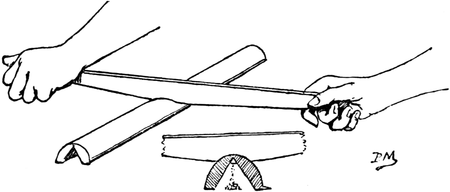
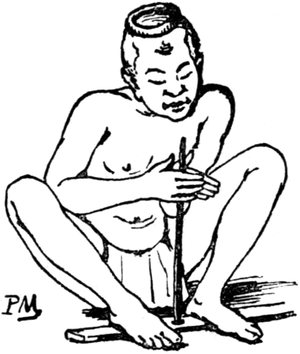
kind, obtain fire by sawing one piece of wood with another, and have
an animistic religion much less developed than that of the Gonds or
Oraons.[459]
Dravidians of the South.—To the south of the Godavari dwell five
black, half-civilised peoples, having a particular form of writing,
professing Brahmanism, and showing an intermingling of two varieties
of the Melano-Indian race. Side by side with them, and among them, are
found a number of small tribes more or less uncivilised and animistic,
having somatic types of considerable variety.
The five half-civilised Dravidian peoples are the Telingas or
Telugus of the Coromandel coast, of Nizam and Jarpur (some twenty
millions); the Kanaras of the Mysore table-land (about ten millions);
the Malayalim of the Malabar coast (nearly six millions); the Tulus
of Mangalore (350,000); lastly, the Tamils, occupying the rest of
Southern India and the north of Ceylon (about fifteen millions).
As to the uncivilised tribes, some occupy the Anamalli hills (the
Kader, the Madavars), others inhabit Travancore (Pulaya,
Paligars, Tir, Shanar, etc.). Also to be noted are the
Choligha, at the foot of the Mysore hills, the Paniyans (Fig.
126) of Vaïnad or Vinad (Malabar coast), very short (1 m. 57),
dolichocephalic (ceph. ind. on the liv. sub. 74), and very platyrhine
(nas. ind. 95.1); lastly, the very interesting tribes of the Nilgiri
hills; the Irulas (Fig. 127) and, above these, the Kurumbas (Fig.
8), on the southern and northern slopes; the Badagas, the Kotas,
and the Todas on the plateau crowning these heights.[460]
The Kurumbas and the Irulas (58,503 in 1891) are of short stature
(1 m. 58 and 1 m. 60), dolichocephalic (ceph. ind. on the liv. sub.
75.8), and platyrhine (nas. ind. 87 and 85). They are the half-savage
tribes of the jungles.
As to the tribes of the plateau, they are distinguished according
to their occupation and type. The Badagas (29,613 in 1891) are
husbandmen, the Kotas (1,201) are artisans, and the Todas (Figs.
7, 129, and 130) shepherds. The two former approximate to the other
Dravidians in type; they are of average height (1 m. 64 and 1 m. 63),
hyper-dolichocephalic (ceph. ind. on the liv. sub. 71.7 and 74.1),
and mesorhine (nas. ind. 75.6). But the Todas present a particular
type: high stature (1 m. 70), associated with dolichocephaly (ceph.
ind. on the liv. sub. 73.1) and mesorhiny (nas. ind. 74.9), somewhat
light tint of skin, and the pilous system very developed (Figs. 129
and 130). In short, they appear to belong to the Indo-Afghan race,
with perhaps an admixture of the Assyroid race. Besides, a number of
customs and manners (group marriage, aversion to milk, rude polytheism,
etc.) differentiate them from the other populations of India. They are
a very small tribe, which, however, increases from year to year (693
individuals in 1871, 736 in 1891).
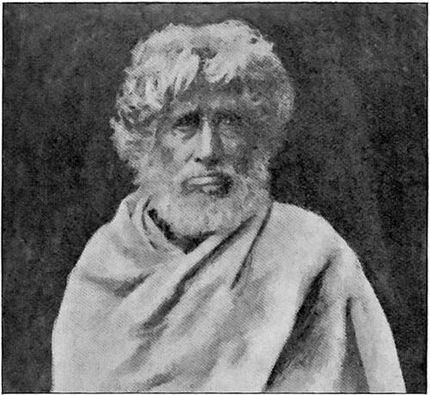
FIG. 129.—An old Toda man of Nilgiri hills.
(Phot. Thurston.)
2. The Aryans of India form the greatest portion of the population to
the north of the Nerbada and Mahanadi; they speak different dialects
of the neo-Hindu language (ancient Bracha language, branch of the
Prakrit or corrupt vulgar Sanscrit). The following are the principal
dialects: the Hindi, Bengali, Punjabi, Kashmiri, Guzrati,
and Sindi. We distinguish several ethnic groups by these dialects,
or the generic names designating aggregations of castes: Brahmans,
Rajputs (10 1⁄2 millions), Jats and Gujars (9 millions
altogether), Katis (42,000); or by their religion, as the Sikhs,
renowned for their warlike disposition, and recognising, at least
theoretically, no castes.[461]
The root-stock of all these populations is formed by the Indo-Afghan
race. This race we find again in almost a pure state among the Sikhs
(stature 1 m. 71, ceph. ind. in the liv. sub. 72.7, nas. ind. on the
liv. sub. 68.8), and a little weakened among the Punjabi (height,
1 m. 68, ceph. ind. 74.9, nas. ind. 70.2). Among the Hindus of Behar,
of the north-west provinces and Oudh, among the Mahratis between the
river Tapti and Goa, the type is still more changed in consequence of
interminglings with the Dravidians; the stature becomes shorter (1 m.
63 and 1 m. 64), the head rounder (ceph. ind. 75.7), the nose broader
(nas. ind. 80.5 and 74), the complexion darker, etc.[462] With the
Indo-Aryans are grouped, according to their type and language, the
Kafirs or Siahposh of Kafiristan, and the Dardi or Dardu, occupying
the countries situated more to the east, between the Pamirs on the
north, Kashmir on the south, Kafiristan to the west, and Baltistan to
the east—that is to say, Chitral, Dardistan (Yassin, Hunza, Nagar),
Gilghit, Chilas, Kohistan. The Dardis are divided into four castes or
tribes (Biddulph); that of the Chins, forming the majority of the
people, is distinguished by its short stature and its dark complexion,
and recalls the Hindus of the north-west provinces (Ujfalvy); while
another tribe, called Yeshkhun, speaks a language which, according to
Biddulph, has affinities with the Turkish languages, and, according to
Leitner, is a
non-Aryan agglutinative language presenting analogies
with Dravidian dialects. The Yeshkhuns inhabit Dardistan. Biddulph
affirms that one may often encounter among them individuals with light
and especially red hair. The forty-four Yeshkhuns and Chins measured
by Ujfalvy were below the average height (1 m. 61), dolichocephalic
(ceph. ind. 75.8), with black wavy hair, fine shaped nose, and rather
dark skin; while nineteen “Turki-Dardi” of Hunza-Nagar and Yassin
measured by Risley and Capus give a stature above the average (1 m.
69), and the cephalic index almost mesocephalic (77). They are thus
closely allied to the Chitrali (stature 1 m. 67, ceph. ind. 76.9 from
six subjects only, measured by Risley).[463] Most of the Dardu tribes
are endogamous; polygamy is general. In certain tribes there are to be
found survivals of polyandry and of the matriarchate.[464]
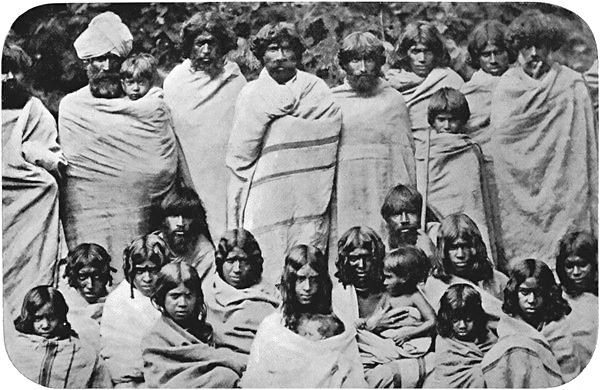
FIG. 130.—Group of Todas of Nilgiri Hills.
(Phot. lent by Deyrolle.)
The Baltis, neighbours of the Dardus on the east, speaking a Thibetan
dialect, and the Pakhpuluk of the other side of the Kara-Korum (upper
valley of the Karakash), speaking a Turkish tongue (Forsyth), are a
mixture of Indo-Aryan and Turkish races. On the other hand, in the
Himalayan region, the Nepalese (the Kulu-Lahuli and Paharias on
the west, the Khas, the Mangars and other Gurkhas, Fig. 125,
on the east), speaking a neo-Hindu language, have sprung from the
intermingling of Indo-Afghan and Mongolic races (by the Thibetans).
There are in India other peoples among whom linguistic or somatological
affinities with the Indo-Aryans are found. Such are the Nairs of
Malabar, a conglomerate of various castes and tribes, well known
by their marriage customs (p. 232), many of these tribes forming
a contrast with the Dravidians by their fine type, their light
complexion, their thin and prominent nose.[465]
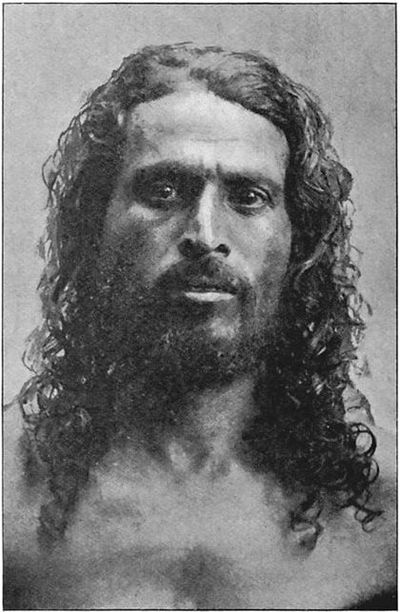
FIG. 131.—Singhalese of Candy, Ceylon,
twenty-seven years old; ceph. ind. 72.4.
(Phot. Delisle.)
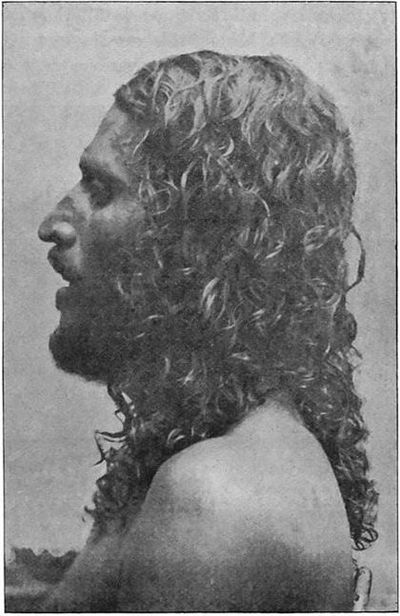
FIG. 132.—Same subject as Fig. 131, seen in profile.
(Phot. Delisle.)
The Singhalese (Figs. 131 and 132) of the south of Ceylon speak a
fundamentally Aryan language. They have certain traits in common with
the Indo-Afghans and the Assyroids, but their type has been affected by
the neighbourhood of a small mysterious tribe, that of the Veddahs
(Figs. 5, 6, and 133), driven back into the mountains of the south-west
of Ceylon. This is the remnant of a very primitive population whose
physical type approximates nearest to the platyrhine variety of the
Dravidian race, at the same time presenting certain peculiarities. The
Veddahs are monogamous; they live in caves or under shelters of boughs
(p. 160), hiding themselves even from the Singhalese.[466]
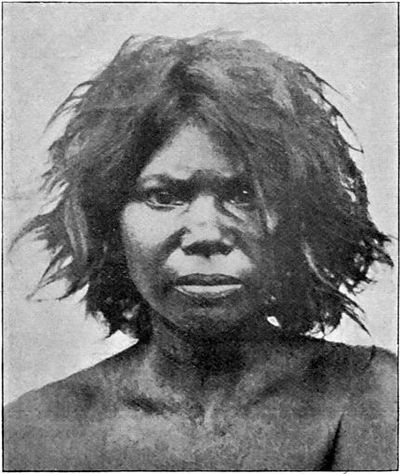
FIG. 133.—Tutti, Veddah woman of the village of Kolonggala, Ceylon;
twenty-eight years old, height 1 m. 39.
(Phot. Brothers Sarasin.)
VI. PEOPLES OF ANTERIOR ASIA.—The multitude of peoples,
tribes, castes, colonies, and religious brotherhoods of Iran, Arabia,
Syria, and Asia Minor, this crossing-place of ethnic migrations, are
chiefly composed in various degrees of the three races—Indo-Afghan,
Assyroid, and Arab, with the addition of some other foreign races,
Turkish, Negro, Adriatic, Mongolic, etc.
From the linguistic point of view, this multitude may perhaps be
reduced to two great groups: the Eranians or Iranians and the Semites,
if we exclude some peoples whose linguistic affinities have not yet
been established.
1. The Iranians or Eranians occupy the Iranian plateau and the
adjoining regions, especially to the east. They speak different
languages of the Eranian branch of the Aryan linguistic family. In
physical composition the main characters are supplied by the Assyroid
race (Fig. 22) with admixture of Turkish elements in Persia and Turkey,
Indo-Afghan elements in Afghanistan, and Arab and Negroid elements in
the south of Persia and Baluchistan.
Among Iranian peoples the first place, as regards number and the part
played in history, belongs to the Persians. They may be divided
into three geographical groups. If within the approximate limits of
Persia of the present day a line be drawn running from Astrabad to
Yezd and thence towards Kerman, we shall have on the east the habitat
of the Tajiks, on the west that of the Hajemis (between Teheran
and Ispahan[467]), and that of the Parsis or Pharsis (between
Ispahan and the Persian Gulf). The Tajiks, moreover, spread beyond
the frontiers of Persia into Western Afghanistan, the north-west
of Baluchistan, Afghan Turkestan and Russian Turkestan, as far as
the Pamirs (Galcha), and perhaps even beyond. In fact, the Polu
and other “Turanians” of the northern slope of the Kuen Lun, while
speaking a Turkish language, bear a physical resemblance to the Tajiks
(Prjevalsky). Like the Sartes, settled inhabitants of Russian
Turkestan, and the Tats of the south-west shore of the Caspian, and
the Aderbaijani of the Caucasus, they are Persians more or less
crossed with Turks, whose language they speak.
The Tajiks are brachycephalic (ceph. ind. 84.9), above the average
height (1 m. 69), and show traces of intermixture with the Turkish
race,[468] while the Hajemis (Fig. 22), and in some measure the
Parsis, who are dolichocephalic (77.9), and of average height (1 m.
65), are of the Assyroid or Indo-Afghan type.
The Parsis are not very numerous in Persia. Most of them emigrated
into India after the destruction of the empire of the Sassanides (in
634); they form there an important and very rich community (89,900
individuals in 1891), having still preserved their ancient Zoroastrian
religion. This community, if chiefly composed of bankers, has also many
men of letters. The education of women in it is specially looked after,
the first woman to obtain the diploma of Doctor in Medicine in India
being a Parsi.[469] Physically they are of the mixed Indo-Assyroid
type, the head sub-brachycephalic (ceph. ind. 82, according to Ujfalvy).
After the Persians come the Pathan Afghans[470] or Pashtu. They
form the agricultural population of Afghanistan, and are divided into
Duranis (in the west and south of the country), Ghilzis (in the
east), and into several other less important tribes: the Swatis, the
Khostis, the Waziris, the Kakars, etc. The Afghans of India and
the Indo-Afghan frontier are divided into several tribes, of which the
principal ones are the Afridis near the Khyber pass and the Yusafzais
near Peshawar.[471]
The Baluchis or Biloch of Baluchistan and Western India speak
an Eranian dialect akin to Persian; physically they belong to the
Indo-Afghan race, but mixed with the Arabs on the south and the Jats
and the Hindus on the east, with the Turks on the north and the
Negroes on the south-west. The Mekrani of the coast of Baluchistan
and partly of Persia are a mixture of Indo-Afghan, Assyroid, and Negro
races (Fig. 134). The Rinds (“Braves”) of the same coast of Mekran,
who claim to be pure Baluchis, are only Arabs of the Kahtan tribe.[472]
The nomadic Brahuis of Eastern Baluchistan, especially those of
the environs of Kelat, resemble the Iranians. It is said that their
language has some affinities with the Dravidian dialect. In reality,
the ethnic place of this population, predominant in Baluchistan, is yet
to be determined.
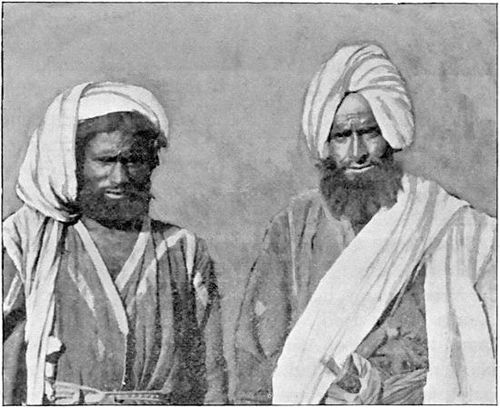
FIG. 134.—Natives of Mekran (Baluchistan):
on the right, Afghan type; on the left, the same with Negro intermixture.
(Phot. Lapicque.)
With the Iranian group it is customary to connect, especially from
linguistic considerations, the Kurds, the Armenians, and the Ossets
(p. 356). The first-mentioned people, influenced here and there by
interminglings with the Turks, physically resemble the Hajemis:
sub-dolichocephalic head, 78.5 when it is not deformed (p. 176),
height above the average (1 m. 68), aquiline nose, etc. They occupy
in a more or less compact mass the border-lands between Persia and
Asia Minor; but they are found in isolated groups from the Turkmenian
steppes (to the north of Persia) to the centre of Asia Minor (to the
north-west of Lake Túz-gól). As to the Armenians or Hai, they are
found in a compact body only around Lake Van and Mount Ararat, the
rest being scattered over all the towns of the south-west of Asia,
the Caucasus, the south of Russia, and even Galicia and Transylvania.
It is a very mixed and heterogeneous ethnic group as regards physical
type. The stature varies from 1 m. 63 to 1 m. 69 according to different
localities, but the cephalic index is nearly uniformly brachycephalic
(85 to 87). The predominant features are however formed by the
Indo-Afghan, Assyroid, and perhaps Turkish and Adriatic races. Their
language differs appreciably from the other Eranian tongues.[473]
2. The Semite linguistic group is represented by Arabs, Syrians, and
Jews.
The Arabs occupy, besides Arabia, a portion of Mesopotamia, the
shores of the Red Sea, the eastern coast of the Persian Gulf, and
the north of Africa. The pure type, characterised by dolichocephaly
(ceph. ind. 70), prominence of the occiput, elongated face, aquiline
nose, slim body, etc., is still preserved in the south of Arabia
among the Ariba Arabs, among the mountaineers of Hadramaout and
Yemen (country of the ancient Himyarites or Sabeans), and among
the Bedouins, descendants of the Ismaelites of the interior of
Central and Northern Arabia; but the tribes which have drawn nearer the
coast or the valleys of Mesopotamia show signs of interminglings with
populations of a predominant Assyroid or Turkish type, without taking
into account, as at Haza and on the coast of Yemen, the Negro and
Ethiopic influence. Typical nomads, having in the religion founded by
Mahomet a national bond of union, the Arabs make their influence widely
felt over the world. Traces of the Arab type are met with not only over
the whole of Northern Africa (see p. 432), but also in Asia Minor, the
Caucasus, Western Persia, in India; while numerous traces of the Arab
language[474] and civilisation are found in Europe (Malta, Spain), in
China, Central Asia, and in the Asiatic Archipelago. The Melkits and
the Wahabits are two religious sects of Arabs.
The people of Syria and Palestine, known by the name of Syrians in the
towns, of Kufar in the country, is the product of the interminglings
of Arabs with descendants of Phœnicians and with Jews. It also forms
the basis of numerous ethnic groups connected solely by religion,
and of constituent elements often very heterogeneous: such are the
Maronites of Western Lebanon, the Nestorians, the Druzes of
Hermon and Djebel Hauran (Kurdish elements), among whom woman occupies
a higher position than among other Asiatics; the Metouali (Shiah
sect) of Tyre; the Nazareans or Ansarieh, who perhaps represent,
along with the Takhtaji (Gypsy elements), the Kizilbashes and the
Yezides or Yezdi (Kurdish elements) of Mesopotamia, the remains of
the primitive population of Asia Minor, akin, according to Luschan, to
the Armenians.[475]
The Jews are not very numerous (250,000) in Asia, and are found
scattered in small groups throughout the world. Even in the country
which was formerly a Jewish State, Palestine, they scarcely exceed
75,000 in number at the present day. They are found in compact groups
only in the neighbourhood of Damascus, at Jerusalem, and at the foot of
the mountain-chain of Safed.
It is well known that to-day the Jews are scattered over the whole
earth. Their total number is estimated at eight millions, of which
the half is in Russia and Rumania, a third in Germany and Austria,
and a sixth in the rest of the world, even as far as Australia. The
great majority of Jews are unacquainted with Hebrew, which is a dead
language; they speak, according to the country they inhabit, particular
kinds of jargon, the most common of which is the Judeo-German.
Physically the Jews present two different types, one of which
approximates to the Arab race (Fig. 21), the other to the Assyroid.
Sometimes these types are modified by the addition of elements of the
populations in the midst of which they dwell;[476] but, even in these
cases, many traits, such as the convex nose, vivacity of eye, frequency
of erythrism (p. 50), frizzy hair, thick under lip, inferiority of
the thoracic perimeter, etc., show a remarkable persistence. The Arab
type is common among the Spanish Jews who practise the Sefardi rite,
among the native Jews of the Caucasus, very brachycephalic however
(85.5 ceph. ind., according to Erckert and Chantre),[477] and among
those of Palestine, while the Assyroid type dominates among the Jews
of Asia Minor, Bosnia, and Germany. These last, like the Jews of Slav
countries, practise the Askenazi rite. The Jews of Bosnia, called
Spaniols, coming from Spain by Constantinople, are under average height
(1 m. 63) and mesocephalic (ceph. ind. 80.1, Gluck); those of Galicia,
Western Russia, and Russian Poland are shorter (1 m. 61 and 62) and
sub-brachycephalic (ceph. ind. 82); those of England are of the same
stature (1 m. 62), but mesocephalic (ceph. ind. 80).[478]
Along with the Jews we must put another people, also dispersed over
nearly the whole earth, and of Asiatic origin, probably from India, to
judge by the affinities of its language with the Hindu dialects—the
Gypsies. They are found in India (Banjars, Nats, etc.), Persia
and Russian Turkestan (Luli, Mazang, Kara-Luli, etc.), in Asia
Minor (where are also found their congeners, the Yuruks); then
in Syria (Chingane), in Egypt (Phagari, Nuri, etc.), and all
over Europe, with the exception, it is said, of Sweden and Norway;
they are found in considerable numbers in Rumania (200,000), Turkey,
Hungary, and the south-west of Russia. In all they number nearly a
million. The pure so-called “Black Gypsies” are of the Indo-Afghan race
(stature 1 m. 72, ceph. ind. on the liv. sub. 76.8), but very often
they have intermingled with the populations in the midst of which they
dwell.[479]