The finishing touches are added to the cloth after the latter
leaves the loom. The first operation is that of inspecting the
cloth, removing the lumps and other undesirables, as well as
repairing any damaged or imperfect parts. After this, the cloth
is passed through a cropping machine the function of which is to
remove all projecting fibres from the surface of the cloth, and
so impart a clean, smart appearance. It is usual to crop both
sides of the cloth, although there are some cloths which require
only one side to be treated, while others again miss this
operation entirely.
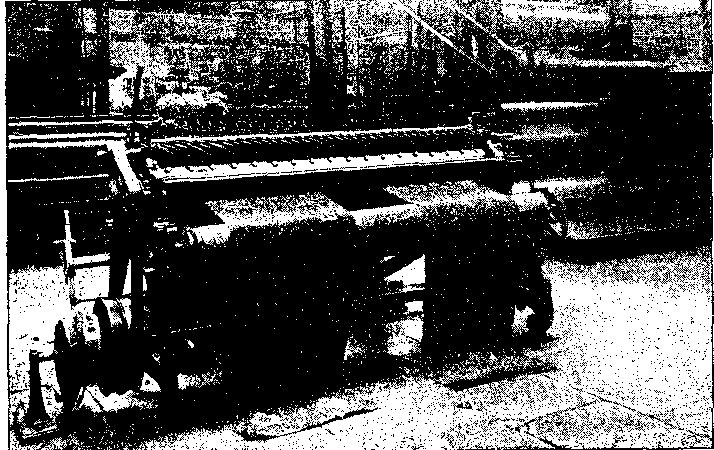
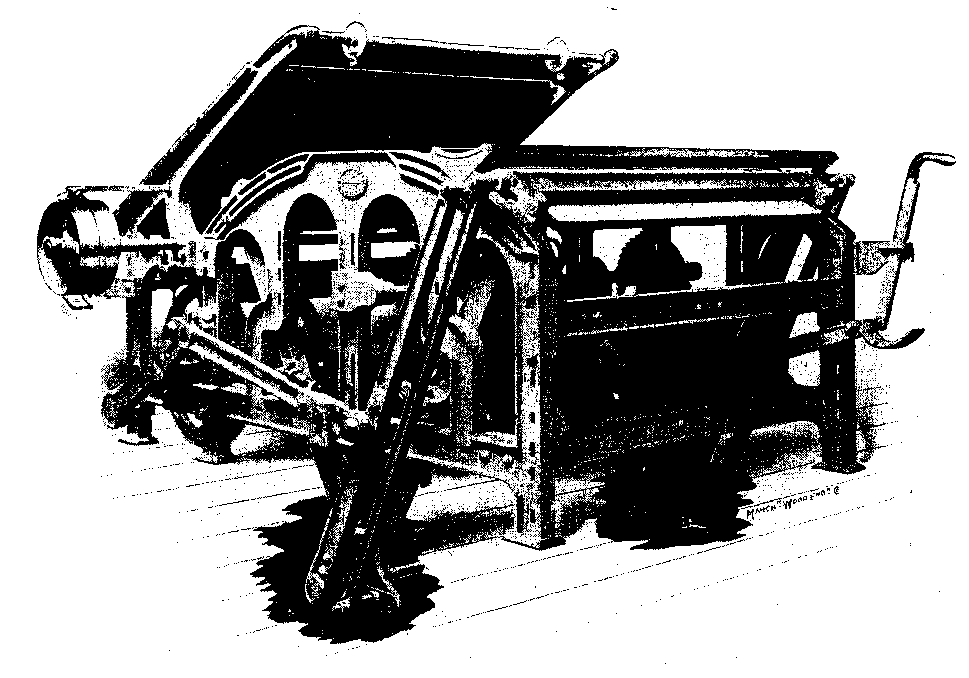
A cropping machine is shown in the foreground of Fig. 41, and
in this particular case there are two fabrics being cropped or
cut at the same time; these happen to be figured fabrics which
have been woven in a jacquard loom similar to that illustrated in
Fig. 38. The fabrics are, indeed, typical examples of jute Wilton
carpets. The illustration shows one of the spiral croppers in the
upper part of the machine in Fig. 41. Machines are made usually
with either two or four of such spirals with their corresponding
fixed blades.
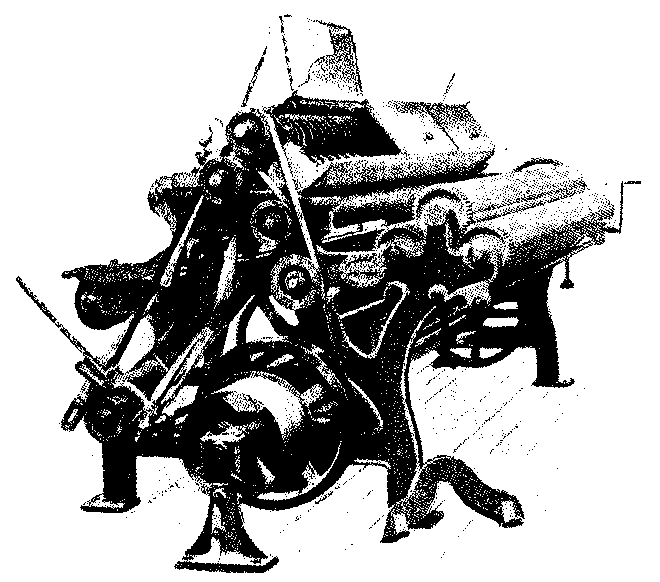
The cloth is tensioned either by threading it over and under a
series of stout rails, or else between two in a specially
adjustable arrangement by means of which the tension may be
varied by rotating slightly the two rails so as to alter the
angle formed by the cloth in contact with them. This is, of
course, at the feed side; the cloth is pulled through the machine
by three rollers shown distinctly on the right in Fig. 42. This
view illustrates a double cropper in which both the spirals are
controlled by one belt. As the cloth is pulled through, both
sides of it are cropped by the two spirals.[3] When four spirals
are required, the frame is much wider, and the second set of
spirals is identical with those in the machines illustrated.
[Footnote 3: For a full description of all finishing
processes, see The Finishing of Jute and Linen Fabrics, by
T. Woodhouse. (Published by Messrs. Emmott & Co., Ltd.,
Manchester.)]
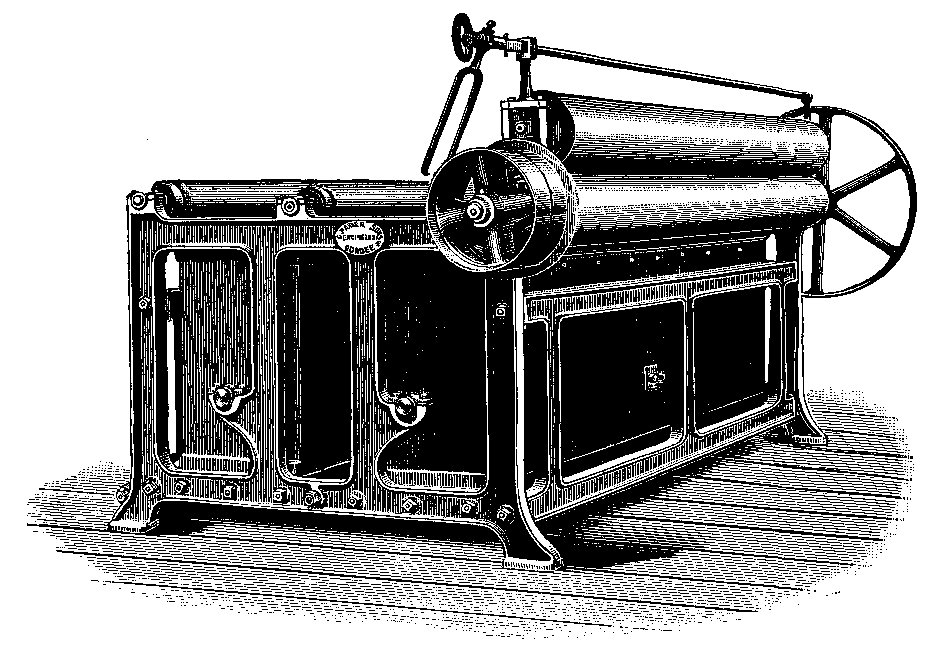
The cropped cloth is now taken to the clamping machine, and
placed on the floor on the left of the machine illustrated in
Fig. 43, which represents the type made by Messrs. Charles
Parker, Sons &, Co., Dundee. The cloth is passed below a
roller near to the floor, then upwards and over the middle
roller, backwards to be passed under and over the roller on the
left, and then forwards to the nip of the pulling rollers, the
bottom one of which is driven positively by means of a belt on
the pulleys shown. While the cloth is pulled rapidly through this
machine, two lines of fine jets spray water on to the two sides
of the fabric to prepare it for subsequent processes in which
heat is generated by the nature of the finishing process. At
other times, or rather in other machines, the water is
distributed on the two sides of the cloth by means of two rapidly
rotating brushes which flick the water from two rollers rotating
in a tank of water at a fixed level. In both cases, both sides of
the fabric are "damped," as it is termed, simultaneously. The
damped fabric is then allowed to lie for several hours to
condition, that is, to enable the moisture to spread, and then it
is taken to the calender.
The calenders for jute almost invariably contain five
different rollers, or "bowls," as they are usually termed; one of
these bowls, the smallest diameter one, is often heated with
steam. A five-bowl calender is shown on the extreme right in Fig.
41, and in the background, while a complete illustration of a
modern 5-bowl calender, with full equipment, and made by Messrs.
Urquhart, Lindsay & Co., Ltd., Dundee, appears in Fig.
44.
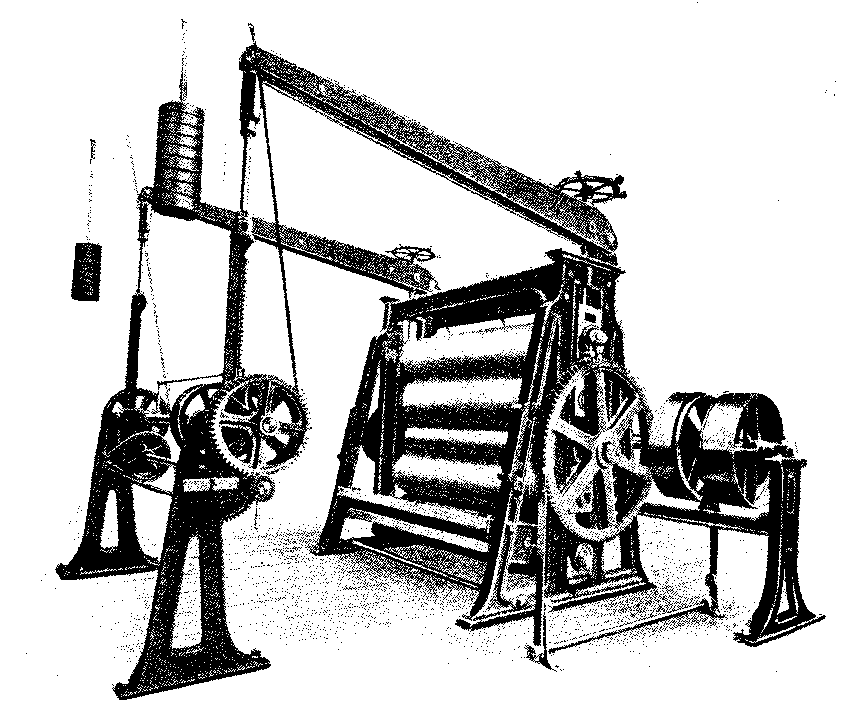
The cloth is placed on the floor between the two distinct
parts of the calender, threaded amongst the tension rails near
the bottom roller or bowl, and then passed over two or more of
the bowls according to the type of finish desired. For calender
finish, the bowls flatten the cloth by pressing out the threads
and picks, so that all the interstices which appear in most
cloths as they leave the loom, and which are exaggerated in the
plan view in Fig. 34, are eliminated by this calendering action.
The cloth is then delivered at the far side of the machine in
Fig. 44. If necessary, the surface speed of the middle or
steam-heated roller may differ from the others so that a glazed
effect--somewhat resembling that obtained by ordinary ironing--is
imparted to the surface of the fabric. The faster moving roller
is the steam-heated one. For ordinary calender finish, the
surface speed of all the rollers is the same.
Another "finish" obtained on the calender is known as "chest
finish" or "round-thread finish." In this case, the whole length
of cloth is wound either on to the top roller, or the second top
one, Fig. 44, and while there is subjected to the degree of
pressure required; the amount of pressure can be regulated by the
number of weights and the way in which the tension belt is
attached to its pulley. The two sets of weights are seen clearly
on the left in Fig. 44, and these act on the long horizontal
levers, usually to add pressure to the dead weight of the top
roller, but occasionally, for very light finishes, to decrease
the effective weight of the top bowl. After the cloth has been
chested on one or other of the two top bowls, it is stripped from
the bowl on to a light roller shown clearly with its belt pulley
in Fig. 41.
There are two belt pulleys shown on the machine in Fig. 44;
one is driven by an open belt, and the other by a crossed belt.
Provision is thus made for driving the calender in both
directions. The pulleys are driven by two friction clutches, both
of which are inoperative when the set-on handle is vertical as in
the figure. Either pulley may be rotated, however, by moving the
handle to a oblique position.
The compound leverage imparted to the bearings of the top
bowl, and the weights of the bowls themselves, result in the
necessary pressure, and this pressure may be varied according to
the number of small weights used. The heaviest finish on the
calender, i.e. the chest-finish on the second top roller,
imitates more or less the "mangle finish."
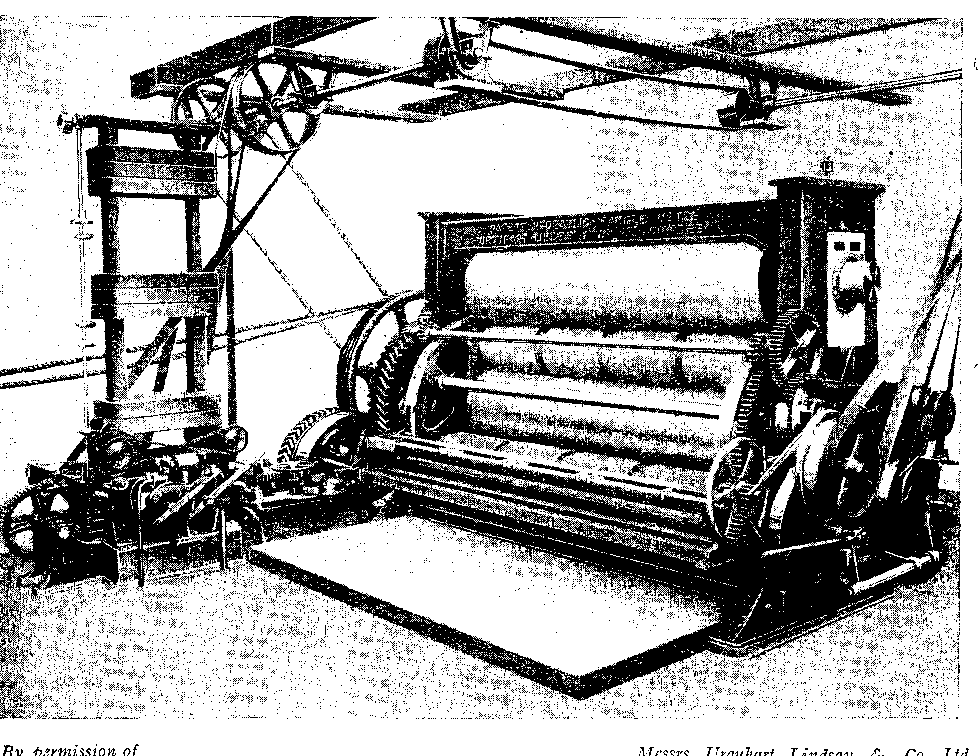
A heavy hydraulic mangle with its accumulator and made by
Messrs. Urquhart, Lindsay & Co., Ltd., Dundee, is illustrated
in Fig. 45. The cloth is wound or beamed by the mechanism in the
front on to what is termed a "mangle pin"; it is reality a thick
iron bowl; when the piece is beamed, it is automatically moved
between two huge rollers, and hydraulic pressure applied. Four
narrow pieces are shown in Fig. 45 on the pin, and between the
two rollers. There are other four narrow pieces, already beamed
on another pin, in the beaming position, and there is still
another pin at the delivery side with a similar number of cloths
ready for being stripped. The three pins are arranged thus
o°o, and since all three are moved simultaneously, when the
mangling operation is finished, each roller or pin is moved
through 120°. Thus, the stripped pin will be placed in the
beaming position, the beamed pin carried into the mangling
position, and the pin with the mangled cloth taken to the
stripping position.
While the operation of mangling is proceeding, the rollers
move first in one direction and then in the other direction, and
this change of direction is accomplished automatically by
mechanism situated between the accumulator and the
helical-toothed gearing seen at the far end of the mangle. And
while this mangling is taking place, the operatives are beaming a
fresh set, while the previously mangles pieces are being stripped
by the plaiting-down apparatus which deposits the cloth in folds.
This operation is also known as "cuttling" or "faking." It will
be, understood that a wide mangle, such as that illustrated in
Fig. 45. is constructed specially for treating wide fabrics, and
narrow fabrics are mangled on it simply because circumstances and
change of trade from time to time demand it.
The high structure on the left is the accumulator, the
manipulation of this and the number of wide weights which are
ingeniously brought into action to act on the plunger determine
the pressure which is applied to the fabrics between the bowls or
rollers.
Cloths both from the calender and the mangle now pass through
a measuring machine, the clock of which records the length passed
through. There are usually two hands and two circles of numbers
on the clock face; one hand registers the units up to 10 on one
circle of numbers, while the slower-moving hand registers 10, 20,
30, up to 100. The measuring roller in these machines is usually
one yard in circumference.
If the cloth in process of being finished is for use as the
backing or foundation of linoleum, it is invariably wound on to a
wooden centre as it emerges from the bowls of the calender,
measured as well, and the winding-on mechanism is of a friction
drive somewhat similar to that mentioned in connection with the
dressing machine. Cloths for this purpose are often made up to
600 yards in length; indeed, special looms, with winding
appliances, have been constructed to weave cloths up to 2,000
yards in length. Special dressing machines and loom beams have to
be made for the latter kind. When the linoleum backing is
finished at the calender, both cloth and centre are forwarded
direct to the linoleum works. The empty centres are returned
periodically.
Narrow-width cloths are often made up into a roll by means of
a simple machine termed a calenderoy, while somewhat similar
cloth, and several types of cloths of much wider width, are
lapped or folded by special machines such as that illustrated in
Fig. 46. The cloth passes over the oblique board, being guided by
the discs shown, to the upper part of the carrier where it passes
between the two bars. As the carrier is oscillated from side to
side (it is the right hand side in the illustration) the cloth is
piled neatly in folds on the convex table. The carriers may be
adjusted to move through different distances, so that any width
or length of fold, between limits, may be made.
Comparatively wide pieces can be folded on the above machine,
but some merchants prefer to have wide pieces doubled lengthwise,
and this is done by machines of different kinds. In all cases,
however, the operation is termed "crisping" in regard to jute
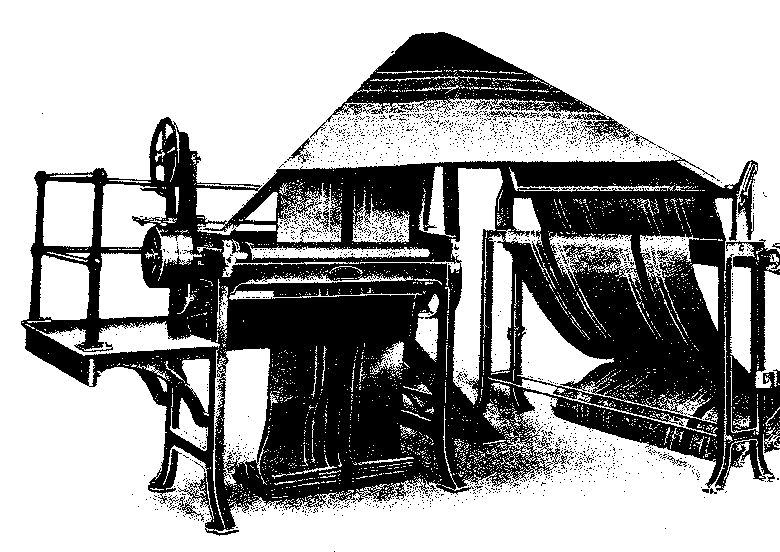
fabrics. Thus, Fig. 47, illustrates one type of machine used for
this purpose, and made by Messrs. Urquhart, Lindsay & Ca.,
Ltd., Dundee. The full-width cloth on the right has obviously two
prominent stripes--one near each side. The full width cloth
passes upwards obliquely a triangular board, and when the cloth
reaches the apex it is doubled and passed between two bars also
set obliquely on the left. The doubled piece now passes between a
pair of positively driven drawing rollers, and is then "faked,"
"cuttled," or pleated as indicated. The machine thus
automatically, doubles the piece, and delivers it as exemplified
in folds of half width. In other industries, this operation is
termed creasing and, rigging. Some of the later types of crisping
or creasing machines double the cloth lengthwise as illustrated
in Fig. 47, and, in addition, roll it at the same time instead of
delivering it in loose folds.
If the cloth is intended to be cut up into lengths, say for
the making of bags of various kinds, and millions of such bags
are made annually, it is cut up into the desired lengths, either
by hand, semi-mechanically, or wholly mechanically, and then the
lengths are sewn at desired places by sewing machines, and in
various ways according to requirements.
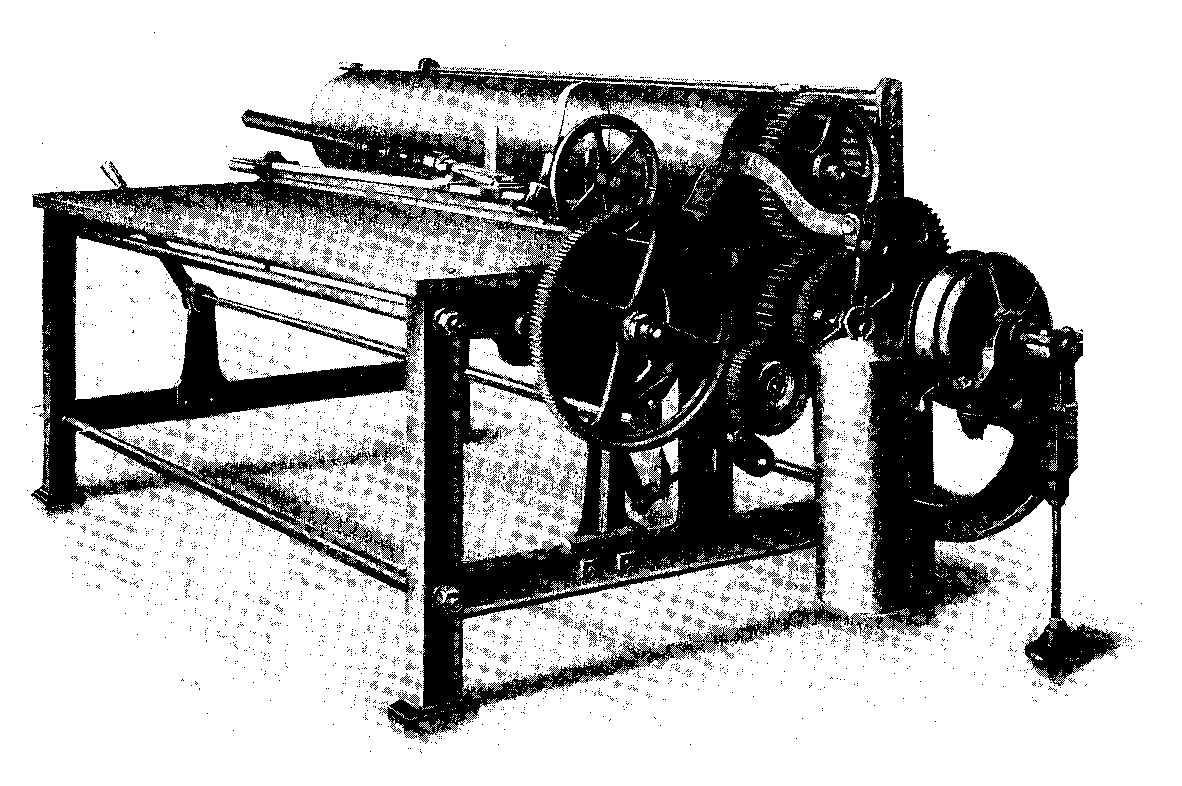
Fig. 48 illustrates one of the semi-mechanical machines for
this purpose; this particular type being made by Messrs.
Urquhart, Lindsay & Co., Ltd., Dundee. About eight or nine
different cloths are arranged in frames behind the cutting
machine, and the ends of these cloths passed between the
horizontal bars at the back of the machine. They are then led
between the rollers, under the cutting knife, and on to the
table. The length of cloth is measured as it passes between the
rollers, and different change pinions are supplied so that
practically any length may be cut. Eight or nine lengths are thus
passed under the knife frame simultaneously, and when the
required length has been delivered, the operative inserts the
knife in the slot of the knife frame, and pushes it forward by
means of the long handle shown distinctly above the frame and
table. He thus cuts eight or nine at a time, after which a
further length is drawn forward, and the cycle repeated. Means
are provided for registering the number passed through; from
36,000 yards to 40,000 yards can be treated per day.
The bags may be made of different materials, e.g. the first
four in Fig. 32. When hessian cloth, II, Fig. 32, is used, the
sewing is usually done by quick-running small machines, such as
the Yankee or Union; each of these machines is capable of sewing
more than 2,000 bags per day. For the heavier types of cloth,
such as sacking, S, Fig. 32, the sewing is almost
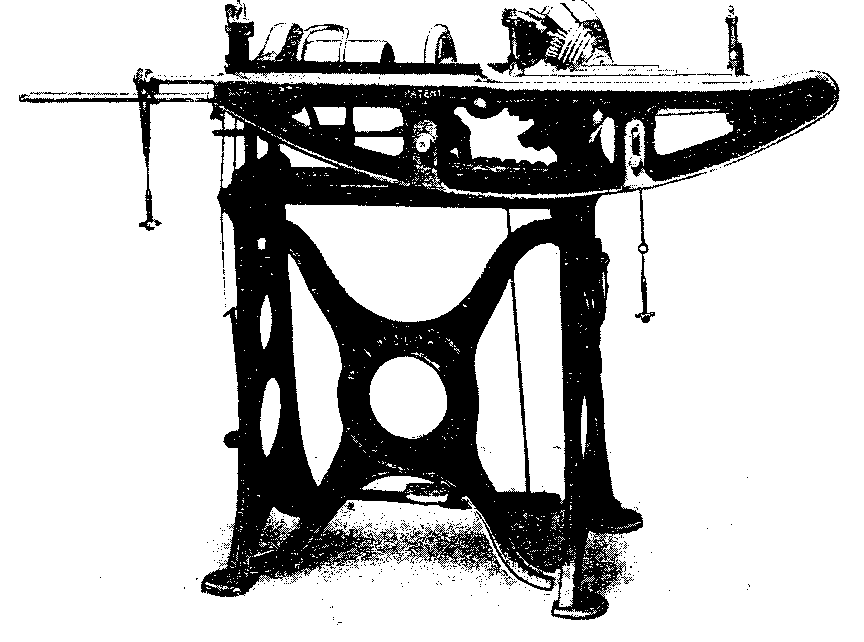
invariably done by the Laing or overhead sewing machine, the
general type of which is illustrated in Fig. 49, and made by Mr.
D. J. Macdonald, South St. Roque's Works, Dundee. This is an
absolutely fast stitch, and approximately 1,000 bags can be sewn
in one day.
The distinctive marks in bags for identification often take
the form of coloured stripes woven in the cloth, and as
illustrated at S, Fig. 32. It is obvious that a
considerable variety can be made by altering the number of the
stripes, their position, and their width, while if different
coloured threads appear in the same cloth, the variety is still
further increased.
Many firms, however, prefer to have their names, trade marks,
and other distinctive features printed on the bags; in these
cases, the necessary particulars are printed on the otherwise
completed bag by a sack-printing machine of the flat-bed or
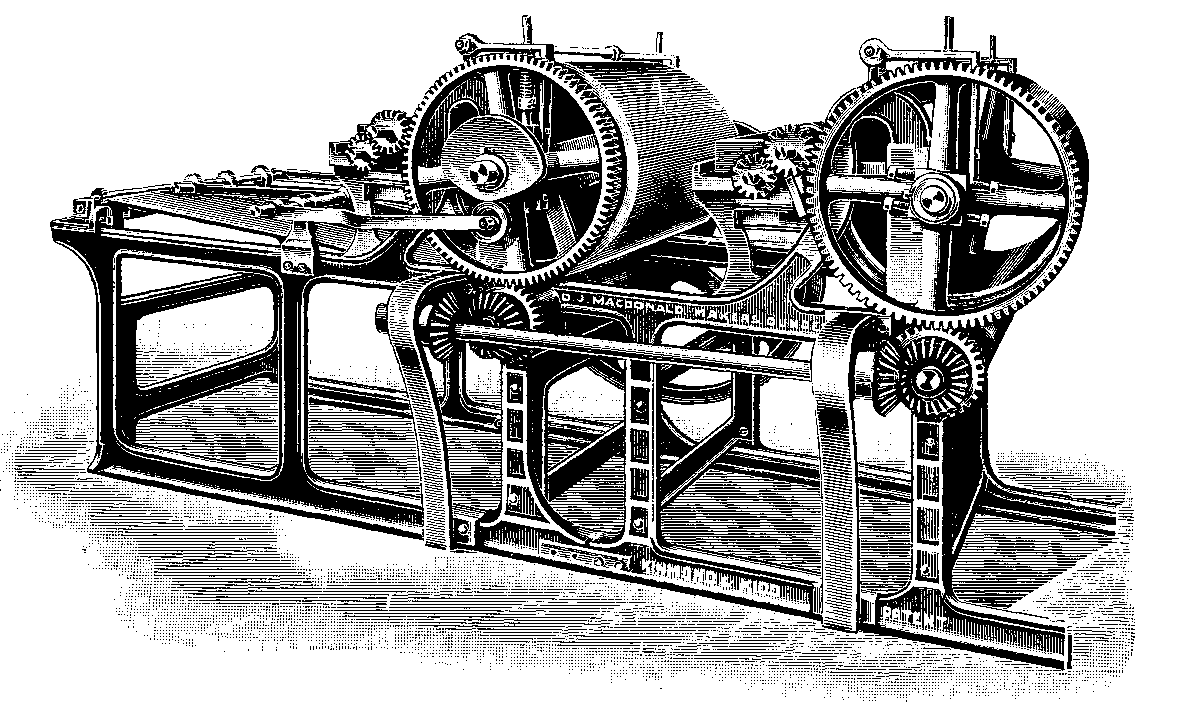
circular roller type. The latter type, which is most largely
used, is illustrated in Fig. 50. It is termed a two-colour
machine, and is made by Mr. D. J. Macdonald, Dundee; it will be
observed that there are two rollers for the two distinct colours,
say red and black. Occasionally three and four-colour machines
are used, but the one-colour type is probably the most
common.
The ownership of the bags can thus be shown distinctly by one
of the many methods of colour printing, and if any firm desires
to number their bags consecutively in order to provide a record
of their stock, or for any other purpose, the bags may be so
numbered by means of a special numbering machine, also made by
Mr. D. J. Macdonald.
The last operation, excluding the actual delivery of the
goods, is that of packing the pieces or bags in small compass by
means of a hydraulic press. The goods are placed on the lower
moving table upon a suitable wrapping of some kind of jute cloth;
when the requisite quantity has been placed thereon, the top and
side wrappers are placed in position, and the pumps started in
order to raise the bottom table and to squeeze the content
between it and the top fixed table. From 1 1/2 ton to 2 tons per
square inch is applied according to the nature of the goods and
their destination. While the goods are thus held securely in
position between the two plates, the wrappers a sewn together.
Then specially prepared hoops or metal bands are placed round the
bale, and an ingenious and simple system, involving a buckle and
two pins, adopted for fastening the bale. The ends of the hoop or
band are bent in a small press, and these bent ends are passed
through a rectangular hole in the buckle and the pins inserted in
the loops. As soon as the hydraulic pressure is removed, the bale
expands slightly, and the buckled hoop grips the bale
securely.
Such is in brief the routine followed in the production of the
fibre, the transformation of this fibre, first into yarn, and
then into cloth, and the use of the latter in performing the
function of the world's common carrier.
- INDEX
- ACCUMULATOR
- Assorting jute fibre.
- BAG-MAKING
- Bale opener
- opening
- Baling cloth
- house
- press
- station
- Bast layer (see also Fibrous layer)
- Batch
- Batchers
- Batching
- apparatus
- carts or stalls
- Batch-ticket
- Beamer's lease
- Beaming
- (dry) direct from bank,
- Blending
- Bobbin winding
- Bojah
- Botanical features of jute plants
- Breaker card
- Brussels carpet
- Bundle of jute.
- CALCUTTA, jute machinery introduced into
- Calender
- finish
- Calenderoy
- Carding
- Card waste
- Cargoes of jute
- Chest finish
- Clasp-rods
- Conditioning fibre
- Cops
- Cop winding
- Corchorus capsularis
- clitorius
- Crisping and crisping machines
- Cropping machine
- Cultivation of jute
- Cutting knife for jute fibre
- Cuttings.
- DAMPING machine
- Defects in fibre and in handling
- Designs or weaves
- Differential motion
- Dobby loom
- Draft
- Drafting
- Drawing
- frames
- different kinds of
- Drawing-in
- Dressing and dressing machine
- Drum
- Drying jute fibre
- Dust shaker.
- EAST India Co.
- Exports of jute from India.
- FABRICS
- Faller
- Farming operations
- Fibres,
- the five main
- imports of jute.
- Fibrous layer
- Finisher card
- Finishing
- folding machine.
- Gaiting
- Glazed finish
- Grading jute fibre
- Gunny bags.
- Hand batching
- Harvesting the plants
- Height of jute plants
- Hydraulic mangle
- press.
- Identification marks on bags
- Imports of jute.
- Jacquard loom
- Jute crop
- exports from India
- fabrics
- fibre, imports of
- industry
- knife
- plants, botanical and physical features of
- cultivation of
- height of
- marks.
- Laddering
- Ladders
- Lapping machine
- Linking machine
- Linoleum
- Looms
- Lubrication of fibre.
- Machine batching
- Machinery for jute manufacture introduced into Calcutta
- Mangle finish
- (hydraulic)
- Marks of jute (see jute marks)
- Maund
- Measuring and marking machine
- machine for cloth
- the warp
- Methods of preparing warps
- Multiple-colour printing machines.
- Numbering machine for bags.
- Opening jute heads
- Overhead runway systems
- sewing machine (Laing's).
- Packing goods
- Physical features of jute plants
- Pin-lease
- Plaiting machine
- Plants, thinning of
- weeding of
- Ploughs for jute cultivation
- Point-paper designs
- Porcupine feed
- Printing machine.
- Reach
- Reeling
- Retting
- Roller-feed
- Rolls
- Root-comber
- opener
- Round-thread finish
- Rove
- Roving frame
- Roxburgh, Dr.
- Sack-cutting frame, semi-mechanical
- Sack making
- printing machine
- Sand bags
- Seed
- per acre, amount of
- sowing of
- Sewing machines
- Shell-feed
- Short-tell
- Snipping machine
- Softening machines
- Spinning
- Spool or roll winding
- Spools (see Rolls)
- Standard bale
- Starching (see Dressing)
- Steeping (see Retting)
- Striker-up (see Batcher)
- Stripping
- Systems.
- Teazer
- Tell (of yarn)
- Thinning of plants
- Thrum
- Time for harvesting the plants
- Tube-twisters
- Twist
- Twisting
- Two-colour printing machine
- Tying-on
- Typical jute fabrics.
- Union Or Yankee sewing machine
- Unloading bales of jute from ship.
- Variations in jute
- Varieties of jute fibre
- plants.
- Warp
- Warp dressing (see Dressing)
- Warping, beaming and dressing
- mill
- Washing
- Waste
- teazer
- Weaves or designs
- Weaving
- Weaver's lease
- Weeding of plants
- Weft
- winding
- Wilton carpet
- Winding (bobbin) machine
- from hank
- (large roll) machine
- (ordinary size from hanks) machine
- rolls and cops
- World's great war.
- Yankee or Union sewing machine
- Yarn table
- Yield of fibre.
Advertisement: Thomas Hart, LTD.; DAVID KEAY &
LESLIE"
Advertisement: ROYLES LIMITED.
Advertisement: D. J. MACDONALD C.E., M. I.M. ECH.E.
Advertisement: ROBERTSON & ORCHAR, LTD.
Advertisement: WHITE, CHILD & BENEY, LIMITED
Advertisement: THE BRITISH NORTHROP LOOM CO., LTD.
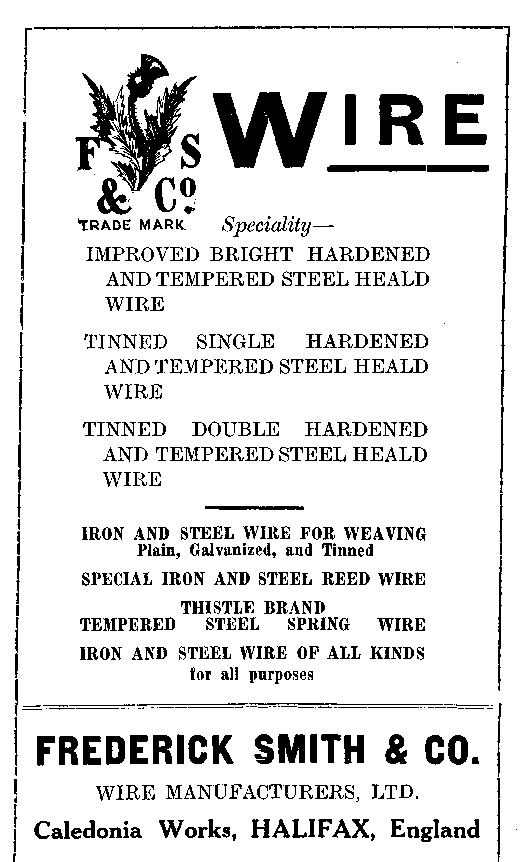
Advertisement: FREDERICK SMITH & CO.
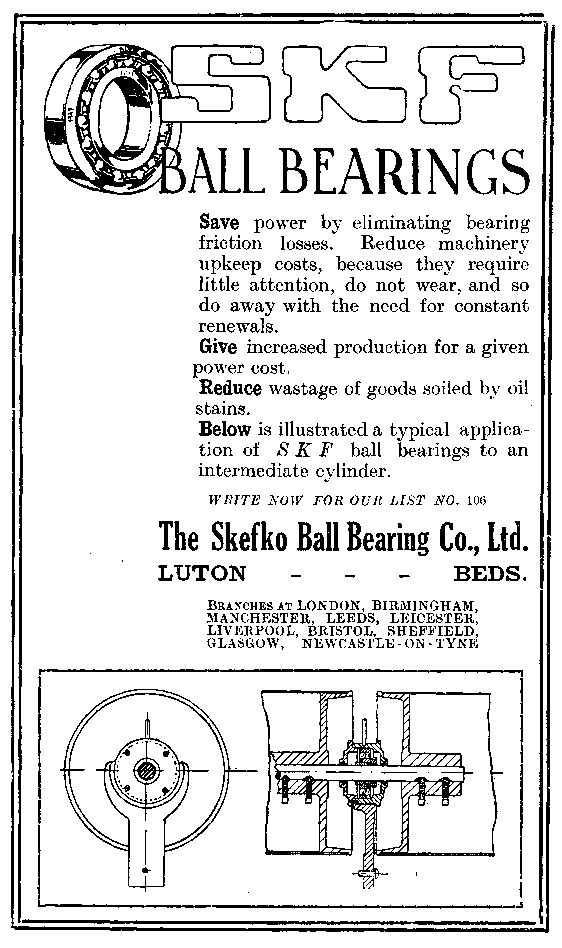
Advertisement: THE SKEFKO BALL BEARING CO., LTD.
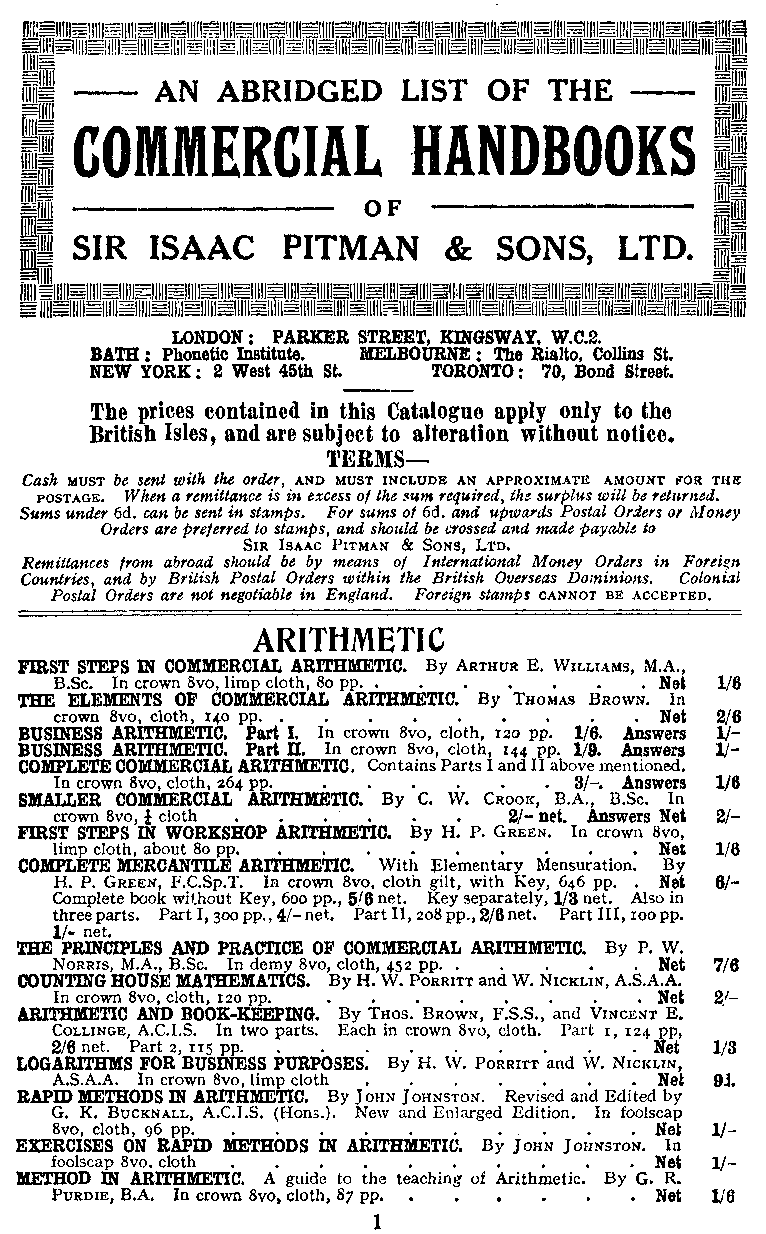
Advertisement: PITMAN HANDBOOKS: ARITHMETIC
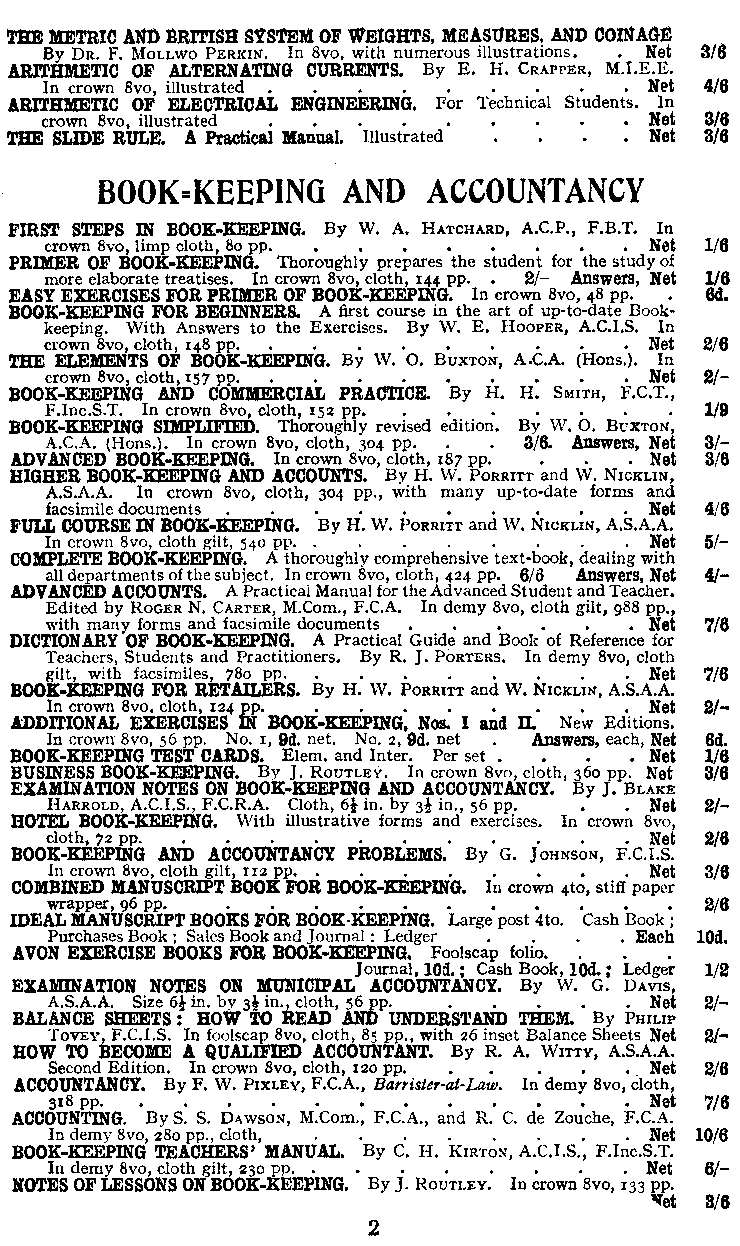
Advertisement: PITMAN HANDBOOKS: BOOK-KEEPING &
ACCOUNTANCY
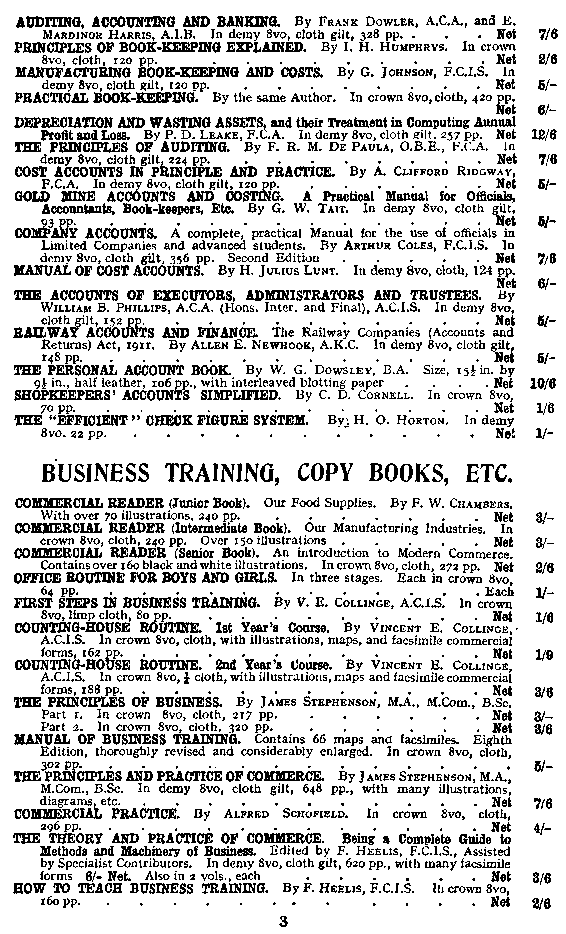
Advertisement: PITMAN HANDBOOKS: BUSINESS TRAINING
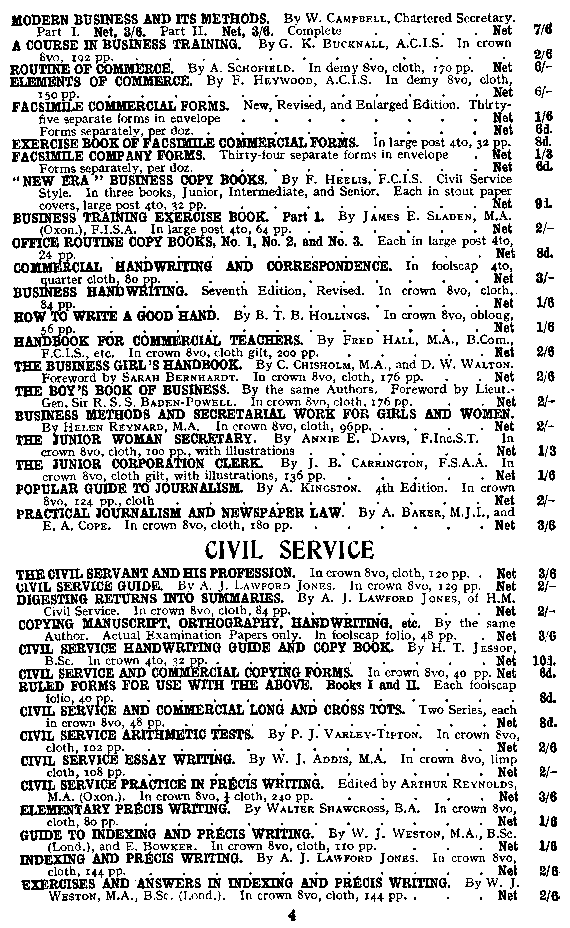
Advertisement: PITMAN HANDBOOKS: CIVIL SERVICE
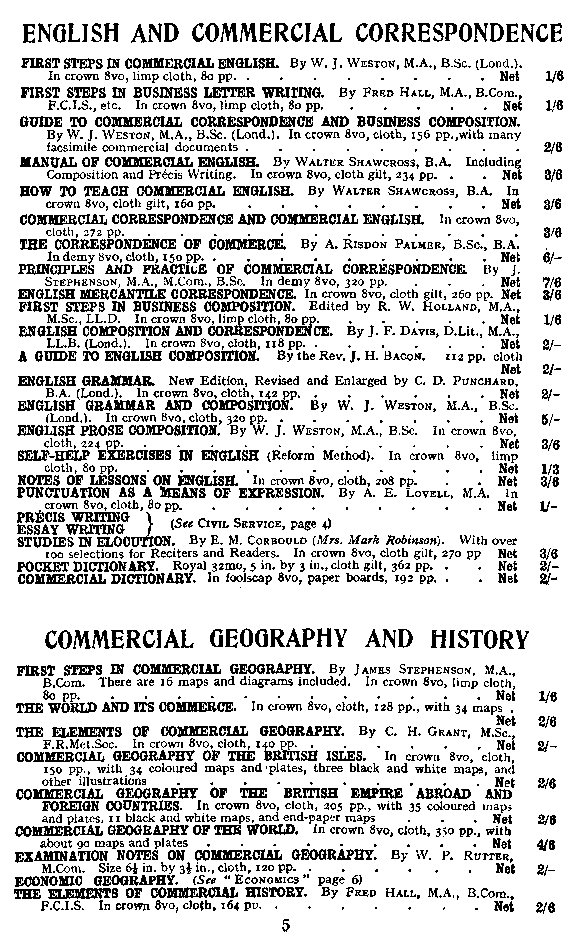
Advertisement: PITMAN HANDBOOKS: ENGLISH, HISTORY
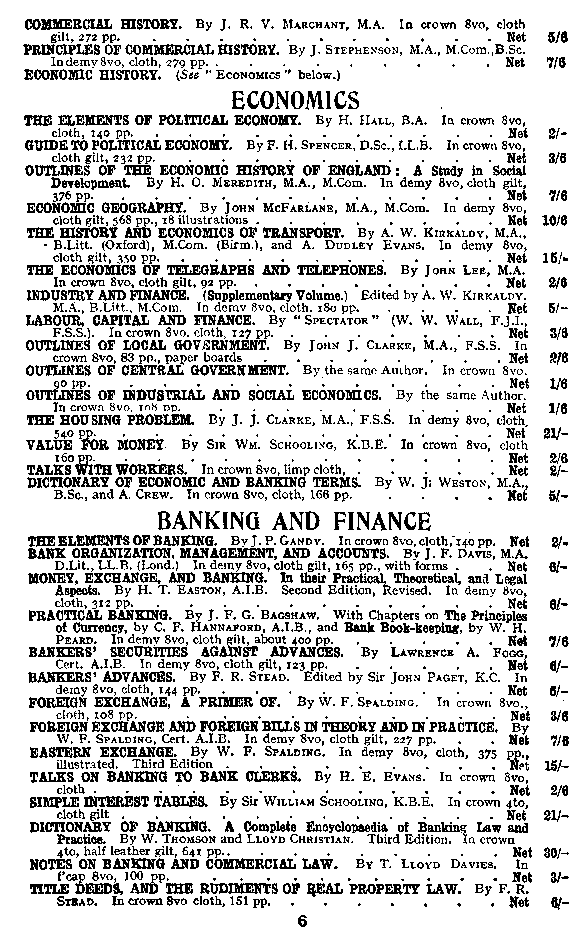
Advertisement: PITMAN HANDBOOKS: ECONOMICS, BANKING
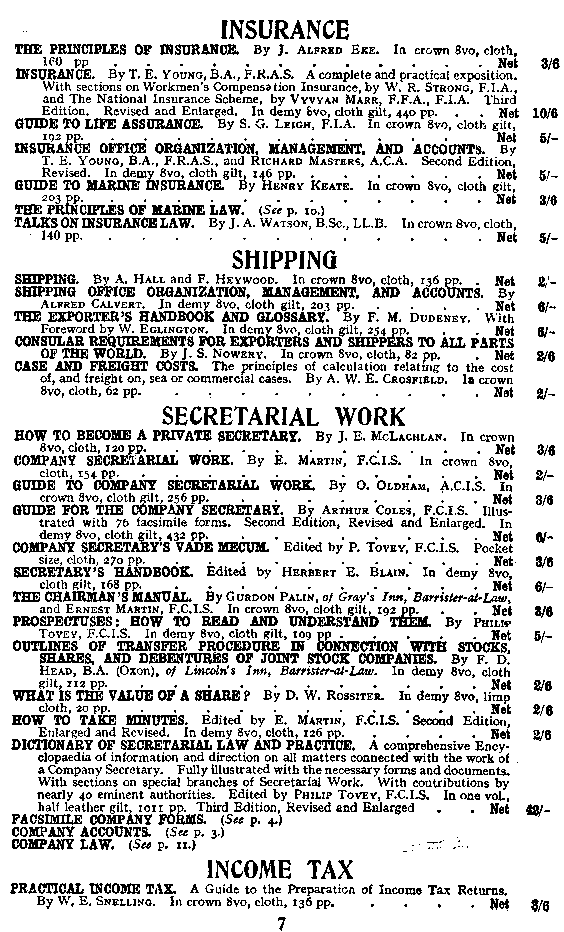
Advertisement: PITMAN HANDBOOKS: INSURANCE, SHIPPING, INCOME
TAX
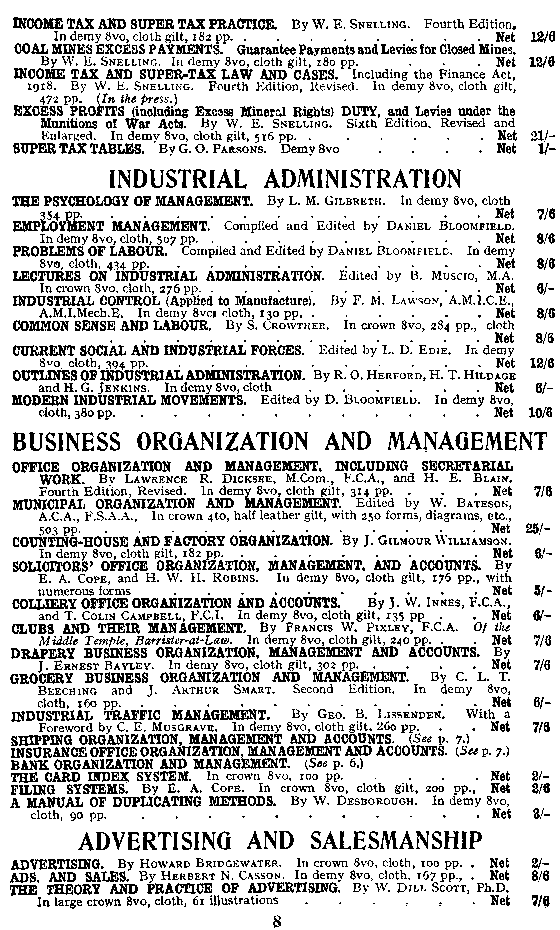
Advertisement: PITMAN HANDBOOKS: ADMINISTRATION,
ADVERTISING
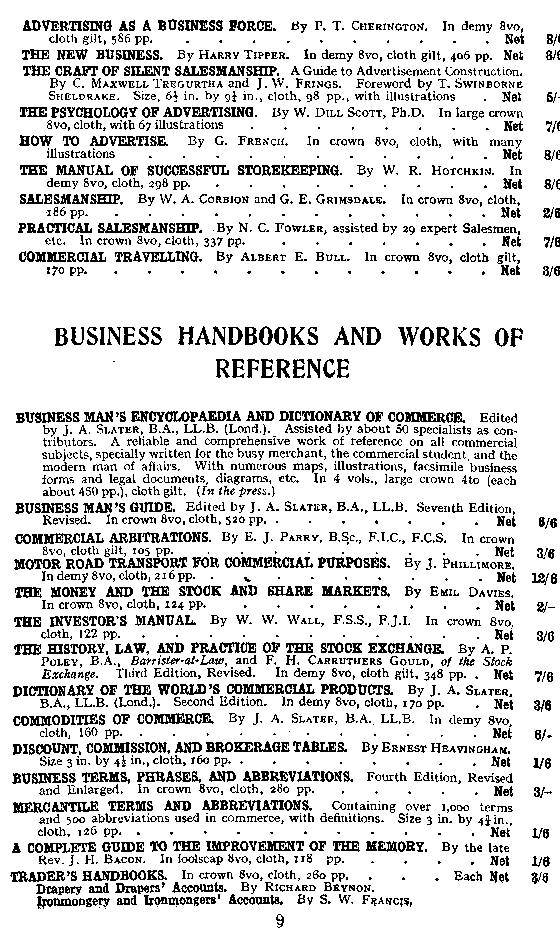
Advertisement: PITMAN HANDBOOKS: HANDBOOKS, REFERENCE
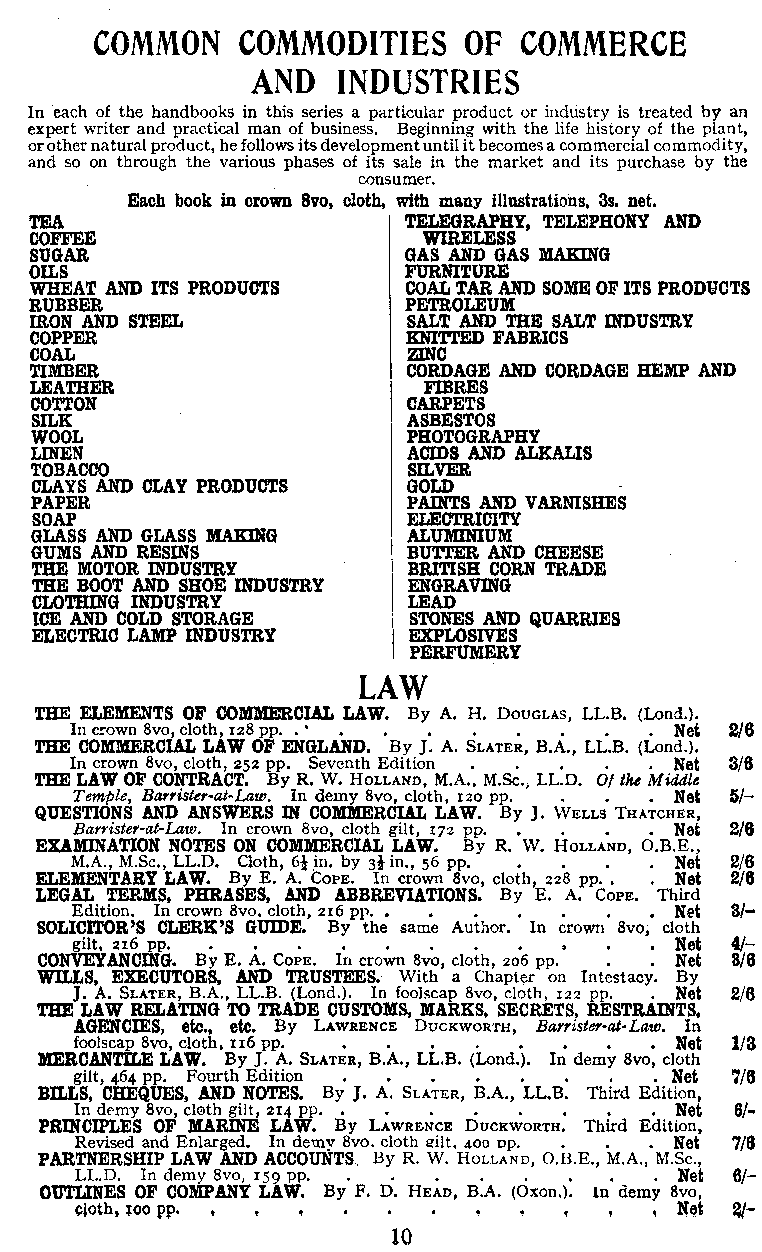
Advertisement: PITMAN HANDBOOKS: COMMODITIES, LAW
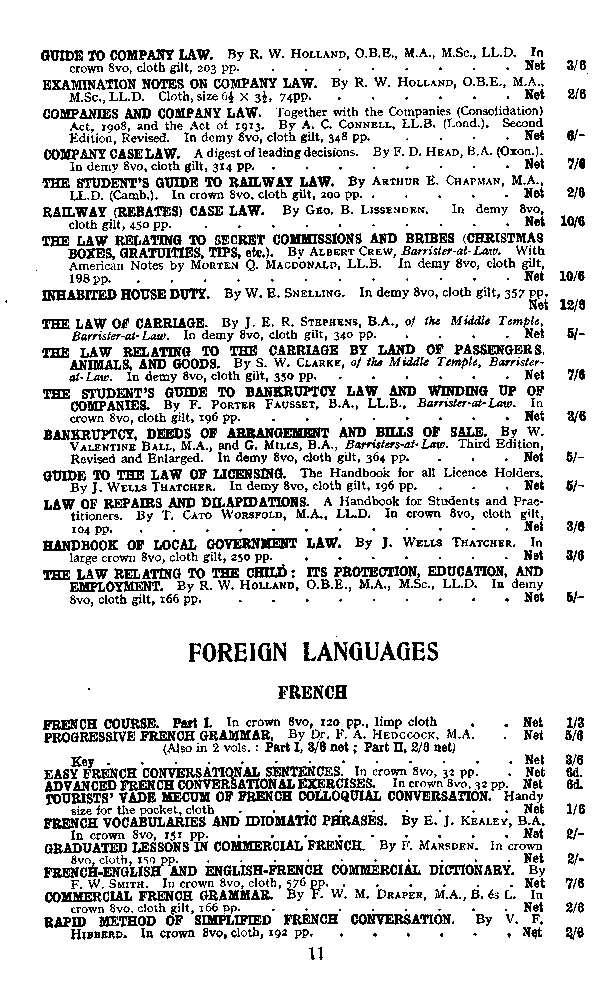
Advertisement: PITMAN HANDBOOKS: FRENCH
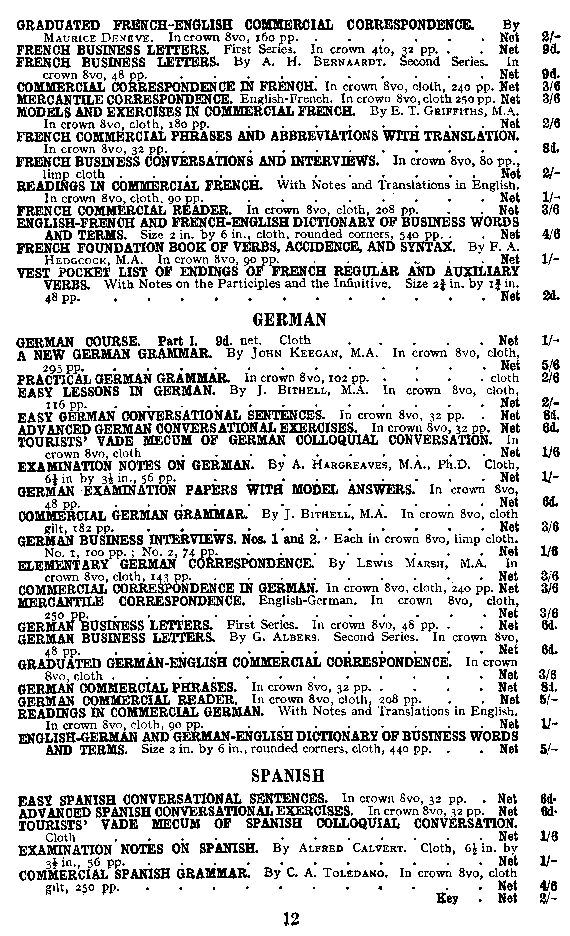
Advertisement: PITMAN HANDBOOKS: GERMAN, SPANISH
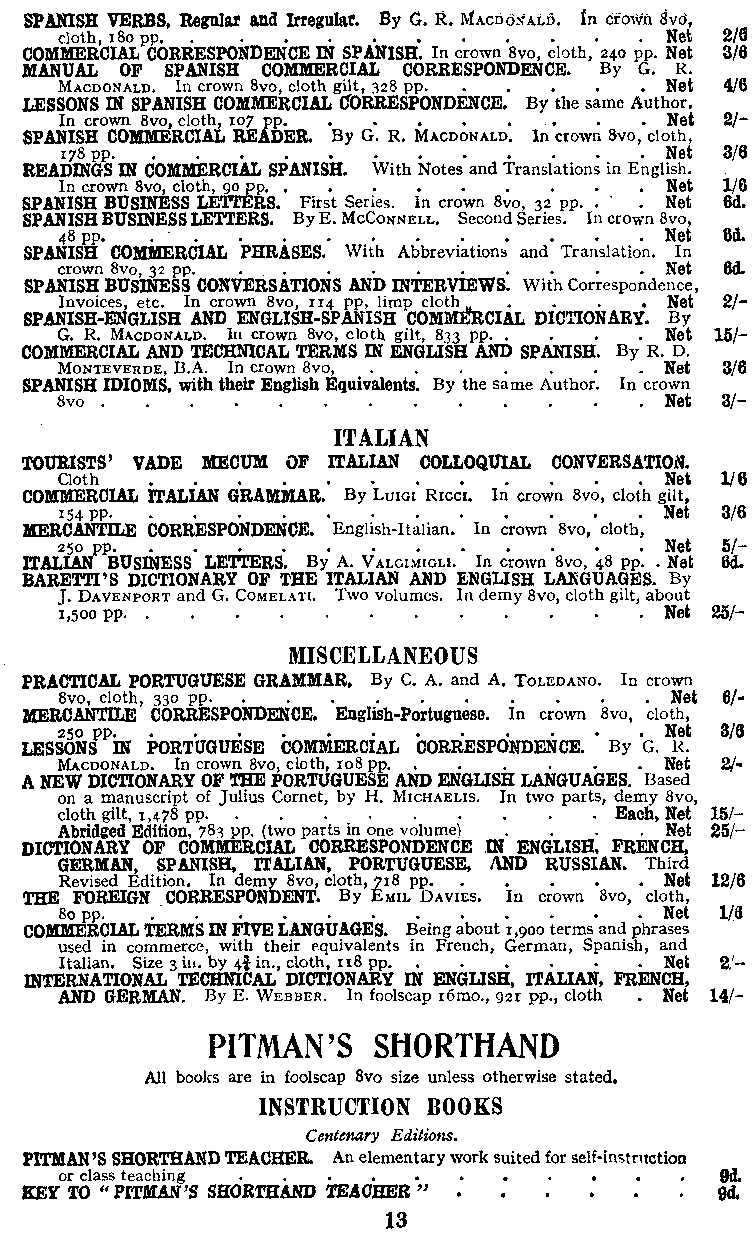
Advertisement: PITMAN HANBOOKS: ITALIAN, SHORTHAND
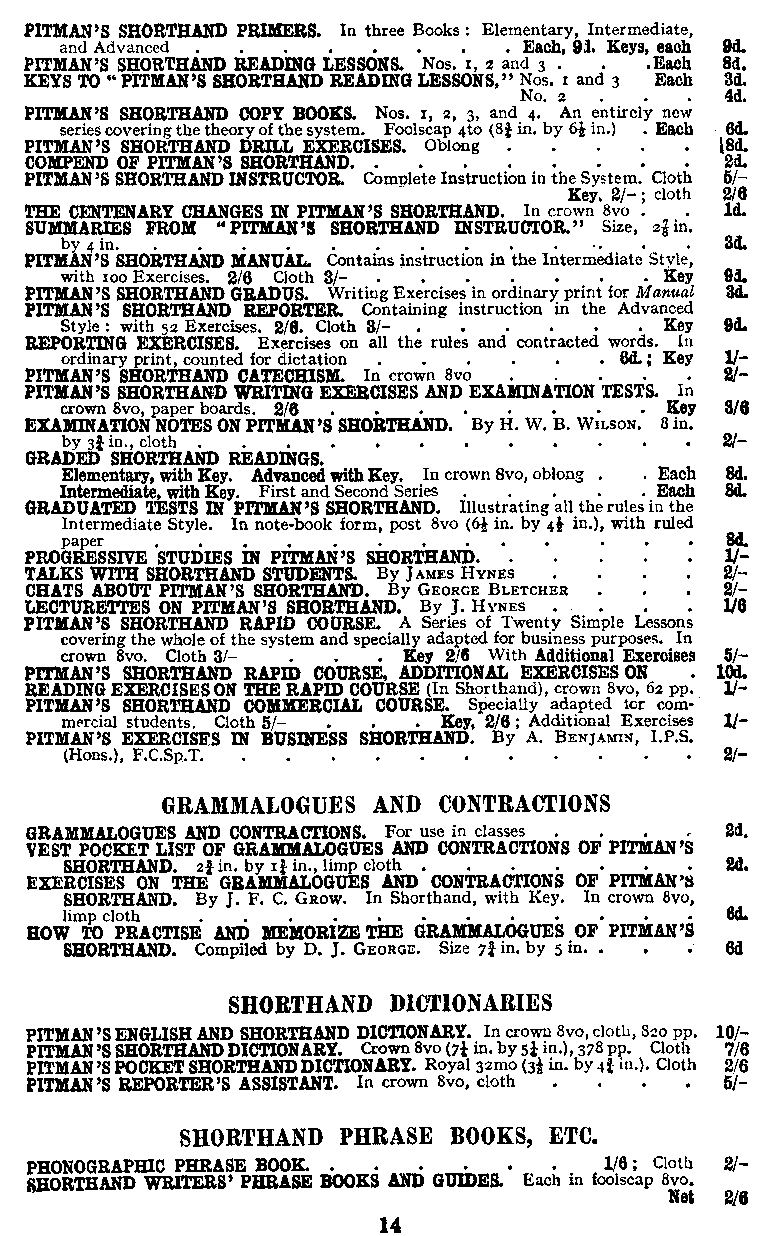
Advertisement: PITMAN HANDBOOKS: SHORTHAND DICTIONARIES,
PHRASES
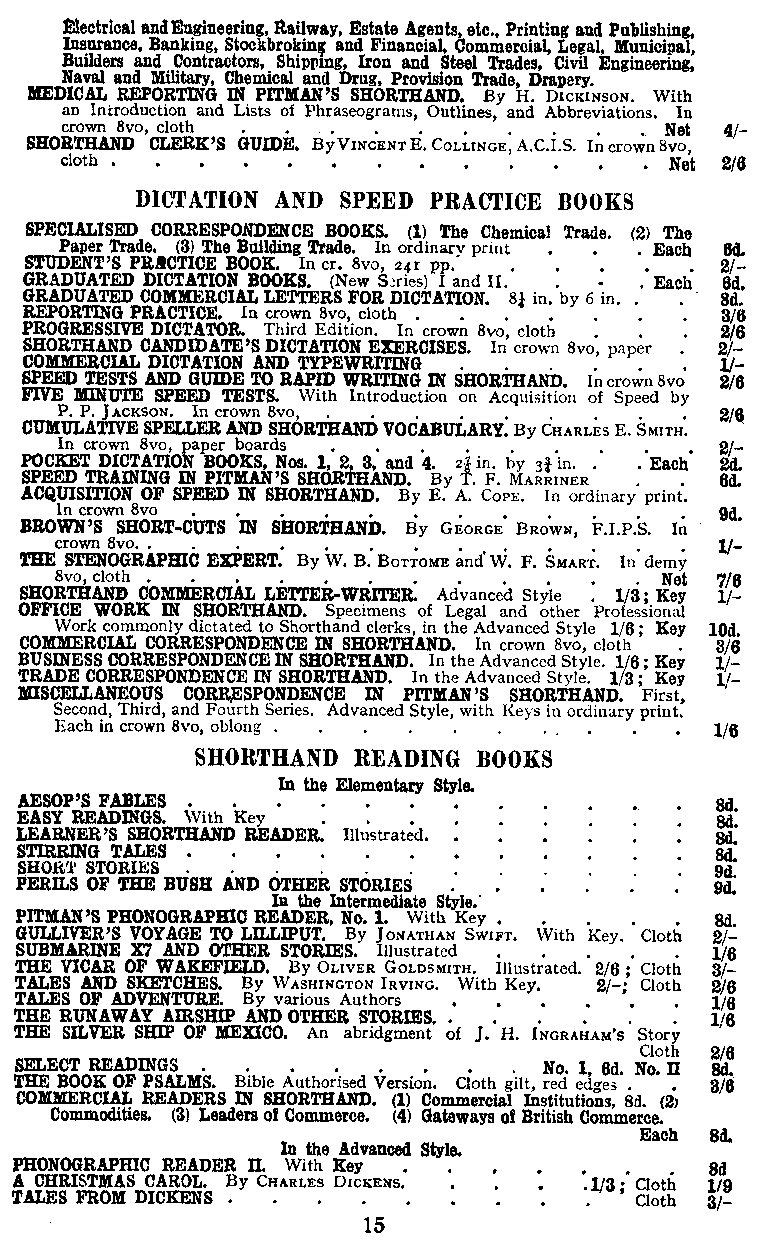
Advertisement: PITMAN HANDBOOKS: SHORTHAND SPEED PRACTICE,
READING
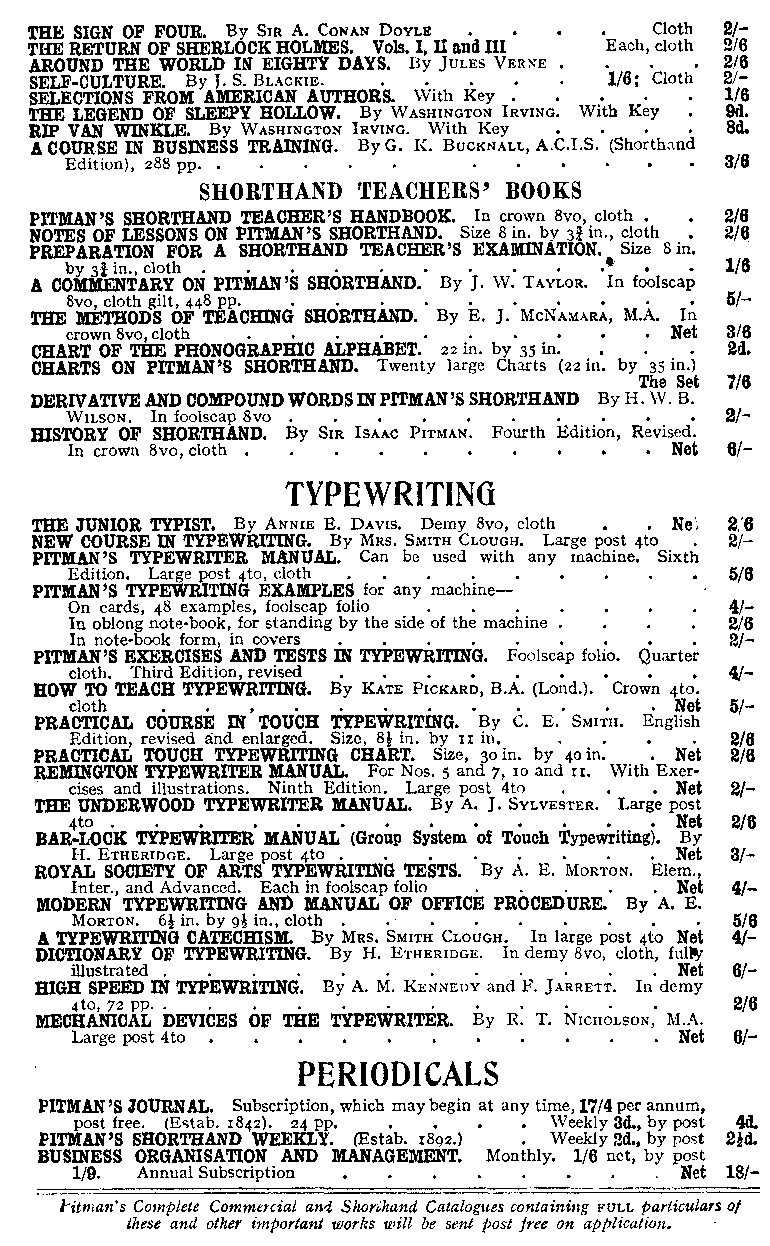
Advertisement: PITMAN HANDBOOKS: TEACHING, TYPEWRITING,
PERIODICALS
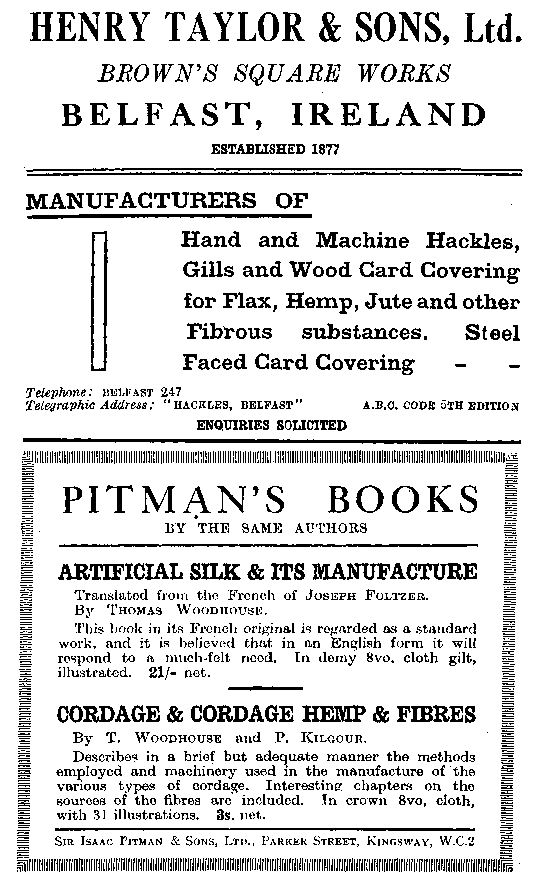
Advertisement: HENRY TAYLOR & SONS, LTD., PITMAN'S
BOOKS

Advertisement: THOS. BROADBENT & SONS, LTD.


