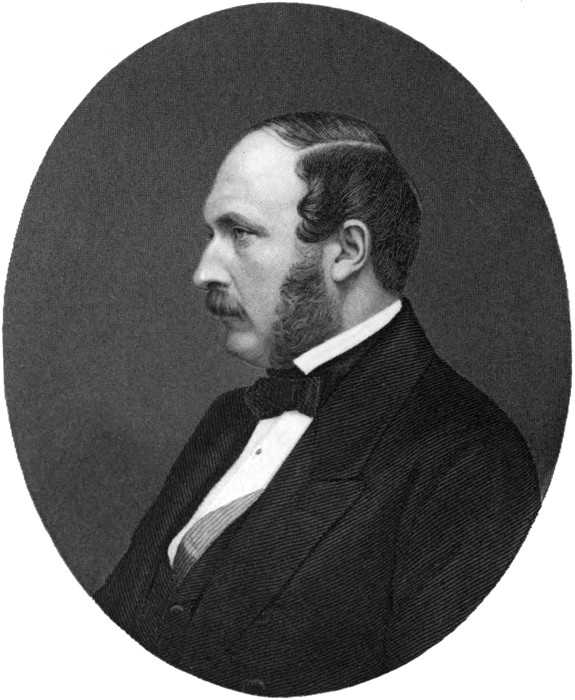
I have been induced to preside at the
Meeting of this Society, from a conviction
of its paramount importance to the great interests
of humanity and justice.
I deeply regret that the benevolent and persevering
exertions of England to abolish that
atrocious traffic in human beings (at once the
desolation of Africa and the blackest stain upon
civilized Europe) have not as yet led to any
satisfactory conclusion. But I sincerely trust that
this great country will not relax in its efforts
until it has finally, and for ever, put an end
to a state of things so repugnant to the spirit
of Christianity, and the best feelings of our
nature.
82Let us therefore trust that Providence will
prosper our exertions in so holy a cause, and
that (under the auspices of our Queen and Her
Government) we may at no distant period be
rewarded by the accomplishment of the great
and humane object for the promotion of which
we have this day met.
AT THE MEETING OF THE SOCIETY FOR IMPROVING THE CONDITION OF THE LABOURING CLASSES. [ MAY 18th , 1848.]
87
Ladies and Gentlemen,—
When four years since this Society for the
Improvement of the Condition of the
Labouring Classes was first established on its
present footing, I accepted with great pleasure
the offer of becoming its President.
I saw in this offer a proof of your appreciation
of my feelings of sympathy and interest for that
class of our community which has most of the
toil, and least of the enjoyments, of this world.
I conceived that great advantage would accrue
from the endeavours of influential persons, who
were wholly disinterested, to act the part of a
friend to those who required that advice and
assistance which none but a friend could tender
with advantage.
This Society has always held this object before
88its eyes, and has been labouring in that direction.
You are all aware that it has established model
lodging-houses, loan-funds, and the system of
allotments of ground in different parts of the
country; but it has been careful only to establish
examples and models, mindful that any real improvement
which was to take place must be the
result of the exertions of the working people
themselves.
I have just come from the model lodging-house,
the opening of which we celebrate this
day; and I feel convinced that its existence will,
by degrees, cause a complete change in the
domestic comforts of the labouring classes, as it
will exhibit to them, that with real economy can
be combined advantages with which few of them
have hitherto been acquainted; whilst it will
show to those who possess capital to invest, that
they may do so with great profit and advantage
to themselves, at the same time that they are
dispensing those comforts to which I have
alluded, to their poorer brethren.
Depend upon it, the interests of classes too
often contrasted are identical, and it is only
ignorance which prevents their uniting for each
other’s advantage. To dispel that ignorance, to
show how man can help man, notwithstanding
89the complicated state of civilized society, ought
to be the aim of every philanthropic person; but
it is more peculiarly the duty of those who,
under the blessing of Divine Providence, enjoy
station, wealth, and education.
Let them be careful, however, to avoid any
dictatorial interference with labour and employment,
which frightens away capital, destroys that
freedom of thought and independence of action
which must remain to every one if he is to work
out his own happiness, and impairs that confidence
under which alone engagements for
mutual benefit are possible.
God has created man imperfect, and left him
with many wants, as it were to stimulate each to
individual exertion, and to make all feel that it
is only by united exertions and combined action
that these imperfections can be supplied, and
these wants satisfied. This presupposes self-reliance
and confidence in each other. To show
the way how these individual exertions can be
directed with the greatest benefit, and to foster
that confidence upon which the readiness to
assist each other depends, this Society deems its
most sacred duty.
There has been no ostentatious display of
charity or munificence, nor the pretension of
90becoming the arbiter of the fate of thousands,
but the quiet working out of particular schemes
of social improvement; for which, however, as I
said before, the Society has only established examples
for the community at large to follow.
The report of the proceedings of last year will
now be laid before you.
I must say—I hope I may say—that the Society
has proceeded satisfactorily towards the accomplishment
of its objects; and that is owing
particularly to the kind feelings, the great experience,
and undoubted zeal of Lord Ashley.
The next step which we contemplate taking is
the erection of a model lodging-house for families.
I have no doubt that the meeting will enable us
to carry out that step, and that the attention of
the public will be more generally directed to the
objects which we have in view.
AT THE MEETING OF THE ROYAL AGRICULTURAL SOCIETY. [HELD AT YORK, JULY 13th , 1848.]
91
Gentlemen,—
I have to thank you most sincerely for your
having drunk my health with so much cordiality.
It has been a great satisfaction to me to
have been able this year to pay an old debt in
appearing at this interesting and useful meeting.
All I have seen to-day exhibits a bright picture
of the progress of British agriculture, and
for much of this progress the country is indebted
to this Society.
Agriculture, which was once the main pursuit
of this as of every other nation, holds even now,
notwithstanding the development of commerce
and manufactures, a fundamental position in the
realm; and although time has changed the position
which the owner of the land, with his feudal
dependants, held in the empire, the country
gentleman with his wife and children, the country
clergyman, the tenant, and the labourer, still
92form a great, and I hope united, family, in which
we gladly recognize the foundation of our social
state.
Science and mechanical improvement have in
these days changed the mere practice of cultivating
the soil into an industrial pursuit, requiring
capital, machinery, industry, and skill, and
perseverance in the struggle of competition.
This is another great change, but we must consider
it a great progress, as it demands higher
efforts and a higher intelligence.
Conscious of these changes, we Agriculturists
of England assemble together in this annual
meeting of the Royal Agricultural Society, in
order to communicate to each other our various
experiences, to exhibit the progress that some
may have made in the applications of science,
and others in the adaptation of machinery, or in
the successful rearing of animals.
Feeling, as I do, a great interest in these noble
pursuits and their paramount importance, and
having myself experienced the pleasures and the
little pangs attending them, I feel highly gratified
that it should have been confided to me to
propose to you the toast of the day, “Success to
the Royal Agricultural Society of England;”
and I trust that you will heartily respond to it.
AT THE LAYING OF THE FIRST STONE OF THE GREAT GRIMSBY DOCKS. [ APRIL 18th , 1849.]
93
My Lord,[4]—
I thank you most sincerely for the kind
terms in which you have proposed my health,
and you, gentlemen, for the cordial manner in
which you have received it.
The act which has this day been performed,
and in which you were kind enough to desire
that I should take the chief part, could not but
make a deep impression upon me.
We have been laying the foundation not only
of a Dock, as a place of refuge, safety, and refitment
for mercantile shipping, and calculated even
to receive the largest steamers in Her Majesty’s
Navy, but it may be, and I hope it will be, the
foundation of a great commercial port, destined
in after times, when we shall long have quitted
this scene, and when our names even may be
forgotten, to form another centre of life to the
94vast and ever-increasing commerce of the world,
and an important link in the connection of the
East and the West. Nay, if I contemplate the
extraordinary rapidity of development which characterizes
the undertakings of this age, it may not
even be too much to expect that some of us may
live yet to see this prospect in part realized.
This work has been undertaken, like almost
all the national enterprises of this great country,
by private exertion, with private capital, and at
private risk; and it shares with them likewise
that other feature so peculiar to the enterprises
of Englishmen, that, strongly attached as they
are to the institutions of their country, and
gratefully acknowledging the protection of those
laws under which their enterprises are undertaken
and flourish, they love to connect them, in
some manner, directly with the authority of the
Crown and the person of their Sovereign; and
it is the appreciation of this circumstance which
has impelled me at once to respond to your call,
as the readiest mode of testifying to you how
strongly Her Majesty the Queen values and reciprocates
this feeling.
I have derived an additional gratification from
this visit, as it has brought me for the first time
to the county of Lincoln, so celebrated for its
95agricultural pursuits, and showing a fine example
of the energy of the national character, which
has, by dint of perseverance, succeeded in transforming
unhealthy swamps into the richest and
most fertile soil in the kingdom. I could not
have witnessed finer specimens of Lincolnshire
farming than have been shown to me on his
estates by your Chairman, my noble host, who
has made me acquainted, not only with the
agricultural improvements which are going on
amongst you, but with that most gratifying state
of the relation between Landlord and Tenant
which exists here, and which I hope may become
an example, in time to be followed throughout
the country. Here it is that the real advantage
and the prosperity of both do not depend upon
the written letter of agreements, but on that
mutual trust and confidence which has in this
country for a long time been held a sufficient
security to both, to warrant the extensive outlay
of capital, and the engagement in farming
operations on the largest scale.
Let me, in conclusion, propose to you as a
toast, “Prosperity to the Great Grimsby Docks;”
and let us invoke the Almighty to bestow His
blessing on this work, under which alone it can
prosper.
AT THE PUBLIC MEETING OF THE SERVANTS’ PROVIDENT AND BENEVOLENT SOCIETY. [ MAY 16th , 1849.]
96
Gentlemen,—
The object for which we have assembled here
to-day is not one of charity, but of friendly
advice and assistance to be tendered to a large
and important class of our fellow-countrymen.
Who would not feel the deepest interest in the
welfare of their Domestic Servants? Whose
heart would fail to sympathize with those who
minister to us in all the wants of daily life, attend
us in sickness, receive us upon our first appearance
in this world, and even extend their cares
to our mortal remains, who live under our roof,
form our household, and are a part of our
family?
And yet upon inquiry we find that in this
metropolis the greater part of the inmates of the
workhouse are domestic servants.
I am sure that this startling fact is no proof
97either of a want of kindness and liberality in
masters towards their servants, or of vice in the
latter, but is the natural consequence of that
peculiar position in which the domestic servant
is placed, passing periods during his life in which
he shares in the luxuries of an opulent master,
and others in which he has not even the means
of earning sufficient to sustain him through the
day.
It is the consideration of these peculiar vicissitudes
which makes it the duty of both masters
and servants to endeavour to discover and to
agree upon some means for carrying the servant
through life, safe from the temptations of the
prosperous, and from the sufferings of the evil
day. It is on that account that I rejoice at this
meeting, and have gladly consented to take the
chair at it, to further the objects of the “Servants’
Provident and Benevolent Society.”
I conceive that this Society is founded upon a
right principle, as it follows out the dictates of
a correct appreciation of human nature, which
requires every man, by personal exertion, and
according to his own choice, to work out his own
happiness; which prevents his valuing, nay, even
his feeling satisfaction at, the prosperity which
others have made for him. It is founded upon a
98right principle, because it endeavours to trace
out a plan according to which, by providence, by
present self-denial and perseverance, not only
will the servant be raised in his physical and
moral condition, but the master also will be
taught how to direct his efforts in aiding the
servant in his labour to secure to himself resources
in cases of sickness, old age, and want of
employment. It is founded on a right principle,
because in its financial scheme there is no temptation
held out to the servant by the prospect of
possible extravagant advantages, which tend
to transform his providence into a species of
gambling; by convivial meetings, which lead him
to ulterior expense; or by the privilege of balloting
for the few prizes, which draws him into
all the waste of time and excitement of an electioneering
contest.
Such are the characteristics of several institutions,
upon which servants and many of our
other industrial classes place their reliance. And
what can be more heartrending than to witness
the breaking of banks, and the failure of such
institutions, which not only mar the prospects
of these unhappy people, and plunge them into
sudden destitution, but destroy in others all
confidence in the honesty or sagacity of those
99who preach to them the advantages of providence?
Let them well consider that, if they must embark
in financial speculations, if they like to
have convivial meetings, if they claim the right
of governing the concerns of their own body,
they must not risk for this, in one stake, their
whole future existence, the whole prosperity of
their families. Let them always bear in mind,
that their savings are capital, that capital will
only return a certain interest, and that any
advantage offered beyond that interest has to
be purchased at a commensurate risk of the
capital itself.
The financial advantages which this Society
holds out to servants rest upon the credit of the
country at large, upon the faith of the Government,
and are regulated by an Act of Parliament,
called “the Deferred Annuities Act.” They are
shortly these: “According to published tables,
which I have before me, persons, whose fixed
income is below 150l. per annum, can, by small
instalments, purchase annuities deferred not less
than ten years, but beyond that limit to commence
at any period the depositor may name.
One annuity cannot be more than 30l., but he
may purchase distinct annuities for his wife, or
100for his children on having attained to their
fifteenth year. Should he at any time wish to
withdraw his deposits before the annuity has
commenced, they will be returned to him;
should he die before that period, the deposits
will be returned to the heirs. In such cases
the only loss will be the interest upon the
money deposited.”
Although this wise and benevolent measure
has been enacted so long ago as the third year
of the reign of King William IV., I find, to my
deep regret, that, during that whole time, only
about 600 persons have availed themselves of its
provisions. I can discover no other reason for
this inadequate success, but that the existence of
the Act is not generally known, or that people
are afraid of law and Acts of Parliament, which
they cannot understand on account of their
complicated technical wording. I have heard
another reason stated, to which, however, I give
little credit, namely, that servants fear lest a
knowledge that they are able to purchase annuities
by savings from their wages might induce
their masters to reduce them. I have a better
opinion of the disposition of employers generally,
and am convinced that, on the contrary, nothing
counteracts more the liberality of masters than
101the idea, not wholly unfounded, that an increase
of means, instead of prompting to saving, leads
to extravagance.
It is one of the main objects of this meeting to
draw public attention to this “Deferred Annuities
Act,” and the main object of this Society is to
form a medium by which servants may acquire
the benefits proffered by it free from risk, cost,
or trouble.
The other objects are: to provide a home for
female servants out of place, the usefulness of
which hardly requires a word of commendation;
to provide respectable lodgings for men-servants
not lodged by their masters; and to establish a
Registry for domestic servants generally, which
will form as well a place of advertisement for
their services, as a record of their characters,
from which they can be obtained upon application.
Any one who is acquainted with the annoyances
and inconveniences connected with the
present system of “characters to servants,” will
at once see the importance of the introduction of
a system by which the servant will be protected
from that ruin which the caprice of a single
master (with whom he may even have lived for
a short time only) may inflict upon him, and the
102master from the risk to which a character wrung
from a former weak master, by the importunities
of an undeserving servant, may expose him.
Nor is it a small benefit to be conferred upon the
servant, to enable him, by appealing to a long
record of former services, to redeem the disqualification
which a single fault might bring
upon him.
Should we only succeed in inducing the public
at large to consider all these points, we shall
have the satisfaction of having furthered the
interests of a class which we find recorded in
the Report of the last Census as the most
numerous in the British population.
I shall now call upon the Secretary to lay
before you more in detail the points which I
have slightly touched upon.
AT THE ENTERTAINMENT GIVEN BY THE MERCHANT TAILORS’ COMPANY. [ JUNE 11th , 1849.]
103
Gentlemen,—
I thank you sincerely for your expressions
of kindness and cordiality towards me.
Although I have on former occasions met you
in this room, it has always been for some charitable
purpose, witnessing with delight the readiness
with which this, and indeed all the great
corporations of London, open the doors of their
magnificent Halls at the call of charity. To-day
I am here as a Brother Freeman of your Corporation,
fulfilling a promise made from the time
that you received me into your body. I am
ashamed to own how long ago. I beg you not
to measure, by the tardiness of my appearance,
the value which I attach to the honour which
you then conferred upon me, by electing me a
Freeman of the Merchant Tailors’ Company.
I remember well with what regret, when,
shortly after I came of age, the Companies of the
104Goldsmiths and of the Fishmongers offered me
their freedom, I found myself compelled to
decline this honour, being informed that, identified
as they were by historical tradition, and
still representing two opposite political parties, I
could make a choice only of one of them, and,
fully sensible that, like the Sovereign to whom I
had just been united, and to devote my whole
existence to whom it had become my privilege,
I could belong only to the nation at large, free
from the trammels and above the dissensions of
political parties.
I well remember, too, how much pleased I
was when the two Companies, waiving some of
their statutes, finally agreed both to receive me
amongst them; and my satisfaction is heightened
when I consider that I owe to that decision the
advantage of finding myself associated with you
also.
Anybody may indeed feel proud to be enrolled
a member of a Company which can boast of
uninterrupted usefulness and beneficence during
four centuries, and holds to this day the same
honourable position in the estimation of the
country which it did in the time of its first formation,
although the progress of civilization
and wealth has so vastly raised the community
105around it, exemplifying the possibility, in this
happy country, of combining the general progress
of mankind with a due reverence for the
institutions, and even forms, which have been
bequeathed to us by the piety and wisdom of our
forefathers.
Let us join in the hope that this Corporation
may continue in its charitable functions to be
equally an object of respect to our children and
children’s children, and so drink “Prosperity to
the Merchant Tailors’ Company.”
ON PRESENTING COLOURS TO THE 23rd REGIMENT , ROYAL WELSH FUSILIERS. [ JULY 12th , 1849.]
106
Soldiers of the Royal Welsh Fusiliers,
The ceremony which we are performing this
day is a most important, and, to every
soldier, a sacred one. It is the transmission to
your care and keeping of the Colours which are
henceforth to be borne before you, which will be
the symbol of your honour, the rallying point in
all moments of danger.
I feel most proud to be the person who is to
transmit these Colours to a Regiment so renowned
for its valour, fortitude, steadiness, and
discipline.
In looking over the records of your services, I
could not refrain from extracting a few, which
show your deeds to have been intimately connected
with all the great periods in our history.
The Regiment was raised in 1688. Its existence
therefore began with the settlement of the liberties
of the country. It fought at the Boyne
107under Schomberg; captured Namur in Flanders
in 1693; formed part of the great Marlborough’s
legions at Blenheim and Oudenarde; fought in
1742 at Dettingen and Fontenoy; decided the
battle of Minden in 1751, for which the name
of Minden is inscribed on the colours; showed
examples of valour and perseverance in America
in 1773, at Boston, Charlestown, Brandywine,
and Edgehill; accompanied the Duke of York
to Holland; was amongst the first to land in
Egypt, under the brave Abercrombie, and, later,
the last to embark at Corunna; but between
these two important services fought at Copenhagen,
and at the taking of Martinique. Egypt,
Martinique, and Corunna are waving in these
Colours. In the Peninsula the Regiment won
for their Colours, under the Duke, the names of
Albuera, Badajoz, Salamanca, Vittoria, Pyrenees,
Nivelles, Orthes, and Toulouse. The deeds performed
at Albuera are familiar to everybody
who has read Napier’s inimitable description of
that action. The Regiment was victorious for
the last time over a powerful enemy at the Duke’s
last great victory at Waterloo.
Although you were all of course well acquainted
with these glorious records, I have
thought it right to refer to them as a proof that
108they have not been forgotten by others, and
as the best mode of appealing to you to show
yourselves at all times worthy of the name you
bear.
Take these Colours, one emphatically called
the Queen’s (let it be a pledge of your loyalty
to your Sovereign, and of obedience to the laws
of your country); the other, more especially the
Regimental one, let that be a pledge of your
determination to maintain the honour of your
Regiment. In looking at the one, you will think
of your Sovereign—in looking at the other, you
will think of those who have fought, bled, and
conquered before you.
AT THE BANQUET GIVEN BY THE RIGHT HON. THE LORD MAYOR, THOMAS FARNCOMBE, TO HER MAJESTY’S MINISTERS, FOREIGN AMBASSADORS, ROYAL COMMISSIONERS OF THE EXHIBITION OF 1851, AND THE MAYORS OF ONE HUNDRED AND EIGHTY TOWNS, AT THE MANSION HOUSE. [ MARCH 21st , 1850.]
109
My Lord Mayor,—
I am sincerely grateful for the kindness with
which you have proposed my health, and
to you, gentlemen, for the cordiality with which
you have received this proposal.
It must indeed be most gratifying to me to
find that a suggestion which I had thrown out,
as appearing to me of importance at this time,
should have met with such universal concurrence
and approbation; for this has proved to me that
the view I took of the peculiar character and
110claims of the time we live in was in accordance
with the feelings and opinions of the
country.
Gentlemen—I conceive it to be the duty of
every educated person closely to watch and study
the time in which he lives, and, as far as in him
lies, to add his humble mite of individual exertion
to further the accomplishment of what he believes
Providence to have ordained.
Nobody, however, who has paid any attention
to the peculiar features of our present era, will
doubt for a moment that we are living at a period
of most wonderful transition, which tends rapidly
to accomplish that great end, to which, indeed,
all history points—the realization of the unity of
mankind. Not a unity which breaks down the
limits and levels the peculiar characteristics of
the different nations of the earth, but rather a
unity, the result and product of those very national
varieties and antagonistic qualities.
The distances which separated the different
nations and parts of the globe are rapidly vanishing
before the achievements of modern invention,
and we can traverse them with incredible ease;
the languages of all nations are known, and their
acquirement placed within the reach of everybody;
thought is communicated with the rapidity,
111and even by the power, of lightning. On the
other hand, the great principle of division of labour,
which may be called the moving power of civilization,
is being extended to all branches of
science, industry, and art.
Whilst formerly the greatest mental energies
strove at universal knowledge, and that knowledge
was confined to the few, now they are
directed on specialities, and in these, again, even
to the minutest points; but the knowledge
acquired becomes at once the property of the
community at large; for, whilst formerly discovery
was wrapped in secrecy, the publicity of
the present day causes that no sooner is a
discovery or invention made than it is already
improved upon and surpassed by competing
efforts. The products of all quarters of the
globe are placed at our disposal, and we have
only to choose which is the best and the cheapest
for our purposes, and the powers of production
are intrusted to the stimulus of competition and
capital.
So man is approaching a more complete fulfilment
of that great and sacred mission which he
has to perform in this world. His reason being
created after the image of God, he has to use it
to discover the laws by which the Almighty
112governs His creation, and, by making these laws
his standard of action, to conquer nature to his
use; himself a divine instrument.
Science discovers these laws of power, motion,
and transformation; industry applies them to
the raw matter, which the earth yields us in
abundance, but which becomes valuable only by
knowledge. Art teaches us the immutable laws
of beauty and symmetry, and gives to our productions
forms in accordance to them.
Gentlemen—the Exhibition of 1851 is to give
us a true test and a living picture of the point
of development at which the whole of mankind
has arrived in this great task, and a new starting-point
from which all nations will be able to
direct their further exertions.
I confidently hope that the first impression
which the view of this vast collection will
produce upon the spectator will be that of deep
thankfulness to the Almighty for the blessings
which He has bestowed upon us already here
below; and the second, the conviction that they
can only be realized in proportion to the help
which we are prepared to render each other;
therefore, only by peace, love, and ready assistance,
not only between individuals, but between
the nations of the earth.
113This being my conviction, I must be highly
gratified to see here assembled the magistrates
of all the important towns of this realm, sinking
all their local and possibly political differences,
the representatives of the different political
opinions of the country, and the representatives
of the different Foreign Nations—to-day representing
only one interest!
Gentlemen—my original plan had been to
carry out this undertaking with the help of the
Society of Arts of London, which had long and
usefully laboured in this direction, and by the
means of private capital and enterprise. You
have wished it otherwise, and declared that it
was a work which the British people as a whole
ought to undertake. I at once yielded to your
wishes, feeling that it proceeded from a patriotic,
noble, and generous spirit. On your courage,
perseverance, and liberality, the undertaking
now entirely depends. I feel the strongest confidence
in these qualities of the British people,
and I am sure that they will repose confidence
in themselves—confidence that they will honourably
sustain the contest of emulation, and that
they will nobly carry out their proffered hospitality
to their foreign competitors.
We, Her Majesty’s Commissioners, are quite
114alive to the innumerable difficulties which we
shall have to overcome in carrying out the
scheme; but, having confidence in you and in
our own zeal and perseverance, at least, we
require only your confidence in us to make us
contemplate the result without any apprehension.
AT THE LAYING OF THE FOUNDATION STONE OF THE NATIONAL GALLERY AT EDINBURGH. [ AUGUST 30th , 1850.]
115
Gentlemen,—
Now that this ceremony is concluded, you
must allow me to express to you how
much satisfaction it has given me to have had
it in my power to comply with your invitation,
and to lay the foundation stone of this important
National institution, and that this should have
coincided with the moment when Her Majesty
the Queen has come among you, and has given
you a further proof of her attachment to this
country, by taking up her abode, if for a short
time only, in the ancient palace of her ancestors
in this capital, where she has been received with
such unequivocal demonstrations of loyalty and
affection.
The building, of which we have just begun
the foundation, is a temple to be erected to the
Fine Arts; the Fine Arts which have so important
116an influence upon the development of
the mind and feeling of a people, and which are
so generally taken as the type of the degree and
character of that development, that it is on the
fragments of works of art, come down to us from
bygone nations, that we are wont to form our
estimate of the state of their civilization, manners,
customs, and religion.
Let us hope that the impulse given to the
culture of the Fine Arts in this country, and the
daily increasing attention bestowed upon it by
the people at large, will not only tend to refine
and elevate the national tastes, but will also lead
to the production of works which, if left behind
us as memorials of our age, will give to after
generations an adequate idea of our advanced
state of civilization.
It must be an additional source of gratification
to me to find, that part of the funds rendered
available for the support of this undertaking
should be the ancient grant which, at the union
of the two kingdoms, was secured towards the
encouragement of the fisheries and manufactures
of Scotland, as it affords a most pleasing proof
that those important branches of industry have
arrived at that stage of manhood and prosperity
when, no longer requiring the aid of a fostering
117Government, they can maintain themselves
independently, relying upon their own vigour
and activity, and can now in their turn lend
assistance and support to their younger and
weaker sisters, the Fine Arts.
Gentlemen, the history of this grant exhibits
to us the picture of a most healthy national
progress: the ruder arts connected with the
necessaries of life first gaining strength; then
education and science supervening and directing
further exertions; and lastly, the arts which
only adorn life becoming longed for by a prosperous
and educated people.
May nothing disturb this progress, and may,
by God’s blessing, that peace and prosperity be
preserved to the nation, which will insure to it a
long continuance of moral and intellectual enjoyment!
AT THE BANQUET GIVEN BY THE LORD MAYOR OF YORK, AND THE MAYORS OF THE CHIEF CITIES AND TOWNS OF THE UNITED KINGDOM, TO THE LORD MAYOR OF LONDON. [ OCTOBER 25th , 1850.]
118
My Lord Mayor,—
I am very sensible of your kindness in proposing
my health, and I beg you, gentlemen,
to believe that I feel very deeply your
demonstrations of good will and cordiality towards
myself. I can assure you that I fully
reciprocate these sentiments, and that it has
given me sincere pleasure to meet you, the representatives
of all the important towns of the
kingdom, again assembled at a festive board, in
token of the unity and harmony of feeling which
prevails amongst those whom you represent, and
on which, I am persuaded, the happiness and
well-being of the country so materially depends.
It was an idea honourable at once to the
liberality and the discernment of the Lord
119Mayor of London to invite you to assemble under
his hospitable roof before you started in the
important undertaking upon which you were
going to enter; and when, according to ancient
custom, the loving-cup went round, it was a
pledge you gave each other, that, whatever the
rivalries of your different localities might be,
you would, in the approaching contest, all act
and appear as one, representing your country at
the gathering of the products of the nations of
the earth.
I see by your anxiety to return, before your
terms of office shall have expired, the compliment
which London has paid you, that you personally
appreciate, to its full extent, the intention of its
chief magistrate; and you could not have selected
a better place for your meeting than this venerable
city, which is so much connected with the
recollections and the history of the empire, and
is now pre-eminent as the centre of a district in
which a high state of agriculture is blended
with a most extensive production of manufactures.
But I see, likewise, in your anxiety to meet
us, Her Majesty’s Commissioners, again, a proof
of your earnest and continued zeal in the cause
of the approaching Exhibition. It could not be
120by the impetus of a momentary enthusiasm, but
only by a steady perseverance and sustained
effort, that you could hope to carry out your
great undertaking, and ensure for yourselves
and the nation an honourable position in the
comparison which you have invited.
If, to cheer you on in your labours, by no
means terminated, you should require an assurance
that that spirit of activity and perseverance
is abroad in the country, I can give you that
assurance on the ground of the information
which reaches us from all quarters, and I can
add to it our personal conviction, that the works
in preparation will be such as to dispel any
apprehension for the position which British industry
will maintain.
From abroad, also, all the accounts which we
receive lead us to expect that the works which
are to be sent will be numerous and of a superior
character.
Although we perceive, in some countries, a
fear that the advantages to be derived from the
Exhibition will be mainly reaped by England,
and a consequent distrust in the effects of our
scheme upon their own interests, we must at the
same time freely and gratefully acknowledge
that our invitation has been received by all
121nations, with whom communication was possible,
in that spirit of liberality and friendship in which
it was tendered, and that they are making great
exertions and incurring great expenses in order
to meet our plans.
Of our own doings at the Commission I
should have preferred to remain silent; but I
cannot let this opportunity pass without telling
you how much benefit we have derived, in our
difficult labours, from your uninterrupted confidence
in the intentions, at least, which guided
our decisions, and that there has been no difference
of opinion on any one subject, between us
and the different local Committees, which has
not, upon personal consultation, and after open
explanation and discussion, vanished, and given
way to agreement and identity of purpose.
There is but one alloy to my feelings of satisfaction
and pleasure in seeing you here assembled
again, and that is, the painful remembrance that
one is missing from amongst us who felt so
warm an interest in our scheme and took so
active a part in promoting its success, the last
act of whose public life was attending at the
Royal Commission; my admiration for whose
talents and character, and gratitude for whose
devotion to the Queen, and private friendship
122towards myself, I feel a consolation in having
this public opportunity to express.
Only at our last meeting we were still admiring
his eloquence and the earnestness with which
he appealed to you to uphold, by your exertions
and personal sacrifices, what was to him the
highest object—the honour of his country; he
met you the following day, together with other
Commissioners, to confer with you upon the
details of our undertaking; and you must have
been struck, as everybody has been who has had
the benefit of his advice upon practical points,
with the attention, care, and sagacity with which
he treated the minutest details, proving that to a
great mind nothing is little, from the knowledge
that in the moral and intellectual, as in the
physical world, the smallest point is only a link
in that great chain, and holds its appointed place
in that great whole, which is governed by the
Divine Wisdom.
The constitution of Sir Robert Peel’s mind
was peculiarly that of a statesman, and of an
English statesman: he was liberal from feeling,
but conservative upon principle. Whilst his
impulse drove him to foster progress, his sagacious
mind and great experience showed him how easily
the whole machinery of a state and of society is
123deranged, and how important, but how difficult
also, it is to direct its further development in
accordance with its fundamental principles, like
organic growth in nature. It was peculiar to
him, that in great things, as in small, all the
difficulties and objections occurred to him first;
he would anxiously consider them, pause, and
warn against rash resolutions; but having convinced
himself, after a long and careful investigation,
that a step was not only right to be taken,
but of the practical mode also of safely taking it,
it became to him a necessity and a duty to take
it: all his caution and apparent timidity changed
into courage and power of action, and at the
same time readiness cheerfully to make any
personal sacrifice which its execution might
demand.
Gentlemen, if he has had so great an influence
over this country, it was from the nation recognizing
in his qualities the true type of the English
character, which is essentially practical. Warmly
attached to his institutions, and revering the
bequests left to him by the industry, wisdom, and
piety of his forefathers, the Englishman attaches
little value to any theoretical scheme. It will
attract his attention only after having been for
124some time placed before him; it must have been
thoroughly investigated and discussed before he
will entertain it. Should it be an empty theory,
it will fall to the ground during this time of probation;
should it survive this trial, it will be on
account of the practical qualities contained in it;
but its adoption in the end will entirely depend
upon its harmonizing with the national feeling,
the historic development of the country, and the
peculiar nature of its institutions.
It is owing to these national qualities that
England, whilst constantly progressing, has still
preserved the integrity of her constitution from
the earliest times, and has been protected from
wild schemes whose chief charm lies in their
novelty, whilst around us we have seen unfortunately
whole nations distracted, and the very
fabric of society endangered, from the levity
with which the result of the experience of generations,
the growth of ages, has been thrown
away to give place to temporarily favourite
ideas.
Taking this view of the character of our
country, I was pleased when I saw the plan of
the Exhibition of 1851 undergo its ordeal of
doubt, discussion, and even opposition; and I
125hope that I may now gather from the energy
and earnestness with which its execution is pursued,
that the nation is convinced that it accords
with its interests and the position which England
has taken in the world.
AT THE DINNER OF THE ROYAL ACADEMY. [ MAY 3rd , 1851.]
126
Mr. President,
My Lords and Gentlemen,—
You have been very kind in responding with
so much warmth to the toast which your
President has just proposed to you, and he will
allow me to thank him very cordially for the
flattering expressions which he used towards myself
in introducing to you that toast.
I shall feel very happy if the future should
prove that the Great Exhibition, to which all
nations have so generously contributed, should,
amongst other advantages which I firmly hope
will result from it, likewise tend to assist in the
promotion of the Fine Arts in this country, of
which you are the representatives; and I feel
proud that we can show to the many foreigners
who are now visiting our shores specimens of
British art such as these walls display.
127Although I have, since my first arrival in this
country, never once missed visiting the Exhibition
of the Royal Academy, and have always
derived the greatest pleasure and instruction
from these visits, it is but seldom that my engagements
will allow me to join in your festive
dinner. I have, however, upon this occasion,
made it a point to do so, in order to assist in
what may be considered the inauguration festival
of your newly-elected President, at whose election
I have heartily rejoiced, not only on account of
my high estimate of his qualities, but also on
account of my feelings of regard towards him
personally.
It would be presumptuous in me to speak to
you of his talent as an artist, for that is well
known to you, and of it you are the best judges;
or of his merits as an author, for you are all
familiar with his works, or at least ought to be
so; or of his amiable character as a man, for that
also you must have had opportunities to estimate:
but my connection with him, now for
nine years, on Her Majesty’s Commission of the
Fine Arts, has enabled me to know what you
can know less, and what is of the greatest value
in a President of the Royal Academy—I mean
that kindness of heart and refinement of feeling
128which guided him in all his communications,
often most difficult and delicate, with the different
artists whom we had to invite to competition,
whose works we had to criticise, whom we had to
employ or to reject.
Gentlemen, the production of all works in art
or poetry requires, in their conception and execution,
not only an exercise of the intellect, skill,
and patience, but particularly a concurrent warmth
of feeling and a free flow of imagination. This
renders them most tender plants, which will
thrive only in an atmosphere calculated to maintain
that warmth, and that atmosphere is one of
kindness—kindness towards the artist personally
as well as towards his production. An unkind
word of criticism passes like a cold blast over
their tender shoots, and shrivels them up, checking
the flow of the sap, which was rising to
produce, perhaps, multitudes of flowers and fruit.
But still criticism is absolutely necessary to the
development of art, and the injudicious praise of
an inferior work becomes an insult to superior
genius.
In this respect our times are peculiarly unfavourable
when compared with those when
Madonnas were painted in the seclusion of convents;
for we have now on the one hand the
129eager competition of a vast array of artists of
every degree of talent and skill, and on the other,
as judge, a great public, for the greater part
wholly uneducated in art, and thus led by professional
writers, who often strive to impress the
public with a great idea of their own artistic
knowledge by the merciless manner in which
they treat works which cost those who produced
them the highest efforts of mind or feeling.
The works of art, by being publicly exhibited
and offered for sale, are becoming articles of
trade, following as such the unreasoning laws of
markets and fashion; and public and even private
patronage is swayed by their tyrannical
influence.
It is, then, to an institution like this, gentlemen,
that we must look for a counterpoise to
these evils. Here young artists are educated
and taught the mysteries of their profession;
those who have distinguished themselves, and
given proof of their talent and power, receive
a badge of acknowledgment from their professional
brethren by being elected Associates of
the Academy; and are at last, after long toil and
continued exertion, received into a select aristocracy
of a limited number, and shielded in any
further struggle by their well-established reputation,
130of which the letters R.A. attached to their
names give a pledge to the public.
If this body is often assailed from without, it
shares only the fate of every aristocracy; if more
than another, this only proves that it is even
more difficult to sustain an aristocracy of merit
than one of birth or of wealth, and may serve as
a useful check upon yourselves when tempted at
your elections to let personal predilection compete
with real merit.
Of one thing, however, you may rest assured,
and that is the continued favour of the Crown.
The same feelings which actuated George the
Third in founding this institution, still actuate
the Crown in continuing to it its patronage and
support, recognizing in you a constitutional link,
as it were, between the Crown itself and the
artistic body. And when I look at the assemblage
of guests at this table, I may infer that the
Crown does not stand alone in this respect, but
that its feelings are shared also by the great and
noble in the land.
May the Academy long flourish, and continue
its career of usefulness!
AT THE THIRD JUBILEE OF THE INCORPORATED SOCIETY FOR THE PROPAGATION OF THE GOSPEL IN FOREIGN PARTS. [ JUNE 16th , 1851.]
131
My Lords, Ladies, and Gentlemen,—
We are assembled here to-day in order to
celebrate the third jubilee of the foundation
of the “Society for the Propagation of the
Gospel in Foreign Parts,” incorporated by
Royal Charter, and one of the chief sources of
the spiritual aid which the Church of England
affords to our extensive colonial dependencies.
We are not commemorating, however, an isolated
fact which may have been glorious or useful
to the country, but we are thankfully acknowledging
the Divine favour which has attended
exertions which have been unremitting during
the lapse of one hundred and fifty years. We
are met at the same time to invoke the further
continuance of that favour, pledging ourselves
132not to relax in our efforts to extend to those of
our brethren who are settled in distant lands,
and building up communities and states where
man’s footsteps had first to be imprinted on the
soil, and wild nature yet to be conquered to his
use, those blessings of Christianity which form
the foundation of our community and of our
state.
This Society was first chartered by that great
man William the Third, the greatest sovereign this
country has to boast of; by whose sagacity and
energy was closed that bloody struggle for civil
and religious liberty which so long had convulsed
this country, and who secured to us the
inestimable advantages of our constitution and
of our Protestant faith.
Having thus placed the country upon a safe
basis at home, he could boldly meet her foes
abroad, and contribute to the foundation of that
colonial empire which forms so important a part
of our present greatness; and honour be to him
for his endeavour to place this foundation upon
the rock of the Church.
The first jubilee of the Society fell in times
when religious apathy had succeeded to the over-excitement
of the preceding age. Lax morals
and a sceptical philosophy began to undermine
133the Christian faith, treating with indifference and
even ridicule the most sacred objects. Still this
Society persevered in its labours with unremitting
zeal, turning its chief attention to the
North American continent, where a young and
vigorous society was rapidly growing into a
people.
The second jubilee found this country in a
most critical position: she had obtained, by the
peace of Amiens, a moment’s respite from the
tremendous contest in which she had been engaged
with her continental rival, and which she
had soon to renew, in order to maintain her own
existence, and to secure a permanent peace to
Europe. Since the last jubilee, the American
colonies, which had originally been peopled
chiefly by British subjects who had left their
homes to escape the yoke of religious intolerance
and oppression, had thrown off their allegiance
to the mother country in defence of civil rights,
the attachment to which they had carried with
them from the British soil. Yet this Society was
not dismayed, but in a truly Christian spirit
continued its labours in the neighbouring North
American and West Indian settlements.
This, the third jubilee, falls in a happier epoch,
when peace is established in Europe, and religious
134fervour is rekindled, and at an auspicious
moment when we are celebrating a festival of the
civilization of mankind, to which all quarters of
the globe have contributed their productions, and
are sending their people, for the first time recognizing
their advancement as a common good,
their interests as identical, their mission on earth
the same.
And this civilization rests on Christianity,
could only be raised on Christianity, can only
be maintained by Christianity! the blessings of
which are now carried by this Society to the
vast territories of India and Australasia, which
last are again to be peopled by the Anglo-Saxon
race.
Whilst we have thus to congratulate ourselves
upon our state of temporal prosperity, harmony
at home, and peace abroad, we cannot help deploring
that the Church, whose exertions for the
progress of Christianity and civilization we are
to-day acknowledging, should be afflicted by internal
dissensions and attacks from without. I
have no fear, however, for her safety and ultimate
welfare so long as she holds fast to what
our ancestors gained for us at the Reformation—the
Gospel and the unfettered right of its use.
The dissensions and difficulties which we witness
135in this as in every other Church arise from
the natural and necessary conflict of the two
antagonistic principles which move human society
in Church as well as in State; I mean the
principles of individual liberty and of allegiance
and submission to the will of the community, exacted
by it for its own preservation.
These conflicting principles cannot safely be
disregarded: they must be reconciled. To this
country belongs the honour of having succeeded
in this mighty task, as far as the State is concerned,
whilst other nations are still wrestling
with it; and I feel persuaded that the same earnest
zeal and practical wisdom which has made
her political Constitution an object of admiration
to other nations will, under God’s blessing, make
her Church likewise a model to the world.
Let us look upon this assembly as a token of
future hope; and may the harmony which reigns
amongst us at this moment, and which we owe
to having met in furtherance of a common holy
object, be by the Almighty permanently bestowed
upon the Church.
AT THE ROYAL AGRICULTURAL SOCIETY’S SHOW. [WINDSOR, JULY 16th , 1851.]
136
My Lord Duke,
My Lords and Gentlemen,—
I am very sensible of the honour which you
have done me in proposing my health; and
I can assure you, gentlemen, that the kind way
in which you have responded to the toast will
never be forgotten by me.
Some years have elapsed already since I last
dined with you in this migratory pavilion, and I
am glad that you should have pitched it this day
under the walls of Windsor Castle, and that I
should myself have an opportunity of bidding
you a hearty welcome in the Home Park.
Your encampment singularly contrasts with
that which the barons of England, the feudal
lords of the land, with their retainers, erected
round old Windsor Castle on a similar mead,
though not exactly in the same locality. They
came then clad in steel, with lance and war-horse;
137you appear in a more peaceful attire, and the
animals you bring with you are the tokens of
your successful cultivation of the arts of peace.
King John came trembling amongst his subjects,
unwillingly compelled to sign that Great Charter
which has ever since been your birthright. Your
Sovereign came confiding among her loyal and
loving people; she came to admire the results of
their industry, and to encourage them to persevere
in their exertions.
And the gratification which the Queen has felt
at the sight of your splendid collection must, I
am sure, be participated in by all who examine
it. I am doubly pleased at this success, not only
because it is witnessed by the many visitors from
foreign lands now within our shores, whom every
Englishman must wish to inspire with respect
for the state of British agriculture, but also because
I feel to a certain degree personally responsible
for having deprived you of one generally
most interesting feature of your show:
I mean the field-fruits and the agricultural
machines and implements. Though separated
from your collection, they are seen to great advantage
in another Royal Park; and you will
have been glad to hear that, “whatever the difficulty
may be in deciding upon the superiority
138of the works of industry and art sent to the
Crystal Palace by the different nations of the
earth, the British agricultural implements are
acknowledged by common consent to stand
there almost without a rival.”
Let me now use the privilege which your President
has allowed me to enjoy, in proposing to
you, as a toast, “Prosperity to the Royal Agricultural
Society.” To its exhibitions, the
means of comparison which they have afforded,
and the emulation which they have stimulated,
we owe to a great extent the progress which
British agriculture has made of late. To this
Society belongs the honour to have been one of
the first to appreciate the value of such exhibitions,
and to have from the beginning liberally
and fearlessly admitted all competitors without
restriction.
I drink, “Prosperity to the Royal Agricultural
Society.”
AT THE BANQUET AT THE TRINITY HOUSE. [ JUNE 4th , 1853.] — 1. — 2. — 3. — 4. — 5. — 6. — 7.
139
Wherever Englishmen meet at a public
dinner they make it their pride to take
no proceedings without first drinking to the
health of “The Queen.” The Corporation of
the Trinity House yield in feelings of loyalty to
none of Her Majesty’s subjects.—Gentlemen!
The toast I have now to propose to you is that
of the Royal Family.
It is a blessing attending the monarchical
institutions of this country, that the domestic
relations and the domestic happiness of the
sovereign are inseparable from the relations and
happiness of the people at large. In the progress
140of the Royal Family through life is reflected, as
it were, the progress of the generation to which
they belong, and out of the common sympathy
felt for them arises an additional bond of union
amongst the people themselves. I have often
been deeply touched by the many proofs of
kindness, and, I may say, almost parental affection,
with which the Prince of Wales and the
rest of our young family have been welcomed on
their earliest appearance. May God grant that
they may some day repay that affection, and
make themselves worthy of it by fulfilling the
expectations which the country so fondly
cherishes!
I am sure that you could not have entered this
room without feeling a pang at missing from the
chair, which I am this day called upon to occupy,
that great man whose loss we still find it almost
impossible to realise. It would be repugnant to
our feelings to take another step in the proceedings
of this evening without paying a mournful
tribute to his name. Let us drink in solemn
silence to the memory of the great Duke, to
whom this Corporation, as well as the whole
nation, are so deeply indebted.
141
I have now to invite you to drink to the
British Army and Navy, and in doing so I
would add to the toast the names of the two
distinguished men who preside over them, the
General Commanding-in-Chief and the First
Lord of the Admiralty, Viscount Hardinge and
Sir James Graham.
It is under the protection of these two great
services that this country has attained an extent
of power, wealth, and territory, without a parallel
in history.
We are rich, prosperous, and contented, therefore
peaceful by instinct.
We are becoming, I hope, daily more civilized
and religious, and, therefore, daily recognizing
more and more, that the highest use to which
we can apply the advantages with which an
all-bountiful Providence has favoured us, is to
extend and maintain the blessings of Peace. I
hope, however, the day may never arrive which
would find us either so enervated by the enjoyment
of riches and luxury, or so sunk in the
decrepitude of age, that, from a miserable eagerness
to cling to our mere wealth and comforts,
we should be deaf to the calls of Honour and
Duty.
142
The Health of Her Majesty’s Ministers is the
toast which I now ask you to drink.
The Brethren of the Trinity House have at all
times been anxious cordially to co-operate with
Her Majesty’s Government, by whomsoever
conducted; they know no politics, but feel that
the responsibility which is imposed upon those
men who are intrusted with the care of the
multifarious interests of this vast empire is an
awful one, requiring every assistance which it
may be in the power of individuals or public
bodies to afford. They are convinced also, that,
however party violence may separate public men
from each other, they are all equally influenced by
one sole consideration, the good of their country.
The Earl of Aberdeen and Her Majesty’s Ministers.
I am very grateful to you, gentlemen, for the
kindness with which you have received the toast
proposed by the Deputy Master,[5] and beg to
thank him for the obliging terms in which he
has proposed my health.
143When this important Corporation elected me
as their Master, I was well aware that I did not
owe this to any personal merit of my own,
giving me a claim to such an honour, and I
might well have paused before I undertook to
succeed, in any task or position, that great Man
whom few can hope to equal in talent, energy,
and wisdom; but I saw in the choice of the
Brethren a desire to mark their attachment
to the Throne, and, in my own acceptance, a
means for the Queen to testify through me her
interest and solicitude for British Commerce and
Shipping, and for the British Seaman. This
Corporation has had, since King Henry the
Eighth, one of the high functions of administration
delegated to it by the State, that, namely, of
lighting the coast, piloting vessels, and tendering
aid and assistance to the merchant seaman worn
out by the toils and the privations of his adventurous
life. The world bears testimony to the
manner in which this duty has been discharged;
and I can refer to none which can be more
satisfactory to the Corporation than that which
has been only recently borne by our brethren on
the other side of the Atlantic.
Gentlemen! The ever-changing, renovating,
and preserving influences of time have, in their
144inevitable operation, made themselves felt also
with regard to this Institution, and the greatest
credit is due to the wisdom and patriotism of the
Brethren for having rightly judged and appreciated
the demands made by them. Having
hitherto enjoyed the almost irresponsible power
of taxing the public for the objects of their trust,
they cheerfully consented to submit their affairs
to the utmost publicity, as well as to a control
from Government. Their own power they
surrendered without a murmur; the interests of
the poor seaman they thought themselves bound
to advocate. Whilst repudiating any wish to
retain patronage in the distribution of alms,
which in fact they had hitherto looked upon
rather as an anxious and responsible duty, they
exerted themselves to the utmost to bring the
claims of this deserving class before the Government;
and whatever may be the inherent
difficulty in framing a measure, the purport of
which is to relieve a class, without impairing its
moral strength and self-dependence, they still
hope that the Legislature will not shrink from
the attempt.
Gentlemen—for all the Trinity House may
have done, thanks are solely due to the excellent
Deputy Master, and the Elder Brethren by whom
145he is so efficiently supported. Let us drink his
health, and Prosperity to the Corporation of the
Trinity House.
One of the peculiar features of the public life
of this country is, that no public body stands
isolated in the community, but that it endeavours
to establish and maintain an organic connection
with the other interests and classes of society,
securing thereby the inestimable advantage of
harmony of action and feeling. The Corporation
of the Trinity House has sought to effect this
through its Honorary Brethren; and I have only
to point to those who now sit as such round this
table to prove that, whilst the Corporation has
been guided in its choice solely by the desire to
connect itself with the men who stand highest
in the estimation of their country, the most distinguished
men have, on their side, deemed it an
honour to become the objects of that choice.
In drinking to the Honorary Brethren, I
would mention the name of the gallant Admiral
of the Fleet, Sir Byam Martin, who may be truly
called the Father of his profession.
AT THE BICENTENARY FESTIVAL OF THE CORPORATION OF THE SONS OF THE CLERGY. [ MAY 10th , 1854.]
146
My Lord Mayor,—
Allow me to return you, on my own behalf,
and on that of the Royal Family, my best
thanks for the manner in which you have proposed
our health, and to you, gentlemen, for the
cordial response which you have made to the
toast.
I am, indeed, highly gratified to have been a
witness to the Two Hundredth Anniversary of
this Festival, testifying, as it does, that the
people of this country do not relax in efforts
which they have once undertaken, and do not
forsake the spirit which animated their forefathers.
When our ancestors purified the Christian
faith, and shook off the yoke of a domineering
Priesthood, they felt that the key-stone of that
wonderful fabric which had grown up in the
147dark times of the middle ages was the Celibacy
of the Clergy, and shrewdly foresaw that their
reformed faith and newly-won religious liberty
would, on the contrary, only be secure in the
hands of a clergy united with the people by
every sympathy, national, personal, and domestic.
Gentlemen—this nation has enjoyed for three
hundred years the blessing of a Church Establishment
which rests upon this basis, and cannot
be too grateful for the advantages afforded by the
fact that the Christian Ministers not only preach
the doctrines of Christianity, but live among their
congregations an example for the discharge of
every Christian duty, as husbands, fathers, and
masters of families, themselves capable of fathoming
the whole depth of human feelings, desires,
and difficulties.
Whilst we must gratefully acknowledge that
they have, as a body, worthily fulfilled this high
and difficult task, we must bear in mind that we
deny them an equal participation in one of the
actuating motives of life—the one which, amongst
the “children of this generation,” exercises, perhaps
of necessity, the strongest influence—I mean
the desire for the acquisition and accumulation
of the goods of this world.
Gentlemen—the appellation of a “money-making parson”
148is not only a reproach but a
condemnation for a clergyman, depriving him at
once of all influence over his congregation. Yet
this man, who has to shun opportunities for
acquiring wealth open to most of us, and who
has himself only an often scanty life-income
allotted to him for his services, has a wife and
children like ourselves; and we wish him to
have the same solicitude for their welfare which
we feel for our own.
Are we not bound, then, to do what we can to
relieve his mind from anxiety, and to preserve
his children from destitution, when it shall have
pleased the Almighty to remove him from the
scene of his labours?
You have given an answer in the affirmative
by your presence here to-day; and although this
institution can do materially but little, morally it
gives a public recognition of the claims which
the sons of the clergy have upon the sympathy
and liberality of the community at large, and as
such is of the greatest value.
May it continue for further hundreds of years
as a band of union between Clergy and Laity,
and on each recurring centenary may it find this
nation ever advancing in prosperity, civilization,
and piety!
DINNER AT THE TRINITY HOUSE. [ JUNE 21st , 1854.] — 1. — 2. — 3. — 4. — 6. — 7. — 14.
149
The toast which I have to propose to you is
that of—
“His Royal Highness the Prince of Wales
and the rest of the Royal Family.”
In doing so, I am impelled to refer to one
Member of that family who is at present engaged
in the discharge of arduous duties in the East.
He is the only one whom both his position and
his age permitted to offer his services on this
occasion, and I rejoice at his having done so, as
a proof that the Members of the Royal Family
are at all times ready to serve—ay! and, if
necessary, to bleed for their country.
150
The toast which I have now to propose to you—“The
Army and Navy of Great Britain”—will
be drunk by you with peculiar emotions at
this time, as your eyes are turned towards these
Services, your hearts beat for them, and with
their success the welfare and the honour of the
country are so intimately bound up.
They will do their duty as they have always
done, and may the Almighty bless their efforts!
What is asked to be achieved by them in this
instance is a task of inordinate difficulty, not
only from the nature and climate of the country
in which they are fighting, but also from the
peculiarity of the enemy to whom they are opposed,
as it may so happen that the Army may
meet a foe of ten times its number, whilst the
Fleet may find it impossible to meet one at all.
All these difficulties, however, may be considered
as compensated by the goodness of our
cause, “the vindication of the public law of
Europe,” and the fact that we have fighting
by our side a Power, the military prowess and
vigour of which we have hitherto chiefly known
from the severity of long and anxious contests.
151If there be a contest between us now, it will be
one of emulation, and not of enmity.
“The Army and Navy of Great Britain, and
the Health of the Right Honourable Lord
Viscount Hardinge, and the Right Honourable
Sir James Graham, Bart.”
We are honoured to-day by the presence of
the Members of Her Majesty’s Government.
The only return which the country can make to
those men, who sacrifice their own quiet, privacy,
and often health, to the arduous and anxious
labours of conducting the public business, is an
acknowledgment of the sincerity and disinterestedness
of their motives of action. This it is
which I invite you to give upon the present
occasion in drinking the health of Her Majesty’s
Government, and Lord John Russell, Lord
President of the Council.
I am very much obliged to you for the kind
expressions in which you have proposed my
152health, and to the company for the way in which
they have received it. But I have to thank
you, the Elder Brethren, especially, for the mark
of confidence which you have shown me in re-electing
me as your Master, a confidence which
I assure you that I appreciate highly, and of
which I shall be anxious to prove myself at all
times worthy. Although the duties of my office
are hardly more than nominal, I attach the
greatest value to my personal connection with
your Corporation—the only public body to
whom duties are intrusted so deeply affecting the
interests of the commerce, the shipping, and the
seamen of this country. I must also take this
opportunity to congratulate you on the working
of the important alterations made last year in
your constitution, as they have proved a successful
attempt at that difficult and nice operation,
to bring the spontaneous activity of a public
body into harmony with the general feelings of
the country, as represented in its Government,
without destroying all individual and organic
life by the killing influence of an arbitrary mechanical
centralization.
In proposing to you to drink to the future
prosperity of the Corporation, I shall but follow
your wishes in coupling the toast with the name
153of the Deputy Master, to whose zeal and ability
so much of its present prosperity is due.
I have the honour of naming to you, as the
next toast, “The Honorary Brethren of the
Corporation.” They are composed of men,
although varying in their political opinions, yet
all standing high in the estimation of their
country—an esteem which they have earned by
distinguished services rendered to the State, and
the Corporation is justly proud of its connection
with them. I would ask permission to couple
the toast with the name of The Earl of Haddington.
In returning the thanks of the Corporation to
our distinguished guests, I beg leave to propose
to you “The Health of the Lord High Chancellor
of England, and the other noble and
distinguished persons who have this day
honoured the Corporation by their presence.”
SPEECHES DELIVERED AT THE ANNUAL DINNER AT THE TRINITY HOUSE. [ JUNE 9th , 1855.] — 1. — 2. — 3. — 4. — 5.
154
I propose to you the health of the Prince
of Wales and the rest of the Royal
Family. May they prosper under the favour of
the Almighty!
The toast which I now propose to you—the
“Army and Navy”—is one in which I am sure
no Englishman can join at this moment without
the feelings of the deepest emotion. In their
keeping stand the honour and the best interests of
this country—I may say the interests of the civilization
of Europe. And nobly have they done
their duty! whether in the daring impetuosity of
155attack, in the cool intrepidity of defence, or the
noble and truly Christian patience with which they
have endured nameless sufferings and privations!
They have set us all an example well worthy of
imitation, and making us proud of the generation
to which we belong. May God grant that
their exertions may be crowned with the success
they have striven to deserve, and that they may,
by the side of our noble and gallant allies, conquer
to the world a peace which may secure its
tranquillity and prosperity from any further
interruption!
I drink “The health of Viscount Hardinge,
Sir Charles Wood, and the Army and Navy.
Success to their exertions!”
I now propose to you the health of “Her Majesty’s
Ministers.”
If there ever was a time when the Queen’s
Government, by whomsoever conducted, required
the support—ay, not the support alone, but the
confidence, goodwill, and sympathy of their fellow-countrymen,
it is the present. It is not the way
to success in war to support it, however ardently
and energetically, and to run down and weaken
those who have to conduct it. We are engaged
156with a mighty adversary, who uses against us
all those wonderful powers which have sprung
up under the generating influence of our liberty
and our civilization, and employs them with all
the force which unity of purpose and action,
impenetrable secresy, and uncontrolled despotic
power give him; whilst we have to meet him
under a state of things intended for peace and the
promotion of that very civilization—a civilization
the offspring of public discussion, the friction of
parties, and popular control over the government
of the State. The Queen has no power to levy
troops, and none at her command, except such
as voluntarily offer their services. Her Government
can entertain no measures for the prosecution
of the war without having to explain them
publicly in Parliament; her armies and fleets
can make no movement, nor even prepare for
any, without its being proclaimed by the press;
and no mistake, however trifling, can occur, no
weakness exist, which it may be of the utmost
importance to conceal from the world, without
its being publicly denounced, and even frequently
exaggerated, with a morbid satisfaction.
The Queen’s ambassadors can carry on no negociation
which has not to be publicly defended by
entering into all the arguments which a negotiator,
157to have success, must be able to shut up
in the innermost recesses of his heart—nay, at
the most critical moment, when the complication
of military measures and diplomatic negociations
may be at their height, an adverse vote in Parliament
may of a sudden deprive her of all her
confidential servants.
Gentlemen! Constitutional Government is
under a heavy trial, and can only pass triumphantly
through it, if the country will grant its
confidence—a patriotic, indulgent, and self-denying
confidence—to Her Majesty’s Government.
Without this, all their labours must be in vain.
I hope you will drink with me “The Health
of Viscount Palmerston and Her Majesty’s
Ministers.”
I am much obliged to you for your kindness
in proposing my health, and to the company for
the reception which they have given to the
toast.
It always affords me great satisfaction to be
able to preside at your annual Dinner, particularly
when I can congratulate you on the completion
of another year of usefulness and of successful
labour. This I am enabled to do on the
158present occasion, and have only to point to the
satisfactory working of your extended jurisdiction
over the Cinque Port pilots—to the progress of
your lighthouses—to the success in your efforts to
ameliorate the condition of the ballast-heavers—and
to the fact that you have, through the
Board of Trade, entered into a communication
with Her Majesty’s Colonies, for the purpose of
laying down a complete system of lighting, based
on your knowledge and experience, in those
important but remotely-removed parts of the
world.
It is to the indefatigable zeal of the Deputy Master
that much of this success is due; you
will, therefore, I doubt not, gladly join with me
in drinking to his good health, in connection
with the toast of the evening—“Prosperity to
the Corporation of the Trinity House.”
AT THE OPENING OF THE NEW CATTLE MARKET, IN COPENHAGEN FIELDS, ISLINGTON. [ JUNE 13th , 1855.]
159
My Lord Mayor and Gentlemen,—
Accept the expression of my hearty thanks
for your kind welcome, and for the gratifying
assurance of your loyal and affectionate attachment
to the Queen and her Family. I have
been much pleased by the opportunity which
your kind invitation has afforded me of seeing
and admiring the great work which you this
day open to the public—a work which not only
deserves all admiration in itself, on account of
the excellence of the arrangements and the
magnificence of the design, but which will, I
trust, be found eminently conducive to the comfort
and health of the City of London. That its
success will be commensurate with the spirit in
which it has been undertaken and carried out I
cannot doubt. A certain dislocation of habits
160and interests must inevitably attend the removal
of the great City market from the site it has
occupied for so many centuries, and this may
possibly retard for the moment the fullest development
of the undertaking; but any opposition
arising from such causes will soon cease, and the
farmers will, doubtless, soon learn to appreciate
the boon thus conferred upon them by the Corporation
of London in the increased facility
which will be afforded to them for the transaction
of their business and the comparative security
with which they will be enabled to bring up and
display their valuable stock in the Great Metropolitan
Cattle Market.
[The Lord Mayor gave the health of His Royal Highness,
who, in responding to the toast, said]—
My Lord Mayor,—
I return you my best thanks for the honour
you have done me in proposing my health,
and to you, gentlemen, for the kindness with
which you have responded to the toast.
It has given me very great pleasure to have
been able to accept the invitation of the Lord
Mayor to be present at the opening of this
splendid and useful work; and I beg to assure
161him that the oftener he shall invite me to similar
ceremonies, the better I shall be pleased.
This wonderful metropolis, which has already
gathered beneath its roofs nearly two million
and a half of human beings, and has even within
these last six years added not less than 290 miles
of street to its extent, imperatively requires that
those establishments which are to minister to the
common wants of the whole should keep pace
with its growth and magnitude. They can only
be undertaken by public bodies, they can only
be successfully carried out by public spirit. I
know that the difficulties which have to be overcome,
where so much private capital has acquired
vested interests, are immense; but I hail the
spirit which is rising amongst us, and which, I
doubt not, will meet those difficulties. I hail this
instance as an earnest of your determination to
accept the duties which your position has imposed
upon you, and as a proof that success will at all
times reward a bold and conscientious execution
of them.
I beg now to propose to you to drink the
“Health of the Lord Mayor and Corporation of
the City of London, and Prosperity to the New
Metropolitan Cattle Market.”
AT THE BANQUET IN THE BIRMINGHAM TOWN HALL, ON THE OCCASION OF LAYING THE FIRST STONE OF THE BIRMINGHAM AND MIDLAND INSTITUTE. [ NOVEMBER 22nd , 1855.]
162
[An Address having been presented by the Corporation,
His Royal Highness in reply said—]
Mr. Mayor and Gentlemen,—
The cordial reception I have met with from
you demands my warmest acknowledgments.
You only, I assure you, do me justice
in giving me credit for a deep interest in whatever
may tend to promote the advancement of
either the moral or the material good of the
people of this country; but you are doing so in
too flattering a manner, and attach too high a
value to any service that it may have been in
my power to render in this cause. I feel it
would be a high privilege to be associated in
any way with those who are making such noble
163efforts—and nowhere with more energy and
perseverance than in Birmingham—for the
improvement of their fellow-countrymen; and
to be allowed to witness the success of those
efforts will be a more than sufficient reward for
any assistance I may myself have been enabled
to afford.
[Lord Calthorpe having read the Address of the Council of
the Institute,
His Royal Highness said—]
My Lords and Gentlemen,—
I thank you very sincerely for your address.
It is with more than ordinary pleasure that I
have accepted your kind invitation to take part
in the ceremony which is this day to mark the
first step towards the establishment of an Institution,
from which I join with its warmest supporters
in looking for the most advantageous results.
I cannot, indeed, doubt for a moment that the
expectations of those who believe that the “value
and dignity of human labour will receive a
manifold increase, when guided by the light
of scientific knowledge,” will be amply realized.
And it is most gratifying to me to hear the
expression of your opinion that the desire for the
“keener and more comprehensive study of the
principles by which the exercise of man’s productive
164powers is controlled,” from which you
anticipate such advantage, has been stimulated by
the Great Exhibition of 1851, to my connection
with which you have been pleased to allude in
such flattering terms.
I cannot forget that the example of such Industrial
Exhibitions had been already set by this
town, and with the best results; or that to the
experience so acquired the Executive Committee
of the greater undertaking of ’51 were much
indebted in carrying that work to a successful
issue. As Birmingham was thus foremost in
giving a practical stimulus to the works of Art
and Industry, so she is now one of the first in
the field to encourage a scientific study of the
principles on which those works depend for
success.
I trust with you, and confidently believe, that
the moral as well as the material welfare of this
great community will be advanced by the union,
for scientific objects, of men of all classes and of
all opinions, in such institutions as that of which
I am to-day to have the honour of laying the
first stone. And most heartily do I join with
you in congratulating the country that not even
such a war as that in which we are now engaged,
calculated as it is to enlist our warmest sympathies
165and to engage our more immediate interest, can
divert Englishmen from the noble work of fostering
the Arts of Peace, and endeavouring to give
a wider scope to the blessings of freedom and
civilization.
[Lord Calthorpe, the President of the Institute, proposed
“The Health of Prince Albert, and the other Members
of the Royal Family.”
His Royal Highness replied—]
I am much obliged to you, my Lord, for your
proposing my health in such kind terms,
and I cannot but be much gratified by the cordial
reception which you, gentlemen, have been
pleased to give to this toast.
It has been a great pleasure to me to have
been able to participate, in however trifling a
degree, in a work which I do not look upon as
a simple act of worldly wisdom on the part of
this great town and locality, but as one of the
first public acknowledgments of a principle
which is daily forcing its way amongst us, and is
destined to play a great and important part in
the future development of this nation and of the
world in general: I mean the introduction of
science and art as the unconscious regulators of
productive industry.
The courage and spirit of enterprise with
166which an immense amount of capital is embarked
in industrial pursuits, and the skill and indefatigable
perseverance with which these are carried
on in this country, cannot but excite universal
admiration; but in all our operations, whether
agricultural or manufacturing, it is not we who
operate, but the laws of nature, which we have
set in operation.
It is, then, of the highest importance that we
should know these laws, in order to know what
we are about, and the reason why certain things
are, which occur daily under our hands, and what
course we are to pursue with regard to them.
Without such knowledge we are condemned
to one of three states: either we merely go on to
do things just as our fathers did, and for no
better reason than because they did them so; or,
trusting to some personal authority, we adopt at
random the recommendation of some specific, in
a speculative hope that it may answer; or lastly—and
this is the most favourable case—we ourselves
improve upon certain processes; but this
can only be the result of an experience hardly
earned and dearly bought, and which, after all,
can only embrace a comparatively short space of
time, and a small number of experiments.
From none of these causes can we hope for
167much progress; for the mind, however ingenious,
has no materials to work with, and remains
in presence of phenomena, the causes of which
are hidden from it.
But these laws of nature, these divine laws, are
capable of being discovered and understood, and
of being taught and made our own. This is the
task of science; and, whilst science discovers and
teaches these laws, art teaches their application.
No pursuit is therefore too insignificant not to
be capable of becoming the subject both of a
science and an art.
The fine arts (as far as they relate to painting,
sculpture, and architecture), which are sometimes
confounded with art in general, rest on the
application of the laws of form and colour, and
what may be called the science of the beautiful.
They do not rest on any arbitrary theory on the
modes of producing pleasurable emotions, but
follow fixed laws—more difficult perhaps to seize
than those regulating the material world, because
belonging partly to the sphere of the ideal, and
of our spiritual essence, yet perfectly appreciable
and teachable, both abstractedly and historically,
from the works of different ages and nations.
No human pursuits make any material progress
until science is brought to bear upon them.
168We have seen accordingly many of them slumber
for centuries upon centuries; but from the
moment that science has touched them with her
magic wand, they have sprung forward, and
taken strides which amaze, and almost awe, the
beholder.
Look at the transformation which has gone on
around us since the laws of gravitation, electricity,
magnetism, and the expansive power of heat
have become known to us. It has altered our
whole state of existence,—one might say, the
whole face of the globe. We owe this to science,
and to science alone; and she has other treasures
in store for us, if we will but call her to our
assistance.
It is sometimes objected by the ignorant that
science is uncertain and changeable, and they
point with a malicious kind of pleasure to the
many exploded theories which have been superseded
by others, as a proof that the present
knowledge may be also unsound, and, after all,
not worth having. But they are not aware that,
while they think to cast blame upon science, they
bestow, in fact, the highest praise upon her.
For that is precisely the difference between
science and prejudice: that the latter keeps stubbornly
to its position, whether disproved or not,
169whilst the former is an unarrestable movement
towards the fountain of truth, caring little for
cherished authorities or sentiments, but continually
progressing, feeling no false shame at her
shortcomings, but, on the contrary, the highest
pleasure, when freed from an error, at having
advanced another step towards the attainment of
Divine truth—a pleasure not even intelligible to
the pride of ignorance.
We also hear, not unfrequently, science and
practice, scientific knowledge and common sense,
contrasted as antagonistic. A strange error!
for science is eminently practical, and must be
so, as she sees and knows what she is doing,
whilst mere common practice is condemned to
work in the dark, applying natural ingenuity to
unknown powers to obtain a known result.
Far be it from me to undervalue the creative
power of genius, or to treat shrewd common
sense as worthless without knowledge. But
nobody will tell me that the same genius would
not take an incomparably higher flight, if supplied
with all the means which knowledge can
impart; or that common sense does not become,
in fact, only truly powerful when in possession
of the materials upon which judgment is to be
exercised.
170The study of the laws by which the Almighty
governs the Universe is therefore our bounden
duty. Of these laws our great academies and
seats of education have, rather arbitrarily,
selected only two spheres or groups (as I may
call them) as essential parts of our national education:
the laws which regulate quantities and
proportions, which form the subject of mathematics,
and the laws regulating the expression
of our thoughts, through the medium of language,
that is to say, grammar, which finds its
purest expression in the classical languages.
These laws are most important branches of
knowledge, their study trains and elevates the
mind, but they are not the only ones; there
are others which we cannot disregard, which we
cannot do without.
There are, for instance, the laws governing
the human mind, and its relation to the Divine
Spirit (the subject of logic and metaphysics);
there are those which govern our bodily nature
and its connection with the soul (the subject
of physiology and psychology); those which
govern human society, and the relations between
man and man (the subjects of politics, jurisprudence,
and political economy); and many
others.
171Whilst of the laws just mentioned some have
been recognized as essentials of education in
different institutions, and some will, by the
course of time, more fully assert their right to
recognition, the laws regulating matter and form
are those which will constitute the chief object of
your pursuits; and, as the principle of subdivision
of labour is the one most congenial to our
age, I would advise you to keep to this speciality,
and to follow with undivided attention chiefly
the sciences of mechanics, physics, and chemistry,
and the fine arts in painting, sculpture,
and architecture.
You will thus have conferred an inestimable
boon upon your country, and in a short time
have the satisfaction of witnessing the beneficial
results upon our national powers of production.
Other parts of the country will, I doubt not,
emulate your example; and I live in hope that
all these institutions will some day find a central
point of union, and thus complete their national
organization.
Thanking you once more for having allowed
me to assist at the foundation of your Institution,
I, with all my heart, wish it growth, vigour, and
prosperity.
AT THE OPENING OF THE GOLDEN-LANE SCHOOLS. [ MARCH 19th , 1857.]
173
Mr. Rogers[6] and Gentlemen, Promoters
and Supporters of these Schools,—
I thank you heartily for your kind and
cordial welcome. I rejoice at the opportunity
which has this day been afforded to me of
visiting this noble establishment, and my satisfaction
in doing so is increased by the circumstance
that my visit occurs at a period of its
existence when the state of useful development
to which by your exertions it has attained is
about, by a continuance of the same exertions, to
receive a still wider extension. In the progress
of these schools, struggling, I may say, from
the most lowly and humble beginnings up to
their present noble dimensions, we find a striking
exemplification of the Divine truth, that the
principle of good once sown is not destined
to lie dormant, but that, like the grain of
174mustard-seed, it is calculated to extend and
develop itself in an ever-increasing sphere of
usefulness; and we may confidently hope that
what you have now effected, following this
universal law, will not be limited in its results to
the immediate objects of your charitable exertions,
but that it will prove the means of diffusing untold
blessings among the most remote generations.
For you, Mr. Rogers, who have been mainly
instrumental, and at great personal sacrifice, in
bringing about this great good, and for those who
have stood by you, and contributed by their
support to the success of your efforts, there can,
I am sure, be no higher source of gratification
than in the contemplation of your own work.
The reflection that you have been the instrument,
under Divine Providence, of conferring upon the
poor and needy in this vast district that greatest
of all boons, the means of obtaining for their
children the blessings of education and of religious
instruction, without which any lasting success in
life or any permanent amelioration of their lot
would seem hopeless; and still further, the feeling
that this inestimable blessing will be secured
in a yet higher degree to their children’s children,
will carry with it its own best reward. Still it
will be a source of legitimate pride and satisfaction
175to you to know that your labours have
not been unobserved, but that your noble and
Christianlike exertions to benefit those who cannot
help themselves have attracted the notice
and admiration of your Sovereign, and of those
who are deputed under her to watch over and
promote the education and moral welfare of her
people. The means which you have adopted to
effect your work of benevolence appear no less
deserving of commendation than the object itself.
You have not been content with the bare attempt
to force, perhaps upon unwilling recipients, a
boon, the value of which might not be appreciated,
but you have wisely sought to work upon
the convictions of the parents of the children you
wish to benefit by extending your assistance to
those who, by a small contribution out of their
hardly-won earnings, have proved that they are
awake to a sense of the vast importance it is to
their offspring that the means of being fitted to
pass successfully through life, and by honest
industry to better their worldly condition, should
be brought within their reach. It is a source of
high personal gratification to me that I have been
enabled, by my presence here this day, and by
that of the Prince of Wales, to mark, not only
my own appreciation of your labours, but also
176the deep interest which the Queen takes in the
well-being of the poorest of her subjects; and
that gratification will be greatly enhanced if by
this public expression of the sympathy of the
Queen and of her family and Government this
noble cause shall be still further advanced. Most
earnestly do I pray that the same success which
has hitherto blessed your labours may continue
to attend your future progress, and that your
example may stimulate other localities to emulate
your useful efforts.
AT THE OPENING OF THE EXHIBITION OF ART TREASURES OF THE UNITED KINGDOM AT MANCHESTER. [ MAY 5th , 1857.]
177
[The Mayor of Manchester having presented an Address,
His Royal Highness returned the following reply—]
Mr. Mayor, Aldermen, and Gentlemen,—
I have received with feelings of no ordinary
gratification the address which you have
presented to me, expressing such kindly feelings
towards myself, and professing to represent the
good wishes of the vast community which is
collected in and around this city.
It will, I am sure, be most pleasing to the
Queen to receive, from the expressions contained
in the address, a fresh assurance of the
loyal interest taken by her people in all that
concerns her happiness.
I most willingly attend here this day to assist
at a ceremony which the inhabitants of Manchester
may well witness with pride, as its object
is to inaugurate an Exhibition collected by the
exertion of their enterprise and public spirit, and
intended, not for the amusement and gratification
178of the neighbourhood alone, but for the instruction
and improvement of the nation at large.
You justly allude in terms of gratitude to
that comprehensive and liberal spirit which
has adorned the walls of this building with the
choicest specimens of art from so many private
galleries of the kingdom. It added much to
the pleasure with which the Queen and myself
had complied with the application for works of
art belonging to us when we found this example
so generally followed by the possessors of treasures
which are, in general, so reluctantly intrusted
by their owners to the care of others.
The Queen will, I am confident, be glad
again to visit Manchester, not only to mark by
her presence her approval of the object and
successful execution of this great undertaking
which we have this day to celebrate, but from a
recollection of the enthusiastic loyalty exhibited
when she had formerly an opportunity of visiting
this great centre of industry.
[Lord Overstone having read the Address of the General
Council,
His Royal Highness replied as follows—]
My Lord and Gentlemen,—
You are very kind in thinking at this
moment of the bereavement which has
befallen the Queen and her family.
179In the Duchess of Gloucester we have all
lost, not only the last of the children of that
good King who occupied the throne during sixty
years, and carried this country fearlessly and successfully
through the most momentous struggles
of its history, and thus the last personal link
with those times, but also a lady whose virtues
and qualities of the heart had commanded the
respect and love of all who knew her.
If I have thought it my duty to attend here
to-day, although her mortal remains have not
yet been carried to their last place of rest, my
decision has been rendered easy by the conviction
that, could her own opinions and wishes
have been known, she would, with that sense of
duty and patriotic feeling which so much distinguished
her and the generation to which she
belonged, have been anxious that I should not
on her account, or from private feelings, disturb
an arrangement intended for the public good.
[Mr. Fairbairn having presented the Address of the Executive
Committee,
His Royal Highness returned the following reply—]
Gentlemen of the Executive Committee,—
I thank you most sincerely for your kind
address.
The expressions of loyalty and attachment to
180the Queen which it conveys will, I feel certain,
be most gratifying to her.
I have with pleasure accepted your invitation
to preside at the inaugural ceremony of an undertaking
which I have watched with the deepest
interest from its first conception; and I may now
be allowed to congratulate you upon the success
which has so far crowned your labours.
The building in which we are assembled, and
the wonderful collection of those treasures of art,
as you so justly term them, which it displays,
reflect the highest credit upon you. They must
strike the beholder with grateful admiration, not
only of the wealth and spirit of enterprise of this
country, but also of that generous feeling of
mutual confidence and goodwill between the
different classes of society within it, of which it
affords so gratifying a proof.
We behold a feast which the rich, and they
who have, set before those to whom fortune has
denied the higher luxuries of life—bringing
forth from the innermost recesses of their private
dwellings, and intrusting to your care, their
choicest and most cherished treasures, in order
to gratify the nation at large: and this, too,
unhesitatingly, at your mere request, satisfied
that your plans were disinterested and well
181matured, and that they had the good of the
country for their object.
This is a gratifying sight, and blessed is the
country in which it is witnessed. But not less
so is the fact which has shown itself in this as in
other instances, that the great and noble of the
land look to their Sovereign to head and lead
them in such patriotic undertakings; and when
they see that the Sovereign has come forward to
give her countenance and assistance to the work,
that they feel it a pleasure to co-operate with
her and not to leave her without their support—emulating
thus, in works of peace, the chivalric
spirit which animated their forefathers in the
warlike times of old.
You have done well not to aim at a mere
accumulation of works of art and objects of
general interest, but to give to your collection,
by a scientific and historical arrangement, an
educational character,—thus not losing the opportunity
of teaching the mind, as well as
gratifying the senses. And manifold are the
lessons which it will present to us! If art is
the purest expression of the state of mental and
religious culture, and of general civilization, of
any age or people, an historical and chronological
review given at one glance cannot fail to impress
182us with a just appreciation of the peculiar characteristics
of the different periods and countries
the works of which are here exhibited to us, and
of the influence which they have exercised upon
each other.
In comparing these works with those of our
own age and country, while we may well be
proud of the immense development of knowledge
and power of production which we possess, we
have reason also for humility in contemplating
the refinement of feeling and intensity of thought
manifested in the works of the older schools.
I trust that you may reap, in the approbation
of the public at large, and in the remunerative
concourse of the people, the immediate reward of
your labours; and that, like the Exhibition of
1851, to which you so flatteringly allude, you
may thus also find the means of closing your
operations without having recourse to the
Guarantee Fund which this district has so
generously put at your disposal.
Beyond this, however, I trust that the beneficial
effects upon the progress of art and taste in our
country, which we may confidently look to, may
be a lasting memorial of your vast enterprise.
AT THE OPENING OF THE CONFERENCE ON NATIONAL EDUCATION. [ JUNE 22nd , 1857.]
183
Gentlemen,—
We have met to-day in the sacred cause of
Education—of National Education. This
word, which means no less than the moral and
intellectual development of the rising generation,
and, therefore, the national welfare, is well calculated
to engross our minds, and opens a
question worthy of a nation’s deepest interest
and most anxious consideration. Gentlemen,
the nation is alive to its importance, and our
presence here to-day gives further evidence (if
such evidence were needed) of its anxiety to
give it that consideration. Looking to former
times, we find that our forefathers, with their
wonted piety and paternal care, had established
a system of national education, based upon the
parish organization, and forming part of parish
life, which met the wants of their day, and had
184in it a certain unity and completeness which we
may well envy at the present moment. But in
the progress of time our wants have outstripped
that system, and the condition of the country
has so completely changed, even within these
last fifty years, that the old parochial division is
no longer adequate for the present population.
This has increased during that period in England
and Wales from, in round numbers,
9,000,000 to 18,000,000, and, where there formerly
existed comparatively small towns and
villages, we now see mighty cities, like Liverpool,
Manchester, Hull, Leeds, Birmingham, and
others, with their hundreds of thousands, springing
up almost, as it were, by enchantment;
London having increased to nearly two and a
half million of souls, and the factory district of
Lancashire alone having aggregated a population
of nearly 3,000,000 within a radius of thirty
miles. This change could not escape the watchful
eye of a patriotic public; but how to provide
the means of satisfying the new wants could not
be a matter of easy solution. While zeal for the
public good, a fervent religious spirit, and true
philanthropy are qualities eminently distinguishing
our countrymen, the love of liberty, and an
aversion from being controlled by the power of
185the State in matters nearest to their hearts, are
feelings which will always most powerfully influence
them in action. Thus the common object
has been contemplated from the most different
points of view, and pursued often upon antagonistic
principles. Some have sought the aid of
Government, others that of the Church to which
they belong; some have declared it to be the
duty of the State to provide elementary instruction
for the people at large, others have seen in
the State interference a check to the spontaneous
exertions of the people themselves, and an interference
with self-government; some, again, have
advocated a plan of compulsory education based
upon local self-government, and others the voluntary
system in its widest development. While
these have been some of the political subjects of
difference, those in the religious field have not
been less marked and potent. We find, on the
one hand, the wish to see secular and religious
instruction separated, and the former recognized
as an innate and inherent right, to which each
member of society has a claim, and which ought
not to be denied to him if he refuses to take
along with it the inculcation of a particular
dogma to which he objects as unsound; while
we see, on the other hand, the doctrine asserted,
186that no education can be sound which does not
rest on religious instruction, and that religious
truth is too sacred to be modified and tampered
with, even in its minutest deductions, for the
sake of procuring a general agreement.
Gentlemen, if these differences were to have
been discussed here to-day, I should not have
been able to respond to your invitation to take
the chair, as I should have thought it inconsistent
with the position which I occupy, and
with the duty which I owe to the Queen and the
country at large. I see those here before me
who have taken a leading part in these important
discussions, and I am happy to meet them upon
a neutral ground; happy to find that there is a
neutral ground upon which their varied talents
and abilities can be brought to bear in communion
upon the common object; and proud and grateful
to them that they should have allowed me to preside
over them for the purpose of working together
in the common vineyard. I feel certain that
the greatest benefit must arise to the cause we
have all so much at heart by the mere free exchange
of your thoughts and various experience.
You may well be proud, gentlemen, of the results
hitherto achieved by your rival efforts, and may
point to the fact that, since the beginning of the
187century, while the population has doubled itself,
the number of schools, both public and private,
has been multiplied fourteen times. In 1801
there were in England and Wales, of public
schools, 2876; of private schools, 487—total,
3363. In 1851 (the year of the census) there
were in England and Wales, of public schools,
15,518; of private schools, 30,524—total, 46,042;
giving instruction in all to 2,144,378 scholars;
of whom 1,422,982 belong to public schools,
and 721,396 to the private schools. The rate
of progress is further illustrated by statistics
which show that in 1818 the proportion of day-scholars
to the population was 1 in 17; in 1833,
1 in 11; and in 1851, 1 in 8. These are great
results, although I hope they may only be received
as instalments of what has yet to be done.
But what must be your feelings when you reflect
upon the fact, the inquiry into which has brought
us together, that this great boon thus obtained
for the mass of the people, and which is freely
offered to them, should have been only partially
accepted, and, upon the whole, so insufficiently
applied as to render its use almost valueless!
We are told that, the total population in England
and Wales of children between the ages
of 3 and 15 being estimated at 4,908,696, only
1882,046,848 attend school at all, while 2,861,848
receive no instruction whatever. At the same
time an analysis of the scholars with reference to
the length of time allowed for their school tuition,
shows that 42 per cent. of them have been at
school for less than one year, 22 per cent. during
one year, 15 per cent. during two years, 9 per cent.
during three years, 5 per cent. during four years,
and 4 per cent. during five years. Therefore,
out of the two millions of scholars alluded to, more
than one million and a half remain only two
years at school. I leave it to you to judge what
the results of such an education can be. I find
further that of these two millions of children
attending school only about 600,000 are above
the age of nine.
Gentlemen, these are startling facts, which
render it evident that no extension of the means
of education will be of any avail unless this evil,
which lies at the root of the whole question, be
removed, and that it is high time that the
country should become thoroughly awake to its
existence, and prepared to meet it energetically.
To impress this upon the public mind is the
object of our conference. Public opinion is the
powerful lever which in these days moves a
people for good and for evil, and to public
189opinion we must therefore appeal if we would
achieve any lasting and beneficial results. You,
gentlemen, will richly add to the services which
you have already rendered to the noble cause if
you will prepare public opinion by your inquiry
into this state of things, and by discussing in
your sections the causes of it as well as the
remedies which may lie within our reach. This
will be no easy matter; but even if your labours
should not result in the adoption of any immediate
practical steps, you will have done
great good in preparing for them. It will probably
happen that, in this instance as in most
others, the cause which produces the evil will
be more easily detected than its remedy, and
yet a just appreciation of the former must ever
be the first and essential condition for the discovery
of the latter. You will probably trace
the cause of our social condition to a state of
ignorance and lethargic indifference on the subject
among parents generally; but the root of
the evil will, I suspect, be found to extend into
that field on which the political economist exercises
his activity—I mean the labour market—demand
and supply. To dissipate that ignorance
and rouse from that lethargy may be difficult;
but with the united and earnest efforts of all
190who are the friends of the working classes it
ought, after all, to be only a question of time.
What measures can be brought to bear upon the
other root of the evil is a more delicate question,
and will require the nicest care in handling, for
there you cut into the very quick of the working
man’s condition. His children are not only his
offspring, to be reared for a future independent
position, but they constitute part of his productive
power, and work with him for the staff of
life; the daughters especially are the handmaids
of the house, the assistants of the mother, the
nurses of the younger children, the aged, and
the sick. To deprive the labouring family of
their help would be almost to paralyse its domestic
existence. On the other hand, carefully
collected statistics reveal to us the fact, that,
while about 600,000 children between the ages
of 3 and 15 are absent from school, but known
to be employed, no less than 2,200,000 are not
at schools, whose absence cannot be traced to
any ascertained employment or other legitimate
cause. You will have to work, then, upon the
minds and hearts of the parents, to place before
them the irreparable mischief which they inflict
upon those who are intrusted to their care by
keeping them from the light of knowledge, to
191bring home to their conviction that it is their
duty to exert themselves for their children’s
education, bearing in mind at the same time
that it is not only their most sacred duty, but
also their highest privilege. Unless they work
with you, your work, our work, will be vain;
but you will not fail, I feel sure, in obtaining
their co-operation if you remind them of their
duty to their God and Creator. Our Heavenly
Father, in His boundless goodness, has made His
creatures that they should be happy, and in His
wisdom has fitted His means to His ends, giving
to all of them different qualities and faculties, in
using and developing which they fulfil their
destiny, and, running their uniform course according
to His prescription, they find that happiness
which He has intended for them. Man
alone is born into this world with faculties far
nobler than the other creatures, reflecting the
image of Him who has willed that there should
be beings on earth to know and worship Him,
but endowed with the power of self-determination,
having reason given him for his guide.
He can develop his faculties, place himself in
harmony with his Divine prototype, and attain
that happiness which is offered to him on earth,
to be completed hereafter in entire union with
192Him through the mercy of Christ. But he can
also leave these faculties unimproved, and miss
his mission on earth. He will then sink to the
level of the lower animals, forfeit happiness, and
separate from his God, whom he did know how
to find. Gentlemen, I say man has no right to
do this—he has no right to throw off the task
which is laid upon him for his happiness; it is
his duty to fulfil his mission to the utmost of his
power; but it is our duty, the duty of those
whom Providence has removed from this awful
struggle and placed beyond this fearful danger,
manfully, unceasingly, and untiringly to aid by
advice, assistance, and example the great bulk of
the people, who, without such aid, must almost
inevitably succumb to the difficulty of their task.
They will not cast from them the aiding hand,
and the Almighty will bless the labours of those
who work in His cause.
AT THE TRINITY HOUSE. [ JULY 3rd , 1858.] — 1. — 2. — 3. — 6.
195
May she long continue in the possession of
that great blessing, “The love of her
people!”
I have to propose to you the Health of “The
Prince of Wales,” and the rest of the “Royal
Family.”
Since I last met you here, it has pleased the
Almighty to take the last of the children of King
George the Third from amongst us, in the beloved
and revered Duchess of Gloucester; another
daughter has been vouchsafed to the Queen; and
our eldest child has, united to a husband of her
choice—and, I may say, worthy of her choice—passed
to a distant country, where I was happy
196to find her the other day in the possession of
every domestic blessing. The interest and sympathy
evinced by the people of this country in
this marriage could not but be most gratifying
to the feelings of her parents.
The toast which I now propose to you is the
“Army and Navy.”
If this toast must at all times be received
by Englishmen with feelings of pride and satisfaction,
who could approach it at the present
moment without being also penetrated by those
of admiration and deep thankfulness for the
heroic deeds and sacrifices with which our
gallant troops are now struggling, not only for
the honour and interests of our country, but I
trust for the cause of civilization and the future
happiness of millions of people now unfortunately
in part our enemies! May the Almighty continue
to watch over our brave countrymen in
the East, and grant them uninterrupted victory!
His hand becomes most apparent when we consider
how small are the means with which so
much has been achieved. The deepest responsibility,
however, attaches to us, not to rest satisfied
197with the enjoyment of the advantages and
successes obtained by such self-sacrificing devotion,
but to take care that, by maintaining these
noble services in sufficient numbers, the tasks
which for our benefit may be from time to time
imposed upon them, should not carry with them
the almost certain immolation of those who are
expected to perform them.
I propose to you “the Health of Her Majesty’s
Ministers and the Earl of Derby.”
They are called upon to administer and advise
the Sovereign upon the multifarious and complicated
affairs of this vast empire. In these days,
moreover, when the progress of education and
civilization renders the influence of public
opinion upon the conduct of the Government
more and more powerful, the latter has this
difficult problem to solve: it has to maintain a
judicious and beneficial harmony between its
own conscientious convictions, and the impulsive
and varying character of that public opinion.
If I might in this room be allowed to make
use of a nautical metaphor, I should compare
the governing body with a vessel, of which
198public opinion is the rudder. Should their
nautical action not be most nicely adjusted, one
of two results must follow—either the vessel
would refuse to answer her helm, and to take
the desired course; or she would answer it too
quickly, which I believe you call wild steering,
the effects of which may be seen in the zigzag
line of the wake.
Nothing, however, can tend more to facilitate
the difficult task of the Government, than that
their motives and intentions should be understood
and appreciated by their fellow-countrymen;
and it is on occasions like the present that
these can testify those feelings. With this view
I now ask you to drink to the “Health of Her
Majesty’s Ministers.”
N.B.—Nos. 4 and 5 were answers to “My
Health,” and “Prosperity to the Trinity
House.” I read extracts of Reports on all
business connected with the Corporation.
ON PRESENTING NEW COLOURS TO THE 2nd BATTALION OF THE 13th (“PRINCE ALBERT’S OWN”) LIGHT INFANTRY, AT HARFORD RIDGE, NEAR ALDERSHOT. [ FEBRUARY 21st , 1859.]
200
The act which has just been performed,
simple as it is, has the highest significance
for the soldier! You have received in these
colours the emblems of your country and your
Sovereign, and of your regiment as a part of
the British Army. It is your country’s, your
Sovereign’s, and that army’s honour which is
bound up in them, and which you will henceforth
have to guard and to defend; not by your valour
alone in action, and your endurance under the
hardships of campaigns, but also during the
monotonous duties of peace and under the temptations
of inaction—placed in different societies,
under different climes, and in different parts of
the world.
201The British soldier has to follow these colours
to every part of the globe, and everywhere he is
the representative of his country’s power, freedom,
loyalty, and civilization. The 13th has a fair
name in the world, won chiefly in distant lands—the
West Indies, America, Africa, and Asia;
and its defence of Jellalabad has proved that
it is capable of evincing the highest qualities of
the soldier. You may point with just pride to
the fact that those qualities, displayed so conspicuously
under Sir Robert Sale, were but now
exhibited to the admiration of mankind by Sir
Henry Havelock, an officer trained in its ranks!
You are a new, a young battalion, sprung
with surprising rapidity together with others
from a patriotic people, for the rescue of the
country’s mightiest interests threatened in the
East. During the short time you have been
together you have worked hard to assume the
honourable position intrusted to you, and I may
now congratulate you on your success. That
the military authorities should think you fit and
worthy to take your place in the Army of the
Cape, shows that your exertions are appreciated
and that entire confidence is reposed in you.
I feel proud that you should bear my name to
that promising country.
202May God’s best blessing attend you, shield
you from danger, support you under difficulties,
cheer you under privations, grant you moderation
in success, contentment under discipline, humility
and gratitude towards Him in prosperity!
AT THE MEETING OF THE BRITISH ASSOCIATION FOR THE ADVANCEMENT OF SCIENCE. [HELD AT ABERDEEN, SEPTEMBER 14th , 1859.]
203
Gentlemen of the British Association,—
Your kind invitation to me to undertake the
office of your President for the ensuing
year could not but startle me on its first announcement.
The high position which Science
occupies, the vast number of distinguished men
who labour in her sacred cause, and whose
achievements, while spreading innumerable benefits,
justly attract the admiration of mankind,
contrasted strongly in my mind with the consciousness
of my own insignificance in this
respect. I, a simple admirer, and would-be
student of Science, to take the place of the chief
and spokesman of the scientific men of the day,
assembled in furtherance of their important
objects!—the thing appeared to me impossible.
Yet, on reflection, I came to the conclusion that,
204if not as a contributor to, or director of your
labours, I might still be useful to you, useful to
science, by accepting your offer. Remembering
that this Association is a popular Association,
not a secret confraternity of men jealously
guarding the mysteries of their profession, but
inviting the uninitiated, the public at large, to
join them, having as one of its objects to break
down those imaginary and hurtful barriers which
exist between men of science and so-called men
of practice—I felt that I could, from the peculiar
position in which Providence has placed me
in this country, appear as the representative of
that large public, which profits by and admires
your exertions, but is unable actively to join in
them; that my election was an act of humility
on your part, which to reject would have looked
like false humility, that is like pride, on mine.
But I reflected further, and saw in my acceptance
the means, of which necessarily so few are
offered to Her Majesty, of testifying to you,
through the instrumentality of her husband, that
your labours are not unappreciated by your
Sovereign, and that she wishes her people to
know this as well as yourselves. Guided by
these reflections, my choice was speedily made,
for the path of duty lay straight before me.
205If these, however, are the motives which have
induced me to accept your flattering offer of the
Presidency, a request on my part is hardly
necessary that you will receive my efforts to
fulfil its duties with kind indulgence.
If it were possible for anything to make me
still more aware how much I stand in need of
this indulgence, it is the recollection of the
person whom I have to succeed as your President—a
man of whom this country is justly
proud, and whose name stands among the foremost
of the naturalists in Europe for his patience
in investigation, conscientiousness in observation,
boldness of imagination, and acuteness in
reasoning. You have no doubt listened with
pleasure to his parting address, and I beg to
thank him for the flattering manner in which
he has alluded to me in it.
The Association meets for the first time to-day
in these regions and in this ancient and interesting
city. The poet, in his works of fiction, has
to choose, and anxiously to weigh, where to
lay his scene, knowing that, like the painter, he
is thus laying in the background of his picture,
which will give tone and colour to the whole.
The stern and dry reality of life is governed by
the same laws, and we are here living, feeling,
206and thinking under the influence of the local
impressions of this northern seaport. The
choice appears to me a good one. The travelling
philosophers have had to come far; but in
approaching the Highlands of Scotland they
meet nature in its wild and primitive form, and
nature is the object of their studies. The geologist
will not find many novelties in yonder
mountains, because he will stand there on the
bare backbone of the globe; but the primary
rocks, which stand out in their nakedness, exhibit
the grandeur and beauty of their peculiar
form, and in the splendid quarries of this neighbourhood
are seen to peculiar advantage the
closeness and hardness of their mass, and their
inexhaustible supply for the use of man, made
available by the application of new mechanical
powers. On this primitive soil the botanist and
zoologist will be attracted only by a limited
range of plants and animals; but they are the
very species which the extension of agriculture
and increase of population are gradually driving
out of many parts of the country. On those
blue hills the red deer, in vast herds, holds
undisturbed dominion over the wide heathery
forest, until the sportsman, fatigued and unstrung
by the busy life of the bustling town, invades
207the moor, to regain health and vigour by measuring
his strength with that of the antlered
monarch of the hill. But, notwithstanding all
his efforts to overcome an antagonist possessed
of such superiority of power, swiftness, caution,
and keenness of all the senses, the sportsman
would find himself baffled, had not science
supplied him the telescope and those terrible
weapons which seem daily to progress in the
precision with which they carry the deadly
bullet, mocking distance, to the mark.
In return for the help which Science has
afforded him, the sportsman can supply the
naturalist with many facts which he alone has
opportunity of observing, and which may assist
the solution of some interesting problems suggested
by the life of the deer. Man also, the
highest object of our study, is found in vigorous,
healthy development, presenting a happy mixture
of the Celt, Goth, Saxon, and Dane, acquiring
his strength on the hills and the sea. The
Aberdeen whaler braves the icy regions of the
Polar Sea, to seek and to battle with the great
monster of the deep: he has materially assisted
in opening these icebound regions to the researches
of Science; he fearlessly aided in the
search after Sir John Franklin and his gallant
208companions, whom their country sent forth on
this mission, but to whom Providence, alas! has
denied the reward of their labours, the return to
their homes, to the affectionate embrace of their
families and friends, and the acknowledgments
of a grateful nation. The city of Aberdeen itself
is rich in interest for the philosopher. Its two
lately united Universities make it a seat of
learning and science. The collection of antiquities,
formed for the present occasion, enables
him to dive into olden times, and, by contact
with the remains of the handiworks of the
ancient inhabitants of Scotland, to enter into
the spirit of that peculiar and interesting people,
which has always attracted the attention and
touched the hearts of men accessible to the influence
of heroic poetry. The Spalding Club,
founded in this city for the preservation of the
historical and literary remains of the northeastern
counties of Scotland, is honourably
known by its important publications.
Gentlemen!—This is the twenty-ninth anniversary
of the foundation of this Association;
and well may we look back with satisfaction to
its operation and achievements throughout the
time of its existence. When, on the 27th of
September, 1831, the meeting of the Yorkshire
209Philosophical Society took place at York, in the
theatre of the Yorkshire Museum, under the
presidency of the late Earl Fitzwilliam, then
Viscount Milton, and the Rev. W. Vernon
Harcourt eloquently set forth the plan for the
formation of a British Association for the Promotion
of Science, which he showed to have
become a want for his country, the most ardent
supporter of this resolution could not have anticipated
that it would start into life full-grown as
it were, enter at once upon its career of usefulness,
and pursue it without deviation from the
original design, triumphing over the oppositions
which it had to encounter in common with
everything that is new and claims to be useful.
Gentlemen, this proved that the want was a
real, and not an imaginary one, and that the
mode in which it was intended to supply that
want was based upon a just appreciation of
unalterable truths. Mr. Vernon Harcourt
summed up the desiderata in graphic words,
which have almost identically been retained as
the exposition of the objects of the Society,
printed at the head of the annually-appearing
volume of its Transactions:—“to give a stronger
impulse and more systematic direction to
scientific inquiry—to promote the intercourse
210of those who cultivate Science in different
parts of the empire, with one another and
with foreign philosophers—and to obtain a
more general attention to the objects of
Science, and a removal of any disadvantages
of a public kind which impede its progress.”
To define the nature of Science, to give an
exact and complete definition of what that
Science, to whose service the Association is
devoted, is and means, has, as it naturally must,
at all times occupied the Metaphysician. He
has answered the question in various ways,
more or less satisfactorily to himself or others.
To me, Science, in its most general and comprehensive
acceptation, means the knowledge of
what I know, the consciousness of human knowledge.
Hence, to know is the object of all
Science; and all special knowledge, if brought
to our consciousness in its separate distinctiveness
from, and yet in its recognized relation to
the totality of our knowledge, is scientific knowledge.
We require, then, for Science—that is
to say, for the acquisition of scientific knowledge—those
two activities of our mind which
are necessary for the acquisition of any knowledge—analysis
and synthesis; the first, to
dissect and reduce into its component parts the
211object to be investigated, and to render an
accurate account to ourselves of the nature and
qualities of these parts by observation; the
second to recompose the observed and understood
parts into a unity in our consciousness,
exactly answering to the object of our investigation.
The labours of the man of Science
are therefore at once the most humble and the
loftiest which man can undertake. He only
does what every little child does from its first
awakening into life, and must do every moment
of its existence; and yet he aims at the gradual
approximation to divine truth itself. If, then,
there exists no difference between the work of
the man of Science and that of the merest child,
what constitutes the distinction? Merely the
conscious self-determination. The child observes
what accident brings before it, and unconsciously
forms its notion of it; the so-called practical
man observes what his special work forces upon
him, and he forms his notions upon it with
reference to this particular work. The man of
Science observes what he intends to observe,
and knows why he intends it. The value which
the peculiar object has in his eyes is not determined
by accident, nor by an external cause,
such as the mere connection with work to be
212performed, but by the place which he knows
this object to hold in the general universe of
knowledge, by the relation which it bears to
other parts of that general knowledge.
To arrange and classify that universe of knowledge
becomes therefore the first, and perhaps
the most important, object and duty of Science.
It is only when brought into a system, by
separating the incongruous and combining those
elements in which we have been enabled to
discover the internal connection which the
Almighty has implanted in them, that we can
hope to grapple with the boundlessness of His
creation, and with the laws which govern both
mind and matter.
The operation of Science then has been,
systematically to divide human knowledge, and
raise, as it were, the separate groups of subjects
for scientific consideration, into different and
distinct sciences. The tendency to create new
sciences is peculiarly apparent in our present
age, and is perhaps inseparable from so rapid a
progress as we have seen in our days; for the
acquaintance with and mastering of distinct
branches of knowledge enables the eye, from the
newly gained points of sight, to see the new
ramifications into which they divide themselves
213in strict consecutiveness and with logical
necessity. But in thus gaining new centres of
light, from which to direct our researches, and
new and powerful means of adding to its ever-increasing
treasures, Science approaches no
nearer to the limits of its range, although travelling
further and further from its original point
of departure. For God’s world is infinite; and
the boundlessness of the universe, whose confines
appear ever to retreat before our finite minds,
strikes us no less with awe when, prying into
the starry crowd of heaven, we find new worlds
revealed to us by every increase in the power of
the telescope, than when the microscope discloses
to us in a drop of water, or an atom of dust,
new worlds of life and animation, or the remains
of such as have passed away.
Whilst the tendency to push systematic investigation
in every direction enables the individual
mind of man to bring all the power of which he
is capable to bear on the specialities of his study,
and enables a greater number of labourers to
take part in the universal work, it may be feared
that that consciousness of its unity which must
pervade the whole of Science if it is not to lose
its last and highest point of sight, may suffer.
It has occasionally been given to rare intellects
214and the highest genius to follow the various
sciences in their divergent roads, and yet to
preserve that point of sight from which alone
their totality can be contemplated and directed.
Yet how rare is the appearance of such gifted
intellects! and if they be found at intervals,
they remain still single individuals, with all the
imperfections of human nature.
The only mode of supplying with any certainty
this want, is to be sought in the combination of
men of Science representing all the specialities,
and working together for the common object of
preserving that unity and presiding over that
general direction. This has been to some extent
done in many countries by the establishment of
academies embracing the whole range of the
sciences, whether physical or metaphysical,
historical or political. In the absence of such
an institution in this country, all lovers of Science
must rejoice at the existence and activity of this
Association, which embraces in its sphere of
action, if not the whole range of the sciences,
yet a very large and important section of them,
those known as the inductive sciences, excluding
all that are not approached by the inductive
method of investigation. It has, for instance
(and, considering its peculiar organization and
215mode of action, perhaps not unwisely), eliminated
from its consideration and discussions those
which come under the description of moral and
political sciences. This has not been done from
undervaluing their importance and denying
their sacred right to the special attention of
mankind, but from a desire to deal with those
subjects only which can be reduced to positive
proof, and do not rest on opinion or faith. The
subjects of the moral and political sciences
involve not only opinions but feelings; and
their discussion frequently rouses passions. For
feelings are “subjective,” as the German metaphysician
has it—they are inseparable from the
individual being—an attack upon them is felt
as one upon the person itself; whilst facts are
“objective” and belong to everybody—they
remain the same facts at all times and under all
circumstances: they can be proved; they have
to be proved, and, when proved, are finally
settled. It is with facts only that the Association
deals. There may for a time exist differences
of opinion on these also, but the process of removing
them and resolving them into agreement
is a different one from that in the moral
and political sciences. These are generally
approached by the deductive process; but if the
216reasoning be ever so acute and logically correct,
and the point of departure, which may be arbitrarily
selected, is disputed, no agreement is
possible; whilst we proceed here by the inductive
process, taking nothing on trust, nothing for
granted, but reasoning upwards from the meanest
fact established, and making every step sure
before going one beyond it, like the engineer in
his approaches to a fortress. We thus gain
ultimately a roadway, a ladder by which even a
child may, almost without knowing it, ascend to
the summit of truth and obtain that immensely
wide and extensive view which is spread below
the feet of the astonished beholder. This road
has been shown us by the great Bacon; and who
can contemplate the prospects which it opens,
without almost falling into a trance similar to
that in which he allowed his imagination to
wander over future ages of discovery!
From amongst the political sciences it has
been attempted in modern times to detach one
which admits of being severed from individual
political opinions, and of being reduced to
abstract laws derived from well-authenticated
facts. I mean Political Economy, based on
general statistics. A new Association has
recently been formed, imitating our perambulating
217habits, and striving to comprehend in its
investigations and discussions even a still more
extended range of subjects, in what is called
“Social Science.” These efforts deserve our
warmest approbation and good will. May they
succeed in obtaining a purely and strictly scientific
character! Our own Association has, since its
meeting at Dublin, recognized the growing
claims of Political Economy to scientific brotherhood,
and admitted it into its Statistical Section.
It could not have done so under abler guidance
and happier auspices than the presidency of
the Archbishop of Dublin, Dr. Whately, whose
efforts in this direction are so universally appreciated.
But even in this section, and whilst
statistics alone were treated in it, the Association
as far back as 1833 made it a rule that, in order
to ensure positive results, only those classes of
facts should be admitted which were capable of
being expressed by numbers, and which promised,
when sufficiently multiplied, to indicate
general laws.
If, then, the main object of Science—and I beg
to be understood, henceforth, as speaking only
of that section which the Association has under
its special care, viz. Inductive Science—if, I
say, the object of Science is the discovery of the
218laws which govern natural phænomena, the
primary condition for its success is: accurate
observation and collection of facts in such comprehensiveness
and completeness as to furnish
the philosopher with the necessary material
from which to draw safe conclusions.
Science is not of yesterday. We stand on the
shoulders of past ages, and the amount of observations
made, and facts ascertained, has been
transmitted to us and carefully preserved in the
various storehouses of Science; other crops have
been reaped, but still lie scattered on the field;
many a rich harvest is ripe for cutting, but
waits for the reaper. Economy of labour is the
essence of good husbandry, and no less so in the
field of Science. Our Association has felt the
importance of this truth, and may well claim, as
one of its principal merits, the constant endeavour
to secure that economy.
One of the latest undertakings of the Association
has been, in conjunction with the Royal
Society, to attempt the compilation of a classified
catalogue of scientific memoirs, which, by combining
under one head the titles of all memoirs
written on a certain subject, will, when completed,
enable the student who wishes to gain
information on that subject to do so with the
219greatest ease. It gives him, as it were, the plan
of the house, and the key to the different apartments
in which the treasures relating to his
subject are stored, saving him at once a painful
and laborious search, and affording him at the
same time an assurance that what is here offered
contains the whole of the treasures yet acquired.
While this has been one of its latest attempts,
the Association has from its very beginning kept
in view that its main sphere of usefulness lay in
that concentrated attention to all scientific operations
which a general gives to the movements of
his army, watching and regulating the progress
of his impetuous soldiers in the different directions
to which their ardour may have led them,
carefully noting the gaps which may arise from
their independent and eccentric action, and
attentively observing what impediments may
have stopped, or may threaten to stop, the progress
of certain columns.
Thus it attempts to fix and record the position
and progress of the different labours, by its
Reports on the state of Sciences published
annually in its Transactions;—thus it directs
the attention of the labourers to those gaps
which require to be filled up, if the progress is
to be a safe and steady one;—thus it comes forward
220with a helping hand in striving to remove
those impediments which the unaided efforts of
the individual labourer have been or may be
unable to overcome.
Let us follow the activity of the Association
in these three different directions.
The Reports on the state of Science originate
in the conviction of the necessity for fixing, at
given intervals, with accuracy and completeness,
the position at which it has arrived. For this
object the General Committee of the Association
intrusts to distinguished individuals in the
different branches of Science the charge of
becoming, as it were, the biographers of the
period. There are special points in different
Sciences in which it sometimes appears desirable
to the different Sections to have special Reports
elaborated; in such cases the General Committee,
in its capacity of the representative
assembly of all the Sciences, reserves to itself
the right of judging what may be of sufficient
importance to be thus recorded.
The special subjects which the Association
points out for investigation, in order to supply
the gaps which it may have observed, are—either
such as the philosopher alone can successfully
investigate, because they require the close
221attention of a practised observer, and a thorough
knowledge of the particular subject; or they are
such as require the greatest possible number of
facts to be obtained. Here Science often stands
in need of the assistance of the general public,
and gratefully accepts any contributions offered,
provided the facts be accurately observed. In
either case the Association points out what is to
be observed, and how it is to be observed.
The first is the result of the same careful
sifting process which the Association employs in
directing the issue of special Reports. The investigations
are intrusted to specially-appointed
committees, or selected individuals. They are
in most cases not unattended with considerable
expense, and the Association, not content with
merely suggesting and directing, furnishes by
special grants the pecuniary means for defraying
the outlay caused by the nature and extent of
the inquiry. If we consider that the income of
the Association is solely derived from the contributions
of its members, the fact that no less a
sum than 17,000l. has, since its commencement,
been thus granted for scientific purposes, is
certainly most gratifying.
The question how to observe, resolves itself
into two—that of the scientific method which is
222to be employed in approaching a problem or in
making an observation, and that of the philosophical
instruments used in the observation or
experiment. The Association brings to bear
the combined knowledge and experience of the
scientific men, not only of this but of other
countries, on the discovery of that method which,
while it economizes time and labour, promises
the most accurate results. The method to which,
after careful examination, the palm has been
awarded, is then placed at the free disposal and
use of all scientific investigators. The Association
also issues, where practicable, printed forms,
merely requiring the different heads to be filled
up, which, by their uniformity, become an important
means for assisting the subsequent
reduction of the observations for the abstraction
of the laws which they may indicate.
At the same time most searching tests and
inquiries are constantly carried on in the
Observatory at Kew, given to the Association
by Her Majesty, the object of which is practically
to test the relative value of different methods
and instruments, and to guide the constantly
progressive improvements in the construction of
the latter.
The establishment at Kew has undertaken the
223further important service of verifying and correcting
to a fixed standard the instruments of
any maker, to enable observations made with
them to be reduced to the same numerical expression.
I need hardly remind the inhabitants
of Aberdeen that the Association, in one of the
first years of its existence, undertook the comparative
measurement of the Aberdeen standard
scale with that of Greenwich,—a research ably
carried out by the late Mr. Baily.
The impediments to the general progress of
Science, the removal of which I have indicated
as one of the tasks which the Association has set
for itself, are of various kinds. If they were
only such as direction, advice, and encouragement
would enable the individual, or even
combined efforts of philosophers, to overcome,
the exertions of the Association which I have
just alluded to might be sufficient for the purpose.
But they are often such as can only be
successfully dealt with by the powerful arm of
the State or the long purse of the nation.
These impediments may be caused either by the
social condition of the country itself, by restrictions
arising out of peculiar laws, by the political
separation of different countries, or by the magnitude
of the undertakings being out of all
224proportion to the means and power of single
individuals, of the Association, or even the
voluntary efforts of the public. In these cases,
the Association, together with its sister society,
“The Royal Society,” becomes the spokesman
of Science with the Crown, the Government, or
Parliament—sometimes even, through the Home
Government, with foreign Governments. Thus
it obtained the establishment, by the British
Government, of magnetic and meteorological
observatories in six different parts of the globe,
as the beginning of a network of stations which
we must hope will be so far extended as to compass
by their geographical distribution the whole
of the phenomena which throw light on this
important point in our tellurian and even cosmical
existence. The Institute of France, at the
recommendation of M. Arago, whose loss the
scientific world must long deplore, cheerfully
co-operated with our Council on this occasion.
It was our Association which, in conjunction
with the Royal Society, suggested the Antarctic
Expedition, with a view to further the discovery
of the laws of terrestrial magnetism, and thus
led to the discovery of the southern polar continent.
It urged on the Admiralty the prosecution
of the tidal observations, which that department
225has since fully carried out. It recommended the
establishment, in the British Museum, of the
conchological collection exhibiting present and
extinct species, which has now become an object
of the greatest interest.
I will not weary you by further examples,
with which most of you are better acquainted
than I am myself, but merely express my satisfaction
that there should exist bodies of men
who will bring the well-considered and understood
wants of Science before the public and the
Government, who will even hand round the
begging-box and expose themselves to refusals
and rebuffs to which all beggars are liable, with
the certainty, besides, of being considered great
bores. Please to recollect that this species of
bore is a most useful animal, well adapted for
the ends for which Nature intended him. He
alone, by constantly returning to the charge,
and repeating the same truths and the same
requests, succeeds in awakening attention to the
cause which he advocates, and obtains that
hearing which is granted him at last for self-protection,
as the minor evil compared to his
importunity, but which is requisite to make his
cause understood. This is more particularly the
case in a free, active, enterprizing, and self-determining
226people like ours, where every interest
works for itself, considers itself the all-important
one, and makes its way in the world
by its own efforts. Is it, then, to be wondered
at, that the interests of Science—abstract as
Science appears, and not immediately showing a
return in pounds, shillings, and pence—should be
postponed, at least, to others which promise
immediate tangible results? Is it to be wondered
at, that even our public men require an
effort to wean themselves from other subjects in
order to give their attention to Science and men
of Science, when it is remembered that Science,
with the exception of mathematics, was until of
late almost systematically excluded from our
school and university education—that the traditions
of early life are those which make and
leave the strongest impression on the human
mind, and that the subjects with which we
become acquainted, and to which our energies
are devoted in youth, are those for which we
retain the liveliest interest in after years—and
that for these reasons the effort required must
be both a mental and a moral one? A deep
debt of gratitude is therefore due to bodies like
this Association, which not only urges the wants
of Science on the Government, but furnishes it
227at once with well-matured plans how to supply
them with the greatest certainty and to the
greatest public advantage.
We may be justified in hoping, however, that
by the gradual diffusion of Science, and its
increasing recognition as a principal part of our
national education, the public in general, no less
than the Legislature and the State, will more
and more recognize the claims of Science to
their attention; so that it may no longer require
the begging-box, but speak to the State like a
favoured child to its parent, sure of his parental
solicitude for its welfare; that the State will
recognize in Science one of its elements of
strength and prosperity, to foster which the
clearest dictates of self-interest demand.
If the activity of this Association, such as I
have endeavoured to describe it, ever found or
could find its personification in one individual—its
incarnation as it were—this had been found
in that distinguished and revered philosopher
who has been removed from amongst us in his
ninetieth year, within these last few months.
Alexander von Humboldt incessantly strove
after dominion over that universality of human
knowledge which stands in need of thoughtful
government and direction to preserve its integrity;
228he strove to tie up the fasces of scientific
knowledge, to give them strength in unity. He
treated all scientific men as members of one
family, enthusiastically directing, fostering, and
encouraging inquiry, where he saw either the
want of, or the willingness for it. His protection
of the young and ardent student led many to
success in their pursuit. His personal influence
with the Courts and Governments of most countries
in Europe enabled him to plead the cause
of Science in a manner which made it more
difficult for them to refuse than to grant what he
requested. All lovers of Science deeply mourn
for the loss of such a man. Gentlemen, it is a
singular coincidence, that this very day on which
we are here assembled, and are thus giving
expression to our admiration of him, should be
the anniversary of his birth.
To return to ourselves, however: one part of
the functions of the Association can receive no
personal representation, no incarnation: I mean
the very fact of meetings like that which we
are at present inaugurating. This is not the
thoughtful direction of one mind over acquired
knowledge, but the production of new thought
by the contact of many minds, as the spark is
produced by the friction of flint and steel; it is
229not the action of the monarchy of a paternal
Government, but the republican activity of the
Roman Forum. These meetings draw forth the
philosopher from the hidden recesses of his study,
call in the wanderer over the field of science to
meet his brethren, to lay before them the results
of his labours, to set forth the deductions at
which he has arrived, to ask for their examination,
to maintain in the combat of debate the
truth of his positions and the accuracy of his
observations. These meetings, unlike those of
any other Society, throw open the arena to the
cultivators of all sciences, to their mutual
advantage: the geologist learns from the chemist
that there are problems for which he had no
clue, but which that science can solve for him;
the geographer receives light from the naturalist,
the astronomer from the physicist and engineer,
and so on. And all find a field upon which to
meet the public at large,—invite them to listen
to their reports and even to take part in their
discussions,—show to them that philosophers are
not vain theorists, but essentially men of practice—not
conceited pedants, wrapped up in their
own mysterious importance, but humble inquirers
after truth, proud only of what they may have
achieved or won for the general use of man.
230Neither are they daring and presumptuous unbelievers—a
character which ignorance has sometimes
affixed to them—who would, like the
Titans, storm heaven by placing mountain upon
mountain, till hurled down from the height attained,
by the terrible thunders of outraged Jove;
but rather the pious pilgrims to the Holy Land,
who toil on in search of the sacred shrine, in
search of truth—God’s truth—God’s laws as
manifested in His works, in His creation.
AT THE DINNER ON THE OPENING OF THE CLOTHWORKERS’ HALL, IN THE CITY . [ MARCH 27th , 1860.]
231
Sir, and Gentlemen,—
I beg to return you my best thanks for your
kindness in drinking my health with such
gratifying demonstrations of good will towards
me.
It is in accordance with our nature, that, after
having accomplished a task and succeeded in any
work of our hands, we should banish from our
minds the recollection of the troubles and anxieties
which accompanied its conception and progress,
and rejoice not only ourselves in our success, but
ask our neighbours and friends to come and
rejoice with us. We want them to see what we
have done, and to share in our satisfaction.
I am grateful to you that you should have
thought of including me in the number of your
232friends, for I can, I assure you, fully appreciate
your undertaking, and honestly congratulate you
on your success.
It must have cost you some hesitation and
regret to separate yourselves from a hall in which
your forefathers had feasted the first Kings of
the House of Stuart, and in which they, as well
as yourselves, habitually met for business and recreation.
But the marks of man, like the organic
bodies in nature, to be preserved require to be
continually renewed, and thus alone resist the
destructive tendency of time; and you determined
(as we see to-day) to follow Nature also in the
law of increase, and to show that you have grown
and expanded within these two hundred years.
Your desire to see me amongst you upon this
occasion, which I must attribute to your loyalty
to the Queen, and my pleasure in responding to
your call, prove, at the same time, that those
feelings of mutual regard and affection which
subsisted two hundred years ago between these
great and wealthy companies, these little independent
republics of the City of London, and
the Crown, have withstood the effects of time,
are living, ay—and I trust are even grown in
intensity and warmth. In such feelings we
gladly recognize one of the essential conditions
233of the political and social life of a free and
prosperous nation.
May these blessings be preserved to this
favoured land from generation to generation!
and may this Corporation, of which I feel proud
to have by your kindness been admitted to-day
as a member, live and prosper on, as one of
the important links which connect succeeding
generations with those which have long passed
away!
Let me drink to the health of our Master and
Wardens, and Prosperity to the “Clothworkers’
Company!”
AT THE BANQUETING-ROOM, ST. JAMES’S PALACE, ON THE OCCASION OF THE 200th ANNIVERSARY OF THE FORMATION OF THE GRENADIER GUARDS. [ JUNE 16th , 1860.] — 1. — 2. — 3. — 4. — 5. — 6.
234
Gentlemen,—
I am much obliged to Colonel Lewis for the
kind terms in which he has proposed to
you to drink my health, and much gratified at
the feelings which you have evinced by the
manner in which you have responded to his
proposal.
Gentlemen!—I was justly proud of the distinguished
honour conferred upon me when I
was appointed, eight years ago, to succeed the
235immortal Duke of Wellington in the command
of this regiment, and of having since held this
honourable post, which connects me with you,
not only officially, but on terms of intimate and I
hope cordial personal relations; but it is on an
occasion like the present that the consideration
must rise to my mind in its full force,—what
honour and distinction is involved in the title of
Colonel of the Grenadier Guards.
We are assembled to celebrate the 200th
Anniversary of the formation of the Regiment
as at present constituted—200 years, which
embrace the most glorious period of the history
of our country—and in the most glorious events
of this history the Regiment has borne an important
and distinguished part. It has fought
at sea and on land, in most parts of Europe, in
Africa and America; and, whether fighting the
French, Dutch, Spaniards, Moors, Turks, or
Russians, it has stood to its colours, upheld the
honour of the British name, and powerfully
contributed to those successes which have, under
God’s blessing, made that name stand proudly
forth amongst the nations of the earth.
I need not recall to your recollection its deeds,
which must be all present to your minds, but I
cannot forego on such an occasion pointing at
236least to some of the most important of the long
and uninterrupted list of victories with which
the Grenadier Guards have been associated. I
must point to the celebrated siege and capture
of Namur, the first defence of Gibraltar, the
capture of Barcelona and Valencia, the battles
of Blenheim, Ramillies, Oudenarde, and Malplaquet,
the battle of Bettingen, ay! and of
Fontenoy, where, though the victory did not
ultimately remain with the Allies, it was fairly
won, as far as the English were concerned, and
that by the conspicuous prowess of the Grenadier
Guards! the capture of Cherbourg, which,
just a century ago, looked grimly across at
our shores; the battles in Germany under the
Marquis of Granby; the battle of Lincelles;
those of Corunna, Barrosa, and the Pyrenees;
the capture of St. Sebastian; battles of Nive
and Nivelle, and of Waterloo, in which last
great struggle with Napoleon the Regiment
acquired the title of Grenadier Guards, from
having defeated, in fair fight, those noble and
devoted grenadiers of his Imperial Guard, who,
till met by the British bayonet, had been considered
invincible; and more lately the battles
of the Alma and of Inkerman, and the long-protracted
siege of Sevastopol.
237These are glorious annals, and proud the
corps may well be which can show the like!
But the duty of the soldier unfortunately is not
confined to fighting the foreign enemies of his
country, it has at times been his fate to have to
stand in arms against even his own brothers!
a mournful duty, which we may trust never to
see again imposed upon a British soldier. Under
such circumstances he is upheld, however, by
the consideration that, while he is implicitly
obeying the commands of his sovereign, to whom
he has sworn fidelity, he purchases, by his blood,
for his country, that internal peace and that
supremacy of the law upon which alone are
based the liberty as well as the permanent
happiness and prosperity of a nation.
The regiment, originally sprung from those
loyalists who had clung to Charles the Second in
exile, has never failed in its duty to its Sovereign:
it fought for James the Second against
Monmouth on the field of Sedgemoor; and struggled
during five years heroically, although finally
in vain, to preserve to George the Third his
revolted American colonies.
Gentlemen! That same discipline which has
made this regiment ever ready and terrible in
war, has enabled it to pass long periods of peace
238in the midst of all the temptations of a luxurious
metropolis without loss in vigour and energy,—to
live in harmony and good fellowship with its
brother citizens,—and to point to the remarkable
fact, that the Household troops have now
for 200 years formed the permanent garrison of
London, have always been at the command of
the civil power to support law and order, but
have never themselves disturbed that order, or
given cause of complaint either by insolence or
licentiousness.
Let us hope that for centuries to come these
noble qualities may still shine forth, and that
the Almighty will continue to shield and favour
this little band of devoted soldiers; let us on
our part manfully do our duty, mindful of the
deeds of our predecessors, loyal to our Sovereign,
and jealous of the honour of our country.
I propose to you to drink “Prosperity to the
Grenadier Guards, and to the health of Colonel
Lewis, for so many years an honoured member
of the corps, and now its zealous and able
commander, and to the officers and men of the
regiment.”
I have to propose to you “The Health of the
239Prince of Wales, and the other members of the
Royal Family.”
The Prince was admitted into the army a year
and a half ago, on his seventeenth birthday; and
although his studies have as yet prevented his
taking upon himself any military duty, he has
while staying in Edinburgh tried to make himself
acquainted with the evolutions of the cavalry
by joining regularly in the drill of the 16th
Lancers, quartered there at the time of his
residence.
The toast I wish now to propose is that of our
sister-service—“The Navy.”
The wooden walls of Old England have at all
times been the chief defence of our country, the
protection of our commerce, and constitute the
link which holds together our vast and widely
scattered empire. Modern science has effected
greater changes in this service than perhaps in
any other human pursuit, and foreign nations
have, as it were, started afresh with us from the
same point of departure in the race of naval
preparation; but there is in Englishmen that
confidence in their superiority on the unstable
element, which has powerful influence in creating
240and maintaining it, and gives assurance
of success. I believe at the same time the service
never to have been in a higher state of
efficiency.
Let us drink to “The Army.”
That army, of which the brigade of Guards,
and this Regiment in it, form only a small but
integral part,—integral not only from its organization,
but from its spirit and feeling. The
country has no less reason to be proud of its
Army than of its Navy; and if in point of
numbers it cannot boast of a supremacy, nay,
even a comparison with other countries, it yields
to none in those qualities of courage, discipline,
and endurance which constitute the essential
virtues of the soldier. The duties which this
army has to perform in peace as well as in war
could not, I make bold to say, be rendered by
any other army in the world; and although it
is a common doctrine that the British nation is
not a military nation, I totally disbelieve that
any other could furnish such an army, composed
entirely of volunteers as it is.
I beg to couple this toast with the health of
my dear relative, our gallant Commander-in-Chief,
241who is indefatigable in his solicitude to
maintain, and where possible to increase, its
efficiency; and of the Queen’s Secretary of State,
who so ably presides over the civil administration
of the Army, and has not only the sinews
of war to prepare, but also that material by
which science strives to reduce the individual
power of man as an element in the attainment
of victory, and on the superiority of which so much
in war must in future depend.
“The Army, the Duke of Cambridge, and
Mr. Sidney Herbert.”
We are honoured by the presence of the Commanders
of the other Regiments, both of cavalry
and infantry, composing the Household Troops,
whose services will live with yours in history,
and render them worthy to be the body-guard
of the Sovereign of these realms. We most
painfully feel, however, the absence of one of
these Commanders, whose name had been associated
with the glories of the Guards in many
a well-fought field. He has been called away
from this temporary scene to an eternal and
better world; but the memory of Sir John Byng
242(the Earl of Strafford) will ever be cherished by
his brother officers.
The Scots Fusiliers, my personal connection
with whom during ten years will always remain
a proud and most pleasing recollection to me,
will in a few days celebrate their jubilee as we
are now doing; while the Coldstreams, true to
their motto, have gained a march upon us in
having had their jubilee some years before us,
counting their creation from the time of the
Commonwealth, when they formed General
Monk’s Regiment.
I beg to propose to you to drink the health of
the Household Troops, and to connect with the
toast the name of that gallant and distinguished
general, Field Marshal Viscount Combermere.
TOAST GIVEN AT THE DINNER OF THE TRINITY HOUSE. [ JUNE 23rd , 1860.] — 1. — 2. — 3. — 4. — 5. — 6. — 7.
243
I propose to drink to His Royal Highness
the Prince of Wales and the rest of the
Royal Family. The younger members of the
Royal Family are rapidly growing up. The
Princess Royal has already become the founder
of a new family, destined to mount the throne of
Prussia. The Prince of Wales is following his
academic course at Oxford, which he intends to
complete at the sister University, Cambridge;
while his younger brother has, by the prescribed
apprenticeship, earned his rating as Midshipman,
and serves zealously as such in the Fleet. It
will be a curious coincidence, that nearly at the
same time—a few weeks hence—though almost
244at the opposite poles, the Prince of Wales will
inaugurate, in the Queen’s name, that stupendous
work, the great bridge over the St. Lawrence in
Canada, while Prince Alfred will lay the foundation
stone of the breakwater for the harbour of
Cape Town. What vast considerations, as regards
our country, are brought to our minds
in this simple fact! What present greatness!
what past history! what future hopes! and how
important and beneficent is the part given to the
Royal Family of England to act in the development
of those distant and rising countries, who
recognize in the British Crown, and their allegiance
to it, their supreme bond of union with
the mother country and with each other!
Gentlemen,—The standing toast, after that of
the Royal Family, at all our public dinners, is
“The Army and Navy;” and it is never given
without calling forth proud and grateful feelings,
for Englishmen have reason to be proud of the
condition of these services, and of the deeds
which they have achieved, and cause to be grateful
for the benefits which have been secured to
them by their soldiers and sailors, who have been
245drawn from all ranks and classes of society, and
have devoted their lives to their country. We
hear sometimes complaints of the expense which
these services entail, and must certainly regret
that such sacrifices should be necessary; but on
the whole the public spirit with which the nation
is determined, through good and evil report, to
maintain the efficiency of these establishments, is
a most gratifying proof of its soundness at heart
and the shrewdness of its instinct. It has lately
come forward, and placed at the service of the
Queen, Volunteer Corps to act as an auxiliary to
the regular Army and Militia, in case of danger
to our shores; and the rapidity with which this
movement has developed itself has been the subject
of universal and just admiration. We have
witnessed this day a scene which will never fade
from the memory of those who had the good
fortune to be present—the representatives of the
independence, education, and industry of this
country in arms, to testify their devotion to their
country, and their readiness to lay down their
lives in its defence. The Volunteer force exceeds
already 130,000 men; and to what extent
this country is capable of exerting itself in real
danger is shown by the number of Volunteers,
which in 1804 reached the extraordinary figure
246of 479,000! We are apt to forget, however,
that, in contrast with every other country of the
world, all our services are composed exclusively
of volunteers: the Navy, Coast-Guard, Coast
Volunteers, Army, Militia, Yeomanry, Constabulary.
May the noble and patriotic spirit
which such a fact reveals remain ever unimpaired!
And may God’s blessing, of which this
nation has seen such unmistakable evidence,
continue to rest upon these voluntary services!
I beg to couple the toast with the names of the
First Lord of the Admiralty the Duke of Somerset,
and Sir John Burgoyne.
I am much obliged to you for your kindness in
drinking my health. I feel proud to have, by
the vote of this distinguished Corporation, been
re-elected its Master—an office of annual tenure,
which does not tax very hard the energies of the
holder, as the real work is admirably done by
the Deputy Master and the Elder Brethren; but
which is of the highest interest to whoever reflects
upon the important and useful duties which
are performed by the Corporation, the proper
performance of which has so great an influence
247on the commercial prosperity not only of this
metropolis, but of the country at large.
I cannot meet you to-day without having one
recalled to my memory who used to sit on my
left hand on all former occasions, and who was
honoured and beloved by this Corporation, and
justly so, as its Deputy Master. Captain Shepheard
was one of those unobtrusive but noble
characters whose sterling qualities of head and
heart secured to him the confidence of all who
knew him; and I can appeal to no greater proof
of the estimation in which he was held than the
fact that he was at once Deputy Master of this
Corporation, Chairman of the East India Company,
and Chairman of the Hudson’s Bay Company.
His successor, like himself, is an Aberdeenshire
man, but, unlike him, has passed his
life in the Royal Navy, and not the merchant
service. I can wish him no better success than
to possess the approbation of his brethren in an
equal degree with his predecessor! I propose to
you to drink his health, and Prosperity to the
Corporation of the Trinity House.
We are honoured by the presence of Her
Majesty’s Ministers. The Corporation is much
248gratified at their having found it possible, amidst
the many avocations and duties which so peculiarly
press upon them during the Parliamentary
season, to devote an evening to the Trinity
House. I propose to you to drink their health.
We can wish them nothing better than good
health, to enable them to withstand the fatigues
of their laborious and harassing life; and by
making the fullest use of their talents and energies,
to gain that public recognition and confidence
upon which so much of their success and
usefulness must depend. This is not a political
meeting, and we cautiously abstain from alluding
to politics; whilst, therefore, the Ministers escape
our criticism, they must also forego our praise;
but we can give them what may be more valuable
to them than either—the expression of our
esteem and good will.
“Lord Palmerston and Her Majesty’s Ministers.”
We must not omit to acknowledge the presence
of some of our Honorary Brethren, whose
admission to our body sheds lustre upon the Corporation.
The known presence of their names
upon our Roll gives the public an assurance that
249we are well thought of and well looked after by
some of the best in the land.
I beg to drink to the health of Lord Derby
and the Honorary Brethren.
Brethren of the Trinity House,—Let us, before
separating, thank our guests for the honour they
have done and the pleasure they have given us
by their presence at our annual dinner; and let
us drink to their health and happiness. I beg
to couple this toast with the name of the Duke of
Newcastle.
ON OPENING THE INTERNATIONAL STATISTICAL CONGRESS. [ HELD IN LONDON, JULY 16th , 1860.]
250
Gentlemen,—
The Statistical Congress of All Nations has
been invited by the Government to hold
its fourth meeting in this metropolis, in conformity
with the wishes expressed by the late
Congress held at Vienna in 1857. Although
under these circumstances it would have been
more properly within the province of a member
of the Government, and Minister of the Crown,
to fill this Chair, and open the proceedings of
the day, as has been the case in previous meetings
of the Congress in other places, the nature
of the institutions and the habits of the people
of the country in which this Assembly was to
take place could not fail to make itself felt and
to influence its organization. We are a people
possessing and enjoying the most intense political
life, in which every question of interest or
251importance to the nation is publicly canvassed
and debated; the whole nation, as it were, from
the highest to the lowest, takes an active part in
these debates, and arrives at a judgment with
regard to them, on the collective result of the
thoughts and opinions thus called forth.
This Congress could therefore only be either
a private meeting of the delegates of different
Governments, discussing special questions of
interest in the midst of the general bustle of
political activity, or it had to assume a public
and a national character, addressing itself to the
public at large, and inviting its co-operation.
The Government have chosen the latter alternative,
and have been met by the readiest response
from all sides. They have, I think, wisely
chosen; for it is of the utmost importance to the
object the Congress has in view—namely, not
only the diffusion of statistical information, but
also the acquisition of a general acknowledgment
of the usefulness and importance of this branch
of human knowledge—that the public, as a
whole, should take up the questions which are
intended to be investigated, and should lend its
powerful aid.
Gentlemen, this explains, and must serve as
an apology for, my presuming to hold the post
252of your President, for which I otherwise feel
full well my unworthiness. When, however,
the Commissioners for the organization of the
Congress expressed to me their desire that I
should do so, I felt it incumbent upon me not to
withhold my individual co-operation, carrying
with it, as it would, an assurance to the British
people that the object of the Meeting was one
which had enlisted the sympathy of their Queen,
and testifying to the foreign delegates the
esteem in which she holds them personally,
and her appreciation of the science which they
serve.
Let me now welcome them to this country,
and welcome them on behalf of this country. It
is here that the idea of an International Statistical
Congress took its origin, when delegates and
visitors from all nations had assembled to exhibit
in noble rivalry the products of their science,
skill, and industry, in the Great Exhibition of
1851; it is here that Statistical Science was earliest
developed; and Dr. Farr has well reminded
us that England has been called, by no less an
authority than Bernoulli, “the cradle of political
arithmetic,” and that we may even appeal
to our Domesday Book as one of the most
ancient and complete monuments of the science
253in existence. It is this country also which will
and must derive the greatest benefits from the
achievements of this science, and which will
consequently have most cause to be grateful to
you for the result of your labours.
Gentlemen, old as your science is, and undeniable
as are the benefits which it has rendered
to mankind, it is yet little understood by the
multitude, new in its acknowledged position
amongst the other sciences, and still subject to
many vulgar prejudices.
It is little understood; for it is dry and unpalatable
to the general public in its simple arithmetical
expressions, representing living facts
(which, as such, are capable of arousing the
liveliest sympathy) in dry figures and tables for
comparison. Much labour is required to wade
through endless columns of figures, much patience
to master them, and some skill to draw
any definite and safe conclusions from the mass
of material which it presents to the student;
while the value of the information offered depends
exactly upon its bulk, increasing in
proportion with its quantity and comprehensiveness.
It has been little understood, also, from the
peculiar and often unjustifiable use which has
254been made of it. For the very fact of its difficulty,
and the patience required in reading up
and verifying the statistical figures which may
be referred to by an author in support of his
theories and opinions, protect him, to a certain
extent, from scrutiny, and tempt him to draw
largely upon so convenient and available a
capital. The public generally, therefore, connect
in their minds statistics, if not with unwelcome
taxation (for which they naturally form an
important basis), certainly with political controversies,
in which they are in the habit of seeing
public men making use of the most opposite
statistical results with equal assurance in support
of the most opposite arguments. A great and
distinguished French Minister and statesman is
even quoted as having boasted of the invention
of what he is said to have called “l’Art de
grouper les Chiffres.” But if the same ingenuity
and enthusiasm which may have suggested
to him this art should have tempted him or others,
as historians, to group facts also, it would be no
more reasonable to make the historical facts
answerable for the use made of them than it
would be to make statistical science responsible
for many an ingenious financial statement.
Yet this science has suffered materially in
255public estimation by such use, although the very
fact that statesmen, financiers, physicians, and
naturalists should seek to support their statements
and doctrines by statistics shows conclusively
that they all acknowledge them as the
foundation of truth; and this ought, therefore,
to raise, instead of depressing, the science in the
general esteem of the public.
Statistical Science is, as I have said, comparatively
new in its position amongst the sciences
in general; and we must look for the cause of
this tardy recognition to the fact that it has the
appearance of an incomplete science, and of
being rather a helpmate to other sciences than
having a right to claim that title for itself. But
this is an appearance only. For if pure statistics
abstain from participating in the last and highest
aim of all science (viz. the discovering and expounding
the laws which govern the universe),
and leave this duty to their more favoured
sisters the natural and the political sciences, this
is done with conscious self-abnegation, for the
purpose of protecting the purity and simplicity
of their sacred task—the accumulation and verification
of facts, unbiassed by any consideration
of the ulterior use which may, or can, be made
of them.
256Those general laws, therefore, in the knowledge
of which we recognize one of the highest
treasures of man on earth, are left unexpressed,
though rendered self-apparent, as they may be
read in the uncompromising, rigid figures placed
before him.
It is difficult to see how, under such circumstances,
and notwithstanding this self-imposed
abnegation, Statistical Science, as such,
should be subject to prejudice, reproach, and
attack; and yet the fact cannot be denied.
We hear it said that its prosecution leads
necessarily to Pantheism, and the destruction of
true religion, as depriving, in man’s estimation,
the Almighty of His power of free self-determination,
making His world a mere machine
working according to a general prearranged
scheme, the parts of which are capable of mathematical
measurement, and the scheme itself of
numerical expression!—that it leads to fatalism,
and therefore deprives man of his dignity, of
his virtue and morality, as it would prove him
to be a mere wheel in this machine, incapable of
exercising a free choice of action, but predestined
to fulfil a given task and to run a prescribed
course, whether for good or for evil.
These are grave accusations, and would be
257terrible indeed if they were true. But are they
true? Is the power of God destroyed or diminished
by the discovery of the fact that the
earth requires three hundred and sixty-five
revolutions upon its own axis to every revolution
round the sun, giving us so many days to
our year, and that the moon changes thirteen
times during that period; that the tide changes
every six hours; that water boils at a temperature
of 212° according to Fahrenheit; that the
nightingale sings only in April and May; that
all birds lay eggs; that a hundred and six
boys are born to every hundred girls? Or
is man a less free agent because it has been
ascertained that a generation lasts about thirty
years; that there are annually posted at the
Post-offices the same number of letters on
which the writer had forgotten to place any
address; that the number of crimes committed
under the same local, national, and social conditions
is constant; that the full-grown man
ceases to find amusement in the sports of the
child?
But our Statistical Science does not even say
that this must be so; it only states that it has
been so, and leaves it to the naturalist or political
economist to argue that it is probable, from
258the number of times in which it has been found
to be so, that it will be so again, as long as the
same causes are operating. It thus gave birth
to that part of Mathematical Science called the
calculation of probabilities, and even established
the theory that in the natural world there exist
no certainties at all, but only probabilities. Although
this doctrine, destroying man’s feeling
of security to a certain extent, has startled and
troubled some, it is no less true that, whilst we
may reckon with a thoughtless security on the
sun rising to-morrow, this is only a probable
event, the probability of which is capable of
being expressed by a determined mathematical
fraction. Our insurance offices have, from their
vast collection of statistical facts, established, to
such a precision, the probable duration of man’s
life, that they are able to enter with each individual
into a precise bargain on the value of
this life; and yet this does not imply an impious
pretension to determine when the individual is
really to die.
But we are met also by the most opposite objection;
and statistics are declared useless, because
they cannot be relied on for the determination
of any given cause, and do only establish probabilities
where man requires and asks for certainty.
259This objection is well founded; but it
does not affect the science itself, but solely the
use which man has in vain tried to make of it,
and for which it is not intended. It is the
essence of the Statistical Science, that it only
makes apparent general laws, but that these
laws are inapplicable to any special case; that
therefore what is proved to be law in general
is uncertain in particular. Herein lies the real
refutation also of the first objection; and thus is
the power, wisdom, and goodness of the Creator
manifested, showing how the Almighty has
established the physical and moral world on
unchangeable laws, conformable to His eternal
nature, while He has allowed to the individual
the freest and fullest use of his faculties, vindicating
at the same time the majesty of His laws
by their remaining unaffected by individual self-determination.
Gentlemen, I am almost ashamed to speak
such homely truths (of which I feel myself at
best to be a very inadequate exponent) to a
meeting like this, including men of such eminence
in the science, and particularly in the
presence of one who was your first President,
M. Quetelet, and from whom I had the privilege,
now twenty-four years ago, to receive my first
260instruction in the higher branches of mathematics—one
who has so successfully directed
his great abilities to the application of the
science to those social phenomena, the discovery
of the governing laws of which can only be
approached by the accumulation and reduction
of statistical facts.
It is the social condition of mankind, as
exhibited by those facts, which forms the chief
object of the study and investigation undertaken
by this Congress; and it hopes that the results
of its labours will afford to the statesman and
legislator a sure guide in his endeavours to
promote social development and happiness.
The importance of these international Congresses
in this respect cannot be overrated. They not
only awaken public attention to the value of
these pursuits, bring together men of all countries
who devote their lives to them, and who are
thus enabled to exchange their thoughts and
varied experiences; but they pave the way to
an agreement amongst different governments
and nations to follow up these common inquiries,
in a common spirit, by a common method, and
for a common end.
It is only in the largest number of observations
that the law becomes apparent; and the
261truth becomes more and more to be relied upon,
the larger the amount of facts accurately observed
which form the basis of its elucidation. It is
consequently of the highest importance that
observations identical in character should embrace
the largest field of observation attainable.
It is not sufficient, however, to collect the statistical
facts of one class, over the greatest area, and to
the fullest amount, but we require, in order to
arrive at sound conclusions as to the influences
operating in producing these facts, the simultaneous
collection of the greatest variety of facts,—the
statistics of the increase of population,
of marriages, births and deaths, of emigration,
disease, crime, education and occupation, of the
products of agriculture, mining, and manufacture,
of the results of trade, commerce, and finance.
Nor, while their comparison becomes an essential
element in the investigation of our social condition,
does it suffice to obtain these observations
as a whole, but we require also, and particularly,
the comparison of these same classes of facts in
different countries, under the varying influences
of political and religious conditions, of occupation,
races, and climates. And even this comparison
of the same facts in different localities
does not give us all the necessary material from
262which to draw our conclusions; for we require,
as much as anything else, the collection of
observations of the same classes of facts, in the
same localities, and under the same conditions,
but at different times. It is only the element of
time, in the last instance, which enables us to
test progress or regress—that is to say, life.
Thus the physician, by feeling the pulse of the
greatest number of individuals coming under his
observation, old and young, male and female,
and at all seasons, arrives at the average number
of the pulsations of the heart in man’s normal
condition: by feeling the pulse of the same
individual under the most varied circumstances
and conditions, he arrives at a conclusion on
this individual’s pulse; again, by feeling the
pulse of the greatest variety of persons suffering
from the same disease, he ascertains the general
condition of the pulse under the influence of that
disease. It is only then that, feeling a particular
patient’s pulse, he will be able to judge whether
this individual is affected by this peculiar disease,
as far as that can be ascertained by its influence
on the pulse.
But all these comparisons of the different
classes of facts under different local conditions
and at different times, of which I have been
263speaking, depend, not only as to their usefulness
and as to the ease with which they can be undertaken,
but even as to the possibility of undertaking
them at all, on the similarity—nay,
congruity—of the method employed, and the
expressions, figures, and conditions selected,
under which the observations have been taken.
Does, then, the world at large not owe the
deepest obligations to a Congress such as the
one I am addressing, which has made it its
special task to produce this assimilation and to
place at the command of man the accumulated
experience upon his own condition, scientifically
elaborated and reduced in a manner to enable
the meanest intellect to draw safe conclusions?
Gentlemen, the Congress has at its various
meetings succeeded in doing a great deal in this
direction: the official statistics of all countries
have been improved; and in regard to the
Census, the recommendations of the Brussels
meeting have been generally carried out in a
majority of States. I am sorry to have to admit
the existence of some striking exceptions in
England in this respect; for instance, the Census
of Great Britain and Ireland was not taken on
precisely the same plan in essential particulars,
thereby diminishing its value for general purposes.
264The judicial statistics of England and
Wales do not show a complete comparative view
of the operation of our judicial establishments;
nor, while we are in all the departments of the
State most actively engaged in the preparation
of valuable statistics, can we deny certain defects
in our returns, which must be traced to the
want of such a central authority or Commission
as was recommended by the Congress at Brussels
and Paris, to direct, on a general plan, all the
great statistical operations to be prepared by the
various departments. Such a Commission would
be most useful in preparing an annual digest of
the Statistics of the United Kingdom, of our
widely scattered Colonies, and of our vast Indian
empire. From such a digest the most important
results could not fail to be elicited.
One of the most useful results of the labours
of the Congress has been the common agreement
of all States to inquire into the causes of every
death, and to return the deaths from the same
causes under synonymous names, sanctioned by
the Congress. It has in this instance set the
example of establishing what is most desirable
in all other branches of statistics, namely, the
agreement upon well-defined terms. There
ought to exist no greater difficulty in arriving
265at such an agreement in the case of the various
crimes than in that of “causes of death;” and
it must be remembered that it is one of the first
tasks and duties of every science to start with a
definition of terms. What is it that is meant by
a house, a family, an adult, an educated or an
uneducated person; by murder, manslaughter,
and so on? It is evident that, as long as a
different sense is attached to these terms in
different returns, their use for comparison is nil,
and for simple study very much deteriorated;
and still we have not yet arrived at such a
simple and obvious desideratum! The different
weights, measures, and currencies in which
different statistics are expressed, cause further
difficulties and impediments. Suggestions with
regard to the removal of these have been made
at former meetings, and will no doubt be
renewed. We fancy here that our Pound, as
the largest available unit, with its Florin, offers
great advantages, particularly if further subdivided
decimally.
We hope to lay before you, as far as Great
Britain is concerned, the Registrar-General’s
analysis of the causes of death, and the dangers
that people encounter at each period of life;
complete returns of the produce of our mines;
266the agricultural returns of Ireland, in which the
Registrar-General of that country has given
every year the breadth of land under every kind
of crop, with an estimate of its produce as well
as its value, and has proved, by his success in
obtaining these facts at a comparatively moderate
expense, and by the voluntary assistance of
the landowners and cultivators, as well as of the
clergy of all denominations, that the apprehension
was groundless that it could not be done
without inordinate cost, or without injuring
individual interests. We must hope that, considering
its importance with regard to all questions
affecting the food of the people, this
inquiry will not only be extended to England
and Scotland, but also to the Continent generally,
wherever it may not already have been
instituted. Our trade returns will exhibit the
great effects produced on our commerce by the
changes in our commercial system; our colonial
delegates will exhibit to you proofs of the wonderful
progress of their countries, and proofs, at
the same time, that elaborate statistics have rendered
them conscious of that progress; and I
have no doubt that the foreign delegates will
more than repay us by the information which
they will give us in exchange. These returns
267will no doubt prove to us afresh, in figures,
what we know already from feeling and from
experience—how dependent the different nations
are upon each other for their progress, for their
moral and material prosperity, and that the
essential condition of their mutual happiness is
the maintenance of peace and goodwill amongst
each other. Let them still be rivals, but rivals
in the noble race of social improvement, in
which, although it may be the lot of one to
arrive first at the goal, yet all will equally share
the prize, all feeling their own powers and
strength increase in the healthy competition.
I should detain you longer than I feel justified
in doing, and should perhaps trench upon
the domain and duties of Presidents of Sections,
if I were to allude to the points which will there
be specially recommended to your attention and
consideration; but I trust that it will not be
thought presumptuous in me if I exhort you
generally not to lose yourselves in points of
minute detail, however tempting and attractive
they may be from their intrinsic interest and
importance, but to direct your undivided energies
to the establishment of those broad principles
upon which the common action of different
nations can be based, which common action
268must be effected, if we are to make real progress.
I know that this Congress can only suggest and
recommend, and that it must ultimately rest
with the different Governments to carry out
those suggestions. Many previous recommendations,
it is true, have been carried out, but many
have been left unattended to; and I will not
except our own country from blame in this
respect. Happy and proud indeed should I feel
if this noble gathering should be enabled to lay
the solid foundation of an edifice, necessarily
slow of construction, and requiring, for generations
to come, laborious and persevering exertion,
intended as it is for the promotion of
human happiness, by leading to the discovery
of those eternal laws upon which that universal
happiness is dependent!
May He, who has implanted in our hearts a
craving after the discovery of truth, and given
us our reasoning faculties to the end that we
should use them for this discovery, sanctify our
efforts and bless them in their results.
LONDON: PRINTED BY W. CLOWES AND SONS, STAMFORD STREET,
AND CHARING CROSS.
- Transcriber’s Notes:
- In sections where the quotes are numbered, some numbers do not appear in the
sequences. E.g. “Dinner at the Trinity House,” page 149 and following.
- Missing or obscured punctuation was silently corrected.
- Typographical errors were silently corrected.
- Inconsistent spelling and hyphenation were made consistent only when a predominant
form was found in this book.