The last number of the American Naturalist presents the following from
David S. Jorden, of Bloomington, Indiana. It is one of those gossipy
bits about the great scientist that every body enjoys reading.
In a recent visit to England, the writer strolled into the village of
Down in Kent, and talked with some of the villagers in regard to Mr.
Darwin, whose beautiful home is just outside the little town.
Some of this talk, although in itself idle and valueless, may have an
interest to readers, as showing how a great man looks to his smaller
neighbors.
The landlord of the "George Inn" said that "all the people wished to
have Mr. Darwin buried in Down, but the government would not let them.
It would have helped the place so much. It would have brought hosts of
people down to see his grave. Especially it would have helped the hotel
business which is pretty dull in winter time.
"Mr. Darwin was a very fine-looking man. He had a high forehead and wore
a long beard. Still, if you had met him on the street, perhaps, you
would not have taken much notice of him unless you knew that he was a
clever man."
"Sir John Lubbock (Darwin's friend and near neighbor) is a very clever
man, too, but not so clever nor so remarkable-looking as Mr. Darwin. He
is very fond of hants (ants), and plants, and things."
At Keston, three miles from Down, the landlady of the Grayhound had
never heard of Mr. Darwin until after his death. There was then
considerable talk about his being buried in Westminster, but nothing was
said of him before.
Several persons had considerable to say of Mr. Darwin's extensive and
judicious charity to the poor. To Mr. Parslow, for many years his
personal servant, Mr. Darwin gave a life pension of £50, and the rent of
the handsome "Home Cottage" in Down. During the time of a water famine
in that region, he used to ride about on horseback to see who needed
water, and had it brought to them at his own expense from the stream at
St. Mary's Cray.
"He was," said Mr. Parslow, "a very social, nice sort of a gentleman,
very joking and jolly indeed; a good husband and a good father and a
most excellent master. Even his footmen used to stay with him as long as
five years. They would rather stay with him than take a higher salary
somewhere else. The cook came there while young and stayed there till
his death, nearly thirty years later.
"Mrs Darwin is a pleasant lady, a year older than her husband. Their
boys are all jolly, nice young fellows. All have turned out so well, not
one of them rackety, you know. Seven children out of the ten are now
living.
"George Darwin is now a professor in Oxford. He was a barrister at
first; had his wig and gown and all, but had to give it up on account of
bad health. He would have made a hornament to the profession.
"Francis Darwin is a doctor, and used to work with his father in the
greenhouse. He is soon to marry a lady who lectures on Botany in Oxford.
"For the first twenty years after Mr. Darwin's return from South
America, his health was very bad—much more than later. He had a stomach
disease which resulted from sea-sickness while on the voyage around the
world. Mr. Parslow learned the watercure treatment and treated Mr.
Darwin in that system, for a long time, giving much relief.
"Mr. Darwin used to do his own writing but had copyists to get his work
ready for the printer. He was always an early man. He used to get up at
half past six. He used to bathe and then go out for a walk all around
the place. Then Parslow used to get breakfast for him before the rest of
the family came down. He used to eat rapidly, then went to his study and
wrote till after the rest had breakfast. Then Mrs. Darwin came in and he
used to lie half an hour on the sofa, while she or someone else read to
him. Then he wrote till noon, then went out for an hour to walk. He used
to walk all around the place. Later in life, he had a cab, and used to
ride on horseback. Then after lunch at one, he used to write awhile.
Afterwards he and Mrs. Darwin used to go to the bedroom, where he lay
on a sofa and often smoked a cigarette while she read to him. After this
he used to walk till dinner-time at five. Before the family grew up,
they used to dine early, at half-past one, and had a meat-tea at
half-past six.
"Sometimes there were eighteen or twenty young Darwins of different
families in the house. Four-in-hand coaches of young Darwins used
sometimes to come down from London. Mr. Darwin liked children. They
didn't disturb him in the least. There were sometimes twenty or thirty
pairs of little shoes to be cleaned of a morning, but there were always
plenty of servants to do this.
"The gardener used to bring plants into his room often of a morning, and
he used to tie bits of cotton on them, and try to make them do things.
He used to try all sorts of seeds. He would sow them in pots in his
study.
"There were a quantity of people in Westminster Abbey when he was
buried. Mr. Parslow and the cook were among the chief mourners and sat
in the Jerusalem chamber. The whole church was as full of people as they
could stand. There was great disappointment in Down that he was not
buried there. He loved the place, and we think that he would rather have
rested there had he been consulted."
MISCELLANEOUS.
To Our Readers.
THE PRAIRIE FARMER is the Oldest, Most Reliable, and the Leading
Agricultural Journal of the Great Northwest, devoted exclusively to the
interests of the Farmer, Gardener, Florist, Stock Breeder, Dairyman,
Etc., and every species of industry connected with that great portion of
the People of the World, the Producers. Now in the Forty-Second Year of
its existence, and never, during more than two score years, having
missed the regular visit to its patrons, it will continue to maintain
supremacy as a Standard Authority on matters pertaining to Agriculture
and kindred Productive Industries, and as a Fresh and Readable Family
and Fireside Journal. It will from time to time add new features of
interest, securing for each department the ablest writers of practical
experience.
THE PRAIRIE FARMER will discuss, without fear or favor, all topics of
interest properly belonging to a Farm and Fireside Paper, treat of the
most approved practices in Agriculture, Horticulture, Breeding, Etc.;
the varied Machinery, Implements, and improvements in same, for use both
in Field and House; and, in fact, everything of interest to the
Agricultural community, whether in Field, Market, or Home Circle.
It will give information upon the public domain, Western soils, climate,
etc.; answer inquiries on all manner of subjects which come within its
sphere; give each week, full and reliable Market, Crop, and Weather
Reports; present the family with choice and interesting literature;
amuse and instruct the young folks: and, in a word, aim to be, in every
respect, an indispensable and unexceptionable farm and fireside
companion.
Terms of Subscription and 'Club Rates':
| One | Copy, | 1 Year, | postage paid | $2.00 |
| Two | Copies, | " | " | 3.75 |
| Five | " | " | sent at one time | 8.75 |
| Ten | " | " | sent at one time, and one to Club getter | 16.00 |
| Twenty | " | " | sent at one time, and one to Club getter | 30.00 |
Address
The Prairie Farmer Publishing Co.,
Chicago. Ill.
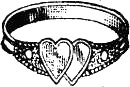
This Elegant RING GIVEN AWAY
This elegant 18k Rolled Gold Wedding Ring, equal in appearance to a $10
ring, free to all. Wishing to at once secure a large number of new
subscribers to our well known literary and family paper, BACKLOG
SKETCHES, and knowing that all who once read it will become regular
subscribers, we make this most liberal offer to induce all to subscribe,
firmly believing that in the future we shall be benefited in the
increased business it will bring us. For only 25 Cents we will send
BACKLOG SKETCHES three months ON TRIAL, and we will send every
subscriber, absolutely FREE, this elegant 18k Rolled Gold Ring. For $1,
we send Backlog Sketches a year and send every subscriber free, a
beautiful Ring, warranted solid gold. Backlog Sketches is a large, 16
page, illustrated literary paper, size Harper's Weekly, every issue
being filled with the most charming stories and sketches and choicest
miscellany. It is alone worth double the subscription price. Subscribe
now. Sample paper for stamp. Address
BACKLOG PUBLISHING CO., Augusta, Maine
☞ Cut this out. It will not appear again.
The above liberal offer, by a reliable firm,
gives all a chance to get a valuable ring
free. Subscribe now, before you forget it.
GOLD MEDAL, PARIS, 1878.
BAKER'S
Breakfast Cocoa.
Warranted absolutely pure Cocoa, from which the excess of Oil has been
removed. It has three times the strength of Cocoa mixed with Starch,
Arrowroot or Sugar, and is therefore far more economical. It is
delicious, nourishing, strengthening, easily digested, and admirably
adapted for invalids as well as for persons in health.
Sold by Grocers everywhere.
W. BAKER & CO., Dorchester, Mass.
A DANGEROUS AMBUSCADE.
Discovered Barely in Time—The Most Deceptive and Luring of Modern Evils
Graphically Described.
(Syracuse Journal.)
Something of a sensation was caused in this city yesterday by a rumor
that one of our best-known citizens was about to publish a statement
concerning some unusual experiences during his residence in Syracuse.
How the rumor originated it is impossible to say, but a reporter
immediately sought Dr. S. G. Martin, the gentleman in question, and
secured the following interview:
"What about this rumor, Doctor, that you are going to make a public
statement of some important matters?"
"Just about the same as you will find in all rumors—some truth; some
fiction. I had contemplated making a publication of some remarkable
episodes that have occurred in my life, but have not completed it as
yet."
"What is the nature of it, may I inquire?"
"Why, the fact that I am a human being instead of a spirit. I have
passed through one of the most wonderful ordeals that perhaps ever
occurred to any man. The first intimation I had of it was several years
ago, when I began to feel chilly at night and restless after retiring.
Occasionally this would be varied by a soreness of the muscles and
cramps in my arms and legs. I thought, as most people would think, that
it was only a cold and so paid as little attention to it as possible.
Shortly after this I noticed a peculiar catarrhal trouble and my throat
also became inflamed. As if this were not variety enough I felt sharp
pains in my chest, and a constant tendency to headache."
"Why didn't you take the matter in hand and check it right where it
was?"
"Why doesn't everybody do so? Simply because they think it is only some
trifling and passing disorder. These troubles did not come all at once
and I thought it unmanly to heed them. I have found, though, that every
physical neglect must be paid for and with large interest. Men can not
draw drafts on their constitution without honoring them sometime. These
minor symptoms I have described, grew until they were giants of agony. I
became more nervous; had a strange fluttering of the heart, an inability
to draw a long breath and an occasional numbness that was terribly
suggestive of paralysis. How I could have been so blind as not to
understand what this meant I can not imagine."
"And did you do nothing?"
"Yes, I traveled. In the spring of 1879 I went to Kansas and Colorado,
and while in Denver, I was attacked with a mysterious hemorrage of the
urinary organs and lost twenty pounds of flesh in three weeks. One day
after my return I was taken with a terrible chill and at once advanced
to a very severe attack of pneumonia. My left lung soon entirely filled
with water and my legs and body became twice their natural size. I was
obliged to sit upright in bed for several weeks in the midst of the
severest agony, with my arms over my head, and constant fear of
suffocation."
"And did you still make no attempt to save yourself?"
"Yes, I made frantic efforts. I tried everything that seemed to offer
the least prospect of relief. I called a council of doctors and had them
make an exhaustive chemical and microscopical examination of my
condition. Five of the best physicians of Syracuse and several from
another city said I must die!
"It seemed as though their assertion was true for my feet became cold,
my mouth parched, my eyes wore a fixed glassy stare, my body was covered
with a cold, clammy death sweat, and I read my fate in the anxious
expressions of my family and friends."
"But the finale?"
"Came at last. My wife, aroused to desperation, began to administer a
remedy upon her own responsibility and while I grew better very slowly,
I gained ground surely until, in brief, I have no trace of the terrible
Bright's disease from which I was dying, and am a perfectly well man.
This may sound like a romance, but it is true, and my life, health and
what I am are due to Warner's Safe Cure, which I wish was known to and
used by the thousands who I believe, are suffering this minute as I was
originally. Does not such an experience as this justify me in making a
public statement?"
"It certainly does. But then Bright's disease is not a common complaint,
doctor."
"Not common! On the contrary it is one of the most common. The trouble
is, few people know they have it. It has so few marked symptoms until
its final stages that a person may have it for years, each year getting
more and more in its power and not suspect it. It is quite natural I
should feel enthusiastic over this remedy while my wife is even more so
than I am. She knows of its being used with surprising results by many
ladies for their own peculiar ailments, over which it has singular
power."
The statement drawn out by the above interview is amply confirmed by
very many of our most prominent citizens, among them being Judge Reigel,
and Col. James S. Goodrich, of the Times, while Gen. Dwight H. Bruce and
Rev. Prof. W. P. Coddington, D. D., give the remedy their heartiest
indorsement. In this age of wonders, surprising things are quite common,
but an experience so unusual as that of Dr. Martin's and occurring here
in our midst, may well cause comment and teach a lesson. It shows the
necessity of guarding the slightest approach of physical disorder and by
the means which has been proven the most reliable and efficient. It
shows the depth to which one can sink and yet be rescued and it proves
that few people need suffer if these truths are observed.
TO PRESERVE THE HEALTH
Use the Magneton Appliance Co.'s
MAGNETIC LUNG PROTECTOR!
PRICE ONLY $5.
They are priceless to LADIES, GENTLEMEN, and CHILDREN with WEAK LUNGS;
no case of PNEUMONIA OR CROUP is ever known where these garments are
worn. They also prevent and cure HEART DIFFICULTIES, COLDS, RHEUMATISM,
NEURALGIA, THROAT TROUBLES, DIPHTHERIA, CATARRH, AND ALL KINDRED
DISEASES. Will WEAR any service for THREE YEARS. Are worn over the
under-clothing.
CATARRH, It is needless to describe the symptoms of this nauseous
disease that is sapping the life and strength of only too many of the
fairest and best of both sexes. Labor, study, and research in America,
Europe, and Eastern lands, have resulted in the Magnetic Lung Protector,
affording cure for Catarrh, a remedy which contains No Drugging of the
System, and with the continuous stream of Magnetism permeating through
the afflicted organs; must restore them to a healthy action.
We place our price for this Appliance at less than
one-twentieth of the price asked by others for remedies upon which you
take all the chances, and we especially invite the patronage of
the many persons who have tried drugging the stomachs
without effect.
HOW TO OBTAIN This Appliance. Go to your druggist and ask for them. If
they have not got them, write to the proprietors, enclosing the price,
in letter at our risk, and they will be sent to you at once by mail,
post paid.
Send stamp for the "New Departure in Medical Treatment without
medicine," with thousands of testimonials,
THE MAGNETON APPLIANCE CO.,
218 State Street, Chicago, Ill.
Note.—Send one dollar in postage stamps or currency (in letter
at our risk) with size of shoe usually worn, and try a pair of our
Magnetic Insoles, and be convinced of the power residing in our Magnetic
Appliances. Positively no cold feet where they are worn, or money
refunded.
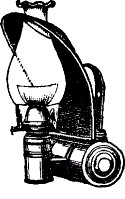
AGENTS make over ONE hundred per cent. profit selling the
Reflecting Safety Lamp
which can be sold in every family. Gives more light than three ordinary
lamps. Sample lamp sent for fifty cents in stamps. We have other
household articles. Send for circulars.
FORSEE & McMAKIN, Cincinnati, O.
PUBLICATIONS.
MARSHALL M. KIRKMAN'S BOOKS ON RAILROAD TOPICS.
DO YOU WANT TO BECOME A RAILROAD MAN
If You Do, the Books Described Below Point the Way.
The most promising field for men of talent and ambition
at the present day is the railroad service. The
pay is large in many instances, while the service is
continuous and honorable. Most of our railroad men
began life on the farm. Of this class is the author of
the accompanying books descriptive of railway operations,
who has been connected continuously with railroads
as a subordinate and officer for 27 years. He was
brought up on a farm, and began railroading as a lad
at $7 per month. He has written a number of standard
books on various topics connected with the organization,
construction, management and policy of railroads.
These books are of interest not only to railroad men
but to the general reader as well. They are indispensable
to the student. They present every phase of railroad
life, and are written in an easy and simple style
that both interests and instructs. The books are as
follows:
| "RAILWAY EXPENDITURES—THEIR EXTENT,
OBJECT AND ECONOMY."—A Practical
Treatise on Construction and Operation.
In Two Volumes, 850 pages. | $4.00 |
| "HAND BOOK OF RAILWAY EXPENDITURES."—Practical
Directions for Keeping the Expenditure Accounts. | 2.00 |
| "RAILWAY REVENUE AND ITS COLLECTION."—And
Explaining the Organization of Railroads. | 2.50 |
| "THE BAGGAGE PARCEL AND MAIL TRAFFIC
OF RAILROADS."—An interesting work on this important service; 425 pages. | 2.00 |
| "TRAIN AND STATION SERVICE"—Giving
The Principal Rules and Regulations governing
Trains; 280 pages. | 2.00 |
| "THE TRACK ACCOUNTS OF RAILROADS."—And
how they should be kept. Pamphlet. | 1.00 |
| "THE FREIGHT TRAFFIC WAY-BILL."—Its
Uses Illustrated and Described. Pamphlet. | .50 |
| "MUTUAL GUARANTEE."—A Treatise on Mutual
Suretyship. Pamphlet. | .50 |
Any of the above books will be sent post paid on receipt
of price, by
PRAIRIE FARMER PUBLISHING CO.,
150 Monroe St. Chicago, Ill.
Money should be remitted by express, or by draft
check or post office order.
ONLY ONE DOLLAR A YEAR.
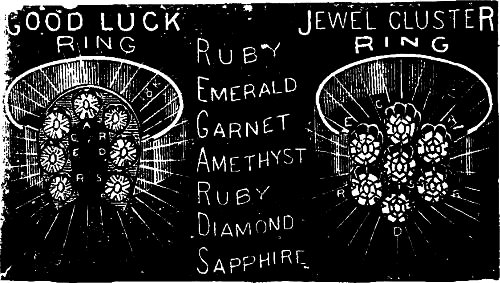
LOOK at this MAGNIFICENT OFFER for 1884. One of these beautiful Cluster
Regard Rings or 7 BEAUTIFUL OIL CHROMOS, and these HANDSOME SOLITAIRE
PARISIAN DIAMOND EAR DROPS. This is no humbug, but a chance that will
never be offered again, as it appears but once. So do not let THIS
CHANCE SLIP by when you can get any of these Beautiful Articles by
subscribing for the LEADING FAMILY STORY PAPER, HOUSEHOLD AND FARM,
providing your order is received on or before MARCH 15th, 1884. As we
wish to introduce our Illustrated Family Paper, THE HOUSEHOLD AND FARM,
in fifty thousand new homes, and in order to do so we make this
wonderful offer. THE HOUSEHOLD AND FARM (Subscription price only $1.00
per year), is a sixteen page family paper, illustrated, cut and bound,
and same size as Harper's Weekly, and brimful of interesting reading for
the household. This offer is only extended to ONE MEMBER OF EACH FAMILY,
and will not be made again. Postage Stamps taken. Address,
HOUSEHOLD & FARM, 9 Spruce Street,
P. O. Box 2834. NEW YORK.
For nothing lovelier can be found
In woman than to study household good.—Milton.