"The great trouble with my son," old Dobb observed to me once, "is that
he is a genius."
And the old gentleman sighed and looked with melancholy eyes at the
picture on the genius's easel. It was a clever picture, but everything
Frank Dobb did was clever, from his painting to his banjo playing. Clever
was the true name for it, for of substantial merit it possessed none. He
had begun to paint without learning to draw, and he could pick a tune out
of any musical instrument extant without ever having mastered the
mysteries of notes. He talked the most graceful of airy nothings, and
could not cover a page of note paper without his orthography going lame,
and all the rest of his small acquirements and accomplishments were
proportionately shallow and incomplete. Paternal partiality laid it to his
being too gifted to study, but the cold logic, which no ties of
consanguinity influenced, ascribed it to laziness.
Frank was, indeed, the idlest and best-natured fellow in the world. You
never saw him busy, angry, or out of spirits. He painted a little,
thrummed his guitar a little longer or rattled a tune off on his piano,
smoked and read a great deal, and flirted still more, all in the same
deliberate and easy-going way. Any excuse was sufficient to absolve him
from serious work. So he lead a pleasant, useless life, with Dobb senior
to pay the bills.
He had the handsomest studio in New York, a studio for one of Ouida's
heroes to luxuriate in. If the encouragement of picturesque surroundings
could have made a painter of him he would have been a master. The fame of
his studio, and the fact that he did not need the money, made his pictures
sell. He was quite a lion in society, and it was regarded as a favor to be
asked to call on him. He was the beau ideal of the artist of romance, and
was accorded a romantic eminence accordingly[aa]. So,
with his pictures to provide him with pocket money, and his father to see
to the rest, he lived the life of a young prince, feted and flattered and
spoiled, artistically despised by all the serious workers who knew him,
and hated by some who envied him the commercial success he had no
necessity for, but esteemed by most of us as a good fellow and his own
worst enemy.
Frank married his first wife while Dobb senior was still at the helm of
his own affairs. She was a charming little woman whose acquaintance he had
made when she visited his studio with a party of friends. She had not a
penny, but he made a draft upon "the governor," as he called him, and the
happy pair digested their honeymoon in Europe. They were absent six
months, during which time he did not set brush to canvas. Then they
returned, as he fancifully termed it, to go to work.
He commenced the old life as if he had never been married. The familiar
sound of pipes and beer, and supper after the play, often with young
ladies who had been assisting in the representation on the stage, was
traveled as if there had been no Mrs. Dobb at home in the flat old Dobb
provided. Frank's expenditures on himself were as lavish as they had been
in his bachelor days. As little Brown said, it was lucky that Mrs. Dobb
had a father-in-law to buy her dinner for her. She rarely came to her
husband's studio, because he claimed that it interfered with the course of
business. He had invented a fiction that she was too weak to endure the
strain of society, and so he took her into it as little as possible. In
brief, married by the caprice of a selfish man, the poor little woman
lived through a couple of neglected years, and then died of a malady as
nearly akin to a broken heart as I can think of, while Frank was making a
trip to the Bahamas on the yacht of his friend Munnybagge, of the Stock
Exchange.
He had set out on the voyage ostensibly to make studies, for he was a
marine painter, on the principle, probably, that marines are easiest to
paint. When he came back and found his wife dead, he announced that he
would move his studio to Havana for the purpose of improving his art. He
did so, putting off his mourning suit the day after he left New York and
not putting it on again, as the evidence of creditable witnesses on the
steamer and in Havana has long since proved.
His son's callousness was a savage stab in old Dobb's heart. A little,
mild-looking old gentleman, without a taint of selfishness or suspicion in
his own nature, he had not seen the effect of his indulgence of him on his
son till his brutal disregard for his first duty as a man had told him of
it. The old man had appreciated and loved his daughter-in-law. In
proportion as he had discovered her unhappiness and its just cause, he had
lost his affection for his son. I hear that there was a terrible scene
when Frank came home, a week after his wife had been buried. He claimed to
have missed the telegram announcing her death to him at Nassau, but
Munnybagge had already told some friends that he had got the dispatch in
time for the steamer, but had remained over till the next one, because he
had a flirtation on hand with little Gonzales, the Cuban heiress, and old
Dobb had heard of it. Munnybagge never took him yachting again; and,
speaking to me once about him, he designated him, not by name, but as
"that infernal bloodless cad."
However, as I have said, there was a desperate row between father and
son, and Frank is said to have slunk out of the house like a whipped cur,
and been quite dull company at the supper which he took after the opera
that night in Gillian Trussell's jolly Bohemian flat. When he emigrated,
with his studio traps filling half a dozen packing cases, none of the boys
bothered to see him off. They had learned to see through his good
fellowship, and recalled a poor little phantom, to whose life and
happiness he had been a wicked and bitter enemy.
About a year after his departure I read the announcement in the Herald
of the marriage of Franklin D. Dobb, Sr., to a widow well-known and
popular in society. I took the trouble to ascertain that it was Frank's
father, and being among some of the boys that night, mentioned it to
them.
"Well," remarked Smith, "that's really queer. You remember Frank left
some things in my care when he went away? Yesterday I got a letter asking
about them, and informing me that he had got married and was coming
home."
He did come home, and he settled in his old studio. What sort of a
meeting he had with his father this time I never heard. The old gentleman
had been paying him his allowance regularly while he was away, and I
believe he kept up the payment still. But otherwise he gave him no help,
and if he ever needed help he did now.
His wife was a Cuban, as pretty and as helpless as a doll. She had been
an heiress till her brother had turned rebel and had his property
confiscated. Unfortunately for Frank, he had married her before the
culmination of this catastrophe. In fact, he had been paying court to her
with the dispatch announcing his wife's death in his pocket, and had
married her long before the poor little clay was well settled in the grave
he had sent it to. In marrying her he had evidently believed he was
establishing his future. So he was, but it was a future of expiation for
the sins and omissions of his past.
The new Mrs. Dobb was a tigress in her love and her jealousy. She was
childish and ignorant, and adored her husband as a man and an artist. She
measured his value by her estimation of him, and was on the watch
perpetually for trespassers on her domain. The domestic outbreaks between
the two were positively blood curdling. One afternoon, I remember, Gillian
Trussell, who had heard of his return, called on him. Mrs. D. met her at
the studio door, told her, "Frank," as she called him, was out; slammed
the door in her face, and then flew at him with a palette scraper. We had
to break the door in, and found him holding her off by both wrists, and
she frothing in a mad fit of hysterics. From that day he was a changed
man. She owned him body and soul.
The life the pair lived after that was simply ridiculously[bb] miserable. He had lost his old social popularity, and
was forced to sell his pictures to the cheap dealers, when he was lucky
enough to sell them at all. The paternal allowance would not support the
flat they first occupied, and they went into a boarding house. Inside of a
month they were in the papers, on account of outbreaks on Mrs. Dobb's part
against one of the ladies of the house. A couple of days after he leased a
little room opening into his studio, converted it into a bed-room, and
they settled there for good.
Such a housekeeping as it was—like a scene in a farce. The studio
had long since run to seed, and a perpetual odor of something to eat hung
over it along with the sickening reek of the Florida water Mrs. D., like
all other creoles, made more liberal use of than of the pure element it
was half-named from. Crumbs and crusts and chop-bones, which the dog had
left, littered the rugs; and I can not recall the occasion on which the
caterer's tin box was not standing at the door, unless it was when the
dirty plates were piled up, there waiting for him to come for them. I
dined there once. Frank had had a savage quarrel with her that day, and
wanted me for a bender. But the scheme availed him nothing, for she broke
out over the soup and I left them to fight it out, and finished my feast
at a chop house.
All of his old flirtations came back to curse him now. His light loves
of the playhouse and his innocent devotions of the ball room were alike
the instruments fate had forged into those of punishment for him. The very
names of his old fancies, which, with that subtle instinct all women
possess, she had found out, were sufficient to send his wife into a
frenzy. She was a chronic theatre-goer, and they never went to the theatre
without bringing a quarrel home with them. If he was silent at the play
she charged him with neglecting her; if he brisked up and tried to chat,
her jealousy would soon pick out some casus belli in the small talk he
strove to interest her with. A word to a passing friend, a glance at one
of her own sex, was sufficient to set her going. I shall never question
that jealousy is a form of actual madness, after what I saw of it in the
lives of that miserable man and woman.
A year after his return he was the ghost of his old self. He was
haggard and often unshaven; his attire was shabby and carelessly put on;
he had lost his old, jaunty air, and went by you with a hurried pace, and
his head and shoulders bent with an indescribable suggestion of humility.
The fear of having her break out, regardless of any one who might be by,
which hung over him at home, haunted him out of doors, too. The avenger of
Mrs. Dobb the first had broken his spirit as effectually as he had broken
Mrs. Dobb's heart. Smith occupied the next studio to him, and one evening
I was smoking there, when an atrocious uproar commenced in the next room.
We could distinguish Frank's voice and his wife's, and another strange
one. Smith looked at me, grinned, and shrugged his shoulders. The
disturbance ceased in a couple of minutes, and a door banged.
Then came a crash, a shrill and furious scream, and the sound of feet.
We ran to the door, in time to see Mrs. Dobb, her hair in a tangle down
her back, in a dirty wrapper and slipshod slippers, stumbling down stairs.
We posted after her, Smith nearly breaking his neck by tripping over one
of the slippers which she had shed as she ran. The theatres were just out
and the streets full of people, among whom she jostled her way like the
mad woman that she was. We came up with her as she overtook her husband,
who was walking with McGilp, the dealer who handled his pictures. She
seized him by the arm and screamed out:
"I told you I would come with you."
His face for a moment was the face of a devil, full of fury and
despair. I saw his fist clench itself and the big vein in his forehead
swell. But he slipped his hands into his pockets, looked appealingly at
McGilp, and said, shrugging his shoulders, "You see how it is, Mac?"
McGilp nodded and walked abruptly away, with a look full of contempt
and scorn. We mingled with the crowd and saw the poor wretches go off
together, he grim and silent, she hysterically excited—with all the
world staring at them. Smith slept on a lounge in my room that night. "I
couldn't get a wink up there," he said, "and I don't want to be even the
ear witness of a murder."
The night did not witness the tragedy he anticipated, though. Next day,
Frank Dobb came to see me—a compliment he had not paid me for
months. He was the incarnation of abject misery, and so nervous that he
could scarcely speak intelligibly.
"I saw you in the crowd last night, old man," he said, looking at the
floor and twisting and untwisting his fingers. "What do you think of it? A
nice life for a fellow to lead, eh?"
What else could I reply than, "Why do you lead it then?"
"Why?" he repeated, breaking into a hollow, uneasy laugh. "Why, because
I love her, damn me! and I deserve it all."
"Is this what you came to tell me?" I asked.
"No," he answered, "of course not. The fact is, I want you to help me
out of a hole. That row last night has settled me with McGilp. He came to
see me about a lot of pictures for a sale he is getting up out West, and
the senora kept up such a nagging that he got sick and suggested that we
should go to 'The Studio' for a chop and settle the business there. She
swore I shouldn't go, and that she would follow us if I did. I thought
she'd not go that far; but she did. So the McGilp affair is off for good,
I know. He's disgusted, and I don't blame him. What I want of you is this.
Buy that Hoguet you wanted last year."
The picture was one I had fancied and offered him a price for in his
palmy days, one that he had picked up abroad. I was only too glad to take
it and a couple more, for which I paid him at once; and next evening, at
dinner, I heard that he had levanted. "Walked out this morning," said
Smith, "and sent a messenger an hour after with word that he had already
left the city. She came in to me with the letter in one hand and a dagger
in the other. She swears he has run away with another woman, and says
she's going to have her life, if she has to follow her around the
world."
She did not carry out her sanguinary purpose, though. There were some
consultations with old Dobb and then the studio was to let again. Some one
told me she had returned to Cuba, where she proposed to live on the
allowance her father-in-law had made her husband and which he now
continued to her.
I had almost forgotten her when, several years later, in the lobby of
the Academy of Music, she touched my arm with her fan. She was promenading
on the arm of a handsome but beefy-looking Englishman, whom she introduced
to me as her husband. I had not heard of a divorce, but I took the
introduction as information that there had been one. The Englishman was a
better fellow than he looked. We supped together after the opera, and I
learned that he had met Mrs. Dobb in Havana, where he had spent some years
in business. I found her a changed woman—a new woman, indeed, in
whom I only now and then caught a glimpse of her old indolent, babyish and
foolish self. She was not only prettier than ever, but she had become a
sensible and clever woman. The influence of an intelligent man, who was
strong enough to bend her to his ways, had developed her latent brightness
and taught her to respect herself as well as him.
I met her several times after that, and at the last meeting but one she
spoke of Frank for the first time. Her black eyes snapped when she uttered
his name. The devil was alive in them, though love was dead.
I told her that I had heard nothing of him since his disappearance.
"But I have," she said, showing her white teeth in a curious smile.
"Indeed!" I replied, quite astounded.
"The coward!" she went on bitterly; "and to think I could ever have
loved such a thing as he! Do you know, Mr. X., that I never knew he had
been married till after he had fled? Then his father told me how he had
courted my father's money, with his wife lying dead at home. Oh! Senor
Francisco, Senor Francisco! Before I heard that, I wanted to kill the
woman who had stolen you from me. The moment after I could have struck you
dead at my feet."
She threw her arm up, holding her fan like a dagger. I believed her,
and so would any one who had seen her then.
"I had hardly settled in Havana," she continued, "before I received a
letter from him. Already he wanted to
come back to me. Had the other woman tired of him already? I asked myself,
or was it really true, as his father had told me, that he had fled alone?
I answered the letter, and he wrote again. Again I answered, and so it was
kept up. For two years I played with the love I now knew was worthless. He
was traveling round the world, and a dozen times wanted to come directly
to me. I insisted that he should keep his journey up—as a probation,
you see. He submitted. But oh! how he did love me!"
The exultation with which she told this was absolutely fiendish. I
could see in it, plainer than any words could tell it to me, the scheme of
vengeance she had carried out, the alternating hopes and torments to which
she had raised, and into which she had plunged him. I could see him
wandering around the globe, scourged by remorses, agonized by doubts, and
maddened by despairs, accepting the lies she wrote him as inviolable
pledges, and sustaining himself with the vision of a future never to be
fulfilled. She read the expression of my face, and laughed.
"Was it not an idea?" she asked. "Was that not better than this?"
And again she stabbed the air with her fan.
"But—pardon me the question—but you have begun the
confidence," I said. "How will it end?"
"It has ended," she answered.
"How?"
"I had been divorced while I was writing to him. A year ago he was to
be in London, where I was to meet him. While he was sailing from the Cape
of Good Hope I was being married to a man who loved me for myself, and to
whom I had confided all. Instead of my address at the London post office
he received a notification of my marriage, addressed to him in my own hand
and mailed to him by myself. He wrote once or twice still, but my husband
indorsed the letters with his own name and returned them unopened. He may
be dead for all I know, but I hope and pray he is still alive, and will
remain alive and love me for a thousand years."
She opened her arms, as if to hug her vengeance to her heart, and
looked at me steadily with eyes that thrilled me with their lambent fire.
No wonder the wretched vagabond loved her! What a doom his selfishness and
his duplicity had invoked upon him! I believe if he could have seen her as
I saw her then, so different from and better than he knew her to be, he
would have gone mad on the spot. Poor Mrs. Dobb the first was indeed
avenged.
We sipped our chocolate and talked of other things, as if such a being
as Frank Dobb had never been. Her husband joined us and we made an evening
of it at the theatre. I knew from the way he looked at me, and from the
increased warmth of his manner, that he was conversant with his wife's
having made a confidant of me. But I do not think he knew how far her
confidence had gone. I have often wondered since if he knew how deep and
fierce the hatred she carried for his predecessor was. There are things
women will reveal to strangers which they will die rather than divulge to
those they love.
I saw them off to Europe, for they were going to establish themselves
in London, and I have never seen or directly heard from them since. But
some months after their departure I received a letter from Robinson, who
has been painting there ever since his picture made that great hit in the
Salon of '7—.
"I have odd news for you," he wrote. "You remember Frank Dobb, who
belonged to our old Pen and Pencil Club, and who ran away from that Cuban
wife of his just before I left home? Well, about a year ago I met him in
Fleet street, the shabbiest beggar you ever saw. He was quite tight and
smelled of gin across the street. He was taking a couple of drawings to a
penny dreadful office which he was making pictures for at ten shillings a
piece. I went to see him once, in the dismalest street back of Drury Lane.
He was doing some painting for a dealer, when he was sober enough, and of
all the holes you ever saw his was it. I soon had to sit down on him, for
he got into the habit of coming to see me and loafing around, making the
studio smell like a pub, till I would lend him five shillings to go away.
I heard nothing of him till the other day I came across an event which
this from the Telegraph will explain."
The following newspaper paragraph was appended:
"The man who shot himself on the door-step of Mr. Bennerley Green, the
West India merchant, last Monday, has been discovered to be an American
who for some time has been employed furnishing illustrations to the lower
order of publications here. He was known as Allan, but this is said to
have been an assumed name. He is stated to be the son of a wealthy New
Yorker, who discarded him in consequence of his habits of dissipation, and
to have once been an artist of considerable prominence in the United
States. All that is known of the suicide is the story told by the servant,
who a few minutes after admitting his master and mistress upon their
return from the theatre, heard the report of a pistol in the street, and
on opening the door found the wretched man dead upon the step. The body
was buried after the inquest at the charge of the eminent American artist,
Mr. J. J. Robinson, A. R. A., who had known him in his better days."
The second husband of Mrs. Frank Dobb is Mr. Bennerley Green, the West
India merchant.—The Continent.
CONSUMPTION CURED.
An old physician, retired from practice, having had placed in his hands
by an East India missionary the formula of a simple vegetable remedy for
the speedy and permanent cure of Consumption, Bronchitis, Catarrh, Asthma
and all throat and Lung Affections, also a positive and radical cure for
Nervous Debility and all Nervous Complaints, after having tested its
wonderful curative powers in thousands of cases, has felt it his duty to
make it known to his suffering fellows. Actuated by this motive and a
desire to relieve human suffering, I will send free of charge, to all who
desire it, this recipe, in German, French, or English, with full
directions for preparing and using. Sent by mail by addressing with stamp,
naming this paper. W. A. Noyes, 149 Power's
Block, Rochester, N. Y.
Many cures for snoring have been invented, but none have stood the test
so well as the old reliable clothes-pin.
A Clergyman says that the baby that pulls whiskers, bites fingers, and
grabs for everything it sees has in it the elements of a successful
politician.
A Hartford man has a Bible bearing date 1599. It is very easy to
preserve a Bible for a great many years, because—because—well,
we don't know what the reason is, but it is so, nevertheless.
A Vermont man has a hen thirty years old. The other day a hawk stole
it, but after an hour came back with a broken bill and three claws gone,
put down the hen and took an old rubber boot in place of it.
Alexander Gumbleton Ruffleton Scufflton Oborda
Whittleton Sothenhall Benjaman Franklin Squires is still a resident
of North Carolina, aged ninety-two. The census taker always thinks at
first that the old man is guying.
A little five-year-old friend, who was always allowed to choose the
prettiest kitten for his pet and playmate before the other nurslings were
drowned, was taken to his mother's sick room the other morning to see the
two tiny new twin babes. He looked reflectively from one to the other for
a minute or two, then, poking his chubby finger into the plumpest baby, he
said decidedly, "Save this one."
In promulgating your esoteric cogitation on articulating superficial
sentimentalities and philosophical psychological observation, beware of
platitudinous ponderosity. Let your conversation possess a clarified
conciseness, compact comprehensiveness, coalescent consistency, and a
concatenated cognancy; eschew all conglomerations of flatulent garrulity
and jejune babblement. In other words, don't use such big words.
HOW HE WAS "SLEIGHED."
A boy once took it in his head
That he would exercise his sled.
He took the sled into the road
And, lord a massy! how he slode.
And as he slid, he laughing cried,
"What fun upon my sled to slide."
And as he laughed, before he knewed,
He from that sliding sled was slude.
Upon the slab where he was laid
They carved this line: "This boy was sleighed."
"A Farmer's Wife" wants to know if we can recommend anything to destroy
the "common grub." We guess the next tramp that comes along could oblige
you.
THE UNION BROAD-CAST SEEDER.
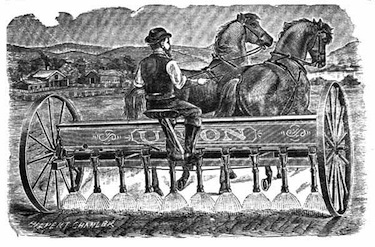
The only 11-Foot Seeder In the Market Upon Which the
Operator can Ride, See His Work, and Control the Machine.
NO GEAR WHEELS, FEED PLACED DIRECTLY ON THE AXLE, A
POSITIVE FORCE FEED,
Also FORCE FEED GRASS SEED ATTACHMENT. We also manufacture the
Seeder with Cultivators of different widths. For Circulars and Prices
address the Manufacturers,
HART, HITCHCOCK, & CO., Peoria,
Ill.
When you write mention The Prairie Farmer.
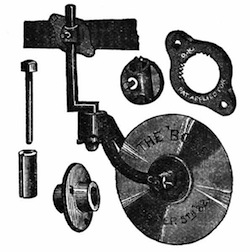
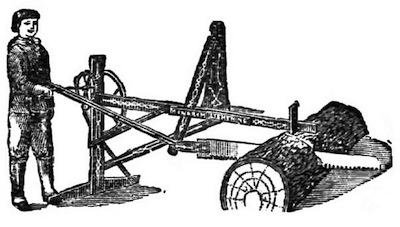
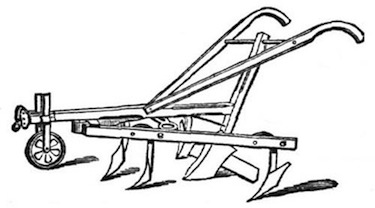
Don't be Humbugged
With Poor, Cheap Coulters.
All farmers have had trouble with their Coulters. In
a few days they get to wobbling[cc], are
condemned and thrown aside. In our
"BOSS" Coulter
we furnish a tool which can scarcely be worn out; and
when worn, the wearable parts, a prepared wood journal, and movable
thimble in the hub (held in place by a key) can be easily and cheaply
renewed. We guarantee our "BOSS" to plow more acres than any other
three Coulters now used.
OUR "O.K." CLAMP
Attaches the Coulter to any size or kind of beam, either right or left
hand plow. We know that after using it you will say it is the Best Tool
on the Market. Ask your dealer for it.
Manufactured by the BOSS COULTER
CO.,
Bunker Hill, Ill.
THE GOLDEN BELT"
KANSAS LANDS
STOCK RAISING
Buffalo Grass Pasture Summer and Winter.
CORN and WHEAT
200,000,000 Bus. Corn.
30,000,000 Wheat. |
along the
KANSAS DIVISION U. P. R'WAY.
WOOL-GROWING
Unsurpassed for Climate, Grasses, Water.
FRUIT
The best In the Eastern Market. |
Pamphlets and Maps free. B.
McALLASTER, Land Commis'r, Kansas City, Mo.
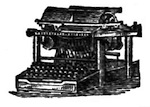
THE STANDARD REMINGTON TYPE-WRITER is acknowledged to be the
only rapid and reliable writing machine. It has no rival. These machines
are used for transcribing and general correspondence in every part of the
globe, doing their work in almost every language. Any young man or woman
of ordinary ability, having a practical knowledge of the use of this
machine may find constant and remunerative employment. All machines and
supplies, furnished by us, warranted. Satisfaction guaranteed or money
refunded. Send for circulars
WYCKOFF, SEAMANS &
BENEDICT.
38 East Madison St.
Chicago, Ill.
GRATEFUL—COMFORTING.
EPPS'S COCOA.
BREAKFAST.
"By a thorough knowledge of the natural laws which govern the
operations of digestion and nutrition, and by a careful application of the
fine properties of well-selected Cocoa, Mr. Epps has provided our
breakfast tables with a delicately flavored beverage which may save us
many heavy doctors' bills. It is by the judicious use of such articles of
diet that a constitution may be gradually built up until strong enough to
resist every tendency to disease. Hundreds of subtle maladies are floating
around us ready to attack wherever there is a weak point. We may escape
many a fatal shaft by keeping ourselves well fortified with pure blood and
a properly nourished frame."—Civil Service Gazette.
Made simply with boiling water or milk. Sold only in half-pound tins by
Grocers, labeled thus:
JAMES EPPS & CO., Homœopathic
Chemists,
London,
England.
When you write mention The Prairie Farmer.
Nebraska Seed Corn.
I have about 1,000 bushels of very choice selected yellow corn, which I
have tested and know all will grow, which I will put into good sacks and
ship by freight in not less than 5-bushel lots at $1 per bushel of 70
lbs., ears. It is very large yield and early maturing corn. This seed is
well adapted to Ohio, Indiana, Michigan, Illinois, and the whole
Northwest. Send money by P.O. order, registered letter, or draft.
Address:
C. H. LEE, Silver Creek, Merrick Co.,
Neb.
Note—Mr. C. H. Lee is my
brother-in-law, and I guarantee him in every way reliable and
responsible.
M. J. Lawrence, Ed. Ohio Farmer.
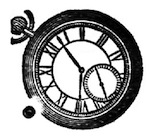
We will send you a watch or a chain BY MAIL OR EXPRESS, C. O.
D., to be examined, before paying any money and if not satisfactory,
returned at our expense. We manufacture all our watches and save you 30
per cent. Catalogue of 250 styles free.
Every Watch Warranted.
Address:
STANDARD AMERICAN WATCH CO.,
PITTSBURGH PA.
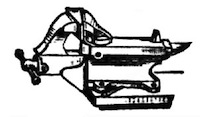
Anvil, Vise, Out off Tool for Farm and Home use. 3 sizes, $4.50, $5.50,
$6.50. Sold by hardware dealers. To introduce, one free to first person
who gets up club of four. Agents wanted. Write for circulars.
CHENEY ANVIL & VISE CO.
Detroit, Mich.
AGENTS WANTED EVERYWHERE to solicit
Subscriptions for this paper. Write Prairie Farmer
Publishing Co., Chicago, for particulars.
TO PRESERVE THE HEALTH
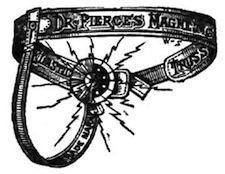
Use the Magneton Appliance Co.'s
MAGNETIC LUNG PROTECTOR!
PRICE ONLY $5.
They are priceless to ladies, gentlemen, and children
with weak lungs; no case of pneumonia or croup is ever known where these garments
are worn. They also prevent and cure heart
difficulties, colds, rheumatism, neuralgia, throat troubles, diphtheria,
catarrh, and all kindred diseases. Will wear any service for three
years. Are worn over the under-clothing.
CATARRH It is needless to describe the symptoms
of this nauseous disease that is sapping the life and strength of only too
many of the fairest and best of both sexes. Labor, study, and research in
America, Europe, and Eastern lands, have resulted in the Magnetic Lung
Protector, affording cure for Catarrh, a remedy which contains No Drugging of the System, and with the continuous
stream of Magnetism permeating through the afflicted organs, must restore them to a healthy action. We place our price for
this Appliance at less than one-twentieth of the price asked by others for
remedies upon which you take all the chances, and we
especially invite the patronage of the many
persons who have tried drugging their stomachs
without effect.
HOW TO OBTAIN This Appliance. Go to your
druggist and ask for them. If they have not got them, write to the
proprietors, enclosing the price, in letter at our risk, and they will be
sent to you at once by mail, post-paid.
Send stamp for the "New Departure in Medical Treatment without medicine," with
thousands of testimonials,
THE MAGNETON APPLIANCE CO.,
218 State Street, Chicago,
Ill.
Note.—Send one dollar in postage
stamps or currency (in letter at our risk) with size of shoe usually worn,
and try a pair of our Magnetic Insoles, and be convinced of the power
residing in our Magnetic Appliances. Positively no cold feet where they
are worn, or money refunded.
Print Your Own Cards
Labels, Envelopes, etc. with our #3 Printing Press. Larger sizes
for circulars, et., $8 to $75. For pleasure, money-making, young or old.
Everything easy, printed instructions. Send 2 stamps for Catalogue of
Presses Type, Cards, etc., to the factory.
KELSEY & CO., Meriden,
Conn.
St. Louis is to have a dog show about the middle of April.
South Chicago had a $75,000 fire on the night of the 17th.
New York is to have a new water supply to cost $30,000,000.
There are about 50,000 Northern tourists in Florida at this time.
Another conspiracy against the Government is brewing in Spain.
A sister of John Brown, of Osawatomie is a resident of Des Moines.
Dakota will spend nearly a million and a half for school purposes this
year.
King's Opera House and several adjacent buildings at Knoxville, Tenn.,
were burned Monday night.
A child in Philadelphia has just been attacked by hydrophobia from the
bite of a dog three years ago.
Captain Traynor, who once crossed the Atlantic in a dory, now proposes
to make the trip in a rowboat.
During the present century 150,000,000 copies of the Bible have been
printed in 226 different languages.
The Governor General at Trieste was surprised Tuesday by the explosion
of a bomb in front of his residence.
The man who fired the first gun in the battle of Gettysburg lives in
Malvern, Iowa. His name is Dick Gidley.
St. Patrick's Day was appropriately (as the custom goes) celebrated in
Chicago, and the other large cities of the country.
Kansas has 420 newspapers, including dailies, weeklies, semi-weeklies,
monthlies, semi-monthlies, tri-monthlies, and quarterlies.
A Dubuque watchmaker has invented a watch movement which has no
dial-wheels, and is said will create a revolution in watch-making.
In the trial of Orrin A. Carpenter for the murder of Zura Burns, now in
progress at Petersburg, Illinois, the prosecution has rested its case.
All the members of the United States Senate signed a telegram to Simon
Cameron, now in Florida, congratulating him on his eighty-fifth
birthday.
The inventor of a system of electric lighting announces that he is
about to use the water-power at Niagara to furnish light to sixty-five
cities.
The British leaders in Egypt have offered a reward of $5,000 for the
capture of Osman Digma, the rebel leader, whom Gen. Graham has now
defeated in two battles.
The Gulf, Colorado and Santa Fe road is at war with the Western Union
Telegraph Company in Texas, and sends ten-word messages through that State
for fifteen cents.
Thirty-four counties and twenty-one railroads between Pittsburg and
Cairo report fifty-five bridges destroyed by the February flood. The
estimated cost of replacing them is $210,000.
There is a movement on foot in Chicago which may result in the holding
of both the National Conventions in Battery D Hall, which is said to have
better acoustic properties than the Exposition Building.
It is reported that more than six thousand Indians are starving at Fort
Peck Agency. Game has entirely disappeared, and those Indians who have
been turning their attention to farming, raised scarcely anything last
year.
The announcement is made at St. Louis that the Pacific Express Company
lost $160,000 by Prentiss Tiller and his accomplices, and that $25,000 of
the amount is still missing. Tiller, the thief, and a supposed accomplice,
are under arrest.
The British House of Commons was in session all last Saturday night,
considering war measures. It is rumored that Parliament will be dissolved,
and a new election held to ascertain if the Ministry measures are pleasing
to the majority of the people.
The crevasse at Carrollton, Louisiana, has been closed. A break
occurred Monday morning in the Mulatto levee, near Baton Rouge, and at
last advices was forty feet wide and six feet deep, threatening all the
plantations down to Plaquemine.
The Egyptian rebels, as they are called, fight with great bravery. So
far, however, they have been unable to cope with their better armed and
disciplined enemy, but it is reported that they are not at all
discouraged, but swear they will yet drink the blood of the Turks and
their allies from England.

⎧Office of the Prairie Farmer,
⎨
⎩Chicago. March 18, 1884.
There was a better feeling in banking circles on Monday but
transactions were not heavy. Interest rates remain at 5@7 per cent.
Eastern exchange sold between banks at 25c per $1,000 premium.
Foreign exchange unchanged.
The failures in the United States during the past seven days are
reported to have numbered 174, and in Canada and the Provinces 42, a total
of 216, as compared with 272 for the previous week, a decrease of 56. The
decrease is principally in the Western, Middle, and New England States.
Canada had the same number of failures as for the preceding week.
GRAIN AND PROVISIONS.
The week opened with the bears on top and prices were forced downward.
Speculation was heavy. Ocean freights are low, yet but little grain
comparatively is going out. London and Liverpool advices were not
encouraging and the New York markets were easy. Corn was unusually
dull.
Wheat.—Red winter, in store No. 2,
98c; spring No. 2 92@93c; No. 3. 85@89c on track.
Corn.—Moderately active. Car lots No
2, 53@53½c; rejected, 46c; new mixed, 52½c.
Oats.—No. 2 on track closed
34¼@35c.
Rye.—No. 2 59@62c.
Barley.—No. 2, 66c; No. 3, f.o.b.
6l@62c; No. 5 50c.
Flax.—Closed at $1 60@1 61 on
track.
Timothy.—$1 28@l 34 per bushel. Little
doing.
Clover.—Quiet at $5 50@5 70 for
prime.
Hungarian.—Prime 60@67½c.
Buckwheat.—70@75c.
Millet.—45@50c.
Provisions.—Mess pork. May $18 10@18
25. Green hams, 11¾c per lb. Short ribs, $9 55@9 60 per cwt.
Lard.—$9 60@9 75.
COUNTRY PRODUCE.
Note.—The quotations for the articles
named in the following list are generally for commission lots of goods and
from first hands. While our prices are based as near as may be on the
landing or wholesale rates, allowance must be made for selections and the
sorting up for store distribution.
Bran.—Quoted at $15 50@15 75 per ton
on track.
Beans.—Hand picked mediums $2 10@2 15.
Hand picked navies, $2 15@2 25.
Butter.—Choice to extra creamery,
33@35c  lb.; fair to good do
25@30c; fair to choice dairy 24@28c; common to choice packing stock fresh
and sweet, 9@10c; ladle packed 10@13c.
lb.; fair to good do
25@30c; fair to choice dairy 24@28c; common to choice packing stock fresh
and sweet, 9@10c; ladle packed 10@13c.
Broom-corn.—Good to choice hurl 7@8c
lb; green self-working 6@6½c;
red-tipped and pale do 4@5c; inside and covers 3@4c; common short corn
2½@3½c; crooked, and damaged, 2@4c, according to quality.
Cheese.—Choice full-cream cheddars
14@l5c lb; medium quality do
10@12c; good to prime full-cream flats 15@15½c; skimmed cheddars
9@10c; good skimmed flats 7@9c; hard-skimmed and common stock 5@7c.
Eggs.—The best brands are quotable at
20@21c per dozen, fresh.
Feathers.—Quotations: Prime live geese
feathers 52@54c lb.; ducks 25@35c;
duck and geese mixed 35@45c; dry picked chicken feathers body 6@6½c;
turkey body feathers 4@4½c; do tail 55@60c; do wing 25@35c; do wing
and tail mixed 35@40c.
Hay.—No 1 timothy $10@10 75 ton; No 2 do $850@9 50; mixed do $7@8;
upland prairie $7@8 50; No 1 prairie $6@7; No 2 do $4 50@5 50. Small bales
sell at 25@50c ton more than large
bales.
Hides and Pelts.—Green-cured light
hides 8½c lb; do heavy cows 8c;
No 2 damaged green-salted hides 6½c; green-salted calf 12@12½
cents; green-salted bull 6 c; dry-salted hides 11 cents; No. 2 two-thirds
price; No. 1 dry flint 14@14½c, Sheep pelts salable at 25@28c for the
estimated amount of wash wool on each pelt. All branded and scratched
hides are discounted 15 per cent from the price of No. 1.
Hops.—Prime to choice New York State
hops 27@28c lb; Pacific coast of
23@25c; fair to good Wisconsin 15@20c.
Honey and Beeswax.—Good to choice
white comb honey in small boxes 15@17c lb; common and dark-colored, or when in large packages 12@14c; beeswax
ranged at 25@30c lb, according to
quality, the outside for prime yellow.
Poultry.—Prices for good to choice dry
picked and unfrozen lots are: Turkeys 16@l7c lb; chickens 12@13c; ducks 14@15c; geese
10@11c. Thin, undesirable, and frozen stock 2@3c lb less than these figures; live offerings
nominal.
Potatoes.—Good to choice 38@42c per
bu. on track; common to fair 30@36c. Illinois sweet potatoes range at $4@5
per bbl for yellow.
Tallow and Grease.—No 1 country tallow
7@7¼c lb; No 2 do
6¼@6½c. Prime white grease 6@6½c; yellow 5¼@5¾;
brown 4½@5.
Vegetables.—Cabbage, $10@15 100; celery, 35@45c per doz bunches; onions, $1 50@1 75 bbl for yellow, and $1 for red; turnips, $1
35@1 50 per bbl for rutabagas, and $1 00 for white flat. Pie plant, 10c
lb. Spinach, $1@2 bbl. Cucumbers, $1 50@2 00 per doz;
radishes, 40c per doz; lettuce, 40c per doz.
Wool.—From store range as follows for
bright wools from Wisconsin, Illinois, Michigan, Indiana, and Eastern
Iowa—dark Western lots generally ranging at 1@2c lb. less.
| Coarse and dingy tub | 25@30 |
| Good medium tub | 31@34 |
| Unwashed bucks' fleeces | 14@15 |
| Fine unwashed heavy fleeces | 18@22 |
| Fine light unwashed heavy fleeces | 22@23 |
| Coarse unwashed fleeces | 21@22 |
| Low medium unwashed fleeces | 24@25 |
| Fine medium unwashed fleeces | 26@27 |
| Fine washed fleeces | 32@33 |
| Coarse washed fleeces | 26@28 |
| Low medium washed fleeces | 30@32 |
| Fine medium washed fleeces | 34@35 |
| Colorado and Territory wools range as
follows: |
| Lowest grades | 14@16 |
| Low medium | 18@22 |
| Medium | 22@26 |
| Fine | 16@24 |
| Wools from New Mexico: |
| Lowest grades | 14@16 |
| Part improved | 16@17 |
| Best improved | 19@23 |
| Burry from 2c to 10c off; black 2c to 5c off. |
LIVE STOCK MARKETS.
The total receipts and shipments for last
week were as follows:
| Received. | Shipped. |
| Cattle | 30,963 | 15,498 |
| Calves | 375 | 82 |
| Hogs | 62,988 | 34,361 |
| Sheep | 18,787 | 10,416 |
Cattle.—Diseased cattle of all kinds,
especially those having lump-jaws, cancers, and running sore, are
condemned and killed by the health officers. Shippers will save freight by
keeping such stock in the country.
Receipts were fair on Sunday and Monday and the demand not being very
brisk prices dropped a little. The supply of choice beeves was light. We
quote
| Choice to prime steers | $6 00@ 6
85 |
| Good to choice steers | 6 20@ 6
50 |
| Fair to good shipping steers | 5
55@ 6 15 |
| Common to medium dressed beef steers | 4 85@ 5 50 |
| Very common steers | 5 00@ 5
50 |
| Cows, choice to prime | 5 00@ 5
50 |
| Cows, common to choice | 3 30@ 4
95 |
| Cows, inferior | 2 50@ 3
25 |
| Common to prime bulls | 3 25@ 5
50 |
| Stockers, common to choice | 3
70@ 4 75 |
| Feeders, fair to choice | 4 80@ 5
25 |
| Milch cows, head | 25 00@65 00 |
| Veal calves, 100lbs | 4 00@ 7 75 |
Hogs.—All sales of hogs in this market
are made subject to a shrinkage of 40 lbs for piggy sows and 80 lbs for
each stag. Dead hogs sell at 1½c lb for weight[dd] of 200 lbs and over, and 1c for
weights of less than 200 lbs. With the exception of cripples and milch
cows, all stock is sold 100 lbs
live weight.
There were about 3,000 head more on Sunday and Monday than for same
days last week, the receipts reaching 11,000 head. All but the poorest
lots were readily taken at steady prices. Common to choice light bacon
hogs were sold from $5 80 to $6 70, their weights averaging 150@206 lbs.
Rough packing lots sold at $6 20@6 75. and heavy packing and shipping hogs
averaging 240@309 lbs brought $6 80@7 40. Skips were sold at $4 75@$5
75.
Sheep.—This class of stock seems to be
on the increase at the yards. Sunday and Monday brought hither 5,500 head,
an increase of 2,500 over receipts a week ago. Prices weakened a little.
Sales ranged at $3 37½@5 65 for common to choice, the great bulk of
the offerings consisting of Nebraska sheep.
MARKETS BY TELEGRAPH.
New York, March
17.—Cattle—Steers sold at $6@7 25 cwt, live weight; fat bulls $4 60@5 70;
exporters used 60 car-loads, and paid $6 70@7 25 cwt, live weight, for good to choice
selections; shipments for the week, 672 head live cattle; 7,300 qrs beef;
1,000 carcasses mutton. Sheep and lambs—Receipts[ee] 7,700 head; making 24,300 head for the week; strictly
prime sheep and choice lambs sold at about the former prices, but the
market was uncommonly dull for common and even fair stock, and a clearance
was not made; sales included ordinary to prime sheep at $5@6 37½ cwt, but a few picked sheep reached $6 75;
ordinary to choice yearlings $6@8; spring lambs $3@8 head. Hogs—Receipts 7,900 head, making
20,100 for the week; live dull and nearly nominal; 2 car-loads sold at $6
50@6 75 100 pounds.
St. Louis, March
17.—Cattle—Receipts 3,400 head; shipments 1,600 head; wet
weather and liberal receipts caused weak and irregular prices, and some
sales made lower; export steers $6 40@6 90; good to choice $5 75@6 30;
common to medium $4 85@5 60; stockers and feeders $4@5 25; corn-fed Texans
$5@5 75. Sheep—Receipts 900 head; shipments 800 head; steady; common
to medium $3@4 25; good to choice $4 50@5 50; extra $5 75@6; Texans
$3@5.
Kansas City, March
17—Cattle—Receipts 1,500 head; weak and slow; prices
unsettled; native steers, 1,092 to 1,503 lbs, $5 05@5 85; stockers and
feeders $4 60@5; cows $3 70@4 50. Hogs—Receipts 5,500 head; good
steady; mixed lower; lots 200 to 500 lbs, $6 25 to 7; mainly $6 40@6 60.
Sheep—Receipts 3,200 head; steady; natives, 81 lbs, $4 35.
East Liberty, March
17.—Cattle—Dull and unchanged; receipts 1,938 head; shipments
1,463 head. Hogs—Firm; receipts 7,130 head; shipments 4,485 head;
Philadelphias $7 50@7 75; Yorkers $6 50@6 90. Sheep—Dull and
unchanged; receipts 6,600 head; shipments 600 head.
Cincinnati, O., March
17.—Hogs—Steady; common and light, $5@6 75; packing and
butchers', $6 25@7 25; receipts, 1,800 head; shipments, 920 head.
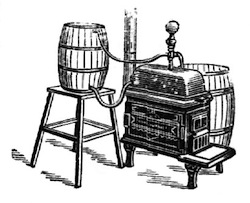
SPERRY'S
AGRICULTURAL
STEAMER.
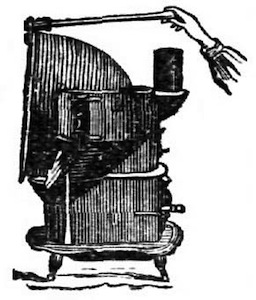
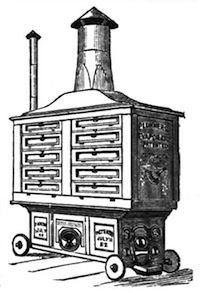
The Safest and Best Steam Generator for cooking feed for stock, heating
water, etc.; will heat a barrel of cold water to boiling in 30
minutes.
D. R. SPERRY & CO, Mfgs. of the Profit Farm Boiler. Caldrons, etc.,
Batavia, Ill.
F. RETTIG, De Kalb, Ill., breeder of
Light Brahmas, Plymouth Rocks, Black and Partridge Cochin fowls, White and
Brown Leghorns, W. C. Bl. Polish fowls and Pekin Ducks. Send for
illustrated catalogue.
KNABE
PIANOFORTES.
unequalled in
Tone, Touch, Workmanship and Durability.
WILLIAM KNABE & CO.
Nos. 204 and 206 West Baltimore Street,
Baltimore. No. 112 Fifth Avenue, N. Y.
FARMERS
Read what a wheat-grower says of his experience with the
Saskatchawan
FIFE WHEAT
It is the best wheat I ever raised or saw. I sowed one quart and got
from it three bushels of beautiful wheat weighing 63 pounds to the bushel,
which took the first premium at our county fair. I have been offered $15 a
bushel for my seed, but would not part with a handful of it. If I could
not get more like it, I would not sell the three bushels I raised from the
quart for $100. Wm. Steabner, Sorlien's Mill,
Yellow Medicine Co., Minn.
Farmers, if you want to know more of this wheat, write to
W. J. ABERNETHY & CO,
Minneapolis, Minn.,
for their 16-page circular describing it.
When you write mention The Prairie Farmer.
THE SUGAR HAND BOOK
A NEW AND VALUABLE TREATISE ON SUGAR
CANES, (including the Minnesota Early Amber) and their
manufacture into Syrup and Sugar. Although comprised
in small compass and furnished free to applicants, it is the
BEST PRACTICAL MANUAL ON SUGAR CANES
that has yet been published.
BLYMER MANUFACTURING CO
Cincinnati O.
Manufacturers of Steam Sugar Machinery, Steam Engines,
Victor Cane Mill, Cook Sugar Evaporator, etc.
| FARMS. |
MINNESOTA.
DAKOTA. |
LESS THAN RAILROAD
PRICES,
on LONG TIME. Send for lists and prices.
GRAVES &
VINTON, ST. PAUL, MINN.
BY MAIL POST-PAID: Choice 1
year APPLE, $5 per 100; 500, $20 ROOT-GRAFTS, 100, $1.25;
1,000, $7. STRAWBERRIES, doz., 25c.; 100, $1. BLACKBERRIES,
RASPBERRIES, RED AND BLACK, 50c. dozen; 100, $3. Two year
CONCORD and other choice GRAPES, doz $1.65. EARLY
TELEPHONE, our best early potato, 4 lbs. $1. This and other choice
sorts by express or freight customer paying charges, pk. 50c., bu. $1.25.
Price list free.
F. K. PHOENIX & SON, Delavan,
Wis.
Lang's Pig Forceps.
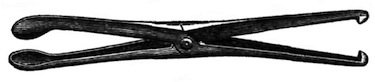
To aid animals in giving Birth. $1.20
post-paid. Agents Wanted. For particulars address
G. J. LANG. Malcom,
Iowa.
GOSSAMER GARMENTS FREE.
To any reader of this paper who will agree to show our goods and try to
influence sales among friends we will send post-paid two full size Ladies'
Gossamer Rubber Waterproof Garments as samples, provided you cut this out
and return with 25 cts,. to pay cost, postage, etc.
EMPIRE MFG. CO. Williamsburg. N.
Y.
Valuable Farm of 340 acres in Wisconsin to exchange for city
property. Beautiful situation on bank of lake. Fine hunting and
fishing, suitable for Summer resort. 100 rods from village and railway
station. 100 acres under cultivation. Good buildings. Milwaukee or Chicago
property preferred.
K., care of LORD &
THOMAS.
STRAWBERRIES
And other Small fruit plants a specialty. Catalogues free on
application. Address,
PHIL. STRUBLER, Naperville, Du Page
County, Ill.
ROOT GRAFTS
100,000 Best Varieties for the Northwest. In lots from 1,000 upward
to suit planter, at $10 to $15 per thousand. Now ready. Send for list.
J. C. PLUMB & SON, Milton,
Wis.
Silver Globe Onion Seed.
Send in your order for a supply of GENUINE SILVER GLOBE ONION
SEED. Guaranteed pure, at $2.50 per lb. We have a sample of the Onion
at our store!
WATTS & WAGNER 128 S. Water St.,
Chicago.
FREE 40 Extra Large Cards, Imported designs,
name on 10 cts, 10 pks. and 1 Lady's Velvet Purse or Gent's Pen Knife 2
blades, for $1.
ACME CARD FACTORY, Clintonville,
Ct.
SILKS
Plushes and Brocade Velvets for
CRAZY PATCHWORK.
Send for 50c. or $1 package.
Empire Silk Works, Clintonville,Ct.
100 Chromo Cards, no 2 alike, name
on, and 2 sheets Scrap Pictures, 20c.
J. B. HUSTED,
Nassau, N. Y.
THE BIGGEST THING OUT ILLUSTRATED
BOOK Sent Free.
(new) E. NASON &
CO.,
120 Fulton St., New
York.
Punctuation and hyphenation were standardized. Missing letters within
words were added, e.g. 'wi h' and 't e' changed to 'with' and 'the,'
respectively. Footnote was moved to the end of the section to which it
pertains. Duplicate words, e.g. 'in in,' were removed.
Corrections:
















 SENT FREE