This book you hold in your
hand belonged once to a very
celebrated Pirate.
He was so celebrated that the
newspapers—of that time—always
said nice things about him, and
always knew what he was doing
before he did himself. As he was
a very truthful man, he did the
things, so that the editors might
not get into trouble.
Which was kind.
By which I do not mean that
he was always kind.
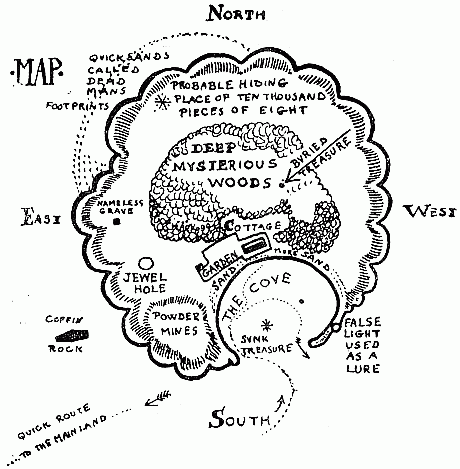
Map of Tomb's Island
(very exciting).
Nobody knew how old he was.
Some said that he was so old that
he had never been born.
Some said that he must be young
or he could not be so wicked.
So you see there were two
opinions about him.
There are always two opinions
about a celebrated man.
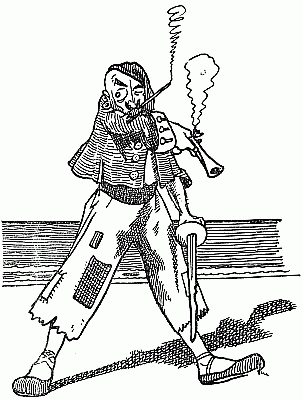
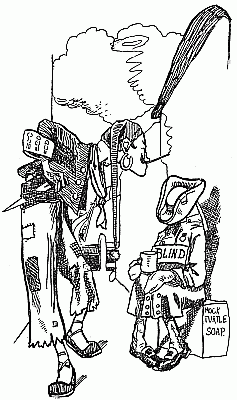
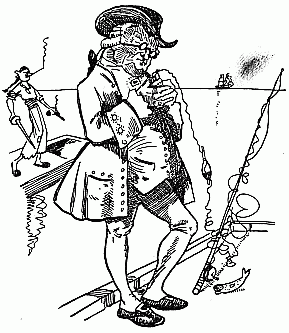
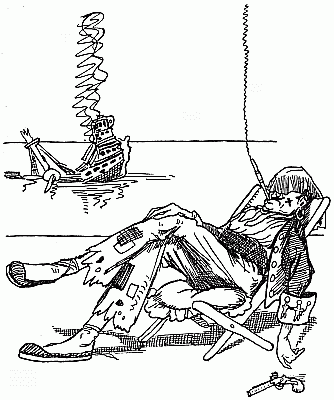
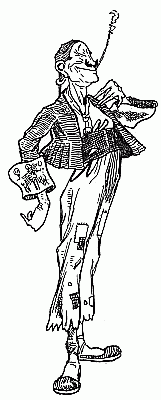
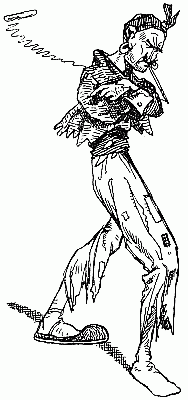
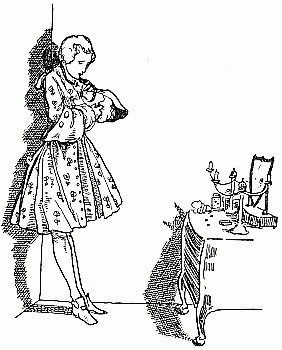
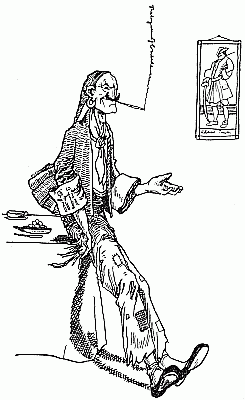
If you look at him you will see
that he dressed to please himself.
Supposed birthplace of Tomb
family. Family of Bone still
living in the cottage.
He wore a nice hat—but you
have noticed that; and he had a
roving eye.
By which I do not mean his
eye walked about like this, but
that he looked around him a good
deal.
If you are thinking of becoming
a Pirate—and there is plenty of
room at the top of every profession—you
will have to look about a
good deal, because you will have
enemies.
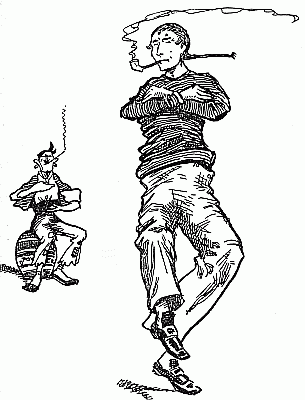
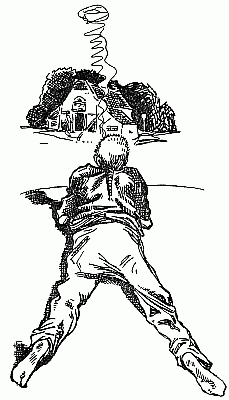
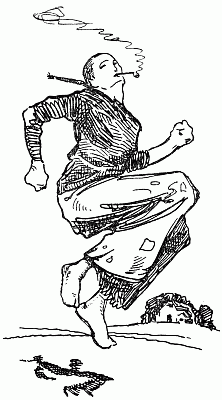
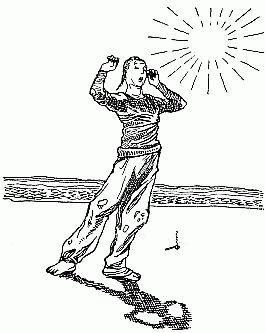
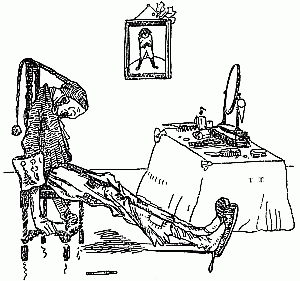 He dreams of other worlds to conquer.
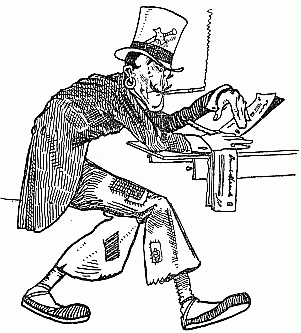
Tom Tomb—that was not his
name, but it was the way he signed
other people's cheques, and your
father and mother will tell you
that this is a very mean trick—lived
partly on an island, and partly
on board the Inky Murk.
You will understand that I mean
not with one foot on the island
and one on the boat, but sometimes
on one and sometimes on
the other.
Now T. T. never robbed the poor.
Because it was not worth his while.
But any person who looked rich
suffered accordingly.
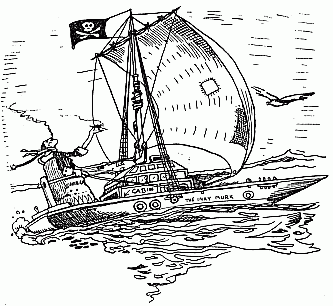
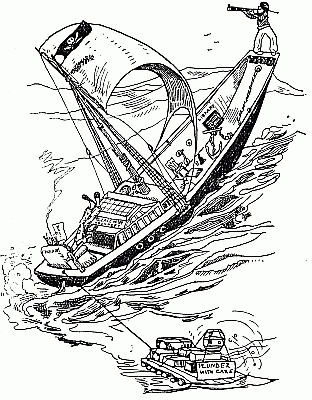
The Inky Murk was the name
of his boat. You can make one
curiously like it with two chairs
and a rug.
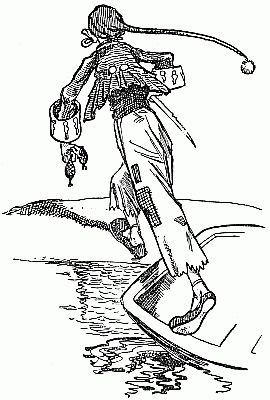
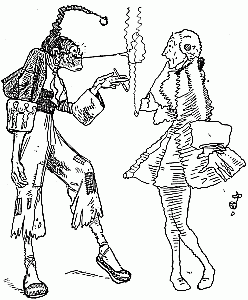
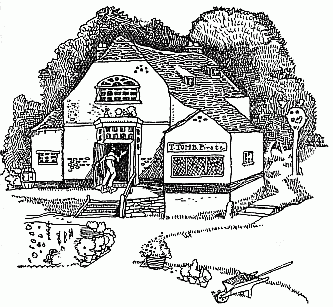
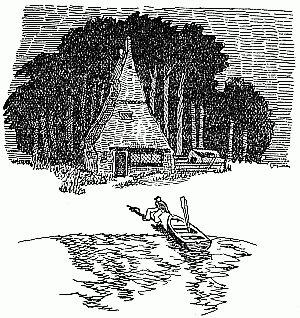
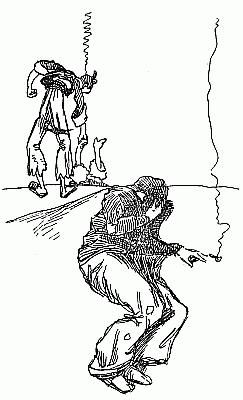
One day Tomb captured a young fellow—a very handsome lad too.
It was off a certain island where
Tom Tomb had a neat cottage,
in the garden of which he grew
flowers for a pastime.
Because, of course, he needed a little time to himself in between
his tremendous fights.
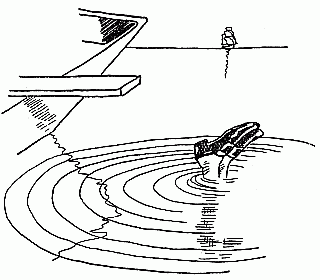
The young fellow was stealing
flowers.
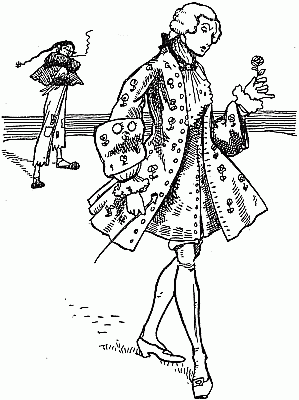
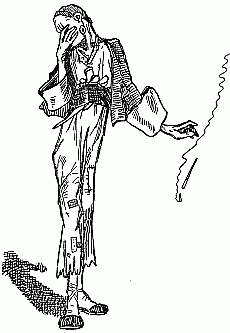
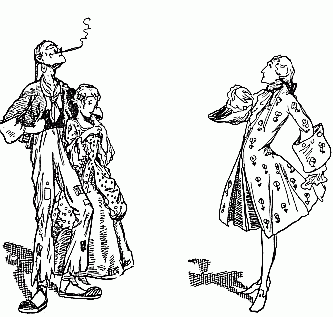
He was surprised to see Captain Tomb.
When I say he was surprised,
you will see what I mean by the
picture.
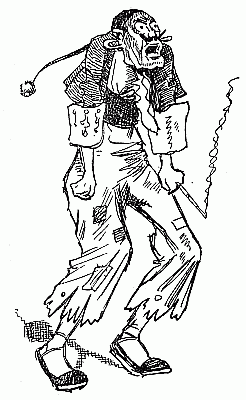
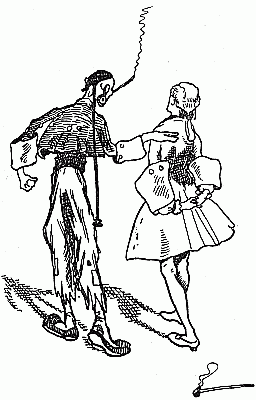
"What cinderadustmat do you mean," yelled Tomb, in a voice
like a railway accident, "by stealing my flowers?"
"I thought they were wild,"
said the young fellow, taking his
pipe from his mouth.
"Wild!" shrieked Tomb.
"Wild!!" he bawled.
This last yell was so powerful
that three of his buttons flew off
his coat.
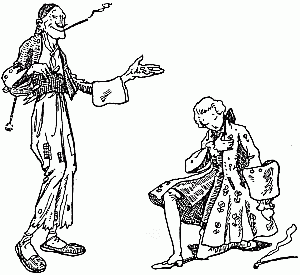
The young fellow caught them
neatly in his left hand, and presented
them to the Captain on
bended knee.
The neat act saved the lad's life.
"An honour to serve you,
Captain Thomas Tomb," said he.
"You know me?" asked Tomb,
smiling upon the boy.
"I thought it must be your
face," said the lad boldly.
He was about to speak again,
had not Tomb silenced him with
a gesture. He liked the lad.
Had he spoken again,
Tomb would have silenced
him for ever.
He was about to say that
any other man with a face
like that would have died
long ago, from wounded
vanity.
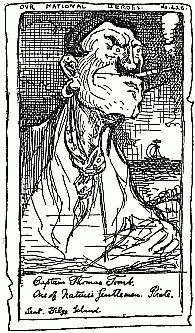
From a very rare old print.
"Would you care to be a Pirate,
my youthful fellow?" said Tomb.
The lad hesitated. "My father . . ."
he began.
"Dead," said Tomb, in a hollow
voice.
"My mother . . ."
"Dead," Tomb replied, in a
monotonous whisper.
"My brother and sister . . ."
Tomb raised a sorrowful hand:
his heart was touched.
"My family . . ." said the
young man in despair.
"My poor boy," said Tomb,
with tears in his eyes, "my poor,
dear fellow, I killed them all not
an hour ago."
"Then my sweetheart would
object to my becoming a Pirate,"
said the lad, weeping.
"Enough," said Tomb; "you are called from henceforth Dingy David. Now to sea!"
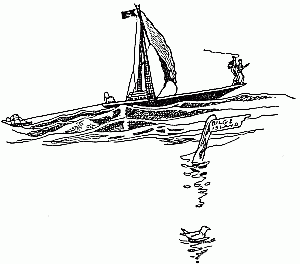
For ten years they plundered upon the Spanish Main, until they
acquired so much money that Bilge
Island, Tomb's business address,
smelt of hoarded gold, and the
beach glittered with jewels.
Then both Tomb and David—I am
keeping the secret of his real name
to the end—became tired of so much
adventure.
They had sailed in many seas: the
Spanish Main—commonly known as
the Dining-room Carpetwaters—the
Kitchen Archipelago, the Drawing-room
Inland Sea, the Creek of Conservatory,
and the Lake of Passages.
They had roamed the Wilderness of
the High Street, the terrors of the
Gardens they knew, and the Gulf of
Front Hall was common water.
So they retired for a breathing space
and a wash to that Island where the
neat cottage stood and the geraniums
grew.
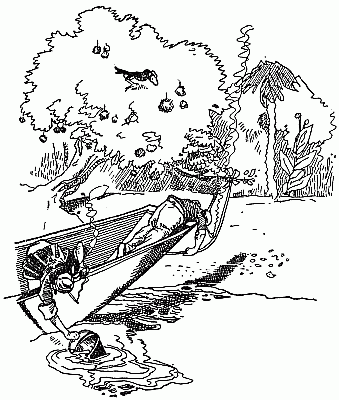
They moored the Inky Murk
to a low-growing pom-pom tree,
and then, stepping carefully, like
those unaccustomed to dry land
(or wet land either, for the matter
of that), they gazed upon each
other in silence.
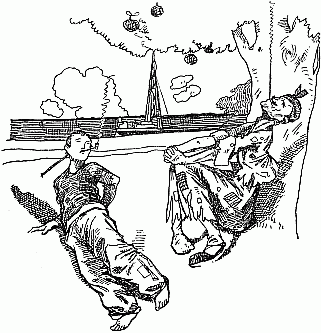
No one, not even the most careful
observer, would have recognised
in the two dusty figures, the once
spruce forms of Captain Thomas
Tomb and Dingy David.
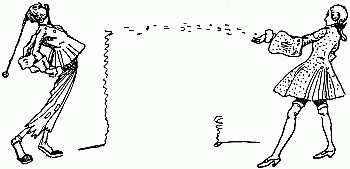
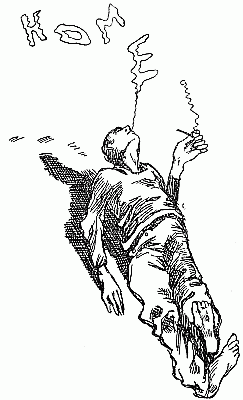
"Home!" said the young fellow,
throwing a diamond at a wave-crest.
(When I say "diamond"—they
were always finding them
in corners of their pockets.)
"Home once more!"
"Cinderadustmat!" exclaimed
Tomb. "Let me hear you, oh!
let me hear you say the word
again!"
"Home," said the young fellow,
gazing at the ripe ockapillies hanging
overhead.
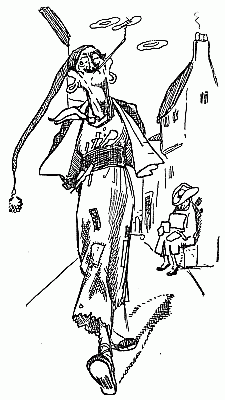
Mastering his ill-concealed
emotion, T. T. rose and strode—(when
I say strode—T. T. never
walked: he strolled, strutted,
strode, or stepped, invariably)—towards
the house.
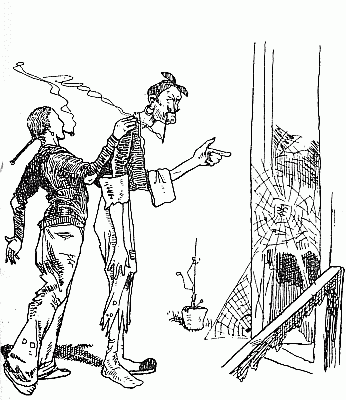
Threw open the door!! xxxxxx!
o! z! What a sight met his eyes!!
Dust, dust, dust—everywhere.
Dust met his eye. (When I say
that, I mean that he saw dust—over
all the simple cottage furniture he
loved.)
He groaned three times.
The young man, who was idly
chewing the stone of a cringet,
turned and saw, through the open
door, dust, dust, dust.
Leaping to his feet,
he rushed to the Captain's side.
"Captain," said he, "we must
have a Charwoman."
(I say charwoman, meaning a
woman who is paid to do work
that other servants are hired to do,
but will not.)
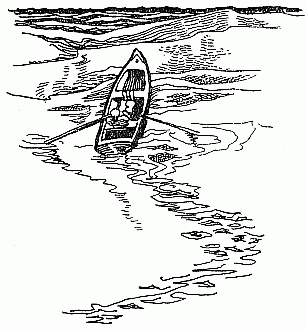
In less time than it takes to skin
an acquadatoric, Dingy David was
in the rowing-boat making for the
shore of the mainland.
Sixty-eight hours of hard rowing,
without a rest, brought the
strong young fellow to the coast.
It was night.
Pause—excited reader.
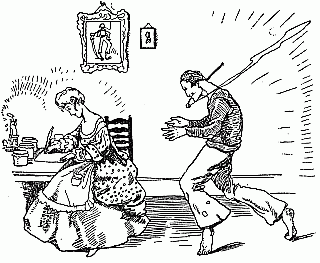
A light burned in the window
of the lonely cottage that stood
upon the shore.
It was the work of a moment
for Dingy David to seize upon
the beautiful maiden who was
writing jam labels, by the light
of a solitary candle.
Such are the lives of the humble.
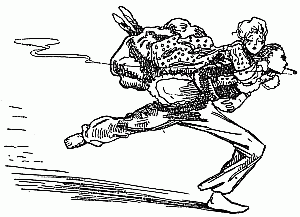
Without a glance at her face, he carried her at breakneck speed to
the boat—pushed off, and rowed
like Hercules for the island.
Exactly one hundred and thirty-six
hours—which is five days
sixteen hours from the time he
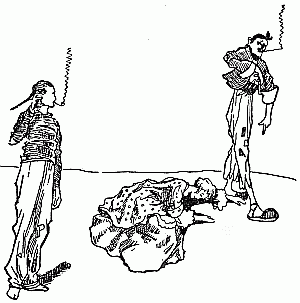
started—David brought the captive
beauty and laid her, senseless with
fatigue, at the feet of Tom Tomb.
"What have we here?" asked
Tomb, pronouncing the H very
clearly.
"A charwoman, sire," responded
David; and, smiling, the lad fell asleep.
When he awoke the sun was shining and the day was warm.
One glance showed him that
the cottage was a model of cleanliness.
(Pirates are sharp glancers.)
A smell of breakfast smote his
nostrils pleasantly.
It was the work of a moment
to dash into the house, wash,
shave, and—there, upon a snowy
bed, were laid the very clothes
in which—long years ago—he
had been captured.
In another moment he was in
them and dashing downstairs, doing
up the buttons as he went.
He flung himself, panting, into
the breakfast-room.
The glorious girl looked up
from her bacon with a cry.
Tomb started to his feet.
The young man opened his
mouth.
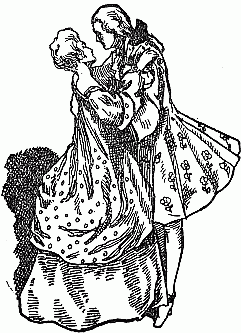
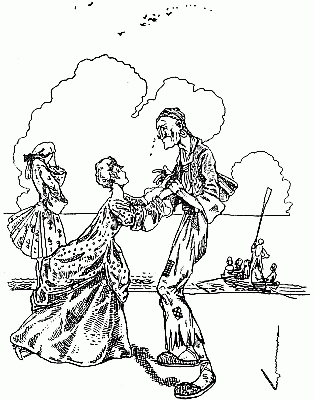
"Ermyntrude!" he called.
"Wencheslaus!" she exclaimed.
For once Tomb's cool courage
failed him.—He started back.
The sweethearts were in each other's arms.
"Listen," said Tomb, when he
regained his breath; and they,
gazing into each other's eyes,
listened.
"Gaze elsewhere," said Tomb,
"and I will unfold a tale."
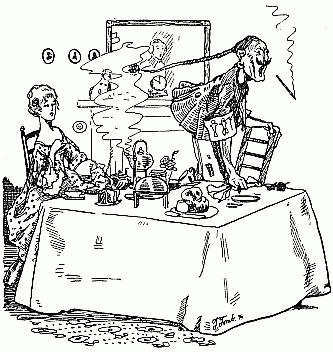
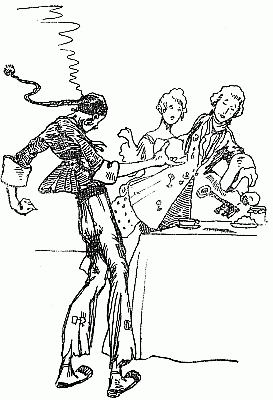
In the heat of the moment
he put his sleeve into the butter.
Ermyntrude sprang to his assistance.
Tomb enfolded her in his embrace.
"This lady is my daughter," he said, turning
to Wencheslaus, who stood amazed.
"I will not bother you with the story," said
Tomb, "but five and forty years ago I wooed and
wed her lovely mother. Twenty-one years ago
to-day Ermyntrude was born, and her mother,
after lingering two years, died. Leaving the girl
in the care of an honest fishwife (when I say honest,
I mean, as honest as her profession allowed),
I roamed the seas as a Pirate: sorrow made me
merciless. Then, when I wished to return to my
daughter, I found that I had lost her address."
"Father!" said Ermyntrude.
"My daughter," he exclaimed, "I am a
careless man!"
"And I?" said Wencheslaus—"what is the
secret of my birth?"
Going up to him, Tomb, with one superb
movement, bared the youth's arm. Upon it
was tattooed, in gold and purple, the crest of
a noble family.
"As I thought!" exclaimed Tomb; then
he removed his hat. "Lord Wencheslaus of
When-cheeselawn!"
"Then my father was . . ." the youth began.
"The Duke of Thingamaroo," said Tomb,
bowing low.
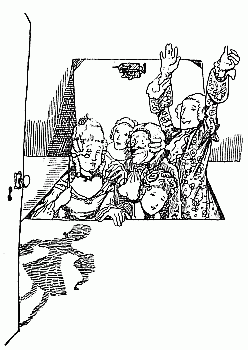
A cry sounded from the cellars of the
cottage.
Tomb again started.
"I had forgotten," said he. Then he
put his hand into his pocket, and drew
forth this very book.
"Ten years ago," said he, consulting
his notes, "I told you that I had killed
your family. It was not true."
"Not true?" said Lord Wencheslaus—for
so we must now call him.
"Not strictly accurate," Tomb replied.
"I immured them in these cellars,
with ten years' provisions."
With a noble gesture, he flung the key of the cellars upon the table.
"Release them, my Lord," he said.
We draw a veil over the rapturous meeting.
When the boat was loaded with
the noble family, Lord Wencheslaus
(erstwhile Dingy David) and
Ermyntrude Tomb stood hand in
hand in front of Captain Thomas
Tomb.
"You must often come and see us, father," she said.
"My little Ermyntrude," he said,
"you can bet your back hair your
poor old father will often come."
Lord W. wrung Tomb's hand:
his emotion was too great for words.
They stepped into the boat and
sailed away.
As they touched the mainland
they started.
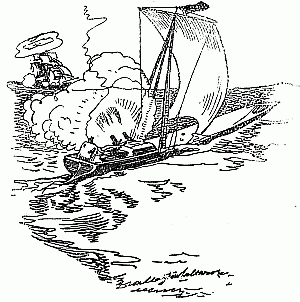
Boom! boom!! came the sound
of guns across the water.
Tom Tomb was at his old game.
PRINTED BY
NEILL AND COMPANY, LIMITED,
EDINBURGH.