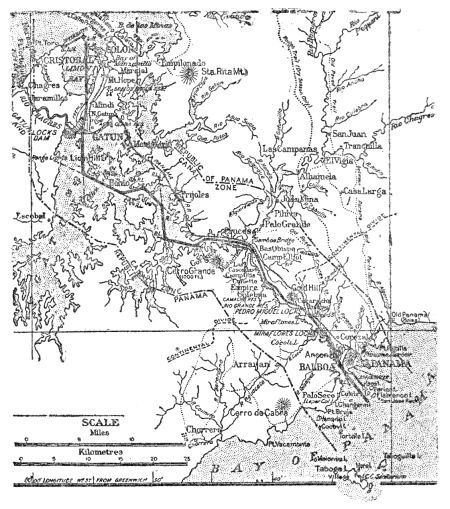
The Panama Canal is a waterway connecting
the Atlantic and Pacific Oceans, cut
through the narrow neck of land connecting
the continents of North and South America.
It is the solution of the problem of international
commerce that became acute in 1452 when the
Eastern Roman Empire fell before the assaults
of the Turks, and the land routes to India were
closed to Western and Christian Europe.
Forty years after the Crescent supplanted the
Cross on the dome of St. Sophia in Constantinople,
Columbus set sail to seek a western route to the
Indies. He did not find it, but it was his fortune
to set foot on the Isthmus of Panama, where,
more than four centuries later, the goal of his
ambition was to be achieved; not by discovery,
but by virtue of the strength and wealth of a new
nation of which he did not dream, although its
existence is due to his own intrepid courage.
Columbus died not knowing that he had multiplied
the world by two, and many voyagers after
him also vainly sought the longed-for western passage.
Magellan sought it thousands of leagues to
the southward in the cold and stormy seas that
encircle the Antarctic Continent. Scores of mariners
sought it to the northward, but only one,
Amundsen, in the twentieth century, was able to
take a ship through the frozen passages of the
American north seas.
Down the western coast of the new continent
from the eternal ice of Alaska through the Tropics
to the southern snows of Tierra del Fuego, the
mighty Cordilleras stretch a mountain barrier thousands
and thousands and thousands of miles.
Where that mountain chain is narrowest, and
where its peaks are lowest, ships may now go
through the Panama Canal. The canal is cut
through the narrowest part of the Isthmus but
one, and through the Culebra Mountain, the
lowest pass but one, in all that longest, mightiest
range of mountains. There is a lower place in
Nicaragua, and a narrower place on the Isthmus
east of the canal, but the engineers agreed that
the route from Colon on the Atlantic to Panama
on the Pacific through Culebra Mountain was the
most practicable.
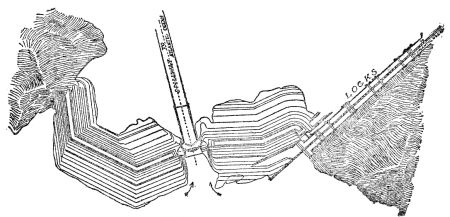
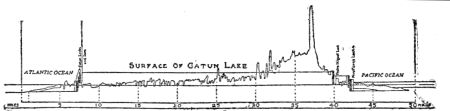
The canal is 50 miles long. Fifteen miles of
it is level with the oceans, the rest is higher. Ships
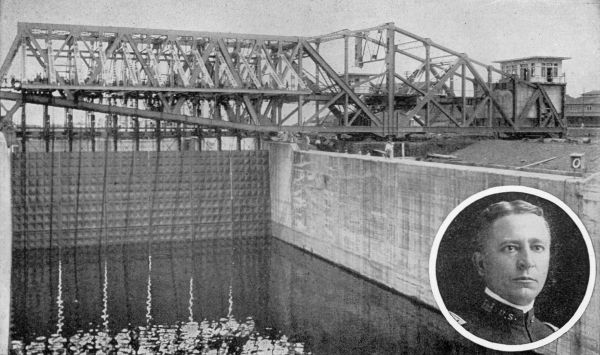
are lifted up in giant locks, three steps, to sail
for more than 30 miles across the continental
divide, 85 feet above the surface of the ocean, then
let down by three other locks to sea level again.
The channel is 300 feet wide at its narrowest place,
and the locks which form the two gigantic water
stairways are capable of lifting and lowering the
largest ships now afloat. A great part of the
higher level of the canal is the largest artificial
lake in the world, made by impounding the waters
of the Chagres River, thus filling with water the
lower levels of the section. Another part of the
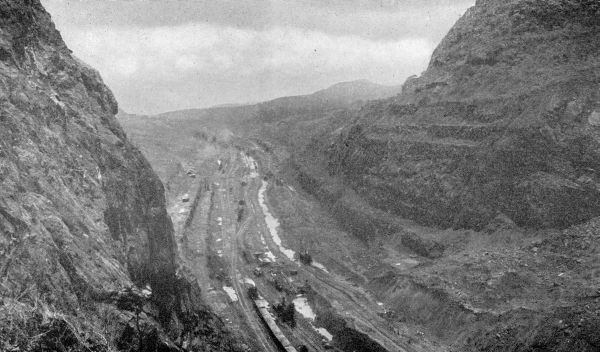
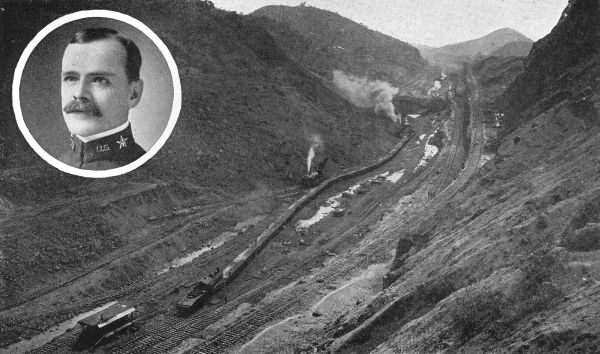
higher level is Culebra Cut, the channel cut through
the backbone of the continent.
Almost before Columbus died plans were made
for cutting such a channel. With the beginning
of the nineteenth century and the introduction of
steam navigation, the demand for the canal began
to be insistent.
Many plans were made, but it remained for the
French, on New Year's Day of 1880, actually to
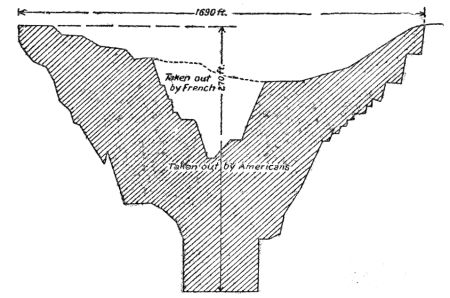
begin the work. They failed, but not before they
had accomplished much toward the reduction of
Culebra Cut. They expended between 1880 and
1904 no less than $300,000,000 in their ill-fated
efforts.
In 1904 the United States of America undertook
the task. In a decade it was completed and the
Americans had spent, all told, $375,000,000 in the
project.
Because the Atlantic lies east and the Pacific
west of the United States, one is likely to imagine
the canal as a huge ditch cut straight across a
neck of land from east to west. But it must be
remembered that South America lies eastward
from North America, and that the Isthmus connecting
the two has its axis east and west. The
canal, therefore, is cut from the Atlantic south-eastward
to the Pacific. It lies directly south of
Pittsburgh, Pa., and it brings Peru and Chile
closer to New York than California and Oregon.
The first 7 miles of the canal, beginning at the
Atlantic end, run directly south and from thence
to the Pacific it pursues a serpentine course in a
southeasterly direction.
At the northern, or Atlantic, terminus are the
twin cities of Colon and Cristobal, Colon dating
from the middle of the nineteenth century when
the railroad was built across the Isthmus, and
Cristobal having its beginnings with the French
attempt in 1880. At the southern, or Pacific,
terminus are the twin cities of Panama and Balboa.
Panama was founded in 1673 after the destruction
by Morgan, the buccaneer, of an elder city established
in 1519. The ruins of the old city stand
5 miles east of the new, and, since their story is
one, it may be said that Panama is the oldest city
of the Western World. Balboa is yet in its swaddling
clothes, for it is the new American town destined
to be the capital of the American territory
encompassing the canal.
The waterway is cut through a strip of territory
called the Canal Zone, which to all intents
and purposes is a territory of the United States.
This zone is 10 miles wide and follows the irregular
line of the canal, extending 5 miles on either side
from the axis of the channel. This Canal Zone
traverses and separates the territory of the Republic
of Panama, which includes the whole of
the Isthmus, and has an area about equal
to that of Indiana and a population of 350,000
or about that of Washington City. The two chief
Panaman cities, Panama and Colon, lie within
the limits of the Canal Zone, but, by the treaty,
they are excepted from its government and are an
integral part of the Republic of Panama, of which
the city of Panama is the capital. Cristobal and
Balboa, although immediately contiguous to Colon
and Panama, are American towns under the American
flag.
The Canal Zone historically and commercially
has a record of interest and importance longer and
more continuous than any other part of the New
World. Columbus himself founded a settlement
here at Nombre de Dios; Balboa here discovered
the Pacific Ocean; across this narrow neck was
transported the spoil of the devastated Empire
of the Incas; here were the ports of call for the
Spanish gold-carrying galleons; and here centered
the activities of the pirates and buccaneers
that were wont to prey on the commerce of the
Spanish Main.
Over this route, on the shoulders of slaves and
the back of mules, were transported the wares
in trade of Spain with its colonies not only on the
west coasts of the Americas, but with the Philippines.
Not far from Colon was the site of the colony
of New Caledonia, the disastrous undertaking of
the Scotchman, Patterson, who founded the Bank
of England, to duplicate in America the enormous
financial success of the East India Company in
Asia.
Here in the ancient city of Panama in the early
part of the nineteenth century assembled the first
Pan American conference that gave life to the
Monroe doctrine and ended the era of European
colonization in America.
Here was built with infinite labor and terrific
toll of life the first railroad connecting the Atlantic
and the Pacific Oceans—a railroad less than 50
miles in length, but with perhaps the most interesting
story in the annals of railroading.
Across this barrier in '49 clambered the American
argonauts, seeking the newly discovered golden
fleeces of California.
This was the theater of the failure of Count de
Lesseps, the most stupendous financial fiasco in
the history of the world.
And this, now, is the site of the most expensive
and most successful engineering project ever undertaken
by human beings.
It cost the French $300,000,000 to fail at Panama
where the Americans, at the expenditure of $375,000,000,
succeeded. And, of the excavation done
by the French, only $30,000,000 worth was available
for the purpose of the Americans. That
the Americans succeeded where the French had
failed is not to be assigned to the superiority of
the American over the French nation. The
reasons are to be sought, rather, in the underlying
purposes of the two undertakings, and in the
scientific and engineering progress made in the
double decade intervening between the time when
the French failure became apparent and the
Americans began their work.
In the first place, the French undertook to build
the canal as a money-making proposition. People
in every grade of social and industrial life in France
contributed from their surpluses and from their
hard-earned savings money to buy shares in the
canal company in the hope that it would yield
a fabulously rich return. Estimates of the costs
of the undertaking, made by the engineers, were
arbitrarily cut down by financiers, with the result
that repeated calls were made for more money
and the shareholders soon found to their dismay
that they must contribute more and yet more before
they could hope for any return whatever. From
the beginning to the end, the French Canal Company
was concerned more with problems of promotion
and finance than with engineering and
excavation. As a natural result of this spirit at
the head of the undertaking the whole course
of the project was marred by an orgy of graft and
corruption such as never had been known. Every
bit of work was let out by contract, and the contractors
uniformly paid corrupt tribute to high
officers in the company. No watch was set on
expenditures; everything bought for the canal
was bought at prices too high; everything it had to
sell was practically given away.
In the next place, the French were pitiably at
the mercy of the diseases of the Tropics. The
science of preventive medicine had not been sufficiently
developed to enable the French to know
that mosquitoes and filth were enemies that must
be conquered and controlled before it would be
possible successfully to attack the land barrier.
Yellow fever and malaria killed engineers and
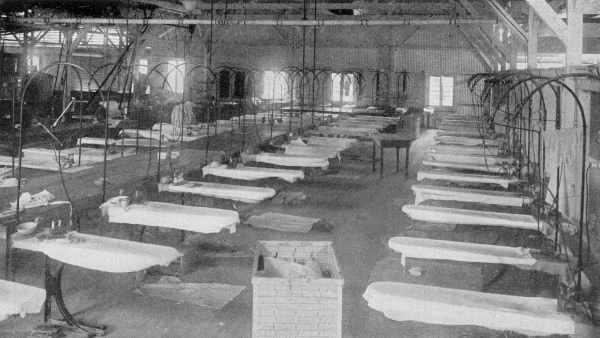
common laborers alike. The very hospitals, which
the French provided for the care of the sick, were
turned into centers of infection for yellow fever,
because the beds were set in pans of water which
served as ideal breeding places for the death-bearing
stegomyia.
In this atmosphere of lavish extravagance caused
by the financial corruption, and in the continual
fear of quick and awful death, the morals of the
French force were broken; there was no determined
spirit of conquest; interest centered in champagne
and women; the canal was neglected.
Yet, in spite of this waste, this corruption of
money and morals, much of the work done by the
French was of permanent value to the Americans;
and without the lessons learned from their bitter
experience it would have been impossible for the
Americans or any other people to have completed
the canal so quickly and so cheaply.
The Americans brought to the task another
spirit. The canal was to be constructed not in
the hope of making money, but, rather, as a great
national and popular undertaking, designed to
bring the two coasts of the great Republic in
closer communication for purposes of commerce
and defense.
The early estimates made by the American
engineers were far too low, but the French experience
had taught the United States to expect
such an outcome. Indeed, it is doubtful if anybody
believed that the first estimates would not
be doubled or quadrupled before the canal was
finished.
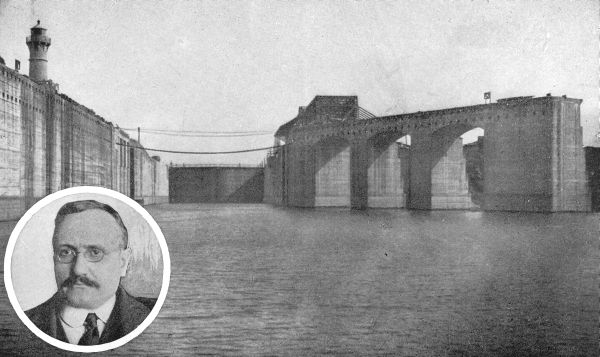
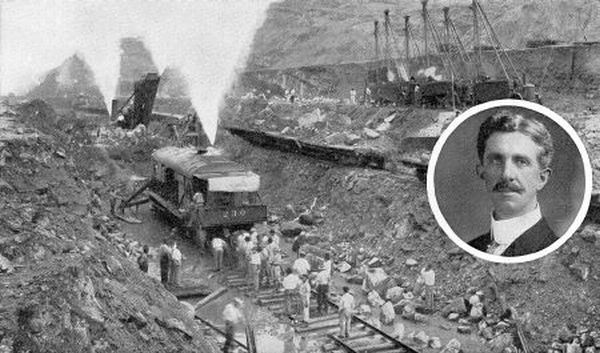
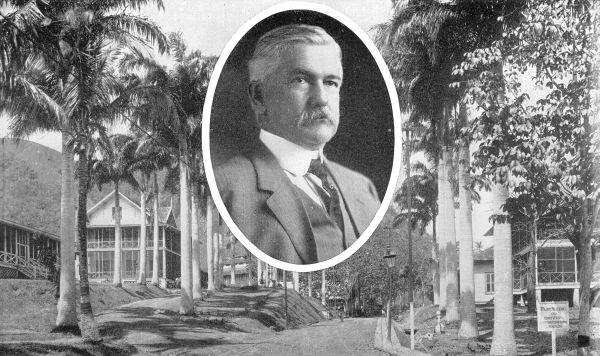
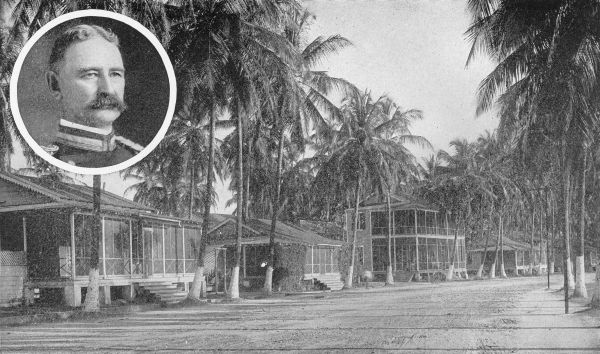
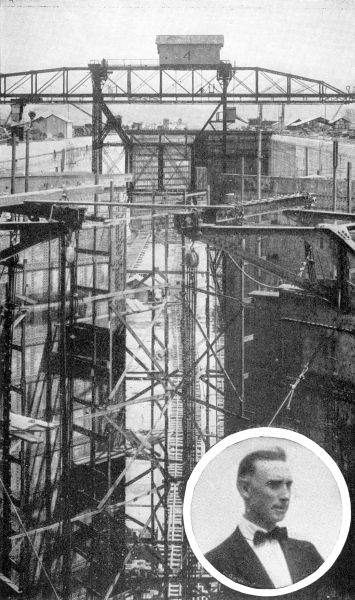
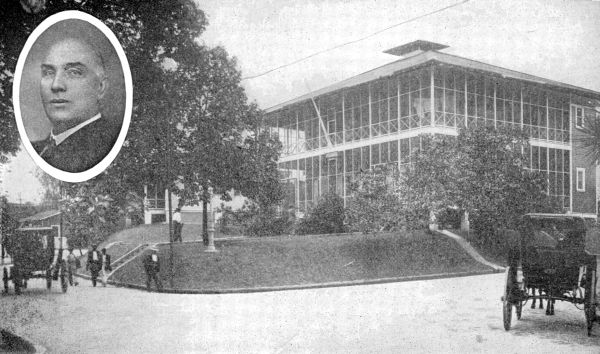
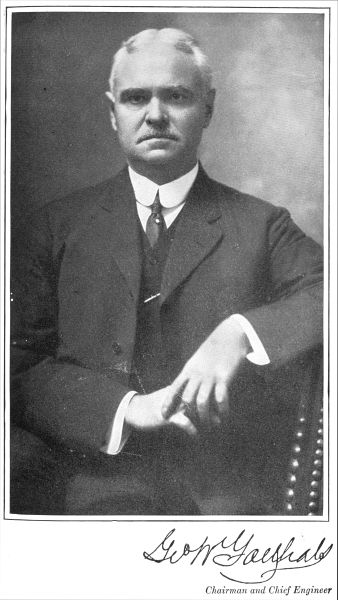 George Goethals
Chairman and Chief Engineer
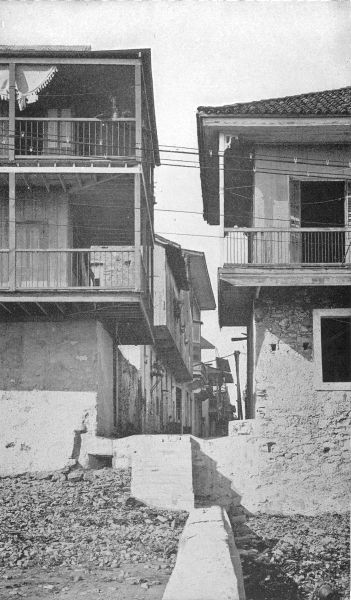 A STREET IN THE CITY OF PANAMA
The journey of the U. S. S. Oregon around the
Horn from Pacific waters to the theater of the War
with Spain in the Caribbean, in 1898, impressed
upon the American public the necessity of building
the canal as a measure of national defense. Commercial
interests long had been convinced of its
necessity as a factor in both national and international
trade, and, when it was realized that
the Oregon would have saved 8,000 miles if there
had been a canal at Panama, the American mind
was made up. It determined that the canal
should be built, whatever the cost.
From the very first there was never any question
that the necessary money would be forthcoming.
It is a fact unprecedented in all parliamentary
history that all of the appropriations necessary
for the construction and completion of the Isthmian
waterway were made by Congress without
a word of serious protest.
During the same War with Spain that convinced
the United States that the canal must be built,
a long forward step was taken in the science of
medicine as concerned with the prevention and
control of tropical diseases. The theory that
yellow fever was transmitted by mosquitoes had
been proved by a Cuban physician, Dr. Carlos
Finley, a score of years earlier. An Englishman,
Sir Patrick Manson, had first shown that disease
might be transmitted by the bites of insects, and
another Englishman, Maj. Roland Ross, had
shown that malaria was conveyed by mosquitoes.
It remained, however, for American army surgeons
to demonstrate, as they did in Cuba, that yellow
fever was transmissible only by mosquitoes of
the stegomyia variety and by no other means
whatsoever.
With this knowledge in their possession the
Americans were able to do what the French were
not—to control the chief enemy of mankind in
torrid climes. In the first years of the work the
public, and Congress, reflecting its views, were not
sufficiently convinced of the efficacy of the new
scientific discoveries to afford the means for putting
them into effect. The Isthmian Canal Commission
refused to honor requisitions for wire
screens, believing that they were demanded to
add to the comfort and luxury of quarters on the
Zone, rather than for protection against disease.
But the outbreak of yellow fever in 1905 was the
occasion for furnishing the Sanitary Department,
under Col. W. C. Gorgas, with the necessary
funds, and thus provided, he speedily and completely
stamped out the epidemic. From that time
on, no one questioned the part that sanitation
played in the success of the project. The cities
of Panama and Colon were cleaned up as never were
tropical cities cleaned before. All the time, every
day, men fought mosquitoes that the workers in
the ditch might not be struck down at their labors.
The Americans, too, made mistakes. In the
beginning they attempted to build the canal under
the direction of a commission with headquarters
in Washington. This commission, at long distance
and by methods hopelessly involved in red
tape, sought to direct the activities of the
engineer in charge on the Isthmus. The public
also was impatient with the long time required
for preparation and insistently demanded that
"the dirt begin to fly."
The work was begun in 1904. It proceeded so
slowly that two years later the chairman of the
Isthmian Canal Commission asserted that it must
be let out to a private contractor, this being, in
his opinion, the only way possible to escape the
toils of governmental red tape. The then chief
engineer, the second man who had held that position
while fretting under these methods, was opposed
to the contract system. Bids were asked for,
however, but all of them were rejected.
Fortunately, Congress from the beginning had
left the President a practically free hand in directing
the course of the project. Mr. Roosevelt
reorganized the commission, made Col. George
W. Goethals, an Army engineer, chairman of the
commission and chief engineer of the canal.
The constitution of the commission was so changed
as to leave all the power in the hands of the chairman
and to lay all of the responsibility upon his
shoulders.
It was a master stroke of policy, and the event
proved the choice of the man to be admirable in
every way. From the day the Army engineers
took charge there was never any more delay, never
any halt in progress, and the only difficulties
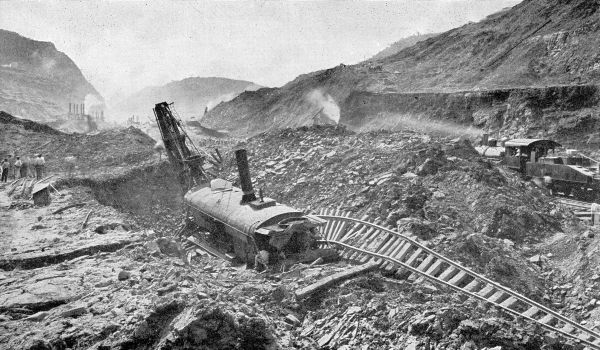
encountered were those of resistant Nature (such
as the slides in Culebra Cut) and those of misinformed
public opinion (such as the absurd criticism
of the Gatun Dam).
The Americans, too, in the early stages of the
work were hampered by reason of the fact that
the final decision as to whether to build a sea-level
canal or a lock canal was so long delayed
by the conflicting views of the partisans of each
type in Congress, in the executive branches of
the Government, and among the engineers. This
problem, too, was solved by Mr. Roosevelt. He
boldly set aside the opinion of the majority of the
engineers who had been called in consultation on
the problem, and directed the construction of a
lock canal. The wisdom of this decision has been
so overwhelmingly demonstrated that the controversy
that once raged so furiously now seems
to have been but a tiny tempest in an insignificant
teapot.
One other feature of the course of events under
the American régime at Panama must be considered.
Graft and corruption had ruined the French; the
Americans were determined that whether they
succeeded or not, there should be no scandal.
This, indeed, in part explains why there was so
much apparently useless circumlocution in the
early stages of the project. Congress, the President,
the engineers, all who were in responsible position,
were determined that there should be no graft.
There was none.
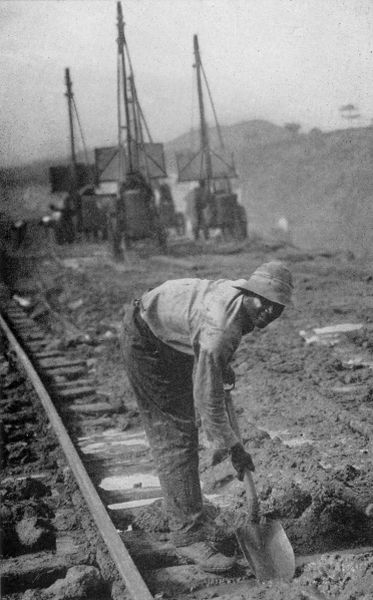
Not only were the Americans determined that
the money voted for the canal should be honestly
and economically expended, but they were determined,
also, that the workers on the canal should
be well paid and well cared for. To this end they
paid not only higher wages than were current at
home for the same work, but they effectively
shielded the workers from the exactions and extortions
of Latin and Oriental merchants by establishing
a commissary through which the employees
were furnished wholesome food at reasonable
prices—prices lower, indeed, than those prevailing
at home.
As a result of these things the spirit of the Americans
on the Canal Zone, from the chairman and
chief engineer down to the actual diggers, was
that of a determination to lay the barrier low,
and to complete the job well within the limit of
time and at the lowest possible cost. In this
spirit all Americans should rejoice, for it is the
highest expression of the nearest approach we have
made to the ideals upon which the Fathers founded
our Republic.
It is impossible to leave out of the reckoning,
in telling the story of the canal, the checkered
history of the diplomatic engagements on the
part of the United States, that have served both
to help and to hinder the undertaking. What is
now the Republic of Panama has been, for the
greater part of the time since continental Latin
America threw off the yoke of Spain, a part of
that Republic having its capital at Bogota, now
under the name of Colombia, sometimes under
the name of New Granada, sometimes a part of
a federation including Venezuela and Ecuador.
The United States, by virtue of the Monroe
doctrine, always asserted a vague and undefined
interest in the local affairs of the Isthmus. This
was translated into a concrete interest when, in
1846, a treaty was made, covering the construction
of the railroad across the Isthmus, the United
States engaging always to keep the transit free and
open. Great Britain, by virtue of small territorial
holdings in Central America and of larger
claims there, also had a concrete interest, which
was acknowledged by the United States, in the
Clayton-Bulwer treaty of 1850, under which a projected
canal should be neutral under the guarantee
of the Governments of the United States and
Great Britain.
For years the United States was inclined to
favor a canal cut through Nicaragua, rather than
one at Panama, and, after 1898, when the American
nation had made up its mind to build a canal somewhere,
the partisans of the Panama and Nicaragua
routes waged a bitter controversy.
Congress finally decided the issue by giving
the President authority to construct a canal at
Panama, with the proviso that should he be
unable to negotiate a satisfactory treaty with
Colombia, which then owned the Isthmus, he
should proceed to construct the canal through
Nicaragua. Under this threat of having the
scepter of commercial power depart forever from
Panama, Colombia negotiated a treaty, known
as the Hay-Herran treaty, giving the United
States the right to construct the canal. This
treaty, however, failed of ratification by the
Colombian Congress, with the connivance of the
very Colombian President who had negotiated it.
But President Roosevelt was most unwilling
to accept the alternative given him by Congress—that
of undertaking the canal at Nicaragua—and
this unwillingness, to say the least, encouraged
a revolution in Panama. This revolution
separated the Isthmus from the Republic of Colombia,
and set up the new Republic of Panama.
As a matter of fact, Panama had had but the
slenderest relations with the Bogota Government,
had been for years in the past an independent
State, had never ceased to assert its own sovereignty,
and had been, indeed, the theater of
innumerable revolutions.
The part the United States played in encouraging
this revolution, the fact that the United States
authorities prevented the transit of Colombian
troops over the Panama Railway, and that American
marines were landed at the time, has led to
no end of hostile criticism, not to speak of the
still pending and unsettled claims made by Colombia
against the United States. Mr. Roosevelt
himself, years after the event and in a moment of
frankness, declared: "I took Panama, and left
Congress to debate it later."
Whatever may be the final outcome of our
controversy with Colombia, it may be confidently
predicted that history will justify the coup d'état
on the theory that Panama was the best
possible site for the interoceanic canal, and that
the rupture of relations between the territory
of the Isthmus and the Colombian Republic was
the best possible solution of a confused and tangled
problem.
These diplomatic entanglements, however, as
the canal is completed, leave two international
disputes unsettled—the one with Colombia about
the genesis of the canal undertaking, and the
other with Great Britain about the terms of its
operation.
Congress, in its wisdom, saw fit to exempt
American vessels engaged exclusively in coastwise
trade—that is to say, in trade solely between
ports of the United States—from payment of
tolls in transit through the canal. This exemption
was protested by Great Britain on the ground
that the Hay-Pauncefote treaty, which took the
place of the Clayton-Bulwer treaty, provided
that the canal should be open to all nations on
exact and equal terms. The future holds the
termination of both these disputes.
Congress, that never begrudged an appropriation,
indulged in many disputes concerning the
building and operation of the canal. First, there
was the controversy as to site, between Nicaragua
and Panama. Next, came the question as to
whether the canal should be at sea level or of a
lock type. Then there was the question of tolls,
and the exemption of American coastwise traffic.
But, perhaps the most acrimonious debates were
on the question as to whether or not the canal
should be fortified. Those who favored fortification
won their victory, and the canal was made,
from a military standpoint, a very Gibraltar
for the American defense of, and control over,
the Caribbean. That this was inevitable was
assured by two facts: One that the trip of the
Oregon in 1898 crystallized public sentiment in
favor of constructing the canal; and the other
that the canal itself was wrought by Army engineers
under the direction of Colonel Goethals. Colonel
Goethals never for a moment considered the
possibility that Congress would vote against fortifications,
and the whole undertaking was carried
forward on that basis.
If the military idea, the notion of its necessity
as a feature of the national defense, was the
determining factor in initiating the canal project, it
remains a fact that its chief use will be commercial,
and that its money return, whether small or large,
nearly all will be derived from tolls assessed upon
merchant vessels passing through it.
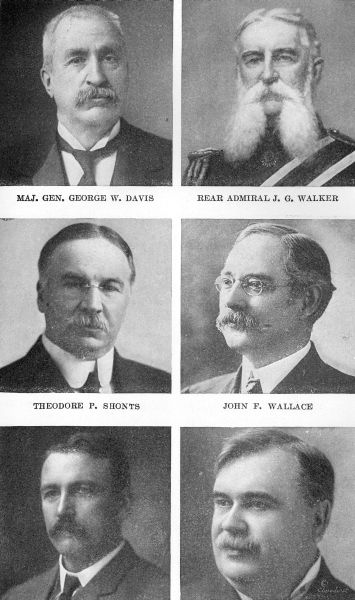
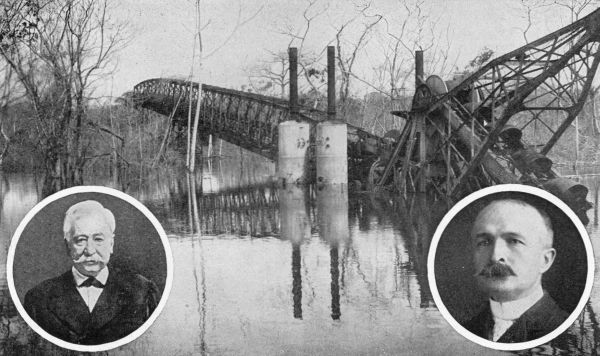
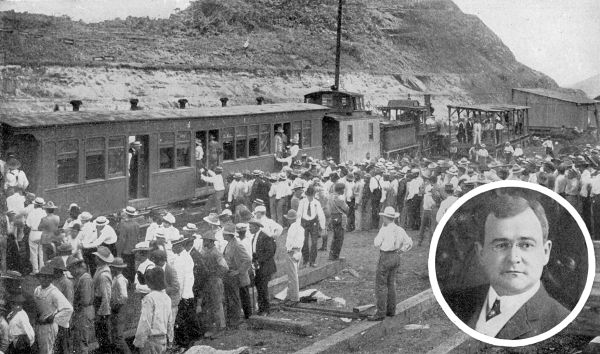
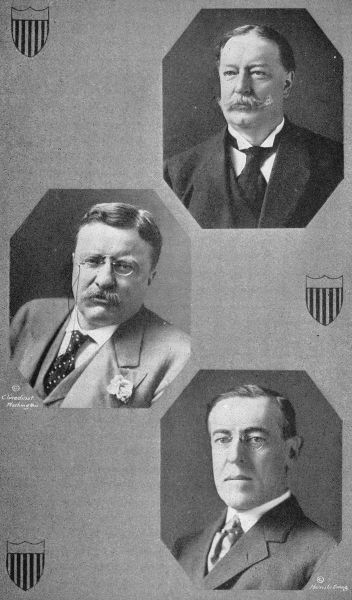 THE THREE PRESIDENTS UNDER WHOSE DIRECTION THE
CANAL WAS BUILT
THE THREE PRESIDENTS UNDER WHOSE DIRECTION THE
CANAL WAS BUILT
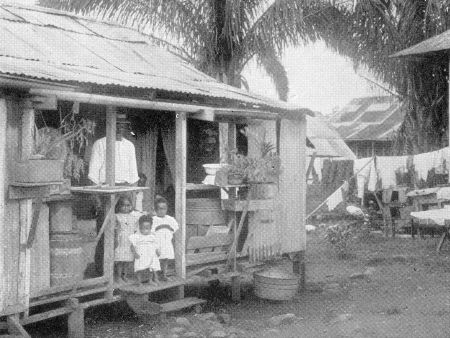
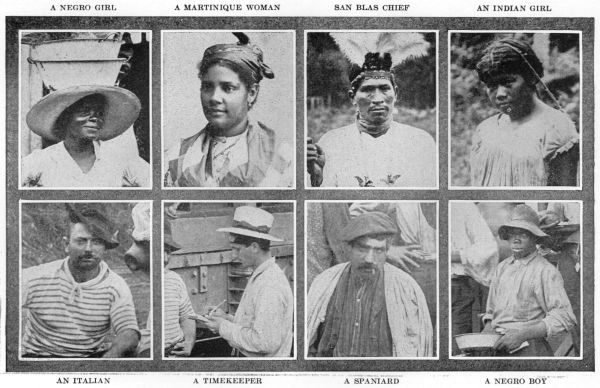
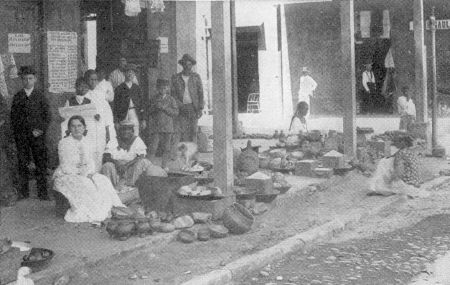 VENDERS IN THE STREETS OF PANAMA
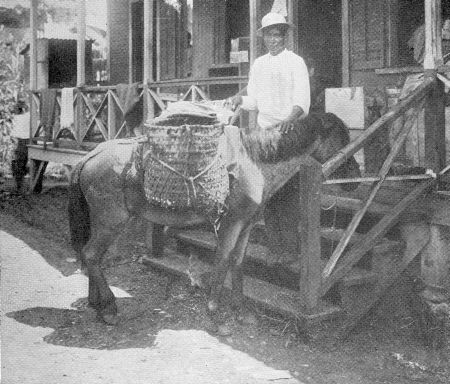 A NATIVE BOY MARKETING
The question of the probable traffic the canal
will be called upon to handle was studied as
perhaps no other world-wide problem of transportation
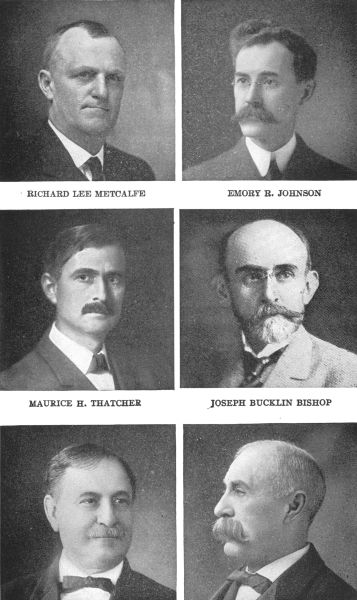
ever was. Prof. Emory R. Johnson
was the student of this phase of the question from
the beginning to the end. He estimates that the
canal in the first few years of its operation will have
a traffic of 10,000,000 tons of shipping each year,
and that by 1975 this will have increased to 80,000,000
tons, the full capacity of the canal in its
present form. Provision has been made against
this contingency by the engineers who have so
constructed the canal that a third set of locks at
each end may be constructed at a cost of about
$25,000,000, and these will be sufficient almost
to double the present ultimate capacity, and to
take care of a larger volume of traffic than now
can be foreseen.
Americans are interested, first of all, in what
the canal will do for their own domestic trade.
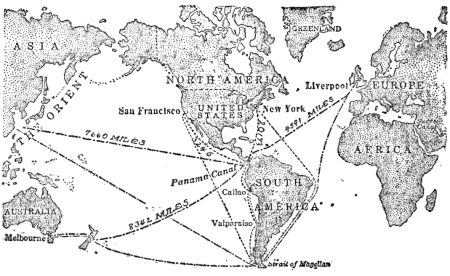
It brings Seattle 7,800 miles nearer to New York;
San Francisco, 8,800 miles nearer to New Orleans;
Honolulu 6,600 miles nearer to New York than
by the Strait of Magellan. Such saving in
distance for water-borne freight works a great
economy, and inevitably must have a tremendous
effect upon transcontinental American commerce.
In foreign commerce, also, some of the distances
saved are tremendous. For instance, Guayaquil,
in Ecuador, is 7,400 miles nearer to New York by
the canal than by the Strait of Magellan; Yokohama
is nearly 4,000 miles nearer to New York
by Panama than by Suez; and Melbourne is
1,300 miles closer to Liverpool by Panama than
by either Suez or the Cape of Good Hope. Curiously
enough, the distance from Manila to New
York, by way of Suez and Panama, is almost the
same, the difference in favor of Panama being
only 41 miles out of a total of 11,548 miles. The
difference in distance from Hongkong to New York
by the two canals is even less, being only 18 miles,
this slight advantage favoring Suez.
But it is not by measure of distances that
the effect of the canal on international commerce
may be measured. It spells the development of
the all but untouched western coast of South
America and Mexico. It means a tremendous
up-building of foreign commerce in our own Mississippi
Valley and Gulf States. It means an
unprecedented commercial and industrial awakening
in the States of our Pacific coast and the
Provinces of Western Canada.
While it was not projected as a money-making
proposition, it will pay for its maintenance and a
slight return upon the money invested from the
beginning, and in a score of years will be not only
self-supporting, but will yield a sufficient income
to provide for the amortization of its capital in a
hundred years.
The story of how this titanic work was undertaken,
of how it progressed, and of how it was
crowned with success, is a story without a parallel
in the annals of man. The canal itself, as Ambassador
Bryce has said, is the greatest liberty
man has ever taken with nature.
Its digging was a steady and progressive victory
over sullen and resistant nature. The ditch
through Culebra Mountain was eaten out by
huge steam shovels of such mechanical perfection
that they seemed almost to be alive, almost to
know what they were doing. The rocks and
earth they bit out of the mountain side were
carried away by trains operating in a system of
such skill that it is the admiration of all the transportation
world, for the problem of disposing of
the excavated material was even greater than
that of taking it out.
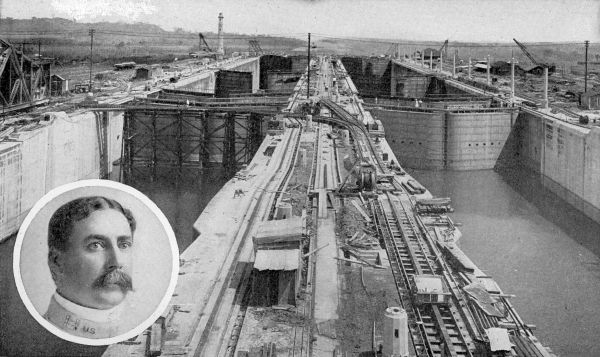
The control of the torrential Chagres River
by the Gatun Dam, changing the river from the
chief menace of the canal to its essential and salient
feature, was no less an undertaking. And, long
after Gatun Dam and Culebra Cut cease to be
marvels, long after the Panama Canal becomes as
much a matter of course as the Suez Canal, men
still will be thrilled and impressed by the wonderful
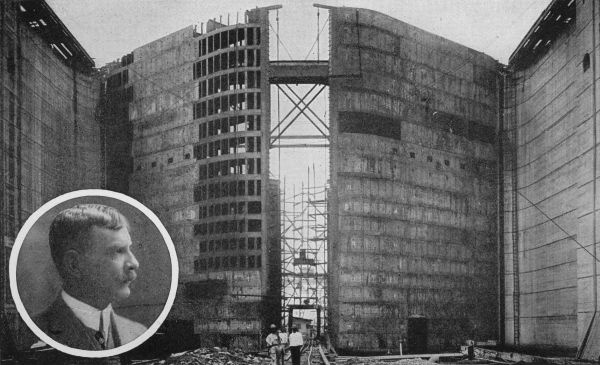
machinery of the locks—those great water stairways,
operated by machinery as ingenious as
gigantic, and holding in check with their mighty
gates such floods as never elsewhere have been
impounded.
It is a wonderful story that this book is undertaking
to tell. There will be much in it of engineering
feats and accomplishments, because its
subject is the greatest of all engineering accomplishments.
There will be much in it of the things
that were done at Panama during the period of
construction, for never were such things done
before. There will be much in it of the history
of how and why the American Government came
to undertake the work, for nothing is of greater
importance. There will be something in it of
the future, looking with conservatism and care
as far ahead as may be, to outline what the completion
of this canal will mean not only for the
people of the United States, but for the people of
all the world.
Much that might be written of the romantic
history of the Isthmian territory—tales of discoverers
and conquistadores, wild tales of pirates
and buccaneers, serio-comic narratives of intrigue
and revolution—is left out of this book, because,
while it is interesting, it now belongs to that
antiquity which boasts of many, many books;
and this volume is to tell not of Panama, but of
the Panama Canal—on the threshold of its
story, fitted by a noble birth for a noble destiny.