PROFESSOR OF CLASSICS, UNIVERSITY COLLEGE, READING
CAMBRIDGE
AT THE UNIVERSITY PRESS
1922
PRINTED IN GREAT BRITAIN.
PREFACE
v
The views expressed in the following chapters were first published
in the Journal of Hellenic Studies for 1906 in a short paper
which gave a few pages each to Samos and Athens and a few
sentences each to Lydia, Miletus, Ephesus, Argos, Corinth, and
Megara. The chapters on Argos, Corinth, and Rome are based on
papers read to the Oxford Philological Society in 1913 and to the
Bristol branch of the Classical Association in 1914.
As regards the presentation of my material here, it has been my
endeavour to make the argument intelligible to readers who are
not classical scholars and archaeologists. The classics have ceased
to be a water-tight compartment in the general scheme of study and
research, and my subject forms a chapter in general economic history
which might interest students of that subject who are not classical
scholars. On the other hand classical studies have become so specialised
and the literature in each department has multiplied so enormously
that unless monographs can be made more or less complete in themselves
and capable of being read without referring to a large number
of large and inaccessible books, it will become impossible for
classical scholars to follow the work that is being done even in their
own subject beyond the limits of their own particular branch.
For these reasons ancient authorities have been mainly given in
literal English translations, and when, as happens in almost every
chapter, information has to be sought from vases, coins, or inscriptions,
I have tried to elucidate my point by means of explanatory
descriptions and illustrations.
The work has involved me in numerous obligations which I
gladly take this opportunity of acknowledging. In 1907 I received
grants from the Worts travelling bachelors’ fund of Cambridge
University and from Gonville and Caius College to visit Greece
for the purpose of collecting archaeological evidence upon the
history of the early tyranny. This purpose was partially diverted
because shortly after reaching Greece I became associated with the
late Dr R. M. Burrows in the excavation of the Greek cemetery
at Rhitsona in Boeotia and in the study and publication of the
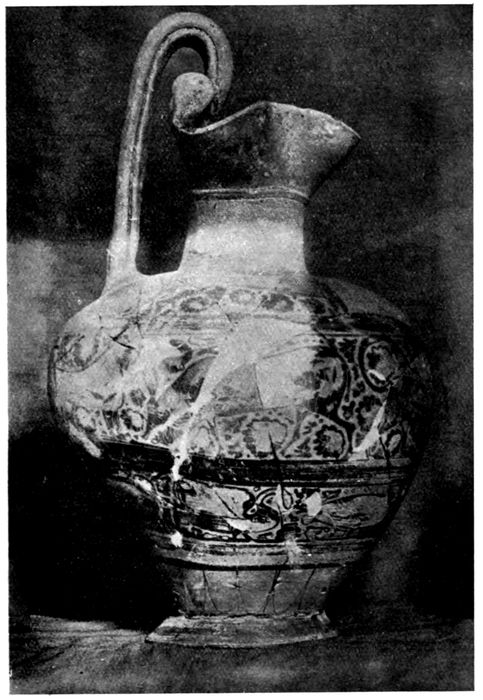
vipottery found there. This pottery dates mainly from the age of the
tyrants, and the results of my work at it appear in several of the
succeeding chapters. To Dr Burrows I owe also the encouragement
that led me to start working on the early tyranny: my main idea
on the subject first occurred to me when I was lecturing on Greek
history as his assistant at University College, Cardiff.
I have also received much assistance at various times and in
various ways from Professor G. A. T. Davies, another former
colleague of mine at Cardiff, and from several of my Reading
colleagues, particularly Professor W. G. de Burgh, Mr D. Atkinson,
and my wife. Many other debts are recorded in the body of the
book: but considering how many and various they have been, I can
scarcely hope that none has been passed over without acknowledgement.
But of all my obligations the earliest and chiefest is to Sir William
Ridgeway. It is to the unique quality of his teaching at Cambridge
that I owe the stimulus that suggested to me the explanation here
offered of the origin of tyranny.
The seventh and sixth centuries B.C. constitute from many points
of view one of the most momentous periods in the
whole of the world’s history. No doubt the greatest
final achievements of the Greek race belong to the
two centuries that followed. But practically all that is meant by the
Greek spirit and the Greek genius had its birth in the earlier period.
Literature and art, philosophy and science are at this present day
largely following the lines that were then laid down for them, and
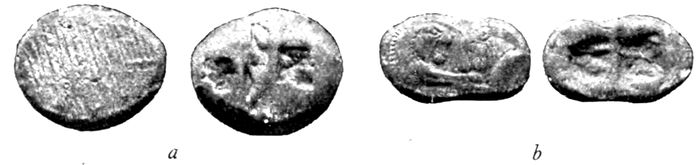
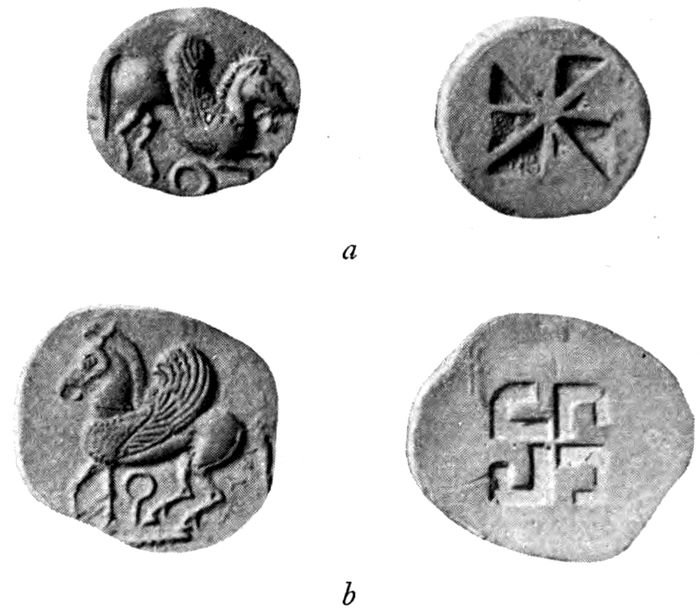
this is equally the case with commerce. |(a) of the first known metal coins,|
It was at the opening of
this epoch that the Greeks or their half hellenized
neighbours the Lydians brought about perhaps the
most epoch-making revolution in the whole history
of commerce by the invention of a metal coinage like those that
are still in circulation throughout the civilized world.
It was no accident that the invention was made precisely at this
time. Industry and commerce were simultaneously making enormous
strides. About the beginning of the seventh century the new
Lydian Dynasty of the Mermnadae made Sardis one of the most
important trading centres that have arisen in the world’s history.
The Lydian merchants became middlemen between Greece and the
Far East. Egypt recovered its prosperity and began rapidly to develop
commercial and other relations with its neighbours, including
the Greeks. Greek traders were pushing their goods by sea in all
directions from Spain to the Crimea. Concrete evidence of this
activity is still to be seen in the Corinthian and Milesian pottery
of the period that has been so abundantly unearthed as far afield as
Northern Italy and Southern Russia. It was a time of extraordinary
intellectual alertness. Thales and the numerous other philosophers
of the Ionian School were in close touch with the merchants and
manufacturers of their age. They were in fact men of science rather
than philosophers in the narrow modern sense of the latter word,
2and most of them were ready to apply their science to practical and
commercial ends, as for example Thales, who is said to have made a
fortune by buying up all the oil presses in advance when his agricultural
observations had led him to expect a particularly plentiful
harvest[1]. A corner in oil sounds very modern, and in fact the whole
of the evidence shows that in many ways this ancient epoch curiously
anticipated the present age.
and (b) of the first rulers to be called tyrants.
Politically these two centuries are generally known as the age of
tyrants. The view that the prevalence of tyranny was
in some way connected with the invention of coinage
has been occasionally expressed[2]. Radet has even
gone so far as to suggest that the first tyrant was
also the first coiner[3]. He does not however go further than to suggest
that the tyrant started a mint and coinage when already on
the throne.
The new form of government was, I believe, based on the new form of capital.
The evidence appears to me to point to conclusions of a more
wide-reaching character. Briefly stated they are these:
that the seventh and sixth century Greek tyrants
were the first men in their various cities to realize the
political possibilities of the new conditions created by
the introduction of the new coinage, and that to a
large extent they owed their position as tyrants to a financial or
commercial supremacy which they had already established before
they attained to supreme political power in their several states.
In other words their position as I understand it has considerable
resemblances to that built up in the fourteenth and fifteenth centuries
A.D. by the rich bankers and merchants who made themselves
despots in so many of the city states of Italy. The most famous of
these are the Medici, the family who gave a new power to the
currency by their development of the banking business, and mainly
as a result of this became tyrants of Florence. Santo Bentivoglio
of Bologna passed from a wool factory to the throne. Another
despot of Bologna was the rich usurer Roméo Pepoli. At Pisa the
supreme power was grasped by the Gambacorti with an old merchant
named Pietro at their head. At Lodi it was seized by the millionaire
3Giovanni Vignate. The above instances are taken from Symonds’
sixth class of despots of whom he says that “in most cases great
wealth was the original source of despotic ascendancy[4].”
This view deserves examination in the light of the modern financial revolution,
Still closer analogies lie at our very door. It is a commonplace
that we are in the midst of an industrial revolution.
This modern movement was already beginning a
century ago, when Byron pleaded the cause of the
frameworkers before the House of Lords. There are
of course obvious differences between the two revolutions.
That of the seventh and sixth centuries B.C.
was mainly financial, that of the present time is mainly industrial.
But the difference is not so great as it at first sight appears[5]. The
invention of a metal coinage was accompanied by great industrial
changes[6], and we can no more divide sharply the financial and
industrial activities of the great houses of archaic Greece than we
can separate the banking and the mercantile enterprises of the great
families of the cities of Italy at the time of the renaissance, such as
the wealthy Panciatighi of Florence, who lent money to the emperor
Sigismund and exported cloths to London, Avignon and North
Africa[7]. On the other hand the modern industrial movement,
with its development of machinery and its organization of masters
and men into trusts and trade unions, has been accompanied by a
revolution in the nature of the currency. The modern financial
revolution began at the same time as the industrial.
|which has replaced metal coins by paper,|
Its earliest phases are described and discussed in
William Cobbett’s Paper against Gold[8]. Since
Cobbett’s days the paper currency which so distressed him has developed
enormously. Even before 1914 we were told that “Gold
already acts in England only as change for notes[9].”
4It is not necessary here to examine in detail the various forms
taken by this new paper currency. It is enough to point out that
it enables property to be transferred and manipulated far more
rapidly and on far larger a scale than was previously possible[10]. Only
one other point in the history of the new currency needs to be here
mentioned. It cannot be better expressed than in the words used
by the Chancellor of the Exchequer in the House of Commons
on November 28th, 1914:
I have been much struck since I have been dealing with these transactions
(bills of exchange) with how little even traders who form a part of this great
machinery know about the mechanism of which they form an essential part....
I do not think that the general public—and I am putting myself among
them—ever realized the extent to which the business not merely of this
country, but of the whole world, depended upon this very delicate and
complicated paper machinery.
Apparently it needed a European war to bring home to the modern
world of commerce the nature of its currency. This fact should
warn us against expecting to find in early Greece any very clear
recognition of the revolution in the currency that then took place.
When gold and silver coins were first circulated they had a corresponding
effect to the modern issues of paper. They enabled property
to be transferred with greater ease and rapidity. We may be sure
however that the character and possibilities of the new currency
did not at once receive universal recognition[11]. The merchants in
the bazaars of Lydia and Ionia who best understood how to make
use of it must have profited enormously.
and led many people to fear a new tyranny of wealth.
The experts in the new finance of the last two generations have
been exercising a profound influence upon politics
and government. There are many people, particularly
in America, who believe that there is a possibility
of this influence becoming supreme. It is worth
while quoting a few of these opinions:
This era is but a passing phase in the evolution of industrial Caesars, and
these Caesars will be of a new type—corporate Caesars[12].
The flames of a new economic evolution run around us, and we turn to
find that competition has killed competition, that corporations are grown
greater than the state and have bred individuals greater than themselves,
5and that the naked issue of our time is with property becoming master
instead of servant[13].
For some months past the sugar trust has been the Government of the
United States[14].
In 1884 there seems even to have been an idea of running a
Standard Oil senator for the United States presidency. “Henry B.
Payne is looming up grandly in the character of a possible and not
altogether improbable successor to Mr Tilden as the Democratic
candidate for the presidency[15].”
The danger of supreme power in America passing into the hands
of a few capitalists has even been publicly acknowledged by a President
of the United States during his period of office. “Mr Wilson
also discussed the division between capital and labour. He dwelt
for the greater part of the speech on the effort of ‘small bodies of
privileged men to resume control of the Government,’ and added:
‘We must again convince these gentlemen that the government of
this country belongs to us, not to them[16].’”
Similar views are expressed by French, German and Italian
writers. According to the most brilliant of modern Frenchmen the
government of France has in some recent periods been in the hands
of three or four groups of financiers[17]. Salvioli in his Capitalism in
the Ancient World speaks of the “kings of finance who exercise in
our states a secret but pervading sway[18].” Even the warlike von
Bernhardi fears an impending “tyranny of capital[19].”
These quotations might be multiplied[20], but enough have been
given to show that the opinion which they express is widely held.
6There is no need to discuss the honesty of particular expressions of it.
If any of them could be shown to have been insincere, it would be
only additional evidence of the plausibility of the opinion. Nor is
this the place to discuss from a more general point of view
the extent to which that opinion has been or seems likely to be
verified. To have indicated how widely prevalent is the fear of an
impending “new tyranny of wealth[21]” or “tyranny of capital[22]” is
by itself enough to show that the relation between the tyranny
and the new form of wealth that arose in the seventh and sixth
centuries before our era is a subject that deserves investigation, and
to show also that the particular view as to those relations that is
maintained in these pages has a priori plausibility[23].
The evidence:
It should however be said at once that my view appears to have
been held by no one who has published opinions on
the subject from the fourth century B.C. onwards.
This however is not fatal. Later in this chapter reasons will be
suggested for holding that the true character of the early tyranny
was lost sight of in the days of Plato and Aristotle. Why truer views
on this particular subject should be recovered precisely at the present
period may be sufficiently explained by the modern financial revolution,
which makes it possible to approach the question from a point
which has scarcely been accessible during the last two thousand
years. With this warning we may proceed to state the nature of the
evidence in favour of this view that the earliest tyrannies were
founded and based on wealth.
(1) The greater part of it is drawn from anecdotes and incidental
statements of fact about particular seventh or sixth century tyrants
preserved in Herodotus and later Greek and Latin writers. The
various tyrants are dealt with individually in the remaining chapters
of the book.
(2) Glimpses into the economic and political life of the seventh
and sixth centuries are occasionally to be got from the scanty remains
of the poets of the period, supplemented by cautious references to
later writers. It will be convenient to examine at once this more
general evidence.
(a) statements from the extant writings of the sixth century (Solon and Theognis),
7The only two writers of the age of the tyrants of whom more
than the merest scraps have come down to us are
Solon[24] and Theognis[25]. Both deal professedly with
the social and political problems of their day. But
both address audiences who are familiar with those
problems. Even if their whole works had been preserved
instead of a few hundred lines in either case, we should not
expect to have the fundamental problems explicitly stated. It would
be possible to read a large selection of articles and speeches by quite
the best journalists and politicians on many recent political measures
and at the end of it to be left in uncertainty as to the content and
purport of the measure in question. We must expect the same difficulty
in reading Solon and Theognis. And it must be confessed
that we find it. But there is nothing in the extant fragments of
either writer which discredits the theory. More than that there
are passages in both of them that become of the utmost significance
if the early tyrants owed their power to their previous wealth but
are rather pointless on any other hypothesis.
Solon’s position in relation to the tyranny is explained in the
chapter dealing with Athens. But a few lines may be quoted here:
But of themselves in their folly the men of the city are willing
Our great city to wreck, being won over by wealth.
By the wreck of the city the poet means the establishment of a
tyranny, as is indicated by another couplet:
Great men ruin a city: for lack of understanding
Under a despot’s[27] yoke lieth the people enslaved[28].
These last two lines were presumably written after Peisistratus
had made himself tyrant of Athens. Solon’s fears had been realized.
The citizens had been “won over by wealth” to “wreck their
great city.” Is not the best sense made out of these lines by assuming
that what Solon feared and what actually happened was that the
popular leader had made use of his wealth to establish himself as
tyrant? Neither the “people’s leaders” of the first quotation
nor the “great men” of the second are specifically stated to have
8been extremely rich, but to quote again the words of Solon, both
may be plausibly identified with the foremost of
Those who had power and made men to marvel because of their riches[29].
The political aim of Theognis was to prevent a recurrence of
tyranny in Megara[30]. What does the poet bid his townsmen beware
of? Not of eloquence, not of violence, not of rashly appointing a
lawgiver or αἰσυμνήτης. All his warnings are directed against
wealth. The whole town of Megara had become commercial[31].
Birth had lost its prestige, and wealth acquired unprecedented power.
He complains how
Tradesmen reign supreme: the bad lord it over their betters[32].
This is the lesson that each and all must thoroughly master:
How that in all the world wealth has the might and the power[33].
Many a bad man is rich, and many a good man needy[34].
Not without cause, O wealth, do men honour thee above all things[35].
Most men reckon the only virtue the making of money[36].
Everyone honours those that are rich, and despises the needy[37].
When he explicitly alludes to the dangers of the establishment of
a tyranny, his references to wealth are no less prominent:
Neither exalt thou in hope, by yielding to gain, any tyrant[38].
Cyrnus, this city is pregnant. I fear lest a man it may bear us
Swollen with insolent pride[39], leader in stern civil strife[40].
The couplet last quoted almost certainly refers to a possible
tyrant. Insolent pride (ὕβρις) is one of the tyrant’s stock characteristics[41].
There is no reference to wealth in this particular context.
But there can be little doubt that this same character is also referred
to earlier in the poem. Who, the poet asks, can preserve his reverence
for the Gods:
When that a man unjust and presumptuous, one that regardeth
Neither the wrath of a man, no, nor the wrath of a God,
What are the gains that lead up to tyranny? Is it not most
probable that they are some form of payment received by the commons
(“those that are bad”) from the would-be tyrant[44]?
Solon and Theognis wrote with the examples of Gyges, Pheidon,
Orthagoras, Cypselus, Theagenes and the rest of the seventh century
tyrants before them[45]. If they constantly feared that some wealthy
tradesman[46] would make himself tyrant, it must surely have been
because the tyrants had sprung from or been allied with this new
class of wealthy traders and financiers.
(b) the fifth century writers (Thucydides, Herodotus, Pindar),
The view here set forth as to the basis of the tyrant’s power finds
nothing to contradict it in the fifth century references
to the early tyranny. On the contrary such few
references as are explicitly made to the origin of the
tyranny by writers of the fifth century bear it out.
“Is it not folly,” says Oedipus to Kreon in the Oedipus Tyrannus
of Sophocles, “this attempt of yours, without a host of followers
and friends to seek a tyranny, a thing that’s gained only with
hosts of followers and money[47]?” “When Greece,” says Thucydides,
in his introductory sketch of early Greek history, “had grown more
powerful, and was still more than before engaged in the acquisition
of wealth, tyrannies were established in the cities[48].” Herodotus
gives no account of the rise of tyranny, but a large proportion of
the evidence as to the careers of individual tyrants is derived from
his work. Perhaps the fifth century writer who might be expected
to throw most light on the question is Pindar, who visited the courts
10of the Sicilian tyrants and wrote odes in their honour. His poems
contain many references to the supreme importance of wealth:
So elsewhere[51] in a similar spirit he describes Hiero’s great victory
over the Etruscans as “the crown of his lordly wealth.” The
Syracusan monarchs of the early fifth century seem to have had
fewer affinities with the commercial tyrants of the two preceding
centuries than with the military despots of a later age. It is therefore
all the more significant that wealth is so frequently regarded
by Pindar, who more than any other writer represents the transition
from the sixth century to the fifth, rather as a means to power than
as one of its rewards. Later documents, as has been said already,
give a different account of the early tyrants’ antecedents. But here
and there statements are to be found in them that, though perhaps
reconcilable with other views, only become fully significant on the
commercial theory.
Isocrates for instance speaks of the “huge wage bills and expenditures
of money by which all modern dynasts maintain their power[52].”
He wrote these words between 342 and 339 B.C.[53], but as his modern
times are contrasted with those of Agamemnon and he himself was
nearly thirty years old at the close of the fifth century, his modern
dynasts may well include sixth century tyrants like Peisistratus and
Polycrates, the more so as “dynasts” arose so seldom in fifth
century Greece.
(c) some statements of fourth century writers,
Aristotle preserves the tradition that the early tyrants were good
business men. He speaks of “rendering account of
their receipts and expenditure, as has been done already
by certain of the tyrants. For by this kind of
administration he would give the impression of being
a manager (οἰκονόμος) and not a tyrant[54].”
11That the early tyrants had previously been men of wealth is also
perhaps to be inferred from certain remarks of Aristotle about the
“lawgivers” of the same period. The general character of these
“lawgivers” is a matter of some dispute; but they appear to have
differed from the tyrants in at least two points. They governed by
general consent and they marked an earlier stage in the economic
evolution of the city state[55]. They are perhaps to be compared with
the “arbitrators” between employers and employed who in recent
times have sometimes enjoyed considerable influence[56]. When Aristotle[57]
emphasizes the fact that the best “lawgivers” were all drawn
from the citizens of moderate means (ἐκ τῶν μέσων πολιτῶν) he
is making a fairly pointless remark unless the same could not be
said of the tyrants of the period. That Aristotle did actually recognize
the connexion between tyranny and extremes of wealth and
poverty is shown by another passage of the Politics[58]:
For this reason it is very fortunate when those engaged in politics have
moderate but sufficient means, for where some have very great possessions
and others none, the result is either extreme democracy or unmitigated
oligarchy or tyranny, which is caused by both extremes. For unbridled
democracy and oligarchy lead to tyranny, the intermediate and more closely
allied forms of government do so far less.
The philosopher himself may have pictured some of the early
tyrants as having risen from being penniless demagogues. The difficulties
in the way of accepting the view that a poor man ever
became a tyrant before the democratic development of the fifth
century will be set forth later in this chapter. If there is any basis
of fact for Aristotle’s statement, the early tyrants must have come
from among the wealthiest of the citizens.
(d) evidence as to industrial conditions during and after the age of the tyrants,
12There is nothing surprising in this conclusion. In the age that
saw merchants like Solon made practical dictators in
their native cities[59], and philosophers like Thales anticipating
the Rockefellers by making a corner in oil[60],
there must have been individuals with something of
the abilities of these great men, but little of their
disinterestedness, who would be quick to grasp the possibility of
reaching through the corner to the crown.
At a later date cornering became less easy. In fifth century
Athens there were statutes and magistrates (σιτοφύλακες) to prevent
corners in corn, and we still have a speech of Lysias directed against
some speculators who had bought beyond the legal limit. The context
of a passage in this speech suggests that the general controllers
of the market (ἀγορανόμοι) were expected to be on their guard
against corners in other articles[61].
The detailed evidence in favour of this view is given in the
chapters that follow. It will be found however that these men who
made themselves tyrants through their riches were not all of them
mere speculators. Some at least had acquired their wealth from trade
or industry. This means that they were large employers of labour.
There are reasons for thinking that from this point of view they
would be politically far more influential than their successors in
business in the days of the Athenian democracy.
The big merchants and manufacturers of the fifth and fourth
centuries relied largely, and more and more as time went on, on
servile labour. The thousand miners whose services Nikias commanded
were all slaves. Six hundred slave miners were owned by
his contemporary Hipponikos and three hundred by Philemonides[62].
The hundred and twenty hands in the shield factory of the orator
Lysias were all slaves[63]. So too were the fifty-two in the knife and
bedstead factories inherited by Demosthenes[64], and the nine or ten
in the boot-making establishment of Timarchus[65], as also those in
the flute-making establishment from which the father of Isocrates
13made his living[66], and the sail-makers and drug-pounders who appear
in Demosthenes contra Olympiodorum[67]. These instances might be
multiplied[68]. Slaves were of course only a form of wealth[69]. As
human beings they were entirely without influence on politics. It
would have been another matter if Nikias had had a big constituency
of miner citizens at his entire disposal. That I believe was one of
the great differences between Nikias and Peisistratus and generally
speaking between the captains of industry in the fifth and fourth
centuries and their predecessors in the seventh and sixth. The
evidence is not decisive, but as far as it goes it all points in this
direction.
At Athens in the generation that preceded the tyranny it is
reported of Solon that “he encouraged the citizens to take up
manual trades[70],” a policy perhaps to be connected with his release
from debt and semi-slavery of the “pelatai” and the “hektemoroi[71],”
since fresh employment had possibly to be found for many of these
liberated serfs. It is further reported of Solon that he offered the
citizenship to any who “transplanted themselves to Athens with
their whole family for the sake of exercising some manual trade[72].”
Aeschines quotes Solon, laws attributed to whom were still in force
when the orator flourished, to the effect that “he does not drive
a man from the platform” (i.e. he allows him to speak in the
assembly of citizens) “even if he is practising some handicraft, but
14welcomes that class most of all[73].” Solon himself, describing the
various paths by which men pursue riches, declares that
Another learns the works of Athena and Hephaestus of the many crafts,
and with his hands gathers a livelihood[74].
The tyrants themselves are repeatedly found making it part of
their policy to keep their subjects employed on big industrial concerns.
In more than one case we shall see their power collapsing
just when this policy becomes financially impossible[75]. This part of
the tyrants’ policy is noticed by Aristotle, who quotes the dedications
(buildings and works of art) of the Cypselids at Corinth, the building
of the temple of Olympian Zeus at Athens by the Peisistratids, and
the works of Polycrates round Samos[76]. To these names we may
add Theagenes of Megara, Phalaris of Agrigentum, Aristodemus
of Cumae, and the Tarquins of Rome, all of whom are associated
with works of this kind[77]. Aristotle says that the object of these
works was to keep the people busy and poor. This explanation is
more than doubtful, as has been already recognized[78]. It is not
employment that leads to poverty. More probably the tyrants pursued
this industrial policy because, to quote an expression used in another
context by Plutarch, “stimulating every craft and busying every
hand it made practically the whole city wage earners (ἔμμισθον),”
employed, as in the case Plutarch is describing, by the government
of the state. In other words may not the tyrants have been building
up an industrial state of employee subjects who in their turn involved
an army of “customer subjects[79]”? The words just quoted come
from the life of Pericles[80] and refer to the way that he employed
the poorer citizens (τὸν θητικὸν ὄχλον) in the rebuilding and
adornment of Athens. Among the people so employed he mentions
carpenters, sculptors, coppersmiths, stone masons, dyers, moulders
of gold and ivory, painters, embroiderers, engravers, merchants,
sailors, wheelwrights, waggoners, drivers, rope-makers, flax workers,
leather cutters, road-makers, miners. We still possess fragments of
the accounts of payments made to these workmen or their successors
some years after Pericles’ death[81]. The Alcmaeonids, the family to
15which Pericles belonged, had been opponents of the house of Peisistratus
for ages, and had consistently fought it with its own weapons.
Pericles himself was commonly called the new Peisistratus[82]. His
public works were a continuation of those of Peisistratus[83]. The
whole situation as well as our scanty information about industrial
conditions in the age of the tyrants alike suggest that in this use
of public works to convert the industrial classes into an army of
his own employees, which is what they very nearly were[84], Pericles
was in a very particular sense a new Peisistratus.
To judge too from the purely industrial evidence Pericles seems
to have been continuing the traditions of an earlier age. It is true
that free labour was largely employed on the restoration of the great
sanctuary at Eleusis some eighty years after the operations just
referred to. An inscription relating to the wages paid during this
later undertaking shows that the employees included 36 citizens,
39 resident aliens, 12 strangers, 2 slaves, besides 57 persons of uncertain
status[85]. But this evidence only tends to show that building
was always a free man’s trade[86]. We must beware of arguing from
one trade to another or from one particular trade to trade in general.
There were doubtless many subtle shades of status depending on
the nature of either the work or the profits[87]. As servile industry
develops, it drives free labour from work thought to be particularly
damaging to body or mind such as employment underground in
mines. Speaking generally, however, there are signs that in Athens
at least between the days of the tyranny and those of the Periclean
democracy the conditions of free labour had been radically changed.
This is most obvious as regards the status of the citizen artizan[88].
16Solon refers to him without a trace of contempt and is careful to
maintain his political dignity. In so doing he appears to have been
conservative and simply following the tradition of the Homeric age,
when a prince was proud to make his own bedstead or build his
own house and a princess took pleasure in acting as palace laundress[89].
In Attica at any rate manual labour appears to have enjoyed an
equally honourable reputation from the heroic age onwards till the
end of the age of the tyrants[90]. In the good old days, so Plato
declares in the Critias[91], “the other classes of citizens were engaged
in handicrafts (δημιουργίαι) and agriculture.” The earliest division
of the free population, ascribed to the half historical Theseus, comprised
three classes—nobles, farmers, and artizans (δημιουργοί)[92].
When Solon, who was himself a merchant[93], reorganized the population
he divided it (or perhaps simply preserved an existent division)
into four classes, of which the lowest were θῆτες or day labourers[94].
The names of the others (pentekosiomedimnoi, hippeis, zeugitai)
show that this class must have included all the artizans, the men
who, in the lawgiver’s own words, “learn the works of Athena and
Hephaestus of the many crafts.” This description of the ancient
Athenian craftsmen as sons of Pallas and Hephaestus recurs in
Plato[95]. A class that is described in this way plainly rests under no
stigma. As Wallon puts it, “le travail, loin d’être un titre d’exclusion,
était un moyen d’arriver au pouvoir[96].” Some five years after
Solon’s legislation the old classification of the free population as
nobles, farmers and artizans (δημιουργοί) reappears and the artizans
secure two out of ten seats on the board of chief magistrates[97].
17But in the fifth century this has changed. Contrast the tone of
Solon with that of Xenophon[98], who states that some citizens
“actually” live by handicrafts, and that mechanical occupations are
rightly held in contempt by civilized communities. When Socrates
has demonstrated to Alcibiades that the Athenian ecclesia is made
up of working men (cobblers, criers, tent-makers and the like), he
proceeds to this inference: “if you have a contempt for them individually,
then you must have a contempt for them as a body[99].”
This contempt for manual work appears in Aristophanes, as for
instance in his constant contemptuous references to Euripides’
mother, who had been a greengrocer[100]. It is recognized and discussed
by Herodotus, who regards it as of comparatively recent
growth: as he puts it, “most of the Greeks have learned to despise
artizans[101].” His view is supported by Isocrates, who when describing
the state of things that prevailed in the Athens of Solon and Cleisthenes,
declares that “the propertied classes, so far from despising
those who were not so well off, ... relieved their necessities, giving
some of them farms at moderate rents, sending out others to travel
as merchants, supplying others with capital for their various employments
(ἐργασίας)[102].” The passage just quoted is no doubt tendencious.
But, as maintained by Mauri[103], it does indicate that labour
was not despised in archaic Athens. More than that it suggests
that in the days of Solon and Cleisthenes there was a good deal
of free labour under the patronage, if not in the actual employment,
of rich individuals. The transformation that began in the fifth
century seems to have occurred gradually. It had not been completed
when Herodotus wrote. Among the Athenian citizens who
just at that time were being employed by Pericles on the Athenian
acropolis we have seen from Plutarch that there were included
carpenters, smiths, and leather workers. In the next generation
we find Xenophon declaring that most of those who understand
these crafts are servile. The words are put into the mouth of Socrates,
18who was the younger contemporary of Herodotus by some fifteen
years[104]. Socrates and Xenophon however sometimes voice the earlier
view. In the Apology for instance artizans are compared favourably
with politicians, poets, and the like[105]. Similarly in the de Vectigalibus
of Xenophon, in which the writer expresses some of his own personal
views, artizans are placed with no suggestion of inferiority in the
company of sophists, philosophers, poets, and sight-seers[106]. In Plato,
except for the passage just quoted from the Apology, manual labour
is consistently condemned as unworthy of a free man in a free
city[107]. He would have no member of a state or even the slave of a
citizen among those engaged in manual trades[108]. He admits that
there is nothing inherently ignoble in trade, but explains at length
how all trading has in fact become so[109]. Trade has come to imply
money-making and to mean that the city where it flourishes is
“infected with money of silver and gold, than which, speaking
generally, no greater evil could arise for a city that aimed at producing
just and noble characters[110].” When Plato is building up his
ideal state wage earning is left to those citizens who are mentally
deficient[111]. Plato is above all things an independent thinker with
no great respect for the masses and less still for popular opinion.
But in this particular point his views do not seem to be unusual. He
is echoed again and again by Aristotle: “Citizens ought not to live
the life of an artizan or tradesman[112].” “Farmers and artizans and
all the working-class element must exist in cities: but the real
constituents of the city are the military class and the parliamentarians[113].”
“The best city will not make the artizan a citizen[114].”
“The city where the artizans are numerous and men at arms are
19few cannot attain to greatness[115].” The speech of Demosthenes against
Euboulides makes it plain that in the fourth century a doubtful
claim to Athenian citizenship might be damaged by pointing out
that the claimant was a small tradesman. “It is your duty,” the
orator makes his client say to the jury, “to uphold the laws and
not to regard as outlanders people who work for their living (τοὺς
ἐργαζομένους)[116].” Aristotle and Euboulides would have agreed
with Pollux[117], our earliest lexicographer (second century A.D.), that
thetes is a name for free men who out of poverty do slave’s work
for money (ἐπ’ ἀργυρίῳ δουλευόντων).
The Greeks despised the artizan largely because of his lack of
leisure and impaired physique which to their minds necessarily
implied a lack of culture and a weakened intelligence[118]. This being
the ground of their contempt, the feeling must plainly have grown
up when the claims of culture and of industry had become exacting.
This means that it was probably subsequent to and a result of the
industrial developments of the age of the tyrants; and this dating
is confirmed by other considerations.
The growth of contempt for labour has been explained by
Drumann[119] as due in part at least to the Persian wars and the resultant
plunder, which must have made a good many citizens financially
independent. The payment of the huge panels of jurymen,
which at Athens did so much to release the poorer citizens from
the necessity to work, was an ultimate outcome of the Persian
wars. The Peloponnesian war may have completed the process. It
lasted through nearly thirty campaigns (431–404 B.C.) and must
have deeply disorganized the labour market. Slaves must in all
20directions have supplanted the free men who were wanted for
military service, just as women took men’s places in the modern
counterpart of the Greek disaster[120]. The continued campaigning is
sure to have left many of the fighting men with a distaste for the
dull routine of industry[121]. In the Plutus of Aristophanes, brought
out in 388 B.C., Poverty argues against an even distribution of
wealth on the ground that it would destroy the slave trade and
drive free men to manual labour as smiths, shipbuilders, tailors,
wheelwrights, shoemakers, brickmakers, laundrymen, tanners and
ploughmen[122]. Rather than return to their trades they preferred active
service in distant lands. When early in the fourth century Agesilaus
of Sparta was campaigning in Asia Minor against the King of
Persia we are told that most of his troops except his own Spartans
were potters, smiths, carpenters and the like[123]. Mechanical occupations
are said by Aristotle to have been in his own days in some
Greek cities mainly in the hands of slaves and outlanders: “in
ancient times in some cities the artizan element (τὸ βάναυσον) was
servile or alien, for which reason most of them are such now[124].”
This growing contempt and dislike for manual labour as such, combined
with the passion for freedom and independence, would make
free citizens particularly unwilling to become factory hands or
miners or anything that meant working under a master for a daily
wage, the receipt of which tended to be regarded as a degradation[125].
Ciccotti[126] observes that piece work becomes much commoner at this
21period. He explains the tendency in abstract Marxian principles.
The change may be due to much more human causes, such as the
workman’s growing desire to work his own hours at his own pace.
The work that the free man refused to do was undertaken by the
growing population of slaves. There was at this time a glut in the
slave market, as is sufficiently proved by the single fact that while
the prices of all other commodities went up in the fifth and fourth
centuries, that of slaves went down[127]. Among the unpleasant occupations
that fell more and more completely into servile hands were
mining and quarrying[128], two of the occupations with which we shall
find that the early tyrants were most frequently concerned.
If therefore in the fifth and fourth centuries citizen craftsmen
appear to have worked mainly in small individual concerns[129], it by
no means follows that the same was the case in the seventh and
sixth centuries. The conditions during the later period were due
to causes that only began to operate during that period. On the
other hand industry must have begun to organize itself into considerable
concerns somewhere about the beginning of the earlier
period, at the time of the developments that are admittedly associated
with the beginnings of tyranny. What was the status of the employees
in these earlier enterprises such as the potteries of Corinth, the sixth
century mines at Laurium, or the metal and woollen works at
Samos? Almost our only piece of direct evidence on this subject
is a statement of Alexis[130] that Polycrates the tyrant of Samos, whose
connexion with Samian industry is established in Chapter III, “used
to send for skilled artizans at very high wages (μετεστέλλετο
τεχνίτας ἐπὶ μισθοῖς μεγίστοις).” These highly paid artizans
may have been foreigners—Athenians, Milesians, or the like[131]—but
they can scarcely have been slaves. Indirect evidence in the same
direction is more abundant. Periander for example, the second
tyrant of Corinth (about 620–580 B.C.), is said to have forbidden
the purchase of slaves[132]. This regulation looks like an attempt towards
22the end of the period of tyranny at Corinth to stem an influx of
servile labour.
It is doubtful whether slave owning on a large scale existed at
this period[133]. The Greeks of the fifth and fourth centuries regarded
slavery as they knew it as a modern development[134]. Timaeus says[135]
that till recently the Locrians had a law and likewise the Phocians
against possessing either maid servants or slaves (οὔτε θεραπαίνας
οὔτε οἰκέτας) and that Mnason the friend of Aristotle having
acquired a thousand slaves was ill-spoken of (διαβληθῆναι) among
the Phocians as having deprived that number of the citizens of their
daily bread. There is much therefore to be said for the view expressed
by Clerc[136] that free labour flourished afresh in the seventh
and sixth centuries B.C. with the overthrow of aristocracies, or in
other words in the age of the early tyrants. Ciccotti has recently
well observed that in all the literature from the hymn of Demeter
to the writings of Plutarch slaves occupy no place in the picture
of social conditions at this period[137].
It was long ago recognized by Buechsenschuetz[138] that in preclassical
Greece the manual trades were in the hands of free men, but each
man was his own master, there being no factories or division of
labour. In classical times there was considerable division of labour
and there were businesses employing a large number of hands, but
citizens seldom worked in them. The age of the tyrants falls between
the two epochs just formulated. It is the one short epoch in Greek
history when there were probably considerable industrial enterprises
employing citizen labour. Thus it is the age in Greek history when
apart from all details of evidence there would be the greatest a priori
possibility of an individual having secured the political power which
may fall to the employer of organized free labour on a large scale[139].
It is difficult in these days to realize how unique a situation is here
23implied. We are apt to forget how completely slaves were excluded
from any part whatsoever in the life of the state. Politically they
were non-existent, and the whole free population was vitally concerned
in keeping them so. The slave was an essential form of
property. To question the institution of slavery in ancient Greece
was like questioning the fundamental claims of property in modern
Europe. It was a proclamation of war to the knife against the
whole established order of things. Individual slaves might win freedom
and political rights, but any organized effort at emancipation
on the part of the slaves themselves was put down with merciless
severity. When in 71 B.C. Pompey and Crassus had crushed the
slave rebellion of Spartacus, the moderate and statesmanlike revolutionary
whose name has come again to such prominence in recent
days, six thousand of his followers were crucified along the road
from Rome to Naples. The distance is about 150 miles. At the
time therefore of this exemplary punishment if anyone had occasion
to pass along the road in question, one of the most frequented in
the whole Roman state, he would see some forty of these victims
writhing in agony or hanging dead upon the cross for every mile
of his journey. No piece of frightfulness quite so thorough and
methodical is to be found in all the frightful history of the present
century. The punishment of 71 B.C. is typical of the whole attitude
of the ancient republics of Greece and Rome towards rebellious
slaves. No wonder then if in their history servile labour played
no active part[140].
(e) the history of the states where there was never a tyrant,
Some parts of Greece never passed under a tyrant. The most
conspicuous of these is Sparta[141]. The Spartans never
struck real coins. The iron pieces “heavy and hard
to carry[142]” that formed the classical Spartan currency
seem to be a survival of a premonetary medium of
24exchange[143]. Sparta was also practically without any urban population[144].
It may be more than an accidental coincidence that the most
anti-tyrannical state in Greece was without a real coinage, and
backward in trade and industry.
Another region where nothing is heard of early tyrants is Thessaly.
Thessaly had a large serf population called πενέσται, whose position
much resembled that of the Spartan helots[145]. Both were mainly
agricultural labourers, asscripti glebae. Such a population might
serve the purpose of a would-be military despot. Pausanias, the
Spartan generalissimo against the Persians, had dealings with the
helots when he was trying to make himself tyrant of all Greece[146].
But for a commercial tyrant they would not be very useful material.
The other important district that seems to have been immune
from tyrants is Boeotia. It is natural to associate this immunity
with the dominantly agricultural character of the district where
Hesiod wrote his Works and Days[147].
(f) steps taken to prevent a recurrence of tyranny.
When the tyrants had been suppressed or expelled, or their families
became extinct, the government in most cases either
reverted to an oligarchy or developed into a democracy.
Oligarchs and democrats (or at least democratic
governments) seem to have been equally inspired with
a hatred of the tyranny. The steps that they took and the fears that
they displayed under that influence may be expected to throw light
on the source of the tyrant’s power. Once more however it is
necessary to limit ourselves to the fifth century, when the conception
of the tyrant had not yet undergone the great change that came over
it in the days of Dionysius of Syracuse[148].
25Of the oligarchic Greek states our knowledge is comparatively
slight. History has preserved for us no oligarchic counterpart to
the picture that we still possess of democratic Athens. But thanks
to the Politics of Aristotle, that precious storehouse of incidental
statements and remarks, the fact has come down to us that[149] “in
many oligarchies it is not allowed to engage in business (χρηματίζεσθαι,
perhaps better construed ‘money-making’), but there are
laws forbidding it.”
Of the anti-tyrannical measures of democratic Athens during the
century that followed the expulsion of the Peisistratids we are better
informed. So are we also as to the measures taken in the early days
of republican Rome to prevent a re-establishment of the kingship.
The evidence supports the view that in both cases what the established
government mainly feared was the rich man becoming politically
powerful by means of his riches.
Only, if that view is right, why is it nowhere specifically formulated
in extant records?
The evidence is not conclusive; but contemporary documents are meagre and no Greek writers say much about economic causes.
One set of causes has already been incidentally indicated. The
state of things that could lead to a tyranny of the
early type was passing away at the time of the Persian
wars. The payment of jurymen rendered a recurrence
of it in Athens finally impossible. Sparta had always
been equally averse from making either coins or
tyrants. What Athens and Sparta both disapproved
of had little chance of finding a home in fifth century
Greece. It was during this period that Herodotus
and Thucydides, our earliest Greek historians, composed their
works. Each wrote the history of a great war. But even if their
themes had been more peaceful, it would be a mistake to imagine
that their enquiries into economic causes would have been any more
searching. Cornford in his illuminating study of Thucydides[150] complains
of the general blindness of the Greeks in this direction. This
is hardly fair on the Greeks. Thucydides and his successors are not
unusually blind. It is the moderns who are unusual in the way
they fix their eyes upon this particular aspect of history. Only in
times of financial and industrial revolution does the world at large
become distinctly conscious of the financial and industrial basis of
its social and political organization. The revolution now proceeding
26has produced this effect. It has led modern historians to concentrate,
perhaps unduly, upon the investigation of economic causes and conditions.
From this modern point of view the Bank of England or
the Standard Oil Company is as fruitful and important a subject
of historical research as the policy of a prime minister or the strategy
of a general. But this attitude is unusual. The financial revolution
associated with the realms of Gyges and Pheidon had been accepted
by the whole Greek world before the outbreak of the Persian wars.
For writers of the new epoch that began with Salamis and Plataea
economic conditions must have appeared a changeless and somewhat
boring factor. If the early tyrants had previously been kings of
finance or industry, we must not expect many statements or illustrations
of the fact in the Persian Wars of Herodotus, or the Peloponnesian
War of Thucydides. It should satisfy us if, as is the case,
their allusions to the tyranny are all in complete harmony with
that hypothesis.
The view is at variance with statements of Plato, Aristotle, and subsequent writers:
The writers of the fourth century offer a more serious difficulty.
Both Plato and Aristotle deal at some length with
the origin of tyranny, and both give explanations
quite different from the one that is here offered. As
their accounts have been the basis of all subsequent
views, it is necessary to state briefly what they are.
According to Plato[151] “it is fairly plain that tyranny
develops out of democracy.”
When a tyrant comes into being, the root he springs from is the people’s
champion, and no other.... What then is the beginning of the change from
protector to tyrant?... The people’s champion finding a multitude very
ready to follow him ... enslaves and slaughters, and hints at the abolition of
debts and the partition of land. When such a man so behaves, is he not
subsequently bound and doomed either to be destroyed by his enemies or
to become tyrant and be changed from a man into a wolf? This is what
becomes of the leader of the rebellion against the owners of property[152].
27Plato goes on to describe how the tyrant either gets banished and
effects his return by force or avoids exile only by the famous expedient
of demanding a bodyguard.
Aristotle’s account is similar, but less rigid, and emphasizes the
military element. “In ancient times, whenever the same individual
became both demagogue and general, the result was a tyranny. It
is fairly true to say that the majority of the early tyrants have
developed out of demagogues[153].” Other tyrants he describes as establishing
themselves as such after having previously either reigned as
kings or held for a long period some important office[154]. In ancient
times Aristotle includes the fifth century (and perhaps the beginning
of the fourth), as is shown by his quoting Dionysius of Syracuse[155].
Plato’s treatment is less historical, but as he specifically excludes the
possibility of any other sort of tyrant pedigree than that he gives,
his account is plainly meant to hold good for all periods[156].
but their picture of the rise of tyranny clashes with known facts about the period,
In short both Plato and Aristotle regard their accounts of the
tyrant’s origin as being of general application. As
such they have always been accepted, and not at first
sight without reason. The Platonic-Aristotelian pedigree
(with an alternative) is already ascribed to the
tyrant by Herodotus: “under a democracy it is impossible
for corruption not to prevail ..., until some
individual, championing the people (προστὰς τοῦ δήμου) blossoms
out into a monarch (ρεϡτε μούναρχος = tyrant)[157].” But what are the
28facts? The process just described makes the early tyrant develop
out of a demagogue who is usually also a general. Demagogues
may have existed in Greece before tyrannies began to be established;
but the evidence for their having done so is extraordinarily meagre[158],
and it is highly doubtful whether Aristotle adds to it. He does not
attempt a picture of a seventh or sixth century demagogue. Those
of his own day secured their influence by confiscations effected
through the popular courts[159]. They are essentially the product of a
full-blown democracy, and pretyrannical democracies are extremely
doubtful. Athens is a special and only partial case, and even there,
in spite of Solon, Herodotus[160] can speak of Cleisthenes, who overthrew
the tyranny, as “the man who established the democracy.”
The demagogues from whom Aristotle derives his early tyrants are
mainly military demagogues: “the tyrant,” he says, “is also prone
to make war[161].”
This statement is hardly borne out by the facts. As a body, in
spite of the times they lived in, the early tyrants were remarkable
for their works not of war but of peace[162]. Some of them indeed, as
for instance Orthagoras and Peisistratus, are reported to have distinguished
themselves as soldiers before they became tyrants. The
warlike exploits of the youthful Orthagoras are discussed below[163].
He cannot have been really prone to militarism, since Aristotle
declares that a successor of his altered the character of the Sicyonian
tyranny by becoming warlike[164]. Peisistratus’ early feats of war are
29well attested. Naturally enough he made political capital out of
them. “He asked of the people that he should receive from them
a bodyguard, having previously distinguished himself in the expedition
against Megara, when he captured Nisaea and performed other
great deeds[165].” But earlier in the same chapter Herodotus has made
it perfectly plain that Peisistratus was not a military despot. “Having
formed designs on the tyranny he raised a third faction, and having
collected partizans, and posing as a champion of the Hillmen, he
devised as follows.” It was the faction of the Hillmen and not[166] the
Megarean expedition, that was the stepping-stone to the tyranny.
Who the Hillmen were is discussed in the chapter on Athens. It
has never been suggested that they were military[167].
A military demagogue who makes himself tyrant is essentially
the product of an advanced democracy threatened by invasion from
without. When the tyrants of the seventh and sixth centuries secured
their positions there was no foreign invader without the gates and
no democracy within. Aristotle[168] calls democracy “the last word
in tyranny” (ἡ τελευταία τυραννίς). From the point of view
of historical development the converse comes much nearer to the
truth, and tyranny is the first word in democracy. |and is due to false generalizations from the conditions of their own days,|
The evolution
of the tyrant as described in Aristotle and Plato cannot
have taken place until after the reforms of Cleisthenes
or precisely the period when the last of the
early tyrants was finally banished from Greece. The
two philosophers, and likewise Herodotus in the passage just quoted[169],
must be reading into more ancient times a state of things that
only became prevalent shortly before their own[170]. The words of
Herodotus are put into the mouth of Darius. This means that they
30really hang loose and may be influenced by the careers of contemporary
demagogues like Cleon.
and particularly from the career of Dionysius of Syracuse.
But the main source of error lies in Plato and Aristotle, and is
still more obvious. The most distinguished figure in
the political history of the early part of the fourth
century was Dionysius of Syracuse. Dionysius is, like
Plato’s tyrant in the Republic, the product of democracy:
like Aristotle’s in the Politics he begins his career as a military
demagogue. The resemblances are not accidental. Dionysius made
himself tyrant when Plato was just reaching manhood. Plato visited
his court and few political experiments have become more famous
than Plato’s attempt to turn the tyrant’s son into the ideal philosopher
king[171]. Aristotle naturally shared his master’s interest in the famous
Syracusan. His Politics bears frequent witness to the fact. It contains
only eight references each to the tyrant houses of Corinth and
Athens as against twenty to those of Syracuse (eleven to the Dionysii
and Dion, nine to the Deinomenidae). Of the three individuals,
Theagenes, Peisistratus, Dionysius, chosen to illustrate the way a
tyrant may be produced out of a military demagogue, Dionysius is
the only one whose career the process fits.
Other philosophers of the period wrote under the same dominant
influence, notably Aeschines the Socratic, and Aristippus, both
of whom had stayed with the tyrant[172]. Similarly with the fourth
century historians: their notion of a tyrant was Dionysius
as described by that potentate’s own historian, his fellow-citizen
Philistus.
Everything tended to confirm this view. The greatness of Dionysius
naturally drew attention to that of Gelo and Hiero, his predecessors
at Syracuse. Gelo and Hiero were, like Dionysius, military
despots. To later generations they were the great soldiers who had
saved Sicily from the Carthaginians and Etruscans. Their contemporary
Pausanias had tried to raise himself from generalissimo of the
Greek army to tyrant of all Greece[173]. These events were still in
31men’s minds. Of the earlier tyrants they had only hazy notions[174].
The best remembered were probably the Peisistratids, both from
their late date and from the fact that they were Athenians. Peisistratus,
as has been already noticed, chanced early in his career to
have distinguished himself as a soldier. It so happened that Polycrates,
the other great tyrant of the latter half of the sixth century,
also engaged in war. It was forced upon him by the Persians.
The evidence is all against the view that it was the basis of his
power. But the warlike achievements of these two rulers, the last
and perhaps the greatest of the earlier tyrants, lent colour to
Aristotle’s hasty generalizations[175].
Aristotle himself, speaking of the ways of maintaining a tyranny,
says that “the traditional method, in accordance with which most
tyrants conduct their government, is said to have been mainly instituted
by Periander of Corinth[176]?” Only a few pages later in the
same work[177] we are told that Periander abandoned the policy of his
father Cypselus and that he did so by becoming warlike or in other
words by approximating more to Dionysius of Syracuse. Once more
then the typical tyrant of Aristotle is a ruler who departs from the
policy of a typical founder of an early tyranny.
For an example of the victory of the Aristotelian view over the
truth we may compare Herodotus, I. 59, which states that Peisistratus,
who had fought against Megara, made himself tyrant by means of
the faction of the Hillmen, with Justin, II. 8, according to whom
“Peisistratus, as though he had conquered (the Megareans) for himself,
not for his country, seized by craft the tyranny.” Justin is a
perversion of a passage in Chapter 14 of the Aristotelian Constitution
of Athens, which states that Peisistratus, “having the reputation
of being a great friend of the people, and having greatly distinguished
himself in the war against Megara,” secured his bodyguard and the
tyranny. Aristotle misinterprets the Hillmen and exaggerates the
importance of the Megarean expedition. Justin omits the former
32altogether and makes the latter the sole cause of Peisistratus obtaining
the tyranny.
Aristotle’s conception of the tyrant class as drawn mainly from
that of the military demagogue was taken over by the Romans. In
the chapter on Rome it will be shown how little this conception
fits in with the Romans’ own early history. But the times before
the great wars at Rome (Samnite, Pyrrhic, Punic) are like those
before the Persian wars in Greece. They belong to a different epoch
from those that follow. The later history of the Roman republic
harmonizes with Aristotle’s view. The Gracchi may be represented
as demagogues who failed to make themselves supreme for lack of
military power[178]. Marius, Pompey, and Caesar succeeded in proportion
as they realized the Aristotelian combination. The fourth
century conception was therefore unchallenged by Roman writers,
the more so since Dionysius appears for a while to have dominated
the Roman conception of a Greek tyrant[179]. Fortunately however,
owing to the careless way the Roman historians worked over their
material, they have left us glimpses of the different conditions that
had once existed.
The view that was thus disseminated in classical Greece and
Rome was naturally accepted by the scholars of the renaissance and
has prevailed ever since.
Chapter II. Athens
33
Exceptional position of Athens.
Of all the tyrants of the seventh and sixth centuries none are
so well known to us as those who reigned at Athens.
No other city has left us so clear a picture of the
state of things not only during the tyranny but also
immediately before and after it. Solon lived to see Peisistratus make
himself supreme. Herodotus, born a Persian subject about 484 B.C.,
must have had opportunities of questioning first-hand authorities
on the later years of the Athenian tyranny, while his younger contemporary
Thucydides was in a particularly favoured position for
getting information on this subject through his relationship with
the Philaidae, of whose rivalry with the Peisistratidae there will be
occasion to speak later in this chapter[180].
This comparative abundance of information is the reason why
Athens has been made the starting-point of this enquiry. But even
so our knowledge is meagre enough. And there is a special reason
for using it with caution. So far in the history of the world there
has been only one Athens. The developments that took place in the
city during the first two centuries of the democracy are without
parallel. Can we be certain that Athens was not already unique
in the period immediately preceding? One point in which the
Athenian tyranny was exceptional meets us at the
first glance. |Athens before the establishment of the tyranny.|
With the single exception of Samos, all
the other famous tyrannies of the earlier type, at least
in the Aegean area, arose in the seventh century. But
apart from this fact it will be found that the tyranny at Athens in
the sixth century followed the same course as it appears to have
done at places like Corinth and Argos, Sardis and Miletus in the
seventh. The more highly developed an organism is, the longer it
34takes to reach maturity. This is perhaps the reason why Athens in
the sixth century appears in some respects to be a hundred years
behind some of the cities whom she was destined so completely to
eclipse.
Athens was not exclusively commercial. Her large territory made
her partly agricultural. To this fact may be due her failure to compete
commercially in the seventh century with cities like Aegina
and Corinth[181]. Hence too the late rise of the tyranny. It appears
only when the commercial and industrial element had got the upper
hand. There was indeed the attempt of Cylon, who conspired to
make himself tyrant within a generation of the first appearance of
tyranny on the mainland of Greece[182]. But Cylon failed because,
though wealthy (ὀλυμπιονίκης) and influential (δυνατός), he
could not possibly, in the Athens of his day, be the leader of any
dominant organized commercial activity. He was merely an ambitious
member of the aristocracy (τῶν πάλαι εὐγενής), connected
with the great band of merchant princes only by marriage[183]. The
attempt and its result are both what might have been expected from
the position of Athens at the time.
Soon after Cylon’s attempt Athens began to rival Corinth in the
pottery trade, and the influence of the rich city merchants and
exporters doubtless increased. But even in pottery the great vogue
of Attic ware was still to come, and Solon’s measures for encouraging
the growth of olives and the export of olive oil also belong
to this period[184]: the importance of the landed aristocracy who owned
the olive yards must have increased almost equally. No merchant
therefore attempted by means of the wealth that he had amassed or
the labour that he employed to seize the tyranny. The landed
aristocracy were also wealthy and they too employed much labour,
and it so happened that the best part of the Attic plain, where
lay their estates, was situated round the city, as Cylon discovered
to his cost when he seized the Acropolis. Tyranny was almost
impossible.
35The leading man at Athens was not a mere millionaire, as in the
more exclusively trading states. Solon had indeed some experience
of trade[185], but he was essentially a politician with a gift for finance,
not a financier or merchant with political ambitions. He became
not a tyrant but a lawgiver.
Peisistratus makes himself tyrant by organizing a new party.
Solon tried to provide for the difficulties that he saw resulting
from the existence of two evenly matched parties,
the landowners of the plain and the traders of the
coast. The tyranny arose from the political organization
of a new interest by Peisistratus, who, to quote
the exact words of Herodotus:
While the coast men of Athens and those of the plain were at strife ... having
formed designs on (καταφρονήσας) the tyranny, proceeded to raise (ἤγειρε)
a third faction[186].
Some ancient writers represent Peisistratus as owing his tyranny
to his gifts as an orator or demagogue[187]. Reasons are given in
Chapter I for not accepting this view, and also for not believing
that it was mainly as a successful soldier that Peisistratus secured
the throne[188]. It was as founder and leader of the “third faction”
of Herodotus that Peisistratus made himself tyrant, and he seems
largely to have built up his influence with them by rendering them
aid, doubtless financial[189].
To understand the position of Peisistratus and to ascertain the
basis of his power it is obviously of the first importance that we
should know who precisely were the men who made up this third
faction. Unfortunately this question cannot be answered directly
36from the information that has come down to us. So before sifting
the evidence that bears on it, it will be well to examine some later
and better known phases of the tyrant’s career.
How Peisistratus “rooted” his power.
After the tyrant had first established himself he is reported to
have been twice banished and twice restored. After
his second restoration “he proceeded to root his
tyranny with many mercenaries, and with revenues
of money, of which part was gathered from the home country, part
from the river Strymon[190].”
The Strymon (Struma) flows through the famous mining district
which was afterwards annexed by Philip of Macedon, and brought
him his enormous wealth. It is scarcely conceivable that Peisistratus’
revenues from this region came from any other source than the
mines[191]. Hence Guiraud, in his interesting but sober account of
ancient Greek industry, has already been led to suggest that
Peisistratus’ Attic revenues were derived from a similar source, and
that he worked the mines of Laurium[192].
How he secured his second restoration.
Peisistratus was not using revenues from mines for the first time
in his career, when he proceeded to “root his tyranny”
in the manner just described. He had already used
the same means to compass his second restoration.
When driven from Athens for the second time he had
“proceeded to the parts round Pangaion, where he made money,
and having hired soldiers he went back to Eretria, and in the eleventh
year made his first attempt to recover his position by force[193].”
Herodotus appears to think that all the period of exile was spent at
Eretria; but he too states it to have been spent in collecting money
(ἕως ... τὰ χρήματα ἤγειρε). The result was that “he now held
the tyranny securely[194].” Mt Pangaion is the name of the great
37mining district to the East of the lower Strymon. The mention of
it confirms the view that Peisistratus had a personal connexion with
the Thracian mines. Eretria, on the West coast of Euboea, is an
obvious place from which to swoop down on East Attica, but on
the other hand in Euboea too there were mining districts[195], and
Eretria had a settlement just to the East of Mount Pangaion, if
Svoronos is right in his very plausible identification of the modern
Kavalla with the “Skabala: a place of the Eretrians” of Stephanus
Byzantinus[196].
About the tyrant’s first restoration there is only a story in
Herodotus which the historian himself describes as a “very silly
business.” Its consideration is best left over till we have dealt with
his original seizure of the throne. If for this earlier stage of his
career the evidence is less specific, we must not be surprised. Like
Augustus, Peisistratus was careful, especially at first, to observe the
outward forms of the constitution which he overthrew, so that the
realities of the situation would not be patent to everybody[197].
The “Hillmen” through whom Peisistratus made himself tyrant
The party through which Peisistratus made himself tyrant is
called by Herodotus the Ὑπεράκριοι[198]. The Aristotelian
Constitution of Athens calls them the Διάκριοι[199],
Plutarch sometimes Διακριεῖς sometimes Ἔπακροι[200].
The English terminology is equally fluctuating. Hill,
Mountain, and Upland have all been used.
Modern historians have mostly explained the party as made up
of small farmers, agricultural labourers, herdsmen and the like, and
have generally assigned them to one special district, the mountainous
region of North and North-east Attica[201]. But this view, as shown
below in detail in an appendix[202], is based on a misunderstanding of
the texts that are quoted in its support, and is at variance with all
the ancient evidence, whether as regards the political propensities
38of agricultural labourers or the state of cultivation of the
Attic mountains. It takes no account of the facts just brought
forward as to how the tyrant regained and maintained his
power.
were probably the miners of the Laurium district
In a paper that I published in 1906[203] these facts were made the
basis of a new explanation of the Hillmen of Peisistratus.
According to the view there put forward the
most important section of Peisistratus’ followers were
the miners who worked the famous silver mines of
South Attica, and it was as leader of this mining population that
Peisistratus raised himself to the tyranny. At the time this view
was little more than a conjecture, topographically dubious. Of
the only two places, Plotheia and Semachidai, known to have
been situated in the Hill Country, Plotheia had been shown by
tombstones to lie somewhere between Marathon and Kephisia[204], and
as this fact seemed to confirm the theory of an exclusively Northern
Hill Country, Semachidai, for the site of which as within the limits
of the three trittyes of its tribe no evidence was available, was placed
up in the North in the inland trittys. But that this location was
wrong is made practically certain by the discovery of an inscription,
published in 1910 by the Greek scholar Oikonomos,
that bears directly on the point. |which was certainly part of the Hill Country|
It dates from 349–8
B.C. and defines the position of various mining concessions.
One of them is described as near Laurium
and bordered on the South by the road leading past Rhagon to
Laurium and the Semacheion[205].
The Semacheion is convincingly explained by Oikonomos as the
shrine of Semachos, who gave his name to the deme Semachidai[206].
From this fact he proceeds quite logically to argue that we must
decide on a more Southerly position for that deme than those
proposed by Milchhoefer and Loeper[207], “since the mine to the
South of which Semachidai lay, was situated in the neighbourhood
39of Laurium[208].” Semachidai belonged to the tribe Antiochis[209].
In the electoral organization of Cleisthenes the coast trittys of the
tribe Antiochis occupied the Western part of the mining district,
including the villages of Amphitrope (Metropisi), Besa, and Anaphlystus.
Thus Oikonomos’ conclusions are confirmed by the fact
that his Semacheion falls within the borders of Antiochis. But
whereas technically this mining district formed the coast trittys of
the tribe, we have the evidence of Philochorus, writing early in
the third century B.C., that it was spoken of as part of the Epakria
or hill country[210].
How suitable this name was may be illustrated from the Semacheion
inscription itself, in which the sites of mining claims are three
times defined by reference to a ridge or hill crest (λόφος)[211].
As seen from C.I.A. II. 570, the Epakria of 400 B.C. was a
religious organization[212], apparently with only a local political significance.
|and probably the Hill Country par excellence.|
This fact makes it probable that the name was already
ancient, and that Plutarch and the Lexicon Seguerianum
were right in equating it with Diakria and
Hyperakria[213]. There is indeed the possibility of a confusion
40of names. But on the other hand the names suggest a common
origin. They are all compounds of ἄκρον. It is curious that nobody
in recent times seems to have asked what was the ordinary connotation
of ἄκρον to the Athenian of antiquity[214]. There seems little
doubt as to what it was.
In Attica the ἄκρονpar excellence was Sunium. Already in the
Odyssey Sunium is the ἄκρον Ἀθηνῶν[215]. The same phrase reappears
in Aristophanes[216]. Strabo refers to Sunium as τὸ τῆς Ἀττικῆς ἄκρον[217].
Some early scholars recognized this fact. Palmerius explained the
Diakrioi as the people living between the two capes, Sunium and
Cynosura, and the Hyperakrioi as those who dwelt beyond Sunium,
“beyond” being used presumably from the point of view of those
coming by sea from Athens[218]. Albertus held that the Diakrioi were
so called because they lived “in promontoriis Atticae[219].”
Plato indeed in the Critias[220] speaks of Πάρνηθος τῶν ἄκρων; but
for the Athenians the peaks of Parnes are ἄκρα with a local qualification,
not simply τὸ ἄκρον or τὰ ἄκρα; just as we in England speak
of the peaks of Snowdon or Skiddaw, but apply the word unqualified
to the heights of Derbyshire. The unqualified expression
applied to the Northern heights of Attica was “the land of the
mountain (ἡ ὀρεινή)[221],” not “the land of the ἄκρον.” The name
Diakria appears therefore to be derived geographically not from
Mount Parnes but from Cape Sunium[222].
41Herodotus, as already noticed, gives the Sunium district another
name. He calls the country between Sunium, Thoricus, and Anaphlystus,
i.e. the Laurium mining district, by the name of the γουνὸς
Σουνιακός[223]. But as in the same sentence he speaks of the ἄκρη
of this district, his allusion is less of a difficulty to regarding this
district as the original Diakria than it is to the orthodox view, which
identifies it with the Paralia (Coast). Especially is this so if we assume
that by his days the name Diakria had spread Northward beyond the
mining region, so that a new name was wanted for the Southern
apex of the peninsula. This assumption is of course only a reversal
of the current view, that extends the name indefinitely Southwards
from Parnes.
It has sometimes been forgotten in the discussion of these names
that we are dealing with common nouns that were used by the
Greeks with different connotations at different places and periods
like the English downs or forest[224]. Epakria appears to have been
used in more than one sense even within the limits of Attica[225].
Possibly the name was applied at large to any region of ἄκρα. If
we prefer to assume that it spread from a single district the balance
of probabilities points to the name having spread Northwards from
the district round Sunium.
From yet another point of view the words Diakria, Hyperakria,
Epakria favour the mining interpretation. The inhabitants of El
Dorado of Greek legend, the land of the Golden Fleece, are said
to have occupied the ἄκρα of the Caucasus[226].
42
Fig. 1. Lophos Loutrou from Daskalio station.
Fig. 2. On the road from Daskalio station to Plaka.
43
Fig. 3. Kamaresa.
Fig. 4. Kitsovouno from Kamaresa.
Views in the Laurium mining district.
44The ἄκρα of the Caucasus are of course not capes but peaks.
Trinakria on the other hand is the land of the three capes. It is
important to remember that the word ἄκρον has no equivalent in
English. It means peak or height as well as cape or headland. To
attempt to keep these two meanings separate is to commit a mental
mistranslation. Though Sunium is the ἄκρονpar excellence, the
whole Σουνιακὸς γουνός abounds in ἄκρα, or as the inscriptions
call them, λόφοι (crests, ridges)[227]. Bursian describes the hills of
Laurium (Lauriongebirge) as a continuous mountain chain, and
includes it with Parnes, Brilessos, and Hymettos among the main
ridges (grössere Gebirgszüge) of Attica[228]. The writer has spent
some days walking in the mining district. The sea is always near,
and glimpses of it may be had frequently. But it is the hills that
dominate the landscape, not the sea. More particularly is this the
case in the district that was most mined in the sixth century, where
the ground varies in height from 170 m. to 370 m. (550–1200 feet),
and lies well inland[229].
In the light of this probability that the Diakrioi occupied the
mining district of Attica, and of the fact that their name means
hill men, it is interesting to note that the Idaean Dactyls, who “are
said to have been the first miners,” are stated also to have been
men of the mountains[230], and that in German and Welsh the words
for miners (Bergleuten, gwyr y mynyddau) mean literally “hill men.”
The Greek word Diakrioi would have a peculiar appropriateness
for miners. The ἄκρον is precisely the part of a hill that the farmer
has least use for. Miners on the other hand preferred to carry on
their smelting operations on the hill tops, because a better draught
is thus secured[231].
45It has been pointed out by Milchhoefer[232] that the mining district
is considerably broken up by the Cleisthenic division of Attica into
trittyes. Milchhoefer’s arrangement of the trittyes in the mining
district has been convincingly simplified by Loeper[233], but Loeper
himself leaves the mines divided between three trittyes of three
different tribes. We may therefore still follow Milchhoefer in thinking
that Cleisthenes took special precautions to break up this district.
The same fact is noticed by Milchhoefer about the district round
Plotheia, the Northern deme already noticed as belonging to the
Epakria. Here too the Russian scholar has simplified, but here too
only to a limited extent. “In a breaking up like this of the old hill
country of the Peisistratids” Milchhoefer sees unmistakable signs
of “measures directed against the Peisistratids.” Now that we have
as good reason for seeing Peisistratan hill country round Laurium
as round Plotheia, we must either reject Milchhoefer altogether,
or, more probably, see in both districts centres of Peisistratan influence,
of which the Southernmost was the more important. Mining
operations in antiquity were conducted on a large scale. Forty
thousand workers were employed in mines near Carthagena[234].
Athenaeus[235] speaks of tens of thousands of chained slaves as
working in the Laurium mines and losing their lives in an unsuccessful
revolt at the time of the second slave war in Sicily
(103–99 B.C.). Of the 20,000 who deserted to Decelea when it was
occupied by the Spartans in 413 B.C. it is not unlikely that large
numbers were miners from Laurium[236].
But what was the state of the Laurium district in the days of
Peisistratus?
The mines were almost certainly in full work at this period,
46The mines of Laurium do not appear in history till 484 B.C.[237],
when Themistocles persuaded the Athenians to devote
the profits from them to the building of a navy.
The Constitution of Athens speaks of a discovery of
mines in that year. This however is probably rather
loose language. The writer’s words are “on the discovery of the
mines at Maronea.” The “discovery” of 484 B.C. was of the mines
in this particular part of the Laurium district, or rather, in all
probability, of an extraordinarily rich vein in this particular part.
“The disposition of the strata” (at Maronea) “is such that the richest
are not those that could be first reached.... Some centuries of
search and effort were therefore necessary in order to suspect their
existence and to reach their level” (i.e. of the rich veins “discovered”
in 484)[238].
Fig. 5. Corinthian terra cotta tablet depicting a miner at work.
Plutarch says that before this time the Athenians were in the
habit of distributing the Laurium
revenues among themselves, and
that Themistocles had the courage
to persuade them to give the habit
up[239]. This agrees with Xenophon
where he declares that “no one
even attempts to say from what
period people have tried to work
them[240].” The mines of Lydia, Cyprus,
and Spain all appear to have
been developed in the seventh century
B.C.[241]. The Siphnian mines
were at full work about 525 B.C.[242].
Mining operations are depicted on
several Corinthian clay tablets, that
cannot be later than the early part
of the sixth century[243]. One of them is here reproduced (fig. 5).
47Herodotus says nothing about the date of discovery of the Attic
mines in his account of the proceedings of 484 B.C.[244]. It would not
be like him to keep silence about an epoch-making discovery, or
even a phenomenal “rush,” if any had occurred just at this time.
Elsewhere he tells us that the Siphnians were already distributing
among themselves the money from their mines about the year
525 B.C.[245].
Modern writers have been inclined to talk of the great “rush”
of 484[246]. But against the silence of Herodotus they can set only
the reference in the Constitution of Athens to the “discovery” at
Maronea, which has been discussed already. What made the great
impression at this time was probably not so much the output as the
employment of the output on the building of a fleet. That surely is
the point of the contemporary allusion in the Persae of Aeschylus.
The chorus of Persian elders tells the Persian queen about the
Athenians’
just after mentioning the prowess of the Athenian troops, and just
before explaining the weapons that they use.
The idea proposed in 484 by Themistocles was not original.
Seven years earlier the Thasians had used the revenues from their
mines to build a fleet against the Persians[248]. It was doubtless the
success of the Athenian fleet in a supreme crisis that caused the
Athenians to remember with such pride this triumph of the voluntary
system.
There can therefore be no question that the mines were worked
in the sixth century[249]. But if we are to understand the position of
the leader of the mining interests at that period, we must learn
something about the conditions and position of the miners.
and the miners free men, good material for a political faction.
The leaders of the Plain and Coast had a powerful body of
citizens behind their backs. The mines on the other
hand, at least from the time of Xenophon, were
worked almost exclusively by slaves[250].
In the fourth century very occasionally poor citizens
48worked their own allotments[251]. Skilled work like smelting seems
always to have been done by free men. The tombstone of “Atotes
the miner,” carved in letters of the second half of the fourth
century, declares that he was a Paphlagonian “of the root of Pylaimenes,
who fell slain by the hand of Achilles,” and boasts of his
unrivalled skill[252]. But there is no recorded instance of a citizen
working in a mine for wages[253]. This however does not prove that
they did not do so in the days of Peisistratus, when, as pointed out
in the introductory chapter, the conditions of labour must have been
very different from what they became in the fifth and fourth
centuries, and industrial slavery had scarcely yet begun. A fragment
of Solon suggests that it was quite usual in his days for citizens to
work with their own hands, though whether for pay or on their
own account is not stated and no particular occupations are specified[254].
About ten years after Solon’s legislation the Athenians are found
resolving “on account of their factions to elect ten archons, five
from the nobility (Eupatridai), three from the farmers (agroikoi),
two from the craftsmen (demiourgoi)[255].” The equation of these
three groups of archons with the three factions of the Plain, Coast,
and Hill is more than doubtful[256]. The farmers par excellence are
49naturally located in the plain: also it is doubtful whether Peisistratus
had already “raised the third faction” twenty years before he became
tyrant, and over fifty before his death. The two different sets of
names point in themselves to two different groupings of the population.
Solon’s quadruple division into pentekosiomedimnoi, hippeis,
zeugitai, and thetes proves a certain fluidity and tendency to cross
grouping. But in any case the two craftsman magistrates prove that
craftsmen or artizans were already an important element in the free
population.
In this matter of free labour in an industry such as mining, fifth
century Phrygia is perhaps a better guide than the Attica of Nikias
or Demosthenes as to the state of things in Attica during the sixth
century. In Phrygia a generation after the Samian tyrant Polycrates,
who died about 522 B.C., Pythes was working mines with citizen
labour[257]. Even in Athens in the early days of Pericles the earlier
conditions seem still to have prevailed. “Each trade τέχνη had
its body of (free) labourers organized (τὸν θητικὸν ὄχλον συντεταγμένον)”
to carry out the great public works that were financed
from the Delian treasury. A long list of the trades thus organized
ends with miners[258].
Considering the evidence already adduced for equating the sixth
century miners at Laurium with the presumably free Diakrioi, may
we not use the notices already quoted about the latter as being of
impure race and a mob of hirelings[259], and infer that in the sixth
century the mines of Laurium were worked by free men, partly
of foreign extraction and mainly working for hire?
This is of course conjecture. But it produces for the first time
a picture of the Diakrioi that harmonizes with the notices in
question. Alien shepherds and alien small farmers are most unlikely
in autochthonous Attica.
Outlander miners on the other hand have always been familiar,
wherever there have been mines to work. When mining operations
were resumed at Laurium some thirty years ago, the immediate
result was a very mixed population, the local supply of labour being
50supplemented from France, Italy, and Turkey. One of the ancient
gold mines near Philippi bore the significant name of the asylum[260].
In the Laurium district itself in ancient times the people of at least
one deme, Potamioi, were famous for their readiness to admit
foreigners to citizenship[261]. Potamioi is placed by Loeper right in
the centre of the mining district, well away from the sea[262], and very
near the probable site of Maronea[263]. A member of the deme
Semachidai is found sharing a tombstone with two strangers from
Sinope[264]. We have just had occasion to notice a Paphlagonian miner,
though of a later date, and we shall see in a moment that in the
sixth century the mines of Laurium were worked in close connexion
with those of Thrace. There are no records of specific
Thracians employed in the Attic mines during the sixth century.
We only know that just after the Persians conquered Thrace, at
the close of the reign of Hippias, there was a large Greek element in
the mining population near the Strymon[265]. But in the fifth century
we have a famous case of a Thracian mine-owner settling in Athens
in the person of Thucydides, whose father was a Thracian, and whose
Thracian mines probably lost him his command in the Athenian
navy, and turned a second-rate admiral into the greatest of historians[266].
51Nikias hired out a thousand hands whom he owned in the mines
to Sosias the Thracian[267].
This ends our examination of the various steps by which Peisistratus
made himself tyrant, effected his second restoration, and
finally rooted his power. In all three cases the evidence points to
the conclusion that the secret of the tyrant’s power was his control
of mines either in Attica or Thrace. To complete the enquiry it
is necessary now to examine the accounts of his first restoration.
As observed already, this event is recorded only in anecdotal form.
As independent evidence it would hardly be worth considering. All
that is here claimed for it is that it can be so interpreted as to
corroborate the conclusions already reached.
The strange story of Peisistratus’ first restoration
According to the story Peisistratus persuaded the Athenians to
take him back by dressing up a stately woman named
Phye to personate Athena and order his recall[268]. It
is generally agreed that this story will not do as it
stands. Various attempts have been made to explain
it away[269], but all of them are equally unconvincing. Perhaps
the reason is that all alike are based on some single unessential
detail of the story. None of them interprets it in the light of the
better known parts of the tyrant’s career, and more particularly
of the matter of fact accounts of his second restoration. Beloch
indeed, like the Russian Hirschensohn, believes that there was only
one restoration, with which the Phye story and the account of
Peisistratus’ return from the Thracian mining district are both to
be connected[270]. He notes that the cause of banishment is the same
52in both cases; that the chronology is suspiciously symmetrical; that
Polyaenus combines incidents from the two restorations; and that
Eusebius[271] and Jerome[272] both make Peisistratus begin his second reign
about the time that Herodotus begins his third, while neither of
them mentions a third reign at all. Note too that corresponding
to Phye in the first restoration we have in the second a “sacred
procession” from the temple of Athena Pallenis conducted by an
Acarnanian soothsayer[273].
These points are not convincing. Similar improbabilities, and
repetitions and chronological symmetries can often be discovered in
narratives of the most unquestionable authenticity[274]. The fact that
Polyaenus combines the two accounts proves nothing, unless we
assume him to be incapable of confusing two similar events. Further,
Beloch is forced to make the marriage of Peisistratus with Megacles’
daughter precede his first exile, since he sees that the childlessness of
the marriage led to the breach with the Coast[275]. In this he goes dead
against the tradition on a point where there is no reason to suspect it.
What Beloch’s arguments do emphasize is the fact that the situations
during Peisistratus’ two periods of exile were in some ways
very similar. The sameness of the two situations may in fact be the
reason why so little has been remembered about the earlier. It
raises the question whether the tyrant mined and coined during his
first exile. There is no certainty that he did either, but the probability
is that he did both. As regards Thrace we know that Miltiades,
probably with Peisistratus’ permission and approval[276], had settled in
the Gallipoli peninsula soon after the tyranny was first established
at Athens[277]. Thrace is the one region that we can be sure that the
tyrant must have considered as a possible place of exile. |is connected by Babelon with the Athena-head coins of Athens|
As regards
the coinage it has been suggested on the high authority
of Babelon[278], that the famous series with the
owl on one side, and the head of Athena on the
other (fig. 6), which remained for centuries the coin
53types of the city, was actually started to commemorate the help
that the tyrant claimed to have received from his patron goddess
at the time of his first restoration.
Fig. 6. Coin of Athens with Athena and owl.
The evidence is not conclusive. The arguments for and against
this date are based on a few literary
references that are too vague to
be of much use, on points of style
and technique from which it is
notoriously dangerous to draw
conclusions, on a comparison of
the coin and pottery statistics from
Naukratis which it is no less
dangerous to use as evidence, on a hoard found in 1886 among the
pre-Persian remains on the Athenian Acropolis which, as far as the
circumstances of the find are concerned, may have been lost or
deposited there long before the catastrophe, and only establish a
terminus ante quem that nobody would think of disputing, and on
certain alliance coins (Athens-Lampsacus, Athens-Sparta?, Athens
and the Thracian Chersonese)[279]. These last look more promising
at first sight, but only the Athens-Lampsacus coins can be dated
with any certainty, and they, unfortunately, are very small, and may
have been struck under difficulties, so that it is not easy to be sure of
their chronological position in the Athenian series.
We are driven back therefore on to the impressions of experts,
most of whom agree with Babelon that the owl-Athena series
cannot begin either much before or much after 550 B.C.[280]. That is to
say that this double type was certainly in vogue when the tyrant
54secured his second restoration by means of his Thracian silver[281], and
“rooted his tyranny” in revenues derived “partly from the river
Strymon, partly from home.”
nicknamed (probably just about this time) girl, virgin, Pallas.
Pieces with the double type were sometimes colloquially called
girls (κόραι), sometimes virgins (παρθένοι), sometimes
by the virgin goddess’ own name of Pallas
(Παλλάδες)[282]. Sometimes they got their nickname
from the reverse type, and were called owls[283].
“Virgin” is used by Euripides, “girl” by Hyperides, “Pallas”
by Eubulus, “owl” by Aristophanes. “Owl” is said by the
Aristophanes Scholiast to have been applied to the tetradrachms;
the “girl” of Hyperides is some smaller coin[284]. In the fifth and
fourth centuries therefore the bird name, and the virgin goddess
names seem to have been used side by side, like our sovereign and
crown, to indicate two different denominations. When the names
were first used is nowhere stated. The most likely time for a type to
give rise to a nickname is when the type itself is still a novelty. If
this holds good for the coins of Athens, the nicknames Pallas, virgin,
and girl go back to the time of Peisistratus. The owl had already
appeared on earlier issues, stamped on the reverse with a simple
incuse[285], and would therefore at this time attract less attention than
the Athena head.
Is it possible that we have here the clue to the Phye story? The
details about her being dressed up in full armour and placed in a
chariot are not the essence of the story: they all appear in Herodotus
in quite a different setting, as part of the ritual of the worship of
Athena in North Africa by Lake Tritonis[286]. It can hardly be
55doubted that one of these passages is plagiarized from the other,
and it is scarcely less certain that Phye is indebted to the ritual of
Lake Tritonis and not vice versa.
Was the Athena who restored Peisistratus the lady of the coins?
The kernel of the Phye story lies in the tradition that Peisistratus
was restored by a woman, “as Herodotus says, from
the deme of the Paianians, but as some say, a Thracian
flower girl from the deme of Kollytos[287].” In fact
Phye, the human goddess four cubits high, said by
some to come from Attica, and by others from
Thrace, who brought Peisistratus back to Athens for the first time,
bears a suspicious likeness to the coins called sometimes girls and
sometimes goddesses, derived some from Attica, and some from
Thrace, with which Peisistratus secured his second return, and
finally established his power.
Assume for the moment that they were indeed identical, and it
is easy to see how the Phye story may have arisen. Peisistratus
certainly claimed to rule by the grace of Athena. Everyone is agreed
in inferring from the Phye story that he attributed his restoration
to the intervention of the goddess. After the citizens had fulfilled
Solon’s prophecy, and “consented to ruin their great city, induced
by money[288],” what more natural than that one of the tyrant’s
opponents should sarcastically agree that it was indeed Athena who
had restored Peisistratus: on which another might comment that
it was not the virgin goddess of Athens who had restored the tyrant,
but an alien being of quite a different order, a Thracian flower girl.
|cp. (i) details in the story that suggest a derivation from the coins,|
The name of flower girl (στεφανόπωλις) is never
applied to Athenian drachmae. If we accepted Head’s
early dating for the Athena type, and assumed a
Peisistratan date for certain Athenian coins[289] where
the goddess has had her hair done by a κεροπλάστης[290] in corkscrew
curls (fig. 7a) that suggest an early date[291], and wears the garland
(στέφανος) of olive leaves (fig. 7a, b) that appears regularly on
coins of the fifth century, we might find in flower girl (lit. garland
56seller, στεφανόπωλις) an allusion to this detail. The garland seller
may often have advertised her garlands by wearing one herself[292].
Fig. 7. Athenian coins: the wreath on the head of Athena.
Numismatists however are now unanimous in making the earliest
στέφανοι on Athenian coins later
than Peisistratus[293]. To describe
the coins as flower girls would
however be natural enough on the
simple supposition that Athenian
flower girls had no high moral
reputation[294], and further perhaps
that the business was in the hands
of Thracians, just as that of organ-grinding
in England is in the
hands of Italians. Or conceivably στεφανόπωλις on our present
hypothesis is to be explained by reference to the phrase δραχμαὶ
(τοῦ) Στεφανηφόρου (drachmae of the garland bearer)[295], applied
at Athens to coins fresh from the mint, such as must have been put
into circulation in large quantities when Peisistratus returned after
his money-making in the districts round Mt Pangaion.
57How readily to the Greek the garland suggested the flower girl
is seen from an explanation in the Lexicon Seguerianum of a certain
“garland-bearing hero (στεφανηφόρος ἥρως).” It runs: “Either
because the hero is so called, or by way of nickname, because he
had many garlands round him, or because garlands were sold near
him[296].” The coins themselves, especially when the garland was the
new feature, may possibly have been sometimes called garland
bearers (στεφανηφόροι), as is shown to be possible by the analogy
of such descriptive coin names as “chest bearer (κιστοφόρος)[297]”
and “harp bearer (κιθαρηφόρος)[298].”
(ii) attested instances of Jeu de mot on coin types,
Such bitter jesting is quite in keeping with the Greek language;
the Greeks were particularly fond of attributing appropriate
life and action to types of living things that
figured on their coins[299].
Fig. 8. Persian “archer.”
The best known instance of a play on such a nickname
is that of Agesilaus of Sparta, who complained that he had
been driven out of Asia by thirty thousand of the Great King’s
archers, a colloquial name for the Persian
gold stater or Daric (fig. 8), derived from
its type[300].
In Athens itself we find Euripides, in
a fragment of the Sciron, playing on the
double meaning of “virgin,” as also on that
of “pony” (πῶλος), the colloquial name
of the Corinthian drachma, that bore on one side the image of the
winged steed Pegasus:
Some you will secure if you offer a pony,
others with a pair of horses, while others are brought
on four horses, all of silver; and they love
the maidens from Athens when you bring plenty of them.
58The reverse type of the Athenian drachma is punned upon by
Aristophanes, who speaks of the owls of Laurium nesting in the
purses of the Athenians and hatching small change[301]. In 404 B.C.,
during the final operations against Athens, Gylippus, the hero of
the siege of Syracuse, misappropriated a large amount of Athenian
coin, and hid it under the tiles of his roof. The theft was revealed
by a servant, who informed the ephors that “there were many owls
nesting under the tiles[302].”
These examples are enough to show that there is nothing improbable
in the suggestion that the Phye story grew out of a remark
made by the tyrant’s enemies about his silver drachmae. Our explanation
is of course pure conjecture, and even at that it has one
weak point. The statement that Phye was a Thracian, so essential
to our interpretation, does not appear in Herodotus, according to
whom she came from the Paianian deme in Attica[303].
Can this omission be accounted for?
There is an anecdote told by Herodotus in quite another connexion[304]
which suggests that it can.
(iii) the story of the dressed-up woman
In the days just after King Darius had made his conquests
in Thrace (about 512 B.C.), there lived on the banks
of the Strymon two brothers named Pigres and
Mantyes, who wished to become tyrants of the land
in which they lived. To carry out this aim “they went to Sardis,
taking with them their sister, who was tall and handsome.” Then
waiting till Darius was sitting in state before the city, having dressed
up their sister as well as they possibly could, they sent her for water
with a pitcher on her head and leading a horse with her hand and
spinning flax. She was noticed by the king, but the result was that
he sent an expedition to her country, and deported her people to
Asia.
59The Strymon and Pangaion mines are at this period, before the
expansion of Macedonia, naturally described as Thracian[305]. But in
the days of King Darius, who began his reign about five years after
the death of Peisistratus, part of the country round Mt Pangaion[306],
and part of the banks of the Strymon[307] were occupied by another
race called Paionians. It was to this latter race that Pigres and
Mantyes belonged. |who caused Hippias to lose his throne|
They failed to secure the tyranny
that they sought; but the expedition sent by Darius
to deport the Paionians to Asia probably caused Hippias
to lose his.
as a result of losing his Paionian (Thracian) possessions.
It can scarcely be an accident that the tyranny at Athens ended
almost immediately after the removal of one of its two
roots, the mines of the country of the Thracians and
Paionians[308].
Thus we find the restoration of the tyranny at
Athens and its abolition both ascribed to the dressing up of a tall
handsome woman[309]. It is hardly conceivable that both these events
were brought about by the same “primitive and excessively simple”
means. The Paionian dressing up has every appearance of being the
original[310].
60It is possible that the whole Phye story arose at the time of the
Paionian incident, just as the good stories about some of the bad
Roman emperors must have first had a circulation only after the
emperor had ceased to reign. When Hippias had lost his Thracian
and Paionian mines, and consequently his throne, it might be said
with additional point that the Athena who had restored the father
had now deserted the son[311].
If the Paionian story is contemporary, as it well may be without
being either true or original, it accounts for the appearance in the
Peisistratus story of a dressed-up woman. Further we have brought
the story down to a period in the history of Athenian coinage when
the garland may already have made its first appearance on the head
of Athena[312], in which case “Thracian garland seller” becomes an
effective description of the type.
Thus the whole story, as it appears in the Aristotelian Constitution
of Athens, has been accounted for. In this, as in the account of
Peisistratus’ second exile, the author of the treatise seems to be
following a better authority than Herodotus. Herodotus’ deviations
appear to be attempts at rationalistic explanation in the best Herodotean
style. From Herodotus’ account of Peisistratus’ second exile
it is plain that he knew nothing of the tyrant’s connexions with
Thrace, of which we are informed in the Aristotelian treatise.
According to Herodotus the whole period of the second exile was
spent in Euboea. Hence the Thracian reference had to be rationalized
away. But a fact mentioned by Herodotus in another connexion[313]61points to Hippias having maintained some sort of position in the
North Aegean till the end of his reign. When in 510 B.C. he was
banished, a home was offered him by the king of Macedon.
Thrace and Paionia might be used indifferently in the original
account, the latter being the more accurate name, the former the
more popular. Herodotus takes Paionian as a corruption of Paianian,
and Thracian as a popular version of Paionian. That Herodotus
himself was personally responsible for the emendation Paianian is
made probable by the words of the Constitution of Athens, “as
Herodotus says, a Paianian, as some say, a Thracian.” The Paionians
are made by Herodotus[314] to recognize their own name in the paian
or war-cry of their enemies. Only the verb appears in the anecdote,
and that in the form παιωνίζω, but Herodotus must have been
equally familiar with the forms in -α-, παιανίζω, παιάν, and the
anecdote shows how ready he would be to equate Paionian with
Paianian. I am dealing here with pure speculation, but so too has
been every one else who has tried to explain away this “extraordinarily
silly business[315].” The explanation just offered is at least in
harmony with the rest of our knowledge about both Peisistratus
and Thrace.
Greeks were certainly capable of misunderstanding a jeu de mot
based on a coin type. Mention has been made already of Aristophanes’
invocation of the “owls of Laurium” to nest in his purse[316].
A Scholiast on the Knights has turned these owls of silver into real
birds. “The owl,” he says, “is the sacred bird of Athena, that
haunts Laurium in Attica[317].”
The tyrant Histiaeus and the Thracian mines.
Whatever the truth of these speculations there is no doubt that
the Greeks of the end of the sixth century were fully
alive to the political possibilities of the Thracian
mines. Just after the Persian conquest of Thrace and
Paionia Histiaeus of Miletus, one of the Persian
king’s Greek vassals, almost succeeded in securing from the Great
King possession of Myrcinus, a mining centre in the very district
from which Peisistratus had got so much of his wealth[318]. He was in
fact granted the gift by Darius, who however was persuaded by the
62far-sighted Megabazus to recall it. What alarms the Persian
statesman is the prospect of an able Greek like Histiaeus establishing
himself in a place where there are silver mines and forests
suitable for ship-timber and a large mixed population. He
prophecies that this population will quickly become the employees
of the new owner and do his bidding day and night[319].
The Myrcinus incident is bound up in the narrative of Herodotus
with the story of Pigres and Mantyes and their efforts to become
tyrants of the Paionians[320]. Herodotus says definitely that Histiaeus
did not aim at establishing a tyranny at Myrcinus[321]. But this statement
seems to be simply an inference from the fact that Histiaeus
was already tyrant of his own city of Miletus. Even if it is correct,
the protests of Megabazus and their effect on Darius, who at once
removed Histiaeus to a sort of honourable captivity in Persia, sufficiently
show that according to Herodotus himself Myrcinus would
have made Histiaeus in the eyes of Darius and Megabazus a different
and altogether more dangerous sort of ruler[322].
It was still comparatively recently that Peisistratus had “rooted”
his power at Athens partly on revenues from the river Strymon.
When Histiaeus’ activities near that river so greatly alarmed the
Persians, it is hard to believe that they were not thinking largely
of the Peisistratids. Thus we have a confirmation of the view that
the Peisistratids’ Thracian revenues had been derived from the
silver mines, and the large mixed population that worked them.
Labour and commerce under the tyranny.
When once established Peisistratus certainly set himself to secure
control of a large amount of labour by the public
works that he promoted. Kallirrhoe (the Fair Spring),
the best source of the Athenian water supply, was
improved by him into Enneakrounos (the Nine
Fountains)[323]. The building that shelters the actual jets is depicted
on a black figure vase[324]. Like Polycrates and the seventh century
63tyrants, he was a great builder; the group of Athena slaying a giant,
excavated on the Acropolis in the eighties of the last century[325],
probably belongs to the temple that he built to Athena[326]; his temple
of the Olympian Zeus was not completed till the time of Hadrian.
Like Periander of Corinth, he severely repressed idleness[327]. To
Aristophanes, writing just a century after the fall of the tyranny,
the Athens of Hippias appeared as a city of labourers[328].
Beloch well insists on the acute commercial instinct of Peisistratus
in getting a footing on the coast of the Hellespont by the seizure
of Sigeium[329]. Hippias not only kept his hold on the town to the last,
and eventually retired there, but actively developed his father’s line
of policy by forming a close personal connexion with the tyrants
of Lampsacus[330], and effecting a reconciliation with the Philaids, his
rivals on the European side of the strait[331].
Financial troubles of the tyranny before its overthrow.
According to the pseudo-Aristotelian Oeconomica, Hippias on one
occasion called in the Attic coinage at a fixed valuation,
and then reissued the same money[332]. Some
scholars have tried to explain away this last statement,
and assume a change in the type[333]. But if, as
64is natural to suppose, χαρακτήρ in this passage means type, then
the Greek implies that no such change was made. The other
actions of Hippias recorded in the same passage are confiscations of
property (front doors, projecting top stories of houses, etc.), sold
again, with no alteration whatever, to the original owners. Six and
Babelon[334] maintain that χαρακτήρ means denomination, and that
Hippias proceeded to give the name of didrachm to a piece that
had been previously a drachm. They quote with some effect the
statement of the Aristotelian Constitution of Athens[335], ἦν ὁ ἀρχαῖος
χαρακτὴρ δίδραχμον. Their arguments, though plausible, are not
decisive: but whatever the explanation of these particular words,
the whole passage makes it fairly certain that the step was an attempt
to avert a financial crisis by some desperate manipulation of the
coinage. It points to a serious threat of approaching insolvency,
such as must have been the inevitable result of the loss of the
Thracian mines[336].
The Alcmaeonid opposition to the house of Peisistratus.
No aspect of the tyranny at Athens can be adequately examined
without some reference to the remarkable family
that from first to last with only one brief lapse led
the opposition to the tyranny[337], and after its overthrow
played the principal part in moulding the destinies of
the democracy. In the earlier part of the sixth century the Alcmaeonidae
had become extremely rich. That is the fact that emerges
from the story of Alcmaeon and the king of Lydia told in Herodotus[338].
They were at the head of the faction of the shore, and Meyer is
probably right when he says that their “enormous” wealth was
due to trade with Lydia[339]. The fall of Lydia must have meant heavy
losses to the family[340]. It is probably no accident that Peisistratus
appears to have “rooted” his tyranny only after his rivals had
suffered this great financial blow.
Nor is it probably a pure coincidence that as the Peisistratids
secured their power by a mixture of commercial enterprise and
political intrigue, so it was by a mixture of political intrigue and
65commercial enterprise that they were finally driven out, through the
Alcmaeonidae undertaking the contract for rebuilding the temple
at Delphi[341].
This building operation was regarded by the Athenian informant
of Herodotus as an expensive but effective way of purchasing divine
favour[342]. But the Aristotelian Constitution of Athens says otherwise:
“the Alcmaeonidae secured the contract for building the temple
at Delphi, and made a fortune as the result[343].” The two versions
may not be so contradictory as they at first sight appear. A way of
reconciling them is suggested by Philochorus (early third century
B.C.), who makes the Alcmaeonids accept the contract, make their
money, successfully attack the Peisistratids, and then give rich thank-offerings
to the Delphic god[344]. Isocrates and Demosthenes confirm
the statement that Cleisthenes organized the expulsion of the Peisistratids
with money secured from Delphi, but both regard the money
as a loan[345].
But Delphi recalls yet another field of Alcmaeonid activities.
According to the official Delphic records not Solon[346], but Alcmaeon,
the paternal grandfather of the Athenian Cleisthenes, was the
Athenian general in the “sacred” war which early in the sixth
century was waged by the Amphictyons, and particularly Athens
66and Sicyon, against the people of the Delphic port of Krisa. The
significance of this war is discussed below in the chapter where
Sicyon is dealt with in detail. Here it is enough to notice that
Cleisthenes of Athens was, through his mother, the grandson of his
namesake the tyrant of Sicyon who took so prominent a part in
this “sacred” war. He was probably also his heir[347]. In the days of
Hippias Sicyon seems to have been still under a tyrant, but not of
the house to which Cleisthenes belonged. His name was Aeschines.
Evidence has been adduced by De Gubernatis[348] for believing that
this Aeschines was an ally of Hippias of Athens. As we shall see
below when dealing with Sicyon, his attitude towards Delphi was
a pivotal point in the policy of the Sicyonian Cleisthenes, and in his
later years Sicyon and Delphi became deadly rivals. Athens can
hardly have kept out of the feud. We know little of the course of
events, and the history of recent years shows how idle it would be
to assume that internal revolutions are always reflected in foreign
politics. But we may be sure that both in Athens and Sicyon an
anti-Delphic policy would have its opponents as well as its supporters[349].
It is quite conceivable that the Athenian Cleisthenes had
once aimed at a union of central Greece with Athens, Sicyon, and
Delphi as the three chief states of the union and Cleisthenes himself
as the chief statesman, controlling the immense treasure of the
oracle and basing on it a tyranny over the two other cities, with
Sicyon controlling the trade of the Peloponnesus and the far West
while Athens did the like for the Northern trade and developed
with the Persian empire those friendly relations which the Alcmaeonidae
were still suspected of favouring at the time of the battle
of Marathon. If this is all speculation it at least recalls the fact
that the received accounts of Cleisthenes are all centred on what
he did in Athens in the few years following the fall of Hippias.
That indeed is practically all that is known about the second founder
of the Athenian democracy; but considering his varied antecedents
and his remarkable ancestry it is well to consider how small a chapter
67this must have been in what was probably a long[350] as well as an
eventful life. But to return to the short chapter about which something
is known we find that the way Cleisthenes secured his position
against the banished tyrant was by outbidding him. “He enfranchised
many foreigners and slaves and metics[351].” The Peisistratids
had ruled Athens as masters. Cleisthenes, by the stroke of genius
so excellently epitomized by Herodotus, “took the people into
partnership[352].”
It was this memorable partnership that dealt the cause of tyranny
at Athens its final blow. Cimon indeed appears to have tried to
make himself all-powerful in the state by the lavish outlay of his
enormous wealth. But the result was only to cement the partnership
between his Alcmaeonid rival and the people. The army, the navy,
and the civil service became paid professions, or at least paid occupations,
and the state, with Pericles at its head, perhaps the largest
and most popular employer of the free population. Individuals of
outstanding wealth were more and more kept in their political
place by having to perform expensive liturgies. To make a public
display of wealth became a perilous thing; anyone who did so was
suspected of aiming at the tyranny and dealt with by ostracism or
other effective means.
Chapter III. Samos
68
Samian trade and industry in the seventh and sixth centuries B.C.
The Samians had from early times been great shipbuilders and
sailors. They were among the first of the Greeks to
adopt the Corinthian invention of the trireme, somewhere
about the year 700 B.C.[353], and in most of the
naval warfare of the next two hundred years they are
found playing a prominent part[354]. Still more important were the
achievements of their merchantmen. It was a Samian ship, commanded
by Kolaios, that “sailing towards Egypt, put out for Platea
(in Libya) ... and hugging the Egyptian coast, continued their
voyage, carried along by an east wind: and since the breeze did not
drop, they passed the pillars of Herakles and arrived at Tartessus,
enjoying divine guidance. That market was at that time unopened
(ἀκήρατον)[355].” The opening up of the Spanish silver mines through
the port of Tartessus, the biblical Tarshish, was an event of first-class
importance. “On their return home these Samians made the
greatest profits from the carrying trade (φορτίων) of all the
Hellenes of whom we have exact information, excepting only
Sostratos the Aeginetan[355].” The date of the Samian voyage to
Tarshish appears to have been about 620 B.C.[356].
It was a Samian, Xanthias by name, who about the same time
as this brought to Egypt “on business” the famous Greek hetaera
Rhodopis[357]. When Amasis, king of Egypt from 569 to 526 B.C.,
“showing himself a friend of the Greeks ... and to those that came
to Egypt, gave the city of Naukratis to dwell in[358],” Samos was one
of the three Greek states to set up an establishment of its own there[359].
These establishments were of course commercial. “In the old days
Naukratis was the only market in Egypt. There was no other[360].”
69Samian trade developed side by side with Samian industry. From
early times the islanders had enjoyed a great reputation as workers
in metal, especially the fine metals[361]. The beginning of the connexion
with Tartessus at the end of the seventh century gives the
latest probable date for the beginning of this industry. Samian
woollen goods were no less famous[362].
Why no tyranny was established till the middle of the sixth century.
The island was not however exclusively commercial. There was
a powerful landed aristocracy called γεωμόροι[363], who
doubtless owned the rich Samian olive-yards[364]. The
late date of the tyranny in Samos is probably to be
explained by the power of the γεωμόροι. The
result was something very similar to what occurred under similar
circumstances at Athens. There may have been attempts like that
made at Athens by Cylon[365], but no tyrant appears to have established
himself firmly before the rise of Polycrates early in the second half
of the sixth century. Till then the geomoroi were sufficiently
powerful to make a tyranny impossible. Then, about 545 B.C., the
Samian landowners received a fatal blow to their power, when the
Greek cities on the coast of Asia Minor were conquered by the
Persians. These cities, whether friendly or hostile to Samos, were
all equally its commercial rivals, and the disturbances connected
70with the Persian conquest, which affected them all while leaving
Samos untouched, must have greatly increased the importance of
the commercial element on the island[366].
Polycrates becomes tyrant: his tyranny and Samian trade.
It was within a few years of these events that Polycrates made
himself tyrant of Samos. The exact date is not known,
but it was probably after[367] the Persian conquest of the
mainland, and may well have been due in part to the
increased commercial importance of Samos which
resulted from that conquest.
However this may be, Polycrates, when established as tyrant,
is found controlling the commercial and industrial activities of his
state. All through his reign he was a great sailor and shipowner[368].
He built the famous breakwater in the Samian harbour[369], and was
credited with the invention of a new type of boat, called the
Samaina[370] (see fig. 9).
The wars and “piracies” of Polycrates and their possible commercial character.
The general conception of the Samian tyrant is indeed that he
used his ships in naval and piratical operations rather
than for peaceful purposes of trade. Thucydides says
of him that “having a powerful fleet he made divers
of the islands subject to him, and in particular captured
Rheneia and dedicated it to the Delian Apollo[371].” But
even the capture of Rheneia, which Thucydides seems to regard
as the principal warlike achievement of Polycrates’ fleet, was one
that may have had important commercial consequences. By capturing
71Rheneia Polycrates became practically master of Delos. He
celebrated the Delian games[372]. Considering the unrivalled situation
of Delos it is not unlikely that the festival was even in the sixth
century the “commercial affair[373]” that it was in later ages, and such
as others also of the great Greek games appear to have been from
the days of the tyrants[374]. In that case it is not inconceivable that the
repeated purifications of Delos in the sixth and fifth centuries may
have had not only a religious signification, but also the purpose of
restricting a commercial element that was constantly reasserting
itself.
We need not be surprised to find a commercial potentate exerting
his power by means of an army or navy. War has so far in the world’s
history always stood in the immediate background of even the most
peaceful political power. There is nothing in the nature of a
capitalist government to make it anti-militarist. If, as seems to have
been the case, the early tyrants realized how seldom war does anything
for commercial prosperity except to ruin it, it only shows
them to have been men of unusual insight, as indeed there are
many reasons for thinking that they were. If Polycrates was an
exception to the generally peaceful character of the early tyranny,
the fact may be explained by his antagonism to Persia, with which
he appears to have been openly at war during part of his reign[375].
Our records of this war contain obvious mis-statements about
the death of Cyrus, and their whole truth has been questioned[376].
But the hostility of Polycrates to Persia is sufficiently shown by his
friendship with Egypt. His break with Amasis king of Egypt can
scarcely be anything but a desertion to the common enemy Persia.
The catholic character of his piracy, which stopped all shipping
though it confiscated only hostile craft, is not really explained by his
jest when he claimed that by this method he not only injured his
enemies whose ships he kept, but also secured the gratitude of his
friends, whose ships he released. His proceedings become really
comprehensible only if we understand them as one of the earliest
instances of a strict blockade, plainly directed against the great
72land power to the east. The Peloponnesian expedition against
Polycrates shows simply that the neutrals to the west did not yet
realize who was their real enemy[377]. The danger from Persia only
became apparent to European Greece when Darius invaded Scythia
and Thrace[378].
There is every reason to believe that Polycrates supported Cambyses
half-heartedly and under compulsion. He went over to the
Persian side only when Cambyses was collecting a force against
Egypt[379], or in other words when the Great King was advancing on
the Mediterranean with an overwhelming force. He sent to his
support only a disaffected contingent that was a source of trouble
and weakness to him at home in Samos[379]. He met his death not so
very long after, in an attempt to break away from Persia at what
must have been the very first opportunity, just about the time when
Cambyses fell ill[380].
On the whole therefore it seems best to accept as historical the
account of the war between Cyrus and the Samians, since though
only mentioned in late authors, it accords so well with all that is
known of the period from early sources. It is ascribed to the period
when Samos ruled the waves[381], which we have seen already to mean
the reign of Polycrates, and this indication as to date agrees with the
statement[381] that the war occurred at the end of Cyrus’ reign. It
brings Polycrates into a situation which alike in its patriotic and
in its selfish side anticipates the attitude of Dionysius of Syracuse
towards Carthage. But even this war may have been in part an
attempt to maintain Samos in her commercial and industrial
position. From the Samian point of view war with Persia meant
first and foremost a struggle against Miletus. The island city and
its neighbour on the mainland had long been rivals, and the
supremacy of the one had meant the depression of the other.
Miletus was now under the Persians and had made favourable
terms with her conquerors. What Cyrus was aiming at in
Anatolia is made sufficiently plain to us by the description in
Herodotus of the way that he treated the conquered Lydians. They
73were to bring up their children simply to play music and to become
retail traders[382]. A similar account is given by Zenobius: “they say
that Cyrus, having overcome the Lydians, charged them to become
retail traders (καπηλεύειν) and not to acquire arms[383].” Zenobius
says nothing about the music. There can be little doubt that the
trading was the main thing. Both writers say that Cyrus’ object
was to prevent the Lydians breaking out into armed rebellion,
and this may be true as far as it goes. But Cyrus did not treat all
his rebellious provinces in this way. It looks as though he intended
to make conquered Sardis, devoted entirely to trade and with the
Persian army behind it, into the commercial capital of his kingdom,
with Miletus as its chief seaport. This policy, if successful,
would have been disastrous to the trade of Samos. May it not
have been to prevent it that Polycrates organized the fleet and
pursued the naval policy that won him such fame and unpopularity?
We have an instance of rivalry between Polycrates and Sardis in
the “laura” which he constructed at Samos, the significance of
which is discussed below[384].
In any case Polycrates employed his fleet for commercial purposes
as well as warlike. He traded with Egypt[385], which was the one
Eastern country that was during most of his reign independent of
Persia and open to Samian trade. The statement of Clytus the
Aristotelian that “Polycrates the tyrant of the Samians from motives
of luxury gathered the products of every country[386]” shows that
Polycrates had a personal interest in the transport trade. There
is unfortunately nothing to show that he employed his own
vessels.
The tyranny of Polycrates and Samian industry.
It is difficult again with the available evidence completely to
identify the tyrant with Samian industry. He was
the patron of Theodorus, who was famous not only
as a jeweller, but also as a maker of metal vases[387].
The possible significance of this fact will be seen
in a moment, when we proceed to examine the statements about
74Polycrates’ activities before he became tyrant. There is however no
evidence that Polycrates was himself engaged in the Samian metal
industries during his reign. For the woollen industries the evidence
is stronger. Among the things which Athenaeus[388] declares that
Polycrates, when tyrant, introduced into Samos are sheep from
Miletus. Athenaeus is here quoting Clytus. Later in the same
passage he quotes another writer, Alexis, as stating that the tyrant
imported sheep from Miletus and Attica. The sheep were of course
imported not for their mutton but for their wool: the wools of
Miletus were particularly famous. During his reign Polycrates lent
support to Arcesilaus III, king of Cyrene in “sheep-rearing Libya[389]”
and himself probably a merchant prince[390], who when banished from
his own dominions sought refuge with the Samian tyrant[391].
The tyranny of Polycrates and Samian coinage.
One reported act of Polycrates seems out of keeping with the
view that he was a great merchant. “It is said that
Polycrates struck a large quantity of local coins in
lead and then gilded them and gave them to them
in payment[392].” Herodotus, our authority for this
statement, dismisses it as idle (ματαιότερος). But it is supported
by numismatic evidence[393], and the reason alleged for the issue in
Herodotus is perfectly plausible. Polycrates was resorting to a
desperate expedient for getting rid of an invader. Apart from the
question of its truth, the report is valuable as indicating that Polycrates,
like his contemporary Hippias, was credited with a tendency
to make practical experiments with the coinage. This is borne out
by another report, quoted by Suidas[394], according to which the
Samaina reputed to have been invented by Polycrates was not a
ship but a coin.
The two reports are not necessarily contradictory. The tyrant
may have introduced both the ship and the coin, like Anaxilas,
tyrant of Rhegium, who introduced the hare into his dominions
75and commemorated his action by putting a hare on his coins (fig. 9).
The Samaina is found on extant Samian coins (fig. 9), some of
which appear to have circulated in Samos itself about the middle
of the fifth century, while others have been associated with the
Samian refugees who migrated to the far West in 494 B.C. and
occupied Messana in Sicily with
the aid of Anaxilas of Rhegium,
whose subjects they became. The
type cannot be traced back to
the days of Polycrates himself, but
the numismatic evidence is not
abundant enough to make that
fact decisive. As far as it goes it
even inclines slightly in favour of
Suidas. If the coin type used by
the refugees of 494 B.C. appears later on the coins of Samos itself,
the fact is best explained by assuming that it was already in use in
Samos before the earlier date. Moreover one of the coins generally
associated with the refugees is inscribed with the letters Α Ι, which
have no obvious connexion with Messana or the Samians who went
there, but which do on the other hand form the first syllable of the
name Aiakes, the name of the Samian tyrant from whom the
refugees fled to Messana. Aiakes was a nephew of Polycrates, so
that if the Α Ι coin is rightly ascribed to him the Samaina type is
traced back to the family of Polycrates, if not to Polycrates himself.
Aiakes had been restored to Samos by the Persians after their defeat
of the Greek fleet at the battle of Lade. In that battle the Samian
fleet, with the exception of the ships manned by the men who fled
later to Sicily, had disgraced itself by deserting to the Persians.
Aiakes profited by their proceedings but he can hardly have been
proud of them. If he struck coins with the Samaina type it is
more likely to have been because his uncle had done so before
him than from any desire to commemorate either his own exploits,
whether as a shipbuilder or a sailor, or those of his uncle, who
so successfully defied the Persian power to which the nephew
owed his throne[395].
Fig. 9. Samian coin with Samaina and Messanian coin with hare.
The public works of Polycrates during his tyranny, including an aqueduct and a harbour breakwater.
76In his domestic policy Polycrates won great fame as the promoter
of great public works. “I have dwelt the longer on
the Samians,” says Herodotus[396], “because they have
erected three works that surpass those of all the
Greeks.” The works in question are the harbour
breakwater already mentioned, the huge temple of
Hera, and the underground aqueduct constructed by
Eupalinus of Megara[397]. Herodotus himself does not
say who was responsible for these works being undertaken; but the
context shows that the historian is thinking of the Samos of Polycrates.
The first architect of the temple is given by him as Rhoecus,
the partner of Theodorus, who worked for Polycrates. Great
engineering activities in Samos about this time are indicated by the
fact that the engineer who shortly afterwards bridged the Bosporus
for Darius was a Samian[398]. The breakwater round the harbour is
naturally ascribed to the time of the Samian thalassocracy under
Polycrates. There is therefore little doubt that modern scholars
and archaeologists have been right in identifying these great constructions
with the “Polycratean works” referred to by Aristotle[399]
as typical undertakings of a typical tyrant, the more so as there are
numerous instances of early tyrants undertaking these particular
kinds of work[400].
One work of a similar kind that Samos owed to Polycrates
deserves at least a passing notice, namely the “laura” that he erected
as a rival to what is called in Sardis the Ἀγκὼν γλυκύς[401]. Etymologically
“laura” is probably to be connected with “labyrinth[402].”
77The word has various meanings[403]. The laura at Samos appears to
have been a place for buying and selling[404], possibly an early predecessor
of the labyrinthine bazaars still in use in the great cities
of the near East such as Smyrna, Cairo, and Constantinople[405].
If Polycrates’ laura was in fact a great bazaar, it is easy to imagine
how it became a byword for luxury[406] and worse things than that.
The description of it by Clearchus as a place of ill-repute is plainly
from a source unfriendly to the tyrant[407].
The labour employed on these works appears to have been mainly free.
Whatever the facts about the laura, the sums that Polycrates
spent on his public works in general and the number
of hands that he employed on them must have been
very large. Of the life led by these employees we
know little. Aristotle states that the object of the
tyrant’s works was “the employment and poverty of
his subjects[408].” This implies that the work was ill-paid and unpopular.
It is doubtful however whether Aristotle quite understood
the social and economic conditions of sixth century Samos[409]. On the
other hand no inferences as to the normal wages in the days of the
tyrant are to be drawn from occasional instances of high payments
made by him for exceptional work[410]. One fact however becomes
plain from the statement in the Politics. The hands employed by
Polycrates must have been mainly free men.
Like some tyrannical employers of labour in more recent times,
Polycrates appears to have recognized the value of having his
employees provided with amusements of not too elevated a type.
Holidays and drunkenness appear to have been frequent under his
78regime[411]. The encouragement or permission of unprofitable amusements
for the multitude is of course quite consistent with great
severity in other directions[412], and more particularly with the suppression
of the liberal forms of recreation popular among citizens
of the better class[413].
The tyrant’s mercenaries.
He maintained his power by means of mercenaries, native it
should be noticed, as well as foreign[414]. These mercenaries
were in all probability a development of
the fifteen men at arms[415] with which he had seized supreme
power, and, like the original fifteen, they were presumably free
men[416].
His pension scheme for the mothers of fallen soldiers.
While on the subject of Polycrates’ warlike achievements it is interesting
to note that he did something to put military
service on a sound financial basis by providing for the
mothers of soldiers who fell in his service. The way he
did so is described by Duris, a historian of Polycrates’
own island, who was born about 340 B.C.[417]. “He gathered together
the mothers of those who had fallen in war, and gave them to the
wealthy among the citizens to support, saying to each, ‘I give you
this woman to be your mother.’” No provision was made for the
widows; but from the Greek point of view this was hardly required.
They would naturally be provided for by their second husbands[418].
The method of financing this popular measure recalls the Athenian
79liturgies. The measure itself points to the tyrant’s troops having
been free men.
One fact recorded of the times just after Polycrates’ fall appears
at first sight to offer a reason for assuming that Polycrates had relied
on highly trained servile labour, which the city had found it a
problem to deal with after his fall. A large number of slaves purchased
the citizenship[419]. There is however a simpler explanation of
this fact. Syloson, the brother of Polycrates, when restored by
Persia, had almost annihilated the free population[420].
Polycrates the tyrant has therefore been shown to have taken
some part in the commercial, the industrial and probably the
financial activities of the city that he ruled.
Before he became tyrant Polycrates already had a concern in the chief Samian industries.
Let us now see what is known about his career before he had
made himself supreme in the state.
Before he had become tyrant he used to get expensive
coverlets and drinking vessels made, and lend
them out to those who were holding weddings or entertainments
on a particularly large scale.
These words are from Athenaeus[421]. It could scarcely
be more definitely stated that Polycrates owed his throne to his
wealth in coverlets and drinking vessels.
The coverlets (στρωμναί) are surely the manufactured article
for which Polycrates subsequently introduced Milesian and Attic
sheep. The word seems to denote a Samian speciality. A form of
the corresponding verb (ἔστρωται) is used by Theocritus in the
passage where he refers to the famous wools of Samos and Miletus[422].
It seems probable that Polycrates’ brother and partner at first in
the tyranny was also a merchant or manufacturer of woollen goods.
At any rate after his banishment we find Darius wanting to buy
a cloak (χλανίς) from him. According to Herodotus[423] it was the
80one that Syloson was at the moment wearing. The incident took
place in Egypt. Syloson was one of the Greeks who followed
Cambyses there after the Persian conquest. Some of these had come
as traders (κατ’ ἐμπορίην), some as soldiers, some as mere sight-seers.
Syloson, who was in the market place at Memphis at the moment of
Darius’ request, replied: “I am not selling this at any price; but
I offer it you for nothing.” What precisely Syloson was doing in
the market place is unfortunately not certain. According to Grote[424]
he was just walking there. The Greek is ἠγόραζε, which may mean
“frequenting the market place,” or “buying,” or “selling in the
market place.” The incident suggests rather the last meaning, and
that Syloson was in Memphis as a trader (κατ’ ἐμπορίην) in cloaks
(χλανίδες). The unromantic commercial aspect of the transaction
between Syloson and Darius, which is already obscured in Herodotus’
account, has quite disappeared in that of Strabo[425], who says simply
that Syloson “made a present to Darius of a garment which he had
seen him wearing and taken a fancy for ..., and received the tyranny
as a present in return.”
The drinking vessels (ποτήρια) were almost certainly of metal.
Ποτήρια of earthenware are only once[426] mentioned in the passages
quoted in Liddell and Scott’s Lexicon, whereas there are numerous
passages in which ποτήρια are specifically stated to have been of
metal[427]. In the case before us the fact that they were lent and for
entertainments of special importance points strongly to metal[428]. We
have just seen that Theodorus, who worked for Polycrates later
in his career, was a maker of metal ποτήρια. It may well be
the case therefore that Theodorus was something more to Polycrates
than merely his crown jeweller and silversmith[429].
81The Samian silversmiths got their material from Tartessus[430].
Polycrates must therefore have had at least a second-hand
interest in Samian shipping before his accession. In the outline
of my views on the origin of the tyranny published in the
Journal of Hellenic Studies for 1906 I observed that there was
no evidence that Polycrates procured his silver in his
own ships. |Aiakes father of Polycrates is probably the Aiakes whom a Samian inscription appears to connect with sea-borne trade.|
That is still the case; but curiously enough
only a few weeks after this observation was made, a
find from Samos itself was published[431], which, with
the learned and illuminating comments of the scholar
who published it, has thrown fresh and interesting
light on the close concern which the family of Polycrates
already had in Samian shipping in the days
when the future tyrant was still a child. The find consists of a
headless seated statue[432] (fig. 10) that at once recalls the figures from
Branchidae now in the British Museum[433]. The style both of the
figure and of the lettering of the inscription attached to it point to
a date about 550 B.C. The statue was dedicated by Aiakes the son
of Bryson. Aiakes is not a common name. It was borne by the
father of Polycrates. It is not improbable that, as L. Curtius
maintains, the Aiakes who dedicated the statue was none other
than the tyrant’s father. The date suits exactly: so too does the
inscription as ingeniously interpreted by Curtius. The actual words
are:
Ἀεάκης ἀνέθηκεν ὀ Βρύσωνος ὂς τῇ Ἤρῃ
τὴν σύλην ἔπρησεν κατὰ τὴν ἐπίστασιν.
The context makes it difficult to derive ἔπρησεν from πίμπρημι.
Nor can ἐπίστασις well signify “dream” (visit by night), since the
analogy of κατ’ ὄναρ, κατ’ ἐνύπνιον shows that in that case κατὰ
would not be followed by the article. Curtius therefore takes
ἔπρησεν as Ionic for ἔπρασσεν in the common sense of “exacted,”
“collected”: for the single ς he compares Τειχιούσης for Τειχιούσσης,
which actually occurs on one of the figures from Branchidae.
The word σύλη he explains by reference to Herodotus IV. 152,
which describes how the Samians, on their return from the voyage to
Tarshish, “set apart the tithe of their gains, six talents, and let make
82a copper cauldron after the manner of an Argive mixing bowl, and
dedicated it in the Heraeum[434].”
Fig. 10. Aiakes, father of Polycrates.
The gains from Tarshish, so Curtius suggests, may actually have
been called σύλη, the idea of which word he thinks had grown to
include all gains made by ventures on the sea. The name of Polycrates’
brother Syloson is almost certainly to be derived from σῦλον
(= σύλη, see above) and σῶν = σαῶν from σαῶ = σῴζω (save)[435].
Curtius rightly observes that this name takes the connexion of
Polycrates’ family with σύλαι, sea-spoils, sea-gains, back to the time
when Syloson received his name, that is, presumably, a generation
or so before he and his two brothers, Pantagnotos and Polycrates,
seized the tyranny of their native city.
Polycrates is said by Herodotus to have owed his fall to an attempt to get money enough to rule all Greece.
83The great wave of the Persian invasions of Europe, that began
only a few years after Polycrates’ death, and the rise
of the Athenian empire after the Persians’ final
repulse, have somewhat eclipsed the glory of the
Samian thalassocracy, which practically synchronized
with the tyranny of Polycrates. During his
reign he was unquestionably the most famous Greek
in the whole Greek world, and his extraordinary
series of unbroken successes was reported and discussed everywhere[436].
From the Greek point of view, according to which all excesses
are to be avoided, whether of good things or of bad, he was too
successful. The end could only be Nemesis or retribution. This
feeling is expressed by Herodotus in the letter in which he makes
the king of Egypt advise Polycrates to break the series by voluntarily
giving up the thing that most he cared for[437].
The story goes on to tell how Polycrates was moved by the letter
to cast away in the sea the most precious thing he possessed, a
ring made by Theodorus, how the ring came back to him in the
body of a fish served up at the royal table, and how Amasis “learnt
that it is impossible for one human being to rescue another from the
event that is to befall him[438],” and how accordingly he broke off his
friendship with him, “that when some great and terrible accident
overtook Polycrates, he might not himself be grieved at heart with
the thought that it had befallen a friend[439].”
In all probability it was not Amasis who broke with Polycrates,
but Polycrates who deserted Amasis when the Persian peril began
to look irresistible[440]. But the dubious historicity of the incident only
heightens its historical value: it shows that so far as the story of
the end of Polycrates is false or inaccurate in point of fact, it has
been altered to suit the requirements of Greek poetic justice and
to make the way that Polycrates lost the throne a fitting requital
for the way he had won and held it.
This is the story as given by Herodotus[441]. A new Persian satrap
had been appointed at Sardis, who, learning that Polycrates aspired
to rule “Ionia and all the islands,” set a trap for him by pretending
to need his help and promising in return much money. “As far as
84money goes,” the promise ran, “thou shalt be ruler of all
Hellas.” “When Polycrates heard this he was glad and willing.
And since he greatly desired money, he first sent Maeandrius the
son of Maeandrius to inspect.... But Oroetes, learning that the
inspector was expected, did as follows. He filled eight chests with
stones, except to a very slight depth just round the top, where on
top of the stones he set gold.” For the events that followed the
precise words of Herodotus need not be quoted. Maeandrius was
deceived. Polycrates crossed over to see Oroetes, was seized by
him, and crucified.
Value of Herodotus on Polycrates.
It is important to remember how good are the sources for the
history of the Samian tyranny. The famous Anacreon
lived at Polycrates’ court[442], and “all his poetry” was
“full of references to him[443].” Practically all of it has
perished, but it was accessible to the writers from whom we draw.
Herodotus had conversed with Archias the Spartan, whose grandfather,
also named Archias, had distinguished himself in the Spartan
expedition against Polycrates, and whose exploits on that occasion
had led to a permanent connexion between the Spartan family and
the Samians[444].
As mentioned already in discussing the coins stamped with the
Samaina, a son of Polycrates’ brother Syloson was reinstated by the
Persians as tyrant of Samos after the battle of Lade in 494 B.C. He
is not heard of again, and in 480 B.C. a certain Theomestor “became
tyrant of Samos, being set up by the Persians[445].” But even if the
son of Syloson died immediately after his restoration, his reign still
brings us down to times well within the memory of Herodotus’
father. With sources like these it is highly likely that the main
outlines of the facts have been preserved, and that where they have
been improved on or added to, the changes or additions, whether
conscious or unconscious, have been made to suit the general history
of the period. Thus for example we should expect the facts about
Polycrates’ downfall to be in the main correctly reported: but the
story of the letter from Amasis shows that we may expect touches
to be added to emphasize the view that it was a visitation of Nemesis,
an act of retribution on the part of the divine power.
85The account in Herodotus states that Polycrates fell because he
hoped by means of boundless money to make himself tyrant of all
Greece. The stress laid on money all through the narrative is
remarkable[446]. According to all the laws of Greek psychology, the
inference is surely this: that it was by means of his wealth that he
had won and maintained his power.
Chapter IV. Egypt
86
Fig. 11. Psamtek I.
The sixth century tyrants of Athens and Samos may be regarded
with some probability as rulers who had come to their power by
means of their wealth. Before proceeding to deal with the earlier
Greek tyrants, as to whose antecedents the evidence is necessarily
much more meagre and indecisive, it will be found convenient to
turn our attention for a while to Egypt and Lydia. In both these
states we shall find evidence, some of it very positive, that from the
end of the eighth century onwards the kings were gaining and
maintaining their power by means of their wealth. With both these
states the Greeks of the seventh century were in close touch; from
both they learned and borrowed much, since Egypt and the East
had still much to teach them. The history therefore both of Egypt
and Lydia is closely relevant at this period to that of the Greek
world that they adjoined. It gives a context to the disconnected
fragments of evidence that will have to be dealt with in some of
the succeeding chapters, and makes it possible to fit them together
into something resembling a significant whole.
Commercial and industrial developments in seventh century Egypt.
Like Greece, Egypt had been through a dark period during the
first three centuries of the first millennium B.C. After
about two centuries of Libyan rulers (XXIInd and
XXIIIrd dynasties) whose energies were often devoted
to dealing with rival kings while subject princes spent
the resources of the country in feuds among themselves, Egypt had
fallen during the eighth century under an Ethiopian dynasty which
she changed occasionally for Assyrian rule. But early in the seventh
87century, Egypt recovered its material prosperity. By the middle of
the next century it is said to have been more prosperous than ever it
was before[447], and this prosperity is reflected in the law of Amasis
(570–526 B.C.) against unemployment[448] as also in the organization
of industry into “more or less sharply defined classes or guilds[449],”
in improved business methods and mechanical processes. The forms
of legal and business documents became more precise[450]; the mechanical
arts of casting in bronze on a core and of moulding figures and
pottery were brought to the highest pitch of excellence[451]. Inscriptions
of this epoch found in the gold-mining regions prove that the
work of the ancient kings was taken up with renewed ardour[452]. The
ports of Egypt were thrown open to the commerce of all the
nations[453]. Strong fleets were maintained both in the Mediterranean
and in the Red Sea[454]. An attempt was made by Pharaoh Necho
(610–594 B.C.) to anticipate the Suez Canal by one connecting the
Nile with the Red Sea[455]; and the exploits of Vasco da Gama were
anticipated by a Phoenician ship that was sent out by this same
Pharaoh Necho and circumnavigated Africa[456]. In these activities
of Necho Sayce[457] sees an attempt to make Egypt the chief trading
country of the world.
These great developments took place under a single dynasty, the
XXVIth, which came from Sais on one of the western arms of the
88Delta[458]. |Psammetichus I (664–610) rose to power|
The history of this dynasty can be traced back at Sais to
the eighth century B.C., but the first of the family to
rule all Egypt was Psammetichus (Psamtek), who
reigned from about 664 to 610. Necho the father of
this Psammetichus and grandfather of the Necho mentioned just
above had been king or governor of Sais and Memphis under the
Assyrian king Assurbanipal[459]. Psammetichus was driven into war
and foreign politics to free his country from foreign invaders.
The details of his warlike achievements do not here concern us.
What does here concern us is to observe how he secured the power
that enabled him to set about them.
Early in his career, Psammetichus, so Herodotus informs us[460],
had been one of twelve kings who had each received a twelfth of
89the country to reign over[461]. |according to Herodotus by means of Greek and Carian mercenaries,|
One day some bronze-clad Ionian and
Carian freebooters were driven to Egypt by stress of
weather. Psammetichus “made friends with the
Ionians and Carians, and by great promises persuaded
them to join him: and having persuaded them he
thereupon, in conjunction with his supporters in
Egypt and the mercenaries, put down the (other eleven) kings, and
became master of all Egypt[462].”
The man who among twelve or more rivals[463] secured the monopoly
of Greek and Carian mercenaries must have been a man of outstanding
wealth. But this is not all our information about him.
A fuller account is preserved in Diodorus[464]:
according to Diodorus by trading with Phoenicians and Greeks.
When the twelve had ruled Egypt for fifteen years it befel that the
kingdom passed into the hands of one of them through the
following causes. Psammetichus of Sais, who was one of
the twelve kings, and ruler of the parts beside the sea, used
to provide cargoes (φορτία) for the merchants, and particularly
for Phoenicians and Greeks; by such means he disposed
profitably of the products of his own land and secured a share of the
products of the other nations, and enjoyed not only great wealth (εὐπορίαν)
but also friendship with nations and princes.
Could it be more plainly stated that Psammetichus owed his
throne to his wealth and his wealth to trade?
Value of these statements of Herodotus and Diodorus.
The commercial origin of Psamtek’s power can only be questioned
by questioning the value of our authorities. The rest
of this chapter will be devoted to showing that there
is no reason for doing this, while there is much to
confirm the passages just quoted.
Herodotus and Diodorus[465] had both visited Egypt and are among
90our best authorities. At first sight indeed they do not seem quite
in agreement. But the story they tell is essentially the same. The
difference is one of emphasis. Herodotus seizes on a single incident
and makes much of the description of the Ionians and Carians as men
of bronze. The point was worth emphasizing; for from the military
point of view the first appearance of the heavy-armed hoplite in
Egyptian history marked an epoch[466]. Diodorus contradicts Herodotus
only in stating that it was not an accident that led Psammetichus
to employ these foreign hoplites[467]. The rest of his narrative only
supplements Herodotus, and the silence of Herodotus is no reason
for thinking that the later historian was not drawing on good and
early sources[468]. Even Herodotus could not incorporate in his history
every scrap of knowledge that he possessed, and for Egypt in the
seventh century there may well have been contemporary documents
which were not consulted by Herodotus but were by Diodorus.
Diodorus’ account has in fact been accepted by a considerable
number of modern scholars[469]. |Cp. Strabo on
the Fort of the
Milesians|
They point out that it agrees with
the statement of Strabo about the Fort of the
Milesians[470] that “in the days of Psammetichus the
Milesians sailed with 30 ships and put in at the
Bolbitine mouth, and disembarking built the foundation just mentioned.”
There is one difficulty in this passage of Strabo. Psammetichus
is described in it as the contemporary of Cyaxares king of the
Medes, who reigned from 624 to 584 B.C., so that the Psammetichus
referred to might be Psammetichus II (594–589). But Psammetichus
91in Strabo appears elsewhere always to mean the first and
most important king of that name. Cyaxares too both from his
date and his nationality is an odd person for a Greek writer to quote
in order to indicate the date of an Egyptian king[471]. Hirschfeld is
therefore probably right in rejecting this parenthesis as a learned
but unintelligent gloss[472].
The Bolbitine mouth of the Nile is near the great lake and
marshes of Bourlos[473]. Psammetichus I, before he overcame his
rivals in Lower Egypt, is said by Herodotus[474] to have spent a period
of exile in the marshes, and the marshes are shown by the context
to have lain near the sea[475]. Thus quite apart from Diodorus, by
simply comparing Herodotus and Strabo, a case may be made for
thinking that the arrival of the bronze men from Ionia was not
the accidental occurrence that Herodotus, after his way, makes it
out to have been, but that it had some close connexion with the
Milesians’ Fort.
and Assurbanipal on help sent to Psammetichus by Gyges of Lydia.
That Psammetichus made it his policy to cultivate “friendship
with nations and princes[476]” in Asia Minor is sufficiently
shown by the famous clay cylinder of
Assurbanipal, king of Assyria (about 668–626 B.C.),
which states[477] that
Gyges King of Lydia, a district which is across the sea[478], a remote place,
of which the kings my fathers had not heard speak of its name ... his forces
to the aid of Psammetichus[479] of Egypt, who had thrown off the yoke of my
dominion, he sent.
92The troops sent by Gyges may well have been none other than the
Ionian mercenaries that made Psammetichus master of all Egypt[480].
The alliance of Psammetichus with Gyges adds to the probability
that the Egyptian was responsible for the foundation and development
of the Milesian settlement in his country, since we know that
Gyges had allowed the Milesians to establish the Hellespontine
Abydos in what was then Lydian territory[481].
History of Psammetichus’ predecessors:
If trade and riches raised Psammetichus to supreme power about
the year 664 B.C. their influence was probably making
itself felt in Egyptian politics at least some little while
before that date. It will greatly strengthen the
credibility of Diodorus on the early history of Psammetichus if this
can be shown to have been in fact the case.
(i) Sethon in 701 B.C. based his power on “hucksters and artizans and trades people.”
In 701 B.C. Sennacherib made his famous expedition against
Palestine and Egypt, which were saved only by the
plague sent upon the Assyrian host by the Angel
of the Lord[482]. According to the Egyptian version
recorded in Herodotus the king of Egypt at this time
was Sethon or Sethos, priest of Hephaestus. When the
priest-king prepared to defend his country against the Assyrian “he
was followed by none of the warrior class, but by hucksters and
artizans and trades people[483].” No king of the name of Sethon is
known either to the Egyptian monuments or to the Greek and
Latin lists of the kings of Egypt: his individuality has been the
subject of much controversy. Later in this chapter reasons will be
given for thinking that he was a prince of the same city and probably
of the same house as Psamtek. The point to be emphasized here is
the appearance just at this period of a Pharaoh who rests his power
on the support of the mercantile and industrial classes.
(ii) King Bocchoris (d. 715 B.C.) and his commercial legislation.
93Shortly before the days of Sethon another Egyptian king had
won great fame by his recognition of the commercial
tendencies of his age. This was Bocchoris the lawgiver,
the solitary representative of the XXIVth
dynasty, who appears for a time to have been recognized
as king of Egypt until in 715 B.C. he was taken and burnt or
flayed alive by his successor Sabacon, the first king of the Ethiopian
(XXVth) dynasty[484]. Diodorus says that the laws concerning contracts
were attributed to Bocchoris and that he brought more precision
into the matter of contracts. These statements are illustrated
in a remarkable way by actual business documents that have come
down to us from that time[485].
A faience vase (fig. 12) with Egyptian scenes and the name of
Bocchoris has been found in the Etruscan city of Tarquinii (Corneto)[486].
It is held by Maspero and v. Bissing to be of pure Egyptian
workmanship[487]. Before its discovery the only evidence that Bocchoris
had dealings with Europe was a reference in Plutarch[488] which makes
Bocchoris the judge in a case involving a Greek hetaera named
Thonis. The Plutarch passage is doubtful evidence, but the Corneto
vase suggests that already in the reign of Bocchoris the Egyptians
and perhaps the king himself already had dealings with the trading
nations of the North. This would fit well with the fact that Bocchoris
was probably the predecessor of a king whose following consisted
of hucksters and artizans and trades people. Bocchoris himself is
said by Diodorus to have been reputed the most money-loving of
men[489].
94
Fig. 12. Vase with cartouche of Bocchoris found at Tarquinii.
(iii) Tafnekht, father of Bocchoris, resisted the Ethiopians thanks apparently to his command of the sea.
95Bocchoris’ father Tafnekht[490], the first of the Saite princes (749–721
B.C.), is not known to have had any commercial
interests or connexions. He is best remembered for
his struggle against Pianchi, the first Ethiopian ruler
to claim the throne of the Pharaohs. Of this struggle
we have Pianchi’s own version, preserved in the
famous Pianchi stele. While Tafnekht’s partizans
were holding Memphis against the Ethiopians we
hear of the employment of artizans and master masons as soldiers[491].
The force however is stated to have been small, and it is not quite
certain which side it was fighting on. Tafnekht, when the struggle
went against him, retired to “the islands of the sea,” from whence
he was able to negotiate with Pianchi in complete safety. Tafnekht
himself described the situation not without tact in a letter to
Pianchi: “To whatsoever city thou hast turned thy face, thou hast
not found thy servant there, until I reached the islands of the sea,
trembling before thy might, and saying ‘his flame is hostile to me.’”
Eventually he submitted to the Ethiopians, but the submission
seems to have been little more than nominal. Pianchi after receiving
it is no more heard of in the Delta, and Tafnekht, to judge from
the position held after him by his son Bocchoris, must have regained
considerable power.
This may have had its base in naval supremacy. In the ancient
list of thalassocrats, or states that successively ruled the waves,
preserved to us by Syncellus, Eusebius and Jerome, the thalassocracy
of Egypt falls at about this period. The only list that gives a precise
date is that of Jerome, who puts it between 783 and 748 B.C. But
the lists give the duration of each thalassocracy as well as absolute
96dates, and, as pointed out by J. L. Myres, if, instead of following
the dates in years from Abraham, we calculate from the duration
of the various thalassocracies, working backward from the period
of the Persian wars, then the end of the Egyptian supremacy falls
not in 748 but in 725[492]. This dating makes Tafnekht a thalassocrat[493],
and explains how he was able to stand up against Ethiopia and the
comparatively little damage that he sustained in spite of his military
failures. In 715 we find another Ethiopian invading the Delta.
The new prince of Sais, Bocchoris, presumably had no impregnable
naval base. He was caught by the Ethiopian Sabacon and burnt or
flayed alive[494]. It is only when Psamtek formed alliances with the
naval power that had replaced Egypt that the Saite princes fully
regained the throne of the Pharaohs. This time their power had a
sounder financial basis. It lasted for nearly a century and a half,
and was then suddenly destroyed at its zenith by irresistible forces
from without. On the reckoning which ends Egyptian naval
supremacy in 725 B.C. the command of the sea when Psamtek was
building up his power was in the hands of the Carians. It is precisely
the Carians, along with the Milesians (who on the same reckoning
were thalassocrats from 725 to 707 B.C.), who are said by all our
ancient authorities to have been the basis of Psamtek’s power[495].
If the king who ruled Egypt in 700 B.C. based his power on the
trading and industrial classes, and a king who reigned twenty years
97earlier drew up the first commercial code in Egypt, while under
the predecessor of this latter king Egypt had been supreme at sea,
then by 670 B.C. conditions may well have been favourable for
the commercial activities of Prince Psammetichus as described by
Diodorus. |Tafnekht and probably Bocchoris and Sethon were (not kings of all Egypt but) princes of Sais, the city of Psammetichus, and belonged possibly to the same family as Psammetichus.|
But still more will this have been so if, as seems likely,
both Sethon and Bocchoris were Saite princes of the
same house as Psammetichus himself. The evidence
is weak and inconclusive and for that reason difficult
to summarize shortly. But the conclusions that it
seems to point to are sufficiently important to make
the attempt worth while.
One point seems fairly certain. Sethon was not
the name of the conqueror of the Assyrians. Far
more probably it was his title, a graecized form of
the priestly title stm, stne, setmi, or satni[496]. If his
actual name is still doubtful, it is not for lack of suggestions.
Sethon has been identified with (a) Khamois son of Ramses II[497],
(b) Shabaka, first king of the Ethiopian dynasty[498], (c) Shabataka,
successor of Shabaka[499], (d) Taharqa, the Biblical Tirhaka[500].
These identifications are all untenable, the first two on account
of their dates, the rest because they make Sethon an Ethiopian.
The warrior class that refused to support Sethon was Ethiopian
in sympathy and not likely to desert an Ethiopian[501]. The Sethon
story glorifies the god Ptah (Hephaestus) of Memphis whereas the
Ethiopian dynasty was devoted to Amon of Thebes[502]. Griffith
indeed suggests that Taharqa, who became king of Ethiopia and
Egypt after 700 B.C., may at the time of Sennacherib’s defeat have
represented the reigning king Shabataka in Lower Egypt, possibly
with the title of priest of Ptah at Memphis[503]. But there is no evidence
for this having been so, and the picture of Taharqa as a king with
no real soldiers at his back is not easily explained. On the contrary,
98as pointed out long ago by Lepsius[504], the Biblical account[505] appears
to differentiate Pharaoh king of Egypt, whom it calls a broken reed,
and Tirhaka king of Ethiopia. Similarly the Assyrian cylinders
distinguish the kings of Egypt from the king of Miluhhi = Meroe
= Ethiopia[506]. The kings of Egypt who are thus referred to in the
plural[507] are plainly the rulers who at the period divided among
themselves the lands of the Delta. The evidence all points to the
conclusion that Sethon was one of these Delta chiefs, and presumably
one of the most important of them, who acknowledged when
forced to the suzerainty of Ethiopia or Assyria as the case might
be, but did his best to keep clear of both great powers.
It is not improbable that Sethon belonged to the same family
as Psammetichus, or at any rate that he was one of his predecessors
on the throne of Sais. As starting-point for identifying him we
have two facts. He was high priest of Ptah and he was alive in
701 B.C. A generation earlier the title Sem of Ptah was borne by
Tafnekht, the chief of Sais from about 749 to 721 B.C.[508] who led the
Delta in its struggle against the Ethiopian Pianchi[509]. A generation
after Sethon the Assyrian cylinders[510] describe Necho I (672–664
B.C.) the father of Psammetichus I as king not only of Sais but also
of Memphis, the home of the Sethon tradition. A whole line of
Saite rulers may be traced from Tafnekht onwards to Psammetichus
I[511]. All of these kings seem to have been something more
than mere local rulers. The Pianchi stele makes it plain that
Tafnekht aimed at becoming king at least of the whole of Lower
Egypt. Bocchoris, the solitary king of the XXIVth dynasty, has
been discussed already. Stephinates, Nechepsus, and Necho I appear
in Africanus[512] as the first three kings of dynasty XXVI, Psammetichus
99I coming fourth on the list. This statement is not discredited
by the fact that other writers[513] begin the dynasty with
Psammetichus, while Eusebius[514] puts Stephinates second, after Ammeris
the Ethiopian. The three versions need not be mutually
exclusive. Psammetichus was unquestionably the first of the
Saites to win for his house the undisputed kingship of all Egypt.
Hence the position generally assigned to him. In another way too
he represented a new departure dynastically. He appears to have had
family connexions with Ethiopia, and to have consistently aimed
at an entente with the Ethiopian royal house[515], who may have
originally left him a free hand in the Delta from the desire to put
a buffer state between Ethiopia and Assyria. Ammeris appears to
be a Greek form of (Ta) Nut-Amen, Rud-Amen, or Amen-Rud,
as the last of the Ethiopian kings is variously called[516]. His appearance
at the head of the XXVIth dynasty is a record of its Ethiopian
connexions at this time[517]. Africanus on the other hand, following
Manetho, who was himself an Egyptian, records Psamtek’s ancestry
in the direct line, and regards them, rather than any Ethiopian
or Assyrian conquerors, as the lawful kings of the whole country[518].
We are now in a better position for trying to identify the Sethon
of Herodotus. This Saite dynasty was probably represented at the
100time of Sennacherib’s invasion by Stephinates. In Africanus his
reign as first king of the XXVIth dynasty begins later, about
685 B.C. But this leaves a gap of 30 years with no recorded rulers
of Sais and Memphis. Petrie’s explanation of this hiatus may be
right. He thinks that Stephinates was probably son and successor
of Bocchoris, but that after Bocchoris had been crushed and burnt
by the Ethiopians in 715 B.C. the Saite power remained for some
time a very broken reed. It is therefore not unlikely that the
Stephinates of Manetho is the Sethon of Herodotus. No prince
of the name appears on Egyptian monuments, but it has been
plausibly suggested by Petrie[519] that Stephinates is another Tafnekht
with perhaps a sigma carried over by a Greek copyist from some
word before his name. May we not guess what this word was?
The first Tafnekht styled himself Sem of Ptah. The story of Satni
Khamois[520] shows that the title might be prefixed to the personal
name. May not the strange form Stephinates be simply a Greek
corruption of Satni Tafnekht or, as the name is sometimes transcribed,
Tefnakhte[521]?
A family connexion between Bocchoris and the later Saites is
harder to establish. In support of it there are these facts: a Samtavi
Tafnekht appears among the officials of Psamtek I; and, as the
name Tafnekht was borne by the father and predecessor of Bocchoris[522],
this Samtavi Tafnekht has been recognized by Petrie[523] as
“doubtless a brother or cousin of the king.” The name Bakenranf
itself is borne by another of Psamtek’s officials[524], who may well be
the Bocchoris son of Neochabis (Nekauba) mentioned by Athenaeus[525],
in which case he would have been an uncle of the reigning king[526].
101A direct connexion between the XXIVth and XXVIth dynasties
has indeed been often suspected[527]. They may stand to one another
much as the English Lancastrians to the Tudors, separated by a
period of eclipse and by the alliance with their rivals that was made
in each case at the period of the restoration[528].
Popular stories of Satni Khamois, which probably reflect the atmosphere of Sais under Sethon,
It was probably during this period of eclipse that two popular
stories of an earlier date were revised and received
the shape in which they have come down to us[529], and
in which also they very possibly have a bearing on
the history of the Herodotean Sethon. Their hero is
Satni Khamois, son of Ramses II, who protects the
king his father not by force of arms but by learning
and magic.
Satni and Sethon both save their country where the military had
failed. “The military chieftains of the chief ones of Egypt were
standing before him (Pharaoh Usimares) each one according to his
rank at court” when the Ethiopian came and threatened to “report
the inferiority of Egypt in his country, the land of the Negroes.”
And just as the captains and the courtiers proved helpless against
the Assyrians in the days of Sethon, so did they against the Ethiopians
in the days of Satni. This is the connecting link. The value of the
Satni story for the history of Sethon is that it probably gives the
atmosphere of the Sethon period, and that being so it helps to show
that Sethon was already pursuing in many ways the Saite policy.
Griffith for instance has observed that Satni is not presented in a
very heroic light. But neither did any of the later Saites adopt the
heroic pose. Nothing could be less like the grand monarque than
Psamtek as pictured on a relief in the British Museum (above fig. 11)[530]
or Amasis as pictured in the pages of Herodotus[531].
|recall in tone those told of Amasis, the last great Saite pharaoh.|
The same picture of Amasis is presented to us by
the popular Egyptian stories. “Is it possible,” his
courtiers ask, “that if it happens to the king to be
102drunk more than any man in the world, no man in the world can
approach the king for business[532]?”
Amasis, who was virtually the last of the Saites, is said to have
been a man of the people[533]. In the days of Sethon (Satni Tafnekhte),
who perhaps heads the dynasty, a story of the Satni Khamois cycle
told how that royal prince had personally visited the kingdom of
the dead to learn the lesson of Dives and Lazarus[534].
Conclusions as to the early history of the Saite dynasty.
This concludes our examination of the history of the early Saites.
It points to a consistent policy carried out with a
remarkable combination of perseverance and versatility
by a succession of rulers who may have been
all of a single family and who certainly inherited in
unbroken succession the same aims and the same essential method
of attaining them, which was marked out for them by the place
and the age they lived in. The Saite power grew to be supreme in
Egypt while Ethiopians and Assyrians were contending for the land.
From force of circumstances Sais had to be a military power. But
the city owed its victory over its rivals between 721 and 670 B.C.
first and foremost to the fact that it lay off the main track of war.
As always when Egypt is involved in a great war it is the Eastern
frontier that faces the main enemy. Sais was not always able to
remain neutral, but lying right away in the West it was able at
least to preserve and even to develop its commerce. It seized its
103opportunity and did so. The commercial code of Bocchoris, the
hucksters and artizans and tradespeople of Sethon, and the cargoes
of Psammetichus mark three great stages in the development, at
the end of which, to quote the words of Maspero, “the valley of
the Nile becomes a vast workshop, where work was carried on with
unparalleled activity[535].”
All these considerations lend a general probability to the narrative
of Diodorus. They do not however specially confirm his statements
about Psamtek’s trading with the Greeks.
|Sais and Greece: foundation of Naukratis:|
Greek commerce in Egypt in the days of the Saites
is bound up with the name of Naukratis. “In the
days of old,” says Herodotus[536], “Naukratis was the
only emporium in Egypt. There was none other.” This is an overstatement
the origin of which will be seen when we come to deal
with Amasis, the last but one of the Saite Pharaohs. But it implies
that Naukratis eclipsed in importance all the other Greek trading
stations in the country. It concerns us therefore to enquire what
was the position of Naukratis in the days of Psammetichus. The
question has been much disputed, especially since the eighties of the
last century, when the site was excavated by Petrie and Ernest
Gardner, and an account of the city was published by Petrie[537] based
on the literary sources and the results of the dig. As however some
of the excavators’ archaeological conclusions have been challenged
in many quarters, and as too some important archaeological evidence
has only recently come to light, it may be worth while to
summarise briefly the whole body of available material.
(a) literary evidence;
S. Jerome under the date Olymp. VII 4 (= 749 B.C.) says “the
Milesians held the sea for eighteen years and built in
Egypt the city of Naukratis[538].” This statement agrees
with Stephanus Byzantinus[539] who calls Naukratis “a city of Egypt
from the Milesians who were at that time supreme at sea.” Jerome
and Stephanus are in harmony with Polycharmus[540] who mentions a
certain Herostratos as living at Naukratis and trading there and
making long voyages in the XXIIIrd Olymp. (688 B.C.). But there
are other writers who put the foundation later. Strabo, in the passage
104already referred to[541], after describing the foundation of the Milesians’
Fort in the days of Psammetichus, continues: “and eventually they
sailed up to the Saite nome and after defeating Inaros in a naval
engagement they founded the city of Naukratis.” Lastly we have
Herodotus[542] stating that King Amasis (570–526 B.C.) “gave the
city of Naukratis for Greeks who came to Egypt to dwell in,” an
assertion that taken by itself might mean that Naukratis was founded
in or after 570 B.C.[543].
One further witness remains to be cited. Sappho wrote a poem
reproaching her brother Charaxos for his devotion to a Naukratite
hetaera named Doriche, with whom he had fallen in love when
bringing Lesbian wine to Naukratis by way of trade[544]. Among the
papyri discovered by Grenfell and Hunt at Oxyrhynchus is a fragment
containing sixteen mutilated Sapphic lines that almost certainly
form part of this very poem[545]. This means that Naukratis had already
grown to be a pleasure city in the days of Sappho. Unfortunately
her dates are not absolutely certain. A recent heresy brought her
down to the reign of Amasis, but her floruit is generally given as
the end of the seventh century, and there seem to be no sufficient
reasons for not accepting that date.
Such is the literary evidence. No single item of it is decisive for
an early occupation. Those which are definite can be questioned
on point of fact. Sappho, whose evidence alone cannot be so
questioned, may conceivably have written after 570. Combined
however they make it probable that Naukratis rose to importance
before the days of Amasis, and that Herodotus either confused the
foundation of the city with that of the Hellenium[546] or else did not
intend his words “gave the city for Greeks who came to Egypt to
dwell in” to imply that the Milesians were not there in force before
the granting of this concession[547]. Nevertheless, if we were limited
105to these literary sources, we could not be certain that where
Diodorus seems to supplement his predecessors he was not merely
adding details that they appear to imply. That is in fact the view of
his narrative that some modern scholars apparently hold[548]. Even if
this were so, his additions would still have a certain value. If
Diodorus, writing in the first century B.C., read between the lines
of Herodotus the same unstated implications that have been read
there in recent times, the coincidence points to the probability that
this reading is not altogether wrong[549].
(b) archaeological evidence:
That is as far as the texts take us. For further light we must
look to archaeology. The new light began by increasing
the perplexity. Petrie and Gardner both claimed
that their excavations at Naukratis proved that it
had been an important Greek city from the middle of the seventh
century. But their main arguments were before long shown to be
mistaken, and somewhat naturally it began to be assumed that they
must be wrong in their conclusions.
(i) excavations of Petrie, who dated Naukratis from the time of Psammetichus I;
Petrie[550] based his arguments on the following observations. In
the South part of the town he came across what he
described as a scarab factory. There were numerous
scarabs of Psamtek I, some of Psamtek II, and some
that are probably of Apries; but none of Amasis.
This seems to date the factory from well before 610
till after 589. Two feet beneath the factory was a burnt stratum
of plain potsherds which must take us back a good way further, to
at least 650 B.C. and probably earlier. The scarabs are imitation
Egyptian and are taken by Petrie to be Greek. Further South, but
also within the area of the burnt stratum, there is a large enclosure
which he describes as surrounded by a strong brick wall. This he
identified with the Hellenium, where Herodotus states that nine
Greek cities had quarters assigned to them by Amasis. The dimensions
of the bricks point to the early Saite period.
(ii) further excavations by Hogarth invalidated Petrie’s arguments;
106But in 1899 and 1903 further work was done at Naukratis by
Hogarth which led him to the following conclusions.
Petrie’s Hellenium is wrongly identified: it is not a
walled enclosure: what Petrie took for walls is simply
débris of houses[551]. The real Hellenium is to be found
in what Petrie called the North Temenos[552]. All
Petrie’s evidence for a seventh century Naukratis comes from his
scarab factory and his “Great Temenos,” both in the South part
of the town, which is marked off by the occurrence there of the
burnt stratum already referred to, and is shown by the finds to
have been the Egyptian quarter of the town[553]. The Greeks would
naturally have separate quarters and occupy the Northern seaward
end of the town[554]. The scarabs, it is maintained, may well be of
Phoenician make[555].
(iii) arguments from the vase inscriptions shown to be indecisive.
The early arrival of the Greeks in Naukratis has been thought
by Ernest Gardner to be confirmed by the numerous
inscriptions, some painted but most (about 700) incised,
on the pottery from the site[556]. His arguments
were criticized by Hirschfeld and Kirchhoff[557] and have
received little support[558]. In some of them the lettering appears
very crude and primitive; but this may be due simply to the fact
that they are scratched by hasty and unskilled hands. They are not
more archaic in appearance than some of the graffiti on vases from
Rhitsona (Mykalessos) in Boeotia, of which the earliest must be
dated in the middle of the sixth century, while others are contemporary
with the finely written signatures of Teisias, who flourished
107at the end of the sixth century[559]. Gardner is certainly wrong in
thinking that the lettering of any of his inscriptions proves a seventh
century date. But on the other hand, as well remarked by Edgar[560], all
that his critics have proved is that none of the inscriptions are necessarily
so early. It by no means follows that they are necessarily not.
But even supposing that the Naukratite graffiti are all sixth century,
it does not follow that Greek Naukratis was of no importance till
then. Both Gardner and his critics and likewise Mallet[561] discuss
the inscriptions with too little reference to the particular sherds on
which they are inscribed. Thirty years ago, when the study of
archaic Greek pottery was still in its infancy, this was perhaps
inevitable. But in the present state of our knowledge the style of
the potsherds would be a natural starting-point for dating the
graffiti. Unfortunately the information on this point given by
Gardner is inadequate, and the Naukratite finds have been so dispersed,
that the task of collating sherds and graffiti must now wait for
someone who can devote to it his undivided time and attention[562].
Under these circumstances the best that can be done is to
turn to some more recently excavated site. At Rhitsona the
graffiti are nothing like so numerous as at Naukratis. Still they
108are numerous enough to justify certain observations. Some 50
examples have been found[563]. All of them are on vases of the
sixth century. Not one occurs on the numerous vases of the
seventh century also found on the site[564]. Plainly in Boeotia the
fashion of scratching inscriptions on pottery only became prevalent[565]
in the sixth century. By itself therefore the absence of seventh
century Greek graffiti from Naukratis would no more prove the
absence of seventh century Greek worshippers[566] than the corresponding
absence from Rhitsona proves the absence of seventh
century graves. At the other end of the period Edgar has already
noticed that “the practice of dedicating vases in the temples appears
to have almost died out at Naukratis before the middle of the fifth
century[567].” Edgar makes this remark at the end of his discussion of
the inscriptions found in 1899. He is apparently thinking of inscribed
dedications. Elsewhere, discussing the pottery discovered
during the same dig, he mentions late red figure (i.e. about 450 B.C.
onwards) as plentiful and black glazed pottery with stamped ornaments
inside as particularly common. This latter ware dates from
about the middle of the fifth century, but its main vogue is later
still[568]. Unfortunately not a sherd of this latter ware from Naukratis
has been published, and not a word is said as to its distribution over
the site. It was customarily offered to the dead at Rhitsona. It
may well have been offered to the gods at Naukratis[569]. There is of
course no need to assume that the fashion of inscribing vases came
in and went out simultaneously in Naukratis and Mykalessos.
Boeotia was often behind the times, the Ionians of the seventh and
sixth centuries generally ahead of them. But the Boeotian evidence
shows how cautiously the Naukratite graffiti must be used for
determining the date of the first Greek settlement.
(iv) The absence of proto-Corinthian pottery proves little.
109Nor is there anything against a seventh century date in the
absence of proto-Corinthian pottery[570], which is so
prevalent on the mainland in seventh century Greece.
Edgar indeed[571] infers from this absence that the fabric
must have been obsolete by the time the Greeks
came to Naukratis. This argument cannot be maintained. Kinch
notices that there is none of this ware in a chapel that he excavated
at Vroulia in Rhodes and in which he found a good deal of seventh
century Greek pottery[572]. Within the proto-Corinthian sphere of
influence the style lasted on side by side with its successors all
through the sixth century[573]. This late proto-Corinthian ware is
equally conspicuous by its absence from Naukratis. To push Edgar’s
argument to its logical conclusion we should have to doubt the
existence of Naukratis in the days of Amasis himself[574]. Of the twelve
Greek cities that had quarters in Naukratis in the days of Amasis
only one, Aegina, belonged to European Greece. For the little
known history of this Aeginetan settlement the absence of proto-Corinthian
may be of significance. Beyond that it is not.
So far then all that has been proved is that both Petrie and Gardner
fixed partly on the wrong material for deciding whether Naukratis
was a Greek city of importance in the days of Psammetichus I.
And even here on one important point the criticism of them has
been shown to be ill founded. Edgar doubted the Greek character
of the scarab factory: but not only are the types on some of the
scarabs of Greek origin, but a faience fragment from the site shows
fragments of a Greek inscription placed on it before the glazing of
the vase[575], a fact that can hardly be explained except by assuming
a Greek maker.
A great advance was made by Prinz, whose monograph Funde
aus Naukratis marked the first adequate treatment of the pottery.
The earlier controversies about the date of Naukratis had made
little appeal to the potsherds that from their mere numbers
110offer the most valuable evidence that has been yielded by the site.
|(v) Positive
evidence for
an early foundation
comes
from the pottery
actually
found, viz.:|
Edgar indeed observed in 1905[576] that
it seems very doubtful whether all the fragments from
the Naukratite temples can be as late as 570. There is
at least a probability that some of the temples, especially
that of the Milesian Apollo, date from the earlier [i.e.
Hogarth’s Egyptian] days of the town.
But apparently the question was still regarded as “primarily a
question of historical criticism[577].” Since Prinz’s monograph appeared
the pottery has taken the first place in the discussion, and it has now
finally confirmed the earlier dating.
Milesian (?) (fig. 13),
Much of the pottery belongs to the well-marked style known
generally as Rhodian or Milesian[578] (fig. 13) which
had its chief vogue in the seventh century and the
first part of the sixth[579]. The crucial point however for our immediate
enquiry is to know how long the style may have survived. When
Prinz states[580] that it is hard to imagine the style surviving as a
competitor of the developed black figure (i.e. sixth century) style
he is treading on dangerous ground. The earlier ware has a charm
of its own. The excavations at Rhitsona show that, in Greece
Proper at any rate, old styles of pottery often lasted long after a
new style had been introduced, and that a white ground ware with
no human figures[581] maintained itself all through the sixth century.
Against any such survival of the fabrics under discussion there is
however the fact that at Berezan in South Russia it does not occur
with Attic black figure of the style that spread all over the Greek
world by the middle of the sixth century[582]. At Naukratis itself it is
said not to have been found in the Hellenium erected very soon
after 570 B.C., a fact which points to its vogue having ended by
about that date[583]. On the other hand fragments, mainly of a later
phase, have been found in Samos in a cemetery that can hardly
go back beyond the middle of the sixth century[584]. The Samian
111material is however scanty[585] and hardly demands any modification
of the conclusions suggested by the rest of the evidence.
Fig. 13. Rhodian or (?) Milesian vase found at Naukratis.
Though generally known as Rhodian this ware was probably
made at Miletus[586]. It is the dominant ware in archaic Miletus[587] and
has been found all over the Milesian sphere of influence, including
112the East coast of the Aegean, Rhodes, Rheneia, the Black Sea, and
to some extent Sicily and Italy (via Sybaris?). It has seldom been
found outside it, scarcely any being recorded from Greece Proper.
The occurrence at Naukratis in large quantities of what is probably
seventh century Milesian pottery is distinctly in favour of a Milesian
occupation in the reign of Psammetichus[588].
Fikellura (Samian?) (fig. 14),
Another fabric of the end of the seventh century and beginning
of the sixth that is well represented at Naukratis is
the so-called Fikellura[589]. This ware is similar to the
later phases of the “Milesian” that show full silhouettes,
incisions, and a comparative absence of fill ornament. Its
distinguishing mark is the zone of crescent-shaped ornament that
never appears in the “Milesian” style. Its date is sufficiently
established by its occurrence at Daphnae[590], which had its Greek
garrison removed by Amasis almost certainly in connexion with his
concentration of Greeks in Naukratis[591]. This ware is assigned by
Boehlau to Samos[592], but Perrot[593] well observes how rash it is to
draw wide general conclusions from the meagre finds published in
Boehlau’s Aus ionischen und italischen Nekropolen.
Corinthian (figs. 22, 34),
Corinthian sherds are also fairly frequent at Naukratis[594]. This
ware prevailed in the seventh century and early sixth
and survived till the end of the sixth century in certain
stereotyped forms. Some of the examples from Naukratis appear
to be fairly early; e.g. the aryballi with four warriors[595] belong to
113a type that was very prevalent about 600 B.C. but had died out before
Black Figure came in[596].
Fig. 14. Fikellura or (?) Samian vase found at Daphnae (Defenneh).
Attic (fig. 41)
The earliest examples of Attic pottery from Naukratis[597] likewise
go back to the very beginning of the sixth
century. They belong to a series of amphorae called
Netos amphorae from the name of a centaur painted on one of them
in Attic lettering. Their general archaic appearance and the survival
of the fill ornament show that they must be considerably earlier
than the François vase or the earliest Panathenaic amphorae, which
date from about 565 B.C. Prinz puts them back to about 600.
and Naukratite (fig. 15),
114For dating the Greek settlement at Naukratis this probably imported
ware is of less importance than a very distinctive
style of painted pottery[598] that was found there
in far larger quantities than any of the fabrics just mentioned, and
was almost certainly made by Greeks in Naukratis itself[599].
For the dating of this pottery Naukratis offered no certain data.
The decisive evidence is derived from Naukratite vases recently
found in three other sites, Vroulia in Rhodes, Rhitsona (Mykalessos)
in Boeotia, and Berezan in South Russia. Vroulia was excavated
by Kinch in 1907 and 1908. The finds were fully and sumptuously
published in 1914. They led him to believe that the site was
occupied only from the first third of the seventh century B.C. to
about 570–560[600]. Among them were fragments of nine Naukratite
cups, none of them particularly early examples of the style, and of
one vase in what seems to be a late development from it. The
decoration of the Vroulia Naukratite seems moreover to correspond
to one of the earlier phases of the Milesian (?) pottery from the
same site.
The Vroulia evidence is confirmed by that of the Naukratite
chalice (fig. 15) unearthed at Rhitsona just at the time when
Vroulia was being excavated by Kinch. The vase, which is
almost complete, belongs to a late phase of the style[601]. Fill
ornaments have almost disappeared. Red and incisions are abundantly
used for details. The vase was found with some hundreds
of others in a single interment grave that cannot be dated much
after 550 and maybe a little before that date[602]. A Naukratite vase
cannot have been made to order for a Boeotian funeral. The
Rhitsona chalice by itself renders it practically certain that the
making of Naukratite ware at Naukratis began long before the
accession of Amasis.
Finally at Berezan on the Black Sea the Russian excavators
report that in 1909 Naukratite pottery was found along with
Rhodian (= Milesian), Fikellura and Clazomenae wares in the
lowest stratum of the excavations, which they date seventh to sixth
century, whereas Attic pottery of the middle of the sixth century
115(especially Kleinmeister kylikes) first appears in a higher stratum
(sixth to fifth century B.C.)[603].
Fig. 15. Naukratite vase found at Rhitsona in Boeotia.
all pointing to a foundation in the seventh century.
In the face of all this evidence it becomes highly probable that
Naukratite pottery began to be made before the end
of the seventh century[604]. It is against all likelihood
to suppose that the first thing the Greek settlement
at Naukratis did was to start a large pottery,
which proceeded at once to turn out a highly original kind of
ware. And in point of fact we have seen that the finds include
a good quantity of an earlier style of pottery, that takes us back well
116into the reign of Psamtek. We have seen too that this pottery, which
is one of the starting-points of the Naukratite style, is probably
Milesian.
Evidence as to Naukratis based on differences observed in different parts of the site, viz. (α) the temenos of the Milesians,
A further proof of early Milesian influence at Naukratis remains
to be mentioned. At one spot in the excavations
literally hundreds of vases were found with incised
dedications to Apollo[605]. Some ten of these speak of
the Milesian Apollo, the god to whom Necho the
son of Psammetichus made an offering after the
victory over Josiah at Megiddo[606]. The Milesian sherds
that it is natural to put into the seventh century come
largely from this spot. Herodotus tells us that the
Milesians did not have quarters in the Hellenium but occupied a
separate temenos. The spot where these sherds and inscriptions were
found is unquestionably the site of this temenos. As to why the
Milesians thus kept apart there can be little doubt that Petrie gives
the right explanation. It means that they were there before the
cities that shared the Hellenium[607]. The finds show that their occupation
was already on a considerable scale before the end of the seventh
century.
(β) the temenos of the Samians,
Two other cities had separate temene, namely Samos and Aegina[608].
The Samian has been identified by a find of sherds
dedicated to the Samian goddess Hera. But there is
from this temenos no mass of pottery that takes us
back into the first half of the sixth century or the second of the
seventh, as there is from the Milesian. “Fikellura” ware that is
very possibly Samian[609] and that may date from about 600 B.C. was
indeed found, but not in quantities like the Milesian[610]. The scanty
finds may be due to Arab farmers who had removed much earth
from the Samian temenos before the excavations began[611]. But the
finds as we have them, with inadequate accounts of the exact spots
117they come from, hardly make it likely that the Samian temenos was
an early establishment[612]. True Herodotus[613] tells the tale of a Samian
ship that set sail for Egypt between 643 and 640 B.C. But it got to
Spain by mistake, a fact which suggests an imperfect knowledge
of the route it wished to take. A Samian nymph appears in a
fragment of the “Foundation of Naukratis” of Apollonius Rhodius[614].
But we only know that she once went to a festival at Miletus and
was there carried off by Apollo.
(γ) the temenos of the Aeginetans,
Of the Aeginetan temenos no trace has been found. It might
be suggested that the Aeginetans had not the habit
of inscribing their dedications. But the absence of
proto-Corinthian finds favours the view that this
temenos was not unearthed. It is idle therefore to speculate on its
date and importance[615].
In any case we have good reason for interpreting the written
texts in the sense that the Milesians’ Fort made way for the Greek
Naukratis during the reign of Psammetichus. This is historically
important. The Milesians’ Fort may have been a fortified trading
station[616]: but it never had the commercial importance of Naukratis.
If, as we have just seen good evidence for believing, Greek Naukratis
was already a considerable place before Psamtek’s death and owed
the fact to Psamtek himself, then there is an increased probability
that Diodorus is right when he says that Psamtek owed his throne
to commercial dealings with traders from across the sea.
(δ) the Egyptian quarter, with its early temple of Aphrodite
There are two further points in which the Naukratis excavations
bear out the texts that support this view. Hogarth
has shown that South Naukratis was the Egyptian
quarter, and that it goes back probably to before
King Psamtek’s reign. We have seen too that as early
118as 688 B.C. the Greek merchant Herostratos is said to have made
offerings at Naukratis in the temple of Aphrodite. There is only
one spot at Naukratis that compares with the Milesian temenos for
early Greek finds, and that spot is marked by a long series of dedications
to Aphrodite[617] incised or sometimes painted on the pottery,
which includes Milesian, Naukratite, Ionian buff and black, and
other seventh and sixth century wares. The site of this temenos
has a significance that seems to have been overlooked. It lies just
on the borders[618] of the black stratum area that appears to mark the
limits of the original Egyptian town. When excavations were resumed
in 1899 there was discovered in the North part of the town
a second Aphrodite shrine forming a sort of side chapel to the real
Hellenium[619]. The earliest finds from this Northern Aphrodite shrine
date from the earlier part of the fifth century[620]. May not the
position of the earlier and more southerly shrine be due to the fact
that it was founded before the occupants of the Milesians’ Fort
had moved to Naukratis and established a Greek quarter there?
In other words, may we not see in it a confirmation of Polycharmus[621]
when he speaks of a Greek as offering an image of Aphrodite in a
temple of that goddess at Naukratis in 688 B.C.? The fact that the
Aphrodite site was not burnt is no proof that it did not form part
of the earliest settlement. The men from the Milesians’ Fort who
defeated Inaros may well have spared the Greek sanctuary when
they burnt the rest.
and the statuettes of the goddess found on the temple site.
The voyage of Herostratos was held in remembrance at Naukratis
because of a statuette of Aphrodite that he dedicated
in her temple as a thank-offering for having saved
him during a storm. The statuette was a span long
and of archaic workmanship, and had been bought
by him at Paphos during the voyage. When the storm arose the
people on board had betaken themselves to this eikon and prayed
it to save them. The goddess heard their prayers and gave them a
119sign by suddenly filling the ship with a most fragrant perfume.
The story is discussed by Gardner[622] in his chapter on the statuettes
from the temenos of Aphrodite, which include a number that may
represent the Paphian goddess. But he makes no reference to the
statuette that probably has the closest bearing on
the tale. The upper half is of the normal draped
female type, but the lower shows simply the form
of an alabastron. The whole is a perfume vase[623].
This particular example (fig. 16) cannot be earlier
than the end of the sixth century. The type
however is shown both by the style and the
context of other examples to go back to the
seventh century, and probably to the earlier part
of it. The home of the type is thought by Poulsen[624]
to be Cyprus. An object that combined the functions
of an eikon and a smelling-bottle might
indeed work miracles in a storm. It is tempting
to believe that such was in fact the image that
saved Herostratos. The miracle takes place just
at the period when this type of figurine was
started. If we are right in associating the two,
then we are further justified in thinking that
Polycharmus may have had some solid grounds
for his dating as well as for the rest of his
account.
Fig. 16. Perfume vase found at Naukratis.
Evidence of large jars used for merchandise.
The other point concerns the large plain jars
that were found on the site[625].
Many of these are of Egyptian
forms. But others, of which one is shown in fig. 17,
are unmistakably Greek. This jar was found in the
burnt deposit in the South end of the city, which represents
the earlier Egyptian settlement on the site[626]. These large jars were
120used by the Greeks for the transport of wine, oil and the like[627]. In
jars such as these Sappho’s brother must have brought to Naukratis
the wines of Lesbos, and they must
have figured largely in the cargoes
brought by Greeks and Phoenicians[628]
to Psamtek in exchange for the
cargoes that they received from
Psamtek in the days when he was
building up his power[629].
Fig. 17. Greek wine jar found at Naukratis.
Conclusions about early Naukratis.
To sum up our conclusions about
Naukratis: texts and
excavations confirm
and supplement one
another to the effect that there was
an Egyptian settlement from the
beginning of the seventh century,
that Greek traders found their way
there almost from the first, and that
about the middle of the seventh
century the Greek trading settlement
became of considerable importance[630]
through the removal to
it of the occupants of the Milesians’
Fort[631]. Finally about 569 B.C.
we have the concentration in the
city of all the Greek traders in
Egypt.
The position of Naukratis under Amasis
121The Greek traders were concentrated by Amasis in Naukratis
as a concession to the Egyptians with whom they
had grown more and more unpopular owing to their
influence and success. Amasis had risen to power as
the leader of an anti-Greek agitation[632], and, as Petrie pointed out[633],
the concentration was an anti-Greek move[634]. But Amasis cleverly
contrived that it should be not unpopular, but even the reverse,
with the Greeks. Naukratis as a monopoly city enjoyed an immense
reputation during Amasis’ long and prosperous reign. |contrasted with its position under Psammetichus.|
But the
Amasis tradition cannot conceal the fact that the
time when Greek traders got the freest welcome in
Egypt was that of Psammetichus, when Greek
hoplites were being employed to establish the Saite
dynasty as rulers of all Egypt.
Daphnae and the Greek mercenaries
In the early days of Psammetichus, when he was overthrowing
the dodecarchy, his Greek merchants and his Greek
soldiers probably had their headquarters together, in
the Milesians’ Fort. At Naukratis the military element
does not appear. From about 650 B.C. till shortly after the
accession of Amasis in 570 the Greek mercenaries are found
quartered in a place called The Camps at Daphnae on the most
Easterly (Pelusian) arm of the Nile[635]. The history of the transition
from the Milesians’ Fort to Daphnae is obscure[636]; but in a broad
sense there can be little doubt that the Fort was as much the parent
122of the camp at Daphnae as of the emporium at Naukratis. Naukratis
and Daphnae, the Greek emporium and the Greek camp, were
alike essential to the Saite Pharaohs, and both had plainly gone
far in their development and organization early in Psamtek’s reign.
and the Egyptian warrior caste.
How closely the two were associated may be realized from the
consistent attitude of the Saite Pharaohs towards
another element of the population. The Ionian and
Carian bronze men were not the first mercenaries
to form the basis of a Pharaoh’s power. The XXIInd and XXIIIrd
dynasties (c. 943–735 B.C.) had rested their power on their mercenaries
from Libya. These Libyan mercenaries had developed into
a caste of professional soldiers and were still in the land[637]. It is
noteworthy that no Saite, with one possible exception nearly
100 years after Psamtek’s accession, ever attempted to use them
either for securing or for maintaining his power. Mallet notes
that for the time before Psammetichus the monuments often show
commanders of Libyan mercenaries bearing high titles, but that
from his reign onwards there is no similar instance[638].
Meyer[639] is probably right in suspecting that this warrior class
(μάχιμοι) formed Psamtek’s bitterest opponents. Eventually a large
body of them deserted and took service with the king of Ethiopia,
and Psamtek seems to have made no determined effort to prevent
them[640]. The one exceptional case in which the Libyan warrior class
may possibly have placed a Saite on the throne is that of Amasis
(570–526 B.C.)[641], who overthrew his predecessor Apries (589–570)
123by leading the native population against the Greek mercenaries[642].
But, as Herodotus tells us, he was soon driven to “become a philhellene[643].”
Petrie thinks that Amasis was converted under pressure
of the Persian peril, and in support of this view quotes the alliance
of Amasis with Croesus[644], Polycrates[645], and the Greek Battus of
Cyrene[646], as also his friendship with Delphi[647].
This point of foreign policy no doubt had its weight in the years
that saw the rise of Cyrus and his overthrow of Media in 549 B.C.,
Lydia in 546, Babylon in 538 (?). But it was not the cause of his
conversion. Amasis became Pharaoh in 570. In the sixth year of
his reign he made an edict that contained the following words:
“Let the Ouinin (= Ionians) be given place of habitation in the
lands of the nome of Sais. Let them take to their use ships and
firewood. Let them bring their gods[648].” Long therefore before the
rise of Persia Amasis had realized how impossible it was to maintain
his position otherwise than by coming to an understanding both with
the Greek merchants and the Greek mercenaries. Philhellenism
was in fact an essential part of Saite policy. Necho (610–594 B.C.),
the son and successor of Psammetichus I, sent offerings to Apollo
at Branchidae (Miletus) after his victory over Josiah of Judah and
the Syrian fleet[649]. Psammetichus II (594–589) died probably as a
child: to his reign are probably to be assigned the Abu Symbel
inscriptions[650] scratched by Greek soldiers on monuments far up the
river by Elephantine. The people of Elis are said to have appealed
to him or his government on a point respecting the Olympian
games[651]. Apries (589–570), who fell foul of his Greek troops, had
30,000 Ionians and Carians under arms[652]. A small Greek vase found
at Corinth[653] has the cartouche of Apries. It is in the form of a
124helmeted head (fig. 18). The vase is of faience (so-called). It was
probably made at Naukratis, perhaps in Petrie’s scarab factory, and
gives us a contemporary picture of
one of Apries’ Greek mercenaries,
or at least of the top part of his
equipment.
Fig. 18. Corinthian vase with cartouche of Apries.
Amasis accordingly became a
friend of the Greeks and remained
so till he died. The Greeks reciprocated
his friendship. The feelings of
the Naukratite traders towards him
are reflected plainly enough in the
pages of Herodotus[654]. The Greek
mercenaries supported him loyally
to the end of his long reign, and
in spite of the treachery of their
commander Phanes they fought
gallantly at Pelusium in 525 B.C. when Psammetichus III, the
last of the Saites, was overthrown by the Persians. Under the
military rule of Persia the Libyan warrior class recovered its old
position[655].
Personal relations between Saite sovereigns and Greek tyrants.
Thus we have seen the Saite dynasty rising to power by means of
Greek merchandise and Greek mercenaries and
maintaining its power by the same means. Its general
policy follows the same lines as that of the tyrannies
that sprang up at this time all over the Greek world.
Herodotus with his usual insight recognized this fact when he put
into his history the story of the friendship between Amasis and the
Samian tyrant Polycrates. Amasis was probably not the first of the
Saites to have a Greek tyrant for his friend. Cordial relations with
Thrasybulus, the tyrant of Miletus, are suggested by Necho’s
offerings to the Milesian Apollo, and the friend of Thrasybulus
must have been also the friend of the Corinthian tyrant Periander.
It has often been assumed, and not without reason, that Periander’s
successor was called Psammetichus from some personal connexion
with the lord of Sais.
The name Psammetichus.
125Psammetichus I is the first individual known to have borne that
name. It is possible therefore that it may have had
some special appropriateness to his own or his father’s
career[656]. One of the most probable interpretations of the name is
“man (vendor) of mixing bowls.” The choice seems to lie between
this interpretation and “man (vendor) of mixed wine” (i.e. wine
mixed with spices, etc.). Which of these is to be preferred depends
on the interpretation of the root mtk[657]. In hieratic writing the
phonetic symbols are sometimes followed by a “determinative”
symbol or pictograph, placed at the end to prevent misunderstanding.
The determinative for mtk is the picture of a vase, as seen for
instance in Rylands Library Demotic Papyri, p. 201. The vase has
a barrel or pear-shaped body, narrow neck, and broad flat mouth,
.
The particular shape must not be pressed, and the picture may
be meant to denote not the vase but its contents. But it must mean
one or the other[658]. Griffith thinks it denotes the contents, his reasons
126being these[659]: mtk is a Coptic root meaning “mix” and has a Hebrew
equivalent meaning “mixture” (wine mixed). This meaning “seems
to fit all requirements[660],” i.e. it suits the story of the libation which
led Psammetichus to become king[661], and also the tales of the low
and bibulous (φιλοπότης) origin of Amasis[662]. Griffith’s interpretation
rests ultimately on the philological point, and on the assumption
that the root in Egyptian must have precisely the same meaning as
in Coptic and Hebrew. I am indebted to the writer himself for
the information that this is not always the case. Apart from
philology “mixed wine” may suit all requirements[663]: but does it do
so quite as well as “mixing bowl”? The whole point of the story
of Psammetichus’ libation depends not on the wine but its receptacle.
On either interpretation however it is sufficiently remarkable that
the ruler who is said to have risen to power by trade should have
had so mercantile a name. Griffith does not forget the possibility
that the name may have been the source of the stories[664]. The two
possibilities are not mutually exclusive. A merchant prince may be
proud of his origin: but that fact will not always prevent other
people from telling good unofficial stories about his early days.
Chapter V. Lydia
127
“Yes, ready money is Aladdin’s lamp.”—Byron.
Tyranny and coinage both said to be of Lydian origin.
In an enquiry into the connexions between the new form of government
and the new form of wealth that both arose
at the opening of the classical epoch Lydia has a
special interest and importance for the reason that
both coinage and tyranny are said on good authority
to have been of Lydian origin. Considering how much Lydia was
then in the background of the Greek world this fact by itself is
suggestive. It becomes important to determine the dates, and connexions
if any, of the first Lydian tyrant and the first Lydian coins.
It should be said at once that no Lydian ruler has been credited
with the invention of coinage, and that no very definite conclusions
can be drawn from the available material. The evidence is however
sufficiently suggestive to repay a careful examination.
Fig. 19. Coins of (a) Gyges (?), (b) Croesus.
Date of the earliest coins.
Both the date and the place of the final evolution of a metal
coinage are the subject of much dispute. Among
writers of a generation or more ago the question of
date was mainly a matter of speculation as to how long an interval
was required between the earliest silver coins with a type in relief
on both sides, which on grounds of style, epigraphy, and circumstances
of find can be dated with fair accuracy to about the middle of
the sixth century, and the primitive electrum pieces punched on one
side and striated on the other (fig. 19. a) that probably belong to
the earliest issues of Lydia. Most of the leading numismatists
allowed some three or four generations and assigned the earliest
128coins to the earlier part of the seventh century[665]. But more recently
facts have come to light which point to the possibility of an earlier
and perhaps a considerably earlier date. A round dump of silver
weighing 3·654 grammes was found by Sir Arthur Evans at
Knossos in a stratum that cannot, he says, be dated later than the
twelfth century B.C., and two similar dumps of gold weighing 4·723
and 4·678 grammes along with a third of elongated shape weighing
8·601 were found during the British Museum excavations at Enkomi
in Cyprus, a site which according to Evans must be dated
equally early[666]. These few Cretan and Cyprian dumps are no argument
against the mass of material which points to a great numismatic
development at a date not so very far removed from 700 B.C.
But they do shift the balance of probability backward and make
a date in the eighth century as likely as one in the seventh. The
same conclusion is suggested by the recent British excavations of
the famous temple of Artemis at Ephesus[667]. There, below the temple
erected in the days of Croesus and to which he contributed the
sculptured column now in the British Museum, the excavators
found remains of three earlier structures. While clearing out these
early buildings they found 87 electrum coins. Twenty of these
were extracted from between the slabs of the earliest of the three
buildings, five (including four of the lion type) were extracted from
underneath the foundations of the second building, and all low
down within the area of these three early structures. The total
evidence points to all the 87 coins being not later than the time of
the first of the three buildings, i.e. well before the time of Croesus.
The series begins with the striated type (above fig. 19. a) that is
generally regarded as the most primitive of all, while far the commonest
type (42 coins) is the lion’s head of the style usually attributed
to Alyattes[668].
From the latest building to the earliest coin means a considerable
period, and may well take us back into the eighth century. General
historical considerations are however against going back too far
129into the eighth century. It was only in the course of that century
that brigandage and piracy gave place to trade and commerce and
the first traces can be discovered of the great renaissance that led
to Classical Greece. If the earliest coins were struck by Lydia
they are more likely to have been issued in the second half of the
century than the first, since the establishment of the second Assyrian
empire in 745 B.C. probably gave a great impetus to Lydian trade.
This, however, is assuming the claims of Lydia to the “invention.”
They have been frequently challenged and before proceeding it is
necessary briefly to examine them.
The evidence for attributing them to Lydia.
The Lydians are only one of several peoples and cities that were
credited by the ancients with the invention of coinage.
This uncertainty was inevitable. Coinage was not
invented but evolved[669]. But it is probable that in the
final stage of the evolution some one state was a little ahead of the
rest, and put in this form the Lydians have a good claim to the
invention. They have in their favour our two best and oldest
witnesses, Xenophanes and Herodotus[670], the latter of whom recognized
their outstanding position as traders and plainly sees in it the
explanation of their leading position in the evolution of coined
money[671]. The facts as far as we know them bear these authorities
out. Lydia contains Mt Tmolus and Mt Sipylus and the river
Pactolus, the main sources of the supply of the metal in which the
most primitive coins were struck. It was probably just about this
period that the Lydian electrum mines began to be worked[672] and
the electrum of Sardis gained the fame it still enjoyed in the days
of Sophocles[673]. The kings of Lydia from the beginning of the
seventh century onward were famous for their wealth[674]. The touch-stone
used by the ancients for testing the precious metals came
likewise from Mt Tmolus, and was called “Lydian stone[675].” Furthermore,
130the Lydians occupied a unique position for purposes of trade.
Sardis, their capital, was the place where the great trade-route from
the further East, the “royal road,” as Herodotus calls it[676], branched
out to reach the various Greek cities on the coast[677].
In the face of this evidence it is hardly necessary to examine in
detail the arguments of the modern sceptics who have disputed
Lydia’s claim. In many cases they start from the baseless assumption
that so remarkable an invention cannot but be due to the quick-witted
Greeks[678]. True, the earliest electrum coins are said to have
been found mostly along the Eastern shore of the Aegean, but it
does not follow that that is where they were all struck. Gold pieces
were common enough in Greece in the first half of the fourth
century B.C., but they had nearly all been struck in Persia. 30,000
Darics (fig. 8) were distributed among the Greeks by the Great
King’s agents in one single year[679]. The two staters of gold that each
of the Delphians received from King Croesus[680] were undoubtedly
Crœseids[681].
Again, the modern market for ancient coins has been largely
restricted to the coast. Because a coin was bought in Smyrna it
does not follow that it was found there. Of Sardis itself we still
know too little to speak with any assurance[682]. But the absence of
131finds, even at Sardis, would not be decisive, since on Radet’s theory
the Lydian coinage was intended mainly for export, just as appears
later to have been the case with the silver tetradrachms of Smyrna,
Myrina, Cyme, Lebedos, Magnesia ad Maeandrum and Heraclea
Ioniae, which are rarely found near their place of origin, but with
few exceptions are brought from different parts of Syria[683].
More serious are the criticisms which do not altogether reject
Xenophanes, but explain him away by means of an interpretation
of Herodotus I. 94 first put forward by J. P. Six and later developed
by Babelon[684]. Six maintained that when Herodotus there states that
the Lydians were the first to strike and use coins of gold and silver,
the reference is to the concurrent issue of coins in the two separate
metals, or, in other words, to the coinage of Croesus (fig. 19. b),
who is generally admitted to have been the first to give up electrum
in favour of separate issues of gold and silver. But though it is true
that “coins of gold and silver” cannot mean “coins of electrum,”
it by no means follows that Herodotus is referring to the beginnings
not of coinage but of bimetallism. Babelon is right in insisting on
the exact words used by Herodotus, but in his interpretation of them
he takes perhaps too little account of the type of fact usually recorded
by the historian. Which is Herodotus more likely to give us? An
inaccurate version of a fundamental fact like the invention of coined
money? Or a pedantically accurate statement about an experiment
in bimetallism that was after all of quite secondary importance?
Other things being equal we should surely always prefer the interpretation
which gives us the former, and there is nothing to prevent
us from doing so in the present case. Assume that Xenophanes
means what he says and that his statement represents the prevalent
tradition, and it is easy to see how Herodotus came to use the
precise words that he did.
“The Lydians,” he begins, “were the first to strike and use
coins.” We must remember who it was that he was writing for.
His readers would be found mainly in the free cities of European
Greece. Down to the days when he ended his history these European
132Greeks had coined almost exclusively in silver. On the other hand
the coinage of Lydia and the other Persian satrapies of Asia Minor
consisted of Darics of gold and shekels of silver, and people in those
parts doubtless remembered that this coinage in the two metals went
back to the days of the Lydian kings. It is a fundamental principle
with our historian never to omit any fact that he can possibly
insert. In this case an extra fact can be inserted in three words,
χρυσοῦ καὶ ἀργύρου, and almost inevitably the words go in. Possibly
he had forgotten for the moment the primitive pieces of electrum:
it is equally possible that accuracy was sacrificed to fulness of information.
Another way of meeting Babelon’s difficulty is suggested
by Babelon’s own article. It is generally assumed that the first
coins struck in Asia Minor were all of electrum, and that electrum
later gave way to gold and silver. But Babelon[685] quotes an example
of what is generally regarded as the earliest Lydian electrum type
(ob. striated, rev. three small stamps as on silver spoons) that appears
from its specific gravity to contain 98 per cent. silver and weighs
10·81 grammes. This latter is the unit of the so-called Babylonian
standard, which is employed almost exclusively for silver, the only
exception being a gold issue of Croesus. It is true that the coin has
a yellow tint, and that it may contain more than 2 per cent. gold, if
the light specific gravity is due partly to the presence of copper[686].
There are cases too of what seem to be unquestionable electrum
coins with a very low percentage of gold, e.g. Brit. Mus. Cat. Coins
of Ionia, p. 47, nos. 2, 3, Ephesian thirds of the normal Phoenician
standard, one with only 14 per cent. gold to judge by the specific
gravity, the other actually with only 5 per cent. But the combined
evidence of weight and specific gravity gives strong support to
Babelon’s view that the coin must have been intended to pass as
silver[687]. Babelon assigns this piece to Miletus, but on no sufficient
grounds. As he himself points out[688], the weight is exactly that of
133the silver coins of Croesus, a weight which in Ionia prevailed only
at Colophon and Erythrae in the fifth century and at Miletus in
the third[689], and in these three cases was borrowed from the Persian
siglos (shekel), which latter was the direct successor of the silver
coins of Croesus. The earliest silver coins assigned by Head to
Miletus are struck on the Aeginetan standard (185 grains)[690]. In
short, if it seems probable that this piece is silver, a fortiori is it
probable that it is Lydian, and if, as the evidence all tends to show,
this is the case, the importance of the piece at once becomes obvious.
It means that from the earliest period of their coinage the Lydians
struck not only in electrum but also in silver. Now for Herodotus
electrum was only a variety of gold. His name for it is “white
gold” (λευκὸς χρυσός), and he appears to regard it as gold of
a particular quality, just as Bonacossi does the gold of China when
he describes it as “pâle, mou et ductile[691].”
When therefore Herodotus speaks of the Lydians as the first to
coin in gold and silver he may well mean white gold and silver and
be referring, like Xenophanes, to the original “invention” of coined
money. But even if Babelon is right, there is still no decisive reason
why we should not ascribe to the Lydians the original “invention”
as well as the first bimetallic development. Thus Xenophanes and
Herodotus may be regarded as pointing to Lydia as the first country
to strike coins, and after all they were in a fairly good position for
ascertaining the facts[692]. Certainty is perhaps hardly attainable. But
that does not justify a completely sceptical attitude. It is the reverse
of scientific to treat an epoch illuminated by many half lights as
though it was one of total darkness. The safest course in such a
case is to operate with probabilities.
The origin of the title tyrant.
The claim of Lydia to have been the original home of tyranny is
based on similar evidence that needs to be similarly
used. The earliest authority for it is Euphorion
(third century B.C.), who says that the first ruler to be called
134tyrant was Gyges, who began to reign in the XVIIIth Olympiad
(708–704 B.C.)[693]. The statement has been doubted as being perhaps
only an inference from Homer and Archilochus drawn by later
writers[694]. Homer does not use the word τύραννος. It first appears
in Archilochus, and apparently the tyrant that Archilochus had in
mind was his contemporary[695] Gyges:
But even if only an inference from this source the statement may
still be of some value. The word tyrant is not Greek and may be
Lydian[697]. A new title does not necessarily imply a new form of
government; but if there is independent evidence for thinking that
a new form of government arose just at this time, then that evidence
will be corroborated by the appearance of a new title; and if that
title has a particular local origin, it becomes of particular interest
to examine the history of the rulers of the region where the change
arose.
As our evidence leaves it uncertain whether Gyges was the first
135ruler of his kind to arise in Lydia or merely the first to find a
prominent place in Greek literature and as further we find unusual
steps for securing the throne attributed to Lydian rulers of about
the middle of the eighth century it will be well to begin at this
earlier date.
How Spermos and Ardys became kings of Lydia.
According to the story told by Nicolaus Damascenus[698], Damonno,
the wife of Cadys, whose reign is ascribed to the
middle of the eighth century[699], after her royal husband’s
death won over by her wealth a large number
of Lydians, expelled her brother-in-law Ardys, and
then married her lover Spermos and proclaimed him king. When
banished by Spermos and Damonno, Ardys goes into business at
Cyme as a waggon-builder (ἁμαξοπηγῶν) and is keeping a hotel
(πανδοκεύων) there when called back to the throne of Sardis.
He is brought back by a tavern-keeper or retail trader (κάπηλος)
named Thyessos[700], who as his reward asked and received that this
inn or shop (καπηλεῖον) should be exempt from paying dues
(ἀτελές) and after a time became rich from his shop-keeping
(καπηλεύειν) and as a result established near it a market and a
shrine of Hermes[701]. The part played in this story by innkeepers
may, at first sight, seem odd. But as pointed out by Radet[702] in discussing
the word κάπηλος, innkeeper was probably synonymous
with merchant in the days of Ardys (766–730 B.C.)[703], when Lydia
was already becoming a great highway of commerce between
Further Asia and the Aegean[704]. The Lydian merchants of the period
must have seen the advantage of providing food and shelter for
the members of the caravans with whom they traded. Waggon-building,
which was one of the occupations of the banished Ardys[705],
136is part of the same activity, connected with the famous road that
did as much to make the fortunes of ancient Lydia as railways
will some day do to revive them in the future.
If the narrative of Nicolaus is to be believed, then, as recognized
some time ago by Gelzer[706], the Lydian leaders of the period appear
as great merchants and men of business, and more than that, it is
as such that the rulers secure the throne, and a not unnatural
inference is that it was the spread of this new type of merchant
prince from Lydia Westward over the Greek world that caused
the spread at the same time of the Lydian title. There is nothing
improbable in the assumption that Lydian history of this period
was preserved in a fairly authentic form. True our extant authorities
are late and their sources uncertain, and the story of Spermos has
perhaps an excessive resemblance to that of Gyges and the wife
of his predecessor Candaules[707]. In both cases the usurper marries
the wife of his predecessor and owes to her his throne. The close
relations between Ardys and the Greek Cyme recall those between
the house of Gyges and the tyrant house of Melas at Ephesus,
which latter is very plausibly explained by Radet[708] as based on their
common business interests. But these resemblances do not prove
that the two narratives are not both true. The two queens may have
responded in the same way to similar semi-matriarchal surroundings,
and the two princes have found similar solutions for the same
commercial problem. If the Damonno Ardys story is not history
we have no Lydian history of that age. But even so it is of value
as reflecting conditions that prevailed at the beginning of the seventh
century and possibly went back to the period to which the story is
ascribed.
Chronologically we ought next to deal with Gyges himself.
Unfortunately his history, and more particularly the part that tells
how he won the throne, has been much obscured by legend. We
shall examine it with a better prospect of disinterring the facts if
first we review certain later incidents of Lydian history.
Later rulers of Lydia.
137The century that followed Gyges is for this purpose not very
illuminating. A great part of it is taken up with the
national struggle against the Cimmerian invaders.
The kings of the house of Gyges appear to have led this struggle
well, and as a natural result their power was seldom called into
question. It is only before the accession of Croesus, the last king
of the line, that active steps appear to have been necessary to secure
the throne. The reason was not any anti-monarchic movement, but
rivalry between two sons or possibly grandsons of the old and perhaps
senile King Alyattes. None the less, the steps taken by the rivals
are not without significance. |Financial dealings
of Croesus
before he became
king.|
The story is told[709] that shortly before
Alyattes’ death Croesus, the subsequently successful
rival, had borrowed largely from a very rich man[710]
in Ephesus in order to appear before the old king
with a levy. Before resorting to the rich Ephesian,
Croesus had appealed to a certain “Sadyattes the merchant, the
richest man in Lydia,” who had refused to lend to him for the
reason, as it subsequently turned out, that he was backing the other
candidate for the throne, Croesus’ half-brother, the half-Greek
Pantaleon[711]. Croesus’ poverty, we are informed, was due to spendthrift
habits. But it is doubtful whether his lavishness at this period
was simply youthful dissipation, and not rather part of a systematic
policy.
Only a few years later Peisistratus of Athens “rooted his tyranny”
on revenues from mines. Reasons have been given above[712] for
thinking that he was already endeavouring to do so. May not
Croesus have been pursuing a similar course? Later in his career,
when he wanted to win the special favour of Delphi, “he sent to
Pytho, ascertained the number of Delphians, and presented each
one of them with two staters of gold[713].” The staters of Croesus
138(above fig. 19. b) were among the most famous coins of antiquity[714].
Reference is made in the Mirabiles Auscultationes to gold mines
that he worked[715]. His wealth was proverbial[716]. Most of it he inherited
from his predecessor[717]: but the wise old Alyattes knew that it was
the root of his power and clung to it till his death. For the rivals
it is a question who can secure it first and in the meanwhile carry
on best without it. Both try to borrow on a princely scale, and to
judge by the issue Croesus was the more successful. “As a result of
that proceeding he got the upper hand of his calumniators[718].” He
became king, and his government is described by Radet[719] as “une
puissante monarchie régnant par la force de l’or.”
This is all conjecture, but it is borne out alike by Croesus’
own behaviour and by the advice to Cyrus that is put into his mouth
after he has become the captive and the counsellor of the Persian
king.
The first thing that Croesus did after securing the throne was
to put Sadyattes to death and to confiscate his possessions[720]. By
itself this might be taken simply as part of something corresponding
to a normal process of attainder. But the Sadyattes incident must
be read in the light of the advice that Croesus is represented as
having subsequently given to Cyrus, the gist of which is that Cyrus
is to beware above all things of the richest of his
subjects[721]. |Croesus bids
Cyrus to suspect
a rival in
the richest of
his subjects.|
The speech is of course pure fiction: so
too is very possibly the whole story of the intimacy
between Croesus and his conqueror[722]. But all the
same Croesus is Herodotus’ embodiment of the wise and experienced
ruler of the sixth century, the century during which the historian’s
father was born only a little way from the borders of Croesus’
kingdom. If in the pages of Herodotus he is made to regard wealth
139as the basis of political power, it must be because the historian
believed such to have been in fact the case. Of the evidence that
may have led him, and with good reason, to this belief, one item
may have been derived from the colossal tomb of Croesus’ predecessor
Alyattes, which according to the account given by Herodotus
was constructed by the tradesmen and artizans and
prostitutes (οἱ ἀγοραῖοι ἄνθρωποι καὶ οἱ χειρώνακτες
καὶ αἱ ἐνεργαζόμεναι παιδίσκαι)[723]. |The tomb of
Croesus’
father had
been erected
by tradesmen,
artizans, and
“working girls.”|
Presumably
these were the classes who had most benefited
or at least been most affected by Alyattes’ rule, and
on whose support he had mainly depended[724]. The
largest part of the tomb is said by Herodotus to have been built
by the “working girls” (= prostitutes) but too much attention
need not be paid to this typical instance of Herodotean “malignity.”
Strabo’s report that the tomb was said by some to be that of a
harlot (πόρνης) is equally suspicious. It may possibly have arisen
from the obscene symbols that appeared on various parts of the
monument, including its summit. Possibly the builders of the tomb
got mistaken for its occupant. The reverse process is less likely,
as it leaves the tradesmen and artizans unaccounted for[725].
Revolt from Cyrus of Pactyes who had all the gold from Sardis.
In conformity with the policy that Herodotus puts into the
mouth of Croesus, Cyrus was careful before he returned
from Lydia to Persia to separate the political
and financial power in his new conquest:
Sardis he entrusted to Tabalos, a Persian gentleman, but
the gold both of Croesus and the other Lydians he gave to Pactyes, a man
of Lydia, to look after (κομίζειν).... But when Cyrus had marched away
from Sardis, Pactyes caused the Lydians to revolt from Tabalos and Cyrus,
and going down to the sea, as was but natural since he had all the gold
140from Sardis, he proceeded to hire mercenaries and persuaded the population
by the sea to join his expedition[726].
Xerxes and the rich Lydian Pythes.
In the days of Xerxes the richest of all the Lydians was Pythes
the son of Atys. After Xerxes himself, Pythes was
the richest man known to the Persians of that day.
His wealth amounted to 2000 talents of silver and
3,993,000 golden Darics[727]. He held some sort of rule under the
Great King at Kelainai in Phrygia and owed his enormous wealth
to his mines, in which the citizens of his dominions were forced
to labour. When Xerxes reached Kelainai on his way to invade
Greece, Pythes offered to present the whole of this immense sum
to the king[728]. So stupendous a present requires a special explanation.
It is not like “the gold plane tree and the vine” that Pythes had
given earlier to King Darius. It looks as if he had suddenly discovered
with intense alarm that Xerxes, like Cyrus before him,
feared nothing so much as a man of extraordinary wealth, and as if
this present was a desperate attempt to disarm the Great King’s
suspicions. The father of Pythes bore the same name as one of the
sons of Croesus, and Pythes himself has been thought by some
modern scholars to have been the grandson of Croesus[729]. The
name Pytheus (Pythes) might be due to Croesus’ relations with
Delphi[730].
The evidence so far adduced has pointed to the following conclusions:
metal coinage reached its final evolution in Lydia, probably
in the second half of the eighth century B.C.; the title tyrant reached
Greece from Lydia probably early in the seventh century; from
the middle of the eighth century down to the end of the age of
the tyrants all the rulers or would-be rulers of Lydia of whom we
have any relevant information regarded money as the basis of
political power. |Radet suggests
that the
first coins were
struck by the
first tyrants,|
In the face of these facts it is not
surprising that Radet, the scholar who has devoted
most attention in recent years to this period of Lydian
history, should have expressed the opinion that the
earliest tyrants were also the first coiners[731].
141The rest of this chapter will be devoted to examining and very
tentatively developing this suggestion.
Radet attributed the earliest coins to Gyges and imagined them
as having been struck when Gyges was already on the throne[732]. He
wrote however before Enkomi, Knossos, and Ephesus had suggested
the possibility of an earlier date for the earliest coins, and he does
not consider the possibility that it may have been quite as much a
case of the coins making the tyrant as the tyrant making the coins.
No certainty is to be looked for on this point, but for arriving at
the greatest available probability it will be well for a moment to
turn to the brilliant and convincing account of the last stages in
the evolution of metal coinage published by Lenormant and developed
by Babelon. Lenormant’s account of the circumstances in
which stamped pieces of precious metal of definite weight first
came into circulation cannot be given better than in his own
words:
Lenormant that they were private issues.
Pour la commodité du commerce, auquel ils servent d’instrument habituel
d’échange, on donne à ces lingots des poids exacts ... de ½ à
10 taels en or, de ½ à 100 taels en argent. Mais leur circulation
et leur acceptation n’ont aucun caractère légal et
obligatoire. L’autorité publique n’a point à y intervenir
et ne leur donne aucune garantie. Ces lingots ne portent aucune empreinte
si ce n’est en certains cas un poinçonnement individuel, simple marque
d’origine et de fabrique, qui quelquefois inspire assez de confiance pour
dispenser de la vérification du titre du métal, lorsque c’est celle d’un négociant
assez honorablement connu. La facilité avec laquelle on accepte le
lingot à tel ou tel poinçon tient donc entièrement au crédit personnel de
celui qui l’a marqué[733].
The passage just quoted describes not a theory of Lenormant’s
but the actual practice of the Chinese empire[734]. A similar currency
of ingots stamped by merchants or bankers has been used in many
142other parts of the world, e.g. Japan[735], Java[736], India[737] and Russia[738].
Reversions to the practice of private coinage have been frequent
in America[739]; “for a long time the copper currency of England
consisted mainly of tradesmen’s tokens,” used largely by manufacturers
to pay the wages of their workpeople[740]. The earliest
coins of Asia Minor are regarded by the French savants as private
issues of a similar kind to those just quoted. The small stamps
of which several often appear on an early electrum coin (e.g. above
fig. 19. a right) are regarded by them as marks or countermarks
of bankers or merchants. Babelon[741] points out that these stamps
cannot be identified as the types of towns or kings; that in one case
no less than six of them are found on a single coin[742]; and that they
continue to be put on to the state coinage of Darius. The case for
Lydia therefore rests largely on analogies, and analogies can never
be quite conclusive. Some even of these must be used with caution,
e.g. those from Russia and Merovingian France, where it is difficult
to be sure that they do not represent a stage of decadence rather
than development. But decadence is often another name for reversion
to type, and some of the instances already quoted, e.g. those
from China and India, are sufficiently remote to be safely trusted.
The total effect of the evidence marshalled by Lenormant and
Babelon is impressive, and certainly no other view offers so satisfactory
an explanation of the distinguishing features of the earliest
143Greek coins. Their view has already won partial acceptance[743]. There
are of course gaps in the evidence, notably as to the circumstances
of the nationalization of the coinage. But this is not very surprising
if, as the stories of Damonno and Ardys suggest, it was in a succession
of financial struggles for the throne that the control of the mint
came gradually to be synonymous with the kingship. When the two
were finally equated is a matter of conjecture. The chief part in
the process may perhaps have been played by the tradesman king
Ardys, but on the whole it seems likely that it was Gyges who
completed the evolution of metal coinage by making
it the prerogative of the state after he had first used
it to obtain the supreme power. |Gyges.|
His career falls early enough to
make this possible[744], and the gold of Gyges attained proverbial
fame[745].
Herodotus indeed seems to discountenance the view that Gyges
was ever a merchant or banker, since he describes him as serving
as a guardsman αἰχμοφόρος, δορυφόρος under his predecessor
144Candaules[746]. But Schubert[747] is probably right in putting only a
limited confidence in this part of our account of his career, which
he shows to have been derived from Delphi. He even suggests[748] that
Gyges had bought up Delphi before, with a view to his accession,
just as Croesus endeavoured to purchase the favour of Apollo before
his attempted conquest of Persia[749]. If there is any truth in this
plausible suggestion, then the guardsman part of the story may well
have been a half-truth emphasized to hide Gyges’ commercial antecedents,
and Gyges may have secured the throne mainly through
his wealth.
It is true that Gyges as tyrant fought against the Cimmerians
who at this time were sweeping over Asia Minor, and that later in
his reign he rebelled against Assyria[750]. From time to time he invaded
the Greek cities on the coast. He may even have taken military
measures to secure the throne, if, as Radet argues[751], his accession
meant the overthrow of a Maeonian domination and the substitution
for it of a Lydian. All this however is no proof of particular
militarism. The wars against the Cimmerians were defensive. The
revolt from Assyria was an indirect result of the Cimmerian wars.
145If Gyges took the aggressive against the Greeks[752], his motive was
probably commercial. He wanted “to secure for the Lydian caravans
a free and sure outlet for their goods[753].” These Greek wars were
seldom carried to extremes[754]. As regards the fighting by which he
is said to have seized the throne, note that his troops, in part at least,
were Carian mercenaries[755].
Immediately after establishing himself by these violent means
Gyges “sent for his various friends and enemies. Those whom he
thought would oppose him he did away with; but to the rest he
gave presents and made them mercenaries[756].”
The ring of Gyges
A confirmation of this same view as to the origin of Gyges’
power is possibly to be found in the story of Gyges
and his ring. In this famous story, as told by Plato[757],
Gyges was a shepherd who discovered in the earth a magic gold
ring, which gave him the power of invisibility and enabled him to
enter the palace, slay the king, and procure his own accession. As
happens so often when a story of the order of the Arabian Nights
is applied to a historical personage, the immediate problem is to
discover not the origin of the story, but the points about the historical
character that caused the story in question to get attached to him.
146We may begin by dismissing the shepherding, since Gyges belonged
to an ancient and princely family[758].
The fact or facts that caused Gyges to be associated with the
story probably had some connexion with the magic ring and its
discovery in the earth. It has for instance been suggested that the
real magic of the ring of Gyges lay in the signet that serves as a
passport and reveals or conceals a man’s identity according to the
way he wears it. Radet[759] pictures Gyges as a sort of major domo to
Candaules, and the ring as the emblem of his power. Explanations
of this kind are not without plausibility; they are right in taking
notice of the signet[760]; but they ignore one essential detail of the story
namely the marvellous discovery of the ring, nor do they go to the
root of the matter, if, as the story plainly implies, the ring of Gyges
is to be equated with the real source of his power. From this last
point of view it becomes probable that Radet has come very much
nearer the truth in another passage, where he says: “Gygès et ses
successeurs ont possédé un merveilleux talisman: la
science économique[761].” |explained by
Radet as “la
science économique.”|
There is a point about the
ring story that tells strongly in favour of some explanation
on the lines of this second suggestion of
Radet’s. The hero of the story is not always Gyges: in Pliny[762] it is
Midas the king of Phrygia who was overthrown by the Cimmerians
a generation before they overthrew Gyges[763]. It is of course possible
that Pliny is merely making a mistake about the name. But it is
equally possible that a genuine tradition attributed the ring to Midas.
Midas has much else in common with Gyges and the points of
resemblance deserve to be noticed. His kingdom, like that of Gyges,
was famous for its precious metals[764]. Like Lydia it occupied an
147important part of the great caravan route[765]. Midas was the golden
king still more than Gyges. His touch turned all things into gold
until he was freed from this disastrous power by bathing in the
Pactolus, the river from which the Lydians got so much of their
electrum[766]. According to one account coins were first struck
by “Demodike of Cyme, daughter of Agamemnon king of the
Cymaeans, after her marriage with Midas the Phrygian[767].” Midas,
like Gyges, sent rich presents (bribes?) to Delphi[768]. In short the
great point of resemblance which Midas bears to Gyges lies in his
enormous wealth and the ways in which he appears to have acquired
and used it[769]. It may be that this implied the possession of the magic
ring[770].
With the story of the finding of the ring cp. stories of finds in mining districts.
The circumstances of the find recall two anecdotes in the
Mirabiles Auscultationes[771], located the one in Paionia
the other in Pieria, in which, as in the Gyges story,
we have the rains, the chasms, the find of gold and
the taking of it to the palace. In at least one of the
two cases the find is treasure trove, like the ring of
Gyges. But the point to be noticed is that both Paionia and Pieria
are in the famous mining district that played so great a part in the
history of Athens and Macedonia. Considering the fame of the
148mines of Lydia it is natural to ask whether they did not play their
part in the evolution of the story of the ring. Stories of men buried
in the mines of Lydia did actually exist. One of them, told in the
Mirabiles Auscultationes, shows that in Lydia, as in the region of
Mt Pangaion and the river Strymon, chasms containing skeletons
and gold were not unlikely to be mine shafts, and the power secured
by their discoverer to be simply the power of suddenly and perhaps
secretly acquired wealth.
As to the date at which Tmolus was first mined nothing is known
except that the workings were disused in the days of Strabo[772]. It
may well have been worked from the earliest days of Gyges if,
as is probable, he mined at Pergamus and further afield[773]. Lydians
mining in those regions would hardly be neglecting mines so near
their own capital, the more so as they would be directed to them
by following the golden stream of the Pactolus[774].
In the face of these facts it is tempting to go one step further than
Radet when he explains Gyges’ talisman as economic science. |Rings as money.|
We
are reminded of Byron’s description of the most potent of talismans:
Gyges, it is true, discovered a ring, not a lamp, but the particular
form of his talisman only adds point to the Byronic interpretation.
Till somewhere about the time of the story rings
were probably ready money in the literal sense of the
phrase[776]. In many parts of the world before the introduction of a
regular stamped coinage trade had been conducted largely by means
of rings of specific weight[777].
149Much of the evidence for this use takes us back well into the
second millennium. Some of the localities where it is known to
have prevailed earliest were connected with Lydia at this time.
Egypt was the ally of Gyges, the Hittites were the predecessors of
the Lydians in the land of Lydia. Troy probably formed part of
Gyges’ dominions[778]. The book of Genesis specifically associates ring
money with caravans[779]. It is therefore probable that rings circulated
in Lydia itself until they were supplanted by the new stamped coins,
which may have owed their shape to its convenience for stamping.
|With Gyges’
ring cp. perhaps
Pheidon’s
spits, the Attic
obol and drachma,
and the
Roman as.|
In Argos, according to a tradition which is defended
in the next chapter, the stamped coinage was preceded
by a currency of metal spits (below, fig. 21): if the
tradition is to be trusted, these spits remained permanently
associated with the name of the tyrant
who displaced them by coined money. Have we a
parallel in the case of the Gyges story? Is its hero the inventor of
the new stamped coinage and has his name become associated with
the rings that he displaced? It is perfectly possible that the new
coins were at first regarded as so many rings’ worth of precious
metal. The name νόμισμα implies that the stamped coin had won
general acceptance; it would of course be quite appropriate to a
currency in rings or kettles or cows; but there is no evidence of its
use previous to the introduction of a stamped metal coinage, and it
was probably the general acceptance of this latter that gave rise to
the word. To call the earliest Lydian coins rings (δακτύλιοι) would
be precisely like calling the earliest coins of Athens spits (ὀβελοί)
or bundles of spits (δραχμαί) or the earliest coins of Rome bars
(asses). If obol and drachma and as survived while δακτύλιος did
not, the fact is sufficiently accounted for by the histories of Athens,
Rome, and Lydia.
But if so, why is the ring a seal ring?
The explanation just offered of the ring of Gyges omits one
detail that is essential to the story as told by Plato.
Plato’s ring is a signet ring, and it is the seal (σφραγίς)
that does the magic. Babelon holds that the seal
makers (δακτυλιογλύφοι) of the period were probably also the coin
strikers. But if we are to follow one of our own leading numismatists,
150G. Macdonald, the connexion between seal and coin was
closer than this. Originally, according to him[780], coins were simply
pieces of sealed metal.
“Coins are pieces of sealed metal.”
The minting of money in its most primitive form was simply the
placing of a seal on lumps of electrum that had previously
been weighed and adjusted to a fixed standard: the excessive
rarity of coins that have only a striated surface on the obverse
proves that this primitive stage was of short duration[781].
Greek seals were normally attached to rings[782]. The definition of
a coin as a piece of sealed metal was started by Burgon, who used it
as an argument for the religious character of coin types and described
the seal as “the impress of the symbol of the tutelar divinity of the
city[783].” Macdonald very rightly rejects the theory, so widely current
before the appearance of Ridgeway’s Metallic Currency, that all coin
types had a religious origin. But he himself proceeds to hang on
to the seal theory views of his own that are equally untenable,
at least in the sweeping form in which he states them. He
assumes that the seal must be always that of a state or king or
magistrate, and that the device is usually heraldic. The latter point
does not concern us here[784]: the former does, since it is incompatible
with the views of Babelon and Lenormant that the earliest coins
were not state issues. But the seal theory does not depend on the
nature either of the seals or of the sealers. There is no reason why
we should not accept Babelon and Lenormant on the private
character of the earliest coins simultaneously with Burgon and
Macdonald on the character of the first coin types as being simply
seals. Indeed some of the evidence collected by Macdonald positively
suggests that we should. In the fifth and fourth centuries B.C. at
Athens public property was stamped with the public seal, τῷ δημοσίῳ
σημάντρῳ[785]. The same practice was followed in the fifth century
151at Samos[786], and perhaps at Syracuse[787]. This use of public seals to
stamp public property suggests corresponding private seals similarly
used. At this point the literary evidence fails us, but archaeological
documents come to our aid.
Metal was not the only material that the ancients stamped in this
way. Wine jars, bricks, and tiles were similarly stamped. Thousands
of these stamps have come down to us, and many of them bear city
symbols and a magistrate’s name. But they often bear also the name
of the maker, and the Danish scholar Nilsson[788], who has made a
thorough study of them, is inclined to regard them as essentially
the seals of private manufacturers. The magistrate’s name may
merely indicate the date: the state symbol may mean that the state
was the consignee, or that the manufacturer enjoyed some sort of
state protection, or was subjected to state taxation and control.
If then such was the history of the stamp as applied to bricks
and wine jars, we have a further reason for thinking that stamps
as applied to the precious metals may have originally been put on
them by private owners. May we not here have the true explanation
of the marvellous seal of Gyges’ ring? May not the owner of
this ring have been the first person to use his signet for stamping
coins of metal, and may not this fact be the origin of the stories
about its marvellous powers?
Whether this person was Gyges is another question. His claim
to the ring is not beyond dispute. We have seen already that it is
sometimes attributed to Midas. Even in the story as told by Plato
the MSS. make the hero “the ancestor of Gyges,” not Gyges himself,
and the fact that in other writers and elsewhere in the Republic[789] the
ring is called the ring of Gyges is not in itself decisive. Both the
ring and its magic powers may have passed from hand to hand.
But if the evidence and opinions that have been adduced in this
chapter have any value, our interpretation of the ring story does
not depend on establishing Gyges as the original owner.
Let us now revert for a moment to the illuminating theory of
152Babelon that the striking of coins was at first a private undertaking
of merchants or miners or bankers, and that the final step in the
evolution of a gold and silver coinage was reached only when this
business of stamping and issuing the pieces was taken over by the
state. We are entirely without record of the actual transference that
the theory implies. Babelon assumes that the government created
the monopoly. This chapter suggests a modification of Babelon’s
view in one important point, namely that it was not the government
that made the monopoly, but the monopoly that made the government.
As in the case of Babelon’s own main thesis, we are forced
to trust largely to analogies. But the analogies are striking, and they
strike in two directions. We have first the commercial or financial
antecedents of the rulers of this period both in Lydia and in various
Greek states: and secondly we have the history of later Lydian
rulers and aspirants to the throne, notably Croesus and Sadyattes,
Cyrus and Pactyes, Xerxes and Pythes. The moral of their stories
is that no ruler could feel safe at Sardis until he had secured some
sort of financial supremacy. When we further consider that Gyges
was famous for his gold[790], and that his gold and his tyranny are
spoken of by Archilochus, probably in the same breath, then apart
from speculative interpretations of the story of the ring, there is at
least a clear possibility that the monopolist policy of Croesus and
his successors goes back at least to Gyges and perhaps even a generation
or so earlier, to some such ruler as Ardys or Spermos, and that
it was the monopoly in stamped pieces of electrum that brought
the first tyrant to the king’s palace and placed him on the throne[791].
Chapter VI. Argos
154
τὰν ἀρετὰν καὶ τὰν σοφίαν νικῶντι χελῶναι.
Fig. 20. Early Aeginetan “tortoises.”
“Tyranny” of Pheidon the legitimate sovereign “who created for the Peloponnesians their measures” (Herodotus),
Our earliest account of the one tyrant of Argos is found in Herodotus
and runs as follows: “and from the Peloponnesus
came Leokedes the son of Pheidon the tyrant of the
Argives, that Pheidon who created for the Peloponnesians
their measures and behaved quite the most
outrageously of all the Greeks, who having removed
the Eleian directors of the games himself directed the
games at Olympia[792].” Pheidon belonged to the royal
house of Temenos[793], and appears to have succeeded to a hereditary
throne in the ordinary way. Nevertheless he is deliberately classed
by Aristotle as a typical tyrant[794].
Some years ago I suggested that it was Pheidon’s “invention” of
measures rather than his outrageous behaviour or his warlike achievements
155that caused him to be regarded as a different kind of ruler
from his forefathers—as a tyrant instead of a king[795].
and also, according to Ephorus, struck in Aegina the first silver coins.
Herodotus speaks of him simply as the man who made their
measures for the Peloponnesians. But Ephorus and
later writers declare that Pheidon invented a system
of weights as well as measures, and, most important
of all, that silver was first coined by him in Aegina[796].
The reign of Pheidon probably covered the first third
of the seventh century. Thus in Greece Proper as
in Asia Minor there is evidence for ascribing the earliest coins to
the earliest tyrant. |Pheidon the
European
counterpart
of Gyges.|
If there is any weight in the
Argive evidence, then the accounts mutually confirm
one another, and it becomes distinctly improbable
that the association of coinage and tyranny was a
mere accident.
The evidence for Pheidon is disputed. This chapter is devoted to maintaining its credibility.
Unfortunately the evidence as regards Pheidon is all very much
disputed. The greater part of this chapter will therefore
be devoted to examining its credibility and endeavouring
to show that the doubts that have been
cast upon it are not well founded, that on the most
probable showing the reign of Pheidon opened the
epoch known as the age of the tyrants, that Pheidon
lived just about the time when the first coins were struck in Aegina,
156and that the institution of the Aeginetan weight system was the
direct result of an Argive occupation of the island.
Date of earliest Aeginetan coins.
One or two points may be assumed to start with as generally
admitted. The Aeginetan “tortoises” (fig. 20) were
the first coins struck in European Greece[797], and they
were first struck fairly early in the seventh century[798].
The points that have been most disputed are the date of Pheidon
and his connexion with Aegina and the Aeginetan coinage. |Evidence for
the date of
Pheidon:|
It is
the date that is the real centre of the controversy,
and it will be best to deal with it first and to begin
by briefly recalling the evidence and arguments.
(1) from genealogies:
(i) The later genealogies[799] which make Pheidon seventh from
Temenos and eleventh from Heracles and thus put
him early in the ninth century have been shown by
Busolt[800] to be due to fourth century tamperings with the pedigree
of the royal house of Macedon. In ascribing the foundation of the
Macedonian dynasty to a certain Karanos, who according to Theopompus
was a son of Pheidon, according to Satyrus a son of Pheidon’s
father[801], they were influenced by the incurable Greek belief in
157symmetry which required the Macedonian royal family to be as old
as that of its great rivals the Medes which latter, following Ktesias,
they dated from 884 B.C.[802].
(ii) The genealogy that makes Pheidon tenth from Temenos
and thus puts him about the middle of the eighth century can be
traced back only to Ephorus[803]. In other words, as already pointed
out by Bury[804], its credibility depends in great measure on that of
the writer who is also our earliest authority for the statement that
Pheidon coined in Aegina[805].
(iii) Yet a third statement as to Pheidon’s family is that of
Herodotus[806]. According to Herodotus Leokedes son of Pheidon was
one of the suitors of Agariste at Sicyon early in the sixth century.
The statement occurs in a plainly romantic setting, and must not
be pressed too far. It may however be fairly claimed as an argument
against a date as early as 750. Even admitting the possibility that
παίς (son) in the singular may be loosely used for ἀπόγονος
(descendant)[807], yet it remains highly unlikely that Herodotus would
have mentioned Pheidon at all in connexion with Leokedes if he
regarded them as separated by over 150 years[808].
Lehmann-Haupt[809], who, in spite of all the difficulties just summarized,
dates Pheidon eighth Olympiad (748 B.C.)[810], imagines an
obscure Pheidon, father of Leokedes, and formulates as a characteristic
of Herodotus the practice of assigning the deeds of famous
158men to obscure namesakes. Besides Pheidon he quotes only
Philokypros, tyrant of Soli and friend of Solon, whom he proceeds,
in direct contradiction of Herodotus[811], to differentiate from the
father of the Aristokypros who fell during the Ionic revolt. His
view is discredited by the one illustration that he quotes in its support.
Solon’s young friend need not have been born before 608 B.C., and
the son of a man born in that year might well be alive in 498 B.C.
Even if Herodotus is mistaken on this point, his mistake would
only illustrate the comparatively narrow margin of error to which
his anachronisms on matters of this kind are limited.
There is yet another group of statements bearing on Pheidon’s
pedigree. Pausanias says that the last king of Argos was Meltas
son of Lakedes[812]. The latter is equated by Beloch[813] with the Leokedes
of Herodotus[814]. Meltas is said by Pausanias to have been tenth in
descent from Medon, grandson of Temenos. Pheidon, as has been
noted already, is described by Strabo as tenth in descent from
Temenos himself. Thus Strabo, Pausanias, and Herodotus might
be taken as mutually confirming one another, if we accept
Herodotus literally, and make Pheidon father of Leokedes and
consequently grandfather of Meltas. As there was still a king of
Argos in 484 B.C.[815], and there is nothing to show that the office did
not continue well after that date, Beloch’s argument brings Pheidon
well down into the sixth century. But as it allows only twelve
generations from the Dorian invasion under Temenos to the
indeterminate date after 480 B.C. when kingship was completely
abolished, it only helps to emphasize the fact that Argive royal
pedigrees are not a safe guide for determining Pheidon’s date[816].
(2) from his interference at the Olympian games.
159The assertion of Pausanias[817], that Pheidon interfered with the
eighth celebration of the Olympian games, is not to
be reconciled with a seventh century date. But serious
doubts have been thrown on Pausanias’ dating, which
may very possibly have been influenced by the
Macedonian genealogies, in which case it is no confirmation of the
date arrived at by reckoning Pheidon tenth from Temenos. The
arguments for emending eighth to twenty-eighth are weighty[818].
Pausanias’ exact statement is that “at the eighth Olympian festival
the Pisatans called in Pheidon ... and celebrated the games along with
Pheidon[819].” But Strabo declares it to be “more probable (ἐγγυτέρω
τῆς πίστεως) that from the first Olympiad till the twenty-sixth
the presidency both of the temple and the games was held by the
Eleians[820].” Julius Africanus likewise knows nothing of any disturbance
at the eighth Olympiad, but records one at the twenty-eighth.
The difficulties in accepting the twenty-eighth Olympiad, as set
forth by Unger[821], are not very impressive. He argues that at the
twenty-eighth Olympiad the Eleians had arms[822], whereas Pheidon
made his attack “when the Eleians were without arms[823],” and that,
as the Pisatans celebrated the twenty-seventh Olympiad, Pheidon
in the twenty-eighth would have displaced not the Eleians, but
the Pisatans. But when Strabo says that the Eleians were without
arms, he or his source may mean that their Dymaean war left them
unequipped for home defence. Assume that this was so and that
they were preoccupied with their Dymaean war both in 672 B.C.160and in 668 B.C., and the whole situation is explained easily. At the
twenty-seventh celebration the Pisatans unaided might secure the
presidency by a surprise attack. It would be at the next festival,
when the Eleians were forewarned, that the Pisatans would need
Pheidon’s help to displace them at Olympia. Weaker still is Unger’s
argument that a notice about Pheidon may have fallen out in
Eusebius under Olymp. VIII, as one has in the same chronicle
about the emperor Caligula.
We may indeed with Mahaffy[824] and Busolt[825] doubt whether these
early parts of the Olympian victor lists are contemporary records.
But it is easy to be unduly sceptical. Mahaffy, for instance, is
inclined to argue that the Olympian lists cannot have existed in the
fifth century because they are not then used for purposes of dating.
He assumes that Hippias who made his edition of the list in 370 B.C.
can have had little more evidence at his disposal than Pausanias,
who lived over five hundred years later. Plutarch[826], whom he
quotes as discrediting the list, merely expresses an opinion which is
no more final than that of Mahaffy himself. If our chronological
data are untrustworthy, we are thrown back on Pheidon’s achievements
for determining his date, a position long ago maintained by
C. Mueller[827]. Regarded as a fact of indeterminate date Pheidon’s
interference at Olympia is more likely to have been remembered
if it was not made so early as the close of the eighth century, when
the festival had not yet attained its subsequent reputation[828].
Pheidon probably contemporary with the earliest Aeginetan coins.
The evidence as to Pheidon’s date is therefore quite compatible
with the statement that makes him the first to strike
coins in Aegina. For if it be allowed that he may
have lived in the first half of the seventh century,
there would be nothing unique in his having his mint
away from his capital in an outlying but commercially
important part of his dominion. Ridgeway and Svoronos have
already compared the Romans, who struck their first coins in
Campania[829], and the Ptolemies who coined very largely in Cyprus[830].
Did he strike them?
161But had Pheidon anything to do with Aegina and its coinage?
Against the statements of Ephorus and later writers
must be set the silence of Herodotus, who makes no
reference either to coins or to Aegina in his account of Pheidon. This
omission, combined with the diversity of views as to Pheidon’s date,
has led to a general distrust of Ephorus, so much so that the
majority of the most competent authorities are either agnostics[831] or
utter unbelievers[832].
Herodotus’ silence is not by itself a serious argument for rejecting
the additions of the later historians. It should be remembered that
his whole account of Pheidon in VI. 127 extends to barely four lines.
He can hardly be expected to state at all completely even the main
facts about so important a personality in so short a space. To assert,
as has been done recently[833], that Herodotus knew nothing about a
coinage issued by Pheidon is to beg the question.
To the fifth century Greek, for whom Herodotus wrote, the
origin of the system of weights on which the Aeginetan coins were
struck may have been of greater interest than the remoter question
of an invention which they doubtless all took for granted. Peloponnesian
weights and measures stood for the lack of standardization
in all matters metrical from which Herodotus and his hearers must
have suffered daily.
There is no need to pursue these criticisms in further detail.
They start with various assumptions as to Pheidon’s date. Some of
them would be found to be mutually destructive. Nearly all of
them overestimate the difficulties raised by the apparent lack of
confirmation of Ephorus in earlier writers. It is by no means
certain that his statements about Pheidon’s connexion with the
Aeginetan coinage must be a fanciful expansion of Herodotus VI.
127. There are in fact two lines of evidence that point in quite
the opposite direction. One of them rests on notices about the
Argive Heraeum supplemented by recent finds on the site; the
other is based on a new interpretation of a passage in the fifth book
162of Herodotus. It will be necessary to examine in some detail the
evidence from these two sources.
A. Evidence from the Argive Heraeum.
In the famous temple of Hera, the Argive Heraeum, that lies
between Argos and Mycenae, there was preserved
a dedication that was said to have been made by
Pheidon in commemoration of his coinage. The
notice is preserved only in the mediaeval Etymologicum Magnum. It
runs: “Pheidon the Argive was the first of all men to strike a
coinage in Aegina, and on account of this coinage he called in the
spits (ὀβελίσκοι) and dedicated them to the Hera of Argos.” There
is nothing suspicious in this notice. The word drachma means a
handful, and according to Plutarch a drachma is a handful of obols
(spits or nails), which in early times were used as money[834]. In modern
times nails are said to have served as a coinage in both Scotland and
France[835]. Plenty of evidence is to be found in antiquity for offerings
of disused objects to the gods[836]. The ultimate source for the statement
of the Etymologicum Magnum may well be the official guide
at the Heraeum itself. Temple traditions are not always above
suspicion. All the same the indications of a Pheidon tradition
163preserved in the Argive Heraeum are valuable, because they show
a source from which Ephorus
might very well have supplemented
Herodotus far older and more valuable
than his own imagination.
Fig. 21. Bundle of spits found in the Argive Heraeum.
This however does not end the
evidence of the Argive Heraeum.
Some thirty years ago the site was
excavated by the American School
of Archaeology at Athens. Among
the finds was a bundle of iron spits
or rods about four feet long (fig. 21)
which Svoronos[837] has plausibly associated
with the ὀβελίσκοι of the
Etymologicum Magnum.
The Americans ascribed the
foundation of the Heraeum to the
Mycenaean period, so that the
dedication of the spits could be put
anywhere in the three centuries
that form the limit of controversy
as to Pheidon’s date. But more
recently this dating has been shown
to be mistaken by the Germans
who excavated Tiryns. Whole
series of miniature vessels which
the Argive Heraeum excavators
had regarded as Mycenaean were
shown by the Tiryns excavators
to be seventh century or later, and
when one of them, Frickenhaus,
visited the Argive Heraeum, he
found fragments of Geometric and
proto-Corinthian pottery in positions which proved the sherds to
be older than the temple foundations. From this fact he argues
conclusively that the abundant series of dedications at the Heraeum
164begin in the seventh century. Pheidon’s ὀβελίσκοι cannot therefore
go further back than that[838]. The Mycenaean objects from the
Argive Heraeum site must all come from a small secular settlement
that preceded the temple. The latter becomes possibly contemporary
with Pheidon himself.
This is a fact of possible significance. It suggests that the
Heraeum may have been the religious centre of Pheidon’s imperial
policy, a sort of religious federal capital carefully placed away from
the chief cities of the Argolid much as the federal capital of Australia
has been placed away from the capitals of the various Australian
states. It looks indeed as though the analogy may have been
closer still, and that Pheidon was the builder of his federal
capital. If so his date was some time, probably early, in the
seventh century.
B. Fresh evidence from Herodotus.
This ends the evidence of the Heraeum and brings me to the
most important section of my argument. We have
just seen how little need there is to mistrust Ephorus
simply because he does not exactly reproduce Herodotus.
All the same the earlier writer is of course by far the more
reliable. The account of Pheidon’s coinage in Aegina would gain
enormously in credibility if any evidence for it could be found in
the pages of Herodotus. Modern writers without exception have
taken it for granted that no such evidence is to be found. In this
I believe them to have been mistaken. There is a passage in the
fifth book which, though it does not mention Pheidon’s name, I
believe to describe the conquest by him of Aegina and the institution
as a result of that conquest of the weight standard on which the
earliest Aeginetan coins were struck. If my explanation has not
been anticipated, there is no reason for surprise. The passage contains
references to pottery, ships, dress, and jewellery, and my
interpretation of it is based on archaeological evidence much of
which has only quite recently become available.
Herodotus, V. 82 f. describes an Argive intervention in Aegina,
165In the passage of the fifth book which we are now to examine
Herodotus[839] is explaining the origin of the hatred that
existed between Athens and Aegina in 500 B.C.
Aegina had once been subject to Epidaurus[840]. Then
the Aeginetans, having built triremes and made themselves
masters of the sea[841], revolted. Through their revolt they got
embroiled with the Athenians, who had at that time very close
relations with Epidaurus. At the suggestion of the Epidaurians, the
Athenians sailed against Aegina. The Aeginetans appealed to Argos,
and with the help of an Argive force that crossed undetected from
Epidaurus, utterly defeated the Athenians in a land battle on the
island. The various measures[842] taken in common by the Aeginetans
and the Argives immediately after the war suggest that Aegina,
when she had revolted from Epidaurus, became in some sort a
confederate, or possibly a subject, of Argos[843]. We may assume too
that Argos secured some sort of control over Epidaurus in the course
of the war. Otherwise it is inconceivable that an Argive force
should have set out from Epidaurus with the double purpose
of aiding Epidaurus’ revolted subjects and attacking those very
Athenians, whose expedition against the island had been suggested
by the Epidaurians themselves[844]. The crushing defeat that the
Athenians sustained may have been due to the collapse of her
Epidaurian allies.
One further point about Herodotus’ narrative should be noticed.
There is nothing in it to suggest that at the time when the Aeginetans
revolted from the Epidaurians, either of them was dependent on
Argos. The narrative points rather to a previous confederation or
dominion in which the chief cities were Epidaurus, Aegina, and
not Argos but Athens. Are there any indications as to when all
this occurred?
The reference is to a time considerably[845] previous to 500 B.C.
Macan thinks that the most probable date for the expedition to
166Aegina is somewhere in the lifetime of Solon or Peisistratus[846]. |generally ascribed
to the
first half of the
sixth century,|
He
points to various circumstances that certainly might
well have led to a collision between Athens and
Aegina during that period[847]. All the same it is difficult
to accept a date within those limits. The Aeginetans
are not likely[848] to have been dependent on Epidaurus after it was
conquered by Periander, about 600 B.C.[849] If therefore the revolt
from Epidaurus and the Athenian invasion are incidents in one
and the same struggle, both must go into the seventh century.
Macan prefers to assume a long interval between these two events.
But Herodotus gives no hint of one. On the contrary, his narrative
hangs excellently together as a description of successive and correlated
incidents in a single struggle. Not only so, but even if the
invasion be separated from the revolt, it is difficult to believe that
it occurred after 590. So crushing a defeat for the Athenians, who
themselves admitted that only one of their number got back to
Attica[850], could hardly have taken place in the time of Solon or
Peisistratus without being associated with their names. After all,
a fair amount is known about sixth century Athens. There are no
traces of any such overwhelming disaster, or of the inevitable set
back that would have followed it. The relations of Athens to Argos
during the period seem to have been friendly rather than the reverse.
Peisistratus had Argive mercenaries, not to speak of an Argive
wife[851]. Argive support of Peisistratus is of course quite consistent
with hostility to the government that Peisistratus overthrew. It has
indeed been suggested[852] that the Aeginetan expedition took place
while Peisistratus was in exile. But, apart from the entire absence
of evidence, and all the other difficulties involved by a sixth century
167date, this suggestion means that Peisistratus sought a bodyguard
and wife in the most unpopular quarter imaginable, hardly a
probable proceeding on the part of a ruler so tactful and popular
as Peisistratus must have been.
A date late in the seventh century is rendered unlikely by what
is known of Procles of Epidaurus[853], the father-in-law of Periander,
who ruled Epidaurus during the last part of the seventh century[854],
apparently as a dependent of the Corinthian tyrant, by whom he
was eventually deposed. C. Mueller indeed[855] claims Aegina for
Procles, but only on the more than dubious evidence of a more than
dubious story of Plutarch’s, which tells how Procles once used an
“Aeginetan stranger” to get rid of the corpse of a man whom he
had murdered for his money[856].
but more probably to be dated early in the seventh, as shown by archaeological evidence on allusions in the narrative to:
On the whole the narrative seems to fall best into the first half
of the seventh century. That is the time that best
suits the naval situation during the war, and the
effect that it is said to have had upon costume,
ornament, and pottery. As the archaeological evidence
for all these points is based largely on the
evidence of the pottery, it will be best to take the
pottery first.
(i) pottery,
In the temple of Damia and Auxesia on Aegina it became
the practice (νόμος) after the war “to introduce
into the temple neither anything else Attic nor
pottery, but to drink there henceforth only out of native jars[857].”
Herodotus mentions this embargo on Attic pottery only as applied
to the one temple on Aegina[858]. But he states that it was
observed by Argives as well as by Aeginetans, which points to the
168possibility that the practice prevailed in Argos as well as Aegina.
Macan goes as far as to suggest that it is an “understatement and
pseudo-explanation of a measure or custom for the protection of
native ware from Attic competition[859].” The other measures recorded
in this connexion, the changes in Attic dress and in Peloponnesian
brooches, support Macan’s suggestion. But in the matter of dating
he follows earlier writers who, using very inadequate material,
came to conclusions which can now be shown to be improbable.
They date this embargo in the middle of the sixth century. But in
Aegina at any rate Attic pottery continued to be imported throughout
the second half of the sixth century, while in Argos, where the
evidence is less decisive and abundant, there is no sign of a cessation
of Attic imports about 550 B.C. On the other hand both in Argos
and Aegina there does appear to be an abrupt cessation of Attic
imports early in the seventh century. As, further, the general history
of Greek pottery shows that an Argive-Aeginetan embargo on
Attic pottery would have had a strong commercial motive early
in the seventh century and none in the middle of the sixth, there is
a strong presumption that the date of the embargo was not the
middle of the sixth century but somewhere about the beginning
of the seventh. To examine the archaeological evidence here in
detail would take us too far from our main enquiry. It will be
found presented in full in an appendix[860].
(ii) sea-power and ships,
The war was a great disaster for Athenian naval power. Now
the period of greatest eclipse for Athens from this
point of view was the seventh century. Throughout
it there is no indication whatever of naval activity at Athens, except
a possible war against Mitylene. Even that must be put at the
earliest close on the year 600 B.C., and is to be regarded as announcing
the beginning of the new epoch of activity in the sixth century[861];
and against it must be set the failure in the struggle with Megara
for Salamis[862]. This had not been the naval position of Athens earlier.
During the dark ages she appears to have been a considerable naval
power. A tradition preserved by Plutarch makes Athens succeed
169Crete in the command of the sea[863]: naval power is implied in Theseus’
expedition to Crete; a poem of Bacchylides[864], which is illustrated
by a vase painting of Euphronios[865], tells how Theseus went to the
depths of the sea to fetch up the ring of Minos, and the story has
been brought by S. Reinach into connexion with rings such as those
of Polycrates and the doges of Venice, and explained as symbolizing
the winning by Theseus of the sea which had been previously the
bride of Minos[866].
The date of these events must not be pressed. The period of this
sea-power is plainly the dark age that followed the breaking up of
the Cretan and Mycenaean civilization. It is the period of the
pottery known as Geometric, and the Athenian Geometric, the
Dipylon ware, again and again shows pictures of ships. Thirty-nine
examples are quoted by Torr[867], enough, as pointed out by Helbig[868],
to prove the important rôle played by the Athenian navy in the
life of Athens of that age. The Dipylon ships, as remarked twenty
years ago by Helbig[869], show that already in the eighth century Athens
was preparing to found her power on her navy. It requires some
such catastrophic explanation as has just been offered to account for
her complete set back in the seventh.
(iii) dress.
One result in Athens of the reverse in Aegina, so Herodotus
declares, was a revolution in the dress of the Athenian
women, who gave up the Doric costume, which was
made of wool and fastened with pins, and adopted in its place the
Ionic, which consisted of sewn garments made of linen. The passage
is a locus classicus among writers on Greek dress, and it must be
at once admitted that nearly all of them accept a date late in the
170first half of the sixth century[870]. So late a date seems to me to be
untenable. It can be reconciled neither with the statements of
Thucydides on the subject of Athenian dress[871], nor with the evidence
of extant monuments[872]. The sumptuary laws on women’s dress
passed by Solon in 594 B.C.[873] were plainly directed against the
Ionian costume. They show that it must have reached Athens by
about 600 B.C. and offer no evidence that it had not done so considerably
earlier. Bury dates the introduction of Ionian dress into
Athens “c. 650 (?)[874].”
After the war the Argives and Aeginetans make their brooches “half as big again.”
Among the Aeginetans and Argives as a result of their victory
over Athens a change was introduced in what
Herodotus calls the “measure” (μέτρον) of Aeginetan
and Argive brooches (περόναι). Herodotus states
that this change affected both the dedications at the
temple of Damia and Auxesia[875], and also the general
manufacture and use. The way he tells the story explains why he
goes beyond the temple when speaking of the pins, but does not
do so in the case of the pottery. The exclusion of Attic pottery from
the Aeginetan temple, or rather the exclusive use for temple purposes
of local ware, was in Herodotus’ days a ritualistic survival.
The large brooches on the other hand had continued in general
use. “Now the women of Argos and Aegina even to my own days
wore brooches of increased size.” Very possibly Herodotus had
himself noticed them. It is the account of this change in the
“measure” of the Aeginetan and Argive brooches that confirms
the connexion of Pheidon with the origin of the Aeginetan coinage.
The new practice was in Herodotus’ own words: “to make the
brooches half as big again as the then established measure.” It is
probably significant that, both before and after the change, the
brooches have a standard “measure.” The tendency of articles of
jewellery in early periods to be of a fixed weight is a familiar one.
Numerous instances are quoted in Ridgeway’s Origin of Metallic
171Currency[876]. Not only so, but these fixed weights are repeatedly found
corresponding with or anticipating the coin standards of the places
they belong to.
It may be objected that the word μέτρον does not mean weight.
This is so when it is contrasted with σταθμός[877]; but it appears to
have been used also in a more comprehensive sense[878]. The Athenian
μετρονόμοι[879] must have inspected weights as well as measures.
μέτρον is presumably applied to both, and to a fifth century Greek
there would be no question of its referring to anything but weight
when applied to jewellery[880].
The Aeginetan drachma was half as big again as the Attic.
The change introduced by the Argives and Aeginetans after
driving the Athenians from Aegina was to make the
“measure” of their brooches half as big again as what
it had previously been. Now this is approximately
the relationship in weight of the earliest Aeginetan
drachmae to the earliest drachmae struck on the Euboeic standard.
Later, in Herodotus’ own times, the relative weights were four to
three. But the earliest Aeginetan drachmae weighed a little more
than those of later issues[881]. On the other hand, as stated by Percy
Gardner[882] in discussing Solon’s “augmentation” of the Athenian
coins, the earliest Attic or rather Euboeic drachma[883] weighed less
172than those of post-Solonian times. The weight of the Aeginetan
drachma as determined from the early didrachms quoted above
(p. 171, n. 6) is just over six grammes, as compared with the 5·85
grammes of later issues, while that of the earliest Attic Euboeic
drachma as determined from the coins of p. 171, n. 8 is just
over four grammes, as compared with the 4·26 grammes of later
issues[884].
Thus the original Aeginetan drachma seems to have been just
half as heavy again as the earliest Attic[885]. This ratio is accepted by
Ridgeway[886], who regards it as invented to make ten silver pieces
worth one gold when gold was fifteen times as precious as silver,
while later, when silver rose to be worth 3/40 of its weight in gold,
the silver pieces were slightly diminished in weight, in order that
ten of them might still be the equivalent of one of gold[887].
Summary of the evidence of Herodotus.
Let us now return to the one passage of Herodotus, in which he
refers by name to the Argive tyrant.
In that passage he speaks of Pheidon as “the man
who made their measures for the Peloponnesians[888].”
The force of the definite article that precedes the Greek μέτρα
has not always been sufficiently stressed. More than one recent
writer begins his discussion of the passage by translating τὰ μέτρα
“a system of measures.” The subsequent argument has naturally
suffered. τὰ μέτρα can be no other measures than those associated
with the Peloponnesus in Herodotus’ own days, namely those of
the famous Aeginetan standard, employed in particular for the
coinage of the island[889]. Other scholars have regarded the statement
173that Pheidon struck the first coins in Aegina as merely an amplification
by later writers of these very words. They argue that “the
measures” plainly meant the Aeginetan standard, and so suggested
the famous Aeginetan coinage. This latter view assumes of course
that the amplifications of Ephorus are not to be found in Herodotus
himself. But what are the facts? The establishment of Aeginetan
measures in the Peloponnesus are alluded to by Herodotus not only
in the passage about the Argive tyrant in Book VI but also very
possibly in the passage in Book V that describes the early Argive
expedition to Aegina. In this latter passage the measures are said
to have been the result of the expedition. Both expedition and tyrant
are probably to be dated early in the seventh century. That is
also the date to which numismatists generally assign the first
drachmae struck in Aegina, struck too on a standard that, like that
of our brooches, was half again as great as that previously in use.
It is hard to avoid the inference that when the fourth century
writers say that Pheidon coined in Aegina, they are
faithfully reporting a genuine tradition.
Sceptical views on these chapters of Herodotus stated and answered.
It has indeed been maintained that the whole
Herodotean account of the early relations of Argos,
Aegina, and Athens is unhistorical[890]. The arguments brought forward
to support this destructive view are: (i) that the episode is
timeless and its timelessness must be due to its unhistorical character,
(ii) that it must be unhistorical because it cannot, as alleged by
Herodotus, have been the cause of the war of 487 B.C., which must
have been due to the natural rivalry of the two neighbouring states.
As regards the first of these two arguments, the preceding pages
have, it is hoped, shown that the episode is not timeless: as regards
the second, it is enough to point out that it assumes that war cannot
breed war, that no war can be due to two causes, and that an incident
cannot be historical if it is alleged as leading to results that it cannot
have in fact produced. The fact that arguments such as these were
accepted for publication in a periodical of high repute less than a
generation back shows how much the whole world of scholarship
was infected by the spirit of uncritical scepticism that has left its
mark in some quarters on that of the present age.
Others again like Wilamowitz[891] regard the narrative of Herodotus
174V. 82–88 as simply a reflexion backwards of the state of affairs
existing in 487 B.C.[892], when Athens attacked Aegina, and the
Aeginetans “called to their aid the same people as before, the
Argives[893].” They argue that (i) the story is our only evidence for
hatred between Athens and Aegina much before 506 B.C., (ii)
the Argive-Aeginetan brooches as compared with the broochless
Athenian costume[894], the embargo on Attic pottery at the Aeginetan
temple, and the posture of the kneeling statues (pleading before the
Athenian invaders) may all have been referred in Herodotus’ days
to the existing hatred and recent wars between Athens and Aegina,
(iii) Herodotus puts back the Athenian disaster into the timeless
period because the miracle and the change of costume required an
early date, and the story does not fit the war of 487 B.C., since the
famous Sophanes[895], who fought in it, lived till 464. Herodotus,
they say, gives no account of a disaster to the Athenian fleet in
487 because he had used it up for this early reflexion.
Of these points (i) is answered by the whole of this chapter,
(ii) and (iii) fall with (i), besides which (ii) contains many improbabilities,
e.g. that the pottery in an Aeginetan temple should without
historic reason have suggested to any fifth century Greek an early
war with Athens, while (iii) assumes an Athenian disaster in 487
B.C., whereas Thucydides declares that Athens was successful in
that war[896].
There is nothing suspicious in the Aeginetans having twice in
two hundred years attained some sort of thalassocracy, and having
on both occasions come as a result into collision with Athens. It
is perfectly natural for the Aeginetans on a second occasion to appeal
to allies who had previously helped them so effectively and with
such profit to themselves. Macan[897] observes that the Herodotean
account of the feud between Athens and Aegina is remarkably
uninfluenced by contemporary politics and interests. He suggests[898]
dating the subjection of Aegina to Epidaurus to the reign of Pheidon,
and the revolt of the island from Epidaurus to the time of Pheidon’s
fall. But why in that case does the account speak of a revolt from
175Epidaurus, if it was really a revolt from the famous Argive tyranny?
The whole narrative finds a more appropriate setting if regarded as
one chapter in the history of Pheidon himself.
Why Pheidon is not mentioned in them.
Only, why in this case is the name of Pheidon nowhere mentioned?
It is one thing to omit details in a biography
four lines in length. It is quite another to omit so
prominent a name in a narrative that runs to seven
whole chapters. But the omission, though at first sight surprising,
is capable of explanation. The Herodotean story appears to have
been derived from the temple of Damia and Auxesia[899]. It was told
Herodotus not in connexion with any royal monument, but to
explain certain offerings of pottery and jewellery that he saw in
the temple. Not a single personal name occurs in the whole narrative,
and there is no particular reason why there should. There may
actually have been motives for not introducing them. The account
of the events given to Herodotus in the Aeginetan temple of Damia
and Auxesia would naturally not emphasize the part played by the
Argive tyrant. The Athenian version, to which also Herodotus
alludes, would have still better reason for trying to forget the name
of Pheidon. If my whole interpretation of these events is not entirely
wrong, Pheidon dealt the Athenians what was probably the most
crushing blow they had ever received down to the days when
Herodotus wrote his history. The personal name may be omitted
from the same motive that made the Athenians speak of the
Aeginetan drachma as the “fat” drachma, which they are said to
have done, “refusing to call it Aeginetan out of hatred of the
Aeginetans[900].” Sparta again had taken sides against Pheidon at
Olympia[901], and would have had no interest in perpetuating the name
of the man who had almost barred their way to the hegemony of
the Peloponnese.
Ephorus’ account of Pheidon’s conquests and inventions is derived
neither from Attic nor from Aeginetan sources. As seen already[902]
the source of his statement about Pheidon coining in Aegina was
most probably the Argive Heraeum. Herodotus claims to use Argive
sources, but for him the war is primarily a matter between the
Athenians and the Aeginetans, whose subsequent hatred of one
another it is intended to explain. Thus we appear to have three
176rival or even hostile traditions confirming one another, so that the
variety of sources adds in a real way to the credibility of the resultant
narrative.
Pheidon and Aegina, further evidence from Ephorus: Pheidon recovered the lot of Temenos, which included Aegina.
The notices about the coinage are not the only evidence
for associating Pheidon with Aegina. According to
Ephorus “he completely recovered the lot of Temenos,
which had previously been split into several
parts[903].” Temenos appears in the genealogies as great
great grandson of Heracles, and founder of the
Dorian dynasty at Argos[904]. He and his sons and his
son-in-law between them are represented as securing
the greater part of the North-east Peloponnese. Aegina fell to his
son-in-law Deiophontes, who went to the island from Epidaurus[905].
The operations described in Herodotus V. 82–88, by which the
Argives crossed from Epidaurus and drove the Athenians out of
Aegina and put an end to the Epidaurians being tributary to Athens[906],
are almost beyond doubt to be identified with the recovery by Argos
of the portion of the lot of Temenos that had been secured by
Deiophontes.
Traces of this recovery in other passages of Herodotus.
It is true that this account of the recovery of the lot of Temenos
is first certainly met with in Strabo, whose authority
is only the fourth century Ephorus. But there are
hints that Ephorus is here to be trusted. There is
the evidence of Herodotus that from an unspecified
earlier date down to about 550 B.C. the Argives had possessed the
whole east coast of the Peloponnesus and “the island of Cythera
and the rest of the islands[907].” The most likely period for Argos to
have acquired this territory is the reign of Pheidon. Pheidon according
to Strabo[908] “had deprived the Spartans of the hegemony of
the Peloponnese,” and it is the Spartans who shortly before Croesus
177asked for their help, had wrested from the Argives “Cythera and
the rest of the islands.” About 668 B.C., i.e. probably in Pheidon’s
reign, the Argives had beaten the Spartans in the battle of Hysiae,
which decided the possession of the strip of coast land south of the
Argolid[909].
Aegina is not mentioned in these proceedings, but C. Mueller
may be right in including it among “the rest of the islands[910].” The
Hysiae campaign is roughly contemporary with the second Messenian
war, in which Argos took part against the Spartans[911], and of
which indeed it may have been an incident. Now in that war the
Samians took part by sea against the Argives[912], and it is natural to
connect this action of theirs with their repeated attacks on Aegina
in the days of the Samian King Amphikrates, at some period indefinitely
before the reign of Polycrates. The Samians were certainly
a naval power in the first half of the seventh century. The four
triremes built for them in 704 B.C. marked for Thucydides an epoch
in naval history[913]. About 668 B.C. Kolaios the Samian made his
famous voyage beyond the Straits of Gibraltar to the Spanish seaport
of Tartessus, a voyage that implies much previous naval
enterprise on the Samians’ part. The rivalry with Aegina was
probably commercial. Kolaios and his crew returned from the
“silver rooted streams” of the Tartessus river[914], having “made the
greatest profits from cargoes of all Greeks of whom we have accurate
information, excepting Sostratos the Aeginetan: for it is impossible
for anyone else to rival him[915].” Samian attacks on Aegina are thus
particularly likely to have happened about the time of the second
Messenian war.
A century ago C. Mueller[916] argued that some event or other
connecting Samos with Aegina must have been closely connected
178with the revolt of Aegina from Epidaurus, since the revolt was
described in the History of Samos of the Samian historian Duris
(born about 340 B.C.)[917]. From this he proceeds to advocate a date
for the revolt not very long before the war between Samos and
Aegina of 520 B.C. Arguments based on the laws of digression
observed by a writer whose works are known to us only in a few
fragments need to be used with caution. If Duris is any indication
whatever for the date of the revolt, he leaves an open choice between
the time of the war of 520 B.C. and that of the days of King Amphikrates;
and as between these two the evidence shows that the earlier
is probable while the latter is almost impossible.
As independent evidence these hints would be of scarcely any
value. As confirmation of a definite but disputable statement their
value is considerable.
Summary of Pheidon’s activities according to Strabo (= Ephorus).
The recovery of ancestral domains is a favourite euphemism
among military conquerors for their policy of annexation.
The chronology, both relative and absolute,
of Strabo’s summary of Pheidon’s career has every
appearance of authenticity. Pheidon first recovers
the lot of Temenos, then “invents” his measures and coinage,
and after that attempts to expand eastwards and southwards to
secure the whole inheritance of Heracles, or in other words aims
at the suzerainty of the whole Peloponnese, and to that end celebrates
the Olympian games. This last event is probably to be dated
668 B.C. The coinage must be put indefinitely earlier in his reign,
a perfectly reasonable date on numismatic and historical grounds,
and the recovery of the lot of Temenos a few years earlier
still.
The date thus reached is confirmed by the histories of the two
other leading cities of this part of the Peloponnese, Sicyon and
Corinth.
Pheidon and other parts of the lot of Temenos: (i) Sicyon.
179Sicyon formed part of the lot of Temenos, and was held by his
son Phalkes[918]. About 670 B.C. the city fell under the
tyranny of the able and powerful family of Orthagoras,
whose policy was marked by extreme hostility to
Argos[919]. Pheidon plainly can have had no footing in
Sicyon during the rule of the Orthagorids. But the unusual stability
and popularity of the tyranny at Sicyon have often been explained,
not without reason, as due to its popular anti-Dorian policy.
During the second Messenian war, which Pausanias dates 686–668
B.C.[920], so that the rise of Orthagoras coincides with its conclusion,
the Sicyonians appear to have acted in close co-operation with
the Argives[921]. The position and policy of the Sicyonian tyrants
becomes particularly comprehensible if they had risen to power as
leaders of a racial uprising that put an end in the city to a Dorian
ascendancy that dated originally from the days of Temenos[922] and
had been revived by Pheidon[923].
(ii) Corinth.
Whether Corinth formed part of the lot of Temenos is uncertain.
Probably it did. Strabo and Ptolemy exclude the
city from the Argolid[924]. But on the other hand
Homer speaks of it as being “in a corner of horse rearing Argos[925],”
and Pausanias states that “the district of Corinth is part of Argolis[926],”
and that he believes it to have been so in Homeric times[927]. The
180conflicting statements of these excellent authorities are best reconciled
by supposing them to be referring to different periods. If this
is so, and if, as well might be, all the domains of Homeric Argos
passed to its first Dorian lord, then Corinth formed part of the lot of
Temenos. A Temenid Corinth is perhaps implied in Apollodorus[928],
where Temenos, the two sons of Aristodemus, and Kresphontes
“when they had conquered the Peloponnese, set up three altars of
Zeus Patroos and sacrificed on them and drew lots for the cities.
The first lot was Argos, the second Sparta, the third Messene.”
For connexions between Pheidon and Corinth we have only a
story told by Plutarch and a Scholiast on Apollonius Rhodius[929] of
which the salient points are that (a) Pheidon tries to annex Corinth;
(b) the Bacchiads and Archias are the pro-Argive party; (c) the fall
of the Bacchiads (which led to the rise of the tyrant Cypselus)
meant the overthrow of Argive influence.
So far the story is all of a piece, and supports the view that the
simultaneous establishment of Cypselus in Corinth and Orthagoras
in Sicyon may have been part cause and part result of the fall of
Pheidon and the breaking up again of the lot of Temenos. Such a
suggestion harmonizes well with the friendship that existed between
the Corinthian and Sicyon tyrants[930].
There are however chronological difficulties in this interpretation
of the Pheidon Archias story. In the story (i) the fall of the
Bacchiads is made contemporary with the foundation of Syracuse,
i.e. it must presumably be dated about 734 B.C.[931]; (ii) Pheidon is put
181some time before this event, his contemporary Habron being grandfather
of Archias’ favourite Actaeon: the Marmor Parium enters
Pheidon before Archias.
In a highly romantic narrative like that of Archias and Actaeon
the last thing to be looked for is a reliable and exact chronology.
Impossible dates may mean impossible statements; but on the other
hand they may mean merely a confusion of facts of different dates,
or again, the facts may be coherent, and the dates just simply wrong.
In the present case, except for the relative dating of Archias
and Pheidon, the historic background is perfectly coherent, if the
events are put early in the seventh century. To accept the 750 date
for Pheidon sets him right in relation to Archias, but leaves the
rest of the story in the air. There is indeed always the refuge of
assuming a double banishment of the Bacchiads. But the idea of a
double banishment, traces of which might easily be discovered by
the reduplicating school of historians, is deservedly suspect, and may
have arisen from a double dating due to double dating of Pheidon.
If there really were two banishments, the story better suits the
second.
Neither Plutarch nor the Scholiast on Apollonius gives any
absolute dates; and those of the Parian Marble, which does, are
impossible. The Marble dates Pheidon 895 B.C. and Archias 758.
Pheidon is also indeed made contemporary with an Athenian who
according to Castor held the office of king from 864 to 846 B.C.[932]
From 846 to 758 is a possible, though improbably long interval
between Pheidon and Archias, if as the story tells us, the latter had
as favourite the grandson of one of Pheidon’s contemporaries; but
even so the dating is so unsatisfactory, that the latest editor of the
Parian Marble[933] has suggested transposing Archias and Pheidon.
But, apart from other difficulties, the resultant early date for Archias
is altogether against the evidence. There is no need to put him back
into the ninth century merely because it is not unlikely that Greeks
at that period were already making their way to Sicily. The antedating
of Pheidon has already been accounted for, and he appears
to have taken back Archias with him part of the way.
The date of Archias is a problem any way. But it is not difficult
to suggest a possible chronology. Pheidon’s fall[934] was probably rapid
(a proof of his hubris). His rise was probably slow. Being a
182hereditary monarch, he may well have ruled for fifty years, from
about 715 to 665 B.C. It was early in his career that he began to
carry out his designs on Corinth. Archias, who had founded
Syracuse in 734, gave him support. We are told no details, but the
alliances of the period of the second Messenian war and the naval
struggle in the Saronic Gulf must have supplied abundant motives
and inducements. Bacchiad government under Argive protection
continued till Pheidon fell, which meant also the fall of the Bacchiads
themselves. They withdrew to the far west. Demaratus penetrated
as far as Tarquinii. Large numbers doubtless settled at Syracuse.
The order of events just outlined coincides entirely with the extant
narratives, except in the one matter of Syracuse, and there the
divergence is very comprehensible. The founder of Syracuse had
supported Pheidon. Pheidon’s fall had led to a great influx of
pro-Argive Corinthians into Syracuse, and threw Archias back
entirely onto his Sicilian colony. If this is what really happened, it
would not be surprising if the fall of Pheidon came to be regarded
as having led to the original foundation of Syracuse.
Pheidon of Corinth: is he identical with the Argive?
The chief doubt however as to the historical truth of the Argive
tyrant’s interference in Corinth is caused by certain
references to a Corinthian Pheidon, described by
Aristotle as “one of the earliest lawgivers[935].” When
an Argive Pheidon is reported as making his appearance
in Corinthian history, is it a mistake due to the confusing
of two separate personalities? If two existed, they were unquestionably
confused. A Pindar Scholiast says that “a certain Pheidon,
a man of Corinth, invented measures and weights[936].”
But there is an alternative possibility. The Corinthian Pheidon
may be only one aspect of the Argive: this is suggested by the Pindar
Scholiast later in the same ode, where he says that “the Pheidon
who first struck their measures (κόψας τὸ μέτρον) for the Corinthians
was an Argive[937].” Too much stress must not be laid on such very
confused statements[938]. At best they can only corroborate other and
183better evidence. This however is not altogether lacking. When
Karanos, the kinsman of Pheidon, went to Macedonia and occupied
Edessa and the lands of the Argeadae[939], Bacchiads from Corinth
settled near by among the Lynkestai[940].
A lawgiver who was “one of the earliest” can have arisen in
Corinth only before the establishment of the tyranny in 657 B.C.
On the other hand lawgivers seem to have been mainly a seventh
century phenomenon in Greece, and the most natural time for one
to have been appointed in Corinth is when the Bacchiad nobility
was losing its ascendancy, a process which may be imagined as
beginning early in the seventh century or at the end of the eighth.
Plutarch describes Pheidon’s designs on Corinth as formed at the
beginning of his career. Everything points to the Argive tyrant
having had a long reign. There is nothing improbable in the supposition
that the rival factions in Corinth invited to act as their lawgiver
a young sovereign of unusual ability who ruled a city of great
traditions but not at the time particularly powerful[941]. I have already
suggested the course taken by events in Corinth after Pheidon had
once secured a position in the city. One passage remains to be
quoted that makes it still more probable both that the Corinthian
lawgiver was the Argive tyrant, and that events in Corinth took
something like the course that I have suggested. According to
Nicholas of Damascus[942] Pheidon out of friendship went to the help
of the Corinthians during a civil war: an attack was made by his supporters,
and he was killed[943]. An intimate connexion from the beginning
of his career with the great trading and manufacturing city of
the Isthmus would go far to explain the commercial and financial
inventiveness that was the distinguishing feature of this royal tyrant[944].
Mercantile and marine developments at Corinth quoted by Thucydides to illustrate the conditions that led to the rise of tyrannies.
In the passage of Thucydides[945] in which he associates the origin of
tyranny with the acquisition of wealth, one other
development is mentioned as characteristic of the age.
“Greece began to fit out fleets and took more to
the sea.”
If the views expressed in the last chapter are not
entirely mistaken, then in Greece Proper the earliest
phases of all these developments, in politics, in industry,
and in commerce by land and sea, are all to be associated
with Pheidon of Argos. But on the same showing Pheidon was
a man born rather before his time and not quite in the right place.
The town marked out by its situation[946] to develop the new tendencies
to the fullest was Corinth, and it is in fact from Corinth
that Thucydides draws his illustration, mentioning in this connexion
the shipbuilding of the Corinthian Ameinokles about 704
B.C. and the naval battle between Corinth and Corcyra of about
664 B.C.[947] He says nothing about Corinthian tyrants, but the description
of the situation at Corinth is simply a paraphrase of that
of the general situation that led to tyrannies[948]. Corinth is chosen
to exemplify the normal course of things in a seventh century Greek
town, and it may be taken as certain that Thucydides regards the
tyranny at Corinth as the outcome of the mercantile and maritime
developments described in the passage just quoted.
Only, what was the personal relationship of the tyrants to the new
developments?
185
Fig. 22. Corinthian vase found at Corinth.
186
Fig. 23. Corinthian terra cotta tablet depicting a potter at his wheel.
Fig. 24. Corinthian terra cotta tablet depicting the interior of a kiln.
Seventh century Corinth was also a great industrial centre, especially for pottery.
Before attempting to answer this question, one important addition
may be made to Thucydides’ picture of the state of
things in the city when the tyranny arose. Corinth
was not engaged only in commerce and shipping. She
was also a great industrial centre. In the chapter
on Argos reasons have been given for thinking that
the tyrant Pheidon flourished just at the time when
pottery of the style called for want of a better name proto-Corinthian
was enjoying a great vogue in a great part of the Greek world,
that much at least of this ware was made in Pheidon’s dominions,
and that Pheidon took political measures to crush or cripple rival
centres. Towards the middle of the seventh century proto-Corinthian
ware was eclipsed by a new style, which with good reason has been
named Corinthian[949]. This new style became so popular that the
invention of the potter’s wheel was ascribed to a Corinthian[950].
Corinthian vases of this period show one of the most decorative
and distinctive styles of pottery that has ever been invented. The
style of decoration somewhat recalls oriental carpets, and it was long
ago plausibly suggested that oriental carpets or tapestries furnished
187the models for the Corinthian vase painters[951]. Two jugs in this
style, one from Corinth itself[952], the other from Corneto (Tarquinii),
are shown in figs. 22 and 34. Votive tablets of the sixth
century B.C. have been found at Corinth that depict various stages
of the manufacture. Two are here reproduced (figs. 23, 24). This
very distinctive pottery made its way over a great part of the Greek
world[953]. It has been found in large quantities all over Sicily, South
Italy and Etruria, in many parts of Greece Proper, and in many
places further east[954].
Cypselus becomes tyrant at the height of these developments.
Cypselus established himself as tyrant in 657 B.C. at the height
of these great developments of Corinthian industry,
trade, and shipping. It has been noticed by Busolt[955]
that 657 is also the year of the conquest of Sardis
by the Cimmerians. The disturbances in Asia Minor
may have enhanced the importance of the western trade, in which
Corinth was particularly concerned[956]. They may incidentally have
removed, at least for the time being, a very powerful commercial
rival, since Corinth and Lydia appear to have been engaged in much
the same industries, namely weaving, dyeing, metallurgy, horse
rearing and the making of ointments, in addition to pottery, a fact
that can hardly have been accidental[957], and points to Corinth having
been influenced by Lydia. Both before and after the Cimmerian
invasion Lydia and Corinth appear to have been on excellent terms[958]:
but this would not prevent Corinthian merchants from growing
more prosperous through Lydia’s troubles[959].
Cypselus and the beginnings of Corinthian coinage.
188Whether the rise of Cypselus had any connexion with the
beginnings of Corinthian coinage is a matter of dispute.
Busolt[960] dates the earliest issues some half
century later than the establishment of the tyranny.
Head[961] on the other hand makes the coinage and the
tyranny begin approximately together and he is supported by Percy
Gardner[962], who dates the earliest coins of Corinth in the early part
of the seventh century but after 665 B.C.
Fig. 25. Coins of Corinth.
If, then, as seems probable, the English numismatists are nearer
the truth than the German, the first issues of “colts,” as the coins
were colloquially called from the winged horse that they bore, may
have played their part in helping Cypselus to the tyranny. The
traces of Lydian influence support this view. But on the other hand
Corinth, whose trade was so preponderatingly with the west, may,
like its colony Corcyra, have felt the need of a coinage only comparatively
late. Where the main facts are so obscure and particulars
are completely wanting it is idle to carry speculation further.
For evidence as to Cypselus’ personal relationship to the commercial
developments of his age we must look elsewhere. Some
modern writers have indeed despaired of recovering any picture of
the personal history of a ruler who is variously described by our
189best authorities as having ruled mildly[963] and with bloodthirsty
severity[964]. |His personal
relationship
when tyrant
to the commercial
developments
of
his age.|
This attitude is quite unnecessary. Both
statements are in themselves quite credible as contemporary
accounts of the same regime from different
points of view. Still, by themselves they do not take
us very far. Fortunately we are better informed in
other directions.
Of the Corinthian colonies in Western Greece, that lined the
trade route to Sicily and Italy and the Furthest West, Leukas,
Ambracia and Anaktorion were founded by Cypselus[965]. Leukas was
converted by him from a peninsula into an island for the greater
convenience of navigation[966].
Cypselus is said to have taxed his subjects heavily. This statement
is taken from the pseudo-Aristotelian Oeconomica[967], a work of no
great authority for our early period. The tax is associated by Suidas[968]
with the dedication of a colossus of beaten gold which “Didymus
says was made by Periander” (not Cypselus) “with the object of
checking the Corinthians in their luxury and arrogance.” Theophrastus,
so Suidas also states, called the statue the colossus not of
Cypselus but of the sons of Cypselus (Κυψελιδῶν). The statement
of the Oeconomica must therefore be taken with reserve. But the
story of Cypselus’ heavy taxation states also that the tyrant made his
subjects work and prosper and able to pay the taxes[969].
Personal relationships of his son Periander to these same developments.
Whatever the truth about the colossus the fact remains that the
fame of Cypselus was largely eclipsed by that of his
son and successor Periander, who was actually claimed
by some writers as one of the seven sages of early
Greece[970]. This is unfortunate when we are searching
190for origins, since Periander is said to have changed the character of
the sovereignty[971]. Even if the authorities who made this statement
are not particularly good, still it must be taken as in some part true.
The son born in the purple can never succeed exactly to the position
of the father who founded the house. Luckily however we are told
the nature of Periander’s change. He regarded himself as a soldier
and sought to make Corinth a great military power, whereas
Cypselus had been a man of peace with a peaceful policy[972]. So far
therefore as Periander’s policy was not directly or indirectly
military, there is no need to assume a break with that of his father.
He maintained and enlarged the colonial empire of the city[973]. As
regards Corinthian trade under Periander we are told that his public
revenues were all derived from its taxation[974]: but everything shows
that he did not follow the Bacchiads and tax it ruthlessly. Rather
he seems to have aimed at increasing his revenues by fostering
commerce. Corinthian shipping, with which the trade of the city
191was inseparably bound up, certainly owed much to him. “He built
triremes and plied both seas[975].” This last statement seems intended
to contrast Periander with his father, whose activities had been
mainly in the west. Periander on the other hand is found acting in
close concert with Thrasybulus the tyrant of Miletus[976]. He has been
suspected of slave-dealing with Lydia[977], and acted as arbitrator
between that state and Miletus[978]. He had a nephew who bore the
name of a king of Egypt[979]. In order the better to “ply both seas”
he is said to have wanted to cut a canal through the Corinthian
Isthmus[980]. Here too he was following in the footsteps of his father
who had “velificated” Leukas.
It is interesting therefore to notice the emphasis laid on Periander’s
wealth[981], and to recall the social legislation attributed to him by
192Nicolaus Damascenus, according to whom the tyrant “forbad the
citizens to acquire slaves and live in idleness, and continually
found them some employment[982].” Heraclides[983] and Diogenes
Laertius (quoting Ephorus and Aristotle)[984] state that he did not
allow anybody and everybody to live in the city. Their statement
is capable of many interpretations. It may mean that Periander
sought to control labour in the city or to prevent the rural population
from quitting the land for the superior attractions of life in the great
industrial centre.
In short from first to last the tyranny at Corinth is seen taking
an active part in guiding the industrial, commercial and maritime
activities of the city[985]. This however is what might be expected from
any able government at the period, and nobody has ever questioned
the Cypselids’ ability. The previous government, that of the aristocracy
of the Bacchiads, had “exploited the market with impunity[986],”
193and very possibly this short-sighted policy had hastened and helped
their fall[987].
Before he became tyrant Cypselus was probably polemarch,
But how precisely were they overthrown? What was the
career of Cypselus previous to his obtaining the
tyranny?
According to Nicolaus Damascenus, who based
himself largely on the fourth century Ephorus[988], Labda,
the mother of Cypselus, belonged to the Bacchiad aristocracy, but
owing to a personal deformity[989] she had married beneath her. Her
husband, Eetion, is variously said to have been descended from the
pre-Hellenic Lapithae of Thessaly[990] and from a non-Dorian stock
of Gonussa above Sicyon[991]. In any case, as observed by How and
Wells[992], Eetion belonged to the pre-Dorian “Aeolic” population
of Corinth[993]. The Bacchiad aristocracy was extremely exclusive.
Its members married only among themselves. Consequently the
official oracles prophesied evil from this union, and when a son was
born of it, the government sent agents to destroy the child. But
194the infant melted the hearts of its would-be murderers, and instead
of killing it they went back and reported that they had done so.
The infant was sent away by its parents to Olympia, and was
brought up first there and then at Cleonae. Encouraged by a
Delphic oracle Cypselus returned to Corinth, became very popular,
was elected polemarch, and made himself still more popular by
refusing to imprison citizens and remitting in all cases his part of
their fines. Finally he headed a rising against the unpopular Bacchiads,
killed Patrokleides, who was king at the time, and was made
king in his stead. He ruled mildly, neither maintaining a bodyguard
nor losing the people’s favour[994].
Such is the account given by Nicholas of Damascus. For the
greater part of it we have no earlier authority. But once more we
must be on our guard against too hasty scepticism. Ephorus, who
is generally admitted to have been the source of this account, was
not further removed from Cypselus than this age is from Cromwell.
Cypselus was the foremost man of his age in all Greece. We need
to be very sceptical of such scepticism as that of Busolt[995], who argues
that Cypselus cannot have been polemarch before he became tyrant
because if his parentage was not known he would not have been
eligible, while if it was he would not have been elected[996]. As pointed
out many years ago by Wilisch[997], such arguments are dangerous
when applied to times of which so little is known. The aristocracy
which fell in 657 B.C. may have begun to totter some time earlier.
Given the requisite gaps in our knowledge, Busolt’s line of argument
might be equally well used to discredit the received tradition
about the Victorian age in England on the ground that it contains
the highly improbable statement that the leader of the aristocratic
party was an Italian Jew.
Ephorus seems to have been used by Aristotle[998]. It would be
rash indeed to follow Busolt[999] and agree that such a source may yet
be valueless. Aristotle is not to be treated in this way. The whole
195character of his work forces us to start with the assumption that he
had some idea of the difference between myth and historical tradition.
We always know the reasons why modern scholars are sometimes
inclined to discredit him. We do not always know the reasons that
led Aristotle to accept as facts what he so accepts. What we do
know is that the material on which he based his statements was far
more ample than that which is now at our disposal. Even for a
period so comparatively remote from him as the seventh century
B.C. Aristotle must have been able to collect much evidence of one
sort or another to confirm him alike in his doubts and his beliefs[1000].
For eighth century Corinth Aristotle and his contemporaries
probably[1001] had the poems of the Corinthian Eumelos, a ποιητὴς
ἱστορικός[1002] who flourished about 750 B.C. and wrote among other
works an epic called Κορινθιακά. A prose history of Corinth
(Κορινθία συγγραφή) was also ascribed to him. The ascription is
doubted by Pausanias[1003], not without reason, but it may still have
been a document of some value and antiquity. The same is true
of the “didactic poem in two thousand lines” ascribed by Diogenes
Laertius to Periander himself[1004]. We are learning to take our ancient
records more on their face value than was done by our grandfathers
in the nineteenth century. The classical historians, using the word
in its widest sense, are still suffering from the reaction against the
doctrine of verbal inspiration.
The story of the infant Cypselus is put by Plutarch[1005] into the
mouth of a certain “Chersias the poet,” who is represented as having
during a banquet given by Periander “mentioned others whose lives
196had been saved when despaired of and in particular Cypselus the
father of Periander.” One of the sceptics[1006] has recently accepted this
Chersias as historical and imagined Plutarch as here making use of
a poem of his which he proceeds to explain as a fiction invented to
give an appearance of legitimacy to the Cypselids. The explanation
is quite gratuitous. It is true that Diogenes Laertius[1007] speaks of
Periander as “of the race of the Heraclids.” But Chersias in Plutarch
does not mention even the parents of Cypselus, much less his remote
ancestors, and there is no evidence that he had them in mind[1008].
The poem itself is a doubtful item. The only inference to be drawn
from Plutarch is that to his readers the poem (assuming its existence)
probably seemed in keeping with the scene. It is however well to
be reminded that even Plutarch had much more literary material
to draw from for this early period than have the moderns.
On the whole therefore the safest attitude towards the narrative
of Nicolaus will be one of benevolent agnosticism. No doubt he
had a tendency to rationalize half or wholly mythical stories. It is
not improbable that he did this to some extent in his account of
the infant Cypselus with which we can compare the version of
Herodotus. But when he makes a simple statement of commonplace
fact, as, for instance, that Cypselus was polemarch before he
became tyrant, the most prudent and the most critical course is to
accept it as probably true[1009]. The reason why the record of this fact
was preserved is not far to seek. The fourth century historians
seized on the name as evidence that Cypselus was in fact as well as
in name a ruler of the same order as Dionysius, who started his
career as a military demagogue. |but that is no
evidence of
military power.
Cypselus cannot
have been
a military
despot.|
But the context
shows that the polemarch was not in this case a
military officer[1010], and we know by implication that
Cypselus was not a warlike person, for the record of
how Periander changed the character of the government
goes on to say that he became[1011] warlike. And,
197as remarked long ago by Schubring[1012], if the tenure of the polemarchy
is historical, still it was not the means by which Cypselus reached
the tyranny, but rather like the murder of the Bacchiad Patrokleides,
a sign and token that he was already in a position to seize it.
|What then was
the basis of
his power?
The only possible
evidence
is to be found
in the story|
Nicolaus therefore brings us little nearer to understanding
the basis of the future tyrant’s power. Our
only hope of doing this lies in Herodotus, who tells
the story of the infant Cypselus with certain details
omitted by Nicolaus but which probably contain
the essence of the story. According to Herodotus[1013]
Cypselus was the child from the cypsele in which as an infant his
mother had concealed him from his would-be murderers. |which makes
Cypselus the
child from the
cypsele.|
If we
are to believe Plutarch, the story of the cypsele could
still in his days be traced back to the days of Periander[1014].
It is easy to point out[1015] that we are here up against
a widespread story of which different versions have
been attached to such different names as Sargon of Akkad (c. 3800
B.C.[1016]), Moses, Romulus and Cyrus[1017]. But even if we accept a common
origin for all these stories, we are not very much further on. We
should still have to determine why and how Cypselus found a place
in the series. |What is a cypsele?
Not, in
spite of some
ancient and
modern authorities,
either
an ark or a
wooden chest.|
But it must not be too hastily assumed that the
cypsele of Cypselus has anything at all to do with
the ark that Pharaoh’s daughter found on the banks
of the Nile[1018] or the “alueus” discovered by the
shepherd Faustulus on the banks of the Tiber. In
both these cases[1019] the vessel could float and was discovered
by a river side. Cypselus was not discovered.
198That is the whole point of the story. He was not exposed
in a river or sea like Romulus or Perseus. And it is more than
doubtful whether a cypsele has any connexion whatever with
an alueus or ark. It is true that they are more or less identified
by our ancient authorities. Pausanias[1020], who wrote his guide to
Greece in the second century A.D., professed to have seen at Olympia
the very cypsele in which Cypselus had been hidden and from which
he was said to have got his name. It was a coffer (λάρναξ) of wood
and ivory elaborately carved. The description leaves no doubt that
it was of archaic Corinthian workmanship of the time of the tyrants
or not much later[1021]. But it is extremely doubtful whether this carved
box was a cypsele or had any original connexion with the cypsele
story. Plato[1022], Aristotle[1023], and Plutarch[1024] all refer to the dedications
of the house of Cypselus without alluding to this object. Herodotus
says nothing about the cypsele having been dedicated. For Strabo[1025]
the chief dedication of Cypselus was a “golden hammered Zeus.”
Dio Chrysostom[1026] (about 100 A.D.) refers to what Pausanias calls
the cypsele of Cypselus, but describes it simply as the “wooden
box (ξυλινὴ κιβωτός) dedicated by Cypselus.” From Pausanias
himself it is plain that the object was not by any means what the
Greeks of his time understood by a cypsele. His statement[1027] that
the ancient Corinthians called a coffer a cypsele raises a suspicion
that nobody else ever did. It is probably only an inference drawn
by the traveller from the fact of this particular coffer being so
called by the guides at Olympia[1028].
Meanings of the word “cypsele” given by the ancients.
199The Olympian larnax does not at all correspond to the picture
of a cypsele suggested by the ancient notices on the
subject, which, quite apart from the light they may
possibly throw on Cypselus, deserve a more detailed
examination than they have hitherto received[1029].
The meanings of the word given by the ancients are as
follows:
This literary evidence may be supplemented from a numismatic
source. Some fourth century B.C. coins of the
Thracian Cypsela[1038] show a more or less cylindrical
vessel with two small vertical handles[1039]. A similar
vessel, resting on what is probably a grain of corn, is shown on
200other coins of the same century and from the same district[1040]. The
vessel has very plausibly been identified as a cypsele.
Fig. 26. Coins of Cypsela.
Inferences as to size, shape, and material.
At first sight the various uses of the word appear rather miscellaneous,
especially if we include (6) and (7). But
(6) and (7) need not be brought in. They are late
uses derived from (4)[1041]. Meaning (5) is probably to
be eliminated on the same grounds. This
leaves us with (1) to (4), all of them vessels
of large size, a feature implicit in the
Cypselus legend and confirmed by the
ancient lexicographers[1042].
For the material of cypselae under
meanings (1) to (5) the only written evidence
is found in (i) schol. Aristoph. Pax
631, which says that “cypselae were not
only woven (πλεκταί) but also of pottery
(κεραμεαῖ),” (ii) a scholiast to Lucian, Lexiphanes, 1, which explains
the cypsele as (a) “the narrow-mouthed unpitched vessel of
pottery,” (b) an earthenware vessel, (c) [addit. C] “the name is also
given to a sort of woven vessel,” (iii) Hesychius, who explains a
cypsele as a wickerwork beehive.
These statements quite suit the list of uses. As between the two
materials mentioned the Aristophanes scholiast gives the impression
that the commoner was wicker or basket work. But in the Lucian
scholiast wickerwork is only an afterthought added by a later hand.
The Lucian scholiast is probably more correct. Pottery is a natural
material for every kind of cypsele. Cypselae (1) and (3) can never
have been of basketwork, and for (5) it looks a most unlikely
material, though we know too little about ancient spice vessels to
speak with certainty. For (2) it is suitable enough, but the cypselae
of the Thracian coins, which the emblem of the grain of corn shows
to have been probably corn jars, point in the other direction. Their
shape suits either terra cotta or metal but not wickerwork. The
201probable use practically excludes metal[1043]. (4) is according to Hesychius
a “plaited beehive,” i.e. a hive of basketwork, and this statement
is accepted by M. Pottier[1044]. No doubt it was true at the time
when it was made. But is it so certain that the earliest cypsele
beehives were of basketwork? The first reference to beehives is
in the Odyssey, which describes hives of stone in the shape of vases
(κρητῆρες and ἀμφιφορῆες)[1045]. These Homeric beehives must have
been either prototypes or glorifications of hives of earthenware[1046],
and it is tempting to classify these latter with the cypsele form of
hive, especially in the light of the cypsele on the Thracian coins,
which has much the shape of a mixing bowl except that the handles
are of a type more frequent on the amphora. These coins are of
the first half of the fourth century. Our literary authorities are
all much later. Most of them mention earthenware beehives only
to condemn them[1047]. Presumably they were out of fashion. Basketwork
hives[1048] on the other hand are spoken of without condemnation.
When therefore they define the cypsele beehive as a basketwork
beehive, they practically mean a round or vase-shaped hive like
the “little pail where the bee distils his sweet flow” of Antiphilus[1049],
as distinguished from the rectangular form that was also much in
use[1050].
202This is assuming that cypselae were never rectangular, but the
assumption seems fairly safe. Neither plaiting nor pottery adapts
itself to rectangular shapes. Wine vessels are not usually square.
The cypsele of the coins is not rectangular.
Fig. 27. Attic vase painting, perhaps depicting a cypsele.
Fig. 28. Attic vase painting, perhaps depicting a cypsele.
There remains the “certain part of a furnace” referred to by
Hesychius. Whatever this may have been, it is most unlikely that
203it was rectangular for the simple reason that ancient Greek furnaces
appear from extant pictures to have no rectangular parts that could
possibly be so identified. Pictures of ancient Greek furnaces are
numerous, and it is surprising that no attempt seems to have been
made to discover a cypsele in any of them, for it is not unlikely
that some of these pictures do in fact depict it, and in that case they
show us the earliest form of the object of which we have any
precise record.
Fig. 29. Attic vase painting, perhaps depicting a cypsele.
Probable pictures of a cypsele on sixth-century Attic vases, depicting it as a large terra cotta vase.
In Saglio’s Dictionnaire des Antiquités, s.v. Fer, figs. 2964, 2965,
(here figs. 27, 28), pictures are reproduced from two
black figure vases that depict furnaces being used,
in all probability for treating iron[1051]. On the top of
either furnace is depicted what de Launay describes
as a “sorte de vase, sans doute de terre cuite[1052].”
A similar vase is shown ibid. s.v. Caelatura, fig. 937[1053]
(here fig. 29) on top of what the context shows to
be the furnace of a bronze foundry[1054]. This latter picture is on an
204early red figure vase[1055]. In all three cases the “sort of vase” is
very large, as is shown by comparing it in size with the human
figures in the picture. In short both in size, shape, use and probably
material it answers to the written descriptions of one variety of
cypsele. What it does not so well answer to is the vase represented
on the coins of Cypsela, which is tall and cylindrical and shows
two vertical handles. Fortunately there is a connecting link between
the two forms. In the Berlin Museum there is an actual stove of
terra cotta, said to have been found in the sea off Iasos (coast of
205Asia Minor)[1056]. It is about ·50 m. high and of a common enough
type[1057], though it is rare to find one so well preserved[1058]. What however
gives the Iasos example its importance
is a vase ·13 m. high
and ·192 diameter, of the same
dark brown micaceous clay as
the stove itself, that was found
along with it and fits so well on
top of it that it must unquestionably
have formed part of the
complete article[1059]. Here we have
a vase of considerable size that
in shape has resemblances to the
vases on the coins of Cypsela,
but in its bulging sides deviates
from them in the direction of
our conjectured cypselae of the
vase paintings. In position and
in use as the receptacle for
material to be heated, it corresponds
with these latter. Though
comparatively large, it must
remain doubtful whether it is
large enough to be a cypsele. But
in any case it helps to connect
the vases of the Cypsela coins
with the “part of a furnace” of
the vase paintings, and to make
it probable that the latter was made of pottery and that both are
rightly identified as cypselae. The objects on the vase paintings
differ from all our other hypothetical cypselae in having no
handles; even the beehive cypsele has been connected with
craters and amphorae, both of which normally have two handles.
But it is use as often as shape that determines the name of a vase,
and from the point of view of use the Iasos vase is probably to be
classed with a vase figured on a Greek funeral relief (fig. 31)[1060].
Here we have an object very similar in shape to our conjectured
cypselae of the vase paintings, resting on what Dumont[1061] called a
réchaud. Its size may be judged by comparing it with a human head
from the same relief. There is no a priori reason why the ancient
cypsele, like the modern glass or bottle or cup or mug, should not
show much diversity in the matter of handles and of shape generally.
The evidence just collected suggests that such was in fact the case,
and it becomes the more likely when we remember that we are
dealing with a period of some centuries. The Cypsela coins date
only from the fourth century. The portable stoves of the Iasos
type are later still[1062]. The funeral relief with the vase and réchaud
is dated by Dumont in the first century A.D.[1063].
Fig. 30. Vase on stove found at Iasos.
206
Fig. 31. Relief, perhaps depicting a small cypsele.
207On the other hand the vases depicting the cypsele that forms
part of a furnace[1064] belong to the fifth or sixth century B.C., and thus
bring us to within measurable distance of Cypselus himself[1065]. A cypsele
of this description would be an admirable hiding-place for a
baby, provided it was technically speaking a good baby, not given
to crying[1066]. Eventually, as has been seen, the box version of the
story won the day: but from the Greek point of view there would
be nothing impossible in a version which hid the child in an earthen
jar. Eurystheus[1067] sought safety from Heracles in a πίθος or jar.
In the seventh and sixth centuries infants were usually buried in
large terra cotta vases not unlike those we are here considering.
In the fifth century Aristophanes represents a supposititious child
as introduced into the house in an earthenware pot[1068].
In short everything points to the cypsele of Cypselus having been
a large vessel of pottery. May not Herodotus after all be right
when he says that the tyrant got his name from the cypsele? The
story of the attempted murder and the ten bad men may be older
than Cypselus. But if so we have to explain how it came to
be attached to the Corinthian tyrant. |Was Cypselus
(the child from
the cypsele) a
potter who got
his name from
his occupation?|
Is it not
possible that it was given to him as being ἐκ τῶν
κυψελῶν (just as later the demagogue Hyperbolus,
who had spent his early days in a lamp factory, was
spoken of as the man from the lamps, οὑκ τῶν
λύχνων[1069]) or in other words to denote his connexion with the
Corinthian potteries which at this period were supplying a great
part of the civilized world?
Evidence for the plausibility of this suggestion. (i) Such names do occur, notably among potters.
Hyperbolus does not offer the only analogy for
this suggestion or even the closest. In the chapter
on Rome[1070], when tracing the source of the power
of the Tarquins, we shall have occasion to examine
the story of the Corinthian potters Eucheir and
208Eugrammus, who lived just at this period and whose names
meaning “skilful with the hand” and “skilful at painting” are
palpably derived from their occupation[1071].
Cypselus may possibly have adopted, or inherited from the founder
of the firm, a cypsele as his badge or emblem, and this may have been
the immediate origin of his name. These personal or family badges
or arms were widely used in ancient Greece. Among the many
found on the Heraclean tables[1072] a κιβώτιον (box) occurs three
times. A κιβώτιον is not a cypsele; but it is a similar object and
shows that a cypsele might have been similarly used. The emblems
as a rule seem to be entirely arbitrary and unconnected with the
bearer’s name or occupation. But the word κιβωτὸς (in the
original non-diminutive form) became the nickname of Apamea
in Phrygia from the fact that so much packing was done in that
great centre of trade[1073].
(ii) Agathocles, tyrant of Syracuse, is said to have been a potter,
If Cypselus was originally a potter he may be compared with
Agathocles, tyrant at the end of the fourth century
of Syracuse, the great daughter city of Corinth.
Agathocles is said to have been the son of a potter[1074].
According to Diodorus Siculus, the Delphic oracle
prophesied over the infant Agathocles (as it had over Cypselus) that
“he would be the cause of great misfortunes” to his country: and
as a result of the prophecy it was resolved to do away with the
209child, who however was saved by its mother. Eventually the father
was told that the child had been saved, and took it back, and “being
poor he taught Agathocles the potter’s trade (τὴν κεραμευτικὴν
τέχνην) while he was still a boy.” This story is probably to be
traced back to Timaeus, who is quoted by Polybius[1075] for the statement
that Agathocles was a potter, and is the only source of Diodorus
actively hostile to the tyrant, by whom he had been banished from
Sicily[1076].
in what is probably a fiction intended to suggest a comparison with Cypselus.
Plainly in great part at least the story of the young Agathocles
is a piece of malicious fiction. What is its prototype?
I cannot help suspecting that it is Cypselus himself.
It is true that there is no cypsele or larnax in the
story, and Bauer[1077] connects it with the legends of the
youthful Cyrus and infant Romulus. But neither is
there an animal to suckle the infant, which the
experts state to be the essential feature of the Cyrus Romulus cycle[1078].
The oracle and the rescue by the mother are both salient incidents
of the Cypselus story. In the Cyrus story we have dreams and their
interpretation by Magians, not nearly so close an analogy. The
dreams too indicate only the greatness of the child that is to be born.
The Cypselus story indicates, like that of Agathocles, the harm the
child will do[1079]. Agathocles grew up in the days when the great name
in Sicily was that of the Corinthian Timoleon. The thoughts of
Sicily were all turned towards Corinth, and we find this rapprochement
reflected in the Syracusan coins of the period, which show
the Corinthian types of the helmeted goddess head and Pegasus[1080].
What more natural therefore, especially for the banished Timaeus,
210than to compare Agathocles with Cypselus[1081]? It is not impossible
that from this seditious analogy there grew up the story that
Agathocles was the son of a potter[1082]. The alternative is to accept
Agathocles’ early connexion with “the wheel, the clay, and the
smoke[1083]” of the pottery as a historical fact: but this is less likely.
Polybius himself warns us against accepting Timaeus on Agathocles
as truthful history, and seems himself to suspect his own quotation
about the tyrant having been a potter in his early days. The elder
brother of Agathocles was a prominent statesman and soldier in
Syracuse early in his career, before the younger brother had risen
to the tyranny: Agathocles himself appears early in his career to
have reached high rank in the army and to have lived in intimate
relations with some of the Syracusan nobility[1084]. The tyrant’s father
was banished from Rhegium in the days when that city was under
Dionysius of Syracuse, from which fact Beloch[1085] reasonably infers
that he was a distinguished personality. Beloch supposes that
Agathocles inherited a big pottery business. If this view is right,
then the pottery does not seem to have greatly helped the future
tyrant in his public career, which from first to last was essentially
military. Still, though the capitalist tyrant was already a thing of
the past in Greece Proper, Sicily was in some ways younger than
the mother country, and it is not impossible that Agathocles possessed
a pottery, and that it played a part, though not the leading one, in
helping him on to the throne. Agathocles was the contemporary
of the Roman Appius whose suspected attempt at a financial
211despotism is discussed in the chapter on Rome. Before his accession
he is described as having become very rich: but his riches are attributed
to his marriage[1086]. The evidence about Agathocles’ early
career is not decisive. But on any interpretation it lends plausibility
to the view that Cypselus started life as a potter.
Cypselus as a common noun.
In the whole of this long discussion as to how Cypselus acquired
his name it has been assumed that Herodotus was
right in declaring that he derived it direct from
cypsele. The fact that there is a common noun cypselus hardly
affects this assumption. It is true that the cypselus is a bird, but the
bird in question is shown by Aristotle’s account of it[1087] to be either
the house-martin[1088] or some similar species[1089] that derives its name
from its clay-built nest. The cypselus is in fact the potter-bird.
King Cypselus of Arcadia.
But are we right in our main assumption? There is of course
an alternative possibility. The story of the infant
Cypselus may have been attached to him solely to
explain his unusual name. Schubring’s instances of stories that he
thinks to have arisen in this way are neither convincing in themselves
nor altogether analogous[1090]. But there is one fact that offers more
solid grounds for not accepting Cypselus as a name that the tyrant
derived from his occupation. An early king Cypselus of Arcadia
is mentioned by Pausanias[1091].
This is a genuine difficulty. But there are several ways of
meeting it. It is for instance quite conceivable that two different
individuals should have independently earned the same nickname.
The name need not have been used in the same sense on both
occasions. The cypselus is not only the potter-bird. It is also one
of the most conspicuous of migrants[1092]. It may have been from this
latter point of view that the name was thought appropriate for a
king of the period of the great migrations.
212If this be thought unlikely we might borrow a page from the
sceptics and throw doubts upon the Arcadian’s historical existence.
We might explain him away as the eponymous hero of the Arcadian
Cypsela[1093]. Or again, it might be pointed out that he is said to have
been an ancestor of his Corinthian namesake’s daughter-in-law,
Melissa the wife of Periander[1094]. The Arcadian Cypselus might then
be disposed of as a creation of the pedigree-mongers of the
period when the marriage between Melissa and Periander took
place[1095].
The third tyrant of Corinth, whom Aristotle calls Psammetichus,
There is another name in the pedigree of the Corinthian tyrants
from which historical conclusions have frequently
been drawn. According to Aristotle the third and
last of the tyrants (587–584 B.C.) was called Psammetichus,
a name which, as we have seen already,
was borne by the first Pharaoh of the Saite (twenty-sixth) dynasty,
which appears to have based its power largely on foreign mercenaries
and foreign trade, both mainly Greek[1096]. The Egyptian name of the
Corinthian tyrant has rightly been held to establish some sort of
connexion between the two states during the age of the tyrants.
It has often been assumed[1097] that Psammetichus of Corinth got his
name directly from the Egyptian royal family. No certainty is to
be had on this point. The name, though unknown before the time
of Psammetichus I, appears to have become common during the
twenty-sixth dynasty[1098]. A Greek mercenary named Psammetichus
son of Theocles commanded the expedition which has left us the
graffiti of Abu Symbel[1099]. The name and position of the son of
Theocles show that the Corinthian tyrant might have got his
Egyptian name through a Greek intermediary. But on the other
hand there is a fair probability that the governments of Corinth
and Egypt at this period were in touch with one another either
directly or through their common friend Miletus[1100].
an Egyptian name meaning probably “vendor of bowls,”
213But the really curious point about a Cypselid being called Psammetichus
lies in the meaning of the name, which, as
seen above[1101], is most probably to be interpreted “man
(vendor) of mixing bowls.” If this interpretation is
correct Psammetichus and Cypselus are synonyms.
Now the modern historians generally follow Aristotle[1102], and give
the name of the last tyrant of Corinth as Psammetichus. |is given by
Nicolaus the
name of Cypselus,|
But our
other ancient authority, Nicolaus of Damascus[1103], states
that Periander was succeeded by a second Cypselus,
“who came from Corcyra and became tyrant of
Corinth until certain of the Corinthians combined
and slew him ... and freed the city.” Psammetichus is called by
Aristotle the son of Gorgos, Cypselus II is described by Nicolaus
as son of Periander’s brother Gorgos[1104]. A Psammetichus son of
Gorgos is mentioned by Nicolaus as having been sent to Corcyra
by Periander. The same author makes Cypselus II come from
214Corcyra to succeed Periander on the throne of Corinth. It is hard
to avoid the conclusion reached by Busolt[1105] that Cypselus II and
Psammetichus are one and the same person. But need we follow
Busolt further[1106] and assume that Psammetichus changed his name
to Cypselus on his accession? Psammetichus I of Egypt in his early
days when he was a vassal of Assyria, appears to have received from
his overlord the Assyrian name of Neboshazban[1107]. Possibly therefore
the Egyptian king might take it as a compliment if a Greek
adopted an Egyptian name. But even this is doubtful. The Saites
would not be extremely anxious to follow the practices of Assyria
and Babylon: the Greeks did not readily change their names. On
the other hand the Greeks loved to find equivalents between Greek
names and Egyptian, as we see most markedly in
their treatment of Greek and Egyptian gods[1108], and
heroes[1109], and likewise of Egyptian place-names[1110]. |which suggests
that the two
names were
regarded by
their bearer
as synonyms
meaning vendor
of pots.|
Is
it not therefore rather more probable that from
beginning to end the last of the Corinthian tyrants
bore the name of his grandfather, according to the
familiar Greek custom, and that Cypselus and Psammetichus
were employed consciously as the Greek and Egyptian
forms of one and the same name[1111], both alike meaning “man of pots.”
It may of course have been an accident that of the three names
borne by the three tyrants of the Greek potteries two should be
derived from words denoting some species of pot: but if so it is a
very curious one.
Chapter VIII. Rome
215
“All the historical labours bestowed on the early centuries of Rome will, in
general, be wasted.”—Sir George Cornewall Lewis, On the Credibility of Early
Roman History (1855), vol. II. p. 556.
I. The narrative as to how the Tarquins are said to have gained, held, and lost the throne.
At the time of the birth of Herodotus, which took place about the
year 484 B.C., Polycrates, Peisistratus, and Croesus
had been dead less than fifty years: in Corinth
and Sicyon it was not more than a century since
the tyranny had been suppressed. The historian had
probably met people who remembered the tyrants
of Samos and Athens: he may possibly have talked
with old men from the cities of the Isthmus whose fathers had
told them of personal experiences under Cleisthenes, or Periander.
The case with the Tarquins, the tyrant kings of Rome, is very
different. There is nothing even approximating to contemporary
literary evidence for their history, or even for their existence. In
recent times their whole claim to be regarded as historical has been
disputed. It may therefore seem something like begging the question
to proceed at once to collect evidence for the narrative before
clearing the ground by discussing its authenticity. There are however
two reasons for following that course. The first is that the
question of authenticity can be more easily discussed after the
narrative has been called to mind. The other is that the value of
the story for this enquiry does not altogether depend on the Tarquins’
historicity[1112].
According to the extant narratives[1113] king Tarquinius Priscus was
the son of a Corinthian named Demaratus who had settled in the
Etruscan city of Tarquinii, the modern Corneto, some fifty miles
216north of Rome. |Tarquinius
Priscus, son
of a rich Corinthian
trader
named Demaratus,
settles
at Rome and
by means of
his wealth secures
the
throne.|
The fullest of these narratives, that of Dionysius,
makes Demaratus sail to Italy “intending to trade, in
a private merchant vessel, and with a cargo of his
own: having disposed of his cargo in the cities of the
Etruscans ... and acquired great gains, ... he continued
to ply the same sea, conveying Greek cargoes
to the Etruscans and bringing Etruscan goods to
Greece, and became the possessor of very great wealth ... and when the tyranny of Cypselus was being
established ... he quitted Corinth and set up a house in Tarquinii,
which was then a great and prosperous city.” All this property was
left by Demaratus to his son Lucumo, the future Lucius Tarquinius,
“who, receiving his father’s great wealth, resolved to engage in
politics and take a part in public life and to be one of the foremost
men of his city[1114].” He is described as migrating to Rome for the
specific reason that there seemed more prospect there of his wealth
leading to high political power, and as finding there the opportunity
he was looking for. “At Rome,” says Livy[1115], “his wealth brought him
into prominence.” So Dionysius[1116]: “He very soon became friends
with the king (Ancus Martius), making him presents and supplying
him with funds for his military requirements ... he also secured
many of the patricians by his benevolences, and won the favour of
the common people by his courteous greetings and the charm of
his discourse and by contributions of money.” Similarly Aurelius
Victor[1117]: “by his money and his industry he secured high position.”
So too Diodorus[1118], speaking of Tarquin’s rise to prominence in
Rome: “being very wealthy he helped many of the poor by giving
them money.” Still more specifically our oldest authority, Polybius[1119],
says “Lucius, the son of Demaratus the Corinthian, set out for
Rome trusting in himself and his money.”
These passages are enough to show that according to all our
best extant authorities, and therefore presumably according to some
earlier common source, Tarquinius Priscus owed his throne to
217his previous wealth. The writers just quoted apparently pictured
Tarquin as a royal favourite who used his great wealth and ability
to pave the way in the palace for his own succession[1120], or possibly
as merely a wealthy demagogue[1121], but there are indications in the
accounts that have come down to us that Tarquin’s power may
have had a somewhat different basis.
Demaratus and Priscus were great employers.
When Demaratus was making[1122] his fortune in Etruria, he was
probably, if the story has any historical foundation,
a great employer of labour. Strabo speaks of the
“large number of skilled workmen” who accompanied
him from Corinth[1123]. Pliny speaks of the
Corinthian as accompanied by the potters (fictores) Eucheir and
Eugrammus[1124]. As Tarquin is made by both Livy[1125] and Dionysius[1126]
to succeed to all his father’s possessions, the received accounts may
be taken as implying that he too was master of “a large number of
skilled workmen.” That this is the intention of our narrative is
borne out by Dionysius’ account of the migration of Lucumo, as
the subsequent Tarquinius was then called, from Tarquinii to
Rome. “He resolved to migrate thither collecting up all his money ... and taking all who were willing of his friends and relations:
and there were many eager to go with him[1127].” On his arrival at
Rome the king “assigned him and the Etruscans who had come
with him to a tribe and curia (φυλήν τε καὶ φρατρίαν).”
Their employees were probably free men.
218This whole description implies that Lucumo’s fellow-emigrants
were free men: nothing is said as to their occupations.
On the other hand the narratives of his father’s
migration to Tarquinii make no statement as to
whether the “skilled workmen” who accompanied him were free
men or slaves. But the temptation to equate the two bodies is
considerable. Later on, when on the throne, the Tarquins are
represented as employing free skilled labour on a large scale. The
object alleged by Livy for the first Tarquin’s numerous public works
was “that the people might be as much employed at home as they
had been in the army[1128].” The Roman army did not include
slaves.
About the Tarquins as large employers of free labour we shall
find more precise and significant statements when the story of
Superbus comes to be discussed. But in the accounts of Priscus there
is one further statement that associates him closely with the trade
of Rome. “The same king,” says Livy[1129], speaking of Priscus,
“apportioned sites round the forum for private individuals to build
on, and erected arcades and shops.” So Dionysius[1130]: “he adorned
the forum by surrounding it with workshops and arcades (ἐργαστηρίοις
καὶ παστάσι).” It is surely somewhat remarkable that
King Tarquin should be thus associated with the building of shops.
Priscus is succeeded by Servius Tullius, who is said to have been the first at Rome to strike coins.
Between the first and the last of the Tarquins our accounts are
unanimous in inserting Servius Tullius. Livy and
Dionysius[1131] make him the son-in-law of Priscus.
Servius, who is thus assigned to both the period and
the family of the Tarquins, is stated by several authors
to have been the first to issue coins at Rome. Varro[1132]
for instance informs us that “they say that silver
coinage was first struck (flatum) by Servius Tullius.” So Pliny[1133]:
“King Servius was the first to stamp (signauit) bronze”; and again
Cassiodorus[1134]: “King Servius is said to have been the first to strike
a coinage (impressisse monetam) in bronze.”
Possible historical basis for this statement.
219These statements cannot be accepted just as they stand. Silver
coins were first struck in Rome in 268 B.C., and the
first round copper coins, the large aes graue with a
Janus head on one side and a ship’s prow on the other,
are now unanimously assigned to the middle of the fourth century[1135].
There is however nothing to preclude the possibility of important
monetary innovations or reforms by a sixth century king of Rome.
Copper has been found in Central Italy in various forms that point
to a copper currency prior to the introduction of the round aes graue.
There are the rough pieces known as aes rude, the objects of various
simple shapes but entirely devoid of decoration known as aes formatum,
and the pieces rectangular in shape and marked with a type
known as aes signatum[1136]. Though the extant examples of aes signatum
are plainly on stylistic grounds to be assigned to long after the regal
period, and though the objects discovered along with finds of aes
rude do not point to a very early date[1137], it would be rash to say that
either aes rude or aes signatum or for that matter aes formatum
was not as early in origin as the sixth century[1138]. Willers[1139] dates the
use of aes rude from 1000 B.C. to the fourth century, and supposes
some developments during the period, one of which, e.g. the
kuchenförmig (bun-shaped) variety of aes formatum or the “bars
with various patterns,” may possibly be due to Servius. If Servius
is to be associated with aes formatum the “bun-shaped” pieces have
perhaps not quite so good a claim as those to which Haeberlin[1140] gives
the name tortenförmig (something like the flat round weights with
a flange that are made to fit into one another), since these latter
appear from the full data that Haeberlin has collected to be characteristic
of S. Etruria: they have been found mainly at Caere,
Tarquinii, and Castelnuovo di Porto (between Rome and Falerii),
i.e. in great part at places with which Rome had particularly close
connexions.
But neither the “kuchenförmig” nor the “tortenförmig” aes
formatum suits the literary evidence so well as Willers’ “bars with
220various patterns.” These appear to constitute the most primitive
form of aes signatum. Pliny’s precise account[1141] of Servius’ innovation
is that he introduced aes signatum in place of the earlier aes rude.
Pliny indeed goes on to say that Servius’ money “signatum est nota
pecudum[1142].” Among extant pieces this description is applicable only
to certain fully developed examples of the quadrilateral aes signatum[1143],
that, as remarked already, have to be assigned to a later date: but
whereas Pliny’s statement about Servius and aes signatum is based
on Timaeus (Sicily, third century B.C.), it is quite uncertain whether
the remark about “nota pecudum” is to be referred to the same
respectable authority. Pliny’s own words are: “Seruius rex primus
signauit aes. antea rudi usos Romae Timaeus tradit. signatum est
nota pecudum.”
Fig. 32. Aes signatum.
Assume a historical basis for the accounts of Servius’ connexion
with the Roman currency[1144], and the motive for his activity in this
direction is not far to seek. Just about the period to which his
reign is dated Greek coins began to penetrate Etruria. They belong
221mainly to Phocaea and the Phocaean colonies[1145]. Now “in the days
of King Tarquinius,” so Justin[1146] tells us, “Phocaeans from Asia
put in at the mouth of the Tiber and formed a friendship with the
Romans.” The Phocaean coinage may well have led to some
reform or regulation of the home currency, though the statement
of Aurelius Victor[1147] that “he (i.e. Servius) established weights and
measures” may perhaps come nearer to the truth than the more
detailed assertions about striking a coinage that have been already
quoted. Even if this was all that Servius did it is enough to make
him stand out as a commercially minded statesman since he is represented
as the first ruler in Rome to regulate units of exchange[1148].
The chief positive objection to a sixth century date for even the
most primitive form of metallic currency is the fact that down to
the time of the XII tables (450 B.C.) all fines were paid in cows
and sheep[1149]. But evidence of this sort may be given too much
weight. As pointed out by Ridgeway[1150], “even in a great commercial
Greek city like Syracuse, the cow formed the basis of assessment
in the reign of Dionysius (405–367 B.C.).” Syracuse had minted
masterpieces of silver coinage some time before Dionysius was born.
Enough has been said to indicate the possible significance of the
accounts of king Servius and his copper coins. Too little is known
about either the king himself or the sixth century currency to build
much upon their reputed connexion. The matter is not one of
first importance for our enquiry. There can be no question of a
revolution in the currency, such as there are reasons for attributing
to Gyges, Pheidon, Peisistratus, and probably others of the early
Greek tyrants[1151].
The census of Servius.
222Reforms or innovations in the currency are quite in keeping
with the other activities ascribed to Servius. The
step most commonly associated with his name is the
institution of a census, “ex quo belli pacisque munia non uiritim,
ut antea, sed pro habitu pecuniarum fierent[1152].”
Servius and the collegia opificum.
Another institution that has been attributed to Servius is that
of the collegia opificum or unions of workmen[1153].
The early history of these collegia is obscure:
Plutarch attributes the eight earliest of them (carpenters,
potters, tanners, leather-workers, dyers, coppersmiths, goldsmiths,
flute-players) to Numa[1154]. The two versions may both have
a historic basis if we suppose that the collegia as private corporations
go back into the early regal period and that later they passed under
state control[1155]. This view is of course incapable of proof. The
evidence limits us to conjecture[1156]. But one point seems fairly certain.
The collegia must have lost importance when slave labour came
to be much used[1157].
Servius is constantly accused of having secured the support of
the poor by gifts and benevolences[1158], and special mention is
223made of his distributions of corn and land to the plebs[1159]. |His methods
of purchasing
the support of
the lower
classes:|
In short,
king Servius, if he be regarded as a historical personage,
appears to have inherited the policy as well
as the position of his predecessor, and his violent
accession and no less violent end to have been due
mainly to feuds within the palace. |his relations
with the Tarquins.|
The same conclusion is the most
natural one to draw from his Etruscan name of
Mastarna[1160], quite apart from the etymological value
of Gardthausen’s suggestion[1161] that the name Mastarna
is a prefixed form of Tarquin.
Tarquinius Superbus secures the throne by buying up the poor. When king he employs Etruscans and Roman citizens on a large scale as artizans and quarrymen.
Servius was eventually overthrown by Tarquinius Superbus, who
is said to have secured the throne “by buying up
the poorest of the common people[1162].” It is in the
account of his reign that we find the fullest statements
as to the Tarquins’ relations to labour while
they were kings of Rome. Nothing could be more
explicit than Livy’s statement on that point:
He summoned smiths from every part of Etruria and
employed upon it (i.e. on the building of the temple of
Jove on the Tarpeian Mount) not only public funds, but
also workmen from among the plebeians[1163].
The statement that Tarquin’s employees were largely plebeians
(and not slaves) is repeated by Livy later in the same book. In this
second passage Brutus, declaiming against the state of things that
had existed under the Tarquins, is made to declare that “men of
Rome had been changed from soldiers into artizans and quarrymen[1164].”
224Dionysius is as explicit and more detailed[1165]:
He was not content to offend against the plebeians merely in this way.
He enrolled all the plebeians who were loyal to him and suitable for military
requirements, and the rest he compelled to find employment on the public
works in the city, thinking it a very great danger for monarchs when the
worst and poorest of the citizens are unemployed: at the same time he was
anxious during his reign to complete the works left half-finished by his
grandfather—the channels to drain away the water ... and ... the hippodrome
amphitheatre.... On these works all the poor were employed, receiving from
him a moderate provision, some quarrying[1166], some hewing wood, some
leading the waggons that conveyed this material, others bearing the burdens
on their own shoulders; others again digging out the underground cellars
and moulding the vaults in them and erecting the corridors: subordinated
to the artizans thus engaged there were coppersmiths and carpenters and
stonemasons, who were removed from their private shops and kept employed
on the public requirements.
Tarquin after this achievement (Gabii) gave the people a rest from expeditions
and wars, and occupied himself with the building of the temples....
He set all the artizans to work on the undertakings.
And a little later[1168] Brutus is made to tell the Romans that Tarquin
“compels them like bought slaves to toil at quarrying and woodcutting
and carrying burdens[1169].”
225It is nowhere explicitly stated that it was to this control of the
free labour of the city that the Tarquins owed their power. On
the contrary, according to Livy the populares helped to turn
Superbus out for the very reason that he had forced them into this
banausic life. “They were indignant that they had been kept by
the king so long employed as smiths and doing the work of slaves[1170].”
This by itself would certainly suggest that the Tarquins had used
their kingly power to turn the free men of Rome into artizans and
quarrymen, and not their army of employees to turn a capitalist
into a king. But the smiths summoned from Etruria, who are
associated with the Roman plebeians, recall the “large number of
skilled workmen” mentioned by Strabo as working for Demaratus
at Tarquinii, and suggest that we have here a continuation of the
activities that had made the fortune of the Tarquin family while
still in Etruria[1171].
He loses the throne when he can no longer pay these employees.
There is a further statement in the same chapter of Livy that
certainly harmonizes better with this latter alternative.
At the time when the plebeians suddenly discovered
the degrading nature of their occupations,
not apparently without the help of the abler members
of the nobility, Livy informs us that the king had run out of money,
“exhausted by the magnificence of his public works.” Similarly
Dionysius makes Brutus urge on his fellow-conspirators that now
226is the time to carry out their plot, when the armed citizens are
“no longer controlled by (Tarquin’s) presents as formerly[1172].” That
Tarquin’s regime was one of sweat and wages but never of blood
and iron is borne out by Cicero, who observes that “we never hear
of Tarquin’s putting Roman citizens to death[1173].”
Later writers speak of Superbus as employing penal labour and
various forms of torture and intimidation on a large scale[1174]. But
these statements, which have plainly a common origin, are no less
plainly embroideries upon the aristocratic misrepresentations of the
Tarquins’ labour policy. The truth is expressed by Florus: “in
senatum caedibus, in omnes superbia, quae crudelitate grauior est
bonis, grassatus[1175].” In other words Superbus was a harsh and
unpopular employer[1176]. This personal unpopularity must have contributed
along with the exhaustion of the royal treasury to reconcile
the common people to the republican regime, which for them was
certainly the beginning of an era of oppression and misery, since
they had lost in the king their natural protector[1177].
Suspected attempts at restoring the kingship:
If the Tarquins’ power was really commercial in origin, and if the
account of it in writers of the age of Livy is in the
main outline historical, then the facts ought to be
found influencing the history of the early republic
and in particular the measures taken by the aristocrats
to prevent the restoration of the monarchy. What is in fact the sort
of situation represented as most alarming them from this point of
view?
Collatinus and his wealth and “benevolences”;
The first indication of the direction of their fears is to be found
in the account of Collatinus’ banishment, recorded
by Livy as having taken place in the first year of
the republic. According to Livy[1178] it was simply the
hated name of Tarquin that led to his banishment.
Collatinus was reluctant to withdraw: he only did so from fear that
later, when no longer consul, the same fate might overtake him with
227the loss of his property into the bargain—cum bonorum amissione.
Livy does not always work over his material sufficiently to make it
quite harmonize with his own interpretation of it. It looks as though
it was the bona, the wealth of Collatinus, that led to his expulsion.
Though plainly not the strongest influence in Rome at the time,
it may have been sufficiently strong to be a perpetual menace to
the aristocratic government. It is the “primores ciuitatis” who insist
on his withdrawal. If in Dionysius[1179] on another occasion Collatinus
is made to argue “that it was not the tyrants’ money that had
been harming the city, but their persons,” the protestation only
shows that there were others who did not share this view, but thought
rather, with Dionysius’ Marcus Valerius, that there was a danger
lest the people, “beguiled by the tyrant’s benevolences, ... should
help to restore Tarquin to the throne[1180].” The same view is implied
in a speech put by Dionysius[1181] into the mouth of one of the popular
leaders at the time of the first secession. He reminds his hearers
that “the people were never put to any disadvantage by the kings,
and least of all by the last ones”: he recalls an occasion on which
the king had “distributed five minae of silver to every man,” and
reminds the patricians how the plebeians had rejected the great
gifts that the banished Tarquins had offered them as an inducement
to break faith with the patrician government.
It may well have been from similar fears that in the following
year the remainder of the Tarquins’ property was distributed among
the people: “(bona regia) deripienda plebi sunt data[1182].” A few
chapters later Livy states that so long as the banished Tarquin was
still alive, the people received from the senate “multa blandimenta[1183].”
The nobles are described by Dionysius as “taking many measures
friendly to the poor, that they might not go over to the tyrants
and be won over by considerations of personal gain and betray
the commonwealth[1184].” The senate seems to have been fighting the
Tarquins with their own weapons. The blandimenta that kept
Superbus off the throne may well have been synonymous with the
benignitas that got Priscus on to it.
After the death of Tarquin at the court of the Greek tyrant at
228Cumae there were three prominent Romans who rightly or wrongly
were suspected of aiming at the kingly power. It may be worth
while examining in each of the three cases the circumstances that
are said to have given rise to these suspicions.
Cassius and his exceptional financial position;
Spurius Cassius[1185] is not described as having been personally very
rich, and our authors introduce into their accounts
of him nothing to support the charge that he was
aiming at overthrowing the existing government.
They leave it possible to conceive of him as a constitutional
reformer who when consul sought to relieve a widespread
distress by distributions of land[1186] and perhaps corn[1187] and by
taking the state finances into his own hands[1188]. The outcry against
him is made to come mainly from the landed classes who fear that
his proposals may touch their own pockets. As far as they are
thinking about the constitution it is the financial position that the
consul has created for himself that is the chief ground of their alarms.
“By his distributions of money the consul was erecting a power
perilous to liberty: ... the way was being paved to monarchy.”
Later on we find Cassius having money dealings with the people.
He proposes that the sums that they have paid the government for
corn brought from Sicily in time of famine should be refunded to
them: “but this was looked on by the plebeians as a cash payment
for the throne, and refused.” Though there is nothing to show that
the Cassius of Livy and Dionysius had either the desire or the real
equipment to repeat the career of Tarquinius Priscus, yet the narrative
about him is none the less relevant. It depicts the early republican
as deeply alarmed at any individual who secures any kind
of financial predominance in the state. Very possibly this feeling
229may account for the ostentatious exhibition of poverty in which
early republican nobles are so often depicted as indulging[1189].
Maelius and his exceptional wealth and organized body of clients.
In the case of Spurius Maelius there are no such complications.
If we accept Livy and Dionysius, Maelius’ policy
did not threaten the property of any of the nobles.
The fears that he would restore the kingship may
have been mistaken, but they were almost certainly
genuine. Is there any resemblance between extant accounts of
Maelius’ career and the speculations that we have been engaged in
as to the early history of the first Tarquin? There is not only a
resemblance but a striking one. Maelius was extremely rich: not
dives merely but praedives[1190]. When he set about relieving Rome
from famine, he was able to do so not only at his own expense but
through his own clients and connexions: “buying up corn at
his own expense through the agency of his friends (hospitum)
and clients[1191].”
Manlius.
Marcus Manlius, the third to be condemned to death for aiming
at the throne, need not detain us. He is essentially
a military character, like his contemporary Dionysius
of Syracuse[1192].
The republican government changes Tarquin’s artizans into soldiers and makes war a paying (and ultimately a paid) profession:
230But the real bulwark of the republic of the fifth century as it
appears in the pages of our authors is not the right
arm of Servilius Ahala. It is a fundamental change
that came over the lower classes of the free population.
In a passage of Livy that has already been
quoted, Brutus is made to charge the Tarquins with
having converted the men of Rome from soldiers into
artizans and quarrymen (opifices ac lapicidas). Brutus
had just effected a revolution at Rome. To represent
a revolution as a return to antiquity was as natural with the Roman
as it is with us[1193]. It is possible, though improbable, that the Tarquins
had turned the plebeians from soldiers into artizans. The situation
clearly indicated by Brutus is that he and his fellow-nobles are
turning them from artizans into soldiers. It is not merely in the
speeches put by Livy and Dionysius into the mouths of Brutus and
his colleagues that we find the establishment of the republic associated
with a reorganization of the state upon a military basis. The
development of the comitia centuriata as the main organization of
the citizens of Rome for political purposes is associated with the
beginnings of the republic: the centuries were originally and fundamentally
a military organization[1194].
The agrarian measures that appear so early in the narratives of
the historians need not deceive us. As far as they are authentic they
must have been either insincere or idealist[1195]. The republican nobility
is painted from the first as teaching the distressed plebeians to look
not for farms and allotments but for wars and prize money. The
picture of the transfiguration of the plebeians into soldiers is completed
in the narrative of the siege of Veii (406–396 B.C.), when
pay for military service is introduced[1196] and war becomes a leading
means of earning a livelihood[1197].
In short it would appear that the nobles ceased to dread a restoration
of the monarchy otherwise than by armed force when and only
when their government became the principal and most popular
employer in the state.
cp. fifth century Athens.
231The Alcmaeonidae at Athens put an end to the possibility of a
revival of the tyranny (and incidentally to all respect
for constructive manual labour) by instituting state
payments for services as jurymen, sailors on warships, and the
like. Conditions at Rome were in some ways very different from
those at Athens. But the Roman nobles appear to have aimed at
securing the same result as the Athenian by very similar means.
How far this parallel holds, at least as between the extant narratives,
may be illustrated from the history of the family that took the leading
place in the early Roman republic.
The earlier Claudii and their anti-tyrannical policy.
The part played by Brutus in the narrative is politically as insignificant
as that of Harmodius in the overthrow of
the tyranny at Athens. The political geniuses of the
early Roman republic are all to be found in the great
house of the Claudii[1198]. Our accounts make the family
first come to Rome in the sixth year of the republic. The head of
the family at that time is described by Dionysius as “of noble birth
and influential through his wealth[1199].” He arrives, “bringing with
him a great establishment and numerous friends and retainers.”
Mommsen[1200] gives strong reasons for thinking that the family cannot
have first come to Rome at so late a date. But the arrival may well
have been a return from exile like that of the Alcmaeonidae to
Athens after the fall of Hippias. The analogies between the Claudii
and the Alcmaeonidae deserve consideration, the more so as they
seem to be uninfluenced by any ancient recognition of their existence.
It looks as though the wealthy Claudii, like the wealthy Alcmaeonidae,
“took the commons into partnership[1201].” Mommsen has
pointed out[1202] how many “well known traits of the ancient tyrannus”
occur in the picture of the decemvir Appius. His contemporary
Pericles was called the new Peisistratus. If there are such strong
reasons for equating the early Claudii, whose historical existence
can scarcely be seriously questioned, with the contemporary Alcmaeonidae,
it becomes increasingly probable that the history of Rome
and Athens in the sixth century ran on parallel lines.
One great difference between fifth century Rome and fifth century
Athens was that Athens had had her own coinage from well back
into the sixth century, whereas Rome, as already mentioned, struck
232her first pieces about 338 B.C. No famous name is associated with
these earliest pieces. |Appius Claudius
Caecus
(censor 312
B.C.):|
The most prominent man
in Rome during the first generation after 338
was another Claudius, the censor Appius Claudius
Caecus. His greatest achievement was the epoch-making
Via Appia, the first of the great series of roads that knit
together the Roman Empire. |his public
works,|
The city owed to him
also its first aqueduct. On these great public works
he spent, without the previous sanction of the senate, the money
accumulated in the treasury[1203]. The sums thus spent must have represented
the first large accumulation of the new Roman currency.
Fig. 33. Aes graue with wheel.
his probable connexion with Roman coinage,
Appius’ connexion with the early coinage of Rome was probably
not confined to spending it. The second series of
Roman aes graue was coined in Campania and bears
on the reverse a wheel (fig. 33). Numismatists have
long associated the appearance of this wheel with the
233construction of the Appian way that led from Rome to the Campanian
capital[1204].
his numerous clients,
One detail only is wanted to complete the picture of a potential
tyrant of the early Greek type, such as has been
depicted in every section of this volume, and that
feature appears in Valerius Maximus. According to that writer[1205],
who flourished early in the first century A.D., Appius possessed
“plurimas clientelas.”
and Mommsen’s conjecture that he aimed at a tyranny.
All this gives added significance, in the light of our enquiries, to
a brilliant conjecture of Mommsen[1206] that Appius
actually attempted to make himself tyrant. Mommsen
relies mainly on a sentence in Suetonius[1207] which runs:
“Claudius Drusus, after a crowned statue had been
set up to him at Appi Forum, endeavoured by means of his clients
(clientelas) to seize Italy.” The context dates the event between the
decemvirate and the first Punic War. The possible period is further
limited by the fact that Appi Forum was only founded by Appius
Claudius Caecus. The name of the would-be tyrant as given by
Suetonius is Claudius Drusus, but this, Mommsen shows, must be
corrupt. The mention of Appi Forum points definitely to Appius
Claudius Caecus, the only person whose name is associated with
the place. In another passage of his history[1208], Mommsen himself
observes how Appius shows the spirit of the Tarquins.
“Secessions.”
If we look at the history of the early republic from the plebeian
point of view, there is at least one important feature
in the extant narratives that supports our main conclusions.
The most notable weapon that the fifth century plebeians
are represented as employing against the nobles is the “secession.”
The first is recorded under the year of Spurius Cassius’ consulship,
when the men whom Tarquin is accused of having made into
“artizans and quarrymen” proceeded in a body to the “mons sacer”
outside the city, and refused to come back and resume work until
their grievances had been dealt with. The resemblance of the
secession to the modern strike has already been recognized[1209]. It may
234be an accident, but if so it is a remarkable one, that the chief weapon
of the class on which Tarquin’s power appears to have rested should
have been one that reappears in history with the organization of
the industrial classes in modern times.
Before we proceed to discuss the value of the narratives that we
have been quoting, there are a few further notices in them that have
a place in this discussion, though they deal not with Rome but with
other cities of Central Italy.
The part played at Ardea in 440 B.C. by the working-classes.
In 440 B.C. the plebeians of Ardea, a city about 20 miles S.
of Rome, are described by Livy[1210] as engaged in a
struggle with the optimates, and as getting the worst
of it. Thereupon the losing party “quite unlike the
Roman plebs, ... prepared to besiege the city (i.e.
Ardea) with a crowd of workmen (opificum), attracted
by the prospect of plunder.” The Latin leaves it possible
that the crowd of workmen (opificum) with which the plebs of
Ardea prepared to besiege their city should be understood as a
separate body, conceivably metics or slaves. At Veii in 400 B.C.
the artifices are said to have been slaves[1211]. But though in Etruria
in 400 B.C. this may have been normally the case, in Latin
Ardea forty years earlier we may well have conditions not unlike
those that have been inferred above for sixth century Rome.
Even if the opifices of Ardea are to be understood as slaves, the
united body of plebeians and opifices acting in opposition to the
optimates comes nearer to Brutus’ description of the situation at
Rome under the Tarquins than does anything that can be found
in our historians’ pictures of Rome in the fifth century. Livy is
thinking of the Roman plebeians of the early republican period, not
of the opifices and lapicidae of the age of the Tarquins, when he
says that the plebs of Ardea was quite unlike the Roman plebs[1212].
The rich Veientine employer who became king of his city in 400 B.C.
235In the year 400 B.C. according to Livy the people of Veii, “taedio
annuae ambitionis, regem creauere[1213].” Nothing is said
by Livy about feelings and parties in Veii itself,
except this statement that they were bored with
annual elections. All that Livy mentions is the way
in which the appointment was received elsewhere in
Etruria. The event, he says, gave offence to the peoples of Etruria.
Their hatred of kingly power was not greater than that which they
felt against the king personally. He had previously made himself
generally unpopular by his wealth and arrogance (opibus superbiaque).
He had once brought a solemn celebration of the games to
a violent conclusion: indignant at having been rejected by the votes
of the twelve peoples in favour of another candidate for the priesthood,
he had suddenly, in the middle of the performance, withdrawn
the workmen (artifices), a great part of whom were his own slaves[1214].
The result of the Veientine’s wealth had been, according to Livy,
to make him unpopular. But it is a reasonable inference from Livy’s
narrative that he was unpopular only with the aristocrats who continued
to control the government in the other cities of Etruria.
His accession can hardly have been disagreeable to the Veientines
who made him king.
As noticed just above before he became king he had also been
the employer and actually the owner of a great proportion of the
“artifices” of the city. It is nowhere stated that the artifices helped
to make him king in Veii as they had helped to make him unpopular
in the rest of Etruria: but the important part played by the opifices
at Ardea a generation previously suggests that this may well have
been the case. If the events took place as recorded it is hard to
believe that there was not some connexion between the Veientine’s
royal power and his previous riches and control of the skilled labour
of the city[1215].
II. The credibility of the narrative.
236So far we have been assuming that the extant accounts of the
Tarquins have a historical basis. That assumption, as
remarked already, is by no means beyond dispute.
Not a statement has been quoted so far in this chapter
that has not within the last century been pronounced to be historically
worthless. Recently however there has been a movement to treat
the narrative with much more respect than it generally received a
generation ago. The new attitude is not merely a reaction against
the excessive scepticism of the nineteenth century. Largely it is
based on fresh evidence, mainly archaeological. Inscriptions show
that writing was no extraordinary accomplishment at Rome in those
early days. Excavations of cities that have been sacked make it
most unlikely that the sack of Rome in 390 B.C. meant the complete
destruction of the city records. In the face of facts like these more
weight is now given to passages where our authorities for the history
of sixth and fifth century Rome allude to more or less contemporary
records, whether Roman or Greek. The evidence for falsification
and invention is indeed considerable, but it is now for the most part
realized that the critics of the nineteenth century greatly overestimated
its application. The credibility of early Roman history is
too big a subject to deal with at all adequately in a work like this.
It is necessary however to examine more in detail those parts of the
narrative with which this enquiry is more particularly concerned.
The historical existence of the Tarquins has been denied, e.g. by Pais.
Some scholars are still to be found who dispute in toto the Tarquins’
historical existence. Of this ultra-sceptical school the
most recent and voluminous exponent is Professor
Pais of Naples[1216]. Pais accepts nearly all the views of
nearly all the sceptics in so far as they are purely
destructive. But the main inspiration of his unbelief is not this
destructive criticism but the ease with which he finds that he can
explain the growth of our narratives on the assumption that they
are false[1217]. In the case of the Tarquins Pais first points out in the
237usual way the inconsistencies and impossibilities and reduplications[1218]
in the narrative, and the uncertainties that hang over it as a whole.
Then, after rejecting it as history, he accounts for it as myth. He
equates Tarquinius philologically with Tarpeius[1219]. The Tarpeian
rock was the slope of the Roman Capitol over which condemned
criminals were hurled to meet their doom. There are passages in
Varro and elsewhere that make it possible that the whole Capitol
was once called the Tarpeian Mount[1220]. On the strength of them
Tarquinius is explained as Tarpeius, the original guardian deity of
the Roman citadel. All the stories told about Tarquin are, according
to Pais, attempts to explain customs and buildings and natural
features connected with the Tarpeian Mount. Hence his association
with the temple on the top of the Capitol and with the quarries
on its sides. Hence the stories of his cruelty and of his own violent
death. Hence too we hear of Tarquinian laws: they are merely
laws passed on the Mons Tarpeius or sanctioned by the god Tarpeius[1221].
I do not propose to deal in detail with these criticisms. They do
not seem to me to need it. So many unquestionably historical
characters would succumb to Pais’ treatment.
Pais’ arguments tested by applying them to Alfred the Great.
Imagine for a moment that the Anglo-Saxon Chronicle had never
circulated, and that the original had perished in a
Danish raid. Imagine further that Asser’s life of
Alfred had met with a similar fate. Both calamities
might easily have happened, and if they had, king
Alfred would be as easily disposed of as king Tarquin himself.
Alfred did none of the things that tradition ascribes to him. He
did not institute trial by jury or the division of England into shires.
He was not the founder either of University College, Oxford, or of
the British navy. The stories of his victories over the Danes are
extremely doubtful on the face of them[1222]. Alfred does not conquer
his enemies: he merely converts them. The legend admits that he
238had his headquarters in an impassable swamp, and that the conquered
Danes ruled the country. Twice in two centuries the Danish invaders
sweep over England after the death of a king Aethelred.
Both times there is a campaign on the Berkshire Downs. The
decisive battle is fought in the first case at Ashdown, in the second
at Essendune, which is palpably a mere variation of the same name.
In each case the conquest is succeeded by the reign of a Saxon
Edward. The second Edward is admitted by tradition to have been
less concerned with royalty than with religion[1223]. The first will be
shown in a moment to have been the son of a god. Elder as applied
to the first Edward is neither more nor less suspicious than Priscus
as applied to Tarquin. This simple device of duplication probably
explains the story of Alfred in Athelney. It is a reflexion backwards
of the story, possibly historical, of Hereward’s exploits in the similar
swampy fastness of Ely.
The one legend that remains inextricably associated with Alfred
is that of the cakes. Alfred the fugitive in his Arician grove[1224] at
Athelney is made known to his followers only after the burning of
the cakes. The inference is obvious. Alfred is a vegetation deity
of the same order as Demeter, the wandering goddess who was
found by the mistress of the house where she sought refuge burning
not cakes but Triptolemus the corn god himself[1225]. The mistress of
239the house appears also in the Alfred myth. But in other ways, and
especially in the recognition scene, the story has been obviously
contaminated by Christian influence[1226].
So far therefore from dismissing the cake story from Alfred’s
history, we find that it is the very essence of the legend. In fact,
when we recall such divinities as Dionysus Botrys, Dionysus the
Grape, we must be tempted to wonder whether king Alfred and
his cakes are not one and the same divinity.
The Greek Demaratus has been regarded as a Greek fiction:
The introduction of the Greek Demaratus into the Tarquin
story has sometimes been regarded with extreme
suspicion. For the late Professor Pelham it seems to
have been a proof that Tarquin was merely Herodotus
translated into Latin. He uses it as such in
a handbook on Roman history[1227]. Even if only the literary records
are considered Pelham’s inference if not unreasonable is certainly
rash. The story of the voyage of Demaratus stands on quite a
different footing from the long speech put by Dionysius into the
mouth of Brutus, in which the founder of the Roman republic is
made to quote the double kingship at Sparta as a precedent for the
double consulship[1228]. |but there is
nothing improbable
about
the narrative,|
Brutus’ speech is palpable fiction.
The Demaratus story on the other hand may indeed
have been borrowed from that of Philip the son of
Butacides, who in the last quarter of the sixth century
fled from Croton “with his own trireme and a crew of his own
employees[1229]” and sailed first to Cyrene and then with Dorieus the
Spartan to Sicily, where they tried to establish a settlement but
were killed by the Phoenicians and Egestaeans. But if on other
and independent grounds we find reason for thinking that the story
of Demaratus’ voyage in the seventh century[1230] is in the main outline
historical, then we may reasonably find a confirmation of it in the
well attested facts of Philip’s adventures in the century following,
240in the statement[1231] that Caere, the Southern neighbour of Tarquinii,
contained a Greek element at the time of the Tarquins[1232], and further
in the fact that Demaratus is made to quit Corinth at a time when
we have the authority of Herodotus[1233] for believing that many
prominent Corinthians were being driven to quit their city. The
migration of the Tarquins from Tarquinii to Rome corresponds
with the Etrusco-Carthaginian alliance against the Greeks of which
the best remembered fact is the subsequent disaster that overtook
the Phocaeans in Corsica in 536 B.C. When the Tarquins are
banished from Rome they flee to the Greek city of Cumae, while
the Romans who have banished them proceed to make an alliance
with Carthage[1234]. All through the Tarquin narrative we may discern
a strictly historical background that fully explains their comings
and goings. The same may of course be said of countless heroes of
modern historical romances. But in these historical romances the
fictitious characters seldom play the leading political part that is
played by the tyrant kings of the Tarquin dynasty.
The evidence of institutions also tends rather against the sceptics.
Cicero notes that the organization which Tarquinius Priscus was
said to have introduced for maintaining the Roman cavalry was the
same in principle as that which had once prevailed in Corinth[1235]. The
sceptics may indeed argue that the Corinthian character of the
Roman practice was the reason why it was attributed to the son
of Demaratus. But this line of argument rests on pure assumption,
and leaves with its advocate the onus of explaining this similarity
between the institutions of Corinth and Rome.
241There is in fact another source of evidence now available which
greatly alters the balance of probabilities. Cicero may after all be
right when he says |which is confirmed|
“influxit non tenuis quidam e Graecia riuulus
in hanc urbem, sed abundantissimus amnis illarum
disciplinarum et artium[1236],” and proceeds at once to
illustrate his statement from the career of Demaratus.
Fig. 34. Corinthian vase found at Tarquinii.
242
Fig. 35. Corinthian terra cotta tablet depicting the export of vases.
by the finding at Tarquinii of VII-VI century Corinthian pottery,
At the time when the story makes Demaratus
leave Corinth for Etruria Corinth was probably the
chief industrial state in Greece. Her chief industry
was pottery. Corinthian pottery of this period has
been found in many parts of the Greek world, including the chief
cities of Etruria[1237]. At Corneto (Tarquinii), the town from which
Tarquinius Priscus is said to have migrated to Rome, many
specimens from the necropolis of the ancient city are to be seen
in the museum. An example is shown in fig. 34[1238]. Unless the
Corinthian pottery found in such distant regions as Etruria has
distinct local peculiarities, it is generally assumed to have been
imported from Greece. Corinth did unquestionably export pottery.
A Corinthian terra cotta tablet has come down to us (see
fig. 35)[1239] that depicts a ship surmounted by a row of vases that
can only represent the cargo. The wide area of its distribution
and the very numerous sites on which it has been found point
to export from a single centre. On the other hand a large
243export trade from one main centre is quite consistent with
branch establishments. If Corinthian potters went to Etruria, it is
hard to see how we are to distinguish the vases they made before
leaving home from those that they produced afterwards. The
question whether the characteristic pale clay of the Corinthian
pottery is to be found in Central Italy does not arise. The raw
material would be imported quite as easily as the finished product.
But there is other archaeological evidence that takes us further, and
makes it not only possible but probable that Greek potters as well
as Greek pottery found their way to Etruria at the period to which
the Demaratus story, if historical, must be assigned, i.e. about the
middle of the seventh century[1240]. I refrain purposely at this point
from drawing my own conclusions, and shall confine myself to the
views and statements of archaeologists who have devoted special
attention to the material in question.
and by the many finds in Central Italy of VII and VI century objects of Greek style but local workmanship.
In the seventh century graves that have been found in so many
cities of Etruria there occur, besides objects that may
well be imported from Greece, many others that are
essentially Greek in character, but show local peculiarities.
For instance at Caere, which was so closely
connected with Tarquinii and Rome, in the famous
tomb excavated in 1836 by General Galassi and the
arch-priest Regulini, a quantity of metal work of
this description was found. The tomb has been recently reopened
and the contents discussed at length by G. Pinza[1241]. On some of the
vases of a very familiar Greek type found in the same grave Pinza
remarks that “the coarse clay allows us to imagine that they are
of local fabric[1242].”
When we come to Central Italian finds that date from the sixth
century Greek objects that there is good reason for regarding as
locally produced become positively plentiful. They include vases
and bronzes, architectural terra cottas and sepulchral frescoes[1243]. Such
244a mass of material points again to a large number of Greek or Greektrained
workmen in Central Italy at the time of its production, and
though that time is rather later than Demaratus and the objects
are Ionic, not Corinthian, yet it increases the plausibility of the
Demaratus story, the more so as the change from Corinthian to
Ionic reflects the policy ascribed in our ancient literary authorities
to Servius Tullius[1244].
The names of Demaratus’ Greek workmen are not (pace Rizzo) “obviously fictitious.”
Those who deny the historical existence of Demaratus naturally
deny also that of his Greek workmen Eucheir and
Eugrammus. Even Rizzo, who admits a historical
basis for the Demaratus story, declares that these
names are “obviously fictitious[1245].”
The taint of the ultra-sceptical school still lingers.
Else why should a countryman of Tintoretto say that
Eucheir and Eugrammus are “obviously fictitious” names? In
spite of its obvious fictitiousness the name Eucheiros was actually
borne by a Greek potter, several of whose vases have come
down to us signed “Eucheiros made me the son of Ergotimos[1246].”
245This Eucheiros the son of Ergotimos (itself a good industrial
name) lived not in the seventh century but in the sixth: also, he was
not a Corinthian but an Athenian. But even if we refrain from emphasizing
the pride of family which his signature shows as compared
with that of most potters, who sign with only their own names, and
refrain too from recalling the facts that Greeks so very frequently
bore the names of their grandfathers and that potters like Amasis
almost certainly migrated to Athens about the middle of the sixth
century, when Athens was supplanting the rest of Greece and more
particularly Corinth in the pottery industry, still the sixth century
Athenian Eucheiros completely disposes of the “obvious fictitiousness”
of one detail of the Demaratus story. So far from being
obviously fictitious the Corinthian Eucheir has every appearance
of historical reality. So too has his alleged relationship to the founder
of the Tarquin dynasty at Rome. If the first tyrant of Corinth
got his name from a pot and very possibly owed his tyranny to the
Corinthian potteries, it is not surprising if a Corinthian emigrant
to Italy took potters with him and used them to build up the
position which enabled him to make himself tyrant in the city of
his adoption[1247]. In both cases we are dealing with conjectures, but it
may be fairly claimed that the two conjectures lend one another
mutual support.
Servius and Greece: the narrative connects him not with Corinth but with Ionia.
There are no traditions connecting Servius with Corinth: such
notices as we have of his relations with the Greeks
connect him with Ionia. Both Livy[1248] and Dionysius[1249]
and also Aurelius Victor[1250] state that Servius built a
temple of Artemis and made it the centre of a Latin
league, in imitation of the temple of Artemis at
Ephesus, which was the meeting-place of the Ionian league. It has
246already been suggested that Servius’ monetary reforms may have
a historical basis, and be due to intercourse with the Phocaeans,
who had founded Marseilles in 600 B.C. The city of Phocaea,
though in Aeolian territory, was reckoned Ionian[1251].
Ionian influence in Central Italy at the reputed period of Servius is confirmed by archaeological finds.
The Ionizing Servius is said to have reigned from 578 to 534 B.C.
In the middle of the sixth century, or in other words
at just the same period, a corresponding change occurs
in the archaeological finds, in which experts are
agreed in recognizing Ionian influence if not Ionian
workmanship. Among the objects which display the
new style are the vases known as Caeretan hydriae[1252]
and Pontic amphorae[1253] and a group that has been
classified as among the latest products of Clazomenae[1254], and a
group of bronzes from Perugia[1255]. Of the sixth century examples of
the famous frescoes that adorn or disfigure the chamber tombs of
Etruria some have been attributed to Ionian artists[1256], as have also
architectural terra cottas of the same period found in Latium at
Conca (the ancient Satricum)[1257] and Velletri[1258].
Rome and Cumae.
In dealing with the architectural terra cottas from Conca Rizzo
suggests[1259] that the potters who worked there came
from Cumae or some other Greek city in Campania.
247In this connexion he remarks[1260] that so far the traces of intercourse
between Rome and Campania during the first two centuries of
the city (i.e. 750–550 B.C.) seem rather scanty. He attributes this
to gaps in excavation. Once more he seems not to notice that the
negative archaeological evidence harmonizes with the literary tradition.
Cumae must have been powerfully influencing Rome in the
very early days when the Romans borrowed the Cumaean alphabet.
But then comes a period when Cumae is eclipsed by Corinth[1261].
Cumae only begins to recover her influence Romewards when
Corinthian influence is on the wane. The Tarquins’ story begins
at Corinth: it ends at Cumae, where Superbus, when banished
from Rome, is said to have sought refuge[1262] with Aristodemus
who was perhaps the last Greek tyrant of the old commercial
type[1263].
The earliest Forum shops (from the graves on the site) and the great drain (from its brickwork) have been dated after the regal period: but
It has been argued that nobody could have built shops in the
Forum in the time of the Tarquins because recent
excavations have shown that till a comparatively late
date the Forum was used as a cemetery: that, apart
from this, arcades and shops must have been impossible
in the Forum until it had been drained: and
that the building of the main drain, the cloaca
maxima, ascribed to Tarquin by Livy, has been
shown by excavation to belong to a very much
later age.
the drain cannot be dated from its brick facing,
As regards the main drain, archaeology has indeed shown that
it was bricked and vaulted at a late date; but there is
no reason for thinking that it began its existence with
the masonry that now encloses it. The London Fleet
and Tyburn suggest the opposite. The most recent
volume on the subject is emphatic on this point. “The earliest
Roman sewer consisted undoubtedly of a natural watercourse, the
channel of which was widened and deepened[1264].” “There is no doubt
that the first attempts at artificial drainage date from the regal
248period. The first part of the city to be drained was the Forum
valley[1265].”
and the Forum graves show only (pace Pais) that the cemetery was secularized not later than late in the regal period.
Those who maintain a post-regal date for the building of the
Forum base their arguments on the finds of pottery
in the Forum graves. The finds have been numerous
and their evidence is valuable, and it is necessary
briefly to review it. The latest style of pottery found
in these graves is the Proto-Corinthian. This very
distinctive and widely distributed pottery[1266] has been
the subject of much controversy as regards its place
of origin, but its chronology is well established. It
flourished in the seventh century: during the sixth it persisted in a
few stereotyped forms, of which at least two[1267] lived on in a degraded
form into the fifth. Vases of this style quoted by Boni[1268] as coming
from two of the latest graves in the Forum are illustrated in the
Notizie degli Scavi[1269] (fig. 36). Both the vases illustrated might well
be seventh century. At Rhitsona in Boeotia the types were completely
obsolete by the middle of the sixth century, not one example
occurring among some 2500 vases excavated from graves of the
latter half of the century. This mass of pottery included about
150 Proto-Corinthian vases, but the number is divided about equally
between kothons like J.H.S. XXXI. p. 75, fig. 4, and small skyphoi
such as J.H.S. XXIX. p. 319, fig. 7, no. 9, with just two or three
pyxides like J.H.S. XXIX. p. 312, fig. 2, no. 8.
In the Forum graves there are a certain number of vases of other
styles that cannot be dated so accurately as the Proto-Corinthian
249but suggest on stylistic grounds a somewhat later date. None of
them however would naturally be put later than towards the end
of the sixth century, and very few so
late as that[1270]. Occasional burials of a
later date would be evidence for a later
conversion from cemetery to Forum
only if intramural burials were unknown
in Rome. As a matter of fact
there is explicit evidence that they took
place[1271].
Fig. 36. Proto-Corinthian vase found in the Roman Forum.
Views on the historicity of Servius Tullius.
After what has been said about the
Tarquins and sixth century
Rome generally it
is scarcely necessary to
discuss in detail the historicity of
Servius Tullius. For representative
modern views on him see Mueller-Deecke[1272]
(Servius symbolizes the supremacy
of Volsinii, the Tarquins that
of Tarquinii); De Sanctis[1273] (Servius
is the Etruscan invader who drove out
the Tarquins); Gardthausen[1274] (Servius is the Roman counterpart
of the Greek tyrant, the Tarquins the legitimate kings, leaders
of the rich and noble). This whole chapter is a refutation of
Gardthausen’s view about the Tarquins: the other suggestions
are compatible with my own. Etruria may well have exercised as
strong an influence on a sixth century tyranny at Rome as did
Persia on those of sixth century Ionia.
Pais[1275] fancifully explains Servius as the priest god, the seruus rex,
of Aricia, who was imported to Rome in 338 B.C., well known to
English readers as
The priest who slew the slayer
And shall himself be slain.
Mastarna is differentiated from Servius[1276] and said to have a historical
prototype in Mezentius, the enemy of Aeneas. My criticisms of
Pais in reference to the Tarquins are equally applicable here.
250
Fig. 37. Ionic terra cotta antefix found in Rome.
Rome and Athens.
In the early period of the Roman republic the chief Greek
influence to judge from the narratives was that of
Athens and the Alcmaeonidae[1277]. Once more we
find the written documents and the archaeological evidence in
agreement. During the second half of the sixth century
251Attic imports had been gaining a great preponderance in Central
Italy[1278].
Fig. 38. Similar antefix found in Samos.
Thus from the time when the Greek Demaratus is said to have
settled in Tarquinii to that at which the last Roman Tarquin is
said to have sought shelter in the Greek Cumae the series of Greek
connexions implied in our narrative is found reflected in the results
of excavations. We have based our conclusions on a mass of material
from various sites scattered all over Central Italy. |The finds from
Rome itself
confirm the
narratives by
showing first
Corinthian
influence, then
Ionian, and
then Attic.|
The evidence
from Rome itself could not have been made the basis
of the discussion. It is not sufficiently abundant. Its
scantiness however need cause no misgivings. It is
sufficiently accounted for by the unbroken ages of
crowded occupation that differentiate Rome from the
surrounding cities. The finds from Rome, as far as
they go, confirm the other evidence by showing
that first Corinth, then Ionia and finally Athens did actually
influence Rome during the period of the last royal dynasty.
Corinthian vases have been found in the city from time to time[1279],
though not, it should be noticed, in the Forum cemetery[1280]. The
252influence of Ionia in the sixth century is seen in such objects as a
series of cups[1281] closely resembling the “later Ionic vases” of the
Munich catalogue[1282], or again in a bearded antefix (fig. 37) found
near the church of S. Antonia and compared by Pinza[1283] with examples
published by Boehlau in his Aus ionischen Nekropolen[1284]
(fig. 38), or yet again in the archaic terra cotta head (fig. 39)
found in 1876 near the church of the Aracoeli on the Capitol[1285],
which much resembles the stone head (fig. 40) from the Athenian
Acropolis described by Dickens as “an undoubtedly early example
of imported Chiot art[1286].” An amphora in the Attic black figure
style (fig. 41) has been found on the Quirinal[1287]. “The most exquisite
early Attic” is reported by Boni from the Palatine[1288]. Attic Ionic
influence has been seen in the Capitoline she-wolf (fig. 42), which
is held by Petersen to commemorate the expulsion of the kings,
and may be compared with the statue of a lioness put up at
Athens to commemorate Leaina, the mistress of the tyrannicide
Aristogeiton[1289].
Fig. 39. Terra cotta head found on the Roman Capitol.
253
Fig. 40. Stone head found on the Acropolis at Athens.
254
Fig. 41. Vase in Attic black figure style found on the Quirinal.
Fig. 42. The Capitoline wolf.
Conclusions on the question of credibility.
255This completes the evidence for the credibility of our narrative[1290].
It is not conclusive. The archaeological material on
which we have had so largely to rely, though it
reflects the various Greek influences that are said to
have affected their history, does not for instance establish Demaratus
as a historical character. But it does fully establish him as a historical
possibility. It disposes us to give much more weight than was
customary a generation ago to statements and allusions that tend
to confirm the historical basis of our narratives. We no longer pass
over the possibility that Demaratus may have been a living prototype
of Philip the son of Butacides[1291], and not a mere study in
fiction based on the career of the adventurous Crotonian. In the
light of the extremely rich collection of Greek pottery from Caere[1292],
the childish story told by Strabo[1293] of how Caere got its name from
the Greek χαῖρε no longer discounts his other statement in the
same passage that in early times the city had a treasury at Delphi,
a statement that is confirmed by Herodotus[1294], who tells us that the
people of Caere consulted the Delphic oracle about the year 540 B.C.
In short there is every possibility that Tarquin at Rome may have
had consciously before his eyes the career of Cypselus at Corinth.
The accounts here offered both of the Tarquins and of the Corinthian
tyrants are admittedly conjectural: but when two such conjectures
based on independent evidence are found to harmonize so
well both with one another and with a broad general explanation
of the narratives they deal with, it may be fairly claimed that they
render one another mutual support.
If Tarquin is a Greek fiction, it preserves an early Greek conception of the typical early tyrant as a great capitalist.
256But let us for the moment adopt the attitude of the sceptics, and
assume the whole story of the Tarquins to be false.
In that case the numerous Greek elements can be
explained only as plagiarisms from the corresponding
figures in Greek history, the seventh and sixth century
tyrants. But the Greek element includes the
story of Demaratus and his Corinthian workmen and
his wealth, and the part that these played in the
events that led up to his son Tarquinius Priscus becoming king
of Rome. In other words, for the hypothetical authors of this
hypothetical fiction the typical early Greek tyrant was a great
capitalist and a great employer[1295].
Chapter IX. Sicyon, Megara, Miletus, Ephesus, Leontini, Agrigentum, Cumae
257
“Ne perdons rien du passé. Ce n’est qu’avec le passé qu’on fait l’avenir.”
Anatole France.
Sicyon.
The tyranny at Sicyon lasted longer than in any other Greek state[1296].
It started about the same time as that of Cypselus
at Corinth and continued in the same family for about
a century. The tyrants rested their power on the support of the
pre-Dorian population of their city, and the establishment of the
tyranny was probably to a large extent a racial movement representing
a rising of the pre-Dorian stratum of the population against
their Dorian conquerors.
How the tyrant family secured its power is another question.
Until the other day our only information on the subject was to the
effect that the founder of the dynasty was a cook or butcher
(μάγειρος)[1297], who was helped to power by the Delphic oracle[1298].
Thanks however to a papyrus recently unearthed by the Oxford
scholars Grenfell and Hunt and published by them in 1915 we
have now considerable fragments of a detailed account of the
founder of the dynasty[1299].
The fragment confirms the statement that the tyrants of Sicyon
were sprung from a butcher and settles the vexed question of the
relationship of Andreas and Orthagoras (the two earliest known
members of the family) by showing that Orthagoras was the first
tyrant and Andreas was father of Orthagoras. It also shows that
Orthagoras himself was bred as a butcher. But it is devoted mainly
to the military exploits of the youthful Orthagoras, and though it
does not take us down to the day when he made himself tyrant it
258plainly brings us very near it, and as it leaves him in the position
of polemarch on active service it seems to illustrate and support the
statement of Aristotle that the early tyrants often owed their power
to some high magistracy or military position that they had previously
secured in the state. But there are several reasons why this military
aspect should not be overrated. The account of how Orthagoras
actually seized the tyranny is after all wanting. The extant fragment
says that he secured the position of polemarch “partly also by reason
of the goodwill of the mass of the citizens towards him,” and gives
this as a separate reason[1300] from that of his military successes. Moreover the author of the fragment was possibly Aristotle himself, who
is known to have written a lost Constitution of the Sicyonians; and
although Grenfell and Hunt regard Ephorus as more probably the
author, Ephorus lived at the same time and wrote under the same
historical influences as Aristotle and was probably misled in the same
way concerning the character of the early tyranny[1301]. The outstanding
fact in the early career of Orthagoras is still his tradesman origin.
Little is known of the later career of Orthagoras except that he
governed mildly, and of his successor Myron (Olympian victor in
648 B.C.[1302]) nothing is recorded that throws any direct light on the
origin of the tyranny: but the case is different when we come to
Cleisthenes, the last and most famous of this family of tyrants, whose
reign covered roughly the first third of the sixth century[1303]. With
Cleisthenes the Sicyonian tyranny entered on a new phase.
Aristotle quotes Sicyon as an instance of a city where the government
changed “from tyranny to tyranny ... from that of Myron
to that of Cleisthenes[1304].” The story of how Cleisthenes got his two
brothers out of the way is told by Nicolaus Damascenus[1305]. But what
Nicolaus gives is purely a tale of domestic crime, a change from
tyrant to tyrant not from tyranny to tyranny. Perhaps the change
referred to by Aristotle is to be connected with the fact that
Cleisthenes followed an aggressive foreign policy[1306]. He was violently
259hostile to Argos[1307], and took a leading part in the “sacred” war that
was fought about Delphi at the beginning of the sixth century B.C.[1308].
He was a contemporary of Periander who appears to have changed
the character of the tyranny at Corinth by making the government
warlike. It is not unlikely that the change effected by Cleisthenes
at Sicyon was in the same direction. In turning to war it does not
follow that he forsook trade. He may have held the view that
trade follows the flag. The “sacred” war had its secular side. It
arose about the refusal of the people of Krisa, who possessed the
port of Delphi, to remove their harbour dues.
Krisa was a place of importance in early times[1309], so much so that
what was later known as the Gulf of Corinth was called the Gulf
of Krisa. The territory of the Krisaians lay just opposite Sicyon,
and it seems not improbable that the Sicyonians, with their allies
the Corinthians[1310], aimed at wresting from their rivals across the
water their position in the gulf which was the starting-point of
trade with the far West[1311]. According to a Pindar scholiast the
Krisaians had control of the sea at the beginning of the war and
260owed their ultimate defeat to the fact that Cleisthenes built a fleet
and destroyed their naval supremacy[1312]. It looks very much as though
Cleisthenes was trying to win for Sicyon the sea-borne trade that
had been flowing into Krisa. With the aid of a fleet that must
for the time have made Sicyon a really important naval power[1313]
he crushes the trade rival across the water and wins its place for
his own city and himself[1314].
Bury assigns to Cleisthenes the leading part in the reorganizing
of the Pythian games at Delphi after the Sacred War[1315], and pictures
the Sicyonian tyrant as doing for the Delphic Pythia much what
Periander and Peisistratus are depicted as doing for the Corinthian
Isthmia and the Athenian Panathenaia and Pheidon very possibly
did for the great games at Olympia. Bury’s general picture of the
early tyrants as founders or reorganizers of these great Greek games
is quite in harmony with the chronological evidence and with all
that is known about the various tyrants’ activities and characters[1316].
Developing these games might well be part of a broad commercial
policy, the more so as the games were under divine patronage and
261ensured periodic opportunities for peaceful intercourse in an age of
chronic warfare[1317]. Under such circumstances gatherings of this kind
naturally tend to become the “commercial affair (ἐμπορικὸν
πρᾶγμα)” that the Delian festival admittedly grew to be[1318]. Everything
known about the early Greek tyrants shows how capable they
were of turning such a tendency to good account. That Delphi in
particular had from early times a commercial character has already
been conjectured by Cornford[1319]. In the early years of the Sicyonian
tyranny the greatness of the Euboean cities Chalcis and Eretria had
begun to be steadily on the decline. The time had come to change
the course of the Eastern part of this great trade route and instead of
Krisa, Delphi, Thebes, Euboea to substitute another line, in which
Sicyon and probably Athens should be dominating points. This is
probably what Cleisthenes had in view when he so strongly supported
Solon in the Sacred War.
It follows that to make him the founder of the Delphic Pythia
is a view that cannot be accepted without reservations. The available
evidence represents Cleisthenes as rather the rival than the champion
of Delphi. A Pindar scholiast already quoted states that he instituted
Pythian games in his own Sicyon. There is no other evidence for
Pythian games at Sicyon, but Herodotus gives a long account of
the way in which Cleisthenes radically reformed the chief existing
festival in the city. This festival, like the Delphic Pythia of the
days before the Sacred War, was devoted largely to musical and
poetical competitions. Its patron was the ancient hero Adrastus,
whose connexions were all with Argos, the Dorian city whose
influence in Sicyon Cleisthenes was bent on overthrowing. Cleisthenes
ejected Adrastus from Sicyon by the curious process of
burying beside him the body of his bitterest enemy, the Theban
262Melanippus (which he borrowed for the purpose from Thebes),
and then removing the body of Adrastus which was assumed to
depart voluntarily from so unpleasant a neighbourhood.
The reformed festival was held in honour of this Theban hero
and the Theban wine god Dionysus. The ejected Adrastus had
been one of the leaders in the famous expedition of the Seven against
Thebes[1320]. There can be little doubt that when the festival was
instituted Cleisthenes was aiming at an entente with the great inland
city that formed the first main stage on the route from Delphi to
Euboea and the North. But the attempt was a failure. Thebes was
conspicuously unrepresented at the wooing of Cleisthenes’ daughter
Agariste[1321], and the tyrant is furious when one of the suitors performs
what has plausibly been suggested to have been a Theban dance[1322].
Relations with Delphi may have run a similar course. In the first
celebration of the reformed Delphian Pythia Cleisthenes competed;
and the way that he approached the Delphic oracle before reorganizing
his own Sicyonian festival shows that he wanted an understanding
with the authorities there, to whom his family was perhaps
largely indebted for its throne[1323]. But the oracle would have nothing
to do with Cleisthenes’ proposals and used abusive language to the
tyrant for making them. Relations between the god and the tyrant
can hardly have remained cordial after this incident and the
Thebans presumably sided with the god.
Whatever the precise outcome of Cleisthenes’ policy with Delphi
and Thebes the likelihood remains that one main object of that
policy had been to give a new direction to the city’s trade. We have
been assuming that the Sicyon of the tyrants was an important
centre of commerce and industry. This has been denied by Eduard
Meyer[1324]. The evidence is meagre: but as far as it goes it is entirely
against Meyer’s hypothesis, which makes it hard to explain how
263the city became so great and prosperous at this time. We have seen
already that Cleisthenes possessed a powerful fleet and that his
proceedings suggest far-reaching commercial designs. The evidence
as to industry points in the same direction. Some distinguished
archaeologists have actually assigned to the Sicyon of Andreas and
Orthagoras one of the leading industries of the period, the making
of the remarkably fine pottery now usually known as Proto-Corinthian.
Their arguments are by no means decisive[1325], and in
any case there is nothing to associate the Sicyonian tyrants personally
with Sicyonian potteries; but there are literary notices which point
to the Orthagorids as having been, like the other early tyrants,
builders and, presumably, employers of local labour. The Olympian
“treasury” which Pausanias thought to have been put up by the
tyrant Myron[1326] has been shown by excavation to have been fifth
century work[1327]. But in this treasury Pausanias saw two “bronze
chambers” (models of buildings?) one of which bore an inscription
saying that it was a dedication of Myron and the people of Sicyon.
This inscription may have misled Pausanias into ascribing to Myron
the building that contained it[1328]. The bronze chamber on which the
dedication was inscribed was on a large scale. It weighed 500
Aeginetan talents or about 19 tons. From towards the end of the
period of the tyranny Sicyon was famous for its school of sculptors,
who worked largely in bronze, and though no statement has been
preserved as to the workmanship of Myron’s dedication, it may not
unreasonably be used as evidence that the Sicyonians of his reign
were already experts in the working of bronze[1329]. As regards buildings,
264Cleisthenes with the spoils that he gained in the Sacred War is
known to have erected at Sicyon a magnificent portico[1330].
Pollux, the lexicographer of the second century A.D., says that
the Sicyonians in the time of the tyrants (as also the Athenians under
the Peisistratids) wore a particular kind of rough woollen dress “that
they might be ashamed to go down into the city[1331].” The statement
may be true and the explanation false. If both are accepted, it by
no means follows that the policy of the Sicyonian tyrants was
dominantly agricultural[1332]. We may possibly have here a record of
a measure intended to prevent the commercialized city from attracting
to itself the agricultural population that was of such vital
importance to the normal self-sufficing Greek city-state. There is
little doubt that the government of the Sicyonian tyrants was popular
with the lower classes. Aristotle declares that it lasted so long
because they treated their subjects so well[1333]. If Herodotus and
Ephorus give a less favourable account of them, the reason is
probably that their sources were aristocratic and anti-tyrannical[1334].
Megara.
The tyranny at Megara is associated with the single name of
Theagenes[1335], whose reign is dated by the support
that he gave to his son-in-law Cylon, winner of
265an Olympian victory in 640 B.C.[1336] and would-be tyrant of
Athens.
According to Aristotle in the Rhetoric Theagenes, like Peisistratus
and Dionysius, scheming to make himself tyrant asked for
the (usual) bodyguard, and having secured it became tyrant. But
as pointed out in the first chapter this only shows that winning the
tyranny meant possessing an armed force. It says nothing as to how
the armed force was acquired. Armed forces are not to be had for
the asking. For the way in which Theagenes got his our only
evidence is another passage of Aristotle, this time from the Politics,
which says that Theagenes secured his power “after slaughtering
the flocks and herds of the wealthy[1337].”
In the latter part of the fifth century “most of the Megareans
got their living by making exomides” (the normal dress of the
poorer classes)[1338]. Meyer assumes this to have been a fourth (sic)
century development, but altogether against the evidence[1339]. Not
only is the woollen industry known to have been one of the main
occupations of Megara in the fifth century, but the prosperity of
the city in the seventh century is only comprehensible if we assume
that it was already engaged in the woollen trade. As observed by
Busolt[1340], Megaris has on the whole a barren stony soil that was
mostly suited only for the pasture of its numerous flocks of sheep.
The Megareans must have manufactured goods to take to their
distant colonies, from which they imported corn and other raw
material.
The colonial activities of Megara went back well into the seventh
century. Some of her colonies such as Chalcedon and Byzantium
and Heraclea Pontica[1341] lay on the route of the Argonauts that led
to the land of the golden fleece. Other seventh century colonies
of Megara lay in the far West in Sicily, where she founded Megara
Hyblaea in the latter part of the eighth century and Selinus in the
second half of the seventh.
266Thus Megara’s colonial activities in the seventh century correspond
closely with those of Miletus, the city that colonized most
of the ports of the Black Sea and owed so much of her wealth to
her trade in wool with the Italian Sybaris[1342].
That Megara herself was engaged in the woollen industry at this
early date is made not unlikely by several fragments of evidence.
Demeter at Megara bore the title Malophoros. “Various statements,”
says Pausanias, “are made about this title, and in particular
that Demeter was named Malophoros by those who first reared
sheep in the land[1343].” The word Malophoros may mean either “Sheep-bearing”
or “Apple-bearing,” but the account of the title in Pausanias
shows that the Megareans understood it as meaning “Sheep-bearing,”
and regarded it as of high antiquity and certainly as older than the
days when the flocks of the well-to-do were slaughtered by
Theagenes.
According to Pliny[1344] fulling was invented by a Megarean named
Nikias. Buechsenschuetz[1345] infers from this passage that fulling or
milling was of great importance in the ancient wool industry.
Bluemner[1346] quotes it to prove the importance of the industry at
Megara. The most important inference to be drawn from it both
of them seem to have overlooked, namely that the industry at
Megara must have been of high antiquity.
The care bestowed by the Megareans on sheep-breeding is alluded
to by the sixth century Theognis
Megarean woollen goods at the end of the fifth century were much
worn by Athenian slaves who, as Cauer observes[1348], came largely
from the region of the early Megarean colonies.
It seems therefore not unlikely that when Theagenes slaughtered
267the flocks of the wealthy at Megara his blow was aimed at a class
of capitalists whose wealth was already based on the woollen trade,
as was that of the direct ancestors in Tudor times of our own modern
capitalists[1349].
This possibility has been recognized by Poehlmann[1350] who quotes
Xenophon on the Megarean wool industry in reference to Theagenes.
Poehlmann imagines the blow as dealt by the discontented masses
and inspired by simple hatred. But our one authority attributes it
not to the rebellious masses but to Theagenes himself. On a point
of definite fact like this Aristotle deserves to be taken precisely as
he expresses himself. Can it be that Theagenes’ coup was a simple
but effective means of securing for himself the monopoly of the
Megarean woollen industry?
If this was in fact the aim of Theagenes he was merely anticipating
the methods of certain modern monopolists. In December 1888
the Whiskey Combination in the United States is said to have blown
up a troublesome independent still in Chicago[1351]. There are records
of a similar attempt to blow up rival works at Buffalo[1352]. For these
cases I quote again from a work on the danger of a new tyranny of
wealth that the writer, whose book appeared in 1894, thought at
the time to be threatening the United States.
The most lasting memorial that Theagenes left behind him was
the water conduit that he constructed for the city[1353]. The extant
remains seem to belong to a later date, but this is no reason for
either post-dating the tyrant or not accepting him as its constructor.
The remains now to be seen may well be due to a reconstruction,
perhaps by the famous Megarean Eupalinus, who constructed the
Samian waterworks for Polycrates. Underground conduits like the
Megarean were being made half a century before the reign of
Theagenes, as is shown by the underground canal constructed by
Hezekiah to bring to Jerusalem the waters of Miriam (Gihon)[1354].
Tyranny at Megara was short lived. The only tyrant ended his
life in exile.
When they had banished Theagenes the Megareans for a short while
behaved with moderation ... but after that they began behaving outrageously
to the rich: in particular the poor entered their houses and demanded to be
268entertained and feasted sumptuously, and treated them all with violence and
insult if they did not get what they desired. Finally they passed a decree and
recovered from the money-lenders the interest that they happened to have
paid.
This passage of Plutarch[1355] throws no direct light on either the
character or the basis of Theagenes’ power. The outbreak that it describes
may have been due to the comparative weakness of the new
government. It is equally possible that it occurred because the fall
of the tyranny had made things much worse for the working classes,
on whose support and favour Theagenes had probably based his
power[1356].
This period of Megarean history is better known than the corresponding
phase of any other Greek city, thanks to the verses of
Theognis. Their evidence for the character of the early tyrannies
has been discussed in Chapter I. If, as there maintained, his exhortations
not to be won over by gains to exalt any tyrant and his complaints
about tradesmen controlling the state all point to fears of a
tyranny of wealth, then it is particularly likely that his alarm may
have had a historical basis in the career of Theagenes.
Miletus.
At Miletus during the seventh and sixth centuries[1357] there appear
to have been several periods of tyranny with intervals
of anarchy in between. The most famous and powerful
of the Milesian tyrants was Thrasybulus, whose reign must have
begun towards the end of the seventh century. While he was tyrant
the city enjoyed great material prosperity. Then in the middle of
the sixth she was afflicted with two generations of civil war, after
which there came a great revival of prosperity under the tyrant
Histiaeus. Plutarch records the names of two other tyrants, Thoas
and Damasenor, but only to introduce an account of the state of
things that followed their overthrow. They may have been joint
successors of Thrasybulus[1358], much as the Athenians tended to regard
Peisistratus as having been succeeded by Hippias and Hipparchus
ruling conjointly. Or possibly Plutarch is mentioning two successive
rulers of a distinct period of tyranny, the latter of whom only was
269deposed, in which case they are probably to be put before Thrasybulus[1359],
somewhere about the middle of the seventh century.
The fall of Thoas and Damasenor was followed by a struggle
between two parties called Ploutis (?) and Cheiromache, names which
sound remarkably like Capital and Labour.
There is no certainty as to either the etymological or the historical
meaning of these names. Plutarch seems to identify the Ploutis (?)
faction with a body called Aeinautai (always on shipboard)[1360] and the
reading Plontis, connected with πλοῖον (ship), has been proposed
by Plass[1361]. Cheiromache again means not hand-workers but hand-fighters,
a name that need not have any industrial implication. Hand-fighters
might be just people who did not wear swords, the lower
classes generally. But Cheiromache is said by Eustathius to have
been a synonym for χειρώναξ, a common word for artizan[1362], and
Suidas speaks of rival parties in Miletus composed of the wealthy
(πλούσιοι) and the manual labourers (Γέργηθες, s.v., explained
as χειρώνακτες), and though the period to which he is referring
is quite uncertain, he still lends some support to the Capital and
Labour interpretation of Plutarch’s Ploutis (?) and Cheiromache[1363].
The latter name would have been given to the party by its opponents,
much as though enemies of a modern labour party should call them
the Strikers or Down-Toolers. The other name for labour (Γέργιθες
or Γέργηθες) is said by Heraclides Ponticus[1364] to have been given to
it by the faction of the wealthy, a statement quite compatible with the
explanation of the name as derived from a place and denoting the
poor subject Carians, the descendants of the pre-Hellenic population
of the Milesian territory[1365]. Perhaps we may see a hint that Gergethes
and Cheiromache were alternative names both given to labour by
its rich opponents in the reply given by the oracle to the party of
the rich after they had been brutally massacring the party of the
270poor. “I too” says the god “take heed of the murder of the unwarlike
Gergithes[1366].” The rebuke gains in point if the Gergithes had been
also called Cheiromachoi, the manual fighters[1367].
Of the early careers of the Milesian tyrants we know practically
nothing. Aristotle indeed[1368] refers to Miletus as a place where tyranny
arose from the great power possessed by the magistrate called prytanis.
But as argued already in discussing the office of polemarch
held before his tyranny by Cypselus, a position of this kind does not
by itself explain a tyrant’s rise to supreme power. Moreover in the
case of Miletus there is nothing to show which tyrant Aristotle is
referring to. When on the throne Thrasybulus pursued the policy
of “cutting off the heads of those ears of corn which he saw higher
than the rest” or in other words of “putting to death those who were
eminent among his subjects[1369].” It is fairly certain that a ruler who
pursued this policy did not rest his power on the support of the upper
classes. One of the few anecdotes about the tyrant tells how he
outwitted the king of Lydia by a misleading display of corn in
the Milesian market-place[1370].
The accession of Histiaeus seems to have synchronized with a
revival of the commercial prosperity of Miletus. Histiaeus was the
friend and vassal of Darius of Persia, and the basis of his power must
therefore not be sought exclusively in the internal conditions of
Miletus. But on the other hand the Persians seem to have been
remarkably free from any tendency to Persianize the nations they
subdued. Their sins were those rather of Abdul Hamid than of the
Young Turks. Purely internal conditions continued to operate
much as before[1371].
In the absence therefore of all evidence as to how Histiaeus
came by his power[1372] it becomes interesting to see how he sought to
271expand it. The chance came to him when he had won Darius’
confidence and gratitude in his Scythian campaign and the Great
King invited him to choose his reward. “He asked for Myrcinus
in Edonia, wishing to found in it a city[1373].” Darius granted his request
and the foundation was begun. But when the news of this gift
reached Megabazus, the able Persian officer who had reduced
Edonia and other parts of Thrace and Macedonia, he was much
alarmed, and remonstrated with his master:
O King, what manner of thing hast thou done, granting to a clever and
cunning Greek to acquire a city in Thrace? Where there is an inexhaustible
supply of timber for building ships and oars, and mines of silver, and a large
population of Greeks living in the neighbourhood and a large population of
barbarians: if they get a patron (προστάτης) they will do what he directs
day and night. Now therefore do thou stop him from doing this, that thou
be not involved in a war against thine own[1374].
As pointed out by Grundy[1375] Myrcinus occupied a most important
site on great strategic and commercial highways. But there is no
reason to suspect Herodotus when he tells us that the town owed
its importance first and foremost not to its geographical situation
but to its minerals and forests. It is as a great mine-owner and
shipbuilder and the employer of hosts of miners and shipbuilders
and seamen that Histiaeus threatens to make himself a ruler
sufficiently powerful to be a danger to the Great King himself[1376].
Ephesus.
The earliest tyrant of Ephesus appears to have been Pythagoras,
who overthrew the government of the Basilidae.
Baton of Sinope[1377], who wrote a history of the tyrants
of Ephesus[1378], states that Pythagoras lived “before Cyrus the Persian.”
272This seems to be rather an understatement of the tyrant’s antiquity,
since we hear of two other tyrants, Melas and Pindaros, of whom
the latter was son and successor of the former and was deprived
of his throne by Croesus[1379], and of yet another pair, by name Athenagoras
and Komas, who lived at the same time as the poet Hipponax
and must therefore be assigned to about the middle of the sixth
century[1380], while during part of the reign of Croesus, after the fall
of Pindaros, Ephesus appears to have enjoyed a moderate democracy
guided by the aesymnetes Aristarchus[1381]. All this leaves little room
for Pythagoras in the period just preceding Cyrus, and since too
the Basilidae were almost certainly one of the hereditary aristocracies,
like the Bacchiadae of Corinth, that overthrew the hereditary
monarchy in most Greek cities before the end of the dark ages, it
becomes probable that Pythagoras flourished at the beginning of the
sixth century or possibly even in the seventh[1382].
According to our only authority Suidas, who quotes Baton on the
date of Pythagoras and very possibly used him for the rest of his
notice, Pythagoras displayed an insatiable passion for money (ἔρως
χρημάτων ἄμετρος) and showed himself a cruel tyrant (τύραννος
πικρότατος) but “with the people and the multitude he both was
and appeared to be well liked, sometimes making them hopeful
by his promises, sometimes secretly distributing small gratuities[1383].”
“Those however who enjoyed reputation or power he plundered
and subjected to confiscations[1384].” Suidas deals only with the tyrant
on the throne and draws plainly from a most unfriendly source[1385]:
but as far as he goes he suggests that the power of Pythagoras was
based on wealth.
273The tyrant Pindarus, who was overthrown by Croesus, was a
grandson of Alyattes, Croesus’ father and predecessor[1386]. Ephesus
was one of the chief termini of the great caravan route from the
Far East that ran to Sardis and then branched to several places on
the coast. In the chapter on Lydia we have had occasion to notice
the story of the eighth century Lydian Ardys, who when banished
from his native land went into business at Cyme (another of these
branch termini) and from there returned as ruler to Sardis. Radet
may therefore be right in thinking that the Ephesian tyrants shared
with the Lydian the monopoly of the trade that traversed this great
road[1387]. The overthrow of Pindarus is perhaps to be associated with
the story of the financial dealings of Croesus while his father
Alyattes was still on the throne[1388]. To pave the way to his own succession
as against his half brother, the half Greek Pantaleon, Croesus
has to borrow large sums of money. He first tries in Sardis, and
failing there proceeds to Ephesus, where he succeeds in raising
money, not however from the house of Melas, but from a certain
Pamphaes the son of Theocharides. It is hardly rash to assume that
the tyrant family at Ephesus were putting their money on the half
Greek candidate, and that Pindarus fell because his family had
taken the wrong side in this great battle of high finance.
Leontini.
Panaitios of Leontini was the first in Sicily to seize the tyranny
(Panaitios primus in Sicilia arripuit tyrannidem),
which he is stated to have done a few years before
the end of the seventh century[1389]. The stratagem by which he made
himself tyrant is described by Polyaenus[1390]. The people of Leontini
were at war with Megara, and Panaitios was polemarch. The actual
coup was a matter of disarming the rich citizens who served on
horseback (τοῖς εὐπόροις καὶ ἱππεῦσι), which he did with the
help of their grooms. But before carrying out this coup d’état
Panaitios had started a conflict between these rich knights and the
274poor who served on foot (τοὺς πένητας καὶ πεζούς). Aristotle[1391]
adds little. He classes Panaitios with “Cypselus in Corinth, Peisistratus
in Athens, and Dionysius in Syracuse, and others who
in the same way (became tyrants) from demagogy,” a view that
has already been dealt with[1392]. His other statement, that the
government of Panaitios succeeded an oligarchy, is credible but
unilluminating[1393].
Agrigentum.
Phalaris of Agrigentum, a tax collector, when the citizens wished to erect
a temple of Zeus Polieus for two hundred talents on the
citadel as being rocky and strong and for the further reason
that it would be pious to give the god the highest place, undertook, if he
was given charge of the work, to have the best craftsmen and provide the
material cheaply and offer sound securities for the money. The people
trusted him, thinking that thanks to his life as a tax-collector he had
experience of such proceedings. So taking the public money he hired many
foreigners and bought many prisoners and carried up to the citadel much
material of stone, timber, iron. And when the foundations were already
being dug, he sent down his herald to proclaim “whoever gives information
against those who stole the stone and iron on the citadel shall receive such
and such a reward.” The people were annoyed at the report of the material
being stolen. “Well then,” said he, “allow me to enclose the acropolis.” The
city allowed him to enclose it and to raise a wall round it. He released the
prisoners, armed them with the stones and hatchets and axes, made an attack
during the Thesmophoria, killed most of the men, and having established
himself as master of women and children, became the tyrant of the city of
Agrigentum[1394].
For over two centuries the name of Phalaris has been chiefly
associated with the famous controversy between the Cambridge
Bentley and the Oxford Boyle as to the authenticity of the letters
ascribed to him. The spuriousness of these letters was so convincingly
established by the Cambridge scholar, that everyone since then
seems to have shrunk from attributing historical value to anything
whatsoever that Phalaris is reported to have done. It so happens
that the best known tradition about Phalaris tells of his extreme
275cruelty[1395], and more particularly how he did his victims to death by
roasting them alive in a brazen bull[1396]. This bull story has no doubt
helped further to discredit Phalaris as a strictly historical character.
Yet there can be no dispute that Phalaris did make himself tyrant
of Agrigentum and that his cruelty made a lasting impression on
the people whom he ruled. His existence and importance is shown
by a whole series of references to him that begins with Pindar[1397] and
includes allusions in Aristotle[1398]. Considering that the tyrant probably
died only one generation before Pindar was born[1399], there is no reason
why a trustworthy tradition about him should not have been preserved
and more particularly why the account of his early days in
Polyaenus should not have a historical basis.
If it has, its significance is important. It means that Phalaris
owed his tyranny in the ultimate instance to his skill in finance and
more immediately to the control of large sums of money that gave
him great influence over the lower classes who earned their living
by manual labour[1400].
Polyaenus cannot be decisively confirmed. But still less can he
be decisively discredited. The story itself suggests that its source
276was the temple of Zeus Polieus, and a temple founded in the sixth
century may well have kept some record, oral or written, of the
days of its foundation. There is of course the possibility of forgery,
but forgeries generally have some motive, such as gain or glory or
love of the sensational. No such motive can easily be imputed to
this narrative of Polyaenus, whose picture of Phalaris is borne out
by notices in various other writers.
Lucian for instance makes the tyrant a great builder and great
financier and a great patron of the common people[1401]. Lucian’s
Phalaris is represented as defending himself at Delphi against the
charge of cruelty: he certainly utters many paradoxes in so doing;
but the point of the picture is that it is based on the received
tradition, and it may fairly be used as evidence on a question such
as that which is being here considered.
Aristotle classes Phalaris among the tyrants who owed their
position to some high office that they had previously held[1402], a statement
which is good evidence for Phalaris as a historical personage
and as far as it goes accords with Polyaenus.
“When the Agrigentines were rid of Phalaris they decreed that
nobody should wear a blue-grey cloak: for the servants of the
tyrant wore aprons (περιζώματα) of blue-grey[1403].” The prohibition
of these blue-grey aprons makes it look as if the men who overthrew
the tyranny of Phalaris thought it necessary to disband his army
of uniformed employees.
Further the part of the narrative of Polyaenus that most concerns
us here can claim a certain probability from what is known of an
early namesake and fellow-townsman of the Syracusan tyrant
Agathocles. According to Diodorus[1404] this earlier Agathocles, who
lived while Syracuse was still under a landed aristocracy called
γεωμόροι, probably about 700 B.C.[1405],
Being chosen to have charge of the building of the temple of Athena,
picked out the finest of the stones that were being quarried and met the
expense out of his own pocket (τὴν μὲν δαπάνην ἐκ τῆς ἰδίας οὐσίας
ἐποιεῖτο), but misused the stones and built a costly house. At this they say
277the divine power gave forth a sign: Agathocles was struck by lightning and
consumed by fire along with all his house. The Geomoroi confiscated his
property to the state, although the kleronomoi (the financial officials) showed
that he had taken nothing of the monies of the temple or of the state. They
devoted his house to the gods and forbade those who came there to set foot
in it, and to this day it is called the embrontaion (i.e. the place struck by
lightning).
The positions of Phalaris and Agathocles as described by Polyaenus
and Diodorus are very similar. Both are in charge of the building
of a great temple, the Greek word in each case being ἐπιστάτης,
which means literally superintendent, but is rather a vague term
and appears to include the idea of contractor[1406]. Both again misuse
their position, and in neither case is the offender charged with misappropriation.
Phalaris secures himself a tyranny, Agathocles builds
himself a house. But the house is a very special sort of house, and
though the builder is specifically acquitted of any dishonest dealings
about it, it brings down on him the wrath both of the gods and of
the government. The gods burn him and his house: the government
confiscate his property. What sort of a house was it that had such
disastrous consequences for its builder? A close parallel is offered by
the history of the Roman Maelius, who is said in the fifth century
B.C. to have had his house pulled down and his property confiscated.
In the case of Agathocles the gods, when they destroyed his house,
are said to send a sign (ἐπισημαίνειν): in that of Maelius the
offence that caused his house to be demolished is pronounced to be
not a scelus but a monstrum. The charge that brought down on
Maelius these extreme penalties was that of aiming at the throne.
Maelius was extremely rich, and had a large army of clients, and
we may reasonably infer that his house was so severely dealt with
because it looked too much like a royal palace. Considering the
analogies in the story of Agathocles with that of Maelius on the one
hand and that of Phalaris on the other, it looks not unlikely that
the exception taken to the house of Agathocles was due to its
palatial character. Private dwellings in early Greek cities were
notoriously simple and unpretentious[1407]. A house in which it was
possible to employ stones intended for a great temple was obviously
quite the reverse. It would challenge comparison with the government
278buildings and might be used as the rallying-place for an armed
attack[1408] upon the government, and it was this in all probability
that brought on it so terrible a fate.
The stories of Agathocles and Maelius lend support to the view
that Polyaenus in his account of the rise of Phalaris is describing
the normal way in which tyrannies were established at this early
period in Sicily and Italy. If so, the normal tyrant in early Sicily
and Italy was some very rich man who used his riches to secure
financial control of some large section of the labouring classes and
this control was sometimes secured by undertaking big building
operations which provided not only continuous work for
numerous employees but often too a strong and imposing
headquarters that could soon be converted into the castle or
palace from which he ruled the whole state[1409].
Cumae.
Aristodemus of Cumae is dated by the fact that he gave shelter
to Tarquinius Superbus when banished from Rome[1410].
“In those days Cumae was renowned throughout
Italy for its wealth and power[1411].” Before he became tyrant he is
said to have distinguished himself as a soldier[1412]. But it was not as
279a soldier that he is represented as securing the tyranny. “He won
over the people by turning demagogue ... relieving many of the
poor out of his own purse ... distributing money to them man
by man, and depositing for the common good the presents he had
received from the people of Aricia[1413].” At the end of his reign he is
represented as employing citizens on a large scale on manual labour:
“he chanced about that time to be making a trench round the place,
a work neither necessary nor useful, but merely because he wished
to weary and exhaust the citizens with toils and labours. For each
was ordered to remove a certain extent of earth[1414].” The chronology
of the tyrant’s career is not altogether easy and the narrative not
entirely credible[1415], but we appear to have a tyrant of the early type,
taking a prominent part in war and politics but relying largely at
any rate on the control of labour and the power of wealth.
Chapter X. (a) Capitalist Despots of the Age of Aristotle , (b) the Money Power of the Rulers of Pergamum , (c) Protogenes of Olbia
280
(a) Capitalist despots of the days of Aristotle.
Stress has been laid on the influence that has been exercised by
Dionysius of Syracuse upon all who have written
about the early tyranny since he came to power. This
of course does not mean that the military-demagogue
type of tyrant, of which Dionysius is the supreme
example, was never at all anticipated in any of its features by any
of the rulers of the seventh and sixth centuries. Nor does it mean
that the new order of things that culminated in Dionysius completely
swamped the old. Aristotle himself was personally connected
with a tyrant who appears to illustrate the survival into the fourth
century of the seventh and sixth century type. The ruler in question,
Hermias tyrant of Assos and Atarneus
was a eunuch, the slave of a certain banker: he went to Athens and
attended the lectures of Plato and Aristotle, and returning he shared the
tyranny of his master who had previously secured (ἐπιθεμένῳ) the places
round Atarneus and Assos. Subsequently he succeeded him and sent for
Aristotle and married his niece to him[1416].
281In this “slave, banker, philosopher and despot” Leaf sees a tyrant
who owed his position to his wealth[1417]. He quotes Euaion, the pupil
of Plato[1418], who not far off to the north at Lampsacus “lent money
to the city on the security of the Acropolis, and, when the city
defaulted, wanted to become tyrant, until the Lampsacenes gathered
against him and after paying him the money cast him out[1419].” On
the other side of Assos, at Cyme, the public porticoes once passed
into the hands of some bankers who had lent money to the city
on that security[1420]. Leaf might have gone on to quote the case of
Timaeus the Cyzicene, who, like Euaion and perhaps Hermias, had
been a pupil of Plato:
Timaeus the Cyzicene having granted bonuses (ἐπιδοὺς) of money and
corn to the citizens and having on that account won credit among the Cyzicenes
as being a worthy man, after a short while made an attempt on the city
(ἐπέθετο; cp. ἐπιθεμένῳ above of the predecessor of Hermias) by means
of Aridaios[1421].
The attempt failed but there can be no doubt that Timaeus like
Euaion “wanted to become tyrant” by means of his wealth.
It is curious to notice that the method of securing power practised
by the pupils of Plato and Aristotle is precisely that which was
prescribed by our own Doctor Johnson: “No, Sir, the way to make
sure of power and influence is by lending money confidentially to
your neighbours at a small interest or perhaps at no interest at all,
and having their bonds in your possession[1422].” In Aristotle’s own
282day it appears to have been followed, though without success, in
the greatest commercial city of the age:
After this Anno, a man of Carthage, who in personal wealth was more
than a match for the state, was absorbed with a desire to seize supreme
power.... He stirred up the slaves that with their aid he might suddenly
crush the unsuspecting state.... This happened in the days of Philip[1423].
Thus there is a basis for Leaf’s suggestion that Euboulos of Assos,
the master and predecessor of Hermias, had made himself tyrant
by similar means[1424]. But if Aristotle had before him the career of
Hanno the Carthaginian, and if a whole group of his own fellow-students
made the attempt, and in one case at least successfully, to
become financier despots in a corner of the world particularly
familiar to the philosopher[1425], how are we to explain the fact that
his writings take no account of the commercial tyrant? Once more,
if I am not mistaken, the cause is largely Dionysius. If, as seems
probable, there was this late outcrop of attempts at a commercial
tyranny, none the less the type had long ceased to play any great
part in history[1426]. Hanno was a failure: moreover he tampered with
the slaves of Carthage and this enabled Aristotle to classify him with
Pausanias the Spartan. For Aristotle the tyrant is a soldier or a
demagogue or both. Plutocracy with him means oligarchy[1427]. As he
himself says, “if one individual possesses more than the rest of the
wealthy, on the oligarchic principle it is right that he should rule
283alone[1428].” If forced to catalogue the government of a commercial
despot he would probably have described it as an oligarchy of one.
But it is doubtful whether the government of Hermias was strictly
speaking the rule of a single individual.
An inscription now in the British Museum speaks repeatedly of
Ἑρμίας καὶ οἱ ἑταῖροι[1429] which Leaf translates and explains into
“Hermias and company, Bankers and Despots.” The precise nature
of these companions is uncertain: but their repeated mention in a
treaty suggests that Hermias tried to avoid the appearances of single
rule[1430]. Lastly the personal element may have had its influence even
with the great philosopher. Not only was he in close personal connexion
with Hermias; but his one deviation into poetry, his remarkable
ode to Virtue[1431], was written in honour of Hermias after his
fall. According to one version of the story the philosopher’s devotion
to the memory of his friend cost him his life[1432]. Plainly for Aristotle
the ruler of Atarneus was no tyrant[1433], and it follows that Euaion
and Timaeus, even if their efforts had been successful, would not
have been so either. Plato on the other hand would have particular
284cause to regard as a tyrant the Syracusan ruler by whom he is said
to have been sold into slavery for twenty minae[1434]. In short this
group of would-be philosopher kings probably did as much as
Dionysius himself to blind Aristotle and later writers to the true
nature of seventh and sixth century tyranny[1435].
(b) The money power of the rulers of Pergamum (283–133 B.C.).
If Aristotle had lived another forty years he might have witnessed
quite near Atarneus the rise of another and
much more notable monarchy, that of the Attalids
of Pergamum, which was also based almost exclusively
on wealth. Pergamum had become the fortified
treasury of Lysimachus when he succeeded to the Thracian
dominions of Alexander the Great. The keeping of the fort and
the 9000 talents of treasure that it contained was entrusted to a
certain Philetairos. He was a eunuch, but well brought up, and
he showed himself worthy of the trust. In spite of, or rather perhaps
as the result of, the quarrels of the Diadochoi, he continued for
twenty years master of the fort and of the money[1436]. There seems
little doubt that Philetairos was of humble birth[1437], and that he owed
his rise to this gift of finance which secured him first the management
and then the possession of these 9000 talents. He began his
independent career by going over from Lysimachus, whose realm
lay mainly in Europe, to Seleucus, the most able of the Diadochoi
in Asia[1438]. Shortly afterwards Seleucus was murdered by Ptolemy
285Keraunos, the Greek king of Egypt; but Philetairos, who believed
firmly in the fortunes of the Seleucids, secured the friendship of
Antiochus, the son and successor of Seleucus, by buying the body
of the murdered king at a heavy price from Keraunos and sending
it to Antiochus[1439]. Philetairos was always ready to draw upon his
9000 talents if by doing so he could purchase power. When the
people of the neighbouring town of Pitane were in debt to the
extent of 380 talents, Philetairos advanced a portion of that sum,
and thereby secured influence over that city[1440]. Gifts were made to
Cyzicus with similar intentions and results[1441]. The island of Aegina
became a Pergamene possession for the price of 30 talents[1442]. These
proceedings are typical of the way in which the rulers of Pergamum
established and maintained their position. As Holm observes[1443] their
power was a money power. Like every other political power that
has hitherto arisen, that of the Attalids was partly military. Soon
after the death of Philetairos and the accession of Attalus, the
second ruler of the dynasty, Asia Minor was overrun by the Celtic
hordes which finally settled down to a peaceful life in what was
known thenceforth as Galatia. The promiscuous maraudings of
these barbarians were checked and eventually crushed by Attalus
and his successors. But the Attalids were still more notable for their
works of peace. Under their government Pergamum became one
of the most active centres of art and industry in the whole world.
The city, elaborately constructed in terraces on a lofty hillside,
offered a remarkably successful example of scientific town-planning,
and must have involved a large and highly organized army of
architects, builders, masons, and the like. The Pergamene school
of sculpture flourished exceedingly. We owe to it Lord Byron’s
dying gladiator, who has long since been recognized as a copy of
a dying Galatian carved at Pergamum to commemorate a victory
of Attalus I over the Celtic invader. Much of Pergamene art is
exaggerated and ugly, but that does not diminish its economic
significance, and Mommsen is justified in describing Attalus I as
the Lorenzo de’ Medici of antiquity[1444]. We have already compared
286the Medici with the early Greek tyrants. But it is not merely that
the Pergamene rulers and early tyrants like Gyges have a common
resemblance to the Italian merchant princes of the early renaissance.
A distinct resemblance between the Attalids and the house of Gyges
has been already recognized and developed by Adolph Holm. The
two powers are much the same geographically; both are the great
connecting link between the Greek Aegean and the Asiatic lands
that lie to the east of it; both organize the forces of material prosperity
against barbaric invasions from the north; both have money
as the basis of their power[1445].
The history of Philetairos and his successors at Pergamum increases
the probability that Leaf is right in his picture of the banker
despots of the days of Plato and Aristotle. |(c) The rich
Protogenes,
financial director
of Olbia
about 200 B.C.|
The picture
is scarcely complete enough to be quite convincing,
but it may be supplemented and confirmed from the
history of a financial magnate named Protogenes,
who flourished at Olbia probably towards the end of the third
century B.C.
Protogenes is known only from a single inscription put up
during his lifetime to record his benefactions to his native
city[1446]. The date of the inscription is not quite certain. The
lettering points to the second century B.C. but does not exclude
a rather earlier date, and a reference in the inscription to danger
threatening Olbia from certain Galatians rather favours a date
before 213 B.C.
Within the space of three years Protogenes made gifts to his
city amounting to 12,700 gold pieces and made up of the following
items: four times he contributes to help buy off the barbarians who
at this period were constantly threatening the city; twice he pays
for repairs to the city walls; he built or repaired the public granary,
the bazaar gateway, and the barges that brought the stone for these
building operations; he redeemed for 100 pieces of gold the city
plate, which was about to be put in the melting-pot by one of the
city’s creditors; he pays down three hundred pieces of gold for wine
which the city fathers had purchased and then found that they could
not pay for; he contributes directly or indirectly to the purchase of
large quantities of corn for the city; he remits to the amount of
2876000 gold pieces (i.e. nearly half his total benefaction) private debts
owed to himself or his father.
During the three years covered by these gifts Protogenes was
financial director of the city’s affairs, a position which he had reached
after a wide experience of public business (πλεῖστα δὲ χειρίσας
τῶν κοινῶν, τρία δὲ ἔτη συνεχῶς πάντα διῴκησεν ὀρθῶς καὶ
δικαίως).
To see in this financial direction of the city’s affairs an instance
of a commercial tyranny would be a pure hypothesis. It is not even
certain that Protogenes made all his gifts quite voluntarily. One
of his contributions for the purchase of corn was made after the
demos had passed a resolution that the wealthy ought to advance
money for this purpose[1447]. On one of the occasions when he paid
for repairs to the town walls he did so at the invitation of the people[1448].
“Advance” and “invitation” may be euphemisms for “tax paying”
and “compulsion,” and the payments made by Protogenes may have
had affinity to the liturgies paid to the state by rich Athenians in
the fifth century rather than to the benevolences that Lucius
Tarquinius is said to have paid voluntarily for his own ends to the
people of Rome. But this latter hypothesis is not better founded
than the other. “Advance” and “request” may after all mean what
they say. We do not know what became of Protogenes after his
three years as financial director. The financial directorship may
correspond to the magistracy that is said to have frequently led
directly to the tyranny, e.g. at Corinth and Miletus. Protogenes
is of course much later in date, but the Greek cities of South Russia
were the home of many curious survivals. At Olbia itself for
instance we find a style of pottery that in Greece proper was typical
of the fifth and fourth centuries persisting apparently into the first[1449].
There are even hints that Olbia had once at least and perhaps
comparatively recently gone through a social and economic revolution
something like those that so often convulsed the cities of the
seventh and sixth centuries just before they fell under tyrants,
e.g. Athens before the tyranny of Peisistratus, or Miletus before that
of Histiaeus. While the city was being besieged by a certain Zopyrion
the Olbiopolitans had “set slaves free, given foreigners citizenship,
and cancelled all debts[1450].” If this Zopyrion is the governor left by
288Alexander in Thrace[1451] this revolution must be dated at least a
century earlier than Protogenes. If, with Grote, we refuse to
accept this identification, the revolution is left dateless. In any case
it shows that such upheavals did happen in Olbia, and serves to
remind us how very incomplete is the material with which we are
dealing. But the value for our enquiry of the Protogenes enscription
does not depend on any speculations of this kind. What it does is
to give us a detailed picture of an exceptionally wealthy man in
an ancient Greek city state who for a considerable period largely
financed his city. If Protogenes could do this in Olbia there can
be nothing inherently improbable in the hypothesis that other great
capitalists had done something similar in other cities. If Protogenes
did not turn his position into a political tyranny, that would be no
proof that others did not do so: and the fact remains that the
assumption that Protogenes was not on the way to become a tyrant,
or indeed that he did not actually become one, if not precisely wild[1452]
is purely hypothetical.
The records of Protogenes illustrate the sort of way in which the
financial magnate might win the supreme place in his city. The whole
group of facts associated with his name and with those of Euboulos,
Hermias, Euaion, Timaeus, Philetairos, and Attalus shows once
again that at least there is nothing improbable in the theory that the
power of the seventh and sixth century tyrants was built up on a
similar financial or industrial basis, the more so considering the
evidence adduced already for believing that conditions in the earlier
period were uniquely favourable for the establishment of a money
power. We have seen why the financial despots of the age of Plato
and Aristotle should not have helped to preserve the memory of
earlier money powers. It is no less easy to see why the same should
have been the case with the rulers of Pergamum. An exceptional
circumstance saved the house of Philetairos from being reproached
with its mercenary basis, and curiously enough that circumstance
was one which illustrates how very mercenary that basis was. When
Attalus III, the last of his house, died in 133 B.C., he made the
Roman people his heirs[1453]. His fortune was used by the Gracchan
289revolutionaries to equip the impoverished Romans whom they were
restoring to the land by their agrarian laws. The dynasty too, with
its clear eye for the main chance, had always consistently sought
the friendship of Rome[1454]. Though most of our authorities for the
history of the Attalids are Greek, the Greeks in question were
all pro-Roman, with the result that we see the Attalids essentially
from the Roman point of view. They stood in much the same
relationship to the Romans as the house of Gyges did to the Greeks;
and the Romans to whom Attalus III had left all his treasure and
possessions were as little inclined to think harshly of their benefactor
as were the Greeks whom Croesus had so largely benefited inclined
to be critical of his “hospitable virtue[1455].” In both cases the man of
business was known only as the patron of deserving charities. We
have to go to rulers like the Tarquins and Peisistratids, whose
history we owe ultimately to their own subjects and employees, to
hear the money-power described as it really was and given its true
name of tyranny.
Chapter XI. Conclusion — (a) Résumé of previous chapters — (b) The credibility of the evidence as a whole — (c) Conclusions
“We adopted a law that if you bought an office you didn’t get it. I admit
that that is contrary to all commercial principles, but I think it is pretty good
political doctrine.”—Woodrow Wilson.
This final chapter will contain (a) a résumé of the evidence already
adduced; (b) a short general discussion of the credibility of the whole
mass of extant evidence; and (c) an attempt to view in their proper
perspective the conclusions that the evidence seems to warrant.
Introductory chapter.
The age of the first known metal coins is also the age of the first
rulers to be called tyrants. Ancient evidence and
modern analogy both suggest that the new form of
government was based on the new form of capital. The modern
analogy is to be found in the financial revolution which has largely
replaced metal coins by paper (thereby rendering capital very much
more mobile, just as was done by the financial revolution of the age
of the tyrants) and has led many people to fear a new tyranny of
wealth. The ancient evidence is to be found in the scanty extant
writings of the sixth century B.C. (Solon and Theognis), in scattered
notices about early tyrants or tyranny in fifth century writers
(Thucydides, Herodotus, Pindar), in certain statements of Aristotle,
in references to industrial conditions both during and after the age
of the tyrants, in the history of the states where there was never a
tyranny, and in the steps taken to prevent a recurrence of tyranny.
If the commercial origin of the early tyranny is not explicitly
formulated by any ancient writer it should be remembered how
meagre are contemporary documents and how little Greek writers
say about economic causes. It is true also that my view is at variance
with statements of Plato, Aristotle, and subsequent writers: but
their picture of the rise of tyranny clashes with known facts about
the seventh and sixth centuries and is due to false generalizations
291from the conditions of their own days and particularly from the
career of Dionysius of Syracuse.
Athens.
Peisistratus made himself tyrant by organizing the Attic “hill
men” (Diakrioi, Epakrioi) against the two previously
existing rival factions of the “plain” and the “coast.”
The accepted explanations of these “hill men” are improbable.
They cannot have been farmers or shepherds, who were always
very conservative, are not recorded as having subsequently supported
Peisistratus, and must have lived principally in the plain and very
little in the forest-clad mountains where modern theories generally
locate them. Nor were the “hill men” confined to the mountainous
district of North Attica, the mistaken identification of which with
the “hill country” is due to mistaken views as to the triple division
of Attica into “hill,” “coast,” and “plain,” which wrongly assigns
all South Attica to the “coast” and limits the “coast” to South
Attica. These views on the triple division of Attica in the days of
Peisistratus are based on the weakest of evidence and are made
improbable by the subsequent topographical arrangements of Cleisthenes
(502 B.C.), and by the later uses of the terms Diakria and
Epakria. The Epakria contained a village named Semachidai which,
as shown by a recently found inscription, lay in the hilly mining
district of South Attica. Furthermore the Attic “akron” par
excellence was Cape Sunium, the Southern apex of the Attic mining
district and of the whole Attic peninsula. In view of these facts
it becomes probable that the Sunium and Laurium mining district
was the “hill country” par excellence. The mines were almost
certainly in full work at this period, and the miners, unlike those of
later ages, free men, good material for a political faction.
That Peisistratus based his power on silver mines is made very
likely by what is known of his subsequent career. He finally “rooted
his power” on money derived partly from home, partly from the
Thracian mining district; he went to the Thracian mining district
to prepare for his second restoration; his first restoration is attributed
to the dressing up as Athena of a Thracian woman named Phye,
who is very possibly to be explained away as the Athena who begins
about this time to appear on Attic coins: for this interpretation of
the Phye story compare the names “girl,” “virgin,” “Pallas” colloquially
given to the Attic coins, and the jest about Agesilaus being
driven out of Asia by the Great King’s archers, a colloquial name
for Persian gold coins.
292The tyranny fell at Athens when the tyrants lost control of the
Thracian mining district. Shortly afterwards the ambitious Histiaeus,
the Greek friend of the Persian king into whose power the mines
had passed, incurred the suspicions of the Persian sovereign through
attempting to build up a political power on these very mines and
miners.
The history of the Alcmaeonid opposition to the house of Peisistratus
likewise suggests that the government of Athens at this
period depended first and foremost on the power of the purse.
Samos.
Polycrates is perhaps best known for his piracies, but it seems not
unlikely that these piracies were in fact an elaborate
commercial blockade of Persia that proved almost as
unpopular among Greek neutrals as among the subjects of the
Great King against whom it was mainly directed. As tyrant Polycrates
is found controlling the commercial and industrial activities
of his state, building ships, harbour works, and waterworks, and
very possibly a great bazaar, and probably employing much free
labour on these works. Before he became tyrant he already had
an interest in the chief Samian industries, the working of metal and
the manufacture of woollen goods. Aiakes the father of Polycrates
is probably the Aiakes whom a recently discovered Samian inscription
appears to connect with the sea-borne trade of the island. The
tyrant is said to have owed his fall to an attempt to get money enough
to rule all Greece, a statement of particular value considering the
tendency to administer poetic justice that is so frequently displayed
by Herodotus, who is our authority for this statement.
Egypt.
The great developments of trade and industry that just preceded
the age of tyranny in Greece had their parallel if not
their origin in Egypt. At the height of this development
in Egypt a new and powerful dynasty arises which bases its
power on commerce and on the commercial and industrial classes.
Already towards the end of the eighth century we find King
Bocchoris (somewhat after the manner of the Argive Pheidon)
devoting special attention to commercial legislation. His successor
Sethon is said by Herodotus to have based his power on “hucksters
and artizans and tradespeople.” During these reigns the country
was always being occupied or threatened by foreign invaders from
Ethiopia or Assyria. The first Egyptian king of this period to rule
all Egypt in normal conditions of peace and quietness was Psammetichus
I, who rose to power about the same time as Cypselus
293in Corinth and Orthagoras in Sicyon. Psammetichus according to
Diodorus converted his position from that of a petty Delta chieftain
(one of twelve who shared the rule of the part of the country not
in foreign occupation) into that of supreme ruler of the whole
country as a result of the wealth and influence that he won by trading
with Phoenicians and Greeks.
This last statement if true establishes Psammetichus as a commercial
tyrant. It occurs only in Diodorus, and receives no direct
confirmation in earlier writers, but it is in entire harmony with all
that is known about events and conditions in Egypt at this period,
and more particularly with the notices just quoted as to Bocchoris
and Sethon, with the history of Amasis and the other later Saites
as recorded in Herodotus, and with the conclusions to be drawn
from the excavation of Naukratis and the other Greek settlements
that played so important a part in Saite Egypt.
Lydia.
From the middle of the eighth century B.C. till the early part of
the fifth Lydia appears to have been a power in
which the ruler based his position on wealth and
struggles for the throne were fought with the weapons of trade
and finance. This according to the accounts is the case with Spermos
and Ardys in the eighth century and with Croesus in the sixth:
the story of Gyges and his magic ring may also be explained in the
same sense. A similar state of things is indicated in the advice which
Croesus is made by Herodotus to give to Cyrus, in the story of
the revolt of Pactyes, and in that of Xerxes and the rich Pythes.
At about the time to which we can trace back this state of things
in Lydia, two events were taking place that are both attributed to
Lydia, namely the striking of the first metal coins and the appearance
of the first tyrant. In neither case are the dates very precise.
The first coins are more probably to be placed late in the eighth
century than early in the seventh, and though Gyges is stated to
have been the first tyrant, there are reasons for suspecting that he
may have been merely the first ruler of his kind to attract the
attention of the Greeks. The magic ring too by which he secured
his tyranny is sometimes attributed not to Gyges but to some (not
very remote) ancestor of his or to the eighth century plutocrat
Midas king of the neighbouring Phrygia. But on any showing the
ring falls within the limits of time and place to which may be
ascribed the earliest coins and the earliest tyrant. Rings are one
common form of early currency and it is not impossible that it was
294to the ring in this sense that the first tyrant owed his tyranny. This
view, which implies that the earliest coins were private issues and
that the coinage was only nationalized when the principal coiner
became chief of the state, is supported alike by evidence and
analogies.
Argos.
Pheidon, who was probably the first ruler to be called tyrant
in European Greece, is described by Herodotus as
“the man who created for the Peloponnesians their
measures,” a description that at once suggests that it was this
commercial step that differentiated Pheidon the tyrant from the
kings who preceded him. Later writers, of whom the earliest is
Ephorus, go further and state that silver was first coined by Pheidon
in Aegina. The statement has been called in question, but it is
confirmed by the chapters of Herodotus (V. 82 f.) which describe
the early relations between Argos, Aegina, and Athens. In the
light of recent archaeological enquiries it becomes highly probable
that Argos became predominant in Aegina as described in these
chapters of Herodotus (which are unfortunately most vague in their
chronology) just about the time when Pheidon most probably
reigned; and this probability is increased by the tradition that
Pheidon recovered the lot of Temenos, the domain of the kings
of Argos in early Dorian times, which included the island of Aegina.
The occupation of Aegina by Argos which we have seen reason
to associate with Pheidon gave rise according to Herodotus to a
change in the “measures” (which probably included the weights
system) in use on the island, the new measures being half as great
again as those previously in use. The Aeginetan standard on which
the Aeginetan coins were struck is roughly half as great again as
the other and probably earlier standard used in ancient Greece. The
statement of Ephorus that silver was first coined by Pheidon in
Aegina is thus strikingly confirmed, which means that the first
ruler to strike coins in European Greece was also the first to be
called tyrant.
Corinth.
The tyranny at Corinth coincides with the great industrial and
commercial developments of the city described by
Thucydides (I. 13) in words that are a paraphrase of
his description of the state of things that led to the rise of tyrannies
in Greece generally. Scholars agree that the tyrants had a direct
interest in some of these developments, notably shipping, colonizing
and coinage. The main industry of Corinth at this period seems to
295have been pottery, with which she supplied much of the Greek
world. Of the early career of the first tyrant, Cypselus, very little
is known beyond the story in Herodotus which professes to explain
how the infant Cypselus got his curious name. We have examined
in some detail the meaning of the words cypselus and cypsele, and
found that they probably mean potter and pot, so that the man who
established the tyranny at Corinth seems to have borne a name that
associates him with the main industry of his city.
Rome.
Both in date and in character the corresponding period at Rome
to the age of the tyrants in Greece is that which is
occupied by the reigns of the Tarquins. The first
king of this dynasty, Tarquinius Priscus, is said to have been the
son of a rich Corinthian named Demaratus. Early in life the first
of the Tarquins had settled in Rome. It was by means of his
wealth that he secured the throne. Both he and his father are said
to have been great employers of labour, and the accounts imply that
their employees were free men. Servius Tullius, who succeeded
Tarquinius Priscus, is said to have been the first at Rome to strike
coins, and to have secured the support of the poor by gifts and
benevolences. When the last of the Tarquins, Tarquinius Superbus,
overthrew Servius Tullius and secured the throne, he did so by
buying up the poorest of the common people. After his succession
he is described as employing Etruscans and Roman citizens on a
large scale as artizans and quarrymen. He loses the throne when
he can no longer pay these employees.
During the first century of the republic the established government
several times thought itself threatened with attempts to restore
the kingship. In each case it is the wealth or the exceptional financial
position of the suspected person that causes the alarm. Early republican
statesmen are repeatedly reported as charging the Tarquins
with having degraded Roman citizens (from their natural position
as soldiers and gentlemen) into tradesmen and artizans, a charge
which implies the reverse change as having accompanied the change
from kingly government to republican. The final blow to the
monarchist movement at Rome seems to have been dealt when
army pay was instituted, and the government as paymaster of the
army became the greatest employer of paid free labour in the state.
One later attempt to establish a tyranny at Rome has been
suspected by Mommsen. The man he suspects of it is Appius
Claudius Caecus, the censor of 312 B.C. Appius was noted for the
296number of his clients and the great public works that he conducted,
and he probably had a close connexion with the first real coinage
struck by Rome. Attention has also been drawn to the accounts
of the secessions, with their curious resemblances to modern strikes
and their implication of organization on the part of labour. At
Ardea in North Latium about the year 440 B.C. the working-classes
are described as playing a decisive part in the struggle for supreme
power. At Veii in the year 400 B.C. we are told of a rich employer
who became king of his city.
The statements just quoted have all been often regarded with
extreme scepticism. The reasons for this scepticism have been
examined in the chapter on Rome. It is impossible to resume them
here. If my conclusions are not entirely wrong, the scepticism of
the last century represented an excessive reaction against the undue
credulity of earlier ages. Recent archaeological discoveries enormously
increase the probability of the narrative in its main outlines.
But if after all the sceptics are right on this particular question, and
the Tarquin narrative is a fiction, it is none the less of historical
value, and confirms the view that the early tyrannis was commercial,
since, if fiction, it must be an early Greek fiction, preserving an
early Greek conception of the typical early tyrant as a great capitalist.
Other early tyrannies.
In Chapter IX we surveyed the evidence for the origin of the
early tyrannies at Sicyon, Megara, Miletus, Ephesus,
Leontini, Agrigentum, and Cumae. The material is
scanty and it is enough here to recall that as far as it goes it supports
the theory of a commercial origin. At Sicyon the tyranny is founded
by a tradesman the son of a tradesman. At Megara Theagenes rises
to power as the result of what looks very like the creation of a corner
in the staple product of his city. At Miletus and Leontini we find
tyrants arising as the result of something like class war between
rich and poor, while a later tyrant of Miletus tries to establish a
great political position by getting control of the mines and miners
of Thrace. At Ephesus and Cumae the tyrants’ power is said to
be based on the money that they distributed among the poorer
classes, while at Agrigentum the tyrant is definitely stated to have
secured the tyranny through his position as a great employer.
Capitalist despots of later ages.
In the times of Aristotle there are several cases in the Pergamene
district of rich bankers and the like making attempts,
of which one at least was successful, to secure supreme
political power in their cities by means of their
297wealth. The close personal relationship in which Aristotle stood
to some of them partly explains why they are not classed by him
as tyrants.
Not long afterwards the far more important power of the rulers
of Pergamum owed its origin entirely to the enormous wealth of
the founder of the dynasty.
Later still at Olbia chance has preserved an inscription which
records how a very rich Olbiopolitan named Protogenes became
“financial director” of his city. Though there is no evidence that
Protogenes ever became a tyrant the inscription shows that the
sort of position which we have imagined to have been normally
built up by the would-be tyrant of the seventh or sixth century was
actually secured some three or four centuries later by a wealthy
individual in this remote and backward Greek city on the Black Sea.
The value of the various items of evidence collected and reviewed
in the preceding chapters varies very greatly. In some cases we
have precise statements bearing closely on the point in question and
made by almost contemporary writers. At the other end of the list
we have anecdotes of doubtful relevance and doubtful authenticity
found in writers who lived centuries after the period to which they
refer. It is difficult to sum up the value of so miscellaneous a collection.
The estimate is bound to vary greatly according to the
temperament and training of the person who makes it. There are
however two points which seem in the present state of scholarship
to need especial emphasis.
The first of these refers to the generally prevalent attitude towards
the question of historical truth as it affects generally the period under
consideration. No one who has read at all widely in modern writings
on ancient history can have failed to observe that the scepticism
or credulity of any given scholar has always depended largely on
that of his generation. Up to a point this is inevitable: but we are
reaching a stage when it is no longer necessary to follow quite so
blindly as has hitherto been done the natural reaction from excessive
credulity to excessive scepticism and vice versa. The pendulum has
now been swinging long enough for its motion to be observed and
allowed for. There is no doubt that scholars of a few generations
ago were often and perhaps in general unduly credulous. But it is
no less certain that the main tendency of the past century has been
298to react from excessive credulity to no less excessive scepticism. The
beginnings of the sceptical reaction were observed by Byron:
I’ve stood upon Achilles’ tomb
And heard Troy doubted: Time will doubt of Rome.
The doubts about Troy have been triumphantly dispelled by the
spade. So likewise, as we have seen already, have many doubts as
to the reality of the Tarquins’ Rome. But the wonderful discoveries
of the last forty years at Troy, Mycenae, Knossos, Phaistos, and
other sites of early Cretan civilization have diverted the attention
of scholars from later periods. It need therefore cause no surprise
if in the preceding pages there has repeatedly been occasion to
criticize prevailing views as excessively and uncritically sceptical.
The second point on the question of historical truth that I wish
here to emphasize is concerned more directly with the evidence
collected in this book. As already admitted, the collection contains
many items of doubtful value: it could not be otherwise if it was
to be at all complete. The cumulative effect of so much dubious
evidence upon some mental temperaments is to discredit the mass
of evidence as a whole. It is important therefore to bear in mind
the character of our material. It is a heap, not a chain. Its
strength is to be measured by its strongest items rather than by its
weakest. Weak or irrelevant items do not invalidate any that are
relevant and cogent. On the contrary, points of evidence that are
individually unconvincing may have a powerful cumulative effect
if they are found all pointing, however dimly, in one definite direction,
and all suggesting a single explanation arrived at on independent
grounds. When dealing with the dawn of history it is uncritical to
reject a whole body of evidence merely because it is made up of
details scarcely any of which are capable of proof. The evidence of
history, or at any rate of Greek history, in its childhood is like that
of many an individual child. The child’s idea of truth is often more
fluid than that of the adult. It may be harder in any given case
to be sure of the exact facts. But it may all the same be certain
that facts more or less accurately recorded form a large element
of the information.
That, it may be fairly claimed, is how the evidence that has been
presented in this volume ought to be regarded. Its cumulative value
is really considerable. It should be remembered how independent
our witnesses are. Livy on the Tarquins of Rome is corroborated
by Diodorus on Psammetichus of Egypt: Herodotus on early tyrants
299generally is borne out by his critic Thucydides: the later writers
who have been quoted so frequently and in such numbers drew upon
a great variety of sources: literary evidence is confirmed by archaeological,
as for instance when a conjecture as to the “hill men” of
Peisistratus that I put forward in 1906 is corroborated by an inscription
that was first published just after the publication of my conjecture.
When witnesses are so many and they speak on such a
variety of topics and under such a variety of circumstances and to
all appearances without the possibility of any common cue, the
chances of collusion become remote in the extreme.
But granted that the various items of evidence that we have so
far collected have all a real historical value, and granted too that
they lend one another a considerable amount of mutual support,
there is a further line of criticism that deserves a careful consideration.
The evidence may all be true and yet the inferences that have
been drawn from it be false, or at least ill-balanced and misleading.
Kings and tyrants have in all ages tended to be extremely rich. In
most ages great riches have been indispensable for anyone aiming
at great political power, and the greater the power aimed at naturally
enough the greater the riches required to secure it. Admittedly the
tyrants lived in a commercial age, and the influence of wealth was
particularly strong. Does the evidence that has just been presented
prove in reality very much more than that? Some of the statements
about the men who became tyrants are indeed sufficiently explicit,
as for example that about the trading of the young Psammetichus,
or the wealth and workmen of the young Lucius Tarquinius, but
apart from the question of their trustworthiness they are all so brief
and meagre that it is impossible to be sure that we see them in the
right perspective. They are not very adequate for forming any
picture of the men they refer to or even of their financial position.
In short the early tyrants may have all been rich and all men of
business and yet their riches and business activities may have been
neither the basis nor the distinguishing feature of their rule. They
arose in a many-sided age, and there were many other developments
that might have conceivably brought them to the top. The doctrine
of the divine right of kings had lost its hold. The struggles between
the kings and the nobles had doubtless led both parties to appeal
to the people, and from that it might well be no far step to the
300people’s appointing its own rulers. Then again there had been a
revolution in the art of war. The Homeric days were over when
the heavy-armed chieftain was everything and his followers a more
or less useless rabble. In the new kind of warfare large bodies of
trained men-at-arms counted for everything[1456]. Such a change might
easily encourage a whole series of military officers to seize the
supreme power. Furthermore in the case at any rate of the outlying
Greek cities, and particularly those of Asia Minor[1457], the
constant danger from barbarian neighbours might readily suggest
the appointment of a military dictator. And we do in fact find the
early tyrants described as having been previously demagogues or
soldiers.
But we find also that these descriptions go back only to Aristotle
and have their source in fifth and fourth century conditions. Even
if they went further back, the objection just raised against the commercial
explanation applies still more strongly here. Kings and
rulers who govern in fact as well as in name are generally something
of public speakers or soldiers. It is almost an impossibility to find
a self-raised ruler who cannot be described as either a demagogue
or a polemarch[1458].
Similarly with the notices about important offices of state alleged
to have been held by various tyrants before they attained to supreme
power. They are indeed among the most reliable items of information
that we possess about the early tyrants. But their significance
can be easily overrated. If ever a merchant who was aiming at
the tyranny sought to strengthen his political influence by obtaining
office, the record of his magistracy would be much more likely to
be preserved than that of his commercial successes. When we come
to the detailed evidence as presented in the previous pages the
balance in favour of the commercial theory may be claimed as
decisive.
If once the commercial origin of the tyrants’ power is admitted,
the various facts recorded about individual tyrants certainly gain in
meaning and coherence. The mercenaries, the monetary reforms and
innovations, the public works, the labour legislation, the colonial
policy and the commercial alliances with foreign states, which have
301been repeatedly found associated with the early tyrants and which
give the preserved accounts of them such a distinct stamp, become far
more significant if it is granted that the tyrant’s power was based
on his control of the labour and trade of his city. As has been already
observed, the fact that a theory explains the connexions between
an obviously connected group of phenomena is no proof of its truth:
but on the other hand a theory which fails to explain satisfactorily
such a connexion is at an obvious disadvantage as compared with
one which does. That is one further reason why the typical tyrant
is not to be explained as a successful soldier or demagogue whose
riches came to him suddenly at the same moment as his throne.
The adventurer of either of these types might indeed further the
commercial developments of the city that he had seized. It would
be of course to his interest to do so. But as a general rule the man
who has secured a fortune at a single stroke does not care to improve
it by years of patient and organized effort. If all or any considerable
number of the tyrants reviewed above had owed their positions to
their sword or their tongue, there would inevitably have been some
cases of commercial retrogression under the tyrannis, whereas in
fact there are none.
This is a fundamental fact. The tyrants were one and all first-class
business men. If they did not deliberately use their wealth
to secure their position, there is only one other possible explanation
of their history: their financial abilities must have led their fellow-countrymen
to put them in the way of seizing the throne, and that
is roughly the account of them that is to be found in some modern
histories, where they are vaguely pictured as the more or less passive
products of blind economic forces. This view seems to me untenable.
It cannot be reconciled with the impression made by the early
tyrants on writers like Aristotle. More fatal still, we have a series
of “lawgivers” like Solon, who was a business man who gained
his position precisely in the way just indicated. Some of Solon’s
friends reproached him with his folly in not making himself tyrant.
But the fact remains that no “lawgiver” of the period did so[1459], and
that the titles of νομοθέτης and αἰσυμνήτης that were given
these legally appointed dictators were never applied either by friends
or enemies to any of the tyrants at any period of their careers[1460].
302One fact has still to be explained. Different as are the views about
tyrants and tyranny expressed by different ancient writers at different
times they have this feature in common. All alike express their
hatred of tyrannical government. For Plato the man who becomes
a tyrant “is changed from a man into a wolf[1461].” When Herodotus
digresses into a debate on the merits of the chief forms of government,
he makes the critic of tyranny declare that there is nothing
more unjust than it or more bloodthirsty in the whole world[1462].
There is no judgment from heaven on the man who lays low a
tyrant. This doctrine of Theognis[1463] is perpetually preached all
through Greek history. Harmodius and Aristogeiton the Athenian
tyrannicides were celebrated in sculpture[1464] and in song[1465] and their
names were constantly on the lips of orators[1466].
There are apparent exceptions to this attitude. The Aristotelian
Constitution of Athens, chapter XVI., records that “the tyranny of
Peisistratus was often praised as the life of the days of Kronos,”
i.e. as the Golden Age, and the pseudo-Platonic Hipparchus, 229b,
speaks of it in similar terms: (under the tyrants) “the Athenians
lived much as in the days when Kronos was king.” But the Aristotelian
version states also what it was that evoked this praise.
“Peisistratus always secured peace and maintained quiet. Therefore
his tyranny was often praised.” The phraseology of the two quotations
shows that the praise was given not to the form of government,
but to the peaceful life that it procured, a life that might be,
and sometimes has been, associated with the most oppressive of
governments.
The word tyrant appears to be Lydian, and to have been first
applied among the Greeks to the rulers who followed in the steps
of the Lydian Gyges, whom some ancient writers describe as the
first tyrant[1467]. Originally it was used in a colourless sense as a
synonym for king or monarch[1468]. It is still so used in the tragedians
303and frequently in Herodotus[1469]. But wherever the tyrant is spoken
of in contradistinction to the king it is always in terms of detestation.
It must have been something in the character of the early tyrants
that first gave the word the evil connotation, which it has preserved
until this day[1470]. What that something was is not easy to determine
with certainty. Much of it may be mere misrepresentation.
Aristotle[1471] makes a statement about the tyrants with whom he was
acquainted that is generally true of all monarchies. The tyrant, he
says, “supports the people and the masses against the nobles (γνωρίμους).”
We must not forget that the extant narratives represent
almost exclusively the point of view of the aristocracy. It has often
been suggested that this fact may account for the almost unanimous
condemnation of the tyranny. But is this explanation altogether
adequate? The Greek tyrant and the Roman rex are not the only
monarchs who have had a bad press. The Emperors of Rome and
the kings of Israel and Judah suffered likewise. Yet Jewish priests
and Roman senators were not able to turn the titles of King and
Emperor and Caesar into a byword and reproach. There must have
been some very special circumstances to account for the universal
execration of the name of tyrant. Is it not perhaps to be found in
the commercial character of its origin? From the days of the Zeus-born
king of Homer and long before, back to the very beginnings
of leadership among men, legitimate kingship has always been held
to rest upon the personal capacity of the ruler. This is the basis of
belief in hereditary monarchy, or any other system that attaches
304great importance to birth and upbringing. It is no less the basis
of much republicanism which from one point of view is merely a
denial of the value of heredity and specialized political education.
Men have often been ready, and with reason, to endure much
from a ruler whose power is based on his personality. But there
is one basis of political power that mankind has never tolerated, and
that basis is mere riches. They have felt with Plato that the plutocrat
as such has no right at all to rule. “He seemed to be one of the city
rulers,” says Plato[1472], of the oligarch whose power is based on his
wealth, “but in reality he was neither its ruler nor its servant, but
merely a consumer of its stores.” Plato was here at one with his
countrymen[1473]. In the fifth century, as we know from the history
of the wealthy Nikias, riches did not exclude an Athenian from the
highest position in the state. But neither did they constitute a claim
to political power. In his famous funeral oration Pericles twice
claims that at Athens poverty is no bar to a political career. Pericles
is speaking of course for his own age. If the evidence collected in
this book has any value, the state of things during the first four
generations or so after the invention of a metal coinage was very
different. Money for a while became the measure of a man, and
wealth by itself brought political power.
We must beware of expecting simplicity anywhere in history[1474].
Even from the purely commercial point of view there were doubtless
powerful side-currents that have left no trace in our extant records.
The power of the Medici in Florence was based on their commercial
supremacy. But it did not rest entirely on their actual trading. In
part it was based on their position in the Papal treasury among the
mercatores Romanam curiam sequentes, and in part again on the
struggle between Emperor and Pope[1475]. Similar factors must have
influenced the careers of Pheidon and other early tyrants of Greece.
In part again these early tyrants seem to have stood for a racial
movement. This was certainly the case at Sicyon, where the tyranny
marked the ascendancy of the pre-Dorian population; probably also
at Corinth, where the first tyrant’s father belonged to the Aeolic
305pre-Dorian element of the population[1476]. This racial factor is easily
reconciled with the commercial, quite apart from the possibility
that the pre-Dorian element that comes to the top at this period
may have been closely related to the Levantine race that plays so
prominent a part in Aegean commerce of the present day.
Nor must the personal element be left out of account, though so
lamentably little is known about it. Cypselus and Pheidon, Peisistratus
and Polycrates were certainly great personalities in their way.
The leaders in any movement are generally that. On the whole
they seem to have ruled well. Their government, except towards
opponents and rivals, was by no means oppressive. All the more
surprising therefore is their general condemnation. It is indeed
scarcely possible to explain it except on the view that they ruled by
right not of their personalities but of their riches. The prosperity
that they brought to their cities was altogether material. The famous
works of Polycrates were altogether the works of men’s hands. It
is characteristic of the rule of a typical early tyrant like Periander
that he encouraged the worship of Dionysus and Aphrodite at the
expense of the cults of Poseidon and Apollo[1477]. No doubt his object
was partly to break down the monopoly of priestly office and religious
privilege that had hitherto been enjoyed by the aristocracy[1478]: but
it is significant that while the tyrants’ policy meant a material
advance in all directions, it meant also a materialization even of
religion. That is why with a clearness of judgment that can be
matched outside Greece only in Dante, the united verdict of all
the Greeks utterly condemned them.
Two centuries after the expulsion of the tyrants from Athens,
the city again fell under a ruler who is said to have made its material
welfare his chief care, and “to have prided himself that there was
much profitable trade in the city and that all enjoyed in abundance
the necessaries of life.” Such according to Demochares, a nephew
of Demosthenes, was the boast of Demetrius of Phaleron, and for
it he is utterly condemned by Demochares as “taking pride in
things that might be a source of pride to a tax-collector or an artizan.”
The condemnation is quoted by Polybius as “no common charge[1479].”
306Polybius plainly regards it as particularly damning, for he quotes it
à propos of certain monstrous charges that were current about
Demochares to prove that Demetrius must have refrained from
supporting them for lack of evidence and not from lack of ill-will.
Demochares and Polybius are a long step from the early tyrants:
but both in a sense belong to the period that followed the tyrants’
fall. Their views about Demetrius and his materialistic policy may
well be an inheritance from an earlier age.
The age of the tyrants lasted for little more than five generations,
and never so long as that in any one city[1480]. This fact may have some
consolation for those who fear a modern tyranny of wealth, and
offers perhaps an analogy for the observations of H. G. Wells
on the transitory character of the modern financial boss[1481]. The
determination not to be permanently governed by mere wealth is
as strong to-day as it was twenty-five centuries ago. “The loathing
of capital with which our labouring classes to-day are growing more
and more infected” is explained by William James[1482] as “largely
composed of this sound sentiment of antipathy for lives based on
mere having.” He contrasts[1483] the “military and aristocratic” ideal
of the “well-born man without possessions.”
It is of course particularly hard to test the scorn of possessions
of a class that can always help itself to them at a crisis, and, as
William James himself admits, the ideal has always been “hideously
corrupted[1484].” Certainly at the present day the antipathies between
aristocracy and militarism and capitalism are, to say the least of it,
not particularly marked. It is the democracy that loathes capitalism.
But this may be merely a phase. The anti-capitalist movement
may end by labour becoming fatally materialised or fatally impoverished,
and in any country where that happens the way will
be open for a new Peisistratus.
Appendix A (to p. 37 ). The supposed Agricultural and Northern Diakria.
307
(A) The farming population took little part in politics,
The agricultural or pastoral explanation of the party that supported
Peisistratus has no inherent probability[1485]. Of course
if it was specifically stated on good authority that in
his days people of either of these two classes played
the decisive part in politics, objections would be
silenced. But the ancient evidence points all the other way. Aristotle
repeatedly states that of all people farmers and herdsmen are least
prone to support revolutions[1486], and definitely pictures these two
classes as having played an entirely passive part both under the
regime of the early tyrants and during its establishment[1487]. When on
the throne Peisistratus gave financial help to impoverished farmers[1488],
a fact that is brought by Grundy[1489] into connexion with his supposed
agricultural Diakrioi. But in doing so Grundy disregards some of
the words that he himself quotes, which show that the tyrant is
dealing not with his supporters but with a body of men who were
not interested in politics but threatened to become so if driven off
the land. Geographically there is nothing to connect with the
Diakria the men whom Peisistratus thus relieved. In his earlier
days the most distressed and discontented part of the agricultural
population were the pelatai and hektemoroi[1490] who worked the lands
of the rich[1491] and therefore presumably lived in the Plain.
According to the Constitution of Athens the hill men were made
up largely of people not of pure race, whose claim to citizenship
was more than doubtful[1492]. Such a description is singularly inapplicable
to the people on the land in Attica, where in the fifth
308century they still prided themselves on having an undisturbed
autochthonous population. Plutarch speaks of the hill men as a
“mob of hirelings[1493].” In the days just after Solon shepherds and
small farmers of the hektemor class may have been hirelings, but
they can hardly have ever been a mob.
There is therefore little to be said for the attempt to identify
the hill men with the shepherds and hypothetical farmers of Mount
Parnes. We cannot even be certain that the latter ever existed.
The soil of Attica was notoriously poor, abounding in stony
districts (φελλεῖς) useful only for pasture[1494]. Attica claimed to be
the land not of corn but of the olive. Demeter had her seat not
in the great plain of Attica, but in the small and much more fertile
plain of Eleusis.
and lived but little on the mountains,
None of the champions of an agricultural hill party dwelling
on Mount Parnes seems to have seriously enquired
into the upper limit of cultivation with wheat on
the mountains of Attica. The only ancient writers
who talk of agriculture being carried on there are the writer of the
Aristotelian Constitution of Athens and Statius.
The former[1495] tells the story of the man with the farm on Hymettus
(τὸν ἐν τῷ Ὑμηττῷ γεωργοῦντα). The story says nothing about
the frequency of farms on Hymettus or of the height up the hillside
309of this particular farm. But it does say something about the
soil and the crops. The soil consisted of stones, the crops, so the
farmer told Peisistratus, were “troubles and sorrows.” This hardly
suggests that in the days of the tyranny Hymettus was of any great
importance agriculturally. The same conclusion is suggested by the
story of the clever Pelasgians who succeeded in cultivating the land
at the foot of Hymettus, much to the surprise of the Athenians[1496].
Statius[1497] speaks of the ploughmen of fragrant Hymettus (olentis
arator Hymetti), and the vineyards of Parnes (Parnesque benignus
uitibus). The former is almost a contradiction in terms. Fragrant
is an allusion to the famous honey of Hymettus, or to the thyme
that produced it[1498]. Thyme and honey do not go with cornfields.
A “Parnes kindly to vines” is not easily reconciled with Pausanias,
who makes the mountain a good hunting-place for bears and wild
boars[1499]. Plato declares that in his days some of the Attic mountains
were barren except for their yield of honey[1500], whereas once they
had been covered with forests[1501], some of which had only recently
been cut down. The fame of the honey of Hymettus went so far
back, that the mountain was claimed as the place where bees were
first created[1502]. Aristotle divides bees according to whether their
haunts are cultivated (ἥμερα) or mountainous (ὀρεινά). The latter
are described in the next sentence as haunting the forests (ὑλονόμοι)[1503].
which were occupied by forests and wild beasts.
At the present day the Attic mountains are scarcely cultivated
at all[1504], and though in ancient Attica cultivation may
have been more intense, yet apart from the difficulties
of carrying it up the mountain side, the whole scheme
of life presupposes vast supplies of timber for shipbuilding,
fuel, and countless other purposes. Bursian is probably
right when he says that in antiquity Parnes was “thickly covered
with forest in which numerous beasts found shelter, including wild
boars and bears[1505].” During the period of Athens’ greatness, between
310550 and 350 B.C., the supply of timber must have been constantly
diminishing. Yet towards the end of the fifth century the charcoal-burners
had their centre at Acharnae, below the southern slopes
of Parnes, only about seven or eight miles from Athens. Thucydides
excludes Acharnae from the plain[1506], and we must infer that it was
not then the land of corn and vines that it is now. If not forest it
was waste. If the land round Acharnae had not been claimed for
farming, it is hardly likely that farmers abounded higher up[1507].
The same inference is suggested by a passage of Xenophon which
implies that corn could not be grown in the mining district, which
is distinctly hilly but does not reach anything like the height of
Pentelicon, Hymettus, or Parnes, “and there is also land which
when sown does not bear fruit, but being mined supports a population
many times larger than it would if it was producing corn:
and its argentiferous character is plainly due to Providence,” etc.[1508].
Then again frequent mention is made in ancient Attic documents
of “boundary estates” and these are explained by the scholiast to
Aeschines as “lands on the border of the country, extending either
to the mountains or the sea[1509].” Such a definition implies that the
mountains were almost as unused to cultivation as the sea itself.
311In Italy too the limit of cultivation of wheat seems to have been
low. Latin writers repeatedly contrast the forest-clad mountains
with the arable lowlands, and in some cases the mountains that these
writers have in mind are considerably lower than the heights of
Parnes[1510].
(B) The case for a North-east “Hill Country” rests on misreadings or misinterpretations of ancient authorities.
Enough has been said to show how little reason there is for
picturing the mountains of North and East Attica
in the days of Peisistratus as the home of a large
and active agricultural population. It remains for us
to examine the evidence for thinking that this district
was known as the “Hill Country.” We shall find
that if possible it is flimsier still. The supporters of
the prevailing view base their case mainly on the
definition of the Diakria found in the printed editions of Hesychius.
This definition is the main source of all existing misconceptions.
It is necessary therefore to examine it. The words of Hesychius as
generally quoted are these. “Diakrieis: not only certain of the
Euboeans but also of the Athenians: also a place (τόπος) in Attica:
the Diakria is the land from Parnes to Brauron.” The modern
name for the hills at Brauron is Περάτι (End), which seems at first
sight to harmonize well with the definition of the Diakria just
quoted. But if we examine any good map of Attica, we see that
Περάτι does not end the Southern extension of Parnes; it forms the
North-east extremity of the hills of South Attica. That is a first
difficulty. It is at least unusual to define the limits of a district
by places beyond those limits. We do not say that Germany extends
from Tilsit to Verviers.
The second objection is far more serious. It is that the MSS.
say nothing of Brauron. The word they give is Balylon (εἰς
Βαλυλωνος, sic). This was emended by Aldus to Babylon. Brauron
is a conjecture of Palmerius, and by no means a certain one. In
Byzantine times the familiar Babylon (pronounced Vavylon) would
indeed be a very natural corruption for the then obscure Brauron
(pronounced Vrafron). The MS. Balylon is not nearly so likely
to be a phonetic corruption of Brauron. It might conceivably be an
312orthographic corruption of Aulon, a place or region in the mining
district in the extreme South of Attica[1511]. The εἰς with the genitive
of the MS. suggests however some more complete corruption[1512].
But even if the reading “to Brauron (εἰς Βραυρῶνα)” were
certain, Hesychius would still be a doubtful authority on this point.
His definition of the “Coast” runs thus: “the Coast: Attica, whence
also the ship Paralos (ἡ παραλία· ἡ Ἀττική, ἔνθεν καὶ ἡ ναῦς
πάραλος).” This presumably means that the Coast was a synonym
for Attica, the coastland par excellence. Such a definition might be
supported by philological connexions between Ἀττική and ἀκτή[1513].
Conceivably with ἡ Ἀττική we should understand not γῆ but
παραλία: the Coast means par excellence the Attic coast (compare
the modern “Riviera”). This interpretation is supported by our
author’s definition of the men of the coast (οἱ παράλιοι), which
runs “those who occupy the coast of Attica.” Neither interpretation
vindicates Hesychius as an authority on the triple division of
Attica. He makes no mention of the Plain.
Modern writers, it is true, give the word “coast” (παραλία) a
conventional meaning and confine it to the Southern apex of the
Attic triangle, the district of Attica that has the largest proportion
of coast to interior[1514]. Their view has one fact in its favour. After
the expulsion of the tyrants, when Cleisthenes set himself to break
up the old local political parties, the whole of this Southern apex
was included among the “coast” trittyes or (th)ridings of his new
triple division of the whole country. But there are indications that
the inclusion of this whole district in the coast was never anything
but an artificial arrangement[1515] to prevent either of the other two
divisions from overbalancing the coast[1516]. The Cleisthenic coast was
313of course not confined to this Southern apex. The moderns who
imagine this restricted use base their assumption on a misunderstanding
of their authorities. They quote Thucydides II. 55, where
in reference to a Peloponnesian raid on Southern Attica he speaks
of “the so-called coast land.” But the precise words of Thucydides
show that the ravages were confined to the coast[1517], while inscriptions
and passages in other writers prove that the name “coast” was not
confined to the Southern apex of Attica but was normally applied
to the whole Attic seaboard[1518]. When Thucydides uses the expression
“what is called the coast land” he need not be taken as meaning that
the name “coast” in Attica was used as a synonym for what
Herodotus calls the Sunium Heights[1519]. Very possibly he is commenting
rather on the fact that the Attic coast was called by the
poetical name πάραλος γῆ, παραλία (the land of the brine)
instead of the good fifth century prose word παραθαλάσσιος,
ἐπιθαλάσσιος (the land by the sea). He himself uses ἐπιθαλάσσιος
in the very next chapter for the coast land of the Peloponnese[1520].
Another text which has been thought[1521] to establish a Northern
or North-Eastern Diakria and a Southern Paralia is a fragment of
Sophocles[1522] in which the mythical king Pandion divides Attica
between his three sons. Two scholia of Aristophanes[1523] and a notice
in Suidas[1524] equate the North-Eastern of these divisions with the
Diakria. But against this equation must be set that of Stephanus
Byzantinus[1525], who says that the Diakria fell to the son who received
according to Sophocles the Southern division.
Appendix B (to p. 168 ). The Date of the Argive-Aeginetan Embargo on Attic Pottery
314
Fig. 43. Dipylon vase.
The outstanding facts in the history of Attic pottery are these.
During the dark ages Attic pottery takes perhaps the foremost
place in the whole of Greece Proper. The dominant ware of this
period is of a well defined style generally known as Geometric, of
which the Attic “Dipylon” ware (fig. 43) is a superior and well
315represented variety[1526], that appears to have been in considerable
request beyond the borders of Attica[1527]. The period of eclipse for
Attic pottery is the seventh century and the beginning of the sixth.
During this period oriental influences made themselves felt in all
Greek arts and crafts. In Greece Proper the dominant pottery of
the period is the Corinthian (figs. 22, 34), and another ware that
began somewhat earlier but largely overlapped it,
generally known as Proto-Corinthian (fig. 44).
These two fabrics flooded most of Greece as well
as Sicily and Italy, and are found in abundance
in many Greek cities of the East. But in Attica
Dipylon ware seems to have held the market well
into the seventh century[1528], and to have been
followed by the vases known as Proto-Attic and
Phaleron[1529], which occupy only a humble place in
the ceramic history of the period[1530]. Then in the
first half of the sixth century Attica developed its
famous Black Figure style (fig. 41), that quickly
drove all competitors out of the market.
Fig. 44. Proto-Corinthian vase.
From the commercial point of view an embargo on Attic pottery
316between about 670 and 570 B.C. would have been practically
pointless. It is only before the earlier date and after the later that
Attic pottery was a menace to its rivals. As between these dates
all that is known of the history of pottery in the Argolid and Aegina
inclines strongly in favour of the earlier period. The most ardent
protectionist will admit that protection is useless without something
to protect, and from 570 B.C. onwards neither Argos nor Aegina
appears to have had any interest in any possible rival to Attic ware.
But in the early part of the seventh century Argos and Aegina alike
were flooded with both Corinthian[1531] and Proto-Corinthian[1532] pottery,
and, as may be gathered from the traditions about the lot of Temenos[1533],
it is highly probable that they were much interested in pushing these
wares, which are found in large quantities not only in Greece
Proper, but also in Italy, Asia Minor, and even further afield[1534].
Corinthian pottery is unquestionably a Corinthian product[1535]. The
place of origin of Proto-Corinthian is, as has been already noticed,
much disputed. It has been claimed for Aegina itself[1536], and for
Argos[1537]. Corinth is a possibility[1538], as also is Chalcis, for which latter
the abundant finds at Cumae are interesting but by no means decisive
evidence[1539]. Most archaeologists prefer Sicyon[1540].
317The balance of expert opinion at present is certainly in favour
of the North-east Peloponnesus[1541]. In Chapter VI evidence is cited
to show that the whole of this region was probably under Argive
domination previous to the establishment of tyrannies at Corinth
and Sicyon about the year 660 B.C. But after that the situation
changes. Corinth and Sicyon become strong cities, friendly to one
another and hostile to Argos[1542]. Corinthian pottery eclipses all its
rivals, with Proto-Corinthian as an easy but lagging second. If
Argos had wanted protection for her native pottery in the second
half of the seventh century, she would have excluded not Attic
pottery, but the wares of Corinth, and perhaps Sicyon[1543]. Attic
pottery revived and began to dominate the Greek market about 570
B.C., and that is the date to which the embargo is assigned by
Hoppin, who published the pottery from the Argive Heraeum.
But if that was the date, then, as he himself declares, its motive
cart have been “nothing but simple spite, since no increased activity
on the part of the Argive potters is the result[1544].” The motive that
Hoppin so rightly desiderated can best have been at work when
Proto-Corinthian and Corinthian pottery was already on the market,
but Corinth and Sicyon were not yet under tyrants.
Thus on à priori grounds the early years of the seventh century
form far the most likely period for an Aeginetan or Argive embargo
on the pottery of Attica[1545]. The power that destroyed the Dipylon
ships[1546] might well have struck a blow at Dipylon pottery, if only to
improve its own position in the carrying trade.
It remains to test this general probability by the evidence of the
sites more immediately concerned.
In Aegina Attica Black Figure pottery has been found in some
abundance[1547]. In fact Attic pottery found a ready entrance from the
318latter half of the seventh century onwards[1548]. If there is any stage
of Attic pottery that is poorly represented on the island, it is the
Proto-Attic and Phaleron. Such at any rate is the evidence of the
excavations at the temple of Aphaia; and the scarcity of early
orientalizing Attic harmonizes with what is known of the Geometric
pottery from the site. This latter style, so Thiersch reports[1549], is
richly represented, and in two groups, which are plainly imports
from the neighbouring regions of Attica and the Argolid. The
Attic ware predominates at first, the finds at Eleusis and the
Athenian Kerameikos offering the closest analogies. Towards the
end of the Geometric style, when it begins to connect up with
Proto-Corinthian, the second great group of imports begins, with
types that are also found in great numbers in the Argolid, at Tiryns
and the Argive Heraeum.
Again, in the Aeginetan temple of Aphrodite, where the pottery
found by Stais has been published by Pallat[1550], Geometric sherds, in
clay and technique not to be distinguished from Attic, were fairly
numerous, but coming down from the eighth century to the seventh,
we are told that the Attic pottery of the period, the so-called Proto-Attic,
is represented only by a few types, some of which are perhaps
only imitations of the genuine Attic.
Similarly, the excavators of the Argive Heraeum report that “in
the Argolid we find the Geometric style ceasing almost abruptly,
while the Argive style becomes as it were emancipated[1551].” Argive
is the Americans’ name for Proto-Corinthian[1552].
The vast majority of the fragments of this period from the
Aphrodite temple are Proto-Corinthian or early Corinthian[1553]. Attic
pottery reappears among the finds of about the middle of the sixth
century, with a few sherds of Kleinmeister kylikes. Pallat indeed[1554]319speaks further on of the Proto-Attic (i.e. early seventh century
Attic) that is richly represented at Aegina, and Loeschcke too
speaks of all stages of Attic ware from Dipylon onwards occurring
in the island[1555]. Unfortunately, such terms as rare and abundant
are still used by archaeologists in the loosest and most misleading
way. The only vases Loeschcke quotes are a “Tyrrhenian” amphora,
and an Ergotimos cup, i.e. two early sixth century vases,
both from the Fontana collection, and attributed to Aegina only
on the authority of dealers or collectors of the early part of the
nineteenth century[1556]. The fact remains that in the properly recorded
excavations on the island, it is early in the seventh century that
Attic pottery occupies its least prominent position, and that in the
museum at Aegina[1557], which includes the Aphaia finds and specimen
pieces from the 1904 excavations at the Aphrodite temple, there is
plenty of Mycenaean, Geometric, Proto-Corinthian, and Corinthian
pottery, some early Black Figure (about 550 B.C.), and a fair number
of late Black Figure vases, but no Proto-Attic at all.
For Argos the evidence is limited mainly to the finds from the
Heraeum, the temple some miles from the city, that was excavated
by the Americans. As mentioned already, the evidence from this
site has been used for dating the embargo in the second half of the
sixth century[1558]. Unfortunately, the American report is mistaken in
the dating of some of its finds. It ascribes to the first half of the
sixth century the archaizing Attic potter Nikosthenes, who flourished
in the second half[1559]. The only two types of Attic fragments
that the report states to have been found in considerable numbers[1560]
both belong to the latter part of the century, and not, as the report
states, to the first half of it. The finds therefore can hardly be
quoted as indicating an exclusion of Attic pottery that started in
the middle of the sixth century. They include only a very few
fragments of early seventh century Attic[1561].
The indignant Argives and Aeginetans who, at the date that we
are trying to determine, had crushed the Athenians in Aegina, did
320not merely exclude Attic pottery from the temple or temples of
their outraged deities. They insisted further on the exclusive use
of local pottery. It is highly probable that a whole mass of this
local pottery, used for this very purpose, has actually come down
to us. In the recent excavations of the Heraeum at Tiryns, the
vast majority of the dedicated vases are miniature vessels of local
fabric. The number reaches nearly a thousand, forming a series
that begins in the seventh century and runs right through the sixth
century into the fifth[1562]. Miniature vases similar in style, and presumably
of about the same date, were found in like abundance in
the Argive Heraeum[1563], where they were dated by the Americans
many centuries too early. They form the most characteristic series
of vase dedications in the temple. It has been suggested with much
plausibility by Frickenhaus in the Tiryns publication[1564], that it was
just such a mass of similar votive vases that was seen by Herodotus
in the temple of Damia and Auxesia in Aegina. If Frickenhaus
is right, the exclusion of Attic pottery from certain temples in
Aegina and the Argolid is naturally put back at least into the
seventh century. Frickenhaus refuses to believe that the use of
these “native pots” was due to the reason given by Herodotus.
But does the association of these harmless little local vases with
an anti-Attic policy really look like an aetiological invention?
In the Aphaia temple on Aegina a quantity of local hand-made
ware was found in the form of pots, jugs, plates, hydriae, amphorae,
etc., large enough for use. Furtwaengler refers to them as χύτραι[1565],
another form of the word used by Herodotus of the native pots
dedicated to Damia and Auxesia. Similar plain ware for practical
use is found on many sites[1566], and is not likely to have attracted the
notice of Herodotus, though on the other hand the word that he
uses (pots, χυτρίδες) points to plain coarse ware[1567]. If this is the
ware he noticed, our dating is not however affected, since the
principal shapes find their nearest parallels in Geometric graves.
Appendix C (to p. 169 ). Early Athenian Sea Power
321
The earliest naval battle known to Thucydides was fought between
the Corinthians and the Corcyraeans in 664 B.C.[1568]. The Dipylon
ships are built with rams (fig. 45. a), which by itself sufficiently
shows their warlike character[1569]. Some of them are depicted fighting,
or with fallen sailors lying all around (fig. 45. c)[1570], a fact which led
Kroker[1571] to date them after 664 B.C. If Kroker’s argument was
sound, they would have to be dated later still, for it is highly unlikely
that Athenian vases would depict for the local market a battle in
which Athenians were not concerned[1572]. But even 664 B.C. seems
too late a date for the vases. Seventh century Greek pottery everywhere
shows Oriental influence. This is the case with typical
seventh century Attic, which is known as Proto-Attic and Phaleron
ware. Dipylon pottery may have lasted on into this century, but
it belongs mainly to the eighth and ninth[1573]. A Geometric cup with
a naval fight found at Eleusis[1574] occurred in the lowest stratum of
the Geometric graves and is dated by Poulsen fairly early in the
style[1575].
322
Fig. 45. Dipylon ships.
323
Fig. 46. Vase painting signed by Aristonothos.
There is however no necessary discrepancy with Thucydides.
Helbig[1576] points out that all Dipylon fights seem to be duels between
single pairs of ships. Most of these Dipylon warships are depicted
on huge vases that took the place of tombstones, so that the single
ship, or ship-duel, might be explained by the single sea-captain who
lay beneath[1577]. But against this explanation must be set the single
ships and single ship fights on smaller Dipylon vases and the naval
duel on the vase signed by Aristonothos, probably an Argive potter
of the first half of the seventh century (fig. 46)[1578]. One late Dipylon
324fragment (fig. 45. d)[1579] shows a ship’s crew fighting warriors on land,
and the vessel’s prow, in which Helbig sees the form of a horse’s
head, is thought by him to indicate that it came from Caria or
Phoenicia, where this kind of prow ornament is known to have
been used[1580]. The horse’s head is not very distinct. Its identification
is regarded as uncertain by Furtwaengler[1581]. At the best it is not
decisive for Helbig’s inference. But he is probably right, when he
sees in the Athenian ships of the Dipylon period a naval force
intended to protect Attica against pirates[1582], which may never have
fought a pitched battle at all[1583].
Some such state of things as Helbig outlined is required to
explain the behaviour of the naval forces of the combatants in the
early Aeginetan war. The war is described as occurring just after
the Aeginetans had built ships and become masters of the sea[1584]. The
fleet may have been the outcome of the shipbuilding recorded in
the Hesiodic Eoiai, where it is said of the Aeginetans that they
“were the first to fashion ships with oars on either side, and first
to set up sails, the wings of the ship that crosses the sea[1585].” The
thalassocracy must have been local[1586], and may well mean simply
that Aegina had outstripped Athens, and become the leading
member of the Kalaurian league, though possibly it is to be associated
with the early Aeginetan settlement at Naukratis[1587]. The Athenians
claimed to have sent only a single ship to Aegina. But this appears
to have been the version of the official bulletin, with the incapacity
apparently inherent in such documents for describing a serious
reverse as such. “The Aeginetans said that the Athenians had come
not with one ship but with many[1588].”
325That Athens too possessed a fleet is implied when Herodotus
says that the Argives crossed to Aegina undetected[1589]. Yet there is
no hint of a sea battle. Both sides have their explanation[1590], but neither
is very satisfactory. The state of things implied by Herodotus’
narrative of the Aeginetan war is remarkably like that pictured by
Helbig for the time of the naval activities of the Dipylon ships.
One further point on this naval question may be noted, though
it must not be pressed. Triremes are mentioned in connexion with
the crossing of the Athenians to Aegina. This may be a mere
anachronism[1591]. But there is nothing to prove that it is so. A state
of things which includes fleets of triremes, but no naval actions on
a large scale, suits admirably the early part of the seventh century,
before the naval battle of 664 B.C. and after the invention of the
trireme. The first triremes in Greece are said to have been built
at Corinth, some time before 704 B.C., when Ameinokles constructed
four for the Samians[1592]. Some of the Dipylon ships appear already
to possess two banks of oars (fig. 45b)[1593]. Ships with two banks of
oars appear on monuments of Sennacherib (700 B.C.)[1594].
Triremes were used by the Pharaoh Necho (610–594 B.C.)[1595].
Both Sennacherib and Necho probably relied largely on Phoenician
sailors and shipwrights. “We are told that the Sidonians were the
first to construct a trireme[1596].” All these statements fall in excellently
with the notice of Thucydides. It is true that in the next chapter
he says that Aegina and Athens possessed few triremes a little
before the death of Darius (486 B.C.), and uses this fact to argue
that Greek naval power only developed on a large scale from about
that time. His facts are hardly to be questioned; but in his conclusions
he appears to be misled by the fallacy (which he shares with so
many moderns) that no development of first class importance could
possibly be dated much earlier than his own age[1597].
The troubles that overtook Aegina about the time of her break
326with Epidaurus probably included a war with Samos[1598], in which
the Samians “sent an expedition against Aegina, and did much
harm to the Aeginetans, and received much from them[1599].” In such
a state of affairs Aegina would be doing her utmost to turn out
ships on the up-to-date pattern with which Ameinokles was supplying
the enemy.
The Dipylon ships are rightly associated by many modern
scholars with the naukraric organization that is found existing at
Athens at the end of the dark ages[1600]. The presidents of the naukraroi
(or perhaps of the naukraries) are said by Herodotus to have been
administering (ἔνεμον) Athens at the time of Cylon’s attempted
tyranny, i.e. about 632 B.C.[1601]. The statement is challenged by
Thucydides, who says that “at that time the nine archons conducted
most of the business of the state[1602].” Herodotus however is
at the worst only being inaccurate. The naukraroi were very possibly
“the authorities in charge of the siege (οἱ ἐπιτετραμμένοι τὴν
φυλακήν)” of Thucydides and were probably responsible for the
levy en masse, recorded by Thucydides himself (ἐβοήθησαν πανδήμει
ἐκ τῶν ἀγρῶν), that led to Cylon’s discomfiture[1603]. Herodotus
may have exaggerated the authority of the naukraroi to palliate the
guilt of the Alcmaeonid archon who put Cylon’s followers to death[1604].
Attica in the days of Cylon was divided into forty-eight of these
naukraries, each of which had to provide a ship[1605]. The business of
the naukraroi was however largely financial[1606], so much so that later
327writers, who may have known them best from references to them
in the laws of Solon, seem to have regarded them as exchequer
officials[1607], the more so as Cleisthenes replaced the naukraric organization
by demes[1608], which had no naval associations.
Even the etymological connexion of naukrary with ναῦς (navis,
ship) has been called in question. Doubt is first cast on it by Pollux,
who wrote his Onomasticon in the second century A.D.[1609]. Modern
writers have proposed alternative derivations. Grote derives it from
ναίω (I dwell), and explains the naukraroi as the principal householders[1610],
a reflex of the suffrage basis of the nineteenth century.
Others[1611] connect it with an obscure word ναύω, said by Hesychius
and Photius to mean “I beseech,” and connected by Photius with
ναός (temple). ναός and ναύω they connect with a dubious gloss
of Pollux[1612], which explains ναύκληρος (ship’s captain) by the rare
word ἑστιοπάμων (householder, lit. hearthholder), and which
they emend by reading ναύκραρος for ναύκληρος. As further
Hesychius defines ναύκληρος (sic) as the president of a community
(συνοικία) they connect the origin of the naukraries with the
unification (συνοικισμός) of Attica by Theseus, symbolized by a
common hearth[1613].
These philological doubts have been met by G. Meyer[1614], who
argues that even assuming that ναός means “hearth,” compounds
would require not ναυ- but ναο- or ναυο-. Phonetic analogies
all point to a derivation from ναῦς (ship)[1615]. -κραρος is to be connected
328with κραίνω (make, complete) or perhaps with κραίνω
meaning “I rule[1616].”
Pollux’s uncertainty about the derivation simply reflects the uncertainty
about the history of the naukraries that was prevalent
in his days. No naval activities of the naukraroi are recorded by any
ancient writer[1617]. But this proves nothing. Naukraries probably had
a long history at Athens, like ship-money in England, and in the
course of time lost their dominatingly naval character.
Gilbert indeed[1618] doubted the existence of naukraries before the
time of Solon, who is suggested as a possible founder by a Scholiast
of Aristophanes[1619]. He suspects the evidence of the pro-Alcmaeonid
Herodotus, and notes that he describes the attempt of Cylon and
its suppression by the naukraroi as having happened “before the
time” not of Solon but “of Peisistratus.” He argues also against
the possibility of a pre-Solonian Attic fleet of forty-eight ships,
since Solon, when he attacked Salamis, sailed against the island with
nothing but a large number of fishing-boats and one thirty-oared
vessel[1620]. He quotes Photius, who s.v. ναυκραρία says, “Solon having
thus called them, as Aristotle states.” His views are not tenable.
Even if Herodotus is trying to whitewash the Alcmaeonidae, it by
no means follows that he is very far from the truth in his account
of the naukraries. If he mentions Peisistratus and not Solon, it is
simply because Cylon aimed at becoming not a lawgiver but a
tyrant. A weak Athenian fleet in Solon’s time is no proof that the
Athenian fleet had never been stronger. When Photius says “thus
called” (ὀνομάσαντος), he may quite as well mean “used this
name for” as “gave this name to”: if he intended it for the latter,
all that follows is that he misunderstood Aristotle, as did also the
Scholiast to Aristophanes, Clouds, 37.
De Sanctis has gone even further than Gilbert, and brings down
the establishment of the naukraries, along with the attempt of
329Cylon, to the time of Peisistratus[1621]. He argues mainly from the naval
developments under the tyrant, which, as seen already, are no
evidence whatever against a much earlier date.
There is no reason to doubt the existence of the naukraries in
632 B.C. The question to be settled is how much further they go
back, and what was the naval need that they were organized to
meet.
A date not much before Cylon is argued for by Schoemann[1622],
who can find no earlier occasion for their institution than the
seventh century struggle with Megara, by Duncker[1623], who similarly
explains them as instituted out of rivalry to the seventh century
navies of Athens’ neighbours, by Philippi[1624] who dates them 683 B.C.
(institution of annual archons), and by Busolt[1625], on account of their
connexion with the financial classification and organization of the
seventh century. As regards Schoemann and Duncker it has been
shown above in Chapter VI how very unlikely it is that Athens
started an elaborate naval organization in the seventh century.
Busolt’s connexion of the naukraries with seventh century financial
organization shows only that they then existed: it does not follow
that they were then created. Whether or no Glotz is right in tracing
them back to Homeric times[1626], the balance of probabilities indicates
that they go back to the period of the Dipylon pottery[1627], and were
organized for protection or reprisals against the raiders that then
infested the Attic coasts, much as in England the Danegeld was
instituted to deal with the pirates of a corresponding period in our
own history. There may be something in the view that equates
the naukraric organization with the council of Theseus[1628], if by
Theseus is meant the head of the Athenian state who established
some sort of order on the waters and coasts of the Saronic Gulf
330after the overthrow of the Cretan civilization[1629]. To quote the words
of two particularly sober writers[1630]:
After the breakdown of the Minoan thalassocracy Athens certainly took
her part in policing the Saronic Gulf.... Her men of war are frequently
depicted on Dipylon vases of the ninth and eighth centuries. In later times
need of this protecting squadron may have grown less, when the navies of
Megara, Aegina, Chalcis, and Eretria cleared the Aegean of corsairs. We
may suppose that the naukraroi of the seventh century seldom saw active
naval service[1631].
The writers just quoted, following Helbig, imagine the ancient
naukraries pursuing their naval activities as members of the Kalaurian
league, and the latter, which lasted on as a religious body through
classical times, as gradually taking a back place with the development
of the other naval states they mention. Their picture however
leaves out of account the chief fact known about the history of
the league. Its original members were Hermione, Epidaurus,
Aegina, Athens, Prasiae, Nauplia, and the Minyan Orchomenos.
Then at the end of the list Strabo adds, “Nauplia used to be represented
by Argos, and Prasiae by Sparta[1632].” Strabo is here referring
to a later period. It looks as though Argos and Sparta were intruders
into the league, who sought membership to secure influence or
a recognized position in the Saronic Gulf, just as in later times Philip
of Macedon, for political reasons, set such store on recognition by
the Delphic Amphictyony[1633]. Is it unreasonable to suppose that the
two intruders secured their places in the league each at the time
of his aspirations to Peloponnesian hegemony, Sparta in the sixth
century, and Argos under Pheidon? All the known circumstances
bear out this supposition, at least for Argos which alone at present
concerns us. It fits alike the naval power of Athens in the dark
331ages, the eclipse of that power in the seventh century, and the
expansion of Argos just at this period. Nauplia is said by Pausanias[1634]
to have fallen to Argos only at the end of the seventh century.
But Asine, which lies further from Argos, is said to have been
conquered by her a hundred years earlier[1635]. Beloch argues with some
reason that the nearer city must have been conquered first. But
there is no need to follow him in his passion for lowering dates,
and bring down the time of the conquest of Asine. There is more
reason for putting back the date of the fall of Nauplia, and thus
bringing it into the period of Argive expansion under Pheidon[1636].
Make this not unlikely modification in the picture just quoted
from Mitchell and Caspari, and the early war between Athens
and Aegina finds a satisfactory historical setting. Before the war
Athens, Epidaurus, and Aegina are the leading states in the Saronic
Gulf. As a result of it Athens is crippled at sea, and her place, and
even more than her place, is taken by Argos. The evidence is
admittedly scanty, but as far as it goes it points to the first Aeginetan
war as marking the downfall of the naval power that Athens had
enjoyed during the dark ages, or, as the legend puts it, after the fall
of Minos, when the Kalaurian league and the navy of the naukraries
were potent realities. The power that brings about this downfall
is that of the Argive tyrant Pheidon.
Appendix D (to p. 170 ). Early Athenian Dress
Thucydides[1637] quotes Athenian dress in the introductory chapters
of his first book to illustrate his thesis that civilization and comfort
are extremely modern things. He divides Athenian history from
this standpoint into three periods, the first that when men went
about armed, the second that of luxurious Ionic fashions, and the
third that in which they reverted to simple or rational dress
332(μετρία ἐσθής). It is difficult to date the beginning of Thucydides’ second
period later than the first half of the seventh century. At the time
indeed when Thucydides wrote his remarks it was not very long
since elderly men of the wealthy class in Athens had given up the
Ionic dress. It has sometimes been maintained that the dress was
always confined to old men, and that Thucydides implies that Ionic
at Athens had been recently in full fashion. But the tone of the
passage suggests rather the old gentleman who clings to the fashions
of an earlier age. Already in the seventies of the fifth century B.C.
the woman who typifies Greece in Xerxes’ dream is dressed by
Aeschylus in Doric robes[1638] and the monuments confirm the view
which regards the Persian Wars as marking the change.
But that does not end Thucydides’ evidence. He speaks of
fashions in Sparta as well as in Athens. The return to simple dress
was started by the Spartans (μετρίᾳ δ’ αὖ ἐσθῆτι πρῶτοι Λακεδαιμόνιοι
ἐχρήσαντο). This statement has two implications[1639]. The
Spartans must have reverted to Doric costume before the Persian
Wars, and previous to this reversion they must, like the Athenians,
have worn some sort of Ionic costume. The importance of these
allusions to Sparta seems scarcely to have been realized, no doubt
because the controversy took shape before the excavations of the
British School at Sparta had challenged many of the received
views on the history of archaic Sparta. The very large finds of ivory
and lead figurines of the seventh and sixth centuries[1640] show that
artistically at least the Spartans of that period were by no means
the austere devotees of simplicity that they became in the classical
age. Spartan simplicity in fact probably dates in large measure from
the days of Chilon, the reformer of the middle of the sixth century[1641].
It is not improbable that the simple dress at Sparta came in with
the simple life at just about this period. It is already implied for
Spartan young women by the epithet φαινομηρίδες (showing the
thigh) of the poet Ibycus, a contemporary of Chilon. There is
nothing in Thucydides to discountenance the assumption of an
333interval of about fifty years between the beginning of simple dress
at Sparta, and its adoption at Athens[1642]. The tyranny at Athens
roughly covers this period, and standing as it did for material luxury,
sufficiently accounts for the interval. Athenian luxury, at least in
the matter of dress, is said by Thucydides to have started earlier
than Spartan, and Spartan, if it went out in the middle of the sixth
century, must plainly have come in considerably before that date.
The Ionic costume is said by Herodotus to be strictly speaking
not Ionian but Carian[1643]. Eastern influence began to pass over from
the Greek cities of Asia Minor and pervade the more progressive
parts of Greece Proper early in the seventh century[1644]: so that once
again this seems to be the most probable period for the assumption
of Ionic dress at Athens.
The same date is arrived at by working forward from Thucydides’
first period, the age when men habitually went about armed.
Thucydides is notoriously sceptical about the existence of the culture
so familiar to us now under the names of Mycenaean and Minoan
and it does not come into his three periods of Greek dress. The first
of these is plainly the dark age that followed the downfall of Crete
and Mycenae, the age of the Geometric pottery which about the
year 700 B.C. began to make way for orientalizing styles. This is
the period par excellence of dress-pins and fibulae as shown by archaeological
finds[1645], and the end of it, i.e. the beginning of the seventh
century, would be the natural time for regulations curtailing or
prohibiting their use.
Much has been made of the fact that Thucydides deals exclusively
with male attire and Herodotus with female, and scholars who
maintain that the Aeginetan disaster occurred towards the middle
334of the sixth century argue that in early Athens men would take
the lead even in matters of dress[1646] and that the early date implied
by Thucydides for the male Ionic costume in Attica need not hold
for the female as well. If the distinct dates were established beyond
dispute the difference of sex might serve as an explanation. We have
seen however that there is nothing in the words of Herodotus to
justify a sixth century date for the adoption of Ionic costume by
Athenian women.
Appendix E (to p. 249 ). The Dating of the latest Vases from the Forum Cemetery
Among the Forum vases that look late are some skyphoi like the
“Later Ionic” of Sieveking and Hackl’s Munich Catalogue, e.g.Notiz. 1903, p. 137, fig. 17, pp. 407 f., figs. 36, 42, 55, 57 (the
last two from the same grave as fig. 53, see ibid. fig. 52). These
skyphoi are closely related to a series of small, flat, handleless bowls
similarly decorated, Notiz. 1903, p. 137, fig. 17, p. 388, figs. 14, 15
(grave G), p. 409, fig. 39 (grave I), p. 425, fig. 56 (grave K):
for the stylistic connexion cp. Notiz. 1903, p. 425, fig. 56
(handleless bowl) with ibid. fig. 57 (skyphos). The context in
which they were found at Rome points to a date not later
than fairly early in the sixth century: Notiz. 1903, p. 137,
fig. 17, was found acting as a lid (see ibid. fig. 16) to the
skyphos ibid. fig. 17 of the later Ionic style; Notiz. 1903, p. 388,
figs. 14, 15, were found in a single skeleton grave (ibid. p. 385 and
fig. 11) along with the Proto-Corinthian lekythos, p. 388, fig. 17,
that is probably of the seventh century, and other vases that are
probably of the sixth: fig. 39 is from a single skeleton grave that
contained also the “later Ionic” skyphoi, figs. 36, 42 (ibid. p. 400
and figs. 28, 31); fig. 56 is from a single skeleton grave and had a
similar context (ibid. p. 418 and fig. 52). All these handleless cups
(figs. 14, 15, 39, 56) are pierced near the brim with pairs of small
holes. This is a practice known in Greek pottery of the Geometric
and Proto-Corinthian period (J.H.S. XXX. p. 241, n. 42: add Notiz.3351895, p. 238, found in the same grave with two sixth century black
figure vases. Two vases apparently somewhat similar in shape, style,
and decoration to this flat, handleless series, but without the bored
holes, were found at Rhitsona in graves of the end of the sixth
century, Arch. Eph. 1912, p. 115, fig. 15) but not to black and
red figure Attic pottery: it occurs on the probably seventh century
cup from grave M, Notiz. 1905, pp. 151, 155, figs. 9, 12.
Other late-looking vases are the two figured Notiz. 1905, p. 150,
fig. 7. Pais, Ricerche, I. (1915), p. 382, quoting Helbig dates them
later than the sixth century. But Piganiol, Journ. des Sav. 1915,
p. 552, n. 4, supported by Dugas, argues for the possibility of an
earlier date on the ground that, though the shape might belong to
the end of the fifth century, the decoration, for which cp. Louvre
C 44, figured by Pottier, Album, I. pl. 23, points to the seventh. This
argument will hardly do as it stands. The vase cannot be older than
its shape, which rather recalls the fifth and fourth century festooned
cups from Gnathia. But though it so much recalls that period, it
does not seem to find an exact parallel in it, and the divergence
may be more significant than the similarity. No other vases were
found in the same grave with these two, so there is no context to
suggest an earlier date: but if I am not mistaken, fifth and fourth
century Gnathia ware is similarly recalled with a similar slight
difference by another Forum vase, Notiz. 1903, p. 408, fig. 37,
found in a grave with nine others (including figs. 36, 38, 39, 42,
quoted above) which all point to a sixth century date. It must
not be assumed that features common to early Greek and Italic
wares always began earlier in Greece: a whole series of Etruscan
bucchero vases has broad ribbon-shaped vertical handles that in
Greek ware are distinctive of the late sixth century potter Nikosthenes:
yet one of these bucchero vases comes from the early
(seventh century) Regulini Galassi tomb at Caere, see Roem. Mitt.XXII. p. 126, fig. 18, p. 207. For Forum examples see Notiz. 1903,
pp. 408, 422, figs. 38, 53.
Appendix F (to p. 249 ). Evidence for Intramural Burials in Rome
336
Servius declares that the people of Rome and other cities originally
buried all their dead within the city and actually within the house[1647].
The latter statement appears to be an inference from the worship
of the lares, “people used all to be buried in their own houses,
whence has arisen the practice of worshipping the lares within the
house,” but may be none the less true for that reason[1648]. Intramural
burials are prohibited in the Twelve Tables, “hominem mortuum
in urbe ne sepelito neve urito[1649],” a prohibition which implies a
practice still to some extent prevalent at the time[1650]. In the consulship
of Duilius the prohibition was re-enacted[1651], showing that even
then the practice was not altogether obsolete. Quite a number of
337exceptions were allowed by law. Vestal virgins (both good and bad)
and imperatores were as such exempted[1652]. To come to concrete
instances, the grandfather of King Tullus Hostilius is said to have
been buried “at the best spot in the Forum[1653].” Tullus is a dubious
figure in Roman history, and still more so is his grandfather. There
is some uncertainty too about the case of the novem combusti,
contemporaries of Spurius Cassius in the early years of the republic[1654].
They may have been not cremated but burnt alive[1655]. But there are
plenty of later instances. Cicero implies that the exceptions were
well known when after quoting the prohibition in his de Legibus
he makes another character in it at once exclaim: “But what of
the famous men who have been buried in the city since?,” and
immediately proceeds to quote the families of Valerius Publicola
and Postumius Tubertus, and the individual case of C. Fabricius,
buried in the Forum itself in 275 B.C. The exceptions in favour of
the Valerii and the Postumii apparently go back to the beginning
of the republic, when the consuls P. Valerius Publicola and
P. Postumius Q. f. Tubertus were buried within the walls[1656]. To
the same period went back the concession to the Claudii of a burial-place
under the Capitol[1657]. The intramural (?) tomb of the Cincii,
and that of “quidam Argiuorum illustres uiri” said to have been
338buried within the city, rest on more doubtful evidence[1658]. That of
the seven military tribunes buried near the Circus in 267 B.C. may
have been still without the city.
The archaeological evidence for intramural burials at Rome has
been discussed by Graffunder. At least two cases are well attested
for the early republican period[1659].
Varia Historia, cited 10 n. 6, 17, 126 n. 4, 136 n. 3, 137 n. 1, 145 n. 3, 150 n. 6, 155 n. 2, 193 n. 1, 272 n. 1, 273 n. 1, 275 n. 1, 302 n. 6, 307 n. 4
Athenaeus, cited 21 n. 4, 22 n. 3, 23 n. 1, 45, 50 n. 2, 51 n. 2, 55 n. 1, 70 n. 5, 73 n. 5, n. 6, 74, 76–80, 100, 101 n. 5, 103 n. 6, 104 n. 4, 117 n. 3, 118 n. 5, 126 n. 4, 139 n. 3, 144 n. 3, 167 n. 1, n. 4, n. 5, 187 n. 1, 191 n. 3, 208 n. 1, n. 4, 211 n. 6, 259 n. 1, 268 n. 3, 269 n. 6, 270 n. 1, 271 n. 6, 275 n. 1, 281 n. 3, n. 5, 283 n. 4, n. 5, 284 n. 4, 309 n. 3, 336 n. 1
349Diogenes Laertius, cited 30 n. 2, 69 n. 1, 150 n. 3, 167 n. 1, n. 2, 190 n. 1, n. 2, 191 n. 3, n. 6, n. 7, 192, 195, 196, 212 n. 2, n. 8, 280 n. 1, 281 n. 2, 282 n. 2, 283 n. 3, n. 4, n. 5, n. 6, 284 n. 1
Dionysius of Halicarnassus, Antiquitates Romanae, cited 32 n. 2, 37 n. 4, 48 n. 6, 191 n. 2, 215 n. 2, 216–218, 221 n. 2, 222 n. 7, 223 n. 1, n. 4, n. 5, 224–231, 234 n. 3, 237 n. 3, 238 n. 3, 239, 245, 247 n. 3, 278 n. 3, n. 4, n. 5, 279 n. 1, 283 n. 6, 337 n. 2, n. 5;
Eusebius, Chronicon, cited 52, 70 n. 3, 93 n. 1, 95, 96 n. 1, n. 3, 99, 143 n. 2, 146 n. 6, 159 n. 6, 160, 172 n. 5, 190 n. 3, 265 n. 1, 273 n. 4, 275 n. 5
Eusebius, Praeparatio Evangelica, cited 280 n. 1
Eustathius, Commentary on the Iliad, cited 155 n. 2;
Fox (Earle), Corolla Numismatica, cited 53 n. 2, 56 n. 2, 156 n. 2, 161 n. 1
Fraenkel (M.), Inschriften von Pergamon, cited 285 n. 2
Fragmenta Historicorum Graecorum, cited 26 n. 2, 36 n. 3, 39 n. 2, n. 3, 59 n. 6, 65 n. 4, 66 n. 3, 79 n. 2, 93 n. 1, 95 n. 2, 98 n. 9, 99 n. 2, 102 n. 2, 130 n. 2, 134 n. 1, n. 2, 135 n. 1, n. 3, n. 4, n. 8, 136 n. 2, n. 3, 137 n. 1, 138 n. 5, 144 n. 1, 145 n. 1, n. 4, n. 5, 146 n. 1, 147 n. 3, 151 n. 1, 156 n. 3, 166 n. 1, 178 n. 1, 180 n. 3, 183 n. 4, 189 n. 1, 190 n. 1, n. 3, n. 4, 191 n. 3, 192 n. 1, n. 2, 194 n. 1, 211 n. 6, 213 n. 3, n. 4, 214 n. 7, 224 n. 5, 226 n. 3, 259 n. 4, 273 n. 2, n. 3, 275 n. 2, 280 n. 1, 283 n. 5
Harpocration, cited 16 n. 7, 56 n. 4, 171 n. 4, 280 n. 1, 310 n. 4, 327 n. 2
Head (B. V.), Historia Numorum2, cited 56 n. 2, 63 n. 7, 75 n. 1, 128 n. 1, 132 n. 3, 143 n. 1, 147 n. 1, 156 n. 2, 159 n. 5, 161 n. 1, 171 n. 6, 172 n. 3, 188, 208 n. 3, 209 n. 6;
Hesychius, cited 39 n. 5, 41 n. 2, 51 n. 2, 54 n. 2, 70 n. 5, 122 n. 4, 129 n. 7, 199 n. 3, n. 4, n. 5, n. 8, n. 9, 200–202, 280 n. 1, 311, 312, 313 n. 4, 327
How and Wells, Herodotus, cited 87 n. 9, n. 10, 90 n. 1, 125 n. 3, 140 n. 5, 144 n. 4, 156 n. 5, 161 n. 2, 165 n. 5, 166 n. 1, n. 4, 168 n. 1, 190 n. 3, 193, 269 n. 7, 305 n. 1, 319 n. 4, 326 n. 7
Howorth (H. H.), Numismatic Chronicle, cited 53 n. 2, 56 n. 2
Klio, see Graffunder, Nordin, Perdrizet, Petersen, Seeck
Knapp (P.), Korrespondenz-Blatt f. die Gelehrten- u. Real-Schulen Wuerttembergs, cited 189 n. 7, 192 n. 1, 193 n. 3, n. 7, 194 n. 5, 196 n. 4, n. 5, 197 n. 7, 214 n. 2
359Malcolm (J.), Memoir of Central India, cited 142 n. 3
Mallet (D.), Les Premiers Établissements des Grecs en Égypte, cited 56 n. 3, 87 n. 6, n. 8, 89 n. 3, 90 n. 1, n. 4, 91 n. 3, n. 4, n. 9, 92 n. 2, 103 n. 1, 105 n. 1, 107, 120 n. 4, 121 n. 2, 122, 123 n. 12, 124 n. 2
Meyer (E.), Geschichte d. alten Aegyptens, cited 102 n. 1, 117 n. 5, 125 n. 3;
360Geschichte d. Altertums, cited 6 n. 3, 29 n. 2, 37 n. 7, 47 n. 2, 54 n. 1, 59 n. 4, 64, 69 n. 5, 70 n. 1, 83 n. 5, 90 n. 4, 105 n. 1, 122, 145 n. 4, 148 n. 5, 168 n. 3, n. 4, 173 n. 2, 180 n. 4, 192 n. 1, 262, 266 n. 1, 267 n. 6, 270 n. 6, 278 n. 2;
Jahrbücher f. Nationalökonomie u. Statistik, cited 3 n. 3;
Neue Jahrbücher, see Jahrbücher f. Classische Philologie
New York Daily Commercial Bulletin, cited 5;
State Investigation Report, cited 5 n. 8;
Sun, cited 5
Nicolaus Damascenus, cited 59 n. 6, 130 n. 2, 135, 136, 137 n. 1, n. 2, n. 3, 138 n. 5, n. 7, 144 n. 1, 145 n. 1, n. 4, n. 5, 146 n. 1, 180 n. 3, 183, 189 n. 1, n. 8, 190 n. 1, n. 2, n. 3, 191 n. 1, n. 3, 192–194, 196, 197, 211 n. 6, 213, 214 n. 7, 258, 259 n. 4, 273 n. 2, n. 3
Niebuhr (G. B.), History of Rome, tr. Walter, cited 239 n. 2
Pauly Wissowa, cited 41 n. 3, 56 n. 1, 120 n. 4, 148 n. 5, 156 n. 2, 161 n. 2, 162 n. 3, 166 n. 1, 201 n. 8, 203 n. 4, 207 n. 4, 222 n. 3, n. 5, 268 n. 4, 272 n. 3, n. 4, 276 n. 5, 279 n. 3, 331 n. 3
Pollux, cited 13 n. 5, 19, 54 n. 2, 57 n. 5, 129 n. 2, n. 7, 138 n. 1, 143 n. 3, 147 n. 3, 152 n. 1, 155 n. 2, 156 n. 1, 162 n. 1, 172 n. 2, n. 6, 175 n. 2, 199 n. 6, n. 7, n. 8, n. 9, 200 n. 2, 264, 282 n. 2, 320 n. 4, 326 n. 8, n. 9, 327, 328
Polyaenus, cited 10 n. 6, 20 n. 4, 51 n. 2, 52, 69 n. 5, 70 n. 2, 90 n. 1, 96 n. 4, 140 n. 3, 145 n. 3, 147 n. 5, 211 n. 6, 259 n. 2, 272 n. 1, 273, 274 n. 4, 275–278, 283 n. 3
Prinz (H.), Funde aus Naukratis, cited 92 n. 2, 109, 110, 111 n. 2, 112 n. 2, n. 7, 113, 114 n. 2, 116 n. 4, n. 6, 117 n. 4, n. 5, 120 n. 1, n. 2, 123 n. 12, 212 n. 8, 315 n. 2, n. 5, 316 n. 4, n. 8, n. 10, 320 n. 6
Saglio (E.), Dictionnaire des Antiquités grecques et romaines, cited 44 n. 5, 46 n. 7, 56 n. 4, 142 n. 4, 162 n. 3, 201 n. 2, 203, 222 n. 6, 315 n. 2, 317 n. 1
3. La Lydie, p. 163; cp. ibid. p. 274, “wealth acquires an importance it had
never had.”
4. J. A. Symonds, Renaissance in Italy, Age of the Despots2, pp. 103–4; cp. ibid.
pp. 65 n. 1, 66, 73, 76, 77–78.
5. Some lecturers at Oxford are inclined to minimize the analogies offered by
the seventh and sixth centuries B.C. to modern industrial conditions. In so
doing they appear to me to be falling into the commonest of modern fallacies,
that of overestimating the importance of size and numbers. For a better appreciation
of the analogies see e.g. Ciccotti, Tramonto d. Schiavitù n. Mondo ant. p. 45.
6. E. Meyer, Jahrb. f. Nationalök.IX. (1895), p. 713 and below passim.
8. Cobbett, Paper against Gold, pp. 5, 6 (Aug. 30th, 1810).
9. Jevons, Money23, p. 203; cp. ibid. p. 285: “It is surprising to find to what
an extent paper documents have replaced coin as a medium of exchange in
some of the principal centres of business.”
10. Cp. Thos. W. Lawson, Frenzied Finance (published 1906), pp. 33, 35.
11. Cp. Poehlmann, Sozialismus i. d. ant. Welt2, I. p. 170.
12. Hy. D. Lloyd, Wealth against Commonwealth (1894), p. 2.
13. Hy. D. Lloyd, op. cit. p. 494; see also pp. 297–8, 311; ch. XXVIII: (on a
Standard Oil secretary of U.S.A. treasury), 434, 511.
14. New York Daily Commercial Bull. June 4th, 1894, ap. Hy. D. Lloyd, op. cit.
p. 450.
15. New York Sun, May 27th, 1884, ap. Hy. D. Lloyd, p. 387.
17. Anatole France, L’Île des Pingouins, pp. 242 f., 309.
18. Salvioli, Capitalisme dans le Monde Antique (traduit A. Bonnet), p. 267.
19. von Bernhardi, Germany and the Next War, p. 65.
20. See e.g. Thos. W. Lawson, Frenzied Finance, pp. 6, 35; Hy. D. Lloyd, Wealth
against Commonwealth, pp. 341, 353, 386 (quoting the National Baptist of
Philadelphia, the Cincinnati Commercial Gazette, and Senator Hoar); J. Ramsay
MacDonald, Unemployment and the Wage Fund; I. M. Tarbell, Hist. Standard
Oil Co. II. pp. 114, 116, 137 (quoting the Butler County Democrat, Senator Frye,
N.Y. State Investigation Report, 1888), 124, 126–7, 290, 291; Truth’s Investigator,
The Great Oil Octopus, p. 227.
23. Karl Marx objected to applying the words Capital and Capitalism to
the condition of things in antiquity. But see E. Meyer, Gesch. d. Alt.III.
p. 550.
30. For his hatred of tyranny see e.g. 1181–2, 1203–4.
31. Cp. of the Greeks in general, Theognis’ contemporary Cyrus (ap. Hdt.
I. 153), “these taunts Cyrus flung at the Greeks, because they secure marketplaces
and engage in buying and selling.”
32. 679, φορτηγοὶ δ’ ἄρχουσι κ.τ.λ., the “bad” is the regular term in aristocratic
writers for their political opponents.
44. Other interpretations would be possible if in line 51 we read “from this”
(ἐκ τοῦ) instead of “from these” (ἐκ τῶν), but the MSS. all support ἐκ τῶν.
45. Is it possible to see in Solon, 12 (4). 29–32, a reference to the fates of the
various tyrant families of the seventh century?
54. Pol. VII. (V.), 1314b. Endt, Wien. Stud.XXIV. (1901), p. 47, sees here a
reference to Gelo of Syracuse and quotes Diod. XI. 26; Ael. V.H. VI. 11; Polyaen.
I. 27, which tell how Gelo appeared naked before the Syracusans and gave an
account of his government and offered to resign. But the only reference to the
Exchequer is in Polyaenus; and there it is only incidental (εὐθύνας δοὺς τῆς
αὐτοκράτορος ἀρχῆς, τῆς δαπάνης, τῶν καιρῶν, τῶν ὅπλων, τῶν ἵππων, τῶν
τριήρων).
55. See below on Solon, pp. 34–5, and chapter XI. p. 301, and cp. Aristot. Pol. II.
1267; III. 1285a-b.
56. E.g. Lord James of Hereford, Sir D. Dale, Mr Watson and Mr Mundella,
quoted by W. T. Layton, Capital and Labour, p. 198. In a simpler and smaller
state than the modern kingdom or republic, during an epoch of industrial war
between evenly matched parties, it is easy to imagine individuals in a similar
position acquiring or even having thrust upon them almost autocratic powers.
68. E.g. Xen. Mem. II. 7. 3, 6. The contract for building the long walls of
Athens in the days of Pericles is said to have been given to a single individual,
by name Kallikrates (Plut. Per. 13): of his employees we know nothing except that
according to the contemporary comic poet Cratinus they were very slow about
their work.
69. Athen. VI. 272e actually speaks of Nikias as a millionaire (ζάπλουτος)
owning slaves as capital (ἐπὶ προσόδοις).
70. Plut. Sol. XXII.πρὸς τὰς τέχνας (cp. χειροτέχνης = artizan) ἔτρεψε τοὺς
πολίτας. Note too, ibid. (cp. Galen, Protrept. 8 init.; Vitruv. VI. praef.) the law
that a son was not obliged to support his father if the father had not taught
him a trade, and further Poll. VIII. 42 (in the days of Solon a person thrice convicted
of unemployment lost his vote).
71. Aristot. Ath. Pol. 2. In ch. 12 the Ath. Pol. alludes to the difficulties (ἀπορία)
of the poor and of those previously slaves who were liberated as a result of the
σεισαχθεία (Solon’s measure for dealing with slavery and debt), and proceeds
to quote Solon himself.
87. Cp. Cic. de Off. I. 42. 151, mercatura, si tenuis est, sordida putanda est,
sin magna et copiosa ... non est admodum uituperanda; atque etiam si ... ex
portu in agros se possessionesque contulerit, uidetur iure optimo posse laudari:
a view that was doubtless as firmly held in Greece as it has been since in Rome
and England.
88. A fairly complete collection of the authorities for ancient Greek views on
manual labour is to be found in Frohberger, De Opificum apud vet. Graec. condit.
chap. II.
89. Hom. Od. XXIII. 189; Il. VI. 313–5; Od. VI. 52 f.; cp. also Il. V. 59 f.; XXI. 37;
Od. V. 241 f.
90. In Megara the aristocratic Theognis has contempt enough for the working
classes, but he wrote after the overthrow of tyranny in his city.
95. Laws, XI. 920d. For the character of Athens’ patron deities cp. Proclus
ad Plat. Timae. 52b, Athena Ergane (so called) as patroness of the works of
craftsmen (δημιουργικῶν ἔργων); cp. Soph. fr. 844 (Jebb and Pearson); Plato,
Protag. 321e, the common abode in which they (Athena and Hephaestus)
practised their crafts (ἐφιλοτεχνείτην); Harpocrat. and Suid. s.v. χαλκεῖα,
“A feast common to artizans (χειρώναξι) and especially to smiths”: Suid. adds
that it was originally a public feast, not till later observed only by artizans
(τεχνιτῶν): A. Mommsen, Heortologie, p. 313, thinks that the change may be
due to Peisistratus.
100. Aristoph. Ach. 478; Thes. 387; Frogs, 840; cp. Plin. N.H. XXII. 38; Aul.
Gell. XV. 20; Val. Max. III. 4, ext. 2.
101. Hdt. II. 167. Mauri therefore, Cittadini Lavoratori dell’ Attica, p. 65, rather
postdates when he says that our authorities for Athenian contempt of manual
work are fourth century and later.
115. Pol. IV. (VII.), 1326a. The Politics was based on a series of studies of particular
constitutions one of which, the Constitution of Athens, was recovered from
an Egyptian rubbish heap some thirty years ago. When Aristotle says that a
city of artizans cannot attain to greatness we may feel fairly sure that artizans
had played no prominent part in any of the Greek cities since the Persian wars.
For the period before that his information must have been less reliable.
117. Pollux, III. 82; cp. Photius s.v. “θητεία· δουλεία.”
118. See e.g. Xen. Oecon.IV. 2–3, and cp. the unusually sympathetic account of
the working classes in the sophist Prodicus, a contemporary of Socrates: “let
us proceed to the artizans and mechanics (χειρωνακτικοὺς καὶ βαναύσους),
toiling from night to night and with difficulty providing themselves with the
necessities of life and bewailing themselves and filling all their sleepless hours
with lamentation and tears.” Mullach, Frag. Phil. Gr.II. 139.
120. Women were of course involved in the consequences of the Peloponnesian
war. “I am told that many women citizens (ἀσταὶ γυναῖκες) became wet nurses
and day labourers and grape pickers (τιτθαὶ καὶ ἔριθοι καὶ τρυγήτριαι) as a result
of the misfortunes of the city in those times.” Dem. c. Eubul. 45 (1313);
cp. Xen. Mem. II. 7 f.
121. Cp. the trouble that the Romans were always having with their disbanded
troops.
123. Plut. Ages. 26; Polyaen. II. 1. 7; cp. Xen. Hell. VI. 1. 5.
124. Aristot. Pol. III. 1278a. Aristotle is of course a more valuable authority
for his own days than for his “ancient times.”
125. Plato, Rep. II. 371e. So Cic. de Off. I. 42, “est ipsa merces auctoramentum
seruitutis.” Cp. Zimmern, Sociological Review, 1909, p. 174, who however, when
he says that “the Greeks never took kindly to wage earning” is thinking mainly
of the fifth and fourth centuries B.C. and rather disregarding the evidence for
conditions at that period being of comparatively recent growth.
126. Ciccotti, Tramonto d. Schiavitù, pp. 124 f. In the extant fragments of the
Erechtheum accounts for 409 B.C. the payments are partly by the piece, partly
by the day.
127. Cavaignac, Études Financ. p. 173. For the large growth of the servile
population in fourth century Attica see Beloch, Rhein. Mus. 1890, pp. 555 f.
128. Cavaignac, Études Financ. p. 172; E. Meyer, Kleinschrift. p. 198.
129. See Brants, Rev. de l’Instruct. Publ. Belg.XXVI. p. 106.
131. Cp. on fifth century Athens Xen. (?) Ath. Pol. I. 12, “the city needs resident
aliens owing to the number of its handicrafts (δεῖται μετοίκων διὰ τὸ πλῆθος τῶν
τεχνῶν).”
138. Buechsenschuetz, Besitz u. Erwerb. pp. 321, 341, 193; cp. Waltz, Rev. Hist.
117 (1914), pp. 5–41.
139. In the oriental Greek states of the Hellenistic period, as also in the Roman
East, the government seems sometimes to have run big industrial concerns whose
employees have been held to have been free men. Beloch, Zeits. f. Socialwiss.II. pp. 24–25. But these establishments belong to a quite different political order
from that with which we are now concerned.
140. For slave revolts in Greece see Diod. XXXIV. 2. 19 and Athen. VI. 272 f.
(Laurium, probably latter part of second century B.C.); Athen. VI. 265c (Chios,
apparently later still, pace Boeckh, Public Econ. of Athens, II. pp. 470–471); cp.
Wallon, l’Esclavage2, I. pp. 318 f., 483–484. The movements at Laurium and
Chios in the Peloponnesian war, Thuc. VII. 27, VIII. 40, seem to have been not
so much revolts against slavery as desertions from one set of masters to another.
When Holm, Hist. Greece (English trans.), I. p. 263, says that the essence of
tyranny was that it rested on force he makes a statement which, so far as it is
true, differentiates tyranny from no other ancient form of government.
143. Hill, Handbook of Greek and Roman Coins, p. 17, quoting Lenormant. Hill
himself inclines to think that the Spartan coinage may have resembled the
iron pieces of Aeginetan weight attributed to Tegea and Argos. But these latter
are not “heavy and hard to carry.”
147. In the days of Plato Thebes contained one citizen of extraordinary wealth
in Ismenias, “the man who had just recently received the wealth of Polycrates.”
Ismenias is classed with Periander, Perdiccas, and Xerxes as a wealthy man
who thought he possessed great power; but he is not called a tyrant. He had
become rich not through his own wisdom and care, but suddenly as the result
of a bequest, so that his wealth would apparently fall under a different category
from that of the seventh and sixth century tyrants, and he is in fact placed by
Plato in a very miscellaneous company. Plato, Meno, 90a; Rep. I. 336a.
152. On tyrants as plunderers cp. Hdt. V. 92: “(Cypselus) deprived many people
of their property.” So Ephorus, F.H.G. III. p. 392, “He banished the Bacchiads
and confiscated their possessions.” Cp. Plato, Phaedo, 82a; Rep. VIII. end.
The spoils of victory however are quite a different thing from the litigious
confiscations of fifth and fourth century demagogues. The way the early tyrants
used their wealth is sufficient proof that it was not mainly plunder. There is
nothing of the condottiere about the typical early tyrant. Cp. H. Sieveking,
Kapitalist. Entwick. i. d. ital. Städt. d. Mittelalt. in Viertelj. f. Soc. u. Wirts.VII. pp. 64 f.
153. Pol. VII. (V.), 1305a; cp. VII. (V.), 1310b, ὁ δὲ τύραννος (καθίσταται) ἐκ τοῦ
δήμου καὶ τοῦ πλήθους.
154. “Pheidon and others became tyrants with a kingship to start from ... those in
the parts about Ionia, and Phalaris, from their offices,” Pol. VII. (V.), 1310b;
cp. ibid., “through starting with power, some that of kingly office,” and ibid.,
“other (tyrannies) from kings overstepping their inherited positions”; VII. (V.),
1308a, “attempts at tyranny are made in some places by demagogues, in other
places by dynasts, or those who hold the highest offices when they hold them for
a long time.”
155. Cp. also Pol. VII. (V.), 1305a, where “modern times” means since rhetoric
developed and demagogues ceased to be soldiers.
156. Or else for no historical period at all. As pointed out to me by my colleague
Professor W. G. de Burgh, Plato’s order is confessedly an order of ascending
injustice (Rep. VIII. 545a; cp. 344a), in introducing which he invokes the muses
of Homer and asks them not to be too serious (545e). Plato’s evidence on this
point need not be taken so literally as that of the historically minded Aristotle.
157. Hdt. III. 82. See also Xen. Hell. VII. 1. 44–46; and cp. Porzio, Cipselidi,
p. 207, n. 1.
158. Neither the Homeric Thersites nor the “leaders of the people” of Solon
show any of the essential features of the demagogue as known to Herodotus,
Plato, and Aristotle. Individual early tyrants are often said to have been
demagogues, but only by the writers of the fourth century or later, whose
evidence on this point is valueless; cp. below, pp. 30 f.
159. “The demagogues of the present day win favour with the democracies by
securing many confiscations through the law courts.” Aristotle, Pol. VIII. (VI.),
1320a.
161. πολεμοποιός, Aristot. Pol. VII. (V.), 1313b; cp. 1305a (οἱ προστάται τοῦ
δήμου, ὅτε πολεμικοὶ γένοιντο, τυραννίδι ἐπετίθεντο) and Plato, Rep. VIII. 566e
(πολέμους ἀεὶ κινεῖ).
162. Cp. Thuc. I. 17, δι’ ἀσφαλείας ὅσον ἐδύναντο μάλιστα τὰς πόλεις ὤκουν.
Hermann, Staatsaltertümer5 p. 253, n. 5, notices that this passage contradicts
Plato, Rep. VIII. 566e and Aristot. Pol. VII. (V.), 1313b, 1305a, which make the
typical tyrant warlike. He does not realize that Thucydides is describing the
tyrants of an earlier age.
164. Aristot. Pol. VII. (V.), 1315b. The same change is recorded in the tyranny at
Corinth: there Cypselus the first tyrant is said to have been a demagogue,
possibly because he became tyrant and was not stated in Aristotle’s sources to
have previously waged any war.
165. Hdt. I. 59; according to the Ath. Pol. 17, “it is obvious nonsense to say that
Peisistratus was general in the war for Salamis against the Megareans.” But this
statement based on chronological arguments can only call in question the date
and character of Peisistratus’ warlike achievements, not their whole historicity.
166. Pace E. Meyer, G. d. A. II. p. 666, following Justin II. 8 (quasi sibi non
patriae uicisset, tyrannidem per dolum occupat).
167. On the essentially peaceful character of the Athenian tyranny, see Ciccotti,
Tramonto d. Schiavitù, p. 49.
170. Mixed of course with earlier features. E.g. in Plato (Rep. VIII. 566a-b) the
banishment and forcible return and the bodyguard are all genuine Peisistratus.
171. Plato, Letters 1, 2, 3, 4, 7, 8, 13. On the genuineness of the Platonic letters
see Burnet, Thales to Plato, pp. 206, 207 and note.
173. Aristotle, Pol. VII. (V.), 1307a, where Hanno of Carthage, Aristotle’s contemporary,
is also quoted. Both these would-be tyrants tampered with the
slave population (see Thucydides, I. 132 (Pausanias), Orosius, IV. 6 (Hanno)),
and may thus have further helped to obliterate the picture of the peace-loving
early tyrant and his relationship to free labour.
174. Cp. Thuc. I. 20; VI. 54 on the inaccurate accounts of the Peisistratids prevalent
in Athens in the historian’s own days.
175. On the way that Aristotle’s ideas often colour the facts he quotes see
Muretus, Var. Lect. I. 14; Koehler, Sitzungsb. Preuss. Akad. 1892, p. 505; Endt,
Wien. Stud.XXIV. (1901), pp. 50–51, quoted Porzio, Cipselidi, p. 244.
On the general dubiousness of fifth and fourth century explanations of
seventh and sixth century motives, see Macan on the Athenaion Politeia in
J.H.S. XII. pp. 34 f.
178. Mommsen, Hist. Rome (Eng. trans.), III. p. 333.
179. Cp. Dion. Hal. VII. 1, on the statement in his oldest authorities that
Dionysius sent corn to Rome in the time of Spurius Cassius (492 B.C.). The name
Dionysius appears here a good half century before his birth, doubtless as the
Sicilian tyrant par excellence.
180. Beloch, Gr. G.2I. ii. p. 295, is surely underestimating the value of Thucydides’
express statements about the Peisistratids when he calls them “merely oral
traditions about the relations of a family that had been expelled from Athens
100 years before.” This way of putting it hardly suggests that less than 20 years
may have separated the death of Hippias from the birth of Thucydides, and that
the tyrant’s family was still sufficiently flourishing at the end of the Peloponnesian
war to be excluded from the amnesty that restored Thucydides to Athens
(Didymus ap. Marcellin. Vit. Thuc. 32).
182. Beloch, Rhein. Mus.L. (1895), p. 252, n. 1, puts Cylon’s attempt into the
time between Solon and Peisistratus, De Sanctis, Atthis2, pp. 280 f., into the
time of Peisistratus’ exile; O. Seeck, Klio, IV. pp. 318 f., puts it at earliest early
in the career of Peisistratus; Costanzi, Riv. d. Stor. Ant.V. pp. 518–19, about
570 B.C.; so also Lenschau ap. Bursian, Jahresbericht 176 (1918), p. 190. But
see e.g. Ledl, Stud. z. d. ält. ath. Verfassungsges. pp. 77 f.
185. Plut. Solon, 2; cp. Aristot. Ath. Pol. 6, where Solon’s enemies accuse him
of (dishonest) financial speculations. Aristotle dismisses the charge.
186. Hdt. I. 59; Plut., Solon, 13, Amat. 18, Praecept. 10 (Moral. 763, 805), imagines
this third party as existing at the time of Solon’s reforms: but his account is
inconsistent in itself and contradicts Hdt. See Sandys, Ath. Pol.2 p. 55, Busolt,
Gr. G.2 (1895), II. p. 302, n. 2, following Diels, Abh. Berl. Akad. 1885, p. 20, and
Landwehr, Philol. Suppl. V. (1889), p. 155.
187. So Isocr. Panath. 148 (263); Aristot. Pol. VII. (V.), 1310b; cp. Cic. de Orat.III. 34; Brutus, 27, 41; Val. Max. VIII. 9; Dio Chrys. XXII.
189. Cp. Plut. Solon, 29, “helping the needy” of Peisistratus when first suspected
by Solon of aiming at tyranny: cp. also Aristot. Pol. VII. (V.), 1305a (tr. Welldon),
“the ground of this confidence being their detestation of the wealthy classes. This
was the case at Athens with Peisistratus in consequence of his feud with the
(wealthy landed) proprietors of the plain.”
190. Hdt. I. 64. Grote’s translation, III. (ed. 1888), p. 329, n. 4, which makes the
money come from Athens and the mercenaries from Thrace, is highly improbable.
Amphipolis, the chief fifth century city on the lower Strymon, is described by
Thucydides, IV. 108, as useful to Athens “from its revenues of money.” Grote’s
objections to making Peisistratus a Thracian mining magnate are met below.
192. Guiraud, La Main-d’Œuvre dans l’Ancienne Grèce, pp. 30, 31; cp. von Fritze,
Zeits. f. Num.XX. (1897), p. 154, who notes that Maronea, the name of the place
in the Laurium district mined in the time of Peisistratus, is also the name of
a town in Thrace opposite Thasos (said by Philochorus, F.H.G., I. p. 404, to
have been alluded to by Archilochus; cp. Hom. Od. IX. 197). E. Curtius (quoted
ibid.) regards the Attic Maronea as having been named after the Thracian.
201. See e.g. Poehlmann, Grundriss4 p. 85; E. Meyer, G. d. A. II. p. 663; Sandys,
Ath. Pol.2 p. 55; Mauri, Cittadini Lavoratori dell’ Attica, p. 29; Grundy, Thucydides
and Hist. of his Age, p. 116; Haase, Abhand. Hist. Phil. Gesell. Breslau, I. p. 105.
207. Abh. Berl. Akad. 1892, p. 37; cp. ibid. 47; Ath. Mitt.XVII. pp. 422, 424.
208. Ath. Mitt. 1910, p. 309. The single tombstone of “Aeschines of Semachidai,
the son of Pamphilus” (C.I.A. II. 2534), found at Brahami, three and a half
kilometres South of the Acropolis, is probably to be classed with ibid. 2535–9
as belonging to a Semachid who died at Athens. So too with the fragment
ΙΑΧΙΔΟΥ C.I.A. III. 3897, found at Alopeke, the modern Ampelokipi, one of
the Eastern terminuses of the Athenian tramways. Demesmen seem to have
been generally buried either in Athens or in the deme to which they belonged.
The ordinary Attic word for travel, ἀποδημεῖν (lit. “to quit one’s deme”),
seems to have been still appropriate even in the fourth century.
211. Ath. Mitt.XXXV. (1910), p. 277, l. 25; 278, l. 42; 281, l. 46; the word may
have been semi-technical. Appian, Bell. Civ.IV. 106, speaks of a λόφος not far
from Philippi, “in which are the gold mines called the Asyla.”
213. I.e. with the hill country of the Cleisthenic Interior. Inscriptions (C.I.A.
II. 602, 603), of the fourth century or later, mention men of the Interior (Mesogeioi)
who formed a similar organization to the Epakrioi of C.I.A. II. 570, and
were possibly composed of lowlanders of the Cleisthenic Interior (Mesogeia). The
name Mesogeia is now applied to the “undulating district of hill and plain
stretching to the spurs of Pentelicon on the North, to Hymettus on the West, to
the vicinity of Marcopoulo on the South, and to the coast hills on the East,”
Baedeker, Greece, 1905, p. 117.
214. See e.g. J. A. R. Munro’s note J.H.S. XIX. (1899), p. 187.
221. Strabo, IX. 391; cp. XIV. 632 f. on the Milesian district where Hdt., VI. 20,
mentions the existence of a Hyperakria: Strabo distinguishes clearly the ἄκραι
on the coast from the ὄρη of the interior.
222. No mines are marked actually at Sunium in the map attached to Ardaillon’s
careful study of the mines of Laurium, but a mine at Sunium (μέταλλον ἐπὶ
Σουνίῳ) is mentioned in the inscription published by Oikonomos, Ath. Mitt.XXXV. (1910), p. 277, l. 9; so also C.I.A. II. 781: cp. also Eurip. Cycl. 293–4,
“aery Sunium’s silver-veined crag (ὑπάργυρος πέτρα),” tr. Shelley. Sunium
and Thoricus, also in the mining district (“at Thoricus and Laurium are mines
of silver,” schol. Aesch. Pers. 238), are coupled together by Pliny, N.H. IV.
11 (7), as “promontoria.”
224. There were Diakrioi in Rhodes (Cavaignac, Étud. Financ. pp. xl, xli) and
Euboea (Hesych. s.v.) as well as Attica. Miletus had its Hyperakrioi (Hdt.
VI. 20).
225. Besides its connexion with (a) Semachidai and (b) the party of Peisistratus,
we find it as (c) one of twelve cities founded by Cecrops (Strabo, IX. 397, Steph.
Byz. s.v.), (d) one of three groups of cities founded by Cecrops (Suid. and Et.
Mag. s.v.), (e) a country near Tetrapolis (Bekker, Lex. Seguer. p. 259), (f) a trittys
(trittys of the Epakrians: C.I.A. II. 1053 and (?) I. 517b; cp. Loeper, Ath. Mitt.XVII. p. 355, n. 3), and (g) the recipient of payments from Plotheia (C.I.A. II.
570, about 420 B.C.). It is recognized by Milchhoefer that the word is used in
a broader and a more restricted sense (ap. Pauly Wissowa s.v. Epakria). Though
note à propos of the Epakrian trittys of the inscriptions that trittyes are generally
named after not the district but the chief place in the district, e.g. trittys of
the Eleusinians, of the Peiraeans, C.I.A. I. 517. Semachidai and Plotheia belong
to different tribes (Antiochis and Aegeis), and consequently to different trittyes.
227. E.g. Oikonomos, Ath. Mitt.XXXV. (1910), pp. 277, l. 25; 278, l. 42; 281, l. 46;
cp. Xen. de Vect.IV. 2, τῶν ὑπαργύρων λόφων; Pliny, N.H. IV. 11 (7), Thoricus
promontorium.
228. Bursian, Gr. Geog. I. pp. 254–5. Boeckh, Pub. Econ. II. p. 416, n. 6, quotes
Λαύριον ὄρος, but gives no reference.
229. A site between Kamaresa (Maronea?) and Sunium, which Loeper identifies
with Potamos, is described by him as “im Inneren liegend,” Ath. Mitt.XVII.
pp. 333–4.
230. Schol. Ap. Rhod. Argon.I. 1129, quoting the Phoronid,
ἄνδρες ὀρέστεροι,
οἱ πρῶτοι τέχνην πολυμήτιος Ἡφαίστοιο
εὗρον ἐν οὐρείῃσι νάπαις, ἰόεντα σίδηρον,
ἐς πῦρ τ’ ἤνεγκον καὶ ἀρίπρεπες ἔργον ἔδειξαν.
231. Binder, Laurion, p. 25 (cp. de Launay in Saglio, Dict. d. Ant. s.v. ferrum,
p. 1087), who says this is still the practice in Peru. Smelting was carried on
close by the mines, see Ardaillon in Saglio, Dict. d. Ant. s.v. metalla. The sites
of the ancient Siphnian mines are to this day called Kaminia (furnaces) and
Kapsala (slag?), Bent, J.H.S. VI. pp. 196–7.
Note too that at a still earlier epoch gold from mines, as distinguished
from alluvial gold, was known in Egypt as “gold of the mountain,” Breasted,
Records Anc. Egypt, IV. 30: so ibid. 28, “electrum of the mountains,” temp.
Ramses III.
241. F. Cauer, Parteien in Megara und Athen, p. 17.
242. Hdt. III. 57; they appear to have been exhausted before 490 B.C. (Perdrizet,
Klio, X. (1910), p. 7, quoting Hdt. III. 57 and Paus. X. 11. 2), a fact that suggests
an early discovery.
243. Furtwaengler, Berl. Vas. 871 B, 639, 831 A: Wilisch, Jahresb. Gym. Zittau,
1901, figs. 19 (Saglio, Dict. d. Ant. fig. 4987), 20 and p. 20.
249. Pace Cavaignac, Viertelj. f. Soc. u. Wirts. Ges.IX. p. 7.
250. Xen., de Vect.IV. 17, advised the Athenian state to buy slaves to the number
of three for each citizen and let them out to work the mines. The number of
Athenian citizens at the time was about 20,000 (cp. Wallon, l’Esclavage2, I.
pp. 222 f.), which makes the proposed number of slave miners about 60,000.
This was admittedly many more than the number actually employed at the
time of the proposal, and Xenophon suggests starting with 10,000, which Wallon,
ibid. p. 230, thinks to have been probably the existing number of privately
owned mining slaves. But even so these numbers show how influential a free
mining population might well have been. See also de Vect.IV. 14, 15 and passim;
Andoc. de Myst. 38 (6); Hyp. frag. 33 (Blass); and above, p. 45.
256. A means of equation would be to accept the reading of the Berlin papyrus
ἀποίκων for ἀγροίκων and then, pace Busolt, Gr. G. II.2 p. 96, n. 1, identify the
ἄποικοι (men away from home; cp. the Milesian ἀειναῦται, men always at sea)
with the πάραλοι (men of the coast). The demiourgoi would then be identified
with the Diakrioi, and it would have to be assumed that the youthful Peisistratus
was already leading his faction. Laurentius Lydus, de Magistr. I. 47, makes
Solon import from Egypt a triple division into philosopher nobles, warrior
farmers, and mechanics (τὴν βάναυσον καὶ τεχνουργόν). The statement appears
among the fragments of Diodorus IX. in Dindorf’s text; but the attribution is
disputed, e.g. by Landwehr, Philol. Suppl. V. (1889), p. 141. The reading ἄγροικοι
rather than ἄποικοι is supported by Dion. Hal. II. 9; see further Gilliard,
Réformes de Solon, p. 105, n. 2.
260. Perdrizet, Klio, X. (1910), p. 22, quoting Appian, Bell. Civ.IV. 106. Cp. above,
p. 39, n. 4.
261. Harpocrat. s.v. Ποταμός· “they were lampooned as readily admitting illegal
claims to citizenship (ὡς ῥᾳδίως δεχόμενοι τοὺς παρεγγράπτους), as others
proclaim and particularly Menander in The Twins”; Potamioi was the name of a
comedy by Strattis; Athen. VII. 299b; Suid. s.v. Ποταμοί.
262. Ath. Mitt.XVII. (1892), pl. xii. Inscriptions mention three Potamioi, see
Ath. Mitt.XVII. pp. 390–1, Π. καθύπερθεν, Π. ὑπένερθεν, Π. Δειραδιῶται. The first
two are grouped together apart from the third, and Loeper is probably right,
as against Koehler, Ath. Mitt.X. (1885), pp. 105 f.; cp. IV. (1879), p. 102, in
assigning them to the city trittys of Leontis and making P. Deiradiotai the
mining village. καθύπερθεν is therefore no evidence for an inland mining Potamioi.
But “Deiradiotai” means “on the ridge,” and supports Loeper’s
location of Potamioi Deiradiotai, no matter whether the adjective means
“P. on the ridge,” or “P. near Deiradiotai” (a separate deme, see C.I.A. II. 864).
263. Milchhoefer, Ath. Mitt.XVIII. (1893), p. 284.
265. Hdt. V. 23, “by the river Strymon ... a city ... where are mines of silver;
and a large Greek population dwells around, and a large barbarian.”
266. Thuc. IV. 105, “Brasidas, ... learning that Thucydides owned workings in
the gold mines in that part of Thrace, and as a result was one of the most
influential men on the mainland”; Marcellinus, Vit. Thuc. 19, “(Thucydides)
married a wife from Skapte Hyle in Thrace, who was very wealthy and owned
mines in Thrace”; Plut. Cimon, 4.
268. Hdt. I. 60; Aristot. Ath. Pol. 14; Athen. 609c; Polyaen. I. 21. 1; Val. Max.
I. 2. 2 (ext.); Hermog. περὶ εὑρεσ.I. 3. 21 (ed. Spengel); cp. schol. ibid. ap.
Walzium, Rhet. Gr.V. p. 378. In schol. Aristoph. Eq. 447 Phye appears to be
confused with Myrrina who appears to have been either wife (ibid.) or daughter
(schol. Dem. Aristoc.) of Peisistratus or more probably wife of Hippias (Thuc.,
and Hesych. s.v. Βυρσίνης). Athenaeus marries Phye to Hipparchus. The confusion
may possibly be due to the fact that myrrina, as a common noun, sometimes
means garland (e.g. Pherecr. Metall. I. 25; Aristoph. Vesp. 861; Nub.
1364, etc.), while Phye is described as a garland seller (Ath. Pol. and Athen.).
269. See e.g. Thirlwall, Hist.2II. pp. 67–8; Babelon, Journ. Int. d’Arch. Num.VIII. (1905), pp. 17, 18; Stein, Hdt. I. 60; Beloch, Gr. G.2I. i. p. 370; cp. also
Beloch, Gr. G.2I. ii. p. 299.
270. Hirschensohn, Philolog. Obozrenie, X. (1896), Moscow, pp. 119 f.; Beloch,
Gr. G.2I. ii. pp. 290 f., Rhein. Mus.XLV. (1890), p. 469; so De Sanctis, Atthis2, p. 278,
n. 5; Costanzi, Riv. d. Stor. Ant.V. pp. 516 f., Boll. Fil. Class.IX. pp. 84 f., 107 f.
271. Euseb. Chron. Armenian vers. 544/3 B.C., Pisistratus Atheniensibus iterum
imperauit.
272. Jerome, Chron. 539 B.C., Pisistratus secunda uice Athenis regnat.
276. Hdt. VI. 35, “Peisistratus held supreme power, but Miltiades also had
influence (ἐδυνάστευε)” suggests some sort of co-operation (cp. Hdt. VI. 39,
below, p. 63), though Hdt. VI. 35, “annoyed with the government of Peisistratus,”
shows that it was not cordial.
280. E.g. P. Gardner, Earliest Coins of Greece Proper, p. 28; Hill, Hist. Gk. Coins,
p. 17; v. Fritze, Zeits. f. Num.XX. (1897), pp. 153–5, emphasizing the connexion
of Peisistratus with silver as well as with Athena; Lermann, Athenatypen,
pp. 3 f.
For a somewhat earlier date see Head, Num. Chron. 1893, pp. 249, 251;
Earle Fox, Corolla Numismat. B. V. Head, p. 43; Svoronos, Journ. Int. d’Arch.
Num.XIV. (1912), p. 3, nos. 1109–1120; Seeck, Klio, IV. (1904), p. 176 (Solon or
even Draco).
For a date after Peisistratus see Imhoof-Blumer, Howorth, Six, and (Neue
Jahrb. 1896, pp. 537 f.) Gilbert, all completely answered by Head, Num. Chron.
1893, pp. 247 f.; Babelon, J. I. d’A. N. 1905, pp. 12–16. Holwerda, Album
Herwerden, p. 117, who follows Six, only adds some inconclusive comparisons
with Greek sculpture.
281. There is no need to assume with E. Meyer, Ges. d. Alt.1IV. p. 28, and others,
that Peisistratus’ Pangaion mines were gold. In the days of Philip and Alexander
the Great they were best known for their gold; but silver was also mined abundantly,
see Hdt. V. 17; VII. 112; Strabo, 331, 34; Livy, XLV. 29; Justin, VIII. 3;
Orosius, III. 12.
283. Schol. Aristoph. Birds, 1106, “the tetradrachm was at that time called an owl.”
284. Cp. Photius s.v. Παλλάδος πρόσωπον, “the staters, from the stamp: for on
one side there was a head of Athena.” The stater is the didrachm.
285. Hill, Hist. Gk. Coins, p. 16; Brit. Mus. Coins Central Greece, pl. XXIV. 18, 19.
286. Hdt. IV. 180, “They dress up together on each occasion their fairest maiden in
a Corinthian helmet and full Greek armour, and, mounting her on a chariot, drive
her all round the lake.” See further Macan, Hdt. IV.-VI.ad loc., who quotes Phye.
287. Aristot. Ath. Pol. 14; cp. Athen. XIII. 609c.
292. Garlands of flowers worn on the head appear in Attica during the second
half of the sixth century; see Pauly Wissowa s.v. Haartracht, p. 2132; cp.
Bremer, Haartracht, p. 15, vogue begins with red figure vase style.
293. Time of Hippias, Head, Hist. Num.2 p. 368 (but cp. ibid. n. 3); Seeck, Klio,
IV. (1904), pp. 173–5; 508 B.C., Holwerda, Album Herwerden, p. 119; 500 B.C.
or after, V. Fritze, Zeits. f. Num.XX. (1897), p. 142: Kampanes, B.C.H. XXX.
p. 75; 490 B.C., Six, Num. Chron. 1895, p. 176: Earle Fox, Coroll. Num. B. V.
Head, p. 43: Babelon, Coroll. Num. B. V. Head, p. 8: J. I. d’A. N. VIII. (1905),
pp. 44 f.; 480 B.C., Howorth, Num. Chron. 1893, p. 245: Lermann, Athenatyp.
pp. 28 f. As regards a post-Hippias dating, the ungarlanded head of a coin
with Hippias’ name is not decisive. The coin, which is abnormal, was probably
struck by the tyrant in exile, and the absence of garland may indicate either the
exile’s grief or the local coiner’s incompetence. Or was the embarrassed despot
casting away the ornaments of sovereignty in the hope of retaining or regaining
the reality? “The olive again has been known to lose its leaves and yet produce
its fruit; this is said to have happened to Thessalos the son of Peisistratos,”
Theophrast. Hist. Plant. II. 3. 3; cp. Ruehl, Rhein. Mus. 1892, p. 460.
294. Just as was probably the case with the flower girls at Naukratis, the most
famous centre of the garland trade, where the Thracian hetaera Rhodopis won
such great fame in the days of Sappho and Aesop. See Mallet, Prem. Étab. Gr.
en Égypte, p. 238, who compares the fioraie of Venice and Florence.
295. Phot., Harpocrat. s.v. στεφανηφόρος; cp. Boeckh, Pub. Econ. I. pp. 193 f.
Lenormant, Monnaies et Médailles, p. 60; Saglio, Dict. d. Ant. s.v. drachmae
Stephanephori, p. 403. The inscriptions, however, in which the expression occurs
date only from the end of the second century B.C., C.I.A. II. i. 466–8, 476.
299. The practice of course is not exclusively Greek; cp., e.g.,
il maledetto fiore
ch’ ha disviate le pecore e gli agni.
Dante, Paradiso, IX. 130.
300. Plut. Apophth. Lac., Agesilaus, 40 (Moral. 211); cp. the proverb τὰν ἀρετὰν
καὶ τὰν σοφίαν νικᾶντι χελῶναι (virtue and wisdom are vanquished by
tortoises), alluding to the famous coins of Aegina; cp. too βοῦς ἐπὶ γλώσσῃ
(there’s an ox on my tongue), Theognis 815, Aesch. Agam. 35, Pollux IX. 61,
which, whether the ox meant is a gold stater, on which the ox was one of the
commonest types, or, as P. Gardner suggests, a leather gag, Num. Chron. 1881,
p. 289, is an instance of a similar jeu de mot dating from the actual epoch of
Peisistratus.
301. Aristoph. Birds, 1106; cp. Schol. ad loc. “the tetradrachm was at that time
(i.e. of Aristophanes) called an owl”; Suid. s.v. γλαῦκες Λαυρεωτικαί· “of
those who have much money,” is a misunderstanding of the phrase; cp. his
statement that the Laurium mines were gold.
305. Cp. e.g. Hdt. V. 23, 126 (Myrcinus on Strymon called Thracian), VII. 75, 115;
Aristoph. Ach. 273 (“the Thracian daughter of Strymodorus”); Diod. XII. 68. 1,
“this city (Ennea Hodoi on the Strymon) Aristagoras the Milesian had tried
previously to settle; ... but he had met his death, and the occupants had been
driven out by the Thracians” (about 500 B.C.); cp. ibid.XI. 70. 5; Plut. Cimon,
7, “Eion ... a city in Thrace on the Strymon.” Cp. Suid. s.v. χρυσὸς Κολοφώνιος;
Tzetzes ad Lycoph. Cass. V. 417 (Hill, Sources Gk. Hist. p. 87). For Pangaion
see Hdt. VII. 112, “Mt Pangaion, in which are gold and silver mines, which are
worked by ... most of all the Satrai,” with which cp. ibid. 110, where the Satrai
occur in a list of Thracian tribes.
308. Meyer, Ges. d. Alt.III. p. 297; Macan, Hdt. IV.-VI. app. III., IV. particularly
IV. sect. 8; neither of whom sufficiently emphasizes the political importance for
Hippias of these Northern mines. Perdrizet, Klio, X. (1910), p. 12, denies this
removal when he says that the Peisistratid’s Thracian possessions had perhaps
remained in Athenian hands between 512 and 475.
(b) The Paionian: ἀδελφεὴν μεγάλην τε καὶ εὐειδέα ... σκευάσαντες ὡς εἶχον
ἄριστα, Hdt. V. 12.
310. Nic. Dam. frag. 71, F.H.G. III. p. 413, gives the same story, but calls the
woman a Thracian and the king Alyattes. Macan, ad Hdt. V. 12 (cp. ibid.
(Hdt. IV.-VI.), app. IV. sect. 7) thinks we probably have a local story transferred
to Darius; but the transport of Thracians to Asia, recorded also by Nic. Dam.,
suggests rather that Hdt. is right in attaching the story to Darius. The Lydian
king of the Nic. Dam. version is perhaps due to Sardis being the scene of the
story.
311. Paionian coins, like Athenian, bore the helmeted head of Athena, e.g.
Boston Mus. Rep. XXII. (1897), p. 40; Svoronos, J. I. d’A. N. 1913, p. 197
(fourth century).
312. The corkscrew hair of the most archaic looking garland coins, above, pp. 55–56,
is found on an obol, Babelon, Corolla Num. B. V. Head, pp. 1 f., inscribed
ΗΙ𐅃, presumably short for Hippias. Probably it was struck by him in exile,
ibid. p. 7, but in any case it associates the corkscrew curls with the tyranny.
Num. Chron. 1908, pp. 278 f. shows the same corkscrew curls, and the inscription
ΙΠ. This has been expanded both as Hippias and as Peisistratus, but cp. Muenzer
and Strack, Münz. Nord-Griech.II. i. p. 8, n. 1.
322. Cp. also with the Histiaeus incident the intrigues of Aristagoras with the
deported Paionians whom Darius had settled in Phrygia (a famous mining
country), Hdt. V. 98.
324. Brit. Mus. Cat. Vas. II. B 331, where, however, it is called Kallirrhoe
(more precisely καλιρεκρενε, perhaps a confusion of Καλλιρρόη and Ἐννεάκρουνος).
The aqueduct by which Peisistratus improved and enlarged the supply of water
has been discovered by Doerpfeld, Arch. Eph. 1894, pp. 3 f.; cp. Theagenes
(Paus. I. 40), Polycrates (Hdt. III. 60), and the Corinthian Peirene.
326. Doerpfeld, Ath. Mitt.XXVII. (1902), pp. 379 f.; E. Curtius, Stadtg. v. Athen,
pp. 73 f.; Michaelis, Cent. Arch. Discov. pp. 240–2.
327. Plut. Solon, 31, “the law against idleness was passed, not by Solon but by
Peisistratus.”
328. Aristoph. Lysistr. 1150 f. “Do you not know that it was the Spartans again,
who when you were wearing the labourer’s dress (κατωνάκας φοροῦντες), came
under arms and slew ... many friends and allies of Hippias, ... and set you free,
and clothed your people like gentlemen instead of labourers once again (ἀντὶ τῆς
κατωνάκης τὸν δῆμον ὑμῶν χλαῖναν ἤμπισχον πάλιν).” Cp. the charges made
by fifth century Roman republicans against the kings: below, pp. 223–4.
329. Beloch, Gr. G.2I. i. 387–8; Hdt. V. 94, “(Peisistratus) having secured it
(Sigeium), established as tyrant his illegitimate son”; cp. Periander and Corcyra.
331. Hdt. VI. 39; cp. above, p. 52. For numismatic evidence of Hippias’ ties with
both Lampsacus and the Thracian Chersonese see Head, Hist. Num.2 p. 377,
Lermann, Athenatypen, pp. 17–21, coins of (a) Chersonese, obv. Athena head,
rev. Milesian lion (for Milesian colonies in Chersonese see Strabo, XIV. 635;
VII. 331, frag. 52); (b) Lampsacus, obv. Athena head, rev. type of Lampsacus.
This alliance currency points to a broad and far-reaching commercial policy.
336. Cp. Svoronos, J. I. d’A. N. V. (1902), p. 32 f. (cp. below, p. 183, n. 6), on a hint
that Pheidon may have debased the Aeginetan “tortoises” shortly before his fall.
343. Aristot. Ath. Pol. 19. For huge sums made in this way in recent times on
classic ground see the causes célèbres of the Vittorio Emanuele monument and
the Palazzo di Giustizia at Rome.
345. Isoc. Antid. 232, “Cleisthenes, having been banished from the city by the
tyrants, persuaded the Amphictyons to lend him some of the money of the god,
and restored the democracy, and banished the tyrants”; Dem. Meid. 144 (561),
“(the Alcmaeonids), they say ... having borrowed money from Delphi, freed the
city and expelled the sons of Peisistratus.” Themistius, Orat. IV. 53a, gives
the Alcmaeonidae as the contractors without any mention of means or motives.
Hdt. II. 180, Strabo IX. 421, and Paus. X. 5. 13 mention the rebuilding of the
temple without referring to the Alcmaeonidae.
347. Grote, Hist. Greece, ed. 1888, II. pp. 412–413.
348. Atti R. Accad. Torino, 1916, pp. 303–4, quoting Cat. Greek Pap. Rylands,
vol. I. p. 31.
349. That the Peisistratids were unfriendly to Delphi is perhaps to be inferred
from the report highly dubious in itself, but prevalent in various quarters, that
they had actually caused the fire which destroyed the temple, Philoc. frag. 70,
F.H.G. I. p. 395.
350. Cleisthenes’ parents appear to have married before 570 B.C. Beloch,
Gr. G.2I. ii. p. 286.
353. Thuc. I. 13; cp. Pliny, N.H. VII. 57 (56). Panofka, Res Samiorum, p. 15,
quotes Pliny, ibid., for attributing to the Samians the invention of horse-transports,
but the reading is doubtful: edd. hippagum Samii (inuenerunt), but for
Samii MSS. give Damiam.
354. Hdt. III. 47 (Messenian war), III. 59 (against Aegina), V. 99 (Lelantine war).
361. The most famous names connected with this industry are Rhoecus and
Theodorus (below, pp. 73, 76, 80, 83) and Mnesarchus, father of the philosopher
Pythagoras (see Diog. Laert. VIII. 1. 1; cp. Iambl. Pyth. 5, 9).
365. For possible early tyrants in Samos see Meyer, Ges. d. Alt.II. pp. 614, 616,
who names Amphikrates (Hdt. III. 59), Demoteles (Plut. Qu. Gr. 57), and Syloson
(Polyaen. VI. 45). All three are extremely doubtful. Amphikrates was probably
a legitimate king of the period before the abolition of monarchy: very possibly
he was a contemporary of the Argive Pheidon (below, pp. 177–8). Demoteles was,
according to our only authority, the monarch whose murder led to the ascendancy
of the geomoroi: he is naturally assumed to have been the last sovereign
of the legitimate royal house. The Syloson of Polyaenus, VI. 45, is probably a
confused recollection of the brother of Polycrates. He helps the Samians during
a war with the Aeolians to observe a festival of Hera held outside the city and
makes himself tyrant during the celebration. The connexion with Hera points
to the family of Polycrates (see below, pp. 76, 81): the Aeolian war may be a
disguised version of the struggle waged by Polycrates against the Great King
who was in possession of the Aeolian mainland. This struggle went back to the
beginning of the reign of Polycrates, when he was associated in his tyranny
with his brother Syloson: see also Babelon, Rev. Num. 1894, p. 268.
366. Meyer, Ges. d. Alt.II. p. 777, following Grote III. (ed. 1888), p. 453.
367. Busolt, Gr. G.2II. pp. 508–9, n. 3, who notes that Lygdamis was already tyrant
of Naxos (Polyaen. I. 23, pace Plass, Tyrannis, p. 236).
368. Thuc. I. 13; Hdt. III. 39, 122; Strabo, XIV. 637. Max. Tyr. (Teubner),
XXIX. 2; Euseb. Chron. Armenian vers. “mare obtinuerunt Samii,” Lat. vers.
“Dicearchiam Samii condiderunt,” both just after notice of Polycrates’ accession.
Cp. S. Reinach’s interpretation of the ring which Polycrates cast into the sea
(Hdt. III. 41; Strabo, XIV. 638; Paus. VIII. 14. 8; Pliny, N.H. XXXVII. 1; Cic.
de Fin.V. 30. 92; Val. Max. VI. 9. 5 (ext.); Tzetz. Chil.VII. 121; Galen,
Protrept. 4; Eustath. ad Dionys. V. 534), with which the French scholar compares
the ring with which the doge of Venice annually wedded his mistress the
sea (S. Reinach, Rev. Arch. ser. IV. vol. VI. (1905), pp. 9 f.), but cp. Marshall,
Brit. Mus. Cat. Rings, p. xxi, n. 7, who points out that wedding rings seem
unknown among the Greeks.
377. Hdt. III. 47, where observe the causes to which the war is attributed.
378. Hence the relevance of the long account of the Thraco-Scythian expedition
in the fourth book of Herodotus, immediately preceding the first attack
upon Persia by European Greeks, that namely of Athens and Eretria during
the Ionian revolt described in Book V.
390. Arcesilaus II is represented on a famous kylix in the Louvre as presiding
over the weighing and shipment of a cargo of silphium, and has in that connexion
been called by Michaelis a silphium merchant, Cent. Arch. Discov. p. 235.
395. On Aiakes see Hdt. VI. 13, 22, 25; on the Samaina coins see Head,
Hist. Num.2 pp. 153, 603–4; P. Gardner, Samos, p. 17, Pl. I. 17, 18; Babelon,
Rev. Num. 1894, pp. 281–2, Pl. X.; V. Sallet, Zeit. f. Num.III. p. 135, V.
p. 103.
397. Fabricius, Ath. Mitt.IX. (1884), pp. 165 f.; Jahrb.IV.Arch. Anz. pp. 39–40;
Wiegand, Abhand. preuss. Akad. Phil. Hist. Class. 1911; Dennis, Academy, 1882,
Nov. 4, pp. 335–6; Guérin, Patmos et Samos, pp. 196–7. The great tunneled
aqueduct that took the water through the mountain which separates the city
from the source of the supply is still in existence.
399. ἔργα Πολυκράτεια, Aristot. Pol. VIII. 1313b; cp. Athen. XII. 540d; Suet.
Calig. 21 (regia).
400. Water supplies: Cypselids at Corinth (Πειρήνη), Theagenes at Megara (the
home of Eupalinus), Peisistratus at Athens (Καλλιρρόη). Temples: Corinth,
Athens (the huge Olympiaeum completed by Hadrian 700 years later).
401. Clearchus ap. Athen. 540 f.; cp. Ps.-Plut. I. 61, s.v. Σαμίων ἄνθη, καὶ Σαμιακὴ
λαύραap. Leutsch u. Schneidewin, Paroem. Graec.I. p. 330.
402. Burrows, Discoveries in Crete, pp. 117 f.; cp. Conway, ibid. pp. 227 f. The
ancient derivations are interesting but not helpful: see Et. Mag. s.v. παρὰ τὸ λίαν
ἔχειν αὖραν· ἢ δι’ ἧς ὁ λαὸς ῥεῖ εἰς τὴν ὁδόν.
404. Ps.-Plut. I. 61; cp. Athen. 541a, Eustath. ad Odyss.XXII. 128.
405. See Encyc. Brit.11 s.v. Bazaar: “Persian (bazar, market), a permanent market
or street of shops or a group of short narrow streets of stalls under one roof.”
A similar picture is given by Radet, Lydie, pp. 298–9, of the Lydian γλυκὺς
ἄγκων.
406. See Macarius VII. 55ap. Leutsch u. Schneidewin, Paroem. Graec.II. p. 207,
“Samian laura: of those indulging in luxury” (ἐπὶ τῶν εἰς τρυφὴν ἐκκεχυμένων);
Ps.-Plut. I. 61ap. eosd. I. p. 330, “of those indulging in extreme pleasures (ἐπὶ
τῶν ὑστάταις ἡδοναῖς χρωμένων).”
407. It goes on to state that “Polycrates, the tyrant of luxurious Samos, perished
through his intemperate mode of life.”
411. Athen. 541a, ἔτι δὲ τῆς συμπάσης πόλεως ἐν ἑορταῖς τε καὶ μέθαις. The
sentence is corrupt, but probably ἔτι = furthermore, and the subject is still
Polycrates. It occurs in an extract from Clearchus that appears to deal exclusively
with the Samian tyrant. If Polycrates is not the subject ἔτι is probably temporal,
and the sentence described a state of affairs that had persisted from the time of
the tyranny.
412. Diod. I. 95, “behaving with violence both to the citizens and to strangers
who sailed in to Samos.”
413. Athen. 602d, “there are some who regarded παλαῖστραι (wrestling schools)
as counter-fortifications to their own citadels and set them on fire and demolished
them, as was done by Polycrates the tyrant of Samos.”
416. They consisted of “hired mercenaries” and “native bowmen,” Hdt. III. 45.
417. Ap. Zenob. V. 64, s.v. Πολυκράτης μητέρα νέμει in Leutsch u. Schneidewin,
Paroem. Graec.I. p. 146.
418. Cp. the story in Hdt. III. 119 of the woman who preferred to save her brother
rather than her husband, because the latter was replaceable, but the former
not.
420. Strabo, XIV. 638; Heraclides, F.H.G. II. p. 216; Zenobius, III. 90 (ap.
Leutsch u. Schneidewin, Paroem. Graec.I. p. 79), and Eustath. ad Dion. Perieg.
534, ἕκητι Συλοσῶντος εὐρυχωρίν; Suid. and Phot. s.v. Σαμίων ὁ δῆμος.
Cp. Argos after the massacre of Cleomenes (about 494 B.C.): “Argos was so
denuded of men that the slaves had the whole situation in their hands, ruling
and administrating until the sons of the victims grew to manhood,” Hdt. VI. 83.
427. Bronze, Hdt. II. 37; silver, gold, Hdt. III. 148; Boeckh, C.I.G. 138. 7, 19, 27.
428. Cp. the borrowed metal vessels used for the entertainment of the Athenian
envoys to Segesta just before the Athenian expedition to Sicily, Thuc. VI. 46.
429. Some ancient authorities held that Theodorus flourished more than a century
before Polycrates (Plin. N.H. XXXV. 43 (152); cp. Frazer, Paus. IV. p. 237).
Theodorus is always associated with Rhoecus and the two names may have been
borne in alternate generations by one family of artists. This would not require
the Rhoeci to have flourished longer in Samos than the Wedgwoods have in
Staffordshire. Whether or no this explanation holds, the divergence in dates
points to the industry having flourished for a long time in the island. If one
date for Theodorus is insisted on, that of Hdt. (I. 51), which makes him the
elder contemporary of Polycrates, must be chosen.
434. Hence perhaps the friendship of Polycrates with Arcesilaus of Cyrene;
cp. Hdt. IV. 152, “It was from this action that the Cyreneans and Theraeans
first struck up great friendships with the Samians.”
449. Breasted, Hist.2 p. 574, apparently an inference from Herodotus’ inaccurate
statement that a strict caste system prevailed among the Egyptians: only the
priests became an exclusive caste, ibid. p. 575.
454. Hdt. II. 159; on technical progress in shipbuilding in seventh century Egypt
see Mallet, Prem. Étab. pp. 99 f.
455. Hdt. II. 158, IV. 42; cp. Aristot. Meteor. I. 14 (352 b); Strabo, XVII. 804; Diod. I.
33; Tzetz. Chil.VII. 446. A canal connecting the two seas appears (pace Wiedemann,
Hdt. II. 158) to have been in use 700 years earlier under Seti I and Ramses II;
see Petrie, Hist. III. p. 13; Maspero, Hist. Anc.5 p. 228. Necho’s work was
apparently completed by Darius (How and Wells, ad Hdt. II. 158).
456. Hdt. IV. 42 and How and Wells, ad loc.; cp. Hdt. II. 159 on Necho’s fleets
of triremes on both the Mediterranean and the Red Sea.
458. For convenience of reference I give here a list of the rulers with whom in this
chapter we shall be concerned. The bracketed forms of the names are Egyptian.
The dates are taken from Petrie’s History of Egypt. In the case of acknowledged
kings of all Egypt the number of their Dynasty is added after the date.
A. Saite rulers.
Tnefachthus (Tafnekht)
749–721
Bocchoris or (?) Anysis (Bakenranf)
721–715
(XXIV)
Stephinates or (?) Sethon (Tafnekht II)
715–678
Nechepsus (Nakauba)
678–672
Necho I (Nekau)
672–664
Psammetichus I (Psamtek)
664–610
(XXVI)
Necho II (Nekau)
610–594
(XXVI)
Psammouthis or Psammetichus II (Psamtek)
594–589
(XXVI)
Apries (Haa ab ra, Biblical Hophra)
589–570
(XXVI)
Amasis (Aahmes)
570–526
(XXVI)
Psammetichus III (Psamtek)
526–525
(XXVI)
B. Ethiopian rulers.
(Pianchi)
748–725
or later
Sabacon (Shabaka)
715–707
(XXV)
(Shabataka)
707–693
(XXV)
Taharqa (Biblical Tirhakah)
(701–) 693–667
(XXV)
Ammeris (Amen Rud, Rud Amen, Nut Amen)
667–664
(XXV)
C. Dates of the dynasties.
XXIV (early Saite)
721–715
XXV (Ethiopian)
715–664
XXVI (Saite)
664–525
459. G. Smith, Assurbanipal, pp. 20, 27, 28; cp. Petrie, Hist. III. p. 299, “Niku
of Mempi and Sa’a.”
461. Herodotus (II. 147) says that these kings had been set up by the Egyptians
themselves. It is generally recognized that his “dodecarchy” is an Egyptian
description of the Assyrian administration, but the Assyrians may well have
taken over a previously existing state of things, and the dodecarchy have
developed out of the Libyan penetration of Egypt much as the heptarchy
resulted from the Anglo-Saxon invasion of Britain.
463. The Assyrian record gives twenty. Twelve may have been the number of
kings in Lower Egypt (Mallet, Prem. Étab. p. 36, quoting Lenormant), or the
total number at times (Wiedemann, Hdt. II. 147), or Herodotus may have got
the number twelve from the twelve courts of the labyrinth that he erroneously
ascribes to this period (Sayce, Hdt. ad loc.).
466. Mallet, Prem. Étab. p. 39. Polyaen. VII. 3 (= Aristagoras and Theban
tradition, Gutschmid, Philol. 1855, p. 692) makes Psammetichus employ
Carians because an oracle had warned his rival to beware of cocks and “the
Carians were the first to put crests on their helmets.” Here too the armour is
the main thing. The Egyptian warriors (μάχιμοι) were called Kalasiries and
Hermotybies (Hdt. II. 164). According to Sayce, ad loc., Kalasiries = armed with
leather; but cp. How and Wells, ad loc.
467. He says Psammetichus “sent for” mercenaries from Caria and Ionia.
468. Diod. III. 11 quotes and praises two lost writers on Egypt, Agatharchides
of Cnidus (second century B.C.) and Artemidorus of Ephesus (about 100 B.C.).
469. E.g. Wiedemann, Hdt. II. 152; Meyer, Ges. Alt.II. p. 461 (but cp. I. p. 562);
Mallet, Prem. Étab. pp. 37–8 (but cp. p. 41). Only Mallet, however, sees features
typical of the rulers of the period and he quotes only Lydian and Phoenician
parallels.
470. Strabo XVII. 801; cp. Eustath. Comment. ad Dion. Perieg. 823ap.Geog.
Gr. Min. (Didot), II. p. 362; Strabo knew Egypt personally, cp. II. 118.
471. Cp. however Pseudoscymn. 748–750 ap. Geog. Gr. Min. (Didot), I. p. 226,
Ὀδησσός, ἣν Μιλήσιοι κτίζουσιν Ἀστυάγης ὅτ’ ἦρχε Μηδίας. This method
of dating might have its origin in some work that described the expansion of
Greece and Media previous to the great clash of 490–479.
474. II. 151–2. Mallet, Prem. Étab. p. 38, cautiously quotes the Horus myth as
a parallel for this flight. Nobody now would agree with Sayce (cp. Wiedemann,
Aeg. Ges. p. 608) that “the story of Psammetichus’ retreat in the marshes is
clearly (sic) borrowed from the myth of Horus.” It is far more likely that the
story of Horus borrowed from the life of some early Egyptian ruler. Psamtek’s
flight to the marshes is as natural and well attested as that of Alfred or of
Hereward, the latter of whom is suspiciously like Horus in name as well as in
behaviour.
475. In Diodorus’ version of the same affair they are specifically stated to have
done so.
478. Radet, Lydie, p. 177, translates “où l’on franchit la mer.”
479. Assyrian Pisamiilki: see Mallet, Prem. Étab. p. 49, n. 1; but cp. Wiedemann,
Hdt. II. 152.
480. Breasted, Hist. p. 566. This view is now commonly accepted. Against it,
see Gutschmid, Neue Beiträge Ges. Or. pp. x.-xi.
481. Strabo XIII. 590: see Mallet, Prem. Étab. p. 48, n. 1. Later in his reign
Psamtek is said by Diodorus (I. 67) to have “made an alliance with the Athenians
and some of the other Greeks”; but here we may follow Mallet (ib. p. 97; cp.
pp. 212, 284) and suspect a reflexion backwards of events of the time of Psammetichus
the Libyan (circ. 445 B.C.), who took part in the uprising against
Persia in which Egypt received much help from Athens (Mallet, ib. p. 149, n. 3).
On the very few examples from Naukratis of late Proto-Attic vases (Attic of
about 600 B.C.) see Prinz, Funde aus Naukratis, pp. 75 f.
482. Isaiah XXXVII. 36; II Kings XIX. 35; II Chron. XXXII. 21.
484. Africanus and Euseb. F.H.G. II. p. 593; John of Antioch, F.H.G. IV.
p. 540.
485. Their significance is well put by Griffith, Dem. Pap. Rylands, III. pp. 9–10;
cp. Moret, de Bocchori, pp. 76 f. quoting Revillout, Précis droit égy. pp. 190 f.
The Diodorus passages are from I. 94 and I. 79; cp. also Plut. Demetr. 27 and
Clem. Alex. Strom. IV. 18, Bocchoris as clever judge in a claim for payment;
Iambl. (Didot, Erot. Scrip. p. 517) on Bocchoris’ skill in assessment of values
(cup, nosegay, kiss). Moret is scarcely right in saying (de Bocch. p. 55) that every
kind of story is told to illustrate the wisdom of Bocchoris: cp. Revillout ap.
Moret, p. 78, “Bocchoris avait voulu surtout faire un code commercial.” Diod.
I. 94 places Bocchoris fourth among the reputed lawgivers of Egypt. No similar
measures are attributed to any of the earlier three.
486. Schiaparelli, Mon. Ant. VIII. pp. 90–100 and Tav. II. The context in which
the vase was found (Poulsen, Orient u. frühgriech. Kunst, pp. 125–6) recalls
the Regulini-Galassi and Bernardini graves.
487. See Poulsen, Orient u. frühgr. Kunst, p. 64; cp. Kinch, Vroulia, p. 249.
Schiaparelli, Revillout (Quirites et Ég. p. 4), and Moret (de Bocch. pp. 27–8)
think it of Phoenician make and provenance.
489. πάντων φιλοχρηματώτατον (Diod. I. 94), a trait quite reconcilable with the
statement of Zenobius (II. 60), that he was remembered for his justice (cp. Suid.
s.v. Βάκχυρις) and ingenuity (ἐπίνοια) as a judge. The statement of Aelian
that Bocchoris was hated by his countrymen (H.A. XI. 11; cp. Plut. Vit. Pud. 3,
φύσει χαλεπός) proves only that he, like Solon and Cypselus, excited different
feelings in different quarters: nobody would now follow Wiedemann (Aeg. Ges.
p. 579) and quote it against reports favourable to him, as a proof that neither are
of any use for serious history.
490. Manetho, F.H.G. II. pp. 592–3; see further below, p. 100, n. 4.
491. Breasted, Records, IV. 858; J. de Rougé, Chrestom. Egypt, IV.
492. J.H.S. XXVI. p. 103; cp. pp. 91–2, 94 f. The main divergence is in the
Lesbian thalassocracy, where the Armenian version of the canon of Eusebius
gives the dates ann. Abr. 1345–1441 (= 96 years), whereas Jerome gives the
duration as 68 years.
493. Note that he probably began his career at a small town near Canopus,
E. de Rougé (quoting Brugsch), Inscr. Hist. Pianchiap. Maspero, Bibl. Égypt.XXIV. p. 290. De Rougé notes that Tafnekht’s name has no cartouche and no
qualification announcing royal birth and from these facts argues that he was of
comparatively humble origin.
494. Note that the unrevised dating of the Egyptian thalassocracy makes it
fall into the reign of Bocchoris as dated by Eusebius, Fotheringham, J.H.S.
XXVII. p. 87.
495. Cp. perhaps Steph. Byz. Ἑλληνικὸν καὶ Καρικόν, τόποι ἐν Μέμφιδι ἀφ’ ὧν
Ἑλληνομεμφῖται, ὡς Ἀρισταγόρας. ibid. Καρικόν· τόπος ἰδιάζων ἐν Μέμφιδι,
ἔνθα Κᾶρες οἰκήσαντες ἐπιγαμίας πρὸς Μεμφίτας ποιησάμενοι Καρομεμφῖται
ἐκλήθησαν. Cp. Polyaen. VII. 3, ἀπὸ τῶν Καρῶν ἐκείνων μέρος τι τῆς Μέμφεως
κέκληται Καρομεμφῖται. These Caromemphites and Hellenomemphites are
generally recognized as descendants of Psamtek’s mercenaries who were transplanted
by Amasis to Memphis (Hdt. II. 154).
496. Griffith, High Priests of Memphis, p. 8, who compares the Herodotean king
Pheron of Egypt (Hdt. II. 111) who plainly is simply a nameless Pharaoh.
505. II Kings XVIII. 21; XIX. 9; Isaiah XXXVI. 6; XXXVII. 9.
506. Schrader, Cun. Inscr. and O.T., (marginal) pp. 292, 303; cp. 357. This fact
by itself is fatal to Sourdille (Hdt. et la relig. de l’Ég. p. 141) when he places
Sethon on his index mythologique on the ground that Shabataka was king of
Egypt at this time.
507. Hence the equation with Shabataka, while Tirhaka is equated (Oppert,
Rapp. Égy. et Assyr. p. 29) with the king of Meroe, is impossible, quite apart
from its making nonsense of the reference to the bruised reed.
508. Petrie, Hist. Eg. III. p. 312; Griffith, Dem. Pap. Rylands, III. p. 6.
509. Griffith, High Priests of Memphis, p. 10; Breasted, Records, IV. 830 (Pianchi
stele).
515. Psamtek’s daughter Nitokris was adopted by Shepnepet, daughter of
Taharqa (or, according to J. de Rougé, Ét. sur les textes géogr. du temple d’Edfou,
p. 62, of Pianchi), sacerdotal princess of Thebes, Breasted, Records, IV. 935 f.;
cp. E. de Rougé, Notice de quelques textes hiérogl. publ. par M. Greene, ap. Maspero,
Bibl. Égypt.XXIII. pp. 70 f.; J. de Rougé, Ét. sur les textes géogr. du temple d’Edfou,
pp. 59–63; neither of whom understood that N. was daughter of S. only by
adoption. From the omission of the revolt of Gyges and Psamtek from the
earlier Assurbanipal cylinders and the statement that Miluhha (Ethiopia)
revolted with Saulmugina (brother of Assurbanipal), G. Smith, Assurbanipal,
p. 78, cp. pp. 154–5, infers that the revolt of Gyges and Psammetichus took place
at the time of the general rising against Assyria, which means that Psammetichus
was allied with Ethiopia at that time. His early flight into Syria, Hdt. II. 152,
is to be connected with his father’s policy rather than with his own.
516. Against this identification see Maspero, Hist. Anc.5 p. 459, n. 3; E. de Rougé,
Textes pub. par M. Greene, ap. Maspero, Bibl. Égypt.XXIII. pp. 74–75.
517. Psamtek himself acknowledged the Ethiopian Taharqa as his predecessor:
Wiedemann, Aeg. Ges. p. 600.
518. There can be no doubt that the reigns of rival rulers of the period largely
overlap. Otherwise, as pointed out long ago by Gutschmid (Philol. 1855, p. 659),
we have Psamtek I surviving his father for over 100 years.
522. Diod. I. 45; Plut. de Is. et Os. 8 (Moral. 354); cp. Moret, de Bocch. pp. 6–8,
quoting Mariette and Maspero; Breasted, Records, IV. 811, 884, Hist.2 p. 546;
Griffith, Dem. Pap. Rylands, p. 6. The Pianchi stele mentions one son of
Tafnekht as killed in Pianchi’s campaign against Tafnekht, and another as spared
by him (Breasted, Records, IV. 838, 854; cp. Moret, de Bocch. p. 6, n. 2).
526. In Diod. (I. 45) and Plut. (de Is. et Os. 8) Tnefachthos, the father of Bocchoris,
is said to have accidentally discovered while campaigning against the
Arabians the joys of the simple life. In Athen. (418e) Neochabis and his son
Bocchoris are said both to have been moderate in their diet (μετρίᾳ τροφῇ
κεχρῆσθαι). But even if we have here variants of a single story, it would be no
proof that we are up against the same individuals.
527. It is implied by Breasted, Hist.2 p. 556, when he calls Necho I “doubtless
a descendant of Tefnakhte.”
528. Necho I enjoyed the favours of the Assyrian conqueror (G. Smith, Assurbanipal,
pp. 20, 23, 27–28), but his revolt shows that he was making a virtue of
necessity.
529. Translated Griffith, High Priests of Memphis, chaps. II., III.: Maspero,
Pop. Stories, pp. 115 f.
532. Maspero, Pop. Stories, pp. 281–2; the story, however, is Ptolemaic and
may be influenced by Hdt.; cp. Wiedemann, Hdt. II. 173. E. Meyer, Ges. Aeg.
p. 366, n. 1, uses the demotic stories about Amasis’ drunkenness as proof that
the Saite Pharaohs were not popular with their Egyptian subjects. It might
as well be argued that Edward VII must have been unpopular in England
because the masses like to associate him with horse-racing and cigars. When the
Egyptians represented Amasis as drunken they paid him the compliment of
making him like themselves. The catastrophe of 525 B.C. was helped on by the
drunkenness of the servants sent by Amasis to capture Phanes the captain of
the Greek mercenaries when he was on his way to desert to Persia (Hdt. III. 4).
The Egyptian who “complained before his majesty King Cambyses on the
subject of all the strangers who dwelt in the sanctuary of Neith (at Sais) to the
end that they might be expelled” (so-called demotic chronicle, ap. Rev. Égy.
1880, p. 75) is a better witness as to the policy of Cambyses than as to the
unpopularity of Amasis; cp. the sequel: “His Majesty ordained: expel all the
strangers who dwell in the sanctuary of Neith: destroy their houses.”
533. Hdt. II. 172; Hellanicus, F.H.G. I. p. 66; but cp. Revillout, Rev. Égypt.
1881, pp. 96–98.
543. Plutarch, Sept. Sap. Conviv. 2 (Moral. 146), speaks of a certain Niloxenos
the Naukratite as entertained by Periander. If the setting of the dialogue was
strictly historical, this would be evidence for the existence of Naukratis before
590 B.C. But Amasis is introduced as reigning in Egypt and Croesus apparently
as already King of Lydia, so that chronological inferences from this fictitious
dialogue would be rash.
544. Strabo, XVII. 808; cp. Hdt. II. 135; Athen. XIII. 596b; Suid. s.v. Ῥοδώπιδος
ἀνάθημα.
547. It is forcing the sense of Herodotus’ words to regard them, as does Petrie,
Nauk. I. p. 4, as proof positive of a pre-Amasis occupation. Still less is Kirchhoff
justified (Stud. Gr. Alph.4 p. 47) in regarding them as proving that there were
no Greeks in Naukratis before the reign of Amasis.
549. I was first led to apply to Egypt my views about the Greek tyranny, before
I had read Diodorus on Psammetichus, from Herodotus’ account of Sethon and
his following of tradesmen and artizans; above, p. 92.
552. B.S.A. V. p. 39 f.; J.H.S. XXV. p. 109; cp. especially the finds there of vases
dedicated “to the gods of the Greeks” and also to various different individual
Greek deities. The size of the bricks dates this enclosure as earlier half of sixth
century, B.S.A. V. p. 35.
553. B.S.A. V. pp. 41 n. 2, 48; J.H.S. XXV. p. 107. In 1899 there was found in
Petrie’s “Great Temenos” a fourth century Egyptian inscription that speaks
of “Pi-emro which is called Naukratis.” This is, however, pace Hogarth, J.H.S.
XXV. p. 106, evidence not for but against thinking of Piemro Naukratis as a
double town like Buda-Pesth rather than as a bilingual like Swansea Abertawe.
557. Hirschfeld, Rhein. Mus. 1887, pp. 215–219; Kirchhoff, Stud.4 p. 44 f.; cp.
Edgar, B.S.A. V. pp. 50 f. For Gardner’s reply see Nauk. II. pp. 70 f. For a résumé
of the epigraphical evidence see E. S. Roberts, Gk. Epig. I. pp. 159 f., 323 f.
562. Hogarth’s publication of the additional inscriptions found in 1903 is still
more deficient. Edgar’s account of those found in 1899 is better, though by no
means adequate. Of 108 probable dedications (some are too fragmentary to
be certain), 48 are on vases (black glaze, black figure, red figure) that cannot
have been made before the reign of Amasis, 33 are on cups of types that certainly
lasted into his reign, 6 on Naukratite fragments (phase not stated), 2 on (late)
Milesian. The rest are on fabrics difficult to date from the meagre descriptions.
Unfortunately this collection is not typical. It is to be regretted that Edgar
thought it “unnecessary to state the provenance of each separate inscription”
(B.S.A. V. p. 53). Sixteen have dedications to the gods of the Greeks, and only
two to Apollo. We may conclude that a large percentage come from the Hellenium
and are therefore after 570. But this does not prove a late date for graffiti
generally. Of the sixteen dedications to the gods of the Greeks fifteen are on
black figure or black glaze vases: the other is on one of the 33 cups mentioned
above. This fact suggests that the dedications generally could have been dated
from the vases they are inscribed on if the data had been made available, and
that Gardner was fairly right in his main conclusion although wrong in his
method of reaching it. Of the Milesian fragments one has a dedication to Apollo,
of the Naukratite two (both from the old Southern “Temenos”) are to Aphrodite.
It is significant that among the finds of the reign of Amasis “the early local
pottery was disappointingly scarce” (B.S.A. V. p. 57). It is surprising that the
excavators did not draw the obvious conclusion.
563. B.S.A. XIV. p. 263; J.H.S. XXIX. p. 320; Ure, Black Glaze Pottery, pp. 59–61.
Others still unpublished from Burrows’ excavations of 1909.
564. For later Boeotian examples see Ath. Mitt.XV. pp. 412–413 (Theban Kabeirion)
and probably those from Mt Ptoon alluded to in B.C.H. IX. 479, 523.
565. Occasional earlier inscriptions are no evidence against this later dating for
the beginning of the real vogue.
566. The inscriptions are largely dedications to deities.
569. Three of the stamped black sherds from Naukratis (B.S.A. V. p. 56,
nos. 113–15) are inscribed, one with a very secular inscription, one with a Cypriote
abbreviation, and one with what may be the beginning of a dedication. The
secular inscription on one example of a very common fabric is no argument
against the use of other examples for religious purposes.
570. The vases so classed by Prinz, Funde aus Naukratis, p. 69, do not belong
to the style (cp. Kinch, Vroulia, pp. 134 f.). His conclusions ib. p. 72 therefore
do not hold.
574. Cp. also Daphnae, which flourished contemporaneously with Corinthian
and some phases of proto-Corinthian pottery, but yielded no remains of Corinthian
nor, apparently, of proto-Corinthian: Petrie, Tanis, II. p. 62.
575. Brit. Mus. 1886, 6–I. 40; Prinz, Funde aus Nauk. p. 102.
588. The ware has often been called Rhodian and more recently (Kinch, Vroulia,
passim) Camirian. Rhodes has produced far the most specimens, but probably
only because tomb-robbing has been particularly prevalent in the island. Rhodian
provenance is maintained by Poulsen (Orient u. frühgr. Kunst, p. 91), but
on dangerous stylistic grounds. His treatment of the Russian finds is particularly
unconvincing. All the same Perrot does well (Hist. de l’Art, IX. pp. 390, n. 2,
403 f.) to remind us that the Milesian attribution is not a certainty.
591. Petrie, Tanis, II. pp. 51, 52 (quoting Hdt. II. 30, 154). Duemmler’s doubts
as to the identity of Daphnae and the Greek “Camps” (Jahrb.X. p. 36) seem
somewhat superfluous.
592. Boehlau, Ion. Nekrop. pp. 52 f.; cp. Edgar, Cat. Vases, Cairo, pp. 10, 13, 14.
595. C.R. II. 233e, Oxford Ashmolean Museum, G. 127. 2, 3 (the latter two
excavated 1903). For an illustration of this type see J.H.S. XXX. p. 354,
fig. 18.
596. See the evidence of the Rhitsona grave catalogues, B.S.A. XIV.; J.H.S.
XXIX., XXX.
597. Nauk. I. Pl. VI. 1, 2; II. Pl. IX. 5; cp. Prinz, pp. 75 f.
598. E.g. Petrie and Gardner, Nauk. I. Pl. V. and (coloured) J.H.S. VIII. pl. 79.
599. Nauk. I. p. 51; II. p. 39: cp. Prinz, pp. 87 f.
604. Its absence from Daphnae, the military station from which the Greeks were
removed by Amasis soon after 570 B.C., was formerly thought to indicate that
at that date it had not yet been invented or at least not yet become popular.
But the chief wares found at Daphnae, including the typical (Clazomenian?)
Daphnae ware, and excepting only a peculiar local type of situla, are not uncommon
at Naukratis (B.S.A. V. pp. 60–61). This could hardly be the case, at
least not to the same extent, if Naukratis started only when Daphnae ceased.
We must seek some other explanation of the lack of Naukratite at Daphnae.
May it not have been simply that such delicate ware was ill-suited for a camp?
The Naukratite cups show a fabric as fragile as the modern teacup.
607. Its central and crowded position is (pace Edgar, B.S.A. V. p. 53) no argument
against this view, but rather the reverse, especially if it is remembered
that Miletus and presumably as a consequence the Milesian part of Naukratis
was in a bad way in the days of Amasis.
608. On the evidence of excavation as to these temene see Prinz, Funde aus Nauk.
pp. 12–13.
609. Note, however, Perrot’s comments, Hist. de l’Art, IX. p. 415.
612. There is little evidence for the attractive suggestion (A. G. Dunham, Hist.
Miletus, p. 68) that the establishment should be connected with the victory of
the Samian side and the defeat of the Milesian in the (seventh century) Lelantine
war.
614. Athen. VII. 283e. Hirschfeld may be right in inferring that Apollonius took
the foundation of Naukratis back to mythical times (Rhein. Mus. 1887, p. 220).
615. Prinz, Funde aus Nauk. p. 75, connects with it the Corinthian sherds, some
of which are much earlier than Amasis. Better evidence for early Aeginetan
dealings with Naukratis are the Naukratite sherds, some of them of the earliest
phase, found in Aegina, Prinz, p. 88.
616. Hirschfeld, Rhein. Mus. 1887, p. 212; E. Meyer, Ges. Aeg. p. 368; Prinz,
Funde aus Nauk. p. 1.
617. Over 100 are recorded, Nauk. II. p. 62 f.; others, B.S.A. V. p. 41.
618. Not apparently on it: cp. Nauk. II. pl. 3 (section of the site down to the
basal mud with no black stratum marked); B.S.A. V. p. 44 (spoken of as at
South end of Greek quarter); J.H.S. XXV. p. 107. Considering that the temple
lies so very near the scarab factory and due West of it and that the line of
cleavage between Greek and Egyptian runs East and West it is strange that no
explicit statement is made on this point.
624. Orient u. frühgr. Kunst, pp. 93–99 (Cyprus for examples with an Oriental
character, Rhodes for those that are purely Greek). An example found at
Polledrara (Vulci) comes from a grave (“tomb of Isis,” Montelius, Civ. Prim.
en Ital. Sér. B, pl. 266. 3) that contained also a scarab of Psammetichus I and
is probably to be dated in the second half of the seventh century.
625. Nauk. I. Pls. XVI., XVII. For Pl. XVI. 4 see below, fig. 17.
626. Nauk. I. p. 21; cp. p. 42; but cp. Petrie, B.S.A. V. p. 41, “I found nothing
but Egyptian South of Aphrodite.”
627. Prinz, Funde aus Nauk. p. 84. Prinz, ibid. pp. 86–87, regards some of the early
jars from Naukratis as Ionian, comparing the shapes of painted Ionian jars.
Whether, as Prinz thinks (ibid. p. 13), they prove an early Greek settlement in
the South quarter is another question.
628. For Phoenician remains at Naukratis see B.S.A. V. p. 49, where they are
probably overestimated; cp. Prinz, Funde aus Nauk. p. 102.
629. For connecting jars of this sort with Greco-Saite trade cp. perhaps Epiphan.
de Mens. et Pond. 182dὁ ἀληθινὸς Σαΐτης ξεστῶν ἐστι κβ (= 44 kotylai).
630. For a more modest estimate of early Naukratis see Mallet, Prem. Étab.
p. 178. The view of Kahrstedt (Pauly Wissowa, S.V. Herostratos) and Hirschfeld
(Rhein. Mus. 1887, p. 219) (cp. Endt, Ion. Vasenmal. p. 68), that Greek Naukratis
dates only from 570, is untenable.
631. One great gap in the evidence would be filled if ever the site of the Milesians’
Fort was found and excavated.
633. Petrie, Hist. Eg. III. pp. 351–2; Tanis, II. pp. 51 f.; cp. Mallet, Prem. Étab.
pp. 129–130.
634. Sharpe, Hist. Eg.6I. p. 167, thought it directed against Tanis, Mendes and
Bubastis; but there is nothing to show that Amasis had anything to fear from
these seats of earlier dynasties in the Eastern part of the Delta.
635. Hdt. II. 154; cp. II. 30; Diodorus (I. 67) dates the foundation of The Camps
after Psamtek’s victory. The site confirms the date. Daphnae could become the
military base of the Saite prince only after he had disposed of the dodecarchy
and was mainly concerned with the Assyrian peril; see Petrie, Tanis, II. p. 48.
636. Whether troops were actually transferred from the “Fort” to the “Camp”
is doubtful. There is little trace of Miletus at Daphnae, where the Greek pottery
appears to have been mainly from Samos (Fikellura ware, Petrie, Tanis, II.
pls. 27, 28) and Clazomenae (Daphnae ware, ibid. pls. 29–31). The marked differences
between the pottery finds at Naukratis and Daphnae are now generally
recognized as being local, not temporal, except in so far as the Daphnae series
ends earlier. But the fact of these local differences still awaits a satisfactory
explanation. Cp. above, p. 115, n. 2.
637. Meyer, Ges. d. Alt.1I. 384; cp. Mallet, Prem. Étab. pp. 43, 80. Mallet, ibid.
pp. 79–80, makes Herodotus’ μάχιμοι a sort of militia, but this hardly suits
their description as a caste. Egyptian documents do indeed show that, in spite
of Herodotus II. 164, VI. 60; Plato, Tim. 23–24; Isocr. Bus. 15–17 (224); Diod.
I. 28, 73–74; Strabo XVII. 787; there was no hard caste system in ancient Egypt;
cp. Wiedemann, Hdt. II. 164; Mallet, Prem. Étab. p. 411. But the μάχιμοι, though
not a caste, were plainly a sharply defined class.
640. Hdt. II. 30; Diod. I. 67; Strabo XVI. 770 and XVII. 786 (where they are said
to have been still in Ethiopia in the days of the historian); Pliny, N.H. VI. 35 (30);
Ptol. Geog. IV. 7 (Didot, i. p. 783); Hesych. s.v. Μαχλαίονας. On the authenticity
of this story see Wiedemann, Hdt. II. 30, pp. 128 f., Ges. Aeg. pp. 137–8
(sceptical); Mallet, Prem. Étab. pp. 77 f. Herodotus says there were 240,000,
Diodorus over 200,000. These numbers will not now be regarded as sceptically
as they were in the last century.
641. Wiedemann, Hdt. II. 161; Breasted, Records, IV. 1000, 1001.
642. Hdt. II. 169; Diod. I. 68; Petrie, Hist. Eg. III. 351–2; Breasted, Records,
IV. 1003.
648. From a demotic chronicle published by E. Revillout, Proc. Soc. Bib. Arch.
XIV. (Mar. 1892), pp. 251–4; cp. Rev. Égyptol. 1880, p. 60.
649. Hdt. II. 159; Hirschfeld, Rhein. Mus. 1887, p. 219, suggests that the fleet with
which Necho defeated the Syrians may have owed much to the Milesians’ Fort.
650. Cp. Hdt. II. 161; Lepsius, Denkm.III. 274d, e; Roberts, Gk. Epig. I. 151 f.
651. Hdt. II. 160; according to Diod. I. 95, the appeal was made to Amasis.
656. Cp. Griffith, Dem. Pap. Rylands, III. p. 44, n. 5.
657. Ibid. p. 201. The word analyses p (article)—san (man, vendor)—mtk.
658. Earlier Egyptologists derived the word quite differently, explaining it as
Libyan (e.g.V. Stern, Z. f. Aeg. Spr. 1883, pp. 24 f. and references, ad loc.) or
Ethiopian (= son of the Sun), (Brugsch, Ges. Aeg. pp. 731 f., but cp. Wiedemann,
Aeg. Ges. p. 623). Meyer, Ges. Aeg. p. 363, describes it simply as “not Egyptian,”
presumably as not occurring before the Saite period. But this is no argument if
the name was till then extremely plebeian. Petrie rejects “man (vendor of)
mixing bowls,” as manifestly absurd and analyses P-sam-te-k = the (Egyptian)
lion’s (Upper Egyptian) son (Ethiopian) the (Ethiopian suffix) (Hist. Eg. III.
p. 320, accepted as probable by How and Wells, ad Hdt.II. 151). He compares
Shaba-ta-ka (Ethiopian dynasty, 707–693) = wild cat’s son the; but this is no
parallel for the real difficulty, which is the extraordinary hybrid composition.
Linguistic hybrids are legion. Our own forefathers enriched Latin with the
word quicksethedgavit. But so complicated a hybrid as Petrie implies cannot
be considered seriously without some very solid evidence for really parallel
monstrosities. Spiegelberg (Orient. Litt. Zeit. 1905, p. 560), after arguing convincingly
against Petrie, accepts “bowl vendor” as a popular etymology, but
rejects it as the real meaning, “denn kein König wird Mischkrughändler heissen
wollen.” He explains the word as really meaning “man of the god Mtk”; only
no such god is known. Even if there were, Spiegelberg’s explanation cuts both
ways. If, as the evidence has shown, there is a probability that Psammetichus
I had really been a vendor of something like mixing bowls, and got
his name from his occupation, some such aristocratic explaining away of the
plebeian name may perhaps have induced him and his successors to keep it, just
as Mrs Snooks in one of Wells’ stories became more than reconciled to her
name after it had been explained as an abbreviation of Sevenoaks and spelt
accordingly.
659. Dem. Pap. Rylands, III. pp. 44, n. 5: 201, n. 3.
662. Griffith, ibid. p. 44, n. 5, quoting Hdt. II. 174; cp. Ael. V.H. II. 41; Athen.
VI. 261, X. 438.
663. There is little evidence for a trade in mixed wine. The ancient Greeks
habitually drank mixed wine, but the mixing was done at home. In England
there is no wholesale trade in claret cup. But note Mod. Gk. κρασί, = mixture,
the normal word for wine.
665. Babelon, Rev. Num. 1894, pp. 267 f.; Th. Reinach, L’Hist. par les Monnaies,
pp. 32–3; Head, Hist. Num.2 p. 643; Macdonald, Coin Types, pp. 6–8; Radet,
Rev. des Univ. du Midi, 1895, p. 120; Busolt, Gr. G.2I. p. 493.
666. Evans in Corolla Numismatica B. V. Head, pp. 363–7; Ridgeway, Compan.
Gk. Stud.3 p. 537.
667. Brit. Mus. Excavations at Ephesus (1908), chaps. IV., V.
668. Three have the 𐤥𐤠𐤩𐤥𐤤𐤦 inscription that Six explained as an abbreviation
of Alyattes’ name, Num. Chron. 1890, pp. 203 f.
671. Cp. Th. Reinach, Hist. par les Monn. p. 32. Cp. also the account of the
invention of money in Rep. II. 371, where Plato connects it with the rise of
middlemen.
674. Strabo XIII. 626 (cp. XIV. 680); Archilochus, quoted below, p. 134; cp.
Justin I. 7.
675. Bacchyl. ed. Jebb, fr. 10 (Λυδία λίθος μανύει χρυσόν); Theophr. de Lap. 4;
Pliny, N.H. XXXIII. 43; Pollux VII. 102; Hesych. s.v. βασανίτης and χρυσῖτις
λίθος; cp. Ridgeway, Num. Chron. 1895, pp. 104 f.
676. Hdt. V. 52 f.; cp. Radet, Lydie, pp. 23 f. and references p. 23, n. 1.
677. Radet, pp. 31 f. On the political importance of the great highways of trade
in Lydia see Radet, Lydie, pp. 108 (tolls along caravan routes in eighth century
B.C., Nic. Dam. F.H.G. III. p. 381, fr. 49), 227–8 (ferry tolls levied by the state
under the dynasty founded by Gyges, and state compensation for damage done
by the flooding of the waterways, Xanthus, F.H.G. I. p. 37, fr. 4).
For Sardis as geographically more likely than any coast city to have evolved
a metal coinage see Radet, Lydie, p. 156; Th. Reinach, Hist. par les Monn.
p. 22. For the contrary view see Babelon, Rev. Num. 1895, pp. 352 f., Origines,
p. 218.
678. E.g. P. Gardner, Gold Coinage of Asia, p. 4, Hist. Anc. Coin. p. 69; Brandis,
Münzwesen, p. 201; cp. also Radet, Lydie, p. 293.
681. The fact that 73 out of 87 early electrum coins found recently in the Artemision
at Ephesus are of types usually assigned to Lydia is thus no argument
against the usual attribution. Of the rest two are Phocaean, two possibly
Phocaean, four possibly belong to Cyme, one perhaps to Ephesus, while five
are quite uncertain. Head, Brit. Mus. Excav. Ephesus, pp. 79 f.
682. F. Lenormant, Monn. royal. de la Lydie, p. 28, quotes two early electrum
coins, one obv. striated, rev. three incuses, as found in the Plain of Sardis, the other,
obv. four petals, rev. one incuse, as found at Nymphi, about 12 miles inland from
Smyrna. An electrum third (67·6 grains) obv. lion’s head, rev. one incuse,
Brit. Mus. Coins, Lydia, p. 2, no. 4, is said to have been found at Ala Shehr
(Philadelphia), 30 miles S.E. of Sardis.
683. Borrell, Num. Chron. VI. (1843), p. 156; cp. Brit. Mus. Coins, Troas, etc.
p. lvii.
684. Num. Chron. 1890, p. 210, n. 69; cp. Babelon, Rev. Num. 1895, pp. 354 f.,
Origines, pp. 215 f.
687. Head, Hist. Num.2 p. 643, Ridgeway, Metal. Curr. p. 293, and others have
stated that the 168 gr. standard was in regular use for early electrum, but their
only evidence appears to be this one coin; cp. Head, ib. p. xl., who notes that no
divisions of this standard are known in electrum. They are fully represented in
Lydian gold and silver. Others, e.g. Radet, Lydie, p. 233, explain it as a three-quarter
stater of the Phoenician standard normally employed for Lydian
electrum, but a three-quarter stater is most unlikely. Nobody has suggested
that the coin was meant to pass as gold.
690. Ibid. p. 184, nos. 6–11. Babelon himself ascribes three small early silver
pieces to Miletus (his nos. 18, 23, 39 = Pl. VI. 7, 10, 17). They weigh 1·26 grammes,
1·75 grammes, 1·10 grammes and are hardly helpful from the metrological
point of view.
691. La Chine et les Chinois (1847), p. 173; this, though he refers ibid. to ingots
of silver mingled with gold dust, called “syce,” of which the literal translation
is “fine silk.”
692. See further, Radet, Lydie, pp. 155 f.; Macdonald, Coin Types, pp. 6–8.
693. F.H.G. III. p. 72, fr. 1; so Et. Mag. and Et. Gud. s.v. τύραννος.
694. Cp. Hippias of Elis, F.H.G. II. p. 62; Schol. Aesch. P.V. 224; Plut. Vit.
Hom., Didot V. p. 153.
696. Ap. Aristot. Rhet. III. 17 and Plut. De Tranqu. An. 10 (Mor. 470c). The two
lines quoted above were not consecutive. Plutarch quotes them thus:
οὔ μοι τὰ Γύγεω τοῦ πολυχρύσου μέλει
καὶ
οὐδ’ εἷλέ πω με ζῆλος, οὐδ’ ἀγαίομαι
θεῶν ἔργα, μεγάλης δ’ οὐκ ἐρέω τυραννίδος.
But the καὶ appears to connect two extracts from a single passage. Aristotle,
who quotes only οὔ μοι τὰ Γύγεω, states that the passage was put by Archilochus
into the mouth of Charon the carpenter (τέκτων).
697. Cp. Et. Gud. quoted above, defended by Radet, pp. 146–8. -αννος, so
R. S. Conway writes to me, is neither Greek nor Latin, but occurs often in
Etruscan (= Lydian?) and several times in Lycian: “tyrant” is derived from
“Tyrrhenian” (= Etruscan) by Philochorus (ap. Schol. Lucian, Catapl.I:
τύραννος εἴρηται ἀπὸ τῶν Τυρρηνῶν ... ὥς φησι Φιλόχορος. οἱ οὖν Ἀθήνησι
ῥήτορες ἔθος ἔχουσι τοὺς βασιλέας τυράννους καλεῖν ἀντὶ τῆς παρ’ αὐτοῖς βίας
τῶν Τυρρηνῶν: the reference is to the Tyrrhenians of Lemnos and Imbros),
Tzetzes, Chil.VIII. 890–1 (ἐκ τούτων καὶ τὸ τύραννος ὁμοίως ἐπεκλήθη· βίαιοι
γὰρ οἱ Τυρρηννοὶ καὶ θηριώδεις ἄγαν), Verrius Flaccus (ap. Festum s.v. turannos,
ed. Teubner, p. 484, a cuius gentis (sc. Tyrrhenicae) praecipua crudelitate etiam
tyrannos dictos ait Verrius), and the Et. Mag. (ἤτοι ἀπὸ τῶν Τυρσηνῶν· ὠμοὶ
γὰρ οὗτοι). On Vedic affinities of the word τύραννος see Peile, ap. Jebb, Soph.
O. T. p. 5.
700. F.H.G. III. pp. 380–1; cp. Steph. Byz. s.v. Θυεσσός, “πόλις Λυδίας ... ἀπὸ
Θυεσσοῦ καπήλου.”
701. F.H.G. III. pp. 381–2. The scene of the story is doubtless Hermocapelia,
put by Pliny, N.H. V. 33, in Pergamene territory, by Hierocles 670, Teub. p. 21,
in the eparchy of Lydia. Schubert, Könige v. Lydien, p. 20, identifies Thyessos
with Hermes himself.
703. Radet, Lydie, p. 79; Rev. des Univ. du Midi, 1895, p. 117.
704. Radet, pp. 95 f. and Rev. des Univ. du Midi, 1895, pp. 118–9 (foundation
of Sinope by Milesians, 756 B.C., implies knowledge on part of Miletus of great
eastern caravan routes).
707. Hdt. I. 7 f.; Plut. Mor. 622f; Justin I. 7. In Nic. Dam. F.H.G. III.
pp. 384–5 she does not aid Gyges.
708. Lydie, p. 134; cp. Nic. Dam. F.H.G. III. pp. 396, 397, fr. 63, 65; Ael. V.H.
III. 26. The Ephesian connexion is (pace Radet) only attested for the later
rulers of Gyges’ house. Cp. Gelzer, Rhein. Mus.XXXV. p. 521. Cp. too with the
attempt to poison Cadys the attempt to poison Croesus, Plut. de Pyth. Orac.
16 (Mor. 401).
709. Nic. Dam. F.H.G. III. p. 397, fr. 65; cp. Ael. V.H. IV. 27; Hdt. I. 92. For
a different version or phase of the struggle see Plut. de Pyth. Orac. 16 (Mor.
401).
710. Babelon, Origines, p. 105, calls him a banker, on what authority I cannot
discover: Nic. Dam. calls him simply εὖ μάλα εὐπόρου.
711. Note that Sadyattes (ap. Suid. (s.v. Κροῖσος), Alyattes) bears a royal name,
and that he is almost certainly the rival ἀντιστασιώτης of Croesus of Hdt. I. 92.
A var. lect. in Nic. Dam. has ἔπαρχος (governor) instead of ἔμπορος (merchant).
Sadyattes may therefore well have been a great noble: but that is no reason,
pace Gelzer, Rhein. Mus.XXXV. 520, for not assigning the chief rôle to his wealth.
720. The ἀνὴρ ἐχθρός of Hdt. I. 92 is almost certainly the Sadyattes of Nic. Dam.
See Gelzer, Rhein. Mus.XXXV. 520; Schubert, Könige v. Lydien, p. 61.
721. Hdt. I. 88–89; the story is repeated but with the point omitted, Diod. IX. 33.
722. Cp. Bacchyl. III., the earliest reference to the fall of Lydia, written for
Hiero of Syracuse in 468 B.C., where Croesus is made during the sack of Sardis
to immolate himself and his family and to be saved by Zeus and carried off by
Apollo to the land of the Hyperboreans.
723. Hdt. I. 93; cp. Hipponax, fr. 5 παρὰ τὸν Ἀττάλεω τύμβον κ.τ.λ.
(an almost contemporary reference); Strabo XIII. 627. For excavations of this
monument see Abh. Preuss. Akad. 1858, pp. 539 f. and Pls. IV. (tomb) and V.
(pottery from the tomb). The pottery suits very well the period of the Mermnad
dynasty.
724. Radet, Lydie, p. 226, infers for the time of Croesus corporations of artizans
(potters, boot-makers, dyers, etc.) such as existed in Lydia in the time of the
Roman empire, but his suggestion is too speculative to build on.
725. Strabo XIII. 627; cp. Athen. XIII. 573a, “Clearchus in Book I. of his
Erotica says Gyges, king of Lydia, ... when (his mistress) died, gathered all the
Lydians of the land and raised what is called the tomb of the hetaera.” This
looks like the version preserved by Strabo with details borrowed from Herodotus:
note that the work is here ascribed to Gyges.
731. Lydie, pp. 155 f., and particularly pp. 162–3.
732. Early in his reign before the Cimmerian invasions (on which see Gelzer,
Rhein. Mus.XXX. pp. 256 f.), Lydie, p. 166. So Cruchon, Banques dans l’Antiq.
pp. 15–16.
733. Monn. dans l’Antiq. I. p. 110; cp. Babelon, Origines, pp. 39–40.
734. Cp. Babelon, Origines, p. 94, quoting Terrien de la Couperie, Brit. Mus. Cat.
Chinese Coins, p. 4, on period before fourth century A.D. So also ibid. (Cat.
Chinese Coins), p. xlviii. 5. Bonacossi, La Chine et les Chinois (1847), pp. 172–3,
says there is no government mint: the precious metals are formed into ingots
by private bankers: these ingots bear the name of districts, bankers, etc. To
the present day Chinese bankers stamp foreign coins with their own countermarks,
Babelon, Origines, pp. 121–2.
737. E. Thomas, Chron. Pathan Kings Delhi, p. 344 (cp. E. Thomas, Anc. Indian
Weights, p. 57, n. 4), goldsmiths and merchants struck coins in fourteenth
century A.D.; J. Malcolm, Mem. Central India, II. 80, similar issues still in 1832
but with permit from central government; cp. Babelon, Origines, p. 95.
738. Babelon, Origines, p. 83, at Kieff and Novgorod in the Middle Ages ingots
weighing rouble or multiple stamped, sometimes with name, by merchants,
bankers or goldsmiths. This practice arose before the Russian government first
struck coins. On Greek and Roman stamped ingots see Saglio, Dict. d. Antiq.
s.v. Metalla, p. 1865; all appear to be centuries later than the invention of money,
on which accordingly they throw no light.
739. Babelon, Origines, p. 100; e.g. Chalmers’ shillings struck by a goldsmith
named Chalmers in 1783, numerous private issues in California, 1831–1851, with
the legend “native gold” or “pure gold” and the name and sometimes address
of the striker.
743. Head, Hist. Num.2 pp. lvii. and 644–5, dates private issues 687–610; P. Gardner,
Gold Coinage of Asia, p. 9, attributes the first state coinage anywhere to
Croesus, against which view see the whole of the present chapter. Gardner’s own
objection to his own theory, based on the ϝαλϝει coins, is not cogent. Alyattes
might, of course, have struck coins as a private venture. The late King George
of Greece traded largely in wine grown on the royal estates, but the wine was in
no sense a state beverage; cp. also Cruchon, Banques dans l’Antiq. pp. 11 f. For
Babelon himself see further Rev. Num. 1895, pp. 332–3, on the early electrum coin,
obv. stag, φανος ἐμι σεμα; rev. one oblong incuse between two square, which
Babelon ascribes to Ephesus and suggests was issued by “one of those rich bankers
who lent to kings and whose safes were filled with precious metals”; see Hdt. VII.
27–29; but cp. Macdonald, Coin Types, p. 51. Against Babelon’s view has been
urged the fact that his supposed collections of private marks on such coins as our
fig. 19. a (p. 127) form in each case a single group all stamped together.
But such a stereotyped grouping on the earliest extant specimens is no argument
against his explanation of the origin of these curious marks, which on other very
early coins occur in positions which show them to be counter-stamps: see
e.g. that on the back of the tortoise of our fig. 20. b.
744. His accession is variously dated 716 B.C. (Hdt.), 708 (Euphorion), 698
(African.), 687 (Euseb. Arm. vers.); he was still alive after 660 B.C. and perhaps
after 650 (Geo. Smith, Assurbanipal, pp. 64–68; cp. ibid. pp. 341–2, Winckler,
Altorient. Forsch.VI. pp. 474 f., 494 f.).
745. The Γυγάδας χρυσός of Poll. III. 87 and VII. 98 was not, pace Radet,
Lydie, p. 162; Rev. d. Univ. du Midi, 1895, p. 119, necessarily or even probably
coined, but the history of Croesus shows that a king who unquestionably coined
might yet be famous for his uncoined gold. Archilochus calls Gyges “the golden.”
746. Hdt. I. 8, 91; cp. Xanthus, ap. Nic. Dam. F.H.G. III. fr. 49, p. 383 ἐκέλευσε
(τὸν Γύγην) μετὰ τῶν δορυφόρων εἶναι.
748. Ibid. p. 34; cp. Athen. VI. 231e, “The Delphian dedications of silver and
gold were started by Gyges the king of the Lydians (ὑπὸ πρώτου Γύγου ... ἀνετέθη):
before his reign the Pythia had neither silver nor gold, as is stated by Phanias
the Ephesian and Theopompus,” and Hdt. I. 13, 14, “he won the throne and was
confirmed on it by the Delphic oracle”.... “In this way the Mermnadae won the
tyranny ... and Gyges, having become tyrant, sent offerings to Delphi not a few,
but most of the silver offerings at Delphi are his, and besides the silver he
offered vast sums of gold.”
749. “He is dedicating golden bricks to the Pythian as payment for his
oracles,” Lucian, Charon, II; Hdt. I. 50 f.; “we may suppose that the liberality
of Croesus was intended to secure the Lacedaemonian alliance through Delphic
influence,” How and Wells, Hdt. I. 53 (doubtless in view of Xen. Cyr. VI.
2. 11 (news is brought to Cyrus) “that Croesus had sent to Sparta about an
alliance”); μέγιστα θνατῶν ἐς ἀγαθέαν ἀνέπεμψε Πυθώ (Κροῖσος), Bacchyl.
III. 61–62.
751. Lydie, pp. 57 f.; cp. Plut. Qu. Gr. 45 (Moral. 302), “when Gyges revolted
and made war on him (Candaules)”: cp. also Hdt. I. 13, “when the Lydians
much resented the way Candaules was treated and took up arms.” But Herodotus
goes on to say that the two factions came to an understanding to refer the
dispute to Delphi.
752. Hdt. I. 14; F.H.G. III. Nic. Dam. fr. 62; IV. p. 401, fr. 6; Paus. IV. 21, 5;
IX. 29, 4; Suid. s.v. Γύγης and Μάγνης.
753. Radet, Lydie, p. 214; cp. ib. 243 on the commercial necessities that drove
Croesus to make war on Cyrus when the Persians, “who are accustomed to make
no use of markets and have no market at all” (Hdt. I. 153), threatened the great
trade routes of the East.
754. Radet, Lydie, p. 171; cp. Hdt. I. 17, on the way Sadyattes and Alyattes
warred against Miletus, and also Ael. V.H. III. 26; Polyaen. VI. 50 on Croesus’
war with Ephesus.
755. Plut. Qu. Gr. 45 (Moral. 302a): ἦλθεν Ἄρσηλις ἐκ Μυλέων ἐπίκουρος τῷ
Γύγῃ μετὰ δυνάμεως, καὶ τὸν Κανδαύλην ... διαφθείρει. This notice is “historisch
wertlos,” Meyer, G. d. A. I. p. 547, following Duncker, G. d. A.5I.
p. 488, but cp. Gelzer, Rhein. Mus.XXXV. p. 528; Schubert, Könige v.
Lydien, p. 33; Radet, Lydie, pp. 124 f., 133 f., 136, n. 2. It is more than a
coincidence that Carian mercenaries become famous just at this time: cp. Archilochus.
In Lydia, as in Egypt (pp. 89, 123), mercenaries, in great part Greek,
play an important part throughout the period of the tyrant dynasty. Croesus
raised a force of mercenaries before he became king, Nic. Dam. fr. 65, F.H.G. III.
p. 397; mercenaries fought for Croesus against Cyrus, Hdt. I. 77; cp. Radet,
Lydie, p. 261.
761. Lydie, p. 224. For Gyges’ invisibility Radet, p. 153, compared that of
Deiokes the Mede who, when he became king, withdrew himself from the sight
of his subjects, ὁρᾶσθαι βασιλέα ὑπὸ μηδενός, Hdt. I. 99.
763. Gelzer, Rhein. Mus.XXX. pp. 256 f. According to Eusebius Midas became
king in B.C. 738.
764. Hammer, Zeits. f. Num.XXVI. 4; Midas himself worked the mines of
Mt Bermion, Strabo XIV. 680. The fame of the Phrygians as metal workers
went back to mythical times, see Schol. Ap. Rhod. I. 1129, with which cp. Diod.
V. 64; Clem. Alex. Strom. I. p. 360 (132 edit. Sylburg.).
765. Note that Kelainai (the home of the rich Pythes, above, p. 140), which lies
in East Phrygia near the source of the Maeander, occupied “a central point
from which trade routes radiated in every direction. It became a commercial
junction where goods arriving by caravan routes from the East were packed in
chests to be forwarded to various sea ports.” These words (Head, Hist. Num.2
p. 666) refer to Apamea, which, from its occupation, was nicknamed Kibotos
(Box), but Apamea was only a revised version of Kelainai, which lay on the
heights above it and was supplanted by the lower city in the time of Antiochus I.
767. Poll. IX. 83; so Heraclides, F.H.G. II. p. 216; Radet, p. 160, acutely argues
from the association here of Cyme and Phrygia that this account associates the
invention of money with the great caravan route, of which Cyme was the main
terminus before the rise of the Lydian Mermnadae, about which time it was
replaced by Ephesus, the Greek city with which the Lydians maintained the
most friendly terms; cp. Ramsay, J.H.S. IX. (1888), pp. 350 f., followed by
S. Reinach, Chroniques d’Orient, I. p. 574, Radet, Lydie, p. 172.
769. Polyaen. VII. 5 makes Midas secure his throne (Μίδαν τύραννον ἀνηγόρευσαν)
“by pretending to celebrate by night rites in honour of the great gods.”
770. On Midas and the ring see also K. F. Smith, Amer. Journ. Phil. XXIII. p. 273.
772. Strabo XIII. 591, XIV. 680. See also Radet, Lydie, p. 44, on Eurip. Bacch. 13.
773. Strabo XIII. 590–1, XIV. 680; cp. Xen. Hell. IV. viii. 37.
774. It is not known when the river was first exploited, but an early date may be
safely assumed. The gold washings of the Phasis are said to have been the
objective of the Argonauts (Strabo XI. 499; cp. Hammer, Zeits. f. Num.XXVI.
p. 4). In Egypt “gold of the water,” i.e. river gold, is recorded about 1200 B.C.
(Lepsius, Abh. Berl. Akad. 1871, p. 35). The Pactolus washings went back at
least some generations beyond Croesus (Strabo XIII. 626; cp. Dio Chrys. Orat. 78,
Teubner, p. 280).
775. Don Juan, XII. xii. For Gyges and Aladdin see K. F. Smith, Amer. Journ.
Phil. XXIII. p. 271.
776. E. Meyer, Ges. d. Alt.I. p 580; cp. Regling ap. Pauly Wissowa s.v. Geld,
p. 972.
777. Ridgeway, Orig. Metallic Currency, pp. 35 f., 44, 82, 128, 242, 399 f.;
Babelon, Origines, chap. II. The rings appear not to have always a fixed weight,
but the ring, especially if not closed, is a very convenient form for weighing,
v. Bergmann, Num. Zeits. 1872, pp. 172–4.
784. I incline to the view that the types are in part heraldic (e.g. the lion), but
I see nothing in Macdonald’s arguments to invalidate Ridgeway’s illuminating
explanation of many early coin types as indicating the previous unit of exchange
(e.g. tunny fish or tortoise shell; cp. Ridgeway, Cambridge Companion to Greek
Studies, § 503).
785. Xen. de Vect.IV. 21, referring to public slaves; Ael. V.H. II. 9 (Samian prisoners
branded with an owl).
787. Plut. Nikias, 29, the captive Athenians in 413 were branded on the forehead
with a horse, but after being branded they were sold as domestic slaves (οἰκέται),
which makes it possible that the branding was an act of simple revenge.
788. Timbres Amphoriques de Lindos, Copenhagen, 1909.
789. Cic. de Off. III. 38; Lucian, Nav. 42, Bis Acc. 21; Philostratus, Vit. Apoll.III. 8; Plato, Rep. 612b. The version which makes the hero an ancestor of Gyges
is found in Proclus, Comm. in Remp. 614b (Teubner, II. p. 111).
791. Babelon, in his account of the origin of money, rightly points out (Origines,
p. 167) that “in general the prince has at his disposal a greater quantity of
precious metal than any banker or merchant.” This fact does not however
affect our argument. As Babelon himself goes on to observe, the princes of this
period, like modern monarchs in the East, “had in reserve in their treasuries
enormous quantities of gold and silver ingots.” He cites Midas, Alyattes,
Croesus and Darius as coining according to their various requirements from
this reserve. But there is a point that Babelon does not touch. What started
these monarchs coining? If, as Babelon assumes, it was simply the fact that
the previous private coiners supplied bad coins, the position of coins is on a
par with that of any other commodity. We might expect to hear of kings who
became butchers and bakers to ensure their subjects good bread and good
meat. It is therefore more than doubtful whether the initiative is likely to
have come generally from the ruling sovereign. To imagine again a popular
clamour for state control, as is done by Babelon, ibid. pp. 168–9, is probably
an anachronism. The platform would be too constructive and original for a
popular agitation. As a general rule constructive movements begin or at least
take shape with outstanding individuals. Parallels from later periods, such as
quoted by Babelon, p. 171, are dangerous. A populace can of course clamour
for the restoration of lost rights and advantages, that of a state coinage among
the rest. In the days that we are considering no precedents could be quoted
for a state currency. On the other hand, the situation as conceived either by
Babelon or myself implies outstanding individuals in the mercantile class. It
is surely among these that it is most natural to look for the beginnings alike
of a state coinage and of the new statesmanship that sprang up with it. This
need not, of course, imply that occasionally a monarch of the old regime did
not grasp the situation and himself institute a state coinage. Pheidon of Argos
is a case in point.
795. J.H.S. XXVI. p. 140. Note that in later times Pheidon was regarded as a
typical miser, οἱ λοιποὶ τῶν Ἀθήνησι νεοπλούτων Φείδωνός τε εἰσι καὶ Γνίφωνος
μικροπρεπέστεροι, Alciphron, III. 34, where, however, the statement may be an
inference from the name.
796. Strabo VIII. 376, “Ephorus says that in Aegina money was first coined by
Pheidon”; Marm. Par. (Jacoby) under 895 B.C. “Pheidon the Argive ... made
a silver coinage in Aegina (ἀφ’ οὗ Φείδων ὁ Ἀργεῖος ἐδήμευσε τὰ μέτρα καὶ
σταθμὰ κατεσκεύασε καὶ νόμισμα ἀργυροῦν ἐν Αἰγίνῃ ἐποίησεν)”: Et. Mag.
s.v. ὀβελίσκος, “the first of all men to strike a coinage was Pheidon the
Argive in Aegina”; Eustath. Comm. Iliad. II. 562, “silver was first coined
by Pheidias (sic) there (sc. in Aegina).” So, but with no mention of Aegina, and
an implication of other metals besides silver, Strabo VIII. 358, “and he (sc. Pheidon)
invented the measures called Pheidonian, and weights, and a stamped
coinage, particularly that in silver,” and Pollux IX. 83, “whether Pheidon the
Argive was first to strike money or Demodike of Cyme when married to Midas
of Phrygia or Erichthonios and Lykos or the Lydians or the Naxians.” Aelian,
V.H. XII. 10, in a list of Aeginetan achievements mentions their invention of
money: he has no occasion to mention Pheidon but rather the reverse, so that
no conclusion can be drawn from the omission of the name.
797. For Aegina as the first place in Greece to coin see Pindar, Isthm.IV. (V.), 1–3:
Μᾶτερ Ἀελίου πολυώνυμε Θεία
σέο γ’ ἕκατι καὶ μεγασθενῆ νόμισαν
χρυσὸν ἄνθρωποι περιώσιον ἄλλων.
The statement of the Et. Mag. s.v. Εὐβοικὸν νόμισμα that “Pheidon king of
Argos struck a gold coinage in Euboea, a place in Argos,” is manifestly a hopeless
confusion. For the Aeginetan tortoise as the coin of the Peloponnesus see
Pollux IX. 74.
798. Pace Macan, Hdt. IV.-VI., vol. I. p. 382. See e.g. Hill, Hist. Greek Coins, p. 4;
Regling ap. Pauly Wissowa s.v. Geld, p. 975; about the middle of the seventh
century, Head, Hist. Num.2 p. 394; rather after than before 650, Willers, Roem.
Kupferpräg. pp. 8–9, Svoronos, J. I. d’A. N. V. p. 44; about 620 Earle Fox,
Corolla Num. B. V. Head, pp. 40, 46; there is no specific evidence either way, but
the earlier date seems much more probable, particularly since the discovery of
the Cretan and Cyprian dumps and the coins from Ephesus discussed in the
preceding chapter.
799. Satyrus, fr. 21, F.H.G. III. p. 165; Marm. Par. F.H.G. I. pp. 546–7. Theopompus
(ap. Diod. VII. fr. 17 and Syncellus, F.H.G. I. p. 283) makes Pheidon
sixth from Temenos, but this may be due to the accidental omission of a name.
For fifth century pedigrees of the royal house of Macedon see Hdt. VIII. 137–9.
805. See further Busolt, Gr. G. I.2 p. 619, n. 2, and text. Long pedigrees are not
in any case infallible material for arriving at a precise date. There is always e.g.
the possibility that here and there a son who died before his father may have
been left out of the list. A pedigree of the house of Hanover might easily omit
Frederic the father of George III, as is in fact done by Thackeray, who, in
chapter XXX. of the Virginians, speaks of Queen Victoria’s great grandfather,
meaning George II.
807. Cp. Schol. Pindar, Ol. XIII. 17, παῖδας εἶπεν ... ὡς ἀπογόνους. The usage is
poetical, and if accepted here might point to a poetical source for the Agariste
story.
808. Bury, Pindar, Nem. pp. 255–6. Bury’s arguments are scarcely affected by
the question (Macan, Hdt. IV.-VI., vol. I.adVI. 127. 11; cp. ibid.adVI. 127. 2)
whether an Argive and Dorian suitor for Agariste is conceivable.
809. Ap. Gercke u. Norden, Einleit. i. d. Altertumsw.III. pp. 80–105.
816. Cp. Paus. IV. 35. 2, Damocratidas, king during the second Messenian war
who does not appear in Theopompus’ list. Plut., de Fort. Alex. 8 (Mor. 340c),
actually declares that the Heraclid royal family became extinct, and that a
certain Aegon was indicated by the oracle to succeed them. Of this dynastic
change there is no hint in Theopompus. Modern sceptics again, distrusting every
statement about Pheidon not contained in Hdt. VI. 127, have doubted Pheidon’s
royal descent, regarding it as an invention of Theopompus, beyond whom it
cannot be traced. But if we assume that Theopompus glorified Pheidon to please
the Macedonian royal family, we must suppose that the latter were anxious from
the beginning to have their connexion with Pheidon brought into prominence,
which would hardly have been the case if Pheidon had been regarded as an
upstart; cp. Hdt. VIII. 137.
818. First suggested by Falconer, ad Strab. VIII. 355, and first fully discussed
by Weissenborn, Hellen, pp. 18 f.; accepted by Busolt, Bury, and Macan,
and by many earlier scholars, see E. Curtius, Gr. G. I.6 p. 660, n. 72.
821. Unger, Philol. XXVIII. (1869), pp. 399 f., followed by Duncker, Ges. d. Alt.V.5 p. 546; Holm, Hist. Greece (Eng. trans.), I. p. 213; Reinach, L’Hist. par les
Monnaies, p. 35; Radet, Rev. Univ. du Midi, 1895, pp. 120–1; P. Gardner,
Earliest Coins of Greece Proper, p. 7; and very tentatively by Head, Hist. Num.2
p. xliv.
822. Philol. XXVIII. pp. 401 f.; Euseb. Chron. I. 33, Olymp. 28, “the Eleians
being occupied through their war against the Dymaeans.”
830. Svoronos, J. I. d’A. N. V. (1902), p. 44: their other main mint was at Alexandria.
831. E.g. Head, Hist. Num.2 pp. xliv, 394–5; G. F. Hill, Hist. Greek Coins, p. 4;
cp. Babelon, Origines, pp. 211–3; Earle Fox, Corolla Numis. B. V. Head, p. 34.
832. E.g. Th. Reinach, Rev. Num. 1894, pp. 2–3; P. Gardner, Earliest Coins
Greece Proper, p. 8; F. Cauer ap. Pauly Wissowa s.v. Argolis, p. 733; Macan,
Hdt. IV.-VI. vol. I. p. 382; How and Wells, Hdt. vol. II. pp. 117–8.
833. Lehmann-Haupt, Hermes, XXVII. (1892), p. 557; Beloch, Gr. G.2I. ii.
p. 196.
834. Plut. Lys. 17; Pollux VII. 105; IX. 77–8; cp. Plut. Fab. Max. 27; Hdt.
II. 135; and perhaps Caes. B.G. V. 12 (reading “taleis” as against “anulis”).
836. See Homolle ap. Saglio, Dict. Ant. s.v. donarium, pp. 374, n. 155 and 378.
It is hardly surprising (pace Th. Reinach, Rev. Num. 1894, p. 5) that no instance
there quoted is contemporary with the first recorded event in Greek history.
Nor is Reinach’s psychology sound when he maintains (ibid.) that giving
away what one no longer needs is an action that by its sentimental or archaeological
character betrays a rather recent epoch. Reinach, Rev. Num. 1894,
pp. 1–8, notes that the ancients often kept in their temples samples of
weights and measures and quotes examples from Athens, Delos, Lebadea, Rome
(see also Homolle ap. Saglio, Dict. Ant. s.v. donarium, n. 176), whereas there is
no other certain instance of the dedication of a disused currency (Paus. X. 14. 1,
dedication at Delphi of double axes by Periklytos of Tenedos, is so interpreted
by Babelon, Origines, pp. 75 f., 208, but see Regling ap. Pauly Wissowa s.v.
Geld, p. 974 and references ibid. Coins have been found in temples superscribed
ἀνάθεμα (dedication) and ἱαρόν (sacred), Babelon, Origines, p. 208, but these
may be nearer in intention to the modern offertory than to Pheidon’s reputed
dedication). He therefore maintains that the ὀβελίσκοι were not called in by
Pheidon, but first issued by him: Pheidon’s invention thus becomes something
that happened in Argos not in Aegina, and must be put back at least into
the eighth century. Reinach accordingly dates the tyrant eighth Olympiad
(748 B.C.). His conjecture only carries weight if that is regarded as the most
probable date for Pheidon, against which see above, pp. 159–160.
837. Svoronos, J. I. d’A. N. IX. (1906), pls. X.-XII. For connecting iron spits
with the coinage at Argos cp. perhaps the Argive iron coins of usual shape and
type, Koehler, Ath. Mitt.VII. pp. 1–7, dating, however, only from the fourth
century B.C.
838. Tiryns, I. p. 114. It does not follow simply from this that they were demonetized
offerings, and not standard samples. Spits on the new standard may
have circulated concurrently with the new silver coinage. In Thebes and
Sparta very heavy iron spits were used as currency as late as the fourth century,
Plut. Fab. Max. 27; Lysand. 17. On the other hand the spits published by
de Cou in the Argive Heraeum (vol. II. pp. 300–323, pls. CXXVII.-CXXXII.; cp.
vol. I. p. 63), appear to be mainly of the Geometric period, and discountenance
the view that a spit currency was instituted by Pheidon and went on after
him.
845. Cp. ἐκ τόσου, Hdt. V. 88 (89), and Macan, ad loc.
846. Macan, Hdt. IV-VI. vol. II. p. 106; cp. How and Wells, Hdt. V. 86. 4; so
C. Mueller, Aeginetica, p. 73 (“coniectura satis uaga”), F.H.G. II. p. 481;
Duncker, Ges. d. Alt.IV.1 p. 312, n. 1; Helbig, Homer. Epos.2 p. 162; Hirschfeld
ap. Pauly Wissowa s.v. Aigina, p. 966; Amelung, ibid. s.v. χιτών, p. 2327;
Studniczka, Altgr. Tracht, p. 4; Abrahams, Gk. Dress, p. 39.
847. Macan, Hdt. IV-VI. vol. II. p. 106, successful war with Megara, conquest
of Salamis, new coinage, development of trade and commerce, patronage of
Delos.
856. Plut. de Pyth. Or. 19 (Moral. 403). Neither Plutarch’s story nor Mueller’s
inference is confirmed by the fact that the story of the wooing of Procles’
daughter is quoted by Athenaeus XIII. 589 f. from “Pythaenetus in his third
book about Aegina.”
858. This fact is obscured by Hoppin’s translation of the passage, Argive Heraeum
II. p. 175, who renders τῶν θεῶν τούτων “their gods,” ἱρόν “temples,” and
omits αὐτόθι.
859. Macan, Hdt. IV.-VI. ad loc.; cp. How and Wells, ad loc.
861. Cp. its continuation, if continuation it was, under the tyrants. For Athens
with no fleet about 650 B.C. see B. Keil, Solon. Verfass. p. 94. For Athens and
Mitylene, E. Meyer, Ges. d. Alt.II. sect. 402, n.
863. Plut. de Exil. 10 (Moral. 603) (Cyclades settled first by the sons of Minos,
later by those of Kodros and Neilos); Plut. Solon, 26 (Aipeia in Cyprus founded
by a son of Theseus).
864. Bacchyl. XVI.; cp. Paus. I. 17. 3. Theseus fetches the ring to prove himself
a true son of Poseidon, and brings with it a crown.
865. Perrot et Chipiez, X. pl. ix.; Buschor, Gr. Vasenmal.1 fig. 113.
866. S. Reinach, Cultes, Mythes, et Relig.II. p. 218. Theseus’ connexion with
Troezen, Paus. I. 27. 7, points to the Athens of the period as powerful in the
Saronic Gulf.
867. Rev. Arch.3XXV. (1894), pp. 14–15. Add Arch. Eph. 1898, pl. V. 1
(Eleusis).
868. Mém. Acad. Inscr. et B.-L.XXXVI. (1898), p. 390.
869. Ibid. p. 421, based on Brueckner and Pernice, Ath. Mitt.XVIII. (1893),
p. 153. For further discussion of this naval question see below, Appendix C.
870. E.g. Lady Evans, Greek Dress, pp. 24 and 29; cp. p. 28: Studniczka, Ges.
Altgr. Tracht, pp. 13, 29; Helbig, Epos.2 pp. 162–163.
875. Cp. the 346 iron brooches (peronai) in the extant (fifth century) inventory
of this temple, Furtwaengler, Berl. Phil. Woch. 1901, pp. 1004–5, 1597–9.
876. Rings, pp. 35, 394; ear-rings, p. 35; fibulae (but not with pins), p. 42. Add
Brit. Mus. Cat. Jewellery, early Greek fibula no. 1089 (Rhodes); Furtwaengler,
Winckelmannspr. 1883, pp. 5–10, archaic Greek gold ornaments found at
Vetterfeld, all apparently weighing some multiple of the Attic drachma. On the
whole question of ring money, see above, chapter V, p. 148. Ridgeway is criticized
by Svoronos, J. I. d’A. N. IX. p. 184, who, however, admits the main fact that
“goldsmiths habitually make their ornaments from a specific weight of metal in
agreement with the prevalent standard of weight.” We must of course beware
of arguing from the practice of places like modern Nigeria, where the native
jewellers are in the habit of making up rings and other objects out of coins
supplied for the purpose by their customers, see e.g. J. W. Scott Macfie, Rev.
d’Ethn. et de Sociol. 1912, p. 282.
877. As in Aristot. Ath. Pol. 10, “the increase of the μέτρα and of the σταθμοί.”
878. Pheidon’s invention is described by Pliny, N.H. VII. 57 as concerning
“mensuras et pondera.”
881. E.g. (didrachms), J. I. d’A. N. 1912, pp. 17, 18, nos. 1727, 1728, 1732 (12·06,
12·14, 12·26); Hermes, XXVII. p. 558 (13·44); cp. Head, Hist. Num.2 p. xlv.
Note, however, Willers, Roem. Kupf. p. 9, in Brit. Mus. 38, very archaic weigh
11·713; 20 more advanced weigh 12·266.
883. E.g. J. I. d’A. N. 1912, pp. 1, 3, drachmae nos. 1038, 1044, 1083, 1093
(3·60, 4·12, 4·10, 3·95), didrachms nos. 1042, 1043 (8·48, 8·20).
884. Of the weights found at Naukratis, Petrie, Naukratis, I. pp. 83–4, 87, notes
that the earliest Aeginetan are the heaviest, the earliest Attic the lightest.
885. According to Pollux IX. 76, the Aeginetan drachma contained ten Attic
obols, and was thus a little more than half as heavy again as the Attic drachma,
which contained six Attic obols. This statement is not easily explained. It is
doubtful what period it refers to.
886. Ridgeway, Metallic Currency, pp. 219–228; cp. ibid. 307, 311, and J.H.S.
VIII. (1887), pp. 140 f.; cp. also, Head, Hist. Num.2 p. 395.
887. For the gradual rise in value of silver, see Reinach, Hist. par les Monnaies,
pp. 72–3; in 438 B.C. gold was to silver as 14 : 1, in 408 as 12 : 1, in 356 as 10 : 1.
For the fall in weight of the Attic silver pieces struck on the gold standard,
cp. the fall from the Homeric gold talent of 135 grains to the Persian gold Daric
of 130 grains, Ridgeway, Met. Curr. p. 126.
888. Hdt. VI. 127; cp. Pliny, N.H. VII. 57. 7; Euseb. Chron. anno Abrahami
1201; Jerome, anno Abrahami 1198.
905. Strabo VIII. 389; Paus. II. 29. 5, VII. 4. 2; cp. Hdt. VIII. 46, but contrast
Schol. Pind. Ol. VIII. 39, “a certain Triakon of Argos settled Aegina.” Mueller,
Aeginetica, p. 67 reconciles the two versions by stating that Deiophontes, “per
Triaconem Aeginam occupaverat.” Triakon appears in Tzetzes, Chil.VII. 133
(ll. 317, 319) as developing Aeginetan shipping after Aeacus:
ὁ Αἰακὸς κατάρξας δὲ ποιεῖν αὐτοῖς ὁλκάδας
ὥσπερ καὶ μετὰ θάνατον τοῦ Αἰακοῦ Τριάκων.
906. The troubles that led up to the war had begun with a refusal of the Epidaurians
to make their annual payment to Athens, Hdt. V. 82, 84.
911. Strabo VIII. 362; Paus. IV. 14. 8, 15. 1, 7, 17. 7. Beloch and his followers,
e.g. Costanzi, Riv. Stor. Ant.V. p. 522, follow their general practice and post-date
the war.
917. F.H.G. II. p. 481. Duris makes the Spartans take the place of the Argives,
and the hapless Athenian is blinded before being put to death. Duris, however,
is plainly based on Herodotus: Spartans are substituted for Argives as the
enemies of Athens under fifth century influence, and a little archaeology is
thrown in, borrowed perhaps from Thucydides, I. 6. The position of the story
in the narrative of Duris might indicate his view (not necessarily correct) as
to its date, but we know only that it occurred in the second book of his Horae
(Schol. Eurip. Hec. 915, where the fragment is preserved, “ἐν τῷ ιβ τῶν Ὡρῶν”;
“recte procul dubio Hullemanus ἐν τῷ β,” F.H.G. ad loc.), which mentioned
events of the sixth century, and may have dealt with the seventh also.
918. Paus. II. 6. 7, 7. 1, 13. 1; cp. Strabo VIII. 389.
919. Hdt. V. 67, war of Cleisthenes, the third tyrant of the family, with Argos,
and his device for inducing the Argive hero Adrastus, who was buried in Sicyon,
to quit the city.
920. Paus. IV. 15. 1, 23. 4. This is firmer evidence, pace Hicks, Cambridge Comp.
Greek Stud.1 p. 58, n. 3, than Plut. Moral. 194 (Reg. et Imp. Apoph.), where
Epaminondas, speaking in 369 B.C., declares “that he had refounded Messene
after an interval of 230 years.” Plutarch may equally well be used as evidence
that the extinction of archaic Messene did not synchronize with the end of the
second Messenian war.
922. Cp. Paus. II. 6. 7, 7. 1: “Phalkes, son of Temenos with his Dorians seized
Sicyon,” ... “from that time the Sicyonians became Dorians and formed part
of Argolis.”
923. For its lapse in the interval see references below, p. 183, n. 3. On the
tyranny at Sicyon, see below, chapter IX.
924. Strabo VIII. 389, cp. 369, 335; Ptol. III. 14. 33, 34.
925. Il. VI. 152, ἔστι πόλις Ἐφύρη μυχῷ Ἄργεος ἱπποβότοιο.
927. Paus. II. 4. 2 (trans. Frazer). “Like every attentive reader of Homer, I am
persuaded that Bellerophon was not an independent monarch, but a vassal of
Proetus, king of Argos. Even after Bellerophon had migrated to Lycia, the
Corinthians are known to have been still subject to the lords of Argos or Mycenae.
Again, in the army which attacked Troy, the Corinthian contingent was not
commanded by a general of its own, but was brigaded with the Mycenaean and
other troops commanded by Agamemnon.”
929. Plut. Amat. Narr. B (Moral. 772); Schol. ap. Rhod. Arg. IV. 1212; see also
Diod. VIII. 10; Alex. Aetol. Anth. Lyr. I. 208; Max. Tyr. (ed. Teubner), XVIII.:
cp. Wilisch, Jahrb. Class. Phil. 1876, pp. 586 f.
930. Cleisthenes, the tyrant of Sicyon, regarded with particular favour one of
his daughter’s suitors, “because he was related by descent to the Cypselids of
Corinth,” Hdt. VI. 128 (quoted by Grote in this connexion). For friendship between
Corinth and Sicyon at this time, see perhaps also Nic. Dam. F.H.G. III. p. 395;
cp. Wilisch, Goett. Gel. Anz. 1880, II. p. 1195.
931. Thuc. VI. 3, 4; Thucydides must be preferred to Strabo VI. 269, 267, who
says the first Greek cities in Sicily included Syracuse, and were founded in the
tenth generation after the Trojan wars (i.e. about 800 B.C., E. Meyer, Ges. d. Alt.II. sect. 302 n.).
938. A quotation at length is needed to illustrate our authority’s mentality.
He explains τίς γὰρ ἱππείοις ἐν ἔντεσσιν μέτρα ἐπέθηκε, Ol. XIII. 27, thus:
“by gear he is meaning quarts and bushels owing to their hollowness ... now of
this gear for measures he says that the Corinthians were the inventors. But
why did he call them equestrian? Because Pheidon, who first struck their
measures for the Corinthians, was an Argive, and the poets call Argos equestrian:
Eurip. (I.T. 700), ‘when to Hellas and to equestrian Argos thou dost come’.”
943. The Argive tyrant’s overlordship in Corinth is accepted, but put into the
eighth century by Unger, Philol. XXVIII. pp. 399 f., XXIX. pp. 245 f., and Wilisch,
Neue Jahrb. 1876, pp. 585 f.
944. Svoronos, J. I. d’A. N. V. p. 42 states that some of the earliest “tortoises”
are bad money (κίβδηλα), and suggests that Pheidon debased the coinage when
his prosperity began to diminish towards the end of his reign. This suggestion
has no direct confirmation, but it harmonizes with what is known of the fall
of the tyranny in other places, notably Athens, where it coincides with the loss
of the Paionian mines, and Rome, where Tarquin fell, “exhaustus munificentia
publicorum operum.”
949. Cp. perhaps the tradition which makes the artist Butades migrate from
(proto-Corinthian?) Sicyon to Corinth. Pliny, N.H. XXXV. 43 (12).
950. Pliny, N.H. VII. 57 (56), figlinas (inuenit) Coroebus Atheniensis, in iis orbem
Anarcharsis Scythes, ut alii Hyperbius Corinthius. Schol. Pind. Ol. XIII. 27
(on achievements of Corinthians), Δίδυμος δέ φησι δηλοῦσθαι τὸν κεραμεικὸν
τρόχον ἐκ μεταφορᾶς.
951. Birch, Hist. Pott. p. 185. For Corinthian textiles see Barth, Corinth. Comm.
pp. 22 f. quoting Athen. I. 27d, XII. 525d., XIII. 582d, Aristoph. Ranae 440. For
general industrial activities see Strabo 382, γραφική τε καὶ πλαστικὴ καὶ πᾶσα
ἡ τοιαύτη δημιουργία; Oros. V. 3, officina omnium artificum atque artificiorum.
952. From recent excavations of the American School. I am indebted for the
photograph to Miss A. Walker.
956. See for instance the story of Demaratus and Tarquinii, discussed in the
chapter on Rome.
957. Bluemner, Gewerb. Tätig. 35–37; Wilisch, Jahrb. Gym. Zittau, 1901, p. 7.
958. Gyges used the Corinthian treasury at Delphi (Hdt. I. 14). Periander sent
slaves to Alyattes (Hdt. III. 49).
959. The revolts from Corinth of Corcyra and Megara are also associated by
Busolt (Lakedaim. I. 200) with the rise of Cypselus. If they helped it, it was
probably by discrediting the ruling Bacchiads.
960. Gr. G.2I. 627 (where “seventh” century is a misprint for “sixth”; cp. p. 651);
cp. p. 499 and Wilisch, Jahrb. Gym. Zittau, 1901, p. 25.
969. Cp. Knapp, Korrespondenz-Bl. Gelehrt-Schulen Wuerttembergs, 1888, p. 120,
n. 1, who compares fourteenth century Italian tyrants.
970. Plut. de Ei ap. Delph. 3 (Moral. 385); Dio Chrys. XXXVII. 456M (103 R);
Plato, Ep. 2. The unfriendly Nic. Dam. F.H.G. III. p. 393, quotes this view,
but adds τὸ δὲ οὐκ ἦν; cp. Plato, Rep. I. 336; Protag. 343a. Appian (bell. Mithr.
28) does not mention Periander, but accepts his claim: “of the seven sages so
called all who engaged in active life ruled and tyrannized more savagely than
the normal tyrant (ὠμότερον τῶν ἰδιωτικῶν τυράννων).”
971. “Periander first changed the government (πρῶτος μετέστησε τὴν ἀρχήν),”
Heraclides, F.H.G. II. p. 213; “Periander, the son of Cypselus king of Corinth,
received the kingdom by inheritance from his father and out of savagery and
violence turned it into a tyranny,” Nic. Dam. F.H.G. III. p. 393; “they say that
Periander the Corinthian was originally popular (δημοτικόν), but afterwards
changed his policy and became tyrannical,” Greg. Cypr. III. 30 = Leutsch,
Paroem. Gr.II. p. 89; cp. (almost the same words) Schol. Hipp. Maj. 304 E;
cp. also Diog. Laert. I. 7. 5. Hdt. V. 92. 23 regards Periander’s early mildness
as a change from Cypselus, but his account is frankly anti-Cypselid.
972. “Cypselus was a demagogue and throughout his reign remained without
a bodyguard: but Periander proved tyrannical but warlike,” Aristot. Pol.
VII. (V.), 1315b, where Cypselus’ alleged demagogism is probably only a late
inference from a genuine tradition that he was not a soldier: see chap I. p. 31.
The passages quoted in the last note from Heraclides and Nicolaus go on at
once to mention that Periander instituted an armed bodyguard, and Nicolaus
adds that “he made repeated campaigns and was warlike.” This statement
may be accepted though the context of the last passage shows that the picture
of the tyrannical Periander is influenced by the conception of the tyrant as a
military despot prevalent since Aristotle (see chap. I. pp. 28 f.). The maxim καλὸν
ἡσυχία (peace is a good thing) is attributed to Periander by Diog. Laert. I. 7. 4,
but such utterances are notoriously quite consistent with the most aggressive
military policy.
973. Nic. Dam. F.H.G. III. p. 393 (a son of Periander founded Potidaea); cp. How
and Wells, Hdt. vol. II. p. 341 on Potidaea and Epidamnus (founded 626 B.C.
Euseb.; cp. Thuc. I. 24) as controlling the great road from Durazzo to Salonika.
The road traversed the land of the Lynkestai, whose kings claimed Corinthian
descent, Strabo VII. 326.
976. Hdt. V. 92; Aristot. Pol. III. 1284a, VII. (V.), 1311a; Dion. Hal. IV. 56.
Myres, J.H.S. XXVI. pp. 110 f. makes Periander an active partner in the Milesian
thalassocracy, which he dates at this period. Reasons for not accepting Myres on
the Milesian thalassocracy are suggested in the chapter on Egypt, but his account
of Periander’s naval support of Thrasybulus is valuable and convincing. Myres
quotes the story of Arion and his wonderful adventure with the pirates and the
dolphins on the Corinthian merchant ship that was bearing him to Periander’s
court, Hdt. I. 23–4; Plut. Sept. Sap. Conv. 18 f. (Moral. 161).
977. Hdt. III. 48, 49; Nic. Dam. F.H.G. III. pp. 393–4; Plut. de Mal. Hdt. 22, 23
(Moral. 859–861); Diog. Laert. I. 7. 2. Hence Movers, Phoen. II. iii. 109, calls
Periander a slave dealer; so also Wilisch, Gœtt. Gel. Anz. 1880, p. 1202, Jahrb.
Gym. Zittau, 1901, p. 22, n. 9, who refers also to Hdt. VIII. 105 (on Panionios
the Chian who in the early part of the fifth century “made his living” by
mutilating boys whom “he took and sold at Sardis and Ephesus for great sums”).
Wilisch infers also, ibid. p. 22, from the ἱερόδουλοι or consecrated prostitutes
of the Corinthian temple of Aphrodite, an import from Asia to Corinth of female
slaves: see Athen. XIII. 573; Strabo VIII. 378 and perhaps 347. This view is
not necessarily contradicted by Heraclides, who declares (F.H.G. II. p. 213)
that Periander drowned all the procuresses in the city (Steinmetz however
reads ἀπέδυσε, stripped). Heraclides is not indeed discredited by the fact that
Athenaeus X. 443a, makes not only Periander but also Cleomenes or Cleomis
tyrant of Methymna dispose of loose women in this Napoleonic way. The double
assignation decides neither whether the story is true or false nor which way went
the borrowing. But Wilisch and Heraclides may both be right. A tyrant who
traded in prostitutes might yet be most severe on unlicensed prostitution.
982. F.H.G. III. p. 393; cp. Heraclides, F.H.G. II. p. 213, “putting a complete
stop to the acquisition of slaves and to luxury.” These statements are treated
sceptically by Busolt, Gr. G.2I. p. 646 (mainly on the dangerous ground that
Periander’s behaviour is too typical to be true), and by Poehlmann, Grundr.
Gr. G.1 62, 479, but accepted or defended by Knapp, op. cit. p. 119; Duncker,
G. d. A. VI.5 63; Wilisch, Jahrb. Gym. Zittau, 1901, p. 17; cp. p. 12; Meyer, G. d. A.
II. 621; Beloch, Gr. G.2I. i. p. 270. These writers mainly explain the measures
as intended to protect small home industries against large slave factories (so
Busolt, Lakedaim. p. 201). Porzio, Cipselidi, p. 235, n., rightly points out that
the authors who preserve this notice did not so understand it, but wrongly
maintains that this fact is fatal to the explanation. Porzio’s own explanation
(that the Cypselids’ taxation led to discontent which endangered the tyrants
whose “main care was therefore to empty the city by forcing their subjects to
live solitary and scattered in the country,” ibid. p. 236) runs counter to the facts,
which show that cities increased under the tyranny.
985. Cp. Wilisch, Jahrb. Gym. Zittau, 1901, p. 13, “promotion of home industries,
attitude towards slave labour, introduction of the coinage, these were the main
questions for the government of the Cypselids, especially Periander”; so Busolt,
Lakedaim. I. 202, 211.
986. Strabo VIII. 378; cp. Barth, Corinth. Comm. p. 14. Strabo calls the Bacchiads
tyrants, probably in the later sense of bad despotic rulers. Note, however, that
he associates their “tyranny” with great wealth and commercial connexions.
“The Bacchiads too became tyrants, and being wealthy and many and of distinguished
family for some two hundred years they held rule and exploited the
market with impunity. These Cypselus put down and himself became tyrant....
Of the wealth associated with this house there is evidence in the dedication of
Cypselus at Olympia, a hammered gold statue of large size.” Busolt, Lakedaim.
I. 201–3, thinks that the Bacchiads had the industry of Corinth in their own
hands, and that they employed in it numerous slaves who proved irresistible
competitors to the crowd of petit bourgeois, and that Cypselus made himself
tyrant by putting himself at the head of the latter. Servile competition was put
out of the way when Cypselus had made himself tyrant, and the working classes
of the citizen population were occupied in numerous public works. Busolt
rightly recognizes the commercial element in Cypselus’ power, but the evidence
is all against a highly organized servile industry at this early date; in Corinth
itself the legislation against servile labour is attributed to Periander, and the
date of the legislation is a good indication of the date at which servile labour
first seriously threatened free; the exploiting of the market by the Bacchiads
is not evidence for commercial undertakings on the part of the Bacchiads,
but rather of their having held aloof from commerce.
987. This suggestion is quite consistent with the vague statement of Aelian,
V.H. I. 19, that they fell “through immoderate luxury” (διὰ τρυφὴν τὴν ἔξω
τοῦ μέτρου).
988. Busolt, Gr. G.2I. p. 637; E. Meyer, Rhein. Mus. 1887, p. 91.
989. Et. Mag. βλαισός· ὁ τοὺς πόδας ἐπὶ τὰ ἔξω διεστραμμένος καὶ τῷ Λ
στοιχείῳ ἐοικώς· διὰ τοῦτο καὶ Λάμβδα ἐκαλεῖτο ἡ γυνὴ μὲν Ἠετίωνος μήτηρ δὲ
Κυψέλου τοῦ Κορίνθου τυράννου. Knapp, op. cit. p. 33, notes that Bacchis,
ancestor of the Bacchiads, was also lame, Heraclid. F.H.G. II. p. 212.
993. Thuc. IV. 42. His family lived at Petra, Hdt. V. 92. 7, which has led Knapp,
op. cit. pp. 33–34, n. 5, to compare Cypselus with the Paladin Roland who was
son of Charlemagne’s sister Bertha and a poor knight named Milo. Roland was
born among the rocks and was called Roland because he rolled across the cave
in which he was born.
998. Wilisch, Goett. Gel. Anz. 1880, p. 1197; Knapp, op. cit. p. 115; Busolt, Gr. G.2I. p. 637, quoting Ar. Pol. VII. (V.), 1310b, Κύψελος ἐκ δημαγωγίας.
999. Gr. G.2I. p. 637. So more recently Porzio, Cipselidi, p. 180, who thinks the
Ephorean version a mere amplification of Herodotus. In uncritical incredulity
Porzio rivals Pais (see e.g.op. cit. pp. 164–5 and cp. below, pp. 236 f.).
1000. Cp. Wilisch, Goett. Gel. Anz. 1880, pp. 1198–9, quoting Plut. de Mal. Hdt.
22 (Moral. 860), Strabo XIII. 600.
1001. Wilisch, Eumelus (Zittau, 1875). The Κορινθιακὰ were known to Theopompus
(b. 380 B.C., quoted eight lines, Tzetz. ad Lyc. 174) and Apollonius
Rhodius (b. 265 B.C., used them for his Argonautica). To judge from slight
extant fragments they dealt with the mythical period. But even so they may
well, when complete, have contained material for eighth century Corinthian
history. They were not known to Pausanias in the original; Paus. II. 1. 1.
1002. Tzetzes, ad Lyc. 174; Schol. Pind. Ol. XIII. 74.
1003. Paus. II. 1. 1. Groddech and Wilisch think the συγγραφὴ a prose précis of
the ἔπη.
1004. ὑποθήκας εἰς ἔπη δισχίλια, Diog. Laert. I. 7. 4; cp. Suid. s.v. Περίανδρος·
ὑποθήκας εἰς τὸν ἀνθρώπειον βίον, ἔπη δισχίλια. The maxims quoted by
Diogenes as from this work are utterly commonplace, but they might none the
less be derived from a poem or collection as valuable as that of Theognis.
1008. On the family of Cypselus see above, p. 193. The accounts make it on
the father’s side older than that of the ruling Bacchiads.
1009. Cp. Wilisch, Goett. Gel. Anz. 1880, p. 1198, Knapp, op. cit. p. 41 (who realizes
that ancient lists of Corinthian magistrates may have survived till the days of
Ephorus and been used by him).
1010. Polemarch was a common title (Knapp, op. cit. p. 39). The duties of the
office varied and were by no means always military: see Schubring, de Cyps.
pp. 62–63, quoting Sparta, Athens, Boeotia, Aetolia (Polyb. IV. 18. 2).
1014. Sept. Sap. Conv. 21 (Moral. 163–4). Periander’s court poet Chersias (above,
p. 195) tells of Cypselus “whom those who were sent to destroy him when a new
born child refrained from slaying because he smiled on them. And afterwards
they repented and sought for him, but did not find him, since he had been put
away by his mother in a cypsele.”
1016. Sayce, Encyc. Brit.11 s.v. Babylonia and Assyria, p. 103; Maspero, Hist.
Anc.5 pp. 157–8.
1017. For other parallels cp. Bauer, Sitz. Ak. Wiss. Wien, vol. 100 (1882), pp. 553
(German), 557 (Indian).
1018. The fact that Cypselus smiled before being put in his cypsele while Moses
cried when left in his ark hardly proves the identity of the legends, pace Knapp,
op. cit. 1888, p. 32, n. 1.
1019. As also in those quoted by Bauer, Sitz. Ak. Wiss. Wien, vol. 100, pp. 553, 557.
1021. Note e.g. the human-legged centaurs, the winged Artemis, and the misreadings
by Pausanias of inscriptions plainly in the archaic Corinthian alphabet
(with its σὰν κίβδηλον ἀνθρώποις), Paus. V. 19. 7, 19. 5; Stuart Jones, J.H.S.
XIV. p. 40.
1024. Sept. Sap. Conv. 21 (Moral. 164), “and found him not, since he had been
put into a cypsele by his mother. Wherefore Cypselus built his house at Delphi.”
The omission here is particularly striking. Plutarch, living in Boeotia, has a
reason for referring to offerings at Delphi rather than at Olympia: but the
counter-motive for quoting Olympia would surely have been stronger still if
Plutarch had believed that the actual cypsele was there.
1025. VIII. 353, 378. No other dedications by Cypselus are mentioned.
1028. So Hitzig, Pausan. loc. cit. (vol. II. p. 396); Schubring, de Cyps. p. 26 f.; Overbeck,
Abh. Saechs. Ges. Wiss. 1865, p. 611. The equation of cypsele with coffer was
accepted without question by many scholars of the last century, e.g. Preller,
Arch. Zeit. 1854, p. 297; Klein, Sitz. Ak. Wiss. Wien, CVIII. pp. 56, 69 f.; Plass,
Tyrannis, p. 151; Duncker, G. d. A. VI.5 pp. 39, 40; Curtius, Gr. G.6I. pp. 262–3;
Holm, Gk. Hist. I. 307 (cp. ibid. Pref. p. v. where Holm claims to have endeavoured
to bring into clear relief what may be regarded as proved and what as hypothesis).
1029. See e.g. Bluemner’s despairing agnosticism, Woch. Kl. Phil. 1885, p. 609.
1037. Pollux II. 82, so ibid.II. 82, 85, κυψελίς; Hesych. s.v. κυψέλαι, κυψελίς;
Schol. Aristoph. Pax, 631; Lucian, Lexiphanes, 1, and Schol. ibid.; cp. Alex.
Aphrod. Prob. II. 63; Cassius Iatrosoph. Prob. 32.
1038. Steph. Byz. s.v. For other references see Pape, Gr. Eigennamen, s.v.
Schubring, de Cypselo, p. 14, thinks the Thracian Cypsela founded by Miltiades
of the Chersonese and named after his father Cypselus, a relation of the Corinthian.
1039. Abh. Bay. Ak., Phil. Class., 1890, pl. I. 7, 8.
1040. Abh. Bay. Ak., Phil. Class., 1890, pl. I. 6; Imhoof, Monn. Gr. pls. C 5, C 6,
C 7 and pp. 51, 52. These coins have been found mainly in the Hebrus valley,
some of them during the construction of the railway from Adrianople to Aenus.
1041. Pollux II. 86 says that “physicians invented these names. Aristotle thought
the parts of the ear to be nameless except the lobe.”
1042. Suid. s.v. and Schol. Aristoph. Pax, 631 speak of a “six bushel kypsele”
(ἑξμέδιμνος κυψέλη).
1043. For terra cotta corn jars cp. probably Hor. Ep. I. vii. 29 f. Earthenware
offers the best protection against damp as well as rodents.
1044. Saglio, Dict. d. Ant. s.v. citing also Suid., Et. Mag., Plut. Mor. 601c.
1045. Od. XIII. 105; cp. Porphyr. de Antro Nymph. 17.
1046. Bluemner’s view that the poet meant simply natural holes in the rock may
be right, but his inference that the passage is no evidence for artificial hives is
absurd, especially in the light of the stone looms (ἱστοὶ λίθεοι) described in
the same passage and actually quoted by Bluemner (ap. Hermann, Lehrb. Gr.
Antiq.3IV. p. 120, n. 1).
1047. Varro, de Re Rust.III. 16. 15, (alui) deterrimae fictiles; Columella IX. 6,
deterrima conditio fictilium; Pallad. I. 38, (aluearia) fictilia deterrima sunt.
1048. Varro, de Re Rust.III. 16. 15, ex uiminibus rotundos; Pallad. I. 38, salignis
uiminibus.
1050. “Ex ferulis quadratas,” Varro, de Re Rust.III. 16. 15; “the best are those
made of boards,” Florentinus, Geopon. XV. 2. 7; cp. ibid. 2. 21, “Juba king
of the Libyans says bees should be kept in a wooden box (ἐν λάρνακι ξυλίνῃ)”;
“figura cerarum talis est qualis et habitus domicilii; namque et quadrata et
rotunda spatia nec minus longa suam speciem uelut formae quaedam fauis
praebent,” Columella IX. 15. 8. For possible earlier evidence for square hives
see Aristoph. Vesp. 241 with Schol. ad loc. In Theocr. VII. 78 f. bees occupy
a large rectangular box (λάρναξ) of sweet cedar wood, but they are taking
part in a miracle and it would be rash to generalize from their behaviour.
See further Pauly Wissowa s.v. Bienenzucht.
1051. Iron rather than copper is suggested by the heavy hammers in the picture,
but cp. below, n. 4.
1052. Saglio s.v. Fer, p. 1090. Bluemner, Gewerbe u. Künste, IV. p. 363, with unnecessary
vagueness calls it an Aufsatz. But ibid. p. 331 he calls the vase on
Saglio, fig. 937 a “gefäss- oder kesselartiger Aufsatz.”
1053. = Berl. Cat. Vases, 2294; the whole vase in colours Gerhard, Trinkschalen,
Pls. XII., XIII.
1054. Mau, ap. Pauly Wissowa s.v. fornax, calls all three furnaces (i.e. Saglio,
figs. 937, 2964–5) Schmiedeöfen and says they served a double purpose, partly
to raise iron to a glowing heat for the smithy, partly to smelt metals more easily
molten (e.g. copper, bronze). On these vases as melting pots cp. Gerhard,
Trinkschalen, p. 22 (Schmelzkessel); Furtwaengler, Berl. Cat. 2294 [“above, a
round cauldron with lid (inside it metal?)”]. So Saglio and de Launay ap.
Saglio Dict. d. Ant. s.v. Caelatura, p. 790, ferrum, p. 1090, n. 6. For the way
metals may have been smelted in these vases cp. Diod. III. 14 (from Agatharcides,
describing the mining and working of gold in “Furthest Egypt” (περὶ
τὰς ἐσχατιὰς τῆς Αἰγύπτου) under the Ptolemies). When the metal has been
pounded and washed and the gold dust (ψῆγμα) is left behind “finally other
skilled workmen (τεχνῖται) take what has been collected and cast it into earthenware
pots (εἰς κεραμεοὺς χύτρους); and mixing in the right proportions lumps
of lead and grains of salt and further a little tin and some barley bran, they put
that in too, and having made a well fitting lid and carefully sealed it (περιχρίσαντες)
with clay, they heat it on a furnace for five days and nights without
a break. Then letting it cool they find nothing left in the vases (ἀγγείοις) but the
gold.” If the process thus described is open to criticism it should be remembered
(Bluemner, Gewerbe u. Künste, IV. 132) that Diodorus was not a metallurgist,
and that ancient methods were probably far from perfect, even of their kind.
Bluemner, ibid.IV. p. 363, regards Saglio 2964 (above, fig. 27) as a smithy. For
κάμινος = smithy cp. e.g. Lucian, Prometh. 5. But the furnace here is too big
and elaborate for a smithy. None of our three vase pictures shows an anvil.
What Bluemner ibid. calls a small anvil is too small to be an anvil at all; cp. the
lump of iron in the same picture and also Bluemner’s own fig. 53, which shows an
anvil of a natural size; cp. too the similar projections to Bluemner’s supposed
anvil in the corresponding position on the furnaces of our other two vase pictures,
both of which projections are obviously not anvils. The picture of an unquestionable
smithy, Bluemner, fig. 53, shows a quite different type of furnace, not half a
man’s height, called in Bluemner “ein niedriger konisch geformter Schmelzherd.”
The heavy hammers in Saglio, Dict. d. Ant. fig. 2964, do not prove a smithy; they
may have been used for various other purposes, e.g. breaking up the ore; cp.
Diod. V. 13 (Aithalia in Etruria), τοὺς λίθους καίουσιν ἔν τισι φιλοτέχνοις
καμίνοις ... (καὶ) ... καταμερίζουσιν εἰς μεγέθη σύμμετρα ... ταῦτα ἔμποροι κομίζουσιν
εἰς τὰ ἐμπόρια. Or smelting and forging may have gone on simultaneously
in the same works.
1055. Style of Brygos, Furtwaengler, Berl. Cat. Vases, p. 596.
1058. For well preserved examples see those figured by Conze, Jahrb.V. pp. 134, 137.
1059. Dumont had already inferred that these stoves were regularly intended
“à soutenir les plats ou les autres ustensiles qu’on plaçait sur ces sortes de
réchauds.” See Jahrb.V. p. 135, and Conze, ibid. Neither writer suggests cypselae.
1065. Similar cypselae are perhaps depicted on the Corinthian terra cotta tablets
from Penteskuphia, Berl. Cat. Vas. nos. 616, 631, 802; but see Furtwaengler,
ad loc.
1066. Cp. Plut. Sept. Sap. Conv. 21 (Moral. 164). Cypselus erected the house in
Delphi believing that it was a god who on that occasion prevented his crying.
1071. Cypselus may have been chosen rather than a more general name or a name
derived from some other shape, owing to the huge size of the cypsele. Modern
potters have a great respect for a man who can throw a particularly large vase.
So, too, had the ancients, as is shown by the proverb ἐν τῷ πίθῳ τὴν κεραμείαν
ἐπιχειρεῖν μανθάνειν, Plato, Gorg. 514e. What is probably the earliest allusion
to actual Corinthian vases in all Greek literature speaks of a parasite hurrying
to dinner and not stopping to admire his host’s κάδοι. “οὐδὲ δοκιμάζω τοὺς
Κορινθίους κάδους,” Diphilus ap. Athen. VI. 236b. The κάδος was a vessel of
large size and might be of pottery; cp. Athen. XI. 472e, 473b and especially
Κλείταρχος ἐν ταῖς Γλώσσαις τὸ κεράμιόν φησιν Ἴωνας κάδον καλεῖν. For the
archaic period the large number of furnaces depicted on the Penteskuphia tablets
suggests that the furnace cypsele may have been an article of much importance,
assuming that all the furnaces were provided with cypselae for use as occasion
required. Their comparatively rare appearance in the pictures is sufficiently
explained on artistic grounds if the flames blazed up better when they were
removed.
1072. C.I.G. III. pp. 709–10, where the word, e.g.τρίπους, precedes the name.
1076. Bauer, Sitz. Ak. Wiss. Wien, vol. 100, pp. 564–5; cp. Tillyard, Agathocles,
p. 13, n. 2.
1077. Ibid., so Schubert, Agathokles, p. 29 (quoting Ferrari, Agathokles, p. 10
(1872)), Tillyard, Agathocles, p. 26.
1078. The bees that are said to have settled on the hips of a stone statue of him
set up by his mother when he was well over seven years old are, pace Schubert,
Agathokles, p. 30, hardly a substitute.
1079. Cp. e.g. Hdt. V. 92. 10, πολλῶν δ’ ὑπὸ γούνατα λύσει (oracle about Cypselus)
and ibid. 92. 16, ἔδει ἐκ τοῦ Ἠετίωνος γόνου Κορίνθῳ κακὰ ἀναβλαστεῖν with
Diod. XIX. 2, ἐξέπεσε χρησμὸς ὅτι μεγάλων ἀτυχημάτων ὁ γεννηθεὶς αἴτιος ἔσται
Καρχηδονίοις καὶ πάσῃ Σικελίᾳ. In this point the Romulus story is still more
remote from the Agathocles than is that of Cyrus.
1081. Cp. Hdt. V. 92. 21: “when Cypselus became tyrant this is the sort of man
he proved: many of the Corinthians he banished, etc.” Agathocles and Cypselus
both reigned about the same length of time, a fact that would attract Timaeus,
who was excessively interested in such coincidences or parallels of time (Tillyard,
p. 14). [Cypselus reigned 657–627; Agathocles’ reign is usually dated
317–289; but cp. Ath. Mitt.XXII. p. 188 (new fragment of Marmor Parium),
319/8, Ἀγαθοκλῆν Συρακόσιοι εἵλοντο αὐτοκράτορα στρατηγόν, which may indicate
what Agathocles himself regarded as the date of his accession.]
1082. But cp. Schubert, Agath. p. 31, “wie man darauf kam, den Karkinos (father
of Agathocles) gerade zum Töpfer zu machen, lässt sich natürlich nicht mehr erkennen.”
Schubert, ibid. pp. 26 f., discovers two sources for the story of the
tyrant’s early days, and ascribes the pottery making to one (Timaeus), and
to the other the rescue of the infant from attempted murder. His division
appears to be very arbitrary.
1088. So Aubert and Wimmer ad Hist. Animal. IX. 108.
1089. Mr W. Warde Fowler has suggested to me that the cypselus is the Rufous
or Eastern Swallow, which builds a more elaborate nest than the House Martin
and has not the white rump that so distinguishes the House Martin but is
absent from Aristotle’s description of the cypselus.
1091. Paus. IV. 3. 6; VIII. 5. 6, 29. 5; cp. Polyaen. I. 7 (Cypselus’ stratagem against
the Heraclids); Nic. Dam. ap. F.H.G. III. p. 377; Athen. XIII. 609e.
1092. As a traveller according to Pliny, N.H. X. 55 (39), it excelled even the other
birds of the swallow tribe.
1093. Steph. Byz. s.v., an outpost fortified by the Mantineans, Thuc. V. 33.
1095. Niese, Hermes, XXVI. p. 30, thinks the Arcadian pedigree of Melissa a late
invention, but his argument from the silence of Herodotus is of very little weight.
1098. E.g. the priest Psammetichus, Breasted, Records, IV. 1026–9 (circ. 610–544
B.C.). For a list of its bearers see Wiedemann, Aeg. Ges. p. 623.
1099. See above, p. 123: written probably between 594 and 589 B.C.
1100. In Naukratis, which became under Psammetichus of Egypt the chief Greek
trading-centre in the country, Corinthian potsherds take the second place among
the vase finds of the earlier period of the Greek settlement, Milesian coming
first (Prinz, Funde aus Nauk. p. 75), though note that Corinth was not among
the Greek cities that had an establishment at Naukratis, the Aeginetans being
the only European Greeks to possess one. On Egypt and Miletus see above,
Chapter IV. To the evidence usually quoted for Egyptian influence on Periander
we should perhaps add a story told by Diog. Laert. I. 7. 3. When Periander was
an old man he is said to have provided for his own death and burial in the
following way. He directed two men to kill and bury a man they would meet
on a certain night at a certain lonely spot. He arranged with four others that
they should kill these two on their way back. The four in their turn were to be
disposed of in like manner by a larger band. At the appointed hour Periander
himself went to the spot to which the two had been directed and was there
killed and buried by them. The essence of this story is that Periander took
extraordinary precautions to prevent anyone knowing the place of his burial.
Such precautions at once recall Egypt. Can the story have originated as a skit
on Periander’s Egyptianizing tendencies?
1104. In Aristotle Gorgos is Susemihl’s emendation for Gordios. In Plutarch’s
Sept. Sap. Conv. 17 (Moral. 160) Gorgos (Didot, Gorgias) brother of Periander
takes part, and the name occurs too often to be a mistake for some quite different
name. Nic. Dam. F.H.G. III. p. 393 mentions a Gorgos son of Periander who
broke his neck when chariot racing. There can be little doubt that in all these
passages the same name should be read, and that that name should be Gorgos,
which appears on Ambracian coins as that of a local hero. See Mon. Ined. Inst.
I. pl. XIV. nos. 1, 2. The name Gordios was much used in the Phrygian royal
family. But as in Aristot. Pol. 1315b it is probably only an intrusion for the
less familiar Gorgos it is no evidence for connexion between the Cypselids and
the house of Midas.
1107. Geo. Smith, Assurbanipal, p. 28. The identification is not certain, but we
find Neboshazban where we should look for Psammetichus: the Assyrian
practice is illustrated, in a repetition of this very sentence in question, by the
double name of Neboshazban’s fief: “and Neboshazban his (i.e. Necho’s) son
in Athribis, which Limir-patesi-Assur is its name, to the kingdom I appointed”
(ibid. pp. 46–47).
1109. E.g. Chem Peh’-resu (?) = Perseus, Wiedemann, Hdt. II. pp. 368–9.
1110. Phacussa atque Mylonpolis sunt Graeca nomina ex Aegyptiacis translata,
Gutschmid, Philol. X. p. 528.
1111. There is of course the alternative possibility (assumed by Duncker, G. d. A.
VI.5 p. 72, n. 1), that one of the names is merely a mistake. The Lycophron
son of Periander of Herodotus is plainly the Nikolaos of Nic. Dam. F.H.G.
III. p. 393.
1113. Polyb. VI. fr. ii.; Strabo V. 219–20, VIII. 378; Dion. Hal. III. 46; Diod.
VIII. 31; Cic. de Rep.II. 19–20 (34–36); Schol. Bob. ad Cic. pro Sulla, 22; Livy
I. 34, IV. 3; Florus, Epitome Liui, I. 5. 1; Pliny, N.H. XXXV. 5, 43; cp. XXXIII. 4;
Aurel. Vict. de Vir. Ill. 6; cp. C.I.L. I. i. p. 43 and Roem. Mitt.XIX. p. 117 (acta
triumphorum Capitolina), L.TARQUINIUS.DEMARATI.F.PRISCUS; C.I.L.
XIII. 1668 (Claudius at Lyons); Zonaras VII. 8.
1114. Dion. Hal. III. 47; cp. Livy I. 34, Lucumoni contra ... cum divitiae iam
animos facerent.
1119. Polyb. VI. fr. ii. 10. Polybius insists on this point: πιστεύων ἁυτῷ τε καὶ
τοῖς χρήμασι ... διὰ τὴν χορηγίαν ... μεγάλης ἀποδοχῆς ἔτυχε ... τῇ τοῦ βίου χορηγίᾳ
μεγαλοψύχως εἰς τὸ δέον ἑκάστοτε καὶ σὺν καιρῷ χρώμενος.
1120. Cp. Diod. VIII. fr. 31, “he was introduced to the king, Ancus Martius, and
became his greatest friend, and helped him much in the administration of the
kingdom”; Dion. Hal. III. 48, “he very soon became friends with the king” ...
“being held in high honour by the king”; also the passage from the same chapter
quoted above; Livy I. 34, Tarquinius gets himself made guardian of Ancus’
young sons; Aur. Vict. de Vir. Ill. 6, “he even secured the friendship of King
Ancus.”
1121. Cp. Diod. VIII. fr. 31, “making himself agreeable to everyone (πᾶσι προσφιλῶς
ὁμιλῶν)”; Dion. Hal. III. 48, “by courteous greetings and ingratiating discourses”
(cp. VI. 60, “every tyrant develops out of a mob flatterer”); Livy I. 34, “benigno
alloquio, comitate inuitandi,” I. 35, “he is said to have been the first to canvass
for the throne and to have made a speech designed to win over the plebeians.”
1122. Or perhaps rather increasing; cp. Strabo VIII. 378, “Demaratus ... brought
such great wealth from home to Etruria that he became ruler of the city that
received him, and his son was actually made king of Rome.”
1135. See Samwer, ält. roem. Münzwesen, p. 43; T. Frank, Class. Phil. XIV. (1919),
pp. 314 f.
1136. For copious illustrations see Haeberlin’s sumptuous Aes Grave.
1137. See e.g. Pasqui, Notiz. 1897, pp. 265p, 267a (Praeneste).
1138. Aes rude is recorded among the finds of the earlier stips at Conca (Satricum
in South Latium) which appears to belong exclusively to the seventh and sixth
centuries B.C., Notiz. 1896, pp. 29–31, 101.
1144. As is done by Babelon, Origines, pp. 186 f., who quotes as a possible example
of regal “aes signatum,” Garrucci, pl. XVII. figs. 1a, 1b; but cp. ibid. p. 195,
where he much antedates the earliest silver coins of Rome.
1146. Justin XLIII. 3. The traditional date is 600 B.C. Cp. the statements as to
Servius’ intercourse with Ephesus, Livy I. 45: Dion. Hal. IV. 25–26 (quoting
an ancient inscription); Aur. Vict. de Vir. Ill. 7. The Phocaeans expelled from
Corsica about 537 B.C. ultimately settled at Velia near Paestum, a fact that has
led Pinza, Bull. Comm. 1898, p. 269, to see a Phocaean quarter in the Velia at
Rome: he compares the Vicus Tuscus, but even so the evidence hardly justifies
the inference.
1151. On the whole question of the origin of Roman coinage see most recently
Haeberlin’s Aes Grave, especially pp. 1–6, and Grueber, Brit. Mus. Coins
Rom. Rep. vol. I., especially p. 1, n. 1, p. 3, n. 1. The introduction of money of
bronze and iron was attributed by Suetonius to Numa, Suid. s.v. Ἀσσάρια:
“Assaria: obols. Numa the first king of Rome appointed after Romulus was the
first to present the Romans with (money) of iron and bronze, all his predecessors
having paid with (money of) leather and earthenware: these from his own name
he named nummia, as stated by Tragkylios” (i.e. Suetonius Tranquillus).
Conflicting versions where both are doubtful tend to discredit one another. But
the whole notice about Numa hardly affects those about Servius. The temptation
to equate Numa with nummus must have been great. Yet nobody before
Suetonius appears to have succumbed to it, and the claim he makes for Numa
is concerned only with a very primitive stage in the history of the currency.
1155. Mommsen, Roem. Staatsr.III. 287, who connects the Servian organization of
the collegia with the Servian centuries of artizans.
1156. For other views see Kornemann ap. Pauly Wissowa s.v. collegium; cp. also
Mommsen, de Colleg. 31.
1157. Mommsen, Hist. Rome2, I. p. 249; Humbert ap. Saglio, Dict. d. Antiq. s.v.
collegium, p. 1292.
1158. E.g. Dion. Hal. IV. 4, “seducing the poor citizens by benevolences and
gifts.” So, ibid. 3, 9, 10, 40, and Livy I. 47; Cic. de Rep.II. 21 (38), “Servius
began to reign ... because, when Tarquin was falsely said to be seriously wounded
but alive, he assumed the royal insignia, and gave judgments and freed debtors
at his own expense.”
1159. Dion. Hal. IV. 13, “immediately upon securing the throne he (Servius)
distributed the public land to the poorer class of Romans (τοῖς θητεύουσι
Ῥωμαίων)”: Livy I. 46, “Servius, ... having first conciliated the goodwill of
the plebeians by dividing among them individually land taken from the enemy,
dared to put to the people the question whether they wished and bade him to
be king”; cp. Varro ap. Non. p. 43, “uiritim: et extra urbem in regiones XXVI.
agros uiritim liberis attribuit”; Aur. Vict. de Vir. Ill.VII. 7, “he distributed
corn to the plebs.”
1163. Livy I. 56. On the building of this temple see also Livy I. 38; Cic. de Repub.II. 36 (20); Dion. Hal. III. 69; IV. 59; Tac. Hist. III. 72; Plut. Popl. 13; Florus
I. 1. 7; Aur. Vict. de Vir. Ill. 8; Zonaras VII. 11.
1169. For other public works ascribed to the Tarquin dynasty see Livy I. 45;
Dion. Hal. IV. 26 (Servius, temple of Diana on the Aventine).
Livy I. 44 (agger, fosse, and wall of Servius; cp. Strabo V. 234); Livy I. 36–8
(well begun by Priscus); Dion. Hal. III. 67; Aur. Vict. de Vir. Ill. 6 (wall of
Tarquinius Priscus); Eutrop. I. 6 (walls and cloacae of Tarquinius Priscus).
Pliny, N.H. III. 9 (agger of Tarquinius Superbus on the East side of the city).
It was in the reputed period of the Tarquins that the people of Latium seem
to have first learned to make walls of squared stones, Pinza, Bull. Comm. 1897,
pp. 228 f.
Serv. ad Aen. XII. 603 f. (Cass. Hem., second century B.C.), (Superbus, cloaca),
Pliny, N.H. XXXVI. 24 (Priscus, cloaca), the Chronographer of 354 A.D., Joh.
Laur. Lyd. (sixth century), de Mens.IV. 24, Joh. Antioch. (seventh century),
F.H.G. IV. p. 553, Isidore of Seville (seventh century), Etym.V. 27. 23, Suid.
(tenth century), s.v. Σούπερβος, all say that Tarquinius Superbus introduced
into Rome penal labour (see below, p. 226) in mines and quarries. There appear
to have been quarries on the slopes of the Capitol which may have been worked
in the regal period. Pais argues that they could not have been worked before
the fifth century because they were called lautumiae, a name borrowed from
Siceliot Greek: his view is based on the groundless assumptions (i) that a Siceliot
word could not reach Rome before the fifth century, and (ii) that the quarries
cannot be older than their name. In point of fact the quarries have been inferred
from the name being frequently applied by Livy in his third decade to a
prison known also as the Tullianum, Varro, L.L. V. 151, or Mamertine prison,
or more recently as the church of San Pietro in Carcere. The prison is one of
the most ancient structures in Rome, and has been compared with the beehive
tombs of Greece.
The whole Capitol and Palatine are completely catacombed to a great depth
by shafts and passages of most uncertain dates, discussed by Boni, J.R.S.
III. pp. 247–250, and called by him favissae. Can Boni’s favissae, or any part
of them, be the lautumiae of the Tarquins? See Dion. Hal. IV. 44.
1171. Cicero probably regarded the wealth of Superbus as military spoil; cp.
de Rep.II. 46 (25), “deinde uictoriis diuitiisque subnixus exsultabat insolenter,”
but on a point like this his words are of little weight. Equally valueless as
evidence for the state of things in regal Rome are his contemptuous references
to artizans, de Off. I. 150 (42), “opifices omnes in sordida arte uersantur: neque
enim quidquam ingenuum habere potest officina.”
1174. Pliny, N.H. XXXVI. 24; Dio Cass. II. fr. xi. 6; the Chronographer of 354 A.D.;
Joh. Laur. Lyd. de Mens.IV. 24; Joh. Ant. F.H.G. IV. p. 553; Isid. Etym. V.
27. 23; Suid. s.v. Σούπερβος.
1185. Diod. XI. 37; Livy II. 41; Dion. Hal. VIII. 69, 77; Cic. de Rep.II. 35 (60),
27 (49), de Amicit. 8 (28), 11 (36), Phil. II. 44 (114); Pliny, N.H. XXXIV. 9 (4), 14;
Val. Max. V. 8. 2 (the above all quoted Mommsen, Roem. Forsch.II. p. 173,
n. 37); Florus I. 17. 26. The Greek writers say he aimed at a tyranny.
1186. So specifically Livy, Dion. Hal., Val. Max., Florus, in the passages cited
above; cp. Pliny, N.H. XXXIV. 14, “eam (statuam) quam apud aedem Telluris
statuisset sibi Sp. Cassius qui regnum affectauerat.”
1187. Livy. Note the bronze statue of Ceres erected from the proceeds of his
property after his fall. See next note.
1188. Cp. Dion. Hal. VIII. 78. At his death his peculium (personal fortune) was
confiscated and dedicated to Ceres, Val. Max. V. 8. 2, but there is no hint that
it was very large. It appears to have only sufficed to make a single bronze
statue, Livy II. 41, Pliny, N.H. XXXIV. 9 (4). Dionysius speaks of the great
wealth of Cassius’ opponents.
1189. E.g. Livy II. 16, Publicola (perhaps, however, merely a wrong inference
from the statement that the government paid for his funeral (so also Dion. Hal.
V. 38); but cp. the way that in fifth century Athens enormously rich men like
Nikias avoided anything that might draw attention to their wealth).
1190. Livy IV. 13–16; so Dion. Hal. XII. 1. 1, “most potent in wealth, having
recently inherited his father’s estate” (whence Mommsen, Roem. Forsch.II.
p. 211, describes him as “according to Dionysius a rich merchant’s son”);
Florus, Epit. I. 17. 26, “Spurium largitione suspectum regiae dominationis
praesenti morte (populus) multauit.” Maelius is repeatedly said to have aimed
at the kingship, so Cic. de Rep.II. 27 (50), de Senect. 16 (56), de Amic. 11 (36),
Phil. II. 11, 34, 44 (26 and 27, 87, 114) (cp. also in Cat.I. 1. 3); Varro, L.L. V. 157;
Val. Max. VI. 3. 1 (Rom.); Diod. XII. 37 (ἐπιθέμενος τυραννίδι); Dion. Hal. XII. 1
(ἐπιθέσει τυραννίδος); Plut. Brut.I.
1191. Livy IV. 13; cp. Dion. Hal. XII. 1. 2, “having many associates and employees
(ἑταίρους καὶ πελάτας) he sent them in various directions supplied with money
from his own pocket to collect food.”
1192. See especially Mommsen, Roem. Forsch.II. p. 189, who follows Dion. Hal.
and believes the seditio Manliana to have been an armed revolt. Note, however,
that Livy says that at Manlius’ trial he brought to court 400 individuals whom,
at his own expense, he had saved from financial ruin (VI. 20; cp. VI. 14: so also
Aur. Vict. de Vir. Ill. 24), and that the site of his house became the mint (Livy
VI. 20). Aurelius Victor, loc. cit., states further that he was accused by the senate
of having secreted Gallic treasures.
1193. It does not for the moment matter whether the misrepresentation goes back
to Brutus or only to Livy or somewhere in between.
1194. Mommsen, Rom. Hist.2 (English translation), I. p. 328.
1195. Cp. Salvioli (French translation), Capitalisme dans le Monde Antique, p. 77.
1209. E.g. Bloch, Répub. Rom. p. 58. One of the earliest recorded strikes in England
is that of the Wisbech shoemakers who in 1538 left the town and established
themselves on a neighbouring hill from which they summoned their masters to
come out and meet them and hear their demands for higher wages. Webb, Hist.
of Trade Unionism, p. 3.
1212. The reported attempts at servile insurrections in fifth century Rome
(Livy III. 15–16; Dion. Hal. V. 51) seem never to have had plebeian support,
and are perhaps to be partly explained as a result of a more complete severance
between the free and servile population. The alleged participation of ambitious
slaves “seduced by hopes of freedom” (Dion. Hal. V. 53) in a conspiracy to
restore Tarquinius Superbus is not the same thing.
1214. Ibid. This sudden withdrawal of the supply of labour by the subsequent
king of Veii should be noted in connexion with the discussion (above, p. 233) of
the significance of the Roman “secessions.”
1215. The story of his interference in the national games might perhaps be
regarded with suspicion. It recalls Pheidon. But the essence of the story, the
sudden withdrawal of the supply of labour, is not in the Pheidon story. It rather
recalls what happened at Columbus, Ohio, in midwinter, 1891, when the gas
kings suddenly cut off the gas. Hy. D. Lloyd, Wealth against Commonwealth,
p. 365.
1216. Pais’ most recent works are his Storia Critica and Ricerche; but for
English readers I have thought it better to refer mainly to his earlier but equally
characteristic Ancient Legends of Roman History (1906).
1217. The method is of course much older than Pais; cp. G. C. Lewis, Credib.
Early Rom. Hist. I. p. 228, “we have no difficulty in explaining the fictitious
character of the events of that early period provided we consider them fictitious.”
For an early instance see Bachofen, Tanaquil (1870), where the Etruscan Tarquin-Tanaquil
are equated with the Lydian Heracles (ancestor of Demaratus)-Omphale;
cp. Damonno, the wife of Gyges, etc. (above, p. 135). Bachofen’s
comparison may be not altogether groundless, but it is sufficiently explained
by assuming, as these stories perhaps imply, that the political status of women
among the Lydo-Etruscans was not quite so backward as it has hitherto been
in Europe generally. The traces of impropriety which Bachofen detected in
these ladies’ behaviour may be merely a reflexion of the European attitude
towards the claims of women for any sort of political equality with men.
1222. Cp. G. C. Lewis, Credib. Early Rom. Hist. I. p. 472.
1223. Note, too, the curious history of his successor, who, though claimed as a
Saxon king, is said to have been of Danish extraction. He bears the name of
a son of Knut, and spends his brief reign in disposing of another king Harold,
who is admittedly a Scandinavian. All this must surely be a clumsy attempt to
anglicize the last of the Danish kings.
1224. Cp. Pais’ explanation of Servius Tullius as the fugitive slave god of Aricia,
Legends, pp. 142 f.
1225. Ovid, Fasti, IV. 549 f. Caeculus, the mythical founder of Praeneste, was
found as a babe in a hearth, Virg. Aen. VII. 681 (cp. X. 544), and Cato ap. Schol.
Veron. ad loc. He was conceived by a spark and manifested by a fire, Serv.
ad Aen. VII. 681. Servius Tullius himself offers a still closer analogy. He was
the issue of the union between a disguised princess (cp. Livy I. 39) and a
burning hearth (according to Frazer, Magic Art, II. 267–8, the normal form of
parentage among the early kings of Rome; cp. Plut. Romulus, 2), which made
known its passion for her when she was bringing it cakes (πελάνους). Subsequently
Servius announced his coming kingship by himself catching fire, Dion.
Hal. IV. 2; Pliny, N.H. XXXVI. 70; Plut. Fort. Rom. 10 (Moral. 323); Ovid, Fasti,
VI. 627–36. These four references have both birth and burning. For birth see
also Arnob. adv. Gent.V. 18 (quoting Flaccus); for burning Florus I. 1. 6;
Serv. ad Aen. II. 683; Aur. Vict. de Vir. Ill. 7; Laur. Lyd. de Ostent. 279 (18 B, C);
Cic. Divin. I. 53 (121).
1229. οἰκηίῃ τε τριήρει καὶ οἰκηίῃ ἀνδρῶν δαπάνῃ, Hdt. V. 46–7; cp. VIII. 62,
where Themistocles threatens to sail to the far West with the whole population
of Athens.
1230. Pais, Legends, p. 312, n. 7, asserts that “that tradition which makes him
(Tarquinius Priscus) a contemporary of Romulus was received among the
official versions.” But Dion. Hal. II. 37, which alone he quotes in support,
speaks only of a nameless lucumo from Solonium.
1232. There are the same two a priori possibilities about the Greek artists Gorgasus
and Damophilus, said by Pliny (N.H. XXXV. 45) to have adorned the temple of
Ceres in the Circus Maximus, which is said to have been dedicated in 494 B.C.
In this case there is the further complication that the adornment may have been
indefinitely later than the dedication. But there is no evidence that it was.
Greek inscriptions on the temple recorded that the right side was the work of
Demophilus, the left of Gorgasus. It is begging the question to say that these
artists must be later than 390 B.C. because the inscriptions are mentioned by
Pliny. Rayet (Mon. de l’Art Ant.I. p. 7 of chapter entitled “Louve en Bronze”)
regards Pliny’s statement as confirming the extant archaeological evidence for
Greek artistic influence on early republican Rome. This is going too far in the
opposite direction: but Rayet’s view has no inherent impossibility. Nothing is
said about restoration or reconstruction in the account of the work of these
Greek artists on the Roman temple.
1237. E.g. from Caere, Pottier, Album, I. nos. E 629–40; Roem. Mitt.II. p. 155,
XXII. pp. 133–4, 150–1; Bullettino dell’ Inst. 1884, pp. 122–3, 1885, p. 211.
1238. Cp. above, fig. 22 from Corinth. The Corinthian pottery from Tarquinii is
well illustrated Montelius, Civ. Prim. Ital. Sér. B, plates 297, 298.
1239. Cat. Berl. Vas. 831 = Ant. Denk.I. pl. 8, fig. 3a. In discussing this tablet
Wilisch, Jahresb. Gymn. Zittau, 1901, p. 20 and fig. 22, associates it with the
Demaratus tradition.
1240. For travelling potters cp. Bent, J.H.S. VI. (1885), p. 198, on the modern
potters of Siphnos: “In springtime they start on their travels far and wide and
settle in towns and villages for days and weeks until the place is supplied with
large and well made earthenware, amphorae, and cooking utensils.”
1241. Roem. Mitt.XXII. p. 122; so Bull. Comm. 1898, p. 273, n. 3.
1242. Roem. Mitt.XXII. p. 162; cp. Furtwaengler, Ant. Gemm.III. pp. 174–5; see
also Roem. Mitt.XXII. p. 156, quoting Furtwaengler, Olymp. IV. 114 f.
1243. Vases and bronzes have been attributed to local workshops on stylistic
grounds. The frescoes must obviously have been executed in situ. As regards
the architectural terra cottas, their size and the number required for each building
raise the question of local fabric quite apart from their style and technique.
Unfortunately hitherto remains of this sort have been inadequately excavated
and no less inadequately published. Rizzo, whose valuable article on the Conca
finds is referred to more fully below, regards the earliest Conca series as “di
manufattura non di arte locale.”
1244. See further pp. 245–6, 251–4. The absence in some cases of seventh century
Corinthian counterparts to the sixth century Ionic finds is due mainly to the
accidents of discovery. The earliest architectural terra cottas from the regions
round Rome are for instance all sixth century and Ionic: but the literary tradition
ascribes the invention of terra cotta antefixes to Butades, who worked at
Corinth (Pliny, N.H. XXXV. 43 (12); cp. ibid. 45; cp. also Year’s Work Class. Stud.
1914, p. 2 (D. Lamb on recent finds at Corfu)). We may expect therefore that
when more attention has been paid to excavation and publication we shall find
that seventh century Italy possessed (which probably means produced) architectural
terra cottas, and that these terra cottas were in style Corinthian.
A fresco at Tarquinii, Bull. Comm. 1911, p. 26, fig. 9, depicts a gable which recalls
that of the actual temple recently unearthed in the Corinthian colony of Corcyra.
At Conca the votive offerings, which go back further than the architectural
terra cottas, include both Proto-Corinthian and Corinthian pottery (Pinza,
Mon. Ant. XV. p. 494; Barnabei and Cozza, Notiz. 1896, pp. 29 f.). That the
Conca finds lend plausibility to the Demaratus story is recognized by Rizzo,
Bull. Comm. 1911, p. 44, who, however, does not appear to recognize the historical
significance of the material being Ionian.
1246. Klein, Meistersig.2 p. 72, nos. 1–3. For the absurdity of saying that the
name Eucheir is obviously fictitious, cp. the fact that one of the greatest
composers of early English church music (dominantly vocal) bears the name of
Byrd. What too does Rizzo think about the historicity of M. Pottier, the
distinguished French archaeologist to whom we owe the catalogue of the Greek
vases in the Louvre?
1247. Demaratus is said to have fled from the tyranny of Cypselus (above, p. 216).
He may have been an unsuccessful rival of Cypselus for the Corinthian tyranny.
Cp. the facts quoted, p. 52, as to Miltiades the rival of Peisistratus tyrant of
Athens, and the tyranny that Miltiades secured for himself in the Thracian
Chersonese.
1251. Strabo, IV. 179, 180, remarks on the similarity of the images of Artemis at
Ephesus, at Marseilles, and in the Servian temple at Rome; see Seeley, Livy I.
chap. 45.
1252. E.g. Brit. Mus. Cat. Vases, II. fig. 41 and pl. II., Buschor, Gr. Vasenmal.1
p. 94.
1253. Buschor, Gr. Vasenmal.1 pp. 97–9 and figs. 62, 63.
1254. Ibid. pp. 87–90 and fig. 56. Clazomenae lay only 20 miles from Phocaea,
the city with which we have just seen reasons for associating Servius.
1255. Roem. Mitt.IX. (1894), pp. 253 f. and especially 254–5, 269 (where Petersen
compares with Ephesian work) and 287–296 (particularly close parallels from
Clazomenae).
1256. E.g. Montelius, Civ. Prim. Ital. Sér. B, pl. 342; Rizzo, Bull. Comm. 1910,
p. 320, 1911, p. 43, discussing representations of temple gables in some of the
frescoes.
1257. Graillot, Mélanges d’Arch. et d’Hist. 1896, pp. 148 f.; Barnabei and Cozza,
Notiz. d. Scav. 1896, pp. 28 f.; Rizzo, Bull. Comm. 1910, pp. 307 f.; cp. Walters,
Brit. Mus. Cat. Terracottas, pp. xvii. and 171–9 (Ionic Greek architectural
terra cottas from Lanuvium and Caere), 183 (Etruscan terra cotta sarcophagus
under Ionic influence from Caere).
1258. Rizzo, Bull. Comm. 1910, p. 318. The Velletri examples show a striking
resemblance to finds made in Asia Minor at Larissa near Phocaea.
1259. Bull. Comm. 1911, pp. 46–7; cp. 1910, p. 313.
1261. Perhaps after the “Sacred” war of the beginning of the sixth century when
the fall of Krisa cut off Cumae from her mother city, see below, pp. 259–260.
1262. Cic. Tusc. Quaest.III. 12 (27); Livy II. 21; Dion. Hal. VI. 21; cp. VII. 2, 12.
1264. Platner, Topography of Rome2 (1911), p. 106. Cp. Huelsen, Forum Romanum,
trans. Carter, 1906, p. 3.
1265. Platner, ibid. p. 105. Pais claims the story of Curtius (445 or 362 B.C.;
Varro, L.L. V. 148; Livy VII. 6) as an alternative version of the draining of the
Forum. The existence of two conflicting versions would not, pace Pais, Legends,
pp. 35–6, prove that neither was true; in this particular case we have not two
rival stories, since the Curtius legend refers not to the original draining of the
site, but to a sudden flood, such as that which so alarmed the Romans in the
days of Horace (Odes, I. ii. 12–20). The Forum continues to be seriously flooded
from time to time.
1266. On this pottery and its provenance see below, Appendix B, pp. 315–319.
Considering the claims of Corinth to have produced ware of this style it is interesting
to note that some quantity of it has been found in Rome, e.g. Mon. Ant.
XV. figs. 88a, b, and 89, pp. 109 f., pl. IX. 9, 10, 14, 15, 18, pl. X. 1, 4, 5, pl. XVII. 9.
See also below, nn. 4, 5.
1267. Ure, Black Glaze Pottery, pls. X. 3, XI. 1, 2.
1277. Above, p. 231. Ceres, Liber, and Libera, whose worship is said to have
been introduced into Rome in the seventh year of the republic, are plainly the
Attic-Eleusinian triad.
1278. Martha, L’Art Étrusque, p. 125, mentions several thousand Attic vases
from the single city of Vulci.
1279. E.g. Mon. Ant. XV. p. 242a, b, c, pl. IX. 16, pl. X. 3, pl. XVII. 11.
1280. Except perhaps Notiz. 1903, p. 137, fig. 17; cp. Sieveking and Hackl, Cat.
vases Munich, 613, pl. 30, classified as Italian Corinthian.
1288. J.R.S. III. p. 249. Such vague language is unworthy of its distinguished
author, particularly in a paper in which he repeatedly pleads for scientific
precision.
1289. Petersen, Klio, 1908, pp. 440 f.; 1909, pp. 29 f.; cp. Michaelis, Cent. Arch.
Discov. p. 250. Experts have differed to the extent of eighteen centuries in the
dating of this fine animal. Early scholars attributed it to a dedication of 296 B.C.
recorded by Livy X. 23, when the consuls “simulacria infantium conditorum
urbis sub uberibus lupae posuerunt.” But 296 B.C. is no time for so archaic a
work. This led certain German scholars, including Bode, to regard it as a work
of the twelfth or thirteenth century A.D., and the cast of it at Berlin was expelled
from the Classical collections. Already, however, in 1867 Bachofen in the
Annali dell’ Inst. pp. 184–8 had incidentally suggested (as possible though not
likely) a date at the end of the sixth century B.C. A reasoned argument for this
dating was first put forward by Rayet, Mon. de l’Art Ant.I. vii. Rayet shows
that the wolf was in existence in the ninth century A.D., that the animals of
the twelfth and thirteenth centuries A.D. are stylistically different, and that the
Capitoline wolf has close affinities with other representations of animals that
are unquestionably archaic Greek. The children are of course much later.
1290. It has not been thought necessary to combat the ultra-sceptical views of
Mommsen (Roem. Forsch.II. pp. 156 f., 199 f.) and Pais (Ancient Italy, pp. 276 f.;
Ancient Legends, chap. XI.), as to the historical existence of Cassius and
Maelius.
1295. In Chapter I of this book I have tried to show that this conception of the
tyrant disappears from Greek literature with the advent of Dionysius of Syracuse.
If, therefore, the Tarquin story is only pseudo-history, it must have been
concocted in the fifth century.
1296. Aristot. Pol. VII. (V.), 1315b; Strabo (where, however, the reference includes
the third century Aratus) VIII. 382.
1297. Diod. VIII. 24; Liban. Orat. c. Severum, III. p. 251 Reiske; Hellad. ap. Phot.
530a Bekker. Cp. Foerster, Phil. XXXV. p. 710.
1300. Pace De Gubernatis, Atti R. Accad. Torino, 1916, p. 293.
1301. See above, pp. 26f. De Gubernatis, ibid. pp. 294–7, suggests as author
Menaechmus of Sicyon, who probably flourished about the time of the Diadochoi,
see Abel, Schol. Pind. Nem.IX. p. 254.
1303. He took part with Solon in the Sacred War (about 590 B.C.) and was the
grandfather of the Athenian Cleisthenes who reformed the Athenian constitution
in 508 B.C.
1307. Hdt. V. 67 (Κλεισθένης γὰρ Ἀργείοισι πολεμήσας...). Athen. XIII. 560c
implies that Argos and Sicyon were on the same side in the Krisaian war, but
no conclusions can be based on this romantic passage which ascribes the war
(like the Trojan war) to the rape of some Argive women. An Argive (Leokedes,
son of the tyrant Pheidon) appears among the suitors of Agariste, Cleisthenes’
daughter. He has been suspected by the moderns as being chronologically
impossible, as being the only Dorian, and as raising the number from twelve to
thirteen (Macan ad Hdt. VI. 127); but his a priori improbability is not decisive
against his historical reality. Cleisthenes may have changed his policy towards
the end of his career, though against this must be set the evidence for rivalry
between Sicyon and Argos over the foundation (?) of the Nemean games right
at the end of Cleisthenes’ reign, Bury, Nemean Odes, pp. 250–1.
1308. Paus. II. 9. 6; X. 37. 6 (“so the Amphictyons resolved to make war on the
Kirrhaians, and they appointed Cleisthenes, tyrant of Sicyon, to the command”);
Polyaen. III. 5 (cp. VI. 13); Frontin. Strat. III. 7. 6; Schol. Pind. pref. to Nem. IX.
(quoted below).
1309. Cp. Hom. Il. II. 520; Hymn. Apoll. 438; Paus. VII. 19. 7.
1310. Hdt. VI. 129; cp. Nic. Dam. F.H.G. III. p. 395.
1311. Strabo IX. 418 εὐτυχήσαντες γὰρ οἱ Κρισαῖοι διὰ τὰ ἐκ τῆς Σικελίας καὶ τῆς
Ἰταλίας τέλη πικρῶς ἐτελώνουν τοὺς ἐπὶ τὸ ἱερὸν ἀφικνουμένους. ibid. supra,
πόλις ἀρχαία Κίρρα ἐπὶ τῇ θαλάττῃ ἱδρυμένη ... ἵδρυται δ’ ἀπαντικρὺ Σικυῶνος,
πρόκειται δὲ τῆς Κίρρας τὸ Κρισαῖον πεδίον εὔδαιμον. πάλιν γὰρ ἐφεξῆς ἐστιν
ἄλλη πόλις Κρῖσα, ἀφ’ ἧς ὁ κόλπος Κρισαῖος, cp. Mariéjol, de Orthagoridis,
pp. 29 f.; Beloch, Gr. G.2I. i. p. 337, n. 3. Whether Kirrha is either geographically
or etymologically distinct from Krisa is immaterial for our enquiry.
1312. Schol. Pind. preface to Nem. IX.φησὶ δὲ ἐν τῷ πολέμῶ τῶν Κρισαίων κατὰ
θάλασσαν ῥᾳδίως τὰ ἐπιτήδεια ποριζομένων καὶ διὰ τοῦτο μακρᾶς γενομένης
τῆς πολιορκίας Κλεισθένην τὸν Σικυώνιον ναυτικὸν ἰδίᾳ παρασκευάσαντα κωλῦσαι
τὴν σιτοπομπίαν αὐτῶν, καὶ διὰ ταύτην τὴν εὐεργεσίαν τὸ τρίτον τῶν
λαφύρων ἔδοσαν τῷ Κλεισθένει καὶ Σικυωνίαν (alii Σικυωνίοις), αφ’ οὗ καὶ
Σικυώνιοι τὰ Πύθια πρῶτον παρ’ ἑαυτοῖς ἔθεσαν. The authority here used by
the scholiast is uncertain. Possibly it is Menaechmus of Sicyon, on whom see
above, p. 258, n. 2.
1313. Sicyon has not much of a harbour (Bursian, Geog. Gr. II. i. p. 30), but it
managed to raise a respectable squadron of ships for the Persian and Peloponnesian
wars (Hdt. VIII. 43; Thuc. II. 9), when its importance was far less than
in the age of the tyrants.
1314. According to one reading of the scholium to Pindar, Nem. IX. it was
to these proceedings that Cleisthenes owed his throne: καὶ διὰ ταύτην τὴν
εὐεργασίαν τὸ τρίτον τῶν λαφύρων ἔδοσαν τῷ Κλεισθένει καὶ Σικυωνίαν.
(See above, n. 1.) But the name of a country in the objective accusative
without the article is unusual, and MS. evidence appears to support the
reading Σικυωνίοις.
1315. Bury, Nemean Odes, Appendix D. The year 586 B.C. is generally given as
the date of the first Pythian games; but our authorities state that the festival
was older. What happened after the Sacred War was a change in the character
of the festival, which from being purely musical became largely athletic (Strabo
IX. 421; Paus. X. 7. 2–5).
1316. To the instances quoted by Bury add perhaps the interferences of Polycrates
in the great Delian festival, above, pp. 70, 71.
1318. Strabo X. 486; cp. Livy I. 30, “Tullus (i.e. Tullus Hostilius, king of Rome)
ad Feroniae fanum mercatu frequenti negotiatores Romanos comprehensos
querebatur”; S. Matt. XXI. 12, “and Jesus entered into the temple of God,
and cast out all them that sold and bought in the temple, and overthrew the
tables of the money-changers.” From this point of view the Greek games
may be compared, too, with some of the great fairs of mediaeval Europe; see,
e.g., Dagobert I, diplom. ann. 629; Pipin, diplom. ann. 753, de festo S. Dionysii,
cited Barth, Corinth. Comm. p. 9, n. 1. Cp. also the fairs held in the neighbourhood
of sanctuaries in pre-Mohammedan Arabia, Margoliouth, Mohammed,
p. 6.
1320. Cp. Grote (ed. 1888), II. pp. 65–66, who acutely argues that Cleisthenes
aimed mainly at suppressing not our Homer but the lost Thebais when he prohibited
the recitation of Homer in Sicyon. The Thebais glorified the Dorian
heroes who overthrew prehistoric Thebes.
1322. A. B. Cook, C.R. XXI. p. 169, but cp. ibid. p. 233.
1323. The oracle had prophesied, and therefore presumably favoured, the establishment
of the tyranny by Orthagoras, Oxyrhync. Pap. XI. 1365; Diod. VIII. 24;
Plut. Ser. Num. Vind. 7 (Moral. 553) (where the tyranny of Orthagoras is
made to result from an outrage committed at the Pythian games).
1324. “Sikyon ist keine Handelstadt,” Ges. d. Alt.II.1 p. 628.
1329. The Cretan sculptors Dipoenus and Scyllis came about 580 B.C. to Sicyon,
“which was long the home of all such crafts. The Sicyonians contracted with
them for statues of the gods, but before they were completed the artists complained
that they were ill used and departed to Aetolia” (Pliny, N.H. XXXVI. 4).
Gardner suggests that the artists left Sicyon on the death of Cleisthenes (Gk.
Sculp.2 p. 103). The wild and half civilized Aetolia seems an odd refuge for such
highly skilled craftsmen. Beyond Aetolia from Sicyon lay the city of Ambracia,
which Pliny declares to have been crammed with works of Dipoenus (N.H.
XXXVI. 4). On the strength presumably of this statement, Gardner (ibid.) makes
the artists retire to Ambracia from Sicyon. Ambracia was a Corinthian colony
and appears to have continued under a tyrant of the house of Cypselus after
the fall of the great tyrant houses in the isthmus states. The Sicyonians
were ordered by Apollo to recall the artists and let them finish their work,
and this was done though it cost the Sicyonians dear (magnis mercedibus
impetratum est, Pliny, N.H. XXXVI. 4). It may be noted that tyranny too was
revived at Sicyon. A tyrant Aeschines was expelled by the Spartans, presumably
towards the end of the sixth century, Plut. de Hdt. Malig. 21 (Moral. 859). The
wanderings of Dipoenus and Scyllis thus point to a possible connexion between
the tyrannical form of government and good conditions for skilled labour.
1333. Aristot. Pol. VII. (V.), 1315b; cp. Oxyrhync. Pap. XI. 1365, ll. 58 f.
1334. Busolt, Gr. G.2I. p. 663. Cleisthenes, the last and best remembered of the
dynasty, seems to have made himself particularly obnoxious to the upper classes.
His marked antipathy to Homer, the poet of aristocracy and divine right, may
have had a social as well as a racial basis, as may have been the case also with
his treatment of the Argive-Sicyonian hero, king Adrastus, whose festival, which
doubtless savoured of aristocratic ancestor worship, he replaced by the cult of
the parvenu and plebeian wine-god Dionysus.
1335. Thuc. I. 126; Aristot. Rhet. I. 2; Aristot. Pol. VII. (V.), 1305a; Paus. I. 28. 1,
40. 1, 41. 2; Plut. Qu. Gr. 18 (Moral. 295).
1336. Euseb. Chron. I. ch. 33. Theagenes is brought down by Beloch into the sixth
century, but on the weakest possible evidence.
1337. Aristot. Pol. VII. (V.), 1305a. Cauer’s idea, Part. u. Polit. in Megara u. Athen,
p. 16, that the rise of Theagenes coincided with a severe blow to the colonial
power of Megara in the Black Sea has no evidence to support it.
1339. Kleinschr. pp. 116–17; cp. 119, n. 1. Meyer quotes Isoc. de Pace, 117 (183), on
the humble beginnings of Megara, but the passage suggests no particular dates.
1342. On the relationships between Megara and Miletus at this period practically
nothing is known. They appear to have been friendly, Meyer, G. d. A. II. p. 676
(but cp. Cauer, Part. u. Polit. in Megara u. Athen, pp. 14 f.). Corinth on the
other hand appears to have been friendly to Samos the rival of Miletus, and we
hear of an early collision between Corinth and Megara (Meyer, G. d. A. II.
p. 449). It is therefore not unlikely that the great wool trade of Miletus with
the far West passed through Megara rather than through the rival isthmus
state of Corinth.
1356. So Cauer, Part. u. Polit. in Megara u. Athen, p. 31.
1357. Hdt. I. 20–22, V. 28, VI. 46; Aristot. Pol. III. 1284a, VII. (V.), 1305a;
Plut. Qu. Gr. 32 (Moral. 298); Suid. s.v. Γέργηθες, Περιβολή, Τύρβη; Athen.
XII. 523f–524b; Myres, J.H.S. XXVI. 110–115 (on Milesian thalassocracy).
1358. Swoboda ap. Pauly Wissowa s.v. Damasenor. This possibility is stated as
a fact by A. G. Dunham, Hist. Miletus, p. 127.
1362. Eustath. ad Odyss. I. 399. He himself so uses it ad Odyss. XII. 103 and
Opusc. de emen. vita monach. 126.
1363. Poehlmann, Sozialismus2, I. 183, regards Cheiromache as consisting mainly
of “the compact masses of journeymen, labourers and tradespeople, whom the
great developments of industry, trade, and shipping were concentrating in
ever growing numbers in the cities.”
1367. Casaubon ap. Schweighaeuser, Athen., ad loc. explains “unwarlike” as
referring to the children who were tarred and burnt along with their elders;
but there is no indication that the oracle is thinking particularly of the children,
nor would unwarlike be a very appropriate adjective for them.
1372. Miletus must have profited enormously by the fall of Polycrates (about
523 B.C.) and the raising of the blockade that he had maintained against all the
subjects or allies of the Great King.
Hdt. IV. 137 makes Histiaeus assert that it was thanks to Darius that the
Ionian tyrants were on their thrones, and that if the power of Darius was
destroyed neither would he (Histiaeus) be able to rule the Milesians nor any
other tyrant any other people. But the Greek does not say that Darius had
put the tyrants on their thrones, and the words of Histiaeus are described as
an opinion, not as an assertion of fact. Herodotus therefore neither states nor
suggests that the Ionian tyrannies were due to the active interference of Darius.
After the Ionian revolt the Persian satrap “established democracies in the
Greek cities,” or in other words openly proclaimed that they might govern
themselves.
1376. For this view cp. my remarks in Chapter II on the part played by the
Thracian mines in “rooting” and maintaining the tyranny of Peisistratus.
Cp. also the later attempt of Histiaeus to secure the Thracian island of Thasos
with its great fleet and extremely productive mines, Hdt. VI. 46.
1381. Pauly Wissowa s.v. Ephesus, pp. 2788–9, quoting Suid. s.v. Aristarchos.
The rope with which the Ephesians bound their city to the temple during the
siege by Croesus and the liberal contribution by Croesus to the rebuilding of the
temple are no evidence, pace E. Curtius, Ephesus, pp. 14–15, that the government
of the city at this period passed for a time into the hands of the priesthood.
1382. So Buerchner ap. Pauly Wissowa s.v. Ephesus, p. 2788. Plass, however,
Tyrannis, pp. 229–30, regards Melas and Pindaros as Basilids and Pythagoras
as later than them.
1387. Radet, Lydie, p. 172. There is, however, pace Radet (pp. 82, 134), no evidence
that the Melas, son-in-law of Gyges, described by Nic. Dam. F.H.G. III. p. 396
as prince of Daskylion was an ancestor of Melas the father of Pindarus (so also
Gelzer, Rhein. Mus.XXXV. pp. 520–1) and a predecessor of this later Melas as
tyrant of Ephesus. Radet assumes the Daskylion of Nic. Dam. to be a mistake
for Ephesus.
1388. Nic. Dam. F.H.G. III. p. 397; see above, p. 137.
1393. Freeman, History of Sicily, II. 56, used it to rebut the view that the struggle
that ended with the tyranny of Panaitios was “only a strife between the rich
and the poor” and to infer that it was probably racial. The significant “only”
sufficiently explains the inference.
1395. Cic. ad Att.VII. 12. 2, 20. 2; de Div.I. 23; Val. Max. III. iii. extern. 2; Plut.
Ser. Num. Vind. 7 (Moral. 553); Lucian, Ver. Hist.II. 23; bis Acc. 8; Phalaris,
A and B passim (ibid. A 6, Phalaris declares that he punished conspirators
savagely, cp. Plut. Amat. 16 (Moral. 760), simply because they thwarted his
intention of governing mildly; ibid. A 8, 9, men naturally kindly like himself are
more pained by inflicting punishments than by receiving them); Athen. XIII.
602a-b; Ael. V.H. II. 4. The last two give an anecdote where Phalaris shows that
he can be merciful as well as cruel.
1396. Pind. Pyth. I. 95 f., cp. Schol. ad loc.; Timaeus F.H.G. I. pp. 221–2 (Polyb.
XII. 25; Diod. XIII. 90; Schol. Pind. Pyth. I. Timaeus appears to have denied
the historical existence of the bull); Diod. XIX. 108; Cic. Verr. IV. 33; Ovid,
A.A. I. 653; Trist. III. xi. 41 f.; Ib. 441; Pliny, N.H. XXXIV. 19; Plut. Parall.
39 (Moral. 315); Lucian, Phalaris, A 1, 11; B 11.
1398. Aristot. Pol. VII. (V.), 1310b; and (?) Rhet. II. 20 (possibly referring to another
Phalaris). The fable of the horse and stag is attributed to Stesichorus when
Phalaris was στρατηγὸς αὐτοκράτωρ of Himera and asking for the bodyguard
with which he intended to make himself tyrant.
1399. Euseb. Ol. 52. 3–56. 3; Suid. s.v.; cp. Schol. Pind. Ol. III. 68 (38). For an
earlier date see Euseb. Ol. 32. 3–39. 2 and Pliny, N.H. VII. 57 (tyrannus primus
fuit Phalaris Agrigenti), but these two passages make the tyrant flourish before
the foundation of the city that he ruled.
1400. Holm, Gesch. Sic.I. 149 (cp. Hist. of Greece, I. p. 363), who, however, fails
to see the full application of his own words.
1405. Pauly Wissowa s.v. Agathokles, 14b (in Supplement Heft I).
1406. Cp. perhaps the use of ἐπίστασις above, p. 81.
1407. Dem. Olynth. III. 25–6; Aristocr. 207; περὶ Συντάξ. 29 (= III. 35; XXIII. 689;
XIII. 174).
1408. The military stratagems attributed to Phalaris by Polyaenus, V. 1. 3, 4, and
Frontinus, III. 4. 6, are not very illuminating, but note that in one of them
Phalaris is made to achieve his aim by a fraudulent deal in corn.
1409. Somewhere about the time of Phalaris Sicily was invaded by a Carthaginian
army under a commander named Malchus, Justin XVIII. 7. It has been suggested
that Phalaris was pre-eminently the leader of the Agrigentines against
the Punic peril (Bury, Hist. Greece2, p. 297), and that he played a similar part
to that played during a later invasion by the Syracusan Dionysius. For this
suggestion there is no evidence whatsoever. There is no certainty either that
the invasion of Malchus occurred in the age of Phalaris or that Agrigentum was
endangered by it or even alarmed. On the other hand there are hints that
Phalaris was the reverse of anti-Carthaginian. The Semites of Carthage were
devoted to the cult of Moloch, in whose worship no small part was played by the
molten image of a calf and the offering to it of human sacrifices. Perhaps the
most likely origin of the story of the bull of Phalaris is to be sought in this
Moloch worship. The tyrant may have had a large Phoenician contingent
among his foreign employees and have very much shocked his Greek subjects
by allowing these Semites to practise Semitic rites in Agrigentum. Meyer,
however, Ges. d. Alt.II. p. 682 n., suggests a connexion between the bull of
Phalaris and the Cretan bull cult. Note that the story of the bull of Phalaris
impressed Grote as having a historical basis: “The reality of the hollow bull
appears to be better authenticated than the nature of the story would lead us to
presume,” Hist. Greece, ed. 1888, IV. p. 65; cp. ibid. p. 296, n. 1.
1415. See Niese ap. Pauly Wissowa s.v. Aristodemus (8).
1416. Strabo XIII. 610; cp. 614. See further Diod. XVI. 52; Diog. Laert. V. 1. 3–11
(quoting Demetrius Magnes and Theocritus); Dion. Hal. Ep. ad Amm. 5;
Demetrius, de Eloc. 293; Hesych. Miles. F.H.G. IV. p. 156; Harpocrat. s.v.
Ἑρμίας; Hesych. s.v. Τάρνη; Suid. s.v. Ἀριστοτέλης; Et. Mag. s.v. Ἑρμῆς;
Lucian, Eunuch. 9; Himerius, VI. 6; Tertull. Apol. adv. Gent. 46; Euseb. Prep.
Ev. XV. 2. Suid. s.v. Ἀριστοτέλης and Hesych. Miles. make Aristotle marry
a daughter of Hermias; Diog. Laert. “a daughter or niece”; Euseb., Harpocrat.,
Suid. s.v. Ἑρμίας and Et. Mag. an adopted daughter who was by birth the
tyrant’s sister (Euseb.).
Plato (?), Ep. VI., implies that two of Hermias’ companions had attended the
Academy, but not Hermias himself. But even so the letter, if genuine, is evidence
of intercourse between Hermias and Plato.
The sources for Hermias are collected and discussed by Boeckh, Klein. Schrift.VI. 188 f. and Larcher, Mém. Acad. Insc. et B.-Lettr.XLVIII. pp. 208 f. Larcher,
writing in 1792, is less complete, but extremely interesting from his attitude
towards Hermias’ rebellion from the king of Persia. “Moi-même, j’ai longtemps
été persuadé qu’un rebelle qui avoit été justement puni du dernier supplice,
n’étoit pas un personnage assez important pour mériter qu’on s’en occupât. Mais
en le voyant célébré par Aristote j’ai pensé qu’un homme qui s’étoit attiré les
louanges d’un grand philosophe devoit sortir de l’espèce d’obscurité à laquelle
il étoit en quelque sort condamné”; p. 208; cp. p. 225, where Larcher explains
the Greek conception of the rights of nationality and their refusal to submit
to a foreign conqueror. This perverted attitude of the Greeks he attributes to
their benighted religion.
1417. J.H.S. XXXV. p. 167. Note that Hermias was famed for fair dealing. “If
ever he made any purchase and this happened frequently in the case of books,
the vendor, being his subject (ἰδιώτης), would demand a price less than their
value. But Hermias used to correct the mistake and declare that the book was
worth more and pay accordingly” (Suid.).
1423. Orosius IV. 6; cp. Aristot. Pol. VII. (V.), 1307a above.
1424. Euboulos (the unnamed banker of Strabo XIII. 610; cp. Diog. Laert. V.I. 5 (3)) is quoted by Aristotle (Pol. II. 1267a) as demonstrating to a Persian
satrap that it would not pay for him to besiege Atarneus, on which Boeckh
observes that “the idea is worthy of a banker,” Kl. Schr.VI. p. 188. He seems
to have been notoriously accessible to economic arguments. “Anyhow Kallisthenes
in his Apophthegms says that the poet Persinos, being neglected by
Euboulos of Atarneus went to Mitylene, and when Euboulos expressed surprise
wrote to him that it was because he found it more pleasing exchanging in
Mitylene than in Atarneus the Phocaean staters he had brought with him,”
Poll. IX. 93.
1425. Besides his connexions with Hermias Aristotle had been brought up παρά
τινι Προξένῳ Ἀταρνεῖ, Ammon. Vita Arist.
1426. Boeckh, Kleine Schriften, VI. p. 191, says of Hermias, “seine Macht darf
man nicht gering anschlagen”; but Atarneus τὸ τοῦ Ἑρμείου τυραννεῖον
(Strabo XIII. 614) is described by Himerius (Or. VI. 6) as πόλις μέγεθος οὐ μεγάλη.
Even on the most liberal estimate it sinks into utter insignificance in the light
of the conquests of Alexander, which so shortly followed it.
1429. Hicks, Manual Gk. Hist. Inscr. no. 100. The expression occurs four times
in the thirty-two extant lines of the inscription. Hermias is mentioned without
his partners only once, right at the end.
1430. Perhaps also the reality. Plato’s sixth letter, which is addressed to Hermias
and Erastos and Koriskos (cp. Diog. Laert. III. 1. 31 (46)), urges the three to form
a “single bond of friendship” (μίαν φιλίας συμπλοκήν). Boeckh, Kl. Schr.VI.
p. 191, describes Hermias’ tyranny as “eine Hetairie mehrerer, an deren Spitze
ein anerkanntes Haupt stand.” Hermias was at least primus inter pares; cp. the
use made of his seal, Polyaen. VI. 48.
1431. Diog. Laert. V. 1. 7 (6); Athen. XV. 696; cp. also the epigram ascribed to
Aristotle on Hermias’ statue at Delphi, Diog. Laert. ibid.
1432. Suid. s.v. Ἀριστοτέλης; cp. Athen. XV. 696a-b; Diog. Laert. V. 1. 7; Hesych.
Miles. F.H.G. IV. 156–7.
1433. Pace Endt, Wien. Stud.XXIV. pp. 67–68. He is not called tyrant by Aristotle
either in the Paean (where he is called Ἀταρνέος ἔντροφος, v.l. ἔντροπος
(= ἐπίτροπος, viceroy, steward?), see Larcher, op. cit. p. 244), or in the epitaph
Diog. Laert. V. 1. 7. The Oeconomica, included among the works of Aristotle and
probably written by one of his pupils, refers to him without calling him tyrant
(II. 28: on authorship see ed. Teubner, introd. p. viii). Nor is Euboulos so
called where mentioned in the Politics (II. 1267a). Demetrius may be following
the Aristotelian tradition when he calls Hermias simply ὁ τοῦ Ἀταρνέως ἄρξας
(but cp. ibid.παρὰ τοῖς τυράννοις). So Suid. ὅστις ἦν ἄρχων Ἀταρνέως. In
other writers Hermias is generally styled tyrant (so Strabo, Diod., Diog. Laert.,
Dion. Hal., Lucian).
1434. Diod. XV. 7; Plut. Dio, 5; Diog. Laert. III. 1. 14 (19). The story may be a
fiction (Burnet, Thales to Plato, p. 211), but if so it is probably based on the
fact of a quarrel between the tyrant and the philosopher.
1435. Dionysius himself had a clearer conception of the danger of a monopolist
becoming a political potentate, as appears from a passage of Aristotle himself.
“In Sicily a certain person who had had money deposited with him bought up
all the iron from the iron works (σιδηρείων), and after that, when the merchants
came from the emporia, he was the sole salesman. He did not greatly overcharge;
but none the less on fifty talents he made a hundred. When Dionysius perceived
this he told him to take off the money, but not to remain any longer in Syracuse,
since he had discovered a source of income that was prejudicial to his interests.”
(Arist. Pol. II. 1259a.) The incident as described hardly, however, suggests that
the monopolist was Dionysius’ greatest danger.
1437. An inscription published J.H.S. XXII. p. 195 gives his father the Greek name
of Attalus, but he is described by Athenaeus, XIII. 577b, quoting Carystius, as
the son of a courtesan flute girl from Paphlagonia, and by Pausanias, I. 8. 1, as
a Paphlagonian eunuch.
1453. Strabo XIII. 624. The significance of this proceeding cannot be put better
than in the words of Holm, Hist. Greece, IV. p. 527: “It is characteristic of the
Pergamene dynasty that it concluded its career in the spirit in which it began
it. Its rule was of private origin: Philetairos had appropriated treasure and
treasury. After that the Pergamene rulers had raised themselves to the rank
of kings by their money and their clever policy, and as such had achieved much
good. The last sovereign of the line, however, reverted to the view that his
position was of a private nature and he disposed of everything that he claimed
as if it were private property.”
1454. Strabo XIII. 624. The friendship dated from at least 211 B.C., Livy XXVI. 24.
1455. οὐ ψθίνει Κροίσου φιλόφρων ἀρετά, Pind. Pyth. I. 93–94; but cp. what the poet
says ibid. 95–98, about what was probably a similar government (see above,
pp. 274–8), that the Greeks knew from the inside: “Phalaris men tell of everywhere
with hate” (ἐχθρὰ Φάλαριν κατέχει παντᾷ φάτις).
1458. Cp. recent days, when a relapse into some of the conditions of the dark ages
turned “business men” into polemarchs or publicists and in some notorious
cases into both combined.
1459. Except perhaps Pheidon, who is exceptional in other ways as well.
1460. The lawgiver and the tyrant are often sharply contrasted, e.g. Lucian,
Phalaris A, 8.
1465. E.g. the famous drinking song beginning ἐν μύρτου κλαδί.
1466. For hatred and condemnation of tyranny or praise of tyrannicides see further
Aristoph. Thesm. 335 f.; Polyb. V. 11; Cic. de Off. III. 6; Xenoph. Hiero, II. 8;
Plut. Timol. 5, 37; Ael. V.H. XIV. 22.
1468. Nordin, Klio, V. pp. 402 f., explains the title τύραννος as adopted in the
seventh century because kingship was then revived as a reality while king meant
a functionary who was essentially powerless. This explanation may well be
true, but it throws no light on the character of the revived reality.
1469. E.g.I. 7, 73, 100, 109; II. 147 (the dominions of the twelve rulers who
divided Egypt after Sethon are called tyrannies, the rulers themselves are called
kings); V. 113 (“Philokypros, whom Solon of Athens, when he came to Cyprus,
praised in his poems most of all tyrants” (τυράννων μάλιστα)); VII. 52, 99, 164;
VIII. 67, 137, 142.
1470. The term has of course at different periods been applied to governments
that differed widely from one another both in the character and in the basis of
their power. There is no reason for classing Cypselus and Dionysius together as
the same kind of ruler, as Holm (Gk. Hist. I. p. 266, n. 15), followed by Bury
(Gk. Hist.2 p. 147; cp. Francotte, Mélanges, pp. 62 f.), has gone out of his way to
do. Holm’s points have already been met: they are (1) For Phalaris, Peisistratus
and Polycrates brute force was as indispensable as for later tyrants like Dionysius
and Agathocles. (2) These latter owed their rise as much as earlier tyrants to
the hatred that the lower classes bore the nobles. (3) Herodotus does not distinguish
king from tyrant. Bury’s dogmatism on this point and his denial of
the existence of an “age of tyrants” is responsible for the inception of this book.
1473. Cp. Isocr. Paneg. 62 (105), “thinking it monstrous that the few should be
masters of the many and that those who are below them in point of property but
in other respects not a whit their inferiors should be excluded from office.”
1474. Poehlmann, Grundriss4, p. 73, n. 1 (my theory a “falsche Verallgemeinerung”).
1480. Except at Sicyon it seldom lasted more than two generations; cp. Hdt. V. 92,
where the oracle prophesies that Cypselus and his sons shall be kings of famed
Corinth, but not his sons’ sons, αὐτὸς καὶ παῖδες, παῖδων γε μὲν οὐκέτι παῖδες.
1481. Anticipations, pp. 156–7; cp. the North of England saying that it is three
generations from clogs to clogs.
1484. Cp. H. G. Wells, Tono Bungay1, p. 486, on the governing classes of Great
Britain as seen at Westminster, “the realities are greedy trade, base profit-seeking,
bold advertisement—and kingship and chivalry ... are dead.”
1485. See e.g. Mauri, Citt. Lav. dell’ Attica, p. 30.
1494. Thuc. I. 2. Xenophon indeed, de Vect.I. 3, calls Attica all productive
(παμφορωτάτη), and declares that things that could not even grow in many
places bear fruit in Attica. But the context shows that this only applies to the
most favoured districts, cp. ibid. 5, quoted below; the reference, too, is strictly
to the variety of Attic crops (doubtless a result of Athenian luxury and enterprise);
cp. Plato, Critias, 110e–111a: “(fifth century) Attica can vie with any
land in the variety and excellence of its products (τῷ πάμφορον εὔκαρπον
τε εἶναι); but in those days” (i.e. in the mythical past) “in addition to their
quality it produced them in great abundance.” Theophrastus, Hist. Plant.
VIII. 8, says that “at Athens the barley produces more meal than anywhere else,
since it is an excellent land for that crop”; but this says nothing as to the amount
of land in Attica under barley. Boeckh, Public Economy, I. p. 109, calculates
that in ancient Attica 955,500 plethra out of a total area of 2,304,000 were under
corn; but his calculation is based on a series of conjectures as to the yearly consumption
and import which hardly weigh against the considerations adduced
below.
1495. Aristot. Ath. Pol. 16. So (ap. Leutsch, Paroemiograph. Gr.II. p. 756)
Mantissa, I. 76 (where Peisistratus expresses surprise at anyone farming such
land, τίνας καρποὺς ἀναιρούμενος τοιαῦτα γεωργοίη χωρία), and, with no reference
to Hymettus, Zenob. IV. 76 (ap. eosd. I. p. 105).
1504. Zimmern, Greek Commonwealth, p. 44, quoting J. L. Myres.
1505. Bursian, Gr. Geog. I. p. 252; cp. Cavaignac, Études Financ. p. 13; Guiraud,
Prop. Fonc. p. 505, n. 5. Bursian is based on Paus. I. 32 (quoted above).
1506. Thuc. II. 20, 23; cp. Loeper, Ath. Mitt.XVII. (1892), p. 394, n. 1.
1507. Another possibility is to equate the Plain of Thucydides with the Parts
round the City of Cleisthenes. This is only probable on the assumption that the
Cleisthenic triple division followed the lines of the old local parties, and that the
old names persisted in unofficial usage. It implies that the Peisistratan Diakria
corresponded roughly to the Cleisthenic Mesogeia and extended far south of
Brauron (see p. 311). But more probably Thucydides is using “plain” in its
natural sense of low-lying level open country.
1508. Xen. de Vect.I. 5; cp. Strabo IX. 400, “far the best honey comes from the
mining district.” The passage from the de Vect. is misunderstood by Grundy,
Thuc. and his Age, p. 151, n. 2, who says, “the reference is certainly to a widespread
system of market-gardening and perhaps also to the purchasing power
of the product of vine cultivation.” Grundy gives no evidence that cabbages
or other vegetables or even wine were many times as valuable as corn; he plainly
takes ὀρυττομένη as though it were σκαπτομένη, and appears to think that the
sentence refers to Attica at large, a view that is rendered most unlikely both by
the language (ἔστι δὲ καὶ γῆ ἡ σπειρομένη οὐ φέρει καρπόν, not καὶ σπειρομένη
μὲν ἡ γῆ οὐ φέρει καρπόν), and the context (the crops of Attica are finished
with in I. 4, and the sentence just quoted follows a statement about the Attic
quarries and precedes the declaration that the mines are the gift of God).
1509. Schol. Aesch. c. Timarch. 97 (13); cp. Harpocrat. s.v. ἐσχατιά, and
Lex. Seguer. ap. Bekker, Anec. Gr. p. 256. See further Boeckh, Pub. Econ. I.
p. 86.
1510. Lucret. V. 1370–5; Virg. Aen. XI. 316–20 and Servius, ad loc.; cp. Aen.
XI. 569; Tac. Ann.I. 17. The Latin evidence all shows that when Pliny, N.H.
XVIII. 12, says that foreign wheat can only be compared with the mountain
crops of Italy (montanis Italiae agris), he is using “mons” of anything that is
not valley. Caesar, it should be remembered, speaks of the mountains of Kent.
1511. C.I.A. II. 782; Aeschin. c. Timarch. 121 (17).
1512. The MS. is much abbreviated and very corrupt, Schow, Hesych. p. x.
1514. Cp. the maps of Milchhoefer, Abh. Berl. Acad. 1892 after p. 48, and Loeper,
Ath. Mitt.XVII. pl. XII. Milchhoefer’s “coast” goes considerably further North
than Loeper’s.
1515. Perhaps not altogether so, at least after the Persian peril and Themistocles
had given the mining district something of a naval character. See Ath. Mitt.X. p. 111.
1516. “It would be tedious to enumerate the demes of the interior owing to
their number,” Strabo IX. 399, just after a (presumably full) enumeration of
the Attic coast demes. The city was probably growing rapidly at the time of
Cleisthenes’ reforms.
1517. “First they ravaged the land that looks towards the Peloponnesus, then
(ἔπειτα δέ) that which faces Euboea and Andros.” “The addition of δέ emphasizes
the antithesis,” Marchant, Thuc. II.ad loc.
1518. Hdt. V. 81; Strabo IX. 395, 400; C.I.A. II. 1059 (cp. Strabo IX. 398), 1194,
1206b, 1195.
1519. γουνὸς Σουνιακός, Hdt. IV. 99. The meaning of γουνός is not certain, but
see Liddell and Scott s.v.: Macaulay translates “hill region.”
1520. Hesych. and Suid. explain παραλία and πάραλος by παραθαλάσσιος,.
M. Psellus by ἐπιθαλαττίδιον.
1526. See e.g. Kroker, Jahrb.I. pp. 112–13; Buschor, Gr. Vasenmal.1 p. 39; Mueller
and Oelmann, Tiryns, I. p. 161.
The Geometric of the Argolid is described by Poulsen, Dipylongräber, p. 66,
as a “featureless variety” (unpersönliche Gattung).
1527. On export of Dipylon ware see Pottier ap. Saglio, Dict. d. Ant. s.v. vases,
p. 634; Prinz, Funde aus Naukratis, p. 77 (Cyprus and Thera).
1528. Beloch, Rhein. Mus. 1890, p. 590, following Kroker, Jahrb.I. pp. 95 f.,
who however is mistaken (ibid. p. 113) in dating Dipylon vases with war ships
depicted in action as necessarily later than 664 B.C. See below, pp. 321 f. So also
F. Poulsen, Dipylongräber, pp. 13 (seventh? century Egyptian objects in
Dipylon graves), 27–28 (Proto-Corinthian vases in Attic Geometric graves).
1529. Boehlau, Jahrb.II. (1887), pp. 33–66. For the name Phaleron see Jahrb.II. p. 44.
1530. Late seventh century Attic ware, style of Netos amphora, has been found
at Naukratis, where Prinz, Funde, p. 77, argues that it must have been taken
by Aeginetans, since Aegina was the only European Greek city with a concession
at Naukratis. But for the general poverty of Athens at that period cp. the
Acropolis finds, which show some thousand Dipylon sherds, as against only
about forty Proto-Attic, 160 Vourva (Attic with zones of animals and rosette
fill-ornament, date probably about 600 B.C.), fifteen Proto-Corinthian, and
125 Corinthian; Graef, Vasen Acrop. Athen, pp. 23, 34, 41, 44, 51. At least two
of the Proto-Corinthian sherds, and a very considerable number of the Corinthian
may be sixth century.
1536. Thiersch, Aegina, p. 448; Graef, Woch. Klass. Phil. 1893, p. 139.
1537. Hoppin, Argive Heraeum, I. p. 59, II. pp. 119 f. (arguing from the unbroken
development of the style that can be traced in the Heraeum finds); Dragendorff,
Thera, II. p. 193; but cp. Furtwaengler, Aegina, p. 477; Berl. Phil. Woch. 1895,
p. 202; Poulsen, Dipylongräber, p. 75.
1538. Cp. finds at Corinth itself and at the Corinthian Syracuse. Corinthian is
admittedly not a development of Proto-Corinthian; but from this to argue with
Prinz, Funde aus Nauk. p. 70, that Proto-Corinthian cannot be a Corinthian
product is to assume that an industry once in existence makes it impossible for
a rival concern, producing a different style of article, to be started in the same
city, even in the case of so cosmopolitan a centre as Corinth.
1539. Gabrici, Mon. Ant. XXII. p. 362; de Ridder, de Ectypis, p. 56, n. 4.
1540. Furtwaengler, Aegina, p. 477; Thiersch, Aegina, p. 448; Prinz, Funde aus
Nauk. p. 70; K. F. Johansen, Sikyoniske Vaser. The Chigi vase, a Proto-Corinthian
masterpiece, has an inscription in an alphabet that is neither Argive,
Aeginetan, nor Chalcidian (see especially the lambda), but may well be
Sicyonian.
1541. Pottier in Saglio, Dict. d. Ant. s.v. Vases, p. 637, sums up for North Peloponnesus
not far from Corinth; Frickenhaus, Tiryns, I. p. 103, Argolis but not
Argos (cp. ibid. pp. 145–6, Mueller and Oelmann on a type of geometric Kraterskyphos
common in the Argolid that leads up directly to Proto-Corinthian).
1551. Argive Heraeum, II. pp. 121–2. Hoppin, ibid. p. 102, thinks the Heraeum
Geometric probably Argive rather than Attic. As regards the abrupt termination
of Geometric on the Heraeum site, it should be remembered that the temple
only dates from the eighth to the seventh century, Frickenhaus, Tiryns, p. 118,
and that a previous secular settlement appears to have come to a violent end.
1552. And for much else as well, including some Argive.
1553. Pallat, Ath. Mitt. 1897, pp. 273 f., 315; cp. Studniczka, Ath. Mitt. 1899,
pp. 361 f.
1554. Ath. Mitt. 1897, p. 332; cp. Buschor, Gr. Vasenmal.1 pp. 64, 66.
1570. Torr, ibid. figs. 3, 6 (probably), 10, 11, 12; Cartault, Mon. Gr. 1882–4, p. 53,
figs. 2, 3.
1571. Jahrb.I. pp. 111–13; cp. Torr, Rev. Arch.3XXV. p. 25. Kroker and Torr are
answered by Pernice, Ath. Mitt.XVII. (1892), pp. 304–6; Pottier, Cat. Vases
Louvre, I. pp. 222–3.
1572. On the same psychological grounds, quite apart from the historical evidence
for Athenian naval power during the dark ages, we must reject Assmann’s
suggestion, Arch. Anz. 1895, pp. 118–19, that the Dipylon ships are the vessels
of “the dreaded Phoenician pirates.”
1573. Brueckner and Pernice, Ath. Mitt.XVIII. pp. 135–7; Pottier, Cat. Vases
Louvre, I. pp. 231–3; Helbig, Mém. Acad. Inscr. et B.-L.XXXVI. (1898), p. 390.
1576. Mém. Acad. Inscr. et B.-L.XXXVI. (1898), p. 400; pace Kroker, Jahrb.I.
p. 111.
1577. Suggested and rejected by Brueckner and Pernice, Ath. Mitt.XVIII. p. 153.
1578. Wiener Vorlegeblätter, 1888, pl. I. 8; Walters-Birch, Hist. Anc. Pott. I.
pl. XVI.; Buschor, Gr. Vasenmal.1 pp. 60–61.
1579. Mém. Acad. Inscr. et B.-L.XXXVI. (1898), p. 394, fig. e = Arch. Zeit.XLIII.
(1885), pl. VIII. 1. Just after Helbig’s publication another Attic Geometric
vase was published by Skias from his excavations at Eleusis, which shows a
ship’s crew attacking men on land, Arch. Eph. 1898, p. 110, and pl. V. 1.
1583. As noticed by Torr, Rev. Arch.3XXV. p. 25, the only naval engagement
mentioned in Homer occurs between a fleet and a land force, Il. XV. 367 f.;
cp. Sallust, “nauigationem inuadendarum terrarum causa ortam.”
1584. Hdt. V. 83. Duris of Samos, Schol. Eurip. Hec. 934, attributes the Athenian
attack on Aegina to previous Aeginetan raids on Attica.
1600. Brueckner and Pernice, Ath. Mitt.XVIII. p. 153, followed by e.g. Helbig,
Mém. Acad. Inscr. et B.-L.XXXVI. (1898), pp. 387 f. Against this view see
Assmann, Berl. Phil. Woch. 1899, pp. 16 f., who argues merely (1) that the
dead on the ships proves them Phoenician, (2) that if the Athenians depicted
their own ships, there would be more ships on Black and Red Figure Attic vases.
But against this note (1) that the Dipylon vases are funeral vases, (2) that, in
spite of Salamis, fifth century Attic vases do not abound with pictures of enemy
ships.
1603. Forchhammer, Philol. 1874, p. 472; Schoemann, Jahrb. Class. Phil.CXI.
(1875), p. 451; J. W. Headlam, C.R. VI. p. 253; Busolt, Gr. G.2II. p. 190, n. 2.
1604. Wecklein, Sitz. bayr. Akad., philos.-philol. Kl. 1873, pp. 33–34; G. Gilbert,
Jahrb. Class. Phil.CXI. p. 10; Macan, Hdt. IV.-VI., and How and Wells, Comment.
Hdt. ad Hdt. V. 71.
1606. Aristot. Ath. Pol. 8, “organized for the collection of taxes and their disbursement
(τὰς εἰσφορὰς καὶ τὰς δαπάνας τὰς γιγνομένας)”: cp. Pollux VIII. 108;
Photius s.v. ναύκραροι; perhaps also s.v. ναύκληρος; Suidas; and Lex. Seguer.
ap. Bekker, Anec. Gr. p. 282.
1607. Mitchell and Caspari’s edit, of Grote, p. 8, quoting Aristot. Ath. Pol. 8. 3; cp.
Hesych. s.v. ναύκλαροι (sic, but in error for ναύκραροι; cp. ibid. “afterwards
they were called demarchs”), who describes naukraroi simply as “the men who
collected the taxes from each district.”
1609. Pollux VIII. 108, “ship, from which perhaps naukrary has got its name.”
1610. Grote, Hist., edit. 1888, II. p. 426. Cp. Pollux I. 74–5, X. 20, the master of
the (whole) house is called ναύκληρος (sic).
1611. Wecklein, Sitz. bayr. Akad. 1873, p. 43; Wachsmuth, Stadt Athen, I. 481,
n. 4; the derivation from ναῦς is denied also by Assmann, Berl. Phil. Woch.
1899, p. 19, and Keil, Solon. Verfass. p. 94, and doubted by Buechsenschuetz,
Berl. Phil. Woch. 1907, p. 815.
1613. Hesych. s.v. ναύειν, “to supplicate, from the fact that suppliants flee for
refuge to the hearth”; ib. s.v. ναύκληρος (sic)· ὁ συνοικίας προεστώς.
1614. G. Meyer in G. Curtius, Stud. VII. pp. 176–9.
1615. To the evidence for nau- in naukrary meaning ship add Lex. Seguer. in
Bekker, Anecd. Gr. 283. 20 s.v. naukraroi, “Those who equip the ships, and
act as trierarchs, and are subordinate to the polemarch.”
1616. Glotz, Et. Soc. et Jurid. p. 246; cp. Odyss. VIII. 391, ἄρχοι κραίνουσι.
1617. Unless, as maintained by Boeckh, Public Econ. II. p. 327, n. 285, one is to
be inferred from the comparison made by the Atthidograph Kleidemos between
naukraries and the symmories of his own day; Phot. s.v. ναυκραρία; cp. Pollux
VIII. 108.
1618. Jahrb. Cl. Phil.CXI. (1875), pp. 12 f. (answered by Schoemann, Jahrb.
Cl. Phil.CXI. (1875), pp. 452 f., and Duncker, Ges. d. Alt.VI.5 p. 120, n. 2);
so also Lenschau ap. Bursian, Jahresb. 176 (1918), pp. 194–5.
1619. Clouds 37, “whether established by Solon or even earlier.”
1626. Glotz, Et. Soc. et Jurid. pp. 231–43; but cp. Buechsenschuetz, Berl. Phil.
Woch. 1907, pp. 815–16.
1627. Helbig, Mém. Acad. Inscr. et B.-L.XXXVI. p. 405; cp. Wilamowitz, Aristot.
u. Athen, II. 54; Gilliard, Réformes de Solon, p. 108, n. 2.
1628. Wecklein, Sitz. bayr. Akad., philos.-philol. Kl. 1873, p. 30–48; Forchhammer,
Philol. XXXIV. p. 472, on the meagre evidence of Thuc. II. 15; Plut.
Theseus, 24.
1630. Mitchell and Caspari, p. 8 of their edition of Grote.
1631. With this last remark contrast my whole account of the first Aeginetan
war. Boeckh, Public Econ. I. p. 341, notes that in the time of Cleisthenes the
number of ships in the fleet is fifty (Hdt. VI. 89), corresponding to that of the
naukraries, which had been raised from the earlier forty-eight, Photius, s.v.
ναυκραρία.
1632. Strabo VIII. 374, ὑπὲρ τῶν Ναυπλιέων Ἀργεῖοι συνετέλουν, ὑπὲρ Πρασιέων
δὲ Λακεδαιμόνιοι; cp. C. Mueller, Aeginetica, I. § 7.
1633. “There was a sort of Amphictyonic council” at Kalauria, Strabo VIII. 374
(Ephorus), who quotes
1639. As already noted by Studniczka, Ges. Altgr. Tracht, p. 18, although (like
Helbig, Hom. Epos2, 163, 164, and Holwerda, Rhein. Mus. 1903, p. 520) he
overlooks the important word αὖ. Partly perhaps because he wrote before the
excavations of Sparta, partly because of his preconceived views on other points,
Studniczka has failed to see the full force of his own observations.
1642. Dorian states followed Sparta in this revival earlier than did Athens; see
Kalkmann, Jahrb.XI. pp. 41–42.
1643. Hdt. V. 88; cp. Studniczka, Ges. Altgr. Tracht, pp. 14 f. on the Semitic
origin of χιτών, the distinguishing garment of the Ἰάονες ἑλκεχίτωνες (Hom.
Il. XIII. 685). The discrepancy with Hdt. that some scholars have found in
Thuc. I. 6 is only apparent, see Holwerda, Rhein. Mus. 1903, p. 520.
1645. Skias, Arch. Eph. 1898, p. 103, n. 3 (Eleusis); Furtwaengler, Aegina, p. 474.
As compared with the Geometric pin the archaic (post-geometric) type is shorter,
but thicker, stronger, and the ornamental knobs thicker and closer. This type
is particularly well represented at the Argive Heraeum (Thiersch ap. Furtwaengler,
ibid. p. 414): that is to say, the period when dress-pins became heavier in
the Argolid is once again the end of the Geometric period.
1646. So Studniczka, Ges. Altgr. Tracht, p. 19. The distinction is rightly disregarded
in Abrahams, Gk. Dress, pp. 42, 58.
1647. Serv. ad Aen. XI. 206, V. 64, VI. 152. Burial within the village, near, or more
often in the house itself, was usual in Latium in the neolithic period from which
the Romans inherited much ritual (e.g. the use of stone knives in sacrifice and
stone arrow-heads in declaring war), Pinza, Bull. Comm. 1898, pp. 77, 84–85,
116 f. Hence possibly the practice of burying vestal virgins within the city.
Intramural burial was practised at Megara (Paus. I. 43, 44; Plut. Phoc. 37),
Sicyon (Plut. Arat. 53; Hdt. V. 67; cp. Becker, Charicles, Eng. trans.8 p. 393),
Sparta (Plut. Lycurg. 27, Inst. Lac. 18 (Moral. 238)), and Tarentum (Polyb.
VIII. 30; cp. Athen. XII. 522 f. and Notiz. d. Scav. 1895, p. 238). For graves of
particularly distinguished individuals the market-place was the usual spot
(Pindar, Pyth. V. 93; Thuc. V. 11, which, however, implies that the market-place
was subsequent to the tomb; Paus. II. 13. 6; Plut. Timol. 39; Strabo VIII. 371).
Cp. also (Plato), Minos, 315d, and Rohde, Psyche, I. p. 228, n. 3, II. p. 340, n. 2.
1648. Cp. Frazer, Magic Art, II. p. 232, cases (differently explained by Frazer) of
new-born children being brought to the hearth as a mode of introducing them to
the ancestral spirits. Pinza, Bull. Comm. 1898, pp. 116–17 à propos of early burials
within the house quotes the lares grundules, explained in the light of the statement
of Fulgentius, Serm. Ant. 7, that till late times children were buried
sub grundo. Unfortunately Fulgentius is a doubtful authority on a point of
this sort: see Roscher, Lex. s.v. Lares, p. 1886.
1651. Serv. Aen. XI. 206. Smith, Dict. Biog. and Myth., states that the Duilius in
question is the consul of 260 B.C. The first Duilius to attain the office was
K. Duilius in 336 B.C., a sufficiently late date. The prohibition was again re-enacted
in the reign of Hadrian, Dig. 47, 12, 3, sect. 5.
1652. Serv. ad Aen. XI. 206; Plut. Qu. Rom. 79 (Moral. 283).
1654. Casagrandi, Nouem Combusti (appendix to Minores Gentes), gives all the
restorations of the gloss; his own runs “nouem combusti fuerunt legati] T. Sicinii.
Volsci [eos interfecerunt cum proelium] inissent aduersus [Romanos. sumptu
publi]co combusti feruntur [et sepulti in crepidi]ne quae est proxime Cir[cum,
ubi locus est la]pide albo constratus.” If the locus lapide albo constratus was
proxime Circum, it may have been, technically at least, outside the city at the
time of the obsequies.
Mommsen, Roem. Forsch.II. p. 168 (Sp. Cassius), speaks of the cremation as
having taken place “auf dem roemischen Markt”: he gives no evidence for the
locality. The nouem combusti were in any case exceptional personages. But
even so they are a warning against hasty conclusions from the archaeological
evidence.
1655. Val. Max. VI. 3. 2 (Rom.); cp. Dio Cass. V. fr. 22; Zonaras VII. 17.
1656. The Valerii were buried “close to the Forum (σύνεγγυς τῆς ἀγορᾶς) under
the Velia,” Dion. Hal. V. 48; cp. Plut. Poplic. 23. Plutarch Qu. Rom. 79 says
that the Fabricii as well as the Valerii had the right of burial in the Forum,
but made only formal use of it. Cicero and Plutarch are easily reconciled by
supposing that some formality in the Forum took place always and the actual
burial occasionally.
1658. Festus s.v. Romanam portam and Argea; cp. Jordan, Topog. Rom I. i.
p. 176, n. 40; p. 190, n. 64; II. p. 283; but cp. Pinza, Bull. Comm. 1898, p. 116.
1659. Graffunder, Klio, XI. pp. 116–20, one on the Palatine, the other on the
Esquiline. Being nowhere near the Forum they are probably cases of inherited
rather than strictly individual merit: cp. Pinza, Mon. Ant. XV. p. 778.
PRINTED IN ENGLAND AT THE CAMBRIDGE UNIVERSITY PRESS
TRANSCRIBER’S NOTE
Silently corrected typographical errors and variations in spelling.
Anachronistic, non-standard, and uncertain spellings retained as printed.
Footnotes have been re-indexed using numbers and collected together at the end of the
last chapter.

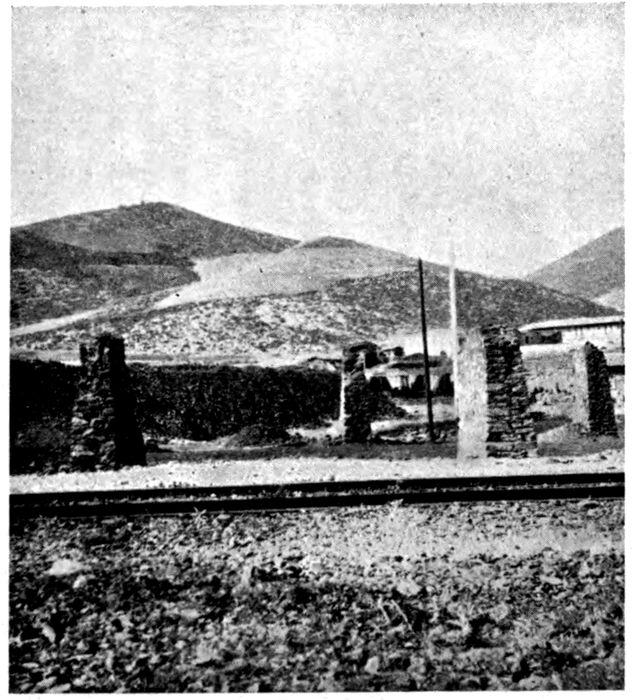
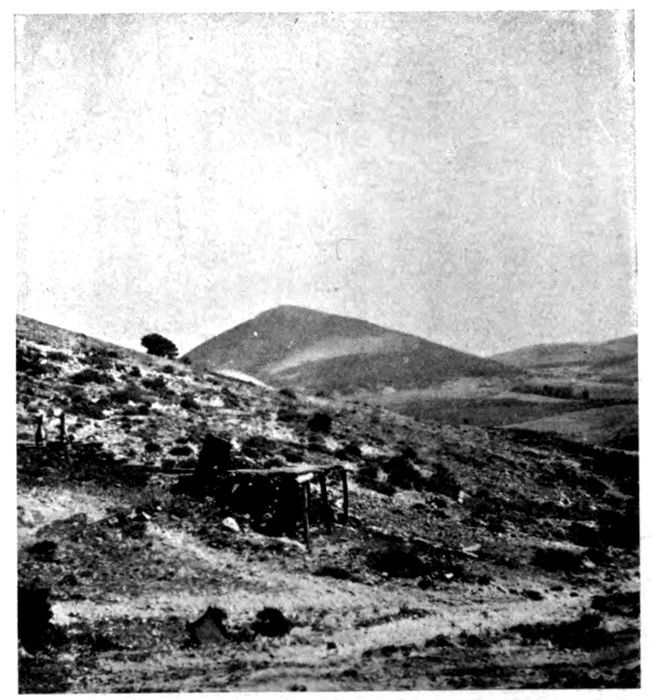
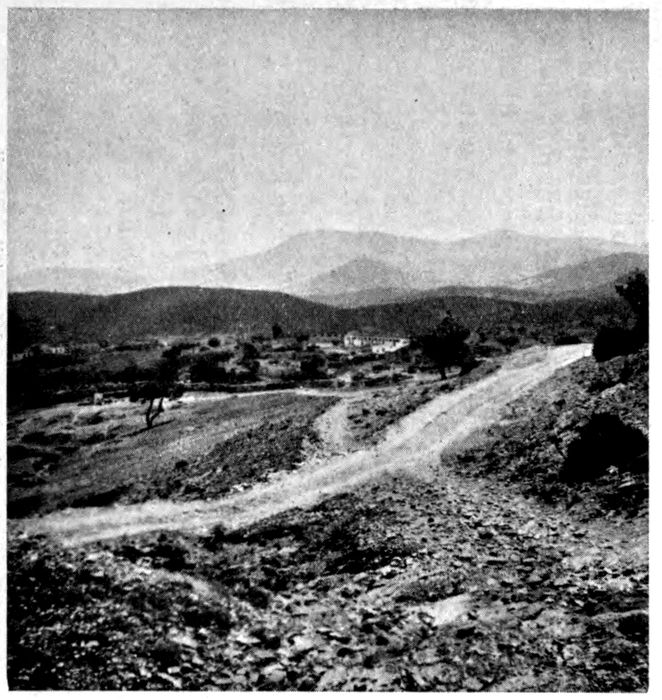
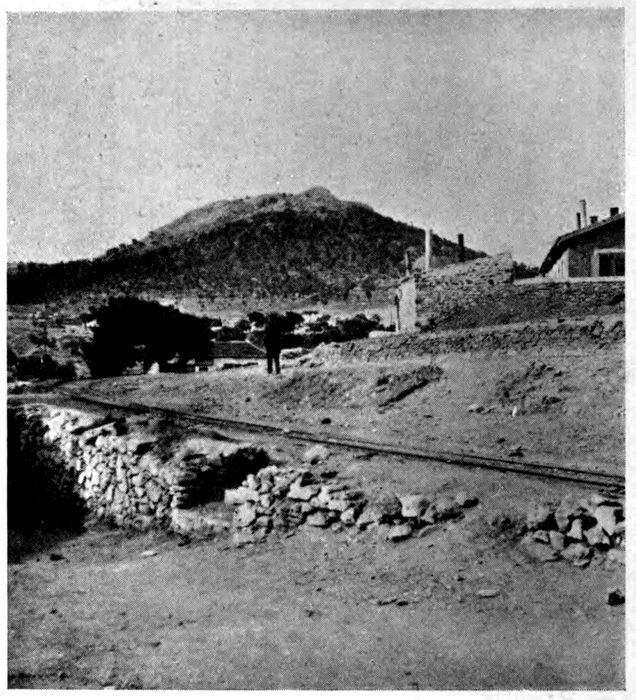
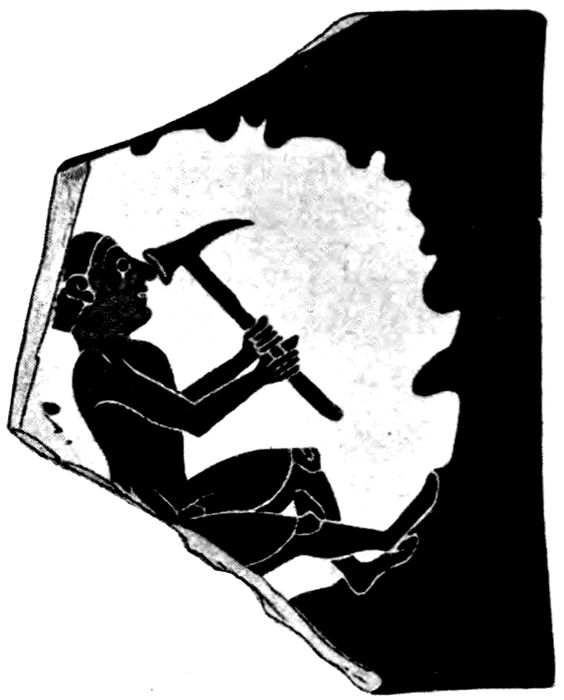
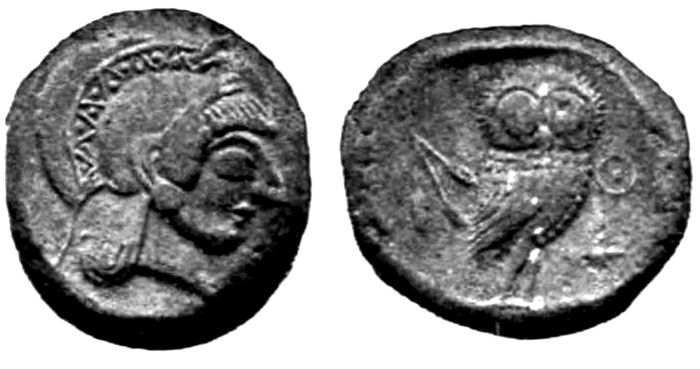
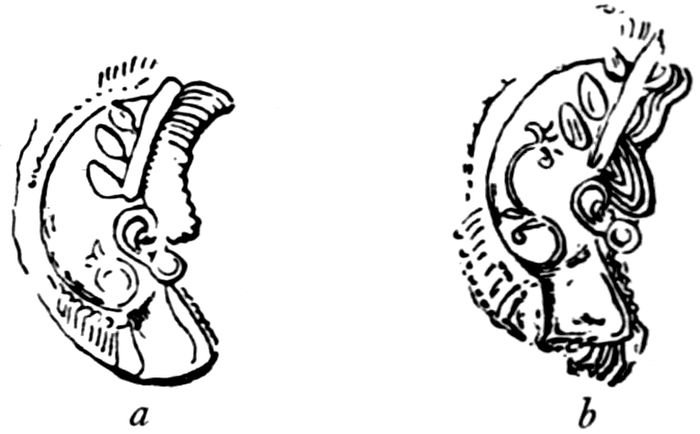
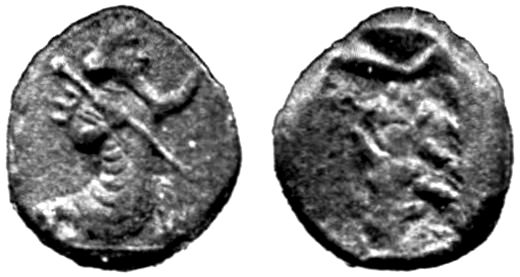
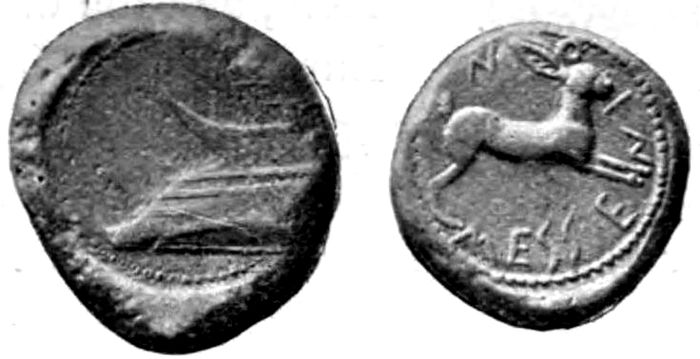
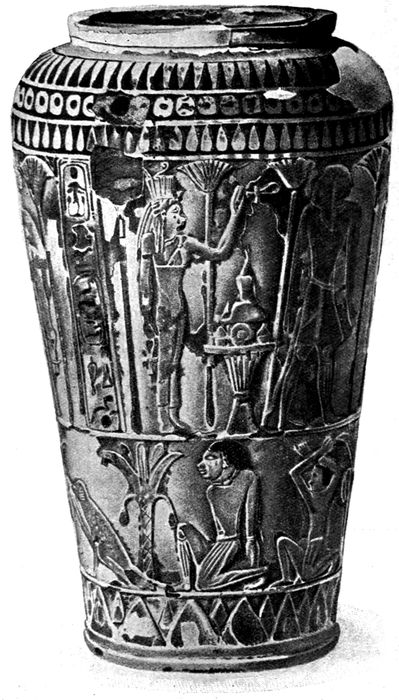
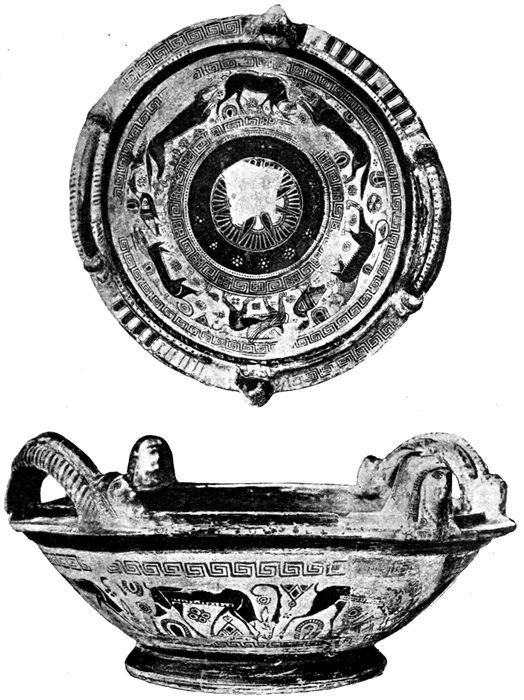
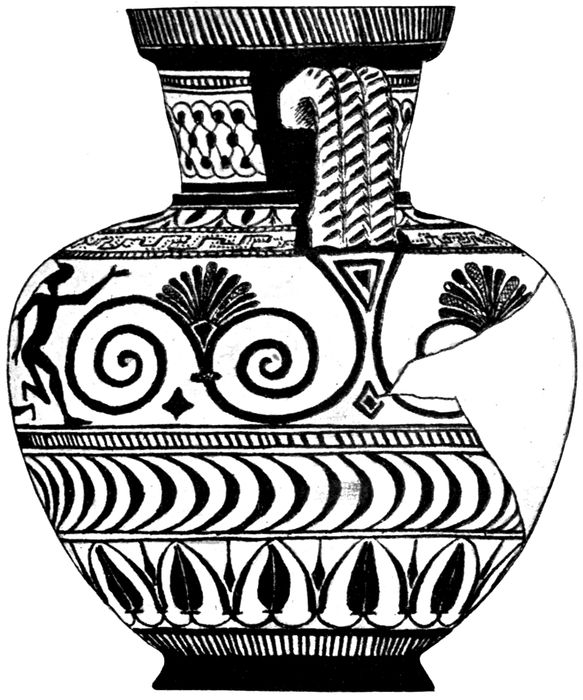
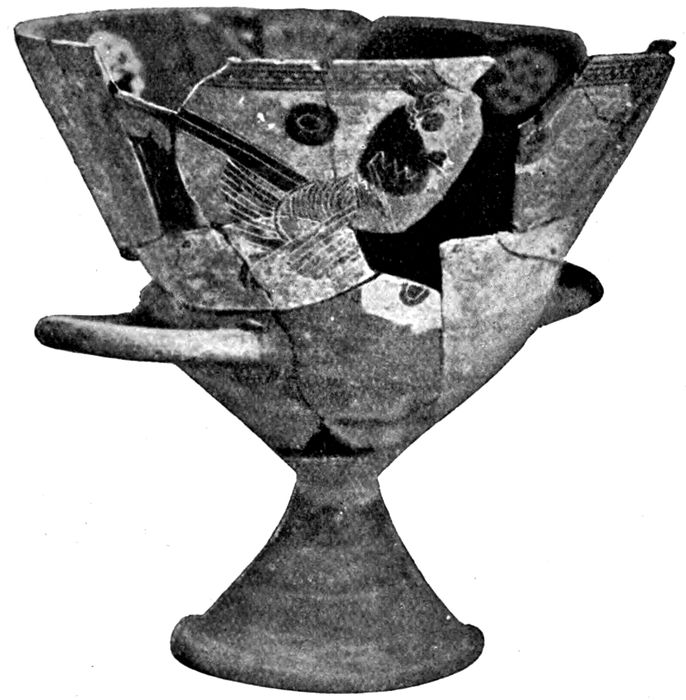
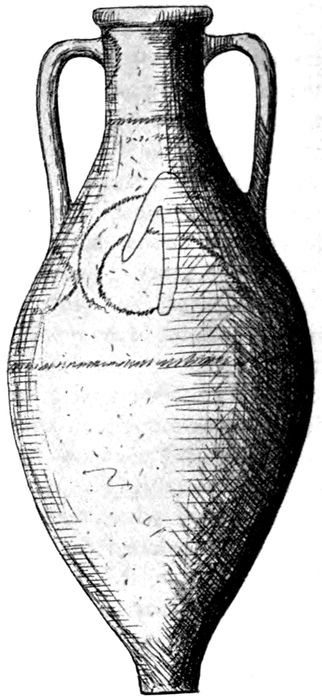
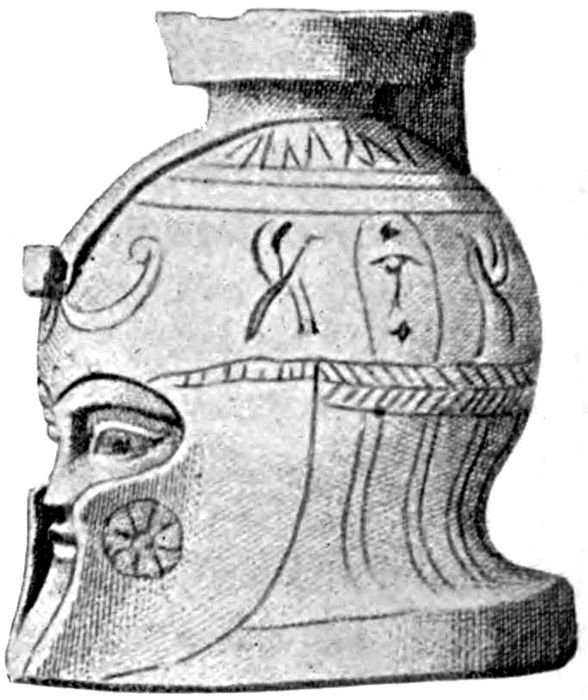
 .
The particular shape must not be pressed, and the picture may
be meant to denote not the vase but its contents. But it must mean
one or the other